A Practical Guide to Exploratory Data Analysis in Transcriptomics: From Raw Data to Biological Insights
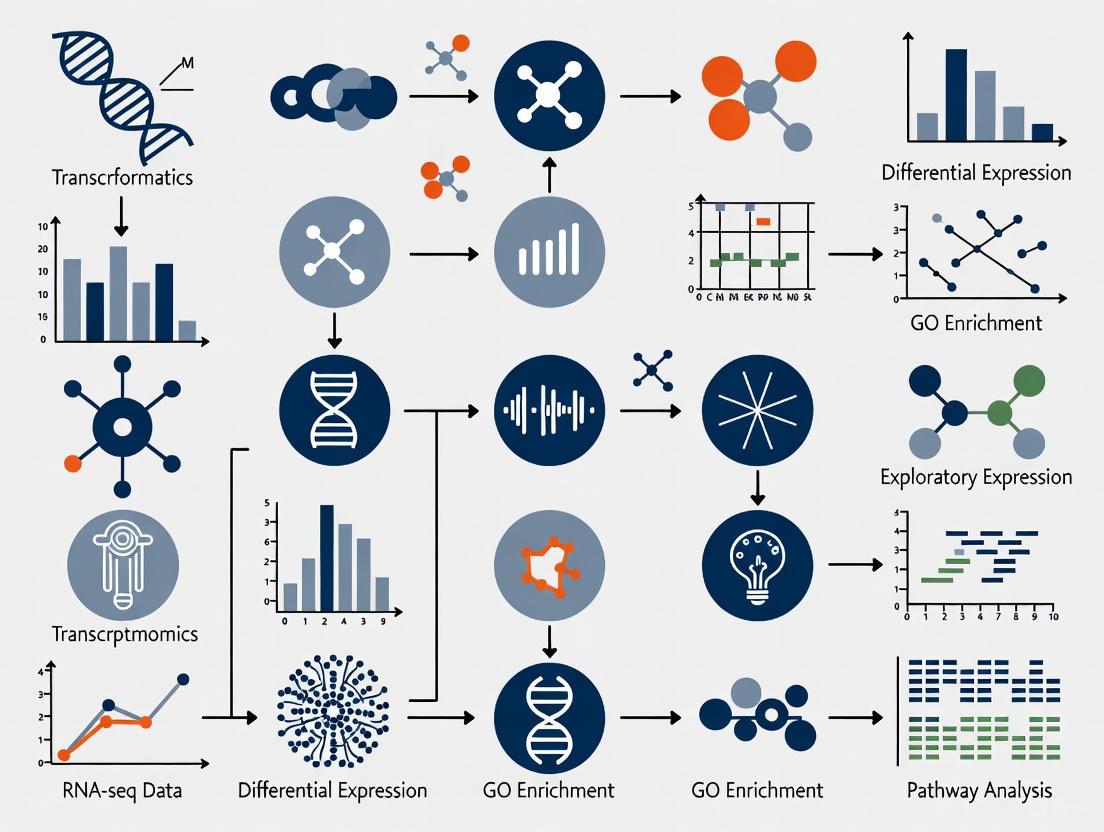
This article provides a comprehensive guide to Exploratory Data Analysis (EDA) for transcriptomics, tailored for researchers and drug development professionals.
A Practical Guide to Exploratory Data Analysis in Transcriptomics: From Raw Data to Biological Insights
Abstract
This article provides a comprehensive guide to Exploratory Data Analysis (EDA) for transcriptomics, tailored for researchers and drug development professionals. It covers the entire workflow from foundational data inspection and quality control to advanced methodological applications for differential expression and biomarker discovery. The guide addresses common troubleshooting and optimization challenges in RNA-seq data and outlines rigorous validation frameworks to ensure robust, reproducible findings. By integrating best practices from computational and statistical approaches, this resource empowers scientists to transform raw sequencing data into reliable biological insights with direct implications for biomedical research and therapeutic development.
Laying the Groundwork: Essential First Steps in Transcriptomics Data Inspection
Data Loading and Multi-Format Compatibility (FASTQ, FASTA, Count Matrices)
In transcriptomics research, the journey from raw sequencing output to biological insight relies on the proficient handling of three fundamental data formats: FASTQ, FASTA, and count matrices. These formats represent critical stages in the data analysis pipeline, each with distinct structures and purposes. The FASTQ format serves as the primary raw data output from next-generation sequencing platforms, containing both sequence reads and their corresponding quality scores. The FASTA format provides reference sequences—either genomic DNA, transcriptomes, or assembled contigs—essential for read alignment and annotation. Finally, count matrices represent the quantified gene expression levels across multiple samples, forming the foundation for downstream statistical analysis and visualization. Mastery of these formats and their interoperability is crucial for ensuring data integrity throughout the analytical workflow and enabling reproducible exploratory analysis in transcriptomics research.
The FASTQ Format: Raw Sequencing Data
Structure and Composition
The FASTQ format has become the standard for storing raw sequencing reads generated by next-generation sequencing platforms. Each sequence read in a FASTQ file consists of four lines, creating a complete record of both the sequence data and its associated quality information [1]:
- Line 1: Always begins with the '@' character followed by the sequence identifier and optional description information
- Line 2: The actual nucleotide sequence
- Line 3: Begins with a '+' character and may contain the same sequence identifier as line 1 (though often omitted in modern files)
- Line 4: Encodes quality scores for each base call in line 2, using ASCII characters to represent Phred quality scores
The quality scores in line 4 follow the Phred quality scoring system, where each character corresponds to a probability that the base was called incorrectly. The quality score is calculated as Q = -10 × logâ‚â‚€(P), where P represents the probability of an incorrect base call [1]. This logarithmic relationship means that a Phred quality score of 10 indicates a 90% base call accuracy (1 in 10 error rate), while a score of 20 indicates 99% accuracy (1 in 100 error rate), and 30 indicates 99.9% accuracy (1 in 1000 error rate) [1].
Quality Control and Preprocessing
Implementing rigorous quality control (QC) procedures for FASTQ files is an essential first step in any transcriptomics workflow. The FastQC tool provides a comprehensive suite of modules that assess multiple aspects of sequencing data quality, generating reports that help researchers identify potential issues arising from library preparation or sequencing processes [2]. Key QC metrics to evaluate include:
- Per-base sequence quality: Assesses the distribution of quality scores at each position across all reads, typically showing a gradual decrease in quality toward the read ends due to decreasing signal-to-noise ratio in sequencing-by-synthesis methods [2]
- Per-sequence quality scores: Examines the distribution of average quality scores per read, where high-quality data should show a single peak near the high-quality end of the scale [2]
- Adapter content: Measures the percentage of reads containing adapter sequences at each position, indicating incomplete adapter removal during library preparation [2]
- Sequence duplication levels: Shows the distribution of read sequence duplication, which in single-cell RNA-seq data may appear high due to PCR amplification and highly expressed genes, though FastQC is not UMI-aware [2]
For paired-end sequencing experiments, proper handling of the two complementary FASTQ files (containing forward and reverse reads) is critical. These files must remain synchronized throughout processing, as misalignment between files can compromise downstream analysis [3]. When extracting data from the Sequence Read Archive (SRA), tools like fastq-dump or fasterq-dump with the --split-files parameter properly separate paired-end reads into two distinct FASTQ files [3].
Table 1: Key FASTQ Quality Control Metrics and Their Interpretation
| QC Metric | Ideal Result | Potential Issues |
|---|---|---|
| Per-base sequence quality | Quality scores mostly in green area (>Q28), gradual decrease at ends | Sharp quality drops may indicate technical issues |
| Per-base N content | Near 0% across all positions | High N content suggests base-calling problems |
| Adapter content | Minimal to no adapter sequences | High adapter content requires trimming |
| GC content | Matches expected distribution for organism | Irregular distributions may indicate contamination |
The FASTA Format: Reference Sequences
Structure and Applications
The FASTA format provides a minimalistic yet powerful structure for storing biological sequence data, including nucleotides (DNA, RNA) and amino acids (proteins). Unlike FASTQ files, FASTA contains only sequence information without quality scores. Each record in a FASTA file consists of a header line beginning with the '>' character, followed by the sequence data on subsequent lines [4]. The header typically contains the sequence identifier and often includes additional descriptive information.
In transcriptomics, FASTA files serve multiple critical functions throughout the analytical pipeline. Reference genomes in FASTA format provide the coordinate system against which sequencing reads are aligned. Transcriptome sequences in FASTA format enable lightweight alignment tools like Kallisto and Salmon to perform rapid quantification without full genomic alignment [5]. Additionally, FASTA files can store assembled transcript sequences from long-read technologies like PacBio or Oxford Nanopore, which require specialized quality control tools such as SQANTI3 for curation and classification [6].
Reference-Based Alignment
The process of aligning FASTQ reads to FASTA reference sequences represents a critical juncture in transcriptomics analysis. Traditional splice-aware aligners like STAR perform base-to-base alignment of reads to the reference genome, accurately identifying exon-exon junctions—a crucial capability for eukaryotic transcriptomes where most genes undergo alternative splicing [4]. STAR employs a sophisticated algorithm that uses sequential maximum mappable seed search followed by seed clustering and stitching, making it particularly suited for RNA-seq alignment [4].
An alternative approach, utilized by tools like Kallisto and Salmon, employs pseudoalignment or lightweight alignment to a transcriptome FASTA file. These methods avoid the computationally intensive process of base-level alignment, instead determining the potential transcripts of origin for each read by examining k-mer compatibility [5]. This strategy offers significant speed advantages (typically more than 20 times faster) with comparable accuracy, making it particularly valuable for large-scale studies or rapid prototyping [1] [5]. The pseudoalignment workflow begins with building a de Bruijn graph index from the reference transcriptome, which is then used to rapidly quantify transcript abundances without generating base-level alignments [5].
Diagram 1: Reference-Based Analysis Workflow
Count Matrices: Gene Expression Quantification
Generation and Structure
The count matrix represents the fundamental bridge between raw sequencing data and biological interpretation in transcriptomics. This tabular data structure features genes or transcripts as rows and samples as columns, with each cell containing the estimated number of reads or molecules originating from that particular gene in that specific sample [2] [5]. In single-cell RNA-seq, the count matrix additionally incorporates cell barcodes (CB) and unique molecular identifiers (UMIs) to distinguish individual cells and account for amplification bias [2].
The process of generating a count matrix involves multiple computational steps depending on the experimental design and analytical approach. For bulk RNA-seq using alignment-based methods, tools like featureCounts (from the Subread package) quantify reads mapping to genomic features defined in annotation files (GTF format) [4]. For lightweight alignment tools like Kallisto and Salmon, the process begins with transcript-level abundance estimation, which must then be aggregated to gene-level counts using annotation mappings [5]. In single-cell RNA-seq, the process involves additional steps for cell barcode identification and correction, UMI deduplication, and empty droplet removal [2].
Table 2: Common Tools for Count Matrix Generation
| Tool | Method | Input | Output | Best Use Cases |
|---|---|---|---|---|
| STAR [4] | Splice-aware alignment | FASTQ + Genome FASTA | BAM -> Counts | Standard RNA-seq, alternative splicing |
| featureCounts [4] | Read summarization | BAM + GTF | Count matrix | Gene-level quantification |
| Kallisto [5] | Pseudoalignment | FASTQ + Transcriptome FASTA | Abundance estimates | Rapid quantification, isoform analysis |
| Salmon [5] | Lightweight alignment | FASTQ + Transcriptome FASTA | Abundance estimates | Large datasets, differential expression |
| Space Ranger [7] | Spatial transcriptomics | FASTQ + Images | Feature-spot matrix | 10x Genomics spatial data |
Normalization Methods
Raw count matrices require normalization to account for technical variability before meaningful comparisons can be made between samples. Different normalization methods address specific sources of bias, and selecting an appropriate method depends on the analytical goals and downstream applications [1]:
- CPM (Counts Per Million): Simple scaling by total library size, accounting only for sequencing depth differences. Suitable for comparisons between replicates of the same sample group but not recommended for differential expression analysis [1]
- TPM (Transcripts Per Kilobase Million): Accounts for both sequencing depth and gene length, enabling comparisons within a sample or between samples of the same group [1]
- RPKM/FPKM: Similar to TPM but with different calculation order; TPM is now generally preferred for cross-sample comparisons [1]
- DESeq2's Median of Ratios: Uses a sample-specific size factor determined by the median ratio of gene counts relative to geometric mean per gene, accounting for both sequencing depth and RNA composition [1]
- EdgeR's TMM (Trimmed Mean of M-values): Applies a weighted trimmed mean of the log expression ratios between samples to account for sequencing depth and RNA composition [1]
Normalization is particularly crucial when dealing with data containing strong composition effects, such as when a few highly differentially expressed genes dominate the total count pool, which can skew results if not properly addressed [1].
Integrated Workflows and Best Practices
Multi-Format Interoperability
Successful transcriptomics analysis requires seamless transitions between the three core data formats throughout the analytical workflow. The journey begins with quality assessment of FASTQ files using FastQC, followed by adapter trimming and quality filtering with tools like Cutadapt [4]. Processed reads are then aligned to reference sequences in FASTA format using either full aligners like STAR or lightweight tools like Salmon, depending on the research question and computational resources [4] [5]. The resulting alignments are processed into count matrices, which serve as input for downstream statistical analysis in tools like DESeq2 or EdgeR [1].
Each format transition point represents a potential source of error that must be carefully managed. When moving from FASTQ to alignment, ensuring compatibility between sequencing platform and reference genome build is essential. The transition from alignments to count matrices requires accurate feature annotation and strand-specific counting when appropriate. Documenting all parameters and software versions at each step is critical for reproducibility, particularly when processing data through multiple format transformations [5].
Diagram 2: Complete Transcriptomics Data Processing Pipeline
Quality Assurance Across Formats
Maintaining data integrity requires quality checks at each format transition. For FASTQ data, this includes verifying expected sequence lengths, base quality distributions, and adapter contamination levels [2]. For FASTA reference files, ensuring compatibility with annotation files and checking for contamination or misassembly is important. For count matrices, quality assessment includes examining mapping rates, ribosomal RNA content, and sample-level clustering patterns [1].
Sample-level QC performed on normalized count data helps identify potential outliers and confirms that experimental groups cluster as expected. Principal Component Analysis (PCA) and correlation heatmaps are particularly valuable for visualizing overall similarity between samples and verifying that biological replicates cluster together while experimental conditions separate [1]. These QC steps help ensure that the major sources of variation in the dataset reflect the experimental design rather than technical artifacts.
The Scientist's Toolkit: Essential Research Reagents
Table 3: Essential Tools for Transcriptomics Data Processing
| Tool/Category | Specific Examples | Primary Function | Format Compatibility |
|---|---|---|---|
| Quality Control | FastQC [2], MultiQC | Assess sequencing data quality | FASTQ |
| Read Processing | Cutadapt [4], Trimmomatic | Adapter trimming, quality filtering | FASTQ |
| Genome Alignment | STAR [4], HISAT2 | Splice-aware read alignment | FASTQ → BAM/SAM |
| Lightweight Alignment | Kallisto [5], Salmon [5] | Rapid transcript quantification | FASTQ → Abundance estimates |
| Read Quantification | featureCounts [4], HTSeq | Generate count matrices | BAM/SAM → Count matrix |
| Normalization | DESeq2 [1], EdgeR [1] | Count normalization for DE analysis | Count matrix → Normalized counts |
| Visualization | bigPint [8], MultiQC | Interactive plots, QC reports | Count matrix, FASTQ stats |
| Spatial Transcriptomics | Space Ranger [7] | Process spatial gene expression data | FASTQ + Images → Feature-spot matrix |
| Long-Read QC | SQANTI3 [6] | Quality control for long-read transcriptomes | FASTA/Q → Curated isoforms |
| Bucharidine | Bucharidine | Bucharidine, a natural quinoline alkaloid. Explore its research applications in oncology and virology. For Research Use Only. Not for diagnostic or human use. | Bench Chemicals |
| TSCHIMGANIDINE | Tschimganidine|Potent AMPK Activator|For Research Use | Tschimganidine is a natural terpenoid that reduces lipid accumulation and improves glucose homeostasis via AMPK activation. For Research Use Only. Not for human consumption. | Bench Chemicals |
Advanced Applications and Emerging Trends
Spatial Transcriptomics
Spatial transcriptomic technologies represent a significant advancement that preserves the spatial context of gene expression measurements, enabling researchers to investigate the architectural organization of tissues and cell-cell interactions [7]. These methods employ various approaches including in situ sequencing, in situ hybridization, or spatial barcoding to recover original spatial coordinates along with transcriptomic information [7]. The data generated from these technologies requires specialized processing pipelines like Space Ranger, which handles alignment, tissue detection, barcode/UMI counting, and feature-spot matrix generation [7].
The integration of spatial coordinates with gene expression matrices creates unique computational challenges and opportunities for visualization. Analysis methods for spatial transcriptomics include identification of spatially variable genes using tools like SpatialDE, which applies Gaussian process regression to decompose expression variability into spatial and non-spatial components [7]. Clustering algorithms must be adapted to incorporate spatial neighborhood information, moving beyond traditional methods that consider only expression similarity [7].
Long-Read Transcriptomics
Long-read sequencing technologies from PacBio and Oxford Nanopore have revolutionized transcriptomics by enabling full-length transcript sequencing, which provides complete information about splice variants and isoform diversity without the need for assembly [6]. However, these technologies introduce new data processing challenges, including higher error rates and the need for specialized quality control tools.
SQANTI3 represents a comprehensive solution for quality control and filtering of long-read transcriptomes, classifying transcripts based on comparison to reference annotations and providing extensive quality metrics [6]. The tool categorizes transcripts into structural classes including Full Splice Match (FSM), Incomplete Splice Match (ISM), Novel in Catalog (NIC), Novel Not in Catalog (NNC), and various fusion and antisense categories [6]. This classification enables researchers to distinguish between genuine biological novelty and technical artifacts, which is particularly important given the higher error rates associated with long-read technologies.
Visualization and Interpretation
Effective visualization of transcriptomic data is essential for exploratory analysis and hypothesis generation. Traditional visualization methods include heatmaps for gene expression patterns, volcano plots for differential expression results, and PCA plots for sample-level quality assessment [9]. More advanced visualization approaches include parallel coordinate plots, which display each gene as a line connecting its expression values across samples, enabling researchers to quickly assess relationships between variables and identify patterns that might be obscured in summarized views [8].
Interactive visualization tools like bigPint facilitate the detection of normalization issues, differential expression designation problems, and common analysis errors by allowing researchers to interact directly with their data [8]. These tools enable researchers to hover over and select genes of interest across multiple linked visualizations, creating a dynamic exploratory environment that supports biological discovery. When creating visualizations, careful attention to color selection is essential, including consideration of color blindness accessibility and appropriate mapping of color scales to data types (categorical vs. continuous) [10].
In transcriptomics research, the initial inspection of data is a critical first step that determines the reliability of all subsequent biological interpretations. This process involves summarizing the main characteristics of a dataset—its structure, dimensions, and basic statistics—to assess quality, identify potential issues, and form preliminary hypotheses. Within a broader Exploratory Data Analysis (EDA) framework, this initial inspection provides a foundational understanding upon which further, more complex analyses are built, ensuring that models and conclusions are derived from robust, well-characterized data [11]. For researchers and drug development professionals, rigorous initial inspection is indispensable for transforming raw sequencing output into biologically meaningful insights, guiding decisions on downstream analytical pathways, and ultimately, validating potential biomarkers [12].
Core Concepts of Initial Data Inspection
Initial data inspection serves as the first diagnostic check on a newly loaded dataset. Its primary objectives are to verify that the data has been loaded correctly, understand its fundamental composition, and identify any obvious data integrity issues before investing time in more sophisticated analyses.
- Objective vs. Subjective Data: The data collected in transcriptomics is predominantly objective and quantitative. Objective data is fact-based, measurable, and observable, meaning that if two scientists make the same measurement with the same tool, they would obtain the same answer. This is distinct from subjective data, which is based on opinion, point of view, or emotional judgment [13].
- Key Inspection Metrics: The initial inspection typically focuses on several key metrics:
- Structure: This refers to the format and organization of the data, such as a matrix where rows often represent genes (features) and columns represent samples (observations).
- Dimensions: The size of the dataset, typically expressed as the number of rows and columns (e.g.,
(genes, samples)). - Basic Statistics: Summary statistics that describe the central tendency and dispersion of the data, such as mean, median, and standard deviation [13] [11].
Practical Implementation with Python and Pandas
The following section provides a practical methodology for performing an initial data inspection using the Python Pandas library, which is a standard tool in bioinformatics.
Data Loading and Initial Inspection Commands
After loading transcriptomics data (e.g., from a CSV file), a series of commands provide an immediate overview of the dataset's health and structure.
Code Explanation:
data.shape: This command returns a tuple representing the dimensionality of the DataFrame, crucial for understanding the dataset's scale [14].data.head()anddata.tail(): These functions display the first and last five rows of the DataFrame, respectively, allowing for a visual check of the data's structure and contents [14].data.info(): This provides a concise summary of the DataFrame, including the number of non-null entries in each column and the data types (dtypes), which is vital for identifying columns with missing values or incorrect data types [11].data.describe(): This function generates descriptive statistics that summarize the central tendency, dispersion, and shape of a dataset's distribution, excludingNaNvalues. It is invaluable for quickly spotting anomalies in the data [11].
Workflow Visualization
The following diagram illustrates the logical sequence and key outputs of the initial data inspection workflow.
Key Metrics and Quantitative Standards
The initial inspection yields quantitative metrics that must be evaluated against field-specific standards. The table below summarizes these key metrics and their implications in a transcriptomics context.
Table 1: Key Metrics for Initial Data Inspection in Transcriptomics
| Metric Category | Specific Metric | Description | Importance in Transcriptomics |
|---|---|---|---|
| Dimensions | Number of Genes (Rows) | Total features measured. | Verifies expected gene coverage from the sequencing assay. |
| Number of Samples (Columns) | Total observations or libraries. | Confirms all experimental replicates and conditions are present. | |
| Data Types | int64, float64 |
Numeric data types for expression values. | Ensures expression counts/levels are in a computable format. |
object |
Typically represents gene identifiers or sample names. | Confirms non-numeric data is properly classified. | |
| Completeness | Non-Null Counts | Number of non-missing values per column. | Identifies genes with low expression or samples with poor sequencing depth that may need filtering [12]. |
| Basic Statistics | Mean Expression | Average expression value per gene or sample. | Helps identify overall expression levels and potential batch effects. |
| Standard Deviation | Dispersion of expression values. | High variance may indicate interesting biological regulation; low variance may suggest uninformative genes. | |
| Min/Max Values | Range of expression values. | Flags potential outliers or technical artifacts in the data. |
The Scientist's Toolkit: Essential Research Reagents and Materials
The wet-lab phase of generating transcriptomics data relies on specific reagents and protocols, which directly impact the quality of the data subjected to initial inspection.
Table 2: Essential Research Reagents for Transcriptomics Workflows
| Reagent/Material | Function | Context in Spatial Transcriptomics |
|---|---|---|
| Spatial Barcoding Beads | Oligonucleotide-labeled beads that capture mRNA and assign spatial coordinates. | Core of technologies like the original Spatial Transcriptomics platform; enables transcriptome-wide profiling with positional information [15]. |
| Fluorescently Labeled Probes | Nucleic acid probes that bind target RNA sequences for visualization. | Essential for in situ hybridization-based methods (e.g., MERFISH, seqFISH) to detect and localize specific RNAs [15]. |
| Cryostat | Instrument used to cut thin tissue sections (cryosections) at low temperatures. | Critical for preparing tissue samples for most spatial transcriptomics methods, preserving RNA integrity [15]. |
| Library Preparation Kit | A suite of enzymes and buffers for converting RNA into a sequencer-compatible library. | Standardized kits are used to prepare sequencing libraries from captured mRNA, whether from dissociated cells or spatially barcoded spots. |
| Hept-5-yn-1-amine | Hept-5-yn-1-amine | |
| Cyclopropanethiol | Cyclopropanethiol|CAS 6863-32-7|RUO |
Experimental Protocols for Data Generation
The quality of data for inspection is determined by the preceding experimental workflow. Below is a generalized protocol for a spatial barcoding-based approach, a common modern method.
Protocol: Gene Expression Profiling via Spatial Barcoding
Tissue Preparation:
- Embed fresh-frozen tissue in Optimal Cutting Temperature (OCT) compound.
- Section tissue to a defined thickness (e.g., 10 µm) using a cryostat and mount onto specific spatially barcoded slides [15].
Fixation and Staining:
- Fix tissue sections with methanol or formaldehyde to preserve morphology and immobilize RNA.
- Stain with histological dyes (e.g., H&E) for morphological assessment and image acquisition.
Permeabilization and cDNA Synthesis:
- Permeabilize tissue with an enzymatic solution (e.g., containing proteases) to allow mRNAs to diffuse from the tissue.
- The released mRNAs are captured by the spatially barcoded oligonucleotides on the slide surface.
- Perform on-slide reverse transcription to synthesize cDNA strands complementary to the captured mRNAs, incorporating the spatial barcode [15].
Library Construction and Sequencing:
- Harvest the cDNA and construct a sequencing library using a standard kit (e.g., incorporating Illumina adapters and sample indices).
- The final library is sequenced on a high-throughput platform (e.g., Illumina NovaSeq).
Data Generation for Inspection:
- Output: The primary output is a digital gene expression matrix. In this matrix, rows represent genes, columns represent spatially barcoded spots (each corresponding to a location on the tissue), and values represent raw or normalized gene expression counts (e.g., UMI counts) [15].
- Associated Metadata: A vital companion file is the spatial coordinates file, which maps each spatial barcode (column in the matrix) to its x,y coordinates on the tissue image. This matrix and its metadata are the direct inputs for the initial data inspection process.
From Inspection to Analysis: Integrating Findings
The findings from the initial inspection directly inform subsequent data cleaning and preprocessing steps in the transcriptomics EDA pipeline. Inconsistent data types identified via info() must be corrected. Missing values, flagged by info() and describe(), may require imputation or filtering [12] [11]. The summary statistics from describe() can help establish thresholds for filtering out lowly expressed genes, a critical step to reduce noise before differential expression analysis [12]. Ultimately, a well-executed initial inspection ensures that the data proceeding to advanced stages like normalization, batch correction, and biomarker discovery is of the highest possible quality, thereby safeguarding the integrity of the scientific conclusions.
Quality control (QC) of raw sequencing data is a critical first step in transcriptomics research that directly impacts the reliability and interpretability of all subsequent analyses. This technical guide provides an in-depth examination of best practices for assessing raw read quality and adapter contamination within a comprehensive exploratory data analysis framework. We detail specific QC metrics, methodologies, and computational tools that enable researchers to identify technical artifacts, validate data quality, and ensure the production of biologically meaningful results. By establishing rigorous QC protocols, scientists can mitigate confounding technical variability and enhance the discovery potential of transcriptomics studies in both basic research and drug development applications.
In RNA sequencing (RNA-seq), the initial assessment of raw read quality forms the foundation for generating accurate gene expression measurements [16]. Sequencing technologies introduce various technical artifacts including base-calling errors, adapter contamination, and sequence-specific biases that can compromise downstream analyses if not properly addressed [17]. Quality control measures serve to identify these issues early in the analytical pipeline, preventing the propagation of technical errors into biological interpretations [18]. Within the broader context of transcriptomics research, rigorous QC is particularly crucial for clinical applications where accurate biomarker identification and differential expression analysis inform diagnostic and therapeutic decisions [18].
The raw data generated from RNA-seq experiments is typically stored in FASTQ format, which contains both nucleotide sequences and corresponding per-base quality scores [17]. Before proceeding to alignment and quantification, this raw data must undergo comprehensive evaluation to assess sequencing performance, detect contaminants, and determine appropriate preprocessing steps. Systematic QC practices enable researchers to distinguish technical artifacts from biological signals, thereby ensuring that conclusions reflect true biological phenomena rather than methodological inconsistencies [16].
Key Metrics for Raw Read Quality Assessment
Primary Sequence Quality Metrics
Table 1: Essential Quality Metrics for Raw RNA-seq Data
| Metric Category | Specific Measurement | Interpretation Guidelines | Potential Issues Indicated |
|---|---|---|---|
| Per-base Sequence Quality | Phred Quality Scores (Q-score) | Q≥30: High quality; Q20: 1% error rate; Q10: 10% error rate | Degrading quality over sequencing cycles |
| Nucleotide Distribution | Proportion of A, T, C, G at each position | Expected: Stable distribution across cycles | Overrepresented sequences, random hexamer priming bias |
| GC Content | Percentage of G and C nucleotides | Should match organism/sample expectations (~40-60% for mammalian mRNA) | Contamination, PCR bias [16] |
| Sequence Duplication | Proportion of identical reads | Moderate levels expected; high levels indicate PCR over-amplification | Low library complexity, insufficient sequencing depth |
| Overrepresented Sequences | Frequency of specific k-mers | Should not be dominated by single sequences | Adapter contamination, dominant RNA species [16] |
The Phred quality score (Q-score) represents the fundamental metric for assessing base-calling accuracy, with Q30 indicating a 1 in 1,000 error probability [16]. Per-base quality analysis typically reveals decreasing scores toward read ends due to sequencing chemistry limitations. Nucleotide distribution should remain relatively uniform across sequencing cycles, while significant deviations may indicate random hexamer priming bias or the presence of overrepresented sequences [16]. GC content evaluation provides insights into potential contamination when values deviate more than 10% from expectations based on the target organism's genomic composition [16].
Adapter Contamination Assessment
Adapter contamination occurs when sequencing extends beyond the DNA insert into the adapter sequences ligated during library preparation [19]. In Illumina platforms, this primarily affects the 3' ends of reads when fragment sizes are shorter than the read length [19]. The incidence of adapter contamination varies significantly by protocol, with standard RNA-seq experiencing approximately 0.2-2% affected reads, while small RNA sequencing exhibits nearly universal adapter contamination due to shorter insert sizes [19]. Left unaddressed, adapter sequences can prevent read alignment and increase the proportion of unmappable sequences, ultimately reducing usable data and compromising expression quantification accuracy [19].
Computational Tools and Methodologies
Quality Assessment Tools
Table 2: Bioinformatics Tools for RNA-seq Quality Control
| Tool Name | Primary Function | Input Format | Key Outputs | Use Case |
|---|---|---|---|---|
| FastQC [17] | Comprehensive quality check | FASTQ | HTML report with quality metrics | Initial assessment of raw reads |
| HTQC [17] | Quality control and trimming | FASTQ | Quality metrics, trimmed reads | Integrated QC and preprocessing |
| FASTX-Toolkit [17] | Processing and QC | FASTQ | Processed sequences, statistics | Adapter removal, quality filtering |
| FLEXBAR [17] | Adapter trimming | FASTQ | Cleaned reads, trimming reports | Flexible adapter removal |
| RNA-SeQC [17] | Alignment-based QC | BAM | Mapping statistics, coverage biases | Post-alignment quality assessment |
| Qualimap 2 [17] | RNA-seq specific QC | BAM | Alignment quality, 5'-3' bias | Comprehensive post-alignment evaluation |
| RSeQC [17] | Sequence data QC | BAM | Read distribution, coverage uniformity | In-depth QC after mapping |
FastQC provides a broad overview of data quality through multiple modules that assess base quality, GC content, adapter contamination, and other key metrics [17]. The tool generates an intuitive HTML report that highlights potential issues requiring remediation. For specialized RNA-seq QC, tools like RNA-SeQC and RSeQC operate on alignment files (BAM format) to evaluate mapping quality, coverage uniformity, and technical biases such as 5'-3' coverage bias [17]. Qualimap 2 extends these capabilities with multi-sample comparison features, enabling batch effect detection and cross-sample quality assessment [17].
Adapter Trimming Approaches
Adapter trimming strategies fall into two primary categories: adapter trimming to remove known adapter sequences and quality trimming to eliminate low-quality base calls [17]. The FASTX-Toolkit and FLEXBAR implementations provide flexible parameterization for adapter sequence specification, quality thresholds, and minimum read length requirements [17]. The necessity of adapter trimming depends on the specific RNA-seq protocol and insert size distribution. While essential for small RNA sequencing, standard transcriptome sequencing with appropriate size selection may contain minimal adapter contamination (0.2-2%), potentially allowing researchers to skip this step for time efficiency [19].
Figure 1: Workflow for Comprehensive Raw Read QC and Adapter Contamination Assessment
Experimental Protocols and Implementation
Step-by-Step Quality Assessment Protocol
Initial Quality Metric Extraction: Process raw FASTQ files through FastQC to generate baseline quality metrics. Examine per-base sequence quality to identify regions requiring trimming and assess nucleotide composition for uniform distribution.
Adapter Contamination Analysis: Within FastQC reports, review the "Overrepresented Sequences" module to identify adapter sequences. Determine the percentage of affected reads and compare against expected thresholds (typically >1% requires intervention) [19].
Quality Trimming Execution: Using FASTX-Toolkit or FLEXBAR, trim low-quality bases from read ends using a quality threshold of Q20 and minimum length parameter of 25-35 bases depending on read length [17].
Adapter Removal Implementation: For datasets with significant adapter contamination, perform adapter trimming with FLEXBAR using platform-specific adapter sequences and a minimum overlap parameter of 3-5 bases.
Post-processing Quality Verification: Re-run FastQC on trimmed FASTQ files to confirm improvement in quality metrics and reduction/elimination of adapter sequences.
Alignment and RNA-specific QC: Map reads to the reference transcriptome or genome using appropriate aligners (STAR, HISAT2), then process BAM files through RNA-SeQC or Qualimap 2 to evaluate RNA-specific metrics including 5'-3' bias, ribosomal RNA content, and coverage uniformity [17].
The Scientist's Toolkit
Table 3: Essential Research Reagents and Computational Tools
| Resource Type | Specific Tool/Reagent | Function in QC Process |
|---|---|---|
| Quality Control Software | FastQC [17] | Comprehensive quality assessment of raw sequences |
| Trimming Tools | FASTX-Toolkit [17] | Adapter removal and quality-based trimming |
| Trimming Tools | FLEXBAR [17] | Flexible adapter detection and removal |
| Alignment-based QC | RNA-SeQC [17] | Post-alignment quality metrics for RNA-seq |
| Alignment-based QC | RSeQC [17] | Evaluation of read distribution and coverage |
| Alignment-based QC | Qualimap 2 [17] | RNA-seq specific quality evaluation |
| Workflow Integration | Snakemake [20] | Automated workflow management for reproducible QC |
| Visualization | PIVOT [21] | Interactive exploration of QC metrics and data quality |
| Azido-PEG4-TFP ester | Azido-PEG4-TFP ester, CAS:1807505-33-4, MF:C17H21F4N3O6, MW:439.4 g/mol | Chemical Reagent |
| 4,5-Acridinediamine | 4,5-Acridinediamine, CAS:3407-96-3, MF:C13H11N3, MW:209.25 g/mol | Chemical Reagent |
Integration with Exploratory Data Analysis
Quality control metrics should be integrated into a broader exploratory data analysis framework to identify potential confounding factors before conducting formal statistical testing. Tools like PIVOT provide interactive environments for visualizing QC metrics alongside sample metadata, enabling researchers to detect batch effects, sample outliers, and technical artifacts that might influence downstream interpretations [21]. Principal component analysis (PCA) applied to quality metrics can reveal systematic patterns correlated with experimental conditions, sequencing batches, or processing dates.
Within comprehensive transcriptomics workflows, raw read QC represents the initial phase of a multi-stage quality assessment protocol that continues through alignment quantification, and normalization [20]. The establishment of QC checkpoints at each analytical stage ensures data integrity throughout the research pipeline. Modern approaches increasingly incorporate transcript quantification tools like Salmon and kallisto that generate their own QC metrics, providing additional validation of data quality [20].
Figure 2: Integration of Raw Read QC within Comprehensive Transcriptomics Workflow
Comprehensive assessment of raw read quality and adapter contamination establishes the essential foundation for robust transcriptomics research. By implementing systematic QC protocols utilizing established tools and metrics, researchers can identify technical artifacts, prevent erroneous conclusions, and maximize the biological insights gained from sequencing experiments. The integration of these QC practices within broader exploratory data analysis frameworks ensures that technical variability is properly accounted for, ultimately enhancing the validity and reproducibility of transcriptomics findings in both basic research and drug development applications. As sequencing technologies continue to evolve, maintaining rigorous quality assessment standards will remain paramount for extracting meaningful biological signals from increasingly complex datasets.
Detecting and Quantifying Missing Data and Technical Artifacts
In transcriptomics research, the accuracy of biological interpretation is fundamentally dependent on data quality. Missing data and technical artifacts can obscure true biological signals, leading to flawed conclusions. Within a framework of best practices for exploratory data analysis, the proactive detection and quantification of these issues is a critical first step. This guide provides researchers and drug development professionals with advanced methodologies to identify, assess, and mitigate common data quality pitfalls in both bulk and spatial transcriptomics.
Core Concepts and Impact on Analysis
Technical artifacts in transcriptomics are non-biological patterns introduced during sample preparation, sequencing, or data processing. Common types include:
- Batch Effects: Systematic technical variations between experimental batches that can confound true biological differences [22].
- Spatial Artifacts: In spatial transcriptomics, these include border effects (altered gene reads at the border of the capture area) and tissue edge effects (modified reads at the tissue edge), which do not reflect underlying biology [23].
- Sequence-Specific Biases: Includes adapter contamination, PCR artifacts, sequencing errors, and GC content bias, which impact read mappability and quantification accuracy [24].
Missing data often arises from low sequencing depth, inefficient mRNA capture, or probe/probe set limitations, particularly in spatial technologies that profile fewer genes compared to scRNA-seq [25]. These issues can skew differential expression analysis, cluster formation, and pathway analysis if not properly diagnosed and addressed during initial exploratory data analysis.
Methodologies for Detection and Quantification
Statistical Detection of Spatial Artifacts
The Border, Location, and edge Artifact DEtection (BLADE) framework provides a robust statistical method for identifying artifacts in spatial transcriptomics data [23]. The methodology involves the following steps:
- Identify Edge and Interior Spots: Calculate the shortest taxicab distance from each spot to the nearest spot without tissue. BLADE defines edge spots as those with a distance of 1 and interior spots with a distance ≥2 from the tissue edge [23].
- Perform Statistical Testing: Conduct a two-sample unpaired t-test comparing the distribution of total gene read counts between the identified edge spots and interior spots.
- Interpret Results: A significant p-value (after multiple comparison correction, e.g., Bonferroni) below 0.05 indicates the presence of a tissue edge effect artifact. A similar methodology, comparing spots near the capture area border to non-border spots, is used to detect border effects [23].
Table 1: BLADE Detection Workflow Outputs and Interpretation
| Artifact Type | Detection Method | Key Output | Interpretation |
|---|---|---|---|
| Tissue Edge Effect | t-test (edge vs. interior spots) | Corrected P-value | P < 0.05 indicates artifact presence |
| Border Effect | t-test (border vs. non-border spots) | Corrected P-value | P < 0.05 indicates artifact presence |
| Location Batch Effect | Inspection of same location across slides in a batch | Zone of decreased sequencing depth | Consistent low-read zone across a batch |
Uncertainty Quantification for Data Imputation
In spatial transcriptomics, imputing missing genes is common, but assessing the reliability of imputed values is crucial. The Variational Inference for Spatial Transcriptomic Analysis (VISTA) approach quantifies uncertainty directly during imputation [25].
- Model Training: VISTA jointly models scRNA-seq data (as a Zero-inflated Negative Binomial distribution) and spatial data (as a Negative Binomial distribution) using a geometric deep learning framework incorporating Graph Neural Networks (GNNs) and Variational Inference [25].
- Uncertainty Estimation: The model provides two uncertainty measures:
- VISTAgene: Ranks genes by imputation certainty.
- VISTAcell: Ranks cells by imputation certainty.
- Validation: The reliability of these measures is validated by observing an increase in the Spearman correlation coefficient when genes or cells with uncertainty rankings in the bottom 50% are filtered out [25].
Quality Control in Bulk RNA-seq
A comprehensive quality control (QC) pipeline for bulk RNA-seq involves checkpoints at multiple stages [24]:
- Raw Read QC: Analyze sequence quality, GC content, adapter presence, overrepresented k-mers, and duplicated reads using tools like FastQC or NGSQC. Outliers with over 30% disagreement in metrics should be scrutinized or discarded. Tools like Trimmomatic or the FASTX-Toolkit can remove low-quality bases and adaptors [24].
- Alignment QC: Assess the percentage of mapped reads (70-90% expected for human genome), uniformity of exon coverage, and strand specificity. Tools like RSeQC, Qualimap, or Picard are recommended. Accumulation of reads at the 3' end in poly(A)-selected samples indicates low RNA quality [24].
- Quantification QC: Check for GC content and gene length biases, which may require normalization correction. For well-annotated genomes, analyze the biotype composition of the sample as an indicator of RNA purification quality [24].
Diagram 1: RNA-seq QC workflow with key checkpoints.
The Scientist's Toolkit: Essential Reagents and Materials
Table 2: Key Research Reagent Solutions for Transcriptomics
| Item / Reagent | Function / Purpose | Example Context |
|---|---|---|
| Visium Spatial Slide | Contains ~5000 barcoded spots for mRNA capture; spatial barcode, UMI, and oligo-dT domains enable transcript localization and counting. | 10X Visium Spatial Transcriptomics [26] |
| Spatial Barcoded Probes | Target-specific or poly(dT) probes that hybridize to mRNA and incorporate spatial barcodes during cDNA synthesis. | Visium V2 FFPE Workflow [26] |
| CytAssist Instrument | Transfers gene-specific probes from standard slides to Visium slide, simplifying workflow and improving handling. | 10X Visium (FFPE samples) [26] |
| Primary Probes (smFISH) | Hybridize to target RNA transcripts; contain gene-specific barcodes or "hangout tails" for signal amplification/decoding. | Xenium, Merscope, CosMx Platforms [26] |
| Fluorescently Labeled Secondary Probes | Bind to primary probes for signal readout via cyclic hybridization and imaging. | Xenium, Merscope, CosMx Platforms [26] |
| Poly(dT) Primers | Enrich for mRNA by binding to poly-A tails during reverse transcription. | Standard RNA-seq (poly-A selection) [24] |
| Ribo-depletion Kits | Remove abundant ribosomal RNA (rRNA), crucial for samples with low mRNA integrity or bacterial RNA-seq. | Standard RNA-seq (rRNA depletion) [24] |
| Strand-Specific Library Kits | Preserve information on the transcribed DNA strand, crucial for analyzing antisense or overlapping transcripts. | dUTP-based Strand-Specific Protocols [24] |
| Cy7.5 | Cy7.5, CAS:847180-48-7, MF:C43H46N2O14S4, MW:943.1 g/mol | Chemical Reagent |
| BiDil | BiDil Research Compound: Isosorbide Dinitrate/Hydralazine HCl | BiDil is a fixed-dose combination of isosorbide dinitrate and hydralazine HCl for heart failure research. For Research Use Only. Not for human consumption. |
A Practical Workflow for Exploratory Quality Assessment
Implementing a systematic workflow is essential for effective artifact detection. The following steps integrate the methodologies previously described:
- Assemble a Multidisciplinary Team: Success in spatial transcriptomics requires tight coordination between molecular biologists, pathologists, histotechnologists, and computational analysts from the project's inception [27].
- Perform Initial Data Inspection: Before formal analysis, conduct exploratory visualization of raw data distributions, spatial patterns of total read counts, and PCA to identify major sources of variation that may indicate technical biases [28].
- Run Automated Artifact Detection: Apply frameworks like BLADE for spatial data to statistically test for border, location, and tissue edge effects [23]. For bulk RNA-seq, use tools like FastQC and Qualimap.
- Quantify and Filter Based on Uncertainty: When using imputation methods like VISTA, use the provided uncertainty estimates (VISTAgene and VISTAcell) to filter low-confidence predictions before downstream analysis [25].
- Integrate Pathological Assessment: Correlate computational artifact detection with histological review by a pathologist to distinguish technical noise from genuine biological features like necrosis or fibrosis [27].
Diagram 2: Statistical detection workflow for spatial artifacts.
In transcriptomics research, Exploratory Data Analysis serves as the critical first step for transforming raw data into biological insights. EDA emphasizes visualizing data to summarize its main characteristics, often using statistical graphics and other data visualization methods, rather than focusing solely on formal modeling or hypothesis testing [29]. For transcriptomic data, which is inherently multivariate and high-dimensional, initial visualization through distribution plots and summary statistics allows researchers to assess data quality, identify patterns, detect anomalies, and form initial hypotheses before proceeding to more complex analyses. This approach, championed by John Tukey since 1970, encourages statisticians to explore data and possibly formulate hypotheses that could lead to new data collection and experiments [29]. In the context of modern transcriptomics, where RNA-sequencing (RNA-seq) produces massive matrices of read counts across genes and samples, effective EDA is indispensable for reliable downstream interpretation and biomarker discovery [12] [8].
Data Quality Assessment and Preprocessing
Initial Data Inspection and Cleaning
Before generating distribution plots, transcriptomics data must undergo thorough quality assessment and preprocessing. The initial data structure typically consists of a matrix where rows represent genes and columns represent samples, with values being mapped read counts [8]. The first step involves importing and inspecting this data to understand its structure, variable types, and potential issues [30]. Researchers should examine data dimensions (number of genes and samples), identify data types, and check for obvious errors or inconsistencies [30]. This stage often reveals missing values, which must be addressed through appropriate methods such as filtering lowly expressed genes, imputation, or removal of problematic samples [12] [30].
Normalization and Batch Effect Correction
Normalization is crucial for correcting technical biases in transcriptomics data, including differences in library size and RNA composition [12]. Common normalization methods include TPM and FPKM, which adjust for technical variability to enable meaningful comparisons between samples [12]. Following normalization, batch effect correction addresses technical variation introduced by experimental batches that could confound biological signals. Methods such as ComBat or surrogate variable analysis can effectively correct for these batch effects [12]. Without these preprocessing steps, distribution plots may reflect technical artifacts rather than biological truth, leading to erroneous conclusions in downstream analyses.
Table 1: Key Preprocessing Steps for Transcriptomics Data
| Processing Step | Purpose | Common Methods |
|---|---|---|
| Normalization | Correct technical biases (library size, RNA composition) | TPM, FPKM, DESeq2, edgeR |
| Filtering | Remove lowly expressed genes and poor-quality samples | Mean-based thresholding, variance filtering |
| Batch Correction | Adjust for technical variation between experimental batches | ComBat, Surrogate Variable Analysis (SVA) |
| Quality Control | Identify and address problematic samples | PCA, sample correlation analysis |
Fundamental Distribution Plots for Transcriptomics
Histograms and Density Plots
Histograms and density plots provide the most straightforward visualization of gene expression distributions across samples. These plots display the frequency of expression values, allowing researchers to assess the overall distribution shape, central tendency, and spread. In transcriptomics, these visualizations help identify whether data follows an expected distribution, detect outliers, and confirm the effectiveness of normalization procedures. For example, after proper normalization, expression distributions across samples should exhibit similar shapes and centers, indicating comparable technical quality. Density plots are particularly valuable for comparing multiple samples simultaneously, as they can be overlaid to facilitate direct visual comparison of distribution characteristics.
Box Plots and Violin Plots
Box plots summarize key distributional characteristics through a five-number summary: minimum, first quartile, median, third quartile, and maximum [29]. These plots enable quick comparison of expression distributions across multiple samples or experimental conditions. The box represents the interquartile range (IQR) containing the middle 50% of the data, while whiskers typically extend to 1.5 times the IQR, with points beyond indicating potential outliers. In transcriptomics EDA, side-by-side boxplots of samples help identify outliers, assess normalization success, and visualize overall distribution similarities or differences [8]. Violin plots enhance traditional box plots by adding a rotated kernel density plot on each side, providing richer information about the distribution shape, including multimodality that might be biologically significant.
Empirical Cumulative Distribution Function (ECDF) Plots
ECDF plots visualize the cumulative probability of expression values, displaying the proportion of genes with expression less than or equal to each value. These plots are particularly useful for comparing overall distribution shifts between experimental conditions, as they capture differences across the entire expression range rather than just summary statistics. ECDF plots can reveal subtle but consistent changes in distribution that might be missed by other visualization methods, making them valuable for quality assessment and initial hypothesis generation in transcriptomics EDA.
Multivariate Visualization Techniques
Principal Component Analysis (PCA) Plots
PCA plots are essential for visualizing high-dimensional transcriptomic data in reduced dimensions, typically 2D or 3D space [31]. PCA identifies the principal components that capture the greatest variance in the data, allowing researchers to project samples into a coordinate system defined by these components. The resulting scatter plots reveal sample clustering patterns, potential outliers, and major sources of variation in the dataset. In transcriptomics EDA, PCA plots help assess whether biological replicates cluster together and whether experimental conditions separate as expected. Unexpected clustering may indicate batch effects, outliers, or previously unrecognized biological subgroups. The proportion of variance explained by each principal component provides quantitative insight into the relative importance of different sources of variation in the dataset.
Parallel Coordinate Plots
Parallel coordinate plots represent each gene as a line across parallel axes, where each axis corresponds to a sample or experimental condition [8]. These plots are particularly powerful for visualizing expression patterns across multiple samples simultaneously. Ideally, replicates should show flat connections (similar expression levels), while different conditions should show crossed connections (differential expression) [8]. This visualization technique can reveal patterns that might be obscured in dimension-reduction methods like PCA, including distinct expression pattern clusters and outlier genes that behave differently from the majority. When combined with clustering analysis, parallel coordinate plots can effectively visualize groups of genes with similar expression profiles across samples, facilitating the identification of co-expressed gene modules and potential regulatory networks [8].
Scatterplot Matrices
Scatterplot matrices display pairwise relationships between samples in a grid format, with each cell showing a scatterplot of one sample against another [8]. In these plots, most genes should fall along the x=y line for replicate comparisons, while treatment comparisons should show more spread, indicating differentially expressed genes [8]. Scatterplot matrices provide a comprehensive overview of data structure and relationships, allowing researchers to quickly identify problematic samples with poor correlation to their replicates and assess the overall strength of biological signals. Interactive versions of these plots enable researchers to hover over and identify specific genes of interest, facilitating the connection between visualization and biological interpretation [8].
Table 2: Multivariate Visualization Techniques for Transcriptomics EDA
| Technique | Key Applications | Interpretation Guidelines |
|---|---|---|
| PCA Plot | Identifying major sources of variation, detecting outliers, assessing sample clustering | Biological replicates should cluster tightly; treatment groups should separate along principal components |
| Parallel Coordinate Plot | Visualizing expression patterns across multiple conditions, identifying gene clusters | Flat lines between replicates indicate consistency; crossed lines between treatments indicate differential expression |
| Scatterplot Matrix | Assessing sample relationships, identifying technical artifacts | Points should cluster tightly along diagonal for replicates; more spread expected between treatment groups |
Key Descriptive Statistics
Summary statistics provide quantitative measures of central tendency, dispersion, and shape for gene expression distributions. Essential statistics for transcriptomics EDA include:
- Measures of central tendency: Mean and median expression values across samples
- Measures of dispersion: Variance, standard deviation, and interquartile range
- Distribution shape: Skewness and kurtosis
- Extreme values: Minimum and maximum expression values
These statistics should be calculated for each sample and compared across experimental conditions. Significant differences in these summary measures between similar samples may indicate technical issues requiring investigation before proceeding with downstream analyses. The pandas describe() function in Python provides a convenient method for generating these basic statistical summaries [30].
Sample-Level Quality Metrics
In addition to gene expression distribution statistics, sample-level quality metrics are essential for EDA in transcriptomics:
- Total read counts: Indicates sequencing depth for each sample
- Number of detected genes: Count of genes above expression threshold
- Ratio of reads mapping to specific genomic features: Proportion of ribosomal, mitochondrial, or other specific RNA types
- Sample correlation coefficients: Pairwise correlations between samples based on gene expression
Systematic differences in these metrics between experimental groups may indicate technical biases that could confound biological interpretations. For example, significantly lower total read counts in one treatment group could artificially reduce apparent expression levels rather than reflecting true biological differences.
Implementation and Tools
Programming Languages and Packages
The implementation of EDA for transcriptomics primarily relies on R and Python, which have extensive ecosystems of packages specifically designed for genomic data analysis [32]. R is particularly strong for statistical analysis and visualization, with packages like DESeq2, edgeR, and limma for differential expression analysis, and ggplot2 for visualization [12] [33]. Python offers robust data manipulation capabilities through pandas and numpy, and visualization through matplotlib and seaborn [30]. The choice between these languages often depends on researcher preference and specific analytical needs, with many bioinformatics leveraging both through interoperability tools like reticulate (R) and rpy2 (Python) [32].
Specialized Transcriptomics Tools
Several specialized tools facilitate EDA for transcriptomics data:
- OMnalysis: An R Shiny-based web application that provides a platform for analyzing and visualizing differentially expressed data, supporting multiple visualization types and extensive pathway enrichment analysis [33]
- bigPint: An R package providing interactive visualization tools specifically designed for RNA-seq data, including parallel coordinate plots and scatterplot matrices [8]
- IRIS and iDEP: Integrated systems for RNA-seq data analysis and interpretation that combine preprocessing, visualization, and functional analysis capabilities [33]
These tools enable researchers without advanced programming skills to perform comprehensive EDA, though custom scripts in R or Python offer greater flexibility for specialized analyses.
Table 3: Essential Tools for Transcriptomics EDA
| Tool/Package | Language | Primary Function | Key Features |
|---|---|---|---|
| DESeq2/edgeR | R | Differential expression analysis | Statistical methods for identifying DEGs, quality assessment features |
| ggplot2 | R | Data visualization | Flexible, layered grammar of graphics for publication-quality plots |
| pandas | Python | Data manipulation | Data structures and operations for manipulating numerical tables and time series |
| matplotlib/seaborn | Python | Data visualization | Comprehensive 2D plotting library with statistical visualizations |
| OMnalysis | R/Shiny | Integrated analysis platform | Multiple visualization types, pathway analysis, literature mining |
| bigPint | R | RNA-seq visualization | Interactive parallel coordinate plots, scatterplot matrices |
Integration with Downstream Analysis
Effective initial visualization and summary statistics create a foundation for all subsequent transcriptomics analyses. The insights gained from EDA inform feature selection strategies, guide the choice of statistical models for differential expression testing, and help determine appropriate multiple testing correction approaches [12]. Distribution characteristics observed during EDA may suggest data transformations needed to meet statistical test assumptions, while outlier detection can prevent anomalous samples from skewing results. Furthermore, patterns identified through multivariate visualizations like PCA can generate biological hypotheses about co-regulated gene groups or previously unrecognized sample subgroups worthy of further investigation. By investing thorough effort in initial visualization and summary statistics, researchers establish a solid basis for rigorous, reproducible, and biologically meaningful transcriptomics research.
The Scientist's Toolkit: Research Reagent Solutions
Table 4: Essential Computational Tools for Transcriptomics EDA
| Tool/Category | Specific Examples | Function in Transcriptomics EDA |
|---|---|---|
| Differential Expression Packages | DESeq2, edgeR, limma | Identify statistically significant differentially expressed genes between conditions |
| Visualization Libraries | ggplot2, matplotlib, seaborn, plotly | Create static and interactive distribution plots, summary visualizations |
| Data Manipulation Frameworks | pandas, dplyr | Data cleaning, transformation, and summary statistics calculation |
| Interactive Analysis Platforms | OMnalysis, IRIS, iDEP | Integrated environments for visualization and analysis without extensive coding |
| Specialized RNA-seq Visualizers | bigPint, EnhancedVolcano | Domain-specific visualizations for quality control and result interpretation |
| Pathway Analysis Tools | clusterProfiler, ReactomePA | Biological interpretation of expression patterns in functional contexts |
| CpODA | CpODA | High-purity CpODA for research on colorless, high-temperature polyimides. For Research Use Only. Not for human or veterinary use. |
From Reads to Insights: Analytical Methods and Their Practical Applications
Within the broader thesis on best practices for exploratory data analysis in transcriptomics research, the preprocessing of RNA sequencing (RNA-seq) data represents a foundational step whose quality directly determines the validity of all subsequent biological interpretations. This initial phase transforms raw sequencing output into structured, analyzable count data, forming the essential substrate for hypothesis testing and discovery. The preprocessing workflow typically involves three core, sequential stages: the trimming of raw reads to remove low-quality sequences and adapters, the alignment of these cleaned reads to a reference genome or transcriptome, and finally, the quantification of gene or transcript abundances [34] [35]. Variations in tool selection and parameter configuration at each stage can introduce significant technical variability, potentially confounding biological signals [36]. This technical guide provides an in-depth examination of current standards and methodologies for each step of the bulk RNA-seq preprocessing pipeline, with a focus on equipping researchers and drug development professionals with the knowledge to make informed, reproducible choices in their transcriptomic studies.
The Trimming and Quality Control Stage
Purpose and Key Considerations
The initial quality control (QC) and trimming step serves to eliminate technical artifacts and sequences that could compromise downstream analysis. Raw RNA-seq reads can contain adapter sequences, poor-quality nucleotides, and other contaminants introduced during library preparation and sequencing. Trimming these elements increases mapping rates and the reliability of subsequent quantification while reducing computational overhead [35]. However, this process must be performed judiciously, as overly aggressive trimming can reduce data volume and potentially alter expression measures, while overly permissive thresholds may leave problematic sequences in the dataset [35].
Essential Quality Metrics and Tools
A robust QC protocol involves checks both before and after trimming. For raw reads, key metrics include sequence quality scores, GC content, the presence of adapters, overrepresented k-mers, and duplicate read levels [34] [37]. FastQC is a widely adopted tool for this initial assessment, providing a comprehensive visual report on these metrics for Illumina platform data [34] [37]. Following inspection, trimming is performed with tools such as Trimmomatic or the FASTX-Toolkit, which can remove adapters, trim low-quality bases from read ends, and discard reads that fall below a minimum length threshold [34] [35].
It is critical to assess for external contamination, particularly when working with clinical or environmental samples. Tools like FastQ Screen can be employed to determine if a portion of the library aligns to unexpected reference genomes (e.g., microbial contaminants), while Kraken can provide detailed taxonomic classification of such sequences [37]. The completeness of this stage is confirmed by re-running FastQC on the trimmed reads to verify improvement in quality metrics.
Table 1: Key Tools for Read Trimming and Quality Control
| Tool | Primary Function | Key Features/Considerations |
|---|---|---|
| FastQC | Quality Control Analysis | Generates a comprehensive HTML report with graphs and tables for per-base/read sequence quality, GC content, adapter content, etc. [34] [37] |
| Trimmomatic | Read Trimming | Flexible tool for removing adapters and trailing low-quality bases; can handle paired-end data [34] [35] |
| FASTX-Toolkit | Read Trimming/Processing | A collection of command-line tools for preprocessing FASTQ files [34] |
| FastQ Screen | Contamination Screening | Checks for the presence of reads from multiple genomes (e.g., host, pathogen, etc.) [37] |
The following workflow diagram outlines the sequential steps and decision points in the quality control and trimming process.
The Alignment Stage
Mapping Reads to a Reference
Following trimming, the cleaned reads are aligned (mapped) to a reference genome or transcriptome. The choice between a genome and transcriptome reference depends on the research goals and the quality of existing annotations. Mapping to a genome allows for the discovery of novel transcripts and splicing events, whereas mapping to a transcriptome can be faster and is sufficient for quantification of known transcripts [34]. The alignment process for RNA-seq data is complicated by spliced transcripts, where reads span exon-exon junctions. Therefore, specialized splice-aware aligners are required [34].
Comparison of Splice-Aware Aligners
Several robust tools are available for this task. STAR (Spliced Transcripts Alignment to a Reference) is a popular aligner known for its high accuracy and speed, though it can be memory-intensive [20] [38] [39]. HISAT2, a successor to TopHat, is notably fast and has a low memory footprint, making it an excellent choice for standard experiments [35]. BWA (Burrows-Wheeler Aligner), while sometimes used for RNA-seq, is more common in genomic DNA analyses. Benchmarking studies often indicate that tools like STAR and HISAT2 achieve high alignment rates and perform well in identifying junctions, with the "best" choice often being a balance of accuracy, computational resources, and project-specific needs [35].
Post-Alignment Quality Control
Once reads are aligned, a second layer of quality control is critical. Key metrics include the overall alignment rate (a low percentage can indicate contamination or poor-quality reads), the distribution of reads across genomic features (e.g., exons, introns, UTRs), and the uniformity of coverage across genes [34] [37]. Tools like Picard Tools' CollectRnaSeqMetrics, RSeQC, and Qualimap are invaluable for this stage [34] [37]. They can reveal issues such as 3' bias (often a sign of RNA degradation in the starting material) or an unusually high fraction of reads aligning to ribosomal RNA, indicating inefficient rRNA depletion [34] [37].
Table 2: Key Tools for Read Alignment and Post-Alignment QC
| Tool | Primary Function | Key Features/Considerations |
|---|---|---|
| STAR | Splice-Aware Alignment | Fast, highly accurate, sensitive for junction mapping; requires significant memory [35] [20] [38] |
| HISAT2 | Splice-Aware Alignment | Very fast with low memory requirements; suitable for most standard analyses [35] |
| Picard Tools | Post-Alignment QC | Suite of tools; CollectRnaSeqMetrics reports read distribution across gene features and identifies 3' bias [34] [37] |
| RSeQC | Post-Alignment QC | Comprehensive Python package with over 20 modules for evaluating RNA-seq data quality [34] [37] |
The Quantification Stage
Traditional and Modern Quantification Approaches
The final preprocessing step is quantification, which involves tallying the number of reads or fragments that originate from each gene or transcript. The traditional approach involves processing the aligned BAM files through counting tools like HTSeq or featureCounts, which assign reads to genes based on the overlap of their genomic coordinates with annotated features [35] [39].
A modern and highly efficient alternative is pseudoalignment, implemented by tools such as Salmon and kallisto. These tools perform alignment, counting, and normalization in a single, integrated step without generating large intermediate BAM files [35] [20]. They work by rapidly determining the compatibility of reads with a reference transcriptome, which drastically reduces computation time and resource usage. A key advantage of this approach is its ability to naturally handle reads that map to multiple genes (multi-mapping reads) and to automatically correct for sequence-specific and GC-content biases [20]. Furthermore, when used with the tximport or tximeta R/Bioconductor packages, these tools produce count matrices and normalization offsets that account for potential changes in gene length across samples (e.g., from differential isoform usage), enhancing the accuracy of downstream differential expression analysis [20].
Normalization and Count Matrices
A critical principle at this stage is that the output for statistical analysis of differential expression must be a matrix of raw, un-normalized counts [20] [38] [39]. Methods like DESeq2 and edgeR are designed to model count data and incorporate internal normalization procedures to account for differences in library size. Providing them with pre-normalized data (e.g., FPKM, TPM) violates their statistical models and leads to invalid results [20] [39]. While normalization methods like TMM (from edgeR) and RLE (from DESeq2) are used internally by these packages, the initial input must be integer counts [35].
Table 3: Key Tools for Quantification and Normalization
| Tool | Method | Key Features/Considerations |
|---|---|---|
| HTSeq / featureCounts | Alignment-based Counting | Generate raw count matrices from BAM files; standard input for DESeq2/edgeR [35] [39] |
| Salmon / kallisto | Pseudoalignment | Fast, accurate; avoid intermediate BAM files; correct for bias and gene length; require tximport for DESeq2 [35] [20] |
| StringTie | Assembly & Quantification | Can be used for transcript assembly and quantification, often with Ballgown for analysis [35] |
| TMM / RLE | Normalization | Internal normalization methods used by edgeR and DESeq2 respectively; ranked highly in comparisons [35] |
The following diagram summarizes the two primary quantification pipelines, highlighting the integration points with downstream differential expression analysis.
The successful execution of an RNA-seq preprocessing pipeline relies on a combination of software tools and curated biological references. The following table details the essential "research reagents" for a typical analysis.
Table 4: Essential Research Reagents and Resources for RNA-seq Preprocessing
| Category | Item | Function and Description |
|---|---|---|
| Reference Genome | Ensembl, GENCODE, RefSeq | A high-quality, annotated reference genome for the target organism (e.g., GRCh38 for human). Serves as the map for read alignment [20] [39]. |
| Annotation File | GTF/GFF File | A Gene Transfer Format file containing the coordinates and structures of all known genes, transcripts, and exons. Essential for read counting and feature assignment [39]. |
| Transcriptome Index | Salmon/kallisto Index | A pre-built index of the reference transcriptome, required for fast pseudoalignment and quantification [20]. |
| Software Management | Conda/Bioconda, Snakemake | Tools for managing software versions and dependencies, and for creating reproducible, scalable analysis workflows [20]. |
| Data Integration | tximport / tximeta (R) | Bioconductor packages that import transcript-level abundance data from pseudo-aligners and aggregate it to the gene-level for use with differential expression packages [20]. |
The preprocessing of RNA-seq data through trimming, alignment, and quantification is a critical path that transforms raw sequence data into a structured count matrix ready for exploratory data analysis and differential expression testing. While no single pipeline is universally optimal, current best practices favor rigorous, multi-stage quality control and the use of modern, efficient tools like HISAT2 or STAR for alignment and Salmon or kallisto for quantification, integrated into statistical frameworks via tximport. By making informed, deliberate choices at each stage of this pipeline and diligently documenting all parameters, researchers can ensure the generation of robust, reliable data. This solid foundation is a prerequisite for meaningful exploratory analysis and the subsequent extraction of biologically and clinically relevant insights from transcriptomic studies.
RNA sequencing (RNA-seq) has fundamentally transformed transcriptomics research by enabling digital quantification of gene expression at an unprecedented resolution. However, the raw data generated—counts of sequencing reads mapped to each gene—are influenced by multiple technical factors that do not reflect true biological variation. Normalization serves as a critical computational correction to eliminate these non-biological biases, ensuring that observed differences in gene expression accurately represent underlying transcript abundance rather than technical artifacts. Without proper normalization, comparisons between samples can be profoundly misleading, potentially leading to erroneous biological conclusions [40] [24].
The core technical biases that normalization must address include sequencing depth (the total number of reads obtained per sample), gene length (the transcript length in base pairs), and RNA composition (the relative abundance of different RNA species in a sample) [40]. Sequencing depth variation means that a gene sequenced in a deeper sample will naturally have a higher raw count than the same gene expressed at identical levels in a shallower sample. Gene length bias arises because longer transcripts generate more sequencing fragments than shorter transcripts expressed at the same molecular concentration. RNA composition bias occurs when a few highly expressed genes or differential expression patterns systematically skew count distributions across samples [40] [41]. Effective normalization methods specifically counteract these biases to enable valid biological inference.
This technical guide explores four principal normalization methods—CPM, RPKM/FPKM, TPM, and TMM—within the context of establishing best practices for exploratory data analysis in transcriptomics research. We examine the mathematical foundations, appropriate applications, and limitations of each method, providing a structured framework for researchers to select optimal normalization strategies based on their specific analytical objectives.
Understanding Technical Biases in RNA-Seq Data
The process of normalizing RNA-seq data requires a thorough understanding of the specific technical variations that affect raw read counts. Sequencing depth, also referred to as library size, represents the total number of reads or fragments obtained from a sequencing run. This factor varies substantially between samples due to technical reasons unrelated to biology, such as differences in library preparation efficiency or sequencing lane output. For example, if Sample A is sequenced to a depth of 10 million reads while Sample B is sequenced to 5 million reads, a gene expressed at identical levels in both samples would display approximately twice the raw count in Sample A, creating the false impression of higher expression [40]. Normalization methods must therefore rescale counts to a common baseline to enable meaningful cross-sample comparisons.
A second critical bias stems from gene length variation. Transcripts in eukaryotic organisms range considerably in length, from hundreds to thousands of base pairs. Since RNA-seq fragments are typically sampled along the entire transcript length, longer genes naturally produce more sequencing fragments than shorter genes expressed at the same cellular concentration. This creates a systematic length bias where longer genes appear overrepresented in raw count data. Within a single sample, this means that comparing expression levels between genes of different lengths without length normalization would be invalid, as the observed counts reflect both true expression and transcript length [40] [42].
A more subtle but equally important bias arises from RNA composition differences between samples. This occurs when the transcriptome profiles themselves differ significantly, such as when a small subset of genes is dramatically upregulated in one condition, consuming a substantial portion of the sequencing depth. In such cases, the remaining genes may appear downregulated simply due to this compositional shift, even when their absolute expression remains unchanged. Methods that assume a stable transcriptome composition across samples can produce misleading results under these conditions. More sophisticated normalization approaches specifically address this composition bias by using robust statistical techniques that are less influenced by extreme expression values [40] [41].
Impact on Downstream Analysis
The choice of normalization method profoundly influences all subsequent analyses in the transcriptomics workflow. In exploratory data analysis, improperly normalized data can distort patterns in visualizations such as heatmaps and principal component analysis (PCA) plots, potentially highlighting technical artifacts rather than biological signals. For differential expression testing, inappropriate normalization may increase false positives or negatives, compromising the validity of statistical conclusions. Comparative studies have demonstrated that normalization approach selection significantly affects reproducibility, with certain methods outperforming others in maintaining replicate consistency while preserving biological signals [41]. These considerations underscore why researchers must carefully select normalization strategies aligned with their specific analytical goals and experimental designs.
Normalization Methodologies
Within-Sample Normalization Methods
Within-sample normalization methods primarily facilitate gene expression comparisons within individual samples. These approaches correct for gene length and sequencing depth to enable relative expression assessment across different genes within the same sequencing library.
CPM (Counts Per Million) represents the most fundamental normalization approach, addressing only sequencing depth variation. The CPM calculation divides each gene's raw count by the total number of mapped reads in the sample, then multiplies by one million to yield an intuitive "per million" scale. This method provides a straightforward means to compare the relative abundance of the same gene across different samples but fails to account for gene length differences, making it unsuitable for comparing expression between different genes within the same sample [40] [42]. The formula for CPM is expressed as:
CPM = (Gene Read Count / Total Mapped Reads) × 10^6
RPKM (Reads Per Kilobase of transcript per Million mapped reads) and its paired-end counterpart FPKM (Fragments Per Kilobase of transcript per Million mapped fragments) extend CPM normalization by incorporating gene length correction. Developed as one of the earliest RNA-seq-specific normalization methods, RPKM/FPKM enables both within-sample gene comparisons and cross-sample comparisons for the same gene. These methods apply gene length normalization before sequencing depth adjustment, making expression levels comparable between genes of different lengths within the same sample [40] [42] [43]. The RPKM/FPKM calculation follows:
RPKM/FPKM = (Gene Read Count / (Gene Length in kb × Total Mapped Reads)) × 10^9
Despite their historical importance and continued use, RPKM and FPKM have significant limitations for cross-sample comparison. Because the normalization includes the total mapped reads for each sample individually, the sum of all RPKM/FPKM values varies between samples, making them suboptimal for quantitative comparisons across libraries [41] [44].
TPM (Transcripts Per Million) represents an improvement over RPKM/FPKM that addresses the sum variability issue. TPM reverses the normalization order, first normalizing for gene length then for sequencing depth. This approach produces normalized values where the sum of all TPMs in each sample equals one million, allowing direct comparison of the percentage of total transcript pool represented by each gene across samples [40] [42] [41]. The TPM calculation involves:
TPM = (Gene Read Count / Gene Length in kb) / (Sum of All Length-Normalized Counts) × 10^6
This reversed order of operations makes TPM values more stable across samples with different transcript distributions. Research comparing quantification measures has demonstrated that TPM provides a more accurate representation of relative RNA molar concentration than RPKM/FPKM [42] [41].
Between-Sample Normalization Methods
Between-sample normalization methods specifically address cross-sample comparisons, particularly for differential expression analysis. These approaches account for not only sequencing depth but also RNA composition biases that can distort expression measurements when comparing different experimental conditions.
TMM (Trimmed Mean of M-values) is a sophisticated between-sample normalization method implemented in the edgeR package. Instead of directly normalizing counts, TMM calculates sample-specific scaling factors that are incorporated into statistical models for differential expression. The method operates by first selecting a reference sample, then comparing each test sample against this reference. For each gene, the M-value (log2 ratio of expression between samples) and A-value (average expression level) are computed. The algorithm then trims extreme values by excluding genes with the highest and lowest log ratios and the most abundant genes, ultimately computing a weighted average of the remaining M-values to derive the scaling factor [40] [45] [44].
TMM specifically addresses composition bias by assuming most genes are not differentially expressed between samples. This robustness makes it particularly valuable when comparing samples with very different transcriptome compositions, such as different tissues or experimental conditions. The TMM method produces effective normalization for differential expression analysis but does not generate directly comparable expression values like TPM or RPKM [40] [45].
DESeq2's Median of Ratios method shares similar goals with TMM but employs a different computational approach. This method calculates normalization factors using the median ratio of each gene's count to its geometric mean across all samples. Like TMM, it assumes that most genes are not differentially expressed and uses this premise to derive robust scaling factors resistant to composition biases. The median of ratios approach is particularly effective for datasets with large differences in library sizes or when some genes are expressed only in specific sample subsets [40] [44]. Both TMM and DESeq2's method have emerged as gold standards for differential expression analysis in RNA-seq studies.
Table 1: Comparison of Key Normalization Methods
| Method | Normalization Factors | Primary Use Case | Advantages | Limitations |
|---|---|---|---|---|
| CPM | Sequencing depth | Comparing same gene across samples | Simple, intuitive | Does not account for gene length or composition biases |
| RPKM/FPKM | Sequencing depth + Gene length | Within-sample gene comparisons | Standardized, widely supported | Problematic for cross-sample comparisons; sums vary between samples |
| TPM | Gene length + Sequencing depth | Within-sample comparisons; cross-sample for same gene | Constant sum across samples; better for relative expression | Not ideal for differential expression analysis |
| TMM | Sequencing depth + RNA composition | Differential expression analysis between samples | Robust to composition biases; suitable for different conditions | Does not produce directly comparable expression values; requires dedicated statistical analysis |
Comparative Analysis of Normalization Performance
Methodological Comparisons
Empirical studies comparing normalization methods have yielded critical insights for method selection. A comprehensive evaluation using patient-derived xenograft (PDX) models examined the reproducibility of TPM, FPKM, and normalized counts (including TMM) across biological replicates. This research demonstrated that normalized count data (specifically counts normalized using between-sample methods like TMM) exhibited superior performance in grouping replicate samples from the same PDX model together in hierarchical clustering analyses. Additionally, normalized counts showed the lowest median coefficient of variation and highest intraclass correlation values across replicate samples, indicating enhanced reproducibility compared to TPM and FPKM [41].
The fundamental limitation of RPKM/FPKM stems from their normalization approach. Because these methods divide by the total number of mapped reads for each sample individually, the sum of normalized expression values differs between samples. This variability introduces systematic biases when comparing expression levels across samples, particularly for studies involving different conditions or tissues with distinct transcriptome compositions [40] [41]. In contrast, TPM's reversed order of operations—normalizing for gene length first followed by sequencing depth—ensures that the sum of TPM values remains constant across samples, facilitating more reliable cross-sample comparisons of expression proportions [42] [41] [43].
For differential expression analysis, specialized methods like TMM and DESeq2's median of ratios distinctly outperform general-purpose normalization approaches. These techniques incorporate statistical robustness to RNA composition biases and do not assume identical transcript distributions across samples. Research has confirmed that TMM and DESeq2 normalization methods produce quantifications that remain reliable despite significant differences in library sizes and compositions, making them particularly suitable for identifying differentially expressed genes in complex experimental designs [40] [41].
Practical Recommendations for Method Selection
Based on comparative evaluations and methodological considerations, specific recommendations emerge for selecting appropriate normalization strategies:
- For comparing expression of the same gene across different samples: CPM provides a straightforward option, though TPM is generally preferred as it also accounts for gene length, enabling more equitable comparisons [40] [44].
- For comparing expression of different genes within the same sample: TPM, RPKM, or FPKM are appropriate choices, with TPM increasingly favored due to its consistent sum across samples [40] [43].
- For differential expression analysis between experimental conditions: TMM (edgeR) or median of ratios (DESeq2) represent the gold standard approaches, as they specifically address composition biases and integrate well with statistical testing frameworks [40] [41] [44].
- For exploratory data analysis and visualization: TPM values often provide a suitable balance, enabling both within-sample and cross-sample comparisons while maintaining consistent scaling [41].
Notably, RPKM and FPKM have been progressively phased out in favor of TPM for most applications requiring normalized expression values, though they remain historically significant as early RNA-seq normalization methods [41] [44] [43].
Table 2: Application-Based Guidance for Normalization Method Selection
| Analysis Goal | Recommended Method | Rationale | Tools/Packages |
|---|---|---|---|
| Within-sample gene comparison | TPM | Accounts for gene length with consistent sample sum | Pre-calculated in quantification tools; bioinfokit in Python |
| Cross-sample comparison of specific genes | TPM or CPM | Controls for sequencing depth with stable scaling | Pre-calculated in quantification tools; edgeR::cpm() for CPM |
| Differential expression analysis | TMM or DESeq2 | Handles composition bias; integrates with statistical models | edgeR::calcNormFactors() (TMM); DESeq2::estimateSizeFactors() |
| Exploratory analysis and visualization | TPM | Balanced approach for various comparisons | Pre-calculated in quantification tools; custom scripts |
Experimental Protocols and Computational Implementation
Standardized Analysis Workflows
Implementing robust normalization within RNA-seq analysis requires adherence to established computational workflows. A typical pipeline begins with quality assessment of raw sequencing reads using tools like FastQC to evaluate sequence quality, GC content, adapter contamination, and potential PCR biases [24]. Following quality control, reads are mapped to a reference genome or transcriptome using aligners such as STAR, HISAT2, or pseudoaligners like Kallisto and Salmon [24] [46]. For transcript-level quantification, lightweight tools including Kallisto, Sailfish, and Salmon offer computationally efficient alternatives to traditional alignment, bypassing the resource-intensive step of generating BAM files [46] [41].
Once raw counts or abundances are obtained, normalization proceeds according to the analytical objectives. For workflows emphasizing differential expression, the standard approach involves importing raw counts into specialized packages like edgeR or DESeq2, which apply TMM or median of ratios normalization within their statistical frameworks. For analyses requiring standardized expression values such as TPM, these can often be obtained directly from quantification tools or calculated from raw counts using straightforward mathematical transformations [42] [41]. Quality assessment should extend to the normalized data, evaluating metrics like sample clustering, principal component analysis projections, and expression distribution consistency to verify normalization effectiveness [24].
The following workflow diagram illustrates the key decision points in selecting and applying normalization methods within a standard RNA-seq analysis pipeline:
Computational Tools and Code Implementation
Practical implementation of normalization methods utilizes established packages in R and Python. The following examples demonstrate key normalization approaches:
R-based implementation primarily leverages Bioconductor packages:
Python implementation offers similar functionality through specialized packages:
These computational approaches enable researchers to efficiently incorporate appropriate normalization into their transcriptomics workflows, establishing a foundation for valid biological interpretation.
Essential Research Reagents and Computational Tools
Successful implementation of RNA-seq normalization methods depends on both wet-laboratory reagents and computational tools that ensure data quality. The following table catalogues essential resources referenced in the experimental protocols discussed throughout this guide.
Table 3: Essential Research Resources for RNA-Seq Normalization Analysis
| Resource Category | Specific Tool/Reagent | Function in Normalization Context | Key Features |
|---|---|---|---|
| RNA Extraction & Library Prep | Poly(A) selection reagents | mRNA enrichment for standard RNA-seq | Reduces ribosomal RNA contamination; improves mRNA representation [24] |
| Ribosomal depletion kits | rRNA removal for degraded samples or bacterial RNA | Essential when RNA integrity is low; preserves non-polyadenylated transcripts [24] | |
| Strand-specific library prep kits | Maintains transcript orientation information | Distingukes sense and antisense transcription; improves accuracy of expression quantification [24] | |
| Computational Tools | Kallisto, Salmon, RSEM | Transcript quantification from raw reads | Lightweight alignment-free quantification; generates count estimates for normalization [46] [41] |
| edgeR package | TMM normalization implementation | Specialized for differential expression; robust to composition biases [40] [45] | |
| DESeq2 package | Median of ratios normalization | Handles large library size differences; integrates with statistical testing [40] [44] | |
| bioinfokit (Python) | CPM, RPKM, TPM normalization | Accessible normalization implementation for Python workflows [42] | |
| Quality Assessment Tools | FastQC | Raw read quality evaluation | Identifies sequencing issues affecting normalization accuracy [24] |
| RSeQC, Qualimap | Mapped read distribution analysis | Assesses coverage uniformity; detects 3' bias affecting normalization [24] |
Normalization stands as an indispensable computational step in RNA-seq data analysis, bridging raw sequencing outputs and biologically meaningful interpretation. This technical evaluation demonstrates that method selection must align with specific analytical objectives: TPM excels for within-sample and proportional comparisons, while specialized approaches like TMM and DESeq2's median of ratios provide robust solutions for differential expression analysis facing composition biases. The field continues to evolve with emerging methodologies including Beta-Poisson normalization, SCnorm, and machine learning-based approaches showing promise for addressing persistent challenges in normalization, particularly for complex experimental designs and novel sequencing technologies [40].
Within the broader framework of exploratory data analysis in transcriptomics, appropriate normalization establishes the foundation for all subsequent biological insights. By systematically addressing technical biases while preserving biological signals, rigorous normalization practices enable researchers to extract valid conclusions from complex transcriptomic datasets. As sequencing technologies advance and analytical challenges grow in complexity, the principles outlined in this guide—methodological understanding, application-specific selection, and rigorous validation—will continue to underpin robust transcriptomics research across diverse biological domains.
Differential expression (DE) analysis is a fundamental step in transcriptomics research, enabling the identification of genes whose expression changes significantly between different biological conditions, such as disease states or treatment groups. Within the framework of best practices for exploratory data analysis, selecting an appropriate statistical methodology is paramount for generating robust, interpretable, and biologically relevant results. The three most widely adopted tools for this task are DESeq2, edgeR, and limma-voom. Each employs a distinct statistical approach to model RNA-seq count data, which is characterized by its over-dispersed nature—where the variance exceeds the mean [47] [48].
These tools were developed to address the limitations of standard parametric tests, which are often unsuitable for RNA-seq data due to its unique distribution properties. A simplistic approach, such as linear regression on raw counts, fails because the data's distribution violates the assumptions of normality and homogeneity of variances required by these tests [48]. The following table summarizes the core statistical methodologies and characteristics of these three powerful tools.
Table 1: Core Statistical Foundations of DESeq2, edgeR, and limma-voom
| Aspect | DESeq2 | edgeR | limma-voom |
|---|---|---|---|
| Core Statistical Model | Negative binomial with empirical Bayes shrinkage for dispersion and fold-changes [49] | Negative binomial with flexible options for common, trended, or tagwise dispersion estimation [49] | Linear modeling with empirical Bayes moderation on voom-transformed counts [49] |
| Normalization Strategy | Median of ratios method (a "geometric" strategy) [48] | Trimmed Mean of M-values (TMM) [48] | voom transformation converts counts to log-CPM values, accounting for the mean-variance relationship [49] |
| Key Strength | Robust for moderate to large sample sizes; strong control of false discovery rate (FDR) [49] | High efficiency with very small sample sizes (n>=2) and for genes with low expression counts [49] | Excellent for complex experimental designs and multi-factor comparisons; high computational efficiency [49] |
| Ideal Use Case | Experiments with high biological variability and for detecting subtle expression changes [49] | Experiments with limited replication or large numbers of samples requiring fast processing [49] | Multi-factor experiments (e.g., time-series, integration with other omics) and small sample sizes (n>=3) [49] |
Workflow and Visualization
The differential analysis workflow, from raw data to a list of significant genes, follows a structured path. While the core steps are consistent across tools, the internal calculations and transformations differ significantly based on their underlying statistical models.
Workflow Breakdown
- Raw Count Input: All three methods require a matrix of un-normalized counts (or estimated counts from tools like Salmon or kallisto) as input. The values must be integers representing sequencing reads or fragments. Providing pre-normalized data is incorrect, as these tools account for library size differences internally [20].
- Quality Control (QC) and Filtering: Initial QC assesses sample and gene quality. A crucial step is filtering out genes with very low counts across samples, as these provide little statistical power for DE detection. A common filter is to keep genes with a minimum number of counts in a certain percentage of samples [49].
- Tool-Specific Analysis: This is the core computational step where each tool applies its unique normalization and statistical modeling pipeline, as detailed in the following sections.
- Results and Visualization: The primary output is a table of genes with statistics including log2 fold change, p-value, and adjusted p-value (FDR). Results are typically visualized using volcano plots (significance vs. magnitude of change) and heatmaps (showing expression patterns of significant genes across samples) [47].
Detailed Methodologies and Protocols
DESeq2 Workflow
DESeq2 models raw count data using a negative binomial generalized linear model (GLM). It incorporates empirical Bayes shrinkage to stabilize dispersion estimates and fold changes across genes, which is particularly beneficial for experiments with small sample sizes [49].
Table 2: Key Research Reagents and Computational Tools
| Item / Software | Function in Workflow |
|---|---|
| DESeq2 R Package | Primary tool for differential analysis, performing normalization, dispersion estimation, and statistical testing [49]. |
| Salmon / kallisto | Pseudo-aligners for fast and accurate transcript-level quantification; gene-level counts can be imported into DESeq2 [20]. |
| HTSeq / featureCounts | Aligners used to generate count matrices by assigning sequencing reads to genomic features [21]. |
| R/Bioconductor | The computing environment and repository for installing and running the necessary analysis packages [20]. |
Experimental Protocol:
- Data Import and Object Creation: Read the count matrix and sample metadata into R. Create a
DESeqDataSetobject, specifying the experimental design (e.g., ~ condition). - Run DESeq2 Analysis: Execute the core analysis pipeline with a single function. This command performs normalization (median of ratios method), dispersion estimation, GLM fitting, and statistical testing using the Wald test or likelihood ratio test.
- Extract Results: Retrieve the results table, which can be sorted and filtered by adjusted p-value and log2 fold change threshold.
edgeR Workflow
edgeR also uses a negative binomial model but offers great flexibility in its dispersion estimation methods and statistical tests, including the quasi-likelihood F-test (QLF) which is robust to variability and is recommended for complex designs [50] [49].
Experimental Protocol:
- Create DGEList Object: Load counts and sample information into a DGEList object, the core data structure for edgeR.
- Normalization and Design: Calculate scaling factors to normalize for library composition using the TMM method and create a design matrix specifying the model.
- Dispersion Estimation and QLF Test: Estimate the dispersion (variance) across genes and fit the GLM. The quasi-likelihood F-test is often preferred for its conservatism.
limma-voom Workflow
The limma-voom method transforms the problem into a linear modeling framework. The voom function converts counts to log2-counts per million (log-CPM) and estimates the mean-variance relationship, generating precision weights for each observation. These weighted observations are then used in standard limma empirical Bayes analysis, a highly established and powerful methodology [49].
Experimental Protocol:
- Create DGEList and Filter: Begin with a DGEList and filter out lowly expressed genes, similar to the initial edgeR steps.
- Normalization and voom Transformation: Normalize the data using the TMM method and apply the critical
voomtransformation. - Linear Model Fit and Empirical Bayes: Fit a linear model and apply the empirical Bayes moderation to shrink the gene-wise variances towards a common value.
The logical relationships and data flow in the limma-voom pipeline can be visualized as follows:
The Scientist's Toolkit: Implementation Guide
Comparative Analysis and Best Practices
Extensive benchmarking studies have shown that while all three tools are highly effective, their performance can vary depending on the experimental context. Limma-voom demonstrates remarkable robustness and computational efficiency, making it an excellent choice for large datasets or complex designs involving multiple factors [49]. DESeq2 and edgeR, sharing a negative binomial foundation, perform admirably in most benchmarks. A key differentiator is that edgeR can be particularly effective for analyzing genes with very low expression counts [49].
A critical best practice, especially for single-cell RNA-seq or experiments with multiple biological replicates from the same individual, is to account for pseudoreplication. Failing to do so can artificially inflate the false discovery rate. One recommended strategy is to generate pseudobulk counts by aggregating (e.g., summing) expression values within each cell type and individual sample prior to DGE analysis with these bulk RNA-seq tools [50].
Practical Implementation and Code Snippets
Data Preparation (Common to all tools):
Results Comparison and Visualization:
After running analyses with two or more tools, it is insightful to compare the lists of significant genes to build confidence in the results.
DESeq2, edgeR, and limma-voom represent sophisticated statistical frameworks designed to handle the unique challenges of RNA-seq count data. The choice between them is not a matter of one being universally superior, but rather which is most suitable for a specific experimental design and data structure. DESeq2 and edgeR, with their negative binomial models, are powerful and canonical choices. Limma-voom, with its transformation and weighting approach, provides exceptional flexibility and power for complex designs. By understanding their underlying principles and implementing the detailed workflows provided, researchers can confidently perform differential expression analysis, a cornerstone of robust and reproducible transcriptomics research.
Exploratory data analysis (EDA) is a critical first step in transcriptomics research, enabling researchers to uncover patterns, identify outliers, and generate hypotheses from complex high-dimensional datasets. The transition from bulk RNA sequencing to single-cell and spatial transcriptomics has dramatically increased the scale and complexity of genomic data, making effective visualization not merely helpful but essential for biological interpretation. Visualization methods serve as the interface between raw computational output and biological insight, allowing researchers to discern expression patterns, verify quality controls, and communicate findings effectively.
Within the context of a broader thesis on best practices for transcriptomic EDA, this review focuses on four cornerstone visualization techniques: heatmaps, Principal Component Analysis (PCA), volcano plots, and violin plots. When applied systematically, these methods form a complementary toolkit that guides analytical workflows from quality assessment through to biological interpretation. This technical guide provides researchers, scientists, and drug development professionals with detailed methodologies for implementation, emphasizing practical application within transcriptomics research frameworks.
Methodological Foundations
Heatmaps
Heatmaps provide a two-dimensional visual representation of data where individual values contained in a matrix are represented as colors. In transcriptomics, they are indispensable for visualizing gene expression patterns across multiple samples or experimental conditions. The fundamental strength of heatmaps lies in their ability to reveal clustering behavior—both among groups of samples with similar expression profiles and among genes that share co-expression patterns, potentially indicating co-regulation or functional relationships.
Effective heatmap implementation requires careful data preprocessing and normalization to ensure that observed patterns reflect biological truth rather than technical artifacts. As with other transcriptomic visualizations, proper normalization is critical; methods like scran, which uses summation of expression values and deconvolution of pooled size factors, have been adapted from single-cell RNA-seq workflows for spatial transcriptomics data [51]. The resulting visual output enables rapid assessment of expression trends, quality control identification of outlier samples, and verification of experimental group separations.
Principal Component Analysis (PCA)
Principal Component Analysis is a dimensionality reduction technique that transforms high-dimensional transcriptomic data into a lower-dimensional space while preserving the maximum amount of variance. PCA identifies the principal components—orthogonal axes that capture decreasing amounts of variance in the data—allowing researchers to visualize the global structure of datasets in 2D or 3D scatter plots.
In practice, PCA applied to transcriptomic data reveals sample-level relationships, batch effects, and the overall robustness of experimental groupings. The technique is particularly valuable for quality control assessment; when samples from the same experimental condition cluster together in PCA space, it provides confidence in the biological validity of observed differences. Conversely, separation driven by technical factors like processing batch often indicates the need for additional normalization or correction. The application of PCA frequently precedes more specialized analyses, serving as a critical diagnostic tool before proceeding with differential expression testing.
Volcano Plots
Volcano plots provide a compact visualization that combines statistical significance with magnitude of change, making them particularly valuable for differential expression analysis. These scatterplots display the negative logarithm of the p-value against the log fold change, enabling quick identification of genes with both large magnitude changes and statistical significance—typically the most biologically relevant candidates for further investigation.
The standard interpretation of volcano plots positions highly upregulated genes toward the right, downregulated genes toward the left, and statistically significant genes toward the top. As demonstrated in an RNA-seq analysis of luminal cells in mammary gland tissue, setting thresholds for both false discovery rate (FDR < 0.01) and log fold change (LogFC > 0.58) allows for automatic highlighting of significant genes [52]. In this study, the gene Csn1s2b was identified as particularly noteworthy—positioned near the top and far to the left, indicating both strong statistical significance and substantial downregulation [52]. This gene, a calcium-sensitive casein important in milk production, exemplifies the biological insights that can be rapidly derived from volcano plot visualization.
Violin Plots
Violin plots offer a sophisticated method for visualizing the distribution of numerical data, combining features of box plots with kernel density estimation. In transcriptomics, they are particularly valuable for comparing expression distributions across different cell types, experimental conditions, or spatial domains. The violin shape mirrors and flips a density plot, with width representing the proportion of data points at given expression levels—providing significantly more distributional information than traditional box plots.
A violin plot consists of several key components: a white centered dot representing the median, a thin gray bar showing the interquartile range, lines extending to the rest of the distribution (typically 1.5 times the interquartile range), and the outer shape representing the density estimate [53]. The advantage of this multifaceted representation is its ability to reveal distribution nuances—such as bimodality or skewness—that aren't perceptible in simpler visualizations. This makes violin plots particularly valuable for checking assumptions before statistical testing and for visualizing cell-type specific expression patterns in single-cell RNA-seq datasets.
Table 1: Characteristics of Core Visualization Methods in Transcriptomics
| Visualization Method | Primary Function | Key Interpretive Elements | Common Applications in Transcriptomics |
|---|---|---|---|
| Heatmap | Display matrix of values as colors | Color intensity, row/column dendrograms | Gene expression patterns across samples, clustering results |
| PCA Plot | Dimensionality reduction | Principal components, percentage variance explained | Batch effect detection, sample similarity, quality control |
| Volcano Plot | Statistical significance vs. magnitude of change | Log fold change, -log10(p-value), significance thresholds | Differential expression results, identification of key genes |
| Violin Plot | Distribution of numerical data | Shape width (density), median, quartiles, outliers | Expression distribution across cell types or conditions |
Technical Implementation
Workflow Integration
The four visualization methods discussed form a sequential workflow in transcriptomic EDA, with each technique addressing a specific analytical need. The typical progression begins with PCA for quality assessment and sample-level overview, proceeds to violin plots for distributional analysis across conditions, advances to volcano plots for identifying significant differential expression, and culminates with heatmaps for visualizing patterns in gene expression across sample groups. This workflow ensures systematic data exploration from global patterns to specific genes of interest.
The following diagram illustrates the logical relationship and standard workflow between these visualization techniques in transcriptomic analysis:
Experimental Protocols
Protocol for Volcano Plot Generation
Volcano plots are particularly valuable for visualizing differential expression results, as demonstrated in an RNA-seq analysis of mammary gland cells from luminal pregnant versus lactating mice [52]. The following step-by-step protocol outlines the generation and interpretation of volcano plots:
Input Data Preparation: Obtain differential expression results containing at minimum: raw p-values, adjusted p-values (FDR), log fold change values, and gene identifiers. The analysis example used output from limma-voom, but files from edgeR, DESeq2, or other differential expression tools are equally suitable [52].
Parameter Configuration:
- Set significance threshold (typically FDR < 0.01)
- Define log fold change threshold (e.g., 0.58, equivalent to 1.5-fold change)
- Select points to label (none, all significant, top N significant, or from a predefined list)
Plot Generation:
- The x-axis represents log fold change (positive values indicate upregulation, negative values downregulation)
- The y-axis represents -log10(p-value), placing the most statistically significant genes at the top
- Color genes passing both FDR and logFC thresholds (red for upregulated, blue for downregulated)
Interpretation: Identify genes in the upper-right (significantly upregulated) and upper-left (significantly downregulated) regions. In the mammary gland study, the top significant gene with large fold change was Csn1s2b, a calcium-sensitive casein important in milk production [52].
Protocol for Violin Plot Implementation
Violin plots provide detailed visualization of expression distributions, as demonstrated in the analysis of the classic Iris dataset [53]. The following protocol outlines their implementation for transcriptomic data:
Data Preparation: Format expression data with genes as rows and samples as columns, including metadata for sample grouping. The Iris dataset example included sepal length, sepal width, petal length, and petal width measurements across three species [53].
Tool Selection: Choose an appropriate implementation tool:
- Python: Seaborn (built on Matplotlib) or Plotly for interactive plots
- R: ggplot2 for static plots
- Alteryx: For workflow-based implementation without coding
Plot Configuration:
- For univariate analysis: Visualize distribution of a single continuous variable (e.g., expression of one gene)
- For bivariate analysis: Examine relationship between continuous variable (expression) and categorical variable (cell type or condition)
- Set parameters to show medians and quartile ranges
Interpretation:
- Identify median values (white dot)
- Assess distribution shape (width indicates density)
- Compare interquartile ranges (thin gray bar)
- Note outliers (points beyond thin lines)
Table 2: Research Reagent Solutions for Transcriptomic Visualization
| Reagent/Resource | Function | Implementation Example |
|---|---|---|
| clusterProfiler | Gene ontology and pathway enrichment analysis | Performing ORA and GSEA for functional interpretation of significant genes [54] |
| Seaborn | High-level interface for statistical visualizations | Creating violin plots with minimal code for expression distribution analysis [53] |
| ggplot2 | Grammar of graphics approach for visualization | Generating publication-quality volcano and violin plots in R [53] |
| scran | Normalization of transcriptomic data | Applying deconvolution-based normalization to address technical artifacts [51] |
| Galaxy Volcano Tool | Web-based volcano plot generation | Creating annotated volcano plots without programming expertise [52] |
Advanced Applications in Spatial Transcriptomics
Spatial transcriptomic technologies represent a revolutionary advancement, measuring transcriptomic information while preserving spatial context [51]. These technologies fall into three broad categories: spatial barcoding methods that ligate oligonucleotide barcodes with known spatial locations to RNA molecules prior to sequencing; in situ hybridization methods that use combinatorial indexing to increase the number of RNA species identified; and in situ sequencing methods that use fluorescent-based direct sequencing in original spatial locations [51].
Visualization methods adapt to these technological advances, with heatmaps particularly valuable for displaying spatial expression patterns. PCA remains relevant for quality assessment of spatial datasets, while violin plots effectively compare expression distributions across spatially-defined regions. The analysis workflow for spatial transcriptomics incorporates spatial coordinates alongside gene expression matrices, enabling novel analyses such as spatial differential expression and cell-cell interaction mapping [51].
The following diagram illustrates the core tasks in spatial transcriptomic data analysis, highlighting where standard visualization methods apply:
Best Practices and Accessibility Considerations
Visualization Optimization
Effective visualization in transcriptomics requires careful consideration of design principles to enhance interpretability. Color selection should be deliberate—using diverging color palettes for expression data (with neutral colors for baseline expression and contrasting colors for up- and down-regulation) and categorical palettes for sample groups. The Google color palette (#4285F4, #EA4335, #FBBC05, #34A853, #FFFFFF, #F1F3F4, #202124, #5F6368) provides excellent distinctness while maintaining professional appearance [55] [56] [57].
Accessibility must be prioritized in visualization design, particularly considering researchers with color vision deficiencies. All visualizations should maintain sufficient color contrast, with a minimum ratio of 4.5:1 for normal text and 3:1 for large text, as specified in WCAG guidelines [58]. For critical differentiators, consider using both color and shape or texture to ensure distinctions remain clear regardless of color perception. In high contrast modes, system colors like CanvasText can ensure elements remain visible by automatically adapting to provide optimal contrast against the system's background color [59] [60].
Method Selection Guidelines
Choosing the appropriate visualization method depends on the analytical question and data characteristics:
- Heatmaps are ideal for visualizing expression patterns across many genes and samples, particularly when clustering is of interest.
- PCA plots serve best for overviewing sample relationships and detecting batch effects or outliers.
- Volcano plots are specialized for differential expression results, efficiently highlighting statistically significant genes with large fold changes.
- Violin plots excel at comparing distribution characteristics across categories or conditions.
For comprehensive transcriptomic analysis, these methods should be used in combination rather than isolation, with each providing complementary insights into different aspects of the data.
Advanced visualization methods form the backbone of effective exploratory data analysis in transcriptomics research. Heatmaps, PCA, volcano plots, and violin plots each address specific analytical needs within the transcriptomic workflow, from quality assessment through biological interpretation. As spatial transcriptomics and single-cell technologies continue to evolve, these foundational visualization techniques adapt to new contexts while maintaining their core utility for transforming raw data into biological insight. The protocols and best practices outlined in this guide provide researchers with practical frameworks for implementation, supporting robust and reproducible analysis in transcriptomic studies. Through thoughtful application of these visualization methods, researchers can more effectively navigate the complexity of transcriptomic data, accelerating the translation of genomic information into biological understanding and therapeutic advances.
Biomarker discovery is a cornerstone of modern precision medicine, enabling disease diagnosis, prognosis, and treatment monitoring. The advent of high-throughput omics technologies, particularly transcriptomics, has revolutionized this field by generating vast amounts of molecular data. However, this data deluge presents significant analytical challenges due to the high-dimensional nature of omics datasets, where the number of features (genes, transcripts) vastly exceeds the number of samples. This "p >> n" problem necessitates robust computational approaches for identifying meaningful biological signals from noise [61].
Feature selection integrated with machine learning (ML) has emerged as a powerful paradigm for addressing these challenges. By identifying and retaining the most informative variables, feature selection reduces dimensionality, mitigates overfitting, improves model interpretability, and enhances computational efficiency. When properly implemented within a rigorous statistical framework, this integration facilitates the discovery of robust, biologically relevant biomarkers with genuine clinical utility [62] [63].
This technical guide examines current best practices for integrating feature selection and machine learning in biomarker discovery, with particular emphasis on transcriptomics data within the context of exploratory data analysis. We provide detailed methodologies, quantitative comparisons, and practical resources to assist researchers in developing validated biomarker signatures.
Foundational Concepts and Best Practices
The Role of Exploratory Data Analysis in Transcriptomics
Exploratory Data analysis (EDA) is an indispensable first step in transcriptomic studies, providing critical insights into data quality, structure, and underlying patterns before formal hypothesis testing. EDA involves visualizing data distributions, identifying outliers, assessing batch effects, and understanding relationships between samples through techniques such as principal component analysis (PCA), hierarchical clustering, and t-distributed stochastic neighbor embedding (t-SNE) [64] [65].
Proper EDA requires careful attention to data preprocessing, including normalization to correct for technical variations (e.g., library size, RNA composition), filtering of lowly expressed genes, and batch effect correction. Methods such as TPM (Transcripts Per Million), FPKM (Fragments Per Kilobase Million), DESeq normalization, and trimmed mean of M-values (TMM) are commonly employed to remove unwanted technical noise while preserving biological signal [12] [24]. Tools like PIVOT offer integrated environments for performing these EDA steps while maintaining data provenance through visual tracking of analysis history [21].
Data Quality and Preprocessing Considerations
High-quality input data is essential for successful biomarker discovery. Quality control checks should be applied at multiple stages: raw reads, alignment, and quantification. For raw RNA-seq data, tools like FastQC and Trimmomatic assess sequence quality, GC content, adapter contamination, and duplicated reads, enabling informed filtering decisions [24] [61].
Experimental design considerations significantly impact downstream analysis. Researchers must determine appropriate sequencing depth (typically 10-100 million reads for bulk RNA-seq), replication strategy (biological versus technical replicates), and library preparation method (poly-A selection versus ribosomal RNA depletion, strand-specificity) based on their specific research questions and organism of interest [24]. Sample size planning is critical for ensuring adequate statistical power to detect biologically meaningful effects [61].
Table 1: Essential Data Preprocessing Steps for Transcriptomic Biomarker Discovery
| Processing Step | Purpose | Common Methods/Tools |
|---|---|---|
| Quality Control | Assess sequence quality, contamination, biases | FastQC, NGSQC, ArrayQualityMetrics |
| Normalization | Remove technical variations (library size, composition) | TMM, DESeq, TPM/FPKM, Quantile normalization |
| Batch Correction | Remove technical variations from different experimental batches | ComBat, SVA, RUVg |
| Filtering | Remove uninformative features (genes with low expression) | Expression-based thresholding, variance filtering |
| Transformation | Stabilize variance for downstream analysis | log2, VST, rlog |
Feature Selection Methodologies
Feature Selection Categories
Feature selection methods can be broadly categorized into three approaches:
Filter Methods: Select features based on statistical measures independent of any machine learning algorithm. Common approaches include correlation coefficients, mutual information, ANOVA F-value, and variance thresholding. These methods are computationally efficient and scalable to high-dimensional datasets but may ignore feature dependencies [12] [64].
Wrapper Methods: Evaluate feature subsets using a specific machine learning algorithm's performance as the selection criterion. Examples include recursive feature elimination (RFE) and sequential feature selection. While often achieving higher accuracy, wrapper methods are computationally intensive and prone to overfitting [62] [61].
Embedded Methods: Perform feature selection as part of the model construction process. Algorithms like LASSO regression, random forests, and gradient boosting machines incorporate feature selection naturally through regularization or importance measures. These methods balance computational efficiency with model-specific optimization [62] [63].
Advanced Feature Selection Strategies
Recent methodological advances have emphasized biological relevance alongside statistical criteria. Incorporating prior biological knowledge from pathways and protein-protein interaction networks can enhance interpretability and validation rates. Methods that integrate feature-to-feature interaction information or network propagation often yield more robust biomarker signatures [63].
For transcriptomic data, a particularly effective strategy involves building co-expression networks using entire datasets first (e.g., via Weighted Gene Co-expression Network Analysis - WGCNA), then filtering modules of interest by differential expression, rather than pre-filtering by differential expression before network analysis. This "WGCNA + DEGs" approach preserves network topology and improves biomarker discovery compared to the more common "DEGs + WGCNA" method [66].
Machine Learning Integration
Algorithm Selection and Implementation
Machine learning algorithms offer diverse approaches for building predictive models from omics data. Selection should be guided by dataset characteristics, research questions, and interpretability requirements.
Table 2: Machine Learning Algorithms for Biomarker Discovery
| Algorithm | Best For | Feature Selection Integration | Considerations |
|---|---|---|---|
| Random Forest | High-dimensional data, non-linear relationships | Embedded (feature importance) | Robust to outliers, provides importance metrics |
| LASSO Regression | Linear relationships, high dimensionality | Embedded (L1 regularization) | Feature sparsity, interpretable models |
| Support Vector Machines | High-dimensional spaces, clear margin separation | Wrapper (RFE-SVM) | Effective for binary classification |
| Neural Networks | Complex non-linear patterns, large datasets | Embedded (attention mechanisms) | "Black box" nature, requires large samples |
Random forest has demonstrated particular utility in biomarker discovery, providing native feature importance measures through metrics like mean decrease in accuracy or Gini importance. In a study of acute myocardial infarction (AMI), random forest with recursive feature elimination identified a compact 5-feature biomarker signature (cardiac troponin I, HDL cholesterol, HbA1c, anion gap, and albumin) that achieved comparable performance (mean AUPRC: 0.8462) to models with more features [62] [67].
Model Validation and Evaluation
Rigorous validation is essential to ensure biomarker generalizability and avoid overfitting. Cross-validation strategies must be carefully implemented, with k-fold cross-validation recommended for larger datasets and leave-one-out cross-validation for smaller sample sizes. For imbalanced datasets, stratified cross-validation preserves class distribution in each fold [12] [61].
Performance metrics should align with clinical application goals. While accuracy provides a general overview, metrics like area under the receiver operating characteristic curve (AUC-ROC), area under the precision-recall curve (AUPRC), sensitivity, specificity, and positive predictive value offer more nuanced insights, particularly for imbalanced datasets [62] [61].
Independent validation on completely separate cohorts represents the gold standard for establishing biomarker robustness. This process should assess both analytical validity (accuracy, precision, sensitivity) and clinical validity (association with clinical endpoints) [12] [61].
Integrated Workflow and Experimental Protocols
Comprehensive Biomarker Discovery Pipeline
A robust biomarker discovery pipeline integrates multiple stages from experimental design through clinical validation. The following workflow diagram illustrates the key stages and their relationships:
Case Study: Acute Myocardial Infarction Biomarker Discovery
A recent study demonstrates the effective integration of feature selection and machine learning for AMI biomarker discovery. Researchers analyzed 62 clinical features using six machine learning algorithms with full and reduced feature sets. Reduced models consistently outperformed full models, with random forest achieving mean AUPRC values of 0.8044 (full model) versus 0.8505 (reduced model) [62] [67].
The experimental protocol included:
- Data Collection: 62 clinical and pathological features from AMI patients
- Feature Selection: Multiple methods evaluated (recursive feature elimination, random forest importance)
- Model Construction: Six classifiers trained on full and reduced feature sets
- Performance Evaluation: AUPRC comparison across models with different feature sizes
- Biomarker Identification: Five-feature model selected balancing performance and clinical practicality
This study highlights how feature selection not only maintains predictive performance but identifies compact, clinically implementable biomarker panels [62].
The Scientist's Toolkit
Table 3: Key Research Reagents and Resources for Biomarker Discovery
| Resource Category | Specific Tools/Reagents | Function/Purpose |
|---|---|---|
| Transcriptomics Platforms | RNA-seq, Microarrays, Single-cell RNA-seq | Genome-wide expression profiling |
| Quality Control Tools | FastQC, Picard, RSeQC, Qualimap | Assess data quality at multiple stages |
| Normalization Methods | DESeq2, edgeR, limma-voom, TMM | Remove technical variations, enable comparisons |
| Feature Selection Algorithms | RFE, LASSO, Random Forest Importance, mRMR | Identify informative feature subsets |
| Machine Learning Libraries | scikit-learn, caret, MLR, TensorFlow | Model building, validation, and comparison |
| Pathway Analysis Tools | GSEA, Enrichr, clusterProfiler | Biological interpretation of biomarkers |
| Validation Assays | qRT-PCR, Immunoassays, Spatial Transcriptomics | Experimental validation of candidate biomarkers |
Integrated Analysis Environments
Platforms like PIVOT provide unified environments for transcriptomic analysis, wrapping over 40 open-source packages with consistent interfaces. Such tools enable interactive exploration while maintaining data provenance through visual tracking of analysis history [21]. For large-scale analyses, cloud platforms like Polly offer ML-ready omics data with comprehensive metadata annotations to streamline biomarker discovery [12].
Emerging Trends and Future Directions
The field of biomarker discovery continues to evolve with several emerging trends. Integrative multi-omics approaches combine transcriptomic data with genomic, proteomic, and metabolomic information to provide more comprehensive biological insights. Advanced machine learning methods, including deep learning architectures with built-in feature selection and interpretability components, are increasingly applied to complex biomarker discovery tasks [63].
Single-cell RNA sequencing and spatial transcriptomics present new opportunities and challenges for biomarker discovery, requiring specialized computational methods to handle increased dimensionality and sparsity. Furthermore, there is growing emphasis on developing biomarker signatures that are not only statistically predictive but also biologically interpretable and clinically actionable [66] [63].
As these methodologies advance, the integration of feature selection with machine learning will remain central to extracting meaningful biological insights from high-dimensional transcriptomic data, ultimately accelerating the development of clinically relevant biomarkers for precision medicine.
Navigating Challenges: Solutions for Common RNA-Seq Analysis Pitfalls
Statistical power represents the probability that a study will correctly detect a true effect when one exists, with a power of 0.8 (or 80%) typically considered adequate, indicating a 20% chance of overlooking a real effect (Type II error) [68]. In transcriptomics research, where experiments characterize genome-wide expression patterns, inadequate statistical power presents a fundamental threat to research validity, potentially leading to false negatives, unreliable results, and wasted resources [69] [68]. The high-dimensional nature of transcriptomic data, combined with inherent biological variability and technical noise, creates a challenging environment where true biological signals can easily be obscured without careful experimental planning.
This technical guide addresses the critical interplay between sample size determination and replication strategies within the broader context of best practices for exploratory data analysis in transcriptomics. For researchers, scientists, and drug development professionals, understanding these principles is essential for generating biologically meaningful and reproducible results. Proper experimental design not only ensures adequate power to detect differentially expressed genes but also enhances the reliability of downstream analyses, including clustering, pathway analysis, and biomarker discovery [24] [70]. By implementing robust power analysis and replication protocols, researchers can significantly strengthen the foundation of their transcriptomic investigations.
Fundamental Concepts: Statistical Power and Error Types
Key Parameters Influencing Statistical Power
Statistical power in transcriptomics experiments is influenced by several interconnected parameters that researchers must balance during experimental design. Understanding these parameters allows for optimized study designs that can detect biologically relevant effects without unnecessary resource expenditure.
Table 1: Key Parameters Affecting Statistical Power in Transcriptomics Studies
| Parameter | Symbol | Definition | Standard Value | Impact on Power |
|---|---|---|---|---|
| Significance Level | α | Probability of Type I error (false positive) | 0.05 | Higher α increases power but raises false positive risk |
| Statistical Power | 1-β | Probability of correctly rejecting false null hypothesis | 0.8 | Target threshold for most studies |
| Effect Size | d, f, or Δ | Magnitude of biologically relevant difference | Field-dependent | Larger effect sizes require smaller sample sizes |
| Sample Size | n | Number of biological replicates per group | Variable | Increased n directly increases power |
| Variance | σ² | Biological and technical variability | System-dependent | Higher variance decreases power |
The relationship between these parameters dictates that for any given experimental design, trade-offs must be carefully considered. Specifically, smaller effect sizes require larger sample sizes to maintain adequate power, while high variability systems (such as human tissues) necessitate more replicates than controlled model systems (like inbred cell lines) [24] [69]. The significance level (α) represents the threshold for false discoveries, with the conventional 0.05 level indicating a 5% chance that a significant finding is actually due to chance [68].
Types of Replicates in Transcriptomic Studies
Replicates in transcriptomics studies serve to capture different sources of variability and are fundamentally categorized into two distinct types, each addressing different aspects of experimental variance:
Biological Replicates consist of samples collected from different individuals, batches, or time points (e.g., cells from different cell culture plates, mice from different litters, or human patients from a cohort). These replicates account for natural biological diversity and are essential for drawing inferences about populations rather than individual specimens [69]. For controlled experiments using cell lines or inbred mice, 3-5 biological replicates may suffice, while for highly variable samples like human tissues, 6-10 replicates are recommended [69].
Technical Replicates involve repeated measurements of the same biological sample (e.g., running the same RNA extract through the sequencing platform multiple times). These replicates primarily control for technical noise introduced during library preparation, sequencing, and other laboratory procedures [69]. While modern sequencing technologies have reduced technical variability, 2-3 technical replicates may still be valuable when using platforms with higher technical noise or when validating unexpected findings.
The distinction between these replicate types is crucial, as biological replicates enable generalization of findings beyond the specific samples tested, while technical replicates primarily assess measurement precision. As noted in best practices for RNA-seq data analysis, biological replicates are substantially more important than technical replicates for detecting differential expression, and researchers should prioritize resources accordingly [24] [69].
Calculating Sample Size for Transcriptomics Studies
Statistical Foundations and Formulas
Sample size calculation for transcriptomic studies relies on statistical principles adapted to high-dimensional data. For the common scenario of comparing two experimental groups, the sample size per group for detecting a difference in means can be calculated using the formula for two-sample t-tests:
Formula 1: Two-Sample Mean Difference
Where zα/2 is the critical value for the Type I error rate (1.96 for α = 0.05), zβ is the critical value for the Type II error rate (0.84 for power = 0.80), and d is Cohen's d (standardized effect size) representing (μ₠- μ₂)/σ [68].
For paired experimental designs (e.g., measurements from the same subjects before and after treatment), the correlation between paired measurements can be leveraged to reduce the required sample size:
Formula 2: Paired Difference Test
Where Ï represents the correlation between paired measurements [68]. This approach is particularly efficient when strong correlations exist between paired measurements, as higher correlation substantially reduces the required sample size.
When comparing proportions rather than continuous measurements (e.g., presence or absence of specific expression patterns), different formulas apply that account for baseline incidence and expected differences between groups [71].
Practical Implementation and Considerations
Implementing these calculations requires careful consideration of biologically meaningful effect sizes and expected variability. For researchers without advanced statistical background, several tools are available:
Table 2: Sample Size Calculation Examples for Transcriptomics Studies
| Experimental Scenario | Effect Size (Cohen's d) | Alpha | Power | Required Sample Size per Group |
|---|---|---|---|---|
| Large expected difference | 0.8 | 0.05 | 0.8 | 26 |
| Medium expected difference | 0.5 | 0.05 | 0.8 | 64 |
| Small expected difference | 0.2 | 0.05 | 0.8 | 394 |
| Paired design (Ï=0.6) | 0.5 | 0.05 | 0.8 | 26 pairs |
| High-throughput screening | 0.5 | 0.01 | 0.9 | 116 |
Statistical computing environments like R provide specialized packages for power analysis. For example, the pwr package in R implements these calculations:
Landmark studies in transcriptomics, such as Schurch et al. (2016), recommend at least 6 biological replicates per group to achieve 80% statistical power for detecting differential expression in RNA-seq experiments [69]. However, the optimal number depends heavily on the expected effect size and biological variability specific to the experimental system.
Replication Strategies for Robust Transcriptomics
Designing Effective Replication Frameworks
Effective replication strategies in transcriptomics must account for both biological relevance and practical constraints. The optimal balance between biological and technical replicates depends on the research question, model system, and resources available. For most discovery-oriented transcriptomic studies, biological replicates should be prioritized as they enable generalization of findings beyond the specific samples analyzed [24].
The replication framework should be established during experimental design phase, with consideration of:
- Biological variability: Systems with higher inherent variability (e.g., outbred populations, human tissues) require more biological replicates than controlled systems (inbred cell lines, genetically identical model organisms) [69].
- Technical variability: The choice of sequencing platform, RNA extraction method, and library preparation protocol all contribute to technical noise that may necessitate technical replication in some cases [24].
- Batch effects: When processing large sample sets across multiple sequencing runs, blocking and randomization strategies should be implemented to prevent confounding between biological factors of interest and technical batches [24] [15].
A well-designed replication framework includes both positive and negative controls when possible, allowing for monitoring of experimental performance and detection of potential systematic biases throughout the analytical workflow.
Determining Optimal Replicate Numbers
The determination of appropriate replicate numbers represents a critical decision point in experimental design. While statistical power calculations provide quantitative guidance, practical considerations often necessitate compromise.
Table 3: Recommended Biological Replicates for Transcriptomics Studies
| Experimental System | Minimum Recommended Replicates | Ideal Replicates | Key Considerations |
|---|---|---|---|
| Cell lines (inbred) | 3 | 5-6 | Low biological variability enables smaller n |
| Animal models (inbred) | 4 | 6-8 | Controlled environment reduces variability |
| Animal models (outbred) | 5 | 8-10 | Genetic diversity increases required n |
| Human cohorts | 6 | 10+ | High biological variability necessitates larger n |
| Single-cell RNA-seq | 3 | 4-5 | Cells within sample provide additional replication |
As highlighted in best practices for RNA-seq analysis, the number of replicates directly influences the reliability of differential expression detection, with insufficient replicates being a primary cause of irreproducible findings [24]. For studies investigating subtle expression changes (e.g., less than 2-fold differences) or in systems with high biological variability, erring toward higher replication provides valuable insurance against underpowered results.
Recent methodological advances in spatial transcriptomics further complicate replication considerations, as these technologies introduce additional spatial dimensions that may require specialized replication strategies to account for positional effects [15]. In such emerging applications, pilot studies become particularly valuable for estimating variability and informing power calculations for larger-scale experiments.
Implementing Power-Aware Experimental Protocols
Computational Workflow for Power-Enhanced Transcriptomics
Implementing a robust computational workflow is essential for maximizing the value of transcriptomic data collected with appropriate power considerations. The following workflow diagram illustrates key steps in processing and analyzing transcriptomic data while maintaining statistical rigor:
Figure 1: Statistical Power-Aware Computational Workflow for Transcriptomics
This workflow begins with proper experimental design incorporating power analysis and replication strategy, then proceeds through standard RNA-seq processing steps while maintaining statistical rigor at each stage [72]. Quality control checkpoints should be implemented after sequencing, alignment, and quantification to identify potential technical artifacts that might compromise statistical power [24].
The computational infrastructure must be capable of handling the data volume generated by adequately powered transcriptomic studies. For reference, a human genome (~3 gigabases) typically requires ~30 GB of RAM for read alignment, with at least 32 GB recommended and storage space exceeding 100 GB for output files [72]. These requirements should be factored into study planning to avoid computational bottlenecks.
Quality Control and Power Monitoring
Rigorous quality control is essential for preserving the statistical power built into experimental designs through appropriate sample sizing and replication. Key quality checkpoints in transcriptomics workflows include:
- Raw read quality: Assessment of sequence quality, GC content, adapter contamination, overrepresented k-mers, and duplicated reads using tools like FastQC or NGSQC [24].
- Alignment metrics: Evaluation of mapping percentages, uniformity of read coverage, strand specificity, and genomic distribution using tools such as Picard, RSeQC, or Qualimap [24].
- Quantification assessment: Examination of GC content biases, gene length biases, and biotype composition to identify potential technical artifacts [24].
Throughout analysis, power monitoring can be implemented through saturation analysis, which assesses whether additional sequencing depth or sample replication would likely yield novel findings. These assessments help researchers determine whether observed null results truly reflect biological reality rather than technical limitations.
For the specialized context of single-cell RNA-seq studies, additional quality metrics specific to cellular identification and doublet detection must be incorporated, as these factors directly impact effective sample size and statistical power [73]. The emergence of machine learning approaches for scRNA-seq analysis further creates opportunities for power-aware analytical frameworks that can adapt to the characteristics of specific datasets [73].
Key Computational Tools and Reagents
Implementing power-aware transcriptomics studies requires both wet-lab reagents and computational resources. The following table summarizes essential components of the transcriptomics research toolkit:
Table 4: Essential Research Reagent Solutions for Transcriptomics
| Category | Item | Function | Example Tools/Products |
|---|---|---|---|
| Wet-Lab Reagents | RNA Stabilization Reagent | Preserves RNA integrity post-collection | RNA-later |
| RNA Extraction Kit | Isolates high-quality total RNA | RiboPure Kit | |
| Library Prep Kit | Prepares sequencing libraries | TruSeq RNA Sample Preparation Kit | |
| rRNA Depletion Kit | Removes abundant ribosomal RNA | Various commercial kits | |
| Computational Tools | Read Aligner | Maps sequences to reference genome | BWA, STAR |
| Quality Control | Assesses data quality throughout pipeline | FastQC, Picard, Qualimap | |
| Differential Expression | Identifies statistically significant changes | DESeq2, edgeR | |
| Power Analysis | Calculates sample size requirements | pwr package (R), online calculators |
The selection of specific reagents should be guided by the experimental model and research questions. For example, the choice between poly(A) selection and ribosomal depletion for RNA extraction depends on RNA quality and whether the focus is on messenger RNA or broader transcript classes [24]. Similarly, strand-specific library protocols preserve information about the transcribed strand, which is particularly valuable for identifying antisense transcripts and accurately quantifying overlapping genes [24].
Beyond basic tools, several specialized resources have been developed to support powerful transcriptomics analyses:
- Drug Connectivity Map (cMap): Provides gene expression profiles in response to thousands of compounds, enabling discovery of connections between drugs, genes, and diseases [70].
- Spatial Transcriptomics Databases: Resources such as the GTEx portal and specialized spatial transcriptomics platforms enable integration of spatial context with gene expression patterns [15].
- Cell Type Identification Databases: References like the Database of Immune Cell eQTLs, Expression and Epigenomics (DICE) facilitate cell type annotation and decomposition of complex tissues [70].
These resources expand analytical possibilities beyond basic differential expression, enabling researchers to extract maximal biological insight from adequately powered transcriptomic datasets. For example, gene network analysis approaches like Weighted Gene Co-expression Network Analysis (WGCNA) can identify modules of co-expressed genes that represent functional units, while biomarker discovery pipelines combine statistical testing with machine learning to identify robust predictive signatures [70].
Addressing statistical power through appropriate sample size determination and replication strategies is not merely a statistical formality but a fundamental requirement for rigorous transcriptomics research. The integration of these considerations throughout the experimental workflow—from initial design to final interpretation—substantially enhances the reliability and reproducibility of research findings. As transcriptomic technologies continue to evolve, including the emergence of spatial transcriptomics and single-cell approaches, power considerations will remain essential for distinguishing biological signal from technical and stochastic noise.
The future of powerful transcriptomics research lies in the continued development of specialized statistical methods that account for the unique characteristics of high-dimensional expression data, coupled with increased accessibility of user-friendly power analysis tools. By adopting the principles and practices outlined in this technical guide, researchers can strengthen the evidentiary value of their transcriptomic studies and contribute to a more robust foundation for biological discovery and translational application.
Batch Effect Detection and Correction Using Combat and SVA
In transcriptomics, a batch effect refers to systematic, non-biological variation introduced into gene expression data due to technical inconsistencies. These variations arise from differences in experimental conditions, such as sample processing on different days, use of different sequencing machines, variations in reagent lots, or handling by different personnel [74]. Even biologically identical samples can show significant differences in expression due to these technical influences, which can impact both bulk and single-cell RNA-seq data [74]. If left uncorrected, batch effects can mask true biological signals, create false positives in differential expression analysis, and severely compromise the reproducibility and reliability of scientific findings [74] [75].
The core challenge is that batch effects are often confounded with biological factors of interest. In an ideal, balanced experimental design, samples from all biological groups are evenly distributed across processing batches. However, in practice, biological factors and batch factors are often completely confounded—for example, when all samples from one biological condition are processed in a single batch [75]. This makes distinguishing true biological differences from technical artifacts particularly difficult. This guide provides an in-depth technical overview of detecting and correcting batch effects using two principal methodologies: ComBat and Surrogate Variable Analysis (SVA), framed within best practices for exploratory data analysis in transcriptomics research.
How Batch Effects Skew Transcriptomic Analysis
The most critical consequence of batch effects is their impact on differential expression analysis. When samples cluster by technical variables rather than biological conditions, statistical models may falsely identify genes as differentially expressed. This introduces a high false-positive rate, misleading researchers and wasting downstream validation efforts [74]. Conversely, true biological signals may be masked, resulting in missed discoveries. Dimensionality reduction techniques such as UMAP and unsupervised clustering often reveal this issue by showing that samples group primarily by batch rather than treatment or phenotype [74].
Table: Common Sources of Batch Effects in Transcriptomics Studies
| Category | Examples | Applies To |
|---|---|---|
| Sample Preparation Variability | Different protocols, technicians, enzyme efficiency | Bulk & single-cell RNA-seq |
| Sequencing Platform Differences | Machine type, calibration, flow cell variation | Bulk & single-cell RNA-seq |
| Library Prep Artifacts | Reverse transcription, amplification cycles | Mostly bulk RNA-seq |
| Reagent Batch Effects | Different lot numbers, chemical purity variations | All types |
| Environmental Conditions | Temperature, humidity, handling time | All types |
| Single-cell/Spatial Specific | Slide prep, tissue slicing, barcoding methods | scRNA-seq & spatial transcriptomics |
Batch effects can originate from virtually every step of the transcriptomics workflow [74]. In addition to the technical sources outlined in the table, unforeseen factors such as laboratory temperature fluctuations, personnel changes, and subtle differences in protocol execution can all introduce systematic variations. Recent technological advancements, including single-cell and spatial RNA sequencing, introduce their own unique sources of batch effects, such as variations in tissue slicing thickness or barcoding efficiency [74].
ComBat (Combining Batches)
ComBat is one of the most established tools for batch effect correction, utilizing an empirical Bayes framework to adjust for known batch variables [74]. This approach is particularly effective for structured bulk RNA-seq data where batch information is clearly defined. ComBat works by standardizing mean and variance of expression values across batches, then using empirical Bayes methods to shrink the batch effect parameter estimates towards the overall mean, improving stability especially for studies with small sample sizes [74].
The original ComBat was designed for microarray data assuming a Gaussian distribution. For RNA-seq count data, ComBat-seq was developed, which uses a negative binomial model to retain the integer nature of sequence count data, making it more suitable for downstream differential expression analysis with tools like edgeR and DESeq2 [76]. A further refinement, ComBat-ref, introduces a reference batch selection based on minimal dispersion, adjusting all other batches toward this reference to improve statistical power [76].
Surrogate Variable Analysis (SVA)
Surrogate Variable Analysis (SVA) addresses a different challenge: identifying and adjusting for unknown or unmeasured sources of batch effects and other confounding factors [77]. Instead of requiring known batch labels, SVA estimates hidden sources of variation directly from the expression data itself. These estimated "surrogate variables" are then included as covariates in subsequent differential expression analyses to capture and remove unwanted variation [77] [78].
The SVA algorithm conceptually follows four key steps [77]:
- Remove the signal due to the primary variable(s) of interest and identify signatures of expression heterogeneity in the residual expression matrix.
- Identify the subset of genes driving each orthogonal signature of heterogeneity.
- For each subset of genes, build a surrogate variable based on the full heterogeneity signature in the original expression data.
- Include all significant surrogate variables as covariates in subsequent regression analyses.
Comparative Analysis of Methodologies
Strengths and Limitations
Table: Comparison of ComBat and SVA Methods
| Aspect | ComBat | SVA |
|---|---|---|
| Primary Use Case | Adjustment for known batch variables | Capturing hidden batch effects and unknown confounders |
| Required Input | Known batch labels | Only biological condition; no batch labels needed |
| Statistical Framework | Empirical Bayes | Factor analysis and singular value decomposition |
| Data Assumptions | Structured batch effects (ComBat-seq assumes negative binomial distribution) | Patterns of heterogeneity orthogonal to biological condition |
| Key Strengths | Simple, widely used, effective for known batches | Captures unmeasured confounders, suitable when batch labels are unknown |
| Major Limitations | Requires known batch info; may not handle nonlinear effects | Risk of removing biological signal if correlated with surrogate variables; requires careful modeling |
Performance Considerations
Both ComBat and SVA have been extensively benchmarked in transcriptomics studies. ComBat typically performs well when batch information is accurately known and the batch effects follow the model's assumptions. SVA excels in more complex scenarios where the sources of technical variation are unknown or partially observed [74]. However, a significant risk with SVA is overcorrection—if the surrogate variables capture biological variation correlated with the condition of interest, true biological signal may be inadvertently removed [74] [77].
In comprehensive assessments of batch effect correction methods, the ratio-based method (scaling feature values relative to concurrently profiled reference materials) has shown particular effectiveness, especially when batch effects are completely confounded with biological factors [75]. However, ComBat and SVA remain widely used due to their established workflows and integration with standard analysis pipelines.
Experimental Protocols and Workflows
ComBat Implementation Workflow
Diagram: ComBat Batch Correction Workflow
The ComBat protocol involves these key methodological steps:
Input Preparation: For RNA-seq data, start with raw count data. For ComBat-seq, these integer counts are used directly. Normalization may be performed as a preliminary step [76].
Model Specification: Specify the known batch information and any biological covariates of interest that should be preserved. The model is defined as:
log(μ_ijg) = α_g + γ_ig + β_cjg + log(N_j)Where
μ_ijgis the expected expression of genegin samplejfrom batchi,α_gis the global background expression,γ_igis the batch effect,β_cjgis the biological condition effect, andN_jis the library size [76].Parameter Estimation: Estimate batch effect parameters using empirical Bayes methods that "shrink" the estimates toward a common value, improving reliability particularly with small sample sizes [74].
Data Adjustment: Apply the estimated parameters to adjust expression values, removing the batch effects while preserving biological signals. For ComBat-seq, this involves matching quantiles of the estimated distribution to batch-free counterparts while preserving count data structure [76].
SVA Implementation Workflow
Diagram: SVA Workflow for Hidden Batch Effects
The SVA protocol involves these key methodological steps:
Residual Calculation: Compute the residual expression matrix after removing the effect of the primary variables of interest (e.g., treatment group or disease status) [77] [78].
Singular Value Decomposition (SVD): Perform SVD on the residual matrix to identify orthogonal signatures of expression heterogeneity. These represent potential surrogate variables capturing unmodeled variation [77].
Significance Testing: Apply statistical tests to determine which singular vectors represent significantly more variation than would be expected by chance. This identifies the number of significant surrogate variables to include [77].
Gene Subset Identification: For each significant surrogate variable, identify the subset of genes that drive the expression heterogeneity signature through association testing [77].
Surrogate Variable Construction: Build the final surrogate variables using the original expression data for the identified gene subsets [77].
Downstream Analysis: Include the surrogate variables as covariates in differential expression models to account for hidden batch effects and other confounders.
Detection and Validation Strategies
Pre-Correction Detection Methods
Before applying batch correction, it's essential to detect and quantify the presence of batch effects:
- Principal Component Analysis (PCA): Visualize the first two principal components colored by batch and biological condition. Strong clustering by batch indicates substantial batch effects [74].
- UMAP/t-SNE Visualization: Use dimensionality reduction techniques to assess whether samples cluster more strongly by batch than by biological condition [74].
- Quantitative Metrics: Calculate metrics such as the Average Silhouette Width (ASW) to quantify batch separation versus biological group separation [74].
Post-Correction Validation
After applying batch correction methods, rigorous validation is crucial:
- Visual Inspection: Repeat PCA or UMAP visualization to confirm that batch-based clustering has been reduced while biological signal is preserved [74].
- Quantitative Metrics: Apply multiple metrics to assess correction quality:
- Average Silhouette Width (ASW): Measures separation between batches and biological groups.
- Adjusted Rand Index (ARI): Quantifies clustering similarity with known biological labels.
- Local Inverse Simpson's Index (LISI): Measures diversity of batches in local neighborhoods.
- k-nearest neighbor Batch Effect Test (kBET): Statistically tests for residual batch effects [74].
- Biological Validation: Confirm that known biological relationships are preserved after correction and that positive control genes show expected expression patterns.
The Scientist's Toolkit
Research Reagent Solutions
Table: Essential Research Reagents and Resources for Batch Effect Management
| Resource Type | Specific Examples | Function in Batch Effect Management |
|---|---|---|
| Reference Materials | Quartet Project reference materials [75] | Provides biologically stable standards for ratio-based correction and quality control |
| Cell Line Resources | Immortalized B-lymphoblastoid cell lines (LCLs) [75] | Enables generation of consistent quality control samples across batches |
| Software Packages | sva R package [78], ComBat in sva package |
Implements surrogate variable analysis and ComBat correction |
| Analysis Platforms | Omics Playground [70] | Integrated environment for applying multiple correction methods |
| Data Resources | GTEx portal [70], DICE database [70] | Reference datasets for cell type identification and normalization |
Best Practices and Guidelines
Proactive Experimental Design
The most effective approach to batch effects is proactive prevention through careful experimental design:
- Randomization: Distribute samples from all biological conditions evenly across processing batches to avoid confounding [74] [79].
- Balancing: Ensure biological groups are balanced across time, operators, and sequencing runs [74].
- Reference Materials: Include common reference samples or reference materials (such as the Quartet multiomics reference materials) in each batch to enable ratio-based correction methods [75].
- Replication: Include at least two replicates per group per batch to allow for robust statistical modeling of batch effects [74].
- Documentation: Meticulously record all technical variables (reagent lots, instrument IDs, personnel, dates) that might contribute to batch effects.
Method Selection Guidelines
- Use ComBat when batch information is known and documented, and when you have a sufficient number of samples per batch for stable parameter estimation [74].
- Use SVA when batch effects are unknown, unmeasured, or when you suspect multiple hidden sources of technical variation [77] [78].
- Consider ratio-based methods when you have the ability to include common reference materials in each batch, particularly in strongly confounded scenarios [75].
- For single-cell RNA-seq data, consider specialized methods like Harmony or fastMNN that are designed for the specific characteristics of single-cell data [74] [79].
Avoiding Common Pitfalls
- Overcorrection: Be cautious not to remove biological signal of interest, particularly when using SVA or when batch effects are strongly correlated with biological conditions [74].
- Validation: Always validate correction results using both visual and quantitative methods to ensure batch effects are reduced without eliminating biological signal [74].
- Data Integrity: With ComBat-seq and related methods, ensure the adjusted data maintains appropriate statistical properties for downstream differential expression analysis [76].
Batch effects remain a persistent challenge in transcriptomic research, but with proper detection, correction, and experimental design, they can be effectively managed. ComBat provides a powerful solution for known batch effects, while SVA offers flexibility for addressing hidden and unmeasured confounders. The choice between these methods depends on the experimental context, the availability of batch information, and the specific research questions. By implementing the rigorous detection and validation strategies outlined in this guide, researchers can ensure the biological accuracy, reproducibility, and impact of their transcriptomic analyses. As transcriptomics continues to evolve with new technologies like single-cell and spatial sequencing, the principles of careful batch effect management will remain fundamental to generating reliable scientific insights.
Handling Compositional Biases and Over-dispersion in Count Data
In the field of transcriptomics research, high-throughput sequencing technologies have revolutionized our ability to measure gene expression across biological conditions. However, the count data derived from these technologies present two fundamental statistical challenges that confound biological interpretation if not properly addressed: compositional bias and over-dispersion. Compositional bias arises because sequencing instruments measure relative abundances rather than absolute molecular concentrations, creating dependencies between features that should be independent [80]. Simultaneously, over-dispersion—where observed variability exceeds theoretical expectations—plagues count data analysis, leading to underestimated standard errors and inflated false discovery rates if unaddressed [81]. Within the framework of exploratory data analysis for transcriptomics, properly handling these artifacts is prerequisite to deriving biologically meaningful insights from sequencing experiments.
This technical guide provides researchers, scientists, and drug development professionals with comprehensive methodologies for detecting, diagnosing, and correcting for these dual challenges in transcriptomic count data. We present integrated experimental and computational approaches framed within best practices for rigorous exploratory data analysis, enabling more accurate inference of true biological signals from technical artifacts.
Understanding Compositional Bias in Sequencing Data
Theoretical Foundation and Impact on Differential Analysis
Compositional bias represents a fundamental property of sequencing data where observed counts reflect relative rather than absolute abundances. This bias emerges directly from the sequencing process itself, which must necessarily sample a limited number of molecules from a much larger pool [80]. The mathematical consequence is that the measured abundance of any single feature depends not only on its true absolute abundance but also on the abundances of all other features in the sample.
The practical implication for differential expression analysis is profound: fold changes of non-differentially abundant features become mathematically coupled to those of truly perturbed features, creating false positives and confounding biological interpretation [80]. This artifact is particularly problematic in sparse metagenomic 16S count data but affects all sequencing-based assays including bulk and single-cell RNA-seq [80] [82]. When a differential abundance analysis is performed on this data, fold changes of null features, those not differentially abundant in the absolute scale, are intimately tied to those of features that are perturbed in their absolute abundances, making the former appear differentially abundant [80].
Compositional bias in sequencing data originates from multiple technical sources:
- Library Preparation Effects: Variation in rRNA extraction efficiencies, PCR primer binding preferences, and target GC content all cause differential amplification across surveyed features [80].
- Sequencing Depth Limitations: The finite sampling depth of sequencers introduces stochastic variation that disproportionately affects low-abundance features.
- Multimodal Integration Artifacts: In single-cell multi-omics, integration of chromatin accessibility, surface protein expression, and transcriptome data can amplify compositional effects if not properly normalized [82].
These technical biases manifest analytically as distortions in fold-change distributions, where null features exhibit apparent differential abundance driven by changes in truly differential features [80]. In practice, this can be observed in large-scale datasets like the Tara Oceans metagenomics project, where a few dominant taxa attributable to global differences create artifacts in between-oceans fold-change distributions [80].
Diagnosing and Correcting Compositional Bias
Detection Methodologies for Compositional Bias
Identifying compositional bias requires both visual and statistical diagnostics. Exploratory data analysis should include:
- Principal Component Analysis (PCA): To identify batch effects and global technical patterns [82].
- Fold-Change Distribution Examination: To detect asymmetry and inflation that suggests compositional artifacts [80].
- Spike-in Control Analysis: When available, using external controls to track technical variation independent of biological signal.
Statistical tests for compositional bias typically involve comparing the distribution of a null feature set (either spike-in controls or housekeeping genes) against the expected distribution under non-compositional assumptions. Significant deviation indicates problematic compositional bias requiring correction.
Normalization Techniques for Bias Correction
Multiple normalization strategies exist to address compositional bias, each with distinct assumptions and applicability:
Table 1: Compositional Bias Correction Methods
| Method | Underlying Principle | Applicability | Limitations |
|---|---|---|---|
| Library Size Scaling | Assumes technical variation correlates with total counts | Bulk RNA-seq with minimal condition-specific composition changes | Fails when composition varies significantly between conditions [80] |
| TMM (Trimmed Mean of M-values) | Assumes most features not differentially abundant | Bulk RNA-seq with symmetric differential expression | Performs poorly with sparse data; few features inform estimation in metagenomics [80] |
| DESeq | Median ratio method assuming invariant expression | Bulk RNA-seq with limited sparsity | Fails to provide solutions for all samples in sparse datasets [80] |
| Scran | Pool-based size factors using linear regression | Single-cell RNA-seq with varying cell properties | Failed for 74% of samples in sparse metagenomic data [82] |
| Wrench | Empirical Bayes leveraging feature and sample similarities | Sparse data (metagenomic 16S, scRNA-seq) | Requires careful parameterization [80] |
| CLR (Centered Log-Ratio) | Compositional data theory using geometric mean | Relative abundance analysis | Behaves poorly with high sparsity when using pseudo-counts [80] |
For sparse data, such as metagenomic 16S surveys or single-cell RNA-seq, the empirical Bayes approach implemented in Wrench demonstrates particular utility by borrowing information across features and samples to stabilize estimates [80]. The method operates by estimating a compositional correction factor that linearizes the technical bias, effectively reconstructing absolute from relative abundances.
Diagram 1: Workflow for compositional bias correction in sequencing data
Experimental Design Considerations
Proper experimental design provides the most robust defense against compositional bias:
- Spike-in Controls: Incorporating external control sequences in known concentrations enables direct estimation and correction of compositional effects [80].
- Balanced Library Preparation: Ensuring consistent input masses and amplification conditions across samples minimizes technical variation.
- Replication: Adequate biological replication helps distinguish technical from biological variability.
In cases where spike-in controls are impractical, careful application of the non-spike-in normalization methods in Table 1, with attention to their underlying assumptions, remains essential.
Understanding and Addressing Over-dispersion in Count Data
Theoretical Foundations of Over-dispersion
Over-dispersion in count data occurs when observed variance exceeds the mean, violating the fundamental assumption of Poisson models where variance equals mean [81]. This phenomenon arises from multiple biological and technical sources:
- Biological Heterogeneity: Unobserved covariates, biological redundancy, and complex regulatory networks create extra-Poisson variation.
- Technical Artifacts: Library preparation batch effects, sequencing depth variation, and sampling inconsistencies introduce additional variability.
- Contextual Dependencies: In transcriptomics, gene co-regulation, pathway interactions, and cellular dependencies create correlated expression patterns that manifest as over-dispersion.
The consequences of unaddressed over-dispersion include underestimated standard errors, inflated Type I error rates, spuriously significant results, and poor model calibration [81]. In practical terms, this leads to false discoveries and reduced reproducibility in transcriptomic studies.
Detection and Diagnosis of Over-dispersion
A comprehensive approach to over-dispersion detection combines statistical tests and visualization techniques:
Table 2: Statistical Tests for Over-dispersion Detection
| Test | Test Statistic | Interpretation | Implementation |
|---|---|---|---|
| Pearson Chi-Square | $\chi^2 = \sum{i=1}^{n} \frac{(Yi - \hat{\mu}i)^2}{\hat{\mu}i}$ | $\phi = \frac{\chi^2}{n-p} > 1$ indicates over-dispersion | R: sum(residuals(model, type="pearson")^2)/df.residual(model) [81] |
| Deviance Test | $D = 2\sum{i=1}^{n} \left[ Yi \log\left(\frac{Yi}{\hat{\mu}i}\right) - (Yi - \hat{\mu}i) \right]$ | $D > n-p$ suggests over-dispersion | R: deviance(model)/df.residual(model) [81] |
| Score Test | $S = \frac{U^2}{I}$ where $U$ is score, $I$ is Fisher information | Significant p-value indicates over-dispersion | Requires specialized implementation [81] |
Visual diagnostics complement these statistical tests:
- Residual Plots: Pearson residuals ($ri = \frac{Yi - \hat{\mu}i}{\sqrt{\hat{\mu}i}}$) plotted against fitted values should scatter randomly around zero. Systematic patterns or increasing spread with fitted values indicates over-dispersion [81].
- Dispersion Plots: Visualizing residual variance against fitted values reveals when $\text{Var}(Yi) \gg \hat{\mu}i$, confirming over-dispersion.
- Distribution Comparison: Q-Q plots comparing observed counts to theoretical Poisson distributions highlight deviations from expected behavior.
Diagram 2: Comprehensive workflow for over-dispersion diagnosis and modeling
Modeling Approaches for Over-dispersed Count Data
When over-dispersion is detected, several modeling frameworks provide better calibration than standard Poisson regression:
- Negative Binomial Regression: Explicitly incorporates a dispersion parameter to model extra-Poisson variation, making it the gold standard for over-dispersed count data in transcriptomics [81].
- Quasi-Poisson Models: Uses the Poisson mean-variance relationship but estimates the dispersion parameter from data, providing more robust inference.
- PoiTG Distribution: A recently developed model combining Poisson and transmuted geometric distributions that offers flexibility for highly over-dispersed data [83].
- Generalized Linear Mixed Models: Incorporate random effects to account for structured over-dispersion from biological replicates or technical batches.
In practice, the choice between these approaches depends on the severity of over-dispersion, sample size, and computational considerations. For most transcriptomic applications, Negative Binomial regression (as implemented in DESeq2 and edgeR) provides an optimal balance of flexibility and interpretability.
Integrated Workflow for Transcriptomic Data Analysis
Comprehensive EDA Pipeline for Robust Discovery
Combining principles for addressing both compositional bias and over-dispersion yields a comprehensive exploratory data analysis pipeline for transcriptomics:
Quality Control and Filtering: Remove low-quality cells and genes using metrics like detected genes per cell, count depth, and mitochondrial percentage [82]. Address ambient RNA contamination with tools like SoupX or CellBender [82].
Compositional Bias Correction: Apply appropriate normalization from Table 1 based on data sparsity and experimental design. For sparse single-cell or metagenomic data, consider empirical Bayes approaches like Wrench [80].
Over-dispersion Diagnosis: Implement statistical tests from Table 2 and visual diagnostics to quantify over-dispersion severity.
Model Selection and Fitting: Choose an appropriate model based on diagnostic results, with Negative Binomial regression as the default for over-dispersed transcriptomic data.
Confounding Adjustment: Address batch effects, cell cycle influences, and other confounders using methods like Harmony, scVI, or combat [82].
Validation and Sensitivity Analysis: Verify findings through cross-validation, independent cohorts, and negative control analyses.
Research Reagent Solutions for Experimental Design
Table 3: Essential Research Reagents for Bias-Control in Transcriptomics
| Reagent/Tool | Function | Application Context |
|---|---|---|
| Spike-in RNA Controls | External references for absolute quantification | Correcting compositional bias in bulk and single-cell RNA-seq [80] |
| UMI (Unique Molecular Identifiers) | Molecular barcodes to quantify exact transcript counts | Distinguishing biological variation from amplification noise [82] |
| Cell Hashing Oligos | Sample multiplexing using lipid-tagged antibodies | Batch effect reduction in single-cell studies [82] |
| CRISPR Guide RNA Libraries | Perturbation markers for causal inference | Functional validation of differential expression findings |
| Viability Dyes | Distinguishing live from dead cells | Improving quality control by removing low-quality cells [82] |
| ERCC RNA Spike-in Mix | External RNA controls consortium standards | Compositional bias correction when native housekeepers vary [80] |
Addressing compositional bias and over-dispersion represents a critical foundation for reliable inference in transcriptomics research. These statistical challenges, if unaddressed, systematically distort biological interpretation and compromise reproducibility. The integrated methodologies presented in this guide—spanning experimental design, diagnostic approaches, and analytical corrections—provide researchers with a comprehensive framework for managing these artifacts.
As single-cell technologies continue to evolve toward multi-modal assays measuring chromatin accessibility, protein expression, and spatial information alongside transcriptomes [82], the principles of compositional data analysis and proper dispersion modeling become increasingly crucial. By embedding these practices within exploratory data analysis workflows, the research community can advance toward more reproducible, validated discoveries in basic biology and drug development.
Future directions will likely include novel experimental designs that explicitly measure and control for these biases, coupled with computational methods that jointly address compositionality and over-dispersion within unified statistical frameworks. Through continued attention to these foundational statistical challenges, transcriptomics will maintain its essential role in deciphering biological mechanisms and identifying therapeutic targets.
Memory and Computational Optimization for Large-Scale Transcriptomics Datasets
The rapid evolution of transcriptomics technologies has enabled researchers to generate increasingly large and complex datasets, creating significant computational challenges that impact both memory usage and processing requirements. As the field progresses from bulk RNA-seq to single-cell and spatial transcriptomics, the volume of data generated has expanded exponentially, necessitating sophisticated optimization strategies for efficient data handling and analysis. Within the broader context of best practices for exploratory data analysis in transcriptomics research, computational efficiency is not merely a technical concern but a fundamental prerequisite for robust biological insight. Effective memory and computational optimization enables researchers to maintain data integrity throughout the analytical pipeline, from quality control and normalization to differential expression testing and advanced visualization, while ensuring reproducible results that can withstand scientific scrutiny.
The computational burden in transcriptomics stems from multiple factors, including the high-dimensional nature of gene expression data (typically thousands to tens of thousands of features across numerous samples), the complexity of preprocessing steps, and the statistical demands of differential expression analysis. Furthermore, emerging technologies such as spatial transcriptomics introduce additional spatial dimensions that further increase computational complexity [84] [85]. As noted in recent literature, "The utilization of transcriptomics enables researchers to assess which genes are active under specific conditions. It gives insight into how cells respond and are able to adapt to changes in their environment" [86], but extracting this insight requires navigating substantial computational hurdles that can bottleneck research progress and limit analytical scope.
Understanding Computational Demands in Transcriptomics Workflows
Memory and Processing Bottlenecks Across Analysis Stages
Transcriptomics data analysis involves multiple computational stages, each with distinct memory and processing requirements. Understanding these bottlenecks is essential for effective optimization. The primary memory-intensive stages include data loading and preprocessing, where raw sequencing files (often in FASTQ format) are transformed into expression matrices; normalization and quality control, where technical artifacts are corrected; and statistical testing for differential expression, where complex models are fitted to high-dimensional data.
The scale of these challenges is substantial: a typical bulk RNA-seq experiment with dozens of samples may require several gigabytes of memory, while large single-cell studies with tens of thousands of cells can easily demand hundreds of gigabytes to terabytes of storage and significant RAM allocation [85]. Spatial transcriptomics datasets further compound these requirements by integrating gene expression with spatial coordinates, effectively doubling the dimensionality of the data [84] [85]. As one analysis notes, "The visium data from 10x consists of the following data types: A spot by gene expression matrix; An image of the tissue slice; Scaling factors that relate the original high resolution image to the lower resolution image used here for visualization" [85], each contributing to the overall computational load.
Table 1: Computational Demands by Transcriptomics Data Type
| Data Type | Typical Dataset Size | Primary Memory Constraints | Processing Intensity |
|---|---|---|---|
| Bulk RNA-seq | 10-100 GB | Expression matrices, alignment | Moderate: alignment, counting |
| Single-cell RNA-seq | 50-500 GB | Sparse matrices, dimensionality | High: clustering, trajectory |
| Spatial Transcriptomics | 100 GB-1 TB | Spatial coordinates, images | Very High: spatial mapping |
| Time-series RNA-seq | 50-200 GB | Temporal alignment | High: longitudinal modeling |
Key Factors Impacting Computational Performance
Several technical factors directly influence the computational requirements of transcriptomics analyses. Sequencing depth profoundly affects data volume, with deeper sequencing generating more reads per sample and consequently larger file sizes. The number of samples directly scales memory requirements for many analytical steps, particularly during normalization and differential expression analysis where all samples are processed simultaneously. Gene count—typically numbering in the tens of thousands per organism—determines the feature dimensionality of the dataset, impacting the size of expression matrices and the computational complexity of multivariate analyses.
The choice of file formats also significantly influences memory usage. Dense matrix representations (e.g., CSV files) often consume more memory than sparse matrix formats (e.g., MTX), particularly for single-cell data where many genes have zero counts in most cells. As one resource notes, "Standardized data formats like FASTQ, SAM/BAM, and GTF facilitate interoperability across platforms and tools" [87], but they also present different memory profiles, with BAM files requiring specialized tools for efficient access. Analytical parameters such as the number of principal components computed, clustering resolution, and the complexity of statistical models likewise directly impact processing time and memory allocation throughout the analytical workflow.
Optimization Strategies for Data Processing and Storage
Efficient Data Formats and Compression Techniques
Adopting memory-efficient data representations constitutes a foundational strategy for managing large transcriptomics datasets. The transition from dense to sparse matrix formats can reduce memory usage by 50-80% for single-cell data where zero counts predominate [85]. For expression matrices, specialized file formats like HDF5 (Hierarchical Data Format) enable efficient storage and retrieval of large datasets through chunking and compression, allowing researchers to work with subsets of data without loading entire files into memory. As one implementation note observes, specialized packages "offer an integrated environment where users can apply these techniques seamlessly, combining statistical testing, machine learning, and interactive visualizations" [70], often leveraging these optimized formats internally.
Beyond matrix storage, sequencing read files (FASTQ) and alignment files (BAM/SAM) benefit significantly from compression optimizations. Format-specific compression tools like CRAM (which provides lossless compression of BAM files) can reduce file sizes by 40-60% without information loss, while specialized compression algorithms for FASTQ files like Fastq-compress can achieve similar savings. For analytical interoperability, "Standardized data formats like FASTQ, SAM/BAM, and GTF facilitate interoperability across platforms and tools" [87], making them preferable to proprietary formats despite potential memory trade-offs.
Table 2: Memory-Efficient Data Formats for Transcriptomics
| Data Type | Recommended Format | Alternative Format | Compression Method |
|---|---|---|---|
| Expression Matrix | HDF5 | Sparse Matrix (MTX) | Gzip, Blosc |
| Sequence Reads | Compressed FASTQ | Uncompressed FASTQ | Gzip, BGZF |
| Aligned Reads | CRAM | BAM | Reference-based compression |
| Gene Annotations | GTF/GFF3 | BED | Tabix indexing |
| Analysis Results | RDS (R) | CSV | Native compression |
Computational Workflow Optimizations
Strategic approaches to analytical workflow design can yield substantial computational efficiencies. The implementation of lazy evaluation techniques, where data transformations are queued but not executed until results are explicitly required, can minimize unnecessary memory allocation. Chunked processing, which divides datasets into manageable subsets for sequential analysis, enables researchers to work with datasets that exceed available RAM. One resource notes the importance of "Cloud computing solutions, such as AWS or Google Cloud, facilitate handling large datasets efficiently" [87], which often implement these strategies transparently.
Algorithm selection profoundly impacts computational performance. For differential expression analysis, tools like DESeq2 and edgeR employ optimized statistical methods that balance sensitivity with computational efficiency [12]. For normalization, the SCTransform method implemented in Seurat "builds regularized negative binomial models of gene expression in order to account for technical artifacts while preserving biological variance" [85], offering advantages over more computationally intensive alternatives. Parallelization represents another key strategy, with many transcriptomics tools supporting multi-threading for embarrassingly parallel operations like read alignment across samples or bootstrapping procedures in statistical testing. As one guide emphasizes, "All of the above is essentially just a means to get to this point – now things get interesting, as you are about discover whether you can answer the question you are asking" [86], highlighting how computational efficiency serves the ultimate goal of biological insight.
Memory Management Techniques for Large-Scale Analysis
Data Subsetting and Dimensionality Reduction
Strategic data reduction techniques enable analysis of large transcriptomics datasets without proportional increases in computational resources. Feature selection—focusing on biologically relevant genes—represents a primary approach for reducing dataset dimensionality. As one resource notes, "With thousands of genes in transcriptomics data, feature selection is crucial to reduce dimensionality and focus on the most informative genes" [12]. Filtering approaches might exclude genes expressed in few cells or with low variability across samples, substantially reducing matrix size while preserving biological signal. For example, "Filtering: Removing lowly expressed genes and samples with poor quality is necessary as genes with low counts across samples or samples with low sequencing depth may introduce noise into the analysis" [12].
Dimensionality reduction techniques like Principal Component Analysis (PCA) and UMAP (Uniform Manifold Approximation and Projection) serve dual purposes of both facilitating visualization and creating more compact data representations. As demonstrated in spatial transcriptomics analysis, "brain <- RunPCA(brain, assay = 'SCT', verbose = FALSE)" [85] represents a standard step that transforms high-dimensional gene expression space into a lower-dimensional representation capturing the majority of biological variance. For extremely large datasets, approximate methods like stochastic PCA or incremental PCA provide memory-efficient alternatives to exact algorithms, enabling dimensionality reduction on datasets that exceed available RAM.
Efficient Programming Practices and Resource Monitoring
Adopting memory-aware programming practices significantly enhances computational efficiency in transcriptomics analysis. Explicit memory management—including removing intermediate objects no longer needed and limiting object copying operations—reduces unnecessary memory allocation. Batch processing of large datasets, where data is divided into subsets analyzed sequentially, enables workflows that would be impossible with full-dataset loading. One tutorial demonstrates this approach with "Preferably use the read.table function and carefully set its arguments. Open the file in a text editor first to check its contents; does it have a header? can we set the row.names? Are all columns needed?" [65], emphasizing the importance of importing only necessary data.
Resource monitoring throughout analysis provides crucial information for optimization. Memory profiling tools help identify memory leaks or inefficient operations, while disk I/O monitoring reveals potential bottlenecks in data loading. As one resource notes, "You must quality check the reads before aligning them with your reference sequence. As examples, FastQC and MultiQC (aggregates multiple QC reports) are useful tools for this process" [86], with these tools also providing insights into computational performance. For R users, object size monitoring with functions like object.size() and garbage collection with gc() provide basic memory management, while specialized packages like bigmemory enable analysis of datasets larger than available RAM through shared memory structures.
Experimental Design Considerations for Computational Efficiency
Planning for Manageable Data Scale
Proactive experimental design represents the most effective strategy for managing computational demands in transcriptomics research. Carefully considering sequencing depth—balancing statistical power against data volume—can dramatically reduce computational requirements without sacrificing biological insight. As one guide emphasizes, "The first step, and probably the most important, in the process is to define the hypothesis or biological question you are trying to answer clearly" [86], which directly informs appropriate sequencing depth. For many experimental questions, saturation analysis can identify the point of diminishing returns in sequencing depth, preventing unnecessary data generation that compounds computational challenges throughout the analytical pipeline.
Replicate planning similarly influences both statistical robustness and computational requirements. While adequate replication is essential for biological validity, "You must include at least three biological replicates to obtain statistical power. Biological replicates are independent samples representing the natural variability within biological samples, as opposed to technical replicates" [86]. Strategic use of power analysis tools during experimental design helps determine the minimal sample size needed to detect effect sizes of biological interest, preventing both underpowered studies and computationally wasteful overpowered designs. Computational resources should be factored into these considerations, with sequencing depth and replicate number optimized in the context of available analytical capacity.
Workflow Automation and Reproducibility
Automating analytical workflows not only enhances reproducibility but also improves computational efficiency through standardized, optimized procedures. Pipeline tools like Nextflow and Snakemake enable the creation of reproducible analytical workflows that systematically manage memory allocation and processing requirements. As one resource notes the importance of "Bioinformatics pipelines [which] are critical, integrating algorithms for read mapping, normalization, and differential expression analysis" [87], which when properly automated reduce both analytical variability and computational waste through optimized parameter settings.
Containerization technologies like Docker and Singularity further support computational efficiency by creating standardized analytical environments with predefined resource allocations. These approaches ensure that analyses use consistent software versions and configurations, preventing computational inefficiencies introduced by environment inconsistencies. Version control for analytical code through platforms like Git complements these approaches by tracking optimization strategies and enabling their refinement across projects. Together, these practices create a foundation for computationally efficient transcriptomics that scales effectively with dataset size and complexity.
Visualization Approaches for High-Dimensional Data
Efficient Visualization of Large Transcriptomics Datasets
Visualization of large transcriptomics datasets presents unique computational challenges that require specialized approaches for efficient rendering and interaction. Dimensionality reduction techniques serve as the foundation for visualizing high-dimensional gene expression data, with methods like PCA, t-SNE, and UMAP creating two-dimensional representations that preserve biological relationships. As demonstrated in spatial transcriptomics analysis, plotting functions "SpatialFeaturePlot(brain, features = 'Ttr', pt.size.factor = 1)" [85] enable visualization of gene expression in spatial context, but require optimization for large datasets through strategies like point size adjustment and transparency settings.
For extremely large datasets, downsampling approaches maintain visual clarity while ensuring responsive interactivity. These methods strategically subset data points to prevent overplotting while preserving population structure and rare cell types. As one resource notes, "SpatialFeaturePlot(brain, features = 'Ttr', alpha = c(0.1, 1))" [85] demonstrates how transparency adjustments can improve visualization of dense spatial data. Alternatively, density-based visualizations that represent data point concentration rather than individual points enable informative visualization of datasets with hundreds of thousands of cells without compromising computational performance.
Interactive Exploration and Hardware Acceleration
Interactive visualization tools enable exploratory analysis of large transcriptomics datasets through hardware-accelerated graphics and web-based technologies. As demonstrated in the Seurat package, "SpatialDimPlot(brain, interactive = TRUE)" [85] opens interactive viewing panes that facilitate data exploration without generating static images for each viewing angle. Similarly, "SpatialFeaturePlot(brain, features = 'Ttr', interactive = TRUE)" [85] enables dynamic adjustment of visualization parameters, allowing researchers to optimize visual representations without computational overhead from regenerating static plots.
Web-based visualization frameworks like Plotly and Deck.gl provide additional optimization for large datasets through client-side rendering and GPU acceleration. These approaches distribute computational load between servers and client machines, enabling interactive exploration of datasets that would overwhelm single-machine rendering capabilities. For specialized applications like spatial transcriptomics, custom visualization tools that leverage gaming engines or geographic information system (GIS) technologies provide additional performance benefits through highly optimized rendering pipelines specifically designed for spatial data visualization.
Software Tools for Computational Optimization
Table 3: Computational Tools for Large-Scale Transcriptomics Analysis
| Tool Category | Representative Tools | Primary Optimization Features | Best Suited Data Types |
|---|---|---|---|
| Processing Frameworks | Seurat, Scanpy, Monocle | Sparse data support, parallelization | scRNA-seq, Spatial |
| Differential Expression | DESeq2, edgeR, limma-voom | Efficient statistical algorithms | Bulk RNA-seq, scRNA-seq |
| Cloud Platforms | Terra, Polly | Scalable infrastructure | All types |
| Visualization | SCope, Cellxgene | Web-based, GPU acceleration | Large-scale scRNA-seq |
Workflow Implementation Guide
The following diagram illustrates a computationally optimized workflow for large-scale transcriptomics analysis, incorporating memory management strategies at each stage:
This computationally optimized workflow systematically addresses memory and processing constraints at each analytical stage, from efficient data formats during initial processing to parallelization during alignment and clustering, and finally to scalable visualization approaches for interpretation.
Memory and computational optimization represents an essential component of contemporary transcriptomics research, enabling analysis of increasingly large and complex datasets while maintaining analytical rigor and biological relevance. By adopting strategic approaches to data management, algorithm selection, and workflow design, researchers can overcome computational barriers that might otherwise limit scientific discovery. The integration of these optimization practices within a broader framework of statistically sound experimental design and analytical best practices ensures that computational efficiency serves the ultimate goal of extracting meaningful biological insight from transcriptomics data. As the field continues to evolve with emerging technologies like spatial transcriptomics and multi-omics integration, these computational foundations will become increasingly critical for translating data into knowledge.
Within the framework of exploratory data analysis (EDA) for transcriptomics research, quality assurance (QA) stands as a critical pillar. EDA is used by data scientists to analyze and investigate data sets and summarize their main characteristics, often employing data visualization methods to discover patterns, spot anomalies, test hypotheses, or check assumptions [88]. In the specific domain of transcriptomics, whether for bulk RNA sequencing (RNA-Seq) or spatially resolved transcriptomics (ST), this translates to rigorous validation of two fundamental processes: the accuracy of read or spot alignment and the fidelity of gene expression quantification. Proper QA ensures that the biological interpretations and downstream analyses—from differential expression to spatial domain identification—are built upon a reliable computational foundation. This guide details the experimental protocols and benchmarking standards essential for validating these core components in transcriptomic data analysis.
Validating Alignment Accuracy
Alignment, or the process of mapping sequencing reads to a reference transcriptome in RNA-Seq [89] or matching spots/cells across sections in spatial transcriptomics [90], is a foundational step. Errors introduced at this stage can propagate, leading to misinterpretation of biological signals.
Key Metrics and Validation Methodologies
The validation of alignment accuracy requires a multi-faceted approach, assessing different aspects of performance.
Table 1: Core Metrics for Validating Alignment Accuracy
| Metric Category | Specific Metric | Description | Interpretation |
|---|---|---|---|
| Mapping Quality | Alignment Rate | The percentage of input reads that are successfully mapped to the reference genome/transcriptome [89]. | A low rate may indicate poor sample quality, adapter contamination, or reference mismatch. |
| Uniquely Mapped Reads | The proportion of mapped reads that align to a single, unique location in the reference. | High proportion is generally desirable; high multi-mapping rates can confound quantification [89]. | |
| Spatial Alignment | Layer-wise Alignment Accuracy | For ST, the accuracy of aligning consecutive tissue slices to their correct anatomical layers [90]. | Validates the preservation of tissue architecture in multi-slice analyses. |
| Spot-to-Spot Alignment Accuracy | The precision of matching individual spots or cells between different ST datasets [90]. | Critical for integrating data from multiple sections or technologies. | |
| Post-Alignment QC | Mapping Ambiguity | The presence of reads that map to multiple locations (multi-mapped reads). | These reads are often removed to prevent inflated expression counts [89]. |
Experimental Protocols for Benchmarking
Systematic benchmarking is the gold standard for evaluating alignment method performance. The following protocol, adapted from large-scale ST benchmarks, can be tailored for RNA-Seq alignment tools [91] [90].
- Dataset Curation: Assemble a collection of real and simulated datasets. These should vary in size, technology (e.g., 10x Visium, Slide-seq, MERFISH for ST; or different sequencing platforms for RNA-Seq), species, and complexity [90]. Real datasets with manual annotations (e.g., known cortical layers in brain tissue) are crucial for ground-truth validation.
- Method Application: Run the alignment methods (e.g., STAR, HISAT2 for RNA-Seq; PASTE, STalign, STAligner for ST) on the curated datasets using consistent preprocessing steps [89] [90].
- Quantitative Evaluation: Apply the metrics in Table 1. For spatial alignment, this involves calculating the proportion of correctly aligned layers or spots against the manual annotation [90].
- Qualitative Evaluation: Use visualization techniques such as uniform manifold approximation and projection (UMAP) to inspect the alignment results. Well-aligned datasets should show mixing of spots or cells from different slices that belong to the same biological group [90].
- Robustness Analysis: Assess performance by introducing controlled technical variations or by down-sampling data to evaluate consistency across different data quality scenarios [90].
The diagram below illustrates this comprehensive benchmarking workflow.
Validating Expression Quantification
Following alignment, the quantification of gene expression levels—whether as raw read counts or normalized values—must be validated to ensure they accurately represent the underlying biology.
Normalization Techniques and Their Impact
Normalization adjusts raw count data to remove technical biases, such as sequencing depth, making counts comparable across samples [89]. The choice of normalization method is critical for downstream tasks like differential expression analysis.
Table 2: Common Normalization Methods for Expression Quantification
| Normalization Method | Principle | Use Case | Considerations |
|---|---|---|---|
| Total Count | Scales counts by the total number of reads per sample (e.g., Counts Per Million - CPM). | Simple, initial comparison. | Highly influenced by a few highly expressed genes. |
| DESeq2's Median of Ratios | Estimates size factors based on the median ratio of counts relative to a geometric mean reference sample. | RNA-Seq differential expression analysis [89]. | Robust to differentially expressed genes. |
| Upper Quartile (UQ) | Scales counts using the upper quartile of counts excluding genes with zero counts. | Useful when few genes are highly expressed. | More robust than total count but can be sensitive to the composition of highly expressed genes. |
| Log Transformation | Applying a log transformation (e.g., log2(CPM+1)) to stabilize the variance of count data. | Data visualization, clustering, and some statistical models. | Makes data more symmetric and homoscedastic. |
Protocols for Quantification Benchmarking
The accuracy of expression quantification is often assessed by its impact on downstream analyses and its correlation with known biological or technical truths.
Differential Expression (DE) Validation:
- Using a dataset with validated positive control genes (e.g., from qPCR or spike-in RNAs), apply different quantification and normalization pipelines.
- Compare the lists of differentially expressed genes (DEGs) identified by the computational pipeline to the ground truth. Metrics like precision (how many predicted DEGs are true) and recall (how many true DEGs are found) are key.
- Visualization tools like volcano plots (showing log2 fold-change versus statistical significance) and MA plots (showing average expression versus log2 fold-change) are essential for EDA to assess the quality and distribution of the DE results [89].
Spatial Domain Identification Validation (for ST):
- In ST, quantification feeds into clustering algorithms to define spatially coherent regions [91] [90].
- Benchmark clustering methods (e.g., BayesSpace, SpaGCN, STAGATE) on ST datasets with known anatomical or functional domains (e.g., the layered structure of the brain cortex) [90].
- Evaluate using metrics of spatial clustering accuracy and contiguity, which measure how well the computational domains match the ground truth and how spatially compact they are [90].
Multi-Omic Correlation Analysis:
- A powerful validation method involves correlating transcriptomic data with proteomic data from the same tissue section.
- As demonstrated in an integrated ST/spatial proteomics study, transcript and protein levels for the same marker can be correlated at single-cell resolution [92]. A systematic low correlation, while consistent with known biology, can help identify technical artifacts and validate segmentation accuracy.
The workflow for quantification benchmarking is detailed below.
A successful QA pipeline relies on both computational tools and curated data resources.
Table 3: Key Research Reagent Solutions for Validation
| Resource Type | Name/Example | Function in QA |
|---|---|---|
| Benchmarking Datasets | DLPFC (12 human brain sections) [90] | Provides manually annotated ground truth for validating spatial clustering and alignment accuracy. |
| Spatial Transcriptomics Technologies | 10x Visium, Xenium In Situ, MERFISH, STARmap [90] [92] | Platforms generating the raw data; each has distinct resolution and gene capture properties that affect QA parameters. |
| Integrated Analysis Software | Weave [92] | A computational platform for registering, visualizing, and aligning different spatial omics readouts (e.g., ST, proteomics, H&E) for cross-modal validation. |
| Cell Segmentation Tools | CellSAM [92] | A deep learning-based method for segmenting cells in spatial data using nuclear and membrane markers, crucial for accurate per-cell quantification. |
| Reference Genomes/Transcriptomes | ENSEMBL, GENCODE | The reference sequences to which reads are aligned; accuracy and version control are vital for alignment QA. |
Integrating rigorous QA protocols for alignment and quantification into the EDA phase of transcriptomics research is non-negotiable for generating robust, interpretable results. By leveraging standardized benchmarking approaches, utilizing curated ground-truth datasets, and applying a suite of quantitative and qualitative metrics, researchers can confidently navigate the technical complexities of modern transcriptomic data. This disciplined approach ensures that subsequent biological insights into development, disease mechanisms, and therapeutic strategies are built upon a solid and reliable analytical foundation.
Ensuring Rigor: Validation Frameworks and Method Benchmarking
Independent Validation Cohorts and Cross-Validation Strategies
In transcriptomics research, validation strategies are critical for ensuring that findings are robust, reproducible, and generalizable beyond the specific dataset under initial investigation. The core challenge in transcriptomic data analysis lies in distinguishing true biological signals from random noise or study-specific artifacts, especially given the high-dimensional nature of the data where thousands of genes are measured simultaneously. Independent validation cohorts and statistical cross-validation techniques provide complementary approaches to address this challenge, each serving distinct but interconnected purposes in the validation workflow.
Independent validation involves confirming results using completely separate datasets, often collected by different research groups, at different institutions, or using alternative technical platforms. This approach tests whether findings transcend specific laboratory conditions, population demographics, or technical methodologies. In contrast, cross-validation represents a statistical resampling technique that assesses how the results of a particular analysis will generalize to an independent data set by partitioning the available data into training and testing subsets multiple times. When properly implemented within a transcriptomics framework, both approaches provide essential safeguards against overfitting and false discoveries, ultimately strengthening the biological conclusions drawn from high-throughput gene expression studies.
The Critical Role of Independent Validation Cohorts
Conceptual Foundation and Definitions
An independent validation cohort refers to a dataset that is completely separate from the discovery cohort in terms of sample origin, processing, and sequencing. This separation ensures that the validation process tests the generalizability of transcriptomic signatures beyond the specific conditions of the initial study. The fundamental principle is that a finding confirmed in an independent cohort likely represents a robust biological phenomenon rather than an artifact of sample selection, batch effects, or study-specific technical variations.
The importance of independent validation has been powerfully demonstrated in microbiome studies, which face similar reproducibility challenges to transcriptomics. A comprehensive 2023 meta-analysis of 20 different diseases across 83 cohorts revealed that machine learning classifiers trained on a single cohort showed high predictive accuracy in intra-cohort validation (approximately 0.77 AUC) but significantly lower accuracy in cross-cohort validation, except for intestinal diseases which maintained ~0.73 AUC [93]. This pattern highlights how findings that appear robust within a single study may fail to generalize across populations and technical platforms, emphasizing the necessity of independent validation.
Practical Implementation Strategies
Successful implementation of independent validation in transcriptomics requires careful planning at multiple stages of the research process. The experimental design phase should explicitly consider the availability of suitable validation cohorts, either through prospective sample collection or identification of existing datasets in public repositories. For human studies, factors such as population ancestry, clinical heterogeneity, sample processing protocols, and sequencing platforms must be accounted for when selecting appropriate validation cohorts.
Several strategies have emerged to strengthen independent validation in transcriptomics research:
- Prospective Multi-Center Designs: Collaborations across multiple institutions that implement standardized protocols for sample collection, processing, and data generation significantly enhance the likelihood of successful validation.
- Cross-Platform Validation: Confirming findings across different sequencing technologies (e.g., Illumina, Nanopore, PacBio) strengthens the evidence for technical robustness [94].
- Meta-Analysis Approaches: Tools like MMUPHin enable meta-analysis of multiple cohorts by accounting for technical heterogeneity, facilitating the identification of consistent signals across studies [95].
A notable example of successful independent validation comes from colorectal cancer research, where a 2025 cross-cohort analysis identified six microbial species consistently associated with disease across eight distinct geographical cohorts [95]. The consistency of these signatures across diverse populations provided strong evidence for their biological relevance and potential clinical utility.
Table 1: Performance Comparison of Intra-Cohort vs. Cross-Cohort Validation
| Disease Category | Number of Cohorts | Mean Intra-Cohort AUC | Mean Cross-Cohort AUC | Performance Reduction |
|---|---|---|---|---|
| Intestinal Diseases | 7 | ~0.77 | ~0.73 | ~5% |
| Metabolic Diseases | 3 | ~0.77 | ~0.65 | ~16% |
| Autoimmune Diseases | 4 | ~0.77 | ~0.63 | ~18% |
| Mental/Nervous System Diseases | 5 | ~0.77 | ~0.61 | ~21% |
| Liver Diseases | 1 | ~0.77 | ~0.64 | ~17% |
Cross-Validation Techniques and Applications
Fundamental Principles and Methodologies
Cross-validation represents a class of statistical techniques that assess how the results of a data analysis will generalize to an independent dataset, primarily used in predictive modeling and parameter tuning contexts. The core principle involves partitioning data into subsets, performing analysis on one subset (training data), and validating the analysis on the other subset (testing data) [96]. In transcriptomics, this approach is particularly valuable for evaluating the stability of gene signatures, optimizing machine learning models for classification, and assessing the risk of overfitting given the high-dimensional nature of the data.
The basic concept of cross-validation addresses a fundamental methodological flaw: testing a predictive model on the same data used for training can lead to overoptimistic performance estimates due to overfitting [96]. As stated in the scikit-learn documentation, "a model that would just repeat the labels of the samples that it has just seen would have a perfect score but would fail to predict anything useful on yet-unseen data" [96]. Cross-validation provides a more realistic estimate of model performance on new, unseen data by systematically holding out portions of the dataset during model training.
Technical Implementation Frameworks
Multiple cross-validation schemes have been developed, each with distinct advantages for transcriptomic applications:
- k-Fold Cross-Validation: The dataset is randomly partitioned into k equal-sized subsets. Of the k subsets, a single subset is retained as validation data for testing the model, and the remaining k−1 subsets are used as training data. The process is repeated k times, with each of the k subsets used exactly once as validation data [96].
- Stratified k-Fold Cross-Validation: Preserves the percentage of samples for each class in each fold, which is particularly important for transcriptomics datasets with imbalanced class distributions (e.g., rare disease subtypes).
- Leave-One-Out Cross-Validation (LOOCV): A special case of k-fold cross-validation where k equals the number of instances in the dataset. While computationally expensive, LOOCV is useful for very small datasets common in pilot transcriptomics studies.
- Repeated Random Subsampling: Also known as Monte Carlo cross-validation, this method randomly splits the dataset into training and validation sets multiple times. The performance is averaged over the splits, providing a more robust estimate than single splits.
In practice, the choice of cross-validation strategy depends on dataset size, class balance, and computational resources. For typical transcriptomics datasets with moderate sample sizes (n > 30), 5-fold or 10-fold cross-validation provides a reasonable balance between bias and variance in performance estimation.
Figure 1: K-Fold Cross-Validation Workflow. This diagram illustrates the iterative process of partitioning data into training and validation subsets to obtain robust performance estimates.
Integration into Transcriptomics Data Analysis
Workflow Integration and Best Practices
Integrating validation strategies within the standard transcriptomics analysis workflow requires careful planning at each processing stage. A typical RNA-seq analysis pipeline includes quality control, read alignment, quantification of gene and transcript levels, differential expression analysis, and functional interpretation [24] [17]. Validation considerations should influence decision-making throughout this pipeline, not merely as a final verification step.
For independent validation cohort strategies, the key is maintaining consistency in analysis parameters while accounting for technical differences between cohorts. This includes using the same reference genomes, gene annotations, and normalization methods across discovery and validation datasets. Batch effect correction tools such as ComBat or removeBatchEffect from the limma package can help mitigate technical variations when meta-analyzing multiple cohorts [93]. The MMUPHin package specifically addresses this challenge for microbiome and transcriptomic data by providing a uniform pipeline for cross-cohort meta-analysis [95].
For cross-validation integration, the critical consideration is implementing proper data segmentation before any analysis that might bias results. Specifically, variable selection, normalization, and transformation steps should be applied independently to each training fold to prevent information leakage from validation sets. The scikit-learn Pipeline functionality facilitates this process by ensuring that all preprocessing steps are fitted only on training data and applied consistently to validation folds [96].
Advanced Applications in Transcriptomics
Beyond basic model validation, these strategies enable several advanced transcriptomics applications:
- Biomarker Discovery: Cross-validation helps identify robust gene signatures by evaluating their predictive stability across data partitions. For transcriptomics-based biomarkers, repeated cross-validation across multiple cohorts provides the strongest evidence for clinical potential [70].
- Confounding Adjustment: When independent cohorts have different distributions of confounding variables (e.g., age, sex, batch effects), successful validation across these cohorts strengthens evidence for true biological effects rather than technical artifacts.
- Multi-Omics Integration: Validation strategies become increasingly important when integrating transcriptomic data with other data types (e.g., genomics, proteomics), where the risk of overfitting is heightened due to increased dimensionality.
A particularly sophisticated approach involves nested cross-validation, where an outer loop assesses model performance while an inner loop optimizes hyperparameters. This approach is especially valuable for transcriptomics studies employing complex machine learning models with multiple tuning parameters.
Table 2: Cross-Validation Methods and Their Applications in Transcriptomics
| Method | Key Characteristics | Optimal Use Cases in Transcriptomics | Implementation Considerations |
|---|---|---|---|
| k-Fold Cross-Validation | Divides data into k partitions; each serves as test set once | Standard differential expression validation; model selection | Typically k=5 or 10; balances bias and variance |
| Leave-One-Out Cross-Validation (LOOCV) | Uses single observation as test set; maximum training data | Small sample sizes (<20); rare disease subtypes | Computationally intensive; high variance |
| Stratified k-Fold | Preserves class proportions in each fold | Imbalanced datasets; case-control studies | Essential for rare phenotypes; maintains distribution |
| Repeated Random Subsampling | Multiple random splits into training/test sets | Unstable datasets; method comparisons | More reliable than single split; computationally heavy |
| Nested Cross-Validation | Outer loop for performance; inner loop for parameters | Complex models; hyperparameter tuning | Prevents optimistically biased performance estimates |
Experimental Protocols and Methodologies
Protocol for Cross-Cohort Validation in Transcriptomics
Implementing a rigorous cross-cohort validation study requires meticulous attention to both experimental design and analytical details. The following protocol outlines key steps for conducting such validation:
Step 1: Cohort Selection and Quality Assessment
- Identify potential validation cohorts from public repositories (e.g., GEO, ArrayExpress) or collaborative networks
- Apply stringent quality control metrics to each potential cohort, including RNA integrity numbers, sequencing depth, and alignment rates [24]
- Ensure cohorts have appropriate sample sizes; power calculations should inform minimum cohort sizes
- Document technical differences between discovery and validation cohorts (library preparation, sequencing platform, etc.)
Step 2: Data Harmonization and Preprocessing
- Process all cohorts through identical bioinformatic pipelines for read alignment (e.g., STAR, HISAT2) and quantification (e.g., featureCounts, RSEM) [17]
- Apply consistent quality control thresholds across all datasets
- Implement batch effect correction methods (e.g., ComBat, removeBatchEffect) while preserving biological signals of interest [93]
- Normalize expression data using methods robust to composition differences (e.g., TMM for RNA-seq)
Step 3: Analytical Validation
- Apply identical statistical models and thresholds to both discovery and validation cohorts
- For predictive models, train on discovery cohort and apply directly to validation cohort without retraining
- Evaluate consistency of effect directions and magnitudes across cohorts
- Assess classification performance using appropriate metrics (AUC, accuracy, precision-recall)
Step 4: Interpretation and Meta-Analysis
- Quantify between-cohort heterogeneity using I² statistics or similar measures
- Perform fixed-effects or random-effects meta-analysis to combine evidence across cohorts
- Investigate sources of heterogeneity through subgroup analyses or meta-regression
- Report both cohort-specific and combined results with appropriate uncertainty measures
Protocol for Cross-Validation in Transcriptomics Studies
Implementing proper cross-validation requires careful attention to potential data leakage and appropriate segmentation:
Step 1: Preprocessing and Data Segmentation
- Randomly shuffle dataset to avoid order effects
- For k-fold approaches, partition data into k segments before any analysis
- For stratified approaches, ensure class balance in each partition
- For time-series transcriptomics data, use forward chaining validation instead of random partitions
Step 2: Analysis Pipeline Implementation
- For each training-test split, apply all preprocessing steps (normalization, filtering) independently to training data only
- Train model on training set and apply to test set without any parameter adjustments based on test performance
- For feature selection, perform selection within each training fold to prevent information leakage
- Use pipeline functionalities (e.g., scikit-learn Pipeline) to ensure consistent application of preprocessing
Step 3: Performance Assessment and Aggregation
- Calculate performance metrics (AUC, accuracy, etc.) for each test fold
- Compute mean and standard deviation of performance across all folds
- Assess variability in feature selection across folds to identify stable biomarkers
- For small sample sizes, consider reporting performance distributions rather than single summary statistics
Step 4: Model Selection and Final Evaluation
- Use cross-validation results to select among competing models or parameters
- Once final model is selected, retrain on entire dataset for deployment
- For completely unbiased evaluation, maintain a completely independent test set not used in any cross-validation
Figure 2: Integrated Validation Strategy for Transcriptomics. This workflow illustrates the relationship between internal cross-validation and external validation approaches.
Successful implementation of validation strategies in transcriptomics requires both wet-lab reagents and computational resources. The following table details key components of the validation toolkit:
Table 3: Essential Research Reagent Solutions for Transcriptomics Validation
| Category | Specific Tools/Reagents | Function in Validation | Implementation Considerations |
|---|---|---|---|
| Wet-Lab Reagents | RNA stabilization solutions (e.g., RNAlater) | Preserves RNA integrity across collection sites | Compatibility with downstream applications |
| Poly(A) selection or rRNA depletion kits | mRNA enrichment; affects transcript representation | Choice affects 3' bias; consistency crucial | |
| Strand-specific library prep kits | Preserves transcript orientation information | Essential for antisense transcript detection | |
| External RNA Controls Consortium (ERCC) spikes | Technical controls for quantification accuracy | Enables cross-platform normalization | |
| Computational Tools | Quality control tools (FastQC, MultiQC) | Assess data quality across cohorts | Identifies technical outliers between batches |
| Cross-validation frameworks (scikit-learn) | Implements resampling validation | Prevents overfitting; estimates performance | |
| Batch correction tools (ComBat, limma, MMUPHin) | Removes technical variation between cohorts | Preserves biological signal while removing artifacts | |
| Meta-analysis packages (metafor, MMUPHin) | Combines evidence across multiple studies | Quantifies heterogeneity; provides overall effects | |
| Data Resources | Public repositories (GEO, ArrayExpress, SRA) | Sources of independent validation cohorts | Annotations often incomplete; require curation |
| Curated datasets (curatedMetagenomicData, recount2) | Preprocessed datasets for validation | Standardized processing enables direct comparison | |
| Bioconductor packages (DESeq2, edgeR, limma) | Differential expression analysis | Different statistical models; choice affects results |
Independent validation cohorts and cross-validation strategies represent complementary approaches for establishing robust, reproducible findings in transcriptomics research. While cross-validation provides efficient internal validation using available data, independent cohorts offer the ultimate test of generalizability across populations and technical platforms. The integration of both approaches throughout the research lifecycle—from experimental design through final analysis—substantially strengthens the evidentiary basis for transcriptomic discoveries.
The changing landscape of transcriptomics, with increasingly large public datasets and more sophisticated computational tools, offers unprecedented opportunities for rigorous validation. However, these opportunities come with new responsibilities for researchers to transparently report validation results, including both successful and unsuccessful validation attempts. By embracing comprehensive validation frameworks as outlined in this technical guide, the transcriptomics community can accelerate the translation of discoveries from initial observation to biological understanding and clinical application.
Within the framework of best practices for exploratory data analysis in transcriptomics research, the selection and application of differential expression (DE) analysis tools represents a foundational step. High-throughput RNA-sequencing (RNA-seq) has become the predominant method for transcriptome analysis, enabling researchers to quantify gene expression differences under varying biological conditions [24]. However, the count data generated by these technologies do not measure absolute transcript abundances but are constrained by sequencing depth, creating analytical challenges that necessitate either normalization or specialized transformation prior to statistical testing [97] [98].
The reliability of conclusions drawn from transcriptomics studies hinges directly on the performance characteristics of DE tools, including their sensitivity to detect true expression changes, their ability to control false discoveries, and their robustness across diverse data conditions. Methodological choices in DE analysis can substantially impact downstream biological interpretation, particularly in critical applications such as drug target identification and biomarker discovery [99]. Benchmarking studies using both synthetic datasets with known ground truth and real experimental data have revealed that tool performance varies considerably depending on experimental design, data characteristics, and the specific biological questions being addressed [99] [100] [101].
This technical guide synthesizes evidence from recent large-scale benchmarking efforts to establish data-driven recommendations for DE tool selection and implementation, with particular emphasis on emerging methodologies for complex data structures including single-cell, spatial, and longitudinal transcriptomics.
Performance Landscape of Differential Expression Tools
Established Methods for Bulk RNA-Seq Data
Early benchmarking studies established foundational knowledge about the performance characteristics of widely used bulk RNA-seq DE tools. These methods primarily differ in their approaches to normalization, data distribution assumptions, and statistical testing frameworks [99] [97].
Table 1: Performance Characteristics of Established Bulk RNA-Seq Differential Expression Tools
| Tool | Core Methodology | Strengths | Limitations | Best Suited For |
|---|---|---|---|---|
| DESeq2 [99] | Negative binomial model with empirical shrinkage of dispersions and fold-changes | Steady performance across various conditions; robust to outliers | Conservative with lowly expressed genes | Standard bulk RNA-seq with biological replicates |
| edgeR [99] | Negative binomial model with empirical Bayes estimation | Good power for small sample sizes; multiple algorithmic variants | Performance affected by proportion of DE genes | Experiments with limited replicates |
| edgeR-robust [99] | Observation weights for outliers affecting model fit | Improved performance with outlier counts | May yield more false positives without true outliers | Data with suspected technical artifacts or outliers |
| voom/limma [99] [100] | Precision weights applied to log-CPMs with linear modeling | Fast computation; excellent false positive control | Lower power with very small sample sizes | Large-scale studies with multiple conditions |
| ALDEx2 [97] [98] | Compositional data analysis with log-ratio transformation | High precision (few false positives); handles zero-inflation | Requires sufficient sample size for good recall | Meta-genomics or data with compositional properties |
The performance of these tools has been systematically evaluated under varied experimental conditions, including different sample sizes, proportions of truly differentially expressed genes, effect sizes, and presence of outliers [99]. DESeq2 generally demonstrates steady performance regardless of outliers, sample size, proportion of DE genes, dispersion, and mean counts. The robust version of edgeR (edgeR.rb) shows superior performance in the presence of outliers, particularly with larger sample sizes (≥10 per group) [99]. Meanwhile, ALDEx2, which uses a compositional data analysis approach with log-ratio transformations, exhibits exceptionally high precision (few false positives) across diverse transformations and data types [97].
Emerging Challenges in Single-Cell RNA-Seq Data
The advent of single-cell RNA-sequencing (scRNA-seq) introduced new analytical challenges, including substantial technical noise, increased data sparsity due to dropout events (where genes are observed as unexpressed in some cells), and complex batch effects [102] [100]. These characteristics necessitate specialized DE methods that can distinguish biological heterogeneity from technical artifacts.
A comprehensive benchmark of 46 workflows for single-cell DE analysis with multiple batches revealed that batch effects, sequencing depth, and data sparsity substantially impact performance [100]. Notably, the use of batch-corrected data rarely improves analysis for sparse data, whereas incorporating batch as a covariate in statistical models improves performance when substantial batch effects are present. Parametric methods based on MAST, DESeq2, edgeR, and limma-trend generally show good performance for moderate sequencing depths [100].
Table 2: Performance of Single-Cell Differential Expression Methods Under Different Data Conditions
| Method | High Depth Data | Low Depth Data | Large Batch Effects | Small Batch Effects | Key Characteristics |
|---|---|---|---|---|---|
| MAST with covariate [100] | Excellent | Good | Excellent | Good | Two-part hurdle model; handles technical covariates well |
| limma-trend with covariate [100] | Excellent | Excellent | Good | Excellent | Robust to depth variations; reliable for standard analyses |
| DESeq2 [100] | Excellent | Good | Good | Excellent | Conservative; good specificity |
| ZW_edgeR with covariate [100] | Excellent | Fair | Excellent | Good | ZINB-WaVE weights; deteriorates with very low depth |
| Wilcoxon test [100] | Fair | Excellent | Fair | Good | Non-parametric; enhanced performance for low depth data |
| Pseudobulk methods [100] | Good | Good | Poor | Good | Aggregates cells by sample; poor with large batch effects |
For very low-depth data (average nonzero count <10), the relative performance of methods shifts considerably. Zero-inflation models tend to deteriorate with decreasing sequencing depth, as distinguishing biological zeros from technical zeros becomes increasingly difficult [100]. In these scenarios, Wilcoxon rank-sum test and fixed effects models applied to log-normalized data show distinctly enhanced performance.
Specialized Approaches for Longitudinal and Spatial Transcriptomics
Longitudinal Differential Expression Analysis
Longitudinal study designs provide increased statistical power to detect temporal expression changes but require specialized analytical approaches. A benchmark of 15 longitudinal methods for proteomics data (with relevance to transcriptomics) identified RolDE (Robust Longitudinal Differential Expression) as the top-performing method, with superior tolerance to missing values and good reproducibility across diverse longitudinal trends [101]. RolDE combines three independent modules—RegROTS, DiffROTS and PolyReg—to robustly detect varying types of differences in longitudinal trends and expression levels.
Traditional DE methods applied separately at each time point generally underperform compared to specialized longitudinal approaches when the number of time points is sufficient (typically ≥8) [101]. However, with fewer time points, specialized longitudinal methods may produce excessive false positives, making well-established cross-sectional methods a safer choice [101].
Spatial Transcriptomics Analysis
Spatially resolved transcriptomics introduces unique analytical challenges by preserving the spatial context of gene expression. The SpatialSimBench framework, which evaluates simulation methods for spatial transcriptomics data, has demonstrated that leveraging existing single-cell simulators through adaptor tools (simAdaptor) can effectively generate spatial data that captures regional expression patterns [103]. Methods like scDesign2, SPARsim, and Splatter show particular promise when adapted for spatial data simulation, producing distributions similar to real spatial transcriptomics data at gene, spot, and spatial levels [103].
Experimental Design Considerations for Reliable DE Analysis
Foundational Design Principles
Proper experimental design is a prerequisite for obtaining biologically meaningful results from differential expression analysis. Several key factors must be considered during study planning:
Sequencing Depth: While deeper sequencing improves detection and quantification of lowly expressed genes, saturation curves should be used to assess the marginal improvement in transcriptome coverage at increasing depths [24]. For standard bulk RNA-seq experiments in well-annotated organisms, 20-30 million reads per sample often provides sufficient coverage for most applications.
Replication: Biological replicates (samples from different individuals) are essential for capturing biological variability and enabling statistical inference. The number of replicates required depends on the effect sizes of interest, biological variability, and desired statistical power [24]. Power analysis should be conducted during experimental design when possible.
RNA Extraction Protocol: The choice between poly(A) selection and ribosomal RNA depletion has significant implications for data characteristics. Poly(A) selection typically yields a higher proportion of reads mapping to known exons but requires high RNA integrity (RIN > 8), while ribosomal depletion is more suitable for degraded samples or bacterial transcriptomes [24].
Quality Control Checkpoints
Systematic quality control should be implemented throughout the RNA-seq workflow to identify technical artifacts and ensure data reliability:
Raw Read QC: Assess sequence quality, GC content, adapter contamination, and duplication rates using tools like FastQC. Samples showing >30% disagreement in these metrics compared to others in the experiment should be investigated carefully [24].
Alignment QC: Evaluate mapping rates, uniformity of coverage, and strand specificity. For human RNA-seq data, 70-90% of reads typically map to the genome, with significant deviations suggesting potential contamination or quality issues [24].
Quantification QC: Examine count distributions for GC content and gene length biases, which may indicate the need for specific normalization approaches [24].
Integrated Workflows for Complex Experimental Designs
Batch Effect Management Strategies
Batch effects represent a major challenge in transcriptomics, particularly when integrating data across multiple experiments or sequencing runs. Three primary approaches exist for handling batch effects in DE analysis:
Batch-Corrected Data Analysis: Methods like ComBat, ZINB-WaVE, and scVI remove technical differences between matched cells before DE testing. However, benchmark results indicate that using batch-corrected data rarely improves DE analysis and may introduce artifacts that distort biological signals [100].
Covariate Modeling: This approach incorporates batch as a covariate in statistical models while using uncorrected data. Covariate modeling generally improves DE analysis for large batch effects, with methods like MASTCov and ZWedgeR_Cov showing particularly strong performance [100].
Meta-Analysis: DE analysis is performed separately for each batch, with results combined using statistical frameworks. Fixed effects models (FEM) generally outperform random effects models for transcriptomics data with limited batches [100].
For balanced study designs where each batch contains samples from all experimental conditions, covariate modeling typically provides the most robust approach to batch effect management.
Method Selection Framework
Based on comprehensive benchmarking evidence, the following decision framework supports appropriate DE method selection:
Computational Tools and Frameworks
Table 3: Essential Computational Tools for Differential Expression Analysis
| Tool Category | Representative Tools | Primary Application | Key Features |
|---|---|---|---|
| Bulk RNA-seq DE | DESeq2, edgeR, limma-voom | Standard differential expression | Negative binomial models, empirical Bayes shrinkage |
| Single-cell DE | MAST, scDE, scREHurdle | Single-cell differential expression | Zero-inflation models, hurdle models |
| Compositional Data | ALDEx2 | Meta-genomics, RNA-seq with compositional bias | Log-ratio transformations, Dirichlet model |
| Longitudinal Analysis | RolDE, BETR, Timecourse | Time-series transcriptomics | Multiple trend detection, robust to missing values |
| Spatial Analysis | SpatialSimBench, scDesign3, SRTsim | Spatial transcriptomics simulation | Spatial pattern preservation, region-aware simulation |
| Batch Correction | ComBat, ZINB-WaVE, scVI | Multi-batch study integration | Technical effect removal, deep learning approaches |
| Quality Control | FastQC, RSeQC, Qualimap | Data quality assessment | Sequence metrics, alignment evaluation, count QC |
Experimental Reagents and Platforms
While computational methods form the analytical core of differential expression studies, laboratory reagents and sequencing platforms fundamentally shape data characteristics and quality:
RNA Extraction Kits: Selection of appropriate RNA stabilization and extraction methods is critical, particularly for challenging sample types. Protocols should be optimized based on sample source, quantity, and expected RNA integrity.
Library Preparation Kits: The choice between poly(A) selection and ribosomal depletion protocols depends on organism, RNA quality, and research objectives. Strand-specific protocols are recommended for comprehensive transcript annotation.
Sequencing Platforms: Illumina platforms remain dominant for RNA-seq applications, with read length and sequencing depth tailored to experimental goals. Longer reads improve mappability and transcript identification, particularly for isoform-level analysis.
Spike-in Controls: External RNA controls consortium (ERCC) spike-ins enable technical variance estimation and normalization quality assessment, particularly valuable for single-cell and low-input RNA-seq applications.
This benchmarking synthesis demonstrates that optimal differential expression analysis requires method selection tailored to specific data characteristics and experimental designs. For standard bulk RNA-seq, DESeq2 and voom/limma provide robust performance across diverse conditions. Single-cell RNA-seq analyses benefit from specialized methods like MAST with covariate modeling for batch effects, with Wilcoxon tests offering surprising utility for very low-depth data. Emerging spatial and longitudinal transcriptomics applications require specialized approaches that preserve spatial context or temporal dynamics.
The field continues to evolve rapidly, with ongoing methodological developments addressing challenges in multi-modal data integration, cellular trajectory inference, and causal transcriptomics. Regardless of specific tools employed, adherence to foundational principles of experimental design, comprehensive quality control, and analytical transparency remains essential for generating biologically meaningful and reproducible results in transcriptomics research.
As sequencing technologies continue to advance and analytical challenges grow in complexity, ongoing benchmarking efforts will remain critical for establishing evidence-based best practices in differential expression analysis. Researchers should maintain awareness of methodological developments while applying appropriate skepticism toward claims of universal superiority for any single approach.
Pathway Enrichment Analysis (PEA) is a cornerstone computational biology method for interpreting transcriptomics data, serving as a critical component for functional validation. Within the framework of exploratory data analysis in transcriptomics, PEA moves beyond simple lists of differentially expressed genes to identify biological functions that are overrepresented in a gene set more than would be expected by chance [104]. This process allows researchers to transform statistical results from RNA sequencing (RNA-Seq) experiments into biologically meaningful insights by revealing the underlying mechanisms, functions, and processes that are perturbed under specific conditions, such as disease states or drug treatments [105] [106].
The core principle of PEA is to measure the relative abundance of genes pertinent to specific biological pathways using statistical methods, with associated functional pathways retrieved from online bioinformatics databases [104]. As transcriptomics technologies have evolved, enabling the comprehensive analysis of the complete set of RNA transcripts produced by the genome, the role of PEA has become indispensable for hypothesis generation in basic research, translational, and clinical studies [105]. By 2025, the adoption of transcriptomics and its analytical methods is expected to accelerate further, driven by decreasing costs and technological innovations, including the integration of automation and AI to streamline workflows [87].
Methodological Approaches
Understanding the different methodological approaches to PEA is fundamental to selecting the appropriate tool for a specific research question and data type. These approaches can be broadly categorized into three main classes, each with distinct strengths, limitations, and underlying statistical assumptions.
Over-Representation Analysis (ORA)
Over-Representation Analysis (ORA) is the most straightforward and historically prevalent approach. It compares the proportion of genes associated with a specific gene set or pathway found in an experimentally derived input list (e.g., differentially expressed genes) against the proportion of the same genes in a background gene list (typically the entire genome or all genes measured in the experiment) [106]. A statistical test, such as Fisher's exact test or a chi-squared test, is then used to determine whether the pathway is significantly over- or under-represented [106]. While ORA is conceptually easy to understand and implement, it has several limitations. It relies on arbitrary thresholds (e.g., p-value or fold-change cutoffs) to define the input gene list, which can lead to the loss of biologically relevant information. Furthermore, it operates under the statistical assumption of gene independence, which rarely holds true in biological systems due to complex regulatory networks and co-expression [106]. A review of 13 compared methods found that ORA methods performed the worst with a greater degree of false positives [106].
Functional Class Scoring (FCS) and Gene Set Enrichment Analysis (GSEA)
Functional Class Scoring (FCS), which includes rank-based methods like Gene Set Enrichment Analysis (GSEA), was developed to address some limitations of ORA. Instead of using an arbitrary threshold to create a gene list, FCS methods consider the entire ranked list of genes (e.g., ranked by fold change or expression level) [104] [106]. The goal of GSEA is to determine whether members of a predefined gene set tend to appear toward the top or bottom of this ranked list, indicating coordinated differential expression in a biological pathway [106]. This approach is more sensitive than ORA as it does not discard information from genes that fall below a strict cutoff. However, it requires a ranked gene list; if the user only has an unordered list of genes, an FCS approach is inappropriate [106].
Pathway Topology (PT) Methods
Pathway Topology (PT) methods represent a more advanced generation of enrichment analysis. While both ORA and FCS discard a large amount of information about a pathway's structure and can be more aptly described as "gene set" approaches, PT methods consider structural information such as gene-product interactions, the positions of genes, and the types of genes within a pathway [106]. Methods like Impact Analysis and Topology-based Pathway Enrichment Analysis (TPEA) incorporate this additional context, which has been shown to produce more accurate and biologically interpretable results by understanding the types, directions, and mechanisms of gene interactions [106] [84]. A key limitation, however, is that these methods "require experimental evidence for pathway structures and gene–gene interactions, which is largely unavailable for many organisms" [106].
Table 1: Comparison of Pathway Enrichment Analysis Methods
| Method Type | Core Principle | Key Advantages | Key Limitations |
|---|---|---|---|
| Over-Representation Analysis (ORA) | Tests for statistical over-representation of pathway genes in a predefined list of significant genes. | Conceptually simple; easy to interpret results; works with unordered gene lists. | Uses arbitrary significance thresholds; assumes gene independence; higher false positive rate. |
| Functional Class Scoring (FCS/GSEA) | Analyzes the distribution of a gene set across a full ranked list of genes. | Uses all data without arbitrary cutoffs; more sensitive than ORA. | Requires a ranked gene list; results can be sensitive to ranking metric. |
| Pathway Topology (PT) | Incorporates pathway structure (e.g., interactions, positions) into the analysis. | Produces more accurate and mechanistically insightful results. | Limited by incomplete pathway knowledge for many organisms; computationally complex. |
Experimental Design and Pre-Analysis Considerations
A successful pathway enrichment analysis begins long before the computational execution; it is rooted in a rigorously designed transcriptomics experiment. The first and most critical step is to clearly define the hypothesis or biological question. This foundational decision guides all subsequent choices, from sample collection to the selection of the PEA method itself [86].
Experimental design must account for biological variability to ensure statistical power. This necessitates the inclusion of at least three biological replicates—independent samples representing the natural variability within biological conditions—as distinct from technical replicates, which are repeated measurements on the same biological sample [86]. To optimize parameters like sample size and sequencing read depth, researchers can leverage tools such as RNAseqPower and PROPER, and are advised to consult with a bioinformatician or statistician during the planning phase [86]. Furthermore, minimizing batch effects is crucial. This can be achieved by randomly assigning samples from different biological groups to all aspects of the protocol, including RNA extraction batches, library preparation, and sequencing lane assignment [86].
The quality of the input data is paramount, adhering to the computer science adage "garbage in, garbage out" [104]. For RNA-seq, this involves rigorous RNA quality control. RNA integrity is commonly measured using bioanalyzers that assign an RNA Integrity Number (RIN), with an ideal value above 7 on a scale of 1 to 10 [86]. The quantity of RNA must also be accurately measured, using spectrophotometric or fluorescence methods [86]. Careful attention during library preparation, such as minimizing PCR cycles to reduce bias and performing appropriate size selection, is also critical for generating high-quality, unbiased data for downstream analysis [86].
Table 2: Essential Research Reagents and Tools for Transcriptomics and PEA
| Item Category | Specific Examples | Function & Importance |
|---|---|---|
| Sequencing Platforms | Illumina NovaSeq, Thermo Fisher Ion Torrent, Oxford Nanopore | High-throughput sequencing platforms that generate raw RNA-seq data. Long-read technologies (e.g., Nanopore) provide advantages for isoform detection. |
| RNA Quality Control | Bioanalyzer, Spectrophotometer, Fluorescence-based quantitation | Measures RNA Integrity Number (RIN) and quantity. Essential for ensuring input material is not degraded and is free of contaminants. |
| Library Prep Kits | Poly-A selection kits, rRNA depletion kits | Isolate mRNA from total RNA by capturing polyadenylated RNA or removing abundant ribosomal RNA, respectively. |
| Pathway Knowledge Bases | KEGG, Reactome, WikiPathways, Gene Ontology (GO) | Curated databases of biological pathways and functions used as references to interpret the gene list. |
| PEA Software/Tools | g:Profiler, Enrichr, clusterProfiler, GSEA, WebGestalt | Computational tools that perform the statistical enrichment analysis by comparing the input gene list to the knowledge bases. |
A Step-by-Step Analytical Workflow
Executing a pathway enrichment analysis involves a multi-stage process that transitions from raw data to biological insight. The following workflow outlines the key steps, from initial quality control to the final interpretation of enriched pathways.
Step 1: Quality Control and Read Preprocessing. The first step after sequencing is to perform quality checks on the raw reads. Tools like FastQC and MultiQC (which aggregates multiple reports) are essential for visualizing sequence quality, GC content, and potential contaminants [86]. Following QC, reads are often "trimmed" to remove low-quality bases and adapter sequences using tools like FastP [86].
Step 2: Alignment and Quantification. The quality-controlled reads are then aligned to a reference genome or transcriptome using alignment tools. The output of this step is a count table—a quantitative matrix that records the number of reads mapped to each gene in each sample [87] [105].
Step 3: Differential Expression Analysis. Using the count table, statistical methods (e.g., in R/Bioconductor packages like DESeq2 or edgeR) are applied to identify genes that are significantly differentially expressed between the conditions of interest. This analysis produces a list of genes, typically with associated statistics like log2 fold-change and p-value [105].
Step 4: Executing the Pathway Enrichment Analysis. The gene list from the previous step, often ranked by statistical significance or fold change, is used as input for the chosen PEA tool (e.g., g:Profiler for ORA or GSEA for a rank-based approach). The tool tests the gene set against pathways from selected knowledge bases (KEGG, GO, Reactome, etc.) and returns a list of enriched pathways with statistical scores (e.g., p-value, false discovery rate (FDR)) [104] [106].
Step 5: Results Interpretation. The final and most crucial step is interpreting the output. Enriched pathways are typically prioritized by their statistical significance (FDR-corrected p-value) and the degree of enrichment. Results are often visualized using bar plots, dot plots, or heat maps to display the enrichment scores, and Venn diagrams to show overlaps of regulated transcripts between multiple conditions [105].
Advanced Applications and Integrated Analysis
The frontier of pathway analysis lies in moving beyond isolated transcriptomic views toward integrated, multi-faceted approaches that provide a more holistic understanding of biological systems. Spatial transcriptomics is one such advancement, enabling researchers to map gene expression within the native architecture of tissues. This provides unprecedented insight into cellular context, tissue organization, and microenvironment dynamics [84]. The analytical challenges, such as integrating data across multiple tissue slices and reconstructing 3D structures, are being met by a new generation of over 24 specialized computational tools [84].
Another powerful emerging strategy is the integrated analysis of tRNA sequencing and transcriptomics. Traditionally, gene expression analysis and translational regulation have been studied in isolation. However, recent studies demonstrate that approximately 37% of aberrant cancer gene expressions are co-regulated with tRNA modifications [107]. By concurrently tracking mRNA expression and tRNA functionality, this integrated approach unveils synergistic roles in complex phenomena like tumor drug resistance and immune cell metabolic reprogramming, offering novel intervention targets for precision medicine [107].
Furthermore, the multi-omics pathway analysis framework integrates data from bulk RNA-seq, single-cell RNA-seq, proteomics, and epigenetics to deliver more powerful and robust insights [84]. This systems biology approach helps to bridge the gap between different layers of molecular regulation, strengthening the biological context derived from transcriptomics data alone and providing a more solid foundation for functional validation.
Technical Replication and Assay Quality Assessment for Biomarker Verification
Within the framework of best practices for exploratory data analysis in transcriptomics research, the transition from discovery to verification represents a critical juncture. This phase demands a shift from high-dimensional, discovery-oriented assays to targeted, rigorously quantitative analyses. Technical replication and robust quality assessment (QA) are the cornerstones of this process, serving to filter out analytical false positives and provide confidence that candidate biomarkers exhibit the precision, accuracy, and robustness required for further clinical development [12]. In transcriptomics, this often involves moving from an unbiased RNA-sequencing (RNA-seq) discovery effort to a targeted assay such as qRT-PCR or a customized sequencing panel, where the focus shifts from breadth to depth and reliability [108]. This guide outlines the core principles and detailed methodologies for establishing a rigorous verification workflow, ensuring that only the most promising biomarkers progress to large-scale, costly validation studies in independent cohorts.
Foundations of Technical Replication
Technical replication refers to the repeated measurement of the same biological sample to assess the variability inherent to the laboratory assay itself. This is distinct from biological replication, which measures different samples to capture natural biological variation.
Key Concepts and Definitions
- Technical Replication: The repeated analysis of aliquots from the same RNA extract across multiple runs, operators, or days to quantify assay precision [86].
- Biological Replication: The analysis of RNA extracts from different biological sources (e.g., different patients, different tissue samples) to ensure findings are generalizable [12] [86].
- Assay Precision: The degree of agreement between independent technical replicate measurements. It is typically reported as the Coefficient of Variation (CV), calculated as (Standard Deviation / Mean) × 100% [12].
Replication Strategies for Transcriptomics
A robust verification plan must incorporate a nested replication structure to disentangle different sources of noise. The table below summarizes the recommended replication levels for a verification study.
Table 1: Replication Strategies for Biomarker Verification
| Replication Level | Description | Primary Goal | Recommended Minimum |
|---|---|---|---|
| Intra-assay | Multiple aliquots of a sample run on the same plate, same day, by same operator. | Measure repeatability; assess pipetting and plate-based noise. | 3 replicates [86] |
| Inter-assay | Same sample extract run across different days, by different operators, or with different reagent lots. | Measure intermediate precision; assess day-to-day and operator-based variability. | 3 separate runs [86] |
| Inter-site | Same sample set analyzed at different testing laboratories. | Assess reproducibility; critical for multi-center studies. | 2-3 sites (if applicable) |
The following workflow diagram illustrates how these replication levels integrate into a comprehensive quality assessment plan.
A Framework for Assay Quality Assessment
Implementing a multi-layered quality control framework across the entire workflow is non-negotiable for generating reliable verification data. This framework spans pre-analytical, analytical, and post-analytical phases [109].
Pre-analytical Quality Control
Pre-analytical factors, from sample collection to RNA preparation, represent the largest source of variability and must be tightly controlled.
Table 2: Pre-analytical QC Metrics and Standards
| QC Metric | Assessment Method | Acceptance Criteria | Rationale |
|---|---|---|---|
| RNA Integrity | Bioanalyzer (RIN) or Agarose Gel | RIN ≥ 7.0 [86] | Ensures RNA is not degraded, which skews expression quantification. |
| RNA Quantity | Spectrophotometry (A260/A280) | A260/280 ≈ 2.0 [86] | Confirms sufficient input material and purity from contaminants. |
| Genomic DNA Contamination | DNase Treatment / QC PCR | Significant reduction in intergenic reads [109] | Prevents false positives from genomic DNA amplification. |
| Sample Purity | Spectrophotometry (A260/A230) | A260/230 > 1.8 [86] | Ensures absence of organics (phenol, salts) that inhibit enzymes. |
A critical recent advancement is the implementation of a secondary DNase treatment during RNA isolation from whole blood (PAXgene tubes). This step has been shown to significantly reduce genomic DNA contamination, which in turn lowers intergenic read alignment and provides a cleaner, more accurate transcriptomic signal for downstream analysis [109].
Analytical QC: Monitoring the Sequencing or Assay Process
For targeted RNA-seq or qRT-PCR verification assays, continuous monitoring of key performance parameters is essential.
- For Targeted RNA-seq: Tools like RNA-SeQC provide key metrics including alignment rates (should be high, e.g., >80%), duplication rates (can indicate low input or amplification bias), rRNA content (should be low if rRNA depletion was used), and coverage uniformity across transcripts [110].
- For qRT-PCR: Assays must achieve a diagnostic sensitivity with a coefficient of variation (CV) of less than 30% to be considered adequate for biomarker verification [12]. The use of bulk RNA controls spiked into sequencing batches is also recommended to monitor technical performance across runs [109].
Experimental Protocols for Key Verification Assays
Protocol: Technical Replication for a Targeted qRT-PCR Assay
This protocol is designed to rigorously assess the technical precision of a qRT-PCR assay for a candidate biomarker panel.
Materials:
- Candidate RNA extracts (RIN > 7, A260/280 ≈ 2.0)
- DNase/RNase-free water
- Reverse transcription kit (e.g., High-Capacity cDNA Reverse Transcription Kit)
- qPCR master mix (e.g., TaqMan Fast Advanced Master Mix)
- Gene-specific primers and probes
- 96- or 384-well qPCR plates
- Real-time PCR instrument
Method:
- cDNA Synthesis: Convert 1 µg of total RNA to cDNA in a 20 µL reaction according to the manufacturer's protocol. Use a master mix to minimize pipetting error.
- Plate Setup (Intra-assay Replication):
- Dilute the cDNA 1:10 in nuclease-free water.
- For each candidate biomarker and control gene, prepare a qPCR master mix containing master mix, primers/probes, and water.
- Aliquot the master mix into at least 3 wells per sample on a qPCR plate. This constitutes intra-assay replication.
- Include a no-template control (NTC) for each assay.
- qPCR Run: Run the plate using the standard cycling conditions (e.g., 2 min at 50°C, 20 sec at 95°C, followed by 40 cycles of 1 sec at 95°C and 20 sec at 60°C).
- Inter-assay Replication: Repeat steps 1-3 on two additional, separate days using new aliquots of the same RNA extracts and fresh reagent preparations.
- Data Analysis: Calculate the Cq values. Using the 2^(-ΔΔCq) method, compute the relative expression for each replicate. Calculate the mean, standard deviation (SD), and CV for each sample across all technical replicates (both intra- and inter-assay). A CV of less than 30% for the final relative quantification value is generally considered acceptable for diagnostic sensitivity [12].
Protocol: In Vitro Pre-validation of CRISPR/Cas9 Reagents
While not a direct quantification assay, the functionality of gene editing reagents (e.g., for creating biomarker models) can be pre-validated in vitro using a ribonucleoprotein (RNP) cleavage assay. This serves as a powerful technical replication of reagent activity before costly cell-based experiments [111].
Materials:
- Recombinant Cas9 protein (e.g., Alt-R S. pyogenes Cas9 Nuclease)
- crRNA and tracrRNA (or synthetic sgRNA)
- Target DNA template (PCR-amplified genomic region containing the target site)
- 10X Cas9 nuclease reaction buffer (e.g., 1 M NaCl, 0.1 M MgClâ‚‚, 0.5 M Tris-HCl, 1 mg/mL BSA, pH 7.9)
- Thermal cycler
- Agarose gel electrophoresis system
Method:
- Annealing: Anneal crRNA to tracrRNA (e.g., 5 µg of each) in a thermocycler by heating to 95°C for 5 minutes and then cooling slowly to 25°C.
- RNP Complex Formation: In a 30 µL reaction, mix the following:
- 1 µL of annealed crRNA:tracrRNA duplex
- 1.5 µL (or recommended amount) of Cas9 protein
- 3 µL of 10X Cas9 reaction buffer
- 100-200 ng of target DNA template
- Nuclease-free water to 30 µL.
- Cleavage Reaction: Incubate the reaction mixture at 37°C for 1 hour.
- Analysis: Run the reaction products on an agarose gel. Successful cleavage is indicated by the appearance of two smaller DNA bands compared to the single, larger uncleaved control band.
- Replication: Perform the cleavage assay in triplicate to confirm consistent efficiency. This rapid in vitro test validates the functionality of the designed guide RNAs, ensuring that the reagents are active before proceeding to cell culture, saving significant time and resources [111].
The Scientist's Toolkit: Research Reagent Solutions
The following table details essential materials and their functions for establishing a robust biomarker verification workflow.
Table 3: Essential Research Reagents for Biomarker Verification
| Item | Function | Example Use-Case |
|---|---|---|
| PAXgene Blood RNA Tubes | Stabilizes RNA in whole blood immediately upon draw. | Pre-analytical stabilization for blood-based biomarker studies [109]. |
| Bioanalyzer / TapeStation | Provides an objective RNA Integrity Number (RIN) for QC. | Assessing RNA sample quality prior to costly library prep [86]. |
| DNase I, RNase-free | Degrades contaminating genomic DNA. | Critical pre-treatment to reduce intergenic reads in RNA-seq [109]. |
| rRNA Depletion Kits | Selectively removes abundant ribosomal RNA. | Enriches for mRNA in total RNA-seq, improving coverage of target genes [86]. |
| Bulk RNA Controls | Exogenous spike-in controls added to samples. | Monitors technical performance and batch effects across sequencing runs [109]. |
| Validated CRISPR RNP System | Pre-complexed Cas9 and guide RNA for precise editing. | Rapid in vitro pre-validation of guide RNA efficiency for functional studies [111]. |
| qRT-PCR Master Mix | Optimized buffer/enzymes for quantitative PCR. | Targeted verification of candidate biomarkers with high sensitivity [108]. |
Integrating Verification into the Broader Transcriptomics Workflow
Technical verification is not an isolated step but an integral part of a larger, quality-driven research pipeline. The following diagram places the verification stage in the context of the complete transcriptomics biomarker development workflow, from discovery to clinical application.
The final, critical step after successful technical verification is independent validation in a large, blinded cohort distinct from the discovery and verification sets [12]. This assesses the generalizability of the biomarkers across different populations and is a prerequisite for clinical translation. By adhering to the principles of technical replication and rigorous quality assessment outlined in this guide, researchers can ensure that only the most reliable and promising transcriptomic biomarkers advance, thereby increasing the efficiency and success rate of the entire drug and diagnostic development pipeline.
In the contemporary landscape of data-intensive biological research, particularly in fields like transcriptomics, the systematic management of data has become paramount. The FAIR Data Principles represent a foundational framework designed to enhance the value and utility of digital research assets. Originally introduced in a seminal 2016 paper in Scientific Data, the FAIR principles aim to guide scientific data management and stewardship, emphasizing the need for computational systems to autonomously find, access, interoperate, and reuse data with minimal human intervention [112] [113]. This machine-actionability is crucial given the increasing volume, complexity, and creation speed of research data [114].
The acronym FAIR stands for Findable, Accessible, Interoperable, and Reusable [112]. These principles have gained significant traction within the life sciences community, including genomics and transcriptomics research, where they help address challenges related to data reproducibility and transparency [112] [115]. For transcriptomics researchers conducting exploratory data analysis (EDA), adopting FAIR principles ensures that their datasets remain valuable not only for their immediate investigation but also for future meta-analyses and integrative studies, thereby maximizing research impact and return on investment [112].
The Four FAIR Principles Explained
Findable
The first step in data reuse is discovery. For data to be easily located by both researchers and computational agents, several conditions must be met. Primarily, datasets require globally unique and persistent identifiers (such as Digital Object Identifiers or DOIs) that ensure they can be reliably referenced over the long term [112] [113]. Furthermore, data must be described with rich, machine-readable metadata [114]. This metadata should explicitly include the identifier of the data it describes and must be registered or indexed in a searchable resource [113]. In practice, for transcriptomics data, this means depositing datasets in public repositories like Gene Expression Omnibus (GEO) or ArrayExpress, where they are assigned stable accessions and become discoverable through community-specific search platforms [112].
Accessible
Once found, users must understand how to retrieve the data and any associated metadata. The FAIR principles stipulate that data and metadata should be retrievable by their identifiers via a standardized communications protocol, which should be open, free, and universally implementable [113] [114]. Importantly, accessibility does not necessarily mean open or free for everyone. The principles allow for authentication and authorization procedures where necessary, such as for datasets containing sensitive clinical information [112] [116]. A key aspect is that metadata should remain accessible even if the actual data are no longer available, preserving a record of the dataset's existence and context [113].
Interoperable
Interoperability describes the ability of data to be integrated with other data and utilized by applications or workflows for analysis, storage, and processing [114]. This requires that data and metadata are described using a formal, accessible, shared, and broadly applicable language for knowledge representation [113]. In transcriptomics, this translates to using standardized file formats (e.g., BAM, VCF), controlled vocabularies, and established biological ontologies (e.g., Gene Ontology, Sequence Ontology) to describe experimental components and results [112]. This practice ensures that data from different studies, or even different laboratories, can be meaningfully compared and combined.
Reusable
The ultimate goal of FAIR is to optimize the future reuse of data. To achieve this, data must be richly described with a plurality of accurate and relevant attributes [113]. This includes a clear and accessible data usage license, association with detailed provenance describing how the data was generated and processed, and adherence to domain-relevant community standards [112] [113]. For a transcriptomics dataset, reusability is enabled by comprehensive documentation of the experimental design, sample attributes, sample-to-data relationships, and all data processing steps, allowing a secondary researcher to understand and reliably use the data in a new context [112].
Table 1: Detailed Breakdown of the FAIR Principles and Their Requirements
| FAIR Principle | Core Objective | Key Requirements | Transcriptomics Example |
|---|---|---|---|
| Findable | Easy discovery by humans and computers | • Globally unique, persistent identifier (e.g., DOI)• Rich, machine-readable metadata• Indexed in a searchable resource | Depositing RNA-seq data in GEO with accession number GSE101942 [65] |
| Accessible | Data and metadata can be retrieved | • Retrievable via standardized, open protocol (e.g., HTTPS)• Authentication/authorization if required• Metadata persists even if data is gone | Data is downloadable via FTP from GEO; metadata is always viewable. |
| Interoperable | Data can be integrated with other data | • Use of formal, shared languages & vocabularies• Qualified references to other (meta)data• Standardized, machine-readable formats | Using Sequence Ontology terms, storing counts in a tab-delimited format. |
| Reusable | Data can be replicated and repurposed | • Clear data usage license (e.g., CCO)• Detailed provenance and methodological documentation• Meets domain-specific community standards | Providing a full sample table, library preparation protocol, and analysis code. |
The Critical Role of FAIR in Transcriptomics EDA
Exploratory Data Analysis (EDA) is a critical phase in transcriptomics research where investigators visualize and summarize data to understand its underlying structure, identify patterns, detect outliers, and generate initial hypotheses [117] [29]. John Tukey, who pioneered EDA, emphasized its role in allowing the data to suggest hypotheses, contrasting with confirmatory analysis where a pre-selected model is tested [29]. In transcriptomics, EDA typically involves tasks like assessing read quality, examining the distribution of expression counts, performing dimensionality reduction (e.g., PCA), and visualizing sample-to-sample relationships through clustering or heatmaps [65] [117].
The FAIR principles are deeply synergistic with EDA and are essential for ensuring its reproducibility and transparency. Findable and Accessible data allows a researcher to quickly locate and retrieve relevant public datasets for comparison with their own data, a common EDA task. Interoperable data, formatted and annotated using community standards, can be seamlessly loaded into EDA tools like R or Python, saving countless hours of data wrangling and enabling the analyst to focus on interpretation [112]. For instance, a common EDA step involves loading raw count data, often from multiple files, and merging them into a single matrix for analysis—a process that is vastly simplified when data structures are consistent and well-documented [65].
Most importantly, Reusable data ensures that the entire EDA process is transparent and reproducible. When the data, its provenance, and the analytical code are thoroughly documented, any pattern or outlier identified during EDA can be traced back to its source. This robust framework of transparency guards against analytical errors and selective reporting, which are significant contributors to the broader reproducibility crisis in science [115] [118]. By applying FAIR principles, transcriptomics researchers elevate EDA from an ad-hoc, private exploration to a documented, open, and reliable scientific process.
Implementing FAIR in Transcriptomics Research: A Practical Workflow
A Generic FAIR Implementation Workflow
The following diagram visualizes a generalized workflow for making transcriptomics data FAIR, from data generation to sharing and reuse. This process ensures that reproducibility and transparency are built into every stage.
Before Analysis: Planning for Findability and Reusability
Implementation of FAIR principles begins before data generation. A Data Management Plan (DMP) should be created, outlining the metadata standards, file formats, and controlled vocabularies that will be used [119]. For transcriptomics, this involves selecting relevant ontologies such as the Gene Ontology (GO) for functional annotation and the Sequence Ontology (SO) for genomic feature annotation. Licensing terms for future data sharing (e.g., CCO, PDDL) must be determined at this stage to enable clear Reusability [112] [113]. Pre-registering analytical plans, including key EDA steps, can further enhance transparency [118].
During Analysis: Ensuring Interoperability and Provenance
During the analytical phase, which includes EDA, focus must be placed on provenance tracking and the use of interoperable formats. All data transformations, from raw reads to normalized expression values, should be recorded, ideally using workflow management systems (e.g., Nextflow, Snakemake) or computational notebooks (e.g., Jupyter, R Markdown) that automatically document the process [65]. Data should be stored and exchanged in standardized, non-proprietary formats. For example, normalized expression matrices should be saved in a structured, tab-delimited format, facilitating both human inspection and machine parsing [112] [65]. The code used for EDA visualizations and summaries should be thoroughly commented and version-controlled using systems like Git.
After Analysis: Depositing for Accessibility and Long-Term Findability
Upon completion of the analysis, the final curated dataset, along with its comprehensive metadata, must be deposited in a domain-specific public repository that guarantees persistent identifiers and long-term preservation [119]. For transcriptomics data, this is typically the Gene Expression Omnibus (GEO) or the European Nucleotide Archive (ENA). The metadata must be rich enough to allow for replication and reuse, including detailed experimental and sample information [112]. Providing the analysis code in a public repository like GitHub or Zenodo, and linking it to the data, completes the cycle, making the entire analytical process from EDA to final results fully transparent and reproducible.
Table 2: Essential Research Reagent Solutions for a FAIR Transcriptomics Workflow
| Tool / Resource Category | Specific Examples | Function in FAIRification Process |
|---|---|---|
| Metadata Standards | MIAME (Minimum Information About a Microarray Experiment), MINSEQE (Minimum Information about a high-throughput Nucleotide SeQuencing Experiment) | Defines the minimum information required to unambiguously interpret and reproduce transcriptomics experiments, directly supporting Reusability. |
| Biological Ontologies | Gene Ontology (GO), Sequence Ontology (SO), Disease Ontology (DO), Cell Ontology (CL) | Provides standardized, machine-readable terms for annotating genes, genomic features, sample phenotypes, and cell types, ensuring Interoperability. |
| Data Repositories | Gene Expression Omnibus (GEO), ArrayExpress, European Nucleotide Archive (ENA) | Provides a stable, searchable platform for hosting data and metadata, assigning persistent identifiers (Findable), and managing access (Accessible). |
| Persistent Identifiers | Digital Object Identifier (DOI), Accession Numbers (e.g., GSM, SRR) | Provides a globally unique and permanent name for a dataset, ensuring it remains Findable and citable over the long term. |
| Workflow Languages | Nextflow, Snakemake, Common Workflow Language (CWL) | Encapsulates data analysis pipelines in a reusable and portable manner, capturing detailed provenance and enhancing Reproducibility. |
| Computational Tools | R/Bioconductor (e.g., DESeq2, edgeR), Python/Pandas, Jupyter/R Markdown | Provides the environment for conducting and documenting EDA and statistical analysis, enabling the creation of reproducible research compendiums. |
A Practical Experiment: Implementing FAIR in a Transcriptomics EDA
Experimental Background and Dataset
To illustrate the application of FAIR principles, consider a re-analysis of a public dataset from a study titled "Transcriptome analysis of genetically matched human induced pluripotent stem cells disomic or trisomic for chromosome 21" (GSE101942) [65]. This experiment includes 12 polyA-selected RNA samples: 6 induced pluripotent stem cells (iPSCs) and 6 iPSC-derived neurons, each group containing three biological replicates for both disomic (normal) and trisomic (containing an extra chromosome 21) cell lines. The objective is to perform an EDA to understand data quality and structure before formal differential expression analysis.
Detailed EDA Protocol and Methodology
The following protocol outlines the key EDA steps, emphasizing FAIR practices at each stage.
Data Retrieval (Accessible):
- Methodology: The raw count data for the iPSC and neuron samples are retrieved from the GEO database using their unique, persistent accession numbers (GSE101942IPSCrawCounts.txt and GSE101942NeuronrawCounts.txt). This is performed using a scripted download (e.g., via
wgetor an R function likedownload.file) to ensure the process is automated and reproducible [65].
- Methodology: The raw count data for the iPSC and neuron samples are retrieved from the GEO database using their unique, persistent accession numbers (GSE101942IPSCrawCounts.txt and GSE101942NeuronrawCounts.txt). This is performed using a scripted download (e.g., via
Data Integration (Interoperable):
- Methodology: The two separate data files are loaded into the R statistical environment using the
read.table()function with carefully set arguments (e.g.,header=TRUE) based on the files' structure. The data frames are then merged by their row names (gene IDs) to create a unified count matrix. Any missing values (NA) introduced by the merge are converted to zeros, assuming genes not measured in one dataset had zero expression. The row names of the final matrix are set to the gene IDs, and the redundant column is removed [65].
- Methodology: The two separate data files are loaded into the R statistical environment using the
Sample Annotation (Reusable):
- Methodology: The sample identifiers, which in the raw data may be non-descriptive (e.g., "c244A", "C3_1"), are renamed to reflect their biological group and replicate number in a clear, systematic pattern (e.g.,
di_IPSC_r1,tri_NEUR_r3). This critical step adds semantic meaning to the data, making it instantly interpretable. Column indices are stored in named variables (e.g.,di_IPSC <- 1:3) for clear and error-free referencing in subsequent code [65].
- Methodology: The sample identifiers, which in the raw data may be non-descriptive (e.g., "c244A", "C3_1"), are renamed to reflect their biological group and replicate number in a clear, systematic pattern (e.g.,
Data Visualization & Quality Assessment (Reusable):
- Methodology: Basic visualizations are generated to assess data quality and distribution.
- Boxplot: A boxplot of the log2-transformed counts is created to visualize the distribution of expression values across all samples and check for consistency in median expression and the presence of any outliers.
- Density Plot: A density plot of the log2-counts is generated to examine the overall shape of the expression distribution across samples, helping to identify any major technical biases.
- Methodology: Basic visualizations are generated to assess data quality and distribution.
The entire process, from data download to figure generation, is scripted in an R Markdown document. This document serves as a complete record of the EDA, integrating code, results, and textual commentary, thereby fulfilling the highest standards of reproducibility and transparency [65].
Data Visualization Workflow
The diagram below maps the practical EDA protocol for the transcriptomics dataset, showing the flow from data access to visualization and documentation.
Challenges and Future Directions
Despite their clear benefits, the implementation of FAIR principles is not without challenges. Common barriers include fragmented data systems and formats across collaborating teams, a lack of standardized metadata or ontologies, and the high cost and time investment required to transform legacy data into a FAIR-compliant state [112]. Furthermore, cultural resistance or a simple lack of FAIR-awareness within research teams can hinder adoption [112] [118]. For ECRs, these challenges are often compounded by a lack of training and insufficient supervisory support in modern data management practices, alongside the intense pressure to publish [115] [118].
The future of FAIR data in the life sciences is tightly linked to the growth of AI and multi-modal analytics [112]. FAIR data provides the essential, high-quality, machine-readable foundation required for training predictive models. Initiatives like the European Open Science Cloud (EOSC) and the Global Reproducibility Network are building infrastructural and cultural support for FAIR practices [119] [118]. As the field evolves, the integration of FAIR principles with complementary frameworks like the CARE Principles for Indigenous Data Governance, which emphasize Collective benefit, Authority to control, Responsibility, and Ethics, will be crucial for ensuring that data stewardship is not only technically sound but also ethically and socially responsible [112] [113]. For the field of transcriptomics, a continued commitment to FAIR will be the bedrock upon which reproducible, transparent, and collaborative research is built, ultimately accelerating discovery in drug development and fundamental biology.
Conclusion
Effective exploratory data analysis in transcriptomics requires a rigorous, multi-stage approach that integrates robust computational methods with biological expertise. By establishing strong foundational practices, applying appropriate methodological workflows, proactively troubleshooting analytical challenges, and implementing rigorous validation frameworks, researchers can derive meaningful and reliable insights from complex transcriptomics data. The future of transcriptomics EDA lies in the development of more integrated, automated pipelines that maintain analytical rigor while improving accessibility. These advances will accelerate biomarker discovery, enhance our understanding of disease mechanisms, and ultimately inform the development of targeted therapeutics, bridging the gap between large-scale omics data and clinical application.
References
- 1. Analysis workflow | Transcriptomics CB321qc [https://hbctraining.github.io/rnaseq-cb321/lessons/analysis_methods.html]
- 2. 3. Raw data processing — Single-cell best practices [https://www.sc-best-practices.org/introduction/raw_data_processing.html]
- 3. Splitting Paired-End SRA Files into Two Correct FASTQ Files [https://omicstutorials.com/splitting-paired-end-sra-files-into-two-correct-fastq-files/]
- 4. Training material for all kinds of transcriptomics analysis. [https://training.galaxyproject.org/training-material/topics/transcriptomics/tutorials/rna-seq-bash-star-align/tutorial.html]
- 5. Generation Pipeline For Count Matrix Transcriptomics [https://faqor.org/blog/count-matrix-generation-pipeline-for]
- 6. Curation of Long-Read Transcriptomes with SQANTI3 - OmicsBox... [https://docs.omicsbox.biobam.com/latest/Curation-of-Long-Read-Transcriptomes-with-SQANTI3/]
- 7. Analysis and Visualization of Spatial Transcriptomic Data - PMC [https://pmc.ncbi.nlm.nih.gov/articles/PMC8829434/]
- 8. Visualization methods for differential expression analysis | BMC Bioinformatics | Full Text [https://bmcbioinformatics.biomedcentral.com/articles/10.1186/s12859-019-2968-1]
- 9. Genomic & Transcriptomic Data Visualization | MLL [https://www.mll.com/en/genomic-transcriptomic-data-visualization]
- 10. Ten simple rules to colorize biological data visualization | PLOS Computational Biology [https://journals.plos.org/ploscompbiol/article?id=10.1371/journal.pcbi.1008259]
- 11. Understanding Your Data : The Essentials of... - DEV Community [https://dev.to/amonthecreator/understanding-your-data-the-essentials-of-exploratory-data-analysis-3555]
- 12. for Biomarker Discovery Using Best Practices Transcriptomics Data [https://www.elucidata.io/blog/best-practices-for-biomarker-discovery-using-transcriptomics-data]
- 13. – Graphs and Presenting – Principles of Biology Data Tables [https://openoregon.pressbooks.pub/mhccmajorsbio/chapter/presenting-data/]
- 14. with Pandas Initial Data Inspection [https://apxml.com/courses/intro-eda-course/chapter-2-data-loading-inspection-cleaning/initial-data-look]
- 15. Advances in spatial transcriptomics and related data ... analysis [https://translational-medicine.biomedcentral.com/articles/10.1186/s12967-023-04150-2]
- 16. Sequencing RNA Control - CD Genomics Quality [https://rna.cd-genomics.com/resource/rna-sequencing-quality-control.html]
- 17. Analysis of Whole Transcriptome Sequencing Data: Workflow and Software - PMC [https://pmc.ncbi.nlm.nih.gov/articles/PMC4742321/]
- 18. Exploring RNA-Seq Data Analysis Through Visualization Techniques and Tools: A Systematic Review of Opportunities and Limitations for Clinical Applications - PMC [https://pmc.ncbi.nlm.nih.gov/articles/PMC11760846/]
- 19. Trimming adapter sequences - is it necessary? [https://www.ecseq.com/support/ngs/trimming-adapter-sequences-is-it-necessary]
- 20. RNA-seq workflow: gene-level exploratory analysis and differential expression [https://www.bioconductor.org/packages/devel/workflows/vignettes/rnaseqGene/inst/doc/rnaseqGene.html]
- 21. PIVOT: platform for interactive analysis and visualization of transcriptomics data - PMC [https://pmc.ncbi.nlm.nih.gov/articles/PMC5756333/]
- 22. Unlocking Genetic Secrets: Transcriptomics [https://www.numberanalytics.com/blog/ultimate-guide-transcriptomics-quantitative-genetics]
- 23. Artifacts in spatial transcriptomics data: their detection, importance, prevalence, and prevention - PMC [https://pmc.ncbi.nlm.nih.gov/articles/PMC12315538/]
- 24. A survey of best practices for RNA-seq data analysis | Genome Biology | Full Text [https://genomebiology.biomedcentral.com/articles/10.1186/s13059-016-0881-8]
- 25. VISTA Uncovers Missing Gene Expression and Spatial-induced... [https://pmc.ncbi.nlm.nih.gov/articles/PMC11957009/]
- 26. A practical guide for choosing an optimal spatial transcriptomics technology from seven major commercially available options | BMC Genomics | Full Text [https://bmcgenomics.biomedcentral.com/articles/10.1186/s12864-025-11235-3]
- 27. A Practical Guide to Spatial Transcriptomics: Lessons from over 1000 Samples[v1] | Preprints.org [https://www.preprints.org/manuscript/202504.1450]
- 28. Exploratory analysis of transcriptomics data in R [https://tavareshugo.github.io/data-carpentry-rnaseq/]
- 29. Exploratory data analysis - Wikipedia [https://en.wikipedia.org/wiki/Exploratory_data_analysis]
- 30. Steps for Mastering Exploratory - GeeksforGeeks Data Analysis [https://www.geeksforgeeks.org/data-analysis/steps-for-mastering-exploratory-data-analysis-eda-steps/]
- 31. Visualization of microarray gene expression data - PMC [https://pmc.ncbi.nlm.nih.gov/articles/PMC1891671/]
- 32. Chapter 7 Data analysis in the current era | Museum of Spatial... [https://pachterlab.github.io/LP_2021/current-analysis.html]
- 33. Development of a bioinformatics platform for analysis of quantitative... [https://pmc.ncbi.nlm.nih.gov/articles/PMC8588854/]
- 34. A survey of best for practices - RNA data analysis - PMC seq [https://pmc.ncbi.nlm.nih.gov/articles/PMC4728800/]
- 35. the Most Popular Comparing and Tools for Bulk Pipelines - RNA Seq [https://www.elucidata.io/blog/bulk-rna-sequencing-a-comparison-of-the-most-popular-tools-and-pipelines]
- 36. A comparison of RNA - Seq data preprocessing for... pipelines [https://www.rna-seqblog.com/a-comparison-of-rna-seq-data-preprocessing-pipelines-for-transcriptomic-predictions-across-independent-studies/]
- 37. Theory - Pipeliner Documentation [https://pipeliner-docs.readthedocs.io/en/latest/RNA-seq/Theory-and-practical-guide-for-RNA-seq/]
- 38. F1000Research Article: RNA-Seq workflow: gene-level exploratory analysis and differential expression. [https://f1000research.com/articles/4-1070]
- 39. RNA-Seq workflow: gene-level exploratory analysis and differential expression - PMC [https://pmc.ncbi.nlm.nih.gov/articles/PMC4670015/]
- 40. Pluto Bio • Navigating RNA-Seq Data: A Comprehensive... | Pluto Bio [https://pluto.bio/resources/Learning%20Series/navigating-rna-seq-data-a-guide-to-normalization-methods]
- 41. , TPM , or FPKM Counts? A Normalized Study of... Comparative [https://translational-medicine.biomedcentral.com/articles/10.1186/s12967-021-02936-w]
- 42. Gene expression units explained: RPM, RPKM , FPKM , TPM , DESeq... [https://www.reneshbedre.com/blog/expression_units.html]
- 43. How to choose Normalization ( methods / TPM / RPKM ) for... FPKM [https://www.novogene.com/eu-en/resources/blog/how-to-choose-normalization-methods-tpm-rpkm-fpkm-for-mrna-expression/]
- 44. RNA-seq Normalization : What You Need to Know | Ming... [https://www.linkedin.com/feed/update/urn:li:share:7313919531289047040/]
- 45. RPKM, CPM and TMM [https://support.bioconductor.org/p/69433/]
- 46. DIY.transcriptomics – RNAseq course. [https://diytranscriptomics.com/]
- 47. Lesson 14: Differential for Bulk RNA... Expression Analysis [https://bioinformatics.ccr.cancer.gov/docs/bioinformatics-for-beginners-2025/Module2_RNA_Sequencing/Lesson14/]
- 48. How do I explain the difference between edgeR , LIMMA , DESeq etc.... [https://www.biostars.org/p/284775/]
- 49. How to Analyze RNAseq Data for Absolute Beginners Part 20... [https://ngs101.com/how-to-analyze-rnaseq-data-for-absolute-beginners-part-20-comparing-limma-deseq2-and-edger-in-differential-expression-analysis/]
- 50. 16 Differential gene expression — Single-cell analysis best practices [https://www.sc-best-practices.org/conditions/differential_gene_expression.html]
- 51. Frontiers | Analysis and Visualization of Spatial Transcriptomic Data [https://www.frontiersin.org/journals/genetics/articles/10.3389/fgene.2021.785290/full]
- 52. Hands-on: Visualization of RNA-Seq results with Volcano ... Plot [https://training.galaxyproject.org/training-material/topics/transcriptomics/tutorials/rna-seq-viz-with-volcanoplot/tutorial.html]
- 53. for Violin - GeeksforGeeks Plot Data Analysis [https://www.geeksforgeeks.org/data-visualization/violin-plot-for-data-analysis/]
- 54. GitHub - JavariaAshraf/RNAseq_ AKU: Workshop on... [https://github.com/JavariaAshraf/RNAseq_2025AKU]
- 55. Color palette - Partner Marketing Hub [https://partnermarketinghub.withgoogle.com/brands/google-news/visual-identity/color-palette/]
- 56. 137+ Google Color Palettes: Hex Codes, RGB & Meaning [https://theapplaunchpad.com/color-palettes/google]
- 57. Google New Color Palette [https://www.color-hex.com/color-palette/51381]
- 58. New Rule : Text have minimal nodes (afw4f7) · Issue #571... contrast [https://github.com/act-rules/act-rules.github.io/issues/571]
- 59. How to Automatically Adjust Colors in High Mode Contrast [https://dev.to/toffy/how-to-automatically-adjust-colors-in-high-contrast-mode-p4h]
- 60. Not Your Typical Horizontal Rules [https://www.sarasoueidan.com/blog/horizontal-rules/]
- 61. Ten quick tips for biomarker discovery and validation analyses using machine learning | PLOS Computational Biology [https://journals.plos.org/ploscompbiol/article?id=10.1371/journal.pcbi.1010357]
- 62. A biomarker of acute myocardial infarction using discovery ... feature [https://pubmed.ncbi.nlm.nih.gov/37199891/]
- 63. Faciliates Machine for Complex... Learning Biomarker Discovery [https://www.frontiersin.org/research-topics/54677/machine-learning-faciliates-biomarker-discovery-for-complex-diseases/magazine]
- 64. Identifying biomarkers from Omics data: The role of statistics | Editage Insights [https://www.editage.com/insights/identifying-biomarkers-from-omics-data-the-role-of-statistics]
- 65. Exploratory Data Analysis | 2.1.2 Genomics & Transcriptomics [https://mkempenaar.github.io/gene_expression_analysis/EDA.html]
- 66. Improved biomarker discovery through a plot twist in transcriptomic data analysis | BMC Biology | Full Text [https://bmcbiol.biomedcentral.com/articles/10.1186/s12915-022-01398-w]
- 67. A biomarker of acute myocardial infarction using discovery ... feature [https://link.springer.com/article/10.1007/s11517-023-02841-y]
- 68. : Sample Analysis Tool Size Calculator Power [https://www.statscalculators.com/calculators/hypothesis-testing/sample-size-and-power-analysis-calculator]
- 69. What Are Replicates in Transcriptomic Studies and Why You... [https://www.linkedin.com/pulse/what-replicates-transcriptomic-studies-why-you-cant-skip-i1twf]
- 70. Beyond Basics: Transcriptomics | BigOmics Data Analysis [https://bigomics.ch/blog/beyond-basic-analysis-how-you-can-extract-the-most-information-out-of-your-transcriptomics-data/]
- 71. Sample Size Calculator [https://clincalc.com/stats/samplesize.aspx]
- 72. Computational workflow for integrative analyses of DNA replication ... [https://pmc.ncbi.nlm.nih.gov/articles/PMC9647704/]
- 73. Global trends in machine learning applications for single-cell transcriptomics research | Hereditas | Full Text [https://hereditasjournal.biomedcentral.com/articles/10.1186/s41065-025-00528-y]
- 74. Why You Must Correct Batch in Transcriptomics... - MetwareBio Effects [https://www.metwarebio.com/transcriptomics-batch-effect-correction/]
- 75. Correcting batch effects in large-scale multiomics studies using a reference-material-based ratio method | Genome Biology | Full Text [https://genomebiology.biomedcentral.com/articles/10.1186/s13059-023-03047-z]
- 76. Highly effective batch effect correction method for RNA-seq count data - PMC [https://pmc.ncbi.nlm.nih.gov/articles/PMC11718288/]
- 77. Capturing Heterogeneity in Gene Expression Studies by Surrogate Variable Analysis - PMC [https://pmc.ncbi.nlm.nih.gov/articles/PMC1994707/]
- 78. Surrogate variable analysis: hidden batch effects [https://biodatascience.github.io/compbio/dist/sva.html]
- 79. Batch Effect Correction | 10x Genomics [https://www.10xgenomics.com/analysis-guides/introduction-batch-effect-correction]
- 80. Analysis and correction of compositional in sparse sequencing... bias [https://bmcgenomics.biomedcentral.com/articles/10.1186/s12864-018-5160-5]
- 81. Detecting Overdispersion in Count : Tools and Techniques Data [https://www.numberanalytics.com/blog/detecting-overdispersion-count-data-tools-techniques]
- 82. for single-cell Best across modalities - PMC practices analysis [https://pmc.ncbi.nlm.nih.gov/articles/PMC10066026/]
- 83. A New Approach to Handling Over - Dispersion in Count Data [https://scisimple.com/en/articles/2025-10-26-a-new-approach-to-handling-over-dispersion-in-count-data--a3w71p2]
- 84. Spatial Transcriptomics - Advaita Bioinformatics [https://advaitabio.com/spatial-transcriptomics/]
- 85. Analysis, visualization, and integration of spatial datasets with Seurat • Seurat [https://satijalab.org/seurat/articles/spatial_vignette.html]
- 86. Top Tips To Improve Your Transcriptomics ... | Technology Networks [https://www.technologynetworks.com/proteomics/how-to-guides/top-tips-for-obtaining-meaningful-transcriptomics-data-405157]
- 87. How Transcriptomics Works — In One Simple Flow ( 2025 ) [https://www.linkedin.com/pulse/how-transcriptomics-works-one-simple-flow-2025-catalyst-curve-kl6uf]
- 88. What is Exploratory Data Analysis? | IBM [https://www.ibm.com/think/topics/exploratory-data-analysis]
- 89. Frontiers | From bench to bytes: a practical guide to RNA sequencing... [https://www.frontiersin.org/journals/genetics/articles/10.3389/fgene.2025.1697922/full]
- 90. Benchmarking clustering, alignment , and integration methods for... [https://genomebiology.biomedcentral.com/articles/10.1186/s13059-024-03361-0]
- 91. Benchmarking clustering, alignment , and integration methods for... [https://pubmed.ncbi.nlm.nih.gov/39123269/]
- 92. Frontiers | An integrated approach for analyzing spatially resolved... [https://www.frontiersin.org/journals/molecular-biosciences/articles/10.3389/fmolb.2025.1614288/full]
- 93. Performance of Gut Microbiome as an Independent Diagnostic Tool... [https://pmc.ncbi.nlm.nih.gov/articles/PMC10161951/]
- 94. Frontiers | RNA-seq data science: From raw data to effective interpretation [https://www.frontiersin.org/journals/genetics/articles/10.3389/fgene.2023.997383/full]
- 95. - Cross analysis identifies shared gut microbial signatures and... cohort [https://translational-medicine.biomedcentral.com/articles/10.1186/s12967-025-06676-z]
- 96. 3.1. Cross - validation : evaluating estimator performance — scikit-learn... [https://scikit-learn.org/stable/modules/cross_validation.html]
- 97. Benchmarking differential expression analysis tools for RNA-Seq: normalization-based vs. log-ratio transformation-based methods | BMC Bioinformatics | Full Text [https://bmcbioinformatics.biomedcentral.com/articles/10.1186/s12859-018-2261-8]
- 98. Benchmarking differential expression analysis tools for RNA-Seq: normalization-based vs. log-ratio transformation-based methods - PubMed [https://pubmed.ncbi.nlm.nih.gov/30021534/]
- 99. Benchmarking RNA-seq differential expression analysis methods using spike-in and simulation data - PMC [https://www.ncbi.nlm.nih.gov/pmc/articles/PMC7192453/]
- 100. Benchmarking integration of single-cell differential expression | Nature Communications [https://www.nature.com/articles/s41467-023-37126-3]
- 101. for detecting longitudinal Benchmarking ... tools differential expression [https://www.nature.com/articles/s41467-022-35564-z?error=cookies_not_supported&code=94c44433-3956-4055-98aa-843b384ca745]
- 102. himelmallick/BenchmarkSingleCell: Large-scale Benchmarking of... [https://github.com/himelmallick/BenchmarkSingleCell]
- 103. Multi-task benchmarking of spatially resolved gene expression ... [https://genomebiology.biomedcentral.com/articles/10.1186/s13059-025-03505-w]
- 104. Nine quick tips for pathway analysis - PMC enrichment [https://pmc.ncbi.nlm.nih.gov/articles/PMC9371296/]
- 105. Introductory Chapter: Transcriptome | IntechOpen Analysis [https://www.intechopen.com/chapters/66606]
- 106. and gene sets: What is Pathways analysis? functional enrichment [https://bioinformatics.ccr.cancer.gov/btep/pathways-and-gene-sets-what-is-functional-enrichment-analysis/]
- 107. Integrated Analysis of tRNA Sequencing and Transcriptomics - CD... [https://rna.cd-genomics.com/resource/integrated-analysis-trna-sequencing-transcriptomics.html]
- 108. of Cardiovascular Disease - PMC Transcriptomic Biomarkers [https://pmc.ncbi.nlm.nih.gov/articles/PMC4131429/]
- 109. Development of an End-to-End Total RNA Sequencing Quality Control Framework for Blood-Based Biomarker Discovery - PubMed [https://pubmed.ncbi.nlm.nih.gov/40578551/]
- 110. RNA-SeQC: RNA-seq metrics for quality control and process optimization - PubMed [https://pubmed.ncbi.nlm.nih.gov/22539670/]
- 111. In Vitro Pre-validation of Gene Editing by CRISPR/Cas9 Ribonucleoprotein - PMC [https://pmc.ncbi.nlm.nih.gov/articles/PMC6626505/]
- 112. : What you need to know FAIR data principles [https://tiledb.com/blog/fair-data-principles-explained/]
- 113. - Wikipedia FAIR data [https://en.wikipedia.org/wiki/FAIR_data]
- 114. - GO FAIR Principles FAIR [https://www.go-fair.org/fair-principles/]
- 115. Data transparency and reproducibility in health research: bridging the gap for early-career researchers - PubMed [https://pubmed.ncbi.nlm.nih.gov/40365523/]
- 116. What is the FAIR model? | data ... - TPXimpact FAIR data principles [https://www.tpximpact.com/knowledge-hub/insights/fair-data-guide]
- 117. Exploratory Data Analysis - Secondary Analysis of Electronic Health Records - NCBI Bookshelf [https://www.ncbi.nlm.nih.gov/books/NBK543641/]
- 118. Frontiers | Data transparency and reproducibility in health research: bridging the gap for early-career researchers [https://www.frontiersin.org/journals/antibiotics/articles/10.3389/frabi.2025.1562002/full]
- 119. : A Implementing 's Guide FAIR Data Principles 2025 Researcher [https://editverse.com/implementing-fair-data-principles-a-2025-researchers-guide/]