A Step-by-Step Guide to Molecular Docking for Drug Discovery in 2025: From Foundations to AI-Driven Applications
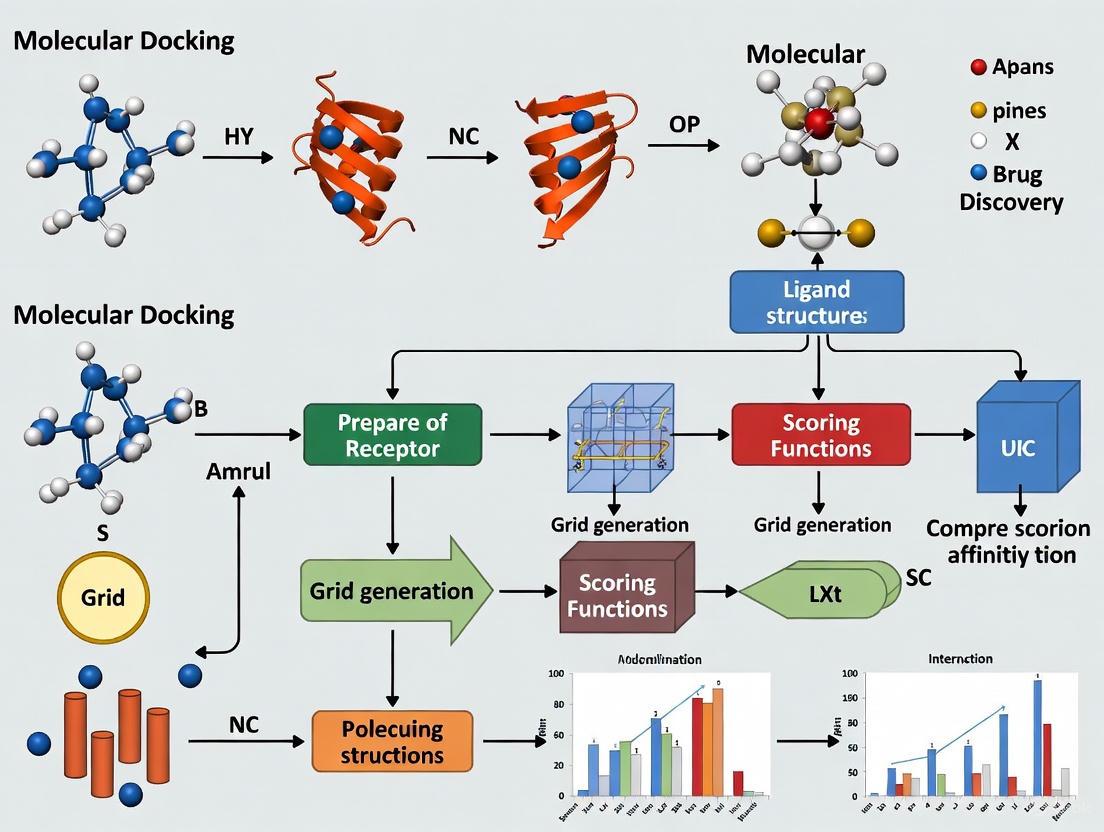
This guide provides researchers, scientists, and drug development professionals with a comprehensive, step-by-step framework for performing biologically relevant and reproducible molecular docking.
A Step-by-Step Guide to Molecular Docking for Drug Discovery in 2025: From Foundations to AI-Driven Applications
Abstract
This guide provides researchers, scientists, and drug development professionals with a comprehensive, step-by-step framework for performing biologically relevant and reproducible molecular docking. Covering foundational principles, advanced methodological workflows, critical troubleshooting, and rigorous validation strategies, it integrates the latest 2025 advancements in deep learning and AI. Readers will learn to navigate diverse docking tasks—from flexible re-docking to challenging apo-docking—employ robust controls to enhance success rates, and leverage transformative tools like diffusion models and neural network potentials to accelerate structure-based drug discovery.
Understanding Molecular Docking: Core Concepts and Its Evolving Role in Modern Drug Discovery
Molecular docking is a fundamental computational technique in structure-based drug discovery that predicts the binding affinity and three-dimensional conformation of a small molecule (ligand) within a target protein's binding site [1]. This method enables researchers to study the behavior of small molecules, such as drug candidates or nutraceuticals, at the atomic level and understand the fundamental biochemical processes underlying these interactions [1]. By simulating how a ligand binds to its target, docking serves as a powerful tool for hit identification, lead optimization, and understanding molecular recognition processes in biological systems [2].
The primary objectives of molecular docking are twofold: (1) to predict the binding affinity and conformation of small molecules within a receptor site, and (2) to identify hits from large chemical databases to search for diverse chemical scaffolds [2]. These objectives, while classified separately, have boundaries that are not clearly demarcated in practice [2].
Key Objectives and Methodological Framework
Core Objectives of Molecular Docking
Molecular docking aims to address several critical questions in drug-target interactions:
- Pose Prediction: Determining the precise orientation and conformation (the "binding pose") of a ligand when bound to its target protein.
- Affinity Estimation: Quantifying the strength of interaction through scoring functions that approximate binding energy.
- Hit Identification: Screening vast chemical libraries to identify promising candidates for further experimental validation.
- Mechanistic Insight: Elucidating molecular interactions (hydrogen bonds, hydrophobic contacts, electrostatic interactions) that stabilize the complex.
Fundamental Methodological Components
To achieve these objectives, molecular docking programs comprise two essential components [2]:
- Search Algorithm: Explores the conformational space of the ligand within the binding site.
- Scoring Function: Ranks the generated conformations to identify biologically relevant poses.
Table 1: Molecular Docking Objectives and Applications in Drug Discovery
| Primary Objective | Methodological Approach | Application in Drug Discovery | Key Outcome |
|---|---|---|---|
| Binding Conformation Prediction | Sampling ligand conformational space within binding site using systematic or stochastic algorithms [2] | Understanding ligand-receptor interaction mechanisms; guiding structure-based drug design [1] | Identification of optimal binding pose and molecular interactions |
| Binding Affinity Prediction | Scoring and ranking poses using force-field, empirical, knowledge-based, or consensus functions [2] | Virtual screening of compound libraries; lead optimization through affinity comparison [2] [1] | Quantitative estimate of binding strength; prioritization of candidate compounds |
| Hit Identification | High-throughput docking of thousands to millions of compounds from digital libraries [2] | Early-stage drug discovery to identify novel chemical scaffolds against a target [2] | Shortlist of potential hits for experimental validation |
| Target Identification for Nutraceuticals | Docking bioactive food-derived compounds against disease-relevant protein targets [1] | Uncovering therapeutic mechanisms of nutraceuticals; supporting drug repurposing [1] | Hypothesis generation for molecular targets of natural products |
Technical Protocols and Workflows
Molecular Docking Workflow
The following diagram illustrates the standard workflow for a molecular docking experiment, from target preparation to result validation:
Conformational Search Algorithms
Docking programs employ various search algorithms to explore possible ligand conformations, broadly classified into systematic and stochastic methods [2]:
Systematic Methods
- Systematic Search: Rotates all possible rotatable bonds by fixed intervals to exhaustively explore conformations, though complexity increases exponentially with rotatable bonds [2]. Used by Glide and FRED.
- Incremental Construction: Fragments molecules into rigid components, docks them into appropriate sub-pockets, then builds linkers systematically [2]. Implemented in FlexX and DOCK.
Stochastic Methods
- Monte Carlo: Makes random changes to rotatable bonds, accepting/rejecting based on energy criteria and Boltzmann distribution [2]. Used by MCDock and ICM.
- Genetic Algorithm (GA): Encodes conformational degrees of freedom as binary strings, applies mutation and crossover operations guided by fitness (score) [2]. Implemented in AutoDock and GOLD.
Table 2: Comparison of Molecular Docking Search Algorithms
| Algorithm Type | Representative Software | Key Principles | Advantages | Limitations |
|---|---|---|---|---|
| Systematic Search | Glide [2], FRED [2] | Exhaustive rotation of rotatable bonds by fixed increments | Comprehensive exploration; deterministic results | Computational cost grows exponentially with ligand flexibility |
| Incremental Construction | FlexX [2], DOCK [3] | Fragmentation of ligand; docking rigid fragments then connecting linkers | Reduced complexity; efficient for flexible ligands | Performance depends on fragmentation scheme and anchor placement |
| Monte Carlo | MCDock [2], ICM [2] | Random conformational changes with Metropolis criterion for acceptance | Effective escape from local minima; good for rough energy landscapes | May require many iterations; stochastic nature requires multiple runs |
| Genetic Algorithm | AutoDock [4], GOLD [5] | Population-based optimization using selection, crossover, and mutation | Global optimization; robust for complex search spaces | Parameter tuning sensitive; computationally intensive for large populations |
Scoring Functions
Scoring functions evaluate and rank generated poses by estimating binding affinity, typically falling into four categories [2]:
- Force Field-Based: Sums non-bonded interactions (van der Waals, electrostatics) using molecular mechanics equations.
- Empirical: Uses weighted energy terms (H-bonds, hydrophobic contacts) derived from regression on complexes with known affinity.
- Knowledge-Based: Statistical potentials derived from atom pair frequencies in known protein-ligand structures.
- Consensus: Combines multiple scoring functions to improve reliability and reduce individual method biases.
Advanced Applications and Integrations
Integration with Molecular Dynamics
Molecular dynamics (MD) simulations complement docking by addressing a key limitation: the typical treatment of receptors as rigid bodies [2]. MD can be used in two ways:
- Pre-docking: To sample various receptor conformations for ensemble docking.
- Post-docking: To refine docked complexes and incorporate induced fit effects [2].
AI-Enhanced Docking Approaches
Recent advances incorporate machine learning to improve both conformational sampling and scoring:
- Geometric Deep Learning: Models like IGModel use graph neural networks to incorporate spatial features of interacting atoms [2].
- Network-Based Sampling: AI-Bind combines network science with unsupervised learning to predict protein-ligand interactions [2].
- Improved Scoring Functions: AI techniques help develop more generalized scoring functions that better predict binding affinities across diverse targets [2].
Application in Nutraceutical Research
Molecular docking has seen growing application in identifying molecular targets of nutraceuticals—bioactive compounds from food sources—for disease management [1]. This approach helps authenticate their therapeutic benefits by predicting interactions with disease-relevant protein targets in models including cancer, cardiovascular, neurodegenerative, and metabolic disorders [1].
Essential Research Reagent Solutions
Table 3: Key Software Tools and Resources for Molecular Docking Experiments
| Research Reagent / Software | Type / Category | Primary Function in Docking Workflow | Key Features |
|---|---|---|---|
| AutoDock Vina [6] [1] | Docking Software | Binding pose prediction and affinity estimation | Open-source; efficient gradient-optimization algorithm; good accuracy/speed balance |
| Glide [6] [1] | Docking Software | High-throughput virtual screening and precision docking | Systematic search and Monte Carlo methods; hierarchical scoring filters |
| GOLD [1] | Docking Software | Genetic algorithm-based docking for pose prediction | Genetic algorithm optimization; handles protein flexibility |
| DOCK [1] | Docking Software | Shape-based matching and scoring of ligands | One of the earliest docking programs; grid-based scoring |
| AlphaFold2 DB [2] | Protein Structure Database | Source of predicted protein structures for targets lacking experimental structures | AI-predicted protein structures; expands range of dockable targets |
| PDB (Protein Data Bank) | Experimental Structure Database | Source of experimentally determined 3D structures of biological macromolecules | High-quality structures often with co-crystallized ligands |
| ZINC20 | Compound Library | Database of commercially available compounds for virtual screening | Millions of purchasable compounds in ready-to-dock formats |
Validation and Best Practices
Experimental Validation Protocol
While molecular docking provides valuable predictions, experimental validation remains essential:
In Vitro Binding Assays:
- Surface Plasmon Resonance (SPR) to measure binding kinetics (KA, KD)
- Isothermal Titration Calorimetry (ITC) to determine thermodynamic parameters
- Fluorescence Polarization assays for competitive binding studies
Functional Assays:
- Enzyme inhibition assays to confirm pharmacological activity
- Cell-based reporter assays for functional characterization
- Antibacterial/antiproliferative activity testing in relevant cell lines
Structural Validation:
- X-ray crystallography of protein-ligand complexes to verify predicted binding modes
- NMR spectroscopy to study solution-state interactions
Reproducibility Guidelines
To ensure biologically relevant and reproducible docking results [2]:
- Thoroughly understand the drug target's biology and binding site characteristics
- Validate docking protocols by reproducing known ligand poses (RMSD ≤ 2.0 Å)
- Use multiple scoring functions to cross-validate results
- Report all parameters and software versions explicitly
- Avoid over-interpreting docking scores as precise affinity measurements
- Acknowledge limitations regarding protein flexibility and solvation effects
Signaling Pathways in Drug-Target Interactions
The diagram below illustrates the relationship between molecular docking predictions and downstream cellular effects through signaling pathways:
Molecular docking serves as the critical computational bridge between compound screening and understanding therapeutic mechanisms at the molecular level. When properly implemented with attention to methodological details and validation requirements, it significantly accelerates drug discovery pipelines and provides fundamental insights into biomolecular interactions.
Molecular docking is a cornerstone computational technique in modern drug discovery, functioning as a predictive "handshake" between a small molecule (ligand) and a target protein [7]. Its primary objective is to forecast the three-dimensional orientation of a ligand within a protein's binding site and estimate the strength of their interaction, known as binding affinity [7]. By enabling researchers to rapidly evaluate how thousands to billions of compounds might interact with a disease target, docking serves as a powerful virtual screening tool that prioritizes the most promising candidates for costly and time-consuming laboratory experiments, thereby saving millions of dollars in research costs [7] [8].
The fundamental workflow adheres to a search-and-score paradigm: it involves searching the vast conformational and orientational space of the ligand relative to the protein and then scoring each generated "pose" to identify the most likely binding mode [9]. While early docking methods treated proteins as rigid bodies, advancements in computing and algorithms now allow for varying degrees of flexibility in both the ligand and the protein, leading to more accurate predictions of biomolecular interactions [9].
The Molecular Docking Workflow: A Step-by-Step Guide
The process of molecular docking can be systematically broken down into four key stages, from initial data preparation to the final analysis of results. The following diagram provides a high-level overview of this integrated workflow.
Stage 1: Target and Ligand Preparation
The foundation of a successful docking experiment lies in the careful preparation of both the protein target and the ligand molecules.
Target Preparation
The process typically begins by acquiring a three-dimensional structure of the target protein from the Protein Data Bank (PDB) [7] [10]. For instance, a study targeting VEGFR-2 and c-Met selected multiple co-crystal structures from the PDB based on criteria such as high resolution (e.g., less than 2 Ã…) and biological activity [10]. The protein structure then undergoes a series of critical preparation steps using software like Discovery Studio or Molecular Operating Environment (MOE) [10] [11]:
- Removal of Extraneous Molecules: Water molecules, ions, and other heteroatoms not involved in binding are typically removed, unless they are known to be crucial for ligand interaction [7] [10].
- Structural Completion: Missing amino acid residues or loops are added and optimized [10] [11].
- Addition of Hydrogen Atoms and Charges: Polar hydrogens are added, and atomic charges are assigned using force fields like CHARMM or AMBER [7] [10] [11].
- Energy Minimization: The structure is relaxed to a low-energy conformation to correct any steric clashes or strained geometries introduced during the preparation process [10] [11].
Ligand Preparation
Ligand structures can be sourced from chemical databases like PubChem or sketched using chemical drawing tools [7]. The preparation involves:
- Structure Optimization: Generating low-energy 3D conformations using tools like OpenEye's OMEGA [11].
- Protonation and Tautomer Assignment: Determining the dominant protonation states and tautomers at physiological pH (e.g., 7.4) using tools like QUACPAC [11].
- Assignment of Chemical Types and Charges: Defining atom types and calculating partial charges based on appropriate force fields [12].
Finally, both the prepared protein and ligand are converted into formats required by the docking software, such as the PDBQT format used by AutoDock Vina [7].
Stage 2: Docking Setup and Execution
This stage involves configuring the docking simulation to efficiently and effectively explore potential binding modes.
Defining the Binding Site and Search Space
The spatial region where the docking search will be conducted must be defined. This is often done by specifying a three-dimensional grid box centered on the known or predicted binding site. The box is defined by its center coordinates (center_x, center_y, center_z) and its dimensions (size_x, size_y, size_z) [7]. For example, a tutorial for AutoDock Vina might use a box with a center at (15.0, 12.5, 10.0) and a size of 25.0 Ã… in all dimensions [7]. In cases where the binding site is unknown, "blind docking" can be performed over a larger portion or the entire protein surface, a task where some deep learning models have shown promise [9].
Selecting a Docking Approach and Parameters
A critical choice is the treatment of molecular flexibility, which significantly impacts computational cost and accuracy.
- Rigid Docking: Treats both the protein and ligand as rigid. This is computationally efficient but oversimplifies the binding process [9].
- Flexible Ligand Docking: Allows the ligand's torsional bonds to rotate while keeping the protein rigid. This is the most common approach in traditional docking software like AutoDock Vina [7] [9].
- Flexible Protein and Ligand Docking: Allows for movement in both the ligand and the protein's side chains or even backbone. This is more computationally demanding but can better capture "induced fit" effects. Novel algorithms, such as those in the SOL-P program, are tackling this challenge by allowing the movement of selected protein atoms during the docking process [12].
The command to execute a docking simulation in AutoDock Vina, for instance, would incorporate all these parameters [7]:
Stage 3: Pose Scoring, Ranking, and Analysis
After the docking simulation generates a set of potential ligand poses, they must be evaluated and interpreted.
Scoring Functions
Scoring functions are mathematical models used to predict the binding affinity of each pose. They can be broadly categorized as follows:
- Force Field-Based: Calculate energies based on molecular mechanics terms (van der Waals, electrostatic, etc.) [12].
- Empirical: Estimate affinity using weighted terms for different interaction types (e.g., hydrogen bonds, hydrophobic contacts) derived from experimental data [8].
- Knowledge-Based: Use statistical potentials derived from known protein-ligand structures in databases like the PDB [8].
- Machine Learning-Based: Train models on structural and interaction data to predict binding affinity. These are increasingly popular and can be used to rescore poses generated by traditional methods for improved accuracy [9] [11].
Post-Processing and Validation
The top-ranked poses are typically subjected to further analysis:
- Pose Clustering: Similar poses are grouped to identify consensus binding modes and ensure the top result is not an outlier [8].
- Visual Inspection: The geometric and chemical complementarity of the top poses is visually assessed using molecular visualization tools like PyMOL or Chimera [7]. Researchers check for key interactions like hydrogen bonds, salt bridges, and hydrophobic contacts.
- Consensus Scoring: Using multiple scoring functions to rank poses can improve the reliability of the predictions [8].
- Energy Minimization: Some workflows include a final energy minimization step to relax the docked complex and remove any minor steric clashes [11].
Table 1: Comparison of Common Docking Software and Scoring Approaches
| Software | Scoring Function Type | Flexibility Handling | Typical Use Case |
|---|---|---|---|
| AutoDock Vina [7] | Empirical | Flexible ligand, rigid receptor | Standard virtual screening |
| DOCK [8] | Force field & Empirical | Flexible ligand, rigid receptor | Large-scale library docking |
| SOL-P [12] | Force Field (MMFF94) | Flexible ligand & movable protein atoms | High-accuracy pose prediction |
| Gnina [11] | Machine Learning (CNN) | Flexible ligand, rigid receptor | Pose prediction and rescoring |
| DiffDock [9] | Machine Learning (Diffusion) | Ligand flexibility, coarse protein flexibility | Blind pose prediction |
Advanced Considerations and Controls
For robust results, especially in large-scale virtual screening, implementing controls is essential.
- Enrichment Controls: Before screening a large, unknown library, it is good practice to dock a benchmark set containing known active and inactive compounds against the target to ensure the docking protocol can successfully enrich actives [8].
- Decoy Sets: Resources like the Directory of Useful Decoys (DUD-E) provide decoy molecules that are physically similar but chemically different to active compounds, which are useful for validating virtual screening workflows [10].
- Handling Protein Flexibility: For targets with significant conformational changes, advanced methods like ensemble docking (docking into multiple protein structures) or using deep learning models like FlexPose that explicitly model protein flexibility can be necessary for accurate predictions across diverse ligand sets [9].
- Integration with MD Simulations: To account for dynamic effects, top-ranking docked poses can be refined using Molecular Dynamics (MD) simulations. This provides insights into the stability of the complex over time and allows for more rigorous calculation of binding free energies using methods like MM/PBSA [10].
Table 2: Key Software, Databases, and Resources for Molecular Docking
| Category | Item | Function and Purpose |
|---|---|---|
| Software & Tools | AutoDock Tools, AutoDock Vina [7] | Preparing molecules (PDBQT format) and performing flexible ligand docking. |
| PyMOL, Chimera [7] | Visualization of protein-ligand complexes and analysis of binding interactions. | |
| Discovery Studio (DS), MOE [10] | Integrated suites for protein preparation, pharmacophore modeling, and docking. | |
| AmberTools, GROMACS [10] [11] | Molecular dynamics simulations for refining docked poses and calculating binding free energies. | |
| Databases | RCSB Protein Data Bank (PDB) [7] [10] | Primary repository for experimentally determined 3D structures of proteins and nucleic acids. |
| PubChem [7] | Database of small molecules and their biological activities. | |
| PDBBind [9] [11] | Curated database of protein-ligand complexes with binding affinity data for benchmarking. | |
| DUD-E [10] | Directory of Useful Decoys: Enhanced, used for virtual screening control experiments. | |
| ZINC, ChemDiv [10] [8] | Commercial databases of purchasable compounds for virtual screening. | |
| Computational Resources | High-Performance Computing (HPC) Cluster | Essential for large-scale virtual screening and molecular dynamics simulations. |
| Cloud Computing Platforms (e.g., AWS, GCP) | Provides scalable resources for computationally intensive docking tasks [8]. |
Molecular docking stands as a computational cornerstone in modern structure-based drug design, enabling researchers to predict how small molecule ligands interact with biological targets at the atomic level [13] [14]. The accuracy and purpose of these predictions vary significantly depending on the docking methodology employed. Within the drug discovery pipeline, distinct computational tasks—specifically re-docking, cross-docking, apo-docking, and blind docking—serve unique and critical functions, from validating computational methods to discovering novel binding sites [15]. These protocols range from controlled validation experiments to ambitious predictive challenges that account for full protein flexibility and unknown binding loci. Mastering the application, interpretation, and limitations of each docking task is therefore fundamental for researchers aiming to leverage computational docking effectively in rational drug design. This guide provides a comprehensive overview of these four key docking methodologies, complete with structured protocols, performance metrics, and practical implementation guidelines to equip scientists with the necessary knowledge to execute these tasks effectively within their research workflows.
Core Docking Tasks: Definitions and Applications
The table below summarizes the four fundamental docking tasks, their primary objectives, and typical applications in drug discovery research.
Table 1: Overview of Key Molecular Docking Tasks
| Docking Task | Primary Objective | Key Applications | Complexity Level |
|---|---|---|---|
| Re-docking | Method validation by reproducing a known binding pose | Scoring function validation, Protocol optimization [16] | Low |
| Cross-docking | Assess predictive power across multiple related structures | Handling receptor flexibility, Benchmarking performance [17] [15] | Medium |
| Apo-docking | Predict ligand binding using an unbound receptor structure | Simulating true in silico prediction scenarios [17] [15] | High |
| Blind Docking | Identify novel binding sites without prior knowledge | Cryptic site discovery, Allosteric inhibitor identification [13] [14] | Very High |
Re-docking
Re-docking is the most fundamental docking task, serving as the initial validation step for any docking protocol. In this procedure, a ligand is separated from its receptor in a known, experimentally determined protein-ligand complex (a holo structure) and is then computationally re-docked back into the same binding site [16]. The central goal is to evaluate whether the docking algorithm and scoring function can faithfully reproduce the experimentally observed, native binding mode. Successful re-docking, typically defined as predicting a ligand pose with a Root-Mean-Square Deviation (RMSD) of less than 2.0 Ã… from the crystal structure pose, validates the basic setup of a docking study [18]. It is primarily used to benchmark scoring functions, optimize sampling parameters, and establish a baseline performance level before proceeding to more challenging predictive tasks like virtual screening [16].
Cross-docking
Cross-docking introduces a critical real-world challenge: receptor flexibility. This task involves docking a ligand into a receptor structure that was co-crystallized with a different ligand [17] [15]. The objective is to test the docking method's robustness to conformational variations in the binding site that occur in response to different bound ligands. These variations can include side-chain rearrangements, backbone shifts, and loop movements [15]. Cross-docking is considered a more rigorous test than re-docking because it assesses a method's ability to handle the structural differences between holo structures used in docking and the actual target receptor, which may not be in an identical conformational state. Performance in cross-docking is a strong indicator of how well a method will perform in prospective virtual screening campaigns where the true receptor conformation is unknown [15].
Apo-docking
Apo-docking represents a further step toward realistic prediction by attempting to dock a ligand into the unbound (apo) form of a receptor—a structure determined without any ligand present [17] [15]. This is highly challenging because proteins often undergo conformational changes, known as "induced fit," upon ligand binding [15] [14]. These changes can range from minor side-chain rotations to large-scale domain motions, making the apo binding site potentially very different from the holo site the ligand expects. The ability of a docking method to successfully perform apo-docking is a direct test of its capacity to model or accommodate receptor flexibility, a frontier challenge in the field [13] [15]. With the increasing availability of AlphaFold2-predicted structures, which often resemble apo states, developing methods competent at apo-docking has become increasingly important [17].
Blind Docking
Blind docking is the most ambitious of these tasks, performed when the location of the binding site is unknown a priori [13]. The entire surface of the receptor is screened to identify potential binding pockets and predict the ligand's binding mode simultaneously. This approach is crucial for discovering novel allosteric sites or "cryptic" pockets that are not apparent in the unbound structure but can open upon ligand binding [15] [14]. Given the enormous conformational space that must be searched, blind docking is computationally demanding and requires sophisticated algorithms to efficiently explore the protein surface. It is the primary method for initial investigation of proteins with unknown function or for seeking novel therapeutic sites outside well-characterized active sites [13].
Experimental Protocols and Workflows
The following section provides detailed, step-by-step protocols for executing each of the four key docking tasks. Adherence to these standardized workflows is essential for generating reliable, reproducible results in drug discovery applications.
Protocol for Re-docking and Cross-docking
Step 1: System Preparation
- Obtain the PDB file for the target protein-ligand complex.
- For re-docking: Use this complex's structure as both the receptor and the source of the native ligand.
- For cross-docking: Select a different complex where the same protein is bound to a different ligand. Use this protein structure as the receptor, while the ligand to be docked comes from the original complex.
- Prepare the protein by removing the original ligand, adding hydrogen atoms, assigning partial charges, and correcting any protonation states of key residues (e.g., His, Asp, Glu) using software like UCSF Chimera, Schrodinger's Protein Preparation Wizard, or the
pdb4ambertool. - Prepare the ligand by generating 3D coordinates, optimizing its geometry, and defining its rotatable bonds. Tools like Open Babel, Corina, or the LigPrep module are suitable for this.
Step 2: Binding Site Definition
- For both re-docking and cross-docking, the binding site is known.
- Define the docking search space by creating a grid box centered on the crystallographic position of the native ligand.
- The box size should be large enough to accommodate full ligand flexibility; a common default is a 20 Å × 20 Å × 20 Å box.
Step 3: Docking Execution
- Run the docking simulation using software such as AutoDock Vina, Gnina, DOCK, or GOLD.
- Ensure the sampling parameters are sufficient; typically, the exhaustiveness in Vina should be set to 20-50 for reliable results.
Step 4: Pose Analysis and Validation
- Generate multiple ligand poses (e.g., 10-20).
- Calculate the RMSD between the top-ranked docked pose and the native crystallographic ligand pose.
- A successful docking is typically defined by an RMSD value below 2.0 Ã…, indicating the method could recapitulate the correct binding mode [18].
Protocol for Apo-docking
Step 1: Apo Structure Sourcing and Preparation
- Source the apo (unbound) protein structure from the PDB or use a predicted structure from AlphaFold2 [17].
- Prepare the protein structure as described in the previous protocol. Pay special attention to the potential for different protonation states and the positioning of flexible side chains in the absence of a ligand.
Step 2: Binding Site Identification and Preparation
- Identify the putative binding site. This can be done by:
- Structural alignment with a known holo structure of a homologous protein.
- Using cavity detection programs like GRID, POCKET, or SurfNet [13].
- If a co-crystallized ligand from a holo structure is available, using its location to define the grid.
- Define a grid box around this putative binding site.
Step 3: Flexible Docking Execution
- Execute the docking run. Given the potential for conformational differences between apo and holo forms, it is advisable to use docking software that can account for some level of protein flexibility, such as Gnina, AutoDock Vina, or GOLD.
- Consider using specialized flexible docking methods like those incorporating Local Move Monte Carlo (LMMC) or deep learning approaches like FABFlex that explicitly predict pocket changes [13] [17].
Step 4: Analysis and Holo Structure Comparison
- Analyze the top-ranked poses.
- Compare the predicted ligand pose with a known holo structure of the same protein (if available) to evaluate accuracy.
- Assess whether the predicted binding mode would be sterically and energetically feasible in the context of the known holo structure.
Protocol for Blind Docking
Step 1: Protein Structure Preparation
- Prepare the protein structure as in previous protocols, ensuring the entire surface is modeled correctly.
Step 2: Global Search Space Definition
- Define a very large grid box that encompasses a significant portion of the protein's surface or the entire protein.
- Alternatively, use a cavity detection algorithm to identify multiple potential binding pockets and perform sequential, focused docking runs into each identified site [13] [14].
Step 3: High-Throughput Docking Execution
- Run the docking simulation with a large search space. This is computationally intensive and may require high-performance computing resources.
- Increase sampling parameters (e.g., exhaustiveness in Vina to 100 or more) to ensure adequate coverage of the vast conformational space.
- Regression-based multi-task learning models like FABFlex can significantly accelerate this process by directly predicting binding structures without exhaustive sampling [17].
Step 4: Binding Site Identification and Ranking
- Cluster the output poses based on their 3D location on the protein surface.
- Rank the identified potential binding sites by the calculated score or energy of the docked poses.
- Manually inspect the top-ranked sites for chemical feasibility, presence of key interaction residues, and druggability.
Decision Workflow and Quantitative Benchmarks
Task Selection Workflow
The following diagram illustrates the decision-making process for selecting the appropriate docking task based on the available structural information and research goals.
Diagram 1: A decision workflow for selecting the appropriate molecular docking task based on available structural data and research objectives.
Performance Metrics and Benchmarks
Understanding expected performance metrics is crucial for interpreting docking results. The table below summarizes typical accuracy benchmarks for successful outcomes in each docking task.
Table 2: Performance Benchmarks for Docking Tasks
| Docking Task | Primary Metric | Success Threshold | Typical Success Rate | Key Challenge |
|---|---|---|---|---|
| Re-docking | Ligand Pose RMSD | < 2.0 Ã… [18] | 70-80% [18] | Scoring function bias |
| Cross-docking | Ligand Pose RMSD | < 2.0 Ã… | Varies widely with system | Receptor conformation mismatch [15] |
| Apo-docking | Ligand Pose RMSD | < 2.5 - 3.0 Ã… | Lower than cross-docking | Induced fit conformational changes [17] |
| Blind Docking | Site Identification & Pose RMSD | Correct site identified & pose < 3.0 Ã… | Highly method-dependent [13] | Massive search space, cryptic pockets [14] |
Advanced methods are pushing these benchmarks further. For instance, modern flexible docking tools like FABFlex have demonstrated the ability to increase the percentage of ligand RMSD below 2Ã… to 40.59% in blind flexible docking scenarios while also reducing pocket RMSD to 1.10Ã…, indicating accurate prediction of both ligand and protein pocket conformations [17]. Furthermore, such regression-based methods can achieve significant speed advantages, reportedly up to 208 times faster than state-of-the-art sampling-based flexible docking methods, making large-scale or high-throughput applications more feasible [17].
The Scientist's Toolkit: Essential Research Reagents and Software
Successful execution of docking tasks relies on a suite of specialized software tools and computational resources. The following table catalogues the essential "research reagents" for the computational scientist.
Table 3: Essential Software and Resources for Molecular Docking Tasks
| Tool Category | Example Software/Resources | Primary Function | Relevant Docking Tasks |
|---|---|---|---|
| General Docking Suites | AutoDock Vina, Gnina [16], DOCK, GOLD | Ligand sampling and pose scoring | All tasks |
| Specialized Docking Tools | FABFlex [17], DynamicBind [17] | Flexible blind docking, Protein-ligand co-prediction | Apo-docking, Blind docking |
| Structure Preparation | UCSF Chimera, Open Babel, Schrodinger Suite | Protein and ligand cleanup, Hydrogen addition, Charge assignment | All tasks |
| Binding Site Detection | GRID, POCKET, SurfNet [13], Fpocket | Identify putative binding cavities | Blind docking, Apo-docking |
| Structure Databases | PDB (Protein Data Bank), AlphaFold Protein Structure Database | Source experimental and predicted structures | Cross-docking, Apo-docking |
| Performance Analysis | RMSD calculation scripts, Visualization software | Validate poses, Analyze interactions | All tasks (esp. Re-docking) |
| H-Gamma-Glu-Gln-OH | H-Gamma-Glu-Gln-OH, CAS:10148-81-9, MF:C10H17N3O6, MW:275.26 g/mol | Chemical Reagent | Bench Chemicals |
| m-PEG4-Boc | m-PEG4-Boc, MF:C14H28O6, MW:292.37 g/mol | Chemical Reagent | Bench Chemicals |
Re-docking, cross-docking, apo-docking, and blind docking represent a hierarchy of computational tasks that address progressively more complex and realistic challenges in structure-based drug design [15]. While re-docking remains an essential first step for method validation, the field's frontier is defined by the challenges of protein flexibility and unknown binding sites, tackled by cross-docking, apo-docking, and blind docking [13] [14]. The ongoing integration of advanced machine learning methods, such as those seen in Gnina 1.3's CNN scoring functions and FABFlex's regression-based flexible docking, is steadily improving the accuracy and speed of these demanding tasks [17] [16]. By understanding the distinct purpose, protocol, and performance benchmarks for each docking task, researchers can more effectively design computational experiments, select appropriate tools, and critically interpret results, thereby accelerating the discovery of novel therapeutic agents.
Molecular docking is a fundamental computational technique in modern drug discovery that predicts the preferred orientation of a small molecule (a ligand) when bound to a larger biological receptor, typically a protein. The primary goal is to predict the binding pose and estimate the binding affinity through scoring functions, facilitating the identification and optimization of novel therapeutic compounds. This process involves an efficient conformational search to explore the vast space of possible ligand-receptor interactions. These core concepts form the foundation of structure-based drug design, enabling researchers to virtually screen vast chemical libraries, prioritize promising candidates for synthesis and testing, and understand structure-activity relationships at an atomic level, thereby accelerating the drug development pipeline and reducing associated costs.
Defining the Essential Terminology
Ligands and Receptors
In the context of molecular docking and drug discovery, the terms "ligand" and "receptor" describe the interacting partners.
- A Ligand is a molecule that binds to a larger macromolecule. In drug discovery, this typically refers to a small, drug-like molecule that binds specifically to a protein target. Ligands can include neurotransmitters, toxins, neuropeptides, steroid hormones, enzyme substrates, second messengers, or allosteric regulators [19]. The binding event is often reversible (transient and non-covalent) but can also be covalent and reversible or irreversible [19].
- A Receptor is the macromolecule, almost always a protein, that contains a region, known as a binding site, to which the ligand binds. A classic example is a G-protein coupled receptor (GPCR) like the β2 adrenergic receptor (β2AR) [20]. The receptor's function is altered upon ligand binding, which is a key mechanism for cellular signal transduction [19]. For antimicrobial drug research, the target receptor is one that is proven essential for the growth, survival, or infectious capability of the pathogen [21].
Binding Sites and Poses
The interaction between a ligand and a receptor is localized to a specific region on the receptor.
- A Binding Site is a region on the macromolecule (e.g., a protein) that directly participates in its specific combination with another molecule [19]. Binding sites are characterized by their charge, spatial shape, and geometry, which selectively allow for high-specificity ligand binding [19]. There are different types of binding sites:
- Active Site: A specialized binding site where a substrate binds to an enzyme to induce a chemical reaction. Competitive inhibitors also bind here to block substrate binding [19].
- Allosteric Site: A regulatory site where ligand binding can cause an amplification or suppression of protein function, often by inducing conformational changes [19].
- A Pose describes a single "snapshot" of the spatial arrangement of the ligand relative to the receptor in a stable complex [22]. The central challenge in docking is to identify the near-native binding pose—the one that most closely resembles the true, biologically relevant binding mode observed in experimental structures [23].
Conformational Search and Sampling Algorithms
With present computing resources, it is impossible to exhaustively explore all possible orientations and conformations of the ligand and receptor. Therefore, various strategies are employed to sample the search space with optimal efficiency [22].
- Conformational Search is the process of exploring all possible orientations of the protein with respect to the ligand and, in flexible docking, all possible conformations of the protein paired with all possible conformations of the ligand [22]. The primary search strategies include:
- Shape-Complementarity Methods: These are the most common techniques, focusing on the geometric and chemical match between the receptor and the ligand. Programs like DOCK, GLIDE, and SURFLEX use descriptors of structural complementarity (e.g., solvent-accessible surface area) and binding complementarity (e.g., hydrogen bonds, hydrophobic contacts) to find optimal poses [22].
- Genetic Algorithms: These algorithms explore the vast conformational space by representing each spatial arrangement as a "gene." Programs like GOLD and AutoDock simulate evolution through cross-over and random mutation techniques to find low-energy conformations [22].
- Molecular Dynamics (MD) Simulations: This approach uses classical force fields to simulate the physical movements of atoms. While computationally expensive, MD can be used to generate conformations or, more commonly, to refine and evaluate docking poses by allowing the system to equilibrate in a solvated environment, which can remove a ligand from an unstable predicted position [22] [20].
Scoring Functions
Once a set of candidate poses is generated, they must be ranked to identify the most likely correct one.
- A Scoring Function is a mathematical function used to predict the binding affinity of a ligand pose to a receptor. The accurate identification of the correct binding mode is a critical component of successful docking programs [24]. Scoring functions can be broadly categorized as follows [24]:
- Physics-based: Calculate binding energy by summing Van der Waals and electrostatic interactions, sometimes including solvent effects and polarization. These are computationally intensive [24].
- Empirical-based: Estimate binding affinity by summing a series of weighted energy terms (e.g., van der Waals, hydrogen bonds, desolvation) derived from known 3D structures. They are faster than physics-based methods [24]. GlideScore, FireDock, and RosettaDock are examples [24] [25].
- Knowledge-based: Use statistical potentials derived from the pairwise distances between atoms or residues in known protein complexes, offering a good balance between accuracy and speed [24]. AP-PISA and SIPPER fall into this category [24].
- Machine Learning (ML)-/Deep Learning (DL)-based: These are an emerging area of interest that learn complex functions mapping interface features to a score, often showing improved performance in pose selection [23] [24].
Quantitative Data and Performance Comparison
The performance of different scoring functions and docking methodologies is routinely benchmarked on public datasets to assess their strengths and weaknesses. The table below summarizes a comparative assessment of various classical and deep learning-based scoring functions for protein-protein docking across multiple datasets, highlighting their average ranking performance (a lower Top X value is better) [24].
Table 1: Performance Comparison of Classical and Deep Learning-Based Scoring Functions for Protein-Protein Docking [24]
| Method | Type | Average Ranking (Top 1) | Average Ranking (Top 10) | Runtime Considerations |
|---|---|---|---|---|
| FireDock | Empirical-based | 28.5 | 9.9 | Fast |
| PyDock | Hybrid | 25.5 | 9.1 | Fast |
| RosettaDock | Empirical-based | 21.1 | 7.2 | Slow |
| HADDOCK | Hybrid | 19.6 | 7.0 | Medium |
| AP-PISA | Knowledge-based | 18.4 | 6.5 | Fast |
| DL-based Methods | Deep Learning | 15.8 | 5.5 | Varies (can be fast after training) |
For protein-ligand docking, the accuracy of pose prediction is often evaluated using metrics like Root-Mean-Square Deviation (RMSD) from an experimental reference structure. The performance of different docking modes within a single program, such as Glide, can vary based on the sampling intensity and scoring.
Table 2: Performance of Glide Docking Modes in Pose Prediction and Virtual Screening [25]
| Glide Mode | Sampling Intensity | Pose Prediction Success (RMSD < 2.5 Ã…) | Typical Docking Speed | Primary Use Case |
|---|---|---|---|---|
| HTVS | Low | Lower than SP | ~2 seconds/compound | Rapidly screen ultra-large libraries |
| SP (Standard Precision) | Medium | 85% (Astex set) | ~10 seconds/compound | Balanced accuracy and speed for virtual screening |
| XP (Extra Precision) | High | Comparable to or higher than SP | ~2 minutes/compound | Lead optimization, analyzing key interactions |
Experimental Protocols and Workflows
A Standard Protocol for Rigid-Receptor Docking with Glide
The following protocol outlines a standard workflow for docking a library of small molecules against a prepared protein structure using Glide's SP or XP mode, a widely used rigid-receptor docking method [25].
Protein Preparation:
- Obtain the 3D structure of the target receptor from a source like the Protein Data Bank (PDB).
- Process the structure using a tool like the Protein Preparation Wizard. This involves adding hydrogen atoms, assigning protonation states, fixing missing side chains or loops, and optimizing hydrogen-bonding networks.
- Perform a constrained energy minimization to relieve steric clashes while keeping the protein close to its experimental conformation.
- Define the binding site, often by centering a grid box on the co-crystallized ligand or known active site residues.
Ligand Preparation:
- Prepare the ligand library using LigPrep.
- Generate likely ionization states at a specified pH (e.g., 7.0 ± 0.5).
- Generate stereoisomers and low-energy ring conformers.
- Output the structures in a format suitable for docking.
Docking Execution:
- Select the appropriate precision mode: HTVS for initial filtering of very large libraries, SP for standard virtual screening, or XP for more precise scoring and analysis.
- The Glide docking funnel operates as follows [25]:
- Systematic Search: A series of hierarchical filters search for possible ligand orientations within the grid-defined binding site.
- Conformational Sampling: Exhaustive enumeration of ligand torsions is performed.
- Refinement: Promising poses are refined in torsional space within the receptor's field.
- Post-docking Minimization (PDM): A final minimization with full ligand flexibility is performed on the best poses.
Pose Selection and Analysis:
- Poses are ranked primarily using the GlideScore empirical scoring function, which accounts for hydrophobic enclosure, hydrogen bonding, van der Waals interactions, and a rotatable bond penalty [25].
- Visually inspect the top-ranked poses to analyze key protein-ligand interactions (e.g., hydrogen bonds, pi-stacking, hydrophobic contacts) for rational drug design.
Diagram 1: Standard rigid-receptor molecular docking workflow.
Advanced Protocol: Induced Fit Docking (IFD) for Flexible Receptors
When a ligand induces significant side-chain or backbone movements in the receptor, the rigid-receptor approximation may fail. The Induced Fit Docking (IFD) protocol accounts for this by combining Glide and Prime to model receptor flexibility [25].
Initial Glide Docking:
- The ligand is docked into the rigid receptor using Glide with a softened potential (reduced van der Waals radii) to allow for steric overlap and generate an initial diverse set of poses.
Protein Structure Refinement:
- For each of the initial ligand poses, the protein structure is refined using Prime. Side chains within a specified distance of the ligand are trimmed and repacked, and the protein-ligand complex undergoes energy minimization.
Re-docking and Scoring:
- Each ligand is re-docked into the refined protein structure corresponding to its initial pose, this time using the standard Glide docking parameters.
- The final complexes are ranked using a composite score that combines the GlideScore and the Prime energy.
Protocol for Validating Docking Poses using Molecular Dynamics
Molecular Dynamics (MD) simulation can be used to assess the stability of a docked pose in a more realistic, solvated environment, acting as a powerful validation step [20].
System Setup:
- Take the top-ranked docking pose and place it in a simulation box filled with explicit water molecules (e.g., TIP3P model).
- Add ions to neutralize the system's charge and achieve physiological concentration.
Equilibration:
- Perform energy minimization to remove bad contacts.
- Run short MD simulations (e.g., 100-500 ps) with positional restraints on the protein and ligand heavy atoms to gently equilibrate the solvent and ions around the complex.
Production Simulation:
- Run an unrestrained MD simulation for a sufficiently long time (e.g., tens to hundreds of nanoseconds). The required time depends on the system's flexibility and the quality of the initial pose.
- A stable pose will show little deviation from the initial docking structure, while an unstable pose may see the ligand dissociate or adopt a completely new orientation [20].
Trajectory Analysis:
- Calculate the Root-Mean-Square Deviation (RMSD) of the ligand relative to its starting position over the course of the simulation. A stable, flat RMSD profile suggests the pose is stable.
- Analyze the conservation of key protein-ligand interactions throughout the simulation trajectory.
Diagram 2: Molecular dynamics workflow for validating docking poses.
The Scientist's Toolkit: Key Research Reagents and Computational Solutions
Table 3: Essential Computational Tools and Resources for Molecular Docking
| Category | Tool/Reagent | Primary Function | Example Use Case |
|---|---|---|---|
| Docking Software | Glide (Schrödinger) | High-accuracy protein-ligand docking and virtual screening. | Standard and extra-precision docking for hit identification [25]. |
| AutoDock, GOLD | Docking using genetic algorithms for flexible ligand docking. | Exploring a large conformational space for a ligand [22]. | |
| Scoring Functions | Classical (e.g., ZRANK2, PyDock) | Empirical or knowledge-based scoring of protein-protein complexes. | Ranking models in protein-protein docking [24]. |
| Deep Learning-based | Pose selection using models trained on complex structural data. | Improved identification of near-native binding modes [23]. | |
| Structure Preparation | Protein Preparation Wizard | Prepares protein structures for docking (H-add, minimization). | Standardizing a PDB structure for a docking study [25]. |
| LigPrep | Generates accurate 3D ligand structures with correct ionization. | Preparing a corporate compound library for virtual screening [25]. | |
| Simulation & Validation | GROMACS | Molecular dynamics simulation package. | Validating the stability of a docked pose in solution [20]. |
| Data Resources | Protein Data Bank (PDB) | Repository for 3D structural data of proteins and nucleic acids. | Source of the target receptor's 3D structure [24]. |
| DUD/E, Astex Set | Benchmark datasets for validating docking and scoring methods. | Testing a docking protocol's pose prediction and enrichment [25]. | |
| m-PEG7-Boc | m-PEG7-Boc, CAS:874208-90-9, MF:C20H40O9, MW:424.5 g/mol | Chemical Reagent | Bench Chemicals |
| H-His-NH2.2HCl | H-His-NH2.2HCl, CAS:71666-95-0, MF:C6H11ClN4O, MW:190.63 g/mol | Chemical Reagent | Bench Chemicals |
The field of structural biology has undergone a revolutionary transformation with the advent of artificial intelligence (AI)-based protein structure prediction. For decades, determining the three-dimensional structure of proteins was a laborious process requiring months to years of painstaking experimental effort using techniques such as X-ray crystallography, NMR spectroscopy, and cryo-electron microscopy [26]. The AlphaFold AI system, developed by Google DeepMind, has fundamentally altered this landscape by providing highly accurate protein structure predictions, achieving accuracy competitive with experimental methods in the majority of cases [26]. This breakthrough has immediate potential to accelerate biological research and drug discovery processes.
The significance of this advancement is underscored by AlphaFold's performance in the 14th Critical Assessment of protein Structure Prediction (CASP14), where it demonstrated atomic accuracy even when no similar structure was known [26]. The subsequent creation of the AlphaFold Database through DeepMind's partnership with EMBL-EBI has democratized access to structural information by providing over 200 million protein structure predictions freely available to the scientific community [27]. This vast resource now enables researchers worldwide to access reliable structural models for nearly any protein sequence, fundamentally changing how we approach structure-based drug design.
AlphaFold's Technical Revolution in Structure Prediction
Evolution of AlphaFold Capabilities
The AlphaFold system has evolved significantly from its initial version to its current state. AlphaFold 2, described in the seminal 2021 Nature paper, introduced a novel neural network architecture that incorporated evolutionary, physical, and geometric constraints of protein structures [26]. This system uses a trunk network comprising Evoformer blocks that process multiple sequence alignments and residue pairs, followed by a structure module that introduces explicit 3D structure through rotations and translations for each residue [26].
The more recent AlphaFold 3 represents a substantial expansion of capabilities, predicting not just protein structures but also DNA, RNA, ligands, and their interactions [28]. This version employs a diffusion-based approach similar to AI image generation models, starting with a random distribution of atoms and progressively 'de-noising' it through iterations to achieve the most plausible biomolecular structure [28]. This advancement allows AlphaFold 3 to predict structures of far more complex molecules and their interactions, achieving at least a 50% improvement in predicting protein interactions compared to previous methods [28].
Accessing and Assessing AlphaFold Predictions
The AlphaFold Database provides open access to protein structure predictions through a user-friendly web interface. Each prediction includes a per-residue confidence score (pLDDT) ranging from 0-100, which reliably predicts the local accuracy of the structure [29] [26]. As a rule of thumb, regions with pLDDT > 80 are considered confident to very high confidence and generally suitable for in silico modeling and virtual screening purposes [29].
Table: Interpreting AlphaFold pLDDT Confidence Scores
| pLDDT Range | Confidence Level | Recommended Use Cases |
|---|---|---|
| 90-100 | Very high | High-resolution analysis, drug binding site identification |
| 70-90 | Confident | Most structure-based drug design applications |
| 50-70 | Low | Low-resolution analysis, domain identification |
| <50 | Very low | Treat with caution; potentially disordered regions |
The database also includes new functionality for custom sequence annotations, allowing researchers to integrate and visualize their own annotations alongside the predicted structures [27]. When using AlphaFold structures for molecular docking, it is critical to assess the confidence scores in the binding pocket regions specifically, as low confidence in these areas may limit the reliability of docking results.
Application Notes: AlphaFold in the Drug Discovery Pipeline
Target Identification and Validation
The first stage of drug discovery involves identifying and validating potential therapeutic targets. AlphaFold structures have significantly accelerated this process by providing immediate access to 3D structural information for novel targets, particularly those without experimental structures [29]. When assessing potential targets using AlphaFold models, researchers should prioritize based on:
- Confidence levels (pLDDT scores) throughout the structure, particularly in putative binding pockets [29]
- Size and accessibility of binding pockets based on surface analysis [29]
- Comparison with known ligand-binding sites in proteins with similar predicted structures [29]
- Uniqueness of the predicted protein fold when drug selectivity is an objective [29]
For targets with confident predictions, researchers can proceed directly to structure-based screening approaches. For those with lower confidence in critical regions, experimental structure determination may be prioritized, though AlphaFold models can still guide construct design for protein expression by identifying domain boundaries indicated by low pLDDT linker regions [29].
Hit Identification through Virtual Screening
AlphaFold structures have proven particularly valuable for virtual screening campaigns where experimental structures are unavailable. The success of structure-based virtual screening depends crucially on the accuracy of the protein structure used, as better docking results are observed with higher-quality structures [30]. With AlphaFold models, researchers can now perform large-scale virtual screening of chemical libraries against targets that were previously inaccessible.
Recent advances in AI-accelerated virtual screening platforms, such as RosettaVS, have demonstrated the ability to screen multi-billion compound libraries in less than seven days, identifying hit compounds with single-digit micromolar binding affinities [31]. These platforms increasingly incorporate active learning techniques to efficiently triage and select the most promising compounds for expensive docking calculations, significantly accelerating the hit identification process [31].
Lead Optimization and Beyond
In the lead optimization phase, AlphaFold structures facilitate understanding of molecular interactions and guide rational drug design. The availability of accurate protein models enables computational methods to exploit target features for making carefully chosen chemical modifications to hit molecules, transforming them into lead candidates with enhanced drug-like properties [29]. Advanced computational approaches like free energy perturbation (FEP) calculations can predict binding energies for series of similar molecules, providing valuable filters for selecting candidate molecules for synthesis [29].
Additionally, AlphaFold models of orthologous proteins across species can inform the selection of preclinical animal models by comparing protein similarity between species and humans [29]. This application helps bridge the translational gap in drug development by ensuring relevant pharmacological testing.
Experimental Protocol: Molecular Docking with AlphaFold Structures
Structure Preparation and Validation
Objective: To prepare and validate AlphaFold protein structures for molecular docking studies.
Workflow:
Step-by-Step Procedure:
Structure Retrieval: Download the desired protein structure from the AlphaFold Database (https://alphafold.ebi.ac.uk/) [27]. Select the format compatible with your docking software (typically PDB format).
Confidence Assessment: Analyze the pLDDT scores throughout the structure, with particular attention to putative binding sites. Reserve structures with pLDDT > 80 in binding regions for docking studies. For regions with lower confidence, consider alternative templates or experimental validation.
Binding Pocket Identification: Use pocket detection algorithms (e.g., fpocket, CASTp) or known functional annotations to identify potential binding sites. Compare with similar proteins of known function if available.
Structure Preparation:
- Remove non-standard residues and crystallization artifacts
- Add hydrogen atoms appropriate for physiological pH (pH 7.4)
- Assign partial charges using standard force fields (e.g., AMBER, CHARMM)
- Optimize side-chain conformations for residues with unclear electron density
Energy Minimization: Perform limited energy minimization to relieve steric clashes while maintaining the overall protein fold. Apply restraints to high-confidence regions (pLDDT > 80) to preserve the core structure.
Validation: If possible, validate the prepared structure by docking known binders and verifying they reproduce experimental binding modes and affinities.
Molecular Docking Protocol Using AlphaFold Structures
Objective: To perform molecular docking of small molecule ligands into prepared AlphaFold protein structures.
Workflow:
Step-by-Step Procedure:
Ligand Preparation:
- Obtain small molecule structures in appropriate formats (e.g., SDF, MOL2)
- Generate plausible tautomers and protonation states for physiological pH
- Perform energy minimization using molecular mechanics force fields
- Assign appropriate atomic charges (e.g., Gasteiger, AM1-BCC)
Search Space Definition: Define the docking grid based on the identified binding pocket. Center the grid on the binding site with sufficient dimensions to accommodate ligand movement (typically 10-15 Ã… in each dimension from the center).
Docking Method Selection: Choose appropriate docking software based on the project requirements:
Docking Execution: Run the docking simulation with appropriate parameters. For flexible docking, allow side-chain flexibility in key binding site residues. Use genetic algorithm or Monte Carlo-based search methods for thorough conformational sampling [2].
Result Analysis:
- Cluster similar binding poses using RMSD-based clustering
- Analyze protein-ligand interactions (hydrogen bonds, hydrophobic contacts, π-stacking)
- Evaluate consensus scoring from multiple scoring functions when possible
- Visually inspect top-ranked poses for chemicalåˆç†æ€§
Hit Selection: Prioritize compounds based on docking scores, interaction quality, and chemical properties for experimental validation.
Post-Docking Validation and Analysis
Objective: To validate docking results and select compounds for experimental testing.
Procedure:
Binding Affinity Estimation: Use advanced scoring methods or free energy calculations for more accurate affinity predictions on top hits. Methods like MM-GB/PBSA or free energy perturbation can provide improved correlation with experimental binding energies [29].
Specificity Assessment: Dock promising hits against related off-target proteins to assess potential selectivity issues. The broad coverage of the AlphaFold Database facilitates this cross-screening approach.
Consensus Scoring: Combine results from multiple docking programs or scoring functions to improve hit identification reliability.
Experimental Design: Prioritize compounds for synthesis or purchase based on docking scores, chemical tractability, and drug-like properties. Design appropriate binding or functional assays for experimental validation.
Table: Key Research Reagent Solutions for Molecular Docking with AlphaFold Structures
| Resource Category | Specific Tools | Function and Application |
|---|---|---|
| Protein Structure Databases | AlphaFold Database, Protein Data Bank (PDB) | Source of reliable protein structures for docking studies [27] |
| Small Molecule Libraries | ZINC, PubChem, ChemBL, DrugBank | Collections of compounds for virtual screening [30] |
| Molecular Docking Software | AutoDock Vina, GOLD, GLIDE, DOCK, RosettaVS | Programs for predicting protein-ligand interactions [30] [31] |
| Structure Preparation Tools | PyMol, Chimera, MOE, Schrödinger Suite | Software for protein cleanup, hydrogen addition, and charge assignment |
| Analysis and Visualization | PyMol, LigPlot+, VMD, UCSF Chimera | Tools for analyzing and visualizing docking results and interactions |
The integration of AlphaFold and AI technologies has fundamentally reshaped the landscape of structural biology and drug discovery. By providing rapid access to accurate protein structures, these tools have democratized structure-based approaches, enabling research groups without structural biology expertise to leverage 3D structural information in their drug discovery programs. The continued evolution of these technologies, including the expanded capabilities of AlphaFold 3 to model protein-ligand complexes directly, promises to further accelerate the drug discovery process [28].
As these AI methods continue to develop, we anticipate increased accuracy in modeling challenging targets such as membrane proteins and protein-protein interactions, broader adoption of multi-target drug discovery approaches leveraging the comprehensive structural coverage, and tighter integration between structure prediction and experimental validation methods. The ongoing development of open-source platforms for AI-accelerated virtual screening will further democratize access to these powerful technologies, potentially reducing the time and cost of early drug discovery [31].
Executing a Docking Analysis: A Practical Workflow from Software Selection to Result Interpretation
In structural biology and computer-aided drug design, the accuracy of molecular docking simulations is fundamentally dependent on the initial quality of the target protein structure. Target preparation, which encompasses cleaning the Protein Data Bank (PDB) file, adding hydrogens, and assigning partial atomic charges, is a critical first step that establishes the physical realism of the computational model [2]. A poorly prepared structure can lead to unrealistic electrostatic potentials, steric clashes, and ultimately, incorrect predictions of ligand binding. This protocol details a robust methodology for preparing a target protein structure, using the crystallographic structure with PDB code 1O86 as a model system [32]. The procedures outlined are designed to be generally applicable to any PDB file and are framed within a comprehensive workflow for molecular docking in drug discovery research.
The target preparation process follows a sequential, logical pathway to transform a raw PDB file into a docking-ready structure. The diagram below visualizes this workflow, highlighting key decision points and the primary output for each stage.
Research Reagent Solutions
The following table catalogues the essential software tools and resources required for the successful execution of this target preparation protocol.
Table 1: Essential Research Reagents and Software Tools
| Tool Name | Type/Function | Key Features & Use in Protocol |
|---|---|---|
| RCSB Protein Data Bank | Database | Primary repository for obtaining initial 3D structural data (e.g., PDB ID: 1O86) in legacy PDB format [32]. |
| UCSF Chimera | Molecular Visualization & Editing | A python-based, open-source software suite used for graphical inspection, isolation of the protein, deletion of heteroatoms (water, ligands), and structural manipulation [32]. |
| pdb-tools | Command-Line Software Suite | A "Swiss army knife" for programmatic manipulation of PDB files. Useful for tasks like selecting specific chains (pdb_selchain), deleting heteroatoms (pdb_delhetatm), and removing hydrogens (pdb_delelem -H) in an automated workflow [33]. |
| DOCK | Molecular Docking Suite | The docking program for which the structure is being prepared. Its associated scripts or built-in functions are often used for assigning charges (e.g., using AMBER force field parameters) and energy minimization [32]. |
| AMBER/CHARMM Force Fields | Parameter Sets | Libraries of predefined atomic parameters, including partial charges and bond energies, which are applied to the protein structure to create a physically realistic model for energy calculations [32] [34]. |
Detailed Experimental Protocol
Downloading and Initial Inspection of the PDB File
Objective: To acquire the initial protein structure and visually assess its components.
- Navigate to the RCSB PDB website (https://www.rcsb.org).
- Enter the PDB code "1O86" (or your code of interest) in the search bar.
- On the structure summary page, locate the "Download Files" dropdown menu in the top right corner.
- Select "Legacy PDB Format" to download the coordinate file. This format is universally compatible with most molecular visualization and docking software [32].
- Open the downloaded file in a molecular visualization program like UCSF Chimera. Conduct an initial visual inspection to identify the protein chain(s), any bound ligands, cofactors, water molecules, and other heterostates.
Protein Isolation and Structure Cleaning
Objective: To remove non-essential molecular components that are not part of the target protein and may interfere with docking.
- Ligand and Cofactor Removal:
- In UCSF Chimera, zoom into the binding site of interest.
- Hold the
Controlkey and click to select an atom belonging to the ligand or non-protein molecule. - Press the
Up Arrowkey to select the entire connected molecule. - Go to
Actions >> Atoms/Bonds >> Deleteto remove the selected molecule [32]. - Repeat for any other extraneous ligands or cofactors not relevant to your study.
- Water Molecule Removal:
- Navigate to
Select >> Residue >> HOH. This will select all water residues in the structure. - With all water molecules highlighted, proceed to
Actions >> Atoms/Bonds >> Deleteto remove them [32].
- Navigate to
- Alternative Command-Line Method:
- For users preferring a script-based approach, the
pdb-toolssuite is highly effective. - To select a specific chain (e.g., chain A) and remove all heteroatoms and waters, then produce a tidy PDB file, use the following command: This pipeline selects chain A, deletes heteroatoms (HETATM records), and ensures the output is a valid PDB file [33].
- For users preferring a script-based approach, the
Addition of Hydrogen Atoms
Objective: To add hydrogen atoms to the protein structure, which are critical for modeling hydrogen bonds and correct electrostatics, but are often absent in crystallographic data.
- In UCSF Chimera, ensure your cleaned protein structure is displayed.
- Go to
Tools >> Structure Editing >> AddH. This opens the Add Hydrogens tool. - Select the appropriate protonation states for histidine residues and other titratable amino acids (e.g., aspartic acid, glutamic acid, lysine) based on their local environment and predicted pKa values. Using
Tools >> Structure Editing > > Add Chargecan often handle this in an integrated manner. - Execute the command to add hydrogens. The program will place hydrogens at standard geometries according to the chosen force field.
Assignment of Partial Charges
Objective: To assign atomic partial charges, which are essential for calculating electrostatic interaction energies during docking.
- The method for charge assignment is often integrated with the addition of hydrogens in tools like UCSF Chimera.
- Using
Tools >> Structure Editing >> Add Chargewill typically open a menu for charge addition. - Select a suitable force field, such as AMBER ff14SB or CHARMMM, which provides a set of predefined partial charges for standard amino acids [32].
- The software will assign these charges based on the force field parameters, which include contributions from bond and angle terms, torsions, and non-bonded interactions (van der Waals and electrostatics) [34]. The total potential energy (U_total) used in docking is often the sum of these electrostatic and van der Waals components [34].
Energy Minimization (Optional but Recommended)
Objective: To relieve any minor steric clashes or geometric strain introduced by the addition of hydrogen atoms.
- Use the energy minimization module within your preparation software or the docking suite itself (e.g., DOCK6).
- A typical protocol involves a few steps of steepest descent or conjugate gradient minimization, while keeping the heavy atoms of the protein backbone restrained. This allows the added hydrogens to relax into low-energy positions without distorting the experimental protein conformation.
- The resulting energy-minimized structure is now a docking-ready target [32].
Troubleshooting and Quality Control
| Common Issue | Potential Cause | Solution |
|---|---|---|
| Program cannot open/file not found | Incorrect file path or filename. | Use the realpath command to verify the absolute file path. Sanity-check paths by copying them into an ls command [32]. |
| Unexpectedly poor docking results | Incorrect protonation state of key binding site residues. | Re-check the protonation states of histidine, aspartate, glutamate, etc., using computational pKa prediction tools and manually adjust in the molecular editor. |
| Charges not assigned/found | Incorrect force field parameters or file format. | Ensure the chosen force field is supported and that the input file is correctly formatted. Check the program's output log for specific error messages [32]. |
| Structural artifacts after minimization | Overly aggressive minimization without positional restraints. | Repeat minimization with stronger positional restraints on all non-hydrogen protein atoms to preserve the experimental crystal structure. |
Accurately identifying the binding site on a protein target is a critical second step in the molecular docking pipeline, directly determining the success of subsequent docking simulations and the validity of the resulting drug leads [35]. This stage involves pinpointing the specific region—often a cleft or cavity on the protein surface—where a ligand binds, facilitating the intricate molecular recognition governed by non-covalent interactions such as hydrogen bonds, ionic bonds, and van der Waals forces [35]. This guide details three complementary methodologies for binding site identification: leveraging known ligand complexes, employing computational prediction tools, and mining existing scientific literature. A systematic approach integrating these strategies provides a robust foundation for structure-based drug design.
Methodological Approaches
Using Known Ligands from Experimental Structures
Principle: This method utilizes experimentally determined 3D structures of protein-ligand complexes from structural databases, providing a high-confidence starting point for docking studies focused on the same protein or close homologs.
Protocol: Identifying a Binding Site via the Protein Data Bank (PDB)
- Access the PDB: Navigate to the Protein Data Bank (PDB) website (www.rcsb.org).
- Search for the Target: Use the search bar to query your protein target by its name, UniProt ID, or gene symbol. To find structures with relevant ligands, use the advanced search function to filter for "Has Macromolecule" and "Has Ligand."
- Select Relevant Structures: Review the search results. Prioritize structures based on:
- High Resolution: Prefer structures with a resolution of 2.0 Ã… or better.
- Relevant Ligand: Identify structures bound to a native substrate, a known drug, or a inhibitor with demonstrated activity.
- Low Mutations: Ensure the protein sequence and structure are as close as possible to your target of interest.
- Analyze the Complex: Download the PDB file and open it in a molecular visualization tool (e.g., PyMOL, UCSF Chimera). Identify the ligand and define the binding site residues as all amino acids within a specific radius (e.g., 5-7 Ã…) of the bound ligand.
- Prepare the Binding Site: For docking, the binding site residues and any key structural waters (if evidence supports their role) should be defined in your docking software. The protein structure may require further preparation, including adding hydrogen atoms, assigning partial charges, and optimizing side-chain orientations.
Computational Prediction of Binding Sites
Principle: When no experimental complex structures are available, computational algorithms can predict potential binding pockets based on the protein's geometry, energy landscapes, or evolutionary conservation [36].
Protocol: Predicting a Binding Site Using a Co-folding Tool (Boltz-1x)
- Input Preparation: Obtain a 3D structure of your target protein from the PDB or via homology modeling. Ensure the structure is clean, with non-standard residues or prior ligands removed. The amino acid sequence of the protein is also required.
- Run Co-folding Prediction: Submit the protein sequence and/or structure to a co-folding deep learning platform like Boltz-1x. Specify the ligand of interest if the tool allows it. These methods predict protein-ligand interactions directly from sequence or structure data [36].
- Analyze Outputs: The tool will generate one or more predicted poses of the ligand bound to the protein. Assess the quality of the prediction using built-in confidence scores or external tools like PoseBusters. Boltz-1x, for instance, has been shown to have over 90% of its predicted ligands pass default quality checks [36].
- Define the Predicted Site: The cluster of residues forming the interface with the predicted ligand defines the new binding site. Be aware that these methods can have a training bias toward common orthosteric sites and may underperform for novel allosteric pockets [36].
Literature-Based Identification
Principle: Mining published scientific literature and curated databases can reveal crucial functional and mutagenesis data that pinpoints key binding residues, which may not be immediately apparent from structure alone.
Protocol: Curating a Binding Site from Literature
- Search Literature Databases: Conduct a systematic search on PubMed, Scopus, and Google Scholar using keywords related to your target protein (e.g., "EGFR kinase domain binding site," "Abl tyrosine kinase inhibitor resistance").
- Identify Key Resources: Focus on review articles, original research papers detailing mutagenesis studies, and papers on the mechanism of action of known inhibitors.
- Extract Binding Site Information: Document specific residues reported to be critical for ligand binding, substrate catalysis, or allosteric regulation. Evidence can include:
- Site-directed mutagenesis: Residues whose mutation ablates binding or activity.
- Structural studies: Descriptions of binding interactions from crystallographic papers.
- Integrate with Structural Data: Map the literature-curated residues onto a 3D structure of your protein. This validates a known site or highlights a potential novel site for further computational investigation.
Data Presentation
Table 1: Comparison of Binding Site Identification Methods
| Method | Key Principle | Key Tools / Databases | Typical Output | Key Advantages | Key Limitations |
|---|---|---|---|---|---|
| Known Ligands | Analysis of experimental complexes | PDB [35], PyMOL, Chimera | High-confidence, experimentally validated site coordinates | High accuracy; reveals specific ligand-protein interactions | Dependent on existence of relevant structures; may miss allosteric sites |
| Computational Prediction | Algorithmic detection of pockets & interactions | Boltz-1x [36], NeuralPLexer [36], RoseTTAFold All-Atom [36] | 3D coordinates of predicted binding pockets and ligand poses | Can identify novel sites; no prior experimental data needed | Training data bias toward orthosteric sites [36]; variable accuracy |
| Literature Mining | Curation of functional & mutagenesis data | PubMed, UniProt, review articles | List of critical amino acid residues for binding and function | Provides functional context; can explain resistance mutations | Time-consuming; requires manual curation and integration |
| Item | Function / Application in Binding Site ID |
|---|---|
| Protein Data Bank (PDB) | Primary repository for 3D structural data of proteins and nucleic acids; essential for accessing known ligand complexes [35]. |
| Molecular Visualization Software (e.g., PyMOL) | Used to visually inspect protein-ligand complexes, define binding site residues, and prepare structures for docking. |
| Co-folding Software (e.g., Boltz-1x) | Deep learning tools that predict the 3D structure of a protein-ligand complex from sequence, identifying the binding site [36]. |
| Literature Databases (e.g., PubMed) | Critical for finding published mutagenesis and functional studies that validate or identify key binding residues. |
| Structure Preparation Tools | Software modules (e.g., in Schrodinger Suite, MOE) used to add hydrogens, assign charges, and optimize protein structures before docking. |
Experimental Workflow and Visualization
Diagram 1: Binding Site Identification Workflow
Diagram 2: Co-folding Prediction Process
Ligand preparation is a critical, foundational step in the molecular docking pipeline, directly influencing the accuracy of virtual screening and pose prediction outcomes [2]. This process transforms a one-dimensional chemical representation into a realistic, three-dimensional model that accounts for the various physicochemical states a molecule can adopt in a biological environment. Inadequate preparation can lead to false negatives or incorrect pose predictions during docking [37]. This application note details a robust protocol for obtaining 3D structures, performing energy minimization, and enumerating crucial tautomeric forms, providing researchers with a reliable methodology for preparing compound libraries for structure-based drug discovery.
The Scientist's Toolkit: Essential Software for Ligand Preparation
A range of software solutions, from open-source to commercial platforms, is available to execute the key steps of ligand preparation. The choice of tool often depends on the scale of the project, required accuracy, and available computational resources.
Table 1: Key Software Tools for Ligand Preparation
| Tool Name | Type | Key Features Relevant to Ligand Preparation | License |
|---|---|---|---|
| Gypsum-DL [37] | Open-Source Program | Comprehensively enumerates ionization states, tautomers, chiral centers, and ring conformations; outputs 3D models. | Apache License 2.0 |
| Schrödinger LigPrep [38] | Commercial Suite | Integrated tool for generating 3D structures, correcting structures, adding hydrogen atoms, and generating tautomers. | Commercial |
| MOE (Molecular Operating Environment) [38] | Commercial Suite | All-in-one platform for molecular modeling, including structure preparation and energy minimization. | Commercial |
| RDKit | Open-Source Library | Cheminformatics foundation used by tools like Gypsum-DL; performs molecular manipulation and conformer generation. | BSD License |
| sPhysNet-Taut [39] | Specialized Web Tool | Deep learning model for accurate prediction of predominant tautomer ratios in aqueous solution. | Free Web Server |
| Open Babel [37] | Open-Source Program | File format conversion, hydrogen addition, protonation at specified pH, and basic conformer generation. | GPL v2 |
| Rowan [40] | Commercial Platform | Cloud-based platform offering quick conformer searching and property prediction via machine learning. | Commercial |
| CALCIUM PLUMBATE | Calcium Plumbate|CAS 12013-69-3|For Research | Calcium Plumbate is a lead-based compound used in corrosion research and materials science. This product is for research use only, not for human or veterinary use. | Bench Chemicals |
| 2,3-Butanedione-13C2 | 2,3-Butanedione-13C2, CAS:1173018-75-1, MF:C₂¹³C₂H₆O₂, MW:88.07 | Chemical Reagent | Bench Chemicals |
Core Principles and Methodologies
The Criticality of Tautomer and Ionization State Enumeration
The biological activity of a molecule is highly dependent on its ionization and tautomeric state, as these determine hydrogen-bonding capacity and pharmacophore patterns [39]. Approximately 26% of approved drugs can exist in multiple tautomeric states [39]. Docking a molecule in an incorrect, low-energy state can preclude identification of key interactions with the protein target, leading to false negatives in virtual screening [37]. Protein binding pockets can stabilize rare tautomeric or ionization forms that are scarcely populated in bulk solution, making the comprehensive enumeration of these states a necessity for successful docking campaigns [37].
Computational Methods for Tautomer Ratio Prediction
Accurately predicting the dominant tautomer in an aqueous environment is a non-trivial challenge. Traditional methods range from empirical rule-based scoring to computationally intensive quantum mechanical (QM) calculations [39]. Recent advances in deep learning have created new avenues for rapid and accurate prediction.
Table 2: Comparison of Tautomer Prediction Methods
| Method | Key Principle | Performance (RMSE) | Relative Speed | Key Considerations |
|---|---|---|---|---|
| Empirical Rules [39] | Pre-defined rules based on experimental/calculated data | Not quantitative (ranks only) | Very Fast | Limited accuracy, no energy information |
| QM (DFT) with Implicit Solvent [39] | Quantum mechanical calculations with solvation model | ~1.9-3.4 kcal/mol (SAMPL2) | Very Slow | High accuracy but computationally prohibitive for large libraries |
| Deep Learning (sPhysNet-Taut) [39] | Siamese neural network fine-tuned on experimental data | 1.0 kcal/mol (SAMPL2) | Fast | State-of-the-art accuracy; uses MMFF94-optimized geometries as input |
| ANI-1ccx with Alchemical FEP [39] | Deep potential combined with free energy perturbation | 2.8 kcal/mol | Medium | More accurate than base model but requires MD simulations |
Detailed Experimental Protocols
Comprehensive Ligand Preparation using Gypsum-DL
Gypsum-DL is an open-source program that provides a robust, automated workflow for converting SMILES strings or 2D SDF files into a prepared library of 3D molecular models, accounting for multiple states and conformations [37].
Workflow Overview:
Step-by-Step Protocol:
- Input Preparation: Compile your library of small molecules in either SMILES or flat SDF format.
- Desalting: The algorithm automatically identifies and removes salt and counterion fragments, retaining only the largest molecular fragment as the compound of interest [37].
- Ionization State Enumeration:
- Using the integrated Dimorphite-DL algorithm, Gypsum-DL generates all probable ionization states within a user-definable pH range (default: 6.4 to 8.4) [37].
- To maintain focus on physiologically relevant states, the algorithm filters out forms with a net formal charge that deviates by 3 or more from the charge of the closest-to-neutral form [37].
- Tautomer Enumeration:
- Stereochemical Enumeration: Gypsum-DL systematically enumerates all possible stereoisomers for any unspecified chiral centers and cis/trans double-bond isomers in the molecular input [37].
- 3D Conformer Generation and Energy Minimization:
- For each unique molecular variant, multiple 3D conformers are generated using the Experimental-Torsion Knowledge Distance Geometry (ETKDG) method [37].
- The generated conformers are then geometry-optimized using the Universal Force Field (UFF) to ensure they reside in low-energy minima [37].
- A key feature is the handling of non-aromatic ring conformations. Gypsum-DL generates and selects multiple low-energy ring conformers, which are typically treated as rigid by most docking programs during the conformational search [37].
- Output: The final output is a curated SDF file containing 3D models for all generated molecular forms, each tagged with metadata describing its origin and properties [37].
Protocol for Predicting Predominant Tautomers using sPhysNet-Taut
For critical compounds where tautomerism is a major concern, the deep learning model sPhysNet-Taut can provide high-accuracy predictions of the predominant tautomer in aqueous solution [39].
Workflow Overview:
Step-by-Step Protocol:
- Tautomer Enumeration: Generate all possible prototropic tautomers for the input molecule. This can be done using RDKit or the tautomer generation module integrated into the sPhysNet-Taut web server [39].
- Conformer Generation and Optimization: For each tautomer, generate a low-energy 3D conformation. The sPhysNet-Taut model is trained on MMFF94-optimized geometries, making this a suitable and computationally efficient choice for this step [39].
- Energy Prediction:
- Access the sPhysNet-Taut web server at https://yzhang.hpc.nyu.edu/tautomer or use the local command-line tool.
- Input the optimized 3D structures of the tautomer pair(s) of interest.
- The model, built on a Siamese neural network architecture fine-tuned with experimental data, will directly predict the relative energy (ΔΔG) between the tautomers in aqueous solution [39].
- Data Analysis: Calculate the tautomer ratio from the predicted ΔΔG using the formula ( K = e^{-\Delta\Delta G / RT} ). The tautomer with the lower relative free energy is the predicted predominant species in solution.
Concluding Remarks
A meticulous and well-executed ligand preparation protocol is indispensable for the success of subsequent molecular docking studies. By systematically addressing the challenges of 3D structure generation, energy minimization, and the critical enumeration of ionization and tautomeric states—using robust tools like Gypsum-DL and sPhysNet-Taut—researchers can significantly enhance the reliability of their virtual screening hits and pose predictions. This structured approach ensures that the chemical complexity of small molecules is adequately captured, forming a solid foundation for effective structure-based drug design.
Molecular docking aims to predict the optimal binding mode and affinity of a small molecule (ligand) within a macromolecular target's binding site [2] [41]. The core challenge is efficiently searching the vast conformational and orientational space available to the ligand. The choice of search algorithm is critical, as it directly impacts the accuracy of the predicted pose and the computational resources required [2] [13]. These algorithms are broadly classified into systematic, stochastic, and incremental construction methods, each with distinct philosophies, advantages, and limitations [1] [41]. This guide provides a detailed protocol for selecting and applying these algorithms in drug discovery research.
Algorithm Classification and Core Principles
The following diagram illustrates the hierarchical classification and core decision-making workflow for selecting a molecular docking search algorithm.
Figure 1: Decision workflow for docking search algorithm selection.
Systematic Search Methods
Systematic methods exhaustively explore conformational space by incrementally varying the ligand's structural parameters—translational, rotational, and torsional (dihedral) degrees of freedom—by fixed intervals [2] [41]. While theoretically comprehensive, this can lead to a combinatorial explosion as the number of rotatable bonds increases [2]. These methods often employ pruning algorithms or "bump checks" to eliminate conformations with significant atomic clashes, thus improving efficiency [2].
Stochastic Search Methods
Stochastic techniques use random sampling and probabilistic rules to explore the energy landscape of the ligand-receptor complex [41] [13]. Instead of an exhaustive scan, they make random changes to the ligand's conformation and use an acceptance criterion to guide the search toward favorable regions. This approach is less likely to be trapped in local energy minima compared to some systematic methods [13].
Incremental Construction Methods
This hybrid approach breaks the ligand into rigid fragments and flexible linkers [2] [13]. The process begins by docking a key anchor fragment into a complementary region of the binding site. The remaining fragments are then added back sequentially, with a conformational search performed only on the portions being connected. This strategy dramatically reduces the conformational degrees of freedom that must be explored at any single step, avoiding the combinatorial explosion associated with full systematic searches [41].
Comparative Analysis of Search Algorithms
Table 1: Quantitative and Qualitative Comparison of Docking Search Algorithms
| Feature | Systematic Search | Stochastic Search | Incremental Construction |
|---|---|---|---|
| Core Principle | Exhaustive, incremental variation of degrees of freedom [2] | Random sampling guided by probabilistic acceptance criteria [41] | Ligand fragmentation and sequential reconstruction in the binding site [2] [13] |
| Key Variants | Conformational Search; Fragmentation; Database Search [1] | Monte Carlo (MC); Genetic Algorithm (GA); Tabu Search [1] | Anchor-and-grow; Fragment-based linking |
| Sampling Completeness | High (within defined intervals) | Medium to High (depends on iterations) | Medium (guided by anchor fragment) |
| Computational Cost | High (exponential with rotatable bonds) | Medium to High (scales with population/iterations) | Lower (reduces search space complexity) [41] |
| Risk of Local Minima | High | Lower | Medium |
| Ligand Flexibility | Handles full flexibility | Handles full flexibility | Handles full flexibility efficiently |
| Representative Software | Glide [2], FRED [2] | AutoDock (GA, MC) [2] [13], GOLD (GA) [2], ICM (MC) [13] | FlexX [2] [41], DOCK [2] [41] |
Table 2: Protocol Selection Guide Based on Research Objective
| Research Objective | Recommended Algorithm | Justification | Typical Workflow |
|---|---|---|---|
| High-Accuracy Pose Prediction | Genetic Algorithm (GA) or Monte Carlo (MC) | Robust sampling avoids local minima; good for lead optimization [13]. | 1. Prepare protein & ligand files2. Define search parameters & scoring function3. Run multiple docking simulations4. Cluster & analyze top poses |
| Virtual Screening (Speed) | Incremental Construction or Systematic Fragmentation | Faster processing of large compound libraries [41] [13]. | 1. Prepare compound library2. Set up grid parameters3. High-throughput docking run4. Rank compounds by score |
| Handling Highly Flexible Ligands | Genetic Algorithm (GA) | Effective search of complex conformational space [2]. | 1. Identify all rotatable bonds2. Expand population size in GA3. Increase number of generations4. Validate pose convergence |
| Fragment-Based Drug Design | Incremental Construction | Naturally mirrors fragment linking approach [13]. | 1. Dock core fragment (anchor)2. Identify growth vectors3. Add fragments incrementally4. Score & optimize full ligand |
Detailed Experimental Protocols
Protocol 1: Pose Prediction using a Genetic Algorithm
The Genetic Algorithm (GA) is inspired by natural selection, where a population of ligand poses evolves over generations toward optimal binding [2] [13].
Workflow Diagram:
Figure 2: Genetic algorithm docking workflow.
Step-by-Step Methodology:
- Initialization: Generate an initial population of ligand conformations by randomly setting translational, rotational, and torsional degrees of freedom within the binding site [2] [13].
- Fitness Evaluation: Score each pose in the population using a predefined scoring function (e.g., in AutoDock or GOLD) [13]. This score represents the "fitness."
- Selection: Retain the top-scoring (most fit) poses for breeding. The rest are discarded.
- Breeding (Crossover & Mutation): Create a new generation of poses:
- Convergence Check: Repeat steps 2-4 for a predetermined number of generations or until the average population fitness stabilizes.
- Output: The highest-ranking pose from the final generation is selected as the predicted binding mode [13].
Protocol 2: High-Throughput Virtual Screening using Incremental Construction
Incremental Construction (IC) is optimized for speed, making it suitable for screening large chemical libraries [41] [13].
Workflow Diagram:
Figure 3: Incremental construction docking workflow.
Step-by-Step Methodology:
- Ligand Fragmentation: Decompose the ligand into a set of rigid fragments (e.g., ring systems) connected by rotatable bonds. The largest or most interacting fragment is chosen as the base fragment or anchor [2] [13].
- Base Placement: Dock the base fragment into the complementary region of the protein's binding site, evaluating its position and orientation.
- Incremental Build: Re-attach the remaining fragments to the base fragment one at a time. For each addition:
- A limited conformational search is performed only on the rotatable bond(s) connecting the new fragment.
- Conformations that cause steric clashes with the protein are pruned.
- Completion Check: Steps 2-3 are repeated until the entire ligand is reconstructed within the binding site.
- Scoring: The fully built ligand conformation is scored using the program's scoring function to estimate binding affinity [41]. This process is repeated for every compound in the screening library.
The Scientist's Toolkit: Essential Research Reagents & Software
Table 3: Key Software and Computational Tools for Molecular Docking
| Tool Name | Algorithm Type | Primary Function | License Type |
|---|---|---|---|
| AutoDock/AutoDock Vina [1] [13] | Genetic Algorithm, Monte Carlo | Flexible ligand docking, binding pose prediction. | Free, Open-Source |
| GOLD [2] [13] | Genetic Algorithm | High-accuracy pose prediction, virtual screening. | Commercial |
| Glide [2] [41] | Systematic Search, Monte Carlo | High-throughput virtual screening, precise pose prediction. | Commercial |
| FlexX [2] [41] | Incremental Construction | Fragment-based docking, de novo design. | Commercial |
| DOCK [2] [41] | Incremental Construction, Systematic | Molecular matching, database screening. | Free, Academic |
| FRED [2] [41] | Systematic Search | Fast, rigid-body docking for high-throughput screening. | Commercial |
| 1-BROMONONANE-D19 | 1-BROMONONANE-D19|CAS 1219805-90-9|Deuterated Internal Standard | 1-BROMONONANE-D19 (CAS 1219805-90-9) is a perdeuterated internal standard for precise mass spectrometry. This product is for research use only (RUO) and is not intended for human or veterinary use. | Bench Chemicals |
| Cryptanoside A | Cryptanoside A | Cryptanoside A is a cytotoxic cardiac glycoside for cancer mechanism studies. This product is For Research Use Only; not for human consumption. | Bench Chemicals |
Emerging Trends and Integrative Approaches
The field of molecular docking is being transformed by the integration of Artificial Intelligence (AI) and machine learning [2] [42]. New approaches are emerging that use deep learning networks to enhance both conformational sampling and scoring function accuracy, helping to overcome limitations of traditional physics-based functions [2] [42]. Furthermore, docking is increasingly used in combination with other simulation techniques. For instance, Molecular Dynamics (MD) simulations can be used as a post-docking step to refine poses and account for critical induced-fit effects where the receptor's conformation changes upon ligand binding, a phenomenon often poorly captured by standard docking programs that treat the protein as rigid [2].
In the context of molecular docking, a scoring function is a mathematical model used to predict the binding affinity and orientation of a small molecule (ligand) when bound to a target protein. The primary goal of a scoring function is to approximate the strength of the non-covalent interactions, or the binding free energy (ΔG), between the ligand and its receptor. This prediction is crucial for distinguishing potential drug-like compounds from non-binders in virtual screening and for identifying the most biologically relevant pose in docking simulations [43].
The reliability of molecular docking depends heavily on the scoring functions used in docking algorithms. These functions serve as the objective in the conformational search, with the aim of finding the binding conformation that minimizes the score [43]. Scoring functions can be broadly categorized into four main types: physics-based, empirical, knowledge-based, and the more recent machine learning-based approaches [44] [43].
Classification of Scoring Functions
Physics-Based Scoring Functions
Physics-based scoring functions rely on principles of classical molecular mechanics. They calculate the binding energy by summing various physical interaction terms, often derived from force fields such as AMBER or OPLS [43].
- Theoretical Foundation: These functions are typically based on a molecular mechanics force field to model interactions between ligands and receptors. The total energy is often calculated as the sum of van der Waals forces, electrostatic interactions, and sometimes bond stretching, angle bending, and torsional energies [43].
- Key Terms: Common components include:
- Van der Waals interactions: Modeled using Lennard-Jones potentials.
- Electrostatic interactions: Calculated using Coulomb's law, sometimes with a distance-dependent dielectric constant.
- Solvation effects: Often incorporated through implicit solvent models like Generalized Born (GB) or Poisson-Boltzmann (PB) methods [43].
- Advantages and Limitations: Physics-based functions provide a physically realistic description of interactions. However, they face challenges in accurately accounting for solvation effects and conformational entropy, and they typically require significant computational resources, making them less practical for high-throughput virtual screening of very large compound libraries [43].
- Example: The
DockTScorefunction incorporates optimized MMFF94S force-field terms, solvation, and lipophilic interaction terms, and an improved estimation of ligand torsional entropy contribution [45].
Empirical Scoring Functions
Empirical scoring functions estimate binding affinity by summing a series of weighted energy terms. The weights of these terms are calibrated by regression or statistical approaches using a training set of protein-ligand complexes with known experimental binding affinities [45] [43].
- Theoretical Foundation: These functions assume that the binding free energy can be approximated as a linear combination of individual interaction terms: ΔG = Σ wᵢ * cᵢ, where wᵢ are weights fitted to experimental data and cᵢ are interaction descriptors [45].
- Key Terms: Typical components include:
- Advantages and Limitations: Empirical functions are computationally efficient and well-suited for high-throughput screening. Their main limitation is the risk of overfitting to the training set, and their performance can be heterogeneous across different target classes [45] [43].
- Example: GlideScore is an empirical scoring function that includes terms for lipophilic-lipophilic interactions, hydrogen bonds, a rotatable bond penalty, and protein-ligand Coulomb-van der Waals energies. It also incorporates a term for hydrophobic enclosure, which models the displacement of water molecules by a ligand from areas with many proximal lipophilic protein atoms [25].
Knowledge-Based Scoring Functions
Knowledge-based (or statistical-potential) scoring functions derive interaction potentials from statistical analyses of atom-atom or residue-residue contact frequencies in a database of known protein-ligand or protein-protein complex structures [44] [43].
- Theoretical Foundation: These functions use the inverse Boltzmann relation, where the potential of mean force for an atom pair is given by: Aᵢⱼ(r) = -kᵦT ln[gᵢⱼ(r)], where gᵢⱼ(r) is the pair distribution function derived from structural databases, kᵦ is the Boltzmann constant, and T is the temperature [43].
- Key Terms: The functions are based on:
- Pairwise distances: Between atoms or residues in the two interacting proteins or protein-ligand pairs.
- Reference state: A critical choice that corrects for non-interacting atom distributions [44].
- Advantages and Limitations: Knowledge-based functions offer a good balance between accuracy and speed. A challenge is the proper definition of the reference state, which introduces approximations [44] [43].
- Example: In protein-protein docking, AP-PISA uses a distance-dependent pairwise atomic potential combined with a residue potential to score refined complexes [44].
Machine Learning-Based Scoring Functions
With major advances in computing, scoring functions based on machine learning (ML) and deep learning (DL) have emerged. These models learn complex, non-linear relationships between structural features and binding affinities from large datasets [44] [43].
- Theoretical Foundation: ML/DL models use algorithms like Support Vector Machines (SVM), Random Forests (RF), or neural networks to map a combination of structural and interaction features (e.g., interface features, energy terms, accessible surface area) to a binding score [45] [44].
- Advantages and Limitations: These approaches can capture complex patterns that classical functions might miss and have shown superior performance in many benchmarks. However, they require large, high-quality training datasets and can act as "black boxes," offering less physical interpretability [45] [43].
- Example: The
DockTScoresuite was developed using Multiple Linear Regression (MLR), Support Vector Machine (SVM), and Random Forest (RF) algorithms trained on physics-based descriptors from the PDBbind dataset [45].
Table 1: Comparison of Classical Scoring Function Types
| Feature | Physics-Based | Empirical | Knowledge-Based |
|---|---|---|---|
| Theoretical Basis | Molecular Mechanics Force Fields | Linear Free Energy Approximation | Inverse Boltzmann Law / Statistics |
| Key Components | Van der Waals, Electrostatics, Solvation | Weighted H-bond, Hydrophobic, Entropy Terms | Pairwise Atom/Residue Potentials |
| Training Required | No (Parametrized) | Yes (on affinity data) | Yes (on structural databases) |
| Computational Speed | Slow | Fast | Medium to Fast |
| Key Strength | Physical realism | High throughput, optimized for affinity | Balance of accuracy and speed |
| Key Weakness | High cost, imperfect solvation/entropy | Risk of overfitting, target-dependent performance | Dependence on database quality and size |
Table 2: Overview of Specific Scoring Functions and Their Properties
| Scoring Function | Type | Key Energy Terms | Reported Application/Performance |
|---|---|---|---|
| DockTScore [45] | Empirical (MLR, SVM, RF) & Physics-based | MMFF94S, solvation, lipophilic, torsional entropy | Competitive on DUD-E datasets; target-specific versions for proteases & PPIs |
| GlideScore [25] | Empirical | Lipophilic, H-bond, rotatable bond penalty, hydrophobic enclosure | 85% pose prediction success (Astex set); good enrichment on DUD set |
| FireDock [44] | Empirical | Desolvation, electrostatics, van der Waals, H-bonds, internal energies | Used for scoring and refining protein-protein docking models |
| ZRANK2 [44] | Empirical | Van der Waals, electrostatics, desolvation (ACE) | Linear weighted sum of terms; uses RosettaDock for refinement |
| PyDock [44] | Hybrid | Electrostatics, desolvation energies | Balances electrostatic and desolvation energies for protein-protein docking |
| RosettaDock [44] | Empirical | Van der Waals, H-bonds, electrostatics, solvation, side chain rotamers | Energy minimization for scoring final refined protein-protein complexes |
| AP-PISA [44] | Knowledge-based | Distance-dependent atomic & residue potentials | Uses combined potentials to increase chance of correct solutions |
| SIPPER [44] | Knowledge-based | Residue-residue interface propensities, desolvation energy | Scores protein-protein complexes based on interface properties |
Experimental Protocols for Scoring Function Evaluation
Protocol: Preparation of a Benchmarking Dataset
A critical first step in developing or evaluating a scoring function is the curation of a high-quality, curated dataset.
- Dataset Selection: Obtain a standardized dataset such as the PDBbind database [45]. The "refined set" from version 2013 contains 2,959 protein-ligand complexes with binding affinity data (Kd, Ki, or IC50) manually collected from the literature [45].
- Data Conversion: Convert all binding constants to a consistent energy unit, typically kcal/mol, using the formula: ΔG = RT ln(Kd), where R is the gas constant and T is the absolute temperature [45].
- Structure Preparation:
- Use protein preparation tools (e.g., Protein Preparation Wizard in Maestro) to add hydrogen atoms, assign protonation states, and optimize hydrogen bonding networks. Crucially, perform this step considering the bound ligand [45].
- For ligands, assign correct bond orders, ionization, and tautomeric states using tools like Epik [45].
- Remove all water molecules and co-crystallized solvents unless they are known to be critical for binding.
- Conduct a final energy minimization to optimize the positions of hydrogen atoms [45].
- Dataset Splitting: Randomly split the dataset into a training set (e.g., 75% of complexes) for parameterization and an independent test set (e.g., 25%) for validation. For robust benchmarking, use a predefined core set (e.g., the PDBbind core set of 195 complexes) as a standard external test set [45].
Protocol: Evaluating Scoring Power on the PDBbind Core Set
This protocol assesses a scoring function's ability to predict binding affinities.
- Input Structures: Use the prepared structures of the PDBbind core set (or your independent test set) [45].
- Pose Generation: For a rigorous test, use the experimentally determined (crystallographic) ligand pose from each complex.
- Scoring: Calculate the score for each protein-ligand complex using the scoring function under evaluation.
- Analysis:
- Calculate the Pearson correlation coefficient (R) between the predicted scores and the experimental binding affinities (in kcal/mol). A higher R indicates better scoring power.
- Calculate the root-mean-square error (RMSE) between predicted and experimental values to estimate prediction accuracy.
Protocol: Evaluating Docking Power and Enrichment
This protocol tests a scoring function's ability to identify the correct binding pose and to discriminate active compounds from decoys.
- Pose Prediction (Docking Power):
- For a set of complexes, generate multiple decoy ligand poses for each true bound ligand (e.g., via molecular docking).
- Score all poses and identify the top-ranked pose.
- Calculate the Root-Mean-Square Deviation (RMSD) between the top-ranked pose and the experimental (native) pose.
- Report the success rate, defined as the percentage of complexes for which a pose with an RMSD below a threshold (e.g., 2.0 Ã…) is ranked first [25].
- Virtual Screening (Enrichment):
- Use a benchmark like the DUD-E (Directory of Useful Decoys: Enhanced) dataset, which contains known active compounds and property-matched decoys for multiple targets [45] [25].
- Dock and score the entire library (actives + decoys) for a specific target.
- Rank all compounds by their score.
- Calculate enrichment metrics, such as the Area Under the ROC Curve (AUC) or the percentage of known actives recovered in the top 1% or 2% of the ranked library [25]. An AUC of 0.5 indicates random performance, while 1.0 indicates perfect separation.
Table 3: Essential Software and Data Resources for Scoring Function Development and Application
| Resource Name | Type | Function/Brief Explanation | Access |
|---|---|---|---|
| PDBbind [45] | Database | A comprehensive collection of protein-ligand complexes with experimentally measured binding affinities, used for training and testing scoring functions. | http://www.pdbbind-cn.org/ |
| DUD-E [45] [25] | Benchmark Dataset | A database of actives and decoys used to evaluate the virtual screening enrichment of docking and scoring methods. | http://dude.docking.org/ |
| CCharPPI [44] | Web Server | A community server for computational chemists to evaluate scoring functions for protein-protein interactions independently of the docking process. | http://ccharppi.org |
| Glide [25] | Docking Software | A widely used molecular docking program that employs the empirical GlideScore function for pose prediction and virtual screening. | Commercial (Schrödinger) |
| DOCK3.7 [8] | Docking Software | A docking package that can be used for large-scale virtual screening; free for academic research. | http://dock.com/docking.org/ |
| ZRANK2 [44] | Scoring Function | A scoring function for protein-protein complexes that calculates a linear weighted sum of energy terms including van der Waals and desolvation. | Integrated in various tools |
| RosettaDock [44] | Software Suite | A protocol within the Rosetta software suite for protein-protein docking and scoring, using a comprehensive energy function. | https://www.rosettacommons.org/ |
Workflow and Schematic Diagrams
Scoring Function Methodology Workflow: This diagram illustrates the parallel approaches of physics-based, empirical, knowledge-based, and machine learning/deep learning (ML/DL) scoring functions in predicting the binding affinity of a protein-ligand complex from its 3D structure.
Scoring Function Evaluation Protocol: A step-by-step workflow for the rigorous evaluation of scoring functions, covering dataset preparation, structure processing, calculation execution, and multi-faceted performance assessment.
This application note details the critical sixth step in a molecular docking workflow: executing the docking calculation and interpreting the resulting poses and scores. After preparing the protein and ligand structures, running the docking simulation generates numerous potential binding poses. Each pose is assigned a score approximating the binding affinity. Accurately interpreting this output is paramount, as it directly influences downstream decisions in drug discovery projects, such as which compounds to synthesize or purchase for experimental validation. This guide provides researchers with detailed protocols and criteria to robustly analyze docking results, ensuring reliable selection of the most promising candidates.
Key Concepts and Quantitative Metrics
A successful docking output analysis hinges on understanding key metrics and the performance of different scoring functions.
Core Docking Output Metrics
The table below defines the primary quantitative and qualitative outputs from a docking calculation. [46]
Table 1: Key Docking Output Metrics for Pose and Score Interpretation
| Metric | Description | Interpretation and Ideal Value |
|---|---|---|
| Docking Score | The computed binding affinity (often in kcal/mol) between the ligand and protein. [46] | A more negative score typically indicates stronger predicted binding affinity. |
| Root Mean Square Deviation (RMSD) | Measures the spatial difference (in Ångströms) between the predicted ligand pose and a reference structure (e.g., a co-crystallized ligand). [46] | Lower RMSD values indicate a pose closer to the experimental reference. An RMSD ≤ 2.0 Å is often considered a successful prediction. |
| Best Docking Score | The most favorable (lowest) docking score identified across all generated poses. [46] | Represents the theoretically most stable binding conformation based on the scoring function. |
| RMSD of Best-Score Pose | The RMSD of the pose that achieved the best docking score. [46] | Evaluates whether the most stable predicted pose is also biologically relevant (near-native). |
| Score of Lowest-RMSD Pose | The docking score assigned to the pose that is closest to the reference structure. [46] | Assesses whether the scoring function recognizes and rewards the near-native conformation. |
Performance of Scoring Functions
Scoring functions are the algorithms that calculate the docking score. Their performance can vary, and understanding their strengths is crucial. A recent comparative study using InterCriteria Analysis on a dataset from the PDBbind database revealed the following insights: [46]
- London dG and Alpha HB: These two scoring functions, available in the MOE software, demonstrated high comparability and robust performance in the analysis. [46]
- Lowest RMSD as a Performance Indicator: The study identified the lowest RMSD as a highly reliable docking output for evaluating the quality of a pose prediction. [46]
- Categories of Scoring Functions: Scoring functions are generally categorized to help users understand their theoretical basis: [44]
- Physics-based: Calculate binding energy using force fields (e.g., van der Waals, electrostatics). Computationally expensive but physically detailed. [44]
- Empirical-based: Sum weighted energy terms parameterized from known structures. Faster than physics-based methods. [44]
- Knowledge-based: Use statistical potentials derived from the frequency of atomic interactions in known structures. Offer a balance of speed and accuracy. [44]
- Machine Learning-based: Learn complex relationships between structural features and binding affinity from large datasets. A rapidly advancing field. [44]
Table 2: Overview of Selected Docking Software and Their Scoring Capabilities
| Software Platform | Example Scoring Functions | Key Features and Considerations |
|---|---|---|
| MOE (Molecular Operating Environment) | London dG, Alpha HB [46] | An all-in-one platform with user-friendly interface and interactive 3D visualization. Offers multiple scoring functions for comparison. [38] |
| Schrödinger | GlideScore [38] | Employs advanced quantum chemical methods and machine learning (e.g., DeepAutoQSAR). Known for high accuracy but can be computationally intensive. [38] |
| OEDocking | Chemgauss4 [47] | Suite includes FRED for fast, exhaustive docking and HYBRID for ligand-guided docking. Notably fast for high-throughput virtual screening. [47] |
| Cresset Flare | Based on Free Energy Perturbation (FEP), MM/GBSA [38] | Uses advanced methods like FEP to calculate relative binding free energies, offering high accuracy for lead optimization. [38] |
| RosettaDock | Custom energy function [44] | Scores refined complexes by minimizing an energy function that sums contributions from various forces (VdW, H-bonds, electrostatics, etc.). [44] |
Experimental Protocol: Running and Interpreting Docking Results
The following diagram outlines the logical workflow for running a docking calculation and interpreting its output, from input preparation to final decision-making.
Detailed Step-by-Step Methodology
Step 1: Configure and Execute the Docking Calculation
- Software Selection: Choose a docking program appropriate for your project (e.g., MOE for a comprehensive suite, OEDocking for high-speed virtual screening). [38] [47]
- Parameter Setup:
- Define the binding site using known catalytic residues or the location of a co-crystallized ligand.
- Set the search algorithm parameters (e.g., number of poses to generate, energy minimization steps). A higher pose count increases the chance of finding the true binding mode but requires more computation time.
- Select one or more scoring functions. It is good practice to use multiple functions if possible, as their performance can be target-dependent. [46]
- Execution: Run the docking job. For virtual screening, this involves docking a library of thousands to millions of compounds, which may require high-performance computing (HPC) resources.
Step 2: Post-Processing of Docking Output
- Pose Clustering: Group generated poses based on structural similarity (RMSD). This helps identify redundant binding modes and ensures the top-ranked poses represent diverse conformations, not just slight variations of the same pose.
- Pose Selection for Analysis: From each cluster, select the pose with the most favorable (lowest) docking score as a representative for further detailed analysis.
Step 3: Critical Analysis of Poses and Scores
- Examine the Binding Mode:
- Visual Inspection: Use the software's 3D visualization tools to examine the top-ranked poses.
- Key Interactions: Check for the formation of favorable interactions such as hydrogen bonds, hydrophobic contacts, pi-stacking, and salt bridges with key residues in the binding pocket. The pose should make steric and chemical sense.
- RMSD Calculation (if reference is available): If an experimental structure of the ligand bound to the protein is available, calculate the RMSD of your top poses against it. An RMSD ≤ 2.0 Å generally indicates a successful prediction. [46]
- Interpret the Docking Scores:
- Relative Ranking: The primary use of docking scores is to rank compounds relative to each other. The compound with the most negative score is predicted to be the strongest binder.
- Absolute Scores are Approximations: Avoid over-interpreting the absolute value of the score (e.g., -10 kcal/mol is not necessarily twice as good as -5 kcal/mol). The score is a heuristic, not a precise physical measurement.
- Consensus Scoring: A more robust strategy is to use consensus scoring. Rank compounds based on multiple scoring functions and prioritize compounds that consistently rank highly across different functions. This reduces the bias of any single scoring method. [46] [44]
Step 4: Decision Making and Hit Selection
- Triangulate Evidence: Combine all available data. A promising hit should have a strong (negative) docking score, a plausible binding mode with key interactions, and a low RMSD if a reference exists.
- Prioritize Compounds: Create a shortlist of compounds for experimental testing. Prioritize those that are synthetically accessible and have favorable drug-like properties (e.g., following Lipinski's Rule of Five).
- Report Results: Document the top poses with images of key interactions, along with their corresponding docking scores and RMSD values.
The Scientist's Toolkit: Essential Research Reagents and Software
The following table lists key software solutions and resources used in modern molecular docking workflows. [46] [38] [47]
Table 3: Key Research Reagent Solutions for Molecular Docking
| Item Name | Type | Function in Docking Protocol |
|---|---|---|
| MOE (Molecular Operating Environment) | Commercial Software Suite | An all-in-one platform for molecular modeling, simulation, and cheminformatics. Used for protein and ligand preparation, docking calculations, and result analysis with multiple scoring functions. [46] [38] |
| Schrödinger Suite | Commercial Software Suite | Provides a comprehensive set of tools for drug discovery, including the Glide module for high-throughput docking and FEP+ for precise binding free energy calculations. [38] |
| OEDocking | Commercial Software Toolkit | A suite of well-validated docking tools tailored for specific needs, such as FRED for fast exhaustive virtual screening and HYBRID for ligand-guided docking. [47] |
| Cresset Flare | Commercial Software | Provides advanced protein-ligand modeling capabilities, including Free Energy Perturbation (FEP) and MM/GBSA calculations for more accurate ranking of ligands. [38] |
| PDBbind Database | Curated Database | A publicly available, curated database of protein-ligand complex structures and their experimental binding affinities. Used for validating and benchmarking docking scoring functions. [46] |
| DataWarrior | Open-Source Software | An open-source program for cheminformatics analysis and visualization, useful for analyzing the chemical properties and diversity of a compound library before or after docking. [38] |
| Acid Blue 221 | Acid Blue 221|CAS 12219-32-8|Anthraquinone Dye | High-purity Acid Blue 221, an anthraquinone dye for industrial and environmental research. For Research Use Only. Not for human or veterinary use. |
Beyond the Basics: Overcoming Common Challenges and Optimizing for Accuracy and Relevance
Molecular docking has become an indispensable tool in structure-based drug design, enabling researchers to predict how small molecule ligands interact with protein targets. However, the inherent flexibility of proteins presents a significant challenge for accurate docking predictions. Experimental structures from X-ray crystallography and NMR studies have clearly demonstrated conformational differences between receptors' holo (bound) and apo (unbound) states [48]. While sampling ligand conformations has become standard practice in docking protocols, the accurate prediction of protein conformational changes upon ligand binding remains a major challenge, particularly in virtual screening applications where computational speed is essential [49].
The importance of addressing protein flexibility cannot be overstated. Traditional rigid docking approaches, which treat the protein as a static structure, typically show performance rates between 50% and 75%, while methods that incorporate protein flexibility can enhance pose prediction accuracy to 80-95% [48]. This improvement is critical because proteins are dynamic entities that undergo various conformational changes upon ligand binding through mechanisms described by induced fit or conformational selection models [35]. In induced fit docking, the protein undergoes conformational changes to accommodate the ligand, while in conformational selection, the ligand selectively binds to a pre-existing conformational state from an ensemble of protein states [35]. Understanding and modeling these phenomena is essential for reliable docking predictions in drug discovery research.
Understanding Molecular Recognition and Flexibility
Conceptual Models of Protein-Ligand Binding
The mechanism of molecular recognition has evolved significantly from Fischer's original lock-and-key model, which theorized that binding interfaces should be complementarily matched with both protein and ligand being rigid [35]. Modern understanding recognizes that most proteins exist in an ensemble of conformational states, and ligand binding often involves selection from these states or induction of conformational changes.
Induced Fit Model: Proposed by Koshland, this model posits that conformational changes occur in the protein during binding to achieve optimal amino acid configuration for ligand accommodation [35]. This can be thought of as a "hand in glove" model that adds flexibility to the original lock-and-key concept.
Conformational Selection Model: In this framework, ligands bind selectively to the most suitable conformational state among an ensemble of substates [35]. The original model assumes no further conformational rearrangement after initial binding, though extended versions allow for additional optimization.
Mixed Mechanisms: Current evidence suggests that induced fit and conformational selection are not mutually exclusive but rather complementary avenues for binding [48]. For practical docking applications, the critical implication is that some mechanism of receptor conformational change must be incorporated in simulations to achieve accurate predictions.
Classification of Docking Tasks by Flexibility Requirements
The performance of docking methods varies significantly depending on the specific task and the degree of protein flexibility involved. The table below categorizes common docking scenarios by their flexibility requirements and methodological considerations:
Table 1: Classification of Docking Tasks and Methodological Considerations
| Docking Task | Description | Flexibility Requirements | Performance Considerations |
|---|---|---|---|
| Re-docking | Docking a ligand back into the bound (holo) conformation of the receptor | Minimal protein flexibility | DL models trained on datasets like PDBBind typically perform well but may overfit to ideal geometries [9] |
| Flexible Re-docking | Uses holo structures with randomized binding-site sidechains to introduce local perturbations | Sidechain flexibility only | Evaluates model robustness to minor conformational changes [9] |
| Cross-docking | Ligands are docked to alternative receptor conformations from different ligand complexes | Moderate sidechain and limited backbone flexibility | Simulates real-world cases where ligands are docked to proteins in unknown conformational states [9] |
| Apo-docking | Uses unbound (apo) receptor structures from crystal structures or computational predictions | Significant sidechain and potential backbone flexibility | Highly realistic setting for drug discovery, requiring models to infer induced fit effects [9] |
| Blind Docking | Requires prediction of both ligand pose and binding site location | Maximum flexibility considerations | Most challenging and least constrained task; less common in practical settings where binding sites are often known [9] |
Computational Strategies for Managing Protein Flexibility
Traditional and Ensemble-Based Approaches
Traditional approaches to handling protein flexibility in docking have evolved from initially treating both proteins and ligands as rigid bodies to increasingly sophisticated methods that account for various aspects of conformational change. Early methods reduced the problem to six degrees of freedom (three translational and three rotational), significantly improving computational efficiency but oversimplifying the binding process [9]. Most modern traditional docking approaches allow ligand flexibility while keeping the protein rigid, but modeling receptor flexibility remains crucial for accurate and reliable prediction of ligand binding [9].
Ensemble docking represents one of the most practical and widely adopted strategies for incorporating protein flexibility. This approach utilizes multiple protein structures, either from experimental sources or computational simulations, to account for conformational diversity:
Multiple Receptor Conformations (MRCs): Using an ensemble of protein structures, typically derived from experimental structures of the same protein with different ligands or from molecular dynamics simulations [50]. The main advantage of this approach is that it virtually simulates the process of protein conformation selection by ligand, which aligns with currently believed natural processes [50].
Molecular Dynamics (MD) Simulations: MD simulations can generate structural ensembles that capture protein flexibility. Recent studies have shown that refining protein structures using MD simulations can improve virtual screening performance, even with simulation times as short as 500 ns [51]. These ensembles serve as valuable inputs for docking protocols, accounting for both sidechain and backbone flexibility.
Normal Mode Analysis (NMA): This technique identifies collective motions in proteins that are often relevant for functional conformational changes. Methods have been developed that use normal modes to generate conformational ensembles for docking [50].
Deep Learning and Advanced Sampling Methods
Recent years have witnessed a transformation in molecular docking through the application of deep learning (DL) approaches. Sparked by AlphaFold2's groundbreaking success in protein structure prediction, DL models now offer accuracy that rivals or surpasses traditional approaches while significantly reducing computational costs [9]:
Equivariant Graph Neural Networks: Methods like EquiBind utilize EGNNs to identify key points on both ligand and protein, then find the optimal rotation matrix that minimizes RMSD between these points [9]. These approaches represent a significant departure from traditional search-and-score algorithms.
Diffusion Models: DiffDock introduced diffusion models to molecular docking by progressively adding noise to the ligand's degrees of freedom and training a model to iteratively refine the ligand's pose back to a plausible binding configuration [9]. This approach has demonstrated state-of-the-art accuracy on benchmark datasets while operating at a fraction of the computational cost of traditional methods.
Flexible Docking Models: Newer approaches like FlexPose enable end-to-end flexible modeling of 3D protein-ligand complexes irrespective of input protein conformation (apo or holo) [9]. Similarly, methods like DynamicBind can reveal cryptic pockets by using equivariant geometric diffusion networks to model protein backbone and sidechain flexibility [9].
Table 2: Performance Comparison of Flexible Docking Methods
| Method Category | Representative Tools | Accuracy Range | Computational Cost | Key Limitations |
|---|---|---|---|---|
| Rigid Docking | Traditional GLIDE, GOLD | 50-75% [48] | Low | Fails with significant conformational changes |
| Ensemble Docking | Multiple receptor conformations | 70-85% | Moderate | Dependent on quality and coverage of ensemble |
| Sidechain Flexibility | Methods with rotamer libraries | 75-90% | Moderate to High | Limited backbone flexibility |
| Deep Learning Approaches | DiffDock, EquiBind, FlexPose | Rivals or surpasses traditional methods [9] | Low after training | Generalization beyond training data, physical unrealistic predictions [9] |
| Full Flexible Docking | MD-based approaches, CGUI-IFD | 80-95% [48] | Very High | Computationally prohibitive for virtual screening |
Sidechain Modeling and Rotamer-Based Approaches
Accurately predicting sidechain conformations is particularly important in docking, as sidechains make a dominant contribution to molecular recognition [52]. Sidechain modeling approaches typically rely on rotamer libraries - collections of low-energy conformations statistically derived from experimental structures:
Rotamer Library Selection: Backbone-independent and backbone-dependent rotamer libraries provide discrete conformational states that dramatically enhance computational efficiency compared to continuous space methods [52]. The growth of the Protein Data Bank has increased the reliability and completeness of these libraries.
Search Algorithms: Multiple strategies have been developed to solve the combinatorial problem of sidechain placement, including Monte Carlo searches, genetic algorithms, dead-end elimination (DEE) methods, and mean-field optimization [52]. The DEE method is considered particularly powerful for identifying global minimum energy conformations.
Scoring Functions: Specialized energy functions have been developed for sidechain modeling that typically include terms for contact surface, volume overlap, backbone dependency, electrostatic interactions, and desolvation energy [52]. Optimized weighting of these terms has been shown to significantly improve prediction accuracy.
Experimental Protocols and Implementation
Protocol 1: Ensemble Docking with Multiple Receptor Conformations
This protocol outlines a practical approach for incorporating protein flexibility through ensemble docking, suitable for virtual screening applications.
Step 1: Ensemble Generation
- Source experimental structures: Collect multiple crystal structures of the target protein from the PDB, prioritizing structures with different ligands or apo forms to maximize conformational diversity.
- Generate computational conformations: If experimental structures are limited, use molecular dynamics simulations to generate additional conformations. A 500-ns simulation clustered into 10-20 representative structures often provides sufficient diversity [51].
- Validate ensemble quality: Ensure adequate coverage of known conformational states and binding site volumes.
Step 2: Structure Preparation
- Standardize protein preparation: Process all structures consistently using tools like Schrödinger's Protein Preparation Wizard or similar utilities in other packages. This includes adding missing atoms/residues, optimizing hydrogen bonding networks, and assigning appropriate protonation states.
- Align structures: Superimpose all ensemble members based on backbone atoms of structurally conserved regions to ensure consistent coordinate framework.
Step 3: Docking Execution
- Parallel docking: Perform docking calculations against each ensemble member separately using standard docking protocols.
- Pose consolidation: Collect all resulting poses from across the ensemble for subsequent analysis.
Step 4: Result Integration and Analysis
- Consensus scoring: Rank poses based on consensus scoring across multiple ensemble members or using specialized ensemble docking scoring functions.
- Binding mode analysis: Identify consistent binding modes across different ensemble members as these often represent more reliable predictions.
Protocol 2: Induced Fit Docking with CHARMM-GUI
For cases requiring more explicit modeling of induced fit effects, this protocol utilizes the CHARMM-GUI platform to generate and refine protein-ligand complexes.
Step 1: Initial System Setup
- Input structure preparation: Begin with an apo structure or a holo structure with the native ligand removed. Ensure all missing loops or residues are modeled if possible.
- Ligand parameterization: Prepare the ligand structure using appropriate force field parameters, ensuring proper assignment of atom types, charges, and rotatable bonds.
Step 2: Binding Site Conformation Sampling with LBS-FR
- Access LBS-FR module: Navigate to the Ligand Binding Site-Finder & Refiner module within CHARMM-GUI.
- Generate pocket conformations: Use template-based algorithms to generate an ensemble of binding pocket conformations. The system automatically creates multiple plausible sidechain arrangements and minor backbone adjustments.
- Select diverse conformations: Choose a representative subset of conformations (typically 10-20) that capture the range of predicted pocket shapes and volumes.
Step 3: High-Throughput Docking with HTS
- Input preparation for HTS: Transfer selected pocket conformations to the CHARMM-GUI High-Throughput Simulator module.
- Molecular docking execution: Perform docking against each generated protein conformation using efficient docking algorithms.
- Initial pose generation: Generate multiple candidate poses (typically 10-50 per conformation) for subsequent refinement.
Step 4: Binding Stability Assessment
- MD simulation setup: For top-ranking poses, set up short molecular dynamics simulations (5-10 ns) to assess binding stability.
- MM/GBSA calculations: Calculate binding free energies using Molecular Mechanics with Generalized Born and Surface Area solvation for quantitative comparison of poses.
- Pose selection: Identify poses that maintain stable interactions throughout simulations and exhibit favorable binding energies.
This protocol has demonstrated success rates of approximately 80% in reproducing known binding modes, with improvements possible through increased template diversity for challenging cases involving ligands with many rotatable bonds or complex hydrogen bonding networks [53].
Protocol 3: Analysis of Collaborative Sidechain Motions
Understanding correlated sidechain motions can provide insights into allosteric mechanisms and identify critical residues for conformational changes.
Step 1: Molecular Dynamics Trajectory Generation
- System setup: Prepare the protein system with appropriate solvation and ionization using tools like CHARMM-GUI or similar utilities.
- Equilibration: Perform gradual equilibration with progressive release of positional restraints on protein atoms.
- Production simulation: Run accelerated MD simulations if possible (e.g., using aMD with dihedral and potential boosts) to enhance sampling of conformational transitions [54].
Step 2: Dihedral Angle Extraction and Processing
- Trajectory processing: Use tools like Bio3D to extract dihedral angles for all sidechains except Gly and Ala throughout the trajectory [54].
- Rotamer assignment: Convert dihedral angle values into discrete rotamer states using libraries like dynameomics [54].
Step 3: Correlation Analysis
- CIRCULAR score calculation: Compute squared circular correlation coefficients between dihedral angles using the formula: where the circular correlation is based on a circular version of the Pearson coefficient [54].
- OMES score calculation: Alternatively, calculate covariation between rotamer distributions using: where K is the number of frames, and Nobs and Nexp are observed and expected counts of rotamer pairs [54].
Step 4: Network Analysis and Visualization
- Correlation network construction: Identify residue pairs with correlation scores above a significance threshold (typically determined by permutation testing).
- Community detection: Apply network analysis algorithms to identify clusters of residues that move in a coordinated manner.
- Functional interpretation: Relocate identified correlated networks to known functional sites and allosteric pathways.
Table 3: Research Reagent Solutions for Protein Flexibility Studies
| Resource Category | Specific Tools/Software | Primary Function | Application Context |
|---|---|---|---|
| Molecular Docking Suites | Schrödinger Suite, AutoDock, GOLD | Flexible ligand docking with various protein flexibility options | General docking workflows, virtual screening |
| Ensemble Generation Tools | CHARMM-GUI LBS-FR, AlphaFlow, MD simulations | Generate multiple protein conformations for ensemble docking | Cases requiring explicit handling of protein flexibility |
| Deep Learning Platforms | DiffDock, EquiBind, FlexPose | Rapid pose prediction using deep learning models | High-throughput screening, initial pose generation |
| Sidechain Modeling Tools | SCWRL, Rosetta, MolSoft ICM | Predict and optimize sidechain conformations | Homology modeling, binding site optimization |
| Motion Analysis Software | Bio3D, Carma, MDTraj | Analyze correlated motions from MD trajectories | Understanding allosteric mechanisms, identifying key residues |
| Specialized Induced Fit Protocols | Schrödinger IFD, CHARMM-GUI IFD Workflow | Explicit modeling of induced fit effects | Cases with significant conformational changes upon binding |
Workflow Visualization and Decision Pathways
The following diagram illustrates the integrated workflow for addressing protein flexibility in molecular docking, incorporating both traditional and deep learning approaches:
Integrated Workflow for Flexible Docking
Addressing protein flexibility remains both a challenge and an opportunity in molecular docking for drug discovery. While current methods have significantly improved our ability to predict protein-ligand interactions involving flexible receptors, several areas require continued development:
The integration of experimental data with computational predictions represents a promising direction. As noted in recent benchmarking studies, "using protein ensembles rather than unique structures may enhance virtual screening protocols, [but] predicting which conformation will yield better docking results remains a challenge" [51]. This highlights the need for better metrics to select the most relevant conformational states for specific docking applications.
Deep learning approaches continue to advance rapidly, with models like DiffDock demonstrating state-of-the-art accuracy while operating at a fraction of the computational cost of traditional methods [9]. However, these models still face challenges in generalizing beyond their training data and sometimes produce physically unrealistic predictions [9]. Future developments will likely focus on incorporating more explicit physical constraints and better handling of novel protein families.
For researchers implementing these protocols, a hierarchical approach is often most practical: beginning with faster methods like ensemble docking or deep learning for initial screening, followed by more computationally intensive induced fit protocols for lead optimization. The specific strategy should be guided by the characteristics of the target protein, the computational resources available, and the stage of the drug discovery pipeline.
As computational power continues to increase and algorithms become more sophisticated, the accurate prediction of protein flexibility will increasingly become a standard component rather than a specialized approach in molecular docking, ultimately enhancing the efficiency and success rates of structure-based drug design.
Molecular docking is a cornerstone of structure-based drug design, enabling the prediction of how small molecules interact with biological targets. However, its effectiveness is often compromised by several inherent challenges. A high false positive rate can misdirect experimental resources, the presence of multiple, often incorrect, ligand poses complicates analysis, and a pronounced dependence on the initial protein conformation can yield unreliable results. This application note, framed within a comprehensive guide to molecular docking, details validated protocols to mitigate these pitfalls. We provide step-by-step methodologies for employing active learning to reduce false positives, implementing pose clustering to identify consensus binding modes, and utilizing molecular dynamics simulations to account for structural flexibility, thereby enhancing the reliability of docking outcomes for drug discovery professionals.
Mitigating False Positives with Active Learning
A primary challenge in virtual screening is the high false positive rate, where compounds are incorrectly predicted as active. Traditional machine learning-based scoring functions (MLSFs) can be biased by the quality of the negative data (inactive molecules) used during training [55]. Active learning provides an iterative solution to this problem by intelligently improving the selection of informative negative examples.
Protocol: AMLSF (Active Machine Learning-Based Scoring Function)
This protocol outlines the steps to implement an active learning framework for virtual screening, designed to iteratively refine the model and reduce false positives [55].
Step 1: Initial Model Construction
- Begin with an initial training set containing known active molecules and a putative set of inactive molecules from existing databases (e.g., DUD-E).
- Train an initial MLSF model. The example provided in the research used energy auxiliary terms as the MLSF foundation [55].
Step 2: Virtual Screening and Selection
- Use the initial MLSF to screen a large compound database (e.g., IterBioScreen).
- From the top-ranked molecules, select a subset for further investigation.
Step 3: Active Learning Loop
- Inactive Set Update: Apply negative molecular selection strategies to the top-ranked results from Step 2. These strategies identify and add high-confidence negative examples to the training set, iteratively improving the quality of the inactive set.
- Model Retraining: Retrain the MLSF using the updated, higher-quality training data.
- Iteration: Repeat Steps 2 and 3 for a predetermined number of cycles or until model performance stabilizes.
Step 4: Validation
- Validate the final model by examining the enrichment of active molecules in the top ranks of a virtual screen and/or through free energy calculations on the top predicted hits [55].
Table 1: Key Steps in the AMLSF Protocol [55]
| Step | Action | Purpose |
|---|---|---|
| 1 | Initial Model Construction | Establish a baseline scoring function with available active and inactive data. |
| 2 | Virtual Screening & Selection | Identify a candidate set of molecules from a large database. |
| 3 | Inactive Set Update | Improve model specificity by refining the set of known inactive molecules. |
| 4 | Model Retraining | Enhance the scoring function's ability to discriminate true actives. |
| 5 | Iteration | Repeatedly refine the model until performance is optimized. |
| 6 | Validation | Confirm the reduction in false positives and improved screening accuracy. |
Diagram 1: Active learning workflow for false positive reduction.
Managing Pose Diversity with Pose Clustering
Molecular docking experiments typically generate numerous potential binding poses for a single ligand. Relying solely on the top-scoring pose can be misleading. Pose clustering groups structurally similar poses together, helping to identify consensus binding modes that are more likely to be correct, irrespective of their individual scoring ranks [56] [57].
Protocol: Hierarchical Pose Clustering with RDKit
This protocol describes how to cluster docking poses based on their root-mean-square deviation (RMSD) to identify representative conformations [58].
Step 1: Pose Input and Preparation
- Load all docking poses for a given molecule from a structure file (e.g., SDF). Ensure all poses are sanitized and have valid 3D coordinates.
poses = Chem.SDMolSupplier('docking_poses.sdf')
Step 2: In-place RMSD Matrix Calculation
- To account for potential atom mapping issues, use the Maximum Common Substructure (MCS) to define atom pairs for RMSD calculation.
- For every pair of poses (i and j), find their MCS.
- Generate an atom map based on the MCS.
- Calculate the RMSD between the two poses using only the mapped atoms.
- Populate a symmetric RMSD matrix for all pose pairs.
Step 3: Hierarchical Clustering
- Use the calculated RMSD matrix to perform hierarchical clustering (e.g., using
scipy.cluster.hierarchy.linkage). - Define a clustering threshold (e.g., RMSD < 2.0 Ã…) to group poses into clusters.
- Use the calculated RMSD matrix to perform hierarchical clustering (e.g., using
Step 4: Cluster Analysis and Selection
- Analyze the resulting clusters. The largest cluster or the cluster with the best average score often represents the most stable binding mode.
- Select one representative pose (e.g., the centroid) from each major cluster for subsequent analysis.
Table 2: Research Reagent Solutions for Pose Clustering
| Tool / Resource | Type | Primary Function in Protocol |
|---|---|---|
| RDKit | Open-source Cheminformatics Library | Handles chemical data structures, MCS search, and RMSD calculations [58]. |
| PyMOL | Molecular Visualization System | Optional tool for validating in-place RMSD calculations [58]. |
| SciPy | Scientific Computing Library | Performs hierarchical clustering on the RMSD matrix [58]. |
Diagram 2: Pose clustering and analysis workflow.
Addressing Dependence on Initial Structures
The conformational state of the protein target at the start of docking significantly influences the results. Treating the receptor as rigid ignores the induced fit and conformational selection mechanisms of binding. A combined protocol of multiple receptor conformations (MRCs), pose clustering, and molecular dynamics (MD) simulations can mitigate this initial structure dependence [56] [57] [59].
Protocol: Dock/Cluster/MD Refinement
This integrated protocol uses docking, clustering, and short MD simulations to produce reliable 3D models of protein-ligand complexes, accounting for flexibility [56] [57].
Step 1: Generate Multiple Receptor Conformations (MRCs)
- Source 1: Collect multiple experimental structures (e.g., from the PDB) of the target in different states (apo, holo, with different ligands).
- Source 2: Generate conformational ensembles from MD simulations of the apo protein or by sampling normal modes.
Step 2: Ensemble Docking
- Dock the ligand into each of the MRCs from Step 1.
- Combine all resulting poses from all docking runs into a single ensemble for analysis. For example, 20 models per conformation for 12 structures yields 240 initial poses [59].
Step 3: Pose Clustering
Step 4: Molecular Dynamics Refinement
- Select the centroid pose from the top N clusters (e.g., 3-5) as starting points for MD simulations.
- Run short MD simulations (e.g., 10-100 ns) in explicit solvent for each selected pose.
- This allows the complex to relax, helps correct minor clashes, and incorporates explicit solvent effects.
Step 5: Post-MD Analysis and Rescoring
- Analyze the stability of the ligand pose throughout the MD trajectory. A stable pose is a positive indicator.
- Rescore the final MD snapshot or an ensemble of stable snapshots from the simulation using a more rigorous scoring function (e.g., MM-PBSA/GBSA or the original docking score). Rescoring increases the likelihood that the best-ranked pose is correct [56] [57].
Table 3: Quantitative Results from a Dock/Cluster/MD Study [56] [57]
| Processing Stage | Number of Poses | Key Outcome |
|---|---|---|
| Initial Docking (per system) | 100 | Raw output from docking software. |
| After Pose Clustering | ≤ 15 | Significant data reduction; focus on consensus modes. |
| After MD & Rescoring | 1 - 3 final models | Improved reliability of the top-ranked pose. |
Molecular docking is a cornerstone of computational drug discovery, enabling the rapid prediction of how small molecules interact with biological targets. However, standard docking protocols have inherent limitations. They often model the receptor as a rigid body and rely on simplified scoring functions to rank potential binding poses [30]. This can lead to inaccurate predictions of the binding mode and affinity [60]. Molecular Dynamics (MD) simulation provides a powerful solution for post-docking refinement by modeling the full flexibility of the ligand-receptor complex in a solvated, physiological environment. This application note details how MD-based protocols can be integrated into the docking workflow to significantly enhance the reliability of binding pose prediction and selection.
The Rationale for MD-Based Refinement
The primary challenge in molecular docking is the correct scoring and ranking of generated poses [60]. Docking scoring functions can be inaccurate due to their simplified treatment of molecular forces and the common assumption of a rigid protein target [61]. Consequently, the top-ranked pose is not always the correct one.
Post-docking MD refinement addresses these shortcomings by:
- Accounting for Full Flexibility: MD simulations allow both the ligand and the protein to move, capturing induced-fit binding phenomena that are missed in rigid docking [60].
- Explicit Solvation: Unlike most docking programs, MD places the complex in an explicit solvent environment, providing a more realistic model of hydrophobic effects and water-mediated hydrogen bonds [62].
- Evaluating Pose Stability: A key principle is that the native, biologically relevant binding pose will typically remain stable in a simulation, whereas incorrect poses may drift or unbind [61]. The stability of a pose during an MD simulation is a strong indicator of its validity.
Two main MD-based strategies are employed for refining docking results: conventional stability assessment and advanced thermal titration. The table below compares their key characteristics.
Table 1: Comparison of Post-Docking MD Refinement Strategies
| Feature | Conventional MD Stability Assessment | Thermal Titration MD (TTMD) |
|---|---|---|
| Core Principle | Evaluate pose stability over time at a constant, physiological temperature [61]. | Evaluate pose persistence through a series of short simulations at progressively increasing temperatures [60]. |
| Typical Simulation Length | Longer (e.g., 10-50 ns or more) [61]. | Shorter, sequential simulations (e.g., multiple 4 ns replicates) [60]. |
| Primary Output Metric | Ligand Root Mean Square Deviation (RMSD) from the initial docked pose [61]. | Mathews Correlation Coefficient (MS) based on interaction fingerprints [60]. |
| Key Advantage | Provides a dynamic view of interactions at physiological conditions. | Faster qualitative estimation of unbinding kinetics and robust pose ranking. |
| Limitation | Shorter timescales may be insufficient to sample unbinding events, flattening differences between poses [60]. | Does not simulate physiological conditions directly; provides a relative ranking. |
Workflow Diagram: Integrating MD Refinement into Drug Discovery
The following diagram illustrates the place of MD refinement within a broader molecular docking workflow for drug discovery.
Detailed Experimental Protocols
Protocol 1: Conventional MD for Pose Stability Assessment
This protocol uses longer MD simulations at a constant temperature to assess the stability of docked poses [61] [62].
Step-by-Step Methodology:
System Setup:
- Input Structure: Use the top-ranked poses from molecular docking software.
- Solvation: Place the protein-ligand complex in a simulation box (e.g., TIP3P water model) with a buffer of at least 10 Ã… between the complex and the box edge [62].
- Neutralization: Add ions (e.g., Naâº, Clâ») to neutralize the system's charge and achieve a physiological salt concentration (e.g., 0.10 M) [63].
Energy Minimization:
- Perform energy minimization to remove any steric clashes introduced during system setup. This typically involves steepest descent and conjugate gradient algorithms.
System Equilibration:
- Gradually heat the system to the target temperature (e.g., 300 K) over hundreds of picoseconds while applying positional restraints to the protein and ligand heavy atoms.
- Release the restraints in a stepwise manner and allow the system to equilibrate in the NPT (constant Number of particles, Pressure, and Temperature) ensemble for at least 1 ns to achieve proper density [63].
Production Simulation:
- Run an unrestrained MD simulation for a defined time (e.g., 5-100 ns). The required length depends on the system's complexity and flexibility [61].
- Replication: Run multiple independent replicas (e.g., 3-5) to ensure the results are reproducible and not dependent on initial velocities.
Trajectory Analysis:
- Ligand RMSD: Calculate the root mean square deviation of the ligand's heavy atoms relative to the starting docked pose. A stable pose will typically show an RMSD that fluctuates around a low value (e.g., ≤ 2 Å) [61].
- Interaction Conservation: Monitor the persistence of key protein-ligand interactions (hydrogen bonds, hydrophobic contacts) throughout the simulation. Conserved interactions (e.g., 40-60% of the trajectory) strengthen confidence in the pose [61].
Protocol 2: Thermal Titration Molecular Dynamics (TTMD)
TTMD is a more recent method that qualitatively estimates unbinding kinetics by testing pose persistence across increasing temperatures [60].
Step-by-Step Methodology:
Initialization:
- Start from the docked poses and prepare the solvated system as in Protocol 1.
- The simulation is typically performed with a weak harmonic restraint on the protein backbone atoms distant from the binding site.
Thermal Titration Cycle:
- Perform a series of short MD simulations (e.g., 4 ns each) starting from a lower temperature (e.g., 300 K) and progressively increasing in increments (e.g., 25 K). The final temperature is often set to 500 K to encourage unbinding [60].
- For each temperature, multiple independent replicates (e.g., 5) are run to account for stochasticity.
Scoring with Interaction Fingerprints:
- During each simulation, the protein-ligand interaction pattern is monitored and encoded as an interaction fingerprint for each trajectory frame.
- The similarity of these fingerprints to the starting (docked) pose is calculated using the Mathews Correlation Coefficient (MS).
- The TTMD Score for a pose is the average MS coefficient across all replicates and temperatures. A lower score indicates lower conservation of the initial binding mode, suggesting a less reliable pose [60].
Pose Ranking:
- Rank all docked poses based on their TTMD score. The pose with the highest score (greatest persistence) is considered the most reliable prediction [60].
The Scientist's Toolkit: Essential Research Reagents & Software
Successful implementation of post-docking MD refinement requires a suite of specialized software and resources.
Table 2: Essential Tools for Post-Docking MD Refinement
| Tool Category | Example Software | Function in Workflow |
|---|---|---|
| Molecular Docking | AutoDock Vina, GOLD, Glide, PLANTS [1] [60] | Generates initial ligand binding poses for subsequent refinement. |
| MD Engines | OpenMM, GROMACS, AMBER, NAMD [63] | Performs the core molecular dynamics simulations. |
| System Preparation | Rowan, CHARMM-GUI, tleap [63] | Prepares the solvated, neutralized simulation box from a PDB file. |
| Trajectory Analysis | MDAnalysis, CPPTRAJ, VMD, ICM [61] | Analyzes simulation outputs (RMSD, interactions, etc.). |
| Specialized Refinement | Custom TTMD scripts [60] | Implements advanced protocols like Thermal Titration MD. |
| Data Sources | Protein Data Bank (PDB), ZINC, PubChem [64] | Provides 3D structures of targets and small molecule libraries. |
Workflow Diagram: Thermal Titration MD (TTMD) Protocol
The TTMD method involves a specific sequence of temperature increases and scoring.
Critical Factors for Success and Troubleshooting
- Hydration: Pre-hydrating the binding site interface before simulation is critical to avoid the presence of empty cavities, which can lead to unrealistic conformational changes [62].
- Ligand Strain: Docking can produce poses with high internal ligand strain. Poses with strain energies >6-8 kcal/mol are often non-viable and should be filtered out prior to MD [61].
- Protonation States: Incorrect protonation or tautomer states of the ligand and key protein residues (e.g., Asp, Glu, His) can drastically alter binding energetics. Use tools like PropKa to assign correct states beforehand [64].
- Consensus Scoring: Do not rely on a single metric. A robust pose should demonstrate low RMSD, persistent key interactions, and a high TTMD score. Using consensus from multiple methods increases confidence [61].
Molecular docking, the computational prediction of how a small molecule (ligand) binds to a target protein, is a cornerstone of modern drug discovery [9] [7]. Traditional docking methods rely on search algorithms and physics-based scoring functions, which often struggle with the computational complexity of modeling protein flexibility and can be time-consuming, limiting their application to ultra-large chemical libraries [9] [31]. The advent of artificial intelligence (AI), particularly deep learning (DL), has transformed this field. AI-powered docking tools offer a paradigm shift, providing accuracy that rivals or surpasses traditional methods while operating at a fraction of the computational cost and time [9] [65]. These models learn complex patterns of protein-ligand interactions directly from experimental data, enabling more realistic predictions of binding poses and affinities.
This guide explores three critical innovations in AI-driven docking: EquiBind, an early graph-based model for fast pose prediction; DiffDock, a generative model known for its high accuracy; and the emerging frontier of flexible docking models, which aim to capture the dynamic nature of proteins upon ligand binding. Understanding these tools' mechanisms, applications, and limitations is essential for researchers aiming to leverage the full potential of AI in accelerating drug discovery.
Deep Learning Architectures in Docking
Different deep learning architectures are tailored to specific aspects of the molecular docking problem. The choice of architecture significantly influences a model's capabilities and performance.
Convolutional Neural Networks (CNNs) treat protein-ligand complexes as 3D images by voxelizing the structures onto a grid. Each voxel encodes molecular features like partial charges and hydrophobicity. CNNs use spatially aware filters to learn binding-critical chemical environments, such as hydrogen bonding potential and steric complementarity [65]. This makes them particularly effective for tasks like binding affinity prediction. GNINA is a notable tool that utilizes a CNN-based scoring function, demonstrating strong performance in virtual screening benchmarks [65].
Graph Neural Networks (GNNs) represent molecules natively as graphs, with atoms as nodes and chemical bonds as edges. Equivariant GNNs (EGNNs), used in models like EquiBind, are a specialized variant that ensures predictions are consistent with rotational and translational symmetries (E(3)-equivariance) [9] [66]. This property is crucial for correctly predicting 3D structures. GNNs operate through "message-passing," where atoms aggregate information from their neighbors, allowing the model to capture intricate structural and electronic dependencies within the molecule [65].
Diffusion Models, the architecture behind DiffDock, are generative models inspired by statistical thermodynamics. The process involves two stages: a "noising" process, where the ligand's true pose is gradually corrupted by adding noise to its translation, rotation, and torsion angles; and a "reverse" or "denoising" process, where a neural network is trained to iteratively refine a random initial pose back to a high-likelihood binding conformation [9] [67]. This generative approach allows DiffDock to sample a diverse and accurate set of possible poses.
Table 1: Key Deep Learning Architectures in Molecular Docking
| Architecture | Core Principle | Strengths | Representative Tools |
|---|---|---|---|
| Convolutional Neural Networks (CNNs) | Treats structures as 3D grids (voxels); uses filters to detect spatial features. | Powerful at learning spatial interaction patterns from structured data. | GNINA [65], AtomNet [65] |
| Graph Neural Networks (GNNs) | Represents molecules as graphs (atoms=nodes, bonds=edges); uses message-passing. | Captures complex topological and structural dependencies. | EquiBind [9], TankBind [9] |
| Diffusion Models | Generates poses through an iterative denoising process of a noisy initial structure. | Excellent at sampling diverse poses; high pose prediction accuracy. | DiffDock [9] [67], Re-Dock [68] |
| Transformer Encoders | Uses self-attention mechanisms to weigh the importance of different input features. | High performance in scoring and feature integration; explainable. | FeatureDock [66] |
Detailed Analysis of Key AI Docking Models
EquiBind: Rapid Pose Prediction via E(3)-Equivariance
EquiBind is a pioneering model that frames docking as a regression problem. Its key innovation is the use of an E(3)-equivariant graph neural network (EGNN), which allows it to directly predict the ligand's bound conformation and location relative to the protein in a single step [9] [66].
Mechanism and Workflow: The model first identifies "key points" on both the ligand and the protein. It then predicts a rigid transformation (rotation and translation) that optimally aligns the ligand's key points with those of the protein. Finally, it performs a fast fine-tuning step to adjust the ligand's rotatable bonds (torsion angles) to minimize steric clashes [9]. This direct prediction bypasses the expensive search procedure of traditional docking.
Performance and Limitations: EquiBind is significantly faster than traditional docking tools, making it suitable for high-throughput scenarios [9]. However, its regression-based approach can lead to physically implausible predictions, such as improper bond lengths or steric clashes, as it predicts the mean of the pose distribution, which can sometimes fall into a low-probability region [9] [67]. It also primarily treats the protein as rigid, limiting its accuracy when significant sidechain or backbone movements are required for binding.
DiffDock: High-Accuracy Generative Docking
DiffDock represents a major advancement by approaching molecular docking as a generative task, specifically using a diffusion model. This allows it to probabilistically sample multiple plausible poses, often with state-of-the-art accuracy [9] [67].
Mechanism and Workflow: DiffDock's process involves generating multiple candidate poses through a diffusion process. A confidence model then ranks these poses, and the top-ranked pose is selected as the final prediction [67]. The model's robustness to small perturbations in the protein backbone and its coarse-grained representation of the protein in its score model allow it to implicitly account for some level of protein flexibility [67].
Performance and Limitations: DiffDock has been shown to outperform a suite of traditional and DL-based docking methods in pose prediction accuracy on standard benchmarks and is notably faster than search-based methods [67]. A critical aspect for practitioners is its confidence score; a score above 0 generally indicates a reliable prediction, while increasingly negative scores suggest low confidence [67]. Its main limitation is the lack of a well-defined scoring function for binding affinity, making it less suitable for virtual screening where distinguishing strong from weak binders is essential [66]. It also does not explicitly model protein sidechain flexibility.
Advanced Flexible Docking Models
A significant limitation of early DL docking methods is the treatment of proteins as rigid bodies. In reality, proteins are flexible and undergo conformational changes upon ligand binding (induced fit). The next generation of models aims to address this challenge.
The Challenge of Flexibility: Docking tasks like cross-docking (docking a ligand to a protein conformation from a different complex) and apo-docking (docking to an unbound protein structure) are particularly challenging because the input protein structure may not match its bound conformation [9]. Without accounting for this, models struggle with accurate pose prediction.
Emerging Solutions:
- FlexPose: An end-to-end model that enables flexible modeling of the entire protein-ligand complex, irrespective of whether the input protein is in an apo or holo state [9].
- Re-Dock: This model introduces the "flexible docking" task, which involves predicting the poses of both the ligand and the pocket's sidechains simultaneously using a diffusion bridge generative model. This more realistically mimics the induced-fit process and helps avoid steric clashes [68].
- DynamicBind: Focuses on identifying "cryptic pockets"—transient binding sites not visible in static structures—by using equivariant geometric diffusion networks to model protein backbone and sidechain flexibility [9].
Table 2: Comparison of Featured AI Docking Models
| Model | Core Approach | Handles Protein Flexibility? | Key Strength | Key Weakness |
|---|---|---|---|---|
| EquiBind | Regression via E(3)-GNN | Indirectly / Limited | Extreme speed | Physically unrealistic poses; poor affinity prediction [9] [67] |
| DiffDock | Diffusion-based Generation | Indirectly / Coarse-grained | High pose accuracy; fast | Lacks a robust scoring function for virtual screening [9] [66] |
| Re-Dock | Diffusion Bridge on Geometries | Explicitly (Sidechains) | Realistic induced-fit modeling; avoids clashes [68] | Higher computational complexity |
| FeatureDock | Transformer on Physicochemical Grids | Focus on scoring & pose optimization | Strong scoring power for virtual screening [66] | - |
| RosettaVS | Physics-based with AI-acceleration | Explicitly (Sidechains & limited backbone) | High accuracy in both pose and affinity prediction [31] | Computationally expensive for full protocol |
Practical Application Notes and Protocols
Protocol: Running a DiffDock Simulation
DiffDock is accessible via Google Colab and 310 copilot notebooks, making it relatively easy to run without extensive local setup [67].
Input Preparation:
- Ligand: Prepare the ligand structure in SMILES notation or a common molecular file format.
- Protein: Prepare the target protein structure in PDB format. The protein structure can be experimental (from the PDB database) or computationally predicted (e.g., by AlphaFold2).
Execution:
- Access the Notebook: Use the provided DiffDock Colab notebook.
- Input Data: Upload or provide the paths to your ligand and protein files.
- Run the Simulation: Execute the notebook cells. DiffDock will generate multiple pose predictions (e.g., 40 poses as in the provided example [67]).
Result Interpretation:
- Pose Analysis: Visually inspect the generated poses. If they are clustered together in the same binding region (as with the ibuprofen example), the prediction is more reliable. If they are spread across the protein surface (as with paracetamol), the results should not be trusted [67].
- Confidence Score: Rely on the model's confidence score. Treat predictions with a score above 0 as good, and be wary of those with negative scores [67].
- Validation: Always validate top predictions using complementary methods. This can include molecular dynamics (MD) simulations to assess stability or comparing against known experimental data if available.
Protocol: A Hybrid Docking Strategy for Real-World Scenarios
Given the complementary strengths and weaknesses of different models, a hybrid strategy is often most effective for practical drug discovery.
Step 1: Binding Site Identification with DL. Use a deep learning model like EquiBind or DiffDock in blind docking mode to identify potential binding sites on the entire protein surface. DL models have been shown to outperform traditional methods in pocket identification [9].
Step 2: High-Accuracy Pose Prediction. With the binding site identified, use a high-precision tool like DiffDock or RosettaVS in a site-specific manner to generate accurate binding poses for your ligands.
Step 3: Pose Refinement and Scoring. Refine the top poses generated by DL models using a physics-based method. As noted in research, a viable approach is to "use DL to predict the binding site, then refine poses with conventional docking" [9]. Tools like AutoDock Vina or SMINA can be used for this local refinement.
Step 4: Affinity Prediction and Virtual Screening. For virtual screening, where ranking compounds by binding strength is crucial, use a dedicated scoring function. Leverage a model with strong scoring power, such as FeatureDock [66] or the RosettaGenFF-VS force field [31], to rank the refined poses and prioritize the most promising candidates for experimental testing.
Table 3: Essential Resources for AI-Driven Molecular Docking
| Resource Name | Type | Function in Research |
|---|---|---|
| PDBbind [9] [69] | Database | A curated database of protein-ligand complexes with binding affinity data, widely used for training and benchmarking docking models. |
| AlphaFold2 [67] [65] | Software | Provides highly accurate protein structure predictions for targets with no experimental structure available, enabling docking for a wider range of proteins. |
| AutoDock Vina [67] [7] | Software | A widely used, traditional docking program useful for pose refinement and as a baseline for comparing AI model performance. |
| Open Babel [70] | Software | A chemical toolbox crucial for converting molecular file formats (e.g., SDF to PDBQT) to ensure compatibility between different tools. |
| PyMOL [7] [71] | Software | Industry-standard molecular visualization software used for preparing structures (removing water, extracting ligands) and analyzing docking results. |
| CASF-2016 [31] | Benchmark | A standard benchmark set for rigorously evaluating the scoring power of docking and scoring functions. |
The integration of AI and deep learning into molecular docking has irrevocably changed the landscape of computational drug discovery. Models like EquiBind and DiffDock have demonstrated remarkable speed and accuracy in predicting protein-ligand binding poses, moving beyond the limitations of traditional search-and-score methods. The ongoing development of flexible docking models, such as Re-Dock and FlexPose, addresses the critical challenge of protein flexibility, promising even more realistic predictions in real-world scenarios like apo- and cross-docking.
For researchers, the most effective strategy involves understanding the unique strengths of each tool. DiffDock excels in pose prediction, EquiBind offers unparalleled speed, and emerging models provide pathways to model flexibility and improve affinity scoring. The future of the field lies in the continued refinement of these models, the development of integrated and user-friendly platforms, and the synergistic combination of AI's predictive power with the rigorous physics of traditional methods. By leveraging these advanced tools, scientists can accelerate the virtual screening process, prioritize compounds with higher confidence, and ultimately shorten the path to discovering new therapeutics.
Large-scale virtual screening has become a cornerstone of modern drug discovery, enabling researchers to efficiently explore ultra-large chemical libraries containing billions of readily available compounds [72]. This represents a golden opportunity for in-silico drug discovery, yet presents significant challenges in computational efficiency and predictive accuracy [8]. The immense size of the chemical space, estimated to contain up to 10^60 possible drug-like molecules, makes exhaustive screening computationally prohibitive, especially when incorporating receptor flexibility [72]. This protocol outlines established best practices for implementing proper controls and pre-filtering strategies to enhance the success rates of large-scale docking campaigns. By following these guidelines, researchers can navigate vast chemical spaces more effectively, increasing the likelihood of identifying genuine hit compounds while conserving computational resources.
Best Practices for Control Docking Calculations
Establishing Validation Controls
Prior to undertaking large-scale prospective screens, it is crucial to evaluate docking parameters for a given target through control calculations [8]. These controls help validate the docking protocol and assess its ability to distinguish known binders from decoy molecules.
Key control strategies include:
- Known Active and Decoy Compounds: Curate a set of known active compounds against the target alongside experimentally validated decoy molecules that are physically similar but physiologically inactive [73]. This approach allows for quantitative assessment of screening enrichment.
- Enrichment Factor (EF) Calculation: Monitor the enrichment factor, defined as the ratio of true active compounds identified in the virtual screen compared to random selection. Well-validated protocols should demonstrate significant enrichment, with advanced methods like HelixVS reporting EFs of 44.2 and 27.0 at the 0.1% and 1% levels, respectively [73].
- Multiple Protein Conformations: Account for receptor flexibility by employing multiple receptor conformations derived from molecular dynamics simulations or existing crystal structures [74]. This approach addresses the challenge of induced fit binding, where both the ligand and receptor adjust their conformations upon interaction [2].
Table 1: Key Performance Metrics for Virtual Screening Methods
| Method | EF at 0.1% | EF at 1% | Screening Speed (molecules/day) |
|---|---|---|---|
| Vina | 17.1 | 10.0 | ~300 per CPU core |
| Glide SP | 37.8 | 24.3 | ~2,400 per CPU core |
| KarmaDock | 25.9 | 15.8 | ~5 per GPU card |
| HelixVS | 44.2 | 27.0 | >10 million total per day |
Addressing Scoring Function Limitations
Scoring functions are designed to reproduce binding thermodynamics, estimating both enthalpy (ΔH) and entropy (ΔS) components of binding free energy [2]. However, they often introduce approximations that can affect accuracy.
Common limitations and solutions include:
- Rigid Receptor Approximation: Most docking algorithms treat receptor atoms as rigid while allowing ligand flexibility, potentially leading to incorrect pose predictions when induced fit binding occurs [2]. Molecular dynamics simulations can be employed pre-docking to sample various receptor conformations or post-docking to refine docked receptor-ligand complexes [2].
- Bias Toward Nitrogen-Rich Rings: Some scoring functions, including RosettaLigand, demonstrate preferences for specific molecular features such as nitrogen-rich rings, which may not always correlate with genuine binding affinity [74]. Awareness of these biases allows for more informed interpretation of results.
- Absolute Binding Energy Inaccuracy: Docking approximations often result in inaccurate predictions of absolute binding energies, though relative ranking of compounds frequently remains valuable for hit identification [8].
Pre-Filtering and Library Preparation Strategies
Leveraging Make-on-Demand Libraries
Make-on-demand combinatorial libraries, such as Enamine's REAL space, combine simple building blocks through robust reactions to form billions of readily accessible molecules [72]. These libraries exploit combinatorial chemistry to create vast yet synthetically accessible chemical spaces.
Key advantages include:
- Synthetic Accessibility: Unlike virtually generated compounds that may be challenging to synthesize, make-on-demand libraries ensure that identified hits can be readily obtained for experimental validation [72].
- Focused Chemical Space: These libraries provide a focused subset of chemical space tailored for drug discovery, balancing diversity with synthetic feasibility [72].
- Rapid Experimental Confirmation: These resources enable confirmation of bioactive hit molecules from in-silico prediction through in-vitro evaluation within weeks [72].
Advanced Sampling Algorithms
Exhaustive enumeration of ultra-large libraries remains computationally challenging, making advanced sampling algorithms essential for efficient exploration of chemical space.
Effective sampling approaches include:
- Evolutionary Algorithms: REvoLd (RosettaEvolutionaryLigand) uses an evolutionary algorithm to explore combinatorial make-on-demand chemical space without enumerating all molecules [72]. The algorithm starts with randomly constructed molecules and iteratively optimizes them through mutation and crossover operations, significantly improving hit rates by factors between 869 and 1,622 compared to random selection [72].
- Multi-Stage Screening: Platforms like HelixVS implement multi-stage screening that combines classical docking tools with deep learning-based affinity scoring [73]. This approach leverages the strengths of both methods, with initial rapid docking followed by more accurate but computationally intensive scoring of top candidates.
- Active Learning: Some platforms utilize active learning, where conventional docking algorithms screen a subset of the target space, and quantitative structure-activity relationship (QSAR) models evaluate the remaining chemical space [72].
Diagram 1: VS Workflow with Multi-Stage Screening
Experimental Protocol: REvoLd Implementation
The REvoLd protocol provides an efficient approach for screening ultra-large combinatorial libraries with full ligand and receptor flexibility through RosettaLigand [72] [74].
Key protocol parameters include:
- Initial Population: 200 randomly constructed ligands provide sufficient variety to initiate the optimization process without excessive computational overhead [72].
- Generation Advancement: 50 top-performing individuals are allowed to advance to each subsequent generation, balancing selection pressure with population diversity [72].
- Optimization Duration: 30 generations of optimization typically strike an effective balance between convergence and exploration, with good solutions often emerging after 15 generations [72].
Protocol Customization
To enhance chemical space exploration, implement these specialized mutation operations:
- Low-Similarity Fragment Switching: Modify well-performing molecules by replacing single fragments with low-similarity alternatives, preserving effective components while introducing significant structural variation [72].
- Reaction-Based Mutation: Change the reaction scheme of promising molecules while searching for similar fragments within the new reaction group, accessing different regions of combinatorial space [72].
- Secondary Optimization Round: Implement additional crossover and mutation operations that exclude the fittest molecules, allowing lower-scoring ligands to improve and contribute their structural information to the population [72].
Table 2: Research Reagent Solutions for Large-Scale Virtual Screening
| Reagent/Resource | Function | Implementation Example |
|---|---|---|
| RosettaEvolutionaryLigand (REvoLd) | Evolutionary algorithm for screening combinatorial libraries | Exploration of Enamine REAL space with full ligand and receptor flexibility [72] |
| Enamine REAL Space | Make-on-demand compound library | Source of synthetically accessible compounds for virtual screening [74] |
| Molecular Dynamics (MD) Simulations | Sampling receptor conformations | Generation of structural ensembles for docking [74] |
| AutoDock Vina/QuickVina 2 | Classical molecular docking | Initial pose generation and scoring [73] |
| Deep Learning Scoring Models (RTMscore) | Accurate affinity prediction | Rescoring of top docking hits [73] |
| DUD-E Dataset | Benchmarking and validation | Method performance assessment with known actives and decoys [73] |
Analysis and Validation of Results
Hit Validation and Expansion
Following virtual screening, experimentally validating hit compounds and optimizing initial leads are critical steps in the drug discovery pipeline.
Effective approaches include:
- Hit Expansion: After identifying an initial binder, utilize its structural features as input for additional rounds of evolutionary optimization to explore analogous chemical space and identify improved derivatives [74].
- Experimental Affinity Measurement: Validate computational predictions through experimental determination of dissociation constants (K~D~), with successful campaigns identifying compounds with affinities better than 150 μM [74].
- Scaffold Diversity Assessment: Monitor the structural diversity of identified hits across multiple independent runs, as the stochastic nature of evolutionary algorithms can yield different high-scoring motifs from different random starting populations [72].
Diagram 2: Hit Identification & Optimization Workflow
Performance Benchmarking
Compare virtual screening performance against established benchmarks to assess methodological efficacy.
Standardized evaluation metrics include:
- Screening Enrichment: Calculate the enhancement in hit rate compared to random selection, with advanced methods demonstrating improvements of several orders of magnitude [72].
- Computational Efficiency: Monitor screening throughput, with optimized platforms capable of processing millions of compounds per day [73].
- Diversity of Results: Assess the structural variety of identified hits, as multiple independent runs typically yield different scaffolds, enhancing the probability of identifying developable lead compounds [72].
Implementing robust controls and strategic pre-filtering represents a critical foundation for successful large-scale virtual screening campaigns. By following the protocols outlined in this document—including proper validation controls, evolutionary sampling algorithms, multi-stage screening approaches, and rigorous hit validation—researchers can significantly enhance their ability to identify genuine hits within ultra-large chemical libraries. These methodologies balance computational efficiency with predictive accuracy, leveraging both physical simulation principles and modern machine learning approaches. As virtual screening continues to evolve, these established best practices provide a framework for navigating the challenges and opportunities presented by billion-compound libraries, accelerating the discovery of novel therapeutic agents through computational means.
Ensuring Success: Validating Docking Protocols and Comparing Methodologies for Robust Results
Molecular docking has become a foundational tool in early drug discovery, enabling researchers to rapidly predict how small molecule compounds might interact with protein targets. However, as a computational technique that relies on approximations and simplified models, its predictions must be considered hypothetical until confirmed experimentally [64] [75]. The integration of molecular docking with robust experimental validation techniques represents a critical pathway for enhancing the reliability of drug discovery efforts.
This protocol outlines a comprehensive framework for linking computational predictions with experimental verification, focusing specifically on the connection between molecular docking and two powerful validation methods: the Cellular Thermal Shift Assay (CETSA) and biochemical activity assays. By establishing this structured workflow, researchers can bridge the gap between in silico predictions and biological reality, ultimately strengthening the drug discovery pipeline [76] [77].
Molecular Docking Methodology
Preparation Phase
The initial preparation phase requires careful attention to both target and ligand structures, as this foundation significantly impacts docking reliability.
Target Structure Acquisition: Obtain the three-dimensional structure of your target protein from the Protein Data Bank (PDB). If an experimental structure is unavailable, employ computational prediction methods such as comparative or ab initio modelling [64].
Binding Site Identification: When the binding site is unknown, utilize algorithmic prediction tools such as DoGSiteScorer or MolDock's integrated cavity detection algorithm. Alternatively, perform "blind docking" across the entire protein surface, though this approach carries higher computational costs [64].
Ligand Preparation: Source compound structures from databases like ZINC or PubChem. Generate 3D coordinates from 2D structures using tools such as ChemSketch or Concord. Critically evaluate protonation states, free torsions, and charge assignments, as these factors strongly influence binding predictions [64].
Docking Execution
The docking process employs specialized algorithms to explore possible binding orientations and rank them according to predicted affinity.
Search Algorithms: Select appropriate search methods based on your target and computational resources. Systematic algorithms (e.g., incremental construction in FlexX) work well for smaller ligands, while stochastic methods (e.g., genetic algorithms in GOLD, AutoDock) may perform better for flexible compounds [64].
Scoring Functions: Utilize scoring functions to evaluate and rank ligand poses. Be aware that different programs employ varying approaches—empirical, knowledge-based, or physics-based—each with distinct strengths and limitations [64].
Grid-Based Calculations: Accelerate docking runs by employing grid representations that include precalculated potential energies within the target binding site. This approach discretizes the binding site and significantly improves computational efficiency [64].
Table 1: Commonly Used Molecular Docking Software and Their Characteristics
| Software | Search Algorithm | Scoring Function | Availability |
|---|---|---|---|
| AutoDock Vina | Iterated Local Search + BFGS | Empirical/Knowledge-Based | Free (Apache License) |
| GOLD | Genetic Algorithm | Physics-based/ Empirical | Commercial |
| MolDock | Differential Evolution | Semiempirical | Commercial |
| DOCK3.7 | Anchor-and-grow | Physics-based | Academic License |
| FlexX | Incremental Construction | Empirical | Commercial |
Controls and Best Practices
Implementing rigorous controls is essential for generating meaningful docking results.
Pre-docking Controls: Prior to large-scale screening, evaluate docking parameters using known active and inactive compounds to assess enrichment capability [8].
Pose Validation: Critically examine top-ranked poses for reasonable interaction patterns and chemical complementarity to the binding site.
Multiple Software Approach: When feasible, employ consensus docking using multiple programs to increase confidence in predictions [64].
Experimental Validation Techniques
Cellular Thermal Shift Assay (CETSA)
CETSA enables direct assessment of compound-target engagement in biologically relevant environments by measuring changes in protein thermal stability upon ligand binding [76] [77].
CETSA Protocol
Cell Culture and Treatment: Grow appropriate cell lines expressing your target protein under standard conditions. Treat experimental groups with your compound of interest while maintaining vehicle-treated controls.
Heat Challenge: Aliquot cell suspensions into PCR tubes. Subject samples to a temperature gradient (e.g., 37°C to 65°C) using a thermal cycler to denature and precipitate unbound proteins.
Sample Processing: Lyse heated cells using freeze-thaw cycles or detergent-based methods. Clarify lysates by centrifugation to remove precipitated protein.
Target Detection: Quantify soluble, non-denatured target protein using Western blotting or immunoassays. Calculate the percentage of remaining soluble protein at each temperature.
Data Analysis: Generate melting curves by plotting soluble protein percentage against temperature. Leftward shifts in melting temperature (Tm) indicate compound-induced thermal stabilization and successful target engagement [76].
CETSA Data Interpretation
A positive CETSA result demonstrates that your compound directly binds to the target protein in a cellular environment, providing critical validation of docking predictions. The magnitude of Tm shift often correlates with binding affinity, offering semi-quantitative assessment of compound potency [76] [77].
Biochemical Activity Assays
While CETSA confirms binding, functional assays determine whether this binding produces the intended biological effect.
Biochemical Assay Design
Target-Specific Assays: Develop assays that directly measure your target protein's activity. Examples include enzyme activity assays, receptor binding studies, or protein-protein interaction assays.
Cellular Phenotypic Assays: Implement cell-based assays measuring relevant phenotypic changes, such as proliferation, apoptosis, or reporter gene expression.
Cytotoxicity Assessment: For chemotherapeutic applications, determine half-maximal inhibitory concentration (IC50) values using assays like MTS, MTT, or colony formation in relevant cell lines [75].
Correlation Analysis
Compare docking-predicted binding affinities (ΔG values) with experimentally determined IC50 values. A significant inverse correlation—where more negative ΔG values correspond to lower IC50 values—strengthens the validity of your docking approach [75].
Table 2: Experimental Validation Techniques: Applications and Considerations
| Technique | Key Applications | Critical Controls | Complementary Methods |
|---|---|---|---|
| CETSA | Direct target engagement in cells, binding confirmation | Vehicle controls, temperature range optimization, protein detection specificity | DARTS, SPR, ITC |
| Biochemical Assays | Functional activity assessment, mechanism of action | Substrate controls, inhibitor controls, linear range determination | Enzyme kinetics, activity-based protein profiling |
| Cellular Cytotoxicity | Phenotypic screening, therapeutic potential | Vehicle controls, reference compounds, viability standards | High-content imaging, caspase assays |
Integrated Workflow: From Prediction to Validation
The power of combining computational and experimental approaches is best realized through a structured, iterative workflow.
Figure 1: Integrated validation workflow linking computational predictions with experimental verification.
Case Study: Xanthatin Validation for Keap1 Targeting
A recent study exemplifies this integrated approach, investigating xanthatin as a potential Keap1 inhibitor [76].
Computational Prediction
Molecular docking analysis predicted that xanthatin could establish hydrogen bonds with specific amino acid residues of Keap1 protein, forming a stable complex with favorable binding energy.
Experimental Confirmation
CETSA analysis demonstrated that xanthatin treatment reduced the thermostability of Keap1 protein, providing direct evidence of binding in a cellular context and validating the docking predictions [76].
Functional Correlation
The study successfully linked computational predictions with experimental binding data, creating a compelling case for xanthatin as a bona fide Keap1 inhibitor and demonstrating the power of this integrated validation strategy.
The Scientist's Toolkit: Essential Research Reagents
Successful implementation of this validation pipeline requires specific reagents and tools at each stage.
Table 3: Essential Research Reagents for Docking and Validation Studies
| Category | Specific Items | Application Notes |
|---|---|---|
| Computational Tools | AutoDock Vina, GOLD, DOCK3.7 | Select based on target class and computational resources; consider consensus approaches |
| Protein Structures | PDB access, homology modeling tools | Always assess resolution and crystallization conditions of experimental structures |
| Compound Libraries | ZINC, PubChem, in-house collections | Consider drug-like properties and synthetic accessibility during selection |
| Cell Culture | Relevant cell lines, culture media, sera | Use authenticated, low-passage cells with appropriate characterization |
| CETSA Reagents | Lysis buffers, protease inhibitors, detection antibodies | Optimize lysis conditions for each target protein; validate antibody specificity |
| Biochemical Assay Kits | Substrates, cofactors, detection reagents | Establish linear range and signal-to-background for each assay system |
Implementation Guidelines
Troubleshooting Common Issues
Several challenges commonly arise when correlating docking predictions with experimental results:
Poor Correlation Between ΔG and IC50: This frequent discrepancy arises from multiple factors including cellular permeability, compound metabolism, and off-target effects. Address this by measuring intracellular compound concentrations and employing target-specific assays rather than relying solely on cytotoxicity [75].
Negative CETSA Results Despite Favorable Docking: This may indicate inadequate cellular compound exposure, incorrect binding site prediction, or limitations of the docking scoring function. Verify compound permeability and consider alternative binding sites or conformations [76].
Variable Assay Results: Technical variability can obscure true effects. Implement rigorous statistical analysis, include appropriate controls, and perform independent experimental replicates.
Enhancing Predictive Value
Integrate Complementary Methods: Combine docking with molecular dynamics simulations to account for protein flexibility and improve pose prediction accuracy.
Employ Orthogonal Validation: Utilize multiple validation techniques such as DARTS (Drug Affinity Responsive Target Stability) alongside CETSA to strengthen binding conclusions [77].
Standardize Experimental Conditions: Maintain consistent assay conditions, cell passages, and compound treatment protocols across experiments to improve reproducibility and correlation analysis.
The integration of molecular docking predictions with rigorous experimental validation using CETSA and biochemical assays creates a powerful framework for modern drug discovery. This structured approach moves beyond computational hypotheses to establish genuine target engagement and biological activity, ultimately accelerating the identification and optimization of therapeutic compounds. By implementing this comprehensive protocol, researchers can significantly enhance the reliability and translational potential of their drug discovery efforts.
Molecular docking is an indispensable tool in modern computational drug discovery, enabling researchers to predict how small molecules interact with target proteins [34] [1]. This computational "handshake" provides crucial insights into binding orientation, affinity, and molecular mechanisms, thereby guiding experimental work and reducing resource investment [7] [1]. The performance of docking software varies significantly based on their unique sampling algorithms and scoring functions, making comparative analyses essential for method selection [78] [79] [80].
This application note provides a structured comparison of five widely used molecular docking programs—AutoDock Vina, Glide, AutoDock, FRED (OEDocking), and OEDocking HYBRID—focusing on their performance in pose prediction, virtual screening enrichment, and binding affinity ranking. We present quantitative benchmarking data, detailed experimental protocols, and practical recommendations to help researchers select appropriate tools for specific drug discovery tasks within a comprehensive thesis framework on molecular docking methodologies.
Performance Benchmarking
Pose Prediction Accuracy
The fundamental requirement for any docking program is to accurately reproduce experimental binding modes, typically measured by Root Mean Square Deviation (RMSD) between predicted and crystallographic poses. An RMSD value below 2.0 Ã… generally indicates successful pose prediction [80].
Table 1: Pose Prediction Accuracy Across Multiple Targets
| Docking Program | Sampling Algorithm | Average RMSD (Ã…) | Success Rate (% <2Ã… RMSD) | Key Applications |
|---|---|---|---|---|
| Glide (SP/XP) | Systematic search | 0.39-1.5 | 90%-100% | High-accuracy pose prediction [81] [80] |
| GOLD | Genetic algorithm | 1.5-2.0 | 90% | Protein-ligand docking [34] |
| AutoDock Vina | Monte Carlo | 1.5-2.0 | 66%-76% | Rapid screening, balance of speed/accuracy [78] [7] |
| FRED (OEDocking) | Shape-based | 1.5-2.5 | 59%-82% | High-throughput virtual screening [80] |
| Surflex-Dock | Fragment-based | 0.39-0.71 | High (specific targets) | Lead optimization [81] |
| FlexX | Incremental construction | 1.5-2.5 | 59%-82% | Scaffold hopping [80] |
Virtual Screening Performance
Virtual screening (VS) enrichment measures a program's ability to prioritize active compounds over inactive ones in large compound libraries. Performance is typically evaluated using Area Under the Curve (AUC) of Receiver Operating Characteristic (ROC) curves and Enrichment Factors (EF) [78] [80].
Table 2: Virtual Screening Enrichment for COX-1/COX-2 Targets
| Docking Program | AUC Range | Enrichment Factor (EF) | Best Use Case |
|---|---|---|---|
| Glide | 0.80-0.92 | 30-40× | Selective inhibitor identification [80] |
| GOLD | 0.75-0.85 | 20-30× | Target-specific screening [80] |
| AutoDock Vina | 0.70-0.80 | 15-25× | Medium-scale virtual screening [82] |
| FRED (OEDocking) | 0.61-0.75 | 8-15× | Large library pre-screening [80] |
| FlexX | 0.65-0.75 | 10-20× | Focused library screening [80] |
Binding Affinity Prediction
Accurate prediction of binding affinities remains challenging for docking programs. While scores correlate roughly with experimental binding energies, they are often unreliable for direct affinity prediction, especially for closely related compounds or enantiomers [79] [83].
Table 3: Binding Affinity Prediction Capabilities
| Method Category | Representative Tools | Correlation with Experiment | Computational Cost | Recommended Use |
|---|---|---|---|---|
| Docking Scoring Functions | Vina, Glide, GoldScore | Low-moderate (R²: 0.25-0.5) [78] | Low | Initial prioritization |
| End-point Methods (MM/GBSA) | Prime MM-GBSA | Moderate (R²: 0.25-0.82) [79] | Medium | Lead optimization series |
| Alchemical Methods | FEP+, PMX | High (R²: 0.7-0.9) [79] | High | Final compound ranking |
Experimental Protocols
Standardized Docking Workflow
Figure 1: Universal molecular docking workflow illustrating key stages from system preparation through experimental validation.
Protein Preparation Protocol
Objective: Generate optimized, biologically relevant protein structures for docking simulations.
- Source Selection: Obtain high-resolution protein structures (<2.5 Ã…) from RCSB Protein Data Bank, prioritizing structures with co-crystallized ligands [7] [82].
- Initial Processing:
- Remove crystallographic water molecules, except conserved waters mediating ligand interactions.
- Delete redundant chains and non-essential ions/cofactors.
- Add missing side chains and loop regions using modeling tools (e.g., MODELLER, Prime).
- Structure Optimization:
- Add polar hydrogens and assign protonation states at physiological pH (pH 7.4).
- Optimize side-chain orientations for residues outside binding pockets.
- Perform energy minimization to relieve steric clashes (max 500 steps).
- Binding Site Definition:
Ligand Preparation Protocol
Objective: Generate accurate, energetically optimized 3D ligand structures.
- Structure Acquisition:
- Obtain ligands from chemical databases (PubChem, ZINC, ChEMBL) or design de novo.
- For virtual screening, prepare library in standardized format (SDF, MOL2).
- Structure Optimization:
- Generate plausible 3D conformations using molecular mechanics.
- Assign appropriate bond orders and formal charges.
- Determine correct protonation states at pH 7.4 (e.g., using Epik).
- Conformational Sampling:
- Generate multiple low-energy conformers for flexible ligands.
- Ensure coverage of relevant tautomeric states.
- Output in docking-compatible format (PDBQT for Vina, MOL2 for others).
Program-Specific Docking Parameters
AutoDock Vina Protocol:
Configuration file (config.txt):
Key Parameters: exhaustiveness (search intensity), energy_range (cluster tolerance) [7].
Glide Protocol:
- Precision Settings: HTVS (high-throughput), SP (standard precision), XP (extra precision)
- Grid Generation: Define receptor and constraints based on known interactions
- Sampling: Expanded sampling for ring conformations
- Scoring: Apply post-docking minimization and MM/GBSA rescoring if needed
FRED (OEDocking) Protocol:
- Receptor Preparation: Generate precise binding site shape representation
- Ligand Conformation: Pre-generate multiconformer database
- Screening: Rigid body docking of pre-generated conformers
- Optimization: Refinement of top poses with more precise scoring
The Scientist's Toolkit
Table 4: Essential Research Reagents and Computational Resources
| Category | Specific Tools | Function | Application Context |
|---|---|---|---|
| Protein Structure Sources | RCSB PDB, AlphaFold DB | Provide 3D structural data for targets | Fundamental starting point for structure-based design [7] |
| Ligand Databases | PubChem, ZINC, ChEMBL | Source active compounds and decoys | Virtual screening and hit identification [84] |
| Docking Software | AutoDock Vina, Glide, FRED, GOLD | Perform molecular docking simulations | Core methodology for binding pose prediction [34] [80] |
| Visualization Tools | PyMOL, Chimera, Discovery Studio | Analyze and visualize docking results | Critical for result interpretation and presentation [7] |
| Validation Tools | MD simulation packages (GROMACS, NAMD) | Refine poses and estimate binding free energies | Post-docking validation and refinement [79] |
Method Selection Framework
Figure 2: Decision framework for selecting computational methods based on project requirements, library size, and available resources.
Application-Specific Recommendations
Virtual Screening (Large Libraries):
- Primary Tools: FRED (OEDocking), AutoDock Vina, Glide HTVS
- Rationale: These programs balance speed and reasonable accuracy for processing thousands to millions of compounds [79] [80].
- Workflow: Initial screening with rapid tools followed by focused screening with more accurate methods.
Accurate Pose Prediction:
- Primary Tools: Glide (SP/XP), GOLD, Surflex-Dock
- Rationale: Superior performance in reproducing experimental binding modes across diverse target classes [81] [80].
- Application: Detailed binding mode analysis, mechanism studies, crystallography support.
Binding Affinity Ranking:
- Primary Tools: MM/GBSA rescoring of docked poses, FEP/MD methods
- Rationale: Docking scoring functions alone show limited correlation with experimental affinities; more sophisticated methods significantly improve predictions [79].
- Application: Lead optimization series, compound prioritization for synthesis.
This comparative analysis demonstrates that docking software performance is highly context-dependent, with different tools excelling in specific applications. Glide consistently achieves high accuracy in pose prediction, while FRED and Vina offer efficient solutions for virtual screening. AutoDock provides balanced performance across multiple tasks. Critically, researchers should align method selection with project goals—using rapid tools for initial screening and more sophisticated methods for lead optimization. The integration of docking results with experimental validation remains essential, as computational predictions alone may not capture full biological complexity. By applying these structured protocols and selection frameworks, researchers can effectively leverage molecular docking to accelerate drug discovery projects.
In structure-based drug discovery, molecular docking serves as a fundamental computational technique for predicting how small molecule ligands interact with biological targets. The evaluation of docking results hinges on two critical pillars: quantitative metrics for objective comparison and expert visual inspection for assessing biological plausibility. Among quantitative measures, the Root Mean Square Deviation (RMSD) stands as the most widely adopted metric for gauging structural similarity between predicted and reference poses [85]. However, with the growing recognition of molecular flexibility and complex binding interactions, the computational medicinal chemistry community increasingly emphasizes that a low RMSD value alone is insufficient for validating docking poses [86]. This application note provides a comprehensive framework for evaluating docking poses by integrating quantitative RMSD analysis with structured visual inspection protocols, ensuring robust decision-making in drug discovery pipelines.
Understanding Root Mean Square Deviation (RMSD)
Definition and Calculation
The Root Mean Square Deviation (RMSD) is a standard measure of the average distance between atoms in superimposed molecular structures. In structural biology and docking studies, RMSD quantifies the divergence of a predicted ligand pose from a known reference structure, typically an experimentally determined crystal or NMR structure [85].
The mathematical formulation for calculating RMSD between two sets of atomic coordinates is expressed as:
Where:
- N represents the total number of atoms being compared
- vi and wi are corresponding atomic coordinates in the two structures
- The summation runs over all N atoms included in the calculation [85]
For proteins, RMSD is typically computed using backbone atoms (C, N, O, Cα) or Cα atoms only. For small molecule ligands, all heavy atoms are generally included, though structural alignment prior to calculation may not be performed as commonly as with proteins [85].
RMSD in Structural Evaluation
RMSD serves multiple critical functions in structural bioinformatics:
- Pose Assessment: Measuring accuracy of predicted binding modes against experimental references
- Simulation Monitoring: Tracking conformational changes during molecular dynamics simulations [87]
- Ensemble Analysis: Quantifying structural diversity within ensembles of molecular structures [88]
- Model Validation: Evaluating performance in structure prediction challenges like CASP [85]
The relationship between RMSD and structural precision is mathematically linked to other fluctuation measures. Research has demonstrated that the ensemble-average pairwise RMSD can be directly related to average B-factors (temperature factors) from crystallographic data, providing a bridge between experimental observables and computational structural comparisons [88].
Table 1: Interpreting RMSD Values in Molecular Docking
| RMSD Range (Ã…) | Structural Interpretation | Typical Assessment |
|---|---|---|
| 0.0 - 1.0 | Excellent agreement with reference | Near-native pose |
| 1.0 - 2.0 | Good structural similarity | Native-like pose, likely biologically relevant |
| 2.0 - 3.0 | Moderate deviations | Possibly relevant, requires validation |
| >3.0 | Significant structural differences | Non-native pose, likely incorrect |
Experimental Protocols for RMSD Calculation and Pose Evaluation
Standard RMSD Calculation Workflow
The following protocol outlines the systematic procedure for calculating RMSD values to evaluate docking poses against reference structures:
Structure Preparation
- Obtain reference structure from reliable experimental data (e.g., PDB database)
- Prepare docking poses using preferred molecular docking software (rDock, AutoDock Vina, etc.)
- Ensure consistent atom naming and protonation states between reference and predicted structures
Atom Selection and Matching
- Identify equivalent atoms between reference and predicted structures
- For protein-ligand complexes: select all heavy atoms of the ligand or backbone atoms for protein comparisons
- Exclude flexible side chains if calculating backbone RMSD
Structural Alignment
- Perform rigid body superposition to minimize RMSD using algorithms like Kabsch or quaternion-based methods [85]
- For ligands: consider alignment on binding site residues if direct ligand superposition isn't appropriate
RMSD Computation
- Calculate pairwise atomic distances after optimal alignment
- Compute the square root of the average of squared distances
- Record values for each pose and compare against thresholds in Table 1
Validation and Interpretation
- Cross-validate with additional metrics (e.g., interaction fingerprints, energy scores)
- Consider molecular flexibility and conformational diversity in interpretation
The diagram below illustrates this systematic workflow for pose evaluation using RMSD:
Advanced RMSD Applications in Research
Recent methodological advances have expanded RMSD applications beyond simple structural comparisons:
Ensemble-Average Pairwise RMSD For analyzing structural ensembles from molecular dynamics simulations or NMR ensembles, the ensemble-average pairwise RMSD provides a global measure of structural diversity. This approach calculates RMSD between all possible pairs in an ensemble, then computes the quadratic mean:
Where M is the number of structure pairs and RMSD_ij is the RMSD between structures i and j [88]. This method captures the breadth of conformational sampling more comprehensively than single-reference RMSD.
Machine Learning-Enhanced RMSD Prediction The RmsdXNA framework demonstrates how machine learning can predict RMSD values for nucleic acid-ligand complexes using physics-inspired distance features, achieving a Pearson correlation coefficient of 0.645 with actual RMSD values [89]. This approach integrates interaction features between receptor and ligand atoms to estimate RMSD without explicit structural alignment, facilitating rapid assessment of docking poses.
Interaction-Aware Modeling Modern deep learning approaches like Interformer incorporate non-covalent interactions (hydrogen bonds, hydrophobic contacts) within their architecture, achieving state-of-the-art docking accuracy (84.09% on PoseBusters benchmark) while maintaining structural precision measured by RMSD [90]. These methods demonstrate that RMSD remains relevant even in advanced AI-driven docking pipelines.
The Critical Role of Visual Inspection
Limitations of RMSD-Only Assessment
While RMSD provides a valuable quantitative measure, exclusive reliance on this metric presents significant limitations:
- Conformational Degeneracy: Different ligand orientations may yield similar RMSD values while exhibiting distinct interaction patterns
- Molecular Flexibility: High-flexibility regions may inflate RMSD without affecting critical binding interactions
- Binding Site Topography: RMSD cannot discriminate between poses with similar atomic positions but different interaction networks
- Protein Flexibility: Static RMSD calculations often ignore receptor side-chain rearrangements upon ligand binding
A survey of 93 computational medicinal chemistry experts revealed that visual inspection remains crucial for addressing these limitations and making final decisions on docking poses [86].
Protocol for Visual Inspection of Docking Poses
Structured visual inspection complements RMSD analysis by assessing the biological and chemical plausibility of binding interactions:
Binding Site Examination
- Identify key catalytic residues, allosteric sites, and known functional regions
- Check for conserved structural motifs and interaction hotspots
- Verify that the binding site definition aligns with biological knowledge
Ligand Pose Assessment
- Evaluate steric complementarity between ligand and binding pocket
- Identify clashes, voids, and suboptimal contacts
- Assess ligand strain energy and conformational stability
Interaction Analysis
- Map hydrogen bonding networks and assess geometry quality
- Identify hydrophobic contacts and π-interactions (stacking, T-shaped)
- Evaluate electrostatic complementarity and solvation effects
Biological Context Evaluation
- Correlate binding mode with known structure-activity relationships (SAR)
- Assess consistency with mutagenesis data or known functional residues
- Consider allosteric mechanisms if applicable
Comparative Analysis
- Compare multiple pose hypotheses against each other
- Reference known binders with similar chemotypes
- Integrate information from multiple docking runs or algorithms
The visual inspection framework integrates these components systematically:
Expert Guidelines for Visual Assessment
Based on surveys of computational medicinal chemists in both academia and industry, the following principles emerge for effective visual inspection:
- Focus on Key Interactions: Prioritize conserved hydrogen bonds and critical hydrophobic contacts that drive binding affinity
- Consider Water-Mediated Interactions: Evaluate the potential role of bridging water molecules not modeled in docking
- Assess Chemical Reasonability: Verify that bond lengths, angles, and torsions fall within expected ranges
- Contextualize with Experimental Data: Correlate docking poses with available biochemical, biophysical, or mutagenesis data
- Document Rationale: Maintain records of inspection criteria and decisions for reproducibility and team communication
Industry surveys indicate that despite advances in computational methods, human expertise remains indispensable for interpreting docking results, with visual inspection significantly increasing successful hit identification in virtual screening [86].
Integrated Pose Evaluation Framework
Combining RMSD and Visual Assessment
The most robust pose evaluation strategy integrates quantitative metrics with qualitative inspection:
Initial Triage by RMSD
- Filter poses using RMSD thresholds (typically <2.0Ã… for consideration)
- Identify clusters of similar poses using RMSD-based clustering
Interaction Fingerprint Analysis
- Generate interaction fingerprints for top-ranking poses
- Compare against reference interaction patterns if available
Structured Visual Inspection
- Apply the visual inspection protocol to top candidates from RMSD screening
- Pay particular attention to poses with moderate RMSD (1.5-2.5Ã…) that may represent alternative binding modes
Consensus Scoring
- Combine RMSD values with interaction quality assessments
- Rank poses using integrated scores that balance structural similarity and interaction plausibility
Experimental Prioritization
- Select poses for further computational studies (MD simulations, free energy calculations)
- Prioritize compounds for synthesis and experimental testing
Table 2: Research Reagent Solutions for Pose Evaluation
| Tool/Category | Specific Examples | Function in Pose Evaluation |
|---|---|---|
| Docking Software | rDock [89], AutoDock Vina [30], GOLD [30] | Generate ligand poses in binding sites |
| Visualization Tools | PyMOL [89], Chimera, Maestro | Visual inspection of binding modes and interactions |
| Analysis Packages | RmsdXNA [89], Interformer [90] | RMSD prediction and interaction analysis |
| MD Simulation | GROMACS [87], AMBER, NAMD | Assess pose stability and dynamics |
| Databases | PDB [30], NDB [89], PubChem [30] | Source experimental structures and compound information |
Case Studies and Applications
Nucleic Acid-Targeted Drug Discovery RmsdXNA demonstrates the application of machine learning to predict RMSD for nucleic acid-ligand complexes, achieving superior performance compared to traditional scoring functions in identifying native-like poses for RNA targets like MALAT1 [89]. This approach successfully integrated predicted RMSD values with molecular dynamics validation to identify promising ligands.
Protein-Ligand Docking Advancements Interformer implements an interaction-aware model that explicitly captures hydrogen bonds and hydrophobic interactions while maintaining low RMSD values (63.9% success rate on PDBBind benchmark) [90]. This demonstrates the synergy between quantitative structural accuracy and qualitative interaction quality.
Virtual Screening Applications Autoparty implements human-in-the-loop active learning for docking pose evaluation, resulting in a 40% increase in hit rates over purely computational approaches [91]. This framework strategically leverages human visual inspection for the most uncertain predictions, optimizing the use of expert time.
Evaluation of docking poses requires a balanced integration of quantitative metrics like RMSD and qualitative visual assessment of biological plausibility. While RMSD provides an essential objective measure of structural similarity to reference data, it cannot capture the full complexity of molecular recognition events. Structured visual inspection addresses these limitations by evaluating chemical reasonability, interaction quality, and biological context. The most effective drug discovery pipelines implement both approaches synergistically—using RMSD for initial filtering and pose clustering, followed by expert visual inspection for final selection and hypothesis generation. This integrated framework ensures that computational predictions translate into biologically meaningful insights, ultimately accelerating the identification and optimization of novel therapeutic compounds.
The rigorous validation of computational protocols is a critical, non-negotiable step in structure-based drug discovery. Molecular docking, a cornerstone technique for predicting how small molecules bind to a protein target, must itself be evaluated for predictive accuracy before it can be trusted for prospective virtual screening (VS) [80] [92]. This validation process benchmarks the docking protocol's ability to correctly identify known active compounds and discriminate them from inactive molecules, known as decoys [93] [92]. A well-validated protocol significantly increases the confidence in selecting true hit compounds for further experimental testing, saving both time and resources. This document provides a detailed, step-by-step guide for constructing benchmarking datasets and executing validation experiments, framed within the broader context of establishing a reliable molecular docking workflow for drug discovery research.
The core challenge in VS lies in the "screening power" – the ability to select true binders from a vast pool of non-binders [93]. Benchmarking addresses this directly by measuring this discriminatory power retrospectively. The composition of the benchmarking dataset, particularly the choice of decoys, is paramount; a poorly constructed set can lead to overly optimistic or pessimistic performance assessments, ultimately misguiding a drug discovery campaign [92]. The evolution of decoy selection has progressed from simple random selection from chemical databases to sophisticated methods that match the physicochemical properties of active compounds while ensuring structural dissimilarity to avoid "obvious" non-binders [92].
Core Components of a Benchmarking Dataset
A robust benchmarking dataset consists of three fundamental elements: a curated set of known active compounds, a carefully selected set of decoy molecules, and a prepared protein structure.
Known Active Compounds
Active compounds are molecules with confirmed experimental bioactivity (e.g., IC50, Ki) against the target of interest. Public databases like ChEMBL are primary sources for this data [93]. When selecting actives, consider the following:
- Potency Threshold: Define a meaningful activity cutoff (e.g., IC50 ≤ 10 µM) to distinguish actives from inactives [93].
- Chemical Diversity: Ensure the actives set encompasses a range of chemotypes to avoid bias towards a specific scaffold.
- Data Quality: Prefer data from reliable, standardized bioassays.
Decoy Compounds
Decoys are molecules assumed to be inactive against the target, serving as realistic distractors in the virtual screen. Their selection strategy is crucial for a meaningful benchmark [92]. The table below summarizes common decoy selection strategies and their characteristics.
Table 1: Strategies for Selecting Decoy Compounds in Benchmarking Datasets
| Selection Strategy | Description | Advantages | Limitations |
|---|---|---|---|
| Random Selection [92] | Selecting compounds randomly from large chemical databases (e.g., ZINC, ACD). | Simple and fast to implement. | Can introduce bias; may lead to artificial enrichment if decoy properties differ significantly from actives. |
| Physicochemical Matching [92] | Selecting decoys that are similar to actives in properties (e.g., molecular weight, polarity) but structurally dissimilar. | Reduces bias from trivial physicochemical differences; more realistic simulation of a VS. | Requires careful calculation of molecular descriptors and similarity metrics. |
| Using Dark Chemical Matter (DCM) [93] | Using compounds that have shown no activity in numerous high-throughput screening (HTS) assays as decoys. | Comprises true, experimentally tested non-binders; high-quality negative data. | Availability may be limited for some targets. |
| Data Augmentation (Docking-Derived) [93] | Using diverse, low-scoring binding conformations of the active molecules themselves as decoys. | Generates target-specific decoys from known actives. | May not represent truly inactive chemical structures. |
Protein Structure Preparation
The protein structure, typically from the Protein Data Bank (PDB), must be prepared for docking simulations. A standard preparation workflow includes:
- Removing Redundant Elements: Delete water molecules, ions, cofactors, and redundant protein chains not involved in binding [80].
- Adding Essential Components: Incorporate critical cofactors or structural molecules (e.g., a heme group) if they are part of the native structure [80].
- Protein Optimization: Add hydrogen atoms, assign protonation states, and optimize side-chain conformers for residues in the binding site.
Experimental Protocol for Benchmarking
This protocol outlines the key steps for validating a molecular docking protocol using active and decoy compounds.
Dataset Curation
- Define the Biological Target: Select your protein target of interest (e.g., COX-2, MAPK1) [80] [93].
- Compile Active Compounds: Query bioactivity databases like ChEMBL using the target's identifier. Apply a potency threshold (e.g., ≤ 1 µM) and curate the list to a manageable number of diverse, drug-like molecules [93].
- Generate Decoy Set: Use a tool like the DUD-E server or implement a custom script to select decoys from the ZINC database. Match decoys to each active compound based on molecular weight, logP, and number of hydrogen bond donors/acceptors, while ensuring topological dissimilarity [92]. A typical ratio is 50-100 decoys per active compound.
- Prepare 3D Structures: Convert all ligand and decoy structures to 3D formats, generate plausible tautomers and stereoisomers, and minimize their energy.
Molecular Docking Execution
- Define the Binding Site: Based on the crystallographic ligand in your prepared protein structure, define the spatial coordinates of the binding site for docking.
- Select Docking Software: Choose one or more docking programs for evaluation (e.g., AutoDock, GOLD, Glide) [80].
- Dock the Benchmarking Set: Perform molecular docking for every compound in the combined set of actives and decoys against the prepared protein structure. Ensure all compounds are processed with identical docking parameters and scoring functions.
Performance Evaluation & Analysis
- Pose Prediction Accuracy (Optional): For a subset of complexes with known crystallographic poses, calculate the Root Mean Square Deviation (RMSD) between the docked pose and the experimental pose. An RMSD < 2.0 Ã… is typically considered a successful prediction [80].
- Virtual Screening Performance: Rank all docked compounds (actives and decoys) by their docking score. Use this ranked list to calculate enrichment metrics.
- Generate Evaluation Metrics:
- Receiver Operating Characteristic (ROC) Curve: Plot the True Positive Rate (sensitivity) against the False Positive Rate (1-specificity) as the scoring threshold varies [80].
- Area Under the Curve (AUC): Calculate the AUC of the ROC curve. A perfect classifier has an AUC of 1.0, while a random classifier has an AUC of 0.5 [80].
- Enrichment Factor (EF): Calculate the EF, which measures the concentration of active compounds found in the top fraction of the ranked list compared to a random selection. For example, EF1% indicates the enrichment in the top 1% of the list [80].
The following workflow diagram summarizes the key steps of the benchmarking protocol.
Performance Metrics and Interpretation
The quantitative metrics derived from the benchmarking experiment are vital for judging the suitability of your docking protocol for virtual screening. The table below summarizes the performance of various docking programs in a study targeting cyclooxygenase (COX) enzymes, providing a reference for expected outcomes [80].
Table 2: Example Docking Program Performance in a COX Enzyme Benchmarking Study [80]
| Docking Program | Pose Prediction Success (RMSD < 2 Ã…) | Virtual Screening AUC Range | Reported Enrichment Factor (EF) |
|---|---|---|---|
| Glide | 100% | Not Specified | Not Specified |
| GOLD | 82% | 0.61 - 0.92 | 8 - 40 folds |
| AutoDock | 70% | 0.61 - 0.92 | 8 - 40 folds |
| FlexX | 59% | 0.61 - 0.92 | 8 - 40 folds |
| MVD (Molegro) | Not Specified | Not Evaluated | Not Evaluated |
Interpreting the Results:
- AUC Value: An AUC of 0.5 suggests no discriminative power (random selection). An AUC between 0.7 and 0.8 is considered acceptable, between 0.8 and 0.9 is considered excellent, and above 0.9 is considered outstanding [80].
- Enrichment Factor (EF): This is highly context-dependent. The EF is more informative than the AUC for assessing early enrichment, which is critical in VS where only the top-ranked compounds are selected for testing. The higher the EF, the better the method is at prioritizing active compounds early in the ranked list. The COX study reported EFs from 8 to 40, indicating strong performance [80].
- Choosing a Protocol: The results should guide your choice of docking software and scoring function. A protocol that demonstrates high AUC and EF values for your specific target is preferable.
The Scientist's Toolkit: Essential Research Reagents
Table 3: Key Resources for Docking Benchmarking and Virtual Screening
| Resource Name | Type | Primary Function in Benchmarking |
|---|---|---|
| ChEMBL [93] | Database | Public repository of bioactive molecules with drug-like properties to curate sets of known active compounds. |
| ZINC [92] | Database | Publicly accessible database of commercially available compounds for decoy selection and virtual screening libraries. |
| Protein Data Bank (PDB) [80] | Database | Repository of experimentally determined 3D structures of proteins and nucleic acids to obtain the target structure. |
| DUD-E [92] | Database/Benchmark | Database of Useful Decoys: Enhanced; provides pre-compiled benchmarking sets for many targets with matched decoys. |
| AutoDock/AutoDock Vina [80] | Software | Widely used, open-source molecular docking suites for predicting ligand-receptor binding modes and affinities. |
| GOLD [80] | Software | Molecular docking software from the Cambridge Crystallographic Data Centre (CCDC) known for its genetic algorithm. |
| Glide [80] | Software | A high-performance docking tool from Schrödinger often noted for its accuracy in pose prediction and scoring. |
| ROC Curve Analysis [80] | Analytical Method | A standard method for evaluating and comparing the screening power of virtual screening protocols. |
Molecular docking has evolved from a specialized computational tool into a central component of modern drug discovery pipelines. The integration of artificial intelligence (AI) has transformed docking from a simple pose prediction method into a sophisticated platform capable of screening billion-member compound libraries and optimizing lead compounds with unprecedented efficiency. This paradigm shift addresses critical challenges in pharmaceutical development, including the need to reduce costs, accelerate timelines, and improve success rates in lead identification and optimization. Contemporary AI-enhanced docking platforms now achieve screening throughputs exceeding 10 million molecules per day while significantly improving enrichment factors, enabling researchers to navigate the expansive chemical space of readily accessible virtual libraries that now exceed 75 billion make-on-demand molecules [73] [94]. This document provides detailed application notes and experimental protocols for effectively integrating molecular docking into a comprehensive AI-driven discovery pipeline, from initial virtual screening to lead optimization.
Performance Benchmarking of AI-Enhanced Docking Tools
The integration of AI and machine learning into molecular docking has yielded significant improvements in virtual screening performance. To guide tool selection, we have compiled benchmark data from recent large-scale validation studies, particularly those using the Directory of Useful Decoys: Enhanced (DUD-E) dataset, which contains 102 targets and over 22,000 active compounds [73].
Table 1: Virtual Screening Performance Comparison on DUD-E Benchmark
| Method | EF at 0.1% | EF at 1% | Screening Speed (Molecules/Day) | Key Features |
|---|---|---|---|---|
| Vina | 17.065 | 10.022 | ~300 (CPU core) | Classical physics-based docking [73] |
| Glide SP | 37.842 | 24.346 | ~2,400 | Commercial software with advanced scoring [73] |
| KarmaDock | 25.958 | 15.848 | ~5 (GPU card) | Deep learning-based docking model [73] |
| HelixVS | 44.205 | 26.968 | >10 million (cluster) | Multi-stage AI pipeline with re-scoring [73] |
| RosettaVS | N/A | 16.72 (CASF2016) | High (HPC cluster) | Models receptor flexibility, physics-based [31] |
Enrichment Factor (EF) measures the ability to identify true active compounds early in the ranking process. EF at 0.1% represents the enrichment in the top 0.1% of the ranked library, while EF at 1% measures enrichment in the top 1% [73]. The benchmark data demonstrates that AI-enhanced platforms, particularly multi-stage pipelines like HelixVS, achieve significantly higher enrichment factors compared to traditional docking tools, while maintaining practical screening throughput for ultra-large libraries [73].
Table 2: Performance Metrics for AI-Accelerated Docking Platforms in Practical Applications
| Platform | Application | Hit Rate | Binding Affinities | Screening Timeline |
|---|---|---|---|---|
| RosettaVS | KLHDC2 Ligase | 14% | Single-digit µM | <7 days [31] |
| RosettaVS | NaV1.7 Channel | 44% | Single-digit µM | <7 days [31] |
| HelixVS | CDK4/6, NIK, TLR4/MD-2, cGAS | >10% | µM to nM | High-throughput [73] |
| OpenVS | Multi-billion compound libraries | Variable | Validated by crystallography | Days to weeks [31] |
These real-world applications demonstrate the transformative impact of AI-accelerated docking. For instance, the RosettaVS platform successfully identified hit compounds for challenging targets like the human voltage-gated sodium channel NaV1.7 with a remarkable 44% hit rate, completing the screening process in less than seven days [31]. Similarly, HelixVS has been applied across diverse drug development pipelines, targeting both traditional competitive binding pockets and novel protein-protein interaction interfaces, consistently identifying active compounds with µM to nM affinities [73].
Integrated Workflow: From Virtual Screening to Lead Optimization
The following workflow diagram illustrates the comprehensive multi-stage pipeline for AI-integrated docking, from library preparation through lead optimization:
Diagram 1: AI-Integrated Docking and Optimization Workflow. This workflow illustrates the multi-stage pipeline from compound screening to lead optimization, highlighting the critical integration points for AI technologies.
Stage 1: Virtual Screening Phase
Compound Library Preparation
Protocol: Begin with library curation and preparation using cheminformatics tools.
Library Sourcing: Access commercial and proprietary compound collections. Key databases include:
Library Filtering: Apply drug-likeness criteria to reduce library size and focus on promising chemical space:
Compound Preparation:
Target Protein Preparation
Protocol: Protein structure preparation is critical for accurate docking results.
Structure Selection and Validation:
Structure Preprocessing:
Binding Site Definition:
- For known binding sites, define the search space using the co-crystallized ligand position
- For novel sites, use binding site detection tools like FPocket or MetaPocket
- Generate receptor grid files encompassing the binding site with sufficient margin (typically 10-15Ã…) [31]
Molecular Docking and Pose Generation
Protocol: Initial docking phase to generate binding poses.
Docking Execution:
- Utilize high-speed docking tools such as AutoDock QuickVina 2 or RosettaVS VSX (Virtual Screening Express) mode for initial screening [31] [73]
- Preserve multiple binding conformations (typically 5-20 per compound) to increase the likelihood of identifying optimal poses [73]
- Implement distributed computing across CPU clusters to achieve throughput of >1 million compounds/day [31]
Initial Scoring and Ranking:
AI-Based Re-scoring and Filtering
Protocol: Enhanced scoring using machine learning models.
AI Model Selection and Application:
- Implement deep learning-based affinity scoring models such as RTMscore or related architectures [73]
- Train target-specific models when sufficient bioactivity data is available (>100 known active/inactive compounds) [95]
- Apply ensemble methods combining multiple scoring functions to improve robustness [73]
Pose Filtering and Selection:
Stage 2: Hit to Lead Optimization Phase
The following diagram details the iterative lead optimization process enhanced by AI and computational methods:
Diagram 2: AI-Enhanced Lead Optimization Cycle. This iterative process integrates computational design with experimental validation to rapidly optimize hit compounds into lead candidates.
AI-Driven Molecular Design and Optimization
Protocol: Iterative compound optimization using AI and computational tools.
Generative Molecular Design:
- Utilize generative AI models like Generative Adversarial Networks (GANs) or Variational Autoencoders (VAEs) to explore novel chemical space around confirmed hits [96]
- Implement reinforcement learning with policy gradients to optimize multiple properties simultaneously [95]
- Apply transformer-based models using SMILES representations for de novo molecular design [94]
Structure-Based Optimization:
- Use molecular dynamics simulations (100ns-1µs) to assess binding stability and identify key interaction motifs [97]
- Perform free energy perturbation (FEP) calculations for accurate relative binding affinity predictions of congeneric series [95]
- Apply 3D pharmacophore constraints from crystallographic data to maintain critical interactions [95]
Multi-Objective Optimization:
- Configure desirability functions in platforms like Generative Therapeutics Design (GTD) to balance potency, selectivity, and developability criteria [95]
- Implement chemical space navigation tools to ensure structural novelty and patentability [94]
- Apply synthetic accessibility scoring (e.g., using SAScore) to prioritize readily synthesizable compounds [94]
In Silico ADMET Profiling
Protocol: Computational prediction of drug-like properties.
Property Prediction:
Integrative Profiling:
- Combine predictions from multiple models to assess overall developability
- Prioritize compounds with balanced potency and ADMET profiles
- Use visualization tools like ChemVA to explore structure-property relationships [96]
Table 3: Essential Research Reagents and Computational Tools for AI-Enhanced Docking
| Category | Tool/Resource | Specific Function | Application Context |
|---|---|---|---|
| Docking Software | AutoDock Vina/QuickVina | Rapid pose generation and initial scoring | Initial virtual screening stage [73] |
| RosettaVS | High-accuracy docking with receptor flexibility | Challenging targets requiring flexibility modeling [31] | |
| AI/ML Platforms | HelixVS | Multi-stage screening with deep learning re-scoring | High-throughput screening with improved enrichment [73] |
| Generative Therapeutics Design (GTD) | AI-driven molecular optimization with 3D pharmacophores | Lead optimization with structural constraints [95] | |
| Cheminformatics Tools | RDKit | Open-source cheminformatics and molecular manipulation | Compound library preparation and descriptor calculation [94] |
| ChemicalToolbox | Web-based cheminformatics analysis platform | Compound filtering and visualization [94] | |
| Data Resources | Protein Data Bank (PDB) | Repository for 3D protein structures | Target preparation and binding site analysis [30] |
| ZINC15 | Database of commercially available compounds | Source of screening compounds [30] [94] | |
| ChEMBL | Bioactivity database for known drugs and compounds | Training data for AI models [30] | |
| Computational Infrastructure | Baidu Cloud CPU/GPU | High-performance computing resources | Large-scale virtual screening campaigns [73] |
| HPC Clusters (3000+ CPUs) | Distributed computing for docking simulations | Ultra-large library screening [31] |
The integration of molecular docking into a comprehensive AI-driven pipeline represents a transformative advancement in drug discovery. By implementing the protocols and methodologies outlined in this document, researchers can leverage the synergistic power of physics-based simulations and machine learning to accelerate the journey from virtual screening to optimized lead compounds. The multi-stage approach, combining rapid initial docking with AI-enhanced re-scoring and iterative optimization, enables efficient navigation of vast chemical spaces while improving the quality and developability of resulting compounds. As AI methodologies continue to evolve and integrate more deeply with structural biology and medicinal chemistry, this integrated approach will play an increasingly central role in addressing the challenges of modern drug discovery.
Conclusion
Molecular docking remains an indispensable, yet rapidly evolving, pillar of computational drug discovery. Its successful application no longer relies solely on traditional search-and-score methods but increasingly on the intelligent integration of AI and deep learning to model dynamic protein-ligand interactions. As we look to the future, the convergence of more accurate force fields, faster neural network potentials, and the vast structural data from AlphaFold promises to further bridge the gap between in silico predictions and in vivo efficacy. For researchers, mastering both the foundational principles outlined in this guide and the emerging AI-driven tools will be paramount to compressing discovery timelines, mitigating attrition, and delivering the next generation of therapeutics. The ultimate value of docking lies not in standalone predictions, but in its role within an integrated, hypothesis-driven workflow that seamlessly connects computational foresight with robust experimental validation.
References
- 1. Molecular docking as a tool for the discovery ... [https://www.nature.com/articles/s41598-023-40160-2]
- 2. Ten quick tips to perform meaningful and reproducible ... [https://pmc.ncbi.nlm.nih.gov/articles/PMC12064015/]
- 3. contrast-color() - CSS - MDN Web Docs [https://developer.mozilla.org/en-US/docs/Web/CSS/Reference/Values/color_value/contrast-color]
- 4. Color Contrast Accessibility: Complete WCAG 2025 Guide ... [https://www.allaccessible.org/blog/color-contrast-accessibility-wcag-guide-2025]
- 5. The 2025 Pinterest Palette: This year's trending colours [https://business.pinterest.com/en-ca/blog/2025-pinterest-palette-this-years-trending-colors/]
- 6. Recent Advances in Molecular Docking Techniques [https://pubmed.ncbi.nlm.nih.gov/40696555/]
- 7. Molecular Docking Tutorial: A Step-by-Step Guide for ... [https://www.chemcopilot.com/blog/molecular-docking]
- 8. A practical guide to large-scale docking [https://www.nature.com/articles/s41596-021-00597-z]
- 9. Beyond rigid docking: deep learning approaches for fully ... [https://pmc.ncbi.nlm.nih.gov/articles/PMC12406700/]
- 10. Pharmacophore screening, molecular docking, and MD ... [https://www.frontiersin.org/journals/pharmacology/articles/10.3389/fphar.2025.1534707/full]
- 11. Pose ensemble graph neural networks to improve docking ... [https://pmc.ncbi.nlm.nih.gov/articles/PMC12477551/]
- 12. Evaluation of the novel algorithm of flexible ligand docking ... [https://www.sciencedirect.com/science/article/pii/S2001037016301040]
- 13. Molecular Docking: A powerful approach for structure-based ... [https://pmc.ncbi.nlm.nih.gov/articles/PMC3151162/]
- 14. Molecular Docking: From Lock and Key to Combination Lock [https://pmc.ncbi.nlm.nih.gov/articles/PMC5764188/]
- 15. No dance, no partner! A tale of receptor flexibility in ... [https://www.sciencedirect.com/science/article/abs/pii/S0065774322000069]
- 16. GNINA 1.3: the next increment in molecular docking with deep ... [https://jcheminf.biomedcentral.com/articles/10.1186/s13321-025-00973-x]
- 17. Fast and Accurate Blind Flexible Docking [https://arxiv.org/html/2502.14934v1]
- 18. Challenges in Docking: Mini Review [https://www.jscimedcentral.com/jounal-article-info/JSM-Chemistry/Challenges-in-Docking%3A-Mini-Review-8879]
- 19. çµåˆä½é»ž- ç¶åŸºç™¾ç§‘,自由的百科全書 [https://zh.wikipedia.org/wiki/%E7%BB%93%E5%90%88%E4%BD%8D%E7%82%B9]
- 20. Molecular dynamics analysis to evaluate docking pose ... [https://pmc.ncbi.nlm.nih.gov/articles/PMC5042163/]
- 21. Structure-based Ligand Design and the Promise Held for ... [https://pmc.ncbi.nlm.nih.gov/articles/PMC2673241/]
- 22. Searching the conformational space for docking [https://en.wikipedia.org/wiki/Searching_the_conformational_space_for_docking]
- 23. Addressing docking pose selection with structure-based ... [https://www.sciencedirect.com/science/article/pii/S2001037024001727]
- 24. A comprehensive survey of scoring functions for protein ... [https://pmc.ncbi.nlm.nih.gov/articles/PMC11755896/]
- 25. Docking and scoring - Schrödinger [https://www.schrodinger.com/life-science/learn/white-papers/docking-and-scoring/]
- 26. Highly accurate protein structure prediction with AlphaFold [https://www.nature.com/articles/s41586-021-03819-2]
- 27. AlphaFold Protein Structure Database [https://alphafold.ebi.ac.uk/]
- 28. Google DeepMind Unveils AlphaFold 3 [https://www.futuremedicine.com/articles/google-deep-mind-unveils-alpha-fold-3]
- 29. Alphafold2 protein structure prediction : Implications for ... [https://pmc.ncbi.nlm.nih.gov/articles/PMC7614146/]
- 30. Assessing molecular docking tools: understanding drug ... [https://fjps.springeropen.com/articles/10.1186/s43094-025-00862-y]
- 31. An artificial intelligence accelerated virtual screening ... [https://www.nature.com/articles/s41467-024-52061-7]
- 32. 2025 DOCK tutorial 1 with PDBID 1O86 [https://ringo.ams.stonybrook.edu/index.php/2025_DOCK_tutorial_1_with_PDBID_1O86]
- 33. pdb-tools | A swiss army knife for editing PDB files. [http://www.bonvinlab.org/pdb-tools/]
- 34. Software for molecular docking: a review - PMC [https://pmc.ncbi.nlm.nih.gov/articles/PMC5425816/]
- 35. Docking strategies for predicting protein-ligand interactions ... [https://pmc.ncbi.nlm.nih.gov/articles/PMC11583305/]
- 36. Co-folding, the future of docking – prediction of allosteric ... [https://www.sciencedirect.com/science/article/pii/S2667318525000121]
- 37. Gypsum-DL: an open-source program for preparing small ... [https://jcheminf.biomedcentral.com/articles/10.1186/s13321-019-0358-3]
- 38. Top Drug Discovery Software Solutions to Watch in 2025 [https://www.deepmirror.ai/post/top-drug-discovery-software-solutions-to-watch-in-2025]
- 39. Fast and Accurate Prediction of Tautomer Ratios in Aqueous ... [https://pmc.ncbi.nlm.nih.gov/articles/PMC11948319/]
- 40. Rowan | ML-Powered Molecular Design and Simulation [https://www.rowansci.com/]
- 41. Molecular Docking and Structure-Based Drug Design ... [https://pmc.ncbi.nlm.nih.gov/articles/PMC6332083/]
- 42. Docking-based generative approaches in the search for ... [https://www.sciencedirect.com/science/article/abs/pii/S1359644622004329]
- 43. Machine learning and deep learning based scoring ... [https://www.sciencedirect.com/science/article/abs/pii/S1574140024000021]
- 44. A comprehensive survey of scoring functions for protein ... [https://bmcbioinformatics.biomedcentral.com/articles/10.1186/s12859-024-05991-4]
- 45. New machine learning and physics-based scoring ... [https://www.nature.com/articles/s41598-021-82410-1]
- 46. Pairwise Performance Comparison of Docking Scoring ... [https://pubmed.ncbi.nlm.nih.gov/40649292/]
- 47. Molecular Docking Software for Virtual Screening [https://www.eyesopen.com/oedocking]
- 48. Protein Flexibility in Docking and Surface Mapping - PMC [https://pmc.ncbi.nlm.nih.gov/articles/PMC4272345/]
- 49. Accounting for induced-fit effects in docking: what is ... [https://pubmed.ncbi.nlm.nih.gov/20939789/]
- 50. Managing protein flexibility in docking and its applications [https://www.sciencedirect.com/science/article/abs/pii/S1359644609000063]
- 51. Evaluating ligand docking methods for drugging protein ... [https://jcheminf.biomedcentral.com/articles/10.1186/s13321-025-01067-4]
- 52. Side-chain modeling with an optimized scoring function [https://pmc.ncbi.nlm.nih.gov/articles/PMC2373451/]
- 53. Challenges of Induced Fit Docking Between Protein and ... [https://prismbiolab.com/challenges-of-induced-fit-docking-between-protein-and-ligand-peptide/]
- 54. Deciphering collaborative sidechain motions in proteins ... [https://www.nature.com/articles/s41598-020-72766-1]
- 55. Reducing false positive rate of docking-based virtual ... [https://pubmed.ncbi.nlm.nih.gov/36642412/]
- 56. Applying Pose and MD Simulations To Eliminate False... Clustering [https://pubmed.ncbi.nlm.nih.gov/29431438/]
- 57. Applying Pose Clustering and MD Simulations To Eliminate ... [https://pmc.ncbi.nlm.nih.gov/articles/PMC6067002/]
- 58. of Pose results — Chem-Workflows documentation clustering docking [https://chem-workflows.com/content/PoseClustering.html]
- 59. Multiple receptor conformation docking and dock as... pose clustering [https://link.springer.com/article/10.1007/s00894-011-1048-x]
- 60. Thermal Titration Molecular Dynamics (TTMD): Not Your ... [https://www.mdpi.com/1422-0067/24/4/3596]
- 61. Post-Docking Analysis and it's importance. [https://www.adventinformatics.com/post-docking-analysis-and-its-importance]
- 62. Efficient Refinement of Complex Structures of Flexible ... [https://pubmed.ncbi.nlm.nih.gov/38892133/]
- 63. Pose-Analysis Molecular Dynamics | Rowan [https://www.rowansci.com/tools/pose-analysis-md]
- 64. Key Topics in Molecular Docking for Drug Design - PMC [https://pmc.ncbi.nlm.nih.gov/articles/PMC6769580/]
- 65. Harnessing Deep Learning and Generative AI for ... [https://www.intechopen.com/online-first/1232081]
- 66. FeatureDock for protein-ligand docking guided by ... [https://www.nature.com/articles/s44386-025-00005-6]
- 67. DiffDock for drug discovery [https://310.ai/blog/diffdock-for-drug-discovery]
- 68. Re-Dock: Towards Flexible and Realistic Molecular ... [https://arxiv.org/html/2402.11459v2]
- 69. A Deep-Learning Approach toward Rational Molecular ... [https://pmc.ncbi.nlm.nih.gov/articles/PMC7321124/]
- 70. - Step - by with AutoDock Vina Step Molecular Docking [https://blog.bioinfoquant.com/mastering-molecular-docking-with-autodock-vina-a-comprehensive-guide-to-standalone-and-automated-techniques]
- 71. Made Easy: A Molecular - Docking - Step to... | Medium by Step Guide [https://medium.com/@anoopjohny2000/molecular-docking-made-easy-a-step-by-step-guide-to-autodock4-using-autodocktools-b625f062f9d8]
- 72. Ultra-large library screening with an evolutionary algorithm ... [https://www.nature.com/articles/s42004-025-01758-x]
- 73. HelixVS: Deep Learning Enhanced Structure-based Virtual ... [https://arxiv.org/html/2508.10262v1]
- 74. Cache: Utilizing ultra-large library screening in Rosetta to ... [https://pmc.ncbi.nlm.nih.gov/articles/PMC12465524/]
- 75. Demonstrating the Absence of Correlation Between ... [https://www.dovepress.com/demonstrating-the-absence-of-correlation-between-molecular-docking-and-peer-reviewed-fulltext-article-BCTT]
- 76. Protein Target Prediction and Validation of Small Molecule ... [https://pubmed.ncbi.nlm.nih.gov/38598255/]
- 77. Network pharmacology-based prediction and validation of ... [https://www.sciencedirect.com/science/article/abs/pii/S0378874123003756]
- 78. Comparing sixteen scoring functions for predicting ... [https://www.sciencedirect.com/science/article/abs/pii/S1093326315000285]
- 79. Prioritizing Small Sets of Molecules for Synthesis through ... [https://pmc.ncbi.nlm.nih.gov/articles/PMC9868080/]
- 80. Benchmarking different docking protocols for predicting the ... [https://pmc.ncbi.nlm.nih.gov/articles/PMC10945300/]
- 81. A Practical Guide to Molecular Docking and Homology ... [https://pubmed.ncbi.nlm.nih.gov/28137238/]
- 82. Benchmarking GNINA and AutoDock Vina for Precision ... [https://pmc.ncbi.nlm.nih.gov/articles/PMC12388557/]
- 83. Is It Reliable to Use Common Molecular Docking Methods ... [https://www.mdpi.com/1422-0067/17/4/525]
- 84. A Comprehensive Overview of Molecular Docking Software ... [https://www.intechopen.com/chapters/1179019]
- 85. Root mean square deviation of atomic positions [https://en.wikipedia.org/wiki/Root_mean_square_deviation_of_atomic_positions]
- 86. Decision Making in Structure-Based Drug Discovery [https://pubmed.ncbi.nlm.nih.gov/33617246/]
- 87. Unveiling Dynamic Hotspots in Protein–Ligand Binding [https://pmc.ncbi.nlm.nih.gov/articles/PMC12071544/]
- 88. Determination of Ensemble-Average Pairwise Root Mean- ... [https://pmc.ncbi.nlm.nih.gov/articles/PMC2830444/]
- 89. RmsdXNA: RMSD prediction of nucleic acid-ligand docking poses... [https://pmc.ncbi.nlm.nih.gov/articles/PMC11063749/]
- 90. Interformer: an interaction-aware model for protein-ligand ... [https://www.nature.com/articles/s41467-024-54440-6]
- 91. Autoparty: Machine Learning-Guided Visual Inspection of ... [https://pubmed.ncbi.nlm.nih.gov/40729553/]
- 92. Decoys Selection in Benchmarking Datasets [https://www.frontiersin.org/journals/pharmacology/articles/10.3389/fphar.2018.00011/full]
- 93. Efficient decoy selection to improve virtual screening using ... [https://pmc.ncbi.nlm.nih.gov/articles/PMC12577370/]
- 94. How Cheminformatics is Used in Drug Discovery in 2025? [https://neovarsity.org/blogs/how-cheminformatics-is-used-in-drug-discovery]
- 95. Enhanced utility of AI/ML methods during lead optimization ... [https://www.frontiersin.org/journals/drug-discovery/articles/10.3389/fddsv.2022.1074797/full]
- 96. What are the key AI tools used in virtual drug screening? [https://synapse.patsnap.com/article/what-are-the-key-ai-tools-used-in-virtual-drug-screening]
- 97. Molecular docking and dynamics in protein serine/threonine ... [https://pmc.ncbi.nlm.nih.gov/articles/PMC12598042/]