Bisulfite Sequencing Troubleshooting: Solving Common Problems and Optimizing Your Workflow
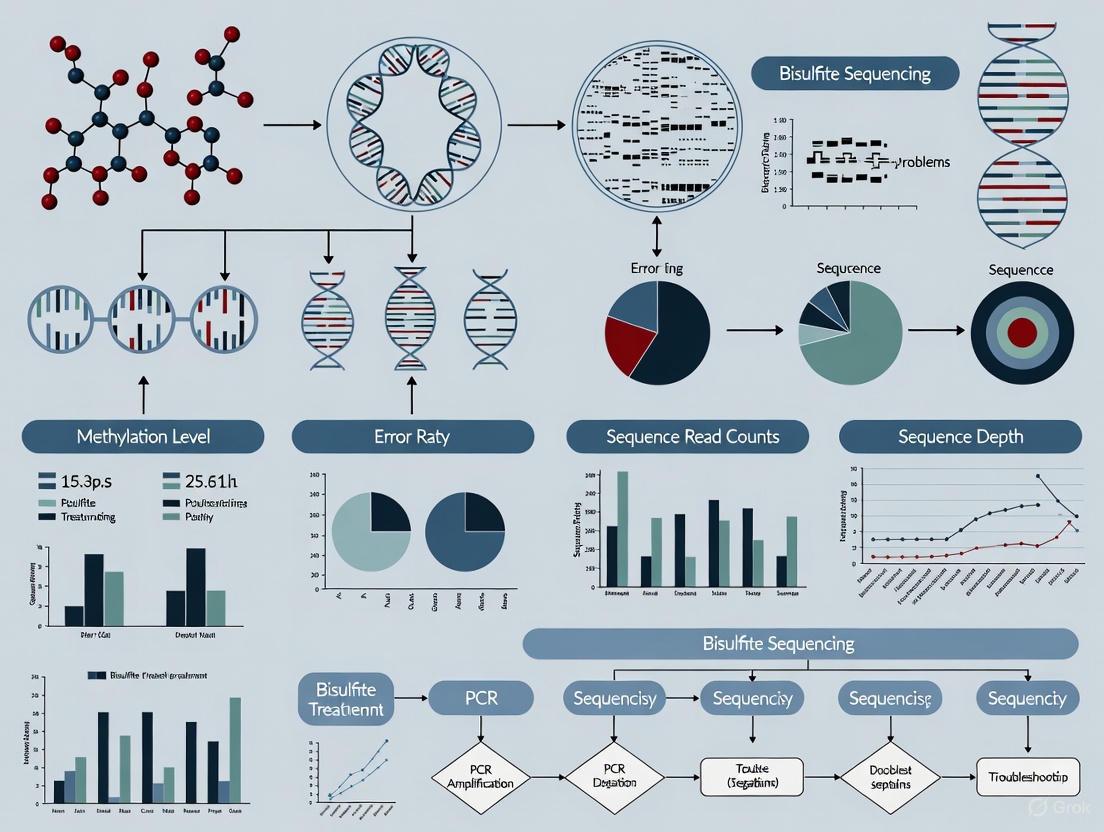
This comprehensive guide addresses the most prevalent technical challenges in bisulfite sequencing, a gold standard technique for DNA methylation analysis. Tailored for researchers and drug development professionals, we explore foundational principles, methodological applications, advanced troubleshooting strategies, and comparative validation approaches. The article provides practical solutions for issues like incomplete conversion, DNA degradation, PCR inefficiency, and data analysis complications, while also examining emerging alternatives like enzymatic conversion. By synthesizing current best practices and recent technological advancements, this resource aims to enhance experimental success and data reliability in epigenetic research.
Bisulfite Sequencing Troubleshooting: Solving Common Problems and Optimizing Your Workflow
Abstract
This comprehensive guide addresses the most prevalent technical challenges in bisulfite sequencing, a gold standard technique for DNA methylation analysis. Tailored for researchers and drug development professionals, we explore foundational principles, methodological applications, advanced troubleshooting strategies, and comparative validation approaches. The article provides practical solutions for issues like incomplete conversion, DNA degradation, PCR inefficiency, and data analysis complications, while also examining emerging alternatives like enzymatic conversion. By synthesizing current best practices and recent technological advancements, this resource aims to enhance experimental success and data reliability in epigenetic research.
Understanding Bisulfite Sequencing: Core Principles and Common Pitfalls
Troubleshooting Guides and FAQs
Frequently Asked Questions
Q1: What are the primary types of errors that occur during bisulfite conversion? Two main types of conversion errors are recognized:
- Failed Conversion: An unmethylated cytosine fails to be deaminated to uracil and is incorrectly read as a cytosine (and thus interpreted as methylated) during sequencing. This can inflate methylation estimates [1].
- Inappropriate Conversion: A methylated cytosine (5-methylcytosine) is erroneously deaminated to thymine and is therefore misinterpreted as unmethylated. This leads to an underestimation of methylation density [1].
Q2: How does DNA fragmentation occur during bisulfite treatment, and what are the consequences? Bisulfite conversion requires harsh conditions, including extreme pH and high temperature, which cause depyrimidination of DNA, leading to strand breakage and fragmentation [2]. This results in significant DNA degradation, with estimates of DNA loss reaching up to 90% [3] [2]. The consequences include:
- Biased genome coverage, with under-representation of certain genomic regions [2].
- Lower library yields, especially when adaptors are ligated prior to conversion [2].
- Increased sequencing costs to achieve sufficient coverage due to sample loss [2].
Q3: Why is sequence complexity reduced after bisulfite conversion, and what problems does this cause? Bisulfite treatment converts the majority of cytosines (all unmethylated ones) to uracils, which are then read as thymines during sequencing. This process drastically reduces the number of possible sequence combinations, as the four-base genetic code (A, T, G, C) effectively becomes a three-base code (A, T, G) on the converted strand [3] [4]. This reduction in complexity causes:
- Difficulty in aligning sequencing reads uniquely to the reference genome [3] [5].
- It is estimated that approximately 10% of CpG sites in the genome become difficult to align after bisulfite conversion [3].
Q4: Which bisulfite conversion protocol is more reliable? Research using synthetic oligonucleotides with known methylation patterns has shown that a high-molarity, high-temperature (HighMT) protocol (e.g., 9 M bisulfite at 70°C) is generally preferable to the conventional low-molarity, low-temperature (LowMT) protocol. The HighMT treatment yields greater homogeneity in conversion rates among different sites and molecules, leading to more reliable data. It also accelerates the conversion process [1].
Q5: How can I improve the success of my bisulfite sequencing experiment? Several best practices can enhance results [6]:
- Primer Design: Design long primers (26-30 bases) that avoid CpG sites. If CpGs must be included, place them at the 5'-end with a mixed base (Y for C/T).
- DNA Quality: Use high-quality, intact DNA to minimize fragmentation and loss.
- PCR Optimization: Use semi-nested PCR and hot-start polymerases. Bisulfite-converted DNA is heavily fragmented and single-stranded, so amplicons should be kept short (150-300 bp).
- Include Controls: Use controls for conversion efficiency, such as primers for a known methylated region.
Troubleshooting Common Experimental Issues
Problem: Low Mapping Efficiency After Bisulfite Sequencing
- Potential Cause: While incomplete bisulfite conversion itself does not directly affect mapping efficiency in tools like Bismark (because reads are converted in silico before alignment), high levels of unconverted cytosines indicate a fundamental problem with the conversion reaction [7].
- Solutions:
- Verify conversion efficiency by calculating the percentage of non-CpG cytosines that were converted. This frequency should be very high (e.g., >99%) [1].
- Consider using the HighMT bisulfite conversion protocol for more uniform and complete conversion [1].
- For the alignment step, you can try using local alignment in Bowtie2 (e.g., the
--localflag) or try a different aligner likebwameth[7].
Problem: High Duplicate Reads or Low Library Complexity
- Potential Cause: This is often a result of the extensive DNA fragmentation and sample loss intrinsic to bisulfite treatment. The remaining intact DNA molecules are over-amplified during PCR, leading to duplicate reads [2] [8].
- Solutions:
- Ensure starting DNA is high-quality and intact [6].
- Use library preparation methods where adaptors are ligated after bisulfite conversion (post-bisulfite adapter tagging, or PBAT) to minimize handling of fragmented DNA [9].
- Consider Enzymatic Methyl-seq (EM-seq) as an alternative, as it avoids DNA-damaging conditions and results in longer library insert sizes and higher complexity [2] [9].
Problem: Inconsistent or Skewed Methylation Results
- Potential Causes:
- Solutions:
- Optimize bisulfite treatment duration and conditions. Molecular encoding studies suggest that inappropriate conversion occurs predominantly on molecules that are already fully converted, indicating that excessively long conversion times can be detrimental [1].
- Use a low number of PCR cycles and high-fidelity polymerases [8].
- For sensitive applications, subclone PCR products before sequencing to analyze individual molecules [6].
Table 1: Comparison of Bisulfite Conversion Protocols
| Protocol Feature | LowMT (Conventional) | HighMT (Alternative) |
|---|---|---|
| Bisulfite Molarity | 5.5 M [1] | 9 M [1] |
| Temperature | 55°C [1] | 70°C [1] |
| Treatment Duration | Long (several hours) [1] | Short [1] |
| Inappropriate Conversion Frequency | Can be as high as 6% [1] | Reduced frequency [1] |
| Key Advantage | Well-established protocol | Greater homogeneity in conversion; faster; more reliable data [1] |
Table 2: Troubleshooting Guide for Key Challenges
| Technical Challenge | Primary Cause | Experimental Consequence | Corrective Action |
|---|---|---|---|
| DNA Fragmentation | Harsh bisulfite conditions (low pH, high temp) cause DNA depyrimidination [2]. | DNA degradation (up to 90% loss); biased genome coverage; lower library yields [3] [2]. | Use high-quality input DNA; consider post-bisulfite adaptor tagging (PBAT) or switch to Enzymatic Methyl-seq (EM-seq) [2] [9]. |
| Incomplete Conversion | Suboptimal bisulfite reaction conditions or duration [1]. | Overestimation of methylation levels (failed conversions) [1]. | Validate with non-CpG cytosine conversion rate; optimize protocol (consider HighMT); use a conversion efficiency control [1] [6]. |
| Sequence Complexity Reduction | Chemical conversion of unmethylated C to T [3] [4]. | Difficult sequence alignment; ~10% of CpG sites become hard to map [3]. | Use bisulfite-specific aligners (Bismark, bwameth); design short amplicons for targeted studies [4] [7]. |
Experimental Workflow Diagrams
Bisulfite Conversion and Sequencing Workflow
Bisulfite-seq vs EM-seq Workflow Comparison
The Scientist's Toolkit: Essential Research Reagents and Materials
Table 3: Key Research Reagent Solutions
| Reagent / Material | Function | Considerations for Bisulfite Sequencing |
|---|---|---|
| Sodium Bisulfite | The active chemical that deaminates unmethylated cytosine to uracil [3]. | Solution age and concentration matter; older bisulfite solutions can lead to higher failed-conversion rates [1]. |
| Methylated Adapters | Oligonucleotide adapters ligated to DNA fragments for sequencing library preparation. | Must be methylated at cytosines to preserve their sequence during bisulfite conversion; otherwise, they will be degraded and not amplify [4]. |
| Hot-Start Polymerase | A DNA polymerase activated only at high temperatures, reducing non-specific amplification. | Strongly recommended for bisulfite PCR due to the AT-rich, fragmented nature of converted DNA, which increases mispriming [4]. |
| APOBEC Enzymes (for EM-seq) | Enzyme used in EM-seq to deaminate unmethylated cytosine, mimicking the bisulfite reaction biologically [2]. | Allows for a gentler conversion process without DNA fragmentation, enabling longer reads and better genome coverage [2] [9]. |
| Control DNA | DNA with a known methylation pattern. | Essential for validating conversion efficiency and detecting non-CpG methylation. Helps account for the technique's inability to distinguish 5mC from 5hmC [4]. |
| Fuscaxanthone C | Fuscaxanthone C, CAS:15404-76-9, MF:C26H30O6, MW:438.5 g/mol | Chemical Reagent |
| Traumatic Acid | Traumatic Acid, CAS:6402-36-4, MF:C12H20O4, MW:228.28 g/mol | Chemical Reagent |
The reliability of DNA methylation data generated through bisulfite sequencing is fundamentally dependent on pre-analytical conditions. DNA extraction methodology and input quantity directly impact downstream conversion efficiency, amplification success, and sequencing accuracy. This technical support center addresses the most critical challenges researchers encounter when preparing samples for bisulfite sequencing, providing evidence-based troubleshooting guidance and optimized protocols to ensure data integrity in epigenetic studies.
FAQs: DNA Extraction and Input Quantity
Q1: How does DNA extraction method selection impact bisulfite sequencing results?
The DNA extraction method significantly influences yield, fragment size distribution, and co-purification of inhibitors that can interfere with bisulfite conversion and subsequent PCR amplification.
- Chemical Composition: Silica-based column methods provide high-purity DNA but may selectively recover certain fragment sizes. Phenol-chloroform extraction can yield high-molecular-weight DNA but may carry over contaminants affecting conversion [10].
- Inhibitor Removal: Inefficient removal of PCR inhibitors (e.g., heparin, hemoglobin) during extraction leads to incomplete bisulfite conversion and failed amplification [11]. Column-based systems with optimized wash buffers typically provide superior inhibitor removal.
- Fragment Preservation: Mechanical disruption methods must balance complete lysis with DNA shearing. Excessive bead beating or sonication creates over-fragmented DNA unsuitable for long-amplicon methylation analysis [12].
- Sample-Specific Optimization: Challenging samples (FFPE, dried blood spots, plasma) require specialized protocols. For dried blood spots, Chelex-based boiling methods have demonstrated significantly higher DNA recovery compared to standard column-based kits [13].
Q2: What are the minimum DNA input requirements for different bisulfite sequencing applications?
Input requirements vary substantially by methodology, with library preparation protocols having specific minimum thresholds for successful methylation profiling.
Table: DNA Input Requirements for Methylation Analysis Methods
| Method | Minimum Input (Intact DNA) | Optimal Input Range | Notes |
|---|---|---|---|
| Whole-Genome Bisulfite Sequencing (WGBS) | 10 ng [14] | 50-100 ng [15] | Lower inputs increase PCR duplicates; >100 ng recommended for mammalian genomes |
| Enzymatic Methyl-Seq (EM-seq) | 5 ng [14] | 10-100 ng [14] | More efficient with low inputs than WGBS due to gentler conversion |
| Illumina MethylationEPIC Array | 50 ng [14] | 250-500 ng [14] | Manufacturer recommends 500 ng for optimal results |
| Reduced Representation Bisulfite Sequencing (RRBS) | 5-10 ng [15] | 50-100 ng | Size selection critical for reproducibility |
| Targeted Bisulfite Sequencing | 1-5 ng | 10-50 ng | Amplicon-dependent; nested PCR often required |
Q3: What are the key considerations for DNA extraction from challenging sample types?
Difficult sample sources require specialized extraction strategies to overcome inherent limitations while maintaining DNA suitability for bisulfite conversion.
- Plasma/Serum (Cell-free DNA): Cell-stabilizing blood collection tubes prevent genomic DNA contamination from leukocyte lysis. Silica-membrane columns optimized for short fragments improve cfDNA recovery (160-200bp). Double-centrifugation is critical to remove cellular debris before extraction [16].
- Formalin-Fixed Paraffin-Embedded (FFPE) Tissues: Extended protease digestion (up to 72 hours) with specialized buffers reverses crosslinks. Expect significant fragmentation (<1kb); design amplicons accordingly (100-300bp) [17].
- Dried Blood Spots: Chelex-100 resin methods combined with Tween-20 pre-wash yield high DNA recovery cost-effectively. Reducing elution volume (50µL vs. 150µL) significantly increases final concentration without requiring additional starting material [13].
- Plant Tissues: CTAB-based extraction with polyvinylpyrrolidone effectively removes polysaccharides and polyphenols that inhibit bisulfite conversion [10].
Troubleshooting Guides
Problem: Incomplete Bisulfite Conversion
Symptoms: High background in sequencing data, false positive methylation calls, unconverted cytosines in non-CpG contexts.
Solutions:
- Assess DNA Purity: Verify A260/A280 ratio (1.8-2.0) and A260/A230 ratio (>2.0). Particulate matter in DNA solution inhibits conversion - centrifuge at high speed before conversion [18].
- Optimize Input DNA: Excessive DNA (>500ng per reaction) overwhelms bisulfite capacity. For degraded samples, increase input volume rather than concentration [6].
- Verify Conversion Efficiency: Include non-converted controls and known unmethylated sequences (e.g., mitochondrial DNA) to monitor conversion rate [14].
- Alternative Technologies: Consider enzymatic conversion methods (EM-seq) that avoid DNA fragmentation issues associated with traditional bisulfite treatment [14].
Problem: Low DNA Yield After Extraction
Symptoms: Insufficient material for library preparation, failed quality control metrics, need for excessive amplification cycles.
Solutions:
- Improve Lysis Efficiency: Implement combinatorial approaches - enzymatic digestion (proteinase K) with chemical lysis (SDS) and mechanical disruption (bead beating) adapted to sample type [17].
- Optimize Binding Conditions: For silica-based methods, ensure appropriate pH and guanidinium salt concentration. For difficult samples, increase incubation time with binding matrix [10].
- Carrier Enhancement: For very low inputs (<10ng), consider adding carrier RNA during extraction (note: may interfere with quantification).
- Protocol Selection: For dried blood spots, Chelex boiling methods outperform most column-based kits for yield while maintaining PCR compatibility [13].
Problem: PCR Failure After Bisulfite Conversion
Symptoms: No amplification, smeared bands, multiple non-specific products, poor sequencing library complexity.
Solutions:
- Primer Design: Design primers 24-32nt long avoiding CpG sites, with 3' ends ending in bases whose conversion state is known. Utilize specialized bisulfite primer design software [6].
- Polymerase Selection: Use bisulfite-tolerant polymerases (not proofreading). Hot-start Taq polymerase is recommended - proofreading polymerases cannot read through uracil in converted DNA [18].
- Amplicon Size: Target 200bp or less for converted DNA. Larger amplicons possible with optimization but require intact input DNA [6].
- PCR Conditions: Implement semi-nested approaches with increased annealing temperature in second round (2°C increase). Run multiple parallel rePCR reactions to obtain sufficient material [6].
Experimental Protocols
Optimized DNA Extraction Protocol for Bisulfite Sequencing
This standardized protocol maximizes DNA yield and purity while maintaining integrity for bisulfite conversion.
Step-by-Step Procedure:
Sample Collection & Stabilization
- Whole Blood: Collect in cell-stabilizing tubes (e.g., PAXgene, Streck) to prevent leukocyte lysis and genomic DNA contamination. Process within 6 hours for plasma isolation [16].
- Tissues: Flash-freeze in liquid nitrogen and store at -80°C. For long-term storage, use specialized nucleic acid preservatives [12].
- FFPE: Macrodissect target areas to enrich for relevant tissue. Use 5-10μm sections for optimal DNA yield [15].
Lysis Optimization
- Combinatorial Approach: Implement mechanical disruption (bead beating, 30-60 seconds) combined with chemical (SDS/guanidinium) and enzymatic (proteinase K, 3-24 hours) lysis adapted to sample type [17].
- Temperature Control: Maintain 55-65°C during digestion to optimize enzyme activity while minimizing DNA fragmentation [12].
- Inhibitor Neutralization: Include chelating agents (EDTA) to inhibit nucleases and reducing agents (β-mercaptoethanol) to prevent oxidation [10].
Lysate Clearing
- Centrifuge at 12,000×g for 10 minutes to remove insoluble debris.
- Transfer supernatant to clean tube, avoiding lipid layer if present.
- Alternative: Use filtration columns for high-throughput processing [17].
Nucleic Acid Binding
Contaminant Removal
- Wash twice with ethanol-based wash buffers containing guanidinium salts.
- Include additional wash with 70% ethanol to remove residual salts [17].
DNA Elution
Quality Control
- Quantify using fluorometry (Qubit) rather than spectrophotometry for accuracy.
- Assess integrity via fragment analyzer or agarose gel electrophoresis.
- Verify absence of inhibitors via spike-in qPCR assay [14].
Method Selection Algorithm for DNA Extraction
Research Reagent Solutions
Table: Essential Reagents for DNA Extraction and Bisulfite Conversion
| Reagent/Category | Specific Examples | Function | Optimization Tips |
|---|---|---|---|
| Lysis Buffers | Proteinase K, SDS, Guanidinium HCl | Cellular disruption, protein denaturation | Extend incubation to 24h for tough tissues; add RNase A for DNA-only extraction |
| Binding Matrices | Silica membranes, Magnetic beads, CTAB | Selective DNA binding & purification | Adjust pH to 5.5-6.0 for silica binding; optimize PEG concentration for bead-based methods |
| Inhibitor Removal | EDTA, β-mercaptoethanol, PVP | Neutralize nucleases, prevent oxidation | Include 0.2% β-mercaptoethanol for plant tissues; 2% PVP for polyphenol-rich samples |
| Bisulfite Kits | EZ DNA Methylation Kit (Zymo), Epitect Bisulfite Kit (Qiagen) | Convert unmethylated C to U | Ensure pure DNA input; centrifuge particulate matter before conversion [18] |
| Specialized Tubes | Cell-stabilizing blood collection tubes (Streck, PAXgene) | Prevent gDNA release from leukocytes | Process plasma within 6h of collection; double-centrifuge at 1600×g then 16000×g [16] |
Bisulfite Sequencing Best Practices: From Sample Preparation to Data Generation
Bisulfite conversion is a critical first step in DNA methylation analysis, enabling researchers to distinguish methylated cytosines from unmethylated ones. This process treats DNA with sodium bisulfite, which selectively deaminates unmethylated cytosines to uracils, while methylated cytosines remain unchanged. The resulting sequence differences are then detectable through subsequent amplification and sequencing. However, this fundamental technique presents a significant technical challenge: the harsh reaction conditions (low pH and high temperature) cause substantial DNA degradation and loss, compromising data quality and reliability. For researchers working with precious or limited samples, such as circulating cell-free DNA (cfDNA) or archival tissues, optimizing this step is paramount. This guide synthesizes recent, evidence-based comparisons of commercial kits and traditional protocols to help you select and troubleshoot the best bisulfite conversion method for your specific application.
FAQ: Bisulfite Conversion Kits and Protocols
1. What is the main trade-off between traditional bisulfite protocols and newer commercial kits? The primary trade-off lies between DNA preservation and conversion efficiency/reliability. Traditional bisulfite protocols use harsh conditions that cause severe DNA fragmentation, leading to low yields especially with fragmented or low-input samples like cfDNA [19]. Commercial kits have been optimized to mitigate this damage. Furthermore, enzymatic conversion kits (a newer alternative to bisulfite) offer even gentler treatment but can suffer from lower DNA recovery and higher susceptibility to incomplete conversion, particularly with low-input samples [20] [21].
2. For analyzing circulating cell-free DNA (cfDNA), which conversion method is recommended? For droplet digital PCR (ddPCR) analysis of cfDNA, bisulfite conversion kits currently outperform enzymatic kits in terms of DNA recovery. A 2023 study found that while enzymatic conversion better preserved cfDNA fragment length, the EpiTect Plus DNA Bisulfite Kit provided significantly higher DNA recovery (61-81%) compared to enzymatic conversion (34-47%) [21]. This higher recovery directly resulted in a greater number of positive droplets in ddPCR assays, enhancing detection sensitivity [21]. The QIAamp Circulating Nucleic Acid Kit (CNA) combined with the EpiTect Plus DNA Bisulfite Kit was identified as a high-performing combination for cfDNA isolation and conversion [19].
3. Are there methods that reduce DNA damage without sacrificing conversion efficiency? Yes, recent advancements like Ultra-Mild Bisulfite Sequencing (UMBS-seq) have been engineered to address this exact problem. By optimizing the bisulfite reagent composition and reaction conditions (e.g., 55°C for 90 minutes), UMBS-seq achieves highly efficient cytosine conversion while causing minimal DNA damage. This method has been shown to outperform both conventional bisulfite sequencing and Enzymatic Methyl-seq (EM-seq) in key metrics like library yield, complexity, and consistency of background noise when working with low-input DNA [20].
4. How does the performance of enzymatic conversion compare to bisulfite conversion for sequencing? Enzymatic conversion methods like EM-seq offer distinct advantages for sequencing applications, including longer sequencing inserts and reduced GC bias due to gentler DNA treatment [22] [20]. However, they can be prone to higher rates of incomplete cytosine conversion, leading to false-positive methylation signals, an issue that becomes more pronounced with very low-input DNA [20]. One study found that a subset of EM-seq reads showed widespread C-to-U conversion failure, which was mitigated by introducing an additional denaturation step [20]. Overall, EM-seq demonstrates high concordance with Whole-Genome Bisulfite Sequencing (WGBS) and can robustly capture methylation in challenging genomic regions [22].
5. What are the key factors to consider when selecting a bisulfite conversion kit? The selection should be guided by your sample type, downstream application, and required data quality. The table below summarizes a systematic evaluation of five commercial bisulfite conversion kits based on DNA recovery and fragmentation [19].
Table: Performance Comparison of Commercial Bisulfite Conversion Kits
| Kit Name | Performance in DNA Recovery | Degree of DNA Fragmentation | Key Characteristics |
|---|---|---|---|
| EpiTect Plus DNA Bisulfite Kit | Highest yield and recovery across input amounts [19] | Least fragmentation, highest average peak fragment length [19] | Identified as a top-performing kit for cfDNA workflows [19] [21] |
| Premium Bisulfite Kit | High yield, particularly at lower inputs (2-0.5 ng) [19] | Moderate fragmentation [19] | Good overall performance for low-input scenarios [19] |
| EZ DNA Methylation-Direct Kit | High yield, particularly at higher inputs (20-3 ng) [19] | Moderate fragmentation [19] | A commonly used "gold-standard" in the literature [23] |
| EpiJET Bisulfite Conversion Kit | Low yield across all input amounts [19] | Moderate fragmentation [19] | Lower performance in comparative evaluation [19] |
| Imprint DNA Modification Kit | Lowest yield and recovery [19] | Data not specified | Lowest performance in comparative evaluation [19] |
Troubleshooting Common Bisulfite Conversion Issues
Problem: Incomplete Cytosine Conversion
Symptoms: High background in sequencing data, overestimation of methylation levels, particularly in high-GC regions.
Solutions:
- Verify Conversion Efficiency: Always include a control for unmethylated DNA (e.g., lambda phage DNA) in your experiment to calculate the non-conversion rate. A well-optimized protocol should achieve >99.5% conversion efficiency [21].
- Optimize Denaturation: Ensure DNA is fully denatured before and during bisulfite treatment. Incomplete denaturation is a major cause of incomplete conversion, as bisulfite only reacts with single-stranded DNA [23]. The use of an alkaline denaturation step can improve this.
- Consider Advanced Protocols: Methods like Ultrafast Bisulfite Sequencing (UBS-seq) and UMBS-seq use highly concentrated bisulfite reagents and higher reaction temperatures to drastically accelerate the conversion, reducing the window for DNA renaturation and improving completeness, especially in structured regions like mitochondrial DNA [20] [23].
Problem: Low DNA Yield and Recovery After Conversion
Symptoms: Insufficient material for library preparation, high Ct values in qPCR, low number of positive droplets in ddPCR.
Solutions:
- Kit Selection: For sensitive applications like cfDNA analysis, select a kit proven to have high recovery rates, such as the EpiTect Plus or Premium Bisulfite kits [19].
- Input DNA: Use the highest input DNA amount your kit and sample allow. If DNA is limited, seek out kits specifically validated for low-input samples.
- Post-Conversion Cleanup: For enzymatic conversion methods, losses often occur during the magnetic bead cleanup steps. Testing different magnetic bead brands (e.g., AMPure XP) and optimizing the bead-to-sample ratio (e.g., increasing from 1.8x to 3.0x) can significantly improve recovery [21].
- Switch Conversion Method: If yield is the paramount concern and sequencing is the goal, consider EM-seq. While its absolute recovery can be lower, it produces longer fragments and higher-complexity libraries from the same starting material, which can be more beneficial for sequencing [22] [20].
Problem: Excessive DNA Fragmentation
Symptoms: Short average fragment length in bioanalyzer traces, poor performance in assays requiring longer amplicons.
Solutions:
- Adopt Milder Protocols: Replace conventional bisulfite methods with gentler alternatives. UMBS-seq has been demonstrated to cause significantly less DNA fragmentation than both standard bisulfite and the previously improved UBS-seq method [20].
- Use Enzymatic Conversion: Enzymatic methods like EM-seq are inherently non-destructive and best preserve DNA integrity, resulting in longer insert sizes in sequencing libraries [22] [20] [21].
- Evaluate Kit Performance: When using commercial kits, refer to comparative data. The EpiTect Plus kit was shown to result in the highest average post-conversion fragment length among several tested bisulfite kits [19].
Workflow: Selecting a Bisulfite Conversion Method
The following diagram outlines a decision-making workflow to help you select the optimal conversion method based on your experimental goals and sample constraints.
The Scientist's Toolkit: Essential Reagents and Kits
Table: Key Reagent Solutions for Bisulfite Conversion and Methylation Analysis
| Product / Reagent | Function | Key Application Notes |
|---|---|---|
| EpiTect Plus DNA Bisulfite Kit | High-performance bisulfite conversion | Recommended for highest DNA yield and recovery, especially with cfDNA and low-input samples [19]. |
| NEBNext Enzymatic Methyl-seq Kit | Bisulfite-free, enzymatic conversion | Provides longer fragment reads and reduced bias; ideal for sequencing but may have lower recovery for PCR-based assays [22] [21]. |
| Ultra-Mild Bisulfite (UMBS) Reagent | Advanced bisulfite conversion chemistry | Custom formulation that minimizes DNA damage while ensuring high conversion efficiency; superior for low-input sequencing [20]. |
| QIAamp Circulating Nucleic Acid Kit | Isolation of cell-free DNA from plasma | High-yield isolation kit; forms an optimal combination with the EpiTect Plus kit for liquid biopsy workflows [19]. |
| AMPure XP Magnetic Beads | Post-conversion DNA clean-up | Effective for purifying converted DNA; optimization of bead-to-sample ratio can drastically improve recovery in enzymatic protocols [21]. |
| myBaits Custom Methyl-Seq | Target enrichment for sequencing | Enables focused, cost-effective methylation profiling of specific genomic regions with high sensitivity [24]. |
| (-)-Epipodophyllotoxin | (-)-Epipodophyllotoxin, CAS:4375-07-9, MF:C22H22O8, MW:414.4 g/mol | Chemical Reagent |
| Gentianose | Gentianose, CAS:25954-44-3, MF:C18H32O16, MW:504.4 g/mol | Chemical Reagent |
Bisulfite conversion is a critical step in DNA methylation analysis, but it presents significant challenges for subsequent PCR amplification. The conversion process deaminates unmethylated cytosine to uracil, effectively changing the DNA sequence and creating templates that are both AT-rich and complex. This results in a dramatic loss of sequence complexity, promotes the formation of secondary structures, and increases the likelihood of non-specific amplification. Researchers working with bisulfite-converted DNA frequently encounter failed amplifications, smeared bands on gels, or complete absence of target products. The following troubleshooting guide addresses these specific technical problems with targeted solutions and optimized protocols to ensure successful amplification of converted DNA templates.
Troubleshooting Guide: FAQs & Solutions
FAQ 1: Why does my PCR consistently fail to amplify my bisulfite-converted AT-rich target?
Problem Analysis: Bisulfite conversion increases the AT-content of your DNA template significantly, as unmethylated cytosines become uracils (which are read as thymines in subsequent PCR). AT-rich sequences have lower thermodynamic stability and lower melting temperatures, which can lead to poor primer annealing and polymerase stalling [25]. Additionally, AT-rich regions are prone to secondary structure formation that can block polymerase progression.
Solution Strategy:
- Lower Extension Temperature: Reduce the extension temperature from the standard 72°C to 65-68°C. This helps the polymerase navigate the less stable AT-rich templates [25].
- Optimize MgClâ‚‚ Concentration: Test a range of MgClâ‚‚ concentrations, typically between 2.5-3.5 mM, as the optimal concentration is often higher for difficult templates [25].
- Use Specialized Polymerases: Employ polymerases specifically engineered for AT-rich and bisulfite-converted DNA. These often have enhanced processivity on challenging templates [26].
- Increase Template Concentration: Use a higher input of bisulfite-converted DNA (e.g., 25-30 ng/µl in a 20 µl reaction) to increase the chance of primer binding to intact target sequences [25].
FAQ 2: My gel shows smears or multiple non-specific bands instead of a single clean product. How can I improve specificity?
Problem Analysis: Non-specific amplification manifests as smears or multiple bands and occurs when primers anneal to incorrect sites on the DNA template. This is common in bisulfite-converted DNA because the reduced sequence complexity (C's become T's) increases the chances of partial primer matches elsewhere in the genome [27].
Solution Strategy:
- Increase Annealing Temperature: Systematically increase the annealing temperature in 1-2°C increments. A higher temperature increases stringency, ensuring primers only bind to their perfect complement [28] [29].
- Use Hot-Start DNA Polymerases: These enzymes remain inactive until a high-temperature activation step, preventing non-specific priming during reaction setup [29].
- Optimize Primer Design: Ensure your bisulfite primers are specific and do not form secondary structures. Use dedicated bisulfite primer design software.
- Employ Additives: Additives like DMSO (1-10%) or betaine (0.5-2.5 M) can help reduce secondary structures and increase primer specificity [30] [31].
- Perform Touchdown PCR: This technique starts with a high annealing temperature and gradually decreases it in subsequent cycles, favoring the amplification of the correct target in the early cycles [29].
FAQ 3: What is the best way to optimize the Mg²⺠concentration for my specific reaction?
Problem Analysis: Magnesium ions (Mg²âº) are an essential cofactor for DNA polymerase activity. Too little Mg²⺠results in low yield or no product, while too much promotes non-specific binding and increases error rates [28] [29].
Solution Strategy: Conduct a Mg²⺠gradient PCR. Prepare a series of reactions with MgCl₂ concentrations varying from 1.0 mM to 4.0 mM in 0.5 mM increments [28]. Analyze the results by gel electrophoresis to identify the concentration that yields the strongest specific product with the least background.
Table 1: Troubleshooting Common PCR Amplification Problems
| Problem | Possible Causes | Recommended Solutions |
|---|---|---|
| No Amplification | Low template quality/quantity, overly high annealing temperature, insufficient Mg²âº, inefficient polymerase | Increase template amount; lower annealing temperature; optimize Mg²⺠concentration; use a polymerase designed for difficult templates [29] [25] |
| Smears on Gel | Non-specific priming, degraded template, primer dimers, excessive cycle number | Increase annealing temperature; use hot-start polymerase; check template integrity; reduce number of cycles [29] [27] |
| Multiple Bands | Non-specific primer binding, low annealing temperature, high Mg²⺠concentration | Optimize annealing temperature (try gradient PCR); reduce Mg²⺠concentration; redesign primers for better specificity [29] [27] |
| Faint Target Band | Low primer efficiency, suboptimal extension time/temperature, insufficient cycles | Re-design primers; increase extension time; lower extension temperature for AT-rich targets; increase cycles to 35-40 [25] |
Experimental Protocols for Optimization
Protocol 1: Optimized PCR Setup for AT-Rich Targets
This protocol is adapted from research on amplifying a challenging AT-rich promoter sequence and is ideal for bisulfite-converted DNA [25].
Reaction Setup:
- Prepare a 20 µl reaction mixture containing:
- 2 µl Genomic DNA ( ~50-60 ng total)
- 4 µl 5X High-Fidelity PCR Buffer
- 0.4 µl of 10 mM dNTPs
- 0.8 µl of each 10 µM forward and reverse primer
- 0.2 µl of High-Fidelity DNA Polymerase (2U/µl)
- 1.0 µl of 30 mM MgCl₂ (Final concentration 3.0 mM)
- Nuclease-free water to 20 µl
- Prepare a 20 µl reaction mixture containing:
Thermal Cycling Conditions:
- Initial Denaturation: 98°C for 1.5 minutes.
- 35 Cycles of:
- Denaturation: 98°C for 30 seconds.
- Extension (2-step PCR): 65°C for 1.5 minutes per kb.
- Final Extension: 65°C for 7 minutes.
- Hold at 4°C.
Protocol 2: Magnesium and Additive Optimization Gradient
Use this protocol to systematically identify the optimal reaction conditions.
- Master Mix Preparation: Create a master mix containing all standard components except MgClâ‚‚ and the additive to be tested (e.g., DMSO or betaine).
- Aliquot and Supplement: Aliquot the master mix into 8 tubes.
- Create the Gradient:
- Run PCR: Use standard or optimized thermal cycling conditions for your target.
- Analysis: Resolve the PCR products on an agarose gel to determine the condition that provides the strongest, cleanest amplification.
The Scientist's Toolkit: Research Reagent Solutions
Table 2: Essential Reagents for Amplifying Challenging Templates
| Reagent / Tool | Function & Mechanism | Example Products |
|---|---|---|
| Specialized Polymerases | High-processivity enzymes engineered for long, GC/AT-rich, or bisulfite-converted DNA; often have superior strand-displacement activity. | PrimeSTAR LongSeq [26], Q5 High-Fidelity [28], OneTaq DNA Polymerase [28] |
| GC/AT Enhancers | Pre-mixed additive solutions that disrupt secondary structures (e.g., hairpins) and improve polymerase processivity on complex templates. | OneTaq GC Enhancer, Q5 High GC Enhancer [28] |
| Hot-Start Enzymes | Polymerases inactive at room temperature, preventing non-specific primer extension and primer-dimer formation during reaction setup. | Included in many specialized polymerase mixes [29] [26] |
| Chemical Additives | Molecules that destabilize secondary structures (DMSO, Betaine) or increase primer stringency (Formamide). | DMSO (1-10%), Betaine (0.5-2.5 M) [28] [30] [31] |
| Mg²⺠Solution | A separate, standardized MgCl₂ or MgSO₄ solution for fine-tuning the cofactor concentration, which is critical for reaction efficiency and fidelity. | Supplied with most standalone polymerase kits [28] [29] |
| 5-O-Methylvisammioside | 5-O-Methylvisammioside, CAS:84272-85-5, MF:C22H28O10, MW:452.5 g/mol | Chemical Reagent |
| Glucoraphanin | Glucoraphanin | High-purity Glucoraphanin, the precursor to Sulforaphane. Explore its research value in cell signaling and detoxification pathways. For Research Use Only. Not for human consumption. |
Workflow and Strategy Diagrams
The following diagram illustrates a logical, step-by-step troubleshooting workflow for resolving common amplification issues.
Troubleshooting Strategy for Failed PCR
FAQs on Bisulfite Conversion and Library Preparation
Q1: What are the primary causes of low yield in bisulfite sequencing libraries, and how can they be addressed?
Low library yield often stems from poor input DNA quality, inaccurate quantification, inefficient adapter ligation, or overly aggressive purification. To address this:
- Input Quality: Ensure input DNA is pure and intact. Degraded DNA or contaminants like phenol, salts, or ethanol can inhibit enzymatic reactions. Re-purify samples if 260/230 or 260/280 ratios are suboptimal [8].
- Quantification: Use fluorometric methods (e.g., Qubit) over UV spectrophotometry for template quantification, as the latter can overestimate concentration by counting non-template background [8].
- Adapter Ligation: Titrate adapter-to-insert molar ratios to find the optimum, as excess adapters promote adapter-dimer formation, while too few reduce yield. Ensure fresh ligase and optimal reaction conditions [8].
- Purification: Avoid over-drying magnetic beads during clean-up steps, as this can lead to inefficient resuspension and significant sample loss [8].
Q2: How does bisulfite conversion impact PCR amplification, and what are the key considerations for primer design?
Bisulfite treatment significantly fragments DNA and creates a low-complexity, AT-rich template, making amplification challenging [18] [32].
- Polymerase Selection: Use a hot-start Taq polymerase. Proof-reading polymerases are not recommended as they cannot efficiently read through uracil bases present in the converted DNA [18].
- Primer Design:
- Length: Design primers to be 24-32 nucleotides long to increase binding specificity [18] [32].
- CpG Sites: Ideally, avoid CpG sites within primers. If necessary, locate them at the 5'-end and use a mixed base (Y for C/T) [18] [32].
- 3' End: The 3' end of the primer should not contain a mixed base and must not end in a residue whose conversion state is unknown [18].
- Amplicon Size: Keep amplicons relatively short, between 150-300 bp, as the bisulfite treatment causes strand breaks [18] [32].
Q3: My bisulfite-converted DNA is not visible on a gel. Does this indicate a failed conversion?
Not necessarily. After bisulfite conversion, DNA is predominantly single-stranded, which prevents intercalation by dyes like ethidium bromide. To visualize the DNA, chill the gel in an ice bath for several minutes after electrophoresis. This forces enough base-pairing to allow the dye to bind. The converted DNA typically appears as a smear from >1,500 bp down to 100 bp [32].
Q4: What are the key differences between various bisulfite sequencing methods?
The table below summarizes the common bisulfite sequencing methods, their advantages, and limitations [3].
| Method | Advantages | Limitations |
|---|---|---|
| Whole-Genome Bisulfite Sequencing (WGBS) | Single-base resolution for CpG and non-CpG methylation genome-wide. Covers dense, less dense, and repeat regions. | High DNA degradation; reduced sequence complexity complicates alignment; cannot distinguish 5mC from 5hmC. |
| Reduced-Representation Bisulfite Sequencing (RRBS) | Cost-effective; focuses on CpG-rich regions like promoters at single-base resolution. | Biased coverage (~10-15% of CpGs); does not cover non-CpG methylation or regions without restriction enzyme sites. |
| Oxidative Bisulfite Sequencing (oxBS-Seq) | Clearly differentiates between 5mC and 5hmC, providing precise 5mC identification. | Same alignment challenges as WGBS due to bisulfite conversion; requires an additional oxidation step. |
| Tagmentation-based WGBS (T-WGBS) | Minimal DNA input required (~20 ng); fast protocol with fewer steps, reducing DNA loss. | Same alignment challenges and inability to distinguish 5mC from 5hmC as standard WGBS. |
Q5: What are the latest advancements in bisulfite sequencing technology?
Recent developments aim to overcome the key limitations of conventional bisulfite sequencing, namely DNA degradation and long reaction times. Ultrafast Bisulfite Sequencing (UBS-seq) uses highly concentrated ammonium bisulfite reagents and high reaction temperatures (98°C) to complete the conversion in approximately 10 minutes—about 13 times faster than conventional protocols. This drastically reduces DNA damage, lowers background noise, and allows for library construction from very small inputs, such as cell-free DNA or single cells [23].
Troubleshooting Common Experimental Issues
The following table outlines common problems, their potential causes, and recommended solutions during library preparation for bisulfite sequencing.
| Problem & Symptoms | Potential Root Cause | Corrective Action & Solution |
|---|---|---|
| Low Library Yield• Low concentration post-amplification• Faint or broad peaks in electropherogram | • Degraded or contaminated input DNA.• Inaccurate DNA quantification.• Overly aggressive size selection or bead clean-up. | • Re-purify input DNA; check purity ratios.• Use fluorometric quantification (Qubit).• Optimize bead-to-sample ratios; avoid over-drying beads [8]. |
| High Adapter-Dimer Peaks• Sharp peak ~70-90 bp in bioanalyzer trace | • Suboptimal adapter-to-insert molar ratio (excess adapters).• Inefficient ligation.• Incomplete clean-up of excess adapters. | • Titrate adapter concentration.• Ensure fresh ligase and optimal buffer conditions.• Perform a double-sided bead clean-up to remove short fragments [8]. |
| Incomplete Bisulfite Conversion• High background in non-CpG contexts• Low C to T conversion rate | • Particulate matter in DNA sample.• DNA not fully denatured.• Local secondary structures (e.g., in mtDNA). | • Centrifuge DNA sample and use clear supernatant for conversion [18].• Ensure complete denaturation before conversion.• Consider advanced protocols like UBS-seq for challenging regions [23]. |
| Poor Amplification of Converted DNA• No or weak PCR product• Non-specific amplification | • Primers poorly designed for bisulfite template.• Amplicon size too large.• Suboptimal polymerase. | • Re-design primers to be long (26-32 bp) and avoid CpGs at the 3' end [18] [32].• Target amplicons of 150-300 bp [18].• Use a hot-start Taq polymerase, not a proof-reading enzyme [18]. |
| Low Mapping Efficiency• Low percentage of reads aligning to reference genome | • High DNA fragmentation from harsh bisulfite treatment.• Reduced sequence complexity after C-to-T conversion. | • Use a bisulfite-specific aligner like Bismark [33].• Optimize conversion to minimize DNA degradation (e.g., shorter conversion times) [23]. |
Workflow and Process Diagrams
Bisulfite Sequencing Library Preparation Workflow
Bisulfite Conversion Chemical Pathway
The Scientist's Toolkit: Essential Research Reagents and Materials
| Item | Function & Application in Bisulfite Sequencing |
|---|---|
| Hot-Start Taq Polymerase | Essential for amplifying bisulfite-converted DNA; prevents non-specific amplification and can read through uracil bases in the template [18]. |
| Methylated Adapters | During library prep, adapters must be pre-methylated to preserve their sequence during bisulfite conversion, preventing their degradation [32]. |
| Sodium Bisulfite Reagent | The core reagent for converting unmethylated cytosine to uracil. Different formulations (e.g., ammonium salts) can improve speed and efficiency [23]. |
| Magnetic Beads (SPRI) | Used for post-conversion clean-up, size selection, and adapter-dimer removal. The bead-to-sample ratio is critical for high recovery [8]. |
| Control DNA | A defined methylated and unmethylated DNA control is crucial for validating the bisulfite conversion efficiency in every experiment [32]. |
| Fluorometric Quantification Kit | Accurate quantification of fragmented, single-stranded bisulfite-converted DNA requires sensitive fluorescence-based assays over UV absorbance [8]. |
| Bisulfite-Specific Aligner (Bismark) | A specialized software tool for mapping bisulfite-converted sequencing reads to a reference genome, accounting for C-to-T conversions [33]. |
| Harmalol | Harmalol|Beta-Carboline Alkaloid|For Research |
| 7-Hydroxyisoflavone | 7-Hydroxyisoflavone, CAS:13057-72-2, MF:C15H10O3, MW:238.24 g/mol |
Solving Bisulfite Sequencing Problems: Practical Solutions for Failed Experiments
FAQs on Incomplete Bisulfite Conversion
What is incomplete bisulfite conversion and why is it a problem? Incomplete bisulfite conversion occurs when unmethylated cytosines in DNA are not fully converted to uracils during the bisulfite treatment process. This leads to these cytosines being read as thymines in subsequent sequencing, causing them to be misinterpreted as methylated cytosines. The result is artificially inflated methylation measurements, compromised data accuracy, and potentially incorrect biological conclusions [34] [6].
What are the primary causes of incomplete conversion? The main causes include:
- Impure DNA template: Contaminants or particulate matter in the DNA sample can inhibit the bisulfite reaction [18].
- Suboptimal reaction conditions: Traditional bisulfite methods use harsh chemical conditions that degrade DNA while attempting to achieve conversion [35].
- Insufficient reaction time or temperature: The conversion process may not reach completion if time and temperature parameters are not optimized [6].
How can I assess the efficiency of my bisulfite conversion? You can assess efficiency by:
- Using control primers: Include primers directed at a known, constitutively unmethylated genomic region in your PCR. Successful amplification indicates good conversion [6].
- Spike-in controls: Use synthetic oligonucleotides with known methylation patterns to quantitatively measure conversion rates.
- Bioinformatic analysis: Post-sequencing, tools like BiQAnalyzer can evaluate conversion rates by analyzing non-CpG cytosine conversion in the data [6].
Troubleshooting Guide: Incomplete Conversion
Problem: Consistently Low Conversion Efficiency
Potential Causes and Solutions:
- Cause: Compromised DNA quality/purity
- Solution: Ensure DNA used for conversion is pure. If particulate matter is present after adding conversion reagent, centrifuge at high speed and use only the clear supernatant for the conversion reaction [18].
- Protocol: Use a commercial DNA purification kit (e.g., Qiagen's DNeasy Blood & Tissue Kit) including RNase treatment, and verify DNA quality on a gel before proceeding [6].
- Cause: Suboptimal bisulfite reaction conditions
- Solution: Implement an ultra-mild bisulfite sequencing (UMBS) approach. Research shows UMBS precisely controls reaction conditions and introduces stabilizing components to enable high conversion efficiency with minimal DNA damage [35].
- Protocol: Consider commercial bisulfite conversion kits (e.g., Qiagen's Epitect Bisulfite Kit) for more consistent results compared to traditional laborious protocols [6].
Problem: Variable Conversion Between Samples
Potential Causes and Solutions:
- Cause: Inconsistent reaction setup
- Solution: Ensure all liquid is at the bottom of the reaction tube and not on the cap or walls before performing the conversion reaction to guarantee uniform treatment [18].
- Protocol: After conversion, aliquot bisulfite-treated DNA to avoid repeated freeze-thaw cycles, as the converted DNA is single-stranded and fragile [6].
- Cause: Inadequate quality control measures
Table 1: Impact of Bisulfite Conversion Methods on DNA Quality and Conversion Efficiency
| Method | DNA Recovery | CpG Coverage | DNA Degradation | Conversion Efficiency |
|---|---|---|---|---|
| Traditional Bisulfite | Low | Limited | High | Variable |
| Ultrafast Bisulfite (UBS) | Moderate | Improved | Moderate | High |
| Ultra-Mild Bisulfite (UMBS) | Dramatically higher | More comprehensive | Minimal | High and more precise [35] |
Table 2: Troubleshooting Common Bisulfite Conversion Issues
| Problem | Cause | Solution | Expected Outcome |
|---|---|---|---|
| Low DNA yield after conversion | High DNA degradation from harsh bisulfite conditions [35] | Use UMBS chemistry or enzymatic conversion [35] [34] | Higher DNA recovery and improved library yield |
| Unreliable methylation calls | Incomplete conversion and DNA damage [35] | Optimize protocol for DNA purity; use stabilizing components [35] [18] | Improved methylation-call accuracy across sample types |
| Poor PCR amplification after conversion | DNA damage from bisulfite treatment; uracil in template [18] [34] | Use specialized polymerases (e.g., hot-start Taq) that tolerate uracil; limit amplicon size to ~200 bp [18] | More robust amplification of converted DNA |
Experimental Protocols
Protocol 1: Assessing Conversion Efficiency Using Control Regions
Purpose: To quantitatively measure the efficiency of bisulfite conversion in each experiment.
Materials:
- Primers for a known unmethylated control region (e.g., Igf2r)
- PCR reagents including uracil-tolerant polymerase
- Bisulfite-converted test DNA
Method:
- Design primers targeting the control region that will only amplify after complete bisulfite conversion.
- Include these control primers in every conversion experiment alongside your target primers.
- Perform PCR using 2-4 μL of eluted converted DNA as template.
- Analyze PCR products on a gel; a clear band indicates successful conversion.
- For quantitative assessment, use real-time PCR with the same controls [6].
Protocol 2: Optimized Bisulfite Conversion for Precious Samples
Purpose: To maximize conversion efficiency while preserving DNA integrity, particularly for limited samples (e.g., cell-free DNA, single cells).
Materials:
- High-purity genomic DNA
- Commercial bisulfite conversion kit or UMBS components
- Thermostable mixer or water bath
Method:
- Start with high-quality, purified DNA; verify integrity and concentration.
- For traditional bisulfite: Follow kit protocols precisely, ensuring complete dissolution of reagents.
- For UMBS approaches: Precisely control reaction conditions including temperature, pH, and stabilizing additives as described in recent literature [35].
- After conversion, proceed directly to library preparation or aliquot converted DNA to avoid freeze-thaw cycles.
- Use specialized library prep kits designed for bisulfite-converted DNA to compensate for sample loss [34].
The Scientist's Toolkit: Essential Reagents and Materials
Table 3: Key Research Reagent Solutions for Bisulfite Conversion
| Reagent/Material | Function | Example Products |
|---|---|---|
| Uracil-Tolerant DNA Polymerase | Amplifies bisulfite-converted DNA containing uracil | Platinum Taq DNA Polymerase, Q5U Hot Start High-Fidelity DNA Polymerase [18] [34] |
| Bisulfite Conversion Kit | Standardizes the conversion process for consistent results | Epitect Bisulfite Kit [6] |
| Methylated DNA Enrichment Kit | Enriches methylated DNA prior to conversion | EpiMark Methylated DNA Enrichment Kit [34] |
| Library Prep Kit for Bisulfite Sequencing | Generates high-yield libraries from converted DNA | NEBNext Ultra II DNA Library Prep Kit for Illumina [34] |
| DNA Purification Kit | Ensures high-quality DNA input for conversion | DNeasy Blood & Tissue Kit [6] |
| 4'-Hydroxyflavanone | 4'-Hydroxyflavanone|High Purity Reference Standard | |
| 6-Hydroxyflavone | 6-Hydroxyflavone - CAS 6665-83-4 - For Research Use Only |
Experimental Workflow Visualization
Optimized Bisulfite Conversion Workflow
Troubleshooting Incomplete Conversion
Core Principles: Understanding DNA Stability Post-Bisulfite Conversion
After bisulfite conversion, DNA is particularly vulnerable due to its single-stranded nature and the harsh chemical treatment it undergoes. The primary goals for handling this fragile material are to prevent physical fragmentation and nuclease-driven degradation. Single-stranded DNA is inherently less stable than double-stranded DNA and is susceptible to acid hydrolysis, especially when stored in water instead of a buffered solution [36] [37]. Furthermore, the bisulfite conversion process itself introduces significant DNA damage, including fragmentation and depyrimidination, which drastically reduces library yield and complexity, particularly critical for low-input samples like cell-free DNA (cfDNA) [20] [38]. Introducing nucleases to DNA solutions must be scrupulously avoided, as these enzymes will rapidly degrade the DNA [37].
Recent Methodological Advancements: The development of Ultra-Mild Bisulfite Sequencing (UMBS-seq) addresses the core issue of DNA degradation by re-engineering the bisulfite reagent composition and reaction conditions. This method uses a high concentration of ammonium bisulfite at an optimized pH, enabling highly efficient cytosine-to-uracil conversion under significantly milder conditions (55°C for 90 minutes) [20] [35]. Compared to conventional bisulfite (CBS-seq) and enzymatic (EM-seq) methods, UMBS-seq demonstrates dramatically higher DNA recovery rates and less DNA fragmentation, while maintaining very low background conversion rates (~0.1%) even with low inputs [20]. For protocols where enzymatic conversion is preferred, EM-seq also offers a non-destructive alternative that reduces DNA fragmentation, though it can suffer from lower DNA recovery due to multiple purification steps and higher background noise at very low inputs [20] [38].
Standard Operating Procedures & Handling Protocols
Resuspension and Storage Best Practices
Proper resuspension and storage are critical for maintaining the integrity of single-stranded DNA after conversion.
| Aspect | Recommended Protocol | Rationale & Key Details |
|---|---|---|
| Resuspension Buffer | TE buffer (10 mM Tris-HCl, pH 7.5-8.0, 1 mM EDTA) is optimal [36] [37]. | Tris buffer maintains a stable pH, preventing acid hydrolysis. EDTA chelates metal ions, inactivating nucleases [37]. |
| Alternative Buffer | Sterile, nuclease-free water is a second choice, but less ideal [36]. | Laboratory-grade water is often slightly acidic, leading to slow DNA degradation over time [36]. |
| Long-Term Storage | -20°C in TE buffer for longest stability [36]. | Frozen storage minimizes all enzymatic and chemical degradation processes. |
| Sample Aliquoting | Prepare single-use aliquots to avoid repeated freeze-thaw cycles and prevent accidental contamination or loss of the entire sample [36]. | |
| Post-Conversion Handling | Avoid excessive pipetting, vortexing, or other rough handling [37]. | Mechanical shearing can easily fragment the already fragile single-stranded DNA. |
Post-Conversion Workflow for Integrity Preservation
The following diagram outlines a recommended workflow for handling DNA after bisulfite conversion to minimize degradation and loss.
Quantitative Data: Comparing Method Performance
The choice of conversion method significantly impacts the amount and quality of DNA recoverable for downstream sequencing. The following table summarizes key performance metrics from recent studies comparing conventional bisulfite sequencing (CBS-seq), enzymatic methyl-seq (EM-seq), and the novel Ultra-Mild Bisulfite sequencing (UMBS-seq).
Table 2: Performance Comparison of DNA Methylation Sequencing Methods [20]
| Performance Metric | CBS-seq | EM-seq | UMBS-seq |
|---|---|---|---|
| DNA Fragmentation | High | Low | Very Low |
| DNA Recovery | Low | Moderate | High |
| Library Yield (Low Input) | Low | Moderate | High |
| Library Complexity | Low (High duplication) | Moderate | High (Low duplication) |
| Background (C->T Non-Conversion) | ~0.5% | >1% (at low input) | ~0.1% |
| Insert Size Length | Short | Long | Long |
| Robustness at Low Input (<10 ng) | Poor | Moderate | Excellent |
The Scientist's Toolkit: Essential Reagents & Materials
Table 3: Key Reagent Solutions for Post-Conversion DNA Handling
| Reagent/Material | Function & Importance |
|---|---|
| TE Buffer (pH 8.0) | The standard buffer for resuspending and storing DNA. Provides a stable pH to prevent acid hydrolysis and contains EDTA to inhibit nucleases [36] [37]. |
| DESS Solution | A room-temperature preservation solution (Dimethyl sulfoxide, EDTA, Saturated NaCl). Effective for maintaining high molecular weight DNA in various specimen types without freezing, useful for initial sample fixation [39]. |
| Ultra-Mild Bisulfite (UMBS) Reagent | An optimized bisulfite formulation (high-concentration ammonium bisulfite with adjusted pH) that maximizes conversion efficiency while minimizing DNA damage, outperforming traditional kits [20] [35]. |
| DNA Protection Buffer | Often included in advanced kits (e.g., for UMBS-seq). Contains components that help preserve DNA integrity during the conversion reaction, working in concert with mild thermal conditions [20]. |
| Spin Columns (DNA Clean-up) | For efficient desalting and purification of bisulfite-treated DNA before the final resuspension in TE buffer. Critical for removing residual conversion chemicals. |
| 6-Hydroxygenistein | 6-Hydroxygenistein (6-OHG) - CAS: 107534-93-2 |
Troubleshooting FAQs
Q1: My post-bisulfite DNA yields are consistently low, and my sequencing libraries have high duplication rates. What is the primary cause and how can I mitigate this?
A: This is a classic symptom of extensive DNA degradation and loss during the conversion process and subsequent handling. Conventional bisulfite sequencing causes severe DNA damage, fragmenting molecules and reducing complexity [20]. To mitigate:
- Adopt a Milder Method: Implement the UMBS-seq protocol, which is explicitly designed to minimize DNA damage, resulting in higher library yields and complexity, especially from low-input samples [20] [35].
- Optimize Handling: After conversion, elute your DNA into TE buffer, not water. Avoid multiple freeze-thaw cycles by using aliquots and always handle the DNA gently to prevent physical shearing [36] [37].
Q2: I need to store extracted DNA temporarily before bisulfite conversion. What is the best way to prevent degradation?
A: For short-term storage (weeks to a few months), the DESS solution is highly effective at room temperature, preserving high molecular weight DNA across a wide range of taxa [39]. For longer-term storage, especially for already-converted single-stranded DNA, resuspend in TE buffer and store at -20°C [36] [37].
Q3: My negative controls show high levels of non-conversion, suggesting false methylation signals. What could be going wrong in my post-conversion workflow?
A: High background noise can arise from incomplete bisulfite conversion or, if using EM-seq, incomplete enzymatic processing [20]. For bisulfite methods, ensure your conversion reagent is fresh and the reaction is performed under optimal conditions (e.g., the UMBS formulation). For EM-seq, this issue is exacerbated at low DNA inputs and can be caused by inefficient enzyme activity or incomplete DNA denaturation prior to the enzymatic reaction [20]. Introducing an additional denaturation step can help reduce this background.
Frequently Asked Questions (FAQs)
1. Why is my bisulfite PCR failing to produce any product? Bisulfite-converted DNA is significantly fragmented and single-stranded, making amplification challenging. Failure is often due to poor primer design, insufficient template quality, or suboptimal polymerase selection. Ensure primers are long enough (26-32 nucleotides), avoid CpG sites in primer sequences unless necessary, and use hot-start polymerases specifically validated for bisulfite-converted DNA [18] [40].
2. How can I reduce non-specific amplification in my PCR assays? Non-specific products often result from low annealing temperatures, excessive primer concentrations, or inappropriate magnesium concentrations. Implement hot-start polymerases to prevent premature amplification, optimize annealing temperature using gradient PCR (in 1-2°C increments), and ensure primer concentrations are typically between 0.1-1 μM [29] [41].
3. What causes smeared bands or multiple products in my gel electrophoresis? Smearing can indicate mispriming, excessive template DNA, or suboptimal cycling conditions. Increase annealing temperature gradually, reduce template amount, and ensure your DNA polymerase is appropriate for your target (e.g., use high-processivity enzymes for complex templates). Also verify that Mg2+ concentrations are optimized for your specific primer-template system [29] [31].
4. Why does my bisulfite sequencing show poor conversion efficiency? Incomplete bisulfite conversion can result from poor DNA quality, particulate matter in samples, or insufficient conversion time. Ensure DNA is pure before conversion, centrifuge samples if particulate matter is visible, and follow manufacturer protocols precisely. For challenging samples, consider extended bisulfite incubation (18-20 hours) while being mindful of potential DNA degradation [18] [42].
Troubleshooting Guides
PCR Failure: No Amplification Product
Possible Causes and Solutions:
| Possible Cause | Recommended Solution | Experimental Notes |
|---|---|---|
| Suboptimal annealing temperature | Use gradient PCR to optimize; start 5°C below lower primer Tm [41] | For bisulfite PCR, test range of 55-65°C [40] |
| Insufficient template quality/quantity | Assess DNA integrity by gel electrophoresis; increase input DNA if <10 copies [29] | For bisulfite-converted DNA, use 2-4 μL eluted DNA per reaction [18] |
| Inappropriate polymerase | Switch to hot-start enzymes; use polymerases with high processivity for difficult templates [29] | For bisulfite DNA: Platinum Taq, AccuPrime Taq; avoid proofreading enzymes [18] |
| Insufficient cycles | Increase to 35-40 cycles for low-copy targets or bisulfite-converted DNA [29] [40] | High cycle numbers may increase errors; balance with adequate input [29] |
Non-Specific Amplification and Primer Dimers
Possible Causes and Solutions:
| Possible Cause | Recommended Solution | Experimental Notes |
|---|---|---|
| Low annealing temperature | Increase temperature incrementally (1-2°C steps) [29] | Optimal annealing is typically 3-5°C below lowest primer Tm [29] |
| Excessive primer concentration | Optimize primer concentration (0.1-1 μM); high concentrations promote primer-dimers [29] | For long PCR and degenerate primers, use ≥0.5 μM [29] |
| Insufficient specificity | Use hot-start DNA polymerases; set up reactions on ice [29] [41] | Hot-start enzymes prevent activity until high-temperature activation [29] |
| Magnesium concentration too high | Optimize Mg2+ concentration; reduce to prevent nonspecific products [29] | Excessive Mg2+ favors misincorporation; titrate in 0.2-1 mM increments [41] |
Poor Bisulfite PCR Efficiency
Possible Causes and Solutions:
| Possible Cause | Recommended Solution | Experimental Notes |
|---|---|---|
| Suboptimal primer design | Design primers 26-32 nts long; avoid CpG sites or place at 5'-end with mixed bases [40] | For MSP, place CpG sites at 3'-end to distinguish methylation status [40] |
| Fragmented converted DNA | Keep amplicons small (150-300 bp); bisulfite treatment causes fragmentation [40] [6] | Larger amplicons possible but require optimization [18] |
| Polymerase unable to read uracils | Use polymerases that efficiently read through uracils (e.g., PfuTurbo Cx) [42] | Proofreading polymerases are not recommended for bisulfite DNA [18] |
| Inadequate conversion efficiency | Ensure pure DNA input; extend conversion time to 18-20 hours if needed [42] | Centrifuge if particulate matter present in conversion reagent [18] |
Experimental Protocols
Semi-Nested PCR for Bisulfite-Converted DNA
Semi-nested PCR is particularly valuable for bisulfite-converted DNA where template quality is compromised and amplification efficiency reduced. This approach significantly enhances sensitivity and specificity [6].
Detailed Protocol:
First Round PCR Setup:
- Prepare reaction mix containing:
- 1X PCR buffer
- 200 μM dNTPs
- 200 nM each forward and reverse outer primers
- 1-2 units hot-start DNA polymerase
- 2-4 μL bisulfite-converted DNA template
- Cycling conditions:
- Prepare reaction mix containing:
Second Round (Semi-Nested) PCR:
- Use 4 μL of first PCR product as template
- Employ one original primer and one internal primer
- Increase annealing temperature by 2°C for improved specificity
- Run 25-30 cycles with similar conditions as first round [6]
Analysis:
- Analyze 5-10 μL PCR product on 2% agarose gel
- Expect clear, specific bands of predicted size
- Run multiple parallel rePCR reactions to maximize DNA yields [6]
Cycle Optimization for Specific Applications
Optimal cycle numbers balance sufficient product yield with minimization of non-specific amplification and polymerase errors.
Recommended Cycle Parameters:
| Application | Recommended Cycles | Special Considerations |
|---|---|---|
| Standard PCR | 25-35 cycles | Increase to 40 cycles if DNA input <10 copies [29] |
| Bisulfite PCR | 35-40 cycles | Required due to fragmented, single-stranded template [40] |
| Long PCR | 25-30 cycles | Combine with extended extension times [29] |
| Low-copy targets | Up to 40 cycles | Balance with increased risk of false positives [29] |
Polymerase Selection Guide
Choosing the appropriate DNA polymerase is critical for PCR success, particularly for specialized applications like bisulfite sequencing.
Polymerase Recommendations for Specific Applications:
| Application | Recommended Polymerase | Key Characteristics |
|---|---|---|
| Standard PCR | Taq DNA polymerase | Robust amplification for routine targets [31] |
| Bisulfite PCR | Platinum Taq, AccuPrime Taq | Hot-start; efficiently amplifies converted DNA [18] |
| High-fidelity applications | Q5, Phusion DNA polymerases | Proofreading activity reduces errors [41] |
| Long targets | LongAmp Taq, Q5 High-Fidelity | High processivity; designed for long amplicons [41] |
| Uracil-rich templates | PfuTurbo Cx | Reads through uracils in bisulfite-converted DNA [42] |
The Scientist's Toolkit: Research Reagent Solutions
Essential Materials for PCR Troubleshooting:
| Reagent | Function | Application Notes |
|---|---|---|
| Hot-start DNA polymerases | Prevents non-specific amplification during reaction setup | Essential for bisulfite PCR and high-specificity applications [29] [18] |
| DMSO (1-10%) | Additive that improves amplification of GC-rich templates | Helps denature secondary structures; use lowest effective concentration [29] [31] |
| Betaine (0.5-2.5 M) | Reduces secondary structure in GC-rich regions | Particularly useful for bisulfite-converted DNA which becomes AT-rich [31] |
| MgClâ‚‚/MgSOâ‚„ | Cofactor essential for polymerase activity | Concentration critically affects specificity; optimize for each primer set [29] |
| dNTP mix | Building blocks for DNA synthesis | Use balanced equimolar concentrations to minimize errors [29] |
| BSA (10-100 μg/mL) | Stabilizes polymerase and neutralizes inhibitors | Helpful when inhibitors may be present in template DNA [31] |
Workflow Visualization
PCR Troubleshooting Decision Tree
Bisulfite PCR Workflow
FAQ: Troubleshooting Low Yields in Bisulfite Sequencing
1. Why is my bisulfite-converted library yield so low, and how can I improve it?
Low library yields are frequently caused by DNA degradation during bisulfite conversion and inefficiencies in subsequent library amplification. The conversion process is harsh, leading to significant DNA fragmentation and loss, especially with conventional protocols [3] [43].
Solutions and Methodologies:
- Use Ultra-Mild Bisulfite Formulations: Recent advances like Ultra-Mild Bisulfite Sequencing (UMBS-seq) have been engineered to minimize DNA damage. This method uses an optimized formulation of 72% ammonium bisulfite with 1 µL of 20 M KOH, incubated at 55°C for 90 minutes. This protocol has been shown to cause substantially less DNA fragmentation compared to conventional bisulfite (CBS-seq) and the enzymatic EM-seq method, resulting in higher library yields and longer insert sizes, particularly critical for low-input samples like cell-free DNA [43].
- Optimize Bisulfite Conversion Kits: While the EpiTect kit is widely used [6], some protocols have found more consistent conversion and better yield from the EZ DNA Methylation-Gold Kit (Zymo Research) with a modified, longer incubation of 18-20 hours [42].
- Employ a Progressive PCR Strategy: Instead of a single amplification with a high cycle count, use a two-step PCR approach. First, amplify the bisulfite-converted library with a minimal number of cycles. Then, use a small aliquot (e.g., 4 µL) of the first PCR product as a template for a second, semi-nested PCR with a slightly higher annealing temperature (e.g., +2°C) to generate sufficient material for sequencing while reducing bias [6] [44].
- Use a Polymerase that Reads Through Uracils: The high uracil content in bisulfite-converted DNA can stall many polymerases. Using PfuTurbo Cx DNA polymerase, which efficiently reads through uracils, can significantly improve amplification efficiency. A typical 12 µL reaction might use 1.44 µL of bisulfite-converted DNA, 1.45 U of PfuTurbo Cx, 0.3 mM dNTPs, and the TruSeq PCR primer cocktail, with 15-18 cycles of amplification [42].
2. My sequencing data shows poor genome coverage and high duplication rates. What steps can I take?
Poor coverage and high duplication rates indicate low library complexity, often stemming from input DNA degradation, over-amplification during PCR, or inadequate removal of adapter dimers [8].
Solutions and Methodologies:
- Increase Input DNA and Verify Quality: For Reduced Representation Bisulfite Sequencing (RRBS), using 2.5 µg of genomic DNA for digestion, rather than the 1 µg recommended for standard genomic libraries, ensures sufficient material through the conversion process [42]. Always check DNA quality using a fluorometric method (e.g., Qubit) and gel electrophoresis, not just absorbance, to detect contaminants or degradation [8].
- Implement Rigorous Size Selection: Precise gel excision of your target fragment size range is critical. For RRBS, this typically means isolating fragments from 160 to 340 bp (which includes the 120 bp adaptors) on a 3% NuSieve GTG agarose gel [42]. Using automated size selection systems or solid-phase reversible immobilization (SPRI) beads with optimized ratios can improve reproducibility and remove short fragments that lead to adapter-dimer contamination [8].
- Utilize Spike-ins with High (G+C) Content: When sequencing on platforms like the Illumina HiSeq X, the bisulfite-converted library is (A+T)-rich. Using a spike-in with high (G+C) content, such as a library made from Kineococcus radiotolerans (74% GC), has been shown to perform markedly better than the standard PhiX (44% GC) in improving cluster identification and sequencing quality [45].
- Adopt a Transposase-Based Library Prep Method: Methods like BS-tagging or Tagmentation-based WGBS (T-WGBS) are optimized for high-throughput platforms. They involve a tagmentation step using Tn5 transposase that fragments DNA and adds adaptors in a single reaction, followed by bisulfite conversion. This workflow is less damaging to DNA, maintains better complexity, and is suitable for low-input samples (down to ~20 ng) [3] [45].
Troubleshooting Guide: Common Problems and Solutions
| Problem Category | Specific Failure Signals | Root Causes | Corrective Actions & Methodologies |
|---|---|---|---|
| Library Amplification | No or weak amplification after bisulfite conversion. | • Polymerase stalled by uracils.• Too few PCR cycles for low-yield conversion.• Inhibitors carried over from bisulfite reaction. | • Use PfuTurbo Cx hotstart polymerase [42].• Perform analytical PCR to determine optimal cycle number (e.g., 15-18 cycles) [42].• Re-purify converted DNA with clean columns/beads [8]. |
| Bisulfite Conversion | Incomplete conversion (high C-to-T background) or excessive DNA degradation. | • Suboptimal bisulfite concentration, pH, or temperature.• Inefficient denaturation during conversion.• Overly long conversion time. | • Adopt High-Molarity, High-Temperature (HighMT) protocol (9M, 70°C) for more homogeneous conversion [1].• Use an alkaline denaturation step prior to conversion [43].• For UMBS-seq, use the 55°C for 90 min optimized condition [43]. |
| Sequencing Output | High duplicate reads, low library complexity, or poor cluster detection. | • Over-amplification of limited starting material.• Inefficient size selection.• Unbalanced base composition for the sequencer. | • Minimize PCR cycles and use progressive PCR [44].• Optimize bead-based cleanup ratios to exclude primer dimers [8].• Spike-in with high-GC content DNA (e.g., K. radiotolerans) instead of PhiX [45]. |
| Multiplexing & Adaptors | Low demultiplexing efficiency or adapter-dimer contamination. | • Inefficient adaptor ligation.• Use of non-methylated adaptors that are degraded during bisulfite treatment. | • Titrate adapter-to-insert molar ratios to find the optimal condition [8].• Use methylated adaptors (all cytosines replaced with 5'methyl-cytosines) to prevent deamination [44]. |
Experimental Protocol: Enhanced Multiplexed RRBS Library Preparation
This protocol summarizes key modifications from published methods for successful multiplexing on high-throughput sequencers [42] [44].
- DNA Digestion: Digest 2.5 µg of high-quality genomic DNA with MspI (20 units/µg DNA) overnight at 37°C. Verify complete digestion by running 5-10% of the product on a 4-20% gradient polyacrylamide gel [42] [44].
- Library Construction and Methylated Adaptor Ligation: Perform end-repair and dA-tailing using a master mix kit. Ligate methylated Y-shaped adaptors to the dA-tailed fragments. Using methylated adaptors is crucial to prevent their degradation during the subsequent bisulfite conversion step [44].
- Size Selection: Separate the ligated products on a 3% NuSieve GTG agarose gel. Excise and purify the DNA fragment band corresponding to 160–340 bp (which encompasses the insert plus adaptors) [42].
- Bisulfite Conversion: Convert the size-selected library using an optimized bisulfite kit. Consider the UMBS-seq conditions (55°C for 90 min) for superior DNA preservation, or the EZ DNA Methylation-Gold Kit with an extended incubation of 18-20 hours [42] [43].
- Library Amplification: Amplify the bisulfite-converted library using a high-fidelity polymerase capable of reading through uracils.
- PCR Mix (12 µL): 1.44 µL converted DNA, 1.45 U PfuTurbo Cx, 0.3 mM dNTPs, 1.44 µL TruSeq PCR primer cocktail [42].
- Thermocycler Program: 95°C for 2 min; 15-18 cycles of (95°C for 30s, 65°C for 30s, 72°C for 45s); 72°C for 7 min.
- Library QC and Pooling: Assess the final library's concentration (e.g., Qubit fluorometer) and size distribution (e.g., Bioanalyzer). Pool multiplexed libraries at equimolar concentrations for sequencing [42].
Enhanced Multiplexed RRBS Workflow
The following diagram illustrates the optimized workflow for preparing multiplexed RRBS libraries, highlighting the critical enhancements that address low yields and poor coverage.
Research Reagent Solutions
The following table lists key reagents and their optimized roles in enhancing multiplexed bisulfite sequencing protocols.
| Reagent / Kit | Function in Workflow | Key Enhancement / Rationale |
|---|---|---|
| PfuTurbo Cx Hotstart Polymerase | Amplification of bisulfite-converted library. | Efficiently reads through uracil residues in the template, preventing polymerase stalling and improving yield [42]. |
| Methylated Adaptors | Ligation to fragmented DNA for multiplexing. | Cytosines are replaced with 5-methylcytosines, protecting the adaptors from bisulfite deamination and ensuring sample identification [44]. |
| Ultra-Mild Bisulfite (UMBS) Reagent | Chemical conversion of unmethylated C to U. | Optimized high-concentration formulation at 55°C minimizes DNA degradation, leading to higher library yield and complexity, especially for low-input samples [43]. |
| High (G+C) Content Spike-in (e.g., K. radiotolerans) | Balanced base composition during sequencing. | Provides a more diverse base composition than PhiX for (A+T)-rich bisulfite libraries, improving cluster identification and sequencing quality on platforms like HiSeq X [45]. |
| MspI Restriction Enzyme | Genomic DNA digestion for RRBS. | Cuts at CˆCGG sites, enriching for CpG-rich genomic regions (e.g., promoters), thereby reducing the required sequencing coverage and cost [42] [44]. |
Frequently Asked Questions (FAQs)
Q1: My bisulfite sequencing data has a high duplication rate. What are the main causes and how can I address this?
A high duplication rate often indicates excessive PCR amplification during library preparation, frequently caused by low input DNA or excessive PCR cycles. To address this:
- Verify DNA Input: Ensure you are using the recommended amount of high-quality DNA. For low-input samples, consider methods like UMBS-seq (Ultra-Mild Bisulfite Sequencing) or EM-seq (Enzymatic Methyl-sequencing), which are designed to handle low inputs more efficiently and produce libraries with higher complexity (lower duplication rates) [20].
- Review Library Prep Protocol: If using a kit, follow the protocol for PCR cycle recommendations. Over-amplified libraries may require reconditioning [46].
- Check for Contamination: Use tools like FastQC and Trim Galore to detect and remove over-represented sequences, including adapter contaminants [47].
Q2: Why do my reads have a low alignment rate to the reference genome, and how can I improve it?
Low alignment rates are common in bisulfite sequencing due to reduced sequence complexity from C-to-T conversion.
- Prune Adapters and Low-Quality Bases: Always preprocess your raw FASTQ files with tools like Trim Galore or Trimmomatic to remove adapter sequences and low-quality bases, which can interfere with alignment [47].
- Select the Appropriate Aligner: Different alignment tools use different strategies (wildcard vs. three-letter) and perform variably across species. For plant genomes, BSMAP has shown high alignment efficiency and speed, while Bismark is a widely used and reliable alternative. Consider your specific genome and computational resources when choosing [48].
- Validate Reference Genome: Ensure the reference genome version is correct and matches your sample species.
Q3: I am getting inconsistent methylation calls from my data. What quality control steps should I perform post-alignment?
Post-alignment QC is critical for reliable methylation calling.
- Generate M-bias Plots: Check for biases in methylation calls across read positions. Deviations at the start or end of reads can indicate incomplete bisulfite conversion or adapter contamination [47].
- Assess Coverage Uniformity: Ensure coverage is even across different genomic regions. Tools like MethylDackel (often used with Bismark) can help extract methylation information and assess coverage [47].
- Check Conversion Rate: Calculate the cytosine conversion efficiency in the non-CpG context (e.g., in chloroplast or lambda DNA spike-ins). A conversion rate of >99% is typically expected. Inefficient conversion leads to false positive methylation calls [22] [20].
Q4: What is the difference between wildcard and three-letter alignment strategies, and which one should I use?
The choice of strategy impacts alignment accuracy and computational demand.
- Three-Letter Strategy: Converts all cytosines (C) in both reads and the reference genome to thymine (T), simplifying the alphabet. This strategy is generally faster but may reduce mapping specificity in repetitive regions. Bismark and BWA-METH use this strategy [48] [47].
- Wildcard Strategy: Converts cytosines in the reference genome to a wildcard "Y" (which can base-pair with C or T). This preserves more sequence complexity and can lead to higher genome coverage, but may increase the chance of false alignments. BSMAP uses this strategy [48] [47].
- Selection Guide: For large genomes or when processing speed is a priority, the three-letter strategy (e.g., Bismark) is often sufficient. For complex genomes like plants, the wildcard strategy (e.g., BSMAP) may provide better alignment quality and detect more methylation sites, though it requires more memory [48].
Troubleshooting Guides
Poor Data Quality
Symptoms:
- Low overall sequencing quality scores (e.g., Phred score <30).
- High proportion of adapter-contaminated reads.
- Abnormal GC content distribution.
Solutions:
- Quality Control with FastQC: Run FastQC on raw FASTQ files to visualize per-base sequence quality, adapter content, and GC distribution [47].
- Trimming and Adapter Removal: Use Trim Galore or Trimmomatic to remove low-quality bases and adapter sequences. For paired-end data, specify the paired-end parameter to keep reads synchronized [47].
- Post-Trim QC: Re-run FastQC on the trimmed FASTQ files to confirm improvement before proceeding to alignment [47].
Alignment Failures
Symptoms:
- Unusually low unique alignment rate.
- High percentage of reads failing to align.
Solutions:
- Confirm Read Trimming: Ensure trimming was successful and adapters were removed.
- Selector an Appropriate Aligner: Refer to the table below for a performance comparison of common alignment tools. For plant data, BSMAP is highly efficient, while Bismark is a robust general-purpose option [48].
- Adjust Alignment Parameters: Some tools allow tuning of parameters for number of mismatches or seed length. Consult the software documentation for guidance.
- Check Genome Index: Ensure the bisulfite-converted reference genome index was built correctly for your chosen aligner.
Table 1: Performance Comparison of WGBS Alignment Tools in Plants
| Tool | Alignment Strategy | Running Speed | Memory Usage | Alignment Quality | Recommended Use Case |
|---|---|---|---|---|---|
| BSMAP | Wildcard | Fastest | High | High | Large-scale data, plant genomes [48] |
| Bismark-bwt2-e2e | Three-letter | Medium | Medium | High | General purpose, good balance [48] |
| Abismal | Not Specified | Fast | Lowest | Medium | Resource-constrained environments [48] |
| BSSeeker2-bwt2-local | Three-letter | Slow | Medium | Medium | Sensitive local alignment [48] |
Inaccurate Methylation Calling
Symptoms:
- Inflated methylation levels at unmethylated control regions.
- High background levels of unconverted cytosines.
- Discrepancies between technical or biological replicates.
Solutions:
- Verify Bisulfite Conversion Efficiency: This is the most critical step. Calculate the non-CpG cytosine conversion rate in a known unmethylated region (e.g., lambda phage DNA). Efficiency should be >99%. Newer methods like UMBS-seq and EM-seq are designed to achieve very low background conversion rates (<0.5%), even with low-input DNA [20].
- Use a Dedicated Methylation Extractor: Tools like MethylDackel (often used with Bismark outputs) or the methylation extractor module in BSMAP are optimized for accurate methylation calling [48] [47].
- Apply Coverage Filters: Set a minimum read coverage threshold for CpG sites (e.g., 10x-30x) to ensure statistical reliability. In targeted panels, exclude CpG sites with coverage <30x in more than 50% of samples [46].
- Address DNA Degradation: If using conventional bisulfite sequencing, be aware that DNA degradation can bias results. Consider switching to milder methods like UMBS-seq or enzymatic methods like EM-seq, which better preserve DNA integrity [22] [20].
Workflow Visualization
The following diagram illustrates the standard data analysis workflow for Whole Genome Bisulfite Sequencing (WGBS), integrating key quality control and troubleshooting steps.
The Scientist's Toolkit: Research Reagent Solutions
Table 2: Essential Reagents and Kits for Bisulfite Sequencing Methods
| Item | Function | Key Characteristics |
|---|---|---|
| UMBS-seq (Ultra-Mild Bisulfite) Reagents | Chemical conversion of unmethylated cytosine to uracil. | Minimizes DNA degradation, high library yield/complexity with low-input DNA, low background noise (~0.1%) [20]. |
| EM-seq Kit (e.g., NEBNext) | Enzymatic conversion of unmethylated cytosine using TET2 and APOBEC enzymes. | Non-destructive, preserves DNA integrity, reduces GC bias, longer insert sizes compared to conventional BS [22] [20]. |
| EZ DNA Methylation-Gold Kit (Zymo Research) | Conventional bisulfite conversion kit. | Widely used, robust, but can cause significant DNA fragmentation [20]. |
| QIAseq Targeted Methyl Panel (Qiagen) | For targeted bisulfite sequencing. | Allows custom panel design, cost-effective for validating specific CpG sites across many samples [46]. |
| Accel-NGS Methyl-Seq Kit (Swift Biosciences) | Post-bisulfite library preparation. | Designed to work with low-input and FFPE-derived DNA, reduces PCR duplicates [47]. |
Beyond Traditional Bisulfite: Method Validation and Emerging Alternatives
Frequently Asked Questions (FAQs)
Q1: Can Bisulfite Sequencing reliably reproduce results from Illumina Methylation Arrays?
Yes, when carefully validated, Bisulfite Sequencing (BS) can reliably replicate methylation profiles obtained from Illumina Infinium Methylation Arrays. A 2025 study directly comparing a custom targeted BS panel with the Infinium Methylation EPIC array on ovarian cancer tissues and cervical swabs found strong sample-wise correlation between the platforms, particularly in tissue samples. Diagnostic clustering patterns were broadly preserved across both methods, confirming that BS presents a viable, cost-effective option for analyzing larger sample sets [46].
Q2: What are the primary technical challenges when comparing data from these two platforms?
The main challenges include:
- DNA Quality and Input: Agreement between platforms is often lower in samples with reduced DNA quality, such as cervical swabs, compared to high-quality tissue samples [46].
- Probe-to-Target Mapping: Accurate analysis requires careful filtering to include only CpG sites that are shared between the array and the BS panel design [46].
- Data Processing and Normalization: Each platform requires specific bioinformatic pipelines (e.g., using
minfifor array data [49] [14] and specialized workflows for BS data [46]), and cross-platform comparison necessitates harmonization of the resulting data metrics (Beta values) [46] [49].
Q3: My Bisulfite Sequencing data shows high background noise. What could be the cause?
High background noise, characterized by elevated levels of unconverted cytosines, can stem from several factors related to the bisulfite conversion process:
- Inefficient Conversion: This is a known drawback of conventional bisulfite sequencing (CBS-seq), potentially leading to false-positive methylation calls. Incomplete denaturation of the DNA template or its partial renaturation during treatment are common causes [14] [20].
- Low-Input DNA: Enzymatic methods like EM-seq have been shown to exhibit significantly higher background signals and inconsistency when applied to very low-input DNA samples [20].
- Solution: Consider adopting improved bisulfite methods like Ultra-Mild Bisulfite Sequencing (UMBS-seq), which minimizes DNA damage and has demonstrated lower background noise (~0.1% unconverted cytosines) compared to both conventional bisulfite and EM-seq methods, especially with low-input samples [20].
Q4: Are there modern alternatives that avoid the pitfalls of bisulfite conversion?
Yes, non-bisulfite methods are actively being developed and compared:
- Enzymatic Methyl-seq (EM-seq): Uses enzymes (TET2 and APOBEC) for conversion, offering better DNA preservation, longer insert sizes, and reduced GC bias compared to conventional bisulfite methods [14] [20].
- Oxford Nanopore Technologies (ONT) Sequencing: A long-read sequencing platform that directly detects methylated bases without any pre-conversion, enabling methylation profiling in complex repeat regions. The newer R10.4.1 chemistry shows a higher correlation with bisulfite sequencing data than the older R9.4.1 chemistry [50].
- Ultra-Mild Bisulfite Sequencing (UMBS-seq): A recent bisulfite-based method that optimizes reagent chemistry to drastically reduce DNA damage while maintaining the robustness of the bisulfite chemistry, achieving performance superior to both CBS-seq and EM-seq in library yield and complexity from low-input DNA [20].
Troubleshooting Guides
Issue 1: Low Concordance Between BS and Array Data
Problem: After running paired samples on both a methylation array and Bisulfite Sequencing, the correlation of beta values at overlapping CpG sites is unacceptably low.
Investigation and Solutions:
| Potential Cause | Investigation | Solution |
|---|---|---|
| Inadequate BS Conversion Efficiency | Check the conversion rate in the BS data by analyzing the C-to-T conversion in non-CpG contexts or using spike-in unmethylated controls (e.g., lambda DNA). A rate below 99% is concerning. | Optimize the BS protocol. Consider using kits specifically validated for low-input samples or switching to enzymatic/ultra-mild methods like UMBS-seq [20]. |
| Poor DNA Quality/Input | Review Bioanalyzer/Fragment Analyzer traces for DNA degradation. Check coverage metrics in BS data; high rates of missing data indicate poor quality. | Ensure high-quality, high-molecular-weight DNA input. Increase DNA input for library prep if possible. For challenging samples (e.g., swabs, cfDNA), use a method designed for low-input/fragmented DNA [46] [51]. |
| Incorrect CpG Site Overlap | Verify that the CpG sites from your BS panel are correctly mapped to the array probes. Many array probes can be affected by SNPs or be cross-reactive. | Use updated manifest files and standard bioinformatic pipelines (e.g., minfi for arrays [49]) to filter out problematic probes. Limit your analysis to a confidently overlapping set of CpGs [46]. |
| Data Normalization Discrepancies | Check if the data from both platforms have been subjected to appropriate, platform-specific normalization (e.g., functional normalization for arrays [46]). | Re-process raw data using established pipelines. For arrays, use packages like minfi or ChAMP. For BS data, apply a standardized workflow for alignment and methylation calling [46] [49] [14]. |
Issue 2: High Duplication Rates in Bisulfite Sequencing Libraries
Problem: The final BS sequencing library has a very high duplication rate, leading to wasted sequencing depth and poor coverage uniformity.
Investigation and Solutions:
| Potential Cause | Investigation | Solution |
|---|---|---|
| Excessive PCR Amplification | Check the number of PCR cycles used during library preparation. High cycles are often needed for low-input samples but cause duplication. | Reduce PCR cycles by optimizing the amount of starting DNA. Use PCR kits designed for low amplification bias. |
| Severe DNA Fragmentation | Bioanalyzer traces will show a low average fragment size. This is a classic issue with conventional bisulfite treatment due to its harsh chemical conditions [14]. | Switch to a gentler conversion method. UMBS-seq has been shown to cause significantly less fragmentation than conventional bisulfite treatment, and EM-seq is also non-destructive, both resulting in lower duplication rates and longer insert sizes [14] [20]. |
| Insufficient Input DNA | The library quantification step will indicate a low yield. | Increase input DNA if possible. For very low-input applications (e.g., cfDNA), ensure the protocol and kit are specifically validated for such samples [51] [20]. |
Experimental Protocols for Cross-Platform Validation
Core Protocol: Parallel Analysis Using Methylation Array and Targeted Bisulfite Sequencing
This protocol is adapted from a 2025 study that successfully correlated Methylation EPIC array data with a custom targeted BS panel [46].
1. Sample Preparation and DNA Extraction
- Use matched DNA aliquots from the same extraction for both platforms.
- For tissues, use a high-yield kit (e.g., Maxwell RSC Tissue DNA Kit).
- For swabs or liquid biopsies, use a kit designed for small quantities (e.g., QIAamp DNA Mini kit).
- Assess DNA quality and quantity using a fluorometer and fragment analyzer.
2. Bisulfite Conversion
- For Methylation Array: Convert 500-1000 ng DNA using a standard kit (e.g., EZ DNA Methylation-Gold Kit, Zymo Research) [46] [14].
- For Bisulfite Sequencing: Convert a corresponding amount of DNA (e.g., using EpiTect Bisulfite Kit, QIAGEN). For superior results with low-input samples, consider the UMBS-seq protocol [20].
3. Methylation Profiling
- Methylation Array:
- Hybridize converted DNA to the Infinium Methylation EPIC BeadChip following manufacturer instructions.
- Scan the array using a standard Illumina scanner.
- Targeted Bisulfite Sequencing:
- Prepare libraries using a custom targeted panel (e.g., QIAseq Targeted Methyl Custom Panel) covering CpGs of interest.
- Sequence on an Illumina MiSeq or similar platform to achieve high coverage (>30x recommended).
4. Data Analysis and Correlation
- Array Data Processing: Use
minfiin R for quality control, normalization (e.g.,preprocessFunnorm), and generation of Beta values. Filter out poor-quality probes, SNP-affected probes, and cross-reactive probes [46] [49]. - BS Data Processing: Map reads to a bisulfite-converted reference genome. Extract methylation calls for CpG sites overlapping the array's probe set.
- Cross-Platform Correlation:
- Calculate Spearman correlation between Beta values from the array and BS for each overlapping CpG site and for each sample.
- Perform Bland-Altman analysis to assess agreement.
- Use hierarchical clustering or PCA to check if sample groupings by diagnosis are consistent across methods [46].
Workflow Diagram: Cross-Platform Validation
The following diagram illustrates the core experimental and computational workflow for validating Bisulfite Sequencing against Methylation Array data.
The Scientist's Toolkit: Essential Reagents & Kits
The following table details key materials and their functions for successful cross-platform methylation studies, as cited in recent literature.
| Item | Function | Application Note |
|---|---|---|
| EZ DNA Methylation-Gold Kit (Zymo Research) | Standard bisulfite conversion of DNA for methylation arrays. | Widely used and cited for Illumina Infinium array protocols [46] [14]. |
| QIAseq Targeted Methyl Custom Panel (QIAGEN) | Custom-designed panel for targeted bisulfite sequencing. | Allows simultaneous testing of custom CpG targets across many samples, providing a cost-effective alternative for large studies [46]. |
| NEBNext EM-seq Kit (NEB) | Enzymatic conversion for methylation sequencing, an alternative to bisulfite. | Reduces DNA damage and improves library complexity. May show higher background with very low inputs [14] [20]. |
| Ultra-Mild Bisulfite (UMBS) Reagents | Optimized bisulfite chemistry for minimal DNA damage and low background. | Outperforms both conventional bisulfite and EM-seq in library yield and complexity from low-input DNA like cfDNA [20]. |
| Infinium MethylationEPIC v2.0 BeadChip (Illumina) | Microarray for profiling over 935,000 CpG sites across the genome. | The current "de facto standard" for array-based methylation studies, covering enhancers and gene promoters [46] [14]. |
Recent comparative studies provide quantitative benchmarks for expected performance when correlating different methylation platforms.
Table 1: Cross-Platform Correlation Metrics
| Comparison | Correlation Metric | Observed Value | Context & Notes |
|---|---|---|---|
| Targeted BS vs. EPIC Array [46] | Sample-wise Spearman Correlation | Strong | Observed in ovarian tissue samples. Agreement was slightly lower in cervical swabs, likely due to DNA quality. |
| ONT R10.4.1 vs. Bisulfite-seq [50] | Pearson Correlation (CpG level) | 0.868 | Indicates high reliability of Nanopore methylation detection. |
| ONT R9.4.1 vs. Bisulfite-seq [50] | Pearson Correlation (CpG level) | 0.839 | Slightly lower than R10.4.1, showing chemistry improvement. |
| EM-seq vs. WGBS [14] | Concordance | High | EM-seq showed the highest concordance with WGBS, indicating strong reliability. |
| UMBS-seq vs. EM-seq [20] | Unconverted C Background (low-input) | ~0.1% vs. >1% | UMBS-seq consistently showed lower background noise than EM-seq in low-input scenarios. |
Table 2: Key Quality Control (QC) Thresholds
| Metric | Recommended Threshold | Rationale |
|---|---|---|
| BS Conversion Efficiency [14] [20] | >99.0% | Ensures unmethylated cytosines are properly converted, minimizing false positive methylation calls. |
| Minimum Sequencing Coverage [46] | 30x | Provides confidence in methylation calls at a given CpG site. |
| Sample-Wise Missing Data [46] | <â…“ of CpG sites with <30x coverage | Filters out poor-quality samples from the final correlation analysis. |
| Probe-Wise Missing Data [46] | <50% of samples with <30x coverage | Filters out unreliable CpG sites from the final correlation analysis. |
DNA methylation analysis is a cornerstone of epigenetic research, critical for understanding gene regulation in development, cancer, and other diseases. For decades, the gold standard technique has relied on chemical bisulfite conversion, where sodium bisulfite treatment deaminates unmethylated cytosines to uracils while methylated cytosines remain intact. Despite its widespread use, this method has significant limitations, including substantial DNA damage and high DNA fragmentation, which are particularly problematic for precious clinical samples such as formalin-fixed paraffin-embedded (FFPE) tissues and circulating cell-free DNA (cfDNA) [38] [52].
Recently, enzymatic conversion methods have emerged as promising alternatives that minimize DNA damage. This technical support article, framed within a broader thesis on troubleshooting bisulfite sequencing, provides a comprehensive comparison of these technologies. We present performance data, detailed protocols, and practical guidance to help researchers and drug development professionals select and optimize the most appropriate method for their specific applications, particularly when working with challenging sample types.
Technical Performance Comparison
Independent studies have systematically compared the performance of enzymatic and bisulfite conversion methods across multiple critical parameters. The table below summarizes key quantitative findings from recent rigorous evaluations.
Table 1: Comprehensive Performance Comparison of DNA Methylation Conversion Methods
| Performance Metric | Bisulfite Conversion (BC) | Enzymatic Conversion (EC) | Experimental Context |
|---|---|---|---|
| DNA Fragmentation | High fragmentation (14.4 ± 1.2) [52] | Low-medium fragmentation (3.3 ± 0.4) [52] | Degraded DNA input |
| Converted DNA Recovery | Overestimated (130%) [52] | Lower recovery (40%) [52] | 10 ng genomic DNA input |
| Library Complexity | Lower unique reads, higher duplication rates [38] | Significantly higher unique reads, lower duplication rates [38] | Whole genome methylation sequencing |
| Input DNA Requirements | Reproducible conversion from 5 ng [52] | Reproducible conversion from 10 ng [52] | Limit of reproducible conversion |
| Background Conversion Noise | <0.5% unconverted cytosines [20] | >1% unconverted cytosines at low inputs [20] | Low-input samples (10 pg) |
| CpG Coverage Uniformity | More biased coverage, particularly in GC-rich regions [20] | Improved coverage uniformity [20] | Genome-wide coverage analysis |
| Method Robustness | High robustness, automation-compatible [20] | Enzyme instability concerns, lengthy workflow [20] | Protocol complexity assessment |
These comparative data reveal a clear trade-off: while enzymatic conversion better preserves DNA integrity, it currently presents challenges in recovery efficiency and background noise, particularly with limited DNA inputs.
Method Selection Guide
Recommended Applications by Sample Type
Based on the performance characteristics outlined in Table 1, we recommend the following application-specific guidelines:
Table 2: Method Selection Guide Based on Sample Type and Research Goal
| Sample Type / Research Goal | Recommended Method | Rationale |
|---|---|---|
| FFPE or Degraded DNA | Enzymatic Conversion | Reduced DNA fragmentation preserves analyzable DNA fragments [38] [52] |
| Cell-free DNA (cfDNA) | Enzymatic Conversion or UMBS | Better preservation of fragment integrity and characteristical profiles [20] |
| Low Input DNA (<10 ng) | Bisulfite Conversion | Higher conversion efficiency and lower background at minimal inputs [52] [20] |
| Methylation Array Analysis | Bisulfite Conversion | Superior performance with microarray technology [38] |
| Targeted Methylation Sequencing | Enzymatic Conversion | Higher library complexity and better coverage uniformity [38] |
| Whole Genome Methylation Sequencing | Enzymatic Conversion | Higher mapping efficiency, longer insert sizes, reduced GC bias [38] [20] |
| High-Throughput Clinical Applications | Ultra-Mild Bisulfite Sequencing | Robustness, automation compatibility, and minimal damage [20] |
Troubleshooting FAQs
Q1: We observe high DNA fragmentation after bisulfite conversion of our FFPE samples. What alternatives do we have?
A1: Enzymatic conversion is specifically recommended for fragmented or damaged DNA samples like FFPE tissues. Studies demonstrate enzymatic methods cause significantly less fragmentation (3.3 ± 0.4) compared to bisulfite conversion (14.4 ± 1.2) with degraded DNA inputs [52]. The gentle enzymatic treatment preserves DNA integrity while maintaining high conversion efficiency.
Q2: Our enzymatic conversion yields are lower than expected with low-input DNA. How can we improve recovery?
A2: Low recovery in enzymatic conversion is a recognized challenge, particularly with inputs below 10 ng. Potential solutions include:
- Optimizing bead-based cleanup steps by adjusting bead-to-sample ratios
- Implementing automation to improve purification consistency
- Increasing input DNA where possible (≥10 ng for reproducible conversion)
- Considering ultra-mild bisulfite (UMBS) methods for low-input applications requiring minimal damage [20]
Q3: We need to distinguish between 5mC and 5hmC in our analysis. Which method should we use?
A3: Standard bisulfite conversion cannot differentiate between 5-methylcytosine (5mC) and 5-hydroxymethylcytosine (5hmC). For this application, oxidative bisulfite sequencing or specific enzymatic approaches like NEBNext Enzymatic 5hmC-seq are required [53].
Q4: Our targeted methylation sequencing shows biased coverage in GC-rich regions. Would switching to enzymatic conversion help?
A4: Yes, enzymatic conversion demonstrates improved coverage uniformity compared to conventional bisulfite methods, particularly in GC-rich promoters and CpG islands [20]. The preservation of DNA integrity and reduced sequence bias in enzymatic methods results in more comprehensive coverage of these critical regulatory regions.
Q5: We're designing a large-scale clinical study. Which conversion method offers better robustness?
A5: For large-scale clinical applications, ultra-mild bisulfite sequencing (UMBS) currently offers an optimal balance of minimal DNA damage and high robustness. UMBS is automation-compatible and avoids enzyme stability concerns associated with purely enzymatic methods while providing superior DNA preservation compared to conventional bisulfite treatment [20].
Experimental Protocols
Whole Genome Methylation Sequencing Workflow
The following diagram illustrates the core workflows for bisulfite and enzymatic conversion methods in whole genome methylation sequencing:
Detailed Protocol: Enzymatic Methyl-seq (EM-seq)
Principle: This method uses TET2 to oxidize 5-methylcytosine (5mC) and 5-hydroxymethylcytosine (5hmC), followed by T4-BGT glycosylation to protect 5hmC. APOBEC3A then deaminates unmodified cytosines to uracils [38] [20].
Procedure:
- DNA Input: Use 10-200 ng of genomic DNA as starting material.
- Oxidation/Glycosylation:
- Prepare oxidation master mix: TET2 enzyme, reaction buffer, and additives
- Incubate at 37°C for 1 hour
- Add glycosylation mix: T4-BGT enzyme and UDP-glucose
- Incubate at 37°C for 1 hour
- Purification: Perform bead-based cleanup (recommended ratio: 1.8X sample volume)
- Deamination:
- Prepare deamination master mix: APOBEC3A enzyme and buffer
- Incubate at 37°C for 2 hours
- Purification: Second bead-based cleanup (1.8X sample volume)
- Library Preparation: Proceed with compatible library prep kit (e.g., NEBNext Ultra II DNA Library Prep)
- Quality Control: Assess conversion efficiency using lambda phage DNA spike-in controls [38]
Critical Steps:
- Avoid fragmentation prior to conversion to accurately assess method-induced damage
- Precisely control bead cleanup ratios to maximize recovery
- Include unmethylated controls (e.g., lambda DNA) to verify conversion efficiency
Detailed Protocol: Ultra-Mild Bisulfite Sequencing (UMBS)
Principle: UMBS uses optimized bisulfite formulation and reaction conditions to maximize cytosine deamination while minimizing DNA damage through controlled pH and temperature [20].
Procedure:
- DNA Input: 5 pg to 5 ng of DNA, optimal for low-input samples
- Reagent Preparation:
- Prepare UMBS formulation: 100 μL of 72% ammonium bisulfite + 1 μL of 20 M KOH
- Include DNA protection buffer in reaction mix
- Conversion Reaction:
- Add UMBS reagent to DNA samples
- Incubate at 55°C for 90 minutes
- Desalting and Purification: Use column- or bead-based cleanup
- Library Preparation: Compatible with standard bisulfite sequencing library kits
- Quality Control: Verify complete conversion using control oligonucleotides
Advantages Over Conventional Bisulfite:
- Significantly reduced DNA damage while maintaining high conversion efficiency
- Lower background noise compared to enzymatic methods at low inputs
- Shorter incubation times than traditional bisulfite protocols [20]
Research Reagent Solutions
Table 3: Essential Reagents for DNA Methylation Analysis
| Reagent / Kit | Manufacturer | Function | Key Features |
|---|---|---|---|
| NEBNext EM-seq Kit | New England Biolabs | Enzymatic conversion | TET2 oxidation + APOBEC3A deamination; minimal DNA damage [38] |
| EZ DNA Methylation-Gold Kit | Zymo Research | Bisulfite conversion | Column-based purification; suitable for 500 pg-2 μg input [52] |
| QIAseq Targeted Methyl Panel | QIAGEN | Targeted methylation sequencing | Custom panel design; 648 CpG site capacity [46] |
| Infinium MethylationEPIC BeadChip | Illumina | Genome-wide methylation array | >850,000 CpG sites; compatible with bisulfite-converted DNA [46] |
| Q5U Hot Start DNA Polymerase | New England Biolabs | Amplification of bisulfite-converted DNA | Uracil-tolerant; high fidelity amplification [53] |
The field of DNA methylation analysis continues to evolve with enzymatic methods emerging as viable alternatives to address the limitations of conventional bisulfite conversion. While enzymatic approaches demonstrate superior DNA preservation and library complexity, bisulfite-based methods maintain advantages in conversion efficiency with low-input samples and robust performance with methylation arrays.
The recent development of ultra-mild bisulfite methods represents a promising middle ground, offering reduced DNA damage while maintaining the robustness of chemical conversion. Researchers should select conversion methods based on their specific sample types, DNA quantity and quality, and analytical requirements. As both technologies continue to advance, we anticipate further improvements in sensitivity, efficiency, and accessibility that will enhance epigenetic research and clinical applications.
Direct methylation detection using long-read sequencing technologies represents a significant advancement over traditional bisulfite-based methods. These approaches allow for the simultaneous detection of nucleotide sequence and DNA methylation status from native DNA, preserving longer fragment lengths and enabling haplotype-resolution analysis.
The following diagram illustrates the two primary workflows for direct methylation detection using long-read sequencing technologies:
Oxford Nanopore Technologies (ONT) enables direct methylation detection by measuring changes in electrical current as DNA passes through protein nanopores. Modified bases, including 5-methylcytosine (5mC), produce characteristic disruptions in the current signal that can be distinguished from unmodified bases during basecalling [54]. This approach preserves the native DNA state and allows for simultaneous sequence and modification detection.
Enzymatic Methylation Sequencing (EM-seq) provides an alternative to bisulfite conversion that is less damaging to DNA. This method uses enzymatic reactions to convert unmethylated cytosines, protecting DNA fragments from degradation while maintaining the integrity needed for long-read sequencing [55]. The t-nanoEM method combines enzymatic conversion with hybridization capture for targeted methylation analysis, achieving high sequencing coverage (up to ×570) while preserving read lengths (N50 up to 5 kb) [55].
Frequently Asked Questions & Troubleshooting Guides
Experimental Design & Sample Preparation
Q1: What are the optimal sequencing parameters for reliable methylation detection?
Based on comprehensive evaluations of long-read sequencing performance, the following parameters are recommended for robust methylation analysis:
Table 1: Recommended Sequencing Parameters for Methylation Analysis
| Parameter | Recommended Setting | Technical Rationale | Impact on Methylation Detection |
|---|---|---|---|
| Coverage | 20× minimum [56] | Higher coverage improves detection of heterozygous methylation patterns | Ensures sufficient sampling of both alleles for accurate methylation calling |
| Read Length | 20 kb average [56] | Longer reads span multiple CpG sites and repetitive regions | Enables haplotype-phased methylation analysis and imprinted region characterization |
| Read Accuracy | >99% (Q20) [57] | Reduced error rates improve base and modification calling | Minimizes false positive/negative methylation calls at individual CpG sites |
| Input DNA | 1-5 μg (nanopore) [54] | Sufficient high-molecular-weight DNA for library prep | Maintains long DNA fragments needed for comprehensive methylation profiling |
Q2: How does input DNA quality affect methylation detection, and how can I optimize extraction methods?
Input DNA quality critically impacts methylation detection accuracy. For clinical specimens and low-input scenarios:
- Standard blood DNA extraction kits (e.g., Promega ReliaPrep, Chemagic DNA Blood kit) yield sufficient quality for nanopore long-read genome sequencing, even without ultra-high molecular weight DNA protocols [54].
- For limited samples, targeted approaches like t-nanoEM require less input DNA while maintaining high coverage at specific regions of interest [55].
- DNA fragmentation should be minimized to preserve long-range methylation patterns. Size selection steps can help enrich for longer fragments.
Data Analysis & Bioinformatics
Q3: What are the common challenges in basecalling and modification detection, and how can they be addressed?
Modification detection from raw current signals presents several technical challenges:
- Basecalling model selection: The choice of basecalling algorithm significantly impacts modification detection accuracy. For research-critical applications, use the most accurate available models (e.g., SUP v5.0.0) [54].
- Signal calibration: Ensure proper flow cell calibration and quality control metrics to maintain consistent current signal measurements across sequencing runs.
- Validation: For variants of interest with low quality, targeted re-basecalling of specific genomic regions can improve accuracy [54].
Q4: How can I validate methylation findings from long-read sequencing?
Multi-platform validation strengthens methylation findings:
- Cross-method correlation: Studies show strong correlation (Spearman correlation) between bisulfite sequencing and array-based methylation profiles, particularly in tissue samples [46].
- Targeted validation: For critical regions, consider orthogonal methods like pyrosequencing or MS-MLPA for specific loci [58].
- Database comparison: Compare results with established methylation databases like EpigenCentral or MethaDory, using converted files ("PseudoEPIC") from long-read data [54].
Technical Troubleshooting
Q5: My methylation detection shows inconsistent results across replicates. What could be causing this?
Inconsistent methylation detection can stem from several sources:
- Coverage variability: Ensure uniform coverage across target regions. For imprinted regions, a minimum of 40 reads per differentially methylated region (DMR) provides reliable methylation indexing [58].
- Sample degradation: Partially degraded DNA can yield biased methylation estimates. Verify DNA integrity prior to library preparation.
- Library preparation artifacts: Batch effects in enzymatic conversion or library prep can introduce technical variation. Include control samples across preparation batches.
Q6: How can I improve detection of allele-specific methylation patterns?
Haplotype-resolved methylation analysis requires specific approaches:
- Long-read phasing: Use tools like LongPhase v1.0.7 to assign methylation patterns to specific haplotypes, enabling detection of imprinted methylation [54].
- Parental data integration: When available, sequence parent-offspring trios to improve phasing accuracy [54].
- Targeted enrichment: Methods like adaptive sampling or hybridization capture (t-nanoEM) can increase coverage in specific genomic regions of interest [58] [55].
Research Reagent Solutions & Essential Materials
Table 2: Key Reagents and Materials for Direct Methylation Detection
| Reagent/Material | Specific Examples | Function/Application | Technical Considerations |
|---|---|---|---|
| DNA Extraction Kits | Promega ReliaPrep Large Volume HT gDNA Isolation kit, Chemagic DNA Blood kit [54] | High-quality DNA extraction from blood and tissues | Balance between yield and fragment length; suitable for clinical specimens |
| Library Preparation | ONT Ligation Sequencing Kit (SQK-LSK114) [54] | Preparation of native DNA libraries for nanopore sequencing | Maintains DNA modifications while enabling adapter ligation |
| Targeted Enrichment | QIAseq Targeted Methyl Custom Panel [46], Hybridization capture probes [55] | Selection of specific genomic regions for deep methylation profiling | Enables focused sequencing on disease-relevant loci; cost-effective for multiple samples |
| Enzymatic Conversion | EM-seq components [55] | Chemical-free conversion of unmethylated cytosines | Alternative to bisulfite treatment; preserves DNA integrity for long reads |
| Quality Control | Bioanalyzer High Sensitivity DNA Kit [46] | Assessment of DNA fragment size distribution and library quality | Critical for predicting sequencing performance and methylation detection reliability |
Advanced Applications & Methodological Extensions
Integration with Multi-Omics Approaches
The table below outlines key integrative applications of direct long-read methylation sequencing:
Table 3: Advanced Applications of Direct Methylation Detection
| Application Domain | Methodological Approach | Key Insights | Reference Example |
|---|---|---|---|
| Imprinting Disorders | Targeted long-read sequencing of 78 DMRs and 22 genes [58] | Identification of Complete-DMRs (33), Partial-DMRs (25), and Non-DMRs (20) in imprinting control regions | Enables comprehensive diagnosis of multi-locus imprinting disturbances |
| Cancer Epigenetics | t-nanoEM for breast and lung cancer [55] | Haplotype-aware methylation analysis in local cell populations reveals cancer-specific epigenetic changes | Links spatial gene expression diversity to methylation changes |
| Rapid Clinical Diagnostics | Ultrarapid nanopore genome sequencing [54] | Average turnaround time of 5.3 days for comprehensive genetic and epigenetic testing | DNA methylation signature analysis expedited diagnosis in 3/26 critical care cases |
| Toxicology & Environmental Health | Whole-genome bisulfite sequencing [59] | Genome-wide methylation alterations induced by chronic chemical exposure | Identification of epigenetically driven liver cell neoplasia following pesticide exposure |
The following diagram illustrates an integrated workflow for targeted long-read methylation analysis in a research or clinical setting:
Direct long-read methylation detection technologies have moved beyond bisulfite conversion limitations, enabling researchers to explore epigenetic phenomena with unprecedented resolution. By implementing the troubleshooting guides, optimized protocols, and analytical frameworks presented here, researchers can overcome common technical challenges and fully leverage these powerful approaches in both basic research and clinical applications.
FAQs: Core Technical Concepts
Q1: What are the fundamental reasons for discordant methylation calls between different sequencing platforms? Discordance arises from core methodological differences in how each platform detects methylated cytosines. Bisulfite-based methods (WGBS, EPIC array) use harsh chemical conditions that degrade DNA and cause incomplete conversion in GC-rich regions, leading to false positives [22] [60]. Enzymatic methods (EM-seq) use gentler enzymatic reactions that preserve DNA integrity but can suffer from incomplete conversion at low DNA inputs [22] [20]. Third-generation sequencing (Oxford Nanopore) detects methylation directly via electrical signals without conversion, but may show lower agreement with other methods while excelling in profiling challenging genomic regions [22].
Q2: How does DNA damage from bisulfite treatment specifically impact my data? Bisulfite treatment causes depyrimidination and DNA fragmentation, leading to several measurable issues [60]:
- Biased genome coverage: Preferential loss of unmethylated cytosines creates sequencing blind spots [60].
- Overestimation of methylation levels: Due to preferential degradation of unmethylated DNA fragments [23].
- Skewed GC content: Under-representation of GC-rich regions like CpG islands and promoters [22] [60].
- Reduced library complexity: Higher PCR duplicate rates due to starting with less DNA [20].
Q3: When should I choose enzymatic over bisulfite-based methods for my experiment? Choose EM-seq when working with:
- Low-input samples (<100 ng DNA) where preservation of material is critical [60] [20].
- Intact DNA where long-range methylation patterns or haplotype phasing is needed [60].
- GC-rich genomic regions where bisulfite conversion is notoriously inefficient [22]. Choose bisulfite methods when:
- Cost is a primary constraint and DNA input is sufficient [22].
- Comparing to existing datasets generated with standardized bisulfite protocols [9].
- Automation compatibility is needed for high-throughput clinical applications [20].
Troubleshooting Guide: Common Experimental Problems
Table 1: Troubleshooting Common Bisulfite Sequencing Issues
| Problem | Potential Causes | Solutions & Verification Steps |
|---|---|---|
| High background noise/incomplete conversion | - Inefficient denaturation of DNA [23]- Suboptimal bisulfite concentration/pH [20]- GC-rich regions or secondary structures [23] | - Include unmethylated controls (lambda DNA) to quantify conversion efficiency [61]- Use highly concentrated bisulfite reagents and optimize pH [23] [20]- Implement ultrafast protocols with higher temperatures [23] |
| Low library yield/ excessive DNA damage | - Prolonged bisulfite exposure [23]- Excessive temperature/times [60]- Multiple freeze-thaw cycles of converted DNA [6] | - Switch to enzymatic conversion (EM-seq) [60] or ultra-mild bisulfite (UMBS-seq) [20]- Use post-bisulfite adapter tagging methods to minimize handling [9]- Aliquot converted DNA to avoid freeze-thaw cycles [6] |
| Biased genomic coverage | - Preferential loss of unmethylated fragments [60]- Inefficient PCR amplification of converted DNA [9]- Skewed GC distribution in libraries [60] | - Use PCR enzymes optimized for bisulfite-converted DNA [6]- Employ amplification-free methods like PBAT [9]- Verify coverage uniformity using GC bias plots [60] |
| Inconsistent results between replicates | - Variable conversion efficiency between batches [23]- DNA quality/quantity variations [6]- Enzymatic instability in EM-seq [20] | - Standardize DNA quality checks (e.g., Qubit, Bioanalyzer) [22]- Use commercial kits for consistent conversion [6] [62]- Include internal control genes with known methylation status [6] |
Method Comparison and Selection Guide
Table 2: Quantitative Comparison of DNA Methylation Detection Methods
| Method | Resolution | Genomic Coverage | DNA Input | Relative Cost | Key Advantages | Key Limitations |
|---|---|---|---|---|---|---|
| WGBS (Whole-Genome Bisulfite Sequencing) | Single-base | ~80% of CpGs [22] | 100ng-5μg [9] [62] | High [22] | Gold standard; comprehensive genome coverage [9] | DNA degradation; high sequencing cost [60] |
| EPIC Array | Single-CpG | ~850,000 pre-selected sites [22] | 250-500ng [22] | Low [22] | Cost-effective; standardized analysis [22] | Limited to pre-designed sites; no non-CpG context [22] |
| EM-seq (Enzymatic Methyl-seq) | Single-base | Higher than WGBS [60] | 10pg-200ng [60] [20] | Medium [22] | Minimal DNA damage; better GC-rich coverage [60] | Enzyme instability; higher background at low input [20] |
| ONT (Oxford Nanopore) | Single-base | Unique access to challenging regions [22] | ~1μg [22] | Medium [22] | Long reads detect haplotype methylation [22] | Lower agreement with other methods [22] |
| UBS-seq (Ultrafast BS-seq) | Single-base | Similar to WGBS [23] | 1-100 cells [23] | Medium | Reduced DNA damage; faster protocol [23] | Still some DNA degradation [20] |
| UMBS-seq (Ultra-Mild BS-seq) | Single-base | Improved in GC-rich regions [20] | As low as 10pg [20] | Medium | Lowest DNA damage; high low-input efficiency [20] | Newer method; less established [20] |
Experimental Protocols for Key Methods
Protocol 1: Ultrafast Bisulfite Sequencing (UBS-seq)
Principle: Uses highly concentrated bisulfite reagents (ammonium bisulfite/sulfite mixtures) at high temperatures (98°C) to accelerate conversion by ~13-fold, reducing DNA damage [23].
Key Steps:
- DNA Preparation: Extract high-quality DNA (260/280 ratio ~1.8-2.0) [22].
- Bisulfite Conversion: Use optimized UBS-1 recipe (10:1 vol/vol 70% and 50% ammonium bisulfite) at 98°C for ~10 minutes [23].
- Library Preparation: Consider post-bisulfite adapter tagging to minimize DNA loss [9].
- Quality Control: Verify conversion efficiency using control sequences and assess DNA fragmentation via Bioanalyzer [20].
Optimal Applications: Low-input samples (1-100 cells), cell-free DNA, or when rapid turnaround is essential [23].
Protocol 2: Enzymatic Methyl-Sequencing (EM-seq)
Principle: Utilizes TET2 enzyme and T4-BGT to protect 5mC/5hmC from deamination, while APOBEC deaminates unmodified cytosines, preserving DNA integrity [22] [60].
Key Steps:
- DNA Input: Use 10-200 ng DNA; method works down to 100 pg [60].
- Enzymatic Conversion:
- Library Preparation: Use NEBNext Ultra II reagents with optimized cycling conditions [60].
- Quality Control: Check for incomplete conversion artifacts, particularly with low-input samples [20].
Optimal Applications: Whole-genome methylation studies where DNA preservation is critical, especially for GC-rich regions [22] [60].
Workflow Visualization: Method Selection Pathway
The Scientist's Toolkit: Essential Research Reagents
Table 3: Key Reagents and Kits for DNA Methylation Analysis
| Reagent/Kit | Primary Function | Key Features | Optimal Use Cases |
|---|---|---|---|
| EZ DNA Methylation-Gold Kit (Zymo) | Bisulfite conversion | Standardized protocol; widely used [23] | General WGBS; established protocols |
| NEBNext EM-seq Kit | Enzymatic conversion | Minimal DNA damage; superior GC coverage [60] | Low-input samples; GC-rich regions |
| Accel-NGS Methyl-Seq (Swift) | Library preparation | High genome coverage; low duplication rates [62] | Comprehensive methylome studies |
| TruSeq DNA Methylation (Illumina) | Library preparation | Integrated workflow; optimized for Illumina platforms [62] | Targeted analyses; CpG-dense regions |
| Ultra-Mild Bisulfite Reagents | Bisulfite conversion | Custom formulations; minimal DNA damage [20] | Clinical samples; fragmented DNA (cfDNA) |
| Bismark Bioinformatics Tool | Data analysis | Specialized aligner for bisulfite-converted reads [63] | All bisulfite-based sequencing data |
Advanced Technical Considerations
Mitochondrial DNA Methylation Artifacts: When studying mtDNA methylation, be aware of NUMTs (nuclear mitochondrial DNA sequences) that can align to the mitochondrial genome, creating false positive signals [61]. Implement stringent filtering against NUMT databases and verify findings with bisulfite-independent methods [61].
Library Preparation Biases: Different library prep methods yield significantly different coverage patterns [62]:
- SPLAT/Accel libraries: Most even genome coverage but reduced CpG island coverage [9]
- TruSeq libraries: Higher data discard rates but better for CpG-dense regions [62]
- Post-bisulfite adapter tagging: Superior for low-input samples but with site preferences in random priming [9]
Computational Requirements: Bisulfite sequencing data analysis requires specialized alignment tools (Bismark, BSMAP) and significant computational resources. Parallelization strategies using cloud computing can reduce processing time by >50% [63].
What is the fundamental principle behind bisulfite sequencing? Bisulfite treatment is a chemical process that selectively deaminates unmethylated cytosines in DNA to uracils, which are then read as thymines during subsequent PCR amplification and sequencing. Methylated cytosines (5-methylcytosine) are protected from this conversion and remain as cytosines. This sequence difference allows researchers to determine the methylation status of individual cytosine bases at single-nucleotide resolution [6] [64].
Why is selecting the right methylation profiling method critical? Different methylation profiling technologies vary significantly in their resolution, genomic coverage, DNA input requirements, cost, and technical complexity. The choice of method directly impacts data quality, experimental conclusions, and resource allocation. Selecting an inappropriate method can lead to insufficient coverage for your biological question, inaccurate methylation quantification, or unnecessary expenditure of time and funds [22] [64].
Comparative Analysis of Methylation Profiling Methods
The table below summarizes the key technical and performance characteristics of major DNA methylation profiling methods.
Table 1: Comparison of DNA Methylation Detection Methods
| Method | Resolution | Genomic Coverage | DNA Input | Relative Cost | Best For | Key Limitations |
|---|---|---|---|---|---|---|
| Whole-Genome Bisulfite Sequencing (WGBS) | Single-base | ~80% of CpGs (virtually whole genome) | 50-1000 ng [22] | Very High | Base-pair resolution methylation analysis in high-quality DNA samples [64] | High DNA degradation; requires deep sequencing; computationally intensive [22] [64] |
| Enzymatic Methyl-Seq (EM-seq) | Single-base | Comparable to WGBS [22] | Lower than WGBS [22] [64] | High | High-precision profiling in low-input or degraded samples; preserved DNA integrity [22] [64] | Newer method with fewer comparative studies; computationally intensive [64] |
| Illumina Methylation EPIC Array | Predefined sites | >900,000 CpG sites [22] [46] | 500 ng [46] | Medium | Large-scale epidemiological studies or biomarker discovery [46] [64] | Limited to predefined CpG sites; no sequence context [22] [64] |
| Reduced Representation Bisulfite Seq (RRBS) | Single-base | ~5-10% of CpGs (CpG islands, promoters) [64] | Varies | Medium | Cost-sensitive studies focusing on CpG islands and promoters [64] | Biased toward high-CpG density regions; limited genome coverage [64] |
| Oxford Nanopore (ONT) | Single-base | Whole genome, including repetitive regions [22] | ~1 µg [22] | Medium-High | Long-range methylation phasing; analysis of repetitive regions [22] [64] | Higher DNA input; historically higher error rates [22] [64] |
| Targeted Bisulfite Sequencing | Single-base | Custom panel of CpG sites | Low (e.g., 10 ng for swabs) [46] | Low (per sample) | Validating biomarkers; analyzing specific gene panels cost-effectively [46] | Coverage limited to custom-designed targets |
Key Decision Factors:
- Resolution Needs: Do you require single-base resolution (sequencing methods) or are predefined sites sufficient (microarray)?
- Genomic Coverage: Are you investigating specific genes, CpG islands, or the entire methylome?
- Sample Quality & Quantity: Do you have high-quality, high-quantity DNA, or are you working with limited, degraded, or FFPE-derived DNA?
- Budget & Throughput: Are you processing a few samples in-depth or screening hundreds of samples?
- Bioinformatics Capacity: Do you have the computational resources and expertise for analyzing large sequencing datasets?
Frequently Asked Questions (FAQs) and Troubleshooting
FAQ 1: My bisulfite PCR fails consistently. What are the main causes and solutions?
- Primer Design: This is the most common culprit. Primers must be designed specifically for bisulfite-converted DNA, should exclude CpG sites to avoid bias from methylation status, and should include non-CpG cytosines to ensure they only amplify converted DNA [6] [65]. Use specialized software like Methyl Primer Express for design.
- DNA Quality and Purity: Ensure DNA is ultra-pure. Particulate matter or impurities can inhibit the bisulfite conversion reaction [65].
- DNA Degradation: Bisulfite treatment is harsh and fragments DNA. Target amplicons should generally be kept short (~200 bp). Larger amplicons require protocol optimization [6] [65].
- Polymerase Selection: Use a robust hot-start Taq polymerase. Proof-reading enzymes are not recommended as they may not efficiently read through uracils in the template [65].
- PCR Efficiency: PCR of bisulfite-converted DNA is inherently less efficient. Consider using semi-nested PCR with a second round of amplification to obtain sufficient product [6].
FAQ 2: How can I tell if my bisulfite conversion was successful or complete?
- Control Reactions: Always include a positive control for conversion. This can be primers for a known unmethylated genomic region (e.g., Igf2r), a known methylated region, or a spiked-in synthetic control [6] [66].
- Assess Non-CpG Cytosines: In mammalian DNA, methylation primarily occurs at CpG sites. Therefore, the presence of cytosines at non-CpG sites in your final sequence data indicates failed conversion. A conversion efficiency of >99% is typically targeted [1] [67].
- Internal Control Systems: For quantitative results, especially in clinical settings, use customizable internal control plasmids. These systems can simultaneously quantify DNA recovery after bisulfite treatment and the conversion efficiency for your specific target sequence [66].
FAQ 3: What are the different types of bisulfite conversion errors and how do they affect my data?
- Failed Conversion: An unmethylated cytosine fails to deaminate to uracil and is incorrectly read as a methylated cytosine (C) in the final data. This leads to an overestimation of methylation levels [1].
- Inappropriate Conversion (Over-conversion): A methylated cytosine is deaminated to uracil and is incorrectly read as an unmethylated thymine. This leads to an underestimation of methylation levels [1].
- Mitigation: Using a high-molarity, high-temperature (HighMT) bisulfite treatment protocol (e.g., 9 M, 70°C) can yield more homogeneous conversion and reduce inappropriate conversion compared to traditional low-molarity, low-temperature (LowMT) protocols [1].
FAQ 4: My sequencing results show inconsistent methylation patterns. Is this technical or biological variation?
- Biological Variation: A mixture of methylation patterns in your sample is biologically real, as different cells in a population can have different methylation states. This is why subcloning PCR products before sequencing is recommended—it provides clean sequences representing individual DNA molecules (and thus, the state of individual cells) [6].
- Technical Variation: Inconsistent results across technical replicates can stem from incomplete bisulfite conversion, PCR bias, or low sequencing coverage. Using computational methods like LuxRep that account for technical variation (e.g., differing bisulfite conversion rates between libraries) can improve the accuracy of methylation estimates [67].
FAQ 5: How should I handle and store bisulfite-converted DNA?
Bisulfite-converted DNA is single-stranded and inherently less stable than double-stranded DNA.
- Storage Recommendations: Proceed directly to PCR after elution. For storage, aliquot the DNA to avoid repeated freeze-thaw cycles. It is stable for one day at room temperature, one week at 4°C, and several months at -20°C. For long-term storage, -70°C or below is strongly recommended [65].
Essential Experimental Protocols
High-Molarity, High-Temperature (HighMT) Bisulfite Conversion Protocol
This protocol, adapted from Shiraishi & Hayatsu, is recommended for reducing inappropriate conversion errors [1].
- DNA Denaturation: Dilute 0.2-2 µg of high-quality genomic DNA in 20 µL of nuclease-free water. Add 2.2 µL of 3 M NaOH (freshly prepared). Incubate at 37°C for 15 minutes.
- Prepare Bisulfite Solution: Prepare a fresh 9 M sodium bisulfite solution (pH 5.0). Add 208 µL of this solution and 12 µL of 10 mM hydroquinone to the denatured DNA.
- Conversion Reaction: Mix thoroughly and incubate the reaction in the dark at 70°C for 1-2 hours.
- Desalting and Clean-up: Use a commercial DNA clean-up kit (e.g., Zymo DNA Clean & Concentrator) according to the manufacturer's instructions for bisulfite-converted DNA.
- Desulfonation: After binding the DNA to the column, desulphonate by adding a freshly prepared 0.3 M NaOH solution and incubating at room temperature for 15 minutes.
- Washing and Elution: Wash the column according to the kit protocol. Elute the converted single-stranded DNA in 10-20 µL of nuclease-free water or TE buffer.
Protocol for Monitoring Bisulfite Conversion Efficiency Using an Internal Control
This protocol describes using a plasmid-based internal control system to accurately quantify conversion efficiency and DNA recovery [66].
- Internal Control Design: Construct two plasmids: pUnIC (unconverted indicator) and pConIC (converted calibrator). Both contain your target CpG sequence of interest, but in pConIC, all cytosines are synthetically converted to thymines to mimic 100% conversion.
- Spike-in: Spike a known copy number (e.g., 10^6 copies of pUnIC) into your genomic DNA sample (e.g., 500 ng) prior to bisulfite conversion.
- Bisulfite Conversion: Perform the bisulfite conversion on the DNA/spike-in mixture.
- qPCR Quantification: After conversion, perform two qPCR assays:
- Assay 1 (Recovery): Use primers that bind to a "cytosine-free" fragment within the control plasmid to quantify the total amount of recovered DNA, regardless of conversion.
- Assay 2 (Conversion): Use primers specific for the fully converted sequence of your target to quantify the efficiency of the conversion process for that specific locus.
- Calculation: Use the qPCR data from the pConIC and pUnIC to calculate the percentage of DNA recovered and the percentage of molecules that underwent complete conversion.
Workflow and Signaling Pathways
Diagram 1: Decision workflow for selecting a DNA methylation profiling method.
Diagram 2: The bisulfite conversion process and its outcomes on methylated and unmethylated cytosines.
The Scientist's Toolkit: Key Research Reagent Solutions
Table 2: Essential Reagents and Kits for Bisulfite-Based Methylation Analysis
| Reagent/Kit Category | Example Product(s) | Primary Function | Key Considerations |
|---|---|---|---|
| Bisulfite Conversion Kits | EpiTect Bisulfite Kit (Qiagen) [6] [46], EZ DNA Methylation Kit (Zymo Research) [22] [46], MethylCode Bisulfite Conversion Kit (Thermo Fisher) [65] | Chemical conversion of unmethylated C to U. | Evaluate based on DNA recovery efficiency, conversion consistency, and compatibility with your DNA source (e.g., FFPE). |
| Specialized Polymerases | Platinum Taq DNA Polymerase, AccuPrime Taq (Thermo Fisher) [65] | Amplification of bisulfite-converted, uracil-containing DNA. | Hot-start Taq is recommended. Proof-reading polymerases are not suitable. |
| Primer Design Software | Methyl Primer Express [65], BiQ Analyzer [6] | Designing primers specific for bisulfite-converted sequences. | Critical for avoiding CpGs in primer binding sites and ensuring specificity for converted DNA. |
| Internal Control Systems | Custom pConIC/pUnIC plasmids [66] | Spike-in controls to quantitatively monitor bisulfite conversion efficiency and DNA recovery. | Essential for validating quantitative methylation results, especially in clinical/diagnostic applications. |
| DNA Purification Kits | DNeasy Blood & Tissue Kit (Qiagen) [22] [6], PureLink Genomic DNA Kit (Thermo Fisher) [65] | Isolation of pure, high-quality genomic DNA prior to bisulfite conversion. | DNA purity is paramount for achieving complete and consistent bisulfite conversion. |
Conclusion
Successful bisulfite sequencing requires a comprehensive understanding of both its foundational principles and practical optimization strategies. By systematically addressing common pitfalls—from primer design and conversion efficiency to PCR amplification and data analysis—researchers can significantly improve their experimental outcomes. The emergence of enzymatic conversion methods offers a promising alternative that minimizes DNA damage, while long-read sequencing technologies provide new opportunities for direct methylation detection. As DNA methylation continues to gain importance as a biomarker in drug development and clinical diagnostics, mastering these troubleshooting approaches and understanding methodological alternatives will be crucial for generating reliable, reproducible epigenetic data. Future directions should focus on standardizing protocols, improving bioinformatics pipelines, and developing integrated solutions that combine the strengths of multiple platforms for comprehensive methylation analysis.
References
- 1. Errors in the bisulfite conversion of DNA [https://pmc.ncbi.nlm.nih.gov/articles/PMC2602783/]
- 2. Bisulfite sequencing, but at what cost? [https://www.neb.com/en-us/nebinspired-blog/bisulfite-sequencing-but-at-what-cost?srsltid=AfmBOooBp8gL69F-MqZVjSO1ERLINv_40wYzzYrCYiUrDvdL9gb93Ge_]
- 3. Bisulfite Sequencing (BS-Seq)/WGBS [https://www.illumina.com/techniques/sequencing/methylation-sequencing/bisulfite-sequencing.html]
- 4. Bisulfite Beginners Guide 101 [https://www.zymoresearch.com/pages/bisulfite-beginner-guide?srsltid=AfmBOor862DelVcpTjkpLjFc33_bWYR79j_GM7Zk5R05uf2AGMZNnAxW]
- 5. Bisulfite Sequencing: Introduction, Features, Workflow, and ... [https://www.cd-genomics.com/resource-bisulfite-sequencing.html]
- 6. 10 Ways to Improve Your Bisulfite Sequencing Results [https://bitesizebio.com/9957/10-ways-to-improve-your-bisulfite-sequencing-results/]
- 7. The effects of incomplete bisulfite conversion upon ... [https://bioinformatics.stackexchange.com/questions/228/the-effects-of-incomplete-bisulfite-conversion-upon-mapping-efficiency]
- 8. How to Troubleshoot Sequencing Preparation Errors (NGS ... [https://www.cd-genomics.com/resource-sequencing-preparation-troubleshooting.html]
- 9. Analysis and performance assessment of the whole ... [https://pmc.ncbi.nlm.nih.gov/articles/PMC8963483/]
- 10. Advances in DNA Extraction: Methods, Improvement and ... [https://www.cd-genomics.com/blog/dna-extraction-methods-optimization-troubleshooting/]
- 11. Quantitative and qualitative analysis of three DNA ... [https://www.sciencedirect.com/science/article/pii/S266656622400008X]
- 12. How to Work with Challenging or Limited Genomic ... [https://blog.omni-inc.com/blog/how-to-work-with-challenging-or-limited-genomic-samples-updated-for-2025]
- 13. Comparison and Optimization of DNA Extraction Methods ... [https://pmc.ncbi.nlm.nih.gov/articles/PMC11932244/]
- 14. Comparison of current methods for genome-wide DNA ... [https://epigeneticsandchromatin.biomedcentral.com/articles/10.1186/s13072-025-00616-3]
- 15. Protocol for generating high-quality genome-scale DNA ... [https://www.sciencedirect.com/science/article/pii/S2666166723006810]
- 16. Guidelines for pre-analytical conditions for assessing the ... [https://pmc.ncbi.nlm.nih.gov/articles/PMC8525023/]
- 17. DNA Purification | DNA Extraction Methods [https://www.promega.com/resources/guides/nucleic-acid-analysis/dna-purification/]
- 18. DNA Methylation Analysis Support—Troubleshooting [https://www.thermofisher.com/us/en/home/technical-resources/technical-reference-library/epigenetics-support-center/dna-methylation-analysis-support/dna-methylation-analysis-support-troubleshooting.html]
- 19. Evaluation of commercial kits for isolation and bisulfite ... [https://clinicalepigeneticsjournal.biomedcentral.com/articles/10.1186/s13148-023-01563-0]
- 20. Ultra-mild bisulfite outperforms existing methods for 5- ... [https://www.nature.com/articles/s41467-025-66033-y]
- 21. Comparison of enzymatic and bisulfite conversion ... [https://pmc.ncbi.nlm.nih.gov/articles/PMC12135323/]
- 22. Comparison of current methods for genome-wide DNA ... [https://pmc.ncbi.nlm.nih.gov/articles/PMC12376410/]
- 23. Ultrafast bisulfite sequencing detection of 5-methylcytosine ... [https://www.nature.com/articles/s41587-023-02034-w]
- 24. Targeted methylation sequencing – the next frontier in ... [https://arborbiosci.com/targeted-methylation-sequencing-the-next-frontier-in-epigenetic-research/]
- 25. Optimization of PCR conditions for amplifying an AT-rich ... [https://bmcresnotes.biomedcentral.com/articles/10.1186/s13104-017-2982-1]
- 26. Long-range PCR up to 53 kb and reliable multiplexing of ... [https://www.takarabio.com/learning-centers/pcr/technical-notes/primestar-longseq-dna-polymerase-for-long-read-ngs?srsltid=AfmBOorqU_ZtC4_O1UlOuHa34eKnwCKXky_lOGcOlwEq195JX1LlAtXw]
- 27. Troubleshooting Non-Specific Amplification [https://bento.bio/resources/bento-lab-advice/troubleshooting-non-specific-amplification-with-bento-lab/]
- 28. Four tips for PCR amplification of GC-rich sequences [https://www.neb.com/en-us/nebinspired-blog/four-tips-for-pcr-amplification-of-gc-rich-sequences?srsltid=AfmBOorQQAxB9m2NbYnqRXJKH3qmpkCDQz3ld4kUf0ApWZuNNiDRm_KW]
- 29. PCR Troubleshooting Guide | Thermo Fisher Scientific - US [https://www.thermofisher.com/us/en/home/life-science/cloning/cloning-learning-center/invitrogen-school-of-molecular-biology/pcr-education/pcr-reagents-enzymes/pcr-troubleshooting.html]
- 30. Optimizing PCR amplification of GC-rich nicotinic ... [https://www.sciencedirect.com/science/article/pii/S2405580825001396]
- 31. Polymerase Chain Reaction: Basic Protocol Plus ... [https://pmc.ncbi.nlm.nih.gov/articles/PMC4846334/]
- 32. Bisulfite Beginners Guide 101 [https://www.zymoresearch.com/pages/bisulfite-beginner-guide?srsltid=AfmBOoq0FoLjhJFQYVQGvUkXm2D1I5S4qTpKbCOJQ-nJN4uKl0NIbQgP]
- 33. Whole-Genome Bisulfite Sequencing Data Standards and ... [https://www.encodeproject.org/data-standards/wgbs/]
- 34. Analysis of DNA Methylation by Bisulfite Conversion [https://www.neb.com/en/products/epigenetics/methylation-analysis/bisulfite-conversion?srsltid=AfmBOoryeTNIQi-r1fFb2c_PSsyNLyonWXVgtTK4Tv6tFzoXsZC7TnPD]
- 35. University of Chicago scientists develop ultra-mild bisulfite ... [https://physicalsciences.uchicago.edu/news/article/university-of-chicago-scientists-develop-ultra-mild-bisulfite-sequencing-to-preserve-dna-integrity-in-methylation-analysis/]
- 36. Oligonucleotide Handling & Stability [https://www.sigmaaldrich.com/US/en/technical-documents/protocol/genomics/dna-and-rna-purification/oligonucleotide-handling-and-stability?srsltid=AfmBOookKa6f4FVW7eOQCXt4eL5J9Z9cwmZuu731bY-fx9Dnl1H4aX4K]
- 37. Working with DNA: Good laboratory practice [https://www.qiagen.com/us/knowledge-and-support/knowledge-hub/bench-guide/dna/handling-dna/working-with-dna-good-laboratory-practice]
- 38. Comprehensive comparison of enzymatic and bisulfite DNA ... [https://pmc.ncbi.nlm.nih.gov/articles/PMC12495756/]
- 39. DNA Specimen Preservation Using DESS and DNA Extraction ... [https://pmc.ncbi.nlm.nih.gov/articles/PMC12189647/]
- 40. Bisulfite Beginners Guide 101 [https://www.zymoresearch.com/pages/bisulfite-beginner-guide?srsltid=AfmBOopkxQLNIc_fOmr_iEU49XcBFM0d0fGMqTUhA47epMP9u8Q2CHiv]
- 41. PCR Troubleshooting Guide [https://www.neb.com/en-us/tools-and-resources/troubleshooting-guides/pcr-troubleshooting-guide?srsltid=AfmBOoqs74R5PwQ2_oosdruKU7dMGsJVdyeHRD1txGVwZvw2-yrZpqeX]
- 42. Technical Considerations for Reduced Representation ... [https://pmc.ncbi.nlm.nih.gov/articles/PMC3495292/]
- 43. Ultra-mild bisulfite outperforms existing methods for 5- ... [https://pmc.ncbi.nlm.nih.gov/articles/PMC12615686/]
- 44. BisQC: an operational pipeline for multiplexed bisulfite ... [https://bmcgenomics.biomedcentral.com/articles/10.1186/1471-2164-15-290]
- 45. Whole-genome bisulfite sequencing with improved accuracy ... [https://pmc.ncbi.nlm.nih.gov/articles/PMC6120621/]
- 46. Comparative Performance of Methylation Array and ... [https://pmc.ncbi.nlm.nih.gov/articles/PMC12589796/]
- 47. WGBS Data Analysis: Workflow and Performance ... [https://www.cd-genomics.com/epigenetics/resource-wgbs-dna-analysis-workflow-software.html]
- 48. Assessment of bisulfite sequencing alignment tools for ... [https://www.sciencedirect.com/science/article/abs/pii/S0141813025014898]
- 49. DNA Methylation: Array Workflow [https://nbis-workshop-epigenomics.readthedocs.io/en/latest/content/tutorials/methylationArray/Array_Tutorial.html]
- 50. Reliable investigation of DNA methylation using Oxford ... [https://www.nature.com/articles/s41598-025-99882-0]
- 51. a roadmap for DNA methylation biomarkers in liquid biopsies [https://www.nature.com/articles/s41388-025-03624-5]
- 52. Comparative performance evaluation of bisulfite- and enzyme ... [https://clinicalepigeneticsjournal.biomedcentral.com/articles/10.1186/s13148-025-01855-7]
- 53. Analysis of DNA Methylation by Bisulfite Conversion [https://www.neb.com/en-us/products/epigenetics/methylation-analysis/bisulfite-conversion?srsltid=AfmBOoqNy1kaPGNx6oLpT44nTvZE9yfv_lYsVWLoLinpUWUmGC6OJ5Ri]
- 54. Nanopore long-read sequencing for the critically ill ... [https://www.nature.com/articles/s41431-025-01959-x]
- 55. Targeted long-read methylation analysis using ... [https://www.sciencedirect.com/science/article/pii/S2667237525002516]
- 56. Long-read sequencing settings for efficient structural variation ... [https://bmcbioinformatics.biomedcentral.com/articles/10.1186/s12859-021-04422-y]
- 57. Long-read human genome sequencing and its applications [https://pmc.ncbi.nlm.nih.gov/articles/PMC7877196/]
- 58. A comprehensive long-read sequencing system to ... - PMC [https://pmc.ncbi.nlm.nih.gov/articles/PMC12628973/]
- 59. Whole genome bisulfite sequencing reveals epigenetic ... [https://www.sciencedirect.com/science/article/abs/pii/S0304389425033035]
- 60. Bisulfite sequencing, but at what cost? [https://www.neb.com/en-us/nebinspired-blog/bisulfite-sequencing-but-at-what-cost?srsltid=AfmBOorM6JmSitSwb_MDWFsZOkCNIbFxHSQ-cNRQ0qLVHjvVrqSxqr3Q]
- 61. Optimized bisulfite sequencing analysis reveals the lack of ... [https://pmc.ncbi.nlm.nih.gov/articles/PMC10403921/]
- 62. Systematic evaluation of library preparation methods and ... [https://www.nature.com/articles/s41598-019-46875-5]
- 63. Optimized Workflow for Bisulfite Sequencing Data Analysis [https://www.sevenbridges.com/optimized-workflow-for-bisulfite-sequencing-data-analysis/]
- 64. A Comprehensive Guide to DNA Methylation Sequencing ... [https://www.epicypher.com/resources/blog/a-comprehensive-guide-to-dna-methylation-sequencing-methods/]
- 65. MethylCodeâ„¢ Bisulfite Conversion Kit - FAQs [https://www.thermofisher.com/store/v3/products/faqs/MECOV50]
- 66. An Internal Control for Evaluating Bisulfite Conversion in ... [https://pmc.ncbi.nlm.nih.gov/articles/PMC6852808/]
- 67. LuxRep: a technical replicate-aware method for bisulfite ... [https://bmcbioinformatics.biomedcentral.com/articles/10.1186/s12859-021-04546-1]