From Transcriptome to Target: A Modern Guide to Selecting qPCR Reference Genes from RNA-Seq Data
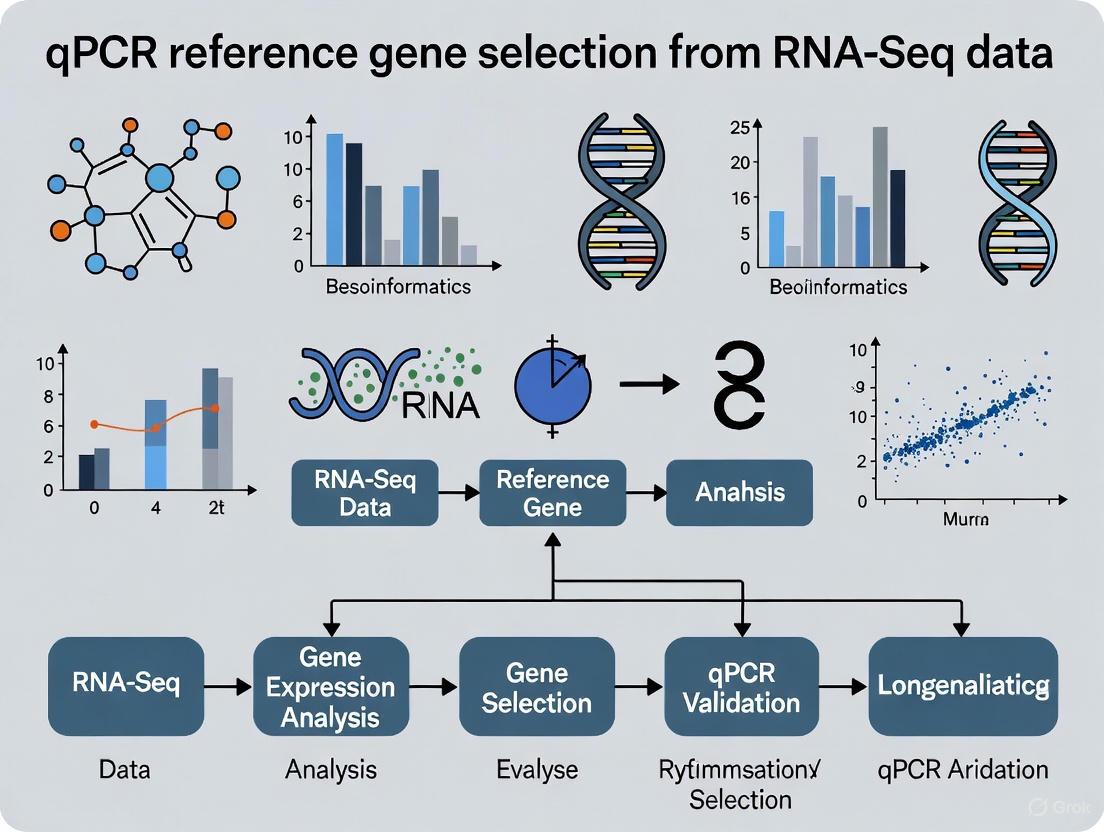
Accurate gene expression analysis via qPCR is foundational to biomedical research and drug development, yet it critically depends on the use of stable reference genes for data normalization.
From Transcriptome to Target: A Modern Guide to Selecting qPCR Reference Genes from RNA-Seq Data
Abstract
Accurate gene expression analysis via qPCR is foundational to biomedical research and drug development, yet it critically depends on the use of stable reference genes for data normalization. Traditional housekeeping genes often exhibit significant expression variability, leading to unreliable results. This article provides a comprehensive, step-by-step framework for leveraging RNA-seq data to systematically identify, optimize, and validate superior reference genes. We cover foundational principles, practical methodologies using modern software tools, troubleshooting for common pitfalls, and rigorous validation techniques aligned with MIQE guidelines. By translating high-throughput transcriptomic data into robust, experimentally-verified qPCR controls, this guide empowers researchers to achieve unparalleled accuracy and reproducibility in their gene expression studies.
Why Traditional Housekeeping Genes Fail and How RNA-Seq Provides a Solution
The Critical Role of Stable Reference Genes in Accurate qPCR Normalization
Reverse Transcriptase quantitative Polymerase Chain Reaction (RT-qPCR) is the current gold-standard technique for gene expression analysis due to its high sensitivity, specificity, and speed [1]. However, the accuracy of RT-qPCR is highly dependent on the normalization of target gene expression using appropriate reference genes (RGs), which are intended to exhibit stable expression levels across various experimental conditions [1]. Normalization is a critical process used to minimize technical variability introduced during sample processing, RNA extraction, and cDNA synthesis, ensuring that the analysis focuses exclusively on biological variation [2]. The use of unstable reference genes can easily lead to misinterpretation of target gene expression levels, ultimately resulting in incorrect biological conclusions [1] [2].
Despite the existence of MIQE (Minimum Information for Publication of Quantitative Real-Time PCR Experiments) guidelines, which recommend thorough validation of reference gene performance, mistakes in qPCR experimental setup remain surprisingly common [1] [3]. These often include using an inappropriate number of reference genes or failing to accurately test reference gene stability under specific experimental conditions [1]. A particularly risky practice is the selection of reference genes based solely on their previous use in other experimental conditions, tissues, or even different species, without empirical validation for the current experimental context [1].
The Critical Importance of Reference Gene Stability
Consequences of Improper Reference Gene Selection
The assumption that so-called "housekeeping" genes maintain stable expression across all biological contexts is fundamentally flawed. Numerous studies have demonstrated that the expression of classic housekeeping genes can vary significantly depending on the experimental conditions, tissue types, and pathological states [2] [4]. When improper reference genes are used for normalization, the resulting data can be skewed, creating a significant bias that leads to incorrect biological interpretation [2].
Comparative studies across multiple species present additional challenges. Research on four closely related grasshopper species revealed clear differences in reference gene stability rankings between tissues and species [1]. Importantly, the choice of reference genes directly influenced the experimental results, demonstrating that the assumption of reference gene stability across closely related species is not necessarily valid [1]. This finding has profound implications for evolutionary studies employing comparative gene expression analysis.
Stability Validation in Different Biological Systems
The context-dependent nature of reference gene stability has been observed across diverse biological systems:
- In canine gastrointestinal tissues with different pathologies, the most stable reference genes identified were RPS5, RPL8, and HMBS, while the global mean of the expression of all tested genes emerged as the best-performing normalization method when profiling large gene sets [2].
- In tomato-Ralstonia pathosystems, comprehensive stability analysis identified UBI3, TIP41, and ACT as the most stable reference genes across multiple experimental conditions involving compatible and incompatible interactions [4].
- A novel combinatorial approach demonstrated that a stable combination of non-stable genes can outperform standard reference genes for RT-qPCR data normalization. This method utilizes RNA-Seq databases to identify gene combinations whose individual expressions balance each other across experimental conditions [5].
Experimental Protocols for Reference Gene Validation
Workflow for Identification and Validation of Reference Genes
The diagram below illustrates the comprehensive workflow for identifying and validating stable reference genes, integrating both traditional and novel computational approaches:
Sample Collection, RNA Extraction, and cDNA Synthesis
Proper sample collection and processing are fundamental to reliable qPCR results. In studies involving multiple species and conditions, careful standardization of protocols is essential:
- Sample Collection: Collect tissues at consistent time points to minimize diurnal variation effects. For example, in the grasshopper study, only specimens that molted before 10 AM were used, with all dissections occurring between 8 and 9 AM [1]. Immediately preserve tissues in RNAlater or similar RNA stabilization reagents to prevent degradation.
- RNA Extraction: Perform RNA extraction using standardized kits or protocols with DNase treatment to eliminate genomic DNA contamination. Assess RNA quality and quantity using appropriate methods such as spectrophotometry (A260/A280 ratio) and microfluidic analysis (RIN number) [1] [3].
- cDNA Synthesis: Use consistent amounts of high-quality RNA (e.g., 1 μg) for reverse transcription with high-efficiency reverse transcriptases. Include controls without reverse transcriptase (-RT controls) to detect genomic DNA contamination [1].
qPCR Experimental Setup and Execution
The qPCR experimental phase requires meticulous attention to technical details to ensure reproducible and accurate results:
- Primer and Probe Design: Design sequence-specific primers and probes with optimal characteristics. Probe-based qPCR is recommended over SYBR Green for preclinical and clinical samples due to superior specificity, despite higher costs [3]. For dye-based approaches, perform melting curve analysis to ensure specificity and avoid primer-dimer artifacts [3].
- Reaction Setup: Use standardized master mixes to minimize pipetting variations. Include no-template controls (NTCs) to detect contamination. The following table summarizes key reaction components for probe-based qPCR [3]:
Table 1: qPCR Reaction Components for Probe-Based Assays
| Component | Amount/Concentration |
|---|---|
| Standard DNA | 0–10^8 copies |
| Forward Primer | up to 900 nM |
| Reverse Primer | up to 900 nM |
| Probe | up to 300 nM |
| Master Mix | 1× concentration |
| Sample DNA | up to 1,000 ng |
| Nuclease-free water | to final volume |
- Thermal Cycling Conditions: Implement appropriate cycling parameters. An example protocol includes: initial enzyme activation at 95°C for 10 minutes; 40 cycles of denaturation at 95°C for 15 seconds; and annealing/extension at 60°C for 30-60 seconds [3].
- Standard Curve Implementation: Include a standard curve in each run using serial dilutions of reference standard DNA to assess PCR efficiency, which should fall between 90% and 110% [3].
Stability Analysis Using Multiple Algorithms
Reference gene stability should be assessed using multiple statistical algorithms to ensure robust selection:
- geNorm: This algorithm calculates the stability measure M for each candidate gene, with lower M values indicating higher stability. It also determines the optimal number of reference genes by calculating the pairwise variation Vn/Vn+1, with a cutoff of V < 0.15 indicating that additional reference genes are unnecessary [2] [4].
- NormFinder: This method evaluates both intra-group and inter-group variation, providing a stability value for each candidate gene. It is particularly useful for identifying the single most stable reference gene [2] [4].
- BestKeeper: This algorithm uses pairwise correlation analysis of the Cq values of candidate genes to determine the most stable references [4].
Table 2: Comparison of Reference Gene Stability Analysis Tools
| Algorithm | Primary Function | Key Output | Advantages |
|---|---|---|---|
| geNorm | Pairwise comparison | M value (lower = more stable) | Determines optimal number of reference genes |
| NormFinder | Model-based approach | Stability value (lower = more stable) | Accounts for sample subgroups |
| BestKeeper | Correlation analysis | Standard deviation and CV | Based on raw Cq values |
Advanced Approaches and RNA-Seq Integration
RNA-Seq Data Mining for Reference Gene Discovery
The integration of RNA-Seq data has revolutionized reference gene selection by providing comprehensive expression profiles across diverse biological conditions:
- Database Utilization: Leverage existing RNA-Seq databases (e.g., TomExpress for tomato) to mine for stable genes. Calculate expression stability metrics such as variance, coefficient of variation, and expression range across relevant conditions [5].
- Lowest Variance Gene (LVG) Identification: Identify genes with minimal expression variance across targeted experimental conditions. Research indicates that classical housekeeping genes often do not have the lowest variances among genes with similar expression levels [5].
- Condition-Specific Stability: Recognize that gene stability is context-dependent. A heatmap of low variance scores (LVS) for classical housekeeping genes across different organs, tissues, and cultivars clearly demonstrates that the LVS of a gene varies depending on the conditions of interest [5].
The Gene Combination Method
A groundbreaking approach demonstrates that a stable combination of non-stable genes can outperform individual stable genes for normalization:
- Concept: The method identifies k genes whose expressions balance each other across all conditions of interest, resulting in a stable combined reference despite potential instability of individual components [5].
- Implementation: Using RNA-Seq data, the algorithm: (1) calculates the mean expression of the target gene; (2) extracts a pool of genes with similar expression levels; (3) calculates all geometric and arithmetic profiles of k genes; (4) selects the optimal set of k genes based on mean expression and lowest variance criteria [5].
- Advantages: This combinatorial approach has demonstrated superiority over commonly used housekeeping genes or other individually stably expressed genes, particularly when using comprehensive RNA-Seq databases [5].
Global Mean Normalization Strategy
For studies profiling large numbers of genes, the global mean (GM) method presents a viable alternative to traditional reference gene approaches:
- Methodology: The GM method uses the arithmetic mean of the expression of all profiled genes as a normalization factor [2].
- Application: Research on canine intestinal tissues found that the GM method was the best-performing normalization approach when profiling larger gene sets (e.g., >55 genes) [2].
- Advantages: This approach eliminates the need for reference gene selection and validation, potentially providing more robust normalization for comprehensive gene expression studies.
Research Reagent Solutions
Table 3: Essential Research Reagents for Reference Gene Validation Studies
| Reagent/Category | Specific Examples | Function/Application |
|---|---|---|
| RNA Stabilization Reagents | RNAlater | Preserves RNA integrity in tissues prior to extraction |
| RNA Extraction Kits | Commercial silica-membrane kits | High-quality RNA isolation with genomic DNA removal |
| Reverse Transcriptase Kits | High-efficiency systems | cDNA synthesis from RNA templates |
| qPCR Master Mixes | Probe-based universal master mixes | Amplification with fluorescence detection |
| Primers and Probes | Sequence-specific designs | Target amplification and detection |
| Reference Standard DNA | Serial dilution standards | Absolute quantification and efficiency calculation |
| Stability Analysis Software | geNorm, NormFinder, BestKeeper | Statistical evaluation of reference gene stability |
The critical role of stable reference genes in accurate qPCR normalization cannot be overstated. Proper validation of reference genes for each specific experimental condition is essential for generating reliable gene expression data. Based on current evidence, the following best practices are recommended:
- Always Validate Reference Genes: Never assume reference gene stability based on previous studies or common practice. Validate candidates for each specific experimental setup [1] [2].
- Use Multiple Algorithms: Employ at least two stability analysis algorithms (geNorm, NormFinder, or BestKeeper) to identify the most stable reference genes [4] [5].
- Consider Combinatorial Approaches: Explore the gene combination method, which has demonstrated superior performance compared to single reference genes [5].
- Utilize RNA-Seq Resources: Mine comprehensive RNA-Seq databases to identify potential candidate genes with stable expression patterns across conditions of interest [5].
- Implement Appropriate Controls: Include all necessary controls in qPCR experiments (NTCs, -RT controls, standard curves) to ensure technical reliability [3].
- Follow MIQE Guidelines: Adhere to MIQE guidelines to enhance experimental rigor, reproducibility, and reporting transparency [1] [6].
By implementing these practices and recognizing the critical importance of proper reference gene selection, researchers can significantly improve the accuracy and reliability of their qPCR-based gene expression studies, leading to more valid biological conclusions and advancing scientific knowledge across diverse fields from basic research to drug development.
The accurate normalization of reverse transcription quantitative polymerase chain reaction (RT-qPCR) data is a cornerstone of reliable gene expression analysis. For decades, classic housekeeping genes (HKGs), such as ACTB (β-actin) and GAPDH (glyceraldehyde-3-phosphate dehydrogenase), have been routinely employed as reference genes based on the assumption that their expression remains constant across all cell types and experimental conditions. A growing body of evidence, however, fundamentally challenges this assumption, demonstrating that the expression of these genes can be highly variable. This variability poses a significant risk of data misinterpretation. This application note synthesizes recent evidence illustrating the limitations of classic HKGs and provides detailed, evidence-based protocols for the rigorous selection and validation of stable reference genes, with a specific focus on leveraging RNA-Seq data to inform this critical process.
RT-qPCR is renowned for its sensitivity, specificity, and reproducibility, making it a ubiquitous tool for gene expression validation, particularly for RNA-Seq data [7]. However, the accuracy of its results is profoundly dependent on proper normalization to account for technical variations introduced during RNA extraction, reverse transcription, and PCR amplification [8] [9]. The use of unvalidated reference genes is a pervasive source of inaccurate conclusions in gene expression studies [8].
The term "housekeeping gene" refers to a gene involved in basic cellular maintenance functions, presumed to be expressed constitutively at a constant level. This presumption has led to the widespread, often unquestioned, use of genes like ACTB, GAPDH, 18S rRNA, and TUBB (β-tubulin) as internal controls. Yet, it is now unequivocally established that no universal reference gene exists that is stable under all experimental conditions [10] [11] [12]. The expression of these classic genes can be modulated by a multitude of factors, including tissue type, developmental stage, disease state (e.g., cancer), and specific experimental treatments such as cellular differentiation, stress, and metabolic alterations [10] [9] [12]. Consequently, normalizing to an unstable reference gene can obscure genuine expression changes of target genes or, worse, create artifactual ones, leading to flawed biological interpretations.
Evidence of Expression Variability in Classic Housekeeping Genes
Numerous systematic studies across diverse biological models have quantified the instability of classic HKGs. The following tables summarize key findings from recent investigations, highlighting the poor performance of traditional reference genes compared to more stable alternatives.
Table 1: Instability of Classic Housekeeping Genes Across Different Biological Models
| Biological Context | Classic HKG(s) Tested | Evidence of Instability / Stable Alternatives | Key Finding |
|---|---|---|---|
| iPS Cell Reprogramming (Mouse) | Actb, Gapdh, Hprt, Rps18, Tbp | Least Stable: Rps18, Hprt, Tbp, Actb. Most Stable: Atp5f1, Pgk1, Gapdh [12]. | Demonstrates that the process of reprogramming itself, which involves metabolic and structural remodeling, drastically affects the expression of common reference genes. |
| Adipocyte Differentiation (3T3-L1 Cells) | Actb, Gapdh, Rn18s | Expression levels of reference genes changed over time, even in non-differentiating control cells. Stable genes: Ppia and Tbp [10]. | Highlights that even in the absence of an induced differentiation signal, cell culture conditions and time can alter the expression of classic HKGs. |
| Human Cancer & Normal Cell Lines (20 lines) | ACTB, GAPDH, UBC | Classic genes showed considerable variation. Novel stable genes proposed: IPO8, PUM1, HNRNPL, SNW1, CNOT4 [11]. | Underlines the challenge of comparing gene expression across different cell lines and the inadequacy of standard HKGs for this purpose. |
| Aquatic Plant (Lotus) | ACT, GAPDH, TUA | Stability was highly context-dependent. Best genes varied by tissue: e.g., TBP & UBQ in rhizomes; TBP & EF-1α in flowers [13]. | Confirms that the instability of classic HKGs and the context-dependence of optimal reference genes is a universal principle across kingdoms. |
Table 2: Impact of Experimental Conditions on Common Housekeeping Genes in Spinach
| Experimental Condition | Classic HKG(s) Tested | Performance & Stable Alternatives |
|---|---|---|
| Different Organs | 18S rRNA, Actin, GAPDH, TUBα | Most Stable: ARF, Actin, COX, CYP, RPL2 [9]. |
| Heat Stress | 18S rRNA, Actin, GAPDH, TUBα | Most Stable: ARF, Actin, COX, CYP, RPL2 [9]. |
| Salt & Alkali Stress | 18S rRNA, Actin, GAPDH, TUBα | Most Stable: 18S rRNA, ARF, COX, CYP, EF1α, RPL2 [9]. |
The following diagram illustrates the primary cellular processes and experimental perturbations that are known to influence the expression of classic housekeeping genes, thereby compromising their utility as normalizers.
Protocols for Rigorous Reference Gene Selection and Validation
Given the documented pitfalls of classic HKGs, a systematic and evidence-based approach to reference gene selection is imperative. The following protocols outline a robust workflow, from initial candidate identification to final validation.
Protocol 1: Selection of Candidate Reference Genes from RNA-Seq Data
Principle: RNA-Seq datasets provide a genome-wide, quantitative overview of transcript abundance and variability across all samples in a study. This makes them an ideal resource for pre-selecting candidate reference genes with inherently stable expression before RT-qPCR validation [7] [14].
Workflow:
- Data Input: Compile a gene expression matrix from your RNA-Seq data where rows represent genes and columns represent samples. Expression values should be in TPM (Transcripts Per Million) or FPKM for cross-sample comparability [7].
- Initial Filtering: Filter the matrix to include only genes expressed above a minimal threshold in all samples (e.g., TPM > 0 in all libraries) [7].
- Stability Filtering: Apply sequential statistical filters to identify stable genes.
- Filter 1: Low Variation. Calculate the standard deviation (SD) of
log2(TPM)for each gene across all samples. Retain genes with SD < 1 [7]. - Filter 2: No Outliers. Ensure that for each gene, no single sample's
log2(TPM)value deviates from the mean by more than a factor of 2 (i.e.,|log2(TPMi) - mean(log2TPM)| < 2) [7]. - Filter 3: High Expression. Retain genes with a high average expression level (e.g.,
mean(log2TPM) > 5) to ensure they are readily detectable by RT-qPCR [7]. - Filter 4: Low Coefficient of Variation (CV). Calculate the CV of the
log2(TPM)values and retain genes with CV < 0.2 [7].
- Filter 1: Low Variation. Calculate the standard deviation (SD) of
- Output: The resulting shortlist of genes serves as your candidate reference genes for downstream experimental validation. Tools like GSV (Gene Selector for Validation) can automate this entire process [7].
The workflow for this RNA-Seq-based selection process is summarized in the following diagram.
Protocol 2: Experimental Validation of Candidate Genes via RT-qPCR
Principle: Candidates identified in silico must be empirically tested for expression stability using RT-qPCR across all experimental conditions (e.g., all time points, tissues, or treatments). Their stability is then ranked using dedicated algorithms [9] [12].
Workflow:
- Sample Preparation:
- Collect biological replicates (recommended n ≥ 3) for every condition in your study.
- Extract total RNA using a reliable kit, ensuring genomic DNA removal. Assess RNA integrity (RIN > 8.0) and purity (A260/280 ≈ 2.0).
- Synthesize cDNA using a high-capacity reverse transcription kit with a mixture of random hexamers and oligo-dT primers.
- qPCR Assay:
- Design intron-spanning primers for each candidate gene with high amplification efficiency (90–110%) and specificity (confirmed by melt curve analysis) [11].
- Run qPCR reactions for all candidate genes across all cDNA samples in technical replicates.
- Record the quantification cycle (Cq) values.
- Stability Analysis:
- Input the Cq values into multiple stability analysis algorithms. The consensus of multiple tools provides the most robust result.
- geNorm: Calculates a stability measure (M); lower M indicates greater stability. Also determines the optimal number of reference genes by pairwise variation (V) [9] [12].
- NormFinder: Evaluates intra- and inter-group variation, providing a stability value; lower values indicate greater stability [9] [12].
- BestKeeper: Relies on the SD of the Cq values; genes with SD > 1 are considered unstable [9].
- RefFinder is a comprehensive tool that integrates the results from geNorm, NormFinder, BestKeeper, and the comparative ΔCt method to provide an overall ranking [10].
- Input the Cq values into multiple stability analysis algorithms. The consensus of multiple tools provides the most robust result.
- Final Selection: Select the top 2-3 most stable genes for normalization. Using multiple genes for normalization significantly improves reliability [9].
The Scientist's Toolkit: Essential Reagents and Software
Table 3: Key Reagents and Software for Reference Gene Validation
| Item | Function/Description | Example Products/Citations |
|---|---|---|
| RNA Extraction Kit | Isolation of high-integrity, genomic DNA-free total RNA. | RNeasy Kit (Qiagen) [12], TRIzol-based methods [9]. |
| Reverse Transcription Kit | Synthesis of first-strand cDNA from RNA templates. | High-Capacity cDNA Kit (Applied Biosystems), Maxima H Minus Kit (Thermo Fisher) [11]. |
| qPCR Master Mix | SYBR Green or probe-based mix for quantitative PCR. | FastStart Essential DNA Green Master (Roche) [10], Power SYBR Green (Applied Biosystems). |
| Stability Analysis Software | Algorithms to rank candidate genes based on Cq value stability. | geNorm, NormFinder, BestKeeper, RefFinder [10] [9]. |
| RNA-Seq Analysis Tool | Software to pre-select candidate genes from transcriptomic data. | GSV (Gene Selector for Validation) [7]. |
| Gamma-secretase modulators | Gamma-Secretase Modulators for Alzheimer's Research | Explore gamma-Secretase Modulators for AD research. These small molecules shift Aβ production to shorter peptides. For Research Use Only. Not for human use. |
| 5-Bromo-2-[4-(tert-butyl)phenoxy]aniline | 5-Bromo-2-[4-(tert-butyl)phenoxy]aniline, CAS:946700-34-1, MF:C16H18BrNO, MW:320.22 g/mol | Chemical Reagent |
The assumption that classic housekeeping genes like ACTB and GAPDH are stably expressed is a dangerous oversimplification that can critically undermine the validity of gene expression studies. As demonstrated across diverse models—from differentiating adipocytes to reprogramming stem cells—these genes exhibit significant, context-dependent variability. Adherence to the MIQE (Minimum Information for Publication of Quantitative Real-Time PCR Experiments) guidelines is paramount. This involves moving beyond tradition and adopting a rigorous, systematic pipeline that leverages RNA-Seq data for intelligent candidate selection followed by mandatory experimental validation of reference gene stability for each specific experimental system. This evidence-based approach is not merely a best practice but a fundamental necessity for generating accurate, reliable, and biologically meaningful gene expression data.
The selection of stable reference genes is a critical prerequisite for obtaining accurate and reliable gene expression data from reverse transcription quantitative PCR (RT-qPCR). Traditionally, this process relied on a limited set of candidate housekeeping genes, which are now known to exhibit significant expression variability across different biological contexts [8]. The emergence of RNA sequencing (RNA-Seq) has transformed this paradigm by enabling unbiased, genome-wide screening for potential reference genes with superior stability profiles. This application note details how RNA-Seq serves as a powerful discovery tool for identifying optimal reference genes, outlining specific advantages over traditional methods and providing detailed protocols for implementation.
RNA-Seq provides a comprehensive snapshot of the entire transcriptome, quantifying thousands of genes simultaneously across diverse experimental conditions [15]. This global perspective allows researchers to move beyond the constraints of pre-selected candidate genes and mine transcriptomic data for novel, highly stable reference genes that would remain undetected using conventional approaches. Furthermore, the statistical robustness derived from analyzing extensive RNA-Seq datasets empowers the identification of gene combinations whose collective expression remains constant, even when individual genes exhibit some variability [16].
Advantages of RNA-Seq in Reference Gene Discovery
The transition from traditional candidate approaches to RNA-Seq-based discovery offers several distinct advantages that enhance the accuracy and efficiency of reference gene selection.
Unbiased Genome-Wide Screening
Unlike methods that test a pre-defined set of genes, RNA-Seq enables comprehensive profiling of all expressed genes in a transcriptome. This allows for the discovery of novel, stable reference genes that are not among conventionally used housekeeping genes. Research demonstrates that stable combinations of genes identified from RNA-Seq data can outperform standard reference genes for RT-qPCR normalization [16].
Handling of Large-Scale Data
RNA-Seq datasets provide the extensive data necessary for robust statistical analysis of gene expression stability. Specialized software tools like Gene Selector for Validation (GSV) have been developed specifically to leverage these datasets, applying multiple filtering criteria—including expression level, variability, and coefficient of variation—to identify optimal reference candidates from thousands of genes [7].
The growing availability of public RNA-Seq repositories enables researchers to conduct in silico stability analyses without generating new sequencing data. Studies have successfully utilized comprehensive databases like TomExpress (for tomato) to identify optimal reference gene combinations, demonstrating the utility of leveraging existing transcriptomic resources [16].
Table 1: Key Advantages of RNA-Seq Over Traditional Methods for Reference Gene Screening
| Feature | Traditional Candidate Approach | RNA-Seq Discovery Approach |
|---|---|---|
| Scope | Limited to pre-selected genes | Genome-wide, unbiased |
| Discovery Potential | Low; restricted to known genes | High; can identify novel stable genes |
| Statistical Power | Limited by number of candidates | High; uses entire transcriptome dataset |
| Data Resources | Requires new experiments | Can leverage public repositories |
| Output | Individual stable genes | Can identify stable gene combinations |
Quantitative Assessment of Gene Stability from RNA-Seq Data
Transforming raw RNA-Seq data into a validated list of reference gene candidates requires a multi-step analytical process focused on quantifying expression stability.
Stability Metrics and Filtering Criteria
Different algorithms employ specific metrics and thresholds to identify stably expressed genes. The following criteria are commonly applied to filter candidate genes:
- Expression Threshold: Minimum expression level (e.g., log2(TPM) > 5) to ensure reliable detection by RT-qPCR [7]
- Variability Threshold: Maximum expression variability (e.g., standard deviation of log2(TPM) < 1) across conditions [7]
- Coefficient of Variation: Maximum coefficient of variation (< 0.2) to account for relative stability [7]
- Expression Range: No exceptional expression in any single condition (e.g., within twice the average of log2 expression) [7]
Software tools like GSV implement these criteria systematically, processing transcripts per million (TPM) values from multiple samples to generate ranked lists of candidate reference genes [7].
From Individual Genes to Stable Combinations
Recent methodological advances focus on identifying combinations of genes (k-genes) whose geometric mean expression remains stable across conditions, even when individual components show some variability. This approach has demonstrated superiority over single reference genes in normalization accuracy [16].
The algorithm for identifying these optimal combinations typically involves:
- Calculating the mean expression of the target gene
- Extracting a pool of genes with similar or greater mean expression
- Computing all possible geometric and arithmetic means of k genes from this pool
- Selecting the optimal set that meets both mean expression and minimal variance criteria [16]
Figure 1: Computational workflow for identifying stable reference genes from RNA-Seq data.
Experimental Design and RNA-Seq Protocol
Proper experimental design is fundamental to generating RNA-Seq data that will yield reliable reference gene candidates.
Experimental Considerations
- Biological Replicates: Include sufficient replicates (typically 3-5) per condition to adequately capture biological variation [15]
- Condition Coverage: Ensure RNA-Seq data encompasses all experimental conditions relevant to future qPCR studies
- RNA Quality: Use high-quality RNA (RIN ≥ 8) to minimize technical artifacts [17] [18]
- Sequencing Depth: Aim for adequate depth (typically 20-30 million reads per sample for standard organisms) to reliably quantify mid-to-low abundance transcripts [15]
Library Preparation and Sequencing
The following protocol outlines key steps for generating RNA-Seq data suitable for reference gene discovery:
RNA Extraction
Library Preparation
- Select appropriate RNA enrichment method (poly-A selection for mRNA, ribosomal depletion for total RNA)
- Use strand-specific protocols to preserve transcript orientation information
- Fragment RNA/cDNA to appropriate size (typically 200-500 bp) [15]
Sequencing
Table 2: Key Reagent Solutions for RNA-Seq Library Preparation
| Reagent Category | Specific Examples | Function in Workflow |
|---|---|---|
| RNA Extraction | TRIzol reagent, Direct-Zol RNA microprep columns | Isolation of high-quality total RNA from biological samples |
| RNA Quality Assessment | Agilent Bioanalyzer RNA kits, NanoDrop spectrophotometer | Verification of RNA integrity and purity before library construction |
| Library Preparation | Poly(A) selection beads, rRNA depletion kits, strand-specific cDNA synthesis kits | Enrichment for desired RNA species and conversion to sequencing-ready libraries |
| Sequencing | Illumina sequencing kits, NovaSeq/X series flow cells | Generation of high-throughput sequence reads from prepared libraries |
From RNA-Seq Candidates to qPCR Validation
Genes identified through computational analysis of RNA-Seq data require rigorous experimental validation by qPCR.
Validation Workflow
The transition from in silico candidates to validated reference genes follows a systematic process:
- Candidate Selection: Select 3-5 top-ranked genes from RNA-Seq analysis plus 1-2 traditional housekeeping genes for comparison
- qPCR Assay Design: Design and validate qPCR assays with high amplification efficiency (90-110%) and specificity [18]
- Experimental Testing: Measure candidate expression across all relevant biological conditions
- Stability Analysis: Analyze results using multiple algorithms (geNorm, NormFinder, BestKeeper, RefFinder) [18] [20]
- Final Selection: Choose the most stable gene or gene combination for normalization
Case Study Validation
A study on Phytophthora capsici validation demonstrated this process effectively. Researchers identified translation elongation factor 1-α (ef1), 40S ribosomal protein S3A (ws21), and ubiquitin-conjugating enzyme (ubc) as the most stable reference genes during host infection using this combined approach [18].
Figure 2: Experimental workflow for validating RNA-Seq-derived reference genes using qPCR.
RNA-Seq has emerged as a powerful discovery tool that significantly enhances the process of reference gene selection for qPCR normalization. By enabling comprehensive, genome-wide stability screening, RNA-Seq moves beyond the limitations of traditional candidate approaches and allows researchers to identify optimal reference genes with greater confidence and efficiency. The integration of computational screening from RNA-Seq data with rigorous qPCR validation represents a robust framework for achieving accurate gene expression normalization across diverse biological contexts. As RNA-Seq technologies continue to advance and computational tools become more sophisticated, this approach will likely become the standard practice for reference gene selection in gene expression studies.
In the realm of gene expression analysis, reverse transcription quantitative polymerase chain reaction (RT-qPCR) remains the gold standard for validating transcriptomic data, including those generated by RNA-Seq [17]. The accuracy of this technique, however, is profoundly dependent on normalization using reliable internal controls, known as reference genes (RGs). Ideal reference genes are characterized by two fundamental properties: high expression across the experimental conditions and low variation in their expression profiles [11] [7]. The failure to employ such stable genes for normalization can lead to biased results, reduced precision, and a misinterpretation of biological phenomena [21] [7]. This application note, framed within a broader thesis on qPCR reference gene selection from RNA-Seq data, outlines the definitive criteria for ideal candidate genes and provides detailed protocols for their identification and validation, tailored for researchers, scientists, and drug development professionals.
The Critical Criteria for Ideal Candidate Genes
The selection of candidate genes is a critical first step that should not rely on convention alone. Genes traditionally used as housekeeping genes, such as GAPDH and ACTB, often exhibit significant variability under different experimental conditions, making them unsuitable for many studies [21] [11]. Instead, a systematic approach should be used to define candidates based on the following pillars:
- High Expression Level: Genes with low expression levels are more susceptible to technical variations and may fall below the reliable detection limit of RT-qPCR. A high level of expression ensures robust and reproducible quantification [7]. In practice, this can be defined using Transcripts Per Million (TPM) from RNA-Seq data; for instance, an average log2(TPM) greater than 5 is a suggested threshold [7].
- Low Expression Variation: The core function of a reference gene is to remain invariant. Expression stability must be evaluated across all biological conditions relevant to the study (e.g., different tissues, treatments, or disease states). Statistical measures like the coefficient of variation (CV) and standard deviation of log2(TPM) values are key metrics. A CV below 0.2 and a standard deviation below 1 are strong indicators of stability [11] [7].
- Consistent Expression Profile: The gene should not display exceptional expression in any single sample or condition. A useful filter is to require that the log2(TPM) value in any library does not deviate by more than twice the average log2(TPM) across all libraries [7].
- Lack of Coregulation with Test Genes: Candidate genes should not be part of a coregulated network that includes the target genes under investigation. Using multiple genes from the same pathway can introduce bias, as statistical algorithms like GeNorm may incorrectly prioritize them for their co-stability rather than true invariant expression [11].
Table 1: Established Stable Reference Genes from Recent Studies
| Gene Symbol | Gene Name | Experimental Context | Key Stability Metric | Source |
|---|---|---|---|---|
| POLR2A | RNA Polymerase II Subunit A | Non-Small Cell Lung Cancer (NSCLC) | Identified as most stable by GeNorm and equivalence test [21] | [21] |
| CNOT4 | CCR4-NOT Transcription Complex Subunit 4 | Pan-Cancer and Normal Human Cell Lines | Most stable gene upon serum starvation; low CV in RNA-Seq meta-analysis [11] | [11] |
| SNW1 | SNW Domain Containing 1 | Pan-Cancer and Normal Human Cell Lines | Top-ranked stable gene from Human Protein Atlas RNA HPA data [11] | [11] |
| IPO8 | Importin 8 | Pan-Cancer and Normal Human Cell Lines | Consistently ranked among the most stable genes [11] | [11] |
| ARF1 | ADP-ribosylation factor 1 | Honeybee Tissues & Development | Most stable gene across tissues and developmental stages [22] | [22] |
A Workflow for Identification from RNA-Seq Data
RNA-Seq data provides a powerful foundation for pre-selecting candidate reference genes before costly and time-consuming RT-qPCR validation. The following workflow, which can be implemented using tools like the "Gene Selector for Validation" (GSV) software, ensures a systematic selection process [7].
Diagram 1: Candidate gene selection workflow from RNA-Seq data.
Protocol 1: Selecting Candidate Genes Using GSV Software
- Input Preparation: Compile a transcript quantification matrix (e.g., TPM values) for all samples in your RNA-Seq dataset. This file can be in .xlsx, .txt, or .csv format.
- Software Execution:
- Load the quantification file into the GSV software.
- For reference gene selection, apply the standard filtering criteria as illustrated in Diagram 1 [7].
- Execute the analysis. The software will output a ranked list of genes passing all filters.
- Output Analysis: The resulting list represents genes with high expression and low variation across your specific experimental conditions. The top-ranked genes are prime candidates for downstream RT-qPCR validation.
Experimental Validation of Candidate Genes
Candidates identified from RNA-Seq must be empirically validated using RT-qPCR. This protocol details the steps from primer design to final stability assessment.
Diagram 2: Experimental workflow for reference gene validation.
Protocol 2: RT-qPCR Validation of Candidate Genes
RNA Extraction and cDNA Synthesis:
- Extract total RNA from biological replicates (recommended n ≥ 5 per condition) using a commercial kit (e.g., TRIzol/RNeasy). Assess RNA integrity (RIN > 8) and purity (A260/A280 ≈ 2.0) [17] [22].
- Convert 200-1000 ng of total RNA to cDNA using a robust reverse transcription kit (e.g., Maxima First Strand cDNA Synthesis Kit or High-Capacity cDNA Reverse Transcription Kit). Use a consistent amount of RNA and the same kit across all samples to minimize technical variation [11].
qPCR Primer Design and Validation:
- Design: Design primers with the following criteria using tools like Primer Premier 5 or the qPrimerDB 2.0 database [23] [22]:
- Amplicon length: 80-150 bp.
- Exon-spanning or intron-flanking to avoid genomic DNA amplification.
- Check for single nucleotide polymorphisms (SNPs) in primer binding sites.
- Validation: Validate primer specificity by:
- Agarose gel electrophoresis: A single sharp band of the expected size should be present [11].
- Melting curve analysis: A single peak indicates a specific PCR product [11].
- Standard curve: Generate a 5-10 point serial dilution series to calculate PCR amplification efficiency (E). Ideally, E should be between 90% and 110%, with a correlation coefficient (R²) > 0.99 [22].
- Design: Design primers with the following criteria using tools like Primer Premier 5 or the qPrimerDB 2.0 database [23] [22]:
qPCR Execution:
- Perform reactions in technical replicates on a calibrated real-time PCR instrument.
- Use a standardized reaction volume and master mix to ensure consistency.
- Include no-template controls (NTCs) to check for contamination.
Data Analysis and Stability Assessment:
- Collect quantification cycle (Cq) values.
- Analyze the expression stability of each candidate gene using multiple algorithms to ensure a robust conclusion. The following table summarizes key tools:
Table 2: Key Reagents and Software for Reference Gene Validation
| Category | Item | Function/Description | Example/Supplier |
|---|---|---|---|
| Sample Prep | RNA Extraction Kit | Isolves high-integrity total RNA, free of genomic DNA | TRIzol Reagent, RNeasy Kit [17] [22] |
| cDNA Synthesis | Reverse Transcriptase Kit | Converts RNA to cDNA; critical for sensitivity and linearity | Maxima First Strand Kit, High-Capacity Kit [11] |
| qPCR | qPCR Master Mix | Contains enzymes, dNTPs, buffer for efficient amplification | TB Green Premix Ex Taq [22] |
| Primer Design | Primer Design Tool | Designs specific, efficient qPCR primers | Primer Premier 5, qPrimerDB 2.0 [23] [22] |
| Stability Analysis | Statistical Algorithms | Software suites to rank candidate genes by stability | GeNorm, NormFinder, BestKeeper, RefFinder [21] [22] |
The rigorous definition and selection of ideal candidate genes—those with high expression and low variation—is a non-negotiable prerequisite for generating reliable gene expression data. By integrating in-silico selection from RNA-Seq datasets with meticulous experimental validation using RT-qPCR, researchers can establish a firm foundation for their studies. The protocols and criteria outlined in this application note provide a clear roadmap for scientists to confidently select reference genes, thereby enhancing the accuracy and reproducibility of their research in drug development and beyond.
A Step-by-Step Workflow: From RNA-Seq Data to Candidate Gene Selection
In the analysis of gene expression data, the selection of optimal reference genes is a critical step for ensuring the accuracy and reliability of results obtained through quantitative real-time PCR (qPCR). Reference genes, used for data normalization, must exhibit stable expression under various experimental conditions to avoid misinterpretation of expression patterns for target genes [8]. Traditional approaches often relied on so-called "housekeeping" genes presumed to maintain constant expression; however, substantial evidence now demonstrates that the expression of these genes can vary significantly across different tissues, developmental stages, and experimental conditions [24].
The emergence of high-throughput transcriptomic technologies, particularly RNA sequencing (RNA-seq), has enabled a more systematic and data-driven approach to identifying stably expressed genes. To harness this potential, dedicated bioinformatics tools have been developed. These tools leverage whole-transcriptome data to identify optimal reference genes with high expression stability, moving the selection process beyond conventional assumptions [24]. This shift is crucial, as the use of inappropriate reference genes remains a common source of error that can compromise the validity of gene expression studies [7] [25].
This article focuses on introducing the software tools available for this purpose, with particular emphasis on the Gene Selector for Validation (GSV) software, and provides detailed protocols for their application in a research workflow centered on qPCR validation of RNA-seq data.
The Gene Selector for Validation (GSV) is a dedicated software tool developed to identify optimal reference and variable candidate genes directly from RNA-seq data for subsequent validation by RT-qPCR [7] [25]. It was developed to address specific limitations of existing methods, such as their inability to handle large gene sets from RNA-seq and to filter out stably expressed genes with low expression levels that are unsuitable for qPCR detection [25] [26].
GSV is implemented in Python and utilizes libraries such as Pandas, Numpy, and Tkinter, the latter providing a user-friendly graphical interface that eliminates the need for command-line interaction [7] [25]. The software accepts common file formats (e.g., .xlsx, .txt, .csv) containing transcript-per-million (TPM) values, which are used for cross-sample comparison of gene expression.
Core Algorithm and Workflow
The algorithm of GSV applies a filtering-based methodology adapted from the work of Li et al. [7] [25]. It processes the transcriptome quantification tables by applying a series of stringent criteria to select genes that are both stable and highly expressed.
The following diagram illustrates the logical workflow of the GSV software for selecting both reference and validation candidate genes:
Table 1: Filtering Criteria for Reference Genes in GSV Software
| Criterion | Equation | Description | Purpose |
|---|---|---|---|
| Universal Expression | TPM > 0 (Eq. 1) |
Gene must have non-zero expression in all analyzed libraries. | Ensures the gene is detectable across all conditions. |
| Low Variability | σ(log₂(TPM)) < 1 (Eq. 2) |
Standard deviation of log-transformed expression must be less than 1. | Selects genes with minimal expression fluctuation. |
| Consistent Expression | |logâ‚‚(TPM) - mean| < 2 (Eq. 3) |
No individual expression value deviates from the mean by more than 2-fold. | Eliminates genes with outlier expression in any sample. |
| High Expression | mean(logâ‚‚(TPM)) > 5 (Eq. 4) |
Average log-transformed expression must be greater than 5. | Ensures sufficient expression for reliable qPCR detection. |
| Low Dispersion | CV < 0.2 (Eq. 5) |
Coefficient of variation must be less than 0.2. | Further refines selection based on normalized variability. |
For identifying variable genes suitable for experimental validation of transcriptome results, GSV applies more general filters: expression greater than zero in all samples (Eq. 1), high variation between libraries (standard deviation > 1, Eq. 6), and a high level of expression (average logâ‚‚(TPM) > 5, Eq. 4) [7] [25].
Comparison with Other Tools and Methods
While GSV provides a specialized approach for pre-qPCR planning from RNA-seq data, other software tools are commonly used to assess gene expression stability after qPCR data has been generated. These tools employ various algorithms to rank candidate reference genes based on their stability measured in Cq values.
Table 2: Comparison of Gene Stability Assessment Tools
| Software/Tool | Primary Input Data | Methodology | Key Features | Limitations |
|---|---|---|---|---|
| GSV | RNA-seq (TPM values) | Stepwise filtering based on expression level and variability. | Proactive selection from transcriptome; filters low-expression genes; user-friendly GUI. | Requires pre-existing RNA-seq data. |
| GeNorm [27] [8] | qPCR (Cq values) | Pairwise comparison of expression ratios between candidate genes. | Determines the optimal number of reference genes; provides stability measure (M-value). | Limited to small sets of genes; cannot run without a reference gene. |
| NormFinder [27] [8] | qPCR (Cq values) | Model-based approach estimating intra- and inter-group variation. | Sensitive to systematic differences between sample groups; provides stability value. | Requires sample group information for best performance. |
| BestKeeper [27] | qPCR (Cq values) | Based on pairwise correlation analysis of Cq values. | Calculates geometric mean of candidate genes; provides index of stability. | Best for analyzing fewer than 10 candidates; sensitive to co-regulated genes. |
| RefFinder [27] | qPCR (Cq values) | Algorithm integration and ranking aggregation. | Combines results from GeNorm, NormFinder, BestKeeper, and Delta-Ct methods; provides comprehensive ranking. | Aggregated result may mask algorithm-specific findings. |
The integration of these tools into a cohesive workflow represents best practices in the field. A typical pipeline involves using GSV for initial candidate selection from RNA-seq data, followed by experimental validation using qPCR, and finally, confirmation of stability with tools like RefFinder that leverage multiple algorithms [27].
Experimental Protocols and Validation
Case Study: Application in Sweet Potato Research
A comprehensive study on sweet potato (Ipomoea batatas) exemplifies the practical application of reference gene validation [27]. Researchers evaluated ten candidate reference genes across four different tissues (fibrous root, tuberous root, stem, and leaf) using the RefFinder algorithm, which integrates GeNorm, NormFinder, BestKeeper, and the comparative ΔCt method.
Key Findings:
- Most stable genes: IbACT, IbARF, and IbCYC showed the lowest variation in expression across tissues.
- Least stable genes: IbGAP, IbRPL, and IbCOX displayed the highest variation and were deemed unsuitable as reference genes.
- Tissue-specific performance: The most stable genes varied by tissue type. For example, in tuberous roots, IbGAP, IbARF, and IbACT were most stable, whereas IbCYC, IbARF, and IbTUB were optimal for stems.
This study highlights the importance of empirical validation, as traditionally used reference genes like IbGAP performed poorly while other candidates demonstrated superior stability.
Detailed Protocol: Reference Gene Validation
The following workflow integrates computational selection with experimental validation, representing a complete protocol for establishing reliable reference genes in a new study system.
Step-by-Step Methodology:
RNA Extraction and Quality Control
- Extract total RNA using commercial kits (e.g., TIANGEN RNAprep Plant Kit) [13]. For challenging tissues rich in polyphenols or polysaccharides, include additives like PVP K30 during grinding.
- Treat all RNA samples with DNase I to eliminate genomic DNA contamination.
- Assess RNA integrity using agarose gel electrophoresis or specialized instruments like Agilent Bioanalyzer. Note that traditional RNA Integrity Number (RIN) metrics may require adjustment for plant tissues containing chloroplast RNA [8].
cDNA Synthesis
- Synthesize cDNA using reverse transcription kits with random hexamers and/or oligo-dT primers (e.g., TIANGEN FastQuant RT Kit or SuperScript First-Strand Synthesis System) [13] [28].
- Use consistent amounts of input RNA across all samples (typically 0.5-1 µg).
- Include a no-reverse-transcriptase control to confirm the absence of genomic DNA amplification.
Primer Design and Validation
- Design primers for candidate reference genes using software such as Primer Premier 5.0 or Oligo 7 [13].
- Target amplicon lengths of 80-300 base pairs for optimal qPCR efficiency.
- Validate primer specificity through melt curve analysis and confirmation of a single peak. Verify amplicon size by gel electrophoresis and consider sequencing PCR products to confirm target identity [13].
- Determine primer efficiency using a standard curve with serial cDNA dilutions (e.g., 5-fold dilutions). Acceptable efficiency typically ranges from 90% to 110%, with a correlation coefficient (R²) > 0.990 [13].
qPCR Execution
- Perform reactions in technical triplicates using SYBR Green-based chemistry (e.g., TIANGEN Talent qPCR PreMix) on a validated qPCR system [13].
- Use a standardized thermal cycling protocol: initial denaturation at 95°C for 15 minutes, followed by 40 cycles of 95°C for 15 seconds (denaturation) and 60°C for 1 minute (annealing/extension) [13].
- Include no-template controls (NTCs) to detect potential contamination.
Data Analysis and Stability Assessment
- Export Cq (quantification cycle) values for analysis.
- Convert Cq values to relative quantities using the formula
E^{-ΔCq}, where E represents amplification efficiency and ΔCq is the difference between each sample's Cq and the minimum Cq value across all samples [13]. - Analyze the converted data with stability assessment tools such as GeNorm, NormFinder, and BestKeeper individually, or use the comprehensive RefFinder platform which integrates all three methods [27] [13].
- Select the top-ranked, most stable genes for normalization of target gene expression data.
The Scientist's Toolkit: Essential Research Reagents and Materials
Table 3: Essential Research Reagents and Materials for Reference Gene Studies
| Category | Specific Product/Kit | Function/Application |
|---|---|---|
| RNA Extraction | TIANGEN RNAprep Plant Kit [13] | Isolation of high-quality total RNA from plant tissues. |
| DNA Removal | RNase-free DNase I [13] | Elimination of genomic DNA contamination from RNA samples. |
| cDNA Synthesis | TIANGEN FastQuant RT Kit [13]; SuperScript First-Strand Synthesis System [28] | Reverse transcription of RNA to cDNA for qPCR amplification. |
| qPCR Master Mix | TIANGEN Talent qPCR PreMix (SYBR Green) [13]; 2× SuperReal PreMix Plus [13] | Provides optimized buffer, enzymes, and fluorescent dye for qPCR detection. |
| Reference Gene Analysis Software | GSV (Gene Selector for Validation) [7] [25]; GeNorm [27] [24]; NormFinder [27] [24]; BestKeeper [27]; RefFinder [27] | Computational tools for selecting and validating stable reference genes. |
| Primer Design Software | Primer Premier 5.0 [13]; Oligo 7 [13] | Design of specific primer pairs for candidate reference genes. |
| 3-Fluoro-DL-valine | 3-Fluoro-DL-valine, CAS:43163-94-6, MF:C5H10FNO2, MW:135.14 g/mol | Chemical Reagent |
| 2,2,2-trichloro-1-(1H-indol-3-yl)ethanone | 2,2,2-Trichloro-1-(1H-indol-3-yl)ethanone|CAS 30030-90-1 |
The integration of dedicated software tools like GSV with established stability assessment algorithms represents a robust framework for reference gene selection in the era of transcriptomics. The critical lesson from recent research is that traditional housekeeping genes frequently fail to maintain stable expression across diverse biological conditions, necessitating empirical validation for each experimental system [27] [24].
Successful implementation of this approach requires careful attention to several best practices:
- Utilize RNA-seq Data Proactively: When available, use tools like GSV to screen entire transcriptomes for ideal candidate genes before qPCR validation, rather than relying on literature-based assumptions [7] [25].
- Validate Across Specific Conditions: Always assess reference gene stability across the exact same tissues, developmental stages, and experimental conditions used in your target gene expression studies [27] [13].
- Employ Multiple Algorithms: Use comprehensive tools like RefFinder or run multiple stability assessment programs (GeNorm, NormFinder, BestKeeper) to obtain a consensus on the most stable reference genes [27].
- Use Multiple Reference Genes: For the most reliable normalization, incorporate the geometric mean of at least two validated reference genes as recommended by geNorm and other algorithms [27] [8].
This systematic approach to reference gene selection, combining computational power with rigorous experimental validation, ensures the accuracy and reliability of gene expression studies, ultimately strengthening the conclusions drawn from qPCR data in both basic research and drug development contexts.
This application note provides a detailed protocol for the preparation and interpretation of Transcripts Per Million (TPM) data and expression matrices, specifically framed within the context of selecting optimal reference genes for RT-qPCR validation from RNA-seq datasets. As the reliability of qPCR data critically depends on proper normalization using stably expressed reference genes, RNA-seq analysis serves as a powerful discovery tool to identify these candidates. We present a standardized workflow covering TPM calculation, data quality assessment, matrix construction, and cross-platform validation procedures, enabling researchers to generate robust, reproducible expression data for downstream qPCR experiments in drug development and clinical research settings.
RNA sequencing (RNA-seq) has become the predominant method for transcriptome profiling, generating vast datasets that require careful normalization to yield biologically meaningful results [29] [15]. The selection of appropriate quantification measures is particularly crucial when RNA-seq data serves as the foundation for selecting reference genes for RT-qPCR studies, as improper normalization can lead to the identification of unreliable reference genes that compromise subsequent expression analyses.
Several quantification measures have been developed to normalize RNA-seq data for technical variables such as sequencing depth and gene length [30] [31]. Sequencing depth refers to the total number of reads per sample, which varies between experiments and can significantly impact expression estimates. Gene length normalization is necessary because longer transcripts typically accumulate more reads than shorter transcripts at identical expression levels [31]. The most common normalization methods include:
- RPKM (Reads Per Kilobase Million): Developed for single-end RNA-seq experiments
- FPKM (Fragments Per Kilobase Million): Adapted for paired-end RNA-seq where two reads can correspond to a single fragment
- TPM (Transcripts Per Kilobase Million): A recently popularized measure that changes the order of operations in normalization
- Normalized Counts: Used for between-sample comparisons and differential expression analysis
The choice among these measures depends heavily on the analytical goal—whether comparing expression within a single sample or between multiple samples—and has significant implications for identifying stably expressed genes suitable for qPCR normalization [32] [31].
Table 1: Comparison of RNA-seq Quantification Methods
| Method | Full Name | Primary Use | Normalization Factors | Sum of Normalized Values |
|---|---|---|---|---|
| RPKM | Reads Per Kilobase Million | Within-sample comparisons | Sequencing depth, Gene length | Variable across samples |
| FPKM | Fragments Per Kilobase Million | Within-sample comparisons | Sequencing depth, Gene length | Variable across samples |
| TPM | Transcripts Per Kilobase Million | Within-sample comparisons | Gene length, Sequencing depth | Constant across samples (1 million) |
| Normalized Counts | - | Between-sample comparisons | Library composition, Size factors | Variable across samples |
Theoretical Foundation of TPM
Calculation Methodology
TPM represents the relative abundance of transcripts in a sample, normalized for both transcript length and sequencing depth. The key innovation of TPM lies in its order of operations: it normalizes for gene length first, then for sequencing depth, which results in a consistent sum across all samples [30]. This approach differs fundamentally from RPKM/FPKM and provides significant advantages for comparative analyses.
The TPM calculation involves three sequential steps:
Divide read counts by gene length: For each gene, divide the raw read counts by the length of the gene in kilobases, yielding Reads Per Kilobase (RPK). [ RPKi = \frac{\text{Read counts}i}{\text{Gene length in kb}} ]
Calculate scaling factor: Sum all RPK values in the sample and divide by 1,000,000 to obtain a "per million" scaling factor. [ \text{Scaling factor} = \frac{\sum{i=1}^{n} RPKi}{1,000,000} ]
Normalize RPK by scaling factor: Divide each RPK value by the scaling factor to obtain TPM. [ TPMi = \frac{RPKi}{\text{Scaling factor}} ]
This calculation results in the sum of all TPM values in a sample equaling 1,000,000, enabling direct comparison of the proportional expression of genes across different samples [30] [31]. If the TPM for gene A is 3.33 in both Sample 1 and Sample 2, this indicates that the exact same proportion of total reads mapped to gene A in both samples, which would not necessarily be true for RPKM or FPKM values of the same magnitude.
Advantages for Reference Gene Selection
TPM offers particular advantages for identifying candidate reference genes from RNA-seq data:
- Proportionality: The constant sum enables immediate recognition of expression proportions without additional calculations
- Cross-sample comparability: Technical variations in sequencing depth are effectively normalized, allowing biological variations to be more readily identified
- Intuitive interpretation: TPM values can be conceptualized as the number of transcripts that would be observed if exactly one million full-length transcripts were sequenced [31]
These characteristics make TPM particularly suitable for evaluating expression stability across different tissues, experimental conditions, or treatment groups—the fundamental requirement for identifying robust reference genes for qPCR studies [27].
Experimental Design and Data Acquisition
RNA Extraction and Library Preparation
The reliability of TPM data begins with proper experimental design and RNA handling. The following protocol outlines key considerations for generating RNA-seq data suitable for reference gene identification:
Materials and Reagents:
- TRIzol Reagent or equivalent RNA stabilization solution
- DNase I, RNase-free
- Magnetic bead-based RNA cleanup kits (e.g., RNAClean XP)
- RNA integrity assessment equipment (e.g., Bioanalyzer, TapeStation)
- Poly(A) selection or rRNA depletion kits
- RNA-seq library preparation kit (e.g., NEBNext Ultra II RNA Library Prep)
- Size selection beads (e.g., AMPure XP)
- Quantification reagents (e.g., Qubit dsDNA HS Assay)
Procedure:
RNA Extraction:
- Homogenize tissue or cells in TRIzol reagent following manufacturer's protocol
- Precipitate RNA with isopropanol, wash with 75% ethanol, and resuspend in RNase-free water
- Treat with DNase I to remove genomic DNA contamination
- Purify using magnetic bead-based cleanup kits
- Assess RNA integrity using Bioanalyzer or TapeStation; accept only samples with RIN > 7.0 [29]
Library Preparation:
- Select mRNA using poly(A) selection for high-quality samples or perform rRNA depletion for degraded samples (e.g., from formalin-fixed tissues) [15]
- Fragment RNA to approximately 200-300 nucleotides using divalent cations under elevated temperature
- Synthesize cDNA using reverse transcriptase with random hexamers
- For strand-specific information, incorporate dUTP during second strand synthesis [15]
- Ligate adapters with unique dual indices to enable sample multiplexing
- Enrich adapter-ligated DNA by PCR amplification (typically 10-15 cycles)
- Perform size selection to remove adapter dimers and large fragments
- Quantify final libraries using fluorometric methods and validate size distribution
Sequencing Considerations
Appropriate sequencing parameters are essential for generating data suitable for reference gene identification:
- Sequencing Depth: Target 20-30 million reads per sample for standard gene-level expression analysis [15]
- Read Configuration: Use paired-end sequencing (2×75 bp or 2×150 bp) for improved mapping accuracy and transcriptome coverage
- Replicates: Include at least three biological replicates per condition to adequately assess expression stability [29]
- Batch Effects: Process all samples for a given experiment simultaneously to minimize technical variability, or randomize processing if batch effects are unavoidable [29]
Computational Analysis Workflow
Quality Control and Preprocessing
Raw sequencing data must undergo rigorous quality assessment before quantification. The following workflow ensures data integrity:
Figure 1: RNA-seq Data Processing Workflow
Quality Control Steps:
Raw Read QC:
- Assess sequence quality, GC content, adapter contamination, and overrepresented k-mers using FastQC [15]
- Trim adapters and low-quality bases using Trimmomatic or similar tools
- Remove reads with Phred quality score < 20
Alignment QC:
- Map reads to reference genome/transcriptome using aligners such as STAR or HISAT2
- Evaluate mapping statistics: >70% alignment rate expected for human samples [15]
- Check for 3' bias indicating RNA degradation
- Assess ribosomal RNA content: <5% for poly(A)-selected libraries
Quantification QC:
- Generate read counts per gene using featureCounts or HTSeq
- Verify correlation between replicates (Pearson R² > 0.9 expected)
- Check for unusual distribution of expression values
TPM Calculation Protocol
The following step-by-step protocol details TPM calculation from raw count data:
Input Requirements:
- Raw count matrix (genes × samples)
- Gene lengths in kilobases (from reference annotation)
Computational Steps:
Calculate RPK values:
Compute scaling factors:
Calculate TPM values:
Validate calculation:
Implementation Notes:
- Use robust programming environments (R/Bioconductor, Python) for reproducibility
- Document all parameters and software versions
- Perform sanity checks at each computational step
Expression Matrix Construction and Interpretation
Data Structure and Organization
A well-constructed TPM expression matrix forms the foundation for reference gene identification. The matrix should be structured as follows:
Table 2: TPM Expression Matrix Structure
| Gene_ID | Sample1TPM | Sample2TPM | Sample3TPM | ... | Gene_Symbol | Gene_Type | Chromosome |
|---|---|---|---|---|---|---|---|
| ENSG00000139618 | 15.3 | 18.7 | 12.9 | ... | BRCA1 | protein_coding | chr17 |
| ENSG00000146648 | 245.6 | 251.3 | 260.1 | ... | EGFR | protein_coding | chr7 |
| ENSG00000075624 | 58.9 | 62.1 | 59.8 | ... | ACTB | protein_coding | chr7 |
| ENSG00000111640 | 12.5 | 11.9 | 13.2 | ... | GAPDH | protein_coding | chr12 |
| ... | ... | ... | ... | ... | ... | ... | ... |
Matrix Characteristics:
- Rows represent genes, columns represent samples
- Include stable gene identifiers (e.g., ENSEMBL IDs) and gene symbols
- Metadata should include gene biotypes to filter for appropriate reference candidates (typically protein-coding genes)
- Raw and normalized matrices should be archived separately
Stability Analysis for Reference Gene Selection
Identification of stable reference genes requires analysis of expression consistency across experimental conditions:
Analytical Steps:
Filtering:
- Remove genes with low expression (TPM < 1 in >50% of samples)
- Exclude genes with extreme expression (TPM > 10,000) which may dominate normalization
- Filter by gene type (typically focus on protein-coding genes)
Stability Assessment:
- Calculate coefficient of variation (CV = standard deviation/mean) for each gene across samples
- Genes with CV < 0.15 are considered moderately stable
- Genes with CV < 0.10 are considered highly stable
Ranking Candidates:
- Sort genes by increasing CV
- Select top 10-20 candidates for experimental validation
- Prioritize genes with moderate expression levels (TPM 10-1000) to ensure reliable qPCR detection
Table 3: Example Reference Gene Candidates Identified from TPM Data
| Gene Symbol | Mean TPM | Standard Deviation | Coefficient of Variation | Stability Rank | Known Function |
|---|---|---|---|---|---|
| YWHAZ | 85.3 | 6.2 | 0.073 | 1 | Tyrosine 3-monooxygenase |
| B2M | 124.6 | 10.1 | 0.081 | 2 | Beta-2-microglobulin |
| GAPDH | 215.8 | 19.3 | 0.089 | 3 | Glyceraldehyde-3-phosphate dehydrogenase |
| ACTB | 185.6 | 18.9 | 0.102 | 4 | Actin beta |
| RPL13A | 76.4 | 8.5 | 0.111 | 5 | Ribosomal protein L13a |
Integration with qPCR Reference Gene Validation
Cross-Platform Validation Protocol
Candidate reference genes identified from TPM data must be experimentally validated using RT-qPCR:
Materials and Reagents:
- Reverse transcription kit (e.g., High-Capacity cDNA Reverse Transcription Kit)
- qPCR master mix (e.g., SYBR Green or TaqMan)
- Primers for candidate reference genes (designed to span exon-exon junctions)
- qPCR instrumentation (96-well or 384-well format)
- Normalization and analysis software
Procedure:
cDNA Synthesis:
- Use the same RNA samples that were subjected to RNA-seq analysis
- Perform reverse transcription with random hexamers
- Include no-reverse transcriptase controls for each sample
qPCR Amplification:
- Design primers with efficiency between 90-110%
- Perform triplicate technical replicates for each sample
- Include no-template controls for each primer pair
- Use standardized thermal cycling conditions
Stability Validation:
- Calculate Cq values for each candidate gene
- Analyze expression stability using algorithms such as geNorm, NormFinder, or BestKeeper [27]
- Select the most stable genes for normalization of target genes
Troubleshooting and Quality Assurance
Figure 2: Reference Gene Validation Workflow
Common Issues and Solutions:
- Discordance between RNA-seq and qPCR results: Often caused by differences in RNA quality, reverse transcription efficiency, or primer specificity. Verify RNA integrity and primer performance.
- High variability in candidate genes: Expand the candidate list or consider condition-specific reference genes [33].
- Platform-specific biases: Ensure RNA samples for both platforms are processed simultaneously from the same biological source.
Research Reagent Solutions
Table 4: Essential Research Reagents for TPM Analysis and Validation
| Reagent/Category | Specific Examples | Function/Application | Considerations |
|---|---|---|---|
| RNA Stabilization | TRIzol, RNAlater | Preserves RNA integrity during sample collection | Compatible with downstream applications |
| RNA Extraction Kits | RNeasy Mini Kit, miRNeasy Mini Kit | High-quality RNA purification | Include DNase treatment step |
| RNA Quality Assessment | Bioanalyzer RNA Nano Kit, TapeStation RNA ScreenTape | Quantifies RNA integrity (RIN) | RIN > 7.0 recommended for RNA-seq |
| Library Preparation | NEBNext Ultra II RNA Library Prep Kit, Illumina Stranded mRNA Prep | Converts RNA to sequencing-ready libraries | Select poly(A) or rRNA depletion based on sample quality |
| Alignment Software | STAR, HISAT2, TopHat2 | Maps sequencing reads to reference genome | Balance between speed and sensitivity |
| Quantification Tools | featureCounts, HTSeq, Salmon | Generates raw counts from aligned reads | Consider alignment-free approaches for speed |
| qPCR Master Mixes | SYBR Green, TaqMan Gene Expression Master Mix | Detects and quantifies specific RNA targets | SYBR Green requires primer optimization |
| Reference Gene Panels | TaqMan Endogenous Control Assays | Pre-validated reference genes for human/mouse models | Useful as positive controls but may require validation in specific models |
Proper preparation and interpretation of TPM data and expression matrices are fundamental to the identification of reliable reference genes for RT-qPCR studies. The standardized protocols outlined in this application note provide a robust framework for researchers to transition from RNA-seq discovery to qPCR validation, ensuring that reference genes selected through computational analysis demonstrate stable expression in experimental validation. By adhering to these best practices for data generation, processing, and cross-platform validation, researchers can enhance the reliability of gene expression studies in both basic research and drug development contexts.
Accurate normalization is a critical prerequisite for reliable gene expression analysis using quantitative real-time PCR (qRT-PCR). The selection of inappropriate internal control genes can lead to significant biases and errors, resulting in the misinterpretation of experimental data [34]. The advancement of RNA sequencing (RNA-Seq) technology provides a high-throughput and economical foundation for the systematic identification of novel, stably expressed candidate reference genes from transcriptomic datasets [35] [34].
This application note details the practical application of three essential statistical criteria—Standard Deviation (SD), Coefficient of Variation (CV), and Expression Level Cut-offs—for filtering candidate reference genes from RNA-Seq data. We provide a standardized protocol and a scientist's toolkit to empower researchers to implement these criteria effectively, thereby enhancing the rigor and reproducibility of gene expression studies.
Core Filtering Criteria: Definitions and Recommended Cut-offs
The following criteria are applied to gene expression values, typically Transcripts Per Million (TPM), across all samples in the RNA-Seq dataset. The table below summarizes the key parameters, their definitions, and the recommended threshold values used in published studies.
Table 1: Key Filtering Criteria for Selecting Candidate Reference Genes from RNA-Seq Data
| Criterion | Definition & Purpose | Recommended Cut-off | Application Example |
|---|---|---|---|
| Expression Level | Ensures the gene is sufficiently expressed for reliable detection by qRT-PCR. | Average log2(TPM) > 5 [7] | Filters out low-abundance transcripts that may yield highly variable Cq values. |
| Standard Deviation (SD) | Measures the absolute dispersion of a gene's expression across all samples. | SD of log2(TPM) < 1 [7] | Identifies genes with minimal absolute fluctuation in expression. |
| Coefficient of Variation (CV) | Measures the relative dispersion (SD/Mean), normalizing for expression level. | CV < 0.2 [7] | Identifies genes whose variation is low relative to their mean expression. |
These criteria are often applied sequentially to RNA-Seq data to generate a final list of high-quality candidate genes for subsequent experimental validation via qRT-PCR [7] [36].
Experimental Protocol: From RNA-Seq Data to Candidate Gene Selection
This protocol outlines the step-by-step procedure for identifying stably expressed reference genes using public or newly generated RNA-Seq data.
Data Acquisition and Preprocessing
- Obtain RNA-Seq Data: Download raw RNA-Seq data (e.g., FASTQ files) from public repositories like NCBI SRA or use in-house datasets. The dataset should encompass all the biological conditions and tissue types relevant to your planned qRT-PCR experiments [35] [34].
- Perform Quality Control: Use tools like FastQC to assess sequence quality. Trim adapters and low-quality bases with tools such as Trimmomatic or Cutadapt.
- Generate Gene Expression Matrix: Map quality-filtered reads to the appropriate reference genome using aligners like HISAT2 or STAR. Quantify transcript abundances as TPM values using software like StringTie or Salmon. TPM is recommended over FPKM/FPKM for cross-sample comparison [7].
Application of Filtering Criteria
- Filter 1: Ubiquitous Expression. Remove any gene with a TPM value of zero in any of the libraries analyzed (
TPMi > 0 for all i) [7]. This ensures the candidate gene is expressed in all conditions of interest. - Filter 2: Minimum Expression Level. Calculate the average log2(TPM) for each gene and retain only those with
average log2(TPM) > 5[7]. This criterion excludes lowly expressed genes that are difficult to amplify robustly in qRT-PCR assays. - Filter 3: Standard Deviation. Calculate the standard deviation of the log2(TPM) values for each gene. Retain genes with
SD [log2(TPM)] < 1[7]. This filter targets genes with low absolute expression variability. - Filter 4: Coefficient of Variation. Calculate the CV for each gene (CV = SD / Mean). Retain genes with
CV < 0.2[7]. This identifies genes with stable expression relative to their abundance.
Candidate Gene Validation
- Select Top Candidates: The genes passing all four filters constitute the final candidate list. It is advisable to select 5-10 top candidates for wet-lab validation.
- Experimental Validation by qRT-PCR: Design and validate qRT-PCR primers for the candidate genes. Analyze their expression stability in your specific experimental system using established algorithms like GeNorm, NormFinder, and BestKeeper [35] [27] [20].
- Final Recommendation: Use a comprehensive tool like RefFinder, which integrates the results of multiple algorithms, to determine the most stable reference gene or combination of genes for your study [35] [27] [37].
The following workflow diagram illustrates the key steps and decision points in this protocol.
The Scientist's Toolkit: Research Reagent Solutions
The following table lists essential reagents, software tools, and databases required for the successful implementation of this protocol.
Table 2: Essential Research Reagents and Tools for Reference Gene Selection
| Category | Item | Function/Application | Example/Supplier |
|---|---|---|---|
| Wet-Lab Reagents | RNA Isolation Kit | To extract high-quality, intact total RNA from samples. | TRIzol Reagent [35] [17] |
| cDNA Synthesis Kit | To reverse transcribe RNA into stable cDNA for qPCR amplification. | RevertAid First Strand cDNA Synthesis Kit [35] | |
| SYBR Green qPCR Master Mix | For fluorescent detection of amplified DNA during qPCR cycles. | ChamQ Universal SYBR qPCR Master Mix [20] | |
| Bioinformatics Software | RNA-Seq Alignment Tool | Maps sequenced reads to a reference genome. | HISAT2, STAR |
| Expression Quantification Tool | Calculates transcript abundance (TPM/FPKM). | StringTie, Salmon [35] | |
| Reference Gene Filtering Tool | Applies stability criteria to RNA-Seq data. | GSV Software [7] | |
| Validation Software | qPCR Analysis Algorithms | Evaluate the expression stability of candidate genes from qPCR data. | GeNorm, NormFinder, BestKeeper [35] [20] |
| Comprehensive Ranking Tool | Integrates results from multiple algorithms for a final ranking. | RefFinder [35] [27] [37] | |
| Data Resources | RNA-Seq Databases | Source of transcriptome data for candidate gene mining. | TomExpress (Tomato) [16], Public Repositories (NCBI SRA) |
| H-Gly-Arg-Ala-Asp-Ser-Pro-OH | H-Gly-Arg-Ala-Asp-Ser-Pro-OH, MF:C23H39N9O10, MW:601.6 g/mol | Chemical Reagent | Bench Chemicals |
| Ac-Lys(Ac)-D-Ala-D-Lactic acid | Ac-Lys(Ac)-D-Ala-D-Lactic acid, MF:C16H27N3O7, MW:373.40 g/mol | Chemical Reagent | Bench Chemicals |
The systematic application of standardized filtering criteria—Standard Deviation, Coefficient of Variation, and Expression Level Cut-offs—to RNA-Seq data provides a robust, data-driven method for selecting candidate reference genes. This approach moves beyond the use of traditional housekeeping genes, which may exhibit significant variability under specific experimental conditions [27] [36]. By following the detailed protocol and utilizing the provided toolkit, researchers can significantly improve the accuracy and reliability of their gene expression analyses, thereby strengthening the foundation of molecular biology research and drug development.
Generating a Ranked List of Optimal Reference Gene Candidates
Accurate normalization is a critical prerequisite for reliable gene expression analysis using reverse transcription quantitative polymerase chain reaction (RT-qPCR). The selection of optimal reference genes, which are stably expressed across various experimental conditions, remains a significant challenge in molecular biology. This application note provides detailed protocols for generating a ranked list of optimal reference gene candidates, framed within the broader context of integrating RNA-Seq data with rigorous statistical validation for robust qPCR experimental design. The procedures outlined herein are essential for researchers aiming to produce credible and reproducible gene expression data in fields ranging from basic research to drug development.
Theoretical Framework: The Critical Role of Reference Genes
RT-qPCR is a cornerstone technique for gene expression analysis due to its high sensitivity, specificity, and dynamic range [38] [8]. However, its accuracy is heavily influenced by variables in RNA quality, cDNA synthesis efficiency, and sample loading. Normalization using stably expressed internal reference genes is the most effective method to control for this technical variation [8]. The ideal reference gene should exhibit consistent expression levels across all test samples, unaffected by experimental conditions, tissue types, or developmental stages [39].
Historically, researchers relied on so-called "housekeeping genes" (HKGs) involved in basic cellular maintenance, such as GAPDH, β-actin (ACTB), and 18S ribosomal RNA (18S rRNA) [38] [39]. However, substantial evidence demonstrates that the expression of these classic HKGs can vary significantly under different physiological and experimental conditions [38] [40] [39]. For instance, GAPDH expression is influenced by factors including cellular proliferation, hypoxia, and various pharmacological treatments, making it unsuitable as a universal reference [39]. This variability necessitates a systematic, condition-specific approach to reference gene validation rather than reliance on presumed stability.
Comparative Analysis of Reference Gene Stability Across Species and Conditions
Table 1: Summary of Optimal Reference Genes Identified in Various Studies
| Species/Tissue | Experimental Condition | Most Stable Reference Genes | Least Stable Reference Genes | Primary Citation |
|---|---|---|---|---|
| Sweet Potato (Ipomoea batatas) | Different tissues (root, stem, leaf) | IbACT, IbARF, IbCYC | IbGAP, IbRPL, IbCOX | [27] |
| Lotus (Nelumbo nucifera) | Various tissues & development stages | TBP, UBQ (rhizome); TBP, EF-1α (flower) | TUA (leaf development) | [13] |
| Brackish Water Flea (Diaphanosoma celebensis) | Chemical exposure & different ages | H2A, Act (chemical exposure in adults) | Pattern varied significantly with age | [41] |
| Human Peripheral Blood | X-ray irradiation (2-hour culture) | UBC, HPRT, GAPDH | Pattern varied with culture time | [42] |
| Coffee (Coffea spp.) | Elevated CO₂ and temperature stress | MDH, ACT | α-TUB, CYCL | [40] |
Table 2: Performance of Commonly Used Reference Genes Across Studies
| Gene Name | Full Name / Function | Reported Stability | Key Considerations |
|---|---|---|---|
| GAPDH | Glyceraldehyde-3-phosphate dehydrogenase; glycolysis | Variable; unstable in sweet potato [27] and endometrial cancer [39]; stable in human blood (2h) [42] | Involved in multiple cellular processes beyond glycolysis; often unsuitable as a single reference gene. |
| ACT / ACTB | β-actin; cytoskeletal structural protein | Highly stable in sweet potato [27] and coffee [40]; unstable in some crustacean ages [41] | Expression can vary with cell proliferation and motility. |
| TBP | TATA-box binding protein; transcription initiation | Stable in lotus tissues [13] and during BPA exposure in water flea [41] | Often a robust choice across diverse conditions. |
| 18S rRNA | 18S ribosomal RNA; ribosomal component | Unstable in sweet potato [27]; stable in human blood (24h) [42] | Very high abundance can necessitate separate amplification runs. |
| UBQ / UBC | Ubiquitin; protein degradation | Stable in lotus rhizome [13] and human blood [42]; unstable in sweet potato roots [27] | Roles in stress response pathways may affect stability under certain conditions. |
| EF-1α | Elongation Factor 1-alpha; protein synthesis | Stable in lotus flowers [13] |
Integrated Workflow: From RNA-Seq to Validated Reference Genes
The following diagram illustrates the integrated workflow for identifying and validating reference genes, combining high-throughput RNA-Seq screening with targeted qPCR confirmation.
Detailed Experimental Protocols
Protocol 1: Identification of Candidate Genes from RNA-Seq Data
Principle: RNA-Seq data provides a genome-wide expression profile, enabling the identification of genes with minimal expression variation across experimental conditions [17] [43].
Procedure:
- RNA Sequencing: Perform bulk RNA-Seq on at least 3-4 biological replicates per experimental condition. Ensure RNA Integrity Number (RIN) ≥ 8.0 [17].
- Data Processing: Process raw sequencing reads through a standard pipeline (e.g., alignment, quantification). Calculate gene-level read counts.
- Stability Metric Calculation: For each gene, calculate stability metrics across all samples. Common metrics include:
- Coefficient of Variation (CV):
CV = (Standard Deviation of Expression) / (Mean Expression). - M-value: A gene stability measure from the geNorm algorithm [17].
- Coefficient of Variation (CV):
- Candidate Gene Selection: Select 8-12 candidate genes comprising:
Protocol 2: qPCR Validation of Candidate Genes
Principle: Candidate genes identified via RNA-Seq must be validated using the same technology (qPCR) and conditions intended for future use, as correlation between platforms is not perfect [17].
Procedure:
- Primer Design:
- qPCR Efficiency Testing:
- Prepare a 5-point, 1:5 serial dilution of a pooled cDNA sample.
- Run qPCR for each candidate gene with the dilution series.
- Generate a standard curve by plotting
Cqversus log cDNA concentration. - Calculate primer efficiency (E) using the formula:
E = (10^(-1/slope) - 1) * 100%. Acceptable efficiency ranges from 90% to 110% [41] [42].
- qPCR Profiling:
- Run qPCR for all candidate genes across all test samples (biological and technical replicates).
- Use a SYBR Green or probe-based master mix.
- Cycling conditions: Initial denaturation (95°C for 10 min); 40 cycles of denaturation (95°C for 15 s) and annealing/extension (60°C for 1 min) [42].
Protocol 3: Stability Analysis and Final Ranking
Principle: Multiple algorithms, each based on different statistical principles, are used to assess expression stability. A comprehensive ranking integrates these results for a robust final list [27] [41].
Procedure:
- Data Input: Convert Cq values into appropriate input formats for each algorithm.
- Multi-Algorithm Analysis:
- geNorm: Calculates a stability measure (M-value) for each gene; stepwise exclusion of the least stable gene determines the ranking. An M-value < 1.5 is generally acceptable [41] [13].
- NormFinder: Evaluates intra- and inter-group variation, providing a stability value; lower values indicate greater stability [13] [40].
- BestKeeper: Relies on the Pearson correlation coefficient of each gene to a pseudo-index; high correlation and low standard deviation indicate stability [27] [41].
- ΔCt Method: Compares the relative expression of pairs of genes within each sample [27].
- Comprehensive Ranking with RefFinder: This web-based tool aggregates the results from geNorm, NormFinder, BestKeeper, and the ΔCt method to generate a final overall ranking of candidate genes [27] [42].
- Determining the Optimal Number of Genes: Use geNorm's pairwise variation (V) calculation (Vn/n+1) to determine if adding another reference gene is necessary. A cutoff of V < 0.15 is typically used [40].
The Scientist's Toolkit: Essential Research Reagents and Materials
Table 3: Key Research Reagent Solutions for Reference Gene Validation
| Item / Reagent | Function / Application | Example Specification / Notes |
|---|---|---|
| Total RNA Extraction Kit | Isolation of high-quality RNA from biological samples. | Select kit appropriate for sample type (e.g., plant, blood). Must yield RNA with A260/A280 ~2.0 and RIN > 8.0 [17] [42]. |
| Reverse Transcription Kit | Synthesis of first-strand cDNA from RNA templates. | Should include DNase I treatment to remove genomic DNA contamination [13]. |
| qPCR Master Mix | Amplification and detection of target cDNA. | SYBR Green or probe-based (e.g., TaqMan). Must provide consistent amplification efficiency [42]. |
| Primer Pairs | Sequence-specific amplification of candidate reference genes. | Designed for ~90-110% efficiency and single, specific amplicon (verified by melt curve) [38] [41]. |
| RNA Integrity Assay | Assessment of RNA quality. | Agarose gel electrophoresis or automated systems (e.g., Bioanalyzer) for RIN assignment [17]. |
| Stability Analysis Software | Statistical evaluation of gene expression stability. | geNorm, NormFinder, BestKeeper, and the comprehensive RefFinder tool [27] [41]. |
| Ala-Ala-Pro-Val-Chloromethylketone | Ala-Ala-Pro-Val-Chloromethylketone, MF:C17H29ClN4O4, MW:388.9 g/mol | Chemical Reagent |
| Arg-Tyr | Arg-Tyr Dipeptide | Arg-Tyr is a high-purity dipeptide for research, notably in bioactive peptide studies and neuropeptide investigation. For Research Use Only (RUO). Not for human consumption. |
Generating a reliable ranked list of optimal reference gene candidates is not a trivial exercise but a fundamental component of rigorous qPCR experimental design. The integrated protocol presented here, which leverages the discovery power of RNA-Seq and the precision of multi-algorithm qPCR validation, provides a robust framework for researchers. By adhering to these detailed protocols and utilizing the essential research tools outlined, scientists can ensure the accuracy, reproducibility, and biological relevance of their gene expression studies, thereby strengthening the foundation of molecular research and drug development.
The selection of appropriate reference genes is a critical prerequisite for obtaining reliable gene expression data using reverse transcription quantitative polymerase chain reaction (RT-qPCR). Using unstable reference genes for normalization is a common source of error that can lead to inaccurate biological conclusions [27] [22]. While traditional housekeeping genes are frequently used for normalization, numerous studies have demonstrated that their expression can vary significantly across different tissues, developmental stages, and experimental conditions [27] [22].
This case study explores the successful identification and validation of reference genes in the western honeybee (Apis mellifera), a pivotal model organism for investigating social organization and phenotypic plasticity [22]. We detail a comprehensive workflow that begins with candidate identification and proceeds through rigorous experimental validation, providing researchers with a framework for implementing robust normalization strategies in their own qPCR experiments. The approach outlined here ensures the accuracy of gene expression quantification, which is fundamental for investigating molecular mechanisms underlying developmental plasticity, behavioral transitions, and differential production performance in adult honeybees and other model organisms [22].
Materials and Methods
Experimental Design and Sample Collection
The study design encompassed two honeybee subspecies (A. m. ligustica and A. m. carnica) across three key adult developmental stages (newly emerged bees, nurses, and foragers) and three specialized tissues (antennae, hypopharyngeal glands, and brains) [22]. This multi-factorial design is crucial for identifying universally stable reference genes.
For each subspecies, researchers collected 30 individuals per developmental stage from each colony. Newly emerged bees were collected within 12 hours of emergence. Nurses were identified as bees keeping their heads and thoraxes inside brood cells for more than 10 seconds, while foragers were collected based on their return to the hive entrance with pollen pellets attached to their hind legs [22]. This precise behavioral identification ensures accurate sample classification.
Candidate Reference Gene Selection
Nine candidate reference genes were selected for evaluation based on their previous use in honeybee studies: actin, ef1, rpS18, gapdh, rpS5, α-tub, rab1, arf1, and rpL32 [22]. Notably, two distinct primer pairs were designed for the rpL32 gene to assess the reproducibility of the entire analytical workflow.
RNA Extraction and cDNA Synthesis
Tissues were dissected under a microscope, with ten brains, five pairs of hypopharyngeal glands, and 18 pairs of antennae pooled to form one biological replicate (n = 5 per tissue) [22]. Total RNA was extracted using TRIzol reagent, and RNA concentration and purity were determined via spectrophotometry. For cDNA synthesis, 1 μg of total RNA from each of the 90 samples (3 tissues × 3 stages × 2 subspecies × 5 replicates) was reverse-transcribed using a commercial kit [22].
Primer Design and Validation
Gene-specific primers were designed using Primer Premier 5 software. To evaluate amplification efficiency, researchers performed absolute quantification using serial dilutions of purified PCR products ligated into plasmid vectors [22]. This approach enabled the generation of standard curves from which primer amplification efficiency (E) was calculated using the formula: E = (10^(–1/slope)–1)×100%.
RT-qPCR Analysis
All RT-qPCR reactions were performed using a commercial premix on a thermal cycler with the following conditions: 95°C for 30 seconds, followed by 40 cycles of 95°C for 5 seconds, 55°C for 30 seconds, and 72°C for 30 seconds [22].
Expression Stability Analysis
The expression stability of the nine candidate reference genes was assessed using five independent algorithms: geNorm, NormFinder, BestKeeper, the ΔCT method, and RefFinder [22]. RefFinder provides a comprehensive ranking by integrating the results from the other four methods.
Experimental Validation
The stability of the identified reference genes was experimentally validated by normalizing the expression patterns of a target gene, major royal jelly protein 2 (mrjp2). This step is crucial for confirming the biological relevance of the selected reference genes [22].
Results and Data Analysis
Primer Validation and Amplification Efficiency
All primers used in the study demonstrated high specificity and efficiency. The table below summarizes the quantitative validation data for the primer pairs.
Table 1: Primer Validation and Amplification Efficiency
| Gene Symbol | Primer Sequence (5' to 3') | Amplicon Length (bp) | Amplification Efficiency (%) | Regression Coefficient (R²) |
|---|---|---|---|---|
| arf1 | F: To be designed per protocol [44] | 70-200 (ideal range) | ~100% (calculated from slope) | >0.990 (from standard curve) |
| rpL32 | R: To be designed per protocol [44] | 70-200 (ideal range) | ~100% (calculated from slope) | >0.990 (from standard curve) |
| actin | F: To be designed per protocol [44] | 70-200 (ideal range) | ~100% (calculated from slope) | >0.990 (from standard curve) |
| gapdh | R: To be designed per protocol [44] | 70-200 (ideal range) | ~100% (calculated from slope) | >0.990 (from standard curve) |
Expression Stability of Candidate Reference Genes
The comprehensive stability analysis across all experimental conditions (tissues, developmental stages, and subspecies) revealed arf1 as the most stable reference gene, followed by rpL32 [22]. The table below provides a comparative stability ranking.
Table 2: Expression Stability Ranking of Candidate Reference Genes
| Gene Name | Stability Ranking (RefFinder) | Mean Cq Value | Stability Classification | Notes on Traditional Use |
|---|---|---|---|---|
| arf1 | 1 (Most Stable) | Mid-range (Data not shown) | High Stability | Recommended for normalization |
| rpL32 | 2 | Mid-range (Data not shown) | High Stability | Recommended for normalization |
| rab1 | 3 | Mid-range (Data not shown) | Moderate Stability | |
| rpS5 | 4 | Mid-range (Data not shown) | Moderate Stability | |
| ef1 | 5 | Mid-range (Data not shown) | Moderate Stability | |
| rpS18 | 6 | Mid-range (Data not shown) | Low Stability | |
| α-tubulin | 7 | Mid-range (Data not shown) | Low Stability | Traditionally used, not recommended |
| gapdh | 8 | Mid-range (Data not shown) | Low Stability | Traditionally used, not recommended |
| β-actin | 9 (Least Stable) | Mid-range (Data not shown) | Low Stability | Traditionally used, not recommended |
Validation of Reference Gene Stability
Normalization of mrjp2 expression using the stable reference genes arf1 and rpL32 revealed expected expression patterns consistent with biological understanding of royal jelly production [22]. In contrast, normalization with the less stable genes β-actin and gapdh produced distorted expression profiles, potentially leading to incorrect biological interpretations.
Discussion
Key Findings and Biological Relevance
This case study successfully identified arf1 and rpL32 as optimal reference genes for normalizing gene expression data across multiple tissues and developmental stages in honeybees. The superior stability of arf1 may be attributed to its fundamental role in intracellular trafficking, a process essential for basic cellular function across diverse cell types and physiological states [22].
A critical finding was the consistently poor performance of traditional housekeeping genes (β-actin, gapdh, and α-tubulin), which exhibited significant expression variability [22]. This underscores the essential practice of empirically validating reference genes for each specific experimental system rather than relying on conventional choices.
Comparison with Other Model Organisms
The approach and findings in this honeybee study align with reference gene validation efforts in other species. For instance, a similar investigation in sweet potato (Ipomoea batatas) identified IbACT, IbARF, and IbCYC as the most stable genes across different tissues, while IbGAP (a GAPDH homolog) was classified among the least stable [27]. This consistency across kingdoms reinforces the principle that reference gene stability is condition-specific and must be determined empirically.
Implications for Gene Expression Analysis
The validated reference genes arf1 and rpL32 provide the scientific community with reliable tools for precise quantification of tissue-specific gene expression patterns during adult honeybee development [22]. This technical advancement facilitates the identification of candidate genes associated with honeybee development, social behavior, and productivity traits, ultimately contributing to a more robust molecular understanding of complex biological systems.
Experimental Protocols
Detailed Workflow for Reference Gene Validation
The following diagram outlines the comprehensive workflow for reference gene selection and validation, from experimental design through final verification.
qPCR Primer Design Protocol
Proper primer design is fundamental for successful qPCR experiments. The following protocol outlines key steps and parameters.
Table 3: qPCR Primer Design Specifications
| Parameter | Specification | Rationale |
|---|---|---|
| Amplicon Length | 70-200 bp [44] | Ensures efficient amplification |
| Melting Temperature (Tm) | 60-63°C (max 3°C difference between primers) [44] | Ensures simultaneous primer annealing |
| GC Content | 40-60% [44] | Optimizes primer stability |
| 3' End Sequence | C or G residue [44] | Prevents non-specific binding |
| Exon-Exon Junction | Primer must span an exon-exon junction [44] | Avoids genomic DNA amplification |
| Specificity Check | BLAST against RefSeq mRNA database [44] | Ensures target-specific amplification |
qPCR Reaction Setup and Cycling Conditions
The following diagram details the qPCR cycling process that enables precise quantification of gene expression.
The Scientist's Toolkit
Essential Research Reagent Solutions
The following table details key reagents and materials used in the reference gene validation workflow, along with their specific functions.
Table 4: Essential Research Reagents and Their Functions
| Reagent/Material | Function | Example Product/Note |
|---|---|---|
| TRIzol Reagent | Total RNA extraction from tissues | Invitrogen; Maintains RNA integrity [22] |
| Spectrophotometer | RNA concentration & purity measurement | NanoDrop2000; A260/A280 ratio ~1.8-2.0 [22] |
| Reverse Transcriptase Kit | cDNA synthesis from RNA template | PrimeScript RT reagent Kit; Uses equal RNA input (1 μg) [22] |
| Hot-Start DNA Polymerase | PCR amplification with reduced background | Taq polymerase; Used with standard cycling conditions [22] |
| qPCR Premix | Optimized mix for real-time PCR | TB Green Premix Ex Taq II; Contains dsDNA binding dye [45] |
| Plasmid Cloning Vector | Standard curve generation for absolute quantification | pMD 19-T Vector; For primer efficiency validation [22] |
| Nuclease-Free Water | PCR reaction preparation | Prevents RNase and DNase contamination |
| Stearoyl-L-carnitine chloride | Stearoyl-L-carnitine chloride, MF:C25H50ClNO4, MW:464.1 g/mol | Chemical Reagent |
| Galanthamine N-Oxide | Galanthamine N-Oxide, CAS:199014-26-1, MF:C17H21NO4, MW:303.35 g/mol | Chemical Reagent |
This case study demonstrates a robust, systematic approach for identifying and validating reference genes in a model organism. The comprehensive workflow—encompassing careful experimental design, rigorous molecular techniques, and multi-algorithm stability analysis—provides a template for establishing reliable normalization standards in gene expression studies. The finding that traditional housekeeping genes such as β-actin and gapdh performed poorly highlights the critical importance of empirical validation over conventional assumptions. The successful application of this protocol in honeybees establishes a foundation for accurate gene expression analysis that can be adapted to other model organisms, ultimately contributing to more reproducible and biologically meaningful research outcomes.
Avoiding Common Pitfalls and Optimizing Your qPCR Assay
In the rigorous pipeline of validating RNA-Seq data with RT-qPCR, the selection of reference genes is a foundational step. While expression stability across biological conditions is rightly a primary criterion, an equally crucial but often neglected factor is ensuring that candidate genes are expressed at a level readily detectable by qPCR. The pitfall of selecting a stably expressed gene that resides near or below the assay's limit of detection (LoD) introduces significant technical noise and can compromise the entire validation experiment. Such low-abundance transcripts yield high, variable quantification cycles (Cq) that increase the relative error of quantification, ultimately leading to inaccurate normalization and misleading biological conclusions [8] [7]. This application note, framed within a broader thesis on robust reference gene selection from RNA-Seq data, details the risks of this pitfall and provides researchers and drug development professionals with explicit protocols to avoid it.
The Problem: Consequences of Low-Abundance Reference Genes
Impact on Data Accuracy and Precision
The qPCR technique is renowned for its sensitivity, but this sensitivity has a lower boundary defined by the LoD. When a reference gene is expressed at a low level, its Cq value will be high. The high Cq values are inherently more variable because the stochastic nature of molecular interactions is amplified when dealing with a low starting copy number of templates [46]. This variability directly translates into poor precision for the normalization factor. As noted in guidelines, a robust qPCR assay requires not just stable expression but also a performance where the "Cq values lie between 20 and 30 cycles" for reliable quantification [47]. Using a gene with a Cq of 35, for instance, would introduce substantial technical variance, making subtle but biologically critical changes in target gene expression impossible to discern accurately.
Compromised Validation of RNA-Seq Data
The primary goal of using RT-qPCR in this context is to provide independent, high-confidence validation of transcriptomic findings. If the chosen reference gene is unstable or lowly expressed, the normalized expression data for the target genes can be profoundly distorted. A stark example from thyroid cancer research demonstrated that using an inappropriate reference gene (GAPDH) caused a 76.5% inconsistency in the reported expression pattern of a target gene compared to using a more suitable reference, even inverting the reported results from upregulated to downregulated [48]. This underscores that an improper reference gene does not merely add noise; it can actively mislead the interpretation of the biology under investigation.
Identifying the Pitfall: Quantitative Criteria from RNA-Seq Data
RNA-Seq data, with its broad dynamic range, provides an ideal resource for pre-screening reference gene candidates for both stability and abundance before costly and time-consuming qPCR assays are conducted.
Key Expression Level Metrics
To systematically avoid low-expression genes, the following quantitative criteria should be applied to Transcripts Per Million (TPM) values from your RNA-Seq dataset [7]:
- Minimum Average Expression: The average log2(TPM) across all samples should be greater than 5. This filter ensures a sufficiently high transcript abundance.
- Detection in All Samples: The gene must have a TPM value greater than zero in every library analyzed. A gene that is undetected in some samples is unusable as a reference.
- Exclusion of Low-Expression Stable Genes: Stability metrics alone are insufficient. A gene can have low variance (e.g., a standard deviation of log2(TPM) < 1) but a low mean expression. It is the combination of high mean expression and low variance that defines an ideal candidate.
Table 1: Key Criteria for Filtering Low-Abundance Genes from RNA-Seq Data (TPM)
| Criterion | Threshold | Rationale |
|---|---|---|
| Expression in all samples | TPM > 0 in every sample | Ensures the gene is consistently present and detectable. |
| Minimum average expression | Mean(logâ‚‚(TPM)) > 5 | Filters out genes with low overall abundance, keeping them well above the qPCR detection limit. |
| Maximum expression variation | SD(logâ‚‚(TPM)) < 1 | Selects for genes with stable expression across the tested conditions. |
| Coefficient of variation (CV) | CV(logâ‚‚(TPM)) < 0.2 | A complementary measure of stability, ensuring low variability relative to the mean. |
Software-Assisted Selection
Specialized bioinformatics tools have been developed to automate this selection process. The GSV (Gene Selector for Validation) software, for example, implements the above criteria to identify the most stable and highly expressed genes from RNA-seq quantification data, effectively "removing stable low-expression genes from the reference candidate list" [7]. Using such tools streamlines the process and reduces the potential for manual oversight.
Experimental Protocol: From RNA-Seq Analysis to qPCR Confirmation
The following workflow diagram and protocol outline the steps to systematically select and validate reference genes that are both stable and sufficiently expressed.
Protocol 1: Pre-Qualification of Candidates from RNA-Seq Data
Purpose: To filter out low-expression and unstable genes computationally before committing to qPCR. Input: A matrix of gene expression values (TPM recommended) from your RNA-Seq experiment for all samples.
- Data Preparation: Compile a TPM matrix for your entire transcriptome dataset.
- Apply Filters: a. Abundance Filter: Calculate the mean log2(TPM) for each gene across all samples. Retain only genes with a mean log2(TPM) > 5 [7]. b. Presence Filter: Remove any gene with a TPM value of 0 in any sample. c. Stability Filter: Calculate the standard deviation of log2(TPM) for each gene. Retain genes with an SD < 1 [7].
- Rank Candidates: The genes passing these filters can be further ranked by their coefficient of variation (CV = SD / mean). Genes with the lowest CV are the most promising candidates.
- Output: A shortlist of 3-5 candidate reference genes for experimental validation.
Protocol 2: Empirical qPCR Validation of Expression Abundance
Purpose: To confirm that the shortlisted genes are reliably detected within the optimal quantification range of the qPCR assay. Input: cDNA synthesized from the same RNA samples used for RNA-Seq.
- qPCR Assay Design: Design and optimize primer pairs for each candidate gene. Verify primer specificity (e.g., via melt curve analysis and gel electrophoresis) and ensure PCR efficiency is between 90-110% with an R² > 0.980 [49] [50].
- Run qPCR: Amplify each candidate gene across all test samples. It is critical to include a dilution series to confirm amplification efficiency for each run.
- Data Collection: a. Record the Cq value for each reaction. b. Calculate the mean Cq for each candidate gene across replicates.
- Abundance Assessment: a. Genes with a mean Cq below 30 are considered highly expressed and ideal. b. Genes with a mean Cq between 30 and 35 may be used with caution, acknowledging increased variability. c. Discard any candidate gene with a mean Cq consistently above 35, as it is operating near the LoD and will introduce unacceptable variance [46] [47].
- Final Stability Validation: Using the Cq data from the performant candidates, run stability algorithms like GeNorm or NormFinder to select the single best or best combination of reference genes [50].
Table 2: Key Research Reagent Solutions for Reference Gene Validation
| Item | Function/Description |
|---|---|
| RNA-Seq Quantification Data (TPM) | The foundational data for in-silico selection of candidate genes based on expression stability and abundance. |
| GSV Software | A bioinformatics tool that automates the selection of reference and variable candidate genes from RNA-seq data by applying predefined stability and abundance filters [7]. |
| qPCR Assay Design Software | Tools for designing specific primer and probe sets that meet optimal qPCR criteria (e.g., amplicon length 70-150 bp, primer Tm ~60°C). |
| SYBR Green or TaqMan Master Mix | Fluorescent chemistries for real-time detection of PCR product accumulation during thermal cycling. |
| Nucleic Acid Standards | Commercial standards of known concentration for constructing a standard curve to determine qPCR amplification efficiency and the linear dynamic range of the assay [49]. |
| Stability Analysis Software (GeNorm/NormFinder) | Algorithms that use Cq value datasets to calculate and rank the expression stability of candidate reference genes [50]. |
| Digital MIQE Checklist | A checklist based on the Minimum Information for Publication of Quantitative Real-Time PCR Experiments (MIQE) guidelines to ensure experimental rigor and transparency [49]. |
Selecting a stably expressed gene is only half the task in robust RT-qPCR experimental design. Ensuring the selected gene is expressed at a level comfortably within the detection and quantification limits of the qPCR assay is equally critical. By leveraging RNA-Seq data to pre-qualify candidates based on both stability and abundance, and empirically confirming their performance with Cq value thresholds, researchers can avoid this common pitfall. This rigorous, two-pronged approach ensures that the validation of RNA-Seq data is built on a solid, reliable foundation, thereby increasing confidence in the resulting gene expression conclusions.
A common and critical mistake in quantitative real-time PCR (RT-qPCR) normalization is the assumption that a reference gene exhibiting stable expression in one experimental context will perform equally well in another. This often leads to the routine selection of "traditional" housekeeping genes (HKs), such as β-actin (ACTB) or glyceraldehyde-3-phosphate dehydrogenase (GAPDH), without empirical validation for the specific conditions under study [51] [52]. Evidence overwhelmingly shows that no genes are universally stable; the expression of a reference gene can vary significantly depending on the tissue type, developmental stage, physiological condition, or environmental stress [7] [51]. Neglecting this condition-specific variability introduces normalization errors, which can distort the interpretation of target gene expression data and lead to biologically incorrect conclusions.
Evidence and Case Studies
The condition-dependent nature of reference gene stability has been demonstrated across a vast range of species and experimental setups. The following case studies and data summaries illustrate the profound impact that tissues and conditions can have.
Evidence from Animal Studies
Table 1: Condition-Dependent Reference Gene Stability in Animal Models
| Species | Tissues/Conditions | Most Stable Reference Genes | Least Stable Reference Genes | Citation |
|---|---|---|---|---|
| Small Ruminants (Sheep/Goat) | Skin, muscle, heart, lung from high-altitude & tropical breeds | B2M, PPIB, BACH1, ACTB | RPS15, RPLP0, TBP | [53] |
| Mouse | Developing cortex (Embryonic Day 15 to Postnatal Day 0) | B2m, Gapdh, Hprt | Actb, Rpl13a | [54] |
| Rat | Various tissues (liver, testis, etc.) under physiological & toxicological conditions | Hprt, Sdha | Tbp, B2m | [52] |
The table above reveals a key insight: a gene stable in one context can be unstable in another. For instance, B2M was highly stable across diverse tissues in small ruminants [53] and in the developing mouse cortex [54], but it was ranked among the least stable genes across various rat tissues [52]. This underscores the impossibility of a universal reference gene and the absolute necessity for context-specific validation.
Evidence from Plant and Fungal Studies
The same principle holds true in plant and fungal research, where reference gene stability is highly dependent on the experimental factor being tested.
Table 2: Condition-Dependent Reference Gene Stability in Plants and Fungi
| Organism | Experimental Conditions | Most Stable Reference Genes | Citation |
|---|---|---|---|
| Sweet Potato | Fibrous roots, tuberous roots, stems, leaves | IbACT, IbARF, IbCYC | [27] |
| Taraxacum kok-saghyz | Different tissues (leaf, root, latex) and developmental stages | TkADF1, TkRPT6A (all-tissue); TkUPL, TkSIZ1 (root) | [55] |
| Inonotus obliquus | Different carbon sources, nitrogen sources, temperature, pH, strains | VPS (carbon sources); RPB2 (nitrogen sources); RPL4 (temperature) | [56] |
The data for Inonotus obliquus is particularly illustrative: a single gene, VPS, was optimal for studies involving different carbon sources, but an entirely different gene, RPB2, was the most stable when nitrogen sources were altered [56]. This demonstrates that stability must be evaluated not just across tissues, but for each specific experimental treatment.
Protocols for Identifying Condition-Specific Reference Genes
To avoid this pitfall, researchers must adopt a systematic, multi-step workflow for selecting and validating reference genes. The following protocols outline this process, leveraging RNA-seq data as a powerful starting point.
Computational Selection from RNA-seq Data
RNA-seq datasets provide a genome-wide resource for identifying candidate reference genes with stable expression within a specific biological context [7] [43].
Workflow: In Silico Selection of Candidates from RNA-seq Data
Detailed Protocol:
- Input Data Preparation: Compile a gene expression matrix (e.g., TPM or FPKM values) from your RNA-seq data for all samples relevant to your study condition [7].
- Apply Initial Filter: Remove all genes that are not expressed (TPM = 0) in any of the libraries analyzed. This ensures the candidate can be reliably detected in all samples [7].
- Calculate Stability Metrics: Transform the expression values using log2. Then, for each gene, calculate:
- Standard Deviation (SD) of log2(TPM) across samples.
- Coefficient of Variation (CV), which is SD divided by the mean expression [7].
- Apply Stability Filters: Filter genes based on pre-defined thresholds to select for stable, highly expressed candidates. The GSV software, for example, uses criteria such as:
- SD (log2(TPM)) < 1
- |log2(TPMi) - mean(log2(TPM))| < 2 (for any library)
- mean(log2(TPM)) > 5
- CV < 0.2 [7]
- Generate Candidate Lists: The output is a ranked list of genes fulfilling the criteria for stable "reference candidates" and a list of variable genes that can serve as positive controls for differentiation ("validation candidates") [7].
Software Solution: Tools like Gene Selector for Validation (GSV) automate this process. GSV uses a filtering-based methodology on TPM values and provides a user-friendly graphical interface, accepting various file formats (.xlsx, .txt, .csv) [7].
Experimental Validation Using RT-qPCR
Candidates identified in silico must be confirmed experimentally via RT-qPCR using established algorithms.
Workflow: Experimental Validation of Candidate Genes
Detailed Protocol:
- Candidate Gene Selection: From your computational analysis, select a shortlist of 3-10 promising candidate reference genes. It is good practice to include one or two traditionally used genes (e.g., ACTB, GAPDH) for comparison [27].
- Sample Collection and RNA Extraction: Collect biological replicates from all tissue types and experimental conditions under study. Extract high-quality RNA and synthesize cDNA for all samples [53] [27].
- RT-qPCR Amplification: Perform RT-qPCR for all candidate genes across all cDNA samples. Ensure primer specificity and acceptable amplification efficiencies (90-110%) [56].
- Stability Analysis with Algorithms: Input the resulting quantification cycle (Cq) values into multiple stability analysis algorithms:
- geNorm: Calculates a stability measure (M) and determines the optimal number of reference genes [53] [27].
- NormFinder: Assesses intra- and inter-group variation to rank gene stability [53] [27].
- BestKeeper: Relies on raw Cq values and correlations to determine stability [53] [27].
- ΔCt Method: Compares relative expression of pairs of genes within each sample [27].
- Comprehensive Ranking: Use the web tool RefFinder to integrate the results from all four algorithms above into a comprehensive final ranking, providing a robust consensus on the most stable genes for your specific experimental conditions [53] [27] [55].
The Scientist's Toolkit
Table 3: Essential Research Reagents and Computational Tools
| Category | Item/Reagent | Function/Description | Example/Reference |
|---|---|---|---|
| Wet-Lab Reagents | High-Quality RNA Extraction Kit | Ensures integrity of input RNA for accurate cDNA synthesis. | Ultrapure RNA Kit [56] |
| cDNA Synthesis Kit | Converts RNA to cDNA for subsequent qPCR amplification. | Hifair III Kit [56] | |
| RT-qPCR Master Mix | Contains enzymes, dNTPs, buffers, and fluorescence dye for amplification. | Hieff qPCR SYBR Green Master Mix [56] | |
| Computational Tools & Software | GSV (Gene Selector for Validation) | Identifies best reference & variable candidate genes directly from RNA-seq TPM data. | [7] |
| RefFinder | Web tool that integrates results from geNorm, NormFinder, BestKeeper, and ΔCt method. | [53] [27] [55] | |
| GeNorm | Algorithm within RefFinder suite; calculates stability measure M and pairwise variation V. | [53] [27] [57] | |
| NormFinder | Algorithm within RefFinder suite; assesses intra- and inter-group variation. | [53] [27] [57] | |
| 2-Bromo-1-(thiophen-2-yl)propan-1-one | 2-Bromo-1-(thiophen-2-yl)propan-1-one, CAS:75815-46-2, MF:C7H7BrOS, MW:219.1 g/mol | Chemical Reagent | Bench Chemicals |
Ignoring the impact of experimental conditions and tissue types on reference gene stability is a grave but avoidable error in RT-qPCR experimental design. The evidence is clear: a reference gene must be empirically validated for each unique biological context. By adopting a rigorous pipeline that combines in silico selection from RNA-seq data with experimental validation using multiple algorithms, researchers can confidently select the most appropriate reference genes. This disciplined approach is fundamental to achieving accurate normalization, ensuring the reliability of gene expression data, and drawing meaningful biological conclusions.
Primer Design and qPCR Optimization for Reliable Amplification
Within the framework of research dedicated to selecting reference genes from RNA-Seq data, the accuracy of the subsequent validation method is paramount. Reverse transcription quantitative polymerase chain reaction (RT-qPCR) serves as the gold standard for this purpose, but its reliability is critically dependent on two fundamental pillars: impeccable primer design and rigorous reaction optimization [7] [58]. Poorly designed primers or suboptimal reaction conditions can introduce significant bias, leading to the misinterpretation of gene expression data and undermining the validity of the carefully selected reference genes [59]. This application note provides a detailed, step-by-step protocol for designing qPCR primers and optimizing the qPCR assay to ensure precise, reproducible, and reliable amplification, thereby solidifying the integrity of gene expression analysis.
Computational Selection of Reference Candidates from RNA-Seq Data
The first step in a robust qPCR workflow is the identification of stable reference genes directly from your RNA-seq dataset. This data-driven approach is superior to relying on traditional housekeeping genes alone, as their stability is not guaranteed in all biological contexts [7] [43].
Software tools like Gene Selector for Validation (GSV) can automate this process by applying a series of filters to the transcriptome quantification data (e.g., TPM values) to identify ideal candidate genes [7]. The primary selection criteria are summarized in the table below.
Table 1: Criteria for Selecting Reference Candidate Genes from RNA-Seq Data using GSV Software
| Criterion | Description | Mathematical Filter (Standard) | Purpose |
|---|---|---|---|
| Ubiquitous Expression | Gene must be expressed in all libraries analyzed. | TPM > 0 for all samples |
Ensures the gene is detectable in all conditions. |
| Low Variability | Gene expression must show minimal variation between samples. | σ(log2(TPM)) < 1 |
Selects for genes with stable expression levels. |
| Consistent Expression | No outlier expression in any single library. | |log2(TPM) - mean(log2(TPM))| < 2 |
Eliminates genes with erratic expression profiles. |
| High Expression | Gene must be expressed at a sufficiently high level. | mean(log2(TPM)) > 5 |
Ensures easy detection and avoids low-abundance noise. |
| Low Coefficient of Variation | Normalized measure of expression stability. | σ(log2(TPM)) / mean(log2(TPM)) < 0.2 |
Final filter for high, stable expression. |
These filters collectively identify genes that are stably and highly expressed, making them suitable for use as reference genes in the wet-lab validation phase using qPCR [7]. The workflow for this selection process is outlined in the diagram below.
Diagram: Workflow for selecting reference gene candidates from RNA-seq data using GSV software filters.
Foundational Primer Design Principles
Once candidate genes are identified, the next critical step is designing high-quality primers for their amplification. Primers are the cornerstone of qPCR specificity and efficiency [58].
Core Design Parameters
Adherence to the following design principles is non-negotiable for robust qPCR assays [60] [61] [59]:
- Length: Primers should be 18-25 nucleotides long. This provides an optimal balance of specificity and binding energy.
- Melting Temperature (Tm): The Tm for both forward and reverse primers should be between 55°C and 65°C, and the Tm values should not differ by more than 1°C from each other to ensure synchronized annealing [60].
- GC Content: Aim for a GC content of 40-60%. This ensures stable binding without promoting non-specific interactions. Avoid GC-rich stretches (especially at the 3' end) and long homopolymer runs [60].
- Amplicon Length: Keep the amplicon between 85-150 base pairs. Shorter amplicons lead to higher amplification efficiency and are less susceptible to the effects of degraded RNA [62].
- 3' End Specificity: The last 1-2 nucleotides at the 3' end of the primer are critical for specificity. Ensure they are a perfect match to the target sequence to prevent mis-priming [59].
- Specificity Check: Always use tools like NCBI Primer-BLAST to perform an in silico PCR check against the appropriate genome or transcriptome to ensure the primers are specific to the intended target and do not amplify homologous genes or genomic DNA [60] [59].
Table 2: Essential Parameters for qPCR Primer Design
| Parameter | Optimal Value / Characteristic | Rationale |
|---|---|---|
| Primer Length | 18 - 25 nucleotides | Balances specificity and binding efficiency. |
| Melting Temperature (Tm) | 55°C - 65°C; ±1°C for primer pair | Ensures both primers anneal at the same temperature. |
| GC Content | 40% - 60% | Provides sufficient primer-template stability. |
| Amplicon Length | 85 - 150 bp | Maximizes amplification efficiency; ideal for SYBR Green. |
| 3' End | No GC-rich stretches; avoid secondary structures | Prevents non-specific binding and primer-dimer formation. |
| Specificity Validation | In silico check with Primer-BLAST | Confirms target specificity and flags homologous sequences. |
Designing for Sequence Specificity
In plant and other complex genomes with gene families, it is critical to design primers that distinguish between highly homologous sequences [59]. The recommended strategy is:
- Retrieve all homologous sequences for your gene of interest from the genome database.
- Perform a multiple sequence alignment to identify unique single-nucleotide polymorphisms (SNPs).
- Place these SNPs at the 3'-end of your primer sequences. The DNA polymerase has difficulty extending a primer if the mismatch is at the very end, thereby ensuring amplification of only the intended target [59].
Stepwise qPCR Assay Optimization Protocol
After primer design, empirical optimization is required to translate theoretical design into a robust experimental assay.
Optimization of Reaction Components
Begin by optimizing the concentrations of the core reaction components.
Primer Concentration Optimization:
- Test a range of concentrations for each primer pair (e.g., 50 nM, 200 nM, 500 nM) in a standard qPCR reaction [61].
- Select the lowest concentration that yields the lowest Cq (threshold cycle) value and a clean melting curve without secondary peaks or primer-dimer artifacts. Lower concentrations minimize the risk of non-specific amplification and primer-dimer formation [62].
Annealing Temperature Optimization:
Validation of Assay Performance
Once conditions are optimized, the assay must be rigorously validated.
Generate a Standard Curve:
- Prepare a 5-point, serial dilution (at least 1:5) of a high-quality cDNA pool [63] [59].
- Run the qPCR assay with the diluted samples and plot the Cq values against the log of the relative cDNA concentration.
- Analyze the curve for Amplification Efficiency (E) and the coefficient of determination (R²).
Interpret Standard Curve Results:
- Ideal Performance: Efficiency (E) = 100% ± 5% (slope of -3.32 ± 0.1) and R² ≥ 0.995 [61] [59]. This indicates a highly efficient and precise reaction where the 2^–ΔΔCt method can be reliably applied.
- Non-ideal Performance: If the efficiency is outside this range or R² is low (e.g., ≤ 0.985), the assay requires re-optimization or re-design [61]. Non-linearity at high concentrations suggests reaction saturation, while non-linearity at low concentrations indicates issues with sensitivity or pipetting accuracy [61].
Table 3: Key Performance Parameters for qPCR Assay Validation
| Parameter | Ideal Value | Calculation / Implication |
|---|---|---|
| Amplification Efficiency (E) | 90% - 105% (Ideal: 100%) | E = (10[–1/slope] – 1) × 100%. Slope of -3.32 = 100% efficiency. |
| Coefficient of Determination (R²) | ≥ 0.995 | Measures how well the standard curve data points fit a straight line; indicates precision. |
| Slope of Standard Curve | -3.1 to -3.58 (Ideal: -3.32) | Directly related to PCR efficiency. |
| Dynamic Range | 5-6 log orders | The range of template concentrations over which the assay is linear and efficient. |
The overall workflow from RNA-seq to a validated qPCR assay is a multi-stage process, as summarized below.
Diagram: End-to-end workflow for developing a validated qPCR assay from RNA-seq data.
Essential Quality Control Measures
Including the correct controls is vital for interpreting results and troubleshooting.
- No-Template Control (NTC): Contains all reaction components except the template cDNA, which is replaced with nuclease-free water. This detects contamination in the master mix or primers [60] [62].
- No-Reverse-Transcription Control (No-RT): Uses RNA that has not been reverse transcribed as the template. This controls for amplification from residual genomic DNA contamination [60] [62].
- Melting Curve Analysis: Essential for assays using intercalating dyes like SYBR Green. A single sharp peak indicates specific amplification of a single product. Multiple peaks suggest primer-dimer formation or non-specific amplification, requiring re-optimization [62].
The Scientist's Toolkit: Research Reagent Solutions
Table 4: Essential Reagents and Tools for qPCR Assay Development
| Item | Function / Description | Example / Note |
|---|---|---|
| qPCR Master Mix | Pre-mixed solution containing DNA polymerase, dNTPs, buffer, and salts. | Choose SYBR Green or probe-based mixes. Select the correct ROX dye concentration (High, Low, or No ROX) as required by your qPCR instrument [62]. |
| Reverse Transcriptase Kit | Synthesizes cDNA from RNA templates for use in qPCR. | Use random hexamers and/or oligo-dT primers for comprehensive cDNA representation. |
| High-Purity Oligonucleotides | Synthesized primers and probes for specific target amplification. | Ensure vendor uses high-quality control standards; consider HPLC purification for probes [61]. |
| Passive Reference Dye (e.g., ROX) | Normalizes fluorescence signals for well-to-well variations caused by pipetting inaccuracies or fluctuations in the light path [61] [62]. | |
| Software Tools | ||
| Primer-BLAST | Designs and checks primer specificity against public databases. | Critical for verifying target-specific binding [60]. |
| geNorm / NormFinder | Analyzes Cq data from multiple candidate genes to determine the most stably expressed references [14] [64]. | |
| GSV Software | Identifies stable reference gene candidates directly from RNA-seq TPM data [7]. |
A methodical approach to primer design and qPCR optimization, grounded in the principles outlined here, is not merely a procedural exercise but a fundamental requirement for generating reliable gene expression data. By integrating computational selection from RNA-Seq with rigorous experimental validation, researchers can establish qPCR assays with high specificity, optimal efficiency, and robust reproducibility. This ensures that the expression levels of both target and reference genes are accurately quantified, thereby solidifying the conclusions drawn from RNA-Seq-based research.
Determining the Optimal Number of Reference Genes for Normalization
Normalization using stably expressed reference genes (RGs) is a critical step in real-time quantitative PCR (RT-qPCR) gene expression analysis, required to account for technical variations introduced during sample processing [2]. The use of a single reference gene for normalization is considered risky and is discouraged by the MIQE guidelines [57]. However, the process of determining the optimal number of reference genes is not trivial. This protocol details a methodological framework for establishing the minimum number of reference genes required for reliable normalization of RT-qPCR data, with a specific focus on leveraging RNA-Seq data as a starting point.
The core principle is that the optimal number is not a fixed value but is dependent on the specific experimental conditions and the biological system under study. This document provides application notes for researchers, scientists, and drug development professionals, framing the content within a broader thesis on qPCR reference gene selection from RNA-Seq data.
Established Algorithms for Determining the Number of Reference Genes
Several statistical algorithms have been developed to not only rank candidate genes by stability but also to recommend the optimal number required for robust normalization. The most widely used tools are summarized in Table 1.
Table 1: Key Algorithms for Determining the Number of Reference Genes
| Algorithm | Underlying Principle | Output for Number Determination | Interpretation |
|---|---|---|---|
| geNorm [65] [66] | Pairwise variation analysis | Pairwise variation value (V) between sequential normalization factors (Vn/Vn+1) | A value of V < 0.15 indicates that 'n' reference genes are sufficient. [66] |
| NormFinder [9] [66] | Model-based approach, estimates intra- and inter-group variation | Provides a stability value for each gene; user selects the most stable combination. | Does not automatically suggest a number, but facilitates the selection of the best minimal combination. |
| RefFinder [27] [37] | Comprehensive ranking tool | Aggregates results from geNorm, NormFinder, BestKeeper, and the ΔCt method. | Provides an overall ranking; the final number is often inferred by combining its ranking with geNorm's V-value. |
The geNorm algorithm is particularly prominent for this purpose. Its pairwise variation analysis calculates how much the normalization factor improves when adding the next best reference gene. An example of its application is found in a study on porcine alveolar macrophages, where all pairwise variations were below the 0.15 threshold, indicating that two reference genes were sufficient for normalization under those experimental conditions [66].
A Workflow for Determining the Optimal Number
The following workflow integrates the use of pre-screening via RNA-Seq data with subsequent RT-qPCR validation to determine the optimal number of reference genes in a resource-efficient manner.
Diagram 1: Workflow for determining the optimal number of reference genes, integrating RNA-Seq and RT-qPCR data.
Protocol: Pre-Selection of Candidates from RNA-Seq Data
Leveraging RNA-Seq data for initial candidate selection is a cost-effective strategy that can reduce the number of genes requiring validation via RT-qPCR.
Methodology:
- Data Input: Compile a gene expression matrix from your RNA-Seq data, with expression values (preferably TPM - Transcripts Per Million) for all samples across the experimental conditions [7].
- Apply Stability Filters: Use a tool like the Gene Selector for Validation (GSV) software [7] to filter genes based on the following criteria:
- Expression Presence: TPM > 0 in all libraries.
- Low Variability: Standard deviation of log2(TPM) < 1.
- No Outlier Expression: |log2(TPM) - mean(log2(TPM))| < 2.
- High Expression Level: mean(log2(TPM)) > 5.
- Low Coefficient of Variation: (σ / mean) < 0.2.
- Output: The software generates a ranked list of the most stable candidate reference genes for your experimental conditions [7].
Protocol: Wet-Lab Validation and Stability Analysis via RT-qPCR
This is the definitive step for determining the optimal number of reference genes for your specific experimental setup.
Materials and Reagents:
- Total RNA from all biological replicates and experimental conditions.
- cDNA Synthesis Kit (e.g., PrimeScript RT reagent Kit [22]).
- qPCR Master Mix containing fluorescent dye (e.g., SYBR Green I, TB Green Premix [65] [22]).
- Primers specifically designed for the candidate reference genes.
- qPCR Instrument.
Methodology:
- cDNA Synthesis: Synthesize cDNA from a fixed amount of total RNA (e.g., 1 µg) for all samples. Include a no-reverse-transcription control to check for genomic DNA contamination [65].
- qPCR Run: Perform qPCR amplification for all candidate genes across all cDNA samples. Include non-template controls (NTC) for each primer set. Use at least three technical replicates [65] [66].
- Data Collection: Record the quantification cycle (Cq) values for all reactions.
Protocol: Computational Analysis to Determine the Optimal Number
Methodology:
- Input Data Preparation: Compile a table of Cq values for all candidate genes and all samples.
- Stability Ranking: Input the Cq data into stability analysis programs. It is recommended to use a combination of tools:
- Determine the Optimal Number with geNorm: The key step is to use the geNorm algorithm to calculate the pairwise variation (V). The software will output values for V2/3, V3/4, V4/5, etc.
- Interpretation: The cutoff value of Vn/n+1 < 0.15 is the accepted standard. The optimal number of reference genes is the smallest integer 'n' for which Vn/n+1 falls below this threshold [66]. If V2/3 is below 0.15, two genes are sufficient. If not, proceed to check V3/4, and so on.
The Scientist's Toolkit: Essential Reagents and Software
Table 2: Key Research Reagent Solutions and Tools
| Item Category | Specific Examples | Function / Application |
|---|---|---|
| RNA Isolation | TRIzol Reagent [27] [22] | Isolation of high-quality total RNA from various biological samples. |
| cDNA Synthesis | PrimeScript RT Reagent Kit [9] [22] | Reverse transcription of RNA into stable cDNA for qPCR amplification. |
| qPCR Master Mix | SYBR Green-based mixes (e.g., TB Green Premix) [65] [22] | Provides all components for the qPCR reaction, including DNA polymerase and fluorescent dye for detection. |
| Stability Analysis Software | RefFinder (online tool) [27] [37] | Integrates four algorithms (geNorm, NormFinder, BestKeeper, ΔCt) to provide a comprehensive stability ranking. |
| RNA-Seq Analysis Tool | GSV (Gene Selector for Validation) [7] | Python-based software to identify stable reference genes directly from RNA-Seq (TPM) data. |
| Primer Design Tool | Primer-Blast [65] | Online tool for designing and checking the specificity of qPCR primers. |
Case Study and Data Interpretation
A study on sweet potato provides a clear example of the process. Researchers evaluated ten candidate genes across four different tissues. The stability was analyzed using the RefFinder algorithm, which integrates geNorm, NormFinder, BestKeeper, and the Delta-Ct method. The output was a ranked list where IbACT, IbARF, and IbCYC were identified as the most stable genes [27]. To determine if one, two, or three of these genes were needed, the researchers would have consulted the pairwise variation (V) analysis from geNorm. The number of genes required is the point after which adding another gene does not significantly improve the normalization factor (i.e., V < 0.15).
Diagram 2: The logical decision process for finalizing the number of reference genes based on geNorm's pairwise variation value.
Determining the optimal number of reference genes is a non-negotiable step in designing a robust RT-qPCR experiment. Relying on a single gene, especially a commonly used "housekeeping" gene like ACTB or GAPDH, is a high-risk strategy as their expression can vary significantly across tissues and conditions [2] [22]. The methodological framework outlined here—combining in-silico pre-screening from RNA-Seq data with systematic wet-lab validation and a decision process based on geNorm's pairwise variation (Vn/n+1 < 0.15)—provides a reliable and reproducible path to accurate gene expression normalization. Adhering to this protocol ensures the generation of biologically credible data, which is fundamental for all downstream analyses in both basic research and drug development.
Confirming Stability: From Computational Ranking to Experimental Verification
Reverse transcription quantitative PCR (RT-qPCR) is a powerful tool for gene expression analysis, but its accuracy is highly dependent on proper data normalization [67] [68]. The use of reference genes, also known as housekeeping genes, is the most common normalization strategy to control for technical variations introduced during RNA extraction, cDNA synthesis, and amplification efficiency [69] [70]. A crucial assumption of this method is that reference genes maintain constant expression across all experimental conditions—an assumption frequently violated in practice, as biological reference genes can exhibit significant expression variability between cell types and under different experimental conditions [67] [68] [71].
To address this challenge, several algorithms have been developed to systematically identify the most stably expressed reference genes for specific experimental systems. The three main algorithms—geNorm, NormFinder, and BestKeeper—employ distinct statistical approaches to evaluate expression stability [67] [72] [68]. More recently, RefFinder has been developed as a web-based tool that integrates these algorithms along with a fourth comparison method (ΔCt method) to provide a comprehensive stability ranking [73] [71] [69].
This application note provides a detailed overview of these four validation algorithms, their mathematical foundations, implementation protocols, and applications in experimental research. Within the broader context of qPCR reference gene selection from RNA-Seq data, understanding these tools is essential for ensuring accurate gene expression quantification in pharmaceutical development and basic research.
Algorithm Fundamentals
geNorm
Principles and Mathematical Foundation geNorm determines the most stable reference genes by stepwise exclusion of the least stable genes through pairwise comparison [72]. The algorithm calculates a stability measure (M) for each candidate reference gene as the average pairwise variation of that gene with all other candidate genes [4] [69]. Genes with the lowest M values are considered the most stable. The stepwise exclusion process continues until only the two most stable genes remain, which are used to calculate a normalization factor [69].
A key feature of geNorm is its ability to determine the optimal number of reference genes required for reliable normalization. This is achieved by calculating a pairwise variation (V) between sequential normalization factors (NFn and NFn+1). A cutoff value of V < 0.15 indicates that the inclusion of an additional reference gene is not necessary [4] [69].
Typical Output and Interpretation geNorm provides a ranking of genes from least to most stable, with the final two genes considered the optimal pairing for normalization [4]. The algorithm also indicates the optimal number of reference genes needed for accurate normalization based on the pairwise variation analysis [69].
NormFinder
Principles and Mathematical Foundation NormFinder is a model-based approach that evaluates expression stability using analysis of variance, considering both intra-group and inter-group variation [72] [70]. Unlike geNorm, NormFinder accounts for sample subgroups within the experimental design, making it particularly valuable for experiments involving different treatments, tissues, or time points [72]. The algorithm calculates a stability value for each gene, with lower values indicating greater stability [70].
Typical Output and Interpretation NormFinder generates a ranked list of candidate reference genes based on their stability values, with the most stable gene having the lowest value [72]. The algorithm can also identify the best pair of genes that combine high stability and, if applicable, different expression patterns across sample subgroups [72].
BestKeeper
Principles and Mathematical Foundation BestKeeper employs a different approach by analyzing the raw Cq (quantification cycle) values of candidate genes [72] [69]. The algorithm calculates the geometric mean of the Cq values for each gene and then determines the standard deviation (SD) and coefficient of variation (CV) [69]. Genes with lower SD and CV values are considered more stable [72]. BestKeeper also computes a correlation coefficient (r) between each gene and the BestKeeper index, which is the geometric mean of the most stable genes [69].
Typical Output and Interpretation BestKeeper provides stability rankings based on SD values, with genes having SD < 1 considered stable [69]. The algorithm also reports the BestKeeper index, composed of the most stable genes, which can be used for normalization [69].
RefFinder
Principles and Mathematical Foundation RefFinder is a web-based tool that integrates the four major evaluation methods: geNorm, NormFinder, BestKeeper, and the comparative ΔCt method [73] [71] [69]. The tool calculates the geometric mean of the ranking values obtained from each method to provide an overall comprehensive ranking [69] [74]. This integrated approach leverages the strengths of each individual algorithm while mitigating their limitations.
Important Consideration A significant limitation of RefFinder is that it uses raw Cq values as input and does not account for PCR efficiency differences between assays [67] [68]. This can introduce bias, as demonstrated in studies where reanalysis of data assuming 100% efficiency for all genes produced similar outputs to RefFinder, while efficiency-corrected data yielded different results with the original algorithms [67] [68].
Typical Output and Interpretation RefFinder provides a comprehensive ranking based on the geometric mean of all four methods, offering a consensus view on the most stable reference genes [69] [74].
Table 1: Comparative Analysis of Reference Gene Validation Algorithms
| Algorithm | Statistical Approach | Input Data | Key Output | Strengths | Limitations |
|---|---|---|---|---|---|
| geNorm | Pairwise comparison and stepwise exclusion | Efficiency-corrected Cq values | Stability measure (M); Optimal gene pair; Required gene number | Determines optimal number of reference genes; Identifies best gene pairs | Assumes co-regulation of genes; Does not handle sample subgroups |
| NormFinder | Model-based variance analysis | Efficiency-corrected Cq values | Stability value; Ranked gene list | Handles sample subgroups; Less sensitive to co-regulation | Does not suggest optimal number of reference genes |
| BestKeeper | Descriptive statistics of raw Cq values | Raw Cq values | Standard deviation; Coefficient of variation; BestKeeper index | Simple implementation; Direct Cq analysis | Does not account for PCR efficiency; Limited to genes with similar abundance |
| RefFinder | Geometric mean of integrated rankings | Raw Cq values | Comprehensive ranking based on all methods | Combined approach; Web-based accessibility | Does not account for PCR efficiency; Potential bias in rankings |
Experimental Protocol for Reference Gene Validation
Candidate Gene Selection and Primer Design
The validation process begins with selecting candidate reference genes. These should ideally belong to different functional classes to reduce the likelihood of co-regulation [71]. For research building on RNA-Seq data, potential candidates can be identified from sequencing data as genes with stable expression across samples [71].
Primer Design Specifications:
- Design primers to amplify 70-200 base pair fragments [70]
- Aim for melting temperatures between 57-60°C [70]
- Target GC content between 50-70% [70]
- Span exon-exon junctions where possible to avoid genomic DNA amplification [70]
- Verify primer specificity through sequencing and BLAST analysis [70]
- Confirm single amplification products with melt curve analysis [72] [70]
RNA Extraction and cDNA Synthesis
RNA Extraction:
- Use appropriate extraction kits for your sample type (e.g., RNeasy Plant Mini Kit for plants [71], peqGold Total RNA kit for human cells [68], QIAzol for sheep liver [70])
- Assess RNA quality and integrity using capillary electrophoresis (e.g., Bioanalyzer) [68]
- Verify purity with spectrophotometry (A260/A280 ratio of ~1.8-2.0; A260/A230 >2.0) [73] [71]
DNase Treatment and cDNA Synthesis:
- Perform DNase digestion to remove genomic DNA contamination [68] [71]
- Use standardized reverse transcription protocols with consistent RNA input (e.g., 0.2-1 μg) [68] [71]
- Employ high-quality reverse transcriptase (e.g., MultiScribe Reverse Transcriptase) [68]
qPCR Amplification
Reaction Setup:
- Prepare 10-20 μL reaction mixtures containing cDNA template, primers, and SYBR Green master mix [73] [70]
- Include appropriate negative controls (no-template controls)
- Perform technical replicates for each biological sample (at least duplicates) [72]
Amplification Conditions:
- Standard thermal cycling conditions with annealing temperatures optimized for primer pairs [73]
- Include melt curve analysis to verify amplification specificity [72]
Data Analysis and Algorithm Implementation
Efficiency Calculation:
- Calculate PCR efficiency for each primer pair using standard curves or software like LinRegPCR [72]
- Efficiency values should be between 90-110% for reliable quantification [72]
Data Input Preparation:
- For geNorm and NormFinder: Use efficiency-corrected Cq values [67] [68]
- For BestKeeper and RefFinder: Raw Cq values are typically used [69]
- Remove samples with missing Cq values or inconsistent replicates (Cq differences >1 cycle) [72]
Multi-Algorithm Stability Analysis:
- Run all four algorithms (geNorm, NormFinder, BestKeeper, RefFinder) for comprehensive assessment
- Compare rankings across algorithms to identify the most consistently stable genes
- Select the top-ranked genes for normalization of target gene expression
The following workflow diagram illustrates the complete experimental process for reference gene validation:
The Scientist's Toolkit: Research Reagent Solutions
Table 2: Essential Research Reagents and Materials for Reference Gene Validation Studies
| Reagent/Material | Function | Examples & Specifications |
|---|---|---|
| RNA Extraction Kits | Isolation of high-quality RNA from various sample types | RNeasy Plant Mini Kit (Qiagen) [71], peqGold Total RNA kit [68], QIAzol Lysis Reagent [70] |
| DNase Treatment | Removal of genomic DNA contamination | RQ1 RNase-Free DNase [70], RNase-free DNase I [68] |
| Reverse Transcription Kits | cDNA synthesis from RNA templates | MultiScribe Reverse Transcriptase [68], Maxima H Minus Double-Stranded cDNA Synthesis Kit [71] |
| qPCR Master Mix | Amplification and detection of target genes | SYBR Green Premix ExTaq [73], SYBR Green-based detection systems [72] |
| Quality Control Instruments | Assessment of RNA and cDNA quality | Bioanalyzer 2100 [68], NanoDrop spectrophotometer [73] [71] [70] |
| qPCR Instrumentation | Amplification and quantification of target genes | Bio-Rad CFX system [73], Other RT-qPCR systems [69] |
| Stability Analysis Software | Evaluation of reference gene expression stability | geNorm, NormFinder, BestKeeper, RefFinder [67] [73] [72] |
Applications and Case Studies
Plant Research Applications
In peach (Prunus persica L. Batsch), researchers evaluated 10 candidate reference genes across different genotypes and tobacco rattle virus (TRV)-infected fruits [73]. Using all four algorithms, they identified CYP2 and Tua5 as the optimal combination for TRV-infected fruits, while CYP2 and Tub1 were most stable across different genotypes [73]. The study demonstrated that traditional reference genes like 18S, GADPH, and TEF2 showed unacceptable variability, highlighting the importance of systematic validation [73].
In Vigna mungo, researchers analyzed 14 candidate genes across 17 developmental stages and 4 abiotic stress conditions [71]. RefFinder analysis identified RPS34 and RHA as the most stable combination across all developmental stages, while ACT2 and RPS34 were optimal under abiotic stress conditions [71]. This comprehensive study underscores how reference gene stability varies significantly across experimental conditions.
Biomedical Research Applications
In studies of Acanthamoeba spp., potential pathogens causing keratitis and encephalitis, researchers comprehensively evaluated reference genes using the four algorithms [69]. They identified 18S rRNA and hypoxanthine phosphoribosyl transferase (HPRT) as the most stable genes across different conditions [69]. The study demonstrated that normalization with unsuitable reference genes led to significant misinterpretation of expression profiles, potentially impacting the development of therapeutic strategies [69].
In human testicular tissue studies involving carcinoma in situ (CIS), researchers compared algorithm outputs and found that RefFinder results may be biased as they do not incorporate PCR efficiency data [67] [68]. This finding highlights a critical consideration for researchers in drug development, where accurate quantification is essential for biomarker validation.
The validation of reference genes using multiple algorithms is a critical step in ensuring accurate RT-qPCR gene expression data. geNorm, NormFinder, BestKeeper, and RefFinder each offer unique strengths, with geNorm excelling at determining the optimal number of reference genes, NormFinder handling sample subgroups effectively, BestKeeper providing simple descriptive statistics, and RefFinder offering a comprehensive integrated approach.
For researchers building on RNA-Seq data for reference gene selection, these validation algorithms provide the essential link between high-throughput sequencing discovery and targeted validation. The consistent implementation of these tools across diverse fields—from plant biology to pharmaceutical development—underscores their universal importance in generating reliable gene expression data.
As the field advances, tools like RGeasy [74] that facilitate the selection of reference genes across multiple treatment combinations will further enhance our ability to generate robust, reproducible expression data. Regardless of the algorithm chosen, the key principle remains: proper reference gene validation is not an optional extra but a fundamental requirement for credible RT-qPCR results.
Within the framework of a thesis on qPCR reference gene selection from RNA-Seq data, the validation of stable reference genes is a critical step. The reverse transcription-quantitative polymerase chain reaction (RT-qPCR) is a highly sensitive and specific technique widely used to validate gene expression findings from high-throughput RNA sequencing (RNA-Seq) [75] [76]. According to the MIQE guidelines, the selection and validation of reference genes must be experimentally confirmed for each specific sample type and study condition [75]. The use of an unvalidated reference gene can lead to inaccurate normalization and misleading conclusions [75] [76]. EndoGeneAnalyzer is an open-source web tool designed to address this need, providing a user-friendly platform for the selection of optimal reference genes and subsequent differential expression analysis of RT-qPCR data [75]. These Application Notes provide a detailed protocol for integrating this tool into a research workflow for robust gene expression analysis.
EndoGeneAnalyzer is a dynamic R Shiny-based web application that simplifies and assists in selecting reference genes and performing differential gene expression analysis for RT-qPCR data [75] [77]. Its interactive interface allows researchers to efficiently explore datasets, identify and remove outliers, and select the most stable reference gene or set of genes for their specific experimental conditions [75].
The analytical workflow of EndoGeneAnalyzer, from data input to final analysis, is structured as follows:
Experimental Protocol
Data Upload and Formatting
The first critical step involves preparing and uploading the data table to the platform.
Input Requirements: The input file must contain specific columns in a strict order [75]:
- Column 1: Sample names.
- Intermediate Columns: Mean quantification cycle (Cq) values for both target genes and candidate reference genes.
- Final Column: Information about the groups or experimental conditions to which each sample belongs.
Supported File Formats: The tool offers flexibility by accepting multiple file formats [75]:
- Excel tables (
.xlsor.xlsx). - Text-based tables (
.txtor.csv). For text files, the decimal separator must be a dot (.) and the text delimiter must be configured during upload.
- Excel tables (
Procedure:
- Navigate to the EndoGeneAnalyzer web interface.
- Click on the "Upload" button and select your formatted data file.
- Confirm the data table has been interpreted correctly by the tool's preview function.
- Click the "Confirm Data Table" button to finalize the upload and proceed [75].
Target Gene Selection
Following successful data upload, the user must specify which genes are the targets of interest (non-reference genes) for differential expression analysis.
- Procedure:
- In the "Data Summary" section, a list of all genes from the uploaded file will be displayed.
- Select the target gene(s) that are the focus of the research question.
- Click the "Update Target Gene" button to confirm the selection and integrate these targets into the subsequent analysis steps [75].
Outlier Management
A key feature of EndoGeneAnalyzer is its integrated functionality for identifying and managing outliers, which are often caused by experimental errors and can skew stability calculations [75].
- Identification Logic: By default, the tool flags a sample as an outlier if the mean ΔCq value is greater than |2| standard deviations from the mean of its respective group/condition for a reference gene. This threshold is user-configurable [75].
- Removal Options: Two distinct methods are available [75]:
- "Only Mean": Removes outliers only in the context of the mean Cq values of the reference gene set. This is the less stringent option.
- "All Outliers": Removes outliers identified in each reference gene individually. This is more stringent and may result in the removal of more samples.
- Procedure: The interface allows for interactive removal and restoration of outliers, enabling users to observe the impact on group standard deviations and stability rankings [75].
Reference Gene Stability Analysis
This is the core analytical step where the stability of candidate reference genes is evaluated.
- Group Comparison Analysis: The tool generates a "Gene Reference by group" table, which displays variations in Cq values between the studied groups or conditions for each reference gene. Statistical significance is assessed using the Wilcoxon-Mann-Whitney test (for 2 groups) or Kruskal-Wallis/Dunn test (for 3 or more groups). An ideal reference gene should show no significant changes (p-value > 0.05) across conditions [75].
- Descriptive Statistics: The "Gene Reference Descriptive Statistics" table provides three key metrics for assessing each gene [75]:
- Gene standard deviation.
- Sum of squared differences between the mean of each group and the gene mean.
- Sum of squared differences between the standard deviation of each group and the gene standard deviation.
- NormFinder Integration: EndoGeneAnalyzer incorporates the NormFinder algorithm, which calculates a stability value for each gene. A lower stability value indicates more stable expression [75].
Differential Expression Analysis
Once a stable reference gene (or set of genes) is selected, it can be used to normalize the target gene expression data.
- Calculation: The tool performs differential expression analysis by comparing the target ΔCq to the mean ΔCq of the selected reference genes.
- Output: The analysis yields a fold-change result, providing a measure of how the expression of the target gene differs between experimental groups or conditions [75].
The relationships between the analytical components and the resulting outputs are illustrated below:
Research Reagent Solutions
The following table details essential materials and computational tools required for the experimental workflow preceding and including the EndoGeneAnalyzer analysis.
Table 1: Key Research Reagents and Tools for qPCR Reference Gene Validation
| Item / Reagent | Function / Description | Example / Note |
|---|---|---|
| RNA Extraction Kit | Isolves high-quality total RNA from tissue or cell samples. | A key initial step for both RNA-Seq and RT-qPCR. |
| cDNA Synthesis Kit | Reverse transcribes RNA into stable complementary DNA (cDNA) for qPCR amplification. | Essential for preparing the template for RT-qPCR. |
| qPCR Master Mix | Provides the necessary enzymes, buffers, and nucleotides for efficient DNA amplification during qPCR. | Typically includes SYBR Green or TaqMan probes for detection. |
| Candidate Reference Genes | Genes evaluated for stable expression across all experimental conditions to serve as internal controls. | Examples: GAPDH, ACTB, HMBS, B2M, HPRT1, POLR2A [76]. |
| EndoGeneAnalyzer | Open-source web tool for statistical analysis and selection of optimal reference genes from qPCR data. | Available at: https://npobioinfo.shinyapps.io/endogeneanalyzer/ [75]. |
Example Data Analysis and Interpretation
To illustrate the output of EndoGeneAnalyzer, consider a hypothetical study validating RNA-Seq results in a viral infection model, evaluating ten common reference genes.
Table 2: Hypothetical Stability Analysis Results for Candidate Reference Genes
| Gene Name | Gene Standard Deviation | Sum of Squared Differences (Mean) | Sum of Squared Differences (SD) | NormFinder Stability Value | Comprehensive Ranking |
|---|---|---|---|---|---|
| HMBS | 0.45 | 1.23 | 0.89 | 0.15 | 1 |
| B2M | 0.51 | 1.45 | 1.02 | 0.18 | 2 |
| HPRT1 | 0.49 | 1.67 | 1.15 | 0.21 | 3 |
| GAPDH | 0.62 | 2.11 | 1.98 | 0.35 | 4 |
| ACTB | 0.75 | 3.45 | 2.56 | 0.52 | 5 |
Interpretation: In this example, HMBS and B2M exhibit the lowest standard deviations and NormFinder stability values, identifying them as the most stable reference genes. This aligns with findings from a study on Peste des petits ruminants virus infection, which recommended HMBS and B2M as suitable endogenous controls for gene expression studies in goats [76]. In contrast, GAPDH and ACTB, often used as default reference genes, show higher variability and are less suitable for this specific condition [75] [76]. The researcher would therefore proceed to use the mean Cq of HMBS and B2M for normalizing target gene expression in the differential expression analysis module.
Accurate normalization is a critical prerequisite for reliable gene expression analysis using quantitative real-time PCR (qPCR). This process depends on reference genes—also known as housekeeping genes—which must demonstrate stable expression across all experimental conditions and sample types being studied [8]. The use of non-validated or inappropriate reference genes is a primary source of error and misinterpretation in qPCR studies, potentially leading to false conclusions in critical research areas such as drug development and clinical biomarker validation [78].
This application note details a comprehensive workflow for the experimental validation of candidate reference genes, with a specific focus on bridging RNA-Seq data with qPCR confirmation. The protocols provided ensure that selected reference genes exhibit the required expression stability and are suitable for normalizing target genes of interest, thereby upholding the principles of the MIQE (Minimum Information for Publication of Quantitative Real-Time PCR Experiments) guidelines [42] [78].
Computational Selection of Candidates from RNA-Seq Data
Before experimental validation, a candidate set of reference genes can be identified from transcriptomic data. The GSV (Gene Selector for Validation) software is a specialized tool designed for this purpose, using Transcripts Per Million (TPM) values from RNA-seq libraries to identify genes with high and stable expression [7].
The software applies a series of sequential filters to select optimal candidates, as shown in the workflow below:
Table: GSV Software Filter Criteria for Reference Gene Selection
| Filter Step | Criterion | Mathematical Representation | Purpose |
|---|---|---|---|
| 1. Presence | Expression > 0 in all libraries | (TPMi)i=an > 0 | Removes genes with missing expression |
| 2. Low Variability | Standard deviation of log2(TPM) < 1 | σ(log₂(TPMi)) < 1 | Selects genes with minimal expression fluctuation |
| 3. Uniformity | No outlier expression | |logâ‚‚(TPMi) - logâ‚‚TPMÌ…| < 2 | Eliminates genes with extreme expression in any sample |
| 4. High Expression | Average log2(TPM) > 5 | logâ‚‚TPMÌ… > 5 | Ensures easy detection by qPCR |
| 5. Consistency | Coefficient of variation < 0.2 | σ(log₂(TPMi)) / log₂TPM̅ < 0.2 | Selects genes with low normalized variation |
Experimental Design and Workflow
A robust validation experiment tests candidate genes across the full range of biological conditions relevant to the study. The schematic below illustrates the complete workflow from candidate selection to final validation.
Sample Preparation and RNA Extraction
- Sample Types: Collect samples representing all experimental conditions (e.g., different tissues, treatments, time points) [79] [80]. For example, in plant studies, include roots, stems, leaves, and flowers; in clinical studies, include different disease states and control groups.
- Biological Replicates: Include a minimum of five biological replicates per condition to ensure statistical power [81].
- RNA Extraction: Use standardized RNA extraction kits appropriate for your sample type. For difficult samples rich in polysaccharides or polyphenolics (e.g., plant tissues), employ specialized kits such as the RNAprep Pure Plant Plus Kit [79].
- Quality Control: Assess RNA integrity and purity rigorously. Acceptable quality metrics include:
Reverse Transcription and qPCR Setup
- cDNA Synthesis: Use 1 μg of total RNA per reaction for reverse transcription with master mixes containing a blend of random hexamers and oligo-dT primers to ensure comprehensive cDNA representation [81] [79].
- qPCR Reaction: Prepare reactions in a total volume of 20 μL containing:
- 10 μL of 2× SYBR Green ReadyMix
- 0.8 μL of each forward and reverse primer (10 μM)
- 2 μL of diluted cDNA template (1:9 dilution recommended)
- 6.4 μL of PCR-grade water [79]
- Controls: Always include no-template controls (NTCs) to detect contamination and positive controls to ensure reaction efficiency.
- Primer Validation: Confirm primer specificity through melt curve analysis and ensure amplification efficiency between 90-110% with correlation coefficients (R²) ≥ 0.98 [80].
Data Analysis and Stability Assessment
Stability Analysis Algorithms
After obtaining quantification cycle (Cq) values from qPCR, candidate gene stability must be evaluated using multiple statistical algorithms. The table below summarizes the most widely used methods.
Table: Statistical Algorithms for Reference Gene Stability Analysis
| Algorithm | Statistical Principle | Output | Key Feature |
|---|---|---|---|
| geNorm | Pairwise comparison of variation between genes | M-value (lower = more stable) | Determines optimal number of reference genes (Vn/Vn+1 < 0.15) [80] |
| NormFinder | Models variation within and between sample groups | Stability Value (lower = more stable) | Considers sample group structure, less sensitive to co-regulation [79] |
| BestKeeper | Analyses raw Cq values and pairwise correlations | Standard Deviation (lower = more stable) | Uses geometric mean of candidate genes as comparison standard [27] |
| ΔCt Method | Compares relative expression of pairs of genes | Mean of absolute pairwise differences | Simple, direct comparison method [27] |
| Equivalence Test | Tests if ratio of gene expressions is constant | Binary result (equivalent/not) | Controls error of selecting inappropriate genes; accounts for compositional nature of data [57] |
| RefFinder | Comprehensive ranking tool | Geometric mean of rankings | Integrates results from geNorm, NormFinder, BestKeeper, and ΔCt method [27] [42] |
Comprehensive Ranking and Validation
Each stability algorithm has distinct strengths, and they may produce conflicting rankings. The RefFinder algorithm provides a solution by generating a comprehensive ranking based on the geometric mean of rankings from all four methods [27] [42].
To validate the selected reference genes, normalize a target gene of interest with both the most stable and least stable reference genes. Significant differences in the expression patterns confirm the importance of proper reference gene selection. For example, in a study on Taxus spp., normalizing the TcMYC gene expression under salicylic acid treatment with the most stable reference genes (GAPDH1 and SAND) versus the least stable gene (TBC41) produced markedly different results, demonstrating how inappropriate normalization can lead to erroneous conclusions [80].
The Scientist's Toolkit
Table: Essential Reagents and Kits for Reference Gene Validation
| Reagent/Kits | Function | Example Products |
|---|---|---|
| RNA Extraction Kit | Isolves high-quality total RNA from various sample types | RNAprep Pure Plant Plus Kit (for polysaccharide-rich tissues) [79], Direct-Zol RNA Microprep Kit [17] |
| Reverse Transcription Kit | Synthesizes cDNA from RNA templates | PrimeScript RT Master Mix [79], BioRT Master HiSensi cDNA First Strand Synthesis Kit [42] |
| qPCR Master Mix | Provides enzymes, buffers, and fluorescence detection for qPCR | KiCqStart SYBR Green ReadyMix [81], GoTaq qPCR Master Mix [42], TB Green Premix Ex TaqII [79] |
| Primer Sets | Gene-specific amplification of candidate reference and target genes | KiCqStart SYBR Green Primers (pre-validated) [81], custom-designed primers using OligoArchitect [81] |
| Nuclease-free Water | Dilution of templates and preparation of reaction mixes; must be RNase-free and DNase-free | PCR-grade water [81] |
| qPCR Plates and Seals | Reaction vessels compatible with real-time PCR instruments | 96-well or 384-well PCR plates; ThermalSeal RTS sealing films [81] |
The experimental validation of reference genes is not merely a technical formality but a fundamental requirement for generating reliable gene expression data. By integrating computational selection from RNA-Seq data with rigorous experimental validation using multiple statistical algorithms, researchers can identify reference genes with confirmed stability for their specific experimental conditions.
This protocol provides a standardized framework for this validation process, emphasizing the importance of using multiple reference genes that span different biological pathways. Following these guidelines will enhance the accuracy and reproducibility of qPCR studies, particularly in critical applications such as drug development and clinical biomarker research where erroneous conclusions can have significant consequences.
Quantitative real-time PCR (RT-qPCR) remains the gold standard for gene expression analysis, yet its accuracy is critically dependent on the selection of stable reference genes for data normalization. This application note provides a systematic protocol for evaluating reference gene stability, leveraging RNA-seq data as a discovery tool. We present a comparative framework demonstrating how proper reference gene selection significantly impacts experimental conclusions, supported by quantitative data from plant and animal studies. Through detailed methodologies and visual workflows, we equip researchers with a robust strategy for identifying and validating reference genes to ensure rigor and reproducibility in gene expression studies.
In relative gene expression analysis using RT-qPCR, normalization with stably expressed reference genes is essential to account for technical variations in RNA quantity, quality, and cDNA synthesis efficiency. The use of inappropriate reference genes that exhibit variable expression under experimental conditions represents a significant source of inaccurate conclusions in molecular biology research. The Minimum Information for Publication of Quantitative Real-Time PCR Experiments (MIQE) guidelines emphasizes the critical need for reference gene validation to ensure data reliability. This protocol, framed within a broader thesis on reference gene selection from RNA-seq data, provides a standardized approach for comparing the performance of stable versus unstable reference genes across diverse biological contexts, enabling researchers to make informed decisions about gene selection for their specific experimental systems.
Theoretical Framework: Reference Gene Stability
Definition and Impact of Reference Gene Quality
Reference genes, traditionally called "housekeeping genes," are constitutive genes essential for basic cellular function. An ideal reference gene demonstrates minimal variation in expression across all tissue types, developmental stages, and experimental conditions within a study. Poor reference genes exhibit significant expression fluctuations, which when used for normalization, can introduce substantial bias—either obscuring true expression differences or creating artifactual patterns.
Statistical Algorithms for Stability Assessment
Specialized algorithms evaluate expression stability using Cycle quantification (Cq) values from RT-qPCR experiments:
- geNorm: Calculates a gene stability measure (M) based on the average pairwise variation between all genes in the analysis; lower M values indicate greater stability.
- NormFinder: Evaluates intra- and inter-group variation using a model-based approach.
- BestKeeper: Relies on the standard deviation and coefficient of variation of Cq values.
- RefFinder: A comprehensive web-based tool that integrates results from geNorm, NormFinder, BestKeeper, and the comparative ΔCq method to provide a overall stability ranking.
Protocol: A Workflow for Reference Gene Selection and Validation
Computational Identification of Candidates from RNA-seq Data
Purpose: To systematically identify stable reference genes from RNA-seq datasets. Materials:
- RNA-seq data from relevant tissues/conditions
- Computing resources with R/Bioconductor
- GSV software tool for reference and variable candidate gene selection
Procedure:
- Data Collection: Compile RNA-seq datasets encompassing the full range of biological conditions relevant to your study.
- Read Normalization: Normalize raw read counts using appropriate methods. The DESeq2's median of ratios method has been shown to yield small coefficient of variance values and is recommended.
- Stability Calculation: Calculate the coefficient of variance for each gene across all samples.
- Candidate Selection: Filter genes with low coefficient of variance. Research suggests a cutoff of ≤0.3 effectively identifies stably expressed candidates.
- Functional Consideration: Prioritize genes involved in core cellular processes. The GSV tool can automate this process, filtering stable low-expression genes and creating variable-expression validation lists.
Experimental Validation of Candidate Genes
Purpose: To empirically validate the expression stability of candidate reference genes using RT-qPCR. Materials:
- RNA samples from relevant tissues/conditions
- cDNA synthesis kit
- Real-time PCR instrument
- Primers for candidate reference genes and target genes of interest
Procedure:
- Primer Design: Design primers with:
- Amplification efficiencies between 90-110%
- Correlation coefficients (R²) >0.980
- Single peak in melting curve analysis
- RT-qPCR Execution: Perform quantitative PCR using appropriate cycling conditions.
- Data Collection: Record Cq values for all candidate genes across all samples.
- Stability Analysis: Analyze Cq values using multiple algorithms (geNorm, NormFinder, BestKeeper).
- Comprehensive Ranking: Use RefFinder to generate a consolidated stability ranking.
Experimental Validation of Impact
Purpose: To demonstrate the practical consequence of reference gene selection on biological interpretation. Procedure:
- Target Gene Analysis: Measure expression of one or more target genes using both stable and unstable reference genes.
- Data Normalization: Normalize the same target gene dataset using:
- The most stable reference gene(s)
- The least stable reference gene(s)
- Comparative Analysis: Calculate and compare relative expression values and statistical significance between experimental groups using both normalization approaches.
Comparative Case Studies
Case Study 1: Sweet Potato Tissues
A systematic evaluation of ten candidate reference genes across four sweet potato tissues identified striking differences in expression stability.
Table 1: Stability Ranking of Reference Genes in Sweet Potato Tissues
| Ranking | Gene Symbol | Stability Performance | Recommended Use |
|---|---|---|---|
| 1 | IbACT | Most stable | Optimal for cross-tissue normalization |
| 2 | IbARF | Highly stable | Recommended for cross-tissue normalization |
| 3 | IbCYC | Stable | Suitable for cross-tissue normalization |
| 8 | IbGAP | Less stable | Use with caution in multi-tissue studies |
| 9 | IbRPL | Unstable | Not recommended for normalization |
| 10 | IbCOX | Least stable | Avoid for normalization |
When researchers used the stable IbACT versus unstable IbCOX for normalizing developmental gene expression patterns, significantly different biological conclusions emerged. The stable reference gene revealed subtle but biologically relevant expression gradients, while the unstable reference created artifactual expression peaks that misrepresented the true regulatory dynamics.
Case Study 2: Wheat Development
In wheat, a comparison of ten reference genes across developing tissues demonstrated how proper selection affects functional gene analysis.
Table 2: Impact of Reference Gene Selection on TaIPT5 Expression in Wheat
| Normalization Method | Expression Pattern Observed | Biological Interpretation | Statistical Reliability |
|---|---|---|---|
| Stable Reference (Ref2) | Consistent gradient across tissues | Accurate representation of true expression | High confidence |
| Unstable Reference (CPD) | Erratic, tissue-dependent variation | Misleading developmental pattern | Low confidence |
| Both Stable Genes (Ref2 + Ta3006) | Consistent, reproducible pattern | Most reliable biological interpretation | Highest confidence |
Normalization of TaIPT5 expression using unstable reference genes produced significantly different results compared to normalization with validated stable references in most tissues. This highlights how poor reference gene choice can fundamentally alter biological interpretation of developmental gene regulation.
Case Study 3: Honeybee Subspecies and Tissues
A comprehensive study evaluating nine candidate reference genes across three tissues, three developmental stages, and two honeybee subspecies found that conventional housekeeping genes performed poorly compared to less traditional choices.
Table 3: Reference Gene Performance in Honeybee Tissues
| Gene Category | Examples | Stability Performance | Recommendation |
|---|---|---|---|
| Traditional Housekeeping | β-actin, GAPDH, α-tubulin | Consistently poor across tissues | Not recommended |
| Validated Stable | arf1, rpL32 | Most stable across all conditions | Highly recommended |
| Previously Used | rpS5, rpS18 | Moderate stability | Context-dependent use |
The experimental validation using major royal jelly protein 2 (mrjp2) expression demonstrated that normalization with unstable reference genes (GAPDH, α-tubulin) obscured genuine expression differences between nurses and foragers, while stable reference genes (arf1, rpL32) revealed biologically meaningful expression patterns aligned with physiological specialization.
The Scientist's Toolkit: Essential Research Reagents
Table 4: Essential Reagents and Tools for Reference Gene Validation
| Category | Specific Tool/Reagent | Function/Purpose | Examples from Literature |
|---|---|---|---|
| Statistical Algorithms | GeNorm, NormFinder, BestKeeper | Evaluate expression stability of candidate genes | Used in sweet potato, wheat, and honeybee studies |
| Comprehensive Analysis Tools | RefFinder | Integrates multiple algorithms for consensus ranking | Applied across all case studies |
| RNA-seq Analysis Software | GSV (Gene Selector for Validation) | Identifies reference candidates from transcriptomic data | Recommended for RNA-seq based discovery |
| R Packages | rtpcr package | Statistical analysis of qPCR data with efficiency correction | Supports Pfaffl method and complex experimental designs |
| Experimental Controls | RNA quality assessment tools | Verify sample integrity and purity | NanoDrop, agarose gel electrophoresis |
| Primer Validation | Standard curve analysis | Determine amplification efficiency and specificity | Required for MIQE compliance |
Advanced Applications: RNA-seq Integration
The emergence of RNA-seq technology provides unprecedented opportunities for reference gene discovery. A protocol for identifying universal reference genes within a genus using poplar stem RNA-seq data demonstrated how computational preselection from large datasets (292 RNA-seq samples) can identify excellent candidate genes like Potri.001G349400 (CNOT2) that perform robustly across species and experimental conditions. This approach is particularly valuable for non-model organisms where established reference genes may be unavailable.
When validating RNA-seq results with qPCR, it's recommended to use a different set of samples with proper biological replication rather than the same RNA samples used for sequencing. This approach validates both the technology and the underlying biological response, providing greater confidence in the findings.
This comparative analysis demonstrates that reference gene selection is not merely a technical consideration but a fundamental determinant of experimental validity. The systematic approach outlined—integrating computational discovery from RNA-seq data with rigorous experimental validation—provides a robust framework for ensuring accurate gene expression analysis. The dramatic differences in biological interpretation resulting from poor versus validated reference genes underscore the critical importance of this often-overlooked methodological step. By adopting the protocols and considerations presented here, researchers can significantly enhance the reliability, reproducibility, and biological relevance of their RT-qPCR studies.
Conclusion
Selecting reference genes directly from RNA-seq data represents a paradigm shift from relying on presumed stable genes to an evidence-based, systematic approach. This methodology significantly enhances the reliability and reproducibility of qPCR data, which is non-negotiable in critical applications like biomarker discovery and drug development. The integrated workflow—combining computational power from RNA-seq with rigorous experimental validation—ensures that normalization controls are tailored to the specific biological context of the study. Future directions point towards the increased integration of these methods into standard operating procedures, the development of more sophisticated multi-omics selection tools, and the creation of curated, condition-specific reference gene databases for major model organisms and human tissues. By adopting these practices, the scientific community can eliminate a major source of technical noise, paving the way for more confident and impactful gene expression findings.
References
- 1. the importance of testing reference gene stability in RT-qPCR ... [https://pmc.ncbi.nlm.nih.gov/articles/PMC7409783/]
- 2. Evaluation of normalisation strategies for qPCR data ... [https://www.nature.com/articles/s41598-025-06657-8]
- 3. qPCR and qRT-PCR analysis: Regulatory points to ... [https://pmc.ncbi.nlm.nih.gov/articles/PMC7786041/]
- 4. Stability analysis of reference genes for RT-qPCR assays ... [https://www.nature.com/articles/s41598-021-97854-8]
- 5. A stable combination of non-stable genes outperforms ... [https://pmc.ncbi.nlm.nih.gov/articles/PMC11682138/]
- 6. Analyzing qPCR data: Better practices to facilitate rigor and ... [https://www.sciencedirect.com/science/article/pii/S2405580825004431]
- 7. RNA-seq validation: software for selection of reference and ... [https://bmcgenomics.biomedcentral.com/articles/10.1186/s12864-024-10511-y]
- 8. Reference genes in real-time PCR - PMC [https://pmc.ncbi.nlm.nih.gov/articles/PMC3825189/]
- 9. Selection and Validation of Reference Genes for RT-qPCR ... [https://pmc.ncbi.nlm.nih.gov/articles/PMC7875621/]
- 10. Housekeeping gene expression variability in differentiating ... [https://pmc.ncbi.nlm.nih.gov/articles/PMC10364660/]
- 11. Identification of new reference genes with stable ... [https://www.nature.com/articles/s41598-021-98869-x]
- 12. Validation of Common Housekeeping Genes as Reference ... [https://www.nature.com/articles/s41598-018-26707-8]
- 13. Evaluation and validation of suitable reference genes for ... [https://www.nature.com/articles/s41598-024-61806-9]
- 14. RNAâ€seqâ€based selection of reference genes for RT†... [https://pmc.ncbi.nlm.nih.gov/articles/PMC6668369/]
- 15. A survey of best practices for RNA-seq data analysis [https://genomebiology.biomedcentral.com/articles/10.1186/s13059-016-0881-8]
- 16. A stable combination of non-stable genes outperforms ... [https://www.nature.com/articles/s41598-024-82651-w]
- 17. RNA-Seq is not required to determine stable reference genes ... [https://pmc.ncbi.nlm.nih.gov/articles/PMC8912902/]
- 18. Validation of reference gene stability for normalization ... [https://www.nature.com/articles/s41598-024-58139-y]
- 19. RNA-seq data science: From raw data to effective ... [https://www.frontiersin.org/journals/genetics/articles/10.3389/fgene.2023.997383/full]
- 20. Identification and validation of reference genes for qPCR of ... [https://bmcmicrobiol.biomedcentral.com/articles/10.1186/s12866-025-04112-2]
- 21. Selection of suitable reference genes for accurate ... [https://pmc.ncbi.nlm.nih.gov/articles/PMC1557528/]
- 22. Selection and validation of RT-qPCR reference genes for multi ... [https://bmcgenomics.biomedcentral.com/articles/10.1186/s12864-025-12020-y]
- 23. qPrimerDB 2.0: an updated comprehensive gene-specific ... [https://pmc.ncbi.nlm.nih.gov/articles/PMC11701640/]
- 24. A Whole-Transcriptome Approach to Evaluating Reference ... [https://pmc.ncbi.nlm.nih.gov/articles/PMC5386857/]
- 25. RNA-seq validation: software for selection of reference and ... [https://pmc.ncbi.nlm.nih.gov/articles/PMC11251314/]
- 26. RNA-seq validation – software for selection of reference ... [https://www.rna-seqblog.com/rna-seq-validation-software-for-selection-of-reference-and-variable-candidate-genes-for-rt-qpcr/]
- 27. Evaluation and validation of reference genes for RT-qPCR ... [https://www.nature.com/articles/s41598-025-22650-7]
- 28. Systematic comparison and assessment of RNA-seq ... [https://www.nature.com/articles/s41598-020-76881-x]
- 29. A Beginner's Guide to Analysis of RNA Sequencing Data [https://pmc.ncbi.nlm.nih.gov/articles/PMC6096346/]
- 30. RPKM, FPKM and TPM, clearly explained [https://www.rna-seqblog.com/rpkm-fpkm-and-tpm-clearly-explained/]
- 31. RNA-Seq Normalization: Methods and Stages [https://bigomics.ch/blog/why-how-normalize-rna-seq-data/]
- 32. TPM, FPKM, or Normalized Counts? A Comparative Study of ... [https://translational-medicine.biomedcentral.com/articles/10.1186/s12967-021-02936-w]
- 33. Selection and validation of reference genes for RT-qPCR ... [https://pubmed.ncbi.nlm.nih.gov/40450038/]
- 34. Selection and validation of reference genes in alfalfa ... [https://www.nature.com/articles/s41598-025-90664-2]
- 35. Selection and validation of reference genes for qRTâ€PCR ... [https://pmc.ncbi.nlm.nih.gov/articles/PMC8564333/]
- 36. Screening of reliable reference genes for the normalization ... [https://www.sciencedirect.com/science/article/pii/S0032579124005595]
- 37. Validated reference genes for normalization of RT-qPCR in ... [https://pmc.ncbi.nlm.nih.gov/articles/PMC12222547/]
- 38. Evidenceâ€based selection of reference genes for RT ... [https://pmc.ncbi.nlm.nih.gov/articles/PMC9033546/]
- 39. Selecting Optimal Housekeeping Genes for RT-qPCR in ... [https://www.mdpi.com/1422-0067/26/17/8610]
- 40. Selection and Validation of Reference Genes for Accurate ... [https://www.frontiersin.org/journals/plant-science/articles/10.3389/fpls.2017.00307/full]
- 41. Validation of reference genes for quantitative real-time ... [https://www.nature.com/articles/s41598-021-03098-x]
- 42. Verification of Preferred Reference Genes for RT-qPCR ... [https://pmc.ncbi.nlm.nih.gov/articles/PMC12536175/]
- 43. Selection and validation of reference genes for ... [https://www.sciencedirect.com/science/article/pii/S1642431X25000300]
- 44. qPCR Primer Design: A Handy Step-by-Step Guide [https://bitesizebio.com/10041/designing-qpcr-primers/]
- 45. Quantitative PCR Basics [https://www.sigmaaldrich.com/US/en/technical-documents/technical-article/genomics/qpcr/quantitative-pcr?srsltid=AfmBOooQeOp4q6Wot9UDHoV5cGVNmvQCzaPdqat4J4HdS8GDr2uMBlnS]
- 46. Methods to determine limit of detection and ... [https://pmc.ncbi.nlm.nih.gov/articles/PMC5496743/]
- 47. Efficient experimental design and analysis of real-time ... [https://pmc.ncbi.nlm.nih.gov/articles/PMC3710343/]
- 48. Amelioration for an ignored pitfall in reference gene ... [https://www.nature.com/articles/s41598-022-15277-5]
- 49. Quantitative PCR validation for research scientists: Part 1 of 2 [https://virologyresearchservices.com/2023/01/13/quantitative-pcr-validation-part-1-of-2/]
- 50. Selection of Reliable Reference Genes for Gene Expression ... [https://journals.plos.org/plosone/article?id=10.1371/journal.pone.0043084]
- 51. RefGenes: identification of reliable and condition specific reference genes for RT-qPCR data normalization | BMC Genomics | Full Text [https://bmcgenomics.biomedcentral.com/articles/10.1186/1471-2164-12-156]
- 52. Selection of reference genes for quantitative RT-PCR (RT-qPCR) analysis of rat tissues under physiological and toxicological conditions - PMC [https://pmc.ncbi.nlm.nih.gov/articles/PMC4375968/]
- 53. Identification and validation of stable reference genes for ... [https://www.sciencedirect.com/science/article/abs/pii/S092144882500224X]
- 54. Evaluation of suitable reference genes for gene expression ... [https://pubmed.ncbi.nlm.nih.gov/39966711/]
- 55. Selection and validation of reference genes for quantitative ... [https://pubmed.ncbi.nlm.nih.gov/40328166/]
- 56. Selection and evaluation of reference genes for qRT-PCR ... [https://www.frontiersin.org/journals/microbiology/articles/10.3389/fmicb.2025.1500043/full]
- 57. Selecting reference genes in RT-qPCR based on equivalence tests: a network based approach | Scientific Reports [https://www.nature.com/articles/s41598-019-52217-2]
- 58. qPCR primer design revisited [https://www.sciencedirect.com/science/article/pii/S221475351730181X]
- 59. An optimized protocol for stepwise optimization of real-time ... [https://www.nature.com/articles/s41438-021-00616-w]
- 60. Improving qPCR Efficiency: Primer Design and Reaction ... [https://synapse.patsnap.com/article/improving-qpcr-efficiency-primer-design-and-reaction-optimization]
- 61. How to build qPCR assays like a pro [https://www.news-medical.net/whitepaper/20240617/How-to-build-qPCR-assays-like-a-pro.aspx]
- 62. qPCR optimization in focus: tips and tricks for excellent ... [https://www.genaxxon.com/shop/en/blog/qpcr-optimization-in-focus-tips-and-tricks-for-excellent-analyses]
- 63. What are the key considerations when running RT-qPCR ... [https://dispendix.com/blog/what-are-the-key-considerations-when-running-rt-qpcr-experiments]
- 64. Systematic selection of suitable reference genes for ... [https://www.nature.com/articles/s41598-024-63335-x]
- 65. Real-Time Quantitative PCR: Primer Design, Reference ... [https://pmc.ncbi.nlm.nih.gov/articles/PMC10384377/]
- 66. Selection and validation of reference genes for RT-qPCR ... [https://www.nature.com/articles/s41598-023-35873-3]
- 67. Reference Gene Validation for RT-qPCR, a Note on Different ... [https://journals.plos.org/plosone/article?id=10.1371/journal.pone.0122515]
- 68. Reference Gene Validation for RT-qPCR, a Note on ... [https://pmc.ncbi.nlm.nih.gov/articles/PMC4380439/]
- 69. Validation of reference genes for the normalization of RT ... [https://www.nature.com/articles/s41598-020-67035-0]
- 70. A comparison of normalization methods for the expression of ... [https://bmcgenomdata.biomedcentral.com/articles/10.1186/s12863-025-01345-y]
- 71. Identification of best housekeeping gene for normalization ... [https://www.nature.com/articles/s41598-025-10295-5]
- 72. Analysis of qPCR reference gene stability determination ... [https://pmc.ncbi.nlm.nih.gov/articles/PMC4133071/]
- 73. Selection and Validation of Reliable Reference Genes for ... [https://pmc.ncbi.nlm.nih.gov/articles/PMC8775616/]
- 74. RGeasy: a reference gene analysis tool for gene expression ... [https://bmcgenomics.biomedcentral.com/articles/10.1186/s12864-024-10808-y]
- 75. EndoGeneAnalyzer: A tool for selection and validation of ... [https://pmc.ncbi.nlm.nih.gov/articles/PMC10990236/]
- 76. Selection and validation of suitable reference genes for ... [https://www.nature.com/articles/s41598-018-34236-7]
- 77. MoreiraFC/EndoGeneAnalyzer [https://github.com/MoreiraFC/EndoGeneAnalyzer]
- 78. Consensus guidelines for the validation of qRT-PCR ... [https://pmc.ncbi.nlm.nih.gov/articles/PMC8792405/]
- 79. Identification and Validation of Reference Genes for ... [https://pmc.ncbi.nlm.nih.gov/articles/PMC8153319/]
- 80. Selection and validation of reference genes for quantitative ... [https://www.nature.com/articles/s41598-020-79213-1]
- 81. qPCR Reference Gene Selection Protocol [https://www.sigmaaldrich.com/US/en/technical-documents/protocol/genomics/qpcr/qpcr-reference-gene-selection]