H3K27me3 ChIP-seq: A Comprehensive Guide from Polycomb Biology to Clinical Translation
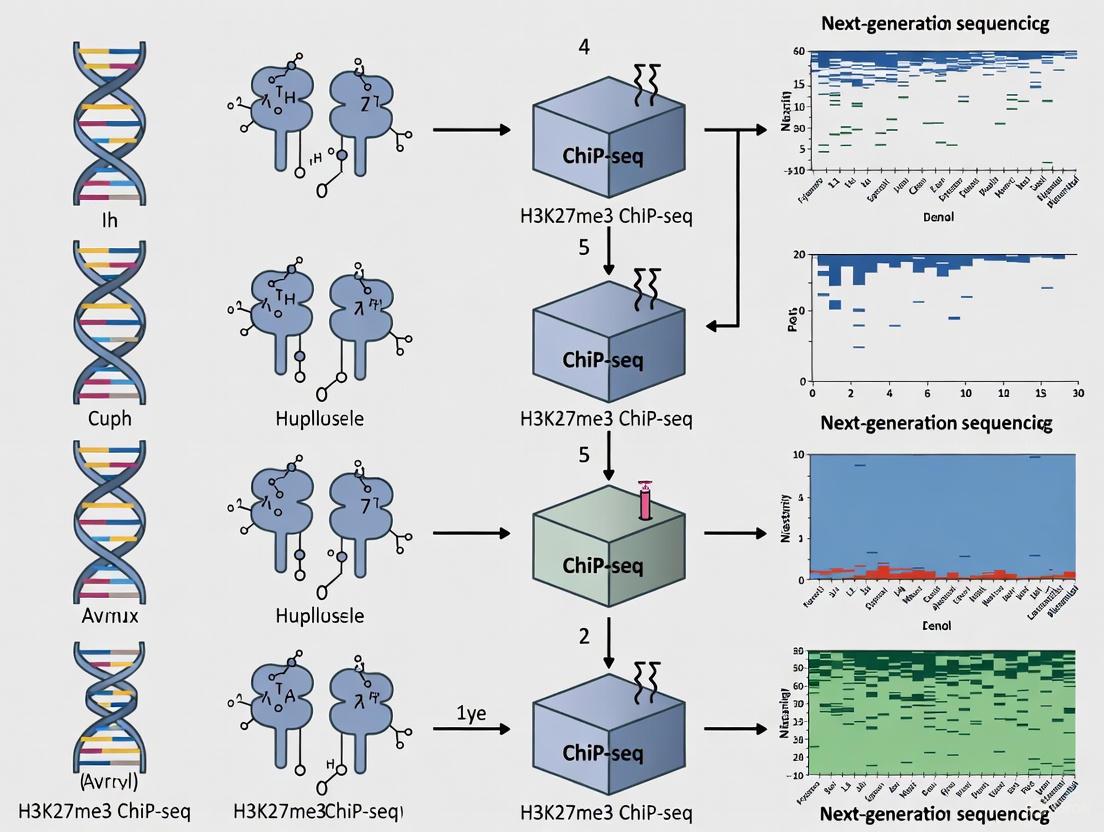
This article provides a comprehensive resource for researchers and drug development professionals utilizing H3K27me3 ChIP-seq to study Polycomb-mediated repression.
H3K27me3 ChIP-seq: A Comprehensive Guide from Polycomb Biology to Clinical Translation
Abstract
This article provides a comprehensive resource for researchers and drug development professionals utilizing H3K27me3 ChIP-seq to study Polycomb-mediated repression. We cover foundational biology, including the discovery of distinct H3K27me3 enrichment profiles—broad domains, promoter peaks on active genes, and bivalent marks—and their divergent transcriptional consequences. The guide details robust methodological pipelines, from cell culture and chromatin preparation to advanced data analysis, including peak calling algorithms and normalization strategies for dynamic systems. A dedicated troubleshooting section addresses common experimental pitfalls in cross-linking, shearing, and immunoprecipitation. Finally, we explore validation techniques and the translational potential of H3K27me3 profiling in cancer and other diseases, offering a holistic view for applying this powerful epigenetic tool in both basic and clinical research.
Decoding the H3K27me3 Signal: From Canonical Repression to Dynamic Regulation
Polycomb Repressive Complex 2 (PRC2) is a fundamental epigenetic regulator that maintains transcriptional repression through the methylation of histone H3 at lysine 27 (H3K27me). As the sole writer of mono-, di-, and tri-methylated H3K27 (H3K27me1/2/3), PRC2 governs cell fate decisions during development and differentiation by establishing facultative heterochromatin [1] [2]. The H3K27me3 mark serves as a hallmark of PRC2-mediated repression and is essential for the precise regulation of developmental genes, with PRC2 dysfunction being implicated in severe developmental disorders and numerous cancers [1] [3]. This application note details the core machinery of Polycomb repression, providing researchers with structured data, validated protocols, and practical methodologies for investigating PRC2 and H3K27me3 in an epigenetic research context.
Structural Organization of the PRC2 Core Complex
The PRC2 core complex comprises four essential subunits that form a stable, four-lobed architecture, each with distinct functional roles in complex integrity and catalytic activity [1].
Table 1: Core Subunits of PRC2 and Their Functional Roles
| Subunit | Gene | Stoichiometry | Primary Function | Functional Domains |
|---|---|---|---|---|
| EZH1/2 | EZH1, EZH2 | Catalytic (mutually exclusive) | Histone methyltransferase (HMT) | SET domain, CXC domain, EED-binding domain (EBD) |
| SUZ12 | SUZ12 | Stoichiometric | Structural scaffold, facultative subunit platform | VEFS domain, C2 domain, ZnB-Zn domain |
| EED | EED | Stoichiometric | Allosteric regulator, H3K27me3 reader | WD-repeat β-propeller |
| RBBP4/7 | RBBP4, RBBP7 | Sub-stoichiometric | Nucleosome interaction (dispensable for activity) | WD-repeat β-propeller |
The catalytic lobe is formed by the C-terminal region of EZH2, containing the CXC and SET domains where histone methyltransferase activity resides [1]. The SET domain features two crucial pockets: a hydrophobic channel that accommodates the lysine substrate and a second pocket that positions the SAM cofactor, with residues at their interface (e.g., Y641, A677, A687) being critical for catalytic efficiency [1]. The regulatory lobe consists of EED associated with the N-terminal domain of EZH2, where the EED-binding domain and β-addition motif wrap around EED's WD-repeat propeller [1]. The middle lobe, formed by the central EZH2 domains and SUZ12's VEFS domain, bridges the regulatory and catalytic modules, while the docking lobe comprises the SUZ12 N-terminal region that serves as a platform for accessory factors [1].
PRC2 Subcomplex Diversity and Accessory Subunits
Beyond the core complex, PRC2 associates with various accessory proteins that form mutually exclusive subcomplexes with distinct targeting specificities and functional roles [1] [4].
PRC2.1 subcomplexes incorporate one of three Polycomb-like (PCL) proteins (PHF1, MTF2, or PHF19) along with either EPOP or PALI1/2. Structural studies reveal that the C2B domain of PHF19 and related PCL proteins binds to the non-canonical C2 domain in SUZ12 [1]. Recent functional studies demonstrate that these subcomplexes are non-redundant, with MTF2-PRC2.1 stimulating repression in stem cells and cardiac differentiation through interactions with DNA and H3K36me3, while PHF19 appears to antagonize this function [4].
PRC2.2 subcomplexes contain JARID2 and AEBP2, with JARID2's transrepression domain docking at the ZnB-Zn domain of SUZ12 [1] [4]. IP-mass spectrometry data confirm that engineered loss-of-PRC2.2 mutations specifically dissociate AEBP2 and JARID2 (53-fold and 13-fold less enriched, respectively) while preserving PRC2.1 interactions [4].
Table 2: PRC2 Subcomplexes and Accessory Subunits
| Subcomplex | Accessory Subunits | SUZ12 Interaction Domain | Primary Functions | Genomic Targets |
|---|---|---|---|---|
| PRC2.1 | PHF1, MTF2, or PHF19; EPOP or PALI1/2 | C2 domain (PCL proteins) | Locus-specific repression, stem cell maintenance | CpG islands, H3K36me3-rich regions |
| PRC2.2 | AEBP2, JARID2 | C2 domain (AEBP2), ZnB-Zn domain (JARID2) | H3K27me3 deposition regulation, chromatin compaction | Broad H3K27me3 domains, facultative heterochromatin |
| Tissue-Specific | EZHIP | EZH2 association | Competitive inhibition of EZH2 | Developmentally regulated genes |
Functional studies using separation-of-function mutants reveal that PRC2.1 and PRC2.2 play distinct and sometimes opposing roles in H3K27me3 deposition and stem cell differentiation [4]. Loss-of-PRC2.1 mutations substantially reduce global H3K27me3 levels and evict SUZ12 from chromatin, whereas loss-of-PRC2.2 mutations increase SUZ12 chromatin occupancy but cause bidirectional changes in H3K27me3 at specific loci [4].
Genomic Distribution and Functional Profiles of H3K27me3
Chromatin profiling using ChIP-seq has revealed that H3K27me3 exhibits distinct enrichment patterns with specific regulatory consequences across different biological contexts [5].
Table 3: Characteristic H3K27me3 Enrichment Profiles and Functions
| Profile Type | Genomic Distribution | Associated Chromatin Features | Transcriptional Status | Biological Context |
|---|---|---|---|---|
| Broad Domain | Gene bodies, spreading over large loci | H2AK119ub, low H3K4me3 | Repressed | Stable developmental gene repression |
| Promoter Peak | Transcription start site (TSS) | H3K4me3 (bivalent), H2AK119ub | Poised/Repressed | Lineage-specific genes in stem cells |
| Active-Promoter Associated | Promoter regions | H3K4me3, H3K27ac | Actively transcribed | Context-dependent regulation |
| Transposable Element | Repetitive elements | DNA methylation (context-dependent) | Silenced | Genome stability maintenance |
In embryonic stem cells, H3K27me3 exhibits a characteristic distribution where broad domains cover repressed developmental genes, while promoter peaks often coincide with H3K4me3 to form bivalent promoters that keep lineage-specific genes in a transcriptionally poised state [5] [6]. Quantitative epigenome profiling in naïve human pluripotent cells reveals a substantial (~3.3-fold) increase in global H3K27me3 levels compared to primed states, with distinctive accumulation on X chromosomes contributing to dosage compensation [6].
During cerebellar neurodevelopment, H3K27me3 forms heterochromatic zones that alternate with euchromatic regions marked by H3K27me1, while H3K27me1 becomes enriched within expressed gene bodies in mature neurons, suggesting developmental stage-specific functions [7]. Beyond mammalian systems, H3K27me3 in choanoflagellates decorates cell type-specific genes and regulates transposable elements, indicating evolutionary conservation of these functional roles [8].
Research Reagent Solutions for PRC2-H3K27me3 Studies
Table 4: Essential Research Reagents for PRC2 and H3K27me3 Investigation
| Reagent Category | Specific Examples | Research Application | Key Considerations |
|---|---|---|---|
| PRC2 Inhibitors | EZH2i (EPZ-6438), UNC1999 | Chemical inhibition of H3K27 methylation | Specificity for EZH2 vs EZH1; treatment duration |
| Antibodies | H3K27me3 (Millipore 07-449), EZH2, SUZ12 | Chromatin immunoprecipitation, immunofluorescence, western blot | Validation for specific applications; species reactivity |
| Cell Line Models | EZH1/2 knockout mESCs, SUZ12 separation-of-function mutants | Functional studies of PRC2 activity | Genetic background; pluripotency status |
| Chromatin Assay Kits | ChIP-seq, CUT&Tag, ATAC-seq | Epigenomic profiling | Crosslinking conditions; enzymatic fragmentation |
| Expression Vectors | Wild-type and catalytic mutant EZH2, PRC2 accessory factors | Mechanistic studies | Tag placement (N- vs C-terminal); expression levels |
Methodological Framework for H3K27me3 ChIP-seq
Protocol: H3K27me3 Chromatin Immunoprecipitation and Sequencing
Sample Preparation and Crosslinking
- Grow cells to ~80% confluence and fix with buffered formaldehyde (1%) for 10 minutes at room temperature [5]
- Quench crosslinking with 125 mM glycine for 5 minutes
- Wash cells with cold PBS and harvest by scraping
- Pellet cells by centrifugation (500 x g, 5 minutes, 4°C)
Chromatin Preparation and Sonication
- Resuspend cell pellets in lysis buffer (50 mM HEPES-KOH pH 7.5, 140 mM NaCl, 1 mM EDTA, 10% glycerol, 0.5% NP-40, 0.25% Triton X-100)
- Isolate nuclei by centrifugation (2000 x g, 5 minutes, 4°C)
- Resuspend nuclei in shearing buffer (0.1% SDS, 1 mM EDTA, 10 mM Tris-HCl pH 8.0)
- Sonicate chromatin to 200-500 bp fragments using a focused ultrasonicator (30% amplitude, 15-25 cycles of 30-second ON/2-minute OFF) [5]
- Clarify sonicated chromatin by centrifugation (16,000 x g, 10 minutes, 4°C)
Immunoprecipitation and Library Preparation
- Pre-clear chromatin with Protein A/G beads for 1 hour at 4°C
- Incubate with H3K27me3 antibody (2-5 μg per immunoprecipitation) overnight at 4°C [5]
- Add Protein A/G beads and incubate for 2 hours at 4°C
- Wash beads sequentially with: Low salt buffer (20 mM Tris-HCl pH 8.0, 150 mM NaCl, 2 mM EDTA, 1% Triton X-100, 0.1% SDS); High salt buffer (20 mM Tris-HCl pH 8.0, 500 mM NaCl, 2 mM EDTA, 1% Triton X-100, 0.1% SDS); LiCl buffer (10 mM Tris-HCl pH 8.0, 250 mM LiCl, 1 mM EDTA, 1% NP-40, 1% deoxycholate); and TE buffer (10 mM Tris-HCl pH 8.0, 1 mM EDTA)
- Elute chromatin with elution buffer (1% SDS, 100 mM NaHCO3)
- Reverse crosslinks at 65°C overnight with 200 mM NaCl
- Treat with RNase A and Proteinase K
- Purify DNA using silica membrane columns
- Prepare sequencing libraries using commercial kits with size selection (200 bp) and PCR amplification
Critical Methodological Considerations
RNase Treatment Artifacts: Recent studies demonstrate that RNase A treatment during ChIP procedures causes apparent genome-wide loss of facultative heterochromatin signals, including both PRC2 and H3K27me3 [9]. This artifact results from increased non-target DNA in the immunoprecipitated material rather than true complex displacement. Researchers should avoid RNase treatment when studying PRC2 chromatin occupancy or utilize specialized protocols that maintain chromatin solubility.
Quantitative Profiling: For comparative studies between cell states, quantitative ChIP approaches like MINUTE-ChIP provide accurate measurement of histone modification levels [6]. This is particularly important when comparing states with global differences in H3K27me3, such as naïve versus primed pluripotent cells.
Multimodal Epigenomics: Integrating H3K27me3 profiling with additional modalities such as ATAC-seq for chromatin accessibility, H3K4me3 for active promoters, and H2AK119ub for PRC1 activity provides a comprehensive view of Polycomb regulatory networks [7] [8].
Application in Disease Contexts and Therapeutic Targeting
Dysregulation of the PRC2-H3K27me3 axis represents a key pathogenic mechanism in numerous diseases, particularly cancer. Mutations in PRC2 core components are frequent drivers of tumorigenesis, with both loss-of-function and gain-of-function mutations observed in different contexts [1]. In diffuse large B-cell lymphoma, T-cell acute lymphoblastic leukemia, and other hematological malignancies, EZH2 mutations often result in hyperactive H3K27me3 deposition and aberrant silencing of tumor suppressor genes [3]. Small-molecule inhibitors targeting EZH2 catalytic activity have shown promising clinical efficacy, with several compounds advancing through clinical trials [3] [2]. Beyond cancer, germline mutations in PRC2 components cause multisystem genetic disorders such as overgrowth-intellectual disability syndromes, highlighting the developmental importance of precise PRC2 regulation [3].
The structured data and methodologies presented herein provide researchers with essential tools for investigating PRC2-mediated epigenetic regulation in both basic research and therapeutic development contexts.
The histone modification H3K27me3, catalyzed by the Polycomb Repressive Complex 2 (PRC2), is a cornerstone of epigenetic regulation, traditionally associated with transcriptional silencing [10] [11]. However, advanced genomic profiling has revealed that this mark is not monolithic in its distribution or function. ChIP-seq analysis has uncovered three distinct H3K27me3 enrichment profiles, each correlated with unique transcriptional outcomes and biological functions [10]. Moving beyond the canonical view of simple repression, this application note details these profiles, their experimental identification via ChIP-seq, and their implications for Polycomb repression analysis in basic research and drug discovery.
The Three H3K27me3 Enrichment Profiles
Genome-wide mapping of H3K27me3 has revealed that its spatial distribution across gene bodies is a critical determinant of its regulatory function. The following table summarizes the key characteristics of the three identified profiles.
Table 1: Distinct H3K27me3 Enrichment Profiles and Their Regulatory Consequences
| Enrichment Profile | Genomic Distribution | Transcriptional Correlation | Associated Genes / Functions |
|---|---|---|---|
| Broad Domain | A wide region of enrichment spanning the gene body [10]. | Transcriptional repression [10]. | Canonical Polycomb targets; developmental genes [10] [12]. |
| Promoter-Peak (Bivalent) | A sharp peak centered at the transcription start site (TSS), often co-occurring with H3K4me3 [10]. | Poised/repressed state; genes are primed for activation [10] [12]. | Developmental regulators in stem cells; "bivalent" genes [10] [13]. |
| Promoter-Peak (Active) | A peak of enrichment at the promoter region [10] [14]. | Associated with active transcription [10] [14]. | A subset of actively transcribed genes; cell-type specific [10]. |
The logical relationships between these profiles and their functional outcomes can be visualized as follows:
Expanding the Functional Scope: From Genes to Large Domains
Further research has shown that H3K27me3 can form expansive genomic domains, known as Large Organized Chromatin K27 domains (LOCKs) or H3K27me3-rich regions (MRRs), which span several hundred kilobases [15] [12]. These regions, identified by clustering H3K27me3 ChIP-seq peaks, function as potent silencers and are particularly associated with developmental genes and tumor suppressors in cancer cells [15] [12]. They can repress gene expression through chromatin looping, and their disruption leads to the loss of repression of associated genes, altered chromatin architecture, and changes in cell identity [15].
Core Protocol: H3K27me3 ChIP-seq for Profile Analysis
This protocol provides a detailed methodology for generating genome-wide H3K27me3 maps to identify the distinct enrichment profiles.
Key Reagents and Materials
Table 2: Essential Research Reagents for H3K27me3 ChIP-seq
| Reagent / Material | Function / Description | Example / Specification |
|---|---|---|
| Anti-H3K27me3 Antibody | Immunoprecipitation of H3K27me3-bound chromatin; critical for specificity. | Validated ChIP-grade polyclonal or monoclonal antibody (e.g., Millipore 17-622) [11]. |
| Protein A/G Magnetic Beads | Capture and purification of antibody-chromatin complexes. | Beads with high binding affinity for the antibody species used. |
| Crosslinking Agent | Fix protein-DNA interactions in situ. | 1-2% Formaldehyde solution. |
| Chromatin Shearing Equipment | Fragment chromatin to optimal size for sequencing. | Sonicator (e.g., Bioruptor or Covaris) targeting 200-500 bp fragments. |
| High-Throughput Sequencer | Generate reads for mapped DNA fragments. | Illumina platform (e.g., HiSeq 4000) [16]. |
| Cell Line/Tissue of Interest | Biological source for epigenomic analysis. | Relevant model systems (e.g., HT1080 cell line, HCA2 fibroblasts) [11]. |
Step-by-Step Workflow
- Cell Crosslinking and Lysis: Treat cells with 1% formaldehyde for 10-15 minutes at room temperature to crosslink histones to DNA. Quench the reaction with glycine. Harvest cells and lyse them using a suitable buffer (e.g., containing 1% NP-40) to isolate nuclei [11] [16].
- Chromatin Shearing: Isolate chromatin and shear DNA to an average size of 200-500 base pairs using sonication. This can be performed with probe sonicators or focused-ultrasonication systems (e.g., Covaris). Centrifuge to remove insoluble debris [16].
- Immunoprecipitation: Incubate the sheared chromatin with a validated anti-H3K27me3 antibody overnight at 4°C. Subsequently, add Protein A or G magnetic beads to capture the antibody-chromatin complexes. Wash the beads thoroughly with a series of buffers (e.g., low salt, high salt, LiCl wash buffers) to remove non-specifically bound chromatin [16].
- Reverse Crosslinks and DNA Purification: Elute the bound chromatin complexes from the beads. Reverse the crosslinks by incubating at 65°C overnight in the presence of high salt. Treat with RNase A and Proteinase K, then purify the immunoprecipitated DNA using a commercial kit or phenol-chloroform extraction [16].
- Library Preparation and Sequencing: Prepare sequencing libraries from the purified ChIP DNA. This involves end-repair, adapter ligation, size selection, and PCR amplification. The final libraries are quantified and sequenced on an Illumina platform (e.g., HiSeq 4000) to generate sufficient reads for robust analysis [16].
Computational Data Analysis
The following analytical pipeline is crucial for moving from raw sequencing data to the identification of H3K27me3 profiles:
- Quality Control and Read Mapping: Use tools like
fastpto quality-trim raw reads. Map the high-quality reads to the appropriate reference genome (e.g., human GRCh38) using aligners such asBowtie2[16]. - Peak Calling: Identify genomic regions with significant H3K27me3 enrichment (peaks) using peak callers like
MACS2. Remove PCR duplicates using tools likePicard[16]. - Profile Identification and Classification:
- Visual Inspection: Use Integrated Genomics Viewer (IGV) to visualize read density across genes and genomic regions [16].
- Cluster Analysis: Apply clustering algorithms (e.g., k-means, hierarchical clustering) to normalized ChIP-seq signals across gene bodies to systematically group genes with similar H3K27me3 enrichment patterns [10].
- LOCK/MRR Identification: To identify broad domains, use software like the CREAM R package to cluster nearby peaks into Large Organized Chromatin K27 domains (LOCKs) or H3K27me3-rich regions (MRRs) [15] [12]. These can be categorized by size (e.g., long LOCKs >100 kb, short LOCKs ≤100 kb) for further functional analysis [12].
- Integrative Analysis: Correlate H3K27me3 profiles with gene expression data (e.g., from RNA-seq) and other epigenetic marks (e.g., H3K4me3 for bivalent promoters) to determine functional consequences [10] [16].
Applications in Research and Drug Discovery
The discrimination of H3K27me3 profiles provides a deeper, more nuanced understanding of Polycomb-mediated regulation with significant practical applications.
- Disease Mechanism Insights: The identification of H3K27me3-rich regions (MRRs) has revealed their role as long-range silencers that interact with target genes via chromatin looping. In cancer, these MRRs are frequently associated with the repression of tumor suppressor genes. Their disruption can lead to oncogene activation, altered cell identity, and changes in tumor growth [15]. Profiling these domains offers new insights into cancer epigenetics.
- Assessment of EZH2 Inhibitor Efficacy: Pharmacological inhibition of EZH2 (the catalytic subunit of PRC2) is a promising therapeutic strategy. H3K27me3 ChIP-seq can be used to monitor the global loss of H3K27me3 marks following treatment. Importantly, analyzing specific profiles can reveal which repressed or poised genes are reactivated, providing a mechanistic understanding of drug response and potential resistance [15].
- Stem Cell and Developmental Biology Research: The promoter-peak (bivalent) profile is highly enriched in embryonic stem cells (ESCs) and 2C-like cells, marking key developmental genes that are silenced but primed for activation upon differentiation [13]. Analyzing these profiles helps researchers understand the epigenetic maintenance of pluripotency and the commitment to specific lineages.
The Scientist's Toolkit
Table 3: Key Reagent Solutions for H3K27me3 and PRC2 Research
| Category | Item | Critical Function |
|---|---|---|
| Core Assays | H3K27me3 ChIP-seq Kit | Provides optimized buffers, beads, and controls for reliable chromatin immunoprecipitation. |
| EZH2/PRC2 Activity Assay | Measures the catalytic output of the PRC2 complex in vitro or in cellular contexts. | |
| Antibodies | Anti-H3K27me3 (ChIP-grade) | Essential for specific pulldown in ChIP experiments [11]. |
| Anti-EZH2 / SUZ12 | For detecting PRC2 complex components via Western blot or to assess PRC2 integrity upon knockdown [11]. | |
| Anti-H3K9me3 | Investigates co-occurrence or cross-talk with parallel repression pathways [11]. | |
| Chemical Tools | EZH2 Inhibitors (e.g., GSK126, Tazemetostat) | Probe PRC2 function and potential therapeutic agents. |
| H3K27me3 Demethylase Inhibitors (e.g., GSK-J4) | Target enzymes that remove the H3K27me3 mark (e.g., JMJD3, UTX) [11]. | |
| Cell Models | EZH2/SUZ12 Knockdown Models | (e.g., via siRNA/shRNA) to study PRC2 loss-of-function [11]. |
| Engineered Cell Lines with MRR Deletion | (e.g., via CRISPR) to study the functional impact of specific silencer elements [15]. | |
| Ethoxymethylformamide | Ethoxymethylformamide|High-Purity Reagent | Ethoxymethylformamide for research applications. This product is For Research Use Only (RUO). Not for human or veterinary use. |
| 18F-Ftha | 18F-FTHA | 18F-FTHA is a radiotracer for imaging fatty acid metabolism via PET. For Research Use Only. Not for human diagnostic or therapeutic use. |
In the landscape of epigenetic regulation, the trimethylation of lysine 27 on histone H3 (H3K27me3) represents a cornerstone of facultative heterochromatin, serving as a key repressive mark deposited by the Polycomb Repressive Complex 2 (PRC2) [5] [4]. While H3K27me3 can manifest in distinct genomic patterns—including narrow peaks at promoters—it is the formation of broad domains, often spanning hundreds of kilobases, that has emerged as the canonical signature of stable, long-term gene repression [5] [12]. These extensive regions, termed Large Organized Chromatin K27 domains (LOCKs), are not mere aggregates of individual peaks but represent a specialized chromatin state with unique functional implications [12].
Genome-wide studies across diverse cell types have consistently demonstrated that these broad H3K27me3 domains are preferentially associated with developmental genes and lineage-specific regulators [5] [12]. The expansive nature of LOCKs facilitates the formation of repressive chromatin structures that silence entire genomic loci, effectively maintaining cellular identity by preventing the spurious expression of alternative lineage genes [4] [12]. This review integrates the latest research to provide a comprehensive workflow for identifying, analyzing, and interpreting these critical epigenetic features, with particular emphasis on their role in Polycomb-mediated repression and disease contexts.
Biological Significance and Functional Insights
Characteristics of H3K27me3 Broad Domains
Broad H3K27me3 domains exhibit distinct genomic and functional characteristics that set them apart from other enrichment patterns. Analysis of 109 normal human samples reveals that these domains can be systematically categorized based on size and functional impact, with long LOCKs (greater than 100 kb) and short LOCKs (up to 100 kb) displaying unique properties [12].
Table 1: Characteristics of H3K27me3 Peak Categories Based on LOCK Analysis
| Feature | Typical Peaks | Peaks in Short LOCKs | Peaks in Long LOCKs |
|---|---|---|---|
| Domain Size | Isolated peaks | Up to 100 kb | >100 kb |
| Peak Intensity | Lower | Higher | Highest |
| Peak Size | Smaller | Larger | Largest |
| DNA Methylation | Higher | Lower | Lowest |
| Gene Expression Impact | Moderate repression | Strong repression | Strongest repression |
| Promoter-TSS Association | Variable | Highest frequency | Moderate |
| Functional Enrichment | Basic cellular processes | Poised promoters | Developmental processes |
The data reveal a clear relationship between domain size and functional specialization. As domains expand from typical peaks to long LOCKs, they become increasingly associated with developmental programming, with long LOCKs showing remarkable enrichment for processes such as "epithelial cell differentiation," "embryonic organ development," and "gland development" [12]. This progressive specialization highlights the functional significance of domain size in H3K27me3-mediated repression.
Relationship with Transcriptional States
The functional consequences of H3K27me3 broad domains extend beyond simple repression, contributing to nuanced transcriptional states including poised enhancers and bivalent promoters [5] [17]. At bivalent promoters, H3K27me3 co-localizes with the activating mark H3K4me3 in an asymmetric nucleosomal conformation that maintains genes in a transcriptionally poised state, ready for rapid activation upon developmental cues [17]. Recent research has revealed that this asymmetric bivalent state preferentially recruits repressive H3K27me3 readers while failing to enrich activating H3K4me3 binders, thereby promoting a poised state that can be rapidly resolved during differentiation [17].
The repression mediated by broad H3K27me3 domains exhibits remarkable stability compared to narrower enrichment patterns. This stability derives from the ability of large repressive domains to establish self-reinforcing chromatin structures that are resistant to stochastic activation events. The extensive nature of LOCKs facilitates the formation of repressive nuclear compartments that limit access to transcriptional machinery, thereby ensuring faithful maintenance of gene silencing through multiple cell divisions [12].
Experimental Workflow for H3K27me3 Broad Domain Analysis
Sample Preparation and Quality Control
The analysis of H3K27me3 broad domains begins with careful experimental design and sample preparation. Chromatin immunoprecipitation followed by sequencing (ChIP-seq) remains the gold standard for genome-wide mapping of this histone modification [18] [19]. Critical considerations for studying broad domains include:
- Cell Fixation: Cross-link cells using 1% formaldehyde for 10-20 minutes at room temperature [5].
- Chromatin Fragmentation: Sonicate chromatin to produce fragments between 200-1000 bp, with peak distribution around 200-500 bp [5]. Alternatively, use micrococcal nuclease (MNase) digestion for 10 minutes for more precise nucleosomal mapping [20].
- Immunoprecipitation: Use validated antibodies specific to H3K27me3 (e.g., Millipore 07-449) and include control IgG antibodies (e.g., Abcam ab46540) for specificity assessment [5].
- Library Preparation: Size-select fragments around 200 bp, add linkers, and amplify using PCR with appropriate cycle optimization to maintain library complexity [5] [18].
Quality control represents a critical step particularly for broad domain analysis. Key quality metrics include:
- Sequencing Depth: For mammalian broad domains, aim for 40-60 million reads to adequately cover extended regions [18].
- Library Complexity: Assess using the PCR bottleneck coefficient (PBC), with optimal libraries having PBC > 0.8 [18].
- Mapping Rates: Typically >70% uniquely mapped reads for human/mouse samples [18].
- Strand Cross-correlation: Assess signal-to-noise ratio, with successful broad mark experiments typically showing cross-correlation coefficients > 0.8 [18].
Computational Analysis of Broad Domains
The identification of broad H3K27me3 domains requires specialized computational approaches distinct from those used for narrow peaks. The following workflow outlines the key steps:
- Read Mapping and Processing: Map quality-filtered reads to the reference genome using aligners such as Bowtie2 or BWA [18]. Remove PCR duplicates while retaining sensitivity for broad domains.
- Peak Calling: Use broad peak-capable algorithms such as MACS2 with appropriate parameters (e.g.,
--broadflag) to capture extended enrichment regions [18]. - LOCK Identification: Apply the CREAM R package specifically designed to identify Large Organized Chromatin K27 domains based on clustering of H3K27me3 peaks [12].
- Domain Categorization: Classify identified domains into long LOCKs (>100 kb) and short LOCKs (up to 100 kb) based on genomic span [12].
Table 2: Essential Computational Tools for H3K27me3 Broad Domain Analysis
| Tool | Primary Function | Broad Domain Application |
|---|---|---|
| Bowtie2/BWA | Read alignment | Map sequenced reads to reference genome |
| MACS2 | Peak calling | Identify broad regions of enrichment with --broad parameter |
| CREAM | Domain identification | Specifically cluster peaks into LOCKs |
| deepTools | Visualization | Generate aggregate plots of broad domains |
| Chance | Quality control | Assess IP enrichment and signal-to-noise ratio |
Integration with complementary epigenomic datasets significantly enhances the biological interpretation of H3K27me3 broad domains. Correlation with DNA methylation data is particularly informative, given the antagonistic relationship between H3K27me3 and DNA methylation in broad domains [12]. Additionally, integration with H3K4me3 data enables identification of bivalent domains, while comparison with gene expression datasets allows direct assessment of functional repression [5] [17].
The Scientist's Toolkit: Research Reagent Solutions
Successful analysis of H3K27me3 broad domains relies on carefully selected reagents and methodologies. The following table outlines essential materials and their applications in studying Polycomb-mediated repression.
Table 3: Essential Research Reagents for H3K27me3 Broad Domain Analysis
| Reagent/Resource | Specification | Application & Function |
|---|---|---|
| H3K27me3 Antibody | Millipore 07-449 | Specific immunoprecipitation of H3K27me3-modified nucleosomes |
| Control IgG | Abcam ab46540 | Control for non-specific immunoprecipitation |
| Micrococcal Nuclease | ThermoScientific EN0181 | Chromatin fragmentation for nucleosomal positioning studies |
| CREAM R Package | Comprehensive R Archive Network | Identification of Large Organized Chromatin K27 domains (LOCKs) |
| MACS2 Software | Open-source algorithm | Broad peak calling with specialized parameters for extended domains |
| Bowtie2 Aligner | Open-source tool | Alignment of sequenced reads to reference genomes |
| Phantompeakqualtools | ENCODE Consortium | Calculation of strand cross-correlation and quality metrics |
| Sodium hexafluorozirconate | Sodium Hexafluorozirconate|Supplier | |
| Thianthrene 5,10-dioxide | Thianthrene 5,10-dioxide, CAS:951-02-0, MF:C12H8O2S2, MW:248.3 g/mol | Chemical Reagent |
Advanced Applications and Integrative Analysis
Multi-omics Integration for Contextual Interpretation
The functional interpretation of H3K27me3 broad domains is significantly enhanced through integration with complementary epigenomic datasets. Recent studies reveal a sophisticated relationship between H3K27me3 LOCKs and DNA methylation patterns, particularly in the context of Partially Methylated Domains (PMDs) [12]. This integration reveals:
- Spatial Organization: Long LOCKs are predominantly located within short-PMDs in normal cells, where they contribute to repression of developmental genes [12].
- Cancer-Associated Redistribution: In tumor contexts, long LOCKs shift from short-PMDs to intermediate- and long-PMDs, suggesting epigenetic reprogramming during oncogenesis [12].
- Compensatory Repression: In cancer cell lines, H3K27me3 frequently compensates for loss of H3K9me3 in specific PMD contexts, highlighting the dynamic nature of repressive mechanisms [12].
Integration with transcriptomic data further elucidates the functional output of broad domains, with genes embedded within LOCKs exhibiting significantly lower expression levels compared to those associated with typical peaks [12]. This repression is particularly pronounced for genes marked by poised promoters that co-localize H3K4me3 and H3K27me3, representing key regulators of developmental processes maintained in a transcriptionally ready state [5] [12].
Single-Cell and Differentiation Applications
Emerging methodologies for single-cell ChIP-seq analysis promise to revolutionize our understanding of H3K27me3 broad domain dynamics in heterogeneous cell populations [19]. These approaches enable:
- Cellular Heterogeneity Assessment: Resolution of distinct H3K27me3 landscapes in mixed cell populations, particularly relevant for cancer and developmental systems [19].
- Differentiation Trajectory Mapping: Tracking the establishment and resolution of broad domains during lineage specification and cellular maturation [4] [17].
- Stem Cell Plasticity Studies: Investigating the role of broad domains in maintaining pluripotency while poising developmental genes for activation [5] [17].
The development of these advanced applications represents a critical frontier in epigenomic research, with particular relevance for understanding disease mechanisms and developing targeted epigenetic therapies.
H3K27me3 broad domains represent a fundamental architectural feature of the epigenomic landscape, serving as stable repressive platforms that shape cellular identity and function. Their analysis requires specialized methodological approaches that account for their extended genomic nature and unique biological properties. The integrated workflow presented here—encompassing experimental design, computational analysis, and multi-omics integration—provides a comprehensive framework for investigating these critical regulatory domains. As single-cell technologies and sophisticated computational methods continue to evolve, our ability to resolve the dynamic regulation of these domains across biological contexts will undoubtedly yield new insights into their roles in development, homeostasis, and disease.
Within the broader scope of H3K27me3 ChIP-seq research for analyzing Polycomb repression, the conventional understanding positions promoter-proximal regulatory elements in opposition to the repressive H3K27me3 mark. However, emerging evidence reveals a more complex relationship, where active promoter states can coincide with facultative heterochromatin in certain biological contexts. This application note explores this surprising association, detailing the experimental and analytical protocols that enable researchers to dissect these contrasting chromatin states and their implications for gene regulation in development and disease. The integration of chromatin accessibility mapping with histone modification profiling provides a powerful approach to unravel these complex regulatory mechanisms, offering new insights for drug development targeting epigenetic pathways.
Key Findings and Data Presentation
Recent investigations into chromatin architecture have revealed unexpected relationships between promoter accessibility and transcriptional regulation. The data summarized in the tables below highlight key quantitative findings from these studies.
Table 1: Genomic Distribution of Cis-Regulatory Elements in Salpingoeca rosetta
| Regulatory Feature | Genomic Location | Percentage | Associated Histone Marks | Functional Association |
|---|---|---|---|---|
| Accessible chromatin regions | Overlapping predicted TSS | ~75% | H3K4me3, H3K27ac | Active transcription |
| Accessible chromatin regions | Within -500 to +100 bp of TSS | >80% | H3K4me3, H3K27ac | Promoter activity |
| Putative distal regulatory elements | Non-TSS regions | Minor fraction | Not determined | Limited enhancer-like activity |
| Repressed cell type-specific genes | Promoter regions | Not quantified | H3K27me3 | Cell differentiation |
| LTR retrotransposons | Repetitive elements | Not quantified | H3K27me3 | Transposable element silencing |
| Bivalent chromatin | Cell type-specific genes | Not quantified | H3K27me3 + H3K4me1 | Poised transcriptional state |
Source: Adapted from choanoflagellate chromatin profiling data [8] [21]
Table 2: Characteristics of H3K27me3 LOCKs in Human Samples
| LOCK Category | Size Range | Genomic Context | Gene Expression Impact | Biological Functions |
|---|---|---|---|---|
| Long LOCKs | >100 kb | Primarily short-PMDs | Strong repression of oncogenes | Developmental processes, epithelial cell differentiation |
| Short LOCKs | ≤100 kb | Enriched in common HMDs | Lowest nearest gene expression | Embryonic organ development, gland development |
| Typical peaks | Not clustered | Variable | Moderate repression | Basic cellular functions |
| Tumor-associated long LOCKs | >100 kb | Shift to I-PMDs and L-PMDs | Deregulated oncogene expression | Cancer progression, reduced H3K9me3 levels |
Source: Adapted from comprehensive analysis of H3K27me3 LOCKs [22]
Experimental Protocols
Core Protocol: Integrated ATAC-seq and H3K27me3 ChIP-seq for Chromatin State Analysis
Day 1: Cell Preparation and Nuclei Isolation
- Begin with 50,000-100,000 cells per assay. For tissue samples, homogenize gently using a Dounce homogenizer.
- Wash cells with cold PBS and resuspend in cold lysis buffer (10 mM Tris-Cl, pH 7.4, 10 mM NaCl, 3 mM MgClâ‚‚, 0.1% IGEPAL CA-630).
- Incubate on ice for 10 minutes, then centrifuge at 500 x g for 10 minutes at 4°C.
- Resuspend nuclei pellet in cold PBS and count using a hemocytometer. Adjust concentration to 1,000-5,000 nuclei/μL.
Day 2: ATAC-seq Library Preparation
- Prepare Tagment DNA Buffer and Tagment DNA Enzyme from Illumina Tagment DNA TDE1 Kit.
- Combine 25 μL 2x Tagment DNA Buffer, 2.5 μL Tagment DNA Enzyme, 16.5 μL nuclease-free water, and 5 μL nuclei suspension (approximately 5,000-25,000 nuclei).
- Incubate at 37°C for 30 minutes with moderate shaking (300 rpm).
- Immediately purify using MinElute PCR Purification Kit. Elute in 21 μL Elution Buffer.
- Amplify library by adding 25 μL 2x KAPA HiFi HotStart ReadyMix, 2.5 μL each of custom Ad1 and Ad2 PCR primers (Illumina).
- Run PCR with following conditions: 72°C for 5 min; 98°C for 30 sec; 12 cycles of 98°C for 10 sec, 63°C for 30 sec, 72°C for 1 min; hold at 4°C.
- Purify final library using AMPure XP beads (1.0x ratio) and quantify by Qubit.
Day 3: H3K27me3 ChIP-seq
- Crosslink 1-2 million cells with 1% formaldehyde for 10 minutes at room temperature.
- Quench with 125 mM glycine for 5 minutes, then wash twice with cold PBS.
- Resuspend cell pellet in ChIP Lysis Buffer (50 mM HEPES-KOH, pH 7.5, 140 mM NaCl, 1 mM EDTA, 1% Triton X-100, 0.1% sodium deoxycholate, 0.1% SDS) with protease inhibitors.
- Sonicate chromatin to 200-500 bp fragments using a Covaris S220 (15 min, 20% duty cycle, 200 cycles per burst, 4°C).
- Immunoprecipitate with 5 μg H3K27me3 antibody (Cell Signaling Technology, C36B11) overnight at 4°C with rotation.
- Add Protein A/G Magnetic Beads and incubate 2 hours at 4°C.
- Wash beads sequentially with: Low Salt Wash Buffer (20 mM Tris-HCl, pH 8.0, 150 mM NaCl, 2 mM EDTA, 1% Triton X-100, 0.1% SDS), High Salt Wash Buffer (20 mM Tris-HCl, pH 8.0, 500 mM NaCl, 2 mM EDTA, 1% Triton X-100, 0.1% SDS), LiCl Wash Buffer (10 mM Tris-HCl, pH 8.0, 250 mM LiCl, 1 mM EDTA, 1% NP-40, 1% sodium deoxycholate), and TE Buffer (10 mM Tris-HCl, pH 8.0, 1 mM EDTA).
- Elute chromatin with Elution Buffer (100 mM NaHCO₃, 1% SDS) and reverse crosslinks overnight at 65°C.
- Treat with RNase A (30 min, 37°C) and Proteinase K (2 hr, 55°C), then purify DNA with MinElute PCR Purification Kit.
Day 4: Library Preparation and Sequencing
- Prepare sequencing libraries using NEBNext Ultra II DNA Library Prep Kit according to manufacturer's instructions.
- Assess library quality using Bioanalyzer High Sensitivity DNA Kit.
- Sequence on Illumina platform (NovaSeq X Plus recommended) with 150 bp paired-end reads.
Advanced Application: Live-Cell Imaging of Chromatin Dynamics with Oligo-LiveFISH
Guide RNA Pool Design
- Identify target genomic region (promoter of interest) using reference genome (hg38).
- Design 96-192 crRNAs tiling across 5-10 kb region using Oligo-LiveFISH web interface.
- Filter crRNAs with potential off-target sites using strict computational pipeline.
- Include control regions with known interaction frequencies for validation.
Fluorescent gRNA Pool Preparation
- Synthesize crRNA pools by in vitro transcription using T7 promoter-containing DNA templates.
- Label crRNAs using 3'-end labeling with azido-modified nucleotides and poly(A) polymerase.
- Conjugate fluorescent dyes using click chemistry with DBCO-functionalized fluorophores (Cy3, Cy5, or Alexa Fluor dyes).
- Anneal fluorescent crRNAs to universal tracrRNA at equimolar ratio (5 μM each) by heating to 85°C for 5 min and slowly cooling to room temperature.
- Assemble fRNPs by incubating 2 μL dCas9 (20 μM), 2 μL labeled crRNA:tracrRNA duplex (10 μM), and 6 μL buffer (20 mM HEPES, 150 mM KCl, pH 7.5) for 30 min at room temperature.
Live-Cell Delivery and Imaging
- Culture cells in glass-bottom dishes (MatTek) to 60-70% confluency.
- Deliver fRNPs via electroporation (Neon Transfection System, 1100V, 20ms, 2 pulses) or lipofection.
- Allow recovery for 4-6 hours before imaging.
- Perform live imaging on super-resolution microscope (Nikon N-STORM or equivalent) with 20 nm spatial and 50 ms temporal resolution.
- For multi-color imaging, use sequential labeling with spectrally distinct fluorophores.
- Track loci trajectories over time using TrackMate (Fiji) or custom MATLAB scripts.
Data Analysis and Modeling
- Calculate mean square displacement (MSD) and velocity cross-correlation.
- Apply fractional Brownian motion (fBM) modeling to distinguish 1D cis-communication (short distances) from 3D trans-communication (long distances).
- Correlate dynamics with transcriptional activity using simultaneous RNA FISH or published RNA-seq data.
Visualization of Experimental Frameworks
Integrated Chromatin Profiling Workflow: This diagram illustrates the parallel experimental pathways for ATAC-seq and H3K27me3 ChIP-seq, from sample preparation through data integration, enabling comprehensive analysis of promoter-peak relationships.
H3K27me3 Regulatory Network: This diagram maps the diverse mechanisms of H3K27me3-mediated regulation, from developmental gene repression to bivalent promoter formation and cancer-associated epigenetic alterations.
The Scientist's Toolkit: Research Reagent Solutions
Table 3: Essential Reagents for Chromatin State Analysis
| Reagent/Category | Specific Examples | Function/Application | Key Considerations |
|---|---|---|---|
| Chromatin Accessibility | Illumina Tagment DNA TDE1 Kit | ATAC-seq library preparation | Optimize nuclei concentration to avoid over-tagmentation |
| Nextera DNA Flex Library Prep Kit | Alternative ATAC-seq protocol | Improved coverage uniformity | |
| Histone Modification | H3K27me3 Antibody (C36B11, CST) | PRC2-mediated repression mapping | Validate specificity with peptide competition |
| H3K4me3 Antibody (C42D8, CST) | Active promoter mark | Use for bivalent promoter identification | |
| Protein A/G Magnetic Beads | Chromatin immunoprecipitation | Efficient washing reduces background | |
| Live-Cell Imaging | Oligo-LiveFISH gRNA pools | Non-repetitive locus tracking | Design 96-192 crRNAs for sufficient signal |
| dCas9-EGFP (GenScript) | CRISPR imaging backbone | Fluorescent tag enables localization | |
| Azido-modified nucleotides (Jena Bioscience) | RNA labeling for LiveFISH | Click chemistry enables flexible dye conjugation | |
| Sequencing & Analysis | NEBNext Ultra II DNA Library Prep | High-efficiency library construction | Reduced bias in GC-rich regions |
| MACS2 (Bioinformatics tool) | Peak calling from sequencing data | Adjust q-value cutoff based on data quality | |
| CREAM R Package | LOCK identification | Specific for large chromatin domain analysis | |
| CAGEr Bioconductor Package | TSS identification from CAGE data | Enables promoter shape analysis | |
| Cell Culture | mTeSR Plus medium (STEMCELL) | Pluripotent stem cell maintenance | Essential for developmental studies |
| Poly-D-lysine (Thermo Fisher) | Cell attachment for imaging | Improves adherence for live-cell experiments | |
| (+)-Strigone | (+)-Strigone, CAS:151716-20-0, MF:C19H20O6, MW:344.4 g/mol | Chemical Reagent | Bench Chemicals |
| Ethylhydroxymercury | Ethylhydroxymercury|CAS 107-28-8|RUO | Ethylhydroxymercury (CAS 107-28-8) is an organomercury compound for research use only (RUO). It is strictly for laboratory applications and not for personal use. | Bench Chemicals |
Bivalent promoters are specialized chromatin regions marked by the simultaneous presence of opposing histone modifications: the activating trimethylation of histone H3 on lysine 4 (H3K4me3) and the repressive trimethylation of histone H3 on lysine 27 (H3K27me3). Discovered in embryonic stem cells (ESCs) in 2006, this unique configuration is thought to maintain developmental genes in a poised state—transcriptionally silent but primed for activation upon receiving differentiation signals [24]. Within the broader context of H3K27me3 ChIP-seq research for Polycomb repression analysis, understanding bivalent promoters is essential as they represent a critical interface where Polycomb group (PcG) proteins dynamically regulate cell fate decisions.
The biological significance of bivalent promoters extends beyond developmental timing. They predominantly regulate genes encoding developmental transcription factors, morphogens, and cell surface molecules that require precise spatial and temporal expression patterns during embryogenesis [24]. This poised state prevents premature differentiation of stem cells while enabling rapid transcriptional responses to developmental cues. Furthermore, recent investigations have revealed that bivalency persists in some differentiated somatic cells, including CD4+ memory T cells and pyramidal neurons, suggesting a more widespread role in maintaining cellular plasticity and identity [25].
Molecular Composition and Regulation
The Enzymatic Architects of Bivalency
The establishment and maintenance of bivalent promoters are orchestrated by two major chromatin-modifying complexes with opposing functions:
Polycomb Repressive Complex 2 (PRC2): This complex catalyzes the repressive H3K27me3 mark. Its core components include the catalytic subunits EZH1 or EZH2, along with essential structural proteins EED and SUZ12 [26] [24]. PRC2 is recruited to target loci through mechanisms that remain partially characterized but involve CpG islands and certain transcription factors.
COMPASS/Trithorax Complexes: These enzymes deposit the active H3K4me3 mark. Six major methyltransferases—SET1A, SET1B, MLL1-4—catalyze this modification in mammalian cells, with MLL2 identified as the primary enzyme responsible for H3K4me3 at bivalent promoters [26] [24]. The combinatorial action of these complexes establishes the distinctive bivalent signature.
Beyond Bivalency: Trivalent Configurations and Transition States
Emerging evidence suggests that the classic bivalent model may be oversimplified. Many traditionally defined bivalent promoters additionally harbor H3K4me1, effectively making them trivalent promoters marked by H3K4me1, H3K4me3, and H3K27me3 [26]. During lineage differentiation, these promoters undergo an H3K27me3-H3K4me1 transition, where the loss of H3K27me3 is accompanied by either the loss of a bimodal H3K4me1 pattern or enrichment of a unimodal H3K4me1 pattern [26]. This transition regulates tissue-specific gene expression and is facilitated by the lysine-specific demethylase 1 (LSD1), which interacts with PRC2 and contributes to the H3K27me3-H3K4me1 transition in mouse ESCs [26].
Table 1: Core Protein Complexes Regulating Bivalent Promoters
| Complex | Core Components | Catalytic Activity | Primary Function at Bivalent Promoters |
|---|---|---|---|
| PRC2 | EZH1/EZH2, EED, SUZ12, RBBP4/7 | H3K27 trimethylation | Establishes and maintains repressive H3K27me3 mark |
| COMPASS | SET1A, SET1B, MLL1-4 (KMT2A-D) | H3K4 trimethylation | Deposits active H3K4me3 mark; MLL2 is primary for bivalency |
| PRC1 | RING1A/B, BMI1, multiple subunits | H2AK119 ubiquitination | Compact chromatin; some variants independent of PRC2 |
Quantitative Characteristics of Bivalent Promoters
Genome-wide mapping studies have revealed the distinctive genomic distribution and quantitative features of bivalent promoters. In mouse ESCs, approximately 22% of CpG-rich promoters (∼2,500 genes) exhibit bivalent signatures [24]. These domains display characteristic chromatin features that distinguish them from monovalent active or repressed promoters.
Table 2: Quantitative Features of Bivalent Promoters Across Cell Types
| Feature | Mouse ESCs | Human ESCs | Differentiated Cells (e.g., MEFs) | CD4+ Memory T Cells |
|---|---|---|---|---|
| Prevalence | ~22% of CpG-rich promoters (~2,500 genes) [24] | Similar distribution to mouse ESCs [26] | ~4% of CpG-rich promoters [24] | Widespread bivalency at developmental regulators [25] |
| H3K4me3 Pattern | Sharp, peak-like at TSS | Sharp, peak-like at TSS | Resolved to monovalent states | Co-existing with H3K27me3 on single nucleosomes |
| H3K27me3 Pattern | Broad domains spanning TSS | Broad domains spanning TSS | Retained at silenced lineage genes | Found at hypomethylated CpG islands |
| Expression Status | Low/absent transcription | Low/absent transcription | Lineage-appropriate resolution | Inactive promoters |
| DNA Methylation | Hypomethylated | Hypomethylated | Variable based on lineage | Hypomethylated at CpG islands |
The stability of bivalent domains depends on the dynamic equilibrium between opposing enzymatic activities. PRC2 deficiency leads to proportional loss of H3K27me3 at all target sites, with studies in mouse intestinal cells showing uniform residual levels of approximately 40% in Ezh2-/- mutants and near-complete loss (∼5%) in Eed-/- null cells [27]. This depletion occurs primarily through replicational dilution, where unmodified histones incorporated during DNA replication gradually reduce H3K27me3 levels by approximately 50% with each cell division in the absence of PRC2 activity [27].
Experimental Analysis of Bivalent Promoters
Research Reagent Solutions
Table 3: Essential Research Reagents for Bivalent Promoter Analysis
| Reagent Category | Specific Examples | Research Application |
|---|---|---|
| PRC2 Inhibitors | EZH2-specific inhibitors (GSK126, UNC1999) | Functional disruption of H3K27me3 deposition |
| LSD1 Inhibitors | Tranylcypromine analogs | Investigation of H3K4me1 dynamics at bivalent promoters |
| Antibodies for H3K27me3 ChIP | Anti-H3K27me3 (multiple vendors) | Mapping repressive Polycomb domains |
| Antibodies for H3K4me3 ChIP | Anti-H3K4me3 (multiple vendors) | Identifying active promoter marks |
| Spike-in Controls | S. pombe chromatin, commercial spike-in kits | Normalization for quantitative ChIP experiments |
| Cell Line Models | Mouse ESCs (mESCs), Human ESCs (hESCs) | In vitro studies of bivalency in pluripotent cells |
Methodological Approach: Chromatin Immunoprecipitation Sequencing (ChIP-seq)
Principle: ChIP-seq combines chromatin immunoprecipitation with next-generation sequencing to generate genome-wide maps of histone modifications and chromatin-associated proteins.
Protocol for H3K27me3/H3K4me3 ChIP-seq:
- Cross-linking: Treat cells with 1% formaldehyde for 10 minutes at room temperature to fix protein-DNA interactions.
- Chromatin Preparation: Lyse cells and shear chromatin to 200-500 bp fragments using sonication.
- Immunoprecipitation: Incubate chromatin with validated antibodies against H3K27me3 or H3K4me3.
- Library Preparation: Reverse cross-links, purify DNA, and prepare sequencing libraries with appropriate adapters.
- Sequencing: Perform high-throughput sequencing (minimum 20 million reads per sample).
- Bioinformatic Analysis: Map reads to reference genome, call peaks, and identify bivalent domains through peak overlap.
Advanced Methodology: reChIP-seq for Direct Bivalency Detection
Limitation of Conventional ChIP-seq: Standard ChIP-seq cannot distinguish whether H3K4me3 and H3K27me3 coexist on the same nucleosome or are present on different alleles or cell subpopulations [25].
reChIP-seq Principle: This novel approach involves sequential chromatin immunoprecipitation to directly identify nucleosomes carrying both modifications [25].
reChIP-seq Protocol:
- Primary ChIP: Perform first immunoprecipitation with antibody against first histone mark (e.g., H3K27me3).
- Mild Elution: Elute bound chromatin using specific competing peptides rather than harsh denaturing conditions.
- Secondary ChIP: Use eluted material for immunoprecipitation with antibody against second mark (e.g., H3K4me3).
- Library Preparation and Sequencing: Process as standard ChIP-seq.
- Data Analysis with normR: Employ specialized binomial mixture model (normR package) to identify co-enrichment regions.
Functional Dynamics in Development and Disease
Resolution During Lineage Specification
The fate of bivalent promoters during differentiation follows predictable patterns that illuminate their functional significance:
Neural Differentiation Example: In mESCs induced toward neural ectoderm, bivalent promoters of neural-specific genes typically lose H3K27me3 while retaining or strengthening H3K4me3, leading to transcriptional activation. Conversely, genes irrelevant to neural fate often lose both marks or maintain H3K27me3 [24].
PRC2 Perturbation Effects: Knockout of Eed or Suz12 in mESCs generates an artificial H3K27me3-H3K4me1 transition at partial bivalent promoters, leading to up-regulation of meso-endoderm related genes and down-regulation of ectoderm related genes. This explains the observed neural ectoderm differentiation failure upon retinoic acid induction [26].
Developmental Commitment: As cells commit to specific lineages, bivalent promoters resolve to monovalent states—either active (H3K4me3-only) or repressed (H3K27me3-only)—depending on the gene's relevance to the chosen lineage [24].
Implications in Disease and Therapeutic Development
Dysregulation of bivalent promoters contributes significantly to human disease, particularly cancer:
Cancer Associations: Numerous tumors display aberrant DNA methylation precisely at bivalent promoters, leading to silencing of tumor suppressor genes [26]. The core components of PRC2 and COMPASS complexes are frequently mutated or dysregulated in cancer [26] [28].
Therapeutic Targeting: PRC2 inhibitors are in clinical development for cancers with EZH2 mutations. Understanding the dynamics of H3K27me3 loss through replicational dilution informs therapeutic strategies, as multiple cell divisions may be required before target gene derepression occurs [27].
Biomarker Potential: PRC1 core member BMI1 expression shows promise as a biomarker for tumor prognosis and immune checkpoint inhibitor efficacy in pan-cancer analyses [28].
Bivalent promoters represent a sophisticated epigenetic mechanism for maintaining developmental plasticity while ensuring precise temporal control of gene expression. Their analysis through H3K27me3 ChIP-seq and related methodologies provides crucial insights into the fundamental principles of cell fate determination and epigenetic regulation. As technical approaches advance—particularly with methods like reChIP-seq that directly probe combinatorial histone modifications—our understanding of bivalent promoter dynamics continues to refine, offering new opportunities for therapeutic intervention in cancer and developmental disorders.
Large Organized Chromatin K27 domains (LOCKs) are extensive genomic regions, often spanning several hundred kilobases, characterized by a high density of the repressive histone mark H3K27me3 [12] [15]. These domains are not random occurrences; they represent a higher-order organization of the epigenome that is fundamental to cell identity and differentiation [29]. The H3K27me3 mark within these domains is catalyzed by the Polycomb Repressive Complex 2 (PRC2), which plays a critical and evolutionarily conserved role in mediating transcriptional repression of developmental genes across diverse eukaryotic species, from unicellular algae to humans [30] [31].
The functional significance of H3K27me3 LOCKs is multifaceted. They are strongly associated with the stable repression of key developmental and lineage-specifying genes, thereby maintaining cellular identity by preventing the spurious expression of alternative fate programs [29] [12]. Furthermore, these domains are dynamically regulated; their genomic coverage and distribution serve as a key discriminator between primitive cell states, such as embryonic stem cells (ESCs), and differentiated cells [29]. In ESCs, active LOCKs (marked by H3K4me1, H3K4me3, and H3K27ac) cover a larger fraction of the genome and often exhibit a bivalent state, co-localizing with the repressive H3K27me3 mark to keep developmental genes in a "poised" state for future activation or silencing upon differentiation [29]. A critical and emerging function of H3K27me3 LOCKs is their role as potent silencer elements [15]. They can repress gene expression over long genomic distances, a mechanism facilitated by chromatin looping that brings the repressive domain into proximity with its target gene promoters. The interplay between H3K27me3 LOCKs and the three-dimensional genome architecture is profound. Notably, in primitive cells, bivalent LOCKs are significantly enriched at the boundaries of Topologically Associating Domains (TADs), where they are preferentially bound by architectural proteins like CTCF, RAD21, and ZNF143, suggesting a role in shaping the spatial organization of the nucleus [29].
Key Quantitative Profiling of H3K27me3 LOCKs
Genomic and Functional Classification of LOCKs
To standardize analysis, H3K27me3 LOCKs can be categorized based on size and functional genomic features. This classification reveals distinct characteristics and biological roles for different types of LOCKs.
Table 1: Classification and Characteristics of H3K27me3 LOCKs
| Category | Size Range | Genomic Association | Primary Biological Function | Gene Expression Impact |
|---|---|---|---|---|
| Long LOCKs | > 100 kb | Partially Methylated Domains (PMDs), specifically short-PMDs [12] | Repression of developmental processes and genes; maintenance of cellular identity [12] | Strong repression of enclosed genes [12] |
| Short LOCKs | ≤ 100 kb | Promoter-Transcription Start Site (TSS) regions; enriched in common Highly Methylated Domains (HMDs) [12] | Poising of promoter activity; associated with lowest expression of nearest genes [12] | Potent local repression of proximal genes [12] |
| H3K27me3-Rich Regions (MRRs) | Clusters of peaks (method analogous to super-enhancer definition) [15] | Inter-CpG island methylation; intronic regions [15] | Function as silencers via long-range chromatin interactions; repression of tumor suppressor genes in cancer [15] | Repression of interacting genes, validated by CRISPR knockout [15] |
Dynamic Regulation of LOCKs in Development and Disease
The behavior and genomic coverage of LOCKs are not static but change dynamically during cellular differentiation and in disease states, providing critical functional insights.
Table 2: LOCK Dynamics in Cell States and Disease
| Context | Observation | Functional Implication |
|---|---|---|
| Stem Cell Pluripotency | Active LOCKs (H3K4me1/3) cover a larger fraction of the genome in ESCs vs. differentiated cells. Coexistence of active marks and H3K27me3 forms "bivalent LOCKs" [29]. | Maintains genome in a plastic, poised state, allowing for multi-lineage differentiation potential [29]. |
| Cellular Differentiation | Repressive LOCKs (H3K27me3) become more defined and widespread upon differentiation, silencing lineage-inappropriate genes [29] [32]. | Stabilizes the differentiated cell phenotype by restricting gene expression programs. |
| Cancer & Transformation | Widespread loss of LOCKs is observed in cancer cell lines (e.g., HeLa, HCT116) [32]. Long LOCKs in tumors shift from short-PMDs to other PMD classes, with some showing reduced H3K9me3 [12]. | Contributes to genomic instability and aberrant activation of oncogenes and developmental genes; H3K27me3 may compensate for other lost repressive marks [12] [32]. |
Experimental Protocols for LOCK Analysis
Core Workflow for Mapping H3K27me3 LOCKs
The following workflow outlines the primary steps for identifying and validating H3K27me3 LOCKs, from sample preparation to functional analysis.
Detailed Methodologies
Chromatin Immunoprecipitation and Sequencing (ChIP-seq)
This protocol is adapted from methodologies described across multiple studies [29] [5] [15].
- Cell Fixation and Cross-linking: Grow cells to ~80% confluence. Fix chromatin with 1% buffered formaldehyde for 10 minutes at room temperature to cross-link proteins to DNA [5].
- Chromatin Preparation and Sonication: Lyse cells and isolate nuclei. Sonicate chromatin to fragment DNA to an average size of 200-500 bp using a focused ultrasonicator (e.g., Covaris). Alternatively, for some applications, fragment chromatin using micrococcal nuclease (MNase) digestion without cross-linking [32].
- Immunoprecipitation: Incubate chromatin with a validated antibody against H3K27me3 (e.g., Millipore 07-449). Use Protein A/G magnetic beads to capture the antibody-chromatin complexes. Include a control IgG and an input DNA sample.
- Washing and Elution: Wash beads stringently with low-salt, high-salt, and LiCl buffers. Elute ChIP DNA and reverse cross-links.
- Library Preparation and Sequencing: Purify eluted DNA. Prepare sequencing libraries using a commercial kit (e.g., Illumina). Size-select for fragments around 200-500 bp. Sequence on an appropriate platform (e.g., Illumina NovaSeq) to a recommended depth of 30-50 million reads per sample for mammalian genomes.
Computational Identification of LOCKs using CREAM
This method is widely used for defining LOCKs from ChIP-seq data [29] [12].
- Input Data Preparation: Use the BED file of H3K27me3 peaks called from the ChIP-seq data (e.g., from MACS2) as input.
- Run CREAM Algorithm: Utilize the CREAM (Clustered Regulatory Elements Annotated by Methylation) R package with default parameters. The algorithm:
- Orders H3K27me3 peaks based on their genomic coordinates.
- Calculates the distance between adjacent peaks.
- Iteratively clusters neighboring peaks where the distance between them falls below a dynamically calculated threshold, thereby identifying large, ordered domains [29].
- Post-processing and Categorization: Filter the output clusters by size. Domains greater than 100 kb are typically classified as Long LOCKs, while those up to 100 kb are Short LOCKs [12]. Peaks not incorporated into any cluster are classified as "typical" H3K27me3 peaks.
Functional Validation via CRISPR Excision
This protocol validates the silencer function of specific LOCKs (or MRRs) [15].
- Target Selection: Identify candidate LOCKs/MRRs that show strong chromatin interactions with potential target gene promoters using Hi-C or H3K27me3 ChIA-PET data.
- gRNA Design and Transfection: Design two guide RNAs (gRNAs) flanking the LOCK/MRR anchor region. Transfect cells with a plasmid expressing Cas9 and the two gRNAs to excise the genomic segment.
- Phenotypic and Molecular Analysis:
- Gene Expression: Perform RT-qPCR or RNA-seq on the putative target gene(s) to assess derepression.
- Phenotypic Assays: Conduct assays relevant to cell identity, such as cell growth, adhesion, or xenograft tumor formation [15].
- Epigenomic State: Confirm loss of the H3K27me3 domain and assess changes in other marks (e.g., H3K27ac) at the target locus via ChIP-qPCR.
- Chromatin Architecture: Use Hi-C to analyze alterations in long-range chromatin interactions following excision.
Table 3: Key Research Reagent Solutions for H3K27me3 LOCK Analysis
| Reagent / Resource | Function / Application | Example Products / Specifications |
|---|---|---|
| H3K27me3 Antibody | Immunoprecipitation of H3K27me3-modified chromatin for ChIP-seq. | Validated ChIP-grade antibody (e.g., Millipore 07-449) [5] |
| CREAM R Package | Computational identification of LOCKs from ordered ChIP-seq peaks. | CRAN package for clustering genomic features [29] [12] |
| CRISPR/Cas9 System | Functional validation of LOCKs via targeted genomic excision. | Cas9 nuclease and guide RNA expression plasmids [15] |
| Roadmap Epigenomics Data | Reference datasets for comparative analysis of LOCKs across cell types. | Publicly available ChIP-seq data from >100 normal human samples [29] [12] |
| CTCF & Cohesin Antibodies | Investigation of the relationship between LOCKs, TAD boundaries, and 3D genome architecture. | Antibodies for CTCF, RAD21 for ChIP-seq [29] |
Data Interpretation Guidelines
Interpreting data on H3K27me3 LOCKs requires a multi-faceted approach. When a LOCK is identified, its genomic context is paramount. Investigate its presence within Partially Methylated Domains (PMDs), as long LOCKs in short-PMDs of normal cells are often linked to the strong repression of developmental oncogenes, a pattern that can be disrupted in cancer [12]. Furthermore, integrating 3D chromatin interaction data (e.g., from Hi-C) is essential, as the repression of a specific gene may not be due to a linear proximity to a LOCK, but rather mediated through a chromatin loop [15]. The histone modification profile of the LOCK itself is also informative; the presence of bivalent marks (like H3K4me3) suggests a poised, potentially reversible state common in stem cells, while a dedicated H3K27me3 profile indicates stable repression [29]. Finally, the length of the domain is functionally significant, with long LOCKs being more associated with broad developmental programs and short LOCKs with potent, localized promoter repression [12].
H3K27me3-Rich Regions (MRRs) as Long-Range Silencers via Chromatin Looping
H3K27me3-rich regions (MRRs) represent a significant class of transcriptional silencers that mediate gene repression through three-dimensional chromatin organization. Similar to the conceptual framework of "super-enhancers," MRRs are defined as genomic regions containing clusters of H3K27me3 peaks with exceptionally high signal intensity in ChIP-seq data [15]. These domains function as potent repressive elements, often interacting with target genes through long-range chromatin looping to silence gene expression. The identification and characterization of MRRs provide a critical framework for understanding Polycomb-mediated repression in development and disease, particularly for genes involved in cell fate specification and tumor suppression [15] [33].
The functional significance of MRRs extends beyond localized repression to encompass genome organization and cellular identity maintenance. Research demonstrates that MRRs are enriched for interactions with other repressive domains and preferentially associate with each other in three-dimensional space [15]. This spatial organization creates repressive hubs that can simultaneously regulate multiple target genes. Notably, MRR-associated genes are frequently enriched in developmental processes and include known tumor suppressors, suggesting their crucial role in maintaining proper cellular function and preventing malignant transformation [15].
Genome-Wide Identification and Characterization of MRRs
Computational Identification Pipeline
The standard workflow for MRR identification parallels the established approach for super-enhancer detection, utilizing H3K27me3 ChIP-seq data as the primary input [15]. The process begins with peak calling using standard software such as MACS2 to identify significant H3K27me3 enrichment regions across the genome. Subsequently, adjacent peaks (within a defined distance, typically 12.5 kb) are stitched together to form larger chromatin domains [15]. These stitched regions are then ranked based on their average H3K27me3 ChIP-seq signal intensity (normalized reads per million), and the top-ranked regions (approximately 1-2% of total stitched regions) are designated as MRRs, while the remainder are classified as "typical H3K27me3 regions" [15].
This methodological approach has been validated through functional comparisons with experimentally defined silencer sets. When MRRs identified in K562 cells were compared with silencer elements defined by the ReSE (Repressive Silencer Element) screening method, approximately 10.66% of ReSE elements overlapped with MRRs—a statistically significant enrichment over random expectation [15]. This partial overlap suggests that MRRs represent a specific subclass of a broader universe of silencer elements, potentially specializing in long-range Polycomb-mediated repression.
Comparative Analysis of Silencer Identification Methods
Multiple systematic approaches have been developed for genome-wide silencer identification, each with distinct methodological foundations and predictive outcomes:
Table 1: Comparison of Genome-Wide Silencer Identification Methods
| Method | Basis of Identification | Key Features | Validation Approach |
|---|---|---|---|
| MRR Detection [15] [33] | Clusters of H3K27me3 ChIP-seq peaks | Analogous to super-enhancer calling; identifies broad repressive domains | CRISPR excision demonstrating target gene upregulation |
| H3K27me3-DHS [33] | Overlap of H3K27me3 peaks with DNase I hypersensitive sites | Identifies accessible heterochromatic regions; uses negative correlation with gene expression | Luciferase reporter assays (5/10 validated silencers) |
| ReSE Screen [33] | Functional survival screen using caspase-9 repression | Identifies elements with repressive activity independent of epigenetic marks | CRISPR deletion of intronic silencers in HRH1, SYNE2, CDH23 |
| Subtractive Approach [33] | Open chromatin regions minus known active elements | Based on exclusion of enhancers, promoters, insulators | MPRA/STARR-seq showing limited predictive power |
The limited overlap between silencers identified through these different methodologies indicates substantial heterogeneity in repressive genomic elements and suggests the existence of multiple silencer classes with distinct mechanistic bases [33].
Experimental Validation of MRR Silencing Function
Protocol: CRISPR-Based MRR Deletion and Functional Assessment
Purpose: To validate the silencing function of candidate MRRs through targeted genomic deletion and assessment of consequent transcriptional and epigenetic changes.
Materials:
- Cultured cells (e.g., K562, relevant cell models)
- CRISPR/Cas9 system (guide RNAs targeting MRR anchors)
- PCR reagents for genotyping
- RNA extraction kit and qRT-PCR reagents
- Chromatin Conformation Capture (3C/Hi-C) reagents
- H3K27me3 and H3K27ac antibodies for ChIP
Procedure:
Guide RNA Design: Design two guide RNAs flanking the target MRR anchor regions to facilitate large deletion (typically 1-50 kb). Include control gRNAs targeting non-functional regions.
CRISPR Transfection: Transfect cells with Cas9-gRNA ribonucleoprotein complexes using appropriate method (electroporation for K562).
Clonal Selection: Isolate single cells by limiting dilution and expand for 2-3 weeks. Screen clones for deletions by junction PCR using primers outside the deleted region.
Transcriptional Analysis:
- Extract total RNA from wild-type and MRR-deleted cells
- Perform RNA-seq or qRT-PCR for genes predicted to interact with the target MRR
- Expected outcome: Significant upregulation of interacting target genes [15]
Epigenetic Characterization:
- Perform H3K27me3 and H3K27ac ChIP-seq in wild-type and mutant cells
- Expected outcome: Reduced H3K27me3 and increased H3K27ac at both the deleted MRR and interacting genomic regions [15]
Chromatin Interaction Analysis:
- Conduct Hi-C or ChIA-PET in wild-type versus MRR-deleted cells
- Expected outcome: Altered chromatin interactions specifically at regions with initial low H3K27me3 and high H3K27ac; regions with high H3K27me3 show minimal change [15]
Phenotypic Assessment:
- Evaluate cell identity markers through flow cytometry
- Assess functional phenotypes (e.g., proliferation, differentiation, xenograft growth)
- Expected outcome: Changes in cell identity and altered tumor growth in xenograft models [15]
Representative Experimental Outcomes
Application of this validation pipeline has demonstrated that MRR deletion produces consistent molecular and phenotypic effects. In one documented case, CRISPR excision of an MRR interacting with a tumor suppressor gene led to its significant upregulation, accompanied by localized reduction in H3K27me3 and gain of H3K27ac [15]. The resulting cells exhibited altered differentiation capacity and modified tumor growth in xenograft models, establishing a direct link between MRR function and cellular phenotype [15].
These functional effects are mechanistically linked to changes in higher-order chromatin architecture. Regions with initially low H3K27me3 and high H3K27ac show the most significant alterations in chromatin interactions following MRR deletion, suggesting that MRRs stabilize a repressive chromatin environment that maintains specific long-range interactions [15].
Visualization and Analysis of MRR-Associated Chromatin Interactions
Specialized Bioinformatics Tools
The WashU Epigenome Browser provides specialized functionality for visualizing long-range chromatin interactions associated with MRRs [34]. This platform supports multiple interaction data types (Hi-C, ChIA-PET, 5C) and enables integration with epigenetic marks, allowing researchers to correlate MRR positions with interaction patterns.
Key visualization capabilities include:
- Arc View: Displays interacting regions as arcs connecting distal genomic loci; ideal for sparse interaction data [34]
- Heatmap View: Represents interaction frequency as a matrix; suitable for dense interaction data [34]
- Circlet View: Visualizes complete interaction sets within a chromosome or genome as circular plots [34]
- Companion Panels: Enables simultaneous viewing of epigenetic data at interacting loci [34]
Diagram: MRR Identification and Functional Workflow
Diagram Title: MRR Identification and Analysis Workflow
The Scientist's Toolkit: Essential Research Reagents
Table 2: Key Research Reagents for MRR and Chromatin Looping Studies
| Reagent/Category | Specific Examples | Function/Application |
|---|---|---|
| CRISPR Tools | Cas9 protein, guide RNAs targeting MRR anchors | Functional validation through targeted deletion |
| Antibodies | H3K27me3, H3K27ac, H3K4me3, SUZ12, EZH2 | Chromatin immunoprecipitation, immunostaining |
| Chromatin Assay Kits | ChIP-seq kits, 3C/Hi-C kits, ATAC-seq kits | Epigenetic profiling, interaction analysis |
| Cell Culture Models | K562, pluripotent stem cells, disease-relevant lines | Functional studies in physiological contexts |
| Bioinformatics Tools | WashU Epigenome Browser, CREAM package | Visualization, MRR/LOCK identification |
| PRC2 Inhibitors | EZH2 inhibitors (GSK126, EPZ-6438) | Perturbation studies to assess MRR dependency |
| 3,4-Dimethoxyphenyl formate | 3,4-Dimethoxyphenyl Formate|CAS 2033-88-7 | 3,4-Dimethoxyphenyl formate (CAS 2033-88-7). High-purity reagent for research applications. For Research Use Only. Not for human or veterinary use. |
| Isomethadol | Isomethadol|Opioid Analgesic Research Standard | Isomethadol is an opioid analgesic reagent for pharmacological research. This product is for research use only and not for human consumption. |
Advanced Concepts: LOCKs and PMD Associations
Beyond discrete MRRs, H3K27me3 also forms Large Organized Chromatin Lysine Domains (LOCKs) that span hundreds of kilobases and represent a higher-order organization of repressive chromatin [12]. Recent comprehensive analysis has revealed distinct functional specializations between long LOCKs (>100 kb) and short LOCKs (≤100 kb):
Table 3: Characteristics of H3K27me3 LOCK Subtypes
| Feature | Long LOCKs | Short LOCKs |
|---|---|---|
| Genomic Context | Enriched in partially methylated domains (PMDs) | Enriched in poised promoters |
| Functional Association | Developmental processes | Strongest gene repression |
| DNA Methylation | Lowest levels | Intermediate levels |
| Tumor Context | Redistribute from short-PMDs to long-PMDs | Frequently lost in tumors |
| Oncogene Regulation | Repress oncogenes in S-PMDs in normal cells | Poised promoter regulation |
This hierarchical organization of H3K27me3 into peaks, MRRs, and LOCKs provides multiple layers of repressive regulation, with MRRs serving as critical intermediates that facilitate long-range silencing through chromatin looping [15] [12].
The systematic identification and validation of MRRs as long-range silencers provides a powerful framework for understanding Polycomb-mediated gene repression in development and disease. The experimental protocols outlined here enable researchers to connect specific MRR elements with their target genes and functional outcomes, facilitating the dissection of complex gene regulatory networks. For drug development professionals, MRRs represent potential targets for epigenetic therapies, particularly in cancers where aberrant silencing of tumor suppressors contributes to disease pathogenesis. The continued refinement of MRR identification and characterization methods will further elucidate their roles in cellular identity and provide new avenues for therapeutic intervention in epigenetic diseases.
The precise repression of genomic elements, particularly transposable elements (TEs), is fundamental to maintaining genomic integrity across eukaryotes. Histone modification H3K27me3, deposited by the Polycomb Repressive Complex 2 (PRC2), has emerged as a deeply conserved epigenetic mark for gene silencing. Recent research reveals that its role in TE repression extends from unicellular relatives of animals to humans, representing an evolutionarily conserved regulatory mechanism [8] [35]. This application note details the experimental approaches for investigating this conserved pathway, framing the methodologies within the context of H3K27me3 ChIP-seq for Polycomb repression analysis. We present standardized protocols and analytical frameworks that enable comparative epigenomics across diverse evolutionary models, from algal systems to human cells.
Comparative Silencing Mechanisms Across Evolutionary Lineages
Silencing Mechanisms in Diverse Algal Lineages
Studies across multiple algal species reveal both conserved and divergent strategies for TE regulation, with several lineages employing H3K27me3 as a key repressive mark.
- Brown Algae (Ectocarpus sp.): The model brown alga Ectocarpus exhibits a complex, multilayered TE silencing landscape despite the absence of canonical repressive marks like H3K27me3 and H3K9me3. Silencing primarily involves an alternative histone modification, H3K79me2, and small RNAs. Genome-wide analyses show that over 70% of intact TEs marked by H3K79me2 are also enriched for small RNAs, indicating a coordinated silencing mechanism [35].
- Choanoflagellates (Salpingoeca rosetta): As the closest living unicellular relatives of animals, choanoflagellates provide critical insights into the evolutionary origins of animal silencing mechanisms. In S. rosetta, H3K27me3 is enriched at Long Terminal Repeat (LTR) retrotransposons, suggesting an ancestral role in TE repression that predates animal multicellularity. This mark also regulates cell type-specific genes, indicating a dual functionality that was co-opted for developmental regulation in animals [8].
- Green Algae (Chlamydomonas reinhardtii): Chlamydomonas possesses a sophisticated RNA-mediated silencing machinery. Core RNAi components are present, including Argonaute (AGO) and Dicer-like proteins, which generate endogenous small interfering RNAs (siRNAs) that likely target TEs [36]. A separate, specific pathway involving a sirtuin-type histone deacetylase recognizes and silences transgenic DNA through the assembly of a repressive chromatin structure, protecting the genome from foreign DNA [37].
- Red Algae (Cyanidioschyzon merolae): In the red alga C. merolae, H3K27me3 is present and occupies both genes and repetitive elements. Notably, the mark is enriched in telomeric and subtelomeric regions and shows unique binding to intein-containing genes, linking Polycomb-mediated repression to genome architecture and protein splicing mechanisms [38].
Table 1: Transposable Element Silencing Mechanisms in Algal Models
| Organism | Evolutionary Group | Key Silencing Mark/Pathway | Targets | PRC2 Core Present? |
|---|---|---|---|---|
| Ectocarpus sp. | Brown Alga | H3K79me2, small RNAs [35] | Intact TEs, Repeats [35] | No [35] |
| Salpingoeca rosetta | Choanoflagellate | H3K27me3 [8] | LTR Retrotransposons, Cell Type-Specific Genes [8] | Yes [8] |
| Chlamydomonas reinhardtii | Green Alga | RNAi (AGO, Dicer), Sirtuin HDAC [36] [37] | Endogenous TEs, Transgenic DNA [36] [37] | Yes (catalyzes H3K27me1/2) [38] |
| Cyanidioschyzon merolae | Red Alga | H3K27me3 [38] | Repetitive Elements, Intein-containing Genes [38] | Information Missing |
Conservation in Plants and Animals
The role of H3K27me3 in silencing through chromatin folding is highly conserved in complex multicellular organisms.
- Plants (Oryza sativa): In rice, H3K27me3-marked regions function as silencer-like regulatory elements that come into proximity with distal target genes via chromatin looping to mediate gene silencing. Deletion of these silencers disrupts chromatin loops and leads to the upregulation of connected genes [39].
- Mammals (Homo sapiens): In human cells, clusters of H3K27me3 peaks form H3K27me3-Rich Regions (MRRs). These MRRs are enriched with tumor suppressor genes and can function as silencers, repressing gene expression via long-range chromatin interactions. CRISPR excision of these looping silencers results in gene upregulation, altered histone modifications, and changes in cell identity and tumor growth in xenograft models [15].
Table 2: H3K27me3-Mediated Silencing in Complex Multicellular Organisms
| Organism | System | H3K27me3 Functional Unit | Mechanism of Action | Functional Evidence |
|---|---|---|---|---|
| Oryza sativa (Rice) | Plant | Silencer-like elements [39] | Long-range chromatin looping [39] | Deletion causes loop disruption and gene upregulation [39] |
| Homo sapiens (Human) | Mammal | H3K27me3-Rich Regions (MRRs) [15] | Chromatin interactions / looping [15] | CRISPR excision alters H3K27me3, loops, and gene expression [15] |
Core Experimental Protocol: H3K27me3 ChIP-seq for Polycomb Repression Analysis
This standardized protocol is optimized for identifying H3K27me3-enriched regions, including those associated with TE silencing, across different model organisms.
Reagents and Equipment
- Cell Fixative: 1% Formaldehyde for crosslinking.
- Lysis Buffers: Cell Lysis Buffer and Nuclei Lysis Buffer.
- Sonication Equipment: Bioruptor or focused ultrasonicator.
- Immunoprecipitation Reagent: Protein A/G magnetic beads.
- Primary Antibody: Validated anti-H3K27me3 antibody.
- Decrosslinking Reagent: Proteinase K.
- DNA Purification: PCR purification kit or phenol-chloroform extraction.
- Library Prep Kit: Compatible with low-input DNA.
Step-by-Step Procedure
Crosslinking & Quenching:
- Harvest ~1x10^7 cells. Resuspend in serum-free media.
- Add 1% formaldehyde directly to the cell suspension. Incubate for 10 minutes at room temperature with gentle rotation.
- Quench the reaction by adding 125 mM glycine (final concentration). Incubate for 5 minutes at room temperature.
- Pellet cells, wash twice with cold PBS, and flash-freeze pellet.
Cell Lysis & Chromatin Shearing:
- Thaw cell pellet on ice. Resuspend in Cell Lysis Buffer. Incubate on ice for 15 minutes.
- Pellet nuclei and resuspend in Nuclei Lysis Buffer.
- Shear chromatin by sonication to achieve fragment sizes of 200–500 bp. Use a Bioruptor (30 cycles: 30 sec ON, 30 sec OFF) or Covaris settings optimized for your cell type.
Immunoprecipitation:
- Pre-clear the sheared chromatin with Protein A/G beads for 1 hour at 4°C.
- Take a sample of the pre-cleared lysate as the "Input" control.
- Incubate the remaining lysate with the anti-H3K27me3 antibody overnight at 4°C with rotation.
- Add pre-washed Protein A/G beads and incubate for 2 hours.
- Wash beads sequentially with Low Salt, High Salt, and LiCl Immune Complex Wash Buffers, followed by a final TE Buffer wash.
Elution & Decrosslinking:
- Elute chromatin from beads twice using Fresh Elution Buffer (1% SDS, 0.1 M NaHCO3).
- Combine eluates with the saved Input control (brought to the same volume/condition). Add NaCl to a final concentration of 200 mM.
- Incubate at 65°C overnight to reverse crosslinks.
DNA Purification & Library Prep:
- Treat samples with RNase A and Proteinase K.
- Purify DNA using a PCR purification kit.
- Quantify the ChIP-enriched DNA. Use 1–10 ng of DNA to prepare a sequencing library per the manufacturer's instructions.
- Validate library quality and sequence on an appropriate platform (e.g., Illumina).
The H3K27me3 Silencing Pathway from Algae to Humans
The diagram below illustrates the core, evolutionarily conserved pathway for PRC2-mediated silencing and the key experimental workflow for its investigation.
The Scientist's Toolkit: Essential Research Reagents
Table 3: Key Research Reagent Solutions for H3K27me3 and TE Silencing Studies
| Reagent / Tool | Function / Application | Example Use-Case |
|---|---|---|
| Validated H3K27me3 Antibody | Immunoprecipitation of H3K27me3-bound chromatin for ChIP-seq. | Mapping MRRs in human cells or TE-associated H3K27me3 in choanoflagellates [15] [8]. |
| PRC2 Subunit-Specific Inhibitors | Pharmacological inhibition of PRC2 catalytic activity (e.g., EZH2 inhibitors). | Probing the dependency of TE silencing on H3K27me3; cancer therapeutic development [40] [41]. |
| CRISPR-Cas9 System | Genome editing for knockout or excision of specific regulatory elements. | Functional validation of silencers by deleting MRRs and observing gene upregulation [15] [39]. |
| sRNA-seq & ChIP-seq | Integrated multi-omics to correlate small RNAs and histone marks. | Uncovering coordinated silencing via sRNAs and H3K79me2 in Ectocarpus [35]. |
| Chromatin Conformation Capture | Mapping 3D genome architecture and chromatin interactions. | Demonstrating that H3K27me3-rich regions silence genes via long-range loops [15] [39]. |
| alpha-D-rhamnopyranose | alpha-D-rhamnopyranose|High-Purity|For Research | |
| Anhydro-trityl-T | Anhydro-trityl-T, CAS:22423-25-2, MF:C29H26N2O5, MW:482.5 g/mol | Chemical Reagent |
Advanced Data Interpretation Guidelines
Defining Repressive Domains
- H3K27me3-Rich Regions (MRRs): Identify using algorithms like ROSE, originally developed for super-enhancers. Cluster nearby H3K27me3 peaks and rank them by ChIP-seq signal intensity. The top clusters are designated as MRRs and are candidate silencers [15].
- Differential Peak Calling: For comparative studies (e.g., wild-type vs mutant), use tools like
MACS2for peak calling andDiffBindto identify statistically significant changes in H3K27me3 occupancy.
Integrated Analysis with TE Annotations
- Overlap Analysis: Intersect H3K27me3 peaks with curated TE annotations (e.g., from RepeatMasker) using BEDTools. This identifies TEs potentially under Polycomb-mediated repression [8].
- Correlation with Expression: Integrate RNA-seq data from the same cell type. A valid silencing mark should show an anti-correlation between its presence at a TE and the TE's transcriptional output.
The role of H3K27me3 and associated complexes in silencing Teles presents a remarkable case of evolutionary conservation from unicellular ancestors to humans. While the core PRC2 machinery is ancient, its recruitment mechanisms and functional partners have diversified. The experimental frameworks outlined here provide a roadmap for dissecting these mechanisms. Future research will focus on understanding the precise signals that target PRC2 to TEs in different lineages and how the manipulation of these pathways, particularly in disease contexts like cancer, can yield novel therapeutic strategies [40] [41]. The continued comparative analysis of these systems will uncover fundamental principles of epigenetic regulation across the tree of life.
Robust H3K27me3 ChIP-seq Workflows: From Bench to Bioinformatics
Within the context of polycomb repression analysis, the integrity of H3K27me3 ChIP-seq data is paramount for drawing accurate biological conclusions. The histone modification H3K27me3, catalyzed by Polycomb Repressive Complex 2 (PRC2), forms broad repressive domains that silence developmental genes and maintain cellular identity [27]. However, the dynamic nature of chromatin and the dilution of histone marks during DNA replication present significant challenges for experimental design. During cell division, parental histones carrying H3K27me3 are recycled, but newly incorporated histones are unmodified, leading to a theoretical 50% dilution of the mark with each replication cycle [27] [42]. This biological reality directly impacts ChIP-seq outcomes, as the measured H3K27me3 levels reflect both the enzymatic activity of PRC2 and the replicative history of the cells. This application note provides a structured framework for selecting appropriate cell models and implementing replication strategies to ensure robust and interpretable H3K27me3 ChIP-seq data.
Cell Line Considerations for H3K27me3 Studies
The choice of cellular model profoundly influences H3K27me3 patterns and stability. Different cell types exhibit varying capacities for maintaining this epigenetic mark, necessitating careful selection based on research objectives.
1Proliferation Rate and Replication Dynamics
The dilution rate of H3K27me3 is intrinsically linked to cellular replication speed. Rapidly dividing cells may exhibit substantial mark dilution without continuous PRC2 activity, potentially confounding experimental results.
Table 1: Impact of Cell Proliferation Rates on H3K27me3 Dynamics
| Cell Type | Approximate Division Time | H3K27me3 Dilution Concern | Experimental Considerations |
|---|---|---|---|
| Intestinal Stem Cells (ISCs) | ~3 days [27] | Moderate | Retain ~40% H3K27me3 despite EZH2 loss [27] |
| Transit-Amplifying (TA) Cells | 6-8 hours [27] | High | Require frequent PRC2 activity to maintain marks |
| EZH2-mutant Lymphoma Cells | Variable | High | Multiple divisions needed to deplete H3K27me3 [27] |
| Mouse Embryonic Stem Cells (mESCs) | ~12-18 hours | Moderate | Robust PRC2 activity; good model for restoration studies [42] |
2PRC2 Composition and Compensation Mechanisms
The compensatory relationship between EZH1 and EZH2 methyltransferases significantly impacts H3K27me3 stability in different cellular contexts:
- EZH2-Deficient Intestinal Cells: Maintain approximately 43.5% of wild-type H3K27me3 levels due to partial EZH1 compensation, sufficient for target gene silencing [27].
- EED-Deficient Systems: Exhibit severe H3K27me3 loss (to ~4.91% of wild-type levels) and cell cycle arrest due to complete PRC2 disruption [27].
- Stem Cell Models: Mouse embryonic stem cells (mESCs) demonstrate robust H3K27me3 restoration kinetics, making them ideal for studying inheritance mechanisms [42].
3Chromatin Environment and Epigenetic Landscape
The basal chromatin state significantly influences H3K27me3 stability and interpretability:
- Promoter Poising: Promoters with high basal H3K4me2/3 are more likely to activate despite residual H3K27me3, compared to less-poised promoters [27].
- Chromatin Compaction: Dense chromatin regions, facilitated by linker histone H1, exhibit faster H3K27me3 restoration post-replication [42].
- Bivalent Domains: Genes bearing both H3K27me3 and H3K4me3 require careful interpretation as they may show differential stability upon PRC2 inhibition.
3Replication Strategies for Robust Experimental Design
Appropriate replication is critical for distinguishing biological signals from technical artifacts in ChIP-seq experiments. The ENCODE consortium guidelines provide rigorous standards for generating reliable data [43].
1Biological vs. Technical Replication
Table 2: Replication Strategies for H3K27me3 ChIP-seq Experiments
| Replication Type | Definition | Purpose | Minimum Recommendations |
|---|---|---|---|
| Biological Replicates | Independent biological samples (different cell cultures, animals, or individuals) | Account for biological variation and ensure findings are generalizable | 2-3 replicates for standard experiments; more for heterogeneous samples [43] |
| Technical Replicates | Multiple assays of the same biological sample | Measure technical noise and protocol consistency | Essential for antibody validation; may be reduced for established protocols |
| Sequencing Depth Replicates | Multiple sequencing runs of the same library | Ensure sufficient coverage for peak calling | Dependent on genome size; typically 20-40 million reads for mammalian H3K27me3 |
2Temporal Replication for Kinetic Studies
For investigations of H3K27me3 dynamics during replication or in response to perturbations, temporal replication strategies are essential:
- Replication Timing Studies: Utilize synchronized cell populations (e.g., thymidine block) to analyze H3K27me3 restoration at specific post-replication time points (T0, T2, T4, T6 hours) [42].
- Longitudinal Sampling: In perturbation experiments (e.g., EZH2 inhibition), include multiple time points to capture the progressive dilution of H3K27me3 across cell divisions [27].
4H3K27me3 ChIP-seq Protocol and Quality Control
A robust experimental workflow is essential for generating high-quality H3K27me3 data. The following protocol integrates best practices from major consortia and recent methodological advances.
1Standardized ChIP-seq Workflow
Diagram: H3K27me3 ChIP-seq Experimental Workflow
2Quality Assessment Metrics
Rigorous quality control is essential for reliable H3K27me3 data interpretation:
- Antibody Validation: Employ both primary (immunoblot) and secondary (immunofluorescence) characterization to confirm antibody specificity [43].
- Spike-in Controls: Use exogenous chromatin controls (e.g., Drosophila or S. pombe chromatin) for normalization, particularly when comparing samples with global H3K27me3 differences [27] [44].
- Sequencing Quality Metrics: Assess read distribution, fragment size, and enrichment at known H3K27me3 domains to verify experimental success.
5The Scientist's Toolkit: Essential Research Reagents
Table 3: Key Research Reagents for H3K27me3 ChIP-seq Studies
| Reagent Category | Specific Examples | Function & Application | Validation Considerations |
|---|---|---|---|
| Validated Antibodies | Anti-H3K27me3 (multiple vendors) | Specific immunoprecipitation of target epitope | Verify specificity by immunoblot (≥50% signal in main band) [43] |
| Cell Line Models | mESCs, Lymphoma lines with EZH2 mutations, Intestinal organoids | Provide relevant biological context for PRC2 function | Confirm proliferation rate, PRC2 component expression [27] |
| Synchronization Agents | Thymidine, Nocodazole, EdU | Enable temporal analysis of replication-coupled restoration | Optimize for specific cell type to minimize cytotoxicity [42] |
| Bioinformatics Tools | Bowtie2, MACS2, ChIPseeker, deepTools | Data processing, peak calling, and functional annotation | Use consistent parameters across samples for comparisons [45] [46] |
| Public Data Resources | ENCODE, Cistrome, Roadmap Epigenomics | Provide reference datasets for comparison and validation | Note processing pipelines when comparing to internal data [47] |
| Cyclopropyladenine | Cyclopropyladenine||For Research Use | Cyclopropyladenine is a nucleoside analogue for research use only. It is a key intermediate in developing receptor ligands and prodrugs. Not for human or veterinary diagnostic/therapeutic use. | Bench Chemicals |
| N-Hydroxytyrosine | N-Hydroxytyrosine, CAS:64448-49-3, MF:C9H11NO4, MW:197.19 g/mol | Chemical Reagent | Bench Chemicals |
6Data Analysis Considerations for H3K27me3
H3K27me3 exhibits characteristic genomic distribution patterns that require specialized analytical approaches:
- Broad Peak Calling: Unlike transcription factors, H3K27me3 forms broad domains requiring specialized peak callers (MACS2 in broad mode, Epic2) [44].
- Normalization Strategies: Implement spike-in normalized or input-controlled quantification to account for global changes in H3K27me3 levels [27] [44].
- Annotation Priorities: Prioritize promoter and genic regions while acknowledging substantial intergenic H3K27me3 domains [46].
Faithful maintenance and accurate measurement of H3K27me3 are fundamental to understanding polycomb-mediated gene regulation. By selecting cell lines with appropriate replication dynamics and PRC2 composition, implementing rigorous replication strategies, and adhering to standardized protocols, researchers can generate biologically meaningful data that accurately reflects the polycomb repression landscape. The considerations outlined in this application note provide a framework for designing H3K27me3 ChIP-seq experiments that account for the dynamic nature of this critical epigenetic mark while minimizing technical artifacts and biological confounding factors.
Chromatin Immunoprecipitation followed by sequencing (ChIP-seq) is a powerful technique for capturing a genome-wide snapshot of DNA-protein interactions, central to epigenetics research [48]. When applied to the study of the histone modification H3K27me3 (trimethylation of lysine 27 on histone H3), it provides critical insights into the mechanisms of Polycomb-mediated transcriptional repression [49]. This repressive mark is a key component of bivalent chromatin domains, which poise genes for activation or silencing in response to developmental and environmental cues [49]. The fidelity of an H3K27me3 ChIP-seq experiment hinges on the careful execution of its core wet-lab steps: cross-linking to preserve endogenous protein-DNA complexes, chromatin shearing to generate appropriate fragment sizes, and immunoprecipitation to specifically enrich for H3K27me3-bound DNA fragments. This protocol details these critical steps, optimized for robust and reproducible analysis of Polycomb repression.
Experimental Protocols & Workflow
The following workflow outlines the major stages of a cross-linking ChIP-seq (X-ChIP) experiment, from cell preparation to the generation of sequencing-ready DNA.
Cross-linking
Objective: To reversibly fix histone-DNA interactions in their native state using formaldehyde.
- Procedure:
- Harvest approximately 1x10â· cells per ChIP sample. For adherent cells, gently rinse the flask twice with ~20 mL of ice-cold PBS [50].
- Add formaldehyde directly to the culture medium to a final concentration of 1% [50]. Perform this step in a fume hood.
- Incubate for 10 minutes at room temperature with gentle swirling or rotation to ensure even fixation [50] [48].
- Quench the reaction by adding glycine to a final concentration of 125 mM and incubate for 5 minutes at room temperature with gentle agitation [50].
- Wash cells twice with ice-cold PBS to remove residual cross-linking agents. Discard waste according to local regulations for formaldehyde disposal [50].
Critical Considerations:
- Optimization is key: The duration and concentration of formaldehyde require optimization for different cell types. Over-cross-linking can mask antibody epitopes and hinder chromatin shearing, while under-cross-linking reduces yield [51].
- Native ChIP Alternative: For highly stable histone marks like H3K27me3, "native ChIP" without cross-linking can be performed. This involves isolating nuclei and digesting chromatin directly with Micrococcal Nuclease (MNase) [48] [51].
Chromatin Shearing
Objective: To fragment cross-linked chromatin into sizes suitable for high-resolution sequencing.
- Procedure (via Sonication):
- Prepare Nuclear Lysate: After cross-linking and nuclear isolation, pellet the nuclei and resuspend in sonication buffer. A typical histone sonication buffer consists of 50 mM Tris-HCl pH 8.0, 10 mM EDTA, 1% SDS, and protease inhibitors [50].
- Sonicate the Lysate: Using a focused ultrasonicator, shear the chromatin. Keep samples on ice at all times and use short pulses (e.g., 15-30 seconds) with rest intervals to prevent overheating [48].
- Pellet Debris: Centrifuge the sonicated lysate at 17,000 x g for 15 minutes at 4°C. Transfer the supernatant, which contains the sheared chromatin, to a new tube [50].
- Quality Control: It is critical to check the fragment size distribution by running an aliquot of purified DNA on an agarose gel or capillary electrophoresis system (e.g., Bioanalyzer). The ideal size for histone targets is 150-300 bp [51].
Critical Considerations:
- Shearing Optimization: Sonication conditions (duration, power, pulse settings) must be empirically determined for each cell type and cross-linking condition [50] [51]. Perform a time course experiment to establish the ideal parameters.
- Fragmentation Methods: While sonication is common, enzymatic digestion with Micrococcal Nuclease (MNase) is a highly reproducible alternative that is required for native ChIP. MNase preferentially cuts linker DNA, yielding mononucleosome-sized fragments [48].
Table 1: Chromatin Shearing Optimization Guide
| Parameter | Target for Histone Marks (e.g., H3K27me3) | Considerations |
|---|---|---|
| Fragment Size | 150-300 bp [50] [51] | Represents mononucleosome-sized fragments. |
| Shearing Method | Sonication or MNase Digestion | Sonication is random; MNase cuts linker DNA [48]. |
| QC Method | Agarose Gel Electrophoresis, Bioanalyzer | Essential to verify size distribution before proceeding [51]. |
Immunoprecipitation
Objective: To selectively enrich chromatin fragments bound by the H3K27me3 mark using a specific antibody.
- Procedure (Using Magnetic Beads):
- Prepare Antibody-Bead Complexes:
- Wash Protein A/G magnetic beads with ice-cold PBS and block with 0.5% BSA in PBS [50] [49].
- Incubate the beads with the H3K27me3-specific antibody. For histone targets, 2-4 µg of antibody is typically used per IP reaction [50] [49]. Incubate for at least 5-6 hours or overnight at 4°C with rotation.
- Set Up IP Reaction:
- Wash Beads: The next day, place the tube on a magnetic rack to collect the beads. Perform a series of stringent washes to remove non-specifically bound chromatin. A typical wash sequence is:
- Once with Low Salt Wash Buffer
- Once with High Salt Wash Buffer
- Once with LiCl Wash Buffer
- Twice with TE Buffer [50]
- Elute and Purify DNA:
- Prepare Antibody-Bead Complexes:
Critical Considerations:
- Antibody Specificity: This is the most critical factor for a successful ChIP. Use ChIP-grade, validated antibodies. For histone marks, ensure the antibody does not cross-react with similar modifications (e.g., H3K27me1 or H3K27me2) [48] [51].
- Bead Selection: Use a 50:50 mix of Protein A and Protein G magnetic beads to ensure efficient capture of various antibody isotypes [50].
- Input Control: Always reserve an aliquot of sheared chromatin (the "Input") before the IP. This serves as a control for shearing efficiency and is used for normalization in downstream qPCR or sequencing analysis [51].
Table 2: Key Reagents for H3K27me3 ChIP-seq
| Research Reagent | Function / Explanation | Example / Specification |
|---|---|---|
| H3K27me3 Antibody | Binds specifically to the H3K27me3 epitope to immunoprecipitate nucleosomes containing this mark. | Anti-H3K27me3 (e.g., Active Motif #61017); must be ChIP-grade and validated for specificity [49] [51]. |
| Protein A/G Magnetic Beads | Facilitate immunoprecipitation by binding to the Fc region of antibodies, allowing magnetic separation. | A 50:50 mix is often used for broad antibody compatibility [50]. |
| Formaldehyde | Cross-linking agent that creates covalent bonds between histones and DNA, preserving in vivo interactions. | 1% final concentration, molecular biology grade [50] [48]. |
| Micrococcal Nuclease (MNase) | Enzyme for chromatin fragmentation in native ChIP; cleaves linker DNA. | An alternative to sonication, provides precise nucleosomal fragmentation [48] [51]. |
| Protease Inhibitors | Prevent proteolytic degradation of protein-DNA complexes and histones during the procedure. | Added to all buffers during cell lysis and chromatin preparation [50]. |
Mastering the wet-lab steps of cross-linking, chromatin shearing, and immunoprecipitation is fundamental to generating reliable H3K27me3 ChIP-seq data. The success of the entire assay depends on the careful optimization and execution of these stages, particularly in selecting a highly specific antibody and achieving optimal chromatin fragmentation. By adhering to this detailed protocol, researchers can obtain high-quality data that provides a valid snapshot of the Polycomb repressive landscape, thereby advancing our understanding of gene regulation in development, disease, and drug discovery.
Trimethylation of histone H3 at lysine 27 (H3K27me3) represents a fundamental epigenetic mark associated with transcriptional repression and plays a crucial role in Polycomb-mediated gene silencing. This modification is catalyzed by the Polycomb Repressive Complex 2 (PRC2), which contains the EZH2 methyltransferase, and can be removed by specific demethylases such as JMJD3 [52] [53]. H3K27me3 is predominantly found at inactive gene promoters, frequently in opposition to the activating mark H3K4me3, and is particularly enriched at developmental regulators, helping to maintain cellular identity by repressing lineage-specific genes in pluripotent cells [5] [54] [52]. The precise mapping of H3K27me3 genomic distribution through chromatin immunoprecipitation followed by sequencing (ChIP-seq) has revealed unexpected complexity in its relationship with gene expression, including the existence of "bivalent" domains where H3K27me3 coexists with active marks, and even its presence at some actively transcribed genes [5] [55]. The reliability of these findings, however, is fundamentally dependent on antibody specificity, making careful antibody selection and validation critical for meaningful ChIP-seq outcomes in Polycomb repression research.
Antibody Selection Criteria for H3K27me3 Detection
Clonality: Monoclonal versus Polyclonal Antibodies
The choice between monoclonal and polyclonal antibodies represents a fundamental decision in experimental design, with significant implications for data reproducibility and reliability.
Monoclonal Antibodies: These antibodies consist of a single antibody species produced by identical immune cells cloned from a single parent cell. They offer superior lot-to-lot consistency and represent a renewable resource, ensuring long-term experimental standardization. A systematic comparison demonstrated that monoclonal antibodies perform equivalently to polyclonal antibodies for detecting histone modifications including H3K27me3 in both human and mouse cells, making them recommended replacements for polyclonal antibodies in ChIP-seq applications [56].
Polyclonal Antibodies: These antibodies are derived from multiple immune cell clones and contain a mixture of antibody molecules targeting different epitopes on the same antigen. While they have traditionally been the standard for ChIP-seq, they present significant limitations including batch-to-batch variability, finite supply from each immunized animal, and the necessity for re-validation with each new lot [56].
Table 1: Comparison of Monoclonal vs. Polyclonal Antibodies for ChIP-seq
| Characteristic | Monoclonal Antibodies | Polyclonal Antibodies |
|---|---|---|
| Composition | Single antibody species | Mixture of antibody molecules |
| Lot-to-lot consistency | High | Variable |
| Renewable resource | Yes | No |
| Typical specificity | Single epitope | Multiple epitopes |
| Common use in published research | 46% of citations | 54% of citations |
| Recommended for standardized ChIP-seq | Yes | With limitations |
Key Validation Parameters for H3K27me3 Antibodies
Comprehensive validation should assess multiple performance characteristics to ensure reliable ChIP-seq results:
Specificity and Cross-Reactivity: Antibodies must be tested against other histone modifications to confirm absence of cross-reactivity. High-quality H3K27me3 antibodies should not recognize mono-methylated or di-methylated H3K27, nor methylated forms of H3K4, H3K9, H3K36, or H4K20 [54] [57]. Dot blot analysis provides an effective method for this validation, with recommended antibody dilutions of 1:5,000 [58] [53].
Functional Titer and Sensitivity: ELISA testing determines the functional titer, with high-quality H3K27me3 antibodies typically exhibiting titers of approximately 1:3,000 to 1:3,500 [58] [53]. This indicates strong binding capability to the target epitope.
ChIP-seq Performance: Antibodies should demonstrate strong enrichment at known positive control regions (e.g., inactive genes like MYT1 and TSH2B) with minimal signal at negative control regions (e.g., active promoters of GAPDH and EIF4A2) [58] [53]. Titration experiments testing 0.5-5 µg antibody per immunoprecipitation help determine optimal working concentrations.
Species Reactivity: Verification of reactivity across relevant experimental models is essential. High-quality H3K27me3 antibodies typically recognize the modification in humans, mice, and often other model organisms including Drosophila, C. elegans, and rats [58] [54] [57].
Commercially Available H3K27me3 Antibodies and Their Performance Characteristics
Several commercially available antibodies have been rigorously validated for H3K27me3 detection in ChIP-seq applications. The table below summarizes key options and their established performance characteristics.
Table 2: Commercial H3K27me3 Antibodies Validated for ChIP-seq
| Vendor | Catalog Number | Clonality | Recommended ChIP Usage | Species Reactivity | Key Validation Data |
|---|---|---|---|---|---|
| Diagenode | C15410195 | Polyclonal | 1-2 µg per IP [58] | Human, mouse, Drosophila, C. elegans, plants [58] | ChIP-seq, CUT&TAG, Dot Blot (1:5,000), WB (1:1,000), IF (1:200) [58] |
| Diagenode | C15210017 | Monoclonal | 0.5-1 µg per IP [59] | Human, wide range expected [59] | ChIP-seq, Dot Blot (1:20,000), WB (1:1,000) [59] |
| Thermo Fisher | MA5-11198 | Monoclonal (clone G.299.10) | 3 µg for ChIP-seq [54] | Human, mouse, non-human primate, rat [54] | ChIP-seq, WB (1:1,000), IHC (1:100-1:400), Array (1:2,000) [54] |
| Cell Signaling Technology | 9733 | Monoclonal (clone C36B11) | 1:50 dilution (10 µL per IP with 10 µg chromatin) [57] | Human, mouse, rat, monkey [57] | ChIP-seq, CUT&RUN, CUT&Tag, WB (1:1000), IF (1:800-1:3200) [57] |
| BPS Bioscience | 25244 | Polyclonal | 1 µg per ChIP [53] | Human [53] | ChIP-seq, ELISA (1:200), DB (1:5000), WB (1:500), IF (1:200) [53] |
| Thermo Fisher | PA5-85596 | Polyclonal | Information not specified in search results | Human, mouse [52] | ICC/IF (1:1,000) [52] |
Antibody Validation Metrics and Performance Standards
For an antibody to be considered "ChIP-seq grade," it should demonstrate robust performance across multiple validation metrics:
Enrichment Efficiency: Effective antibodies should provide strong, specific enrichment at known H3K27me3-positive genomic regions. For example, the Diagenode polyclonal antibody (C15410195) shows clear enrichment at inactive genes (MYT1, TSH2B) while demonstrating minimal signal at active promoters (GAPDH, EIF4A2) [58].
Specificity Verification: Dot blot analyses should show exclusive recognition of the H3K27me3 modification without cross-reactivity to other methylated histone residues. High-quality antibodies maintain this specificity even when the neighboring serine 28 is phosphorylated [58] [53].
Application Versatility: Premium antibodies demonstrate consistent performance across multiple applications including ChIP-seq, CUT&TAG, western blotting, immunofluorescence, and ELISA, providing flexibility for complementary validation experiments [58] [54] [57].
Diagram 1: H3K27me3 antibody selection and validation workflow
Experimental Protocols for H3K27me3 ChIP-seq
Chromatin Immunoprecipitation Protocol
The following protocol has been optimized for H3K27me3 ChIP-seq based on established methodologies from commercial providers and published literature:
Cell Fixation and Lysis: Cross-link approximately 4 × 10^6 cells using 1% formaldehyde for 10 minutes at room temperature. Quench the reaction with 125 mM glycine. Wash cells with cold PBS and resuspend in cell lysis buffer (5 mM PIPES pH 8.0, 85 mM KCl, 0.5% NP-40) supplemented with protease inhibitors. Incubate on ice for 15 minutes, then pellet nuclei [5] [57].
Chromatin Shearing: Resuspend nuclei in sonication buffer and shear chromatin using a focused ultrasonicator to achieve fragment sizes of 200-500 bp. Optimal shearing typically requires 15-25 cycles of 30-second bursts at 30% amplitude, with 2-minute cooling intervals between cycles to prevent overheating [5].
Immunoprecipitation: Pre-clear 10 μg of sheared chromatin with protein A/G beads for 1 hour at 4°C. Incubate the pre-cleared chromatin with the validated H3K27me3 antibody (refer to Table 2 for specific amounts) overnight at 4°C with rotation. Add protein A/G beads and incubate for an additional 2 hours to capture antibody-chromatin complexes [58] [57].
Washing and Elution: Wash beads sequentially with low salt buffer (0.1% SDS, 1% Triton X-100, 2 mM EDTA, 20 mM Tris-HCl pH 8.0, 150 mM NaCl), high salt buffer (0.1% SDS, 1% Triton X-100, 2 mM EDTA, 20 mM Tris-HCl pH 8.0, 500 mM NaCl), LiCl buffer (0.25 M LiCl, 1% NP-40, 1% sodium deoxycholate, 1 mM EDTA, 10 mM Tris-HCl pH 8.0), and finally TE buffer (10 mM Tris-HCl pH 8.0, 1 mM EDTA). Elute bound complexes twice with freshly prepared elution buffer (1% SDS, 0.1 M NaHCO3) for 15 minutes each at room temperature with rotation [5].
Reverse Cross-linking and Purification: Reverse cross-links by adding 200 mM NaCl and incubating at 65°C overnight. Treat with RNase A for 30 minutes at 37°C, followed by proteinase K for 2 hours at 55°C. Purify DNA using phenol-chloroform extraction and ethanol precipitation or silica membrane columns [5].
Library Preparation and Sequencing
Library Construction: Use 1-10 ng of immunoprecipitated DNA for library preparation with commercial kits such as Illumina's TruSeq ChIP Library Preparation Kit or Diagenode's Microplex Library Preparation Kit. Size-select fragments of approximately 200-300 bp to enrich for mononucleosomal fragments [58].
Quality Control and Sequencing: Assess library quality using Bioanalyzer or TapeStation systems. Sequence on Illumina platforms (HiSeq, NextSeq, or NovaSeq) with single-end or paired-end reads of 50-75 bp length, aiming for 20-40 million reads per sample to ensure sufficient coverage for peak calling [58] [5].
H3K27me3 Genomic Distribution Patterns and Biological Significance
ChIP-seq analyses have revealed that H3K27me3 exhibits distinct enrichment profiles with important functional consequences:
Broad Domains: Extensive H3K27me3 enrichment across gene bodies represents the canonical repressive pattern, associated with stably silenced developmental genes, particularly homeobox genes and transcription factors. These domains can span hundreds of kilobases and are maintained by PRC2 and PRC1 complexes [5].
Promoter Peaks: Focused enrichment around transcription start sites characterizes bivalent promoters in embryonic stem cells, where H3K27me3 coexists with H3K4me3. These genes are transcriptionally poised for activation upon differentiation signals and play crucial roles in maintaining pluripotency while permitting rapid lineage commitment [5] [55].
Unexpected Patterns: Surprisingly, some actively transcribed genes display H3K27me3 enrichment at their promoters, suggesting a more complex relationship between this modification and transcriptional regulation than previously appreciated. These "PRC-active" genes exhibit greater cell-to-cell expression variability than conventionally active genes, indicating that H3K27me3 may function to dampen or modulate expression rather than completely silence transcription [5] [55].
Diagram 2: H3K27me3 genomic distribution patterns and functions
The Scientist's Toolkit: Essential Research Reagents
Successful H3K27me3 ChIP-seq requires carefully selected reagents and equipment. The following table details essential components for robust experimental outcomes.
Table 3: Essential Research Reagents for H3K27me3 ChIP-seq
| Reagent Category | Specific Examples | Function/Purpose |
|---|---|---|
| Validated H3K27me3 Antibodies | Diagenode C15410195 (polyclonal), Cell Signaling Technology 9733 (monoclonal C36B11) [58] [57] | Specific immunoprecipitation of H3K27me3-modified nucleosomes |
| Chromatin Shearing Equipment | Focused ultrasonicator (e.g., Covaris, Bandelin) [5] | Fragmentation of cross-linked chromatin to 200-500 bp fragments |
| ChIP-grade Buffers & Reagents | Protein A/G magnetic beads, protease inhibitors, cross-linking reagents (formaldehyde) [5] | Facilitate immunoprecipitation and maintain complex integrity |
| Library Preparation Kits | Diagenode Microplex Library Preparation Kit, Illumina TruSeq ChIP Library Preparation Kit [58] | Preparation of sequencing libraries from immunoprecipitated DNA |
| Quality Control Instruments | Bioanalyzer (Agilent), TapeStation, Qubit fluorometer | Assessment of DNA fragment size distribution and quantification |
| Sequencing Platforms | Illumina HiSeq, NextSeq, or NovaSeq systems [58] [5] | High-throughput sequencing of immunoprecipitated DNA fragments |
| L,L-Lanthionine sulfoxide | L,L-Lanthionine Sulfoxide | |
| Boc-asp(ome)-oh.dcha | Boc-Asp(OMe)-OH.DCHA|RUO | Boc-Asp(OMe)-OH.DCHA is a protected aspartic acid analog for peptide synthesis. This product is for research use only (RUO) and is not intended for diagnostic or therapeutic use. |
The selection of highly specific ChIP-grade antibodies is paramount for accurate mapping of H3K27me3 genomic distributions in Polycomb repression research. Monoclonal antibodies offer significant advantages for experimental standardization due to their renewable nature and consistent performance. Comprehensive validation encompassing specificity analyses, functional titers, and application-specific performance should guide antibody selection. The protocols and reagent specifications provided here establish a framework for generating robust, reproducible H3K27me3 ChIP-seq data that will advance our understanding of Polycomb-mediated transcriptional regulation in development and disease.
Within the context of Polycomb repression analysis research, profiling the repressive histone mark H3K27me3 using Chromatin Immunoprecipitation followed by sequencing (ChIP-seq) is a fundamental technique. The functional interpretation of H3K27me3 is particularly complex, as it can exhibit distinct enrichment profiles—broad domains, promoter-focused peaks, or bivalent marks—each with different regulatory consequences [5]. The reliability of these findings is heavily dependent on two critical and resource-dependent factors: the sequencing depth (read depth) and the choice of sequencing platform. Insufficient sequencing depth can lead to a failure to capture the full extent of broad H3K27me3 domains, while an inappropriate platform choice may compromise data quality or limit the types of biological questions that can be addressed. This application note provides a structured guide to navigating these choices, ensuring that the resulting data is robust and suitable for drawing meaningful biological conclusions about Polycomb-mediated silencing.
The Impact of Sequencing Depth on H3K27me3 Profiling
Sequencing depth, measured in millions of mapped reads, directly determines the sensitivity and resolution of a ChIP-seq experiment. For point-source marks like transcription factors, saturation can be reached with relatively few reads. However, H3K27me3 is characterized by its broad and often low-signal enrichment domains, making it one of the most challenging marks to sequence comprehensively [60].
Key Considerations and Recommended Depths
- Sufficient Sequencing Depth: A practical definition for sufficient depth is the point at which detected enriched regions increase by less than 1% for an additional million sequenced reads [60]. This represents the point of diminishing returns.
- Dependence on Mark and Genome: The required depth is not universal; it depends on the nature of the histone mark and the genome size. The human genome, being larger and more complex, requires significantly more reads than smaller model organism genomes like Drosophila melanogaster [60].
- Practical Guidelines: Based on empirical saturation analyses, a minimum of 40–50 million mapped reads is recommended for broad histone marks like H3K27me3 in the human genome. For the fly genome, sufficient depth is often reached at less than 20 million reads [60].
Table 1: Recommended Sequencing Depth for H3K27me3 ChIP-seq
| Factor | Recommendation | Technical Note |
|---|---|---|
| General Guideline (Human) | 40-50 million mapped reads [60] | A practical minimum for most broad marks. |
| Saturation Point | Depth where new peaks increase <1% per million additional reads [60] | The point of diminishing returns for sequencing. |
| Genome Size Consideration | Higher depth for larger genomes (e.g., human vs. fly) [60] | Scales with genomic coverage of the mark. |
| Control Sample | Sequence input DNA to a similar depth as ChIP sample [60] | Equal read numbers optimize peak-caller performance. |
Consequences of Inadequate Depth
Insufficient sequencing depth results in an underpowered experiment that fails to capture the true biological landscape. Specifically, it leads to:
- Incomplete Domain Detection: A significant portion of broad H3K27me3 domains will not be identified, as their signal may not rise above the statistical detection threshold.
- Reduced Agreement Between Algorithms: Different peak-calling algorithms show poor consensus, especially for broad domains, when sequencing depth is low [60]. Robust biological conclusions require that key findings are reproducible across multiple analytical methods.
- Compromised Robustness: Conclusions about Polycomb target genes and the extent of repressive domains become less reliable, potentially invalidating downstream analyses.
Navigating Sequencing Platform Choices
The choice of sequencing platform is no longer limited to a single technology. The key decision often revolves around the trade-offs between the high throughput and accuracy of short-read sequencing and the long-range information provided by emerging long-read technologies.
Platform Comparison for H3K27me3 Analysis
Table 2: Next-Generation Sequencing Platform Overview (2025 Landscape)
| Platform (Company) | Technology | Read Type | Key Feature | Consideration for H3K27me3 |
|---|---|---|---|---|
| NovaSeq X Series (Illumina) | Sequencing-by-Synthesis | Short-read (PE) | Ultra-high throughput (up to 16 Tb/run) [61]. | Gold standard for cost-effective, deep sequencing. Ideal for chromatin state mapping. |
| Q20+ Kit14 (Oxford Nanopore) | Nanopore Sensing | Long-read (Simplex/Duplex) | >Q20 (~99%) accuracy; direct detection of modifications [61]. | Can resolve broad domains as single reads; may aid in phasing. |
| HiFi Chemistry (PacBio) | SMRT Sequencing | Long-read (HiFi) | >Q30 (>99.9%) accuracy; 10-25 kb read lengths [61]. | High accuracy and length ideal for complex region assembly. |
| SPRQ Chemistry (PacBio) | SMRT Sequencing + Labeling | Multi-omics | Simultaneous sequence and chromatin accessibility data [61]. | Emerging tech for integrative analysis of repression and structure. |
For the primary goal of mapping H3K27me3 enrichment, Illumina's short-read platforms remain the workhorse due to their proven reliability, high accuracy, and cost-effectiveness for achieving the required deep coverage. However, if the research aim extends to understanding how H3K27me3-rich regions (MRRs) organize in 3D space to function as silencers via chromatin looping [15], long-read technologies from PacBio or Oxford Nanopore become highly relevant. These platforms can help link the histone mark directly to structural variants or haplotype-specific regulatory events.
Integrated Experimental Protocol
The following section outlines a detailed workflow for H3K27me3 ChIP-seq, from cells to data, incorporating best practices for library preparation and sequencing.
H3K27me3 ChIP-seq Workflow
The diagram below summarizes the key steps in a robust H3K27me3 ChIP-seq protocol.
Detailed Methodology
A. Chromatin Preparation and Immunoprecipitation [5] [15]
- Cell Fixation: Crosslink approximately 2 x 10^7 cells using 1% buffered formaldehyde for 10 minutes at room temperature. Quench the reaction with glycine.
- Cell Lysis and Sonication: Lyse cells and isolate nuclei. Sonicate chromatin using a focused ultrasonicator (e.g., 30% amplitude, 15-25 cycles of 30-second pulses) to shear DNA to a fragment size range of 200-1000 bp, with a peak around 200-500 bp. Verify fragment size distribution using gel electrophoresis.
- Immunoprecipitation: Incubate sheared chromatin with a validated H3K27me3-specific antibody (e.g., Millipore 07-449). Use Protein A/G beads to capture the antibody-chromatin complexes. Wash beads stringently to remove non-specific binding. Reserve 1-2% of the pre-IP chromatin as the "input" control.
- Elution and Reverse Crosslinking: Elute immunoprecipitated chromatin from the beads. Reverse crosslinks by incubating both the IP and input samples at 65°C overnight.
- DNA Purification: Treat samples with RNase A and Proteinase K. Purify the DNA using a commercial PCR purification kit.
B. Library Preparation and Sequencing [44]
- Library Construction: Prepare sequencing libraries from the purified IP and input DNA using a commercial kit. Steps include:
- End Repair and A-tailing: Convert DNA fragments to blunt-ended, 5'-phosphorylated fragments and add a single 'A' nucleotide to the 3' end.
- Adapter Ligation: Ligate indexed sequencing adapters to the fragments.
- Size Selection: Perform size selection (e.g., using SPRI beads) to enrich for fragments ~200-300 bp in length, which includes the ~150 bp sonicated DNA plus adapters.
- PCR Amplification: Amplify the library with a limited number of PCR cycles (e.g., 12-15) to prevent over-amplification artifacts.
- Library QC: Quantify the final library using a fluorometer (e.g., Qubit) and assess size distribution and quality with a Bioanalyzer or TapeStation.
- Sequencing: Pool multiplexed libraries and sequence on an Illumina platform (e.g., NovaSeq 6000) to a minimum depth of 40 million mapped reads per library for human samples, using single-end or paired-end chemistry.
The Scientist's Toolkit: Essential Reagents and Materials
Table 3: Key Research Reagent Solutions for H3K27me3 ChIP-seq
| Item | Function / Application | Example / Note |
|---|---|---|
| H3K27me3 Antibody | Specific immunoprecipitation of target nucleosomes. | Millipore, 07-449; requires validation for specificity [5]. |
| Magnetic Beads (Protein A/G) | Capture of antibody-bound chromatin complexes. | Enable efficient washing and low background. |
| Cell Fixation Reagent | Crosslinks proteins to DNA to preserve in vivo interactions. | 1% Formaldehyde [5]. |
| Chromatin Shearing Kit | Reagents for cell lysis and nuclei preparation. | --- |
| Sonication System | Fragmentation of crosslinked chromatin to desired size. | Focused ultrasonicator (e.g., Covaris) or bath sonicator. |
| DNA Purification Kit | Clean-up of DNA after reverse crosslinking. | Silica membrane-based columns or SPRI beads. |
| Library Prep Kit | Preparation of sequencing-ready libraries from ChIP DNA. | Kits from Illumina, NEB, or Thermo Fisher. |
| DNA Size Selection Beads | Selective precipitation of DNA fragments by size. | SPRI (solid-phase reversible immobilization) beads. |
| High-Sensitivity DNA Assay | Accurate quantification of low-concentration DNA libraries. | Qubit dsDNA HS Assay; Bioanalyzer HS DNA kit. |
| Z-L-Valine NCA | Z-L-Valine NCA, MF:C14H15NO5, MW:277.27 g/mol | Chemical Reagent |
| Tricadmium | Tricadmium (Cd3) | High-purity Tricadmium (Cd3) for advanced materials science research. This product is for Research Use Only. Not for personal or drug use. |
Successful H3K27me3 ChIP-seq for Polycomb research hinges on a deliberate experimental design that prioritizes sufficient sequencing depth and a informed choice of sequencing technology. Adhering to the guideline of 40-50 million reads for human studies ensures the robust detection of broad repression domains. While short-read sequencers are the standard for this application, long-read platforms offer a powerful complementary approach for investigating the architectural roles of H3K27me3-rich silencers. By following the integrated protocols and leveraging the essential tools outlined herein, researchers can generate high-quality data capable of uncovering nuanced insights into the mechanisms of Polycomb-mediated gene repression.
Within the context of H3K27me3 ChIP-seq research for Polycomb repression analysis, robust bioinformatic processing is not merely a preliminary step but the foundation for generating biologically meaningful data. The Polycomb Repressive Complex 2 (PRC2) catalyzes tri-methylation of lysine 27 on histone H3, forming a crucial repressive mark that regulates developmental genes and maintains cell identity [5] [15]. Unlike point-source transcription factors, H3K27me3 often manifests as broad domains across genomic loci, necessitating specialized analytical approaches [43]. Proper mapping of sequencing reads and rigorous quality assessment are therefore critical to accurately identify these distinct enrichment profiles—including broad repressive domains, promoter peaks associated with bivalency, and surprisingly, promoter peaks linked with active transcription [5]. This protocol outlines comprehensive guidelines for processing H3K27me3 ChIP-seq data, from raw sequence evaluation to peak calling, ensuring researchers can reliably interpret the complex landscape of Polycomb-mediated gene repression.
Computational Workflow for H3K27me3 ChIP-seq Data
The bioinformatic analysis of ChIP-seq data follows a structured workflow that transforms raw sequencing files into interpretable genomic regions. The diagram below illustrates this multi-stage process, from initial quality control to the final annotation of enriched regions.
Key Quality Control Metrics and Standards
Quality control in ChIP-seq encompasses multiple dimensions, from basic sequencing metrics to experiment-specific enrichment measures. The table below summarizes critical QC metrics, their interpretation guidelines, and target values specifically validated for H3K27me3 data.
| Metric Category | Specific Metric | Description | Target Values / Interpretation |
|---|---|---|---|
| Read Characteristics | Sequencing Depth | Number of aligned reads per sample | ≥ 20 million reads for broad marks like H3K27me3 [43] |
| Duplication Rate | Percentage of PCR duplicate reads | Varies by library complexity; assess with context [62] [63] | |
| Mapping Rate | Percentage of reads aligned to reference genome | >70-80% for human/mouse genomes [63] | |
| Enrichment Quality | FRiP (Fraction of Reads in Peaks) | Proportion of reads falling in peak regions | H3K27me3: ~5% or higher [62] |
| SSD (Standard Deviation of Signal) | Measure of signal pile-up uniformity across genome | Higher values indicate better enrichment [62] | |
| RiBL (Reads in Blacklisted Regions) | Percentage of reads in problematic genomic regions | Lower percentages preferred (<1-2%) [62] | |
| Peak Characteristics | Peak Number | Total called peaks per sample | Cell type and condition dependent; assess consistency between replicates |
| Peak Width | Genomic span of called peaks | H3K27me3 often forms broad domains [5] [15] | |
| Reproducibility | IDR (Irreproducible Discovery Rate) | Consistency of peak calls between replicates | IDR < 0.05 for high-confidence peaks [64] |
Implementation of QC Metrics with ChIPQC
For systematic quality assessment, the Bioconductor package ChIPQC provides automated calculation of these metrics. After preparing a sample sheet with metadata and file paths, a comprehensive report can be generated with the following code:
This report automatically computes FRiP scores, SSD, RiBL, and other essential metrics, providing researchers with an integrated view of data quality across all samples [62].
Detailed Experimental Protocols
Read Preprocessing and Trimming
Raw sequencing reads often require preprocessing to remove low-quality bases and adapter sequences. This step is crucial for accurate alignment.
Quality Assessment with FastQC: Begin by evaluating raw FastQ files using FastQC to identify potential issues with sequence quality, adapter contamination, or unusual duplication levels [63].
Trimming with Sickle: Execute quality-based trimming using a tool like Sickle, which employs a sliding window approach:
This command trims bases with quality scores below 20 and discards reads shorter than 25 bp after trimming [63].
Post-trimming QC: Re-run FastQC on the trimmed reads to confirm improvement in quality metrics.
Read Alignment with Bowtie2
Proper alignment to the reference genome is fundamental for subsequent analysis. For H3K27me3 ChIP-seq, considerations must be made for its broad domain structure.
Genome Index Preparation: Download the appropriate reference genome (e.g., hg19 or GRCh38) and build the Bowtie2 index if not already available:
Alignment Execution: Perform alignment with parameters optimized for ChIP-seq:
The
--localparameter enables soft-clipping of potentially mismatched ends, improving alignment accuracy [63].Post-alignment Processing: Convert SAM to BAM, sort, and index:
Alignment QC: Generate mapping statistics using
samtools flagstatto assess alignment efficiency and identify potential issues.
Duplicate Marking and Removal
PCR duplicates can artificially inflate enrichment signals and must be addressed appropriately.
Duplicate Identification: Use specialized tools to identify duplicate fragments:
Considerations for H3K27me3: For broad marks like H3K27me3, exercise caution with duplicate removal as some legitimate duplicate reads may originate from genuine enrichment in broad domains. Evaluate the extent of duplication and its potential impact on your specific experimental context [63].
Peak Calling with MACS2
Peak calling identifies genomic regions with significant H3K27me3 enrichment. Due to the broad nature of H3K27me3 domains, standard parameters require adjustment.
Broad Peak Calling: Use MACS2 with broad peak settings to capture extended H3K27me3 domains:
The
--broadflag is essential for accurately capturing the extended domains characteristic of H3K27me3 [62].Parameter Optimization: Adjust the q-value threshold based on experimental needs. For stringent peak calling, use lower q-values (e.g., 0.01); for more sensitive detection, consider slightly higher thresholds.
Peak Annotation: Annotate called peaks with genomic features using tools like ChIPseeker or HOMER to determine their distribution relative to genes, promoters, and other genomic elements.
The Scientist's Toolkit: Research Reagent Solutions
| Reagent/Resource | Function | Application Notes |
|---|---|---|
| H3K27me3-specific Antibody | Immunoprecipitation of target complexes | Validate specificity using immunoblot or immunofluorescence; ensure >50% signal in primary band [43] |
| Cross-linking Reagents | Stabilize protein-DNA interactions | Formaldehyde (1%) most common; optimize concentration and time for each cell type [51] |
| Chromatin Shearing Reagents | Fragment chromatin to mononucleosome size | Sonication or MNase digestion; target 150-300 bp fragments [51] |
| Spike-in Controls | Normalization across samples | Essential for quantitative comparisons; use foreign chromatin or DNA barcoded nucleosomes [65] |
| Bowtie2 Aligner | Map sequencing reads to reference genome | Use --local mode for improved alignment of quality-trimmed reads [63] |
| MACS2 Peak Caller | Identify enriched genomic regions | Employ --broad parameter for H3K27me3 domains [62] |
| ChIPQC Package | Comprehensive quality assessment | Automated calculation of FRiP, SSD, RiBL, and other metrics [62] |
| Psoralin, N-decanoyl-5-oxo- | Psoralin, N-decanoyl-5-oxo-, CAS:65549-33-9, MF:C21H24O5, MW:356.4 g/mol | Chemical Reagent |
Biological Context: H3K27me3 in Polycomb Repression
The accurate bioinformatic processing of H3K27me3 ChIP-seq data enables researchers to investigate the intricate mechanisms of Polycomb-mediated repression. The following diagram illustrates how H3K27me3-rich regions function within the nuclear context to regulate gene expression through chromatin interactions.
H3K27me3-rich regions (MRRs) function as critical regulatory elements that can silence gene expression through chromatin looping [15]. These regions are characterized by clusters of H3K27me3 peaks with particularly high signal intensity, analogous to "super-enhancers" in their structural organization but serving repressive functions. When analyzing H3K27me3 ChIP-seq data, it's essential to recognize that these marks exhibit distinct enrichment profiles with different functional consequences: broad domains across gene bodies associated with strong repression, sharp peaks at transcription start sites often linked with bivalent genes (co-occurring with H3K4me3), and surprisingly, promoter peaks associated with active transcription in certain contexts [5]. This complexity underscores the importance of high-quality data processing to resolve these distinct patterns and their biological implications in Polycomb repression.
Within the field of epigenomics, the analysis of histone modifications such as H3K27me3 (tri-methylation of lysine 27 on histone H3) is crucial for understanding Polycomb-mediated gene repression, a fundamental process in development, cell identity, and disease [5] [66]. Chromatin Immunoprecipitation followed by sequencing (ChIP-seq) is the primary method for mapping these modifications genome-wide. A critical step in ChIP-seq data analysis is peak calling—the computational identification of genomic regions with significant enrichment of sequencing reads.
This application note provides a comparative overview of four peak-calling algorithms—MACS, PeakSeq, USeq, and FindPeaks—with a specific focus on their application in H3K27me3 profiling research. H3K27me3 presents a unique challenge as it can form both broad domains and sharp peaks, requiring robust algorithms to accurately capture its enrichment patterns [5]. We summarize their methodologies, provide a structured quantitative comparison, and detail a verified protocol for H3K27me3 peak calling, equipping researchers with the knowledge to select and implement the appropriate tool for their studies on Polycomb repression.
The four algorithms employ distinct strategies for identifying enriched regions from ChIP-seq data.
MACS (Model-based Analysis of ChIP-Seq) empirically models the shift size of ChIP-Seq tags to improve the spatial resolution of predicted binding sites. It accounts for local biases in the genome by using a dynamic Poisson distribution to capture fluctuations in background signal, which is particularly useful for analyzing transcription factors and histone marks like H3K27me3 [67] [68]. MACS can be used with or without control samples and estimates the false discovery rate (FDR) through a sample-swap method when a control is provided [68] [69].
PeakSeq employs a two-pass approach. It first identifies regions significantly enriched compared to the whole genome and then filters these regions by comparing them to a matched control sample to account for regional biases such as mappability and local GC content. This method normalizes data across samples and applies a statistical test to calculate an empirical FDR [69].
USeq (Unique Sequence Set) uses a finer resolution method, defining windows based on read locations. It groups nearby enriched windows and uses the control sample to model the background and calculate statistical significance for each region [69].
FindPeaks functions as a single-sample peak caller. It identifies peaks by scanning the genome for read enrichments and can operate without a control sample. It models the background assuming a Poisson distribution of reads. FindPeaks differentiates closely spaced peaks by analyzing the height of peaks and the depth of the valleys between them [69].
Table 1: Core Algorithmic Features and Data Handling
| Algorithm | Control Data Usage | Background Model | Peak Resolution Method | Key Feature |
|---|---|---|---|---|
| MACS | Optional | Dynamic λ (Poisson) | Shifts tags by modeled fragment length d/2 | Models shift size to improve resolution [67] [68] |
| PeakSeq | Required | Empirical from control | Two-pass method: genome-wide & relative to control | Accounts for mappability and local biases [69] |
| USeq | Required | Empirical from control | Defines windows based on read locations | Fine-resolution analysis based on read density [69] |
| FindPeaks | Not required | Assumed Poisson | Valley depth analysis between peaks | Functions without a control sample [69] |
A comparative study using H3K27me3 ChIP-seq data from rice endosperm revealed that these programs produce markedly different results in terms of peak number, size, and genomic location [69]. Despite these differences, all algorithms consistently found that H3K27me3 enrichment, whether upstream or downstream of a gene, was predominantly associated with gene repression. Furthermore, Gene Ontology (GO) analysis across all tools identified a common set of biological processes affected by H3K27me3, including multicellular organism development and signal transduction [69].
Table 2: Performance Comparison on H3K27me3 Rice Endosperm Data
| Algorithm | Relative Number of Peaks | Relative Peak Size | Validation by ChIP-PCR |
|---|---|---|---|
| MACS | Intermediate | Intermediate | High accuracy [69] |
| PeakSeq | Fewer | Larger | High accuracy [69] |
| USeq | More | Smaller | High accuracy [69] |
| FindPeaks | Varies | Varies | High accuracy [69] |
Detailed Protocol for H3K27me3 Peak Calling with MACS
The following protocol is adapted from the standard MACS procedure for identifying histone modification enriched regions and is tailored for H3K27me3 data, which often exhibits broad domains [67].
Hardware
- A computer with proper versions of Python and R installed.
Software
- Python: Version 2.6 or 2.7 (version 2.6.5 is preferred).
- R: Required for generating PDF images of the shifting size model.
- MACS Software: Available from http://liulab.dfci.harvard.edu/MACS/ [67].
Files
- ChIP-seq Data File: The file containing mapped genomic locations for sequencing reads in a supported format (e.g., BED, SAM, BAM).
- Control Data File (Optional but recommended): A control sample such as "Input" DNA (sonicated genomic DNA) [67] [69].
Step-by-Step Procedure
- Download and Install MACS: Download the MACS package from the official website and follow the installation instructions.
- Prepare Data Files: Ensure your ChIP-seq treatment data and control data (if available) are in a supported format (e.g., BED format).
- Execute MACS Command: Open a terminal and run MACS with parameters appropriate for H3K27me3. The following command provides a starting point:
Parameter Explanation:
-t Treatment_tags.bed: Path to the ChIP-seq data file.-c Control_tags.bed: Path to the control data file.-g 2.7e9: Effective genome size. For human, usehs(shortcut for 2.7e9); for mouse, usemm(1.87e9).-n H3K27me3_output: Prefix for output file names.--broad: Use this option for broad marks like H3K27me3 to call broad regions of enrichment [67].
- Monitor Output and Results: MACS will display progress messages in the terminal. Upon completion, key output files include:
H3K27me3_output_peaks.xls: A tabular file containing the list of called peaks.H3K27me3_output_summits.bed: A BED file with the peak summits.H3K27me3_output_model.r: An R script to generate a PDF image visualizing the shifting model.
Critical Parameter Considerations for H3K27me3
- Genome Size (
-g): Always specify the correct effective genome size for your organism. - Broad Peaks (
--broad): This is a crucial parameter for H3K27me3, as it instructs MACS to look for wider enrichment domains typical of this mark, rather than sharp peaks [67]. - Bandwidth (
-wor--bw): The default bandwidth (size of the sliding window) is 300 bp. For histone marks, you may need to increase this value to capture broader domains effectively. - q-value cutoff (
-q): The minimum FDR (q-value) cutoff for peak detection. The default is 0.05. A stricter value (e.g., 0.01) can be used to call only the most confident peaks.
Workflow Visualization and Reagent Toolkit
H3K27me3 ChIP-seq Peak Calling Workflow
The following diagram illustrates the logical workflow for a H3K27me3 ChIP-seq analysis, from raw data to biological interpretation, integrating the peak-calling step.
The Scientist's Toolkit: Key Research Reagents and Materials
Table 3: Essential Reagents and Materials for H3K27me3 ChIP-seq Studies
| Item | Function/Application | Example |
|---|---|---|
| Anti-H3K27me3 Antibody | Immunoprecipitation of H3K27me3-bound chromatin fragments. | Millipore 07-449 [5] [69] |
| Control IgG Antibody | Negative control for non-specific immunoprecipitation. | Rabbit IgG (e.g., ab46540) [5] |
| Protein A/G Magnetic Beads | Capture of antibody-chromatin complexes. | N/A |
| Cell Line / Tissue | Source of chromatin for the experiment. | Mouse Embryonic Stem Cells (mESCs) [5] [66] |
| Next-Generation Sequencer | Generation of short-read sequencing data. | Illumina Genome Analyzer [69] |
| Peak Calling Software | Identification of statistically enriched genomic regions. | MACS, PeakSeq, USeq, FindPeaks [69] |
| Genome Browser | Visualization of called peaks and raw sequencing data. | UCSC Genome Browser, IGB [67] |
The choice of peak-calling algorithm significantly influences the results and subsequent biological interpretation of H3K27me3 ChIP-seq studies. While MACS is widely used for its robust model and flexibility with broad marks, PeakSeq, USeq, and FindPeaks offer alternative approaches with their own strengths. The selection should be guided by the specific experimental design, the availability of control data, and the nature of the epigenetic mark. Regardless of the tool chosen, the consistent biological conclusion regarding the repressive role of H3K27me3 underscores the utility of these algorithms in advancing our understanding of Polycomb-mediated gene regulation in development and disease.
The analysis of large-scale epigenetic domains is crucial for understanding the mechanisms of Polycomb-mediated gene repression. Two key concepts for identifying these domains from H3K27me3 ChIP-seq data are Large Organized Chromatin K9-modifications (LOCKs) and H3K27me3-Rich Regions (MRRs). These repressive domains play vital roles in cell fate determination, developmental processes, and tumorigenesis by establishing facultative heterochromatin and silencing lineage-specific genes [12] [15] [70].
H3K27me3 is deposited by the Polycomb Repressive Complex 2 (PRC2), which serves as the sole multi-subunit complex in mammals responsible for this repressive mark [70]. The emergence of sophisticated bioinformatics approaches has enabled researchers to identify and characterize these large repressive domains, revealing their significance in maintaining cellular identity and their disruption in disease states such as cancer [12] [15].
Table 1: Key Characteristics of H3K27me3 Domains
| Feature | LOCKs | MRRs |
|---|---|---|
| Definition | Large Organized Chromatin Lysine Domains spanning hundreds of kilobases [12] | H3K27me3-rich regions identified from clusters of H3K27me3 peaks [15] |
| Typical Size | >100 kb for long LOCKs; up to 100 kb for short LOCKs [12] | Variable, based on clustering of constituent peaks [15] |
| Primary Identification Method | CREAM R package applied to H3K27me3 ChIP-seq data [12] | Super-enhancer-like definition using H3K27me3 ChIP-seq peak clusters [15] |
| Genomic Associations | Enriched in partially methylated domains (PMDs) in normal cells [12] | Associated with chromatin interactions and looping to target genes [15] |
| Biological Functions | Long LOCKs: developmental processes; Short LOCKs: poised promoters with low gene expression [12] | Repression of tumor suppressor genes and cell fate-associated genes [15] |
Computational Identification of LOCKs and MRRs
Defining H3K27me3-Rich Regions (MRRs)
The protocol for identifying MRRs adapts the super-enhancer identification framework to the repressive H3K27me3 mark. This method involves processing H3K27me3 ChIP-seq data through a standardized pipeline [15]:
First, perform quality control on raw ChIP-seq data and align reads to the reference genome. Then, identify significant H3K27me3 peaks using peak callers such as MACS2. The subsequent steps involve:
- Clustering nearby peaks within a specified distance (typically 12.5 kb)
- Calculating cumulative H3K27me3 signal for each cluster
- Ranking clusters by their H3K27me3 signal
- Selecting the top-ranked clusters as MRRs based on the inflection point of the rank-order plot
This approach successfully identifies functional silencer elements, with validation studies showing that 10.66% of MRRs overlap with experimentally validated silencers from ReSE screening, significantly higher than random expectation [15].
Identifying H3K27me3 LOCKs with CREAM
The identification of LOCKs utilizes the CREAM R package, which specializes in detecting large organized chromatin domains from ChIP-seq data [12]. The analytical workflow proceeds as follows:
Begin with processed H3K27me3 ChIP-seq peaks and apply the CREAM algorithm with default parameters. The output domains are then categorized by size: long LOCKs (>100 kb) and short LOCKs (up to 100 kb). Peaks not incorporated into any LOCK are classified as "typical peaks" for comparative analysis [12].
Studies of 109 normal human samples reveal distinct characteristics of peaks in different categories: compared to typical peaks, peaks within long or short LOCKs exhibit higher peak intensity, larger size, lower DNA methylation levels, and reduced expression of nearest genes [12].
Functional Characterization of Repressive Domains
Analytical Approaches for Domain Characterization
Following the identification of LOCKs and MRRs, comprehensive characterization is essential to understand their functional roles. Integrative analysis with complementary epigenomic datasets provides insights into their mechanisms of action:
- DNA methylation analysis: Examine the relationship between LOCKs and Partially Methylated Domains (PMDs). In normal cells, long LOCKs are predominantly located in short-PMDs, where they likely maintain low expression of oncogenes [12]
- Chromatin interaction data: Utilize Hi-C or ChIA-PET data to determine whether MRRs interact with target genes through chromatin looping. Studies demonstrate that MRRs show dense chromatin interactions connecting to target genes and other MRRs [15]
- Gene expression correlation: Analyze RNA-seq data to assess the correlation between domain location and gene expression patterns. Genes within LOCKs generally show significantly reduced expression compared to genes outside these domains [12]
- Gene ontology enrichment: Perform functional annotation of genes associated with these domains. Long LOCKs are particularly enriched for genes involved in developmental processes, including epithelial cell differentiation and embryonic organ development [12]
Experimental Validation of Silencer Function
Functional validation is critical to confirm the repressive activity of identified MRRs and LOCKs. CRISPR-based approaches provide direct evidence for their silencer properties:
The recommended protocol involves CRISPR excision of candidate MRRs followed by assessment of transcriptional and epigenetic changes [15]. Specifically, design guide RNAs flanking the MRR region and transfert cells with CRISPR/Cas9 components. After excision, analyze the following outcomes:
- Gene expression changes: Perform qRT-PCR or RNA-seq to measure upregulation of potential target genes
- Epigenetic alterations: Conduct ChIP-seq for H3K27me3 and H3K27ac to assess changes in histone modifications at the target locus
- Chromatin architecture: Use Hi-C to determine whether MRR removal alters chromatin interactions
- Phenotypic consequences: Evaluate changes in cellular phenotypes such as growth, differentiation, or adhesion properties
Research validating this approach shows that MRR excision leads to upregulation of interacting genes, altered H3K27me3 and H3K27ac levels at interacting regions, and changes in chromatin interactions [15].
Table 2: Functional Characteristics of H3K27me3 Domains in Normal vs. Cancer Cells
| Characteristic | Normal Cells | Cancer Cells |
|---|---|---|
| LOCK Distribution | Long LOCKs primarily in short-PMDs [12] | Redistribution to intermediate- and long-PMDs [12] |
| H3K9me3 Association | Distinct from H3K27me3 LOCKs [32] | Reduced H3K9me3 in tumor LOCKs, suggesting compensatory H3K27me3 [12] |
| Gene Expression Impact | Stable repression of developmental genes [12] | Derepression of tumor suppressors following MRR loss [15] |
| Therapeutic Implications | Maintains cellular differentiation [71] | Targetable with EZH2 inhibitors (e.g., Tazemetostat) [70] |
Research Reagent Solutions
Table 3: Essential Reagents for LOCK and MRR Analysis
| Reagent/Resource | Function | Example/Source |
|---|---|---|
| CREAM R Package | Identification of LOCKs from ChIP-seq data [12] | Available through Bioconductor |
| H3K27me3 Antibodies | Chromatin immunoprecipitation for domain mapping | Validated ChIP-grade antibodies (e.g., Cell Signaling Technology C36B11) |
| EZH2 Inhibitors | Functional perturbation of H3K27me3 deposition | Tazemetostat (EPZ-6438) - FDA-approved for clinical research [70] |
| CRISPR/Cas9 System | Genome editing for functional validation of MRRs | Guides designed to flank candidate silencer regions [15] |
| ChIP-seq Analysis Tools | Peak calling and signal quantification | MACS2, HOMER, SEACR |
The comprehensive analysis of LOCKs and MRRs provides critical insights into the large-scale organization of repressive chromatin and its functional impact on gene regulation. These domains serve as key epigenetic regulators of cellular identity by stably silencing developmental genes and maintaining lineage commitment [12] [71].
In cancer research, the characterization of these domains reveals substantial epigenetic reprogramming in tumors, including redistribution of long LOCKs from short-PMDs to intermediate- and long-PMDs, and compensatory relationships between H3K27me3 and H3K9me3 in repressive domains [12]. These alterations present therapeutic opportunities, particularly through EZH2 inhibition in cancers with elevated H3K27me3 levels [70].
The methodologies outlined in this application note establish a robust framework for identifying and functionally characterizing these repressive domains, enabling researchers to dissect their roles in development, disease, and therapeutic interventions.
The histone modification H3K27me3 (trimethylation of lysine 27 on histone H3) is a cornerstone of epigenetic regulation, deposited by the Polycomb Repressive Complex 2 (PRC2). This mark is a key repressor of transcription and is essential for controlling cell identity, developmental gene expression programs, and maintaining lineage barriers. In the context of polycomb repression research, integrating H3K27me3 maps with transcriptomic data is crucial for distinguishing direct repressive effects from secondary consequences and for understanding how PRC2-mediated silencing shapes cellular identity and disease states. Multi-omics approaches have revealed that PRC2 activity serves as a chromatin barrier restricting differentiation potential in naive human pluripotent stem cells, highlighting the functional importance of correlating this epigenetic mark with gene expression outcomes [72].
Key Biological Findings from Integrated H3K27me3-Transcriptome Analysis
Integrated analysis of H3K27me3 and transcriptomic data has yielded fundamental insights into gene regulatory mechanisms. The table below summarizes key quantitative findings from recent studies:
Table 1: Key Findings from Integrated H3K27me3 and Transcriptomic Analyses
| Biological Context | Key Finding | Quantitative Correlation | Reference |
|---|---|---|---|
| Naive Human Pluripotency | PRC2 restricts trophoblast induction | H3K27me3 enrichment at promoters of lineage-determining genes correlates with repression | [72] |
| Cancer Cell Dynamics | Hypoxia-induced epigenetic remodeling | H3K27me3 distribution poorly correlated post-reoxygenation (Spearman Ï=0.19, NS) vs. H3K4me3 (Ï=0.82) | [73] |
| Silencer Identification | H3K27me3-rich regions (MRRs) function as silencers | MRR excision via CRISPR led to upregulation of interacting genes | [15] |
| Evolutionary Conservation | PRC2 represses transposable elements | Greater proportion of TEs vs. genes repressed by PRC2 in diatoms/red algae | [74] |
| Chromatin Profiling | Distinct H3K27me3 enrichment profiles | Three profiles identified: broad domains, TSS peaks, promoter peaks with distinct expression outcomes | [5] |
These findings demonstrate that H3K27me3-transcriptome correlation is context-dependent, with distinct regulatory consequences based on the pattern of enrichment and cellular environment. For instance, broad domains of H3K27me3 across gene bodies typically correspond to strong transcriptional repression, while focal promoter enrichment can be associated with different regulatory states, including the poised "bivalent" state where genes carry both H3K27me3 and active marks [5].
Experimental Workflow for Integrated H3K27me3-Transcriptomics
The following diagram outlines the core workflow for generating and integrating H3K27me3 and transcriptomic data:
H3K27me3 ChIP-seq Protocol
Chromatin Immunoprecipitation (ChIP)
- Cell Fixation: Crosslink proteins to DNA using 1% formaldehyde for 10 minutes at room temperature [5]. Quench with 125mM glycine.
- Chromatin Preparation: Sonicate chromatin to 200-500 bp fragments using a focused ultrasonicator (e.g., Bandelin sonicator, 30% amplitude, 15-25 bursts of 30s with 2-minute intervals) [5].
- Immunoprecipitation: Incubate 2×10^7 cell equivalents of chromatin with anti-H3K27me3 antibody (e.g., Millipore 07-449) overnight at 4°C with rotation [5].
- Washing and Elution: Wash beads sequentially with Low Salt, High Salt, LiCl, and TE buffers. Elute ChIP DNA with elution buffer (1% SDS, 0.1M NaHCO3).
- Library Preparation: Reverse crosslinks, purify DNA, and prepare sequencing libraries using commercial kits (e.g., Illumina). Size-select for ~200-500 bp fragments [5].
RNA Sequencing Protocol
- RNA Extraction: Use TRIzol or column-based methods to extract total RNA. Assess quality using Bioanalyzer (RIN >8.0).
- Library Preparation: Deplete ribosomal RNA or enrich poly-A transcripts. Use strand-specific library preparation protocols (e.g., Illumina TruSeq).
- Sequencing: Sequence on an appropriate platform (e.g., Illumina NovaSeq) to a depth of 25-40 million reads per sample for standard differential expression analysis.
Computational Data Integration and Analysis
ChIP-seq Data Processing
- Quality Control: Assess raw sequence quality with FastQC. Check for enrichment using cross-correlation analysis.
- Peak Calling: Identify significant H3K27me3 enrichment regions compared to input control using tools like MACS2 (q-value < 0.05) [19].
- Quantitative Analysis: For dynamic systems, identify sustained and dynamic genomic regions. Use invariant region normalization to enable quantitative comparison between conditions [73].
RNA-seq Data Processing
- Differential Expression: Align reads to reference genome (STAR/HISAT2), quantify gene counts (featureCounts), and perform differential expression analysis (DESeq2/edgeR) [75].
Multi-omics Integration Methods
- Direct Overlap: Identify genes with H3K27me3 peaks in promoters (±3kb from TSS) that are differentially expressed.
- Regression Modeling: Model gene expression as a function of H3K27me3 levels and other covariates using generalized linear models [75].
- Probabilistic Graphical Models: Integrate TF binding, histone modifications, and expression data to infer regulatory networks [75].
- Chromatin Interaction Integration: Incorporate Hi-C/ChIA-PET data to connect distal H3K27me3-enriched regions with target genes [15].
Table 2: Essential Computational Tools for Integrated H3K27me3-Transcriptome Analysis
| Tool Category | Specific Tools | Application Note | |
|---|---|---|---|
| ChIP-seq Analysis | MACS2, HOMER, ChIPseeker | For H3K27me3, broad peak calling mode is recommended due to its diffuse distribution | [19] |
| RNA-seq Analysis | DESeq2, edgeR, limma-voom | Account for batch effects when integrating multiple datasets | [75] |
| Multi-omics Integration | MOFA+, iCluster, Integrative NMF | Use when comparing multiple conditions or time series | [76] |
| Visualization | Integrative Genomics Viewer (IGV), ggplot2, ComplexHeatmap | Visualize coordinated epigenetic and expression changes | [19] |
| Pathway Analysis | clusterProfiler, GSEA, Enrichr | Identify biological processes enriched for H3K27me3-regulated genes | [77] |
Table 3: Key Research Reagent Solutions for H3K27me3-Transcriptome Studies
| Reagent/Resource | Specification | Function/Application Note | |
|---|---|---|---|
| H3K27me3 Antibody | Millipore 07-449; validated for ChIP-seq | Specific immunoprecipitation of H3K27me3-modified nucleosomes | [5] |
| PRC2 Inhibitors | GSK126, EPZ-6438, UNC1999 | EZH2 inhibitors to test functional dependence of observed correlations | [15] |
| Cell Line Models | H9 hESCs, cancer cell lines (MCF7, K562) | Well-characterized models for studying polycomb-mediated repression | [72] [73] |
| Chromatin Shearing | Covaris M220, Bioruptor Pico | Consistent chromatin fragmentation to 200-500 bp | [5] |
| Library Prep Kits | Illumina TruSeq ChIP & RNA Library Prep | High-quality library preparation for sequencing | [19] |
| Spike-in Controls | Drosophila chromatin, S. pombe cells | Normalization for global epigenetic changes between conditions | [73] |
| CRISPR Tools | Cas9, gRNAs targeting MRRs | Functional validation of identified H3K27me3-rich regulatory regions | [15] |
Advanced Applications: From Correlation to Causality
Identifying Functional Silencer Elements
H3K27me3-rich regions (MRRs) can function as silencers that repress gene expression via chromatin interactions. These can be identified through clustering of H3K27me3 peaks, analogous to super-enhancer identification [15]. Functional validation through CRISPR excision of these MRRs leads to upregulation of interacting genes, altered H3K27me3 and H3K27ac levels at interacting regions, and changes in chromatin interactions [15]. The following diagram illustrates this mechanism:
Machine Learning Approaches
Advanced machine learning frameworks can integrate H3K27me3 data with other omics layers to predict gene expression and identify regulatory subtypes. For example, the Comprehensive Machine Learning Histone Modification Score (CMLHMS) has been used to stratify prostate cancer into distinct subtypes based on histone modification patterns, revealing differential therapeutic vulnerabilities [77].
Troubleshooting and Quality Control
- Normalization Challenges: In dynamic systems where global H3K27me3 levels change significantly, use spike-in controls or identify sustained regions for normalization [73].
- Peak Calling Considerations: H3K27me3 often forms broad domains; use appropriate tools and parameters (e.g., MACS2 with --broad flag) [19].
- Functional Validation: Always correlate H3K27me3 changes with functional outcomes using PRC2 inhibitors or genetic approaches to establish causality beyond correlation [72] [15].
- Data Interpretation: Remember that not all H3K27me3-marked genes are actively repressed; some may be poised for activation in different cellular contexts [5].
Solving Common H3K27me3 ChIP-seq Pitfalls: A Troubleshooter's Guide
For researchers investigating Polycomb repression analysis, chromatin immunoprecipitation followed by sequencing (ChIP-seq) has become an indispensable tool for mapping the genomic distribution of histone modifications, particularly H3K27me3. This repressive mark, deposited by Polycomb Repressive Complex 2 (PRC2), plays a fundamental role in gene silencing during development and in maintaining cell identity [15]. The initial cross-linking step in ChIP-seq is crucial for preserving protein-DNA interactions, yet it presents a significant technical challenge: achieving sufficient cross-linking efficiency while maintaining antigen accessibility for antibody recognition.
The integrity of cross-linking directly impacts the quality and biological relevance of ChIP-seq data, especially for studying H3K27me3-rich regions (MRRs) that function as silencers via chromatin looping [15]. Inadequate cross-linking may fail to capture transient or indirect chromatin interactions, while excessive cross-linking can mask epitopes and reduce immunoprecipitation efficiency. This application note provides detailed protocols and data-driven guidance for optimizing cross-linking parameters specifically for H3K27me3 ChIP-seq in the context of Polycomb repression research.
Quantitative Analysis of Cross-linking Parameters
Effects of Formaldehyde Concentration and Temperature
Recent systematic studies have quantified how formaldehyde (FA) concentration and cross-linking temperature affect chromatin conformation capture. The data reveal that these parameters significantly influence multiple aspects of chromatin analysis, requiring careful optimization for specific experimental goals.
Table 1: Quantitative Effects of Cross-linking Conditions on Chromatin Capture
| Cross-linking Condition | Digestion Bias (Open vs. Closed Chromatin) | Re-ligation Proportion | Short-range Contact Enrichment | Recommended Application |
|---|---|---|---|---|
| 0.5% FA at 4°C | Minimal (PS: 0.46) | Lowest (Baseline) | Depleted | Minimal protein-DNA cross-linking |
| 1% FA at 25°C | Moderate | 3-5x increase | Moderate | Balanced applications |
| 1% FA at 37°C | Significant (PS: ~0.70) | 8-12x increase | Significant | Capturing chromatin loops |
| 2% FA at 37°C | Maximum (PS: 0.82) | 15x increase | Maximum | Stabilizing higher-order structures |
Data adapted from systematic analysis of cross-linking intensity effects [78]. PS represents probability of superiority of cutting in open versus closed chromatin.
The strength of cross-linking significantly influences chromatin conformation detection at nearly all structural levels, creating a delicate balance between sensitivity and reliability [78]. Intense cross-linking is preferred when targeting lower-level structures such as topologically associated domains (TADs) or chromatin loops, while a more delicate balance is required for detecting higher-level structures like chromosome compartments.
Double-Cross-linking for Enhanced Detection
For challenging chromatin targets, particularly factors that lack direct DNA-binding activity, double-cross-linking approaches have demonstrated significant improvements. The dxChIP-seq protocol incorporates an initial cross-linking step with disuccinimidyl glutarate (DSG) followed by formaldehyde treatment, enabling improved mapping of chromatin factors that do not bind DNA directly while enhancing signal-to-noise ratio [79]. This approach is particularly valuable for comprehensive Polycomb repression analysis, as many chromatin-associated complexes interact with DNA through intermediary proteins.
Experimental Protocols
Standard Formaldehyde Cross-linking Protocol for Cell Cultures
Basic Protocol 1: Optimized Cross-linking for H3K27me3 ChIP-seq
Materials:
- Formaldehyde (1-2% final concentration)
- Glycine (2.5 M stock solution)
- Phosphate-buffered saline (PBS), ice-cold
- Cell culture or tissue samples
Procedure:
- For adherent cells: Remove culture medium and wash gently with ice-cold PBS.
- Add freshly prepared formaldehyde solution (1-2% in PBS) directly to cells.
- Incubate at room temperature for 8-10 minutes with gentle agitation.
- Quench the cross-linking reaction by adding glycine to a final concentration of 0.125 M.
- Incubate for 5 minutes at room temperature with gentle agitation.
- Remove solution and wash cells twice with ice-cold PBS.
- Harvest cells using a cell scraper and pellet by centrifugation at 800 × g for 5 minutes at 4°C.
- Proceed to chromatin preparation or flash-freeze pellet and store at -80°C.
Critical Parameters:
- Formaldehyde concentration and incubation time must be determined empirically for each cell type and application
- For studying higher-order chromatin structures, increase cross-linking intensity (2% FA at 37°C) [78]
- For standard promoter-focused H3K27me3 mapping, moderate conditions (1% FA at 25°C) often suffice
Double-Cross-linking Protocol for Indirect Chromatin Binders
Advanced Protocol 1: dxChIP-seq for Enhanced PRC2 Complex Mapping
Materials:
- Disuccinimidyl glutarate (DSG), fresh stock solution in DMSO
- Formaldehyde (1% final concentration)
- Glycine (2.5 M stock solution)
- PBS, ice-cold
Procedure:
- Prepare DSG solution at final concentration of 2 mM in PBS.
- Incubate cells with DSG solution for 45 minutes at room temperature.
- Remove DSG solution and wash once with PBS.
- Add formaldehyde to final concentration of 1% in PBS.
- Incubate for 10 minutes at room temperature.
- Quench with glycine (final concentration 0.125 M) for 5 minutes.
- Wash twice with ice-cold PBS and harvest cells as described in Basic Protocol 1.
- Proceed to chromatin fragmentation and immunoprecipitation.
This dual-cross-linking approach significantly improves mapping of chromatin factors that do not bind DNA directly, which is particularly relevant for comprehensive Polycomb repression analysis [79].
Tissue-Specific Cross-linking Protocol
Basic Protocol 2: Cross-linking Optimization for Solid Tissues
Complex tissues present additional challenges for cross-linking due to heterogeneity and diffusion barriers. The following protocol has been optimized for solid tissues, with specific application to colorectal cancer samples [80].
Materials:
- Fresh or frozen tissue samples
- Formaldehyde (1-2% final concentration)
- Glycine (2.5 M stock solution)
- PBS supplemented with protease inhibitors, ice-cold
- Dounce tissue grinder or gentleMACS Dissociator
Procedure:
- Mince frozen tissue samples on a Petri dish placed on ice until finely diced.
- Transfer minced tissue to Dounce grinder or C-tube for gentleMACS Dissociator.
- Add 1 ml of cold PBS with protease inhibitors.
- For Dounce homogenization: Apply even strokes with the A pestle (8-10 times).
- Add formaldehyde to final concentration of 1-2% directly to homogenate.
- Cross-link for 12-15 minutes at room temperature with gentle agitation.
- Quench with glycine (final concentration 0.125 M) for 5 minutes.
- Centrifuge at 800 × g for 5 minutes at 4°C and proceed to chromatin extraction.
Technical Notes:
- Tissue heterogeneity may require slightly increased cross-linking times (12-15 minutes versus 8-10 for cells)
- Incomplete homogenization can create diffusion barriers, resulting in uneven cross-linking
- Optimal formaldehyde concentration may vary by tissue type and should be determined empirically [80]
Research Reagent Solutions
Table 2: Essential Research Reagents for H3K27me3 ChIP-seq
| Reagent | Function | Application Notes |
|---|---|---|
| Formaldehyde | Protein-DNA cross-linking | Concentration (1-2%) and temperature (4-37°C) significantly impact results [78] |
| Disuccinimidyl glutarate (DSG) | Protein-protein cross-linking | Used in double-cross-linking protocols for indirect chromatin binders [79] |
| Glycine | Cross-linking quench | Stops formaldehyde reaction; critical for reproducibility |
| Protease inhibitors | Preserve protein integrity | Essential throughout protocol to prevent degradation |
| H3K27me3-specific antibodies | Target immunoprecipitation | Quality and specificity directly impact signal-to-noise ratio |
| Protein A/G beads | Antibody capture | Magnetic beads preferred for low-background applications |
| Succinimidyl-diazirine (SDA) | Photo-cross-linking | Alternative for stabilizing low-affinity interactions [81] |
Visualization of Cross-linking Optimization Workflow
Figure 1: Cross-linking Optimization Workflow. This diagram outlines the decision-making process for selecting and optimizing cross-linking strategies based on sample type and experimental goals, particularly for H3K27me3 ChIP-seq applications.
Technical Considerations for H3K27me3 Studies
Antigen Accessibility Challenges
The H3K27me3 epitope can become obscured by excessive cross-linking, particularly when using intense conditions optimized for capturing chromatin looping. Researchers must balance the need to preserve three-dimensional chromatin interactions with maintaining antibody accessibility to the target epitope. Several strategies can mitigate this challenge:
Epitope Retrieval Optimization: Titrate cross-linking intensity using a range of formaldehyde concentrations (0.5-2%) and temperatures (4-37°C) to identify optimal conditions for each experimental system [78].
Antibody Validation: Ensure H3K27me3 antibodies are validated for use in cross-linked chromatin preparations, as some epitopes may be more sensitive to cross-linking-induced masking.
Chromatin Shearing Efficiency: Monitor shearing efficiency as an indicator of cross-linking intensity; over-cross-linked chromatin will require increased sonication time and power, potentially damaging chromatin and compromising IP efficiency.
Impact on Data Interpretation in Polycomb Research
The cross-linking strategy directly influences the biological interpretation of H3K27me3 ChIP-seq data in Polycomb repression studies. Different cross-linking intensities can affect the detection of various chromatin features:
Table 3: Cross-linking Impact on H3K27me3 Biological Interpretation
| Chromatin Feature | Low Cross-linking | High Cross-linking | Recommendation |
|---|---|---|---|
| Promoter H3K27me3 | Good detection | May reduce signal | Moderate conditions (1% FA, 25°C) |
| H3K27me3-rich regions (MRRs) | Partial mapping | Enhanced detection | Increased intensity (2% FA, 37°C) |
| Chromatin looping | Limited capture | Improved stabilization | Double-cross-linking preferred |
| PRC2 indirect binding | Poor detection | Enhanced with double-cross-linking | dxChIP-seq protocol |
H3K27me3-rich regions (MRRs) can function as silencers to repress gene expression via chromatin interactions [15], making their comprehensive mapping essential for understanding Polycomb-mediated repression. Intensive cross-linking conditions better preserve these long-range interactions but require careful optimization to maintain epitope accessibility.
Optimizing cross-linking conditions represents a critical step in H3K27me3 ChIP-seq experiments for Polycomb repression analysis. The balance between cross-linking efficiency and antigen accessibility must be carefully determined based on specific research goals, whether mapping promoter-proximal H3K27me3 marks or capturing long-range chromatin interactions mediated by H3K27me3-rich regions. By implementing the quantitative guidelines and protocols outlined in this application note, researchers can significantly enhance the reliability and biological relevance of their epigenomic studies, ultimately advancing our understanding of Polycomb-mediated gene regulation in development and disease.
In chromatin immunoprecipitation followed by sequencing (ChIP-seq), sonication-based chromatin shearing is a critical step that directly impacts data quality and biological interpretation. Effective shearing fragments crosslinked chromatin into sizes suitable for immunoprecipitation and sequencing, balancing resolution with sufficient epitope preservation. For researchers investigating Polycomb repressive complex-mediated gene silencing through H3K27me3 profiling, optimizing sonication protocols is particularly crucial. This application note provides detailed methodologies and analytical frameworks for achieving ideal chromatin fragmentation, specifically within the context of H3K27me3 ChIP-seq for polycomb repression analysis.
The Critical Role of Sonication in H3K27me3 ChIP-seq
Chromatin shearing serves dual purposes: it fragments DNA to sequencible sizes and exposes target epitopes for antibody recognition. For histone modifications like H3K27me3, which often span broad genomic domains, sonication parameters must be carefully calibrated to ensure comprehensive mapping of these repressive regions. Unlike transcription factors that bind specific loci, H3K27me3 marks can extend across large chromosomal segments, requiring uniform shearing across these domains for accurate detection [43].
Research demonstrates that sonication conditions affect different protein classes variably. Histone proteins, being smaller and tightly associated with DNA, are relatively resilient to sonication variations. In contrast, larger chromatin-associated complexes like PRC2 components (e.g., EZH2) show significant sonication-dependent changes in genomic profiles. One study systematically evaluating PRC2-related proteins found that while H3K27me3 patterns remained stable across different sonication durations, EZH2 binding profiles altered substantially, with both insufficient and excessive sonication leading to loss of biological information [82].
Sonication Protocol for H3K27me3 ChIP-seq
Cell Culture and Crosslinking
Begin with mouse embryonic stem cells (mESCs), which are a standard model for studying Polycomb-mediated repression. Culture mESCs in Dulbecco's modified Eagle's medium supplemented with 15% fetal bovine serum, 0.1 mM 2-mercaptoethanol, 1000 U/ml Leukemia Inhibitory Factor, and 1× non-essential amino acids [83].
For crosslinking:
- Harvest approximately 2 million cells per experimental condition
- Resuspend cell pellet in 1 ml of 1% formaldehyde
- Incubate at room temperature for 10 minutes with rotation
- Quench with 125 mM glycine for 5 minutes at room temperature
- Pellet cells, wash with ice-cold PBS, and snap-freeze in liquid nitrogen for storage at -80°C [83]
Nuclear Extraction and Sonication
The following protocol is optimized for H3K27me3 ChIP-seq in mESCs:
Cell Lysis: Resuspend crosslinked cells in ice-cold lysis buffer (10 mM Tris-HCl pH=8.0, 10 mM NaCl, 0.2% Igepal CA-630, 1 mM PMSF, 1× protease inhibitor cocktail, 0.8 U/μl RNasin Plus) and incubate on ice for 10 minutes [83].
Nuclear Preparation: Pellet nuclei at 2,500×g for 4 minutes and resuspend in SDS lysis buffer (50 mM Tris-HCl pH=8.0, 1% SDS, 10 mM EDTA). Incubate on ice for 10 minutes [83].
Sonication Setup: Transfer the suspension to a microcentrifuge tube appropriate for your sonicator. Ensure the sample volume is sufficient to allow proper energy transfer (typically 100-500 μL). Keep samples cold throughout the process using an ice bath or refrigerated sonication chamber.
Sonication Parameters:
- Equipment: Diagenode Picoruptor or equivalent focused ultrasonicator
- Settings: 5-second pulses at 4°C
- Cycle number: Optimized between 10-30 cycles depending on cell type and crosslinking
- Power level: Typically 20-30% of maximum for focused ultrasonicator [83]
Post-Sonication Processing: Centrifuge sonicated samples at 14,000 rpm for 5 minutes at 4°C to pellet debris. Transfer the supernatant containing sheared chromatin to a fresh tube for quality assessment and immunoprecipitation [83].
Sonication Optimization Table
Table 1: Key Optimization Parameters for Chromatin Shearing
| Parameter | Recommended Range | Impact on Results | Optimization Approach |
|---|---|---|---|
| Sonication Duration | 10-30 cycles (varies by equipment) | Under-shearing: poor resolution; Over-shearing: protein degradation and epitope loss | Time course with fragment analysis every 2-5 cycles |
| Fragment Size Target | 150-300 bp for histones; 200-700 bp for transcription factors | Larger fragments: lower resolution; Smaller fragments: may disrupt complexes | Balance resolution with protein complex preservation |
| Cell Number | 0.5-10 million cells per sample | Too few: insufficient material; Too many: inefficient shearing | Scale buffer volumes proportionally to cell number |
| Crosslinking Duration | 10 min with 1% formaldehyde | Under-crosslinking: poor protein-DNA preservation; Over-crosslinking: reduced antibody access and difficult shearing | Test 5-15 min range with fixed sonication |
Fragment Analysis and Quality Control
Analytical Methods for Sheared Chromatin
Post-sonication fragment analysis is essential for validating shearing efficiency. Multiple methods are available with varying resolution requirements:
Agarose Gel Electrophoresis: Traditional approach providing visual assessment of fragment size distribution. Look for a smear centered around 200-500 bp.
Capillary Electrophoresis: Higher-resolution systems like Agilent Bioanalyzer or TapeStation provide precise fragment size distribution and quantification. This method is recommended for rigorous quality control [51].
Fragment Size Metrics: Ideal shearing produces a majority of fragments between 150-300 bp for histone marks like H3K27me3. The distribution should appear as a smooth smear without distinct bands, which would indicate incomplete shearing [50].
Quality Control Standards
Implement these QC checkpoints before proceeding to immunoprecipitation:
- Fragment Size Distribution: The majority of chromatin should be between 150-500 bp with a peak around 200-300 bp [51] [50].
- No High Molecular Weight DNA: Minimal material should remain in the well or >1000 bp range, indicating incomplete shearing.
- Reproducibility: Similar fragment size profiles across biological replicates.
- Concentration: Use fluorometric quantification (e.g., Qubit) as absorbance methods (Nanodrop) are less accurate for sheared chromatin [51].
Table 2: Troubleshooting Common Sonication Issues
| Problem | Potential Causes | Solutions |
|---|---|---|
| Large fragment sizes | Insufficient sonication energy, over-crosslinking, high cell concentration | Increase sonication time/cycles, optimize crosslinking, dilute sample |
| Overly short fragments | Excessive sonication, sample overheating | Reduce sonication time, ensure proper cooling, use shorter pulses |
| Variable shearing between samples | Inconsistent sample volumes, tube positions, or cell numbers | Standardize protocols, use multi-sample sonicators with consistent positioning |
| High background noise in ChIP-seq | Incomplete shearing leading to non-specific precipitation | Optimize sonication to achieve 150-300 bp majority fragments |
Special Considerations for H3K27me3 and PRC2 Components
The Polycomb repressive complex and its associated histone modifications present unique challenges for chromatin shearing. H3K27me3 itself, being a histone modification, shows relative resilience to sonication variations due to the stable nucleosomal association. However, PRC2 catalytic components like EZH2 require more careful optimization:
Molecular Weight Considerations: EZH2 (≈90 kDa) requires more stringent optimization than histones (≈15 kDa). Research shows that EZH2 genomic profiles change significantly with sonication duration, with both insufficient (10 min) and excessive (30 min) sonication leading to loss of biological information, particularly at PRC2 unoccupied regions and bivalent promoters [82].
Domain-Specific Effects: Different genomic regions show variable sensitivity to sonication conditions. Enhancer regions and PRC2 unoccupied regions are particularly susceptible to sonication artifacts when studying EZH2 binding [82].
Size Recommendations: For PRC2 components, aim for slightly larger fragment sizes (200-500 bp) compared to histone marks alone to preserve complex integrity while maintaining sufficient resolution [82].
Experimental Workflow and Research Toolkit
The following diagram illustrates the complete chromatin shearing workflow for H3K27me3 ChIP-seq:
Research Reagent Solutions
Table 3: Essential Reagents for Chromatin Shearing and H3K27me3 ChIP-seq
| Reagent Category | Specific Examples | Function and Application Notes |
|---|---|---|
| Crosslinking Agents | Formaldehyde (1% final concentration) | Preserves protein-DNA interactions; 10 min incubation optimal for most applications [83] [50] |
| Lysis Buffers | SDS Lysis Buffer (50 mM Tris-HCl pH=8.0, 1% SDS, 10 mM EDTA) | Releases chromatin and prepares for sonication; SDS helps dissociate proteins [83] |
| Protease Inhibitors | PMSF (1 mM), cOmplete Protease Inhibitor Cocktail | Prevents protein degradation during processing, crucial for preserving epitopes [83] |
| Sonication Systems | Diagenode Picoruptor, Covaris focused-ultrasonicators | Consistent, reproducible shearing with minimal heat transfer; water bath systems reduce sample cross-contamination |
| Fragment Analysis | Agilent Bioanalyzer High Sensitivity DNA Kit, TapeStation | Precise quantification of fragment size distribution; essential for QC [51] |
| ChIP-grade Antibodies | Anti-H3K27me3 (Cell Signaling Technology #9733) | Specific immunoprecipitation of target histone mark; validation crucial for success [83] [43] |
| Magnetic Beads | Protein A/G Magnetic Beads | Antibody binding and chromatin capture; protein A/G mix accommodates various antibody isotypes [50] |
Achieving ideal chromatin shearing through optimized sonication protocols is fundamental to successful H3K27me3 ChIP-seq studies of Polycomb-mediated repression. The protocols outlined here provide a framework for generating high-quality, reproducible chromatin fragments that balance resolution with epitope preservation. Special consideration for the differential sensitivity of histone marks versus PRC2 protein components to sonication parameters will enhance data quality and biological insights. Through systematic optimization and rigorous quality control, researchers can ensure their chromatin shearing supports robust epigenomic mapping of polycomb repressive complexes across the genome.
Within epigenetic research, particularly studies focused on Polycomb-mediated repression via H3K27me3 ChIP-seq, the choice of antibody and immunoprecipitation strategy is a critical determinant of success. The specificity of the antibody for the target histone modification directly impacts the resolution and reliability of the resulting genomic data. This application note details the central role of Protein A and Protein G in immunoprecipitation, outlines key species-specific considerations, and provides a validated protocol for H3K27me3 ChIP-seq to guide researchers in navigating common antibody challenges.
The Scientist's Toolkit: Research Reagent Solutions
The following table outlines essential reagents for H3K27me3 ChIP-seq, with antibody specificity being paramount.
Table 1: Key Research Reagents for H3K27me3 ChIP-seq
| Reagent | Function/Description | Application Notes |
|---|---|---|
| H3K27me3 Antibody | Binds specifically to tri-methylated lysine 27 on histone H3 for target enrichment [5] | Validate specificity; Millipore catalog #07-449 is cited in published work [5] |
| Protein A & Protein G | Bacterial proteins that bind Fc region of antibodies; immobilized on solid beads to capture antigen-antibody complexes [84] | Critical for individual IP, Co-IP, ChIP, and RIP; consistency improves efficiency [84] |
| Magnetic Beads | Solid support for immobilizing antibodies (e.g., via Protein A/G), enabling sample purification [84] | Aid reproducibility and capacity for automation in IP workflows [84] |
| Control IgG | (e.g., Rabbit IgG, ab46540) Controls for non-specific binding during immunoprecipitation [5] | Essential experimental control to distinguish signal from background [5] |
| Formaldehyde | Reagent for cross-linking proteins to DNA in cells, preserving in vivo interactions for ChIP [84] | Standard crosslinking agent; typically used at 1% concentration [5] |
| ChIP-Seq Library Kit | Reagents for preparing immunoprecipitated DNA for high-throughput sequencing [5] | Includes end repair, adapter ligation, and PCR amplification components [5] |
Core Principles: Protein A/G and Antibody Interactions
Immunoprecipitation relies on the precise interaction between an antibody and its antigen, facilitated by Protein A and Protein G. These bacterial proteins bind to the Fc region of antibodies, allowing for the immobilization of antibody-antigen complexes onto a solid bead support [84]. This process enables the purification and enrichment of the target from a complex mixture.
Two primary IP formats are employed:
- Direct Method: The specific antibody is first immobilized onto beads via Protein A/G before incubation with the sample to capture the antigen [84].
- Indirect Method: The antibody is added to the sample to form antigen-antibody complexes in solution, which are then captured by adding Protein A/G beads [84].
The choice of method depends on the specific application and required efficiency. For H3K27me3 ChIP-seq, the indirect method is most commonly used.
Species-Specific Considerations
The species in which an antibody is raised, and the species of the experimental sample, are critical for experimental design due to the varying binding affinities of Protein A and Protein G for different antibody isotypes and species.
- Protein A has high affinity for rabbit, human, and mouse IgG (though binding to mouse IgG is weaker) [84].
- Protein G shows a broader binding profile, with high affinity for rabbit, human, mouse, goat, and sheep IgG [84]. It is particularly useful for mouse and rat antibodies.
For H3K27me3 ChIP-seq, researchers often use a rabbit polyclonal antibody (e.g., Millipore 07-449) [5]. Both Protein A and Protein G bind rabbit IgG effectively, making a recombinant Protein A/G mixture a robust choice to ensure maximum capture efficiency.
Experimental Protocol: H3K27me3 ChIP-seq
The following protocol provides a detailed methodology for H3K27me3 profiling, as utilized in peer-reviewed studies [5] [85].
Cell Culture and Crosslinking
- Culture cells to ~80% confluence.
- Crosslink proteins to DNA by adding 1% formaldehyde directly to the culture medium and incubating for 10 minutes at room temperature [5].
- Quench the cross-linking reaction by adding glycine to a final concentration of 0.125 M.
Chromatin Preparation and Shearing
- Lyse cells using an appropriate lysis buffer.
- Sonicate chromatin to fragment DNA to an average size of 200-500 bp [5]. Optimal conditions must be determined empirically (e.g., 15-25 bursts of 30 seconds at 30% amplitude) [5].
- Centrifuge to pellet debris and collect the soluble chromatin supernatant.
Immunoprecipitation
- Pre-clear chromatin by incubating with Protein A/G beads for 1 hour at 4°C.
- Incubate the pre-cleared chromatin with the validated H3K27me3 antibody overnight at 4°C [5]. Note: Include a control sample with a non-specific IgG antibody.
- Add Protein A/G beads to capture the antibody-chromatin complexes and incubate for 2 hours at 4°C.
- Pellet beads and wash sequentially with low-salt, high-salt, LiCl, and TE buffers to remove non-specifically bound material.
DNA Recovery and Library Preparation
- Reverse crosslinks by incubating the beads with elution buffer and heating at 65°C overnight.
- Treat with RNase A and Proteinase K.
- Purify DNA using a phenol-chloroform extraction or a spin column.
- Prepare a sequencing library from the immunoprecipitated DNA using a standard kit. This involves end repair, 'A' tailing, adapter ligation, size selection (~200 bp), and PCR amplification [5].
The workflow for this protocol is summarized in the following diagram:
Quantitative Data and Antibody Validation
Successful H3K27me3 ChIP-seq depends on a highly specific antibody. The listed antibody (Millipore 07-449) has been used to identify distinct genomic enrichment profiles, demonstrating its utility in functional research [5]. The table below summarizes key quantitative metrics from published H3K27me3 ChIP-seq datasets.
Table 2: Representative H3K27me3 ChIP-seq Experimental Data
| Cell Type/Species | Key Genomic Finding | Transcriptional Correlation |
|---|---|---|
| Mouse ES Cells [5] | Three distinct profiles found: broad gene body, TSS peak, promoter peak | Broad domain = repressed; Promoter peak = active (in specific contexts) [5] |
| Invasive Insect (B. dorsalis) [85] | H3K27me3 occupies entire gene body at constant enrichment | Associated with transcriptional repression of target genes [85] |
| Human Cell Lines [15] | Forms H3K27me3-rich regions (MRRs) that function as silencers via looping | MRR knockout leads to target gene upregulation, confirming repressive role [15] |
| CD4+ T Cells [86] | Plastic epigenetic states at key transcription factor genes | Underlies specificity and plasticity in T helper cell lineage fate [86] |
Robust H3K27me3 ChIP-seq data is foundational for understanding Polycomb-mediated gene repression. By carefully selecting a validated antibody, understanding the application of Protein A/G for efficient immunoprecipitation, and adhering to a stringent protocol, researchers can overcome common antibody challenges. The reagents and methods detailed here provide a framework for generating high-quality, reproducible epigenomic datasets that can reveal the nuanced role of H3K27me3 in development and disease.
In H3K27me3 ChIP-seq studies aimed at understanding Polycomb-mediated repression, the reliability of findings is fundamentally dependent on the stringency of experimental controls. The trimethylation of lysine 27 on histone H3 (H3K27me3), deposited by Polycomb Repressive Complex 2 (PRC2), creates a repressive chromatin landscape that silences developmental genes and regulates cell identity. Without properly implemented controls, researchers risk misinterpreting technical artifacts as biological signals, potentially leading to flawed conclusions about chromatin states and gene regulatory mechanisms. This application note details the establishment of three critical control strategies—non-immune IgG, input DNA, and peptide blocking—within the framework of H3K27me3 ChIP-seq protocols, providing researchers with a rigorous methodology for generating high-quality, reproducible epigenomic data.
The Critical Role of Controls in H3K27me3 ChIP-seq
H3K27me3 exhibits complex genomic distribution patterns that necessitate careful control strategies. Unlike sharply localized transcription factor binding sites, H3K27me3 can form large organized chromatin domains (LOCKs) spanning hundreds of kilobases, as well as more focused peaks at promoter regions [12]. These domains display distinct functional associations, with longer domains particularly enriched for developmental processes [12]. The repressive function of H3K27me3 is executed through chromatin compaction and the formation of chromatin interactions that can silence target genes via looping mechanisms [15]. This functional complexity, combined with the technical challenges of antibody specificity and background signal, underscores why properly controlled experiments are indispensable for accurate biological interpretation.
Table 1: H3K27me3 Distribution Patterns and Their Functional Implications
| Pattern Type | Genomic Size Range | Primary Genomic Associations | Functional Enrichments |
|---|---|---|---|
| Typical Peaks | Focal regions | Various genomic contexts | Diverse cellular processes |
| Short LOCKs | Up to 100 kb | Promoter-TSS regions | Low expression of associated genes |
| Long LOCKs | >100 kb | Partially methylated domains | Developmental processes, cell differentiation |
Control Strategies: Theoretical Foundations and Practical Implementation
Input DNA Control
Input DNA, consisting of cross-linked and sonicated chromatin prior to immunoprecipitation, serves as the gold standard control for H3K27me3 ChIP-seq experiments. This control accounts for multiple technical variables including chromatin fragmentation efficiency, sequencing biases, and genomic regions that are inherently accessible or resistant to sonication [87]. The importance of input DNA is particularly evident when studying broad H3K27me3 domains, as these regions often exhibit inherent technical biases that can be misinterpreted as biological signals without proper normalization.
Protocol for Input DNA Preparation:
- After cross-linking and chromatin shearing, remove 1-2% of the chromatin sample prior to immunoprecipitation [5]
- Reverse cross-links by incubating with 5M NaCl at 65°C for 4-6 hours or overnight
- Treat with RNase A (0.2 mg/mL) for 30 minutes at 37°C followed by proteinase K (0.2 mg/mL) for 1-2 hours at 55°C
- Purify DNA using phenol-chloroform extraction or silica membrane-based columns
- Quantify recovered DNA; typical yields range from 5-50 ng depending on starting material
- Process through library preparation simultaneously with IP samples to maintain technical consistency
Non-immune IgG Control
Non-immune IgG controls account for non-specific antibody binding and background signal caused by protein-protein interactions during immunoprecipitation. However, it is important to recognize the limitations of this control, as IgG may not effectively model the complex background of a ChIP-seq experiment [87]. IgG typically pulls down minimal DNA, which can lead to biased amplification of certain genomic regions during library preparation, potentially generating misleading background models.
Protocol for IgG Control Implementation:
- Use species-matched IgG from the same host species as the H3K27me3 antibody (typically rabbit)
- Maintain identical antibody concentrations between IgG and specific antibody conditions
- Process samples in parallel throughout the entire ChIP procedure, including wash steps and DNA recovery
- For H3K27me3 ChIP-seq, we recommend using both input DNA and IgG controls for comprehensive background modeling
- Allocate 1-2% of total chromatin for IgG control reactions
Table 2: Comparative Analysis of Control Types in H3K27me3 ChIP-seq
| Control Type | Primary Function | Technical Considerations | Interpretation Guidelines |
|---|---|---|---|
| Input DNA | Controls for technical biases: chromatin accessibility, sonication efficiency, and sequencing bias | Requires careful quantification; represents 1-2% of starting chromatin | Ideal for peak calling algorithms; identifies truly enriched regions |
| Non-immune IgG | Accounts for non-specific antibody binding and background protein interactions | May pull down very little DNA, leading to amplification bias | Best used complementarily with input DNA; helps identify non-specific antibody interactions |
| Peptide Blocking | Validates antibody specificity for H3K27me3 epitope | Requires purified modified peptide; competitive binding conditions | Complete loss of signal confirms specificity; residual signal suggests non-specific binding |
Peptide Blocking Control
Peptide blocking serves as the definitive control for antibody specificity, directly testing whether the observed ChIP signal derives from specific recognition of the H3K27me3 epitope. This control is particularly crucial for H3K27me3 studies due to the presence of similar histone modifications (e.g., H3K9me3) that could potentially cross-react with antibodies.
Protocol for Peptide Blocking Experiments:
- Obtain the H3K27me3 peptide antigen used for antibody generation (e.g., residues surrounding trimethylated K27)
- Pre-incubate the H3K27me3 antibody with a 5-10 molar excess of peptide for 1-2 hours at 4°C with gentle agitation
- Use this pre-absorbed antibody for a parallel ChIP reaction alongside the standard reaction
- Compare enrichment patterns between blocked and unblocked conditions
- Validate effectiveness of blocking through assessment of positive control regions (e.g., promoters of known H3K27me3-target genes)
Interpretation: Successful blocking is demonstrated by significant reduction (>80-90%) in signal intensity at positive control regions and known H3K27me3 domains. Persistent enrichment in blocked samples suggests non-specific antibody binding requiring further optimization or alternative antibody selection.
Integrated Experimental Workflow
The following diagram illustrates how these three control strategies are integrated into a comprehensive H3K27me3 ChIP-seq experimental workflow:
Research Reagent Solutions
Table 3: Essential Reagents for Controlled H3K27me3 ChIP-seq Experiments
| Reagent Category | Specific Product | Functional Role | Application Notes |
|---|---|---|---|
| Primary Antibody | Anti-H3K27me3 (e.g., Diagenode C15410069) | Specific immunoprecipitation of H3K27me3-marked nucleosomes | Validate each new lot; test multiple concentrations (1-5 µg/IP) [88] |
| Control Antibody | Species-matched non-immune IgG | Accounts for non-specific antibody interactions and background | Use same host species as primary antibody; match concentrations precisely |
| Blocking Peptide | H3K27me3 peptide antigen | Validates antibody specificity through competitive binding | Use 5-10 molar excess over antibody; pre-incubate 1-2 hours before ChIP |
| Chromatin Shearing | Sonicator or MNase enzyme | Fragments chromatin to appropriate size (100-600 bp) | Optimize for cell type; assess fragment size by agarose gel electrophoresis [89] |
| DNA Purification | Silica membrane columns or phenol-chloroform | Recovers immunoprecipitated DNA for library preparation | Consider low-input methods when working with limited cell numbers |
Data Interpretation and Quality Assessment
Proper implementation of the described controls enables robust data interpretation and quality assessment in H3K27me3 ChIP-seq experiments. When analyzing results:
- Compare enrichment patterns across control conditions to distinguish specific signal from background
- Calculate signal-to-noise ratios by comparing enrichment at positive control regions (e.g., known H3K27me3-marked genes) versus negative control regions (e.g., active gene promoters)
- Assess antibody specificity through peptide blocking efficiency—successful blocking should eliminate >80% of enrichment at positive control regions
- Utilize input DNA for normalization in differential binding analysis to account for technical variations between samples [90]
For H3K27me3-specific analyses, particular attention should be paid to the identification of different enrichment profiles, which can include broad domains across gene bodies (canonical repression), peaks at transcription start sites (often bivalent genes), and promoter peaks associated with active transcription in specific contexts [5]. Each of these patterns requires careful control-based validation to ensure accurate biological interpretation.
Advanced Applications in Polycomb Repression Research
The rigorous control strategies outlined above enable advanced applications in Polycomb repression research, including:
- Identification of H3K27me3-rich regions (MRRs) that function as silencers via chromatin looping [15]
- Analysis of chromatin state transitions during cellular differentiation and reprogramming
- Investigation of epigenetic dysregulation in disease contexts, particularly cancer
- Integration with other omics datasets to build comprehensive models of Polycomb-mediated gene regulatory networks
These applications depend fundamentally on well-controlled H3K27me3 ChIP-seq data to draw meaningful conclusions about the PRC2-mediated repression landscape and its functional consequences.
Implementing a comprehensive control strategy incorporating input DNA, non-immune IgG, and peptide blocking is essential for generating biologically meaningful H3K27me3 ChIP-seq data. These controls address distinct aspects of experimental variability and specificity, working synergistically to ensure accurate identification of PRC2-mediated repression domains. As research increasingly focuses on the subtle dynamics of Polycomb-mediated repression in development and disease, these rigorously controlled experimental approaches will continue to provide the foundation for reliable epigenomic discovery.
In the context of H3K27me3 ChIP-seq research, high background noise presents a significant challenge, potentially obscuring critical data on Polycomb-mediated repression and leading to flawed biological interpretations. Immunoprecipitation (IP), the foundational technique for affinity purification of antigens using specific antibodies immobilized on a solid support, is particularly susceptible to these issues when applied to chromatin studies [91]. For researchers investigating the role of PRC2 and H3K27me3 in gene regulation, stem cell biology, and disease mechanisms, optimizing IP conditions is paramount to generating reproducible and reliable data. This application note provides a comprehensive framework of strategies and optimized protocols to minimize background and enhance signal specificity in immunoprecipitation workflows, with a dedicated focus on H3K27me3 ChIP-seq applications.
Non-specific background in IP experiments originates from multiple sources, each requiring distinct mitigation strategies. Non-optimal antibody selection is a primary contributor, where antibodies with low affinity or specificity cross-react with non-target proteins or epitopes [92]. Inefficient cell lysis and suboptimal lysate quality can introduce interfering contaminants, while non-specific binding to the solid support (beads) further elevates background signals [93] [94]. Additionally, inadequate stringency in washing steps fails to remove these non-specifically bound components before elution [93]. Understanding these distinct sources enables a systematic approach to troubleshooting and protocol optimization, which is especially critical for detecting specific histone modifications like H3K27me3 against the complex background of chromatin.
Systematic Troubleshooting Strategies
Lysate Preparation and Pre-Clearing
The initial stages of sample preparation establish the foundation for a clean immunoprecipitation. To maintain protein integrity and minimize non-specific interactions:
- Use Appropriate Lysis Buffers: For native protein interactions, employ mild non-ionic detergents like NP-40 (1%) or Triton X-100 [94]. While RIPA buffer is effective for efficient cell lysis and nuclear membrane disruption, it can be too denaturing for some protein complexes and kinase activities [92]. Consistently include protease inhibitors (and phosphatase inhibitors when studying phosphorylation) to prevent protein degradation [92] [94].
- Optimal Protein Input: Aim for 1-3 mg of total protein in a 0.2-0.5 mL starting sample volume to ensure sufficient target antigen without overcrowding the binding capacity [92].
- Pre-Clearing Considerations: Pre-clearing lysates with untreated beads or beads coupled with a control IgG can remove proteins that bind non-specifically to the solid support or antibody Fc regions [94]. However, this step is not always necessary, particularly with high-quality magnetic beads, and requires careful optimization to avoid significant target protein loss [92].
Antibody and Bead Selection
The choice of affinity reagents and solid supports critically impacts specificity and background:
- Antibody Selection: Polyclonal antibodies are often preferred for immunoprecipitation as they recognize multiple epitopes, potentially increasing the capture efficiency and retention of the target protein through multivalent interactions [92]. For H3K27me3 ChIP-seq, ensure antibodies are specifically validated for chromatin immunoprecipitation [91].
- Solid Support Selection: Magnetic beads have largely replaced agarose resin for most small-scale IP and ChIP applications (<2 mL sample volume) [91]. Their uniform size and smooth surface promote higher reproducibility and purity, while magnetic separation avoids the harsh centrifugation that can disrupt weak antibody-antigen interactions [91]. Agarose resin remains suitable for larger-scale protein purification (>2 mL) [91].
Table 1: Comparison of Solid Supports for Immunoprecipitation
| Parameter | Magnetic Beads | Agarose Resin |
|---|---|---|
| Size | 1-4 μm (uniform, spherical) | 50-150 μm (irregular shapes) |
| Binding Surface | Non-porous, surface-only | Porous, sponge-like |
| Separation Method | Magnet | Centrifugation |
| Handling | Easier pipetting, automation-friendly | Risk of bead aspiration during centrifugation |
| Incubation Time | ~30 minutes total | 1-1.5 hours total |
| Best For | Routine IP, Co-IP, ChIP, RIP; small volumes | Large-scale protein purification |
Washing and Elution Optimization
The washing and elution phases present critical opportunities to reduce background without sacrificing specific signal:
- Wash Buffer Stringency: While standard PBS washes may be insufficient, overly aggressive buffers can strip your target. A balanced approach is key [93]. Incrementally increase stringency using:
- Moderate Salt: Lysis buffer with 250-500 mM NaCl to disrupt ionic interactions [93].
- Low/No Salt: A quick wash without salt can eliminate non-specific interactions maintained by salt bridges [93].
- Detergent Variation: Adjusting detergent type and concentration can help reduce hydrophobic non-specific binding [93].
- Gentle Handling: Avoid high-speed centrifugation during washing, as this can damage antibody-antigen interactions. Using gravitational flow or magnetic separation is preferable [92].
- Proper Elution: For subsequent analysis by Western blot or mass spectrometry, always elute proteins from the beads before gel loading. Boiling samples while still bound to beads will co-elute a large amount of antibody (heavy and light chains), creating severe background interference during detection [92].
Optimized Protocol for H3K27me3 ChIP-seq
The following protocol integrates these strategies into a workflow optimized for H3K27me3 chromatin immunoprecipitation, incorporating best practices from recent methodologies [95] [96].
Reagent Solutions
Table 2: Essential Reagents for Low-Background H3K27me3 ChIP-seq
| Reagent | Function | Recommendation |
|---|---|---|
| Crosslinking Agent | Fixes protein-DNA interactions | 1% formaldehyde for 10-20 min at room temperature [5] [95] |
| Lysis Buffer | Releases chromatin | RIPA buffer or NP-40 based buffer [92] [94] |
| Protease/Phosphatase Inhibitors | Preserves protein integrity and modifications | Add fresh to all buffers [92] [94] |
| Chromatin Shearing | Fragments DNA | Sonication to 200-500 bp fragments [5] |
| H3K27me3 Antibody | Target-specific immunoprecipitation | ChIP-validated, specific polyclonal recommended [91] [92] |
| Magnetic Beads | Solid support for antibody immobilization | Protein A/G-coupled magnetic beads [91] |
| Wash Buffers | Remove non-specifically bound material | Sequential low to moderate stringency washes [93] |
| Elution Buffer | Releases immunoprecipitated complexes | SDS-containing buffer with heating [91] |
Step-by-Step Workflow
Diagram 1: H3K27me3 ChIP-seq optimized workflow. Key stages are color-coded: sample preparation (yellow), immunoprecipitation (green), and library preparation (red).
Stage 1: Cell Culture and Crosslinking
- Grow cells to ~80% confluence [5].
- Crosslink with 1% formaldehyde for 10 minutes at room temperature (adjust timing empirically for different cell types) [5] [95].
- Quench crosslinking reaction with glycine.
Stage 2: Chromatin Preparation and Shearing
- Lyse cells using an appropriate lysis buffer (e.g., RIPA or NP-40 based) with protease inhibitors [92] [94].
- Sonicate chromatin to achieve fragment sizes of 200-500 bp, with the peak around 200-500 bp [5]. Optimize sonication conditions for each cell type and equipment.
- Centrifuge at 8,000-12,000 × g for 10 minutes at 4°C to pellet insoluble debris [94].
Stage 3: Pre-Clearing (Optional)
- Incubate lysate with untreated magnetic beads or beads coupled with control IgG for 30-60 minutes at 4°C [94].
- Retain the supernatant after magnetic separation.
Stage 4: Immunoprecipitation
- Incubate pre-cleared lysate with H3K27me3-specific antibody (2-5 μg per IP) for 4-16 hours at 4°C with rotation [91].
- Add protein A/G-coupled magnetic beads and incubate for an additional 2-4 hours [91].
- Collect beads using a magnetic separator.
Stage 5: Washing
- Wash beads sequentially with:
- Low salt wash buffer (e.g., 150 mM NaCl)
- High salt wash buffer (e.g., 500 mM NaCl)
- LiCl wash buffer
- TE buffer [93]
- Perform all washes quickly with gentle agitation, keeping samples cold.
Stage 6: Elution and DNA Recovery
- Elute chromatin complexes from beads using elution buffer (1% SDS, 100 mM NaHCO₃) with incubation at 65°C for 15-30 minutes [91].
- Reverse crosslinks by adding NaCl to a final concentration of 200 mM and incubating at 65°C for 4-16 hours [91].
- Treat with Proteinase K and RNase A.
- Purify DNA using phenol-chloroform extraction or spin columns for downstream library preparation and sequencing.
Achieving clean immunoprecipitation with low background is essential for robust H3K27me3 ChIP-seq data quality. By systematically addressing the major sources of non-specific signal through optimized lysate preparation, informed reagent selection, and stringent washing protocols, researchers can significantly enhance the reliability of their Polycomb repression analyses. The integration of magnetic bead technology and protocol refinements presented here provides a actionable framework for generating high-quality epigenomic data, ultimately advancing our understanding of PRC2-mediated gene regulation in development and disease.
Quantitative Normalization Strategies for Dynamic Systems (e.g., Hypoxia Studies)
The analysis of H3K27me3 ChIP-seq data presents unique challenges in experimental systems experiencing dynamic change, such as cellular response to hypoxia and subsequent reoxygenation. In such systems, the widespread epigenetic repatterning and inherent cellular heterogeneity invalidate the core assumption of most conventional normalization methods—that the majority of genomic features remain unchanged between conditions. Traditional normalization approaches, which typically scale data relative to the total number of aligned reads, fail under these circumstances because they presume only limited differences exist between experimental conditions. When applied to dynamic systems where H3K27me3 distribution is fundamentally altered, these methods introduce significant artifacts and obscure genuine biological signals. This application note details robust normalization strategies that enable accurate quantitative comparison of H3K27me3 enrichment across highly variant biological states, with particular emphasis on their application within polycomb repression research.
Foundational Principles for Quantitative ChIP-seq Analysis
The foundation of reliable quantitative ChIP-seq analysis in dynamic systems rests on identifying and utilizing invariant genomic features that remain stable across all experimental conditions. This approach mirrors the use of housekeeping genes in transcriptomic studies but requires careful consideration of histone modification biology. For H3K27me3 studies, the identification of such invariant regions must be biologically motivated and tailored to the specific experimental context. Research indicates that in hypoxia-reoxygenation models, sustained H3K27me3 marking is often located in specific genomic contexts, including regions near centromeres and certain intergenic regions [97]. These epigenetically stable regions provide a sample-specific reference that enables meaningful quantitative comparison between conditions where global H3K27me3 patterns are in flux.
The selection of appropriate invariant regions requires integration of both epigenomic and transcriptomic data to ensure biological relevance. Genes demonstrating sustained expression across experimental conditions can guide the identification of corresponding regulatory regions with stable epigenetic marking. This integrative approach confirms that the identified regions are not merely technical artifacts but represent biologically meaningful reference points. Furthermore, establishing appropriate significance thresholds is crucial for distinguishing genuine H3K27me3 enrichment from background noise. One validated method correlates H3K27me3 peak heights with binding data for known H3K27me3-reading proteins, such as CBX8, to establish biologically relevant cutoff values [97].
Protocol: Identification of Sustained Marking for Normalization
Experimental Prerequisites and Data Generation
To implement this normalization strategy, researchers must first generate H3K27me3 ChIP-seq data across all experimental conditions in their dynamic system. For a hypoxia time-course study, this would include sampling at baseline normoxia (t=0), after 8 hours of hypoxia (t=8), after 24 hours of hypoxia (t=24), and after 8 hours of reoxygenation (t=+8) [97]. Each ChIP-seq sample should be processed through standard library preparation and sequencing protocols to generate high-quality data suitable for quantitative comparison. Simultaneously, generating transcriptomic data (e.g., via RNA-seq or microarrays) from matched samples provides crucial complementary information for validating the biological relevance of identified invariant regions.
Computational Identification of Sustained H3K27me3 Regions
The computational workflow begins with standard peak calling using tools such as MACS2 to identify H3K27me3-enriched regions in each sample. Subsequent steps focus on identifying the subset of peaks that demonstrate stable enrichment across all conditions:
- Peak Overlap Analysis: Identify peaks present across all experimental conditions using tools like BEDTools.
- Quantitative Stability Assessment: Calculate the coefficient of variation for peak signals (e.g., read counts or fold-enrichment) across conditions, retaining those with minimal variation (e.g., <15%).
- Genomic Context Filtering: Prioritize peaks located in genomic regions associated with sustained marking, particularly centromeric and intergenic regions, based on established biological patterns [97].
- Transcriptomic Correlation: Cross-reference candidate regions with transcriptomic data to ensure they are not associated with genes showing differential expression, confirming their status as genuine invariant references.
Table 1: Characteristics of Sustained H3K27me3 Regions in MCF7 Hypoxia Model
| Genomic Context | Associated Biological Processes | Stability Metric (CV) | Validation Method |
|---|---|---|---|
| Centromeric Regions | Chromosome Segregation | <12% | ChIP-PCR |
| Intergenic Regions | Non-Coding Regulatory | <15% | Correlation Analysis |
| Development Genes | Cell Fate Specification | <10% | Public Data Integration |
Normalization Factor Calculation and Application
Once sustained regions are identified, normalization factors are calculated for each sample. For each sustained region, calculate the cumulative area under the curve (AUC) for all peaks across the defined region in each condition. Sum these AUC values across all sustained regions to generate a total sustained signal for each sample. The normalization factor for each sample is then derived as the ratio of its total sustained signal to a reference sample (typically the baseline condition). Finally, apply these factors to the entire dataset by scaling all peak values by the sample-specific normalization factor, enabling direct quantitative comparison between conditions.
Protocol: Threshold Determination for Biologically Relevant Enrichment
Correlation with Known Readers of H3K27me3
Following quantitative normalization, establishing appropriate thresholds for biologically relevant H3K27me3 enrichment is essential. One robust approach leverages the correlation between H3K27me3 signals and binding patterns of proteins known to recognize this modification. Under normoxic conditions (or another appropriate baseline), generate a correlation plot comparing normalized H3K27me3 peak heights with ChIP-seq data for CBX8, a canonical H3K27me3-binding protein [97]. Identify the point at which this correlation becomes significant (p < 0.05), which corresponds to a specific normalized peak height value. This value serves as the minimum threshold for distinguishing specific enrichment from background noise. In practice, researchers may set the final biological significance threshold at twice this background level to ensure robust identification of functionally relevant H3K27me3 marking.
Transcriptomic Validation of Thresholds
Complementary validation of threshold values can be obtained from transcriptomic data. Identify a set of genes consistently expressed at high levels across all conditions (e.g., expression above the 95th percentile in all samples). The rationale is that these actively transcribed genes should not harbor repressive H3K27me3 marking; any enrichment present in these regions therefore represents background noise. Calculate the median H3K27me3 enrichment across these highly expressed genes. This value should align with or be below the threshold established through correlation with reader proteins, providing orthogonal validation of the chosen cutoff [97].
Table 2: Threshold Determination Methods for H3K27me3 Enrichment
| Method | Biological Principle | Implementation | Advantages |
|---|---|---|---|
| Reader Protein Correlation | Physical binding to H3K27me3 | Correlate with CBX8 ChIP-seq | Direct functional linkage |
| Highly Expressed Gene Analysis | Mutual exclusivity of activation/repression | Median enrichment in top 5% expressed genes | Internal control using matched data |
| Positive Control Regions | Known repressed loci | Enrichment at validated polycomb targets | Benchmark against established targets |
Advanced Application: Normalization for Bivalent Domain Analysis
The quantitative normalization approach described above enables sophisticated analysis of complex epigenetic phenomena, particularly bivalent domains that harbor both H3K27me3 (repressive) and H3K4me3 (activating) modifications. In dynamic systems like hypoxia response, these domains frequently occur at CpG-rich regions controlling developmental processes [97]. To normalize H3K4me3 data for integrated analysis, identify a set of epigenetically and transcriptionally invariant genes—those showing stable expression and stable H3K4me3 marking at their transcription start sites (TSSs) across all conditions. Sum the H3K4me3 enrichment in the TSS-proximal region (typically -1000 bp to +100 bp) for these invariant genes to generate sample-specific scaling factors [97]. Applying these factors enables quantitative comparison of H3K4me3 dynamics and facilitates integrated analysis of bivalent domain behavior in response to system perturbations.
The Scientist's Toolkit: Essential Research Reagents and Materials
Table 3: Research Reagent Solutions for H3K27me3 ChIP-seq in Dynamic Systems
| Reagent/Resource | Specifications | Application | Validation Approach |
|---|---|---|---|
| H3K27me3 Antibody | Millipore 07-449 (Validation Essential) | Chromatin Immunoprecipitation | ChIP-PCR at known targets |
| CBX8 Antibody | For correlation-based thresholding | Threshold determination | Correlation with H3K27me3 patterns |
| MCF7 Cell Line | ATCC HTB-22 | Hypoxia/Reoxygenation Model | Response to 0.02% Oâ‚‚ exposure |
| Crosslinking Reagent | 1% Formaldehyde, 10 min RT | Chromatin Fixation | Fragment size optimization (200-500bp) |
| Normalization Reference | Sustained H3K27me3 Regions | Quantitative Normalization | Genomic location & expression correlation |
| Positive Control Loci | Known repressed genes (e.g., developmental) | Assay Quality Control | Consistent enrichment across preps |
Troubleshooting and Quality Assessment
Implementation of these normalization strategies requires careful attention to potential pitfalls. If insufficient sustained regions are identified, consider expanding the genomic scope to include larger regions surrounding initially identified peaks or applying less stringent variation thresholds. When correlation with reader proteins fails to establish a clear threshold, utilize the transcriptomic approach using highly expressed genes as an alternative method. To validate the overall normalization approach, perform ChIP-PCR at both dynamic and sustained regions across conditions; successful normalization should show stable signals at sustained regions while revealing dynamic changes at regulated loci [97]. Additionally, monitor the correlation of normalized H3K27me3 patterns between conditions—successful normalization should maintain high correlation between biologically similar conditions (e.g., Ï > 0.6 between normoxia and hypoxia) while revealing meaningful differences where expected (e.g., poor correlation between normoxia and reoxygenation indicating persistent repatterning) [97].
For comprehensive quality assessment, integrate data from multiple sources. Cross-reference your identified sustained regions with publicly available H3K27me3 datasets from similar biological contexts. Evaluate the biological coherence of results by examining whether normalized data identifies expected patterns at known polycomb target genes. Finally, confirm that normalized H3K27me3 signals show appropriate inverse correlation with gene expression data, particularly at developmentally regulated genes where polycomb-mediated repression is expected.
Defining Biologically Relevant Peak Thresholds Using Expressed Gene Loci
This application note provides a detailed protocol for establishing functionally relevant peak calling thresholds in H3K27me3 ChIP-seq experiments. Focusing on the context of Polycomb repression research, we outline a methodology that integrates chromatin immunoprecipitation sequencing data with transcriptomic profiles to distinguish biological signal from noise. The approach leverages expressed gene loci as internal controls to optimize threshold parameters, ensuring identified genomic regions have demonstrable functional relevance to gene repression. We include comprehensive workflows, validation strategies, and reagent specifications to facilitate implementation in studying epigenetic mechanisms in development and disease.
In epigenetic research, particularly studies focusing on Polycomb-mediated repression, accurately identifying genomic regions enriched for repressive marks like H3K27me3 is crucial for understanding gene regulatory mechanisms. The trimethylation of histone H3 at lysine 27 (H3K27me3) is deposited by Polycomb Repressive Complex 2 (PRC2) and characterizes facultative heterochromatin, playing fundamental roles in developmental gene regulation and cellular identity maintenance [15] [98]. Unlike transcription factor binding sites that produce narrow peaks in ChIP-seq data, H3K27me3 typically forms broad domains that can cover entire gene bodies and regulatory regions, presenting unique challenges for peak calling algorithms [99].
A significant obstacle in H3K27me3 ChIP-seq analysis is defining thresholds that distinguish true biological signal from technical artifacts while capturing the full spectrum of functionally relevant regions. Overly stringent thresholds may discard genuine but weaker binding sites, whereas lenient thresholds increase false positives. This protocol addresses this challenge by integrating expressed gene loci as biological anchors to guide threshold selection, ensuring identified regions have demonstrated relevance to transcriptional states [100] [101].
The Polycomb system sustains transcriptional repression by maintaining promoters in a deep OFF state that limits pre-initiation complex formation, rather than completely blocking transcription [102]. This nuanced regulatory mechanism necessitates precise mapping of H3K27me3 domains to understand their functional consequences. Our approach provides a framework for researchers to establish biologically grounded peak thresholds, enhancing the reliability of downstream analyses in Polycomb repression research.
Theoretical Framework
H3K27me3 in Polycomb Repression
H3K27me3-rich genomic regions (MRRs) function as silencers that repress gene expression through chromatin interactions [15]. These domains are characterized by clusters of H3K27me3 peaks and exhibit properties analogous to super-enhancers but with repressive function. MRRs show dense chromatin interactions and preferentially interact with each other, forming a network of repressed chromatin. CRISPR excision of MRR components leads to upregulation of interacting genes, altered H3K27me3 and H3K27ac levels at interacting regions, and changes in chromatin interactions [15].
The repression mechanism involves sustaining promoters in a deep OFF state by limiting transcription pre-initiation complex (PIC) formation. Live-cell imaging studies demonstrate that the Polycomb system does not constitutively block transcription but instead maintains a long-lived promoter OFF state, reducing the frequency at which promoters enter transcribing states [102]. This regulatory paradigm underscores the importance of accurate H3K27me3 domain identification for understanding gene repression dynamics.
Algorithmic Considerations for Broad Domains
Conventional peak callers optimized for narrow transcription factor binding sites often perform suboptimally with broad H3K27me3 domains. Algorithms must accommodate the extensive spatial distribution of H3K27me3 signals while maintaining sensitivity to variations in enrichment. The hiddenDomains tool, which uses hidden Markov models, has demonstrated efficacy in identifying both broad domains and narrow peaks simultaneously, making it suitable for H3K27me3 analysis [99].
Evaluation of domain-calling methods using H3K27me3 ChIP-seq data with validated sites reveals substantial variation in performance. Methods like Rseg, PeakRanger-BCP, and hiddenDomains achieve approximately 62% sensitivity while maintaining high specificity (~90%) for verified enriched regions [99]. This performance balance is essential for biological relevance while controlling false discoveries.
Experimental Protocol
Sample Preparation and Sequencing
Cell Culture and Crosslinking
- Grow cells under appropriate conditions relevant to your research question (e.g., embryonic stem cells for developmental studies, cancer cell lines for disease models)
- Crosslink proteins to DNA with 1% formaldehyde for 10 minutes at room temperature
- Quench crosslinking with 125mM glycine for 5 minutes
- Wash cells with cold PBS and pellet for storage at -80°C or immediate processing
Chromatin Immunoprecipitation
- Isolate nuclei and sonicate chromatin to 200-500 bp fragments
- Confirm fragment size distribution using bioanalyzer
- Immunoprecipitate with validated anti-H3K27me3 antibody (see Reagent Solutions section)
- Include biological replicates (minimum n=3) to support robust peak calling
- Process controls: input DNA (non-immunoprecipitated) and IgG controls
Library Preparation and Sequencing
- Reverse crosslinks, purify DNA, and prepare sequencing libraries
- Use unique dual-indexing to enable sample multiplexing
- Sequence on Illumina platform to minimum depth of 30-50 million reads per sample
- Aim for 50-100 bp paired-end reads to improve mapping accuracy
Table 1: Quality Control Metrics for H3K27me3 ChIP-seq
| Parameter | Threshold | Assessment Method |
|---|---|---|
| Sequencing Depth | ≥30 million mapped reads | FastQC, SAMtools |
| Fragment Size | 200-500 bp | Bioanalyzer/TapeStation |
| Crosslinking Efficiency | >2% pull-down efficiency | qPCR at positive control regions |
| Reproducibility | Pearson R >0.9 between replicates | deepTools plotFingerprint |
| NSC (Normalized Strand Coefficient) | >1.05 | phantompeakqualtools |
| RSC (Relative Strand Correlation) | >0.8 | phantompeakqualtools |
Computational Analysis Workflow
Read Processing and Alignment
- Remove adapters and quality trim using Trimmomatic or Cutadapt
- Align to reference genome using Bowtie2 or BWA with default parameters
- Remove PCR duplicates using Picard Tools
- For broad domains, duplicate removal may be omitted as it can reduce signal in enriched regions
Peak Calling with Multiple Algorithms
- Process replicates through at least two peak callers optimized for broad domains:
- hiddenDomains (HMM-based for mixed peak types) [99]
- SICER (specifically designed for broad domains)
- MACS2 (with --broad parameter enabled)
- Use input DNA as control for all peak calling
- Employ multiple significance thresholds (p-value/FDR cutoffs from 0.01 to 0.001)
Integration with Transcriptomic Data
- Obtain RNA-seq data from same cell type or experimental condition
- Process RNA-seq data: align reads, quantify gene expression (TPM/FPKM)
- Categorize genes by expression levels:
- High: Top 25% expressed genes
- Medium: Middle 50%
- Low: Bottom 25%
- Silenced: Known developmental regulators with minimal expression
Figure 1: Workflow for defining biologically relevant peak thresholds integrating ChIP-seq and RNA-seq data.
Threshold Optimization Using Expressed Gene Loci
Establishing Reference Loci Sets
- Positive Control Loci: Identify genomic regions associated with:
- Known Polycomb target genes (developmental regulators)
- Genes with validated H3K27me3 enrichment in literature
- Promoters of transcriptionally silent genes in your cell type
- Negative Control Loci:
- Actively transcribed housekeeping genes
- Genomic regions devoid of H3K27me3 marks
Threshold Sweep Analysis
- Extract peaks called across a range of statistical thresholds (FDR 0.001 to 0.1)
- At each threshold, calculate:
- Sensitivity: Proportion of positive control loci detected
- Specificity: Proportion of negative control loci excluded
- Accuracy: (True positives + True negatives) / Total loci
- Plot precision-recall curves to identify optimal balance
Expression-Correlation Validation
- Stratify called peaks by genomic context (promoter, genic, intergenic)
- For promoter-associated peaks, correlate presence/absence with gene expression level
- Expect significant negative correlation between H3K27me3 promoter occupancy and expression
- Iteratively adjust thresholds to maximize this anti-correlation
Table 2: Performance Metrics of Peak Callers on H3K27me3 Data
| Algorithm | Sensitivity | Specificity | Domain Size Range | Best For |
|---|---|---|---|---|
| hiddenDomains | 62% | 90% | Variable mixed | Genomes with both narrow and broad peaks |
| SICER | ~55% | ~95% | 10-100 kb | Conservative broad domain identification |
| Rseg | 75% | 58% | ~124 kb average | Maximizing sensitivity |
| PeakRanger-BCP | 62% | 90% | 20-50 kb | Balanced approach |
| MACS2 (broad) | 62% | 90% | 5-50 kb | Standardized workflows |
Validation and Functional Assessment
Biological Validation Strategies
Orthogonal Experimental Validation
- Perform ChIP-qPCR on subset of identified regions using independent biological samples
- Include both high-confidence and borderline peaks in validation assay
- Assess technical reproducibility between replicates
Genetic Perturbation Follow-up
- Select candidate regions for CRISPR-based deletion
- Measure expression changes of putative target genes via RT-qPCR or RNA-seq
- Expect derepression of target genes following MRR deletion [15]
Phenotypic Correlation
- In model systems, correlate MRR profiles with cellular phenotypes
- Assess differentiation capacity upon perturbation of identified regions
- Examine tumor growth changes in xenograft models for cancer studies [15]
Computational Validation Metrics
Reproducibility Assessment
- Calculate irreproducible discovery rate (IDR) between replicates
- Use tools like MSPC to rescue weak but reproducible peaks [100]
- Establish consensus peaksets across replicates
Epigenomic Context Validation
- Overlap identified regions with complementary epigenomic data:
- ATAC-seq or DNase-seq: Expect reduced accessibility at true H3K27me3 domains [98]
- H3K27ac: Mutual exclusion with active enhancer marks
- EZH2 ChIP-seq: Colocalization with PRC2 catalytic subunit
Conservation and Functional Enrichment
- Assess evolutionary conservation of identified regions
- Perform pathway enrichment on genes associated with H3K27me3 domains
- Expect enrichment for developmental processes and disease associations
Research Reagent Solutions
Table 3: Essential Research Reagents for H3K27me3 ChIP-seq
| Reagent | Function | Examples/Specifications |
|---|---|---|
| H3K27me3 Antibody | Chromatin immunoprecipitation | Validated ChIP-grade (e.g., Cell Signaling Technology C36B11, Millipore 07-449) |
| Protein A/G Magnetic Beads | Antibody capture | Thermo Fisher Scientific 10002D/10004D |
| Crosslinking Agent | Protein-DNA fixation | Formaldehyde (37%), Thermo Fisher Scientific 28906 |
| Chromatin Shearing Kit | DNA fragmentation | Covaris truChIP Chromatin Shearing Kit |
| Library Prep Kit | Sequencing library construction | Illumina TruSeq ChIP Library Preparation Kit |
| Cell Line/Tissue | Biological source | Relevant to research question (e.g., embryonic stem cells for development) |
| RNA-seq Kit | Transcriptome profiling | Illumina TruSeq Stranded mRNA Kit |
| CRISPR Components | Functional validation | Cas9 protein, sgRNAs, transfection reagents |
Advanced Applications
Sub-threshold Signal Recovery
Biologically relevant signals often exist below conventional genome-wide significance thresholds. Methods like MSPC efficiently exploit replicates to rescue weak binding sites while maintaining low false-positive rates [100]. Similarly, integrating epigenomic constraints can identify sub-threshold GWAS loci with biological relevance [103] [101].
For H3K27me3 analysis, consider implementing a tiered threshold approach:
- Stringent threshold: For high-confidence calls (FDR < 0.01)
- Permissive threshold: For exploratory analysis (FDR < 0.1)
- Biologically rescued peaks: Sub-threshold peaks supported by orthogonal evidence
Integration with 3D Genome Architecture
H3K27me3-rich regions frequently engage in long-range chromatin interactions [15]. Incorporate Hi-C or H3K27me3 HiChIP data to:
- Distinguish direct binding from bystander regions in broad domains
- Identify target genes of MRRs through looping interactions
- Understand spatial organization of repressive domains
Single-Cell Applications
Emerging single-cell ChIP-seq methodologies enable resolution of cellular heterogeneity in H3K27me3 patterns [19]. These approaches are particularly valuable for:
- Heterogeneous tissues and tumor samples
- Developmental transitions with mixed cell states
- Correlating epigenetic and transcriptional heterogeneity
Troubleshooting Guide
Table 4: Common Issues and Solutions in H3K27me3 Peak Calling
| Issue | Potential Causes | Solutions |
|---|---|---|
| Over-fragmented domains | Overly stringent peak calling parameters | Adjust threshold, use broad domain-specific algorithms |
| Poor replicate concordance | Technical variability, insufficient sequencing depth | Increase sequencing depth, use MSPC for consensus calling |
| Weak correlation with expression | Off-target effects, incorrect cell type matching | Verify cell type identity, include appropriate controls |
| Excessive background signal | Antibody quality issues, insufficient washing | Validate antibody specificity, optimize wash stringency |
| Missing known Polycomb targets | Low signal-to-noise ratio, cell type differences | Use spike-in controls, confirm biological relevance |
This protocol outlines a comprehensive framework for establishing biologically relevant peak thresholds in H3K27me3 ChIP-seq studies focused on Polycomb repression. By integrating expressed gene loci as biological anchors, researchers can overcome the limitations of purely statistical thresholding and enhance the functional relevance of their epigenetic analyses. The approach emphasizes validation through multiple orthogonal methods and provides strategies for addressing common computational and experimental challenges.
As single-cell epigenomics and spatial transcriptomics advance, the principles outlined here will remain foundational while technical implementations evolve. The methodology supports robust identification of H3K27me3 domains crucial for understanding gene regulatory mechanisms in development, disease, and therapeutic interventions.
Validating H3K27me3 Findings and Translating Insights to Disease Models
In H3K27me3 ChIP-seq research for Polycomb repression analysis, orthogonal validation is not merely a supplementary step but a fundamental requirement for producing robust, publication-quality data. The inherent complexities of the chromatin immunoprecipitation technique, combined with the biological nuances of the H3K27me3 mark—a hallmark of facultative heterochromatin deposited by Polycomb Repressive Complex 2 (PRC2)—demand a multi-layered verification strategy. This document provides a structured framework for researchers embarking on the critical journey from initial ChIP-seq findings to functionally verified conclusions, ensuring that observed epigenetic patterns are rigorously linked to biological outcomes in contexts ranging from stem cell differentiation to disease models like cancer.
A Multi-Level Validation Strategy Framework
Orthogonal validation in epigenomics employs distinct methodological principles to confirm findings, moving from technical verification to biological relevance. The framework progresses through four key evidence levels, from confirming target presence to establishing functional necessity.
Quantitative Data Tables for Experimental Planning
Table 1: Orthogonal Validation Methods for H3K27me3 Studies
| Method Category | Specific Technique | Key Applications | Typical Resolution | Sample Requirement | Advantages |
|---|---|---|---|---|---|
| Target Verification | ChIP-qPCR | Validation of specific genomic regions from ChIP-seq data [19] | Single locus | 1-10 ng ChIP DNA | High sensitivity; quantitative; low cost |
| Re-ChIP (Sequential ChIP) | Confirm co-occurrence of H3K27me3 with other histone marks [19] | Single locus | High cell number | Demonstrates histone modification coexistence | |
| Independent Method Confirmation | CUT&Tag | Genome-wide H3K27me3 profiling without crosslinking [19] | Genome-wide | 50K-500K cells | Low background; high signal-to-noise |
| ATAC-seq | Assess chromatin accessibility changes upon H3K27me3 loss [104] | Genome-wide | 50K-500K cells | Identifies functional consequences on accessibility | |
| 3D Architecture Analysis | 3C/qPCR | Confirm specific chromatin interactions mediated by H3K27me3-rich regions [15] | Locus-specific | 1-10 million cells | Tests specific looping hypotheses |
| Hi-ChIP | Genome-wide profiling of H3K27me3-mediated chromatin interactions [15] | Genome-wide | 1-10 million cells | Identifies long-range regulatory connections | |
| Functional Consequences | CRISPRi/CRISPRa | Targeted H3K27me3 domain manipulation [15] | Locus-specific | Varies by assay | Establishes causal relationships |
| RNA-seq | Transcriptional profiling after PRC2 inhibition [4] [104] | Genome-wide | 50K-500K cells | Comprehensive gene expression analysis |
Table 2: Expected Outcomes from Functional Validation Experiments
| Experimental Approach | Key Readout Parameters | Timeline | Success Metrics | Example from Literature |
|---|---|---|---|---|
| PRC2 Subcomplex Perturbation | H3K27me3 levels (Western/IF), Gene expression (RT-qPCR), Differentiation capacity [4] | 2-4 weeks | ≥2-fold change in target gene expression; Significant differentiation defect | SUZ12 separation-of-function mutants showed PRC2.1 and PRC2.2 have opposing roles in cardiomyocyte differentiation [4] |
| H3K27me3-Rich Region (MRR) Excision | Target gene expression, Chromatin interaction changes (3C), H3K27ac levels, Cell phenotype assays [15] | 3-6 weeks | ≥2-fold increase in interacting genes; Altered chromatin loops | MRR knockout led to upregulated interacting genes and altered xenograft tumor growth [15] |
| PRC2 Pharmacological Inhibition | H3K27me3 reduction (ChIP/Western), Differential gene expression, Cell identity markers [104] | 1-3 weeks | Global H3K27me3 reduction; Lineage-specific gene derepression | EZH2 inhibition in hematopoietic cells changed chromatin interactions and histone modifications at MRRs [15] |
| Differentiation Assays | Lineage marker expression (Flow Cytometry/IF), Morphological changes, Functional capacity [4] [104] | 1-4 weeks | Altered lineage specification; Changed differentiation efficiency | MTF2-PRC2.1 maintains normal cardiomyocyte function; its perturbation disrupts cardiac differentiation [4] |
Detailed Experimental Protocols
Protocol: ChIP-qPCR for H3K27me3 Target Validation
Purpose: To quantitatively verify H3K27me3 enrichment at specific genomic regions identified in ChIP-seq experiments.
Workflow Overview:
Step-by-Step Procedure:
Crosslinking
- Add 1% formaldehyde directly to cell culture medium (10 mL for 10ⶠcells).
- Incubate 10 minutes at room temperature with gentle shaking.
- Quench with 125 mM glycine (5 minutes).
- Wash cells twice with cold PBS.
Chromatin Preparation
- Lyse cells in 1 mL ChIP Lysis Buffer (50 mM HEPES-KOH pH 7.5, 140 mM NaCl, 1 mM EDTA, 1% Triton X-100, 0.1% Na-deoxycholate, 0.1% SDS) with protease inhibitors.
- Sonicate to fragment DNA to 200-500 bp (optimize for your system).
- Centrifuge at 14,000 × g for 10 minutes at 4°C.
Immunoprecipitation
- Pre-clear lysate with 20 μL Protein A/G beads for 1 hour at 4°C.
- Incubate 10 μg chromatin with 2-5 μg validated H3K27me3 antibody overnight at 4°C.
- Add 40 μL Protein A/G beads and incubate 2 hours.
- Wash beads sequentially:
- Wash Buffer I (Low Salt): 20 mM Tris-HCl pH 8.0, 150 mM NaCl, 2 mM EDTA, 1% Triton X-100, 0.1% SDS
- Wash Buffer II (High Salt): 20 mM Tris-HCl pH 8.0, 500 mM NaCl, 2 mM EDTA, 1% Triton X-100, 0.1% SDS
- Wash Buffer III (LiCl): 10 mM Tris-HCl pH 8.0, 250 mM LiCl, 1 mM EDTA, 1% NP-40, 1% Na-deoxycholate
- TE Buffer: 10 mM Tris-HCl pH 8.0, 1 mM EDTA
DNA Elution and Purification
- Elute chromatin with 100 μL Elution Buffer (1% SDS, 100 mM NaHCO₃) at 65°C for 15 minutes with vortexing.
- Reverse crosslinks by adding 5 μL 5M NaCl and incubating at 65°C overnight.
- Treat with RNase A (30 minutes at 37°C) and Proteinase K (2 hours at 55°C).
- Purify DNA with phenol-chloroform extraction or commercial PCR purification kits.
qPCR Analysis
- Design primers flanking H3K27me3 peaks (amplicon size: 80-150 bp).
- Include positive control (known H3K27me3-enriched region) and negative control (active gene promoter).
- Perform qPCR with 2-5 μL ChIP DNA using SYBR Green chemistry.
- Calculate % input using the formula: 2^(Ct[Input] - Ct[ChIP]) × 100.
Protocol: CRISPR-Based Excision of H3K27me3-Rich Regions (MRRs)
Purpose: To functionally test whether specific H3K27me3-rich regions (MRRs) act as silencers regulating target genes through chromatin looping [15].
Step-by-Step Procedure:
MRR Identification and gRNA Design
- Identify MRRs from H3K27me3 ChIP-seq data using peak clustering approaches similar to super-enhancer identification [15].
- Design 2-4 gRNAs flanking the MRR region (typically spanning 5-50 kb).
- Include appropriate controls: non-targeting gRNAs and target regions without H3K27me3 enrichment.
CRISPR Delivery
- Clone gRNAs into lentiviral Cas9 expression vectors (e.g., lentiCRISPRv2).
- Produce lentiviral particles in HEK293T cells.
- Transduce target cells with appropriate MOI (aim for ~30% infection efficiency).
- Select with puromycin (1-5 μg/mL) for 3-5 days.
Efficiency Validation
- Extract genomic DNA from transfected cells.
- Perform PCR across the target region.
- Confirm deletion by gel electrophoresis (size shift) and Sanger sequencing.
- Use digital PCR or next-generation sequencing for precise quantification of deletion efficiency.
Phenotypic and Molecular Analysis
- Gene Expression: Perform RNA-seq or RT-qPCR on predicted target genes.
- Chromatin Confirmation: Perform H3K27me3 ChIP-qPCR to confirm loss at target locus.
- Chromatin Interactions: Use 3C-qPCR to assess changes in looping to candidate target genes [15].
- Cellular Phenotypes: Assess relevant phenotypes (proliferation, differentiation, apoptosis).
Expected Results: Successful MRR excision should cause derepression of interacting genes, altered local chromatin interactions, and potentially changed cellular phenotypes relevant to the biological system [15].
The Scientist's Toolkit: Essential Research Reagents
Table 3: Key Reagent Solutions for H3K27me3 Functional Studies
| Reagent Category | Specific Product/Type | Critical Function | Application Notes |
|---|---|---|---|
| Validated Antibodies | H3K27me3 (C36B11, Rabbit mAb, CST) | Specific detection of H3K27me3 for ChIP and Western blot | Validate each new lot for ChIP-seq efficiency; Check species cross-reactivity |
| SUZ12 (Mouse mAb, various suppliers) | PRC2 core complex immunoprecipitation [4] | Essential for studying PRC2 subcomplex interactions | |
| PRC2 Modulators | EZH2 inhibitors (GSK126, UNC1999) | Pharmacological inhibition of H3K27me3 deposition | Use dose-response (typically 1-10 μM); Monitor global H3K27me3 reduction |
| PRC2.1/PRC2.2 separation-of-function mutants [4] | Dissecting specific PRC2 subcomplex functions | Use homozygous mutant cell lines for clean phenotypic readouts | |
| Cell Culture Models | Human pluripotent stem cells (e.g., WTC-11) [4] | Differentiation models for developmental PRC2 functions | Monitor pluripotency markers (OCT4) during culture |
| Primary hematopoietic progenitors [104] | Normal differentiation and epigenomic remodeling studies | Maintain in specialized cytokine cocktails | |
| DMG (Diffuse Midline Glioma) models [105] | Cancer models with altered H3K27me3 landscapes (H3K27M mutation) | Note the characteristic global H3K27me3 reduction | |
| Critical Kits & Assays | Low-cell input ChIP-seq kits [104] | Epigenomic profiling of rare cell populations | Essential for primary tissue-derived cells |
| Chromatin Conformation Capture kits | Analyzing H3K27me3-mediated chromatin looping [15] | Crosslinking time optimization is critical | |
| Multiplex CRISPR reagent systems | Simultaneous targeting of multiple genomic loci | Enables deletion of large genomic regions |
Advanced Applications and Integration Strategies
Integrating H3K27me3 Data with Complementary Epigenomic Marks
Advanced H3K27me3 studies require integration with complementary epigenetic datasets to build comprehensive regulatory models. The repressive function of H3K27me3 is intimately connected with opposing active marks and PRC1 complex activities.
Key Integration Points:
- H3K27ac Opposition: H3K27me3 and H3K27ac cannot coexist on the same histone tail, creating a binary switch mechanism at regulatory elements. Profile both marks to understand dynamic regulatory states [15].
- PRC1 Interdependence: H3K27me3 recruits specific canonical PRC1 complexes, particularly those containing CBX4, which then mediate chromatin compaction [105]. In H3K27M-mutant diffuse midline glioma, the altered H3K27me3 landscape rewires CBX4/PCGF4-cPRC1 distribution, driving oncogenic repression despite global H3K27me3 reduction [105].
- DNA Methylation Coordination: CpG island methylation patterns interact with H3K27me3, particularly at promoter regions. Integrated analysis can reveal synergistic repression mechanisms [15] [104].
Single-Cell Resolution and Future Directions
The emerging frontier of single-cell epigenomics enables resolution of H3K27me3 heterogeneity within complex tissues and tumors [19]. While technical challenges remain, single-cell ChIP-seq methodologies promise to reveal:
- Cell-to-cell variation in Polycomb domains
- Rare cell populations with distinct H3K27me3 signatures
- Dynamic reorganization during differentiation at single-cell resolution
Current validation strategies should anticipate this transition by incorporating validation methods compatible with low-input samples and developing analytical approaches for heterogeneous cell populations.
The biological interpretation of chromatin immunoprecipitation followed by sequencing (ChIP-seq) data is fundamentally shaped by the computational methods used to identify enriched regions, a process known as peak calling. For researchers investigating Polycomb-mediated repression through H3K27me3 profiling, selecting an appropriate peak detection algorithm is particularly critical. This histone modification exhibits broad chromosomal domains rather than sharp, punctate signals, presenting distinct analytical challenges compared to transcription factors or other histone marks. The choice of peak caller directly influences the sensitivity, specificity, and ultimately the biological conclusions drawn from H3K27me3 ChIP-seq experiments. This application note provides a structured framework for benchmarking peak calling algorithms, with specific guidance for H3K27me3 analysis in the context of Polycomb repression research.
Performance Benchmarking of Peak Calling Algorithms
Quantitative Comparison of Peak Caller Performance
Systematic evaluations reveal that peak caller performance varies significantly depending on the genomic feature being investigated. Algorithms optimized for transcription factors frequently underperform when applied to broad histone marks like H3K27me3.
Table 1: Peak Caller Performance Across Genomic Contexts
| Peak Caller | H3K27me3 Performance | Transcription Factor Performance | Recommended Use Case |
|---|---|---|---|
| MACS2 | Moderate with broad option | Excellent | General purpose, broad domains with --broad flag |
| SICER2 | Excellent | Poor | Specifically designed for broad histone marks |
| PeakSeq | Good | Moderate | Broad domains with multiple replicates |
| SEACR | Excellent | Moderate | CUT&RUN/Tag data, broad domains |
| GoPeaks | Good | Good | CUT&RUN data analysis |
| LanceOtron | Good | Excellent | Deep learning approach, multiple data types |
For H3K27me3 analysis, SICER2 consistently demonstrates superior performance due to its specialized approach for identifying spatially enriched regions across large genomic domains [106]. MACS2 with the --broad parameter provides a viable alternative, though it may sacrifice some sensitivity for broader domains [106]. When analyzing data from emerging techniques like CUT&RUN and CUT&Tag, SEACR has shown particular effectiveness for H3K27me3 profiling [107].
Impact on Biological Interpretation
The choice of peak caller directly influences downstream biological interpretation. Studies have demonstrated that different algorithms applied to the same H3K27me3 dataset can identify varying numbers of Polycomb target genes, potentially leading to different conclusions about the extent of Polycomb-mediated repression [108] [109]. This effect is particularly pronounced when comparing biological conditions, where consistent peak calling is essential for accurate differential analysis.
Performance metrics also vary significantly between peak types. For sharp histone marks like H3K4me3, most algorithms show comparable performance, while for H3K27me3, the differences between tools become substantially more pronounced [108]. This highlights the necessity of domain-specific benchmarking rather than relying on general performance assessments.
Table 2: Performance Metrics for H3K27me3 Peak Callers
| Algorithm | Sensitivity | Specificity | Resolution | Reproducibility |
|---|---|---|---|---|
| SICER2 | High | High | Moderate | High |
| MACS2 (broad) | Moderate | High | Moderate | High |
| SEACR | High | Moderate | High | Moderate |
| PeakSeq | Moderate | High | Low | High |
| GoPeaks | Moderate | Moderate | High | Moderate |
Experimental Protocol for Benchmarking Peak Callers
Experimental Design and Data Preparation
A robust benchmarking workflow begins with careful experimental design and data preparation:
Dataset Selection: Collect H3K27me3 ChIP-seq datasets from public repositories or generate new data. Include both biological replicates and different cell types to assess reproducibility and generalizability. The ENCODE consortium provides standardized datasets suitable for benchmarking [110].
Quality Control: Perform comprehensive quality assessment using:
- FastQC for sequence quality metrics
- SPP or CHANCE for strand cross-correlation analysis (NSC > 1.05, RSC > 0.8 indicate high-quality data) [110]
- Preseq for library complexity estimation
- Bowtie2 or BWA for read alignment to reference genome
Control Data Processing: Include matched input controls for all experiments. Input controls correct for biases introduced by chromatin accessibility and GC content, which significantly impact peak calling accuracy for broad domains [111] [112].
Peak Calling Execution: Run each algorithm with recommended parameters for broad domains. For H3K27me3, key parameter adjustments include:
- MACS2: Use
--broadflag with adjusted q-value threshold (--broad-cutoff 0.1) - SICER2: Apply recommended parameters for broad histone marks (window size 200bp, gap size 600bp)
- SEACR: Use "stringent" mode with control data
- MACS2: Use
Performance Assessment Methodology
Comprehensive benchmarking requires multiple evaluation approaches:
Sensitivity and Specificity Analysis:
- Use known Polycomb target genes (e.g., developmental regulators) as positive controls
- Calculate recovery rates of established H3K27me3 domains
- Assess false positive rates in negative regions (e.g., actively transcribed genes)
Reproducibility Assessment:
- Compute irreproducible discovery rate (IDR) between biological replicates
- Calculate Jaccard similarity indices between peak sets
- Assess consistency across different cell types
Biological Validation:
- Correlate identified domains with gene expression data
- Assess enrichment of Polycomb complex components (e.g., EZH2, SUZ12) in called domains
- Evaluate recovery of known H3K27me3 patterns at imprinted loci
Technical Performance Metrics:
- Measure computational efficiency and memory usage
- Assess scaling properties with increasing sequencing depth
- Evaluate ease of parameter optimization and usability
The Scientist's Toolkit: Research Reagent Solutions
Table 3: Essential Reagents and Resources for H3K27me3 ChIP-seq
| Reagent/Resource | Function | Recommendation |
|---|---|---|
| H3K27me3 Antibody | Target immunoprecipitation | Validate specificity using knockout controls [112] |
| Chromatin Shearing Enzyme | DNA fragmentation | MNase for native ChIP; sonication for cross-linked ChIP [113] |
| Library Prep Kit | Sequencing library construction | Use kits supporting low-input samples (10-100 ng) [113] |
| Control Cell Line | Benchmarking reference | Use well-characterized lines (mESC, K562) with known H3K27me3 patterns |
| Input DNA | Background control | Essential for accurate peak calling with broad domains [111] |
| Spike-in Controls | Normalization reference | Useful for cross-condition comparisons [106] |
Decision Framework for Algorithm Selection
Choosing the optimal peak caller requires consideration of multiple experimental factors. The following decision framework provides guidance for method selection based on specific research scenarios:
This decision framework emphasizes that for H3K27me3 analysis in Polycomb research, SICER2 is generally preferred when analyzing data with biological replicates and well-defined broad domains. MACS2 with broad parameters provides a robust alternative for studies with limited replicates or mixed peak characteristics. For data from newer techniques like CUT&RUN, SEACR often outperforms traditional ChIP-seq-focused algorithms [107].
Accurate identification of H3K27me3-enriched domains is essential for understanding Polycomb-mediated transcriptional repression. The choice of peak calling algorithm significantly influences biological interpretation, with specialized tools like SICER2 providing superior performance for broad domains characteristic of this histone modification. Researchers should adopt a systematic benchmarking approach that incorporates biological validation rather than relying solely on computational metrics. As technologies evolve toward low-input methods and multi-omics integration, continued algorithm development and benchmarking will remain crucial for extracting biologically meaningful insights from H3K27me3 profiling data.
Within the three-dimensional architecture of the genome, cis-regulatory elements play pivotal roles in orchestrating cell-type-specific transcriptional programs. While enhancers and promoters have been extensively characterized, silencer elements have more recently emerged as crucial components for repressing gene expression, though their systematic identification and validation remain challenging [114]. The histone modification H3K27me3, deposited by the Polycomb Repressive Complex 2 (PRC2), serves as a key epigenetic mark associated with facultative heterochromatin and gene repression [115] [4]. Emerging research indicates that genomic regions enriched for H3K27me3, particularly those forming large clusters, can function as potent silencers that repress target genes through long-range chromatin interactions [115] [12]. This application note details functional validation strategies using CRISPR-based excision to confirm the repressive capacity of these H3K27me3-rich silencer elements, providing researchers with robust methodological frameworks for interrogating Polycomb-mediated repression mechanisms.
The functional characterization of silencers is essential for understanding how PRC2 dysregulation contributes to diseases such as cancer, where aberrant repression of tumor suppressor genes can drive oncogenesis [115] [12]. While multiple genome-wide approaches have been developed to identify putative silencers—including H3K27me3-rich region (MRR) mapping [115], ReSE screening [115] [114], and H3K27me3-DNase hypersensitive site analysis [114]—definitive confirmation of silencer activity requires direct functional interrogation through genetic perturbation. CRISPR-mediated excision provides a precise and powerful tool for establishing causal relationships between silencer elements and the repression of their target genes.
Identification and Genomic Features of H3K27me3-Defined Silencer Elements
Computational Identification of H3K27me3-Rich Regions as Putative Silencers
H3K27me3-rich regions (MRRs) can be systematically identified from H3K27me3 ChIP-seq data using an approach analogous to super-enhancer identification. The methodology involves: (1) identifying significant H3K27me3 peaks from aligned ChIP-seq reads; (2) clustering nearby peaks within a specified distance (typically 12.5 kb) [115]; (3) calculating the integrated H3K27me3 signal density across each cluster; and (4) ranking clusters by their H3K27me3 enrichment and selecting the top-ranked clusters as MRRs [115]. These MRRs exhibit distinctive genomic characteristics compared to typical H3K27me3 peaks, including higher peak intensity, larger genomic span, and stronger association with developmental genes [115] [12].
Table 1: Comparative Genomic Features of H3K27me3-Defined Silencers
| Feature | H3K27me3-Rich Regions (MRRs) | Typical H3K27me3 Peaks | Identification Method |
|---|---|---|---|
| H3K27me3 Density | High integrated signal | Lower integrated signal | ChIP-seq peak clustering |
| Genomic Span | Large clusters (can exceed 100 kb) | Discrete, smaller regions | CREAM algorithm or similar |
| Chromatin Interactions | Dense, preferential with other MRRs | Less dense | Hi-C, ChIA-PET |
| Associated Biological Processes | Developmental regulation, cell fate specification | Diverse repressive functions | Gene ontology analysis |
| Overlap with Experimentally Validated Silencers | ~10.66% with ReSE silencers [115] | Lower overlap | Comparative genomics |
Large Organized Chromatin K27 Domains (LOCKs) in Repression
Recent investigations have revealed that H3K27me3 forms extensive repressive domains termed H3K27me3 LOCKs, which span hundreds of kilobases and exhibit stronger repression than isolated peaks [12]. These LOCKs can be categorized by size: long LOCKs (exceeding 100 kb) are predominantly associated with developmental processes and show preferential localization in partially methylated domains (PMDs), while short LOCKs (up to 100 kb) are enriched in promoter regions and associate with the strongest repression of proximal genes [12]. The organization of H3K27me3 into these large-scale domains has implications for their susceptibility to CRISPR-mediated excision, with larger domains potentially requiring strategic targeting of critical interaction nodes rather than complete deletion.
Diagram 1: Workflow for identifying H3K27me3-rich regions (MRRs) from ChIP-seq data
Functional Validation Framework: CRISPR-Based Excision of Silencer Elements
Experimental Design for Silencer Excision
CRISPR-mediated excision of putative silencer elements requires careful experimental design to convincingly demonstrate loss-of-function effects. The core strategy involves designing paired guide RNAs (gRNAs) that flank the silencer region of interest, enabling Cas9-mediated excision of the intervening sequence. For H3K27me3-rich silencers, which can span large genomic regions, it is often necessary to target critical sub-regions or anchor points of chromatin interactions rather than attempting complete deletion of the entire domain [115]. Essential experimental controls include: (1) a non-targeting gRNA control; (2) gRNAs targeting regions without silencer activity; and (3) measurement of both proximal and distal genes to assess specificity.
Table 2: Key Experimental Parameters for CRISPR Silencer Excision
| Parameter | Considerations | Recommended Approach |
|---|---|---|
| Target Region Selection | Size of silencer, chromatin interaction anchors | Focus on interaction anchors for large MRRs; excise entire smaller elements |
| gRNA Design | Off-target effects, efficiency | Use validated design tools; pair gRNAs 100-2000 bp apart depending on target size |
| Delivery Method | Cell type, efficiency, toxicity | Lentiviral transduction for stable expression; nucleofection for primary cells |
| Validation Timepoint | Epigenetic memory, cell division | Assess at 72-96 hours post-excision; allow time for epigenetic changes |
| Molecular Readouts | Target gene expression, histone modifications, chromatin structure | RNA-seq, H3K27me3 ChIP-seq, Hi-C/ATAC-seq |
Step-by-Step Protocol for Silencer Excision and Validation
Phase 1: gRNA Design and Vector Preparation
- Identify target sequences: Using H3K27me3 ChIP-seq data and chromatin interaction maps (Hi-C or ChIA-PET), define the boundaries of the silencer element or its critical interaction anchors.
- Design gRNA pairs: Select two gRNAs flanking the target region with high on-target and low off-target scores using established design tools.
- Clone gRNAs: Clone gRNA sequences into appropriate CRISPR vectors (e.g., lentiCRISPRv2 with Cas9 and puromycin resistance).
- Validate gRNA activity: Test individual gRNA efficiency using T7E1 assay or tracking of indels by decomposition (TIDE) before proceeding with paired excision.
Phase 2: Cell Line Engineering and Excision
- Transduce cells: Deliver CRISPR vectors to target cells (e.g., K562, HeLa, or relevant cell models) via lentiviral transduction at MOI 0.3-1.0 to ensure single copy integration.
- Select positively transduced cells: Apply appropriate selection (e.g., puromycin 1-2 μg/mL) for 48-72 hours post-transduction.
- Confirm excision efficiency: Harvest a subset of cells 72-96 hours post-selection and perform PCR across the target region with primers outside the excision boundaries. Successful excision produces a smaller amplification product.
Phase 3: Molecular Phenotyping Post-Excision
- Transcriptomic analysis: Extract total RNA from excised and control cells. Perform RNA-seq or RT-qPCR for putative target genes and control genes.
- Epigenetic characterization: Conduct H3K27me3 ChIP-seq to assess changes in histone modification landscape at the excised region and interacting loci.
- Chromatin architecture assessment: Perform Hi-C or ATAC-seq to evaluate alterations in chromatin interactions and accessibility.
- Phenotypic assays: Assess relevant cellular phenotypes such as growth, differentiation, or apoptosis based on the biological context of the target genes.
Expected Outcomes and Interpretation
Molecular Consequences of Successful Silencer Excision
CRISPR-mediated excision of functional H3K27me3-rich silencers should produce a consistent pattern of molecular changes. Successful validation is demonstrated by: (1) significant upregulation of genes that physically interact with the excised silencer via chromatin looping [115]; (2) reduction of H3K27me3 and increase in active marks such as H3K27ac at the interacting target regions [115]; (3) alterations in chromatin interactions between the silencer and its target genes, particularly at regions with initially low H3K27me3 and high H3K27ac levels [115]; and (4) relevant phenotypic changes consistent with derepression of the target genes, such as altered differentiation capacity or changes in cell growth [115] [12].
Diagram 2: Cascade of molecular and phenotypic events following successful silencer excision
Quantitative Benchmarking of Silencer Excision Effects
The functional impact of silencer excision can be quantified across multiple molecular dimensions. Research by Cai et al. demonstrated that excision of H3K27me3-rich silencers caused upregulation of interacting genes by 2- to 5-fold, with corresponding reductions in H3K27me3 levels at both the excised region and interacting loci by 30-60% [115]. These epigenetic changes were particularly pronounced at regions with specific pre-existing chromatin states—locations with low H3K27me3 and high H3K27ac showed the most significant alterations in chromatin interactions following silencer excision [115]. When benchmarking excision experiments, researchers should expect variable effect sizes depending on the specific silencer and cellular context, with stronger effects typically observed for silencers with higher initial H3K27me3 density and more defined chromatin interactions.
Table 3: Troubleshooting Common Issues in Silencer Excision Experiments
| Issue | Potential Causes | Solutions |
|---|---|---|
| No Target Gene Derepression | Ineffective excision, redundant silencers, incorrect target identification | Verify excision efficiency by PCR; test multiple gRNA pairs; validate silencer-target interactions |
| Non-Specific Gene Activation | Off-target effects, genomic rearrangements | Include multiple control gRNAs; perform RNA-seq to assess specificity; use clonal populations |
| Transient Effects | Epigenetic memory, compensatory mechanisms | Analyze at multiple timepoints; consider repeated selection; assess stable epigenetic changes |
| Variable Effects in Population | Heterogeneous excision, mixed cell populations | Use single-cell cloning; employ fluorescence-activated cell sorting for excised cells; increase selection stringency |
| Minimal Chromatin Structure Changes | Secondary anchoring points, structural redundancy | Excise multiple interaction anchors simultaneously; target higher-order organization elements |
Research Reagent Solutions for Silencer Validation
Table 4: Essential Reagents for H3K27me3 Silencer Validation Studies
| Reagent Category | Specific Examples | Application Notes |
|---|---|---|
| H3K27me3 Antibodies | Diagenode C15410195 (rabbit polyclonal) [58] | Validated for ChIP-seq; species reactivity: human, mouse, Drosophila; recommended: 1-2 μg/IP |
| CRISPR Delivery Systems | lentiCRISPRv2, All-in-One Cas9-gRNA vectors | Include selection markers (puromycin, blasticidin); consider inducible systems for temporal control |
| Epigenetic Profiling Kits | Diagenode "iDeal ChIP-seq" kit [58] | Optimized for low cell inputs (1 million cells); includes spike-in controls for normalization |
| Chromatin Conformation Assays | Hi-C, ChIA-PET, ATAC-seq reagents | Critical for mapping silencer-target interactions; requires high sequencing depth |
| Cell Type-Specific Models | K562, HeLa, human pluripotent stem cells [115] [4] | Choose models with well-characterized H3K27me3 landscapes; consider differentiation capacity |
| PRC2 Inhibitors | EZH2 inhibitors (GSK126, EPZ-6438) [4] | Useful as complementary approaches to genetic excision; assess acute vs. chronic inhibition effects |
CRISPR-mediated excision provides a definitive approach for functionally validating H3K27me3-defined silencer elements, establishing causal relationships between these repressive cis-regulatory elements and their target genes. The methodology outlined herein enables researchers to move beyond correlative observations from epigenomic profiling to direct functional assessment of Polycomb-mediated repression mechanisms. As research in this field advances, future developments will likely include multiplexed excision approaches for interrogating silencer networks, single-cell epigenomic methods for assessing heterogeneity in silencing effects, and inducible excision systems for temporal analysis of derepression kinetics. Furthermore, integrating silencer mapping with emerging data on biomolecular condensates and phase separation in chromatin organization may reveal new dimensions of silencer mechanism and regulation [114]. These methodological advances will continue to illuminate the fundamental principles of gene repression and their implications in development and disease.
The three-dimensional (3D) organization of chromatin plays an essential role in gene regulation, enabling distal regulatory elements to interact with target genes through spatial proximity rather than linear genomic distance [116] [117]. For researchers investigating Polycomb repression, understanding how the Polycomb Repressive Complex 2 (PRC2) and its associated histone mark H3K27me3 mediate chromatin interactions is fundamental to deciphering transcriptional silencing mechanisms in development, cellular identity, and disease [15] [74].
H3K27me3, deposited by PRC2, represents a transcriptionally repressive histone mark that silences gene expression in a cell type-specific manner [5] [15]. While traditional H3K27me3 ChIP-seq identifies genomic regions subject to Polycomb-mediated repression, it cannot reveal how these regions communicate with distant genomic loci through chromatin looping [5] [15]. Technologies such as Hi-C and ChIA-PET bridge this critical gap by capturing the spatial chromatin interactions that underlie long-range transcriptional control, enabling researchers to connect H3K27me3-marked silencers with their target genes [15] [118].
This Application Note provides detailed methodologies and analytical frameworks for integrating Hi-C and ChIA-PET with H3K27me3 profiling to comprehensively map the 3D architecture of Polycomb-repressed genomic domains, offering drug development professionals and researchers robust protocols for elucidating epigenetic regulatory mechanisms in health and disease.
Comparative Analysis of Chromatin Interaction Mapping Technologies
Chromatin conformation capture technologies have evolved significantly, offering complementary approaches for studying 3D genome organization. The table below summarizes key methodologies relevant to H3K27me3 interaction mapping:
Table 1: Chromatin Interaction Mapping Technologies Comparison
| Method | Principle | Resolution | Input Cells | Advantages | Limitations |
|---|---|---|---|---|---|
| Hi-C | Genome-wide chromatin interaction capture without specific protein enrichment [116] [119] | 1-100 kb [120] | 10âµ-10ⶠ[116] | Unbiased global interaction mapping; identifies TADs and compartments [116] [119] | Does not specifically probe protein-mediated interactions; high sequencing depth required |
| ChIA-PET | Combines chromatin immunoprecipitation with proximity ligation to map protein-specific interactions [117] [118] | 1-10 kb [120] [117] | 10â¶-10â· [121] [116] | High-resolution mapping of factor-specific interactions; identifies precise looping anchors [117] [118] | High input requirements; complex protocol |
| PLAC-seq/ HiChIP | Integrates in situ ligation with chromatin immunoprecipitation for enhanced efficiency [116] [119] | 1-10 kb [116] | ≤10ⵠ[116] | Higher efficiency than ChIA-PET; lower input requirements; faster protocol [116] | Requires antibody optimization; potential open chromatin bias |
| ChIATAC | Combines proximity ligation with transposase accessibility for low-input mapping [121] | 1-10 kb [121] | 10³-10ⴠ[121] | Simultaneously maps open chromatin and interactions; ultra-low input capability [121] | Newer method with less established benchmarks |
H3K27me3-Rich Regions as Architectural Silencers
Recent research has revealed that H3K27me3-marked regions frequently function as silencer elements that repress gene expression through chromatin looping [15]. These H3K27me3-rich regions (MRRs) are characterized by clusters of H3K27me3 peaks that spatially interact with target genes, effectively silencing them through long-range chromatin interactions [15]. CRISPR excision of these MRR looping anchors leads to significant upregulation of interacting genes, altered H3K27me3 and H3K27ac levels at interacting regions, and changes in chromatin connectivity, confirming their functional role in transcriptional repression [15].
In cancer models, including lung cancer and nasopharyngeal carcinoma, H3K27me3-mediated chromatin interactions have been shown to dysregulate tumor suppressor genes and oncogenes, highlighting the clinical relevance of mapping these architectural silencers [122] [118]. The ability to comprehensively map H3K27me3-mediated interactions therefore provides critical insights into both normal developmental processes and disease mechanisms.
Experimental Protocols
H3K27me3 ChIA-PET for Mapping Polycomb-Mediated Interactions
The ChIA-PET protocol enables high-resolution mapping of chromatin interactions mediated specifically by H3K27me3-marked regions, connecting PRC2-bound silencers with their target genes [117] [118].
Step-by-Step Experimental Workflow
Cell Fixation and Crosslinking
- Grow approximately 10â· cells to 70-80% confluence
- Crosslink DNA-protein complexes with 1% formaldehyde for 10 minutes at room temperature
- Quench crosslinking with 125 mM glycine for 5 minutes
- Wash cells with cold PBS and pellet by centrifugation [117]
Chromatin Preparation and Fragmentation
- Lyse cells in cell lysis buffer (10 mM Tris-HCl pH 7.5, 10 mM NaCl, 0.5% NP-40)
- Isolate nuclei by centrifugation at 2,500 × g for 5 minutes
- Resuspend nuclei in sonication buffer
- Sonicate chromatin to 200-500 bp fragments using a focused ultrasonicator (30% amplitude, 15-25 cycles of 30-second pulses with 2-minute intervals on ice) [5] [117]
Chromatin Immunoprecipitation with H3K27me3 Antibody
- Pre-clear chromatin with protein A/G beads for 1 hour at 4°C
- Incubate with anti-H3K27me3 antibody (e.g., Millipore 07-449) overnight at 4°C
- Add protein A/G beads and incubate for 2 hours at 4°C
- Wash beads sequentially with low salt, high salt, and LiCl wash buffers
- Elute chromatin complexes with elution buffer (1% SDS, 0.1 M NaHCO₃) [5] [117]
Chromatin Proximity Ligation
- Repair DNA ends and add adenosine overhangs
- Ligate with half-linkers containing MmeI restriction site and barcodes in two separate aliquots (Linker A and Linker B)
- Mix aliquots and perform proximity ligation to join crosslinked DNA fragments
- Reverse crosslinks by incubating at 65°C overnight with proteinase K [117]
Paired-End Tag Library Construction
- Digest DNA with MmeI to generate 20-27 bp paired-end tags
- Ligate PET constructs with sequencing adapters
- Amplify library by PCR (12-15 cycles)
- Quality check library by Bioanalyzer and quantify by qPCR [117]
Sequencing and Data Acquisition
- Sequence on Illumina platform (Hi-Seq2500 or equivalent)
- Generate 50-75 bp paired-end reads
- Aim for 50-100 million valid read pairs per sample [117]
Critical Reagents and Quality Control Points
Table 2: Key Reagents for H3K27me3 ChIA-PET
| Reagent | Specification | Function | Quality Control |
|---|---|---|---|
| H3K27me3 Antibody | Rabbit monoclonal, validated for ChIA-PET (e.g., Millipore 07-449) [5] | Specific enrichment of H3K27me3-marked chromatin | Test specificity by ChIP-qPCR on positive control regions |
| Half-Linkers | HPLC-purified oligonucleotides with MmeI site and barcodes [117] | Molecular tags for proximity ligation and noise estimation | Verify ligation efficiency by analytical gel |
| MmeI Restriction Enzyme | High fidelity, commercial preparation | Generates consistent 20-27 bp paired-end tags | Test digestion efficiency with control substrate |
| Sequencing Adapters | Illumina-compatible with unique dual indices | Library amplification and sequencing | Quantify adapter ligation efficiency by qPCR |
In Situ Hi-C for Global 3D Architecture Mapping
Hi-C provides a complementary global view of chromatin organization, enabling researchers to place H3K27me3-mediated interactions within the context of higher-order chromatin structures like topologically associating domains (TADs) [116] [119].
Step-by-Step Experimental Workflow
Cell Fixation and Crosslinking
- Crosslink 10âµ-10ⶠcells with 2% formaldehyde for 10 minutes
- Quench with 125 mM glycine
- Pellet cells and wash with cold PBS [119]
Chromatin Digestion and Fill-in
- Permeabilize cells with ice-cold lysis buffer
- Digest chromatin with 100-200 units of DpnII or MboI restriction enzyme overnight at 37°C
- Fill restriction fragment overhangs with biotinylated nucleotides using Klenow fragment
- Inactivate enzyme by incubation at 65°C for 20 minutes [119]
Proximity Ligation
- Dilute digested chromatin to favor inter-ligation between crosslinked fragments
- Perform proximity ligation with T4 DNA ligase at 16°C for 4-6 hours
- Reverse crosslinks overnight at 65°C with proteinase K [119]
Library Preparation and Sequencing
- Purify DNA and shear to 300-500 bp fragments
- Capture biotinylated ligation junctions with streptavidin beads
- Prepare sequencing library with standard Illumina adapters
- Sequence on Illumina platform (minimum 200 million read pairs for 10 kb resolution) [119]
Data Processing and Analytical Pipeline
Both ChIA-PET and Hi-C data require specialized computational analysis to extract biologically meaningful interaction maps.
ChIA-PET Data Processing Workflow
Linker Filtering and Read Mapping
- Identify and remove linker sequences from raw reads
- Map filtered tags to reference genome using BWA or Bowtie [117]
PET Classification and Clustering
- Classify PETs as self-ligation (same fragment) or inter-ligation (different fragments)
- Cluster inter-ligation PETs to identify significant interaction anchors
- Apply statistical testing (Fisher's exact test) to quantify interaction significance [117]
Interaction Calling and Visualization
Integration with H3K27me3 ChIP-seq Data
- Overlay ChIA-PET interaction maps with H3K27me3 ChIP-seq peaks
- Identify H3K27me3-rich regions (MRRs) using peak clustering algorithms
- Correlate MRR interaction strength with gene expression changes
- Validate candidate interactions using 3C-qPCR or CRISPR genome editing [15] [118]
Research Reagent Solutions
Successful interrogation of H3K27me3-mediated chromatin interactions requires carefully selected reagents and tools. The following table outlines essential research solutions for these experiments:
Table 3: Essential Research Reagents for H3K27me3 Chromatin Interaction Studies
| Category | Specific Products | Application Notes | Validation Recommendations |
|---|---|---|---|
| Antibodies | Anti-H3K27me3 (Millipore 07-449) [5]; Anti-EZH2; Anti-RNA Polymerase II [118] | Critical for ChIA-PET specificity; lot validation essential | Verify by ChIP-qPCR on positive control genes (e.g., HOX clusters) [5] |
| Library Prep Kits | Illumina DNA Prep; NEB Next Ultra II DNA Library Prep | Compatibility with biotinylated fragments crucial for Hi-C | Include positive control DNA in initial validation |
| Enzymes | DpnII/MboI (Hi-C); MmeI (ChIA-PET); T4 DNA Ligase | Restriction enzyme choice determines resolution in Hi-C | Test digestion efficiency with mock substrates |
| Bioinformatics Tools | ChIA-PET Tool [117]; HiC-Pro; 3D Genome Browser [119] | Tool selection depends on experiment type and scale | Process positive control datasets to benchmark performance |
| Cell Lines | GM12878 [121]; K562 [15]; A549 [118]; MCF7 [117] | Well-characterized epigenomic profiles available | Confirm H3K27me3 patterns by ChIP-qPCR before scaling |
Applications in Polycomb Research
Dissecting Repressive Chromatin Networks in Development and Disease
The integration of Hi-C and ChIA-PET with H3K27me3 profiling has revealed fundamental principles of Polycomb-mediated gene regulation:
- Silencer-Gene Connectivity: H3K27me3-rich regions function as silencer elements that repress target genes through long-range chromatin looping, with CRISPR excision of these MRRs leading to target gene derepression [15]
- Cancer-Specific Interactions: In lung cancer models, EZH2/H3K27me3-mediated interactions create repressive networks that silence tumor suppressor genes, with cancer-specific interactions identified near key oncogenes and tumor suppressors including FOXO4 and NF1 [118]
- Cellular Identity Programming: PRC2-mediated interactions help maintain cellular identity by repressing lineage-inappropriate genes through chromatin folding, with disruption of these interactions leading to loss of cellular identity and altered differentiation potential [15]
Biomarker Discovery and Therapeutic Applications
In translational research, H3K27me3-mediated chromatin architecture offers novel biomarkers and therapeutic targets:
- Predictive Biomarkers: High H3K27me3 expression detected by immunohistochemistry correlates with advanced tumor stage, metastasis, and poor prognosis in nasopharyngeal carcinoma, demonstrating clinical utility as a predictive biomarker [122]
- Therapeutic Targeting: EZH2 inhibitors disrupt H3K27me3-mediated chromatin interactions and derepress tumor suppressor genes, providing a therapeutic strategy for cancers dependent on PRC2-mediated repression [15] [74]
- Network Pharmacology: Mapping H3K27me3-mediated interactions enables identification of master regulator regions whose therapeutic targeting could reshape entire gene regulatory networks [15]
Visualizing Chromatin Interaction Data
Workflow Diagram for Integrated H3K27me3 Interaction Mapping
H3K27me3-Mediated Chromatin Looping and Gene Repression
The integration of Hi-C and ChIA-PET technologies with H3K27me3 profiling provides researchers with powerful methodological frameworks to decipher the 3D architecture of Polycomb-mediated gene repression. These approaches enable the mapping of long-range chromatin interactions through which H3K27me3-marked silencers regulate target genes, offering unprecedented insights into the spatial organization of repressive genomic domains in development, cellular identity, and disease. As chromatin interaction mapping technologies continue to evolve toward higher efficiency and lower input requirements, their application in both basic research and drug development will expand, accelerating the discovery of novel epigenetic mechanisms and therapeutic opportunities in cancer and other diseases driven by dysregulated Polycomb repression.
The repressive histone modification H3K27me3, catalyzed by the Polycomb Repressive Complex 2 (PRC2), is a critical regulator of gene expression during normal development and cellular differentiation [22]. In cancer, the genomic distribution of H3K27me3 is profoundly altered, contributing to tumorigenesis through the epigenetic silencing of tumor suppressors and the aberrant activation of oncogenes [22] [123]. A key emerging concept is the redistribution of H3K27me3 into large chromatin structures, known as Large Organized Chromatin Lysine Domains (LOCKs), within specific DNA methylation contexts, particularly Partially Methylated Domains (PMDs) [22]. This application note details the experimental approaches for profiling these epigenetic alterations and interprets their functional consequences in cancer biology, providing a methodological framework for researchers investigating Polycomb-mediated repression.
Key Findings: H3K27me3 Redistribution and Its Functional Impact
Recent multi-omics studies on 109 normal human samples and cancer cell lines have revealed that H3K27me3 LOCKs can be categorized into long LOCKs (>100 kb) and short LOCKs (≤100 kb), which exhibit distinct genomic associations and functional roles [22]. The table below summarizes the characteristics of different H3K27me3 features in normal and cancer cells.
Table 1: Characteristics of H3K27me3 Features in Normal and Cancer Epigenomes
| Feature | Genomic Context | Associated Biological Processes | Gene Expression Impact | Alteration in Cancer |
|---|---|---|---|---|
| Long LOCKs (>100 kb) | Enriched in S-PMDs in normal cells [22] | Developmental processes, epithelial cell differentiation [22] | Strong repression of oncogenes within S-PMDs [22] | Redistribute to I-PMDs and L-PMDs; can compensate for H3K9me3 loss [22] |
| Short LOCKs (≤100 kb) | Enriched in poised promoters in common HMDs [22] | Low gene expression states [22] | Strongest gene repression among peak types [22] | Loss in tumors leads to upregulation of poised promoter genes (e.g., via ETS1) [22] |
| Typical Peaks (non-LOCK) | Varied | General gene repression | Moderate repression [22] | Not specifically detailed |
| H3K27M-Associated Peaks | Restricted to PRC2 high-affinity sites (e.g., unmethylated CGIs) [124] | Neurogenesis [124] | Loss of broad repression, transcriptomic consequences mostly in lowly-expressed genes [124] | Driver mutation in gliomas; prevents mark spread, essential for tumorigenesis [124] |
The redistribution of H3K27me3 in cancer is not a random process. In tumors such as esophageal squamous cell carcinoma (ESCC) and breast cancer (BRCA), a significant epigenetic redistribution occurs, where long LOCKs shift from their normal location in S-PMDs to intermediate- and long-PMDs (I-PMDs and L-PMDs) [22]. A notable finding is that 23–61% of these tumor-gained long LOCKs in I-PMDs and L-PMDs show reduced H3K9me3 levels, suggesting that H3K27me3 can compensate for the loss of this other repressive histone mark in tumors [22]. Furthermore, the loss of short LOCKs in tumors leads to the upregulation of genes that are normally held in a poised state with bivalent promoters (bearing both H3K4me3 and H3K27me3 marks) in healthy cells, a process often mediated by the transcription factor ETS1 [22].
Table 2: Functional Consequences of H3K27me3 Alterations in Different Cancer Types
| Cancer Type / Context | Primary H3K27me3 Alteration | Molecular Consequence | Downstream Effect |
|---|---|---|---|
| ESCC & BRCA | Redistribution of long LOCKs from S-PMDs to I/L-PMDs [22] | Compensation for H3K9me3 loss; derepression of oncogenes in new contexts [22] | Tumor progression and oncogene activation |
| Glioma (H3K27M) | Global loss of H3K27me2/me3 spread from PRC2 sites [124] | Failed repression of broad chromatin domains [124] | Impaired differentiation, tumor maintenance |
| ccRCC & LUAD | NEXT complex overactivity degrades G4/U-rich lncRNAs [70] | Increased PRC2 recruitment & H3K27me3 deposition on tumor suppressors [70] | Silencing of tumor suppressors (e.g., SEMA5A, ARID1A) |
| General Cancer Mechanism | Sequestration of PRC2 by mutant H3K27M nucleosomes [124] | Inhibition of PRC2 catalytic activity [124] | Genome-wide loss of H3K27me3, altered transcription |
Detailed Experimental Protocols
This section provides a step-by-step guide for key methodologies used to profile H3K27me3 and analyze its interaction with the DNA methylation landscape.
Identification of H3K27me3 LOCKs from ChIP-seq Data
Principle: LOCKs are large, contiguous domains of H3K27me3 enrichment that can be identified from ChIP-seq data using the CREAM (Clustered Regulatory Elements Analysis on a Matrix) algorithm [22]. This method analyzes the spacing between ChIP-seq peaks to define clusters.
Procedure:
- ChIP-seq Library Preparation: Perform H3K27me3 ChIP-seq on your cell line or tissue of interest using a validated antibody. Include appropriate controls (e.g., Input DNA).
- Peak Calling: Process raw sequencing reads (quality control, alignment to reference genome) and call broad peaks using tools like MACS2.
- LOCK Identification with CREAM:
- Input: The sorted BED file of H3K27me3 broad peaks from Step 2.
- Software: Run the CREAM R package as described in the original literature [22].
- Parameters: Use default parameters initially. The algorithm will output a list of clustered regions (LOCKs).
- Categorization of LOCKs:
- Calculate the genomic size of each identified LOCK.
- Classify LOCKs as "Long" if >100 kb and "Short" if ≤100 kb [22].
- Peaks not incorporated into any LOCK are classified as "Typical Peaks".
Integration with DNA Methylation Contexts (PMD/HMD Analysis)
Principle: Understanding the function of H3K27me3 LOCKs requires analyzing their placement within DNA methylation domains: Partially Methylated Domains (PMDs) and Highly Methylated Domains (HMDs).
Procedure:
- Define Common PMDs and HMDs:
- Obtain whole-genome bisulfite sequencing (WGBS) data for your sample type.
- Use established bioinformatic pipelines (e.g.,
methylSeekRorPMDfinder) to identify PMDs and HMDs across the genome [22]. - For cross-sample comparison, utilize published data on "common PMDs" which are shared across tissues [22]. These can be further subclassified into short (S-), intermediate (I-), and long (L-) PMDs based on replication timing and methylation variability [22].
- Genomic Overlap Analysis:
- Use bedtools
intersectto determine the overlap between your categorized LOCKs (from Protocol 3.1) and the defined PMD/HMD regions. - Calculate the percentage of base pairs of each LOCK falling within S-PMDs, I-PMDs, L-PMDs, and HMDs.
- Use bedtools
- Functional Correlation:
- Integrate RNA-seq data to compare the expression levels of genes located within LOCKs in different methylation contexts (e.g., oncogenes in S-PMDs vs. L-PMDs).
Profiling the H3K27me3 Redistribution in Cancer Cells
Principle: Comparing the H3K27me3 landscape between normal and tumor cells reveals redistribution events critical for tumor biology.
Procedure:
- Differential LOCK Analysis:
- Perform H3K27me3 ChIP-seq on paired normal and tumor cell lines (e.g., from ESCC or BRCA).
- Identify and categorize LOCKs in both conditions as in Protocol 3.1.
- Use a tool like
bedtoolsto classify LOCKs as "Tumor-Gain," "Tumor-Loss," or "Stable."
- Multi-Mark ChIP-seq Integration:
- To test the hypothesis of H3K27me3 compensating for H3K9me3 loss, perform H3K9me3 ChIP-seq on the same tumor samples.
- Overlap the genomic coordinates of tumor-gain long LOCKs in I-PMDs and L-PMDs with domains of H3K9me3 loss.
- Analysis of Short LOCK Loss:
- For genes within tumor-lost short LOCKs, check for the presence of poised promoters (e.g., by analyzing public H3K4me3 ChIP-seq data).
- Perform transcription factor binding analysis (e.g., ETS1 ChIP-seq as in GSE270715 [125]) to identify potential regulators of the derepressed genes.
Signaling Pathways and Molecular Mechanisms
The following diagrams illustrate the key molecular mechanisms governing H3K27me3 dynamics and its dysregulation in cancer, as detailed in the research.
PRC2 Regulation by the NEXT Complex and Nascent RNA
H3K27me3 Redistribution and Compensatory Silencing in PMDs
The following table lists essential reagents, datasets, and tools for conducting research on H3K27me3 redistribution in cancer.
Table 3: Essential Research Reagents and Resources
| Category | Item / Resource | Specification / Example | Primary Function in Research |
|---|---|---|---|
| Antibodies | H3K27me3 ChIP-seq Antibody | Validated for broad peak calling (e.g., Cell Signaling Technology 9733) | Immunoprecipitation of H3K27me3-bound chromatin for sequencing. |
| H3K9me3 ChIP-seq Antibody | - | Assessing co-occurrence or compensatory relationships with H3K27me3. | |
| ETS1 Antibody | Cell Signaling Technology 14069S [125] | Investigating TF role in gene upregulation upon short LOCK loss. | |
| Cell Lines | Esophageal Squamous Cell Carcinoma | KYSE150 [125] | Model for studying H3K27me3 redistribution in ESCC. |
| Breast Cancer Cell Lines | Lines with defined PMD landscapes [22] | Model for studying H3K27me3 redistribution in BRCA. | |
| Glioma Cell Lines | Primary H3K27M-mutant lines [124] | Model for studying oncohistone-mediated H3K27me3 loss. | |
| Datasets | Roadmap Epigenomics | 109 normal samples H3K27me3 data [22] | Reference for normal H3K27me3 LOCK landscape. |
| GEO Datasets | GSE270715 (ETS1 in KYSE150) [125], GSE232613 (PRC2 inhibition) [126] | Access to raw sequencing data for analysis and validation. | |
| Bioinformatics Tools | CREAM R Package | - | Identification of LOCKs from ChIP-seq peak data [22]. |
| PMD Calling Software | methylSeekR, PMDfinder [22] |
Defining Partially Methylated Domains from WGBS data. | |
| Suite for Genomic Overlap | BEDTools | Intersecting genomic intervals (e.g., LOCKs with PMDs). | |
| Chemical Inhibitors | EZH2 Inhibitor | Tazemetostat (EPZ-6438) [70] | FDA-approved drug to probe PRC2 function and for therapeutic studies. |
| EED Inhibitor | MAK683 [126] | Clinical-stage PRC2 inhibitor for mechanistic studies. |
The Polycomb Repressive Complex 2 (PRC2) and its catalytic product, histone H3 lysine 27 trimethylation (H3K27me3), constitute a fundamental epigenetic repression system governing cellular identity, development, and disease. H3K27me3 marks facultative heterochromatin and silences gene expression of key developmental regulators and tumor suppressors. Emerging research reveals that this repression operates not only linearly along the chromosome but also through the three-dimensional (3D) organization of the genome. H3K27me3-rich regions can function as silencer elements, engaging in long-range chromatin interactions to repress target genes via chromatin looping [15]. The 3D chromatin architecture, including topologically associating domains (TADs) and compartments, shows significant correlation with epigenetic marks, where H3K27me3 is associated with repressive B compartments [127]. This application note details protocols for tracking the dynamic changes in H3K27me3 and chromatin looping in response to EZH2 pharmacological inhibition, providing a critical framework for understanding the mechanistic basis of PRC2-targeted therapies in cancer and developmental disorders.
Key Molecular and Cellular Responses to EZH2 Inhibition
EZH2 inhibitors (EZH2i) catalyze a complex reprogramming of the epigenome and transcriptome. Understanding the scope and kinetics of these changes is essential for interpreting experimental outcomes and designing effective therapeutic combinations.
Table 1: Key Quantitative Responses to EZH2 Inhibition
| Response Parameter | Measured Outcome | Experimental Context | Citation |
|---|---|---|---|
| H3K27me3 Reduction | Significant global decrease in H3K27me3 levels | Mouse lymphoma models & patient-derived xenografts treated with Tazemetostat | [128] |
| ERV Reactivation | Synergistic ERV transcriptional activation with 5-azacytidine combo | PTEN-deficient glioblastoma cells | [129] |
| Type I IFN Response | Robust restoration of interferon signaling | PTEN-deficient glioblastoma microenvironment | [129] |
| Tumor Suppressor Derepression | Upregulation of genes including SEMA5A and ARID1A | Clear cell renal cell carcinoma and lung adenocarcinoma models | [70] |
| Chromatin Interaction Alterations | Changed chromatin loops and H3K27me3-rich region (MRR) interactions | CRISPR excision of MRR looping anchors in cancer cell lines | [15] |
| Immunotherapy Enhancement | Enhanced T-cell recruitment, reduced exhaustion, increased memory populations | EZH2i pretreatment before CAR T-cell therapy | [128] |
The efficacy of EZH2i is context-dependent. A significant finding is that non-dividing, quiescent cells are resistant to conventional PRC2 enzymatic inhibitors because they primarily utilize the EZH1-containing PRC2 complex, which is less catalytically active [130]. This resistance mechanism underscores the need for careful model selection when studying EZH2i responses.
Core Experimental Protocols
This section provides detailed methodologies for capturing the dynamics of H3K27me3 and associated chromatin architecture following EZH2 inhibition.
Protocol: Profiling H3K27me3 Using CUT&RUN
Principle: Cleavage Under Targets & Release Using Nuclease (CUT&RUN) is a high-efficiency, low-input chromatin profiling technique superior to ChIP-seq for its resolution and signal-to-noise ratio [128].
Workflow:
- Cell Preparation: Harvest ~500,000 cells per condition (e.g., DMSO control vs. EZH2i-treated like 1µM Tazemetostat for 3-7 days). Wash with PBS.
- Permeabilization and Binding: Permeabilize cells using Digitonin buffer. Incubate with Concanavalin A-coated magnetic beads to immobilize cells.
- Antibody Incubation: Incubate bead-bound cells with 1-5 µg of validated anti-H3K27me3 antibody (e.g., CUTANA Anti-H3K27me3 Rabbit mAb) overnight at 4°C.
- pA-Tn5 Cleavage: Wash unbound antibody and incubate with CUTANA pAG-Tn5 enzyme. Activate Tn5 with MgCl2 to cleave antibody-bound chromatin fragments (10-minute incubation at 0°C, then 2 hours at 4°C).
- DNA Extraction and Purification: Release cleaved fragments from the chromatin by incubating with Stop Buffer (containing Proteinase K and EDTA). Purify released DNA using a standard phenol-chloroform extraction or silica column kit.
- Library Preparation and Sequencing: Prepare sequencing libraries from purified DNA using the CUTANA CUT&RUN Library Prep Kit. Validate library quality by Bioanalyzer and sequence on an Illumina platform (recommended depth: 10-20 million reads per sample).
Data Analysis: Process raw sequencing reads through a standard pipeline: alignment (e.g., Bowtie2), peak calling (e.g., SEACR), and differential binding analysis (e.g., DiffBind). Normalize using spike-in controls (e.g., SNAP-CUTANA Spike-ins) for quantitative comparisons between conditions.
Protocol: Mapping Chromatin Looping with Hi-C
Principle: Hi-C captures genome-wide chromatin interactions by crosslinking, digesting, ligating, and sequencing spatially proximal DNA fragments.
Workflow:
- Crosslinking: Crosslink ~1-2 million cells per condition with 1-2% formaldehyde for 10 minutes at room temperature. Quench with glycine.
- Cell Lysis and Chromatin Digestion: Lyse cells and digest chromatin in situ with a frequent-cutter restriction enzyme (e.g., MboI or DpnII).
- Marking Digestion Ends: Fill the 5'-overhangs and mark with biotin-labeled nucleotides.
- Proximity Ligation: Dilute and ligate the marked, crosslinked ends under conditions that favor intramolecular ligation.
- Reverse Crosslinking and DNA Purification: Reverse crosslinks, purify DNA, and shear to ~300-500 bp. Pull down biotin-labeled ligation products using streptavidin beads.
- Library Preparation and Sequencing: Prepare a standard Illumina sequencing library from the purified, pulled-down DNA. Sequence deeply (recommended: 200-500 million read pairs per sample) for robust interaction detection.
Data Analysis: Process paired-end reads using a dedicated Hi-C analysis pipeline (e.g., HiC-Pro or Juicer). Key steps include mapping reads, filtering by valid pairs, binning the genome, and generating contact matrices. Identify TADs and chromatin loops (e.g., using Arrowhead and HiCCUPS in Juicer). Integrate with H3K27me3 CUT&RUN data to correlate loop changes with H3K27me3 loss.
Protocol: Functional Validation via CRISPR Excision of Silencer Elements
Principle: Directly test the functional consequence of a specific H3K27me3-mediated chromatin loop by deleting its anchor points [15].
Workflow:
- Target Identification: Integrate H3K27me3 ChIP/CUT&RUN and Hi-C data to identify candidate H3K27me3-rich silencer regions (MRRs) that loop to target gene promoters.
- gRNA Design: Design two pairs of CRISPR/Cas9 gRNAs flanking the MRR to be excised.
- Delivery and Selection: Co-transfect gRNAs and Cas9 (via plasmid or ribonucleoprotein) into target cells. Use puromycin selection or FACS to enrich for transfected cells.
- Validation of Excision: Confirm precise deletion by PCR across the target locus and Sanger sequencing.
- Phenotypic Assessment:
- Gene Expression: Quantify expression of the loop-connected target gene by qRT-PCR (e.g., Primers for SEMA5A: F-5'-CTGCGACAAGTGTGACTCC-3', R-5'-TGGCATAGACGGTGTTGAGC-3').
- Histone Modifications: Perform CUT&RUN for H3K27me3 and H3K27ac at the target gene promoter and excised MRR.
- Phenotype: Assess functional outcomes such as changes in cell proliferation (MTT assay), apoptosis (Annexin V staining), or differentiation.
Diagram 1: EZH2 inhibitor mechanism of action and functional outcomes.
The Scientist's Toolkit: Essential Research Reagents
Table 2: Key Reagent Solutions for H3K27me3 and Chromatin Looping Studies
| Reagent / Solution | Function / Application | Example Products / Catalog Numbers |
|---|---|---|
| CUT&RUN Kits | High-resolution mapping of histone modifications from low cell inputs. | CUTANA ChIC/CUT&RUN Kit (14-1048) [128] |
| Validated H3K27me3 Antibody | Specific immunoenrichment for CUT&RUN and related assays. | CUTANA Anti-H3K27me3 Rabbit mAb [128] |
| pAG-Tn5 Enzyme | The core enzyme for tagmentation in CUT&RUN and CUT&Tag. | CUTANA pAG-Tn5 (15-1017) [128] |
| Spike-In Controls | Normalization for quantitative comparisons between samples. | SNAP-CUTANA Spike-in Controls [128] |
| EZH2 Inhibitors | Pharmacological inhibition of PRC2 catalytic activity. | Tazemetostat (EPZ-6438), UNC1999 [131] [70] [129] |
| DNMT Inhibitors | Induction of DNA hypomethylation for combination studies. | 5-Azacytidine [131] [129] |
| Hi-C Kits | Standardized workflow for genome-wide chromatin interaction mapping. | Arima-HiC+ Kit, Dovetail Omni-C Kit |
| CRISPR/Cas9 Systems | Precise genomic editing for functional validation of silencers. | Synthetic crRNAs, Alt-R S.p. Cas9 Nuclease |
Diagram 2: Integrated experimental workflow for studying EZH2i responses.
Concluding Remarks
The integrated application of CUT&RUN, Hi-C, and CRISPR-based functional genomics provides a powerful, multi-faceted approach to dissect the mechanisms of EZH2 inhibitors. Tracking H3K27me3 dynamics in conjunction with chromatin looping changes moves beyond a linear view of gene repression, offering a systems-level understanding of therapeutic efficacy and resistance. These protocols establish a robust framework for evaluating next-generation epigenetic therapies, both as single agents and in rational combinations with DNA methyltransferase inhibitors or immunotherapies, ultimately guiding their more effective clinical application.
Application Note
This application note synthesizes recent advancements in our understanding of the evolutionary conservation and divergence of Histone H3 Lysine 27 trimethylation (H3K27me3). As a key repressive histone modification deposited by the Polycomb Repressive Complex 2 (PRC2), H3K27me3 is fundamental to gene regulation, cell fate determination, and genome integrity. Framed within a broader thesis on H3K27me3 ChIP-seq for polycomb repression analysis, this document provides researchers and drug development professionals with a consolidated resource of quantitative findings, standardized protocols, and emerging evolutionary concepts.
Conserved Patterns of H3K27me3 Regulation
A striking degree of evolutionary conservation is observed in the genomic architecture governed by H3K27me3. Cross-species chromatin profiling reveals that the core function of H3K27me3 in repressing cell type-specific genes emerged even before the evolution of animal multicellularity.
- High Conservation in Single-Copy Genes: In Drosophila, comparisons of H3K27me3 patterns at the white prepupal stage across four species (D. melanogaster, D. simulans, D. yakuba, and D. pseudoobscura) revealed strong conservation for single-copy orthologous genes. Spearman correlation coefficients of H3K27me3 signal between D. melanogaster and the other species ranged from 0.78 to 0.88, indicating relatively slow evolutionary change [132].
- Deep Evolutionary Role in Cell Identity: Profiling of the choanoflagellate Salpingoeca rosetta, the closest living relative of animals, revealed that H3K27me3 decorates genes with cell type-specific expression. This finding indicates that the role of H3K27me3 in defining cellular identity predates animal multicellularity, representing a deeply conserved functional module [8].
- Repression of Transposable Elements (TEs): Originally considered a hallmark of facultative heterochromatin in animals and plants, H3K27me3 is now recognized as an ancient mechanism for TE silencing. Studies in diatoms, red algae, and ciliates demonstrate that PRC2 represses a greater proportion of TEs than genes in these distant eukaryotes, suggesting that TE silencing was likely a role of PRC2 in the last eukaryotic common ancestor [74].
Table 1: Quantitative Conservation of H3K27me3 in Drosophila Single-Copy Genes
| Comparison Species | Divergence Time (Million Years) | Spearman Correlation Coefficient (H3K27me3) | Number of Orthologs Compared |
|---|---|---|---|
| D. simulans | < 5 | 0.78 | 12,017 |
| D. yakuba | ~5-10 | 0.88 | 11,018 |
| D. pseudoobscura | ~25-35 | 0.87 | 11,881 |
Divergent and Species-Specific Functions
Despite deep conservation, significant evolutionary divergence is observed in the genomic targets, chromatin context, and mechanisms of H3K27me3 action.
- Rapid Evolution after Gene Duplication: In contrast to single-copy genes, duplicated genes in Drosophila exhibit much greater divergence in H3K27me3 profiles. Retroposed duplicates are associated with more extensive evolutionary changes in H3K27me3 and gene expression compared to tandem duplicates, indicating that local chromatin environment influences the epigenetic fate of duplicated genes [132].
- Distinct Chromatin Contexts in Repression: Comparative analysis of chromatin states in human, fly, and worm revealed key differences in how H3K27me3 is deployed. In C. elegans, H3K27me3 shows a strong, species-specific association with H3K9me3, a mark typically associated with constitutive heterochromation. This co-occurrence is not typically observed in human and fly cells, suggesting divergent organization of repressive chromatin [133].
- Lineage-Specific Complex Specialization: In flowering plants like Arabidopsis thaliana, the proportion of TEs repressed by PRC2 decreases, while its role in regulating developmental gene networks expands. Furthermore, cereals have evolved a grain-specific PRC2 complex, FIE1-PRC2, which balances endosperm development and nutrient filling, a function not found in Arabidopsis [74] [134].
Table 2: Divergent Features of H3K27me3-Associated Repression
| Feature | Typical Context (e.g., Human, Fly) | Divergent Context (e.g., Worm, Plants) |
|---|---|---|
| Co-occurring Marks | Typically exclusive of H3K9me3 | Strong association with H3K9me3 in C. elegans [133] |
| Primary Role in TE Silencing | Minor role, largely supplanted by DNA methylation | Major role in red algae, diatoms, and ciliates [74] |
| Regulatory Target Evolution | Stable conservation in single-copy genes | Rapid divergence after gene duplication [132] |
| Complex Specialization | Single FIE homolog in Arabidopsis | Duplicated, grain-specific FIE1 in cereals [134] |
Macromolecular Interactions Dictate Targeting Specificity
The specificity of PRC2-mediated repression is regulated by a set of macromolecular interactions involving subcomplex formation. PRC2 exists as distinct subcomplexes—PRC2.1 (containing PCL proteins like PHF1, MTF2, or PHF19) and PRC2.2 (containing AEBP2 and JARID2)—which have non-redundant roles [4].
Figure 1: PRC2 Subcomplexes and Their Targeting Mechanisms
Protocols
Cross-Species H3K27me3 ChIP-seq Protocol
This protocol outlines a standardized method for Chromatin Immunoprecipitation followed by Sequencing (ChIP-seq) to map H3K27me3 genomes-wide across different model organisms, facilitating robust comparative analyses.
Reagents and Equipment
- Cell/Tissue Material: Synchronized developmental stages or purified cell types from target species (e.g., Drosophila white prepupae, choanoflagellate slow swimmers/thecate cells, mammalian cell lines) [132] [8].
- Cross-linking Reagent: 1% Formaldehyde (ultrapure) for chromatin cross-linking.
- Cell Lysis Buffers:
- Buffer A: 10 mM HEPES-KOH (pH 7.9), 10 mM KCl, 0.34 M Sucrose, 1.5 mM MgCl2, 0.5 mM DTT, 1% NP-40.
- Buffer B: 50 mM Tris-Cl (pH 7.4), 150 mM NaCl, 1% NP-40, 0.25% Sodium Deoxycholate [11].
- Chromatin Shearing: Bioruptor Pico Sonication Device or Covaris E220e Focused-Ultrasonicator.
- Immunoprecipitation Antibody: Validated anti-H3K27me3 antibody (e.g., Millipore 17-622) [11].
- Protein A/G Magnetic Beads: For antibody capture.
- Wash Buffers:
- Low Salt Wash Buffer: 20 mM Tris-HCl (pH 8.0), 150 mM NaCl, 2 mM EDTA, 1% Triton X-100, 0.1% SDS.
- High Salt Wash Buffer: 20 mM Tris-HCl (pH 8.0), 500 mM NaCl, 2 mM EDTA, 1% Triton X-100, 0.1% SDS.
- LiCl Wash Buffer: 10 mM Tris-HCl (pH 8.0), 250 mM LiCl, 1 mM EDTA, 1% NP-40, 1% Sodium Deoxycholate.
- TE Buffer: 10 mM Tris-HCl (pH 8.0), 1 mM EDTA.
- Elution & Decrosslinking Buffer: 1% SDS, 0.1 M NaHCO3.
- DNA Purification: PCR purification kit or Phenol-Chloroform-Isoamyl Alcohol extraction.
- Library Preparation & Sequencing: KAPA HyperPrep Kit, Illumina-compatible dual index adapters, and platform (e.g., Illumina NovaSeq).
Procedure
Cell Harvesting and Cross-linking:
- Harvest approximately 1-5 million cells or 50-100 mg of tissue.
- Cross-link chromatin by adding 1% formaldehyde directly to the cell suspension or tissue homogenate. Incubate for 10 minutes at room temperature with gentle rotation.
- Quench the cross-linking reaction by adding Glycine to a final concentration of 125 mM. Incubate for 5 minutes.
- Pellet cells and wash twice with cold PBS containing protease inhibitors.
Chromatin Preparation and Shearing:
- Resuspend cell pellet in Cell Lysis Buffer A. Incubate on ice for 5-10 minutes. Centrifuge to isolate nuclei [11].
- Lyse nuclei in Buffer B. Incubate on ice for 20 minutes.
- Shear chromatin to an average fragment size of 200-500 bp using a sonication device. For Drosophila or mammalian cells, this typically requires 4-6 cycles of 30 seconds ON/30 seconds OFF (Bioruptor) or a targeted program (Covaris).
- Centrifuge the sheared lysate at 10,000 x g for 10 minutes at 4°C. Transfer the supernatant (soluble chromatin) to a new tube.
Chromatin Immunoprecipitation:
- Pre-clear the chromatin sample by incubating with Protein A/G magnetic beads for 1 hour at 4°C.
- Take a small aliquot (1%) as the "Input" control and store at -20°C.
- Incubate the remaining chromatin with the validated anti-H3K27me3 antibody (2-5 µg per reaction) overnight at 4°C with rotation.
- Add pre-washed Protein A/G magnetic beads and incubate for 2-4 hours to capture the antibody-chromatin complex.
- Pellet beads and wash sequentially for 5 minutes each with:
- Low Salt Wash Buffer
- High Salt Wash Buffer
- LiCl Wash Buffer
- TE Buffer (twice)
Elution and DNA Purification:
- Elute the immunoprecipitated chromatin complexes from the beads by adding Elution Buffer and incubating at 65°C for 30 minutes with gentle shaking.
- Reverse cross-links by adding NaCl to a final concentration of 200 mM and incubating at 65°C overnight (or for at least 6 hours).
- Treat samples with RNase A and Proteinase K.
- Purify DNA using a PCR purification kit. The purified DNA is the ChIP DNA.
Library Preparation and Sequencing:
- Construct sequencing libraries from the Input and ChIP DNA using a commercial library prep kit (e.g., KAPA HyperPrep).
- Assess library quality and fragment size using a Bioanalyzer.
- Perform 50-75 bp single-end or paired-end sequencing on an Illumina platform to a minimum depth of 20-40 million non-duplicate reads per sample, depending on genome size.
Data Analysis Notes
- Cross-Species Alignment: Map sequencing reads to the respective reference genome for each species (e.g., dm6 for D. melanogaster, SrosettaV2 for choanoflagellates, hg38 for human) using aligners like BWA or Bowtie2.
- Peak Calling: Call broad enrichment domains using specialized algorithms such as MACS2 (with
--broadflag) or SICER2, which are suitable for H3K27me3's diffuse pattern [132]. - Quantitative Comparison: For orthologous regions, quantify read counts in prespecified genomic intervals (e.g., gene bodies or conserved domains). Use Spearman correlation or other comparative metrics to assess conservation [132].
- LOCK Identification: To identify Large Organized Chromatin K27 domains (LOCKs), use the CREAM R package with default parameters on the called peaks [12].
Figure 2: Cross-Species H3K27me3 ChIP-seq Workflow
The Scientist's Toolkit: Research Reagent Solutions
Table 3: Essential Reagents for H3K27me3 and PRC2 Functional Studies
| Reagent / Tool | Function / Target | Example Product / Model | Key Consideration |
|---|---|---|---|
| anti-H3K27me3 Antibody | Immunoprecipitation of H3K27me3-marked chromatin | Millipore 17-622; Abcam ab6002 | Antibody validation (e.g., by ENCODE/modENCODE) is critical for specificity [133] [11]. |
| PRC2 Subunit Antibodies | Detection/ChIP of PRC2 complex components (EZH2, SUZ12, EED) | Cell Signaling Technologies | Used to confirm PRC2 integrity and chromatin occupancy [11] [4]. |
| PRC2 Inhibitors | Pharmacological inhibition of EZH2 methyltransferase activity | GSK126, Tazemetostat (EPZ-6438) | Tool for probing PRC2 function in disease models [4]. |
| Separation-of-Function Mutants | Dissecting specific PRC2 subcomplex roles (PRC2.1 vs. PRC2.2) | SUZ12 (loss-of-PRC2.1/PRC2.2 mutants) | Engineered cell lines (e.g., hiPSCs) to study distinct macromolecular interactions [4]. |
| CREAM R Package | Identification of Large Organized Chromatin K27 Domains (LOCKs) | R package "CREAM" | Identifies large-scale H3K27me3 domains (>100 kb) from ChIP-seq data [12]. |
| CH-ATAC-seq | Single-cell mapping of accessible chromatin across species | Combinatorial-Hybridization-based scATAC-seq | Enables construction of cross-species chromatin accessibility landscapes [135]. |
The conserved role of H3K27me3 in repressing cell type-specific genes and transposable elements underscores its fundamental importance in eukaryotic genome regulation. However, the divergence in its chromatin context, genomic targets, and complex specialization highlights the dynamic evolution of epigenetic regulatory systems. The protocols and tools outlined here provide a foundation for rigorous cross-species analysis, which is essential for understanding the core principles of epigenetic regulation and for interpreting the pathological disruption of H3K27me3 in human diseases like cancer.
Conclusion
H3K27me3 ChIP-seq has evolved from a simple mapping tool to a sophisticated method for deconstructing the complex logic of Polycomb-mediated gene repression. The integration of robust experimental workflows, advanced bioinformatic analyses of domains and loops, and rigorous validation is paramount for generating biologically and clinically actionable insights. The discovery that H3K27me3-rich regions can function as long-range silencers and its dynamic redistribution in cancer opens exciting avenues for therapeutic intervention, particularly with the advent of EZH2 inhibitors. Future research must focus on understanding the mechanistic basis of different H3K27me3 profiles, developing standardized analytical pipelines, and fully elucidating the clinical potential of manipulating this repressive pathway in oncology and beyond.
References
- 1. Engaging chromatin: PRC2 structure meets function [https://www.nature.com/articles/s41416-019-0615-2]
- 2. Dissecting the role of H3K27 acetylation and methylation in ... [https://www.nature.com/articles/s41467-019-09624-w]
- 3. Post-translational modifications of PRC2: signals directing its ... [https://epigeneticsandchromatin.biomedcentral.com/articles/10.1186/s13072-020-00369-1]
- 4. Macromolecular interactions dictate Polycomb-mediated ... [https://pmc.ncbi.nlm.nih.gov/articles/PMC12132310/]
- 5. ChIP-seq analysis reveals distinct H3K27me3 profiles that ... [https://pmc.ncbi.nlm.nih.gov/articles/PMC3177187/]
- 6. Polycomb repressive complex 2 shields naïve human ... [https://www.nature.com/articles/s41556-022-00916-w]
- 7. Polycomb repressive complexes 1 and 2 independently and ... [https://journals.plos.org/plosgenetics/article?id=10.1371/journal.pgen.1011843]
- 8. Chromatin profiling identifies putative dual roles for ... [https://www.nature.com/articles/s41467-025-64570-0]
- 9. The apparent loss of PRC2 chromatin occupancy as an ... [https://www.sciencedirect.com/science/article/pii/S2211124724001864]
- 10. ChIP-seq analysis reveals distinct H3K27me3 profiles that ... [https://pubmed.ncbi.nlm.nih.gov/21652639/]
- 11. Polycomb Repressive Complex 2 and H3K27me3 ... [https://pmc.ncbi.nlm.nih.gov/articles/PMC4187721/]
- 12. Comprehensive analysis of H3K27me3 LOCKs under different ... [https://epigeneticsandchromatin.biomedcentral.com/articles/10.1186/s13072-025-00570-0]
- 13. Unique Patterns of H3K4me3 and H3K27me3 in 2-Cell-like ... [https://www.sciencedirect.com/science/article/pii/S2213671121000503]
- 14. ChIP-seq analysis reveals distinct H3K27me3 profiles that ... [https://www.semanticscholar.org/paper/ChIP-seq-analysis-reveals-distinct-H3K27me3-that-Young-Willson/401cd71658c42f6b87c32dc57a34050ed6929121]
- 15. H3K27me3-rich genomic regions can function as silencers ... [https://www.nature.com/articles/s41467-021-20940-y]
- 16. Profiling of H3K4me3 and H3K27me3 and Their Roles in ... [https://pmc.ncbi.nlm.nih.gov/articles/PMC8714964/]
- 17. Nucleosomal asymmetry shapes histone mark binding and ... [https://www.sciencedirect.com/science/article/pii/S1097276524009973]
- 18. Practical Guidelines for the Comprehensive Analysis of ChIP ... [https://journals.plos.org/ploscompbiol/article?id=10.1371/journal.pcbi.1003326]
- 19. Methods for ChIP-seq analysis: A practical workflow and ... [https://www.sciencedirect.com/science/article/pii/S1046202320300591]
- 20. The H3K27me3 histone mark correlates with repression of ... [https://pmc.ncbi.nlm.nih.gov/articles/PMC12187346/]
- 21. Chromatin profiling identifies putative dual roles for ... [https://pmc.ncbi.nlm.nih.gov/articles/PMC12572184/]
- 22. Comprehensive analysis of H3K27me3 LOCKs under ... [https://pmc.ncbi.nlm.nih.gov/articles/PMC11748335/]
- 23. Visualizing chromatin communication in living cells through ... [https://pmc.ncbi.nlm.nih.gov/articles/PMC12272216/]
- 24. A double take on bivalent promoters - PMC - PubMed Central [https://pmc.ncbi.nlm.nih.gov/articles/PMC3701188/]
- 25. reChIP-seq reveals widespread bivalency of H3K4me3 ... [https://www.nature.com/articles/ncomms12514]
- 26. H3K27me3-H3K4me1 transition at bivalent promoters ... [https://pmc.ncbi.nlm.nih.gov/articles/PMC10061859/]
- 27. Replicational Dilution of H3K27me3 in Mammalian Cells and ... [https://pmc.ncbi.nlm.nih.gov/articles/PMC7376365/]
- 28. Pan-cancer analysis of polycomb repressive complex 1 ... [https://pubmed.ncbi.nlm.nih.gov/41079377/]
- 29. Large organized chromatin lysine domains help distinguish ... [https://pmc.ncbi.nlm.nih.gov/articles/PMC7820432/]
- 30. H3K27me3-mediated epigenetic regulation in pluripotency ... [https://www.sciencedirect.com/science/article/pii/S277289272400035X]
- 31. Characterization of the Polycomb-Group Mark H3K27me3 ... [https://www.frontiersin.org/journals/plant-science/articles/10.3389/fpls.2017.00607/full]
- 32. Large organized chromatin K9-modifications (LOCKs) ... [https://pmc.ncbi.nlm.nih.gov/articles/PMC2632725/]
- 33. Chromatin Interactions and Phase Separation in Silencers [https://pmc.ncbi.nlm.nih.gov/articles/PMC9101175/]
- 34. Exploring long-range genome interaction data using the ... [https://pmc.ncbi.nlm.nih.gov/articles/PMC3820286/]
- 35. Characterization of the transposable element landscape ... [https://genomebiology.biomedcentral.com/articles/10.1186/s13059-025-03742-z]
- 36. RNA-Mediated Silencing in Algae: Biological Roles and Tools ... [https://pmc.ncbi.nlm.nih.gov/articles/PMC3187060/]
- 37. An epigenetic gene silencing pathway selectively acting on ... [https://www.nature.com/articles/s41467-020-19983-4]
- 38. Characterization of the Polycomb-Group Mark H3K27me3 ... [https://pmc.ncbi.nlm.nih.gov/articles/PMC5405695/]
- 39. Haplotype mapping of H3K27me3-associated chromatin ... [https://www.sciencedirect.com/science/article/pii/S2211124723003613]
- 40. Critical Roles of Polycomb Repressive Complexes in ... [https://pubmed.ncbi.nlm.nih.gov/36076977/]
- 41. Mechanisms of Polycomb group protein function in cancer [https://www.nature.com/articles/s41422-021-00606-6]
- 42. Histone H1 facilitates restoration of H3K27me3 during DNA ... [https://www.nature.com/articles/s41467-023-39846-y]
- 43. ChIP-seq guidelines and practices of the ENCODE and ... [https://pmc.ncbi.nlm.nih.gov/articles/PMC3431496/]
- 44. H3K27me3 ChIP-seq data analysis [https://bio-protocol.org/bio101/r9229770]
- 45. ChIP-Seq Data Analysis - CRCD User Manual - Pitt CRC [https://crc-pages.pitt.edu/user-manual/advanced-genomics-support/ChipSeq-data-analysis/]
- 46. ChIP-seq Peak Annotation and Functional Analysis [https://hbctraining.github.io/Intro-to-ChIPseq/lessons/12_functional_analysis.html]
- 47. Public ChIP-seq resources - Epigenomics Workshop 2025! [https://nbis-workshop-epigenomics.readthedocs.io/en/latest/content/tutorials/publicResources/lab-public-resources.html]
- 48. A Step-by-Step Guide to Successful Chromatin ... [https://www.thermofisher.com/us/en/home/life-science/antibodies/antibodies-learning-center/antibodies-resource-library/antibody-application-notes/step-by-step-guide-successful-chip-assays.html]
- 49. Protocol to investigate bivalent histone modification ... [https://pmc.ncbi.nlm.nih.gov/articles/PMC12099805/]
- 50. Cross-linking ChIP-seq protocol [https://www.abcam.com/en-us/technical-resources/protocols/cross-linking-chip-seq]
- 51. Chromatin Mapping Basics: ChIP-seq [https://www.epicypher.com/resources/blog/chromatin-mapping-basics-chip-seq/]
- 52. H3K27me3 Polyclonal Antibody (PA5-85596) [https://www.thermofisher.com/antibody/product/H3K27me3-Antibody-Polyclonal/PA5-85596]
- 53. Anti–H3K27me3 polyclonal antibody Histone H3 25244 [https://bpsbioscience.com/anti-ndash-h3k27me3-polyclonal-antibody]
- 54. Monoclonal H (G.299.10), 3 -Verified... K 27 me 3 Antibody ChIP [https://www.thermofisher.com/antibody/product/H3K27me3-Antibody-clone-G-299-10-Monoclonal/MA5-11198]
- 55. Flipping between Polycomb repressed and active ... [https://www.nature.com/articles/s41467-017-00052-2]
- 56. Systematic comparison of monoclonal versus polyclonal antibodies for... [https://epigeneticsandchromatin.biomedcentral.com/articles/10.1186/s13072-016-0100-6]
- 57. H3k27me3 Antibody (Lys27) (C36B11) Rabbit MAb [https://www.cellsignal.com/products/primary-antibodies/tri-methyl-histone-h3-lys27-c36b11-rabbit-monoclonal-antibody/9733?srsltid=AfmBOoon5-V1nu1u9VI4C63Bp70azKf6Y-9hPojxPzRWLntlYiKX6Ql3]
- 58. - H - 3 Grade (C15410195) | Diagenode K 27 me 3 Antibody ChIP seq [https://www.diagenode.com/en/p/h3k27me3-polyclonal-antibody-premium-50-mg-27-ml]
- 59. H3K27me3 Antibody - ChIP-seq Grade (C15210017) [https://www.diagenode.com/en/p/h3k27me3-monoclonal-antibody-100-ug]
- 60. Impact of sequencing depth in ChIP-seq experiments - PMC [https://pmc.ncbi.nlm.nih.gov/articles/PMC4027199/]
- 61. A Primer on NGS Technologies and Their Specs (2025) [https://blog.latch.bio/p/a-primer-on-ngs-technologies-and]
- 62. ChIP-seq quality assessment using ChIPQC - GitHub Pages [https://hbctraining.github.io/Intro-to-ChIPseq/lessons/06_combine_chipQC_and_metrics.html]
- 63. ChIP-Seq – Quality filtering, read mapping and Peak ... [http://jvanheld.github.io/cisreg_course/chip-seq/practical/chip-seq.html]
- 64. Guidelines to Analyze ChIP-Seq Data: Journey Through ... [https://pubmed.ncbi.nlm.nih.gov/39745614/]
- 65. A Multiplexed System for Quantitative Comparisons of ... [https://www.sciencedirect.com/science/article/pii/S1097276515008631]
- 66. Mapping early PRC2 nucleation sites upon Suz12 ... [https://pmc.ncbi.nlm.nih.gov/articles/PMC12424729/]
- 67. Using MACS to Identify Peaks from ChIP-Seq Data - PMC [https://pmc.ncbi.nlm.nih.gov/articles/PMC3120977/]
- 68. Model-based Analysis of ChIP-Seq (MACS) - Genome Biology [https://genomebiology.biomedcentral.com/articles/10.1186/gb-2008-9-9-r137]
- 69. Comparison of Four ChIP-Seq Analytical Algorithms Using ... [https://journals.plos.org/plosone/article?id=10.1371/journal.pone.0025260]
- 70. The NEXT complex regulates H3K27me3 levels to affect ... [https://pmc.ncbi.nlm.nih.gov/articles/PMC11840553/]
- 71. Epigenome profiling identifies H3K27me3 regulation of ... [https://www.sciencedirect.com/science/article/pii/S089662732500474X]
- 72. Integrated multi-omics reveal polycomb repressive ... [https://www.nature.com/articles/s41556-022-00932-w]
- 73. Quantitative analysis of ChIP-seq data uncovers dynamic and ... [https://epigeneticsandchromatin.biomedcentral.com/articles/10.1186/s13072-016-0090-4]
- 74. The Polycomb repressive complex 2 deposits H3K27me3 ... [https://www.sciencedirect.com/science/article/pii/S0960982223011533?via%3Dihub]
- 75. An integrated multi-omics approach to identify regulatory ... [https://genomebiology.biomedcentral.com/articles/10.1186/s13059-020-02213-x]
- 76. A guide to multi-omics data collection and integration for ... [https://www.sciencedirect.com/science/article/pii/S200103702200544X]
- 77. Integrative multi-omics analysis and machine learning refine ... [https://pmc.ncbi.nlm.nih.gov/articles/PMC11936803/]
- 78. Crosslinking intensity modulates the reliability and ... [https://www.nature.com/articles/s42003-024-06904-0]
- 79. Protocol for double-crosslinking ChIP-seq to improve data ... [https://www.sciencedirect.com/science/article/pii/S2666166725005775]
- 80. Refined ChIPâ€Seq Protocol for Highâ€Quality Chromatin ... [https://pmc.ncbi.nlm.nih.gov/articles/PMC12628287/]
- 81. Increasing sensitivity of antibody-antigen interactions using ... [https://pmc.ncbi.nlm.nih.gov/articles/PMC10326447/]
- 82. [Effect of sonication on results of ChIP-seq experiments ... [https://pubmed.ncbi.nlm.nih.gov/32148006/]
- 83. RADIP technology comprehensively identifies H3K27me3 ... [https://pmc.ncbi.nlm.nih.gov/articles/PMC11662664/]
- 84. Immunoprecipitation (IP): The Complete Guide [https://www.antibodies.com/applications/immunoprecipitation]
- 85. ChIP-seq profiling of H3K4me3 and H3K27me3 in an ... [https://www.frontiersin.org/journals/genetics/articles/10.3389/fgene.2023.1108104/full]
- 86. Global Mapping of H3K4me3 and H3K27me3 Reveals ... [https://www.sciencedirect.com/science/article/pii/S1074761308005554]
- 87. Application of ChIP-Seq and related techniques to the study of ... [https://pmc.ncbi.nlm.nih.gov/articles/PMC3137373/]
- 88. H3K27me3 Antibody - ChIP-seq Grade (C15410069) [https://www.diagenode.com/en/p/h3k27me3-polyclonal-antibody-classic-50-mg-34-ml]
- 89. Automating ChIP-seq Experiments to Generate Epigenetic ... [https://pmc.ncbi.nlm.nih.gov/articles/PMC4396938/]
- 90. Selecting ChIP-seq normalization methods from the ... [https://pmc.ncbi.nlm.nih.gov/articles/PMC12368857/]
- 91. Overview of the Immunoprecipitation (IP) Technique [https://www.thermofisher.com/us/en/home/life-science/protein-biology/protein-biology-learning-center/protein-biology-resource-library/pierce-protein-methods/immunoprecipitation-ip.html]
- 92. 8 Top Tips For Immunoprecipitation [https://www.ptglab.com/news/blog/8-top-tips-for-immunoprecipitation/?srsltid=AfmBOorZ8TBGBu8sQxISQcYleReH66Z2cqPfrATc5giv_tdw0VgHp2cv]
- 93. Cleaning Up an Immunoprecipitation - (Jan/11/2008 ) [http://www.protocol-online.org/biology-forums/posts/33321.html]
- 94. Immunoprecipitation and co-immunoprecipitation protocol [https://www.abcam.com/en-us/technical-resources/protocols/immunoprecipitation]
- 95. An Optimized Chromatin Immunoprecipitation Protocol for ... [https://pubmed.ncbi.nlm.nih.gov/32685929/]
- 96. An optimized protocol for chromatin immunoprecipitation ... [https://www.sciencedirect.com/science/article/pii/S2666166723005610]
- 97. Quantitative analysis of ChIP-seq data uncovers dynamic ... [https://pmc.ncbi.nlm.nih.gov/articles/PMC5090954/]
- 98. Polycomb repressive complex 1 shapes the nucleosome ... [https://pmc.ncbi.nlm.nih.gov/articles/PMC6169895/]
- 99. Detecting broad domains and narrow peaks in ChIP-seq data ... [https://bmcbioinformatics.biomedcentral.com/articles/10.1186/s12859-016-0991-z]
- 100. Rescuing biologically relevant consensus regions across ... [https://bmcbioinformatics.biomedcentral.com/articles/10.1186/s12859-023-05340-x]
- 101. Discovery and validation of sub-threshold genome-wide ... [https://elifesciences.org/articles/10557]
- 102. The Polycomb system sustains promoters in a deep OFF ... [https://www.nature.com/articles/s41556-024-01493-w]
- 103. Biological constraints on GWAS SNPs at suggestive ... [https://pmc.ncbi.nlm.nih.gov/articles/PMC7815306/]
- 104. Polycomb contraction differentially regulates terminal human ... [https://bmcbiol.biomedcentral.com/articles/10.1186/s12915-022-01315-1]
- 105. A specific form of cPRC1 containing CBX4 is co-opted to ... [https://www.sciencedirect.com/science/article/pii/S1097276525004058]
- 106. Comprehensive assessment of differential ChIP-seq tools ... [https://genomebiology.biomedcentral.com/articles/10.1186/s13059-022-02686-y]
- 107. Benchmarking peak calling methods for CUT&RUN [https://pubmed.ncbi.nlm.nih.gov/40569178/]
- 108. Comparative analysis of commonly used peak calling ... [https://pmc.ncbi.nlm.nih.gov/articles/PMC7808876/]
- 109. Evaluation of Algorithm Performance in ChIP-Seq Peak ... [https://journals.plos.org/plosone/article?id=10.1371/journal.pone.0011471]
- 110. Practical Guidelines for the Comprehensive Analysis of ChIP ... [https://pmc.ncbi.nlm.nih.gov/articles/PMC3828144/]
- 111. Systematic evaluation of factors influencing ChIP-seq fidelity [https://pmc.ncbi.nlm.nih.gov/articles/PMC3477507/]
- 112. ChIP-Seq: Technical Considerations for Obtaining High ... [https://pmc.ncbi.nlm.nih.gov/articles/PMC3541830/]
- 113. Limitations and possibilities of low cell number ChIP-seq [https://bmcgenomics.biomedcentral.com/articles/10.1186/1471-2164-13-645]
- 114. Long-Distance Repression by Human Silencers [https://www.mdpi.com/2073-4409/11/9/1560]
- 115. -rich genomic regions can H as 3 to... K 27 me 3 function silencers [https://www.nature.com/articles/s41467-021-20940-y?error=cookies_not_supported&code=69b20de4-3457-40db-a092-82a6ae740608]
- 116. 3D Genome Sequencing: HiChIP sequencing vs.... - CD Genomics [https://www.cd-genomics.com/longseq/resource-hic-hichip-placseq-comparison.html]
- 117. Chromatin Interaction Analysis with Paired-End Tag ( ChIA - PET )... [https://bmcgenomics.biomedcentral.com/articles/10.1186/1471-2164-15-S12-S11]
- 118. Mapping Multi-factor-mediated Chromatin Interactions to ... [https://www.sciencedirect.com/science/article/pii/S1672022923000049]
- 119. a web-based browser for visualizing 3D genome organization ... [https://genomebiology.biomedcentral.com/articles/10.1186/s13059-018-1519-9]
- 120. 4DGenome: a comprehensive database of chromatin ... [https://pmc.ncbi.nlm.nih.gov/articles/PMC4514924/]
- 121. ChIATAC is an efficient strategy for multi-omics mapping ... [https://pmc.ncbi.nlm.nih.gov/articles/PMC9839710/]
- 122. H3K27me3 Protein Is a Promising Predictive Biomarker of ... [https://pmc.ncbi.nlm.nih.gov/articles/PMC3321814/]
- 123. Epigenetic Alterations in Cancer: The Therapeutic Potential ... [https://www.mdpi.com/2813-2998/4/2/15]
- 124. H3K27M induces defective chromatin spread of PRC2- ... [https://www.nature.com/articles/s41467-019-09140-x]
- 125. GEO Accession viewer - NCBI - NIH [https://www.ncbi.nlm.nih.gov/geo/query/acc.cgi?acc=GSE270715]
- 126. H3K27me3 and H3K4me3 ChIP-seq on DMSO or MAK683 ... [https://www.omicsdi.org/dataset/geo/GSE232613]
- 127. Interplay between epigenome and 3D chromatin structure - PMC [https://pmc.ncbi.nlm.nih.gov/articles/PMC10761748/]
- 128. 4 CUT&RUN and CUT&Tag applications to inspire your ... [https://www.epicypher.com/resources/blog/4-cutrun-and-cuttag-applications-to-inspire-your-research-in-2025/]
- 129. EZH2 inhibition and 5-azacytidine enhance antitumor ... [https://pmc.ncbi.nlm.nih.gov/articles/PMC12164629/]
- 130. A conserved switch to less catalytically active Polycomb ... [https://www.sciencedirect.com/science/article/pii/S2211124724015432]
- 131. Combinatorial DNMTs and EZH2 inhibition reprograms the ... [https://www.nature.com/articles/s41598-025-17093-z]
- 132. Evolution of H3K27me3-marked chromatin is linked to ... [https://pmc.ncbi.nlm.nih.gov/articles/PMC4079967/]
- 133. Comparative analysis of metazoan chromatin organization [https://pmc.ncbi.nlm.nih.gov/articles/PMC4227084/]
- 134. The Fie1-PRC2 complex regulates H3K27me3 deposition ... [https://www.sciencedirect.com/science/article/pii/S2590346225001051]
- 135. Construction of single-cell cross-species chromatin ... [https://www.sciencedirect.com/science/article/pii/S1534580724000352]