Mining Genome-Wide DNA Methylation Patterns: From Foundational Technologies to Clinical Applications
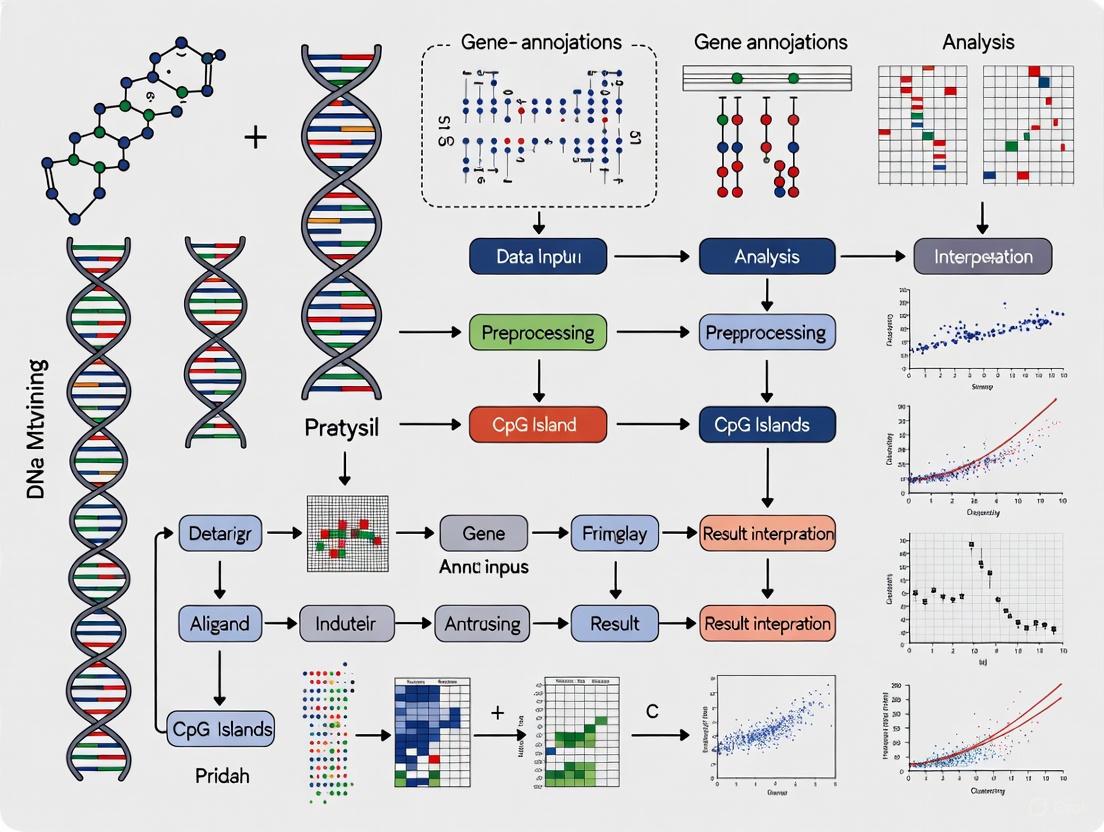
This article provides a comprehensive guide for researchers and drug development professionals on mining genome-wide DNA methylation data.
Mining Genome-Wide DNA Methylation Patterns: From Foundational Technologies to Clinical Applications
Abstract
This article provides a comprehensive guide for researchers and drug development professionals on mining genome-wide DNA methylation data. It covers the evolution of foundational technologies like bisulfite sequencing and microarrays, explores advanced methodologies including machine learning and novel computational tools, addresses common troubleshooting and optimization challenges in data analysis, and discusses rigorous validation and comparative frameworks. By synthesizing current technologies and analytical approaches, this resource aims to bridge the gap between epigenetic research and the development of robust, clinically applicable biomarkers and diagnostic tools.
Core Technologies and Principles for Genome-Wide Methylation Discovery
DNA methylation, specifically the addition of a methyl group to the 5-carbon position of cytosine (5-methylcytosine or 5mC), is a fundamental epigenetic mechanism regulating gene expression, genomic imprinting, and cellular differentiation [1] [2]. Accurate genome-wide mapping of this modification is crucial for elucidating its role in development, aging, and disease pathogenesis, particularly in cancer [3] [4]. For decades, bisulfite sequencing has been the gold standard method for detecting 5mC at single-base resolution [5] [6]. However, recent advancements have introduced enzymatic methods such as Enzymatic Methyl Sequencing (EM-seq) and TET-assisted pyridine borane sequencing (TAPS) as powerful alternatives [3] [7]. This technical guide provides an in-depth comparison of these core technologies, framing their utility within a broader thesis on mining genome-wide DNA methylation patterns.
Fundamental Principles of Conversion Chemistry
Bisulfite Conversion
The principle of bisulfite conversion, first reported in 1992, relies on the differential reactivity of sodium bisulfite with cytosine versus 5-methylcytosine [7] [6]. Treatment of DNA with sodium bisulfite under acidic conditions deaminates unmethylated cytosine residues to uracil, which is then read as thymine during subsequent PCR amplification and sequencing. In contrast, methylated cytosines (5mC) are largely resistant to this conversion and remain as cytosine [7] [5]. This process creates specific C-to-T transitions in the sequence data, enabling base-resolution discrimination between methylated and unmethylated sites. A key limitation is that bisulfite treatment cannot distinguish between 5mC and 5-hydroxymethylcytosine (5hmC), as both are protected from deamination [7] [6].
Enzymatic Conversion (EM-seq and TAPS)
Enzymatic methods achieve the same end result—C-to-T transitions in sequencing data—through a series of enzyme-catalyzed reactions, thereby avoiding the harsh conditions of bisulfite chemistry.
EM-seq (Enzymatic Methyl Sequencing): This method employs a two-step enzymatic process. First, the TET2 enzyme oxidizes 5mC and 5hmC to 5-carboxylcytosine (5caC). Simultaneously, T4-BGT glucosylates 5hmC, protecting it from downstream deamination. In the second step, the APOBEC3A enzyme deaminates unmethylated cytosines to uracil, while the oxidized methylcytosines (5caC) remain intact [7] [2] [8]. Subsequent PCR amplification then converts uracils to thymines.
TAPS (TET-assisted Pyridine borane Sequencing): TAPS utilizes the TET enzyme to oxidize 5mC and 5hmC to 5caC, followed by chemical reduction of 5caC to uracil using pyridine borane [7]. In the subsequent PCR, uracil is amplified as thymine. A variant, TAPSβ, uses a bisulfite step after oxidation to deaminate unmodified cytosines, combining enzymatic and chemical approaches [7].
Diagram 1: Comparative workflows of Bisulfite, EM-seq, and TAPS conversion methods. Each pathway transforms genomic DNA, distinguishing methylated from unmethylated cytosines for sequencing.
Performance Comparison and Quantitative Metrics
Robust comparison of these methods requires evaluating key performance metrics across different sample types, especially clinically relevant samples like cell-free DNA (cfDNA) and formalin-fixed paraffin-embedded (FFPE) tissues.
Table 1: Quantitative Performance Comparison of DNA Methylation Detection Methods
| Performance Metric | Conventional Bisulfite (CBS) | Ultra-Mild Bisulfite (UMBS) | EM-seq | Source |
|---|---|---|---|---|
| Library Yield | Low, significantly degraded | High, outperforms CBS & EM-seq at low inputs | Moderate, lower than UMBS due to purification losses | [3] |
| DNA Damage & Fragmentation | Severe, significant fragmentation | Substantially reduced, preserves integrity | Minimal, non-destructive | [3] [7] |
| Duplication Rate (Library Complexity) | High (lower complexity) | Low (higher complexity) | Low to moderate (good complexity) | [3] |
| Background Noise (Non-conversion) | <0.5% | ~0.1% (very low and consistent) | >1% (can be high and inconsistent at low inputs) | [3] |
| CpG Coverage Uniformity | Significant bias, poor in GC-rich regions | Good improvement over CBS | Excellent, most uniform | [3] [2] |
| Detection of Unique CpGs | Lower | High | Highest | [2] [8] |
| Input DNA Requirements | High (typically >100ng) | Very Low (10pg - 10ng) | Low (10ng - 100ng) | [3] [8] |
| Distinction of 5mC from 5hmC | No | No | Yes (with T4-BGT protection) | [7] [8] |
Recent advancements like Ultra-Mild Bisulfite Sequencing (UMBS-seq) have addressed some traditional bisulfite limitations. UMBS-seq uses an optimized formulation of ammonium bisulfite at a specific pH and a lower reaction temperature (55°C for 90 minutes) to maximize conversion efficiency while minimizing DNA damage [3]. In evaluations, UMBS-seq demonstrated higher library yields and complexity than both CBS-seq and EM-seq across a range of low-input DNA amounts (5 ng to 10 pg), with significantly lower background noise (~0.1% unconverted cytosines) than EM-seq, which exceeded 1% at the lowest inputs [3].
Detailed Experimental Protocols
Whole-Genome Bisulfite Sequencing (WGBS) Protocol
This protocol is adapted from standard procedures using the EZ DNA Methylation-Gold Kit (Zymo Research) or similar.
- DNA Shearing and Input: Use 50-200 ng of genomic DNA. For FFPE samples, consider prior repair. Shear DNA to desired fragment size (e.g., 200-500 bp) via sonication or enzymatic fragmentation.
- Bisulfite Conversion:
- Denature DNA by adding NaOH (final concentration 0.1-0.3 M) and incubating at 37-42°C for 15-30 minutes.
- Add sodium bisulfite solution (pH ~5.0) and incubate in a thermal cycler using a programmed regimen (e.g., 95-99°C for 30-60 seconds for denaturation, followed by 50-60°C for 45-90 minutes for conversion, for 10-20 cycles). Newer ultra-mild protocols use a single, longer incubation at 55°C [3].
- Desalt and purify the converted DNA using spin columns or beads. Elute in a low-salt buffer or water.
- Library Preparation: Use commercial kits designed for bisulfite-converted DNA (e.g., NEBNext Q5U Master Mix, NEB #M0597). These kits employ DNA polymerases tolerant of uracil and high AT content [9].
- Adapter Ligation: Ligate methylated or universal adapters to the purified, converted DNA.
- PCR Amplification: Amplify the library with 6-18 cycles using primers compatible with your sequencer.
- Purification and Quality Control:
- Purify the final library using size-selection beads.
- Assess quality and quantity via bioanalyzer, and validate conversion efficiency using spike-in controls like unmethylated lambda DNA (expected conversion rate ≥99.5%) [5].
Enzymatic Methyl Sequencing (EM-seq) Protocol
This protocol is based on the NEBNext EM-seq kit (New England Biolabs).
- DNA Input and Shearing: Use 1-100 ng of genomic DNA. Shear DNA as in WGBS.
- Oxidation and Protection:
- Set up the oxidation master mix containing TET2 enzyme and oxidation booster. Add to DNA.
- Incubate at 37°C for 1 hour. This step oxidizes 5mC and 5hmC to 5caC and glucosylates 5hmC.
- Deamination:
- Add the deamination master mix containing APOBEC3A enzyme.
- Incubate at 37°C for 3 hours. This step deaminates unmodified cytosines to uracil.
- Library Preparation:
- The subsequent steps can be performed using standard Illumina library prep kits or the accompanying NEBNext Ultra II DNA Library Prep Kit.
- Adapter Ligation: Ligate adapters to the enzymatically converted DNA.
- PCR Amplification: Amplify the library with a limited number of cycles (e.g., 6-12).
- Purification and Quality Control:
- Purify the library via size-selection beads.
- QC as for WGBS, confirming conversion efficiency with lambda and pUC19 controls [8].
Diagram 2: Experimental workflows for Whole-Genome Bisulfite Sequencing (WGBS) and Enzymatic Methyl Sequencing (EM-seq). Key differences include conversion chemistry and DNA handling.
The Scientist's Toolkit: Essential Research Reagents
Successful execution of DNA methylation studies requires careful selection of reagents and kits tailored to the chosen method and sample type.
Table 2: Essential Reagents and Kits for DNA Methylation Analysis
| Reagent / Kit Name | Function / Application | Key Features / Notes | Method Compatibility |
|---|---|---|---|
| EZ DNA Methylation-Gold Kit (Zymo Research) | Bisulfite conversion of DNA | Common in published protocols; includes all reagents for conversion and cleanup. | CBS, UMBS |
| NEBNext EM-seq Kit (New England Biolabs) | Enzymatic conversion for whole-genome methylation sequencing | Includes TET2 and APOBEC3A enzymes; minimal DNA damage. | EM-seq |
| NEBNext Q5U Master Mix (NEB #M0597) | PCR amplification of bisulfite-converted libraries | Hot start, high-fidelity polymerase tolerant of uracil. | CBS, UMBS |
| NEBNext Ultra II DNA Library Prep Kit (NEB #E7645) | Library preparation for NGS | Robust yield from low-input and GC-rich targets; can be used post-EM-seq conversion. | EM-seq, CBS (with conversion) |
| NEBNext Multiplex Oligos | Indexing and multiplexing samples | Unique Dual Indexes to prevent cross-talk; compatible with bisulfite sequencing. | CBS, UMBS, EM-seq |
| Methylated & Unmethylated Control DNA (e.g., Lambda, pUC19) | Conversion efficiency control | Unmethylated lambda DNA (expect ~0.2% C); methylated pUC19 (expect >95% C). | All Methods |
| Accel-NGS Methyl-Seq DNA Library Kit (Swift Biosciences) | Full library prep for bisulfite sequencing | Uses post-bisulfite adapter tagging (PBAT) to minimize loss. | CBS |
| Infinium MethylationEPIC BeadChip (Illumina) | Genome-wide methylation array | Interrogates >850,000 CpG sites; uses bisulfite-converted DNA. | CBS (Microarray) |
| PyOxim | PyOxim, CAS:153433-21-7, MF:C17H29F6N5O3P2, MW:527.4 g/mol | Chemical Reagent | Bench Chemicals |
| RR6 | RR6, CAS:1351758-37-6, MF:C16H23NO4, MW:293.36 | Chemical Reagent | Bench Chemicals |
Application in Mining Genome-Wide Methylation Patterns
The choice of methodology directly impacts the quality and scope of conclusions drawn in genome-wide methylation data mining.
Bias Correction in Data Analysis: WGBS data often requires stringent non-conversion filters (e.g., discarding reads with >3 consecutive unconverted CHH sites) to mitigate false positives, a step less critical for EM-seq due to its lower background noise [2]. Furthermore, WGBS can overestimate methylation levels, particularly in CHG and CHH contexts, in regions with high GC content or methylated cytosine density. EM-seq demonstrates more consistent performance across varying genomic contexts, leading to more accurate differential methylation calling [2].
Clinical and Biomarker Discovery: For analyzing cell-free DNA (cfDNA) or FFPE samples—where DNA is fragmented and scarce—methods that preserve DNA integrity are paramount. UMBS-seq and EM-seq both effectively preserve the characteristic triple-peak profile of plasma cfDNA after treatment, enabling robust biomarker detection for early cancer diagnosis and monitoring [3] [7]. A 2025 study on chronic lymphocytic leukemia (CLL) successfully used enzymatic WGMS on a clinical trial cohort to identify methylation changes linked to treatment response, highlighting the clinical utility of this method [7].
Integration with Machine Learning: Large-scale methylation datasets generated by these methods are increasingly analyzed with machine learning (ML) to build diagnostic classifiers. For instance, ML algorithms have been used to predict cancer outcomes and standardize diagnoses across over 100 central nervous system tumor subtypes using methylation profiles [1]. The higher data quality, greater coverage of CpGs, and reduced bias from enzymatic methods and UMBS-seq provide cleaner input features for these models, potentially improving their accuracy and generalizability.
The evolution from conventional bisulfite sequencing to milder bisulfite protocols and fully enzymatic methods represents a significant advancement in the field of epigenomics. While bisulfite conversion remains a robust and widely used technology, enzymatic methods like EM-seq offer superior performance in terms of DNA preservation, library complexity, coverage uniformity, and accuracy, especially for low-input and clinically derived samples. The development of ultra-mild bisulfite methods demonstrates that chemical conversion still has room for innovation. The choice between these methods for genome-wide data mining depends on the specific research question, sample type, and resource constraints. For projects requiring the highest data quality from precious samples, enzymatic conversion is increasingly the method of choice, whereas for larger-scale studies with ample high-quality DNA, bisulfite methods remain cost-effective. As the field moves towards the integration of methylation data with other omics layers and its application in liquid biopsies and personalized medicine, the adoption of these advanced conversion technologies will be crucial for generating reliable and biologically meaningful insights.
Enrichment-based methods represent a cornerstone technique in the field of epigenomics for profiling DNA methylation patterns on a genome-wide scale. These approaches, primarily Methylated DNA Immunoprecipitation sequencing (MeDIP-seq) and Methylated DNA Capture sequencing (MethylCap-seq), rely on the physical isolation of methylated DNA fragments prior to sequencing, offering a cost-effective alternative to bisulfite-based methods [10] [11]. MeDIP-seq utilizes 5-methylcytosine (5mC)-specific antibodies to immunoprecipitate methylated DNA, whereas MethylCap-seq employs the methyl-binding domain (MBD) of human MBD2 protein to capture methylated fragments [12] [10]. Their utility is particularly pronounced in scenarios requiring low DNA input, such as clinical tumor biopsies, oocytes, and early embryos, or when working with archived biobank samples like dried blood spots where DNA quantity and quality are limiting factors [10] [13]. Furthermore, these methods provide unbiased, full-genome coverage without the limitations of restriction sites or pre-defined CpG islands, making them powerful tools for discovery-oriented research into the role of epigenetic alterations in cancer, neurodevelopmental disorders, and complex multifactorial diseases [12] [10] [1].
Core Methodological Principles
MeDIP-seq (Methylated DNA Immunoprecipitation Sequencing)
The MeDIP-seq protocol begins with the fragmentation of genomic DNA, typically via sonication, to create a library of random fragments. These fragments are then denatured to produce single-stranded DNA, a crucial step as the 5mC antibody requires single-stranded DNA for efficient immunoprecipitation [10]. The denatured DNA is incubated with a specific antibody against 5-methylcytosine (5mC), which binds to and enriches the methylated fragments. The antibody-DNA complexes are then captured using beads coated with an antibody-binding protein (e.g., protein A or G). After rigorous washing to remove non-specifically bound DNA, the enriched methylated DNA is eluted from the beads, purified, and converted into a sequencing library [10] [14]. A key consideration in MeDIP-seq is the CpG density bias; the antibody's binding efficiency is influenced by the density of methylated CpGs, meaning regions with very low methylation density (<1.5%) may be underrepresented or misinterpreted as unmethylated [10].
MethylCap-seq (Methylated DNA Capture Sequencing)
MethylCap-seq also starts with the sonication of genomic DNA, but the fragments remain double-stranded. The fragmented DNA is incubated with the MBD domain of the MBD2 protein, which has a high affinity for methylated CpG dinucleotides. This MBD protein is often immobilized on beads, such as the M-280 Streptavidin Dynabeads used in the MethylMiner kit, to facilitate the capture process [12]. A distinctive feature of some MethylCap-seq protocols is the ability to perform sequential elutions with buffers of increasing salt concentration (e.g., low, medium, and high salt). This can fractionate the DNA based on the density of methylated CpGs, potentially providing a rudimentary level of quantitative information [11]. The eluted, methylated DNA is then purified and processed for library construction and high-throughput sequencing [12]. Benchmarking studies have suggested that MethylCap-seq can be more effective at interrogating CpG islands than MeDIP-seq [12].
The following diagram illustrates the core workflows for both methods, highlighting their key similarities and differences.
Comparative Analysis of Enrichment Techniques
When selecting an appropriate methodology for a DNA methylation study, researchers must consider the relative strengths and limitations of each approach. The following table provides a structured comparison of MeDIP-seq and MethylCap-seq across several critical parameters.
Table 1: Comparative analysis of MeDIP-seq and MethylCap-seq
| Parameter | MeDIP-seq | MethylCap-seq |
|---|---|---|
| Core Principle | Immunoprecipitation with 5mC antibody [10] | Affinity capture with MBD2 protein domain [12] |
| Genomic Resolution | ~150 bp (lower than bisulfite sequencing) [10] | Similar to MeDIP-seq; ~500 bp bins common for analysis [12] |
| Key Advantages | Covers CpG and non-CpG 5mC; requires low input DNA; cost-effective [10] [13] | Effective at CpG island interrogation; high genome coverage; potential for fractionated elution [12] [11] |
| Inherent Limitations | Antibody-based selection bias; under-represents low mC density regions; resolution is region-based, not single-base [10] [14] | CpG density and GC-content bias; sequence data requires correction for CpG density [15] |
| Optimal Use Cases | Genome-wide methylation patterns; low-input samples (e.g., biopsies, embryos) [10] [13] | Discovery of DMRs with high genome coverage; studies focused on CpG-rich regions [12] [15] |
Independent, large-scale comparisons of these methods with microarray-based approaches like the Infinium HumanMethylation450 BeadChip have revealed important performance differences. One study on glioblastoma and normal brain tissues found that while the microarray demonstrated higher sensitivity for detecting methylation at predefined loci, MethylCap-seq offered a far larger genome-wide coverage, identifying more potentially relevant methylation regions [15]. However, this more comprehensive character did not automatically translate into the discovery of more statistically significant differentially methylated loci in a biomarker discovery context, underscoring their complementary nature [15]. Another benchmark study noted that all evaluated methods, including MeDIP-seq and MethylCap-seq, produced accurate data but differed in their power to detect differentially methylated regions between sample pairs [11].
Successful execution of an enrichment-based methylation study requires both wet-lab reagents and robust bioinformatics tools. The table below outlines key components of the research toolkit.
Table 2: Essential research reagents and computational tools for enrichment-based methylation profiling
| Category | Item | Function / Key Features |
|---|---|---|
| Wet-Lab Reagents | 5mC-specific Antibody (for MeDIP) | Immunoprecipitation of methylated DNA fragments [10]. |
| MBD2-Biotin Protein & Streptavidin Beads (for MethylCap) | Capture and purification of methylated DNA fragments [12]. | |
| MethylMiner Kit (Invitrogen) | Commercial kit for performing MethylCap-seq [12]. | |
| Sonication Device (e.g., Covaris) | Fragmentation of input genomic DNA to desired size [12] [13]. | |
| Computational Tools | MEDIPS (R Bioconductor) | Quality control, normalization, and DMR analysis for MeDIP-seq/MethylCap-seq data [12] [14]. |
| Batman | Bayesian tool for methylation analysis; estimates absolute methylation levels [14]. | |
| MeDUSA | Pipeline for full analysis, including sequence alignment, QC, and DMR annotation [10]. | |
| Bowtie / BWA | Short-read aligners for mapping sequenced reads to a reference genome [12] [13]. | |
| SAMtools | Processing and manipulation of sequence alignment files [12]. |
Data Analysis Workflow: From Raw Sequences to Biological Insight
The computational analysis of MeDIP-seq and MethylCap-seq data involves a multi-step process to translate raw sequencing reads into interpretable biological results. A standardized workflow is essential for robust and reproducible findings.
Sequence Processing and Alignment: Raw sequencing reads (e.g., in FASTQ format) are first pre-processed, which includes quality control checks and adapter trimming. The clean reads are then aligned to a reference genome using short-read aligners like Bowtie or BWA, generating files in SAM/BAM format [12] [13]. A critical subsequent step is the removal of PCR duplicates to mitigate artifacts and ensure accurate representation of unique fragments [12].
Quality Control (QC) and Enrichment Assessment: Assay-specific QC is vital. The MEDIPS package is commonly used to calculate key metrics [12] [14]. These include:
- Saturation Analysis: Assesses sequencing library complexity and potential reproducibility via Pearson correlation [12].
- CpG Enrichment Calculation: The relative frequency of CpGs in sequenced reads compared to the reference genome; a value >1 indicates successful enrichment [12] [13].
- CpG Coverage: The fraction of CpG dinucleotides in the genome covered by a minimum number of reads (e.g., 5x) [12].
Read Quantification and Differential Methylation Analysis: The aligned reads are counted in predefined genomic bins (e.g., 500 bp) or across features of interest (e.g., promoters, CpG islands) [12]. Reads per million (RPM) scaling is applied to normalize for sequencing depth. For differential analysis between biological groups, non-parametric statistical tests like the Wilcoxon rank-sum test (for two groups) or Kruskal-Wallis test (for >2 groups) are often employed on the binned count data. Results are adjusted for multiple testing (e.g., False Discovery Rate, FDR) to generate a list of significant differentially methylated regions (DMRs) [12].
Data Visualization and Integration: The final step involves visualizing the results for interpretation. Tools like the Anno-J web browser can display methylation profiles across genomic regions [12]. Furthermore, DMRs can be integrated with other genomic datasets, such as gene expression or chromatin modification data, to infer functional biological context [14].
The following diagram summarizes this multi-stage analytical pipeline.
MeDIP-seq and MethylCap-seq are powerful, cost-efficient technologies for generating genome-wide DNA methylation profiles. Their compatibility with low-input DNA makes them particularly suited for precious clinical samples and large-scale biobank studies [10] [13]. While they offer lower resolution than bisulfite sequencing, their ability to provide unbiased coverage of the entire genome, including non-RefSeq genes and repetitive elements, makes them excellent tools for agnostic discovery [12] [13]. The choice between them hinges on the specific research question: MeDIP-seq is advantageous for its sensitivity to non-CpG methylation and well-established low-input protocols, whereas MethylCap-seq may offer more effective coverage of CpG-rich regions. As with all genomic technologies, the integrity of the results is deeply connected to rigorous experimental execution and a bioinformatic pipeline that accounts for the specific biases inherent in each enrichment method. Their continued application, often integrated with other genomic data types and increasingly powerful machine learning algorithms, promises to further illuminate the critical role of DNA methylation in health and disease [1] [14].
The Illumina Infinium MethylationEPIC BeadChip represents a cornerstone technology in the field of epigenomics, enabling genome-wide DNA methylation profiling at single-nucleotide resolution. This platform has become instrumental for uncovering the role of epigenetic modifications in gene regulation, cellular differentiation, and disease pathogenesis. As a robust and cost-effective solution for large-scale epigenome-wide association studies (EWAS), cancer research, and biomarker discovery, the EPIC BeadChip provides extensive coverage of biologically significant regions within the human methylome [16]. Its integration within a broader DNA methylation data mining framework allows researchers to extract meaningful patterns from complex epigenetic datasets, thereby advancing our understanding of genome-wide regulatory mechanisms in both normal physiology and disease states.
The Infinium MethylationEPIC BeadChip is a microarray-based technology designed for quantitative methylation analysis. The current version, the Infinium MethylationEPIC v2.0,interrogates approximately 930,000 methylation sites per sample, focusing on CpG islands, gene promoters, enhancers, and other functionally relevant genomic regions [16]. This extensive coverage captures critical epigenetic information while maintaining cost-effectiveness for population-scale studies.
Table 1: Key Specifications of the Infinium MethylationEPIC v2.0 BeadChip
| Parameter | Specification |
|---|---|
| Number of Markers | ~930,000 methylation sites [16] |
| Sample Throughput | 8 samples per array; up to 3,024 samples per week on a single iSCAN system [16] |
| Input DNA Requirement | 250 ng DNA [16] |
| Assay Reproducibility | >98% reproducibility between technical replicates [17] |
| Compatible Sample Types | Whole blood, FFPE tissue, and other specialized types [16] |
| Instruments | iScan System, NextSeq 550 System [16] |
The technology employs two distinct Infinium assay chemistries to achieve optimal genome coverage. Both chemistries enable highly multiplexed genotyping of bisulfite-converted genomic DNA, providing precise methylation measurements independent of read depth [16] [17]. The content of the EPIC v2.0 BeadChip represents an expert-curated selection that builds upon previous versions, with enhanced coverage of regulatory elements such as enhancers, CTCF-binding sites, and open chromatin regions identified through techniques like ATAC-Seq and ChIP-seq [16]. This strategic content expansion facilitates more comprehensive investigation of the functional epigenome.
Experimental Workflow
The end-to-end workflow for the Infinium MethylationEPIC BeadChip involves a series of critical steps, from sample preparation to data generation. Adherence to standardized protocols at each stage is paramount for ensuring data quality and reproducibility.
Sample Preparation and Bisulfite Conversion
The initial phase focuses on nucleic acid extraction and bisulfite treatment. For fresh or frozen tissues, high-purity DNA with an A260/A280 ratio of 1.8-2.0 is recommended, achievable through phenol-chloroform or magnetic bead-based extraction methods [18]. When working with Formalin-Fixed Paraffin-Embedded (FFPE) samples, additional steps including deparaffinization, proteinase K digestion, and fragment screening are necessary to address cross-linking and DNA fragmentation [18]. The requirement for FFPE compatibility is significant given the vast biorepositories of tumor samples available for research [16].
Bisulfite conversion follows DNA extraction, serving as the fundamental reaction that enables methylation detection. During this process, unmethylated cytosines are converted to uracils, while methylated cytosines remain unchanged [18]. Conversion efficiency must exceed 95%, typically monitored using spike-in controls like Lambda DNA [18]. Traditional bisulfite treatment can cause substantial DNA degradation (30-50%); however, novel enzymatic conversion techniques (e.g., EM-seq) can reduce degradation to less than 5%, offering a significant advantage for limited or precious samples [18]. Following conversion, DNA undergoes purification and amplification to prepare it for hybridization.
BeadChip Hybridization and Scanning
The subsequent phase encompasses the actual microarray processing. The bisulfite-converted, single-stranded DNA is combined with the BeadChip, where it hybridizes to specific 50-70 base pair probes [18]. The hybridization process requires meticulous optimization of buffer conditions (e.g., 3M TMAC salt concentration) and temperature gradients (45-55°C) to balance probe binding specificity with background signal [18]. Molecular engineering techniques, such as probe shielding, have been employed to reduce non-specific binding and lower background noise by over 30% [18].
Following hybridization, the BeadChip undergoes stringent washing to remove unbound DNA. The bound DNA is then fluorescently labeled, and the array is scanned using a high-resolution system, such as the iScan [16] [18]. The resulting fluorescence signals are captured as images, which are processed to generate intensity data files (IDAT files) for downstream bioinformatics analysis.
Data Analysis Pipeline
The transformation of raw IDAT files into biological insights requires a sophisticated bioinformatics pipeline. This process involves quality control, preprocessing, normalization, and differential methylation analysis.
Quality Control and Preprocessing
Rigorous quality control is the first critical step. This includes assessing sample-level metrics such as DNA integrity and bisulfite conversion efficiency, and array-level metrics like signal intensity and detection p-values [18] [19]. Probes with a high detection p-value (> 0.01) are typically filtered out, as are probes known to contain single-nucleotide polymorphisms (SNPs), cross-reactive probes that map to multiple genomic locations, and those with negative intensity values [20] [19]. Tools like DRAGEN Array Methylation QC and MethylAid automate this process, using multidimensional clustering to identify and flag anomalous samples [18] [19].
After QC, the data undergoes preprocessing to calculate methylation levels. The most common metric is the beta-value (β), which represents the ratio of the methylated allele intensity to the sum of both methylated and unmethylated intensities, providing a value between 0 (completely unmethylated) and 1 (completely methylated) [19]. For statistical tests requiring homoscedasticity, the M-value (logit transformation of β) is often preferred [21].
Normalization and Differential Methylation Analysis
Normalization corrects for technical variability, such as systematic biases between arrays and differences in the hybridization efficiency of Infinium Type I and Type II probes [18]. Common methods include quantile normalization, which enforces a consistent signal distribution across all samples, and the Beta Mixture Quantile (BMIQ) dilation algorithm, which adjusts for the distributional differences between the two probe types [18].
Differential methylation analysis aims to identify CpG sites (DMPs) or regions (DMRs) that show significant methylation changes between experimental groups (e.g., disease vs. control). This is frequently performed using linear regression models (e.g., in the limma package) or Bayesian methods, while adjusting for covariates like age and gender [21] [18]. Multiple testing correction, such as the Benjamini-Hochberg procedure, is essential to control the false discovery rate [21] [18]. Region-based analysis with tools like bumphunter can increase biological interpretability by identifying coherently methylated genomic regions [21] [19].
Essential Research Reagents and Computational Tools
Successful execution of EPIC BeadChip workflows relies on a suite of specialized laboratory reagents and bioinformatics software.
Table 2: Research Reagent Solutions and Computational Tools
| Category | Item | Function and Application |
|---|---|---|
| Core Reagents | Infinium MethylationEPIC v2.0 Kit [16] | Includes BeadChips and reagents for amplification, fragmentation, hybridization, labeling, and detection. |
| Bisulfite Conversion Kit (e.g., Zymo Research) [16] | Converts unmethylated cytosine to uracil; purchased separately. | |
| FFPE QC and DNA Restoration Kits [16] | Recommended for optimal results with FFPE tissue samples. | |
| Laboratory Instruments | iScan System [16] [17] | High-throughput scanner for reading the fluorescence signals from BeadChips. |
| Automated Liquid Handling Systems [17] | Streamlines sample preparation workflow and reduces manual errors. | |
| Primary Analysis Software | GenomeStudio Methylation Module [16] [19] | Visualizes controls and performs basic analysis; not recommended for advanced differential methylation. |
| DRAGEN Array Methylation QC [22] [19] | Cloud-based software providing high-throughput, quantitative QC reporting. | |
| Partek Flow [19] | Offers interactive visualization, powerful statistics, and comprehensive downstream analysis. | |
| Bioconductor Packages (R) | SeSAMe [19] | End-to-end data analysis including advanced QC, normalization, and differential methylation. |
| Minfi & ChAMP [20] [19] | Comprehensive packages for preprocessing, QC, DMR calling, and EWAS. | |
| RnBeads [20] [19] | End-to-end analysis with enhanced reporting and exploratory analysis capabilities. |
Integration with Broader Data Mining and Research Applications
The true power of EPIC BeadChip data is unlocked through integration with other data types and the application of advanced computational approaches. In multi-omics frameworks, methylation data is correlated with transcriptomic (RNA-seq) and chromatin accessibility (ATAC-seq) data to build causal regulatory networks and distinguish direct epigenetic effects from indirect associations [18]. Tools like ChAMP facilitate this integration by constructing gene regulatory networks that link methylation changes with expression alterations [19].
Machine learning (ML) has become pivotal for mining genome-wide methylation patterns. Conventional supervised methods, such as support vector machines and random forests, are widely used for sample classification, prognosis, and feature selection [1]. More recently, deep learning models, including convolutional neural networks and transformer-based foundational models like MethylGPT and CpGPT, have demonstrated superior capability in capturing non-linear interactions between CpGs [1]. These models, pre-trained on vast methylome datasets (e.g., >150,000 samples), show robust cross-cohort generalization and offer more physiologically interpretable insights into regulatory regions [1].
A compelling application of this integrated approach is seen in cancer research. For instance, a study on osteosarcoma used EPIC array data to identify genome-wide methylation subtypes strongly predictive of chemotherapy response and patient survival [21]. Unsupervised clustering revealed a hypermethylated subgroup associated with poor treatment response and shorter survival, independent of clinical variables like metastatic status [21]. This highlights the potential of methylation data mining to uncover clinically relevant biomarkers that transcend the limitations of traditional genomic analyses.
Whole-Genome Bisulfite Sequencing (WGBS) represents the gold standard in epigenomic research for comprehensively detecting DNA methylation status at single-base resolution across the entire genome. This powerful technique relies on the fundamental principle that sodium bisulfite conversion differentially treats methylated and unmethylated cytosines, enabling researchers to create genome-wide methylation maps with unprecedented accuracy. WGBS has matured into an indispensable tool for uncovering the critical role of DNA methylation in gene regulation, cellular differentiation, and disease pathogenesis, providing the epigenetics community with an unparalleled capability to explore methylation patterns beyond CpG islands to include regulatory elements and repetitive regions.
The technological foundation of WGBS was established through the convergence of bisulfite chemistry and next-generation sequencing platforms. The first single-base-resolution DNA methylation map of the entire human genome was created using WGBS in 2009, marking a watershed moment in epigenomic research [23]. Since then, continuous methodological refinements have enhanced the efficiency, reduced DNA input requirements, and improved the cost-effectiveness of WGBS protocols, solidifying its position as the reference standard against which all other methylation profiling methods are validated [24] [25]. As a cornerstone technology in the data mining of genome-wide methylation patterns, WGBS provides the complete and unbiased methylation data necessary for constructing sophisticated epigenetic models and biomarkers.
Core Principles and Methodological Framework
Fundamental Biochemical Principles
The entire WGBS methodology hinges on the differential susceptibility of cytosine residues to bisulfite conversion based on their methylation status. When genomic DNA is treated with sodium bisulfite under controlled acidic conditions, unmethylated cytosines undergo a series of chemical transformations: sulfonation at the C-6 position, hydrolytic deamination to uracil sulfonate, and subsequent desulfonation under alkaline conditions to yield uracil. During PCR amplification, these uracil residues are replicated as thymines, resulting in C-to-T transitions in the sequencing data [23] [26]. In contrast, methylated cytosines (5-methylcytosine) are protected from this deamination process due to the methyl group at the C-5 position and thus remain as cytosines throughout the procedure [27].
This biochemical disparity creates a distinct genomic "fingerprint" where the methylation status of every cytosine can be deduced by comparing the bisulfite-converted sequence to the original reference genome. The key strength of this approach lies in its ability to detect methylation contexts beyond CpG sites, including CHG and CHH methylation (where H = A, T, or C), which are particularly relevant in plant epigenomics and stem cell biology [28] [23]. However, a significant limitation of conventional bisulfite treatment is its inability to distinguish between 5-methylcytosine (5mC) and 5-hydroxymethylcytosine (5hmC), as both modifications resist conversion [27]. This challenge has been addressed through specialized protocols like oxidative bisulfite sequencing (oxBS-Seq), which incorporates an additional oxidation step to specifically differentiate these closely related epigenetic marks [26].
Experimental Workflow and Technical Considerations
The end-to-end WGBS workflow comprises multiple critical stages, each requiring meticulous optimization to ensure data quality and reliability:
DNA Extraction and Quality Control: High-quality, high-molecular-weight genomic DNA is extracted from target cells or tissues. Input requirements traditionally ranged from 500-1000 ng but have been substantially reduced to as little as 20 ng with novel library preparation techniques like tagmentation-based WGBS (T-WGBS) [26].
Library Preparation: DNA is fragmented through sonication, enzymatic digestion, or tagmentation approaches. Following end repair and A-tailing, methylated adapters are ligated to fragment ends. Two primary strategies exist: pre-bisulfite adapter ligation (where adapters are ligated before bisulfite treatment) and post-bisulfite adapter tagging (PBAT), which reduces DNA loss and is preferred for low-input samples [24].
Bisulfite Conversion: Adapter-ligated DNA undergoes sodium bisulfite treatment, typically using commercial kits optimized for complete conversion while minimizing DNA degradation. This represents the most critical step, as incomplete conversion can lead to false positive methylation calls [27].
PCR Amplification and Sequencing: Converted DNA is amplified using methylation-aware polymerases and subjected to high-throughput sequencing on platforms such as Illumina, with recommended coverage of 30x for mammalian genomes to ensure accurate methylation quantification [24] [23].
The following diagram illustrates the core WGBS workflow and the bisulfite conversion principle:
Advanced Methodological Variations
Library Preparation Methodologies
The evolution of WGBS library preparation strategies has significantly expanded its application across diverse research scenarios, particularly for limited or precious samples. The table below summarizes the principal library preparation methods, their applications, and performance characteristics:
Table 1: WGBS Library Preparation Methods and Performance Characteristics
| Method | Principle | DNA Input | Advantages | Limitations |
|---|---|---|---|---|
| Pre-bisulfite | Adapter ligation precedes bisulfite conversion | 500-1000 ng (standard) | Established protocol, high complexity libraries | Significant DNA loss, over-representation of methylated fragments |
| Post-bisulfite Adapter Tagging (PBAT) | Adapter ligation after bisulfite conversion | 100 ng (mammalian) | Reduced DNA loss, better for low-input samples | Potential site preferences in random priming |
| Tagmentation-based WGBS (T-WGBS) | Tn5 transposase mediates fragmentation and adapter insertion | ~20 ng | Minimal DNA input, fast protocol with fewer steps | Sequence bias related to Tn5 preferences |
| Enzymatic Methyl-seq (EM-seq) | Enzymatic conversion instead of bisulfite | Variable | Reduced DNA damage, better GC coverage, distinguishes 5mC from 5hmC | Newer method with less established protocols |
Specialized WGBS Derivatives
The fundamental WGBS approach has been adapted into several specialized derivatives to address specific research needs:
Reduced Representation Bisulfite Sequencing (RRBS): This method utilizes restriction enzymes (e.g., MspI) to selectively target CpG-rich regions, including promoters and CpG islands, thereby reducing sequencing costs while maintaining coverage of functionally relevant methylated areas. Although RRBS covers only 10-15% of genomic CpGs, it provides deep coverage of CpG islands at single-base resolution [26].
Oxidative Bisulfite Sequencing (oxBS-Seq): By incorporating an initial oxidation step that converts 5hmC to 5-formylcytosine (5fC), which subsequently undergoes bisulfite-mediated deamination to uracil, oxBS-Seq enables precise discrimination between 5mC and 5hmC at single-base resolution [27] [26].
Single-Cell BS-Seq (scBS-Seq): Adapted from PBAT protocols, scBS-Seq enables methylation profiling of individual cells, revealing epigenetic heterogeneity within cellular populations that is masked in bulk tissue analyses. This approach typically involves multiple rounds of random priming and amplification to generate sufficient material from minute starting DNA [26].
Bioinformatics Analysis Pipeline
The computational analysis of WGBS data presents unique challenges due to the reduced sequence complexity resulting from C-to-T conversions. A robust bioinformatics pipeline must address these challenges through specialized tools and algorithms:
Table 2: WGBS Bioinformatics Pipeline Components and Tools
| Analysis Step | Key Considerations | Representative Tools |
|---|---|---|
| Quality Control & Trimming | Assessment of bisulfite conversion efficiency, adapter contamination, sequence quality | FastQC, Trim Galore!, Cutadapt |
| Alignment | Specific mapping to account for C-T mismatches; requires specialized bisulfite-aware aligners | Bismark, BSMAP, BS-Seeker2 |
| Methylation Calling | Quantitative determination of methylation levels at each cytosine; calculation of methylation ratios | MethylDackel, Bismark methylation extractor |
| Differential Methylation Analysis | Identification of DMRs (differentially methylated regions) and DMLs (differentially methylated loci) | methylKit, DSS, Metilene |
| Functional Annotation | Integration of methylation data with genomic features and functional elements | ChIPseeker, annotatr |
The alignment phase represents a particularly critical computational challenge, as conventional alignment algorithms struggle with the reduced sequence complexity of bisulfite-converted DNA. Specialized bisulfite-aware aligners employ strategies such as in silico conversion of reference sequences to align against all possible conversion outcomes. Following alignment, methylation ratios are calculated for each cytosine position as the number of reads containing C divided by the total reads covering that position (C/(C+T)), providing a quantitative measure of methylation levels ranging from 0 (completely unmethylated) to 1 (completely methylated) [24].
The following diagram illustrates the logical flow of the WGBS data analysis pipeline:
Research Applications and Case Studies
Cancer Research and Biomarker Discovery
WGBS has revolutionized cancer epigenomics by enabling comprehensive profiling of methylation alterations in tumorigenesis. In a landmark study published in Nature Communications (2024), researchers employed WGBS to analyze cell-free DNA (cfDNA) methylomes from 460 individuals with esophageal squamous cell carcinoma (ESCC) or precancerous lesions alongside matched healthy controls [29]. Through their developed Extended Multimodal Analysis (EMMA) framework, which integrated differentially methylated regions (DMRs), copy number variations (CNVs), and fragment features, they achieved exceptional diagnostic performance with an area under the curve (AUC) of 0.99. The WGBS analysis detected methylation markers in 70% of ESCC cases and 50% of precancerous lesions, demonstrating the exceptional sensitivity of methylation-based early cancer detection [29].
Another comprehensive WGBS analysis of 45 esophageal samples (including ESCC, esophageal adenocarcinoma, and non-malignant tissues) revealed both cell-type-specific and cancer-specific epigenetic regulation through the identification of partially methylated domains (PMDs) and DMRs [29]. These findings highlight how WGBS can disentangle the complex epigenetic landscape of cancer, providing insights into tumor heterogeneity and molecular subtypes that inform precision oncology approaches.
Developmental Biology and Stem Cell Research
WGBS has been instrumental in elucidating the dynamic DNA methylation reprogramming events during early embryonic development. A groundbreaking 2024 study in Nature Communications utilized WGBS in a mouse model to investigate the role of Pramel15 in zygotic nuclear DNMT1 degradation and DNA demethylation [29]. Through comparative WGBS analysis of MII oocytes, zygotes, and 2-cell embryos from wild-type and Pramel15-deficient mice, researchers discovered that Pramel15 interacts with the RFTS domain of DNMT1 and regulates its stability through the ubiquitin-proteasome pathway. Pramel15 deficiency resulted in significantly increased DNA methylation levels, particularly in regions enriched with H3K9me3, demonstrating how WGBS can uncover the precise mechanisms governing epigenetic reprogramming in development [29].
Neuroscience and Neurodegenerative Disorders
The application of WGBS to neuroscience research has opened new avenues for understanding the epigenetic basis of neurological function and disease. A 2025 study in Cell Bioscience employed WGBS to profile cell-free DNA (cfDNA) methylation patterns in amyotrophic lateral sclerosis (ALS) patients [29]. The research identified 1,045 differentially methylated regions (DMRs) in gene bodies, promoters, and intergenic regions in ALS patients compared to controls. These DMRs were associated with key ALS pathways including endocytosis and cell adhesion. Integrated analysis with spinal cord transcriptomics revealed that 31% of DMR-associated genes showed differential expression in ALS patients, with over 20 genes significantly correlating with disease duration [29]. This innovative approach demonstrates how WGBS of cfDNA can provide non-invasive insights into epigenetic dysregulation in neurodegenerative diseases, potentially serving as a biomarker for disease progression and treatment response.
Essential Research Reagents and Materials
Successful implementation of WGBS requires carefully selected reagents and materials optimized for bisulfite-based applications:
Table 3: Essential Research Reagents for WGBS Experiments
| Reagent/Material | Function | Technical Considerations |
|---|---|---|
| Sodium Bisulfite Conversion Kit | Chemical conversion of unmethylated cytosines to uracils | Critical for complete conversion while minimizing DNA degradation; commercial kits ensure reproducibility |
| Methylated Adapters | Platform-specific adapters for library preparation | Must be pre-methylated to prevent bias against unmethylated sequences during amplification |
| DNA Polymerase for Bisulfite-Treated DNA | Amplification of converted DNA | Must lack CpG site bias and efficiently amplify uracil-rich templates |
| Bisulfite Conversion Control DNA | Quality control for conversion efficiency | Typically includes fully methylated and unmethylated standards to validate conversion rates |
| Size Selection Beads | Library fragment size selection | Magnetic beads enable precise size selection to optimize library diversity and sequencing efficiency |
| High-Sensitivity DNA Assay Kits | Quantification of library DNA | Fluorometric methods provide accurate quantification of low-concentration bisulfite-converted libraries |
| Bisulfite-Aware Alignment Software | Bioinformatics processing | Specialized algorithms account for C-T conversions during sequence alignment to reference genomes |
Technical Limitations and Emerging Solutions
Despite its status as the gold standard, WGBS presents several technical challenges that researchers must consider in experimental design:
DNA Degradation and Input Requirements: Bisulfite treatment causes substantial DNA fragmentation and degradation, with estimates reaching 90% DNA loss [26]. While traditional protocols required microgram quantities of input DNA, emerging methods like T-WGBS and PBAT have reduced input requirements to nanogram levels, enabling applications to precious clinical samples and limited cell populations [24] [26].
Sequence Complexity and Alignment Challenges: The bisulfite-induced C-to-T conversions reduce sequence complexity, complicating alignment to reference genomes. Approximately 10% of CpG sites may be difficult to align after conversion, potentially introducing mapping biases [26]. Bioinformatics solutions continue to evolve, with newer aligners demonstrating improved performance with bisulfite-converted sequences.
Inability to Distinguish 5mC from 5hmC: Conventional bisulfite treatment cannot differentiate between 5-methylcytosine (5mC) and 5-hydroxymethylcytosine (5hmC), as both resist conversion [27] [26]. Solutions like oxBS-Seq or enzymatic conversion methods (EM-seq) address this limitation but add complexity and cost to the workflow.
Cost and Computational Resources: Comprehensive genome-wide coverage requires substantial sequencing depth (typically 30x for mammalian genomes), making large-scale studies resource-intensive [23]. The computational infrastructure for storing and analyzing terabyte-scale WGBS datasets presents additional challenges, though decreasing sequencing costs and cloud-based solutions are improving accessibility.
Emerging technologies like the Illumina 5-base solution offer promising alternatives that directly detect 5mC without damaging bisulfite conversion, potentially addressing several limitations of conventional WGBS while maintaining single-base resolution [26]. Additionally, the integration of artificial intelligence and machine learning approaches with WGBS data is enhancing biomarker discovery and enabling the development of sophisticated diagnostic models with improved sensitivity and specificity for clinical applications [25].
Long-read sequencing technologies, particularly those developed by Oxford Nanopore Technologies (ONT) and Pacific Biosciences (PacBio), have revolutionized genomics research by enabling the analysis of DNA and RNA fragments thousands to millions of bases long in a single read [30]. Unlike short-read sequencing platforms, which typically produce reads of a few hundred base pairs, these single-molecule technologies provide unprecedented access to comprehensive structural, epigenetic, and transcriptional data [31]. This capability is particularly valuable for DNA methylation research, where understanding the genomic context of epigenetic modifications is essential for unraveling their role in gene regulation, cellular differentiation, and disease mechanisms [4].
The fundamental advantage of single-molecule sequencing lies in its ability to analyze individual DNA or RNA molecules in real-time without the need for pre-amplification, thereby eliminating PCR-induced biases that particularly affect regions with extreme GC content or repetitive elements [31]. Both ONT and PacBio platforms can detect DNA methylation and other base modifications natively, without the chemical conversions required by bisulfite sequencing methods that can fragment DNA and introduce biases [4] [32]. This technical overview examines the core technologies, performance characteristics, and experimental methodologies for both platforms within the specific context of genome-wide DNA methylation pattern research.
Core Technology Platforms
Oxford Nanopore Technologies (ONT)
Fundamental Principles and Evolution
ONT's sequencing technology is based on the principle of passing DNA strands through protein nanopores embedded in a synthetic membrane while measuring changes in electrical current as individual bases pass through the pore [33] [31]. The concept was first documented in 1989, with the commercial MinION sequencer launched in 2014 [33]. The core innovation involves threaded DNA molecules through protein nanopores, differentiating between purine and pyrimidine bases using current blockade signals, and controlling DNA movement through the nanopore using phi29 DNA Polymerase [33].
Key technological milestones include the development of the R9.4.1 flow cell with a single sensor per pore, and the more recent R10.4.1 flow cell featuring a longer barrel with dual reader heads that capture two current perturbations as DNA passes through, significantly improving accuracy in homopolymer regions [33] [34]. ONT has continuously improved nanopore proteins, motor proteins, and library preparation chemistry, with recent "Q20+" chemistry enabling raw read accuracy exceeding 99% (Q20) [33].
Platform Portfolio and Specifications
ONT offers a scalable instrument portfolio ranging from portable devices to high-throughput systems:
- MinION: A compact, portable device ideal for field sequencing and rapid pathogen detection [30].
- GridION: Allows simultaneous sequencing of five MinION flow cells for increased throughput [33].
- PromethION: An ultra-high throughput platform utilizing flow cells with 3,000 channels each, supporting up to 48 flow cells simultaneously and producing several terabases of data per experiment [33].
Table 1: Oxford Nanopore Technology Specifications for Methylation Analysis
| Feature | Specifications | Relevance to Methylation Research |
|---|---|---|
| Read Length | Ultra-long (up to 1 Mb+) [30] | Spans repetitive regions and complete amplicons |
| Accuracy | R10.4.1: >99% raw read accuracy (Q20) [33] | Reliable base calling for methylation context |
| Methylation Detection | Direct detection via current deviations [4] | Identifies 5mC, 5hmC without conversion |
| Throughput | MinION: 15-30 Gb; PromethION: Tb range [33] | Scalable for population epigenomic studies |
| Real-time Analysis | Yes [30] | Immediate data access and adaptive sampling |
Pacific Biosciences (PacBio)
Fundamental Principles and Evolution
PacBio's Single Molecule, Real-Time (SMRT) sequencing technology employs zero-mode waveguides (ZMWs)—picoliter-sized wells that function as individual reaction chambers to observe a single molecule of DNA polymerase [31]. The system immobilizes polymerase at the bottom of each ZMW and introduces fluorescently labeled deoxyribonucleotide triphosphates (dNTPs). As the polymerase incorporates nucleotides into the complementary DNA strand, it generates unique fluorescent signals captured in real-time [31].
A significant advancement in PacBio's technology is the development of HiFi (High-Fidelity) reads using Circular Consensus Sequencing (CCS). This approach involves circularizing DNA molecules, then repeatedly sequencing the circular template with the polymerase [31]. The resulting subreads are computationally processed using an internal consensus algorithm that dramatically reduces random sequencing errors while retaining long read lengths [31]. The kinetic information captured during nucleotide incorporation, specifically the interpulse duration (IPD), provides data for direct epigenetic profiling without additional chemical treatments or separate workflows [32] [31].
Platform Portfolio and Specifications
PacBio's current sequencing systems include:
- Revio: A high-throughput system designed for population-scale studies.
- Vega: Offers flexibility for various throughput needs.
Both systems support HiFi sequencing, which provides simultaneous readout of the genome and epigenome from native DNA without chemical conversion, additional sample preparation, or parallel workflows [35]. Recent developments include licensing the Holistic Kinetic Model 2 (HK2) from CUHK, which enhances detection of 5hmC and hemimethylated 5mC through an AI deep learning framework that integrates convolutional and transformer layers to model local and long-range kinetic features [35].
Table 2: Pacific Biosciences Technology Specifications for Methylation Analysis
| Feature | Specifications | Relevance to Methylation Research |
|---|---|---|
| Read Length | Long (HiFi reads ~15 kb) [30] | Excellent for structural variant context |
| Accuracy | Very high (HiFi Q20-Q30+) [30] | Precision variant calling and methylation detection |
| Methylation Detection | Kinetic analysis (IPD) of native DNA [31] | Detects 5mC, 6mA; 5hmC with HK2 [35] |
| Throughput | High throughput on Revio/Vega [32] | Suitable for large cohort epigenomic studies |
| Real-time Analysis | Fast, but not real-time [30] | Rapid turnaround for clinical applications |
Performance Comparison for Methylation Analysis
Technical Capabilities and Limitations
Direct comparisons between sequencing platforms reveal distinct strengths and limitations for DNA methylation research. A 2025 comparative evaluation of DNA methylation detection approaches assessed whole-genome bisulfite sequencing (WGBS), Illumina methylation microarray (EPIC), enzymatic methyl-sequencing (EM-seq), and ONT sequencing across human genome samples from tissue, cell lines, and whole blood [4]. While EM-seq showed the highest concordance with WGBS, ONT sequencing captured certain loci uniquely and enabled methylation detection in challenging genomic regions that are problematic for bisulfite-based methods [4].
PacBio HiFi sequencing has demonstrated advantages in coverage uniformity and comprehensiveness compared to WGBS. In a twin cohort study, HiFi sequencing identified approximately 5.6 million more CpG sites than WGBS, particularly in repetitive elements and regions of low WGBS coverage [32]. Coverage patterns differed markedly: PacBio HiFi showed a unimodal symmetric pattern peaking at 28-30×, indicating uniform coverage, while WGBS datasets displayed right-skewed distributions with the majority of CpGs covered at low depth (4-10×) [32]. Over 90% of CpGs in the PacBio HiFi dataset had ≥10× coverage, compared to approximately 65% in the WGBS dataset [32].
Accuracy and Concordance in Methylation Detection
ONT sequencing demonstrates high reliability for methylation detection, with R10.4.1 chemistry showing a Pearson correlation coefficient of 0.868 against bisulfite sequencing data, compared to 0.839 for R9.4.1 chemistry [34]. Direct comparison between R9 and R10 chemistries shows high concordance, with WT replicates exhibiting a Pearson correlation of 0.9185 and KO replicates correlating at 0.9194 [34]. Specifically, R9 WT and R10 WT methylation data had 72.00% of methylation sites with ≤10% difference in methylation percentage, while R9 KO and R10 KO had 72.67% of sites with similarly small differences [34].
Both ONT chemistries exhibit some detection bias for methylation, with cross-chemistry comparisons showing lower correlation values (0.8432 for R9 WT against R10 KO vs. 0.8612 for R9 WT against R9 KO) [34]. This indicates that methylation differences across ONT sequencing chemistries can substantially affect differential methylation investigations across conditions. Discordant methylation sites between chemistries tend to cluster in specific genomic contexts, requiring careful interpretation in cross-study comparisons [34].
Experimental Design and Methodologies
Sample Preparation and Library Construction
Successful methylation analysis with long-read technologies requires careful sample preparation and library construction. For ONT sequencing, the standard protocol involves:
DNA Extraction: Use high-molecular-weight DNA extraction methods such as the Nanobind Tissue Big DNA Kit (Circulomics) or similar approaches that preserve long DNA fragments [34]. DNA purity should be assessed using NanoDrop 260/280 and 260/230 ratios, with quantification via fluorometric methods (Qubit) [4].
Library Preparation: ONT offers both 1D and sequencing kits. Recent advancements have phased out the 2D library preparation method in favor of 1D library preparation where each strand of dsDNA is sequenced independently, providing an optimal balance between accuracy and throughput [33]. The procedure typically involves DNA repair and end-prep, adapter ligation, and purification steps.
Sequencing: Utilize either R9.4.1 or R10.4.1 flow cells depending on project requirements. R10.4.1 chemistry is particularly advantageous for methylation studies in repetitive regions due to improved basecalling in homopolymers [33] [34].
For PacBio HiFi sequencing for methylation analysis:
DNA Extraction: Similar to ONT, obtain high-quality, high-molecular-weight DNA. The recently introduced SMRTbell prep kit 3.0 reduces time by 50%, cost, and DNA quantity requirements by 40% while maintaining assembly quality [36].
Library Preparation: Construct SMRTbell libraries through DNA repair, end-polishing, adapter ligation, and purification. The process is amenable to automation for higher throughput applications [36].
Sequencing: Perform sequencing on Revio or Vega systems with polymerase binding and diffusion optimization. The HK2 model enhancement for improved 5hmC and hemimethylation detection will be delivered through software updates without changes to sequencing protocols [35].
Data Processing and Methylation Analysis
ONT Data Analysis Workflow
The standard ONT methylation analysis workflow involves several key steps [34]:
Basecalling: Use ONT's Dorado basecaller (version 7.2.13 or newer) for converting raw FAST5 signal data to nucleotide sequences. Dorado performs basecalling and methylation calling simultaneously, detecting 5mC modifications from the raw electrical signals.
Read Alignment: Map sequences to a reference genome using minimap2 or similar long-read aligners. This produces BAM files containing both sequence alignment information and methylation tags [34].
Methylation Profiling: Process aligned BAM files using modbam2bed or similar tools to generate whole-genome methylation profiles [34]. modbam2bed summarizes methylation states at each CpG site, calculating coverage and methylation percentages.
Coverage and Methylation Calculation: Apply appropriate coverage filters (typically ≥10×) to ensure statistical reliability [34]. Different methods for calculating coverage and methylation percentages can impact results, requiring consistent approaches across comparisons.
PacBio Data Analysis Workflow
The PacBio methylation analysis workflow leverages kinetic information [32] [35]:
HiFi Read Generation: Process subreads from circular consensus sequencing to generate highly accurate HiFi reads. This involves computational correction of random errors through multiple passes of the same DNA molecule.
Variant Calling: Identify genetic variants using standard tools optimized for long reads. The high accuracy of HiFi reads enables precise SNP and indel detection alongside epigenetic marks.
Kinetic Analysis: Extract interpulse duration (IPD) metrics from the sequencing data. The HK2 model uses convolutional and transformer layers to analyze local and long-range kinetic features for detecting 5mC, 6mA, and 5hmC modifications [35].
Integrated Analysis: Correlate methylation patterns with genetic variants and genomic features. The uniform coverage of HiFi sequencing enables de novo DNA methylation analysis, reporting CpG sites beyond reference sequences [32].
Research Reagent Solutions and Tools
Table 3: Essential Research Reagents and Tools for Long-Read Methylation Analysis
| Category | Specific Products/Tools | Function in Methylation Research |
|---|---|---|
| DNA Extraction Kits | Nanobind Tissue Big DNA Kit (Circulomics) [34], DNeasy Blood & Tissue Kit (Qiagen) [4] | Obtain high-molecular-weight DNA preserving long-range epigenetic information |
| Library Prep Kits | ONT Ligation Sequencing Kits [33], PacBio SMRTbell prep kit 3.0 [36] | Prepare DNA for sequencing with minimal bias for epigenetic marks |
| Basecalling Software | Dorado (ONT) [34], SMRT Link (PacBio) | Convert raw signals to base sequences while calling modifications |
| Alignment Tools | minimap2 [34] | Map long reads to reference genomes |
| Methylation Callers | modbam2bed [34], HK2 model (PacBio) [35] | Identify and quantify methylation states from sequencing data |
| Quality Control | NanoDrop, Qubit fluorometer [4] | Assess DNA quality and quantity before library preparation |
Oxford Nanopore and PacBio sequencing technologies offer powerful, complementary approaches for genome-wide DNA methylation research. ONT provides unique advantages in read length, portability, and real-time analysis, with recent R10.4.1 chemistry significantly improving accuracy, particularly in homopolymer regions problematic for methylation studies [33] [34]. PacBio's HiFi sequencing delivers exceptional base-level accuracy and uniform coverage that enables detection of millions more CpG sites than bisulfite-based methods, especially in repetitive regions [32]. The emerging capability to detect 5hmC and hemimethylated sites through kinetic analysis advancements further enhances its utility for comprehensive epigenomic profiling [35].
For researchers investigating DNA methylation patterns, platform selection depends on specific project requirements: ONT excels in applications requiring ultra-long reads, portability, or real-time analysis, while PacBio offers advantages for applications demanding the highest base-level accuracy and uniform coverage across CpG-rich regions [30]. Both technologies continue to evolve rapidly, with ongoing improvements in accuracy, throughput, and methylation detection capabilities promising to further transform our understanding of epigenomic regulation in health and disease.
DNA methylation represents a fundamental epigenetic mechanism that regulates mammalian cellular differentiation, gene expression, and disease states without altering the underlying DNA sequence [37]. In traditional bulk sequencing approaches, DNA methylation patterns are averaged across thousands or millions of cells, obscuring cell-to-cell epigenetic heterogeneity that drives developmental processes, disease progression, and therapeutic responses. The emergence of single-cell methylation profiling technologies has revolutionized our capacity to mine genome-wide epigenetic patterns at unprecedented resolution, enabling researchers to deconvolve mixed cell populations and identify rare cell types based on their distinctive methylation signatures [38].
Among the arsenal of single-cell epigenomic tools, single-cell bisulfite sequencing (scBS-seq) and single-cell reduced representation bisulfite sequencing (scRRBS) have emerged as powerful techniques for base-resolution mapping of DNA methylation landscapes in individual cells [37] [39]. These methods have proven particularly valuable for investigating cellular heterogeneity in complex tissues, embryonic development, cancer evolution, and neurological systems where epigenetic variation drives functional diversity [38] [40]. This technical guide provides an in-depth examination of these cornerstone methodologies, their experimental workflows, analytical considerations, and applications within the broader context of genome-wide DNA methylation data mining research.
Fundamental Principles of DNA Methylation Analysis
In mammalian genomes, DNA methylation occurs predominantly through the addition of a methyl group to the fifth carbon of cytosine residues (5-methylcytosine) within CpG dinucleotides [37]. While non-CpG methylation occurs in specific biological contexts such as neuronal cells and stem cells, approximately 60-80% of the 28 million CpG sites in the human genome are typically methylated [37]. The distribution of CpGs throughout the genome is non-random, with dense clusters known as CpG islands (CGIs) frequently occurring near gene promoters and serving as crucial regulatory platforms for transcription [37].
The functional consequences of DNA methylation depend strongly on genomic context. Promoter methylation typically correlates with gene repression, playing essential roles in genomic imprinting, X-chromosome inactivation, and silencing of retroviral elements [37]. In contrast, gene body methylation often associates with transcriptional activity, suggesting complex context-dependent regulatory functions [37]. This nuanced relationship underscores the importance of genome-wide methylation mapping rather than targeted approaches that might miss functionally significant epigenetic events.
Table 1: Key Characteristics of DNA Methylation in Mammalian Genomes
| Feature | Description | Functional Significance |
|---|---|---|
| Primary Site | Cytosine in CpG dinucleotides | Major epigenetic modification |
| Genomic Distribution | 28 million sites in human genome; 60-80% methylated | Widespread regulatory potential |
| CpG Islands | ~1% of genome; dense CpG regions near promoters | Key regulatory platforms for transcription |
| Promoter Methylation | Often repressive | Gene silencing, imprinting, X-inactivation |
| Gene Body Methylation | Often permissive | Correlates with transcriptional activity |
Technical Approaches to Single-Cell Methylation Profiling
Bisulfite Conversion: The Foundation of Methylation Detection
Bisulfite conversion represents the gold standard for DNA methylation profiling, achieving single-base resolution through selective chemical modification of unmethylated cytosines [37] [26]. When genomic DNA is treated with sodium bisulfite, unmethylated cytosines undergo deamination to uracils, which are subsequently amplified as thymines during PCR. In contrast, methylated cytosines remain protected from conversion and are read as cytosines after sequencing [26]. The resulting sequence differences allow absolute quantification of methylation status at individual cytosine residues through comparison of converted and unconverted sequences.
Despite its widespread adoption, bisulfite conversion presents several technical challenges, particularly in single-cell applications. The reaction conditions cause substantial DNA degradation (up to 90% loss) and reduce sequence complexity through C-to-T conversions, complicating subsequent alignment to reference genomes [37] [26]. To mitigate these limitations, post-bisulfite adaptor tagging (PBAT) approaches perform adaptor ligation after bisulfite conversion, thereby minimizing loss of fragmented DNA during library preparation [37] [38]. This modification has proven particularly valuable for single-cell workflows where starting material is extremely limited.
scBS-seq: Comprehensive Genome-Wide Methylation Mapping
Single-cell bisulfite sequencing (scBS-seq) provides unbiased whole-genome methylation mapping through a PBAT-based approach that maximizes coverage while minimizing material loss [38]. In this method, bisulfite treatment simultaneously fragments DNA and converts unmethylated cytosines, followed by multiple rounds of random priming using oligonucleotides containing Illumina adapter sequences [38]. The method captures digitized methylation patterns from individual cells, with approximately 48.4% of CpGs detectable per cell at saturating sequencing depths [38].
The scBS-seq protocol involves several critical steps that ensure high-quality data from minimal input. After bisulfite conversion and fragmentation, complementary strand synthesis is primed using custom oligos with Illumina adapter sequences and 3' random nonamers, repeated five times to tag maximum DNA strands [38]. Following capture of tagged strands, the second adapter is integrated similarly, with final PCR amplification using indexed primers for multiplexing [38]. This workflow typically yields information for 3.7 million CpGs per cell (range: 1.8M-7.7M), representing approximately 17.7% of all CpGs genome-wide [38].
scBS-seq Experimental Workflow: The comprehensive whole-genome approach begins with single-cell isolation and bisulfite conversion, followed by library construction through multiple rounds of random priming and amplification.
scRRBS: Targeted Profiling of Informative CpG-Rich Regions
Single-cell reduced representation bisulfite sequencing (scRRBS) offers a cost-effective alternative that focuses on CpG-rich genomic regions likely to contain the most biologically informative methylation changes [37] [39]. This method utilizes restriction enzymes (typically MspI) to selectively digest genomic DNA at CCGG sites, generating fragments enriched for promoters, CpG islands, and other regulatory elements [39] [11]. Following digestion, fragments undergo size selection, bisulfite conversion, and library preparation in a single-tube reaction that minimizes handling losses [39].
The strategic enzymatic digestion enables scRRBS to profile approximately 1 million CpG sites per diploid mammalian cell, with particular enrichment in CpG islands and gene promoters [39]. While this represents only 10-15% of all genomic CpGs, the targeted regions include the majority of dynamically regulated methylation sites with known regulatory functions [11] [26]. The efficiency and lower per-cell cost of scRRBS make it particularly suitable for larger-scale studies where cellular throughput must be balanced with genomic coverage.
Table 2: Comparative Analysis of scBS-seq and scRRBS Methodologies
| Parameter | scBS-seq | scRRBS |
|---|---|---|
| Genomic Coverage | Whole-genome (~48.4% of CpGs) | Targeted (~1 million CpGs/cell) |
| CpG Island Coverage | Comprehensive but unbiased | Enriched (focus on informative regions) |
| Key Steps | PBAT, random priming | Restriction digest, size selection |
| Sequencing Depth | Higher (15-20M reads/cell) | Lower (1-5M reads/cell) |
| Cost per Cell | Higher | Lower |
| Primary Advantage | Unbiased genome-wide data | Cost-effective for large studies |
| Primary Limitation | Higher cost per cell | Misses non-CpG island regulation |
| Ideal Application | Discovery studies, heterogeneous populations | Focused studies, larger sample sizes |
scRRBS Experimental Workflow: The targeted approach begins with restriction enzyme digestion to enrich for informative genomic regions, followed by size selection and bisulfite conversion before library construction.
Analytical Frameworks for Single-Cell Methylation Data
Data Processing and Quality Control
The analysis of single-cell bisulfite sequencing data requires specialized computational approaches that address its unique characteristics, including sparsity, binary nature, and technical artifacts [41]. Initial processing typically involves alignment to a reference genome using bisulfite-aware tools such as Bismark or BSMAP, followed by methylation calling at individual cytosine positions [37] [38]. Critical quality control metrics include bisulfite conversion efficiency (typically >97-99%, measured via non-CpG cytosine conversion), mapping efficiency, and coverage distribution across genomic contexts [38] [40].
The relatively sparse coverage per cell (typically <50% of CpGs) necessitates careful analytical strategies to distinguish biological heterogeneity from technical noise. Methods such as iterative imputation and coverage-weighted smoothing help address data sparsity while minimizing false positive detection of epigenetic variation [41]. Additionally, mitochondrial genome methylation patterns can serve as internal controls for conversion efficiency, while spike-in controls can quantify technical variability across libraries [38].
Identifying Biologically Meaningful Patterns
A fundamental challenge in single-cell methylation analysis involves distinguishing technical artifacts from biologically significant heterogeneity. The standard approach involves tiling the genome into large intervals (typically 100kb) and calculating average methylation fractions within each tile [41]. However, this coarse-graining approach can dilute meaningful signals, particularly at compact regulatory elements such as enhancers and promoters.
Recent methodological improvements incorporate read-position-aware quantitation that first computes smoothed methylation averages across all cells, then quantifies each cell's deviation from this ensemble pattern [41]. This shrunken mean of residuals approach reduces variance compared to simple averaging of raw methylation calls, improving signal-to-noise ratio for downstream analyses [41]. Additionally, focusing analysis on variably methylated regions (VMRs) rather than uniformly methylated or unmethylated regions increases power to detect biologically relevant epigenetic variation [41].
Advanced Applications and Integration with Multi-Omics Approaches
Resolving Cellular Heterogeneity in Complex Tissues
Single-cell methylation profiling has revealed remarkable epigenetic heterogeneity within seemingly homogeneous cell populations. In embryonic stem cells (ESCs), for instance, scBS-seq uncovered distinct methylation subpopulations corresponding to different culture conditions, with "2i-like" cells present within conventional serum-cultured populations [38]. Similarly, application to neural tissues has identified epigenetic diversity underlying neuronal subtypes and developmental trajectories that were previously obscured in bulk analyses [40].
The capacity to identify rare cell types based on methylation signatures has proven particularly valuable in cancer research, where tumor subclones with distinct epigenetic profiles may drive therapeutic resistance and metastasis [40]. High-resolution methods like scDEEP-mC now enable detection of allele-specific methylation patterns, X-chromosome inactivation states, and replication dynamics in single cells, opening new avenues for understanding epigenetic regulation in development and disease [40].
Multi-Omics Integration for Systems-Level Biology
The integration of methylation data with other molecular modalities provides unprecedented insights into gene regulatory mechanisms. Several integrated approaches now simultaneously profile DNA methylation alongside other genomic features in the same single cell [37]. The scMT-seq method combines scRRBS with transcriptomics (Smart-seq2), enabling direct correlation of promoter methylation with gene expression [37]. Similarly, scM&T-seq performs scBS-seq alongside transcriptome sequencing, while scNMT-seq adds chromatin accessibility profiling through NOMe-seq to create comprehensive multi-omics maps from individual cells [37].
These integrated approaches have revealed complex relationships between epigenetic layers during cellular differentiation and in disease states. For example, simultaneous methylation and transcriptome profiling has identified genes whose expression correlates with promoter methylation across diverse cell types, highlighting both canonical inverse relationships and more complex non-linear associations [37]. The continued development of multi-omics technologies promises to further unravel the intricate interplay between epigenetic mechanisms and transcriptional outcomes in individual cells.
Table 3: Key Research Reagent Solutions for Single-Cell Methylation Profiling
| Reagent/Resource | Function | Application Notes |
|---|---|---|
| Sodium Bisulfite | Chemical conversion of unmethylated cytosines | High purity essential for complete conversion |
| MspI Restriction Enzyme | CCGG site digestion for scRRBS | Creates fragments enriched for CpG islands |
| Tagged Random Nonamers | Primer for post-bisulfite DNA synthesis | Base composition optimized for bisulfite-converted DNA |
| SPRI Beads | Solid-phase reversible immobilization for size selection | Critical for removing small fragments and primers |
| UMI Adapters | Unique molecular identifiers for quantification | Enables duplicate removal and quantitative analysis |
| Indexed PCR Primers | Library amplification and multiplexing | Allows pooling of multiple libraries for sequencing |
| Bisulfite Conversion Kits | Standardized conversion workflow | Commercial kits ensure reproducibility |
| Bismark/BISCUIT | Bioinformatics alignment and analysis | Bisulfite-aware tools for accurate methylation calling |
Future Perspectives and Methodological Advancements
The field of single-cell methylation profiling continues to evolve rapidly, with emerging technologies addressing current limitations in coverage, throughput, and multi-omics integration. Recent methods like scDEEP-mC demonstrate improved library complexity and coverage, enabling more comprehensive methylation maps from individual cells [40]. Simultaneously, enzymatic conversion approaches such as EM-seq and TAPS offer alternatives to harsh bisulfite treatment, potentially reducing DNA damage and improving library complexity [37].
Computational innovations are equally crucial for extracting biological insights from increasingly complex single-cell epigenomics datasets. Tools like MethSCAn implement improved strategies for identifying informative genomic regions and quantifying methylation states, enabling more sensitive detection of epigenetic heterogeneity [41]. As these methodological and analytical advancements mature, single-cell methylation profiling will continue to transform our understanding of epigenetic regulation in development, homeostasis, and disease, ultimately informing novel diagnostic and therapeutic approaches in precision medicine.
The integration of single-cell methylation data with other molecular profiles and computational modeling will be essential for building predictive models of cellular behavior and fate decisions. As these technologies become more accessible and standardized, they will undoubtedly become cornerstone approaches in the epigenomics toolkit, enabling researchers to mine genome-wide patterns with unprecedented resolution and biological context.
Advanced Analytical Methods and Translational Applications
The mining of genome-wide patterns from DNA methylation data represents a frontier in understanding the molecular underpinnings of health and disease. As an essential epigenetic modification that regulates gene expression without altering the DNA sequence, DNA methylation provides critical insights into cellular function, developmental biology, and disease pathogenesis [1]. The analysis of this epigenetic layer involves processing massive datasets generated by advanced profiling technologies, creating both unprecedented opportunities and significant computational challenges. Machine learning (ML) pipelines have emerged as indispensable tools for extracting meaningful biological insights from these complex datasets, enabling researchers to identify disease-specific signatures, develop diagnostic classifiers, and unravel the epigenetic mechanisms driving pathological conditions [1] [42].
The evolution of machine learning applications in epigenetics has progressed from traditional ensemble methods to sophisticated deep learning architectures, each offering distinct advantages for particular research scenarios. Random Forests and other conventional supervised methods have established strong foundations for classification, prognosis, and feature selection across tens to hundreds of thousands of CpG sites [1]. Meanwhile, deep learning approaches including multilayer perceptrons, convolutional neural networks, and transformer-based models have demonstrated remarkable capability in capturing nonlinear interactions between CpGs and genomic context directly from data [1] [43]. This technical guide examines the complete machine learning pipeline for DNA methylation analysis, from fundamental concepts to advanced implementations, providing researchers with the methodological framework needed to navigate this rapidly advancing field.
DNA Methylation Fundamentals and Data Generation
Biological Basis of DNA Methylation
DNA methylation involves the addition of a methyl group to the cytosine ring within CpG dinucleotides, primarily occurring in the context of CpG islands in gene promoter regions [1]. This process is catalyzed by a group of enzymes known as DNA methyltransferases (DNMTs), including DNMT1, DNMT3a, and DNMT3b, which use S-adenosyl methionine (SAM) as a methyl donor [1]. The dynamic balance between methylation and demethylation is crucial for cellular differentiation and response to environmental changes, with ten-eleven translocation (TET) family enzymes serving as "erasers" that demethylate DNA by oxidizing 5-methylcytosine (5mC) into 5-hydroxymethylcytosine (5hmC) [1]. These precisely regulated epigenetic mechanisms play crucial roles in gene regulation, embryonic development, genomic imprinting, X-chromosome inactivation, and maintaining chromosome stability [1].
Methylation Profiling Technologies
Multiple biochemical methods are employed in DNA methylation studies, each with distinct advantages and limitations. The selection of an appropriate profiling technique represents the critical first step in any methylation research pipeline and fundamentally influences subsequent analytical approaches.
Table 1: DNA Methylation Detection Techniques
| Technique | Key Features | Applications | Limitations |
|---|---|---|---|
| Whole-Genome Bisulfite Sequencing (WGBS) | Comprehensive, single-base resolution | Detailed methylation mapping across the genome | High cost, computationally intensive [1] |
| Reduced Representation Bisulfite Sequencing (RRBS) | Targets CpG-rich regions | Cost-effective methylation profiling | Covers only subset of genome [1] |
| Single-cell Bisulfite Sequencing (scBS-Seq) | Reveals methylation heterogeneity at cellular level | Cellular dynamics, disease mechanisms | Low coverage per cell [1] [43] |
| Infinium Methylation BeadChip | Interrogates 450,000-850,000 CpG sites | Population studies, biomarker discovery | Limited to predefined CpG sites [1] [44] |
| Methylated DNA Immunoprecipitation (MeDIP) | Enriches methylated DNA fragments via immunoprecipitation | Genome-wide methylation studies | Low resolution, depends on antibody quality [1] |
| Enhanced Linear Splint Adapter Sequencing (ELSA-seq) | High sensitivity and specificity for ctDNA | Liquid biopsy, MRD monitoring | Specialized application [1] |
For large-scale epidemiological studies and clinical applications, hybridization microarrays such as the Illumina Infinium HumanMethylation BeadChip remain popular for their affordability, rapid analysis, and comprehensive genome-wide coverage [1] [44]. These arrays are particularly advantageous for identifying differentially methylated regions (DMRs) across predefined CpG sites, combining efficiency with high-resolution insights into epigenetic alterations [1]. The resulting data typically consists of beta values (β) representing methylation levels at each CpG site, calculated as β = M/(M + U + 100), where M represents methylated signal intensity and U represents unmethylated signal intensity [44].
Traditional Machine Learning Approaches
Random Forests for Methylation Analysis
Random Forest algorithms have emerged as particularly well-suited for DNA methylation analysis due to their robustness to high-dimensional data, inherent feature importance metrics, and resistance to overfitting. As an ensemble method that builds multiple decision trees and aggregates their predictions, Random Forests effectively handle the "large p, small n" problem characteristic of methylation datasets, where the number of features (CpG sites) vastly exceeds the number of samples [1] [45]. The algorithm's feature importance calculations provide valuable biological insights by identifying CpG sites with the strongest association with phenotypic outcomes, serving as a feature selection mechanism for biomarker discovery [1].
The performance of Random Forest models is governed by several key hyperparameters that control the structure and training of the constituent decision trees. Understanding and optimizing these parameters is essential for maximizing model performance while maintaining generalizability.
Table 2: Key Random Forest Hyperparameters for Methylation Analysis
| Hyperparameter | Description | Default Value | Impact on Performance |
|---|---|---|---|
| n_estimators | Number of trees in the forest | 100 | More trees improve performance but increase computational cost [45] |
| max_features | Number of features considered for splitting | "sqrt" | Controls overfitting; lower values increase randomness [46] [45] |
| max_depth | Maximum depth of each tree | None | Shallow trees may underfit, deep trees may overfit [45] |
| minsamplessplit | Minimum samples required to split a node | 2 | Higher values prevent overfitting to noise [46] [45] |
| minsamplesleaf | Minimum samples required at a leaf node | 1 | Higher values create more generalized trees [46] [45] |
| bootstrap | Whether to use bootstrap sampling | True | Reduces variance through ensemble diversity [46] |
Hyperparameter Optimization Strategies
Systematic hyperparameter tuning is crucial for developing high-performance methylation classifiers. Two primary approaches implemented in scikit-learn include GridSearchCV, which exhaustively searches all parameter combinations, and RandomizedSearchCV, which samples a fixed number of parameter settings from specified distributions [46] [45] [47]. For Random Forest models analyzing methylation data, the following experimental protocol represents best practices:
Define Parameter Space: Establish a comprehensive grid of hyperparameter values. For nestimators, consider values from 200 to 2000 in increments of 200. For maxdepth, test values from 10 to 110 in increments of 10, plus None. Include ['auto', 'sqrt'] for maxfeatures, [2, 5, 10] for minsamplessplit, and [1, 2, 4] for minsamples_leaf [46].
Implement Cross-Validation: Utilize K-Fold Cross-Validation (typically with K=5 or K=10) to evaluate each hyperparameter combination, ensuring robust performance estimation while mitigating overfitting [46] [47].
Execute Search Strategy: For initial exploration, employ RandomizedSearchCV with n_iter=100 to efficiently explore the parameter space. Follow with GridSearchCV in promising regions for refinement [46] [45].
Validate Final Model: Train the optimized model on the full training set and evaluate on a held-out test set to estimate real-world performance [46].
The computational implementation utilizes scikit-learn's framework:
Clinical Applications of Traditional ML
Traditional machine learning approaches have demonstrated remarkable success in multiple clinical domains. In cancer diagnostics, DNA methylation-based classifiers have standardized diagnoses across over 100 central nervous system tumor subtypes, altering histopathologic diagnosis in approximately 12% of prospective cases [1]. For rare diseases, genome-wide episignature analysis utilizes machine learning to correlate patient blood methylation profiles with disease-specific signatures, demonstrating clinical utility in genetics workflows [1]. In liquid biopsy applications, targeted methylation assays combined with machine learning provide early detection of many cancers from plasma cell-free DNA, showing excellent specificity and accurate tissue-of-origin prediction that enhances organ-specific screening [1].
Deep Learning Advancements in Methylation Analysis
Neural Network Architectures for Epigenetic Data
Deep learning approaches have revolutionized DNA methylation analysis by automatically learning hierarchical representations and capturing complex nonlinear interactions between CpG sites without relying on manually engineered features [1]. Multilayer perceptrons (MLPs) represent the foundational architecture, capable of modeling complex relationships between input methylation values and clinical outcomes [1]. Convolutional Neural Networks (CNNs) extend this capability by learning spatial patterns in methylation data, particularly valuable for detecting differentially methylated regions when genomic coordinates are incorporated as structural features [1].
The most significant recent advancement comes from transformer-based foundation models pretrained on extensive methylation datasets. Models including MethylGPT and CpGPT demonstrate remarkable performance by learning generalizable representations from large-scale data [1]. MethylGPT, trained on more than 150,000 human methylomes, supports imputation and subsequent prediction with physiologically interpretable focus on regulatory regions, while CpGPT exhibits robust cross-cohort generalization and produces contextually aware CpG embeddings that transfer efficiently to age and disease-related outcomes [1].
Specialized Architectures for Single-Cell Analysis
Single-cell DNA methylation profiling presents unique computational challenges due to extreme sparsity resulting from low coverage per cell. The scMeFormer model addresses this limitation through a transformer-based architecture specifically designed for imputing missing methylation states in single-cell data [43]. This approach leverages self-attention mechanisms to model dependencies between CpG sites, enabling high-fidelity imputation even with coverage reduced to 10% of original CpG sites [43]. When applied to single-nucleus DNAm data from the prefrontal cortex of patients with schizophrenia and controls, scMeFormer identified thousands of schizophrenia-associated differentially methylated regions that would have remained undetectable without imputation, adding granularity to our understanding of epigenetic alterations in neuropsychiatric disorders [43].
Implementation Considerations for Deep Learning
Successful implementation of deep learning models for methylation analysis requires addressing several technical considerations. Data normalization is crucial to mitigate technical variability between experiments, with methods ranging from quantile normalization for array data to read count normalization for sequencing-based approaches [1] [44]. Batch effect correction must be addressed through methods such as Combat or surrogate variable analysis to prevent technical artifacts from dominating biological signals [1]. For missing data imputation, specialized approaches like scMeFormer for single-cell data or MethylGPT for bulk datasets significantly enhance downstream analysis quality [1] [43].
Training strategies should incorporate regularization techniques including dropout, weight decay, and early stopping to prevent overfitting, particularly important given the high-dimensional nature of methylation data [1]. Transfer learning approaches leveraging pretrained foundation models like CpGPT enable effective modeling even with limited sample sizes by fine-tuning representations learned from large-scale datasets [1]. Finally, interpretability methods including SHAP (SHapley Additive exPlanations) and attention visualization are essential for extracting biological insights from complex deep learning models and building trust in clinical applications [1] [48].
Integrated Analysis Pipelines and Experimental Protocols
Comprehensive ML Pipeline for Methylation Data
The Machine Learning-Enhanced Genomic Analysis Pipeline (ML-GAP) represents an integrated approach that systematically addresses the challenges of methylation data analysis [48]. This workflow incorporates advanced machine learning techniques with specialized preprocessing and interpretability components to enable robust biomarker discovery and clinical prediction.
Data Preprocessing: Raw methylation data undergoes rigorous quality control, including filtering of low-count probes, removal of cross-reactive probes, and elimination of probes overlapping known single nucleotide polymorphisms (SNPs) [48] [44]. Normalization approaches such as DESeq median normalization or variance stabilizing transformation address technical variability [48].
Dimensionality Reduction: Principal Component Analysis (PCA) reduces the feature space to 2000 most variable CpG sites, balancing computational efficiency with biological signal preservation [48]. Further refinement to 200 features occurs through differential expression analysis, selecting genes showing statistically significant differences in expression associated with clinical outcomes [48].
Model Training with Augmentation: The MixUp data augmentation strategy creates synthetic training examples through linear interpolation between input pairs and their labels, significantly enhancing model generalization particularly for limited datasets [48]. This approach is combined with autoencoders to learn compressed, meaningful representations of the methylation data.
Interpretability Integration: Explainable AI (XAI) techniques including SHAP, LIME, and Variable Importance provide biological interpretability to model predictions, identifying influential CpG sites and facilitating validation of findings [48].
Biological Validation: Graphical representations including volcano plots and Venn diagrams visualize results, while gene ontology analysis contextualizes findings within established biological processes and pathways [48].
Table 3: Essential Research Reagents and Computational Tools for Methylation Analysis
| Resource | Type | Function | Application Context |
|---|---|---|---|
| Illumina Infinium BeadChip | Experimental Platform | Genome-wide methylation profiling at predefined CpG sites | Population studies, biomarker discovery [1] [44] |
| ChAMP Pipeline | Computational Tool | Quality control, normalization, and DMR detection from IDAT files | Preprocessing of array-based methylation data [44] |
| MethAgingDB | Data Resource | Comprehensive DNA methylation database with age-stratified samples | Aging research, epigenetic clock development [44] |
| scMeFormer | Computational Model | Deep learning-based imputation for single-cell methylation data | Cellular heterogeneity studies, sparse data analysis [43] |
| SHAP/LIME | Interpretability Framework | Model-agnostic explanation of machine learning predictions | Biological interpretation, biomarker validation [1] [48] |
| MixUp Augmentation | Computational Technique | Data augmentation through linear interpolation of samples | Improving generalization with limited data [48] |
Validation Frameworks and Performance Metrics
Rigorous validation represents a critical component of any methylation analysis pipeline. Cross-validation strategies must account for potential batch effects and biological confounding factors, with nested cross-validation recommended for unbiased performance estimation [47]. For clinical applications, external validation across multiple cohorts and populations is essential to demonstrate generalizability beyond the discovery dataset [1].
Performance evaluation should incorporate multiple metrics to provide a comprehensive assessment of model effectiveness. For classification tasks, standard metrics include accuracy, precision, recall, specificity, and F1-score [48] [45]. For survival analysis or time-to-event phenotypes, concordance index (C-index) and hazard ratio calibration provide appropriate evaluation [49]. In aging research, the mean absolute error (MAE) between predicted and chronological age serves as the primary metric for epigenetic clock performance [44].
Future Directions and Emerging Paradigms
The field of machine learning for DNA methylation analysis continues to evolve rapidly, with several emerging trends shaping future research directions. Foundation models pretrained on large-scale methylation datasets demonstrate remarkable generalization capabilities across diverse biological contexts and disease states [1]. The integration of multi-omics data (methylation, transcriptomics, genomics, proteomics) through multimodal machine learning approaches promises more comprehensive biological insights and improved predictive performance [1] [50].
Agentic AI systems represent another frontier, combining large language models with planners, computational tools, and memory systems to perform activities like quality control, normalization, and report drafting with human oversight [1]. Initial examples showcase autonomous or multi-agent systems proficient at orchestrating comprehensive bioinformatics workflows and facilitating decision-making in cancer diagnostics [1]. While these methodologies are not yet established in clinical methylation diagnostics, they signify a progression toward automated, transparent, and repeatable epigenetic reporting [1].
Critical challenges remain in achieving robust clinical implementation. Batch effects and platform discrepancies require harmonization across arrays and sequencing technologies [1]. Limited, imbalanced cohorts and population bias jeopardize generalizability, necessitating external validation across multiple sites [1]. The interpretability challenge persists particularly for deep learning models, with ongoing efforts to develop clinically acceptable attribution methods for CpG features [1]. Regulatory clearance, cost-efficiency, and incorporation into clinical protocols represent current priorities for evidence development [1].
As these technical and translational challenges are addressed, machine learning pipelines for DNA methylation analysis will continue to advance personalized medicine, revolutionizing treatment approaches and patient care through precise epigenetic profiling and interpretation [1]. The integration of increasingly sophisticated machine learning methodologies with growing epigenetic datasets promises to unlock deeper understanding of disease mechanisms and accelerate the development of epigenetic diagnostics and therapeutics.
Methylation Risk Scores (MRS) for Disease Prediction and Biomarker Development
Methylation Risk Scores (MRS) represent a transformative approach in epigenetic biomarker development, quantifying accumulated epigenetic modifications to assess predisposed risk for various diseases. As a powerful tool emerging from epigenome-wide association studies (EWAS), MRS calculates a weighted sum of DNA methylation (DNAm) levels at specific CpG sites to generate a composite measure of disease risk or biological state. Unlike static genetic variants, DNA methylation is a dynamic epigenetic modification influenced by both genetic and environmental factors, making it an ideal biomarker for capturing the interface between an individual's genetic predisposition and lifetime exposures [51] [1]. This technical guide explores the development, validation, and application of MRS within the broader context of DNA methylation data mining and genome-wide pattern research, providing researchers and drug development professionals with comprehensive methodologies and analytical frameworks for implementing MRS in both basic research and clinical translation.
The fundamental principle underlying MRS is that methylation patterns at specific CpG dinucleotides correlate strongly with biological outcomes, including chronological age, disease risk, environmental exposures, and physiological traits [51]. While single CpG sites often demonstrate limited predictive power due to measurement variability and small effect sizes, combinations of multiple CpGs provide robust and stable predictions by capturing complex epigenetic patterns across the genome [51]. MRS modeling shares conceptual similarities with polygenic risk scores (PRS) but offers distinct advantages, including dynamic responsiveness to environmental influences and the ability to capture non-genetic contributions to disease etiology [52].
Technical Foundations of MRS
DNA Methylation Biology and Detection Platforms
DNA methylation involves the addition of a methyl group to the 5' position of cytosine residues within CpG dinucleotides, primarily occurring in CpG islands located in gene promoter regions [1]. This epigenetic modification is regulated by DNA methyltransferases (DNMTs) as "writer" enzymes and ten-eleven translocation (TET) family proteins as "eraser" enzymes, maintaining a dynamic balance crucial for cellular differentiation and response to environmental changes [1]. During cell division, methylation patterns are generally preserved through the action of DNMT1, which recognizes hemi-methylated DNA strands during replication and restores methylation patterns on new strands [1].
Multiple technological platforms enable genome-wide methylation assessment, each with distinct advantages and limitations. The table below summarizes key DNA methylation detection techniques relevant for MRS development:
Table 1: DNA Methylation Detection Techniques for MRS Development
| Technique | Key Features | Applications | Limitations |
|---|---|---|---|
| Infinium Methylation EPIC BeadChip | Interrogates >850,000 CpG sites; cost-effective; rapid analysis [1] [53] | EWAS; biomarker discovery; large cohort profiling [53] | Limited to predefined CpG sites; no complete genome coverage |
| Whole-Genome Bisulfite Sequencing (WGBS) | Comprehensive single-base resolution; complete genome coverage [1] | Detailed methylation mapping; novel site discovery [1] | High cost; computationally intensive; requires significant DNA input |
| Reduced Representation Bisulfite Sequencing (RRBS) | Targets CpG-rich regions; cost-effective alternative to WGBS [1] | Methylation profiling of promoter regions; biomarker discovery [1] | Limited coverage of non-CpG island regions |
| Enhanced Linear Splint Adapter Sequencing (ELSA-seq) | High sensitivity for circulating tumor DNA [1] | Liquid biopsy; minimal residual disease monitoring [1] | Emerging technology; limited validation |
The selection of appropriate methylation detection technology depends on research objectives, sample size, budget constraints, and desired genomic coverage. For most large-scale MRS development efforts, array-based methods like the Illumina EPIC BeadChip provide an optimal balance of coverage, cost-effectiveness, and analytical standardization [53].
MRS Classifications and Computational Frameworks
Methylation Risk Scores encompass several specialized categories designed for specific applications. The table below summarizes the major classes of DNA methylation-based predictors:
Table 2: Categories of DNA Methylation-Based Predictors and Health Applications
| Category | Representative Predictors | Key Features | Clinical/Research Applications |
|---|---|---|---|
| Chronological Age Clocks | Horvath Clock (353 CpGs) [51]; Hannum Clock (71 CpGs) [51]; PedBE [51] | Pan-tissue or blood-based age estimation [51] | Forensic applications; data quality control; pediatric development assessment |
| Biological Age Clocks | PhenoAge [51]; GrimAge [51]; DNAmFitAge [51] | Incorporates clinical biomarkers or plasma protein proxies [51] | Healthspan assessment; intervention studies; mortality risk prediction |
| Pace-of-Aging Clocks | DunedinPACE [51] | Longitudinal physiological decline measurement [51] | Aging intervention trials; longitudinal study designs |
| Disease Risk Predictors | MRS for CVD [54]; MRS for T2D complications [55] [54]; MRS for psychiatric disorders [56] | Disease-specific methylation signatures [56] [54] | Early disease detection; risk stratification; preventive medicine |
| Exposure Biomarkers | EpiSmokEr [51]; McCartney Smoking Score [51]; Alcohol Predictor [51] | Quantifies cumulative environmental exposures [51] | Epidemiological studies; behavioral intervention assessment |
MRS development employs diverse methodological frameworks, ranging from traditional penalized regression to advanced deep learning approaches. Penalized regression methods, particularly elastic net regularization, have been widely used in pioneering epigenetic clocks like Horvath's pan-tissue clock and GrimAge [51]. These techniques effectively handle high-dimensional data where the number of predictors (CpG sites) vastly exceeds the number of observations. More recently, deep learning architectures including multilayer perceptrons, convolutional neural networks, and transformer-based foundation models have demonstrated enhanced performance in capturing non-linear interactions between CpG sites and genomic context [1]. Models like MethylGPT and CpGPT, pretrained on extensive methylome datasets (e.g., >150,000 human methylomes), show promising cross-cohort generalization and generate contextually aware CpG embeddings that transfer efficiently to age and disease-related outcomes [1].
MRS Applications in Disease Prediction
Cardiovascular and Metabolic Diseases
MRS development has demonstrated remarkable advances in predicting cardiovascular disease (CVD) risk and macrovascular complications in type 2 diabetes (T2D). A landmark study published in Cell Reports Medicine identified an epigenetic signature capable of predicting incident macrovascular events (iMEs) in individuals newly diagnosed with T2D [55] [54]. The researchers analyzed DNA methylation at over 853,000 sites in blood samples from 752 participants with newly diagnosed T2D, among whom 102 developed iMEs over a mean follow-up of approximately four years [55] [54]. Through Cox regression modeling adjusted for gender, age, body mass index (BMI), and glycated hemoglobin (HbA1c), they identified 461 methylation sites significantly associated with iMEs [55] [54].
The resulting MRS, incorporating 87 methylation sites, demonstrated superior predictive performance compared to established risk assessment tools. When evaluated through five-fold cross-validation, the MRS alone predicted iMEs with an area under the curve (AUC) of 0.81, significantly outperforming clinical risk factors alone (AUC = 0.69; p = 0.001) [55] [54]. The combination of MRS and clinical risk factors further improved prediction accuracy (AUC = 0.84; p = 1.7 × 10â»Â¹Â¹ versus clinical factors alone) [55] [54]. Notably, the MRS substantially exceeded the performance of established CVD risk scores including SCORE2-Diabetes (AUC = 0.54), UKPDS (AUC = 0.62), and Framingham risk scores (AUC = 0.61-0.68) [55] [54]. At the optimal cutoff point of 0.023, the combined model achieved a sensitivity of 0.804, specificity of 0.728, and a notably high negative predictive value of 95.9%, indicating strong utility for identifying individuals unlikely to experience macrovascular events [55] [54].
In broader cardiovascular risk prediction, researchers have discovered 609 methylation markers significantly associated with cardiovascular health as measured by the American Heart Association's Life's Essential 8 score [57]. Among these, 141 markers demonstrated potentially causal relationships with cardiovascular diseases including stroke, heart failure, and gestational hypertension [57]. Individuals with favorable methylation profiles exhibited substantially reduced health risks, with up to 32% lower risk of incident cardiovascular disease, 40% lower cardiovascular mortality, and 45% lower all-cause mortality [57].
Diagram 1: MRS Development Workflow. This flowchart illustrates the standard pipeline for developing methylation risk scores, from sample collection to clinical application.
Cancer Diagnostics and Prognostics
MRS applications in oncology demonstrate considerable promise for early detection, differential diagnosis, and prognosis prediction. In pleural mesothelioma (PM), a rare and aggressive cancer type often diagnosed at advanced stages, DNA methylation analysis has proven particularly valuable for distinguishing malignant from benign conditions [53]. A comprehensive methylation analysis comparing 11 PM samples with 29 healthy pleural tissue samples identified 81,968 differentially methylated CpG sites across all genomic regions [53]. The most significant methylation differences occurred in five CpG sites located within four genes (MIR21, RNF39, SPEN, and C1orf101), providing a robust molecular signature for accurate PM detection [53]. Furthermore, distinct methylation patterns specific to PM subtypes (epithelioid, sarcomatoid, and biphasic) were identified, enabling more precise molecular classification [53].
In osteosarcoma, genome-wide methylation patterns have demonstrated strong predictive value for chemotherapy response and clinical outcomes [21]. Analysis of the NCI TARGET dataset comprising 83 osteosarcoma samples revealed two distinct methylation subgroups through unsupervised hierarchical clustering of the 5% most variant CpG sites (19,264 sites) [21]. The hypermethylated subgroup showed significant enrichment for tumors unresponsive to standard chemotherapy (odds ratio = 6.429, 95% CI = 1.662-24.860, p = 0.007) and demonstrated significantly shorter recurrence-free survival and overall survival, particularly when stratified by metastasis at diagnosis (p = 0.006 and p = 0.0005, respectively) [21]. Notably, 98.5% of differentially methylated sites were hypermethylated in the poor prognosis cluster, with significant enrichment of sites in chromosome 14q32.2-32.31, a region encoding multiple microRNAs with established prognostic value in cancer [21].
Psychiatric and Complex Disorders
Methylation Risk Scores have emerged as valuable tools for quantifying epigenetic risk in psychiatric disorders, capturing the interface between genetic predisposition and environmental influences. In schizophrenia (SCZ) and bipolar disorder (BD), MRS derived from both blood and brain tissues have shown distinct methylation profiles that effectively differentiate these disorders [56]. Particularly noteworthy is the enhanced discriminatory power observed in patients with high genetic risk for SCZ, suggesting potential utility for stratifying individuals based on combined genetic and epigenetic risk profiles [56].
For endometriosis, a complex gynecological disease with substantial heritability and environmental influence, MRS development has provided evidence for non-genetic DNA methylation effects contributing to disease pathogenesis [52]. Analysis of endometrial methylation and genotype data from 318 controls and 590 cases demonstrated that the best-performing MRS achieved an area under the receiver-operator curve (AUC) of 0.675 using 746 DNAm sites [52]. Importantly, the combination of MRS and polygenic risk score (PRS) consistently outperformed PRS alone, highlighting the complementary information captured by epigenetic markers beyond genetic predisposition [52]. Quantitative analysis revealed that DNAm captured approximately 12.35% of the variance in endometriosis status independent of common genetic variants, with this proportion increasing to 18.25% after accounting for covariates including age, institution, and technical variation [52].
For inflammation-related conditions, a methylation risk score for C-reactive protein (MRS-CRP) has demonstrated superior performance compared to both circulating CRP levels and polygenic risk scores for CRP in associating with obstructive sleep apnea traits, long sleep duration, diabetes, and hypertension [58]. MRS-CRP and PRS-CRP were associated with increasing blood-CRP levels by 43% and 23% per standard deviation, respectively, but only MRS-CRP showed significant associations with clinical outcomes, positioning it as a more stable marker of chronic inflammation than fluctuating blood CRP measurements [58].
Experimental Protocols and Methodologies
Sample Processing and Quality Control
Robust MRS development begins with rigorous sample processing and quality control procedures. For tissue-based studies, fresh frozen samples stored at -80°C represent the gold standard for preserving methylation patterns [53]. DNA extraction should be performed using commercially available kits (e.g., QIAamp DNA Micro Kit) according to manufacturer protocols, with typical inputs of 500ng DNA for subsequent bisulfite conversion [53]. The bisulfite conversion process, utilizing kits such as the EZ DNA methylation kit, must be carefully optimized to ensure complete conversion while minimizing DNA degradation [53].
For methylation array processing, the Infinium Methylation EPIC 850K BeadChip Kit provides comprehensive genome-wide coverage at a cost-effective price point [53]. Raw intensity data (IDAT files) should undergo rigorous quality assessment, including evaluation of log2 median intensity ratios for methylated and unmethylated signals, density plots of Beta values, and detection of potential sample outliers [53]. Probes with poor performance (e.g., those with detection p-values > 0.01 in >5% of samples), control probes, X/Y-chromosome probes, multihit probes, and probes with known single nucleotide polymorphisms should be filtered prior to analysis [53]. Beta value normalization can be performed using packages such as ChAMP in Bioconductor, which implements multiple normalization methods to address technical variation [53].
Differential Methylation Analysis and MRS Construction
Differential methylation analysis typically begins with appropriate pre-processing of Beta values, including setting values less than 0 to 0 and values above 1 to 1 to ensure mathematical validity [53]. For case-control studies, linear regression models adjusting for critical covariates (e.g., age, sex, batch effects, cellular heterogeneity) identify CpG sites significantly associated with the phenotype of interest. In time-to-event analyses, such as cardiovascular outcome studies, Cox proportional hazards models provide effect estimates for methylation sites associated with disease incidence [54].
MRS construction employs various statistical learning approaches depending on the number of significant CpG sites and sample size. For models incorporating numerous CpG sites, penalized regression methods like elastic net regularization effectively select predictive sites while controlling overfitting [51]. Alternative approaches include surrogate variable analysis to account for unmeasured confounding, mixed models to address population stratification, and machine learning algorithms such as random forests or support vector machines for capturing complex interactions [1]. Recent advances incorporate deep learning architectures that automatically learn relevant features from raw methylation data, potentially capturing non-linear relationships missed by linear models [1].
Diagram 2: MRS Integrates Genetic and Environmental Factors. This diagram illustrates how MRS captures influences from both genetic predisposition and environmental/lifestyle factors to predict various health outcomes.
Validation and Performance Assessment
Rigorous validation represents a critical step in MRS development. Internal validation through k-fold cross-validation (typically 5- or 10-fold) provides initial performance estimates while utilizing available data efficiently [55]. For independent validation, dataset splitting by recruitment site or cohort provides realistic performance assessment under real-world conditions where population heterogeneity and technical variability exist [52]. External validation across diverse populations and ethnic groups remains essential for establishing generalizability and clinical utility [1].
Performance metrics should be selected according to the specific application. For binary classification tasks, area under the receiver operating characteristic curve (AUC) provides comprehensive assessment across all possible classification thresholds [55]. For imbalanced datasets where events are rare, precision-recall curves offer more informative evaluation [55]. Additional metrics including sensitivity, specificity, positive predictive value, and negative predictive value at clinically relevant threshold values facilitate translation to practical applications [55]. For time-to-event outcomes, time-dependent AUC curves and net reclassification improvement (NRI) quantify the added value of MRS beyond established risk factors [54].
The Scientist's Toolkit: Essential Research Reagents and Materials
Table 3: Essential Research Reagents and Computational Tools for MRS Development
| Category | Specific Products/Tools | Key Applications | Considerations |
|---|---|---|---|
| DNA Extraction Kits | QIAamp DNA Micro Kit (Qiagen) [53] | High-quality DNA extraction from tissue and blood samples | Optimized for fresh frozen tissues; evaluate performance for FFPE samples |
| Bisulfite Conversion Kits | EZ DNA Methylation Kit (Zymo Research) [53] | Convert unmethylated cytosines to uracils while preserving methylated cytosines | Critical conversion efficiency impacts data quality; include controls |
| Methylation Arrays | Infinium Methylation EPIC 850K BeadChip (Illumina) [53] | Genome-wide methylation profiling at 850,000+ CpG sites | Balance between coverage and cost; compatible with formalin-fixed samples |
| Sequencing Platforms | Illumina NovaSeq; PacBio Sequel [1] | Whole-genome bisulfite sequencing for comprehensive methylation analysis | Higher cost but complete genomic coverage; computational resources needed |
| Quality Control Tools | ChAMP Bioconductor package [53] | Preprocessing, normalization, and quality assessment of methylation array data | Includes filtering for SNPs, multi-hit probes, and sex chromosomes |
| Differential Methylation Analysis | minfi [21]; bumphunter [21] | Identify differentially methylated regions and sites | Account for multiple testing; consider both site-wise and region-based approaches |
| MRS Modeling Packages | glmnet; scikit-learn; PyTorch/TensorFlow [51] [1] | Implement penalized regression and machine learning for MRS development | Selection depends on computational expertise and model complexity |
| Validation Frameworks | custom cross-validation scripts; pROC in R [55] | Performance assessment and clinical utility evaluation | Implement stratified sampling to maintain class balance in cross-validation |
| D-[1-2H]Mannose | D-[1-2H]Mannose, CAS:115973-81-4, MF:¹³CC₅H₁₂O₆, MW:181.15 | Chemical Reagent | Bench Chemicals |
| (3R)‐Adonirubin | (3R)‐Adonirubin, CAS:76820-79-6, MF:C40 H52 O3, MW:580.84 | Chemical Reagent | Bench Chemicals |
Challenges and Future Directions
Despite considerable progress in MRS development, several challenges remain that require methodological and technological advances. Batch effects and platform discrepancies necessitate sophisticated harmonization approaches when integrating datasets from different sources or generated using different technologies [1]. Limited and imbalanced cohorts in rare disease applications jeopardize generalizability, emphasizing the need for external validation across multiple sites and populations [1]. The "black box" nature of complex machine learning models, particularly deep learning architectures, presents interpretability challenges in regulated clinical environments, though recent advancements in explainable AI for brain tumor methylation classifiers represent progress toward clinically acceptable feature attribution [1].
Future directions in MRS research will likely focus on several key areas. Multi-omics integration combining methylation data with genomic, transcriptomic, proteomic, and metabolomic data promises enhanced predictive power and biological insight [51]. Longitudinal modeling approaches that capture temporal dynamics in methylation patterns may provide insights into disease progression and intervention effects [51]. Foundation models pre-trained on large-scale methylation datasets (e.g., >150,000 methylomes) enable efficient transfer learning to specific clinical applications with limited data [1]. Furthermore, agentic AI systems combining large language models with computational tools show potential for automating comprehensive bioinformatics workflows, though these approaches require further development to achieve sufficient reliability for clinical applications [1].
In conclusion, Methylation Risk Scores represent a powerful approach for disease prediction and biomarker development that effectively captures both genetic and environmental contributions to disease pathogenesis. As methodological refinements continue and validation in diverse populations expands, MRS holds considerable promise for advancing precision medicine through improved risk stratification, early detection, and targeted prevention strategies across a broad spectrum of human diseases.
The emergence of foundation models represents a paradigm shift in computational epigenetics, moving beyond traditional linear models to capture the complex, context-dependent nature of DNA methylation regulation. This technical guide explores two pioneering transformer-based foundation models—MethylGPT and CpGPT—trained on extensive methylome datasets to learn fundamental representations of methylation patterns. We examine their architectures, training methodologies, and performance across diverse applications including age prediction, disease risk assessment, and methylation value imputation. The models demonstrate exceptional capability in capturing biological meaningful representations without explicit supervision, revealing tissue-specific, sex-specific, and age-associated methylation signatures. Our analysis covers the technical implementation, experimental validation, and practical applications of these models, providing researchers with a comprehensive resource for leveraging foundation models in epigenetic research.
DNA methylation, the process of adding methyl groups to cytosine residues at CpG dinucleotides, serves as a pivotal epigenetic regulator of gene expression and a stable biomarker for disease diagnosis and biological age assessment [1] [59]. Traditional analytical approaches in epigenetics have predominantly relied on linear models that fundamentally lack the capacity to capture complex, non-linear relationships and context-dependent regulatory patterns inherent in methylation data [60]. These limitations become particularly pronounced when dealing with technical artifacts, batch effects, and missing data, necessitating a unified analytical framework capable of modeling the full complexity of methylation regulation [60].
Foundation models, pre-trained on vast datasets using self-supervised learning, have revolutionized multiple omics fields, including genomics with Enformer and Evo, proteomics with ESM-2/ESM-3 and AlphaFold2/AlphaFold3, and single-cell analysis with Geneformer and scGPT [60]. The adaptation of this paradigm to DNA methylation analysis has now materialized with MethylGPT and CpGPT, which leverage transformer architectures to learn comprehensive representations of methylation patterns across diverse tissue types and physiological conditions [60] [61]. These models implement novel embedding strategies to capture both local genomic context and higher-order chromosomal features, enabling robust performance across multiple downstream tasks while maintaining biological interpretability [60].
The significance of these models extends beyond technical achievement to practical utility in clinical and research settings. By learning the fundamental "language" of DNA methylation, these foundation models can be fine-tuned for specific applications with limited additional data, demonstrate remarkable resilience to missing information, and provide insights into biological mechanisms through analysis of their attention patterns [60] [61]. This guide provides a comprehensive technical examination of these models, their implementations, and their applications within the broader context of genome-wide DNA methylation pattern research.
Model Architectures and Technical Specifications
MethylGPT Architecture and Training
MethylGPT implements a transformer-based architecture specifically designed for processing DNA methylation data. The core model consists of a methylation embedding layer followed by 12 transformer blocks that capture dependencies between distant CpG sites while maintaining local methylation context [60]. The embedding process employs an element-wise attention mechanism to represent both CpG site tokens and their methylation states, creating a rich representation that integrates multiple dimensions of epigenetic information.
The model was pre-trained on 154,063 human methylation profiles (after quality control and deduplication from an initial collection of 226,555 profiles) spanning diverse tissue types from 5,281 datasets [60]. Training focused on 49,156 physiologically-relevant CpG sites selected based on their established associations with EWAS traits, generating 7.6 billion training tokens during the pre-training process [60]. The training implemented two complementary loss functions: a masked language modeling (MLM) loss where the model predicts methylation levels for 30% randomly masked CpG sites, and a reconstruction loss where the Classify token (CLS) embedding reconstructs the complete DNA methylation profile [60].
CpGPT Architecture and Distinctive Features
CpGPT (Cytosine-phosphate-Guanine Pretrained Transformer) employs an improved transformer architecture that incorporates sample-specific importance scores for CpG sites through its attention mechanism [61]. This design enables the model to learn relationships between DNA methylation sites by integrating sequence, positional, and epigenetic information, providing a more nuanced understanding of methylation context.
The model was pre-trained on the comprehensive CpGCorpus dataset, comprising more than 100,000 samples from over 1,500 DNA methylation datasets across a broad range of tissues and conditions [61]. This extensive training enables robust cross-cohort generalization and produces contextually aware CpG embeddings that transfer efficiently to age and disease-related outcomes. A key innovation in CpGPT is its ability to identify CpG islands and chromatin states without supervision, indicating internalization of biologically relevant patterns directly from DNA methylation data [61].
Table 1: Comparative Model Specifications
| Specification | MethylGPT | CpGPT |
|---|---|---|
| Architecture | Transformer with 12 blocks | Improved transformer architecture |
| Training Samples | 154,063 human methylation profiles | >100,000 samples |
| Source Datasets | 5,281 datasets from EWAS Data Hub and Clockbase | >1,500 datasets from CpGCorpus |
| CpG Sites Covered | 49,156 physiologically-relevant sites | Genome-wide coverage |
| Training Tokens | 7.6 billion | Not specified |
| Key Innovations | Element-wise attention mechanism; Dual loss function | Sample-specific importance scores; Sequence, positional, and epigenetic context integration |
| Pretraining Approach | Masked language modeling (30% masking) and profile reconstruction | Self-supervised learning on CpGCorpus |
Embedding Strategies and Biological Representation
Both models demonstrate exceptional capability in learning biologically meaningful representations without external supervision. MethylGPT's embedding space organization reveals distinct patterns based on genomic contexts, with clear separation according to CpG island relationships (island, shore, shelf, and other regions) [60]. The embeddings also show distinct clustering for enhancer regions and clear separation of sex chromosomes from autosomes, indicating successful capture of both local sequence context and higher-order chromosomal features [60].
CpGPT similarly learns comprehensive representations of DNA methylation patterns, capturing sequence, positional, and epigenetic contexts that enable robust performance across multiple metrics [61]. The model's attention weights provide sample-specific importance scores for CpGs, allowing identification of influential CpG sites for each prediction, enhancing both interpretability and biological relevance [61].
Performance Benchmarks and Experimental Validation
Methylation Value Prediction and Imputation
MethylGPT demonstrates exceptional performance in predicting DNA methylation values at masked CpG sites. During training, the model achieved rapid convergence with minimal overfitting, reaching a best model test mean squared error (MSE) of 0.014 at epoch 10 [60]. The model maintained robust prediction accuracy across different methylation levels, achieving an overall mean absolute error (MAE) of 0.074 and a Pearson correlation coefficient of 0.929 between predicted and actual methylation values [60].
A notable advantage of MethylGPT is its resilience to missing data, maintaining stable performance with up to 70% missing data due to the model's ability to leverage redundant biological signals across multiple CpG sites [60] [61]. This capability significantly outperforms traditional methods like multi-layer perceptron and ElasticNet approaches, which show substantial degradation with increasing missing data [60].
Age Prediction Accuracy Across Tissues
Both models were rigorously evaluated for chronological age prediction from DNA methylation patterns. MethylGPT was assessed using a diverse dataset of 11,453 samples spanning multiple tissue types with an age distribution from 0 to 100 years [60]. After fine-tuning, MethylGPT achieved a median absolute error (MedAE) of 4.45 years on the validation set, outperforming established methods including ElasticNet, MLP (AltumAge), and Horvath's skin and blood clock [60].
The pre-trained MethylGPT embeddings showed inherent age-related organization even before fine-tuning, with sample embeddings demonstrating stronger age-dependent clustering after fine-tuning while maintaining tissue-specific patterns [60]. This suggests that the model captured fundamental age-associated methylation features during pre-training that generalize across tissue types.
Table 2: Performance Benchmarks Across Applications
| Application | Model | Performance Metrics | Comparative Performance |
|---|---|---|---|
| Methylation Value Prediction | MethylGPT | MSE: 0.014; MAE: 0.074; Pearson R: 0.929 | Superior to linear models and basic neural networks |
| Chronological Age Prediction | MethylGPT | MedAE: 4.45 years | Outperforms ElasticNet, MLP (AltumAge), Horvath's clock |
| Disease Risk Prediction | MethylGPT | AUC: 0.74 (validation), 0.72 (test) for 60 conditions | Robust predictive performance across multiple diseases |
| Mortality Prediction | CpGPT | Effectively differentiates high and low survival individuals | Captures biologically meaningful variations in aging/mortality |
| Data Imputation | MethylGPT | Stable performance with up to 70% missing data | Superior to MLP and ElasticNet with missing data |
| Cross-Cohort Generalization | CpGPT | High accuracy and consistency across diverse datasets | Robust performance across multiple cohorts and metrics |
Disease Association and Mortality Prediction
When fine-tuned for disease risk prediction, MethylGPT demonstrated robust performance across 60 major conditions using 18,859 samples from the Generation Scotland cohort [60]. The model achieved an area under the curve (AUC) of 0.74 and 0.72 on validation and test sets, respectively, enabling systematic evaluation of intervention effects on disease risks [60].
CpGPT similarly exhibits robust predictive capabilities for morbidity outcomes, incorporating multiple diseases and functional measures across cohorts [61]. The model effectively differentiates between high and low survival individuals, highlighting its ability to capture biologically meaningful variations in aging and mortality [61]. Additionally, CpGPT demonstrates associations with metabolic/lifestyle-related health assessments, cancer status, and depression measures, underscoring its broad applicability across diverse health contexts [61].
Experimental Protocols and Methodologies
Model Training Workflow
(Figure 1: End-to-end workflow for training methylation foundation models, from data collection through evaluation)
The training protocol for MethylGPT begins with comprehensive data collection and preprocessing. Researchers gathered 226,555 human DNA methylation profiles from public resources including the EWAS Data Hub and Clockbase [60]. Following rigorous quality control and deduplication procedures, 154,063 samples were retained for pretraining [60]. The model focuses on 49,156 physiologically-relevant CpG sites selected based on their established associations with EWAS traits, maximizing biological relevance [60].
During tokenization, methylation profiles are processed to generate 7.6 billion training tokens, creating a comprehensive representation of methylation patterns across the human epigenome [60]. The model architecture is then initialized, consisting of a methylation embedding layer followed by 12 transformer blocks. Pre-training employs two complementary loss functions: masked language modeling loss for predicting methylation levels at randomly masked CpG sites, and profile reconstruction loss where the CLS embedding reconstructs complete methylation profiles [60].
Downstream Task Fine-tuning Protocol
(Figure 2: Methodological framework for fine-tuning foundation models on specific research tasks)
For downstream applications, the pre-trained models undergo specialized fine-tuning protocols. The process begins with the pre-trained foundation model (MethylGPT or CpGPT) and a task-specific dataset, such as age-annotated samples or disease-labeled methylation profiles [60] [61]. Transfer learning is implemented with layer-specific learning rates, typically with lower rates for earlier layers that capture general methylation patterns and higher rates for task-specific headers.
The fine-tuning protocol varies by task type: classification headers with sigmoid or softmax activations for disease risk prediction, regression headers for continuous outcomes like age prediction, and imputation modules for reconstructing missing values [60]. Validation employs rigorous cross-validation and external dataset testing to ensure generalizability. Finally, biological interpretation analyzes attention patterns to identify influential CpG sites and performs pathway enrichment analysis to connect predictions with biological mechanisms [60] [61].
Biological Validation Experiments
To validate whether the models capture biologically meaningful patterns, researchers conducted extensive analysis of the learned representations. For MethylGPT, dimensionality reduction using UMAP revealed distinct clustering of CpG sites according to genomic contexts, with clear separation based on CpG island relationships and enhancer regions [60]. Sex chromosomes showed clear separation from autosomes in the embedding space, indicating capture of higher-order chromosomal features [60].
Analysis of sample embeddings assessed tissue-specific and sex-specific clustering patterns. Major tissue types including whole blood, brain, liver, and skin formed well-defined clusters in MethylGPT's embedding space, demonstrating learning of tissue-specific methylation signatures without explicit supervision [60]. The embeddings also revealed strong sex-specific methylation patterns across tissues, with male and female samples showing consistent separation [60].
For age-related validation, researchers analyzed methylation profiles during induced pluripotent stem cell (iPSC) reprogramming, revealing a clear rejuvenation trajectory where samples progressively transitioned to a younger methylation state [62]. The model identified the specific point during reprogramming (day 20) when cells began showing clear signs of epigenetic age reversal, demonstrating temporal sensitivity to methylation changes [62].
Research Reagent Solutions and Computational Tools
Table 3: Essential Research Resources for Methylation Foundation Model Implementation
| Resource Category | Specific Tools/Databases | Function and Application |
|---|---|---|
| Data Resources | EWAS Data Hub, Clockbase, CpGCorpus | Source datasets for pre-training foundation models |
| Methylation Arrays | Illumina Infinium HumanMethylation BeadChip | Genome-wide methylation profiling with balanced coverage and cost |
| Sequencing Technologies | Whole-genome bisulfite sequencing (WGBS), Reduced representation bisulfite sequencing (RRBS) | Single-base resolution methylation mapping |
| Analysis Platforms | MethylNet, Elastic Net, PROMINENT | Benchmark models for performance comparison |
| Interpretation Tools | SHapley Additive exPlanations (SHAP), Pathway enrichment analysis | Model interpretability and biological validation |
| Validation Datasets | Generation Scotland, TCGA (The Cancer Genome Atlas) | Independent cohorts for model validation |
Applications in Disease Research and Clinical Translation
Disease Risk Assessment and Intervention Modeling
MethylGPT demonstrates significant utility in disease risk assessment across multiple conditions. When fine-tuned to predict mortality and disease risk across 60 major conditions using 18,859 samples from Generation Scotland, the model achieved robust predictive performance and enabled systematic evaluation of intervention effects on disease risks [60]. Researchers leveraged this framework to simulate the impact of eight interventions—including smoking cessation, high-intensity training, and the Mediterranean diet—on predicted disease incidence [62]. The analysis revealed distinct intervention-specific effects across disease categories, highlighting the potential for optimizing tailored intervention strategies [62].
CpGPT similarly exhibits robust predictive capabilities for morbidity outcomes, incorporating multiple diseases and functional measures across cohorts [61]. The model effectively differentiates between high and low survival individuals and demonstrates associations with metabolic/lifestyle-related health assessments, cancer status, and depression measures [61]. This broad applicability across diverse health contexts positions these foundation models as valuable tools for population health assessment and personalized risk prediction.
Biological Mechanism Discovery through Attention Analysis
A key advantage of transformer-based foundation models is their inherent interpretability through attention mechanism analysis. MethylGPT's attention patterns reveal distinct methylation signatures between young and old samples, with differential enrichment of developmental and aging-associated pathways [60]. Younger samples show enrichment of development-related processes, while older samples exhibit aging-associated pathways, suggesting capture of biologically meaningful age-dependent changes in methylation regulation [60].
CpGPT similarly enables biological discovery through analysis of sample-specific attention weights, which identify influential CpG sites for each prediction [61]. The model demonstrates capability to identify CpG islands and chromatin states without supervision, indicating internalization of biologically relevant patterns directly from DNA methylation data [61]. This capability provides researchers with a powerful approach for hypothesis generation and biological mechanism discovery without requiring prior knowledge of regulatory elements.
Future Directions and Implementation Considerations
The development of MethylGPT and CpGPT represents a foundational advancement rather than a final solution in epigenetic analysis. Several promising directions emerge for extending these models, including multimodal integration with other omics data such as transcriptomics, proteomics, and chromatin accessibility measurements [1] [59]. Such integration could provide more comprehensive models of epigenetic regulation and its functional consequences.
Implementation in clinical settings requires addressing several practical considerations, including batch effects, platform discrepancies, and population biases that may affect generalizability [1] [59]. The remarkable resilience of MethylGPT to missing data (up to 70%) suggests potential utility in clinical applications where complete data may not be available [60] [61]. However, external validation across multiple sites and populations remains essential before clinical deployment.
The emergence of agentic AI systems that combine large language models with planners, computational tools, and memory systems suggests a future direction toward automated epigenetic analysis workflows [1] [59]. While these methodologies are not yet established in clinical methylation diagnostics, they represent progression toward automated, transparent, and repeatable epigenetic reporting, dependent on achieving sufficient reliability and regulatory oversight [1] [59].
As these foundation models continue to evolve, they hold promise for transforming DNA methylation analysis from a targeted, hypothesis-driven endeavor to a comprehensive, discovery-oriented approach that leverages the full complexity of epigenetic regulation across development, aging, and disease.
The integration of DNA methylation with transcriptomic data represents a pivotal advancement in genome-wide epigenetic research, enabling unprecedented insight into gene regulatory mechanisms. Multi-omics integration provides a comprehensive view of biological processes that cannot be captured through single-platform analyses, particularly for understanding complex diseases and biological systems [63]. This approach addresses the significant challenge of biological heterogeneity by revealing consistent patterns across different molecular layers, thereby increasing statistical power and reducing false discoveries [64] [65].
In the specific context of DNA methylation data mining, genome-wide patterns research has evolved from analyzing methylation in isolation to studying its dynamic interplay with gene expression. DNA methylation serves as a canonical epigenetic mark extensively implicated in transcriptional regulation, where hypermethylation at promoter regions typically leads to gene silencing, while hypomethylation may permit gene expression [64]. However, these relationships are complex and context-dependent, requiring sophisticated integration methodologies to decipher their functional consequences across different tissue types, developmental stages, and disease states [66].
The convergence of methylation and transcriptomic data is particularly valuable for identifying master regulatory networks in human complex diseases. Multi-omics approaches have demonstrated exceptional utility in elucidating the molecular pathogenesis of conditions such as cancer, neurodegenerative disorders, and substance use disorders, often revealing novel biomarkers and therapeutic targets that remain invisible to single-omics investigations [63] [64]. Furthermore, the emergence of spatial multi-omics technologies now enables researchers to profile DNA methylation and transcriptome simultaneously within intact tissue architecture, providing crucial spatial context to epigenetic regulation [66].
Methodological Approaches for Multi-Omics Data Integration
Computational Frameworks and Network-Based Integration
Network-based integration methods have emerged as powerful computational frameworks for correlating methylation with transcriptomics. These approaches construct unified networks where biological relationships between molecular features can be systematically analyzed. The iNETgrate package represents an innovative implementation of this paradigm, creating a single gene network where each node represents a gene with both expression and DNA methylation features [65].
The iNETgrate workflow involves several sophisticated computational steps. First, DNA methylation data at multiple cytosine loci are aggregated to the gene level using principal component analysis (PCA) to generate "eigenloci" – composite scores representing the predominant methylation pattern across all loci associated with a gene [65]. This gene-level methylation value is then combined with transcriptomic data through a weighted correlation approach:
- Edge weight calculation: The connection strength between gene pairs is computed through a weighted combination of DNA methylation correlation and gene expression correlation using an integrative factor (μ)
- Module detection: A refined hierarchical clustering method identifies gene modules with coordinated methylation and expression patterns
- Eigengene derivation: PCA is applied to each module to extract eigengenes representing predominant expression (suffixed "e"), methylation (suffixed "m"), or integrated (suffixed "em") patterns [65]
This approach has demonstrated superior prognostication performance compared to clinical gold standards and patient similarity networks across multiple cancer types, with statistically significant improvements in survival prediction (p-values ranging from 10â»â¹ to 10â»Â³) [65].
Weighted Gene Co-Expression Network Analysis (WGCNA)
WGCNA provides an alternative framework for identifying co-expression and co-methylation modules associated with disease phenotypes. This method constructs separate networks for transcriptomic and methylomic data, then identifies modules of highly correlated genes in each data type that correlate with clinical traits [64]. The parallel application of WGCNA to both data types enables the identification of convergent biological pathways and regulatory mechanisms.
In a study of opioid use disorder (OUD), researchers applied WGCNA to postmortem brain samples and identified six OUD-associated co-expression gene modules and six co-methylation modules (false discovery rate <0.1) [64]. Functional enrichment analysis revealed that genes in these modules participated in critical neurological processes including astrocyte and glial cell differentiation, gliogenesis, response to organic substances, and cytokine response [64]. This dual-network approach facilitated the discovery of immune-related transcription regulators underlying OUD pathogenesis that would have been missed through single-omics analysis.
Table 1: Comparison of Multi-Omics Integration Methods
| Method | Core Approach | Key Features | Reported Performance |
|---|---|---|---|
| iNETgrate | Unified gene network integrating methylation and expression | Eigenloci calculation, weighted correlation with integrative factor (μ), module detection | p-values of 10â»â¹ to 10â»Â³ for survival prediction across 5 datasets [65] |
| WGCNA | Parallel co-expression and co-methylation network analysis | Module-trait associations, cross-omics correlation, functional enrichment | Identification of 6 gene and 6 methylation modules associated with OUD (FDR <0.1) [64] |
| Similarity Network Fusion (SNF) | Patient similarity networks fused across data types | Patient-centered rather than gene-centered, identifies patient subgroups | Less significant prognostication (p-value 0.819 in LUSC) compared to iNETgrate [65] |
Experimental Design and Protocols
Sample Preparation and Data Generation
Rigorous sample preparation forms the foundation for reliable multi-omics integration. In studies utilizing human postmortem brain tissue, researchers have established standardized protocols for tissue collection, preservation, and quality assessment. The following workflow has been successfully implemented for simultaneous DNA methylation and transcriptome analysis:
- Tissue collection: Prefrontal cortex (Brodmann area 9) dissections obtained using 4-mm cortical punch, yielding approximately 100 mg of tissue [64]
- RNA extraction: Using RNeasy Plus Mini kits with RNA integrity number (RIN) measurement via Agilent Bioanalyzer 2100 system to ensure quality (RIN >7.0 recommended) [64]
- DNA extraction: Simultaneous isolation of genomic DNA for methylation profiling from adjacent tissue sections or same homogenate
- Quality metrics: Assessment of postmortem interval (PMI), cerebellar pH, and RNA quality to control for technical variability [64]
For methylation profiling, both microarray and sequencing-based approaches are widely used. The Illumina Infinium MethylationEPIC v2.0 Kit provides coverage of over 850,000 CpG sites across the genome, offering extensive coverage of CpG islands, gene promoters, and enhancer regions [67]. This platform enables quantitative methylation interrogation with high reproducibility and validation for formalin-fixed paraffin-embedded (FFPE) samples, making it suitable for clinical specimen analysis [67].
For transcriptomic profiling, RNA sequencing remains the gold standard, providing unbiased detection of coding and non-coding transcripts. Library preparation typically involves poly-A selection or rRNA depletion, with unique molecular identifiers (UMIs) to control for amplification biases [64].
Spatial Joint Profiling Technology
The recently developed spatial-DMT technology enables simultaneous genome-wide profiling of DNA methylome and transcriptome from the same tissue section at near single-cell resolution [66]. This revolutionary approach preserves spatial context, allowing researchers to correlate epigenetic and transcriptional patterns within tissue architecture.
The spatial-DMT protocol involves:
- Tissue preparation: Fixed frozen tissue sections treated with HCl to disrupt nucleosome structures and remove histones, improving transposase accessibility [66]
- Dual-modality capture: Sequential tagmentation of genomic DNA followed by mRNA capture using biotinylated reverse transcription primers with UMIs
- Spatial barcoding: Microfluidic delivery of two perpendicular sets of spatial barcodes (A1-A50 and B1-B50) that create a two-dimensional grid of 2,500 barcoded tissue pixels [66]
- Library preparation: Separation of gDNA and cDNA after reverse crosslinking, followed by enzymatic methyl-seq conversion for DNA and template switching for cDNA
- Sequencing: High-throughput sequencing of both libraries with computational reconstruction of spatial maps
This technology generates high-quality data, with coverage of 136,639-281,447 CpGs per pixel and detection of 23,822-28,695 genes per sample in mouse embryo and brain tissues [66]. The spatial integration provides unprecedented insight into region-specific methylation-mediated transcriptional regulation during development and disease.
Data Analysis Workflow
Preprocessing and Quality Control
Comprehensive quality control is essential for robust multi-omics integration. The following preprocessing steps should be implemented for each data type:
Table 2: Quality Control Metrics for Multi-Omics Data
| Data Type | QC Metric | Target Value | Purpose |
|---|---|---|---|
| DNA Methylation | Bisulfite conversion efficiency | >99% conversion rate | Ensure complete cytosine conversion for accurate methylation calling |
| CpG coverage | >100,000 CpGs per sample | Ensure sufficient genome coverage for downstream analysis | |
| Probe detection p-value | <0.01 | Filter low-quality measurements | |
| RNA Sequencing | RNA integrity number (RIN) | >7.0 | Preserve RNA quality and minimize degradation artifacts |
| Mapping rate | >80% | Ensure sufficient alignment to reference genome | |
| Gene detection | >10,000 genes per sample | Confirm adequate transcriptome coverage |
For methylation data preprocessing, β-values (ranging from 0-1, representing methylation proportion) are typically converted to M-values for statistical testing due to their better statistical properties [21]. Probe filtering should remove cross-reactive probes, those containing SNPs, and those with low signal intensity. Normalization methods such as beta mixture quantile dilation are recommended to address technical variability [21].
For RNA-seq data, standard preprocessing includes adapter trimming, quality filtering, read alignment, and gene quantification. Batch effect correction should be applied when integrating multiple datasets using methods such as ComBat or remove unwanted variation (RUV).
Integration and Network Analysis
The core integration process involves identifying concordant patterns across methylation and expression datasets. The following workflow has proven effective:
- Dimensionality reduction: Select the most variable CpG sites (e.g., top 5% by standard deviation) to reduce noise and computational complexity [21]
- Unsupervised clustering: Perform hierarchical clustering or similar methods to identify sample subgroups with distinct multi-omics profiles
- Differential analysis: Identify differentially methylated regions (DMRs) and differentially expressed genes (DEGs) between clinical subgroups
- Correlation analysis: Calculate cross-omics correlations between methylation levels and expression of nearby genes (±50kb from transcription start site)
- Functional enrichment: Use databases like KEGG and Gene Ontology to identify biological pathways enriched in coordinated methylation-expression changes [65]
In the iNETgrate implementation, the integrative factor μ determines the relative weight of methylation versus expression data in network construction. Optimization of μ (typically between 0.3-0.5) is crucial for maximizing biological insight [65]. The resulting network modules can be used for eigengene-based survival analysis, where the first principal component of each module serves as a robust feature for prognostication.
Visualization and Interpretation
Multi-Omics Data Visualization
Effective visualization is critical for interpreting complex multi-omics relationships. PathVisio provides a specialized platform for visualizing different omics data types together on pathway diagrams [68]. The recommended workflow includes:
- Data preparation: Combine all data types in a single file with appropriate database identifiers (Entrez Gene for transcriptomics, UniProt for proteomics, ChEBI for metabolomics)
- Identifier mapping: Ensure correct mapping between different identifier systems using species-specific databases
- Layered visualization: Create intuitive visual encodings using color gradients for quantitative data (e.g., log2FC) and distinct colors for different data types [68]
For example, transcriptomics data can be displayed using a blue-to-red gradient for expression fold changes, while proteomics data might use different shape outlines. This enables immediate recognition of concordant and discordant patterns across molecular layers.
Pathway Mapping and Functional Analysis
Pathway enrichment analysis places multi-omics findings in biological context. In a study of lung squamous carcinoma, iNETgrate analysis revealed significant association of integrated modules with neuroactive ligand-receptor interaction, cAMP signaling, calcium signaling, and glutamatergic synapse pathways [65]. These pathways were previously implicated in disease pathogenesis but were more significantly associated when considering both methylation and expression data simultaneously.
The following diagram illustrates the core workflow for multi-omics data integration:
Multi-Omics Integration Workflow
Research Applications and Case Studies
Complex Disease Analysis
Multi-omics integration has demonstrated particular utility in elucidating the pathogenesis of complex human diseases. In opioid use disorder, researchers identified dysregulated biological processes including astrocytic function, neurogenesis, cytokine response, and glial cell differentiation through integrated analysis of postmortem brain tissues [64]. This approach revealed a complex relationship between DNA methylation, transcription factor regulation, and gene expression that reflected the epigenetic heterogeneity of OUD.
In osteosarcoma, genome-wide methylation patterns identified clinically relevant predictive and prognostic subtypes [21]. Unsupervised hierarchical clustering of the most variable CpG sites revealed two patient subgroups with strikingly different methylation patterns, where the hypermethylated subgroup was significantly enriched for tumors unresponsive to standard chemotherapy (Odds Ratio = 6.429, p = 0.007) [21]. Furthermore, these methylation subgroups showed distinct recurrence-free and overall survival patterns, providing valuable prognostic information beyond traditional clinical markers.
Biological Discovery Applications
Beyond clinical applications, multi-omics approaches have driven fundamental biological discoveries. In macrophage polarization research, integrated methylation and transcriptomic profiling revealed that environmental signals trigger both short-term transcriptomic and long-term epigenetic changes [69]. The study identified a common core set of genes that are differentially methylated regardless of exposure type, indicating a potential fundamental mechanism for cellular adaptation to various stimuli.
Processes requiring rapid responses displayed primarily transcriptomic regulation, whereas functions critical for long-term adaptations exhibited co-regulation at both transcriptomic and epigenetic levels [69]. This finding underscores how multi-omics integration can distinguish transient responses from persistent cellular reprogramming.
Table 3: Key Findings from Multi-Omics Case Studies
| Disease Context | Multi-Omics Approach | Key Finding | Clinical/Biological Significance |
|---|---|---|---|
| Opioid Use Disorder [64] | WGCNA of postmortem brain tissue | Identification of 6 co-expression and 6 co-methylation modules associated with OUD | Revealed role of astrocyte and glial cell differentiation in addiction pathophysiology |
| Osteosarcoma [21] | Genome-wide methylation profiling with clinical outcomes | Hypermethylated subgroup had poor chemotherapy response (OR = 6.429, p = 0.007) | Methylation patterns enable patient stratification for therapy selection |
| Macrophage Polarization [69] | Time-course methylation and transcriptomics | Common gene set differentially methylated across different environmental exposures | Identified fundamental mechanism for cellular adaptation and immune memory |
| Lung Squamous Carcinoma [65] | iNETgrate network analysis | Significant association with cAMP and calcium signaling pathways (p ≤ 10â»â·) | Improved survival prediction compared to clinical standards |
Essential Research Toolkit
Computational Tools and Platforms
Specialized computational tools are indispensable for successful multi-omics integration. The following resources represent critical components of the methodological toolkit:
- iNETgrate: Bioconductor package that integrates DNA methylation and gene expression data in a single gene network; uses eigenloci calculation and weighted correlation [65]
- WGCNA: R package for weighted correlation network analysis; identifies co-expression and co-methylation modules associated with clinical traits [64]
- PathVisio: Biological pathway creation and curation software with multi-omics data visualization capabilities; supports multiple identifier systems [68]
- Minfi & Bumphunter: Bioconductor packages for methylation array analysis and differentially methylated region identification [21]
Experimental Reagents and Platforms
Robust experimental platforms ensure generation of high-quality data for integration studies:
- Infinium MethylationEPIC v2.0 Kit: Microarray-based methylation profiling covering >850,000 CpG sites; validated for FFPE samples [67]
- Infinium Mouse Methylation BeadChip: Species-specific array for preclinical studies; extensive coverage of CpG islands, genes, and enhancers [67]
- iScan System: High-precision microarray scanner with submicron resolution and rapid scan times [67]
- Enzymatic Methyl-seq (EM-seq): Enzyme-based alternative to bisulfite conversion for methylation sequencing; reduces DNA damage [66]
The following diagram illustrates the spatial co-profiling methodology:
Spatial Joint Profiling Workflow
The field of multi-omics integration continues to evolve rapidly, with several emerging technologies poised to transform methylation-transcriptomics correlation studies. Spatial multi-omics technologies like spatial-DMT represent particularly promising directions, enabling researchers to profile DNA methylome and transcriptome simultaneously while preserving tissue architecture [66]. This advancement addresses a fundamental limitation of bulk tissue analysis by revealing spatial context in epigenetic regulation.
The integration of additional molecular layers beyond methylation and transcriptomics will further enhance our understanding of biological systems. Incorporating proteomic, metabolomic, chromatin accessibility, and histone modification data will provide increasingly comprehensive views of regulatory networks. Furthermore, the development of single-cell multi-omics methods will enable resolution of cellular heterogeneity that is obscured in bulk tissue analyses.
From a translational perspective, multi-omics approaches show tremendous promise for clinical application in personalized medicine. The ability to stratify patients based on integrated molecular profiles rather than single biomarkers has already demonstrated improved prognostication in cancer [21] [65]. As these methodologies mature and become more accessible, they will likely inform therapeutic decision-making and drug development strategies across diverse disease contexts.
In conclusion, the correlation of DNA methylation with transcriptomic data through sophisticated integration methodologies represents a powerful paradigm for genome-wide epigenetic research. By simultaneously considering multiple molecular layers, researchers can distinguish correlation from causation in epigenetic regulation, identify master regulatory mechanisms, and translate these insights into clinical applications that improve patient care.
DNA methylation, a stable epigenetic modification, has emerged as a powerful tool for refining disease classification, particularly in complex diagnostic areas such as central nervous system (CNS) tumors and rare genetic disorders. This chemical modification of DNA, which occurs primarily at cytosine-phosphate-guanine (CpG) dinucleotides, creates distinct epigenetic patterns that are highly specific to cell type and tissue of origin [70]. These unique methylation profiles can serve as molecular fingerprints, allowing for precise classification of biological samples. The integration of machine learning algorithms with genome-wide methylation data has revolutionized diagnostic pathology and genetic medicine, enabling the development of sophisticated classifiers that improve diagnostic accuracy, resolve ambiguous cases, and in some instances, reveal novel disease entities [70] [71].
The clinical impact of this technology is particularly significant in CNS tumors, where traditional histopathological diagnosis can be challenging due to morphological ambiguities and overlapping features between different tumor types. Similarly, for rare genetic disorders, DNA methylation analysis complements standard genomic approaches by potentially identifying epigenetic signatures even when conventional genetic testing like exome sequencing is unrevealing [72]. This technical guide explores the implementation, methodology, and applications of DNA methylation classifiers within the broader context of DNA methylation data mining and genome-wide pattern research, providing researchers and clinicians with practical frameworks for leveraging these powerful diagnostic tools.
DNA Methylation Classifiers in CNS Tumor Diagnostics
Clinical Impact and Diagnostic Utility
The implementation of DNA methylation profiling has substantially transformed the diagnostic landscape for CNS tumors. A recent comprehensive study demonstrated its significant value in routine clinical practice, particularly for diagnostically challenging cases [70]. The research evaluated discrepancies between histo-molecular and DNA methylation diagnoses, categorizing results into three distinct classes:
Table 1: Impact of DNA Methylation Classification on CNS Tumor Diagnosis
| Classification Category | Description | Proportion of Matched Cases | Clinical Implications |
|---|---|---|---|
| Class I | DNA methylation classification confirmed initial diagnosis | 40% | Diagnostic confirmation, increased confidence in treatment planning |
| Class II | DNA methylation refinement provided additional molecular information | 47% | Subgroup identification, prognostic refinement with typically low clinical impact |
| Class III | DNA methylation identification of novel tumor type differing from initial diagnosis | 13% | Major diagnostic revision with potential for significant therapeutic consequences |
| SODIUM GERMANATE | SODIUM GERMANATE, CAS:12025-20-6, MF:GeNa2O3, MW:166.62 | Chemical Reagent | Bench Chemicals |
| GSK2188931B | GSK2188931B|SEH1L Inhibitor|For Research Use | GSK2188931B is a small molecule SEH1L nucleoporin inhibitor for research. Myocardial infarction applications. For Research Use Only. Not for human consumption. | Bench Chemicals |
When analyzing these results by patient population, the study revealed a striking disparity between adult and pediatric cases. DNA methylation classification confirmed morphological diagnoses in 63% of adult cases but only 23% of pediatric cases [70]. Conversely, diagnostic refinement was substantially more frequent in pediatric populations (65%) compared to adults (21%, p = 0.006) [70]. This finding underscores the particular value of methylation profiling for pediatric CNS tumors, which often present greater diagnostic challenges and higher molecular heterogeneity.
The clinical utility of this technology extends beyond diagnostic accuracy to prognostic stratification and therapeutic decision-making. For example, methylation profiling can identify distinct subtypes of medulloblastoma (WNT, SHH, Group 3, and Group 4) that have significantly different clinical outcomes and may require divergent treatment approaches [71]. Similarly, in ependymomas, methylation-based classification has revealed distinct molecular subgroups associated with specific anatomical locations (supratentorial, posterior fossa, and spinal) and genetic alterations that correlate with biological behavior [71].
Technical Implementation and Methodological Framework
The standard methodology for CNS tumor classification using DNA methylation profiling follows a structured workflow with specific quality control checkpoints:
Table 2: Key Research Reagents and Platforms for DNA Methylation Analysis
| Reagent/Platform | Function/Application | Technical Specifications |
|---|---|---|
| Illumina Infinium MethylationEPIC BeadChip | Genome-wide methylation profiling | Covers >935,000 CpG sites; suitable for FFPE and fresh frozen tissue |
| QIAamp DNA FFPE Tissue Kit | DNA extraction from archived samples | Optimized for fragmented DNA from formalin-fixed paraffin-embedded tissue |
| DKFZ Classifier (v12.8) | Random forest-based tumor classification | Includes >174 distinct methylation classes; requires calibrated score ≥0.84 for "match" |
| SNUH-MC | Advanced classification with open-set recognition | Incorporates SMOTE for data imbalance; OpenMax for unknown class detection |
The procedural workflow begins with sample preparation, where representative tumor regions are selected from hematoxylin-eosin stained sections and subjected to DNA extraction [70]. A minimum of 250 ng of DNA is typically required, with quality control measures assessing DNA integrity and concentration [70]. The extracted DNA then undergoes methylation profiling using the Illumina Infinium MethylationEPIC BeadChip, which Interrogates approximately 935,000 CpG sites across the genome [70].
Following data generation, bioinformatic processing includes quality control, normalization, and batch effect correction to address technical variability [71]. The normalized data is then input into classification algorithms, with the DKFZ classifier employing a random forest approach that utilizes 10,000 carefully selected probes for feature selection [71]. Results include a calibrated score (0-1) representing prediction confidence, with scores ≥0.84 considered diagnostic "matches," scores between 0.3-0.84 requiring additional interpretation, and scores <0.3 being discarded [70].
Emerging Innovations in Classification Algorithms
Recent advances in machine learning have yielded next-generation classification algorithms that address limitations of earlier systems. The Seoul National University Hospital Methylation Classifier (SNUH-MC) incorporates several innovative features to enhance diagnostic performance [71]. This system utilizes the Synthetic Minority Over-sampling Technique (SMOTE) to address data imbalance issues common in rare tumor subtypes, and implements OpenMax within a Multi-Layer Perceptron framework to enable open-set recognition [71]. This approach allows the classifier to identify samples that do not match any known methylation class, reducing the risk of misclassification for novel or atypical tumors.
Comparative studies have demonstrated the enhanced performance of these advanced algorithms. The SNUH-MC achieved superior F1-micro (0.932) and F1-macro (0.919) scores compared to the DKFZ-MC v11b4 (F1-micro: 0.907, F1-macro: 0.627) [71]. In practical application to 193 unknown samples, SNUH-MC reclassified 17 cases as "Match" and 34 cases as "Likely Match" that were previously unclassified or ambiguously classified by earlier systems [71].
DNA Methylation in Rare Genetic Disorder Diagnostics
Complementary Role in the Diagnostic Odyssey
For patients with rare genetic disorders, the diagnostic journey often involves extensive and prolonged clinical investigations without conclusive results. This "diagnostic odyssey" typically lasts 5-7 years and may involve 8 or more physicians, with 2-3 misdiagnoses occurring on average [73]. While exome sequencing has significantly improved diagnostic yields, identifying molecular causes in 25-35% of cases, a substantial proportion of patients remain undiagnosed after comprehensive testing [72].
DNA methylation profiling has emerged as a powerful complementary approach when conventional genetic testing is unrevealing. This technology can identify specific epigenomic signatures associated with certain genetic disorders, even when the primary genetic defect does not involve obvious coding region mutations [72]. These episignatures serve as consistent, detectable patterns that can validate variant pathogenicity or directly suggest specific diagnoses that might otherwise be missed.
The application of methylation profiling is particularly valuable for:
- Imprinting disorders such as Beckwith-Wiedemann syndrome or Silver-Russell syndrome, where epigenetic alterations without coding sequence changes are the primary disease mechanism [72]
- Conditions with VUS (Variants of Uncertain Significance) in known disease genes, where methylation patterns can help confirm or reject pathogenicity [72]
- Clinically ambiguous cases where multiple genetic conditions are being considered and methylation episignatures can differentiate between possibilities [72]
- Suspected mosaic disorders where conventional genetic testing might miss low-level mosaicism but methylation patterns remain detectable [72]
Integration with Multi-Omic Diagnostic Approaches
Methylation analysis is most effectively deployed as part of a comprehensive multi-omic diagnostic strategy, particularly for rare disease cases where exome sequencing has been non-diagnostic. This integrated approach leverages multiple technological platforms to maximize diagnostic yield:
Table 3: Comprehensive Diagnostic Technologies for Rare Diseases
| Technology | Genomic Coverage | Key Applications | Diagnostic Yield |
|---|---|---|---|
| Whole-Genome Sequencing | >97% of genome | Detection of coding/non-coding variants, structural variants, repeat expansions | Highest yield; detects multiple variant types |
| Whole-Exome Sequencing | ~1.5% of genome (exonic regions) | Identification of coding variants and small indels | 25-35% for heterogeneous rare diseases |
| DNA Methylation Profiling | Epigenome-wide patterns | Identification of episignatures, imprinting disorders, functional validation | Complementary yield; enhances interpretation |
| Transcriptomics | Expressed regions | Detection of aberrant splicing, expression outliers | 10-15% additional yield when ES negative |
| Metabolomics/Proteomics | Metabolic pathways | Pathway-specific analysis for inborn errors of metabolism | Variable; phenotype-dependent |
The strategic integration of these technologies follows a logical progression, beginning with family-based genomic sequencing (trio whole-exome or whole-genome sequencing), followed by targeted DNA methylation analysis based on clinical suspicion or specific gene variants of uncertain significance [72]. For cases that remain unsolved, additional omic approaches such as transcriptomics, metabolomics, or proteomics may be employed based on the specific clinical context and available samples.
Practical Implementation and Research Applications
Experimental Protocol for Methylation-Based Classification
Implementing DNA methylation classification in research or clinical settings requires careful attention to technical details throughout the experimental workflow. The following protocol outlines the key steps for reliable methylation profiling:
Sample Preparation and DNA Extraction
- Tissue Selection: Identify representative tumor regions or appropriate tissue samples using hematoxylin-eosin stained sections to guide macro-dissection [70]
- DNA Extraction: Use specialized kits for formalin-fixed paraffin-embedded (FFPE) tissues (e.g., QIAamp DNA FFPE Tissue Kit) or fresh frozen tissues, with minimum input of 250 ng DNA [70]
- Quality Assessment: Quantify DNA using fluorometric methods (e.g., Qubit Fluorometer) and assess quality through fragment analysis or spectrophotometric ratios [70]
Methylation Array Processing
- Bisulfite Conversion: Treat DNA using bisulfite conversion kits to distinguish methylated from unmethylated cytosines
- Array Processing: Process samples using the Illumina Infinium MethylationEPIC BeadChip according to manufacturer protocols [70] [71]
- Quality Control: Assess array quality using built-in control probes and metrics such as detection p-values, signal intensities, and bisulfite conversion efficiency
Data Processing and Analysis
- Preprocessing: Perform background correction, normalization, and probe filtering using appropriate bioinformatic pipelines [71]
- Batch Effect Correction: Apply linear model-based approaches (e.g., removeBatchEffect function from limma package in R) to address technical variability [71]
- Classification: Input normalized data into established classifiers (DKFZ, SNUH-MC) or custom algorithms for class prediction [70] [71]
- Copy Number Variation: Generate CNV plots from methylation array data to identify characteristic chromosomal alterations [70]
Interpretation and Validation
- Score Assessment: Evaluate calibrated scores against established thresholds (≥0.84 for confident classification) [70]
- Integration: Correlate methylation results with histopathological, immunohistochemical, and clinical findings
- Validation: Confirm critical findings using orthogonal methods such as FISH, targeted NGS, or other molecular techniques when appropriate [74]
Advanced Data Mining and Pattern Recognition Approaches
For researchers mining DNA methylation patterns across genomes, several advanced computational approaches can enhance insights:
Unsupervised Pattern Discovery
- Apply dimensionality reduction techniques (PCA, t-SNE) to identify novel methylation subgroups without pre-defined classes
- Utilize consensus clustering to establish robust methylation subtypes across datasets
- Implement bump hunting approaches to identify differentially methylated regions
Multi-Layer Integrative Analysis
- Correlate methylation patterns with transcriptomic data to identify functionally relevant epigenetic regulation
- Integrate methylation status with chromatin accessibility data (ATAC-seq) to understand regulatory mechanisms
- Combine with proteomic profiles to establish connections between epigenetic changes and protein expression
Longitudinal and Dynamic Analysis
- Track methylation changes over time in patient samples to understand disease progression
- Analyze treatment-induced methylation alterations to identify predictive epigenetic biomarkers
- Study methylation dynamics during disease evolution or therapy resistance development
DNA methylation classifiers represent a transformative technology in clinical diagnostics, offering unprecedented resolution for classifying CNS tumors and solving challenging rare genetic disorders. The integration of these epigenetic tools with traditional histopathological and genetic approaches has already demonstrated significant improvements in diagnostic accuracy, particularly for pediatric CNS tumors where conventional methods often face limitations.
Looking ahead, several emerging trends are likely to shape the future evolution of methylation-based diagnostics. The development of open-set recognition algorithms that can identify novel tumor types rather than forcing classification into existing categories represents a major advancement for discovering new disease entities [71]. The creation of pan-genome references that capture global genetic diversity will help address current biases in reference genomes that can limit diagnostic effectiveness for underrepresented populations [72]. Additionally, the integration of multi-omic data through advanced computational methods promises to provide more comprehensive diagnostic insights that leverage the complementary strengths of genomic, epigenomic, transcriptomic, and proteomic information.
For researchers and clinicians implementing these technologies, the ongoing challenges include standardization of analytical protocols, establishment of diagnostic thresholds across different platforms, and interpretation of variants of uncertain epigenetic significance. As the field continues to evolve, DNA methylation profiling is poised to become an increasingly indispensable component of precision medicine, providing critical insights that bridge the gap between genetic alterations and clinical manifestations across a broad spectrum of human diseases.
Cell-free DNA (cfDNA) methylation analysis in liquid biopsies represents a transformative approach in oncology, enabling non-invasive cancer detection, monitoring, and management. This epigenetic marker offers a stable, tissue-specific signal that emerges early in tumorigenesis, making it particularly valuable for early-stage cancer diagnosis where the concentration of circulating tumor DNA (ctDNA) is minimal [75] [76]. Despite the publication of thousands of research studies, the successful translation of DNA methylation biomarkers into routine clinical practice has been limited, highlighting a significant translational gap [75]. This technical guide details the methodologies, biomarkers, and analytical frameworks essential for mining genome-wide methylation patterns, providing researchers and drug development professionals with the tools to advance this promising field toward enhanced clinical utility.
DNA methylation involves the addition of a methyl group to the fifth carbon of a cytosine residue, primarily within CpG dinucleotides, forming 5-methylcytosine (5mC) without altering the underlying DNA sequence [76]. In cancer, two predominant and paradoxical patterns are observed: global hypomethylation, which can lead to genomic instability and oncogene activation, and focal hypermethylation at CpG islands in gene promoter regions, which is frequently associated with the silencing of tumor suppressor genes [75] [76] [25]. These aberrant methylation patterns are not merely consequences of cancer; they are actively involved in oncogenic transformation and often occur at the earliest stages of disease development [76].
The analysis of these cancer-specific methylation signatures in cfDNA—short fragments of DNA circulating in bodily fluids like blood—forms the basis of liquid biopsy applications [75]. Several intrinsic properties make DNA methylation an superior biomarker modality. The epigenetic mark is chemically stable, better preserving the molecular signal through sample collection and processing compared to more labile molecules like RNA [75]. Furthermore, methylation patterns are often tissue-specific, providing clues about the tumor's tissue of origin, which is crucial for diagnosing cancers of unknown primary [76]. Perhaps most importantly, nucleosomes appear to protect methylated DNA fragments from nuclease degradation, leading to a relative enrichment of methylated DNA within the total cfDNA pool and enhancing their detectability even at low ctDNA fractions [75].
Methodological Landscape for Methylation Analysis
The selection of an appropriate detection methodology is critical and must be aligned with the specific research or clinical objective, considering factors such as required resolution, throughput, DNA input, and cost.
Core Technology Platforms
Table 1: Comparative Analysis of DNA Methylation Detection Technologies
| Method Category | Specific Technology | Resolution | Throughput | Key Advantages | Primary Limitations |
|---|---|---|---|---|---|
| Bisulfite Conversion-Based | Whole-Genome Bisulfite Sequencing (WGBS) | Single-base | High | Comprehensive methylome coverage; gold standard for discovery [75] | DNA degradation; high input requirement; computationally intensive [77] |
| Reduced Representation Bisulfite Sequencing (RRBS) | Single-base | Medium | Cost-effective; focuses on CpG-rich regions [75] [11] | Limited genome coverage (~1-3 million CpGs) [11] | |
| Methylation Microarrays (e.g., Infinium) | Single-CpG site | Very High | Cost-effective for large cohorts; high data reproducibility [11] | Limited to pre-defined CpG sites (~27,000-850,000 sites) [11] | |
| Enrichment-Based | MeDIP-seq / MethylCap-seq | Regional (100-500 bp) | High | No bisulfite conversion; lower input requirement [75] [11] | Indirect measurement; lower resolution; antibody/domain bias [11] |
| Enzymatic Conversion | EM-seq | Single-base | High | No DNA damage; high mapping rates; detects 5mC and 5hmC [75] [78] | Relatively newer protocol; requires specialized enzymes |
| Third-Generation Sequencing | Oxford Nanopore Technologies (ONT) | Single-base (direct) | High | Long reads; detects modifications natively; multi-omics from one run [75] [77] | Higher raw error rate; complex bioinformatics for base calling [77] [78] |
Emerging Approaches and Multi-Omics Integration
Emerging technologies are pushing the boundaries of methylation analysis. Enzymatic methyl sequencing (EM-seq) is gaining traction as a viable alternative to bisulfite sequencing, offering superior DNA preservation and higher library complexity, which is particularly beneficial for the limited cfDNA material obtained from liquid biopsies [75] [78]. Long-read sequencing platforms, notably Oxford Nanopore Technologies (ONT), represent a paradigm shift. Their ability to natively detect DNA modifications without pre-conversion, generate long reads for haplotype-resolution analysis, and simultaneously yield genomic, epigenomic, and fragmentomic data from a single sequencing run makes them a powerful tool for comprehensive cfDNA profiling [77].
The future of liquid biopsy lies in multi-modal integration. Combining methylation patterns with other features of cfDNA, such as fragmentomics (size, end motifs, coverage) and genomic alterations (mutations, copy number variations), can create a highly discriminative signal that significantly improves cancer detection sensitivity and specificity, especially for early-stage diseases [77].
DNA Methylation Biomarkers in Oncology
A multitude of DNA methylation biomarkers have been identified and validated for various cancer types, demonstrating high diagnostic performance in both tissue and liquid biopsy samples.
Table 2: Promising DNA Methylation Biomarkers for Cancer Detection in Liquid Biopsies
| Cancer Type | Key Methylation Biomarkers | Common Sample Types | Reported Performance (Examples) | Notes / Status |
|---|---|---|---|---|
| Colorectal Cancer (CRC) | SEPT9, SDC2, NDRG4, BMP3 | Blood, Stool [76] [25] | Epi proColon (blood, mSEPT9): Sensitivity 69%, Specificity 92% [76]. Cologuard (stool): Sensitivity 92.3% for cancer [76]. | SDC2: pooled sens. 81%, spec. 95% in stool/blood [76] |
| Lung Cancer | SHOX2, RASSF1A [25] | Blood, Plasma, Bronchoalveolar Lavage Fluid [25] | MRE-Seq assay: AUC of 0.956, Sensitivity 66.3% at 99.2% Specificity [76] | Sensitivities for stages I-IV ranged from 44.4% to 78.9% [76] |
| Breast Cancer | TRDJ3, PLXNA4, KLRD1, KLRK1 [25] | Blood, PBMCs [25] | 15-marker ctDNA panel: AUC of 0.971 [25]. 4-marker PBMC panel: Sens. 93.2%, Spec. 90.4% [25] | PBMCs as a surrogate material show high potential [25] |
| Bladder Cancer | CFTR, SALL3, TWIST1 [25] | Urine [25] | Urine often superior to blood for urological cancers [75] | Non-invasive sampling with high patient compliance [75] [25] |
| Hepatocellular Carcinoma | SEPT9, BMPR1A, PLAC8 [25] | Blood, Plasma [25] | Information noted in clinical studies [25] | - |
| Pancreatic Cancer | PRKCB, KLRG2, ADAMTS1, BNC1 [25] | Blood, Plasma [25] | Information noted in clinical studies [25] | - |
Beyond 5mC, the oxidized derivative 5-hydroxymethylcytosine (5hmC) is emerging as a distinct and complementary biomarker. In colorectal cancer, for instance, 5hmC profiles show low correlation with 5mC profiles and offer additional discriminatory power, particularly in early-stage disease, suggesting a novel avenue for enhancing diagnostic accuracy [76].
Experimental Workflow: From Sample to Insight
A robust experimental workflow is fundamental to generating reliable and reproducible methylation data. The process can be divided into three key phases, as illustrated below.
Sample Source Selection
The choice of liquid biopsy source is a critical first decision. While blood plasma is the most common source, reaching all tissues, local fluids can offer a higher concentration of tumor-derived material and lower background noise for specific cancers [75]. For example, urine is a superior source for bladder cancer detection, with studies showing a sensitivity of 87% for detecting TERT mutations in urine compared to just 7% in matched plasma samples [75]. Similarly, bile outperforms plasma for biliary tract cancers, cerebrospinal fluid (CSF) for central nervous system tumors, and stool for colorectal cancer [75] [25].
Key Reagents and Research Tools
Table 3: The Scientist's Toolkit: Essential Reagents and Solutions
| Item / Reagent | Function / Application | Key Considerations |
|---|---|---|
| Bisulfite Conversion Kit (e.g., EZ DNA Methylation kits) | Chemical conversion of unmethylated cytosines to uracils for bisulfite-seq [79]. | Can cause significant DNA degradation (up to 90%); optimized kits are crucial for low-input cfDNA [77]. |
| Enzymatic Conversion Kit (e.g., EM-seq) | Enzymatic conversion of unmethylated cytosines for sequencing, an alternative to bisulfite [75]. | Preserves DNA integrity; higher mapping rates; capable of detecting 5hmC [75] [78]. |
| Methylated DNA IP Kits (MeDIP) | Antibody-based enrichment of methylated DNA fragments for sequencing [11]. | Lower resolution than bisulfite-seq; antibody specificity and efficiency are critical [11]. |
| Unique Molecular Identifiers (UMIs) | Molecular barcodes to tag original DNA molecules, reducing PCR and sequencing errors [77]. | Essential for accurate quantification and detecting low-frequency mutations in ctDNA. |
| CpG Methyltransferase (M.SssI) | Positive control for methylation assays. | Used to generate fully methylated DNA for assay calibration and quality control. |
| Methylation-Specific qPCR/dPCR Assays | Targeted, highly sensitive validation of specific methylated loci (e.g., mSEPT9) [75] [25]. | Digital PCR offers absolute quantification and is ideal for low-abundance targets in cfDNA. |
Bioinformatics and Data Analysis
The computational analysis of methylation sequencing data involves several standardized steps. After sequencing, raw reads are processed through a quality control pipeline (e.g., FastQC). For bisulfite-treated samples, specialized aligners like Bismark or BS-Seeker2 are used to map the converted reads to a reference genome, accounting for the C-to-T conversion. Methylation calling at individual CpG sites is then performed to generate a methylation score (e.g., 0-100% per site) [79].
Advanced analysis includes identifying Differentially Methylated Regions (DMRs) between case and control samples using tools like DSS or metilene. Furthermore, assessing methylation heterogeneity—the variation in methylation patterns across a population of cells—can provide insights into tumor evolution and cellular heterogeneity. Tools like MeH, which adapts a biodiversity framework, can estimate this heterogeneity from bulk sequencing data and may help identify loci that serve as biomarkers for early cancer detection [78].
DNA methylation analysis of cfDNA is poised to fundamentally reshape cancer management, from screening and diagnosis to monitoring treatment response and resistance. The field is rapidly evolving from single-analyte tests to integrated, multi-omics approaches that combine methylation with fragmentomics, genomics, and other data layers to unlock unprecedented diagnostic precision [77].
Future advancements hinge on overcoming several key challenges. There is a pressing need for the standardization of pre-analytical and analytical protocols across laboratories to ensure result reproducibility [75]. Large-scale prospective clinical studies are essential to unequivocally demonstrate clinical utility and secure regulatory approval for novel biomarkers [75] [80]. Finally, the development of more sophisticated bioinformatic algorithms and the integration of machine learning models will be crucial for deciphering the complex patterns within multi-modal datasets and translating them into clinically actionable insights [25] [77]. By systematically addressing these challenges, researchers and clinicians can fully realize the potential of cfDNA methylation as a cornerstone of precision oncology.
Overcoming Data Analysis Challenges and Optimizing Workflows
The mining of genome-wide patterns from DNA methylation data is a cornerstone of modern epigenetics research, providing critical insights into gene regulation, disease mechanisms, and potential therapeutic targets [81] [82]. The Illumina Infinium methylation BeadChips, including the EPIC array which measures over 850,000 CpG sites, have emerged as the dominant platform for epigenome-wide association studies due to their cost-effectiveness and high-throughput capabilities [82] [83]. However, these platforms introduce technical challenges that can compromise data integrity if not properly addressed. Two distinct probe designs (Infinium I and II) exhibit different technical characteristics and dynamic ranges, creating a probe-type bias that can confound biological interpretations [81] [84]. Additionally, systematic technical variations known as batch effects—arising from factors such as processing date, reagent lots, or chip position—can introduce non-biological signals that obscure true biological patterns [85] [83]. This technical guide examines integrated preprocessing strategies combining BMIQ for probe-type normalization and ComBat for batch effect correction, providing researchers and drug development professionals with methodologies to enhance the reliability of DNA methylation data mining.
Understanding Technical Challenges in Methylation Data
Probe Design Bias: The Type I/II Challenge
The Illumina methylation arrays utilize a two-array design with fundamentally different probe chemistries. Type I probes employ two beads per CpG site (measuring methylated and unmethylated intensities separately), while Type II probes use a single bead with two color channels [82]. This design difference creates distinct β-value distributions: Type II probes demonstrate larger variance and reduced sensitivity for detecting extreme methylation values compared to Type I probes [81] [84]. Without correction, this probe-type bias can lead to erroneous identification of differentially methylated positions and regions, particularly affecting probes with methylation values near 0 or 1 [82].
Batch effects represent systematic technical variations that introduce non-biological signals into methylation datasets. In Illumina BeadChips, these effects can originate from multiple sources including processing day, sample position on chips (rows and columns), bisulfite conversion efficiency, and reagent lots [85] [83]. The fundamental challenge arises when batch effects become confounded with biological variables of interest, potentially leading to false positive discoveries [83] [86]. Studies have demonstrated that applying batch correction methods to completely confounded designs can generate thousands of false positive differentially methylated CpG sites, highlighting the critical importance of proper study design and batch correction strategies [86].
Table: Comparison of Technical Challenges in DNA Methylation Microarray Analysis
| Challenge Type | Sources | Impact on Data | Downstream Consequences |
|---|---|---|---|
| Probe Design Bias | Different chemistries between Infinium I and II probes | Different β-value distributions and dynamic ranges | Enrichment of false positives in specific probe types; biased differential methylation analysis |
| Batch Effects | Processing date, chip position, reagent lots, bisulfite conversion efficiency | Systematic non-biological variation between sample groups | False discoveries when confounded with variables of interest; reduced reproducibility |
| Signal Range Compression | Lower dynamic range of Type II probes | Reduced detection of extreme methylation values | Decreased sensitivity for highly methylated or unmethylated regions |
BMIQ: Probe-Type Bias Correction
Theoretical Foundation and Algorithm
Beta Mixture Quantile dilation (BMIQ) represents a model-based intra-array normalization strategy specifically designed to adjust the β-values of Type II design probes to match the statistical distribution characteristic of Type I probes [84]. The method operates through a sophisticated three-step process:
Beta-Mixture Modeling: BMIQ applies a three-state beta-mixture model to assign probes to methylation states (unmethylated, intermediate, methylated). This model accounts for the bimodal nature of methylation data and allows for state-specific transformations.
Quantile Transformation: The algorithm transforms probabilities into quantiles, establishing correspondence between the distributions of Type I and Type II probes within each methylation state.
Methylation-Dependent Dilation: A dilation transformation preserves the monotonicity and continuity of the data while adjusting the dynamic range of Type II probes to match that of Type I probes [84].
The mathematical foundation of BMIQ enables it to effectively address the compression of dynamic range in Type II probes while maintaining the biological integrity of the methylation measurements.
Experimental Validation and Performance
BMIQ has been extensively validated across diverse biological contexts. In comparative analyses using cell-line data, fresh frozen tissue, and formalin-fixed paraffin-embedded (FFPE) samples, BMIQ demonstrated superior performance relative to alternative normalization methods including subset-quantile within array normalization (SWAN) and peak-based correction (PBC) [84]. The method significantly improves the robustness of normalization procedures, reduces technical variation of Type II probe values, and successfully eliminates the Type I enrichment bias caused by the lower dynamic range of Type II probes [81] [84].
Evaluation studies have demonstrated that preprocessing pipelines incorporating BMIQ normalization effectively reduce technical variability while preserving biological signals. In comprehensive assessments using datasets with extensive technical replication, pipelines incorporating BMIQ consistently outperformed alternative approaches in metrics including technical replicate clustering, correlation between replicates, and reduction of probe-type bias [81].
ComBat and Its Variants: Batch Effect Correction
Traditional ComBat and Limitations for Methylation Data
The original ComBat algorithm employs an empirical Bayes framework to adjust for batch effects in microarray data, borrowing information across features to stabilize parameter estimates [85] [86]. While initially developed for gene expression data, its application to DNA methylation presents unique challenges due to the distinct statistical properties of β-values, which are constrained between 0 and 1 and often exhibit skewness and over-dispersion [85].
The standard approach for applying ComBat to methylation data involves transforming β-values to M-values via logit transformation to better approximate normality, applying ComBat correction, then transforming back to β-values [85] [86]. However, this approach has demonstrated significant limitations, including the potential introduction of false positive findings when batch effects are confounded with biological variables of interest [83] [86].
ComBat-met: A Specialized Solution
ComBat-met represents a significant advancement specifically designed for DNA methylation data [85]. This method employs a beta regression framework that directly models the distribution of β-values without requiring transformation to M-values:
Beta Regression Model: ComBat-met models β-values using a beta distribution with mean (μ) and precision (φ) parameters, with systematic components:
- g(μᵢⱼ) = α + Xᵢⱼβ + γₖ
- h(φᵢⱼ) = δ + Zᵢⱼλ + ξₖ where γₖ and ξₖ represent batch-associated effects [85].
Reference-Based Adjustment: The method allows adjustment to a common mean or to a specific reference batch, preserving the count nature of the data.
Quantile Matching: Adjusted values are generated by mapping quantiles of the estimated distribution to their batch-free counterparts [85].
In comprehensive benchmarking analyses, ComBat-met followed by differential methylation analysis demonstrated superior statistical power compared to traditional approaches while correctly controlling Type I error rates in nearly all scenarios [85].
ComBat-ref for Reference-Based Adjustment
Building on the principles of ComBat-seq, the ComBat-ref method introduces reference-based adjustment for RNA-seq count data, selecting a reference batch with the smallest dispersion and adjusting other batches toward this reference [87] [88]. While developed for transcriptomics, this approach presents intriguing possibilities for methylation data analysis, particularly in studies integrating multiple datasets where a high-quality reference batch is available.
Integrated Preprocessing Workflows
Optimal Pipeline Architecture
An effective preprocessing pipeline for DNA methylation data must sequentially address multiple technical artifacts while preserving biological signals. Based on comparative evaluations, the following workflow represents current best practices:
Quality Control and Filtering: Remove poorly performing probes and samples based on detection p-values, bead count thresholds, and control probe performance.
Background Correction: Address background fluorescence using methods such as normal-exponential convolution using out-of-band probes (Noob) [82].
Probe-Type Normalization: Apply BMIQ to correct for differences between Infinium I and II probe designs [81] [84].
Batch Effect Correction: Implement ComBat-met using appropriate batch variables identified through principal component analysis [85].
Differential Methylation Analysis: Conduct hypothesis testing using batch-corrected values with appropriate multiple testing correction.
Performance Evaluation of Method Combinations
Table: Comparison of Preprocessing Method Performance Across Evaluation Metrics
| Method Combination | Probe-Type Bias Reduction | Batch Effect Removal | False Positive Control | Technical Variability | Recommended Use Cases |
|---|---|---|---|---|---|
| Raw Data | None | None | N/A | High | Methodological comparisons only |
| BMIQ Only | Excellent [84] | None | Good | Reduced [84] | Single-batch studies without technical confounding |
| ComBat Only (M-values) | Poor | Moderate | Problematic [83] [86] | Variable | Not recommended as standalone |
| BMIQ + ComBat (M-values) | Excellent | Good | Requires careful design [83] | Reduced | Balanced designs with known batches |
| BMIQ + ComBat-met | Excellent | Excellent [85] | Excellent [85] | Minimized | All studies, particularly unbalanced designs |
Experimental Design Considerations
Batch Effect Prevention Through Design
The most effective approach to batch effects remains prevention through thoughtful experimental design. Several key principles should guide study design:
Randomization: Distribute biological groups of interest randomly across chips, rows, and processing batches to avoid confounding [86].
Balancing: Ensure approximately equal representation of biological conditions within each batch when possible.
Replication: Include technical replicates when feasible to assess technical variability.
Batch Documentation: Meticulously record all potential batch variables (processing date, technician, reagent lots) for inclusion in statistical models.
As demonstrated in a cautionary case study, applying ComBat to a completely confounded design (where all samples from one biological group were processed on separate chips) generated over 9,000 false positive differentially methylated sites at FDR < 0.05, while a balanced design with the same samples eliminated these artifacts [86].
The Scientist's Toolkit: Essential Research Reagents and Materials
Table: Essential Materials for DNA Methylation Analysis Using Illumina BeadChips
| Item | Function | Technical Considerations |
|---|---|---|
| Illumina MethylationEPIC BeadChip | Genome-wide methylation profiling | Interrogates >850,000 CpG sites; utilizes both Infinium I and II probe designs [82] |
| Qiagen DNA Extraction Kits | Genomic DNA isolation from tissue or blood | Maintain DNA integrity; minimize degradation [89] |
| Bisulfite Conversion Reagents | Chemical treatment converting unmethylated cytosines to uracils | Conversion efficiency critical for data quality; potential source of batch effects [85] |
| Quality Control Assays | Assess DNA quantity/quality pre-hybridization | Nanodrop spectrophotometry; assess degradation and contamination |
| Bioinformatic Software | Data processing and normalization | R/Bioconductor packages (ChAMP, minfi, wateRmelon) implement BMIQ and ComBat [89] [82] |
| RG7775 | RG7775, MF:C12H12N4O | Chemical Reagent |
| SU11657 | SU11657 | Chemical Reagent |
Troubleshooting and Methodological Pitfalls
Addressing False Positive Findings
The systematic introduction of false positive results represents the most significant risk in methylation data preprocessing. Several strategies can mitigate this concern:
Design-Based Prevention: Prioritize balanced designs over statistical correction for known batch variables [86].
Batch Effect Diagnostics: Conduct thorough principal component analysis to identify associations between technical variables and data variation before applying correction methods [86].
Method Selection: Utilize specialized methods like ComBat-met that account for the unique distributional properties of methylation data [85].
Sensitivity Analyses: Conduct analyses with and without batch correction to assess robustness of findings.
Simulation studies have demonstrated that ComBat correction on randomly generated data without true biological signals can produce alarming numbers of false positive results, particularly in studies with smaller sample sizes and multiple batch factors [83].
Probe Reliability and Filtering Considerations
Beyond normalization and batch correction, probe-level reliability represents a critical consideration in methylation analysis. Studies evaluating technical replicates have found that a substantial proportion of probes on the EPIC array show poor reproducibility (intraclass correlation coefficient < 0.50) [82]. Notably, the majority of poorly performing probes exhibit β-values near 0 or 1 with limited biological variation rather than technical measurement issues. Appropriate preprocessing with methods such as the SeSAMe2 pipeline, which includes background correction and probe masking, can dramatically improve reliability estimates, increasing the proportion of probes with ICC > 0.50 from 45.18% to 61.35% in empirical assessments [82].
The integration of BMIQ normalization and ComBat batch correction represents a powerful strategy for addressing the key technical challenges in DNA methylation data mining. BMIQ effectively corrects for probe-design bias through its beta-mixture quantile dilation approach, while ComBat-met provides a specialized solution for batch effect correction that respects the unique statistical properties of β-values. The successful application of these methods requires careful experimental design to prevent confounding, thorough diagnostic assessment of technical artifacts, and appropriate method selection based on study characteristics. As methylation profiling continues to play an expanding role in basic research and drug development, robust preprocessing methodologies will remain essential for distinguishing true biological signals from technical artifacts, ultimately enabling more reliable discovery and validation of epigenetic biomarkers.
Probe Filtering and Quality Control for Microarray and Sequencing Data
In genome-wide DNA methylation research, the integrity of biological conclusions is fundamentally dependent on the initial quality control (QC) and probe filtering steps. High-throughput technologies, including microarrays and next-generation sequencing, generate vast datasets where technical artifacts can easily obscure true biological signals. Proper QC procedures are therefore not merely preliminary steps but foundational components of rigorous epigenetic data mining. This is particularly crucial for DNA methylation studies, where subtle changes in methylation patterns can have significant functional consequences but may be confounded by batch effects, probe design biases, and platform-specific technical variations [90] [1].
The MicroArray Quality Control (MAQC) project, a landmark FDA-led consortium, demonstrated that without standardized quality measures, results across platforms and laboratories show substantial variability, compromising their use in clinical and regulatory decision-making [91] [92]. Subsequent Sequencing Quality Control (SEQC) projects have extended these principles to next-generation sequencing, emphasizing that consistency across technologies requires careful attention to QC metrics [91]. For DNA methylation research specifically, the inherent complexity of methylation data—with its two intensity channels (methylated and unmethylated) and multiple quantitative metrics (Beta-values, M-values)—demands specialized quality assessment approaches before proceeding to downstream analysis [93] [1].
This technical guide provides comprehensive methodologies for probe filtering and quality control of microarray and sequencing data within the context of genome-wide DNA methylation research. We present standardized protocols, quantitative metrics, and visualization frameworks to ensure data reliability and enhance the discovery of biologically meaningful methylation patterns.
Core Concepts in Data Quality Assessment
Fundamental QC Metrics for Microarray and Sequencing Data
Both microarray and sequencing technologies require assessment of specific quality parameters to identify technical issues that could affect downstream analysis. These metrics help distinguish high-quality data requiring minimal processing from problematic datasets needing additional filtering or exclusion.
Table 1: Core Quality Control Metrics for Genomic Technologies
| Quality Metric | Microarray Applications | Sequencing Applications | Impact on Data Quality |
|---|---|---|---|
| Signal-to-Noise Ratio | Signal intensity relative to background [94] | Not typically applied | Low ratios indicate poor hybridization or staining |
| Replicate Correlation | Correlation between technical replicates [95] | Correlation between technical replicates [95] | Measures technical reproducibility; low values indicate inconsistency |
| Background Signal | Average intensity of negative control regions [94] | Not typically applied | High background increases noise and reduces detection sensitivity |
| Percentage of Present Calls | Genes detected above background [92] | Not typically applied | Low percentages indicate poor RNA quality or failed hybridization |
| Alignment/Mapping Rates | Not applicable | Percentage of reads mapping to reference genome | Low rates suggest contamination or poor library preparation |
| Duplicate Read Percentage | Not applicable | Percentage of PCR duplicates | High levels indicate low library complexity or over-amplification |
| GC Content Distribution | Not applicable | Distribution of GC content across reads | Deviations indicate selection biases during library prep |
For microarray data, visual inspection of scanned images remains a crucial first QC step to identify obvious defects such as splotches, scratches, or blank areas that would compromise data quality [94]. The MAQC project established that intra- and inter-platform reproducibility can be achieved when proper QC thresholds are implemented, with good concordance observed across multiple microarray platforms when analyzing the same reference RNA samples [92].
Quality Control Workflows
The quality control process follows a logical progression from raw data assessment to filtered, analysis-ready data. The following workflow diagrams illustrate the critical decision points in QC procedures for both microarray and sequencing data.
Microarray QC Workflow
Sequencing QC Workflow
Probe Filtering Methodologies for Microarray Data
Quantitative Quality Control (qQC) Framework
Wang et al. developed a systematic approach that integrates data filtering with quantitative quality control for cDNA microarrays. This method employs a quality score (q_com) defined for every spot on the array, which captures data variability at the most fundamental level [90]. The approach relies on three key principles:
- Quality-Dependent Variability: The ratio distribution in microarray experiments depends on the quality score q_com, with lower-quality spots showing higher variability.
- Filtering by Stringency: Researchers can set filtering stringency based on desired data variability, systematically removing spots with q_com scores below established thresholds.
- Quality-Aware Normalization: The normalization procedure corrects for q_com-dependent dye biases affecting both the location and spread of the ratio distribution.
Implementation of this qQC framework begins with calculating the qcom score for each spot, which combines multiple quality metrics including signal-to-noise ratio, spot uniformity, and background intensity. Spots are then filtered based on established qcom thresholds, with more stringent thresholds applied for studies requiring high precision (e.g., clinical applications) and less stringent thresholds for exploratory discovery research [90].
Detection p-Value Filtering for Methylation Arrays
For Illumina Infinium methylation arrays, a fundamental filtering approach utilizes detection p-values calculated for each CpG site in each sample. This method evaluates whether the signal intensity for a probe is significantly above the background signal derived from negative controls.
Table 2: Filtering Thresholds for Illumina Methylation Arrays
| Filtering Parameter | Recommended Threshold | Biological Rationale | Impact on Data |
|---|---|---|---|
| Detection p-value | < 0.01 | Signals above background with 99% confidence | Removes probes failing to hybridize properly |
| Bead Count | < 3 | Insufficient measurement replicates | Eliminates imprecise methylation measurements |
| Sample Call Rate | < 95% | Poor quality samples | Excludes low-quality samples from analysis |
| Probe Call Rate | < 95% | Poor performing probes | Removes unreliable probes across study |
| Sex Chromosome Probes | Remove for mixed-sex studies | Sex-specific methylation patterns | Prevents gender-based confounding |
| Cross-Reactive Probes | Remove all identified | Non-specific hybridization | Eliminates false methylation signals |
| SNP-Overlapping Probes | Remove within 10bp of SNP | Genetic variants affecting hybridization | Prevents genotype confounding |
The filtering procedure typically proceeds in a stepwise manner: (1) filter samples with poor call rates, (2) filter probes with poor detection p-values across multiple samples, (3) remove technically problematic probes (cross-reactive, SNP-containing), and (4) exclude non-autosomal probes when analyzing mixed-sex cohorts [93]. This sequential approach ensures that both sample-specific and probe-specific technical issues are addressed before biological analysis.
RNA-Seq Guided Microarray Probe Filtering
Comparative studies have demonstrated that RNA-Seq data can serve as a "ground truth" reference to improve microarray data quality. This approach is particularly valuable for existing microarray datasets that represent valuable resources in many laboratories and biobanks [95].
The methodology involves processing a subset of samples using both microarray and RNA-Seq technologies, then using the RNA-Seq measurements to identify microarray probes with off-target effects or poor performance. Specifically, probes showing consistently higher microarray intensity than expected based on RNA-Seq expression values (red dots in Figure 2B of the referenced study) can be flagged as potentially problematic [95]. These often target members of gene families with high sequence similarity, where cross-hybridization may occur.
Implementation requires: (1) processing a representative subset of samples (n ≥ 20) with both technologies, (2) identifying probes with discordant measurements between platforms, (3) establishing a filtering list of problematic probes, and (4) applying this filter to the entire microarray dataset. This approach has been shown to improve the reliability and absolute quantification of microarray data, particularly for historical datasets [95].
Quality Control for DNA Methylation Sequencing Data
Bisulfite Sequencing QC Metrics
Bisulfite conversion-based sequencing methods (WGBS, RRBS, scBS-Seq) present unique QC challenges due to the DNA treatment process that converts unmethylated cytosines to uracils. The efficiency of this conversion must be monitored closely, as incomplete conversion leads to false positive methylation calls.
The standard QC pipeline for bisulfite sequencing data includes: (1) assessment of raw read quality using FastQC or similar tools, (2) evaluation of bisulfite conversion efficiency using lambda phage DNA or other non-genomic standards, (3) alignment to a bisulfite-converted reference genome, (4) duplicate read marking and removal, and (5) methylation calling and context analysis [1]. For single-cell bisulfite sequencing (scBS-Seq), additional considerations include assessing coverage uniformity and the number of CpGs captured per cell [1].
Sequencing Depth and Coverage Considerations
The comprehensive nature of sequencing-based approaches requires careful consideration of sequencing depth and coverage to ensure statistical power in methylation detection. Unlike microarrays that target specific CpG sites, sequencing methods must achieve sufficient depth across the genome to reliably detect methylation differences.
Table 3: Quality Metrics for DNA Methylation Sequencing
| Sequencing Metric | WGBS Recommendations | RRBS Recommendations | Impact on Interpretation |
|---|---|---|---|
| Sequencing Depth | ≥30X per strand | ≥10-20X per strand | Lower depth reduces detection sensitivity |
| CpG Coverage | ≥10X for 80% of CpGs | ≥10X for 85% of captured CpGs | Determines comprehensiveness of analysis |
| Bisulfite Conversion Efficiency | ≥99% | ≥99% | Lower efficiency causes false methylation calls |
| Duplicate Rate | < 20% | < 30% | High rates indicate low library complexity |
| Strand Concordance | > 90% | > 90% | Measures technical consistency |
| Non-CpG Methylation | Report percentage | Typically minimal | Important for neurological applications |
For whole-genome bisulfite sequencing (WGBS), the recommended depth of 30X per strand ensures sufficient power to detect moderate methylation differences (e.g., 20% absolute difference) at most CpG sites [1]. Reduced representation bisulfite sequencing (RRBS) typically requires less depth (10-20X) due to its targeted nature but should maintain high coverage of the designed CpG capture regions. In both cases, bisulfite conversion efficiency should exceed 99% to ensure less than 1% false positive methylation calls from unconverted cytosines [1].
Experimental Protocols for Quality Assessment
Protocol: Quantitative Quality Control for cDNA Microarrays
This protocol implements the qQC framework described in Section 3.1 for cDNA microarray data [90]:
Materials:
- cDNA microarray datasets with spot-level quality metrics
- R statistical environment with arrayQualityMetrics package [94]
- Reference RNA samples for normalization
Procedure:
- Calculate the composite quality score (q_com) for each spot incorporating signal-to-noise ratio, spot uniformity, and background intensity metrics.
- Generate diagnostic plots showing the relationship between q_com scores and ratio variability.
- Establish qcom thresholds based on desired data variability: stringent (qcom > 0.8), moderate (qcom > 0.6), or lenient (qcom > 0.4).
- Filter out spots with q_com scores below the established threshold.
- Perform q_com-dependent normalization to correct for dye biases related to spot quality.
- Validate filtering stringency by assessing replicate concordance rates, with a minimum threshold of 0.5 for true positive confirmation [90].
Troubleshooting:
- If replicate concordance remains below 0.5 after filtering, increase stringency of q_com threshold.
- If too few spots remain after filtering, check raw image quality and consider less stringent threshold.
Protocol: Quality Control for Illumina Methylation Arrays
This protocol provides a standardized workflow for QC of Infinium HumanMethylation450K or EPIC array data [93]:
Materials:
- Illumina methylation array IDAT files
- R environment with minfi, missMethyl, and DMRcate packages [93]
- Annotation files for probe filtering (e.g., IlluminaHumanMethylation450kanno.ilmn12.hg19)
Procedure:
- Import IDAT files and calculate detection p-values for all probes in all samples.
- Remove samples with call rate < 95% (high proportion of probes with detection p-value > 0.01).
- Remove probes with detection p-value > 0.01 in more than 5% of samples.
- Filter out probes with bead count < 3 in more than 5% of samples.
- Remove cross-reactive probes and probes containing SNPs at the CpG site or single base extension position.
- Exclude probes on sex chromosomes if analyzing mixed-sex cohorts.
- Normalize data using an appropriate method (SWAN, BMIQ, or Functional normalization).
- Calculate Beta-values and M-values for downstream analysis [93].
Troubleshooting:
- If many samples fail call rate threshold, check bisulfite conversion efficiency and DNA quality.
- If batch effects are observed in PCA plots, apply ComBat or other batch correction methods.
Protocol: RNA-Seq Guided Microarray Quality Enhancement
This protocol uses RNA-Seq data to improve existing microarray datasets [95]:
Materials:
- Subset of samples (n ≥ 20) processed with both microarray and RNA-Seq
- RNA-Seq processing pipeline (RSEM alignment, TbT normalization, ComBat)
- Microarray data from the same samples
Procedure:
- Process RNA-Seq data using RSEM alignment followed by TbT normalization and ComBat for batch effect removal [95].
- Normalize microarray data using standard approaches for the platform.
- Directly compare expression levels between platforms by correlating RNA-Seq TPM values with microarray intensities.
- Identify microarray probes with discordant measurements (high microarray intensity but low RNA-Seq TPM).
- Establish a filtering list of problematic probes showing consistent discordance across multiple samples.
- Apply this filter to the entire microarray dataset.
- Optionally, scale remaining probe intensities to match RNA-Seq expression levels using linear transformation factors derived from the subset.
Troubleshooting:
- If correlation between platforms is low overall, check sample identity and processing consistency.
- If only specific probes show discordance, these may represent cross-hybridizing probes suitable for filtering.
Table 4: Research Reagent Solutions for Quality Control
| Resource | Function | Application Context |
|---|---|---|
| FirstChoice Human Brain Reference RNA | Standard reference material for normalization | MAQC project; cross-platform normalization [92] |
| Universal Human Reference RNA | Standard reference material for normalization | MAQC project; titration response assessment [92] |
| TaqMan Gene Expression Assays | Quantitative PCR validation of microarray results | Platform verification; sensitivity assessments [92] |
| MessageAmp II-Biotin Enhanced Kit | RNA amplification for microarray analysis | Target preparation for Affymetrix GeneChip arrays [92] |
| Illumina TotalPrep RNA Amplification Kit | RNA amplification for microarray analysis | Target preparation for Illumina Sentrix arrays [92] |
| NanoAmp RT-IVT Labeling Kit | RNA amplification and labeling for microarrays | Target preparation for Applied Biosystems arrays [92] |
| arrayQualityMetrics R Package | Quality assessment of microarray data | Diagnostic plots; identification of problematic arrays [94] |
| minfi R Package | Analysis of DNA methylation array data | Processing and normalization of Illumina methylation arrays [93] |
| limma R Package | Statistical analysis of microarray data | Differential expression/methylation analysis [93] |
| DRAGEN Array Solution | Secondary analysis of microarray data | Genotyping, pharmacogenomics, methylation QC [96] |
Probe filtering and quality control constitute the critical foundation for reliable DNA methylation data mining. As genomic technologies continue to evolve, with microarrays and sequencing platforms being used in complementary ways, the principles of rigorous quality assessment remain constant. The methodologies outlined in this guide—from quantitative quality control frameworks to RNA-Seq guided filtering—provide researchers with standardized approaches to ensure data integrity.
The future of quality control in genomic research will likely involve increased automation through agentic AI systems that can perform quality assessment, normalization, and reporting with human oversight [1]. However, the fundamental need for careful attention to technical variability, appropriate filtering thresholds, and validation of results will remain essential. By implementing these robust QC procedures, researchers can maximize the value of both new and existing genomic datasets, enabling the discovery of biologically meaningful methylation patterns with greater confidence and reproducibility.
Addressing Platform Discrepancies and Cross-Technology Harmonization
In the field of DNA methylation data mining for genome-wide patterns research, the integration of data generated from diverse technological platforms presents both a formidable challenge and a critical necessity. DNA methylation, a fundamental epigenetic mechanism involving the addition of a methyl group to cytosine bases, regulates gene expression without altering the DNA sequence and is implicated in everything from cellular differentiation to disease pathogenesis [97]. The rapid evolution of profiling technologies—from microarrays to various sequencing-based approaches—has created a landscape where data heterogeneity threatens to compromise the reproducibility and scalability of epigenetic research.
Platform discrepancies arise from fundamental differences in the underlying biochemistry, genomic coverage, resolution, and signal detection mechanisms of each technology. These technical variations can introduce systematic biases that confound biological signals, potentially leading to erroneous conclusions in association studies, biomarker discovery, and clinical applications. For researchers investigating genome-wide methylation patterns, this harmonization problem becomes particularly acute when attempting to combine datasets across different generations of technology or when conducting meta-analyses that span multiple research consortia [98]. The recently launched Illumina Infinium MethylationEPIC v2.0, for instance, retains only approximately 77% of the probes from its predecessor (EPICv1) while adding over 200,000 new probes, creating immediate compatibility challenges for longitudinal studies and cross-platform comparisons [98].
This technical guide provides a comprehensive framework for addressing platform discrepancies in DNA methylation research, offering detailed methodologies for cross-technology harmonization that maintains biological fidelity while enabling the integration of diverse epigenetic datasets for enhanced statistical power and discovery potential.
DNA Methylation Profiling Technologies: A Comparative Analysis
Understanding the specific technical characteristics of each major DNA methylation profiling platform is a prerequisite for effective cross-technology harmonization. Each method embodies distinct trade-offs between genomic coverage, resolution, cost, and technical artifacts that must be accounted for in integrative analyses.
Table 1: Comparison of Major DNA Methylation Profiling Technologies
| Technology | Resolution | Genomic Coverage | Key Advantages | Key Limitations | Relative Cost |
|---|---|---|---|---|---|
| Illumina EPICv1/v2 Microarrays | Single CpG site | ~850,000-935,000 predefined CpG sites [98] [97] | Cost-effective for large cohorts; standardized processing [1] | Limited to predefined sites; cannot detect novel methylation events [97] | Low [97] |
| Whole-Genome Bisulfite Sequencing (WGBS) | Single-base | ~80% of all CpG sites [97] | Comprehensive coverage; detects methylation in all contexts [97] | DNA degradation from bisulfite treatment; high computational demands [97] | High [99] |
| Reduced Representation Bisulfite Sequencing (RRBS) | Single-base | CpG-rich regions (promoters, CpG islands) [99] | Cost-effective for targeted regions; high resolution in functional areas [99] | Limited genome-wide coverage; biases in representation [99] | Medium [99] |
| Enzymatic Methyl-Sequencing (EM-seq) | Single-base | Comparable to WGBS [97] | Preserves DNA integrity; reduces sequencing bias; handles low DNA input [97] | Newer method with less established protocols [97] | Medium-High [97] |
| Oxford Nanopore Technologies (ONT) | Single-base | Long-read capabilities enable complex genomic regions [97] | No conversion needed; detects modifications directly; long reads for haplotype resolution [97] | Higher DNA input requirements; lower agreement with other methods [97] | Varies by scale [97] |
Each technology captures a different dimension of the methylome, with varying degrees of overlap. Microarrays like the Illumina EPIC platforms interrogate specific predetermined CpG sites, focusing on regions of known biological significance, while sequencing-based methods offer more comprehensive and hypothesis-free exploration of the methylome. The recent EPICv2 array exemplifies how platform evolution introduces harmonization challenges, with approximately 143,000 poorly performing probes from EPICv1 removed and over 200,000 new probes added to enhance coverage of enhancers and open chromatin regions [98]. Understanding these platform-specific characteristics is essential for designing effective harmonization strategies.
Quantifying Platform Discrepancies: Experimental Evidence
Platform discrepancies are not merely theoretical concerns but empirically observable phenomena that can significantly impact analytical outcomes. Systematic comparisons of different methylation profiling technologies have revealed both consistencies and concerning variations that researchers must address.
A comprehensive 2025 comparison of DNA methylation detection methods assessed four major approaches—WGBS, Illumina EPIC microarrays, EM-seq, and Oxford Nanopore Technologies—across multiple human samples including tissue, cell lines, and whole blood. The study found that while EM-seq showed the highest concordance with the established standard of WGBS, each method identified unique CpG sites not detected by other platforms, emphasizing their complementary nature [97]. Notably, nanopore sequencing demonstrated particular utility in capturing methylation patterns in challenging genomic regions that are less accessible to other technologies, though it showed lower overall agreement with the bisulfite-based methods.
When examining different versions of the same platform, researchers have documented measurable discrepancies that must be accounted for in longitudinal studies. In a systematic assessment of the Infinium MethylationEPIC v2.0 versus v1.0 arrays, profiling of matched blood samples across four cohorts revealed "high concordance between versions at the array level but variable agreement at the individual probe level" [98]. The study identified a "significant contribution of the EPIC version to DNA methylation variation," albeit smaller than the variance explained by sample relatedness and cell-type composition. These version-specific effects resulted in "modest but significant differences in DNA methylation–based estimates between versions," including variables such as epigenetic clocks and cell-type deconvolution estimates [98].
Table 2: Market Share and Growth Projections for DNA Methylation Sequencing Technologies
| Technology Type | Projected Market Size (2025) | CAGR (2025-2033) | Primary Applications | Key Regional Adoption |
|---|---|---|---|---|
| Whole Genome Bisulfite Sequencing (WGBS) | Significant share of $1,243M total market [99] | Part of overall 16.2% CAGR [99] | Epigenetic research, comprehensive methylation mapping [99] | Global, with North America leading [99] |
| Reduced Representation Bisulfite Sequencing (RRBS) | Significant market share [99] | Part of overall 16.2% CAGR [99] | Targeted analysis, large clinical studies [99] | North America and Asia-Pacific [99] |
| Methylation BeadChip Arrays (EPIC) | Remains widely used despite sequencing growth [1] [97] | Steady growth in large studies [1] | Large cohort studies, clinical applications [1] [98] | North America and Europe [99] |
| Emerging Technologies (EM-seq, ONT) | Growing segment [97] | Expected to accelerate [97] | Specialized applications, complex genomic regions [97] | Increasing global adoption [99] |
The global DNA methylation sequencing market, projected to reach $1,243 million by 2025 with a remarkable compound annual growth rate (CAGR) of 16.2%, reflects the increasing adoption and commercial investment in these technologies [99]. This rapid evolution underscores the urgency of developing robust harmonization methodologies to ensure that findings remain comparable across technological generations and platforms.
Methodological Framework for Cross-Technology Harmonization
Preprocessing and Quality Control Standards
Establishing consistent preprocessing and quality control pipelines represents the foundational step in cross-technology harmonization. The initial preprocessing steps must be tailored to each technology while aiming for comparable final data quality.
For microarray-based data, this includes rigorous probe filtering to remove technically problematic CpG sites. Specifically, for EPIC array data, researchers should exclude:
- Probes with detection p-values > 0.01 across multiple samples
- Probes containing single nucleotide polymorphisms (SNPs) at the CpG site or extension base
- Cross-reactive probes that map to multiple genomic locations
- Probes aligned to sex chromosomes if analyzing autosomal patterns only [98] [97]
For sequencing-based methods, quality control should include:
- Assessment of bisulfite conversion efficiency (for WGBS and RRBS)
- Evaluation of sequence quality metrics and mapping rates
- Analysis of coverage uniformity across genomic regions
- Verification of expected methylation patterns at imprinted genes or repetitive elements as internal controls [97]
Normalization procedures should be selected based on technology-specific considerations. For microarray data, methods like beta-mixture quantile normalization (BMIQ) or functional normalization have been widely adopted [98] [97]. For sequencing-based approaches, coverage-based normalization or binomial modeling approaches may be more appropriate. The key principle is to apply normalization methods that address technical artifacts without removing biological signals.
Experimental Design for Multi-Platform Studies
When planning studies that anticipate integrating data across platforms, several design considerations can significantly enhance harmonization potential:
- Include Technical Replicates: Process a subset of samples across all platforms being compared to directly measure and correct for platform-specific biases [98] [97].
- Utilize Reference Materials: Where available, incorporate commercially available reference DNA samples with well-characterized methylation patterns to serve as inter-platform calibration standards.
- Balance Biological Groups Across Batches: Ensure that biological conditions of interest are proportionally represented across platforms and processing batches to avoid confounding technical and biological effects.
- Standardize Sample Preparation: Use consistent DNA extraction methods, quality thresholds, and storage conditions across all samples regardless of downstream profiling platform.
Computational Harmonization Approaches
Several computational strategies can mitigate platform discrepancies in integrated analyses:
- Combat and Other Batch-Correction Algorithms: Empirical Bayes methods like those implemented in the ComBat algorithm can effectively adjust for platform-specific effects while preserving biological signals [98]. These approaches are particularly useful when integrating datasets that have already been generated independently.
- Probe and Region-Based Intersection: For analyses combining microarray and sequencing data, restrict comparisons to the specific CpG sites or genomic regions measured by all platforms. While this reduces coverage, it ensures direct comparability.
- Cross-Platform Imputation: Emerging machine learning approaches can impute missing CpG sites in one platform based on patterns observed in another, though this introduces additional assumptions that require validation.
- Joint Normalization Methods: When processing raw data, applying cross-platform normalization methods that simultaneously consider data from all technologies can improve integration.
Diagram: Cross-Technology Harmonization Workflow. This workflow outlines the key steps for integrating DNA methylation data from diverse technological platforms, highlighting both platform-specific and unified processing stages.
Case Study: Harmonizing EPICv1 and EPICv2 Microarray Data
The transition from Illumina's EPICv1 to EPICv2 microarray platforms provides an instructive case study in addressing platform discrepancies between closely related technologies. Research directly comparing these platforms has yielded specific methodological recommendations for harmonizing data across these array versions.
In a comprehensive assessment of EPICv1 and EPICv2 performance across matched blood samples from four cohorts, researchers observed that while overall array-level concordance was high, "variable agreement at the individual probe level" necessitated specific correction strategies [98]. The study found that "adjustments for EPIC version or calculation of estimates separately for each version largely mitigated these version-specific discordances" [98].
Table 3: Research Reagent Solutions for Methylation Analysis
| Reagent/Tool | Primary Function | Application Context | Key Considerations |
|---|---|---|---|
| Zymo Research EZ DNA Methylation Kit | Bisulfite conversion of DNA [97] | Microarray and bisulfite sequencing applications [97] | Conversion efficiency critical for data quality [97] |
| Illumina Infinium MethylationEPIC BeadChip | Genome-wide methylation profiling [98] | Large cohort studies; clinical applications [1] [98] | Version differences (v1 vs v2) require harmonization [98] |
| Nanobind Tissue Big DNA Kit | High-quality DNA extraction from tissue [97] | All methylation analyses requiring intact DNA | DNA integrity affects library preparation [97] |
| TET2 Enzyme (EM-seq) | Enzymatic conversion of 5mC to 5caC [97] | EM-seq protocols as bisulfite-free alternative [97] | Preserves DNA integrity compared to bisulfite [97] |
| APOBEC Enzyme (EM-seq) | Deamination of unmodified cytosines [97] | EM-seq protocols alongside TET2 [97] | Specificity for unmodified cytosines only [97] |
Based on these findings, the following specific protocol is recommended for EPICv1-v2 harmonization:
Experimental Protocol for Cross-Platform Microarray Harmonization
Sample Selection and Processing:
- Select a minimum of 20-30 matched biological samples to process in parallel on both EPICv1 and EPICv2 platforms.
- Ensure samples represent the full range of biological variation of interest (e.g., different disease states, tissue types).
- Process samples in the same laboratory using consistent DNA extraction and quality control procedures.
Probe Mapping and Filtering:
- Identify the 77.63% of probes that are homologous between EPICv1 and EPICv2 using official manufacturer annotations [98].
- Remove poorly performing probes specific to each platform: approximately 143,000 probes deprecated in EPICv2 due to performance issues or SNP interference [98].
- Apply standard quality filters for detection p-values (> 0.01) and bead count thresholds separately for each platform.
Version Adjustment:
- Apply empirical Bayes batch correction methods (e.g., ComBat) with platform version as the batch covariate.
- Alternatively, implement a stratified analysis approach where epigenetic estimators (clocks, cell counts) are calculated separately for each platform version before combining results.
- For longitudinal studies with samples profiled on different platforms, include platform version as a covariate in statistical models.
Validation:
- Confirm that platform-specific effects have been reduced by demonstrating high correlation of control samples processed across both platforms.
- Verify that known biological relationships are preserved after harmonization by comparing effect sizes for established epigenetic associations.
This systematic approach to platform harmonization has demonstrated success in mitigating the "significant contribution of the EPIC version to DNA methylation variation" observed in raw data comparisons [98].
Advanced Harmonization: Machine Learning and Multi-Omics Integration
Beyond direct experimental harmonization, emerging computational approaches offer powerful strategies for addressing platform discrepancies in DNA methylation data.
Machine learning methods have shown particular promise in correcting technical biases while preserving biological signals. Supervised approaches, including support vector machines and random forests, have been employed for classification and feature selection across tens to thousands of CpG sites [1]. More recently, deep learning architectures such as multilayer perceptrons and convolutional neural networks have demonstrated capabilities in capturing nonlinear interactions between CpGs and genomic context directly from data [1].
Transformative foundation models pretrained on extensive methylation datasets represent the cutting edge of this field. Models like MethylGPT, trained on more than 150,000 human methylomes, support imputation and prediction tasks with "physiologically interpretable focus on regulatory regions" [1]. Similarly, CpGPT exhibits "robust cross-cohort generalization and produces contextually aware CpG embeddings" that transfer efficiently to age and disease-related outcomes [1]. These approaches can effectively harmonize data across platforms by learning underlying biological patterns that transcend technological artifacts.
For the most challenging harmonization scenarios involving fundamentally different detection technologies (e.g., microarrays vs. sequencing), a multi-omics integration framework may be necessary. This involves:
Leveraging Complementary Strengths: Using each technology for its optimal application—microarrays for large-scale screening of known regulatory regions, sequencing for discovery of novel methylation patterns—then integrating findings at the interpretation level rather than the raw data level.
Anchor-Based Integration: Identifying conserved methylation patterns across platforms in genomically stable regions to serve as anchors for aligning datasets.
Functional Consensus: Focusing integration on functionally consequential methylation changes (e.g., those associated with gene expression changes) rather than attempting complete technical harmonization of all measured sites.
Diagram: ML Approaches for Data Harmonization. This diagram categorizes machine learning methods applied to DNA methylation data harmonization, showing how different approaches address specific technical challenges.
Quality Assessment and Validation of Harmonized Data
Rigorous quality assessment is essential to ensure that harmonization procedures have successfully mitigated technical artifacts without introducing new biases or removing biological signals. The following validation framework is recommended:
Technical Validation Metrics
- Cross-Platform Concordance: Calculate correlation coefficients for control samples processed across multiple platforms. After successful harmonization, correlation should exceed 0.85 for technically robust CpG sites.
- Variance Partitioning: Quantify the proportion of total variance explained by platform effects before and after harmonization. Platform effects should be reduced to negligible levels (< 2% of total variance) in harmonized data.
- Distance Metrics: Evaluate between-platform and within-platform sample distances using multidimensional scaling or principal component analysis. After harmonization, biological replicates should cluster primarily by biological characteristics rather than platform type.
Biological Validation Approaches
- Preservation of Known Associations: Verify that established biological relationships (e.g., methylation differences between tissues, age-related methylation changes) remain statistically significant and effect size estimates are consistent after harmonization.
- Cell-Type Composition Estimates: Compare estimates of cell-type proportions derived from reference-based deconvolution algorithms across platforms. Successful harmonization should yield consistent cellular heterogeneity estimates regardless of profiling technology.
- Epigenetic Clock Consistency: Evaluate agreement between biological age estimates calculated from different epigenetic clocks across platforms. Discrepancies in clock estimates often reveal residual technical biases.
The rapidly evolving landscape of DNA methylation profiling technologies necessitates systematic approaches to cross-platform harmonization that will only grow in importance as epigenetic data becomes increasingly integrated into clinical decision-making and public health initiatives. By implementing the rigorous experimental design, computational correction methods, and validation frameworks outlined in this technical guide, researchers can overcome the challenges posed by platform discrepancies while leveraging the unique advantages of each profiling technology.
The future of methylation data harmonization lies in the development of standardized reference materials, open-source computational tools specifically designed for cross-technology integration, and continued refinement of machine learning approaches that can distinguish technical artifacts from biological signals with increasing precision. As the field progresses toward multi-omics integration and single-cell resolution, these harmonization principles will form the foundation for robust, reproducible, and biologically meaningful epigenetic discoveries that transcend the limitations of any single technological platform.
The completion of the human genome project marked a transformative period in genomics, yet the predominant use of a single linear reference genome has inherent limitations. Traditional references, being mosaics from multiple individuals, fail to capture the full spectrum of human genetic diversity, leading to reference bias where sequences from individuals that diverge significantly from the reference align poorly [100]. This issue is particularly acute in epigenomics, where the accurate mapping of DNA methylation—a fundamental epigenetic modification regulating gene expression, cell identity, and developmental programs—is crucial [101] [102]. The recent development of the human pangenome reference, a graph-based structure that incorporates haplotypic variations from multiple individuals, transcends these limitations by providing a more inclusive representation of genomic diversity [100].
However, this paradigm shift necessitates compatible computational tools for functional genomics. A significant gap has existed in the analysis of Whole Genome Bisulfite Sequencing (WGBS) data, the gold-standard method for profiling DNA methylation at single-base resolution [100] [103]. The bisulfite conversion process, which deaminates unmethylated cytosines to uracils (read as thymines), reduces sequence complexity and complicates read alignment. Aligning these converted reads to a complex pangenome graph presents an even greater computational challenge. To address this, methylGrapher was introduced as the first dedicated tool for accurate DNA methylation analysis on genome graphs, enabling researchers to leverage the human pangenome for epigenomic studies and unlocking a more complete view of the methylome [100] [103] [104].
methylGrapher: Core Architecture and Workflow
methylGrapher is a command-line tool designed to map WGBS data to a genome graph and perform methylation calling with high precision. Its development marks a critical step in adapting epigenomic analysis to the pangenome era [105].
Core Functionality and File Specifications
The tool operates on standard graph genome formats and produces methylation data that can be translated back to linear coordinates for comparison with existing datasets and tools. The table below outlines the key file formats integral to methylGrapher's operation.
Table 1: Key file formats used by methylGrapher
| Format | Description | Role in methylGrapher Workflow |
|---|---|---|
| GFA (Graphical Fragment Assembly) | A standard format for representing genome graphs as sequences (nodes) and connections (edges) [106]. | Serves as the input reference pangenome. |
| GAF (Graphical mApping Format) | A format for storing read alignments to a graph sequence, an analog to SAM/BAM for linear genomes [100] [105]. | Stores the aligned WGBS reads from the mapping step. |
| .methyl | A graph-based methylation call format, specifying cytosine position, sequence context, and methylation estimate [105]. | The primary output containing methylation calls in graph coordinates. |
| methylC | A linear genome-compatible format for methylation data, analogous to the output of other bisulfite sequencing pipelines. | Output after surjection, enabling comparison with linear-based methods. |
The methylGrapher and Ixchel Surjection Workflow
The complete process from raw WGBS reads to analyzable methylation data involves several coordinated steps, culminating in a critical "surjection" process to project data back to linear coordinates.
Diagram 1: The methylGrapher analysis and surjection workflow.
The workflow can be broken down into two major phases:
- methylGrapher Processing: The tool first maps the WGBS reads to the provided pangenome graph (GFA), accounting for the bisulfite-converted sequence. It then performs methylation calling, which involves comparing the sequence data to the reference graph to determine the methylation status of each cytosine, producing a graph-based methylation file (.methyl) [105].
- Surjection with Ixchel: To enable comparison with existing linear reference-based results and visualization in standard genome browsers, the graph-based methylation calls are projected ("surjected") to a linear reference coordinate system (e.g., hg38) using a companion tool called Ixchel. This is a two-stage process [100]:
- Pre-computation: Ixchel analyzes the pangenome graph to build a lookup database. It assesses all cytosine-containing graph segments and assigns a "confidence" for conversion based on their connectivity to reference segments from the linear genome. Segments that are directly connected to a single reference segment allow for high-confidence positional conversion.
- Surjection: Using the pre-computed database, Ixchel converts the methylation calls from the
.methylformat to the linear-compatiblemethylCformat. This step is crucial for downstream analysis and benchmarking.
Experimental Protocol and Benchmarking
To validate methylGrapher's performance, a robust experimental and computational protocol was employed, comparing it against established linear-reference-based tools.
Experimental Methodology
Data Generation and Processing: Whole-genome bisulfite sequencing was performed on gDNA from five individuals whose genomes are part of the human pangenome reference, as well as on data from the ENCODE (EN-TEx) project. Libraries were prepared using the Accel-NGS Methyl-Seq DNA Library Kit, with 0.2% unmethylated Lambda DNA spike-in to monitor bisulfite conversion efficiency. Sequencing was conducted on an Illumina NovaSeq 6000 to generate 2×150 bp paired-end reads, providing deep coverage for accurate methylation assessment [100].
Bioinformatic Analysis: Adapter trimming was performed using trim_galore. The resulting WGBS data was analyzed in parallel by methylGrapher (mapped to a pangenome graph) and several state-of-the-art linear methods, including Bismark-bowtie2 (Bismark), BISCUIT, bwa-meth, and gemBS [100]. This design allowed for a direct comparison of the ability to recapitulate known methylation patterns and discover new sites.
Performance Benchmarking Results
Benchmarking demonstrated that methylGrapher fully recapitulates the DNA methylation patterns identified by classical linear genome analysis. More importantly, it provides significant advantages in terms of genome coverage and bias reduction.
Table 2: Performance benchmarking of methylGrapher versus linear reference methods
| Performance Metric | Results from Linear Methods (Bismark, etc.) | Results from methylGrapher |
|---|---|---|
| Recapitulation of known patterns | Fully defines DNA methylation patterns. | Fully recapitulates patterns from linear methods [100]. |
| Novel CpG site discovery | Limited by reference bias; misses sites in non-reference alleles. | Captures a substantial number of CpG sites missed by linear methods [100] [103]. |
| Genome coverage | Standard coverage, subject to reference bias. | Improves overall genome coverage [100]. |
| Alignment reference bias | Inherently present due to the use of a single linear reference. | Reduces alignment reference bias [100] [104]. |
| Haplotype resolution | Limited or inferred. | Precisely reconstructs methylation patterns along haplotype paths [103]. |
The key advantage of methylGrapher is its ability to capture methylation at CpG sites located within sequences that are not present in the standard linear reference (hg38). These variant-aware mappings provide a more comprehensive and accurate picture of the complete methylome, which is critical for studies of heterogeneous cell populations or complex traits [100].
Essential Research Toolkit
Implementing a methylGrapher-based analysis requires several key reagents and computational resources. The following table details the essential components.
Table 3: Key research reagents and resources for methylGrapher analysis
| Item Name | Function/Description | Application in Workflow |
|---|---|---|
| Accel-NGS Methyl-Seq DNA Library Kit | A specialized kit for constructing sequencing libraries from bisulfite-converted DNA [100]. | WGBS library preparation. |
| EZ-96 DNA Methylation-Gold Mag Prep Kit | Used for efficient sodium bisulfite conversion of genomic DNA, turning unmethylated C to U [100]. | Bisulfite conversion of input gDNA. |
| Unmethylated Lambda DNA | A spike-in control derived from the Lambda phage genome, which is unmethylated. | Monitors the efficiency of the bisulfite conversion process [100]. |
| Pangenome Graph (GFA) | A graph-based reference genome, such as the draft human pangenome, in GFA format. | The reference sequence for read alignment and methylation calling [100] [106]. |
| Ixchel | A graph surjection tool for converting methylation calls from graph to linear coordinates. | Enables comparison and visualization of results against linear-based datasets [100]. |
| TTP607 | TTP607, MF:C23H21N7 | Chemical Reagent |
| Ribocil-C Racemate | Ribocil-C Racemate, MF:C₂₁H₂₁N₇OS, MW:419.5 | Chemical Reagent |
methylGrapher represents a pivotal advancement in epigenomic data analysis, effectively bridging the gap between the sophisticated, diversity-representing human pangenome reference and the functional analysis of DNA methylation. By moving beyond the constraints of a linear reference, methylGrapher mitigates reference bias and unlocks previously inaccessible regions of the methylome, capturing CpG sites that are invariably missed by standard tools [100] [104]. Its ability to reconstruct haplotype-resolved methylation patterns adds a powerful new dimension to studies of allele-specific epigenetic regulation.
The integration of tools like methylGrapher into the broader epigenomics toolkit, which also includes emerging targeted methods like meCUT&RUN for cost-effective profiling, empowers researchers to conduct more comprehensive and accurate analyses [107]. For the research community, adopting methylGrapher facilitates a deeper understanding of the complex interplay between genetic variation and epigenetic regulation in development, cellular identity, and disease etiology. This tool is a significant step toward fully realizing the promise of the human pangenome in genomics and drug discovery.
Handling Low DNA Input and Degraded Samples from Clinical Specimens
The pursuit of genome-wide DNA methylation patterns in clinical research is fundamentally challenged by the routine availability of samples that are both limited in quantity and compromised in quality. Formalin-fixed, paraffin-embedded (FFPE) tissues and circulating tumor DNA (ctDNA) from liquid biopsies typically yield DNA that is degraded, fragmented, and chemically modified, posing significant obstacles to reliable methylation profiling [108] [109]. These challenges are particularly acute in cancer research, where somatic mutations often occur at low variant allelic fractions and must be detected against a background of normal stromal contamination [108]. Furthermore, pre-analytical variables such as long-term cryopreservation can introduce significant biases in methylation measurements, potentially leading to erroneous conclusions in epigenetic studies [110] [111]. This technical guide provides comprehensive methodologies and experimental frameworks to overcome these limitations, enabling robust DNA methylation data mining from the most challenging clinical specimens essential for advancing biomarker discovery and precision medicine initiatives.
Understanding Sample Degradation and Its Impact on Methylation Analysis
The integrity of DNA methylation patterns can be compromised by various storage conditions and processing methods. Long-term cryopreservation of DNA extracts introduces a detectable bias toward hypomethylation at individual CpG sites, even when global methylation averages appear stable [110]. One large-scale study analyzing cryopreserved DNA samples stored for up to four years found 4,049 significantly hypomethylated CpGs compared to only 50 hypermethylated sites, indicating a systematic directional bias induced by storage conditions [110]. The effect was more pronounced at CpGs located near—but not within—CpG islands, highlighting the sequence-context dependency of methylation degradation [110].
Storage of whole blood samples under different temperature conditions demonstrates significant impacts on both DNA yield and methylation measurements. After ten months of storage, DNA extraction yields decreased dramatically—up to 97.45% under some conditions—while methylation levels at specific CpG sites increased by up to 42.0% [111]. These changes were accompanied by increasing variability between technical replicates, indicating heterogeneous degradation patterns that introduce both systematic bias and measurement noise [111].
For FFPE samples, the formalin fixation process introduces cross-links, nucleotide modifications, and DNA fragmentation that particularly challenge bisulfite-based methods due to the additional DNA damage caused by bisulfite conversion chemistry [108] [112]. The cumulative damage from both fixation and subsequent processing steps results in preferential loss of certain genomic regions during library preparation and sequencing, potentially skewing methylation measurements [108].
Table 1: Impact of Storage Conditions on DNA Quality and Methylation Patterns
| Storage Condition | Effect on DNA Yield | Effect on Methylation | Key Findings |
|---|---|---|---|
| Cryopreserved DNA (-20°C) | Minimal reduction | Hypomethylation bias at individual CpGs | 4,049 hypomethylated vs. 50 hypermethylated CpGs after 4 years [110] |
| Whole Blood at Room Temperature | Severe reduction (up to -97.45%) | Hypermethylation at specific CpGs | +42.0% methylation after 10 months; increased variability [111] |
| FFPE Samples | Moderate reduction due to fragmentation | Context-dependent effects | Chemical modifications, crosslinks, and fragmentation artifacts [108] [112] |
| Freeze-Thaw Cycles | Variable impact | Increased technical variability | Higher standard deviations in methylation measurements [111] |
Methodological Approaches for Low-Input and Degraded Samples
Targeted Sequencing with Efficient Library Preparation
Oligonucleotide Selective Sequencing (OS-Seq) represents an advanced approach specifically designed to overcome limitations of poor-quality clinical DNA. This method utilizes a repair process that excises damaged bases without corrective repair, followed by complete denaturation to single-stranded DNA and highly efficient adapter ligation [108]. The strategic advantage of this approach lies in its minimal reliance on PCR amplification—only 15 cycles irrespective of input quantity—which reduces amplification artifacts and biases that particularly affect methylation measurements [108]. Following ligation, target enrichment occurs through massively multiplexed pools of target-specific primer-probe oligonucleotides that tile across both strands of regions of interest, typically at densities of one primer per 70 base pairs [108]. This method has demonstrated robust performance with input DNA quantities as low as 10 ng, maintaining high on-target rates (67% ± 3) and coverage uniformity (fold 80 base penalty of 3.57 ± 0.33) even at these minimal input levels [108].
Whole Genome Methylation Assays for Ultra-Low Inputs
The Illumina Infinium HD Methylation Assay has been successfully validated for ultra-low input samples, including ctDNA inputs as low as 10 ng [109]. This approach leverages a whole genome amplification step that enables robust methylation profiling despite minimal starting material. Critical validation experiments demonstrated high correlation coefficients (R² > 0.91) between matched ctDNA and fresh tumor samples, indicating preservation of methylation patterns even at these low inputs [109]. For FFPE specimens, inputs as low as 50 ng yielded >95% CpG detection rates after appropriate quality control measures, making this platform suitable for valuable archival samples [109]. The method also showed utility in detecting copy number variations in ctDNA samples, providing complementary genomic information alongside methylation profiling [109].
Enzymatic Methylation Profiling as an Alternative to Bisulfite Conversion
Enzymatic DNA methylation profiling strategies offer a gentler alternative to bisulfite conversion, which notoriously damages DNA and exacerbates challenges with already-degraded samples [113]. These methods use a series of enzymatic reactions to selectively convert unmethylated cytosines to uracil, preserving DNA integrity while maintaining single-base resolution [113]. The advantages include reduced DNA damage, better performance with low-input samples, and potential compatibility with FFPE tissues [113]. Emerging enzymatic approaches can also distinguish between 5-methylcytosine (5mC) and 5-hydroxymethylcytosine (5hmC), providing more nuanced epigenetic profiling [113]. For applications where base-pair resolution is not essential, meCUT&RUN technology provides an ultra-sensitive alternative that captures 80% of methylation information using just 20-50 million reads and requiring only 10,000 cells [113].
Table 2: Comparison of Methylation Profiling Technologies for Challenging Samples
| Technology | Minimum Input | Resolution | Advantages | Limitations |
|---|---|---|---|---|
| OS-Seq | 10 ng DNA [108] | Single-base (targeted) | Low PCR cycles; high uniformity; works with damaged DNA | Targeted regions only |
| Infinium Methylation Array | 10 ng DNA [109] | Single CpG site | High-throughput; cost-effective; established analysis | Predefined CpG sites only |
| Enzymatic Methylation Sequencing | Not specified (low input compatible) [113] | Single-base (whole genome) | Gentle conversion; distinguishes 5mC/5hmC | Newer method with fewer validation studies |
| meCUT&RUN | 10,000 cells [113] | Regional (whole genome) | Very low sequencing needs; cost-effective | Non-quantitative; no percent methylation output |
| RRBS | ~30 ng [113] | Single-base (reduced genome) | Cost-effective; focuses on CpG-rich regions | Limited genome coverage (~5-10% of CpGs) |
Experimental Protocols for Reliable Methylation Analysis
OS-Seq Protocol for FFPE-Derived DNA
The OS-Seq protocol begins with DNA extraction from FFPE samples, typically yielding fragmented DNA of approximately 550 base pairs [108]. A critical repair process excises damaged bases without implementing corrective repair, specifically adapted to clinical FFPE specimens [108]. The sample is then fully denatured to single-stranded DNA, followed by ligation of a single-stranded adapter using optimized conditions that ensure high conversion rates for both FFPE-derived and high-quality DNA [108]. Size-selective bead purification removes unligated adapters, after which enrichment occurs through hybridization with multiplexed target-specific primers [108]. These primers are designed to tile across both strands of regions of interest—for a 130-gene cancer panel, this covers 419.5 kb of sequence space [108]. Following hybridization, primer extension captures targeted molecules and incorporates the second sequencing adapter. A critical feature is the minimal PCR amplification—only 15 cycles regardless of input—which reduces artifacts [108]. For paired-end sequencing, the first read initiates from the target-specific primer, while the second read begins from the universal adapter [108].
Ultra-Low Input Methylation Array Protocol
For Illumina Infinium HD Methylation Assay with ultra-low inputs, the protocol begins with bisulfite conversion of DNA using standard kits [109]. Following conversion, the entire sample undergoes whole-genome amplification—a critical step that enables analysis of limited starting material [109]. The amplified DNA is then fragmented, precipitated, and resuspended before application to the BeadChip [109]. After hybridization, extension, and staining, the BeadChip is imaged, and data processing proceeds with standard Illumina methylation analysis pipelines [109]. Quality control metrics should include detection p-values with a threshold of 0.05, with samples demonstrating >95% CpG detection for FFPE specimens and >99% for blood-derived samples considered acceptable [109]. For ctDNA samples, a slightly lower detection rate is expected (approximately 93-99%) due to the exceptionally low inputs [109].
Quality Control and Validation Framework
Rigorous quality control is essential for reliable methylation analysis of compromised samples. For sequencing-based approaches, metrics should include on-target rates (expected >67% even for 10 ng inputs), coverage uniformity (fold 80 base penalty <4), and reproducibility between technical replicates [108]. For array-based methods, metrics should include detection rates (>95% for FFPE, >99% for fresh specimens), Bisulfite Conversion Controls, and Specificity Controls [109]. Validation should incorporate reference standards with known methylation levels, such as commercially available methylated and non-methylated DNA controls mixed in defined proportions [111]. Sample-specific factors must also be considered—for instance, chemotherapy exposure can produce unusual beta value distributions that might be misinterpreted as technical artifacts [109].
The Scientist's Toolkit: Essential Research Reagents and Materials
Table 3: Essential Research Reagents for Low-Input Methylation Studies
| Reagent/Kit | Application | Key Features | Considerations |
|---|---|---|---|
| OS-Seq Library Prep Kit | Targeted methylation sequencing | Minimal PCR cycles; single-stranded adapter ligation; compatible with damaged DNA | Optimized for targeted panels rather than whole genome [108] |
| Illumina Infinium HD Methylation Kit | Array-based methylation profiling | Whole-genome amplification step; validated for inputs as low as 10 ng | Requires bisulfite conversion; predefined CpG coverage [109] |
| Enzymatic Methylation Conversion Kit | Whole-genome bisulfite sequencing alternative | Gentler conversion; reduced DNA damage; distinguishes 5mC/5hmC | Newer technology; less established analysis pipelines [113] |
| meCUT&RUN Reagents | Low-cost methylation profiling | Ultra-low sequencing requirements; works with 10,000 cells | Non-quantitative; regional rather than single-base resolution [113] |
| Bisulfite Conversion Kit | Traditional methylation analysis | Established technology; multiple platform compatibility | DNA damaging; suboptimal for degraded samples [113] |
| DNA Restoration Kit | FFPE sample processing | Repairs damage from formalin fixation; improves library complexity | Additional processing step; variable effectiveness [109] |
| Tolafentrine-d4 | Tolafentrine-d4, MF:C₂₈H₂₇D₄N₃O₄S, MW:509.65 | Chemical Reagent | Bench Chemicals |
Data Analysis Considerations for Degraded Samples
The analytical pipeline for methylation data from compromised samples must account for unique technical artifacts. For FFPE-derived data, correction algorithms should address potential GC bias and fragmentation non-uniformity [108]. When analyzing cryopreserved samples, investigators should be aware of the hypomethylation bias, particularly at CpG sites near islands, and consider including storage duration as a covariate in statistical models [110]. For array-based data from low-input samples, normalization methods must accommodate the unusual beta value distributions that may arise from both the sample quality and clinical factors such as prior chemotherapy [109]. Advanced statistical approaches, including empirical likelihood methods, can provide more robust confidence intervals for effect sizes when dealing with the increased variability typical of degraded samples [114].
Machine learning approaches applied to methylation data from compromised samples require careful feature selection and validation. Studies have demonstrated that batch effects and platform discrepancies necessitate harmonization across datasets, and models trained on high-quality DNA may not generalize well to degraded samples [1]. Cross-validation strategies should account for sample quality as a potential confounding variable, and ensemble methods may improve robustness when analyzing heterogeneous sample collections [1]. For clinical applications, recent advances in foundation models pretrained on large methylome datasets (150,000+ samples) show promise for improved generalization across sample types and quality levels [1].
The advancing methodologies for handling low-input and degraded DNA samples have significantly expanded the scope of epigenetic research possible with clinical specimens. The development of gentle library preparation methods, ultrasensitive detection platforms, and specialized analytical approaches now enables genome-wide methylation patterning from samples previously considered unsuitable for epigenetic analysis. As these technologies continue to evolve, particularly with the emergence of long-read sequencing for direct methylation detection and automated AI-driven analysis pipelines, the field moves closer to routine clinical application of methylation biomarkers from challenging sample types [1] [113]. Nevertheless, rigorous validation and quality control remain paramount, as the technical artifacts introduced by sample degradation can easily masquerade as biological signals. By implementing the methodologies and considerations outlined in this technical guide, researchers can reliably extract meaningful epigenetic information from even the most challenging clinical specimens, accelerating the translation of DNA methylation data mining into advanced diagnostic and therapeutic applications.
The reliability of genome-wide DNA methylation data mining is fundamentally challenged by multiple confounding factors. Cell type heterogeneity, technical artifacts, and population stratification can induce epigenetic signatures that are unrelated to the biological phenomenon under investigation, potentially leading to spurious associations and reduced replicability. This technical guide provides an in-depth analysis of these confounders, presenting current methodological frameworks and experimental protocols for their mitigation. By integrating strategies from recent studies, including advanced computational adjustments and robust study design, this review serves as a comprehensive resource for researchers and drug development professionals aiming to enhance the validity and interpretability of epigenetic findings in complex disease research.
DNA methylation (DNAm), the addition of a methyl group to a cytosine base in a CpG dinucleotide, is a dynamic epigenetic mark that regulates gene expression and cellular function [1]. In epidemiological studies and clinical epigenetics, genome-wide methylation profiling has become a cornerstone for identifying biomarkers of disease risk, progression, and treatment response. However, the measured methylome is a composite signal influenced by a multitude of intrinsic and extrinsic factors. Cell type composition varies significantly between individuals and is strongly associated with many disease phenotypes; failing to account for this can create spurious associations because methylation levels differ profoundly between cell lineages [115]. Similarly, technical variation from sample processing, batch effects, and different microarray or sequencing platforms introduces noise that can obscure or mimic true biological signals. Furthermore, chronological age and genetic ancestry are two of the strongest determinants of an individual's methylation profile, and their uneven distribution across study groups can confound analysis [116] [117]. Addressing these confounders is not merely a statistical formality but a critical prerequisite for drawing accurate biological inferences and developing reliable epigenetic diagnostics and therapeutics.
Cell Type Heterogeneity
The Confounding Mechanism
Tissues accessible for human epigenetic studies, such as whole blood, saliva, and solid tumors, are composed of multiple cell types, each with a distinct methylation landscape. The measured DNA methylation level in a bulk tissue sample is a weighted average of the methylation levels in each constituent cell type, with the weights corresponding to the cell type proportions. When these proportions are correlated with the phenotype of interest—for instance, if a disease state alters immune cell populations—observed methylation differences may reflect shifts in cellular composition rather than changes within a specific cell type [115]. This confounding is pervasive and has been demonstrated in studies of autoimmune disease, cancer, and neurological disorders.
Mitigation Strategies and Experimental Protocols
Several computational methods have been developed to adjust for cell type heterogeneity. The choice of method often depends on the availability of reference data.
- Reference-Based Deconvolution: This approach requires an external dataset containing methylation profiles of purified cell types relevant to the tissue being studied. Algorithms estimate the proportion of each cell type in bulk samples, which can then be included as covariates in association models. For example, the
estimateCellCounts2function in R is commonly used for blood samples using theFlowSorted.Blood.EPICreference package [116]. Similarly, theEpiDISHpackage provides reference-based estimation for multiple tissues [116]. - Reference-Free and Semi-Reference-Free Methods: When appropriate reference data is unavailable, methods like Surrogate Variable Analysis (SVA) can be employed. SVA identifies latent factors that capture unmodeled technical and biological variation, including cell type effects, without requiring prior knowledge of cell proportions [115]. An extensive simulation study built on cell-separated methylation data found that SVA demonstrated stable performance across various confounding scenarios [115].
Table 1: Comparison of Cell Type Adjustment Methods
| Method | Principle | Requirements | Key Strengths | Key Limitations |
|---|---|---|---|---|
| Reference-Based Deconvolution (e.g., Houseman method) | Linear regression using cell-specific methylomes | High-quality reference dataset for pure cell types | Biologically interpretable output (cell proportions) | Limited by quality and relevance of the reference panel |
| Surrogate Variable Analysis (SVA) | Matrix decomposition to identify latent factors | No reference data required | Flexible, captures unknown sources of variation | Surrogate variables may be difficult to interpret biologically |
| EWASher | Corrects for confounding using a random effects model | Genetic data from the same samples | Can account for population stratification and relatedness | Requires genotype data, computationally intensive |
Technical Variation
Technical variation in methylation studies arises from differences in sample collection, DNA extraction methods, bisulfite conversion efficiency, and, most notably, batch effects from processing samples across different days, plates, or array chips [1]. This non-biological variation can introduce systematic differences between case and control groups if the groups are processed in separate batches, leading to false positives and irreproducible results.
Mitigation Protocols
A combination of careful experimental design and post-hoc statistical correction is required to mitigate technical noise.
- Experimental Design: The most effective strategy is randomization. Cases and controls should be randomly distributed across processing batches. Including technical replicates (the same sample processed in multiple batches) helps quantify batch-to-batch variation.
- Preprocessing and Normalization: Raw methylation data (IDAT files from arrays or BAM files from sequencing) must undergo rigorous preprocessing. This includes quality control (e.g., using the
minfipackage in R to remove samples with low signal intensity or high detection p-values), background correction, and normalization (e.g., withssNoob) to remove systematic technical biases [116] [118]. - Post-Hoc Batch Correction: After normalization, methods like ComBat (based on an empirical Bayes framework) or including batch as a covariate in linear models can be used to adjust for residual batch effects. The
EpiAnceR+method highlights the importance of residualizing data for control probe principal components (PCs) to remove technical artifacts before downstream analysis [116].
Table 2: Common Techniques for Mitigating Technical Variation
| Stage | Technique | Description | Example Tools/Packages |
|---|---|---|---|
| Study Design | Balanced Batch Design | Distributing experimental groups evenly across processing batches | - |
| Wet Lab | Technical Replicates | Including the same sample in different batches to assess variability | - |
| Data Preprocessing | Background Correction & Normalization | Removing technical noise and making samples comparable | minfi, wateRmelon, ssNoob |
| Statistical Analysis | Batch Effect Adjustment | Explicitly modeling and removing batch-associated variation | ComBat, sva, including batch as a covariate |
Genetic Ancestry and Population Stratification
Confounding by Genetic Background
Genetic ancestry is a major determinant of DNA methylation patterns due to the presence of methylation quantitative trait loci (meQTLs)—genomic loci where genetic variation influences nearby methylation levels [117]. Studies have shown that unaccounted-for genetic ancestry can lead to spurious associations in epigenome-wide association studies (EWAS), as ancestry is often correlated with social, environmental, and disease traits [116] [117]. This is analogous to confounding in genome-wide association studies (GWAS).
The EpiAnceR+ Protocol for Ancestry Adjustment
When genotype data is unavailable, the EpiAnceR+ method provides a robust solution for ancestry adjustment in methylation studies using commercial arrays (450K, EPIC v1/v2). This approach improves upon earlier methods by more effectively isolating the genetic ancestry signal from other sources of variation [116].
The EpiAnceR+ workflow involves the following steps:
- Residualization: The methylation M-values from CpG sites that overlap with common SNPs are regressed against technical and biological covariates, including control probe PCs, sex, age, and cell type proportions. This step removes non-ancestry-related variation from the data.
- Integration with rs Probes: The residualized data is then integrated with genotype calls from the rs probes (genotyping SNP probes) present on the methylation array.
- Principal Component Analysis: Principal components (PCs) are calculated from this integrated and residualized dataset.
- Adjustment in EWAS: The resulting PCs, which now more accurately represent genetic ancestry, are included as covariates in the final EWAS model to control for population stratification.
This method has been shown to improve clustering of repeated samples and demonstrate stronger associations with genetically predicted ancestry groups compared to simpler approaches [116].
The Scientist's Toolkit: Research Reagent Solutions
Successful DNA methylation data mining relies on a suite of well-established reagents, platforms, and computational tools.
Table 3: Essential Reagents and Platforms for Methylation Analysis
| Category | Item | Function and Application |
|---|---|---|
| Commercial Arrays | Illumina Infinium Methylation BeadChips (EPIC v1/v2, 450K) | Genome-wide methylation profiling at high throughput and relatively low cost; covers over 850,000 CpG sites in the EPIC v2 array [1] [116]. |
| Sequencing Kits | Bisulfite Sequencing Kits (e.g., from Zymo Research) | Enable whole-genome bisulfite sequencing (WGBS) or targeted approaches by converting unmethylated cytosines to uracils, which are read as thymines during sequencing [118]. |
| Reference Data | FlowSorted.Blood.EPIC, EpiDISH reference datasets | Provide methylation signatures of purified cell types, enabling reference-based cell composition estimation in bulk tissue samples [116]. |
| Software & Packages | R packages: minfi, wateRmelon, sva, EpiDISH |
Provide comprehensive pipelines for data import, quality control, normalization, batch correction, and cell type deconvolution [116] [115]. |
Integrated Data Analysis Workflow
To ensure robust findings, an analysis pipeline must systematically address all major confounders. The following workflow, incorporating the methods discussed above, provides a structured approach.
This workflow should be implemented in a step-wise fashion. For example, a confounder-adjusted linear model for testing the association between methylation at a single CpG site (M-value) and a phenotype might look like:
Methylation ~ Phenotype + Age + Sex + Batch + Cell_Type_Proportions + Ancestry_PCs
Where Cell_Type_Proportions are derived from reference-based deconvolution or represented by surrogate variables, and Ancestry_PCs are calculated using a method like EpiAnceR+. This integrated approach maximizes the likelihood that identified associations are truly linked to the biology of the phenotype.
Validation Frameworks and Comparative Analysis of Epigenetic Biomarkers
Validation Cohorts and Independent Dataset Verification
In the field of DNA methylation data mining for genome-wide pattern research, the discovery of biologically significant and clinically applicable biomarkers is entirely dependent on rigorous validation strategies. Validation cohorts and independent dataset verification serve as the cornerstone of robust epigenetic research, ensuring that identified methylation signatures reflect true biological signals rather than cohort-specific artifacts or statistical noise. This process is particularly crucial for DNA methylation markers, as they can be influenced by technical variations, demographic factors, and sample processing methods [119]. The transition from initial discovery to clinically implementable findings requires a multi-stage validation approach that progressively tests the reliability, generalizability, and clinical utility of methylation-based biomarkers across diverse populations and experimental conditions.
For researchers, scientists, and drug development professionals, understanding and implementing proper validation frameworks is essential for advancing epigenetic discoveries toward diagnostic, prognostic, or therapeutic applications. This technical guide outlines the core principles, methodologies, and practical considerations for establishing comprehensive validation strategies in DNA methylation research, with a focus on maintaining scientific rigor while navigating the computational and logistical challenges inherent in large-scale epigenetic studies.
Core Concepts and Definitions
Types of Validation Cohorts
Table 1: Validation Cohort Types in DNA Methylation Research
| Cohort Type | Primary Purpose | Key Characteristics | Common Sources |
|---|---|---|---|
| Internal Validation | Assess model performance within study population | Random split-sample or cross-validation from discovery cohort | TCGA, in-house datasets |
| External Validation | Evaluate generalizability to independent populations | Distinct recruitment protocols, populations, or geographic locations | GEO, independent collaborations |
| Technical Validation | Confirm analytical performance across platforms | Same samples analyzed with different technologies | Replication using MSP, pyrosequencing, ELISA |
| Biological Validation | Verify functional relevance and tissue specificity | Different sample types (tissue, blood, cell lines) from same individuals | Paired tissue-plasma samples, CCLE |
| Clinical Validation | Establish diagnostic/prognostic utility in intended use context | Prospective collection with standardized clinical endpoints | Multi-center trials, disease-specific registries |
Key Performance Metrics
The analytical validation of DNA methylation biomarkers requires assessment of both analytical and clinical performance characteristics. Analytical sensitivity refers to the minimum detectable concentration of the methylated target, while analytical specificity describes the assay's ability to distinguish the target from nonspecific sequences [120]. In clinical validation, diagnostic sensitivity (true positive rate) and diagnostic specificity (true negative rate) measure the test's ability to correctly identify subjects with and without the disease, respectively [120]. Positive predictive value (PPV) and negative predictive value (NPV) are particularly important for clinical implementation, as they indicate the probability that positive or negative test results correspond to true disease status, though these values are dependent on disease prevalence [120].
The validation stringency and performance thresholds should adhere to the "fit-for-purpose" (FFP) concept, meaning the level of validation should be sufficient to support the specific context of use (COU) [120]. For example, a methylation biomarker intended for non-invasive cancer screening would require higher sensitivity and specificity standards compared to one used for research purposes only.
Experimental Design for Validation Studies
Cohort Sizing and Power Considerations
Appropriate cohort sizing is critical for validation studies to ensure sufficient statistical power. While no universal sample size formula applies to all methylation studies, general guidelines can be derived from successful validation efforts in the literature. For example, in a colorectal cancer methylation marker study, the discovery phase involved 5805 samples, with subsequent validation in three independent cohorts totaling 3855 additional samples [119]. A separate study on clear cell renal cell carcinoma utilized a discovery set of 10 patient samples, with expansion to 478 samples from The Cancer Genome Atlas (TCGA) for model training and validation [121].
Smaller, focused studies typically require 50-100 samples per group to detect methylation differences with moderate effect sizes, while biomarker studies intended for clinical application often require thousands of samples to establish robust performance characteristics across population subgroups. When determining cohort size, researchers should consider effect size expectations, technical variability, population heterogeneity, and the intended application of the biomarker.
Sample Processing and Technical Considerations
Table 2: Key Methodological Considerations for Methylation Validation Studies
| Experimental Factor | Validation Requirement | Recommended Approach |
|---|---|---|
| Sample Type | Consistency across discovery and validation | Match sample types (e.g., FFPE, fresh frozen, blood) or demonstrate cross-application |
| DNA Extraction | Reproducibility across methods | Standardized protocols, quality/quantity thresholds (e.g., A260/280 ratios) |
| Bisulfite Conversion | Complete and reproducible conversion | Efficiency monitoring with spike-in controls, standardized protocols |
| Platform Selection | Technical validation across platforms | Cross-platform comparison (e.g., array to sequencing) or harmonization methods |
| Batch Effects | Minimization of technical artifacts | Randomization across batches, statistical correction methods |
| Storage Conditions | Stability assessment | Document storage duration/temperature, evaluate degradation effects |
Methodological Protocols for DNA Methylation Validation
Wet-Lab Validation Techniques
Bisulfite Sequencing Methods: Reduced representation bisulfite sequencing (RRBS) provides a cost-effective approach for validating methylation patterns across CpG-rich regions. The protocol begins with digestion of genomic DNA using MspI restriction enzyme (which cuts at CCGG sites regardless of methylation status), followed by end-repair, adenylation, and adapter ligation [121]. Size selection (typically 40-120bp and 120-220bp fragments) enriches for CpG-rich regions before bisulfite conversion using kits such as the EZ DNA Methylation Kit (Zymo Research) [121]. Following PCR amplification, sequencing is performed on platforms such as Illumina Xten with paired-end 150bp strategies. For validation studies, RRBS data processing involves quality control with TrimGalore, adapter removal with Cutadapt, alignment to reference genomes using BSMAP, and methylation calling at single-base resolution [121].
Pyrosequencing: For targeted validation of specific CpG sites, bisulfite pyrosequencing provides quantitative methylation measurements. Following bisulfite conversion of DNA, PCR amplification is performed with one biotinylated primer to enable immobilization of the amplification product on streptavidin-coated beads. The single-stranded template is then sequenced by sequential nucleotide additions, with light emission quantitatively measured following each incorporation event. This method typically requires 10-20ng of bisulfite-converted DNA and provides highly reproducible quantification of methylation at individual CpG sites.
Methylation-Specific PCR (MSP): This technique enables highly sensitive detection of methylation patterns at specific loci using primers designed to distinguish methylated from unmethylated DNA after bisulfite treatment. The conventional MSP protocol involves bisulfite conversion of DNA, PCR amplification with methylation-specific primers, and gel electrophoresis for detection. For quantitative applications (qMSP), real-time PCR platforms are used with fluorescence detection. MSP requires careful optimization of primer specificity and annealing temperatures to avoid false positives, and should include appropriate controls for bisulfite conversion efficiency.
Computational and Statistical Validation Approaches
Differential Methylation Analysis: For genome-wide methylation data, differential analysis begins with quality control and normalization to address technical variability. The Bioconductor package 'impute' can address missing data, followed by statistical testing using paired t-tests for matched samples or linear models for complex designs [119]. Multiple testing correction using the Benjamini-Hochberg procedure controls the false discovery rate (FDR), with significant differentially methylated CpG sites typically defined by FDR < 0.05 and absolute methylation difference (|Δβ|) > 0.2 [119].
Machine Learning Validation: Supervised machine learning approaches including random forests, support vector machines, and elastic nets are frequently employed for methylation-based classifier development [1]. For validation, the dataset is typically partitioned into training (~70%), testing (~15%), and validation (~15%) sets, or alternatively, cross-validation approaches are used. The random forest model in the colorectal cancer study, based on ten hypermethylated CpG markers, achieved accuracy rates between 85.7-94.3% and AUCs between 0.941-0.970 across three independent datasets [119]. Recently, deep learning approaches such as PROMINENT have demonstrated improved prediction accuracy while maintaining interpretability through incorporation of biological pathway information [122].
Cross-Platform Validation: When validating findings across different technological platforms (e.g., from arrays to sequencing), batch effect correction methods such as ComBat or limma should be applied. Additionally, careful mapping of CpG positions between platforms and assessment of concordance in overlapping probes is essential.
Case Studies in DNA Methylation Validation
Colorectal Cancer-Specific Methylation Markers
A comprehensive validation study for colorectal cancer (CRC) detection employed a multi-stage approach across six cohorts [119]. The discovery phase analyzed 5805 samples to identify candidate markers, followed by validation in three independent cohorts totaling 3855 samples. The study identified ten hypermethylated CpG sites in three genes (C20orf194, LIFR, and ZNF304) as CRC-specific markers [119]. Validation included demonstration of transcriptional silencing via correlation with expression data, assessment in 4525 tissues of ten other cancer types to establish specificity, and evaluation in blood leukocytes from healthy individuals [119].
The transition to liquid biopsy application involved a cfDNA pilot cohort (N=14) followed by a cfDNA validation cohort (N=155), where the two-gene panel demonstrated 69.5% sensitivity, 91.7% specificity, and an AUC of 0.806 for CRC detection [119]. This stepwise approach from tissue discovery to liquid biopsy validation represents a robust framework for biomarker development.
Clear Cell Renal Cell Carcinoma Prognostic Model
In ccRCC, researchers developed an 18-CpG site prognostic model through a multi-phase process [121]. RRBS was performed on 10 pairs of patient samples to identify differentially methylated regions (DMRs), with 2261 DMRs identified in promoter regions [121]. After filtering, 578 candidates corresponding to 408 CpG dinucleotides in the 450K array were selected for further validation. Using TCGA data from 478 ccRCC samples, the cohort was divided into training (N=319) and test (N=159) sets [121]. Univariate Cox regression, LASSO regression, and multivariate Cox proportional hazards regression analyses identified the final 18-CpG prognostic panel. Validation in the test set showed significant differences in Kaplan-Meier plots and AUC greater than 0.7 in ROC analyses [121]. Integration of the methylation risk score with clinicopathological variables into a nomogram further improved prognostic performance.
Research Reagent Solutions
Table 3: Essential Research Reagents for DNA Methylation Validation Studies
| Reagent/Category | Specific Examples | Function in Validation |
|---|---|---|
| DNA Extraction Kits | AllPrep DNA/RNA Mini Kit (Qiagen) | Simultaneous nucleic acid preservation for multi-omics validation |
| Bisulfite Conversion Kits | EZ DNA Methylation Kit (Zymo Research) | Standardized conversion of unmethylated cytosines to uracils |
| Restriction Enzymes | MspI (New England Biolabs) | CCGG site cleavage for RRBS library preparation |
| Library Prep Kits | Illumina DNA Prep kits | Sequencing library construction with bisulfite compatibility |
| Methylation Arrays | Infinium HumanMethylation450/EPIC BeadChip | Genome-wide methylation profiling across predefined CpG sites |
| Antibodies for MeDIP | Anti-5-methylcytosine antibodies | Immunoprecipitation of methylated DNA fragments |
| PCR Reagents | PfuTurbo Cx Hotstart DNA Polymerase (Agilent) | Bisulfite-converted DNA amplification with high fidelity |
| Positive Controls | Fully methylated and unmethylated human DNA | Bisulfite conversion efficiency and assay performance monitoring |
Workflow Visualization
Figure 1: DNA Methylation Biomarker Validation Workflow
Figure 2: PROMINENT Deep Learning Framework for Methylation Analysis
The validation of DNA methylation biomarkers through carefully designed cohorts and independent verification represents a critical pathway for translating epigenetic discoveries into meaningful biological insights and clinical applications. As demonstrated through the methodologies and case studies presented in this guide, a systematic, multi-stage approach to validation is essential for establishing robust, reproducible, and generalizable methylation signatures. The integration of wet-lab techniques with advanced computational approaches, particularly machine learning methods that prioritize interpretability alongside prediction accuracy, provides a powerful framework for advancing DNA methylation research. For researchers and drug development professionals, adherence to these validation principles will enhance the credibility of epigenetic findings and accelerate the development of methylation-based biomarkers for disease detection, prognosis, and therapeutic monitoring.
DNA methylation (DNAm) clocks represent a revolutionary class of biomarkers that quantify biological aging by measuring epigenetic modifications. Among the most prominent are GrimAge and PhenoAge, both considered "mortality clocks" as they were trained to predict morbidity and mortality risk, unlike earlier clocks that primarily estimated chronological age. Understanding their comparative performance is crucial for researchers and drug development professionals seeking to utilize these biomarkers in clinical trials, therapeutic target discovery, and personalized medicine approaches. This technical guide provides an in-depth analysis of GrimAge and PhenoAge, evaluating their predictive performance, methodological foundations, and applications in genome-wide DNA methylation data mining research.
Fundamental Methodological Distinctions
GrimAge: A Composite Two-Stage Mortality Predictor
GrimAge employs a sophisticated two-stage methodology that fundamentally differs from earlier epigenetic clocks [123]. In the first stage, DNAm-based surrogate biomarkers are developed for specific physiological risk factors and stress factors. These include key plasma proteins strongly associated with mortality and morbidity: plasminogen activator inhibitor 1 (PAI-1), growth differentiation factor 15 (GDF-15), adrenomedullin, and C-reactive protein, among others. Additionally, GrimAge incorporates a DNAm-based estimator of smoking pack-years, acknowledging smoking's significant impact on mortality risk.
The second stage involves regressing time-to-death (due to all-cause mortality) on these DNAm-based surrogate biomarkers, along with chronological age and sex. The resulting mortality risk estimate is then linearly transformed into an age estimate expressed in years. The "GrimAge" name reflects the finding that higher values portend poorer mortality and morbidity outcomes [123]. The epigenetic age acceleration metric derived from GrimAge, termed AgeAccelGrim, is calculated by regressing DNAm GrimAge on chronological age and using the residuals, with positive values indicating faster biological aging.
PhenoAge: A Phenotypic Age-Based Approach
PhenoAge (DNAm PhenoAge) employs a different strategy, trained to predict a composite phenotypic measure of mortality risk that incorporates chronological age and nine clinical chemistry biomarkers [124] [123]. These biomarkers include markers of inflammation (C-reactive protein, lymphocyte percentage), metabolic function (glucose, mean cell volume, red cell distribution width), and organ function (alkaline phosphatase, albumin, creatinine, white blood cell count). The DNAm PhenoAge algorithm essentially captures the molecular correlates of this clinical mortality risk profile, providing an epigenetic measure that reflects overall physiological dysregulation rather than being directly trained on time-to-death data.
Comparative Performance Analysis
Predictive Performance for Mortality Outcomes
Recent large-scale comparative studies have systematically evaluated the performance of GrimAge and PhenoAge for predicting various mortality outcomes. The following table summarizes key findings from these investigations:
Table 1: Comparative Performance of GrimAge and PhenoAge for Mortality Prediction
| Outcome Measure | GrimAge Performance | PhenoAge Performance | Study Details |
|---|---|---|---|
| All-Cause Mortality | Superior predictor (Cox P=2.0E-75) [123] | Less predictive than GrimAge [123] | Large-scale validation (N>7,000) [123] |
| Cardiac Mortality | Significantly associated with increased risk [124] | Not specifically reported | NHANES study (N=1,942) [124] |
| Cancer Mortality | Significantly associated with increased risk [124] | Not specifically reported | NHANES study (N=1,942) [124] |
| CVD Mortality in Diabetes | GrimAge2Mort significantly associated (HR=2.86) [125] | PhenoAge significantly associated [125] | Diabetic subpopulation study [125] |
| 10-Year All-Cause Mortality | GrimAgeAA significant predictor in fully adjusted models [126] | PhenoAgeAA not significant in fully adjusted models [126] | TILDA study (N=490) [126] |
A 2025 retrospective cohort study based on 1,942 NHANES participants with a median follow-up of 208 months found that only GrimAge acceleration and GrimAge2 acceleration demonstrated approximately linear and positive associations with all three mortality outcomes (all-cause, cancer-specific, and cardiac mortality) [124]. Both GrimAge and GrimAge2 showed very similar performance in predicting these outcomes, with only small differences in Akaike Information Criterion values and concordance index scores [124].
Association with Age-Related Clinical Phenotypes
Beyond mortality prediction, both clocks have been evaluated for their associations with various age-related clinical conditions:
Table 2: Association with Age-Related Clinical Phenotypes
| Clinical Phenotype | GrimAge Association | PhenoAge Association | Study Details |
|---|---|---|---|
| Frailty | Strongest association (β=0.11, 95% CI: 0.06-0.15) [127] | Significant association (β=0.07, 95% CI: 0.03-0.11) [127] | Meta-analysis (N=10,371) [127] |
| Walking Speed | Significant predictor in fully adjusted models [126] | Not significant in fully adjusted models [126] | TILDA study (N=490) [126] |
| Frailty Status | Significant predictor in fully adjusted models [126] | Not significant in fully adjusted models [126] | TILDA study (N=490) [126] |
| Polypharmacy | Significant predictor in fully adjusted models [126] | Not significant in fully adjusted models [126] | TILDA study (N=490) [126] |
| Cognitive Function | Associated in minimally adjusted models [126] | Associated in minimally adjusted models [126] | TILDA study (N=490) [126] |
The consistent pattern across studies indicates that GrimAge acceleration typically demonstrates stronger associations with age-related clinical phenotypes and maintains these associations even after adjusting for social and lifestyle factors, whereas PhenoAge associations often attenuate in fully adjusted models [126].
Experimental Protocols for Mortality Clock Analysis
Protocol 1: DNAm Age Acceleration Calculation
Objective: To calculate epigenetic age acceleration metrics from raw DNA methylation data.
Materials:
- Illumina Infinium MethylationEPIC BeadChip or 450K array data
- Normalized beta-values for CpG sites
- Chronological age data for all samples
- Statistical software (R recommended with appropriate packages)
Procedure:
- Data Preprocessing: Perform quality control, normalization, and background correction of raw IDAT files using established pipelines [124].
- Epigenetic Age Estimation: Apply the predefined CpG site coefficients and algorithms for GrimAge and PhenoAge to calculate DNAm ages for each sample.
- Age Acceleration Calculation: For each epigenetic clock, regress DNAm age on chronological age using a linear regression model. The resulting residuals represent epigenetic age acceleration (AA) [124].
- Statistical Adjustment: Adjust residuals for technical covariates if necessary (e.g., batch effects, cell type composition).
Analysis: Positive age acceleration values indicate that an individual's biological age exceeds their chronological age, suggesting accelerated aging. Negative values suggest decelerated aging.
Protocol 2: Mortality Association Analysis
Objective: To evaluate the association between epigenetic age acceleration and mortality outcomes.
Materials:
- Epigenetic age acceleration values
- Survival data (time-to-death or time-to-event)
- Covariate data (demographic, clinical, lifestyle factors)
Procedure:
- Study Design: Implement a retrospective cohort design with sufficient follow-up duration (typically >10 years) [124].
- Model Fitting: Use Cox proportional hazards regression to quantify risk estimates for mortality outcomes.
- Model Adjustment: Employ restricted cubic spline models to assess the shape of associations between age acceleration and mortality risk [124].
- Performance Comparison: Compare model performance using Akaike Information Criterion and concordance index [124].
Analysis: Hazard ratios >1 indicate increased mortality risk per unit increase in age acceleration.
Workflow Visualization
Figure 1: Comparative Workflow for GrimAge and PhenoAge Analysis. This diagram illustrates the parallel methodological approaches for calculating GrimAge (red) and PhenoAge (blue) from DNA methylation data, leading to age acceleration calculation and mortality association analysis.
The Scientist's Toolkit: Essential Research Reagents
Table 3: Essential Materials for DNAm Mortality Clock Research
| Category | Specific Product/Platform | Application/Function |
|---|---|---|
| Methylation Arrays | Illumina Infinium MethylationEPIC BeadChip v1.0 | Genome-wide DNA methylation profiling covering >850,000 CpG sites [124] |
| Data Processing Tools | BMIQ Normalization, Functional Normalization | Preprocessing and normalization of raw methylation data [124] |
| Statistical Software | R Statistical Environment (v4.4.1+) | Primary platform for epigenetic clock calculation and statistical analysis [124] |
| R Packages | nhanesR, dplyr, survival, rcssci | Data manipulation, survival analysis, and restricted cubic spline implementation [124] |
| Epigenetic Clock Algorithms | GrimAge, PhenoAge Coefficients | Predefined CpG weights and algorithms for biological age estimation [124] [123] |
| Mortality Data | National Death Index (NDI) Linkage | Gold-standard mortality outcome assessment with cause-of-death coding [124] |
The comparative evidence consistently demonstrates that GrimAge generally outperforms PhenoAge in predicting all-cause mortality, cause-specific mortality, and age-related clinical phenotypes across diverse populations. GrimAge's superior performance is attributed to its innovative two-stage design that incorporates DNAm surrogates of plasma proteins and smoking exposure, directly capturing key physiological pathways of aging and mortality risk. However, PhenoAge remains a valuable tool, particularly for capturing phenotypic manifestations of aging and in contexts where clinical biomarker integration is advantageous. For researchers mining genome-wide DNA methylation patterns, GrimAge currently represents the most robust epigenetic biomarker for mortality risk prediction in aging research, drug development, and clinical trials, though continued refinement and population-specific validation remain active areas of research.
The accurate detection of cytosine methylation at CpG dinucleotides is fundamental to advancing our understanding of epigenetics in gene regulation, development, and disease. This technical guide provides a comprehensive benchmark of current DNA methylation sequencing platforms, evaluating their sensitivity, specificity, and performance in the context of genome-wide pattern mining. We systematically compare established and emerging technologies—including bisulfite sequencing, enzymatic conversion, microarrays, and long-read sequencing—based on recent comparative studies. The analysis covers critical performance metrics such as genomic coverage, resolution, agreement with gold standards, and practical implementation factors. Furthermore, we detail standardized experimental protocols and computational workflows for reliable data generation and processing. This resource is designed to empower researchers and drug development professionals in selecting optimal methylation profiling strategies for large-scale epigenomic studies and biomarker discovery.
DNA methylation, primarily the methylation of cytosine at CpG dinucleotides to form 5-methylcytosine (5mC), is a key epigenetic mark that regulates gene expression without altering the underlying DNA sequence. It plays crucial roles in genomic imprinting, X-chromosome inactivation, embryonic development, and the maintenance of genome integrity [4]. Aberrant methylation patterns are implicated in a wide range of human diseases, including cancer, making its accurate profiling a priority in biomedical research [4] [128].
The field of methylation detection has evolved significantly, moving from microarrays to next-generation sequencing (NGS)-based methods. Whole-genome bisulfite sequencing (WGBS) has long been the gold standard for base-resolution methylation profiling [113]. However, its limitations, including DNA degradation due to harsh bisulfite treatment and high sequencing costs, have spurred the development of alternative techniques [4] [129]. These include enzymatic conversion methods (e.g., EM-seq), which offer a gentler conversion process; microarrays (e.g., Illumina EPIC), which provide a cost-effective solution for large cohorts; and third-generation sequencing (e.g., Oxford Nanopore Technologies, ONT), which enables long-read sequencing and direct detection of DNA modifications [4] [130] [113].
A critical challenge in mining genome-wide methylation patterns lies in the technological variability between these platforms. Differences in sensitivity (the ability to correctly detect a methylated CpG) and specificity (the ability to correctly identify an unmethylated CpG) can significantly impact the biological interpretation of data, especially in large-scale integrative studies. This benchmarking review aims to dissect these performance metrics, providing a structured comparison to guide method selection for specific research goals within the framework of DNA methylation data mining.
Comparative Performance of Major Sequencing Platforms
A systematic evaluation of DNA methylation detection methods is essential for understanding their strengths and limitations. The following table summarizes the key characteristics of major platforms based on recent comparative studies.
Table 1: Key Characteristics of DNA Methylation Detection Platforms
| Method | Resolution | Genomic Coverage | DNA Input | Pros | Cons |
|---|---|---|---|---|---|
| Whole-Genome Bisulfite Sequencing (WGBS) | Single-base | ~80% of CpGs (near-complete genome) [4] | High (μg) [113] | Gold standard, high coverage [113] | DNA degradation, high sequencing cost [4] [113] |
| Enzymatic Methyl-seq (EM-seq) | Single-base | Comparable to WGBS, uniform coverage [4] [129] | Low (can be as low as 10 ng) [129] | Minimal DNA damage, superior uniformity in GC-rich regions [4] [129] | Does not distinguish 5mC from 5hmC [129] |
| Illumina Methylation EPIC Array | Single-site (pre-defined) | >850,000 (v1) to ~935,000 (v2) CpG sites [4] [98] | 500 ng (typical) [4] | Cost-effective for large cohorts, standardized analysis [4] [113] | Limited to pre-designed sites, biases towards CpG islands [113] |
| Oxford Nanopore Technologies (ONT) | Single-base | Genome-wide, excels in repetitive regions [4] | High (~1 μg) [4] | Long reads, detects modifications on native DNA [4] [113] | Higher error rates, requires specific tools for analysis [130] [113] |
| Reduced Representation Bisulfite Sequencing (RRBS) | Single-base | ~5-10% of CpGs (CpG-rich regions) [113] | Low | Cost-effective, focused on promoters and CpG islands [113] | Biased for high CpG density regions [113] |
Recent comparative studies have quantified the agreement between these methods. EM-seq demonstrates the highest concordance with WGBS, indicating strong reliability due to their similar sequencing chemistry [4]. ONT sequencing, while showing lower overall agreement with WGBS and EM-seq, captures certain loci uniquely and enables methylation detection in challenging genomic regions, such as repetitive elements, that are often inaccessible to short-read technologies [4]. Despite substantial overlaps in CpG detection, each method identifies unique CpG sites, underscoring their complementary nature in providing a complete picture of the methylome [4].
For microarray platforms, overall per-sample correlations between the older 450K and the newer EPIC arrays are very high (r > 0.99). However, correlations at individual CpG sites can be much lower (median r ~0.24), particularly for sites with low methylation variance [131]. The more recent EPICv2 array retains most probes from EPICv1 while adding over 200,000 new probes and improving coverage of regulatory elements. Studies show a significant contribution of the EPIC version to DNA methylation variation, highlighting the need for careful data harmonization in meta-analyses and longitudinal studies [98].
Experimental Protocols for Methylation Detection
Core Methodologies
1. Whole-Genome Bisulfite Sequencing (WGBS) The classic WGBS protocol involves fragmenting genomic DNA, followed by end-repair and adenylation. Methylated adapters are ligated, and the DNA is then treated with sodium bisulfite, which deaminates unmethylated cytosines to uracils (read as thymines during sequencing), while methylated cytosines remain unchanged. The converted DNA is then PCR-amplified and sequenced [132]. Protocols like Post-Bisulfite Adapter Tagging (PBAT) reverse these steps—bisulfite conversion is performed first, followed by adapter ligation—to minimize DNA degradation for low-input samples [132]. A critical consideration is the potential for incomplete conversion, which can lead to false-positive methylation calls, especially in GC-rich regions [4].
2. Enzymatic Methyl-seq (EM-seq) The EM-seq protocol provides a gentler, enzyme-based alternative. In this two-step method:
- Step 1 (Protection): The TET2 enzyme progressively oxidizes 5-methylcytosine (5mC) and 5-hydroxymethylcytosine (5hmC) to 5-carboxylcytosine (5caC). Concurrently, T4 phage β-glucosyltransferase (T4-BGT) glucosylates 5hmC, protecting it from oxidation.
- Step 2 (Deamination): The APOBEC enzyme family deaminates unmodified cytosines to uracils, while all oxidized and glucosylated derivatives are protected from deamination [129]. The resulting library, after sequencing, reveals 5mC and 5hmC collectively, as both are protected and read as cytosines, while unmethylated cytosines are converted to thymines.
3. Oxford Nanopore Sequencing For nanopore-based detection, no chemical conversion is needed. High-molecular-weight DNA is prepared using standard library kits (e.g., Ligation Sequencing Kit). The DNA molecules are passed through protein nanopores, and modifications like 5mC alter the electrical current signal as each base passes through the pore. These deviations are then computationally decoded to determine the methylation status [4] [130]. This process allows for the sequencing of native DNA, preserving its integrity and enabling the detection of modifications as a part of the standard sequencing run.
Workflow Visualization
The following diagram illustrates the core experimental workflows for the three main sequencing-based platforms:
Figure 1: Comparative experimental workflows for WGBS, EM-seq, and Oxford Nanopore sequencing.
Computational Analysis and Workflow Benchmarking
The accurate transformation of raw sequencing data into reliable methylation calls is a multi-step process that requires specialized computational tools. A comprehensive benchmark of data processing workflows has identified best-performing strategies for various sequencing protocols [132].
Core Data Processing Steps
A standard computational workflow for bisulfite or enzymatic sequencing data involves four key stages:
- Read Processing: Quality control and adapter trimming using tools like FastQC and Trim Galore!.
- Conversion-aware Alignment: Mapping reads to a reference genome using aligners designed to handle C-to-T conversions, such as Bismark (which uses a three-letter genome), BWA-meth, or GSNAP [132].
- Post-alignment Processing: Filtering PCR duplicates and low-quality alignments.
- Methylation Calling: Quantifying methylation levels at each cytosine, which can range from simple count-based ratios (e.g., #C / (#C + #T)) to more sophisticated Bayesian models that account for technical biases and sampling noise [132] [133].
For Nanopore data, the process differs as it relies on interpreting raw electrical signals. Tools like Megalodon, Nanopolish, and DeepSignal use hidden Markov models or neural networks to detect deviations in the signal caused by base modifications [130].
Benchmarking Results and Tool Performance
A recent large-scale evaluation of ten common processing workflows (e.g., BAT, Biscuit, Bismark, BSBolt, bwa-meth, FAME, gemBS, GSNAP, methylCtools, methylpy) on five whole-methylome sequencing protocols (WGBS, T-WGBS, PBAT, Swift, EM-seq) revealed several key insights [132]. Performance was assessed based on the accuracy of methylation level estimates compared to a gold-standard dataset.
The study found that workflow performance was highly dependent on the sequencing protocol. For standard and low-input protocols, workflows based on Bismark and bwa-meth consistently demonstrated superior accuracy. For EM-seq data, the GemBS workflow was identified as a top performer [132]. This underscores the importance of matching the computational tool to the experimental wet-lab method.
For Nanopore methylation detection, a systematic benchmark of six tools (Nanopolish, Megalodon, DeepSignal, Guppy, Tombo, DeepMod) found a trade-off between false positives and false negatives across tools [130]. No single tool was superior in all metrics, but Megalodon generally showed the highest correlation with expected methylation values and the best performance at the individual read level. The benchmark also demonstrated that a consensus approach, METEORE, which combines predictions from multiple tools (e.g., Megalodon and DeepSignal) using a random forest or linear regression model, achieved improved accuracy over individual tools [130].
The Scientist's Toolkit: Essential Reagents and Materials
Successful execution of DNA methylation sequencing experiments relies on a suite of specialized reagents and kits. The following table catalogues key solutions for library preparation and methylation detection.
Table 2: Essential Research Reagents for DNA Methylation Analysis
| Reagent / Kit Name | Function | Key Features |
|---|---|---|
| NEBNext Enzymatic Methyl-seq Kit [129] | Library preparation for EM-seq | Gentle enzymatic conversion; minimal DNA damage; detects 5mC & 5hmC; low DNA input (≥10 ng). |
| EZ DNA Methylation Kit (Zymo Research) [4] | Bisulfite conversion of DNA | Used for both microarray and WGBS library prep; standard for bisulfite-based methods. |
| Infinium MethylationEPIC BeadChip (Illumina) [4] [98] | Genome-wide methylation microarray | Interrogates >850,000 (v1) or ~935,000 (v2) CpG sites; cost-effective for large sample sets. |
| Ligation Sequencing Kit (Oxford Nanopore) [113] | Library prep for Nanopore sequencing | Prepares native DNA for sequencing; enables direct detection of base modifications. |
| Accel-NGS Methyl-Seq Kit (Swift Biosciences) [132] | Library preparation for bisulfite sequencing | Uses Adaptase technology for efficient conversion and library construction. |
| M.SssI CpG Methyltransferase | Positive control generation | Methylates all CpG sites in vitro, used to create fully methylated control DNA. |
| Anti-5-methylcytosine Antibody | Immunoprecipitation of methylated DNA | For MeDIP-seq; enriches for methylated fragments, reducing sequencing depth requirements. |
The benchmarking of sequencing platforms reveals a diversified toolkit for CpG methylation detection, where the optimal choice is dictated by the specific research question, sample type, and budget. WGBS remains a comprehensive reference standard, but enzymatic methods like EM-seq are robust alternatives that mitigate DNA damage and yield highly concordant results. Microarrays are unparalleled for large-scale epidemiological studies, while long-read technologies are breaking new ground by providing access to repetitive regions and enabling haplotype-phased methylation analysis.
Future developments are poised to further refine these technologies. New microarray designs, such as the Methylation Screening Array (MSA), are moving towards trait-centric content and incorporating workflows to distinguish 5mC from 5hmC, adding a new dimension to array-based epigenomics [128]. In the sequencing domain, ongoing improvements in the accuracy of nanopore calling and the development of more efficient computational workflows will continue to enhance sensitivity and specificity. For researchers mining genome-wide patterns, the integration of data from multiple complementary platforms, coupled with standardized processing pipelines, will provide the most powerful and accurate view of the DNA methylome, ultimately accelerating discovery in basic biology and drug development.
Analytical Validation of Diagnostic Episignatures for Clinical Use
The efficient etiological diagnosis of rare diseases, particularly neurodevelopmental disorders (NDDs), represents a significant challenge in clinical genetics. Behind a single clinical denomination, NDDs encompass a wide spectrum of manifestations arising from a highly heterogeneous set of rare Mendelian disorders [134]. While implementation of exome and genome sequencing in diagnostic settings has increased diagnostic yields, the interpretation process remains plagued by a substantial number of variants of uncertain significance (VUS) [134]. Episignatures have emerged as powerful functional biomarkers that can help resolve these diagnostic challenges. Defined as disorder-specific genome-wide DNA methylation patterns resulting from pathogenic variants, episignatures provide a direct readout of the functional consequences of genetic alterations, particularly in genes involved in chromatin regulation and epigenetic modification [135]. The clinical adoption of episignature-based tests such as EpiSign demonstrates significant diagnostic utility, with reported positive findings in 18.7% of cases undergoing comprehensive screening and 32.4% of cases targeted for VUS interpretation [136]. This technical guide outlines the critical components for analytical validation of diagnostic episignatures to ensure their robust clinical application.
Performance Metrics for Episignature Validation
Independent validation studies provide crucial insights into the real-world performance of published episignatures. When evaluating episignatures for clinical use, specificity and sensitivity represent the fundamental metrics for assessing analytical validity.
Table 1: Performance Metrics of Selected Validated Episignatures
| Disorder/Gene | Sensitivity (%) | Specificity (%) | Key Observations | Clinical Readiness |
|---|---|---|---|---|
| ATRX | 100 | 100 | Consistent performance | Ready for clinical use |
| DNMT3A | 100 | 100 | Robust classification | Ready for clinical use |
| KMT2D | 100 | 100 | Stable signature | Ready for clinical use |
| NSD1 | 100 | 100 | Reliable detection | Ready for clinical use |
| CREBBP-RSTS | <40 | 100 | Unstable performance | Requires refinement |
| CHD8 | <40 | 100 | Heterogeneous profiles | Requires further study |
| Cornelia de Lange | 70-100 | 100 | Variable sensitivity | Context-dependent use |
| KMT2A | 70-100 | 100 | Inconsistent cases | Context-dependent use |
Recent independent evaluation of published episignatures for ten neurodevelopmental disorders revealed unexpectedly wide variations in sensitivity, despite consistently high specificity [134]. The study utilized a k-nearest-neighbor classifier within a leave-one-out scheme to provide unbiased estimates, generating DNA methylation data from 101 carriers of (likely) pathogenic variants, 57 VUS carriers, and 25 healthy controls [134]. These findings highlight that episignatures do not perform equally well and necessitate rigorous independent validation before clinical implementation. The results further demonstrate that while some signatures are ready for confident diagnostic use, establishing the actual validity perimeter for each episignature requires larger validation sample sizes and broader evaluation across related conditions [134].
Core Methodologies for Episignature Detection
DNA Methylation Profiling Technologies
Multiple technological platforms enable genome-wide DNA methylation profiling for episignature detection, each with distinct strengths and considerations for clinical validation:
Infinium Methylation Microarrays: The Illumina Infinium EPIC (850K) and MethylationEPIC v2.0 arrays provide quantitative interrogation of >850,000 CpG sites with extensive coverage of CpG islands, gene promoters, and enhancer regions [67]. This platform offers high throughput, reproducibility, and a streamlined workflow validated for formalin-fixed paraffin-embedded (FFPE) samples, making it the current standard for clinical episignature testing [67]. The technology enables robust methylation profiling while minimizing cost per sample, crucial for large-scale clinical implementation.
Bisulfite Sequencing Methods: Whole-genome bisulfite sequencing (WGBS) provides single-base resolution methylation data across the entire genome but at higher cost and computational burden [11]. Reduced representation bisulfite sequencing (RRBS) offers a cost-effective alternative targeting CpG-rich regions [11]. Recent advances in long-read sequencing technologies, particularly nanopore sequencing, enable simultaneous detection of genetic variants and methylation patterns from native DNA without bisulfite conversion [137]. A proof-of-concept study demonstrated that nanopore sequencing-based methylome patterns were concordant with microarray-based episignatures, with a support vector machine classifier correctly identifying episignatures in 17/19 patients with (likely) pathogenic variants [137].
Enrichment-Based Approaches: Methods such as methylated DNA immunoprecipitation (MeDIP) and methylated DNA capture by affinity purification (MethylCap) use antibodies or methyl-binding domain proteins to enrich methylated DNA fragments followed by sequencing [11]. These methods provide regional methylation data rather than single-base resolution but can be more cost-effective for certain applications.
Analytical Workflows and Bioinformatics Pipelines
The standard bioinformatic pipeline for episignature detection involves a multi-step process that transforms raw methylation data into validated clinical classifications:
The EpiSign clinical assay exemplifies this approach, utilizing unsupervised clustering techniques and a support vector machine (SVM)-based classification algorithm to compare each patient's genome-wide DNA methylation profile with an expanding EpiSign Knowledge Database (EKD) [136]. The EKD now encompasses 57 validated episignatures associated with 65 genetic syndromes, enabling increasingly specific multiclass modeling [135]. The analytical process typically employs a two-step approach: first identifying differentially methylated CpG positions between affected and control groups, then combining the most informative positions within a supervised classifier to create the final episignature model [134]. For clinical validation, this process must demonstrate robustness across sample types, batch effects, and population diversity.
Essential Research Reagents and Platforms
Successful validation and implementation of episignature testing requires specific laboratory and bioinformatic resources. The following table outlines core components of the episignature validation toolkit:
Table 2: Essential Research Reagent Solutions for Episignature Validation
| Category | Specific Product/Platform | Function in Validation |
|---|---|---|
| Methylation Profiling | Infinium MethylationEPIC v2.0 Kit | Genome-wide methylation profiling with coverage of >850,000 CpG sites |
| Microarray Processing | iScan System | High-precision microarray scanning with submicron resolution |
| Bioinformatic Tools | EpiSign Algorithm | SVM-based classification against reference methylation database |
| Reference Databases | EpiSign Knowledge Database (EKD) | Curated repository of validated episignatures for comparison |
| Computational Framework | R/Bioconductor Packages | Data preprocessing, normalization, and differential methylation analysis |
| Long-read Sequencing | Oxford Nanopore PromethION | Concurrent genetic and epigenetic variant detection |
The EpiSign Clinical Testing Network has established standardization across multiple laboratories through shared protocols and analytical frameworks [136]. This network approach enables collective validation of episignatures across diverse populations and laboratory conditions, strengthening the evidence base for clinical implementation. The expanding EpiSign Knowledge Database now includes 57 validated episignatures associated with 65 genetic syndromes, with ongoing discoveries increasing the resolution from protein complexes to specific protein domains and even single nucleotide-level Mendelian episignatures [135].
Validation Protocols and Case Studies
Analytical Validation Framework
Comprehensive analytical validation of episignatures requires rigorous assessment of multiple performance characteristics:
Accuracy and Concordance: Establishing agreement between episignature classification and established diagnostic standards. This includes demonstrating that DNA methylation profiles match and confirm sequence findings in both discovery and validation cohorts [138]. Recent studies have shown methylation profile concordance in 129 affected individuals analyzed with Illumina Infinium EPIC arrays [138].
Precision and Reproducibility: Assessing inter-run, inter-site, and inter-operator variability. The EpiSign Clinical Testing Network addresses this through standardized protocols across multiple jurisdictions [136]. Long-term stability of methylation patterns in peripheral blood is a key advantage for reproducible clinical testing.
Sensitivity and Specificity: Determining clinical sensitivity (detection of true positives) and specificity (distinguishing from true negatives) across disorder spectra. Independent validation suggests these parameters vary significantly between episignatures, with some showing 100% sensitivity/specificity while others perform less consistently [134].
Robustness: Evaluating performance under varying conditions including sample quality (e.g., FFPE vs. fresh blood), DNA quantity, and potential interfering substances. The Infinium platform has demonstrated robustness across sample types [67].
Clinical Validation Outcomes
Real-world clinical utility has been demonstrated across multiple studies and clinical settings:
Diagnostic Resolution: In a cohort of 2,399 cases analyzed through the EpiSign Clinical Testing Network, 18.7% (312/1,667) of cases undergoing comprehensive screening received positive reports, while 32.4% (237/732) of targeted analyses for VUS interpretation were positive [136]. This demonstrates the significant diagnostic yield of episignature testing beyond conventional genetic analysis.
VUS Reclassification: DNA methylation analysis has proven particularly valuable for variant interpretation. In one study, three cases with KDM6A VUS were re-classified as likely pathogenic (n=2) or re-assigned as Wolf-Hirschhorn syndrome (n=1) based on their methylation profiles [138].
Diagnostic Odyssey Resolution: For patients with negative or inconclusive exome or genome sequencing, episignature testing has provided diagnostic answers. Among next-generation sequencing negative cases, a subset (3/33 in one study) matched known episignatures (Kabuki syndrome, Rubinstein-Taybi syndrome, and BAFopathy) despite the absence of definitive genomic findings [138].
Emerging Methodologies and Future Directions
The field of episignature diagnostics continues to evolve with several emerging technologies and approaches:
Long-Read Sequencing Integration: Nanopore sequencing demonstrates potential for consolidating multiple diagnostic approaches into a single assay. Recent research confirms the ability to concurrently detect single nucleotide variants, structural variants, methylation patterns, X-chromosome inactivation, and imprinting effects from a single sequencing run [137]. This integration could streamline the diagnostic pathway for complex neurodevelopmental disorders.
Expanding Disorder Coverage: Ongoing research continues to identify novel episignatures across a broadening spectrum of genetic conditions. Recent studies have described 19 new episignature disorders added to existing classifiers, expanding the total number of clinically validated episignatures to 57 associated with 65 syndromes [135]. This expansion increases the diagnostic scope and enables more precise sub-classification of related disorders.
Multi-Omic Integration: Combining methylation data with transcriptomic, proteomic, and other functional data provides deeper insights into disease mechanisms. The development of customized arrays with enhanced coverage of regulatory elements and integration with other omics datasets represents an important future direction [67].
Population-Specific Validation: As episignature testing expands globally, understanding the influence of genetic ancestry, environmental factors, and age on methylation patterns becomes increasingly important for ensuring equitable diagnostic accuracy across diverse populations.
Analytical validation of diagnostic episignatures requires meticulous assessment of performance characteristics across multiple technological platforms and biological contexts. The growing evidence base demonstrates that validated episignatures provide powerful biomarkers for resolving diagnostic challenges in rare genetic diseases, particularly for VUS interpretation and cases with suggestive phenotypes but negative conventional genetic testing. However, performance varies significantly between individual episignatures, necessitating independent validation and careful consideration of clinical utility for each disorder. As the field advances, integration of episignature analysis into comprehensive diagnostic workflows, potentially through multi-optic approaches like long-read sequencing, promises to further enhance diagnostic yields and accelerate the resolution of diagnostic odysseys for patients with rare diseases.
Statistical Frameworks for Assessing Biomarker Robustness and Generalizability
In the field of precision medicine, DNA methylation (DNAm) has emerged as a powerful epigenetic biomarker for assessing biological age, disease risk, and environmental exposures. Unlike static genetic variants, DNAm patterns are dynamic and influenced by a complex interplay of genetic, environmental, and lifestyle factors, making them highly informative for personalized health assessment [51]. However, the transition of DNAm-based biomarkers from research discoveries to clinically applicable tools requires rigorous statistical frameworks to ensure their robustness and generalizability.
Robustness refers to a biomarker's consistent performance across different technical conditions, laboratories, and analysis pipelines, while generalizability denotes its ability to maintain predictive accuracy across diverse populations, clinical settings, and disease subtypes. The epigenetic landscape is particularly challenging in this regard, as methylation patterns exhibit tissue specificity, change over time, and respond to various biological and environmental stimuli [51] [59].
This technical guide provides an in-depth examination of statistical frameworks and methodological considerations for developing and validating robust, generalizable DNA methylation biomarkers, with a focus on applications in cancer, neurodegenerative disorders, and complex multifactorial diseases.
Foundational Concepts in Biomarker Assessment
Defining Robustness and Generalizability
In the context of DNA methylation biomarkers, robustness encompasses technical consistency across measurement platforms (e.g., microarrays, sequencing technologies), reagent lots, and laboratory conditions. A robust biomarker maintains its predictive performance despite variations in pre-analytical factors such as DNA extraction methods, bisulfite conversion efficiency, and storage conditions [4] [139].
Generalizability extends beyond technical consistency to encompass biological and clinical validity across diverse populations. A generalizable biomarker performs consistently across different genetic backgrounds, age groups, geographical regions, and disease subtypes. The fundamental challenge in biomarker development lies in the fact that models performing exceptionally well in the initial discovery cohort often fail in independent validation, particularly when the discovery cohort lacks the heterogeneity representative of real-world populations [140] [141].
Table: Key Sources of Heterogeneity in DNA Methylation Biomarker Studies
| Heterogeneity Category | Specific Examples | Impact on Biomarker Performance |
|---|---|---|
| Biological Heterogeneity | Age, sex, tissue/cell type composition, comorbidities, genetic background | Affects methylation baselines and disease-associated effect sizes |
| Clinical Heterogeneity | Disease duration, treatment history, medication use, disease subtypes | Introduces variability in methylation patterns unrelated to the target condition |
| Technical Heterogeneity | DNA extraction methods, bisulfite conversion protocols, sequencing platforms, batch effects | Creates non-biological variation that can obscure true signals |
| Temporal Heterogeneity | Diurnal variation, longitudinal changes, disease progression stages | Affects methylation stability over time and requires temporal validation |
Understanding these sources of heterogeneity is crucial for designing studies that can produce truly generalizable biomarkers [140] [141]. Each source contributes to the "reproducibility crisis" in biomedical research, where an estimated 75-90% of biomarkers fail to validate in independent cohorts [141].
Statistical Frameworks for Robust Biomarker Development
Bayesian Meta-Analysis Framework
Traditional frequentist approaches to biomarker development require large sample sizes (typically 4-5 datasets with hundreds of samples) and are susceptible to outliers and multiple testing corrections. Bayesian meta-analysis offers a powerful alternative that is more resistant to outliers and provides more informative estimates of between-study heterogeneity [141].
The Bayesian framework employs the Bayesian Estimation Supersedes the t-test (BEST) method to estimate posterior distributions of effect sizes for each CpG site across multiple datasets. These distributions are then combined using a Gaussian hierarchical model that estimates both pooled effect size and between-study heterogeneity. This approach yields probabilities of differential methylation rather than binary significance determinations, reducing false positives and false negatives [141].
Key advantages of the Bayesian framework for DNA methylation biomarkers include:
- Outlier resistance: Less influenced by extreme values within subsets of studies
- Reduced data requirements: Can identify robust biomarkers with fewer datasets
- Better heterogeneity estimation: Provides more conservative and informative estimates of between-study variation (τ²)
- Probabilistic interpretation: Yields probability estimates for differential methylation rather than binary significance calls
Table: Comparison of Frequentist vs. Bayesian Meta-Analysis for DNA Methylation Biomarkers
| Characteristic | Frequentist Approach | Bayesian Approach |
|---|---|---|
| Minimum Data Requirements | 4-5 datasets with ~250 total samples | Fewer datasets and samples needed |
| Outlier Sensitivity | High susceptibility to confounding from outliers | Resistant to outliers through probabilistic modeling |
| Heterogeneity Estimation | Often underestimates between-study heterogeneity (τ²) | Provides more conservative and accurate τ² estimates |
| Multiple Testing Burden | Requires stringent multiple testing corrections | No multiple comparison correction needed |
| Result Interpretation | Binary significance based on p-values | Probabilistic interpretation of effect sizes |
| Implementation | Standard random-effects models | Gaussian hierarchical models with BEST framework |
Multi-Cohort Analysis for Enhanced Generalizability
Multi-cohort analysis represents a foundational approach for addressing heterogeneity challenges in biomarker development. By integrating data from multiple independent studies representing different populations, technical platforms, and clinical contexts, researchers can identify methylation signatures that transcend individual cohort-specific biases [140].
The multi-cohort framework leverages biological and technical heterogeneity across studies to identify robust disease signatures. At a fixed total sample size, greater reproducibility is achieved when samples are integrated from a greater number of smaller studies rather than from a single large study. This approach explicitly addresses the spectrum of real-world heterogeneity, producing biomarkers more likely to perform consistently in novel clinical settings [140] [141].
Practical implementation of multi-cohort analysis requires:
- Data harmonization: Standardizing preprocessing, normalization, and batch correction
- Appropriate heterogeneity: Deliberately including studies with varying clinical definitions and patient populations
- Cross-validation: Using leave-one-dataset-out validation to assess generalizability
- Data sharing: Leveraging publicly available datasets to increase cohort diversity
Experimental Design and Methodological Considerations
DNA Methylation Detection Technologies
The choice of methylation profiling technology significantly impacts biomarker robustness and generalizability. Each platform offers different trade-offs in coverage, resolution, cost, and technical requirements that must be aligned with study objectives.
Table: Comparison of DNA Methylation Detection Methods for Biomarker Studies
| Method | Resolution | Coverage | Advantages | Limitations | Suitability for Biomarker Development |
|---|---|---|---|---|---|
| Illumina EPIC Array | Single CpG | ~935,000 CpGs | Cost-effective, standardized, ideal for large cohorts | Limited to predefined sites, cannot detect novel CpGs | High for targeted biomarker panels |
| Whole-Genome Bisulfite Sequencing (WGBS) | Single-base | ~80% of CpGs | Comprehensive coverage, detects novel regions | High cost, computational burden, DNA degradation | High for discovery phase |
| Enzymatic Methyl-Sequencing (EM-seq) | Single-base | Similar to WGBS | Better DNA preservation, more uniform coverage | Newer method, less established protocols | Promising for reference standards |
| Reduced Representation Bisulfite Sequencing (RRBS) | Single-base | ~2 million CpGs | Cost-effective for CpG-rich regions | Biased toward CpG-dense regions | Moderate for specific genomic contexts |
| Oxford Nanopore Technologies | Single-base | Long reads | Detects methylation natively, long-range phasing | Higher error rate, requires more DNA | Emerging for structural variation contexts |
Recent comparative studies indicate that EM-seq shows the highest concordance with WGBS while overcoming bisulfite-induced DNA degradation. Meanwhile, Oxford Nanopore Technologies enables methylation detection in challenging genomic regions and provides long-range epigenetic information, highlighting the complementary nature of these technologies [4].
Quality Control and Preprocessing Pipeline
Robust biomarker development requires stringent quality control and standardized preprocessing:
- Batch effect correction: Using methods like ComBat or Remove Unwanted Variation (RUV) to address technical variability
- Probe filtering: Removing cross-reactive probes and those with detection p-values > 0.01
- Normalization: Applying appropriate methods (e.g., Beta Mixture Quantile dilation) to address technical variation
- Cell type composition: Estimating and adjusting for cellular heterogeneity using reference-based or reference-free methods
- Data transformation: Converting β-values to M-values for statistical analyses requiring homoscedasticity
Validation Strategies for Biomarker Generalizability
Analytical Validation Framework
Before assessing clinical utility, biomarkers must undergo rigorous analytical validation:
- Accuracy and precision: Assessing concordance with gold-standard methods and reproducibility across replicates
- Sensitivity and specificity: Determining limits of detection and quantification for methylated alleles
- Linearity and range: Establishing the dynamic range of methylation quantification
- Robustness: Testing performance under varying pre-analytical and analytical conditions
Clinical Validation Approaches
Clinical validation assesses biomarker performance in intended-use populations:
- Prospective studies: Validating biomarkers in cohorts specifically designed for this purpose
- Blinded validation: Testing performance without prior knowledge of clinical outcomes
- Multi-center designs: Assessing consistency across different clinical settings
- Longitudinal assessment: Evaluating stability of methylation signals over time
For DNA methylation biomarkers, specific considerations include tissue specificity, temporal stability, and influence of common comorbidities. The statistical framework should account for potential confounding factors through appropriate adjustment or stratification [142].
Case Studies and Applications
Epigenetic Clocks for Biological Aging
Epigenetic clocks represent one of the most successful applications of DNA methylation biomarkers. Clocks like Horvath's pan-tissue clock, PhenoAge, and GrimAge demonstrate remarkable robustness across tissues and populations [51].
The development of these clocks employed elastic net regression (a regularized regression method) on large-scale methylation datasets, followed by validation in diverse independent cohorts. GrimAge incorporates an innovative approach by using DNAm-based surrogates for plasma proteins and smoking history, enhancing its predictive accuracy for morbidity and mortality [51].
Cancer Detection and Classification
Methylation-based classifiers have shown exceptional performance in cancer diagnostics. For central nervous system tumors, a DNA methylation classifier standardized diagnoses across 100+ subtypes and altered histopathologic diagnoses in approximately 12% of prospective cases [59].
The development process involved:
- Training on reference datasets spanning multiple tumor types
- Rigorous cross-validation across independent cohorts
- Implementation with an online portal for clinical application
- Continuous refinement as new data accumulates
Multi-Cancer Early Detection Tests
Liquid biopsy approaches using targeted methylation panels combined with machine learning represent cutting-edge applications. Tests like the Galleri assay demonstrate the feasibility of detecting multiple cancer types from circulating cell-free DNA with high specificity and accurate tissue-of-origin prediction [51] [59].
Implementation Toolkit
Research Reagent Solutions
Table: Essential Research Reagents for DNA Methylation Biomarker Studies
| Reagent/Category | Specific Examples | Function and Application |
|---|---|---|
| DNA Extraction Kits | Nanobind Tissue Big DNA Kit, DNeasy Blood & Tissue Kit | High-quality DNA extraction with minimal degradation for various sample types |
| Bisulfite Conversion Kits | EZ DNA Methylation Kit (Zymo Research) | Convert unmethylated cytosines to uracils while preserving methylated cytosines |
| Methylation Arrays | Infinium MethylationEPIC v2.0 BeadChip | Genome-wide methylation profiling of ~935,000 CpG sites with optimized coverage |
| Enzymatic Conversion Kits | EM-seq Kit | TET2-based enzymatic conversion as an alternative to bisulfite treatment, reducing DNA damage |
| Library Prep Kits | Platforms-specific WGBS, RRBS kits | Prepare sequencing libraries from converted DNA for various methylation profiling methods |
| Methylation Standards | Fully methylated and unmethylated control DNA | Assess conversion efficiency and serve as process controls for normalization |
Statistical Software and Packages
- bayesMetaIntegrator: R package for Bayesian meta-analysis of gene expression and methylation data
- minfi: Comprehensive R package for analyzing methylation array data
- DSS: Bioconductor package for differential methylation analysis from sequencing data
- METAL: Tool for cross-study meta-analysis of genome-wide association studies
- RaMWAS: Rapid methylation-wide association study pipeline for large datasets
Visualizing Key Frameworks and Workflows
Bayesian Meta-Analysis Framework for Biomarkers
Multi-Cohort Validation Strategy
Future Directions and Emerging Challenges
The field of DNA methylation biomarkers continues to evolve with several promising directions:
Artificial Intelligence Integration: Deep learning models like MethylGPT and CpGPT demonstrate potential for capturing nonlinear interactions between CpGs and genomic context. These foundation models, pretrained on large methylome datasets (e.g., >150,000 human methylomes), show robust cross-cohort generalization and efficient transfer learning to clinical applications [59].
Multi-Omics Integration: Combining methylation data with genomic, transcriptomic, and proteomic information provides a more comprehensive view of biological systems and disease mechanisms. This integrated approach can enhance biomarker specificity and causal inference [51].
Longitudinal Modeling: Most current biomarkers provide static assessments, but longitudinal models capturing temporal changes in methylation patterns offer dynamic insights into disease progression and treatment response [51] [142].
Standardization and Reporting: Development of consensus standards for methylation biomarker reporting, similar to the REMARK guidelines for tumor markers, would enhance transparency and reproducibility across studies.
Emerging challenges include addressing population biases in existing datasets, improving interpretability of complex machine learning models, and navigating regulatory pathways for clinical implementation. Furthermore, the ethical implications of epigenetic biomarkers—particularly those predicting disease risk years before symptoms appear—require careful consideration and framework development [51] [59].
Robust and generalizable DNA methylation biomarkers require thoughtful statistical frameworks that explicitly address biological, clinical, and technical heterogeneity. The Bayesian meta-analysis approach offers significant advantages over traditional frequentist methods, particularly in outlier resistance and accurate heterogeneity estimation. Multi-cohort designs that leverage diverse populations and conditions are essential for developing biomarkers that perform consistently in real-world clinical settings.
Successful implementation requires appropriate technology selection, rigorous quality control, systematic validation, and careful consideration of biological context. As the field advances, integration of artificial intelligence, multi-omics data, and longitudinal modeling will further enhance the robustness and utility of DNA methylation biomarkers for precision medicine applications.
By adhering to these statistical frameworks and methodological principles, researchers can develop DNA methylation biomarkers that truly translate from research discoveries to clinically valuable tools for disease detection, prognosis, and treatment monitoring.
Cross-Population Validation and Addressing Ethnicity-Specific Biases
The integration of DNA methylation data mining into genome-wide patterns research represents a transformative approach for understanding disease mechanisms and developing diagnostic biomarkers. However, the limited portability of findings across diverse populations presents a fundamental challenge that undermines the generalizability and clinical utility of epigenetic discoveries. Recent investigations have demonstrated that biomarkers demonstrating exceptional performance in one population may exhibit significantly diminished accuracy when applied to others. A striking example comes from a breast cancer detection assay based on DNA methylation in peripheral blood mononuclear cells, which achieved an area under the curve (AUC) of 0.94 in its discovery Chinese population but dropped to just 0.60 when validated in European cohorts [143]. This dramatic performance reduction underscores the critical importance of cross-population validation before clinical implementation.
The persistence of ethnicity-specific biases in epigenetic research stems from multiple sources, including limited discovery set sizes, different underlying population characteristics (e.g., genetics, ethnicity, clinicopathological features), and confounding factors such as inflammation that may correlate differently with disease across populations [143]. Furthermore, the field continues to grapple with a profound diversity gap in genomic research. Analyses reveal that approximately 91% of genome-wide association studies have been performed in European ancestry populations, with other ethnicities rarely featured in published studies [144]. This representation imbalance perpetuates health disparities and exacerbates biases that may harm patients with underrepresented ancestral backgrounds [145]. As DNA methylation biomarkers increasingly transition toward clinical application, addressing these validation challenges becomes both a scientific imperative and an ethical necessity for ensuring equitable healthcare benefits across all populations.
The accurate measurement of DNA methylation patterns across populations faces significant technical challenges that can introduce systematic biases. Different methylation detection technologies exhibit varying strengths and limitations that may interact with population-specific genetic factors. Whole-genome bisulfite sequencing (WGBS), long considered the gold standard, provides single-base resolution but involves harsh chemical treatment that causes DNA fragmentation and can lead to incomplete conversion, particularly in GC-rich regions [4]. Emerging alternatives like enzymatic methyl-sequencing (EM-seq) demonstrate higher concordance with WGBS while better preserving DNA integrity, whereas Oxford Nanopore Technologies (ONT) enables long-read sequencing that captures methylation in challenging genomic regions but requires higher DNA inputs [4]. Each method may perform differently when applied to diverse populations due to genetic variations affecting genomic regions targeted by specific technologies.
The selection of CpG sites included on commercial arrays introduces another layer of potential bias. These arrays capture only approximately 2% of possible DNA methylation sites in the genome, with probes selected based on their informativeness in primarily European populations [146]. This limited coverage may miss population-specific informative sites or disproportionately represent sites with differential allele frequencies across populations. Additionally, genetically determined methylation patterns, known as methylation quantitative trait loci (mQTLs), can create spurious associations when their distribution varies across populations [146]. One study examining cross-population portability of breast cancer methylation biomarkers found that one locus exhibited a trimodal distribution often indicative of underlying genetic polymorphisms, with 29 genetic loci significantly associated with methylation levels at this site [143]. Such mQTLs can create the appearance of methylation-disease associations that are actually driven by population-specific genetic architecture rather than disease processes.
Beyond technical considerations, fundamental biological and environmental differences contribute to ethnicity-specific biases in DNA methylation studies. Cell type composition varies significantly across biological samples, and because DNA methylation patterns are highly cell-type-specific, differences in the distribution of cell types between populations can create apparent methylation differences unrelated to the disease under investigation [143]. For example, the proportion of granulocytes in peripheral blood mononuclear cell (PBMC) samples has been shown to predict case/control status in both Asian and European datasets, albeit with low AUCs (0.55 and 0.61, respectively) [143].
Inflammation-related confounding represents another significant source of bias. In the breast cancer validation study, researchers observed that individuals with systemic sclerosis and rheumatoid arthritis showed similar changes at selected methylation sites as breast cancer cases, suggesting that inflammation may contribute to the observed signals [143]. This is particularly problematic because inflammation may be triggered by different factors across populations or correlate differently with disease status. Furthermore, environmental exposures with established effects on methylation patterns—such as smoking, diet, and environmental toxins—vary substantially across geographic and socioeconomic groups, creating confounding associations that differ by population [147]. These exposures can induce methylation changes that either mimic disease signatures or obscure true biological signals when not adequately accounted for in cross-population analyses.
Table 1: Key Sources of Ethnicity-Specific Bias in DNA Methylation Studies
| Bias Category | Specific Source | Impact on Cross-Population Validation |
|---|---|---|
| Technical | Methylation detection technology (WGBS, EM-seq, ONT, EPIC array) | Variable performance across genomic regions affected by population-specific genetic variants |
| CpG site selection on commercial arrays | Underrepresentation of population-specific informative sites | |
| Genetically determined methylation (mQTLs) | Spurious associations driven by population-specific genetic architecture | |
| Biological | Cell type composition differences | Apparent methylation differences unrelated to disease processes |
| Inflammation-related confounding | Signals reflecting general inflammatory response rather than specific disease | |
| Age-related methylation patterns | Population-specific trajectories of epigenetic aging | |
| Environmental | Differential exposure profiles (smoking, diet, toxins) | Confounding associations that differ by population |
| Socioeconomic factors | Correlates of health outcomes that vary across populations |
Methodological Frameworks for Cross-Population Validation
Experimental Design Considerations
Robust cross-population validation begins with deliberate experimental design that anticipates and addresses potential sources of bias. The selection of appropriate control groups must account for population-specific distributions of confounding factors, particularly those related to environmental exposures and health-seeking behaviors [75]. Studies should deliberately stratify recruitment across multiple ancestral backgrounds with sufficient sample sizes to detect population-specific effects. For biomarker development, the liquid biopsy source requires careful consideration—while blood offers systemic coverage, local sources like urine for urological cancers or bile for biliary tract cancers may provide higher biomarker concentration and reduced background noise from other tissues [75].
The timing of sample collection represents another critical design consideration. Unlike stable germline DNA polymorphisms, DNA methylation levels can fluctuate throughout an individual's lifetime and in response to disease processes and treatments [146]. Most methylation-wide association studies (MWAS) use biological samples collected post-diagnosis, meaning identified disease-associated DNA methylation probes may reflect advanced disease stages or consequences of treatment rather than early diagnostic signals [146]. For cross-population validation, samples should be collected at equivalent timepoints relative to disease progression across populations, preferably prospectively before diagnosis when developing predictive biomarkers.
Statistical and Computational Approaches
Advanced statistical methods are essential for detecting and correcting ethnicity-specific biases in DNA methylation studies. Cross-tissue prediction models have shown promise in improving accuracy when methylation in easily accessible tissues (e.g., blood) is used to understand methylation in hard-to-access target tissues [148]. These models can achieve impressive prediction accuracy (R² up to 0.98 for lymphoblastoid cell line-to-PBL prediction based on cross-validation) and might be adapted to address cross-population differences [148].
For managing population stratification, multivariate adjustment methods that explicitly account for genetic ancestry through principal components or similar approaches can reduce false positives. Meta-analysis frameworks that test for heterogeneity in methylation-trait associations across populations can identify population-specific effects. When developing methylation profile scores (MPS) for trait prediction, regularization techniques that penalize population-specific effects can improve generalizability [146]. Additionally, causal inference methods such as Mendelian randomization can help distinguish whether methylation changes are causes or consequences of disease across different populations.
Table 2: Methodological Approaches for Cross-Population Validation of DNA Methylation Biomarkers
| Method Category | Specific Approach | Application Context |
|---|---|---|
| Study Design | Stratified recruitment across ancestries | Ensuring sufficient representation of diverse populations |
| Prospective sample collection | Minimizing disease- and treatment-related confounding | |
| Multiple control group selection | Accounting for population-specific confounding factors | |
| Statistical Methods | Cross-tissue prediction models | Leveraging accessible tissues to understand target tissue methylation |
| Multivariate ancestry adjustment | Controlling for population stratification in associations | |
| Meta-analysis frameworks | Testing heterogeneity of effects across populations | |
| Regularization techniques | Improving generalizability of methylation profile scores | |
| Validation Protocols | Independent cohort validation | Assessing portability across populations |
| Pre-diagnostic sample testing | Establishing predictive rather than reactive biomarkers | |
| Analytical validation | Confirming technical performance across populations |
Experimental Protocols for Cross-Population Validation
Protocol 1: Multi-Ethnic Validation of DNA Methylation Biomarkers
This protocol provides a framework for validating DNA methylation biomarkers across diverse populations, addressing key sources of ethnicity-specific bias.
Sample Collection and Preparation:
- Collect samples from at least three distinct ancestral backgrounds (e.g., European, East Asian, African) with minimum 200 cases and 200 controls per group
- For blood-based biomarkers, use PAXgene Blood DNA tubes for consistent stabilization across collection sites [148]
- Extract DNA using standardized kits (e.g., PAXgene Blood DNA Kit or Nanobind Tissue Big DNA Kit) to minimize technical variability [4]
- Quantify DNA using fluorometric methods (e.g., Qubit) and assess purity via NanoDrop (target 260/280 ratio ~1.8) [4]
Methylation Profiling:
- Perform bisulfite conversion using the EZ DNA Methylation Kit with 1000 ng input DNA following manufacturer's protocols [4]
- For array-based profiling, utilize the Infinium MethylationEPIC v2.0 BeadChip covering >935,000 CpG sites, including population-specific informative regions [4]
- Include technical replicates (minimum 5% of samples) across batches to assess inter-batch variability
- Incorporate control samples with known methylation patterns to monitor conversion efficiency
Data Processing and Quality Control:
- Process raw data using the minfi R package with functional normalization to remove technical artifacts [4]
- Implement stringent quality control: exclude probes with detection p-value > 0.01 in >5% of samples, remove cross-reactive probes, and exclude samples with >5% missing probes
- Estimate cell type proportions using reference-based methods (e.g., EpiDISH algorithm) and include these as covariates in analyses [143]
- Normalize data using quantile normalization or beta-mixture quantile dilation methods [4]
Cross-Population Statistical Analysis:
- Test association between methylation β-values and disease status using linear mixed models adjusted for age, sex, genetic principal components, and cell type proportions
- Assess heterogeneity in effect sizes across populations using Cochran's Q statistic
- Evaluate biomarker performance using area under the receiver operating characteristic curve (AUC) with 95% confidence intervals calculated via bootstrapping within each population
- For significantly heterogeneous sites, perform fine-mapping to identify potential methylation quantitative trait loci (mQTLs) driving population-specific effects
Protocol 2: Assessment of Inflammation-Related Confounding in Methylation Biomarkers
This protocol specifically addresses inflammation as a potential confounder in cross-population methylation studies.
Experimental Design:
- Recruit four participant groups: target disease cases, disease-free controls, inflammatory disease controls (e.g., rheumatoid arthritis), and healthy individuals with elevated inflammatory markers
- Match groups by age, sex, and ancestral background across all cohorts
- Collect detailed medication history, particularly anti-inflammatory drugs
Laboratory Methods:
- Measure methylation using EPIC array as described in Protocol 1
- Quantify inflammatory markers from plasma/serum using multiplex immunoassays (e.g., Luminex): include CRP, IL-6, TNF-α, and IL-1β
- Perform complete blood count with differential to quantify specific leukocyte populations
Data Analysis:
- Test for methylation differences between: (1) target disease vs. healthy controls; (2) inflammatory disease vs. healthy controls; (3) target disease vs. inflammatory disease
- Identify sites significantly associated with both target disease and inflammatory conditions as potential inflammation-confounded sites
- Evaluate whether inflammation-confounded sites show greater heterogeneity across populations than disease-specific sites
- Develop adjusted biomarkers that explicitly control for inflammatory status using multivariate models
Visualization of Research Workflows and Method Relationships
Cross-Population Methylation Validation Workflow
The Scientist's Toolkit: Essential Research Reagents and Materials
Table 3: Essential Research Reagents for Cross-Population Methylation Studies
| Category | Product/Technology | Specific Application | Key Considerations |
|---|---|---|---|
| DNA Collection & Stabilization | PAXgene Blood DNA System | Standardized blood collection and DNA stabilization | Minimizes pre-analytical variability across collection sites |
| Zymo DNA Methylation Kits | Bisulfite conversion of DNA for methylation analysis | Consistent conversion efficiency critical for cross-study comparisons | |
| Methylation Profiling | Infinium MethylationEPIC v2.0 BeadChip | Genome-wide methylation profiling (>935,000 CpGs) | Broader coverage than earlier versions; includes population-relevant regions |
| CUTANA meCUT&RUN Kit | Methylation mapping via engineered MeCP2 protein | Lower sequencing requirements; works with low input (10,000 cells) [149] | |
| Sequencing Technologies | Whole-Genome Bisulfite Sequencing (WGBS) | Comprehensive methylation mapping | Single-base resolution but high cost and DNA degradation concerns [4] |
| Enzymatic Methyl-Sequencing (EM-seq) | Bisulfite-free methylation profiling | Preserves DNA integrity; high concordance with WGBS [4] | |
| Oxford Nanopore Technologies (ONT) | Long-read methylation detection | Direct detection without conversion; captures challenging regions [4] | |
| Data Analysis | minfi R/Bioconductor Package | Processing and normalization of array data | Standardized pipeline reduces analytical variability [4] |
| EpiDISH Algorithm | Cell type composition estimation | Reference-based deconvolution for blood samples [143] |
Cross-population validation represents both a scientific challenge and an ethical imperative in DNA methylation research. The significant performance disparities observed in biomarkers across populations—exemplified by the breast cancer detection test that dropped from 0.94 to 0.60 AUC between Asian and European cohorts—highlight the critical need for rigorous validation frameworks [143]. Success in this endeavor requires multidisciplinary approaches addressing technical, biological, and environmental sources of bias through standardized protocols, advanced statistical methods, and deliberate study designs that prioritize diverse representation.
The path forward necessitates concerted effort across multiple domains: developing more diverse reference datasets, creating ancestry-informed analytical methods, establishing standardized validation protocols, and fostering collaborations that span geographic and ancestral boundaries. As the field progresses toward clinical implementation of DNA methylation biomarkers, building validation frameworks that explicitly address ethnic diversity will be essential for ensuring equitable healthcare benefits. Only through these comprehensive approaches can we fully harness the potential of DNA methylation data mining while mitigating the biases that currently limit the generalizability of findings across human populations.
Conclusion
The mining of genome-wide DNA methylation patterns has evolved from a research tool into a cornerstone of precision medicine, driven by advancements in sequencing, microarrays, and computational analytics. The integration of machine learning, particularly deep and foundation models, is unlocking complex, non-linear patterns for superior diagnostic and prognostic capabilities. However, the path to clinical adoption requires rigorous validation, standardization across platforms, and solutions for technical challenges like batch effects and sample quality. Future progress hinges on the widespread adoption of long-read sequencing for integrated genetic-epigenetic profiling, the refinement of AI-driven analytical pipelines, and the expansion of multi-omics integration. These developments promise to solidify DNA methylation data mining as an indispensable component for biomarker discovery, drug development, and personalized patient care in oncology, neurology, and complex genetic diseases.
References
- 1. DNA methylation and machine learning - PubMed Central - NIH [https://pmc.ncbi.nlm.nih.gov/articles/PMC12512482/]
- 2. Efficient and accurate determination of genome-wide DNA ... [https://epigeneticsandchromatin.biomedcentral.com/articles/10.1186/s13072-020-00361-9]
- 3. Ultra-mild bisulfite outperforms existing methods for 5- ... [https://www.nature.com/articles/s41467-025-66033-y]
- 4. Comparison of current methods for genome-wide DNA ... [https://pmc.ncbi.nlm.nih.gov/articles/PMC12376410/]
- 5. Bisulfite Sequencing for DNA Methylation Analysis of ... [https://pmc.ncbi.nlm.nih.gov/articles/PMC6433475/]
- 6. Bisulfite sequencing [https://en.wikipedia.org/wiki/Bisulfite_sequencing]
- 7. Comprehensive comparison of enzymatic and bisulfite DNA ... [https://pmc.ncbi.nlm.nih.gov/articles/PMC12495756/]
- 8. EM-seq Service [https://www.cd-genomics.com/em-seq-service.html]
- 9. Analysis of DNA Methylation by Bisulfite Conversion [https://www.neb.com/en-us/products/epigenetics/methylation-analysis/bisulfite-conversion?srsltid=AfmBOopClZBK-BCUumRtkT7pvRpjvY-0flQAU49W01_VnczensgAE1SY]
- 10. Overview of Methylated DNA Immunoprecipitation ... [https://www.cd-genomics.com/overview-of-methylated-dna-immunoprecipitation-sequencing-medip-seq.html]
- 11. Genome-wide mapping of DNA methylation: a quantitative technology comparison - PMC [https://pmc.ncbi.nlm.nih.gov/articles/PMC3066564/]
- 12. Methods for high-throughput MethylCap-Seq data analysis - PMC [https://pmc.ncbi.nlm.nih.gov/articles/PMC3481483/]
- 13. Genome-wide DNA methylation profiling with MeDIP-seq ... [https://pmc.ncbi.nlm.nih.gov/articles/PMC4960904/]
- 14. Computational Analysis and Integration of MeDIP-seq ... - NCBI [https://www.ncbi.nlm.nih.gov/books/NBK402335/]
- 15. Genome-wide DNA methylation detection by MethylCap-seq and Infinium HumanMethylation450 BeadChips: an independent large-scale comparison | Scientific Reports [https://www.nature.com/articles/srep15375]
- 16. Infinium MethylationEPIC v2.0 Kit | Methylation profiling array [https://www.illumina.com/products/by-type/microarray-kits/infinium-methylation-epic.html]
- 17. Analyze methylation sites across the genome [https://www.illumina.com/techniques/microarrays/methylation-arrays.html]
- 18. DNA Methylation Array Workflow & Analysis: Process ... [https://www.cd-genomics.com/epigenetics/resource-dna-methylation-array-workflow-optimization-analysis.html]
- 19. Methylation Array Data Analysis Tips [https://www.illumina.com/techniques/microarrays/methylation-arrays/methylation-array-data-analysis-tips.html]
- 20. A novel approach toward optimal workflow selection for DNA ... [https://bmcbioinformatics.biomedcentral.com/articles/10.1186/s12859-024-05658-0]
- 21. Genome-wide DNA methylation patterns reveal clinically ... [https://www.nature.com/articles/s42003-022-03117-1]
- 22. Infinium MethylationEPIC BeadChip Documentation [https://support.illumina.com/array/array_kits/infinium-methylationepic-beadchip-kit/documentation.html]
- 23. Whole genome bisulfite sequencing [https://en.wikipedia.org/wiki/Whole_genome_bisulfite_sequencing]
- 24. Analysis and performance assessment of the whole ... [https://pmc.ncbi.nlm.nih.gov/articles/PMC8963483/]
- 25. Advancements in DNA methylation technologies and their ... [https://pmc.ncbi.nlm.nih.gov/articles/PMC12309559/]
- 26. Bisulfite Sequencing (BS-Seq)/WGBS [https://www.illumina.com/techniques/sequencing/methylation-sequencing/bisulfite-sequencing.html]
- 27. Whole-Genome Bisulfite Sequencing for the Analysis of ... [https://pubmed.ncbi.nlm.nih.gov/29524144/]
- 28. Genome-Wide Identification and Expression Pattern Analysis ... [https://pmc.ncbi.nlm.nih.gov/articles/PMC12610022/]
- 29. Whole Genome Bisulfite Sequencing: Case Studies Across ... [https://www.cd-genomics.com/resource-whole-genome-bisulfite-sequencing-case-studies.html]
- 30. Oxford Nanopore vs PacBio: Long-Read Sequencing ... [https://danteomics.com/2025/05/29/long-read-sequencing-ont-vs-pacbio/]
- 31. Advances in Single-Molecule Sequencing and Long-Read ... [https://www.labx.com/resources/advances-in-single-molecule-sequencing-and-long-read-technologies/5599]
- 32. Powered by PacBio: Selected publications from August 2025 [https://www.pacb.com/blog/powered-by-pacbio-selected-publications-from-august-2025/]
- 33. The applications and advantages of nanopore sequencing ... [https://www.nature.com/articles/s44259-025-00157-5]
- 34. Reliable investigation of DNA methylation using Oxford ... [https://www.nature.com/articles/s41598-025-99882-0]
- 35. PacBio Announces Plans to Improve Methylation Detection ... [https://www.pacb.com/press_releases/pacbio-announces-plans-to-improve-methylation-detection-in-hifi-chemistry/]
- 36. 2025 PacBio SMRT Grant | Epigenetics [https://programs.pacb.com/l/1652/2025-09-26/4587k8]
- 37. Introduction to Single-Cell DNA Methylation Profiling ... [https://pmc.ncbi.nlm.nih.gov/articles/PMC8301785/]
- 38. Single-Cell Genome-Wide Bisulfite Sequencing for ... [https://pmc.ncbi.nlm.nih.gov/articles/PMC4117646/]
- 39. Profiling DNA methylome landscapes of mammalian cells ... [https://www.nature.com/articles/nprot.2015.039]
- 40. High-coverage allele-resolved single-cell DNA methylation ... [https://www.nature.com/articles/s41467-025-61589-1]
- 41. Analyzing single-cell bisulfite sequencing data with ... [https://www.nature.com/articles/s41592-024-02347-x]
- 42. Methods in DNA methylation array dataset analysis: A review [https://www.sciencedirect.com/science/article/pii/S2001037024001624]
- 43. Deep learning imputes DNA methylation states in single ... [https://www.sciencedirect.com/science/article/pii/S2666979X25000308]
- 44. a comprehensive DNA methylation database for aging ... [https://www.nature.com/articles/s41597-025-05538-z]
- 45. Random Forest Hyperparameter Tuning in Python [https://www.geeksforgeeks.org/machine-learning/random-forest-hyperparameter-tuning-in-python/]
- 46. Hyperparameter Tuning the Random Forest in Python [https://towardsdatascience.com/hyperparameter-tuning-the-random-forest-in-python-using-scikit-learn-28d2aa77dd74/]
- 47. 3.2. Tuning the hyper-parameters of an estimator [https://scikit-learn.org/stable/modules/grid_search.html]
- 48. ML-GAP: machine learning-enhanced genomic analysis ... [https://pmc.ncbi.nlm.nih.gov/articles/PMC11467662/]
- 49. The GWAS pipeline [https://re-docs.genomicsengland.co.uk/gwas/]
- 50. Machine learning approaches to genome-wide association ... [https://www.sciencedirect.com/science/article/pii/S1018364722000283]
- 51. DNA methylation-based health predictors [https://pmc.ncbi.nlm.nih.gov/articles/PMC12520070/]
- 52. Methylation Risk Score Modelling in Endometriosis [https://www.mdpi.com/1422-0067/26/8/3760]
- 53. Genome-wide DNA methylation analysis reveals a unique ... [https://clinicalepigeneticsjournal.biomedcentral.com/articles/10.1186/s13148-024-01790-z]
- 54. Epigenetic biomarkers predict macrovascular events in ... [https://www.sciencedirect.com/science/article/pii/S2666379125003635]
- 55. Epigenetic breakthrough: $200 blood test spots diabetes ... [https://www.news-medical.net/news/20250811/Epigenetic-breakthrough-24200-blood-test-spots-diabetes-heart-risk-better-than-standard-tools.aspx]
- 56. Methylation Risk Scores in Psychiatric Disorders [https://pubmed.ncbi.nlm.nih.gov/40416010/]
- 57. Novel Biomarkers May Help Improve Cardiovascular Disease ... [https://news.feinberg.northwestern.edu/2025/09/10/novel-biomarkers-may-help-improve-cardiovascular-disease-risk-prediction/]
- 58. Methylation risk score of C-reactive protein associates ... [https://www.nature.com/articles/s42003-025-08226-1]
- 59. DNA methylation and machine learning - Clinical Epigenetics [https://clinicalepigeneticsjournal.biomedcentral.com/articles/10.1186/s13148-025-01967-0]
- 60. MethylGPT: a foundation model for the DNA methylome [https://pmc.ncbi.nlm.nih.gov/articles/PMC11580859/]
- 61. Foundation Models for DNA Methylation Analysis [https://epigenie.com/cpgt-and-methylgpt-large-ai-models-lay-the-foundation-for-advanced-dna-methylation-analysis/]
- 62. MethylGPT unlocks DNA secrets for age and disease ... [https://www.news-medical.net/news/20241111/MethylGPT-unlocks-DNA-secrets-for-age-and-disease-prediction.aspx]
- 63. Integrating Multi-Omics Data: Methods and Applications in ... [https://www.sciencedirect.com/science/article/pii/S2215017X25000657]
- 64. Genome-Wide Correlation of DNA Methylation and Gene ... [https://pmc.ncbi.nlm.nih.gov/articles/PMC8598308/]
- 65. Integrating DNA methylation and gene expression data in a ... [https://www.nature.com/articles/s41598-023-48237-8]
- 66. Spatial joint profiling of DNA methylome and transcriptome ... [https://www.nature.com/articles/s41586-025-09478-x]
- 67. DNA Methylation Analysis | Genome-wide ... [https://www.illumina.com/techniques/multiomics/epigenetics/dna-methylation-analysis.html]
- 68. Tutorial: Multi - omics with... | pathvisio.github.io data visualization [https://pathvisio.org/tutorials/multi-omics-tutorial.html]
- 69. Methylation and transcriptomic profiling reveals short term ... [https://www.sciencedirect.com/science/article/pii/S2001037024002769]
- 70. Diagnostic impact of DNA methylation classification in adult ... [https://www.nature.com/articles/s41598-025-87079-4]
- 71. SNUH methylation classifier for CNS tumors - PMC [https://pmc.ncbi.nlm.nih.gov/articles/PMC11905536/]
- 72. A guide for the diagnosis of rare and undiagnosed disease [https://genomemedicine.biomedcentral.com/articles/10.1186/s13073-022-01026-w]
- 73. Rare Disease Genomics [https://www.illumina.com/areas-of-interest/genetic-disease/rare-disease-genomics.html]
- 74. DNA Methylation Profiling Classifies and Reveals Origin of ... [https://www.sciencedirect.com/science/article/abs/pii/S089339522500239X]
- 75. a roadmap for DNA methylation biomarkers in liquid biopsies [https://www.nature.com/articles/s41388-025-03624-5]
- 76. Liquid biopsy: unveiling methylation biomarkers for early ... [https://biomodal.com/blog/liquid-biopsy-unveiling-methylation-biomarkers-for-early-cancer-diagnosis/]
- 77. Cancer liquid biopsies by Oxford Nanopore Technologies ... [https://molecular-cancer.biomedcentral.com/articles/10.1186/s12943-024-02178-6]
- 78. Estimating genome-wide DNA methylation heterogeneity with ... [https://epigeneticsandchromatin.biomedcentral.com/articles/10.1186/s13072-023-00521-7]
- 79. MethTools—a toolbox to visualize and analyze DNA ... [https://pmc.ncbi.nlm.nih.gov/articles/PMC102603/]
- 80. Liquid biopsy- A pivotal test to help navigate clinical ... [https://www.sciencedirect.com/science/article/pii/S2950195425000396]
- 81. An evaluation of analysis pipelines for DNA methylation ... [https://pmc.ncbi.nlm.nih.gov/articles/PMC3669124/]
- 82. A systematic evaluation of normalization methods and probe ... [https://clinicalepigeneticsjournal.biomedcentral.com/articles/10.1186/s13148-023-01459-z]
- 83. Simulating ComBat: how batch correction can lead to the ... [https://bmcbioinformatics.biomedcentral.com/articles/10.1186/s12859-020-03559-6]
- 84. A beta-mixture quantile normalization method for correcting ... [https://pubmed.ncbi.nlm.nih.gov/23175756/]
- 85. ComBat-met: adjusting batch effects in DNA methylation data [https://pmc.ncbi.nlm.nih.gov/articles/PMC12086544/]
- 86. Adjusting for Batch Effects in DNA Methylation Microarray ... [https://www.frontiersin.org/journals/genetics/articles/10.3389/fgene.2018.00083/full]
- 87. Highly effective batch effect correction method for RNA-seq ... [https://www.sciencedirect.com/science/article/pii/S200103702400432X]
- 88. Highly effective batch effect correction method for RNA-seq ... [https://pubmed.ncbi.nlm.nih.gov/39802213/]
- 89. GSM9166565 - GEO Accession viewer - NIH [https://www.ncbi.nlm.nih.gov/geo/query/acc.cgi?acc=GSM9166565]
- 90. Quantitative quality in control experiments and the... microarray [https://pubmed.ncbi.nlm.nih.gov/12874045/]
- 91. MicroArray/Sequencing Quality Control (MAQC/SEQC) [https://www.fda.gov/science-research/bioinformatics-tools/microarraysequencing-quality-control-maqcseqc]
- 92. Research Highlight The MicroArray Quality Control Project [https://www.thermofisher.com/us/en/home/references/ambion-tech-support/transcriptome-analysis/tech-notes/research-highlight.html]
- 93. DNA Methylation: Array Workflow [https://nbis-workshop-epigenomics.readthedocs.io/en/latest/content/tutorials/methylationArray/Array_Tutorial.html]
- 94. | Functional genomics II Quality control [https://www.ebi.ac.uk/training/online/courses/functional-genomics-ii-common-technologies-and-data-analysis-methods/microarrays/analysis-of-microarray-data/quality-control/]
- 95. Improving reliability and absolute quantification of human brain... [https://bmcgenomics.biomedcentral.com/articles/10.1186/1471-2164-15-154]
- 96. Microarray software [https://www.illumina.com/products/by-type/informatics-products/microarray-software.html]
- 97. Comparison of current methods for genome-wide DNA ... [https://epigeneticsandchromatin.biomedcentral.com/articles/10.1186/s13072-025-00616-3]
- 98. Accounting for differences between Infinium ... [https://www.life-science-alliance.org/content/8/9/e202403155]
- 99. DNA Methylation Sequencing 2025 Trends and Forecasts ... [https://www.archivemarketresearch.com/reports/dna-methylation-sequencing-145567]
- 100. methylGrapher: genome-graph-based processing of DNA ... [https://pmc.ncbi.nlm.nih.gov/articles/PMC11770346/]
- 101. and Strategies for Analysis of Tools - Genome and Gene-Specific... Wide [https://pubmed.ncbi.nlm.nih.gov/27924599/]
- 102. A DNA methylation atlas of normal human cell types [https://www.nature.com/articles/s41586-022-05580-6]
- 103. methylGrapher: genome-graph-based processing of DNA ... [https://wang.wustl.edu/research/2025-wenjin-nar/]
- 104. genome-graph-based processing of DNA methylation data ... [https://www.semanticscholar.org/paper/methylGrapher%3A-genome-graph-based-processing-of-DNA-Zhang-Macias-Velasco/271649051d1b9e1d40b7aa66a4fcffec71d5e699]
- 105. Welcome to methylGrapher's documentation! - GitHub Pages [https://twlab.github.io/methylGrapher/build/html/]
- 106. pangenome/pggb-workshop: tutorial on ... [https://github.com/pangenome/pggb-workshop]
- 107. EpiCypher launches novel, affordable DNA methylation ... [https://www.drugdiscoverynews.com/epicypher-launches-novel-affordable-dna-methylation-sequencing-assays-to-accelerate-drug-discovery-16340]
- 108. A robust targeted sequencing approach for low input and ... [https://www.nature.com/articles/s41525-017-0041-4]
- 109. Ultra-Low DNA Input into Whole Genome Methylation Assays ... [https://pmc.ncbi.nlm.nih.gov/articles/PMC7610445/]
- 110. Degradation of methylation signals in cryopreserved DNA [https://clinicalepigeneticsjournal.biomedcentral.com/articles/10.1186/s13148-023-01565-y]
- 111. gDNA extraction yield and methylation status of blood ... [https://journals.plos.org/plosone/article?id=10.1371/journal.pone.0192414]
- 112. Evaluating DNA Methylation Profiles Across Degraded Samples [https://pmc.ncbi.nlm.nih.gov/articles/PMC3630696/]
- 113. A Comprehensive Guide to DNA Methylation Sequencing ... [https://www.epicypher.com/resources/blog/a-comprehensive-guide-to-dna-methylation-sequencing-methods/]
- 114. Comparing experimental conditions using modern statistics [https://link.springer.com/article/10.3758/s13428-020-01471-8]
- 115. An evaluation of methods correcting for cell-type ... [https://pmc.ncbi.nlm.nih.gov/articles/PMC4855979/]
- 116. Optimizing genetic ancestry adjustment in DNA methylation ... [https://pmc.ncbi.nlm.nih.gov/articles/PMC12522430/]
- 117. Common DNA sequence variation influences epigenetic ... [https://www.nature.com/articles/s42003-025-08893-0]
- 118. Epigenetic aging and DNA methylation biomarker changes ... [https://www.nature.com/articles/s41398-025-03683-y]
- 119. Discovery and validation of tissue-specific DNA ... [https://pmc.ncbi.nlm.nih.gov/articles/PMC9382793/]
- 120. Consensus guidelines for the validation of qRT-PCR ... [https://pmc.ncbi.nlm.nih.gov/articles/PMC8792405/]
- 121. Identification and validation of a DNA methylation-driven gene ... [https://bmcgenomics.biomedcentral.com/articles/10.1186/s12864-023-09416-z]
- 122. An interpretable deep learning method with pathway prior ... [https://www.sciencedirect.com/science/article/abs/pii/S093336572500171X]
- 123. DNA methylation GrimAge strongly predicts lifespan and ... [https://www.aging-us.com/article/101684/text]
- 124. GrimAge and GrimAge2 Age Acceleration effectively predict ... [https://pmc.ncbi.nlm.nih.gov/articles/PMC12269703/]
- 125. Association of DNA methylation epigenetic markers with all ... [https://pubmed.ncbi.nlm.nih.gov/40533821/]
- 126. GrimAge Outperforms Other Epigenetic Clocks in ... - PubMed [https://pubmed.ncbi.nlm.nih.gov/33211845/]
- 127. Biological age measured by DNA methylation clocks and ... [https://www.sciencedirect.com/science/article/pii/S2666756825000923]
- 128. Ternary-code DNA methylation dynamics: A new era for ... [https://pmc.ncbi.nlm.nih.gov/articles/PMC12534697/]
- 129. Comparison of Methods for DNA Methylation Analysis [https://www.neb.com/en-us/tools-and-resources/selection-charts/dna-methylation-table?srsltid=AfmBOooBneaHrAQOtxPZ9mNMY31vOiX_xAb_7DZSVMp9PxkHSs-xXJFL]
- 130. Systematic benchmarking of tools for CpG methylation ... [https://www.nature.com/articles/s41467-021-23778-6]
- 131. Comparison of DNA methylation measured by Illumina ... [https://pmc.ncbi.nlm.nih.gov/articles/PMC6140901/]
- 132. PMC - PubMed Central [https://pmc.ncbi.nlm.nih.gov/articles/PMC12539629/]
- 133. Statistical Quantification of Methylation Levels by Next ... [https://journals.plos.org/plosone/article?id=10.1371/journal.pone.0021034]
- 134. Episignatures in practice: independent evaluation of ... [https://www.nature.com/articles/s41431-023-01474-x]
- 135. Novel diagnostic DNA methylation episignatures expand and ... [https://pmc.ncbi.nlm.nih.gov/articles/PMC8756545/]
- 136. Diagnostic utility and reporting recommendations for ... [https://www.sciencedirect.com/science/article/pii/S109836002400008X]
- 137. Clinical evaluation of long-read sequencing-based ... [https://genomemedicine.biomedcentral.com/articles/10.1186/s13073-024-01419-z]
- 138. DNA methylation episignature testing improves molecular ... [https://www.sciencedirect.com/science/article/pii/S1098360021011217]
- 139. DNA methylation as a universal biomarker - PMC [https://pmc.ncbi.nlm.nih.gov/articles/PMC2933138/]
- 140. Generalizable Biomarkers in Critical Care [https://pmc.ncbi.nlm.nih.gov/articles/PMC5800880/]
- 141. Increasing reproducibility, robustness, and generalizability of ... [https://journals.plos.org/ploscompbiol/article?id=10.1371/journal.pcbi.1010260]
- 142. A Statistical Framework for Assessing the Relationship ... [https://pubmed.ncbi.nlm.nih.gov/39350368/]
- 143. Validation of blood-based detection of breast cancer ... [https://www.nature.com/articles/s41467-025-57265-z]
- 144. Ethnic, gender and other sociodemographic biases in genome ... [https://pmc.ncbi.nlm.nih.gov/articles/PMC9851743/]
- 145. Bridging genomics' greatest challenge: The diversity gap [https://www.sciencedirect.com/science/article/pii/S2666979X24003537]
- 146. An overview of DNA methylation-derived trait score methods ... [https://genomebiology.biomedcentral.com/articles/10.1186/s13059-023-02855-7]
- 147. Genome-wide analyses of behavioural traits are subject to ... [https://www.nature.com/articles/s41467-020-20237-6]
- 148. Predicting DNA methylation level across human tissues - PMC [https://pmc.ncbi.nlm.nih.gov/articles/PMC3973306/]
- 149. Redefining High-Resolution DNA Methylation Mapping [https://www.the-scientist.com/redefining-high-resolution-dna-methylation-mapping-73604]