Optimized ChIP-seq for Histone Modifications: A Complete Guide from Foundational Principles to Advanced Applications
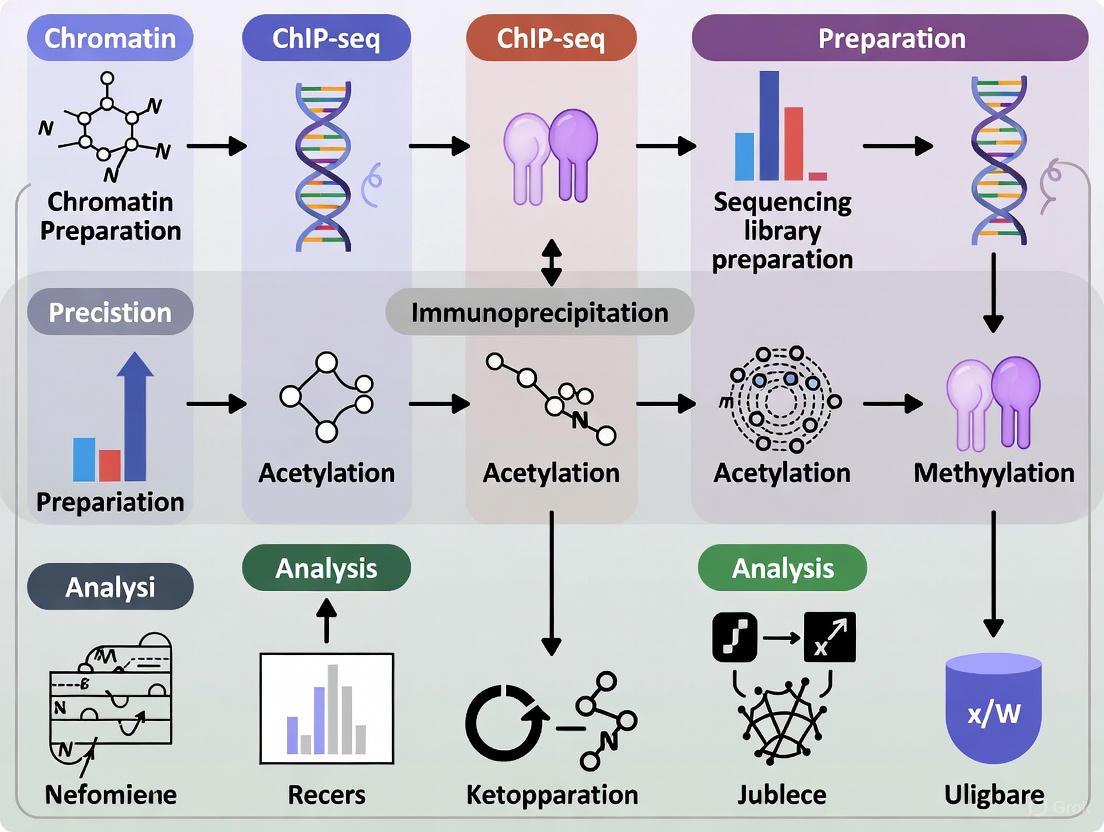
This article provides a comprehensive guide for researchers and drug development professionals on optimizing Chromatin Immunoprecipitation followed by sequencing (ChIP-seq) for histone modification analysis.
Optimized ChIP-seq for Histone Modifications: A Complete Guide from Foundational Principles to Advanced Applications
Abstract
This article provides a comprehensive guide for researchers and drug development professionals on optimizing Chromatin Immunoprecipitation followed by sequencing (ChIP-seq) for histone modification analysis. It covers foundational epigenetic principles, detailed methodological protocols for diverse sample types including challenging solid tissues, systematic troubleshooting for common issues like high background and low signal, and rigorous data validation standards as defined by the ENCODE consortium. The content integrates the latest refinements in tissue processing, low-input methods such as carrier ChIP-seq, and differential analysis tools to enable robust, reproducible epigenomic profiling in both basic research and clinical contexts.
Understanding Histone Modifications and ChIP-seq Fundamentals
The Biochemical Language of the Histone Code
The concept of an "epigenetic landscape" was first introduced by embryologist Conrad Waddington in 1942 to describe how genes interact with their environment to bring about phenotypic outcomes during development [1]. Today, epigenetics is understood as the study of heritable changes in gene expression that do not involve alterations to the underlying DNA sequence. The histone code represents a crucial epigenetic mechanism wherein chemical modifications to histone proteins serve as a sophisticated biochemical language that regulates chromatin structure and genome function.
Histones are the fundamental protein components of chromatin, around which DNA is wrapped to form nucleosomes—the basic repeating units of chromatin structure. Each nucleosome consists of an octamer of core histone proteins (H2A, H2B, H3, and H4) [1]. The N-terminal tails of these histones extend outward from the nucleosome core, serving as platforms for diverse post-translational modifications (PTMs) including methylation, acetylation, phosphorylation, ubiquitylation, and SUMOylation [2] [1].
These modifications mediate their effects through two primary mechanisms: by altering the electrostatic charge of histones, thereby changing chromatin structure and DNA-binding properties; or by creating docking sites for protein recognition modules that recruit chromatin-modifying complexes [2]. Specific histone modifications are associated with distinct chromatin states and functions—H3K27ac and H3K4me3 typically mark active promoters and enhancers, while H3K27me3 and H3K9me3 characterize repressed heterochromatic regions [1]. The dysregulation of these modification patterns is implicated in various human diseases, including cancer, making their precise mapping essential for understanding both normal development and disease pathogenesis [2] [1].
Advanced Sequencing Technologies for Mapping the Histone Code
Chromatin Immunoprecipitation Followed by Sequencing (ChIP-seq)
ChIP-seq has served as the cornerstone technique for genome-wide mapping of histone modifications since its development in 2007 [1]. The standard protocol involves: (1) cross-linking proteins to DNA using formaldehyde; (2) chromatin fragmentation by sonication or enzymatic digestion; (3) immunoprecipitation with modification-specific antibodies; (4) DNA purification and library preparation; and (5) high-throughput sequencing [3]. Despite its widespread adoption, traditional ChIP-seq faces limitations including substantial input requirements, cross-linking artifacts, and background noise from antibody nonspecificity [1].
Recent methodological advances have substantially improved the resolution, specificity, and quantitative capabilities of histone modification mapping:
Table 1: Advanced Methods for Histone Modification Mapping
| Method | Key Features | Advantages Over Traditional ChIP-seq | Primary Applications |
|---|---|---|---|
| MINUTE-ChIP [4] | Multiplexed barcoding before IP | Enables quantitative comparison of 12 samples simultaneously; eliminates experimental variation | High-throughput screening across multiple conditions |
| CUT&Tag [1] | Antibody-targeted tagmentation | Higher resolution (~20 bp); lower background; suitable for single-cell analysis | Mapping histone modifications in rare cell populations |
| CUT&RUN [1] | Antibody-guided MNase cleavage | In situ mapping; minimal background; requires fewer cells | Mapping histone marks in low-input samples |
| dxChIP-seq [5] | Double-crosslinking protocol | Enhanced detection of indirect chromatin binders; improved signal-to-noise ratio | Challenging chromatin factors and complex tissues |
| ChIP-nexus [6] | Exonuclease digestion with efficient circularization | Near nucleotide resolution; minimal amplification artifacts | Precise transcription factor footprinting alongside histones |
Quantitative Normalization Strategies for ChIP-seq
A significant challenge in comparative ChIP-seq analysis is the normalization of signals across samples to enable meaningful biological interpretations. Spike-in normalization, which involves adding exogenous chromatin from a different species as a quantitative reference, has been widely used but shows limitations in reliability and mathematical rigor [7].
The recently developed siQ-ChIP (sans spike-in quantitative ChIP) method provides an alternative approach that measures absolute immunoprecipitation efficiency genome-wide without requiring exogenous controls [7]. This method explicitly accounts for critical experimental factors including antibody behavior, chromatin fragmentation efficiency, and input DNA quantification—reinforcing fundamental ChIP-seq best practices while providing mathematically robust normalization.
Optimized ChIP-seq Protocol for Histone Modifications
Sample Preparation and Chromatin Fragmentation
The foundation of successful ChIP-seq begins with proper sample preparation. For histone modifications, the protocol can be performed on either native or cross-linked chromatin, with specific considerations for each approach [4]. The double-crosslinking dxChIP-seq protocol has demonstrated particular utility for challenging chromatin targets, employing sequential crosslinking with disuccinimidyl glutarate (DSG) followed by formaldehyde to stabilize both direct and indirect protein-DNA interactions [5].
Critical Step: Chromatin Fragmentation
- Sonication: Applied to cross-linked samples; produces random fragments of 100-300 bp [3]. Optimal for transcription factors and histone marks in linker regions.
- Micrococcal Nuclease (MNase) Digestion: Preferentially degrades linker DNA, yielding uniform mononucleosome-sized fragments (∼147 bp) [8]. Provides higher resolution for nucleosome-positioned histone modifications.
Immunoprecipitation and Library Preparation
Antibody specificity remains the most critical factor determining ChIP-seq success. The ENCODE consortium has established rigorous validation guidelines requiring that the primary reactive band in immunoblot analyses contains at least 50% of the total signal, ideally corresponding to the expected size of the target protein or modification [3].
The MINUTE-ChIP protocol introduces a revolutionary approach by barcoding chromatin samples from different conditions before immunoprecipitation, enabling multiplexed processing of up to 12 samples in parallel [4]. This strategy not only increases throughput but also eliminates inter-experimental variability, allowing for precise quantitative comparisons across conditions.
For library preparation, the ChIP-nexus protocol significantly improves mapping resolution by incorporating a unique barcoding system and efficient DNA circularization step, requiring only one successful ligation per DNA fragment rather than the two needed in conventional protocols [6]. This results in higher quality libraries with reduced amplification artifacts.
Computational Analysis and Differential Binding
The analysis of ChIP-seq data requires specialized computational tools tailored to different biological questions. A comprehensive assessment of 33 differential ChIP-seq analysis tools revealed that performance is strongly dependent on peak characteristics and biological context [9].
Table 2: Computational Tools for Differential ChIP-seq Analysis
| Tool Category | Representative Tools | Optimal Use Cases | Performance Considerations |
|---|---|---|---|
| Peak-dependent Tools | bdgdiff (MACS2), MEDIPS, PePr | Transcription factors, sharp histone marks (H3K4me3, H3K27ac) | Require external peak calling; performance affected by peak size |
| Peak-independent Tools | csaw, GenoGAM | Broad histone marks (H3K27me3, H3K36me3) | Handle peak calling internally; more consistent across peak types |
| Scenario-specific Tools | NarrowPeaks, uniquepeaks | Global changes (e.g., inhibitor treatments) | Performance varies by regulation scenario (50:50 vs. 100:0 changes) |
Tools such as bdgdiff (MACS2), MEDIPS, and PePr have demonstrated the highest median performance across diverse scenarios, though optimal tool selection should be guided by the specific biological question and the expected binding pattern changes [9].
The Scientist's Toolkit: Essential Research Reagent Solutions
Table 3: Essential Research Reagents for ChIP-seq Experiments
| Reagent Category | Specific Examples | Function & Importance | Technical Considerations |
|---|---|---|---|
| Crosslinking Agents | Formaldehyde, Disuccinimidyl Glutarate (DSG) | Stabilize protein-DNA interactions | Double-crosslinking (dxChIP-seq) enhances indirect binding detection [5] |
| Chromatin Fragmentation Reagents | Micrococcal Nuclease (MNase), Sonication systems | Fragment chromatin to appropriate size | MNase preferred for histone modifications; sonication for transcription factors [8] |
| Validated Antibodies | H3K27ac, H3K4me3, H3K27me3, H3K9me3 | Specific enrichment of target epitopes | Require rigorous validation; ≥50% specific signal in immunoblots [3] |
| Barcoding Adapters | MINUTE-ChIP barcodes, Unique Molecular Identifiers (UMIs) | Sample multiplexing and PCR duplicate removal | Enable multiplexed quantitative comparisons [4] |
| Spike-in Controls | S. pombe chromatin, Drosophila chromatin | Normalization reference for quantitative comparisons | Limitations in reliability; siQ-ChIP provides mathematical alternative [7] |
| Library Preparation Kits | Illumina-compatible, Tn5-based tagmentation | Preparation of sequencing libraries | ChIP-nexus improves efficiency via circularization [6] |
Future Perspectives in Histone Code Research
The field of epigenetic mapping continues to evolve with emerging technologies that promise to overcome current limitations. Third-generation sequencing platforms offer potential solutions for long-read epigenetic analysis but still face challenges in accuracy and cost-effectiveness compared to next-generation sequencing [1]. The development of antibody-free approaches for base-resolution mapping of histone modifications represents an exciting frontier that could eliminate the specificity issues inherent to antibody-based methods.
The integration of multiplexed quantitative approaches like MINUTE-ChIP with advanced normalization strategies such as siQ-ChIP provides a powerful framework for future studies of the histone code [4] [7]. As these technologies mature, they will enable increasingly sophisticated investigations into how combinatorial histone modification patterns regulate gene expression programs in development, physiology, and disease—ultimately fulfilling the potential of epigenetics as a diagnostic and therapeutic target in human health.
Core Principle of Chromatin Immunoprecipitation (ChIP)
Chromatin Immunoprecipitation (ChIP) is an antibody-based technology used to selectively enrich specific DNA-binding proteins along with their DNA targets, providing a snapshot of protein-DNA interactions within their native chromatin context [10] [11]. This technique enables researchers to investigate a particular protein-DNA interaction, several interactions, or interactions across the entire genome, offering critical insights into gene regulatory mechanisms [10]. The fundamental principle behind ChIP involves using antibodies to isolate, or precipitate, a specific protein, histone, transcription factor, or cofactor and its bound chromatin from a protein mixture extracted from cells or tissues [10]. The immunoprecipitated DNA fragments are subsequently identified and quantified using various downstream analytical methods including quantitative PCR (qPCR), microarray (ChIP-chip), or next-generation sequencing (ChIP-seq) [12] [11].
ChIP has revolutionized our understanding of epigenetic regulation, particularly in studying post-translational modifications (PTMs) of histones that influence chromatin structure and gene expression [12] [11]. These modifications—including methylation, acetylation, phosphorylation, and ubiquitination—serve as epigenetic marks that dynamically regulate gene expression without altering the underlying DNA sequence [12] [11]. The technique's versatility allows applications ranging from mapping transcription factor binding sites to profiling histone modifications across the genome, making it indispensable for understanding transcriptional regulation in development, disease, and normal cellular physiology [13] [14].
Core Principles and Methodology
Fundamental Workflow
The ChIP procedure follows a systematic workflow designed to preserve and capture transient protein-DNA interactions occurring in living cells. The process begins with in vivo crosslinking to stabilize these interactions, followed by cell lysis, chromatin fragmentation, immunoprecipitation with specific antibodies, and finally, analysis of the enriched DNA [12] [10]. This workflow enables researchers to obtain a snapshot of protein-DNA interactions at a specific time point under defined physiological conditions [12].
Table 1: Key Steps in the ChIP Workflow
| Step | Key Objective | Critical Parameters |
|---|---|---|
| Crosslinking | Covalently stabilize protein-DNA complexes | Formaldehyde concentration and duration; requires quenching [12] |
| Cell Lysis | Dissolve membranes, liberate cellular components | Detergent-based lysis; protease/phosphatase inhibitors essential [12] |
| Chromatin Fragmentation | Shear chromatin into workable fragments | Fragment size (200-1000 bp); sonication or enzymatic digestion [12] [10] |
| Immunoprecipitation | Enrich target protein-DNA complexes | Antibody specificity and concentration; incubation time [12] [10] |
| DNA Purification | Reverse crosslinks and purify DNA | Proteinase K treatment; DNA cleanup methods [15] |
| Downstream Analysis | Identify and quantify enriched DNA | qPCR, microarray, or next-generation sequencing [10] [11] |
ChIP Variants: Native versus Crosslinked Approaches
Researchers can employ two primary ChIP variations depending on their experimental goals: crosslinked ChIP (X-ChIP) and native ChIP (N-ChIP). Each approach offers distinct advantages and limitations, making them suitable for different applications [10] [11].
In X-ChIP, chemical fixatives such as formaldehyde are used to crosslink the protein of interest to DNA, preserving transient interactions [10]. Chromatin fragmentation is typically achieved through sonication or nuclease digestion [10]. The key advantage of X-ChIP is its broad applicability to both histone and non-histone proteins, including transcription factors, while minimizing the loss of chromatin proteins during extraction [10]. However, this method suffers from less efficient precipitation and requires DNA amplification for downstream analyses [10].
In contrast, N-ChIP uses unfixed chromatin isolated from cell nuclei digested with nuclease, without crosslinking agents [10] [11]. This approach offers better antibody recognition to their target antigens since antibodies are raised against unfixed epitopes [10]. While N-ChIP is ideal for studying strong histone-DNA interactions due to the inherent stability of these complexes, it is generally unsuitable for analyzing transcription factors and cofactors, as it may lead to loss of protein binding during chromatin processing [10].
Antibody Selection: The Foundation of Specificity
Antibody selection represents one of the most critical factors in ChIP experimental design [12]. The ideal antibody must recognize its target epitope in the context of crosslinked and fragmented chromatin while exhibiting minimal cross-reactivity with related epitopes [12]. For example, an antibody targeting histone H3 lysine 9 dimethylation (H3K9me2) should not significantly recognize the monomethyl (H3K9me1) or trimethyl (H3K9me3) forms, as these marks can be associated with opposing transcriptional outcomes [12].
Researchers can choose between monoclonal, oligoclonal, and polyclonal antibodies, each offering distinct advantages [12]. Monoclonal antibodies provide superior specificity but may recognize a single epitope that could be buried in crosslinked chromatin [12]. Polyclonal and oligoclonal antibodies recognize multiple epitopes, potentially increasing the chance of successful immunoprecipitation, but require thorough validation to ensure specificity [12]. For targets without suitable antibodies available, alternative approaches include tagging the target with epitopes such as Myc, His, HA, T7, GST, or V5 [12].
ChIP-Seq: Genome-Wide Mapping of Protein-DNA Interactions
From ChIP to ChIP-Seq: Technological Evolution
ChIP-sequencing (ChIP-Seq) represents the integration of chromatin immunoprecipitation with massive parallel sequencing technologies, enabling genome-wide profiling of protein-DNA interactions [15] [11]. This powerful combination provides a comprehensive snapshot of transcription factor binding sites, histone modifications, and other regulatory elements across the entire genome [15]. The method has largely superseded earlier approaches like ChIP-chip (which used microarrays) due to its higher resolution, greater coverage, reduced background noise, and increased dynamic range [15].
The ChIP-Seq process builds upon the standard ChIP protocol but incorporates additional steps to prepare sequencing libraries from the immunoprecipitated DNA [16] [13]. Following DNA purification, fragments undergo end-repair, A-tailing, and adapter ligation to create a library compatible with next-generation sequencing platforms [16] [13]. The prepared library is then sequenced, generating millions of short reads that are subsequently aligned to a reference genome to identify regions of significant enrichment [15].
ChIP-Seq Applications in Histone Modification Research
ChIP-Seq has become the method of choice for comprehensive epigenomic studies, particularly for mapping histone modifications associated with distinct chromatin states [13]. Different histone modifications correlate with specific functional genomic elements, creating a "histone code" that influences gene expression patterns [13]. For example:
- H3K4me3 marks active gene promoters [13]
- H3K4me1 identifies transcriptional enhancers [13]
- H3K36me3 covers transcribed regions of the genome [13]
- H3K27me3 and H3K9me3 are associated with repressed chromatin states [13]
Knowing the genome-wide pattern of these histone modifications provides crucial information about cell identity and disease states [13]. The ENCODE Consortium and Roadmap Epigenomics Project have established standardized pipelines for processing histone ChIP-Seq data, enabling comparative analyses across cell types and conditions [17].
Table 2: Key Histone Modifications and Their Functional Associations
| Histone Mark | Chromatin State | Genomic Location | Function |
|---|---|---|---|
| H3K4me3 | Active | Promoters | Gene activation [13] |
| H3K4me1 | Active | Enhancers | Enhancer activation [13] |
| H3K9ac | Active | Promoters/Enhancers | Transcription activation [13] |
| H3K27ac | Active | Enhancers/Promoters | Active enhancers/promoters [13] |
| H3K36me3 | Active | Gene bodies | Transcriptional elongation [13] |
| H3K27me3 | Repressive | Promoters | Facultative heterochromatin [13] |
| H3K9me3 | Repressive | Constitutive heterochromatin | Transcriptional repression [13] |
Advanced ChIP-Seq Methodologies
Recent technological advancements have addressed several limitations of conventional ChIP-Seq approaches, particularly regarding quantitative comparisons and sample throughput. MINUTE-ChIP (Multiplexed Quantitative Chromatin Immunoprecipitation Sequencing) represents one such innovation, enabling profiling of multiple samples against multiple epitopes in a single workflow [18]. This multiplexed approach not only dramatically increases throughput but also facilitates accurate quantitative comparisons across conditions [18].
The MINUTE-ChIP protocol involves sample barcoding before pooling and splitting into parallel immunoprecipitation reactions, followed by preparation of next-generation sequencing libraries from both input and immunoprecipitated DNA [18]. This methodology empowers researchers to perform ChIP-Seq experiments with appropriate numbers of replicates and control conditions, delivering more statistically robust and biologically meaningful results [18].
Optimized ChIP Protocols for Histone Modification Research
Tissue-Specific Protocol Optimization
Performing ChIP assays on solid tissues presents unique technical challenges, including tissue heterogeneity, complex cell matrices, and difficulties in chromatin fragmentation [16]. Recent protocols have addressed these limitations through optimized procedures for tissue preparation, chromatin extraction, and immunoprecipitation [16] [19]. For frozen tissue samples, proper preparation begins with mincing frozen tissues under cold conditions, followed by homogenization using either a semi-automated gentleMACS Dissociator or a manual Dounce tissue grinder [16].
The refined tissue ChIP-seq protocol incorporates several key improvements: (1) simplified and efficient procedures for tissue preparation; (2) optimized chromatin extraction methods preserving tissue-specific chromatin features; (3) enhanced immunoprecipitation steps with optimized buffer composition and washing steps to minimize background; and (4) library construction compatible with multiple sequencing platforms [16]. These optimizations enable highly reproducible, sensitive, and scalable analysis of disease-relevant chromatin states in vivo, particularly valuable for cancer research using clinical specimens [16] [19].
Critical Experimental Parameters and Controls
Successful ChIP experiments require careful optimization of several key parameters and implementation of appropriate controls. Crosslinking time represents one of the most critical variables needing empirical determination, as over-fixation can reduce antigen accessibility and hinder chromatin fragmentation, while under-fixation may fail to preserve transient interactions [12] [14]. Similarly, chromatin fragmentation must be optimized to achieve ideal fragment sizes of 200-1000 base pairs, whether using sonication or enzymatic approaches [12] [10].
Essential controls for ChIP experiments include:
- No-antibody control (mock IP) for each IP performed [12]
- Positive control region known to be enriched for the target [12]
- Negative control region not expected to be enriched [12]
- Input DNA representing the whole chromatin sample before IP [12]
- Biological replicates to ensure reproducibility [17]
For ChIP-Seq experiments, the ENCODE Consortium has established specific quality standards, including library complexity metrics (NRF > 0.9, PBC1 > 0.9, PBC2 > 10) and sequencing depth requirements (20 million usable fragments per replicate for narrow histone marks, 45 million for broad marks) [17].
The Scientist's Toolkit: Essential Research Reagents
Table 3: Key Research Reagent Solutions for ChIP Experiments
| Reagent/Category | Specific Examples | Function and Importance |
|---|---|---|
| Crosslinking Reagents | Formaldehyde, EGS, DSG | Covalently stabilize protein-DNA interactions; formaldehyde most common [12] |
| Cell Lysis Buffers | RIPA buffer, Commercial kits | Dissolve membranes, liberate cellular components; protease inhibitors essential [12] [14] |
| Chromatin Shearing | Sonication (Bioruptor), Enzymatic (MNase) | Fragment chromatin; sonication provides random fragments, MNase gives precise nucleosomal cleavage [12] [10] |
| Specific Antibodies | H3K4me3 (CST #9751S), H3K27me3 (CST #9733S) | Target-specific immunoprecipitation; require ChIP-grade validation [13] |
| Immunoprecipitation | Protein A/G magnetic beads | Capture antibody-target complexes; magnetic beads facilitate washing steps [14] |
| DNA Purification | Phenol-chloroform, Commercial kits | Purify DNA after reverse crosslinking; remove proteins and contaminants [15] |
| Library Preparation | Illumina, MGI-compatible kits | Prepare sequencing libraries; platform-specific protocols [16] |
Chromatin Immunoprecipitation remains a cornerstone technique for studying protein-DNA interactions in their native chromatin context. The core principle of using specific antibodies to isolate and analyze protein-bound DNA fragments has enabled unprecedented insights into gene regulatory mechanisms, particularly in the realm of histone modifications and epigenetics. While the fundamental workflow has remained consistent, ongoing methodological refinements—especially the integration with next-generation sequencing and development of multiplexed approaches—continue to expand ChIP's applications and quantitative capabilities.
The successful implementation of ChIP and ChIP-Seq requires careful attention to multiple experimental parameters, including crosslinking conditions, chromatin fragmentation, antibody specificity, and appropriate controls. The continued optimization of protocols, particularly for challenging samples like solid tissues, ensures that ChIP methodologies will remain essential tools for unraveling the complex landscape of gene regulation in health and disease. As sequencing technologies advance and become more accessible, ChIP-Seq is poised to remain the preferred method for comprehensive epigenomic studies, providing increasingly detailed insights into the fundamental mechanisms controlling gene expression.
ChIP-seq vs. Other Epigenomic Profiling Methods
Epigenomic profiling encompasses a suite of powerful techniques designed to map the molecular annotations on the genome that regulate gene expression without altering the underlying DNA sequence. These modifications include histone post-translational modifications, transcription factor binding, and DNA methylation, which collectively orchestrate chromatin architecture and cellular identity. Among the most widely used methods is Chromatin Immunoprecipitation followed by sequencing (ChIP-seq), a targeted approach for mapping the genomic binding sites of specific proteins. However, to fully understand the epigenetic landscape, ChIP-seq is often used in conjunction with other, broader profiling techniques such as those for analyzing DNA methylation.
The choice of epigenomic method is critical and depends on the specific biological question, the required resolution, and practical considerations such as sample type, DNA input, and cost. This article provides a detailed comparison of these methods, with a specific focus on presenting an optimized ChIP-seq protocol for histone modification studies, framed within the context of a broader research thesis. The protocols and application notes are designed to guide researchers and drug development professionals in selecting and implementing the most appropriate epigenomic tools for their investigative needs.
Comparative Analysis of Epigenomic Profiling Techniques
DNA Methylation Profiling Methods
While ChIP-seq targets protein-DNA interactions, understanding DNA methylation provides a complementary layer of epigenetic information. A 2025 comparative evaluation assessed four key DNA methylation detection approaches, revealing distinct strengths and limitations for each [20].
Table 1: Comparison of Genome-Wide DNA Methylation Detection Methods
| Method | Core Principle | Resolution | Key Advantages | Key Limitations |
|---|---|---|---|---|
| Whole-Genome Bisulfite Sequencing (WGBS) | Bisulfite conversion of unmodified cytosines | Single-base | Considered the gold standard; assesses nearly every CpG site | DNA degradation; high cost; data analysis challenges [20] |
| Illumina MethylationEPIC Microarray | Bisulfite conversion followed by hybridization to probes | Single-base (but only at pre-defined sites) | Cost-effective; easy, standardized data processing | Interrogates only a pre-designed set of ~935,000 CpG sites [20] |
| Enzymatic Methyl-Sequencing (EM-seq) | Enzymatic conversion and protection of methylated cytosines | Single-base | Preserves DNA integrity; high concordance with WGBS; lower DNA input | Relatively newer method [20] |
| Oxford Nanopore Technologies (ONT) Sequencing | Direct detection via electrical signal changes in nanopores | Single-base | Long-read sequencing enables haplotype-resolution; no conversion needed | Requires high DNA input; lower agreement with WGBS/EM-seq in some comparisons [20] |
The study found that EM-seq showed the highest concordance with the established WGBS method and offered more uniform coverage, while ONT sequencing excelled in capturing methylation in challenging genomic regions and providing long-range information [20]. Despite substantial overlap, each method uniquely identified a set of CpG sites, underscoring their complementary nature in exploring the methylome.
Positioning of ChIP-seq in the Epigenomic Toolkit
ChIP-seq occupies a distinct and crucial niche in the epigenomic toolkit. Unlike the methods described above that directly probe DNA modification, ChIP-seq is designed to investigate protein-DNA interactions. This makes it indispensable for mapping the genomic occupancy of transcription factors, specific histone modifications (e.g., H3K27ac, H3K4me3), and other chromatin-associated proteins. The fundamental principle involves cross-linking proteins to DNA, fragmenting the chromatin, immunoprecipitating the protein-DNA complexes with a specific antibody, and then sequencing the bound DNA fragments.
The choice between a method like ChIP-seq and a DNA methylation profiling technique is therefore dictated by the biological target. A researcher studying enhancer activation would select ChIP-seq for H3K27ac, while an investigator examining imprinting disorders might prioritize a DNA methylation method. Furthermore, these techniques can be integrated in multi-omics approaches to build a comprehensive model of gene regulation.
Optimized ChIP-seq Protocol for Histone Modifications
Refined Protocol for Solid Tissues
Performing ChIP-seq on solid tissues presents unique challenges, including cellular heterogeneity, complex extracellular matrices, and difficulty in chromatin fragmentation. A 2025 refined protocol addresses these hurdles with optimized procedures for tissue preparation, chromatin immunoprecipitation, and library construction, making it highly suitable for histone modification research in physiologically relevant contexts like colorectal cancer [19].
Table 2: Key Research Reagent Solutions for ChIP-seq in Solid Tissues
| Research Reagent | Function in the Protocol |
|---|---|
| Specific Antibodies | Immunoprecipitation of cross-linked protein-DNA complexes; crucial for specificity and signal-to-noise ratio. |
| Chromatin Extraction Kit | Isolation of high-quality, intact chromatin from complex tissue matrices. |
| Library Preparation Kit | Preparation of sequencing-ready libraries from immunoprecipitated DNA; compatible with the sequencing platform. |
| DNBSEQ-G99RS Platform | A sequencing platform (e.g., from MGI) used for generating high-quality data from the prepared libraries [19]. |
| Cross-linking Agent (e.g., Formaldehyde) | Stabilizes protein-DNA interactions in their native state within the tissue. |
| Cell Lysis & Chromatin Shearing Buffers | Cell lysis and fragmentation of cross-linked chromatin to an optimal size for sequencing. |
The following workflow diagram outlines the key stages of this optimized protocol:
Quantitative ChIP-seq Data Processing
A critical step after sequencing is the accurate processing and normalization of data to enable meaningful biological comparisons. A 2025 protocol emphasizes the use of the sans spike-in quantitative ChIP (siQ-ChIP) method for absolute quantification of immunoprecipitation efficiency and normalized coverage for relative comparisons [21]. This approach overcomes the limitations of traditional spike-in normalization by providing a mathematically rigorous framework that relies on fundamental experimental parameters like antibody behavior, chromatin fragmentation efficiency, and input DNA quantification [21].
Table 3: Essential Software Tools for ChIP-seq Data Processing
| Software Tool | Function | Recommended Version/OS |
|---|---|---|
| Atria | Read preprocessing and trimming | 4.0.3 (macOS, Linux) [21] |
| Bowtie2 | Alignment of sequenced reads to a reference genome | 2.5.4 (macOS, Linux) [21] |
| Samtools | Processing and manipulation of alignment files | 1.21 (macOS, Linux) [21] |
| IGV (Integrative Genomics Viewer) | Visualization of genome-wide ChIP-seq signals | 2.19.1 (macOS) [21] |
| Julia / Python | Programming languages for running custom siQ-ChIP scripts | Julia 1.8.5; Python 3.12.7 [21] |
The bioinformatic workflow for processing ChIP-seq data, from raw reads to quantitative signals, can be visualized as follows:
Advanced Applications and Integrative Analyses
Differential ChIP-seq Analysis
A common goal in epigenomics is to compare protein binding or histone modification levels between biological states (e.g., disease vs. healthy, treated vs. untreated). This is known as differential ChIP-seq (DCS) analysis. A comprehensive 2022 benchmark of 33 computational tools for DCS revealed that tool performance is highly dependent on the shape of the ChIP-seq signal and the biological regulation scenario [9].
- Peak Shapes: Transcription factors (TFs) produce "sharp" peaks over narrow genomic regions. Histone marks like H3K27ac also produce "sharp" peaks, while marks like H3K27me3 and H3K36me3 produce "broad" domains that can span large genomic regions [9].
- Regulation Scenarios: Performance varies between scenarios where some peaks increase and others decrease (50:50 ratio) versus scenarios involving a global loss of signal (100:0 ratio), as seen after protein inhibition or knockout [9].
- Tool Recommendations: The study found that performance was not dominated by a single tool. Instead, tools like bdgdiff (MACS2), MEDIPS, and PePr showed robust median performance, but the optimal tool choice depends on the specific experimental context [9].
Integration with Other Omics Data
ChIP-seq data gains maximum biological insight when integrated with other datasets. A prime example is a protocol that combines affinity purification mass spectrometry (AP-MS) with ChIP-seq to map transcription factor interactomes and composite DNA motifs [22]. This integrated approach allows for the concurrent identification of a transcription factor's protein interaction partners and its genomic binding sites, with each dataset validating and informing the other.
Another advanced application involves highly quantitative comparisons across different cell states or models. The PerCell method uses cellular spike-ins of orthologous species' chromatin combined with a bioinformatic pipeline to enable precise, normalized comparisons of ChIP-seq data across experimental conditions, such as between zebrafish embryos and human cancer cells [23].
The selection of an epigenomic profiling method is a strategic decision that directly impacts the quality and scope of biological insights. For mapping protein-DNA interactions, particularly histone modifications, ChIP-seq remains a cornerstone technique. The availability of optimized wet-lab protocols for challenging samples like solid tissues [19], coupled with robust and quantitative bioinformatic processing methods like siQ-ChIP [21], empowers researchers to generate high-quality, reproducible data.
The field is moving beyond simple mapping towards quantitative and integrative analyses. As benchmark studies show, the careful selection of differential analysis tools is paramount [9]. Furthermore, combining ChIP-seq with interactome data [22] or using advanced normalization for cross-species comparisons [23] represents the cutting edge. By understanding the comparative landscape of epigenomic methods and implementing the detailed protocols outlined herein, researchers can systematically unravel the complex epigenetic mechanisms underlying development, disease, and drug response.
Histone post-translational modifications (PTMs) are fundamental epigenetic mechanisms that regulate gene expression by altering chromatin structure without changing the underlying DNA sequence [24]. These modifications include methylation, acetylation, and phosphorylation of specific amino acid residues on histone tails, which influence whether chromatin adopts an open, transcriptionally active state or a closed, repressive state [24]. Among the numerous histone modifications, H3K4me3 (Histone H3 Lysine 4 trimethylation) and H3K27me3 (Histone H3 Lysine 27 trimethylation) represent two of the most widely studied marks with largely antagonistic functions [25] [26].
Chromatin Immunoprecipitation followed by sequencing (ChIP-seq) has revolutionized our ability to study these modifications genome-wide [17]. This powerful method combines the specificity of antibodies with the throughput of next-generation sequencing to map protein-DNA interactions and epigenetic landscapes [27]. For researchers and drug development professionals, understanding the precise distribution of H3K4me3 and H3K27me3 provides critical insights into gene regulatory networks disrupted in disease states and reveals potential therapeutic targets [24].
Characterizing Key Histone Modifications
Properties and Genomic Distributions
H3K4me3 and H3K27me3 represent opposing regulatory forces in epigenetic control, with distinct genomic distributions and functional consequences.
Table 1: Characteristics of H3K4me3 and H3K27me3 Histone Modifications
| Feature | H3K4me3 | H3K27me3 |
|---|---|---|
| Associated Chromatin State | Open, accessible chromatin | Closed, facultative heterochromatin |
| Transcriptional Influence | Activation | Repression |
| Primary Genomic Location | Active promoters [26] | Promoters of developmentally-regulated genes [26] |
| Depositing Enzyme | SET1/MLL family methyltransferases [24] | Polycomb Repressive Complex 2 (PRC2) [26] |
| Stability | Dynamic regulation | Relatively stable, maintenance of cellular memory [28] |
| Role in Development | Maintains pluripotency genes in active state [25] | Represses lineage-specific genes until differentiation [25] |
| Forensic Potential | Detectable in degraded samples [28] | Chemically stable in postmortem tissues [28] |
Functional Roles in Gene Regulation
The functional interplay between H3K4me3 and H3K27me3 creates a sophisticated regulatory system for precise developmental control. H3K4me3 establishes a permissive environment at promoters of actively transcribed genes and genes poised for activation, facilitating recruitment of transcription machinery [24]. H3K27me3 maintains stable, heritable transcriptional silencing of developmental genes, particularly those regulating cell fate decisions [26]. Remarkably, in some contexts including stem cells and early development, these apparently opposing marks can co-occur at the same genomic locations, creating "bivalent" domains that keep genes in a transcriptionally poised state—repressed but capable of rapid activation upon differentiation signals [29] [25] [26].
Recent research has revealed evolutionary conservation of H3K27me3 function in the closest living relatives of animals. In the choanoflagellate Salpingoeca rosetta, H3K27me3 decorates cell type-specific genes and marks transposable elements, suggesting dual roles in gene regulation and genome defense that predate animal multicellularity [26].
Optimized ChIP-Seq Experimental Design
Sample Preparation and Quality Control
Successful ChIP-seq begins with proper sample preparation. For histone modifications, cross-linked chromatin is typically sheared to 200-600 bp fragments using sonication, with optimized conditions required for challenging tissues like frozen adipose tissue with high lipid content [30]. Key quality metrics include:
- Chromatin Integrity: Assess fragment size distribution after shearing
- Antibody Specificity: Validate using peptide competition or knockout cells
- Input Control: Prepare matched input DNA (whole cell extract) for background subtraction [31]
The ENCODE consortium recommends specific quality thresholds including NRF > 0.9, PBC1 > 0.9, and PBC2 > 10 for library complexity [17]. For histone ChIP-seq, biological replicates are essential, with sequencing depth requirements of 20 million usable fragments for narrow marks (including H3K4me3) and 45 million for broad marks (including H3K27me3) per replicate [17].
Controls and Standards
Appropriate controls are critical for meaningful ChIP-seq data interpretation. The most common controls include:
- Whole Cell Extract (WCE): Also called "input," this sample undergoes shearing but no immunoprecipitation [31]
- Histone H3 Control: For histone modifications, an H3 pull-down maps overall nucleosome distribution [31]
- IgG Control: Non-specific antibody immunoprecipitation assesses background binding
Comparative studies indicate that H3 controls better account for nucleosome positioning biases in histone modification ChIP-seq, while WCE measures enrichment relative to uniform genomic background [31]. The ENCODE consortium provides rigorous antibody characterization standards and recommends matched control experiments with identical run type, read length, and replicate structure [17].
ChIP-seq Protocol for Histone Modifications
Chromatin Preparation and Immunoprecipitation
The following protocol has been optimized for histone modifications based on recent methodological advances [29] [30]:
Day 1: Cross-linking and Chromatin Preparation
- Cross-link cells or tissue with 1% formaldehyde for 8-12 minutes at room temperature
- Quench cross-linking with 125 mM glycine for 5 minutes
- Wash cells twice with cold PBS containing protease inhibitors (PIC, PMSF, NaBu)
- Resuspend cell pellet in Cell Lysis Buffer (5 mM PIPES, 85 mM KCl, 1% NP-40) and incubate 15 minutes on ice
- Pellet nuclei and resuspend in Nuclear Lysis Buffer (50 mM Tris-HCl, 10 mM EDTA, 1% SDS)
- Sonicate chromatin to 200-500 bp fragments using Bioruptor or Covaris sonicator
- Centrifuge at 13,000 rpm for 15 minutes at 4°C; collect supernatant
Day 2: Immunoprecipitation
- Dilute chromatin 10-fold in RIPA Zero-SDS Buffer (10 mM Tris-HCl, 140 mM NaCl, 1 mM EDTA, 0.5 mM EGTA, 0.1% sodium deoxycholate, 1% Triton X-100, 0.1% SDS)
- Pre-clear chromatin with Protein G beads for 1-2 hours at 4°C
- Incubate with histone modification-specific antibody (1-5 μg per reaction) overnight at 4°C with rotation
- Add pre-washed Protein G beads and incubate 4-6 hours at 4°C
- Wash beads sequentially with:
- Low Salt Wash Buffer (0.1% SDS, 1% Triton X-100, 2 mM EDTA, 20 mM Tris-HCl, 150 mM NaCl)
- High Salt Wash Buffer (0.1% SDS, 1% Triton X-100, 2 mM EDTA, 20 mM Tris-HCl, 500 mM NaCl)
- LiCl Wash Buffer (0.25 M LiCl, 1% NP-40, 1% sodium deoxycholate, 1 mM EDTA, 10 mM Tris-HCl)
- TE Buffer (10 mM Tris-HCl, 1 mM EDTA)
- Elute chromatin with Elution Buffer (1% SDS, 0.1 M NaHCO₃)
- Reverse cross-links overnight at 65°C with 200 mM NaCl
- Treat with RNase A and Proteinase K, then purify DNA with MinElute columns
Library Preparation and Sequencing
- Quantify recovered DNA using Qubit fluorometer
- Verify fragment size distribution with Agilent Bioanalyzer
- Prepare sequencing libraries using ThruPLEX DNA-Seq kit with unique dual indexes
- Amplify with 10-12 PCR cycles based on input amount
- Perform size selection with AMPure XP beads
- Validate final libraries by Bioanalyzer and qPCR
- Sequence on Illumina platform with 50+ bp single-end reads, aiming for 20-45 million reads per sample depending on mark [17]
ChIP-seq Experimental Workflow
Data Analysis and Quality Assessment
Processing Pipeline and Standards
The ENCODE consortium has established standardized processing pipelines for histone ChIP-seq data [17]. Key steps include:
- Read Mapping: Align reads to reference genome using appropriate tools (Bowtie2)
- Peak Calling: Identify significantly enriched regions using MACS2 or similar tools
- Signal Tracking: Generate fold-change over control and signal p-value tracks in bigWig format
- Quality Metrics: Calculate FRiP scores, library complexity, and reproducibility
For differential binding analysis, specialized tools like diffBind are recommended. The ROSALIND platform provides accessible ChIP-seq analysis without programming requirements, enabling interactive exploration of differential binding and pathway enrichment [27].
Troubleshooting Common Issues
Table 2: ChIP-seq Quality Control Metrics and Troubleshooting
| Quality Metric | Target Value | Potential Issue | Solution |
|---|---|---|---|
| Alignment Rate | >80% [27] | Poor sample quality or wrong reference | Check DNA degradation, verify genome build |
| Duplicate Rate | <25% [27] | Over-amplification or insufficient sequencing depth | Increase starting material, sequence deeper |
| FRiP Score | >1% for broad marks, >5% for narrow marks | Inefficient IP or poor antibody | Optimize antibody amount, verify antibody specificity |
| Peak Number | Mark-dependent | Under- or over-digestion | Optimize sonication conditions |
| Reproducibility | IDR < 0.05 | Technical or biological variability | Increase replicates, standardize protocols |
Advanced Applications and Emerging Technologies
Innovative Methodologies
Recent technological advances have expanded histone modification profiling capabilities:
- ChIP-reChIP: Enables investigation of bivalent histone modifications by performing sequential immunoprecipitations [29]
- EpiDamID: Uses antibody-directed methylation to profile histone modifications at single-cell resolution while simultaneously measuring transcription [32]
- CUT&Tag: An efficient alternative to ChIP-seq that uses antibody-directed tethering of Tn5 transposase for low-input profiling [28]
- RPPA (Reverse Phase Protein Array): Enables high-throughput quantification of histone PTMs across hundreds of samples [24]
Research Reagent Solutions
Table 3: Essential Research Reagents for Histone Modification Studies
| Reagent Category | Specific Examples | Function | Considerations |
|---|---|---|---|
| Antibodies | H3K4me3 (Active Motif), H3K27me3 (Millipore) | Target-specific immunoprecipitation | Validate specificity using peptide competition [31] |
| Chromatin Shearing | Covaris sonicator, Bioruptor | Fragment chromatin to optimal size | Optimize for cell/tissue type; 200-500 bp ideal [30] |
| Library Prep | ThruPLEX DNA-Seq kit, TruSeq DNA Sample Prep | Prepare sequencing libraries | Select kits compatible with low-input DNA [30] |
| Enzyme Inhibitors | PIC, PMSF, NaBu | Preserve histone modifications during processing | Include HDAC inhibitors (NaBu) for acetylation marks [30] |
| Magnetic Beads | Dynabeads Protein G | Antibody capture and washing | More consistent than agarose beads for low-abundance targets |
Research Applications and Case Studies
Biological Insights from Histone Modification Studies
Comprehensive profiling of H3K4me3 and H3K27me3 has yielded fundamental insights across diverse biological systems:
In chicken germline specification, researchers discovered that H3K4me3 depletion facilitates the transition of bivalent chromatin states toward repression, enabling proper germ cell differentiation [25]. Experimental inhibition of H3K4me3 deposition enhanced primordial germ cell-like cell (PGCLC) induction efficiency by repressing BMP signaling antagonists [25].
Evolutionary studies in choanoflagellates revealed that H3K27me3 marks both cell type-specific genes and transposable elements, suggesting an ancestral dual role in gene regulation and genome defense that predates animal multicellularity [26]. These findings indicate the deep evolutionary conservation of these key regulatory modifications.
Emerging forensic applications leverage the chemical stability of histone modifications in degraded samples. H3K4me3 and H3K27me3 show promise for differentiating monozygotic twins, estimating postmortem intervals, and analyzing compromised biological evidence [28].
Therapeutic Implications
The reversible nature of histone modifications makes them attractive therapeutic targets. Small molecule inhibitors targeting histone-modifying enzymes have shown promise in clinical contexts [24]:
- EZH2 inhibitors target H3K27me3 deposition and are being evaluated in clinical trials for cancer therapy [24]
- Bromodomain inhibitors disrupt reading of acetylated histones to modulate oncogene expression [24]
- Histone demethylase inhibitors of LSD1/LSD2 (H3K4me demethylases) can reactivate silenced tumor suppressor genes [24]
The ability to profile these modifications through optimized ChIP-seq protocols enables monitoring of therapeutic efficacy and identification of epigenetic biomarkers for patient stratification.
H3K4me3 and H3K27me3 represent pivotal counterbalancing forces in epigenetic regulation of gene expression. The continuous refinement of ChIP-seq methodologies—from sample preparation through data analysis—has dramatically enhanced our resolution for mapping these modifications genome-wide. As single-cell and low-input technologies mature, and as computational methods grow more sophisticated, our ability to decipher the complex interplay between these histone marks will continue to accelerate.
For researchers and drug development professionals, mastering these protocols provides powerful tools for uncovering disease mechanisms, identifying novel therapeutic targets, and developing epigenetic biomarkers. The integration of histone modification profiling into multi-omics approaches promises to further illuminate the dynamic regulatory networks that govern cellular identity and function in health and disease.
The Encyclopedia of DNA Elements (ENCODE) and its model organism counterpart (modENCODE) represent large-scale collaborative research initiatives funded by the National Human Genome Research Institute (NHGRI) with the primary goal of building a comprehensive parts list of functional elements in human and model organism genomes [33] [34]. Launched in 2003, ENCODE was designed as a natural successor to the Human Genome Project, addressing the critical challenge that while only approximately 1% of the human genome codes for proteins, the vast majority exhibits biochemical activity and requires systematic functional characterization [35] [36]. These consortia bring together hundreds of researchers from dozens of institutions worldwide to establish standardized methods, rigorous quality metrics, and centralized data resources for the genomics community [36] [33].
The establishment of standardized ChIP-seq guidelines emerged as a critical need within these consortia as the technology became the method of choice for mapping protein-DNA interactions genome-wide [37] [3]. Before these standardized frameworks, considerable differences existed in how ChIP-seq experiments were conducted, scored, evaluated for quality, and archived, significantly affecting data quality, utility, and cross-study comparability [3]. The ENCODE and modENCODE consortia have performed more than a thousand individual ChIP-seq experiments for over 140 different factors and histone modifications across more than 100 cell types in humans, mice, Drosophila melanogaster, and Caenorhabditis elegans, providing an extensive empirical foundation for developing evidence-based guidelines [3]. These guidelines address critical experimental parameters including antibody validation, experimental replication, sequencing depth, data reporting, and quality assessment, creating a robust framework that has significantly enhanced the reliability and reproducibility of ChIP-seq data, particularly for profiling histone modifications [37] [17].
Experimental Design and Quality Control Framework
Antibody Validation and Characterization
The quality of any ChIP-seq experiment is fundamentally governed by the specificity of the antibody employed in the immunoprecipitation step [3]. The ENCODE consortium has established a rigorous two-test framework for antibody characterization—a primary and secondary test—that must be performed for each monoclonal antibody or different lots of the same polyclonal antibody [3]. For antibodies directed against transcription factors, immunoblot analysis serves as the primary characterization method, with the guideline that the primary reactive band should contain at least 50% of the signal observed on the blot and ideally correspond to the expected size of the target protein [3]. When immunoblot analysis proves unsuccessful, immunofluorescence demonstrating expected nuclear localization patterns serves as an acceptable alternative primary characterization method [3].
For histone modifications, the consortium's standards require demonstrating that the antibody specifically recognizes the intended modified histone without cross-reacting to similar epitopes or unmodified histones [17]. This characterization includes dot blot assays using a panel of modified and unmodified peptides to establish specificity [17]. The metadata pertaining to antibodies, including source, product number, and most critically, the specific lot number, must be comprehensively recorded due to potential lot-to-lot variation in specificity and sensitivity [38]. This rigorous validation framework ensures that the reagents used in ChIP-seq experiments provide specific and reproducible enrichment of the intended targets, forming the foundation for reliable histone modification mapping.
Experimental Replication and Controls
The ENCODE guidelines mandate the inclusion of two or more biological replicates for all ChIP-seq experiments to ensure findings are reproducible and not attributable to technical artifacts or random biological variation [17]. Biological replicates are defined as independent samples prepared and processed through the entire experimental workflow separately, providing measures of both technical and biological variability [3]. This replication strategy allows for statistical assessment of reproducibility and provides confidence in the identified binding sites or modification domains.
Additionally, each ChIP-seq experiment must include a corresponding input control experiment with matching run type, read length, and replicate structure [17]. The input control consists of genomic DNA that has been cross-linked and fragmented similarly to the ChIP sample but without immunoprecipitation, serving to control for technical biases introduced during sample processing, sequencing, and analysis, such as those arising from chromatin accessibility, DNA fragmentation, and amplification [3] [17]. For experiments where specific histone modifications are being investigated, the use of matched input controls is particularly critical for distinguishing true enrichment from background signal in different genomic regions [17].
Table 1: ENCODE Experimental Replication and Control Requirements
| Component | Requirement | Purpose | Quality Metrics |
|---|---|---|---|
| Biological Replicates | Minimum of two | Assess reproducibility and statistical significance | Overlap between replicates; IDR (Irreproducible Discovery Rate) |
| Input Control | Required for each experiment | Control for technical biases | Matching read length and replicate structure to experimental samples |
| Library Complexity | NRF > 0.9; PBC1 > 0.9; PBC2 > 10 | Ensure sufficient sequencing depth without amplification artifacts | Non-Redundant Fraction (NRF); PCR Bottlenecking Coefficients (PBC1/PBC2) |
Sequencing Depth and Library Quality Standards
The ENCODE consortium has established target-specific sequencing depth requirements based on the characteristics of the histone modification being studied [17]. For narrow histone marks such as H3K4me3 and H3K27ac, each biological replicate should contain at least 20 million usable fragments, while for broad histone marks such as H3K27me3 and H3K36me3, each replicate should contain 45 million usable fragments [17]. The exception to these standards is H3K9me3, which is enriched in repetitive regions of the genome and thus requires special consideration regarding mapping and interpretation [17].
Library complexity represents another critical quality parameter, with the consortium recommending specific metrics to evaluate potential amplification biases [17]. The Non-Redundant Fraction (NRF) should exceed 0.9, while the PCR Bottlenecking Coefficients should demonstrate PBC1 > 0.9 and PBC2 > 10 [17]. These metrics ensure that the sequencing library captures sufficient diversity of DNA fragments without excessive PCR amplification, which can introduce artifacts and reduce the complexity of the sequenced material. The establishment of these quantitative standards provides clear benchmarks for researchers to assess whether their ChIP-seq experiments have achieved sufficient depth and quality for robust biological interpretation.
Optimized ChIP-seq Protocol for Histone Modifications
Cross-linking and Chromatin Shearing Optimization
The initial steps of cross-linking and chromatin fragmentation represent critical determinants of success in ChIP-seq experiments for histone modifications. While transcription factor ChIP-seq typically requires formaldehyde cross-linking to capture transient DNA-protein interactions, native ChIP (without cross-linking) can often be employed for histone modifications due to the stable integration of histones into chromatin [3]. However, when cross-linking is necessary, particularly when studying histone modifications in conjunction with other DNA-associated proteins, optimization of formaldehyde concentration is essential.
Recent methodological advances demonstrate that 1% formaldehyde typically provides sufficient cross-linking efficiency while maintaining antibody accessibility to histone epitopes [39]. Following cross-linking, chromatin must be fragmented to sizes appropriate for high-resolution mapping. Both sonication and enzymatic digestion (e.g., with micrococcal nuclease) represent valid fragmentation approaches, with sonication being more widely applied in ENCODE protocols [3]. Optimization experiments should target DNA fragment sizes of 200-500 base pairs, with 250 bp representing an ideal median size that balances resolution and immunoprecipitation efficiency [39]. As demonstrated in optimized protocols for green algae, systematic testing of sonication conditions (e.g., duration, amplitude, and pulse settings) is necessary to establish laboratory-specific parameters that achieve the desired fragmentation [39].
Immunoprecipitation and Library Preparation
The immunoprecipitation step represents the core enrichment process in ChIP-seq, where validated antibodies specific to the histone modification of interest are used to precipitate the cross-linked protein-DNA complexes. The ENCODE guidelines emphasize the importance of using characterized antibodies with demonstrated specificity for the target epitope [3] [17]. Following immunoprecipitation, cross-links are reversed, proteins are digested, and the enriched DNA is purified. The quality and quantity of this immunoprecipitated DNA should be assessed before proceeding to library preparation, with quantitative PCR at positive and negative control genomic regions providing a rapid method for evaluating enrichment efficiency.
Library preparation for sequencing follows standard protocols, but particular attention should be paid to minimizing PCR amplification biases, which can distort the representation of different genomic regions [17]. The use of minimal PCR cycles and library complexity metrics (NRF, PBC1, PBC2) provides quantitative assessment of potential amplification artifacts [17]. Modern library preparation methods incorporating unique molecular identifiers (UMIs) can further help to control for amplification biases and improve quantitative accuracy, though these have not yet been formally incorporated into ENCODE standards. The final sequencing library should be quantitatively assessed using appropriate methods (e.g., qPCR, Bioanalyzer, or TapeStation) to ensure adequate concentration and size distribution before sequencing.
Table 2: Target-Specific Sequencing Standards for Histone Modifications
| Histone Modification Type | Examples | Minimum Reads per Replicate | Peak Calling Approach |
|---|---|---|---|
| Narrow Marks | H3K4me3, H3K27ac, H3K9ac | 20 million | Sharp peak calling |
| Broad Marks | H3K27me3, H3K36me3, H3K9me2 | 45 million | Broad domain calling |
| Special Case | H3K9me3 | 45 million (with special considerations for repetitive regions) | Broad domain calling |
Data Analysis and Quality Assessment Pipeline
The ENCODE consortium has developed specialized analysis pipelines for histone ChIP-seq data that differ from those used for transcription factors, reflecting the distinct genomic distributions of these protein classes [17]. The histone analysis pipeline is designed to resolve both punctate binding and longer chromatin domains, generating two primary types of signal tracks: fold change over control and signal p-value tracks that test the null hypothesis that the signal at each genomic location is present in the control [17]. This dual approach provides complementary perspectives on enrichment patterns.
For peak calling, the histone pipeline employs a two-stage approach that first identifies relaxed peak calls from individual replicates and pooled data, then applies statistical methods to identify reproducible peaks across replicates [17]. For experiments with biological replicates, the final peak set consists of regions observed in both replicates or in pseudoreplicates derived from random partitioning of pooled reads [17]. Key quality metrics including the FRiP score (Fraction of Reads in Peaks), which measures the enrichment of the immunoprecipitated sample relative to the input control, with specific targets varying based on the histone mark being studied [17]. Additional quality measures include cross-correlation analysis and reproducibility metrics between replicates, which collectively provide a comprehensive assessment of data quality.
The Scientist's Toolkit: Research Reagent Solutions
Table 3: Essential Research Reagents for ENCODE-Compliant Histone ChIP-seq
| Reagent Category | Specific Examples | Function & Importance | ENCODE Standards |
|---|---|---|---|
| Validated Antibodies | H3K4me3, H3K27ac, H3K27me3, H3K36me3 | Specific immunoprecipitation of target histone modifications | Primary and secondary validation required; lot number tracking |
| Cross-linking Reagents | Formaldehyde (1% final concentration) | Preservation of protein-DNA interactions | Concentration optimization required for different cell types |
| Chromatin Shearing | Sonication systems (Bioruptor, Covaris) | DNA fragmentation to 200-500bp | Fragment size distribution validation |
| Library Preparation | Illumina-compatible kits with minimal PCR cycles | Preparation of sequencing libraries | Monitoring of library complexity metrics (NRF, PBC) |
| Quality Assessment | QPCR reagents, Bioanalyzer/TapeStation kits | Assessment of DNA quality and quantity | FRiP score calculation; cross-correlation analysis |
The guidelines established by the ENCODE and modENCODE consortia have fundamentally transformed the practice of ChIP-seq for histone modification research, replacing ad hoc protocols with standardized, evidence-based methods that prioritize reproducibility, rigor, and data quality [37] [3]. These standards have enabled the creation of comprehensive reference epigenomes across diverse cell types and tissues, providing invaluable resources for interpreting genome function and regulation [35] [36]. The systematic application of these guidelines has revealed that at least 80% of the human genome participates in biochemical activity, predominantly in regulatory functions, fundamentally reshaping our understanding of genome biology and challenging the concept of "junk" DNA [35] [36].
The legacy of ENCODE and modENCODE continues to evolve through next-generation initiatives such as the Impact of Genomic Variation on Function (IGVF) Consortium, which aims to build upon ENCODE's foundational resources by investigating how genomic variation influences the function of regulatory elements identified through these standardized approaches [35]. Furthermore, technological advances in single-cell multiomics are pushing beyond the bulk tissue analyses that characterized much of the ENCODE production phase, enabling the characterization of gene expression, functional states, and regulatory motifs from the same single cells [35]. These advances, built upon the rigorous foundation established by ENCODE and modENCODE, promise to further illuminate the intricate regulatory landscape of the genome and its implications for human health and disease.
Executing a Robust ChIP-seq Protocol: From Sample Prep to Sequencing
Chromatin Immunoprecipitation (ChIP) represents a cornerstone technique in molecular biology for investigating protein-DNA interactions within their natural chromatin context [40]. This antibody-based technology enables researchers to selectively enrich specific DNA-binding proteins along with their genomic targets, providing critical insights into gene regulatory mechanisms, transcription factor binding, and epigenetic landscapes [41]. The fundamental principle behind ChIP relies on using antibodies to isolate, or precipitate, a target protein (such as a histone, transcription factor, or cofactor) and its bound DNA from a complex protein mixture extracted from cells or tissues [41]. The immunoprecipitated DNA fragments are then identified and quantified using various downstream analytical methods, including qPCR, microarrays (ChIP-chip), or next-generation sequencing (ChIP-seq) [41].
When designing a ChIP experiment, researchers face a critical methodological decision: whether to use crosslinked ChIP (X-ChIP) or native ChIP (N-ChIP). This decision profoundly impacts every subsequent step of the protocol and ultimately determines the success and biological relevance of the experiment. X-ChIP utilizes chemical fixatives, typically formaldehyde, to crosslink proteins to DNA prior to chromatin fragmentation, thereby preserving transient protein-DNA interactions [41] [42]. In contrast, N-ChIP employs native, non-crosslinked chromatin prepared by nuclease digestion of cell nuclei, maintaining proteins in their natural state without artificial stabilization [41] [43]. The choice between these approaches must be guided by the specific biological question, the nature of the target protein, and the desired resolution of the study.
Comparative Analysis: X-ChIP versus N-ChIP
Technical and Practical Differences
The decision between X-ChIP and N-ChIP involves careful consideration of multiple technical parameters, each with distinct advantages and limitations that make them suitable for different experimental scenarios.
Table 1: Comprehensive Comparison of X-ChIP and N-ChIP Methodologies
| Parameter | Native ChIP (N-ChIP) | Crosslinked ChIP (X-ChIP) |
|---|---|---|
| Crosslinking | No chemical fixation; cells remain in native state [42] | Formaldehyde-based fixation "freezes" protein-DNA interactions [41] |
| Chromatin Fragmentation | Enzymatic digestion with micrococcal nuclease (MNase) [41] [40] | Sonication or nuclease digestion [41] [42] |
| Ideal Fragment Size | ~147 bp (mononucleosomes) [40] | 200-1000 bp [41] |
| Target Applications | Histone modifications and abundant targets [41] [42] | Histone modifications, transcription factors, cofactors [41] [42] |
| Antibody Efficiency | Increased affinity as antibodies recognize native epitopes [42] [43] | Potential epitope masking due to crosslinking [42] [43] |
| Resolution | High (nucleosome-level) [40] | Lower (broader regions) [40] |
| Precipitation Efficiency | Highly efficient for histones [40] | Less efficient, requires PCR amplification [41] |
| Transient Interaction Capture | Poor for transient binders [41] | Effective capture of transient interactions [41] |
Performance and Outcome Comparison
Recent genome-wide comparative studies have provided quantitative insights into the performance characteristics of both N-ChIP and X-ChIP methodologies. Research utilizing Chromatrap spin column technology demonstrated that both approaches can generate high-quality data suitable for next-generation sequencing applications [44]. In a comprehensive comparison focusing on the histone mark H3K4me3 (associated with gene activation), N-ChIP identified approximately 65,000 enrichment peaks with 3 to >30-fold enrichment over input, while X-ChIP detected approximately 39,000 peaks [44]. The higher number of peaks in N-ChIP may result from formaldehyde crosslinks potentially masking protein epitopes in X-ChIP, making them less accessible to antibody recognition [44].
Both methods have demonstrated capability to produce high-quality sequencing metrics, with Q-scores above 30 (indicating a base call accuracy of 99.9%) and low duplication rates (<5%) [44]. When analyzing uniquely identified genes associated with H3K4me3 enrichment, studies revealed approximately 90% similarity between N-ChIP and X-ChIP samples, with 20,315 uniquely mapped genes for N-ChIP and 19,508 for X-ChIP [44]. This high degree of concordance suggests that despite their methodological differences, both techniques can yield biologically consistent results when appropriately optimized.
Table 2: Quantitative Performance Metrics for N-ChIP vs. X-ChIP
| Performance Metric | N-ChIP | X-ChIP |
|---|---|---|
| Typical Peak Numbers (H3K4me3) | ~65,000 peaks [44] | ~39,000 peaks [44] |
| Peak Enrichment Range | 3 to >30-fold over input [44] | Variable, typically lower than N-ChIP [44] |
| Sequencing Quality (Q30) | >30 [44] | >30 [44] |
| Duplication Rates | 4.13% [44] | 2.58% [44] |
| Uniquely Identified Genes | 20,315 [44] | 19,508 [44] |
| Inter-Method Concordance | ~90% similarity [44] | ~90% similarity [44] |
Decision Framework: Selecting the Appropriate ChIP Method
Protein- and Application-Specific Considerations
The nature of the DNA-associated protein under investigation represents the primary determinant in selecting between N-ChIP and X-ChIP approaches. This decision framework incorporates both the characteristics of the target protein and the specific research objectives.
For histone proteins and their modifications, N-ChIP generally represents the preferred approach [41] [43]. Histones exhibit strong, stable binding to DNA and do not require stabilization through crosslinking [40]. The absence of formaldehyde fixation in N-ChIP preserves native protein epitopes, allowing for optimal antibody recognition and binding efficiency [42] [43]. This results in higher immunoprecipitation efficiency and superior resolution at the nucleosome level (~147 bp) [40]. Additionally, N-ChIP eliminates potential epitope masking that can occur with formaldehyde crosslinking, which is particularly important when studying histone modifications where antibodies are often raised against unfixed peptide antigens [43].
For transcription factors and loosely-bound chromatin proteins, X-ChIP is essential [41] [40]. These proteins typically exhibit transient interactions with DNA that would be lost during the chromatin preparation steps of N-ChIP [41]. Formaldehyde crosslinking stabilizes these fleeting interactions by creating covalent bonds between proteins and DNA, effectively "freezing" the binding events at the moment of fixation [41]. X-ChIP also enables the study of proteins that interact with DNA indirectly through larger protein complexes, as formaldehyde can crosslink protein-protein interactions in addition to protein-DNA contacts [40]. While X-ChIP generally provides lower resolution than N-ChIP (200-1000 bp fragments versus mononucleosomal fragments) and may reduce antibody efficiency due to epitope masking, it remains the only viable option for many non-histone chromatin proteins [41] [42].
Experimental Design and Practical Implementation Factors
Beyond the nature of the target protein, several additional experimental considerations should inform the choice between N-ChIP and X-ChIP:
Starting material requirements differ between the two approaches. X-ChIP generally requires less cellular material than N-ChIP, making it more suitable for experiments with limited sample availability [41]. However, tissue type and complexity can present additional challenges. Dense or complex tissues may require specialized processing, such as the mincing and homogenization methods described for frozen tissues in colorectal cancer samples [16]. For plant tissues with high polysaccharide content, such as peach fruit mesocarp, optimization of crosslinking conditions and chromatin extraction is particularly important [45].
Fragmentation method represents another critical differentiator. N-ChIP exclusively employs enzymatic digestion with micrococcal nuclease (MNase), which cleaves DNA between nucleosomes [41] [40]. While this provides excellent resolution, MNase exhibits sequence preference and may not digest chromatin evenly across the genome [40]. X-ChIP offers flexibility, allowing either sonication or enzymatic digestion for chromatin fragmentation [41] [42]. Sonication generates truly random fragments but requires extensive optimization and can damage chromatin through heat and detergent exposure [41].
Downstream applications should also influence method selection. For genome-wide studies (ChIP-seq), both methods can generate high-quality data, though N-ChIP may yield higher peak numbers for histone marks [44]. For quantitative comparisons at specific loci (ChIP-qPCR), N-ChIP's superior efficiency and resolution provide advantages [41]. When studying multiple proteins or complex interactions, X-ChIP's ability to capture protein-protein interactions may be beneficial [40].
Protocols and Procedures
Native ChIP (N-ChIP) Workflow
The N-ChIP protocol utilizes native, non-crosslinked chromatin and is ideally suited for studying histone modifications and tightly-bound chromatin proteins.
Critical Step: Chromatin Preparation and MNase Digestion Begin with 1 × 10⁶ cells grown to 80% confluency. Scrape cells in ice-cold PBS and collect by centrifugation. Perform cell lysis in Hypotonic Buffer and separate nuclei by centrifugation. Digest chromatin with micrococcal nuclease (MNase) to yield fragments between 100-500 bp in length [44]. For increased resolution, mononucleosomes (~147 bp) can be isolated through sucrose gradient centrifugation [43]. Dialyze samples to remove impurities before immunoprecipitation. Consistently aliquot MNase enzyme stocks to maintain digestion consistency, as chromatin compaction varies between preparations [40].
Critical Step: Immunoprecipitation and DNA Recovery Prepare immunoprecipitation slurries at a 5:2 chromatin-to-antibody ratio (5 μg chromatin: 2 μg antibody) [44]. Incubate slurries for 1 hour at 4°C with constant rotation. Use solid-phase support matrices (such as Chromatrap columns or magnetic beads) to capture antibody-chromatin complexes. After washing to remove non-specifically bound material, elute specifically bound complexes. Perform brief proteinase K digestion to remove proteins and purify DNA using dedicated purification columns [44]. Include input controls (5 μg chromatin not subjected to immunoprecipitation) for normalization in downstream analyses.
Crosslinked ChIP (X-ChIP) Workflow
The X-ChIP protocol incorporates formaldehyde crosslinking to stabilize protein-DNA interactions, making it suitable for transcription factors and loosely-associated chromatin proteins.
Critical Step: Optimization of Crosslinking Conditions For tissue samples, optimal crosslinking is essential. Using frozen tissue samples, mince tissue finely with scalpel blades on a petri dish placed on ice [16]. Homogenize using either a Dounce tissue grinder (8-10 strokes with pestle A) or a gentleMACS Dissociator with the "htumor03.01" program [16]. Crosslink with 1% formaldehyde for efficient fixation without over-crosslinking, which can reduce fragmentation efficiency and antibody binding [41] [45]. For complex tissues like peach buds and fruits, 1% formaldehyde has proven more effective than 3% for recovering substantial DNA after reverse crosslinking while avoiding over- or under-fixation [45]. Quench crosslinking with glycine before proceeding to chromatin preparation.
Critical Step: Chromatin Shearing and Immunoprecipitation Lyse cells and isolate nuclei. Shear chromatin to 200-1000 bp fragments using either sonication or enzymatic methods [41]. For sonication, optimize conditions empirically for each cell type or tissue to achieve ideal fragment size while minimizing damage to chromatin and antibody epitopes from heat and detergents [41]. Prepare immunoprecipitation slurries at a 2:1 chromatin-to-antibody ratio (2 μg chromatin: 1 μg antibody) [42]. Incubate with solid-phase support for 1 hour at 4°C. After washing, elute complexes and reverse crosslinks by incubating with NaCl at 65°C for 2 hours [44]. Digest with proteinase K and purify DNA for downstream applications.
Research Reagent Solutions
The following table outlines essential reagents and materials required for successful execution of both N-ChIP and X-ChIP protocols, compiled from established methodologies across multiple research applications.
Table 3: Essential Research Reagents for ChIP Experiments
| Reagent/Material | Function/Application | Protocol Specificity |
|---|---|---|
| Formaldehyde | Protein-DNA and protein-protein crosslinking | X-ChIP only [41] [40] |
| Micrococcal Nuclease (MNase) | Chromatin digestion to mononucleosomes | N-ChIP primary method [41] [40] |
| Protein A/G Agarose or Magnetic Beads | Antibody capture and immunoprecipitation | Both protocols [40] |
| Protease Inhibitors | Prevent protein degradation during chromatin preparation | Both protocols [16] |
| Glycine | Quench formaldehyde crosslinking reaction | X-ChIP only [44] |
| Proteinase K | Digest proteins after immunoprecipitation | Both protocols [44] |
| SDS-Based Elution Buffer | Release immunoprecipitated complexes from beads | Both protocols [40] |
| NaCl | Reverse formaldehyde crosslinks | X-ChIP only [40] |
| Chromatrap Spin Columns | Solid-phase chromatin capture | Both protocols (bead-free alternative) [44] |
| Specific Antibodies | Target protein immunoprecipitation | Both protocols (validate for application) [46] |
The strategic decision between N-ChIP and X-ChIP methodologies fundamentally shapes the experimental approach to studying protein-DNA interactions. For histone modifications and tightly-bound chromatin proteins, N-ChIP provides superior resolution, antibody efficiency, and precipitation effectiveness by maintaining proteins in their native state [41] [43]. Conversely, for transcription factors, loosely-associated proteins, and complex molecular interactions, X-ChIP offers the necessary stabilization through crosslinking to capture transient binding events [41] [40].
Recent methodological advances have enhanced the applicability of both approaches across diverse biological systems. For plant tissues with high metabolic complexity, such as peach reproductive tissues, optimized X-ChIP protocols with 1% formaldehyde crosslinking have enabled successful chromatin analysis despite technical challenges [45]. Genome-wide comparisons demonstrate that both N-ChIP and X-ChIP can generate high-quality sequencing data with approximately 90% concordance in identified genomic regions, though N-ChIP may yield higher peak numbers for certain histone modifications [44].
The integration of solid-phase chromatin capture technologies has further streamlined ChIP workflows, reducing background noise and enhancing reproducibility for both historical and emerging applications [44]. As chromatin research continues to evolve toward increasingly complex biological systems and single-cell resolution, the fundamental principles distinguishing N-ChIP and X-ChIP remain essential guidance for designing physiologically relevant and technically robust epigenomic studies.
Optimized Cell Lysis and Chromatin Extraction Techniques
The quality of chromatin immunoprecipitation followed by sequencing (ChIP-seq) data is fundamentally determined by the initial steps of cell lysis and chromatin extraction. These critical preparatory phases influence everything from antibody accessibility to sequencing library complexity, making optimized protocols essential for generating reproducible, high-quality epigenomic data. Within the context of a broader thesis on optimized ChIP-seq for histone modification research, this application note details refined methodologies for sample preparation that preserve protein-DNA interactions while addressing challenges related to tissue heterogeneity, low input material, and chromatin integrity. Proper execution of these techniques enables highly sensitive and scalable analysis of disease-relevant chromatin states in vivo, providing critical insights into the regulation of gene expression and identification of regulatory elements in health and disease [16].
Critical Considerations for Chromatin Preparation
The overarching goal of chromatin preparation is to extract and fragment chromatin while preserving the native protein-DNA interactions. Two primary approaches exist for chromatin fragmentation: sonication and enzymatic digestion with micrococcal nuclease (MNase). Each method presents distinct advantages and limitations that researchers must consider based on their specific experimental goals [12].
Sonication provides truly randomized fragments through mechanical shearing but requires dedicated instrumentation, careful temperature control to prevent protein denaturation, and extensive optimization. MNase digestion offers higher reproducibility and is more amenable to processing multiple samples simultaneously; however, the enzyme exhibits sequence bias with higher affinity for internucleosome regions, resulting in less random fragmentation patterns [12]. For histone modification studies, MNase digestion conditions that yield fragments of one to five nucleosomes are considered optimal for subsequent ligation and ChIP steps [47].
Table 1: Comparison of Chromatin Fragmentation Methods
| Parameter | Sonication | MNase Digestion |
|---|---|---|
| Randomness | High, truly randomized fragments | Lower, preferential cleavage at nucleosome-free regions |
| Reproducibility | Variable, requires careful optimization | High, more consistent between experiments |
| Equipment Needs | Requires specialized sonication equipment | Requires enzyme optimization but less specialized equipment |
| Hands-on Time | Extended, with multiple optimization steps | Minimal once conditions are established |
| Fragment Size Range | 200 to >700 bp | Primarily mononucleosomes to pentanucleosomes |
| Ideal Applications | Transcription factor studies, broad histone marks | Nucleosome positioning, histone modification mapping |
Beyond fragmentation method selection, antibody specificity remains paramount for successful ChIP experiments. Antibodies must not only recognize the intended target but also demonstrate minimal cross-reactivity with other DNA-associated proteins. The ENCODE consortium guidelines recommend that for immunoblot analyses, the primary reactive band should contain at least 50% of the signal observed on the blot and ideally correspond to the expected size of the target protein [3]. For histone modification studies, this is particularly crucial as antibodies must distinguish between similar modification states (e.g., H3K9me2 vs. H3K9me1) that can have opposing functional consequences [12].
Optimized Protocols for Tissue Lysis and Homogenization
Working with solid tissues presents considerable technical challenges including tissue heterogeneity, dense cell matrices, and potential for chromatin degradation. The following protocol, optimized for colorectal cancer tissues but applicable to various solid tissues, overcomes these limitations through standardized processing steps that maintain tissue-specific chromatin features [16].
Frozen Tissue Preparation and Homogenization
This systematic protocol begins with preparing frozen tissue samples for ChIP assay, incorporating mincing and homogenization under cold conditions to preserve chromatin integrity [16].
Materials Required:
- Frozen tissue samples (e.g., colorectal tumors and adjacent normal tissues)
- 1× phosphate-buffered saline (PBS) supplemented with protease inhibitors, 4°C
- Biosafety cabinet (BSC)
- Ice bucket with ice
- Sterile Petri dishes
- Sterile scalpel blades
- Sterile Dounce tissue grinder (7-mL) or gentleMACS Dissociator with C-tubes
- 50-mL conical tubes
- Refrigerated benchtop centrifuge
Procedure:
Tissue Retrieval and Mincing:
- Retrieve frozen tissue cryotubes from -80°C and immediately place on ice.
- Transfer samples to a biosafety cabinet with all subsequent steps performed on ice.
- Place a Petri dish firmly in the center of the ice bucket and transfer tissue to the dish.
- Using two sterile scalpel blades, mince the tissue sample until finely diced [16].
Homogenization Options:
Option A: Dounce Homogenization
- Transfer minced tissue to a 7-mL Dounce grinder on ice.
- Add 1 mL of cold 1× PBS with protease inhibitors to rinse grinder walls.
- Shear tissue with even strokes of the A pestle (8-10 times).
- Add 2-3 mL of cold PBS with protease inhibitors and pour contents into a 50-mL tube.
- Rinse homogenizer with additional 2-3 mL of cold PBS and transfer to the same tube [16].
Option B: GentleMACS Dissociator
- Transfer minced tissue to a C-tube on ice.
- Add 1 mL of cold 1× PBS with protease inhibitors to rinse tube walls.
- Tap upside-down C-tube on bench to ensure material contacts the blade.
- Run the "htumor03.01" predefined program optimized for tissue homogenization.
- Add 2-3 mL of cold PBS and pour contents into a 50-mL conical tube [16].
Crosslinking and Chromatin Extraction
Proper crosslinking stabilizes protein-DNA interactions, while optimized lysis ensures complete liberation of chromatin from nuclei.
Procedure:
Crosslinking:
- Crosslink cells or tissue homogenate with formaldehyde (typically 1% final concentration) for 8-10 minutes at room temperature.
- Quench crosslinking reaction with glycine (125 mM final concentration) for 5 minutes at room temperature.
- Pellet cells by centrifugation and wash twice with cold PBS containing protease inhibitors [12].
Cell Lysis and Nuclear Isolation:
- Resuspend cell pellet in detergent-based lysis buffer (e.g., SDS lysis buffer) supplemented with protease inhibitors.
- Incubate on ice for 10-30 minutes depending on cell type.
- For difficult-to-lyse cells, increase incubation time, perform brief sonication in lysis buffer, or use a Dounce homogenizer.
- Centrifuge to pellet nuclei and discard supernatant containing cytoplasmic components [12].
Chromatin Shearing:
- Resuspend nuclear pellet in shearing buffer.
- For sonication: Perform optimized sonication protocol (typically 4-6 cycles of 30-second pulses with 30-second rest on ice).
- For MNase digestion: Add 0.5-2 μL MNase per sample and incubate at 37°C for 5-20 minutes with periodic mixing.
- Stop digestion with EDTA if using MNase.
- Centrifuge at maximum speed for 10 minutes at 4°C to remove insoluble debris.
- Transfer supernatant (soluble chromatin) to a new tube [12].
The Scientist's Toolkit: Essential Research Reagents
Table 2: Essential Reagents for Optimized Cell Lysis and Chromatin Extraction
| Reagent/Category | Specific Examples | Function & Importance |
|---|---|---|
| Protease Inhibitors | PMSF, Complete Mini tablets | Prevent protein degradation during lysis and chromatin preparation, preserving histone modifications |
| Crosslinkers | Formaldehyde, EGS, DSG | Covalently stabilize protein-DNA interactions; longer crosslinkers (e.g., EGS) help trap larger complexes |
| Chromatin Shearing Enzymes | Micrococcal nuclease (MNase) | Digests chromatin at nucleosome-free regions; produces fragments of 1-5 nucleosomes ideal for ChIP |
| Lysis Buffers | SDS Lysis Buffer, RIPA Buffer | Dissolve membranes and liberate chromatin; composition affects epitope accessibility and background noise |
| Homogenization Systems | Dounce homogenizer, gentleMACS Dissociator | Mechanical disruption of tissues; critical for working with dense or heterogeneous solid tissues |
| Antibody Validation Tools | Peptide competition assays, immunoblotting | Confirm antibody specificity for target histone modification; essential for ChIP specificity and reproducibility |
Advanced Techniques for Challenging Samples
Recent methodological advances have addressed limitations associated with conventional ChIP-seq, particularly for low-input samples and quantitative comparisons.
Low-Input and Multiplexed Approaches
For rare cell types or limited clinical materials, Mint-ChIP (multiplexed, indexed T7 ChIP-seq) enables profiling of histone modifications from as few as 500-1000 cells. This technology leverages DNA barcoding to profile chromatin quantitatively and in multiplexed format, dramatically reducing input requirements while maintaining data quality [47]. The approach incorporates:
- Chromatin indexing with barcoded adapters containing a T7 promoter and sample-specific barcodes
- Pool-and-split multiplexing of up to 12 samples followed by concurrent immunoprecipitation
- Linear amplification via T7 in vitro transcription to maintain species representation
- Library construction with a second barcode to identify the ChIP assay [47]
Mint-ChIP demonstrates high genome-wide correlations with conventional ChIP-seq data (H3K4me3: R=0.87, H3K27ac: R=0.87, H3K27me3: R=0.91) even with 500-cell inputs, enabling chromatin state analysis across rare cell populations [47].
Alternative Profiling Methods: CUT&Tag
For applications requiring high sensitivity with low input, CUT&Tag (Cleavage Under Targets & Tagmentation) presents a streamlined alternative to ChIP-seq. This enzyme-tethering approach uses protein A-Tn5 transposase fusion protein targeted to chromatin by antibodies, combining chromatin profiling and library construction into a single step [48]. Compared to ChIP-seq, CUT&Tag offers:
- Dramatically reduced cellular input (approximately 200-fold less than ChIP-seq)
- Lower sequencing depth requirements (10-fold reduction)
- Superior signal-to-noise ratio due to in situ tagmentation
- Adaptability to single-cell applications [48]
Benchmarking studies demonstrate that CUT&Tag recovers approximately 54% of known ENCODE ChIP-seq peaks for H3K27ac and H3K27me3 modifications, with these representing the strongest ENCODE peaks and showing identical functional enrichments [48].
Workflow Visualization
Diagram 1: Chromatin Preparation Workflow for ChIP-seq. The process begins with sample collection and progresses through critical steps of crosslinking, cell lysis, and chromatin fragmentation, culminating in immunoprecipitation and library preparation. The fragmentation step offers two primary methodological paths with complementary advantages.
Quality Assessment and Troubleshooting
Rigorous quality control throughout the chromatin preparation process is essential for generating publication-quality ChIP-seq data. Key assessment points include:
Chromatin Fragmentation Quality: Analyze DNA fragment size distribution using bioanalyzer or agarose gel electrophoresis. Ideal fragment sizes range from 200-700 bp for sonication or predominantly mononucleosomal fragments (~150 bp DNA + histones) for MNase digestion [12].
Chromatin Quantity and Purity: Measure DNA concentration using fluorometric methods and ensure A260/A280 ratios between 1.8-2.0. For tissues, the presence of some debris and clumps is expected following Dounce homogenization, as connective tissue and fat may resist complete disruption [16].
Process Controls: Always include:
- No-antibody control (mock IP) for each IP condition
- Positive control regions known to be enriched for the target
- Negative control regions not expected to be enriched [12]
Troubleshooting Common Issues:
- Poor fragmentation: Optimize sonication time/intensity or MNase concentration/incubation time
- Low chromatin yield: Ensure complete cell lysis by microscopic examination; consider more stringent lysis conditions
- High background: Include additional wash steps; verify antibody specificity; titrate antibody concentration
By implementing these optimized cell lysis and chromatin extraction techniques within a comprehensive ChIP-seq workflow, researchers can achieve highly reproducible, sensitive, and specific profiling of histone modifications across diverse sample types, from cell lines to complex solid tissues [16].
Within chromatin immunoprecipitation followed by sequencing (ChIP-seq) workflows for histone modification research, DNA shearing represents a critical preparatory step that directly influences experimental success. This process fragments cross-linked chromatin into manageable sizes, determining the resolution and specificity of downstream genomic mapping [39]. Inadequate fragmentation can obscure binding sites and introduce background noise, while over-shearing may damage epitopes or compromise DNA integrity. This application note provides a detailed framework for mastering two primary fragmentation techniques—sonication and enzymatic digestion—within the context of an optimized ChIP-seq protocol tailored for histone modifications research. We present standardized methodologies, quantitative optimization data, and practical guidance to ensure researchers achieve highly reproducible, high-quality chromatin fragmentation for sensitive and scalable epigenetic analysis.
DNA Shearing Fundamentals
DNA shearing involves fragmenting chromatin into specific size ranges appropriate for sequencing library construction. For histone modification studies, the ideal fragment size typically ranges from 150–300 base pairs (bp) [49], which corresponds approximately to mononucleosomal DNA. This size range ensures sufficient resolution to map histone marks to specific genomic regions while maintaining DNA-protein interactions through cross-linking.
The choice between sonication and enzymatic fragmentation depends on several factors, including sample type, target epitope, and equipment availability. Sonication utilizes high-frequency sound waves to physically disrupt chromatin and works well for various sample types, including solid tissues [16]. Enzymatic fragmentation employs micrococcal nuclease (MNase) to digest linker DNA between nucleosomes, offering precise cutting with less risk of damaging histone epitopes but requiring optimization of enzyme concentration and digestion time.
Sonication-Based Fragmentation
Optimized Sonication Protocols
A. Tissue Samples for Histone Modifications
For solid tissues, particularly in colorectal cancer research, an optimized protocol begins with proper tissue preparation [16]. Frozen tissue samples should be minced finely on ice using sterile scalpel blades, then homogenized using either a Dounce tissue grinder (8-10 strokes with pestle A) or a gentleMACS Dissociator with the "htumor03.01" program [16]. After cross-linking with formaldehyde and chromatin extraction, sonication proceeds under optimized conditions.
Critical Sonication Parameters for Tissue Chromatin:
- Lysis Buffer: 1% SDS, 10 mM EDTA, 50 mM Tris-HCl (pH 8.0) with protease inhibitors [39]
- Sample Volume: 350 μL per 1×10⁷ cells [49]
- Sonication Settings: 1 second ON/1 second OFF pulses at 50% amplitude [39]
- Duration: 2-10 seconds total (requires optimization) [39]
- Target Fragment Size: 150-300 bp for histone targets [49]
Post-sonication, pellet cell debris by centrifugation at 17,000 × g for 15 minutes at 4°C [49]. Always verify fragmentation quality by agarose gel electrophoresis (1.2% gel with SYBR Gold) [39] before proceeding to immunoprecipitation.
B. Algal and Cell Culture Models
For microbial and cell culture systems, such as Chromochloris zofingiensis, similar principles apply with modifications to account for cell wall structure [39]. Cross-linking optimization is particularly important, with 1% formaldehyde typically providing optimal DNA-protein cross-linking without excessive linkage that impedes shearing [39].
Table 1: Sonication Parameters Across Biological Models
| Biological Model | Optimal Fragment Size | Sonication Cycles | Amplitude/Intensity | Special Considerations |
|---|---|---|---|---|
| Solid Tissues (e.g., colorectal cancer) | 150-300 bp [49] | 2-10 sec total [39] | 50% amplitude [39] | Requires extensive homogenization; dense matrices may need longer sonication [16] |
| Mammalian Cell Lines (e.g., HeLa) | 150-300 bp (histones) [49] | 15-30 cycles (Covaris) | 3 intensity (Covaris) [50] | Lower SDS concentrations (0.1%) may improve non-histone protein recovery [49] |
| Green Algae (e.g., C. zofingiensis) | ~250 bp [39] | 2-10 sec total [39] | 50% amplitude [39] | Cell wall disruption required prior to sonication [39] |
| Yeast Systems (e.g., S. pombe) | 200-500 bp | Varies by system | Varies by system | Dual cross-linking may reduce shearing efficiency [51] |
Quantitative Shearing Quality Control
Implement rigorous quality control checkpoints after sonication. The shearing efficiency can be quantitatively assessed using a TapeStation or Bioanalyzer system, with ideal size distributions showing a sharp peak in the 150-300 bp range [39]. For the Covaris E210 system, parameters of 200 cycles per burst, 5% duty cycle, and intensity level 3 for 65 seconds have been successfully used for random DNA shearing in quantitative applications [50].
Enzymatic Fragmentation
Micrococcal Nuclease (MNase) Digestion
MNase digestion offers a complementary approach to sonication, particularly beneficial for histone modification studies where epitope preservation is paramount. MNase preferentially cleaves linker DNA between nucleosomes, yielding mononucleosomal fragments that are ideal for histone mark mapping [49].
Standardized MNase Digestion Protocol:
- Chromatin Preparation: Isolve nuclei using appropriate extraction buffers without SDS
- MNase Concentration Titration: Test 0.5-5 units per μg DNA in 1× digestion buffer with 1 mM CaCl₂
- Digestion: Incubate at 37°C for 5-20 minutes with gentle mixing
- Termination: Add EDTA to 10 mM final concentration
- Purification: Extract DNA for fragment size verification
MNase-digested chromatin typically produces a ladder pattern on agarose gels, with the ~150 bp mononucleosomal band representing the target for histone ChIP-seq.
Troubleshooting and Optimization
Common Shearing Challenges
Table 2: Troubleshooting DNA Shearing Issues
| Problem | Potential Causes | Solutions |
|---|---|---|
| Under-shearing (large fragments) | Insufficient sonication time/amplitude, excessive cross-linking, incomplete lysis | Increase sonication duration incrementally; optimize cross-linking time; verify complete lysis [16] [39] |
| Over-shearing (very small fragments) | Excessive sonication energy, too many cycles | Reduce sonication time/amplitude; use shorter bursts with cooling intervals [49] |
| Inconsistent shearing | Sample viscosity, bubble formation, uneven energy distribution | Dilute sample; use focused ultrasonication; ensure consistent tube positioning [16] |
| Poor IP efficiency | Histone epitope damage, incomplete cross-link reversal | For MNase: optimize enzyme concentration; for sonication: reduce intensity [51] |
| Low DNA yield | Excessive debris, inefficient recovery | Centrifuge briefly post-sonication; optimize cleanup methods; include carrier DNA [16] |
The Scientist's Toolkit
Table 3: Essential Research Reagents and Equipment
| Reagent/Equipment | Function/Application | Specific Examples |
|---|---|---|
| Covaris E210 Sonicator | Focused-ultrasonication for reproducible shearing | 200 cycles/burst, 5% duty cycle, intensity 3 for 65 sec [50] |
| gentleMACS Dissociator | Tissue homogenization prior to shearing | Program "htumor03.01" for tumor tissues [16] |
| Dounce Homogenizer | Mechanical tissue disruption | 7-mL with pestle A for 8-10 strokes [16] |
| Micrococcal Nuclease | Enzymatic chromatin fragmentation | Digests linker DNA; concentration requires titration [49] |
| SDS-based Lysis Buffers | Chromatin extraction and denaturation | 1% SDS, 10 mM EDTA, 50 mM Tris-HCl (pH 8.0) [39] |
| Protease Inhibitor Cocktails | Preserve protein integrity during processing | Added to PBS during tissue preparation [16] |
| Magnetic Bead System | Post-shearing cleanup and size selection | SPRI beads for 150-300 bp selection [50] |
| Formaldehyde | DNA-protein cross-linking | 1% final concentration, 10 min room temperature [49] |
Workflow Integration
Mastering DNA shearing techniques is fundamental to success in ChIP-seq studies of histone modifications. Both sonication and enzymatic fragmentation, when properly optimized for specific biological systems, can yield high-quality chromatin fragments suitable for precise mapping of epigenetic marks. The protocols and guidelines presented here provide researchers with a comprehensive framework for implementing robust, reproducible DNA shearing methods that maintain histone epitope integrity while achieving appropriate fragmentation for high-resolution genomic analysis. Through careful attention to optimization parameters and quality control metrics, scientists can overcome common challenges associated with chromatin fragmentation and generate reliable, publication-quality data for histone modification research.
Antibody Selection and Validation for Specific Histone Marks
The quality of antibodies used in chromatin immunoprecipitation followed by sequencing (ChIP-seq) represents one of the most significant factors determining the success and reliability of epigenomic studies. Antibodies with high sensitivity and specificity are essential for detecting enrichment peaks without substantial background noise, making rigorous validation protocols indispensable for generating high-quality genome-wide data [52]. In the broader context of optimized ChIP-seq protocols for histone modification research, proper antibody selection and validation form the foundational step that enables accurate mapping of the epigenetic landscape, which in turn contributes to understanding gene regulation in health and disease [16] [39].
The challenges associated with histone modification antibodies are substantial. Over 25% of commercially available antibodies fail specificity tests, and among specific antibodies, over 20% fail in chromatin immunoprecipitation experiments [53]. This concerning statistic highlights why researchers cannot rely solely on commercial manufacturers' "ChIP-grade" designations without performing independent validation. The validity of results can be compromised by recognition of unmodified histones, non-target modifications, and non-histone proteins, potentially leading to erroneous biological conclusions [53]. This application note provides comprehensive guidance and standardized protocols for selecting and validating antibodies targeting specific histone marks, ensuring reliable and reproducible ChIP-seq outcomes.
Antibody Selection Criteria for Histone Marks
Key Considerations for Antibody Evaluation
Selecting appropriate antibodies for histone modification studies requires careful evaluation of multiple factors to ensure specific and robust detection of the intended epigenetic mark.
Clonality and Epitope Recognition: Monoclonal antibodies recognize a single epitope on an antigen, which may reduce background noise in ChIP studies. However, this approach risks decreased signal if the epitope is masked by surrounding chromatin components. Polyclonal antibodies recognize multiple epitopes, which may boost signal levels when epitopes are partially obscured [52]. There is no definitive rule for choosing clonality, so testing multiple antibodies when available provides greater confidence that identified peaks represent true positives.
Species and Application Compatibility: Antibodies must be validated for use in the specific species and application (ChIP-seq) being employed. An antibody that works well for human ChIP-seq may not perform adequately in mouse or Drosophila models [53]. Similarly, antibodies sufficient for detecting locus-specific enrichment using ChIP-PCR may not be suitable for genome-wide ChIP-seq studies [52].
Demonstrated Performance Metrics: As a general guideline, antibodies should show ≥5-fold enrichment in ChIP-PCR assays at several positive-control regions compared to negative control regions before being used for ChIP-seq [52]. Since enrichment may vary across genomic loci, multiple regions should be tested to establish consistent performance.
Addressing Cross-Reactivity Concerns
Cross-reactivity with closely related histone family members or similar modification states represents a significant challenge in antibody selection. Several strategies can address this concern:
Specificity Testing: Antibody specificity should be directly assessed using Western blot with RNAi knockdown or knockout models. When target protein expression is reduced to background levels, any protein detected by Western blot indicates non-specific binding [52].
Alternative Recognition Methods: When specific antibodies are unavailable, epitope-tagged proteins can be expressed, followed by ChIP using tag-specific antibodies (HA, Flag, Myc, V5). Alternatively, biotin acceptor sequence tagging provides high-affinity biotin-streptavidin interaction that withstands stringent wash conditions, significantly reducing background noise [52]. A caveat to these approaches is that protein overexpression may alter genomic binding profiles, so expression levels should not exceed endogenous levels.
Comprehensive Specificity Assessment: Manufacturers should provide rigorous validation data, including peptide array results showing specificity factors >30 and at least 5-fold higher than any other modification [54]. This stringent validation ensures minimal cross-reactivity with non-target modifications.
Table 1: Antibody Selection Criteria for Major Histone Modifications
| Histone Mark | Recommended Clonality | Key Validation Criteria | Common Cross-reactivity Concerns | Optimal Enrichment Threshold |
|---|---|---|---|---|
| H3K4me3 | Polyclonal | Peptide array specificity >90% | H3K4me1, H3K4me2, H3K9me3 | ≥10-fold at active promoters |
| H3K27me3 | Monoclonal | siRNA knockdown validation | H3K27me1, H3K27me2 | ≥5-fold at repressed loci |
| H3K9me3 | Mixed | Dot blot specificity >85% | H3K9me1, H3K9me2 | ≥8-fold at heterochromatin |
| H3K36me3 | Polyclonal | Western blot single band | H3K36me1, H3K36me2 | ≥7-fold in gene bodies |
| H3K27ac | Monoclonal | Peptide competition >80% | H3K27me3, H3K9ac | ≥10-fold at enhancers |
Comprehensive Antibody Validation Framework
Pre-validation Quality Assessment
Before embarking on extensive validation experiments, researchers should implement a systematic quality assessment of newly acquired antibodies:
- Documentation Review: Examine manufacturer-provided certificates of analysis, paying particular attention to lot-specific validation data rather than general product information.
- Buffer Compatibility: Ensure antibody storage buffer is compatible with ChIP applications, avoiding preservatives that might interfere with immunoprecipitation.
- Recommended Usage: Note manufacturer-recommended starting concentrations while recognizing that optimal conditions may require empirical determination for specific experimental systems.
Antibody Validation Methodologies
A rigorous antibody validation strategy employs multiple complementary techniques to assess specificity and functionality under various conditions.
Dot Blot Analysis
Dot blot analysis provides an initial assessment of antibody specificity using a panel of modified peptides [53] [54].
Protocol:
- Spot 100-0.2 pmol of specific and non-specific peptides onto nitrocellulose membrane.
- Block membrane with 3% non-fat milk in PBS-Tween for 30 minutes.
- Incubate with primary antibody at recommended dilution (typically 1:5,000) for 2 hours.
- Wash membrane and incubate with appropriate HRP-conjugated secondary antibody.
- Develop using ECL and quantify signal intensity.
Interpretation: The signal obtained with the specific peptide should be >70% of the total signal on the blot for the highest peptide concentration. High-quality antibodies typically exceed 90% specificity [54]. For the H3K4me1 antibody, this manifests as strong signal only with the H3K4me1 peptide, with minimal detection of H3K4me2, H3K4me3, or unmodified H3K4 peptides [54].
Western Blot Validation
Western blotting assesses antibody specificity in complex protein mixtures and identifies cross-reactivity with non-histone proteins [53] [54].
Protocol:
- Prepare whole cell extracts, histone extracts, and recombinant histones.
- Separate proteins by SDS-PAGE (12.5-15% gel) and transfer to nitrocellulose membrane.
- Block with 3% non-fat milk in PBS-Tween and incubate with primary antibody.
- Process with appropriate secondary antibody and develop.
Validation Criteria:
- Specific signal should constitute <80% of total signal in whole cell extract lane.
- Signal with other histones should be <10% of total signal in histone extract lane.
- Signal with any recombinant histone should be <10% of specific signal in histone extract lane [54].
For H3K4me3 antibodies, this should yield a single strong band at the expected molecular weight with minimal non-specific bands [54].
Peptide Array Comprehensive Specificity Testing
Peptide arrays containing 384 different peptides in duplicate with different combinations of histone modifications provide the most comprehensive specificity assessment [54].
Protocol:
- Incubate peptide array with primary antibody at 1:2,000 dilution.
- Process with appropriate secondary antibody and develop.
- Quantify signal intensity for each peptide spot.
Acceptance Criteria: A specificity factor >30 and at least 5× higher than for any other modification is required to pass quality control [54]. For H3K4me3 antibodies, high specificity should be demonstrated exclusively for peptides containing the H3K4me3 modification with minimal cross-reactivity with other modifications [54].
Functional Validation in ChIP
Functional validation determines whether antibodies perform effectively in the actual application context.
ChIP-qPCR Validation Protocol:
- Perform ChIP according to standardized protocols [16] [39].
- Analyze using qPCR with at least 2 positive and 2 negative control targets.
- Include titration of antibody amount (1, 2, 5, and 10 μg per ChIP) to determine optimal concentration.
- Use IgG (2 μg/IP) as negative IP control.
Validation Criteria: Antibodies must show expected enrichment profile with a positive/negative ratio >5 [54]. For H3K4me3, this should demonstrate strong enrichment at promoters of active genes (GAPDH, EIF4A2) with minimal signal at negative control regions (myoglobin exon 2, Sat2 satellite repeat) [54].
Table 2: Antibody Validation Standards and Thresholds
| Validation Method | Experimental Readout | Passing Criteria | Typical Results for High-Quality Antibodies |
|---|---|---|---|
| Dot Blot | Percent specificity | >70% specificity | >90% specificity |
| Western Blot | Band pattern and intensity | Single band of expected size, >10-fold intensity over background | Single strong band, minimal non-specific bands |
| Peptide Array | Specificity factor | >30, 5× higher than other modifications | >50 specificity factor |
| ChIP-qPCR | Enrichment ratio (positive/negative) | >5-fold enrichment | 10-20 fold enrichment |
| ChIP-seq | Correlation between replicates | >0.8 correlation | 0.9-0.95 correlation |
Integrated Validation Workflow
The following diagram illustrates the comprehensive antibody validation workflow that progresses from initial specificity assessment to functional application:
Figure 1: Comprehensive antibody validation workflow. This sequential process ensures only highly specific and functional antibodies progress to experimental use.
Advanced Validation for Challenging Scenarios
Validation for Low-Input and Rare Samples
Emerging techniques enable histone modification profiling from limited cell inputs, requiring specialized validation approaches:
Low-Input Protocol Validation: Methods like CUT&Tag enable high-resolution chromatin profiling from as few as 10 cells [28]. The Lossless Altered Histone Modification Analysis System (LAHMAS) processes inputs as low as 100 cells with higher specificity than macroscale CUT&Tag [55]. Validation for these applications requires demonstration of maintained specificity at reduced cell numbers.
Single-Cell Multi-omics Validation: Techniques like scEpi2-seq jointly profile histone modifications and DNA methylation in single cells [56]. Antibody validation for these applications requires demonstrating specificity in permeabilized cells and compatibility with TET-assisted pyridine borane sequencing (TAPS).
Tissue-Specific Validation Considerations
Performing ChIP-seq in tissues presents additional challenges including tissue heterogeneity, complex cell matrices, and low input material [16]. Tissue-specific validation should include:
Cross-linking Optimization: For challenging chromatin targets, double-crosslinking ChIP-seq (dxChIP-seq) improves mapping of chromatin factors not directly bound to DNA while enhancing signal-to-noise ratio [5].
Homogenization Validation: For solid tissues, validate effectiveness of homogenization methods (Dounce homogenizer or gentleMACS Dissociator) in releasing nuclei while preserving chromatin integrity [16].
Tissue-Specific Controls: Include tissue-specific positive and negative control regions that reflect the expected distribution of histone marks in the tissue of interest.
The Scientist's Toolkit: Research Reagent Solutions
Table 3: Essential Research Reagents for Antibody Validation
| Reagent/Category | Specific Examples | Function in Validation | Quality Considerations |
|---|---|---|---|
| Specificity Testing Peptides | Modified histone peptides (H3K4me1, H3K4me2, H3K4me3) | Dot blot analysis to determine cross-reactivity | Purity >70%, mass spectrometry verification |
| Positive Control Cell Lines | HeLa, K562, HEK293 | Provide consistent chromatin for ChIP validation | Well-characterized histone modification patterns |
| Reference Antibodies | Diagenode H3K4me3 (C15410003) | Benchmark for performance comparison | Extensive public validation data available |
| ChIP-grade Buffers | Auto Histone ChIP-seq kit (Diagenode C01010022) | Standardized immunoprecipitation conditions | Lot-to-lot consistency, nuclease-free |
| Quality Control Tools | siRNA for knockdown, peptide arrays | Verify specificity through orthogonal methods | Comprehensive modification coverage |
Antibody selection and validation for specific histone marks demands a systematic, multi-layered approach incorporating dot blot, Western blot, peptide array, and functional ChIP validation. By implementing the comprehensive framework outlined in this application note, researchers can significantly enhance the reliability and reproducibility of their histone modification studies. The evolving landscape of epigenomic research, with increasing emphasis on low-input samples, single-cell analysis, and complex tissues, makes rigorous antibody validation more crucial than ever for generating biologically meaningful data. Through adherence to these standardized protocols and validation criteria, the research community can advance our understanding of epigenetic regulation while minimizing artifacts resulting from antibody-related issues.
Chromatin immunoprecipitation followed by sequencing (ChIP-seq) has become an indispensable tool for genome-wide profiling of histone modifications, offering higher resolution and less noise than array-based predecessors [57]. However, standard ChIP-seq protocols requiring millions of cells preclude the study of rare cell populations and complex solid tissues [58]. These challenging samples present unique obstacles, including tissue heterogeneity, dense cellular matrices, low input material, and intricate chromatin handling [16]. This application note details optimized methodologies that overcome these limitations, enabling highly reproducible and sensitive chromatin analysis from difficult sample types, with a specific focus on histone modification research.
Optimized Protocol for Solid Tissues
Solid tissues present considerable technical challenges due to their dense and heterogeneous nature. The following protocol, optimized for colorectal cancer tissues, provides a robust framework for chromatin analysis from solid tissue samples [16].
Materials and Reagents
- Frozen tissue samples
- 1× phosphate-buffered saline (PBS) supplemented with protease inhibitors, 4°C
- Biosafety cabinet (BSC)
- Sterile Petri dishes and scalpel blades
- Sterile Dounce tissue grinder (7-mL) or gentleMACS Dissociator with C-tubes
- 50-mL conical tubes
- Refrigerated benchtop centrifuge
Tissue Preparation and Homogenization Protocol
Sample Retrieval: Transfer frozen tissue cryotubes from -80°C directly to ice and proceed immediately to subsequent steps [16].
Tissue Mincing: In a biosafety cabinet, place the tissue sample in a Petri dish positioned securely on ice. Mince the tissue thoroughly with two sterile scalpel blades until finely diced [16].
Homogenization - Two Options:
- Dounce Homogenization: Transfer minced tissue to a 7-mL Dounce grinder on ice. Add 1 mL cold PBS with protease inhibitors and shear with pestle A (8-10 even strokes). Add 2-3 mL additional PBS and transfer contents to a 50-mL tube [16].
- GentleMACS Dissociation: Transfer minced tissue to a C-tube on ice. Add 1 mL cold PBS with protease inhibitors, tap upside-down to ensure contact with blades, and run the "htumor03.01" predefined program. Transfer homogenate to a 50-mL tube [16].
Chromatin Immunoprecipitation from Tissues
The crosslinking, chromatin extraction, and immunoprecipitation steps must be optimized for tissue-specific challenges [16]. Key considerations include:
- Crosslinking Optimization: Use refined formaldehyde crosslinking conditions appropriate for tissue architecture
- Chromatin Shearing: Optimize sonication parameters for tissue-derived chromatin to achieve 200-600 bp fragments
- Immunoprecipitation: Employ optimized buffer compositions and washing steps to minimize background noise while preserving specific histone modification signals
Quality Control Metrics for Tissue ChIP-seq
Table 1 summarizes key quality metrics comparing optimized versus conventional tissue ChIP-seq protocols.
Table 1: Quality Metrics for Tissue ChIP-seq Protocols
| Parameter | Optimized Protocol | Conventional Protocol |
|---|---|---|
| Input Material | Suitable for biopsy-sized samples | Often requires larger tissue volumes |
| Chromatin Integrity | Preserved through optimized homogenization | Potential degradation from harsh processing |
| Background Noise | Minimized through optimized buffers | Higher non-specific background |
| Reproducibility | High between technical replicates | Variable between experiments |
| Library Complexity | Maintained through reduced handling | Often compromised |
Ultra-Low-Input Native ChIP-seq Protocol
For rare cell populations, we present an Ultra-Low-Input Micrococcal Nuclease-based Native ChIP (ULI-NChIP) method that generates high-quality histone modification profiles from as few as 10³ cells [58].
Workflow Optimization for Low Input
The ULI-NChIP-seq method incorporates key improvements to prevent sample loss:
- Cells sorted directly into detergent-based nuclear isolation buffer
- Elimination of pre-amplification steps before library construction to minimize PCR artefacts
- Reduced number of handling steps and transfers
- Optimized MNase digestion for limited material [58]
Library Complexity and Quality Assessment
ULI-NChIP-seq generates libraries with high complexity even from limited inputs. Evaluation of H3K9me3 and H3K27me3 libraries from 10³ to 10⁵ mouse embryonic stem cells shows:
- 21-25% uniquely and multi-aligned duplicate reads across input ranges
- 7-15% unmapped reads, independent of sequencing depth or input size
- Potential for deeper sequencing than required for high-quality profiles of broad chromatin marks [58]
Performance Validation
Table 2 compares library quality metrics across different input levels in ULI-NChIP-seq.
Table 2: ULI-NChIP-seq Performance Across Input Levels
| Input Cells | H3K9me3 Correlation with Gold Standard | H3K27me3 Correlation | Peak Detection Overlap | Potential Library Complexity |
|---|---|---|---|---|
| 10³ | 0.83 | 0.77-0.78 | 70-76% | Sufficient for 20M+ distinct reads |
| 10⁴ | 0.87 | 0.90 | 80% | High, suitable for deep sequencing |
| 10⁵ | 0.90 | 0.90 | 85% | Comparable to gold standard |
Visual inspection of NChIP-seq profiles confirms similar enrichment patterns in libraries from 10³ to 10⁶ cells, with only modestly increased background levels at the lowest inputs [58].
Comparative Analysis of Methodologies
Workflow Efficiency
The optimized protocols significantly reduce processing time compared to conventional methods. The MAGnify ChIP system completes in approximately 5 hours, compared to 36-48 hours for conventional protocols [59]. Time savings are achieved through:
- Elimination of pre-clearing steps (saves 1-2 hours)
- Reduced antibody/chromatin incubation (2 hours vs. overnight)
- Streamlined wash steps (30 minutes vs. 1-3 hours)
- Faster reverse crosslinking (1.5 hours vs. overnight) [59]
Sensitivity and Reproducibility
Optimized protocols demonstrate enhanced sensitivity, successfully generating high-quality data from limited inputs. The SOLiD ChIP-Seq Kit enables library preparation with only 1-10 ng of DNA, allowing researchers to minimize variability between experiments [59]. The refined tissue protocol maintains chromatin integrity through careful handling and optimized buffer composition, while the ULI-NChIP method preserves library complexity through minimal PCR cycles (8-10) [58].
Research Reagent Solutions
Table 3 details essential reagents and materials for implementing these optimized protocols.
Table 3: Key Research Reagent Solutions for Challenging ChIP-seq Samples
| Reagent/Material | Function | Application Notes |
|---|---|---|
| Protease Inhibitors | Preserve protein integrity during tissue processing | Essential for tissue samples to prevent chromatin degradation |
| Dounce Homogenizer | Mechanical tissue disruption | Provides controlled homogenization for solid tissues |
| gentleMACS Dissociator | Automated tissue dissociation | Standardized program for consistent tissue processing |
| Magnetic Beads (Dynabeads) | Immunoprecipitation | Enable efficient pull-down with reduced non-specific binding |
| MNase | Chromatin digestion | Preferred for native ChIP on low inputs; more precise mapping |
| MGI-Specific Adaptors | Library preparation | Compatibility with cost-effective sequencing platforms |
| Size Selection Beads | DNA fragment isolation | Critical for removing artifacts and obtaining clean libraries |
Workflow Diagrams
ChIP-seq Workflows for Challenging Samples
Data Analysis Strategies for Challenging Samples
The optimized protocols presented herein for solid tissues and low-cell-number samples significantly advance histone modification research by enabling high-quality epigenomic profiling from previously intractable sample types. The tissue protocol addresses challenges of heterogeneity and complex matrices through refined homogenization and chromatin processing, while the ULI-NChIP method unlocks the study of rare cell populations through minimized sample loss and preserved library complexity. Implementation of these methodologies, coupled with appropriate data analysis approaches, provides researchers with powerful tools to investigate epigenetic mechanisms in physiologically relevant contexts, from cancer tissues to rare developmental cell types.
Library Construction and Sequencing Depth Recommendations
Chromatin Immunoprecipitation followed by sequencing (ChIP-seq) has become an indispensable method for mapping genome-wide occupancy of histone modifications, providing critical insights into epigenetic regulation of gene expression. Histone modifications, including methylation and acetylation marks, play pivotal roles in chromatin dynamics and cellular identity in both health and disease. Unlike transcription factor binding, which is typically punctate, histone modifications often exhibit broad genomic domains requiring specialized experimental and computational approaches. The quality of a ChIP-seq experiment for histone marks is fundamentally governed by two key factors: the robustness of library construction and the adequacy of sequencing depth. This application note synthesizes current guidelines and refined protocols to optimize these critical parameters, ensuring highly reproducible, sensitive, and scalable analysis of disease-relevant chromatin states in vivo, particularly within the challenging context of complex solid tissues and native physiological environments.
Library Construction Methodologies
Standardized Protocol for Solid Tissues
Performing ChIP-seq on solid tissues presents unique challenges including cellular heterogeneity, complex extracellular matrices, and frequently low input material. A refined protocol addresses these limitations through simplified and efficient procedures from tissue preparation through library construction [19]. The workflow incorporates several critical stages designed to maximize yield and quality from challenging samples.
Basic Protocol 1: Frozen Tissue Preparation Begin with optimized tissue disruption and crosslinking. Mechanically disrupt frozen tissue samples while keeping them frozen to prevent degradation. Crosslink with formaldehyde for 15 minutes at room temperature with gentle agitation. Quench the cross-linking reaction with glycine, followed by centrifugation and washing. The resulting cell pellet can be processed immediately or frozen at -80°C for future use. This standardized initial step ensures preservation of native chromatin architecture while allowing for batch processing of samples [19].
Basic Protocol 2: Chromatin Immunoprecipitation Resuspend the cell pellet in lysis buffer and sonicate to shear chromatin to an optimal size range of 100-300 bp. Clear the lysate by centrifugation and incubate with validated antibody-bound beads. After immunoprecipitation, wash beads stringently to remove non-specifically bound chromatin. Elute the protein-DNA complexes and reverse crosslinks by heating at 65°C overnight. Finally, purify DNA using silica membrane-based columns. This protocol emphasizes antibody validation as a critical success factor [19] [3].
Basic Protocol 3 & 4: Library Construction and Sequencing Prepare sequencing libraries from purified ChIP DNA using commercial kits optimized for low-input samples. Incorporate simplified procedures for end repair, A-tailing, and adapter ligation. Amplify the library with a minimal number of PCR cycles to maintain complexity. For the MGI/Complete Genomics platform, prepare DNA nanoballs from the final library and sequence on the DNBSEQ-G99RS platform. Include rigorous quality control checkpoints at each stage to ensure library integrity before sequencing [19].
Optimized Strategy for Complex Plant Tissues
Plant materials present additional challenges due to unique cellular attributes that can impair ChIP efficiency. An effective in-house method identifies time as a critical parameter for coupling sample preparation with commercial library preparation kits [60]. The protocol emphasizes:
- Enhanced Crosslinking Conditions: Optimization of formaldehyde concentration and crosslinking duration for plant cell walls.
- Nuclei Extraction: Specialized buffers for efficient nuclear isolation from fibrous plant tissue.
- Chromatin Shearing: Adapted sonication conditions to account for differences in plant chromatin compaction.
- Cost-Effective Library Construction: Direct coupling of immunoprecipitated material with commercially available NGS library kits without intermediate purification steps.
This integrated approach represents a cost-effective strategy to generate reliable ChIP-seq libraries from complex plant material, thereby acquiring representative sequencing data that accurately reflects the in vivo chromatin landscape [60].
Single-Cell Histone Modification Profiling
Recent technological advances now enable histone modification profiling at single-cell resolution. Target Chromatin Indexing and Tagmentation (TACIT) represents a breakthrough method for genome-coverage single-cell profiling of multiple histone modifications [61]. This novel approach:
- Enables Multimodal Analysis: Simultaneously profiles seven histone modifications (H3K4me1, H3K4me3, H3K27ac, H3K27me3, H3K36me3, H3K9me3, and H2A.Z) across thousands of individual cells.
- Provides High Genome Coverage: Generates up to 500,000 non-duplicated reads per cell, representing a 41-fold increase over previous methods.
- Supports Integrated Analysis: Combined with CoTACIT for profiling multiple histone modifications in the same single cell, enabling direct correlation of different epigenetic marks.
- Reveals Cellular Heterogeneity: Uncovers epigenetic heterogeneity during early embryonic development, demonstrating that H3K27ac profiles exhibit marked heterogeneity as early as the two-cell stage.
This single-cell epigenomic profiling technology provides unprecedented resolution for understanding epigenetic reprogramming and cell-fate priming during development and disease progression [61].
Sequencing Depth Recommendations
Sequencing depth requirements for ChIP-seq experiments vary significantly based on the specific histone mark being investigated and the desired analytical outcomes. Depth must be sufficient to distinguish true biological signal from background noise, particularly for broad histone marks that occupy large genomic regions.
Table 1: Sequencing Depth Recommendations for Histone ChIP-seq
| Histone Mark Type | Minimum Reads (ENCODE) | Recommended Reads (ENCODE) | Typical Pattern | Key Applications |
|---|---|---|---|---|
| Broad Marks (H3K27me3, H3K36me3, H3K9me3) | 20 million usable fragments | 45 million usable fragments | Extended domains | Polycomb repression, heterochromatin, gene body methylation |
| Narrow Marks (H3K4me3, H3K27ac, H3K9ac) | 10 million usable fragments | 20 million usable fragments | Sharp peaks | Promoter activity, enhancer mapping |
| H3K9me3 Exception | 45 million total mapped reads | >45 million total mapped reads | Broad + Repetitive | Heterochromatin formation |
Understanding Sequencing Metrics
Sequencing Depth vs. Coverage Sequencing depth (read depth) refers to the number of times a specific genomic base is sequenced, typically expressed as a multiple (e.g., 30x), while coverage describes the percentage of the genome sequenced at least once [62]. For ChIP-seq experiments, depth is more commonly discussed in terms of total mapped reads or fragments, as it directly impacts the sensitivity and specificity of peak calling. Deeper sequencing enhances the detection of lower-affinity binding sites and improves quantification of enrichment levels [63].
Factors Influencing Depth Requirements Several experimental factors influence the optimal sequencing depth for a histone ChIP-seq experiment:
- Antibody Quality: Higher specificity antibodies require less depth to achieve clear signal-to-noise separation.
- Genome Size and Complexity: Larger genomes with more repetitive elements require greater sequencing depth.
- Sample Purity: Homogeneous cell populations yield cleaner results with less required depth compared to heterogeneous tissues.
- Downstream Applications: Studies requiring precise quantification of differential marks between conditions need greater depth than qualitative mapping studies.
The ENCODE consortium guidelines emphasize that these depth recommendations represent usable fragments - high-quality, non-PCR-duplicate reads that map uniquely to the reference genome [63].
Quality Control and Validation
Library Complexity Metrics Library complexity is crucial for determining adequate sequencing depth and ensuring data quality. Key metrics include:
- Non-Redundant Fraction (NRF): Should be >0.9, indicating minimal PCR duplication.
- PCR Bottlenecking Coefficient 1 and 2 (PBC1/PBC2): PBC1 > 0.9 and PBC2 > 10 indicate high complexity.
- FRiP Score (Fraction of Reads in Peaks): Measures enrichment, with values >1% generally acceptable, though target-specific thresholds apply.
Replicate Concordance Biological replicates are essential for robust ChIP-seq experiments. The ENCODE consortium recommends at least two biological replicates, with three being optimal [64] [63]. Replicate concordance is measured using the Irreproducible Discovery Rate (IDR), with acceptable experiments showing rescue ratio and self-consistency ratio values < 2 [63].
Table 2: Experimental Design Best Practices for Histone ChIP-seq
| Parameter | Minimum Standard | Optimal Practice | Key Considerations |
|---|---|---|---|
| Biological Replicates | 2 | 3-4 | Required, not technical replicates; enables statistical rigor |
| Control Experiments | Input chromatin | Input with matching characteristics | Essential for accurate peak calling; should match experimental samples in processing |
| Antibody Validation | Immunoblot/Immunofluorescence | ENCODE/EpiRoadmap standards | Primary test: >50% signal in expected band; lot-to-lot variability matters |
| Sequencing Type | Single-end 75bp | Paired-end for complex regions | Balance between cost and information content; longer reads help in repetitive regions |
Workflow Visualization
The Scientist's Toolkit: Essential Research Reagents
Table 3: Key Research Reagent Solutions for Histone ChIP-seq
| Reagent Category | Specific Examples | Function & Importance | Quality Considerations |
|---|---|---|---|
| Validated Antibodies | H3K27me3, H3K4me3, H3K27ac, H3K9me3 | Specific recognition of target epitope; determines experiment success | ENCODE "ChIP-seq grade"; lot-to-lot consistency; validation data available |
| Crosslinking Reagents | Formaldehyde, DSG, EGS | Covalently link proteins to DNA; preserve in vivo interactions | Ultra-pure grade; fresh preparation; concentration optimization required |
| Chromatin Shearing Reagents | Covaris microtubes, Sonication buffers, MNase | Fragment chromatin to optimal size (100-300 bp) | Consistency across samples; minimized heating; appropriate for sample type |
| Immunoprecipitation Beads | Protein A/G magnetic beads | Efficient capture of antibody-antigen complexes | High binding capacity; low non-specific binding; consistent batch quality |
| Library Preparation Kits | Illumina, NEB Next Ultra II | Convert ChIP DNA to sequencing-ready libraries | Low-input efficiency; minimal bias; high complexity output |
| Spike-in Controls | Drosophila chromatin, S. cerevisiae chromatin | Normalization across samples and conditions | Phylogenetically distant species; validated for compatibility |
Antibody Validation Standards
The quality of the antibody represents the most critical factor in successful histone ChIP-seq experiments. The ENCODE consortium has established rigorous validation standards [3]:
Primary Characterization Methods
- Immunoblot Analysis: The primary reactive band should contain at least 50% of the signal observed on the blot, ideally corresponding to the expected size of the target protein. Antibodies showing unexpected mobility or multiple bands require additional validation through siRNA knockdown or mass spectrometry identification.
- Immunofluorescence: Should show the expected subcellular pattern (nuclear for histones) and only in cell types or conditions expressing the factor.
Secondary Validation
- Histone Modifications: Antibodies against histone modifications should be characterized by peptide competition assays or using cell lines with known modifications.
- Independent Validation: Preference for antibodies previously validated by reliable sources such as the ENCODE Consortium or Epigenome Roadmap Project.
For histone modifications specifically, the ENCODE standards require demonstration that the antibody specifically recognizes the modified form of the histone without cross-reacting with similar modifications [63].
Optimized library construction and appropriate sequencing depth are foundational to generating high-quality histone ChIP-seq data that yields biologically meaningful insights. The protocols and standards presented here, drawn from current best practices and consortia guidelines, provide a framework for designing robust ChIP-seq experiments capable of capturing the complex landscape of histone modifications across diverse biological systems. As single-cell epigenomic technologies continue to evolve, these foundational principles will remain essential for ensuring data quality and reproducibility while enabling new discoveries in chromatin biology and epigenetic drug development.
Solving Common ChIP-seq Problems: A Troubleshooting Manual
Diagnosing and Fixing High Background Signal
High background signal is a prevalent challenge in Chromatin Immunoprecipitation followed by sequencing (ChIP-seq) experiments, particularly in the context of histone modification studies. This non-specific noise can obscure true biological signals, compromise data quantification, and lead to erroneous biological interpretations. Within the framework of an optimized ChIP-seq protocol for histone modifications research, managing background signal is not merely a technical exercise but a fundamental requirement for generating physiologically relevant data. This note details the primary sources of high background and provides validated, actionable protocols for its reduction, enabling researchers to achieve the high signal-to-noise ratio essential for robust epigenetic analysis.
A systematic approach to troubleshooting begins with identifying the root cause. The following table summarizes the common culprits of high background signal in ChIP-seq and their manifestations.
Table 1: Common Causes of High Background Signal in ChIP-Seq
| Category | Specific Cause | Manifestation |
|---|---|---|
| Experimental Design | Lack of appropriate negative controls | Inability to distinguish non-specific signal from true binding [65]. |
| Insufficient biological replication | Inconsistent peaks that are not reproducible. | |
| Sample Preparation | Over-crosslinking or under-crosslinking | Reduced shearing efficiency, elevated background, and DNA loss [65]. |
| Inefficient chromatin shearing | Presence of large, unsheared chromatin fragments [65]. | |
| Protein degradation during lysis | Non-specific protein-DNA interactions. | |
| Immunoprecipitation | Non-specific antibody | Binding to off-target epitopes or chromatin regions [65]. |
| Suboptimal bead selection (Protein A vs. G) | Inefficient capture of the target antibody, leading to increased background [65]. | |
| Too much input chromatin | Saturation of bead capacity, reducing specificity. | |
| Data Analysis & Normalization | Inadequate normalization (e.g., using total read count) | Failure to correct for technical variations in IP efficiency, confounding quantitative comparisons [66] [67]. |
A critical, yet often overlooked, aspect is data normalization. Simple normalization based on total read count can be inadequate because it does not account for differences in IP efficiency or background levels between samples. Spike-in normalization, which uses a constant amount of exogenous chromatin (e.g., from Drosophila) added to each sample, is designed to correct for these technical variations. However, it is important to note that spike-in normalized data may not always show perfectly equalized background levels, as the method primarily corrects for differences in input material and can amplify background in samples with inherently lower signal-to-noise ratios [67]. For highly quantitative comparisons, newer methods like MAnorm and PerCell have been developed. MAnorm uses common peaks shared between two samples as an internal reference for normalization, effectively correcting for global differences in background and signal strength [66]. The PerCell method further refines this by integrating cell-based chromatin spike-in with a flexible bioinformatic pipeline for highly quantitative comparisons across experimental conditions [23].
Diagnostic Workflow and Protocols
A logical, step-by-step diagnostic workflow is essential for efficiently identifying and rectifying the source of high background. The following diagram outlines this systematic process.
Figure 1: A logical workflow for diagnosing the source of high background signal in ChIP-seq experiments.
Protocol: Optimization of Cross-Linking
Improper cross-linking is a primary source of shearing problems and high background [65].
- Preparation: Use high-quality, fresh formaldehyde (e.g., 1% final concentration, weight/volume).
- Fixation: Incubate cells for 10-20 minutes at room temperature. For tissues, follow a refined protocol optimized for solid tissues, which includes efficient procedures for tissue preparation and chromatin extraction [19].
- Quenching: Stop the fixation by adding 1/10 volume of 1.25M glycine (final 125 mM) and incubating for 5 minutes at room temperature [65].
- Washing: Wash the fixed cells thoroughly with cold PBS to ensure all formaldehyde is removed.
- Optimization: The optimal duration is protein- and cell type-dependent. Test a range of times (e.g., 10, 20, 30 min). Avoid exceeding 30 minutes, as over-crosslinked chromatin is difficult to shear efficiently [65].
Protocol: Assessment and Optimization of Chromatin Shearing
Inefficient shearing creates large chromatin fragments that contribute to background.
- Cell Lysis: Perform all steps at 4°C using ice-cold buffers supplemented with fresh protease inhibitors immediately before use [65].
- Shearing: Use sonication to shear chromatin to a size range of 200-500 bp. Keep samples cold during shearing. Do not use a cell concentration exceeding 15 x 10^6 cells/mL [65].
- Analysis:
- Purify DNA from a 50-100 µL aliquot of sheared chromatin.
- Run the purified DNA on a 1-1.5% agarose gel in 1X TAE or TBE buffer.
- Visualization: Stain with EtBr and visualize. The DNA should appear as a smear centered around 200-500 bp. A smear at higher molecular weights indicates insufficient shearing. Do not overload the gel, as this can lead to poor-quality images that misrepresent the fragmentation [65].
Table 2: Troubleshooting Chromatin Shearing and Analysis
| Problem | Possible Cause | Solution |
|---|---|---|
| Smear is too high (>1000 bp) | Insufficient sonication energy/time | Increase sonication time or power in increments. Keep samples on ice. |
| Over-crosslinking | Optimize cross-linking time as in Protocol 3.1. | |
| Smear is too low (<150 bp) | Excessive sonication | Reduce sonication time or power. |
| Poor gel image quality | Too much DNA loaded | Load less DNA onto the gel. |
| Low concentration of running buffer | Use 1X TAE or TBE instead of 0.5X [65]. |
Protocol: Validation and Use of Antibodies
Antibody specificity is paramount for a clean ChIP-seq profile [65].
- Antibody Selection: Use ChIP-grade antibodies whenever possible. If unavailable, test several antibodies against different epitopes of the target protein.
- Specificity Verification: Verify antibody specificity by Western blot analysis to check for cross-reactivity.
- Bead Selection: Choose beads based on the species and isotype of your antibody. Refer to affinity tables for Protein A and Protein G. For example, mouse IgG1 binds poorly to Protein A but well to Protein G [65].
- Negative Controls: Always include these controls in your IP:
- Non-immune IgG: Use an IgG from the same species as your specific antibody.
- No antibody: Incubate chromatin with beads only.
- Peptide-blocked antibody: Pre-incubate the specific antibody with a saturating amount of its immunizing peptide for 30 minutes at room temperature before use [65].
The following table lists key materials and their functions critical for executing a low-background ChIP-seq experiment.
Table 3: Research Reagent Solutions for Low-Background ChIP-Seq
| Reagent / Material | Function / Application | Considerations for Low Background |
|---|---|---|
| Formaldehyde | Reversible crosslinking of proteins to DNA. | Use high-quality, fresh preparations. Optimize concentration and time to avoid over/under-crosslinking [65]. |
| Glycine | Quenching agent for formaldehyde. | Essential for stopping the cross-linking reaction to ensure reproducibility [65]. |
| Protease Inhibitor Cocktail | Prevents protein degradation during cell lysis and chromatin preparation. | Add to buffers immediately before use. Unstable in solution; store frozen at -20°C [65]. |
| ChIP-grade Antibody | Specific immunoprecipitation of the target protein-DNA complex. | Verify specificity by Western blot. Use peptide-blocking as a negative control. For histones, consider adding sodium butyrate (NaBu) to inhibit deacetylases [65]. |
| Protein A/G Magnetic Beads | Solid substrate for antibody immobilization and capture of immune complexes. | Select based on antibody species/isotype for high-affinity binding. Gently centrifuge (500 x g) and store at 4°C [65]. |
| Chromatin Shearing Reagents | Processing crosslinked chromatin to optimal fragment size. | For sonication, ensure equipment is calibrated. Analyze shearing efficiency on an agarose gel for every experiment [65]. |
| Spike-in Chromatin (e.g., Drosophila, S. pombe) | Exogenous chromatin added for data normalization. | Enables quantitative comparison between samples by controlling for technical variation in IP efficiency and sample handling [67] [23]. |
Achieving a low-background, high-quality ChIP-seq experiment is a multifaceted process that requires vigilance at every stage, from experimental design and sample preparation to data analysis. By systematically applying the diagnostic workflows and optimized protocols outlined herein—particularly focusing on cross-linking, shearing, antibody validation, and appropriate normalization—researchers can significantly enhance the specificity and quantitative power of their histone modification studies. This rigorous approach is indispensable for generating reliable data that can accurately inform models of gene regulation in development, disease, and drug discovery.
Addressing Low Signal and Poor Enrichment
Chromatin Immunoprecipitation followed by sequencing (ChIP-seq) remains a powerful method for genome-wide profiling of histone modifications, transcription factor binding, and chromatin states. However, researchers frequently encounter challenges with low signal-to-noise ratio and poor specific enrichment, which can compromise data quality and interpretability. These issues are particularly pronounced when working with complex sample types such as solid tissues, plant materials, or limited cell inputs [16] [45]. The broader thesis of developing optimized ChIP-seq protocols must directly address these fundamental technical challenges through systematic optimization of critical workflow steps. This application note provides detailed methodologies and troubleshooting guidance to overcome enrichment limitations, with a specific focus on protocol refinements that enhance signal recovery while minimizing background noise.
Critical Parameter Optimization for Enhanced Enrichment
Sample Preparation and Chromatin Quality Control
The initial steps of sample preparation profoundly impact final ChIP-seq enrichment efficiency. Proper tissue preservation and chromatin fragmentation are prerequisites for high-quality data.
Tissue Processing Optimization: For solid tissues, implement a standardized mincing and homogenization approach. Finely dice frozen tissue samples on a Petri dish placed firmly on ice using sterile scalpel blades, then transfer to an appropriate homogenization system [16]. The choice between manual Dounce homogenization (8-10 strokes with pestle A) or semi-automated gentleMACS Dissociator (using preconfigured programs like "htumor03.01") depends on tissue density and available equipment [16]. For plant tissues with challenging matrices, scale removal prior to chromatin extraction significantly improves yield, particularly in dormant buds with high starch accumulation [45].
Cross-linking Efficiency: Cross-linking conditions must be carefully titrated to preserve protein-DNA interactions without creating excessive linkages that impede immunoprecipitation. Testing formaldehyde concentrations from 1% to 3% reveals that 1% formaldehyde often provides superior balance for both preservation and subsequent ChIP efficiency in complex tissues [45]. Under-crosslinking fails to preserve transient interactions, while over-crosslinking reduces antibody accessibility and chromatin fragmentation efficiency [45].
Table 1: Tissue-Specific Chromatin Preparation Guidelines
| Tissue Type | Optimal Fixation Conditions | Homogenization Method | Quality Assessment Metrics |
|---|---|---|---|
| Colorectal Cancer Tissues | 1% formaldehyde, 10-15 minutes | gentleMACS Dissociator or Dounce homogenizer | Chromatin yield > 2μg/50mg tissue, fragment size 200-500bp post-sonication |
| Peach Flower Buds | 1% formaldehyde with vacuum infiltration | Dounce homogenizer with scale removal | A260/A280 ratio > 1.8, minimal starch contamination |
| Human ESC Cultures | 1% formaldehyde, 5-8 minutes | Chemical lysis with detergent-based buffers | Fragment size distribution peak at 300bp, >70% reverse cross-linking efficiency |
| Mouse Liver | 1% formaldehyde, 10 minutes | Dounce homogenization (15-20 strokes) | Chromatin concentration > 5μg/106 cells, DNA fragment length 150-600bp |
Chromatin Fragmentation and Immunoprecipitation
Chromatin shearing and antibody-based enrichment represent the most variable aspects of ChIP-seq workflows, requiring careful optimization for each biological system.
Chromatin Fragmentation Parameters: Sonication conditions must be empirically determined for each tissue and cell type. The refined protocol for solid tissues recommends pulsed sonication with cooling intervals to prevent heating-induced chromatin degradation [16]. For peach reproductive tissues, successful fragmentation yields DNA fragments predominantly between 200-500bp, with over-fragmentation leading to loss of histone modification signals [45]. Always verify fragment size distribution using microfluidic analyzers or agarose gel electrophoresis before proceeding to immunoprecipitation.
Antibody and Bead Optimization: Titrate antibody concentrations using a range of 1-5μg per ChIP reaction, with 2.5μg often sufficient for transcription factors like CEBPA in automated high-throughput formats [68]. For histone modifications, test multiple antibody dilutions (1:50 to 1:200) to identify optimal signal-to-noise ratios [48]. Include negative control IgGs matched to the host species of your primary antibody to establish background thresholds [69]. Protein G magnetic bead volumes should be scaled proportionally to antibody amounts, with thorough washing using optimized RIPA buffer formulations to minimize non-specific binding [16] [68].
Table 2: Troubleshooting Low Enrichment in ChIP-seq Workflows
| Problem | Potential Causes | Solutions | Expected Outcomes |
|---|---|---|---|
| High Background Noise | Non-specific antibody binding, insufficient washing, over-fragmentation | Increase salt concentration in wash buffers (up to 500mM LiCl), implement pre-clearing with beads alone, titrate antibody concentration | >5-fold enrichment over IgG control, FRIP scores >0.8 for histone modifications |
| Low Signal Recovery | Inefficient immunoprecipitation, suboptimal fragmentation, insufficient cross-linking | Increase antibody incubation time to overnight, verify chromatin quality, test alternative antibody clones, optimize sonication cycles | DNA yield >5ng per 1 million cells, >70% of peaks in annotated genomic regions |
| Inconsistent Results | Cell number variability, chromatin quantification errors, bead loss | Standardize cell counting methods, use fluorometric DNA quantification, implement robotic automation for reproducible liquid handling [68] | Inter-replicate correlation >0.9, coefficient of variation <15% between technical replicates |
| Poor Genomic Coverage | Insufficient sequencing depth, biased chromatin fragmentation | Sequence to recommended depth (20-40M reads for ChIP-seq), add chromatin shearing quality checkpoints, spike-in normalization controls | >80% overlap with known binding sites for validated factors, saturation analysis plateaus |
Alternative Methodologies for Challenging Applications
When traditional ChIP-seq continues to yield poor enrichment despite optimization, alternative chromatin profiling methods may offer superior performance for specific applications.
CUT&Tag for Low-Input and High-Resolution Applications: Cleavage Under Targets and Tagmentation (CUT&Tag) provides an attractive alternative with substantially higher signal-to-noise ratio and lower cell requirements (~100,000 cells vs millions for ChIP-seq) [48] [69]. This method uses protein A-Tn5 transposase fusion proteins targeted to antibody-bound chromatin sites, performing tagmentation directly within intact nuclei. Benchmarking studies demonstrate that CUT&Tag recovers approximately 54% of ENCODE ChIP-seq peaks for histone modifications H3K27ac and H3K27me3, with these representing the strongest enrichment sites [48]. The method is particularly valuable for mapping low-abundance chromatin features and single-cell applications [70].
Automated High-Throughput ChIP-seq: For large-scale studies requiring exceptional reproducibility, automated robotic ChIP-seq systems demonstrate remarkable consistency. The AHT-ChIP-seq platform performs the entire workflow from sonicated chromatin to multiplexed libraries in a 96-well format, significantly reducing technical variability [68]. This approach shows extremely high qualitative and quantitative reproducibility among biological and technical replicates, with cross-correlation analysis confirming high-quality profiles in 13 of 15 CEBPA replicates [68].
The Scientist's Toolkit: Essential Research Reagents
Table 3: Key Research Reagent Solutions for ChIP-seq Optimization
| Reagent/Category | Specific Examples | Function in Protocol | Optimization Guidelines |
|---|---|---|---|
| Homogenization Systems | gentleMACS Dissociator, Dounce tissue grinders | Tissue disruption while preserving chromatin integrity | Program "htumor03.01" for solid tissues; 8-10 strokes with Pestle A for Dounce |
| Chromatin Shearing | Bioruptor Pico, Covaris S2 | DNA fragmentation to optimal size range | Multi-cycle pulsed sonication with cooling intervals; size distribution 200-500bp |
| Validated Antibodies | CUT&RUN-validated antibodies, ChIP-grade histone modification antibodies | Specific recognition of target epitopes | Test multiple dilutions (1:50-1:200); verify with known positive control regions |
| Magnetic Beads | Protein G magnetic beads, AMPure XP beads | Immunocomplex capture and cleanup | 10μl beads per μg antibody; Ampure XP for phenol-free purification [68] |
| Library Preparation | MGI-specific adapters, DNA nanoball chemistry | Sequencing library construction compatible with various platforms | End-repair, A-tailing, adapter ligation with multi-stage quality checkpoints [16] |
| Quality Control Tools | Bioanalyzer, TapeStation, Qubit fluorometer | Quantitative and qualitative assessment of samples | A260/A280 >1.8; fragment size distribution 200-500bp; concentration >1ng/μl |
Experimental Workflow and Pathway Diagrams
The following workflow diagram illustrates the critical control points in an optimized ChIP-seq protocol, highlighting steps most susceptible to enrichment problems and corresponding quality checkpoints:
The relationship between experimental parameters and data quality outcomes can be visualized as follows:
Addressing low signal and poor enrichment in ChIP-seq experiments requires systematic optimization across the entire workflow, with particular attention to sample-specific challenges in tissue processing, chromatin fragmentation, and immunoprecipitation conditions. The protocols and troubleshooting guidance presented here provide a structured approach to overcome these limitations, emphasizing quality control checkpoints that proactively identify potential enrichment problems. For exceptionally challenging applications with limited starting material or persistent background issues, alternative methods like CUT&Tag offer complementary approaches that may overcome fundamental limitations of traditional ChIP-seq. Through implementation of these refined methodologies, researchers can achieve the reproducible, high-quality histone modification data essential for advancing chromatin research and therapeutic development.
Optimizing Cross-linking and Fragmentation Efficiency
Within the broader thesis on developing an optimized ChIP-seq protocol for histone modifications research, the cross-linking and fragmentation steps represent critical junctures that profoundly impact data quality and biological interpretation. These initial experimental stages determine the preservation of authentic protein-DNA interactions and the resolution at which genomic binding events can be mapped. For histone modification studies, where chromatin states can range from sharply defined promoter-associated marks to broadly enriched repressive domains, optimizing these parameters is particularly crucial. This protocol details standardized methods for cross-linking and chromatin fragmentation that maintain the integrity of histone-DNA complexes while achieving appropriate fragment sizes for high-resolution sequencing.
The efficiency of cross-linking directly influences the signal-to-noise ratio in subsequent sequencing data, while fragmentation methods determine the genomic resolution of mapped binding events. For researchers and drug development professionals investigating epigenetic mechanisms, consistent implementation of these optimized protocols ensures reproducibility across experiments and enables accurate comparison of histone modification patterns between biological states. The following sections provide comprehensive application notes for establishing robust, standardized procedures for these foundational steps in ChIP-seq workflow.
Cross-linking Optimization Parameters
Standardized Cross-linking Protocol
Cross-linking preserves the in vivo interactions between histones and DNA through covalent bonding. The following optimized protocol is adapted for histone modifications research and should be performed in a fume hood:
Materials Required:
- Formaldehyde solution (37% w/w) [13]
- Glycine (electrophoresis grade) for quenching [13]
- Phosphate-buffered saline (PBS), ice-cold [49]
- Cell scraper for adherent cells [49]
Procedure:
- Cell Preparation: Begin with cells at approximately 90% confluence. For adherent cells, gently rinse twice with 10-20 mL of ice-cold PBS. For suspension cells, pellet by centrifugation (1,500 × g, 5 min, 4°C) and resuspend in 25 mL ice-cold PBS. Use 1×10⁷ cells per ChIP sample as a standard starting point [49] [71].
Cross-linking: Add formaldehyde directly to the cell suspension to a final concentration of 1%. Incubate for 10 minutes at room temperature with gentle swirling or agitation [49] [13]. This duration represents an optimal balance between sufficient DNA-protein cross-linking and minimal epitope masking for histone modifications.
Quenching: Add glycine to a final concentration of 125 mM and incubate for 5 minutes at room temperature with gentle agitation to quench the cross-linking reaction [49] [13].
Washing: Discard the liquid and wash cells twice with 10-20 mL of PBS. For adherent cells, scrape while suspended in PBS to detach them from the flask surface [49].
Table 1: Cross-linking Optimization Parameters
| Parameter | Optimal Condition | Purpose | Considerations |
|---|---|---|---|
| Formaldehyde Concentration | 1% | Preserve protein-DNA interactions | Higher concentrations may mask epitopes [49] |
| Incubation Time | 10 minutes at room temperature | Balance cross-linking efficiency & epitope accessibility | Extended times reduce antibody efficacy [49] |
| Quenching Agent | 125 mM glycine | Neutralize formaldehyde | Critical for stopping cross-linking at precise timepoint [49] [13] |
| Cell Number | 1×10⁷ cells per ChIP sample | Standardized input material | May be scaled down with protocol adjustments [71] |
Chromatin Fragmentation Strategies
Nuclear Isolation and Chromatin Preparation
Prior to fragmentation, isolate nuclei to reduce cytoplasmic contamination:
Materials Required:
- Nuclear extraction buffer 1 (50 mM HEPES-NaOH pH=7.5, 140 mM NaCl, 1 mM EDTA, 10% Glycerol, 0.5% NP-40, 0.25% Triton X-100, 1× protease inhibitors) [49]
- Nuclear extraction buffer 2 (10 mM Tris-HCl pH=8.0, 200 mM NaCl, 1 mM EDTA, 0.5 mM EGTA, 1× protease inhibitors) [49]
- Protease inhibitor cocktails [13]
Procedure:
- Initial Extraction: Pellet cross-linked cells (1,500 × g, 5 min, 4°C) and resuspend in ~2 mL of nuclear extraction buffer 1. Incubate for 15 minutes at 4°C with rocking [49].
Secondary Extraction: Pellet cells again and resuspend in ~2 mL of nuclear extraction buffer 2. Incubate for 15 minutes at 4°C with rocking [49].
Pellet Nuclei: Centrifuge at 1,500 × g for 5 minutes at 4°C. The nuclear pellet is now ready for fragmentation [49].
Sonication Optimization
Sonication physically shears chromatin to appropriate fragment sizes. The optimal parameters vary significantly between histone marks due to their distinct chromatin contexts:
Materials Required:
- Histone sonication buffer (50 mM Tris-HCl pH=8.0, 10 mM EDTA, 1% SDS, protease inhibitors) for histone targets [49]
- Non-Histone sonication buffer (10 mM Tris-HCl pH=8.0, 100 mM NaCl, 1 mM EDTA, 0.5 mM EGTA, 0.1% sodium deoxycholate, 0.5% sodium lauroylsarcosine, protease inhibitors) for non-histone targets [49]
- Bioruptor UCD-200 (Diagenode) or equivalent sonication device [13] [71]
Procedure:
- Buffer Selection: Resuspend the nuclear pellet in appropriate sonication buffer. For histone targets, use histone sonication buffer; for transcription factors or chromatin-associated proteins, use non-histone sonication buffer [49].
Sonication Parameters: Sonicate lysate to shear DNA to an average fragment size of 150–300 bp for histone targets or 200–700 bp for non-histone targets [49]. The Covaris LE220 ultrasonicator has been successfully employed for limited cell numbers (as few as 30,000 cells) [71].
Debris Removal: Pellet cell debris by centrifugation at 17,000 × g for 15 minutes at 4°C. Transfer the supernatant containing sheared chromatin to a new tube [49].
Table 2: Fragmentation Parameters for Different Protein Types
| Protein Category | Target Fragment Size | Sonication Buffer | Histone Modification Examples |
|---|---|---|---|
| Histone Targets | 150-300 bp | 50 mM Tris-HCl pH=8.0, 10 mM EDTA, 1% SDS, protease inhibitors | H3K4me3, H3K27ac, H3K9ac [49] [9] |
| Broad Histone Marks | 200-500 bp | 50 mM Tris-HCl pH=8.0, 10 mM EDTA, 1% SDS, protease inhibitors | H3K27me3, H3K36me3, H3K9me3 [17] [9] |
| Transcription Factors | 200-700 bp | 10 mM Tris-HCl pH=8.0, 100 mM NaCl, 1 mM EDTA, 0.5 mM EGTA, 0.1% sodium deoxycholate, 0.5% sodium lauroylsarcosine | C/EBPa, other TFs [49] [9] |
Quality Control Assessment
Post-Fragmentation Quality Control
After fragmentation, assess chromatin quality before proceeding to immunoprecipitation:
DNA Fragment Size Analysis:
- Reverse cross-links by adding 50 mM NaHCO₃ and 1% SDS [13].
- Purify DNA using QIAquick PCR purification kit [13].
- Analyze fragment size distribution using Bioanalyzer or TapeStation.
Quantification:
- Determine DNA concentration using NanoDrop 1000 or similar instrument capable of measuring small volumes (1 μL) and low concentrations (10 ng/μL) [13].
- The ideal shearing efficiency should yield a majority of fragments within the target size range with minimal fragments above 1,000 bp.
Workflow Integration and Timing
The cross-linking and fragmentation steps are part of an integrated workflow that requires careful timing and coordination:
Diagram 1: Cross-linking and fragmentation workflow with critical parameters highlighted.
The Scientist's Toolkit: Essential Research Reagents
Table 3: Research Reagent Solutions for Cross-linking and Fragmentation
| Reagent/Category | Specific Examples | Function in Protocol | Optimization Notes |
|---|---|---|---|
| Cross-linking Agents | Formaldehyde (37% w/w) [49] [13] | Preserve protein-DNA interactions via covalent bonds | Concentration critical; 1% optimal for histone modifications |
| Quenching Reagents | Glycine (electrophoresis grade) [49] [13] | Neutralize formaldehyde to stop cross-linking | 125 mM final concentration; 5 min incubation sufficient |
| Nuclear Extraction Buffers | HEPES-NaOH pH=7.5, NaCl, EDTA, NP-40, Triton X-100 [49] | Isolate nuclei from cytoplasmic components | Dual-buffer system improves nuclear purity |
| Protease Inhibitors | PMSF, aprotinin, leupeptin [13] | Prevent protein degradation during processing | Add fresh before use; aliquot stocks for consistency |
| Sonication Buffers | Tris-HCl, EDTA, SDS (histone) [49] | Provide optimal environment for chromatin shearing | Buffer composition differs for histone vs. non-histone targets |
| Size Selection Kits | QIAquick PCR purification kit [13] | Assess fragment size distribution post-sonication | Critical QC step before proceeding to IP |
Concluding Remarks
Optimized cross-linking and fragmentation protocols form the foundation of high-quality ChIP-seq data for histone modification studies. The parameters detailed herein—particularly the standardized 1% formaldehyde cross-linking for 10 minutes and target-specific sonication protocols—have been validated across multiple studies and cell types. Implementation of these methods ensures appropriate preservation of histone-DNA interactions while generating fragment sizes suitable for precise mapping of genomic distributions.
For researchers investigating histone modifications in contexts of development, disease, or drug treatment responses, consistency in these initial steps reduces technical variability and enhances the reliability of downstream comparisons. The integration of quality control checkpoints, particularly post-fragmentation size analysis, provides critical verification before committing resources to sequencing. As ChIP-seq applications continue to evolve toward smaller cell numbers and single-cell resolutions, these foundational protocols provide a robust starting point for further methodological refinements specific to individual research requirements.
Improving Signal-to-Noise Ratio and Resolution
Within the study of epigenetics, chromatin immunoprecipitation followed by sequencing (ChIP-seq) has become the cornerstone method for mapping the genomic locations of histone modifications. However, the reliability of these maps is fundamentally governed by two critical parameters: the signal-to-noise ratio (SNR) and the resolution of the experiment. A high SNR ensures that true biological signals are distinguished from non-specific background, while high resolution allows for the precise localization of these signals to specific genomic regions. This Application Note, framed within a broader thesis on optimizing ChIP-seq for histone modification research, details established and emerging protocols designed to enhance these parameters. We provide actionable methodologies and analytical frameworks to help researchers generate robust, publication-quality epigenomic data, which is essential for basic research and the discovery of novel epigenetic drug targets.
Core Principles: Signal, Noise, and Resolution
In ChIP-seq, "signal" refers to the sequencing reads that originate from DNA fragments bound by the histone modification of interest. "Noise," or background, arises from multiple sources, including non-specific antibody binding, off-target chromatin interactions, and biases introduced during library preparation and PCR amplification [71]. The challenge of noise is particularly acute when working with limited cell numbers, as the disproportion between antibody and epitopes can drastically reduce the SNR [71].
Resolution determines the precision with which a histone mark can be mapped. It is primarily influenced by the size distribution of the sequenced DNA fragments. Smaller, more uniformly sized fragments lead to higher resolution, allowing researchers to distinguish closely spaced epigenetic events.
The following diagram illustrates the logical relationship between the sources of noise, the strategies to mitigate them, and the resulting quality metrics in a successful ChIP-seq experiment.
Methodological Approaches for Enhancement
Experimental Wet-Lab Protocols
Carrier ChIP-seq (cChIP-seq) for Low-Input Samples
The cChIP-seq protocol was specifically developed to address the significant SNR drop encountered when processing a limited number of cells (as few as 10,000) [71]. Its core innovation is the use of a DNA-free recombinant histone carrier.
Principle: By adding a recombinant histone with the specific modification of interest (e.g., recH3K4me3) to the ChIP reaction, the protocol maintains an optimal chromatin-to-antibody ratio. This carrier provides a "sink" for the antibody, reducing non-specific binding to non-target epitopes and beads, thereby preserving a high SNR without introducing contaminating carrier DNA that would compromise sequencing efficiency [71].
Detailed Protocol:
- Cell Cross-linking and Sonication: Cross-link 10,000 to 50,000 cells using 1% formaldehyde for 10 minutes at room temperature. Quench with 125 mM glycine. Isolate chromatin and shear using a Covaris LE220 ultrasonicator or equivalent to a fragment size of 100-500 bp. Assess shearing efficiency by agarose gel electrophoresis [71].
- Carrier Addition: Add a pre-determined amount of recombinant modified histone (e.g., recH3K4me3) to the sheared chromatin. The amount should be estimated based on the potential number of marked histones in the sample to achieve a working ChIP reaction scale [71].
- Immunoprecipitation: Incubate the chromatin-carrier mixture with magnetic beads pre-bound with an antibody validated for the histone mark of interest (e.g., Anti-Tri-Methyl-Histone H3 (Lys4) for H3K4me3). Perform IP overnight at 4°C [13].
- Washing and Elution: Wash beads sequentially with low salt, high salt, and LiCl immune complex wash buffers, followed by a final TE buffer wash. Elute DNA-protein complexes from the beads using a freshly prepared elution buffer (1% SDS, 0.1 M NaHCO3) [13].
- Reverse Cross-linking and DNA Purification: Reverse cross-links by adding 5 M NaCl and incubating at 65°C for 4 hours or overnight. Treat with RNase A and Proteinase K, then purify DNA using phenol-chloroform extraction or a commercial PCR purification kit [13] [72].
- Library Preparation and Sequencing: Prepare sequencing libraries using a method that minimizes amplification bias. This can involve two sequential rounds of limited-cycle PCR to reduce background. Sequence the libraries on an Illumina platform to a depth of ~150 million mapped reads for comprehensive coverage [71].
Quantitative Comparisons with PerCell Chromatin Spike-Ins
For quantitatively comparing histone modification levels across different experimental conditions (e.g., drug treatment vs. control), the PerCell method provides an internal normalization strategy.
Principle: Defined ratios of chromatin from an orthologous species (e.g., Drosophila chromatin spiked into human samples) are added to each ChIP reaction. Following sequencing, the ratio of reads mapping to the spike-in genome versus the experimental genome provides a constant scaling factor, correcting for technical variations in IP efficiency, library prep, and sequencing depth between samples. This allows for highly quantitative comparisons of histone mark abundance at specific loci [23].
Key Workflow Step: Spike a fixed amount of Drosophila S2 cell chromatin into a fixed number of human cells (e.g., 10%) prior to the sonication and immunoprecipitation steps. Proceed with a standard ChIP-seq protocol. During analysis, use a bioinformatic pipeline to separate reads aligning to the human (hg38) and Drosophila (dm6) genomes. Normalize the experimental sample signals using the spike-in derived scaling factors [23].
Computational & Analytical Protocols
The following workflow diagram outlines the key computational steps for analyzing ChIP-seq data, highlighting stages critical for maximizing SNR and resolution.
Quality Control and Read Filtering
A critical first step is to assess and ensure the quality of the raw sequencing data.
- Quality Check: Use
FastQCto visualize per-base sequence quality, adapter contamination, and overall read quality [73] [74]. - Read Trimming and Filtering: Employ
Trimmomaticto remove adapter sequences and trim low-quality bases using a sliding window (e.g., 4-base window, requiring minimum Q10) [75] [74]. - Alignment: Map cleaned reads to the appropriate reference genome (e.g., hg38) using
Bowtie2orBWA[76] [73] [74]. For histone ChIP-seq, the percentage of uniquely mapped reads should ideally be over 70% [74]. - Post-Alignment Filtering: Filter the aligned BAM files to retain only uniquely mapped, non-duplicate reads. This step is crucial for reducing noise. Use a command such as:
sambamba view -h -t 2 -f bam -F "[XS]==null and not unmapped and not duplicate" input.bam > output_filtered.bam[73].
Advanced Quality Assessment and Peak Calling
Before peak calling, it is essential to evaluate the quality of the immunoprecipitation itself.
- ChIP-Quality Metrics: Calculate the strand cross-correlation and the PCR bottleneck coefficient (PBC). A high cross-correlation coefficient indicates a successful IP, while a low PBC suggests low library complexity [3] [74]. The Fraction of Reads in Peaks (FRiP) is another key metric, with higher values (e.g., >5% for broad marks) indicating a better SNR [3].
- Peak Calling with Controls: Identify enriched regions using a peak caller like
MACS2, always providing a matched control sample (e.g., input DNA) [73] [74]. For histone modifications, use the--broadflag in MACS2 for broad marks like H3K27me3 and H3K36me3. The peak caller will statistically compare the ChIP signal against the background model from the control, effectively subtracting noise [76].
The Scientist's Toolkit: Essential Reagents and Tools
Research Reagent Solutions
| Item | Function & Rationale |
|---|---|
| Validated Antibodies | The specificity of the antibody is the most critical factor. Use ChIP-grade antibodies that have been validated by immunoblot (showing a single band of correct molecular weight) or immunofluorescence (showing expected nuclear pattern) [3]. |
| Recombinant Histone Carrier | A DNA-free recombinant histone (e.g., recH3K4me3) used in cChIP-seq to maintain reaction scale and SNR with low cell inputs, without adding sequencable DNA [71]. |
| Cross-species Chromatin Spike-in | Chromatin from an orthologous species (e.g., Drosophila) used for quantitative normalization across samples in the PerCell method, enabling precise comparison of histone mark abundance [23]. |
| Magnetic Protein A/G Beads | Used for efficient immunoprecipitation. Their uniform size and consistent binding capacity help reduce non-specific background compared to traditional agarose beads [13]. |
| Cell/Lysis Protease Inhibitors | Cocktails containing PMSF, Aprotinin, and Leupeptin to prevent proteolytic degradation of histones and chromatin-associated proteins during cell lysis and chromatin preparation [13]. |
Software and Computational Tools
| Tool | Primary Application in ChIP-seq Analysis |
|---|---|
| FastQC | Initial quality control of raw sequencing reads; identifies issues with base quality, adapter contamination, and GC content [75] [73]. |
| Trimmomatic | Removal of adapter sequences and trimming of low-quality bases from reads, which improves subsequent mapping rates [75]. |
| Bowtie2/BWA | Alignment of high-quality sequencing reads to a reference genome [76] [73] [74]. |
| Sambamba | Efficient sorting, indexing, and filtering of BAM alignment files (e.g., removal of PCR duplicates and multi-mapping reads) [73]. |
| MACS2 | Genome-wide peak calling to identify significant enrichment regions for histone modifications, using a control sample to model and subtract background noise [73] [74]. |
| deepTools | Suite of tools for creating normalized signal tracks (bigWig files) and generating enrichment profile plots and heatmaps around features like transcription start sites [77]. |
| HOMER | Integrated toolkit for peak calling, motif discovery, and functional annotation of peaks [75]. |
Quantitative Data and Performance Metrics
Performance Comparison of ChIP-seq Methods
The following table summarizes key performance characteristics of standard and enhanced ChIP-seq methods, based on data from the cited literature.
| Method | Recommended Cell Input | Key Strengths | Reported Performance & Correlation |
|---|---|---|---|
| Standard ChIP-seq | 1-10 million | Well-established protocol; sufficient material for robust SNR in abundant cell types. | Reference standard; used for large-scale projects like ENCODE [3]. |
| cChIP-seq [71] | 10,000 | DNA-free carrier; no need for antibody/bead titration; compatible with various marks. | Recapitulates ENCODE data (generated with ~10 million cells); high correlation (Spearman's correlation >0.9). |
| Nano-ChIP-seq [71] | 10,000 | Success for several modifications. | Requires extensive optimization of antibody and bead quantities for each mark. |
| ChIP with Drosophila Carrier [71] | 100 - 10,000 | Establishes a single, working ChIP scale. | Unsuitable for sequencing as >80% of reads map to carrier genome. |
| PerCell w/ Spike-in [23] | Standard input | Enables quantitative comparison across samples/conditions; internal normalization. | Achieves efficient and consistent spike-in vs. experimental genomic reads; allows cross-sample normalization. |
Key Quality Control Metrics and Benchmarks
Successful ChIP-seq experiments should aim to meet the following quality metrics, as defined by consortia like ENCODE.
| Metric | Definition | Target/Benchmark |
|---|---|---|
| Percentage of Uniquely Mapped Reads [74] | Percentage of total sequenced reads that map to a single, unique location in the genome. | >70% is considered good; <50% is a cause for concern. |
| PCR Bottleneck Coefficient (PBC) [3] [74] | Measures library complexity: (number of genomic locations with exactly one read) / (number of locations with at least one read). | PBC > 0.9 is high complexity; PBC < 0.5 indicates severe bottleneck. |
| Strand Cross-Correlation [74] | Correlation between reads on forward and reverse strands, peaking at the fragment length. | A strong peak at the fragment size and a low background is indicative of a high-quality IP. |
| Fraction of Reads in Peaks (FRiP) [3] | Proportion of all mapped reads that fall into called peak regions. Indicates enrichment. | >1% for transcription factors; >5% for broad histone marks (e.g., H3K27me3). |
Optimizing the signal-to-noise ratio and resolution of ChIP-seq experiments is not a single-step endeavor but a holistic process that spans experimental design, wet-lab execution, and computational analysis. The protocols detailed herein—from the adoption of carrier strategies for scarce samples to the rigorous application of spike-in normalized quantitation and quality-controlled bioinformatic pipelines—provide a robust framework for generating highly reliable maps of histone modifications. By systematically implementing these practices, researchers can significantly enhance the quality and interpretability of their epigenomic data, thereby strengthening the foundation upon which discoveries in gene regulation, developmental biology, and epigenetic drug development are built.
Chromatin Immunoprecipitation followed by sequencing (ChIP-seq) has become an indispensable method for characterizing genome-wide epigenetic landscapes and transcription factor binding events. However, conventional ChIP-seq protocols typically require millions of cells as starting material, severely limiting their application to rare cell populations such as stem cells, primary patient samples, and complex tissues [78] [79]. This limitation has driven the development of specialized strategies for low-input samples, with carrier-assisted ChIP-seq (cChIP-seq) emerging as a particularly robust and accessible solution.
The fundamental challenge of low-input ChIP-seq stems from two main factors: significant DNA loss during sample preparation procedures and low immunoprecipitation efficiency when working with minimal chromatin amounts [78]. Over the past decade, numerous approaches have been developed to overcome these limitations, including in vitro transcription methods (LinDA-seq, TCL-ChIP), microfluidic devices, and Tn5 transposase-mediated tagmentation strategies (ChIPmentation, Cut&Tag, CoBATCH) [78]. While these methods have advanced the field, they often require specialized instrumentation or involve complex biochemical reactions that can be challenging to implement routinely.
Carrier-assisted strategies offer a more straightforward alternative that maintains compatibility with conventional ChIP-seq workflows while dramatically improving performance for limited cell numbers. This application note details the principles, protocols, and performance metrics of carrier cChIP-seq and other prominent low-input methods, providing researchers with practical guidance for epigenomic profiling of precious samples.
Carrier cChIP-seq: Principle and Workflow
Core Mechanism and Rationale
The 2cChIP-seq method, recently developed and validated, introduces two types of carrier materials during conventional ChIP procedures: chemically modified histone mimics and dUTP-containing DNA fragments [78]. This dual-carrier approach addresses both major limitations of low-input ChIP-seq simultaneously.
The chemically modified histone peptides serve as supplemental targets during immunoprecipitation, dramatically improving antibody binding efficiency and precipitation recovery. These peptides mimic the endogenous epigenetic marks being studied (e.g., H3K4me3, H3K27ac) and compete with sample chromatin for antibody binding sites, effectively increasing the apparent antigen concentration and driving the immunoprecipitation reaction toward completion [78].
The dUTP-containing lambda DNA fragments are supplemented during chromatin fragmentation and sequencing adaptor ligation steps. These exogenous DNA molecules act as molecular carriers that reduce sample loss by minimizing surface adsorption and providing sufficient mass for efficient enzymatic reactions. Critically, the incorporated dUTP bases enable subsequent removal of carrier sequences from the final sequencing library using uracil-specific excision reagent (USER) enzyme treatment, preventing contamination of sequencing data with non-genomic reads [78].
Table 1: Key Components of 2cChIP-seq and Their Functions
| Component | Type | Function | Removal Method |
|---|---|---|---|
| Chemically modified histone peptides | Protein/Peptide | Enhances immunoprecipitation efficiency | Not required |
| dUTP-containing lambda DNA fragments | Nucleic acid | Reduces sample loss during processing | USER enzyme treatment |
| USER enzyme | Enzyme | Excises carrier DNA from final library | Not applicable |
Visual Workflow of 2cChIP-seq
The following diagram illustrates the optimized 2cChIP-seq procedure, highlighting where carrier materials are introduced and subsequently removed:
Performance Comparison of Low-Input Methods
Quantitative Performance of 2cChIP-seq
The 2cChIP-seq method has been rigorously validated across a range of input cell numbers (10-1000 cells) for multiple histone modifications including H3K4me3 and H3K27ac [78]. Performance metrics demonstrate its robustness even at the single-cell level.
Table 2: Performance Metrics of 2cChIP-seq Across Input Levels
| Input Cells | Mappable Reads | Duplicate Reads | FRiP Score | Pearson Correlation (Replicates) | Lambda DNA Alignment |
|---|---|---|---|---|---|
| 10 | >75% | ~98% | N/A | 0.807-0.963 | ≤0.04% (H3K4me3) |
| 50 | >75% | N/A | N/A | 0.938-0.990 | N/A |
| 100 | >75% | ~57% | 13-17% | 0.945-0.990 | ≤0.04% (H3K4me3) |
| 1000 | >75% | ~57% | 21-38% | 0.970-0.995 | ≤0.04% (H3K4me3) |
When benchmarked against ENCODE datasets as gold standards, 2cChIP-seq demonstrated exceptional recovery rates and precision. For H3K4me3, the method recovered 97.7% of signals with 1000 cells and 83.1% with 100 cells, with precision rates of 97.6% and 95.9% respectively [78]. Receiver operating characteristic (ROC) curve analysis further confirmed that 2cChIP-seq outperformed other low-input methods including uliCUT&RUN and ChIL-seq across multiple comparison metrics [78].
Comparison of Library Preparation Methods
A comprehensive comparative study evaluated seven low-input DNA library preparation methods specifically designed for ChIP-seq applications [79]. The study tested each method with 1 ng and 0.1 ng input H3K4me3 ChIP material, comparing them to a PCR-free "gold standard" reference dataset.
Table 3: Comparison of Low-Input Library Preparation Methods for ChIP-seq
| Method | Input Range | Key Principle | Performance at 0.1 ng | Unique Features |
|---|---|---|---|---|
| Accel-NGS 2S | 0.01-1000 ng | DNA repair, adapter ligation, PCR | Highest unique reads | 5 purification steps |
| ThruPLEX | 0.05-50 ng | Stem-loop adapter ligation, PCR | Good performance | 1 purification step |
| DNA SMART | 0.1-10 ng | Template switching, reverse transcription | Moderate performance | Compatible with ssDNA |
| SeqPlex | 0.1-1 ng | Semi-random primed pre-amplification | High complexity | Requires additional library prep |
| TELP | 0.025-25 ng | Poly-C-tailing, biotinylated primer extension | Moderate complexity | Compatible with ssDNA |
| Bowman | 0.1-1000 ng | End-repair, A-tailing, adapter ligation | Variable performance | Modified Illumina method |
| HTML-PCR | 0.01-100 ng | Poly-C-tailing, poly-G-adapter ligation | High duplicates | Homopolymer tailing |
The study found that Accel-NGS 2S, SeqPlex, and TELP retained the highest library complexity at 0.1 ng input levels [79]. All methods showed the expected H3K4me3 enrichment patterns around transcription start sites, confirming that amplification biases did not fundamentally distort biological signals.
Bacterial Carrier DNA Approach
An alternative carrier strategy utilizes bacterial carrier DNA to enable ChIP-seq from picogram amounts of transcription factor ChIP DNA [80]. This approach employs fragmented E. coli DNA added during library amplification, taking advantage of its minimal mapping to mammalian genomes (0% to mouse genome, <0.15% to human genome) [80].
This method has been successfully applied to both transcription factor CEBPA and histone mark H3K4me3 ChIP-seq from as few as 10,000 cells [80]. The bacterial carrier DNA approach is particularly valuable for transcription factor ChIP-seq, which typically yields less DNA than histone mark ChIP due to more limited genomic distributions.
Detailed Experimental Protocols
2cChIP-seq Protocol for Histone Modifications
Day 1: Crosslinking and Chromatin Preparation
- Cell Preparation: Start with 10-1000 cells. Immediately after isolation, crosslink cells with 1% formaldehyde for 5-15 minutes at room temperature [81].
- Quenching: Add glycine to a final concentration of 0.125 M to quench crosslinking.
- Wash: Wash cells twice with cold PBS containing protease inhibitors.
- Lysis: Lyse cells in lysis buffer (50 mM HEPES-KOH pH 7.5, 140 mM NaCl, 1 mM EDTA, 10% glycerol, 0.5% NP-40, 0.25% Triton X-100) for 10 minutes at 4°C.
- Nuclei Wash: Wash nuclei in wash buffer (10 mM Tris-HCl pH 8.0, 200 mM NaCl, 1 mM EDTA, 0.5 mM EGTA) for 10 minutes at 4°C.
- Chromatin Shearing: Resuspend nuclei in shearing buffer (0.1% SDS) and sonicate using a focused ultrasonicator (e.g., Diagenode Bioruptor Pico or Branson Sonifier S450) to achieve fragments of 200-600 bp [81].
- Carrier Addition: Add dUTP-containing lambda DNA fragments (50-100 pg) to sheared chromatin [78].
Day 2: Immunoprecipitation
- Dilution: Dilute chromatin 1:10 in ChIP dilution buffer (16.7 mM Tris-HCl pH 8.0, 167 mM NaCl, 1.2 mM EDTA, 1.1% Triton X-100, 0.01% SDS).
- Pre-clearing: Add protein A/G beads and rotate for 1 hour at 4°C. Pellet beads and transfer supernatant.
- Immunoprecipitation: Add antibody (1-5 μg) and chemically modified histone peptide carrier (10-50 ng) [78]. Incubate overnight at 4°C with rotation.
- Bead Capture: Add protein A/G beads and incubate for 2-4 hours at 4°C.
- Washing: Wash beads sequentially with:
- Low salt wash buffer (20 mM Tris-HCl pH 8.0, 150 mM NaCl, 2 mM EDTA, 1% Triton X-100, 0.1% SDS)
- High salt wash buffer (20 mM Tris-HCl pH 8.0, 500 mM NaCl, 2 mM EDTA, 1% Triton X-100, 0.1% SDS)
- LiCl wash buffer (10 mM Tris-HCl pH 8.0, 250 mM LiCl, 1 mM EDTA, 1% NP-40, 1% deoxycholate)
- TE buffer (10 mM Tris-HCl pH 8.0, 1 mM EDTA)
- Elution: Elute chromatin twice with elution buffer (100 mM NaHCO₃, 1% SDS), pooling eluates.
Day 3: Library Preparation
- Reverse Crosslinks: Add NaCl to 200 mM and incubate at 65°C for 4 hours or overnight.
- DNA Purification: Purify DNA using silica spin columns (e.g., Zymo Research ChIP DNA Clean & Concentrator) [81]. Avoid organic extraction methods.
- USER Treatment: Incubate with USER enzyme to degrade dUTP-containing carrier DNA [78].
- Library Construction: Use NEBNext ChIP-Seq Library Prep Kit according to manufacturer instructions with 1-10 ng input DNA [81].
- Quality Control: Assess library quality using Bioanalyzer or TapeStation.
- Sequencing: Sequence on Illumina platform with 25-50 million read-pairs minimum [81].
Single-Cell 2cChIP-seq Adaptation
For single-cell applications, the 2cChIP-seq protocol can be modified to include Tn5 transposase-assisted fragmentation and barcoding:
- Single-Cell Distribution: Distribute single cells into 96-well plates.
- Chromatin Opening: Treat with permeabilization buffer.
- Tagmentation: Add Tn5 transposase complexes with unique barcode combinations (T5 and T7) along with dUTP-containing lambda DNA carrier [78].
- Pooling: Pool barcoded single cells for combined immunoprecipitation using the standard 2cChIP-seq protocol.
- Library Amplification: Purify ChIP DNA and amplify with primers containing Illumina adapter sequences.
This adaptation enables histone modification profiling at single-cell resolution while maintaining the benefits of carrier-assisted efficiency improvements.
Computational Analysis and Data Normalization
MAnorm for Quantitative Comparison
For quantitative comparison of ChIP-seq datasets between biological conditions, the MAnorm algorithm provides a robust normalization approach [66]. Unlike simple total read count normalization, MAnorm uses common peaks between samples as an internal reference to establish scaling relationships, effectively addressing differences in signal-to-noise ratios between datasets.
The MAnorm workflow involves:
- Peak Calling: Identify enriched regions in each sample using standard peak callers (MACS2, SICER2).
- Common Peak Identification: Determine overlapping peaks between samples.
- MA Plot Construction: Plot log₂ ratio (M) versus average log₂ read density (A) for all peaks.
- Robust Linear Regression: Fit a linear model to the M-A values of common peaks.
- Normalization: Apply the derived linear model to all peaks to obtain normalized M values.
- Differential Binding Assessment: Use normalized M values to identify significantly differential regions.
MAnorm has demonstrated strong correlation between quantitative binding differences and changes in target gene expression, validating its biological relevance [66].
Tool Selection for Differential Analysis
A comprehensive assessment of 33 computational tools for differential ChIP-seq analysis revealed that performance is strongly dependent on peak characteristics and biological context [9]. Key recommendations include:
- Transcription Factors: bdgdiff (MACS2) and MEDIPS show superior performance for narrow peaks.
- Sharp Histone Marks: PePr and MEDIPS perform well for marks like H3K4me3 and H3K27ac.
- Broad Histone Marks: SICER2-based approaches are optimal for marks like H3K27me3 and H3K36me3.
The evaluation emphasized that tools initially developed for RNA-seq analysis may perform poorly when applied to ChIP-seq data, particularly in scenarios involving global binding changes such as after transcription factor knockout or pharmacological inhibition [9].
The Scientist's Toolkit
Table 4: Essential Research Reagents and Materials for Low-Input ChIP-seq
| Item | Function | Examples/Specifications |
|---|---|---|
| Carrier Materials | ||
| Chemically modified histone peptides | Enhance immunoprecipitation efficiency | Synthetic peptides with specific modifications (H3K4me3, H3K27ac) |
| dUTP-containing DNA fragments | Reduce sample loss during processing | Lambda DNA, bacterial DNA with incorporated dUTP |
| Library Preparation Kits | Construct sequencing libraries from low inputs | NEBNext ChIP-Seq Library Prep Kit, ThruPLEX, Accel-NGS 2S |
| DNA Quantification | Accurate measurement of low DNA concentrations | Qubit dsDNA HS Assay, fluorescence Nanodrop |
| Antibodies | Target-specific immunoprecipitation | Validated ChIP-grade antibodies (e.g., H3K4me3 - Active Motif #39159) |
| Chromatin Shearing | Fragment crosslinked chromatin to optimal size | Diagenode Bioruptor Pico, Branson Sonifier S450 |
| Low-Binding Tubes | Minimize sample adhesion during processing | Eppendorf LoBind tubes, Axygen Maxymum Recovery tubes |
| Silica Spin Columns | Purify ChIP DNA without organic carryover | Zymo ChIP DNA Clean & Concentrator, QIAquick PCR Purification Kit |
Carrier-assisted ChIP-seq methods represent a significant advancement in epigenomic profiling of limited cell populations. The 2cChIP-seq approach, with its dual-carrier system of modified histone peptides and excisable DNA fragments, provides a robust, accessible, and highly effective solution for generating high-quality epigenomic maps from as few as 10 cells. When combined with appropriate computational tools for data normalization and differential analysis, these methods enable researchers to explore epigenetic regulation in biologically relevant but numerically scarce cell types, opening new avenues for understanding development, disease mechanisms, and therapeutic responses.
The continued refinement of low-input ChIP-seq methodologies, including recent adaptations for single-cell analysis, promises to further democratize access to high-resolution epigenomic profiling across diverse biological contexts and sample types.
Buffer Formulations and Wash Stringency Optimization
Within the framework of an optimized Chromatin Immunoprecipitation followed by sequencing (ChIP-seq) protocol for histone modification research, the precise formulation of buffers and the strategic application of wash steps are critical determinants of success. These components directly influence the specificity of the immunoprecipitation, the signal-to-noise ratio of the resulting data, and the overall reproducibility of the assay. The dense and heterogeneous nature of solid tissues, such as colorectal cancer samples, presents additional challenges that can be mitigated through refined buffer and wash systems [16]. This application note provides detailed methodologies and optimized formulations designed to overcome common limitations in chromatin fragmentation and isolation from complex tissue matrices, thereby enabling highly reproducible and sensitive chromatin profiling in vivo [16].
Critical Buffer Formulations for ChIP-seq
The composition of buffers used throughout the ChIP-seq workflow is paramount for preserving chromatin integrity, ensuring effective antibody binding, and minimizing non-specific background. The following tables summarize optimized buffer recipes and their specific functions within the protocol.
Table 1: Core Lysis and Immunoprecipitation Buffers
| Buffer Name | Key Components | Function | Protocol Context |
|---|---|---|---|
| Cell Lysis Buffer | SDS, EDTA, Protease Inhibitors | Initial disruption of cell membranes and release of chromatin. | Critical for initial processing of frozen tissue samples [16]. |
| ChIP Sonication Buffer | Tris-HCl, EDTA, SDS | Provides the ideal chemical environment for efficient and consistent chromatin shearing by ultrasonication. | Used during chromatin extraction and shearing; composition affects shearing efficiency [16]. |
| ChIP Dilution Buffer | Triton X-100, Sodium Deoxycholate, EDTA, Tris-HCl | Dilutes SDS concentration post-sonication to prevent antibody denaturation and reduces non-specific interactions. | Used prior to immunoprecipitation to create optimal conditions for antibody binding [16]. |
| Immunoprecipitation (IP) Buffer | Triton X-100, Protease Inhibitors | The primary buffer in which the antibody-chromatin interaction occurs. | Formulation is optimized to enhance the quality of ChIPed DNA [16]. |
Table 2: Wash Buffer Series for Stringency Control
| Buffer Name | Key Components & Typical Molarity | Primary Function | Impact on Stringency |
|---|---|---|---|
| Low Salt Wash Buffer | Tris, EDTA, Triton X-100, 150 mM NaCl | Removes loosely associated, non-specific proteins and chromatin fragments without disrupting specific antibody-antigen interactions. | Low stringency; preserves specific bindings. |
| High Salt Wash Buffer | Tris, EDTA, Triton X-100, 500 mM NaCl | Disrupts hydrophobic and ionic interactions, effectively removing proteins that are bound with low affinity. | High stringency; eliminates moderate non-specific bindings. |
| LiCl Wash Buffer | Tris, LiCl, NP-40, Sodium Deoxycholate | Removes contaminants based on charge differences; effective against residual protein complexes and nucleotides. | High stringency; targets specific non-ionic interactions. |
| TE Buffer (Final Wash) | Tris, EDTA (pH 8.0) | A mild, neutral buffer for final rinsing to remove residual salts and detergents before elution, preparing the sample for downstream sequencing. | Very low stringency; final clean-up step. |
Experimental Protocol for Wash Stringency Optimization
This protocol is designed for ChIP-seq on solid tissues, with a focus on histone modifications, and incorporates the optimized buffers detailed above.
- Tissue Mincing: Retrieve frozen tissue (e.g., colorectal tumor) on ice. In a biosafety cabinet, place the tissue on a chilled Petri dish and mince it finely using two sterile scalpel blades.
- Homogenization (Two Options):
- Dounce Homogenization: Transfer minced tissue to a pre-chilled 7 ml Dounce grinder. Add 1 ml of cold 1X PBS supplemented with protease inhibitors. Shear the tissue with 8-10 even strokes of the pestle (Pestle A).
- GentleMACS Dissociator: Transfer minced tissue to a gentleMACS C-tube containing 1 ml of cold 1X PBS with protease inhibitors. Run the pre-defined "htumor03.01" program.
- Cell Collection: Transfer the homogenate to a 50 ml conical tube. Rinse the homogenizer with 2-3 ml of cold PBS with protease inhibitors and pool the washes.
- Cross-linking: Cross-link the cell suspension with 1% formaldehyde for 10 minutes at room temperature with gentle agitation. Quench the reaction with 125 mM glycine for 5 minutes.
- Chromatin Extraction and Shearing: Pellet the cells and resuspend in Cell Lysis Buffer. Incubate on ice. Pellet nuclei and resuspend in ChIP Sonication Buffer. Sonicate the chromatin to an average fragment size of 200-500 bp. Centrifuge to remove debris.
- Pre-Clearance and Immunoprecipitation: Dilute the sheared chromatin supernatant 10-fold with ChIP Dilution Buffer. Pre-clear with Protein A/G beads for 1 hour at 4°C. Incubate the pre-cleared chromatin with the target-specific histone antibody (e.g., 1-5 µg) overnight at 4°C with rotation.
- Bead Capture: The next day, add pre-blocked Protein A/G beads to the chromatin-antibody mixture and incubate for 2 hours at 4°C.
- Sequential Washes: Pellet the beads and carefully remove the supernatant. Perform the following series of washes for 5 minutes each at 4°C with rotation. After each wash, pellet the beads and remove the supernatant completely before proceeding.
- Wash 1: Low Salt Wash Buffer (once).
- Wash 2: High Salt Wash Buffer (once).
- Wash 3: LiCl Wash Buffer (once).
- Wash 4: TE Buffer (twice).
- Elution: After the final wash, elute the chromatin complexes from the beads using a freshly prepared elution buffer (e.g., 1% SDS, 0.1 M NaHCO3). Incubate at 65°C for 15-30 minutes with occasional vortexing.
- Reverse Cross-linking and DNA Purification: Reverse cross-links by adding NaCl to a final concentration of 200 mM and incubating at 65°C for several hours or overnight. Treat samples with RNase A and Proteinase K. Purify the DNA using a spin column or phenol-chloroform extraction.
Workflow Visualization
The following diagram illustrates the key stages of the optimized ChIP-seq protocol, highlighting the critical buffer exchange and wash stringency steps.
The Scientist's Toolkit: Essential Research Reagents
Table 3: Key Reagent Solutions for ChIP-seq on Tissues
| Item | Function/Application in Protocol | Specific Example / Note |
|---|---|---|
| Protease Inhibitor Cocktails | Added to buffers during tissue preparation and homogenization to prevent proteolytic degradation of proteins and histones. | Critical for preserving native protein-DNA interactions [16]. |
| Specific Histone Modification Antibodies | Binds specifically to the target histone epitope (e.g., H3K4me3, H3K27ac) during immunoprecipitation. | Antibody quality is a major factor in success; use high-quality, validated antibodies [82]. |
| Protein A/G Magnetic Beads | Solid-phase support for capturing the antibody-chromatin complex, facilitating the efficient separation during wash steps. | Preferred for ease of use and reduced background compared to agarose beads. |
| Micrococcal Nuclease (MNase) | An alternative to sonication for chromatin fragmentation; digests linker DNA, often used in Native ChIP for histone marks. | Provides precise fragmentation for studying nucleosome positioning [83]. |
| DNBSEQ-G99RS Sequencing Platform | A next-generation sequencing platform used for cost-effective, high-throughput library sequencing. | Compatible library construction is part of the integrated protocol [16]. |
| Formaldehyde & Disuccinimidyl Glutarate (DSG) | Crosslinkers. Formaldehyde captures protein-DNA interactions; DSG is used for dual-crosslinking to stabilize indirect interactions. | Dual-crosslinking (dxChIP-seq) can improve data quality for challenging factors [5]. |
Validating Your Data and Comparative Analysis Best Practices
For researchers investigating histone modifications, ensuring the quality and reliability of Chromatin Immunoprecipitation followed by sequencing (ChIP-seq) data is paramount. The ENCODE (Encyclopedia of DNA Elements) Consortium has established a set of rigorous quality control metrics specifically designed to evaluate ChIP-seq experiments, of which the Fraction of Reads in Peaks (FRiP), Non-Redundant Fraction (NRF), and PCR Bottlenecking Coefficients (PBC) are foundational. These quantitative metrics provide objective standards to distinguish high-quality datasets suitable for downstream analysis from those that may lead to erroneous biological conclusions. For histone modification studies, which often involve broad genomic domains and complex regulatory landscapes, adhering to these standards is particularly crucial as they directly assess signal-to-noise ratio, library complexity, and sequencing saturation—all critical factors for accurate genome-wide profiling of epigenetic states.
The consistent application of FRiP, NRF, and PBC metrics allows for meaningful comparisons across experiments, laboratories, and platforms, forming the backbone of reproducible epigenomics research. This document details the theoretical basis, computational derivation, and practical application of these metrics within the context of an optimized ChIP-seq protocol for histone modifications research, providing scientists with both the conceptual framework and practical tools for implementation.
Theoretical Foundation of Key Metrics
Fraction of Reads in Peaks (FRiP)
The FRiP score is defined as the fraction of all mapped reads that fall within the called peak regions, calculated as the number of usable reads in significantly enriched peaks divided by all usable reads [84]. In practical terms, FRiP measures the signal-to-noise ratio of a ChIP-seq experiment; a higher FRiP indicates a greater proportion of sequenced fragments originated from specific enrichment of the target, rather than non-specific background. For histone modifications, which can cover broad genomic domains, the FRiP score correlates positively with the number of identified regions and serves as a key indicator of immunoprecipitation efficiency [84]. It is important to note that FRiP scores are sensitive to sequencing depth and the specific peak-calling parameters used, making consistent methodology essential for cross-comparison.
Non-Redundant Fraction (NRF) and PCR Bottlenecking Coefficients (PBC)
Library complexity is a critical aspect of ChIP-seq quality, measuring the diversity of unique genomic loci represented in the sequencing library. Over-amplification during PCR can lead to duplicate reads that do not provide independent information about protein-DNA interactions, reducing the effective depth and potentially introducing biases.
- Non-Redundant Fraction (NRF): Calculated as the number of genomic locations with one or more uniquely mapped reads (unique locations) divided by the total number of uniquely mapped reads [85]. This metric indicates the proportion of distinct reads in the library.
- PCR Bottlenecking Coefficient 1 (PBC1): Defined as the number of genomic locations with exactly one uniquely mapped read divided by the number of unique locations [85].
- PCR Bottlenecking Coefficient 2 (PBC2): Calculated as the number of genomic locations with exactly one uniquely mapped read divided by the number of locations with exactly two reads [84].
These metrics collectively describe the distribution of reads across unique genomic locations and help identify issues arising from insufficient starting material or over-amplification.
ENCODE Standards and Thresholds for Histone Modifications
The ENCODE Consortium has established specific thresholds for these quality metrics to ensure data quality and reproducibility. The following table summarizes the key standards for histone ChIP-seq experiments, which have distinct requirements compared to transcription factor studies.
Table 1: ENCODE Quality Metric Standards and Thresholds for ChIP-seq
| Quality Metric | Calculation | Preferred Value | Interpretation |
|---|---|---|---|
| FRiP (Fraction of Reads in Peaks) | Usable reads in peaks / All usable reads [84] | No universal threshold; higher is better; used for experiment comparison [46] [17] | Measures signal-to-noise ratio. |
| NRF (Non-Redundant Fraction) | Unique locations / Uniquely mapped reads [85] | > 0.9 [46] [17] | Indicates library complexity. Values <0.9 suggest low complexity. |
| PBC1 (PCR Bottlenecking Coefficient 1) | Locations with one read / Unique locations [84] [85] | > 0.9 [46] [17] | Measures amplification bottlenecking. Values <0.9 indicate severe bottlenecking. |
| PBC2 (PCR Bottlenecking Coefficient 2) | Locations with one read / Locations with two reads [84] | > 10 [46] [17] | Further assesses library complexity. Values <3 indicate severe bottlenecking. |
| Usable Reads per Replicate (Narrow Histone Marks) | Uniquely mapping, deduplicated fragments | 20 million [17] | Ensures sufficient sequencing depth for narrow histone marks (e.g., H3K4me3, H3K27ac). |
| Usable Reads per Replicate (Broad Histone Marks) | Uniquely mapping, deduplicated fragments | 45 million [17] | Ensures sufficient sequencing depth for broad histone marks (e.g., H3K27me3, H3K36me3). |
It is critical to note that ENCODE standards require a minimum of two biological replicates for ChIP-seq experiments, with specific replicate concordance measures, though assays with limited material may be exempted [46] [17]. Furthermore, each ChIP-seq experiment must include a corresponding input control experiment with matching run type, read length, and replicate structure.
Computational Assessment Protocols
Workflow for Quality Metric Calculation
A standardized computational workflow is essential for the consistent calculation and interpretation of FRiP, NRF, and PBC metrics. The following diagram illustrates the key steps from raw sequencing data to quality assessment.
Protocol for Calculating FRiP Score
The FRiP score can be calculated using various bioinformatics tools. The following protocol describes two common approaches using bedtools intersect and featureCounts.
Method 1: Using bedtools intersect (More Common)
This method directly intersects the aligned reads (BAM file) with the called peak regions (BED file).
- Input Files: Filtered BAM file (after mapping and duplicate removal) and narrowPeak/BED file from peak caller (e.g., MACS2).
- Count total mapped reads:
- Count reads intersecting peaks: Sort and merge the peak file, then count reads in these regions.
- Calculate FRiP score:
Method 2: Using featureCounts (More Accurate for Overlapping Features)
This method can be more accurate when assigning reads that span multiple peak regions.
- Convert BED peak file to SAF (Simplified Annotation Format) format:
- Count reads in peaks using featureCounts:
- Extract the total assigned reads from the
readCountInPeaks.txtsummary file and calculate FRiP as above.
While featureCounts may offer more precise assignment in complex genomic regions, the bedtools intersect method is more widely adopted due to its computational efficiency and straightforward interpretation [86].
Protocol for Calculating NRF and PBC
Library complexity metrics (NRF and PBC) are best calculated on a subsampled set of reads (e.g., 4 million) to enable fair comparison between libraries of different sequencing depths [85].
- Input File: Filtered BAM file containing uniquely mapped reads.
- Subsample BAM file (optional but recommended):
- Convert BAM to BED format to analyze read positions:
- Calculate key values:
- Total uniquely mapped reads (N):
total_reads=$(wc -l < ${sample}.bed) - Unique locations (L): Number of distinct genomic start sites (for single-end) or fragment coordinates.
- Locations with exactly one read (L1):
- Locations with exactly two reads (L2):
- Total uniquely mapped reads (N):
- Compute final metrics:
- NRF =
unique_locations / total_reads - PBC1 =
locations_one_read / unique_locations - PBC2 =
locations_one_read / locations_two_reads
- NRF =
Automated pipelines like ChiLin or the ENCODE pipeline perform these calculations systematically and generate comprehensive QC reports, which is highly recommended for processing large numbers of samples [85].
Experimental Optimization for High-Quality Metrics
Integrated Experimental Workflow for Histone Modifications
Achieving optimal quality metrics begins with a robust experimental design. The following workflow outlines key steps in a ChIP-seq protocol optimized for histone modifications in solid tissues, incorporating strategies to maximize FRiP, NRF, and PBC.
The Scientist's Toolkit: Essential Reagents and Materials
Table 2: Key Research Reagent Solutions for Histone ChIP-seq
| Reagent / Material | Function / Application | Considerations for Quality Metrics |
|---|---|---|
| Validated Antibodies | Specific immunoprecipitation of target histone modification. | Primary driver of FRiP score. Must be characterized by immunoblot/immunofluorescence per ENCODE standards [3] [46]. |
| Formaldehyde | Reversible crosslinking of protein-DNA complexes. | Preserves in vivo interactions. Double-crosslinking (dxChIP-seq) can improve data quality for challenging targets [5]. |
| Protease Inhibitors | Prevents protein degradation during tissue processing. | Critical for preserving chromatin integrity during homogenization and lysis, affecting library complexity [16]. |
| Magnetic Protein A/G Beads | Capture of antibody-target complexes. | Efficient capture reduces background, improving FRiP score. |
| Dounce Homogenizer / gentleMACS Dissociator | Mechanical disruption of solid tissues. | Ensures efficient release of nuclei from complex matrices, a critical first step for high complexity libraries [16]. |
| Sonication System | Shearing of crosslinked chromatin to 100-300 bp fragments. | Optimal fragment size distribution is crucial for sequencing resolution and affects peak calling. |
| Library Preparation Kit | Construction of sequencing-ready libraries. | Must be optimized for low input and to minimize PCR cycles, directly impacting PBC scores [16] [60]. |
Addressing Common Challenges in Histone ChIP-seq
- Low FRiP Scores: This often indicates high background noise. Solutions include: 1) Verifying antibody specificity using ENCODE characterization guidelines (e.g., immunoblot showing a single dominant band) [3], 2) Optimizing immunoprecipitation conditions (antibody concentration, wash stringency), and 3) Using a double-crosslinking protocol (dxChIP-seq) to improve preservation of indirect interactions [5].
- Poor Library Complexity (Low NRF/PBC): This typically results from insufficient starting material or over-amplification during library preparation. Mitigation strategies include: 1) Increasing the number of cells/tissue input, 2) Optimizing chromatin shearing to maximize fragment diversity, 3) Reducing the number of PCR cycles in library preparation, and 4) Using PCR additives or specialized polymerases that reduce bias [16] [85] [60]. For complex plant tissues, an effective in-house coupling of sample and library preparation has been shown to generate robust libraries by carefully controlling critical time parameters [60].
The ENCODE quality metrics—FRiP score, NRF, and PBC—provide an essential, standardized framework for developing, optimizing, and validating ChIP-seq protocols for histone modification research. By systematically implementing the computational protocols for calculating these metrics and adhering to the experimental best practices outlined, researchers can significantly enhance the reliability, reproducibility, and interpretability of their epigenomic data. Integrating these quality assessments as routine checkpoints throughout the ChIP-seq workflow, from tissue processing to final sequencing output, ensures the generation of high-quality data that will robustly support downstream biological insights and drug discovery efforts.
In chromatin immunoprecipitation followed by sequencing (ChIP-seq) experiments, appropriate replication is not merely a statistical consideration but a fundamental component that determines the validity and reliability of the findings. The technique, which maps genome-wide profiles of DNA-binding molecules including transcription factors and histone modifications, is inherently noisy, making replication essential for separating true biological signals from technical artifacts [87]. For researchers investigating histone modifications, understanding the distinction between biological and technical replicates and implementing appropriate replication strategies is crucial for generating physiologically relevant data, especially when working with complex tissue samples where cellular heterogeneity adds another layer of variability [16].
The challenge of replication is particularly pronounced in tissue-based studies, where limitations in material availability, tissue heterogeneity, and complex processing requirements can complicate experimental design [16]. This protocol outlines evidence-based standards for replicate design in ChIP-seq experiments, with specific considerations for histone modification research within the framework of an optimized ChIP-seq workflow.
Definitions: Biological vs. Technical Replicates
In the context of ChIP-seq experiments, the distinction between biological and technical replicates is foundational to sound experimental design.
Biological Replicates are derived from distinct biological samples processed independently through the entire experimental workflow. For example, cells or tissues collected from different organisms, different batches of primary cell cultures, or independently grown and treated cell populations constitute biological replicates [87] [64]. They account for the random biological variation present in a population and allow researchers to generalize findings beyond a single sample.
Technical Replicates are multiple measurements taken from the same biological sample. This could involve dividing a single chromatin preparation into multiple aliquots for separate immunoprecipitation reactions, or sequencing the same library multiple times [88]. Technical replicates primarily assess variability introduced by the experimental technique itself but do not provide information about biological variability.
Pseudoreplication, a common pitfall, occurs when treatments are applied to cell cultures without true biological independence (e.g., three flasks of the same passage of a cell line treated as biological replicates) and can lead to hundreds of false positive findings [88].
Table 1: Comparison of Biological and Technical Replicates in ChIP-seq Experiments
| Feature | Biological Replicates | Technical Replicates |
|---|---|---|
| Definition | Independent biological samples processed separately | Multiple measurements from the same biological sample |
| What they measure | Biological variation + technical variation | Technical variation only |
| Generalizability | Allows inference to the broader population | Limited to the specific sample used |
| Primary utility | Essential for robust site discovery and differential binding assessment | Useful for troubleshooting technical procedures |
| Minimum recommendation | 2 (absolute minimum), 3 (optimal minimum) [64] | Not recommended for primary analysis [88] |
Standards and Requirements for Replicates
Minimum Replicate Numbers
Current best practices recommend a minimum of two biological replicates for ChIP-seq experiments, with three being the optimal minimum for reliable results [64]. The ENCODE and modENCODE consortia, which have set widely adopted standards, require a minimum of two biological replicates for all ChIP experiments [87] [3]. While two replicates were initially considered sufficient, emerging consensus recognizes that ChIP-seq is a noisy technique, and increasing replication beyond the minimum significantly improves reliability [87].
The Rationale for Biological Replicates
Biological replicates are mandatory in ChIP-seq for several critical reasons. They enable quantitative assessment of differences between experimental conditions, which is fundamental for studying how histone modifications change in response to stimuli or in disease states [87]. Furthermore, they increase the reliability of peak identification. Critically, binding sites with strong biological evidence may be missed if researchers rely on only two biological replicates [87]. When more than two replicates are performed, a simple majority rule (>50% of samples identifying a peak) has been shown to identify peaks more reliably than requiring absolute concordance between any two replicates [87].
Integrated ChIP-seq Protocol with Proper Replication
Experimental Design and Sample Preparation
The following workflow integrates replication standards into a comprehensive ChIP-seq protocol optimized for histone modification studies, particularly in challenging samples like solid tissues.
Frozen Tissue Preparation (Basic Protocol 1)
For tissue-based histone modification studies, proper sample preparation is crucial for preserving chromatin integrity and ensuring reproducibility across replicates.
- Materials: Frozen tissue samples, cold 1× PBS supplemented with protease inhibitors, sterile Petri dishes, sterile scalpel blades, Dounce tissue grinder or gentleMACS Dissociator [16].
- Procedure:
- Transfer frozen tissue cryotubes from –80°C directly to ice.
- Perform tissue preparation in a biosafety cabinet. Place a Petri dish in the center of an ice bucket and mince the tissue sample with two scalpel blades until finely diced.
- Transfer minced tissue to a 7-ml Dounce grinder (on ice) with 1 ml of cold 1× PBS with protease inhibitors.
- Shear tissue by applying even strokes of the A pestle (8-10 times). Some debris and clumps are expected with connective tissues.
- Rinse the homogenizer with 2-3 ml of cold PBS and transfer the contents to a new 50-ml conical tube.
- Technical Note: To prevent tissue warming, avoid holding the bottom of the Dounce grinder by hand and keep the apparatus deeply immersed in ice during processing [16].
Chromatin Immunoprecipitation (Basic Protocol 2)
This critical stage requires careful execution to ensure consistent results across biological replicates.
- Procedure:
- Cross-link tissue samples with formaldehyde to preserve protein-DNA interactions.
- Process samples for chromatin extraction with optimized lysis conditions to handle dense tissue matrices.
- Shear chromatin to appropriate fragment sizes (100-300 bp) using optimized sonication parameters.
- Perform immunoprecipitation with validated antibodies, emphasizing optimized buffer composition and washing steps to minimize background noise.
- Quality Checkpoint: After chromatin shearing, check fragment size distribution using agarose gel electrophoresis or Bioanalyzer to ensure consistency across replicates [16].
Library Construction and Sequencing (Basic Protocols 3 & 4)
- Procedure:
- Perform end-repair and A-tailing of immunoprecipitated DNA.
- Ligate platform-specific adaptors (e.g., MGI-specific adaptors).
- Amplify libraries via PCR with multiple quality checkpoints.
- Prepare DNA nanoballs (DNBs) for sequencing on platforms such as DNBSEQ-G99RS.
- Sequence with appropriate depth: ~30 million reads or more for histone modifications [64].
- Batch Effect Mitigation: Ideally, to avoid lane batch effects, all samples should be multiplexed together and run on the same sequencing lane. If processing samples in batches, ensure that replicates for each condition are represented in each batch so batch effects can be measured and removed bioinformatically [64].
Research Reagent Solutions
Table 2: Essential Research Reagents for ChIP-seq Experiments
| Reagent/Equipment | Function | Specification Guidelines |
|---|---|---|
| Antibody | Immunoprecipitation of target histone modification | "ChIP-seq grade" recommended; validate via immunoblot/immunofluorescence; check ENCODE/Epigenome Roadmap for validated antibodies [64] [3] |
| Tissue Homogenization | Cell disruption and chromatin release | Dounce tissue grinder or gentleMACS Dissociator with predefined programs [16] |
| Control Samples | Background signal determination | Input DNA or IgG controls; complex high-depth controls absolutely recommended [64] |
| Spike-in Controls | Normalization across samples | Derived from remote organisms (e.g., fly spike-in for human/mouse samples) [64] |
| Protease Inhibitors | Preserve protein integrity during processing | Supplement all buffers during tissue preparation and chromatin extraction [16] |
| Sequencing Platform | High-throughput DNA sequencing | Platform-specific library prep (e.g., MGI adaptors for DNBSEQ-G99RS) [16] |
Data Analysis and Quality Assessment
Analysis of Multiple Replicates
When analyzing data from properly designed replicate experiments, several approaches can be employed:
- Majority Rule: A simple majority rule (>50% of samples identifying a peak) identifies peaks more reliably in all biological replicates than requiring absolute concordance between any two replicates [87].
- Quantitative Comparison Tools: Methods like MAnorm use common peaks across replicates as a reference to build a rescaling model for normalization, allowing quantitative comparison of ChIP-seq signals [66].
- Peak Calling Considerations: Different algorithms (e.g., MACS2, CisGenome) use different statistical models and may perform differently depending on the histone modification being studied [87].
Quality Control Metrics
Robust quality control is essential for validating replicate consistency:
- Visual Inspection: Check overall read distribution shape and signal strength at known binding regions [87].
- Library Complexity: Calculate PCR bottleneck coefficient (PBC) as the ratio of non-redundant uniquely mapped reads over all uniquely mapped reads [87].
- Antibody Specificity: Report characterization data for antibodies used, including immunoblot analyses showing a primary reactive band containing at least 50% of the signal observed [3].
Implementing appropriate replication strategies is fundamental to generating reliable ChIP-seq data for histone modification research. Biological replicates, rather than technical replicates, are essential for drawing meaningful biological conclusions that generalize beyond a single sample. While standards continue to evolve, current best practices recommend a minimum of three biological replicates for robust peak identification and differential binding assessment. By integrating these replication standards with optimized protocols for tissue processing, chromatin immunoprecipitation, and sequencing, researchers can overcome the inherent noise in ChIP-seq experiments and produce high-quality, reproducible data that advances our understanding of epigenetic regulation in health and disease.
The Essential Role of Input and IgG Controls
In chromatin immunoprecipitation followed by sequencing (ChIP-seq), the choice of appropriate controls is not merely a procedural formality but a fundamental determinant of data quality and biological validity. For researchers investigating histone modifications, the use of proper controls is indispensable for distinguishing specific enrichment from background noise, ensuring that the resulting epigenetic landscape accurately reflects the in vivo state. The two primary controls, Input DNA and non-specific IgG, address different aspects of experimental bias. This article delineates their essential roles within the context of an optimized ChIP-seq protocol, providing clear guidelines for their effective application.
Understanding the Controls: Input vs. IgG
Input and IgG controls are designed to account for distinct sources of experimental artifact, and understanding this distinction is the first step toward robust experimental design.
- Input DNA: This control consists of genomic DNA that has been cross-linked and fragmented alongside the ChIP samples but omits the immunoprecipitation step. It serves as a reference for the starting chromatin material, capturing biases inherent in the sample preparation. These biases include variations in chromatin fragmentation due to regional differences in chromatin structure and DNA sequence composition (e.g., GC content), which can affect shearing efficiency and sequencing library preparation [89].
- Non-specific IgG: This control undergoes the full immunoprecipitation protocol using an antibody that should not specifically bind to the target of interest, such as an immunoglobulin G from the same host species as the ChIP antibody. Its purpose is to identify regions of the genome that are susceptible to non-specific binding by the antibody, protein A/G beads, or other components of the immunoprecipitation system [90] [89].
The table below summarizes the primary functions and limitations of each control type.
Table 1: Key Characteristics of Input and IgG Controls
| Control Type | Primary Function | Accounts For | Key Limitations |
|---|---|---|---|
| Input DNA | Serves as a reference for the starting chromatin landscape. | Chromatin fragmentation biases, DNA sequence-dependent shearing, background DNA composition. | Does not account for non-specific antibody or bead binding during IP. |
| Non-specific IgG | Identifies genomic regions prone to non-specific pulldown. | Non-specific antibody binding, non-specific interactions with beads or other IP reagents. | Low DNA yield can lead to amplification bias; may not use true pre-immune serum [90]. |
Experimental Protocols for Control Preparation
Integrating Input and IgG controls into the ChIP-seq workflow requires careful planning. The following protocols are adapted from established best practices and refined tissue protocols [16] [12].
Protocol for Input DNA Preparation
The Input DNA sample is harvested immediately after the chromatin shearing step.
- Cross-linking and Lysis: Cross-link cells or tissues (e.g., with 1% formaldehyde) to preserve protein-DNA interactions. Quench the reaction, lyse cells, and isolate nuclei using a detergent-based lysis buffer supplemented with protease inhibitors [12].
- Chromatin Shearing: Shear the cross-linked chromatin to a target size range of 200-500 bp using sonication or enzymatic digestion (e.g., with micrococcal nuclease). Remove a volume of lysate equivalent to that used for a single IP—this is your input sample.
- Reverse Cross-linking and Purification: To the input sample, add NaCl to a final concentration of 200 mM and Proteinase K. Incubate at 65°C for several hours (or overnight) to reverse cross-links.
- DNA Recovery: Purify the DNA using phenol-chloroform extraction and ethanol precipitation, or a commercially available PCR purification kit. The resulting DNA is the Input DNA control, which should be stored at -20°C until library construction [12].
Protocol for IgG Control Preparation
The IgG control is processed in parallel with the specific ChIP samples.
- Chromatin Preparation: Begin with the same volume of sheared chromatin lysate as used for the specific antibody IP.
- Immunoprecipitation: Instead of the specific histone modification antibody (e.g., anti-H3K27me3), add a species-matched non-specific IgG antibody at the same concentration.
- Bead Incubation and Washes: Add Protein A/G magnetic beads or agarose beads to the mixture and incubate. Subsequently, wash the beads with a series of buffers (e.g., low salt, high salt, LiCl wash) as per your standard ChIP protocol.
- Elution and DNA Purification: Elute the complex from the beads and reverse the cross-links as described for the Input DNA protocol. Purify the DNA to obtain the IgG control [90].
The following diagram illustrates how these controls are integrated into the overall ChIP-seq workflow.
Figure 1: Integration of Input and IgG controls into the ChIP-seq workflow. All three DNA types are processed into sequencing libraries for comparative analysis.
Comparative Analysis and Data Interpretation
Once sequencing data is obtained, the controls are used during the computational peak-calling phase to distinguish true enrichment from background.
- The Role of Input in Peak Calling: Most peak-calling algorithms are explicitly designed to use Input DNA as the control [90]. These algorithms compare read enrichment in the ChIP sample against the Input to identify statistically significant peaks, effectively controlling for open chromatin regions that are more accessible to shearing and sequencing.
- The Role of IgG in Identifying Non-specific Binding: The IgG control reveals genomic regions that are consistently pulled down non-specifically. While some analysis pipelines may subtract IgG signal, a more straightforward approach is to filter out any peaks called in the IgG control from the final list of ChIP-positive peaks.
- Quantitative Comparisons with MAnorm: For advanced applications, such as comparing ChIP-seq datasets across different conditions (e.g., disease states), quantitative normalization methods like MAnorm can be employed. MAnorm uses common peaks shared between two datasets as an internal reference to build a scaling model, effectively correcting for systemic biases such as differing signal-to-noise ratios, which can be influenced by control-related background [66].
Table 2: Guidelines for Control Selection in Different Experimental Scenarios
| Experimental Scenario | Recommended Control(s) | Rationale |
|---|---|---|
| Standard Histone Mark Profiling | Input DNA | Essential for accounting for chromatin accessibility and fragmentation bias, which are major confounders [89]. |
| Testing a New Antibody Lot | Input DNA + IgG | The IgG helps verify that observed binding is specific and not due to non-specific antibody interactions [3]. |
| Low-Input or Single-Cell ChIP-seq | Input DNA | The limited material makes IgG control less feasible; Input provides the most critical normalization for background structure [16]. |
| Quantitative Comparison (e.g., MAnorm) | Input DNA | The normalization model inherently corrects for global background differences, making Input the suitable reference [66]. |
The Scientist's Toolkit: Essential Reagents and Materials
Successful ChIP-seq relies on a suite of reliable reagents and tools. The following table lists key solutions for a robust protocol.
Table 3: Research Reagent Solutions for ChIP-seq Controls
| Reagent / Tool | Function | Application Note |
|---|---|---|
| Formaldehyde (1-3%) | Reversible cross-linker that fixes protein-DNA interactions. | A 1% concentration is often sufficient for histone modifications and helps avoid over-cross-linking, which impedes shearing [45]. |
| Protease Inhibitor Cocktails | Prevents proteolytic degradation of histones and chromatin-associated proteins during lysis. | Essential in the lysis and immunoprecipitation buffers to maintain complex integrity [12]. |
| Magnetic Protein A/G Beads | Solid-phase matrix for antibody-mediated pulldown of chromatin complexes. | Preferred for their ease of use and efficient washing, reducing background noise. |
| Non-specific IgG | Control antibody for non-specific immunoprecipitation. | Should be from the same host species as the primary antibody. True pre-immune serum is ideal but often unavailable [90]. |
| DNase-free RNase A & Proteinase K | Enzymes for digesting RNA and proteins during DNA purification. | Critical for obtaining high-purity, contaminant-free Input and IP DNA for sequencing. |
| DNA Purification Kits (Column-based) | Efficient recovery and cleanup of purified DNA after reverse cross-linking. | Ensures high-quality DNA suitable for next-generation sequencing library construction. |
Implementation Guide: Making the Right Choice
Synthesizing the evidence, the following decision pathway can guide researchers in selecting the optimal control strategy. For most investigations into histone modifications, Input DNA is the indispensable and recommended control. It directly addresses the most significant source of bias—variation in chromatin infrastructure. The IgG control is a valuable secondary tool, particularly when characterizing a new antibody or when non-specific binding is a major concern. In an ideal scenario with sufficient starting material, using both controls provides the most comprehensive assessment of experimental artifacts, allowing for the most rigorous data interpretation.
Figure 2: A decision pathway for selecting the appropriate control(s) in ChIP-seq experiments.
Peak Calling Pipelines for Narrow and Broad Histone Marks
Chromatin Immunoprecipitation followed by sequencing (ChIP-seq) has revolutionized our understanding of gene regulation by enabling genome-wide mapping of protein-DNA interactions and histone modifications [60] [16]. For researchers investigating epigenetic mechanisms in drug development and basic research, selecting the appropriate peak calling pipeline is crucial for accurate data interpretation. The fundamental challenge lies in the distinct genomic distributions of histone marks: narrow marks like H3K4me3 and H3K27ac localize to precise genomic regions, while broad marks like H3K27me3 and H3K36me3 span extensive chromatin domains [17] [63]. This application note details optimized computational pipelines for both categories within the context of an overarching framework for histone modification research.
The ENCODE consortium has established standardized processing pipelines that differentiate between these two classes of protein-chromatin interactions [17] [63]. While both pipelines share initial data processing steps, they diverge significantly in their approaches to signal detection and statistical treatment of replicates. Understanding these distinctions ensures researchers can extract biologically meaningful insights from their ChIP-seq data, particularly when investigating chromatin dynamics in disease states or in response to therapeutic interventions.
Histone Mark Classification and Sequencing Standards
Categorization of Histone Modifications
Table 1: Classification of major histone modifications by peak morphology and genomic distribution
| Histone Mark | Peak Type | Associated Genomic Elements | Biological Function |
|---|---|---|---|
| H3K4me3 | Narrow | Promoters | Transcriptional activation |
| H3K27ac | Narrow | Active enhancers and promoters | Enhancer/promoter activity |
| H3K9ac | Narrow | Promoters | Transcriptional activation |
| H3K4me2 | Narrow | Promoters | Transcriptional activation |
| H3K4me1 | Broad | Enhancers | Enhancer identification |
| H3K27me3 | Broad | Polycomb target genes | Transcriptional repression |
| H3K36me3 | Broad | Gene bodies | Transcriptional elongation |
| H3K9me3 | Exception | Heterochromatic regions | Heterochromatin formation |
Based on ENCODE consortium guidelines, histone modifications are categorized as either narrow (punctate) or broad (domains) marks [17] [63]. This classification directly influences experimental design and computational analysis strategies. Narrow marks typically define specific regulatory elements like promoters and enhancers, while broad marks cover larger chromatin domains associated with repressed or actively transcribed regions.
The exception to this classification is H3K9me3, which presents unique analytical challenges due to its enrichment in repetitive genomic regions. In tissues and primary cells, H3K9me3 peaks are predominantly located in repetitive elements, resulting in a significant proportion of ChIP-seq reads that map to non-unique positions in the genome [63].
Experimental Design and Sequencing Requirements
Table 2: ENCODE quality standards and sequencing requirements for histone ChIP-seq
| Parameter | Narrow Marks | Broad Marks | H3K9me3 Exception |
|---|---|---|---|
| Minimum usable fragments per replicate | 20 million | 45 million | 45 million total mapped reads |
| Recommended usable fragments per replicate | >20 million | >45 million | >45 million total mapped reads |
| Biological replicates | ≥2 | ≥2 | ≥2 |
| Input controls | Required, matching replicate structure | Required, matching replicate structure | Required, matching replicate structure |
| Library complexity (NRF) | >0.9 | >0.9 | >0.9 |
| PCR bottlenecking coefficients | PBC1>0.9, PBC2>10 | PBC1>0.9, PBC2>10 | PBC1>0.9, PBC2>10 |
| Read length | Minimum 50 bp (longer encouraged) | Minimum 50 bp (longer encouraged) | Minimum 50 bp (longer encouraged) |
Rigorous quality control metrics are essential for generating publication-quality histone ChIP-seq data. The ENCODE consortium has established comprehensive standards that encompass sequencing depth, replicate concordance, and library quality metrics [17] [63]. Library complexity, measured by Non-Redundant Fraction (NRF) and PCR Bottlenecking Coefficients (PBC1 and PBC2), must meet strict thresholds to ensure adequate coverage and minimize amplification biases. For studies involving tissues or primary cells, these standards are particularly critical due to cellular heterogeneity and potential limitations in starting material.
Computational Pipelines for Peak Calling
ENCODE Uniform Processing Framework
The ENCODE consortium has developed specialized processing pipelines for histone ChIP-seq data that share initial mapping steps but employ distinct peak calling methodologies for narrow versus broad marks [17] [63]. The mapping pipeline processes FASTQ files through quality control, adapter trimming, and alignment to reference genomes (GRCh38 or mm10) using standardized parameters. For histone modifications, the pipeline can resolve both punctate binding and extended chromatin domains, making the output suitable as input for chromatin segmentation models that classify functional genomic regions.
Figure 1: Comprehensive workflow for histone ChIP-seq data analysis from raw sequencing data to peak calling and quality assessment
Replicated versus Unreplicated Experiments
The ENCODE pipeline employs different statistical approaches based on replication structure:
For replicated experiments:
- Initial relaxed peak calls are generated for individual replicates and pooled reads
- Replicated peaks are identified through overlap analysis between biological replicates
- Pseudoreplicates (random halves of pooled reads) provide additional validation
- Irreproducible Discovery Rate (IDR) analysis measures replicate concordance with rescue ratio and self-consistency ratio values <2 recommended [63]
For unreplicated experiments:
- Relaxed peak calls are generated from all available reads
- The dataset is partitioned into two pseudoreplicates
- Stable peaks are identified as those showing ≥50% overlap between pseudoreplicates
- This approach provides some assessment of peak stability despite the absence of true biological replicates [17]
Peak Calling Algorithms and Parameters
Table 3: Peak calling tools and parameters for different histone mark categories
| Tool | Peak Type | Key Parameters | Application |
|---|---|---|---|
| HOMER | Narrow/Broad | -style factor (narrow)-style histone (broad)-fdr threshold | De novo peak discovery with integrated annotation |
| MACS2 | Narrow | -qvalue cutoff--nomodel--extsize | Transcription factors and narrow histone marks |
| SICER | Broad | Window sizeGap sizeFDR threshold | Broad domains with spatial clustering approach |
| SEACR | Broad/Narrow | Stringent threshold (0.01) | CUT&Tag and low-input methods |
Specialized algorithms are required for different histone mark categories. Narrow marks benefit from peak callers like MACS2 and HOMER in factor mode, which identify sharp, punctate enrichment regions [75]. For broad domains, tools like SICER and HOMER in histone mode perform better by aggreging signals across extended genomic regions. Recent benchmarking studies have also validated SEACR for both narrow and broad marks in CUT&Tag protocols, which are emerging as alternatives to traditional ChIP-seq [48].
The ENCODE histone pipeline generates two versions of nucleotide-resolution signal coverage tracks: fold change over control and signal p-value tracks [17] [63]. These complementary representations help distinguish true binding events from background noise, with the p-value track specifically testing the null hypothesis that observed signals are present in the control sample.
Alternative Methods and Emerging Technologies
CUT&Tag as a ChIP-seq Alternative
Cleavage Under Targets & Tagmentation (CUT&Tag) has emerged as a promising alternative to ChIP-seq, particularly for limited cell numbers or single-cell applications [48]. This enzyme-tethering approach uses protein A-Tn5 transposase fusion proteins targeted to specific histone modifications by antibodies, enabling tagmentation and library preparation in situ. Benchmarking against ENCODE ChIP-seq data reveals that CUT&Tag recovers approximately 54% of known ENCODE peaks for both H3K27ac and H3K27me3, with the detected peaks representing the strongest ENCODE signals and showing equivalent functional enrichments [48].
Advanced Applications: Micro-C-ChIP
For mapping 3D genome organization specific to histone modifications, Micro-C-ChIP combines Micro-C with chromatin immunoprecipitation to capture histone-mark-specific chromatin interactions at nucleosome resolution [91]. This method enriches for specific histone modifications before proximity ligation, significantly reducing sequencing requirements compared to genome-wide approaches while providing high-resolution insights into promoter-promoter contact networks and chromatin folding dynamics [91].
Implementation Protocols
Automated Analysis with H3NGST
For researchers without extensive bioinformatics support, the H3NGST (Hybrid, High-throughput, and High-resolution NGS Toolkit) platform provides a fully automated, web-based solution for ChIP-seq analysis [75]. The system processes data through a comprehensive workflow:
- Raw Data Retrieval: Input of BioProject ID (PRJNA, SRX, GSM, or GSE) automatically fetches and converts SRA files to FASTQ format
- Preprocessing: Quality assessment (FastQC) followed by adapter trimming and quality filtering (Trimmomatic)
- Alignment: Reference genome alignment (BWA-MEM) with BAM file processing (Samtools, Bedtools)
- Peak Calling: Histone modification-specific peak detection (HOMER) with motif discovery and genomic annotation
- Visualization: Normalized coverage track generation (DeepTools) for genome browser visualization [75]
This pipeline automatically detects library structure (single-end or paired-end) and adjusts parameters accordingly, making sophisticated ChIP-seq analysis accessible to non-specialists while maintaining reproducibility and analytical rigor.
Experimental Protocol for Complex Tissues
For histone ChIP-seq in challenging sample types like frozen adipose or colorectal cancer tissues, optimized wet-lab protocols are essential [92] [16]. Key modifications to standard protocols include:
Tissue Preparation:
- Rapid mincing of frozen tissue on petri dishes cooled on ice
- Two homogenization options: Dounce grinder (8-10 strokes with pestle A) or gentleMACS Dissociator (program htumor03.01)
- Cold PBS supplemented with protease inhibitors throughout processing
- Cross-linking with formaldehyde optimized for tissue density [16]
Chromatin Extraction and Immunoprecipitation:
- Enhanced lysis buffer composition for dense tissue matrices
- Optimized sonication parameters to balance chromatin fragmentation and protein-DNA interaction preservation
- Efficient washing steps to minimize background while maintaining specific signal
- Rigorous quality checkpoints including fragment size analysis and yield quantification [92] [16]
The Scientist's Toolkit
Table 4: Essential research reagents and computational tools for histone ChIP-seq
| Category | Item | Specification/Function | Application Notes |
|---|---|---|---|
| Wet-Lab Reagents | H3K27ac Antibody | Abcam-ab4729 (1:100 dilution) | Validated for ENCODE ChIP-seq standards |
| H3K27me3 Antibody | Cell Signaling Technology-9733 (1:100) | Recommended for CUT&Tag and ChIP-seq | |
| Protease Inhibitors | Added to PBS during tissue processing | Preserves chromatin integrity | |
| Formaldehyde | 1-2% for cross-linking | Optimized concentration for tissue density | |
| Computational Tools | BWA-MEM | Read alignment | Supports paired-end and variable read lengths |
| HOMER | Peak calling and annotation | Handles both narrow and broad marks | |
| MACS2 | Narrow peak calling | q-value threshold setting critical for sensitivity | |
| DeepTools | Signal track generation | Enables visualization and comparative analysis | |
| Quality Assessment | FastQC | Read quality control | Identifies adapter contamination and low-quality bases |
| Samtools | BAM file processing | Indexing and sorting for efficient analysis | |
| Bedtools | File format conversion | BAM to BED for downstream processing |
Choosing the appropriate peak calling pipeline for histone modifications requires careful consideration of both the biological characteristics of the target epitope and the experimental design. The ENCODE consortium provides rigorously validated standards that differentiate between narrow and broad marks, with specific sequencing depth requirements and quality metrics for each category [17] [63]. For researchers working with complex tissues or limited material, protocol modifications and emerging technologies like CUT&Tag offer viable alternatives while maintaining data quality [16] [48].
Automated analysis platforms like H3NGST are making sophisticated ChIP-seq analysis more accessible, while advanced methods like Micro-C-ChIP are expanding the resolution at which histone modification-specific chromatin architecture can be studied [91] [75]. By adhering to established standards and selecting analysis strategies matched to their specific histone marks of interest, researchers can generate robust, reproducible data that advances our understanding of epigenetic mechanisms in health and disease.
Tools for Differential ChIP-seq Analysis Between Conditions
Chromatin Immunoprecipitation followed by sequencing (ChIP-seq) has become the foundational method for genome-wide mapping of protein-DNA interactions and histone modifications [76]. A critical application of this technology is the comparative analysis of chromatin landscapes across different biological conditions, such as disease states, developmental stages, or treatment responses. Differential ChIP-seq (DCS) analysis enables researchers to identify significant changes in histone modification occupancy or transcription factor binding that underlie important biological processes [9].
The computational analysis of differential binding presents unique challenges that distinguish it from standard peak calling. While traditional ChIP-seq focuses on identifying enriched regions in a single sample, DCS analysis requires quantitative comparisons between multiple conditions, accounting for technical variations in library preparation, sequencing depth, and background noise [66] [93]. The selection of appropriate computational tools is particularly crucial for histone modification studies, as these marks exhibit diverse genomic distributions ranging from sharp, localized peaks (e.g., H3K4me3) to broad domains (e.g., H3K36me3) that require specialized analytical approaches [9].
This application note provides a comprehensive framework for conducting robust differential ChIP-seq analysis, with a focus on practical implementation for researchers studying histone modifications. We integrate the latest benchmarking data with detailed protocols to guide optimal tool selection and experimental design.
Key Computational Tools and Performance Evaluation
Comprehensive Tool Benchmarking
Choosing the correct computational tool is paramount for successful differential ChIP-seq analysis. A comprehensive 2022 benchmark evaluated 33 computational tools and approaches across different biological scenarios and peak characteristics [9]. Performance was assessed using standardized reference datasets created through in silico simulation and sub-sampling of genuine ChIP-seq data to represent realistic experimental conditions.
Tool performance was found to be strongly dependent on both peak characteristics and the biological regulation scenario [9]. The benchmark evaluated tools based on their Area Under the Precision-Recall Curve (AUPRC), stability metrics, and computational cost to derive an overall DCS score for objective comparison.
Table 1: Top-Performing Differential ChIP-seq Tools by Scenario
| Tool Name | Peak Type | Regulation Scenario | Key Strengths | Performance (AUPRC) |
|---|---|---|---|---|
| bdgdiff (MACS2) | Sharp histone marks | 50:50 balanced | Excellent for H3K4me3, H3K27ac | 0.89 (simulated) |
| MEDIPS | Broad histone marks | Global decrease (100:0) | Robust for H3K36me3, H3K27me3 | 0.85 (sub-sampled) |
| PePr | Transcription factors | 50:50 balanced | Optimal for sharp, narrow peaks | 0.87 (simulated) |
| MAnorm | All peak types | Balanced changes | Quantitative comparison; strong correlation with gene expression | High [66] |
| csaw | Broad marks | All scenarios | Peak-independent; handles diffuse signals | Variable by scenario |
Normalization Methods and Technical Considerations
Normalization is a critical step in differential ChIP-seq analysis, and the choice of method should be guided by the technical conditions of the experiment [93]. Recent research has identified three important technical conditions underlying ChIP-seq between-sample normalization methods:
- Balanced differential DNA occupancy - assuming equal numbers of up- and down-regulated regions
- Equal total DNA occupancy - assuming constant total binding across conditions
- Equal background binding - assuming consistent non-specific background [93]
The MAnorm tool, which specifically addresses normalization challenges, introduces a novel approach using common peaks as an internal reference [66]. This method is based on the empirical assumption that if a histone mark has a substantial number of peaks shared between two conditions, binding at these common regions should exhibit similar global intensities and can serve as a scaling reference [66].
Table 2: Normalization Methods and Their Applicable Conditions
| Normalization Approach | Technical Conditions | Best-Suited Experimental Scenarios | Potential Limitations |
|---|---|---|---|
| Total read count | Equal total DNA occupancy | Comparisons of similar cell states | Fails with different S/N ratios [66] |
| MAnorm (common peaks) | Balanced differential occupancy | Comparisons with substantial shared peaks | Requires sufficient common peak set |
| LOWESS/MA normalization | Global symmetry assumption | High-quality replicates with similar binding profiles | May not hold with vastly different binding [66] |
| Spike-in normalization | Equal background binding | Global changes (e.g., inhibitor treatments) | Requires additional experimental steps [23] |
For scenarios involving global changes in histone modification levels, such as after small molecule inhibitor treatment, spike-in normalization approaches like PerCell provide a robust solution by incorporating exogenous chromatin standards [23]. This method enables highly quantitative comparisons through a bioinformatic pipeline that normalizes based on known spike-in ratios, effectively controlling for technical variations [23].
Protocol for Differential Analysis Using MAnorm
Experimental Design and Pre-processing
The following protocol describes a robust workflow for differential ChIP-seq analysis of histone modifications using MAnorm, which has demonstrated strong performance in comparative studies [66] [9].
Sample Preparation and Sequencing Requirements:
- Prepare a minimum of three biological replicates per condition to ensure statistical robustness [94]
- Use 2-3 million cells per immunoprecipitation to obtain sufficient material [12]
- Include appropriate controls: no-antibody control (mock IP) and positive control antibody (e.g., H3K4me3) if possible [12]
- Sequence to a depth of 20-40 million reads per sample for histone modifications, ensuring comparable depth between compared conditions [76]
Quality Control Steps:
- Assess chromatin fragmentation quality using capillary electrophoresis to confirm fragment sizes of 150-300 bp [94]
- Verify that uniquely mapped reads constitute over 50% of total reads [76]
- Ensure PCR redundancy rates remain below 50% to minimize amplification bias [76]
- Confirm expected bimodal distribution of reads around binding sites for factors with sharp peaks [76]
Computational Implementation
Data Pre-processing and Peak Calling:
- Read Mapping: Process raw FASTQ files using Bowtie2 or BWA to map reads to the reference genome [76]
- Peak Calling: Identify enriched regions using MACS2 with the following parameters:
- Peak Set Generation: Create a unified peak set by taking the union of all peaks identified across conditions being compared [66]
MAnorm Application:
- Input Preparation: Prepare read count files for all samples across the unified peak regions
- Normalization: Apply MAnorm's linear model based on common peaks shared between conditions:
- Differential Calling: Identify significantly differential peaks using Bayesian statistics based on the Audic and Claverie method [66]
- Threshold Application: Use an absolute M value > 1 as a suitable cutoff for defining condition-specific peaks, as this threshold shows strong correlation with changes in target gene expression [66]
The following diagram illustrates the complete MAnorm workflow:
Advanced Applications and Integration
Biological Interpretation and Validation
The quantitative binding differences derived from MAnorm show strong correlation with functional genomic data, providing biological validation of the results [66]. Specifically:
- Gene Expression Correlation: Positive M values (indicating higher histone mark intensity in condition 1) show significant enrichment for genes more highly expressed in condition 1, particularly for activation-associated marks like H3K4me3 and H3K27ac [66]
- Unique vs. Common Peaks: Interestingly, common target genes associated with M values far from zero still show significant enrichment for condition-specific expression, indicating that differential epigenetic marks at these shared locations remain functional [66]
- Threshold Guidance: The M value cutoff of |M| > 1 provides a biologically meaningful threshold, as targets exceeding this value show significant enrichment for condition-specific gene expression patterns [66]
Specialized Applications
Complex Tissue Analysis: For histone modification studies in complex tissues, specialized protocols address the unique challenges presented by tissue heterogeneity and matrix density [16]. The refined ChIP-seq approach for solid tissues incorporates:
- Optimized tissue homogenization using gentleMACS Dissociator or Dounce homogenizer [16]
- Enhanced cross-linking and chromatin extraction protocols preserving tissue-specific chromatin architecture [16]
- Modified immunoprecipitation conditions with optimized buffer composition and washing steps to minimize background noise [16]
Spike-in Normalization for Global Changes: When studying global changes in histone modifications, such as after pharmacological inhibition, the PerCell method incorporates cellular spike-in of orthologous species' chromatin followed by a specialized bioinformatic pipeline [23]. This approach:
- Enables highly quantitative comparisons across experimental conditions
- Uses well-defined spike-in ratios for internal normalization
- Supports cross-species comparative epigenomics through a freely available Nextflow pipeline [23]
Research Reagent Solutions
Table 3: Essential Reagents and Resources for Differential ChIP-seq Analysis
| Reagent/Resource | Function | Application Notes |
|---|---|---|
| High-quality antibodies | Target immunoprecipitation | Select SNAP-ChIP Certified or validated antibodies; check for minimal cross-reactivity [94] |
| Formaldehyde/DSG/EGS | Crosslinking | Formaldehyde for direct interactions; longer crosslinkers (DSG/EGS) for complex interactions [12] |
| Micrococcal nuclease (MNase) | Chromatin fragmentation | Preferred for native ChIP; provides reproducible fragmentation [12] |
| Protein A/G magnetic beads | Immunoprecipitation | Efficient pulldown with reduced background [94] |
| Protease/phosphatase inhibitors | Sample integrity | Preserve protein-DNA complexes during lysis [12] |
| SNAP-ChIP spike-in | Normalization control | DNA-barcoded nucleosomes for antibody validation [94] |
| PerCell spike-in | Quantitative comparison | Orthologous chromatin for cross-condition normalization [23] |
| MAnorm software | Differential analysis | R package for quantitative comparison using common peaks [66] |
| MACS2 | Peak calling | Optimal for sharp histone marks; prerequisite for many DCS tools [9] |
Differential ChIP-seq analysis represents a powerful approach for understanding dynamic changes in histone modifications across biological conditions. The selection of appropriate computational tools must be guided by the specific biological question, the characteristics of the histone mark being studied, and the expected regulation scenario. MAnorm has established itself as a robust choice for many comparative analyses, particularly when substantial shared peaks exist between conditions.
As the field advances, the integration of spike-in normalization methods and specialized protocols for complex samples will further enhance the quantitative accuracy of differential binding measurements. By following the optimized workflows and quality control measures outlined in this application note, researchers can generate reliable, biologically meaningful insights into epigenetic regulation across diverse experimental conditions.
Benchmarking Against Public Data and Consortium Standards
For researchers investigating histone modifications, benchmarking experimental data against public resources and consortium standards is a critical step for validating findings and ensuring scientific rigor. The Encyclopedia of DNA Elements (ENCODE) project has established comprehensive guidelines that serve as the primary reference for quality assessment in chromatin immunoprecipitation followed by sequencing (ChIP-seq) experiments [3]. These standards provide a framework for experimental design, data processing, and quality metrics that enable meaningful comparisons across studies and laboratories.
Systematic benchmarking allows researchers to determine whether their data meets field-accepted thresholds for reliability and reproducibility. This process is particularly vital for histone modification studies, where factors such as antibody specificity, sequencing depth, and library complexity significantly impact result interpretation. By aligning with established standards, scientists can confidently integrate their findings with public datasets, thereby enhancing the biological relevance of their research in epigenetics and drug discovery [17] [3].
Public Data Repositories and Consortium Standards
ENCODE Quality Standards and Metrics
The ENCODE consortium has developed specific quality metrics and thresholds for histone ChIP-seq data that researchers should use as benchmarking targets. The standards are categorized into experimental guidelines and quality control metrics.
Table 1: Key ENCODE Quality Control Metrics for Histone ChIP-seq
| Metric | Preferred Value | Calculation/Description |
|---|---|---|
| Non-Redundant Fraction (NRF) | >0.9 | Ratio of unique mapped positions to total mapped reads |
| PCR Bottlenecking Coefficient 1 (PBC1) | >0.9 | Ratio of genomic locations with exactly one unique read to all genomic locations |
| PCR Bottlenecking Coefficient 2 (PBC2) | >10 | Ratio of genomic locations with exactly one unique read to genomic locations with exactly two unique reads |
| FRiP Score | Varies by target | Fraction of reads in peaks; measure of signal-to-noise ratio |
| Read Depth | 20-45 million | Varies by histone mark type (see Table 2) |
Library complexity measurements (NRF, PBC1, PBC2) reflect the effectiveness of the immunoprecipitation and potential over-amplification during library preparation [17]. The FRiP (Fraction of Reads in Peaks) score is a particularly important indicator of signal-to-noise ratio, with values below 1% being potentially problematic for certain histone marks like H3K27ac [95].
Sequencing Depth Requirements
ENCODE provides specific guidelines for sequencing depth based on the type of histone modification being studied, categorized as "narrow" or "broad" marks:
Table 2: ENCODE Sequencing Depth Standards for Histone Modifications
| Histone Mark Type | Examples | Minimum Usable Fragments per Replicate |
|---|---|---|
| Narrow Marks | H3K4me3, H3K9ac, H3K27ac | 20 million |
| Broad Marks | H3K27me3, H3K36me3, H3K9me3 | 45 million |
| Exception (H3K9me3) | Repetitive region enrichment | 45 million total mapped reads |
These requirements ensure sufficient coverage for reliable peak calling, with broad marks typically requiring more reads due to their diffuse genomic distribution [17]. Recent studies have confirmed that protocols yielding over 20 million high-quality reads per sample can successfully recapitulate reference epigenomic maps when properly benchmarked [39].
Experimental Protocols for Benchmarking
Antibody Validation and Characterization
Antibody specificity is paramount for generating reliable ChIP-seq data. The ENCODE consortium mandates rigorous antibody validation through primary and secondary characterization methods [3].
Primary Characterization (Choose One):
- Immunoblot Analysis: Perform on protein lysates from whole-cell extracts, nuclear extracts, or chromatin preparations. The primary reactive band should contain at least 50% of the signal observed on the blot and ideally correspond to the expected size of the target protein [3].
- Immunofluorescence: Staining should show the expected pattern (e.g., nuclear localization) and be present only in cell types or conditions expressing the factor of interest.
Secondary Characterization: For antibodies that do not perform optimally in primary tests, additional validation is required through either:
- Signal reduction via siRNA knockdown or mutation
- Factor identification in all band(s) by mass spectrometry
- Demonstration that unexpected mobility has been properly documented in published studies using the same antibody lot
For histone modifications, it is critical to use antibodies that have been previously validated for ChIP-seq applications. In benchmarking studies for H3K27ac, antibodies from Abcam (ab4729), Diagenode (C15410196), and Active Motif (39133) have shown reliable performance when compared to ENCODE datasets [48].
Optimized Cross-linking and Shearing Protocol
The following protocol has been optimized for histone modification studies and is adapted from established methodologies [39] [71]:
Cell Fixation:
- Grow Chromochloris zofingiensis cultures to a density of 2 × 10^6 cells per milliliter in TAP medium with modified trace elements [39].
- Cross-link proteins to DNA using 1% formaldehyde for 10 minutes at room temperature.
- Quench the cross-linking reaction by adding 125 mM glycine for 5 minutes.
- Collect cells by centrifugation at 1,650 × g for 2 minutes at 4°C.
Chromatin Shearing:
- Resuspend cell pellet in ChIP lysis buffer (1% SDS, 10 mM EDTA, 50 mM Tris-Cl, pH 8.0) with protease inhibitors.
- Transfer to polycarbonate thick wall centrifuge tubes.
- Sonicate using a Sonic Dismembrator System with the following parameters:
- Amplitude: 50%
- Cycle: 1 second ON/1 second OFF
- Duration: 2-10 seconds (optimize for fragment size)
- Target DNA fragment size of 250 bp for optimal resolution [39].
- Centrifuge at 16,200 × g for 10 minutes at 4°C to remove debris.
Chromatin Immunoprecipitation:
- Pre-clear chromatin lysate with Protein A/G magnetic beads for 1 hour at 4°C.
- Incubate with validated antibody (1-5 μg per reaction) overnight at 4°C with rotation.
- Add Protein A/G magnetic beads and incubate for 2 hours.
- Wash beads sequentially with:
- Low salt wash buffer (0.1% SDS, 1% Triton X-100, 2 mM EDTA, 20 mM Tris-HCl, pH 8.1, 150 mM NaCl)
- High salt wash buffer (0.1% SDS, 1% Triton X-100, 2 mM EDTA, 20 mM Tris-HCl, pH 8.1, 500 mM NaCl)
- LiCl wash buffer (0.25 M LiCl, 1% NP-40, 1% sodium deoxycholate, 1 mM EDTA, 10 mM Tris-HCl, pH 8.1)
- TE buffer (10 mM Tris-HCl, 1 mM EDTA, pH 8.0)
- Elute chromatin with elution buffer (1% SDS, 0.1 M NaHCO3).
- Reverse cross-links by incubating at 65°C overnight with 200 mM NaCl.
- Treat with RNase A and Proteinase K, then purify DNA using phenol-chloroform extraction.
Low-Input and Alternative Methods
For limited cell numbers, carrier ChIP-seq (cChIP-seq) provides a robust alternative:
- Mix 10,000-100,000 cells with recombinant histone carrier (e.g., DNA-free histone H3 with specific modification)
- Maintain standard ChIP reaction scale to preserve antibody-chromatin ratios
- Proceed with standard ChIP protocol [71]
Emerging techniques like CUT&Tag offer advantages for specific applications:
- Use permeabilized nuclei for antibody binding
- Employ protein A-Tn5 transposase fusion for targeted tagmentation
- Benefit from higher signal-to-noise ratio and lower cell input requirements [48] [96]
Data Analysis and Benchmarking Workflow
Quality Control Pipeline
A standardized computational workflow is essential for processing ChIP-seq data before benchmarking against public standards.
Initial Quality Assessment:
- FastQC Analysis: Assess sequence quality, GC content, adapter contamination, and duplication rates [73].
- Alignment: Map reads to reference genome using Bowtie2 with local alignment parameters:
70% uniquely mapped reads is considered good, while <50% is concerning [73].
- Filtering: Convert SAM to BAM format, sort by genomic coordinates, and filter for uniquely mapping reads using Sambamba:
Peak Calling and Quality Metrics:
- MACS2 Peak Calling:
- FRiP Calculation: Calculate fraction of reads in peaks as key quality indicator [17] [95].
- Visual Inspection: Manually examine data in genome browser to verify clear separation between peaks and background noise [95].
Benchmarking Against ENCODE Data
To systematically benchmark experimental data against ENCODE standards:
Data Retrieval: Download relevant ENCODE datasets for the same histone modification and cell type from the ENCODE portal (https://www.encodeproject.org/) [17].
Reprocessing: Reanalyze ENCODE data using the same computational pipeline as experimental data to eliminate analytical biases.
Peak Concordance Analysis:
Correlation Analysis:
- Compute Pearson correlations between log2-normalized read counts in peak regions
- Perform PCA to verify replicate clustering matches ENCODE patterns [95]
Functional Enrichment Comparison:
- Assess overlap with regulatory elements (promoters, enhancers)
- Evaluate gene ontology enrichment consistency
- Compare transcription factor binding motif enrichment [48]
The Scientist's Toolkit: Essential Research Reagents and Materials
Table 3: Essential Research Reagents for Histone ChIP-seq
| Reagent Category | Specific Examples | Function/Purpose |
|---|---|---|
| Validated Antibodies | H3K27ac: Abcam ab4729, Diagenode C15410196H3K27me3: Cell Signaling 9733H3K4me3: Merck 07-473 | Target-specific immunoprecipitation; critical for signal specificity |
| Cell Culture Reagents | TAP medium with modified trace elements [39]Formaldehyde (1% for cross-linking) | Cell growth and fixation |
| Chromatin Processing | ChIP lysis buffer (1% SDS, 10 mM EDTA, 50 mM Tris-Cl, pH 8.0)Protein A/G magnetic beadsProtease inhibitor cocktail | Chromatin preparation and immunoprecipitation |
| Library Preparation | Hyperactive Tn5 transposase [97]DNA clean beadsAdapter sequences for Illumina | Sequencing library construction |
| Quality Assessment | FastQC, Bowtie2, SAMtools, MACS2 [73] | Data processing and quality control |
Benchmarking ChIP-seq data against public repositories and consortium standards represents a critical quality assurance step that elevates research credibility and interoperability. Implementation of ENCODE guidelines for experimental design, sequencing depth, and quality metrics provides a standardized framework for evaluating histone modification data. The protocols and workflows presented here offer researchers a comprehensive pathway for generating ChIP-seq data that meets community standards, enabling meaningful biological insights and facilitating integration with public epigenomic resources. As new technologies like CUT&Tag continue to emerge, consistent benchmarking against established ChIP-seq datasets remains essential for validating their performance and understanding their strengths and limitations [48] [96].
Conclusion
A successful ChIP-seq experiment for histone modifications hinges on a meticulous, end-to-end approach that integrates foundational knowledge, optimized and sample-appropriate methodology, proactive troubleshooting, and rigorous validation. Adherence to established consortium guidelines and quality metrics is non-negotiable for generating biologically meaningful and reproducible data. The future of epigenomic research, particularly in a clinical and drug development context, will be shaped by advancements in low-input technologies, standardized differential analysis tools, and the ability to profile histone marks in increasingly complex and physiologically relevant tissue environments, ultimately paving the way for novel epigenetic diagnostics and therapies.
References
- 1. Mapping epigenetic modifications by sequencing ... [https://www.nature.com/articles/s41418-023-01213-1]
- 2. - ChIP Analysis: Seq Histone Modifications [https://www.news-medical.net/life-sciences/ChIP-Seq-Analysis-Histone-Modifications.aspx]
- 3. ChIP-seq guidelines and practices of the ENCODE and ... [https://pmc.ncbi.nlm.nih.gov/articles/PMC3431496/]
- 4. Multiplexed chromatin immunoprecipitation... | Nature Protocols [https://www.nature.com/articles/s41596-024-01058-z?error=cookies_not_supported]
- 5. Protocol for double-crosslinking ChIP-seq to improve data ... [https://www.sciencedirect.com/science/article/pii/S2666166725005775]
- 6. a novel ChIP-exo protocol for improved detection of in vivo ... [https://pmc.ncbi.nlm.nih.gov/articles/PMC4390430/]
- 7. - ChIP Processing and Relative and seq Signal... Data Quantitative [https://bio-protocol.org/en/bpdetail?id=5299&type=0]
- 8. Application of ChIP-Seq and related techniques to the study of ... [https://pmc.ncbi.nlm.nih.gov/articles/PMC3137373/]
- 9. Comprehensive assessment of differential ChIP-seq tools ... [https://genomebiology.biomedcentral.com/articles/10.1186/s13059-022-02686-y]
- 10. Overview of Chromatin Immunoprecipitation (ChIP) [https://www.cellsignal.com/applications/chip-and-chip-seq/regulation-expression-in-cell-and-tissue?srsltid=AfmBOooHkb4u9J_54OMvYX7KP1dOaeG_TUXzmG4bozWwJ4xlgtEhJ4Eg]
- 11. Chromatin Immunoprecipitation (ChIP): The Complete Guide [https://www.antibodies.com/applications/chromatin-immunoprecipitation]
- 12. A Step-by-Step Guide to Successful Chromatin ... [https://www.thermofisher.com/us/en/home/life-science/antibodies/antibodies-learning-center/antibodies-resource-library/antibody-application-notes/step-by-step-guide-successful-chip-assays.html]
- 13. Using ChIP-Seq Technology to Generate High-Resolution ... [https://pmc.ncbi.nlm.nih.gov/articles/PMC4151291/]
- 14. Chromatin Immunoprecipitation Assay as a Tool for Analyzing ... [https://pmc.ncbi.nlm.nih.gov/articles/PMC3891665/]
- 15. Introduction of ChIP-Seq: Principle, Process,Advantages [https://www.cd-genomics.com/epigenetics/resource-introduction-of-chip-seq.html]
- 16. Refined ChIP‐Seq Protocol for High‐Quality Chromatin ... [https://pmc.ncbi.nlm.nih.gov/articles/PMC12628287/]
- 17. Histone ChIP-seq Data Standards and Processing Pipeline [https://www.encodeproject.org/chip-seq/histone/]
- 18. Multiplexed chromatin immunoprecipitation sequencing for ... [https://www.nature.com/articles/s41596-024-01058-z]
- 19. Refined ChIP-Seq Protocol for High-Quality Chromatin ... [https://pubmed.ncbi.nlm.nih.gov/41257332/?utm_source=FeedFetcher&utm_medium=rss&utm_campaign=None&utm_content=10MSL6XygFtCE0XpaQpog-pEt8342fXkY9lzrR7q6H0wVRyEa2&fc=None&ff=20251119145333&v=2.18.0.post22+67771e2]
- 20. Comparison of current methods for genome-wide DNA ... [https://pmc.ncbi.nlm.nih.gov/articles/PMC12376410/]
- 21. ChIP-seq Data Processing and Relative and Quantitative ... [https://pmc.ncbi.nlm.nih.gov/articles/PMC12067309/]
- 22. Protocol for mapping murine transcription factor ... [https://www.sciencedirect.com/science/article/pii/S2666166725005908]
- 23. Highly quantitative measurement of differential protein ... [https://www.sciencedirect.com/science/article/pii/S2667237525000888]
- 24. High-throughput profiling of histone post-translational ... [https://pmc.ncbi.nlm.nih.gov/articles/PMC10165948/]
- 25. Chromatin remodeling and H3K4me3 depletion regulate ... [https://stemcellres.biomedcentral.com/articles/10.1186/s13287-025-04584-z]
- 26. Chromatin profiling identifies putative dual roles for ... [https://www.nature.com/articles/s41467-025-64570-0]
- 27. Histone Mark & Transcription Factor Analysis [https://www.rosalind.bio/chip-seq-analysis]
- 28. Histone Modifications as Individual-Specific Epigenetic ... [https://pmc.ncbi.nlm.nih.gov/articles/PMC12385217/]
- 29. Protocol to investigate bivalent histone modification ... [https://www.sciencedirect.com/science/article/pii/S2666166725002102]
- 30. Protocol for chromatin immunoprecipitation of histone ... [https://pmc.ncbi.nlm.nih.gov/articles/PMC11261134/]
- 31. A comparison of control samples for ChIP-seq of histone ... [https://pmc.ncbi.nlm.nih.gov/articles/PMC4174756/]
- 32. Single-cell profiling of transcriptome and histone ... [https://www.sciencedirect.com/science/article/pii/S1097276522002180]
- 33. ENCODE [https://en.wikipedia.org/wiki/ENCODE]
- 34. Project Overview [https://www.encodeproject.org/help/project-overview/]
- 35. A conversation about the legacy of ENCODE and ... [https://www.broadinstitute.org/news/conversation-about-legacy-encode-and-what-comes-next-0]
- 36. ENCODE data describes function of human genome [https://www.genome.gov/27549810/2012-release-encode-data-describes-function-of-human-genome]
- 37. ChIP-seq guidelines and practices of the ... [https://www.encodeproject.org/publications/1f43e24e-7b18-4af6-8cfa-a5753500d8bc/]
- 38. Principles of metadata organization at the ENCODE data ... [https://pmc.ncbi.nlm.nih.gov/articles/PMC4792520/]
- 39. An optimized ChIP‐Seq framework for profiling histone ... [https://pmc.ncbi.nlm.nih.gov/articles/PMC8961045/]
- 40. Studying epigenetics using ChIP [https://www.abcam.com/en-us/technical-resources/guides/epigenetics-guide/studying-epigenetics-using-chip]
- 41. Overview of Chromatin Immunoprecipitation (ChIP) [https://www.cellsignal.com/applications/chip-and-chip-seq/regulation-expression-in-cell-and-tissue?srsltid=AfmBOoq-JNzQJZcWMRucExKqoV11NJ_QjyQZ4YjluQLhvjJ2Tkdqx28H]
- 42. Advantages and Disadvantages of Native and Cross- ... [https://www.news-medical.net/whitepaper/20160616/Advantages-and-Disadvantages-of-Native-and-Cross-Linked-Chromatin-Immunoprecipitation.aspx]
- 43. Immunoprecipitation of native chromatin: NChIP [https://www.sciencedirect.com/science/article/abs/pii/S1046202303000902]
- 44. Genome Wide Comparison of N-ChIP and X-ChIP Using ... [https://www.news-medical.net/whitepaper/20170605/Genome-Wide-Comparison-of-N-ChIP-and-X-ChIP-Using-Solid-State-Chromatrap-Spin-Column-Technology.aspx]
- 45. An efficient chromatin immunoprecipitation (ChIP) protocol for ... [https://plantmethods.biomedcentral.com/articles/10.1186/s13007-022-00876-0]
- 46. Transcription Factor ChIP-seq Data Standards and ... [https://www.encodeproject.org/chip-seq/transcription_factor/]
- 47. A multiplexed system for quantitative comparisons of ... [https://pmc.ncbi.nlm.nih.gov/articles/PMC4707994/]
- 48. CUT&Tag recovers up to half of ENCODE ChIP-seq ... [https://www.nature.com/articles/s41467-025-58137-2]
- 49. Cross-linking ChIP-seq protocol [https://www.abcam.com/en-us/technical-resources/protocols/cross-linking-chip-seq]
- 50. Quantitative Shearing Linear Amplification Polymerase ... [https://pmc.ncbi.nlm.nih.gov/articles/PMC4337463/]
- 51. Protocol for chromatin immunoprecipitation of ... [https://www.sciencedirect.com/science/article/pii/S2666166725001017]
- 52. ChIP-Seq: Technical Considerations for Obtaining High ... [https://pmc.ncbi.nlm.nih.gov/articles/PMC3541830/]
- 53. An assessment of histone-modification antibody quality - PMC [https://pmc.ncbi.nlm.nih.gov/articles/PMC3017233/]
- 54. Antibodies-validation [https://www.diagenode.com/en/pages/antibodies-validation]
- 55. Lossless Altered Histone Modification Analysis System ... [https://pubs.rsc.org/en/content/articlehtml/2025/lc/d5lc00060b]
- 56. Single-cell multi-omic detection of DNA methylation and ... [https://www.nature.com/articles/s41592-025-02847-4]
- 57. ChIP-Seq: advantages and challenges of a maturing ... [https://pmc.ncbi.nlm.nih.gov/articles/PMC3191340/]
- 58. An ultra-low-input native ChIP-seq protocol for genome- ... [https://www.nature.com/articles/ncomms7033]
- 59. SOLiD® ChIP-Seq [https://www.thermofisher.com/us/en/home/life-science/epigenetics-noncoding-rna-research/chromatin-remodeling/chromatin-immunoprecipitation-chip/solid-chip-seq-.html]
- 60. Efficient In-house Coupling of Sample and Library ... [https://pubmed.ncbi.nlm.nih.gov/40257563/]
- 61. Genome-coverage single-cell histone modifications for ... [https://www.nature.com/articles/s41586-025-08656-1]
- 62. Decoding Sequencing Depth and Coverage [https://www.cd-genomics.com/resource-sequencing-depth-and-coverage.html]
- 63. Histone ChIP-seq Data Standards and Processing Pipeline ... [https://www.encodeproject.org/chip-seq/histone-encode4/]
- 64. Experimental Design: Best Practices - Bioinformatics [https://bioinformatics.ccr.cancer.gov/ccbr/project-support/experimental-design-best-practices/]
- 65. ChIP-Seq Kit Troubleshooting Guide | Boster Bio [https://www.bosterbio.com/protocol-and-troubleshooting/chromatin-immunoprecipitation-chip-troubleshooting-guide?srsltid=AfmBOopB3FkpKuDys8bhoivSwkRAQESGg0djH3d2lMLqc0mXrqmXrotX]
- 66. a robust model for quantitative comparison of ChIP-Seq data ... [https://pmc.ncbi.nlm.nih.gov/articles/PMC3439967/]
- 67. Background signal in Spike-in normalised ChIP-seq peak ... [https://bioinformatics.stackexchange.com/questions/23157/background-signal-in-spike-in-normalised-chip-seq-peak-profiles]
- 68. AHT-ChIP-seq: a completely automated robotic protocol for ... [https://pmc.ncbi.nlm.nih.gov/articles/PMC4053851/]
- 69. ChIP-seq vs. CUT&RUN vs. CUT&Tag: Which should you ... [https://www.epicypher.com/resources/blog/chip-seq-vs-cutrun-vs-cuttag-which-should-you-use/]
- 70. IT-scC&T-seq streamlines scalable, parallel profiling of protein ... [https://genomebiology.biomedcentral.com/articles/10.1186/s13059-025-03661-z]
- 71. cChIP-seq: a robust small-scale method for investigation of histone modifications | BMC Genomics | Full Text [https://bmcgenomics.biomedcentral.com/articles/10.1186/s12864-015-2285-7]
- 72. Genome-Wide Profiling of Histone Modifications with ChIP-Seq - PubMed [https://pubmed.ncbi.nlm.nih.gov/31541441/]
- 73. ChIP-Seq Data Analysis - CRCD User Manual - Pitt CRC [https://crc-pages.pitt.edu/user-manual/advanced-genomics-support/ChipSeq-data-analysis/]
- 74. Practical Guidelines for the Comprehensive Analysis of ChIP ... [https://journals.plos.org/ploscompbiol/article?id=10.1371/journal.pcbi.1003326]
- 75. a fully automated, web-based platform for end-to-end ChIP- ... [https://pmc.ncbi.nlm.nih.gov/articles/PMC12512806/]
- 76. Computational methodology for ChIP-seq analysis - PMC [https://pmc.ncbi.nlm.nih.gov/articles/PMC4346130/]
- 77. Visualization of peaks | Introduction to ChIP-Seq using high ... [https://hbctraining.github.io/Intro-to-ChIPseq/lessons/10_data_visualization.html]
- 78. 2cChIP-seq and 2cMeDIP-seq: The Carrier-Assisted ... [https://pmc.ncbi.nlm.nih.gov/articles/PMC9692998/]
- 79. A comparative study of ChIP-seq sequencing library ... [https://pmc.ncbi.nlm.nih.gov/articles/PMC5073829/]
- 80. Amplification of pico-scale DNA mediated by bacterial carrier ... [https://bmcgenomics.biomedcentral.com/articles/10.1186/s12864-014-1195-4]
- 81. HTG ChIP Sequencing [https://uofuhealth.utah.edu/huntsman/shared-resources/gcb/htg/library-prep/chip]
- 82. Protocol for in vivo chromatin immunoprecipitation on ... [https://www.sciencedirect.com/science/article/pii/S266616672500022X]
- 83. Chromatin immunoprecipitation: Techniques, advances, ... [https://www.abcam.com/en-us/knowledge-center/epigenetics/chromatin-immunoprecipitation-techniques-advances-and-insights]
- 84. Terms and Definitions [https://www.encodeproject.org/data-standards/terms/]
- 85. ChiLin: a comprehensive ChIP-seq and DNase-seq quality ... [https://bmcbioinformatics.biomedcentral.com/articles/10.1186/s12859-016-1274-4]
- 86. Calculate FRiP score | Yiwei Niu's Note [https://yiweiniu.github.io/blog/2019/03/Calculate-FRiP-score/]
- 87. Leveraging biological replicates to improve analysis in ... [https://pmc.ncbi.nlm.nih.gov/articles/PMC3962196/]
- 88. Why should I avoid technical replicates and pseudoreplicates? [https://dnatech.ucdavis.edu/faqs/why-should-i-avoid-technical-replicates-and-pseudoreplicates]
- 89. Under what conditions is it better to use the Input versus IgG ... [https://bioinformatics.ccr.cancer.gov/btep/questions/control-types-under-what-conditions-is-it-better-to-use-the-input-versus-igg-control-for-chipseq]
- 90. What Control For Chip-Seq: Input, Igg Or Untagged Strain? [https://www.biostars.org/p/15817/]
- 91. Deciphering histone mark-specific fine-scale chromatin ... [https://pmc.ncbi.nlm.nih.gov/articles/PMC12546738/]
- 92. Protocol for chromatin immunoprecipitation of histone ... [https://www.sciencedirect.com/science/article/pii/S2666166724003289]
- 93. Selecting ChIP-seq normalization methods from the ... [https://pubmed.ncbi.nlm.nih.gov/40838784/]
- 94. Chromatin Mapping Basics: ChIP-seq [https://www.epicypher.com/resources/blog/chromatin-mapping-basics-chip-seq/]
- 95. Chip-seq best practice data analysis [https://www.biostars.org/p/404819/]
- 96. Benchmark of chromatin–protein interaction methods in ... [https://www.frontiersin.org/journals/cell-and-developmental-biology/articles/10.3389/fcell.2025.1572405/full]
- 97. Reconstructing the maize leaf regulatory network using ... [https://www.nature.com/articles/s41467-020-18832-8]