Optimizing Desulfonation: Advanced Methods for Purifying Bisulfite-Treated DNA in Modern Research
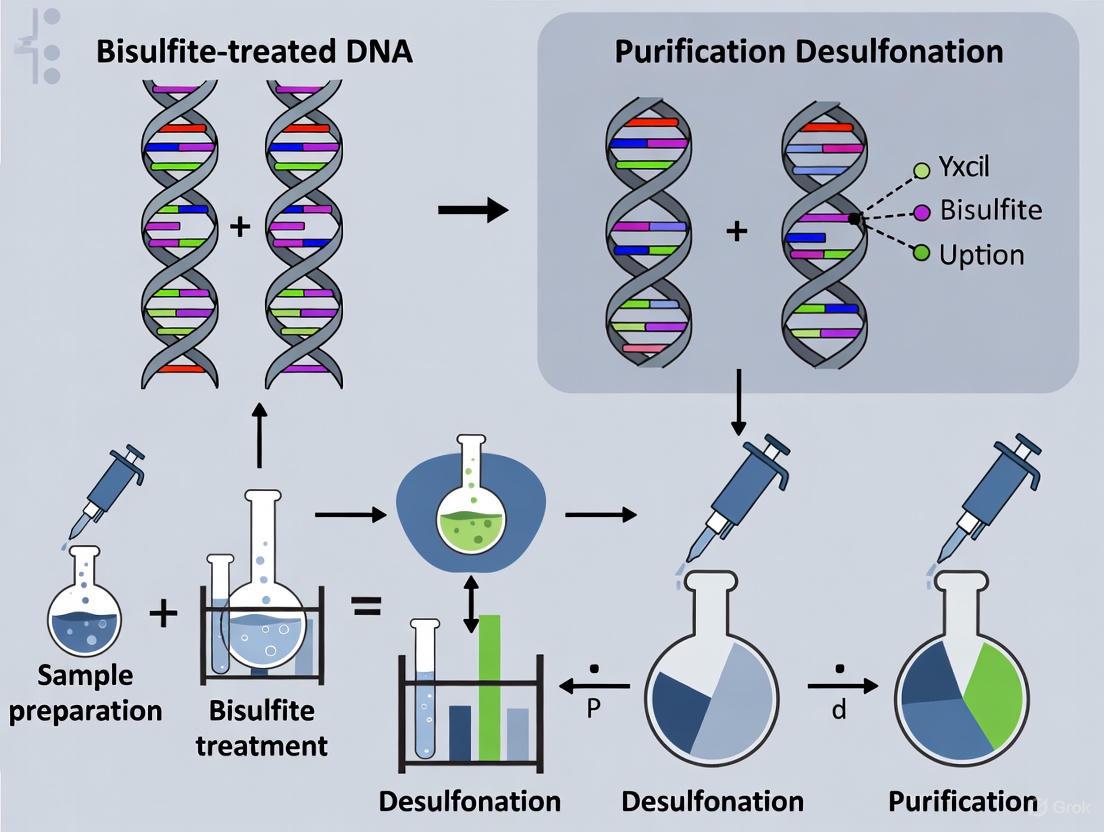
This article provides a comprehensive guide to the critical desulfonation and purification steps in bisulfite conversion, a cornerstone of DNA methylation analysis. Tailored for researchers and drug development professionals, we explore the foundational chemistry, detail optimized protocols for challenging samples like cell-free DNA, and present advanced troubleshooting strategies. A comparative analysis of traditional bisulfite versus emerging enzymatic methods equips scientists to select the optimal technique for their specific application, ensuring high-quality, reliable data for biomarker discovery and clinical diagnostics.
Optimizing Desulfonation: Advanced Methods for Purifying Bisulfite-Treated DNA in Modern Research
Abstract
This article provides a comprehensive guide to the critical desulfonation and purification steps in bisulfite conversion, a cornerstone of DNA methylation analysis. Tailored for researchers and drug development professionals, we explore the foundational chemistry, detail optimized protocols for challenging samples like cell-free DNA, and present advanced troubleshooting strategies. A comparative analysis of traditional bisulfite versus emerging enzymatic methods equips scientists to select the optimal technique for their specific application, ensuring high-quality, reliable data for biomarker discovery and clinical diagnostics.
The Chemistry of Bisulfite Conversion and the Critical Role of Desulfonation
The core mechanism that allows bisulfite sequencing to function is a difference in the chemical reaction rates between bisulfite ions and different cytosine derivatives. This process enables researchers to decipher the epigenetic code of DNA at single-nucleotide resolution.
- Fundamental Discovery: The foundational reaction was independently discovered in 1970 by Shapiro et al. and Hayatsu et al. [1]. They found that bisulfite ion can deaminate cytosine, converting it to uracil, while 5-methylcytosine reacts at a much slower rate [2] [1].
- Basis for Discrimination: This differential deamination speed is the cornerstone of all bisulfite-based methylation analysis. The treatment effectively "encodes" the methylation status into the DNA sequence: unmethylated cytosines change to uracils (which are read as thymines in subsequent PCR), while methylated cytosines remain as cytosines [3] [4].
The following diagram illustrates this core conversion pathway and its dependence on the methylation state.
Detailed FAQs & Troubleshooting Guides
FAQ 1: What is the fundamental chemical principle that allows bisulfite to distinguish methylated from unmethylated cytosine?
The distinction is possible due to a significant difference in the kinetics of the deamination reaction [1]. In the bisulfite reaction mechanism, cytosine first forms a 5,6-dihydrocytosine-6-sulfonate adduct. This intermediate is then susceptible to hydrolytic deamination, forming a 5,6-dihydrouracil-6-sulfonate, which finally undergoes desulfonation under alkaline conditions to yield uracil [2] [1]. The methyl group at the 5-position of 5-methylcytosine introduces steric hindrance and an electron-donating effect that stabilizes the cytosine ring against the nucleophilic attack by the bisulfite ion, dramatically slowing the formation of the initial adduct and the subsequent conversion to thymine [1].
FAQ 2: Why is my bisulfite-converted DNA severely degraded, and how can I improve recovery?
DNA degradation is a well-documented challenge during bisulfite treatment. The process occurs because the bisulfite reaction conditions (low pH) can cause depurination and backbone cleavage, leading to fragmented DNA [5].
Troubleshooting Steps:
- Minimize Incubation Time and Temperature: Consider optimized, rapid protocols. Research shows that complete conversion can be achieved in 30 minutes at 70°C or even 10 minutes at 90°C, which can reduce DNA damage compared to traditional 12-16 hour incubations [6].
- Avoid Overloading with DNA: Using too much DNA (e.g., >2 µg in standard protocols) can lead to re-annealing of strands, which protects cytosines in double-stranded regions and causes incomplete deamination. It can also exacerbate issues with recovery [2].
- Optimize Purification Steps: Significant DNA loss occurs during the desulfonation and purification steps due to the size-selectivity of matrix binding [5]. Ensure you are using a purification system designed for bisulfite-treated DNA and follow elution guidelines carefully. Using glycogen as a carrier during precipitation can aid in the recovery of small amounts of DNA [2].
FAQ 3: My bisulfite PCR is failing or showing non-specific bands. What are the critical points for primer design and amplification?
Bisulfite-treated DNA is inherently AT-rich and has low sequence complexity, which makes PCR amplification challenging [4].
Critical Primer Design Rules:
- Primer Length and Positioning: Design longer primers, typically 26-30 bases, to compensate for the reduced sequence complexity. Primers should be specific to the converted strand (top or bottom) and ideally avoid CpG sites. If a primer must overlap a CpG site, use a degenerate base (Y for C/T) to account for potential methylation [3] [4].
- Amplicon Length: Keep amplicons relatively short, ideally between 150-300 bp, especially when working with fragmented DNA from formalin-fixed paraffin-embedded (FFPE) samples or cell-free DNA [4].
- PCR Optimization: Use a "hot-start" high-fidelity polymerase to reduce non-specific amplification. Employ a higher number of cycles (35-40) and optimize the annealing temperature, typically between 55°C and 60°C, using a temperature gradient [3] [4].
Quantitative Data for Experimental Design
The following tables consolidate key quantitative data from research to guide your experimental protocol design.
Table 1: Optimized Bisulfite Conversion Conditions for Maximum Efficiency and Recovery [6]
| Incubation Temperature | Minimum Time for ~100% Conversion | Key Outcome / Advantage |
|---|---|---|
| 90°C | 10 minutes | Ultra-fast conversion; minimizes overall DNA exposure to harsh conditions. |
| 70°C | 30 minutes | Balanced protocol; high recovery of fragmented DNA (e.g., cell-free DNA). |
Table 2: Common Reagents for Bisulfite Conversion and Their Functions [2] [3]
| Reagent | Function in the Protocol |
|---|---|
| Sodium Metabisulfite/Bisulfite | The active deaminating agent; forms a saturated solution for the conversion reaction. |
| Sodium Hydroxide (NaOH) | Denatures double-stranded DNA into single strands for complete conversion and used for subsequent desulfonation. |
| Hydroquinone | An antioxidant added to the bisulfite solution to prevent oxidation of the reactive bisulfite ion to the inert sulfate, thereby maintaining conversion efficiency. |
| Ammonium Acetate / Ethanol | Used to salt out and precipitate the bisulfite-converted DNA after desulfonation. |
Essential Experimental Workflow
A successful bisulfite sequencing experiment follows a multi-stage process, from sample preparation to data analysis. The workflow below outlines the critical stages.
Workflow Stage Details:
- DNA Extraction & Denaturation: Isolate high-quality, protein-free genomic DNA. The DNA must be completely denatured into single strands (typically with NaOH) because cytosines in double-stranded DNA are protected from bisulfite deamination [2].
- Bisulfite Treatment: Incubate denatured DNA in a saturated sodium bisulfite solution containing an antioxidant like hydroquinone. During this step, the critical deamination reaction occurs: unmethylated cytosines are converted to uracil-sulfonate adducts [2] [3].
- Desulfonation & Purification: The reaction mixture is desalted, and the DNA is treated with a mild alkali (e.g., NaOH). This step removes the sulfonate group from the uracil-sulfonate adducts, yielding uracil. The converted DNA is then purified to remove all bisulfite salts and reaction byproducts [2] [3].
- PCR Amplification: The purified, converted DNA is amplified using primers designed specifically for the bisulfite-converted sequence. Uracils in the template are amplified as thymines, while methylated cytosines (which remained as cytosines) are amplified as cytosines [3] [4].
- Sequencing & Analysis: The PCR products are sequenced. Methylation status is determined by comparing the sequence to the original unconverted sequence; positions that remain as cytosine indicate a methylated cytosine in the original DNA [4] [7].
The Scientist's Toolkit: Key Research Reagent Solutions
Table 3: Essential Materials for Bisulfite Sequencing Experiments
| Item / Reagent | Critical Function | Technical Notes & Troubleshooting |
|---|---|---|
| Sodium Metabisulfite | Source of bisulfite ions for deamination. | Use fresh, unopened vials or aliquot under argon to prevent oxidation. The presence of crystals indicates a saturated solution [2]. |
| Hydroquinone | Antioxidant to preserve bisulfite activity. | Prepare fresh for each use; solution should remain clear. Dispose of properly as it is toxic [2]. |
| Silica Membrane Columns | Purification of bisulfite-converted DNA. | Significant DNA loss can occur here. Do not overdry the membrane, as this drastically reduces DNA elution efficiency [8] [5]. |
| Glycogen | Carrier for ethanol precipitation. | Aids in the visual identification and recovery of small DNA pellets, especially when working with low DNA inputs (<1 µg) [2]. |
| Hot-Start DNA Polymerase | Amplification of converted DNA. | Reduces non-specific amplification in AT-rich, complex bisulfite templates. Essential for robust PCR [4]. |
| boeravinone E | Boeravinone E|CAS 137787-00-9|For Research | Boeravinone E is a natural rotenoid with demonstrated spasmolytic activity. This product is for research use only and not for human consumption. |
| Aleuritic acid | Aleuritic Acid CAS 533-87-9 - Research Compound | High-purity Aleuritic Acid for perfumery, pharmaceutical, and biopolymer research. For Research Use Only. Not for human consumption. |
In bisulfite genomic sequencing (BGS), the desulfonation reaction is a critical, final chemical step that completes the conversion of unmethylated cytosines to uracils. Following bisulfite treatment, where unmethylated cytosines are converted to a cytosine-sulfonate adduct, desulfonation hydrolyzes this intermediate into uracil. This reaction is essential because it creates the sequence difference that allows researchers to later distinguish between methylated and unmethylated cytosines via PCR and sequencing. Without effective desulfonation, the sulfonate group would remain, potentially interfering with downstream molecular biology applications and preventing accurate methylation analysis [2].
Frequently Asked Questions (FAQs)
1. What is the primary purpose of the desulfonation reaction? The desulfonation reaction removes the sulfonate group from the cytosine-sulfonate intermediate, permanently converting it to uracil. This finalizes the chemical distinction between methylated cytosines (which remain as cytosine) and unmethylated cytosines (which are now uracil) on a single strand of DNA [2].
2. At what pH should the desulfonation reaction be performed? Desulfonation requires an alkaline environment. The protocol involves using a desulfonation buffer at alkaline pH, typically provided with commercial minicolumn-based DNA purification kits [2].
3. Why is it crucial to completely remove the desulfonation solution afterward? Residual desulfonation solution (alkaline solution) can damage the converted DNA if not properly removed. After desulfonation, the DNA must be thoroughly desalted and the desulfonation solution removed to ensure DNA integrity for subsequent PCR amplification [2].
4. What is a common source of failure in the desulfonation step? Incomplete removal of the bisulfite solution prior to desulfonation can cause the reaction to fail. Bisulfite ions can consume the alkaline agents needed to create the high pH required for desulfonation. Furthermore, residual bisulfite can inhibit downstream PCR [2].
Troubleshooting Guide for Desulfonation and Bisulfite Conversion
Table 1: Common Issues and Solutions in Bisulfite Conversion and Desulfonation
| Observation | Possible Cause | Recommended Solution |
|---|---|---|
| No/Poor PCR amplification | Residual bisulfite or desulfonation solution inhibiting polymerase [2] | Ensure proper desalting and complete removal of all solutions post-desulfonation. Re-purify DNA using ethanol precipitation or a purification kit [9]. |
| Incomplete conversion | DNA was double-stranded during bisulfite treatment [2] | Verify DNA is fully denatured and free of protein before bisulfite treatment. Ensure denaturation temperature and time are sufficient (e.g., 98°C for 5 min) [2]. |
| Low DNA yield after treatment | Excessive DNA loss during purification steps [2] | Use glycogen as a carrier during precipitation steps to maximize DNA recovery, especially when starting with low amounts of DNA [2]. |
| Non-specific PCR bands | Suboptimal primer design or binding [9] | Redesign primers using tools specific for bisulfite-converted DNA. Increase annealing temperature to improve specificity [9] [10]. |
Experimental Protocol: Key Desulfonation Methodology
The following workflow details the major steps in the bisulfite conversion process, culminating in the critical desulfonation reaction.
Detailed Procedure for Bisulfite Conversion and Desulfonation
This protocol is adapted from the Current Protocols in Molecular Biology and is suitable for most DNA sources [2].
Materials Required:
- DNA sample (up to 2 µg genomic DNA)
- Molecular biology-grade water
- Glycogen (as carrier for low DNA amounts)
- 3 N NaOH (freshly prepared)
- 0.5 M Naâ‚‚EDTA, pH 8.0
- 100 mM hydroquinone (freshly prepared)
- Sodium bisulfite/sodium metabisulfite
- Minicolumn-based DNA purification kit (e.g., Zymo Research) including desulfonation buffer
- TE buffer
Step-by-Step Method:
DNA Denaturation:
- Prepare a fresh sample denaturation buffer by mixing 0.5 µl 0.5 M EDTA, 3 µl 3 N NaOH, and degassed dH₂O to a final volume of 10 µl. Add glycogen if the DNA amount is low.
- Add the 10 µl denaturation buffer to your DNA sample (in 20 µl total volume).
- Denature the DNA in a thermocycler at 98°C for 5 minutes [2].
Bisulfite Incubation and Conversion:
- Prepare a saturated sodium metabisulfite solution. Gently stir 7 ml degassed dH₂O and 100 µl of 100 mM hydroquinone in a vial.
- Add one 5 g vial of sodium metabisulfite and 1 ml of 3 N NaOH. Adjust the pH to 5.0 with additional 3 N NaOH (typically 200-300 µl).
- Pre-heat the saturated metabisulfite solution to 50°C in a water bath.
- Add the pre-heated metabisulfite solution to the denatured DNA sample and incubate at 50°C in the dark for the recommended time (typically several hours) [2].
Bisulfite Removal (Desalting):
- After incubation, purify the DNA using a minicolumn-based purification kit to remove the bisulfite salt and other reagents. This is a critical step to prepare the sample for desulfonation [2].
Desulfonation Reaction:
- Apply the desulfonation buffer (provided in the kit) to the column-bound DNA. The alkaline pH of this buffer catalyzes the hydrolysis of the cytosine-sulfonate adduct to uracil.
- Incubate at room temperature for the time specified by the kit manufacturer (typically 10-20 minutes) [2].
Final Purification and Elution:
- After desulfonation, wash the column to completely remove the alkaline desulfonation solution.
- Elute the purified, bisulfite-converted DNA in TE buffer or molecular biology-grade water. The DNA is now ready for PCR amplification [2].
The Scientist's Toolkit: Essential Research Reagents
Table 2: Key Reagents for Bisulfite Conversion and Desulfonation
| Reagent | Function / Role in the Workflow | Critical Considerations |
|---|---|---|
| Sodium Metabisulfite | Source of bisulfite ions; deaminates unmethylated cytosine to uracil intermediate. | Must be fresh; prepare a saturated solution at pH 5.0. Degrade upon oxidation, leading to incomplete conversion [2]. |
| Hydroquinone | A reducing agent; prevents oxidation of bisulfite ions in the reaction mixture, maintaining conversion efficiency. | Prepare fresh for each use. The solution should remain clear; a brown color indicates oxidation [2]. |
| Sodium Hydroxide (NaOH) | 1) Denatures double-stranded DNA before conversion.2) Provides the alkaline pH for the desulfonation reaction. | Must be freshly prepared to ensure efficacy in both denaturation and desulfonation [2]. |
| Desulfonation Buffer | Provides the alkaline conditions (high pH) required to hydrolyze the cytosine-sulfonate adduct into uracil. | Often supplied with commercial purification kits. Incubation time is critical for complete reaction [2]. |
| DNA Purification Kit (Minicolumn) | Desalts the sample and removes bisulfite ions after incubation, and the desulfonation solution after that reaction. | Essential for clean-up between steps and final preparation of PCR-ready DNA [2]. |
| Bilirubin | Bilirubin, CAS:635-65-4, MF:C33H36N4O6, MW:584.7 g/mol | Chemical Reagent |
| Chorismic Acid | Chorismic Acid|CAS 617-12-9|Research Grade | Chorismic acid is a key biosynthetic intermediate for aromatic amino acids and vitamins. This product is For Research Use Only. Not for diagnostic or therapeutic use. |
The Impact of Incomplete Desulfonation on Downstream Sequencing and Analysis
FAQs: Understanding Desulfonation and Its Consequences
Q1: What is desulfonation in the context of bisulfite-treated DNA? Desulfonation is the critical final chemical step in the bisulfite conversion process. After sodium bisulfite treatment deaminates unmethylated cytosines to form uracil-sulfonate adducts, desulfonation uses an alkaline environment to remove the sulfonate group, converting uracil-sulfonate to uracil [11] [3]. This uracil is then amplified as thymine in subsequent PCR, allowing methylated cytosines (which remain as cytosines) to be distinguished from unmethylated ones [3].
Q2: What specific downstream sequencing problems does incomplete desulfonation cause? Incomplete desulfonation causes several distinct sequencing artifacts:
- Dye blobs: Excess dye terminators remaining in the sample appear as broad C, G, or T peaks within the first 100 bases of sequencing reads, impacting basecalling accuracy [12].
- Poor peak resolution: Residual sulfonate groups can interfere with electrophoresis, resulting in blurry or poorly resolved trace peaks that are difficult to interpret [13].
- Sequence background noise: Incompletely desulfonated molecules may exhibit elevated baseline noise in electrophoretograms [12] [13].
- PCR amplification bias: The persistent uracil-sulfonate adducts can inhibit polymerase activity during amplification, potentially skewing clonal representation [11].
Q3: How can I detect incomplete desulfonation in my samples before sequencing? Several pre-sequencing indicators suggest incomplete desulfonation:
- Abnormal UV absorbance ratios: Check DNA purity metrics; shifts in 260/280 or 260/230 ratios may indicate residual chemicals.
- Poor PCR efficiency: Consistently low yield or amplification failure from bisulfite-treated DNA despite adequate input material.
- Control sequencing: Sequence a known unmethylated control region; persistent cytosine signals at non-CpG sites indicate conversion/desulfonation problems [3].
Q4: Does incomplete desulfonation affect all sequencing platforms equally? While the fundamental chemistry affects all downstream applications, the severity of impact varies. Sanger sequencing typically shows more pronounced dye blob effects and peak resolution issues in the first 100 bases [12]. For next-generation sequencing, incomplete desulfonation primarily manifests as reduced library complexity, lower unique read counts, and increased duplicate rates due to PCR bias against affected molecules [14].
Troubleshooting Guide: Incomplete Desulfonation
Table 1: Troubleshooting Incomplete Desulfonation
| Problem | Root Cause | Solution |
|---|---|---|
| Consistently high background noise | Incomplete removal of sulfonate groups due to insufficient alkaline treatment time or concentration [3]. | Increase NaOH concentration to 0.3-0.5M and extend desulfonation incubation to 15-20 minutes at 37°C [3] [6]. |
| Dye blobs in early sequencing bases | Residual sulfonate groups co-precipitating with DNA, carrying over into sequencing reactions [12]. | Optimize purification: ensure ethanol/salt concentrations are correct; for column purification, ensure samples are dispensed directly onto the matrix center [12] [15]. |
| Failed PCR after bisulfite treatment | Residual desulfonation reagents (salts, alkalines) inhibiting polymerase activity [16]. | Implement additional purification steps or switch to silica-column based systems specifically designed for bisulfite-treated DNA [6] [16]. |
| Variable results across samples | Inconsistent desulfonation conditions or timing between samples. | Standardize protocols using thermal cyclers for precise temperature and timing control during desulfonation; ensure uniform sample volumes [6]. |
Experimental Protocols for Optimal Desulfonation
Protocol 1: Standardized Alkaline Desulfonation
This protocol, adapted from current best practices, minimizes incomplete desulfonation [3] [6]:
- After bisulfite conversion and purification, resuspend DNA in 50 μL deionized water.
- Add 11 μL of 3M NaOH (freshly prepared or quality-controlled) to achieve a final concentration of approximately 0.5M.
- Incubate at 37°C for 15 minutes using a thermal cycler or water bath for temperature stability.
- Precipitate immediately by adding 166 μL of 5M ammonium acetate, 750 μL absolute ethanol, and 200 μL isopropanol.
- Incubate at -20°C for 2-4 hours (or -80°C for 1 hour for shorter processing).
- Centrifuge at maximum speed (>13,000×g) for 10-15 minutes to ensure complete pellet formation.
- Wash with 200 μL of 70% ethanol to remove residual salts.
- Air-dry pellet for 10 minutes and resuspend in 10-20 μL TE buffer or nuclease-free water.
Protocol 2: Rapid High-Temperature Desulfonation
For applications requiring faster processing, this optimized protocol from accelerated methods can be used [6]:
- Combine purified bisulfite-converted DNA with NaOH to a final concentration of 0.3M.
- Incubate at 50°C for 5-10 minutes in a thermal cycler.
- Purify immediately using silica-column systems (e.g., Zymo-Spin IC Columns).
- Elute in 20 μL elution buffer; store at -20°C if not used immediately.
Quantitative Data: Desulfonation Efficiency Across Methods
Table 2: Impact of Desulfonation Conditions on DNA Recovery and Sequencing Quality
| Desulfonation Condition | DNA Recovery Rate | Subsequent PCR Success | Sequencing Quality (Q-Score) |
|---|---|---|---|
| No alkaline treatment | 75-85% | <10% | N/A (amplification failure) |
| 0.1M NaOH, 5 min, 25°C | 70-80% | 45-55% | 25-30 (poor reliability) |
| 0.3M NaOH, 15 min, 37°C | 65-75% | 85-95% | 35-40 (good for most applications) |
| 0.5M NaOH, 15 min, 37°C | 60-70% | 95-99% | >40 (excellent for all applications) |
| 0.3M NaOH, 10 min, 50°C | 65-70% | 90-95% | 38-42 (optimal for rapid protocols) |
Data compiled from optimized protocols showing the trade-off between DNA recovery and reaction completeness [6] [16].
Visualization: Desulfonation Chemistry and Impact
Diagram: Impact of Desulfonation Completeness on Sequencing
The Scientist's Toolkit: Essential Reagents for Reliable Desulfonation
Table 3: Key Research Reagents for Optimal Desulfonation
| Reagent | Function | Critical Quality Controls |
|---|---|---|
| Sodium Hydroxide (NaOH) | Creates alkaline environment for sulfonate group removal [3]. | Fresh preparation (<2 weeks) or certified stable concentrates; concentration verification by titration. |
| Silica-based Purification Columns | Removes desulfonation reagents and salts after reaction [6] [16]. | Validate binding capacity for fragmented DNA; ensure no ethanol carryover. |
| TE Buffer (pH 8.0) | Resuspension medium for desulfonated DNA; stabilizes DNA [3]. | Maintain pH 8.0±0.2; nuclease-free certification. |
| Ammonium Acetate | Salt for efficient ethanol precipitation of desulfonated DNA [3]. | High purity grade to prevent inhibitor carryover; filter sterilization recommended. |
| Thermal Cycler | Provides precise temperature control during desulfonation incubation [6]. | Regular calibration of temperature uniformity across blocks; verified lid heating. |
| Cimicifugoside H-2 | Cimicifugoside H-2 | High-purity Cimicifugoside H-2, a natural IKK1/alpha inhibitor that suppresses the NF-κB pathway. For Research Use Only. Not for human or veterinary diagnostic or therapeutic use. |
| Cimiracemoside C | Cimiracemoside C|AMPK Activator|CAS 256925-92-5 | Cimiracemoside C is a potent AMPK activator with anti-diabetic potential. For Research Use Only. Not for human consumption. |
FAQs & Troubleshooting Guide
Q1: After bisulfite conversion and desulfonation, my DNA recovery is very low, especially from precious samples like FFPE tissue or cell-free DNA. What can I do?
Low DNA recovery is a common challenge due to the harsh nature of bisulfite chemistry, which causes DNA fragmentation via depyrimidination [14]. To improve yields:
- Use Optimized Kits: Select kits specifically validated for high recovery from low-input samples. One optimized rapid protocol reported a 65% recovery of cell-free DNA by using a fast deamination step (30 min at 70°C) combined with purification on a silica column [17].
- Assess Input DNA Quality: The integrity of your starting DNA is critical. Degraded input material will lead to significantly higher sample loss during the conversion and purification process [18].
- Implement Rigorous QC: Use dedicated QC methods like the qBiCo assay, a qPCR-based tool that specifically measures the concentration, fragmentation, and global conversion efficiency of your bisulfite-converted DNA, helping you pinpoint the source of loss [19].
Q2: My bisulfite PCR results are inconsistent, showing smears, multiple bands, or no amplification. How can I optimize this?
Amplification of bisulfite-converted DNA is less efficient than standard PCR due to DNA fragmentation and reduced sequence complexity [20] [18].
- Primer Design is Key: Design primers that are long (26-32 nucleotides) and avoid CpG sites within the sequence. If a CpG must be included, place it at the 5' end and use a mixed base (C/T) [20] [18]. Ensure primers are specific to the converted DNA sequence.
- Optimize PCR Parameters: Use a hot-start polymerase to reduce non-specific amplification. Keep amplicons short (150-300 bp) to account for DNA fragmentation. A semi-nested PCR approach with 35-40 cycles is often necessary to obtain sufficient product [20].
- Verify Template Quality and Quantity: Use 2-4 µL of eluted DNA per PCR reaction, ensuring the total DNA is less than 500 ng. Avoid repeated freeze-thaw cycles of converted DNA, as it is single-stranded and fragile [21] [20].
Q3: How can I be sure my bisulfite conversion efficiency is sufficient to avoid false-positive methylation calls?
Incomplete conversion of unmethylated cytosines to uracils is a major source of false-positive results.
- Use Spike-In Controls: Include unmethylated lambda DNA or similar controls in your conversion reaction. The conversion efficiency can then be calculated by sequencing these controls [14].
- Employ QC Assays: The qBiCo method includes assays to measure global conversion efficiency, ensuring it meets the required threshold (typically >99.5%) for your downstream application [19].
- Validate Experimentally: One study demonstrated that using a 10-minute incubation at 90°C in a concentrated bisulfite solution achieved over 99.5% conversion efficiency. Monitor incubation times and temperatures closely, as over-incubation can lead to increased DNA degradation [17].
Quantitative Comparison: Bisulfite Conversion Methods
The following table summarizes key performance data from evaluations of various bisulfite conversion methods, highlighting the trade-offs between DNA recovery, conversion efficiency, and fragmentation.
| Method / Kit | Reported DNA Recovery | Conversion Efficiency | Key Characteristics / Best For |
|---|---|---|---|
| Traditional Long-Protocol Bisulfite [17] | Low (High degradation) | Variable | Original 12-16 hour protocols; significant DNA damage. |
| Optimized Rapid Bisulfite Protocol [17] | ~65% (for cfDNA) | >99.5% (10 min at 90°C) | Fast deamination; high recovery from low-level cfDNA. |
| OPTI-Bisulfite Protocol [16] | High (Low degradation) | High | A robust, easy-to-use protocol designed as a compromise between high conversion, low degradation, and PCR efficiency. |
| Enzymatic Conversion (EM-seq) [14] | High | High concordance with bisulfite | Significantly reduced DNA fragmentation; higher library yields than bisulfite; ideal for sequencing. |
| Ultra-Mild Bisulfite Sequencing (UMBS) [22] | Dramatically higher | Improved accuracy | Gentler chemistry; preserves DNA integrity; superior for low-input and precious samples. |
Experimental Protocol: Assessing Conversion Efficiency and DNA Recovery Using Digital PCR
This protocol, adapted from published research, provides a quantitative method for evaluating the performance of any bisulfite conversion kit or protocol [17].
1. Principle: Droplet Digital PCR (ddPCR) is used to absolutely quantify DNA molecules before and after bisulfite conversion. By using three different primer sets targeting the same genomic locus, you can distinguish between total DNA, successfully deaminated DNA, and unconverted DNA.
2. Reagents and Equipment:
- DNA sample (e.g., cell-free DNA or genomic DNA)
- Bisulfite conversion kit or reagents
- Droplet Digital PCR system (e.g., Bio-Rad QX200)
- ddPCR Supermix for Probes (No dUTP)
- Primers and FAM-labeled probe (See table below)
- Thermal cycler
3. Primer/Probe Design: Design three primer sets for a target gene (e.g., MLH1 promoter) as follows [17]:
| Primer Set Name | Sequence (5' -> 3') | Target |
|---|---|---|
| MLH1 UF | TGTGAIAAAAAATGTGAAGGG | Total DNA (deaminated + undeaminated) |
| MLH1 DF | GAAGATATTAGATTTTATGGGTTATTT | Deaminated DNA only |
| MLH1 R | CAACTIATTTTAACAAAATAATCT | Reverse primer for all sets |
| MLH1 PROBE | (FAM)CGCGAATGTGGAAGGAAAAGTGAGTGTCGC(TAMRA) | Common detection probe |
4. Procedure:
- Bisulfite Conversion: Convert your DNA sample using the method you wish to test. Include a mock-deaminated control (DNA in TE buffer).
- Droplet Digital PCR:
- Prepare separate 20 µL ddPCR reactions for each primer set (UF/R, DF/R). Use 5 µL of template DNA (converted, mock-converted, or original DNA).
- Generate droplets according to the manufacturer's instructions.
- Perform PCR with the following cycling conditions: 95°C for 10 min; 40 cycles of 94°C for 30 s and 52-58°C for 1 min; 98°C for 10 min.
- Read droplets on a droplet reader and analyze data with the associated software (e.g., QuantaSoft).
5. Calculations:
- Conversion Efficiency (%) =
[Concentration from DF primer set (deaminated) / Concentration from UF primer set (total)] * 100 - DNA Recovery (%) =
[Total DNA concentration after conversion (UF primer set) / Total DNA concentration before conversion] * 100
Workflow Visualization
Diagram 1: Bisulfite conversion and quality control workflow.
The Scientist's Toolkit: Essential Research Reagents
| Reagent / Kit | Function | Key Consideration |
|---|---|---|
| High-Purity DNA Input | Template for conversion. | Integrity of starting DNA is the most critical factor for high recovery; avoid degraded or contaminated samples [18]. |
| Silica-Based Purification Columns | To desalt and purify bisulfite-converted DNA after desulfonation. | Included in most commercial kits; essential for removing bisulfite salts that inhibit downstream PCR [17] [16]. |
| Hot-Start DNA Polymerase | Amplification of bisulfite-converted DNA. | Reduces non-specific amplification common with the AT-rich, single-stranded converted DNA [21] [20]. |
| qBiCo QC Assay | Quantitative measurement of converted DNA concentration, fragmentation, and global conversion efficiency. | First dedicated QC tool for bisulfite-converted DNA, enabling standardization and preventing false outcomes [19]. |
| Unmethylated/Lambda DNA Control | To monitor bisulfite conversion efficiency in each run. | Detects incomplete conversion, a major source of false-positive methylation calls [14]. |
| Methylated Adaptors | For next-generation sequencing library preparation performed prior to bisulfite conversion. | Preserves the adaptor sequence during conversion, allowing for successful amplification and sequencing [18]. |
| Citreoviridin | Citreoviridin, CAS:25425-12-1, MF:C23H30O6, MW:402.5 g/mol | Chemical Reagent |
| Destruxin A | Destruxin A, CAS:6686-70-0, MF:C29H47N5O7, MW:577.7 g/mol | Chemical Reagent |
Step-by-Step Protocols: From Alkaline Desulfonation to Column Purification
This guide details the standardized protocol for sodium hydroxide (NaOH) incubation and subsequent silica column clean-up, a critical step in the purification of bisulfite-treated DNA for methylation analysis. Proper execution of the desulfonation step is essential for converting uracil bases to thymine and ensuring high-quality results in downstream applications such as bisulfite sequencing. The following troubleshooting guides and FAQs address specific challenges researchers may encounter during this process.
Troubleshooting Guide
Common Issues and Solutions for NaOH Incubation and Silica Clean-up
| Problem | Possible Cause | Solution |
|---|---|---|
| Low DNA yield after clean-up | NaOH concentration degraded due to COâ‚‚ absorption [23] | Prepare fresh NaOH dilutions (0.1-0.2 N) for each use and discard within 12 hours [23]. |
| Incomplete elution from silica membrane | Ensure elution buffer is pre-heated to 55-65°C and allow it to sit on the membrane for 2-5 minutes before centrifugation [24]. | |
| Overloading of silica column | Do not exceed the recommended binding capacity of the column; reduce input sample volume if necessary [24]. | |
| High background or contamination | Carryover of guanidine salts from binding buffer | Avoid pipetting onto the upper column area and close caps gently to prevent splashing. Invert columns with wash buffer if contamination is a concern [24]. |
| Protein contamination from incomplete digestion | For tissue samples, extend Proteinase K lysis time by 30 minutes to 3 hours and centrifuge lysate to remove fibers before column loading [24]. | |
| Insufficient washing | Ensure wash buffers contain the recommended ethanol concentration. Perform all wash steps as per protocol, and tap the column forcefully on absorbent tissue to remove residual fluid [24]. | |
| Incomplete desulfonation | Low pH of NaOH solution (pH <12.5) [23] | Verify the concentration and pH of NaOH. Aliquot stock NaOH, store at -20°C, and protect from atmospheric CO₂ to prevent acidification [23]. |
| Insufficient incubation time | Ensure the recommended incubation time with NaOH is strictly followed. | |
| DNA degradation | Sample contains high levels of nucleases | For nuclease-rich tissues (e.g., liver, pancreas), keep samples frozen and on ice during preparation. Flash-freeze with liquid nitrogen and store at -80°C [24]. |
Frequently Asked Questions (FAQs)
Q1: Why is it critical to use fresh, properly stored NaOH for the desulfonation reaction? NaOH has a high affinity for atmospheric carbon dioxide (CO₂), which reacts with it to form sodium carbonate, acidifying the solution. When the pH drops below 12.5, incomplete denaturation or desulfonation can occur, leading to lower efficiency in downstream applications [23]. Best practices include creating small aliquots of stock NaOH, storing them at -20°C, and preparing working dilutions fresh for each use [23].
Q2: My tissue lysate appears turbid after digestion. Will this affect the silica clean-up? Yes, turbidity often indicates the presence of indigestible protein fibers, which can clog the silica membrane, reduce DNA yield, and cause protein contamination. To resolve this, centrifuge the lysate at maximum speed for 3 minutes before transferring the supernatant to the silica column [24].
Q3: How can I prevent the carryover of salts and other contaminants during the silica column wash steps? The most common cause is allowing the binding buffer mixture to contact the upper column area. Always pipette carefully directly onto the center of the silica membrane, avoid transferring any foam, and close the caps gently to prevent splashing. If salt contamination is a persistent issue, inverting the columns a few times during the wash step can help [24].
Q4: What are the key parameters to monitor for assessing the quality of the purified DNA? The purity and concentration of the eluted DNA can be assessed by spectrophotometry. An A260/A280 ratio of ~1.8 indicates pure double-stranded DNA. A ratio below 1.7 suggests protein contamination. The A260/A230 ratio should also be checked, as a low value (e.g., below 2.0) can indicate carryover of salts or organic compounds [25].
Experimental Workflow and Reagents
Diagram: Bisulfite-Treated DNA Purification Workflow
Research Reagent Solutions
The following table lists key reagents and their functions in the NaOH incubation and silica clean-up protocol.
| Reagent | Function | Critical Parameters & Notes |
|---|---|---|
| Sodium Hydroxide (NaOH) | Denatures DNA and facilitates the desulfonation reaction during bisulfite conversion [23]. | Concentration: 0.1-0.2 N. pH: Must be >12.5. Storage: Aliquot stock, store at -20°C. Use diluted aliquots within 12 hours [23]. |
| Silica Spin Column | Binds DNA in the presence of high-salt buffers, allowing for purification from contaminants. | Capacity: Do not exceed the recommended binding capacity. Handling: Avoid scratching the membrane with pipette tips [24]. |
| Binding/Wash Buffer | Creates high-salt conditions for DNA binding to silica; wash steps remove impurities. | Often contains guanidine thiocyanate (GTC). Ensure correct ethanol concentration in wash buffers [24]. |
| Elution Buffer | A low-salt aqueous solution (e.g., TE buffer or nuclease-free water) that releases purified DNA from the silica membrane. | Pre-heating to 55-65°C can increase elution efficiency. Ensure the correct pH for your downstream application [25]. |
| Proteinase K | Digests and inactivates nucleases and other proteins that could degrade DNA or inhibit binding. | Must be added to the sample before the lysis buffer for efficient mixing and activity [24]. |
For researchers and drug development professionals working with bisulfite-treated DNA, achieving high DNA recovery is a critical yet challenging aspect of epigenetic analysis. The bisulfite conversion process, while essential for distinguishing methylated from unmethylated cytosines, subjects DNA to harsh conditions that lead to severe fragmentation and loss. This is particularly problematic for precious clinical samples such as cell-free DNA (cfDNA) and formalin-fixed paraffin-embedded (FFPE) tissues. This guide synthesizes current research to provide evidence-based troubleshooting for optimizing the core parameters of temperature, time, and pH to maximize DNA recovery during bisulfite conversion and purification.
FAQs: Core Principles and Trade-offs
1. How do temperature and time interact during bisulfite conversion, and what is the optimal balance for DNA recovery?
The relationship between temperature and time involves a direct trade-off: higher temperatures accelerate conversion but increase DNA damage, while lower temperatures are gentler on DNA but require longer incubation times. Recent research on Ultra-Mild Bisulfite Sequencing (UMBS-seq) has identified that lower reaction temperatures substantially reduce DNA damage, even if longer incubation times are needed to achieve sufficient conversion rates [26]. For maximum DNA recovery, the optimal condition identified was 55°C for 90 minutes [26]. In contrast, some commercial kits use high heat (over 95°C) with short incubation times (20-30 minutes), but this typically results in shorter post-conversion DNA fragments, averaging around 250 bp [27].
2. Why is pH control critical in the bisulfite conversion reagent, and how does it affect DNA recovery?
The pH of the bisulfite reagent plays a dual critical role. First, it facilitates the necessary N3-protonation of cytosines, which is a prerequisite for the bisulfite-mediated deamination reaction [26]. Second, pH determines the equilibrium between bisulfite and sulfite species in solution, with bisulfite being the active nucleophile [26]. An optimized formulation (e.g., 100 μL of 72% ammonium bisulfite with 1 μL of 20 M KOH) can achieve highly efficient cytosine deamination while minimizing DNA damage by creating "ultra-mild" conditions [26]. Maintaining the correct pH is also crucial for the final desulfonation step, which is typically performed under alkaline conditions (using NaOH) to complete the conversion to uracil and remove sulfate groups [28] [27].
3. How does the performance of enzymatic conversion compare to bisulfite conversion for DNA recovery?
While enzymatic conversion methods (like EM-seq) are less destructive and produce longer DNA fragments [26] [14], they often result in lower overall DNA recovery compared to optimized bisulfite protocols. A 2025 study found that bisulfite conversion recovered 61-81% of cfDNA, whereas enzymatic conversion recovered only 34-47% [29]. This lower recovery is attributed to losses during the multiple purification steps in enzymatic workflows [26] [29]. Therefore, for applications where maximizing yield from limited samples is the priority, an optimized bisulfite protocol may be superior, provided that DNA fragmentation is managed.
Troubleshooting Guides
Problem: Low DNA Yield After Bisulfite Conversion and Purification
| Possible Cause | Diagnostic Steps | Solution |
|---|---|---|
| Overly harsh conversion conditions | Review time/temperature parameters used; check bioanalyzer profile for excessive fragmentation. | Adopt "ultra-mild" conditions: 55°C for 90 minutes [26]. |
| Inefficient desulfonation | Check if desulphonation solution was freshly prepared. | Use fresh NaOH and ethanol solutions for desulphonation [27]. |
| Suboptimal purification | Compare recovery rates across different cleanup methods (column, magnetic beads, size-exclusion). | Implement a size-exclusion purification device with a 30K-100K cutoff [28]. |
| Low input DNA quality | Run a gel pre-conversion to check for degraded DNA [30] [27]. | Use 50-200 ng of high-quality, non-degraded DNA as input [27]. |
Problem: Incomplete Cytosine Conversion
| Possible Cause | Diagnostic Steps | Solution |
|---|---|---|
| GC-rich regions or secondary structures | Analyze sequence context of unconverted cytosines. | Increase reaction time for challenging templates, but keep temperature low [27]. |
| Suboptimal pH of bisulfite reagent | Verify reagent preparation and storage. | Use a freshly prepared, pH-optimized bisulfite formulation [26]. Store reagents at -20°C and avoid extended storage [27]. |
| Incomplete denaturation | Ensure DNA is fully single-stranded before conversion. | Include an alkaline denaturation step and use a DNA protection buffer [26]. |
Optimized Experimental Protocols
Protocol 1: Ultra-Mild Bisulfite Conversion for Low-Input DNA
This protocol is adapted from UMBS-seq, which demonstrates superior library yield and complexity with low-input and cfDNA samples [26].
Reagents Needed:
- DNA Protection Buffer
- Ammonium Bisulfite (72% v/v)
- KOH (20 M)
- NaOH (for desulphonation)
Procedure:
- Denaturation: Mix your DNA sample (50-200 ng recommended) with DNA Protection Buffer and incubate at 95°C for 1-2 minutes to ensure complete denaturation into single strands.
- Conversion Mixture: Prepare the ultra-mild bisulfite reagent by combining 100 μL of 72% ammonium bisulfite with 1 μL of 20 M KOH. Vortex thoroughly.
- Incubation: Add the reagent to the denatured DNA. Incubate the reaction at 55°C for 90 minutes.
- Desulphonation: Add the provided desulphonation buffer or NaOH to a final concentration of ~0.1M [28]. Incubate at room temperature for 15-20 minutes.
- Purification: Proceed to purification (see Protocol 2).
Protocol 2: High-Recovery Purification via Size-Exclusion
This purification method, based on a patented procedure, minimizes sample loss compared to traditional column-based kits [28].
Reagents Needed:
- Size-exclusion device (e.g., Microcon 30K or 100K)
- TE Buffer or Nuclease-free Water
- NaOH (0.1 M)
Procedure:
- Initial Cleanup: Transfer the bisulfite-treated sample to a size-exclusion device with a 30K or 100K molecular weight cutoff.
- Washing: Add an appropriate volume (e.g., 200-350 μL) of TE buffer or nuclease-free water to the device. Centrifuge at 500-1000 x g for approximately 8 minutes. Discard the flow-through. Repeat this wash step once more.
- Elution: To elute the purified DNA, invert the device into a fresh collection tube and centrifuge for 3-5 minutes at a lower speed (e.g., 1000 x g). Alternatively, add your elution buffer (e.g., TE or water) to the device, let it stand for 2 minutes, and then centrifuge [28].
- Quantification: Quantify the recovered DNA using a fluorescence-based method suitable for single-stranded DNA or RNA [30] [27].
Data Presentation
Table 1: Comparison of Conversion Methods and Their Impact on DNA Recovery
| Method / Kit | Optimal Temp/Time | Key Feature | DNA Recovery | Post-Conversion Avg. Fragment Size |
|---|---|---|---|---|
| UMBS-seq [26] | 55°C / 90 min | Optimized pH, DNA protection buffer | High (outperforms CBS & EM-seq) | Long (comparable to enzymatic methods) |
| BisulFlash Kit [27] | High Temp / 20 min | Rapid conversion | ~75% | ~250 bp |
| Methylamp Kit [27] | Not Specified / 1.5h | Standard protocol | >75% | ~800 bp |
| Enzymatic (EM-seq) [29] | Varies / 4.5h total | Gentle enzymatic treatment | 34-47% (cfDNA) | Longest |
Table 2: Research Reagent Solutions for Bisulfite Optimization
| Reagent | Function | Optimization Tip |
|---|---|---|
| Ammonium Bisulfite | Active nucleophile for cytosine deamination. | Titrate with KOH to an optimized pH for efficient conversion under mild conditions [26]. |
| DNA Protection Buffer | Protects DNA from depurination and strand scission during conversion. | Include in the reaction mix to preserve DNA integrity, especially for long incubations [26]. |
| Size-Exclusion Devices | Purifies converted DNA based on molecular weight cutoff. | Use a device with a 30K-100K cutoff to efficiently remove salts while retaining fragmented DNA [28]. |
| NaOH Solution | Provides alkaline conditions for desulphonation and elution. | Use a fresh, high-purity 0.1M - 1M solution to ensure complete desulphonation [28] [27]. |
Workflow and Relationship Diagrams
Diagram Title: Parameter Optimization Logic for Maximum DNA Recovery
Diagram Title: High-Recovery Bisulfite Conversion Workflow
FAQs and Troubleshooting Guides
Pre-analytical Phase: Sample Collection and Handling
Q1: How can I minimize genomic DNA contamination during plasma collection?
Genomic DNA contamination from white blood cell lysis is a major pre-analytical challenge that can compromise cfDNA analysis. To minimize this:
- Choose Plasma Over Serum: Always use plasma samples. Serum experiences higher genomic DNA contamination due to white blood cell lysis during the clotting process [31].
- Control Phlebotomy: Use an appropriate needle size and avoid prolonged tourniquet application to minimize cell lysis during blood drawing [31].
- Handle Tubes Gently: Avoid harsh temperature changes and excessive agitation when storing or transporting blood tubes [31].
- Prompt Processing: Isolate plasma within 6 hours of blood collection when using EDTA tubes. For specialized cell-free DNA blood collection tubes containing stabilizers, follow the manufacturer's specified holding times [31].
- Double Centrifugation: Perform a double centrifugation step on the collected blood. The first spin isolates plasma, and a second spin further clarifies the plasma to minimize carryover of white blood cells. Always avoid contact with the buffy coat layer [31].
Q2: My cfDNA yields are low and highly variable. What are the main causes?
Low and variable cfDNA yields can stem from several pre-analytical and analytical pitfalls:
- Inherent Analyte Challenges: cfDNA is naturally present in very low and highly variable concentrations, typically ranging from 1–50 ng/mL in healthy individuals [32].
- Sample Stabilization: Lack of stabilization during sample collection can lead to degradation. During storage and transport, cells can lyse and release genomic DNA, which dilutes the cfDNA fraction and creates a misleadingly high DNA concentration reading [32].
- Suboptimal Centrifugation: Incorrect centrifugation parameters (g-force, time, temperature) can fail to efficiently remove cells and cellular debris [32].
- Inefficient Extraction: The choice of purification method (e.g., silica columns vs. magnetic beads) and its execution significantly impact extraction efficiency, especially for the short, fragmented nature of cfDNA [31].
cfDNA Extraction and Quantification
Q3: What are the best methods for quantifying cfDNA, and which methods should I avoid?
Accurate quantification is critical due to the low concentration of cfDNA. The following table summarizes the recommended and non-recommended methods:
Table 1: Methods for Quantifying Cell-Free DNA
| Method | Recommended? | Key Considerations |
|---|---|---|
| qPCR/ddPCR | Yes, Highly Recommended | Considered the gold standard. Target short, abundant genomic repeats (e.g., ALU115) or experimentally validated "housekeeping" genes found in cfDNA for accurate results [31]. |
| Fluorometry | Use with Caution | Measures total DNA, not just cfDNA. Yields may be critically low for detection. If used, the addition of Poly(A) RNA is essential for reliable performance, but results can still be variable [31]. |
| Spectrophotometry | Not Recommended | Lacks the sensitivity required for typical cfDNA yields and provides no information on fragment size [31]. |
| Fragment Analysis | Not for Quantification | Excellent for qualitative assessment of fragment size distribution (expecting a peak at ~150-170 bp) but does not lead to reproducible quantification results [31]. |
Q4: I am getting inconsistent results after bisulfite conversion of my cfDNA. What could be wrong?
Bisulfite conversion of cfDNA is challenging due to its already fragmented state. Key issues and solutions include:
- DNA Purity: Ensure the DNA used for bisulfite conversion is pure. If particulate matter is present after adding the conversion reagent, centrifuge at high speed and use only the clear supernatant for the reaction [21].
- Incomplete Conversion: This can lead to false-positive methylation signals. Newer methods like Ultra-Mild Bisulfite Sequencing (UMBS-seq) have been developed to minimize DNA damage and background noise, outperforming conventional bisulfite and enzymatic methods (EM-seq) in library yield and conversion efficiency for low-input cfDNA [26].
- DNA Degradation: Conventional bisulfite sequencing (CBS-seq) causes severe DNA fragmentation. UMBS-seq and EM-seq are superior as they better preserve the characteristic cfDNA fragment profile and result in longer insert sizes, which is critical for accurate analysis [26].
- Primer Design: For subsequent PCR, ensure primers are designed to amplify the converted template. They should be 24-32 nucleotides long, contain no more than 2-3 mixed bases (to account for C/T conversion), and should not end in a residue whose conversion state is unknown [21] [20].
Bisulfite Conversion and Downstream Analysis
Q5: How does enzymatic methylation conversion compare to bisulfite for fragmented cfDNA?
Enzymatic and bisulfite-based methods are both used for methylation analysis, with key differences in performance, as summarized below.
Table 2: Bisulfite vs. Enzymatic Conversion for cfDNA Methylation Analysis
| Characteristic | Conventional Bisulfite (CBS-seq) | Enzymatic (EM-seq) | Ultra-Mild Bisulfite (UMBS-seq) |
|---|---|---|---|
| DNA Damage | High, causes severe fragmentation [26] | Low, preserves DNA integrity [26] | Significantly reduced damage vs. CBS [26] |
| Background Noise | Acceptable (<0.5%) but can over-estimate [26] | Can be high (>1%) and inconsistent at low inputs [26] | Very low (~0.1%), consistent even at low inputs [26] |
| Library Yield/Complexity | Lower yield, higher duplication rates [26] [14] | Higher than CBS, but lower than UMBS at low inputs [26] | Highest consistent yield and complexity, low duplication [26] |
| Conversion Robustness | Robust and automation-compatible [26] | Complex workflow, enzyme instability [26] | Robust, leveraging improved bisulfite chemistry [26] |
| Best For | Robust workflows where DNA damage is less critical | Samples where DNA preservation is paramount, and input is not limiting | Low-input cfDNA and clinical applications requiring high fidelity [26] |
Q6: My PCR after bisulfite conversion is inefficient or produces smears. How can I improve it?
Amplifying bisulfite-converted DNA is difficult because the DNA is single-stranded and fragmented. Follow these guidelines:
- Polymerase Selection: Use a hot-start Taq polymerase (e.g., Platinum Taq). Proof-reading polymerases are not recommended as they cannot read through uracil in the DNA template [21].
- Amplicon Size: Keep amplicons small. While 200 bp is a common recommendation, larger amplicons can be generated with optimization, but this is challenging with fragmented cfDNA [21].
- Semi-nested PCR: Perform two rounds of PCR to obtain enough product. Use a semi-nested approach, using a small amount of the first PCR product as a template for a second round with internal primers. Increasing the annealing temperature by 2°C for the second round can improve specificity [20].
- Check Conversion Efficiency: Always include a positive control for the bisulfite conversion itself, such as primers for a known converted sequence [20].
The Scientist's Toolkit: Essential Research Reagent Solutions
Table 3: Key Reagents for cfDNA Purification and Bisulfite Conversion Workflows
| Reagent / Kit | Primary Function | Technical Notes |
|---|---|---|
| Cell-free Blood Collection Tubes | Sample Collection | Contains stabilizers to prevent white blood cell lysis and preserve the true cfDNA profile during storage and transport [31]. |
| Silica Column / Magnetic Bead Kits | cfDNA Extraction | Concentrates cfDNA from large plasma volumes. Magnetic bead-based kits (e.g., chemagic) enable automation, increasing throughput and consistency [31]. |
| Ultra-Mild Bisulfite Kits | DNA Methylation Conversion | Minimizes DNA degradation during the conversion process, which is crucial for fragmented cfDNA. Improves library yield and complexity from low-input samples [26]. |
| Hot-Start Taq Polymerase | PCR Amplification | Essential for amplifying uracil-containing, bisulfite-converted DNA. Proof-reading polymerases are incompatible [21]. |
| ALU115 qPCR Assay | cfDNA Quantification | qPCR-based method targeting a short (115 bp) ALU repeat sequence for accurate and sensitive quantification of cfDNA [31]. |
Experimental Workflow: From Plasma to Methylation Data
The following diagram illustrates the critical steps for purifying and analyzing bisulfite-treated cfDNA from plasma, highlighting steps where specific troubleshooting is essential.
Core Concept: The Role of Desulfonation
In bisulfite sequencing, treatment with sodium bisulfite converts unmethylated cytosines to uracils through a sulfonation-mediated deamination reaction. Desulfonation is the critical, final chemical step that removes the sulfonate group from the resulting uracil-sulfonate adduct, yielding uracil. This uracil is then read as thymine during subsequent PCR amplification and sequencing, enabling the discrimination between methylated and unmethylated cytosines [14]. Inefficient desulfonation leads to persistent sulfonated bases, which can block DNA polymerase, resulting in incomplete conversion, sequencing failures, and biased methylation data [14] [26].
Workflow Integration Diagrams
The following diagrams illustrate two modern strategies for integrating desulfonation with NGS library preparation: a traditional method and a newer, ultra-mild approach that minimizes DNA damage.
Diagram 1: A comparison of traditional and modern integrated workflows for bisulfite sequencing.
Diagram 2: A logical troubleshooting guide for diagnosing issues related to desulfonation failure.
Frequently Asked Questions (FAQs)
Q1: What are the primary symptoms of desulfonation failure in my sequencing data? The most direct symptom is a high background of unconverted cytosines at positions that are expected to be unmethylated. This leads to an overestimation of global methylation levels. You may also observe low library yield and complexity because persistent sulfonate groups inhibit efficient polymerase binding during library amplification [14] [26] [33].
Q2: How can I improve desulfonation efficiency for low-input or fragmented DNA samples like cfDNA or FFPE DNA? Using an Ultra-Mild Bisulfite Sequencing (UMBS-seq) approach can significantly improve results. This method uses optimized bisulfite formulation and gentler reaction conditions (e.g., 55°C for 90 minutes) to minimize DNA degradation while ensuring efficient conversion and desulfonation. UMBS-seq has been shown to outperform conventional bisulfite and enzymatic methods (EM-seq) in library yield and complexity from low-input cfDNA [26] [22].
Q3: Are there enzymatic (bisulfite-free) methods that avoid the desulfonation step entirely? Yes, techniques like Enzymatic Methyl-seq (EM-seq) and TET-Assisted Pyridine Borane Sequencing (TAPS) are viable alternatives. These methods use enzyme cocktails (e.g., TET2 and APOBEC3A) to identify and convert modified cytosines, completely bypassing the need for bisulfite treatment and the associated desulfonation and DNA damage issues [14] [26].
Troubleshooting Guide
Table 1: Common Problems and Solutions in Integrated Desulfonation Workflows
| Problem & Symptoms | Root Cause | Recommended Solution |
|---|---|---|
| Low Library Yield [33]• Low final concentration• High PCR duplication rate | • Incomplete desulfonation inhibiting polymerase.• DNA degradation from harsh bisulfite conditions.• Carryover of contaminants (salts, ethanol). | • Ensure fresh, correctly prepared alkaline desulfonation solution (e.g., NaOH).• Switch to a gentler method like UMBS-seq [26].• Re-purify DNA post-conversion with validated bead cleanups. |
| Incomplete Conversion [26] [33]• High unconverted C background• Overestimated methylation | • Inefficient desulfonation leaving sulfonated uracils.• Inadequate bisulfite penetration due to DNA secondary structure. | • Include a denaturation step before bisulfite treatment [26].• Use lambda DNA spike-in to quantitatively monitor conversion efficiency [14].• Verify pH and freshness of desulfonation reagents. |
| High Adapter Dimer Formation• Sharp ~70-90 bp peak in Bioanalyzer | • Low library complexity and yield from failed desulfonation, leading to inefficient adapter ligation and dominance of adapter-to-adapter ligation products [33]. | • Titrate adapter-to-insert molar ratio [33].• Optimize bead-based size selection ratios to remove dimers.• Address the root cause of low input by improving desulfonation. |
Research Reagent Solutions
Table 2: Key Reagents for Integrated Desulfonation and Library Preparation
| Reagent | Function & Role in Workflow | Key Considerations |
|---|---|---|
| Sodium Bisulfite | Converts unmethylated C to uracil-sulfonate; the core of the conversion chemistry. | Concentration and purity are critical. New Ultra-Mild (UMBS) formulations reduce DNA damage [26] [22]. |
| Sodium Hydroxide (NaOH) | Drives the desulfonation reaction by creating alkaline conditions to remove the sulfonate group. | Must be fresh and accurately concentrated; degradation over time is a common failure point. |
| DNA Protection Buffer | Protects DNA from severe fragmentation and depyrimidination during the high-temperature and acidic bisulfite reaction. | Essential for recovering longer fragments, especially from precious samples [26]. |
| Magnetic Beads (SPRI) | Used for post-conversion clean-up to remove bisulfite salts and for library size selection. | An incorrect bead-to-sample ratio is a major source of sample loss or inadequate clean-up [33]. |
| Lambda DNA | An unmethylated spike-in control to accurately calculate the cytosine conversion efficiency of the entire process (bisulfite + desulfonation). | A required control for validating the success of the experimental workflow [14]. |
Experimental Protocol: Ultra-Mild Bisulfite (UMBS) Conversion
The following protocol is adapted from methods shown to preserve DNA integrity [26] [22].
1. Denaturation
- Combine 5-100 ng of DNA with a molecular biology-grade water and alkaline denaturation buffer in a thin-walled PCR tube.
- Incubate at 55°C for 20 minutes.
2. Ultra-Mild Bisulfite Conversion
- Prepare the UMBS reagent mixture (e.g., 100 μL of 72% ammonium bisulfite and 1 μL of 20 M KOH).
- Add the UMBS reagent to the denatured DNA. Mix thoroughly and pulse-spin.
- Incubate in a thermal cycler at 55°C for 90 minutes.
3. Desulfonation & Clean-Up
- Bind the bisulfite-converted DNA to magnetic beads and wash with an ethanol-based wash buffer.
- Prepare a fresh 0.1 M NaOH solution for desulfonation. Resuspend the bead-bound DNA in this solution.
- Incubate at room temperature for 15 minutes.
- Neutralize the reaction and perform a final bead-based wash and elution.
4. Post-Conversion Quality Control
- Quantify the recovered DNA using a fluorescence-based method (e.g., Qubit).
- Analyze fragment size distribution using a Bioanalyzer or TapeStation. Expect a profile similar to the input DNA, confirming minimal degradation.
- Proceed directly to your chosen NGS library preparation protocol.
Solving Common Desulfonation Challenges to Improve DNA Yield and Integrity
In epigenetic research, particularly for DNA methylation analysis, bisulfite conversion is a foundational step. However, this chemical treatment is notoriously damaging to DNA, leading to severe fragmentation and significant sample loss during subsequent purification and precipitation steps. This challenge is acutely magnified when working with low-input and clinically precious samples such as cell-free DNA (cfDNA), formalin-fixed paraffin-embedded (FFPE) tissue-derived DNA, and other limited biological materials [26] [17]. The degradation inflicted by conventional bisulfite sequencing (CBS-seq) methods severely limits their application, as over 90% of the input DNA can be lost through depyrimidination and the purification process [17] [14]. For a thesis focused on advancing bisulfite-treated DNA purification desulfonation methods, optimizing these steps is not merely a procedural improvement but a fundamental requirement for enabling robust and reliable analysis of the epigenome with minimal material. This guide provides targeted troubleshooting and optimized protocols to overcome these hurdles.
FAQs and Troubleshooting Guide
Q1: I consistently lose my low-input bisulfite-converted DNA during the cleanup purification. What are the main causes?
The primary causes for sample loss during the cleanup of bisulfite-converted DNA are related to the combined effects of DNA damage and suboptimal binding to purification matrices.
- Excessive DNA Fragmentation: Bisulfite treatment itself causes DNA chain breakage, producing very small fragments. These short fragments bind inefficiently to silica membranes or magnetic beads in many commercial kits, leading to them being washed away [17].
- Incomplete Removal of Bisulfite Salts: High concentrations of bisulfite salts from the reaction can inhibit DNA binding to purification columns or beads. If not thoroughly removed, these salts carry over into wash steps and interfere with efficient binding [34] [35].
- Ethanol Carryover: Traces of ethanol from wash buffers can be carried over into the final elution, inhibiting downstream applications like PCR and leading to an overestimation of DNA loss. Always ensure a complete 1-minute centrifugation after the final wash step to remove all residual ethanol [34].
- Suboptimal Elution Conditions: For fragmented DNA, elution efficiency is critical. Using a small volume of elution buffer, applying it directly to the center of the column membrane, and using pre-warmed elution buffer (50°C) can significantly increase DNA recovery [34] [35].
Q2: How can I improve the recovery yield of my bisulfite-treated cfDNA?
Optimizing the bisulfite conversion chemistry itself is a powerful strategy. Recent advancements in Ultra-Mild Bisulfite Sequencing (UMBS-seq) demonstrate that modifying the bisulfite formulation and reaction conditions can drastically reduce DNA damage upfront.
- Adopt Ultra-Mild Conditions: UMBS-seq uses a high-concentration ammonium bisulfite formulation at an optimized pH and a lower reaction temperature (55°C) for a longer duration. This approach minimizes DNA degradation, thereby preserving a larger fraction of longer fragments for subsequent purification [26].
- Include a DNA Protection Buffer: The use of a specialized DNA protection buffer during the bisulfite reaction can help maintain DNA integrity [26].
- Validate with Digital PCR: To accurately measure the recovery efficiency of your optimized protocol, use droplet digital PCR (ddPCR). Design primer sets that can distinguish between total, deaminated, and undeaminated DNA for absolute quantification [17].
Q3: What is the best method for purifying bisulfite-converted DNA: column-based or bead-based?
Both methods can be effective, but the choice depends on the specific requirements for recovery, fragment size retention, and ease of use.
Table: Comparison of Purification Methods for Bisulfite-Treated DNA
| Feature | Silica Column-Based | Magnetic Bead-Based |
|---|---|---|
| Ease of Use | Standard, multiple centrifugation steps | Amenable to automation, fewer transfer steps |
| DNA Recovery | Can be low for very small fragments | Can be optimized for high recovery of fragmented DNA |
| Fragment Size Bias | May favor fragments >100 bp [17] | Potentially less bias with optimized bead chemistry |
| Throughput | Medium (individual tubes or 96-well plates) | High (96-well plates, automation-friendly) |
| Key Consideration | Ensure lysate is at room temperature for binding; do not skip wash steps [35] | Elution buffer pH is critical (pH 8.5-9.0 for efficient elution) [35] |
Q4: My downstream bisulfite PCR is inefficient. Could this be related to the purification or precipitation steps?
Yes, inefficient PCR is often a direct consequence of poor-quality DNA after purification. Common issues include:
- Incomplete Desalting: Residual bisulfite salts or other contaminants from the conversion and purification steps can be potent inhibitors of DNA polymerases. Ensure thorough washing with the provided wash buffers [34] [35].
- Inadequate Bisulfite Conversion: While not a purification issue per se, incomplete conversion leads to a complex mixture of DNA sequences that are difficult to amplify with specific primers. Always include controls for conversion efficiency [36].
- Insufficient Elution Volume: If the DNA is eluted in too small a volume, the concentration may be high, but the total molecule count could be low for low-input samples. Sometimes, a larger elution volume or a second elution step can increase the total number of DNA molecules recovered for PCR [34].
Optimized Experimental Protocols
Protocol 1: High-Recovery Bisulfite Conversion for Low-Input DNA
This protocol is adapted from the optimized rapid bisulfite conversion method and UMBS-seq principles for maximum DNA recovery [26] [17].
Denaturation and Conversion:
- Mix your low-input DNA sample (e.g., 20 μL of cfDNA) with 130 μL of a high-concentration (~10 M) ammonium bisulfite solution. The optimized UMBS formulation includes 100 μL of 72% ammonium bisulfite and 1 μL of 20 M KOH to achieve the ideal pH [26].
- Incubate the mixture in a thermal cycler at 70°C for 30 minutes [17]. Alternatively, for ultra-mild conditions that further reduce damage, use 55°C for 90 minutes [26].
Desulfonation and Purification:
- Immediately after incubation, bind the bisulfite-treated DNA directly to a silica-column (e.g., Zymo-Spin IC Column) according to the manufacturer's instructions.
- Perform the desulfonation step on-column by adding the recommended desulfonation buffer. Incubate at room temperature for the specified time (typically a few minutes). This step removes the sulfonate group from uracil, completing the conversion.
- Wash the column twice with wash buffer to ensure complete removal of salts and bisulfite.
Elution:
Protocol 2: Troubleshooting Low Yield in Purification and Precipitation
This protocol addresses common pain points.
Problem: Low DNA Yield after Purification Column
- Solution: Verify that the binding solution is at room temperature, as temperature affects pH and binding efficiency. Do not centrifuge the neutralized lysate at 4°C; if you do, the supernatant must be warmed to room temperature before loading it onto the column [35].
Problem: Precipitated DNA is Hard to Resuspend or is Lost
- Solution: Avoid overdrying the DNA pellet after isopropanol precipitation and ethanol wash. Only air-dry the pellet for 5-10 minutes. Pipette off alcohol solutions instead of pouring to avoid losing the often-slippery pellet [35].
Problem: Co-precipitation of Salts Leading to Inhibition
- Solution: Ensure the column tip does not come into contact with the flow-through during wash steps. Perform an additional 1-minute centrifugation with an empty column to remove trace ethanol and salts before elution [34].
Research Reagent Solutions
The following reagents and kits are essential for implementing the optimized protocols described above.
Table: Essential Reagents for Low-Input Bisulfite DNA Purification
| Reagent / Kit | Function | Key Feature for Low-Input |
|---|---|---|
| Ammonium Bisulfite (72%) | Active chemical for cytosine deamination | Enables high-concentration conversion under ultra-mild conditions, minimizing damage [26]. |
| Silica-Based Purification Columns | Bind and clean up bisulfite-converted DNA | Designed for small fragments; integrated desulfonation step saves sample [17]. |
| DNA Elution Buffer (pH 8.5-9.0) | Elute purified DNA from matrix | Higher pH improves elution efficiency, especially from magnetic beads [35]. |
| Droplet Digital PCR (ddPCR) System | Absolute quantification of DNA recovery and conversion efficiency | Unparalleled sensitivity for quantifying low-abundance molecules in small samples [17]. |
| DNA Protection Buffer | Preserve DNA integrity during bisulfite treatment | Reduces depyrimidination and strand scission, increasing the fraction of longer, purifiable fragments [26]. |
Workflow Visualization and Decision Pathway
The following diagram illustrates the optimized workflow for handling low-input samples, highlighting critical decision points to minimize sample loss.
Performance Comparison of Conversion Methods
When selecting a DNA methylation analysis method for low-input samples, it is crucial to consider how the conversion chemistry itself impacts DNA integrity and the success of subsequent purification. The following table summarizes key performance metrics for the latest methods.
Table: Quantitative Comparison of DNA Methylation Conversion Methods for Low-Input Samples
| Performance Metric | Conventional Bisulfite (CBS-seq) | Enzymatic Methyl-seq (EM-seq) | Ultra-Mild Bisulfite (UMBS-seq) |
|---|---|---|---|
| Library Yield (Low Input) | Low [26] | Moderate [26] | High [26] |
| DNA Fragmentation | Severe [26] [14] | Minimal [26] [14] | Significantly Reduced [26] |
| Background Conversion Noise | ~0.5% [26] | Can exceed 1% at low inputs [26] | ~0.1% [26] |
| Library Complexity (Duplication Rate) | High (Low complexity) [26] | Low to Moderate [26] | Low (High complexity) [26] |
| CpG Coverage Uniformity | Poor in GC-rich regions [26] | Best [26] | Good, slightly worse than EM-seq [26] |
| Recovery of cfDNA Profile | Poor [26] | Good [26] | Good [26] |
Troubleshooting Guides
Guide 1: Troubleshooting High Background Noise in Methylation Data
High background noise, characterized by an elevated rate of unconverted cytosines, compromises methylation detection accuracy.
- Problem: High background signal (unconverted cytosines) in negative controls or unmethylated regions.
- Primary Cause: Incomplete bisulfite conversion or enzymatic deamination. For bisulfite methods, this is often due to suboptimal reaction conditions (pH, temperature, time) or poor DNA denaturation. For enzymatic methods (like EM-seq), incomplete conversion can occur due to enzyme instability or inefficiency, particularly with low-input DNA [26].
- Solutions:
- Verify Conversion Efficiency: Always include unmethylated control DNA (e.g., lambda DNA) in every experiment. The non-conversion rate should typically be below 0.5% for bisulfite and 0.1% for optimized methods like UMBS-seq [26].
- Optimize Denaturation: Ensure DNA is fully denatured before conversion. An alkaline denaturation step can improve efficiency for both bisulfite and enzymatic methods [26].
- Review Reaction Conditions:
- Bisulfite: Confirm bisulfite concentration, pH, and incubation time/temperature. Ultra-mild conditions (e.g., 55°C for 90 min) can improve efficiency while reducing damage [26].
- Enzymatic: Check enzyme activity and storage conditions. Enzyme instability can lead to batch-to-batch variability and high background, especially with low-input samples [26] [14].
- Assess DNA Quality: Degraded or heavily fragmented DNA can be resistant to complete conversion. Use bioanalyzer electrophoresis to check DNA integrity prior to conversion [26] [14].
- Purify Thoroughly: Post-conversion purification is critical. Inadequate desalting can carry over bisulfite ions that inhibit downstream PCR. Use size-exclusion purification devices with appropriate molecular weight cutoffs (e.g., 30K-100K) to ensure complete removal of reagents [28].
Guide 2: Addressing Low Library Yield and Complexity from Low-Input DNA
Low yields and high duplication rates are common challenges when working with precious samples like cfDNA or FFPE DNA.
- Problem: Low final library yield and high duplication rates after sequencing, indicating poor library complexity.
- Primary Cause: DNA degradation during the conversion process. Bisulfite treatment, in particular, causes DNA fragmentation and loss, which is exacerbated in low-input scenarios [26] [14].
- Solutions:
- Choose a Gentler Conversion Method: Consider switching from conventional bisulfite sequencing (CBS-seq) to less damaging protocols like Ultra-Mild Bisulfite Sequencing (UMBS-seq) or Enzymatic Methyl-seq (EM-seq). These methods significantly reduce DNA fragmentation, leading to higher library yields and complexity from low-input and fragmented DNA [26] [14].
- Incorporate a DNA Protection Buffer: The use of a specialized buffer during bisulfite conversion can help preserve DNA integrity [26].
- Minimize Purification Steps: Each purification step leads to sample loss. Streamline the workflow and use purification methods with high recovery rates, such as solid-phase reversible immobilization (SPRI) beads, tailored for small fragments [26] [14].
- Use Unique Molecular Indices (UMIs): Incorporate UMIs during library preparation to accurately distinguish between unique DNA molecules and PCR duplicates during bioinformatic analysis, improving the accuracy of quantification despite lower yields [37].
Guide 3: Resolving Inconsistent Results Between Technical Replicates
A lack of reproducibility between replicates undermines data reliability.
- Problem: High variability in methylation measurements between replicate samples.
- Primary Cause: Inconsistent technical handling, including variable conversion efficiency, pipetting inaccuracies, or uneven PCR amplification.
- Solutions:
- Standardize the Workflow: Use master mixes for all reaction steps to reduce pipetting variability. Adhere strictly to incubation times and temperatures.
- Implement Rigorous QC with dPCR: Use digital PCR (dPCR) for absolute quantification of both the target of interest and the conversion control. dPCR is less susceptible to amplification efficiency variations than qPCR, providing highly reproducible and calibration-free data for quality control [37].
- Validate Assay Performance: For qPCR-based methods like Methylight or MS-HRM, follow MIQE guidelines to ensure your assays are robust. This includes validating PCR efficiency (90-110%), linearity (R² > 0.98), and sensitivity [38] [39].
- Include Multiple Controls: Run positive controls (fully methylated), negative controls (fully unmethylated), and a no-template control (NTC) in every batch to monitor cross-contamination and assay performance [40] [41].
Frequently Asked Questions (FAQs)
FAQ 1: What is the most critical step for achieving consistent bisulfite conversion? The most critical step is the complete denaturation of DNA before and during the bisulfite reaction. Incomplete denaturation leaves cytosines in double-stranded regions protected from conversion, leading to false-positive methylation signals and high background noise. Using an alkaline denaturation step and ensuring the bisulfite reagent pH is optimized for efficient cytosine deamination are essential for consistency [26] [40] [28].
FAQ 2: When should I choose enzymatic conversion (EM-seq) over bisulfite conversion? Choose enzymatic conversion, such as EM-seq, when working with samples where DNA integrity is paramount, such as with very low-input DNA, cell-free DNA (cfDNA), or DNA from formalin-fixed paraffin-embedded (FFPE) tissues. EM-seq outperforms conventional bisulfite in reducing DNA damage, resulting in higher library complexity and better coverage of GC-rich regions [26] [14]. However, for routine applications requiring a robust, fast, and cost-effective workflow, improved bisulfite methods like UMBS-seq may be preferable [26].
FAQ 3: How can dPCR improve quality control in methylation analysis? dPCR (digital PCR) enhances QC by providing absolute quantification of specific methylated alleles without the need for a standard curve, making it highly precise and reproducible. It is ideal for:
- Detecting rare methylated alleles in a background of unmethylated DNA (e.g., in liquid biopsy) [37].
- Validating conversion efficiency by quantifying unconverted control DNA with high accuracy [37].
- Verifying findings from NGS or array-based studies in a targeted manner before proceeding to large-scale analysis.
FAQ 4: My bisulfite-converted DNA doesn't amplify well in PCR. What could be wrong? Poor amplification is frequently caused by:
- Incomplete Purification: Residual bisulfite salts can inhibit DNA polymerase. Ensure thorough desalting using a size-exclusion purification device [28].
- Excessive DNA Damage: Overly harsh bisulfite conditions can fragment DNA beyond the amplifiable size. Optimize towards milder conversion protocols [26].
- Suboptimal Primer Design: Primers for bisulfite-converted DNA must account for the reduced sequence complexity (C→T transitions). Design primers to avoid CpG sites and validate them for high efficiency [38] [40].
FAQ 5: What quality control metrics should I check after bisulfite sequencing? After sequencing, key QC metrics include:
- Conversion Efficiency: Calculate the C-to-T conversion rate in unmethylated regions (e.g., lambda phage DNA spike-in). It should be >99.5% [26] [14].
- Library Complexity: Assess the duplication rate. High rates indicate low complexity and potential loss of diversity.
- Coverage Uniformity: Check that coverage is even across genomic regions with different GC contents. Bisulfite methods often show bias against GC-rich regions [26].
- Insert Size Distribution: Enzymatic and mild bisulfite methods should show a larger average insert size compared to conventional bisulfite-treated libraries [26].
Table 1: Performance Comparison of DNA Methylation Conversion Methods. This table summarizes key quantitative metrics from recent studies comparing conventional bisulfite sequencing (CBS-seq), enzymatic methyl-seq (EM-seq), and the ultra-mild bisulfite method (UMBS-seq) [26] [14].
| Performance Metric | CBS-seq | EM-seq | UMBS-seq |
|---|---|---|---|
| Library Yield (low input) | Low | Medium | High |
| Library Complexity | Low (High duplication) | Medium-High | High |
| DNA Damage | High | Low | Low |
| Background (C→T conv.) | ~0.5% | Can be >1% at low input [26] | ~0.1% |
| Insert Size | Short (~100-150bp) | Long | Long |
| GC Bias | High | Low | Medium-Low |
| Robustness (Low Input) | Low | Variable/Medium | High |
Table 2: Key Quality Control Checkpoints and Recommended Thresholds. This table provides a concise guide for implementing QC throughout a methylation analysis workflow.
| Process Stage | QC Checkpoint | Method/Tool | Recommended Threshold |
|---|---|---|---|
| Sample Prep | DNA Integrity | Bioanalyzer/TapeStation | DNA Integrity Number (DIN) > 7 [38] |
| Conversion | Efficiency | dPCR/qPCR on unmethylated control | >99.5% conversion (C→T) [26] |
| Library Prep | Yield & Fragment Size | Fluorometry, Bioanalyzer | Meets expected yield for input; size profile as expected |
| Post-Sequencing | Mapping & Conversion | Bioinformatics (e.g., Bismark) | Lambda DNA conversion >99.5%; mapping rate aligned with expectations |
Essential Experimental Protocols
Protocol 1: Ultra-Mild Bisulfite Conversion (UMBS) for Low-Input DNA
This protocol is adapted from the UMBS-seq method, which minimizes DNA degradation while maintaining high conversion efficiency [26].
- DNA Denaturation: Dilute your DNA sample (e.g., 5-100 ng) in nuclease-free water. Add a DNA protection buffer. Incubate at 98°C for 5-10 minutes to fully denature the DNA, then immediately place on ice.
- Bisulfite Conversion:
- Prepare the Ultra-Mild Bisulfite Reagent by combining 100 μL of 72% ammonium bisulfite with 1 μL of 20 M KOH to optimize the pH [26].
- Add the denatured DNA directly to the bisulfite reagent. Mix thoroughly by pipetting.
- Incubate the reaction at 55°C for 90 minutes in a thermal cycler with a heated lid.
- Desulfonation and Purification (using a size-exclusion device):
- Transfer the reaction mixture to a size-exclusion filtration device (e.g., a 30K or 100K MWCO filter) [28].
- Add 200-350 μL of nuclease-free water and centrifuge according to the manufacturer's instructions. Discard the flow-through. Repeat this wash step.
- To desulfonate, add 200 μL of 0.1 M NaOH to the device and incubate at room temperature for 15 minutes. Centrifuge to remove the solution [28].
- Perform two additional wash steps with water or a neutral buffer (e.g., TE buffer) to neutralize the pH and remove all traces of salt.
- Elute the purified, converted DNA in a low-ionic-strength buffer (e.g., 10 mM Tris-HCl, pH 8.0). The final eluate is ready for library preparation or PCR amplification.
Protocol 2: Using dPCR for Absolute Quantification of Methylation
This protocol outlines how to use droplet digital PCR (ddPCR) to validate methylation status and conversion efficiency [37].
- Assay Design: Design two TaqMan probe-based assays: one specific for the methylated-converted sequence (detecting C as C) and one for the unmethylated-converted sequence (detecting C as T). A reference gene assay can also be used for normalization.
- Reaction Setup:
- Prepare a 20-22 μL PCR master mix containing ddPCR Supermix, forward and reverse primers for your target, and the fluorescently labeled TaqMan probes.
- Add 2-8 μL of your bisulfite-converted DNA. Gently mix.
- Droplet Generation:
- Load the sample into a DG8 cartridge along with droplet generation oil.
- Place the cartridge in the droplet generator. This will create ~20,000 nanoliter-sized droplets per sample, each acting as a separate PCR reactor.
- PCR Amplification:
- Transfer the emulsified samples to a 96-well PCR plate.
- Seal the plate and run a standard thermal cycling protocol optimized for your assays on a conventional thermal cycler.
- Droplet Reading and Analysis:
- After PCR, place the plate in the droplet reader. The reader flows each sample and counts the number of fluorescence-positive (containing the target) and negative (no target) droplets.
- Use the instrument's software to apply Poisson statistics to the counts, providing an absolute concentration (copies/μL) of the methylated and unmethylated alleles in your original sample without the need for a standard curve [37].
Workflow Visualization
The Scientist's Toolkit: Research Reagent Solutions
Table 3: Essential Reagents and Kits for Bisulfite-Based Methylation Analysis. This table lists key materials used in the featured protocols and their critical functions.
| Reagent/Kit | Function | Key Characteristic |
|---|---|---|
| Ammonium Bisulfite (72%) | Core chemical for cytosine deamination in bisulfite conversion. | High concentration enables efficient conversion under mild conditions (UMBS) [26]. |
| Size-Exclusion Filtration Device (e.g., 30K MWCO) | Purifies bisulfite-treated DNA from salts and reagents. | Critical for effective desalting and desulfonation, preventing downstream inhibition [28]. |
| DNA Protection Buffer | Preserves DNA integrity during high-temperature denaturation and conversion. | Reduces DNA strand scission, improving yield from fragile samples [26]. |
| NEBNext EM-seq Kit | Commercial enzymatic conversion kit for methylation analysis. | TET2/APOBEC3A enzyme-based; minimal DNA damage compared to standard bisulfite [14]. |
| ddPCR Supermix for Probes | Oil-emulsion PCR mix for digital PCR applications. | Enables partitioning and absolute quantification of methylated/unmethylated alleles [37]. |
| Unmethylated Control DNA (e.g., Lambda Phage) | Non-human DNA control for assessing conversion efficiency. | Provides a baseline for calculating non-conversion rates and background noise [26] [14]. |
Benchmarking Performance: Bisulfite vs. Enzymatic Conversion for DNA Methylation Analysis
For researchers investigating DNA methylation, the bisulfite conversion process is a critical yet challenging step. This technical support guide addresses a central problem in epigenetics research: the harsh conditions of traditional bisulfite treatment cause significant DNA fragmentation and loss, compromising data quality and experimental success. This article provides a detailed comparison of DNA conversion technologies, troubleshooting guidance, and optimized protocols to help you navigate these challenges within the context of bisulfite-treated DNA purification and desulfonation research.
FAQs: Understanding DNA Conversion Method Performance
1. What are the primary trade-offs between bisulfite and enzymatic conversion methods?
Bisulfite conversion (BC), the long-standing gold standard, provides robust conversion efficiency but causes substantial DNA fragmentation and loss due to its harsh chemical treatment (high temperature and extreme pH) [14] [42]. Enzymatic conversion (EC) offers a gentler alternative, using enzyme cocktails (e.g., TET2 and APOBEC3A) to achieve conversion with significantly less DNA damage and higher recovery of intact molecules, though early protocols can suffer from lower recovered DNA concentration in some cases [14] [42].
2. Why is my converted DNA yield low, and how can I improve it?
Low yield after bisulfite conversion is frequently caused by DNA fragmentation during the process and inefficient recovery during the subsequent purification steps [42] [43]. To improve yield:
- Input DNA Quality: Use high-quality, high-molecular-weight DNA. Particulate matter should be removed by centrifugation before conversion [43].
- Protocol Selection: Consider adopting enzymatic conversion or the newer Ultra-Mild Bisulfite Sequencing (UMBS) method, which is specifically designed to preserve DNA integrity and improve recovery [22].
- Purification Optimization: Bead-based cleanup steps, common in enzymatic kits, can be a source of loss. Further optimization or automation of these steps may improve recovery [42].
3. My downstream PCR or sequencing after bisulfite conversion is failing. What should I check?
- Primer Design: Ensure primers are designed for the converted template (24-32 bases, ending in sequences without ambiguous bases). Avoid CpG sites in primer sequences [20] [43].
- Amplicon Size: Due to bisulfite-induced fragmentation, target smaller amplicons (e.g., around 200 bp) [43].
- Polymerase Choice: Use a hot-start Taq polymerase that is efficient at reading through uracils in the template. Proof-reading polymerases are not recommended [43].
- Template Amount: Use an appropriate amount of converted DNA (2-4 µL per PCR, total DNA <500 ng) [43].
Troubleshooting Guides
Problem: Excessive DNA Fragmentation After Conversion
Potential Causes and Solutions:
- Cause: Harsh conditions of traditional bisulfite conversion.
- Solution: Switch to a gentler conversion method. Enzymatic Conversion (EC) kits (e.g., NEBNext EM-seq) cause minimal fragmentation [14] [42]. Alternatively, explore the Ultra-Mild Bisulfite Sequencing (UMBS) protocol, which re-engineers reaction conditions to preserve DNA integrity [22].
- Verification: Assess fragmentation by running the converted DNA on a bioanalyzer or using a qPCR-based QC assay like qBiCo, which calculates a fragmentation index [42].
Problem: Incomplete Bisulfite Conversion
Potential Causes and Solutions:
- Cause: Impure DNA input or suboptimal reaction conditions.
- Solution: Ensure your input DNA is pure. Centrifuge the DNA/conversion reagent mixture and use only the clear supernatant for the reaction [43].
- Solution: Validate your protocol's efficiency. The qBiCo assay can measure genome-wide conversion efficiency by targeting repetitive elements like LINE-1 [42].
- Solution: Consider the HighMT (High Molarity/Temperature) bisulfite protocol (9 M, 70°C), which can provide more homogeneous conversion rates across different sites and molecules compared to traditional LowMT (5.5 M, 55°C) protocols [44].
Quantitative Comparison of Conversion Methods
The following table summarizes key performance metrics for DNA conversion methods, based on recent comparative studies.
Table 1: Performance Metrics of DNA Conversion Methods
| Method | Chemical vs. Enzymatic | Estimated DNA Recovery | Fragmentation Index (qBiCo) | Typical Input DNA | Key Advantages | Key Limitations |
|---|---|---|---|---|---|---|
| Traditional Bisulfite (BC) | Chemical | Overestimated (~130%) [42] | High (14.4 ± 1.2) [42] | 500 pg - 2 µg [42] | Established gold standard, high conversion efficiency [42] | Severe DNA fragmentation, high DNA loss, long protocol [14] [42] |
| Enzymatic Conversion (EC) | Enzymatic | Lower (~40%) [42] | Low-Medium (3.3 ± 0.4) [42] | 10 - 200 ng [42] | Minimal fragmentation, gentle on DNA, shorter incubation [14] [42] | Lower recovered yield in some kits, tedious bead cleanups [42] |
| Ultra-Mild Bisulfite (UMBS) | Chemical (Optimized) | High [22] | Very Low [22] | Not Specified | High recovery & accuracy, preserves DNA integrity [22] | Newer protocol, may not be widely commercialized [22] |
Table 2: DNA Yield and Quality from Different Extraction Methods
| Extraction Method | Sample Type | Relative DNA Yield | DNA Quality / Purity | Recommended Application |
|---|---|---|---|---|
| Chelex Boiling | Dried Blood Spots (DBS) | Highest [45] | Lower purity (no purification steps) [45] | Cost-effective, high-throughput qPCR [45] |
| Column-Based (e.g., QIAamp) | Dried Blood Spots (DBS) | Low [45] | High purity [45] | Applications requiring high-purity DNA |
| CTAB-Based | Grapevine Leaves | Highest [46] | High purity (when optimized) [46] | Robust, cost-effective plant DNA extraction [46] |
| Magnetic Bead-Based | Whole Blood (Bacterial DNA) | High [47] | High purity [47] | Automated, high-throughput pathogen detection [47] |
Experimental Protocols for Method Evaluation
Protocol 1: Assessing Conversion Efficiency and DNA Integrity Using qBiCo
The qBiCo (quantitative Bisulfite Conversion Control) assay is a multiplex TaqMan qPCR method to quality-control converted DNA samples before proceeding to expensive sequencing or array experiments [42].
Methodology:
- Convert DNA: Perform bisulfite or enzymatic conversion on your sample DNA.
- qBiCo Reaction: Set up a 5-plex qPCR reaction targeting:
- Converted LINE-1: A multi-copy repetitive element to calculate global conversion efficiency.
- Genomic LINE-1: The non-converted version of the same element for comparison.
- Short hTERT Assay: A single-copy gene to estimate converted DNA concentration.
- Long TPT1 Assay: A longer, single-copy target. Compared to the short assay, it determines the fragmentation index.
- Data Analysis:
- Conversion Efficiency: Calculated from the ratio of converted to genomic LINE-1 signals.
- DNA Recovery: Calculated from the concentration derived from the Short hTERT assay.
- Fragmentation Index: Calculated from the ratio of Long to Short assay concentrations [42].
Protocol 2: Comparative Analysis of Conversion Methods
Methodology:
- Sample Preparation: Use a common DNA source, such as cell line DNA (e.g., NA12878 or K562) or clinically relevant samples (e.g., FFPE tissue, cfDNA) [14].
- DNA Conversion: Split the DNA and convert it using:
- A standard bisulfite kit (e.g., Zymo Research EZ DNA Methylation-Gold).
- An enzymatic conversion kit (e.g., NEBNext EM-seq).
- Library Preparation & Sequencing: Prepare sequencing libraries from both sets of converted DNA. Use unique molecular identifiers to accurately estimate unique read counts and duplication rates [14].
- Data Analysis:
- Library Yield: Quantify the final library concentration.
- Unique Reads: Estimate the number of unique, non-duplicate reads.
- Fragmentation Assessment: Analyze the insert size distribution from sequencing data.
- Methylation Concordance: Compare methylation calls at high-confidence CpG sites to a reference standard [14].
Workflow and Pathway Visualization
The Scientist's Toolkit: Research Reagent Solutions
Table 3: Essential Reagents for DNA Methylation Analysis
| Reagent / Kit | Function | Key Features |
|---|---|---|
| EZ DNA Methylation Kit (Zymo Research) | Bisulfite Conversion | Popular gold-standard kit; suitable for a wide range of inputs (500 pg - 2 µg) [42] |
| NEBNext Enzymatic Methyl-seq Kit | Enzymatic Conversion | Gentle enzyme-based conversion; minimizes DNA fragmentation [14] [42] |
| Platinum Taq DNA Polymerase | PCR Amplification | Hot-start polymerase recommended for amplifying bisulfite-converted DNA containing uracils [43] |
| qBiCo Assay | Quality Control | Multiplex qPCR to assess conversion efficiency, recovery, and fragmentation post-conversion [42] |
| Chelex-100 Resin | DNA Extraction | Rapid, cost-effective DNA extraction from dried blood spots and other samples [45] |
| CTAB Buffer | Plant DNA Extraction | Robust and cost-effective isolation of high-quality DNA from polyphenol-rich plant tissues [46] |
Assessing Conversion Efficiency and Background Noise in Low-Input Scenarios
For researchers working with precious low-input DNA samples, such as cell-free DNA (cfDNA) or material from limited cell counts, achieving high conversion efficiency while minimizing background noise is a significant challenge in bisulfite sequencing. Incomplete conversion of cytosine to uracil leads to false-positive methylation signals, while excessive DNA damage during conversion reduces library complexity and yield. This technical support guide addresses these critical issues, providing troubleshooting and methodologies to optimize your experiments within the context of advanced bisulfite-treated DNA purification desulfonation research.
Performance Comparison of DNA Methylation Conversion Methods
The following table summarizes the key performance characteristics of different conversion methods in low-input scenarios, based on recent comparative studies:
| Method | Key Principle | Optimal Input | Conversion Efficiency | DNA Damage & Recovery | Best For |
|---|---|---|---|---|---|
| Ultra-Mild Bisulfite Sequencing (UMBS-seq) | Chemical conversion with optimized bisulfite formulation & mild conditions [26] | Low-input & fragmented DNA [26] | ~99.9% (low, consistent background) [26] | Low damage, high recovery [26] | Clinical applications (cfDNA), target capture [26] |
| Enzymatic Methyl-seq (EM-seq) | TET2 oxidation & APOBEC3A deamination [14] | Standard inputs [26] | Can exceed 1% background in low-input, inconsistent [26] | Very low damage, but lower recovery due to cleanup steps [26] [48] | Standard WGBS with long insert sizes [26] [14] |
| Conventional Bisulfite-seq (CBS-seq) | Standard chemical conversion with long, harsh conditions [26] [49] | Higher inputs (≥50 ng) [26] | <0.5% background (higher than UMBS-seq) [26] | Severe fragmentation, low library complexity [26] [50] | Standard inputs where DNA quality/quantity is not limiting |
Experimental Protocols for Low-Input Scenarios
Protocol 1: Ultra-Mild Bisulfite Sequencing (UMBS-seq) for Low-Input DNA
This protocol is adapted from the 2025 Nature Communications article describing UMBS-seq, which minimizes DNA degradation and background noise [26].
Key Reagents and Solutions
- UMBS Formulation: 100 μL of 72% ammonium bisulfite with 1 μL of 20 M KOH [26].
- DNA Protection Buffer: (Component of the proprietary protocol to preserve DNA integrity).
- Alkaline Denaturation Solution: (e.g., fresh 3M NaOH).
Step-by-Step Procedure
- DNA Denaturation: Dilute your low-input DNA sample (1-100 cells, or 10 pg-5 ng cfDNA) in a small volume of nuclease-free water. Add the alkaline denaturation solution to a final concentration of 0.3M and incubate at 37°C for 15 minutes [26] [49].
- Ultra-Mild Bisulfite Conversion: Add the UMBS formulation and DNA protection buffer to the denatured DNA. Mix thoroughly and incubate at 55°C for 90 minutes [26].
- Desulfonation and Purification: Following conversion, purify the DNA using a column-based or bead-based cleanup kit. Perform desulfonation by incubating the bound DNA with a 0.2M NaOH solution for 5-10 minutes at room temperature. Neutralize and elute in a low-EDTA TE buffer or nuclease-free water [21].
- Library Construction: Proceed with your preferred library preparation method. The reduced damage and high complexity of UMBS-converted DNA make it compatible with both standard and PCR-free WGBS protocols, as well as hybridization-based target capture [26].
Protocol 2: qPCR Assay for Conversion Efficiency (qBiCo)
This quantitative PCR (qBiCo) assay provides a multiplex method to independently assess conversion efficiency, converted DNA recovery, and fragmentation, which is crucial for troubleshooting [48].
Step-by-Step Procedure
- Primer/Probe Design: Design TaqMan qPCR assays targeting:
- A conversion-specific sequence (e.g., a region where an unconverted C would create a mismatch).
- A reference sequence unaffected by bisulfite conversion (e.g., within a region of no cytosines).
- Amplification: Run the qPCR reactions on both converted and unconverted DNA samples.
- Calculation:
- Conversion Efficiency is derived from the cycle threshold (Ct) shift of the conversion-specific assay in converted vs. unconverted DNA.
- Converted DNA Recovery is calculated by comparing the Ct values of the reference assay in converted vs. unconverted DNA [48].
Frequently Asked Questions (FAQs) & Troubleshooting
Q1: My low-input bisulfite sequencing results show high background noise (unconverted cytosines). What could be the cause and how can I fix it?
- Cause: Incomplete denaturation of DNA secondary structures or local high-GC content regions before or during bisulfite conversion is a primary cause [49]. With low-input samples, reagent concentration and reaction kinetics also become critical [26].
- Solutions:
- Ensure Complete Denaturation: Incorporate a dedicated alkaline denaturation step prior to adding bisulfite reagents [26] [49].
- Verify Reagent Freshness and Purity: Always use high-quality, fresh bisulfite reagents. Particulate matter can affect conversion; if present, centrifuge the conversion reagent and use the clear supernatant [21].
- Optimize Protocol: Switch to an ultra-mild protocol (like UMBS-seq) that uses higher bisulfite concentrations at optimized pH and temperature to drive efficient conversion with minimal damage [26]. For enzymatic methods, ensure an additional denaturation step is included to prevent reads with widespread conversion failure [26].
Q2: I am getting very low library yields from my bisulfite-converted cfDNA. What steps can I take to improve yield and complexity?
- Cause: Severe DNA fragmentation and loss during the harsh chemical degradation of conventional bisulfite conversion [26] [50].
- Solutions:
- Choose a Gentler Conversion Method: Enzymatic conversion (EM-seq) and ultra-mild bisulfite (UMBS-seq) are specifically designed to minimize DNA fragmentation. UMBS-seq has been shown to better preserve the characteristic fragment profile of cfDNA and yield higher library complexity than both CBS-seq and EM-seq at low inputs [26].
- Minimize Purification Steps: Every cleanup step leads to sample loss. Use protocols with efficient, integrated cleanup, and consider bead-based cleanups with optimized ratios for small fragments [48].
- Use Library Kits for Low-Input BS-DNA: Utilize commercial library preparation kits specifically validated for post-bisulfite adaptor tagging (PBAT) or low-input bisulfite-converted DNA [14] [50].
Q3: My bisulfite PCR amplification is inefficient or produces non-specific products. How can I optimize this step?
- Cause: The bisulfite conversion process reduces sequence complexity (converting most Cs to Ts), making primer design challenging and amplification less efficient [21] [20].
- Solutions:
- Primer Design: Design primers that are 24-32 nucleotides long, avoid CpG sites in their sequence, and anchor them on converted bases (Ts). The 3' end of the primer should not end in a base whose conversion state is unknown [21] [20].
- Polymerase Selection: Use a hot-start, bisulfite-converted DNA-tolerant polymerase (e.g., Platinum Taq, AccuPrime Taq). Proof-reading polymerases are not recommended as they cannot read through uracil [21].
- Amplicon Size: Keep amplicons small, ideally around 200 bp or less, as bisulfite-converted DNA is fragmented [21].
- PCR Strategy: Consider a semi-nested PCR approach. Use a low template volume (2-4 µl) in the first PCR, then use 1-2 µl of the first PCR product as a template for a second, semi-nested re-PCR with a slightly higher annealing temperature to improve specificity [20].
The Scientist's Toolkit: Essential Research Reagents
| Item | Function | Low-Input Considerations |
|---|---|---|
| Ammonium Bisulfite (High-Concentration) | Active chemical for cytosine deamination [26] [49]. | Enables ultra-mild conversion recipes (e.g., UMBS-seq) for reduced DNA damage [26]. |
| DNA Protection Buffer | Protects DNA backbone from depyrimidination during conversion [26]. | Critical for preserving the integrity of scarce, fragmented samples like cfDNA [26]. |
| Post-Bisulfite Adapter Tagging (PBAT) Kits | Library prep where adaptors are ligated after bisulfite conversion [14] [50]. | Minimizes sample loss by reducing purification steps; ideal for low-input and single-cell WGBS [50]. |
| Bisulfite-Tolerant Polymerase | Amplifies uracil-containing DNA templates without error correction [21]. | Essential for robust PCR from low-yield conversions; proof-reading polymerases fail [21]. |
| Methylated & Unmethylated Control DNA | Assess bisulfite conversion efficiency and specificity [20]. | Cruplicate for verifying protocol performance with every low-input experiment run. |
FAQs: Method Selection for Challenging Samples
Q1: Which DNA conversion method is more suitable for cell-free DNA (cfDNA) analysis?
The optimal method depends on the specific priorities of your experiment. Enzymatic Conversion (EC) and the newer Ultra-Mild Bisulfite Sequencing (UMBS-seq) are generally superior for cfDNA due to their gentle treatment of already fragmented DNA.
- Enzymatic Conversion (EM-seq) demonstrates significantly less DNA fragmentation compared to conventional bisulfite conversion (CBS-seq), which is critical for maximizing information from precious cfDNA samples [42]. It also provides improved genomic coverage of GC-rich regulatory elements like promoters and CpG islands [26].
- Ultra-Mild Bisulfite (UMBS-seq) has been shown to outperform conventional bisulfite and enzymatic methods in key metrics when applied to low-input cfDNA. It produces higher library yields and greater complexity than EM-seq across a range of low inputs, preserves the characteristic cfDNA fragment profile, and maintains very low background conversion rates (~0.1%) even at low inputs, reducing false-positive signals [26].
Q2: How do these methods perform with Formalin-Fixed Paraffin-Embedded (FFPE) DNA?
FFPE DNA is typically fragmented and damaged, making it another challenging sample type. Enzymatic conversion is particularly robust for such degraded DNA [14] [42]. Studies have shown that while bisulfite conversion (BC) can lead to high fragmentation values, enzymatic conversion (EC) results in significantly lower fragmentation, preserving more of the molecular integrity for downstream sequencing [42]. This makes EC a preferred choice for reliable methylation profiling from FFPE tissues.
Q3: What are the primary drawbacks of enzymatic conversion methods?
While gentle on DNA, enzymatic conversion has limitations. It can show higher background signals and less consistent conversion at very low DNA inputs (below 1 ng) compared to UMBS-seq [26]. The workflow can be lengthy and involves multiple, tedious bead-based cleanup steps, which can lead to lower overall DNA recovery (around 40% reported in one study) compared to some column-based bisulfite kits [42] [51]. Furthermore, EC reagents are generally more expensive than traditional bisulfite kits [42].
Q4: Has there been any recent innovation in bisulfite conversion technology?
Yes, recent research has led to Ultra-Mild Bisulfite Sequencing (UMBS-seq). This method uses a re-engineered bisulfite formulation and optimized reaction conditions to achieve highly efficient cytosine-to-uracil conversion while causing minimal DNA damage [26] [22]. It combines the robustness and speed of bisulfite chemistry with DNA preservation qualities that rival or even surpass enzymatic methods for low-input samples [26].
Troubleshooting Guides
Low Library Yield from cfDNA Samples
Problem: Final sequencing library yield is insufficient after methylation conversion of cfDNA.
| Potential Cause | Solution |
|---|---|
| Excessive DNA fragmentation (with CBS-seq) | The harsh conditions of conventional bisulfite treatment further fragment already small cfDNA. Switch to a gentler method like Enzymatic Conversion (EM-seq) or Ultra-Mild Bisulfite (UMBS-seq) to preserve DNA integrity [14] [26]. |
| Inefficient cleanup steps (with EC) | The bead-based cleanups in the EC protocol can lead to significant sample loss. Optimize bead-to-sample ratios and carefully follow incubation and separation steps. Automating the cleanup process can also improve consistency and recovery [42]. |
| Insufficient input DNA | While methods are optimized for low input, exceeding the recommended lower limit can cause failure. Concentrate your cfDNA sample if possible, and ensure you are using the maximum recommended input for your chosen kit. Verify DNA quantity with a fluorescence-based assay. |
Incomplete Conversion and High Background
Problem: A high percentage of unconverted cytosines at non-CpG sites (high background) is observed in sequencing data, leading to overestimation of methylation levels.
| Potential Cause | Solution |
|---|---|
| Suboptimal reaction conditions (CBS-seq) | Incomplete deamination can occur with outdated reagents or deviations from protocol. Use fresh bisulfite reagents and strictly adhere to incubation times and temperatures. |
| Enzyme limitation at low input (EC) | At very low DNA concentrations, the enzymes in the EC kit may not interact efficiently with all substrates. Use the recommended minimum input or switch to UMBS-seq, which uses high bisulfite concentrations that are less affected by low substrate levels [26]. |
| Incomplete denaturation (EC) | Double-stranded DNA can be protected from full enzymatic conversion. Ensure complete initial DNA denaturation. Analysis of EM-seq data suggests that reads with widespread conversion failure can be filtered out bioinformatically by removing reads with more than five unconverted cytosines [26]. |
Performance Data Comparison
The following tables summarize quantitative data from recent studies comparing different conversion methods, providing a basis for evidence-based protocol selection.
| Performance Metric | Conventional Bisulfite (CBS) | Enzymatic Conversion (EM-seq) | Ultra-Mild Bisulfite (UMBS-seq) |
|---|---|---|---|
| DNA Fragmentation | Severe | Low | Low |
| DNA Recovery | Overestimated (~130%) [42] | Low (~40%) [42] | High |
| Library Complexity | Low (High duplication) | High | High |
| Background (C-to-T Efficiency) | <0.5% | >1% (at low input) [26] | ~0.1% |
| Input DNA Range | 0.5–2000 ng [42] | 10–200 ng [42] | 100 pg - 50 ng [52] |
| Protocol Duration | Long (12-16 hrs) [42] | Medium (~6 hrs) [42] | Short (90 min) [26] |
| Cost per Conversion | Low (~€3) [42] | High (~€6.40) [42] | Information Missing |
| Sample Type | Metric | Conventional Bisulfite (CBS) | Enzymatic Conversion (EM-seq) | Ultra-Mild Bisulfite (UMBS-seq) |
|---|---|---|---|---|
| cfDNA (Low Input) | Library Yield | Low | Medium | High |
| Library Complexity | Low | Medium | High | |
| Insert Size Length | Short | Long | Long | |
| FFPE DNA | Fragmentation Post-Conversion | High [42] | Low [42] | Information Missing |
| Robustness | Low | High [42] | Information Missing |
Experimental Workflow & Troubleshooting Diagrams
Method Selection Workflow
Low Yield Troubleshooting Pathway
Research Reagent Solutions
The following table lists key commercial kits and reagents discussed in recent literature for DNA methylation conversion, highlighting their primary functions and applicability to clinical sample types.
Table 3: Key Reagents for Methylation Analysis in Clinical Samples
| Kit/Reagent Name | Manufacturer | Primary Function | Key Feature / Application Note |
|---|---|---|---|
| NEBNext EM-seq | New England Biolabs | Enzymatic Methyl Conversion | Gentle on DNA; ideal for fragmented samples like cfDNA and FFPE; less fragmentation than CBS [14] [42]. |
| SuperMethyl Max | Ellis Bio | Ultra-Mild Bisulfite Conversion | Optimized for low-input (100 pg-50 ng) cfDNA, gDNA, FFPE; high yield & complexity [52]. |
| SuperMethyl Fast | Ellis Bio | Fast Bisulfite Conversion | Complete conversion in 7 min; >99.5% efficiency; for high-throughput workflows [52]. |
| EZ DNA Methylation-Gold | Zymo Research | Conventional Bisulfite Conversion | Widely used gold-standard CBS kit; robust but causes significant DNA fragmentation [42]. |
FAQs and Troubleshooting for Bisulfite-Treated DNA Purification
What are the primary cost drivers when scaling up bisulfite conversion for large studies?
The primary costs include reagent kits, DNA input requirements, and labor. Traditional bisulfite conversion (BC) kits are generally less expensive per sample than enzymatic conversion (EC) kits. However, the higher DNA degradation and lower recovery rates of BC can increase effective costs by requiring more input material or repeated runs.
The table below summarizes a direct cost and performance comparison for a representative BC kit and the leading EC kit.
| Characteristic | Bisulfite Conversion (BC) | Enzymatic Conversion (EC) |
|---|---|---|
| Approximate Cost per Conversion | €2.91 [51] | €6.41 [51] |
| Typical DNA Input Range | 0.5–2000 ng [51] | 10–200 ng [51] |
| Protocol Incubation Time | 12–16 hours [51] | ~6 hours [51] |
| Converted DNA Recovery | Overestimated ( ~130% reported) [51] | Lower (~40% reported) [51] |
| Fragmentation on Degraded DNA | High [51] | Low-Medium [51] |
Our study involves low-input cell-free DNA (cfDNA). Which conversion method is more cost-effective?
For fragmented, low-quality samples like cfDNA, enzymatic conversion (EC) can be more cost-effective in the long run despite its higher reagent cost. Conventional bisulfite sequencing (CBS) causes severe DNA fragmentation and loss, which is particularly problematic for already fragmented cfDNA. [26] [51] Ultra-mild bisulfite sequencing (UMBS-seq) and EM-seq both preserve DNA integrity better than CBS, but EM-seq can suffer from incomplete conversion and higher background noise at very low inputs, potentially leading to failed experiments and wasted resources. [26]
Recommendation: For the highest data quality from low-input cfDNA, UMBS-seq provides a superior balance of robust conversion and DNA preservation, which can prevent the hidden costs of data failure. [26]
How does the choice of conversion method impact downstream sequencing costs?
The conversion method directly impacts costs through library complexity and sequencing efficiency. Methods that cause high DNA degradation, like conventional bisulfite treatment, produce libraries with:
- Higher duplication rates: This means you need to sequence more deeply to get the same coverage, increasing sequencing costs. [26]
- Shorter insert sizes: This reduces the amount of useful data per read. [26]
Methods that preserve DNA integrity, such as UMBS-seq and EM-seq, generate libraries with higher complexity and longer insert sizes, making your sequencing spending more efficient. [26]
We are getting high background noise in our EM-seq data. What could be the cause?
High background noise (unconverted cytosines) in EM-seq is a known issue, especially with low-input samples. This is often due to:
- Incomplete enzymatic activity: The low concentrations of enzymes can limit the reaction efficiency when substrate concentration is low. [26]
- Incomplete DNA denaturation: A subset of reads may show widespread failure of C-to-U conversion. [26]
Troubleshooting Steps:
- Introduce an additional denaturation step in your protocol. [26]
- Bioinformatically filter out problematic reads (e.g., reads containing more than five unconverted cytosines), which can significantly reduce background noise. [26]
After bisulfite conversion, our DNA yield is very low. How can we improve recovery?
Low recovery is a classic challenge with bisulfite conversion. To improve yields:
- Use a gentler conversion method: The newly developed UMBS-seq demonstrates dramatically higher DNA recovery rates than conventional methods by minimizing DNA damage. [22]
- Optimize purification: If using enzymatic conversion, the bead-based cleanup steps can lead to significant loss. Further optimization or automation of these steps can improve recovery. [51]
- Avoid repeated freeze-thaw cycles: Converted DNA is single-stranded and fragile. Aliquot your converted DNA and proceed directly to PCR. [20]
Experimental Protocols for Method Evaluation
Protocol: Comparative Analysis of Conversion Efficiency and DNA Fragmentation
This protocol uses a qPCR-based method to benchmark different conversion kits.
1. Key Research Reagent Solutions
| Item | Function |
|---|---|
| qBiCo Multiplex qPCR Assay | Quantifies conversion efficiency, converted DNA recovery, and fragmentation. [51] |
| EZ DNA Methylation Kit (Zymo Research) | A representative and widely used bisulfite conversion (BC) kit. [51] |
| NEBNext Enzymatic Methyl-seq Kit (NEB) | The leading commercial enzymatic conversion (EC) kit. [51] |
| Degraded DNA Sample (e.g., cfDNA) | Critical for assessing performance on challenging, clinically relevant samples. [51] |
| Magnetic Bead Cleanup System | Used in EC and many modern BC kits for purification; a potential source of DNA loss. [51] |
2. Methodology
- Sample Preparation: Convert a series of DNA inputs (e.g., from 200 ng down to 5 ng) using both the BC and EC kits according to their standard protocols. Ensure the final elution volumes are matched (e.g., 20 µL) for fair comparison. [51]
- qBiCo Analysis: Perform the multiplex qPCR assay on the converted DNA samples. The assay typically includes:
- Conversion Efficiency: Calculated using assays targeting genomic and converted versions of repetitive elements (e.g., LINE-1). [51]
- Converted DNA Recovery: Determined using an assay targeting a converted single-copy gene (e.g., hTERT). [51]
- Fragmentation Index: Assessed by comparing amplification of short and long targets. [51]
- Data Analysis: Plot the conversion efficiency, recovery, and fragmentation values against the input DNA amount to determine the limits of each method and identify the point at which performance degrades.
Protocol: Assessing Library Complexity and Sequencing Metrics
This protocol involves preparing and sequencing libraries to evaluate scalability and cost-effectiveness.
1. Methodology
- Library Preparation: Prepare sequencing libraries from a standardized, low-input DNA sample (e.g., 5-10 ng of cfDNA) using the conversion methods under evaluation (e.g., CBS, UMBS-seq, EM-seq). [26]
- Sequencing and Bioinformatic Analysis: Sequence the libraries on a compatible platform (e.g., Illumina). After sequencing, analyze the data for the following key metrics:
- Library Yield: The total amount of sequencing library produced. [26]
- Library Complexity/Duplication Rate: The percentage of duplicate reads, with lower rates indicating a more complex, information-rich library. [26]
- Insert Size Distribution: The average length of the DNA fragments sequenced. [26]
- Background Conversion Rate: The percentage of unconverted cytosines in non-CpG contexts, which indicates false-positive signals. [26]
- Cost Calculation: Combine the reagent costs, labor time, and sequencing efficiency (based on duplication rates) to model the total cost per gigabase of usable data for each method.
Workflow and Decision Pathway
The following diagram illustrates the logical decision-making process for selecting a DNA methylation profiling method based on project requirements, integrating the cost and performance factors discussed.
Method Selection Workflow
Conclusion
The desulfonation step is a critical determinant of success in DNA methylation studies, directly impacting data quality and the reliability of epigenetic biomarkers. While optimized bisulfite methods, particularly ultra-mild protocols, significantly improve DNA recovery and reduce fragmentation for clinical samples like cfDNA, enzymatic conversion emerges as a powerful, less-damaging alternative. The choice of method must balance DNA integrity, conversion efficiency, and practical constraints. Future directions will focus on further minimizing DNA loss for liquid biopsies, automating purification workflows for high-throughput clinical applications, and developing integrated kits that streamline the entire process from conversion to sequencing, ultimately accelerating the translation of DNA methylation biomarkers into routine diagnostics and personalized medicine.
References
- 1. Discovery of bisulfite-mediated cytosine conversion to uracil ... [https://pmc.ncbi.nlm.nih.gov/articles/PMC3722019/]
- 2. Bisulfite Sequencing of DNA - PMC [https://pmc.ncbi.nlm.nih.gov/articles/PMC3214597/]
- 3. DNA methylation detection: Bisulfite genomic sequencing ... [https://pmc.ncbi.nlm.nih.gov/articles/PMC3233226/]
- 4. Bisulfite sequencing in DNA methylation analysis [https://www.abcam.com/en-us/knowledge-center/dna-and-rna/bisulfite-sequencing]
- 5. Recovery of bisulfite-converted genomic sequences in the methylation-sensitive QPCR - PMC [https://pmc.ncbi.nlm.nih.gov/articles/PMC1888819/]
- 6. An optimized rapid bisulfite conversion method with high recovery of cell-free DNA | BMC Molecular Biology | Full Text [https://bmcmolbiol.biomedcentral.com/articles/10.1186/s12867-017-0101-4]
- 7. DNA Methylation: Bisulfite Sequencing Workflow [https://nbis-workshop-epigenomics.readthedocs.io/en/latest/content/tutorials/methylationSeq/Seq_Tutorial.html]
- 8. Genomic DNA Purification Support—Troubleshooting [https://www.thermofisher.com/us/en/home/technical-resources/technical-reference-library/nucleic-acid-purification-analysis-support-center/genomic-dna-purification-support/genomic-dna-purification-support-troubleshooting.html]
- 9. PCR Troubleshooting Guide | Thermo Fisher Scientific - US [https://www.thermofisher.com/us/en/home/life-science/cloning/cloning-learning-center/invitrogen-school-of-molecular-biology/pcr-education/pcr-reagents-enzymes/pcr-troubleshooting.html]
- 10. PCR Troubleshooting Guide [https://www.neb.com/en-us/tools-and-resources/troubleshooting-guides/pcr-troubleshooting-guide?srsltid=AfmBOoqdyyAYUi4dYtcDuT84oo1HX8BLJKmztR1SiiRxcUdA-MX05d3a]
- 11. A Modified Protocol for Bisulfite Genomic Sequencing of ... [https://pmc.ncbi.nlm.nih.gov/articles/PMC3055914/]
- 12. Sanger Sequencing Support—Troubleshooting [https://www.thermofisher.com/us/en/home/technical-resources/technical-reference-library/capillary-electrophoresis-applications-support-center/sanger-sequencing-support/sanger-sequencing-support-troubleshooting.html]
- 13. Troubleshooting Common Issues in DNA Sequencing - Base4 [https://www.base4.co.uk/troubleshooting-common-issues-dna-sequencing/]
- 14. Comprehensive comparison of enzymatic and bisulfite DNA ... [https://pmc.ncbi.nlm.nih.gov/articles/PMC12495756/]
- 15. Troubleshooting Guide for DNA Cleanup and Plasmid ... [https://www.neb.com/en-us/tools-and-resources/troubleshooting-guides/troubleshooting-guide-for-dna-cleanup-and-plasmid-purification?srsltid=AfmBOoo3PLvU0zqGu2cCu4KRusorRAkGwApXm2DHQpWN6-IB6NKJVaqH]
- 16. Comprehensive Evaluation of Commercial Bisulfite-Based ... [https://pmc.ncbi.nlm.nih.gov/articles/PMC5888801/]
- 17. An optimized rapid bisulfite conversion method with high ... [https://pmc.ncbi.nlm.nih.gov/articles/PMC5735811/]
- 18. Bisulfite Beginners Guide 101 [https://www.zymoresearch.com/pages/bisulfite-beginner-guide?srsltid=AfmBOoqnjaarMDFm_ELUkz7vFeZsqIL4WqYbCG1r0D7pD2M1vCrSu-Wq]
- 19. qBiCo: a method to assess global DNA conversion ... [https://epicom.biomedcentral.com/articles/10.1186/s43682-025-00033-3]
- 20. 10 Ways to Improve Your Bisulfite Sequencing Results [https://bitesizebio.com/9957/10-ways-to-improve-your-bisulfite-sequencing-results/]
- 21. DNA Methylation Analysis Support—Troubleshooting [https://www.thermofisher.com/us/en/home/technical-resources/technical-reference-library/epigenetics-support-center/dna-methylation-analysis-support/dna-methylation-analysis-support-troubleshooting.html]
- 22. University of Chicago scientists develop ultra-mild bisulfite ... [https://physicalsciences.uchicago.edu/news/article/university-of-chicago-scientists-develop-ultra-mild-bisulfite-sequencing-to-preserve-dna-integrity-in-methylation-analysis/]
- 23. Best practices for using Sodium Hydroxide with Illumina ... [https://knowledge.illumina.com/library-preparation/general/library-preparation-general-reference_material-list/000006560]
- 24. Troubleshooting Guide for Genomic DNA Extraction & ... [https://www.neb.com/en-us/tools-and-resources/troubleshooting-guides/troubleshooting-guide-for-t3010?srsltid=AfmBOop_QN7dARX3x-LAslbiPEWMsq6wN1NuaWV-6N99x4khWaIPZkKO]
- 25. DNA Extraction and Polymerase Chain Reaction - PMC [https://pmc.ncbi.nlm.nih.gov/articles/PMC6425773/]
- 26. Ultra-mild bisulfite outperforms existing methods for 5- ... [https://www.nature.com/articles/s41467-025-66033-y]
- 27. A Researcher's Guide to Successful DNA Bisulfite Conversion [https://www.whatisepigenetics.com/a-researchers-guide-to-successful-dna-bisulfite-conversion/]
- 28. US7262013B2 - Bisulfite method [https://patents.google.com/patent/US7262013B2/en]
- 29. Comparison of enzymatic and bisulfite conversion of ... [https://clinicalepigeneticsjournal.biomedcentral.com/articles/10.1186/s13148-025-01901-4]
- 30. Bisulfite Beginners Guide 101 [https://www.zymoresearch.com/pages/bisulfite-beginner-guide?srsltid=AfmBOorMKy4EsSBJmX9u4d6bRkKLUWBpS--SI59KYRmkeBgtmBB-T9Wj]
- 31. Tips on establishing a reliable cell free DNA (cfDNA) ... [https://www.revvity.com/blog/tips-establishing-reliable-cell-free-dna-cfdna-workflow-plasma-samples]
- 32. Challenges in cfDNA Analysis [https://www.qiagen.com/us/knowledge-and-support/knowledge-hub/bench-guide/cell-free-dna-guide/introduction/challenges-in-cfdna-analysis]
- 33. How to Troubleshoot Sequencing Preparation Errors (NGS ... [https://www.cd-genomics.com/resource-sequencing-preparation-troubleshooting.html]
- 34. Troubleshooting Guide for DNA Cleanup and Plasmid ... [https://www.neb.com/en-us/tools-and-resources/troubleshooting-guides/troubleshooting-guide-for-dna-cleanup-and-plasmid-purification?srsltid=AfmBOoo0xvmhx4sBd6FdKjWmz95Im2dt2AEcFk2ksfQfRSB7v99pD8tU]
- 35. Plasmid DNA Purification Support—Troubleshooting [https://www.thermofisher.com/us/en/home/technical-resources/technical-reference-library/nucleic-acid-purification-analysis-support-center/plasmid-dna-purification-support/plasmid-dna-purification-support-troubleshooting.html]
- 36. What should I do to optimize the bisulfite PCR conditions ... [https://www.aatbio.com/resources/faq-frequently-asked-questions/what-should-i-do-to-optimize-the-bisulfite-pcr-conditions-for-amplifying-bisulfite-treated-material]
- 37. Digital PCR: from early developments to its future application ... [https://pubs.rsc.org/en/content/articlehtml/2025/lc/d5lc00055f]
- 38. Optimizing qPCR Performance with Advanced Quality Control ... [https://www.iscaconsortium.org/optimizing-qpcr-performance-with-advanced-quality-control-diagnostics/]
- 39. MIQE 2.0 and the Urgent Need to Rethink qPCR Standards [https://pmc.ncbi.nlm.nih.gov/articles/PMC12154065/]
- 40. The common bisulfite-conversion-based techniques to ... [https://cancerci.biomedcentral.com/articles/10.1186/s12935-024-03405-2]
- 41. Quality Assurance/Quality Control Guidance for ... [https://www.epa.gov/esam/quality-assurancequality-control-guidance-laboratories-performing-pcr-analyses-environmental]
- 42. Comparative performance evaluation of bisulfite- and enzyme ... [https://clinicalepigeneticsjournal.biomedcentral.com/articles/10.1186/s13148-025-01855-7]
- 43. DNA Methylation Analysis Support—Troubleshooting [https://www.thermofisher.com/sa/en/home/technical-resources/technical-reference-library/epigenetics-support-center/dna-methylation-analysis-support/dna-methylation-analysis-support-troubleshooting.html]
- 44. Errors in the bisulfite conversion of DNA [https://pmc.ncbi.nlm.nih.gov/articles/PMC2602783/]
- 45. Comparison and Optimization of DNA Extraction Methods ... [https://pmc.ncbi.nlm.nih.gov/articles/PMC11932244/]
- 46. Comparison of Different DNA Isolation Methods from ... [https://www.mdpi.com/2297-8739/12/11/316]
- 47. Comparison evaluation of bacterial DNA extraction ... [https://www.nature.com/articles/s41598-025-87225-y]
- 48. and enzyme-based DNA conversion methods [https://pubmed.ncbi.nlm.nih.gov/40181442/]
- 49. Ultrafast bisulfite sequencing detection of 5-methylcytosine ... [https://pmc.ncbi.nlm.nih.gov/articles/PMC11217147/]
- 50. Comparison of whole-genome bisulfite sequencing library ... [https://genomebiology.biomedcentral.com/articles/10.1186/s13059-018-1408-2]
- 51. Comparative performance evaluation of bisulfite [https://pmc.ncbi.nlm.nih.gov/articles/PMC11969950/]
- 52. Exciting Innovations at ADLM 2025 [https://ellisbio.com/blog/exciting-innovations-at-adlm-2025]