Reverse Transcription Optimization for qPCR: A Complete Guide to Enhance Sensitivity, Reproducibility, and Data Reliability
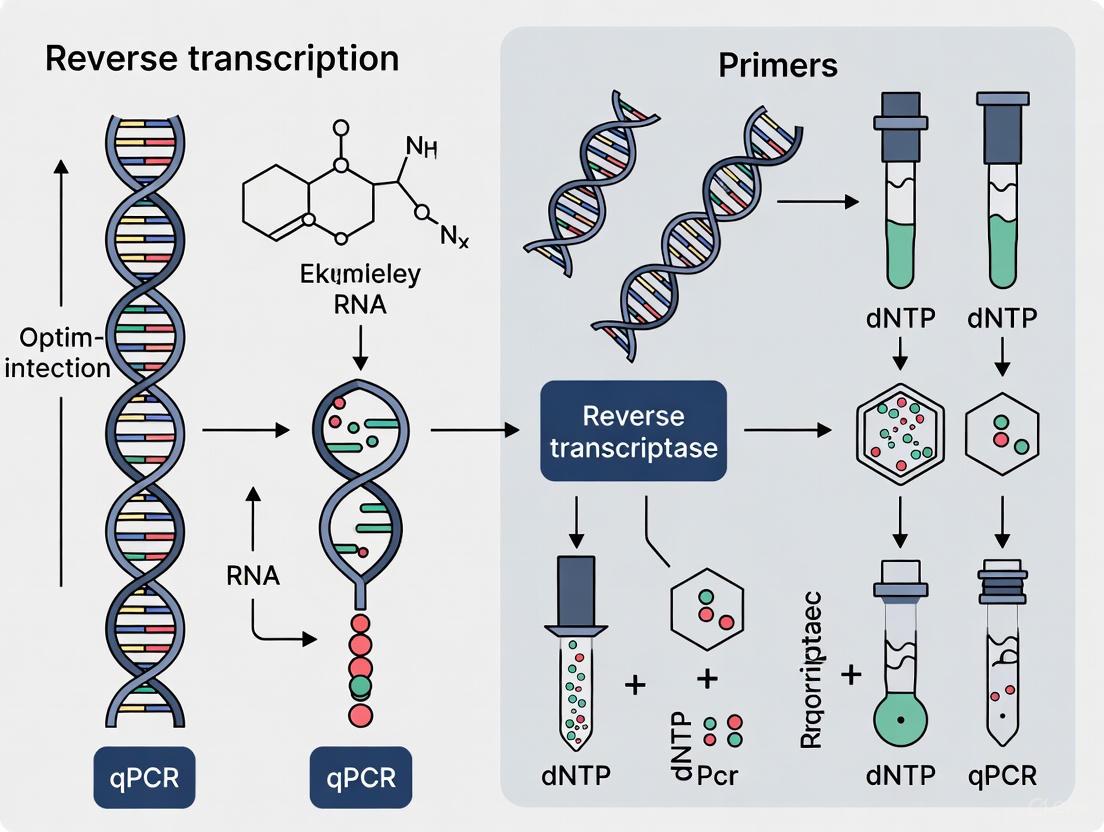
This article provides a comprehensive guide for researchers and drug development professionals on optimizing reverse transcription (RT) for quantitative PCR (qPCR).
Reverse Transcription Optimization for qPCR: A Complete Guide to Enhance Sensitivity, Reproducibility, and Data Reliability
Abstract
This article provides a comprehensive guide for researchers and drug development professionals on optimizing reverse transcription (RT) for quantitative PCR (qPCR). Covering foundational principles to advanced applications, it details how proper RT optimization is critical for accurate gene expression analysis, reliable diagnostic assay development, and robust biomarker discovery. The content addresses key challenges including RNA integrity, primer selection, enzyme choice, and experimental design, while emphasizing adherence to MIQE guidelines to ensure data reproducibility and translational validity in biomedical research.
Understanding Reverse Transcription: The Critical First Step in Reliable qPCR
The Role of Reverse Transcription in Accurate Gene Quantification
Reverse transcription-quantitative polymerase chain reaction (RT-qPCR) is the gold standard technique for mRNA quantification, combining the sensitivity of PCR with the ability to quantify nucleic acids [1] [2]. This method allows researchers to detect rare transcripts and measure small variations in gene expression, making it indispensable for gene expression profiling, biomarker discovery, and validating results from high-throughput genomic studies [2] [3]. The accuracy of RT-qPCR, however, is entirely dependent on the initial reverse transcription step that converts RNA into complementary DNA (cDNA) [4]. This conversion process introduces multiple technical variables that, if not properly controlled, can compromise data integrity and lead to misleading biological conclusions [3]. Within the context of a broader thesis on optimization strategies for qPCR research, this application note examines the critical role of reverse transcription in ensuring accurate gene quantification, providing detailed protocols and analytical frameworks to enhance experimental reproducibility and data reliability for researchers, scientists, and drug development professionals.
Critical Factors Influencing Reverse Transcription Fidelity
The reverse transcription process is a pivotal source of variability in RT-qPCR experiments, with several factors significantly impacting the accuracy of gene expression measurements.
RNA Integrity and Quality Control
RNA integrity is a fundamental prerequisite for accurate gene quantification. Degraded RNA templates can introduce substantial errors in expression measurements, with studies demonstrating that RNA degradation could introduce up to 100% error in gene expression measurements when data were normalized solely to total RNA concentration [1]. The RNA Integrity Number (RIN) provides a standardized metric for assessing RNA quality, with values ranging from 10 (intact) to 1 (fully degraded). Research has established a linear relationship between RIN values and expression ratios, with lower RIN values corresponding to significantly reduced detection of transcript levels [1]. The table below quantifies the maximum observed error in gene expression measurements across different RIN value categories.
Table 1: Impact of RNA Integrity on Gene Expression Measurement Error
| RIN Value Range | Maximum Observed Error (%) | Minimum Expression Ratio |
|---|---|---|
| RIN ≥ 8 | 47% | 0.68 |
| 7 ≤ RIN < 8 | 75% | 0.57 |
| 6 ≤ RIN < 7 | 92% | 0.52 |
| 5 ≤ RIN < 6 | 104% | 0.49 |
| RIN = 4.7 | 108% | 0.48 |
To compensate for variations in RNA integrity, researchers have developed corrective algorithms that incorporate RNA quality metrics into normalization strategies. This approach has been shown to reduce the average error in quantitative measurements to approximately 8%, significantly improving the reliability of sample comparisons, particularly in clinical biopsies where RNA degradation is common [1].
Reverse Transcriptase Selection and Properties
The choice of reverse transcriptase enzyme profoundly influences cDNA synthesis efficiency and fidelity. Key enzymatic properties to consider include:
- Thermal stability: Enzymes with higher thermal stability (e.g., M-MLV RT variants) can function efficiently at elevated temperatures (42-55°C), facilitating the reverse transcription of RNA templates with complex secondary structures [5] [4].
- RNase H activity: This inherent activity degrades the RNA strand in RNA-DNA hybrids following transcription. While excessive RNase H activity can result in truncated cDNA transcripts, controlled activity can enhance qPCR efficiency by melting RNA-DNA duplexes during initial PCR cycles [5] [4].
- Processivity: High-processivity enzymes synthesize longer cDNA fragments without dissociating from the template, providing more complete representation of the target transcript [6].
Modern reverse transcriptases engineered for improved performance often feature reduced RNase H activity coupled with enhanced thermal stability, offering superior cDNA yield and representation across diverse RNA templates [5] [6].
Primer Selection for cDNA Synthesis
The priming strategy employed during reverse transcription determines which RNA species are converted to cDNA and can introduce substantial bias in downstream quantification. The three primary priming approaches each offer distinct advantages and limitations.
Table 2: Comparison of Priming Strategies for Reverse Transcription
| Primer Type | Mechanism | Advantages | Disadvantages |
|---|---|---|---|
| Oligo(dT) | Binds to poly(A) tail of mRNA | Generates full-length cDNA from polyadenylated transcripts; minimizes ribosomal RNA background | 3' bias in cDNA synthesis; inefficient for degraded RNA or non-poly(A) transcripts |
| Random Primers | Hexamers or nonamers bind at multiple points along all RNA transcripts | Comprehensive coverage of all RNA species; effective for degraded RNA and transcripts with secondary structure | Generates truncated cDNAs; can prime ribosomal RNA, diluting mRNA signal |
| Gene-Specific Primers | Designed to complement specific target sequences | Maximum sensitivity for specific targets; ideal for one-step RT-qPCR protocols | Only reverse transcribes predetermined targets; not suitable for multiple targets from single reaction |
For two-step RT-qPCR applications where analyzing multiple targets from a single cDNA synthesis reaction is desirable, a mixed priming approach using both oligo(dT) and random primers often provides the optimal balance, mitigating the 3' bias associated with oligo(dT) priming while maintaining focus on mRNA targets [5] [7].
Optimized Protocols for Accurate Gene Quantification
Two-Step RT-qPCR with Integrity Correction
This optimized protocol incorporates quality control measures and normalization strategies to account for RNA integrity variations, making it particularly suitable for analyzing clinical samples with potentially compromised RNA quality.
Protocol: Two-Step RT-qPCR with RNA Integrity Correction
Step 1: RNA Quality Assessment and Normalization
- Quantify RNA concentration using a tray cell spectrophotometer system to ensure accurate measurement [1].
- Assess RNA integrity using microfluidic capillary electrophoresis (e.g., Agilent 2100 Bioanalyzer) to determine RIN values [1].
- Normalize input RNA amounts based on both concentration and integrity metrics, using the corrective algorithm:
Normalized Amount = (Measured Concentration × RIN Correction Factor)[1].
Step 2: Reverse Transcription with Controls
- Prepare RT reaction mixture:
- RNA template (1-1000 ng) in nuclease-free water
- Reverse transcription primers (2.5 μM oligo(dT), 50 ng/μL random primers, or 0.2 μM gene-specific primers)
- dNTP mix (1 mM each)
- RNase inhibitor (20 U)
- Reverse transcriptase (200 U)
- Appropriate reaction buffer with MgClâ‚‚ (final concentration 2.5-5.0 mM)
- Incubate reactions:
- Primer annealing: 65°C for 5 minutes
- cDNA synthesis: 50°C for 30-60 minutes
- Enzyme inactivation: 85°C for 5 minutes
- Include minus reverse transcriptase controls (-RT) to detect genomic DNA contamination [5].
Step 3: Quantitative PCR Amplification
- Prepare qPCR master mix:
- cDNA template (diluted 1:5 to 1:20)
- Forward and reverse primers (0.1-0.5 μM each)
- DNA polymerase (0.5-1.25 U)
- dNTPs (200 μM each)
- MgClâ‚‚ (1.5-4.0 mM)
- Fluorescent detection system (SYBR Green or TaqMan probe)
- Perform thermal cycling:
- Initial denaturation: 95°C for 2-5 minutes
- 40 cycles of:
- Denaturation: 95°C for 15-30 seconds
- Annealing: 55-65°C for 15-30 seconds
- Extension: 72°C for 15-30 seconds
- Fluorescence acquisition at each cycle during extension phase
Step 4: Data Analysis with Integrity Normalization
- Calculate Ct values for target and reference genes
- Apply the ΔΔCt method for relative quantification [2]
- Incorporate RNA integrity correction factor:
Normalized Expression = 2^(-ΔΔCt) × RIN Correction Factor[1]
One-Step RT-qPCR for High-Throughput Applications
One-step RT-qPCR offers advantages for processing large sample numbers while minimizing handling steps and contamination risk.
Protocol: One-Step RT-qPCR for High-Throughput Applications
Step 1: Reaction Setup
- Prepare master mix containing:
- One-step RT-qPCR enzyme blend (reverse transcriptase and DNA polymerase)
- Reaction buffer with optimized salt composition
- dNTP mix (0.4-1.0 mM each)
- Gene-specific primers (0.2-0.6 μM each)
- Fluorescent probe or dye
- RNA template (1-100 ng)
- Aliquot reactions into qPCR plate
Step 2: Combined Reverse Transcription and Amplification
- Perform thermal cycling with integrated protocol:
- Reverse transcription: 50°C for 10-30 minutes
- Initial denaturation: 95°C for 2-5 minutes
- 40-45 cycles of:
- Denaturation: 95°C for 10-15 seconds
- Annealing/Extension: 60°C for 30-60 seconds with fluorescence acquisition
Step 3: Data Analysis
- Determine Ct values directly from amplification curves
- Calculate relative expression using standard curves or comparative Ct method [2] [7]
The Scientist's Toolkit: Essential Research Reagents
Successful implementation of RT-qPCR requires careful selection of reagents and appropriate controls to ensure data accuracy and reproducibility.
Table 3: Essential Research Reagents for Reverse Transcription and qPCR
| Reagent Category | Specific Examples | Function and Application Notes |
|---|---|---|
| Reverse Transcriptases | M-MLV RT, AMV RT, engineered RT variants | Catalyzes cDNA synthesis from RNA templates; selection based on thermal stability, processivity, and RNase H activity [5] [4] |
| RNA Quality Tools | Microfluidic capillary electrophoresis, RIN algorithm | Assesses RNA integrity; critical for normalization of degraded samples [1] |
| Priming Systems | Oligo(dT)â‚₈, random hexamers, gene-specific primers | Initiates cDNA synthesis; choice depends on target specificity and RNA quality [5] [7] |
| Fluorescent Detection | SYBR Green, TaqMan probes, molecular beacons | Enables real-time quantification; SYBR Green for cost-effectiveness, TaqMan for specificity [2] [4] |
| Reference Genes | GAPDH, ACTB, 18S rRNA, HPRT1, RPLP0 | Normalizes technical and biological variation; requires validation for specific sample types [1] [2] |
| Quality Controls | Minus RT control, exogenous RNA controls, inter-plate calibrators | Detects DNA contamination, monitors reaction efficiency, ensures inter-assay reproducibility [5] [3] |
| p32 Inhibitor M36 | p32 Inhibitor M36, MF:C23H28N8O2, MW:448.5 g/mol | Chemical Reagent |
| IK1 inhibitor PA-6 | IK1 inhibitor PA-6, MF:C31H32N4O2, MW:492.6 g/mol | Chemical Reagent |
Troubleshooting and Quality Assurance
Implementing robust quality control measures is essential for generating reliable gene expression data, particularly when working with challenging sample types.
Addressing Reverse Transcription Variability
The reverse transcription step introduces significantly more variability than the PCR amplification phase [3]. To minimize this variability:
- Include technical replicates at the reverse transcription stage, not just during PCR amplification [3]
- Use exogenous RNA controls (e.g., CAB mRNA) added to the RT reaction to monitor conversion efficiency across samples [1]
- Demonstrate reverse transcriptase linear dynamic range empirically for each enzyme and priming system [3]
- Maintain consistent reaction conditions (temperature, incubation times, buffer composition) across all samples in a study
Normalization Strategies for Accurate Quantification
Appropriate normalization is critical for meaningful biological interpretation of RT-qPCR data. A multi-factorial normalization approach is recommended:
- RNA integrity-based normalization: Implement corrective algorithms that account for RNA quality differences between samples [1]
- Reference gene normalization: Select and validate multiple reference genes with stable expression under experimental conditions [1] [2]
- Total RNA input normalization: Precisely quantify RNA concentration using fluorescence-based methods [1]
Each normalization strategy addresses different sources of variability, and combining these approaches provides the most robust framework for accurate gene quantification, particularly in clinical samples where RNA quality may be compromised.
Reverse transcription plays a fundamental role in determining the accuracy of gene quantification by RT-qPCR. Optimization of this critical first step—through careful attention to RNA integrity, reverse transcriptase selection, priming strategies, and appropriate normalization methods—ensures that resulting data truly reflect biological reality rather than technical artifacts. The protocols and quality control measures outlined in this application note provide a framework for generating reliable, reproducible gene expression data that can withstand the rigors of scientific scrutiny and facilitate meaningful biological insights. As RT-qPCR continues to be a cornerstone technology in molecular research and clinical diagnostics, adherence to these optimized practices becomes increasingly important for advancing our understanding of gene regulation and translating this knowledge into practical applications.
Within the framework of optimizing reverse transcription for quantitative PCR (qPCR) research, the selection of appropriate enzymatic components is paramount. The reverse transcription (RT) reaction, which converts RNA into complementary DNA (cDNA), is a critical first step in RT-qPCR and a significant source of technical variability [8]. The properties of the reverse transcriptase enzyme itself—including its processivity, thermostability, and inherent enzymatic activities—directly influence cDNA yield, accuracy, and the faithful representation of the original RNA population [9] [10]. This application note provides a detailed comparison of reverse transcriptase properties, outlines selection criteria based on experimental requirements, and offers standardized protocols to ensure reproducible, high-quality results for gene expression analysis and drug development research.
Reverse Transcriptase Core Properties and Comparative Analysis
Reverse transcriptases are RNA-directed DNA polymerases. Their functionality in cDNA synthesis is governed by a set of key biochemical attributes that must be carefully matched to the experimental aims [9] [10].
- DNA Polymerase Activity: This is the primary function, enabling the enzyme to synthesize a DNA strand using an RNA template. The enzyme must operate efficiently in the presence of dNTPs and a divalent cation cofactor (Mg²⺠or Mn²âº) [10].
- RNase H Activity: This activity degrades the RNA strand in an RNA-DNA hybrid. While it can be beneficial for melting difficult structures during the initial PCR cycles, it is generally undesirable for producing long, full-length cDNAs because it can cleave the RNA template before the reverse transcriptase has finished synthesis [5] [10]. Engineered enzymes with reduced or eliminated RNase H activity often yield higher amounts of full-length cDNA [11] [10].
- Thermostability: An enzyme's ability to function at higher temperatures is crucial for denaturing RNA templates with extensive secondary structures or high GC content. Thermostable RTs allow reactions to be performed at temperatures up to 55°C or higher, leading to more efficient transcription of challenging templates and higher specificity in priming [11] [10].
- Processivity: This refers to the number of nucleotides a reverse transcriptase can incorporate in a single binding event. A highly processive enzyme can synthesize longer cDNA fragments more quickly and is often more tolerant of common reaction inhibitors found in RNA samples isolated from blood, plants, or formalin-fixed paraffin-embedded (FFPE) tissues [10].
- Fidelity: Fidelity denotes the accuracy of DNA synthesis. Wild-type reverse transcriptases have a high error rate because they lack 3'→5' proofreading exonuclease activity [12]. While this is negligible for most RT-qPCR applications, high-fidelity RTs are critical for applications like cDNA library construction and RNA sequencing [12].
- Terminal Deoxynucleotidyl Transferase (TdT) Activity: This activity results in the non-template-directed addition of extra nucleotides (typically dA, dG, or dC) to the 3' end of the synthesized cDNA. This is generally undesirable but can be exploited intentionally in techniques like RACE (Rapid Amplification of cDNA Ends) and template-switching protocols for full-length cDNA cloning [10].
The table below provides a comparative analysis of common reverse transcriptases based on these properties.
Table 1: Comparative Properties of Common Reverse Transcriptases
| Property | AMV Reverse Transcriptase | MMLV Reverse Transcriptase | Engineered MMLV RT (e.g., SuperScript IV) |
|---|---|---|---|
| RNase H Activity | High [11] | Medium [11] | Low or absent [11] |
| Optimal Reaction Temperature | 42°C - 48°C [11] | 37°C [11] | Up to 55°C [11] |
| Recommended Target Length | ≤ 5 kb [11] | ≤ 7 kb [11] | ≤ 12 kb [11] |
| Processivity | Moderate [11] | Lower than AMV [11] | High (e.g., ~65x wild-type MMLV) [10] |
| Fidelity (Error Rate) | Relatively high [10] | Lower than AMV [10] | Varies by engineering; proofreading versions available [12] |
| Best Suited For | Templates with strong secondary structure [11] | General-purpose, long transcripts (with low RNase H) [11] | GC-rich templates, long transcripts, degraded/inhibited samples [11] [10] |
Selection Criteria for Reverse Transcription Workflows
One-Step vs. Two-Step RT-qPCR
The first major decision in experimental design is choosing between a one-step or two-step RT-qPCR protocol. This choice has significant implications for throughput, flexibility, and potential variability [5] [13].
Table 2: Comparison of One-Step and Two-Step RT-qPCR
| Factor | One-Step RT-qPCR | Two-Step RT-qPCR |
|---|---|---|
| Workflow | Reverse transcription and qPCR occur in the same tube [5] | Reverse transcription and qPCR are performed in separate tubes [5] |
| Throughput | Suitable for high-throughput screening [5] | Less suited for high-throughput due to more handling steps [5] |
| Flexibility | Low; cDNA cannot be stored or used for multiple targets [13] | High; stable cDNA pool can be used for multiple qPCR assays [5] |
| Optimization | Compromised conditions for both RT and PCR [5] | Individual optimization of RT and PCR steps is possible [5] |
| Risk of Contamination | Lower, due to a closed-tube system [5] | Higher, due to additional pipetting steps [5] |
| Priming | Requires sequence-specific primers [5] | Flexible; can use oligo(dT), random, or gene-specific primers [5] |
Priming Strategies for cDNA Synthesis
The choice of primer for the reverse transcription reaction determines which RNA species are converted to cDNA and can impact yield, sensitivity, and the region of the transcript that is reverse-transcribed [5] [14].
- Oligo(dT) Primers: These primers, typically 12-18 nucleotides long, anneal to the poly(A) tail of eukaryotic mRNA. They are ideal for generating full-length cDNA and are preferred for analyzing gene expression of polyadenylated transcripts. However, they are not suitable for prokaryotic RNA, non-polyadenylated RNAs (e.g., some non-coding RNAs), or degraded RNA samples, and they can introduce a 3' bias [14] [15]. Anchored oligo(dT) primers, which include one degenerate nucleotide (V) at the 3' end, prevent "slippage" and ensure priming at the start of the poly(A) tail [14].
- Random Primers: These are short oligonucleotides (usually hexamers) with random sequences that anneal at multiple points along all RNA transcripts. This makes them suitable for all RNA types, including those without a poly(A) tail, degraded RNA, and transcripts with strong secondary structure. A drawback is that they generate a heterogeneous population of short cDNA fragments and can lead to the synthesis of cDNA from ribosomal RNA, potentially diluting the mRNA signal [14] [15].
- Gene-Specific Primers: These primers are designed to anneal to a specific mRNA sequence of interest. They offer the highest sensitivity for a single target by directing all RT activity to one transcript and are mandatory for one-step RT-PCR. Their main disadvantage is that a separate RT reaction is required for each gene being studied [5] [14].
The following workflow diagram illustrates the decision-making process for selecting the appropriate reverse transcriptase and priming strategy based on experimental goals.
Detailed Experimental Protocols
Protocol: Two-Step RT-qPCR for Gene Expression Analysis
This protocol is designed for high-quality total RNA and provides the flexibility to analyze multiple genes from a single cDNA synthesis reaction [5] [14].
I. First-Strand cDNA Synthesis
- RNA Template Preparation: Use high-integrity RNA (A260/A280 ratio ~2.0, RIN >8) [14]. Treat samples with DNase I or a double-strand-specific DNase (e.g., ezDNase) to remove genomic DNA contamination, followed by enzyme inactivation [14].
- Assemble the Reaction Mix in a nuclease-free tube on ice:
- 1 µg – 1 µL of total RNA (up to 1 µg)
- 1 µL of Oligo(dT)â‚₈ (50 µM) or 2 µL of Random Hexamers (50 µM) or 1 µL of Gene-Specific Primer (2 µM)
- Nuclease-free water to a final volume of 13 µL
- Denature RNA Secondary Structure: Incubate the mixture at 65°C for 5 minutes, then immediately place on ice for at least 1 minute.
- Prepare Master Mix: Combine on ice:
- 4 µL of 5X Reverse Transcription Buffer
- 1 µL of RNase Inhibitor (20 U/µL)
- 2 µL of Deoxynucleotide Mix (10 mM each dNTP)
- Combine and Equilibrate: Add the master mix to the primed RNA template. Mix gently and centrifuge briefly. Incubate at 25°C for 5 minutes for primer annealing.
- Initiate Reverse Transcription: Add 1 µL (200 U) of a selected reverse transcriptase (e.g., M-MLV RNase H- point mutant). Mix gently.
- Incubate: Perform the reverse transcription reaction:
- For Oligo(dT) or Gene-Specific primers: 50°C for 50 minutes.
- For Random Hexamers: 25°C for 10 minutes followed by 37°C for 50 minutes.
- Enzyme Inactivation: Heat the reaction at 70°C for 15 minutes to inactivate the reverse transcriptase. The resulting cDNA can be stored at -20°C or used directly in qPCR.
II. Quantitative PCR (qPCR)
- Prepare qPCR Reaction: Assemble reactions in a qPCR plate or tube:
- 10 µL of 2X SYBR Green qPCR Master Mix
- 2 µL of forward primer (10 µM)
- 2 µL of reverse primer (10 µM)
- 4 µL of nuclease-free water
- 2 µL of cDNA template (from the first-strand synthesis; a 1:5 or 1:10 dilution is often optimal)
- Run qPCR Program: Use the following standard cycling conditions on a real-time PCR instrument:
- Initial Denaturation: 95°C for 3 minutes
- 40 Cycles of:
- Denaturation: 95°C for 15 seconds
- Annealing/Extension: 60°C for 30 seconds (acquire fluorescence)
- (Optional) Melt Curve: 65°C to 95°C, increment 0.5°C for 5 seconds each.
Protocol: Determining Reverse Transcription Efficiency
Accurate quantification in RT-qPCR requires an understanding of the efficiency (E) of the reverse transcription step, which can be highly variable and gene-specific [8]. This protocol uses synthetic RNA standards and digital PCR (dPCR) for absolute quantification.
- Obtain Synthetic RNA Standards: Acquire or synthesize known concentrations of in vitro transcribed (IVT) RNA for the gene of interest.
- Sample Preparation: Prepare a dilution series of the IVT RNA (e.g., 10 fg, 1 fg, 100 ag per reaction) in a background of carrier RNA (e.g., 10 pg yeast RNA) to mimic a complex sample [8].
- Reverse Transcription: Perform the first-strand cDNA synthesis protocol (Section 4.1, Part I) on each dilution, including at least 10 technical replicates for each concentration to robustly assess variability.
- Digital PCR: Use the synthesized cDNA as a template for absolute quantification by dPCR.
- Assemble dPCR reactions according to the manufacturer's instructions for your system.
- Load the reaction mix into the dPCR chip or plate and run the amplification program.
- Data Analysis:
- The dPCR software will provide an absolute count of cDNA molecules per microliter.
- Calculate RT Efficiency: Compare the measured number of cDNA molecules to the known input number of RNA molecules.
- RT Efficiency (%) = (Number of cDNA molecules detected / Number of input RNA molecules) × 100% [8]
- Assess Variability: Calculate the Coefficient of Variation (CV = Standard Deviation / Mean) for the replicates at each concentration. A CV of less than 12% is generally acceptable [8].
- Incorporate into Analysis: The determined efficiency and variability values for each transcript should be factored into the final quantitative analysis of experimental RNA samples to improve accuracy.
The Scientist's Toolkit: Essential Reagents and Materials
Table 3: Key Research Reagent Solutions for Reverse Transcription
| Item | Function & Importance | Example Products / Notes |
|---|---|---|
| High-Quality RNA | Starting template; integrity (RIN >8) and purity (A260/A280 ≈ 2.0) are critical for success [14]. | Qubit RNA Assay, Agilent Bioanalyzer |
| Reverse Transcriptase | Core enzyme for synthesizing cDNA from RNA. Selection is based on thermostability, RNase H activity, and processivity [11]. | SuperScript IV (Thermo Fisher), GoScript (Promega), Transcriptor High Fidelity (Roche) |
| Primers | Initiates cDNA synthesis. Choice (Oligo(dT), random, gene-specific) dictates which RNAs are reverse-transcribed [5] [14]. | Anchored Oligo(dT)â‚‚â‚€, Random Hexamers |
| dNTP Mix | Building blocks for cDNA synthesis. | 10 mM solution of each dNTP |
| RNase Inhibitor | Protects the RNA template from degradation by RNases during the reaction. | Recombinant RNase Inhibitor |
| DNase | Removes contaminating genomic DNA from RNA preparations to prevent false-positive signals in qPCR [14]. | DNase I, RNase-free; ezDNase (Thermo Fisher) |
| Buffer Systems | Provides optimal pH, ionic strength, and co-factors (Mg²âº) for enzyme activity. | 5X First-Strand Buffer |
| qPCR Master Mix | Contains DNA polymerase, dNTPs, buffer, and fluorescent dye (SYBR Green) or probe for real-time quantification [13]. | SYBR Green qPCR Master Mix, TaqMan Gene Expression Master Mix |
| Neoandrographolide | Neoandrographolide, CAS:27215-14-1, MF:C26H40O8, MW:480.6 g/mol | Chemical Reagent |
| Yamogenin | Yamogenin, CAS:512-06-1, MF:C27H42O3, MW:414.6 g/mol | Chemical Reagent |
Troubleshooting and Technical Notes
- Genomic DNA Contamination: Always include a minus-reverse transcriptase control ("no-RT" control) in RT-qPCR experiments. If amplification is detected in this control, it indicates genomic DNA contamination. This can be addressed by DNase treatment during RNA purification or by designing PCR primers that span an exon-exon junction [5] [15].
- Low cDNA Yield: Ensure RNA is not degraded. Check the integrity of rRNA bands on a gel or the RNA Integrity Number (RIN). Increase the amount of reverse transcriptase or reaction time. Use a mixture of oligo(dT) and random primers to improve overall yield [14] [15].
- High Variability: Run replicates starting from the reverse transcription step. Use a master mix for both RT and qPCR steps to minimize pipetting error. Ensure the quality and quantity of input RNA are consistent across all samples [16] [8].
- Inhibition of Reverse Transcription: If using difficult sample types (e.g., blood, plant tissue), use a highly processive reverse transcriptase that is more resistant to inhibitors. Diluting the RNA sample or including additional purification steps may also help [10].
The accuracy of reverse transcription quantitative PCR (RT-qPCR) is fundamentally dependent on the quality of the starting RNA material. RNA integrity, purity, and structural characteristics directly impact cDNA synthesis efficiency and the subsequent reliability of gene expression quantification [17] [18]. For researchers and drug development professionals, failure to address these pre-analytical variables systematically can lead to false conclusions, wasted resources, and compromised experimental outcomes. This application note details evidence-based protocols to overcome the three major challenges in RNA analysis—integrity, purity, and secondary structures—within the critical context of reverse transcription optimization for qPCR workflows. Recognizing that quality requirements vary significantly across applications, with techniques like microarrays demanding higher standards than qPCR with its short amplicons, is essential for allocating resources appropriately [18].
Assessing RNA Integrity: From Traditional Methods to Advanced Metrics
Gel Electrophoresis-Based Assessment
The most traditional method for assessing RNA integrity involves denaturing agarose gel electrophoresis. Intact total RNA from eukaryotic samples displays sharp, clear 28S and 18S ribosomal RNA bands, with the 28S band exhibiting approximately twice the intensity of the 18S band (a 2:1 ratio) [17]. Partially degraded RNA appears as a smear with diminished or absent ribosomal bands, while completely degraded RNA manifests as a low molecular weight smear. While this method is accessible, its significant drawback is the relatively large amount of RNA required (at least 200 ng) for visualization with ethidium bromide, making it unsuitable for precious samples with low yields [17]. Alternative fluorescent stains like SYBR Gold or SYBR Green II can enhance sensitivity, detecting as little as 1-2 ng of RNA, but these stains still require significant hands-on time and present potential hazards [17] [18].
Table 1: Methods for Assessing RNA Integrity and Purity
| Method | Key Metric(s) | RNA Required | Information Provided | Key Limitations |
|---|---|---|---|---|
| Denaturing Agarose Gel [17] | 28S:18S rRNA ratio (2:1 ideal) | ≥200 ng (EtBr); ~1-2 ng (SYBR dyes) | Visual assessment of degradation; qualitative | Semi-quantitative; requires significant RNA input; hazardous stains |
| UV Spectrophotometry (e.g., NanoDrop) [18] | A260/A280 (~1.8-2.2); A260/A230 (>1.7) | 0.5-2 µL | Concentration and purity (salt, solvent, protein contamination) | Does not detect degradation or genomic DNA contamination |
| Fluorometric Assays (e.g., QuantiFluor) [18] | Concentration via fluorescence | As little as 100 pg | Highly sensitive concentration measurement | No purity or integrity information; may bind DNA |
| Microfluidics Capillary Electrophoresis (e.g., Agilent 2100 Bioanalyzer) [17] [18] | RNA Integrity Number (RIN) | 1 µL of 10 ng/µL | Quantitative integrity score, concentration, and purity | Higher instrument cost; specialized chips |
The RNA Integrity Number (RIN): A Quantitative Standard
The RNA Integrity Number (RIN) provides a standardized, numerical assessment of RNA quality (range 1-10, with 10 being fully intact) [19]. This algorithm considers the entire electrophoretic trace from microfluidics-based systems like the Agilent 2100 Bioanalyzer, not just the ribosomal ratios, offering a more objective and reliable quality metric [17] [18]. The RIN metric is particularly valuable for applications requiring high-quality RNA and is emerging as a predictive tool in fields like genebanking, where it can detect early stages of RNA degradation in seeds before viability loss occurs [19]. This system simultaneously provides data on RNA concentration and purity, offering a comprehensive quality control assessment from a minimal sample aliquot (as little as 5 ng) [17].
Ensuring RNA Purity: Spectrophotometric and Fluorometric Methods
RNA purity is critical for downstream enzymatic reactions like reverse transcription. contaminants such as proteins, salts, guanidine thiocyanate, or phenolic compounds can inhibit enzyme activity and lead to inaccurate quantification [18].
UV Absorbance Ratios
UV spectrophotometry provides rapid assessment of common contaminants through absorbance ratios:
- A260/A280 Ratio: Primarily indicates protein contamination. A ratio of ~1.8–2.2 is generally accepted for pure RNA [18].
- A260/A230 Ratio: Indicates contamination from salts, solvents, or guanidine thiocyanate. Ratios typically >1.7 are considered acceptable [18].
It is crucial to note that absorbance methods cannot distinguish between RNA and DNA, nor can they detect RNA degradation, as nucleotides from degraded RNA still contribute to the 260 nm reading [18].
Fluorescent Dye-Based Quantification
Fluorometric methods (e.g., using QuantiFluor RNA System) offer superior sensitivity, detecting concentrations as low as 1 pg/μL, which is substantially lower than absorbance-based methods [18]. This makes them ideal for precious, low-yield samples. A significant limitation is that many fluorescent dyes are not RNA-specific and will also bind to DNA, potentially leading to overestimation of RNA concentration. To ensure accuracy, treatment of samples with DNase I prior to measurement is recommended [18] [20].
RNA Secondary Structures: Challenges and Computational Predictions
RNA molecules form complex secondary and tertiary structures through base pairing interactions, which play vital functional roles but can severely hinder reverse transcription and PCR amplification by blocking polymerase progression [21] [22].
The Impact of Secondary Structure on Reverse Transcription
Secondary structures such as stem-loops, hairpins, and pseudoknots can cause reverse transcriptase enzymes to stall or dissociate, leading to truncated cDNA products and biased representation of transcript abundance in downstream qPCR [21]. This is particularly problematic when the amplicon spans a region of stable secondary structure.
Advanced Prediction Methods
Computational methods for predicting RNA secondary structure have evolved from thermodynamic models (e.g., Vienna RNAfold) to modern deep learning (DL) approaches (e.g., SPOT-RNA, UFold, BPfold) [22]. These DL methods leverage large datasets to achieve high accuracy but often struggle with generalizability to unseen RNA families [22]. A recent integrative approach, BPfold, combines deep learning with a "base pair motif energy" library—a comprehensive enumeration of locally adjacent three-neighbor base pairs and their thermodynamic energies—to improve prediction robustness and accuracy, even for novel sequences [22]. Using these prediction tools during the assay design phase allows researchers to avoid primers in regions prone to stable secondary structures.
Table 2: Solutions for RNA Secondary Structure Challenges in RT-qPCR
| Challenge | Solution | Experimental Protocol | Expected Outcome |
|---|---|---|---|
| Reverse Transcriptase Pausing [20] | Use thermostable RT enzymes; increase RT temperature | Use Luna RT at 55–60°C for 10 min [20] | Improved full-length cDNA synthesis; reduced truncation artifacts |
| Primer Binding Inefficiency [23] | Design primers avoiding structured regions; use prediction tools | Use BPfold, SPOT-RNA, or UFold to predict structure; design primers in unstructured loops [22] | Lower Cq values; improved amplification efficiency |
| Low PCR Efficiency [20] | Design short amplicons (70–200 bp); use PCR additives | Keep GC content 40–60%; use 400 nM primer concentration; optimize with 100–900 nM range [20] | PCR efficiency of 90–110%; better linearity (R² ≥ 0.99) [20] |
Integrated Experimental Protocol for RT-qPCR Optimization
RNA Quality Control Protocol
- Extraction and Storage: Purify RNA using a method appropriate for your sample type. For long-term stability, resuspend and store purified RNA in EDTA-containing buffer (e.g., 1X TE) at -80°C [20].
- Quality Assessment:
- Concentration and Purity: Dilute 1-2 µL of RNA in nuclease-free water for UV spectrophotometry. Acceptable samples should have A260/A280 = 1.8–2.2 and A260/A230 > 1.7 [18]. For low-concentration samples, use a fluorometric RNA-specific assay.
- Integrity: Use an Agilent Bioanalyzer or similar system to determine the RIN. A RIN ≥ 8 is generally recommended for sensitive downstream applications like sequencing. For qPCR, lower RIN values may be acceptable depending on amplicon size [18].
- Genomic DNA Removal: Treat 1 µg of RNA with DNase I (e.g., NEB #M0303) according to manufacturer's instructions to eliminate genomic DNA contamination [20].
RT-qPCR Assay Design and Optimization
- Target and Primer Design:
- Select amplicons of 70–200 bp with GC content of 40–60% [20].
- Design primers 15–30 nucleotides long with Tm ≈ 60°C. For sequence-specific targeting, align all homologous gene sequences and place SNPs at the 3'-end of primers [23].
- Use computational tools (e.g., BPfold) to predict and avoid regions of strong secondary structure [22].
- One-Step RT-qPCR Setup:
- Prepare reactions on ice using a master mix. A typical 20 µL reaction contains 100 pg–100 ng total RNA, 400 nM of each primer, and appropriate master mix components [20].
- Include mandatory controls: no-template control (NTC) and no-RT control to check for contamination.
- Thermocycling and Analysis:
- Use the following modified cycling conditions for Luna kits: Reverse transcription at 55°C for 10 min (increase to 60°C for structured templates); initial denaturation at 95°C for 2 min; 40–45 cycles of 95°C for 10 sec and 60°C for 30 sec [20].
- Validate assay performance: PCR efficiency of 90–110%, linearity R² ≥ 0.99, and specificity confirmed by melt curve analysis [20].
Table 3: Research Reagent Solutions for RNA Analysis and RT-qPCR
| Reagent/Kit | Function | Key Features/Benefits |
|---|---|---|
| Agilent 2100 Bioanalyzer with RNA 6000 LabChip [17] [18] | Integrated RNA quality assessment | Provides RIN, concentration, and purity from 1 µL sample (10 ng/µL); replaces multiple QC methods |
| SYBR Gold/SYBR Green II RNA gel stain [17] | High-sensitivity RNA detection in gels | Detects 1-2 ng RNA; safer alternative to ethidium bromide |
| Luna Universal One-Step RT-qPCR Kit [20] | Integrated reverse transcription and qPCR | WarmStart feature prevents non-specific amplification; inhibitor-resistant; includes passive reference dye |
| DNase I (e.g., NEB #M0303) [20] | Genomic DNA removal | Eliminates false-positive signals in RNA samples; essential for accurate gene expression analysis |
| Antarctic Thermolabile UDG (e.g., NEB #M0372) [20] | Carry-over contamination prevention | Degrades uracil-containing contaminants prior to amplification; incubation at room temperature |
| BPfold Software [22] | RNA secondary structure prediction | Deep learning approach integrated with base pair motif energy; superior generalizability for novel sequences |
Successful RT-qPCR outcomes depend on a systematic approach to RNA quality management. By implementing rigorous assessment of RNA integrity (using RIN when possible), verifying purity through spectrophotometric and fluorometric methods, and proactively addressing secondary structure challenges through computational prediction and optimized reverse transcription conditions, researchers can significantly enhance the reliability of their gene expression data. The protocols and solutions detailed in this application note provide a comprehensive framework for overcoming the major pre-analytical challenges in qPCR research, enabling more robust and reproducible results in both basic research and drug development applications.
Impact of RT Efficiency on Final qPCR Results and Data Interpretation
Reverse transcription quantitative PCR (RT-qPCR) is a cornerstone technique for gene expression analysis, yet its quantitative accuracy is fundamentally dependent on the efficiency of the initial reverse transcription (RT) step. This conversion of RNA to complementary DNA (cDNA) is widely recognized as a major source of inefficiency and variability in transcriptomics workflows [8]. The RT efficiency directly influences subsequent quantitative PCR (qPCR) results, potentially leading to inaccurate gene expression quantification if not properly controlled and understood. This application note examines the critical impact of RT efficiency on final qPCR results and provides detailed methodologies for optimizing, measuring, and accounting for this crucial parameter within the broader context of reverse transcription optimization for qPCR research.
The Critical Role of Reverse Transcription Efficiency
Understanding RT Efficiency and Its Consequences
Reverse transcription efficiency refers to the percentage of RNA molecules successfully converted into cDNA during the RT reaction. Ideal 100% efficiency would mean every RNA transcript is completely converted to a full-length cDNA copy. However, in practice, RT efficiency is highly variable and often substantially lower, leading to systematic underestimation of true RNA concentrations [8].
The fundamental problem stems from the multi-step nature of RT-qPCR: what is ultimately quantified in the qPCR reaction is not the original RNA, but the cDNA produced from it. Therefore, any inefficiency in the RT step directly reduces the starting template available for qPCR amplification. This effect is particularly problematic because it occurs before the qPCR quantification begins and cannot be corrected by normal qPCR controls. Studies have reported widely varying RT efficiency ranges from 0-114%, with much of this variability being gene-specific [8]. This transcript-dependent variability means that different genes within the same sample may be converted to cDNA with markedly different efficiencies, potentially distorting relative expression ratios.
Quantitative Impact on qPCR Results
The effect of RT efficiency on final quantification cycles (Cq values) is mathematically substantial. Research has demonstrated that varying primer concentrations alone—just one factor affecting RT efficiency—can lead to Cq value differences exceeding 5 cycles for some assays [24]. Since each Cq difference approximately corresponds to a two-fold change in template concentration, a 5-cycle difference represents a 32-fold (2âµ) difference in apparent transcript abundance, all attributable to suboptimal RT conditions rather than true biological variation.
Table 1: Documented Ranges of Reverse Transcription Efficiency from Literature
| Efficiency Range | Experimental System | Key Contributing Factors |
|---|---|---|
| 49-114% [8] | Multiple systems | Primer selection, enzyme type, RNA quality |
| 50-77% [8] | Single-cell digital PCR | Sample type, reaction volume |
| 0-102% [8] | Probe-based assays | Background RNA, inhibitors |
| 39-65% [8] | SYBR Green assays | RNA secondary structure, GC content |
This efficiency problem extends to digital PCR (dPCR) platforms as well, demonstrating that the issue is fundamental to the RT process itself rather than specific to qPCR detection chemistry [8]. The gene-dependent nature of RT efficiency means that some transcripts reverse transcribe more efficiently than others, potentially distorting expression ratios in multi-gene panels.
Experimental Protocols for Assessing RT Efficiency
Determining RT Efficiency Using Synthetic RNA Standards
The most accurate method for determining absolute RT efficiency involves using synthetic in vitro-transcribed (IVT) RNA standards of known concentration. This approach eliminates biological variables and provides a direct measurement of conversion efficiency.
Materials Required:
- Purified IVT RNA standards for target genes of interest
- Selected reverse transcriptase and associated buffer system
- Primers (gene-specific, random hexamers, or oligo-dT)
- Digital PCR system or highly precise qPCR platform
- Nuclease-free water and standard molecular biology reagents
Procedure:
- Standard Preparation: Prepare a dilution series of IVT RNA standards covering the expected concentration range of your biological samples (e.g., 10 fg/μL to 100 ag/μL).
- Reverse Transcription: Perform RT reactions on each dilution using your standard protocol. Include sufficient replicates (minimum n=5-10) to assess variability.
- Absolute Quantification: Quantify the resulting cDNA using dPCR or a qPCR standard curve with known standards.
- Efficiency Calculation: Calculate RT efficiency for each transcript and concentration using the formula:
- Efficiency (%) = (cDNA molecules measured / RNA molecules input) × 100
- Variability Assessment: Determine the coefficient of variation (CV) for replicate measurements to assess technical variability [8].
This method provides transcript-specific efficiency values that can be directly incorporated into downstream quantification models to correct apparent expression levels.
Primer and Probe Optimization Matrix
Systematic optimization of primer and probe concentrations is essential for robust assay performance, particularly when establishing multi-gene panels requiring common cycling conditions.
Materials Required:
- Forward and reverse primers (100 μM stock solutions)
- Probe (if using probe-based chemistry, 100 μM stock)
- cDNA template (from a well-characterized control sample)
- qPCR master mix compatible with your detection chemistry
- qPCR instrument capable of multiplexed fluorescence detection
Procedure:
- Primer Matrix Setup: Prepare a primer concentration matrix testing multiple combinations of forward and reverse primers (e.g., 100 nM, 200 nM, and 300 nM each) while keeping all other reaction components constant [24].
- Probe Concentration Testing: For probe-based assays, test multiple probe concentrations (e.g., 100 nM and 200 nM) in combination with optimal primer concentrations [24].
- qPCR Amplification: Run all reactions using standardized cycling conditions appropriate for your assay.
- Performance Evaluation: Identify optimal conditions based on:
- Lowest Cq value with minimal replicate variability
- Absence of primer-dimer formation (verified by melt curve analysis for dye-based chemistries)
- Highest fluorescence amplitude (signal-to-noise ratio)
- Reaction efficiency between 90-110% when calculated from dilution series [25]
Table 2: Optimal Primer Concentration Distribution from Optimization Study
| Primer Concentration Combination | Percentage of Assays Optimal | Key Performance Characteristics |
|---|---|---|
| Asymmetric concentrations | 65% | Improved efficiency for assays with differing primer properties |
| Symmetric concentrations (200 nM each) | 12% | Satisfactory for well-designed assays |
| Other symmetric combinations | 23% | Gene-specific requirements |
Research demonstrates that approximately 65% of assays perform optimally with asymmetric primer concentrations, while only 12% perform best with the commonly used default of 200 nM for each primer [24]. This highlights the critical importance of empirical optimization rather than relying on default conditions.
Key Optimization Strategies for Improved RT Efficiency
Reverse Transcriptase Selection
The choice of reverse transcriptase significantly impacts cDNA yield, especially with challenging templates. Different enzymes exhibit varying capabilities to reverse transcribe long transcripts, GC-rich regions, and templates with secondary structure.
Table 3: Properties of Common Reverse Transcriptases
| Property | AMV Reverse Transcriptase | MMLV Reverse Transcriptase | Engineered MMLV (e.g., SuperScript IV) |
|---|---|---|---|
| RNase H activity | High | Medium | Low |
| Reaction temperature | 42°C | 37°C | 55°C |
| Reaction time | 60 min | 60 min | 10 min |
| Target length | ≤5 kb | ≤7 kb | ≤12 kb |
| Yield with challenging RNA | Medium | Low | High |
Engineered MMLV reverse transcriptases with reduced RNase H activity and increased thermal stability generally provide superior performance for difficult templates and can significantly improve RT efficiency [14]. The higher reaction temperatures (up to 55°C) help denature RNA secondary structures that can impede reverse transcription.
Primer Selection Strategy
The choice of RT priming strategy should align with experimental goals and RNA characteristics:
- Oligo(dT) Primers: Ideal for eukaryotic mRNA analysis, full-length cDNA synthesis, and 3' RACE. Not suitable for degraded RNA, prokaryotic RNA, or RNAs lacking poly(A) tails. May introduce 3' bias [14].
- Random Hexamers: Enable reverse transcription of entire RNA populations, including non-coding RNAs. Suitable for degraded RNA (e.g., FFPE samples) and RNAs with secondary structure. Produce shorter cDNA fragments, especially at higher concentrations [14].
- Gene-Specific Primers: Provide the most specific priming for individual targets but are not suitable for transcriptome-wide analyses. Ideal for quantifying specific transcripts with maximal efficiency [14].
For comprehensive gene expression analysis, a mixture of oligo(dT) and random primers often provides the most balanced representation across transcript lengths and types.
RNA Quality and Purity Considerations
RNA integrity is fundamental to reliable RT efficiency. Several methods are available for assessing RNA quality:
- UV Spectrophotometry: A260/A280 ratios ~2.0 and A260/A230 ratios >1.8 indicate pure RNA free of protein and organic compound contamination [14].
- Fluorometric Methods: RNA-specific dyes (e.g., Qubit RNA assays) provide more accurate quantification than UV absorbance alone [14].
- Electrophoretic Methods: Gel-based assessment of 28S:18S rRNA ratios (~2:1 indicates intact RNA) or automated electrophoresis systems (RIN >8.0 indicates high-quality RNA) [14].
Genomic DNA contamination can cause false-positive signals and should be eliminated using DNase I treatment or double-strand-specific DNases that minimize RNA damage [14].
Data Interpretation and Normalization Accounting for RT Efficiency
Efficiency-Corrected Quantification
The standard 2−ΔΔCT method for relative quantification assumes perfect (100%) amplification efficiency for both target and reference genes. This assumption is frequently violated in practice, potentially introducing significant inaccuracies. Efficiency-corrected quantification incorporates actual measured efficiency values to improve accuracy:
- Calculate Per-Run Efficiency: Determine qPCR efficiency for each assay using a standard curve or linear regression method [26].
- Apply Efficiency Correction: Convert Cq values into efficiency-corrected target quantities using the formula:
- Quantity = Efficiency^(Cq)
- Normalize to Reference Genes: Calculate normalized expression values by dividing efficiency-corrected target quantities by the geometric mean of efficiency-corrected reference gene quantities [27].
Advanced statistical approaches such as Analysis of Covariance (ANCOVA) can provide greater robustness to efficiency variations compared to traditional 2−ΔΔCT methods, particularly when analyzing raw fluorescence data across multiple samples [27].
Reporting Guidelines
Adherence to the MIQE (Minimum Information for Publication of Quantitative Real-Time PCR Experiments) guidelines ensures transparent reporting of RT efficiency parameters [28]. Essential information to report includes:
- RNA quality assessment metrics (RIN, A260/A280, etc.)
- Reverse transcriptase and priming strategy used
- cDNA synthesis reaction conditions
- For each assay: measured RT efficiency values with associated variability
- qPCR amplification efficiency with confidence intervals
- Normalization strategy and reference gene validation
The updated MIQE 2.0 guidelines emphasize reporting Cq values as efficiency-corrected target quantities with prediction intervals to communicate measurement uncertainty appropriately [28].
The Scientist's Toolkit: Essential Research Reagents
Table 4: Key Reagent Solutions for RT Efficiency Optimization
| Reagent Category | Specific Examples | Function and Importance |
|---|---|---|
| Reverse Transcriptases | SuperScript IV, SuperScript III, SuperScript II | Converts RNA to cDNA; engineered enzymes offer higher temperature and processivity |
| RNA Quality Assessment | Qubit RNA IQ Assay, Agilent Bioanalyzer | Accurately determines RNA integrity and quantity |
| gDNA Removal | ezDNase, DNase I | Eliminates genomic DNA contamination without damaging RNA |
| Primers | Oligo(dT)20, Random Hexamers, Gene-specific | Initiates cDNA synthesis; choice affects coverage and bias |
| dNTPs | PCR-grade dNTP Mix | Building blocks for cDNA synthesis |
| RNase Inhibitors | Recombinant RNase Inhibitor | Protects RNA templates from degradation |
| qPCR Master Mixes | SYBR Green, TaqMan Master Mixes | Enables accurate quantification of cDNA |
| Reference Genes | ACTB, GAPDH, HPRT1, etc. | Provides stable normalization for relative quantification |
| Nesosteine | Nesosteine|CAS 84233-61-4|Research Chemical | Nesosteine is a chemical compound for research use only (RUO). It is strictly for laboratory applications and not for personal use. Request a quote today. |
| Netilmicin Sulfate | Netilmicin Sulfate, CAS:56391-57-2, MF:C42H92N10O34S5, MW:1441.6 g/mol | Chemical Reagent |
Workflow and Impact Visualization
Diagram 1: Impact of RT Efficiency on qPCR Results. This workflow illustrates how various factors influence reverse transcription efficiency and subsequently impact final qPCR results through incomplete template conversion and gene-specific bias.
Reverse transcription efficiency is not merely a technical detail but a fundamental parameter that directly determines the accuracy of RT-qPCR quantification. The gene-dependent nature of RT efficiency, with variations capable of causing greater than 30-fold differences in apparent expression levels, necessitates careful optimization and characterization for each experimental system. Through systematic assessment of RNA quality, judicious selection of reverse transcriptase and priming strategy, empirical optimization of reaction conditions, and incorporation of efficiency values into data analysis, researchers can significantly improve the reliability and reproducibility of their RT-qPCR results. Adherence to these practices and comprehensive reporting in line with MIQE guidelines ensures that the impact of RT efficiency is appropriately accounted for in final data interpretation, ultimately leading to more biologically meaningful conclusions in gene expression studies.
Strategic Workflow Design: Selecting and Implementing the Optimal RT-qPCR Method
Within the broader context of optimizing reverse transcription for quantitative PCR (qPCR) research, the fundamental decision between employing a one-step or a two-step reverse transcription quantitative PCR (RT-qPCR) protocol is a critical one. This choice significantly impacts the workflow, efficiency, reliability, and ultimate success of gene expression analysis, pathogen detection, and other RNA-based applications [29] [5]. RT-qPCR is a powerful and widely used method for detecting and quantifying RNA, where the RNA template is first transcribed into complementary DNA (cDNA) before quantitative PCR amplification [5]. This article provides a detailed comparative analysis of one-step and two-step RT-qPCR methodologies, offering structured data, detailed protocols, and clear guidance to help researchers, scientists, and drug development professionals select and optimize the most appropriate approach for their specific experimental needs.
Fundamental Principles and Comparative Workflow Analysis
The core difference between the two methods lies in the configuration of the reverse transcription and PCR amplification steps.
- One-Step RT-qPCR combines the reverse transcription and PCR amplification in a single tube and reaction buffer, utilizing a reverse transcriptase along with a DNA polymerase. This method exclusively uses sequence-specific primers for both cDNA synthesis and amplification [29] [5].
- Two-Step RT-qPCR physically separates the reverse transcription and PCR amplification into two distinct reactions performed in separate tubes. This allows for individually optimized buffers, reaction conditions, and priming strategies for each step [29] [30].
The following workflow diagrams illustrate the procedural differences between these two methods.
One-Step RT-qPCR Workflow
Two-Step RT-qPCR Workflow
Systematic Comparison of Methodologies
The choice between one-step and two-step RT-qPCR involves a trade-off between workflow convenience and experimental flexibility. The two methods differ significantly in their primer requirements, suitability for different applications, and inherent advantages and disadvantages.
Table 1: Key Characteristics of One-Step vs. Two-Step RT-qPCR
| Feature | One-Step RT-qPCR | Two-Step RT-qPCR |
|---|---|---|
| Reaction Setup | Combined RT and PCR in a single tube/buffer [29] | Separate, optimized reactions for RT and PCR [29] |
| Priming Strategy | Gene-specific primers only [29] [30] | Oligo(dT), random hexamers, gene-specific primers, or a mix [30] [5] |
| Ideal Application | Analysis of a few genes; high-throughput screening [29] [31] | Analysis of multiple targets from a single RNA sample [29] [31] |
| Throughput | Amenable to high-throughput and automated platforms [29] | Less suitable for high-throughput due to extended workflow [29] |
| Sample Commitment | Full RNA sample is committed to a single target analysis [31] | cDNA pool can be stored and used for multiple future analyses [29] [5] |
| Sensitivity | Can be less sensitive due to compromised reaction conditions [29] | Potentially higher sensitivity and cDNA yield with optimized steps [29] [31] |
Table 2: Advantages and Disadvantages at a Glance
| Method | Advantages | Disadvantages |
|---|---|---|
| One-Step RT-qPCR | ||
| Two-Step RT-qPCR |
The Scientist's Toolkit: Essential Reagents and Materials
Successful RT-qPCR requires careful selection of reagents. The following table outlines key solutions and their functions.
Table 3: Research Reagent Solutions for RT-qPCR
| Reagent | Function & Importance | Considerations for Use |
|---|---|---|
| Reverse Transcriptase | Enzyme that synthesizes cDNA from an RNA template [5]. | Thermostable RTs (e.g., engineered mutants) are preferred for higher temperature RT to resolve RNA secondary structure [30] [32]. |
| Thermostable DNA Polymerase | Amplifies the cDNA template during qPCR. | Often provided in a master mix with buffers, dNTPs, and salts. Hot-start enzymes are common to prevent non-specific amplification [33]. |
| Primers (RT Step) | Initiates cDNA synthesis. | Two-Step: Oligo(dT) (for mRNA, biased to 3' end), random hexamers (for all RNA, can yield truncated cDNA), or gene-specific [5]. One-Step: Gene-specific only [29]. |
| Primers (qPCR Step) | Amplifies the specific target cDNA. | Should be 15-30 bp, Tm ~60°C, and designed to span an exon-exon junction to avoid genomic DNA amplification [5] [33]. |
| Fluorescence Detection System | Enables real-time quantification of amplicons. | Intercalating dyes (e.g., SYBR Green): Cost-effective; require reaction specificity [34]. Hydrolysis probes (e.g., TaqMan): Higher specificity; require probe design and optimization [34] [33]. |
| RNase Inhibitors | Protects the integrity of RNA templates during reaction setup. | Crucial for obtaining reliable and reproducible results, especially in two-step protocols. |
| dNTPs | Building blocks for cDNA synthesis and PCR amplification. | Provided in optimized concentrations in commercial master mixes. |
| Netivudine | Netivudine, CAS:84558-93-0, MF:C12H14N2O6, MW:282.25 g/mol | Chemical Reagent |
| Netzahualcoyone | Netzahualcoyone, CAS:87686-36-0, MF:C30H36O6, MW:492.6 g/mol | Chemical Reagent |
Detailed Experimental Protocols
Protocol for One-Step RT-qPCR
This protocol is ideal for high-throughput studies of a limited number of targets, such as viral load detection [32] or routine gene expression analysis.
- RNA Template Preparation: Use high-quality, purified RNA. For long-term stability, resuspend RNA in EDTA-containing buffer (e.g., TE). Treat samples with DNase I if primers cannot be designed to distinguish between cDNA and genomic DNA [5] [33]. A standard input range of 10 pg to 100 ng total RNA is recommended [33].
- Primer and Probe Design: Design gene-specific primers and probes.
- Primers: Length of 15-30 nucleotides; Tm ~60°C; 40-60% GC content; avoid secondary structures and G homopolymer repeats. Amplicons should be 70-200 bp for maximum efficiency [33].
- Probes (for TaqMan): Length of 15-30 nucleotides; Tm 5-10°C higher than primers; avoid a G at the 5' end; labeled with a 5' reporter dye and a 3' quencher [33].
- Reaction Setup: Prepare a master mix on ice containing:
- 1X One-Step RT-qPCR Master Mix (contains RT enzyme, DNA polymerase, dNTPs, buffer)
- Forward and Reverse Primers (typically 400 nM each, but may require optimization between 100-900 nM)
- Probe (if using, typically 200 nM, optimizable between 100-500 nM)
- RNA template
- Nuclease-free water to volume
- Include a no-RT control (replace RT enzyme with water) to check for genomic DNA contamination [5].
- Thermal Cycling: Perform in a real-time PCR instrument with a protocol similar to:
- Reverse Transcription: 55°C for 10-20 minutes (can be increased to 60°C for difficult templates) [33].
- RT Inactivation / Initial Denaturation: 95°C for 1-2 minutes.
- Amplification (40-45 cycles):
- Denaturation: 95°C for 10 seconds
- Annealing/Extension: 60°C for 30-60 seconds (acquire fluorescence at this step)
- Data Analysis: Generate a standard curve using serial dilutions of known template for absolute quantification, or use the comparative ΔΔCt method for relative quantification once assay efficiency (90-110%) and linearity (R² ≥ 0.99) are confirmed [33].
Protocol for Two-Step RT-qPCR
This protocol is preferred for analyzing multiple targets from a single, potentially scarce, RNA sample [31] [32], and allows for extensive reaction optimization.
Step 1: cDNA Synthesis
- RNA Template: Use 10 pg to 1 µg of total RNA in a 20 µl reaction [33].
- Priming: Use oligo(dT) primers (for mRNA), random hexamers (for all RNA including non-coding), a combination of both, or gene-specific primers. Consistent priming is key for comparative studies [5] [32].
- Reaction Setup: Combine RNA, primers, dNTPs, reverse transcriptase, and reaction buffer.
- Incubation: Typically 25°C for 10 minutes (for random hexamer annealing), followed by 42-55°C for 30-60 minutes for elongation, and finally 70°C for 15 minutes to inactivate the RT enzyme.
- Output: The resulting cDNA can be diluted and used immediately or stored at -20°C for long-term use [29].
Step 2: Quantitative PCR
- Template: Use 1-5 µl of the undiluted or diluted cDNA reaction per 20 µl qPCR.
- Reaction Setup: Prepare a master mix containing:
- 1X qPCR Master Mix (DNA polymerase, buffer, dNTPs, Mg²âº)
- Forward and Reverse Primers (optimized concentration, e.g., 400 nM)
- Probe or intercalating dye
- cDNA template
- Water to volume
- Thermal Cycling:
- Initial Denaturation: 95°C for 2-5 minutes
- Amplification (40 cycles): 95°C for 10 seconds (denaturation) and 60°C for 30-60 seconds (annealing/extension; acquire fluorescence).
- Controls: Include no-template controls (NTC) and, if needed, a no-RT control from the first step.
Critical Optimization Steps
- Primer and Probe Concentration: Optimize by testing a matrix of primer (e.g., 100-900 nM) and probe (e.g., 62.5-250 nM) concentrations to find the combination yielding the lowest Ct and highest fluorescence intensity [34].
- Annealing Temperature Optimization: Perform a gradient PCR (e.g., 51°C to 59°C) to determine the temperature that provides the highest reaction efficiency and specificity [23] [34].
- cDNA Input Concentration: Test a series of cDNA dilutions to ensure the reaction is within the dynamic range and is not inhibited. A standard curve with an R² ≥ 0.99 and efficiency of 100% ± 5% is ideal for reliable quantification using the 2^(-ΔΔCt) method [23] [33].
The decision between one-step and two-step RT-qPCR is not a matter of which is universally superior, but which is more appropriate for the specific research context. The following diagram provides a logical pathway for making this decision.
Method Selection Guide
In conclusion, both one-step and two-step RT-qPCR are robust and invaluable tools in modern molecular biology. The one-step method offers speed, simplicity, and a minimized risk of contamination, making it the preferred choice for dedicated, high-throughput applications like diagnostic testing [35] [32] or repetitive analysis of a few genes. Conversely, the two-step method provides unparalleled flexibility, the ability to create a permanent cDNA archive, and superior optimization potential, making it ideal for exploratory research where analyzing multiple targets from a single, valuable RNA sample is required [29] [31]. By understanding the fundamental principles, carefully optimizing their protocols, and applying the selection logic outlined in this application note, researchers can confidently choose the optimal RT-qPCR strategy to ensure accurate, reliable, and efficient results for their specific projects in drug development and basic research.
Within the framework of reverse transcription optimization for quantitative polymerase chain reaction (qPCR) research, the selection of an appropriate priming strategy is a critical foundational step that directly influences the accuracy, specificity, and efficiency of gene expression analysis. Reverse transcription (RT), the process of converting RNA into complementary DNA (cDNA), is universally required for sensitive qPCR detection of RNA targets [4]. The short DNA oligonucleotide, or primer, that initiates this reaction dictates which RNA molecules are copied and how representatively the resulting cDNA pool reflects the original RNA population [36]. The three primary primer classes—oligo(dT) primers, random hexamers, and gene-specific primers (GSPs)—each possess distinct mechanisms, advantages, and limitations [14]. This application note provides a detailed comparison of these strategies, supported by quantitative data and optimized protocols, to guide researchers and drug development professionals in selecting and implementing the most effective priming method for their specific experimental context.
Primer Mechanisms and Applications
Oligo(dT) Primers
Mechanism: Oligo(dT) primers are composed of a stretch of 12 to 18 deoxythymidine nucleotides that anneal specifically to the 3' poly(A)+ tail of eukaryotic messenger RNAs (mRNAs) [14]. This binding initiates cDNA synthesis starting from the extreme 3' end of the transcript.
Key Considerations:
- Specificity and Bias: This method ensures synthesis is restricted to polyadenylated mRNAs, which typically constitute only 1-5% of total RNA [14]. However, it can introduce a 3' bias in the cDNA representation. For long transcripts or those with significant secondary structure, reverse transcriptase may not reach the 5' end, leading to under-representation of sequences distal to the poly(A) tail [14].
- Risk of Truncation: A significant, often overlooked flaw is the generation of truncated cDNAs due to internal poly(A) priming. Oligo(dT) can anneal to internal stretches of adenosine residues within an mRNA sequence, resulting in cDNA products that are shortened at their 3' end. One study estimates that such artifacts may constitute up to 12% of expressed sequence tags (ESTs) in public databases [37].
- Mitigation Strategy: Using anchored oligo(dT) primers (e.g., VN or TTTTTTV, where V is A, G, or C) can effectively diminish internal priming by "locking" the primer to the very beginning of the poly(A) tail [37].
Random Hexamers
Mechanism: Random primers, most commonly random hexamers (NNNNNN), are oligonucleotides with random base sequences that can anneal to any complementary sequence on any RNA molecule—including mRNA, ribosomal RNA (rRNA), transfer RNA (tRNA), and non-coding RNA—at multiple points along the transcript [38] [14].
Key Considerations:
- Comprehensive Coverage: This is the most general priming method, ideal for reverse transcribing all RNA species, notably those without poly(A) tails such as prokaryotic RNAs and some viral genomes [36]. It is also highly suitable for degraded RNA samples (e.g., from FFPE tissue), as it can generate cDNA fragments from any region of a partially degraded transcript [14].
- Lack of 3' Bias and Risk of Shorter Products: Because priming occurs throughout the transcript length, random hexamers facilitate a more uniform representation of the entire RNA molecule, reducing 3' bias [36]. However, increasing the concentration of random hexamers promotes binding at multiple sites on a single template, favoring the production of shorter cDNA fragments at the expense of full-length products [14].
Gene-Specific Primers (GSPs)
Mechanism: Gene-specific primers are designed to be perfectly complementary to a predefined sequence of a target RNA of interest. They are typically 18-25 nucleotides in length and offer the highest specificity among the three methods [4].
Key Considerations:
- Maximum Specificity and Sensitivity: GSPs are the primer of choice for one-step RT-qPCR protocols, where cDNA synthesis and PCR amplification occur in a single tube. They directly target the gene of interest, thereby enhancing sensitivity for low-abundance transcripts and minimizing background from non-target RNAs [39].
- Limited Utility: The primary limitation of GSPs is that they are designed for a single target. Consequently, they are not suitable for applications requiring the synthesis of a broad cDNA library for multiple downstream gene expression analyses [14].
The following diagram illustrates the fundamental mechanistic differences between these three priming strategies.
Comparative Analysis and Strategic Selection
Quantitative Performance Comparison
A systematic comparison using GoScript Reverse Transcription Mixes highlights how priming strategy affects the detection of genes with varying abundance. In this study, reverse transcription was performed on serial dilutions of Universal Human Reference RNA using oligo(dT), random primers, or a 50/50 mixture. The resulting cDNA was analyzed via qPCR for three genes: high-abundance GAPDH, medium-abundance SDHA, and low-abundance UBC [36].
Table 1: Average Cq Values from Comparison of Reverse Transcription Priming Methods
| Target Gene | Expression Level | Oligo(dT) Primers | Random Primers | Mixed Primers |
|---|---|---|---|---|
| GAPDH | High | 21.7 | 21.5 | 21.5 |
| SDHA | Medium | 26.9 | 25.3 | 25.4 |
| UBC | Low | 30.5 | 28.6 | 28.7 |
Source: Adapted from Hook and Lewis, 2017 [36].
The data demonstrates that while all methods perform similarly for high-abundance targets, random and mixed primers yield significantly lower (better) Cq values for medium- and low-abundance transcripts, suggesting a more efficient conversion of these RNAs [36].
Strategic Selection Workflow
Choosing the optimal primer is a strategic decision based on RNA template characteristics and experimental goals. The following workflow provides a guided approach to this selection process.
Table 2: Comprehensive Characteristics of Reverse Transcription Priming Strategies
| Feature | Oligo(dT) Primers | Random Primers | Gene-Specific Primers | Mixed Primers |
|---|---|---|---|---|
| Binding Site | Poly(A) tail of mRNA [14] | Anywhere on any RNA [14] | Pre-defined gene sequence [4] | Poly(A) tail & random sites |
| Ideal RNA Template | Intact eukaryotic mRNA [14] | Degraded RNA, prokaryotic RNA, viral RNA, total RNA [36] [14] | Any RNA for a specific target | Eukaryotic mRNA & total RNA |
| cDNA Representative-ness | 3' biased; may under-represent 5' ends [14] | More uniform coverage; no 3' bias [36] | Specific only to the target | Comprehensive; combines benefits |
| Primary Applications | cDNA libraries, 3' RACE, full-length cloning [14] | Gene expression profiling (multiple targets), degraded samples [39] [14] | One-step RT-qPCR, low-abundance targets [39] | Two-step RT-qPCR for versatile profiling [36] [40] |
| Key Advantages | Specific for poly(A)+ mRNA; good for full-length cDNA [14] | Most general method; works with degraded RNA [36] | High sensitivity and specificity [4] | Balances coverage and yield [36] |
| Key Limitations | Not for non-poly(A) RNA; internal priming artifacts [37] | May yield shorter cDNAs; can prime rRNA [14] | Only for one pre-determined target [14] | Requires optimization of ratio |
Detailed Experimental Protocols
Protocol: Comparative Analysis of Priming Strategies
This protocol is adapted from the Promega GoScript comparison study to empirically determine the optimal priming method for specific targets [36].
I. Materials
- RNA Sample: Universal Human Reference RNA or your specific RNA of known concentration.
- Reverse Transcription Kits: GoScript Reverse Transcription Mix, Oligo(dT) (Cat.# A2790); GoScript Reverse Transcription Mix, Random Primers (Cat.# A2800).
- qPCR Master Mix: e.g., GoTaq qPCR Master Mix (Cat.# A6001).
- Primers: Validated qPCR primers for high-, medium-, and low-abundance genes.
- Equipment: Veriti 96-Well Thermal Cycler (or equivalent), CFX96 Real-Time Detection System (or equivalent), microcentrifuge, nuclease-free tubes and tips.
II. Procedure
- RNA Serial Dilution: Prepare an 8-point tenfold serial dilution of the reference RNA, ranging from 100 ng/µL to 1 fg/µL, in nuclease-free water.
- Reverse Transcription:
- Set up three separate RT reactions for each RNA sample point:
- Condition A (Oligo(dT)): Use 4 µL of GoScript Oligo(dT) Mix per reaction.
- Condition B (Random): Use 4 µL of GoScript Random Primers Mix per reaction.
- Condition C (Mixed): Use 2 µL of GoScript Oligo(dT) Mix + 2 µL of GoScript Random Primers Mix per reaction.
- Perform reverse transcription according to the manufacturer's protocol (e.g., 25°C for 5 min, 42°C for 60 min, 70°C for 15 min).
- Set up three separate RT reactions for each RNA sample point:
- Quantitative PCR:
- For each cDNA product, perform qPCR in a 20 µL total reaction volume using a qPCR master mix. Use 2 µL of the undiluted RT reaction product as template.
- Run triplicate reactions for each primer set (GAPDH, SDHA, UBC or your selected targets).
- Use the following cycling conditions: Initial denaturation: 95°C for 2 min; 40 cycles of: 95°C for 15 sec, 60°C for 60 sec.
III. Data Analysis
- Record the average Cq values for each target gene under each priming condition (as in Table 1).
- Generate standard curves from the serial dilution for each gene and condition. Calculate PCR amplification efficiency (E) using the formula E = (10^(-1/slope) - 1) * 100%. An efficiency of 90–110% is generally acceptable [36].
- The optimal priming strategy is indicated by the lowest Cq values for your targets of interest and PCR efficiencies within the acceptable range.
Protocol: Two-Step RT-qPCR with Mixed Primers
This is a generalized, optimized protocol for two-step RT-qPCR, which is ideal for analyzing multiple targets from a single RNA sample [39] [40].
I. First-Strand cDNA Synthesis
- RNA Denaturation: In a nuclease-free tube, combine 1 µg of high-quality total RNA (A260/A280 ≈ 2.0), 1 µL of a mixed primer solution (e.g., 0.5 µg Oligo(dT) and 0.5 µg Random Hexamers), and nuclease-free water to 12 µL. Incubate at 70°C for 5 minutes to denature secondary structures, then immediately place on ice.
- Prepare Master Mix: On ice, prepare the following master mix for each reaction:
- 4 µL 5X Reaction Buffer
- 1 µL RNase Inhibitor (optional)
- 2 µL 10mM dNTP Mix
- 1 µL Reverse Transcriptase (e.g., MMLV or engineered variants)
- Combine and Incubate: Add the 8 µL master mix to the denatured RNA/primer mix. Mix gently and centrifuge briefly. Incubate in a thermal cycler:
- Annealing & Extension: 25°C for 10 min, followed by 42–55°C (depending on the RT enzyme) for 30–60 min.
- Enzyme Inactivation: 70°C for 15 min. Hold at 4°C.
- Storage: The synthesized cDNA can be stored at –20°C or used directly in qPCR.
II. Quantitative PCR
- Reaction Setup: Prepare a qPCR master mix on ice for each target gene. A 20 µL reaction may contain:
- 10 µL 2X qPCR Master Mix (e.g., SYBR Green or Probe-based)
- 0.5 µL Forward Primer (10 µM)
- 0.5 µL Reverse Primer (10 µM)
- 4 µL Nuclease-free water
- 5 µL cDNA template (typically a 1:5 to 1:20 dilution of the RT reaction)
- Thermal Cycling: Load the plate and run using standard qPCR conditions:
- Initial Denaturation: 95°C for 3-5 min.
- 40 Cycles of: Denature: 95°C for 15 sec; Anneal/Extend: 60°C for 60 sec (with fluorescence acquisition).
- (Optional for SYBR Green) Melting Curve: 65°C to 95°C, increment 0.5°C.
The Scientist's Toolkit: Essential Reagents and Materials
Table 3: Key Research Reagent Solutions for Reverse Transcription
| Reagent / Kit | Function / Description | Example Products / Comments |
|---|---|---|
| Reverse Transcriptase Enzymes | Catalyzes the synthesis of cDNA from an RNA template. | AMV RT: Higher RNase H activity, robust. MMLV RT: Standard, lower RNase H. Engineered MMLV (e.g., SuperScript IV): Reduced RNase H, higher thermostability (up to 55°C), better for GC-rich/structured RNA [14]. |
| Primers | Initiates cDNA synthesis by annealing to the RNA template. | Oligo(dT)â‚₈: For mRNA-specific synthesis. Random Hexamers: For comprehensive RNA conversion. Anchored Oligo(dT): Reduces internal priming artifacts [37]. GSPs: For targeted applications. |
| RT & qPCR Kits | Pre-mixed, optimized solutions for robust and reproducible reactions. | GoScript RT Mixes (Promega): Pre-blended mixes for different priming strategies [36]. LunaScript RT SuperMix Kit (NEB): For two-step RT-qPCR [39]. Luna Universal One-Step RT-qPCR Kit (NEB): For one-step applications [39]. |
| Nucleases & Inhibitors | Maintains RNA integrity and removes genomic DNA contamination. | DNase I (RNase-free): Digests contaminating genomic DNA. ezDNase (Thermo Fisher): Double-strand-specific DNase; milder inactivation, protects RNA/ssDNA [14]. RNase Inhibitor: Protects template RNA from degradation during the RT reaction. |
| Nucleic Acid Quantification | Accurately assesses RNA quantity, quality, and purity. | UV-Vis Spectrophotometer: For A260/A280 (purity) and A260 (quantity). Qubit Fluorometer & RNA Assays: More accurate and specific RNA quantification, tolerant of common contaminants [14]. Bioanalyzer/TapeStation: For RNA Integrity Number (RIN), crucial for assessing degradation [14]. |
| PRMT5-IN-30 | PRMT5-IN-30, CAS:330951-01-4, MF:C18H17N3O4S, MW:371.4 g/mol | Chemical Reagent |
| Proadifen | Proadifen, CAS:302-33-0, MF:C23H31NO2, MW:353.5 g/mol | Chemical Reagent |
The selection of a reverse transcription priming strategy is a fundamental determinant of success in qPCR-based research and diagnostic assay development. As detailed in this application note, there is no single "best" primer type; rather, the choice must be strategically aligned with the experimental objectives. Oligo(dT) primers are optimal for focused analysis of polyadenylated mRNA ends, random hexamers provide the most universal coverage for complex or degraded samples, and gene-specific primers deliver maximum sensitivity and specificity for targeted assays. The empirical data and optimized protocols provided herein underscore the value of a deliberate, experimentally-validated approach to reverse transcription. By integrating these primer selection strategies into a comprehensive reverse transcription optimization framework, researchers can ensure the generation of high-quality, biologically representative cDNA, thereby laying a solid foundation for reliable and impactful gene expression data.
Reverse transcription quantitative polymerase chain reaction (RT-qPCR) serves as a cornerstone technology in molecular biology, providing critical insights into gene expression for research and drug development. The accuracy, sensitivity, and reliability of this technique hinge on precisely optimized reaction conditions. This Application Note provides a detailed framework for optimizing temperature parameters, time settings, and component concentrations to achieve robust and reproducible RT-qPCR results, with all quantitative data synthesized into structured tables for easy reference and implementation.
Critical Reaction Components and Their Optimization
Reverse Transcriptase Enzyme Selection
The choice of reverse transcriptase fundamentally impacts cDNA synthesis efficiency, especially when dealing with challenging RNA templates. Different enzymes exhibit varying properties that must be matched to experimental requirements.
Table 1: Properties of Common Reverse Transcriptases
| Property | AMV Reverse Transcriptase | MMLV Reverse Transcriptase | Engineered MMLV (e.g., SuperScript IV) |
|---|---|---|---|
| RNase H Activity | High | Medium | Low |
| Reaction Temperature | 42°C | 37°C | 55°C |
| Reaction Time | 60 min | 60 min | 10 min |
| Target Length | ≤5 kb | ≤7 kb | ≤12 kb |
| Relative Yield with Challenging RNA | Medium | Low | High |
Source: [14]
Engineered MMLV reverse transcriptases offer significant advantages for qPCR applications, including higher reaction temperatures that help denature RNA secondary structures, faster reaction times, and the ability to reverse transcribe longer fragments [14]. The RNase H activity of the enzyme is particularly important: while some activity can help degrade the RNA template in the RNA-DNA hybrid during PCR amplification, excessive activity may lead to premature degradation of the RNA template before cDNA synthesis is complete [41].
Primer Design and Selection
Primer selection for the reverse transcription step determines which RNA populations will be converted to cDNA and can introduce significant bias if not properly optimized.
Table 2: Reverse Transcription Primer Options
| Primer Type | Structure and Function | Advantages | Disadvantages | Optimal Use Cases |
|---|---|---|---|---|
| Oligo(dT) | 12-18 deoxythymidines that anneal to poly(A) tails | Generates full-length cDNA from mRNA; efficient for 3'-end amplification | Not suitable for degraded RNA or RNAs without poly(A) tails; 3'-end bias | Eukaryotic mRNA, cDNA libraries, 3' RACE |
| Random Primers | 6-9 nucleotide random sequences | Binds to all RNA species; suitable for degraded RNA, prokaryotic RNA, and RNAs with secondary structure | May generate truncated cDNAs; can over-represent short fragments | FFPE samples, ribosomal RNA, viral RNA, total RNA profiling |
| Gene-Specific | Custom primers targeting specific sequences | Highest specificity; ideal for low-abundance targets | Limited to single target per reaction; requires prior knowledge of target | Quantitative detection of specific transcripts |
For comprehensive transcriptome coverage, many protocols utilize a mixture of oligo(dT) and random primers (commonly 60:40 ratio) to capture both polyadenylated transcripts and non-polyadenylated RNAs while minimizing 3' bias [41]. For qPCR primer design, the optimal amplicon length should be 70-200 bp, with primers typically 18-25 nucleotides in length and GC content of 40-60% [4] [42]. Primers should be designed to span exon-exon junctions where possible, with one primer potentially spanning the actual exon-intron boundary to prevent amplification of genomic DNA [41].
RNA Template Quality and Integrity
The quality of the RNA template fundamentally limits the success of any RT-qPCR experiment. Key considerations include:
Quality Assessment: RNA integrity should be verified through multiple methods. Absorbance ratios should be A260/A280 ≈ 2.0 for RNA, A260/A230 > 1.8, and A260/A270 > 1.0 [14]. For more accurate quality assessment, the RNA Integrity Number (RIN) should be determined using automated electrophoresis systems, with values between 8-10 indicating high-quality RNA [14].
gDNA Removal: Trace amounts of genomic DNA can cause false positives. DNase I treatment is recommended, but requires careful inactivation or removal to prevent RNA degradation. Double-strand-specific DNases (e.g., ezDNase Enzyme) offer streamlined workflows with simpler inactivation (e.g., 55°C for 2 minutes) without damaging RNA [14].
Input Range: For total RNA, the recommended input generally ranges from 10 pg to 100 ng per reaction, with optimal performance typically between 100 ng-10 pg [42]. Excessive RNA input can introduce inhibitors, while insufficient input may yield unreliable quantification.
Optimization of Reaction Conditions
Temperature and Time Parameters
Temperature optimization is critical for both reverse transcription and PCR amplification efficiency.
Table 3: Temperature and Time Optimization Guidelines
| Reaction Step | Parameter | Standard Conditions | Optimized Range | Special Considerations |
|---|---|---|---|---|
| Reverse Transcription | Temperature | 37-42°C | 50-60°C for engineered enzymes | Higher temperatures reduce secondary structure |
| Time | 30-60 min | 10-60 min | Engineered enzymes enable shorter times | |
| PCR Initial Denaturation | Temperature | 95°C | 95-98°C | Essential for complete enzyme activation |
| Time | 2-10 min | 2-5 min for hot-start polymerases | Varies by polymerase type | |
| PCR Cycling | Denaturation | 95°C for 15-30 sec | 95°C for 5-15 sec | Sufficient for complete strand separation |
| Annealing | 55-65°C for 20-30 sec | Primer Tm -5°C to +3°C | Optimization required for each primer set | |
| Extension | 72°C for 20-30 sec | 72°C (optional for short amplicons) | May be combined with annealing |
The Luna One-Step RT-qPCR system permits reverse transcription temperatures up to 60°C for difficult targets with significant secondary structure [42]. For the PCR step, fast cycling protocols with combined annealing/extension steps are possible for amplicons under 150 bp, reducing overall run times without compromising efficiency.
Component Concentration Optimization
Reaction component concentrations significantly impact specificity, efficiency, and sensitivity.
Table 4: Component Concentration Ranges for Optimization
| Component | Standard Concentration | Optimization Range | Function and Optimization Considerations |
|---|---|---|---|
| Primers | 200-400 nM | 100-900 nM | Higher concentrations may increase spurious amplification; optimal typically 400 nM for dye-based assays |
| Probes | 100-250 nM | 100-500 nM | Tm should be 5-10°C higher than primers; double-quenched probes preferred |
| MgClâ‚‚ | 2-4 mM | 1-5 mM | Critical cofactor for both reverse transcriptase and DNA polymerase |
| dNTPs | 200-500 μM each | 100-1000 μM each | Balanced equimolar mixture essential |
| Reverse Transcriptase | 0.2-0.5 U/μL | Varies by enzyme | Follow manufacturer recommendations |
| DNA Polymerase | 0.025-0.1 U/μL | Varies by enzyme | Hot-start enzymes prevent non-specific amplification |
Magnesium concentration optimization is particularly critical, as it affects both reverse transcriptase and DNA polymerase activity, primer annealing, reaction fidelity, and amplicon yield. The PCR Optimization Kit from Promega provides a systematic approach to buffer and magnesium optimization with pre-formulated buffers A-H covering a range of salt conditions [43].
Experimental Protocols
Protocol 1: Systematic Optimization of Reaction Conditions
This protocol provides a method for empirically determining optimal component concentrations and cycling conditions.
Materials:
- PCR Optimization Kit (e.g., Promega Cat.# containing Buffers A-H, MgClâ‚‚)
- Reverse transcriptase (e.g., GoScript Reverse Transcriptase)
- RNA template (high-quality, DNase-treated)
- Primers and probes for target and reference genes
- Real-time PCR instrument
- RNase inhibitor (e.g., RNasin Ribonuclease Inhibitor)
Method:
- Prepare a master mix containing all constant components (RNA template, enzymes, fluorescent dye/probe) according to manufacturer recommendations.
- Aliquot the master mix into separate tubes and add the different optimization buffers (A-H) to create reaction variants.
- For magnesium optimization, prepare a series of reactions with MgClâ‚‚ concentrations ranging from 1-5 mM in 0.5 mM increments.
- Perform thermal cycling with a gradient annealing temperature (e.g., 55-65°C) to determine optimal primer annealing conditions.
- Analyze results based on amplification efficiency (90-110%), linearity (R² ≥ 0.99), and specificity (single peak in melt curve analysis) [43].
Validation:
- Calculate PCR efficiency using the formula: E = (10^(-1/slope) - 1) × 100%
- Acceptable efficiency: 90-110% [42]
- Confirm specificity through melt curve analysis or gel electrophoresis
- Ensure no-template controls show no amplification
Protocol 2: One-Step RT-qPCR for Low-Abundance Targets
Optimized for detection of weakly expressed genes, particularly in challenging samples like allopolyploid plants or clinical specimens with limited input material.
Materials:
- TRIzol reagent for RNA extraction
- DNase I (RNase-free) or double-strand-specific DNase
- Gene-specific primers for reverse transcription
- White qPCR plates (improved signal detection)
- One-step RT-qPCR master mix
Method:
- RNA Extraction: Homogenize tissue in TRIzol reagent using rigorous disruption methods (e.g., cryomilling with steel beads for 2 × 30 sec at 30 Hz) [44].
- RNA Precipitation: For low-yield samples, concentrate RNA by precipitation with 0.1 volume 3M sodium acetate, 1μL glycogen (2%), and 2.5 volumes 96% ethanol [44].
- cDNA Synthesis: Use gene-specific primers (20 pmol per reaction) with 4 μg DNase-treated RNA for reverse transcription [44].
- qPCR Setup: Use white qPCR plates instead of transparent ones, as they significantly improve fluorescence signal detection for low-abundance targets [44].
- Thermal Cycling: Extend to 45 cycles for very low input samples instead of the standard 40 cycles [42].
Troubleshooting:
- If detecting genomic contamination, increase DNase treatment time or use double-strand-specific DNases
- For persistent high background, include a no-RT control to identify DNA contamination
- If sensitivity remains inadequate, consider RNA concentration by precipitation and use of gene-specific primers for RT
Workflow Visualization
Diagram 1: RT-qPCR Optimization Workflow. This diagram outlines the systematic approach to optimizing reverse transcription quantitative PCR, highlighting key decision points at each stage of the process.
The Scientist's Toolkit: Essential Research Reagents
Table 5: Key Research Reagent Solutions for RT-qPCR Optimization
| Reagent | Function | Example Products | Application Notes |
|---|---|---|---|
| High-Efficiency Reverse Transcriptase | Converts RNA to cDNA | SuperScript IV, GoScript | Select based on temperature requirements and RNA quality |
| Hot-Start DNA Polymerase | Amplifies cDNA with high specificity | GoTaq Hot Start Polymerase, Taq DNA polymerase | Prevents non-specific amplification during reaction setup |
| RNase Inhibitor | Protects RNA template from degradation | RNasin Ribonuclease Inhibitor | Essential for maintaining RNA integrity during reverse transcription |
| Optimization Buffers | Systematically test reaction conditions | PCR Optimization Kit (Buffers A-H) | Enables empirical determination of optimal salt conditions |
| Fluorescent Detection Systems | Detect and quantify amplification | SYBR Green, TaqMan Probes, BRYT Green Dye | SYBR Green for general use; TaqMan for multiplexing |
| gDNA Removal Reagents | Eliminate genomic DNA contamination | DNase I, ezDNase Enzyme | Critical for accurate RNA quantification; dsDNase offers simpler workflow |
| Quality Control Assays | Assess RNA integrity | Qubit RNA Assay, RNA IQ Assay | More accurate than UV spectroscopy for RNA quantification |
| Probenecid | Probenecid | Probenecid is an OAT and pannexin-1 channel blocker for research in antiviral, anti-inflammatory, and neuroinflammatory studies. For Research Use Only. Not for human consumption. | Bench Chemicals |
| Psi-697 | PSI-697|P-selectin Inhibitor|CAS 851546-61-7 | Bench Chemicals |
Optimal RT-qPCR results require systematic optimization of temperature, time, and component concentrations tailored to specific experimental conditions. By implementing the protocols and guidelines presented in this Application Note, researchers can achieve robust, sensitive, and reproducible quantification of gene expression. The tabulated data provides quick reference for key parameters, while the detailed protocols offer step-by-step guidance for assay development. Proper optimization at each stage—from RNA quality assessment through final quantification—ensures reliable data generation critical for research and drug development applications.
The success of reverse transcription quantitative PCR (RT-qPCR) in gene expression analysis is fundamentally dependent on the quality of the input RNA. Challenging sample sources—such as peripheral blood mononuclear cells (PBMCs), formalin-fixed paraffin-embedded (FFPE) tissues, and single nuclei from complex organs like the brain—present unique obstacles for RNA extraction and analysis. These samples often yield RNA that is degraded, contaminated, or of low quantity, compromising experimental results. This application note provides detailed, sample-specific protocols for adapting RNA extraction and QC methods to these challenging sources, framed within the broader context of reverse transcription optimization for qPCR research. We present optimized workflows, quantitative quality metrics, and reagent solutions to ensure reliable gene expression data across diverse experimental conditions.
RNA Quality Assessment and Quantification Methods
Accurate assessment of RNA quality and quantity is a critical first step before proceeding with RT-qPCR. Different methods provide complementary information, and their selection depends on the sample type and downstream application requirements.
Table 1: RNA Quality Assessment Methods
| Method | Information Provided | Advantages | Limitations | Sample Requirements |
|---|---|---|---|---|
| UV Absorbance (A260/A280, A260/A230) [18] | Nucleic acid concentration; purity estimates from ratios | Fast (≤30 seconds); small sample volume (0.5-2μl); wide detection range (2ng/μl-12,000ng/μl) | Cannot distinguish RNA from DNA; insensitive to degradation; contaminants can overestimate concentration | Minimum 2ng/μl; typical A260/A280: 1.8-2.2; A260/A230: >1.7 |
| Fluorescent Dye-Based [18] | Highly sensitive nucleic acid quantification | Extreme sensitivity (to 1pg/μl); small sample volume (1-100μl); automatable | Most dyes not RNA-specific (except Quant-iT RNA); requires standard curves; potential hazardous reagents | Requires DNase treatment for specificity; ideal for low-concentration samples |
| Agarose Gel Electrophoresis [18] | RNA integrity via ribosomal band visualization; DNA contamination detection | Low cost; qualitative integrity assessment (28S:18S = 2:1 for mammals); visual contamination check | Semi-quantitative; requires significant RNA (ng amounts); potential carcinogenic stains; time-consuming | Several nanograms required; not suitable for FFPE samples |
| Microfluidics (Bioanalyzer) [18] | RNA Integrity Number (RIN); precise sizing and quantification | High sensitivity; automated; provides RNA integrity number (RIN) | Higher cost per sample; specialized equipment and chips required | Minimal sample consumption; excellent for precious samples |
For challenging samples with limited starting material, such as single nuclei isolates, fluorescent dye-based methods are recommended due to their superior sensitivity. The integrity of RNA from FFPE samples cannot be reliably assessed using the 28S:18S ratio, making microfluidics-based systems more appropriate [18]. Each method contributes unique quality control information, and researchers should select based on their specific sample limitations and quality requirements.
Protocols for Challenging Sample Types
Protocol 1: RNA Extraction from Peripheral Blood Mononuclear Cells (PBMCs) for Splice Variant Analysis
PBMCs represent a minimally invasive source for studying neurodevelopmental disorders, with approximately 80% of intellectual disability and epilepsy panel genes expressed in these cells [45]. This protocol is particularly optimized for detecting aberrant splicing events and transcripts subject to nonsense-mediated decay (NMD).
Workflow: PBMC RNA Extraction and Analysis
Detailed Experimental Methodology
Step 1: PBMC Isolation and Culture
- Isolate PBMCs from whole blood using Ficoll-Paque density gradient centrifugation
- Culture cells for 48 hours in RPMI-1640 medium supplemented with 10% FBS and 1% penicillin-streptomycin
- NMD Inhibition: Treat with cycloheximide (CHX) at 100 µg/mL for 4-6 hours before RNA extraction to inhibit nonsense-mediated decay [45]
- Include untreated controls for comparison
Step 2: RNA Extraction and Quality Control
- Extract RNA using silica membrane column-based methods
- Treat with DNase I to remove genomic DNA contamination [46]
- Verify RNA quality: A260/A280 ratio of 1.8-2.2, A260/A230 ratio >1.7 [18]
- Assess RNA integrity using microfluidics (RIN > 7 recommended)
- Quantify using fluorescent dye-based methods for accuracy [18]
Step 3: RT-qPCR Analysis
- Use one-step or two-step RT-qPCR depending on target number
- For two-step approach: Synthesize cDNA using random hexamers and oligo dT primers [2]
- Include NMD-sensitive controls (e.g., SRSF2 transcript) to verify inhibition efficacy [45]
- Design primers spanning exon-exon junctions to avoid genomic DNA amplification [47]
- Use amplicons of 70-200 bp for optimal efficiency [47]
Key Considerations:
- CHX treatment increases detection of NMD-sensitive transcripts by approximately 2-fold compared to untreated controls [45]
- PBMCs express ~70% of Mendeliome gene panel genes, making them suitable for diverse genetic studies [45]
- For splice variant detection, RNA-seq outperforms in silico prediction tools and targeted cDNA analysis in capturing complex splicing events [45]
Protocol 2: RNA Yield Enhancement from Single Nuclei of Mouse Brain Tissue
Single nuclei RNA isolation presents unique challenges due to the limited starting material and high RNase activity in neural tissue. This protocol enhances both yield and quality for downstream transcriptomic applications.
Workflow: Single Nuclei RNA Isolation
Detailed Experimental Methodology
Step 1: Tissue Preparation and Fixation
- Dissect mouse brain tissue rapidly to minimize RNA degradation
- Immediately snap-freeze in liquid nitrogen
- Glyoxal Fixation: Use 3% glyoxal fixation for optimal RNA preservation [48]
- Alternative: PFA fixation can be used but may impact RNA yield
Step 2: Nuclei Isolation and Sorting
- Homogenize tissue in lysis buffer using Dounce homogenizer
- Filter through cell strainers (40μm then 20μm) to remove debris
- Isolate nuclei through differential centrifugation
- FACS Sorting: Use fluorescence-activated cell sorting for nuclei purification [48]
- Process immediately for RNA extraction or store at -80°C in preservation buffer
Step 3: RNA Extraction and Quality Control
- Extract RNA using magnetic bead-based methods for small volumes
- Use high-sensitivity fluorescent dyes for quantification (e.g., QuantiFluor RNA System) [18]
- Verify quality through microfluidics when material is sufficient
- Pre-amplify cDNA if needed for low-input samples
Key Considerations:
- Glyoxal fixation better preserves RNA quality compared to traditional methods
- FACS sorting ensures population specificity but requires specialized equipment
- Expect lower yields but higher purity compared to whole-cell extracts
- This protocol is essential for cell-type-specific expression analysis in heterogeneous tissues
Protocol 3: RNA Extraction from Inhibitor-Rich Samples (Plant and Berry Matrices)
Plant tissues and berries contain high levels of polysaccharides, polyphenols, and PCR inhibitors that co-purify with nucleic acids. This protocol addresses these challenges for foodborne virus detection with applicability to gene expression studies.
Workflow: Inhibitor-Rich Sample Processing
Detailed Experimental Methodology
Step 1: Sample Preparation and Inhibitor Removal
- Homogenize berry samples in inhibitor-binding buffer (e.g., guanidine thiocyanate-based)
- Concentrate viral particles or RNA using PEG precipitation
- Extract nucleic acids using silica magnetic beads for efficient inhibitor removal [49]
- Include extensive negative controls to monitor cross-contamination
Step 2: DNase Treatment and Quality Control
- Treat with DNase I to remove contaminating genomic DNA [46]
- Use TURBO DNase for more efficient removal of trace DNA [46]
- Verify RNA quality using A260/A230 ratios (target >1.7) [18]
- Test for residual inhibitors using spike-in controls or dilution series
Step 3: Inhibitor-Resistant RT-qPCR
- Use one-step RT-qPCR with inhibitor-resistant enzymes [49]
- Include MS2 bacteriophage as an internal process control [49]
- Optimize primer concentrations (typically 400 nM) and probe concentrations (typically 200 nM) [47]
- Use short amplicons (70-200 bp) for better efficiency in inhibitor-rich samples [47]
Key Considerations:
- Magnetic bead-based extraction provides better inhibitor removal than column-based methods
- Inhibitor-resistant polymerases maintain activity in the presence of common plant inhibitors
- Process controls are essential to distinguish true negatives from inhibition-induced false negatives
- This approach is validated for foodborne pathogen detection but applies to plant gene expression studies
The Scientist's Toolkit: Research Reagent Solutions
Table 2: Essential Reagents for Challenging RNA Sources
| Reagent/Category | Specific Examples | Function/Application | Considerations |
|---|---|---|---|
| NMD Inhibitors [45] | Cycloheximide (CHX), Puromycin (PUR) | Inhibits nonsense-mediated decay to detect PTC-containing transcripts | CHX more effective than PUR for PBMCs; use 100μg/mL for 4-6 hours |
| RNA Stabilizers [48] | Glyoxal (3%), Paraformaldehyde (PFA) | Preserves RNA integrity during tissue processing | Glyoxal superior for RNA preservation; PFA better for morphology |
| DNase Treatments [46] | DNase I, TURBO DNase, DNA-free Kit | Removes genomic DNA contamination to prevent false positives | TURBO DNase more effective for trace DNA removal; essential for RT-qPCR |
| Inhibitor-Resistant Enzymes [49] [47] | Luna One-Step RT-qPCR Kit, MagMAX kits | Maintains activity in inhibitor-rich samples (plant, berry matrices) | Enables direct analysis of difficult samples without extensive purification |
| Quality Assessment Kits [18] | QuantiFluor RNA System, Agilent Bioanalyzer | Sensitive quantification and integrity assessment | Fluorescent dyes more sensitive than absorbance; microfluidics provides RIN |
| cDNA Synthesis Kits [2] | High-Capacity cDNA Reverse Transcription Kit | Converts RNA to cDNA with high efficiency | Random hexamers for all transcripts; oligo dT for mRNA only |
| Reference Genes [23] [50] | EF1α, Actin, GAPDH, UBI, 18S | Normalizes sample-to-sample variation | Must be validated for each tissue and experimental condition |
| Palinavir | Palinavir, CAS:154612-39-2, MF:C41H52N6O5, MW:708.9 g/mol | Chemical Reagent | Bench Chemicals |
Technical Optimization and Troubleshooting
PCR Efficiency Calibration
PCR efficiency directly impacts data reliability and must be calibrated for each assay. Prepare serial dilutions (e.g., 1:10, 1:100, 1:1000, 1:10000) of a known template and run qPCR. Plot log(10) dilution factor against Ct values to generate a standard curve. Calculate efficiency using the formula: Efficiency (%) = (10^(-1/slope) - 1) × 100. Ideal efficiency ranges from 90-110% with R² ≥ 0.99 [50] [47].
Experimental Replicates Strategy
While technical triplicates have been standard practice, recent evidence suggests duplicates or even single replicates may suffice in certain contexts. A 2025 study analyzing 71,142 Ct values found no correlation between template concentration and variability, with experienced operators achieving consistent results with fewer replicates [51]. For high-throughput applications or limited samples, consider duplicate replicates to conserve resources while maintaining data quality.
Reverse Transcription Optimization
The choice between one-step and two-step RT-qPCR depends on experimental goals. One-step reactions (reverse transcription and PCR in single tube) offer convenience, reduced contamination risk, and better for high-throughput analysis of single targets. Two-step reactions (separate RT followed by PCR) provide flexibility for analyzing multiple targets from same cDNA and ability to archive cDNA [2]. For difficult targets, increase reverse transcription temperature to 60°C for 10 minutes to improve secondary structure denaturation [47].
Adapting RNA extraction and analysis methods to challenging sample sources requires careful consideration of source-specific limitations and appropriate countermeasures. The protocols presented here for PBMCs, single nuclei from neural tissue, and inhibitor-rich plant materials provide robust frameworks for obtaining high-quality RNA from difficult sources. By implementing these sample-specific approaches—including NMD inhibition for PBMCs, glyoxal fixation for single nuclei, and inhibitor-resistant enzymes for plant materials—researchers can significantly improve RT-qPCR outcomes. Consistent quality assessment, proper controls, and efficiency calibration remain fundamental to generating reliable gene expression data across all sample types.
Solving Common RT-qPCR Problems: A Systematic Troubleshooting Framework
Reverse transcription quantitative polymerase chain reaction (RT-qPCR) serves as an indispensable tool in molecular biology for precise gene expression analysis, clinical diagnostics, and drug development [52] [53]. However, its sensitivity makes it highly susceptible to interference from two principal factors: compromised RNA quality and the presence of PCR inhibitors. These issues manifest experimentally as low yield, delayed quantification cycles (Cq), poor amplification efficiency, or complete reaction failure, ultimately jeopardizing data reliability and reproducibility [52] [54]. Within a broader thesis on reverse transcription optimization, this application note details systematic protocols for identifying, troubleshooting, and overcoming these challenges to ensure robust RT-qPCR results.
Understanding the Fundamental Challenges
The Critical Role of RNA Quality
RNA quality, encompassing both purity and integrity, is a foundational prerequisite for successful cDNA synthesis and subsequent amplification.
- Purity Concerns: Contaminants frequently co-purify with RNA during extraction. Genomic DNA (gDNA) can lead to false-positive signals and overestimation of target abundance, while RNases cause irreversible RNA degradation. Residual proteases or guanidinium salts from extraction kits can inhibit reverse transcriptase and DNA polymerase enzymes [54].
- Integrity Issues: RNA is chemically unstable and susceptible to degradation, which disproportionately affects mRNA molecules. Since reverse transcriptase initiates cDNA synthesis from the poly-A tail of mRNA, any damage to this region prevents the transcript from being converted to cDNA. This results in a systematic under-representation of that transcript in the final analysis, making accurate gene expression comparisons impossible [54].
The source of the RNA sample significantly influences these challenges; complex matrices like soil, plant material, blood, and clinical swabs often yield RNA that is more prone to degradation and contamination [52] [55].
Inhibitors disrupt qPCR through various mechanisms, including polymerase interference, co-factor chelation, and disruption of primer binding. The table below categorizes common inhibitors based on their origin [52].
Table 1: Common Sources and Effects of qPCR Inhibitors
| Source | Example Inhibitors | Primary Effect on qPCR |
|---|---|---|
| Biological Samples | Hemoglobin (blood), heparin (plasma/tissues), immunoglobulins (serum) | Polymerase inhibition, binding to nucleic acids |
| Environmental Samples | Humic acids (soil, water), phenols (plants), tannins (food) | Fluorescence interference, DNA degradation |
| Laboratory Reagents | SDS, ethanol, salts (from extraction kits) | Enzyme inhibition, template precipitation |
| Complex Matrices | Polysaccharides (plants, fungi), lipids (tissues) | Primer binding disruption, co-factor chelation |
Systematic Workflow for Problem Diagnosis and Resolution
The following workflow provides a logical pathway for diagnosing and addressing the root causes of low yield and amplification failure.
Experimental Protocols for Diagnosis and Optimization
Protocol 1: Comprehensive RNA Quality Assessment
Objective: To accurately determine the integrity and purity of RNA samples prior to RT-qPCR.
Materials Required:
- RNA sample
- Bioanalyzer (e.g., Agilent) or gel electrophoresis system
- RNA-specific dye (e.g., SYBR Green II, RiboGreen)
- Spectrophotometer (NanoDrop)
Methodology:
- Spectrophotometric Purity Check:
- Use 1-2 µL of RNA sample.
- Measure absorbance at 230nm, 260nm, and 280nm.
- Calculate ratios: A260/A280 ~1.8-2.1 and A260/A230 >2.0 indicate pure RNA. Significant deviations suggest protein or chemical contamination [54].
- Integrity Analysis via Bioanalyzer:
- This lab-on-a-chip technology provides an RNA Integrity Number (RIN).
- Load 1 µL of RNA onto the chip. High-quality RNA shows sharp 28S and 18S ribosomal RNA bands, with the 28S band approximately twice the intensity of the 18S [54].
- Integrity Analysis via Agarose Gel Electrophoresis:
- Run 100-500 ng of total RNA on a denaturing agarose gel stained with SYBR Green II.
- Intact RNA displays distinct 28S and 18S rRNA bands. Smearing indicates degradation [54].
- Spectrophotometric Purity Check:
Protocol 2: Detection of qPCR Inhibition
Objective: To confirm the presence of inhibitors in the RNA sample and pinpoint their effect.
Materials Required:
- Test RNA sample
- Inhibitor-resistant master mix (e.g., GoTaq Endure)
- Internal PCR control (IPC) DNA
- qPCR instrument
Methodology:
- Internal PCR Control (IPC) Assay:
- Spike a known quantity of IPC DNA into the qPCR reaction containing the test RNA.
- Compare the Cq value of the IPC in the test sample to its Cq in a non-inhibited control (nuclease-free water).
- A significant delay (≥ 2 cycles) in the IPC Cq in the test sample confirms the presence of inhibitors [52].
- Amplification Profile Analysis:
- Run the test RNA in a standard qPCR assay.
- Key Indicators of Inhibition:
- Delayed Cq Values: A systematic increase in Cq across all samples and controls.
- Poor Efficiency: A standard curve slope outside the ideal range of -3.1 to -3.6 (efficiency 90-110%).
- Abnormal Curves: Flattened, inconsistent, or non-exponential amplification curves [52].
- Internal PCR Control (IPC) Assay:
Protocol 3: Strategic Mitigation of RNA Quality and Inhibition Issues
Objective: To implement effective countermeasures that restore robust RT-qPCR performance.
Strategy A: Enhanced Sample Purification
- DNase Treatment: Incubate RNA with DNase I to remove gDNA contaminants prior to cDNA synthesis [54].
- Column Clean-up: Perform a second round of column-based purification to remove salts, solvents, and other impurities. Magnetic bead-based systems (e.g., SpeedBead Magnetic Carboxylate Modified Particles) are particularly effective for complex samples [56].
- Dilution: Dilute the RNA template (e.g., 1:5 or 1:10). This reduces inhibitor concentration but must be balanced against potentially diluting the target below the limit of detection [52].
Strategy B: Optimization of Reaction Chemistry
- Use Additives:
- Add Bovine Serum Albumin (BSA) (0.1-0.5 µg/µL) to bind and neutralize inhibitors.
- Include trehalose (0.2-0.6 M) to stabilize enzyme activity [52].
- Adjust MgCl₂ Concentration: Increase Mg²⺠concentration (e.g., from 1.5 mM to 3-5 mM) to counteract chelators like EDTA or heparin [52].
- Select an Inhibitor-Resistant Master Mix: Utilize commercially available master mixes specifically engineered for high inhibitor tolerance, such as GoTaq Endure, which have demonstrated consistent performance with challenging samples like blood, soil, and plant extracts [52].
- Use Additives:
The Scientist's Toolkit: Key Research Reagent Solutions
The following table outlines essential reagents and their roles in overcoming the challenges discussed.
Table 2: Essential Reagents for Optimizing RT-qPCR
| Reagent / Kit | Primary Function | Application Note |
|---|---|---|
| Inhibitor-Resistant Master Mix (e.g., GoTaq Endure) | Polymerase enzyme blend tolerant to common inhibitors. | Crucial for amplifying targets from complex matrices (blood, soil, plants) without extensive sample dilution [52]. |
| Magnetic Bead-based RNA Kits | Efficient RNA purification, removing humic acids, polyphenols, and salts. | Ideal for in-house, high-throughput viral RNA extraction from clinical swabs, improving sensitivity [55] [56]. |
| DNase I (RNase-free) | Degrades contaminating genomic DNA. | A critical step post-extraction to prevent false-positive amplification in SYBR Green-based assays [54]. |
| Thermostable Reverse Transcriptase | Synthesizes cDNA at elevated temperatures. | Reduces RNA secondary structure, improves primer specificity, and increases full-length cDNA yield, especially for GC-rich targets [32]. |
| In-house One-Step RT-qPCR Mix | Custom blend of reverse transcriptase and DNA polymerase. | Offers a cost-effective, high-performance alternative for labs conducting large-scale testing (e.g., viral surveillance), allowing customization for inhibitor resistance [49]. |
Achieving reliable and reproducible RT-qPCR results hinges on a proactive approach to RNA quality and PCR inhibitors. By integrating rigorous quality control checks, such as bioanalyzer assessment and inhibition assays, with strategic countermeasures, including enhanced purification and the use of robust reagent mixes, researchers can effectively overcome the prevalent issues of low yield and failed amplification. The protocols and solutions detailed herein provide a structured framework for optimizing reverse transcription and qPCR, thereby ensuring data integrity in research, diagnostics, and drug development pipelines.
Overcoming Secondary Structures and High GC Content with Thermostable Enzymes
Reverse transcription quantitative polymerase chain reaction (RT-qPCR) serves as a cornerstone technique in molecular biology for quantifying gene expression. However, its accuracy is frequently compromised by challenging RNA templates characterized by extensive secondary structures and high guanine-cytosine (GC) content. These structural features impede molecular processes by increasing the thermodynamic stability of nucleic acids, which can cause reverse transcriptases and DNA polymerases to stall or dissociate, ultimately leading to truncated cDNA synthesis, failed amplification, and substantial quantification errors [57] [58].
The stability of GC-rich regions stems from the triple hydrogen bonds between G-C base pairs, in contrast to the double bonds in A-T pairs, requiring more energy for denaturation [57]. Furthermore, these sequences are prone to forming stable secondary structures such as hairpins and stem-loops. Efficient reverse transcription of these RNAs often exceeds the capabilities of conventional enzymes [58]. This application note details a optimized framework for overcoming these challenges through the strategic implementation of thermostable enzymes and tailored reaction conditions, contextualized within a broader thesis on RT-qPCR optimization.
Research Reagent Solutions Toolkit
The following table catalogues essential reagents and their optimized applications for handling difficult templates.
Table 1: Key Reagents for Managing Secondary Structures and High GC Content
| Reagent Category | Specific Examples | Function and Rationale |
|---|---|---|
| Thermostable Reverse Transcriptase | UltraScript 2.0 [58] | Enables cDNA synthesis at high temperatures (55–65°C), denaturing stable RNA secondary structures. |
| Proofreading DNA Polymerases | Q5 High-Fidelity DNA Polymerase, Pfu DNA Polymerase [59] [57] | Offers high fidelity and often superior performance on GC-rich and long templates compared to Taq. |
| Specialized PCR Master Mixes | OneTaq Hot Start 2X Master Mix with GC Buffer [57] | Provides a pre-optimized buffer system containing GC-enhancing additives for convenience. |
| GC Enhancers | Q5 High GC Enhancer, OneTaq High GC Enhancer [57] | Proprietary additive mixes that help destabilize secondary structures and increase primer stringency. |
| Chemical Additives | DMSO, Betaine, Formamide [57] | Act as duplex-destabilizing agents or increase annealing stringency to improve specificity and yield. |
Experimental Protocol for cDNA Synthesis and qPCR on Difficult Templates
This section provides a detailed, step-by-step methodology for achieving robust cDNA synthesis and amplification from challenging RNA templates.
Optimized RNA Extraction and Quality Control
- Tissue Homogenization: For difficult plant or tissue samples, homogenize frozen tissue in a cryomill. Adding 100 μL of TRIzol reagent to the sample before homogenization significantly improves disruption efficiency and yield [60].
- RNA Isolation: Use TRIzol-based RNA extraction methods. For samples with low yield, concentrate the RNA by precipitating with 0.1 volumes of 3 M sodium acetate and 2.5 volumes of ethanol, optionally with glycogen as a carrier [60].
- DNase Treatment: Treat purified RNA with a DNase kit (e.g., Turbo DNA-free Kit) to eliminate genomic DNA contamination [60].
- Quality Assessment: Confirm RNA concentration and purity using a spectrophotometer (e.g., NanoDrop). Assess RNA integrity via denaturing agarose gel electrophoresis [60].
Reverse Transcription with Thermostable Enzymes
- Primer Selection: For weakly expressed genes, using gene-specific primers for the reverse transcription step can significantly increase sensitivity compared to oligo(dT) primers [60].
- Enzyme and Reaction Setup: Use a highly thermostable reverse transcriptase like UltraScript 2.0.
- Combine 4 μg of DNase-treated RNA, 20 pmol of gene-specific reverse primer (or 100 pmol oligo(dT)â‚₈), and RNase-free water to a total volume of 12 μL.
- Incubate at 65°C for 5 minutes to denature secondary structures, then immediately place on ice.
- cDNA Synthesis: Add 8 μL of a master mix containing reverse transcription buffer, dNTPs (0.5 mM final), and UltraScript 2.0 enzyme. Incubate at 55–65°C for 50 minutes, followed by enzyme inactivation at 85°C for 5 minutes [58].
Optimized qPCR with Specialist Polymerases and Buffers
- Polymerase Selection: Choose a polymerase known for robust performance on GC-rich templates, such as Q5 High-Fidelity DNA Polymerase [57].
- Reaction Assembly:
- For a 25 μL reaction, use 1X final concentration of the polymerase's buffer.
- Include recommended additives; for example, add 10–20% of the supplied GC Enhancer to the Q5 or OneTaq reaction mix [57].
- Use 0.4 mM dNTPs, 402 nM each of forward and reverse primer, and 2.5 units of DNA polymerase.
- Add cDNA template equivalent to 200 ng of the input RNA [60].
- Thermal Cycling:
- Initial Denaturation: 98°C for 30–60 seconds.
- Amplification (40–55 cycles):
- Denature: 98°C for 5–10 seconds.
- Anneal/Extend: 72°C for 20–30 seconds per kb. A higher annealing temperature can be tested for specificity [57].
- Use a qPCR instrument capable of detecting your chosen reporter (e.g., FAM). White qPCR plates are recommended over transparent ones for increased sensitivity in fluorescence detection [60].
Workflow and Optimization Strategy
The following diagram illustrates the logical workflow and critical decision points for the described protocol.
Key Optimization Strategies and Data Analysis
Critical Optimization Parameters
Successful amplification of complex templates often requires fine-tuning several reaction components.
- Magnesium Concentration: Mg²⺠is a critical cofactor for polymerase activity. While standard PCR uses 1.5–2 mM MgCl₂, GC-rich templates may require optimization. A concentration gradient from 1.0 mM to 4.0 mM in 0.5 mM increments is advised to find the optimal balance between yield and specificity [57].
- Annealing Temperature (Tâ‚): To prevent non-specific amplification, increase the annealing temperature by 2–5°C. Alternatively, a "touchdown" PCR approach, starting with a higher Tâ‚ for the first few cycles, can enhance specificity. Using a temperature gradient is the most reliable method for determination [57].
- Technical Replicates: A large-scale study analyzing over 71,000 Ct values found that technical duplicates or even single replicates can approximate the mean of triplicates effectively, offering substantial savings in reagents and time without compromising precision for many applications [61].
Validation and Data Analysis
- Amplification Efficiency: For precise relative quantification, ensure your primer pairs meet stringent validation criteria. Generate a standard curve using a serial dilution of cDNA. The optimal performance is achieved with an R² ≥ 0.9999 and a PCR efficiency (E) of 100 ± 5%, which is a prerequisite for reliable use of the 2–ΔΔCt method [23].
- Specificity Checks: Perform melting curve analysis (for SYBR Green assays) and/or agarose gel electrophoresis to confirm the presence of a single, specific amplicon of the expected size and the absence of primer-dimers [60].
The challenges posed by high GC content and stable secondary structures in RT-qPCR are formidable but surmountable. As detailed in this note, the core strategy involves a synergistic combination of thermostable enzymes, specialized reagent buffers, and meticulous protocol optimization. By adopting the use of reverse transcriptases and DNA polymerases capable of operating at elevated temperatures, alongside strategic additives like GC enhancers, researchers can effectively denature obstinate structures and ensure processive cDNA synthesis and amplification. Furthermore, the optimization of parameters such as Mg²⺠concentration and annealing temperature is target-specific and essential for success. Adherence to this comprehensive framework allows researchers to transform a historically problematic technical hurdle into a reliable and reproducible workflow, thereby ensuring the accuracy and robustness of gene expression data derived from even the most challenging biological samples.
Eliminating Genomic DNA Contamination and Nonspecific Amplification
The accuracy of reverse transcription quantitative polymerase chain reaction (RT-qPCR) is paramount in gene expression analysis, a technique foundational to modern molecular biology, clinical diagnostics, and drug development. A significant challenge confounding this accuracy is the presence of contaminating genomic DNA (gDNA) in RNA samples, which can lead to false-positive signals and erroneous quantification [62]. Similarly, nonspecific amplification, such as primer-dimer formation, can obscure results by generating background noise and reducing amplification efficiency [63]. Within the broader context of optimizing reverse transcription for qPCR, the proactive elimination of these artifacts is not merely a preliminary step but a critical determinant of experimental success. This application note provides detailed protocols and strategic insights to help researchers eradicate gDNA contamination and minimize nonspecific amplification, thereby ensuring the integrity of their RT-qPCR data.
Detection and Impact of Genomic DNA Contamination
The Pervasiveness of gDNA Contamination
Genomic DNA contamination is a common issue, as virtually no RNA isolation method consistently produces DNA-free RNA without explicit DNase treatment [62]. This contamination occurs regardless of the isolation technique, be it single-reagent extraction, glass fiber filter-binding, or guanidinium thiocyanate/acid phenol extraction [62]. The co-purification of gDNA with RNA is almost inevitable, and even trace amounts can serve as a template during the PCR phase of RT-qPCR, leading to the amplification of products that are indistinguishable from those derived from cDNA.
Methods for Detecting gDNA Contamination
The gold standard for detecting gDNA contamination is the inclusion of a "minus-reverse transcriptase" control (-RT control) in every RT-qPCR experiment [62] [64]. In this control, the reverse transcriptase enzyme is omitted during the cDNA synthesis step. Any amplification signal observed in the -RT control must originate from contaminating DNA rather than the RNA template. A related control, the "no-template control" (NTC), which contains all PCR reagents but no cDNA or RNA template, helps identify contamination within the PCR reagents themselves [62].
Another detection strategy involves primer design. Primers can be designed to span an intron-exon boundary, ensuring that any amplification product derived from gDNA will include intronic sequences and be larger than the product amplified from cDNA [62]. However, this method is not foolproof, as it does not guard against amplification from pseudogenes—processed mRNA sequences that have been reverse-transcribed and integrated back into the genome, which lack introns [62].
Analytical instruments can also reveal contamination. On a Bioanalyzer, gDNA contamination is often visible as a smear or distinct bands in the size range of 4 kb to 10 kb [65]. During standard agarose gel electrophoresis of an RNA sample, gDNA may appear as a high-molecular-weight band that remains near the well [64].
Table 1: Methods for Detecting Genomic DNA Contamination
| Method | Principle | Advantages | Limitations |
|---|---|---|---|
| -RT Control [62] [64] | Omits reverse transcriptase; amplification indicates DNA. | Directly tests the RNA sample used in the experiment. | Requires a separate reaction well; does not prevent contamination. |
| No-Template Control (NTC) [62] | Contains no RNA/cDNA; amplification indicates reagent contamination. | Identifies contamination in master mix, primers, or water. | Does not confirm the absence of gDNA in the RNA sample. |
| Primers Spanning Introns [62] | Amplicon from gDNA is larger than from cDNA. | Can distinguish between gDNA and cDNA products on a gel. | Ineffective for genes without introns or for pseudogenes. |
| Instrument Analysis (Bioanalyzer) [65] | Visualizes high molecular weight fragments. | Quantitative and qualitative assessment of RNA integrity. | Requires specialized, expensive equipment. |
Protocols for Eliminating gDNA Contamination
DNase I Treatment: The Gold Standard
The most effective and widely used method for removing gDNA contamination is treatment with DNase I, a nonspecific endonuclease that cleaves single- and double-stranded DNA by hydrolyzing phosphodiester bonds [66].
Detailed Protocol: In-Solution DNase I Digestion and Inactivation
This protocol is designed to treat RNA samples after initial isolation.
Reagents and Materials:
- RNase-free DNase I
- 10X DNase I Reaction Buffer (e.g., 100 mM Tris-HCl, pH 7.6, 25 mM MgClâ‚‚, 5 mM CaClâ‚‚)
- 25 mM EDTA
- RNase-free water
- Thermostatic water bath or heat block (37°C and 65-75°C)
- RNase-free microcentrifuge tubes
Procedure:
- Sample Preparation: Thaw the RNA sample on ice. For a typical reaction, use 1-2 µg of RNA in a final volume of 20 µL.
- Digestion: Add 2 µL of 10X DNase I Reaction Buffer and 1 unit of DNase I per µg of RNA. Adjust the volume to 20 µL with RNase-free water. Mix gently and centrifuge briefly.
- Incubation: Incubate the reaction at 37°C for 5-10 minutes [66].
- Enzyme Inactivation: The critical step is to inactivate or remove the DNase I after digestion to prevent it from degrading newly synthesized cDNA in subsequent steps. Several methods exist:
- EDTA Chelation and Heat Inactivation: Add 2.5 µL of 25 mM EDTA (to a final concentration of ~2.5 mM) to chelate the Mg²⺠and Ca²⺠ions required for DNase I activity. Then, incubate the sample at 65-75°C for 5-10 minutes [66]. This method is simple but the heat step in the presence of cations can, in some cases, cause RNA degradation [62].
- Proteinase K Treatment and Organic Extraction: A more rigorous method involves adding Proteinase K after digestion to degrade the DNase I, followed by phenol:chloroform extraction and ethanol precipitation to purify the RNA. This is highly effective but time-consuming and can lead to sample loss [62] [66].
- DNase Removal Reagent: A modern and convenient approach is to use a specialized DNase Removal Reagent. After digestion, the reagent is added, mixed, and briefly incubated. A quick centrifugation pellets the DNase and bound cations, leaving the purified RNA in the supernatant, ready for reverse transcription [62]. This method avoids hazardous phenol and risky heat steps.
On-Column DNase I Digestion
Many commercial RNA isolation kits (e.g., from Qiagen) offer an integrated "on-column" DNase digestion step [62] [66]. After the RNA is bound to the silica membrane of the purification column, a mixture of RNase-free DNase I is applied directly onto the membrane and incubated. During this step, the DNase digests any bound gDNA. The DNase and digestion products are then washed away in subsequent steps before the RNA is eluted. This method is efficient, minimizes hands-on time, and reduces the risk of RNA degradation or sample loss [66].
An Innovative Alternative: Mismatched Primer Strategy
A novel method that circumvents the need for physical DNA removal involves a clever primer design strategy. This approach uses a specifically modified primer during the reverse transcription step that contains several mismatched bases (e.g., four alternating point mutations) compared to the gDNA sequence [67]. The resulting cDNA molecules are therefore sequence-different from the gDNA. When the same modified primer is used in the subsequent qPCR amplification, it will perfectly match the cDNA but only partially match the gDNA template. Under optimized qPCR conditions, amplification is specific only for the cDNA, and any contaminating gDNA is not amplified [67]. This method is particularly suitable for quantifying transcripts from highly repetitive DNA sequences, like satellite DNA, which are often resistant to complete DNase digestion [67].
The following workflow summarizes the key decision points and methods for tackling gDNA contamination and nonspecific amplification:
Understanding and Minimizing Nonspecific Amplification
Nonspecific amplification refers to the generation of PCR products other than the desired target. This often manifests as primer-dimers—short, double-stranded artifacts formed by the interaction and extension of two primers [63]. These artifacts consume reaction reagents and generate fluorescent signals that can interfere with the quantification of the specific target, especially at late amplification cycles.
Optimization Strategies for Primer and Reaction Conditions
The following table outlines key parameters to optimize in order to suppress nonspecific amplification.
Table 2: Optimization Strategies to Combat Nonspecific Amplification
| Parameter | Objective | Recommended Approach | Rationale |
|---|---|---|---|
| Primer Design [68] | Maximize specificity and binding efficiency. | Length: 15-30 bp; Tm: 60-65°C (with <5°C difference between primers); GC content: 40-60%. Avoid long stretches of single bases and self-complementarity. | Well-designed primers are less likely to form stable secondary structures or bind to non-target sequences. |
| Primer Concentration [63] | Find the minimum concentration for robust amplification. | Titrate primer concentration (e.g., test 50-400 nM). A study found 213 nM effective in reducing dimers [63]. | High primer concentrations promote primer-dimer formation and non-specific binding. |
| Annealing Temperature [63] | Maximize specific primer binding while minimizing non-specific binding. | Test a temperature gradient. Increasing from 60°C to 63°C or 65°C can dramatically reduce dimers [63]. | A higher temperature stringently enforces correct primer-template binding. |
| Mg²⺠Concentration [63] | Optimize polymerase activity and fidelity. | Titrate MgSO₄ or MgCl₂ (e.g., 3-6 mM). Balance is key, as both low and high levels can promote artifacts [63]. | Mg²⺠is a cofactor for polymerase; its concentration affects primer annealing and enzyme processivity. |
| In Silico Analysis [63] | Predict potential for dimer formation before wet-lab work. | Use software like OligoAnalyzer or NetPrimer to check for self-dimers, hetero-dimers, and hairpins. | Proactive identification of problematic primers saves time and reagents. ΔG values indicate dimer stability. |
A case study optimizing the CDC N2 primer-probe set for SARS-CoV-2 diagnosis highlights the effectiveness of this approach. Initially, 56.4% of negative samples showed late-cycle nonspecific amplification. Through systematic optimization—reducing primer and probe concentrations, adjusting MgSO₄, and raising the annealing temperature—the unspecific amplification rate was reduced to 11.5% [63].
The Scientist's Toolkit: Essential Reagents and Controls
Successful RT-qPCR requires not only precise protocols but also the correct selection of reagents and rigorous use of controls.
Table 3: Essential Research Reagent Solutions and Controls
| Item | Function | Key Considerations |
|---|---|---|
| RNase-free DNase I [62] [66] | Enzymatically degrades contaminating genomic DNA in RNA samples. | Must be certified RNase-free to prevent RNA degradation. |
| DNase Removal Reagent [62] | Rapidly inactivates and removes DNase I after digestion without organic extraction. | Enables a fast, simple cleanup, preserving RNA integrity. |
| On-Column DNase Kits [62] [66] | Integrates DNA digestion directly into the RNA purification process. | Minimizes sample handling and is highly efficient for routine preparations. |
| -RT Control [62] [64] | Critical control to detect DNA contamination in the RNA sample. | Amplification here indicates gDNA is present and may confound results. |
| No-Template Control (NTC) [62] [63] | Detects contamination within the PCR reagents (water, master mix, primers). | Amplification here indicates reagent contamination. |
| Positive Control [68] | Confirms the entire RT-qPCR process is working correctly. | Should generate a strong, early Ct signal. Its failure indicates a systemic issue. |
| Endogenous Control [68] | A stably expressed reference gene (e.g., GAPDH, ACTB) for relative quantification. | Used to normalize target gene expression levels across different samples. |
Eliminating genomic DNA contamination and suppressing nonspecific amplification are non-negotiable prerequisites for obtaining reliable and reproducible RT-qPCR data. While DNase I treatment remains the cornerstone for gDNA removal, the choice of inactivation method—whether by heat, column purification, or specialized reagents—can significantly impact RNA yield and integrity. Furthermore, innovative approaches like mismatched primer design offer powerful alternatives, especially for challenging targets. Finally, a methodical approach to optimizing primer and reaction conditions is essential for mitigating the confounding effects of primer-dimers. By integrating these protocols and strategies into the reverse transcription optimization workflow, researchers can significantly enhance the accuracy and sensitivity of their gene expression analyses, thereby solidifying the foundation of their research and drug development efforts.
Optimizing Primer Concentrations and Designing Across Exon-Exon Junctions
Within the framework of reverse transcription optimization for quantitative PCR (qPCR), two technical cornerstones are critical for achieving high sensitivity, specificity, and reproducibility: the precise optimization of primer and probe concentrations and the strategic design of primers across exon-exon junctions. The former ensures efficient amplification with minimal background, while the latter is essential for specific cDNA target amplification without genomic DNA (gDNA) interference [5] [69]. This protocol provides detailed methodologies for implementing these techniques, complete with structured data and workflows, to support robust gene expression analysis in pharmaceutical research and development.
Core Principles and Design Parameters
Fundamental Primer and Probe Design Criteria
Adherence to established design parameters is the foundation of a successful qPCR assay. The following criteria are universally recommended to ensure high amplification efficiency and specificity [70] [71] [69].
- Primer Length and Tm: Primers should be 18-30 nucleotides in length, with an ideal melting temperature (Tm) of 60–64°C [71]. Both primers in a pair should have Tm values within 2–3°C of each other to ensure simultaneous annealing [70] [71].
- GC Content: The GC content for both primers and probes should be maintained between 40–60% to ensure stable hybridization without promoting secondary structures [70] [71].
- Amplicon Characteristics: Amplicon length should be kept within 70–200 base pairs for maximum PCR efficiency [70] [72]. shorter amplicons are generally preferred.
- Probe Design: Hydrolysis probes should have a Tm that is 5–10°C higher than the accompanying primers [70] [71]. This ensures the probe anneals to the target before the primers, maximizing fluorescence quenching and signal generation. A guanine base at the 5' end should be avoided, as it can quench the fluorophore [70] [71].
The Critical Role of Exon-Exon Junction Design
Designing primers to span exon-exon junctions is a primary strategy for ensuring amplification is derived from cDNA and not contaminating gDNA. Since intronic sequences are spliced out during mRNA maturation, primers bridging two exons will not anneal efficiently to gDNA, thereby preventing its amplification [5] [69]. This design is crucial for accurate gene expression quantification.
For genes with multiple splice variants, the design strategy must be adapted. Targeting a junction common to all relevant isoforms allows for collective quantification, while designing primers to unique junctions enables the specific detection of individual variants [69].
The following workflow outlines the key steps for designing these specific primers:
Optimization of Primer and Probe Concentrations
Recommended Concentration Ranges
Optimal primer and probe concentrations must be determined empirically, but established guidelines provide a starting point for optimization. The table below summarizes the recommended concentration ranges for SYBR Green and probe-based assays.
Table 1: Recommended primer and probe concentration ranges for qPCR optimization.
| Component | Assay Type | Recommended Starting Concentration | Optimization Range | Key Considerations |
|---|---|---|---|---|
| Primers | SYBR Green | 250 nM [72] | 100 – 500 nM [72] | Higher concentrations may increase spurious amplification [70]. |
| Primers | Probe-based | 400 nM [70] | 200 – 900 nM [70] [72] | Ensures sufficient primer-template binding. |
| Probe | Probe-based | 200 nM [70] [72] | 100 – 500 nM [70] [72] | Use double-quenched probes for lower background [71]. |
Experimental Protocol for Concentration Optimization
This protocol outlines a method for empirically determining the optimal primer and probe concentrations for a TaqMan probe-based assay.
Materials:
- Luna Universal Probe One-Step RT-qPCR Kit (NEB #E3006) [70] or equivalent.
- Validated primer set and probe for target gene.
- RNA template (e.g., 100 ng total RNA per reaction).
- Nuclease-free water.
- Real-time PCR instrument.
Method:
- Prepare Reaction Master Mix: On ice, prepare a master mix containing the One-Step Reaction Mix, Reverse Transcriptase, and the RNA template. Keep on ice.
- Vary Primer/Probe Concentrations: Set up a matrix of reactions where the primer concentration is tested at 200, 400, and 600 nM, cross-tested with probe concentrations of 100, 200, and 300 nM. A 20 µL reaction volume is recommended for 96-well plates [70].
- Run qPCR Program: Use the following cycling conditions:
- Reverse Transcription: 55°C for 10–20 minutes (can be increased to 60°C for difficult templates) [70].
- Initial Denaturation: 95°C for 2 minutes.
- Amplification (40–45 cycles): Denature at 95°C for 15 seconds, anneal/extend at 60°C for 30–60 seconds (with fluorescence acquisition).
- Include Controls: Run all reactions in triplicate. Include a no-template control (NTC) for each primer/probe combination to detect contamination and primer-dimer formation [70] [72].
Data Analysis:
- Calculate the PCR efficiency (E) for each condition using a dilution series of template. Efficiency should be 90–110% [70] [73].
- Assess the linearity (R²) of the standard curve, aiming for ≥ 0.99 [70].
- Select the concentration combination that yields the highest efficiency, best R², and the lowest Cq value with a clean NTC.
A Workflow for Designing and Validating Junction-Spanning Primers
Detailed Protocol for Primer Design and Validation
This protocol provides a step-by-step guide for designing and validating primers that span exon-exon junctions.
Materials:
- Software Tools: ExonSurfer [74], Primer-BLAST [73], or IDT PrimerQuest Tool [69].
- Template: High-quality total RNA, treated with DNase I (e.g., NEB #M0303) to remove residual gDNA [70] [5].
- Reverse Transcription Kit: e.g., LunaScript RT SuperMix Kit (NEB #E3010) [72].
- qPCR Master Mix: Luna Universal Probe qPCR Master Mix (NEB #M3004) or SYBR Green mix [70] [72].
- Real-time PCR instrument.
Method:
- Target and Junction Selection:
- Using a tool like ExonSurfer, input the gene of interest and select the relevant transcript isoforms. The tool will automatically identify junctions common to your targets [74].
- Ensure the selected junction is not located in a region with known high genetic variation (e.g., SNPs) that could hinder primer binding [74].
Primer Design:
In Silico Validation:
Experimental Validation:
- Synthesize cDNA from DNase-treated RNA using a mix of random hexamers and oligo(dT) primers for comprehensive coverage [5].
- Perform qPCR with the newly designed primers.
- Critical Control: Include a no-reverse-transcriptase (-RT) control. This reaction contains all components except the reverse transcriptase. Any significant amplification in the -RT control indicates gDNA contamination [70] [5].
- Run a melt curve analysis for SYBR Green assays to confirm a single, specific amplification product [73].
Table 2: Essential research reagents for implementing optimized RT-qPCR.
| Reagent / Tool Category | Example Product | Function / Application |
|---|---|---|
| One-Step RT-qPCR Kits | Luna Universal Probe One-Step RT-qPCR Kit (NEB #E3006) [70] | Combines reverse transcription and qPCR in a single tube, reducing hands-on time and variability. |
| DNase I | DNase I (RNase-free) (NEB #M0303) [70] | Degrades contaminating genomic DNA in RNA samples prior to reverse transcription. |
| UDG Treatment | Antarctic Thermolabile UDG (NEB #M0372) [70] [72] | Prevents carry-over contamination by degrading uracil-containing PCR products from previous runs. |
| In Silico Design Tools | ExonSurfer Web Tool [74] | Automates the design of primers spanning exon-exon junctions, integrating specificity checks. |
| Reference Genes | geNorm Software [73] | Identifies stable reference genes for accurate normalization in relative quantification. |
The meticulous optimization of primer concentrations and the strategic design of primers across exon-exon junctions are not merely best practices but necessities in rigorous qPCR research, particularly in a drug development context where accuracy is paramount. By following the detailed protocols and guidelines outlined in this document—from initial in silico design to empirical validation—researchers can establish robust, specific, and highly efficient qPCR assays. This foundational work ensures that subsequent data on gene expression, whether for biomarker discovery or therapeutic efficacy studies, is reliable and reproducible.
Ensuring Data Reliability: Validation, Quality Control, and Method Comparison
Implementing MIQE 2.0 Guidelines for Transparent and Reproducible Research
The core premise of MIQE is that transparent, clear, and comprehensive reporting of all experimental details is necessary to ensure both the repeatability and reproducibility of qPCR results [28]. This is particularly crucial in the context of reverse transcription optimization, where numerous variables can significantly impact the accuracy of gene expression quantification. MIQE 2.0 emphasizes that without methodological rigor, qPCR data cannot be trusted—no matter how powerful the technique [75]. This application note provides detailed protocols and frameworks for implementing MIQE 2.0 guidelines specifically within the context of reverse transcription optimization for qPCR research.
Core Principles and Key Updates in MIQE 2.0
MIQE 2.0 builds upon the collaborative efforts of an international research team and introduces updates, simplifications, and new recommendations designed to enhance practical implementation [28]. A critical focus is encouraging researchers to provide all necessary information without undue burden, thereby promoting more rigorous and reproducible qPCR research [28].
Key updates and principles in MIQE 2.0 include:
- Simplified Reporting Requirements: The reporting checklist has been clarified and streamlined to facilitate researcher compliance while maintaining comprehensive documentation standards [28].
- Enhanced Data Analysis Specifications: The guidelines emphasize that quantification cycle (Cq) values should be converted into efficiency-corrected target quantities and reported with prediction intervals, along with detection limits and dynamic ranges for each target, based on the chosen quantification method [28].
- Raw Data Accessibility: Instrument manufacturers are encouraged to enable export of raw data to facilitate thorough analyses and re-evaluation by manuscript reviewers and interested researchers [28].
- Workflow Adaptability: The guidelines explicitly explain why the entire qPCR workflow must adapt to emerging applications and provide coherent guidance for sample handling, assay design, validation, and data analysis [75].
The implementation of these principles is particularly crucial given the persistent deficiencies observed in the published literature, including poorly documented sample handling, absent assay validation, inappropriate normalization, and missing PCR efficiency calculations [75]. These failures can lead to exaggerated sensitivity claims in diagnostic assays and overinterpreted fold-changes in gene expression studies [75].
The qPCR Experimental Workflow
The following diagram illustrates the comprehensive qPCR workflow, highlighting critical control points where MIQE 2.0 guidelines must be applied to ensure experimental rigor.
Research Reagent Solutions for qPCR Experiments
The following table details essential reagents and materials required for implementing MIQE 2.0-compliant qPCR experiments, with particular emphasis on reverse transcription optimization.
Table 1: Essential Research Reagents for MIQE 2.0-Compliant qPCR
| Reagent Category | Specific Components | Function and MIQE 2.0 Considerations |
|---|---|---|
| Reverse Transcription Enzymes | Moloney Murine Leukemia Virus (MMLV) reverse transcriptase, recombinant RNase inhibitor | Converts RNA to cDNA; MIQE requires documentation of source, concentration, and storage conditions [76]. |
| DNA Polymerase | Thermostable DNA polymerase (e.g., Taq polymerase with hot-start technology) | Amplifies cDNA target; Must specify manufacturer, concentration, and proofreading activity if applicable [76]. |
| Primers and Probes | Target-specific primers, hydrolysis probes (e.g., TaqMan) with appropriate fluorophore/quencher pairs | Enables specific target detection; MIQE mandates reporting of sequences, concentrations, and validation data [76]. |
| Sample Quality Assessment | RNase inhibitors, DNase treatment reagents, spectrophotometer/nanodrop, bioanalyzer | Preserves RNA integrity and assesses quality; MIQE requires documentation of quality metrics (e.g., RIN) [75]. |
| Nucleotides and Buffers | dNTPs (including dUTP for carry-over prevention), optimized reaction buffers with stabilizers | Provides reaction components; Must report concentrations, pH, and additive composition [76]. |
| Reference Genes | Validated reference gene assays (e.g., for normalization) | Enables data normalization; MIQE requires demonstration of stability across experimental conditions [75]. |
Detailed Methodologies for Reverse Transcription Optimization
RNA Quality Assessment and Integrity Verification
Principle: The quality of RNA templates fundamentally impacts reverse transcription efficiency and subsequent qPCR accuracy. MIQE 2.0 emphasizes that nucleic acid quality and integrity must be properly assessed, not assumed [75].
Protocol:
- Quantification: Measure RNA concentration using spectrophotometry (e.g., Nanodrop). Accept samples with 260/280 ratios between 1.8-2.1 and 260/230 ratios >2.0.
- Integrity Assessment: Analyze RNA integrity using microfluidic electrophoresis (e.g., Bioanalyzer or TapeStation). Calculate RNA Integrity Number (RIN) or equivalent metric.
- Acceptance Criteria: For reverse transcription, use only samples with RIN ≥7.0 (or demonstrate that lower RIN values do not affect your specific targets).
- Documentation: Record all quality metrics in laboratory records and publications per MIQE 2.0 requirements [75].
Troubleshooting: If RNA quality is suboptimal, optimize extraction protocols, ensure proper sample preservation (e.g., RNAlater), and minimize freeze-thaw cycles.
Reverse Transcription Protocol with Efficiency Tracking
Principle: Reverse transcription efficiency varies significantly based on enzyme selection, priming strategy, and reaction conditions. These variables must be standardized and documented to ensure reproducible results [76].
Protocol:
- Enzyme Selection: Choose appropriate reverse transcriptase based on application:
- MMLV-based enzymes: Preferred for complex RNA templates and higher reaction temperatures
- ArrayScript: Offers higher thermal stability for GC-rich templates
- Priming Strategy: Select based on experimental needs:
- Gene-specific priming: Maximum sensitivity for specific targets
- Oligo(dT) priming: Best for eukaryotic mRNA with poly-A tails
- Random hexamer priming: Comprehensive coverage of all RNA species
- Reaction Setup:
- Combine 1μg total RNA (or equivalent) with 1μL primers (100μM)
- Add 4μL 5× reaction buffer, 2μL dNTP mix (10mM each), 1μL RNase inhibitor (40U/μL), and 1μL reverse transcriptase (200U/μL)
- Adjust volume to 20μL with nuclease-free water
- Thermal Cycling:
- 25°C for 10 minutes (priming)
- 42°C for 50 minutes (cDNA synthesis)
- 70°C for 15 minutes (enzyme inactivation)
- Efficiency Documentation: Record all reaction components and conditions for MIQE compliance [28].
Assay Design and Validation for MIQE 2.0 Compliance
Principle: qPCR assays must be specifically designed, optimized, and validated to ensure target specificity, amplification efficiency, and sensitivity [76]. MIQE 2.0 requires comprehensive reporting of these validation parameters.
Protocol:
- Assay Design:
- Design amplicons of 75-150 bp spanning exon-exon junctions where possible
- Ensure primer melting temperatures of 58-60°C with <2°C difference between forward and reverse primers
- Validate specificity using in silico tools (e.g., BLAST) and empirical testing
- Efficiency Calculation:
- Prepare a 5-point serial dilution (at least 1:5 dilutions) of template cDNA
- Run each dilution in triplicate on qPCR platform
- Generate standard curve by plotting Cq values against log template concentration
- Calculate efficiency using formula: E = [10^(-1/slope)] - 1
- Acceptable efficiency range: 90-110% (corresponding to slope of -3.6 to -3.1)
- Specificity Verification:
- Analyze melt curves for single peak indicating specific amplification
- Confirm amplicon size by gel electrophoresis or sequencing
- Sensitivity Determination:
- Establish limit of detection (LOD) and limit of quantification (LOQ) using dilution series
- Define LOD as the lowest concentration where 95% of replicates are detected
- Define LOQ as the lowest concentration with efficiency of 90-110% and CV <35%
Table 2: Required Assay Validation Parameters for MIQE 2.0 Compliance
| Validation Parameter | Experimental Procedure | Acceptance Criteria | Reporting Requirement |
|---|---|---|---|
| Amplification Efficiency | 5-point serial dilution series | 90-110% | Efficiency value, R² of standard curve, slope |
| Dynamic Range | Serial dilution over 6-8 orders of magnitude | Linear response across expected target concentrations | Upper and lower limits of quantification |
| Specificity | Melt curve analysis, gel electrophoresis | Single peak in melt curve, single band on gel | Method of verification, melt curve data |
| Sensitivity | Dilution to detection limit | LOD and LOQ defined statistically | LOD/LOQ values, confidence intervals |
| Precision | Replicate measurements (≥3) | CV <25% for Cq values | Intra- and inter-assay CV values |
Data Analysis and Reporting Framework
Normalization Strategies and Reference Gene Validation
Principle: Accurate normalization is critical for meaningful qPCR results. MIQE 2.0 emphasizes that normalization must be based on reference genes that are properly validated for stability under specific experimental conditions [75].
Protocol:
- Reference Gene Selection:
- Test multiple candidate reference genes (minimum of 3)
- Include genes with different biological functions and abundance levels
- Stability Assessment:
- Analyze expression stability across all experimental conditions using algorithms such as geNorm, NormFinder, or BestKeeper
- Calculate stability measure (M value) for each candidate gene
- Select the most stable reference genes (M value <0.5 for geNorm)
- Normalization Factor Calculation:
- Use geometric mean of multiple validated reference genes for robust normalization
- Avoid using single reference genes unless thoroughly validated
- Documentation: Report complete validation data for reference genes, including stability metrics and normalization factors [28].
Data Analysis and Statistical Reporting
Principle: MIQE 2.0 requires that Cq values be converted into efficiency-corrected target quantities and reported with appropriate statistical measures, including prediction intervals [28].
Protocol:
- Data Transformation:
- Convert raw Cq values to relative quantities using the ΔΔCq method or absolute quantities using standard curves
- Apply efficiency correction using the formula: Quantity = Efficiency^(-Cq)
- Statistical Analysis:
- Perform appropriate statistical tests based on experimental design
- Report measures of variability (standard deviation, confidence intervals) for all quantitative results
- Include prediction intervals for efficiency-corrected quantities as emphasized in MIQE 2.0 [28]
- Results Interpretation:
- Apply biologically relevant fold-change thresholds (avoid overinterpreting small changes)
- Consider technical and biological variation when claiming significant differences
- Report exact p-values rather than thresholds when possible
The following diagram illustrates the complete data analysis workflow from raw Cq values to final interpreted results, highlighting critical statistical reporting requirements.
Implementation Checklist for MIQE 2.0 Compliance
To ensure full compliance with MIQE 2.0 guidelines, researchers should systematically address all critical components of the qPCR experimental workflow. The following comprehensive checklist serves as a practical implementation tool.
Table 3: MIQE 2.0 Implementation Checklist for Reverse Transcription-qPCR
| Category | Essential Documentation | Verification Method | Report in Publication |
|---|---|---|---|
| Sample Information | Source, storage conditions, collection method | Laboratory records | Yes (or supplemental) |
| RNA Quality | Integrity assessment (RIN), quantification method | Electropherogram, spectrophotometry | Critical metrics required |
| Reverse Transcription | Enzyme, priming strategy, reaction conditions | Protocol documentation | Complete reaction details |
| Assay Validation | Efficiency, dynamic range, specificity, sensitivity | Experimental validation | All validation parameters |
| qPCR Protocol | Reaction volume, primer/probe concentrations, thermal profile | Instrument run records | Complete reaction conditions |
| Data Analysis | Normalization method, Cq determination method, statistical tests | Analysis software outputs | Complete analysis workflow |
| Raw Data | Cq values for all replicates, standard curves, melt curves | Data export files | Available on request or repository |
The implementation of MIQE 2.0 guidelines represents a critical step toward ensuring that qPCR results are not just published, but are robust, reproducible, and reliable [75]. For research focusing on reverse transcription optimization, adherence to these guidelines is particularly important given the multiple technical variables that can influence experimental outcomes. By following the detailed protocols and frameworks presented in this application note, researchers can generate qPCR data that meets the highest standards of scientific rigor while facilitating independent verification and reproduction of their findings.
The credibility of molecular diagnostics and the integrity of the research that supports it depends on the collective will to implement these standards fully, not merely as a publication requirement but as a fundamental component of experimental practice [75]. As qPCR continues to evolve as a cornerstone technology in life science research, the principles embodied in MIQE 2.0 will remain essential for maintaining scientific quality and accountability across diverse applications.
Within the broader context of optimizing reverse transcription for quantitative PCR (qPCR) research, establishing a robust and reliable quantification method is paramount. The accuracy of gene expression data, whether in basic research or drug development, is fundamentally dependent on understanding and controlling the efficiency of the PCR amplification itself [77]. This application note details the methodologies for calculating PCR amplification efficiency and defining the dynamic range of an assay through the use of standard curves. These processes are critical for validating assays prior to their use in high-stakes applications, ensuring that results are both precise and quantitatively meaningful [78].
The core principle of qPCR quantification relies on the observation that during the exponential phase of amplification, the amount of PCR product doubles with each cycle, theoretically yielding 100% efficiency [77]. In practice, however, reactions rarely achieve this perfection. By generating a standard curve from a dilution series of a known template, researchers can calibrate their assays, account for real-world efficiency losses, and define the linear range over which quantification is accurate and reliable [79].
Theoretical Foundation of PCR Efficiency
Defining Amplification Efficiency
PCR efficiency (E) is a critical parameter that quantifies the effectiveness of the amplification process in each cycle [80]. It is expressed as the fraction of template molecules that are successfully copied. An efficiency of 1.0 (or 100%) indicates a perfect doubling of amplicons every cycle [77]. The corresponding amplification factor is 2. In practice, efficiencies between 0.90 and 1.10 (90% to 110%) are generally considered acceptable, though optimal performance is closest to 100% [80]. Efficiencies outside this range indicate potential issues with the assay that require optimization [81].
The efficiency of a qPCR assay has a profound impact on quantitative results. Because the calculated initial quantity of the target is derived from an exponential function of the efficiency and the cycle threshold (Ct), small deviations in assumed efficiency can lead to large errors in final quantification [77]. For instance, at a Ct of 25, an efficiency of 90% can lead to a 3.6-fold underestimation of the actual target amount compared to an assay with 100% efficiency [79].
The Standard Curve and Efficiency Calculation
The most common method for determining PCR efficiency is through a standard curve [80]. This involves preparing a serial dilution of a known quantity of template, running qPCR on these dilutions, and plotting the resulting Ct values against the logarithm of the initial template concentration [77]. The relationship is described by the line equation:
Ct = slope × log(quantity) + intercept
The slope of the resulting trend line is the key to calculating efficiency [81]. The theoretical ideal slope for a 100% efficient reaction is -3.32, reflecting the 3.32 cycles needed for a 10-fold dilution to result in a ΔCt of 3.32 [77]. The PCR efficiency is then calculated using the formula:
E = 10^(-1/slope) - 1 [79]
This formula yields a decimal value for efficiency, which can be multiplied by 100 to express it as a percentage. The correlation coefficient (R²) of the standard curve is also a vital metric, indicating how well the data points fit the linear regression. A value of ≥0.980 is typically considered acceptable, demonstrating a strong linear relationship [78].
Table 1: Interpretation of Standard Curve Slope and Efficiency Values
| Slope | Efficiency (E) | Efficiency (%) | Interpretation |
|---|---|---|---|
| -3.32 | 1.00 | 100% | Theoretical ideal |
| -3.6 to -3.3 | 0.90 - 1.00 | 90% - 100% | Acceptable range |
| -3.3 to -3.1 | 1.00 - 1.11 | 100% - 111% | Acceptable, but may indicate issues |
| < -3.6 or > -3.1 | < 0.90 or > 1.11 | < 90% or > 111% | Unacceptable; requires optimization |
Experimental Protocol for Determining Efficiency and Dynamic Range
Preparation of the Standard Curve
The accuracy of the entire efficiency calibration hinges on the precise preparation of the standard dilution series.
A. Template Selection: The template for the standard curve must be a well-characterized, pure nucleic acid species. Common choices include:
- gBlocks Gene Fragments: Synthetic double-stranded DNA fragments of up to 3000 bp offer high sequence flexibility and can be designed to contain multiple target amplicons, reducing pipetting steps and variability in multiplex experiments [82].
- Plasmids: Sequenced plasmids are excellent templates but can be costly and time-consuming to produce [82].
- Purified PCR Products: These can be produced quickly but may contain sequence errors and are limited in size [82].
- Oligonucleotides: Single-stranded DNA oligonucleotides are a flexible option, though they are also limited by length.
For RT-qPCR, the standard is typically an in vitro transcript of known concentration for absolute RNA quantification, or cDNA derived from a reference sample for relative quantification [79].
B. Dilution Scheme:
- Prepare a minimum of five 10-fold serial dilutions, spanning the expected concentration range of your experimental samples [80] [78]. A well-optimized assay can have a linear dynamic range of 6 to 8 orders of magnitude [78].
- Use a consistent, nuclease-free buffer (e.g., TE buffer) or water for dilutions to minimize the impact of inhibitors or pH changes.
- Perform each dilution in triplicate to account for pipetting variability and to allow for outlier identification [80].
- Include a no-template control (NTC), which contains all reaction components except the nucleic acid template, to detect contamination or non-specific amplification [80].
Table 2: Example Plate Layout for a Standard Curve with Triplicates
| Well Row | 1 | 2 | 3 | 4 | 5 | 6 | ... |
|---|---|---|---|---|---|---|---|
| A | Std 1 | Std 1 | Std 1 | ||||
| B | Std 2 | Std 2 | Std 2 | ||||
| C | Std 3 | Std 3 | Std 3 | ||||
| D | Std 4 | Std 4 | Std 4 | ||||
| E | Std 5 | Std 5 | Std 5 | ||||
| F | NTC | NTC | NTC | ||||
| G | ... | ... | ... | ... | ... | ... | Unknowns |
qPCR Setup and Data Collection
- Master Mix Preparation: Prepare a qPCR master mix containing the polymerase, dNTPs, buffers, MgClâ‚‚ (typically at a final concentration of 3-6 mM), fluorescent dye (e.g., SYBR Green), and primers [83]. Using a master mix ensures reaction consistency across all wells.
- Plate Loading: Aliquot the master mix into the qPCR plate, then add the standard dilutions and unknown samples according to the plate layout. Use good pipetting technique to ensure volume consistency [84].
- Sealing and Centrifugation: Seal the plate with an optical film and centrifuge briefly to collect all liquid at the bottom of the wells and eliminate air bubbles.
- Run qPCR Program: Place the plate in the real-time PCR instrument and run the optimized thermal cycling protocol, which typically includes an initial denaturation step followed by 40-50 cycles of denaturation, annealing, and extension.
- Data Analysis:
- The instrument's software will generate an amplification plot and assign Ct values for each well.
- Construct the Standard Curve: Plot the mean Ct value for each standard dilution (y-axis) against the logarithm of its known initial concentration (x-axis).
- Calculate Line Parameters: The software will perform linear regression to determine the slope, y-intercept, and R² value of the standard curve.
- Determine Efficiency: Apply the slope value to the efficiency formula: E = 10^(-1/slope) - 1 [80] [79].
Figure 1: Workflow for determining PCR efficiency via a standard curve.
The Scientist's Toolkit: Research Reagent Solutions
Table 3: Essential Reagents and Materials for qPCR Efficiency Calibration
| Item | Function & Importance |
|---|---|
| Synthetic DNA Fragments (e.g., gBlocks) | Ideal standard template; defined sequence, high purity, flexible design for single or multiple targets [82]. |
| Hot-Start DNA Polymerase | Reduces non-specific amplification and primer-dimer formation by limiting polymerase activity until high temperatures are reached, improving efficiency and specificity [83]. |
| Optimal MgClâ‚‚ Concentration | Cofactor for DNA polymerase; final concentration (typically 3-6 mM) must be optimized for each assay to maximize efficiency and yield [83]. |
| Intercalating Dye (e.g., SYBR Green) | Fluorescent dye that binds double-stranded DNA, allowing for real-time detection of amplification products. Requires melt curve analysis to verify product specificity [83]. |
| Passive Reference Dye (e.g., ROX) | An inert fluorescent dye included at a fixed concentration to normalize for non-PCR-related fluctuations in fluorescence, improving well-to-well precision [84] [83]. |
| Nuclease-Free Water/Buffer | Solvent for creating dilution series and controls; must be nuclease-free to prevent degradation of templates and primers. |
| Calibrated Pipettes & Quality Tips | Essential for accurate and precise serial dilutions, which is the most critical step for generating a reliable standard curve [84] [80]. |
Troubleshooting and Optimization
Even with careful execution, efficiency results can fall outside the acceptable range. Understanding the common causes is key to optimization.
Low Efficiency (<90%):
- Cause: Poor primer design (e.g., secondary structures, dimers), suboptimal reagent concentrations (especially Mg²âº), or non-optimal reaction conditions [81].
- Solution: Redesign primers using specialized software, verify primer specificity, and titrate key reaction components like Mg²⺠and primers [83].
Apparent Efficiency >110%:
- Cause: This is often an artifact rather than a true biological phenomenon. Common causes include the presence of PCR inhibitors in concentrated samples (e.g., heparin, phenol, carryover salts), which are diluted out in subsequent points, flattening the standard curve slope [81]. Pipetting errors and inaccurate dilution series are also frequent culprits [77] [80].
- Solution: Purify the template nucleic acid, ensure spectrophotometric purity (A260/A280 ratio of ~1.8 for DNA), and use highly diluted samples if inhibition is suspected. Re-prepare dilution series with meticulous technique [81].
Poor Linearity (Low R² Value):
- Cause: High variability between replicates, often due to pipetting inaccuracies, poor template quality, or instrument performance issues [84].
- Solution: Check pipette calibration, use a multi-step pipetting approach for viscous samples, visually inspect reaction volumes, and ensure the real-time PCR instrument is properly maintained and calibrated [84] [80].
Figure 2: A logical troubleshooting guide for common PCR efficiency and standard curve issues.
Concluding Remarks
Rigorous calibration of PCR efficiency and dynamic range is not an optional step but a foundational requirement for generating credible qPCR data, especially within the framework of reverse transcription optimization where variability can be introduced at multiple stages. By adhering to the protocols outlined herein—meticulous standard curve preparation, precise calculation of efficiency, and systematic troubleshooting—researchers and drug development professionals can ensure their assays are quantitatively accurate and reproducible. This diligence upholds the integrity of the scientific literature and provides a solid basis for critical decisions in both research and clinical applications.
Comparative Performance Analysis of Commercial Kits and Enzyme Systems
Within the broader context of a thesis on reverse transcription optimization for qPCR research, this application note provides a critical performance analysis of commercial kits and enzyme systems. Quantitative reverse transcription polymerase chain reaction (RT-qPCR) serves as a powerful and widely used method for detecting and quantifying RNA in applications ranging from gene expression analysis to pathogen detection [5]. The fundamental technique involves first transcribing RNA into complementary DNA (cDNA), which then serves as the template for quantitative PCR amplification, where the amount of product is measured in real time using fluorescence detection [5]. The choice between commercial kits and in-house enzyme systems represents a significant decision point for researchers, balancing factors such as cost, performance, reproducibility, and resistance to inhibitors commonly found in complex sample matrices [49]. This analysis systematically evaluates these factors to guide researchers and drug development professionals in selecting optimal systems for their specific applications, with particular emphasis on how these choices impact the overall reverse transcription efficiency that is foundational to reliable qPCR results.
Performance Data Comparison
The comparative analysis of key performance metrics across different RT-qPCR systems reveals significant variations in sensitivity, efficiency, and applicability, as summarized in the table below.
Table 1: Comparative Performance of Commercial and In-House RT-qPCR Systems
| System Type | Detection Chemistry | Reported Sensitivity | Inhibitor Resistance | Best Application Fit |
|---|---|---|---|---|
| One-Step Commercial Kit (One Step PrimeScript) [85] | Probe-based (FAM/TAMRA) | Suitable for low RNA amounts; detected Zika virus in multiple tissues [85] | Not specifically reported | High-throughput screening; pathogen detection [85] |
| One-Step Commercial Kit (One-Step TB Green) [85] | Intercalating dye (TB Green) | Suitable for tiny RNA amounts including RNA viruses [85] | Not specifically reported | Rapid, cost-effective screening; gene expression [85] |
| In-House One-Step Mix [49] | Not specified | Cost-effective for large-scale testing | Improved resistance to PCR inhibitors in complex matrices like berries [49] | Food safety testing; high-volume screening with inhibitor-prone samples [49] |
| Low-Residue Enzyme Systems (UCF.ME) [86] | Probe-based and dye-based | Ultra-sensitive detection; E. coli genomic DNA residue <0.02 copies/100 U [86] | Not specifically reported | High-sensitivity IVD kits; detection of low-abundance targets [86] |
| RT-dPCR Platforms [87] | Probe-based | 2-5 times lower assay limit of detection compared to RT-qPCR [87] | More resilient to wastewater inhibitors [87] | Trace detection in complex matrices; absolute quantification [87] |
The performance data indicates a trade-off between standardization and customization. Commercial kits offer standardized, reproducible workflows with minimal optimization requirements [85], while in-house systems provide opportunities for cost savings and performance tailoring, particularly for challenging sample types containing PCR inhibitors [49]. The emergence of low-residue enzyme technologies addresses contamination issues that can compromise sensitivity in high-sensitivity applications [86]. Furthermore, RT-digital PCR (RT-dPCR) platforms demonstrate superior analytical sensitivity for trace detection in complex matrices like wastewater, showing significantly higher detection rates for SARS-CoV-2 RNA compared to RT-qPCR in both eluate and pellet samples [87].
Experimental Protocols
Protocol 1: One-Step RT-qPCR Using Commercial Kits
Principle: One-step RT-qPCR combines reverse transcription and PCR amplification in a single tube and buffer, utilizing a reverse transcriptase along with a DNA polymerase [5]. This streamlined approach minimizes pipetting steps, reduces contamination risk, and is particularly suitable for high-throughput applications analyzing few target genes across many samples [85] [5].
Table 2: Key Reagents for One-Step RT-qPCR
| Component | Function | Example Products |
|---|---|---|
| Reverse Transcriptase | Synthesizes cDNA from RNA template | PrimeScript Reverse Transcriptase [85] |
| Hot-Start DNA Polymerase | Amplifies cDNA with reduced non-specific amplification | Takara Ex Taq Hot Start Version [85] |
| Reaction Buffer | Provides optimal conditions for both RT and qPCR steps | Proprietary optimized buffers [85] |
| Detection Chemistry | Enables real-time monitoring of amplification | TB Green dye or sequence-specific probes [85] |
Procedure:
- Reaction Setup: Prepare master mix on ice according to manufacturer's recommendations, typically including reaction buffer, reverse transcriptase, DNA polymerase, dNTPs, RNase inhibitor, and appropriate detection chemistry [85].
- Template Addition: Add RNA template to reaction mix. For optimal results, use 1 pg-1 μg total RNA per 20 μL reaction [85].
- Thermal Cycling: Place reactions in real-time PCR instrument and run appropriate program:
- Reverse Transcription: 42-55°C for 5-15 minutes (enzyme-dependent)
- Initial Denaturation: 95°C for 30 seconds
- Amplification Cycles (40-45 cycles): 95°C for 5 seconds, 55-60°C for 20-30 seconds with fluorescence acquisition [85]
- Data Analysis: Determine quantification cycle (Cq) values using instrument software and analyze according to relative quantification or standard curve method.
Troubleshooting Tips:
- Include no-reverse transcriptase controls to detect genomic DNA contamination [5].
- For low-abundance targets, consider increasing input RNA within the recommended range.
- Verify primer specificity using melt curve analysis for dye-based detection [85].
Protocol 2: Development of In-House One-Step RT-qPCR Mix
Principle: This protocol describes the development of a cost-effective, in-house one-step RT-qPCR mix using commercial, next-generation enzymes with improved resistance to PCR inhibitors, offering a viable alternative to expensive commercial kits while maintaining or enhancing performance [49].
Procedure:
- Enzyme Selection: Source high-quality, inhibitor-resistant reverse transcriptase and hot-start DNA polymerase enzymes separately. Look for enzymes with high thermal stability for better transcription of RNA with secondary structures [5].
- Buffer Optimization: Prepare and test different buffer formulations to accommodate both reverse transcription and PCR amplification. Critical components include:
- Tris-HCl or similar buffering agent
- Potassium chloride
- Magnesium chloride (optimize concentration carefully)
- Betaine or similar additives for difficult templates
- dNTPs
- Stabilizers (BSA, trehalose, etc.)
- MS2 Process Control Optimization: For viral detection applications, include and optimize primers for MS2 bacteriophage as an internal process control to monitor extraction efficiency and detect inhibition [49].
- Performance Validation: Compare the in-house mix against commercial kits using:
- Standard curves with in vitro transcribed RNA
- Clinical or environmental samples with known status
- Inhibition panels (e.g., adding humic acid, heparin, or sample-specific inhibitors)
- Multiplexing Capability: For applications requiring detection of multiple targets, optimize primer and probe concentrations to ensure efficient amplification without cross-talk [49].
Advantages and Limitations:
- Advantages: Significant cost reduction for large-scale testing; customization for specific applications; improved inhibitor resistance in challenging matrices like berries [49].
- Limitations: Requires extensive optimization and validation; potential for batch-to-batch variability; time investment may not be justified for small-scale studies.
Workflow Visualization
The following workflow diagrams illustrate the key experimental designs and technical considerations for RT-qPCR systems:
Diagram 1: Comparison of One-Step vs. Two-Step RT-qPCR Workflows. The one-step approach offers simplicity and reduced contamination risk, while the two-step method provides flexibility for analyzing multiple targets from a single cDNA pool [5].
Diagram 2: Optimized Primer Design Workflow for Specificity. This approach addresses sequence similarities between homologous genes by targeting single-nucleotide polymorphisms (SNPs) to achieve high specificity and efficiency [23].
The Scientist's Toolkit
Table 3: Essential Research Reagent Solutions for RT-qPCR Optimization
| Reagent Category | Specific Examples | Function & Importance |
|---|---|---|
| Reverse Transcriptases | PrimeScript RTase, Hifair V Reverse Transcriptase [85] [86] | Converts RNA to cDNA; critical for efficiency and yield, especially for structured RNAs |
| DNA Polymerases | Takara Ex Taq HS, Hieff UNICON UCF.ME Advanced Hotstart Taq [85] [86] | Amplifies cDNA with high efficiency and specificity; hot-start reduces non-specific amplification |
| RNase Inhibitors | UCF.ME Murine RNase Inhibitor [86] | Protects RNA templates from degradation during reverse transcription step |
| Contamination Control | Uracil DNA Glycosylase (UDG/UNG), heat-labile [86] | Prevents carryover contamination from previous PCR products; crucial for diagnostic applications |
| Low-Residue Enzymes | UCF.ME Taq DNA Polymerase [86] | Minimizes background from host nucleic acids; essential for high-sensitivity detection applications |
| Optimized Buffers | 2×TaqMan Multiplex RT-qPCR Buffer, 5×E-Taq PCR Buffer [86] | Provides optimal conditions for combined RT and PCR reactions; often includes stabilizers and enhancers |
This comparative analysis demonstrates that the selection between commercial kits and in-house enzyme systems for RT-qPCR depends heavily on specific research requirements, sample types, and operational constraints. Commercial kits offer standardized, reproducible workflows ideal for high-throughput applications and regulated environments, with recent advancements providing improved sensitivity and specialized formulations for challenging applications [85] [86]. In contrast, in-house systems present opportunities for significant cost savings and customization, particularly for large-scale testing programs and applications involving inhibitor-prone sample matrices [49]. The emergence of low-residue enzyme technologies addresses critical sensitivity limitations by minimizing background contamination [86], while RT-dPCR platforms offer superior performance for trace detection in complex samples [87]. For researchers focused on reverse transcription optimization, these findings highlight the importance of matching system capabilities to experimental needs, with commercial kits providing convenience and standardization while in-house systems offer flexibility and cost-effectiveness for specialized applications. Future developments will likely focus on further improving resistance to inhibitors, enhancing sensitivity for low-abundance targets, and increasing automation capabilities to streamline workflows and reduce variability.
Quantitative reverse transcription polymerase chain reaction (RT-qPCR) remains a cornerstone technique in molecular biology for quantifying nucleic acids. A critical, yet often debated, aspect of experimental design is the strategic use of technical replicates across its sequential phases: RNA extraction, reverse transcription (RT), and qPCR amplification. Traditional protocols often default to technical triplicates during the qPCR step to account for technical variability. However, contemporary, data-driven research challenges this convention, demonstrating that excessive replication in one step may waste precious resources without substantively improving data quality, while under-replication in another can compromise the entire experiment. This application note synthesizes current evidence to provide a framework for strategic replication, emphasizing that independent biological replicates are non-negotiable for capturing true biological variation. The optimal design distributes effort and resources across all three technical stages to maximize reliability, efficiency, and cost-effectiveness, particularly crucial for high-throughput studies and resource-limited settings [61] [5].
Quantitative Evidence: Evaluating Variability and Replication Sufficiency
A 2025 large-scale study analyzing 71,142 cycle threshold (Ct) values from 1,113 RT-qPCR runs provides compelling data to guide replication strategies. The findings challenge several long-held assumptions and quantify the variability introduced at the qPCR stage [61].
Table 1: Key Findings from a Large-Scale Analysis of RT-qPCR Technical Replicates
| Factor Analyzed | Common Assumption | Evidence-Based Finding | Impact on Replication Strategy |
|---|---|---|---|
| Template Concentration | Variability increases with low template concentration (high Ct values) [61]. | No correlation was found between Ct values and the coefficient of variation (CV) of technical replicates [61]. | Replicate number need not be automatically increased for low-abundance targets. |
| Operator Experience | Inexperienced operators introduce significant variability. | Inexperienced operators showed only slightly higher variability, with replicates still within accepted precision limits [61]. | Training is key, but novice users can generate reliable data without mandatory extra replication. |
| Detection Chemistry | Dye-based chemistry (e.g., SYBR Green) showed greater variability than probe-based chemistry (e.g., TaqMan) [61]. | Consider increasing replicates for dye-based assays, especially for subtle expression differences. | |
| Number of Replicates | Technical triplicates are universally required for reliability. | Duplicates or even single replicates sufficiently approximated the mean of triplicates in most conditions [61]. | Moving to duplicates or singles can save 33-66% in reagents, time, and labor without compromising precision. |
This data indicates that for the qPCR step itself, the default use of triplicates can be re-evaluated. The study highlights that reducing qPCR replicates from triplicates to duplicates or singles offers substantial savings with minimal impact on data precision, enabling a re-allocation of resources towards more critical factors, such as increased biological replication or improved RNA extraction quality [61].
Strategic Replication and Detailed Protocols
An optimized experimental design requires a holistic view of the entire workflow. The following protocols and strategic recommendations cover the three key technical stages.
Protocol 1: Robust RNA Extraction from Challenging Samples
The quality of the starting RNA is the foundation of any reliable RT-qPCR experiment. The following protocol, optimized for stool samples but applicable to other complex matrices, was validated in a 2024 study [88].
Application: Optimal for extracting total RNA from complex, inhibitor-rich samples like stool for downstream RT-qPCR analysis. Reagents and Equipment: Stool sample preserved in RNAlater, Stool total RNA Purification Kit (e.g., Norgen Biotech Corp.), Vortex Genie 2 or similar bead-beater, microRNA spike-in control (e.g., cel-miR-39), RNase-Free DNase Set (e.g., Qiagen), Nanodrop 2000 spectrophotometer, Qubit 3.0 fluorometer with RNA HS assay kit [88]. Detailed Procedure:
- Homogenization: Transfer 200 µL of RNAlater-preserved stool to a bead tube containing the kit's lysis buffer. Homogenize thoroughly at 2,850 rpm for 5 minutes [88].
- Clarification: Centrifuge the homogenate at 17,000 × g for 3 minutes. Carefully transfer 600 µL of the supernatant to a new tube [88].
- Quality Control Spike-in: Add 3 µL of a synthetic microRNA spike-in (e.g., cel-miR-39) to the supernatant to monitor extraction efficiency and potential inhibition downstream [88].
- RNA Extraction and DNase Treatment: Complete the RNA purification following the manufacturer's instructions. During the protocol, include an on-column DNase digestion step using the RNase-Free DNase Set to eliminate genomic DNA contamination [88].
- Quality and Quantity Assessment:
- Use the Nanodrop 2000 to assess RNA purity via A260/A280 and A260/A230 ratios.
- Use the Qubit fluorometer with the RNA HS assay for an accurate RNA concentration measurement, as it is resistant to common contaminants [88]. Strategic Replication Advice: Perform RNA extraction in duplicate or triplicate from the same biological sample. This controls for the significant technical variability introduced during sample lysis, nucleic acid binding, and elution. Without replication at this stage, any downstream result (RT or qPCR) is built upon an unmeasured technical variable [88].
Protocol 2: Reverse Transcription for Optimal cDNA Synthesis
The reverse transcription reaction creates the stable cDNA template and is a potential source of bias and variability.
Application: Generation of high-quality cDNA from total RNA for sensitive and accurate RT-qPCR. Reagents and Equipment: High-quality total RNA (50-100 ng/µL), High-capacity RNA-to-cDNA kit or similar, thermostable reverse transcriptase with high efficiency (e.g., Superscript III), primer mix (oligo(dT) and random hexamers), thermal cycler [61] [89] [5]. Detailed Procedure:
- RNA Denaturation (Optional but Recommended): For RNA with potential secondary structures, denature 100-500 ng of total RNA at 65°C for 5 minutes, then immediately place on ice [89].
- RT Reaction Setup: Assemble the reaction on ice. A 20 µL reaction may contain: 1X RT buffer, 500 µM dNTPs, 2 µL of a mixed primer solution (containing both oligo(dT) and random hexamers), RNase inhibitor, 5 mM MgCl₂, and a thermostable reverse transcriptase. Use nuclease-free water to volume [5].
- Incubation: Program the thermal cycler: 25°C for 10 minutes (random hexamer priming), 50°C for 30-60 minutes (reverse transcription), 85°C for 5 minutes (enzyme inactivation). Hold at 4°C [89] [5].
- Control: Always include a "no-RT" control (-RT control) that contains all components except the reverse transcriptase. This is essential for detecting genomic DNA contamination [5]. Strategic Replication Advice: Perform reverse transcription in duplicate. This controls for variability in enzyme efficiency, priming, and reaction conditions. These duplicates are technical replicates of the cDNA synthesis. Each unique cDNA can then be used for subsequent qPCR assays. Pooling multiple RT reactions for a single biological sample before qPCR is not recommended, as it masks the RT-level variability.
Protocol 3: Data-Driven qPCR Amplification
The qPCR step quantifies the synthesized cDNA. The following protocol and replication strategy are informed by large-scale variability data [61].
Application: Accurate quantification of target gene expression relative to reference genes. Reagents and Equipment: cDNA template, qPCR master mix (dye- or probe-based), gene-specific primers, nuclease-free water, optical qPCR plates/seals, real-time PCR instrument [61] [90]. Detailed Procedure:
- Primer and Assay Design: Design primers to span an exon-exon junction where possible to prevent amplification of genomic DNA. Verify primer specificity. Probe-based assays are preferred for lower variability [61] [5].
- Reaction Setup: Prepare a master mix for all reactions to minimize pipetting error. A 10-20 µL reaction typically contains 1X qPCR master mix, forward and reverse primers (optimal concentration to be determined empirically, e.g., 200-300 nM each), and cDNA template. Do not exceed 10% of the total reaction volume with cDNA to avoid carryover of RT inhibitors [90].
- qPCR Run: Use the following standard cycling conditions: Initial denaturation: 95°C for 3 minutes; 40-50 cycles of: Denaturation: 95°C for 15-30 seconds, Annealing/Extension: 60°C for 30-60 seconds (optimize based on primer Tm). Include a melt curve stage for dye-based assays [61] [90]. Strategic Replication Advice: Based on recent evidence, qPCR can often be performed in duplicate rather than triplicate without loss of precision [61]. This decision can be guided by pilot experiments assessing the coefficient of variation (CV) between duplicates. If the CV is consistently acceptable (e.g., <5% for high-abundance targets), duplicates are sufficient. This approach saves significant resources, allowing for more biological replicates or a wider panel of targets.
Diagram 1: Strategic replication workflow for RT-qPCR.
The Scientist's Toolkit: Essential Reagent Solutions
Table 2: Key Research Reagents for Optimal RT-qPCR
| Item | Function/Application | Key Characteristics |
|---|---|---|
| Stool Total RNA Purification Kit (e.g., Norgen) [88] | RNA extraction from complex, inhibitor-rich samples. | Effective inhibitor removal; compatible with challenging sample types. |
| Superscript III One-Step RT-PCR Kit [88] | Combined reverse transcription and PCR in a single tube. | High sensitivity and consistency; suitable for high-throughput. |
| SYBR Green & TaqMan Probe Master Mixes [61] | Fluorescent detection of amplified DNA during qPCR. | SYBR Green: cost-effective; TaqMan: higher specificity, lower variability [61]. |
| microRNA Spike-in Control (e.g., cel-miR-39) [88] | Monitors RNA extraction efficiency and detects PCR inhibition. | Synthetic, non-mammalian sequence; added prior to extraction. |
| RNase-Free DNase Set [88] | Removal of contaminating genomic DNA from RNA samples. | Prevents false positives from DNA amplification; essential for accurate mRNA quantitation. |
| Thermostable Reverse Transcriptase [89] [5] | Synthesizes cDNA from RNA template at elevated temperatures. | High thermal stability allows transcription of structured RNA; improved yield. |
Strategic replication in RT-qPCR requires a paradigm shift from a rigid, triplicate-heavy qPCR approach to a balanced, evidence-based distribution of effort across the entire workflow. The most robust experimental designs prioritize abundant biological replication and incorporate technical replication at the critical RNA extraction and reverse transcription stages, where variability can be introduced and masked. By adopting the protocols and strategies outlined here—such as extracting RNA in duplicate, synthesizing cDNA in duplicate, and using qPCR duplicates based on pilot data—researchers can achieve optimal data quality while maximizing the efficiency of reagents, time, and labor. This framework empowers scientists to make informed, context-dependent decisions rather than relying on outdated defaults, ultimately enhancing the reliability and impact of gene expression studies.
Conclusion
Optimizing reverse transcription is not merely a technical step but a fundamental requirement for generating reliable, reproducible qPCR data that can confidently inform research conclusions and clinical decisions. By systematically addressing pre-analytical variables through rigorous RNA quality control, method-appropriate primer selection, enzyme optimization, and comprehensive validation, researchers can significantly enhance the sensitivity and accuracy of their gene expression analyses. The future of molecular diagnostics and biomarker development depends on this foundational rigor, particularly as applications expand into single-cell analysis, liquid biopsies, and other challenging matrices. Adherence to established guidelines like MIQE 2.0 provides the necessary framework for ensuring that qPCR results remain a trusted pillar in biomedical research and drug development, ultimately supporting more reproducible science and validated clinical applications.
References
- 1. - Reverse ... transcription quantitative polymerase chain reaction [https://pmc.ncbi.nlm.nih.gov/articles/PMC2679744/]
- 2. Introduction to Quantitative ( PCR ) qPCR Expression Analysis Gene [https://www.thermofisher.com/us/en/home/life-science/pcr/real-time-pcr/real-time-pcr-learning-center/gene-expression-analysis-real-time-pcr-information/introduction-gene-expression.html]
- 3. Considerations for accurate expression measurement by... gene [https://link.springer.com/article/10.1007/s00216-014-7857-x]
- 4. Brief guide to RT-qPCR - PMC [https://pmc.ncbi.nlm.nih.gov/articles/PMC11612376/]
- 5. Basic Principles of RT-qPCR [https://www.thermofisher.com/us/en/home/brands/thermo-scientific/molecular-biology/molecular-biology-learning-center/molecular-biology-resource-library/spotlight-articles/basic-principles-rt-qpcr.html]
- 6. Improved precision, sensitivity, and adaptability of ordered two ... [https://pubmed.ncbi.nlm.nih.gov/39626888/]
- 7. RT-PCR | Reverse transcription PCR [https://www.qiagen.com/us/knowledge-and-support/knowledge-hub/bench-guide/pcr/real-time-rt-pcr/guidelines-for-rt-pcr]
- 8. Shedding light: The importance of reverse transcription ... [https://pmc.ncbi.nlm.nih.gov/articles/PMC6374950/]
- 9. choosing the most suitable reverse transcriptase [https://blog.biosearchtech.com/choosing-the-best-reverse-transcriptase]
- 10. Reverse Transcriptase Properties [https://www.thermofisher.com/us/en/home/life-science/cloning/cloning-learning-center/invitrogen-school-of-molecular-biology/rt-education/reverse-transcriptase-attributes.html]
- 11. How to Choose the Right Reverse Transcriptase [https://www.promega.com/resources/pubhub/choosing-the-right-reverse-transcriptase/]
- 12. Reverse Transcription Technology [https://lifescience.roche.com/global/en/article-listing/article/reverse-transcription-technology.html]
- 13. RT-qPCR – Quantitative Reverse Transcription PCR [https://www.sigmaaldrich.com/US/en/technical-documents/technical-article/genomics/qpcr/rt-qpcr?srsltid=AfmBOoqeKiAgFIArtXVUzE3-MP3dR1lNazbC2XHaaywQzpQppbLdrcfT]
- 14. Reverse Transcription Reaction Setup [https://www.thermofisher.com/us/en/home/life-science/cloning/cloning-learning-center/invitrogen-school-of-molecular-biology/rt-education/reverse-transcription-setup.html]
- 15. Six Important Factors for Successful Reverse Transcription [https://bitesizebio.com/1810/six-important-factors-for-successful-reverse-transcription/]
- 16. Properties of the reverse transcription reaction in mRNA ... [https://pubmed.ncbi.nlm.nih.gov/14726469/]
- 17. Is Your RNA Intact? Methods to Check RNA Integrity [https://www.thermofisher.com/us/en/home/references/ambion-tech-support/rna-isolation/tech-notes/is-your-rna-intact.html]
- 18. Methods of RNA Quality Assessment [https://www.promega.com/resources/pubhub/methods-of-rna-quality-assessment/]
- 19. Assessing the RNA integrity in dry seeds collected from ... [https://www.frontiersin.org/journals/plant-science/articles/10.3389/fpls.2025.1585631/full]
- 20. Optimization Tips for Luna® One-Step RT-qPCR [https://www.neb.com/en-us/tools-and-resources/usage-guidelines/optimization-tips-for-luna-one-step-rt-qpcr?srsltid=AfmBOoprLAzmy4WvILIIKHQETE6qkIDDUgoAM0XIWoTFK5qjVZgvc3aA]
- 21. Enhanced RNA secondary structure prediction through ... [https://pubmed.ncbi.nlm.nih.gov/40530692/]
- 22. Deep generalizable prediction of RNA secondary structure ... [https://www.nature.com/articles/s41467-025-60048-1]
- 23. An optimized protocol for stepwise optimization of real-time ... [https://www.nature.com/articles/s41438-021-00616-w]
- 24. Validation of a primer optimisation matrix to improve the performance... [https://bmcresnotes.biomedcentral.com/articles/10.1186/1756-0500-2-112]
- 25. Assay PCR and Validation Optimization [https://www.sigmaaldrich.com/RU/en/technical-documents/technical-article/genomics/pcr/assay-optimization-and-validation]
- 26. How To Interpret RT-qPCR Results [https://www.goldbio.com/blogs/articles/how-to-interpret-rt-qpcr-results?srsltid=AfmBOoob_IK16n92pft_2kbQ0jPvinXDXEqMB5gBP8gkKrgIC0pvmtNJ]
- 27. Analyzing qPCR data: Better practices to facilitate rigor and ... [https://www.sciencedirect.com/science/article/pii/S2405580825004431]
- 28. MIQE 2.0: Revision of the Minimum Information for ... [https://pubmed.ncbi.nlm.nih.gov/40272429/]
- 29. One-Step vs Two-Step RT-PCR [https://www.thermofisher.com/us/en/home/brands/thermo-scientific/molecular-biology/molecular-biology-learning-center/molecular-biology-resource-library/spotlight-articles/onestep-vs-twostep-rtpcr.html]
- 30. Choice Of One Step RT-qPCR Or Two Step RT-qPCR [https://www.neb.com/en-us/applications/dna-amplification-pcr-and-qpcr/choice-of-one-step-rt-qpcr-or-two-step-rt-qpcr?srsltid=AfmBOopF6Goe_mfSWrE-24fCydl6y_HBJNC5mELLmK2P5Dr7S2BcylyE]
- 31. Starting with RNA—One-step or two-step RT-qPCR? [https://eu.idtdna.com/page/support-and-education/decoded-plus/one-step-two-step/]
- 32. Reverse Transcriptase. Choosing The Best RT-qPCR Method [https://bitesizebio.com/33640/rt-qpcr-reverse-transcription-methods/]
- 33. Optimization Tips for Luna® One-Step RT-qPCR [https://www.neb.com/en-us/tools-and-resources/usage-guidelines/optimization-tips-for-luna-one-step-rt-qpcr?srsltid=AfmBOorw6n6mg0yUMYXQM-Kx36px725GVfvInqHgRZuykwE9-gjvqVzb]
- 34. One-step and two-step qPCR assays for CAPRV2023 [https://www.frontiersin.org/journals/veterinary-science/articles/10.3389/fvets.2025.1620997/full]
- 35. Comparative Analysis of RT-qPCR Assay Sensitivity and ... [https://www.sciencedirect.com/science/article/pii/S016609342500165X]
- 36. Primer Selection Guide for Use with GoScriptâ„¢ Reverse ... [https://www.promega.com/resources/pubhub/primer-selection-guide-for-use-with-goscript-reverse-transcription-mixes/]
- 37. Oligo(dT) primer generates a high frequency of truncated ... [https://pmc.ncbi.nlm.nih.gov/articles/PMC122918/]
- 38. Random Hexamer - an overview [https://www.sciencedirect.com/topics/agricultural-and-biological-sciences/random-hexamer]
- 39. Choice Of One Step RT-qPCR Or Two Step RT-qPCR [https://www.neb.com/en-us/applications/dna-amplification-pcr-and-qpcr/choice-of-one-step-rt-qpcr-or-two-step-rt-qpcr?srsltid=AfmBOopC4q3EiSvYztrj3FZsV1KBIgGnAOESaYTG5gJ637uHTXFD6YgW]
- 40. Tips and tricks for cDNA synthesis [https://pcrbio.com/tips-and-tricks-for-cdna-synthesis/]
- 41. Basic Principles of RT-qPCR [https://www.thermofisher.com/ru/en/home/brands/thermo-scientific/molecular-biology/molecular-biology-learning-center/molecular-biology-resource-library/spotlight-articles/basic-principles-rt-qpcr.html]
- 42. Optimization Tips for Luna® One-Step RT-qPCR [https://www.neb.com/en-us/tools-and-resources/usage-guidelines/optimization-tips-for-luna-one-step-rt-qpcr?srsltid=AfmBOoptGSNyo1XIp40OviIictPjhmGq0dd9xBFVyI71K_4UcgvUWv3j]
- 43. How to Optimize RT-qPCR using the PCR Optimization Kit [https://www.promega.com/resources/pubhub/2017/rt-qpcr-using-the-pcr-optimization-kit/]
- 44. Optimization of quantitative reverse transcription PCR ... [https://pmc.ncbi.nlm.nih.gov/articles/PMC9396215/]
- 45. Cracking rare disorders: a new minimally invasive RNA- ... [https://www.nature.com/articles/s41525-025-00502-7]
- 46. RNA Extraction for Real-Time PCR [https://www.thermofisher.com/us/en/home/life-science/dna-rna-purification-analysis/rna-extraction/rna-applications/rna-extraction-for-real-time-pcr.html]
- 47. Optimization Tips for Luna® One-Step RT-qPCR [https://www.neb.com/en-us/tools-and-resources/usage-guidelines/optimization-tips-for-luna-one-step-rt-qpcr?srsltid=AfmBOops3eQdH_q4eQU2KunMW0jL-jWbv6u3H4PUJUxHaqM7tl_2JIuy]
- 48. Protocol for enhancing RNA yield and quality from single ... [https://www.sciencedirect.com/science/article/pii/S2666166724006609]
- 49. Development of an in-house, one-step RT-qPCR mix and ... [https://www.sciencedirect.com/science/article/pii/S2215016125005473]
- 50. How To Interpret RT-qPCR Results [https://www.goldbio.com/blogs/articles/how-to-interpret-rt-qpcr-results?srsltid=AfmBOorsB3EzzN27VtCVGu_eh6pZx88G3Vd_o12owrQrVUJqrSOJuvqj]
- 51. Assessing the necessity of technical replicates in reverse ... [https://pubmed.ncbi.nlm.nih.gov/40616447/]
- 52. Overcoming qPCR Inhibitors: Strategies for Reliable ... [https://www.promegaconnections.com/overcoming-qpcr-inhibitors-strategies-for-reliable-quantification/]
- 53. Guidelines for RNA Analysis by Reverse Transcription ... [https://pubmed.ncbi.nlm.nih.gov/40699418/]
- 54. qPCR: RNA Quality and Why It Matters [https://bitesizebio.com/20778/the-importance-of-rna-quality/]
- 55. High-quality RNA improves sensitivity of SARS-CoV-2 ... [https://pmc.ncbi.nlm.nih.gov/articles/PMC8851528/]
- 56. Development and Optimization of a Multiplex Real-Time ... [https://pmc.ncbi.nlm.nih.gov/articles/PMC10948217/]
- 57. Four tips for PCR amplification of GC-rich sequences [https://www.neb.com/en-us/nebinspired-blog/four-tips-for-pcr-amplification-of-gc-rich-sequences?srsltid=AfmBOoq6kgaTXFgSP-ll9ioZ6l_4GFR3dclI6S4HE-5R9fZtfNFueDFx]
- 58. cDNA Synthesis on High GC Templates [https://pcrbio.com/applications/cdna-synthesis/high-gc/]
- 59. DNA Polymerase—Four Key Characteristics for PCR [https://www.thermofisher.com/us/en/home/life-science/cloning/cloning-learning-center/invitrogen-school-of-molecular-biology/pcr-education/pcr-reagents-enzymes/dna-polymerase-characteristics.html]
- 60. Optimization of quantitative reverse transcription PCR ... [https://www.frontiersin.org/journals/plant-science/articles/10.3389/fpls.2022.954976/full]
- 61. Assessing the necessity of technical replicates in reverse ... [https://pmc.ncbi.nlm.nih.gov/articles/PMC12315840/]
- 62. DNase Treatment & Removal Reagents [https://www.thermofisher.com/us/en/home/references/ambion-tech-support/rna-isolation/tech-notes/a-new-method-to-remove-dna.html]
- 63. Adjusting RT-qPCR conditions to avoid unspecific ... [https://pmc.ncbi.nlm.nih.gov/articles/PMC7598553/]
- 64. 6 Essential qRT-PCR Setup Tips for Perfect Results [https://bitesizebio.com/81392/qrt-pcr-setup/]
- 65. How should I purify my samples? How should I remove DNA ... [https://dnatech.ucdavis.edu/faqs/how-should-i-purify-my-samples-how-should-i-remove-dna-or-rna-contamination]
- 66. Methods for removing DNA contamination from RNA samples [https://www.biosyn.com/tew/Methods-for-removing-DNA-contamination-from-RNA-samples.aspx]
- 67. Reverse transcription-quantitative PCR (RT-qPCR) without ... [https://www.nature.com/articles/s41598-023-38383-4]
- 68. Insights into qPCR: Protocol, Detection Methods, and Analysis [https://www.the-scientist.com/insights-into-qpcr-protocol-detection-methods-and-analysis-71478]
- 69. How to design qPCR primers that span an exon junction |IDT [https://www.idtdna.com/page/support-and-education/decoded-plus/how-to-design-qpcr-primers-that-span-an-exon-junction/]
- 70. Optimization Tips for Luna® One-Step RT-qPCR [https://www.neb.com/en-us/tools-and-resources/usage-guidelines/optimization-tips-for-luna-one-step-rt-qpcr?srsltid=AfmBOopAWPBIDf35GsjwdaSzq6MZlTkn8F_C0T2pAM2Njab_sXJFxsBw]
- 71. Rules and Tips for PCR & qPCR Primer Design | IDT [https://www.idtdna.com/page/support-and-education/decoded-plus/how-to-design-primers-and-probes-for-pcr-and-qpcr/]
- 72. Optimization Tips for Luna® qPCR [https://www.neb.com/en-us/tools-and-resources/usage-guidelines/optimization-tips-for-luna-qpcr?srsltid=AfmBOoqATr7Vz7tCsb_AapKd2YN5Fz7VAs6AeYzePqxnmUlXEXhO7ftg]
- 73. Real-Time Quantitative PCR: Primer Design, Reference ... [https://www.mdpi.com/2218-1989/13/7/806]
- 74. ExonSurfer: a web-tool to design primers at exon–exon junctions [https://bmcgenomics.biomedcentral.com/articles/10.1186/s12864-024-10456-2]
- 75. MIQE 2.0 and the Urgent Need to Rethink qPCR Standards [https://pmc.ncbi.nlm.nih.gov/articles/PMC12154065/]
- 76. A blueprint for academic laboratories to produce SARS ... [https://pmc.ncbi.nlm.nih.gov/articles/PMC7667971/]
- 77. Efficiency of Real-Time PCR [https://www.thermofisher.com/us/en/home/life-science/pcr/real-time-pcr/real-time-pcr-learning-center/real-time-pcr-basics/efficiency-real-time-pcr-qpcr.html]
- 78. Quantitative PCR validation for research scientists: Part 1 of 2 [https://virologyresearchservices.com/2023/01/13/quantitative-pcr-validation-part-1-of-2/]
- 79. PCR efficiency | Determining amplification efficiencies [https://www.qiagen.com/us/knowledge-and-support/knowledge-hub/bench-guide/pcr/pcr-quantification/determining-amplification-efficiencies]
- 80. qPCR Efficiency Calculator [https://www.omnicalculator.com/biology/qpcr-efficiency]
- 81. Understanding qPCR Efficiency and Why It Exceeds 100% [https://biosistemika.com/blog/qpcr-efficiency-over-100/]
- 82. Designing standard curves for qPCR | IDT [https://www.idtdna.com/page/support-and-education/decoded-plus/easily-designed-standard-curves-for-qpcr/]
- 83. Universal SYBR Green qPCR Protocol [https://www.sigmaaldrich.com/US/en/technical-documents/protocol/genomics/qpcr/sybr-green-qpcr?srsltid=AfmBOopc4hTfVo9er2R8V5mFkuw-WwjM0RlNp4ZboFD-rXhKlwO0Yt1t]
- 84. Quantitative PCR (qPCR) Data Analysis [https://www.thermofisher.com/us/en/home/life-science/pcr/real-time-pcr/real-time-pcr-learning-center/gene-expression-analysis-real-time-pcr-information/precision-qpcr.html]
- 85. One-step RT-qPCR kits [https://www.takarabio.com/learning-centers/real-time-pcr/overview/one-step-rt-qpcr-kits?srsltid=AfmBOoqRuwOwXJQS1AidoFcBelRRiArTaO8ADLRcEPe6LEQmW__zzDC2]
- 86. Low-Residue, High- Performance Molecular Diagnostic Enzymes ... [https://www.yeasenbio.com/blogs/enzyme/low-residue-high-performance-molecular-diagnostic-enzymes-facilitate-the-development-of-rt-qpcr-premix-systems]
- 87. Comparison of RT-qPCR and RT-dPCR Platforms for the ... [https://pmc.ncbi.nlm.nih.gov/articles/PMC8848507/]
- 88. Selection of optimal extraction and RT-PCR protocols for ... [https://www.nature.com/articles/s41598-024-78680-0]
- 89. Reverse transcription troubleshooting guide [https://www.thermofisher.com/us/en/home/life-science/cloning/cloning-learning-center/invitrogen-school-of-molecular-biology/rt-education/reverse-transcription-troubleshooting.html]
- 90. QPCR Troubleshooting - Technical Support [https://www.biotechrabbit.com/support/technical-support/qpcr-troubleshooting.html]