A Comprehensive Guide to Principal Component Analysis (PCA) for Transcriptomics Data Exploration
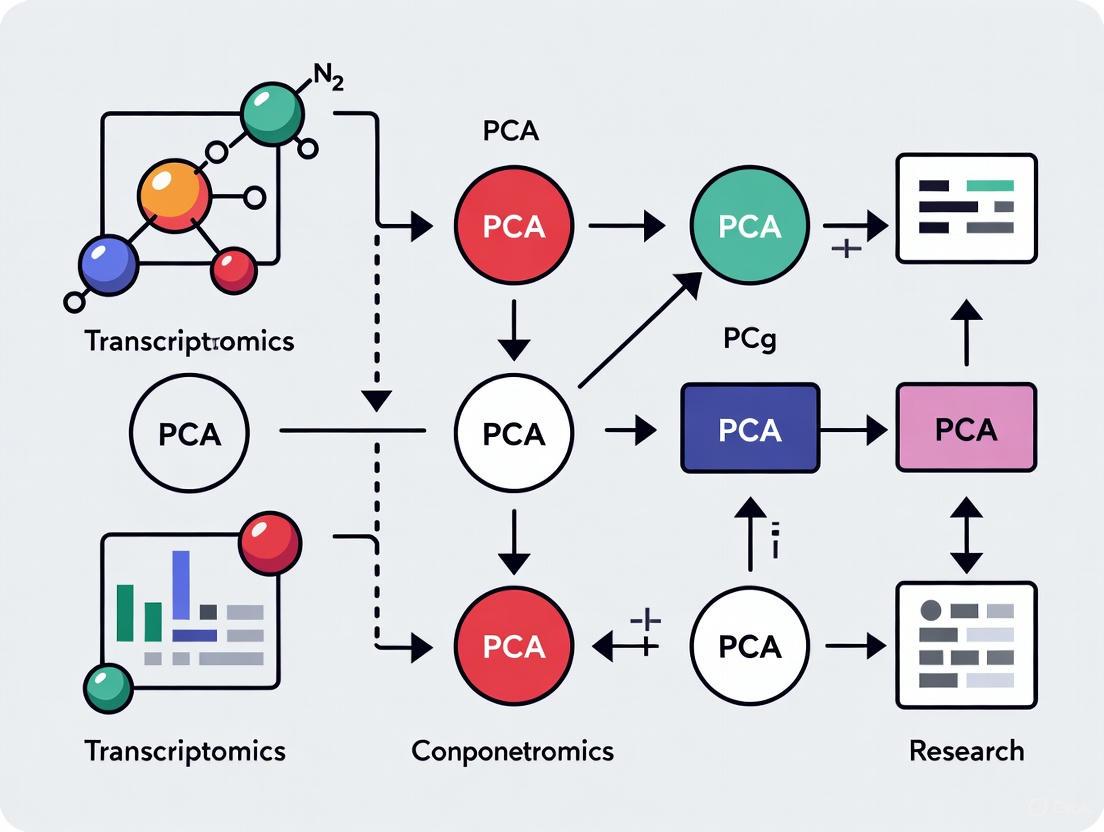
This guide provides a comprehensive framework for applying Principal Component Analysis (PCA) to transcriptomics data, from foundational concepts to advanced applications.
A Comprehensive Guide to Principal Component Analysis (PCA) for Transcriptomics Data Exploration
Abstract
This guide provides a comprehensive framework for applying Principal Component Analysis (PCA) to transcriptomics data, from foundational concepts to advanced applications. It covers the essential role of PCA in overcoming the curse of dimensionality inherent in gene expression studies, where thousands of genes (variables) are measured across far fewer samples. The article details methodological best practices for data preprocessing, normalization, and component selection, while addressing common troubleshooting scenarios like batch effects and overfitting. By integrating validation strategies and comparing PCA with alternative dimensionality reduction techniques, this resource empowers researchers and drug development professionals to extract robust biological insights, improve data visualization, and enhance downstream analytical outcomes in their transcriptomics workflows.
Understanding PCA and Its Critical Role in Transcriptomics
Principal Component Analysis (PCA) is a fundamental dimension reduction technique that transforms high-dimensional data into a lower-dimensional form while preserving essential patterns and structures. For biologists working with transcriptomics data, PCA serves as a powerful exploratory tool that simplifies complex datasets containing thousands of gene expressions into manageable visualizations. This technique identifies principal components—new, uncorrelated variables that capture the maximum variance in the data. By projecting samples into a reduced space defined by these components, PCA enables researchers to identify sample relationships, detect outliers, assess batch effects, and uncover underlying biological structures without prior hypotheses. This overview provides both conceptual and practical guidance for applying PCA in biological research, with particular emphasis on transcriptomics applications.
The Core Concept of PCA
What is Dimension Reduction?
High-throughput biological technologies, such as RNA sequencing and microarray platforms, routinely generate datasets where the number of measured variables (genes, transcripts) far exceeds the number of biological samples. This "large d, small n" characteristic presents significant challenges for analysis and visualization [1]. PCA addresses this problem through linear transformation, converting potentially correlated variables into a smaller set of uncorrelated variables called principal components that successively maximize variance [2]. The first principal component (PC1) captures the direction of maximum variance in the data, with each subsequent component accounting for the next highest variance while being uncorrelated with previous components [3].
Geometric Interpretation
Geometrically, PCA represents a rotation of the original coordinate system to create new axes aligned with the directions of maximum variance [4]. Imagine a cloud of data points in multidimensional space; PCA identifies the primary axes of this cloud, with the first axis (PC1) oriented along the longest extent of the cloud, the second axis (PC2) along the next longest perpendicular extent, and so on. This rotation provides the "best angle" to view and evaluate data, making differences between observations more visible [5]. The technique is particularly valuable for visualizing relationships between samples in transcriptomics studies, where each sample represents a point in a space with thousands of dimensions (genes).
Key Properties of Principal Components
Principal components possess several mathematically important properties: (1) They are linear combinations of the original variables weighted by loadings [2]; (2) Different PCs are orthogonal (uncorrelated) to each other [1]; (3) The variance explained decreases with each subsequent component, with the first few components typically capturing most information [3]; and (4) The total variance of all components equals the total variance in the original dataset [2].
Mathematical Foundation
The PCA Algorithm: A Step-by-Step Process
The computation of principal components follows a standardized mathematical procedure:
Standardization and Centering Data: The aim is to standardize the range of continuous initial variables so each contributes equally to analysis. This is done by subtracting the mean and dividing by the standard deviation for each value of each variable, transforming all variables to comparable scales [5]. For RNA-seq data, this typically involves calculating log counts per million (CPM) values followed by Z-score normalization across samples for each gene [6].
Covariance Matrix Computation: The standardized data is used to compute a covariance matrix that identifies correlations between all possible pairs of variables. This symmetric matrix has variances along the diagonal and covariances in off-diagonal elements, providing a comprehensive view of variable relationships [5].
Eigen Decomposition: Eigenvectors and eigenvalues of the covariance matrix are calculated. The eigenvectors (principal components) indicate the directions of maximum variance, while eigenvalues represent the magnitude of variance along each component [5]. This can be achieved through eigendecomposition of the covariance matrix or singular value decomposition (SVD) of the centered data matrix [2].
Component Selection: Eigenvectors are ranked by their corresponding eigenvalues in descending order. Researchers select a subset of components that capture sufficient variance, often using scree plots or cumulative variance thresholds to determine the optimal number [3].
Data Projection: The original data is projected onto the selected principal components to create new coordinates (scores) in the reduced-dimensional space [5].
Covariance vs. Correlation Matrix
PCA can be performed using either the covariance matrix or correlation matrix. The covariance matrix preserves the original scale and units of measurement, making it sensitive to variables with large variances. In contrast, the correlation matrix standardizes all variables to unit variance, giving equal weight to all variables regardless of their original scales [4]. The choice depends on research objectives and data characteristics; correlation-based PCA is preferred when variables are on different scales or when researchers wish to avoid dominance by high-variance variables.
Table 1: Comparison of PCA Approaches Based on Data Preprocessing
| Processing Method | Data Transformation | When to Use | Advantages | Limitations |
|---|---|---|---|---|
| Covariance Matrix | Center only | Variables have similar scales and variances; preserving original data structure is important | Maintains original data relationships; simpler interpretation | Can be dominated by high-variance variables |
| Correlation Matrix | Center and scale | Variables have different units or scales; avoiding dominance by high-variance variables | Equal contribution from all variables; better for heterogeneous data | Removes natural variance differences that may be biologically meaningful |
Key Outputs of PCA
Three primary outputs result from PCA:
Eigenvalues: Represent the amount of variance explained by each principal component. Larger eigenvalues indicate components that capture more information from the original dataset [7].
Loadings: Also called eigenvectors, these indicate the weight of each original variable on each principal component. Higher absolute loadings signify greater contribution of a variable to that component [7].
Scores: The coordinates of each sample in the new principal component space, obtained by projecting original data onto the principal components [2].
Practical Application in Transcriptomics
Standard Workflow for RNA-Seq Data
Applying PCA to transcriptomics data requires specific preprocessing steps to handle count-based measurements:
Normalization: Calculate counts per million (CPM) or similar normalized values to account for differing library sizes [6].
Transformation: Apply log₂ transformation to stabilize variance across the dynamic range of expression values.
Filtering: Remove genes with zero expression across all samples or invalid values [6].
Standardization: Perform Z-score normalization (mean-centering and scaling to unit variance) across samples for each gene [6].
PCA Implementation: Apply PCA using statistical software, typically via the
prcomp()function in R or similar tools in other programming environments [7].
The following diagram illustrates the complete PCA workflow for RNA-seq data analysis:
Interpreting PCA Results
PCA results are typically visualized through:
Scree Plots: Display the proportion of total variance explained by each principal component, helping determine how many components to retain. The "elbow" point often indicates the optimal number [3].
PCA Plots: Scatterplots of samples using the first two or three principal components as axes. Similar samples cluster together, while dissimilar samples separate [7].
Loading Plots: Visualize the contribution of original variables to the principal components, highlighting genes with strongest influence on sample separation.
Table 2: Critical Steps in PCA Interpretation for Transcriptomics
| Interpretation Step | Purpose | Key Questions | Common Patterns |
|---|---|---|---|
| Variance Assessment | Determine information content | How much variance do the first few components capture? Is the reduced representation adequate? | First 2-3 components typically explain 30-50% of total variance in heterogeneous datasets [8] |
| Sample Clustering | Identify sample relationships | Do biological replicates cluster together? Are there unexpected outliers or batch effects? | Tight clusters of replicates indicate technical reliability; separation may reflect biological conditions |
| Component Annotation | Relate PCs to biology | What biological factors (cell type, treatment, batch) correlate with component separation? | PC1 often separates major cell types, PC2 may reflect treatment effects or other biological variables |
| Gene Influence | Identify driving genes | Which genes contribute most to each component? Are they biologically relevant? | High-loading genes often belong to coordinated pathways or biological processes |
Advanced Considerations & Limitations
When PCA Performs Poorly
Despite its utility, PCA has limitations that researchers must recognize:
- Linear Assumptions: PCA is a linear technique that may fail to capture complex nonlinear relationships in data [3].
- Variance Maximization: By focusing on maximum variance, PCA may emphasize technical artifacts or batch effects rather than biologically relevant signals [9].
- Distributional Assumptions: PCA assumes variables follow approximately normal distributions, an assumption frequently violated in genomic data [9].
- Sample Composition Sensitivity: PCA results depend heavily on sample composition. The inclusion or exclusion of specific sample types can dramatically alter component directions [8].
Beyond Standard PCA: Advanced Variants
Several PCA extensions address specific analytical challenges:
Sparse PCA: Incorporates variable selection to identify a subset of informative genes, improving interpretability by focusing on biologically relevant features [1].
Supervised PCA: Integrates outcome variables to guide dimension reduction, potentially increasing sensitivity for detecting biologically meaningful patterns [1].
Independent Principal Component Analysis (IPCA): Combines PCA with Independent Component Analysis (ICA) to better separate biological signals from noise, particularly for data following super-Gaussian distributions [9].
Functional PCA: Adapted for time-course gene expression data, capturing dynamic patterns across multiple time points [1].
Comparison to Alternative Methods
PCA is one of several dimension reduction techniques available to biologists:
- PCA vs. t-SNE/UMAP: While PCA is linear and preserves global structure, t-SNE and UMAP are nonlinear methods that excel at preserving local neighborhoods but may distort global relationships.
- PCA vs. Factor Analysis: Both methods perform dimension reduction, but factor analysis focuses on latent variables representing underlying constructs, while PCA creates components that maximize variance explanation [3].
- PCA vs. LDA: Linear Discriminant Analysis (LDA) is supervised and requires class labels, while PCA is unsupervised and ignores class information [3].
The Scientist's Toolkit
Table 3: Essential Computational Tools for PCA in Biological Research
| Tool/Resource | Function | Application Context | Implementation |
|---|---|---|---|
| R prcomp() | PCA computation | General purpose PCA analysis | Standard R function, uses SVD |
| Python sklearn | Machine learning library | Integration with ML pipelines | PCA class in sklearn.decomposition |
| Z-score normalization | Data standardization | Preparing data for correlation-based PCA | Scale genes to mean=0, variance=1 |
| CPM/TMM normalization | RNA-seq specific processing | Accounting for library size differences | EdgeR, DESeq2, or custom scripts |
| Scree plot | Variance visualization | Determining component retention | Plot eigenvalues in descending order |
| Cumulative variance plot | Information assessment | Evaluating variance capture | Plot running total of variance explained |
Principal Component Analysis remains a cornerstone technique for exploratory analysis of high-dimensional biological data. Its power to reduce thousands of gene expressions to manageable visualizations makes it indispensable for quality assessment, pattern recognition, and hypothesis generation in transcriptomics research. While practitioners must remain aware of its limitations—particularly its sensitivity to data composition and variance structure—appropriate application provides invaluable insights into the underlying structure of complex biological systems. As genomic technologies continue to evolve, PCA and its advanced variants will maintain their relevance as essential tools in the biologist's computational arsenal.
Transcriptomics technologies, such as RNA sequencing (RNA-seq) and microarrays, enable the comprehensive measurement of gene expression levels across thousands of genes simultaneously [10]. While this provides a powerful window into biological systems, it creates a significant computational challenge known as the curse of dimensionality [11] [12]. This phenomenon describes the problems that arise when analyzing data in high-dimensional spaces, where the vast number of features (genes) far exceeds the number of observations (samples) [11]. In practice, transcriptomic datasets commonly analyze more than 20,000 genes across fewer than 100 samples, creating a scenario where P (variables) ≫ N (observations) [11]. This high-dimensionality leads to data sparsity, increased noise, computational inefficiency, and heightened risk of overfitting in downstream analyses [12] [13] [14].
Principal Component Analysis (PCA) serves as a fundamental computational technique to mitigate these challenges by reducing the dimensionality of transcriptomic data while preserving its essential biological information [13]. This guide explores the theoretical foundation of the curse of dimensionality in transcriptomics, details how PCA provides a solution, and presents practical protocols and evidence from recent research demonstrating its critical role in deriving meaningful biological insights.
Understanding the Curse of Dimensionality in Transcriptomic Data
Fundamental Concepts and Mathematical Challenges
In transcriptomics, each measured gene represents a dimension in the data space [11]. The curse of dimensionality manifests through several interconnected problems:
- Data Sparsity: As dimensionality increases, data points become increasingly scattered through the high-dimensional space. The volume of space grows exponentially with dimensions, making the available data insufficient to densely populate the space [14]. This sparsity makes it difficult to detect meaningful patterns or clusters.
- Distance Concentration: In high-dimensional spaces, the distances between points become more similar, compromising the effectiveness of distance-based algorithms commonly used in clustering and classification [13].
- Increased Computational Complexity: Analyzing high-dimensional data requires significant computational resources and time. For example, spatial transcriptomics methods analyzing 100,000+ locations pose substantial computational burdens that necessitate efficient algorithms [15].
- Overfitting and Spurious Correlations: With thousands of genes and limited samples, machine learning models may memorize noise rather than learn true biological signals, leading to poor generalization on new data [14].
Consequences for Transcriptomics Analysis
The curse of dimensionality particularly impacts key transcriptomics applications:
- Cell Type Identification: High dimensionality and sparsity obscure the true biological variation between cell types or states [12].
- Differential Expression Analysis: Standard statistical tests lose power when correcting for thousands of simultaneous hypothesis tests [16].
- Drug Response Prediction: High-dimensional pharmacotranscriptomic data complicates the identification of robust drug response signatures [17] [18].
- Spatial Transcriptomics: Emerging technologies generating data at subcellular resolution for hundreds of thousands of locations create unprecedented computational demands [15] [19].
Table 1: Impact of Dimensionality on Transcriptomic Data Analysis
| Aspect | Low-Dimensional Scenario | High-Dimensional Challenge |
|---|---|---|
| Data Distribution | Dense, meaningful distances | Sparse, concentrated distances |
| Computational Load | Manageable | High memory/time requirements |
| Statistical Power | Sufficient for sample size | Diminished by multiple testing |
| Pattern Discovery | Clear clustering | Obscured patterns, noise dominance |
| Risk of Overfitting | Low | High without regularization |
Figure 1: The cascade of analytical challenges resulting from high-dimensional transcriptomic data.
PCA as a Computational Solution: Theory and Workflow
Algorithmic Foundations of Principal Component Analysis
PCA addresses the curse of dimensionality by transforming the original high-dimensional gene expression data into a lower-dimensional space of uncorrelated variables called principal components (PCs) [11] [13]. These PCs are linear combinations of the original genes, ordered such that the first component (PC1) captures the maximum possible variance in the data, PC2 captures the next highest variance while being orthogonal to PC1, and so on [12]. Mathematically, PCA works by:
- Standardizing the data to have zero mean and unit variance for each gene [13].
- Computing the covariance matrix to understand how genes vary together.
- Performing eigendecomposition of the covariance matrix to obtain eigenvectors (principal components) and eigenvalues (amount of variance explained by each PC) [13].
- Selecting the top K eigenvectors based on their corresponding eigenvalues to create a lower-dimensional projection of the original data.
Practical Implementation Workflow
For transcriptomic data, PCA implementation typically follows this standardized workflow:
Table 2: Standardized PCA Workflow for Transcriptomic Data
| Step | Procedure | Considerations for Transcriptomics |
|---|---|---|
| 1. Preprocessing | Quality control, normalization, and filtering of raw count data. | Apply RNA Integrity Number (RIN) cutoff >6 [10]. For FFPE tissues, use DV200 >70 [10]. |
| 2. Feature Selection | Identify highly variable genes for PCA input. | Use statistical measures (e.g., highly deviant genes) to focus on biologically relevant genes [12]. |
| 3. Data Scaling | Standardize data to have zero mean and unit variance. | Prevents highly expressed genes from dominating the PCA [13]. |
| 4. PCA Computation | Perform eigendecomposition using optimized algorithms. | Use singular value decomposition (SVD) for computational efficiency with large matrices [12]. |
| 5. Component Selection | Choose the number of PCs for downstream analysis. | Consider the "elbow" in scree plot or cumulative variance >90% [13]. |
| 6. Data Projection | Project original data onto selected PCs. | Resulting coordinates in PC space serve as input for clustering, visualization, etc. |
Figure 2: Standardized PCA workflow for transcriptomic data analysis, highlighting critical steps for addressing high-dimensionality.
Advanced PCA Applications in Modern Transcriptomics
Spatial Transcriptomics and Enhanced PCA Variants
Standard PCA has been extended with spatial awareness to address the unique challenges of spatial transcriptomics (ST) data. These specialized methods integrate spatial coordinates with gene expression patterns:
- RASP (Randomized Spatial PCA): Employs randomized linear algebra for computational efficiency, achieving orders-of-magnitude faster processing while maintaining performance comparable to slower methods like BASS, GraphST, and STAGATE [15]. RASP incorporates spatial smoothing using k-nearest neighbors thresholds and supports integration of non-transcriptomic covariates.
- GraphPCA: Utilizes graph-constrained PCA with a closed-form solution that preserves spatial neighborhood structures through penalty terms, demonstrating superior performance in spatial domain detection and robustness to noise [19].
- PCAUFE (PCA-based Unsupervised Feature Extraction): Effectively identifies disease-related genes from datasets with small sample sizes but many variables, successfully applied to COVID-19 patient blood data to identify 123 critical genes including immune-related pathways [16].
Benchmarking Studies and Performance Evidence
Recent comprehensive benchmarking studies demonstrate PCA's utility across diverse transcriptomics applications:
Table 3: Performance Comparison of Dimensionality Reduction Methods in Transcriptomics
| Application Context | Top-Performing Methods | PCA's Relative Performance | Key Findings |
|---|---|---|---|
| Drug-Induced Transcriptomics (CMap dataset) [18] | t-SNE, UMAP, PaCMAP, TRIMAP | Lower clustering performance | PCA performed relatively poorly in preserving biological similarity compared to nonlinear methods. |
| Spatial Domain Detection (10x Visium DLPFC) [19] | GraphPCA, STAGATE, SpatialPCA | Foundation for specialized methods | GraphPCA, based on constrained PCA, outperformed deep learning methods in accuracy and interpretability. |
| Cell Type Identification (Mouse Ovary MERFISH) [15] | RASP, PCA, SEDR | Highly competitive (ARI: 0.58) | Standard PCA outperformed several spatially-aware methods, surpassed only by RASP (ARI: 0.69). |
| COVID-19 Feature Selection (Blood transcriptomics) [16] | PCAUFE | Superior to SAM and LIMMA | PCA-based selection identified minimal gene sets (123 genes) with high classification accuracy (AUC >0.9). |
In spatial transcriptomics analyses, RASP has demonstrated particular effectiveness, achieving the highest Adjusted Rand Index (ARI: 0.69) for cell type identification in complex mouse ovary MERFISH data while being 1-3 orders of magnitude faster than competing methods [15]. The method's performance is influenced by parameter selection, with optimal kNN thresholds and inverse distance power values (β=2) being crucial for maintaining spatial fidelity while enabling accurate domain detection [15].
Experimental Protocols and Research Toolkit
Implementation Protocol for Transcriptomic PCA
For researchers implementing PCA in transcriptomic studies, the following detailed protocol ensures robust results:
Software Environment Setup
- Programming Language: Python (scanpy, scikit-learn) or R (Seurat)
- Quality Control Metrics: RNA Integrity Number (RIN >6), mitochondrial gene percentage, detected genes per cell [10]
- Normalization Methods: Shifted logarithm, fragments per kilobase million (FPKM), or counts per million (CPM)
Step-by-Step PCA Procedure
- Input Data Preparation: Begin with normalized count matrix (cells × genes) following quality control filtering
- Highly Variable Gene Selection: Identify 2,000-5,000 most variable genes using Seurat's
FindVariableFeaturesor Scanpy'spp.highly_variable_genes[12] - Data Scaling: Center to zero mean and scale to unit variance using
StandardScalerorsc.pp.scale[13] - PCA Computation: Execute PCA with ARPACK solver for efficiency:
sc.pp.pca(adata, svd_solver="arpack", use_highly_variable=True, n_comps=50)[12] - Component Selection: Plot scree plot of explained variance and select components where cumulative variance >90% or identify the "elbow" point [13]
- Downstream Application: Use selected PCs for clustering, visualization (UMAP/t-SNE), or differential expression testing
The Researcher's Toolkit for PCA in Transcriptomics
Table 4: Essential Computational Tools for PCA in Transcriptomic Research
| Tool/Resource | Function | Application Context |
|---|---|---|
| Scanpy [12] | Python-based single-cell analysis toolkit | Standard PCA implementation and integration with other preprocessing steps |
| Seurat [19] | R package for single-cell genomics | PCA with automated variable feature selection and dimension selection |
| GraphPCA [19] | Interpretable dimension reduction for ST | Spatial transcriptomics with graph-constrained PCA |
| RASP [15] | Randomized Spatial PCA | Large-scale ST datasets with >100,000 locations |
| PCAUFE [16] | Unsupervised feature extraction | Identifying critical genes from small sample sizes with many variables |
The curse of dimensionality presents a fundamental challenge in transcriptomic data analysis, where the abundance of gene expression measurements threatens to obscure meaningful biological signals. PCA remains an essential computational strategy to overcome this challenge through its mathematically principled approach to dimensionality reduction. While standard PCA provides a robust foundation, specialized variants like RASP, GraphPCA, and PCAUFE extend its utility to emerging applications in spatial transcriptomics, drug development, and precision medicine. As transcriptomics technologies continue to evolve toward higher resolutions and larger sample sizes, PCA-based methods will remain indispensable tools for extracting biological insights from high-dimensional gene expression data.
How PCA Captures Biological and Technical Variance in Gene Expression Data
In the analysis of gene expression data, researchers are often confronted with the "curse of dimensionality", where the number of measured genes (variables) vastly exceeds the number of biological samples (observations) [11]. Principal Component Analysis (PCA) serves as a fundamental dimensionality reduction technique that transforms high-dimensional transcriptomic data into a lower-dimensional space while preserving the most relevant patterns of variance [3]. This linear transformation identifies orthogonal principal components (PCs) that are ordered by the amount of variance they explain from the original dataset, with the first component (PC1) capturing the largest source of variance, the second (PC2) the next largest, and so on [7] [3]. In transcriptomics, these sources of variance can represent both biologically meaningful signals (e.g., differences between cell types, disease states, or developmental stages) and technical artifacts (e.g., batch effects, platform differences, or sample processing variations) [20] [21]. The ability to distinguish between these sources makes PCA an indispensable tool for quality assessment, exploratory data analysis, and understanding the underlying structure of gene expression data.
Table 1: Key Characteristics of PCA in Transcriptomic Studies
| Aspect | Description | Importance in Transcriptomics |
|---|---|---|
| Dimensionality Reduction | Transforms thousands of gene measurements into fewer composite variables | Enables visualization and analysis of high-dimensional data [11] |
| Variance Maximization | Each principal component captures the maximum possible variance in the data | Prioritizes the most influential sources of variation [3] |
| Orthogonality | Components are perpendicular (uncorrelated) in the transformed space | Ensures independent axes of variation for interpretation [22] |
| Unsupervised Nature | Does not require pre-specified sample groups | Reveals inherent data structure without prior biological assumptions [3] |
Fundamental Concepts and Mathematical Foundation
The Mathematics of PCA
PCA operates through a systematic mathematical procedure that begins with the standardization of expression data, where each gene's expression values are centered to a mean of zero and scaled to unit variance to ensure equal contribution from all genes regardless of their original measurement scales [3]. The core of PCA involves eigen decomposition of the covariance matrix, which identifies the principal axes (eigenvectors) that capture the directions of maximum variance in the data, with corresponding eigenvalues representing the amount of variance explained by each component [22] [3]. Algebraically, for a data matrix X with n samples and p genes, PCA computes a new set of variables (principal components) that are linear combinations of the original genes: PCi = ei1X1 + ei2X2 + ... + einXn, where ei represents the eigenvector corresponding to the i-th largest eigenvalue [22].
Biological vs. Technical Variance in Gene Expression
In single-cell and bulk transcriptomic studies, technical variability arises from multiple sources that can be categorized as inter-cell variability (e.g., differences in cell cycle stage, cell size) and within-cell variability (e.g., amplification biases, low RNA capture efficiency, stochastic sampling) [20]. These technical artifacts manifest systematically in PCA visualizations, often clustering samples by processing batch, sequencing date, or other technical parameters rather than biological conditions [21]. Conversely, biological variance represents true differences in gene expression patterns driven by underlying biological processes such as cell type identity, developmental trajectory, disease state, or response to experimental perturbations [20]. The challenge in interpreting PCA results lies in distinguishing these sources, particularly since biological and technical factors can be confounded in experimental designs.
Figure 1: Standard PCA Workflow for Gene Expression Analysis
PCA Applications for Biological Discovery in Transcriptomics
Characterizing Cellular Heterogeneity and Development
PCA has proven particularly valuable for interrogating cellular heterogeneity in seemingly homogeneous cell populations, revealing subpopulations that may represent distinct functional states or lineage commitments [20]. In developmental biology, PCA enables the reconstruction of pseudotemporal ordering of cells along differentiation trajectories by capturing the dominant axes of transcriptional change in snapshot data from unsynchronized cell populations [20]. This approach has been successfully applied to map developmental hierarchies in various systems, including embryonic stem cell differentiation, myeloid progenitor commitment, and T helper cell development, where it has helped identify transient intermediate states and branching decision points [20]. The technology has been especially transformative for identifying rare cell types that would be obscured in bulk analyses, such as dormant neural cells activated upon brain injury or novel progenitor populations during vertebrate development [20].
Analyzing Complex Tissues and Disease States
In complex tissues and disease contexts, PCA provides a powerful approach for unraveling tissue-specific expression patterns and disease-associated heterogeneity. Large-scale studies applying PCA to heterogeneous gene expression datasets have consistently identified dominant components corresponding to major tissue types, with the first three PCs often separating hematopoietic cells, neural tissues, and proliferative/cancer phenotypes [8]. However, contrary to earlier assumptions that higher components primarily represent noise, recent evidence demonstrates that biologically relevant information extends beyond the first few PCs [8]. For instance, the fourth PC in a comprehensive analysis of 7,100 samples specifically separated liver and hepatocellular carcinoma samples from other tissues, revealing that tissue-specific information often resides in these higher components [8]. This has important implications for study design, as the detection of specific biological signals in PCA depends strongly on the representation of relevant sample types in the dataset.
Table 2: Biological Insights Revealed Through PCA in Transcriptomic Studies
| Biological Application | PCA Utility | Key Findings |
|---|---|---|
| Tumor Heterogeneity | Distinguishes malignant and non-malignant cells; reveals intra-tumoral diversity | Identification of distinct cancer subclones with differential treatment responses [20] |
| Developmental Biology | Reconstructs differentiation trajectories from snapshot data | Mapping of branching decisions in embryonic development [20] |
| Rare Cell Identification | Detects low-abundance cell populations in complex tissues | Discovery of dormant neural stem cells activated after injury [20] |
| Cross-Tissue Analysis | Identifies tissue-specific expression patterns in large datasets | Separation of hematopoietic, neural, and liver tissues in distinct components [8] |
Technical Variance and Batch Effects in PCA
In single-cell RNA-Seq data, technical variability introduces substantial challenges for interpretation, primarily stemming from the minimal starting material (RNA from individual cells) that requires significant amplification [20]. This amplification process introduces multiple biases, including 3' end enrichment where sequences from the 3' end of transcripts are overrepresented, and preferential amplification of certain transcripts or mRNA fragments based on sequence composition [20]. Additional sources of technical variance include capture efficiency differences between cells or samples, library preparation artifacts, and sequencing depth variations, all of which can manifest as prominent patterns in PCA that may obscure biological signals [20] [21]. The problem is particularly pronounced in single-cell transcriptomics, where the necessary amplification of starting material introduces additional biases that result in many missing values (either technical zeros or true biological absence of expression), with currently limited ability to discriminate between these possibilities [20].
Batch Effects and Experimental Artifacts
Batch effects represent systematic technical variations introduced during sample collection, processing, or measurement that can substantially confound biological interpretation [22] [21]. In PCA visualizations, batch effects are typically identified when samples cluster according to technical parameters (processing date, sequencing lane, laboratory personnel) rather than biological variables of interest [21]. The presence of strong batch effects can completely mask true biological outcomes, making it difficult to detect meaningful associations even when biological conditions are evenly distributed across batches [21]. The impact of batch effects on PCA results is not merely theoretical; studies have demonstrated that the fourth principal component in large gene expression datasets sometimes correlates with array quality metrics rather than biological annotations, clearly representing measurement noise rather than biological variation [8].
Figure 2: Sources of Biological and Technical Variance in Gene Expression Data
Experimental Design and Methodological Protocols
Standard PCA Implementation for Transcriptomics
The implementation of PCA for gene expression analysis follows a systematic protocol to ensure robust and interpretable results. For RNA-seq data analysis using R, the standard approach begins with data preprocessing to normalize read counts and transform the data (typically using variance-stabilizing or log2 transformations) to satisfy the assumptions of PCA [7]. The core computation employs the prcomp() function on a transposed expression matrix where rows represent samples and columns represent genes:
The center = TRUE parameter ensures data is mean-centered, while scale = TRUE applies unit variance scaling to give equal weight to all genes regardless of their original expression ranges [7]. Following PCA computation, key results are extracted including: (1) PC scores (sample_pca$x) representing sample coordinates in the new PC space; (2) Eigenvalues (sample_pca$sdev^2) indicating variance explained by each component; and (3) Loadings (sample_pca$rotation) reflecting gene contributions to each PC [7].
Advanced PCA Variations and Extensions
Several specialized PCA variations have been developed to address specific challenges in transcriptomic data analysis. Independent Principal Component Analysis (IPCA) combines the advantages of both PCA and Independent Component Analysis (ICA), using ICA as a denoising process of the loading vectors produced by PCA to better highlight important biological entities [23]. This approach makes the assumption that biologically meaningful components can be obtained after removing noise from the associated loading vectors, resulting in improved sample clustering and enhanced biological interpretability [23]. The sparse IPCA (sIPCA) extension incorporates a built-in variable selection procedure through soft-thresholding on the independent loading vectors, enabling automatic identification of biologically relevant genes [23]. Another advanced approach, Principal Variance Component Analysis (PVCA), hybridizes PCA with variance components analysis to estimate and partition total variability into biological, technical, and other sources, providing quantitative assessment of batch effects and other confounding factors [22].
Table 3: Experimental Considerations for PCA in Transcriptomic Studies
| Experimental Factor | Impact on PCA Results | Recommendations |
|---|---|---|
| Sample Representation | PCA components reflect dominant sample types in dataset | Balance sample types to avoid overrepresentation biases [8] |
| Data Scaling | Without proper scaling, highly expressed genes dominate components | Always scale genes to unit variance when expression ranges vary [7] |
| Batch Effects | Technical batches can become dominant components in PCA | Include batch balance in design; use PVCA to quantify batch effects [22] |
| Sample Size | Small sample sizes reduce stability of component estimation | Include sufficient biological replicates for robust PCA [8] |
Table 4: Essential Research Reagents and Computational Tools for PCA in Transcriptomics
| Resource Category | Specific Tools/Reagents | Function/Purpose |
|---|---|---|
| Computational Packages | R prcomp(), limma, scatterplot3d |
Core PCA computation and visualization [24] [7] |
| Batch Effect Assessment | PVCA R Script, SAS Macro | Quantifies and partitions sources of variability [22] |
| Advanced PCA Methods | mixOmics (IPCA, sIPCA) | Implements independent and sparse PCA variants [23] |
| Visualization Tools | ggplot2, scatterplot3d, plotly | Creates publication-quality PCA visualizations [7] |
| Data Preprocessing | DESeq2, edgeR, Seurat | Normalizes raw count data before PCA application [7] |
Interpretation Guidelines and Limitations
Best Practices for Interpreting PCA Results
Effective interpretation of PCA in transcriptomic studies requires both computational rigor and biological insight. The initial step involves variance assessment through scree plots, which display the proportion of total variance explained by each successive component, allowing researchers to identify an appropriate cutoff for biologically relevant components [7] [3]. The visualization of sample clusters in PC space (typically PC1 vs. PC2, PC2 vs. PC3, etc.) should be systematically compared with experimental metadata to identify both expected biological groupings and potential technical confounders [21] [7]. For biological interpretation of components, researchers should examine the gene loadings (weights) that contribute most strongly to each PC, as these high-loading genes often reveal the biological processes driving sample separation along that component [7] [8]. This gene-level analysis can be complemented with gene set enrichment analysis to identify functional themes associated with each component.
Limitations and Complementary Approaches
While PCA provides powerful exploratory capabilities, it has important limitations that researchers must acknowledge. As a linear technique, PCA may fail to capture complex nonlinear relationships in gene expression data, potentially missing biologically important patterns that would be detected by nonlinear methods like t-SNE or UMAP [21] [3]. PCA also prioritizes high-variance signals, meaning that biologically important but low-variance phenomena (e.g., subtle transcriptional changes or rare cell types) may be overlooked in favor of more dominant variation sources [8]. Additionally, the interpretation of components can be challenging when biological and technical factors are confounded, requiring careful experimental design and potentially the application of specialized methods like PVCA to disentangle these sources [22]. For these reasons, PCA should be viewed as one component in a comprehensive transcriptomic analysis workflow rather than a complete solution, ideally complemented by clustering methods, differential expression analysis, and other specialized bioinformatic approaches.
Principal Component Analysis (PCA) is a foundational dimensionality reduction method in statistics and machine learning, strategically designed to transform a large set of correlated variables into a smaller, more manageable set of uncorrelated variables called principal components. This transformation preserves the most significant patterns and structures within the original data [25]. The core objective of PCA is rank reduction, which allows researchers to project high-dimensional data into a lower-dimensional space, facilitating visualization, analysis, and interpretation without a critical loss of information [4]. In fields like transcriptomics, where datasets often encompass thousands of genes (variables) across multiple samples, PCA is an indispensable tool for initial data exploration, quality control, and identifying overarching patterns such as batch effects or the dominant sources of biological variation.
The mathematical foundation of PCA can be viewed through three complementary lenses: a rotation procedure, an eigenvalue decomposition method, and a technique for finding linear combinations [4]. Conceptually, PCA works by identifying the directions of maximum variance in the original data space. The first principal component (PC1) is the axis along which the data shows the greatest variability. The second principal component (PC2) is then defined as the direction with the next highest variance, subject to the constraint of being orthogonal (uncorrelated) to the first. This process continues for all subsequent components [26]. The resulting principal components are, therefore, a new set of orthogonal axes, sorted in descending order of the variance they capture from the original dataset [27].
Key Outputs of PCA and Their Interpretation
Principal Components and Loadings
The principal components themselves are linear combinations of the original variables. The weights used in these combinations are known as loadings (or eigenvectors), which indicate the contribution and direction of each original variable to a particular principal component [25] [4].
- Components Matrix: The matrix of loadings, often called the
components_attribute in libraries like scikit-learn, contains the principal axes in feature space. These vectors are sorted in decreasing order of their correspondingexplained_variance_[28]. - Interpreting Loadings: For a given principal component, original variables with high absolute loading values have a strong influence on that component. The sign of the loading (positive or negative) indicates the direction of the correlation. For instance, in a transcriptomics study, genes with high positive loadings on PC1 are co-expressed and vary similarly across samples, while genes with high negative loadings show an inverse relationship.
Explained Variance and Variance Ratio
A critical part of interpreting PCA is understanding how much information each principal component retains from the original dataset.
- Explained Variance: The
explained_variance_attribute in scikit-learn provides the amount of variance explained by each of the selected components. This value is equivalent to the eigenvalues of the covariance matrix [28]. It represents the absolute amount of variability captured by each component. - Explained Variance Ratio: The
explained_variance_ratio_is often more intuitive, as it represents the proportion of the total variance in the original dataset that is explained by each principal component [29]. The total variance is the sum of the variances of all original variables (or the sum of all eigenvalues) [30].
Table 1: Key Metrics for Determining the Number of Components to Retain
| Metric | Definition | Interpretation | How to Access in scikit-learn |
|---|---|---|---|
| Explained Variance | Absolute amount of variance captured by each component (Eigenvalues). | Useful for knowing the absolute contribution of each component. | pca.explained_variance_ |
| Explained Variance Ratio | Fraction of total variance explained by each component. | Helps assess the relative importance of each component. | pca.explained_variance_ratio_ |
| Cumulative Variance Ratio | Running total of explained variance ratio as components are added. | Determines the total information retained with k components. |
pca.explained_variance_ratio_.cumsum() |
The relationship between these metrics is straightforward. The explained variance ratio of a component is its eigenvalue divided by the sum of all eigenvalues of the covariance matrix [29]. This means that if you have a dataset with a total variance of 10, and the first principal component has an explained variance of 6, then its explained variance ratio is 0.6 (or 60%).
Determining the Number of Components
Choosing the right number of principal components (k) to retain is a balance between dimensionality reduction and information preservation. Two common strategies are:
- The Kaiser Criterion: Retain all components with an eigenvalue (explained variance) greater than 1 [25]. This means the component captures more variance than a single original variable (assuming the data was standardized).
- Percentage of Variance Explained: Retain the smallest number of components such that their cumulative explained variance ratio meets a predefined threshold, such as 95% or 99% of the total variance [31]. This is a more flexible and commonly used approach. In scikit-learn, this can be automated by setting
PCA(n_components=0.95, svd_solver='full')[31].
A Scree Plot, which plots the explained variance or variance ratio against the component number, is a valuable visual aid for this decision. The "elbow" of the plot—where the explained variance drops sharply—often indicates a suitable cutoff point [26].
The Biplot: An Integrated Visualization Tool
A biplot is a powerful, consolidated visualization that simultaneously displays both the scores (the coordinates of the samples in the principal component space) and the loadings (the contributions of the original variables) on the same plot [25] [27]. This allows for a unified interpretation of the relationships between samples and variables.
Interpreting a Biplot
Interpreting a biplot involves analyzing the positions and directions of both data points and variable arrows:
- Data Points (Scores): The position of each sample (e.g., a single cell or tissue sample in transcriptomics data) is determined by its scores on the principal components. Points that are close to each other represent observations with similar values across the original variables [25]. In a transcriptomics context, this can reveal clusters of samples with similar gene expression profiles.
- Variable Vectors (Loadings/Arrows): The arrows represent the original variables (e.g., genes). The direction of the vector indicates the axis that the variable is most aligned with. The length of the vector is proportional to the amount of variance the variable contributes to the displayed principal components—a longer arrow means the variable is better represented in the two-dimensional subspace [25] [26].
- Angles Between Vectors: The cosine of the angle between two variable vectors approximates their correlation [25] [27].
- Small Acute Angle: The two variables are highly positively correlated.
- 90-Degree Angle: The two variables are uncorrelated.
- Obtuse Angle (close to 180°): The two variables are highly negatively correlated.
Table 2: A Guide to Interpreting a Biplot
| Element to Observe | What it Signifies | Example Interpretation |
|---|---|---|
| Clustering of Data Points | Samples with similar profiles. | Different cell types or experimental conditions forming distinct clusters. |
| Length of a Variable Arrow | How well the variable is represented by the current PCs. | A gene with a long arrow is a major driver of the variance shown in the plot. |
| Angle between two Variables | Correlation between variables. | Two genes pointing in the same direction are positively correlated in their expression. |
| Position of a Point relative to an Arrow | The value of that sample for the variable. | A sample located in the direction a variable arrow points will have a high value for that variable. |
The following diagram summarizes the workflow for generating and interpreting a standard PCA, culminating in the creation of a biplot.
Application in Transcriptomics Data Exploration
PCA is extensively used in transcriptomics to tackle the "curse of dimensionality," where the number of genes (features) vastly exceeds the number of samples. It helps in visualizing global gene expression patterns, identifying outliers, and understanding the primary factors driving variation in the data.
Experimental Protocol: PCA on a Transcriptomics Dataset
The following is a generalized protocol for applying PCA to a transcriptomics data matrix, where rows represent samples (e.g., cells, tissues) and columns represent genes.
Data Preprocessing:
- Input: A count matrix (e.g., from RNA-seq or spatial transcriptomics platforms).
- Normalization: Normalize raw counts to account for sequencing depth (e.g., using TPM, FPKM, or library size normalization methods like DESeq2's median of ratios).
- Filtering: Filter out genes with very low expression across all samples to reduce noise.
- Transformation: Apply a variance-stabilizing transformation (e.g., log2(1+x)) to make the data more homoscedastic.
- Standardization: Center the data by subtracting the mean of each gene, and scale it by dividing by its standard deviation. This creates a z-score for each gene per sample and is crucial when using a correlation matrix for PCA, as it prevents highly expressed genes from dominating the analysis purely due to their scale [25] [26]. In scikit-learn, the
PCAclass centers the data by default but does not scale it, so preprocessing withStandardScaleris often required.
Model Fitting and Component Extraction:
Visualization and Analysis:
- Scree Plot: Plot the
explained_variance_ratio_to decide on the number of components (k) to retain. - 2D/3D Score Plots: Plot the sample scores (the transformed data) on the first 2 or 3 principal components. Color the points by experimental conditions (e.g., disease state, treatment, cell type) to visually identify clusters or outliers.
- Biplot: Create a biplot to overlay the gene loadings (as arrows) onto the score plot. This reveals which genes are the primary drivers of the separation between sample clusters observed in the score plot.
- Scree Plot: Plot the
Advanced PCA Applications in Transcriptomics
Recent methodological advances have extended PCA's utility in transcriptomics:
- Spatial Transcriptomics Alignment and Integration: A significant challenge in spatial transcriptomics is aligning and integrating multiple tissue slices (2D) to reconstruct a holistic 3D view of the tissue architecture. A 2025 review categorized 24 computational tools that address this, some of which leverage statistical mapping methods, including PCA-based approaches, to align slices across datasets, individuals, and experiments [32]. This integration is vital for capturing spatial relationships and gradients of gene expression that are lost in isolated 2D analysis.
- Kernel PCA for Non-linear Integration: Standard PCA is a linear technique. For more complex, non-linear relationships, Kernel PCA has been developed. For instance, the KSRV framework uses Kernel PCA with a radial basis function (RBF) kernel to integrate single-cell RNA-seq data with spatial transcriptomics data. This non-linear alignment in a shared latent space allows for the accurate prediction of spliced and unspliced transcripts at each spatial location, enabling the inference of spatial RNA velocity and the reconstruction of differentiation trajectories directly within the tissue context [33].
The diagram below illustrates this advanced application of Kernel PCA for spatial transcriptomics.
The Scientist's Toolkit: Essential Reagents and Computational Solutions
Table 3: Key Computational Tools for PCA in Transcriptomics Research
| Tool / Solution | Function / Purpose | Application Context |
|---|---|---|
| scikit-learn (Python) | A comprehensive machine learning library with a robust PCA class for dimensionality reduction. |
General-purpose PCA on any numerical matrix, including gene expression data. [29] [28] |
| PRECISE | A domain adaptation framework used to align distributions of different datasets before dimensionality reduction. | Integrating single-cell and spatial transcriptomics data by mitigating batch effects. [33] |
| KSRV Framework | A Kernel PCA-based framework for inferring spatial RNA velocity. | Predicting unmeasured spliced/unspliced counts in spatial data to study differentiation dynamics. [33] |
| factoextra (R) | An R package dedicated to elegant and easy visualization of multivariate analyses. | Generating scree plots, biplots, and other PCA-related visualizations. [26] |
| StandardScaler | A preprocessing module to standardize features by removing the mean and scaling to unit variance. | Essential preparation step for PCA on a correlation matrix. [26] |
| Cumulative Variance Ratio | The sum of explained_variance_ratio_ for the first k components, calculated via .cumsum(). |
Objectively determining the number of components to retain for a given variance threshold. [31] |
Interpreting the outputs of PCA—the components, explained variance, and biplots—is a critical skill for extracting meaningful biological insights from high-dimensional transcriptomics data. A firm grasp of what loadings, variance metrics, and biplot elements represent allows researchers to move beyond a "black-box" application of the algorithm. By following standardized protocols for preprocessing and analysis, and by leveraging advanced extensions like Kernel PCA, scientists can effectively use PCA to reveal the underlying structure of their data, identify key driver genes, generate hypotheses, and build a solid foundation for more complex, targeted analyses. In the context of modern spatial transcriptomics, these techniques are evolving to handle non-linear integrations, opening new avenues for understanding cellular dynamics in a native tissue context.
A Step-by-Step PCA Workflow for Transcriptomics Data
Principal Component Analysis (PCA) is a fundamental dimensionality reduction technique that transforms a collection of correlated variables into a smaller set of uncorrelated variables called principal components, which are ranked by the variance they explain [34] [35]. In transcriptomics data exploration research, where datasets commonly contain measurements for over 20,000 genes across far fewer samples, PCA enables researchers to visualize and identify the strongest patterns and relationships between variables [11] [35]. However, the reliability of PCA is profoundly dependent on proper data preprocessing and normalization. Without these critical preliminary steps, technical artifacts can dominate biological signals, leading to misleading interpretations and flawed scientific conclusions [36] [37] [38].
The core mathematical foundation of PCA rests on the Singular Value Decomposition (SVD) of the data matrix, which identifies linear subspaces that best represent the data in the squared sense [34] [39]. This computational approach makes PCA particularly sensitive to measurement scales and data distribution. Variables on larger scales can disproportionately influence the principal components, while skewed distributions can distort the variance structure that PCA seeks to capture [34] [40]. In the context of transcriptomics, where raw gene expression counts exhibit substantial technical variability due to factors like sequencing depth and library preparation protocols, normalization becomes not merely beneficial but essential for meaningful analysis [37] [38].
Theoretical Foundation: Why Preprocessing Matters for PCA
Mathematical Sensitivity of PCA
PCA operates by identifying directions of maximum variance in the data through eigen decomposition of the covariance matrix or SVD of the data matrix [34] [39]. This mathematical foundation makes the technique particularly sensitive to several data characteristics:
- Scale Dependency: Variables with larger scales and variances dominate the principal components regardless of their biological significance [40]. In transcriptomics, highly expressed genes can overshadow subtle but biologically important expression changes unless proper scaling is applied.
- Coordinate System Orientation: Linear subspaces must pass through the origin [40]. Data not centered around zero may be poorly approximated, making centering essential.
- Variance Structure: PCA captures variability in the sum of squares sense [40]. Skewed distributions or heteroscedasticity (non-constant variance) can distort the true biological variance structure [34] [41].
Challenges Specific to Transcriptomics Data
Transcriptomics data presents unique challenges that necessitate careful preprocessing:
- Sequencing Depth Variation: Cells or samples have differing total numbers of sequencing reads, making direct comparison of raw counts invalid [37]. Without normalization, a cell with twice the sequencing depth would appear to have all genes doubled in expression.
- Abundance of Zeros: Single-cell RNA-sequencing datasets contain an unusually high abundance of zeros due to both biological and technical factors [38].
- Overdispersion: Gene expression data exhibits high cell-to-cell variability derived from both biological factors and measurement inefficiencies [38].
- Compositional Nature: Gene expression data is compositional; an increase in one gene's count necessarily decreases the relative proportion of all other genes [38].
The diagram below illustrates the critical decision points in preprocessing transcriptomics data for PCA:
Normalization Methods for Transcriptomics Data
Within-Sample Normalization
Within-sample normalization addresses differences in sequencing depth between cells or samples, making counts comparable. The table below summarizes the primary approaches:
Table 1: Within-Sample Normalization Methods for Transcriptomics Data
| Method | Mathematical Formula | Use Case | Advantages | Limitations |
|---|---|---|---|---|
| Library Size Normalization | Bulk RNA-seq; basic comparison | Simple calculation; intuitive interpretation | Does not address compositionality; sensitive to highly expressed genes | |
| DESeq2's Median of Ratios | Bulk and single-cell RNA-seq | Robust to outliers; handles compositionality | Assumes most genes are not differentially expressed | |
| TPM (Transcripts Per Million) | Full-length protocols; isoform analysis | Accounts for both depth and gene length | Complex calculation; requires length information | |
| SCTransform | Single-cell RNA-seq with UMI | Simultaneously normalizes and selects features; handles technical noise | Computationally intensive; complex implementation |
Variance-Stabilizing Transformations
Variance-stabilizing transformations address heteroscedasticity, where the variance depends on the mean, which is characteristic of count data:
Table 2: Variance-Stabilizing Transformation Methods
| Transformation | Formula | Variance Assumption | Primary Applications |
|---|---|---|---|
| Log Transformation | Variance ∝ Mean² | Right-skewed distributions; RNA-seq data [41] | |
| Square Root Transformation | Variance ∝ Mean (Poisson) | Count data; ecology studies [41] | |
| Box-Cox Transformation | Flexible power transformation | Regression analysis; automated parameter selection [34] [41] | |
| Power Transformation | Adjustable skewness reduction | Preprocessing pipelines; predictive modeling [41] |
The selection of an appropriate variance-stabilizing transformation depends on the relationship between mean and variance in the data, as illustrated below:
Experimental Protocols for Preprocessing Evaluation
Standardized Preprocessing Workflow
A robust preprocessing protocol for transcriptomics data prior to PCA should include these critical steps:
Quality Control and Filtering
- Remove genes expressed in fewer than a minimum number of cells (e.g., < 10 cells)
- Exclude cells with unusually high or low numbers of detected genes
- Filter cells with excessive mitochondrial read percentage (indicates poor cell quality)
Normalization for Sequencing Depth
- Calculate size factors for each cell using the median of ratios method [38] or library size normalization
- Apply normalization by dividing counts by cell-specific size factors
- Log-transform normalized counts using y = log2(normalized count + 1)
Feature Selection
- Identify highly variable genes using mean-variance relationship
- Select 2,000-5,000 most variable genes for downstream PCA
- This focuses the analysis on biologically informative genes and reduces technical noise
Scaling and Centering
- Center each gene to have mean zero across cells
- Scale each gene to have unit variance (Z-score standardization)
- This ensures equal weight for all genes in PCA regardless of expression level
Performance Evaluation Metrics
After applying PCA to normalized data, researchers should assess preprocessing effectiveness using these quantitative metrics:
Table 3: Metrics for Evaluating Normalization Performance
| Metric | Calculation Method | Interpretation | Optimal Value |
|---|---|---|---|
| Silhouette Width | Measures clustering cohesion and separation based on Euclidean distance in PCA space | Higher values indicate better-defined clusters | Values > 0.5 indicate strong cluster structure |
| PCA Signal-to-Noise | Ratio of biological to technical variance captured in principal components | Higher ratios indicate successful removal of technical noise | Study-dependent; should be maximized |
| k-Nearest Neighbor Batch-Effect Test | Quantifies batch integration by measuring mixing of cells from different batches | Lower values indicate successful batch effect removal | P-value > 0.05 suggests no significant batch effect |
| Highly Variable Genes | Number of genes identified as highly variable after normalization | Appropriate number suggests preservation of biological variance | Typically 2,000-5,000 for scRNA-seq |
The Scientist's Toolkit: Essential Research Reagents and Computational Tools
Table 4: Essential Tools for Transcriptomics Preprocessing and PCA
| Tool Name | Category | Primary Function | Application in Workflow |
|---|---|---|---|
| UMI (Unique Molecular Identifier) | Molecular Barcode | Corrects PCR amplification biases by uniquely tagging mRNA molecules | Experimental; during library preparation [38] |
| Spike-in RNA (ERCC) | External RNA Controls | Creates standard baseline for counting and normalization | Added during cell lysis; enables technical noise estimation [38] |
| SCTransform | Computational Method | Normalizes using regularized negative binomial regression | Replaces log-normalization; selects features and removes technical effects [38] |
| Scanpy | Python Toolkit | Comprehensive single-cell analysis including PCA | End-to-end analysis from preprocessing to visualization [38] |
| Seurat | R Toolkit | Integrative single-cell analysis platform | Normalization, scaling, PCA, and downstream clustering [38] |
| Scikit-learn Pipeline | Python Framework | Concatenates preprocessing and PCA steps | Ensures consistent transformation of training and test data [42] |
Proper data preprocessing and normalization form the indispensable foundation for reliable PCA in transcriptomics research. Without these critical steps, technical artifacts can dominate biological signals, leading to flawed interpretations and irreproducible findings. The choice of normalization strategy must be guided by the specific experimental design, sequencing technology, and biological question. By implementing rigorous preprocessing protocols and evaluating their effectiveness using appropriate metrics, researchers can ensure that their PCA visualizations and downstream analyses capture meaningful biological variation rather than technical confounding. As transcriptomics technologies continue to evolve, with increasingly complex experimental designs and larger datasets, the principles outlined in this guide will remain essential for extracting biologically meaningful insights from high-dimensional gene expression data.
Best Practices for Data Standardization and Scaling
In transcriptomics research, data standardization and scaling are not merely optional preprocessing steps but foundational operations that determine the success of all subsequent analyses. High-throughput transcriptomic technologies, whether RNA-seq or microarrays, generate datasets where the number of variables (genes) dramatically exceeds the number of observations (samples)—a classic challenge known as the "curse of dimensionality" [11]. Principal Component Analysis (PCA) serves as an essential dimensionality reduction technique in this context, transforming correlated gene expression variables into a smaller set of uncorrelated principal components that capture the essential biological variation in the data [43]. However, the effectiveness of PCA is profoundly dependent on appropriate data standardization, as technical variances from library size, sequencing depth, and other experimental factors can easily obscure biological signals if not properly addressed [44] [45].
This technical guide provides a comprehensive framework for data standardization and scaling practices optimized for PCA in transcriptomics research. We integrate established methodologies with emerging approaches to empower researchers in making informed decisions about preprocessing their gene expression data, with particular emphasis on applications in drug discovery and biomedical research where accurate biological interpretation is paramount [43].
Core Concepts: Standardization vs. Scaling
In the context of transcriptomics data analysis, standardization and scaling represent distinct but complementary mathematical operations applied to gene expression measurements prior to dimensionality reduction:
Scaling typically refers to adjustments that normalize for technical variations in sampling depth or library size across different samples, ensuring that expression levels are comparable between experimental runs [44] [46]. These methods operate primarily on the columns (samples) of the expression matrix.
Standardization transforms the distribution of expression values for each gene (rows) to have consistent statistical properties, most commonly by centering (subtracting the mean) and scaling (dividing by standard deviation) to create z-scores. This prevents highly expressed genes from disproportionately influencing the analysis simply due to their magnitude [43].
The fundamental goal of both operations is to create a transformed dataset where technical artifacts are minimized, biological signals are enhanced, and the underlying assumptions of multivariate techniques like PCA are satisfied. Proper application of these techniques enables PCA to fulfill its role as what Karl Pearson described as the "best fitting" summary of multidimensional data [43].
Methodologies for Transcriptomics Data
Between-Sample Normalization (Scaling) Methods
Between-sample normalization methods primarily address differences in sequencing depth and library size across samples. These techniques apply global scaling factors to make expression measurements comparable:
Table 1: Between-Sample Normalization Methods for Transcriptomics Data
| Method | Description | Mathematical Formula | Use Case | Advantages/Limitations |
|---|---|---|---|---|
| TPM (Transcripts Per Million) | Within-sample normalization that accounts for gene length and sequencing depth | ( TPMg = \frac{Rg \times Lg \times 10^6}{\sum(Rg \times Lg)} ) where (Rg): read count, (L_g): gene length | Gene expression quantification | Standardized for comparisons; but shows high variability in metabolic models [44] |
| FPKM (Fragments Per Kilobase Million) | Similar to TPM but different operation order | ( FPKMg = \frac{Rg \times 10^9}{L_g \times T} ) where (T): total mapped fragments | Single-end RNA-seq | Length-normalized; high variability in metabolic models [44] |
| TMM (Trimmed Mean of M-values) | Between-sample normalization using a reference sample | ( TMM = \frac{\sum{g\in G} wg Mg}{\sum{g\in G} wg} ) where (Mg): log expression ratio, (w_g): weight | Differential expression | Low variability in metabolic models; good for capturing disease genes [44] |
| RLE (Relative Log Expression) | Median-based normalization assuming most genes not DE | ( SFk = median{g} \frac{Y{gk}}{(\prod{j=1}^S Y{gj})^{1/S}} ) where (SFk): size factor for sample k | Differential expression | Low variability; high accuracy for disease-associated genes [44] |
| GeTMM (Gene Length Corrected TMM) | Combines TMM with gene length correction | ( GeTMMg = TMMg \times L_g ) | Cross-sample comparison | Combines length correction with between-sample normalization [44] |
Within-Gene Standardization Methods
Within-gene standardization addresses the substantial differences in expression levels across different genes, ensuring that each gene contributes appropriately to the analysis regardless of its absolute expression level:
Z-score Standardization: This method transforms each gene's expression values to have a mean of zero and standard deviation of one across samples: ( Zg = \frac{Xg - \mug}{\sigmag} ) where (Xg) is the expression value for gene g, (\mug) is the mean expression of gene g across all samples, and (\sigma_g) is the standard deviation. This approach is particularly valuable when genes have different measurement units or scales.
Robust Z-score: For datasets with potential outliers, a modified approach using median and median absolute deviation (MAD) provides more robust standardization: ( Z{robust,g} = \frac{Xg - median(Xg)}{MAD(Xg)} ).
Log Transformation: Frequently applied before standardization to handle the severe skewness in count-based transcriptomics data: ( X{log} = \log2(X + 1) ) where the pseudocount of 1 handles zero values. This transformation helps stabilize variance across the dynamic range of expression values.
Advanced and Emerging Approaches
Recent methodological advances have introduced more sophisticated normalization frameworks that address specific challenges in transcriptomics data:
Biwhitened PCA (BiPCA): A theoretically grounded framework that adaptively rescales rows and columns of count data to standardize noise variances across both dimensions [45]. This approach overcomes fundamental difficulties with handling count noise in omics data by first transforming the data to satisfy homoscedastic spectral properties before applying PCA, effectively separating biological signal from technical noise.
SpaNorm: A spatially-aware normalization method specifically designed for spatial transcriptomics data that concurrently models library size effects and underlying biology [46]. Unlike global scaling methods, SpaNorm computes spatially smooth location- and gene-specific scaling factors, addressing the region-specific library size biases that commonly confound spatial analyses.
Non-Differentially Expressed Gene (NDEG) Normalization: An approach that uses stably expressed genes as reference features for normalization, potentially improving cross-platform integration and machine learning performance [47]. By selecting genes with low F-values from ANOVA (p > 0.85) as normalization factors, this method aims to remove technical variance while preserving biological signals.
Experimental Protocols and Workflows
Comprehensive Preprocessing Pipeline for RNA-seq Data
A robust standardization workflow for transcriptomics data analysis should systematically address both technical artifacts and biological variability:
RNA-seq Preprocessing Workflow
Step 1: Quality Control and Filtering
- Remove genes with zero counts across all samples
- Filter genes with low expression (e.g., <10 counts in at least 10% of samples)
- Identify and address outliers through sample-level clustering
- Assess potential batch effects using PCA visualization
Step 2: Normalization Method Selection
- For differential expression analysis: Select between-sample methods (TMM, RLE)
- For cross-sample comparison: Consider TPM or FPKM for length normalization
- For metabolic modeling: Prefer RLE, TMM, or GeTMM which show lower variability and better accuracy for disease-associated genes [44]
- For spatial transcriptomics: Implement spatially-aware methods like SpaNorm [46]
Step 3: Covariate Adjustment
- Identify technical covariates (batch, processing date) and biological covariates (age, sex)
- For Alzheimer's disease data: Adjust for age, gender, and post-mortem interval [44]
- For cancer datasets: Adjust for age, gender, and tumor purity
- Use linear models to regress out covariate effects before downstream analysis
Step 4: Transformation and Standardization
- Apply log2 transformation to count data: ( X{log} = \log2(X + 1) )
- Standardize each gene to z-scores across samples
- Validate distribution properties after transformation
Step 5: PCA and Interpretation
- Perform PCA on the standardized data matrix
- Select optimal number of components using cumulative variance explanation (target: 70-80%) [48]
- Interpret components through loading analysis of influential genes
- Validate biological coherence of component patterns
Normalization Selection Framework for Specific Applications
The optimal choice of normalization strategy depends on the specific research question and data characteristics. The following decision framework guides method selection:
Normalization Strategy Selection
Covariate Adjustment Protocol
Systematic covariate adjustment significantly improves normalization performance, particularly in clinical transcriptomics studies:
Protocol:
- Identify Potential Covariates
- Technical factors: batch, processing date, RNA quality metrics
- Biological factors: age, sex, ethnicity, body mass index
- Disease-specific: post-mortem interval (neurodegenerative studies), tumor stage (cancer studies)
Assess Covariate Impact
- Perform PCA on unadjusted data
- Correlate principal components with potential covariates
- Identify significant associations (p < 0.05)
Implement Adjustment
- Use linear regression: ( Y{adjusted} = Y - \sum(\betai \times X_i) )
- Where (Y) is expression values, (Xi) are covariates, and (\betai) are coefficients
- Apply to normalized expression data before downstream analysis
Validate Adjustment
- Confirm reduced correlation between PCs and technical covariates
- Verify preservation of biological signal through known biomarkers
Studies demonstrate that covariate adjustment increases accuracy in capturing disease-associated genes across normalization methods [44].
Quantitative Comparison of Normalization Methods
Performance Benchmarking in Metabolic Modeling
Recent benchmarking studies provide quantitative comparisons of normalization method performance in specific biological applications:
Table 2: Normalization Method Performance in Genome-Scale Metabolic Modeling
| Normalization Method | Model Variability | AD Gene Accuracy | LUAD Gene Accuracy | Covariate Adjustment Benefit | Active Reactions Identified |
|---|---|---|---|---|---|
| RLE | Low variability | ~0.80 | ~0.67 | Significant increase | Consistent across samples |
| TMM | Low variability | ~0.80 | ~0.67 | Significant increase | Consistent across samples |
| GeTMM | Low variability | ~0.80 | ~0.67 | Significant increase | Consistent across samples |
| TPM | High variability | <0.80 | <0.67 | Moderate increase | High sample-to-sample variance |
| FPKM | High variability | <0.80 | <0.67 | Moderate increase | High sample-to-sample variance |
Data derived from benchmark studies of Alzheimer's disease (AD) and lung adenocarcinoma (LUAD) datasets [44].
Component Selection Methods for PCA
Choosing the optimal number of principal components is critical for balancing signal preservation and noise removal:
Table 3: Component Selection Methods for PCA in High-Dimensional Data
| Method | Approach | Advantages | Limitations | Recommendation |
|---|---|---|---|---|
| Kaiser-Guttman Criterion | Retain components with eigenvalues >1 | Simple implementation | Retains too many components when p>>n | Not recommended for transcriptomics [48] |
| Cattell's Scree Test | Visual identification of "elbow" in scree plot | Intuitive graphical representation | Subjective interpretation; inconsistent results | Use as supplementary method [48] |
| Percent Cumulative Variance | Retain components explaining >80% variance | Stable performance; objective threshold | May retain too many or too few components | Recommended for health research [48] |
| Biwhitened PCA Rank Estimation | Theoretical rank estimation after biwhitening | Principled approach; adapts to data | Complex implementation | Emerging powerful approach [45] |
The Scientist's Toolkit: Essential Research Reagents
Table 4: Key Analytical Tools for Transcriptomics Data Standardization
| Tool/Resource | Category | Function | Application Context |
|---|---|---|---|
| Seurat | R Package | Single-cell RNA-seq analysis | Quality control, normalization, and PCA for scRNA-seq data [49] |
| DESeq2 | R Package | Differential expression analysis | Implements RLE normalization for bulk RNA-seq [44] |
| edgeR | R Package | Differential expression analysis | Provides TMM normalization method [44] |
| BiPCA | Python Package | Dimension reduction | Principled PCA for count data with rank estimation [45] |
| SpaNorm | R/Python Package | Spatial normalization | Spatially-aware normalization for spatial transcriptomics [46] |
| AD and LUAD Datasets | Reference Data | Benchmark testing | Performance validation of normalization methods [44] |
| TCGA BRCA Data | Validation Dataset | Cross-platform testing | Microarray and RNA-seq data for method validation [47] |
Applications in Drug Discovery and Biomedical Research
Proper data standardization enables PCA to fulfill its potential as a hypothesis-generating tool in pharmaceutical research and development [43]. In network pharmacology and drug discovery, PCA facilitates:
- Target Identification: By revealing correlated gene modules that represent potential therapeutic targets in disease pathways
- Drug Repurposing: Identifying novel disease indications through similarity of gene expression components across conditions
- Biomarker Discovery: Isolating components associated with treatment response or disease progression
- Mechanism Elucidation: Deconvoluting complex drug effects on transcriptional networks
The systemic perspective enabled by properly standardized PCA aligns with the shift from reductionist to network-based approaches in pharmacology, where multi-target therapies and complex mode-of-action analyses are increasingly important [43].
Data standardization and scaling constitute critical foundational steps in transcriptomics data analysis that directly determine the biological validity of insights derived from PCA and subsequent analyses. Method selection should be guided by data characteristics (bulk vs. single-cell vs. spatial), analytical goals (differential expression vs. classification vs. exploration), and biological context. Between-sample normalization methods like RLE and TMM generally provide more stable performance for differential expression analysis, while emerging approaches like BiPCA and SpaNorm address specific challenges in count data and spatial transcriptomics. Through appropriate application of these standardization practices, researchers can ensure that PCA fulfills its potential as a powerful exploratory tool that reveals meaningful biological patterns rather than technical artifacts in high-dimensional transcriptomics data.
Principal Component Analysis (PCA) is a foundational statistical technique for exploring high-dimensional transcriptomics data. By transforming potentially correlated variables (such as gene expression levels) into a set of linearly uncorrelated variables called principal components, PCA enables researchers to visualize data structure, identify patterns, and reduce dimensionality while preserving essential biological information [50] [51]. In transcriptomics, where datasets often contain thousands of genes across relatively few samples, PCA serves as a critical first step for quality assessment, batch effect detection, and exploratory data analysis.
The mathematical foundation of PCA rests on either eigendecomposition of the covariance matrix or singular value decomposition (SVD) of the data matrix [52]. For a centered data matrix X of size (n \times p) (where (n) is the number of samples and (p) is the number of genes), PCA identifies new orthogonal axes (principal components) that sequentially capture maximum variance in the data. The connection between SVD and PCA is fundamental: performing SVD on the centered data matrix X = USVᵀ directly yields the principal components as US and the principal directions (loadings) as V [52].
Data Preprocessing for Transcriptomics
Quality Control and Filtering
Robust PCA begins with stringent quality control to remove technical artifacts that could dominate biological signals. For transcriptomics data, this includes:
- Library size assessment: Remove spots/samples with unusually low total UMI counts, which indicate poor mRNA capture efficiency [53].
- Gene filtering: Eliminate lowly expressed genes that appear in fewer than 80% of samples, as they contribute primarily noise [54].
- Mitochondrial gene analysis: Calculate the percentage of reads mapping to mitochondrial genes (identifiable by "MT-" or "mt-" prefixes) - high percentages (>20-30%) suggest cell damage [53].
The following table summarizes key quality control metrics and recommended thresholds:
Table 1: Quality Control Metrics for Transcriptomics Data Prior to PCA
| Metric | Calculation | Interpretation | Recommended Threshold |
|---|---|---|---|
| Library Size | Total UMI counts per sample | Indicates mRNA capture efficiency | Remove samples in bottom 5th percentile |
| Genes Detected | Number of genes with non-zero counts per sample | Measures technical quality | Remove samples in bottom 5th percentile |
| Mitochondrial Percentage | (MT-gene counts / total counts) × 100 | Indicator of cell damage | Remove samples > 20-30% [53] |
| Gene Prevalence | Percentage of samples where gene is expressed | Filters uninformative genes | Keep genes expressed in ≥80% of samples [54] |
Normalization and Transformation
Raw count data from RNA-seq exhibits substantial technical variability in library sizes that must be addressed before PCA:
- Library size normalization: Correct for differences in sequencing depth using methods like Trimmed Mean of M-values (TMM) implemented in edgeR [54].
- Variance stabilization: Transform normalized counts using voom (for linear modeling) or log₂(CPM + 1) for visualization [54].
- Data centering: For PCA, ensure the data matrix is column-centered (mean of zero for each gene) - a mandatory step for covariance matrix calculation [52].
Computational Foundations of PCA
The Mathematics of PCA
PCA can be understood through two complementary mathematical frameworks: eigendecomposition and singular value decomposition. For a centered data matrix X of size (n \times p):
Eigendecomposition approach: The covariance matrix C = XᵀX/(n-1) is decomposed as C = VL Vᵀ, where V contains the eigenvectors (principal directions) and L is a diagonal matrix of eigenvalues (variances) [52].
SVD approach: The data matrix is decomposed as X = USVᵀ, where:
- U is an (n \times p) orthogonal matrix of left singular vectors (sample scores)
- S is a (p \times p) diagonal matrix of singular values
- V is a (p \times p) orthogonal matrix of right singular vectors (variable loadings) [55] [52]
The equivalence between these approaches is established through the relationship: eigenvalues (λi = si^2/(n-1)), where (s_i) are singular values [52]. Principal components (scores) are obtained as XV = US [52].
The PCA Workflow
The following diagram illustrates the complete computational workflow for executing PCA on transcriptomics data:
Implementing PCA in R
Step-by-Step Implementation
The following R code demonstrates a complete PCA workflow for transcriptomics data, incorporating quality control, normalization, and visualization:
Visualization and Interpretation
Effective visualization is crucial for interpreting PCA results:
Interpreting PCA Results
Component Selection Criteria
Determining how many principal components to retain is critical for downstream analysis:
Table 2: Methods for Selecting Principal Components in Transcriptomics
| Method | Description | Application in Transcriptomics |
|---|---|---|
| Kaiser Criterion | Retain components with eigenvalues > 1 | Default approach; works well for standardized data [51] [56] |
| Scree Plot | Visual identification of "elbow" point | Subjective but informative; look for flattening curve [51] |
| Proportion of Variance | Cumulative percentage of variance explained | Retain components explaining 70-90% of total variance [56] |
| Biological Relevance | Components capturing known biological signals | Validate with known sample groupings or phenotypes |
The scree plot visualizes eigenvalues in descending order, helping identify the "elbow" where additional components contribute minimal variance [51]. In practice, the first 2-3 components often capture the majority of systematic variation in transcriptomics data.
Interpreting Loadings and Scores
Principal component scores (coordinates of samples in PC space) reveal sample relationships and potential outliers [56]. Samples clustering together in PC space share similar expression patterns.
Variable loadings (coefficients in the rotation matrix) indicate which genes contribute most to each component [56]. For interpretation:
- Examine the magnitude and direction of coefficients
- Genes with large absolute loadings drive separation along that component
- Identify biological pathways or functions enriched in high-loading genes
The following diagram illustrates the relationships between PCA concepts and their interpretation:
Advanced Applications in Transcriptomics
Batch Effect Detection and Correction
PCA is a powerful tool for identifying technical artifacts such as batch effects:
When batch effects are identified, several correction methods are available:
Table 3: Batch Effect Correction Methods for Transcriptomics Data
| Method | Implementation | Use Case | Considerations |
|---|---|---|---|
| removeBatchEffect (limma) | removeBatchEffect() |
Known batch variables | Does not alter raw counts; for visualization [54] |
| ComBat-seq | ComBat_seq() |
RNA-seq count data | Directly models counts; preserves biological signals [54] |
| Mixed Linear Models | lmer() in lme4 |
Complex experimental designs | Handles nested and random effects [54] |
| Including Batch as Covariate | DESeq2, edgeR models | Differential expression analysis | Statistically sound approach for downstream testing [54] |
Biomarker Discovery and Feature Selection
PCA facilitates biomarker discovery by:
- Identifying major sources of variation that distinguish sample groups
- Reducing dimensionality before training machine learning models
- Selecting informative genes based on their contributions to components
In practice, the first few principal components often capture biologically meaningful variation, while later components may represent technical noise or subtle biological processes.
The Scientist's Toolkit
Table 4: Essential Tools for PCA in Transcriptomics Research
| Tool/Software | Application | Key Functionality | Reference |
|---|---|---|---|
| prcomp() (stats) | Basic PCA implementation | SVD-based PCA with scree plot | [57] |
| ggbiplot() | Visualization | Biplots with sample coloring and variable vectors | [57] |
| scater package | Quality control | Calculate QC metrics and visualize | [53] |
| edgeR/limma | Normalization | TMM normalization and voom transformation | [54] |
| ComBat-seq | Batch correction | Direct adjustment of count data for batch effects | [54] |
| FactoMineR | Advanced PCA | Additional metrics and visualization options | [57] |
Proper execution of PCA from raw counts to principal components is an essential skill in transcriptomics research. By following a rigorous workflow of quality control, appropriate normalization, mathematical decomposition, and careful interpretation, researchers can extract meaningful biological insights from high-dimensional gene expression data. The visualization and interpretation techniques presented here provide a framework for understanding sample relationships, detecting technical artifacts, and generating hypotheses for further investigation. As transcriptomics technologies continue to evolve, PCA remains a cornerstone method for exploratory data analysis, serving as the critical first step in unraveling the complexity of gene regulation across diverse biological conditions.
Determining the Optimal Number of Components to Retain
Principal Component Analysis (PCA) is a fundamental dimensionality reduction technique that reduces the number of dimensions in large datasets by transforming correlated variables into a smaller set of uncorrelated principal components that retain most of the original information [3]. In transcriptomics data exploration, where datasets typically contain measurements for thousands of genes across far fewer samples, determining the optimal number of principal components to retain is crucial for balancing information preservation against model complexity [11] [58]. This decision directly impacts the quality of downstream analyses, including clustering, visualization, and biological interpretation.
The challenge of high-dimensional data in transcriptomics exemplifies the "curse of dimensionality," where the number of variables (genes) vastly exceeds the number of observations (samples) [11]. This creates computational and analytical challenges that PCA helps mitigate. However, retaining too few components risks losing biologically relevant information, while retaining too many introduces noise and reduces analytical utility. This guide provides comprehensive methodologies for determining the optimal number of components, with specific application to transcriptomics data.
Theoretical Foundation of PCA Component Selection
Mathematical Principles of PCA
PCA operates by identifying new variables (principal components) that are linear combinations of the original variables and that successively maximize variance while being uncorrelated with each other [2]. Formally, given a centered data matrix ( X^* ), PCA reduces to solving the eigenproblem:
[ S ak = \lambdak a_k ]
where ( S ) is the covariance matrix, ( ak ) are the eigenvectors (loadings), and ( \lambdak ) are the eigenvalues representing the variance captured by each component [2]. The principal components themselves are given by ( X^*ak ), with the variance of the ( k )-th component equal to ( \lambdak ).
Component Selection Criteria
The optimal number of components represents a tradeoff between variance preservation and model parsimony. Each principal component has an associated eigenvalue that quantifies the variance it explains [56]. The proportion of total variance explained by the ( k )-th component is ( \lambdak / \sum{j=1}^p \lambda_j ), where ( p ) is the total number of variables [2]. Selection methods leverage these eigenvalues to determine the component cutoff.
Methodologies for Determining Component Number
Scree Plot Analysis
The scree plot displays eigenvalues in descending order of magnitude, allowing visual identification of an "elbow point" where the curve transitions from steep to flat [3] [59].
Experimental Protocol:
- Perform PCA and compute eigenvalues for all components
- Plot eigenvalues against component number in descending order
- Identify the point where the slope changes markedly (elbow)
- Retain components to the left of this elbow point
The scree plot effectively separates components capturing true signals from those representing noise, making it particularly valuable for initial assessment in transcriptomics exploration.
Cumulative Explained Variance
This approach selects the minimum number of components required to capture a predetermined percentage of total variance [59] [56].
Experimental Protocol:
- Calculate proportion of variance explained by each component
- Compute cumulative sum of variance proportions
- Set variance threshold based on analytical goals (typically 70-95%)
- Identify smallest component count exceeding this threshold
For transcriptomics data, a threshold of 80-90% is often appropriate, balancing information retention with dimensionality reduction [56].
Kaiser Criterion
The Kaiser criterion retains components with eigenvalues greater than 1 [59] [56], as these components explain more variance than a single standardized variable.
Experimental Protocol:
- Standardize variables to mean=0, variance=1 if using correlation matrix
- Compute eigenvalues from correlation matrix
- Retain components with eigenvalues > 1
- Validate selection with other methods to avoid under/over-retention
While computationally straightforward, this method may retain too many or too few components in transcriptomics applications and works best when combined with other approaches.
Performance-Based Evaluation
When PCA is a preprocessing step for regression or classification, the optimal component count can be determined by downstream model performance [59].
Experimental Protocol:
- Apply PCA with varying component numbers to training data
- Train models (e.g., logistic regression) on transformed data
- Evaluate performance on validation data using appropriate metrics (e.g., RMSE, accuracy)
- Select component count optimizing performance without overfitting
- Cross-validate to ensure robustness
This approach directly links component selection to analytical objectives but requires careful experimental design to avoid overfitting.
Visualization-Driven Selection
For visualization purposes specifically, the component number is fixed at 2 or 3, enabling projection of high-dimensional data into human-interpretable spaces [59].
Table 1: Method Selection Guide for Transcriptomics Applications
| Method | Best Use Case | Advantages | Limitations |
|---|---|---|---|
| Scree Plot | Initial exploration | Visual, intuitive | Subjective interpretation |
| Cumulative Variance | General purpose | Objective threshold | May retain irrelevant variance |
| Kaiser Criterion | Automated screening | Simple implementation | Often inaccurate for transcriptomics |
| Performance-Based | Predictive modeling | Directly tied to outcome | Computationally intensive |
| Visualization | Data exploration | Enables plotting | Limited to 2-3 components |
Application to Transcriptomics Data
Special Considerations for Transcriptomic Analysis
Transcriptomics data presents unique challenges for PCA, including high dimensionality (typically thousands of genes), noise, and complex correlation structures [11] [58]. In single-cell RNA sequencing (scRNA-seq) data, for instance, PCA is crucial for visualizing cell subpopulations and trajectory inference [58]. The optimal number of components must preserve biological signals while removing technical noise.
Experimental Protocol for Transcriptomics PCA:
- Preprocess data (normalization, filtering, transformation)
- Center data to mean zero (crucial for PCA)
- Compute covariance/correlation matrix
- Perform eigenvalue decomposition
- Apply multiple component selection methods
- Validate biological relevance through downstream analysis
Evaluation of Local and Global Structure Preservation
In transcriptomics, component selection should consider both local (neighborhood) and global (cluster) structure preservation [58]. Local structure preservation means that cells of the same type remain close in low-dimensional space, while global structure preservation maintains relationships between different cell types.
Evaluation Protocol:
- Local Structure: Compute k-nearest neighbor preservation between original and reduced space [58]
- Global Structure: Assess cluster separation and lineage relationships
- Biological Validation: Check alignment with known cell type markers
Table 2: Quantitative Metrics for Component Evaluation in Transcriptomics
| Metric Type | Specific Metric | Interpretation | Ideal Value |
|---|---|---|---|
| Variance-Based | Cumulative proportion | Total variance explained | >80% for analysis |
| Local Structure | kNN preservation | Neighborhood similarity | Higher is better |
| Global Structure | Cluster separation | Between-class distance | Higher is better |
| Performance-Based | Classification accuracy | Cell type prediction | Higher is better |
Implementation Workflow
The following diagram illustrates the complete workflow for determining the optimal number of components in transcriptomics research:
Workflow for Determining Optimal Component Count
Research Reagent Solutions
Table 3: Essential Analytical Tools for PCA in Transcriptomics
| Tool/Category | Specific Examples | Function in Analysis |
|---|---|---|
| Programming Environments | R, Python | Statistical computing and implementation |
| PCA Implementation | scikit-learn (Python), prcomp (R) | Core PCA algorithm execution |
| Visualization Packages | matplotlib, seaborn, ggplot2 | Scree plots, component visualization |
| Transcriptomics Specialized | Seurat, Scanpy | Integrated PCA for single-cell data |
| Evaluation Metrics | kNN preservation, clustering metrics | Component quality assessment |
Determining the optimal number of principal components requires a multifaceted approach, particularly for complex transcriptomics data. No single method universally prevails; rather, researchers should apply multiple complementary techniques—scree plots, cumulative variance, performance evaluation, and biological validation—to make informed decisions. The selected components should preserve both local and global data structure while aligning with the specific analytical goals, whether visualization, clustering, or predictive modeling. As transcriptomics technologies evolve, combining these established statistical approaches with biological domain knowledge remains essential for extracting meaningful insights from high-dimensional genomic data.
In transcriptomics research, the ability to visualize complex data and identify anomalous samples is paramount. Principal Component Analysis (PCA) serves as a cornerstone technique for this purpose, enabling researchers to reduce the dimensionality of high-dimensional data and reveal underlying patterns, sample clustering, and potential outliers. This guide provides a comprehensive technical framework for applying PCA within transcriptomics, with a specific focus on practical implementation for visualizing sample clustering and identifying outliers—a critical step in quality control and biological discovery.
Background and PCA Rationale in Transcriptomics
Transcriptomics data, particularly from single-cell RNA sequencing (scRNA-seq), is inherently high-dimensional and sparse, posing significant challenges for analysis and interpretation [60]. PCA addresses this by identifying linear combinations of variables (principal components) that capture the maximum variance in the data, thus transforming it into a lower-dimensional space while preserving essential biological signals [61].
The application of PCA to transcriptomics data, however, requires careful consideration. Standard PCA operates optimally on continuous, normally-distributed data. Transcriptomics count data are discrete and typically modeled as negative binomial or Poisson distributions [60]. Consequently, the standard practice of log-transforming count data (e.g., log(x+1)) before PCA, while common, can distort the data and obscure meaningful biological variation. Correspondence Analysis (CA) has been proposed as a powerful, count-based alternative that avoids this distortive log-transformation. CA is based on the decomposition of a chi-squared residual matrix and can be more robust for analyzing count-based data like those generated in transcriptomics studies [60].
Methodological Protocols
Data Preprocessing and PCA Implementation
A robust PCA workflow begins with proper data preprocessing and implementation. The following protocol outlines the key steps, with a note on the CA alternative.
- Data Normalization: Normalize raw count data to account for differences in sequencing depth between samples. Common methods include counts per million (CPM) or transformations based on negative binomial models (e.g., as implemented in tools like
SCTransformfor scRNA-seq data) [60]. - Feature Selection: Select a subset of highly variable genes or features for the analysis. This focuses the PCA on the most biologically informative genes and reduces technical noise.
- Data Transformation and Centering: For standard PCA, apply a log-transformation to the normalized counts. Following this, center the data so that each gene has a mean of zero. Scaling (to unit variance) is also commonly applied, though its necessity depends on the data structure.
- PCA Computation: Perform PCA on the preprocessed data matrix. This is typically achieved via Singular Value Decomposition (SVD) of the centered (and potentially scaled) data matrix [62] [60]. The output includes principal components (PCs), which are the new orthogonal axes, and the loadings, which indicate the contribution of each original gene to each PC.
- Alternative: Correspondence Analysis: For a count-appropriate method, CA can be performed instead. This involves calculating Pearson or Freeman-Tukey chi-squared residuals from the count matrix, followed by SVD of this residual matrix to obtain cell and gene embeddings [60].
Outlier Detection Methodology
Outliers in a PCA plot can represent technical artifacts, sample contamination, or rare biological populations. Their identification should be systematic.
- Visual Inspection: The primary method is visualizing data points in the reduced dimension space of the first few PCs. Points that are spatially isolated from the main cluster of samples are potential outliers.
- Quantitative Metrics:
- PCA Distance (Hotelling's T²): Calculate the sum of squared standardized scores for each sample across all retained PCs. This measures the variation of each sample within the PCA model. Samples with exceptionally high T² values are outliers.
- Orthogonal Distance (Q-residuals): Calculate the squared perpendicular distance of each sample from the principal component subspace. This represents the variation not captured by the PCA model. Samples with high Q-residuals are poorly explained by the model and may be outliers.
Samples that exhibit extreme values for both distance metrics should be flagged for further investigation.
Data Presentation and Visualization
Quantitative Metrics for PCA and Clustering
The following tables summarize key metrics used to evaluate PCA output and downstream clustering performance, which can be used to assess the presence of distinct clusters and the effectiveness of the dimensionality reduction.
Table 1: Key Metrics for Evaluating PCA Results
| Metric | Description | Interpretation in Transcriptomics |
|---|---|---|
| Proportion of Variance Explained | The percentage of total data variance captured by each principal component. | Determines how many PCs are needed to faithfully represent the data. A steep drop-off (elbow) indicates the optimal number. |
| Eigenvalues | The absolute amount of variance captured by each PC. | Helps rank the importance of each PC. Higher eigenvalues indicate more significant axes of variation. |
| PC Loadings | The weight of each original variable (gene) on a PC. | Identifies genes that drive the separation of samples along a PC, informing on biological processes. |
Table 2: Clustering Performance Metrics for Labeled Datasets
| Metric | Description | Application |
|---|---|---|
| Hungarian Algorithm | Matches predicted cluster labels to known ground truth labels to calculate accuracy. | Quantifies clustering accuracy when true cell types or sample groups are known [61]. |
| Adjusted Rand Index (ARI) | Measures the similarity between two data clusterings, corrected for chance. | Evaluates clustering against a ground truth, where 1 denotes perfect agreement. |
| Mutual Information (MI) | Measures the mutual dependence between the clustering result and true labels. | Assesses the information shared between the clustering and ground truth [61]. |
| Within-Cluster Sum of Squares (WCSS) | Measures the compactness of clusters by summing squared distances between points and their cluster center. | Lower values indicate tighter, more distinct clusters. Used to optimize the number of clusters (k) [61] [63]. |
Visualizing Clusters and Outliers
Effective visualization is critical for interpreting PCA results. The following workflow, implemented in R, allows for the creation of publication-quality PCA plots that clearly delineate clusters and highlight outliers.
Visualization Workflow for R (ggplot2)
Create a Basic PCA Scatter Plot: Plot the first two PCs, coloring points by a metadata variable (e.g., treatment, cell type).
Add Cluster Ellipses: Use the
ggforcepackage to add ellipses that visually encapsulate the density of points in each cluster, making cluster boundaries clear [63].Highlight and Label Outliers: Identify outliers based on the quantitative metrics described in Section 3.2 and label them on the plot using
ggrepelto avoid overlapping text.Color Palette Selection: Choose a color palette that is visually equidistant and accessible. Tools like the Data Viz Color Picker can generate palettes where colors are easily distinguishable, which is crucial for cross-referencing with the plot key [64]. For a professional look, use color theory principles such as complementary or triadic schemes [65].
The Scientist's Toolkit
Table 3: Essential Research Reagent Solutions for Transcriptomics Workflows
| Item | Function / Application |
|---|---|
| scRNA-seq Kit (e.g., 10x Genomics) | Enables barcoding and preparation of single-cell libraries for high-throughput sequencing, generating the raw count matrix. |
| Normalization Reagents | In silico reagents, but represent critical computational steps (e.g., CPM, SCTransform) that adjust counts for sequencing depth and variance. |
| PCA/CA Software (R/Python) | Pre-built software routines (e.g., prcomp, factoextra in R, scikit-learn in Python) to perform dimensionality reduction on the processed data [62]. |
| Visualization Packages (ggplot2, ggforce) | R packages used to create, annotate, and customize the PCA plots, including adding cluster ellipses and outlier labels [63]. |
| Color Palette Tools | Online tools and R packages (e.g., colortools) for generating accessible, colorblind-friendly, and visually equidistant color palettes for data visualization [64] [65]. |
Advanced Considerations and Alternative Techniques
While PCA is a fundamental tool, several advanced considerations and alternative methods exist.
- Addressing PCA Limitations: PCA assumes linear relationships and can be sensitive to outliers. Random Projection (RP) methods have emerged as promising alternatives, offering superior computational speed and, in some cases, better preservation of data structure and clustering quality for very large datasets [61].
- Integrating Batch Effects: When dealing with data from different batches or experiments, techniques like Correspondence Analysis for Multi-table analysis (corralm) can be used to integrate multiple tables, effectively removing unwanted technical variation while preserving biological signal [60].
- Biplot Interpretation: A CA biplot or PCA biplot allows for the simultaneous visualization of samples (as points) and genes (as vectors) in the same reduced dimension space. The position and direction of gene vectors indicate their association with specific sample clusters, providing immediate insight into the features driving the observed population structure [60].
The following diagram illustrates the decision process for selecting an appropriate dimension reduction method based on your data characteristics and research goals.
Dimension Reduction Decision Guide
Solving Common PCA Challenges in Transcriptomic Analysis
In transcriptomics research, batch effects refer to systematic technical variations introduced when data are collected in separate batches, for instance, on different days, by different personnel, or using different sequencing platforms. These non-biological variations can obscure true biological signals and lead to misleading conclusions in downstream analyses. The necessity for batch effect correction becomes particularly critical in meta-analyses where datasets from multiple studies are integrated to increase statistical power. Without proper correction, batch effects can confound biological conditions of interest, making it impossible to distinguish technical artifacts from genuine biological differences. Principal Component Analysis (PCA) serves as a primary diagnostic tool for visualizing these batch effects, often revealing distinct clustering of samples by batch rather than biological group before correction.
Several statistical methods have been developed to address batch effects, broadly categorized into non-procedural methods that use direct statistical modeling (e.g., ComBat, Limma) and procedural methods that employ multi-step computational workflows (e.g., Seurat, Harmony). Combat, originally developed for microarray data and later adapted for RNA-seq, utilizes an empirical Bayes framework to adjust for additive and multiplicative batch biases while preserving biological signals of interest. The effectiveness of these correction methods is typically evaluated through visualization techniques like PCA and quantitative metrics that assess batch mixing and biological preservation.
Understanding Batch Effects and Their Impact
Batch effects arise from numerous technical sources throughout the transcriptomics workflow. Common sources include different library preparation protocols (e.g., polyA-selection vs. ribo-depletion), sequencing platforms, reagent batches, personnel, and processing dates. In a notable demonstration of batch effect, a study using RNA-seq data from the ABRF Next-Generation Sequencing Study showed that library preparation method (polyA vs. Ribo) created systematic variations that overshadowed the biological differences between Universal Human Reference (UHR) and Human Brain Reference (HBR) samples before correction.
The consequences of uncorrected batch effects are severe and multifaceted: they can inflate false positive rates in differential expression analysis, reduce statistical power, distort clustering patterns, and ultimately lead to erroneous biological interpretations. PCA plots of affected data typically show samples clustering primarily by batch rather than by biological condition, indicating that technical variance dominates biological variance. This confounding makes it challenging to identify genuine differentially expressed genes and can compromise the validity of entire studies, particularly in clinical applications where accurate biomarker identification is crucial.
PCA as a Diagnostic Tool for Batch Effects
Principal Component Analysis serves as an essential first step in batch effect detection by reducing high-dimensional gene expression data to two or three dimensions that capture the greatest variance. When batch effects are present, samples typically cluster by technical factors rather than biological conditions in the first few principal components. For example, in a dataset comparing UHR and HBR samples processed with both polyA and Ribo methods, PCA before correction clearly separated samples by library preparation method rather than biological source.
To perform PCA for batch effect detection, researchers should: (1) normalize raw count data using appropriate methods (e.g., TMM, RLE); (2) transform normalized counts using variance-stabilizing transformation or log2 transformation; (3) compute principal components using the prcomp() function in R; and (4) visualize the first two principal components, coloring points by both batch and biological condition. The percentage of variance explained by each principal component provides insight into the relative contribution of batch versus biological factors to overall data variance. A significant portion of variance explained by early PCs correlated with batch variables indicates substantial batch effects requiring correction.
Batch Correction Methodologies
Batch effect correction methods can be broadly classified into two categories: non-procedural methods that rely on direct statistical modeling and procedural methods that involve multi-step computational workflows. Non-procedural methods like ComBat and Limma's removeBatchEffect() function adjust for batch effects using statistical models that estimate and remove batch-specific biases. These methods are often simpler to implement but may struggle with complex batch structures or single-cell RNA-seq data with high sparsity. In contrast, procedural approaches like Seurat v3, Harmony, and MMD-ResNet employ sophisticated algorithms including canonical correlation analysis, iterative clustering, and deep learning to align datasets while preserving biological variation.
Recent advances include the development of order-preserving methods based on monotonic deep learning networks, which maintain the relative rankings of gene expression levels within each batch after correction. This feature is particularly important for preserving biologically meaningful patterns crucial for downstream analyses like differential expression or pathway enrichment studies. The choice of correction method depends on multiple factors including data type (bulk vs. single-cell RNA-seq), batch structure, sample size, and the specific biological questions being addressed.
Table 1: Comparison of Major Batch Effect Correction Methods
| Method | Category | Underlying Algorithm | Primary Use Case | Key Features |
|---|---|---|---|---|
| ComBat | Non-procedural | Empirical Bayes | Bulk RNA-seq, Microarrays | Preserves order, handles known batches |
| removeBatchEffect (Limma) | Non-procedural | Linear models | Bulk RNA-seq, Microarrays | Fast, simple model |
| ComBat-Seq | Non-procedural | Negative binomial model | Bulk RNA-seq count data | Preserves count nature of data |
| Harmony | Procedural | Iterative clustering | scRNA-seq, Bulk RNA-seq | Integrates clustering with correction |
| Seurat v3 | Procedural | CCA + MNN | scRNA-seq | Anchoring approach for integration |
| Order-Preserving DL | Procedural | Monotonic deep learning | scRNA-seq | Maintains gene expression rankings |
Deep Dive: ComBat and Its Variants
ComBat (Combining Batches) is one of the most widely used batch correction methods, employing an empirical Bayes framework to adjust for batch effects. The method standardizes data across genes and then estimates batch-specific location and scale parameters through empirical Bayes shrinkage, which borrows information across genes to improve estimation, particularly useful for datasets with small sample sizes. The model can be represented as:
[ X{ijg} = \alphag + \gamma{jg} + \delta{jg} \varepsilon_{ijg} ]
Where (X{ijg}) is the expression value for gene (g) in sample (i) from batch (j), (\alphag) is the overall gene expression, (\gamma{jg}) is the additive batch effect, (\delta{jg}) is the multiplicative batch effect, and (\varepsilon_{ijg}) is the error term.
A key advantage of ComBat is its order-preserving feature, maintaining the relative rankings of gene expression levels within each batch after correction, which helps preserve biologically meaningful patterns. The recently developed ComBat-Seq variant specifically addresses RNA-seq count data using a negative binomial regression model, preserving the integer nature of count data which is lost in standard ComBat designed for continuous, normalized data.
The basic ComBat workflow involves: (1) data standardization per gene across all samples; (2) estimation of batch effect parameters using empirical Bayes; (3) adjustment of data using these parameters; and (4) reversal of the initial standardization. The method requires a known batch structure and can incorporate biological covariates to preserve these signals during adjustment.
Experimental Protocols for Batch Correction
Protocol 1: ComBat Correction for Bulk RNA-seq Data
This protocol provides a step-by-step methodology for implementing ComBat correction on bulk RNA-seq data using the sva package in R.
Materials and Reagents:
- Normalized count data (e.g., TMM, RLE, or vst-transformed counts)
- R statistical environment (version 4.0 or higher)
svapackage (version 3.36.0 or higher)- Batch information vector
- Optional: Model matrix for biological covariates
Procedure:
- Data Preparation: Begin with normalized count data, ensuring genes are in rows and samples in columns. Log2-transform the counts if using regular ComBat (not required for ComBat-Seq).
Batch Information: Create a categorical vector specifying batch membership for each sample. For example:
Optional Covariates: If preserving biological conditions, create a model matrix:
Apply ComBat: Execute the batch correction:
Quality Assessment: Generate PCA plots before and after correction to visually assess batch effect removal while preserving biological variation.
Troubleshooting Tips:
- If ComBat fails to converge, increase the
maxitparameter (default 100). - For small sample sizes, ComBat-Seq may perform better than standard ComBat.
- Ensure batches contain multiple samples and are balanced across biological conditions where possible.
Protocol 2: Evaluation of Correction Effectiveness
This protocol establishes a comprehensive framework for evaluating the success of batch effect correction using both visual and quantitative metrics.
Materials and Reagents:
- Corrected expression matrix
- R packages:
ggplot2,cluster,lisi - Batch and biological condition metadata
Procedure:
- Visual Assessment with PCA:
- Perform PCA on both pre- and post-correction data
- Generate scatter plots of the first two principal components
- Color points by batch to assess batch mixing
- Color points by biological condition to ensure preservation of biological signal
- Compare the percentage of variance explained by the first few PCs before and after correction
Quantitative Metrics Calculation:
- Average Silhouette Width (ASW): Measures cluster compactness and separation. Calculate separately for batch and biological labels, with better correction showing lower batch ASW and higher biological ASW.
- Local Inverse Simpson's Index (LISI): Quantifies diversity within local neighborhoods. Compute for both batch and biological labels, with effective correction increasing batch LISI (better mixing) while maintaining biological LISI.
- Adjusted Rand Index (ARI): Assesses clustering similarity before and after correction.
Biological Preservation Assessment:
- Perform differential expression analysis on known biological groups
- Compare the number and identity of significant genes before and after correction
- Check preservation of known biological markers
Table 2: Evaluation Metrics for Batch Effect Correction
| Metric | Formula/Calculation | Interpretation | Optimal Value |
|---|---|---|---|
| Principal Component Variance | Percentage of total variance in early PCs | Reduced batch-related variance after correction | Lower early PC variance linked to batch |
| Average Silhouette Width (ASW) | ( s(i) = \frac{b(i) - a(i)}{\max{a(i), b(i)}} ) | Measures batch mixing (batch ASW) and biological separation (bio ASW) | Batch ASW → 0, Bio ASW → 1 |
| Local Inverse Simpson's Index (LISI) | ( \frac{1}{\sum{k=1}^{B} pk^2} ) where ( p_k ) is batch proportion in neighborhood | Measures diversity of batches in local neighborhoods | Higher values indicate better mixing |
| Adjusted Rand Index (ARI) | ( \frac{\text{RI} - E[\text{RI}]}{\max(\text{RI}) - E[\text{RI}]} ) | Agreement between clustering before/after correction | Closer to 1 indicates better preservation |
Advanced Topics and Integration with Downstream Analysis
Integration with Multi-omics Data Analysis
Batch effect correction becomes increasingly complex in multi-omics studies where different data types (e.g., transcriptomics, epigenomics, proteomics) must be integrated. The multi-omics data integration process requires careful batch correction within each omics layer before cross-omics integration. Methods like DIABLO (Data Integration Analysis for Biomarker discovery using Latent cOmponents) and MOFA (Multi-Omics Factor Analysis) incorporate batch correction during the integration process, but pre-correction of individual datasets is often still recommended.
For pathway analysis applications, consistent batch effects across omics layers can severely distort pathway activation scores. Recent approaches have extended batch correction to incorporate non-coding RNA influences by calculating methylation-based and ncRNA-based pathway scores with negative signs compared to standard mRNA-based values, using the same pathway topology graphs: ( \text{SPIA}{\text{methyl,ncRNA}} = -\text{SPIA}{\text{mRNA}} ). This approach acknowledges the regulatory relationships between different molecular layers while maintaining analytical consistency.
Special Considerations for Single-Cell RNA-seq
Single-cell RNA sequencing data presents unique challenges for batch correction due to its inherent sparsity, high dimensionality, and increased technical noise. Methods like Harmony, Seurat v3, and the recently developed order-preserving monotonic deep learning framework specifically address these challenges. The order-preserving approach performs initial clustering and utilizes nearest neighbor information within and between batches to construct similarities between clusters, which are then used to design a weighted maximum mean discrepancy (MMD) loss function for batch effect correction while maintaining intra-genic expression rankings.
For spatial transcriptomics data, integration with scRNA-seq requires specialized approaches like kernel PCA-based frameworks (KSRV) that align single-cell and spatial data in a shared latent space before predicting unmeasured spatial gene expression. These methods enable the inference of RNA velocity in spatially resolved tissues, revealing differentiation trajectories while accounting for technical variations between platforms.
The Scientist's Toolkit
Table 3: Essential Research Reagents and Computational Tools
| Tool/Reagent | Function/Purpose | Implementation Notes |
|---|---|---|
| sva R Package | Implements ComBat and ComBat-Seq algorithms | Required for bulk RNA-seq batch correction |
| Harmony R Package | Procedural batch integration for scRNA-seq | Useful for complex batch structures |
| Seurat R Package | Single-cell analysis with batch correction | Includes CCA and MNN correction methods |
| Normalized Count Matrix | Input data for correction methods | TMM, RLE, or vst-normalized counts |
| Batch Metadata | Sample-to-batch mapping information | Essential for supervised correction methods |
| Biological Covariates | Experimental conditions to preserve | Prevents overcorrection of biological signals |
| PCA Visualization | Diagnostic assessment of batch effects | Pre- and post-correction comparison essential |
Managing the Impact of Normalization Methods on PCA Interpretation
Principal Component Analysis (PCA) is a cornerstone of exploratory transcriptomics data analysis, serving as a critical tool for visualizing high-dimensional data and identifying underlying patterns. However, the interpretation of PCA results is profoundly influenced by pre-processing decisions, particularly the choice of normalization method. This technical guide synthesizes recent research to demonstrate how normalization techniques impact the principal components derived from gene expression data, affecting subsequent biological interpretation. We provide a structured comparison of normalization methods, detailed experimental protocols for evaluating their effects, and actionable recommendations for researchers and drug development professionals to ensure robust and reproducible analysis in transcriptomics research.
In transcriptomics studies, particularly RNA-sequencing (RNA-seq) and single-cell RNA-sequencing (scRNA-seq), the data matrix consists of thousands of genes (features) across multiple samples or cells (observations), creating a classic high-dimensionality scenario [11]. Principal Component Analysis (PCA) is fundamentally an adaptive exploratory technique that reduces data dimensionality by creating new uncorrelated variables (principal components) that successively maximize variance [2]. The application of PCA to transcriptomics data, however, presents unique challenges because the raw gene expression counts exhibit technical variations related to sequencing depth, library preparation, and other factors that can obscure biological signals [36].
Normalization—the process of adjusting raw count data to eliminate technical artifacts—becomes an essential pre-processing step before PCA. As demonstrated in comprehensive evaluations, although PCA score plots may appear superficially similar across different normalization methods, the biological interpretation of the models can differ substantially depending on the normalization technique applied [36]. This whitepaper examines the mechanisms through which normalization affects PCA interpretation, provides a framework for method selection, and offers protocols for robust analysis within transcriptomics research.
Theoretical Foundations: How Normalization Influences PCA
The Mathematics of PCA and Where Normalization Intervenes
PCA operates by identifying the directions of maximum variance in the data through an eigendecomposition of the covariance matrix [2]. The principal components are derived from the eigenvectors of this matrix, with the corresponding eigenvalues indicating the amount of variance explained by each component [5]. Normalization methods intervene in this process by altering the covariance structure of the data, thereby changing which directions are identified as capturing the most variance.
Theoretical research reveals that while normalization does not necessarily alter the first-order limits of spiked eigenvalues and eigenvectors in high-dimensional PCA, it significantly influences their second-order behavior [66]. This means that although the primary patterns identified might be similar, the stability and precise orientation of components can vary with different normalization approaches, potentially affecting the reproducibility of findings and the genes identified as important in each component.
The Mechanism of Impact: From Counts to Covariance
Normalization methods affect PCA through several interconnected mechanisms:
- Variance Stabilization: Methods that stabilize variance across the dynamic range of expression prevent highly expressed genes from dominating the covariance structure merely due to their higher counts [36].
- Compositional Effects Adjustment: Since transcriptomics data is compositional (the total count per sample is arbitrary), normalization accounts for this by either scaling to library size or using more sophisticated approaches that model the count distribution [67].
- Batch Effect Mitigation: Batch-aware normalization methods can remove technical artifacts while preserving biological variation, directly impacting the covariance matrix and thus the principal components [67].
Table 1: How Normalization Methods Alter Data Characteristics Relevant to PCA
| Data Characteristic | Impact on Covariance Matrix | Effect on PCA Components |
|---|---|---|
| Mean expression level | Shifts the diagonal elements | Alters which genes contribute most to variance |
| Variance structure | Modifies off-diagonal correlations | Changes the orientation of principal components |
| Technical artifacts | May introduce spurious correlations | Can cause batch effects to be mistaken for biological signals |
| Global scaling factors | Affects all covariance elements proportionally | Preserves relative relationships but scales eigenvalues |
Quantitative Comparison of Normalization Methods
Comprehensive Evaluation of Normalization Techniques
A comprehensive evaluation of twelve normalization methods for transcriptomics data revealed significant differences in their impact on PCA-based exploratory analysis [36]. Researchers assessed how these methods influenced PCA model complexity, sample clustering quality in low-dimensional space, and gene ranking in the model fit to normalized data. The study found that while the visual appearance of PCA score plots was often similar across methods, the biological interpretation derived from pathway enrichment analysis of the component loadings varied considerably.
The performance of normalization methods was evaluated using multiple criteria including correlation patterns in normalized data, model complexity, and the quality of sample clustering in reduced dimensions. Analysis of covariance patterns using Covariance Simultaneous Component Analysis provided insights into how each normalization method altered the relationship structure among genes [36].
Normalization Method Profiles and PCA Performance
Table 2: Normalization Methods and Their Documented Effects on PCA Interpretation
| Normalization Method Category | Key Mechanism | Impact on PCA Variance Structure | Recommended Use Cases |
|---|---|---|---|
| Library Size Scaling | Divides counts by total reads per sample | Tends to emphasize highly expressed genes; can be biased when few genes dominate counts | Initial exploratory analysis; when expression differences are large |
| Quantile Normalization | Forces identical distributions across samples | Reduces technical variability but may remove biological differences | Batch effect removal; when technical variability exceeds biological |
| DESeq2's Median of Ratios | Estimates size factors based on geometric means | Preserves relative expression relationships; robust to differentially expressed genes | Differential expression studies; when many genes are not differentially expressed |
| TMM (Trimmed Mean of M-values) | Trims extreme log expression ratios | Reduces influence of outlier genes; good for data with different expression ranges | Cross-study comparisons; when sample compositions differ |
| Upper Quartile | Uses upper quartile of non-zero counts as scaling factor | More robust to low counts than total sum scaling | Data with many lowly expressed genes or zero counts |
| Conditional Quantile Normalization | Accounts for sequence features beyond library size | Removes technical artifacts while preserving biological signals | Large-scale studies with multiple technical batches |
| SCTransform (Regularized Negative Binomial) | Models technical noise using regularized GLM | Separates technical from biological variance; improves signal-to-noise ratio | Single-cell RNA-seq; when cell-to-cell technical variability is high |
Experimental Protocols for Evaluating Normalization Impact
Standardized Workflow for Method Assessment
To systematically evaluate how normalization methods affect PCA interpretation in transcriptomics data, we propose the following experimental protocol, adapted from recent benchmarking studies [36] [67]:
Data Preparation:
- Select representative transcriptomics datasets with known biological groups and potential batch effects
- Include both positive controls (clear biological signals) and negative controls (technical replicates)
- For scRNA-seq integration tasks, ensure datasets have reference annotations and query samples
Normalization Application:
- Apply multiple normalization methods in parallel to the same raw count matrix
- Include both simple (e.g., library size scaling) and sophisticated (e.g., conditional quantile) methods
- Maintain identical downstream processing after normalization
PCA Execution and Metric Calculation:
- Perform PCA on each normalized dataset
- Calculate multiple metrics across different analytical aspects:
Results Scaling and Comparison:
- Scale metric scores using baseline methods (all features, highly variable features, random features) [67]
- Compare normalized scores across method categories
- Identify methods that optimally balance batch correction with biological conservation
Visualizing the Assessment Workflow
The following diagram illustrates the comprehensive workflow for evaluating normalization impact on PCA:
Case Studies and Empirical Evidence
RNA-seq Analysis: How Normalization Alters Pathway Interpretation
In a comprehensive evaluation of twelve normalization methods applied to RNA-seq data, researchers observed that while the visual separation of samples in PCA score plots was often consistent across methods, the biological interpretation varied significantly [36]. Specifically, when performing gene enrichment pathway analysis on the genes with highest loadings in the first two principal components, different normalization methods highlighted distinct biological pathways.
For example, in a cancer transcriptomics dataset, one normalization method might identify cell cycle pathways as most prominent in PC1, while another method applied to the same data would emphasize immune response pathways. This demonstrates that the choice of normalization can directly influence which biological mechanisms are identified as the primary sources of variation in the dataset. Researchers confirmed these findings through both simulated data with known ground truth and experimental datasets with validated biological groups [36].
Single-Cell RNA-seq Integration: Feature Selection Interaction
In scRNA-seq analysis, feature selection interacts with normalization to impact PCA and subsequent data integration. Benchmarking studies have revealed that using highly variable genes for integration generally leads to better batch correction while preserving biological variation [67]. However, the effectiveness of this approach depends on the normalization method applied before feature selection.
Researchers evaluated over 20 feature selection methods using metrics beyond batch correction, including query mapping, label transfer, and detection of unseen populations [67]. They found that batch-aware feature selection methods—those that account for batch effects when identifying highly variable genes—produced higher quality integrations when followed by PCA-based dimension reduction. This highlights the importance of coordinating normalization and feature selection strategies rather than considering them in isolation.
The Scientist's Toolkit: Essential Research Reagents and Computational Solutions
Table 3: Key Analytical Tools for Normalization and PCA Evaluation in Transcriptomics
| Tool/Resource | Function | Implementation |
|---|---|---|
| scikit-learn PCA | Standard PCA implementation | Python library with efficient numerical computation |
| Seurat HVG Selection | Identifies highly variable genes for dimension reduction | R package with statistical methods for scRNA-seq |
| SCTransform | Regularized negative binomial normalization | R package specifically designed for scRNA-seq |
| DESeq2 Median of Ratios | Size factor estimation for count data | R/Bioconductor package for RNA-seq analysis |
| SCANPY | Single-cell analysis toolkit with multiple normalization options | Python package with preprocessing and PCA capabilities |
| scran Pool-based Size Factors | Deconvolutes size factors for scRNA-seq | R/Bioconductor package using pooling strategy |
| Batchelor Batch Correction | Removes batch effects after normalization | R/Bioconductor package for multi-batch data |
Best Practices and Recommendations
Strategic Framework for Method Selection
Based on empirical evidence and theoretical considerations, we recommend the following strategic approach to normalization for PCA in transcriptomics:
Match Normalization to Data Type:
- For bulk RNA-seq with limited samples: DESeq2's median of ratios or TMM normalization
- For scRNA-seq with many cells and sparsity: SCTransform or scran pooling-based methods
- For multi-batch studies: Batch-aware normalization or conditional quantile approaches
Validate with Multiple Metrics:
- Assess both batch effect removal (Batch ASW, Batch PCR) and biological conservation (cLISI, Label ASW)
- Use positive and negative controls when available
- Evaluate robustness through sensitivity analysis
Coordinate Normalization with Feature Selection:
- For scRNA-seq integration, use batch-aware highly variable gene selection after normalization
- Consider the number of features selected—too few loses signal, too many adds noise [67]
- For pathway analysis, ensure selected features represent biological variation rather than technical artifacts
Implementation Protocol for Robust Analysis
To maximize reproducibility and interpretability of PCA results in transcriptomics:
Always Report Normalization Details:
- Specify the exact method, parameters, and software implementation
- Document any pre-filtering steps applied before normalization
- Note the version of analytical packages used
Perform Sensitivity Analysis:
- Run PCA with multiple normalization methods when exploring new datasets
- Compare consistency of biological findings across methods
- Identify results robust to normalization choice versus those method-dependent
Contextualize Biological Interpretation:
- Acknowledge that pathway enrichment results depend on normalization
- Validate key findings with orthogonal methods when possible
- Consider normalized data as one perspective rather than absolute truth
Normalization methods significantly impact PCA interpretation in transcriptomics data analysis, influencing which biological signals are identified as major sources of variation. While visual PCA outputs may appear similar across methods, the underlying biological interpretation can vary substantially. By understanding these effects, implementing systematic evaluation protocols, and following best practices for method selection, researchers can enhance the robustness and reproducibility of their findings. As transcriptomics technologies continue to evolve, with increasing sample sizes and more complex experimental designs, the thoughtful application of normalization methods will remain essential for extracting meaningful biological insights from high-dimensional data.
Dealing with Outliers, Noise, and Non-Linear Data Structures
Principal Component Analysis (PCA) is a cornerstone unsupervised machine learning algorithm for exploratory data analysis, dimensionality reduction, and information compression within transcriptomics research [68]. By identifying orthogonal principal components that capture the maximum variance in high-dimensional data, PCA transforms potentially correlated variables into a set of uncorrelated features, enabling researchers to visualize multidimensional data, compress information, and simplify complex biological datasets [68] [69]. The algorithm achieves this through either eigendecomposition of the covariance matrix or singular value decomposition (SVD) of the data matrix [68] [69].
In transcriptomics, where datasets often contain thousands of genes across numerous samples, PCA faces three fundamental challenges that can compromise its effectiveness. First, outliers—extreme expression values in single or few samples—can disproportionately influence principal component calculation [61] [70]. Second, noise from technical variability, measurement error, and biological stochasticity obscures meaningful biological signal [61] [71]. Third, non-linear data structures inherent to gene regulatory networks are poorly captured by PCA's linear transformation assumption [61] [72]. Understanding and addressing these limitations is crucial for generating biologically valid insights from transcriptomic data.
The Outlier Problem in Transcriptomic Data
Nature and Impact of Outliers
In transcriptomic data, outliers manifest as extreme expression values that deviate significantly from the typical expression distribution of a gene across samples. Contrary to initial assumptions, recent evidence suggests these outliers often represent biological reality rather than technical artifacts [70]. Studies across multiple species and tissues have demonstrated that 3-10% of genes (~350-1350 genes) exhibit extreme outlier expression in at least one individual, even with conservative statistical thresholds [70].
The presence of outliers severely impacts PCA performance because the algorithm is sensitive to extreme values that dominate variance calculations. As PCA identifies components by maximizing variance, outliers can disproportionately influence the direction of principal components, potentially resulting in components that reflect aberrant samples rather than meaningful biological patterns [68] [61]. This is particularly problematic in transcriptomics, where rare biological phenomena or technical artifacts can generate extreme values that misdirect the analysis.
Detection and Quantification Methods
Robust outlier detection requires specialized statistical approaches tailored to transcriptomic data characteristics:
Tukey's Fences Method: This approach identifies outliers using interquartile ranges (IQR), defining extreme values as those falling below Q1 - k×IQR or above Q3 + k×IQR, where Q1 and Q3 represent the first and third quartiles [70]. For conservative outlier detection in transcriptomics, k=5 (corresponding to approximately 7.4 standard deviations in a normal distribution) effectively identifies extreme outliers while minimizing false positives [70].
Quantile-Quantile (Q-Q) Plots and Normality Testing: Visual assessment via Q-Q plots combined with Shapiro-Wilk normality tests helps identify genes with non-normal expression distributions indicative of outlier contamination [70]. Approximately 28% of genes in typical transcriptomic datasets show significant deviation from normality due to outlier effects [70].
Table 1: Outlier Detection Methods Comparison
| Method | Key Metric | Threshold Guidelines | Application Context |
|---|---|---|---|
| Tukey's Fences | Interquartile Range (IQR) | k=1.5 (moderate), k=3 (stringent), k=5 (conservative) | Initial outlier screening |
| Shapiro-Wilk Test | Normality p-value | p < 0.05 indicates non-normal distribution | Identifying outlier-prone genes |
| PCA-based Detection | Sample leverage in PC space | Visual inspection of sample positioning | Post-PCA quality assessment |
Mitigation Strategies
Effective outlier management in PCA requires a balanced approach that preserves biological signal while reducing analytical artifacts:
Conservative Filtering: Remove only extreme outliers identified using stringent thresholds (k=5 in Tukey's method) to eliminate technical artifacts while preserving rare biological phenomena [70].
Data Transformation: Apply log-like transformations (e.g., log2(TPM+1)) to reduce the influence of extreme values while maintaining data integrity [70].
Robust PCA Variants: Implement PCA modifications that use median-based metrics instead of mean-variance calculations, though these approaches are less computationally efficient [61].
The experimental workflow below illustrates a comprehensive approach to outlier management in transcriptomic PCA:
Noise in Transcriptomic Data and Denoising Strategies
Transcriptomic data contains multiple noise sources that challenge conventional PCA. Technical noise originates from PCR amplification bias, limited sequencing depth, and low capture efficiency inherent to single-cell RNA sequencing technologies [71]. Biological noise stems from stochastic gene expression, cellular heterogeneity, and environmental influences [70]. The resulting data matrix is characterized by overdispersion, where variance exceeds the mean, particularly problematic in low-count genes [70].
Traditional PCA amplifies these noise components because it treats all variance equally, regardless of biological significance. In high-dimensional transcriptomic data where the number of cells (n) and genes (p) are comparable, the sample covariance matrix becomes a poor estimator of the true population covariance, causing principal components to capture noise rather than signal [71].
Advanced Denoising Techniques
Random Matrix Theory (RMT) Framework
Random Matrix Theory provides a mathematical foundation for distinguishing signal from noise in high-dimensional transcriptomic data. RMT-based approaches model the data matrix as:
[ X = A^{1/2}YB^{1/2} + P ]
where A represents cell-cell covariance, B represents gene-gene covariance, Y contains i.i.d. random variables with zero mean and unit variance, and P is a low-rank matrix representing the true biological signal [71]. Under this framework, RMT predicts the theoretical distribution of eigenvalues under a null hypothesis of pure noise, enabling identification of biologically significant components that deviate from this expectation [71].
Biwhitening and Variance Stabilization
Biwhitening simultaneously stabilizes variance across both genes and cells through matrix transformation:
This process uses the Sinkhorn-Knopp algorithm to estimate diagonal scaling matrices C and D such that the biwhitened matrix Z = CXD has approximately unit variance for both cells and genes [71]. This normalization enables more accurate identification of statistically significant principal components through RMT criteria.
Sparse PCA for Enhanced Interpretability
Sparse PCA incorporates regularization to produce principal components with fewer non-zero loadings, effectively filtering out noisy genes. The RMT-guided sparse PCA approach automatically determines the optimal sparsity parameter, addressing a key limitation of conventional sparse PCA implementations [71]. This method retains PCA's interpretability while significantly improving noise robustness.
Table 2: Performance Comparison of Denoising Methods
| Method | Key Mechanism | Advantages | Limitations |
|---|---|---|---|
| Standard PCA | Maximizes variance capture | Computational simplicity, interpretability | Amplifies technical and biological noise |
| RMT-guided PCA | Separates signal from noise eigenvalues | Theory-driven significance testing | Complex implementation |
| Sparse PCA | L1 regularization on component loadings | Improved interpretability, noise reduction | Parameter sensitivity |
| RMT-guided Sparse PCA | Combines RMT significance with sparsity | Automated parameter selection, enhanced signal | Computationally intensive |
Non-Linear Data Structures and PCA Extensions
Limitations of Linear Assumptions
PCA fundamentally assumes linear relationships between variables, which represents a significant limitation when analyzing transcriptomic data. Gene regulatory networks operate through complex, non-linear interactions including feedback loops, threshold effects, and cooperative binding [61] [70]. These non-linear structures manifest as suboptimal performance in capturing meaningful biological variance, potentially obscuring crucial patterns in cellular differentiation, disease progression, and treatment response [61].
Benchmarking studies demonstrate that PCA's performance typically degrades with increasing data complexity and size, particularly when non-linear relationships dominate the data structure [61]. This has motivated the development of specialized approaches that extend or replace conventional PCA for transcriptomic applications.
Alternative Dimensionality Reduction Techniques
When non-linear relationships significantly influence transcriptomic data structure, several alternatives to PCA may be more appropriate:
t-Distributed Stochastic Neighbor Embedding (t-SNE): Excellent for visualizing complex data in 2D or 3D by preserving local structures, though computationally intensive for large datasets [61] [72].
Uniform Manifold Approximation and Projection (UMAP): Preserves both local and global data structures more effectively than t-SNE with better computational efficiency, making it suitable for large-scale transcriptomic datasets [61].
Autoencoders: Neural network-based approaches that learn non-linear compressed representations, offering flexibility but requiring substantial computational resources and expertise [72].
Benchmarking Linear and Non-Linear Methods
Comparative studies evaluating PCA against Random Projection (RP) methods provide insights into method performance across different data structures:
Table 3: Method Comparison for Single-Cell RNA-Seq Data
| Method | Computational Efficiency | Linearity Assumption | Preservation of Data Structure | Outlier Robustness |
|---|---|---|---|---|
| Standard PCA | Moderate | Linear | Global variance | Low |
| Randomized SVD | High | Linear | Approximates standard PCA | Low |
| Sparse Random Projection | Very High | Linear | Pairwise distances | Moderate |
| Gaussian Random Projection | High | Linear | Pairwise distances | Moderate |
| t-SNE | Low | Non-linear | Local structure | High |
| UMAP | Moderate | Non-linear | Local & global structure | High |
Random Projection methods have demonstrated particular promise, rivaling or exceeding PCA in computational speed while maintaining competitive performance in preserving data variability and clustering quality [61]. These methods project data onto a random lower-dimensional subspace using the Johnson-Lindenstrauss lemma, which theoretically guarantees approximate preservation of pairwise distances [61].
Integrated Protocols for Transcriptomic Data Exploration
Comprehensive Workflow for Robust PCA
Implementing PCA effectively in transcriptomic research requires a systematic approach that addresses all three challenges simultaneously:
Preprocessing Phase:
Dimensionality Reduction Phase:
Validation Phase:
- Compare clustering results with known cell-type markers
- Assess reproducibility through resampling techniques
- Benchmark against non-linear methods (UMAP, t-SNE) for complex patterns
The Scientist's Toolkit: Essential Research Reagents
Table 4: Computational Tools for PCA in Transcriptomics
| Tool/Algorithm | Primary Function | Application Context |
|---|---|---|
| FRASER/FRASER2 | Splicing outlier detection | Identifying aberrant splicing patterns in rare disease diagnostics [73] |
| RMTThreshold | Random Matrix Theory significance testing | Determining statistically significant components in high-dimensional data [71] |
| SparsePCA | Regularized dimensionality reduction | Extracting interpretable components with minimal gene loadings [71] |
| Biwhitening Algorithms | Dual normalization | Simultaneous stabilization of cell and gene variances [71] |
| BOILED-Egg | BBB permeability prediction | Predicting blood-brain barrier penetration in neuropharmacology [74] |
Effectively managing outliers, noise, and non-linear structures is essential for leveraging PCA's full potential in transcriptomic research. While standard PCA provides a foundational approach for dimensionality reduction, its limitations in addressing these challenges necessitate specialized methodologies. The integration of robust outlier detection, RMT-guided denoising, and sparse implementations creates a powerful framework for extracting biological insights from complex transcriptomic data.
As transcriptomic technologies continue evolving toward higher dimensionality and single-cell resolution, method selection should be guided by careful consideration of data characteristics and research objectives. For predominantly linear structures with moderate noise, enhanced PCA approaches with appropriate preprocessing typically yield excellent results. For strongly non-linear biological patterns, complementary methods like UMAP may provide additional insights. By implementing the protocols and strategies outlined in this guide, researchers can significantly enhance the robustness, interpretability, and biological relevance of their transcriptomic data explorations.
In the analysis of high-dimensional transcriptomics data, Principal Component Analysis (PCA) serves as a fundamental dimensionality reduction technique that enables researchers to visualize and explore sample relationships, identify patterns, and detect batch effects. However, the performance and interpretability of PCA are profoundly influenced by preprocessing decisions, particularly feature selection. Transcriptomic datasets typically contain expression measurements for tens of thousands of genes, but a substantial portion exhibits minimal variation or consists of technical noise that can obscure meaningful biological signals. Without strategic feature selection, PCA models capture predominantly technical variance rather than biologically relevant patterns, leading to misleading interpretations and reduced analytical sensitivity.
The use of Highly Variable Genes (HVGs) as a feature selection strategy prior to PCA has emerged as a powerful approach to enhance signal-to-noise ratio in transcriptomic explorations. By focusing computational attention on genes that demonstrate significant variation across cells or samples beyond what would be expected by technical noise alone, HVG selection amplifies biological signals in subsequent dimensionality reduction. This technique is particularly valuable for single-cell RNA sequencing (scRNA-seq) data, where technical effects like over-dispersion, zero-inflation, and varying sequencing depths present substantial analytical challenges [75] [76]. Recent benchmarking studies have confirmed that HVG selection significantly improves data integration quality and biological variation preservation compared to using all features or randomly selected genes [67].
Within the broader context of transcriptomics research, effective feature selection represents a critical prerequisite for meaningful PCA applications. This technical guide examines the theoretical foundations, methodological implementation, and practical considerations for leveraging HVG selection to optimize PCA outcomes, providing researchers with evidence-based strategies to enhance their exploratory data analysis workflows.
Theoretical Foundations: Why Feature Selection Matters for PCA
The Curse of Dimensionality in Transcriptomics
Transcriptomic data characteristically suffers from what machine learning practitioners term "the curse of dimensionality" - a phenomenon where the number of variables (genes) vastly exceeds the number of observations (cells or samples) [11]. In practical terms, a typical scRNA-seq dataset might encompass 20,000+ genes measured across merely thousands or even hundreds of cells. This high-dimensional space presents significant mathematical and computational challenges for PCA and subsequent analyses [11] [1]. As dimensions increase, data becomes increasingly sparse, distance measures become less meaningful, and the variance structure becomes dominated by noise rather than biological signal.
The computational implications are substantial. As noted in bioinformatics literature, "If 𝑃 ≫ 𝑁, calculating the slope coefficient becomes problematic because the system is underdetermined, meaning that infinite vectors β satisfying the equation and so leading to non-unique solutions" [11]. This occurs because the variance-covariance matrix becomes singular, making mathematical operations unstable. From a visualization perspective, while we can project data onto two or three principal components for visualization, including all genes in PCA computation ensures that these components capture the largest sources of variance regardless of whether they originate from biological signals or technical artifacts [11].
How HVG Selection Enhances PCA Performance
Highly Variable Genes selection improves PCA outcomes through multiple mechanisms. First, by eliminating genes exhibiting minimal biological variation, HVG selection reduces the dilution of meaningful signals by non-informative features. Second, since PCA prioritizes dimensions with highest variance, pre-selecting high-variance features ensures that principal components capture biologically relevant patterns rather than technical noise. Third, computational efficiency improves substantially when operating on reduced feature spaces, particularly important for large-scale single-cell atlas projects [67].
Recent benchmarking studies have systematically evaluated how feature selection methods affect downstream analytical tasks. One comprehensive analysis published in Nature Methods demonstrated that "highly variable feature selection is effective for producing high-quality integrations" across multiple metrics including batch effect removal, conservation of biological variation, and query mapping accuracy [67]. The study further noted that the number of features selected, batch-aware selection strategies, and lineage-specific approaches all influenced performance outcomes, providing nuanced guidance for analysts working with large-scale tissue atlases [67].
Table 1: Benefits of HVG Selection for Transcriptomic PCA
| Aspect | Without HVG Selection | With HVG Selection |
|---|---|---|
| Biological Signal Preservation | Diluted by noise genes | Concentrated on informative genes |
| Technical Noise | Incorporated into leading PCs | Reduced in influence |
| Computational Efficiency | Lower due to high dimensionality | Improved with reduced feature space |
| Interpretability | Challenging with mixed signals | Enhanced with biologically relevant PCs |
| Batch Effect Correction | Confounded with biological variance | More separable with appropriate methods |
Methodological Implementation: HVG Selection Workflows
HVG Selection Algorithms and Their Applications
Multiple computational approaches exist for identifying highly variable genes, each with distinct theoretical foundations and practical considerations. The most widely used method involves calculating the relationship between gene expression variance and mean expression across cells or samples. Genes demonstrating significantly higher variance than expected given their mean expression (typically based on a negative binomial distribution) are selected as HVGs. This approach has been implemented in popular single-cell analysis toolkits like Seurat and Scanpy, with recent benchmarks confirming its effectiveness for producing high-quality integrations [67].
More advanced methods incorporate additional considerations. Batch-aware HVG selection accounts for technical batches when evaluating gene variability, preventing the selection of genes whose apparent variability stems primarily from batch effects rather than biological heterogeneity [67]. Regularized negative binomial regression approaches, such as that implemented in the sctransform R package, model UMI counts using sequencing depth as a covariate, with Pearson residuals representing normalized expression values free from technical artifacts [75]. As noted in a key methodological paper, this framework "successfully remove[s] the influence of technical characteristics from downstream analyses while preserving biological heterogeneity" [75].
Emerging machine learning approaches offer alternative selection paradigms. The scFSNN method employs deep neural networks with feature selection embedded during model training, using importance scores based on loss function gradients to identify informative genes while controlling false discovery rates through surrogate features [76]. While computationally intensive, such methods can capture non-linear relationships and gene-gene correlations that simpler approaches might miss.
Practical Implementation Guidelines
Implementing effective HVG selection requires careful consideration of multiple parameters. The number of HVGs to select represents a critical decision balancing signal capture against noise inclusion. While early protocols often recommended 1,000-5,000 HVGs, recent evidence suggests this parameter should be dataset-specific. Large-scale benchmarks indicate that "the number of features selected" significantly impacts integration performance, with optimal values depending on data complexity and analytical goals [67].
For researchers using 10x Genomics platforms, best practices recommend thorough quality control before HVG selection, including filtering cells by UMI counts, detected genes, and mitochondrial percentage [77]. As stated in official documentation, "using UMI counts to filter cell barcodes may help eliminate barcodes that do not represent a single cell," establishing a cleaner foundation for subsequent HVG selection [77].
The integration of HVG selection with normalization procedures deserves particular attention. A comprehensive evaluation of normalization methods found that "although PCA score plots are often similar independently form the normalization used, biological interpretation of the models can depend heavily on the normalization method applied" [36]. This underscores the importance of considering normalization and feature selection as interconnected rather than independent preprocessing steps.
Table 2: HVG Selection Methods and Their Characteristics
| Method | Underlying Principle | Advantages | Limitations |
|---|---|---|---|
| Mean-Variance Relationship | Selection based on deviation from expected variance given mean expression | Computationally efficient, widely implemented | Assumes specific mean-variance relationship |
| Batch-Aware HVG | Accounts for technical batches when evaluating variability | Reduces selection of batch-specific genes | Requires well-defined batch structure |
| sctransform | Regularized negative binomial regression with Pearson residuals | Simultaneously normalizes and selects features, handles technical noise | Computationally intensive for very large datasets |
| scFSNN | Neural network with embedded feature selection | Captures non-linear patterns, controls FDR | High computational demand, complex implementation |
Experimental Protocols and Workflows
Standardized HVG Selection Protocol for scRNA-seq Data
A robust HVG selection protocol begins with appropriate data preprocessing. Start with a quality-controlled count matrix following cell filtering based on UMI counts, gene detection, and mitochondrial percentage. For 10x Genomics data, best practices recommend examining the web_summary.html file and using Loupe Browser for initial quality assessment and filtering [77]. Normalize counts using a method appropriate for your data type - for UMI-based data, regularized negative binomial regression (sctransform) often outperforms simple log-normalization [75].
For HVG selection using mean-variance approaches:
- Calculate mean expression and variance for each gene across all cells
- Group genes into bins based on mean expression
- Calculate z-scores of variance within each bin
- Select genes exceeding a variance z-score threshold (typically 1-2)
- Alternatively, select the top N genes by normalized variance
When working with multiple batches, implement batch-aware HVG selection:
- Perform HVG selection within each batch separately
- Take the union or intersection of batch-specific HVGs
- Alternatively, use specialized batch-aware methods like that implemented in Scanpy
The number of HVGs to select depends on dataset size and complexity. For initial exploration, 2,000-5,000 HVGs often provides a reasonable balance. As noted in benchmarks, "using highly variable genes generally leads to better integrations" compared to using all features or randomly selected genes [67]. Document the exact number and identity of selected HVGs for reproducibility.
PCA Implementation with HVGs
After HVG selection, standardize the expression matrix of selected genes to mean-centered and unit variance to prevent high-expression genes from dominating PCA results. Utilize efficient computational implementations like the prcomp() function in R or Scikit-learn's PCA in Python [7]. As noted in practical guides, "Often it is a good idea to standardize the variables before doing the PCA. This ensures that the PCA is not too influenced by genes with higher absolute expression" [7].
Following PCA computation, extract key outputs including:
- PC scores (coordinates of samples in reduced space)
- Eigenvalues (variance explained by each component)
- Variable loadings (contributions of original genes to each PC)
Visualize results using scree plots (variance explained by successive PCs) and score plots (sample projections onto PC pairs). For interpretation, examine gene loadings to connect PC patterns with biological features. As emphasized in practical guides, "The first important question to ask after we do a PCA is how many PCs we have and how much variance they explain" [7].
Performance Evaluation and Benchmarking
Metrics for Assessing HVG-PCA Performance
Evaluating the effectiveness of HVG selection for PCA requires multiple complementary metrics. Batch correction metrics assess whether technical artifacts are sufficiently removed, with key measures including Batch Average Silhouette Width (Batch ASW) and Principal Component Regression (Batch PCR) [67]. Biological conservation metrics evaluate whether meaningful biological variation is preserved, utilizing measures such as Label ASW (for known cell types), normalized mutual information (NMI), and graph connectivity [67].
For large-scale atlas projects or reference mapping applications, additional metrics become relevant:
- Mapping metrics (e.g., Cell distance, mLISI) assess how well new queries map to established references
- Classification metrics (e.g., F1 scores) evaluate cell type label transfer accuracy
- Unseen population detection metrics quantify ability to identify novel cell states [67]
Practical guidance suggests that "metric selection is critical for reliable benchmarking" and recommends using diverse metric types to capture different performance aspects [67]. Importantly, metrics should be scaled using baseline methods (all features, random features, stable features) to enable meaningful cross-dataset comparisons.
Comparative Performance of HVG Methods
Recent large-scale benchmarks provide evidence-based guidance for HVG selection strategies. One Nature Methods study examining feature selection for scRNA-seq integration concluded that "highly variable feature selection is effective for producing high-quality integrations" across multiple performance categories [67]. The study further provided specific guidance on the number of features to select, batch-aware implementations, and interactions between feature selection and integration models.
The impact of normalization on HVG selection and subsequent PCA warrants careful consideration. A comprehensive evaluation of 12 normalization methods found that "biological interpretation of the [PCA] models can depend heavily on the normalization method applied" despite similar appearing score plots [36]. This highlights the importance of selecting compatible normalization and feature selection approaches.
Empirical results indicate that HVG selection typically outperforms using all features or randomly selected genes for PCA-based applications. However, the optimal number of HVGs appears dataset-dependent, with complex tissues often benefiting from larger feature sets. As noted in benchmarks, "We reinforce common practice by showing that highly variable feature selection is effective for producing high-quality integrations" while providing nuanced guidance on implementation details [67].
Table 3: Performance Metrics for HVG-PCA Evaluation
| Metric Category | Specific Metrics | Interpretation | Ideal Value |
|---|---|---|---|
| Batch Correction | Batch ASW, Batch PCR, iLISI | Measures technical artifact removal | Higher values indicate better batch mixing |
| Biological Conservation | Label ASW, NMI, ARI, cLISI | Preservation of true biological variation | Higher values indicate better conservation |
| Mapping Quality | Cell distance, mLISI, qLISI | Accuracy of query to reference mapping | Higher values indicate better mapping |
| Computational Efficiency | Runtime, Memory usage | Practical implementation feasibility | Lower values indicate better efficiency |
Computational Tools and Packages
Implementing effective HVG selection for PCA requires specialized computational tools. The Seurat package (R) provides comprehensive implementations of HVG selection methods, including variance-stabilizing transformation and mean-variance based approaches, with direct integration to PCA workflows [75] [36]. The Scanpy package (Python) offers similar functionality with highly variable gene detection and PCA computation specifically optimized for single-cell data [67] [75].
For specialized normalization alongside HVG selection, the sctransform R package implements regularized negative binomial regression, simultaneously normalizing data and identifying informative features based on Pearson residuals [75]. As described in the original method paper, this approach "remove[s] the influence of technical characteristics from downstream analyses while preserving biological heterogeneity" [75].
Experimental methods like scFSNN demonstrate how neural networks with embedded feature selection can identify gene sets that enhance downstream classification performance [76]. While more specialized in implementation, such approaches represent cutting-edge methodology for complex analytical challenges.
Experimental Design Considerations
Effective HVG selection begins with appropriate experimental design. Sample preparation decisions significantly impact data quality, with considerations including single-cell versus single-nuclei sequencing, fresh versus fixed material, and cell capture technology selection [78]. As noted in methodological guides, "The decision to sequence single cells or single nuclei depends also on the intended use of the data" [78].
Sequencing depth requirements balance economic constraints with data quality needs. Current guidelines recommend approximately 20,000 paired-end reads per cell for standard scRNA-seq applications [78]. For HVG selection specifically, deeper sequencing improves variance estimates for low-expression genes, potentially expanding the detectable spectrum of biologically variable features.
Quality control procedures establish the foundation for successful HVG selection. Best practices for 10x Genomics data recommend examining critical metrics including number of cells recovered, percentage of confidently mapped reads in cells, median genes per cell, and mitochondrial percentage [77]. As stated in official documentation, "thoroughly examine all other metrics, including mapping and sequencing quality metrics, to ensure there are no obvious issues with the data" [77].
Table 4: Research Reagent Solutions for HVG-PCA Workflows
| Resource Type | Specific Examples | Primary Function | Implementation Considerations |
|---|---|---|---|
| Cell Capture Platforms | 10x Genomics Chromium, BD Rhapsody, Illumina Bio-Rad | Single-cell partitioning and barcoding | Throughput, cell size compatibility, cost per cell |
| Analysis Packages | Seurat, Scanpy, scikit-learn | HVG selection and PCA computation | Programming language, scalability, documentation |
| Normalization Tools | sctransform, SCnorm, Scran | Technical noise removal and variance stabilization | UMI compatibility, zero-inflation handling |
| Visualization Software | Loupe Browser, custom ggplot2/Matplotlib | Exploration and presentation of PCA results | Interactivity, publication quality, customization |
Principal Component Analysis (PCA) is a foundational tool for exploring transcriptomics data, but standard PCA has limitations when dealing with its high-dimensional and noisy nature. Advanced PCA variants have been developed to address these specific challenges, transforming how researchers analyze complex biological systems [79] [80]. This guide examines three powerful adaptations—Sparse PCA, Robust PCA, and Kernel PCA—providing transcriptomics researchers with a structured framework for selecting and implementing the optimal technique for their specific analytical goals. Each method offers distinct advantages for tackling different aspects of transcriptomics data, from identifying marker genes in single-cell RNA-seq to detecting outlier samples and modeling non-linear biological relationships.
The table below summarizes the core applications of these advanced PCA techniques in transcriptomics research:
Table 1: Advanced PCA Techniques for Transcriptomics Applications
| Technique | Primary Transcriptomics Application | Key Advantage | Ideal Data Context |
|---|---|---|---|
| Sparse PCA | Identifying marker genes and feature selection [79] [71] | Improves interpretability by zeroing out irrelevant genes [79] [81] | Single-cell RNA-seq for cell type discovery [71] |
| Robust PCA | Detecting outlier samples and data denoising [82] [83] | Resilient to technical artifacts and failed experiments [82] | RNA-seq with few biological replicates [82] |
| Kernel PCA | Modeling non-linear biological relationships [84] [85] | Captures complex gene interaction patterns [85] | Metabolic profiling, spatial transcriptomics [84] [85] |
Sparse PCA for Gene Selection and Interpretability
Core Methodology and Rationale
Standard PCA produces components that are linear combinations of all genes in the dataset, making it difficult to identify which specific genes drive population variation. Sparse PCA addresses this limitation by incorporating sparsity-inducing constraints or penalties that force the coefficients of less important genes to zero [79] [81]. This results in components comprised of a small subset of genes, dramatically enhancing biological interpretability. For transcriptomics studies aiming to identify biomarker genes or understand transcriptional programs, this interpretability gain is crucial [79].
A critical methodological distinction exists between methods that impose sparsity on component weights versus those that impose sparsity on component loadings [79] [81]. While mathematically equivalent in standard PCA, these approaches yield different results in sparse PCA. Sparse weights are more suitable for creating simplified component scores for downstream analysis, while sparse loadings are better for exploring correlation structures and identifying which genes are highly associated with each component [79] [81].
Experimental Protocol for Transcriptomics
Implementing sparse PCA effectively requires careful attention to parameter selection and algorithmic stability. The following workflow outlines a robust protocol for applying sparse PCA to transcriptomics data:
Key Implementation Considerations:
Sparsity Parameter Tuning: The sparsity parameter (λ) controls the number of non-zero genes in each component. Use cross-validation or Random Matrix Theory (RMT)-guided approaches to select this parameter objectively [71]. RMT-based methods are particularly effective for single-cell RNA-seq data where the number of cells and genes are comparable [71].
Algorithm Initialization: Sparse PCA algorithms often use iterative optimization that can converge to local minima. Mitigate this by running the algorithm with multiple random initializations and selecting the most stable solution across runs [81].
Biological Validation: Always validate the genes identified by sparse components using known pathway databases (e.g., KEGG, GO) or experimental validation to ensure biological relevance beyond statistical patterns.
Application Example: Single-Cell RNA-Seq Analysis
In single-cell RNA-sequencing, sparse PCA has demonstrated superior performance for cell type classification. A recent benchmark study showed that RMT-guided sparse PCA consistently outperformed standard PCA, autoencoders, and diffusion-based methods in recovering the true principal subspace and accurately classifying cell types across seven different sequencing technologies [71]. The sparsity constraint effectively denoises the high-dimensional single-cell data by filtering out technical noise and highlighting biologically meaningful genes.
Robust PCA for Outlier Detection and Data Denoising
Core Methodology and Rationale
RNA-seq experiments with limited biological replicates are particularly vulnerable to the effects of outlier samples arising from technical artifacts or extreme biological responses. Robust PCA (RPCA) addresses this by decomposing the data matrix (X) into two parts: a low-rank matrix (L) representing the consistent signal across most samples, and a sparse matrix (S) capturing outliers and corruptions [86] [82] [83]. This formulation makes RPCA highly resistant to the influence of anomalous observations that would distort standard PCA results [82].
For transcriptomics quality control, RPCA offers an objective, statistically-grounded alternative to visual inspection of PCA biplots, which can be subjective and miss subtle outliers [82]. The ability to automatically flag problematic samples before differential expression analysis prevents technical artifacts from masquerading as biological findings.
Experimental Protocol for Outlier Detection
The following protocol outlines how to implement RPCA specifically for quality control of transcriptomics datasets:
Table 2: Research Reagents for RPCA Outlier Detection
| Reagent/Software | Function | Implementation Example |
|---|---|---|
| PcaGrid Algorithm | Robust PCA computation | rrcov R package [82] |
| ALM Solver | Matrix decomposition | Lin et al. (2010) algorithm [83] |
| RNA-seq Data | Expression matrix input | Raw count or normalized data [82] |
Implementation Details:
Algorithm Selection: The PcaGrid algorithm has demonstrated 100% sensitivity and specificity in detecting positive control outliers in RNA-seq data, making it particularly reliable for transcriptomics applications [82].
Outlier Scoring: After decomposition, calculate the Euclidean norm of each sample's vector in the sparse matrix S. Samples with norms significantly larger than others represent potential outliers [82].
Downstream Impact Assessment: When outliers are detected, perform differential expression analysis both with and without these samples. Use quantitative RT-PCR validation of key genes to determine which analysis strategy produces more biologically accurate results [82].
Application Example: Differential Expression Analysis
In a study of conditional SnoN knockout mice cerebellum, RPCA identified two outlier samples that standard PCA failed to detect. Removing these outliers before differential expression analysis significantly improved the biological relevance of the findings, with the results showing better concordance with qRT-PCR validation [82]. This demonstrates how RPCA-based quality control can substantially enhance the reliability of transcriptomics conclusions.
Kernel PCA for Non-Linear Biological Relationships
Core Methodology and Rationale
Transcriptomics data often contain meaningful non-linear patterns that standard PCA cannot capture. Examples include gene co-expression relationships that change dramatically across expression levels or metabolic pathways with saturation effects. Kernel PCA addresses this limitation by implicitly mapping the data to a higher-dimensional feature space where non-linear patterns become linearly separable, then performing standard PCA in this transformed space [85].
The "kernel trick" allows this transformation without computationally expensive explicit mapping, making Kernel PCA feasible for large transcriptomics datasets [85]. This approach is particularly valuable for integrating single-cell RNA-seq with spatial transcriptomics data, where capturing complex cellular relationships is essential for understanding tissue organization and function [84].
Experimental Protocol for Non-Linear Pattern Detection
Implementing Kernel PCA requires selecting appropriate kernels and parameters to match the biological question:
Key Implementation Considerations:
Kernel Selection: The radial basis function (RBF) kernel is a versatile default choice, while the ANOVA kernel specifically designed for analysis of variance can better capture certain biological effects [85]. Test multiple kernels to determine which best captures structure in your data.
Parameter Tuning: Kernel parameters (e.g., γ for RBF) significantly impact results. Use contribution rates of the first few components to guide parameter selection, similar to the approach used in metabolic profiling studies [85].
Feature Importance: Since Kernel PCA does not directly provide variable loadings, use machine learning methods like random forest conditional variable importance (cforest) to identify which genes contribute most to the observed patterns [85].
Application Example: Spatial Transcriptomics Integration
The KSRV framework uses Kernel PCA to integrate single-cell RNA-seq with spatial transcriptomics data, enabling inference of RNA velocity within tissue contexts [84]. By projecting both data types into a shared non-linear latent space, KSRV successfully reconstructed spatial differentiation trajectories in mouse brain development that aligned with known biological patterns [84]. This demonstrates how Kernel PCA can reveal dynamic biological processes that linear methods cannot capture.
Comparative Analysis and Selection Guidelines
Decision Framework for Technique Selection
Choosing the appropriate advanced PCA technique depends on the specific analytical goal and data characteristics. The following decision framework provides guidance for transcriptomics researchers:
Table 3: Technique Selection Guide Based on Analytical Goals
| Analytical Goal | Recommended Technique | Key Parameters to Consider | Expected Outcome |
|---|---|---|---|
| Identify marker genes | Sparse PCA [79] | Sparsity parameter (λ), number of components | Shortlist of candidate biomarkers |
| Quality control and outlier detection | Robust PCA [82] | Low-rank approximation level (k) | List of potential technical outliers |
| Detect batch effects | Robust PCA [82] | Regularization parameter λ | Identification of batch-driven patterns |
| Model non-linear pathways | Kernel PCA [85] | Kernel type, γ parameter | Revealed complex relationships |
| Integrate multi-omics data | Kernel PCA [84] | Kernel alignment method | Shared latent representation |
| Single-cell trajectory inference | RobustTree (RPCA-based) [83] | Tree complexity parameters | Recovered developmental paths |
Implementation Considerations and Pitfalls
Successful implementation of these advanced techniques requires awareness of potential challenges:
Computational Complexity: Sparse and Kernel PCA methods are computationally more intensive than standard PCA. For very large single-cell datasets (millions of cells), consider approximate algorithms or specialized implementations [80].
Parameter Sensitivity: Sparse PCA results can be highly sensitive to the sparsity parameter. Always perform sensitivity analysis across a range of parameter values rather than relying on a single setting [81] [71].
Interpretation Caveats: Remember that sparse weights and sparse loadings represent different model structures with different interpretations, despite their equivalence in standard PCA [81].
Biological Context: Statistical patterns alone do not guarantee biological significance. Always integrate domain knowledge and experimental validation when interpreting results from any advanced PCA method.
Advanced PCA techniques significantly expand the utility of dimensionality reduction for modern transcriptomics research. Sparse PCA provides interpretable components for biomarker discovery, Robust PCA ensures analytical reliability through effective outlier detection, and Kernel PCA captures the complex non-linear relationships inherent in biological systems. By matching the technique to the specific analytical goal and implementing it with appropriate protocols, researchers can extract deeper biological insights from their transcriptomics data. As transcriptomics technologies continue to evolve toward higher dimensionality and complexity, these advanced PCA methods will play an increasingly crucial role in translating high-dimensional data into meaningful biological discoveries.
Validating PCA Results and Comparing Dimensionality Reduction Methods
Principal Component Analysis (PCA) serves as a fundamental dimensionality reduction technique in transcriptomics research, transforming high-dimensional gene expression data into a lower-dimensional space defined by principal components (PCs). However, the mere mathematical extraction of PCs is insufficient for biological insight—meaningful interpretation requires systematically relating these components to known biological and technical covariates. This biological validation process determines whether captured variance reflects meaningful biological signals or confounding technical artifacts, ultimately influencing downstream analysis validity and biological conclusions.
In transcriptomic studies, PCA inherently captures the greatest sources of variance in the data, which may represent genuine biological processes (e.g., disease states, cell types, developmental stages) or unwanted variation (e.g., batch effects, library preparation artifacts, RNA quality). The integration of known covariate information with PC coordinates enables researchers to distinguish between these possibilities, transforming abstract mathematical constructs into biologically interpretable dimensions. This process is particularly critical in studies where the primary sources of variation may not align with experimental hypotheses, ensuring that PCA serves as a tool for biological discovery rather than mere data compression.
Methodological Framework for Covariate Relation Analysis
Data Preparation and PCA Implementation
The biological validation pipeline begins with proper data normalization and PCA execution. For RNA-seq data, normalization methods such as variance-stabilizing transformation (VST) or regularized-logarithm (rlog) transformation are typically applied prior to PCA to stabilize variance across the mean expression levels [87]. The PCA itself can be implemented using standard functions such as prcomp() in R, with careful attention to scaling parameters:
The resulting PCA object contains the principal component scores (coordinates of samples in PC space) and loadings (contributions of genes to each PC). These scores form the basis for subsequent covariate association tests, while loadings help interpret the biological processes driving each component [88] [87].
Covariate Association Testing Methods
Several statistical approaches enable systematic testing of relationships between principal components and known covariates:
- Linear Model Testing: For continuous covariates (e.g., age, BMI), linear models regress PC scores against the covariate of interest, with significance indicating systematic association.
- Variance Explained Calculation: The proportion of variance in PC scores explained by each covariate quantifies biological importance beyond statistical significance.
- Categorical Variable Testing: For discrete covariates (e.g., batch, treatment group), ANOVA or Kruskal-Wallis tests assess whether PC score distributions differ significantly between categories.
- Eigencorplot Visualization: Matrix visualization of correlation coefficients between PCs and metadata variables enables rapid assessment of association patterns across multiple covariates simultaneously [89].
The following table summarizes key methodological considerations for covariate association analysis:
Table 1: Methodological Approaches for Relating PCs to Covariates
| Method | Covariate Type | Statistical Test | Interpretation |
|---|---|---|---|
| Linear Regression | Continuous | F-test, R² | Strength and direction of linear relationship |
| Group Comparison | Categorical | ANOVA, t-test | Separation of groups along PC axis |
| Variance Partitioning | Mixed | Variance explained | Proportion of PC variance attributable to covariate |
| Correlation Analysis | Continuous | Pearson/Spearman correlation | Magnitude and significance of association |
Experimental Protocols for Biological Validation
Visualization-Based Validation Protocol
Visual inspection of PCA plots colored by covariates provides an intuitive first assessment of associations:
- Generate PC Scatterplots: Create scatterplots of the first two PCs (PC1 vs. PC2), which typically capture the greatest variance in the dataset.
- Color Code by Covariates: Color data points according to known biological or technical covariates using distinct color schemes for categorical variables or gradient colors for continuous variables.
- Assess Clustering Patterns: Visually inspect whether samples group by known biological factors (e.g., treatment conditions, cell types) or technical factors (e.g., batch, processing date).
- Examine Higher PCs: Repeat visualization for subsequent PC combinations (e.g., PC3 vs. PC4) as biological signals may be captured in lower-variance components.
This approach readily identifies major sources of variation and potential confounding relationships between biological and technical factors [90] [87].
Quantitative Association Testing Protocol
For rigorous, statistically sound validation, implement quantitative association testing:
- Extract PC Scores: Obtain the PC score matrix from the PCA results (typically stored in the
xelement ofprcompobjects). - Prepare Covariate Metadata: Ensure covariate data is properly formatted (factors for categorical variables, numeric for continuous variables).
- Perform Association Tests: Apply appropriate statistical tests for each PC-covariate pair:
- For continuous covariates: Pearson correlation tests
- For categorical covariates: ANOVA or Kruskal-Wallis tests
- Correct for Multiple Testing: Apply false discovery rate (FDR) correction across all tests to account for multiple comparisons.
- Interpret Significant Associations: Identify covariates significantly associated with each PC after multiple testing correction.
Table 2: Example Output from Quantitative Association Testing
| Principal Component | Covariate | P-value | FDR-adjusted P-value | Effect Size |
|---|---|---|---|---|
| PC1 (35% variance) | Treatment Group | 2.4 × 10⁻¹⁰ | 4.8 × 10⁻⁹ | R² = 0.42 |
| PC1 (35% variance) | Batch | 0.37 | 0.45 | R² = 0.02 |
| PC2 (18% variance) | Age | 5.2 × 10⁻⁵ | 2.1 × 10⁻⁴ | r = 0.51 |
| PC2 (18% variance) | RIN Score | 0.003 | 0.008 | r = 0.32 |
| PC3 (9% variance) | Batch | 1.8 × 10⁻⁶ | 7.2 × 10⁻⁶ | R² = 0.28 |
This protocol provides statistical rigor to complement visual assessments and helps prioritize covariates for further investigation or statistical adjustment [91] [89].
Interpretation Framework for PC-Covariate Relationships
Biological Significance Assessment
Once statistical associations between PCs and covariates are established, researchers must interpret their biological meaning:
- Alignment with Experimental Design: When PCs associated with biological covariates of interest (e.g., treatment, disease status) explain substantial variance, this validates that the experimental manipulation drives meaningful transcriptional changes.
- Identification of Confounding: Strong associations between early PCs and technical covariates (e.g., sequencing batch, processing date) suggest potential confounding that may require statistical correction in downstream analyses.
- Discovery of Unexpected Relationships: Associations with unanticipated biological covariates (e.g., patient age, sex) may reveal important biological insights beyond the initial study hypotheses.
For example, in a clinical aging study, researchers found that specific PCs separated subjects based on metabolic health, cardiac function, and inflammatory markers, providing biological interpretation for these statistical components [91].
Technical Artifact Recognition and Mitigation
When PCs primarily reflect technical artifacts rather than biological signals, several mitigation strategies are available:
- Batch Correction Methods: Approaches such as ComBat or surrogate variable analysis (SVA) can remove technical variation while preserving biological signals.
- Covariate Adjustment: Including technical covariates as covariates in downstream differential expression models.
- Sample Subsetting: In severe cases, analyzing technically homogeneous sample subsets may be necessary.
The CorrAdjust method exemplifies a sophisticated approach to this challenge, using reference gene sets to guide the selection of principal components for correction, specifically maximizing the enrichment of biologically relevant correlations while removing technical artifacts [92].
Implementation Guide with Code Examples
Complete PCA and Validation Workflow
The following comprehensive R code implements a complete PCA biological validation workflow:
This workflow generates both visual and statistical evidence for PC-covariate relationships, enabling comprehensive biological validation [89] [87].
Advanced Visualization for Publication
For publication-quality figures, enhance basic PCA plots with additional information:
These visualizations effectively communicate the relationship between major sources of transcriptional variance and key experimental variables [89].
Case Study Applications
Aging Clock Development
In a landmark study developing clinical aging clocks from transcriptomic data, researchers used PCA to extract major axes of physiological variation from clinical parameters. They projected subjects into PC space and correlated these coordinates with mortality risk, identifying specific PCs associated with metabolic dysregulation, cardiac and renal dysfunction, and inflammatory processes. This approach allowed them to construct PCAge, a biological age estimator that outperformed chronological age in predicting mortality, cognitive decline, and physical function. The biological validation of these PCs against known clinical parameters was essential for interpreting the resulting aging clock and identifying potential targets for clinical intervention [91].
Confounder Adjustment in Correlation Analysis
The CorrAdjust method exemplifies advanced biological validation in which PCA is used specifically to identify and correct for hidden confounders in transcriptomic correlation analyses. Unlike traditional approaches that residualize fixed numbers of PCs, CorrAdjust employs a reference-based enrichment metric to select PCs for correction, maximizing the recovery of biologically relevant miRNA-mRNA relationships while removing technical artifacts. This method demonstrates how biological validation can be integrated directly into analytical workflows to improve the accuracy of downstream biological interpretations [92].
The Scientist's Toolkit
Table 3: Essential Research Reagents and Computational Tools for PCA Biological Validation
| Tool/Reagent | Function/Purpose | Example Applications |
|---|---|---|
| PCAtools R Package | Comprehensive PCA visualization and analysis | Generating eigencorplots, loadings plots, and biplots |
| Reference Gene Sets | Biological ground truth for validation | GO terms, pathway databases, experimentally validated interactions |
| prcomp() function | Core PCA computation in R | Performing singular value decomposition on expression matrices |
| ggplot2 | Flexible visualization system | Creating publication-quality PCA scatterplots colored by covariates |
| Surrogate Variable Analysis (SVA) | Hidden confounder detection | Identifying and adjusting for unmeasured technical artifacts |
| CorrAdjust Method | Reference-guided confounder correction | Optimizing PC selection for correlation analysis using biological references |
| Eigencorplot | Correlation visualization | Visualizing associations between multiple PCs and metadata variables |
| Scree Plot | Variance explanation visualization | Determining how many PCs to retain for downstream analysis |
Workflow and Interpretation Diagrams
PCA Biological Validation Workflow
PC-Covariate Relationship Interpretation Framework
Biological validation of principal components through systematic relationship testing with known covariates transforms PCA from a black-box dimensionality reduction technique into a powerful tool for biological discovery. The integration of visualization approaches, statistical testing, and interpretation frameworks enables researchers to distinguish biologically meaningful variation from technical artifacts, guiding appropriate analytical decisions and strengthening biological conclusions. As transcriptomic technologies continue to evolve, these validation principles will remain essential for extracting meaningful insights from high-dimensional data.
Statistical Frameworks for Component Validation (e.g., CSUMI)
In the analysis of high-dimensional transcriptomics data, Principal Component Analysis (PCA) has become a fundamental and indispensable tool for exploratory data analysis. This unsupervised multivariate statistical technique empowers scientists to navigate the complexities of datasets where the number of genes (variables) far exceeds the number of samples (observations)—a common scenario known as the "curse of dimensionality" in RNA-sequencing studies [11]. PCA operates by applying orthogonal transformations to convert a set of potentially intercorrelated variables into a set of linearly uncorrelated variables termed principal components (PCs) [93]. The first principal component (PC1) captures the most pronounced variance in the data, with subsequent components (PC2, PC3, etc.) representing increasingly subtler aspects in descending order of importance [93] [6].
Despite its widespread adoption and utility, traditional PCA presents significant interpretative challenges for biological researchers. While PCA efficiently reduces data dimensionality and reveals structural patterns, it provides little inherent insight into the biological and technical factors that explain the uncovered structure [94]. Researchers can readily observe sample clustering in PCA score plots but often lack clarity on whether these patterns are driven by meaningful biological variation (e.g., tissue type, disease state) or confounding technical artifacts (e.g., batch effects, sequencing center differences). This limitation is particularly problematic in translational research and drug development, where accurately interpreting transcriptional signatures can inform target discovery and biomarker identification.
To address this critical gap, advanced statistical frameworks for component validation have emerged. These methodologies extend beyond conventional PCA to provide principled, data-driven approaches for interpreting the biological meaning embedded within principal components. Among these, Component Selection Using Mutual Information (CSUMI) represents a novel hybrid approach that reinterprets PCA results in a biologically meaningful way by quantifying relationships between principal components and underlying experimental metadata [94]. This technical guide explores the theoretical foundation, methodological implementation, and practical application of these validation frameworks within the context of transcriptomics data exploration.
Theoretical Foundation of Component Validation
The Interpretative Challenge of Standard PCA
In conventional PCA analysis of transcriptomics data, the principal components are mathematical constructs optimized to capture maximal variance without incorporating biological context. The standard PCA workflow generates principal components in descending order of variance explained, but the biological relevance of these components is not necessarily correlated with their variance ranking [94]. A component explaining substantial variance might primarily reflect technical artifacts or confounding factors, while biologically meaningful signals could be distributed across higher-order components with smaller variance contributions.
This interpretative limitation manifests practically when researchers attempt to extract biological meaning from PCA plots. While sample clustering along PC1 or PC2 might suggest group differences, the driving forces behind these separations remain obscured without additional analytical frameworks [93]. Furthermore, technical artifacts such as sequencing batch effects, sample processing dates, or operator differences can disproportionately influence principal components, potentially leading to spurious biological conclusions if not properly identified and accounted for [95] [94].
Mutual Information as a Validation Metric
The CSUMI framework introduces an information-theoretic approach to component validation by employing mutual information as a statistical measure to quantify the relationship between principal components and biological or technical metadata [94]. Mutual information measures the mutual dependence between two variables, capturing how much knowledge about one variable reduces uncertainty about the other. Unlike correlation-based measures that primarily detect linear relationships, mutual information can capture more complex, non-linear associations, making it particularly suitable for analyzing high-dimensional transcriptomic data with complex underlying biological structures.
In the CSUMI methodology, mutual information calculations enable researchers to determine which principal components are most strongly associated with specific biological factors of interest (e.g., tissue type, treatment response) or technical covariates (e.g., sequencing center, processing batch) [94]. This provides a rigorous, quantitative foundation for determining which components warrant further biological investigation versus those potentially driven by confounding technical factors.
Table 1: Key Statistical Concepts in Component Validation Frameworks
| Concept | Mathematical Foundation | Application in Component Validation |
|---|---|---|
| Mutual Information | Information-theoretic measure of dependency between variables | Quantifies association between PCs and biological/technical metadata |
| Variance Explained | Eigenvalues of covariance matrix | Determines statistical importance of each principal component |
| Biological Significance | Hypothesis-driven experimental design | Establishes biological relevance beyond statistical metrics |
| Technical Confounding | Batch effect modeling and detection | Identifies non-biological sources of variation in component structure |
The CSUMI Framework: Methodology and Implementation
Core Algorithm and Workflow
The CSUMI (Component Selection Using Mutual Information) framework introduces a systematic approach for validating the biological relevance of principal components derived from transcriptomics data. This hybrid methodology combines the dimensionality reduction capability of standard PCA with mutual information-based statistical validation to reinterpret PCA results in a biologically meaningful context [94].
The CSUMI algorithm operates through several key computational stages. First, it performs conventional principal component analysis on the normalized transcriptomics data matrix, generating the full set of principal components along with their corresponding variance explanations. Next, it calculates mutual information values between each principal component and all available biological and technical metadata variables. These metadata variables might include tissue type, disease status, experimental treatment, sequencing batch, processing date, or other relevant experimental factors. The algorithm then ranks principal components based on their mutual information values with biologically relevant metadata, enabling identification of components with strong biological associations regardless of their variance ranking [94].
A critical output of the CSUMI analysis is the ability to identify which specific principal components are most informative for particular biological questions. For example, researchers analyzing data from the GTEx (Genotype-Tissue Expression) project discovered that PC5 (not PC1 or PC2) could differentiate basal ganglia from other tissues, revealing that biologically informative signals can reside in higher-order components [94]. Similarly, the framework can detect technical artifacts by identifying components strongly associated with technical covariates; in the same GTEx analysis, PC7 showed a strong relationship with sample enrollment center, highlighting a potential technical confounder [94].
Experimental Design and Data Requirements
Implementing component validation frameworks like CSUMI requires careful experimental design and data collection practices. Comprehensive metadata collection is essential, as the validation power directly depends on the quality and completeness of biological and technical annotations [95]. Researchers should systematically document all potential sources of variation during experimental execution, including sample processing dates, reagent lots, operator information, and sequencing batches.
Proper experimental controls and replicate strategies are equally critical for meaningful component validation. Biological replicates help distinguish true biological variation from technical noise, while technical replicates assist in quantifying measurement precision [95]. In RNA-seq experiments, the inclusion of quality control (QC) samples—such as pooled sample extracts analyzed at regular intervals—provides valuable benchmarks for assessing analytical consistency across batches [93]. These QC samples should cluster tightly in PCA space, with deviations indicating potential technical issues that might confound biological interpretation.
Table 2: Essential Metadata for Effective Component Validation
| Metadata Category | Specific Variables | Role in Component Validation |
|---|---|---|
| Biological Factors | Tissue type, disease status, treatment condition, time point, donor characteristics | Defines biological hypotheses and expected patterns of variation |
| Technical Covariates | Sequencing batch, library preparation date, operator, sequencing center, reagent lots | Identifies technical confounders that may drive apparent biological patterns |
| Quality Metrics | RNA integrity number (RIN), mapping rates, duplicate rates, insert size distribution | Assesses data quality and identifies potential outliers |
| Sample Information | Sample collection date, processing method, storage time, extraction method | Captures pre-sequencing technical variation |
The following diagram illustrates the complete CSUMI workflow from data preparation through component interpretation:
Practical Implementation Protocol
Data Preprocessing and Normalization
Proper data preprocessing is a critical prerequisite for meaningful component validation in transcriptomics analysis. The initial step involves converting raw sequencing reads into a gene expression count matrix, typically through alignment to a reference genome and gene-level quantification [95]. For RNA-seq data, normalization must address both library size differences and RNA composition biases before applying component validation frameworks. The CSUMI implementation typically employs Counts Per Million (CPM) normalization with TMM (Trimmed Mean of M-values) adjustment for effective library size, followed by Z-score normalization across samples for each gene [6].
This normalization approach proceeds through specific computational steps. First, CPM values are calculated for each gene to account for varying sequencing depths across samples. The TMM method is then applied to compute effective library sizes, addressing composition biases where highly expressed genes can consume disproportionate sequencing resources [6]. Finally, Z-score normalization (mean-centering and scaling to unit variance) is performed for each gene across samples, ensuring that genes with higher absolute expression levels do not disproportionately influence the PCA results [6] [7]. Following normalization, low-expression genes with zero counts across all samples or invalid values should be removed to reduce noise in subsequent analyses [6].
Computational Tools and Implementation
Implementing component validation requires specific computational tools and environments. The CSUMI framework is implemented in Python and publicly available through the CSUMI website [94]. For the initial PCA steps, R's prcomp() function provides a robust implementation, though users should note that it centers data by default but does not automatically scale variables—a consideration particularly important when analyzing genes with substantially different expression ranges [7].
The following code framework illustrates the key steps in R for preparing data for component validation:
For integrated analysis within comprehensive RNA-seq workflows, commercial platforms such as BaseSpace (Illumina), MetaCore (Thomson Reuters), or Bluebee (Lexogen) offer semiautomated PCA capabilities, though these may lack the flexibility for customized component validation approaches [95]. The QIAGEN CLC Genomics Workbench also includes dedicated "PCA for RNA-Seq" functionality that performs log-CPM transformation with TMM normalization and Z-score standardization before PCA computation [6].
Applications in Transcriptomics Research
Biological Discovery in Complex Datasets
Component validation frameworks like CSUMI enable novel biological discoveries by revealing meaningful patterns that might be overlooked in conventional PCA. In the GTEx dataset analysis, CSUMI enabled researchers to identify that the fifth principal component (PC5), rather than the first two components, best differentiated basal ganglia from other tissues [94]. This demonstrates how biologically relevant signals can reside in higher-order components that researchers might typically disregard due to their lower variance explanation.
In neuroscience applications, single-cell RNA sequencing studies using component validation have successfully identified rare neuronal subtypes and state transitions that would be masked in bulk tissue analyses [49]. Similarly, in cancer transcriptomics, these approaches have revealed tumor subpopulations with distinct therapeutic responses by validating that specific principal components capture expression programs related to drug resistance mechanisms. The mutual information metrics provided by CSUMI offer statistical confidence in these discoveries, helping researchers prioritize experimental validation efforts.
Technical Artifact Detection and Quality Control
Beyond biological discovery, component validation frameworks serve crucial roles in quality control and technical artifact detection. In one analysis, CSUMI identified that the seventh principal component (PC7) strongly associated with sample enrollment center rather than biological variables, revealing a systematic technical bias that required correction before meaningful biological interpretation [94]. This capability for technical confounder detection is particularly valuable when working with large public datasets where collection protocols may be opaque or inconsistent.
Component validation also enhances standard quality control procedures in transcriptomics. PCA plots with overlaid technical metadata can identify batch effects, RNA quality issues, or other processing artifacts [93]. Samples that deviate from their expected group clusters in PCA space may represent outliers requiring further investigation or exclusion. The integration of mutual information metrics provides quantitative support for these quality assessments, moving beyond visual inspection to statistically grounded sample evaluation.
Table 3: Component Validation Applications in Transcriptomics
| Research Application | Validation Approach | Outcome Metrics |
|---|---|---|
| Cell Type Identification | Association of PCs with marker genes and cell lineage metadata | Mutual information scores between PCs and cell identity signatures |
| Disease Subtyping | Validation that PCs separate clinical subtypes beyond known classifiers | Statistical significance of subtype separation along biologically validated components |
| Batch Effect Detection | Identification of components strongly associated with technical covariates | Mutual information between PCs and batch metadata, with threshold-based filtering |
| Treatment Response Analysis | Temporal patterns along components and association with response metrics | Component trajectory analysis with clinical outcome correlation |
Integration with Broader Transcriptomics Workflow
Component validation does not operate in isolation but rather functions as a critical element within a comprehensive transcriptomics data analysis pipeline. The typical workflow begins with raw data processing and quality control, proceeds through normalization and dimensionality reduction, then advances to component validation before concluding with biological interpretation and hypothesis generation [95] [7].
Following component validation, researchers typically employ additional supervised analysis methods to build upon the validated components. Differential expression analysis using tools like edgeR or DESeq2 can quantify specific gene-level changes, while gene set enrichment analysis places these expression changes in the context of known biological pathways [95]. Cluster analysis of genes with high loadings on biologically validated components can reveal co-regulated gene modules and potential transcriptional networks driving the observed patterns.
The following workflow diagram illustrates how component validation integrates within a comprehensive transcriptomics analysis:
Research Reagent Solutions
Table 4: Essential Research Reagents and Computational Tools for Component Validation
| Resource Category | Specific Tools/Reagents | Application in Component Validation |
|---|---|---|
| RNA Sequencing Kits | NEBNext Poly(A) mRNA Magnetic Isolation Kit, NEBNext Ultra DNA Library Prep Kit for Illumina | Ensure high-quality RNA-seq library preparation with minimal technical variation [95] |
| Quality Control Assays | Agilent 4200 TapeStation, RNA Integrity Number (RIN) measurement | Assess RNA quality before library preparation; exclude degraded samples [95] |
| Normalization Algorithms | TMM (Trimmed Mean of M-values), CPM (Counts Per Million), Z-score standardization | Address technical variation in sequencing depth and RNA composition [6] |
| PCA Implementation | R prcomp() function, QIAGEN CLC Genomics Workbench PCA tool |
Perform initial dimensionality reduction on normalized expression matrices [6] [7] |
| Component Validation Tools | CSUMI Python implementation, custom mutual information scripts | Quantify associations between principal components and biological/technical metadata [94] |
| Visualization Platforms | ggplot2 (R), Metware Cloud Platform, commercial bioinformatics suites | Generate PCA score plots with metadata overlay for qualitative assessment [93] [7] |
Statistical frameworks for component validation, such as CSUMI, represent significant advancements in the analytical toolkit for transcriptomics researchers. By moving beyond variance-based interpretation of principal components to metadata-informed validation, these approaches address a critical gap in standard PCA analysis. The integration of mutual information metrics provides quantitative, biologically grounded foundations for determining which data-derived components warrant further investigation and experimental validation.
For researchers in drug development and translational science, these validation frameworks offer enhanced capability to distinguish biologically relevant signals from technical artifacts in high-dimensional transcriptomics data. This discrimination is particularly valuable when analyzing large public datasets or integrating multiple data sources where technical heterogeneity might otherwise obscure meaningful biological patterns. As transcriptomics technologies continue to evolve toward single-cell resolution and multi-omics integration, robust component validation will become increasingly essential for extracting meaningful biological insights from complex, high-dimensional data structures.
Dimensionality reduction is a critical process in machine learning and data analysis, serving to transform high-dimensional data into a lower-dimensional space while preserving its essential characteristics. This simplification is invaluable for visualizing complex datasets, improving model performance by removing noise, and reducing computational costs [96]. The choice of dimensionality reduction technique involves significant trade-offs, particularly between preserving the global structure of the data (the overall layout and relationships between distant points) and its local structure (the relationships and clusters of nearby points).
This guide focuses on two fundamentally different approaches: Principal Component Analysis (PCA), a linear method that excels at preserving global variance, and t-Distributed Stochastic Neighbor Embedding (t-SNE), a non-linear method designed to reveal local cluster structures [97]. Understanding their complementary strengths and weaknesses is essential for researchers, particularly in fields like transcriptomics where both high-level organization and fine-grained cellular groupings hold biological significance.
Theoretical Foundations
Principal Component Analysis (PCA)
Principal Component Analysis (PCA) is a linear dimensionality reduction technique that has been widely used for over a century since its introduction by Karl Pearson [98]. The core objective of PCA is to transform the original variables into a new set of uncorrelated variables, called principal components, which are ordered by the amount of variance they capture from the data [2].
Mathematical Intuition: Geometrically, PCA can be thought of as fitting a p-dimensional ellipsoid to the data. Each axis of this ellipsoid represents a principal component. The algorithm identifies the directions of maximum variance in the data, with the first principal component corresponding to the longest axis of the ellipsoid, the second to the next longest perpendicular axis, and so on [98]. The principal components are the eigenvectors of the data's covariance matrix, and the eigenvalues indicate the variance explained by each component [5].
Key Properties: The principal components are linear combinations of the original features, are mutually orthogonal (uncorrelated), and are optimal in terms of variance retention for linear projections [2]. PCA is a deterministic algorithm, meaning it will produce the same results every time for the same dataset, and it provides a clear interpretation of data variance through its components [97].
t-Distributed Stochastic Neighbor Embedding (t-SNE)
t-Distributed Stochastic Neighbor Embedding (t-SNE) is a non-linear dimensionality reduction technique developed by Laurens van der Maaten and Geoffrey Hinton, specifically designed for visualizing high-dimensional data in two or three dimensions [99].
Mathematical Intuition: Unlike PCA, t-SNE focuses on preserving local similarities rather than global variance. The algorithm works by modeling pairwise similarities between data points in both the high-dimensional and low-dimensional spaces. In the high-dimensional space, it constructs a probability distribution where similar points have a high probability of being picked as neighbors, while dissimilar points have a low probability. It then creates a similar probability distribution in the low-dimensional map and minimizes the Kullback-Leibler (KL) divergence between these two distributions [99] [100].
Key Properties: A critical innovation in t-SNE is its use of the Student's t-distribution in the low-dimensional space, which helps mitigate the "crowding problem" where points would otherwise cluster too tightly in the center of the map [99]. t-SNE is particularly effective at revealing cluster structures in complex data but is computationally intensive and non-deterministic—different runs may produce varying results [97].
Comparative Analysis: Trade-offs and Performance
The fundamental difference between PCA and t-SNE lies in their approach to structure preservation, which leads to distinct strengths, weaknesses, and optimal use cases.
Structural Preservation Trade-offs
Global Structure (PCA): PCA preserves the global geometry of data by maintaining the relative positions of distant points or clusters as faithfully as possible in the lower-dimensional projection. It aims to retain the overall variance and large-scale patterns [101] [97]. This makes it suitable for understanding broad trends and relationships between major data groupings.
Local Structure (t-SNE): t-SNE excels at preserving local relationships, meaning it effectively maintains the distances and neighborhoods between nearby points. This makes it powerful for identifying clusters and fine-grained structures that may not be linearly separable [97] [102]. However, this local focus often comes at the expense of global accuracy—the distances between clusters in a t-SNE plot may not be meaningful, and their positions can be arbitrary [101].
Table 1: Core Differences in Structural Preservation
| Aspect | PCA | t-SNE |
|---|---|---|
| Primary Preservation | Global structure and variance [97] | Local structure and pairwise similarities [97] |
| Global Structure | Preserved accurately [101] | Often distorted; cluster positions can be arbitrary [101] |
| Local Structure | May not capture fine-grained clusters [96] | Excellent for revealing local clusters and neighborhoods [96] |
| Data Separability | Effective for linearly separable data [96] | Effective for non-linearly separable data [97] |
Computational and Practical Considerations
The algorithmic differences between PCA and t-SNE lead to significant practical implications for researchers in terms of computational demands, interpretability, and application suitability.
Table 2: Practical and Computational Comparison
| Feature | PCA | t-SNE |
|---|---|---|
| Computational Complexity | Efficient, scalable to large datasets [96] [102] | Computationally expensive; O(n²) time and space complexity [99] |
| Determinism | Deterministic (same result every time) [97] | Non-deterministic; results vary with random seed [97] |
| Hyperparameter Sensitivity | Minimal parameters [97] | Sensitive to perplexity, learning rate [96] [101] |
| Primary Use Cases | Exploratory analysis, noise reduction, feature extraction [96] [5] | Data visualization, cluster exploration [96] [97] |
| Output Interpretability | Components are linear combinations of original features [5] | Transformed features lack direct interpretability [96] |
Application in Transcriptomics Research
The analysis of transcriptomic data, particularly from single-cell RNA sequencing (scRNA-seq), presents unique challenges where the choice between PCA and t-SNE becomes critical due to the hierarchical nature of cellular identities and states.
Protocol for Dimensionality Reduction in scRNA-seq Data
A standardized preprocessing and analysis pipeline ensures consistent and biologically meaningful results when applying dimensionality reduction to transcriptomic data.
1. Data Preprocessing:
- Sequencing Depth Normalization: Adjust counts to account for varying sequencing depths across cells or samples.
- Feature Selection: Identify highly variable genes that contribute most to cell-to-cell differences.
- Log-Transformation: Apply log transformation (e.g., log(1 + counts)) to stabilize variance across the dynamic range of expression values [101].
2. Principal Component Analysis (PCA):
- Input: Use the normalized, log-transformed, and highly variable gene expression matrix.
- Standardization: Center the data (subtract mean) and scale (divide by standard deviation) if using the correlation matrix, though centering is essential even for covariance-based PCA [5].
- Covariance Matrix: Compute the covariance matrix of the standardized data.
- Eigen Decomposition: Perform eigendecomposition to obtain eigenvectors (principal components) and eigenvalues (variance explained) [98] [5].
- Component Selection: Retain the top 50 principal components based on eigenvalues or a scree plot, as this captures major biological variance while filtering out noise [101].
3. t-Distributed Stochastic Neighbor Embedding (t-SNE):
- Input: Use the top 50 PCs from the PCA step rather than the raw gene expression data. This reduces noise and computational burden [101].
- Initialization: For reproducible results that preserve some global structure, initialize points using the first two PCs instead of random initialization [101].
- Perplexity Tuning: Set the perplexity parameter, which effectively balances the attention given to local versus global aspects of the data. A common default is 30, but for larger datasets, a value around 1% of the sample size (e.g., n/100) is recommended [101].
- Multi-Scale Similarity: For very large datasets, using multiple perplexity values can help preserve both local and global structure [101].
- Learning Rate: Increase the learning rate (e.g., η = n/12) for large datasets to ensure proper convergence [101].
- Optimization: Run the t-SNE algorithm to minimize the KL divergence between the high-dimensional and low-dimensional similarity distributions [99].
Experimental Workflow for Transcriptome Exploration
The following diagram illustrates the typical workflow integrating both PCA and t-SNE for comprehensive transcriptomic data analysis:
Diagram 1: scRNA-seq Analysis Workflow
The Scientist's Toolkit: Essential Research Reagents and Computational Tools
Successful transcriptomics research requires both wet-lab reagents for data generation and dry-lab computational tools for data analysis.
Table 3: Essential Research Reagent Solutions for Transcriptomics
| Item | Function/Application |
|---|---|
| Single-Cell RNA Sequencing Kit (e.g., 10x Genomics Chromium) | Partitioning individual cells, barcoding, and preparing libraries for sequencing [101] |
| Normalization Algorithms (e.g., RMA, Depth Normalization) | Adjusting for technical variation in sequencing depth to enable biological comparisons [100] |
| Feature Selection Methods | Identifying highly variable genes that drive cell-to-cell differences for focused analysis [101] |
| PCA Implementation (e.g., scikit-learn, Scanpy) | Performing linear dimensionality reduction to capture major axes of variation [101] |
| t-SNE Implementation (e.g., FIt-SNE, scikit-learn, Rtsne) | Generating 2D/3D visualizations that reveal cluster structure in the data [99] [101] |
Advanced Topics and Best Practices
Enhancing t-SNE for Global Structure Preservation
Naive application of t-SNE often fails to represent the global, hierarchical organization inherent in transcriptomic data. Research has demonstrated several strategies to create more faithful visualizations:
- PCA Initialization: Using the first two principal components for initialization, rather than random starting positions, injects global structure into the optimization process and makes results reproducible [101].
- Multi-Scale Similarity: Employing multiple perplexity values (e.g., combining the default of 30 with a larger value around n/100) helps t-SNE capture relationships at different scales, preserving both local and mesoscopic structure [101].
- Increased Learning Rate: For large datasets (n > 10,000), increasing the learning rate (η = n/12) prevents poor convergence and helps avoid suboptimal local minima [101].
Integrated Analysis Approach
Rather than choosing one technique exclusively, the most powerful approach leverages both methods sequentially:
- Use PCA first to understand the major sources of variation, remove technical noise, and reduce dimensionality for downstream analysis [96] [5].
- Apply t-SNE to the principal components for detailed visualization and cluster exploration [101].
- Validate findings using complementary methods and biological knowledge, as t-SNE cluster sizes and inter-cluster distances are not quantitatively meaningful [99] [101].
Logical Relationship of Techniques
The following diagram summarizes the decision process for selecting the appropriate dimensionality reduction technique based on research goals:
Diagram 2: Technique Selection Guide
The trade-off between global structure preservation and local clustering capability fundamentally distinguishes PCA and t-SNE. PCA serves as an excellent tool for initial data exploration, noise reduction, and understanding the broad, linear trends in transcriptomic data. Its deterministic nature, computational efficiency, and preservation of global relationships make it invaluable for many analytical scenarios. In contrast, t-SNE excels at visualizing complex, non-linear cluster structures that would remain hidden in PCA projections, making it particularly powerful for identifying cell types and states in single-cell transcriptomics.
For transcriptomics researchers, the most effective strategy is not to choose one technique exclusively, but to understand their complementary strengths and employ them sequentially: using PCA to capture major axes of biological variation and reduce dimensionality, followed by t-SNE for detailed visualization of cellular heterogeneity. This integrated approach, coupled with appropriate parameter tuning and biological validation, provides the most comprehensive framework for extracting meaningful insights from high-dimensional transcriptomic data and advancing drug development research.
In the field of transcriptomics, where datasets routinely encompass thousands of genes across numerous samples, dimensionality reduction is not merely a preprocessing step but a fundamental tool for data exploration and hypothesis generation. This technical guide examines two pivotal dimensionality reduction techniques—Principal Component Analysis (PCA) and Uniform Manifold Approximation and Projection (UMAP)—within the context of transcriptomic data analysis. PCA, a linear method with a long history in statistical analysis, is often contrasted with UMAP, a recently developed non-linear manifold learning technique. For researchers and drug development professionals, the choice between these methods significantly impacts the interpretation of biological heterogeneity, cell population identification, and the discovery of novel patterns. This document provides an in-depth comparison of their theoretical foundations, computational requirements, and visualization capabilities, supported by experimental benchmarks and structured protocols to inform analytical decisions in genomic research.
Theoretical Foundations and Algorithmic Mechanisms
Principal Component Analysis (PCA): A Linear Approach
Principal Component Analysis (PCA) is a linear dimensionality reduction technique that operates by identifying orthogonal axes of maximum variance in the data. The core objective is to transform the original variables into a new set of uncorrelated variables, the principal components, which are linear combinations of the initial genes. The first principal component (PC1) captures the largest possible variance, with each subsequent component accounting for the remaining variance under the constraint of orthogonality. The mathematical procedure involves several standardized steps: data standardization (centering and scaling to unit variance), covariance matrix computation, eigen decomposition to obtain eigenvectors and eigenvalues, and projection of the original data onto the selected principal components [5] [103]. The eigenvectors define the direction of the principal components, while the eigenvalues quantify the variance captured by each component, allowing researchers to determine the proportion of total information retained [5].
PCA is prized for its interpretability; the principal components can sometimes be related to biological factors like batch effects or major biological processes. However, its primary limitation is the assumption of linearity. It excels at preserving the global data structure but may fail to capture complex, non-linear relationships that are common in biological systems, such as branching trajectories in cell differentiation or circular progressions like the cell cycle [104] [105].
UMAP: A Non-Linear Manifold Learning Technique
Uniform Manifold Approximation and Projection (UMAP) is a neighbor-graph-based technique designed for non-linear dimensionality reduction. Its fundamental assumption is that data lies on a low-dimensional Riemannian manifold, which it aims to approximate and project. The algorithm works in two primary phases: first, it constructs a fuzzy topological structure in the high-dimensional space by calculating the nearest neighbors for each data point and representing the local relationships through a weighted graph. Second, it optimizes a low-dimensional layout by minimizing the cross-entropy between the high-dimensional and low-dimensional similarity representations, effectively preserving the local neighborhood structure around each point [104] [106].
A key advantage of UMAP is its capacity to model complex non-linear relationships, making it particularly powerful for revealing intricate cluster structures and continuous progressions inherent in transcriptomic data. Furthermore, UMAP is designed with computational efficiency in mind, often outperforming other non-linear methods like t-SNE in terms of speed, especially on larger datasets [104] [107]. While UMAP excels at preserving local structure, it also retains a more considerable portion of the global structure than t-SNE, providing a more comprehensive view of data relationships [104] [108].
Performance Comparison: Capabilities and Computational Needs
Visualization and Cluster Representation
The capability to visualize and identify clusters meaningfully is a critical metric for evaluating dimensionality reduction techniques. In transcriptomics, this translates to the ability to distinguish cell types, states, or disease subgroups.
PCA provides a global overview of the data. It is highly effective for identifying the primary axes of variation, which often correspond to major technical artifacts (e.g., batch effects) or dominant biological signals. However, its linear nature can be a limitation. For instance, in single-cell RNA sequencing (scRNA-seq) analysis, PCA might fail to resolve distinct but closely related cell subpopulations that exist on a non-linear continuum, causing them to overlap in the 2D projection [104] [80].
UMAP is renowned for its superior cluster separation capabilities. Empirical evaluations on bulk transcriptomic data have shown that UMAP is "overall superior to PCA and MDS and shows some advantages over t-SNE" in differentiating sample batches and identifying pre-defined biological groups [108]. It efficiently reveals in-depth clusters in a two-dimensional space, and these clusters have been proven to uncover biologically meaningful features and clinical traits. UMAP's strength lies in its ability to preserve local neighborhoods, which directly translates to tight, well-separated visual clusters that often correspond to distinct cell types or states [108] [107].
Table 1: Comparison of Visualization and Structural Preservation
| Feature | PCA | UMAP |
|---|---|---|
| Structure Preserved | Global variance | Local + some global structure |
| Linearity | Linear | Non-linear |
| Cluster Separation | Moderate, can overlap | Excellent, tight clusters |
| Data Patterns | Best for linear trends | Complex, non-linear trajectories |
| Interpretability | High (components are linear) | Lower (output is less interpretable) |
Computational Efficiency and Scalability
The computational demand of an algorithm becomes a pressing concern with the ever-increasing scale of transcriptomic studies, which can profile millions of cells.
PCA is highly computationally efficient. Its operations, based on linear algebra, are well-optimized. Fast and memory-efficient implementations based on randomized Singular Value Decomposition (SVD) or Krylov subspace methods are available, making PCA feasible for datasets comprising millions of cells [80]. Benchmarking studies have confirmed that certain PCA algorithms remain fast and accurate even for large-scale scRNA-seq datasets, though some approximate methods may trade off a degree of accuracy for speed [80].
UMAP, while slower than PCA, is significantly faster than its predecessor, t-SNE, and is designed for scalability [104]. A benchmark study evaluating 10 dimensionality reduction methods for scRNA-seq data found that UMAP exhibited the highest stability and moderate accuracy, with the second-highest computing cost after t-SNE [107]. This makes UMAP a practical choice for large, noisy datasets where its balance of speed and powerful visualization is advantageous.
Table 2: Comparison of Computational Performance
| Characteristic | PCA | UMAP |
|---|---|---|
| Speed | Very Fast | Fast (slower than PCA, faster than t-SNE) |
| Memory Usage | Low (with efficient algorithms) | Moderate |
| Scalability | Excellent for large-scale data | Good for large, noisy datasets |
| Handling of High Dimensions | Directly models all variables | Relies on nearest-neighbor graph |
Experimental Protocols and Benchmarking
Standardized Workflow for Transcriptomic Data
To ensure reproducible and comparable results when applying PCA or UMAP, a standardized preprocessing and application workflow is essential. The following protocol, synthesized from multiple methodology sources, outlines the key steps [104] [5] [103]:
Data Preprocessing: Begin with a quality-controlled count matrix (e.g., from RNA-seq).
- Normalization: Apply a method like log-transformation (e.g.,
log1pfor counts per million) to stabilize variance across the dynamic range of gene expression. - Feature Selection: Select highly variable genes. This step reduces noise and computational load by focusing on genes that contribute most to population heterogeneity.
- Standardization: Scale the data to have a mean of zero and a standard deviation of one for each gene. This is critical for PCA to prevent highly expressed genes from dominating the analysis purely due to their scale [5] [103]. Standardization is also recommended prior to UMAP when using Euclidean distance.
- Normalization: Apply a method like log-transformation (e.g.,
Dimensionality Reduction Application:
- PCA:
- Use a scalable implementation (e.g.,
RandomizedPCAfrom Scikit-learn orirlbain R) for large datasets. - Fit the model on the preprocessed data matrix.
- Determine the number of components to retain by examining the scree plot (a plot of eigenvalues) and looking for an "elbow" point, or by calculating the cumulative explained variance (e.g., retaining enough components to capture >80% of total variance) [5] [80].
- Use a scalable implementation (e.g.,
- UMAP:
- Set key hyperparameters:
n_neighbors(balances local vs. global structure),min_dist(controls cluster tightness), andn_components(output dimensions, typically 2 for visualization). - A common starting point for
n_neighborsis 15-30, and formin_distis 0.1. These may require tuning based on dataset size and expected cluster density [104] [107]. - Fit the UMAP model on the preprocessed data or on the top principal components (often the first 50 PCs) to denoise the data and reduce computational cost [80].
- Set key hyperparameters:
- PCA:
Downstream Analysis and Validation:
- Visualize the 2D embeddings using scatter plots.
- Perform clustering (e.g., Leiden, Louvain) on the latent space (the PCA components or UMAP embedding) to identify cell populations.
- Validate the biological relevance of clusters using known marker genes (differential expression analysis) and functional enrichment analysis (GO, KEGG pathways).
- Assess the stability and accuracy of the reduction using internal validation metrics, such as the Adjusted Rand Index (ARI) against known labels, or by examining the segregation of positive and negative controls [107] [80].
Benchmarking Insights from Transcriptomic Studies
Independent benchmarking studies provide critical, empirical evidence for the performance of these methods in real-world biological contexts.
A landmark study published in Cell Reports in 2021 systematically compared PCA, MDS, t-SNE, and UMAP on 71 bulk transcriptomic datasets. It concluded that "UMAP is superior to PCA and MDS but shows some advantages over t-SNE" in differentiating batch effects, identifying pre-defined biological groups, and revealing in-depth clusters. Crucially, the clusters UMAP generated were found to consistently uncover sample groups with biological features and clinical meaning [108].
Another comprehensive benchmark focused on single-cell RNA-seq data evaluated 10 dimensionality reduction methods. It reported that "UMAP exhibited the highest stability, as well as moderate accuracy and the second highest computing cost" after t-SNE. The study also highlighted that UMAP well preserves the original cohesion and separation of cell populations, a key requirement for reliable cell type identification [107].
These benchmarks underscore that while PCA remains a robust and fast tool for initial data exploration and denoising, UMAP often provides a more nuanced and powerful visualization for uncovering sample heterogeneity in transcriptomic studies.
The practical application of PCA and UMAP relies on a suite of software tools and libraries. The table below details key resources for implementing the analyses described in this guide.
Table 3: Key Research Reagent Solutions for Dimensionality Reduction
| Tool / Resource Name | Implementation Platform | Function / Application |
|---|---|---|
| Scikit-learn | Python | Provides PCA, IncrementalPCA, and standard scalers for standardized PCA workflow implementation [104]. |
| Seurat | R | A comprehensive toolkit for single-cell analysis that integrates PCA as a core step for downstream analyses [107]. |
| UMAP | R, Python | The original and most widely used implementation of the UMAP algorithm for dimensionality reduction [106] [107]. |
| Scanpy | Python | A scalable toolkit for single-cell gene expression data that includes seamless integration of both PCA and UMAP [80]. |
| FlowJo UMAP Plugin | FlowJo | A plugin that allows application of UMAP for dimensionality reduction and visualization of high-parameter flow and mass cytometry data [109]. |
The choice between PCA and UMAP is not a matter of declaring one superior to the other, but rather of selecting the right tool for the specific analytical objective.
The following decision diagram summarizes the selection process:
In conclusion, both PCA and UMAP are indispensable in the modern transcriptomics toolkit. PCA remains the gold standard for fast, interpretable linear decomposition, ideal for initial data screening, denoising, and as a input for downstream models. UMAP provides a powerful non-linear alternative that excels at visualizing complex cluster structures and continuous trajectories, making it particularly valuable for exploring cellular heterogeneity in both bulk and single-cell transcriptomic studies. A robust analytical strategy often involves using both methods in concert—leveraging PCA for its computational efficiency and global structure preservation, and UMAP for its superior ability to visualize and hypothesize from the intricate, non-linear tapestry of gene expression data.
Principal Component Analysis (PCA) serves as a fundamental dimensionality reduction technique in transcriptomics, where researchers frequently analyze datasets containing thousands of genes (variables) across limited samples (observations). This high-dimensionality problem, known as the "curse of dimensionality," presents significant challenges for visualization, analysis, and mathematical operations [11]. PCA addresses this by performing an orthogonal transformation that converts potentially correlated variables into a set of linearly uncorrelated principal components (PCs), ordered so that the first PC explains the largest possible variance in the data [110]. In transcriptomics studies, this enables researchers to visualize major patterns, identify outliers, detect batch effects, and uncover underlying biological structures that might differentiate sample groups, such as disease states or treatment conditions [111] [112].
The mathematical foundation of PCA relies on eigen decomposition of the covariance matrix computed from standardized expression data. The resulting eigenvalues represent the variance explained by each component, while eigenvectors indicate the direction of these components in the high-dimensional space [111]. For a typical transcriptomics dataset with genes in rows and samples in columns, PCA can reveal whether samples cluster based on biological groups or technical artifacts, providing crucial insights before proceeding with more specialized analyses like differential expression.
Key Concepts and Terminology
- Principal Components (PCs): Linearly uncorrelated variables that capture decreasing amounts of variance in the dataset. PC1 represents the direction of maximum variance, PC2 the second most, and so on [110].
- Loadings: Coefficients that represent the contribution of each original variable (gene) to a principal component. Higher absolute values indicate greater influence [110].
- Scores: The coordinates of each sample in the new PC coordinate system, obtained by projecting the original data onto the principal components [110].
- Scree Plot: A graphical display that shows the variance explained by each consecutive component, used to determine how many PCs to retain for analysis [110].
- Variance Explained: The proportion of total dataset variability captured by each PC, typically expressed as a percentage [110].
- Biplot: A combined plot displaying both sample scores and variable loadings, allowing visualization of relationships between samples and gene contributions [110].
Methodology: PCA Workflow for Transcriptomics Data
Data Preprocessing and Normalization
Proper data preprocessing is critical for meaningful PCA results in transcriptomics. Single-cell RNA-seq data exhibits significant cell-to-cell variation due to technical factors, particularly sequencing depth (number of molecules detected per cell), which can confound biological heterogeneity [75]. Effective normalization should remove the influence of technical effects while preserving biological variation.
Regularized Negative Binomial regression has been proposed as a robust normalization approach for UMI-based data, where Pearson residuals successfully remove technical influences while maintaining biological heterogeneity [75]. Alternative transformations include the shifted logarithm (often with a pseudo-count of 1 or a value derived from the overdispersion parameter) and variance-stabilizing transformations based on the delta method [113]. For bulk RNA-seq data, methods like DESeq2's median-of-ratios or EdgeR's TMM normalization are commonly employed before PCA.
PCA Computation and Component Selection
The computational implementation of PCA typically involves:
- Data Standardization: Center and scale variables to have zero mean and unit variance, ensuring genes with higher expression levels don't disproportionately influence results [111] [110].
- Covariance Matrix Computation: Calculate how variables vary together from the standardized data [111].
- Eigenvalue Decomposition: Compute eigenvalues and corresponding eigenvectors of the covariance matrix [111].
- Component Selection: Retain components that explain meaningful variance, typically using:
The following workflow diagram illustrates the complete PCA process for transcriptomics data:
Case Study: PBMC Single-Cell RNA-seq Analysis
To illustrate practical application, we examine a case study analyzing 33,148 human peripheral blood mononuclear cells (PBMCs) from 10x Genomics, characteristic of current scRNA-seq experiments with a median total count of 1,891 UMI/cell across 16,809 genes detected in at least 5 cells [75].
Experimental Protocol
- Data Source: Publicly available PBMC dataset from 10x Genomics
- Normalization: Applied regularized negative binomial regression using sctransform R package
- PCA Implementation: Used prcomp() function in R with parameters: scale.=TRUE, center=TRUE
- Component Analysis: Calculated variance explained and generated scree plot
- Visualization: Created biplots and PC scatter plots colored by cell type annotations
Key Findings and Interpretation
The PCA revealed distinct immune cell populations within PBMCs. The first two principal components captured majority of the biological variation, with component loadings highlighting genes known to mark specific immune cell types:
Table 1: Variance Explained by Principal Components in PBMC Dataset
| Principal Component | Standard Deviation | Variance Explained (%) | Cumulative Variance (%) |
|---|---|---|---|
| PC1 | 15.42 | 38.5 | 38.5 |
| PC2 | 8.76 | 21.2 | 59.7 |
| PC3 | 6.31 | 12.1 | 71.8 |
| PC4 | 4.95 | 7.8 | 79.6 |
| PC5 | 3.82 | 4.5 | 84.1 |
The scree plot exhibited a steep drop after the second component, suggesting these captured the most biologically meaningful signals. Component loading analysis revealed that genes with strong positive loadings on PC1 included CD3D, CD3E, and CD8A (T-cell markers), while genes with strong negative loadings included CD79A and MS4A1 (B-cell markers), indicating PC1 separated lymphoid lineages [75].
Interpretation Framework for PCA Results
Biological Interpretation of Components
Interpreting PCA results requires connecting statistical outputs to biological knowledge. Loadings indicate which genes contribute most to each component's variance, while scores show how samples are positioned along these components.
Table 2: Guide to Interpreting PCA Results in Transcriptomics
| PCA Output | Interpretation Question | Biological Significance |
|---|---|---|
| Component Loadings | Which genes drive the separation? | Marker genes for cell types or pathways |
| Sample Scores | How do samples group along components? | Biological similarity or differences |
| Variance Explained | How much information do components capture? | Strength of biological signals |
| Outlier Samples | Which samples deviate from patterns? | Potential technical artifacts or rare populations |
For the PBMC case study, researchers identified that PC1 represented a gradient from T-cells to B-cells, while PC2 captured variation within monocyte populations, potentially reflecting different activation states or subtypes. This interpretation was validated by examining the top 50 genes with highest absolute loadings for each component and cross-referencing with established immune cell markers [75].
Technical Artifact Identification
PCA is particularly valuable for detecting technical confounders such as batch effects, library preparation dates, or sequencing depth. In the PBMC analysis, the relationship between gene expression, gene variance, and sequencing depth was examined across cell groups. Effective normalization should produce uniform variance across cell groups, but imbalances can indicate residual technical effects requiring correction [75] [114].
Visualization Strategies
Effective visualization is essential for communicating PCA results. The following approaches are recommended:
- PC Scatter Plots: Plot samples using the first two or three PCs as coordinates, colored by experimental conditions or cell types [110].
- Biplots: Overlay sample scores and variable loadings to visualize relationships between samples and influential genes [110].
- Scree Plots: Display variance explained by each component to inform selection decisions [110].
- Loadings Plots: Visualize the distribution of gene contributions to specific components.
- 3D PCA Plots: Use interactive 3D visualizations for exploring more than two components simultaneously, though 2D snapshots should be interpreted cautiously [115].
The diagram below illustrates the relationship between PCA visualization elements and their interpretation:
Implementing PCA for transcriptomics requires specific analytical tools and resources. The following table outlines key solutions:
Table 3: Research Reagent Solutions for PCA in Transcriptomics
| Tool/Resource | Function | Application Context |
|---|---|---|
| R Statistical Environment | Primary computing platform | All transcriptomics analyses |
| prcomp() function | PCA computation | General purpose PCA implementation |
| sctransform R package | Normalization | Single-cell RNA-seq data preprocessing |
| DESeq2 package | Normalization & DE analysis | Bulk RNA-seq data analysis |
| ggplot2 package | Visualization | Creating publication-quality plots |
| pca3d package | 3D visualization | Interactive exploration of multiple components |
| Seurat toolkit | Single-cell analysis | End-to-end scRNA-seq workflow including PCA |
Advanced Applications and Integration
Integration with Other Analytical Approaches
PCA serves as a foundational step that can be integrated with other bioinformatics approaches:
- Differential Expression: Use PCA to identify confounding factors before DE analysis [112].
- Pathway Analysis: Extract principal components as representative features of gene pathways, then test their association with clinical outcomes [116].
- Survival Prediction: Apply PCA to normalized expression data before building prognostic models [114].
- Clustering Integration: Combine PCA with clustering methods to identify groups of samples with similar characteristics [117].
Considerations for Specific Transcriptomics Technologies
The performance of PCA can vary across different transcriptomics platforms. For single-cell RNA-seq data, specific challenges include sparsity (excess zeros), strong mean-variance dependence, and substantial technical noise. Benchmarking studies have shown that a simple logarithm with pseudo-count followed by PCA often performs as well or better than more sophisticated alternatives for many downstream tasks [113].
Principal Component Analysis remains an indispensable tool for exploring transcriptomics datasets, providing a powerful approach to visualize high-dimensional data, identify patterns, detect technical artifacts, and generate biological hypotheses. The PBMC case study illustrates how proper normalization, careful interpretation of components, and appropriate visualization can reveal meaningful biological structure in complex data. As transcriptomics technologies continue to evolve, with increasing sample sizes and spatial dimensions, PCA and its extensions will continue to provide a foundation for understanding gene expression variation in health and disease.
Conclusion
Principal Component Analysis remains a cornerstone technique for the exploratory analysis of transcriptomics data, providing an indispensable tool for visualizing complex datasets, identifying major sources of variation, and quality control. A successful PCA workflow hinges on appropriate data preprocessing, informed component selection, and diligent troubleshooting of technical artifacts like batch effects. By validating principal components against biological covariates and understanding the complementary strengths of non-linear methods like t-SNE and UMAP, researchers can fully leverage PCA's power. As transcriptomics technologies continue to evolve, integrating PCA with emerging statistical frameworks will further enhance our ability to deconvolve biological complexity, ultimately accelerating the discovery of biomarkers and therapeutic targets in biomedical research.
References
- 1. Principal component analysis based methods in ... [https://pmc.ncbi.nlm.nih.gov/articles/PMC3220871/]
- 2. Principal component analysis: a review and recent ... [https://pmc.ncbi.nlm.nih.gov/articles/PMC4792409/]
- 3. What Is Principal Component Analysis (PCA)? [https://www.ibm.com/think/topics/principal-component-analysis]
- 4. Principal Component Analysis: a brief intro for biologists [https://www.statforbiology.com/2021/stat_multivar_pca/]
- 5. Principal Component Analysis (PCA): Explained Step-by- ... [https://builtin.com/data-science/step-step-explanation-principal-component-analysis]
- 6. PCA for RNA-Seq [https://resources.qiagenbioinformatics.com/manuals/clcgenomicsworkbench/2200/index.php?manual=PCA_RNA_Seq.html]
- 7. Exploring transcriptome-wide changes using PCA [https://tavareshugo.github.io/data-carpentry-rnaseq/03_rnaseq_pca.html]
- 8. Principal components analysis and the reported low ... [https://www.nature.com/articles/srep25696]
- 9. Independent Principal Component Analysis for biologically ... [https://bmcbioinformatics.biomedcentral.com/articles/10.1186/1471-2105-13-24]
- 10. Applications of transcriptomics in support of drug development ... [https://pmc.ncbi.nlm.nih.gov/articles/PMC9718143/]
- 11. Exploring Principal Component Analysis (PCA) [https://bioinformaticamente.com/2025/03/11/exploring-principal-component-analysis-pca/]
- 12. 9. Dimensionality Reduction [https://www.sc-best-practices.org/preprocessing_visualization/dimensionality_reduction.html]
- 13. PCA and Curse of Dimensionality [https://medium.com/@shamikbhattacharjee03/pca-and-curse-of-dimensionality-c2592871968f]
- 14. Curse of Dimensionality in Machine Learning [https://www.geeksforgeeks.org/machine-learning/curse-of-dimensionality-in-machine-learning/]
- 15. Randomized Spatial PCA (RASP): a computationally efficient ... [https://pmc.ncbi.nlm.nih.gov/articles/PMC11875318/]
- 16. PCA-based unsupervised feature extraction for gene ... [https://www.nature.com/articles/s41598-021-95698-w]
- 17. Advances in high-throughput drug screening based on ... [https://www.sciencedirect.com/science/article/pii/S2090123225006897]
- 18. Benchmarking of dimensionality reduction methods to ... [https://www.nature.com/articles/s41598-025-12021-7]
- 19. GraphPCA: a fast and interpretable dimension reduction ... [https://genomebiology.biomedcentral.com/articles/10.1186/s13059-024-03429-x]
- 20. Delineating biological and technical variance in single cell ... [https://pmc.ncbi.nlm.nih.gov/articles/PMC5608017/]
- 21. Omics Data PCA | Principal Component Analysis of ... [https://sapient.bio/resources/omics-data-pca-analysis/]
- 22. Principal Variance Component Analysis [https://www.niehs.nih.gov/research/resources/software/biostatistics/pvca]
- 23. Independent Principal Component Analysis for biologically ... [https://pmc.ncbi.nlm.nih.gov/articles/PMC3298499/]
- 24. 2.4. Principal component analysis (PCA) of gene expression [https://bio-protocol.org/exchange/minidetail?id=18637143&type=30]
- 25. Principal Component Analysis (PCA) [https://beshstat.eu/2025/05/03/principal-component-analysis-pca/]
- 26. R Principal Component Analysis: Apply and Understand ... [https://www.appsilon.com/post/r-principal-component-analysis]
- 27. Interpretation of biplots in principal components analysis [https://stats.stackexchange.com/questions/2038/interpretation-of-biplots-in-principal-components-analysis]
- 28. PCA — scikit-learn 1.7.2 documentation [https://scikit-learn.org/stable/modules/generated/sklearn.decomposition.PCA.html]
- 29. What Is Sklearn PCA Explained Variance and ... [https://saturncloud.io/blog/what-is-sklearn-pca-explained-variance-and-explained-variance-ratio-difference/]
- 30. PCA and proportion of variance explained - Cross Validated [https://stats.stackexchange.com/questions/22569/pca-and-proportion-of-variance-explained]
- 31. Python scikit learn pca.explained_variance_ratio_ cutoff [https://stackoverflow.com/questions/32857029/python-scikit-learn-pca-explained-variance-ratio-cutoff]
- 32. A comprehensive review of spatial transcriptomics data ... [https://pmc.ncbi.nlm.nih.gov/articles/PMC12199153/]
- 33. KSRV: a Kernel PCA-Based framework for inferring spatial ... [https://www.frontiersin.org/journals/genetics/articles/10.3389/fgene.2025.1695803/full]
- 34. Integrating Data Transformation in Principal Components ... [https://pmc.ncbi.nlm.nih.gov/articles/PMC4408558/]
- 35. 6 Principal Component Analysis [https://vdsbook.com/06-pca]
- 36. Normalization of gene counts affects principal components ... [https://www.sciencedirect.com/science/article/pii/S1874939924000543]
- 37. Single-cell RNA-seq: Theory of normalization and PCA [https://hbctraining.github.io/scRNA-seq/lessons/05_normalization_and_PCA.html]
- 38. Data normalization for addressing the challenges in the ... [https://bmcgenomics.biomedcentral.com/articles/10.1186/s12864-024-10364-5]
- 39. From Variance to Factors: Unveiling PCA through SVD [https://medium.com/data-and-beyond/from-variance-to-factors-unveiling-pca-through-svd-595387413ca9]
- 40. clustering - Normalizing vs Scaling before PCA - Cross Validated [https://stats.stackexchange.com/questions/385775/normalizing-vs-scaling-before-pca]
- 41. Variance Stabilizing Transformation [https://www.geeksforgeeks.org/data-science/variance-stabilizing-transformation/]
- 42. python - How to normalize with PCA and scikit-learn - Stack Overflow [https://stackoverflow.com/questions/25475465/how-to-normalize-with-pca-and-scikit-learn]
- 43. The application of principal component analysis to drug ... [https://www.sciencedirect.com/science/article/pii/S1359644617300181]
- 44. A benchmark of RNA-seq data normalization methods for ... [https://www.nature.com/articles/s41540-024-00448-z]
- 45. Principled PCA separates signal from noise in omics count ... [https://pmc.ncbi.nlm.nih.gov/articles/PMC11838471/]
- 46. spatially-aware normalization for spatial transcriptomics data [https://genomebiology.biomedcentral.com/articles/10.1186/s13059-025-03565-y]
- 47. Normalization and selecting non-differentially expressed ... [https://pmc.ncbi.nlm.nih.gov/articles/PMC11838701/]
- 48. Optimizing PCA for Health and Care Research: A Reliable ... [https://arxiv.org/html/2503.24248v1]
- 49. A practical guide for single-cell transcriptome data analysis ... [https://www.sciencedirect.com/science/article/pii/S0168010225000653]
- 50. Machine Learning — Singular Value Decomposition (SVD ... [https://jonathan-hui.medium.com/machine-learning-singular-value-decomposition-svd-principal-component-analysis-pca-1d45e885e491]
- 51. Scree Plot. Principal Component Analysis (PCA) is a… [https://sanchitamangale12.medium.com/scree-plot-733ed72c8608]
- 52. Relationship between SVD and PCA. How to use ... [https://stats.stackexchange.com/questions/134282/relationship-between-svd-and-pca-how-to-use-svd-to-perform-pca]
- 53. Chapter 2 Practical session 2 | Spatial transcriptomics data analysis ... [https://bookdown.org/sjcockell/ismb-tutorial-2023/practical-session-2.html]
- 54. How to Analyze RNAseq Data for Absolute Beginners 21 [https://ngs101.com/how-to-analyze-rnaseq-data-for-absolute-beginners-21-a-comprehensive-guide-to-batch-effects-covariates-adjustment/]
- 55. ggbiplot Biplot for Principal Components using ggplot2 [https://www.rdocumentation.org/packages/ggbiplot/versions/0.6.1/topics/ggbiplot]
- 56. Interpret all statistics and graphs for Principal Components ... [https://support.minitab.com/en-us/minitab/help-and-how-to/statistical-modeling/multivariate/how-to/principal-components/interpret-the-results/all-statistics-and-graphs/]
- 57. A Grammar of Graphics Implementation of Biplots • ggbiplot [https://friendly.github.io/ggbiplot/]
- 58. Towards a comprehensive evaluation of dimension ... [https://www.nature.com/articles/s42003-022-03628-x]
- 59. How to Select the Best Number of Principal Components ... [https://towardsdatascience.com/how-to-select-the-best-number-of-principal-components-for-the-dataset-287e64b14c6d/]
- 60. Correspondence analysis for dimension reduction, batch ... [https://www.nature.com/articles/s41598-022-26434-1]
- 61. A Benchmarking Study of Random Projections and ... [https://pmc.ncbi.nlm.nih.gov/articles/PMC11838541/]
- 62. It's a long way to the top (if you wanna biplot) [https://link.springer.com/article/10.1007/s11135-025-02266-9]
- 63. How to Fill Color Regions in R K-Means Clustering [https://data03.medium.com/how-to-fill-color-regions-in-r-k-means-clustering-dcba813abb5d]
- 64. Data Viz Color Palette Generator (for Charts & Dashboards) [https://learnui.design/tools/data-color-picker.html]
- 65. The Elements of Choosing Colors for Great Data ... [https://www.sthda.com/english/wiki/the-elements-of-choosing-colors-for-great-data-visualization-in-r]
- 66. [2408.13848] High-Dimensional PCA Revisited: Insights from General... [https://arxiv.org/abs/2408.13848]
- 67. Feature selection methods affect the performance of ... [https://www.nature.com/articles/s41592-025-02624-3]
- 68. A Guide to Principal Component Analysis (PCA) for ... [https://www.keboola.com/blog/pca-machine-learning]
- 69. Principal Components Analysis (PCA) [https://www.intel.com/content/www/us/en/docs/onedal/developer-guide-reference/2025-0/pca-1.html]
- 70. Patterns of extreme outlier gene expression suggest an edge ... [https://genomebiology.biomedcentral.com/articles/10.1186/s13059-025-03709-0]
- 71. Random Matrix Theory-guided sparse PCA for single-cell ... [https://arxiv.org/html/2509.15429v1]
- 72. A Simple Guide to Principal Component Analysis (PCA) [https://medium.com/@tarangds/a-simple-guide-to-principal-component-analysis-pca-b3f78e88b340]
- 73. Transcriptome-wide outlier approach identifies individuals ... [https://www.sciencedirect.com/science/article/pii/S0002929725003507]
- 74. Principal Component Analysis (PCA) of Molecular ... [https://www.mdpi.com/1422-0067/25/1/192]
- 75. Normalization and variance stabilization of single-cell RNA ... [https://genomebiology.biomedcentral.com/articles/10.1186/s13059-019-1874-1]
- 76. scFSNN: a feature selection method based on neural network ... [https://bmcgenomics.biomedcentral.com/articles/10.1186/s12864-024-10160-1]
- 77. Best Practices for Analysis of 10x Genomics Single Cell ... [https://www.10xgenomics.com/analysis-guides/best-practices-analysis-10x-single-cell-rnaseq-data]
- 78. Establishing single cell RNA transcriptomics: a brief guide [https://frontiersinzoology.biomedcentral.com/articles/10.1186/s12983-025-00579-x]
- 79. A Guide for Sparse PCA: Model Comparison and ... [https://pmc.ncbi.nlm.nih.gov/articles/PMC8636462/]
- 80. Benchmarking principal component analysis for large-scale ... [https://genomebiology.biomedcentral.com/articles/10.1186/s13059-019-1900-3]
- 81. why (one should acknowledge that) weights are not loadings [https://link.springer.com/article/10.3758/s13428-023-02099-0]
- 82. Robust principal component analysis for accurate outlier ... [https://bmcbioinformatics.biomedcentral.com/articles/10.1186/s12859-020-03608-0]
- 83. RobustTree: An adaptive, robust PCA algorithm for ... [https://www.frontiersin.org/journals/genetics/articles/10.3389/fgene.2023.1110899/full]
- 84. KSRV: a Kernel PCA-Based framework for inferring spatial ... [https://pmc.ncbi.nlm.nih.gov/articles/PMC12634034/]
- 85. Application of kernel principal component analysis and ... [https://www.nature.com/articles/s41598-018-20121-w]
- 86. Robust PCA based method for discovering differentially ... [https://pmc.ncbi.nlm.nih.gov/articles/PMC3654929/]
- 87. Creating and modifying scatter plots: PCA and Volcano [https://bioinformatics.ccr.cancer.gov/docs/btep-training-2024/ScatterPlots_ggplot2/ScatterPlots_PCA_Volcano/]
- 88. Principal Component Analysis in R - poissonisfish [https://poissonisfish.com/2017/01/23/principal-component-analysis-in-r/]
- 89. PCAtools: everything Principal Components Analysis [https://github.com/kevinblighe/PCAtools]
- 90. 5.4 PCA | Proteomics Data Analysis in R/Bioconductor [https://pnnl-comp-mass-spec.github.io/proteomics-data-analysis-tutorial/pca.html]
- 91. Principal component-based clinical aging clocks identify ... [https://www.nature.com/articles/s43587-024-00646-8]
- 92. CorrAdjust unveils biologically relevant transcriptomic ... [https://pmc.ncbi.nlm.nih.gov/articles/PMC12125544/]
- 93. Deciphering PCA: Unveiling Multivariate Insights in Omics ... [https://www.metwarebio.com/pca-for-omics-analysis/]
- 94. Biology is being inundated by an onslaught of noisy, high ... [https://www.rna-seqblog.com/biology-is-being-inundated-by-an-onslaught-of-noisy-high-dimensional-data-to-an-extent-never-before-experienced/]
- 95. A Beginner's Guide to Analysis of RNA Sequencing Data [https://pmc.ncbi.nlm.nih.gov/articles/PMC6096346/]
- 96. Dimensionality Reduction: PCA, t-SNE, and UMAP [https://medium.com/@aastha.code/dimensionality-reduction-pca-t-sne-and-umap-41d499da2df2]
- 97. Difference between PCA VS t-SNE [https://www.geeksforgeeks.org/machine-learning/difference-between-pca-vs-t-sne/]
- 98. Principal component analysis [https://en.wikipedia.org/wiki/Principal_component_analysis]
- 99. T-distributed stochastic neighbor embedding [https://en.wikipedia.org/wiki/T-distributed_stochastic_neighbor_embedding]
- 100. An intuitive graphical visualization technique for the ... [https://pmc.ncbi.nlm.nih.gov/articles/PMC3177207/]
- 101. The art of using t-SNE for single-cell transcriptomics [https://www.nature.com/articles/s41467-019-13056-x]
- 102. PCA Vs. T-SNE Vs. UMAP: Find The Right Fit For Your Data [https://aicompetence.org/pca-vs-t-sne-vs-umap/]
- 103. Demystifying Principal Component Analysis (PCA): A Step- ... [https://medium.com/@lomashbhuva/demystifying-principal-component-analysis-pca-a-step-by-step-guide-fea998598bd1]
- 104. PCA vs t-SNE vs UMAP: Visualizing the Invisible in Your Data [https://medium.com/@laakhanbukkawar/pca-vs-t-sne-vs-umap-visualizing-the-invisible-in-your-data-92cb2baebdbb]
- 105. Comparison of dimensionality reduction techniques for the ... [https://www.sciencedirect.com/science/article/pii/S2949747724000137]
- 106. Uniform Manifold Approximation and Projection (UMAP) [https://www.mathworks.com/matlabcentral/fileexchange/71902-uniform-manifold-approximation-and-projection-umap]
- 107. A Comparison for Dimensionality Reduction Methods of ... [https://pmc.ncbi.nlm.nih.gov/articles/PMC8021860/]
- 108. Dimensionality reduction by UMAP reinforces sample ... [https://www.sciencedirect.com/science/article/pii/S2211124721008597]
- 109. UMAP | FlowJo, LLC [https://www.flowjo.com/exchange/plugin/umap]
- 110. Principal components analysis in clinical studies - PMC [https://pmc.ncbi.nlm.nih.gov/articles/PMC5599285/]
- 111. An introduction to principal components analysis for ... - Editage [https://www.editage.com/insights/an-introduction-to-principal-components-analysis-for-biomedical-researchers]
- 112. A Deep Dive Into Differential Expression [https://www.basepairtech.com/knowledge-center/a-deep-dive-into-differential-expression/]
- 113. Comparison of transformations for single-cell RNA-seq data [https://www.nature.com/articles/s41592-023-01814-1]
- 114. Performance evaluation of transcriptomics data ... [https://pmc.ncbi.nlm.nih.gov/articles/PMC8575026/]
- 115. pca analysis for differential gene expression data of ... [https://www.biostars.org/p/217101/]
- 116. Identification of differential gene pathways with principal ... [https://pmc.ncbi.nlm.nih.gov/articles/PMC2732304/]
- 117. 3.8 PCA and Clustering | Principal Component Analysis for ... [https://pca4ds.github.io/pca-and-clustering.html]