A Comprehensive Guide to qPCR Biomarker Validation: From Foundational Principles to Clinical Application
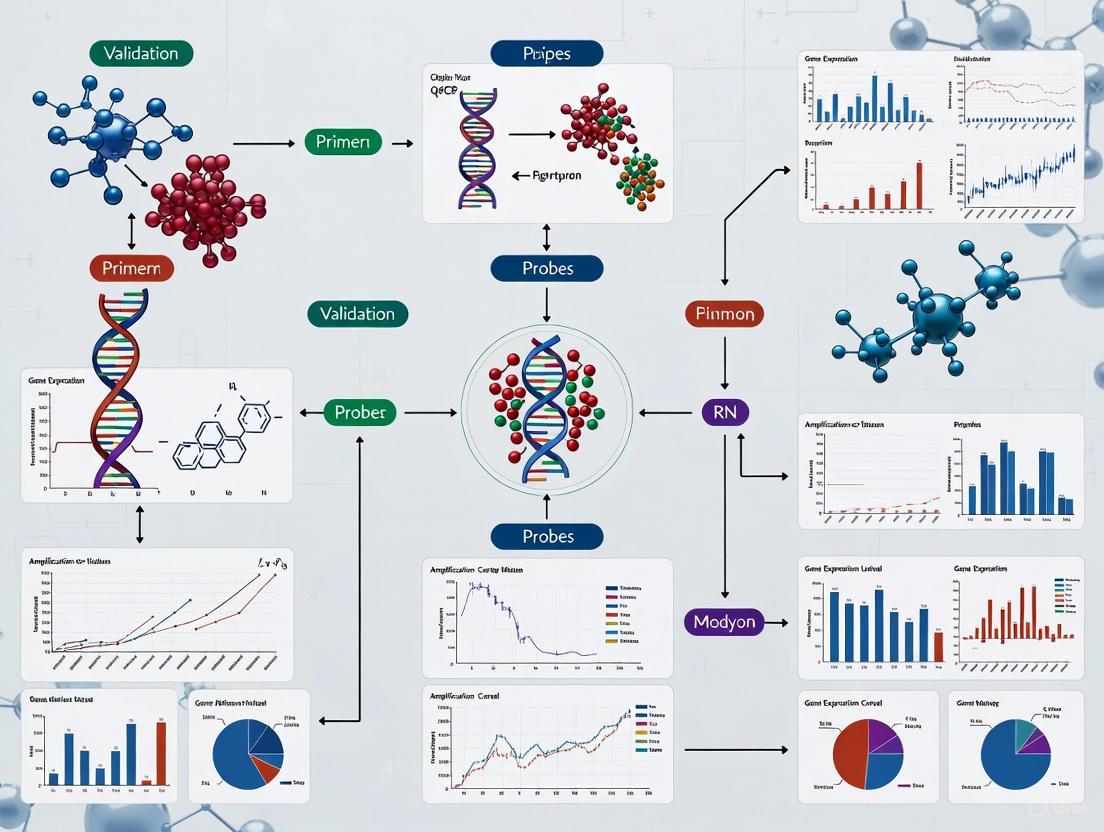
This article provides researchers, scientists, and drug development professionals with a comprehensive framework for the rigorous validation of biomarker genes using qPCR.
A Comprehensive Guide to qPCR Biomarker Validation: From Foundational Principles to Clinical Application
Abstract
This article provides researchers, scientists, and drug development professionals with a comprehensive framework for the rigorous validation of biomarker genes using qPCR. Covering the entire workflow from foundational concepts and assay design to troubleshooting, optimization, and final validation, it addresses the critical lack of standardization that often hinders the translation of research findings into clinical practice. By integrating current consensus guidelines, practical troubleshooting strategies, and comparative analyses with emerging technologies like dPCR, this guide aims to bridge the gap between Research Use Only (RUO) assays and certified In Vitro Diagnostics (IVD), ultimately supporting the development of robust, clinically relevant biomarker tests.
The Pillars of qPCR Biomarker Validation: Laying the Groundwork for Success
In the era of personalized oncology and precision medicine, biomarkers have become indispensable tools that enable a more individualized approach to patient care. According to the FDA-NIH Biomarker Working Group, a biomarker is defined as "a characteristic that is objectively measured and evaluated as an indicator of normal biological processes, pathogenic processes, or pharmacological response to a therapeutic agent" [1]. These measurable indicators are categorized based on their specific clinical applications, with prognostic and predictive biomarkers representing two fundamentally distinct categories that serve different purposes in clinical decision-making [2] [3].
The critical distinction between prognostic and predictive biomarkers lies in their relationship to treatment effects. Prognostic biomarkers provide information about the natural history of the disease regardless of therapy, while predictive biomarkers identify patients who are more likely to experience a favorable or unfavorable effect from a specific medical product or environmental agent [3]. This differentiation is not merely academic; it has direct implications for therapeutic decision-making, clinical trial design, and drug development strategies. Understanding this distinction is particularly crucial in oncology, where biomarkers guide increasingly targeted therapies [2].
The validation of biomarker genes by quantitative PCR (qPCR) research represents a fundamental methodological framework in biomarker development. The accuracy and reliability of biomarker measurements depend heavily on rigorous technical validation, which is especially important for molecular biomarkers detected using qPCR-based methods [4]. This article will compare prognostic and predictive biomarkers, provide experimental data supporting their applications, and detail the qPCR validation protocols essential for their implementation in clinical research and practice.
Theoretical Foundations: Distinguishing Prognostic and Predictive Biomarkers
Prognostic Biomarkers: Defining Disease Trajectory
Prognostic biomarkers provide information about the overall cancer outcome in patients, including the likelihood of disease recurrence, progression, or death, independent of specific therapeutic interventions [2] [3]. These biomarkers offer insights into the intrinsic aggressiveness of a disease and help clinicians identify patients with different outcome risks. Essentially, prognostic biomarkers answer the question: "What is the likely course of my disease regardless of treatment?"
The National Institutes of Health BEST Resource clarifies that "prognostic biomarkers are used to identify the likelihood of a clinical event, disease recurrence, or progression in patients who have the disease or medical condition of interest" [3]. These biomarkers are often identified from observational data and are regularly used to identify patients more likely to have a particular outcome. For example, in multiple myeloma, the Revised International Staging System utilizes β2-microglobulin, lactate dehydrogenase, and high-risk cytogenetics to stratify patients into prognostic groups [1].
Predictive Biomarkers: Informing Treatment Response
Predictive biomarkers help optimize therapy decisions by providing information on the likelihood of response to a given chemotherapeutic agent [2]. These biomarkers identify individuals who are more likely than similar individuals without the biomarker to experience a favorable or unfavorable effect from exposure to a medical product [3]. Predictive biomarkers essentially answer the question: "Will this specific treatment work for me?"
According to the FDA-NIH Biomarker Working Group, to identify a predictive biomarker, there generally should be a comparison of a treatment to a control in patients with and without the biomarker [3]. The ideal predictive biomarker demonstrates what statisticians call a qualitative treatment-by-biomarker interaction, where there is a clear benefit of the experimental treatment in one biomarker subgroup but a clear lack of benefit, or potential harm, in the other biomarker subgroup [3]. A prominent example is the BRAF V600E mutation, which predicts response to BRAF inhibitors like vemurafenib in late-stage melanoma [3].
Key Conceptual Differences
The fundamental distinction between these biomarker types lies in their relationship to treatment. A biomarker that appears to predict response to a particular therapy in a single-arm study might actually be prognostic if the same survival differences according to biomarker status exist with standard therapy [3]. This underscores the necessity of controlled studies for properly identifying predictive biomarkers.
Some biomarkers can serve both prognostic and predictive functions, which complicates their classification and application [2]. For instance, MGMT promoter methylation in glioblastoma and circulating tumor cells in various cancers have demonstrated both prognostic and predictive potential, making their clinical interpretation more complex [2].
Table 1: Fundamental Differences Between Prognostic and Predictive Biomarkers
| Characteristic | Prognostic Biomarkers | Predictive Biomarkers |
|---|---|---|
| Primary Question | What is the likely disease course? | Will this specific treatment work? |
| Relationship to Treatment | Independent of specific therapies | Dependent on specific therapies |
| Study Design for Identification | Observational studies | Randomized controlled trials |
| Clinical Utility | Patient stratification by risk level | Treatment selection |
| Example Biomarkers | BRCA mutations in breast cancer, CTCs | BRAF V600E, HER2 amplification |
| Impact on Clinical Decision | Determines intensity of monitoring/treatment | Determines choice of specific therapeutic agent |
Clinical Applications and Comparison Data
Prognostic Biomarker Applications
Prognostic biomarkers enable the monitoring of advances in anticancer therapy, assessment of tumor stage and potential malignancy, and prognosis of disease remission in individual cases [2]. These biomarkers can be classified into several molecular categories based on their biological characteristics:
DNA Mutations and Polymorphisms: Mutations in genes involved in DNA repair, such as BRCA1, BRCA2, ATM, and P53, predispose patients to an increased risk of developing breast cancer and provide prognostic information [2]. These germline mutations may be inherited and contribute to the inactivation of DNA repair proteins, thereby influencing disease course. Similarly, constitutive mutations in the APC gene predispose patients to familial adenomatous polyposis, characterized by an increased probability of developing gut polyps and tumors [2].
Gene Expression Signatures: Multi-gene expression assays have been developed to provide prognostic information across various cancer types. In breast cancer, the MammaPrint test utilizes a 70-gene panel to assess tumor dynamics and stratify patients into groups with high and low risk of relapse [2]. Similarly, the Oncotype DX test consists of a 21-gene panel that assesses the probability of breast cancer recurrence within 10 years, evaluating genes related to proliferation, invasiveness, and hormonal response [2].
MicroRNA Profiles: miRNAs are small, noncoding RNA molecules that regulate gene expression and can serve as prognostic indicators. For example, in hepatocellular carcinoma, overexpression of miRNA-255 increases the activity of the Wnt signaling pathway, while the presence of miRNA-155 suggests a high level of malignancy, potential for metastasis, and poor prognosis [2]. In colorectal cancer, miRNA-362-3p overexpression leads to cell cycle arrest and inhibits tumor cell growth and migration, with high expression levels correlating with better patient prognosis [2].
DNA Methylation Patterns: Changes in DNA methylation represent another category of prognostic biomarkers. Hypermethylation of tumor suppressor gene promoters can lead to loss of gene expression and is associated with tumor progression [2]. For example, methylation patterns of the RASSF1A gene have been used to determine the time of tumor relapse and survival [2].
Predictive Biomarker Applications
Predictive biomarkers are primarily used to optimize therapy decisions by identifying patients who are likely to respond to specific treatments. These biomarkers have become particularly important in oncology with the development of targeted therapies:
Targeted Therapy Selection: Predictive biomarkers enable the selection of patients for specific targeted therapies. The development of BRAF inhibitors for melanoma treatment in patients with BRAF V600E mutation-positive tumors represents a classic example of a predictive biomarker application [3]. Similarly, HER2 amplification in breast cancer predicts response to HER2-targeted therapies like trastuzumab.
Therapy Intensification or Reduction: In multiple myeloma, the Spanish myeloma group demonstrated that high-risk smoldering multiple myeloma patients identified using specific biomarkers had delayed progression and improved overall survival when treated with lenalidomide and dexamethasone compared with observation alone, showing the predictive utility of their biomarker model [1].
Treatment Resistance Prediction: Some predictive biomarkers can identify patients who are unlikely to respond to certain therapies, thereby avoiding unnecessary toxicity and costs. For example, KRAS mutations in colorectal cancer predict resistance to EGFR-targeted therapies.
Table 2: Comparative Clinical Applications of Prognostic and Predictive Biomarkers
| Application Domain | Prognostic Biomarkers | Predictive Biomarkers |
|---|---|---|
| Diagnosis | Facilitate cancer diagnosis, usually with non-invasive methods | Not typically used for diagnosis |
| Risk Stratification | Identify patients with different outcome risks (e.g., recurrence) | Identify patients likely to respond to specific treatments |
| Treatment Planning | Inform intensity of treatment (e.g., adjuvant therapy decisions) | Inform selection of specific therapeutic agents |
| Clinical Trial Design | Enrich trial populations with high-risk patients | Enrich trial populations with likely responders |
| Disease Monitoring | Assess therapy advances, tumor stage, and malignancy | Monitor response to targeted therapies |
| Clinical Decision Impact | "How aggressively should we treat?" | "Which treatment should we use?" |
Biomarker Performance Comparison Framework
A standardized statistical framework for comparing biomarker performance has been developed to evaluate biomarkers based on predefined criteria, including precision in capturing change over time and clinical validity [5]. This framework operationalizes performance criteria through specific measures and uses statistical techniques for inference-based comparisons of biomarker performance.
In this comparative framework, precision refers to the ability of a biomarker to capture change over time with small variance relative to the estimated change, while clinical validity refers to the association with cognitive change and clinical progression [5]. Such standardized comparisons are essential for identifying the most promising biomarkers for specific clinical contexts.
Diagram 1: Biomarker Performance Evaluation Framework. This diagram illustrates the key components of the standardized framework for comparing biomarker performance, focusing on precision in capturing change and clinical validity [5].
qPCR Experimental Protocols for Biomarker Validation
Sample Acquisition and Preanalytical Processing
The validation of biomarker genes by qPCR requires rigorous attention to preanalytical conditions, as these factors significantly impact assay reproducibility and reliability. According to consensus guidelines for the validation of qRT-PCR assays, sample acquisition, processing, and storage represent critical initial steps in the validation workflow [4].
Sample Collection and Stabilization: Biological samples for DNA biomarker analysis are mainly collected from tissue obtained after biopsy or from blood cells containing nuclei [2]. For RNA-based biomarkers, proper stabilization is essential immediately after collection to prevent degradation. The choice of anticoagulant in blood collection tubes (e.g., EDTA, heparin) can affect downstream qPCR analysis, and consistency in collection methodology is paramount across study populations.
RNA Extraction and Quality Control: RNA purification represents a crucial step in qRT-PCR assays. The consensus guidelines emphasize the importance of standardized RNA extraction protocols and rigorous quality control measures [4]. RNA integrity should be assessed using appropriate methods such as capillary electrophoresis, with minimum RNA integrity number thresholds established for inclusion in analysis. The use of reference genes for normalization requires careful selection based on stability across sample types.
Sample Storage Conditions: Standardized storage conditions including temperature, duration, and freeze-thaw cycles must be defined and consistently implemented. The EU-CardioRNA COST Action consortium guidelines recommend documenting all storage parameters and establishing stability profiles for biomarkers under various storage conditions [4].
qPCR Assay Design and Optimization
Target Selection and Assay Design: Appropriate target selection is fundamental to successful qPCR biomarker validation. Assays should be designed to avoid known polymorphisms, secondary structures, and genomic repeats. The consensus guidelines recommend designing amplicons between 70-150 base pairs, with primer melting temperatures typically between 58-62°C and GC content of 40-60% [4]. Specificity should be verified through sequence alignment tools and confirmed experimentally using melt curve analysis or sequencing.
Experimental Design and Validation: The validation of qPCR assays for clinical research requires a fit-for-purpose approach that determines the appropriate level of validation based on the context of use [4]. Key analytical validation parameters include:
- Analytical specificity: The ability of the test to distinguish target from nontarget analytes
- Analytical sensitivity: The minimum detectable concentration or limit of detection
- Analytical precision: Closeness of repeated measurements to each other
- Analytical trueness: Closeness of measured values to true values
Controls and Reference Genes: Appropriate controls are essential for reliable qPCR results. These include positive controls, negative controls, no-template controls, and internal controls. Reference genes for normalization must be carefully selected based on stability across experimental conditions and sample types [4]. The consensus guidelines recommend using multiple reference genes and employing algorithms such as geNorm or NormFinder to determine the most stable references.
qPCR Validation Parameters and Acceptance Criteria
The validation of qPCR assays for biomarker application requires establishing and meeting predefined performance criteria for key analytical parameters:
Efficiency and Dynamic Range: Amplification efficiency should be between 90-110%, with a correlation coefficient (R²) of >0.980 for standard curves. The dynamic range should cover at least 3-5 orders of magnitude, encompassing the expected biological range of the biomarker [4].
Limit of Detection and Quantification: The limit of detection should be established as the lowest concentration at which the target can be reliably detected, while the limit of quantification represents the lowest concentration that can be precisely measured [4]. These parameters are typically determined using serial dilutions of standards with known concentrations.
Precision and Reproducibility: Repeatability (intra-assay precision) and reproducibility (inter-assay precision) should be evaluated using multiple replicates across different runs, operators, and days [4]. The coefficient of variation for replicate measurements should generally not exceed 15-25%, depending on the biomarker context of use.
Robustness: Assay performance should be evaluated under varying conditions, including different reagent lots, instrument platforms, and operator expertise to establish robustness [4].
Table 3: Essential qPCR Validation Parameters for Biomarker Assays
| Validation Parameter | Description | Recommended Acceptance Criteria |
|---|---|---|
| Amplification Efficiency | How efficiently the target is amplified | 90-110% |
| Dynamic Range | Range of concentrations that can be accurately quantified | 3-5 orders of magnitude |
| Limit of Detection | Lowest concentration reliably detected | Dependent on biomarker and context |
| Limit of Quantification | Lowest concentration precisely quantified | CV < 25% at LOQ |
| Precision (Repeatability) | Intra-assay variability | CV < 15% |
| Precision (Reproducibility) | Inter-assay variability | CV < 20% |
| Specificity | Ability to distinguish target from nonspecific sequences | Single peak in melt curve analysis |
| Robustness | Performance under varying conditions | Consistent results across variables |
Diagram 2: qPCR Biomarker Validation Workflow. This diagram outlines the key steps in the qPCR validation process for biomarker applications, from sample collection through analytical validation [4].
Research Reagent Solutions for Biomarker Validation
The successful validation of biomarker genes by qPCR requires specific research reagents and materials designed to ensure reproducibility, accuracy, and precision. The following table details essential solutions for biomarker validation studies:
Table 4: Essential Research Reagent Solutions for qPCR Biomarker Validation
| Reagent/Material | Function | Application Notes |
|---|---|---|
| Stabilized Blood Collection Tubes | Preserve RNA/DNA integrity during sample transport | PAXgene, Tempus, or similar systems; critical for transcriptomic biomarkers |
| Quality-Controled Nucleic Acid Extraction Kits | Isolve high-quality RNA/DNA from various sample types | Select based on sample matrix; include DNase treatment for RNA workflows |
| qPCR Master Mixes | Provide optimized buffer conditions, enzymes, dNTPs for amplification | Select based on detection chemistry; SYBR Green or probe-based |
| Validated Primer/Probe Sets | Specifically amplify target biomarker sequences | Designed to avoid polymorphisms; optimized for efficiency and specificity |
| Reference Gene Panels | Normalize for variation in input material and efficiency | Multiple stable genes; tissue-specific validation required |
| RNA/DNA Quality Assessment Kits | Evaluate nucleic acid integrity and quantity | Fluorometric quantification; capillary electrophoresis for RIN |
| Positive Control Templates | Verify assay performance and sensitivity | Synthetic genes or confirmed positive samples |
| Standard Curve Materials | Establish quantification range and efficiency | Serial dilutions of synthetic templates or characterized reference samples |
Comparative Analysis of Biomarker Performance in Clinical Studies
Case Study: Multiple Myeloma Biomarkers
Multiple myeloma provides an instructive case study for comparing prognostic and predictive biomarker applications. The International Staging System utilizes the prognostic biomarkers albumin and β2-microglobulin to stratify patients into three stages with significantly different overall survival [1]. The Revised International Staging System incorporates high-risk cytogenetics in addition to β2-microglobulin and lactate dehydrogenase, demonstrating improved prognostic capability [1].
While these staging systems provide valuable prognostic information, they currently lack predictive utility for treatment selection. As noted in recent reviews, "despite new and improved biomarkers for determining the overall prognosis of MM patients, there is currently insufficient information to routinely utilise predictive biomarkers to select initial treatment for MM, intensify treatment for high-risk MM, reduce treatment for low-risk MM or for changing to an alternative treatment strategy altogether" [1].
Case Study: Breast Cancer Biomarkers
In breast cancer, several biomarker tests illustrate the distinction between prognostic and predictive applications. The MammaPrint 70-gene signature provides primarily prognostic information, stratifying patients into high and low risk of recurrence categories regardless of estrogen receptor, progesterone receptor, and HER2 status [2]. In contrast, the Oncotype DX 21-gene recurrence score provides both prognostic information and predictive insights regarding potential benefit from chemotherapy [2].
The TargetPrint test, which analyzes the expression of 80 transcripts, provides molecular distinction of breast cancers into basal, luminal, and ERBB2 types, while the TheraPrint test offers predictive information on the expression of 56-125 genes identified as predictive biomarkers [2]. Significant differences in the expression of BCL2, CDH3, GRB7, KRT6B, and KRT17 genes have been observed between patients responding and not responding to treatment, highlighting their potential predictive value [2].
Emerging Biomarker Technologies and Applications
Circulating Tumor Cells and Liquid Biopsies: The detection of circulating tumor cells in peripheral blood represents an emerging approach with both prognostic and potential predictive applications [2]. CTCs generally lead to a poor prognosis for patients but may also provide information about treatment response and resistance mechanisms.
Wastewater-Based Epidemiology: An emerging application of biomarker analysis involves wastewater surveillance for population health monitoring. Recent research has demonstrated the feasibility of using machine learning models for classifying C-reactive protein concentrations in wastewater samples, with the Cubic Support Vector Machine achieving classification accuracies of 64.88% to 65.48% for distinguishing five concentration classes [6]. This approach represents a novel application of biomarker analysis at the population rather than individual level.
Imaging Biomarkers: In multiple myeloma, imaging modalities including whole-body low-dose CT, MRI, and FDG PET/CT have been incorporated into diagnostic and response assessment criteria [1]. The metabolic response and number of focal lesions on PET/CT in newly diagnosed patients after treatment have demonstrated independent prognostic value [1].
The distinction between prognostic and predictive biomarkers represents a fundamental concept in precision medicine, with significant implications for clinical decision-making and therapeutic development. Prognostic biomarkers provide information about disease natural history and outcome probabilities, while predictive biomarkers inform the likelihood of response to specific treatments. This comparative analysis demonstrates that while some biomarkers serve dual purposes, their optimal application requires understanding their distinct clinical utilities.
The validation of biomarker genes by qPCR research provides a critical methodological foundation for biomarker implementation. As outlined in this review, rigorous technical validation following established guidelines is essential for generating reliable, reproducible biomarker data. The standardized framework for comparing biomarker performance offers a systematic approach for evaluating biomarkers based on precision in capturing change and clinical validity.
Future directions in biomarker development will likely focus on integrating multiple biomarker types, developing standardized validation protocols across platforms, and establishing robust bioinformatic pipelines for complex data interpretation. As biomarker science continues to evolve, the distinction between prognostic and predictive applications will remain essential for translating biomarker research into improved patient outcomes across diverse disease contexts, particularly in oncology where biomarker-guided therapy has become standard practice.
In the field of qPCR-based biomarker research, the distinction between Research Use Only (RUO) and In Vitro Diagnostic (IVD) products represents more than just a regulatory classification—it defines a critical validation gap that researchers must navigate to ensure reliable, reproducible results. RUO products are designed solely for scientific research with no intended medical purpose and are exempt from most regulatory controls [7] [8]. In contrast, IVD products are medical devices used for clinical diagnosis, patient monitoring, or determining predisposition to disease, and must undergo extensive validation and regulatory approval by authorities such as the FDA and European Commission under the In Vitro Diagnostic Regulation (IVDR) [9] [8].
This distinction creates a significant validation chasm. While RUO products offer flexibility for exploratory research, IVD products provide the rigorous standardization necessary for clinical decision-making. For researchers validating biomarker genes by qPCR, understanding this divide is essential for selecting appropriate reagents and assays throughout the research continuum—from initial discovery to clinical application [4].
Regulatory and Intended Use Frameworks
Regulatory Landscapes and Requirements
The regulatory requirements for RUO and IVD products differ substantially, directly impacting their development, validation, and permissible applications.
Table 1: Regulatory Requirements Comparison
| Regulatory Aspect | RUO Products | IVD Products |
|---|---|---|
| Intended Use | Research purposes only; no medical purpose [7] | Diagnosis, monitoring, or prediction of disease [9] |
| Regulatory Body Oversight | Exempt from most regulatory controls [8] | FDA (U.S.), EMA/EU IVDR (Europe), and other national bodies [9] |
| Quality System Regulations | Not subject to 21 CFR 820 [8] | Subject to Quality System Regulations (21 CFR 820) [8] |
| Premarket Requirements | None [8] | Premarket notification or approval required [8] |
| Registration and Listing | Not required [8] | Required [8] |
| Post-Market Surveillance | Not required [9] | Required [9] [8] |
| Adverse Event Reporting | Not required [8] | Required [8] |
Intended Use and Legal Definitions
The fundamental distinction between RUO and IVD lies in their intended purpose, a concept with significant legal and practical implications. According to the IVDR, IVD products must have a medical purpose, providing information about physiological or pathological processes, congenital impairments, predisposition to medical conditions, safety and compatibility with potential recipients, prediction of treatment response, or monitoring therapeutic measures [7]. RUO products explicitly lack any medical purpose, restricting their use to basic research, pharmaceutical discovery, and identification of chemical substances or ligands in biological specimens [7].
This intended use distinction carries through to labeling requirements. RUO products must bear the disclaimer: "For Research Use Only. Not for use in diagnostic procedures" [10] [8]. IVD products must include specific instructions for use, limitations, and appropriate regulatory markings such as the CE mark in Europe [9]. Using RUO products for clinical diagnostics constitutes misuse, potentially exposing manufacturers and laboratories to liability while jeopardizing patient safety [7] [8].
Performance Characteristics and Validation Data
Analytical Performance Comparison
The performance differential between RUO and IVD products can be quantified through key analytical metrics. A comparative study of nine commercial RT-qPCR kits for SARS-CoV-2 detection demonstrated significant variation in analytical sensitivity between different kits, with limits of detection at 95% probability (LOD95%) ranging from approximately 3.5 to 6.4 copies per reaction for the most sensitive kits [11]. While this study compared IVD and RUO kits, it highlights the critical importance of independent validation regardless of regulatory status.
Table 2: Performance Characteristics of SARS-CoV-2 RT-qPCR Kits
| Kit Identifier | Manufacturer | Regulatory Status | LOD95% (ORF 1ab) | LOD95% (N Gene) | Cross-reactivity with other coronaviruses |
|---|---|---|---|---|---|
| Kit-1 (DAAN) | DAAN | IVD (CE-IVD, NMPA EUA) | 3.5 copies/reaction | 5.6 copies/reaction | None detected [11] |
| Kit-2 (Huirui) | Huirui | RUO | 4.6 copies/reaction | 6.4 copies/reaction | None detected [11] |
| Kit-7 (Geneodx) | Geneodx | IVD (CE-IVD, NMPA EUA) | ~3-4 fold higher than Kit-1 & 2 | ~3-4 fold higher than Kit-1 & 2 | None detected [11] |
This data reveals that regulatory status alone does not predict analytical performance, as some RUO kits demonstrated sensitivity comparable to IVD products. However, IVD products undergo standardized validation against certified reference materials, providing more reliable performance characteristics [11].
Variability and Reproducibility
A critical differentiator between RUO and IVD products lies in their variability and lot-to-lot consistency. IVD assays, particularly those approved through processes like the FDA's 510k pathway, typically demonstrate low inter-lot variability measuring below 5%, as they are manufactured in high volumes with tightly controlled reagent quality [12]. Conversely, RUO kits typically show higher variability ranging from 10% to 25% or more due to smaller batch production volumes and more manual processes in 96-well plate formats [12].
This variability has direct implications for biomarker validation studies. The EU-CardioRNA COST Action consortium highlights that lack of technical standardization remains a huge obstacle in translating qPCR-based tests to clinical applications, citing contradictory results between studies investigating the same miRNAs as biomarkers [4]. For example, in coronary artery disease biomarker research, miR-21 was reported as upregulated in two studies but downregulated in another, demonstrating how variable assay performance contributes to irreproducible findings [4].
Diagram 1: Manufacturing scale impact on RUO and IVD product variability
Experimental Validation Protocols
Validation Methodologies for qPCR Assays
Proper validation of qPCR assays for biomarker research requires rigorous experimental protocols. The EU-CardioRNA COST Action consortium recommends a comprehensive approach addressing multiple performance parameters [4]:
Analytical Sensitivity and Limit of Detection (LOD)
- Conduct serial dilutions of certified reference material (CRM) to determine the minimum detectable concentration
- For SARS-CoV-2 detection, studies used CRM derived from genomic RNA with specified copy numbers for ORF1ab, N, and E genes [11]
- Perform 20-30 replicates at each dilution near the expected LOD to establish LOD95% (limit of detection at 95% probability) [11]
- Use digital droplet PCR (ddPCR) to independently verify template concentration and quality [11]
Analytical Specificity
- Test cross-reactivity with related genetic targets; for SARS-CoV-2, this included testing against six other human coronaviruses and respiratory viruses [11]
- Evaluate potential interference substances that may be present in clinical samples
Amplification Efficiency and Linear Dynamic Range
- Generate standard curves using at least 5 serial dilutions spanning the expected working range
- Acceptable amplification efficiency typically falls between 90-110% [4]
- Calculate correlation coefficients (R²) to demonstrate linearity, with values >0.98 generally acceptable
Precision and Reproducibility
- Assess repeatability through multiple replicates within the same run
- Evaluate intermediate precision across different days, operators, and equipment
- For IVD applications, conduct reproducibility studies across multiple sites [4]
Certified Reference Materials and Standardization
The use of certified reference materials (CRMs) is essential for proper validation of qPCR assays. In SARS-CoV-2 assay validation, the use of CRM (GBW(E)091099) containing SARS-CoV-2 genomic RNA with specified copy number concentrations for target genes enabled direct comparison of nine different RT-qPCR kits [11]. This approach revealed approximately 3 to 4-fold differences in LOD95% between kits, demonstrating that commercial kits can vary significantly in sensitivity despite targeting the same viral genes [11].
For biomarker gene validation, researchers should:
- Use CRMs when available for absolute quantification
- Establish laboratory-specific reference materials for long-term study consistency
- Implement standardized nucleic acid quantification methods across all experiments
- Document all normalization procedures, including reference gene selection and validation
The Scientist's Toolkit: Research Reagent Solutions
Table 3: Essential Materials for qPCR Biomarker Validation
| Reagent/Material | Function | RUO vs. IVD Considerations |
|---|---|---|
| Certified Reference Materials (CRMs) | Provide standardized template for absolute quantification and assay comparison | Essential for both RUO and IVD; enables cross-platform comparisons [11] |
| Primer/Probe Sets | Target-specific amplification and detection | RUO: Flexible for optimization; IVD: Predetermined, validated sequences [4] |
| Reverse Transcriptase | cDNA synthesis from RNA templates | RUO: Multiple options available; IVD: Often part of integrated system [4] |
| qPCR Master Mix | Provides enzymes, buffers, dNTPs for amplification | RUO: Can optimize components; IVD: Standardized formulation [12] |
| RNA Storage Solution | Preserves RNA integrity during storage | Critical pre-analytical factor affecting both RUO and IVD results [4] |
| Positive/Negative Controls | Monitor assay performance and contamination | Both require; IVD includes standardized controls with defined values [8] |
| Internal Control Genes | Normalization of sample-to-sample variation | Must be validated for specific sample type and experimental conditions [4] |
Decision Framework and Research Applications
Selecting the Appropriate Product Category
Choosing between RUO and IVD products requires careful consideration of the research context and objectives. The following decision framework can guide researchers:
Diagram 2: Decision framework for RUO, Clinical Research, and IVD assays
RUO Applications are appropriate for:
- Basic research to identify potential biomarker candidates
- Assay development and optimization
- Exploratory studies with constantly changing parameters
- Target discovery and preliminary validation
Clinical Research (CR) Assays represent an intermediate category between RUO and IVD, undergoing more thorough validation than typical RUO products but not reaching the full certification of IVD assays [4]. These are suitable for:
- Biomarker validation studies in clinical trials
- Studies where standardized protocols are needed across multiple sites
- Research intended to support regulatory submissions
IVD Applications are required for:
- Clinical diagnosis, patient management, or treatment decisions
- Tests used for patient stratification in interventional trials
- Applications where results directly impact patient care
The Concept of "Fit-for-Purpose" Validation
The level of validation required for qPCR biomarker assays should follow a "fit-for-purpose" (FFP) approach, defined as "a conclusion that the level of validation associated with a medical product development tool is sufficient to support its context of use" [4]. This concept recognizes that the stringency of validation should match the intended application of the biomarker, from early discovery through clinical qualification.
For qPCR-based biomarker validation, the FFP approach includes establishing:
- Analytical precision (closeness of measurements to each other)
- Analytical sensitivity (minimum detectable concentration)
- Analytical specificity (ability to distinguish target from nontarget sequences)
- Analytical trueness (closeness to true value) [4]
The context of use (COU) determines which performance characteristics require the most rigorous evaluation. For example, a biomarker intended for patient stratification in a clinical trial demands more extensive validation than one used for exploratory research [4].
The critical validation gap between RUO and IVD products presents both challenges and opportunities for researchers validating biomarker genes by qPCR. RUO products offer the flexibility needed for discovery-phase research, while IVD products provide the standardization essential for clinical application. The emerging category of Clinical Research assays helps bridge this gap, offering an intermediate level of validation appropriate for biomarker qualification studies [4].
Successful navigation of this landscape requires researchers to clearly define their context of use, implement appropriate validation protocols, and select reagents matched to their research phase. By understanding the distinctions, limitations, and appropriate applications of RUO and IVD products, researchers can generate more reliable, reproducible data that effectively advances biomarker discovery along the translational pathway from bench to bedside.
In the field of molecular diagnostics, the transition of biomarker genes from research discoveries to clinically applicable tools necessitates rigorous analytical validation. For quantitative polymerase chain reaction (qPCR) assays, this process ensures that measurements of gene expression are reliable, reproducible, and accurate. The core parameters of analytical trueness, precision, sensitivity, and specificity form the foundation of this validation framework, providing researchers and drug development professionals with the confidence to make critical decisions based on experimental data. These parameters are not merely academic exercises but essential components for meeting regulatory standards and ensuring that biomarker data can reliably inform diagnostic and therapeutic development.
The CardioRNA consortium guidelines emphasize that the lack of technical standardization remains a significant obstacle in translating qPCR-based tests to clinical applications. Establishing clear validation protocols bridges the gap between research use only (RUO) and in vitro diagnostics (IVD), impacting clinical management including diagnosis, prognosis, prediction of therapeutic response, and toxicity evaluation [13]. In biotech and pharmaceutical development, the balance between assay precision and sensitivity often tilts toward precision because it directly impacts data turnaround times, cost-efficiency, and experimental repeats. Highly precise assays minimize inter-assay variability, ensuring results obtained at different times or by different operators are comparable—a critical factor for generating reliable data [14].
Defining the Core Validation Parameters
Analytical Trueness
Analytical trueness refers to the closeness of agreement between the average value obtained from a large series of test results and an accepted reference value. It indicates how accurately a qPCR assay measures the true concentration or expression level of a target biomarker gene. Trueness is typically assessed through correlation studies with established methods or reference materials. In practical terms, for biomarker validation, trueness ensures that the expression levels measured by a qPCR assay genuinely reflect the biological reality, preventing misinterpretation of upregulation or downregulation patterns.
A study on ddPCR quantification of miR-192-5p in hepatocellular carcinoma demonstrated excellent trueness, showing a strong correlation (R=0.92) with reverse transcription qPCR (RT-qPCR) measurements. This level of agreement with an established method provides confidence in the assay's ability to deliver accurate absolute quantification of the microRNA biomarker in liquid biopsies [15]. Such correlation with orthogonal methods is a standard approach for establishing trueness in molecular assays.
Precision
Precision describes the closeness of agreement between independent test results obtained under stipulated conditions. Unlike trueness, precision does not reflect accuracy to a true value but rather the reproducibility of measurements. Precision is typically evaluated at three levels: repeatability (intra-assay precision), intermediate precision (inter-assay precision), and reproducibility (between laboratories). For qPCR biomarker assays, precision ensures that results remain consistent across multiple runs, different operators, various instruments, and over time.
The same ddPCR assay for miR-192-5p exhibited exceptional precision with an intra-batch coefficient of variation (CV) ranging from 2.31% to 21.63% and an inter-batch CV of 17.54% [15]. In biomarker validation, CV values below 20-25% are generally considered acceptable, with lower values obviously preferred. The precision of an assay directly impacts its reliability in longitudinal studies where biomarker levels are monitored over time to assess disease progression or treatment response.
Sensitivity
Sensitivity in analytical validation encompasses two related concepts: the ability of an assay to detect low quantities of the target (detection limit) and its ability to distinguish between different concentrations (quantification limit). The limit of blank (LoB), limit of detection (LoD), and limit of quantification (LoQ) are key parameters defining analytical sensitivity. LoB represents the highest apparent analyte concentration expected to be found in replicates of a blank sample, LoD is the lowest analyte concentration that can be reliably detected but not necessarily quantified, and LoQ is the lowest concentration that can be reliably quantified with acceptable precision and trueness.
For low-abundance biomarkers, such as circulating microRNAs in liquid biopsies, sensitivity becomes particularly critical. The ddPCR miR-192-5p assay demonstrated a LoB of 1.75 copies/μL, LoD of 3.33 copies/μL, and LoQ of 13.45 copies/μL, with a linear range extending from 13.45 to 129,693 copies/μL (R²=0.9965) [15]. This exceptional sensitivity enables reliable detection and quantification of the biomarker even at very low concentrations typically encountered in liquid biopsy samples.
Specificity
Specificity refers to the ability of an assay to measure solely the analyte of interest without interference from other components in the sample. In qPCR biomarker assays, specificity is primarily determined by the design of primers and probes to target unique sequences of the biomarker gene, avoiding cross-reactivity with similar sequences, pseudogenes, or unrelated transcripts. Specificity ensures that the measured signal genuinely originates from the target biomarker rather than background noise or similar sequences.
Methodologies to enhance specificity include the use of locked nucleic acid (LNA)-modified probes, as demonstrated in the ddPCR miR-192-5p assay, where the LNA modification improved positive droplet counts by 32% [15]. Specificity can be compromised by substances that inhibit polymerase activity or by similar genetic sequences; thus, validation must include testing for potential interferents. The miR-192-5p assay, for instance, was shown to tolerate low hemoglobin and triglycerides but was affected by bilirubin, highlighting the importance of understanding matrix effects [15].
Comparative Performance Data Across Platforms and Applications
Table 1: Comparative Analytical Performance of qPCR and dPCR Platforms in Biomarker Validation
| Platform | Trueness (Correlation with Reference) | Precision (CV %) | Sensitivity (LoD/LoQ) | Specificity Enhancements | Applications in Literature |
|---|---|---|---|---|---|
| qPCR | Not explicitly quantified | Varies with optimization | Varies with target | Standard TaqMan probes | Multiplex biomarker panels [16] |
| ddPCR with LNA | R=0.92 vs RT-qPCR [15] | Intra-batch: 2.31-21.63% Inter-batch: 17.54% [15] | LoD: 3.33 copies/μL LoQ: 13.45 copies/μL [15] | LNA probes increase specificity & signal by 32% [15] | Liquid biopsy miRNA quantification [15] |
| RT-qPCR | Used as reference method | Dependent on optimization | Varies with extraction method & target | Specific primer design | Validation of MDD biomarkers MRPS11, SHMT2 [17] |
Table 2: Sensitivity Comparison Across Molecular Detection Methods
| Method | Analytical Sensitivity | Factors Influencing Sensitivity | Impact on Biomarker Validation |
|---|---|---|---|
| qrtPCR | Variable; not inherently superior to conventional PCR [18] | Primer design, target reiteration, reaction optimization [18] | Claims of superior sensitivity must be assay-specific, not technology-general [18] |
| cnPCR | Can exceed qrtPCR for some targets [18] | Higher reaction volumes may dilute inhibitors [18] | More sensitive for some pathogens (e.g., Toxoplasma: 0.5 genome equivalent) [18] |
| ddPCR | Absolute quantification without standard curves | Digital counting of individual molecules | Superior for low-abundance targets and liquid biopsies [15] |
Experimental Protocols for Parameter Validation
Protocol for Establishing Sensitivity: LoB, LoD, and LoQ
The determination of sensitivity parameters follows a standardized experimental approach that can be applied to qPCR biomarker assays:
Limit of Blank (LoB) Determination: Measure multiple replicates (n≥20) of a blank sample (without template or with non-target template). Calculate the mean and standard deviation (SD). LoB is defined as the mean blank value + 1.645 * SD of the blank.
Limit of Detection (LoD) Determination: Prepare samples with low concentrations of the target analyte (approximately 2-5 times the LoB). Test multiple replicates (n≥20) of these low-concentration samples. LoD is the lowest concentration where ≥95% of samples test positive. The miR-192-5p study established an LoD of 3.33 copies/μL using this approach [15].
Limit of Quantification (LoQ) Determination: Prepare a dilution series of the target analyte and test multiple replicates at each concentration. LoQ is the lowest concentration that can be measured with an acceptable imprecision (typically CV <20-25%) and trueness (deviation from reference value <20-25%). The ddPCR assay achieved an LoQ of 13.45 copies/μL with excellent linearity (R²=0.9965) across a wide dynamic range [15].
Protocol for Establishing Precision
Precision validation follows a nested experimental design to evaluate different levels of variability:
Repeatability (Intra-assay Precision): Within a single run, analyze multiple replicates (n≥3-5) of at least two samples (low and high concentrations). Calculate the mean, SD, and CV for each sample. The ddPCR miR-192-5p assay demonstrated intra-batch CVs ranging from 2.31% to 21.63% [15].
Intermediate Precision (Inter-assay Precision): Across different runs (different days, different operators, possibly different instruments), analyze multiple replicates of at least two samples (low and high concentrations). The previously mentioned study showed an inter-batch CV of 17.54% [15].
Reproducibility: Conducted between different laboratories using the same protocol and sample types. While not always feasible in early validation, it's essential for multicenter studies and regulatory submissions.
Protocol for Evaluating Interference and Specificity
Specificity and interference testing ensures the assay accurately measures the target despite potential confounding factors:
Specificity Testing: Test the assay against samples containing possible cross-reactive analytes (similar gene sequences, pseudogenes, or related isoforms). For the miR-192-5p assay, this included testing against similar microRNA sequences to ensure no cross-reactivity [15].
Interference Testing: Spike samples with potential interferents at clinically relevant concentrations. Common interferents include hemoglobin (hemolysis), lipids (lipemia), bilirubin (icterus), and substances common to the sample matrix. The miR-192-5p assay demonstrated tolerance to low hemoglobin and triglycerides but sensitivity to bilirubin [15].
Sample Integrity Studies: Evaluate how sample quality affects assay performance. A multiplex qPCR-array for bladder cancer biomarkers demonstrated robust performance across different RNA quality thresholds (DV200 >15%), input levels (5-100 ng), and despite necrosis in samples [16].
Visualizing Validation Workflows and Relationships
Figure 1: Comprehensive qPCR Assay Validation Workflow. This diagram illustrates the iterative process of analytical validation, highlighting the interconnected nature of the four core parameters and the necessity of meeting acceptance criteria for each before an assay can be considered validated.
Figure 2: Factors Influencing Core Validation Parameters. This diagram demonstrates how pre-analytical, assay design, and technical factors collectively impact the four core validation parameters, highlighting the multidimensional nature of assay validation.
The Scientist's Toolkit: Essential Research Reagent Solutions
Table 3: Essential Research Reagents and Materials for qPCR Biomarker Validation
| Reagent/Material | Function in Validation | Considerations for Core Parameters |
|---|---|---|
| LNA-modified Probes | Enhance hybridization specificity and stability | Improve sensitivity (lower LoD) and specificity; demonstrated 32% increase in positive droplet counts in ddPCR [15] |
| High-Quality Polymerase | Catalyzes DNA amplification | Impacts precision (CV%) and sensitivity; choice affects resistance to inhibitors in sample matrix |
| Standardized Master Mix | Provides optimized reaction environment | Improves precision by reducing inter-assay variability; enables automation [14] |
| Reference Materials | Establish trueness through correlation | Certified reference materials essential for establishing analytical trueness |
| Quality Control Panels | Monitor assay performance over time | Include samples at multiple concentrations for precision monitoring |
| Inhibition Resistance Additives | Counteract PCR inhibitors in samples | Improve robustness and precision in complex matrices [18] |
| Automated Nucleic Acid Extraction Systems | Standardize sample preparation | Improve precision by reducing pre-analytical variability; essential for clinical translation [14] |
The validation of qPCR assays for biomarker genes requires a comprehensive, integrated approach addressing all four core parameters—trueness, precision, sensitivity, and specificity. As demonstrated across multiple studies, successful validation involves not only optimizing each parameter individually but understanding their interrelationships and collective impact on assay performance. The ddPCR assay for miR-192-5p exemplifies how attention to all these parameters creates a clinically relevant test, with its combination of excellent trueness (R=0.92), precision (CV 2.31-21.63%), sensitivity (LoD 3.33 copies/μL), and enhanced specificity through LNA probes [15].
The multiplex qPCR array for bladder cancer biomarkers further demonstrates how robust validation across these parameters enables assays that perform reliably across different sample types (FFPE and fresh-frozen), RNA qualities, and operators [16]. Such robustness is essential for clinical implementation where standardized protocols must deliver consistent results despite variations in sample collection and processing.
Ultimately, thorough analytical validation of these core parameters forms the foundation for any subsequent clinical validation of biomarker genes. It ensures that observed differences in gene expression reflect biology rather than technical variability, enabling researchers and drug development professionals to make confident decisions in both basic research and clinical translation. As regulatory guidance evolves, with the FDA pointing sponsors to apply specific criteria for biomarker data associated with regulatory approvals [14], comprehensive analytical validation becomes increasingly critical for successful translation of qPCR biomarker assays from research tools to clinical diagnostics.
The Importance of Context of Use (COU) and the Fit-for-Purpose (FFP) Validation Concept
In the development of biomarker genes for qPCR research, the Context of Use (COU) and Fit-for-Purpose (FFP) validation concepts are foundational pillars that ensure scientific rigor and regulatory relevance. The COU is defined as a concise description of the biomarker's specified application in drug development, detailing the biomarker category and its intended purpose [19]. This clarity of purpose is critical, as "no context [means] no validated assay" [20]. The FFP approach, accepted by regulatory agencies, posits that the level of validation must be sufficient to support the assay's COU [4] [21]. For qPCR-based biomarker development, this means tailoring validation stringency to whether the data will support internal decision-making, regulatory submissions, or clinical patient management.
The relationship between COU and FFP is synergistic. The COU defines the "what" and "why" of the biomarker application, while FFP determines the "how" of the validation process [20]. This framework is particularly crucial for qPCR biomarker assays, where technical standardization remains a significant obstacle to clinical translation [4]. Without clearly defined COU and appropriate FFP validation, qPCR-based biomarkers risk generating irreproducible data that fails to advance either scientific understanding or therapeutic development.
Defining Context of Use for Biomarker Genes
Biomarker Categories and Their Contexts of Use
The FDA-NIH BEST Resource defines several biomarker categories, each with distinct COUs that dictate different validation requirements [19]. Understanding these categories is the first step in establishing an appropriate COU for qPCR-based biomarker genes.
Table: Biomarker Categories and Contexts of Use in Drug Development
| Biomarker Category | Definition | Example COU in qPCR Research | Regulatory Impact |
|---|---|---|---|
| Diagnostic | Identifies presence or absence of a disease [19] | Using mRNA expression patterns to diagnose specific cancer subtypes | High - may support product labeling |
| Prognostic | Defines likelihood of clinical event, disease recurrence or progression [19] | qPCR signature predicting disease aggressiveness in neuroblastoma [22] | Moderate to High - trial enrichment |
| Predictive | Identifies individuals more likely to respond to a specific treatment [19] | EGFR mutation status predicting response to targeted therapies in NSCLC | High - patient selection |
| Pharmacodynamic/Response | Shows biological response to therapeutic intervention [19] | mRNA level changes following drug treatment indicating target engagement | Variable - proof of mechanism |
| Safety | Indicates potential for toxicity or adverse effects [19] | Detecting gene expression changes associated with organ toxicity | Moderate to High - risk monitoring |
| Monitoring | Assesses status of disease or medical condition [19] | Serial measurement of viral load genes during antiviral therapy | Moderate - treatment adjustment |
Elements of a Well-Defined COU
A comprehensively defined COU includes three key elements: (1) what specific aspect of the biomarker is measured and in what form, (2) the clinical purpose of the measurements, and (3) the interpretation and decision/action based on the measurements [4]. For qPCR biomarker genes, this translates to specifying the exact RNA targets (e.g., specific mRNA or noncoding RNA), the biological matrix (e.g., FFPE tissue, plasma), the clinical decision the biomarker will inform (e.g., patient stratification), and the actionable outcomes (e.g., treatment selection) [4].
The COU directly influences every aspect of qPCR assay development. As illustrated in the workflow below, the COU dictates the necessary technical performance characteristics, which in turn determine the validation experiments required.
Implementing Fit-for-Purpose Validation
The Fit-for-Purpose Validation Framework
Fit-for-purpose validation recognizes that biomarker assays require different levels of validation stringency based on their COU [23]. This approach is "scientifically-driven" and aims to "produce robust and reproducible data" appropriate for the intended application [24]. For qPCR-based biomarker genes, the FFP approach manifests throughout the method validation process, with increasing rigor as the biomarker progresses toward regulatory submission.
The FFP continuum ranges from exploratory assays used for internal decision-making to fully validated assays supporting regulatory claims [25]. This continuum aligns with the drug development pipeline, where early discovery may utilize qualified assays, while later-phase trials require fully validated methods [21]. The transition point between qualification and validation depends on factors including whether the data will support regulatory submission and what type of conclusions will be drawn from the results [21].
Validation Parameters for qPCR Biomarker Assays
The technical validation of qPCR biomarker methods progresses through discrete stages: definition of purpose and assay selection, reagent assembly and validation planning, experimental performance verification, in-study validation, and finally routine use with quality monitoring [23]. At each stage, different parameters are evaluated with stringency dictated by the COU.
Table: Fit-for-Purpose Validation Parameters for qPCR Biomarker Assays
| Validation Parameter | Exploratory COU | Advanced COU | Regulatory COU |
|---|---|---|---|
| Accuracy/Trueness | Limited assessment | Assessment with surrogate matrices | Full demonstration of closeness to true value [4] |
| Precision | Intra-assay CV <25-30% [23] | Intra- & inter-assay CV <20-25% | Intra- & inter-assay CV <15-20% with total error assessment [23] |
| Analytical Sensitivity (LOD) | Estimated from dilution series | Statistically determined with confidence intervals | Full determination with biological matrix [4] |
| Analytical Specificity | Basic evaluation | Testing of related transcripts | Comprehensive assessment including isoforms [4] |
| Assay Range | 2-3 log range | 3-4 log range with LLOQ/ULOQ | Full dynamic range with accuracy profiles [23] |
| Parallelism | May be omitted | Recommended with surrogate matrices | Required with clinical samples [20] |
| Sample Stability | Limited conditions | Multiple conditions & timepoints | Comprehensive under all handling conditions |
For qPCR assays specifically, additional technical parameters require validation based on the COU. These include amplification efficiency (ideally 90-110%), linear dynamic range, impact of different amplification curve analysis methods [22], and the selection of appropriate reference genes for normalization [4]. The mathematical approach used for Cq determination and efficiency correction can significantly impact results and must be consistent throughout a study [22].
Practical Application in qPCR Research
Experimental Protocols for Key Validation Experiments
Accuracy and Precision Assessment for qPCR Biomarker Assays
For qPCR biomarker assays, accuracy and precision are typically evaluated using quality control samples at low, medium, and high concentrations across multiple runs [23]. The experimental protocol involves:
- Prepare quality control samples in appropriate matrix at three concentrations spanning the assay range
- Analyze replicates (n≥5) of each QC concentration within a single run for intra-assay precision
- Repeat analysis across multiple runs (≥3) on different days by different analysts for inter-assay precision
- Calculate %CV for precision assessment: %CV = (Standard Deviation/Mean) × 100
- For accuracy, compare measured concentrations to known values: %Bias = [(Measured - Expected)/Expected] × 100 For exploratory COUs, 25-30% CV may be acceptable, while advanced COUs require 20-25%, and regulatory COUs need <15-20% CV except at LLOQ where 20% is acceptable [23].
Establishing Analytical Sensitivity and Specificity
The limit of detection (LOD) for qPCR assays is determined through serial dilution experiments:
- Prepare serial dilutions of the target template in appropriate matrix
- Analyze multiple replicates (n≥10) at each dilution level
- Determine the lowest concentration where ≥95% of replicates are detected
- For limit of quantification (LLOQ), establish the lowest concentration where precision (%CV) ≤20-25% and accuracy (%Bias) ±20-25% depending on COU Analytical specificity for qPCR assays involves testing against related genetic targets and potentially testing the impact of homologous sequences on amplification efficiency [4]. For miRNA biomarkers, this is particularly important due to sequence similarities within families.
Research Reagent Solutions for qPCR Biomarker Validation
Successful validation of qPCR biomarker assays requires careful selection and quality control of research reagents. The following table outlines essential materials and their functions in the validation process.
Table: Key Research Reagent Solutions for qPCR Biomarker Validation
| Reagent Category | Specific Examples | Function in Validation | Critical Quality Parameters |
|---|---|---|---|
| Nucleic Acid Extraction Kits | Column-based, magnetic bead, organic extraction | Isolate target RNA with consistent yield and purity; significantly impacts results [4] | Yield, purity (A260/280), integrity (RIN), absence of inhibitors |
| Reverse Transcriptase Enzymes | Moloney murine leukemia virus (M-MLV), engineered variants | Convert RNA to cDNA with consistent efficiency; major source of variability [4] | Processivity, fidelity, efficiency with difficult templates, inhibitor tolerance |
| qPCR Master Mixes | SYBR Green, TaqMan, digital PCR mixes | Provide optimal environment for amplification with minimal variability [22] | Amplification efficiency, specificity, inhibitor tolerance, uniform Cq values |
| Reference Gene Panels | Housekeeping genes (GAPDH, ACTB), stable non-coding RNAs | Normalize technical and biological variation; critical for accurate quantification [4] | Stable expression across sample types, minimal variability under experimental conditions |
| Quality Control Materials | Synthetic RNA standards, pooled patient samples, reference materials | Monitor assay performance across validation and study samples [20] | Commutability with native analyte, stability, well-characterized concentration |
Workflow for qPCR Biomarker Validation
Implementing a comprehensive validation strategy for qPCR biomarker assays requires coordination across multiple experimental phases. The following workflow illustrates the progression from pre-analytical considerations through analytical validation, emphasizing the critical role of COU in decision-making at each stage.
Regulatory Considerations and Industry Perspectives
Pathways to Regulatory Acceptance
Engaging with regulatory agencies early in the biomarker development process is critical for successful qualification. The FDA provides several pathways for regulatory acceptance, including Early Engagement (Critical Path Innovation Meetings), the IND application process, and the Biomarker Qualification Program (BQP) [19]. The BQP offers a structured framework for development and regulatory acceptance of biomarkers for a specific COU, involving three stages: Letter of Intent, Qualification Plan, and Full Qualification Package [19].
For qPCR-based biomarkers, understanding the distinction between Research Use Only, Clinical Research Assays, and In Vitro Diagnostic assays is essential [4]. Clinical Research Assays fill the gap between RUO and IVD, undergoing more thorough validation without reaching certified IVD status. These are similar to Laboratory-Developed Tests but are specifically tailored for clinical research applications [4].
Current Challenges and Consensus Gaps
Despite general acceptance of FFP principles, the pharmaceutical industry lacks consensus on minimum validation standards for biomarker assays [20]. A pre-workshop survey revealed that 75% of respondents agreed there should be minimum standards, yet workshop discussions demonstrated less agreement on how to implement such standards [20]. This highlights the ongoing evolution of biomarker validation practices.
For qPCR-based biomarkers specifically, major challenges include the lack of harmonized reference values, poor standardization of pre-analytical variables, and underpowered studies leading to irreproducible results [4]. The CardioRNA consortium notes that for circulating miRNA biomarkers, contradictory findings between studies are common, with technical analytical aspects contributing significantly to variability [4].
Addressing Reproducibility Challenges in Biomarker Research
Reproducibility remains a fundamental challenge in biomarker research, impacting the translation of promising molecular signatures into clinically viable tools. Inconsistent results from quantitative PCR (qPCR) validation studies often stem from methodological variability, including differences in data analysis techniques, assay sensitivity, and platform performance [26]. The widespread reliance on the 2−ΔΔCT method, for instance, frequently overlooks critical factors such as amplification efficiency variability and reference gene stability, potentially compromising findings before they enter clinical validation [26]. This guide objectively compares experimental approaches and technologies central to robust biomarker validation, providing researchers with performance data and standardized protocols to enhance the reliability of qPCR-based biomarker research.
Comparative Analysis of qPCR Data Analysis Methods
The choice of statistical methodology for analyzing qPCR data significantly influences the robustness and reproducibility of biomarker validation studies. The following comparison outlines the performance of traditional versus advanced analytical approaches.
Table 1: Comparison of qPCR Data Analysis Methods
| Method | Key Principle | Impact on Reproducibility | Statistical Considerations |
|---|---|---|---|
| 2−ΔΔCT | Relative quantification based on threshold cycle (CT) differences and assumed amplification efficiency [26] | Lowers reproducibility due to variability in amplification efficiency and reference gene stability [26] | Limited statistical power; susceptible to efficiency variability |
| ANCOVA (Analysis of Covariance) | Flexible multivariable linear modeling that accounts for covariates like efficiency [26] | Enhances rigor and reproducibility; P-values not affected by variability in amplification efficiency [26] | Greater statistical power and robustness across diverse experimental conditions [26] |
Evidence from large-scale analyses indicates that ANCOVA generally offers greater statistical power and robustness compared to 2−ΔΔCT, with simulations supporting its applicability across diverse experimental conditions [26]. The adoption of ANCOVA is part of a broader movement toward improved practices that facilitate rigor and reproducibility in qPCR research.
Performance Comparison of PCR Platforms for Biomarker Research
Selecting appropriate instrumentation is crucial for generating reliable, reproducible data in biomarker validation workflows. The market offers various PCR systems with distinct capabilities suited to different research needs and throughput requirements.
Table 2: Performance Comparison of Selected PCR Platforms (2025)
| Platform | Technology | Key Applications in Biomarker Research | Sensitivity & Precision | Throughput |
|---|---|---|---|---|
| Bio-Rad QX200 AutoDG Droplet Digital PCR | Droplet Digital PCR (ddPCR) [27] | Absolute quantification, rare mutation detection, copy number variation (CNV) analysis, minimal residual disease (MRD) monitoring [27] | Unmatched sensitivity for low-abundance targets; absolute quantification without standard curves [27] | Automated droplet generation reduces hands-on time and variability [27] |
| Applied Biosystems QuantStudio 3 | Real-Time PCR (qPCR) [27] | Gene expression, pathogen detection, genotyping [27] | Reliable for routine quantification; supports multiplexing up to 4 dyes [27] | 96-well and 384-well formats; suitable for moderate throughput [27] |
| Bio-Rad CFX Opus96 | Real-Time PCR (qPCR) [27] | Gene expression, genotyping, pathogen detection [27] | High-performance thermal cycling and optical detection; factory-calibrated optics [27] | 96-well format; enhanced connectivity for modern lab environments [27] |
Recent comparative studies highlight the importance of platform selection for specific applications. A 2025 study comparing digital PCR platforms found that the QX200 ddPCR system demonstrated a limit of detection (LOD) of approximately 0.17 copies/μL input, while the QIAcuity One nanoplate dPCR system showed an LOD of 0.39 copies/μL input [28]. Both platforms showed high precision, with coefficients of variation (CV) ranging between 6-13% for ddPCR and 7-11% for ndPCR across dilution series above the limit of quantification [28].
Experimental Protocols for Enhanced Reproducibility
ANCOVA Implementation for qPCR Data Analysis
The transition from 2−ΔΔCT to ANCOVA represents a significant advancement in addressing reproducibility challenges in qPCR-based biomarker research [26].
Protocol: ANCOVA Implementation for qPCR Data Analysis
- Data Preparation: Start with raw fluorescence data rather than pre-processed CT values. Share raw data and analysis scripts to enhance reproducibility [26].
- Efficiency Calculation: Calculate amplification efficiency for each assay using standard curves or linear regression of raw fluorescence data.
- Model Specification: Implement a multivariable linear model with expression value as the dependent variable. Include factors such as treatment group, efficiency, and sample covariates as independent variables.
- Model Validation: Check model assumptions including homogeneity of variances, normality of residuals, and linearity relationships.
- Result Interpretation: Obtain P-values and confidence intervals from the ANCOVA model that account for efficiency variability, unlike traditional 2−ΔΔCT methods.
This approach enhances statistical power and generates more reliable results for biomarker validation studies [26].
Validation Protocol for Biomarker Assay Sensitivity
Protocol: Determination of Assay Limit of Detection (ALOD) and Process Limit of Detection (PLOD)
- Sample Preparation: Prepare serial dilutions of the target analyte in the appropriate biological matrix (e.g., gamma-irradiated JEV in piggery wastewater for environmental biomarkers) [29].
- Extraction and Amplification: Perform nucleic acid extraction followed by RT-qPCR analysis using the candidate biomarker assays.
- Data Collection: Run sufficient replicates at each dilution level to establish statistical confidence (typically n ≥ 5).
- ALOD Calculation: Determine the lowest concentration where the target is detected in ≥95% of replicates. For the ACDP JEV G4 assay, this was 2.20–5.70 copies/reaction [29].
- PLOD Calculation: Establish the lowest concentration detectable in the entire process, accounting for extraction efficiency. For the ACDP JEV G4 assay, this was 72–282 copies/10 mL of piggery wastewater [29].
- Recovery Efficiency: Calculate percentage recovery across concentrations; the ACDP JEV G4 assay showed 14.9–26.6% recovery efficiency [29].
Workflow for Machine Learning-Enhanced Biomarker Discovery
The integration of traditional machine learning with experimental validation represents a powerful approach for identifying robust biomarker signatures.
Diagram 1: Biomarker discovery workflow combining machine learning and qPCR validation. This workflow, applied to pancreatic cancer research, identified a five-gene signature validated across 14 datasets [30].
Protocol: Machine Learning-Guided Biomarker Validation
- Data Collection and Normalization: Systematically gather transcriptomic data from public repositories (e.g., GEO database). Normalize using GC-Robust Multi-array Average (gcRMA) algorithm followed by log2 transformation [30].
- Meta-Analysis: Apply random-effects meta-analysis (DerSimonian-Laird method) to combine gene expression effect sizes across multiple datasets using Hedges' g effect size calculations [30].
- Signature Identification: Identify significant genes based on effect size (ES > 2) and false discovery rate (FDR < 0.01) [30].
- Experimental Validation: Recruit patient cohorts (e.g., 30 patients with confirmed disease and 25 healthy controls) [30]. Collect peripheral blood samples under standardized conditions (early morning after overnight fast) [30].
- RNA Extraction and qPCR: Isolate total RNA (RIN > 7) and perform qPCR analysis with appropriate internal controls (e.g., GAPDH) [30].
- Performance Assessment: Evaluate diagnostic performance using AUC statistics. The five-gene pancreatic cancer signature achieved an AUC of 0.83 in peripheral blood validation [30].
The Scientist's Toolkit: Essential Research Reagent Solutions
Table 3: Key Research Reagent Solutions for Biomarker Validation
| Reagent/Category | Specific Examples | Function in Biomarker Research |
|---|---|---|
| Nucleic Acid Isolation Kits | AllPrep DNA/RNA Mini Kit (Qiagen), AllPrep DNA/RNA FFPE Kit (Qiagen) [31] | Simultaneous DNA/RNA extraction from limited samples; maintains nucleic acid integrity for paired analysis |
| Library Preparation Kits | TruSeq stranded mRNA kit (Illumina), SureSelect XTHS2 DNA/RNA kits (Agilent) [31] | Preparation of sequencing-ready libraries from RNA and DNA; enables multi-omics biomarker discovery |
| Reverse Transcription Systems | SuperScript III First-Strand Synthesis System (Invitrogen) [30] | High-efficiency cDNA synthesis from RNA templates; critical for gene expression biomarker studies |
| qPCR Master Mixes | SYBR Green Master Mix (Applied Biosystems) [30] | Sensitive detection of amplified products; enables quantitative assessment of biomarker expression |
| Restriction Enzymes | HaeIII, EcoRI [28] | Enhance accessibility of target genes; improve precision of copy number quantification in dPCR |
| Reference Materials | Synthetic oligonucleotides, cell line DNA at varying purities [31] [28] | Analytical validation controls; enable standardization across platforms and laboratories |
Emerging Trends and Future Directions
The field of biomarker research continues to evolve with several emerging trends poised to address ongoing reproducibility challenges:
Artificial Intelligence Integration: By 2025, AI and machine learning are expected to play an expanded role in biomarker analysis through predictive analytics, automated data interpretation, and personalized treatment planning [32]. These technologies will enhance the identification of robust biomarker signatures from complex datasets.
Multi-Omics Approaches: The integration of genomics, proteomics, metabolomics, and transcriptomics data provides comprehensive biomarker profiles that better reflect disease complexity [32]. Combined RNA and DNA sequencing assays have demonstrated enhanced detection of clinically actionable alterations in 98% of cases [31].
Advanced Validation Frameworks: The 2025 FDA Biomarker Guidance emphasizes that biomarker assays require tailored validation approaches despite similar parameters to drug assays [33]. There is growing recognition that biomarker assays must demonstrate suitability for measuring endogenous analytes rather than relying solely on spike-recovery approaches used in drug concentration analysis [33].
Liquid Biopsy Advancements: By 2025, liquid biopsies are expected to become standard tools with enhanced sensitivity and specificity [32]. These non-invasive approaches facilitate real-time monitoring of disease progression and treatment response, particularly valuable for cancers where tissue acquisition is challenging [30].
Addressing reproducibility challenges in biomarker research requires a multifaceted approach encompassing improved statistical methods, careful technology selection, standardized experimental protocols, and appropriate reagent solutions. The movement toward ANCOVA-based analysis of qPCR data, validation of assay sensitivity and precision, and implementation of machine learning-guided discovery workflows collectively represent significant advancements toward more reliable biomarker research. As the field evolves, researchers must maintain commitment to rigorous validation, data sharing, and methodological transparency to ensure that biomarker discoveries successfully translate to clinical applications that benefit patients.
Executing a Robust qPCR Workflow: Best Practices in Assay Design and Normalization
The successful validation of biomarker genes by qPCR research is fundamentally dependent on the quality and integrity of the starting biological material. Pre-analytical variables—including sample acquisition, processing protocols, and RNA quality control—directly impact the reliability, accuracy, and reproducibility of downstream gene expression data. In the context of ovarian cancer biomarker research, where early detection using platelet-derived RNA has shown promising diagnostic accuracy exceeding 94% [34], stringent pre-analytical workflows are not merely preliminary steps but foundational components of experimental validity. This guide objectively compares key methodologies and technologies central to managing these variables, providing researchers with evidence-based protocols to safeguard data integrity from sample collection to cDNA synthesis.
Sample Acquisition and Processing: Standardizing the Initial Workflow
The initial handling of biological samples sets the stage for all subsequent molecular analyses. Standardized protocols are essential to minimize introduced variability and preserve the native molecular profile of the sample.
Blood Collection and Platelet Isolation for Liquid Biopsies
Recent advances in liquid biopsy diagnostics have leveraged platelet-derived RNA for cancer detection. The following workflow, derived from a study on ovarian cancer detection, outlines a standardized protocol for platelet RNA purification [34]:
- Blood Collection: Collect peripheral blood using 10 mL EDTA-coated tubes (e.g., BD Vacutainers). Store samples at 4°C until processing.
- Platelet Isolation: Isolate platelets within 48 hours post-collection using a two-step centrifugation process to ensure purity.
- RNA Stabilization: Suspend the extracted platelet pellet in RNAlater and store at 4°C overnight, followed by long-term storage at -80°C.
- RNA Extraction: Extract total RNA within two months using the mirVana RNA Isolation Kit. Assess RNA quality and purity prior to downstream applications.
This protocol highlights the critical timing and temperature controls necessary to preserve RNA integrity for subsequent biomarker discovery and validation.
Critical Pre-Analytical Variables
The table below summarizes key variables that require strict control during sample acquisition and processing:
Table 1: Key Pre-Analytical Variables in Sample Processing
| Variable | Impact on Sample Quality | Recommended Control Measures |
|---|---|---|
| Time to Processing | RNA degradation increases with prolonged storage; platelet RNA profiles may alter. | Process samples within a strict 48-hour window; minimize hold times at room temperature [34]. |
| Temperature Control | Enzymatic degradation accelerates at higher temperatures; RNA integrity declines. | Store blood samples at 4°C; use RNAlater for stabilization; long-term storage at -80°C [34]. |
| Inclusion/Exclusion Criteria | Underlying conditions or medications can confound molecular analyses. | Exclude patients on recent hormonal therapy, anticoagulants, NSAIDs, or recent chemotherapy to prevent bias [34]. |
| Sample Purity | Contaminating genomic DNA (gDNA) can lead to false-positive qPCR results. | Use high-quality RNA purification kits; incorporate DNase treatment steps; design assays across exon boundaries [35]. |
RNA Integrity and Quality Control: A Comparative Analysis
Accurate assessment of RNA integrity is a critical quality control (QC) checkpoint. The integrity of RNA directly influences the fidelity of gene expression data in downstream qPCR analyses.
Comparison of RNA QC Technologies
Two primary systems are used for evaluating RNA quality: the established Agilent Bioanalyzer (providing an RNA Integrity Number - RIN) and the newer ratiometric fluorescence-based methods (providing an RNA Integrity and Quality number - RNA IQ) [36].
Table 2: Comparison of RNA Integrity Assessment Methods
| Feature | Agilent Bioanalyzer (RIN) | Ratiometric Fluorescence (RNA IQ) |
|---|---|---|
| Principle | Microfluidic electrophoresis separating RNA by size; algorithm assesses the entire electrophoretogram [37] [36]. | Fluorescent dye ratio: one binds large/structured RNA, another binds small RNA fragments [36]. |
| Output Score | RIN scale of 1 (degraded) to 10 (intact) [37] [36]. | RNA IQ scale of 1 (degraded) to 10 (intact) [36]. |
| Sample Throughput | Medium; requires chip-based runs. | Potentially higher and faster for 96-well plate formats. |
| Sample Consumption | Low (5 ng of total RNA for the RNA 6000 Nano assay) [37]. | Information not specified in search results. |
| Performance in Degradation Models | Shows a strong linear trend corresponding to heat-induced degradation time [36]. | Shows better linearity for RNase A-mediated degradation [36]. |
| Best Application | Provides a comprehensive view of the RNA population, ideal for QC prior to RNA-seq [34] [37]. | Quick integrity check, potentially more robust against specific degradation types like enzymatic cleavage [36]. |
Impact of RNA Integrity on Downstream Analysis
RNA integrity is a primary determinant of success in gene expression studies. The Bioanalyzer system is routinely used to ensure sample quality prior to demanding applications like qPCR and RNA sequencing [37]. Studies have shown that low-quality RNA can produce artifactual and non-reproducible data, compromising research outcomes [36]. While the RNA IQ system offers a rapid alternative, the choice between them may depend on the anticipated degradation pathway in the sample type. Furthermore, research indicates that for specific targets like microRNAs, which are inherently small, expression levels may remain stable even in severely degraded total RNA samples, suggesting biomarker selection can mitigate pre-analytical challenges [36].
Experimental Protocols for Biomarker Workflows
Protocol: RNA Sequencing for Biomarker Discovery
The following detailed methodology was used to identify splice junction-based biomarkers for ovarian cancer from platelet RNA [34]:
- RNA QC: Assess total RNA quality using a BioAnalyzer 2100. Use samples with an RIN ≥ 6 or a distinct ribosomal peak.
- cDNA Synthesis & Amplification: Use 500 pg of platelet RNA as input with the SMART-Seq v4 Ultra Low Input RNA Kit.
- Library Preparation: Fragment amplified cDNA via Covaris ultrasonication. Attach Illumina index barcodes using the Truseq Nano DNA Sample Prep Kit.
- Library QC & Sequencing: Purify libraries with AMPure XP beads. Evaluate concentration and fragment size distribution (TapeStation 4200). Sequence on an Illumina NovaSeq6000 (150 bp paired-end).
- Data Processing:
- Trim adapters and quality-filter reads using Trimmomatic (v.0.39).
- Align reads to the human genome (GRCh38) using HISAT2 (v.2.1.0).
- Convert SAM to BAM and retain primary alignments using Samtools (v.1.9).
- Quantify gene-level expression (FPKM, TPM) and junction-level expression (CPM) using StringTie.
Protocol: Designing a TaqMan qPCR Assay for Validation
After biomarker discovery, qPCR assays are designed for targeted validation. The guidelines for designing a specific and sensitive TaqMan assay are as follows [35]:
- Ensure Target Specificity: Check sequence uniqueness with a BLAST search to avoid amplification of homologous genes, pseudogenes, or alternatively spliced transcripts.
- Prevent gDNA Amplification:
- Design primers to span an exon-exon boundary.
- Ideally, place the probe (not a primer) over the junction to ensure signal generation only from correctly spliced cDNA.
- Oligonucleotide Design:
- Amplicon Size: Keep short, between 50–150 base pairs, to promote efficient amplification.
- Primers: Optimal length is 20 bases; Tm should be 58–60°C.
- Probe Tm: Should be ~10°C higher than the primer Tm.
- GC Content: For both primers and probe, keep between 30–80%. Avoid runs of four or more G nucleotides.
- 3' End of Primers: The last five nucleotides should have no more than two G/C bases to prevent non-specific binding.
- Concentrations: For cDNA templates, use 900 nM for primers and 250 nM for the probe as a starting point for a highly sensitive assay.
- Utilize Design Tools: Use software like Primer Express or Thermo Fisher's Custom Assay Design Tool to automate and optimize this process.
The Scientist's Toolkit: Essential Research Reagents and Solutions
The following table catalogs key materials and their functions for executing the pre-analytical and analytical workflows described in this guide.
Table 3: Essential Research Reagents and Kits for RNA-based Biomarker Studies
| Reagent / Kit / Instrument | Primary Function | Key Application Note |
|---|---|---|
| EDTA Blood Collection Tubes | Anticoagulant collection of peripheral blood. | Standardized collection is the first critical step in liquid biopsy workflows [34]. |
| RNAlater Stabilization Solution | Stabilizes and protects RNA in cellular samples post-collection. | Prevents degradation during temporary storage before RNA extraction [34]. |
| mirVana RNA Isolation Kit | Purification of total RNA, including small RNAs, from cells and tissues. | Used for specific isolation of platelet-derived RNA [34]. |
| Agilent 2100 Bioanalyzer | Automated electrophoresis system for assessing RNA integrity and quantity. | Generates RIN scores; crucial QC step prior to RNA-seq or qPCR [34] [37]. |
| SMART-Seq v4 Ultra Low Input RNA Kit | cDNA synthesis and amplification from low-input RNA samples. | Enabled RNA-seq from as little as 500 pg of platelet RNA [34]. |
| TaqMan Gene Expression Assays | Predesigned or custom primer-probe sets for quantitative real-time PCR. | Gold-standard for specific, sensitive biomarker validation [35]. |
| Custom Assay Design Tool | Bioinformatics pipeline for designing target-specific TaqMan assays. | Ensures optimal primer/probe design, checking for specificity and lack of SNPs [35]. |
Workflow Visualization: From Sample to Biomarker
The following diagram synthesizes the key stages and decision points in the pre-analytical and analytical pipeline for RNA-based biomarker validation.
Diagram 1: Integrated workflow for biomarker discovery and validation, highlighting critical pre-analytical checkpoints.
The journey from a biological sample to a validated qPCR biomarker is fraught with potential pre-analytical pitfalls. As demonstrated in ovarian cancer research, the rigorous application of standardized protocols for blood collection, platelet isolation, and RNA handling is achievable and non-negotiable for obtaining high-quality data. The choice between RNA QC methods like RIN and RNA IQ should be informed by the sample type and anticipated degradation pathways. By adhering to these detailed protocols and leveraging the appropriate tools and technologies, researchers can significantly enhance the reliability and translational potential of their biomarker validation studies, ultimately contributing to advancements in molecular diagnostics and therapeutic development.
Optimal Primer and Probe Design to Minimize Non-Specific Amplification
In the context of validating biomarker genes by qPCR research, the precision of experimental outcomes is paramount. Non-specific amplification stands as a significant obstacle, capable of compromising data integrity, leading to inaccurate quantification, and ultimately resulting in flawed biological interpretations. The exquisite sensitivity of quantitative PCR (qPCR), while a powerful asset, also renders the technique particularly susceptible to amplification artifacts such as primer-dimers and off-target products, which can generate false-positive signals and reduce amplification efficiency [38]. The foundation for overcoming these challenges is laid during the initial design of primers and probes. A robust, sensitive, and specific assay is not merely a convenience but a necessity for generating publication-quality, reliable data that can accurately inform drug development pipelines [38]. This guide objectively compares the performance of various design strategies and chemistries, providing structured experimental protocols to empower researchers in developing optimally validated qPCR assays for biomarker research.
Foundational Principles of Primer and Probe Design
The journey to a specific qPCR assay begins with adhering to well-established design principles. These guidelines are engineered to maximize the thermodynamic favorability of the intended primer-template interaction while minimizing the potential for competing reactions.
Core Design Parameters for Primers
Table 1: Optimal Design Parameters for qPCR Primers
| Parameter | Optimal Value/Range | Rationale & Impact on Specificity |
|---|---|---|
| Length | 18–30 bases [39]; 18–22 bp is also common [40] | Balances binding specificity with practical melting temperature. |
| Melting Temperature (Tm) | 60–64°C; ideal of 62°C [39]. Both primers should be within 1–2°C [39] [41]. | Ensures both primers bind to the target simultaneously and efficiently. |
| Annealing Temperature (Ta) | 3–5°C below the primer Tm [39] [40]. Must be established experimentally [38]. | Prevents tolerance of single-base mismatches (if too low) and promotes specific binding. |
| GC Content | 35–65%; ideal of 50% [39] [40]. | Provides sufficient sequence complexity for uniqueness while avoiding overly stable structures. |
| 3' End Sequence | Avoid runs of 4 or more identical nucleotides, especially G/C repeats [39] [40]. | Prevents mis-priming due to strong, non-specific anchoring of the polymerase extension site. |
| Self-Complementarity | ΔG of hairpins, self-dimers, and hetero-dimers should be > -9.0 kcal/mol [39]. | Minimizes formation of primer-dimers and secondary structures that compete with target binding. |
Advanced Design Considerations for Probes
While primers define the amplicon endpoints, the probe is critical for specific detection. Hydrolysis probes (e.g., TaqMan) are the most common chemistry for quantitative assays requiring high specificity [42].
- Location and Tm: The probe should be in close proximity to, but not overlapping, a primer-binding site. Its Tm should be 5–10°C higher than the primers to ensure it hybridizes before the primers, guaranteeing specific signal generation [39] [43] [42].
- Sequence and Length: Probes are typically 20–30 bases long [39] [40]. A guanine (G) base should be avoided at the 5' end, as it can quench the reporter fluorophore even after cleavage [39] [40].
- Amplicon Characteristics: The amplified product should be relatively short, ideally between 70–150 base pairs [39] [43]. This length is efficiently amplified under standard cycling conditions and is less prone to secondary structures. When working with RNA targets, designing primers to span an exon-exon junction is a key strategy to avoid amplification of contaminating genomic DNA [39] [41].
Figure 1: The workflow for designing and validating a qPCR assay, highlighting the critical, iterative steps from in silico planning to experimental optimization.
Comparative Analysis of qPCR Chemistries and Their Specificity
The choice of detection chemistry fundamentally influences the specificity, ease of use, and cost of a qPCR assay. The following table compares the most prevalent options, with supporting experimental data on their performance.
Chemistry Comparison and Performance Data
Table 2: Comparison of qPCR Chemistries for Specificity and Application
| Chemistry | Mechanism of Specificity | Inherent Background Noise | Validation Technique | Suitability for Multiplexing | Reported Efficiency & Dynamic Range |
|---|---|---|---|---|---|
| Hydrolysis Probes (TaqMan) | Dual specificity from both primers and an internal probe [42]. | Low; can be further reduced with double-quencher designs [39] [43]. | Agarose gel or uMelt analysis [43]. | Yes [43]. | Efficiency: 90-110% [44]. Dynamic Range: Up to 6-8 logs [45]. |
| dsDNA Binding Dyes (SYBR Green) | Specificity relies solely on primer binding. | High, binds to any dsDNA (e.g., primer-dimers) [43]. | Melt curve analysis is essential [43]. | No [43]. | Efficiency can be >95%, but dynamic range may be compromised by non-specific signal [43]. |
| Molecular Beacons | Hairpin probes that fluoresce only upon binding to the specific target. | Low [43]. | Agarose gel [43]. | Yes [43]. | High specificity for SNP detection; efficiency comparable to hydrolysis probes [42]. |
| Scorpion Probes | Primer and probe are combined in a single molecule, improving kinetics and specificity. | Low [43]. | Agarose gel [43]. | Yes [43]. | Well-suited for rapid-cycle PCR; reported to be highly efficient and specific [43]. |
Supporting Experimental Data: A study evaluating probe-based multiplex qPCR demonstrated reliable quantification of four distinct targets in a single reaction, with a dynamic range of at least 3 logs (40 ng – 40 pg of human gDNA) and clear separation of amplification signals for each target, underscoring the high specificity achievable with well-designed probe-based assays [42]. In contrast, dsDNA dye-based assays require meticulous melt curve analysis post-amplification to distinguish specific product (single peak) from primer-dimers (shoulder or secondary peak at lower Tm) or multiple amplicons (double peak) [43].
Essential Experimental Protocols for Validation
The transition from in silico design to a wet-lab assay requires rigorous validation. The following protocols are critical for confirming that an assay is specific, efficient, and reproducible.
Protocol 1: Annealing Temperature Optimization and Specificity Check
This is the first and most critical wet-lab step to minimize non-specific amplification.
- Reaction Setup: Prepare a master mix containing your primers, probe (if used), qPCR mix, and template (a sample known to be positive for the target). Aliquot the mix into a qPCR plate.
- Thermal Cycling with Gradient: Program the thermocycler to run an annealing temperature gradient. A typical range is 55°C to 65°C, bracketing the calculated Tm of your primers [38].
- Data Analysis:
- For Probe-Based Assays: The optimal annealing temperature (Ta) is the highest temperature that yields the lowest Cq (quantification cycle) value and the highest ΔRn (fluorescence magnitude) [39]. An assay that performs well over a broad temperature range (e.g., >4°C) is considered robust [38].
- For Dye-Based Assays: After the run, perform a melt curve analysis. The ideal result is a single, sharp peak. The presence of additional peaks (e.g., at lower temperatures) indicates primer-dimers or non-specific amplification, necessitating primer redesign or further optimization [43].
Protocol 2: Standard Curve Analysis for Assay Performance
This protocol quantitatively measures the efficiency and sensitivity of your assay.
- Sample Preparation: Prepare a series of at least 5-8 serial dilutions (e.g., 1:10) of your target template, spanning the concentration range you expect in your experimental samples [45] [44].
- qPCR Run: Amplify all dilution points in replicate (at least n=3) using the optimized Ta from Protocol 1.
- Data Interpretation: The thermocycler software will generate a standard curve by plotting the Cq values against the logarithm of the starting concentration.
- Efficiency (E): Calculated from the slope of the curve: E = (10^(-1/slope) - 1) x 100%. An ideal reaction has 100% efficiency (slope = -3.32). The acceptable range is 90–110% (slope between -3.1 and -3.6) [44].
- Linear Dynamic Range (R²): The correlation coefficient should be ≥ 0.98, indicating a strong linear relationship between Cq and template concentration across the tested range [45] [44].
- Sensitivity (LOD/LOQ): The Limit of Detection (LOD) is the lowest concentration detectable in 95% of replicates, while the Limit of Quantification (LOQ) is the lowest concentration that can be quantified with acceptable accuracy and precision (e.g., %CV ≤ 30%) [4] [44].
Table 3: Key Research Reagent Solutions for qPCR Assay Development
| Item / Resource | Function / Purpose | Example Use Case / Note |
|---|---|---|
| Hot-Start DNA Polymerase | Reduces non-specific amplification and primer-dimer formation by requiring heat activation. | Essential for complex templates like bisulfite-converted DNA [40]. ZymoTaq is an example [40]. |
| Double-Quenched Probes | Lower background fluorescence and increase signal-to-noise ratio compared to single-quenched probes. | Recommended for longer probes and improved assay sensitivity. Often use ZEN/TAO internal quenchers [39]. |
| Passive Reference Dye (e.g., ROX) | Normalizes for well-to-well variations caused by pipetting errors, bubbles, or instrument surge. | Included in many commercial master mixes. Must match the machine's requirements (no, low, or high ROX) [43] [42]. |
| DNase I, RNase-free | Removes contaminating genomic DNA from RNA samples prior to reverse transcription. | Critical for RT-qPCR when assays cannot be designed across exon junctions [39] [41]. |
| IDT OligoAnalyzer Tool | Free online tool for analyzing Tm, hairpins, dimers, and performing BLAST alignment. | Used for in silico checks of secondary structures and specificity during the design phase [39]. |
| uMelt Analysis Tool | Predicts theoretical melt curves for amplicons based on sequence. | Helps interpret or troubleshoot actual melt curve data from SYBR Green assays [43]. |
Advanced Applications and Troubleshooting in Biomarker Research
For sophisticated applications in gene and cell therapy, such as quantifying viral vector biodistribution or transgene expression, primer design must account for unique challenges. A key strategy is to design primers at non-natural junctions, such as the promoter-transgene junction or a synthetic exon-exon junction, to ensure specificity for the delivered construct over endogenous genes [44]. When detecting small RNAs like miRNAs, which are similar in length to the primers themselves, specialized chemistries like molecular beacons or Scorpion probes are often employed due to their higher allelic specificity [43].
Even with careful design, issues can arise. If non-specific amplification persists, verify the template sequence for inaccuracies or single nucleotide polymorphisms (SNPs) that might impair binding [41]. Furthermore, BLAST analysis alone is not a guarantee of specificity, as it may miss thermodynamically stable hybridizations with bulges; therefore, empirical validation is non-negotiable [38]. For absolute quantification in regulated environments, full assay validation following fit-for-purpose principles is required, characterizing precision, accuracy, LOD, LOQ, and robustness to support its context of use [4] [45] [44].
The validation of biomarker genes using quantitative PCR (qPCR) is a cornerstone of modern molecular biology research and drug development. However, the journey from a research use only (RUO) assay to a clinically validated test is often hampered by a lack of technical standardization and reproducibility [4]. A significant body of literature highlights the poor correlation between initial biomarker discovery efforts and their successful incorporation into clinical practice, often stemming from variable sample quality, underpowered studies, and inconsistent analytical techniques [4]. The production of an amplification curve and a quantitative cycle (Cq) value does not automatically translate to biologically interpretable or reliable data [46]. This guide objectively compares critical control strategies within the qPCR workflow, providing a structured approach to implementing effective controls for sample quality, reverse transcription, and isolation efficiency to ensure the production of publication-quality, reproducible data for biomarker validation.
Sample Quality Control: The Foundation of Reliable Data
Sample quality is the first and most critical variable in the qPCR workflow. Inconsistencies in sample acquisition, processing, and storage can introduce significant variation, ultimately compromising the validity of gene expression data.
Experimental Protocols for Assessing Sample Quality
RNA Integrity Number (RIN) Assessment: RNA integrity is typically assessed using an automated electrophoresis system (e.g., Bioanalyzer or TapeStation). The protocol involves loading a small aliquot of extracted RNA onto a specialized chip or tape. The system separates RNA fragments by size and calculates an RIN score on a scale of 1 to 10, with 10 representing completely intact RNA. A minimum RIN of 8 is often recommended for reliable gene expression studies, though this threshold may be adjusted fit-for-purpose based on the sample type and biomarker stability [4].
UV Spectrophotometry for Purity and Concentration: The classic method for assessing nucleic acid purity and concentration involves measuring absorbance using a UV spectrophotometer. The protocol is as follows:
- Dilute the RNA sample in a suitable buffer (e.g., TE buffer).
- Measure absorbance at 230nm, 260nm, and 280nm.
- Calculate the concentration using the formula: Concentration (ng/μL) = A260 × dilution factor × 40 ng/μL.
- Assess purity using the ratios A260/A280 (ideal range: 1.8-2.0) and A260/A230 (ideal range: >2.0). Deviations indicate potential contamination with protein or organic compounds [45].
Comparison of Sample Quality Control Metrics
Table 1: Key Metrics for Sample Quality Control
| Control Parameter | Assessment Method | Optimal Value/Range | Impact of Suboptimal Quality on qPCR |
|---|---|---|---|
| RNA Integrity | RIN (Bioanalyzer) | ≥ 8.0 | Inaccurate Cq values, biased towards 3' transcripts, poor reproducibility [4] |
| Purity (Protein) | A260/A280 Ratio | 1.8 - 2.0 | Inhibition of reverse transcription and PCR amplification [45] |
| Purity (Solvents) | A260/A230 Ratio | > 2.0 | Inhibition of enzymatic reactions [45] |
| Concentration | UV Spectrophotometry or Fluorometry | Dependent on sample type | Affects cDNA synthesis input, leading to variable efficiency [4] |
Reverse Transcription Control: Ensuring cDNA Synthesis Fidelity
The reverse transcription (RT) step, which converts RNA to complementary DNA (cDNA), is a major source of variability in RT-qPCR due to differences in enzyme efficiency and priming methods.
Experimental Protocols for Reverse Transcription Control
One-Step vs. Two-Step RT-qPCR: The choice between one-step and two-step protocols is fundamental.
- One-Step RT-qPCR: Combines reverse transcription and PCR amplification in a single tube and buffer system. It uses a target-specific primer for the reverse transcription step and is beneficial for high-throughput applications and minimizing contamination risk [47].
- Two-Step RT-qPCR: Performs reverse transcription and PCR amplification in separate, optimized reactions. The RT step can be primed using oligo-d(T) primers, which bind to the poly-A tail of mRNA, random primers, which bind across the RNA transcript, or a mixture of both. This method offers flexibility, as the generated cDNA can be stored and used for multiple subsequent qPCR assays [47].
Assessing RT Efficiency: To control for the variation in the RT reaction, the use of exogenous internal controls is recommended. A known quantity of synthetic RNA spike-in (e.g., from a non-homologous species) can be added to the sample prior to the RT reaction. The efficiency of the RT step is then calculated by quantifying the cDNA of the spike-in control in the subsequent qPCR. A significant deviation in the Cq value of the spike-in control between samples indicates inconsistencies in the RT efficiency [4].
Comparison of Reverse Transcription Methods
Table 2: Comparison of One-Step and Two-Step RT-qPCR
| Parameter | One-Step RT-qPCR | Two-Step RT-qPCR |
|---|---|---|
| Workflow | Single-tube reaction [47] | Two separate reactions [47] |
| Priming Strategy | Gene-specific [47] | Oligo-d(T), random primers, or gene-specific [47] |
| Advantages | Faster; reduced risk of contamination; good for high-throughput [47] | Flexible; cDNA can be stored and used for multiple targets; optimized conditions for each step [47] |
| Disadvantages | Less flexible; not ideal for analyzing multiple targets from a single sample [47] | Increased hands-on time; potential for pipetting errors [47] |
| Ideal Use Case | Quantifying a single gene across many samples [47] | Analyzing multiple transcripts from a single RNA sample [47] |
Isolation Efficiency Control: Accounting for Nucleic Acid Recovery
Variations in the yield and efficiency of nucleic acid extraction can lead to misinterpretation of biomarker levels. Controlling for isolation efficiency is therefore crucial for accurate absolute quantification.
Experimental Protocols for Controlling Isolation Efficiency
Use of Carrier RNA: For samples with very low RNA content, such as liquid biopsies, adding carrier RNA (e.g., glycogen or MS2 RNA) during the extraction process can improve the yield by facilitating the precipitation of small amounts of nucleic acid, thereby reducing losses during the purification steps [45].
Spike-In Controls for Extraction: The most robust method for monitoring isolation efficiency involves adding a known, consistent amount of an exogenous nucleic acid sequence (a spike-in) to the sample lysate before the extraction begins. This control, which should be absent from the original sample, is then quantified post-extraction by qPCR. The recovery rate of the spike-in control directly reflects the efficiency of the nucleic acid isolation process. A low recovery rate indicates significant sample loss, and data from such samples should be interpreted with caution or discarded [45]. The entire workflow for implementing these controls is summarized in the diagram below.
The Scientist's Toolkit: Essential Research Reagent Solutions
The following table details key reagents and materials essential for implementing the effective controls discussed in this guide.
Table 3: Key Research Reagent Solutions for qPCR Controls
| Reagent/Material | Function | Key Considerations |
|---|---|---|
| Pre-Extraction Spike-In | Exogenous control added to sample lysate to monitor nucleic acid isolation efficiency [45]. | Must be absent from the biological sample; sequence should be non-homologous to the target organism. |
| Pre-RT Synthetic RNA Spike-In | Exogenous control added to purified RNA to monitor reverse transcription efficiency [4]. | Should be a non-homologous RNA transcript; used to calculate cDNA synthesis yield. |
| TaqMan Assays | Predesigned probe-based assays for specific target detection [47]. | Higher specificity than dye-based methods; fluorogenic probes (e.g., FAM, VIC) reduce false positives [47] [45]. |
| SYBR Green Dye | Intercalating dye that fluoresces when bound to double-stranded DNA [47]. | Cost-effective; requires post-amplification melt curve analysis to verify specificity [47]. |
| Endogenous Control Assays | Assays for constitutively expressed "housekeeping" genes used for data normalization [47]. | Must be validated for stability under specific experimental conditions (e.g., TaqMan Endogenous Controls) [47]. |
| No Template Control (NTC) | Reaction mixture containing all components except the template nucleic acid [45]. | Critical for detecting contamination or nonspecific amplification [45]. |
Data Normalization and Analysis: Integrating Control Data
Once control data is collected, it must be integrated into the final analysis to produce accurate, normalized results. The comparative Cq (ΔΔCq) method is a common approach for relative quantification, but it relies on proper normalization [48].
The fundamental formula for efficiency-corrected relative quantification is: [ Fold Change = \frac{(E{GOI})^{ΔCq{GOI}}}{(E{Ref})^{ΔCq{Ref}}} ] Where:
- (E{GOI}) and (E{Ref}) are the amplification efficiencies of the gene of interest and reference gene, respectively.
- (ΔCq) is the difference in Cq values between test and control samples [48].
This formula can be adjusted to account for isolation efficiency by incorporating the recovery rate of the pre-extraction spike-in, ensuring the final fold-change calculation reflects the true biological variation rather than technical artifacts.
The successful validation of biomarker genes by qPCR is not achieved by simply running samples and collecting Cq values. It is a meticulous process that demands rigorous implementation of controls at every stage. As explored in this guide, controlling for sample quality, reverse transcription efficiency, and nucleic acid isolation variability is non-negotiable for generating data that is both reproducible and biologically meaningful. By adopting these fit-for-purpose control strategies and adhering to consensus guidelines, researchers and drug development professionals can bridge the gap between research use and clinically applicable in vitro diagnostics, ultimately accelerating the translation of promising biomarkers from the bench to the bedside.
The validation of circulating biomarkers, such as microRNAs (miRNAs), represents a crucial frontier in the development of minimally invasive diagnostics for ageing-related diseases like Alzheimer's disease (AD) [49]. Reverse transcription quantitative polymerase chain reaction (RT-qPCR) has emerged as the method of choice for verifying candidate biomarkers identified through high-throughput screening due to its sensitivity and specificity [49]. However, the lack of standardization in RT-qPCR, particularly in the normalization step, has resulted in inconsistent data across studies, significantly hindering the clinical implementation of circulating miRNAs as reliable biomarkers [49] [50].
Normalization serves as the mathematical correction for technical variation introduced during the multi-step analytical process, which includes sample acquisition, quality assessment, miRNA isolation, reverse transcription, and qPCR amplification [49]. Without proper normalization, even well-designed experiments can yield misleading results due to differences in sample input, RNA extraction efficiency, or enzymatic reaction variations. This challenge is particularly pronounced when analyzing circulating biomarkers in biofluids like blood plasma, where traditional reference genes such as GAPDH or β-actin lack physiological relevance [49]. The development of robust normalization strategies therefore represents a critical prerequisite for advancing biomarker research from basic discovery to clinical application.
Current Normalization Methods: Limitations and Challenges
Established Normalization Algorithms
Currently, three major algorithms dominate the landscape of normalization method selection for RT-qPCR data. NormFinder employs a model-based approach to estimate expression variation, identifying optimal normalizers with the lowest intra- and inter-group variation [49]. GeNorm utilizes pairwise comparisons to determine the most stable reference genes and calculates the optimal number of genes required for accurate normalization [49]. BestKeeper operates based on pairwise correlation analysis, selecting reference genes with the lowest coefficient of variance [49]. While each method has demonstrated utility in specific contexts, they share a common limitation of computational inefficiency as the number of candidate normalizers increases, potentially restricting comprehensive evaluation of potential reference targets.
The Global Mean Approach
For high-throughput technologies like microarrays, normalization using the global mean of all expressed miRNAs has proven effective [49]. However, in smaller-scale RT-qPCR experiments, this approach becomes less reliable due to the limited number of targets analyzed [49]. An alternative strategy proposes using the mean expression value of all expressed microRNAs in a given sample as a normalization factor, with reports suggesting it outperforms single reference gene approaches in reducing technical variation and appreciating biological changes [51]. Nevertheless, the applicability of this method remains constrained in targeted RT-qPCR studies focusing on specific biomarker panels rather than genome-wide expression profiling.
Table 1: Comparison of Existing Normalization Methods for RT-qPCR Data
| Method | Algorithm Type | Primary Output | Key Limitation |
|---|---|---|---|
| NormFinder | Model-based | Normalizers with lowest variation | Limited number of assessable candidates |
| GeNorm | Pairwise comparison | Optimal number and identity of normalizers | Computational inefficiency with many candidates |
| BestKeeper | Correlation analysis | Normalizers with lowest coefficient of variance | Restricted to small candidate panels |
| Global Mean | Mean centering | Average of all expressed targets | Unreliable for small target panels |
| Mean Expression | Mean value | Average of all expressed miRNAs | Limited to high-throughput applications |
BestmiRNorm: A Novel Normalization Method
Methodological Framework and Development
BestmiRNorm represents a novel method for identifying optimal normalizers in RT-qPCR studies of circulating miRNAs, specifically designed to address the limitations of existing approaches [49] [50]. Developed utilizing the Python programming language, this method enables the assessment of up to 11 potential normalizers while maintaining acceptable computational efficiency—a significant advancement over existing algorithms [49]. The method incorporates a flexible scoring system that allows researchers to weight evaluation criteria according to their specific experimental requirements and judgement of relative importance for different stability features [49].
The development of BestmiRNorm was driven by the recognized need for standardization in circulating miRNA analysis, particularly for ageing-related diseases where consistent biomarker validation has proven challenging [49]. By expanding the number of evaluable normalizers within a computationally efficient framework, the method facilitates more comprehensive normalization strategy selection, potentially enhancing the reliability and reproducibility of RT-qPCR data in biomarker validation studies.
Experimental Validation and Performance Assessment
The performance of BestmiRNorm was validated through a substantial clinical study analyzing miRNA levels in plasma samples from 140 subjects, including healthy blood donors and individuals at different stages of Alzheimer's disease [49]. The study incorporated key quality control measures, including absorbance-based haemolysis detection for sample quality assessment and double spike-in controls for monitoring miRNA isolation and reverse transcription efficiency [49].
Through this rigorous validation framework, BestmiRNorm demonstrated the stability of seven specific normalizers in an ageing population, including both healthy subjects and individuals with Alzheimer's pathology [49]. These normalizers showed consistent expression patterns across different disease stages, sex differences, and age ranges, establishing them as robust reference targets for circulating miRNA studies in neurodegenerative conditions. The standardized application of this optimized RT-qPCR protocol, combined with the recommended normalizers identified through BestmiRNorm, provides a crucial methodological foundation for advancing miRNA biomarkers for clinical diagnostics and basic research [49] [50].
Figure 1: BestmiRNorm Computational Workflow - This diagram illustrates the sequential steps in the BestmiRNorm algorithm for identifying optimal normalizers from candidate panels.
Comparative Experimental Analysis: BestmiRNorm vs. Established Methods
Experimental Design and Protocol
The comparative performance evaluation of BestmiRNorm against established normalization methods was conducted within a rigorous experimental framework [49]. The study utilized plasma samples from 140 subjects, including healthy controls and individuals across the Alzheimer's disease spectrum, ensuring biological relevance for ageing-related biomarker applications [49]. The experimental protocol incorporated several critical quality control steps:
- Sample Quality Assessment: Absorbance-based haemolysis detection was implemented alongside the widely used ΔCq method comparing miR-23a-3p and miR-451a to exclude haemolysed samples [49].
- Process Control: Double spike-in controls were added during miRNA isolation and reverse transcription to monitor technical efficiency across preparation steps [49].
- Instrument Consistency: Parallel measurements on different RT-qPCR machines (StepOnePlus and 7900HT) with different analysis software highlighted the significant impact of analytical platforms on results, leading to the recommendation that all steps should be performed using the same machine and software throughout a study [49].
- Normalizer Stability Assessment: Seven endogenous miRNAs were evaluated as potential normalizers using BestmiRNorm alongside traditional algorithms [49].
Table 2: Key Research Reagent Solutions for Circulating miRNA RT-qPCR Studies
| Reagent Category | Specific Solution | Function in Experimental Protocol |
|---|---|---|
| Quality Control | Absorbance-based haemolysis detection | Assess sample quality and exclude haemolyzed specimens |
| Spike-in Controls | Double spike-in miRNAs | Monitor efficiency of miRNA isolation and reverse transcription |
| Normalization Panel | 7 stable endogenous miRNAs | Provide robust reference targets for data normalization |
| Analysis Software | BestmiRNorm (Python-based) | Identify optimal normalizers from candidate panels |
| Platform Consistency | Uniform RT-qPCR instrumentation | Minimize technical variation across experimental runs |
Performance Metrics and Outcomes
The experimental data demonstrated that BestmiRNorm successfully identified seven stable normalizers that showed consistent expression patterns across the ageing population, including individuals with Alzheimer's disease [49]. The method's capacity to evaluate up to 11 potential normalizers provided a more comprehensive assessment than traditional methods, with computational efficiency representing a significant advantage over existing algorithms [49].
A critical finding from the comparative analysis was the substantial impact of technical variables on normalization outcomes. The study revealed that different RT-qPCR machines and analysis software packages produced systematically different Cq values, potentially affecting normalization accuracy and biological interpretation [49]. For instance, when the same samples were run on StepOnePlus and 7900HT instruments with different analysis software, noticeable shifts in Cq values were observed, along with variations in the number of samples flagged for exclusion based on spike-in variability or haemolysis measures [49]. This technical variability underscores the importance of the standardized protocol incorporated into the BestmiRNorm framework, which specifically addresses these sources of pre-analytical and analytical variation.
Figure 2: Optimized RT-qPCR Workflow with BestmiRNorm - This diagram outlines the complete experimental protocol from sample collection to normalized data output, highlighting critical quality control steps.
Implications for Biomarker Validation and Clinical Translation
The development and validation of BestmiRNorm addresses a critical bottleneck in the pipeline for circulating biomarker validation [49]. By providing a standardized, computationally efficient method for normalization, this approach enhances the reliability and reproducibility of RT-qPCR data, which is essential for advancing miRNA biomarkers toward clinical application [49] [50]. The method's capacity to evaluate larger panels of potential normalizers increases the robustness of normalization strategy selection, potentially reducing false discoveries and inconsistent findings across studies.
For the broader field of biomarker validation by qPCR, BestmiRNorm represents a significant methodological advancement that can be adapted beyond circulating miRNAs to other RNA biomarker classes, including mRNA, circRNAs, and lncRNAs [52]. The integration of this normalization approach with emerging artificial intelligence tools for biomarker discovery [52] creates a powerful framework for advancing precision medicine approaches, particularly for challenging clinical domains like neurodegenerative diseases where early and accurate diagnosis remains elusive.
The seven normalizers identified and validated using BestmiRNorm in an ageing population provide a specific resource for researchers investigating Alzheimer's disease and other ageing-related conditions [49]. As the field moves toward liquid biopsy approaches for disease detection and monitoring [52], such standardized methods for analyzing circulating biomarkers will become increasingly central to both basic research and clinical diagnostics.
In quantitative PCR (qPCR)-based biomarker research, the journey from fluorescence measurements to reliable biological conclusions hinges on robust data analysis. The quantification cycle (Cq) serves as the fundamental bridge between raw amplification data and initial target quantification, forming the cornerstone for clinical decision-making in diagnosis, prognosis, and therapeutic monitoring [4] [53]. Despite its pivotal role, the interpretation of Cq values remains challenging due to substantial technical variability across platforms and methodologies [54] [55]. The noticeable lack of technical standardization presents a significant obstacle in translating qPCR-based tests from research use only (RUO) to in vitro diagnostics (IVD) [4]. This guide objectively compares the performance of different qPCR data analysis approaches, providing researchers with evidence-based methodologies to enhance the reliability of biomarker validation studies.
Understanding Cq: Fundamental Concepts and Terminology
The quantification cycle (Cq), also known as threshold cycle (Ct) or quantification point (Cq), represents the fractional PCR cycle number at which the fluorescence signal exceeds a defined threshold within the exponential amplification phase [55] [53]. This value is directly related to the starting concentration of the target through the fundamental qPCR equation:
Nq = N0 × ECq
Where Nq represents the number of amplified molecules at the threshold, N0 is the initial number of target molecules, and E is the PCR efficiency (fold-increase per cycle) [55]. The inverse logarithmic relationship means that lower Cq values indicate higher starting target quantities, with each 3.3-cycle difference approximately corresponding to a 10-fold concentration difference in reactions with perfect doubling efficiency (E=2) [53].
The accurate determination of Cq depends on multiple factors: proper baseline correction to account for background fluorescence, appropriate threshold setting within the exponential phase, and consistent amplification efficiency across reactions [56]. Variations in any of these parameters can introduce significant bias, potentially leading to misinterpretation of biomarker expression levels [55] [22].
Table 1: Key Terminology in qPCR Data Analysis
| Term | Definition | Impact on Quantification |
|---|---|---|
| Cq (Quantification Cycle) | Cycle where fluorescence exceeds threshold | Primary raw data for quantification |
| Baseline | Background fluorescence in early cycles | Affects Cq determination accuracy |
| Threshold | Fluorescence level set in exponential phase | Influences absolute Cq values |
| Amplification Efficiency (E) | Fold-increase per cycle (1-2) | Critical for accurate concentration calculations |
| N0 | Initial target quantity | Final goal of quantification process |
Critical Methodological Considerations in Cq Determination
Baseline Correction and Threshold Setting
Proper baseline correction is essential for accurate Cq determination. The baseline represents background fluorescence during initial PCR cycles before detectable amplification occurs [56]. Incorrect baseline settings can significantly distort Cq values; one demonstration showed a 2.7-cycle difference (Cq 28.80 vs. 26.12) between improperly and properly set baselines [56]. The baseline should be established using early cycles (typically cycles 5-15) while avoiding the initial cycles (1-5) that may contain reaction stabilization artifacts [56].
Threshold setting requires careful placement within the exponential phase where amplification curves are parallel [56]. The threshold should be (1) sufficiently above background to avoid premature crossing, (2) within the logarithmic phase before plateau effects, and (3) at a position where all amplification plots demonstrate parallel trajectories [56]. When amplification curves are parallel, the ΔCq between samples remains consistent regardless of the specific threshold position [56].
The Critical Impact of PCR Efficiency
PCR efficiency profoundly influences the relationship between Cq values and initial target quantities [55]. The common misconception that a one-cycle difference (ΔCq=1) always represents a two-fold concentration difference only holds true for reactions with perfect efficiency (E=2). With suboptimal efficiency (E=1.8), the same ΔCq corresponds to a 1.87-fold difference, while with low efficiency (E=1.6), it represents only a 1.74-fold difference [55].
This efficiency dependence means that interpreting reported Cq values while assuming 100% efficient PCR may lead to assumed gene expression ratios that are substantially incorrect—potentially up to 100-fold in extreme cases [55]. Consequently, determining actual reaction efficiency rather than assuming ideal efficiency is crucial for accurate quantification.
Comparative Analysis of qPCR Data Analysis Methods
Method Categories and Principles
Various analysis methods have been developed to transform raw Cq values into accurate initial target quantities, primarily differing in their mathematical approaches and efficiency handling:
Standard Curve Methods (Absolute Quantification): These methods employ dilution series of known standards to construct calibration curves, plotting Cq values against the logarithm of known inputs [56] [22]. The target quantity in unknown samples is derived by interpolation from this standard curve, assuming equal PCR efficiency between standard and sample reactions [22].
Comparative Cq Methods (Relative Quantification): Also known as the ΔΔCq method, this approach uses Cq differences between target and reference genes, typically assuming 100% efficiency [56] [53]. The relative quantity is calculated as 2-ΔΔCq, where ΔΔCq represents the normalized and calibrated Cq value [53]. While computationally simple, this method introduces substantial bias when efficiency deviates from ideal [22].
Efficiency-Corrected Methods: These approaches incorporate target-specific efficiency values to correct calculated quantities [22] [57]. The Pfaffl model is a prominent example that uses efficiency values derived from standard curves or curve analysis algorithms to generate more accurate expression ratios [56].
Sigmoidal Curve-Fitting Methods: Algorithms like LinRegPCR and CqMAN analyze entire amplification curves using sigmoidal models to determine Cq and efficiency values simultaneously [22] [57]. These methods typically identify the exponential phase through statistical approaches like taking-derivative or residual algorithms [57].
Experimental Performance Comparison
Comprehensive comparisons of qPCR curve analysis methods reveal significant performance differences in technical precision and clinical applicability. A landmark study evaluating multiple algorithms on large clinical datasets found substantial variation in missing value rates (due to inability to process certain amplification curves) and technical precision [22]. While most methods performed adequately on clinical biomarker data, their technical performance differed considerably in controlled dilution experiments [22].
The development of the CqMAN method demonstrates the ongoing refinement of analysis approaches, with newer algorithms focusing on better identification of quantitative cycles and PCR efficiency through improved baseline correction and exponential phase identification [57]. Independent validation shows this method comparable to established approaches, providing researchers with additional alternatives for data analysis [57].
Table 2: Performance Comparison of qPCR Analysis Methods
| Method Type | Efficiency Handling | Precision | Throughput | Clinical Applicability |
|---|---|---|---|---|
| Standard Curve | Assumed from standard | High with valid standard | Lower (requires standard curve) | Well-established for IVD |
| Comparative Cq (ΔΔCq) | Assumed 100% | Variable, biased with non-ideal efficiency | High (computationally simple) | Limited due to efficiency assumptions |
| Efficiency-Corrected | Experimentally determined | Higher with accurate efficiency values | Moderate | Good for clinical research |
| Sigmoidal Curve Fitting | Determined from curve shape | Variable between algorithms | Moderate to high | Improving with algorithm advances |
Figure 1: Comprehensive Workflow from Raw Data to Biomarker Validation
Experimental Protocols for Method Validation
Efficiency Determination Protocol
Purpose: To accurately determine PCR efficiency for efficiency-corrected quantification methods.
Materials:
- Template DNA/cRNA in a dilution series (minimum 5 points, recommended 10-fold dilutions)
- qPCR master mix with fluorescence detection chemistry
- qPCR instrument with compatible reaction plates
- Analysis software capable of standard curve generation
Procedure:
- Prepare a dilution series spanning at least 4 orders of magnitude (e.g., 10-10,000 copies/reaction)
- Run qPCR reactions in triplicate for each dilution point
- Plot Cq values against the logarithm of known template concentrations
- Perform linear regression analysis: Cq = slope × log10(concentration) + intercept
- Calculate efficiency using the formula: E = 10(-1/slope)
- Validate efficiency with R² > 0.98 and efficiency between 1.9-2.1 for optimal assays [56] [57]
Inter-Method Comparison Protocol
Purpose: To compare different analysis methods using identical dataset as performed in published evaluations [22] [57].
Materials:
- Clinical cDNA samples (minimum n=50 recommended)
- Target and reference gene assays
- Multiple analysis platforms/software packages
- Statistical analysis software (R, SPSS, or equivalent)
Procedure:
- Amplify target and reference genes in sample maximization experimental design
- Analyze resulting amplification curves with different methods (e.g., standard curve, comparative Cq, efficiency-corrected, sigmoidal fitting)
- Calculate expression ratios for each method
- Compare results in terms of:
- Missing value rates (amplifications excluded by each method)
- Expression level correlations between methods
- Statistical significance (p-values) in differential expression
- Patient classification accuracy for clinical endpoints [22]
- Assess precision using repeated dilution series as in the 94-replicates-4-dilutions set [57]
Implications for Biomarker Validation Studies
The choice of analysis method significantly impacts biomarker discovery and validation outcomes. Studies demonstrate that when PCR efficiency correction is employed, the observed discriminative genes and their fold-change magnitudes can differ considerably compared to uncorrected methods [22]. In clinical applications, these differences may directly affect patient classification accuracy and subsequent therapeutic decisions.
The integration of properly validated qPCR assays into clinical research requires adherence to established guidelines like the MIQE (Minimum Information for Publication of Quantitative Real-Time PCR Experiments) guidelines [58]. These guidelines promote experimental transparency and reliability through complete disclosure of reagents, sequences, analysis methods, and assay validation parameters [58].
Technical standardization remains particularly crucial in molecular diagnostics. A comparison of real-time PCR and nCounter NanoString techniques for validating copy number alterations in oral cancer demonstrated only moderate correlation (Spearman's rank correlation ranged from r = 0.188 to 0.517), with consequential differences in prognostic biomarker identification [54]. Specifically, the ISG15 gene showed opposite prognostic associations between techniques—associated with better prognosis in real-time PCR but poorer prognosis in nCounter analysis [54]. This highlights how methodological differences can directly alter clinical interpretations.
Research Reagent Solutions for qPCR Data Analysis
Table 3: Essential Reagents and Tools for qPCR Data Analysis
| Reagent/Software Category | Specific Examples | Function in Analysis Workflow |
|---|---|---|
| Nucleic Acid Standards | Synthetic oligonucleotides, linearized plasmids | Generate standard curves for absolute quantification |
| Reference Genes | GAPDH, ACTB, HPRT1, 18S rRNA | Normalize for sample input in relative quantification |
| qPCR Master Mixes | SYBR Green, TaqMan probes | Provide fluorescence detection chemistry |
| Analysis Software Platforms | LinRegPCR, DART, CqMAN, Bio-Rad CFX Maestro | Implement various curve analysis algorithms |
| Automated Pipetting Systems | Liquid handling robots | Ensure reproducible sample/reagent distribution |
| Quality Control Reagents | No template controls (NTC), inter-plate calibrators | Monitor contamination and run-to-run variation |
The transformation of Cq values into biologically meaningful quantities requires careful methodological consideration throughout the analysis pipeline. From proper baseline correction and threshold setting to appropriate efficiency determination and analysis method selection, each step introduces potential variability that can impact biomarker validation outcomes. The emerging consensus supports efficiency-corrected methods over simple comparative Cq approaches, particularly for clinical research applications where accurate fold-change quantification is essential [4] [22].
Future directions in qPCR data analysis will likely focus on increased automation, improved algorithms for difficult amplification curves, and better integration with regulatory frameworks for in vitro diagnostics. By adopting standardized, transparent analysis methodologies and reporting practices, researchers can enhance the reproducibility and clinical utility of qPCR-based biomarker studies, ultimately bridging the gap between research use and clinical application [4].
qPCR Troubleshooting and Optimization: Solving Common Pitfalls for Reliable Data
In the validation of biomarker genes by quantitative PCR (qPCR), obtaining accurate and reproducible results is paramount for meaningful scientific conclusions. The journey from biological sample to qPCR result is fraught with potential pitfalls where yield can be compromised. Low yield—manifesting as poor cDNA synthesis, suboptimal amplification, or inconsistent Ct values—can derail even the most carefully planned experiments. This guide systematically addresses the three primary control points that significantly impact yield: RNA quality, cDNA synthesis efficiency, and primer performance. By comparing common issues against optimized protocols and providing structured diagnostic workflows, we empower researchers to identify, troubleshoot, and correct the factors most likely to compromise their qPCR data for biomarker validation.
RNA Quality Assessment and Optimization
Impact of RNA Integrity on qPCR Results
RNA integrity is the foundational element of a successful qPCR experiment. Degraded RNA templates directly compromise cDNA synthesis efficiency and subsequent amplification, leading to skewed gene expression data. The RNA Integrity Number (RIN) provides a standardized assessment on a 1-10 scale, where values approaching 10 indicate intact RNA, and values near 1 suggest extensive degradation [59]. The relationship between RNA quality and qPCR performance is quantifiable: as RNA degradation increases, Ct values become larger and more variable, especially for longer amplicons and low-abundance transcripts [59]. This degradation effect creates a systematic bias in gene expression measurements, potentially invalidating comparisons between samples with different RIN values.
Diagnostic Methods and Quality Standards
Several complementary methods are available to assess RNA quality, each providing different information about sample integrity:
Spectrophotometric Analysis (A260/A280 & A260/A230): Traditional absorbance ratios provide initial quality screening. High-quality RNA typically exhibits A260/A280 ratios of 1.8-2.0 and A260/A230 ratios greater than 2.0 [60]. Deviations from these ranges indicate potential contamination with protein (low A260/A280) or salts/organics (low A260/A230) that can inhibit downstream enzymatic reactions [61].
Agarose Gel Electrophoresis: This method visualizes RNA integrity by revealing the distinct 28S and 18S ribosomal RNA bands, with an intensity ratio of approximately 2:1 in intact eukaryotic RNA [61] [60]. Degraded RNA appears as a smear with diminished or absent ribosomal bands, while genomic DNA contamination manifests as high molecular weight bands above the 28S rRNA [61].
Microfluidic Capillary Systems (e.g., Bioanalyzer): This automated approach provides the most rigorous assessment, generating RIN values that objectively quantify RNA integrity [60]. The system requires only 2-7 ng of RNA for analysis, making it ideal for precious samples while providing both qualitative and quantitative data on RNA concentration and integrity [60].
Table 1: RNA Quality Assessment Methods and Interpretation
| Method | Parameters Measured | Optimal Values | Indicators of Problem |
|---|---|---|---|
| Spectrophotometry | A260/A280, A260/A230 | 1.8-2.0, >2.0 | Protein/salt contamination; RNA hydrolysis |
| Agarose Gel Electrophoresis | Ribosomal band integrity | Clear 28S:18S (2:1) | Smearing; absent bands; genomic DNA contamination |
| Capillary Electrophoresis | RNA Integrity Number (RIN) | 8-10 (intact) | RIN <6 indicates significant degradation |
Optimization Strategies for RNA Yield and Quality
Preventing RNA degradation requires both proper handling during extraction and appropriate storage conditions. Key strategies include:
- Rapid Sample Processing: Immediate stabilization of RNA upon sample collection is critical. Flash-freezing in liquid nitrogen rapidly inactivates endogenous RNases, preserving RNA integrity [61].
- Thorough Homogenization: Complete tissue disruption ensures efficient RNA extraction and maximizes yield, particularly from fibrous or complex tissues [61].
- Inhibitor-Free Extraction: Selection of appropriate extraction methods minimizes carryover of contaminants. Silica membrane-based methods typically yield purer RNA with less DNA and protein contamination compared to traditional organic extraction [61].
- Proper Storage Conditions: For long-term preservation, RNA should be stored at -80°C in aliquots to avoid repeated freeze-thaw cycles [61].
The following diagnostic workflow systematically addresses RNA quality issues:
cDNA Synthesis: Efficiency and Template Considerations
Reverse Transcription Critical Parameters
The conversion of RNA to cDNA represents a critical point where yield can be significantly compromised. Multiple factors influence cDNA synthesis efficiency, including template quality, primer selection, enzyme characteristics, and reaction conditions. The presence of contaminants from RNA extraction—such as residual guanidinium salts, phenols, or alcohols—can profoundly inhibit reverse transcriptase activity [61]. Even when RNA quality metrics appear acceptable, these invisible contaminants can reduce cDNA yield and compromise downstream qPCR applications.
Reverse Transcription Primer Selection
The choice of reverse transcription primer determines which RNA species will be converted to cDNA and can introduce substantial bias in downstream quantification:
Oligo(dT) Primers: These primers target the poly(A) tails of mature mRNA, providing specificity for messenger RNA while excluding ribosomal and other non-polyadenylated RNA species. However, they are susceptible to RNA secondary structure and degradation in the 3' region, potentially leading to truncated cDNA products [61] [60].
Random Primers: These hexamers or nonamers prime throughout the RNA population, enabling coverage of the entire transcript length including non-polyadenylated RNAs. This makes them suitable for degraded RNA samples and bacterial RNA that lacks poly(A) tails [61] [60]. The drawback is their ability to prime from any RNA, including ribosomal RNA, which can reduce effective mRNA representation.
Gene-Specific Primers: These primers offer the highest specificity by targeting only predetermined sequences, resulting in highly efficient and specific cDNA synthesis for individual targets [61]. The limitation is that each target requires a separate reaction, making this approach impractical for analyzing multiple genes from a single cDNA synthesis.
Mixed Primers: Combining oligo(dT) and random primers often provides the most comprehensive cDNA representation, mitigating the limitations of each individual approach while leveraging their respective advantages [60].
Table 2: Comparison of cDNA Synthesis Primers
| Primer Type | Advantages | Disadvantages | Optimal Applications |
|---|---|---|---|
| Oligo(dT) | mRNA-specific; minimal rRNA background | 3' bias; sensitive to RNA degradation | High-quality RNA; 3' end quantification |
| Random Primers | Full-length coverage; works with degraded RNA | Includes non-mRNA species; higher background | Degraded samples; prokaryotic RNA |
| Gene-Specific | Highly specific and efficient | Single-target only; impractical for multiple genes | One-step RT-qPCR; low abundance targets |
| Mixed Primers | Comprehensive coverage; minimizes bias | More complex optimization; higher cost | Whole transcriptome studies; biomarker panels |
Genomic DNA Contamination Management
Genomic DNA (gDNA) contamination represents a significant challenge for accurate cDNA quantification, as it can serve as an amplification template and lead to false-positive signals or overestimation of transcript abundance. Two primary strategies address this issue:
DNase I Treatment: Enzymatic digestion with DNase I effectively removes contaminating gDNA from RNA preparations. This can be performed either during RNA purification or as a dedicated step prior to reverse transcription. Many commercial kits now include specific gDNA removal steps, such as the gDNA Eraser reagent that efficiently eliminates genomic DNA in just 2 minutes at 42°C [60].
Primer Design Strategy: Designing qPCR primers to span exon-exon junctions ensures that amplification specifically targets cDNA rather than genomic DNA. When an amplicon spans an intron, amplification from genomic DNA is prevented due to the presence of large intervening sequences that exceed typical qPCR amplicon size limits [62] [60]. This approach is particularly effective when introns are sufficiently long (>500 bp) to preclude amplification under standard qPCR conditions [60].
cDNA Synthesis Troubleshooting and Yield Optimization
When facing low cDNA yield, researchers should systematically evaluate each component of the reverse transcription reaction:
- RNA Template Quality: Verify RNA integrity through multiple assessment methods as described in Section 2.2.
- Inhibitor Presence: Include control reactions with synthetic RNA templates to distinguish between enzyme inhibition and template degradation issues.
- Reaction Conditions: Optimize incubation temperature, duration, and enzyme concentration according to manufacturer specifications.
- Primer Selection: Match primer strategy to experimental goals and RNA quality.
Contrary to common practice, measuring cDNA concentration by spectrophotometry after reverse transcription is often unreliable due to interference from residual nucleotides, primers, and enzymes in the reaction mixture [61]. Studies demonstrate that Nanodrop quantification of cDNA correlates poorly with actual template abundance for qPCR, with dNTP concentrations significantly influencing absorbance readings without affecting subsequent Ct values [61]. A more reliable approach involves normalizing based on input RNA quantity and verifying cDNA quality through amplification of stable reference genes.
Primer Design and Validation for Optimal qPCR Performance
qPCR-Specific Primer Design Principles
Proper primer design is arguably the most critical factor in achieving efficient and specific amplification in qPCR experiments. Unlike conventional PCR, qPCR imposes stricter requirements due to the need for consistent efficiency across all targets and samples. Key design parameters include:
Amplicon Length: Optimal amplification efficiency occurs with products between 70-250 bp, with 80-150 bp being ideal [62] [63]. Shorter amplicons (<75 bp) become difficult to distinguish from primer-dimers, while longer products (>300 bp) show reduced amplification efficiency, particularly with degraded RNA templates [59] [62].
Primer Characteristics: Primers should be 17-25 nucleotides long with balanced GC content (40-60%, ideally 45-55%) [63]. The 3' ends should avoid GC-rich stretches and complementarity between forward and reverse primers to prevent primer-dimer formation [63].
Sequence Specificity: Primers must be unique to the target sequence, which can be verified through BLAST analysis against the appropriate genome database [62] [63]. For mRNA quantification, designing primers to span exon-exon junctions prevents amplification of genomic DNA contamination [62] [60].
Isoform Discrimination: When targeting specific transcript variants, primers should be designed to unique regions that differentiate between isoforms [62]. For quantifying total expression across all variants, target conserved regions shared by all isoforms [62].
Experimental Validation of Primer Performance
Following in silico design, empirical validation of primer pairs is essential before employing them in biomarker validation studies:
Amplification Efficiency: Determine efficiency through a standard curve of serial template dilutions. Ideal efficiency falls between 90-110% (slope of -3.1 to -3.6), with a correlation coefficient (R²) >0.98 [63]. The Pfaffl method accounts for efficiency differences when calculating relative expression [64].
Specificity Assessment: Verify amplification of a single product through melt curve analysis for SYBR Green-based assays [65]. A single sharp peak indicates specific amplification, while multiple peaks suggest primer-dimer formation or non-specific products [65].
Standard PCR Validation: Before qPCR, perform conventional PCR and analyze products on agarose gels to confirm correct amplicon size and absence of non-specific bands [65].
The following workflow illustrates the comprehensive primer design and validation process:
Impact of RNA Quality on Primer Performance
RNA integrity directly influences primer effectiveness, particularly for amplicons located distant from the 3' end of transcripts. With RNA degradation, amplification of longer products becomes increasingly compromised, while shorter amplicons remain relatively stable [59]. This degradation effect creates a systematic bias where genes with amplicons near the 3' end appear overrepresented compared to those with 5' proximal amplicons. When working with partially degraded RNA (RIN <7), designing primers to generate shorter amplicons (<150 bp) located closer to the 3' end of transcripts can significantly improve detection sensitivity and quantitative accuracy [59].
Integrated Workflow for Systematic Troubleshooting
Diagnostic Approach to Low Yield Problems
When facing low yield in qPCR experiments, a systematic diagnostic approach efficiently identifies the root cause:
- Step 1: Assess RNA Quality - Begin with spectrophotometry and gel electrophoresis to rule out degradation or contamination issues.
- Step 2: Verify cDNA Synthesis - Include no-reverse transcriptase controls (-RT) to detect genomic DNA contamination, and use synthetic RNA controls to assess reverse transcription efficiency.
- Step 3: Evaluate Primer Performance - Check amplification efficiency and specificity through standard curves and melt curve analysis.
- Step 4: Review Experimental Design - Ensure adequate biological and technical replicates, proper controls, and appropriate data analysis methods.
Research Reagent Solutions for qPCR Workflow
Table 3: Essential Reagents for Optimal qPCR Experiments
| Reagent Category | Specific Examples | Function & Importance | Optimization Tips |
|---|---|---|---|
| RNA Extraction | TRIeasy Reagent, MolPure Kits [61] | High-quality RNA isolation with minimal genomic DNA contamination | Combine organic裂解 with silica membrane purification [61] |
| Reverse Transcription | PrimeScript RT with gDNA Eraser [60] | Efficient cDNA synthesis with genomic DNA removal | Use primer blends for comprehensive coverage [60] |
| qPCR Master Mix | Hieff UNICON series [61] | Provides optimized buffer, enzymes, and fluorescence detection | Match ROX levels to instrument requirements [61] |
| Quality Control | DNase I, RNase inhibitors | Prevents nucleic acid degradation and contamination | Implement separate work areas for different steps [60] |
Data Analysis Considerations for Compromised Samples
Even with optimized protocols, researchers may occasionally need to work with suboptimal samples. In such cases, analytical approaches can partially mitigate quality issues:
- Reference Gene Validation: When RNA quality varies between samples, reference gene stability becomes crucial. Select reference genes that demonstrate stable expression across all sample conditions, and consider using multiple reference genes for normalization [66].
- ΔΔCt Method Limitations: The standard ΔΔCt method assumes perfect amplification efficiency [66]. When RNA degradation may have impacted amplification efficiency, the Pfaffl method incorporating actual efficiency values provides more accurate relative quantification [64].
- Standard Curve Quantification: For more precise quantification, especially with variable RNA quality, the double standard curve method provides superior accuracy by independently quantifying both target and reference genes [66].
Diagnosing and correcting low yield in qPCR experiments requires meticulous attention to three interconnected pillars: RNA quality, cDNA synthesis, and primer design. By implementing systematic quality control measures at each step—from RNA extraction through data analysis—researchers can ensure the reliability of their biomarker validation studies. The protocols and troubleshooting strategies presented here provide a structured framework for identifying specific failure points and applying targeted corrections. Through rigorous validation of each workflow component and appropriate analytical approaches for challenging samples, researchers can overcome yield limitations and generate robust, reproducible qPCR data that advances biomarker discovery and validation.
Eliminating Non-Specific Amplification and Primer-Dimers
In the rigorous process of validating biomarker genes by quantitative PCR (qPCR), the accuracy of results is paramount. Non-specific amplification and primer-dimer formation represent two of the most significant technical challenges that can compromise data integrity, leading to false positives and inaccurate quantification. These artifacts consume reaction reagents, inhibit efficient amplification of the desired target, and generate background fluorescence that obscures meaningful data interpretation [67]. For researchers, scientists, and drug development professionals, the consequences can be severe, including erroneous conclusions about biomarker expression levels, wasted resources on repeated tests, and delays in diagnostic or therapeutic development timelines [67]. The occurrence of unspecific amplification in over 56% of negative samples in SARS-CoV-2 diagnostic routines underscores the pervasive nature of this problem and the critical need for robust optimization strategies [67]. This guide provides a detailed, evidence-based comparison of solutions to eliminate these artifacts, ensuring the reliability of qPCR data in biomarker validation workflows.
Fundamental Principles of Primer and Probe Design
The most effective strategy for eliminating amplification artifacts begins with meticulous in silico assay design. Properly designed primers and probes are the first line of defense against non-specific amplification and primer-dimer formation.
Core Design Parameters for Primers
Adherence to established design parameters significantly reduces the potential for non-specific interactions. The following specifications are recommended for robust qPCR assays [39]:
- Length: Optimal primer length should be between 18 and 30 bases to ensure specificity and appropriate melting temperature.
- Melting Temperature (Tm): Aim for a Tm of 60–64°C, with an ideal target of 62°C. The melting temperatures of the forward and reverse primers should not differ by more than 2°C to ensure both bind simultaneously and efficiently.
- GC Content: Maintain a GC content of 35–65%, with 50% being ideal. Avoid regions of 4 or more consecutive G residues, as these can promote non-specific binding.
- Annealing Temperature (Ta): Set the annealing temperature no more than 5°C below the Tm of the primers. A Ta that is too low tolerates mismatches and causes non-specific amplification, while a Ta that is too high reduces reaction efficiency.
Advanced Design Considerations for Probes
For hydrolysis probe-based assays (e.g., TaqMan), probe design requires additional precision [39]:
- Location: The probe should be in close proximity to a primer but must not overlap with the primer-binding site on the same strand.
- Melting Temperature (Tm): The probe should have a Tm 5–10°C higher than the primers to ensure it is fully bound before primer extension begins.
- Structural Considerations: Avoid a guanine (G) base directly at the 5’ end, as it can quench the fluorescence of the reporter dye.
In Silico Analysis and Specificity Validation
Before ordering oligonucleotides, comprehensive computational analysis is crucial for identifying potential secondary structures and off-target binding.
- Complementarity Screening: Screen all designs for self-dimers, cross-dimers, and hairpin structures. The free energy (ΔG) of any predicted secondary structure should be weaker (more positive) than –9.0 kcal/mol [39].
- On-Target Specificity: Perform sequence alignment checks using tools like NCBI BLAST to ensure primers and probes are unique to the desired target gene and will not amplify homologous sequences or genomic DNA [39] [68].
- Amplicon Design: Target amplicons of 70–150 bp for efficient amplification. When working with RNA targets, design assays to span an exon-exon junction to prevent amplification from contaminating genomic DNA [39] [69].
Table 1: Key Specifications for Optimal Primer and Probe Design
| Parameter | Primer Recommendation | Probe Recommendation | Rationale |
|---|---|---|---|
| Length | 18–30 bases | 20–30 bases (single-quenched) | Balances specificity with practical Tm |
| Melting Temp (Tm) | 60–64°C | 5–10°C higher than primers | Ensures probe binds before primer extension |
| GC Content | 35–65% (50% ideal) | 35–65% | Provides sequence complexity while avoiding extreme stability |
| 3'-End Sequence | Avoid complementarity | N/A | Minimizes primer-dimer potential |
| Specificity Check | BLAST analysis; ΔG > -9 kcal/mol | BLAST analysis; ΔG > -9 kcal/mol | Confirms on-target binding and avoids secondary structures |
Experimental Protocols for Optimization and Troubleshooting
Even well-designed assays may require empirical optimization. The following protocols provide systematic approaches for identifying and eliminating amplification artifacts.
Protocol 1: Diagnostic Gel Electrophoresis and Melt-Curve Analysis
This protocol is used to confirm the specificity of the amplification product and identify the presence of primer-dimers.
Materials:
- SYBR Green I qPCR Master Mix
- Standard thermocycler or real-time PCR instrument
- Agarose gel electrophoresis equipment or melt-curve analysis capability
Method:
- Perform qPCR: Run the qPCR reaction using standard cycling conditions.
- Analyze Results:
- For SYBR Green I Assays: After amplification, perform a dissociation (melting) curve analysis. Heat the amplicon from 60°C to 95°C while continuously monitoring fluorescence. A specific reaction will produce a single, sharp peak at the amplicon's melting temperature. Multiple peaks indicate non-specific products or primer-dimers [69].
- For All Assays: Alternatively, run the qPCR products on a 2-3% agarose gel. A specific reaction will show a single band of the expected size. Primer-dimers appear as a diffuse, faster-migrating band around 50-100 bp [67].
- Interpretation: The presence of multiple melt-curve peaks or gel bands confirms non-specific amplification and necessitates further optimization.
Protocol 2: Optimization of Reaction Conditions to Reduce Dimerization
This protocol, adapted from a study on SARS-CoV-2 diagnostics, provides a method to suppress primer-dimer formation through adjustment of cycling parameters [67].
Materials:
- Optimized primer and probe sequences
- qPCR master mix (e.g., TaqMan-based)
- Real-time PCR instrument
Method:
- Identify the Problem: Run the initial qPCR assay with a no-template control (NTC). Late amplification in the NTC (e.g., Ct > 35) indicates primer-dimer formation.
- Adjust Thermal Cycler Parameters:
- Increase Annealing Temperature: Incrementally raise the annealing temperature in 1-2°C steps, up to the Tm of the primers.
- Utilize Touchdown PCR: Implement a touchdown protocol, starting the annealing temperature 5-10°C above the calculated Tm and decreasing it by 0.5-1°C per cycle for a set number of cycles before continuing at a lower temperature for the remaining cycles.
- Enable a Hot Start: Use a master mix with a hot-start polymerase, which is inactive until a high-temperature activation step, preventing enzymatic activity during reaction setup at lower temperatures.
- Validate Optimization: Re-run the assay with the NTC and negative samples. Successful optimization should eliminate or drastically reduce (e.g., from 56.4% to 11.5% of reactions) the late amplification signal in the NTC [67].
Diagram 1: Experimental workflow for troubleshooting non-specific amplification.
Case Study: Specificity Failure and Redesign of a Leishmania Diagnostic Assay
A comparative study highlights the consequences of flawed design and the process of successful redesign [68].
- Initial Problem: The established LEISH-1/LEISH-2 primer set with a TaqMan MGB probe demonstrated critical specificity failures, generating unexpected amplification in 100% of negative control samples from dogs and wild animals. This led to false-positive results, rendering the assay unreliable [68].
- Root Cause Analysis: In silico analysis (Primer-BLAST, MAFFT, RNAfold) revealed that the original probe had structural incompatibilities and low selectivity, which was the primary cause of the non-specific binding [68].
- Solution - Redesign: A new set of oligonucleotides, named GIO, was designed. Computational analysis showed the new set had superior structural stability, absence of unfavorable secondary structures, and improved specificity, resolving the issues of the original assay [68].
Table 2: Comparative Experimental Data from Optimization Studies
| Study & Target | Initial Problem | Optimization Method | Result & Quantitative Data |
|---|---|---|---|
| SARS-CoV-2 Diagnosis [67] | Unspecific amplification in 56.4% of negative samples | Adjusted RT-qPCR conditions (annealing, primer/probe conc.) | Reduced unspecific amplification to 11.5% of negative samples |
| Leishmania Detection [68] | Amplification in 100% of negative control samples | Full in silico redesign of primers and probe (GIO set) | Computational analysis confirmed superior specificity and stability (Experimental validation pending) |
| Haemophilus parasuis (HPS) Detection [70] | Need for a robust, interference-resistant assay | Design targeting the INFB gene; optimization of primer/probe concentrations | Achieved high specificity (no cross-reaction), sensitivity (LOD <10 copies/µL), and low CV (<1%) |
| Spirometra mansoni Detection [71] | Development of a field-deployable method | Established PCR, qPCR, and LAMP assays targeting cytb gene | qPCR sensitivity: 100 copies/µL; all assays showed 100% specificity, no cross-reaction |
Successful implementation of the above protocols relies on a set of key reagents, tools, and controls.
Table 3: Research Reagent Solutions for Robust qPCR
| Tool / Reagent | Function / Purpose | Example Product / Tool |
|---|---|---|
| Hot-Start Master Mix | Minimizes non-specific amplification and primer-dimer formation by inactivating polymerase until the initial denaturation step. | Various commercial TaqMan or SYBR Green Master Mixes |
| Primer Design Software | Automates the design of primers and probes according to optimal parameters, checking for secondary structures. | IDT PrimerQuest Tool, NCBI Primer-BLAST |
| Oligo Analysis Tool | Analyzes physical properties of designed oligonucleotides (Tm, hairpins, self-dimers, heterodimers). | IDT OligoAnalyzer Tool |
| No Template Control (NTC) | Critical for detecting contamination of reagents or primer-dimer formation. Contains all components except template nucleic acid. | Nuclease-free water |
| "No RT" Control (NAC) | Used in RT-qPCR to rule out amplification from contaminating genomic DNA. Contains all components except the reverse transcriptase enzyme. | N/A |
| Magnetic Bead Nucleic Acid Kits | Provide high-quality, pure nucleic acid extracts, removing inhibitors that can affect reaction efficiency and specificity. | Sairuisi Biotechnology kits [70] |
Eliminating non-specific amplification and primer-dimers is not a single-step process but a systematic workflow that integrates strategic assay design, empirical optimization, and rigorous validation. The most critical finding from comparative studies is that in silico redesign of suboptimal primers and probes is often the most definitive solution, as demonstrated by the resolution of the Leishmania assay's 100% false-positive rate [68]. However, for well-designed assays, fine-tuning thermal cycling parameters, such as increasing the annealing temperature or using touchdown protocols, can be highly effective, reducing non-specific signals by nearly 80% as shown in SARS-CoV-2 diagnostics [67].
For researchers validating biomarker genes, the following integrated approach is recommended:
- Begin with stringent in silico design using the parameters in Table 1 and tools from Table 3.
- Employ robust experimental practices, including hot-start polymerases and meticulous use of NTCs and NACs.
- Diagnose artifacts using melt-curve or gel analysis (Protocol 1).
- Optimize reaction conditions (Protocol 2) as a first line of experimental correction.
- Consider primer and probe redesign (as in the case study) if optimization fails to resolve the issues.
This multi-layered strategy ensures the generation of specific, reliable, and reproducible qPCR data, which is the cornerstone of valid biomarker gene validation and its subsequent application in drug development and clinical diagnostics.
In the validation of biomarker genes by qPCR research, the consistency of Cycle Threshold (Ct) values is a critical determinant of data reliability and experimental success. Ct values represent the amplification cycle at which a target's fluorescence signal crosses a set threshold, providing a quantitative measure of the initial nucleic acid concentration in the sample [72] [53]. Inconsistent Ct values between technical replicates directly compromise data integrity, leading to unreliable gene expression quantification and potentially invalidating biomarker validation efforts. Among the numerous factors contributing to Ct variability, pipetting techniques and reagent mixing stand out as two of the most significant, yet often overlooked, technical variables [73] [74]. This guide objectively compares the performance of manual versus automated approaches to these fundamental procedures, providing researchers with evidence-based strategies to enhance qPCR reproducibility in biomarker studies.
The Critical Impact of Technical Consistency on qPCR Data
The fundamental principle of qPCR quantification rests on the precise relationship between the initial target quantity and the Ct value [53]. Under ideal conditions with 100% amplification efficiency, each 3.3 difference in Ct value represents a ten-fold difference in starting template [75]. However, this mathematical precision depends entirely on technical consistency across reactions. Inconsistent pipetting creates well-to-well variations in template and reagent concentrations, directly altering Ct values and introducing artificial variation that can be misinterpreted as biological signal [73]. Similarly, improper reagent mixing leads to uneven distribution of polymerase, nucleotides, and fluorescent probes across reactions, causing differential amplification efficiencies and compounding Ct variability [74].
For biomarker validation studies, where detecting subtle fold-changes in gene expression is often critical, even minor technical variations can generate misleading conclusions. The relationship between pipetting accuracy and data quality is particularly pronounced in high-throughput biomarker studies utilizing 384-well plates, where nanoliter volumes magnify the impact of pipetting errors [73].
Comparative Analysis: Manual vs. Automated Liquid Handling
Quantitative Performance Comparison
The following table summarizes experimental data comparing manual and automated pipetting approaches across key performance metrics relevant to qPCR consistency:
| Performance Metric | Manual Pipetting | Automated Liquid Handling |
|---|---|---|
| Inter-replicate Ct Variability | High (up to 1.5 Ct difference between replicates) [73] | Low (significantly reduced variation) [73] |
| Minimum Reliable Volume | ~1-2 µL with high variability [74] | 4 nL with maintained precision [73] |
| Cross-Contamination Risk | Moderate to high (despite aerosol-resistant tips) [69] | Low (closed, tipless systems available) [73] |
| Sample Throughput | Low to moderate (limited by user endurance) [73] | High (enables parallel processing) [73] |
| Volume Verification | Dependent on user calibration [74] | Built-in verification systems [73] |
Experimental Protocols for Assessing Pipetting Performance
Protocol 1: Dye-Based Dispensing Accuracy Test This protocol evaluates pipetting consistency across platforms using spectrophotometric measurement:
- Prepare a concentrated solution of food dye or spectrophotometrically quantifiable dye
- Dispense identical target volumes into water or clear buffer using both manual and automated systems
- Measure the absorbance of each dispensed sample using a plate reader
- Calculate coefficient of variation (CV) across multiple replicates
- Systems with CV values below 5% demonstrate acceptable consistency for qPCR applications [73]
Protocol 2: qPCR Replication Consistency Test This direct assessment measures how pipetting methods impact actual Ct values:
- Prepare a single master mix containing all qPCR reagents and a consistent template concentration
- Aliquot this master mix into a 96-well plate using both manual and automated methods
- Run qPCR amplification using standardized cycling conditions
- Record Ct values for each well and calculate standard deviation across replicates
- Systems producing standard deviations below 0.2 Ct cycles are optimal for biomarker validation work [73]
Technical Workflows for Optimal qPCR Consistency
Comprehensive qPCR Setup Workflow
The following diagram illustrates the complete experimental workflow for minimizing Ct value variability through optimized techniques:
Impact of Technical Variables on Data Quality
This diagram maps how pipetting and mixing techniques directly influence experimental outcomes:
Essential Research Reagent Solutions
The following table details key reagents and materials critical for maintaining qPCR consistency in biomarker validation studies:
| Reagent/Material | Function | Consistency Consideration |
|---|---|---|
| qPCR Master Mix | Contains polymerase, dNTPs, buffers | Use master mix to minimize well-to-well variation [69] |
| Low-Binding Tubes | Store diluted templates and primers | Prevent nucleic acid adsorption during storage [74] |
| Buffered Primer Solutions | Maintain primer stability | TE buffer protects against acid hydrolysis degradation [74] |
| Nuclease-Free Water | Diluent for reactions | Ensure purity and absence of contaminants [69] |
| ROX Reference Dye | Internal fluorescent standard | Corrects for well-to-well variation in master mixes [69] |
| DNA Decontamination Solution | Surface decontamination | Prevents amplicon contamination between runs [69] |
Implementation Strategies for Research Laboratories
Optimized Manual Pipetting Protocol
For laboratories without access to automated systems, these manual techniques can significantly improve consistency:
- Pre-Rinse Pipette Tips: Pre-wet tips by aspirating and dispensing the reagent solution 2-3 times before final aspiration for delivery [74]
- Consistent Plunger Pressure: Use smooth, consistent pressure on pipette plungers with particular attention to the final dispensing position
- Vertical Pipetting Angle: Maintain straight vertical alignment during aspiration and dispensing to ensure accurate volume delivery
- Calibration Schedule: Implement quarterly pipette calibration, increasing to monthly for high-use instruments [74]
- Volume Matching: Use pipettes matched to the target volume (P2 for 0.5-2µL, P10 for 1-10µL, P20 for 10-20µL) rather than using large pipettes for small volumes [74]
Systematic Reagent Mixing Protocol
Proper reagent mixing ensures homogeneous distribution of all reaction components:
- Thaw Completely: Ensure all reagents are completely thawed and mixed before use [74]
- Vortex Individual Components: Briefly vortex individual reagents before master mix preparation
- Master Mix Preparation: Prepare a single master mix containing all common components for all reactions in the run [69]
- Thorough Master Mix Mixing: Mix the completed master mix thoroughly by pipetting up and down 10-15 times or vortexing briefly
- Aliquot Consistency: Pipette the master mix into reaction vessels before adding template to ensure consistent volume delivery
Transition Strategy to Automated Systems
For laboratories considering automation to enhance reproducibility:
- Initial Validation: Conduct parallel runs using both manual and automated systems to quantify improvement in Ct consistency
- Protocol Adaptation: Modify existing protocols to leverage the precision and smaller volumes enabled by automation [73]
- Operator Training: Ensure all users receive comprehensive training on system operation and maintenance
- Quality Control Implementation: Establish regular maintenance schedules and performance validation protocols
In the context of biomarker validation by qPCR research, addressing technical sources of variation through optimized pipetting techniques and thorough reagent mixing represents a fundamental requirement for data integrity. The experimental evidence presented demonstrates that automated liquid handling systems provide superior consistency in Ct values compared to manual techniques, particularly for high-throughput applications and low-volume reactions. However, implementation of rigorous manual pipetting protocols and systematic reagent mixing practices can significantly improve data quality in resource-constrained settings. As biomarker research increasingly focuses on detecting subtle expression differences, attention to these fundamental technical elements becomes progressively more critical to generating reproducible, publication-quality data that meets the standards of the MIQE guidelines [74].
Identifying and Resolving Contamination in No Template Controls (NTC)
In quantitative PCR (qPCR) research, the validation of biomarker genes hinges on the integrity and accuracy of the amplification data. The No Template Control (NTC) serves as a fundamental sentinel within this process, designed to detect contamination that could compromise experimental results and subsequent conclusions [76]. When amplification occurs in the NTC—a well containing all reaction components except the nucleic acid template—it signals the presence of contaminating nucleic acids or the formation of primer-dimers [77]. For researchers and drug development professionals, recognizing and resolving such contamination is not merely a technical exercise but a fundamental aspect of ensuring data validity, particularly when developing clinical research assays that fill the critical gap between research use only (RUO) and in vitro diagnostics (IVD) [4]. This guide provides a comprehensive comparison of contamination sources, detection methods, and resolution strategies, supported by experimental data and practical protocols.
Contamination in NTCs primarily originates from two broad categories: environmental carryover and reagent-based contamination. Understanding this distinction is crucial for diagnosing and addressing the problem effectively.
Table 1: Common Contamination Sources and Their Characteristics
| Contamination Source | Type | Expected NTC Amplification Pattern | Potential Impact on Data |
|---|---|---|---|
| PCR Amplicon Carryover [76] [77] | Environmental | Random across NTC replicates; variable Cq values [78] | False positives, reduced assay specificity |
| Contaminated Reagents [76] [78] | Reagent-based | Consistent across all NTC replicates; similar Cq values [78] | Systematic false positives, compromised quantification |
| Sample-to-Sample Cross-Contamination [76] | Environmental | May not be detected unless negative control is contaminated [76] | Isolated false positives |
| Contaminated Assay Components (e.g., enzymes, oligonucleotides) [76] | Reagent-based | Consistent Cq depression across all reactions [76] | False positives, particularly for bacterial targets |
| Primer-Dimer Formation (SYBR Green assays) [78] | Reagent-based | Low melting temperature peak in dissociation curve [78] | Increased background, altered Cq interpretation |
The Consequences of Unchecked Contamination
The impact of NTC contamination extends beyond a single failed control. In the context of biomarker validation, it can lead to false-positive results, ultimately undermining the validity of the biomarker signature [4]. This is particularly critical in clinical research, where the goal is often to develop assays for patient diagnosis, prognosis, or prediction of therapeutic response [4]. Contamination wastes valuable resources on retesting and troubleshooting, causes delays in project timelines, and, most seriously, can erode confidence in the testing methodology itself [76]. In regulated environments, the consequences can be even more severe, potentially affecting treatment choices or causing undue patient stress [76].
Detection and Diagnosis: A Systematic Approach
Interpreting NTC Amplification Patterns
The first step in resolving NTC contamination is to correctly interpret the amplification plot and dissociation curve.
- Random Contamination vs. Reagent Contamination: If amplification appears randomly in some, but not all, NTC replicates with varying Cq values, the cause is likely random environmental contamination, such as aerosolized template during plate loading [78]. Conversely, if all NTC replicates amplify with similar Cq values, one or more reaction reagents (e.g., master mix, water, primers/probes) are likely contaminated [78].
- Primer-Dimer Formation: In SYBR Green-based assays, primer-dimer is a common cause of NTC amplification. It is characterized by a late Cq (often >35-40) and is definitively identified through dissociation curve analysis, which shows a peak at a low melting temperature distinct from the specific amplicon peak [78].
A Diagnostic Workflow for NTC Contamination
The following diagram outlines a logical pathway for diagnosing the source of NTC amplification.
NTC Contamination Diagnostic Workflow. This flowchart provides a step-by-step guide to identifying the source of amplification in No Template Controls, distinguishing between primer-dimer, environmental, and reagent contamination.
Resolution Strategies: A Comparative Analysis
Physical and Procedural Contamination Controls
Preventing contamination requires a multi-faceted approach centered on good laboratory practice (GLP). The most effective strategy is physical separation of laboratory areas.
Table 2: Comparison of Contamination Resolution Strategies
| Strategy | Mode of Action | Advantages | Disadvantages/Limitations |
|---|---|---|---|
| Spatial Separation [77] [79] | Physically separates pre-and post-amplification processes to prevent amplicon carryover. | Highly effective; considered a foundational best practice. | Requires dedicated space and equipment; can be costly. |
| UNG/UDG Treatment [76] [77] | Enzymatically degrades uracil-containing contaminating amplicons from previous reactions. | Easy to incorporate into master mix; effective for carryover prevention. | Less effective for GC-rich amplicons; does not prevent contamination from natural DNA [77]. |
| Surface Decontamination [77] [79] | 10-15% bleach (freshly diluted) degrades DNA on work surfaces and equipment. | Inexpensive and highly effective at destroying DNA contaminants. | Bleach is corrosive and unstable; requires fresh preparation [77]. |
| UV Irradiation [76] [79] | UV light induces thymidine dimers, damaging contaminating DNA. | Inexpensive; requires no change to PCR protocol. | Ineffective against short (<300 bp) or GC-rich amplicons [76]. |
| Thermal Profile Modification [80] [81] | Shortening denaturation, annealing, and elongation times reduces assay sensitivity to trace contamination. | A simple, effective bypass for persisting contamination in quantitative applications. | Not recommended for diagnostic assays where ultimate sensitivity is critical [80]. |
| Primer Re-optimization [78] | Adjusting primer concentrations to minimize primer-dimer formation. | Directly addresses a common cause of SYBR Green NTC amplification. | Requires re-validation of assay efficiency and sensitivity. |
Laboratory Workflow for Contamination Prevention
Implementing a unidirectional workflow is the cornerstone of contamination control. The following diagram illustrates an ideal laboratory setup and process flow.
Ideal Unidirectional qPCR Laboratory Workflow. This diagram illustrates the physical separation of qPCR processes into distinct rooms or areas with controlled air pressure to minimize the risk of amplicon carryover contamination. Movement from post-amplification areas back to pre-amplification areas must be strictly avoided.
Experimental Protocols for Identification and Resolution
Protocol 1: Diagnosing Reagent Contamination
This protocol provides a systematic method to identify which reagent is contaminated.
- Prepare Fresh Aliquots: Obtain fresh aliquots of all reagents: nuclease-free water, master mix, and primer/probe mix [77].
- Set Up NTC Test Reactions: In a clean, pre-PCR designated area, prepare a series of NTC reactions as follows:
- Reaction A: Fresh water + Fresh master mix + Fresh primers/probe
- Reaction B: Old water + Fresh master mix + Fresh primers/probe
- Reaction C: Fresh water + Old master mix + Fresh primers/probe
- Reaction D: Fresh water + Fresh master mix + Old primers/probe
- Run qPCR and Analyze: Perform the qPCR run. Compare the Cq values of the NTCs. The reaction containing the contaminated old reagent will show amplification, while those with only fresh reagents should remain negative [78].
Protocol 2: Implementing UNG Carryover Prevention
This protocol details the incorporation of Uracil-N-Glycosylase (UNG) into a qPCR assay to prevent re-amplification of previous PCR products.
- Master Mix Preparation: Use a dUTP-containing master mix instead of the standard dTTP-containing mix. Many commercial master mixes are available with dUTP already incorporated.
- Add UNG Enzyme: Ensure the master mix contains the UNG enzyme. If preparing a custom master mix, add UNG to a final concentration per the manufacturer's instructions.
- Incorporation Step: Program the thermocycler to include a single hold step at 25-50°C for 2-10 minutes before the initial denaturation step. During this step, UNG will actively degrade any uracil-containing contaminating DNA.
- Enzyme Inactivation: The high-temperature denaturation step (e.g., 95°C) that follows will permanently inactivate the UNG enzyme, preventing it from degrading the newly synthesized, uracil-containing amplicons during the current amplification [76] [77].
Protocol 3: Thermal Profile Modification to Evade Persisting Contamination
For qPCR applications where the limit of quantification is more critical than the absolute limit of detection, modifying the thermal profile can bypass persistent contamination [80] [81]. The experimental data below demonstrates its efficacy.
Table 3: Experimental Data: Effect of Shortened Thermal Profile on NTC Cq
| Template | Primer Concentration (μM) | Standard Profile NTC Cq | Shortened Profile NTC Cq | ΔCq |
|---|---|---|---|---|
| R69 Amplicon [81] | 0.5 | 27.5 | 35.2 | +7.7 |
| O69 Amplicon [81] | 0.5 | 25.8 | 34.9 | +9.1 |
| R69 Amplicon [81] | 0.1 | 30.2 | 38.1 | +7.9 |
| O69 Amplicon [81] | 0.1 | 28.5 | 38.5 | +10.0 |
Methodology: The "standard" thermal profile used 20-second steps for denaturation, annealing, and elongation. The "shortened" profile reduced each step to 10 seconds. The positive control Cq values were not significantly affected, while the NTC Cq values were dramatically increased, effectively neutralizing the impact of the contamination [81].
The Scientist's Toolkit: Essential Research Reagent Solutions
Table 4: Key Reagents and Materials for Contamination Control
| Item | Function | Application Note |
|---|---|---|
| Aerosol-Barrier Pipette Tips [79] | Prevents aerosolized samples from contaminating the pipette shaft and subsequent samples. | Essential for all liquid handling in pre-PCR areas. |
| dUTP-Containing Master Mix [76] [77] | Allows for the incorporation of uracil into amplicons, making them susceptible to degradation by UNG/UDG. | Foundation of enzymatic carryover prevention. |
| UNG/UDG Enzyme [76] [77] | Enzymatically hydrolyzes any uracil-containing DNA from previous PCRs before the current amplification begins. | Often included in commercial dUTP-containing master mixes. |
| Molecular Biology Grade Water | A guaranteed nuclease-free and DNA-free solvent for preparing reagents and reactions. | Always aliquot to avoid repeated use from a single stock. |
| Fresh Sodium Hypochlorite (Bleach) [77] | Chemically degrades DNA on work surfaces and equipment. A 10-15% solution is recommended. | Must be freshly prepared every 1-2 weeks for maximum efficacy. |
| Synthetic Template Controls [76] | Provides a defined, non-genomic positive control, reducing the risk of contaminating the lab with complex biological samples. | Safer alternative to genomic DNA for routine positive controls. |
Vigilance against NTC contamination is a non-negotiable aspect of robust qPCR biomarker validation. By systematically diagnosing amplification patterns—distinguishing between random environmental contamination, systematic reagent contamination, and primer-dimer artifacts—researchers can apply targeted strategies for resolution. A hierarchy of controls, starting with foundational good laboratory practices (physical separation, unidirectional workflow, and rigorous decontamination) and supplemented by biochemical methods (UNG) and strategic assay modifications (primer optimization, thermal profile adjustment), provides a comprehensive defense. For scientists developing clinical research assays, this rigorous approach to contamination control is not just about cleaning up a reaction; it is about ensuring the data generated is reliable enough to support the significant decisions in drug development and patient care that may follow.
Leveraging Automation for Improved Accuracy, Throughput, and Contamination Control
In the field of biomarker validation using quantitative PCR (qPCR), the transition from manual to automated workflows represents a significant evolution. Automation directly addresses critical challenges in reproducibility, scale, and contamination, thereby accelerating the translation of research findings into clinically applicable tools. This guide objectively compares the performance of automated and manual qPCR systems, providing the experimental data and methodologies needed for informed decision-making.
Comparative Performance: Automated vs. Manual qPCR Workflows
The quantitative benefits of automating qPCR workflows are evident across key performance indicators, from data robustness to operational efficiency.
Table 1: Performance Comparison of Manual and Automated qPCR Workflows
| Performance Metric | Manual qPCR Workflow | Automated qPCR Workflow | Experimental Context & Source |
|---|---|---|---|
| Data Correlation (to Manual) | Baseline (Self) | Strong significant positive correlation [82] | Gene expression profiling of immunology panel; Reference RNA and 45 biological samples [82] |
| Process Success Rate | Not explicitly stated | >70% success rate [82] | Immunology and pregnancy gene expression panels on 45 individual samples [82] |
| Precision (Coefficient of Variation) | Higher data variation (copy number ratio differences up to 20%) [83] | Low variation (CV below 5%) [84] | dPCR shows higher precision than qPCR in CAR-T manufacturing; Automated clinical system for pathogen detection [83] [84] |
| Sample Throughput | Limited, processing one sample at a time [85] | High; up to 2,000 samples/day on integrated systems [84] | 168-hour stress test on a fully automated, high-throughput clinical system [84] |
| Hands-on Time | Highly time-consuming with numerous pipetting steps [85] | <30 minutes for a full run [86] | Turnkey instrument with an integrated qPCR system [86] |
| Contamination Control | Prone to aerosol contamination and human error [84] | Closed-loop, automated systems with UV/HEPA filtration [84] | Clinical evaluation of a high-throughput automated molecular detection system [84] |
Detailed Experimental Protocols and Data
The performance data summarized in Table 1 is derived from rigorous experimental validations. Below are the detailed methodologies for the key experiments cited.
Protocol for Automated Gene Expression Profiling
This methodology supports the data on correlation and success rates from Table 1 [82].
- Objective: To automate the full gene expression workflow and explore miniaturization capabilities without compromising data quality.
- Workflow Automation: Each step of the gene expression workflow was scripted on Mosquito HV genomics software and paired with the BioMark HD system for analysis [82].
- Sample Preparation:
- Reference RNA: Pooled RNA from 10 healthy individuals.
- Biological Samples: RNA isolated from 45 individuals.
- Experimental Runs:
- Run 1: Reference RNA replicates were tested on an immunology panel under four conditions: Full Reaction (FR), 1.5x, 2.5x, and 5x miniaturization.
- Run 2 & 3: Biological samples were run as FR and 1.5x on immunology and pregnancy gene expression panels.
- Data Analysis: Gene expression was calculated using the 2^(-ΔCq) method. A strong significant positive correlation was established between manual and automated workflows, and between FR and 1.5x miniaturized conditions [82].
Protocol for High-Throughput Clinical Pathogen Detection
This methodology supports the data on precision, throughput, and contamination control from Table 1 [84].
- Objective: To comprehensively evaluate the performance of a high-throughput automated nucleic acid detection system (PANA HM9000) in a clinical setting.
- Validation Framework: Performance was validated per Clinical and Laboratory Standards Institute (CLSI) guidelines, including EP05 (precision), EP09 (accuracy), and EP12 (qualitative agreement) [84].
- Sample Source: 120 residual clinical plasma samples for EBV and HCMV DNA, and 121 oropharyngeal swabs for RSV RNA. WHO and national reference standards were used [84].
- System Workflow: The system is a "sample in, result out" platform that fully integrates sample preprocessing, nucleic acid extraction, PCR setup, and amplification detection within a closed system [84].
- Key Performance Tests:
- Concordance: Compared to a reference RT-qPCR method, positive, negative, and overall concordance rates were 100% for EBV, HCMV, and RSV.
- Precision: Both intra- and inter-assay precision showed coefficients of variation (CV) below 5%.
- Stress Test: The system completed a 168-hour continuous run, processing approximately 2,000 samples per day with no carryover contamination detected [84].
The Scientist's Toolkit: Essential Research Reagent Solutions
Table 2: Key Reagents and Materials for Automated qPCR Workflows
| Item | Function in the Workflow | Example Context |
|---|---|---|
| Nucleic Acid Extraction Kits | Purify DNA/RNA from complex biological samples prior to qPCR. | Used with magnetic bead-based extraction instruments like the MagMAX Express-96 [87]. |
| qPCR Detection Kits | Contain master mix, primers, and probes for specific gene targets or panels. | EBV DNA, HCMV DNA, and RSV RNA detection kits used on automated clinical systems [84]. |
| Reference RNA/DNA | Serves as a calibrated standard for generating standard curves and assessing assay accuracy. | WHO International Standards (e.g., for EBV and HCMV); Reference RNA from pooled healthy donors [82] [84]. |
| Primer-Probe Sets | Gene-specific oligonucleotides for amplification and detection. Critical for sensitivity and specificity. | Evaluation of gB1H, gB1P, and gC1 sets for equid alphaherpesvirus 1 (EqAHV1) detection, highlighting the impact of target gene selection [88]. |
| Magnetic Beads | Bind nucleic acids for purification and concentration in automated extraction systems. | Component of kits like the PrepSEQ 1-2-3 Nucleic Acid Extraction Kit [87]. |
| Automated Liquid Handler | Performs precise, high-throughput dispensing of samples and reagents. | Systems like the Gilson PIPETMAX or the I.DOT Liquid Handler automate plate preparation, reducing manual error [85] [87]. |
Workflow and Selection Diagrams
Automated qPCR Workflow
Automation Platform Selection
Automation in qPCR is no longer a luxury but a necessity for labs aiming to produce robust, reproducible, and high-throughput data for biomarker validation. The experimental data clearly demonstrates that automated systems match or surpass manual methods in accuracy while radically improving throughput, minimizing human error, and virtually eliminating contamination. When selecting a system, researchers must align the platform's throughput, integration capabilities, and ease of use with their specific project goals and operational context to fully leverage these benefits.
Ensuring Analytical Rigor: Validation Parameters and Comparative Technology Assessment
This guide provides an objective comparison of quantitative PCR (qPCR) and digital PCR (dPCR) methodologies for validating biomarker genes, focusing on the critical assay performance parameters of Limit of Detection (LOD), Limit of Quantification (LOQ), and dynamic range. The comparison is framed within the context of drug development, supporting preclinical and clinical studies for novel modalities like cell and gene therapies [89].
Core Performance Parameters: qPCR vs. dPCR
The choice between qPCR and dPCR involves trade-offs between dynamic range, sensitivity, precision, and robustness. The following table summarizes the key performance characteristics based on current experimental data and industry consensus.
Table 1: Comparative Performance of qPCR and dPCR for Assay Validation
| Performance Characteristic | Quantitative PCR (qPCR) | Digital PCR (dPCR) | Comparative Experimental Findings |
|---|---|---|---|
| Dynamic Range | 6-8 logs [83] | ~6 logs [83] [90] | qPCR can demonstrate a wider dynamic range (8 logs vs. 6 logs) using gBlocks [83]. |
| Limit of Detection (LOD) | Good performance (e.g., 32 copies for RCR) [83] | Excellent performance (e.g., 10 copies for RCR) [83] | dPCR generally offers higher sensitivity; a 2025 study found LODs of 0.17-0.39 copies/µL for different dPCR platforms [90]. |
| Limit of Quantification (LOQ) | Established via calibration curve [45] | Established empirically; platform-dependent [90] | In dPCR, LOQ can vary by platform (e.g., 54 copies/reaction for ndPCR vs. 85.2 copies/reaction for ddPCR) [90]. |
| Precision & Robustness | Higher data variation (e.g., up to 20% difference in copy number ratio) [83] | Superior precision and lower variability [83] [90] | dPCR shows much higher correlation for genes in one construct (R² = 0.99 for dPCR vs. R² = 0.78 for qPCR) and lower CVs [83]. |
| Accuracy in Sample Analysis | Subject to variation from standard curve [91] | High accuracy for absolute quantification without a standard [90] | dPCR measurements show better agreement with expected gene copy numbers, though consistent slight underestimation may occur [90]. |
| Multiplexing Potential | Possible with different fluorophores, requires careful optimization [45] | Highly robust multiplexing (e.g., quadruplex) demonstrated for regulatory tests [83] | dPCR enables significantly more compact multiplexed assays, improving testing efficiency [83]. |
Experimental Protocols for Parameter Establishment
Standardized experimental workflows are crucial for reliably determining LOD, LOQ, and dynamic range. The following protocols are based on industry best practices and recent methodological studies.
Protocol 1: Determining Dynamic Range and LOD/LOQ for qPCR
The dynamic range in qPCR is the concentration interval over which a proportional and linear relationship exists between the input nucleic acid quantity and the output measurement (Ct value). LOD and LOQ are established through serial dilution of the target material [45] [92].
- Step 1: Prepare Dilution Series: Create a serial dilution (e.g., 5-fold or 10-fold) of the target DNA, spanning the expected concentration range. A minimum of 5 dilution levels is recommended, ideally covering 6-8 orders of magnitude [45] [92].
- Step 2: Run qPCR Assays: Analyze each dilution level in multiple replicates (at least 3-6 per level) across independent runs [92].
- Step 3: Analyze Dynamic Range: Plot the Log10 of the known input concentration against the mean Ct value for each dilution. Perform linear regression. The linear dynamic range is defined by the concentrations where the R² value is ≥ 0.98 and the amplification efficiency is between 90% and 110% [44].
- Step 4: Establish LOD and LOQ:
- LOD: The lowest concentration at which the target is detected in ≥95% of replicates. This is often determined statistically from the regression curve and prediction intervals [44] [92].
- LOQ: The lowest concentration that can be quantified with acceptable accuracy and precision (e.g., CV ≤ 35% and relative error within ±50%) [44].
Graphviz diagram illustrating the workflow for qPCR dynamic range and LOD/LOQ establishment:
Protocol 2: Determining Dynamic Range and LOD/LOQ for dPCR
In dPCR, quantification is absolute and does not require a standard curve. The dynamic range is primarily limited by the number of partitions, and LOD/LOQ are determined by statistical analysis of positive and negative partitions [90].
- Step 1: Sample Preparation and Partitioning: Prepare a dilution series of the target nucleic acid. The reaction mix is partitioned into thousands of nanoscale chambers or droplets [90].
- Step 2: End-Point PCR and Imaging: Perform PCR amplification. After cycling, detect fluorescence in each partition via imaging (nanoplate-based) or droplet scanning (droplet-based) [90].
- Step 3: Calculate Copy Number and Dynamic Range: Use Poisson statistics to calculate the absolute copy number per microliter based on the fraction of positive partitions. The dynamic range is evaluated by the linearity of measured copies versus expected copies across the dilution series [90].
- Step 4: Establish LOD and LOQ:
- LOD: The minimum copy number per reaction that can be reliably distinguished from zero. It is determined as the concentration where the signal is differentiable from background noise with high confidence [90].
- LOQ: The lowest copy number quantified with acceptable precision (e.g., CV ≤ 35%). This is determined empirically by analyzing replicates of low-concentration samples and identifying where precision falls below the acceptable threshold [90] [44].
Graphviz diagram illustrating the workflow for dPCR dynamic range and LOD/LOQ establishment:
The Scientist's Toolkit: Essential Research Reagents and Materials
Successful assay validation relies on high-quality, purpose-built reagents. The following table details key solutions for establishing robust PCR assays.
Table 2: Key Research Reagent Solutions for PCR Assay Validation
| Reagent / Material | Function | Considerations for Biomarker Validation |
|---|---|---|
| Primers & Probes | Specifically hybridize to and detect the target biomarker sequence. | Design over non-natural or splice junctions to distinguish from endogenous genes; test specificity in silico (e.g., NCBI BLAST) and empirically [45] [89]. |
| dPCR Mastermix | A specialized buffer containing polymerase, dNTPs, and additives for dPCR. | Platform-specific formulations are often required, which can affect reaction conditions and performance [89]. |
| Standard/Reference Material | Used for qPCR calibration curves; can be plasmid DNA, gBlocks, or the drug product itself. | Should be traceable and qualified. Using the drug product as a reference is ideal for gene therapy applications [44]. |
| Restriction Enzymes | Enzymes that cut DNA at specific sites. | Can be used in dPCR to improve access to target sequences, especially in tandem repeats, thereby enhancing precision and accuracy [90]. |
| Nucleic Acid Extraction Kits | Isolate and purify DNA/RNA from complex biological matrices (tissue, blood). | Extraction efficiency must be validated for the specific sample type, as it directly impacts recovery and quantitative results [45] [44]. |
| Propidium Monoazide (PMA) | A dye that selectively binds DNA from dead cells with compromised membranes, inhibiting its amplification. | Enables viability testing in complex samples (e.g., inoculants) by ensuring quantification of only viable organisms [92]. |
| No-Template Control (NTC) | A control reaction containing all reagents except the template nucleic acid. | Critical for detecting contamination. Amplification in NTC indicates assay contamination [45] [44]. |
The selection between qPCR and dPCR for biomarker gene validation is context-dependent. qPCR remains a powerful, well-established tool with a broad dynamic range, suitable for many applications. However, for studies demanding the highest level of precision, sensitivity, and robustness—particularly in regulated drug development for cell and gene therapies—dPCR offers distinct advantages. Its ability to provide absolute quantification without a standard curve, superior performance in multiplexing, and higher resilience to inhibitors makes it increasingly the preferred choice for critical parameters like vector copy number and low-level detection of therapeutic nucleic acids [83] [89]. Adopting the standardized experimental protocols and high-quality reagents outlined in this guide ensures reliable establishment of LOD, LOQ, and dynamic range, forming a solid foundation for robust bioanalytical data.
Assessing Repeatability and Reproducibility for Clinical Research Assays
In the field of clinical research, the successful validation of biomarker genes via qPCR hinges on two fundamental performance characteristics: repeatability and reproducibility. These parameters form the bedrock of assay reliability, ensuring that results remain consistent across repeated measurements within the same laboratory and are transferable across different laboratories and experimental conditions. The noticeable lack of technical standardization remains a huge obstacle in the translation of qPCR-based tests from research discoveries to clinically applicable tools [4]. This guide provides a comprehensive comparison of methodological approaches and technologies for objectively assessing these critical parameters, equipping researchers with the frameworks needed to develop robust, clinically relevant qPCR assays for biomarker validation.
Fundamental Concepts: Defining Repeatability and Reproducibility
Key Performance Metrics
In the context of clinical research assay validation, precise terminology is paramount. Analytical precision encompasses both repeatability and reproducibility, referring to the closeness of agreement between multiple measurements under specified conditions [4]. Repeatability expresses the precision under the same operating conditions over a short interval of time (often called intra-assay precision), while reproducibility expresses the precision under changed conditions of measurement, such as different operators, instruments, or laboratories (inter-assay precision) [4].
Analytical trueness (or analytical accuracy) refers to the closeness of a measured value to the true value, distinct from precision which focuses on measurement agreement. Analytical sensitivity represents the ability of a test to detect the analyte (typically defined as the limit of detection), while analytical specificity is the ability to distinguish target from nontarget analytes [4]. For clinical performance, diagnostic sensitivity (true positive rate) and diagnostic specificity (true negative rate) measure how effectively the test identifies true conditions and excludes non-conditions in patient populations [4].
The Fit-for-Purpose Validation Framework
Assay validation should adhere to the "fit-for-purpose" (FFP) concept, defined as "a conclusion that the level of validation associated with a medical product development tool is sufficient to support its context of use" [4]. The context of use (COU) statement describes the appropriate application of a test, including what is measured, the clinical purpose, and how results should inform decisions [4]. This framework ensures that the rigor of validation matches the intended clinical application, whether for exploratory research or definitive clinical decision-making.
Methodological Approaches for Assessment
Experimental Design for Precision Assessment
Robust assessment of repeatability and reproducibility requires systematic experimental design incorporating multiple factors:
Sample Selection: Include at least three levels of positive controls with varying concentrations spanning the assay's dynamic range to evaluate precision across different analyte levels [45]. Use clinically relevant samples that reflect the intended matrix.
Replication Strategy: Perform multiple replicates (minimum 3-5) within the same run for repeatability. For reproducibility, conduct runs across different days, with different operators, and using different instrument calibrations [45].
Control Elements: Incorporate negative controls (no template controls) to monitor contamination and positive controls to track assay performance over time [45].
Standard Curve Implementation: Include a standard curve in each experiment to account for inter-assay variability, as studies demonstrate significant fluctuations in efficiency and quantification between runs [93].
Statistical Analysis of Precision Data
Advanced statistical approaches enhance the rigor of precision assessment:
ANCOVA (Analysis of Covariance): This flexible multivariable linear modeling approach generally offers greater statistical power and robustness compared to traditional 2−ΔΔCT methods, particularly when dealing with variability in amplification efficiency [26].
Variance Component Analysis: Partition total variability into within-run (repeatability) and between-run (reproducibility) components to identify major sources of imprecision.
Coefficient of Variation (CV) Calculation: Express precision as percentage CV (standard deviation/mean × 100) across replicates. Establish acceptance criteria based on intended use, with more stringent requirements for clinical decision-making [94].
The following diagram illustrates the comprehensive experimental workflow for assessing repeatability and reproducibility in qPCR assays:
Technology Comparison: qPCR, dPCR, and ddPCR
Performance Characteristics Across Platforms
Different PCR technologies offer distinct advantages for assessing repeatability and reproducibility in clinical research assays. The selection of an appropriate platform depends on the specific requirements of the biomarker validation study, particularly the abundance of the target sequence and the required precision.
Table 1: Comparison of PCR Technologies for Repeatability and Reproducibility Assessment
| Technology | Best Application Context | Limit of Detection | Precision at Low Template Levels | Standard Curve Requirement | Key Strengths for Validation |
|---|---|---|---|---|---|
| qPCR | High abundance targets; Established biomarkers with consistent expression | Moderate | Variable; efficiency decreases with low copy numbers | Required for each experiment [93] | Well-established; cost-effective; high throughput |
| dPCR | Low abundance targets; Rare mutations; Minimal residual disease | Low | Superior precision for low copy numbers [95] | Not required (absolute quantification) | Absolute quantification; resistant to PCR inhibitors |
| ddPCR | Liquid biopsies; Viral load monitoring; Complex matrices | Very low | Consistently lower variation among replicates [95] | Not required (absolute quantification) | High precision; minimal technical variation; excellent partitioning efficiency |
Empirical Evidence from Comparative Studies
Recent comparative studies provide quantitative data on the performance characteristics of different PCR platforms. In mitochondrial DNA copy number estimation from songbird blood and sperm cells, both dPCR and ddPCR demonstrated lower limits of detection and quantification compared to qPCR [95]. While all three technologies reliably quantified mitochondrial DNA in sperm samples (which have relatively high levels of mtDNA), significant differences emerged when analyzing the typically lower levels of mtDNA in blood, with ddPCR consistently showing lower variation among replicates [95].
For gene expression analysis in clinical research, studies demonstrate that proper validation and standardization are more critical than the specific technology selected. The incorporation of standard curves in each qPCR experiment significantly improves reproducibility, as evidenced by wastewater surveillance research showing notable inter-assay variability in efficiency (90.97% for SARS-CoV-2 N2 gene) and coefficients of variation (CV 4.38-4.99%) when standard curves were omitted [93].
Standardization and Quality Control Measures
The Role of Standard Curves in Reproducibility
The implementation of properly designed standard curves is fundamental to achieving reproducible qPCR results. Recent research demonstrates that excluding standard curves to reduce time and costs significantly impacts result accuracy [93]. In a comprehensive study evaluating seven different viruses, all targets showed adequate efficiency rates (>90%), but significant variability was observed between assays independently of viral concentration tested [93]. Norovirus GII exhibited the highest inter-assay variability in efficiency, despite showing better sensitivity, while SARS-CoV-2 N2 gene demonstrated the largest quantification variability (CV 4.38-4.99%) [93].
The selection of appropriate standard reference materials also significantly influences reproducibility. A 2024 study comparing three common standards for SARS-CoV-2 quantification found that CODEX synthetic RNA standards consistently yielded more stable results compared to IDT plasmid DNA or EURM019 standards [96]. Quantification using IDT standards produced significantly higher estimates (4.36 Log10 GC/100 mL) compared to CODEX standards (4.05 Log10 GC/100 mL), highlighting how standard material selection directly impacts quantitative results and comparability across laboratories [96].
Implementation of QC Measures
Robust quality control practices are essential for maintaining assay precision over time:
Reference Gene Validation: Ensure reference genes demonstrate stable expression across experimental conditions. Graphics that show both target and reference gene behavior improve interpretability and reproducibility [26].
Inhibition Controls: Include internal amplification controls to detect PCR inhibitors that may affect efficiency and precision [96].
Data Transparency: Share raw qPCR fluorescence data alongside detailed analysis scripts to enable evaluation of potential biases and reproduction of findings [26].
MIQE Compliance: Adhere to Minimum Information for Publication of Quantitative Real-Time PCR Experiments guidelines to ensure adequate reporting of methodological details [93].
Experimental Protocols for Precision Assessment
Protocol for Comprehensive Precision Evaluation
This protocol provides a detailed methodology for assessing both repeatability and reproducibility in clinical research qPCR assays:
Sample Preparation:
- Select three pooled clinical samples representing low, medium, and high target concentrations
- Aliquot samples to ensure identical material across all tests
- Include appropriate negative controls (no template) and positive controls
Experimental Replication:
- For repeatability: Run 10 replicates of each sample concentration within the same plate
- For intra-assay precision: Run 5 replicates of each concentration across three separate plates on the same day
- For reproducibility: Repeat the complete assay on three different days with different operators
Standard Curve Implementation:
Data Collection:
- Record Cq values for all replicates
- Calculate amplification efficiency from standard curve slopes
- Document any deviations from protocol
Statistical Analysis:
- Calculate mean Cq, standard deviation, and CV for each sample concentration
- Perform ANCOVA to account for efficiency variations [26]
- Compute variance components for within-run and between-run variability
Protocol for Limit of Detection and Quantification Assessment
Establishing robust limits of detection (LOD) and quantification (LOQ) is essential for defining the reliable working range of clinical research assays:
Sample Dilution Series:
LOD Determination:
- Define LOD as the concentration detectable in 95% of replicates [45]
- Use probit analysis or signal-to-noise approaches for statistical validation
LOQ Determination:
- Establish LOQ as the lowest concentration quantifiable with acceptable accuracy (±25%) and precision (CV <25%) [45]
- Ensure LOQ demonstrates both repeatability and reproducibility across multiple runs
Data Analysis:
- Plot calibration curve with semi log-linear curve fit
- Calculate R2 value and efficiency using the slope of the curve [45]
- Verify linearity across the claimed dynamic range
Research Reagent Solutions for Precision Studies
The selection of appropriate reagents and materials significantly impacts the repeatability and reproducibility of clinical research assays. The following table outlines essential solutions and their functions in precision studies:
Table 2: Essential Research Reagents for Precision Assessment in Clinical Research Assays
| Reagent Category | Specific Examples | Function in Precision Studies | Implementation Considerations |
|---|---|---|---|
| Nucleic Acid Standards | Synthetic RNA (CODEX #SC2-RNAC-1100) [96], Plasmid DNA (IDT #10006625) [96] | Calibration curve generation; Quantification reference | Aliquot to prevent freeze-thaw degradation; Verify sequence integrity |
| PCR Master Mixes | TaqMan Fast Virus 1-Step Master Mix [93] | Integrated reverse transcription and amplification | Use single lot across precision studies; Match to sample type |
| Reverse Transcriptase | High-efficiency engineered enzymes | cDNA synthesis with minimal variability | Optimize incubation time balancing sensitivity and workflow [93] |
| Primers and Probes | TaqMan assays with FAM/BHQ chemistry [94] | Specific target detection with minimal background | Validate specificity in silico (BLAST) and empirically; Optimize concentrations [35] |
| Quality Control Tools | NanoDrop spectrophotometers [94], Bioanalyzer systems | Nucleic acid quantification and integrity assessment | Implement standardized QC thresholds across all samples |
Data Analysis and Reporting Standards
Advanced Statistical Approaches
Robust statistical analysis is crucial for meaningful assessment of repeatability and reproducibility:
ANCOVA Implementation: Apply Analysis of Covariance to account for variability in amplification efficiency, which generally offers greater statistical power compared to 2−ΔΔCT methods [26]. This approach produces P-values that are not affected by variability in qPCR amplification efficiency, providing more reliable statistical inference [26].
Comprehensive Visualization: Create graphics that transparently depict both target and reference gene behavior within the same figure, enhancing interpretability and enabling critical evaluation of reference gene stability [26].
Data Transparency: Share raw qPCR fluorescence data alongside detailed analysis scripts through general-purpose data repositories (e.g., figshare) and code repositories (e.g., GitHub) to facilitate adherence to FAIR principles and promote transparency in qPCR research [26].
Documentation for Regulatory Compliance
Proper documentation supports the transition from research use to clinical application:
Assay Validation Protocols: Clearly document all validation procedures, including acceptance criteria for precision parameters based on the intended context of use [4].
Standard Operating Procedures: Develop detailed SOPs for all technical processes to minimize operator-induced variability.
Data Traceability: Maintain comprehensive records of reagent lots, instrument calibrations, and personnel training to support investigation of reproducibility issues.
The following diagram illustrates the decision process for selecting appropriate validation strategies based on assay context and requirements:
The rigorous assessment of repeatability and reproducibility is fundamental to developing reliable clinical research assays for biomarker validation. As demonstrated through comparative studies, technology selection should be guided by target abundance and precision requirements, with digital PCR platforms offering superior performance for low-abundance targets [95]. The implementation of standard curves in each qPCR run [93], selection of appropriate reference materials [96], and application of advanced statistical methods like ANCOVA [26] significantly enhance reproducibility. By adopting a fit-for-purpose validation framework [4] and maintaining comprehensive documentation throughout the assay development process, researchers can ensure the generation of robust, reliable data capable of supporting the translation of biomarker discoveries from research to clinical application.
In the field of molecular biology, the validation of biomarker genes relies heavily on precise nucleic acid quantification. Quantitative real-time PCR (qPCR) has long been the gold standard for this purpose, but digital PCR (dPCR) has emerged as a powerful alternative, particularly for applications requiring absolute quantification and high sensitivity. This guide provides an objective comparison of these two technologies, focusing on their performance characteristics, methodological considerations, and applicability in biomarker research and drug development. The emergence of dPCR represents a significant evolution in detection capabilities, enabling researchers to address questions that were previously challenging with qPCR alone, especially in the realm of rare target detection and precise molecular counting without reliance on external standards [97]. Understanding the technical distinctions between these platforms is fundamental for selecting the appropriate tool for specific research objectives, particularly in the rigorous context of biomarker validation.
Principles of qPCR and dPCR
The fundamental difference between qPCR and dPCR lies in their approach to quantification. qPCR is a high-throughput technique that measures the amplification of DNA in real-time using fluorescent dyes or probes. The cycle threshold (Ct), which is the point at which fluorescence crosses a predetermined threshold, is used for quantification relative to a standard curve. This method provides either relative or absolute quantification, but both are contingent on the use of standard curves prepared from known concentrations of the target DNA [98] [99].
dPCR, considered the third generation of PCR technology, takes a different approach by partitioning a sample into thousands of individual reactions. Following a standard PCR amplification, each partition is analyzed as either positive (containing the target) or negative (not containing the target). The absolute concentration of the target nucleic acid is then calculated directly using Poisson statistics, without the need for a standard curve [97] [99]. This partitioning process reduces the impact of background noise and competitive amplification, making dPCR particularly powerful for detecting rare mutations or low-abundance targets in complex samples [99].
Performance Comparison: Experimental Data
Direct comparative studies across various applications demonstrate consistent performance differences between these technologies.
Analytical Performance in Pathogen Detection
A 2025 study comparing dPCR and Real-Time RT-PCR for respiratory virus detection during the 2023-2024 tripledemic analyzed 123 respiratory samples stratified by Ct values. dPCR demonstrated superior accuracy, particularly for high viral loads of influenza A, influenza B, and SARS-CoV-2, and for medium loads of RSV. It showed greater consistency and precision than Real-Time RT-PCR, especially in quantifying intermediate viral levels [100].
Detection of Periodontal Pathobionts
In oral microbiology, a 2025 study comparatively evaluated dPCR and qPCR for detecting periodontal pathobionts. dPCR showed high linearity (R² > 0.99) and lower intra-assay variability (median CV%: 4.5%) than qPCR, with comparable accuracy and agreement. dPCR demonstrated superior sensitivity, detecting lower bacterial loads, particularly for P. gingivalis and A. actinomycetemcomitans. The Bland-Altman plots highlighted good agreement at medium/high loads but discrepancies at low concentrations (< 3 log₁₀Geq/mL), resulting in qPCR false negatives and a 5-fold underestimation of the prevalence of A. actinomycetemcomitans in periodontitis patients [101].
Circulating miRNA Quantification in Oncology
Research from 2025 on metastatic melanoma demonstrated dPCR's superiority for quantifying circulating miRNAs (cmiRNAs). When comparing duplex dPCR with quantitative Real-Time PCR (qRT-PCR), dPCR showed superior sensitivity, particularly for detecting low-abundance miRNAs like miR-4488. The dPCR approach provided a robust, sensitive, and scalable technology for circulating miRNA quantification in liquid biopsy applications, addressing challenges related to quantification accuracy and assay standardization that have limited clinical translation of cmiRNAs [102].
Table 1: Direct Performance Comparison Across Recent Studies
| Application Area | qPCR Performance | dPCR Performance | Key Advantage of dPCR |
|---|---|---|---|
| Respiratory Virus Detection [100] | Accurate for most routine detection | Superior accuracy for high viral loads; greater consistency | Enhanced precision for intermediate viral levels |
| Periodontal Pathobiont Quantification [101] | Higher intra-assay variability (median CV% >4.5%); false negatives at low concentrations | Lower intra-assay variability (median CV%: 4.5%); detected lower bacterial loads | 5-fold higher detection rate for A. actinomycetemcomitans |
| Circulating miRNA Analysis [102] | Limited sensitivity for low-abundance miRNAs | Superior sensitivity for low-abundance miRNAs like miR-4488 | Better detection of scarce targets in liquid biopsy |
| Rare Mutation Detection [97] [99] | Limited sensitivity for rare variants (<1%) | Can detect mutations as rare as 0.001%-0.1% | 10-1000x better sensitivity for rare alleles |
Table 2: Technical Specifications and Practical Considerations
| Parameter | qPCR | dPCR |
|---|---|---|
| Quantification Method | Relative (requires standard curve) | Absolute (direct counting) |
| Sensitivity | High, but limited for rare targets | Excellent for rare targets and low-abundance nucleic acids |
| Dynamic Range | Wide (6-7 orders of magnitude) | Narrower dynamic range |
| Precision | Good for moderate to high abundance targets | Superior for low abundance targets and small fold-changes |
| Throughput | High (96- or 384-well plates) | Lower throughput |
| Cost per Sample | $1-3 per reaction | $5-10 per reaction |
| Resistance to Inhibitors | Sensitive to PCR inhibitors | More resistant due to partitioning |
| Multiplexing Capability | Limited by fluorescence channels | Improved due to partitioning reducing competition |
Key Experimental Protocols
Sample Preparation: Subgingival plaque samples were collected using absorbent paper points inserted for 10 seconds and pooled into reduced transport fluid with glycerol. DNA was extracted using the QIAamp DNA Mini kit.
dPCR Setup: Nanoplate-based microfluidic multiplex dPCR assays were performed using the QIAcuity Probe PCR Kit in 40 μL reaction mixtures containing:
- 10 μL of sample DNA
- 10 μL of 4× Probe PCR Master Mix
- 0.4 μM of each specific primer
- 0.2 μM of each specific probe
- 0.025 U/μL restriction enzyme Anza 52 PvuII
Thermal Cycling and Analysis: Conditions included initial denaturation for 2 min at 95°C, followed by 45 amplification cycles of 15 s at 95°C and 1 min at 58°C. Imaging was performed on three channels with specific thresholds. Data were analyzed using QIAcuity Software Suite with Volume Precision Factor applied. A reaction was considered positive if at least three partitions were positive.
RNA Extraction: Total RNA including miRNAs was extracted from 200 μL of serum using the miRNeasy Mini Kit. For low-concentration samples, a fixed input volume of 2 μL of total RNA was used for reverse transcription.
Reverse Transcription: Performed using the TaqMan Advanced miRNA cDNA Synthesis Kit, which includes a preamplification step to enrich target sequences.
dPCR Analysis: The duplex dPCR assay simultaneously detected miR-4488 and miR-579-3p in a single reaction using fluorescently labelled probes. This approach maintained analytical performance comparable to singleplex reactions while reducing sample and reagent use.
Sample Processing: Cell-free DNA was extracted from 4 mL plasma using the DSP Circulating DNA Kit on QIAsymphony SP. An exogenous spike-in DNA fragment was added before extraction.
Bisulfite Conversion: Extracted DNA was concentrated and bisulfite converted using the EZ DNA Methylation-Lightning Kit.
ddPCR Analysis: A five-target multiplex assay was developed targeting tumor-specific methylation markers. The assay was validated in tissue and plasma across cohorts of healthy controls and patients with non-metastatic and metastatic disease.
The Scientist's Toolkit: Essential Research Reagents
Table 3: Key Reagent Solutions for dPCR Experiments
| Reagent / Kit | Function | Application Example |
|---|---|---|
| QIAcuity Probe PCR Kit | dPCR master mix for nanoplate-based systems | Multiplex detection of periodontal pathobionts [101] |
| miRNeasy Mini Kit | RNA extraction including small miRNAs | Isolation of circulating miRNAs from serum [102] |
| TaqMan Advanced miRNA cDNA Synthesis Kit | Reverse transcription with preamplification | Preparation of miRNA targets for dPCR analysis [102] |
| DSP Circulating DNA Kit | Cell-free DNA extraction from plasma | Isolation of ctDNA for methylation analysis [103] |
| EZ DNA Methylation-Lightning Kit | Bisulfite conversion of DNA | Preparation of DNA for methylation-specific dPCR [103] |
| Maxwell FFPE Plus DNA Kit | DNA extraction from formalin-fixed tissue | Recovery of nucleic acids from archived samples [103] |
The choice between qPCR and dPCR ultimately depends on the specific research requirements. qPCR remains the preferred technology for high-throughput workflows, routine quantification, and cost-conscious studies where extreme sensitivity is not required. Its established methodology, wide dynamic range, and lower cost make it ideal for gene expression studies, pathogen detection in moderate abundance, and applications where relative quantification suffices [98] [99].
dPCR provides superior performance for applications requiring absolute quantification, detection of rare targets, and analysis of challenging samples. Its partitioning technology reduces the impact of inhibitors and enables precise molecular counting without standard curves. The technology excels in liquid biopsy applications, rare mutation detection, viral load quantification at low concentrations, and copy number variation analysis [100] [101] [102].
For comprehensive biomarker validation programs, a hybrid approach often proves most effective: using qPCR for initial screening of large sample sets followed by dPCR for precise quantification of key markers or challenging samples. This strategy leverages the strengths of both technologies while maximizing research efficiency and analytical confidence. As dPCR technology continues to evolve with improvements in throughput and cost-effectiveness, its adoption in routine laboratory practice is likely to expand, particularly in precision medicine applications where quantification accuracy is paramount.
The validation of genomic biomarkers is a critical step in translational research and clinical diagnostics. Copy number alterations (CNAs) play an imperative role in determining a patient's prognostic and predictive status in various diseases, including cancer [54]. Among the available techniques, quantitative PCR (qPCR) has long been considered the gold standard for validating results from global genomic profiling methods. However, the relatively newer nCounter NanoString technology has emerged as a promising alternative, offering highly multiplexed capabilities without amplification [54] [104]. This guide provides an objective comparison of these two platforms, focusing on their performance in detecting CNAs, to assist researchers in selecting the appropriate validation methodology for their biomarker genes.
qPCR: The Established Gold Standard
Quantitative PCR is a well-established technique that utilizes fluorescent dyes or TaqMan probes to monitor the accumulation of amplified DNA in real-time during thermal cycling. The number of amplification cycles (Ct values) required to reach a detection threshold is used to quantitatively determine the starting amount of a nucleic acid sequence. For CNA analysis, qPCR is typically performed in quadruplets as per the MIQE guidelines, requiring enzymatic amplification and normalization to reference genes [54] [105]. Its advantages include high sensitivity, precision for low-plex analysis, and widespread establishment in clinical diagnostics, such as the Oncotype DX assay for breast cancer [105].
nCounter NanoString: Multiplexed Digital Detection
The nCounter NanoString system employs a direct hybridization approach without enzymatic reactions. It uses unique color-coded reporter probes attached to target-specific sequences, which are directly counted after hybridization. The system consists of a prep station for hybridization and a digital analyzer that immobilizes and images the color-coded probes [54] [105]. This technology enables custom multiplex analysis of up to 800 targets in a single reaction, with a simpler workflow that typically does not require technical replicates per manufacturer's guidelines [54] [106]. Its clinical applications include the PROSIGNA assay for breast cancer prognosis [105].
Figure 1: Comparative Workflows of qPCR and NanoString Platforms for CNA Analysis
Performance Comparison in CNA Detection
Correlation and Agreement Between Platforms
A comprehensive 2025 study directly compared real-time PCR and nCounter NanoString techniques for validating CNAs in 119 oral cancer samples across 24 genes [54]. The research employed statistical measures including Spearman's rank correlation and Cohen's Kappa score to evaluate concordance between platforms.
Table 1: Correlation Metrics Between qPCR and NanoString for CNA Detection
| Correlation Level | Number of Genes | Spearman's Correlation Range | Representative Genes |
|---|---|---|---|
| Moderate Correlation | 2 | r = 0.513-0.517 | TNFRSF4, YAP1 |
| Weak Correlation | 16 | r = 0.188-0.517 | ANO1, ATM, BIRC2, BIRC3, CCND1, CDK11A, CYB5A, DVL1, FADD, FAT1, GHR, ISG15, LRP1B, PDL1, SEPTIN1, SOX8 |
| No Correlation | 6 | Not significant | CASP4, CDK11B, CST7, LY75, MLLT11, MVP |
The agreement between platforms for calling copy number gains or losses was similarly variable. Cohen's Kappa score showed no agreement for nine genes, slight to fair agreement for five genes, and moderate to substantial agreement for eight genes, including BIRC2, BIRC3, CCND1, FADD, FAT1, GHR, PDL1, and YAP1 [54].
Detection Sensitivity and Quantitative Performance
Both techniques displayed extensive variation in the quantification of copy numbers for most genes. The study observed consistently lower copy number detection in nCounter NanoString compared to real-time PCR [54]. In real-time PCR data, copy number amplification was observed for more than 50% of samples for genes including ANO1, DVL1, ISG15, MVP, SOX8, and TNFRSF4, which was not replicated in NanoString data [54].
This difference in sensitivity aligns with findings from a separate study on cardiac allografts, which reported that NanoString demonstrates less sensitivity to small changes in gene expression than qPCR [107] [108]. The amplification steps in qPCR may enhance its detection capability for low-abundance targets, though potentially at the cost of introducing amplification bias.
Experimental Design and Methodologies
Sample Preparation and Processing
For rigorous comparison studies between qPCR and NanoString, consistent sample processing is essential. The following methodologies are recommended based on published comparative studies:
DNA Quality and Quantity: For CNA analysis using either platform, high-quality DNA is essential. The oral cancer study utilized treatment-naive OSCC patient samples (n=119) with female pooled DNA serving as a reference for both methods [54].
Platform-Specific Protocols:
- qPCR Methodology: TaqMan assays are recommended with reactions performed in quadruplets according to MIQE guidelines. Multiple housekeeping genes should be included for robust normalization [54] [107].
- NanoString Methodology: Custom code sets can be designed with 3-5 probes per target. Reactions can be performed singly as technical replicates are not required per manufacturer's guidelines [54].
Data Analysis Approaches
qPCR Data Analysis: Use the ΔΔCt method for relative quantification or standard curve method for absolute quantification. Normalization should include multiple reference genes to account for potential variability [107].
NanoString Data Analysis: Utilize nSolver software for quality control and normalization. The software performs background thresholding using negative controls, normalizes based on positive controls, and enables reference gene normalization [109]. For statistical analysis, data should be log2-transformed before parametric testing [109].
Table 2: Key Reagent Solutions for Cross-Platform CNA Studies
| Reagent/Resource | Function | Platform Application |
|---|---|---|
| TaqMan Copy Number Assays | Target-specific primer-probe sets for amplification detection | qPCR |
| nCounter Custom CNV CodeSets | Target-specific probe pairs for hybridization-based detection | NanoString |
| Reference Genomic DNA | Normalization control for copy number variation | Both platforms |
| nCounter Master Kit | Provides components for hybridization reaction | NanoString |
| PCR Master Mix | Enzyme, dNTPs, and buffer for amplification | qPCR |
| nSolver Analysis Software | Quality control, normalization, and data analysis | NanoString |
Clinical Implications and Biomarker Validation
Impact on Clinical Interpretation
The choice of validation platform can significantly impact clinical interpretations and prognostic associations. In the oral cancer study, contrasting survival associations were observed for the ISG15 gene between platforms [54]. Real-time PCR analysis associated ISG15 with better prognosis for recurrence-free survival (RFS), disease-specific survival (DSS), and overall survival (OS). Conversely, nCounter NanoString associated ISG15 with poor prognosis for all three survival endpoints [54].
Similarly, while real-time PCR identified ATM, CASP4, and CYB5A as associated with poor RFS, NanoString identified CDK11A as linked with poor RFS [54]. These discrepancies highlight how platform selection can directly influence biomarker validation and subsequent clinical implications.
Practical Considerations for Platform Selection
Sample Throughput and Multiplexing Capacity: NanoString offers superior multiplexing, capable of analyzing up to 800 targets simultaneously compared to qPCR's lower multiplexing capacity [110].
Workflow Efficiency: NanoString's direct detection method requires less hands-on time and eliminates amplification steps, potentially reducing technical variability sources [104].
RNA Quality Considerations: NanoString demonstrates particular utility with challenging sample types, including degraded RNA or FFPE samples, where it may outperform amplification-based methods [110].
Cost Considerations: For small target sets (<10 genes), qPCR is more cost-effective. For larger panels, NanoString becomes increasingly competitive despite higher per-sample costs [110].
Figure 2: Decision Pathway for Selecting Between qPCR and NanoString Platforms
Both qPCR and nCounter NanoString offer distinct advantages for copy number alteration validation. qPCR remains a robust, sensitive method for validating genomic biomarkers, particularly for smaller gene sets where its precision and established protocols are advantageous [54]. However, NanoString provides compelling benefits in throughput, reproducibility, and workflow efficiency for larger target panels.
The observed discrepancies in correlation and clinical associations between platforms underscore the importance of platform selection in biomarker validation strategies. Researchers should consider their specific study goals, target numbers, sample types, and analytical requirements when choosing between these platforms. For comprehensive biomarker validation, a hybrid approach—using NanoString for initial screening and qPCR for confirmatory validation—may provide the most rigorous approach. As with any biomarker study, findings should be validated through additional well-designed, independent studies before clinical implementation [54].
Navigating the Path to Regulatory Compliance and Adherence to MIQE Guidelines
The transition of quantitative PCR (qPCR)-based tests from research tools to clinically applicable diagnostics has been significantly hampered by a lack of technical standardization and reproducibility. Despite thousands of studies on molecular biomarkers, few successfully translate into clinical practice, often due to contradictory findings and an inability to independently verify results [4]. This reproducibility crisis underscores the urgent need for rigorous methodological standards. The Minimum Information for Publication of Quantitative Real-Time PCR Experiments (MIQE) guidelines provide a foundational framework for ensuring the reliability and transparency of qPCR data, which is paramount for researchers validating biomarker genes for drug development and clinical diagnostics [111] [112] [113]. This guide objectively compares the performance and compliance of different qPCR approaches, framing the analysis within the critical pathway of biomarker validation for clinical use.
Understanding the Validation Landscape: From Research to Clinical Application
Biomarker validation requires a fit-for-purpose approach, where the level of rigor is matched to the biomarker's intended context of use (COU) [4]. The validation pathway typically bridges several stages:
- Research Use Only (RUO): Assays used in early discovery phases without regulatory oversight.
- Clinical Research (CR) Assays: An intermediate category filling the gap between RUO and certified IVD. These are laboratory-developed assays that have undergone more thorough validation, appropriate for use in clinical trials but not yet fully certified [4].
- In Vitro Diagnostic (IVD): Certified assays that comply with regulations like the European In Vitro Diagnostic Regulation (IVDR 2017/746) and are approved for clinical decision-making [4].
A critical component of this pathway is the demonstration of both analytical performance (trueness, precision, sensitivity, specificity) and clinical performance (diagnostic sensitivity, specificity, predictive values) [4]. The following workflow visualizes this progression from assay development to regulatory compliance, highlighting key decision points and documentation requirements, such as those mandated by MIQE.
Comparative Analysis of qPCR Validation Platforms and Technologies
Choosing the right technological platform is a critical step in the validation process. Different methods offer varying balances of throughput, multiplexing capability, ease of use, and compliance with standardization guidelines. The table below summarizes a direct comparison between two common techniques—real-time PCR and the nCounter NanoString system—based on a recent study validating copy number alterations in oral cancer [54].
Table 1: Platform Comparison for Validating Genomic Biomarkers
| Feature | Real-Time PCR | nCounter NanoString |
|---|---|---|
| Fundamental Principle | Fluorescence-based amplification and detection of target DNA | Digital color-coded barcode detection without enzymatic amplification |
| Throughput | Lower; typically limited by well-plate format | Higher; custom multiplex analysis of many targets simultaneously |
| Technical Hands-On Time | Higher; requires precise reaction setup and amplification | Lower; less laborious workflow |
| Multiplexing Capability | Limited in a single reaction | High in a single reaction |
| Sensitivity | High, considered a gold standard | High, comparable to real-time PCR |
| Key Advantages | Robust, widely available, well-understood | Direct measurement, high sensitivity, digital readout |
| Key Limitations | Amplification bias, limited multiplexing | Higher cost for some applications, newer technology |
| MIQE Compliance | Well-established pathway for comprehensive reporting | Requires careful adherence to reporting probe sequences and normalization methods |
Experimental Data and Performance Comparison
A 2025 study directly compared real-time PCR and nCounter NanoString for validating copy number alterations (CNAs) in 119 oral cancer samples across 24 genes [54]. The study provides critical quantitative data on the concordance between these platforms.
Table 2: Experimental Correlation Between Real-Time PCR and nCounter
| Performance Metric | Findings | Interpretation |
|---|---|---|
| Spearman's Rank Correlation | Ranged from r = 0.188 (CDK11A) to r = 0.517 (YAP1) [54] | Weak to moderate correlation for most genes. |
| Cohen's Kappa Score | Showed no agreement for 9 genes, slight/fair for 5, and moderate/substantial for 8 genes [54] | Agreement on gain/loss calls is gene-dependent and inconsistent. |
| Association with Clinical Outcomes (Example) | ISG15 Gene: Real-time PCR associated it with better prognosis; nCounter associated it with poor prognosis [54] | Platform choice can lead to fundamentally different biological and clinical conclusions. |
This data highlights that while the nCounter platform offers efficiency advantages, real-time PCR remains a robust and essential method for validation. The choice of platform can significantly impact the resulting data and its clinical interpretation, reinforcing the need for meticulous, MIQE-compliant validation on whichever platform is chosen.
A Practical Workflow for MIQE-Compliant qPCR Assay Validation
Implementing a rigorous, standardized experimental protocol is the cornerstone of generating reliable data. The following workflow delineates the critical steps for a MIQE-compliant qPCR assay, from sample collection to data analysis, incorporating key checks to ensure regulatory adherence.
The Scientist's Toolkit: Essential Reagents and Materials
The following table details key reagents and materials required for conducting a validated qPCR experiment, along with their critical functions in ensuring data integrity and compliance.
Table 3: Research Reagent Solutions for qPCR Biomarker Validation
| Item | Function & Importance in Validation |
|---|---|
| High-Quality Nucleic Acid Kit | Specialized kits for RNA/DNA extraction are vital for obtaining a pure, intact template. Inefficient extraction or residual genomic DNA contamination severely compromises quantification accuracy and must be measured and reported [112]. |
| Reverse Transcription Kit | Converts RNA to cDNA. The priming method (e.g., oligo-dT, random hexamers) and reaction conditions must be detailed, as they can introduce significant bias. Replicates of the RT step are encouraged to improve reliability [112]. |
| Validated Assays (e.g., TaqMan) | Predesigned, sequence-specific primer-probe sets. Using validated assays from sources like RTPrimerDB or commercial providers (e.g., Thermo Fisher's TaqMan assays) aids standardization. The Assay ID and amplicon context sequence must be provided for MIQE compliance [111] [112]. |
| qPCR Master Mix | Contains enzymes, dNTPs, and buffers essential for amplification. The choice of chemistry (e.g., SYBR Green vs. probe-based) must be documented. Master mixes must be tested for the absence of inhibitors [57]. |
| Reference Gene Assays | Genes used for normalization of target gene expression. Their stability must be experimentally validated for the specific tissues and experimental conditions. Normalization against multiple reference genes is strongly advised [112]. |
| Standard Curve/NTC Samples | Serial dilutions of a known template are used to generate a standard curve for calculating PCR efficiency. No Template Controls (NTCs) are essential for detecting PCR contamination and must be included in every run [112]. |
Navigating the path to regulatory compliance and robust biomarker validation is a multifaceted challenge that demands strict adherence to established guidelines like MIQE. As the comparative data shows, the choice of technological platform can influence results and clinical interpretations, but the consistent application of a rigorous, transparent, and fully documented experimental workflow is the universal key to success. The updated MIQE 2.0 guidelines provide an authoritative roadmap for this process, emphasizing that methodological rigor is non-negotiable [113]. For researchers and drug development professionals, embracing these standards is not merely an academic exercise but a fundamental requirement for generating data that is trustworthy, reproducible, and ultimately fit for the purpose of improving clinical outcomes.
Conclusion
The successful validation of biomarker genes by qPCR is a multifaceted process that demands rigorous standardization, from pre-analytical sample handling to final data analysis and cross-platform verification. Adhering to fit-for-purpose principles and comprehensive validation parameters is paramount for transforming promising research findings into reliable clinical tools. Future progress hinges on the widespread adoption of consensus guidelines, the strategic integration of automation to enhance reproducibility, and the thoughtful application of complementary technologies like dPCR for specific use cases. By systematically addressing the challenges outlined in this guide, researchers can significantly improve the translational potential of qPCR-based biomarkers, ultimately impacting patient diagnosis, prognosis, and therapeutic monitoring in clinical practice.
References
- 1. Prognostic and predictive biomarker developments in multiple ... [https://jhoonline.biomedcentral.com/articles/10.1186/s13045-021-01162-7]
- 2. Prognostic and Predictive Biomarkers: Tools in Personalized ... [https://pmc.ncbi.nlm.nih.gov/articles/PMC4031398/]
- 3. Understanding Prognostic versus Predictive Biomarkers - NCBI [https://www.ncbi.nlm.nih.gov/books/NBK402284/]
- 4. Consensus guidelines for the validation of qRT-PCR ... [https://pmc.ncbi.nlm.nih.gov/articles/PMC8792405/]
- 5. Standardized statistical framework for comparison of ... [https://pmc.ncbi.nlm.nih.gov/articles/PMC11485401/]
- 6. Machine learning comparison for biomarker level ... [https://www.nature.com/articles/s41598-025-16185-0]
- 7. Laboratory products "For Research Use Only" (RUO) [https://blog.johner-institute.com/regulatory-affairs/for-research-use-only-ruo/]
- 8. In Vitro Diagnostic Use (IVD) versus Research Use Only ... [https://blog.microbiologics.com/ivd-in-vitro-diagnostic-versus-ruo-research-use-only/]
- 9. The Difference Between IVD and RUO Software [https://biosistemika.com/blog/difference-ivd-and-ruo-software/]
- 10. Types of in Vitro Diagnostics: Clearing up the Confusion [https://versiticlinicaltrials.org/resources/insights/types-of-in-vitro-diagnostics-clearing-up-the-confusion]
- 11. Validation of the analytical performance of nine commercial ... [https://pmc.ncbi.nlm.nih.gov/articles/PMC8434693/]
- 12. 510K Approved Assays vs. RUO Assays in Clinical Trial ... [https://www.bioagilytix.com/blog/510k-approved-assays-vs-ruo-assays-which-best-support-clinical-trial-biomarker-studies/]
- 13. Consensus guidelines for the validation of qRT-PCR ... [https://www.sciencedirect.com/science/article/pii/S2329050122000018]
- 14. Precision-Driven Biomarker Validation: A Biotech ... [https://www.criver.com/eureka/precision-driven-biomarker-validation-biotech-perspective-part-i]
- 15. A robust ddPCR assay for the absolute quantification of ... [https://pubmed.ncbi.nlm.nih.gov/41167182/]
- 16. Development and analytical validation of a multiplex ... [https://www.sciencedirect.com/science/article/pii/S1936523325002591]
- 17. Identification and experimental validation of biomarkers ... [https://pmc.ncbi.nlm.nih.gov/articles/PMC12466068/]
- 18. Quantitative Real-Time PCR Is Not More Sensitive than “ ... [https://pmc.ncbi.nlm.nih.gov/articles/PMC2446855/]
- 19. Use of Biomarkers in Drug Development for Regulatory ... [https://pmc.ncbi.nlm.nih.gov/articles/PMC12489174/]
- 20. Best practices for the development and fit-for-purpose ... [https://aapsopen.springeropen.com/articles/10.1186/s41120-021-00050-1]
- 21. Exploratory biomarker testing: to qualify or validate the ... [https://www.bioanalysis-zone.com/exploratory-biomarker-testing-qualify-validate-assay_bioagilytix/]
- 22. Evaluation of qPCR curve analysis methods for reliable ... [https://www.sciencedirect.com/science/article/abs/pii/S1046202312002290]
- 23. Fit-for-purpose biomarker method validation for application ... [https://pmc.ncbi.nlm.nih.gov/articles/PMC2990602/]
- 24. New 2025 FDA guidance: PK vs biomarkers explained [https://www.linkedin.com/posts/josie-hayes-phd-pccc_why-is-biomarker-assay-validation-different-activity-7379309355134816256-9Hl3]
- 25. A Pathway and Approach to Biomarker Validation ... [https://pmc.ncbi.nlm.nih.gov/articles/PMC3261486/]
- 26. Analyzing qPCR data: Better practices to facilitate rigor and ... [https://www.sciencedirect.com/science/article/pii/S2405580825004431]
- 27. Best PCR Systems of 2025: Top Picks for Research ... [https://www.labx.com/resources/best-pcr-systems-of-2025-top-picks-for-research-clinical-industry-labs/4817]
- 28. Comparing the precision of two digital PCR applications for ... [https://www.nature.com/articles/s41598-025-13143-8]
- 29. Comparative Analysis of RT-qPCR Assay Sensitivity and ... [https://www.sciencedirect.com/science/article/pii/S016609342500165X]
- 30. Integrating traditional machine learning with qPCR ... [https://pmc.ncbi.nlm.nih.gov/articles/PMC11754184/]
- 31. Clinical and analytical validation of a combined RNA ... [https://www.nature.com/articles/s43856-025-00934-3]
- 32. Challenges and Future Trends in Biomarker Analysis for ... [https://blog.crownbio.com/challenges-and-future-trends-in-biomarker-analysis-for-clinical-research-whats-ahead-in-2025]
- 33. The 2025 FDA Biomarker Guidance: Understanding ... [https://www.linkedin.com/pulse/2025-fda-biomarker-guidance-understanding-lxoke]
- 34. Innovative qPCR Algorithm Using Platelet-Derived RNA for ... [https://pmc.ncbi.nlm.nih.gov/articles/PMC11988175/]
- 35. Designing a TaqMan Gene Expression Assay [https://www.thermofisher.com/us/en/home/life-science/pcr/real-time-pcr/real-time-pcr-learning-center/gene-expression-analysis-real-time-pcr-information/designing-taqman-gene-expression-assay.html]
- 36. A preliminary study of RNA integrity number (RIN) and ... [https://www.sciencedirect.com/science/article/abs/pii/S0379073824000574]
- 37. RNA Electrophoresis, RNA Integrity, Bioanalyzer RIN [https://www.agilent.com/en/product/automated-electrophoresis/bioanalyzer-systems/bioanalyzer-rna-kits-reagents/bioanalyzer-rna-analysis-228256?srsltid=AfmBOoqwi7NgqCBYb7PFc-Kgwl9ViQTV6wvkuCn_tJFMUHi4tp0qWI8L]
- 38. qPCR primer design revisited - PMC - PubMed Central - NIH [https://pmc.ncbi.nlm.nih.gov/articles/PMC5702850/]
- 39. Rules and Tips for PCR & qPCR Primer Design | IDT [https://www.idtdna.com/page/support-and-education/decoded-plus/how-to-design-primers-and-probes-for-pcr-and-qpcr/]
- 40. How to Design Primers for PCR Experiments [https://www.zymoresearch.com/blogs/blog/how-to-design-primers-for-pcr-experiments?srsltid=AfmBOorcusHPX9aJaSbg2Xbekm7wrMaP0W0OMaSLQUxDtEvdWlhlAWOF]
- 41. Top Ten Pitfalls in Quantitative Real-time PCR Primer ... [https://www.thermofisher.com/us/en/home/references/ambion-tech-support/rtpcr-analysis/general-articles/top-ten-pitfalls-in-quantitative-real-time-pcr-primer.html]
- 42. The basics about probe-based qPCR [https://solisbiodyne.com/EN/the-basics-about-probe-based-qpcr/]
- 43. Deep Dive: qPCR [https://blog.addgene.org/deep-dive-qpcr]
- 44. qPCR and dPCR assay design and validation services [https://tataa.com/technologies/method-development-and-validation/]
- 45. Validation of qPCR Assays for Gene Therapy [https://www.bioagilytix.com/blog/validation-of-qpcr-assays-for-gene-therapy/]
- 46. The Ultimate qPCR Experiment: Producing Publication ... [https://www.sciencedirect.com/science/article/pii/S0167779918303421]
- 47. Introduction to Quantitative PCR (qPCR) Gene Expression ... [https://www.thermofisher.com/us/en/home/life-science/pcr/real-time-pcr/real-time-pcr-learning-center/gene-expression-analysis-real-time-pcr-information/introduction-gene-expression.html]
- 48. PCR/qPCR Data Analysis [https://www.sigmaaldrich.com/US/en/technical-documents/technical-article/genomics/qpcr/data-analysis?srsltid=AfmBOorUSeaL4cuyVpXcELTRBBPTr_L5egaG7ZmwYH6i4xzpi75w6y2E]
- 49. Optimized RT-qPCR and a novel normalization method for validating... [https://www.nature.com/articles/s41598-023-47971-3?error=cookies_not_supported&code=5dbe4a11-3364-4307-acf6-4e21226ab4b8]
- 50. Optimized RT-qPCR and a novel normalization method for ... [https://pubmed.ncbi.nlm.nih.gov/38012217/]
- 51. A novel and universal method for microRNA RT-qPCR data ... [https://www.omicsdi.org/dataset/biostudies-literature/S-EPMC2718498]
- 52. Integrating AI and RNA biomarkers in cancer: advances in ... [https://biosignaling.biomedcentral.com/articles/10.1186/s12964-025-02434-2]
- 53. Understanding Ct Values in Real-Time PCR [https://www.thermofisher.com/blog/behindthebench/understanding-ct-values/]
- 54. Comparison of real-time PCR and nCounter NanoString ... [https://www.nature.com/articles/s41598-025-08036-9]
- 55. Use and Misuse of Cq in qPCR Data Analysis and Reporting [https://pmc.ncbi.nlm.nih.gov/articles/PMC8229287/]
- 56. PCR/qPCR Data Analysis [https://www.sigmaaldrich.com/US/en/technical-documents/technical-article/genomics/qpcr/data-analysis?srsltid=AfmBOorho9uOmvOf6fXPkOZ-31mw_If7brhLXuVKHEeK846S5sCp_LLO]
- 57. Evaluation validation of a qPCR curve analysis method and ... [https://bmcgenomics.biomedcentral.com/articles/10.1186/s12864-021-07986-4]
- 58. The MIQE guidelines: minimum information for publication ... [https://pubmed.ncbi.nlm.nih.gov/19246619/]
- 59. RNA降解对于qPCR实验的影响到底有多大?(附影响结果) [https://www.yeasen.com/h5/solutiondetail/79]
- 60. qPCR技术介绍(二)——RNA提取&反转录 [https://www.takarabiomed.com.cn/Info.aspx?m=20141217163031750657&n=20230330084617533730]
- 61. 涨知识|qPCR专场二:如何获取高质量的cDNA模板? [https://yeasen.com/h5/solutiondetail/3405]
- 62. 荧光定量PCR之引物设计原则 [https://www.yeasen.com/h5/solutiondetail/159]
- 63. 荧光定量PCR(Real Time PCR)基础知识? [https://www.takarabiomed.com.cn/QuestionAnswer.aspx?m=20141215094536857082&n=20150108142400710397]
- 64. PCR/qPCR 数据分析 [https://www.sigmaaldrich.com/HK/zh/technical-documents/technical-article/genomics/qpcr/data-analysis?srsltid=AfmBOoprWCLCKP7CpaISHIeaSFUddKaelhzY9CcHk6AjgK3LksEmkCDf]
- 65. 简单粗暴的qPCR引物设计 [https://www.novopro.cn/articles/201606171103.html]
- 66. 化繁为简!小翌带你轻松搞定qPCR数据分析 [https://www.yeasen.com/h5/solutiondetail/229]
- 67. Adjusting RT-qPCR conditions to avoid unspecific ... [https://www.sciencedirect.com/science/article/pii/S1201971220322839]
- 68. Specificity of Primers and Probes for Molecular Diagnosis ... [https://pmc.ncbi.nlm.nih.gov/articles/PMC12566895/]
- 69. Ten Tips for Successful qPCR - Behind the Bench [https://www.thermofisher.com/blog/behindthebench/ten-tips-for-successful-qpcr/]
- 70. Establishment and validation of a simple and accurate ... [https://www.nature.com/articles/s41598-025-92803-1]
- 71. Development of PCR, qPCR and LAMP methods for the ... [https://www.sciencedirect.com/science/article/pii/S2405676625000381]
- 72. The Reasonable Range of Ct Values in qPCR Experiments [https://www.yeasenbio.com/blogs/molecular-biology/the-reasonable-range-of-ct-values-in-qpcr-experiments]
- 73. qPCR Troubleshooting: How to Ensure Successful ... [https://dispendix.com/blog/qpcr-troubleshooting]
- 74. 10 Tips for Consistent qPCR [https://bitesizebio.com/1118/10-tips-for-consistent-real-time-pcr-rtpcr/]
- 75. Understanding qPCR Efficiency and Why It Exceeds 100% [https://biosistemika.com/blog/qpcr-efficiency-over-100/]
- 76. Controlling for contamination in qPCR testing - LGC [https://blog.biosearchtech.com/how-to-control-for-contamination-in-qpcr-testing]
- 77. Avoiding Contamination | Thermo Fisher Scientific - ES [https://www.thermofisher.com/us/en/home/life-science/pcr/real-time-pcr/real-time-pcr-learning-center/real-time-pcr-basics/good-laboratory-practice-avoid-contamination-qpcr-experiments.html]
- 78. Amplification of the No Template Control (NTC) [https://www.thermofisher.com/us/en/home/life-science/pcr/real-time-pcr/real-time-pcr-learning-center/real-time-pcr-basics/real-time-pcr-troubleshooting-tool/gene-expression-quantitation-troubleshooting/amplification-no-template-control.html]
- 79. The Devil in the Details: Contamination in a PCR Lab [https://www.rapidmicrobiology.com/news/the-devil-in-the-details-contamination-in-a-pcr-lab]
- 80. A simple modification of PCR thermal profile applied to ... [https://pmc.ncbi.nlm.nih.gov/articles/PMC4963435/]
- 81. A simple modification of PCR thermal profile applied to ... [https://link.springer.com/article/10.1007/s13353-015-0336-z]
- 82. Automation and miniaturization of high-throughput qPCR ... [https://www.sciencedirect.com/science/article/pii/S2472630324001237]
- 83. A Comparative Study of qPCR and dPCR [https://www.sciencedirect.com/science/article/abs/pii/S1465324925004992]
- 84. Comprehensive performance evaluation of a high ... [https://www.frontiersin.org/journals/microbiology/articles/10.3389/fmicb.2025.1609142/full]
- 85. Investing in qPCR Automation: Time & Money Saved is ... [https://dispendix.com/blog/investing-in-qpcr-automation-time-money-saved-is-research-gained]
- 86. ARGO™ HT System | Automated Proteomics System [https://alamarbio.com/products-and-services/argo-system/]
- 87. Implementation of a high throughput automated platform for ... [https://pmc.ncbi.nlm.nih.gov/articles/PMC12021156/]
- 88. Comparative analysis of 3 qPCR primer–probe sets for the ... [https://pmc.ncbi.nlm.nih.gov/articles/PMC12504209/]
- 89. Recommendations for Method Development and ... [https://link.springer.com/article/10.1208/s12248-023-00880-9]
- 90. Comparing the precision of two digital PCR applications for ... [https://pmc.ncbi.nlm.nih.gov/articles/PMC12297429/]
- 91. Comparison of Analytic Methods for Quantitative Real-Time ... [https://pmc.ncbi.nlm.nih.gov/articles/PMC4642823/]
- 92. PMA-qPCA: Accelerating the market release of high-quality ... [https://journals.plos.org/plosone/article?id=10.1371/journal.pone.0325878]
- 93. The Impact of the Variability of RT-qPCR Standard Curves ... [https://pmc.ncbi.nlm.nih.gov/articles/PMC12029521/]
- 94. One-step and two-step qPCR assays for CAPRV2023 [https://www.frontiersin.org/journals/veterinary-science/articles/10.3389/fvets.2025.1620997/full]
- 95. Assessing reliability and accuracy of qPCR, dPCR ... [https://pubmed.ncbi.nlm.nih.gov/40231068/]
- 96. The effects of RT-qPCR standards on reproducibility and ... [https://www.nature.com/articles/s41598-024-77155-6]
- 97. Digital PCR: from early developments to its future application ... [https://pubs.rsc.org/en/content/articlehtml/2025/lc/d5lc00055f]
- 98. Digital PCR (dPCR) vs Real-Time PCR (qPCR) [https://firalismolecularprecision.com/2025/04/09/dpcr-qpcr-differences/]
- 99. Digital PCR vs. Real-Time PCR: Understanding the Key ... [https://www.labmanager.com/digital-pcr-vs-real-time-pcr-understanding-the-key-differences-33665]
- 100. Comparative Performance of Digital PCR and Real-Time RT ... [https://pmc.ncbi.nlm.nih.gov/articles/PMC12474457/]
- 101. Digital PCR outperforms quantitative real-time PCR for the ... [https://pmc.ncbi.nlm.nih.gov/articles/PMC12288185/]
- 102. Development of an innovative duplex digital PCR assay for ... [https://translational-medicine.biomedcentral.com/articles/10.1186/s12967-025-06941-1]
- 103. Development and validation of a methylation-specific ... [https://www.nature.com/articles/s41598-025-15228-w]
- 104. NanoString Technologies launches new solution to detect ... [https://www.news-medical.net/news/20100610/NanoString-Technologies-launches-new-solution-to-detect-CNVs-in-human-genomic-samples.aspx]
- 105. Comparison of real-time PCR and nCounter NanoString ... [https://pmc.ncbi.nlm.nih.gov/articles/PMC12217074/]
- 106. Systematic evaluation of multiple qPCR platforms ... [https://www.nature.com/articles/s41598-021-83365-z]
- 107. Multi-Gene Technical Assessment of qPCR and Nanostring ... [https://pmc.ncbi.nlm.nih.gov/articles/PMC7060784/]
- 108. Multi-gene technical assessment of qPCR and NanoString ... [https://www.sciencedirect.com/science/article/abs/pii/S0008874919303478]
- 109. nCounter Knowledge Base: Data Analysis [https://nanostring.com/support/knowledgebase/ncounter-data-analysis/]
- 110. BLOG: Choosing the Right RNA Analysis Method [https://www.eurofins-viracorbiopharma.com/resource-library/posts/2025/june/blog-choosing-the-right-rna-analysis-method-rna-seq-nanostring-or-qpcr/]
- 111. MIQE Guidelines | Thermo Fisher Scientific - US [https://www.thermofisher.com/us/en/home/life-science/pcr/real-time-pcr/real-time-pcr-assays/why-choose-taqman-assays/publish-real-time-pcr-results.html]
- 112. MIQE précis: Practical implementation of minimum standard ... [https://bmcmolbiol.biomedcentral.com/articles/10.1186/1471-2199-11-74]
- 113. MIQE 2.0 and the Urgent Need to Rethink qPCR Standards [https://pmc.ncbi.nlm.nih.gov/articles/PMC12154065/]