A Comprehensive RT-qPCR Protocol for Accurate Transcriptome Validation: From RNA-Seq to Reliable Gene Expression Analysis
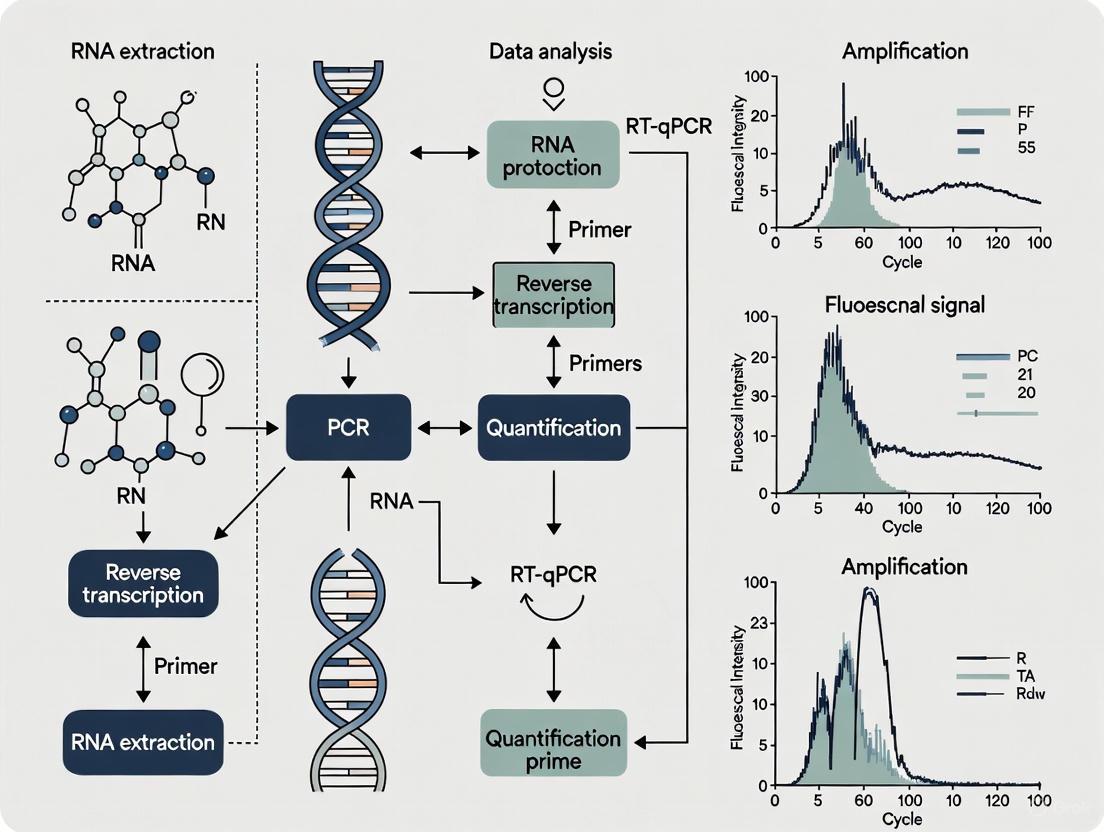
This article provides a complete guide for researchers validating RNA-seq data using Reverse Transcription Quantitative PCR (RT-qPCR).
A Comprehensive RT-qPCR Protocol for Accurate Transcriptome Validation: From RNA-Seq to Reliable Gene Expression Analysis
Abstract
This article provides a complete guide for researchers validating RNA-seq data using Reverse Transcription Quantitative PCR (RT-qPCR). It covers the foundational principles of selecting stable reference genes from transcriptomic datasets, details a step-by-step methodological protocol from sample collection to data analysis, addresses common troubleshooting and optimization challenges, and presents rigorous validation and comparative analysis frameworks. Tailored for scientists and drug development professionals, this resource emphasizes the critical importance of proper experimental design and validation to ensure the accuracy and reproducibility of gene expression data in biomedical research.
Laying the Groundwork: Principles of RT-qPCR and Reference Gene Selection for Transcriptome Validation
The Critical Role of RT-qPCR as the Gold Standard for RNA-seq Validation
RNA sequencing (RNA-seq) has become the predominant method for whole-transcriptome gene expression quantification, offering an unbiased view of the ensemble of transcripts in a biological sample [1]. However, this powerful technology faces significant challenges in accuracy and reliability, creating an essential role for reverse transcription quantitative PCR (RT-qPCR) as the gold standard for validation. The precision of RT-qPCR, with its exceptional sensitivity, specificity, and broad dynamic range, makes it an indispensable tool for verifying RNA-seq findings [2] [1]. While RNA-seq provides a comprehensive landscape of gene expression, its results can be influenced by various technical factors including alignment errors near splice junctions, interpretation of RNA editing sites as variants, and non-uniform read depth due to variable gene expression levels [3]. These limitations necessitate rigorous validation using RT-qPCR to ensure that molecular profiles used for clinical decision-making and biological discovery are accurate and reproducible.
The critical importance of this validation paradigm extends across multiple domains of life sciences. In clinical diagnostics and precision medicine, accurate gene expression data can determine therapeutic strategies, especially in oncology where RNA-seq may identify expressed mutations with direct clinical relevance [3]. In plant biology and agricultural research, reliable gene expression analysis underpins the study of stress responses, development, and trait formation [4] [5]. The integration of these two technologies represents a robust framework for generating trustworthy transcriptomic data, with RT-qPCR serving as the final arbiter of gene expression measurements.
Establishing the Gold Standard: Technical Comparison of RNA-seq and RT-qPCR
Performance Benchmarking and Correlation Studies
Independent benchmarking studies have systematically evaluated the performance of various RNA-seq workflows against whole-transcriptome RT-qPCR data. In one comprehensive analysis comparing five popular RNA-seq processing workflows (Tophat-HTSeq, Tophat-Cufflinks, STAR-HTSeq, Kallisto, and Salmon) with RT-qPCR data for 18,080 protein-coding genes, all methods showed high gene expression correlations with qPCR data, with Pearson correlation values ranging from R² = 0.798 to 0.845 [1]. When comparing gene expression fold changes between reference samples, approximately 85% of genes showed consistent results between RNA-seq and qPCR data, indicating substantial but incomplete concordance between the technologies.
A critical finding from these benchmarking efforts is the identification of systematic discrepancies that affect specific gene sets. Each RNA-seq workflow revealed a small but specific set of genes with inconsistent expression measurements between RNA-seq and RT-qPCR [1]. These method-specific inconsistent genes were characterized by significantly lower expression levels, smaller size, and fewer exons compared to genes with consistent expression measurements. This pattern suggests that careful validation is particularly warranted when evaluating RNA-seq based expression profiles for this specific gene set.
Table 1: Performance Comparison of RNA-seq Workflows Against RT-qPCR Gold Standard
| RNA-seq Workflow | Expression Correlation (R² with qPCR) | Fold Change Correlation (R² with qPCR) | Fraction of Non-concordant Genes |
|---|---|---|---|
| Salmon | 0.845 | 0.929 | 19.4% |
| Kallisto | 0.839 | 0.930 | 17.2% |
| Tophat-Cufflinks | 0.798 | 0.927 | 18.9% |
| Tophat-HTSeq | 0.827 | 0.934 | 15.1% |
| STAR-HTSeq | 0.821 | 0.933 | 15.8% |
Advantages and Limitations of Each Technology
The complementary strengths and weaknesses of RNA-seq and RT-qPCR create a powerful synergy when used together. RNA-seq provides an unbiased, genome-wide view of transcription without requiring prior knowledge of transcript sequences, enabling discovery of novel transcripts, alternative splicing events, and fusion genes [1] [3]. However, it faces challenges in accurately quantifying low-abundance transcripts and can be affected by various technical artifacts including alignment errors, especially near splice junctions [3].
RT-qPCR offers superior sensitivity, with the ability to detect very low abundance transcripts, and provides absolute quantification capabilities when properly standardized [2] [6]. Its established protocols, lower equipment costs, and minimal bioinformatics requirements make it accessible to most molecular biology laboratories. The limitations of RT-qPCR include its low-throughput nature and dependence on pre-selected targets, preventing discovery of novel transcripts [5]. This technological complementarity establishes the foundation for their synergistic use in comprehensive transcriptome analysis.
Optimized RT-qPCR Protocol for RNA-seq Validation
Primer Design and Specificity Considerations
Robust RT-qPCR validation begins with meticulous primer design that accounts for sequence similarities between homologous genes, which is particularly important in plant genomes with high rates of gene duplication [4]. Computational tool-assisted primer design largely ignores these sequence similarities, potentially creating false confidence in primer quality. An optimized approach should be based on single-nucleotide polymorphisms (SNPs) present in all homologous sequences for each reference and target gene under study [4].
The SYBR Green DNA polymerase can differentiate SNPs in the last one or two nucleotides at the 3'-end of each primer between homologous sequences, but this requires optimized qPCR conditions [4]. Prime design considerations should include:
- Target Specificity: Primers should be designed to span exon-exon junctions where possible to minimize genomic DNA amplification.
- GC Content: Maintain GC content between 40-60% for optimal hybridization.
- Amplicon Length: Ideal amplicon length for qPCR is 85-125 base pairs.
- Melting Temperature: Primers should have Tm between 58-62°C, with less than 2°C difference between forward and reverse primers.
Table 2: Essential Components for RT-qPCR Reaction Setup
| Component | Optimal Concentration | Function | Notes |
|---|---|---|---|
| PCR Buffer | 1X | Provides optimal chemical environment | Varies by manufacturer; optimization needed [6] |
| MgCl₂ | 2-4 mM | Cofactor for polymerase activity | Concentration affects specificity and yield [6] |
| Primers | 200-400 nM each | Target sequence recognition | Sequence-specific based on SNPs in homologous genes [4] |
| dNTPs | 200 µM each | Nucleotide substrates | Included in most commercial master mixes |
| DNA Polymerase | 0.05-0.1 U/µL | DNA amplification | Hot-start enzymes recommended for specificity [6] |
| Reverse Transcriptase | 0.2 U/µL | cDNA synthesis | Critical for 1-step RT-qPCR protocols [6] |
| RNase Inhibitor | 1 U/µL | Prevents RNA degradation | Essential for maintaining RNA integrity [6] |
| Fluorescent Dye | 1X | Detection of amplified products | SYBR Green or sequence-specific probes |
Stepwise Optimization of qPCR Parameters
Achieving optimal RT-qPCR performance requires systematic optimization of several key parameters. The stepwise optimization should proceed as follows [4] [6]:
Annealing Temperature Optimization: Test a temperature gradient (typically 55-65°C) to identify the temperature that provides the lowest Cq value and highest fluorescence signal without non-specific amplification.
Primer Concentration Titration: Evaluate primer concentrations from 50-500 nM to determine the concentration that provides optimal amplification efficiency without primer-dimer formation.
cDNA Concentration Range Testing: Validate that amplification efficiency remains consistent across a dilution series of cDNA (typically 5-6 log dilutions) to ensure the reaction is robust against varying template concentrations.
Buffer System Selection: Test different PCR buffer formulations to identify the system that provides the best efficiency and specificity for your target [6].
The optimal reaction conditions should yield an R² ≥ 0.9999 for the standard curve and amplification efficiency (E) = 100 ± 5%, which serves as the prerequisite for using the 2−ΔΔCt method for data analysis [4]. The PCR Optimization Kit (Promega) provides a series of pre-formulated buffers (A-H) that can be used to systematically determine optimal amplification conditions for challenging targets [6].
Reference Gene Selection for Accurate Normalization
Transcriptome-Based Selection of Stable Reference Genes
The accuracy of RT-qPCR quantification is highly dependent on normalization against reliable reference genes to reduce the impact of technical noise and variation in sample preparation [5]. Traditional housekeeping genes (HKGs) such as β-actin, GAPDH, ubiquitin, and ribosomal proteins were historically used based on the assumption of stable expression, but numerous studies have demonstrated that these genes can exhibit surprisingly high expression variance across different tissues, developmental stages, and experimental conditions [7] [5] [8].
RNA-seq data provides a powerful resource for identifying optimal reference genes specifically suited to the experimental system under investigation. The Gene Selector for Validation (GSV) software enables systematic identification of reference genes from RNA-seq data based on established criteria [7]:
- Expression Threshold: Expression greater than zero in all libraries analyzed (TPM > 0 across all samples)
- Low Variability: Standard variation of log₂(TPM) < 1 across samples
- Consistent Expression: No exceptional expression in any library (within 2-fold of average log₂ expression)
- High Expression Level: Average log₂(TPM) > 5
- Low Coefficient of Variation: CV < 0.2
This methodology was successfully applied to identify context-specific reference genes in Aedes aegypti, where traditional mosquito reference genes were found to be less stable than newly identified candidates in the analyzed samples [7].
Novel Approaches to Reference Gene Selection
Recent research has revealed that a stable combination of non-stable genes can outperform standard reference genes for RT-qPCR data normalization [8]. This approach involves finding a fixed number of genes whose individual expressions balance each other across all experimental conditions of interest, even if the individual genes themselves are not stable when considered alone.
The gene combination method utilizes RNA-seq datasets to identify an optimal set of k genes (typically k=3) through a two-step process [8]:
Candidate Pool Selection: Calculate the mean expression of the target gene and extract the pool of N genes (e.g., N=500) with the smallest mean expressions greater than or equal to the target gene mean expression.
Optimal Combination Identification: Calculate all geometric and arithmetic profiles of k genes and select the optimal set with a geometric mean expression greater than or equal to the target gene mean expression and the lowest variance among all arithmetic k-genes.
This innovative approach demonstrates that the traditional pursuit of individually stable reference genes may be less effective than identifying complementary gene combinations that collectively provide stable normalization factors.
Table 3: Comparison of Reference Gene Selection Methods
| Selection Method | Principle | Advantages | Limitations |
|---|---|---|---|
| Traditional Housekeeping Genes | Use genes involved in basic cellular functions | Simple, well-established | Often show unexpected variability; not optimal for all conditions [5] |
| RNA-seq Based Stable Genes | Mine RNA-seq data for genes with low expression variation | Context-specific; data-driven | Requires RNA-seq data; stability depends on analyzed conditions [7] [5] |
| Gene Combination Method | Find genes whose expressions balance each other | Can outperform stable genes; robust normalization | More complex identification process; requires comprehensive transcriptome data [8] |
Data Analysis and Statistical Considerations
Mathematical Models for Relative Quantification
The accurate analysis of RT-qPCR data requires appropriate mathematical models that account for variations in amplification efficiency. Two primary methods are commonly used for relative quantification of gene expression:
The Livak Method (2−ΔΔCT Method): This approach calculates fold change expression using the formula: FC = 2^-(ΔCTtreatment - ΔCTcontrol) where ΔCT = CTtarget - CTreference [2]. This method assumes that both target and reference genes are amplified with efficiencies close to 100%.
The Pfaffl Method: This more flexible approach accounts for differences in amplification efficiencies between target and reference genes using the formula: FC = (Etarget)^-(CTtreatment - CTcontrol) / (Ereference)^-(CTtreatment - CTcontrol) where E represents amplification efficiency [2]. This method provides more accurate quantification when amplification efficiencies differ from 100%.
The rtpcr package in R provides a comprehensive implementation of these methods, accommodating up to two reference genes and amplification efficiency values while providing statistical analysis capabilities including t-tests, ANOVA, or ANCOVA depending on the experimental design [2].
Validation of RNA-seq Findings through RT-qPCR
When validating RNA-seq results with RT-qPCR, the analytical approach should include:
Correlation Analysis: Calculate Pearson correlation coefficients between RNA-seq normalized counts (e.g., TPM) and RT-qPCR Cq values for concordant genes.
Fold Change Consistency: Assess the agreement in fold change measurements between conditions for differentially expressed genes identified by RNA-seq.
Outlier Identification: Identify genes with significant discrepancies between RNA-seq and RT-qPCR measurements for further investigation.
Technical Validation: Include positive controls, no-template controls, and efficiency measurements in every RT-qPCR run to ensure data quality.
Studies have shown that while overall correlation between RNA-seq and RT-qPCR is generally high, a subset of genes (approximately 15%) may show inconsistent results between the platforms, necessitating careful validation of key findings [1].
Implementation in Research and Diagnostic Applications
Application in Precision Medicine
In clinical diagnostics and precision medicine, the combination of RNA-seq and RT-qPCR validation has proven particularly valuable for strengthening mutation detection and interpretation. RNA-seq can bridge the "DNA to protein divide" by confirming that DNA mutations are actually expressed at the RNA level, providing critical information for therapeutic decision-making [3].
Targeted RNA-seq panels have been developed specifically for detecting expressed variants in clinical oncology. For example, the Afirma Xpression Atlas (XA) panel includes 593 genes covering 905 variants and has demonstrated that some DNA variants are poorly detected in traditional bulk RNA-seq due to low expression of the mutated transcript [3]. RT-qPCR serves as an essential orthogonal method to validate these findings, particularly for variants with potential clinical significance.
The integration approach follows two primary scenarios:
RNA-seq to Verify DNA Variants: When DNA sequencing is available, RNA-seq can be employed to verify and prioritize detected variants based on their expression, with RT-qPCR providing final validation of key findings.
Independent RNA Variant Detection: When DNA sequencing is not available, RNA-seq can independently detect variants, with stringent false positive controls and RT-qPCR confirmation of clinically actionable mutations.
Protocol Recommendations for Robust Validation
Based on current evidence and best practices, the following protocol is recommended for RT-qPCR validation of RNA-seq results:
Sample Selection: Use the same RNA samples for both RNA-seq and RT-qPCR when possible to minimize biological variation.
Gene Selection: Include both stable reference genes identified through RNA-seq analysis and target genes of interest representing different expression levels.
Experimental Design: Incorporate sufficient biological replicates (minimum n=3, preferably n=5-6) to ensure statistical power.
Quality Control: Verify RNA quality (RIN > 8.0), cDNA synthesis efficiency, and amplification specificity through melt curve analysis.
Data Analysis: Use efficiency-corrected quantification methods (Pfaffl method) when amplification efficiencies differ from 100%, and include statistical analysis of results.
Reporting: Adhere to MIQE guidelines when publishing results to ensure experimental transparency and reproducibility.
This comprehensive approach to RT-qPCR validation ensures that RNA-seq findings are robust, reproducible, and suitable for informing biological conclusions and clinical decisions.
Reverse transcription quantitative real-time polymerase chain reaction (RT-qPCR) is an accurate and convenient method for quantifying mRNA levels in gene expression analysis [9]. However, a crucial step for obtaining valid results is the normalization of data against stably expressed reference genes [9]. The use of inappropriate reference genes can lead to inaccurate and misleading results, potentially invalidating experimental conclusions [9]. Historically, researchers have relied on so-called "housekeeping genes" like ACT (actin), GAPDH, and 18S rRNA under the assumption that their expression is constant across all cell types and conditions [9]. However, a growing body of evidence demonstrates that the expression of these traditional reference genes can vary significantly under different experimental conditions, tissues, and treatments [9] [10]. This application note outlines a robust, data-driven protocol for the selection and validation of reference genes, moving beyond conventional assumptions to ensure reliable RT-qPCR normalization in transcriptome validation research.
Comprehensive Evaluation of Candidate Reference Genes
Selection of Candidate Genes
The first step in a data-driven approach is the selection of a diverse panel of candidate reference genes. This panel should extend beyond the traditionally used genes to include others that have demonstrated stability in various plant species [9]. The table below summarizes a set of ten candidate genes recommended for initial evaluation.
Table 1: Candidate Reference Genes for Evaluation
| Gene Symbol | Gene Name | Primary Function |
|---|---|---|
| 18S rRNA | 18S Ribosomal RNA | Structural component of the ribosome [9] |
| ACT | Actin | Cytoskeletal structural protein [9] |
| ARF | ADP-Ribosylation Factor | Regulates vesicular trafficking and cell division [9] |
| COX | Cytochrome C Oxidase Subunit | Mitochondrial electron transport chain [9] |
| CYP | Cyclophilin | Protein folding (peptidyl-prolyl cis-trans isomerase activity) [9] [10] |
| EF1α | Elongation Factor 1-alpha | Protein synthesis [9] |
| GAPDH | Glyceraldehyde-3-Phosphate Dehydrogenase | Glycolytic enzyme [9] |
| H3 | Histone H3 | Chromatin structure and DNA packaging [9] |
| RPL2 | 50S Ribosomal Protein L2 | Ribosomal subunit component [9] |
| TUBα | Tubulin Alpha Chain | Cytoskeletal structural protein [9] |
Key Considerations for Gene Selection
- Biological Function: Prefer genes involved in core cellular processes that are less likely to be regulated by experimental perturbations, such as basic transcription or translation. However, avoid genes whose functions are directly related to the treatment being studied.
- Expression Abundance: Select candidates with expression levels (quantification cycle, Cq) relatively close to those of your target genes. The average Cq values for stable genes can vary; for instance, in sweet potato, IbACT, IbCYC, and IbGAP showed high abundance (Cq ~18-20), whereas IbCOX was lowly expressed (Cq ~29-31) [11].
- Independent Evidence: Consult RNA-seq data or previous literature from your organism or closely related species to identify genes with low expression variance.
Experimental Protocol for Reference Gene Validation
Sample Collection and RNA Isolation
- Plant Materials and Growth: Grow plants under controlled environmental conditions. For stress treatments, apply the specific stressor (e.g., heat at 37°C, 200 μmol/L CdCl₂, 200 mmol/L NaCl) to fifty-day-old seedlings with uniform growth and collect tissue samples (e.g., roots, leaves) at multiple time points (e.g., 0, 1, 2, 4, 6, 8, 12, 24, 48 hours) [9]. Include samples from different organs (roots, stems, leaves, flowers) for developmental studies [9].
- RNA Isolation: Homogenize flash-frozen tissue in liquid nitrogen. Isolate total RNA using a standardized method, such as TRIzol LS Reagent [9].
- RNA Quality Control: Assess RNA purity by ensuring the A260/A280 ratio is between 1.8 and 2.1. Verify RNA integrity by electrophoresis on a 1% agarose gel, which should show sharp, distinct ribosomal RNA bands (18S and 28S) without smearing [9] [10].
cDNA Synthesis and RT-qPCR
- cDNA Synthesis: Synthesize first-strand cDNA from 1 μg of total RNA using a reverse transcription kit that employs a mixture of oligo dT and random hexamer primers to ensure comprehensive representation of transcripts [9].
- Primer Design and Validation: Design primers with the following criteria:
- qPCR Amplification: Perform reactions in a 20 μL total volume using a SYBR Green-based master mix. Use a standardized cDNA template amount (e.g., 100 ng equivalent per reaction) to maintain Cq values within an optimal range (e.g., 15-35 cycles) [9] [12]. Use the following thermal cycling conditions as a starting point: initial denaturation at 95°C for 3 minutes, followed by 40 cycles of 95°C for 10s, 60°C for 15s, and 72°C for 20s [12].
Data Analysis and Stability Evaluation
- Data Collection: Record the quantification cycle (Cq) for each reaction.
- Stability Analysis with Algorithms: Analyze the Cq data using multiple specialized algorithms to rank the candidate genes by their expression stability. The following workflow outlines this process and the interpretation of results.
Diagram 1: Workflow for reference gene stability analysis.
- geNorm: Calculates a stability measure (M) for each gene through pairwise comparison. Lower M values indicate greater stability. The software also determines the optimal number of reference genes by calculating the pairwise variation (Vn/Vn+1) between sequential normalization factors; a value below 0.15 suggests that 'n' genes are sufficient [10].
- NormFinder: A model-based approach that estimates intra- and inter-group variation, providing a stability value. Genes with lower stability values are more stable [10].
- BestKeeper: Relies on pairwise correlation analysis to determine the optimal reference genes. It can also calculate a normalization factor based on the geometric mean of the best candidates [9].
- Delta-Ct Method: Compares the relative expression of pairs of genes within each sample to rank stability [10].
- RefFinder: This web-based tool aggregates the results from geNorm, NormFinder, BestKeeper, and the Delta-Ct method. It calculates a geometric mean of their ranking scores to provide a comprehensive final ranking, offering a robust consensus on the most stable genes [11].
Case Studies and Data Presentation
Stability Rankings in Different Experimental Conditions
The stability of candidate genes is highly context-dependent. The following tables compile quantitative stability rankings from independent studies, demonstrating that the optimal reference gene varies significantly with the experimental condition.
Table 2: Top Stable Reference Genes Across Different Plant Species and Conditions
| Species | Experimental Condition | Top 3 Most Stable Reference Genes | Least Stable Reference Gene(s) | Source Study |
|---|---|---|---|---|
| Spinach (Spinacia oleracea) | Different Organs & Multiple Abiotic Stresses | 18S rRNA, Actin, ARF, COX, CYP, EF1α, GAPDH, H3, RPL2 | TUBα | [9] |
| Sweet Potato (Ipomoea batatas) | Different Tissues (Normal Conditions) | IbACT, IbARF, IbCYC | IbGAP, IbRPL, IbCOX | [11] |
| Dalbergia odorifera | Different Tissues | HIS2, UBQ, RPL | DNAj | [10] |
| Dalbergia odorifera | Wound Treatments | HIS2, GAPDH, CYP | DNAj | [10] |
Validation of Selected Reference Genes
The ultimate test for selected reference genes is their performance in normalizing the expression of target genes. This is often done by comparing the expression profile of a well-characterized target gene when normalized with a stable versus an unstable reference gene.
- Select Target Genes: Choose two or more target genes with known or expected expression patterns under your experimental conditions (e.g., heat-responsive genes like SobZIP9 and SoHSFB2b) [9].
- Normalize with Different References: Calculate the relative expression of the target genes using the 2^(-ΔΔCq) method, normalizing with:
- The most stable reference gene(s) identified in your analysis.
- A less stable or traditional reference gene.
- Compare Expression Profiles: Plot the normalized expression patterns. Reliable normalization with stable genes should yield a biologically coherent and reproducible expression profile, whereas unstable references may introduce noise or obscure the true expression pattern [9].
Diagram 2: Impact of reference gene choice on data interpretation.
The Scientist's Toolkit: Research Reagent Solutions
Table 3: Essential Reagents and Tools for Reference Gene Validation
| Item | Function / Purpose | Example Product / Specification |
|---|---|---|
| RNA Isolation Reagent | Extracts intact total RNA from tissue samples. | TRIzol LS Reagent [9] |
| Reverse Transcription Kit | Synthesizes first-strand cDNA from RNA templates. | Kits with mix of oligo dT and random hexamers [9] |
| SYBR Green qPCR Master Mix | Provides components for sensitive DNA detection during qPCR amplification. | SYBR Fast Universal qPCR kit [12] |
| Quality Control Instrument | Assesses RNA concentration and purity. | Nanodrop Spectrophotometer (A260/A280 ratio 1.8-2.1) [9] [12] |
| qPCR Thermal Cycler | Instrument for amplifying and quantifying DNA in real-time. | CFX Connect system (Bio-Rad) [12] |
| Stability Analysis Algorithms | Software tools to statistically rank candidate reference gene stability. | geNorm, NormFinder, BestKeeper [9] |
| Comprehensive Ranking Tool | Web-based tool to integrate results from multiple algorithms for a consensus ranking. | RefFinder [11] |
Rigorous selection and validation of reference genes are non-negotiable steps for credible RT-qPCR gene expression analysis. As demonstrated, the stability of these genes cannot be assumed based on tradition alone but must be empirically determined for each specific experimental system. By implementing the data-driven protocol outlined in this application note—encompassing careful candidate selection, robust experimental design, and analysis with multiple algorithmic tools—researchers can confidently identify the most stable reference genes. This approach ensures the accuracy and reliability of their data, forming a solid foundation for valid conclusions in transcriptome validation and functional genomics research.
Leveraging RNA-seq Data to Identify Stable Candidate Reference Genes
The accuracy of reverse transcription quantitative PCR (RT-qPCR), a gold standard technique for gene expression validation, is critically dependent on reliable normalization using stably expressed reference genes. Traditionally, such genes were selected from a small set of presumed "housekeeping" genes. However, with the advent of high-throughput sequencing, RNA-seq data has become a powerful resource for identifying novel, stably expressed candidates in a more systematic and unbiased manner. This protocol details how to leverage transcriptomic datasets to select and validate superior reference genes for RT-qPCR, thereby enhancing the rigor and reproducibility of transcriptome validation studies.
Computational Selection of Candidates from RNA-seq Data
The initial step involves computationally mining RNA-seq data to identify genes with low expression variance across conditions that mirror the planned RT-qPCR study.
Core Principles and Criteria for Selection
The primary goal is to filter the transcriptome for genes that are both stably expressed and abundant enough to be reliably detected by RT-qPCR. The following criteria, implemented through tools like the Gene Selector for Validation (GSV) software, are commonly applied to Transcripts Per Million (TPM) values [7].
- Stable and High Expression: Genes must be expressed (TPM > 0) in all analyzed libraries or conditions [7].
- Low Variability: A standard deviation of log2(TPM) of less than 1 is a typical threshold for stability [7].
- No Outlier Expression: The log2(TPM) in any single library should not deviate from the mean by more than a factor of two [7].
- Sufficient Abundance: An average log2(TPM) above 5 ensures the gene is expressed at a level easily amenable to RT-qPCR detection [7].
- Low Coefficient of Variation (CV): A CV of less than 0.2 further confirms consistent expression relative to the mean [7].
An alternative approach, termed the "gene combination method," identifies a set of k genes whose expression levels geometrically balance each other across conditions, even if the individual genes are not perfectly stable. This combination can outperform single-gene references [8].
Workflow for Candidate Gene Selection
The process from raw RNA-seq data to a shortlist of candidate genes can be automated but generally follows a logical pipeline.
Table 1: Key Software Tools for RNA-seq Based Reference Gene Selection
| Tool Name | Primary Function | Key Feature | Reference |
|---|---|---|---|
| GSV (Gene Selector for Validation) | Identifies reference and variable candidate genes from RNA-seq TPM data. | Applies a multi-step filter for stability and expression level; user-friendly interface. | [7] |
| RefGenes (via Genevestigator) | Mines gene expression databases (microarray/RNA-seq) for stable genes. | Identifies genes with the lowest variance (LVG) across a wide range of conditions. | [8] |
| Custom Scripts (R/Python) | Implement stability metrics (CV, fold-change) on count or TPM data. | Offers flexibility to implement published methodologies like the CV method. | [5] [13] |
Experimental Validation of Candidate Genes
Genes selected in silico must be empirically validated using RT-qPCR under specific experimental conditions.
Sample Preparation and RT-qPCR
Samples for validation should encompass the full range of biological conditions (e.g., tissues, treatments, developmental stages) relevant to the future research [13] [14].
- RNA Extraction and QC: Isolate high-quality total RNA using standardized kits. Assess RNA integrity (RIN ≥ 8 is recommended) and purity (A260/A280 ratio of ~2.0) using instruments like an Agilent Bioanalyzer [15] [16].
- cDNA Synthesis: Perform reverse transcription with a robust kit (e.g., PrimeScript RT with gDNA Eraser) to ensure complete genomic DNA removal and high-efficiency cDNA synthesis [14] [16].
- qPCR Amplification: Run qPCR reactions in technical replicates using a intercalating dye chemistry on a calibrated instrument. Primers must be designed for high amplification efficiency (90–110%) and specificity, confirmed by melt curve analysis and Sanger sequencing [16].
Stability Analysis Using Statistical Algorithms
The expression stability of candidate genes is ranked by analyzing the quantitative cycle (Cq) values using multiple algorithms, often consolidated by a tool like RefFinder [11] [14] [16].
Table 2: Common Algorithms for Reference Gene Validation from RT-qPCR Data
| Algorithm | Core Principle | Output |
|---|---|---|
| geNorm | Determines the pairwise variation (M-value) between all candidate genes. A lower M-value indicates greater stability. Also suggests the optimal number of reference genes. | Stability Ranking (M-value) |
| NormFinder | Uses a model-based approach to estimate intra- and inter-group variation. Robust against co-regulation of genes. | Stability Value |
| BestKeeper | Utilizes raw Cq values to calculate the standard deviation (SD) and coefficient of variance (CV). Genes with low SD and CV are most stable. | SD & CV |
| ΔCt Method | Compares relative expression of pairs of genes within each sample. Stable genes have minimal variation in ΔCt across samples. | Stability Ranking |
| RefFinder | A comprehensive tool that integrates the results from geNorm, NormFinder, BestKeeper, and the ΔCt method to provide a overall final ranking. | Comprehensive Ranking |
The following workflow outlines the complete journey from computational selection to final validation.
The Scientist's Toolkit: Essential Reagents and Materials
Table 3: Key Research Reagent Solutions for Reference Gene Validation
| Category / Item | Specific Example | Function / Rationale |
|---|---|---|
| RNA Extraction | Plant Total RNA Extraction Kit (TaKaRa); TRIzol reagent | High-quality, intact RNA is the foundational starting material for both RNA-seq and RT-qPCR. |
| cDNA Synthesis | PrimeScript RT reagent Kit with gDNA Eraser (TaKaRa) | Ensures efficient reverse transcription while removing contaminating genomic DNA to prevent false positives. |
| qPCR Master Mix | TB Green Premix Ex Taq (TaKaRa) | A ready-to-use mix containing DNA polymerase, dNTPs, buffer, and dye for robust and sensitive qPCR amplification. |
| Stability Analysis Software | RefFinder (online tool) | Integrates four common algorithms to provide a consensus ranking of candidate gene stability. |
| RNA Quality Control | Agilent 2100 Bioanalyzer | Provides an RNA Integrity Number (RIN) to objectively assess RNA quality, which is critical for data reliability. |
Case Studies and Application
This methodology has been successfully applied across diverse species, demonstrating its broad utility.
- Apple Roots: Researchers selected 15 candidate genes from an apple root RNA-seq dataset. Subsequent RT-qPCR validation under various abiotic and biotic stresses identified a panel of five optimal reference genes (e.g., MDP0000095375) for normalizing gene expression in apple roots [13].
- Alfalfa under Abiotic Stress: Mining 162 public RNA-seq datasets, scientists identified candidate genes whose stability was validated under drought, alkali, and temperature stresses. The study found that traditional genes like GAPDH and Actin were not the most stable, highlighting the need for condition-specific validation [14].
- Tomato: A study demonstrated that a stable combination of three genes identified from the TomExpress RNA-seq database outperformed commonly used single housekeeping genes for normalization accuracy [8].
Leveraging RNA-seq data provides a powerful, unbiased strategy for selecting candidate reference genes, moving beyond traditionally used housekeeping genes that may vary under specific experimental conditions. This protocol outlines a robust workflow, from in silico mining of transcriptomic data to rigorous experimental validation using RT-qPCR and statistical algorithms. Adopting this comprehensive approach ensures the identification of reliable reference genes, which is a critical prerequisite for obtaining accurate and biologically meaningful gene expression data in transcriptome validation research.
Reverse Transcription Quantitative Polymerase Chain Reaction (RT-qPCR) is a cornerstone technology in molecular biology for quantifying gene expression. Its accuracy in transcriptome validation research is highly dependent on three fundamental parameters: the Quantification Cycle (Cq), amplification efficiency, and the expression stability of reference genes. Misinterpretation of any of these parameters can lead to vastly inaccurate conclusions, with errors in calculated gene expression ratios potentially exceeding 100-fold [17]. This Application Note provides detailed methodologies and structured data to guide researchers in properly determining, analyzing, and validating these critical parameters within the context of a comprehensive RT-qPCR protocol for transcriptome validation.
Core Parameter Definitions and Mathematical Relationships
The Quantification Cycle (Cq)
The Cq value represents the PCR cycle number at which the fluorescence of the amplified product crosses a predetermined threshold, indicating a detectable level of amplification. The fundamental relationship between Cq and the starting concentration of the target is described by the equation:
Nq = N0 × E^Cq [17]
Where:
- Nq is the number of amplicons at the quantification threshold
- N0 is the initial number of target molecules
- E is the amplification efficiency (ranging from 1 to 2)
- Cq is the quantification cycle
This equation shows that Cq is inversely proportional to the logarithm of the initial target concentration. Consequently, a one-unit difference in Cq values corresponds to an E-fold difference in initial target concentration [17].
Amplification Efficiency
PCR efficiency (E) is defined as the fraction of target molecules that are duplicated in each amplification cycle. An efficiency of 1.0 (or 100%) represents perfect doubling, where the number of amplicons doubles each cycle. Efficiencies typically range between 0.9 and 1.1 (90-110%) for a well-optimized assay [18] [19].
Table 1: Impact of PCR Efficiency on Quantification
| Efficiency (E) | Slope of Standard Curve | ΔCq for 10-fold Dilution | Impact on Quantification |
|---|---|---|---|
| 2.00 (100%) | -3.32 | 3.32 | Ideal, accurate quantification |
| 1.90 (90%) | -3.49 | 3.49 | 8.2-fold error at Ct=20 [18] |
| 2.20 (110%) | -3.10 | 3.10 | Over-estimation of quantity |
| 1.80 (80%) | -3.59 | 3.59 | Under-estimation of quantity |
Expression Stability of Reference Genes
Reference genes, used for normalization of target gene expression, must demonstrate stable expression across all experimental conditions. The stability of these genes is not universal and must be empirically validated for each experimental system [20] [21]. Normalization with inappropriate reference genes can severely compromise data interpretation, as their expression variation can be mistakenly attributed to the target gene.
Experimental Protocols for Parameter Assessment
Protocol 1: Determining Amplification Efficiency
Principle: Amplification efficiency is calculated from a dilution series of the target template, establishing the relationship between Cq values and initial template concentration.
Procedure:
- Template Dilution: Prepare a minimum 5-point serial dilution (e.g., 1:5 or 1:10) of a cDNA sample or synthetic template with known concentration.
- qPCR Amplification: Run the dilution series in duplicate or triplicate using the same qPCR conditions as experimental samples.
- Standard Curve Generation: Plot Cq values against the logarithm of the initial template concentration for each dilution point.
- Efficiency Calculation: Calculate the slope of the standard curve and determine efficiency using the formula: E = 10^(-1/slope) [18]
- Validation: An ideal assay has R² ≥ 0.99 and efficiency between 90-110% [4].
Troubleshooting:
- Efficiency >110%: Often indicates polymerase inhibition in concentrated samples or pipetting errors [19].
- Efficiency <90%: Suggests suboptimal primer design, reagent limitations, or inhibitory substances [18].
- Low R² value: Indicates poor technical replication or inaccurate dilution series.
Protocol 2: Validation of Reference Gene Stability
Principle: Multiple candidate reference genes are evaluated across all experimental conditions using specialized algorithms to identify the most stably expressed genes.
Procedure:
- Candidate Gene Selection: Select 8-10 candidate reference genes from literature or transcriptome data. Traditional housekeeping genes (e.g., ACT, GAPDH, EF1α) may be included, but should not be assumed stable [22] [21].
- Experimental Design: Include cDNA samples representing all experimental conditions, tissues, and time points in the analysis.
- qPCR Analysis: Amplify all candidate genes across all samples in the same run to minimize technical variation.
- Stability Analysis: Analyze Cq values using at least two of the following algorithms:
- geNorm: Determines the average expression stability (M) and calculates the pairwise variation to determine the optimal number of reference genes [22].
- NormFinder: Estimates intra- and inter-group variation and provides a stability value [9].
- BestKeeper: Assesses variation based on standard deviation of Cq values [9].
- Gene Selection: Select the 2-3 most stable genes for normalization. The geometric mean of these genes provides a robust normalization factor [23].
Table 2: Commonly Used Reference Genes and Their Stability in Different Studies
| Gene Symbol | Gene Name | Reported Stability | Organism | Experimental Conditions |
|---|---|---|---|---|
| TIP41 | TIP41-like family protein | Most stable [22] | Tomato | Ralstonia solanacearum interaction |
| UBI3 | Ubiquitin 3 | Most stable [22] | Tomato | Ralstonia solanacearum interaction |
| EF1α | Elongation factor 1-alpha | Variable stability [22] [21] | Multiple plants | Pathogen interactions |
| ACT | Actin | Variable stability [22] [9] | Multiple plants | Various stresses |
| NbUbe35 | Ubiquitin-conjugating enzyme | Most stable [21] | N. benthamiana | Pseudomonas infiltration |
| NbNQO | NAD(P)H dehydrogenase | Most stable [21] | N. benthamiana | Pseudomonas infiltration |
| 18S rRNA | 18S ribosomal RNA | Commonly used but requires validation [9] | Multiple plants | Various conditions |
Protocol 3: Sequence-Specific Primer Design and Validation
Principle: Robust primer design must account for homologous gene sequences to ensure target specificity, particularly in complex plant genomes.
Procedure:
- Sequence Compilation: Identify all homologous sequences for the target gene from genomic or transcriptomic databases.
- Multiple Sequence Alignment: Align homologous sequences to identify single-nucleotide polymorphisms (SNPs) that differentiate the target from other family members.
- Primer Design: Design primers such that the 3' ends span unique SNPs specific to the target gene. This ensures specificity during amplification [4].
- Validation: Verify primer specificity through:
- Melt curve analysis (single peak indicates specific product)
- Gel electrophoresis (single band of expected size)
- Sequencing of PCR products
- Efficiency Determination: Perform dilution series as in Protocol 1 to confirm optimal efficiency.
Data Analysis and Normalization Methods
The ΔΔCt Method and Its Proper Application
The ΔΔCt method provides a simplified approach for relative quantification but requires strict validation of its underlying assumptions:
Standard ΔΔCt Equation: Relative Quantity = 2^(-ΔΔCt) [18]
Critical Assumptions:
- The amplification efficiencies of both target and reference genes must be approximately equal and close to 100%.
- The efficiency must be consistent across all samples and experimental conditions.
Modified ΔΔCt for Variable Efficiencies: When target and reference genes have different efficiencies, use the modified equation: Uncalibrated Quantity = (Etarget^(-Cttarget))/(Enorm^(-Ctnorm)) [18]
Where Etarget and Enorm are the efficiencies of the target and normalizer genes, respectively.
Advanced Normalization Using Multiple Reference Genes
The geometric mean of multiple validated reference genes provides superior normalization compared to single reference genes. Recent approaches such as InterOpt further improve quantification by using weighted aggregation of reference genes, optimizing the contribution of each reference gene to the final normalization factor [23].
The Scientist's Toolkit: Research Reagent Solutions
Table 3: Essential Reagents and Tools for RT-qPCR Quality Control
| Reagent/Tool | Function | Application Notes |
|---|---|---|
| TRIzol LS Reagent | RNA isolation from complex samples | Maintains RNA integrity; effective for plant tissues [9] |
| PrimeScript RT reagent | cDNA synthesis | Uses mixture of oligo dT and random hexamers for comprehensive coverage [9] |
| TaqMan Gene Expression Assays | Pre-validated probe-based assays | Guaranteed 100% efficiency with universal cycling conditions [18] |
| Custom TaqMan Assay Design Tool | Design of sequence-specific assays | Web-based tool for creating validated assays for novel targets [18] |
| In-house RT-qPCR mix | Cost-effective alternative to commercial kits | Customizable for specific needs; improved inhibitor resistance [24] |
| InterOpt R package | Advanced reference gene aggregation | Implements weighted geometric mean for optimal normalization [23] |
Visual Guide to RT-qPCR Workflows and Relationships
Diagram 1: Comprehensive RT-qPCR workflow for reliable gene expression analysis.
Diagram 2: Mathematical relationships governing Cq values and their implications.
Proper understanding and implementation of Cq values, amplification efficiency, and reference gene validation are non-negotiable prerequisites for robust RT-qPCR analysis in transcriptome validation research. By following the detailed protocols and considerations outlined in this Application Note, researchers can avoid common pitfalls and generate reliable, reproducible gene expression data. The integration of rigorous primer design, efficiency calculation, and multi-gene normalization provides a solid foundation for accurate transcript quantification, ensuring that biological conclusions are supported by technically sound molecular data.
Reverse Transcription-quantitative Polymerase Chain Reaction (RT-qPCR) remains the gold standard technique for validating gene expression data obtained from high-throughput transcriptomic studies such as RNA sequencing (RNA-seq) [7] [25]. Despite the ability of RNA-seq to profile the entire transcriptome, its results require confirmation through an independent method with high sensitivity, specificity, and reproducibility [7] [26]. RT-qPCR fulfills this role, offering precise quantification of transcript abundance for a subset of genes identified in discovery-phase experiments [27] [25]. The reliability of RT-qPCR data, however, depends entirely on establishing a robust workflow that begins with proper experimental design and extends through careful data analysis. This application note details a comprehensive framework for transitioning from transcriptome data to a validated RT-qPCR assay, emphasizing the critical importance of appropriate reference gene selection, optimized reagent choices, and rigorous data normalization methods to ensure accurate gene expression interpretation in diverse research and diagnostic applications [7] [26].
Bioinformatics Pipeline: From RNA-seq to Candidate Genes
Selection of Reference Genes from Transcriptome Data
The selection of stable reference genes is arguably the most critical step in ensuring accurate RT-qPCR normalization. Traditional housekeeping genes (e.g., ACTB, GAPDH) often demonstrate unexpected expression variability across different biological conditions, leading to normalization errors and data misinterpretation [7] [26]. RNA-seq datasets provide an excellent resource for identifying novel, more stable reference genes specific to the experimental system under investigation.
The "Gene Selector for Validation" (GSV) software represents a significant advancement in this process, systematically identifying optimal reference genes directly from transcriptome data [7]. This tool applies a filtering-based methodology to Transcripts Per Million (TPM) values from RNA-seq libraries, selecting genes with high and stable expression across experimental conditions while excluding stable but lowly-expressed genes that are unsuitable for RT-qPCR detection [7].
Table 1: Bioinformatics Criteria for Selecting Reference Genes from RNA-seq Data
| Criterion | Formula/Threshold | Purpose |
|---|---|---|
| Expression Presence | TPM > 0 in all libraries [7] | Ensures detectable expression in all samples |
| Low Variability | σ(log₂(TPM)) < 1 [7] | Selects genes with minimal expression fluctuation |
| Consistent Expression | |log₂(TPM) - mean(log₂TPM)| < 2 [7] | Eliminates genes with outlier expression in any condition |
| High Expression | mean(log₂TPM) > 5 [7] | Ensures easy detection above RT-qPCR assay limit |
| Low Coefficient of Variation | σ(log₂(TPM)) / mean(log₂TPM) < 0.2 [7] | Selects genes with stable expression relative to mean |
Implementation of this bioinformatics pipeline using GSV software or similar criteria enables researchers to move beyond traditionally used reference genes and identify optimal normalization candidates specific to their experimental conditions, thereby increasing data reliability [7] [26].
Selection of Variable Candidate Genes for Validation
In addition to reference genes, the same transcriptome data can identify optimal variable genes for experimental validation. These are typically the genes that show the most significant differential expression in RNA-seq analysis and are biologically relevant to the research question. The GSV software applies complementary filters for this purpose, selecting genes that show high expression (mean log₂TPM > 5) and considerable variation (σ(log₂(TPM)) > 1) between samples [7]. This ensures that selected validation targets are both biologically interesting and technically feasible for RT-qPCR detection.
Experimental Design and Protocol
Sample Preparation and RNA Handling
Proper sample preparation is fundamental to successful RT-qPCR experiments. For tissue samples, effective homogenization and immediate stabilization of RNA are critical to prevent degradation. Single-cell applications require specialized handling to maintain cell integrity and prevent RNA loss [27]. Cells should be collected directly into lysis buffers rather than undergoing RNA extraction, as the limited RNA concentration in single cells makes extraction procedures inefficient [27]. A simple lysis buffer containing 0.1% BSA in nuclease-free water has been shown to maintain RNA quality effectively, even during extended storage at room temperature (up to four hours) or through freeze-thaw cycles [27].
Reverse Transcription: Converting RNA to cDNA
Reverse transcription represents a potential bottleneck in the RT-qPCR workflow due to its variable efficiency [27] [25]. The choice of reverse transcriptase enzyme significantly impacts cDNA synthesis efficiency and reliability. Recent comparative studies recommend Maxima H- minus and SuperScript IV (both from ThermoFisher) for single-cell applications due to their high efficiency, processivity, and thermostability [27].
Table 2: Reverse Transcription Protocol
| Step | Temperature | Duration | Purpose |
|---|---|---|---|
| RNA Denaturation | 65°C - 70°C | 5-10 minutes [25] | Remove secondary structures |
| Primer Annealing | 4°C - 25°C | 5-10 minutes [25] | Allow primer binding to template |
| cDNA Synthesis | 37°C - 50°C | 30-60 minutes [25] | Reverse transcriptase extends primers |
| Enzyme Inactivation | 70°C - 85°C | 5-15 minutes [25] | Stop the reaction |
Primer selection for reverse transcription depends on experimental goals. Gene-specific primers provide high sensitivity and specificity for targeted genes; oligo(dT) primers (12-18 nucleotides) target the poly(A) tails of mRNAs; while random primers (6-9 nucleotides) enable comprehensive cDNA synthesis from all RNA species, including non-polyadenylated transcripts [25].
qPCR Assay Design and Optimization
Proper primer design is crucial for specific and efficient amplification in qPCR. Key considerations include designing primers to span exon-exon junctions to avoid genomic DNA amplification, maintaining amplicon lengths between 70-200 base pairs for optimal efficiency, and ensuring primer lengths of 18-25 nucleotides with GC content between 40-60% for stable binding [28] [25]. Several bioinformatics tools facilitate primer design, including NCBI BLAST for specificity checking, OligoAnalyzer for calculating melting temperatures and GC content, and Primer3PLUS for predicting secondary structures [25].
Table 3: qPCR Reaction Components
| Component | Function | Examples & Notes |
|---|---|---|
| DNA Polymerase | Enzyme that synthesizes new DNA strands [28] | Thermostable enzymes (e.g., Taq) |
| dNTPs | Nucleotide building blocks for DNA synthesis [28] | Equal mixtures of dATP, dCTP, dGTP, dTTP |
| Sequence-Specific Primers | Define the target region for amplification [28] | 18-25 bp, Tm 60-64°C [28] |
| Fluorescent Detection System | Enable real-time monitoring of amplification [28] | Intercalating dyes or sequence-specific probes |
| Buffer Components | Optimize reaction conditions for polymerase activity [28] | Mg²⁺, salts, stabilizers |
Two main detection chemistries are available for qPCR: intercalating dyes (e.g., SYBR Green) and sequence-specific probes (e.g., TaqMan, Molecular Beacons) [28]. Intercalating dyes are cost-effective and simple to implement but lack sequence specificity, while probe-based methods offer enhanced specificity and multiplexing capabilities but at higher cost and development complexity [28].
Data Analysis and Interpretation
PCR Efficiency Calculation
Accurate quantification in RT-qPCR requires determining the amplification efficiency for each assay, as efficiency impacts cycle threshold (Ct) values and subsequent expression calculations [29]. Efficiency is calculated using a standard curve generated from serial dilutions of a known template amount, with optimal efficiency ranging between 90-110% [29].
The efficiency calculation formula is: Efficiency (%) = (10^(-1/slope) - 1) × 100 [29]
A slope of -3.32 indicates 100% efficiency, meaning the PCR product doubles each cycle. Deviations from this ideal require efficiency correction in subsequent quantification methods [29].
Quantification Methods
Two primary approaches exist for quantifying gene expression data:
Absolute quantification determines the exact copy number of target transcripts by comparing Ct values to a standard curve of known concentrations [25]. This method is essential for applications requiring precise copy number determination, such as viral load testing or gene copy number variation studies [29].
Relative quantification compares expression levels between experimental groups relative to a reference sample, using one or more stably expressed reference genes for normalization [29] [25]. This approach is more common in comparative expression studies and utilizes the ΔΔCt method for calculation [29].
The ΔΔCt method calculation proceeds as follows:
- ΔCt (sample) = Ct (target gene) - Ct (reference gene)
- ΔΔCt = ΔCt (test sample) - ΔCt (control sample)
- Relative Expression = 2^(-ΔΔCt) [29]
This method assumes PCR efficiencies close to 100% for both target and reference genes. For assays with efficiency deviations, alternative models like the Pfaffl method should be employed [29].
The Scientist's Toolkit: Essential Research Reagent Solutions
Table 4: Essential Research Reagents for RT-qPCR Workflow
| Reagent Category | Specific Examples | Function & Application Notes |
|---|---|---|
| Reverse Transcriptases | Maxima H- minus, SuperScript IV [27] | High-efficiency cDNA synthesis; recommended for low-input samples |
| DNA Polymerases | TaqPath ProAmp Master Mix [30] | Robust amplification with minimal inhibitors sensitivity |
| Fluorescent Probes | Hydrolysis probes (TaqMan) [28], Molecular Beacons [28] | Sequence-specific detection; enable multiplexing |
| Intercalating Dyes | SYBR Green [28] [25] | Cost-effective, non-specific DNA detection |
| Reference Gene Assays | Commercially validated panels or custom-designed based on RNA-seq [7] [26] | Normalization controls with stable expression |
| RNA Stabilization Reagents | Lysis buffers with 0.1% BSA in NFW [27] | Maintain RNA integrity during sample processing and storage |
Workflow Integration and Quality Control
Implementing a comprehensive quality control framework throughout the RT-qPCR workflow is essential for generating reliable data. Key checkpoints include:
- RNA Quality Assessment: Verify RNA integrity before reverse transcription using appropriate methods (e.g., bioanalyzer, spectrophotometry) [27].
- Reverse Transcription Efficiency: Include controls to monitor cDNA synthesis efficiency, particularly for low-abundance targets [27] [25].
- Amplification Specificity: Perform melt curve analysis for dye-based assays to confirm single amplification products and absence of primer-dimers [28].
- PCR Efficiency Validation: Calculate amplification efficiency for each assay using standard curves, with acceptable ranges between 85-110% [29].
- Reference Gene Stability: Confirm stable expression of normalization genes across all experimental conditions using algorithms like geNorm, NormFinder, or BestKeeper [26].
Establishing a robust workflow from transcriptome to validation plan requires careful integration of bioinformatics analysis, optimized laboratory techniques, and appropriate data analysis methods. The foundation of this workflow lies in selecting appropriate reference genes directly from transcriptome data rather than relying on traditional housekeeping genes, which may vary significantly across experimental conditions [7] [26]. By implementing the comprehensive framework outlined in this application note, researchers can significantly enhance the reliability of their gene expression data, leading to more meaningful biological conclusions and accelerating discoveries in basic research and drug development.
A Step-by-Step RT-qPCR Protocol: From Sample Preparation to Data Acquisition
Proper sample collection and preparation are foundational to the reliability and reproducibility of transcriptome validation research using RT-qPCR. This process encompasses a wide range of activities, from the initial ethical considerations of procuring human tissue to the precise technical steps of isolating single cells and ensuring RNA integrity during storage. Variations at any stage can introduce significant artifacts, compromising gene expression data and potentially leading to erroneous biological conclusions. This application note provides a comprehensive framework of current protocols and best practices for managing tissues and single cells, with particular emphasis on maintaining sample quality for downstream RT-qPCR analysis. The guidance integrates regulatory considerations for clinical research, advanced technological platforms for cell isolation, and empirically validated storage conditions to support robust transcriptional profiling.
Regulatory and Ethical Framework for Tissue Biopsies in Clinical Research
The incorporation of tissue biopsies into clinical trials is governed by specific ethical and regulatory considerations to ensure participant safety and scientific validity. According to joint draft guidance from the U.S. Food and Drug Administration (FDA) and the Office for Human Research Protections (OHRP), sponsors and investigators must carefully justify the inclusion of biopsies within clinical trial protocols [31] [32].
A central tenet of this guidance is the distinction between mandatory and optional biopsies. Mandatory biopsies, where consent to the procedure is a condition for trial participation, are only justified when the information cannot be obtained from existing specimens or through less invasive means, and is necessary for critical trial objectives [33]. These objectives include determining trial eligibility, identifying participants who may benefit from or be harmed by an investigational product, or evaluating primary or key secondary endpoints [34] [33]. In contrast, biopsies whose information is used solely for non-key secondary endpoints, exploratory analyses, or future unspecified research should be optional [34] [33]. Declining an optional biopsy must not negatively impact a participant's continued enrollment in the trial or the quality of care they receive [33].
The informed consent process is paramount. It must clearly communicate the purpose, foreseeable risks, and discomforts associated with the biopsy procedure, and specify whether it is required or optional [32]. For pediatric populations, additional safeguards apply. Parental permission is required, and the child's assent should be obtained when appropriate, considering their age and psychological state [33]. Biopsies conducted in children solely for research purposes should present no more than a minimal risk or a minor increase over minimal risk, unless the procedure offers the prospect of direct benefit to the child [33].
Tissue Storage Conditions and RNA Stability
Once a tissue sample is obtained, preserving RNA integrity during storage becomes critical. While flash-freezing in liquid nitrogen or storage in specialized reagents like RNAlater are established methods, the use of lysis buffers containing guanidinium thiocyanate (GITC) offers an alternative that simultaneously inactivates pathogens and stabilizes RNA, which is particularly advantageous in field studies or resource-limited settings [35].
A recent study systematically evaluated the stability of RNA in guinea pig tissues stored in MagMAX Lysis/Binding Solution Concentrate (containing 55–80% GITC) across various temperatures for up to 52 weeks [35]. The research targeted the Peptidylprolyl Isomerase A (Ppia) transcript, a stably expressed gene, with an amplicon size of 126 base pairs, aligning with best practices for RT-qPCR [35]. The findings provide clear, data-driven guidelines for medium and long-term sample storage.
Table 1: RNA Stability in GITC Lysis Buffer at Various Temperatures
| Storage Temperature | Maximum Storage Duration with Minimal Ct Change (<3.3) | Maximum Practical Storage Duration (<6.6 Ct Change) | Key Observations |
|---|---|---|---|
| -80°C | 52 weeks | 52 weeks | Optimal for long-term storage; minimal RNA degradation. |
| 4°C | 52 weeks | 52 weeks | Excellent stability, comparable to -80°C. |
| 21°C (Room Temp) | 4 weeks | 12 weeks | Significant degradation (~100-1000 fold loss) after 36 weeks. |
| 32°C | 1 week | 4 weeks | Rapid degradation; most tissues yielded no quantifiable RNA after 36 weeks. |
The data indicates that cold storage (-80°C and 4°C) is optimal for long-term preservation, with minimal change in Ct values for up to one year [35]. Furthermore, room temperature (21°C) storage for up to 12 weeks and elevated temperature (32°C) storage for up to 4 weeks may be practically feasible, as they resulted in an average change of less than 6.6 Ct (approximately a 100-fold loss in detection sensitivity) [35]. However, RNA from certain tissues, such as heart and lung, proved more sensitive to degradation under suboptimal conditions, highlighting the need for tissue-specific validation of storage protocols [35].
Figure 1: Decision workflow for tissue storage in GITC lysis buffer based on RNA stability data. The model recommends cold storage for long-term preservation and outlines practical timeframes for elevated temperatures [35].
Advanced Single-Cell Isolation Technologies
Transitioning from bulk tissue analysis to single-cell resolution requires sophisticated isolation methods that maintain cellular viability and integrity. The field has evolved significantly, moving from bulk analysis to integrated, automated systems capable of high-precision sorting and multi-omic profiling [36].
Table 2: Advanced Cell Isolation Methods in 2025
| Technology | Key Principle | Best For | Viability/Preservation | Key Applications |
|---|---|---|---|---|
| Next-Gen Microfluidics | Droplet generation, piezoelectric sorting, real-time AI-guided selection. | High-content single-cell analysis (e.g., scRNA-seq). | Good | Integrated multi-omic capture (DNA, RNA, proteins) from single cells [36]. |
| AI-Enhanced Cell Sorting | Machine learning algorithms analyze high-dimensional data for real-time, adaptive gating. | Isolating rare cell populations (e.g., circulating tumor cells). | High (preserves cellular integrity) | Rare cell population isolation, morphology-based sorting without labels [36]. |
| Spatial Transcriptomics Integration | Maintains architectural context through laser capture microdissection (LCM) or spatial barcoding. | Analysis where tissue location is critical (e.g., tumor microenvironment). | Varies (LCM is precise but can be harsh) | Tumor microenvironment analysis, developmental biology, neurological tracing [36]. |
| Non-Destructive Methods (Acoustic, Optical) | Label-free separation using ultrasonic waves (acoustic) or focused laser beams (optical). | Delicate cells (stem cells, immune cells) where maximum viability is crucial. | Exceptional (minimizes cellular stress) | Cell therapy manufacturing, organoid development, live-cell biobanking [36]. |
The selection of an appropriate isolation method depends heavily on the research question. For high-content single-cell analysis like single-cell RNA sequencing, microfluidic droplet platforms offer an optimal balance of throughput and information depth [36]. When the goal is to culture cells after sorting, such as in organoid development or cell therapy, non-destructive methods like acoustic sorting are preferable due to their exceptional preservation of cell viability [36]. If understanding the spatial organization of cells within a tissue is critical, spatial transcriptomics-integrated isolation is the necessary approach [36].
Protocol: Brain Tissue Single-Cell Isolation for Flow Cytometry
The following is a detailed protocol for isolating single cells from mouse brain tissue for downstream applications like flow cytometry, which can be adapted for RNA extraction and RT-qPCR analysis [37].
Reagent Preparation
- Flow Media: RPMI 1640 supplemented with 10% FBS, 1% Penicillin/Streptomycin, and 1% L-Glutamine.
- 10X Stock Enzyme Solution: Dissolve 1g of Collagenase IV in 100mL of serum-free RPMI 1640. Aliquot and store at -20°C.
- Working Enzyme Solution: Thaw a 5mL aliquot of 10X stock on ice and dilute to 38mL with serum-free media for a final concentration of ~1 mg/mL Collagenase IV.
- Percoll Solutions: Prepare 90% Percoll (18 mL Percoll + 2 mL 10X PBS) and 70% Percoll (7 mL of 90% Percoll + 3 mL 1X PBS).
- Staining Buffer: 2% FBS in 1X DPBS (without calcium and magnesium).
Tissue Dissociation and Homogenization
- Perfusion and Dissection: Perfuse the mouse transcardially with cold PBS to remove blood. Dissect the desired brain regions and place them in a flat-bottom 6-well plate containing 2 mL of ice-cold flow media.
- Mincing: Using small scissors, mince the isolated brain tissue thoroughly within the well.
- Enzymatic Digestion: Transfer the minced tissue to a 15 mL conical tube containing 6 mL of the working enzyme solution using pre-cut 1000 μL pipette tips.
- Incubation: Incubate the tube in a shaking water bath at 37°C for 20 minutes. At the 10-minute mark, vortex the tube and triturate the tissue by pipetting up and down with a Pasteur pipette to further break up chunks, then continue the incubation.
Cell Separation and Purification
- Filtration: Pass the digested tissue suspension through a 70 μm cell strainer placed on a 50 mL tube. Use the plunger of a 5 mL syringe to gently mash any remaining tissue through the strainer, rinsing with DPBS or flow media.
- Centrifugation: Centrifuge the filtered suspension at 1800 RPM for 8 minutes at 4°C (brake on high). Decant the supernatant.
- Percoll Gradient:
- Resuspend the cell pellet in 7 mL of flow media.
- Vortex the cell suspension with 3 mL of 90% Percoll.
- Slowly, underlay this mixture with 1.5 mL of 70% Percoll, taking care not to disturb the interface.
- Centrifuge at 1500 RPM for 30 minutes at 4°C with the brake turned off.
- Cell Collection: After centrifugation, viable cells will be suspended at the interface between the pink (erythrocyte) and clear layers. Carefully vacuum the supernatant and debris down to about the 7 mL mark, avoiding the cell layer.
- Wash: Transfer the cells to a new 15 mL conical tube and fill the tube with PBS. Centrifuge at 1800 RPM for 8 minutes at 4°C (brake on high). The resulting pellet is a purified single-cell suspension ready for staining or RNA extraction [37].
Selection and Validation of Reference Genes for RT-qPCR
The accuracy of RT-qPCR for transcriptome validation is critically dependent on normalization using stable reference genes. The expression of these genes must remain constant across different tissues, experimental conditions, and treatment time courses. The selection of appropriate reference genes is not universal and must be empirically validated for each experimental system [11] [16].
A study on the medicinal plant Rumex patientia under various abiotic stresses demonstrated this principle clearly. Researchers evaluated eight candidate reference genes (ACT, GAPDH, YLS, SKD1, UBQ, UBC, EF-1α, TUA) across root, stem, and leaf tissues under cold, drought, salinity, and heavy metal stress [16]. The stability of these genes was analyzed using multiple algorithms (geNorm, NormFinder, BestKeeper, Delta-Ct) integrated by the RefFinder tool [16]. The most stable gene was found to be condition-specific: ACT was superior in roots and leaves under cold stress and in stems under drought, whereas TUA was best for cold- and salt-stressed stems, and SKD1 was most stable in drought-affected roots/leaves and heavy-metal-stressed tissues [16].
Similarly, a study in sweet potato (Ipomoea batatas) identified IbACT and IbARF as the most stable reference genes across diverse tissues (fibrous roots, tuberous roots, stems, and leaves) under normal conditions, while IbGAP and IbRPL showed high variability [11]. These findings underscore that commonly used reference genes like GAPDH are not always the most stable and that systematic validation is essential for reliable results.
Table 3: Research Reagent Solutions for Sample Preparation
| Reagent / Kit | Function / Application | Key Features / Considerations |
|---|---|---|
| MagMAX Lysis/Binding Solution | Tissue homogenization and RNA stabilization for RT-qPCR [35]. | Contains guanidinium thiocyanate (GITC) to inactivate RNases and many viruses; enables room-temperature storage. |
| MagMAX Pathogen RNA/DNA Kit | Nucleic acid extraction from tissue homogenates or liquid samples [35]. | Compatible with automated systems like KingFisher Apex; used for purification prior to RT-qPCR. |
| Collagenase IV | Enzymatic dissociation of tissues (e.g., brain) into single cells [37]. | Concentration and incubation time must be optimized for each tissue type to maximize viability and yield. |
| Percoll | Density gradient medium for purification of viable single cells from debris and dead cells [37]. | Isopycnic centrifugation separates cells based on density; critical for obtaining clean flow cytometry data. |
| SuperScript III Platinum One-Step qRT-PCR Kit | Integrated reverse transcription and quantitative PCR for gene expression analysis [35]. | Suitable for one-step RT-qPCR workflows, often used for viral load quantification and reference gene validation. |
Figure 2: Workflow for the selection and validation of stable reference genes for RT-qPCR normalization. This multi-algorithm approach is critical for obtaining reliable gene expression data [11] [16].
RNA Extraction, Integrity Assessment, and DNase Treatment Best Practices
High-quality RNA is a fundamental prerequisite for reliable downstream applications in transcriptome research, particularly for the validation of RNA-seq data using RT-qPCR. The integrity of RNA directly influences the accuracy of gene expression quantification, while contaminating genomic DNA (gDNA) can lead to false-positive results and erroneous data interpretation. This application note provides detailed protocols and best practices for RNA extraction, integrity assessment, and DNase treatment, specifically framed within the context of establishing a robust RT-qPCR workflow for transcriptome validation. The procedures outlined herein are designed to help researchers obtain high-quality, DNA-free RNA suitable for sensitive gene expression analysis, ensuring the reliability and reproducibility of their molecular research findings.
RNA Extraction Methodologies
Sample Preparation and Stabilization
Proper sample handling begins immediately after collection to preserve RNA integrity. For tissues and cell cultures, rapid stabilization is critical to prevent RNA degradation by ubiquitous RNases. Flash freezing in liquid nitrogen or immediate homogenization in TRIzol reagent effectively preserves RNA integrity [38]. Commercial stabilization solutions like RNAlater provide an alternative that allows samples to be handled at room temperature for short periods before RNA extraction. For all stabilization methods, it is crucial to use RNase-free tubes, tips, and reagents to prevent introduced contamination. Personal protective equipment including gloves and lab coats should be worn and changed frequently, especially after contacting non-sterile surfaces [38].
RNA Isolation Techniques
Several effective methods exist for RNA isolation, each with distinct advantages depending on sample type and downstream applications:
TRIzol-Based Extraction: This traditional method uses acid guanidinium thiocyanate-phenol-chloroform to separate RNA into the aqueous phase while DNA and proteins remain in the interphase and organic phase. The protocol involves phase separation followed by RNA precipitation with isopropanol and washing with ethanol [39]. This method is particularly effective for difficult tissues and typically yields high-quality RNA with minimal gDNA contamination.
Column-Based Purification: Many commercial kits utilize silica membrane columns that selectively bind RNA in the presence of chaotropic salts. These systems often include on-column DNase digestion steps and provide high-quality RNA with less hands-on time compared to organic extraction methods [38]. They are particularly suitable for high-throughput applications and typically yield RNA with A260/A280 ratios of 1.8-2.2, indicating high purity [40].
Magnetic Bead-Based Methods: Utilizing magnetic beads coated with RNA-binding matrices, these systems enable automation-friendly RNA purification and are ideal for processing multiple samples simultaneously. They offer excellent recovery for small RNA species and are particularly effective for challenging sample types such as extracellular vesicles [38].
Table 1: Comparison of RNA Extraction Methods
| Method | Sample Types | Advantages | Limitations | Typical Yield |
|---|---|---|---|---|
| TRIzol-Based | Tissues, cells, difficult samples | High quality, effective for complex samples | Organic solvents, more hands-on time | Variable by sample type |
| Column-Based | Cells, most tissues | Consistent purity, DNase treatment option | Lower yield for some samples | 5-100 μg depending on sample |
| Magnetic Beads | High-throughput, EVs | Automatable, good for small RNAs | Special equipment required | Variable, lower for EVs |
RNA Integrity Assessment
Spectrophotometric Analysis
UV absorbance measurement provides a rapid assessment of RNA concentration and purity. Using a spectrophotometer, readings at 260 nm, 280 nm, and 230 nm are taken to calculate both concentration and purity ratios [40]. For pure RNA, the A260/A280 ratio should be approximately 2.0, while the A260/A230 ratio should be greater than 1.7 [40] [38]. Deviations from these values indicate potential contaminants: low A260/A280 ratios suggest protein contamination, while low A260/A230 ratios may indicate residual guanidine salts or other contaminants from the extraction process. While spectrophotometry provides valuable information about RNA purity and concentration, it does not assess RNA integrity or completeness [40].
Agarose Gel Electrophoresis
The integrity of total RNA is commonly assessed by denaturing agarose gel electrophoresis, which separates RNA molecules by size. Intact eukaryotic RNA displays two sharp, clear bands corresponding to the 28S and 18S ribosomal RNA subunits, with the 28S band approximately twice as intense as the 18S band [41]. This 2:1 ratio (28S:18S) indicates high-quality, intact RNA. Partially degraded RNA appears as a smear with diminished or absent ribosomal bands, while completely degraded RNA manifests as a low molecular weight smear [41]. While ethidium bromide is commonly used for staining, more sensitive alternatives like SYBR Gold or SYBR Green II enable detection of as little as 1-2 ng of RNA, conserving precious samples [41].
Microfluidics-Based Analysis
The Agilent 2100 Bioanalyzer system provides a more advanced, automated approach to RNA quality assessment using microfluidics technology. This system requires only 1 μL of sample and provides detailed information about RNA integrity, concentration, and potential gDNA contamination simultaneously [41]. The output includes both an electropherogram and a gel-like image, allowing for precise assessment of the 28S and 18S ribosomal peaks and detection of degradation products. For formalin-fixed paraffin-embedded (FFPE) samples, where ribosomal ratios are not informative, the DV200 value (percentage of RNA fragments larger than 200 nucleotides) provides a reliable quality metric [38].
Table 2: RNA Quality Assessment Methods
| Method | Information Provided | RNA Required | Advantages | Limitations |
|---|---|---|---|---|
| Spectrophotometry | Concentration, purity (A260/A280, A260/A230) | 1-2 μL | Fast, requires minimal sample | No integrity information |
| Agarose Gel | Integrity (28S/18S ratio), degradation | 200 ng (EtBr) | Visual integrity assessment, low cost | Semi-quantitative, lower sensitivity |
| Bioanalyzer | Integrity, concentration, contamination | 1-25 ng | Comprehensive, high sensitivity, quantitative | Specialized equipment required |
The following workflow illustrates the complete RNA quality assessment process:
DNase Treatment Protocols
DNase Treatment Methods
Contaminating gDNA in RNA preparations can significantly impact downstream applications, particularly RT-qPCR, where it may lead to false positive results. DNase treatment effectively removes gDNA contamination through several approaches:
On-Column Digestion: Many column-based RNA extraction kits include an optional on-column DNase digestion step. During this process, the column-bound RNA is treated with a DNase solution that degrades contaminating DNA while the RNA remains protected on the column matrix [42]. Although convenient, this method may be less efficient at complete gDNA removal compared to in-solution digestion.
In-Solution Digestion: This method involves direct treatment of purified RNA with DNase I in a buffered solution, typically incubated at 37°C for 15-30 minutes [42] [39]. In-solution digestion is generally more effective at complete gDNA removal but requires an additional purification step afterward to eliminate the DNase enzyme, which could otherwise interfere with downstream applications.
A detailed protocol for in-solution DNase treatment is as follows:
- Combine 2 μg RNA with 1 μL RQ1 RNase-free DNase, 2 μL DNase 10x reaction buffer, 0.5 μL RNase inhibitor, and DEPC-treated water to a total volume of 20 μL [39].
- Incubate at 37°C for 15 minutes using a thermal cycler.
- Inactivate the DNase by heating at 65°C for 20 minutes.
- Purify the RNA using column-based purification or ethanol precipitation to remove the enzyme and reaction components [39].
DNase Clean-up Methods
Following DNase treatment, removal of the enzyme is crucial to prevent degradation of cDNA and primers in subsequent reactions. Several clean-up methods are available:
Column-Based Purification: This efficient method binds RNA to a silica membrane while proteins, including DNase, and short oligonucleotides are washed away. The purified RNA is then eluted in water or buffer [42].
Ethanol Precipitation: RNA is precipitated using ethanol or isopropanol in the presence of salt, which effectively removes proteins and reaction components. While this method may result in some sample loss, it preserves valuable samples and is particularly suitable for precious, low-yield samples [42].
Heat Inactivation: Simple heating at 75°C for 5 minutes can inactivate DNase, but this method risks RNA fragmentation, especially when working with already compromised samples [42]. The addition of EDTA can chelate the Mg²⁺ ions required for DNase activity and reduce fragmentation risk, but excess EDTA may interfere with reverse transcription by chelating the Mg²⁺ needed for reverse transcriptase activity.
The Scientist's Toolkit: Essential Reagents and Materials
Table 3: Research Reagent Solutions for RNA Work
| Reagent/Kit | Function | Application Notes |
|---|---|---|
| TRIzol Reagent | RNA isolation and stabilization | Effective for difficult samples; contains phenol and guanidinium for simultaneous homogenization and inhibition of RNases [39] |
| RNase-free DNase I | Genomic DNA removal | Essential for gDNA removal; requires subsequent inactivation or removal [42] [39] |
| RNase Inhibitors | Protection against RNases | Proteins that bind and inhibit specific RNases; useful in cDNA synthesis and other enzymatic reactions [38] |
| SYBR Gold/Green II | RNA staining | High-sensitivity nucleic acid stains for gel electrophoresis; detect as little as 1-2 ng RNA [41] |
| Agilent RNA 6000 LabChip | RNA quality assessment | Microfluidics-based analysis for RNA integrity number (RIN) and concentration [41] |
| Column-based RNA Purification Kits | RNA isolation | Provide high-quality RNA with minimal contamination; often include DNase treatment options [38] |
| RNase Decontamination Solutions | Surface decontamination | Specifically formulated to remove RNases from work surfaces and equipment [38] |
Reference Gene Validation for RT-qPCR
The selection of appropriate reference genes is critical for accurate normalization of RT-qPCR data in transcriptome validation studies. Traditional housekeeping genes such as GAPDH, ACT, and 18S rRNA may exhibit variable expression under different experimental conditions, necessitating empirical validation [11] [43] [4]. A robust workflow for reference gene validation includes:
Candidate Gene Identification: Select potential reference genes from transcriptome data based on stable expression across samples. Both traditional housekeeping genes and novel candidates identified through RNA-seq analysis should be considered [7] [43].
Experimental Validation: Analyze candidate gene expression stability using algorithms such as geNorm, NormFinder, BestKeeper, and RefFinder, which assess expression consistency across different experimental conditions [11] [43] [16].
Validation of Selected Genes: Confirm the stability of selected reference genes by normalizing the expression of target genes with known expression patterns [43] [16].
Recent studies in various species, including sweet potato and Chinese olive, have demonstrated that experimentally validated reference genes often differ from traditionally used housekeeping genes. For example, in sweet potato, IbACT, IbARF, and IbCYC showed the most stable expression across different tissues, while IbGAP, IbRPL, and IbCOX were less stable [11]. Similarly, in Chinese olive, RPN2B and NIFS1 were identified as the most stable reference genes across different varieties and developmental stages [43].
The following diagram illustrates the reference gene selection and validation workflow:
Successful transcriptome validation through RT-qPCR depends heavily on RNA quality, effective gDNA removal, and appropriate reference gene selection. The integrated protocols presented in this application note provide a comprehensive framework for obtaining high-quality, DNA-free RNA and ensuring accurate normalization of gene expression data. By implementing these best practices for RNA extraction, integrity assessment, DNase treatment, and reference gene validation, researchers can significantly enhance the reliability and reproducibility of their transcriptome validation studies, ultimately leading to more robust and meaningful scientific conclusions.
Reverse transcription (RT), the process of synthesizing complementary DNA (cDNA) from an RNA template, is a foundational step in numerous molecular biology applications, most notably reverse transcription quantitative PCR (RT-qPCR) for transcriptome validation research [44] [25]. The fidelity, efficiency, and accuracy of this initial step are paramount, as any variability or artifact introduced here can compromise all subsequent data generation and interpretation [45]. For scientists and drug development professionals, a rigorous and standardized RT protocol is not merely a preliminary procedure but a critical determinant of experimental success. This application note provides a detailed framework for enzyme selection, reaction setup, and the implementation of critical controls to ensure the reliability of cDNA synthesis in transcriptome validation studies.
Enzyme Selection: Balancing Thermostability, Fidelity, and RNase H Activity
The choice of reverse transcriptase is a primary factor influencing cDNA yield, length, and the accurate representation of the original RNA population, especially when dealing with challenging templates such as those with extensive secondary structure or from suboptimal samples like FFPE tissue [45] [46].
Key Properties of Reverse Transcriptases
The table below summarizes the critical properties of commonly used and engineered reverse transcriptases to guide selection.
Table 1: Comparison of Reverse Transcriptase Enzymes for cDNA Synthesis
| Reverse Transcriptase | Maximum RT Product Length | Recommended Reaction Temperature | RNase H Activity | Key Features & Ideal Applications |
|---|---|---|---|---|
| AMV Reverse Transcriptase | ≤5 kb [45] | 42°C [45] [47] | High [45] | Robust but less processive; ideal for standard templates without complex secondary structure. |
| MMLV (M-MuLV) RT | ≤7 kb [45] | 37°C [45] [47] | Medium [45] | Standard enzyme for many applications; lower thermal stability than engineered variants. |
| Engineered MMLV (e.g., SuperScript IV) | ≤12 kb [45] [47] | 55°C [45] | Low/Reduced [45] [46] | High thermostability and processivity; superior for long transcripts, GC-rich RNA, and RNA with secondary structures [45] [46]. |
| ProtoScript II RT | 12 kb [47] | 42°C [47] | Reduced* [47] [46] | Engineered M-MuLV with reduced RNase H activity and increased thermostability; ideal for high-yield full-length cDNA synthesis [46]. |
| Luna RT | 3 kb† [47] | 55°C [47] | Low/Reduced* [47] | Optimized for two-step RT-qPCR and amplicon sequencing; available in convenient master mix formats. |
| Induro RT | >20 kb [47] | 55°C [47] | Inactive [47] | Fast and highly processive; ideal for long transcripts, direct RNA sequencing, and samples with strong secondary structures or inhibitors. |
*Engineered for reduced but not entirely absent RNase H activity [47] [46]. †Can be up to 12 kb with gene-specific primers [47].
The Critical Role of RNase H Activity
RNase H activity is a key differentiator among reverse transcriptases. It degrades the RNA strand in an RNA-DNA hybrid, which can be a double-edged sword. While it can enhance the melting of RNA-DNA duplexes in the initial PCR cycles, potentially improving qPCR efficiency [44], it is generally detrimental to the synthesis of long, full-length cDNA transcripts. High RNase H activity can lead to premature degradation of the RNA template, resulting in truncated cDNA products [45] [44]. Therefore, for generating full-length cDNA for cloning or long-range PCR, enzymes with reduced or inactivated RNase H activity (e.g., SuperScript IV, ProtoScript II) are strongly recommended [45] [46]. The following diagram illustrates the operational decision process for selecting the appropriate reverse transcriptase.
Reaction Setup: From RNA Template to cDNA
RNA Template Quality and Integrity
The quality of the RNA template is the most critical variable for successful reverse transcription [45]. Key considerations include:
- Prevention of Degradation: Execute all procedures using nuclease-free consumables, wear gloves, and use RNase inhibitors to maintain RNA integrity [45] [25].
- Purity Assessment: Evaluate RNA purity spectrophotometrically. For pure RNA, the A260/A280 ratio is approximately 2.0, and the A260/A230 ratio should be greater than 1.8 to indicate minimal contamination from salts, solvents, or phenols [45].
- Integrity Evaluation: Assess RNA integrity via gel electrophoresis ( observing sharp 28S and 18S ribosomal RNA bands with a 2:1 ratio) or, more quantitatively, using automated systems that generate an RNA Integrity Number (RIN), where values of 8-10 indicate high-quality RNA [45].
Genomic DNA Removal
Trace amounts of genomic DNA (gDNA) in RNA preparations can cause high background and false positives in RT-qPCR [45] [44]. Treatment with DNase is strongly recommended.
- Traditional DNase I: Requires careful inactivation (e.g., with EDTA and heat) after treatment, as residual enzyme can degrade primers and cDNA. This process can lead to RNA degradation or sample loss [45].
- Double-Strand-Specific DNase (e.g., ezDNase): Selectively digests double-stranded gDNA without harming single-stranded RNA, primers, or cDNA. It features a simpler, faster workflow with optional inactivation at a mild temperature (e.g., 55°C), minimizing RNA damage [45].
Primer Selection for Reverse Transcription
The choice of primer for cDNA synthesis dictates which RNA species are reverse-transcribed and can influence the representation of different parts of the transcript.
Table 2: Primer Strategies for Reverse Transcription in Two-Step RT-qPCR
| Primer Type | Structure & Mechanism | Advantages | Disadvantages | Recommended Applications |
|---|---|---|---|---|
| Oligo(dT) | 12-18 thymidine residues; anneals to poly(A)+ tail of mRNA [45] [44]. | Generates cDNA from mRNA; ideal for full-length cDNA cloning and 3' RACE [45]. | Not suitable for degraded RNA, non-poly(A) RNA (e.g., prokaryotic, miRNA), or if 5' end bias is a concern [45] [44]. | Eukaryotic mRNA analysis, cDNA library construction [45]. |
| Random Primers | Short (6-9 nt) random sequences; anneal to RNA at multiple points [45] [44]. | Can prime all RNA species (rRNA, tRNA, mRNA); good for degraded RNA, RNA with secondary structure, and non-poly(A) RNAs [45] [44]. | May generate truncated cDNAs; can prime rRNA, potentially diluting mRNA signal [45] [44]. | Degraded RNA (e.g., FFPE), prokaryotic RNA, transcriptome-wide analysis [45]. |
| Gene-Specific Primers | Custom primers targeting a specific mRNA sequence [45] [44]. | Highest specificity and sensitivity for a single or small set of target genes [44] [25]. | Limited to known sequences; not suitable for transcriptome-wide studies. | Validation of specific transcripts (e.g., from RNA-seq) [12]. |
| Mixed Primers | Combination of oligo(dT) and random primers [44]. | Diminishes generation of truncated cDNAs; improves reverse transcription efficiency and qPCR sensitivity by capturing both poly(A) and non-poly(A) regions [44]. | -- | A robust, general-purpose strategy for two-step RT-qPCR [44]. |
Critical Controls for RT-qPCR in Transcriptome Validation
Implementing appropriate negative controls is non-negotiable for validating RT-qPCR data and ensuring that observed amplification is derived from the target RNA and not from contamination.
- No Reverse Transcriptase Control (-RT / NRT): This control contains all reaction components except the reverse transcriptase [44] [48]. It is essential for detecting amplification derived from contaminating genomic DNA present in the RNA sample. No amplification should occur in this control; if it does, it indicates gDNA contamination that must be addressed with a more rigorous DNase treatment [44] [48].
- No Template Control (NTC): This reaction omits the RNA template altogether, replacing it with nuclease-free water [48]. It serves as a general control for contamination from extraneous nucleic acids (e.g., amplicon carryover, contaminated reagents) and, when using SYBR Green chemistry, for primer-dimer formation [48].
- No Amplification Control (NAC): This control omits the DNA polymerase from the qPCR step. It is used to monitor background fluorescence from degraded probes and is unnecessary when using SYBR Green dyes [48].
The Scientist's Toolkit: Essential Reagents and Materials
The following table lists key reagents and equipment required for establishing a robust reverse transcription workflow.
Table 3: Research Reagent Solutions for Reverse Transcription and RT-qPCR
| Item | Function / Application |
|---|---|
| High-Quality RNA Template | Purified total RNA or mRNA; the starting material for cDNA synthesis. Integrity (RIN > 8) and purity (A260/A280 ≈ 2.0) are critical [45]. |
| Reverse Transcriptase Enzyme | Catalyzes the synthesis of cDNA from an RNA template. Selection should be based on transcript length, RNA complexity, and reaction temperature (see Table 1) [45] [47]. |
| RT Primers (Oligo(dT), Random, GSP) | Initiates cDNA synthesis. A mixture of oligo(dT) and random primers is often used for comprehensive coverage in two-step RT-qPCR [45] [44]. |
| RNase Inhibitor | Protects the RNA template from degradation by RNases during the reverse transcription reaction [25]. |
| DNase I / dsDNase | Removes contaminating genomic DNA from RNA preparations prior to reverse transcription to prevent false positives [45] [44]. |
| dNTP Mix | Provides the building blocks (dATP, dCTP, dGTP, dTTP) for cDNA synthesis [25]. |
| PCR Enzymes & Master Mixes | For the qPCR step. Includes heat-stable DNA polymerase, dNTPs, and buffers, often with fluorescent dyes (SYBR Green) or probe systems (TaqMan) [25]. |
| Thermal Cycler | Instrument for precise temperature cycling for both the reverse transcription and qPCR reactions [12] [16]. |
| Real-Time PCR System | Instrument that performs thermal cycling while simultaneously detecting fluorescence, allowing for real-time quantification of amplified DNA [12] [16]. |
A Practical Protocol for Two-Step RT-qPCR
This protocol is designed for cDNA synthesis prior to qPCR analysis, ideal for validating transcriptome data where the same cDNA pool can be used to assay multiple targets.
Step 1: First-Strand cDNA Synthesis
- Genomic DNA Removal (Optional but recommended): In a nuclease-free tube, combine 1 µg of total RNA with 1 µL of dsDNase (e.g., ezDNase) in a 10 µL reaction. Incubate at 37°C for 2 minutes [45].
- Primer Annealing: Combine the following components in a new tube:
- RNA template (gDNA-treated or untreated): 1 µg
- Primer (e.g., 50 ng/µL Random Hexamers, 2.5 µM Oligo(dT)~20~, or a mixture): 1 µL
- dNTP Mix (10 mM each): 1 µL
- Nuclease-free water to a final volume of 13 µL. Heat the mixture to 65°C for 5 minutes to denature secondary structures, then immediately place on ice [25].
- cDNA Synthesis: Add the following to the primer-RNA mix:
- Reaction Termination: Inactivate the reverse transcriptase by heating at 80°C for 10 minutes [47]. The cDNA can be diluted and stored at -20°C for future use.
Step 2: Quantitative PCR (qPCR)
- Reaction Setup: For each reaction, prepare a mix containing:
- SYBR Green or TaqMan Master Mix (2X): 10 µL
- Forward Primer (10 µM): 0.8 µL
- Reverse Primer (10 µM): 0.8 µL
- Nuclease-free water: 6.4 µL
- Total Master Mix Volume: 18 µL. Aliquot 18 µL of the master mix into each well of a qPCR plate. Add 2 µL of diluted cDNA (e.g., 1:10 dilution of the RT reaction) per well for a final reaction volume of 20 µL [12]. Include negative controls (-RT, NTC).
- Thermal Cycling: Run the plate on a real-time PCR instrument using a standard amplification protocol:
- Data Analysis: Determine Ct (Cycle threshold) values. Use a relative quantification method (e.g., 2^–ΔΔC^T^) to calculate fold-change in gene expression, normalizing to validated, stable reference genes [25].
Troubleshooting Common Issues
- Low cDNA Yield: Check RNA quality and quantity. Ensure the reverse transcriptase and primers are not degraded. Increase reaction temperature to reduce secondary structures [45] [46].
- No Amplification in qPCR: Verify the integrity of the cDNA and the activity of the qPCR reagents. Check primer design and ensure they are specific for the cDNA target, ideally spanning an exon-exon junction to avoid gDNA amplification [44].
- Amplification in -RT Control: Treat RNA sample with a robust DNase (e.g., double-strand-specific DNase) to remove genomic DNA contamination thoroughly [45] [44].
- High Variability Between Replicates: Ensure accurate pipetting and consistent RNA input. Use a master mix for both RT and qPCR steps to minimize preparation differences [44].
Primer and Assay Design for Specificity and High Efficiency
Within transcriptome validation research, reverse transcription quantitative polymerase chain reaction (RT-qPCR) remains a powerful and widely used method for quantifying gene expression levels due to its precision, sensitivity, and cost-effectiveness [27] [4]. The reliability of any subsequent conclusion hinges on the initial quality of the primer and assay design. A robustly designed and optimized assay is foundational for generating specific, efficient, and reproducible data, forming the critical link between high-throughput sequencing discoveries and functional validation [49] [4]. This application note details a comprehensive protocol for designing and optimizing qPCR primers and assays to achieve the high specificity and efficiency required for confident transcriptome validation.
Core Principles of qPCR Primer Design
Adherence to fundamental design principles is the first and most crucial step in developing a successful qPCR assay. The following parameters are essential for ensuring that primers specifically amplify the intended target with high efficiency.
Sequence Selection and Specificity
- Exon-Exon Spanning Design: To prevent the amplification of contaminating genomic DNA (gDNA), primers should be designed to span an exon-exon junction. This ensures the amplification is specific to cDNA, as the intron-containing genomic sequence will not be amplified [50] [51]. Ideally, one half of the primer should hybridize to the 3' end of one exon and the other half to the 5' end of the adjacent exon [52].
- Specificity Verification: Primer sequences must be analyzed using tools like NCBI BLAST or similar functions within design software (e.g., IDT's OligoAnalyzer Tool) to ensure they are unique to the desired target sequence and will not produce off-target amplification [53].
- Handling Homologous Genes: For plant genomes or genes with family members, it is critical to align all homologous sequences and design primers based on single-nucleotide polymorphisms (SNPs) to ensure specificity for the intended gene copy [4].
Physicochemical Parameters
The table below summarizes the key design parameters for qPCR primers.
Table 1: Key Design Parameters for qPCR Primers
| Parameter | Optimal Range/Guideline | Rationale |
|---|---|---|
| Primer Length | 18–30 bases; most commonly 18–24 bp [50] [53] | Balances specificity with efficient hybridization and extension. |
| Melting Temperature (Tm) | 60–64°C; ideal is ~62°C [53] [52] | Ensures primers bind stably to the template. |
| Tm Difference | ≤ 2°C between forward and reverse primers [50] [53] | Guarantees both primers bind with similar efficiency during each cycle. |
| GC Content | 40–60%; ideal is ~50% [50] [53] | Provides sufficient sequence complexity while avoiding stable secondary structures. |
| 3' End Stability | Avoid 3' end ΔG < -2.0 kcal/mol; end with an A or T residue [49] [52] | Reduces the potential for primer-dimer formation and non-specific initiation. |
| Amplicon Size | 70–150 bp for standard assays [50] [52]; up to 75–200 bp is acceptable [53] [52] | Allows for efficient amplification under standard cycling conditions. |
The following workflow diagram outlines the logical sequence for the primer design and optimization process.
A Stepwise Optimization Protocol
Even well-designed primers require experimental optimization to perform with maximum specificity and efficiency under specific laboratory conditions [49] [54]. The following protocol provides a detailed methodology for this process.
Optimization of Primer Concentrations
A primer optimization matrix is a highly effective method for identifying the ideal primer concentrations without changing the thermal cycling parameters, which is essential for running multiple assays in parallel [49] [54].
Experimental Protocol: Primer Concentration Matrix
- Preparation: Resuspend forward and reverse primers to a stock concentration of 100 µM.
- Matrix Setup: In a 96- or 384-well PCR plate, prepare reactions that test a range of forward and reverse primer concentrations. A typical testing range is 50 nM to 500 nM for each primer [49]. A sample matrix is outlined below.
- Reaction Assembly: Each reaction should contain:
- 1X qPCR Master Mix (e.g., containing DNA polymerase, dNTPs, MgCl₂, buffer).
- A fixed, optimal concentration of probe (if used), typically 100–250 nM [49] [54].
- A constant amount of cDNA template (e.g., 1-10 ng from a pool of samples).
- Nuclease-free water to volume.
- The varying concentrations of forward and reverse primers as per the matrix.
- Include Controls: Always include a no-template control (NTC) for each primer combination to detect contamination or primer-dimer formation [51].
- qPCR Run: Perform qPCR amplification using a standardized thermal cycling protocol with a fixed annealing temperature (e.g., 60°C).
- Analysis: The optimal primer combination is selected based on the lowest quantification cycle (Cq) value, the highest endpoint fluorescence (indicating better yield), the smallest standard deviation between replicates, and a negative NTC [49]. Gel electrophoresis or melt-curve analysis should confirm a single specific product and minimal primer-dimer.
Table 2: Example Primer Optimization Matrix (Final Primer Concentrations in nM)
| Forward ↓ / Reverse → | 50 nM | 200 nM | 300 nM | 500 nM |
|---|---|---|---|---|
| 50 nM | 50/50 | 50/200 | 50/300 | 50/500 |
| 200 nM | 200/50 | 200/200 | 200/300 | 200/500 |
| 300 nM | 300/50 | 300/200 | 300/300 | 300/500 |
| 500 nM | 500/50 | 500/200 | 500/300 | 500/500 |
Validation of Reaction Efficiency
After identifying the optimal primer concentrations, the amplification efficiency of the assay must be validated. This is a prerequisite for accurate relative quantification using the 2^–ΔΔCq method [4] [55].
Experimental Protocol: Standard Curve for Efficiency Calculation
- Sample Preparation: Create a serial dilution of cDNA (e.g., a 1:5 or 1:10 series) spanning at least 3 orders of magnitude. Use a pool of cDNA representative of the samples to be tested.
- qPCR Run: Amplify each dilution in replicate (at least n=3) using the optimized primer and probe concentrations.
- Data Analysis: The qPCR software plots the log of the input cDNA concentration (or dilution factor) against the Cq value for each dilution to generate a standard curve.
- Efficiency Calculation: The slope of the standard curve is used to calculate the PCR efficiency (E) using the formula:
- Specificity Check: Ensure the coefficient of determination (R²) of the standard curve is ≥ 0.99, indicating a strong linear relationship [4].
The entire workflow for assay design and optimization is summarized in the following diagram.
The Scientist's Toolkit: Research Reagent Solutions
The following table details essential materials and reagents required to implement the protocols described in this application note.
Table 3: Essential Reagents and Tools for qPCR Assay Development and Optimization
| Item | Function/Description | Example Products/Sources |
|---|---|---|
| Primer Design Software | Designs oligonucleotides based on input parameters and checks for specificity. | Primer-BLAST [52], IDT PrimerQuest [50], Primer3Plus [4] |
| Oligo Analysis Tool | Analyzes Tm, secondary structures (hairpins, self-dimers), and heterodimers. | IDT OligoAnalyzer [53], UNAFold [53] |
| qPCR Master Mix | A pre-mixed solution containing buffer, dNTPs, Mg²⁺, hot-start DNA polymerase, and a reference dye (e.g., ROX). | Applied Biosystems TaqMan [51], Promega GoTaq Probe, various SYBR Green mixes |
| Reverse Transcriptase | High-efficiency enzyme for synthesizing cDNA from RNA templates; critical for single-cell sensitivity. | Maxima H Minus, SuperScript IV [27] |
| Nuclease-Free Water | Solvent for preparing reagent dilutions; ensures no enzymatic degradation of primers or samples. | Invitrogen UltraPure, various suppliers |
| Optical Reaction Plates & Seals | Plates and seals designed for qPCR thermal cyclers to ensure optimal thermal conductivity and prevent evaporation. | Applied Biosystems MicroAmp, various suppliers |
| Nucleic Acid Stain | For post-qPCR gel electrophoresis to visualize amplicon specificity and primer-dimer formation. | SYBR Safe, Ethidium Bromide |
| Standard Curve Template | A cDNA or DNA sample of known concentration/purity used for generating serial dilutions to validate assay efficiency. | Custom-synthesized amplicon, commercial reference RNA |
Meticulous primer and assay design, followed by rigorous wet-lab optimization, is non-negotiable for generating reliable RT-qPCR data in transcriptome validation research. By systematically applying the principles and protocols outlined in this application note—spanning from in silico design and concentration optimization to efficiency validation—researchers can develop highly specific and efficient qPCR assays. This disciplined approach ensures that the data generated is a true and accurate reflection of gene expression, thereby solidifying the findings from broader transcriptomic screens.
Reverse transcription quantitative PCR (RT-qPCR) is a powerful and widely used technique for sensitive amplification and quantification of RNA targets, playing a crucial role in transcriptome validation research [6] [56]. Its accuracy and reliability depend on three fundamental pillars: the precise formulation of the reaction master mix, a logically designed plate layout, and optimized thermal cycling conditions. This application note provides detailed protocols and structured guidelines for researchers and drug development professionals to establish a robust RT-qPCR workflow, ensuring the generation of publication-ready data that meets the stringent MIQE guidelines [57].
Master Mix Composition and Optimization
The master mix is the core biochemical environment of the qPCR reaction. Its composition must support the efficient activity of both the reverse transcriptase and DNA polymerase in 1-step RT-qPCR, or solely the DNA polymerase in 2-step RT-qPCR [6] [25].
Core Components and Their Functions
Table 1: Essential Reagents for RT-qPCR Master Mix
| Reagent | Function | Typical Final Concentration | Considerations |
|---|---|---|---|
| Buffer | Provides optimal pH, salt conditions, and cofactors [58]. | 1X | Pre-formulated buffers (e.g., Promega Buffers A-H) can be screened for optimal performance [6]. |
| MgCl₂ | Essential cofactor for polymerase and reverse transcriptase activity [25]. | 2-4 mM | Concentration must be optimized; excess Mg²⁺ reduces fidelity and increases nonspecific amplification [58]. |
| dNTPs | Building blocks for DNA synthesis [25]. | 200-500 µM each | |
| DNA Polymerase | Synthesizes new DNA strands during PCR amplification [25]. | Varies by enzyme | Thermostable, hot-start enzymes are preferred to prevent non-specific amplification [59]. |
| Reverse Transcriptase | Converts RNA template into complementary DNA (cDNA) [25]. | ~0.2 U/µL [6] | Required only for 1-step RT-qPCR or the RT step of 2-step RT-qPCR. |
| RNase Inhibitor | Protects RNA templates from degradation [6] [25]. | ~1 U/µL [6] | Critical for maintaining RNA integrity. |
| Fluorescent Reporter | Monitors amplicon accumulation in real-time [56]. | Varies (e.g., 1X SYBR Green) | Intercalating dyes (SYBR Green) or sequence-specific probes (TaqMan) can be used [56]. |
| Primers | Anneal to the target sequence for sequence-specific amplification [25]. | 50-900 nM | Sequence-specificity, length (18-25 nt), and GC content (40-60%) are critical [4] [25]. |
Protocol: Master Mix Preparation
- Thaw and Mix: Thaw all reagents (except enzymes) on ice or a cooling block. Vortex and briefly centrifuge to collect contents at the bottom of the tube.
- Calculate Volumes: Calculate the required volumes for each component based on the final reaction volume and number of reactions. Always include a surplus (e.g., 10%) to account for pipetting error.
- Prepare Master Mix: In a sterile, nuclease-free tube, combine the components in the following order to minimize chance of contamination and reagent degradation:
- Nuclease-free water
- Reaction Buffer (e.g., 5X)
- MgCl₂ (if separate)
- dNTP Mix
- Primers (Forward and Reverse)
- Fluorescent dye (if not pre-mixed)
- RNase Inhibitor (for RT-qPCR)
- Reverse Transcriptase (for 1-step RT-qPCR)
- DNA Polymerase
- Mix Gently: Mix the master mix by pipetting up and down or by gently vortexing. Briefly centrifuge.
- Aliquot: Dispense the appropriate volume of master mix into each well of the qPCR plate.
- Add Template: Add the required volume of RNA (for 1-step) or cDNA (for 2-step) template to each well. Include no-template controls (NTCs) by adding nuclease-free water instead of template.
- Seal the Plate: Apply an optical adhesive seal firmly to the plate to prevent evaporation and contamination during cycling.
Experimental and Plate Layout Design
A well-designed plate layout is critical for experimental integrity, pipetting efficiency, and accurate data analysis [60]. It systematically accounts for all biological and technical replicates, controls, and target genes.
Key Plate Layout Considerations
- Replication: Run biological replicates (different samples from different experiments) to capture biological variability and technical replicates (multiple wells of the same sample) to account for pipetting and reaction noise [60] [61]. Triplicates are standard for technical replicates.
- Controls: Essential controls are required for valid data interpretation.
- No-Template Controls (NTC): Contain master mix with water instead of nucleic acid template to detect reagent contamination [61].
- No-Reverse Transcription Controls (-RT): For RT-qPCR, this control contains RNA template but no reverse transcriptase enzyme to assess genomic DNA contamination [60] [61].
- Reference Genes: Amplification of stably expressed endogenous genes (e.g., GAPDH, ACTB, EF1α) is required for data normalization in relative quantification [56] [4]. These must be validated for stability under your specific experimental conditions.
Protocol: Designing a 96-Well Plate Layout
The following workflow creates a plate plan for an experiment with 4 target genes, 3 biological replicates, 3 technical replicates of +RT, and 1 technical replicate of -RT [60].
Diagram 1: Systematic plate design workflow.
Table 2: Example Row Key for Plate Layout
| well_row | target_id |
|---|---|
| A | ACT1 |
| B | BFG2 |
| C | CDC19 |
| D | DED1 |
Table 3: Example Column Key for Plate Layout
| well_col | sample_id | prep_type |
|---|---|---|
| 1 | rep1 | +RT |
| 2 | rep1 | +RT |
| 3 | rep1 | +RT |
| 4 | rep1 | -RT |
| 5 | rep2 | +RT |
| 6 | rep2 | +RT |
| 7 | rep2 | +RT |
| 8 | rep2 | -RT |
| 9 | rep3 | +RT |
| 10 | rep3 | +RT |
| 11 | rep3 | +RT |
| 12 | rep3 | -RT |
This systematic approach ensures that every well on the plate is uniquely and informatively defined, minimizing errors during setup and simplifying data analysis [60].
Cycling Conditions and Optimization
Thermal cycling parameters must be carefully optimized to promote specific and efficient amplification of the target sequence while minimizing artifacts [59].
Key Cycling Parameters
- Reverse Transcription (for 1-step RT-qPCR): Typically performed at 37-50°C for 10-60 minutes, depending on the enzyme [6] [25].
- Initial Denaturation/Enzyme Activation: A single cycle at 94-98°C for 1-3 minutes to fully denature complex templates and activate hot-start polymerases [59] [58].
- Amplification Cycling (35-45 cycles):
- Denaturation: 94-98°C for 5-30 seconds. Higher temperatures or longer times may be needed for GC-rich templates [59] [58].
- Annealing: 55-65°C for 10-30 seconds. The temperature is primer-specific and is the most critical parameter to optimize for specificity [59].
- Extension: 68-72°C. The duration is dependent on polymerase speed and amplicon length (e.g., 15-60 seconds/kb) [59] [58].
- Melt Curve Analysis: (Required for SYBR Green assays) A gradual increase in temperature from 60°C to 95°C while monitoring fluorescence. A single peak indicates specific amplification of a single product [6].
Protocol: Stepwise Optimization of Cycling Parameters
- Design Primers: Design sequence-specific primers that span an exon-exon junction and have a GC content of 40-60% [4] [25]. Check for specificity using tools like Primer-BLAST.
- Optimize Annealing Temperature:
- Use a thermal cycler with a gradient function to test a range of annealing temperatures (e.g., 55°C to 65°C) [59].
- Analyze amplification curves and melt curves. The optimal temperature yields the lowest Cq (indicating high efficiency) and a single, sharp peak in the melt curve (indicating high specificity) [59].
- Validate Reaction Efficiency:
- Prepare a standard curve using a serial dilution (at least 5 points) of the template [4].
- Amplify the dilution series using the optimized annealing temperature.
- Plot Cq values against the log of the template concentration. A slope between -3.1 and -3.6, corresponding to an efficiency (E) between 90% and 110% with an R² value > 0.990, is acceptable for accurate relative quantification [4].
Diagram 2: qPCR thermal cycling workflow.
The Scientist's Toolkit: Research Reagent Solutions
Table 4: Essential Materials for RT-qPCR
| Item | Function | Example Products/Tools |
|---|---|---|
| PCR Optimization Kit | Provides a range of buffer formulations to determine optimal amplification conditions for specific primer-template combinations [6]. | Promega PCR Optimization Kit (Buffers A-H) [6] |
| Hot-Start DNA Polymerase | Reduces non-specific amplification and primer-dimer formation by requiring thermal activation [59]. | GoTaq Hot Start Polymerase, Platinum II Taq [6] [59] |
| One-Step/Two-Step RT-qPCR Kits | Pre-mixed, optimized solutions containing all necessary enzymes and reagents for the respective RT-qPCR workflow. | GoTaq Probe 1-Step RT-qPCR System [6] |
| Fluorescent Detection Chemistry | For real-time monitoring of PCR product accumulation. | SYBR Green dye, TaqMan probes [56] |
| Predesigned Assays | Pre-validated, highly specific primer and probe sets for quantifying specific gene targets. | TaqMan Gene Expression Assays [56] |
| Bioinformatics Tools | Online software for designing and validating sequence-specific primers. | Primer-BLAST, OligoAnalyzer, Primer3Plus [4] [25] |
Successful RT-qPCR for transcriptome validation hinges on the meticulous integration of master mix composition, experimental design, and thermal cycling. By following the detailed protocols outlined in this application note—systematically preparing the master mix, designing a robust plate layout that incorporates all necessary controls and replicates, and rigorously optimizing thermal cycling parameters—researchers can achieve the high levels of specificity, sensitivity, and reproducibility required for reliable gene expression data. Adherence to these principles and to established guidelines like MIQE is fundamental for generating data that can confidently inform drug development and other critical research outcomes.
Within the framework of a broader thesis on RT-qPCR protocol for transcriptome validation, the accuracy of data acquisition is paramount. The quantification cycle (Cq) value is the primary output of RT-qPCR analysis, serving as a critical indicator for determining initial target quantities in gene expression studies [62] [17]. Proper configuration of baseline and threshold parameters is essential for deriving biologically relevant Cq values that accurately reflect transcript abundance [62]. Misconfiguration of these settings can introduce significant variability, potentially leading to erroneous fold-change calculations in transcriptome validation research [17]. This application note provides detailed methodologies for establishing these parameters to ensure reliable and reproducible Cq data for drug development and research applications.
Theoretical Foundations of Cq Value Determination
The Cq Value in RT-qPCR Kinetics
The Cq value represents the PCR cycle number at which the amplification curve intersects a defined fluorescence threshold, indicating detectable amplification of the target sequence [62]. The fundamental relationship between Cq and the initial target concentration is described by the equation: Nq = N0 × ECq Where Nq is the quantity of amplicon at the threshold, N0 is the initial target copy number, and E is the amplification efficiency [17]. This inverse logarithmic relationship means that lower Cq values correspond to higher starting target quantities, with each 3.32-cycle difference indicating a 10-fold difference in initial concentration when efficiency is 100% [63].
Critical Parameters Affecting Cq Accuracy
Table 1: Parameters Influencing Cq Value Accuracy and Interpretation
| Parameter | Definition | Impact on Cq Value | Optimal Range/Characteristics |
|---|---|---|---|
| Baseline | Fluorescent background level in early cycles before detectable amplification [62] | Incorrect setting introduces bias; too high underestimates Cq, too low overestimates Cq [62] | Automatically determined or manually set from cycles 3-15; should appear flat on linear scale [62] |
| Threshold | Fluorescence level selected within exponential phase where Cq values are calculated [62] | Position affects absolute Cq value; must be consistent within experiment [62] [17] | Set within exponential phase on log scale; above baseline noise, below plateau [62] |
| Amplification Efficiency (E) | Fold increase of amplicon per cycle [17] | Directly affects Cq; lower efficiency yields higher Cq values [17] | 90-110% (slope of -3.6 to -3.1); essential for accurate quantification [63] |
| Exponential Phase | PCR phase where reactants are in excess and amplification is most consistent [62] | Source of most reliable Cq values; phases should appear parallel on log plot [62] | Identified on log-scale amplification plot as linear region with positive slope [62] |
Experimental Protocol for Baseline and Threshold Configuration
Establishing Baseline Settings
Principle: The baseline represents the normalized reporter signal (ΔRn) during initial PCR cycles when amplification is occurring but has not yet generated detectable fluorescence above background [62]. Proper baseline setting is crucial for accurate threshold placement.
Procedure:
- Run Amplification Protocol: Perform RT-qPCR using standardized cycling conditions (e.g., 40 cycles of denaturation at 95°C for 15s, annealing/extension at 60°C for 30-60s) [63].
- Visualize Amplification Plots: Display results with ΔRn on the linear y-axis and cycle number on the x-axis [62].
- Identify Baseline Region: Examine early cycles (typically 3-15) where the plot appears as a flat line with minimal upward slope [62].
- Set Baseline Cycles: Define the baseline range to encompass cycles where no systematic increase in fluorescence is observable. Most instruments provide automatic baseline detection, but manual verification is recommended [62].
- Apply Baseline Correction: The instrument software will subtract the baseline fluorescence from all data points, normalizing the baseline to approximately zero and establishing a consistent starting point for threshold setting [62].
Threshold Setting Methodologies
Principle: The threshold must be placed within the exponential phase of amplification where PCR efficiency is most consistent [62]. The exponential phase is best identified when amplification plots are displayed with a logarithmic y-axis scale, where they appear as straight lines with positive slopes [62].
Procedure for Manual Threshold Setting:
- Switch to Log View: Change the y-axis of the amplification plot to a logarithmic scale to better visualize the exponential phase [62].
- Identify Exponential Phase: Locate the linear region of the plot with a consistent upward slope. Avoid the curved regions at the beginning (transition from baseline) and end (plateau phase) of the amplification [62].
- Place Threshold: Set a horizontal threshold line within the exponential phase, ensuring it intersects all amplification curves within their exponential regions [62].
- Avoid High Variability Regions: Do not set the threshold too low where signal-to-noise ratio is poor and data appear more variable, or too high near the plateau phase where precision worsens [62].
- Maintain Consistency: Use the same threshold value for all samples within the same assay run to ensure Cq values are comparable [62].
Alternative Automated Methods:
- Relative Threshold Method: Some software platforms offer automated algorithms that calculate Cq values (displayed as Crt) based on the shape of each amplification plot without requiring manual baseline or threshold settings [62].
- Secondary Fluorescence Maximum: Certain systems set the threshold at a fixed level above the background or based on the maximum fluorescence of the second derivative [17].
Workflow Integration for Transcriptome Validation
Diagram 1: Integrated workflow for Cq value acquisition in RT-qPCR, highlighting the sequence from sample preparation through data analysis, with critical steps for baseline and threshold configuration emphasized.
The Scientist's Toolkit: Essential Research Reagents and Materials
Table 2: Key Research Reagent Solutions for Accurate Cq Determination
| Reagent/Material | Function | Considerations for Transcriptome Validation |
|---|---|---|
| Sequence-Specific Primers & Probes | Amplify and detect target sequences [63] | Design to span exon-exon junctions; 18-25 nucleotides; 40-60% GC content; verify specificity with BLAST [25] |
| Reverse Transcriptase & RT Reagents | Convert RNA to cDNA for qPCR amplification [25] | Use random hexamers or oligo(dT) for comprehensive transcriptome coverage; include RNase inhibitors [25] |
| DNA Polymerase Master Mix | Amplify cDNA targets during qPCR [63] | Select probe-based chemistry (TaqMan) for superior specificity or SYBR Green for flexibility [63] |
| Reference Gene Assays | Normalize for sample input variation [11] | Validate stability across experimental conditions; commonly used: ACT, ARF, CYC [11] |
| qPCR Plates & Seals | House reactions during thermal cycling | Use optical-grade materials for fluorescence detection; ensure proper sealing to prevent evaporation |
| Nucleic Acid Standards | Generate standard curves for efficiency calculations [63] | Use for absolute quantification or to determine amplification efficiency for each assay [63] |
Quality Control and Data Interpretation
Verification of Cq Value Quality
After establishing baseline and threshold settings, several quality control parameters should be assessed to ensure Cq values are derived from valid amplifications [62]:
- Amplification Score/Status: Software-generated metrics indicating whether amplification signals represent true exponential growth rather than background noise [62].
- Cq Confidence: Values provided by some algorithms reflecting the reliability of the Cq calculation [62].
- Standard Curve Performance: For absolute quantification, the standard curve should demonstrate a linear dynamic range with R² > 0.98 and efficiency between 90-110% [63].
Impact of Settings on Final Results
When using the ΔΔCq method for relative quantification, consistent application of baseline and threshold settings across all samples minimizes technical variability [62]. While absolute Cq values may shift with different threshold placements, the relative differences between samples (ΔCq) remain consistent when thresholds are set within the recommended exponential range [62]. This ensures that fold-change calculations between treatment groups in transcriptome validation studies remain accurate despite minor adjustments in absolute threshold positioning [62] [17].
Proper configuration of baseline and threshold parameters forms the foundation of accurate Cq value acquisition in RT-qPCR-based transcriptome validation research. By following the detailed protocols outlined in this application note, researchers can establish standardized approaches that minimize technical variability and enhance the reproducibility of gene expression data. Consistent application of these methodologies is particularly crucial in drug development contexts, where reliable quantification of transcriptional changes directly impacts research conclusions and therapeutic development decisions.
Troubleshooting Common RT-qPCR Pitfalls and Optimizing Assay Performance
Diagnosing and Resolving Poor Amplification and Low Sensitivity Issues
Reverse transcription quantitative polymerase chain reaction (RT-qPCR) serves as a cornerstone technique for transcriptome validation research, offering precision, sensitivity, and cost-effectiveness [27]. However, achieving reliable quantification of gene expression levels is often compromised by poor amplification efficiency and low assay sensitivity, which can lead to inaccurate data interpretation and false conclusions. These issues become particularly critical when validating transcriptomic data, where the accuracy of relative expression levels is paramount. The complexity of the RT-qPCR workflow, encompassing reverse transcription, PCR amplification, and data analysis, introduces multiple potential failure points that researchers must systematically address [4] [27]. This application note provides a comprehensive framework for diagnosing and resolving amplification and sensitivity issues, ensuring robust and reproducible results for transcriptome validation studies.
Diagnostic Framework: Identifying the Root Causes
Analysis of Amplification Curves and Melt Peaks
The first step in troubleshooting involves careful examination of amplification plots and melt curves, which provide visual indicators of underlying issues.
Abnormal Amplification Signatures:
- Flat or absent curves: Typically indicate complete reaction failure due to degraded RNA, incorrect reagent concentrations, enzyme inhibition, or improper thermal cycling conditions [64] [65].
- Late amplification (high Cq values): Suggest low sensitivity stemming from poor reverse transcription efficiency, low template quality/quantity, or suboptimal primer design [64] [66].
- Irregular curve shapes (e.g., sigmoidal deviations): Often result from fluorescence detection issues, inhibitor presence, or probe degradation [64].
- Inconsistent replicates: Point to pipetting errors, poor template quality, inadequate reagent mixing, or plate sealing issues [65].
Melt Curve Abnormalities:
- Multiple peaks: Indicate non-specific amplification or primer-dimer formation [65].
- Broad peaks: Suggest heterogeneous amplification products or poor primer specificity [66].
- Shifted melting temperatures: May reveal SNP effects or mispriming [4].
Systematic Troubleshooting Approach
A structured diagnostic strategy is essential for efficient problem resolution. The table below outlines common symptoms, their potential causes, and recommended corrective actions.
Table 1: Comprehensive Troubleshooting Guide for Poor Amplification and Low Sensitivity
| Observation | Potential Causes | Recommended Solutions |
|---|---|---|
| No/Flat Amplification | Degraded RNA template [66]Enzyme inhibition [67]Omitted reaction components [65]Incorrect thermal cycling conditions [65] | Check RNA integrity (RIN > 8) [66]Use inhibitor-tolerant master mixes [66]Verify reagent addition protocol [65]Optimize annealing temperature [68] |
| High Cq (Low Sensitivity) | Low RNA input [67]Inefficient reverse transcription [27]Poor primer design [4]Suboptimal primer concentration [4] | Increase template input (if not inhibitory) [67]Use high-efficiency RTases (e.g., Maxima H-, SuperScript IV) [27]Redesign primers spanning exon-exon junctions [44]Optimize primer concentration [4] |
| Inconsistent Replicates | Pipetting errors [65]Poor template quality [66]Evaporation due to poor plate sealing [65]Inadequate reagent mixing [65] | Use calibrated pipettes and low-retention tips [66]Check RNA purity (A260/280 ≈ 2.0) [66]Ensure proper plate sealing [65]Mix reagents thoroughly before use [65] |
| Multiple Melt Curve Peaks | Non-specific amplification [65]Genomic DNA contamination [65]Primer-dimer formation [67] | Redesign primers with higher specificity [4]Use DNase treatment or design spanning exon junctions [44]Optimize annealing temperature and primer concentration [68] |
| Abnormal Curve Shapes | Fluorescence detection issues [64]PCR inhibitors [66]Incorrect baseline/threshold settings [64] | Verify dye compatibility with instrument [64]Dilute template or use inhibitor-resistant enzymes [66]Manually set threshold in exponential phase [64] |
Optimization Protocols for Enhanced Performance
Primer Design and Validation for Specificity
Effective primer design is crucial for both specificity and sensitivity, especially when distinguishing between homologous genes or splice variants.
Sequence-Specific Design:
- Identify all homologous gene sequences in the genome and align them to reveal single-nucleotide polymorphisms (SNPs) [4].
- Design primers to exploit 3'-end SNPs, as Taq DNA polymerase can differentiate these under optimized conditions [4].
- Target amplicons of 85-200 bp for optimal efficiency and tolerance to PCR conditions [4] [68].
Design Parameters:
- Maintain primer length of 28 bp or larger to reduce primer-dimer formation [68].
- Target GC content between 40%-60% with no more than three consecutive G/C bases [68].
- Avoid G or C repeats, particularly in the last three 3' nucleotides [68].
- Design primers with Tm between 58°C-65°C, ensuring minimal difference (<4°C) between forward and reverse primers [68].
- Position primers to span exon-exon junctions to prevent genomic DNA amplification [44].
Validation Steps:
- Verify specificity using BLAST against the relevant genome [68].
- Test for secondary structures and primer-dimers using analysis tools [67].
- Confirm product specificity with melt curve analysis and gel electrophoresis [66].
Stepwise Reaction Optimization
Achieving optimal reaction conditions requires systematic parameter optimization. The following protocol ensures maximum efficiency and sensitivity.
Table 2: Stepwise Optimization Protocol for RT-qPCR
| Optimization Step | Methodology | Target Outcome |
|---|---|---|
| cDNA Synthesis | Use high-efficiency RTases (e.g., Maxima H-, SuperScript IV) [27]Employ mixed priming (random hexamers + oligo(dT)) for comprehensive coverage [44]Optimize reaction temperature (50-55°C) for structured RNAs [65] | High cDNA yield representing all target transcripts |
| Annealing Temperature | Perform gradient PCR (e.g., 55-65°C) [68]Use a temperature 3-5°C below the primer Tm [67] | Single, sharp peak in melt curve analysis [65] |
| Primer Concentration | Test concentrations from 0.1-1.0 μM in 0.2 μM increments [67]Use primer matrix to optimize asymmetric concentrations if needed [65] | Efficiency = 100% ± 5%; R2 ≥ 0.99 in standard curve [4] |
| Template Concentration | Prepare serial cDNA dilutions (1:5 to 1:100) [4]Ensure Cq values remain within linear dynamic range (typically <35 cycles) [69] | Linear standard curve with minimal variability between replicates |
| Mg2+ Concentration | Titrate Mg2+ (1.0-4.0 mM) if using custom master mixes [67] | Increased fluorescence amplitude without non-specific amplification |
Efficiency Calibration:
- Generate a standard curve using at least 5 serial dilutions (minimum 10-fold) of template [4].
- Calculate efficiency using the formula: E = [10(-1/slope)] - 1 [4].
- Optimize until achieving efficiency of 100% ± 5% and R2 ≥ 0.99 [4].
- Once optimized, the 2-ΔΔCt method can be reliably applied for relative quantification [4].
Advanced Strategies for Low-Abundance Targets
For challenging applications such as quantifying low-abundance transcripts or single-cell analysis, specialized approaches are necessary.
Selective Target Amplification:
- Implement STALARD (Selective Target Amplification for Low-Abundance RNA Detection) for transcripts with Cq values >30 [69].
- Use gene-specific primers tailed with oligo(dT) for reverse transcription to selectively amplify target transcripts [69].
- Perform limited-cycle pre-amplification (9-18 cycles) with gene-specific primers before quantification [69].
Single-Cell Sensitivity Optimization:
- Collect cells directly into lysis buffer (0.1% BSA in nuclease-free water) to preserve RNA integrity [27].
- Use high-sensitivity RTases with high processivity and thermostability [27].
- Omit RNA extraction and DNase treatment to prevent sample loss [27].
- Consider small bulk analysis (∼100 cells/μL) for very low copy number transcripts [27].
The Scientist's Toolkit: Essential Research Reagents
Table 3: Key Research Reagent Solutions for RT-qPCR Optimization
| Reagent/Category | Function | Examples/Considerations |
|---|---|---|
| High-Efficiency Reverse Transcriptases | Converts RNA to cDNA; critical for sensitivity | Maxima H-, SuperScript IV (high processivity, thermostability) [27] |
| Hot-Start DNA Polymerases | Reduces non-specific amplification; improves specificity | Antibody-mediated or chemical modification hot-start enzymes [67] |
| Inhibitor-Tolerant Master Mixes | Enables amplification from complex samples | GoTaq Endure (effective with blood, plant, FFPE samples) [66] |
| Fluorescent Dyes/Probes | Enables real-time detection during amplification | SYBR Green (non-specific), TaqMan probes (specific) [68] |
| RNA Stabilization Reagents | Preserves RNA integrity before extraction | RNAsin Ribonuclease Inhibitor [66] |
| Specialized Primers | Target-specific amplification | Oligo(dT) (mRNA-specific), random hexamers (whole transcriptome) [44] |
Workflow Visualization
The following diagram illustrates the systematic approach to diagnosing and resolving RT-qPCR issues:
Effective diagnosis and resolution of poor amplification and low sensitivity issues in RT-qPCR require a systematic approach that addresses each component of the workflow. Through careful examination of amplification curves, methodical optimization of reaction parameters, and implementation of advanced strategies for challenging targets, researchers can achieve the robust, sensitive, and reproducible results essential for transcriptome validation research. The protocols and guidelines presented here provide a comprehensive framework for troubleshooting and optimizing RT-qPCR assays, ensuring reliable gene expression data that accurately reflects biological reality.
In transcriptome validation research using RT-qPCR, the reliability of gene expression data is paramount. Inconsistent replicates represent a significant source of variability that can compromise data integrity, leading to erroneous biological conclusions. The precision of your research findings depends heavily on technical excellence in fundamental laboratory practices, particularly in pipetting accuracy, bubble elimination, and proper plate sealing [70] [71]. This protocol details optimized procedures to address these critical factors, ensuring the generation of robust, reproducible qPCR data within the context of a comprehensive thesis on transcriptome validation.
The challenges of technical variability are not merely theoretical. Studies demonstrate that improper normalization alone can significantly alter expression profiles, as evidenced in sweet potato research where unstable reference genes like IbGAP and IbRPL produced variable results across different tissues compared to stable genes like IbACT and IbARF [11]. Similarly, in wheat, the use of inappropriate reference genes such as β-tubulin or GAPDH led to misinterpretation of developmental gene expression patterns, while validated genes like Ta3006 and Ref 2 provided consistent normalization [72]. These examples underscore the necessity of rigorous technical controls throughout the qPCR workflow.
Critical Factors Contributing to Variability
Quantitative Impact of Technical Variables
Table 1: Primary sources of variability in RT-qPCR and their impact on data quality.
| Variable Source | Impact on Data | Preventive Measures |
|---|---|---|
| Inconsistent Pipetting | • CV >5% between replicates• Skewed amplification curves• Inaccurate Cq values | • Use calibrated pipettes• Employ reverse pipetting• Use filter tips to prevent contamination |
| Air Bubbles | • Light scattering during fluorescence detection• Uneven thermal transfer• Increased well-to-well variation | • Brief centrifugation after plate setup• Careful reagent mixing without vortexing• Visual inspection before run |
| Improper Sealing | • Sample evaporation (up to 20% volume loss)• Cross-contamination between wells• Concentration effects altering Cq | • Use optically compatible seals• Ensure even application• Verify seal integrity post-application |
| Inadequate Reference Genes | • Normalization errors• False positive/negative results• Inaccurate fold-change calculations | • Validate stability with RefFinder• Use multiple stable genes• Tissue/condition-specific validation |
Materials and Equipment
Research Reagent Solutions
Table 2: Essential materials and their functions in ensuring qPCR reproducibility.
| Item | Function | Selection Criteria |
|---|---|---|
| Microplates | Reaction vessel with optimal optical properties | • Material: Polystyrene for clarity, polypropylene for chemical resistance• Well shape: Flat-bottom for optical assays, V-bottom for sample recovery• Skirt: Skirted for automation compatibility |
| Sealing Films | Prevent evaporation and contamination | • Adhesive seals: Standard PCR applications• Heat seals: Long-term storage, high-throughput• Optical seals: qPCR fluorescence detection• Pierceable seals: Automated systems |
| Calibrated Pipettes | Accurate liquid handling | • Regular calibration certification• Appropriate volume range for reactions• Reverse pipetting capability for viscous solutions |
| Filter Tips | Prevent aerosol contamination | • Quality manufacturing for volume accuracy• Appropriate filter integrity• Compatibility with pipette brands |
| Centrifuge with Plate Rotor | Remove bubbles and consolidate samples | • Adjustable speed settings• Compatible with plate formats• Balanced rotation for even distribution |
Experimental Protocols
Optimized Plate Setup Workflow
Master Mix Preparation and Plate Setup
Reagent Preparation
- Thaw all reagents completely at 4°C or on ice, then mix gently by inversion.
- Prepare a master mix that includes all common components (buffer, enzymes, nucleotides) to minimize pipetting variation. Include a 5-10% excess to account for pipetting losses.
- Add template RNA/cDNA individually to allocate biological variation appropriately.
- Mix the master mix gently by pipetting up and down 8-10 times without introducing air bubbles. Do not vortex after enzyme addition.
Precision Pipetting Protocol
- Use calibrated pipettes with recent certification (within 6 months).
- Employ reverse pipetting technique for viscous solutions and surfactants:
- Depress plunger to the second stop
- Draw up liquid slowly and consistently
- Dispense to the first stop only
- Maintain consistent pipette angle (within 10° of vertical) and immersion depth (2-3 mm)
- Use filter tips throughout to prevent aerosol contamination [70].
- Change tips between all samples without exception.
Bubble Elimination and Centrifugation
- After plate setup, visually inspect each well for air bubbles under adequate lighting.
- Centrifuge the plate at 1000 × g for 1-2 minutes using a swing-bucket rotor with plate adapters [70].
- Re-inspect the plate for persistent bubbles. If present, repeat centrifugation.
- For stubborn bubbles, gently tap the plate against a padded surface before repeating centrifugation.
Plate Sealing Methodology
- Clean the plate rim with lint-free tissue to remove any residue or liquid.
- Select appropriate sealing film based on application:
- Optical seals for qPCR detection
- Heat seals for long runs or storage
- Adhesive seals for standard applications [70]
- Apply seal evenly using an applicator tool if available:
- Start from one end and gradually apply to the opposite end
- Apply firm, even pressure across the entire surface
- Avoid stretching the film excessively
- Remove air pockets by firmly smoothing the seal with a roller or similar tool.
- Verify seal integrity by visual inspection from multiple angles.
Data Analysis and Validation
Quality Assessment of Replicates
- Calculate coefficients of variation (CV) for Cq values across technical replicates. Acceptable CV should be <1% for identical samples [2].
- Analyze amplification curves for consistency in shape and fluorescence intensity.
- Apply appropriate statistical methods such as ANCOVA, which demonstrates enhanced statistical power compared to traditional 2−ΔΔCT methods, particularly when accounting for variability in amplification efficiency [71].
Reference Gene Validation
- Select candidate reference genes appropriate for your experimental system (e.g., IbACT, IbARF for sweet potato tissues [11]; nadB, anr for Pseudomonas aeruginosa under stress [73]).
- Validate expression stability using the RefFinder algorithm, which integrates geNorm, NormFinder, BestKeeper, and Delta-Ct methods [11] [73] [72].
- Use multiple stable reference genes and calculate the geometric mean of their expression for normalization [72].
Statistical Analysis Framework
Implement the rtpcr package in R for comprehensive data analysis [2]:
- Accommodates amplification efficiency values using the Pfaffl method
- Provides statistical testing (t-test, ANOVA, ANCOVA) for fold change calculations
- Generates ggplot-based visualizations with confidence intervals
- Supports analysis of experiments with up to three different factors
Troubleshooting Common Issues
Table 3: Troubleshooting guide for inconsistent replicates.
| Problem | Possible Causes | Solutions |
|---|---|---|
| High CV between replicates | Inconsistent pipetting, partial seal failure, bubble interference | Recalibrate pipettes, verify sealing technique, centrifuge plate before run |
| Evaporation in edge wells | Improper sealing, excessive run time | Use high-quality seals, ensure even application, consider shorter cycling protocols |
| Irregular amplification curves | Bubble interference, insufficient mixing, inhibitor presence | Centrifuge plate, improve mixing technique, purify template |
| Differential Cq values in validation experiments | Unstable reference genes, inefficient amplification | Validate reference genes with RefFinder, calculate amplification efficiencies |
Technical precision in pipetting, bubble elimination, and plate sealing forms the foundation of reliable RT-qPCR data for transcriptome validation research. By implementing these standardized protocols, researchers can significantly reduce technical variability, thereby enhancing the detection of biologically significant expression changes. The consistent application of these methods, coupled with appropriate reference gene validation and statistical analysis using tools like the rtpcr package, ensures the generation of publication-quality data that accurately reflects the biological phenomena under investigation [2] [71]. Through meticulous attention to these fundamental technical elements, the scientific community can advance transcriptome research with greater confidence in data reproducibility and biological relevance.
Within the framework of transcriptome validation research, the integrity of reverse transcription quantitative polymerase chain reaction (RT-qPCR) data is paramount. The technique's exquisite sensitivity and quantitative power are entirely dependent on the specificity of the amplification reaction. Nonspecific amplification, including the formation of primer dimers, presents a significant risk to data fidelity, potentially leading to false positive results and inaccurate quantification of gene expression [74] [75]. Melt curve analysis is a critical, post-amplification tool that enables researchers to diagnose these issues, thereby ensuring that the fluorescence data used for quantification originates solely from the intended amplicon. This application note details the principles and protocols for using melt curve analysis to safeguard the validity of RT-qPCR data in transcriptomic studies.
Fundamental Principles of Melt Curve Analysis
Melt curve analysis is performed following the amplification cycles of a qPCR assay that uses DNA-binding dyes, such as SYBR Green I. The principle involves gradually increasing the temperature of the amplified samples and continuously monitoring fluorescence. DNA-binding dyes fluoresce intensely when bound to double-stranded DNA (dsDNA) but not when free in solution or bound to single-stranded DNA (ssDNA) [76]. As the temperature rises, the dsDNA amplicons denature, causing the dye to be released and the fluorescence to decrease. This process generates a melting profile that is characteristic of the amplified product's length, GC content, and sequence [76].
The raw fluorescence vs. temperature data is typically converted into a derivative plot (-dF/dT vs. Temperature), which simplifies identification of the melting temperature (Tm). The Tm is the temperature at which 50% of the dsDNA is denatured, appearing as a distinct peak on the derivative plot [76]. A single, sharp peak is often interpreted as evidence of a single, specific amplification product. However, it is crucial to understand that multiple peaks can arise not only from non-specific amplicons but also from a single, pure product with complex melting behavior due to stable domains or secondary structures [76].
Distinguishing Specific and Non-Specific Products
The following table summarizes the key characteristics of specific amplicons versus common artifacts.
Table 1: Characteristics of Specific and Non-Specific qPCR Products
| Feature | Specific Amplicon | Primer Dimer | Non-Specific Product |
|---|---|---|---|
| Melting Temperature (Tm) | Higher, specific Tm predicted by assay design [77] | Typically low (e.g., 65-75°C) [78] | Variable, often different from target Tm |
| Peak Shape on Derivative Plot | Sharp, single peak (though a single amplicon can show multiple peaks) [76] | Broad peak | Can be sharp or broad |
| Amplicon Length | Matches designed length (e.g., 70-150 bp) [74] | Short (< 50 bp) [74] | Variable, often longer or shorter than target |
| Gel Electrophoresis | Single band of expected size [76] | Fast-migrating diffuse band | Band(s) of unexpected size(s) |
Figure 1: A decision workflow for interpreting melt curve analysis results. A single peak suggests a pure product, but confirmation is recommended. Multiple or low Tm peaks warrant further investigation to distinguish specific from non-specific amplification [78] [76].
Detailed Experimental Protocols
Standard Melt Curve Analysis Protocol
This protocol is designed for a standard qPCR instrument using SYBR Green-based chemistry.
Materials & Reagents:
- Completed qPCR reaction plate
- Optical sealing film
- qPCR instrument with melt curve capability
Procedure:
- Complete Amplification: Run the qPCR amplification protocol as designed (typically 40-45 cycles).
- Program Melt Curve Settings: Immediately following amplification, set the melt curve protocol on the instrument:
- Denaturation: 95°C for 15 seconds.
- Annealing/Hold: 60°C for 60 seconds.
- Melt Curve Ramp: Increase temperature from 65°C to 95°C with a continuous fluorescence measurement. The increment should be 0.5°C per step with a hold of 2-5 seconds per step. (Note: Optimal ramp rates may vary by instrument; consult the manufacturer's manual).
- Execute and Analyze: Run the melt curve segment. Use the instrument's software to plot the negative derivative of fluorescence (-dF/dT) against temperature to identify the Tm peak(s).
Confirmatory Gel Electrophoresis Protocol
Melt curve analysis should be complemented by gel electrophoresis to visually confirm amplicon size and purity [76].
Materials & Reagents:
- Agarose, molecular biology grade
- TAE or TBE buffer
- DNA ladder (e.g., 50-500 bp range)
- Nucleic acid gel stain (e.g., ethidium bromide or SYBR Safe)
- Gel electrophoresis apparatus and power supply
- UV transilluminator or gel documentation system
Procedure:
- Prepare Gel: Prepare a 2-4% agarose gel by dissolving agarose in buffer, microwaving until clear, adding stain, and pouring into a cast with a comb.
- Load Samples: Once solidified, place the gel in the electrophoresis chamber covered with buffer. Mix 5-10 µL of the qPCR product with loading dye and load into the wells. Include an appropriate DNA ladder in one well.
- Run Gel: Run the gel at 5-10 V/cm until bands are sufficiently separated.
- Visualize: Image the gel under UV light. A single, clean band at the expected size confirms specific amplification, while a smeared, fast-migrating band suggests primer dimer [76].
In silico Validation with uMelt Software
To pre-emptively determine if a designed amplicon might yield a complex melt curve, use prediction software like uMelt [76].
Procedure:
- Access uMelt: Navigate to the uMelt online tool.
- Input Parameters: Enter the exact amplicon sequence into the sequence box. Set the monovalent (Na+) and divalent (Mg2+) cation concentrations to match your qPCR master mix as closely as possible.
- Run Prediction: Execute the prediction. The software will generate a theoretical melt curve and derivative plot.
- Interpret Results: A predicted single peak indicates a simple amplicon. Multiple predicted peaks suggest the amplicon may melt in phases, which should not be misinterpreted as non-specificity in the actual assay [76].
Troubleshooting and Optimization
The occurrence of nonspecific products is often dependent on reaction conditions. The following table outlines common issues and their solutions.
Table 2: Troubleshooting Guide for Melt Curve Anomalies
| Problem | Potential Cause | Solution |
|---|---|---|
| Primer dimer in No Template Control (NTC) | Primer sequences with 3'-end complementarity; excessive primer concentration; low annealing temperature [74] [75] | Redesign primers to avoid 3' complementarity; titrate primer concentration (typically 50-900 nM); optimize annealing temperature. |
| Multiple peaks in sample curves | Co-amplification of non-specific targets; single amplicon with complex melting behavior [76] | Confirm product with gel electrophoresis. If non-specific, increase annealing temperature, use hot-start polymerase, or redesign primers. |
| Broad or shallow peaks | Low product yield; non-specific background [74] | Check primer efficiency; optimize template quality and concentration; ensure sufficient amplification cycles. |
| High variation in Tm between replicates | Pipetting errors; poor well-to-well thermal consistency; low signal-to-noise ratio. | Ensure accurate pipetting; calibrate the thermal block; use a master mix for reagent consistency. |
The Impact of Reaction Kinetics and Primer Design
A critical, often overlooked factor is the kinetics of the pipetting process. Long on-bench times during plate setup can significantly increase the formation of artifacts, even when using hot-start polymerases [74]. Therefore, standardizing and minimizing the plate preparation time is essential for assay reproducibility. Furthermore, primer design is the first line of defense. Primers should be designed with:
- Length: 15-30 base pairs [79]
- Tm: Around 60-65°C for both forward and reverse primers [79]
- GC content: 40-60% [79]
- 3'-End Stability: Avoid complementarity between primers at the 3' ends, as this facilitates primer-dimer extension by DNA polymerase [75].
Advanced Application: High-Resolution Melting for Variant Identification
Beyond quality control, melt curve analysis can be leveraged for advanced applications like high-resolution melting (HRM) to identify single nucleotide polymorphisms (SNPs). This has been successfully applied, for instance, in the rapid subtyping of SARS-CoV-2 variants [77]. In one study, specific EasyBeacon probes were designed to bind with perfect complementarity to mutant sequences. The perfectly matched probe-template hybrid has a higher Tm than a probe bound to a wild-type sequence with a mismatch, allowing for clear discrimination [77]. This application demonstrates the power of melt curve analysis not just for validating assays, but as a primary tool for genetic screening in transcriptome research, such as identifying splice variants or mutations in validated transcripts.
The Scientist's Toolkit
Table 3: Essential Research Reagent Solutions for Melt Curve Analysis
| Reagent/Material | Function | Example/Notes |
|---|---|---|
| SYBR Green I Master Mix | Provides DNA polymerase, dNTPs, buffer, and intercalating dye for qPCR. | Use hot-start versions to reduce primer-dimer formation [74]. |
| Optical qPCR Plates & Seals | Vessel for reactions; must be optically clear for fluorescence detection and prevent evaporation. | Ensure seals are compatible with the melt curve temperature ramp. |
| DNA Ladder | Size standard for gel electrophoresis confirmation. | Use a low-range ladder (e.g., 50-500 bp) for typical qPCR amplicons. |
| uMelt Software | Free online tool to predict the melt curve of a given amplicon sequence. | Helps distinguish complex-specific amplicons from non-specific products [76]. |
| Probe-Based Chemistry | Alternative to intercalating dyes; provides sequence-specific detection, eliminating signal from primer dimers. | Hydrolysis probes (TaqMan) or molecular beacons [78] [79]. |
Figure 2: An integrated workflow for a reliable RT-qPCR assay, highlighting the role of key tools and reagents at each stage to ensure specific amplification and accurate melt curve interpretation [76] [74] [79].
In transcriptome validation research, the integrity of gene expression data generated by reverse transcription quantitative polymerase chain reaction (RT-qPCR) is paramount. The technique's extreme sensitivity, while a key advantage, also makes it exceptionally vulnerable to contamination that can compromise experimental results and lead to erroneous biological interpretations [80]. Within a rigorous RT-qPCR framework, negative controls are not merely procedural formalities but are fundamental components for verifying assay specificity. The No-Template Control (NTC) and No-Reverse-Transcriptase Control (NRT) serve as critical diagnostic tools for identifying different contamination sources [48]. Proper implementation and interpretation of these controls are essential for ensuring that observed amplification signals genuinely reflect the target transcript's abundance, thereby upholding the validity of the entire transcriptome validation process.
Understanding the Controls: Definitions and Specific Applications
No-Template Control (NTC)
The No-Template Control (NTC) is a reaction mixture that contains all necessary PCR components—including master mix, primers, probes, and water—but deliberately omits any RNA or DNA template [48]. Its primary function is to detect contamination arising from exogenous nucleic acids or from primer-dimer formation [81] [48].
- Diagnostic Purpose: A clean NTC (no amplification) indicates that the reagents are free of contaminating nucleic acid and that primers are not forming significant dimers under the reaction conditions. Amplification in the NTC signifies a failure of the assay specificity, necessitating investigation into the contamination source before proceeding with data analysis [80].
- Context in SYBR Green Assays: When using SYBR Green chemistry, the NTC also serves as a crucial control for primer-dimer formation. These dimers can generate a false amplification signal, particularly in later cycles (typically Ct > 35), which may be misinterpreted as specific product in experimental samples. The presence of primer dimers is often confirmed through dissociation curve analysis, where they appear as a peak distinct from the specific amplicon [81].
No-Reverse-Transcriptase Control (NRT)
The No-Reverse-Transcriptase Control (NRT), also known as the Minus Reverse Transcriptase Control, is specific to RT-qPCR workflows. This control involves carrying out the reverse transcription step in the absence of the reverse transcriptase enzyme [48]. The resulting product is then used as a template in the subsequent qPCR.
- Diagnostic Purpose: The NRT control assesses the amount of genomic DNA (gDNA) contamination present in an RNA preparation. Amplification in the NRT control indicates that the qPCR signal is, at least partially, derived from contaminating gDNA rather than from the cDNA of interest [48] [82]. This is a common issue, as traditional RNA purification methods, including DNase I digestion and silica-based column extraction, are not always 100% effective [82].
Table 1: Summary of Key Negative Controls in RT-qPCR
| Control Name | Description | Primary Function | Interpretation of a Positive Result |
|---|---|---|---|
| No-Template Control (NTC) | Contains all reaction components except the nucleic acid template. | Detects contamination in reagents or from primer-dimer formation. | Contamination from exogenous nucleic acids or significant primer-dimer formation [81] [48]. |
| No-Reverse-Transcriptase Control (NRT) | The reverse transcription step is performed without the reverse transcriptase enzyme. | Assesses genomic DNA (gDNA) contamination in the RNA sample. | Signal is derived from contaminating gDNA, not cDNA [48] [82]. |
Experimental Protocols and Implementation
Standard Protocol for Incorporating NTC and NRT Controls
The following workflow details the integration of NTC and NRT controls into a standard RT-qPCR experiment for transcriptome validation. This protocol assumes the use of a two-step RT-qPCR process, where cDNA is synthesized first and then used as a template for multiple qPCR assays.
Procedure:
- RNA Sample Aliquoting: After quantifying and assessing the integrity of your purified RNA, divide each sample into two equal aliquots.
- Reverse Transcription (RT) Setup:
- Experimental cDNA Synthesis (+RT): To one RNA aliquot, add all components for the reverse transcription reaction, including the reverse transcriptase enzyme. This will produce the cDNA used for your gene expression analysis.
- NRT Control Synthesis (-RT): To the second RNA aliquot, add an identical RT reaction mixture but omit the reverse transcriptase enzyme. It is critical to replace the enzyme volume with nuclease-free water to maintain reaction conditions. This sample will contain any contaminating gDNA but should not contain cDNA.
- qPCR Plate Setup:
- For each gene target, prepare a master mix containing the qPCR reagents (polymerase, dNTPs, buffer, primers, probe, etc.).
- Dispense the master mix into the required number of wells.
- Add template to the wells as follows:
- Experimental Samples: Add cDNA from the +RT reaction.
- NRT Control: Add product from the -RT reaction.
- NTC: Add nuclease-free water in place of any template.
- Run qPCR and Analyze Data: Execute the qPCR cycling protocol. Upon completion, analyze the quantification cycle (Cq) values.
- The Cq value for the NTC should be undetermined or significantly later (e.g., >5 cycles) than the experimental samples.
- The Cq value for the NRT control should be undetermined or significantly later than the Cq for the corresponding +RT experimental sample. A delta Cq (+RT vs. -RT) of less than 5 cycles suggests substantial gDNA contamination that must be addressed [82].
Advanced Method: A Novel Primer-Based Approach for DNA Contamination
A innovative methodology has been developed to fundamentally circumvent the issue of gDNA contamination, thereby reducing reliance on the NRT control for diagnosis. This method involves using a specifically modified primer during the reverse transcription step [82].
- Principle: The modified primer contains several mismatched bases (e.g., four alternating point mutations) compared to the genomic DNA sequence. This primer is used for both the reverse transcription and the subsequent qPCR amplification.
- Mechanism: During reverse transcription, the modified primer binds to the RNA template and creates a cDNA copy that incorporates the primer's mismatched sequence. In the qPCR step, the same modified primer will efficiently bind and amplify only the cDNA, as the genomic DNA template is now partially heterologous due to the mismatches. This ensures that amplification is specific to the cDNA and unaffected by gDNA contamination [82].
- Protocol Highlight:
- Primer Design: Design a gene-specific primer that is 20-26 bp long. Introduce four alternating base mutations starting from the 3' end.
- RT and qPCR: Use this modified primer for both the cDNA synthesis and the qPCR amplification.
- Validation: This method has been successfully applied in the analysis of both bacterial genes and highly repetitive satellite DNA, accurately reflecting the initial RNA concentration without interference from DNA contamination [82].
Troubleshooting Contamination Events
When negative controls show amplification, a systematic investigation is required to identify and eliminate the source.
Table 2: Troubleshooting Guide for Contaminated Controls
| Control Showing Amplification | Possible Source | Corrective Actions |
|---|---|---|
| NTC | Contaminated reagents (water, master mix, primers). | Prepare fresh aliquots of all reagents; use new, certified nuclease-free water [81] [80]. |
| Contamination from aerosolized amplicons (carryover). | Implement unidirectional workflow; use separate rooms for pre- and post-PCR; use clean benches; employ uracil-N-glycosylase (UNG) treatment to degrade carryover amplicons [81] [80]. | |
| Primer-dimer formation (SYBR Green). | Optimize primer concentrations and annealing temperature; use primer design software to avoid self-complementarity [81]. | |
| NRT | Genomic DNA contamination in the RNA sample. | Treat RNA with DNase I (including a post-DNase heat inactivation step); use purification kits with proven gDNA removal columns; redesign assays to span an exon-exon junction where possible [48] [82]. |
The Scientist's Toolkit: Essential Reagent Solutions
Selecting the right reagents is critical for establishing a robust and contamination-free RT-qPCR protocol.
Table 3: Research Reagent Solutions for Contamination Control
| Reagent / Kit | Function | Justification for Use |
|---|---|---|
| AmpErase UNG / UDG | Enzyme added to the master mix that degrades uracil-containing DNA contaminants from previous PCRs. | Highly effective in preventing amplicon carryover contamination, a common source of false positives in NTCs [81] [80]. |
| PrimeScript RT Reagent Kit with gDNA Eraser | Integrated kit for RNA-to-cDNA conversion. | The included "gDNA Eraser" step enzymatically removes genomic DNA prior to RT, proactively addressing the issue detected by the NRT control [82]. |
| Plant Total RNA / RNeasy Plus Mini Kit | RNA extraction and purification kits. | The "Plus" versions often include a dedicated gDNA removal column, providing a solid first step in eliminating gDNA contamination [16]. |
| QIAcuity Nanoplate dPCR System | Digital PCR platform for absolute quantification. | While not a reagent, this platform is noted for being more resilient to PCR inhibitors and can provide greater analytical sensitivity, which is useful for verifying results when contamination is suspected [83]. |
| Specially Modified Primers | Custom oligonucleotides designed with intentional mismatches. | Provides a novel biochemical method to differentiate cDNA from gDNA amplification, reducing or eliminating false positives from DNA contamination [82]. |
The disciplined application of No-Template and No-Reverse-Transcriptase controls forms the bedrock of reliable RT-qPCR data in transcriptome validation research. These controls are indispensable for diagnosing contamination, which is an inherent risk in this sensitive technique. By integrating the protocols and troubleshooting strategies outlined in this application note—from standard practices to innovative primer-design methods—researchers can significantly enhance the fidelity of their gene expression data. Ultimately, a rigorous approach to contamination control is not a peripheral activity but a central commitment to scientific rigor, ensuring that conclusions about transcriptional regulation are built upon a foundation of trustworthy experimental evidence.
Optimizing Reaction Efficiency and Improving Standard Curve Correlation
Quantitative reverse transcription polymerase chain reaction (RT-qPCR) is a cornerstone technique for gene expression analysis in transcriptome validation research. Its accuracy, however, is highly dependent on robust reaction efficiency and reliable standard curves [4]. Inefficient reactions or suboptimal standard curves can lead to erroneous quantification, potentially invalidating conclusions drawn from transcriptomic data. This Application Note provides detailed protocols for optimizing these critical parameters, ensuring data generated for drug development and basic research meets the highest standards of reliability.
Key Concepts and Performance Targets
Defining Essential qPCR Metrics
The performance of an RT-qPCR assay is quantitatively assessed using three core metrics, which serve as the foundation for a reliable experiment [84].
Table 1: Key Performance Metrics for RT-qPCR Optimization
| Metric | Definition | Ideal Value | Interpretation |
|---|---|---|---|
| Amplification Efficiency (E) | The rate at which a PCR target is amplified per cycle. | 90–110% (Slope: -3.6 to -3.1) [85] [84] | Efficiency = 100% indicates a perfect doubling of amplicon each cycle. Lower values suggest inhibition or suboptimal conditions; higher values may indicate assay artifacts. |
| Correlation Coefficient (R²) | A measure of the linearity of the standard curve. | ≥ 0.999 [4] | An R² value close to 1.0 indicates a strong linear relationship between the log of the starting quantity and the Ct value, which is crucial for accurate extrapolation. |
| Y-Intercept | The theoretical Ct value for a single target molecule. | Context-dependent | Informs the assay's limit of detection. Lower values generally indicate higher sensitivity [84]. |
The Impact of Variability
A 2024 study highlighted that significant inter-assay variability in standard curves exists even when using the same reagents and protocols. For instance, the N2 gene of SARS-CoV-2 showed a 4.99% coefficient of variation in efficiency between runs [85]. This variability underscores the necessity of proper optimization and consistent inclusion of standard curves for precise quantification.
Primer Design and Validation
Sequence-Specific Design
Computational tool-assisted primer design often ignores sequence similarities among homologous genes, particularly in plant genomes, which can lead to non-specific amplification [4].
- Leverage Single-Nucleotide Polymorphisms (SNPs): For highly homologous gene families, design primers based on SNPs that are unique to the target sequence. The 3'-end of the primer is critical for specificity, as SYBR Green-based chemistry can differentiate SNPs in the last one or two nucleotides under optimized conditions [4].
- Design Parameters: Primers should be 15–30 bp in length, with melting temperatures (Tm) between 60–64°C. The GC content should be balanced, and primers should end with a G or C base (GC clamp) to strengthen binding [28].
- Amplicon Considerations: Amplicon length should be kept between 80–150 bp for optimal efficiency. To control for genomic DNA contamination, design primers to span an exon-exon junction, with one primer ideally spanning an exon-intron boundary [44] [28].
Experimental Validation
Even well-designed primers require experimental validation.
- Specificity Check: For SYBR Green assays, perform melt curve analysis post-amplification. A single, sharp peak indicates specific amplification, while multiple peaks suggest primer-dimer formation or off-target binding [28].
- Efficiency Determination: As outlined in Section 5, a standard curve must be run to calculate the primer pair's actual amplification efficiency.
Workflow for Stepwise RT-qPCR Optimization
A sequential optimization protocol is essential to achieve the target performance metrics. The following workflow outlines this systematic approach.
Diagram 1: Stepwise optimization workflow for RT-qPCR assays.
Optimization of Annealing Temperature
Objective: To identify the temperature that provides the highest specificity and yield for the primer pair. Protocol:
- Prepare Reaction Mix: Set up a standard SYBR Green qPCR master mix containing your cDNA template and the designed primer pair.
- Run Gradient PCR: Use a thermal cycler with a gradient function to test a range of annealing temperatures (e.g., from 55°C to 65°C).
- Analyze Results: Assess the amplification plots and melt curves from the gradient run. The optimal annealing temperature is the highest temperature that yields a single, specific amplicon (as seen in a single melt curve peak) with the lowest Ct value and highest fluorescence [4].
Optimization of Primer Concentration
Objective: To determine the primer concentration that maximizes efficiency without promoting non-specific binding. Protocol:
- Test Concentrations: Prepare a series of reactions where the concentration of the forward and reverse primers is varied (e.g., 50 nM, 100 nM, 200 nM, 500 nM) while keeping all other components constant.
- Run qPCR: Amplify the reactions using the optimized annealing temperature from the previous step.
- Select Optimal Concentration: Identify the concentration that produces the lowest Ct value and highest fluorescence signal with a single peak in the melt curve, indicating robust and specific amplification [4].
Determination of cDNA Dynamic Range
Objective: To establish the range of cDNA input quantities over which the assay maintains linearity and high efficiency. Protocol:
- Prepare cDNA Dilutions: Create a logarithmic serial dilution of your cDNA sample (e.g., 1:10, 1:100, 1:1000).
- Amplify Dilutions: Run qPCR on all dilution points using the optimized primer concentration and annealing temperature.
- Assess Linearity: The assay is considered linear across the dilution range if the standard curve exhibits an R² ≥ 0.99. This ensures accurate quantification across different expression levels [4].
Standard Curve Generation and Efficiency Calculation
Objective: To generate a standard curve for absolute or relative quantification and calculate the reaction efficiency of the assay.
Protocol:
- Select Standard Material: The standard can be a synthetic oligonucleotide, purified PCR amplicon, or plasmid DNA containing the target sequence [86]. For absolute quantification of RNA, synthetic RNA standards are preferred [85]. Using consistent, high-quality standard material is critical for inter-assay reproducibility [86].
- Prepare Serial Dilutions: Perform a minimum of five logarithmic (e.g., 10-fold) serial dilutions of the standard material. This range should cover the expected concentration of your experimental samples.
- Run qPCR with Standards: Amplify the serial dilutions in the same qPCR run as your unknown samples. Include a no-template control (NTC) to detect contamination.
- Generate Standard Curve: The qPCR software will plot the Ct values (y-axis) against the logarithm of the known starting quantity (x-axis) for each dilution point.
- Calculate Efficiency: Use the slope of the standard curve to calculate the PCR efficiency (E) with the formula: ( E = [10^{(-1/slope)} - 1] \times 100 ) [84]
Interpretation: An efficiency of 100% corresponds to a slope of -3.32. Optimize the assay until the efficiency falls within the 90–110% range and the R² value is ≥ 0.99 [4] [84].
The Scientist's Toolkit: Essential Reagents and Materials
Table 2: Key Research Reagent Solutions for RT-qPCR Optimization
| Item | Function/Description | Considerations for Optimization |
|---|---|---|
| One-Step vs. Two-Step RT-qPCR Kits | One-step combines RT and qPCR in a single tube; two-step performs them separately. | One-step: Faster, less pipetting, ideal for high-throughput [44] [87]. Two-step: More flexible, allows archiving cDNA and optimizing each step separately [44] [87]. |
| Reverse Transcriptase | Enzyme that synthesizes cDNA from an RNA template. | Select enzymes with high thermal stability for transcribing RNA with complex secondary structures [44]. |
| DNA Polymerase | Enzyme that amplifies the cDNA template during qPCR. | Hot-start polymerases are essential to prevent non-specific amplification and primer-dimer formation prior to the first denaturation step [87]. |
| Fluorescence Chemistry | SYBR Green: Binds dsDNA. Hydrolysis Probes (TaqMan): Sequence-specific, cleaved during amplification. | SYBR Green: Cost-effective, requires melt curve analysis for specificity [28] [87]. Probes: Highly specific, enable multiplexing, more expensive [28] [87]. |
| Reference Genes | Genes with stable expression used for normalization in relative quantification. | Must be empirically validated for stability under specific experimental conditions (e.g., tissue type, stress treatment) [11] [88]. Examples: ACT, EF1α, UBI [4] [11]. |
| Synthetic RNA Standards | In vitro transcribed RNA of known concentration for absolute quantification. | Provides an exact copy number for the target, accounting for the efficiency of the reverse transcription step. Crucial for diagnostic and viral load applications [85] [86]. |
Achieving optimal reaction efficiency and a highly correlated standard curve is not merely a technical formality but a fundamental requirement for generating publication-quality, reliable gene expression data. By adhering to the detailed protocols for primer design, stepwise optimization, and standard curve generation outlined in this document, researchers can ensure their RT-qPCR data is robust, reproducible, and fit for the purpose of transcriptome validation in critical research and drug development pipelines.
This troubleshooting guide supports transcriptome validation research by providing a systematic approach to resolving common issues in RT-qPCR experiments. The reliability of RT-qPCR data is paramount for accurate gene expression analysis, and problems encountered during the process can compromise data integrity and experimental conclusions. This guide addresses frequent challenges, their probable causes, and validated solutions to ensure robust and reproducible results, enabling researchers and drug development professionals to maintain high standards in their transcriptional validation workflows.
Common RT-qPCR Problems and Solutions
The following table outlines frequent issues encountered in RT-qPCR, their likely causes, and recommended solutions to ensure data integrity for transcriptome validation.
| Problem | Probable Cause | Solution |
|---|---|---|
| Poor Reproducibility [89] [90] | Pipetting inaccuracies, low reaction volume, uneven mixing of reaction components, or poor template quality/quantity. | Use master mixes, calibrate pipettes, ensure homogeneous mixing, and use high-quality, standardized RNA samples. Run replicates. |
| Low Signal or High Cq Values [89] [90] | Low target copy number, inefficient reverse transcription, poor primer/probe design, or sample degradation. | Check RNA integrity (RIN > 8), optimize RT and qPCR steps, validate primer/probe sequences, and use a high-efficiency master mix. |
| Non-Specific Amplification [28] | Off-target primer binding, primer-dimer formation, or low annealing temperature. | Redesign primers following qPCR-specific guidelines, increase annealing temperature, and use a hot-start polymerase. Perform melt curve analysis for dye-based assays [28]. |
| Abnormal Amplification Curves [90] | Fluorescence contamination, incorrect baseline/threshold settings, or instrument malfunction. | Include a no-template control (NTC), manually adjust baseline and threshold cycles in the software, and perform instrument maintenance/calibration [90]. |
| Multi-Component Curves in Melt Analysis [28] | Presence of primer-dimer, contamination, or non-specific amplicons. | Redesign primers to improve specificity, optimize Mg2+ concentration, and use probe-based detection instead of intercalating dyes [28]. |
Essential Experimental Protocols
Standard RT-qPCR Workflow
The following diagram illustrates the core two-step RT-qPCR protocol, which is critical for transcriptome validation due to its flexibility and ability to store cDNA for multiple gene targets.
Figure 1: The two-step RT-qPCR workflow separates cDNA synthesis from amplification.
- Prepare Master Mix: Gently mix a premixed solution containing DNA polymerase, dNTPs, buffers, and passive reference dye (if required for normalization). Aliquot this into reaction wells.
- Add Template: Carefully add RNA (for one-step RT-qPCR) or cDNA (for two-step RT-qPCR) to respective wells. Include a no-template control (NTC) with nuclease-free water.
- Seal the Plate: Seal the plate to prevent evaporation and contamination. Centrifuge briefly to collect contents at the bottom of the well. Run samples in duplicate or triplicate to improve reliability.
- Reverse Transcription (One-Step Protocol only): 1 cycle (e.g., 50°C for 10-30 minutes).
- Initial Denaturation: 1 cycle (e.g., 95°C for 2-10 minutes).
- Amplification (30-40 cycles):
- Denature: 95°C for 15-30 seconds.
- Annealing/Extension: 60°C for 30-60 seconds (fluorescence data collection).
- Melt Curve Analysis (for dye-based assays): 1 cycle (e.g., 65°C to 95°C, incrementally heating).
- Amplicon Length: Keep between 80–150 base pairs for efficient amplification.
- Primer Design: Design pairs with similar melting temperatures (60–64°C), avoid self-complementarity, and place G or C bases at the 3' end.
- Specificity: Ensure primers are specific to the unique sequence of interest to avoid off-target amplification, which is critical for accurate quantification.
- Probe Selection: For probe-based assays (e.g., hydrolysis probes, molecular beacons), design the probe to bind specifically to the target amplicon.
The Scientist's Toolkit: Research Reagent Solutions
| Item | Function |
|---|---|
| High-Quality RNA Template | The starting material for cDNA synthesis. Integrity (RIN > 8) and purity are critical for accurate transcript representation [89]. |
| Reverse Transcriptase Enzyme | Catalyzes the synthesis of complementary DNA (cDNA) from an RNA template in the first step of RT-qPCR [28]. |
| Sequence-Specific Primers | Short oligonucleotides that flank the target region and initiate amplification by the DNA polymerase [28]. |
| DNA Polymerase Enzyme | A thermostable enzyme that synthesizes new DNA strands by incorporating complementary bases during the amplification cycles [28]. |
| Fluorescent Probe/Dye | Enables real-time detection of amplification. Hydrolysis probes offer high specificity; intercalating dyes (e.g., SYBR Green) are cost-effective [28]. |
| dNTPs | Deoxynucleoside triphosphates (dATP, dCTP, dGTP, dTTP) serve as the nucleotide building blocks for new DNA strands [28]. |
| Nuclease-Free Water | Ensures the reaction is not degraded by environmental RNases or DNases during setup [28]. |
| No-Template Control (NTC) | A critical control containing all reaction components except the template, used to detect contamination or primer-dimer formation [28]. |
| Passive Reference Dye (e.g., ROX) | Provides an internal fluorescence reference to normalize the reporter dye signal, correcting for well-to-well volume variations [28]. |
Advanced Troubleshooting: Amplification Curve Analysis
Diagnosing problematic qPCR data often begins with a visual inspection of the amplification curves. The diagram below categorizes common abnormal curve types and links them to potential experimental issues.
Figure 2: A diagnostic flow for common amplification curve anomalies.
Ensuring Rigor: Validation Strategies and Comparative Analysis of Results
Statistical Validation of Reference Gene Stability Using geNorm, NormFinder, and BestKeeper
Reverse transcription quantitative real-time PCR (RT-qPCR) is a cornerstone technique in molecular biology for profiling gene expression due to its high sensitivity, specificity, and reproducibility [11] [91]. However, the accuracy of its results is heavily dependent on proper normalization to account for technical variations. The use of unstable reference genes for normalization is a primary source of inaccurate biological conclusions in RT-qPCR studies [92] [93]. The Minimum Information for Publication of Quantitative Real-Time PCR Experiments (MIQE) guidelines strongly advocate for the statistical validation of reference gene stability prior to their use [94]. This protocol details the application of three widely cited algorithms—geNorm, NormFinder, and BestKeeper—for the rigorous evaluation of reference gene stability, forming an essential component of a thesis focused on robust RT-qPCR protocol development for transcriptome validation.
The statistical validation of reference genes involves a multi-algorithm approach, where the strengths of different computational tools are leveraged to provide a consensus on the most stably expressed genes under specific experimental conditions. The typical workflow begins with the extraction of quantification cycle (Cq) values from the RT-qPCR experiment. These raw Cq values must first be converted into relative quantities before they can be processed by some of the algorithms. A geometric average of all candidate genes is often used for this initial conversion. The converted data is then used as input for the separate geNorm, NormFinder, and BestKeeper programs. Finally, the results from these algorithms can be integrated using a comprehensive tool like RefFinder to generate a overall stability ranking [95] [96]. The following diagram illustrates this workflow and the core function of each algorithm.
Detailed Methodologies and Protocols
geNorm Protocol
geNorm operates on the principle that the expression ratio of two ideal reference genes should be identical across all tested samples. It uses a stepwise exclusion procedure to rank genes by their stability.
Procedure:
- Data Pre-processing: Convert raw Cq values into relative quantities. For each sample, find the gene with the highest Cq value (lowest expression) using the
MINfunction in spreadsheet software. Subtract this value from each Cq value for that sample using the formula Relative Quantity = 2^(MIN Cq – Sample Cq). This sets the highest ∆Cq value to 1 [97]. - Software Input: Prepare an input file. Leave cell A1 blank. List gene names in rows (A2, A3, A4…) and sample names in columns (B1, C1, D1…). Save the file in the .xls format for compatibility [97].
- Stability Calculation (M-value): geNorm calculates a stability measure (M) for each gene as the average pairwise variation of that gene with all others. Genes with the highest M values are iteratively excluded, leaving the most stable pair. A lower M-value indicates greater stability. The default threshold for M is 1.5, but a more stringent cutoff of 0.5 is often applied in validation studies [95] [92].
- Determining the Optimal Number of Genes: geNorm calculates a pairwise variation value (V) between sequential normalization factors (NFn and NFn+1). The recommended cutoff is Vn/n+1 < 0.15. The smallest integer
nthat satisfies this condition indicates the optimal number of reference genes required for reliable normalization [43] [98].
NormFinder Protocol
NormFinder is a model-based approach that evaluates expression stability by considering both intra-group and inter-group variations, making it particularly robust for experimental designs with defined sample subgroups (e.g., treated vs. control).
Procedure:
- Data Input: Input data as relative quantities, similar to geNorm. NormFinder requires the definition of sample groups within the input file.
- Stability Calculation: The algorithm computes a stability value for each gene based on the combined estimate of variance across all groups and the variance between sample groups. A lower stability value indicates a more stably expressed gene. NormFinder is particularly adept at identifying the single best reference gene if one is to be used alone [91] [93].
- Result Interpretation: The gene with the lowest stability value is considered the most stable. NormFinder's key advantage is its sensitivity to systematic variation between subgroups, preventing the selection of co-regulated genes that might appear stable using other methods [92].
BestKeeper Protocol
BestKeeper differs from the other algorithms as it analyzes the raw Cq values directly, without conversion to relative quantities. It is based on pairwise correlation analysis.
Procedure:
- Data Input: Use raw, unconverted Cq values as direct input.
- Index Calculation: BestKeeper calculates a synthetic index based on the geometric mean of the candidate genes that show the least variation.
- Stability Metrics: It provides results including the standard deviation (SD) and coefficient of variation (CV) of the Cq values for each gene. Genes with a high SD (>1) are considered unstable and should be excluded [96] [98]. The software also performs pairwise correlation analysis between each gene and the BestKeeper index. A high Pearson correlation coefficient (r) and a low probability value (p) indicate a stable gene [91].
Application in Current Research
The application of these algorithms is critical across diverse research fields. The table below summarizes findings from recent studies that utilized geNorm, NormFinder, and BestKeeper for reference gene validation.
Table 1: Summary of Reference Gene Validation in Recent Research
| Biological Context | Sample Type | Most Stable Reference Genes | Least Stable Reference Genes | Primary Algorithm(s) Used | Citation |
|---|---|---|---|---|---|
| Cancer & Hypoxia | Human PBMCs [95] | RPL13A, S18, SDHA |
IPO8, PPIA |
Delta Ct, geNorm, NormFinder, BestKeeper | [95] |
| Cancer & Hypoxia | Breast Cancer Cell Lines [93] | RPLP1, RPL27 |
GAPDH, PGK1 |
RefFinder (integrates multiple) | [93] |
| Plant Development | Sweet Potato Tissues [11] | IbACT, IbARF, IbCYC |
IbGAP, IbRPL, IbCOX |
RefFinder (integrates multiple) | [11] |
| Plant Abiotic Stress | Vigna mungo [96] | RPS34, RHA (development)ACT2, RPS34 (stress) |
Information not specified | geNorm, NormFinder, BestKeeper, ΔCt | [96] |
| Radiation Biodosimetry | Human Peripheral Blood [94] | UBC, HPRT, GAPDH (2h)18S rRNA, MRPS5, GAPDH (24h) |
Information not specified | NormFinder, geNorm, BestKeeper, ΔCt | [94] |
| Antimicrobial Blue Light | E. coli [91] | ihfB, cysG, gyrA |
Information not specified | BestKeeper, geNorm, NormFinder, RefFinder | [91] |
| Aging Brain | African Turquoise Killifish [98] | cyc1, oaz1a, gusb |
gapdh, actb |
Summary statistics & computational programs | [98] |
These studies demonstrate that optimal reference genes are highly context-dependent. For instance, while GAPDH was validated for use in blood after 2-hour culture [94], it was flagged as unreliable in hypoxic breast cancer studies due to hypoxia-induced reprogramming of glycolytic pathways [93] and in the aging killifish brain [98]. This reinforces the necessity of experimental validation.
The Scientist's Toolkit: Research Reagent Solutions
Table 2: Essential Reagents and Kits for Reference Gene Validation
| Item | Function / Description | Example Use Case |
|---|---|---|
| RNA Extraction Kit | Isolation of high-integrity total RNA; specific kits for plant, blood, or bacterial samples are available. | Using an RNeasy Plant Mini Kit for sweet potato fibrous roots, stems, and leaves [11] [96]. |
| DNase I Treatment | Removal of genomic DNA contamination from RNA samples to prevent false-positive amplification. | A standard step in RNA extraction protocols to ensure pure RNA for cDNA synthesis [96]. |
| cDNA Synthesis Kit | Reverse transcription of RNA into stable cDNA for use as qPCR template. | Using a Maxima H Minus Double-Stranded cDNA Synthesis Kit [96] or a BioRT Master HiSensi kit [94]. |
| SYBR Green qPCR Master Mix | Contains all components (except primers and template) for SYBR Green-based qPCR, including hot-start Taq polymerase, dNTPs, and buffer. | Using BrightCycle Universal SYBR Green qPCR Mix with UDG in Chinese olive fruit analysis [43] or GoTaq qPCR Master Mix [94]. |
| Primer Design Software | In-silico tool for designing specific primer pairs with optimal melting temperature and amplicon length. | Using PrimerQuest Tool for Vigna mungo [96] or Primer-BLAST for Euonymus japonicus [92]. |
| Automated Nucleic Acid Extractor | Instrument for high-throughput, consistent purification of nucleic acids from various sample types. | Using a Bioer automatic nucleic acid extraction instrument for human whole blood samples [94]. |
Experimental Workflow for Validation
The complete process, from initial experiment to final validation, involves a series of critical steps to ensure the reliability of the results. The following diagram outlines this workflow, highlighting how the statistical algorithms are integrated into the larger experimental framework.
The statistical validation of reference genes using geNorm, NormFinder, and BestKeeper is a non-negotiable step in designing a robust RT-qPCR experiment for transcriptome validation. As demonstrated by contemporary research, failure to do so can lead to significant inaccuracies in gene expression data and erroneous biological conclusions. This protocol provides a detailed, actionable framework for researchers to implement this critical process, thereby enhancing the reliability and credibility of their molecular findings in drug development and basic research.
Integrating Multiple Algorithms with RefFinder for a Consensus Ranking
The accuracy of reverse transcription quantitative real-time PCR (RT-qPCR) data, widely considered the gold standard for transcriptome validation, depends critically on normalization using stably expressed reference genes [57] [99]. Reference genes, traditionally housekeeping genes involved in basic cellular maintenance, must exhibit minimal expression variation across experimental conditions to serve as reliable internal controls [100] [57]. The critical limitation in the field is that no single gene is expressed consistently across all tissues, developmental stages, or environmental conditions [100] [21]. This variability has led to the recognition that systematic validation of reference genes is essential for obtaining biologically meaningful RT-qPCR results.
The emergence of high-throughput sequencing technologies like RNA-seq has revolutionized reference gene selection by enabling genome-wide identification of candidate genes with stable expression [7] [101]. However, evaluating gene expression stability presents challenges because different statistical algorithms employ distinct approaches and may yield conflicting rankings [100] [102]. To address this limitation, RefFinder was developed as a comprehensive web-based tool that integrates four major computational programs—geNorm, NormFinder, BestKeeper, and the comparative ΔCt method—to generate a consensus ranking of candidate reference genes [100] [103]. This protocol details the application of RefFinder within a robust RT-qPCR workflow for transcriptome validation, providing researchers with a standardized approach for reliable gene expression analysis.
Theoretical Foundation: Stability Analysis Algorithms
RefFinder's power derives from its integration of four distinct computational approaches that assess gene expression stability using different statistical frameworks. Each algorithm has unique strengths that contribute complementary perspectives to the final consensus ranking.
geNorm operates on the principle that the expression ratio of two ideal reference genes should remain constant across all experimental samples [103]. This algorithm calculates a stability measure (M) for each gene based on the average pairwise variation with all other candidate genes, subsequently performing stepwise elimination of the least stable gene [102] [104]. A key output of geNorm is the determination of the optimal number of reference genes required for accurate normalization through pairwise variation (V) analysis between sequential ranking steps [102].
NormFinder employs a model-based approach that estimates both intra- and inter-group variation, making it particularly valuable for experimental designs involving distinct sample subgroups [102] [103]. Unlike geNorm, NormFinder evaluates genes individually rather than in pairs, and it specifically accounts for systematic variation between sample groups, thereby identifying genes with minimal variation both within and across groups [102].
BestKeeper utilizes pairwise correlation analysis among all candidate genes based on raw quantification cycle (Cq) values, calculating the geometric mean of the most stable genes to create a highly reliable index [102] [103] [104]. The algorithm evaluates gene stability through standard deviation (SD) and coefficient of variance (CV) of Cq values, providing a direct measure of expression variability [102].
The comparative ΔCt method offers a straightforward approach by comparing relative expression differences between pairs of genes within each sample [103]. Genes with smaller average standard deviations of ΔCt values across samples are considered more stable, providing a simple yet effective stability measure [102].
Table 1: Key Algorithms Integrated in RefFinder
| Algorithm | Statistical Approach | Primary Output | Key Strength |
|---|---|---|---|
| geNorm | Pairwise comparison | Stability measure (M); Optimal gene number | Determines optimal number of reference genes |
| NormFinder | Model-based variance estimation | Stability value | Identifies group-stable genes; accounts for sample subgroups |
| BestKeeper | Pairwise correlation & descriptive statistics | Standard deviation (SD) & coefficient of variation (CV) | Works with raw Cq values without requiring linear conversion |
| ΔCt method | Simple pairwise comparison | Average standard deviation | Simple implementation and interpretation |
The RefFinder Integration Framework
RefFinder synthesizes the results from these four methodologies by assigning appropriate weights to each gene based on its ranking position in the different algorithms [100] [103]. The tool subsequently calculates the geometric mean of these weights to generate a comprehensive stability ranking that leverages the statistical strengths of each approach while mitigating their individual limitations [100]. This consensus-based strategy provides researchers with a more reliable and robust ranking of candidate reference genes than any single algorithm could produce independently.
Experimental Protocol for Reference Gene Validation
Candidate Gene Selection and Experimental Design
The initial step in reference gene validation involves selecting appropriate candidate genes. While traditional housekeeping genes (e.g., ACT, GAPDH, TUB, EF1-α) remain common candidates [21] [105], transcriptome-based identification offers a superior approach by enabling genome-wide screening of genes with naturally stable expression [7] [101].
For transcriptome-based selection, analyze RNA-seq data to identify genes with low expression variability across all experimental conditions. Key filtering criteria include: expression greater than zero in all samples, standard deviation of log2(TPM) < 1, coefficient of variation < 0.2, and average log2(TPM) > 5 to ensure adequate expression levels for RT-qPCR detection [7]. Select 8-12 candidate genes for experimental validation to balance comprehensive coverage with practical feasibility [21] [104] [101].
Experimental design should incorporate multiple biological replicates (minimum n=3) representing all conditions relevant to the planned transcriptome validation studies, including different tissues, developmental stages, environmental stresses, or treatment conditions [21] [102]. This ensures identified reference genes will remain stable across the specific experimental contexts in which they will be applied.
RNA Extraction and cDNA Synthesis
RNA quality is paramount for reliable RT-qPCR results. Extract total RNA using validated kits with DNase I treatment to eliminate genomic DNA contamination [104] [101]. Assess RNA purity spectrophotometrically (A260/280 ratio ~2.0, A260/230 ratio >2.0) and verify integrity via agarose gel electrophoresis (clear 18S and 28S rRNA bands) [102] [101].
Synthesize cDNA using reverse transcription kits with random hexamers and/or oligo-dT primers [104] [101]. Include genomic DNA elimination steps and use consistent RNA input amounts (e.g., 1 μg) across all samples to minimize technical variation [104]. Dilute cDNA to appropriate concentrations and store at -20°C until use.
Primer Design and qPCR Optimization
Design primer pairs according to stringent criteria: amplicon lengths of 100-300 bp, primer lengths of 20-22 nucleotides, melting temperatures of 59-62°C, and GC content of 40-60% [21] [105]. Verify primer specificity using BLAST analysis against the appropriate genome database and validate through melt curve analysis (single peak) and agarose gel electrophoresis (single band of expected size) [21] [102].
Determine amplification efficiency for each primer pair using a 5-point serial dilution curve (minimum 5 orders of magnitude) [21] [102]. Calculate efficiency using the formula E = 10(-1/slope), with ideal efficiencies ranging from 90-110% [21] [102]. Correlation coefficients (R²) for standard curves should exceed 0.990 [102]. Only primer pairs meeting these criteria should be used for reference gene validation.
qPCR Execution and Data Collection
Perform qPCR reactions in technical triplicates using validated thermal cycling conditions: initial denaturation at 95°C for 30 seconds, followed by 40 cycles of 95°C for 5 seconds and 60°C for 30-34 seconds [102] [105]. Include no-template controls for each primer pair to detect contamination and reverse transcription controls to assess genomic DNA contamination.
Record quantification cycle (Cq) values for all reactions, ensuring consistent threshold settings across plates [102]. Calculate mean Cq values for technical replicates, excluding outliers with excessive variation (typically >0.5 cycles). The resulting dataset should contain mean Cq values for each candidate gene across all biological replicates and experimental conditions.
RefFinder Analysis Workflow
Data Preparation and Input
RefFinder accepts Cq value inputs through a web interface (http://www.heartcure.com.au/reffinder/ or https://blooge.cn/RefFinder/) or can be downloaded for local installation from GitHub (https://github.com/fulxie/RefFinder) [100] [103]. Prepare input data in comma-separated value (CSV) format with genes as rows and samples as columns.
Table 2: Research Reagent Solutions for Reference Gene Validation
| Reagent/Category | Specific Examples | Function/Application |
|---|---|---|
| RNA Extraction Kits | RNAiso Kit (Takara), Plant RNA Kit (Omega Bio-tek) | High-quality total RNA isolation with genomic DNA removal |
| cDNA Synthesis Kits | PrimeScript RT reagent kit with gDNA Eraser (Takara) | First-strand cDNA synthesis with genomic DNA elimination |
| qPCR Master Mixes | SYBR Green-based chemistries | Fluorescent detection of amplified DNA during qPCR |
| Primer Design Software | Primer-BLAST, OligoCalc | Specific primer design with parameters optimization |
| Stability Analysis Tools | RefFinder, geNorm, NormFinder, BestKeeper | Statistical evaluation of gene expression stability |
Algorithm Execution and Interpretation
Upon data submission, RefFinder automatically executes the four stability analysis algorithms and generates comprehensive rankings. The tool produces five key outputs: individual rankings from each algorithm plus the comprehensive RefFinder ranking [100] [103].
Interpretation requires understanding each algorithm's output metrics:
- geNorm: Genes with lower M values are more stable (M < 1.5 generally acceptable; M < 0.5 optimal) [102]
- NormFinder: Lower stability values indicate greater stability (values < 1.0 generally acceptable) [102]
- BestKeeper: Genes with lower standard deviation (SD) and coefficient of variation (CV) are more stable [102]
- ΔCt method: Genes with smaller average standard deviations of ΔCt values are more stable [102]
The comprehensive ranking generated by RefFinder represents the weighted geometric mean of all four algorithms and should serve as the primary reference for selecting optimal reference genes [100].
Determining the Optimal Number of Reference Genes
While RefFinder identifies the most stable individual genes, the optimal number of reference genes for normalization should be determined using geNorm's pairwise variation (V) analysis [102]. Calculate V values for sequential gene pairs (Vn/Vn+1); a value below the recommended threshold of 0.15 indicates that n reference genes are sufficient for reliable normalization [102]. In practice, using the two or three most stable genes from the RefFinder ranking typically provides robust normalization [21] [102].
Validation and Application in Transcriptome Studies
Experimental Validation of Selected Reference Genes
Following RefFinder analysis, experimentally validate the selected reference genes by normalizing target genes with known expression patterns [104] [101]. For transcriptome validation studies, select 2-3 target genes previously identified as differentially expressed in RNA-seq data and compare their normalized expression patterns across experimental conditions [104] [99].
Robust reference genes should produce normalized expression patterns consistent with RNA-seq results and biological expectations [104] [99]. Compare the performance of the top-ranked RefFinder genes against traditionally used reference genes; superior performance should demonstrate reduced variation and more biologically plausible expression patterns for target genes [101] [105].
Application to Transcriptome Validation
For transcriptome validation studies, apply the validated reference genes to normalize RT-qPCR data for selected target genes representing key functional categories or pathways of interest [99]. The concordance between RNA-seq and normalized RT-qPCR results validates both the transcriptome data and the reference gene selection [99].
While RNA-seq technologies have advanced considerably, orthogonal validation with RT-qPCR remains valuable when studies hinge on precise expression measurements of a small number of genes, particularly when fold changes are modest or expression levels are low [99]. The integration of RefFinder-based reference gene validation ensures this orthogonal validation meets the highest standards of technical rigor.
Troubleshooting and Technical Considerations
Common Challenges and Solutions
High variation in Cq values across replicates may indicate poor RNA quality, inadequate primer specificity, or suboptimal cDNA synthesis. Address by verifying RNA integrity, optimizing primer annealing temperatures, and ensuring consistent reverse transcription conditions.
Discrepant rankings between algorithms occasionally occur due to their different statistical approaches. Trust the comprehensive RefFinder ranking, which leverages the strengths of all four algorithms while mitigating their individual limitations [100].
Inconsistent validation results may suggest context-specific gene instability. Consider that optimal reference genes can vary across different experimental conditions [21] [104], potentially necessitating condition-specific validation for studies encompassing highly diverse biological contexts.
Advanced Applications
For long-term research programs, establish a panel of validated reference genes for different experimental contexts (e.g., specific tissues, developmental stages, stress conditions) [101]. This repository enhances efficiency while maintaining rigor across multiple studies.
In clinical research applications, reference gene validation should adhere to more stringent guidelines, including analytical precision, sensitivity, specificity, and trueness assessments [57]. The RefFinder approach provides a solid foundation that can be incorporated into broader clinical assay validation frameworks.
Comparing RT-qPCR Results with RNA-seq Expression Profiles
The integration of RNA sequencing (RNA-seq) and reverse transcription quantitative polymerase chain reaction (RT-qPCR) has become a cornerstone of reliable transcriptome validation research. While RNA-seq provides an unbiased, genome-wide overview of the transcriptome, RT-qPCR offers unparalleled sensitivity, specificity, and reproducibility for targeted gene expression analysis [106] [107]. This application note outlines standardized protocols for validating RNA-seq findings through RT-qPCR, framed within a broader thesis on transcriptome validation. We provide detailed methodologies, analytical frameworks, and practical tools to ensure the accuracy and reproducibility of gene expression data, which is critical for both basic research and drug development applications.
The necessity of this validation is underscored by large-scale studies revealing significant inter-laboratory variations in RNA-seq results, particularly when detecting subtle differential expression between similar biological conditions [108]. Following consensus guidelines for assay validation ensures that data meets the rigorous standards required for clinical research and biomarker development [57].
Experimental Design and Considerations
Defining the Validation Strategy
A successful validation workflow begins with appropriate experimental design. When planning RT-qPCR validation of RNA-seq data, several key factors must be considered:
- Target Selection: Identify genes for validation based on RNA-seq results, focusing on biologically significant targets with varying expression levels and functional relevance [109].
- Sample Considerations: Use the same RNA samples for both RNA-seq and RT-qPCR validation whenever possible to minimize biological variability [57]. If unavailable, ensure samples are prepared identically from the same biological source.
- Replication: Include sufficient biological replicates (minimum n=3) to account for natural variation and technical replicates to assess assay precision [21].
- Controls: Incorporate positive controls (genes with known expression patterns) and negative controls (non-template controls) to monitor assay performance and contamination [57].
Navigating Technique Selection
The decision to use RNA-seq, RT-qPCR, or both depends on the research goals, as summarized in the table below:
Table 1: Comparison of RNA-seq and RT-qPCR for Gene Expression Analysis
| Parameter | RNA-seq | RT-qPCR |
|---|---|---|
| Throughput | Genome-wide, discovery-based [107] | Targeted, hypothesis-driven [106] |
| Dynamic Range | Broad [107] | Sufficient for most applications [106] |
| Sensitivity | Can detect novel transcripts/isoforms [107] | High sensitivity for known sequences [107] |
| Cost Efficiency | Economical for whole transcriptome [110] | Cost-effective for limited targets (<20 genes) [106] [110] |
| Turnaround Time | Longer workflow, especially if outsourced [106] | Rapid results (1-3 days) [106] |
| Data Complexity | Requires advanced bioinformatics [109] | Familiar workflow for most laboratories [106] |
Figure 1: Decision workflow for selecting gene expression analysis methods. Combined approaches use RT-qPCR to validate key RNA-seq findings [106].
Materials and Reagents
The Scientist's Toolkit
Table 2: Essential Research Reagents and Solutions for Transcriptome Validation
| Category | Specific Examples | Function/Purpose |
|---|---|---|
| RNA Isolation | PicoPure RNA Isolation Kit [109] | High-quality RNA extraction from limited samples |
| RNA Quality Assessment | TapeStation System (Agilent) [109], RNA Integrity Number (RIN) | Evaluate RNA quality prior to library preparation |
| cDNA Synthesis | NEBNext Poly(A) mRNA Magnetic Isolation Kit [109] | mRNA enrichment for library preparation |
| Library Preparation | NEBNext Ultra DNA Library Prep Kit [109] | cDNA library construction for sequencing |
| RT-qPCR Assays | TaqMan Gene Expression Assays [106] [7] | Target-specific amplification and detection |
| Reference Gene Selection | GSV Software [7] | Identify stable reference genes from RNA-seq data |
| Data Analysis | edgeR [109], NormFinder [7], GeNorm [21] | Differential expression analysis and reference gene validation |
Protocols
RNA-seq Workflow and Data Generation
Procedure:
RNA Extraction and Quality Control:
Library Preparation:
Sequencing:
- Sequence libraries on appropriate platforms (Illumina NextSeq, etc.) [109].
- Aim for sufficient depth (typically 20-50 million reads per sample for standard differential expression analysis).
Bioinformatic Analysis:
Reference Gene Selection Using RNA-seq Data
The selection of appropriate reference genes is critical for accurate RT-qPCR normalization. Traditional housekeeping genes (e.g., GAPDH, ACTB) may exhibit variable expression under different experimental conditions [7] [21]. RNA-seq data can be leveraged to identify more stable reference genes:
Procedure:
Extract Expression Values: Obtain TPM (Transcripts Per Million) or FPKM values for all genes across all samples from RNA-seq data [7].
Apply Selection Criteria using tools like GSV software:
Validate Selected Genes using algorithms such as GeNorm, NormFinder, and BestKeeper [21].
Table 3: Example Reference Genes Identified via RNA-seq in Different Systems
| Organism/System | Traditional Reference Genes | RNA-seq Identified Stable Genes |
|---|---|---|
| Nicotiana benthamiana-Pseudomonas [21] | NbEF1α, NbGADPH | NbUbe35, NbNQO, NbErpA |
| Human Meta-analysis [7] | ACTB, GAPDH | OAZ1, RPS20 |
| Aedes aegypti [7] | ACT, RpL32 | eiF1A, eiF3j |
RT-qPCR Validation Protocol
Procedure:
cDNA Synthesis:
- Use the same RNA samples as for RNA-seq when possible.
- Include genomic DNA removal step.
- Use consistent reverse transcription conditions across all samples.
Assay Design:
qPCR Setup:
- Include technical replicates for each biological sample.
- Incorporate negative controls (no template, no reverse transcription).
- Use validated reference genes (minimum of two recommended) [21].
Data Analysis:
- Calculate Cq values using consistent threshold settings.
- Normalize data using selected reference genes [7].
- Calculate fold changes using the 2^(-ΔΔCq) method or equivalent statistical models.
Figure 2: Workflow for systematic validation of RNA-seq results using RT-qPCR. Dashed line indicates informational flow rather than procedural step.
Results and Data Analysis
Data Comparison and Correlation Assessment
Procedure:
Normalize RNA-seq Data: Use appropriate normalization methods (e.g., TMM for edgeR, median ratio for DESeq2).
Normalize RT-qPCR Data: Apply the 2^(-ΔΔCq) method using validated reference genes.
Calculate Correlation:
- Perform linear regression between RNA-seq fold changes (log₂FC) and RT-qPCR fold changes (log₂FC).
- Assess correlation using Pearson or Spearman coefficients.
Evaluate Concordance:
- Determine if statistically significant changes in RNA-seq are confirmed by RT-qPCR.
- Assess directionality of change (up/down regulation consistency).
Table 4: Expected Performance Metrics for Successful Validation
| Parameter | Target Value | Explanation |
|---|---|---|
| Correlation Coefficient | R > 0.85 [108] | Measure of expression level concordance |
| Amplification Efficiency | 90-110% [21] | Indicator of RT-qPCR assay quality |
| Reference Gene Stability | M-value < 0.5 (GeNorm) [21] | Measure of reference gene expression stability |
| Cq Value Range | 15-30 [21] | Optimal detection range for RT-qPCR |
Troubleshooting and Optimization
Common Challenges and Solutions
Poor Correlation Between Platforms:
- Cause: Different sample aliquots, degraded RNA, different transcript regions targeted.
- Solution: Use same RNA samples, ensure high RNA quality, design RT-qPCR assays to target same transcript regions as RNA-seq.
High Variability in RT-qPCR Results:
- Cause: Inefficient reverse transcription, poor primer design, suboptimal reference genes.
- Solution: Optimize RT conditions, validate primer efficiency, identify better reference genes from RNA-seq data.
Discordant Fold Changes:
- Cause: Different normalization methods, background signal in RNA-seq, saturation effects.
- Solution: Apply appropriate background correction, ensure RNA-seq counts are within linear range.
Application in Clinical Research
For clinical research applications, additional validation steps are necessary to meet regulatory standards:
Procedure:
Define Context of Use: Clearly specify the intended clinical application (diagnostic, prognostic, predictive) [57].
Establish Analytical Performance:
Verify Clinical Performance:
The integration of RNA-seq and RT-qPCR provides a powerful framework for robust transcriptome validation. By following the standardized protocols outlined in this application note, researchers can ensure the accuracy and reproducibility of gene expression data. The systematic approach to reference gene selection from RNA-seq data represents a significant advancement over traditional methods, leading to more reliable normalization and interpretation of RT-qPCR results. As transcriptomic technologies continue to evolve and find applications in clinical settings, these validation strategies will become increasingly important for translational research and drug development.
This application note provides detailed protocols and validation data for employing RT-qPCR in two distinct research models: plant-bacteria interactions and macrophage polarization. Within the broader context of establishing a robust RT-qPCR framework for transcriptome validation, this document offers standardized workflows, reagent solutions, and data analysis techniques to ensure gene expression data is accurate, reproducible, and biologically meaningful.
Case Study 1: Reference Gene Validation in Sweet Potato (Ipomoea batatas)
Experimental Background and Objective
Sweet potato is a globally significant hexaploid crop, which makes its genetic study complex. RT-qPCR is a cornerstone technique for gene expression analysis in such crops, but its accuracy is entirely dependent on the use of stable reference genes for data normalization [11]. This case study aimed to identify and validate the most stable reference genes across different sweet potato tissues (fibrous root, tuberous root, stem, and leaf) under normal growth conditions, thereby establishing a reliable foundation for future molecular studies in this crop [11].
Detailed Experimental Protocol
Step 1: Candidate Gene Selection
- Selection Basis: Five previous sweet potato reference gene studies were evaluated.
- Genes Selected: The six best-classified genes from literature (
IbCYC,IbARF,IbTUB,IbUBI,IbCOX, andIbEF1α) were chosen. Four commonly used plant reference genes (IbPLD,IbACT,IbRPL, andIbGAP) were also included, bringing the total to ten candidate genes [11].
Step 2: Plant Material and RNA Extraction
- Plant Material: Tissues (fibrous root, tuberous root, stem, leaf) were collected from sweet potato plants grown under standard, controlled conditions.
- RNA Extraction: High-quality total RNA was extracted from each tissue type. RNA integrity and concentration were verified prior to cDNA synthesis.
Step 3: RT-qPCR Analysis
- qPCR Run: The expression of the ten candidate reference genes was analyzed across the four tissue types using RT-qPCR.
- Data Collection: The quantification cycle (Cq) value for each gene in each sample was recorded.
Step 4: Data Analysis and Stability Ranking
- Stability Algorithms: The expression stability of the ten genes was analyzed using four different algorithms: geNorm, NormFinder, BestKeeper, and the Delta-Ct method [11].
- Comprehensive Ranking: The results from all four algorithms were integrated using the RefFinder tool to generate a comprehensive stability ranking for the candidate genes [11].
The analysis revealed significant variation in the expression levels of the candidate genes, with mean Cq values ranging from approximately 19 to 30 across all tissues [11]. The stability ranking provided clear guidance for future studies.
Table 1: Stability Ranking of Candidate Reference Genes in Sweet Potato Tissues
| Ranking | Gene Symbol | Gene Name/Function | Stability Profile |
|---|---|---|---|
| 1 | IbACT | Actin | Most stable gene; ranked in top 3 by multiple algorithms [11] |
| 2 | IbARF | ADP-ribosylation factor | Highly stable; top-ranked by geNorm in some tissues [11] |
| 3 | IbCYC | Cyclophilin | Among the most stable genes; highly expressed [11] |
| 4 | IbTUB | Tubulin | Moderately stable |
| 5 | IbEF1α | Elongation Factor 1-alpha | Moderately stable |
| 6 | IbPLD | Phospholipase D | Low stability |
| 7 | IbUBI | Ubiquitin | Low stability |
| 8 | IbGAP | Glyceraldehyde-3-phosphate dehydrogenase | Least stable genes; high expression variation [11] |
| 9 | IbRPL | Ribosomal Protein L | Least stable genes [11] |
| 10 | IbCOX | Cytochrome c oxidase | Least stable genes; lowest expression levels [11] |
The study successfully identified IbACT, IbARF, and IbCYC as the most stable reference genes for RT-qPCR normalization across different sweet potato tissues. Using these validated genes will ensure the reliability of relative gene expression data in sweet potato, directly contributing to a better understanding of its biological processes and aiding crop improvement programs [11].
Case Study 2: Macrophage Polarization Model
Experimental Background and Objective
Macrophages are key immune cells that can polarize into distinct functional phenotypes, primarily the pro-inflammatory M1 and anti-inflammatory M2 states, in response to environmental cues. Accurate characterization of these states is crucial for immunology research. This case study compared multiple methods, including RT-qPCR, for effectively distinguishing between M0 (unpolarized), M1, and M2 macrophage phenotypes [112].
Detailed Experimental Protocol
Step 1: Macrophage Differentiation and Polarization
- Cell Model: THP-1 human monocyte cell line was used.
- M0 Differentiation: THP-1 monocytes were differentiated into M0 macrophages using a standard inducer like Phorbol 12-myristate 13-acetate (PMA).
- M1/M2 Polarization: M0 macrophages were polarized into M1 or M2 phenotypes.
Step 2: Multi-Method Phenotype Validation
- RT-qPCR Analysis:
- Target Genes: Expression of key cytokine genes was measured: IL-1β and IL-6 for M1, and IL-10 for M2 [112].
- Procedure: RNA was extracted, converted to cDNA, and RT-qPCR was performed. Data was normalized to stable reference genes and analyzed using the 2^−ΔΔCt method for relative quantification [114].
- Flow Cytometry Analysis:
- Surface Markers: Cells were stained with fluorescently labeled antibodies against phenotype-specific surface markers.
- Markers Used: CD64 was used to identify M1 macrophages, and CD206 was used to identify M2 macrophages [112].
- Fluorescence Imaging:
- Membrane Order Staining: Macrophages were stained with the fluorescent dye Di-4-ANEPPDHQ to detect differences in membrane lipid order between phenotypes [112].
The study demonstrated that each technique could robustly distinguish between the macrophage phenotypes, with RT-qPCR providing strong molecular validation.
Table 2: Summary of Key Markers and Reagents for Macrophage Polarization Validation
| Method | Target | M1 Signature | M2 Signature | Key Reagents & Their Functions |
|---|---|---|---|---|
| RT-qPCR | Gene Expression | ↑ IL-1β (p<0.0001), ↑ IL-6 (p<0.0001) [112] | ↑ IL-10 (p=0.0030) [112] | SYBR Green / TaqMan Probes: Fluorescent reporters for DNA quantification [2]. cDNA Synthesis Kit: Converts isolated RNA to cDNA. |
| Flow Cytometry | Surface Proteins | ↑ CD64 expression [112] | ↑ CD206 expression [112] | Anti-CD64 Antibody: Fluorescently-labeled antibody to detect M1 marker. Anti-CD206 Antibody: Fluorescently-labeled antibody to detect M2 marker. |
| Polarizing Stimuli | N/A | IFN-γ + LPS (Classical activation) [113] [112] | IL-4 + IL-10/IL-13 (Alternative activation) [113] | LPS (Lipopolysaccharide): TLR agonist to induce M1 state. Recombinant Cytokines (IL-4, IL-10, IL-13): Polarizing cytokines to induce M2 state. |
The integrated approach, combining RT-qPCR, flow cytometry, and fluorescence imaging, provides a comprehensive characterization of macrophage polarization. RT-qPCR is confirmed as a highly sensitive and specific method for validating polarization states at the gene expression level. This multi-modal workflow is essential for studies investigating macrophage function in immune responses, cancer, and other disease contexts [112].
Essential RT-qPCR Protocol and Data Analysis
Critical Pre-Analysis: Primer Validation
A robust RT-qPCR protocol begins with rigorous primer validation to ensure data accuracy. This involves designing primers based on single-nucleotide polymorphisms (SNPs) to distinguish between homologous genes and then optimizing the qPCR conditions to achieve an amplification efficiency between 95-105% and a standard curve with R² ≥ 0.99 [4]. This optimization is a prerequisite for reliable use of the 2^−ΔΔCt method.
Data Analysis Methods
For relative quantification, two primary methods are commonly used:
- Livak (2^−ΔΔCt) Method: Used when the amplification efficiencies of the target and reference genes are approximately equal and close to 100% [2] [114].
- Pfaffl Method: A more flexible approach that incorporates the specific amplification efficiencies of both the target and reference genes, providing more accurate quantification when efficiencies are not precisely 100% [2].
The Scientist's Toolkit: Research Reagent Solutions
Table 3: Essential Materials and Reagents for RT-qPCR Validation
| Category | Item | Function/Application |
|---|---|---|
| Reference Genes | IbACT, IbARF, IbCYC | Validated stable genes for normalization in sweet potato studies [11]. |
| eiF1A, eiF3j | Stable reference genes identified by GSV software in Aedes aegypti; examples of data-driven selection [7]. | |
| Software & Algorithms | RefFinder | Integrates results of geNorm, NormFinder, BestKeeper, and Delta-Ct algorithms to rank gene stability [11]. |
| Gene Selector for Validation (GSV) | Uses RNA-seq TPM data to select optimal reference and variable candidate genes for RT-qPCR validation [7]. | |
| rtpcr R Package | A comprehensive tool for statistical analysis and graphical presentation of qPCR data, supporting Pfaffl and Livak methods [2]. | |
| Key Assay Reagents | SYBR Green | Fluorescent dye that binds double-stranded DNA during amplification [2]. |
| TaqMan Probes | Sequence-specific hydrolysis probes offering higher specificity [2]. | |
| High-Capacity cDNA Reverse Transcription Kit | For consistent conversion of RNA to cDNA. |
Signaling Pathway and Experimental Workflow Diagrams
Macrophage Polarization Signaling Pathways
RT-qPCR Experimental Workflow for Transcriptome Validation
By adhering to these detailed protocols, utilizing the recommended reagent solutions, and applying rigorous data analysis standards, researchers can significantly enhance the reliability and interpretability of their RT-qPCR data in transcriptome validation studies.
In transcriptome validation research, the accuracy of Real-Time Quantitative Polymerase Chain Reaction (RT-qPCR) is dependent on the precise assessment of kit performance, specifically sensitivity and amplification efficiency. These parameters are critical for generating reliable gene expression data, as they directly impact the detection threshold and quantitative capabilities of the assay [85]. Variations in these performance characteristics between different kits or assay components can introduce significant inaccuracies, leading to erroneous biological conclusions. This application note provides detailed methodologies and a standardized framework for the comparative analysis of sensitivity and efficiency in RT-qPCR, equipping researchers with the tools necessary for rigorous kit validation.
Key Performance Metrics in RT-qPCR
Amplification Efficiency
PCR amplification efficiency defines the rate at which a PCR product is generated during each cycle of the PCR reaction. It is calculated as the ratio of amplified target DNA molecules at the end of a PCR cycle to the number of DNA molecules present at the beginning of that cycle [115]. Ideally, this should result in a doubling of product (100% efficiency), but in practice, efficiencies between 90% and 110% are generally considered acceptable, with values between 85% and 110% also being deemed acceptable in some protocols [115] [85]. Efficiency is calculated from the slope of a standard curve generated from serial dilutions of a known template amount, using the formula:
Efficiency (%) = (10−1/Slope − 1) × 100 [115] [85]
Efficiency impacts the Cycle threshold (Ct) values, and lower efficiencies can produce false positives or inaccurate quantification [115]. The standard curve is created by plotting the Ct values against the logarithm of the known starting concentrations, and the slope of this line is used in the efficiency calculation [115] [116].
Analytical Sensitivity
Sensitivity in RT-qPCR refers to the lowest concentration of a target that can be reliably detected by the assay. It is often determined by testing a series of progressively more dilute samples and establishing the limit of detection (LOD) [117]. Sensitivity is influenced by multiple factors, including the primer-probe set design, master mix performance, and sample quality [115] [117]. A common approach to evaluate sensitivity involves comparing the y-intercept Ct values of different assays; a lower y-intercept generally indicates higher sensitivity, meaning the assay can detect the target with fewer starting copies [117]. This is crucial in applications like viral load detection, where high sensitivity is required for early diagnosis [118].
Table 1: Key Parameters for Performance Assessment
| Parameter | Definition | Ideal/Acceptable Range | Impact on Results |
|---|---|---|---|
| Amplification Efficiency | Rate of PCR product amplification per cycle [115]. | 90% - 110% [117]; 85% - 110% is acceptable [115]. | Impacts Ct values; low efficiency can cause false positives [115]. |
| Sensitivity (Limit of Detection) | Lowest target concentration reliably detected [117]. | Varies by assay; determined by serial dilution. | Affects early detection capability; crucial for low-abundance targets [118]. |
| Standard Curve Slope | Slope of the line from plotting Ct against log concentration [115]. | -3.1 to -3.6 (approx. 90-110% efficiency) [117]. | Used to calculate amplification efficiency [115]. |
| Coefficient of Determination (R²) | Goodness-of-fit of the standard curve [115]. | >0.99 [115]. | Indicates precision and reliability of the serial dilution series. |
Experimental Protocol for Comparative Analysis
This protocol outlines a standardized procedure for comparing the performance of different RT-qPCR kits or primer-probe sets, focusing on generating key metrics for sensitivity and efficiency.
Materials and Equipment
- RNA Standards: Synthetic RNA transcripts or RNA from a known viral isolate with quantified copy numbers are essential for generating standard curves. These should be aliquoted to avoid freeze-thaw cycles [85] [117].
- RT-qPCR Kits: One-step or two-step RT-qPCR master mixes. For a fair comparison, use the same master mix and thermocycler conditions across all primer-probe sets being tested [117].
- Primer-Probe Sets: Sets designed for the target genes of interest.
- Real-Time PCR Thermocycler: Instrument capable of fluorescence detection (e.g., QuantStudio5) [85].
- Nuclease-Free Water
- Microcentrifuge Tubes and PCR Plates
Procedure
Step 1: Preparation of Serial Dilutions
- Prepare a 10-fold serial dilution series of the quantified RNA standard. A typical series may include 6 to 8 dilution points (e.g., from 10^6 to 10^1 copies/μL) [115] [117].
- Use nuclease-free water or a carrier RNA solution to prevent adsorption in dilute samples.
- Prepare sufficient volume for all technical replicates and each primer-probe set to be tested.
Step 2: RT-qPCR Plate Setup
- For each primer-probe set under evaluation, set up reactions for the entire dilution series.
- Include a minimum of three technical replicates for each dilution point to ensure statistical robustness [115].
- Include a no-template control (NTC) to check for contamination.
- Perform all reactions according to the manufacturer's instructions, ensuring consistent reaction volumes and cycling conditions across all sets [117].
Step 3: Data Acquisition
- Run the plate on the real-time PCR instrument.
- Export the resulting Ct values for analysis.
Step 4: Data Analysis and Calculation
- Generate Standard Curves: For each primer-probe set, plot the average Ct value for each dilution against the logarithm of the known starting concentration (log copies/μL) [115] [85].
- Calculate Linear Regression: Apply a linear regression model to the data points. The equation will be in the form Ct = slope × log(copies) + intercept [85].
- Determine Efficiency: Use the slope from the regression to calculate the amplification efficiency for each primer-probe set with the formula: Efficiency = (10−1/slope − 1) × 100 [115] [85].
- Assess Sensitivity: Compare the y-intercept Ct values of the regression lines. A lower y-intercept indicates higher sensitivity. The LOD can be defined as the lowest dilution where all technical replicates are consistently amplified [117].
Table 2: Example Comparison of SARS-CoV-2 Primer-Probe Sets (Adapted from Vogels et al., 2020 [117])
| Primer-Probe Set (Target Gene) | Average Efficiency | Y-Intercept (Ct) | Remarks on Sensitivity |
|---|---|---|---|
| 2019-nCoV_N1 (N) | >90% | Lower than N2 | More sensitive; better at differentiating positive/negative [117]. |
| 2019-nCoV_N2 (N) | >90% | Higher than N1 | Less sensitive than N1; can lead to more inconclusive results [117]. |
| RdRp-SARSr (Charité) | >90% | Significantly Higher | Low sensitivity; failed to detect virus at 100-102 copies/μL in mocks [117]. |
Workflow and Data Analysis
The following diagram illustrates the logical workflow for the comparative analysis of RT-qPCR kits, from experimental setup to data interpretation.
The Scientist's Toolkit: Research Reagent Solutions
Table 3: Essential Reagents for RT-qPCR Kit Performance Assessment
| Item | Function/Description | Example/Criteria |
|---|---|---|
| Quantified RNA Standard | Serves as the calibrant for generating the standard curve. Can be synthetic transcripts or viral RNA with a known copy number [117]. | ATCC quantitative synthetic RNAs; in-vitro transcribed RNAs [85] [117]. |
| One-Step RT-qPCR Master Mix | Contains reverse transcriptase, DNA polymerase, dNTPs, and buffer in an optimized formulation for combined reverse transcription and PCR [44]. | TaqMan Fast Virus 1-Step Master Mix; GoTaq Probe 1-Step RT-qPCR System [85] [118]. |
| Primer-Probe Sets | Sequence-specific oligonucleotides for amplification and detection. The design critically impacts efficiency and specificity [117]. | CDC N1, N2 assays; custom-designed primers spanning exon-exon junctions [44] [117]. |
| Nuclease-Free Water | A critical reagent to avoid RNase and DNase contamination that can degrade templates and reagents. | Not specified in search results, but standard molecular biology grade. |
| Positive Control Template | Used to verify the functionality of the entire RT-qPCR assay. | Plasmid DNA or cDNA with the target sequence. |
| No-Template Control (NTC) | Critical negative control containing all reaction components except the template RNA. Detects amplicon or reagent contamination [44]. | Nuclease-free water [44]. |
Establishing a Framework for Reliable Interpretation and Reporting of Data
Reverse transcription quantitative polymerase chain reaction (RT-qPCR) is a cornerstone technique for gene expression analysis in transcriptome validation research, prized for its high sensitivity, specificity, and throughput [44] [25]. Its reliability, however, is entirely dependent on a rigorous analytical framework to prevent data misinterpretation. A foundational challenge is the selection of stable reference genes, a step often neglected in favor of traditional "housekeeping" genes like GAPDH or ACT, which can lead to significant errors if their expression varies under experimental conditions [7] [119]. This document outlines a comprehensive, step-by-step protocol for establishing a robust RT-qPCR workflow—from assay design and reference gene selection to data analysis and reporting—ensuring reliable and reproducible results for researchers and drug development professionals.
A Framework for Robust RT-qPCR Experimental Design
Selection and Validation of Reference Genes
The choice of reference genes is the most critical factor for accurate relative quantification in RT-qPCR. Traditionally used genes may exhibit significant expression variability across different biological conditions, making systematic selection and validation essential [7] [26].
Software-Aided Selection from Transcriptome Data: The "Gene Selector for Validation" (GSV) software provides a powerful, transcriptome-based method for identifying optimal reference genes. It analyzes RNA-seq data (in TPM values) and applies a series of filters to select genes with stable, high expression [7]. The criteria are summarized in the table below.
Table 1: GSV Software Filtering Criteria for Identifying Reference Genes from RNA-seq Data [7]
| Criterion | Description | Mathematical Expression | Purpose |
|---|---|---|---|
| Ubiquitous Expression | Expression greater than zero in all samples. | TPM_i > 0 |
Ensures the gene is detectable in all conditions. |
| Low Variability | Standard deviation of log2(TPM) < 1. | σ(log₂(TPMi)) < 1 |
Selects genes with minimal expression fluctuation. |
| No Outlier Expression | No single expression value is more than twice the average. | |log₂(TPMi) - mean(log₂TPM)| < 2 |
Removes genes with aberrant expression in any sample. |
| High Expression | Average log2(TPM) > 5. | mean(log₂TPM) > 5 |
Ensures expression is comfortably above the RT-qPCR detection limit. |
| Low Coefficient of Variation | CV of log2(TPM) < 0.2. | σ(log₂(TPMi)) / mean(log₂TPM) < 0.2 |
A relative measure of stability, confirming low variability. |
Experimental Validation: Genes shortlisted by bioinformatic tools must be empirically validated using Cq values from RT-qPCR experiments. Stability is assessed with algorithms like geNorm, NormFinder, and BestKeeper, and their results can be integrated using a tool like RefFinder for a comprehensive ranking [26] [119]. A key output from geNorm is the pairwise variation (Vn/Vn+1), which determines the optimal number of reference genes required for reliable normalization; a value below 0.15 indicates that two reference genes are sufficient [119].
GSV Reference Gene Selection Workflow
Assay Design and Optimization
Careful design of the RT-qPCR assay is paramount for specificity and sensitivity.
- One-step vs. Two-step RT-qPCR: The choice depends on the application. One-step RT-qPCR combines reverse transcription and PCR in a single tube, reducing pipetting steps and variation, making it suitable for high-throughput applications. Two-step RT-qPCR performs the reactions separately, offering greater flexibility, as the generated cDNA can be stored and used for multiple qPCR assays [44].
- Primer and Probe Design:
- Primers should be designed to span an exon-exon junction, with one primer potentially crossing the exon-intron boundary. This prevents amplification of contaminating genomic DNA [44].
- Probe-based qPCR (e.g., TaqMan) is recommended for its superior specificity over dye-based methods (e.g., SYBR Green), especially in complex samples. It also allows for multiplexing [63].
- Optimal primers are 18-25 nucleotides long with a GC content of 40-60%, and should be checked for secondary structures [25].
Essential Controls
Including the correct controls is non-negotiable for data integrity.
- No-RT Control: A reaction set up without reverse transcriptase to check for genomic DNA contamination. Amplification in this control indicates contamination [44].
- Standard Curve: For absolute quantification, a dilution series of a known standard is used to generate a standard curve, allowing calculation of PCR efficiency. Efficiency (E) should be between 90% and 110% (slope between -3.6 and -3.1) [63].
Detailed RT-qPCR Protocol for Transcript Validation
Sample Preparation and Reverse Transcription
- RNA Extraction: Isulate high-quality total RNA or mRNA from biological samples. The use of total RNA is generally recommended for relative quantification as it provides a more quantitative recovery and avoids skewed results from mRNA enrichment [44].
- DNAse Treatment: Treat RNA samples with DNase I to remove any contaminating genomic DNA, especially if primers cannot be designed to span an intron.
- Reverse Transcription:
- Priming Strategy: For two-step RT-qPCR, a mixture of random hexamers and oligo(dT) primers is often optimal. Random primers ensure reverse transcription of all RNAs, including those without poly-A tails, while oligo(dT) primers generate full-length transcripts from polyadenylated mRNA [44] [25].
- Reaction Setup: Combine RNA template, primers, reverse transcriptase, dNTPs, RNase inhibitor, and reaction buffer.
- Thermal Cycling:
- Incubation: 65°C for 5-10 min to denature RNA secondary structures.
- Primer Annealing: Cool to the primer-specific annealing temperature.
- cDNA Synthesis: Incubate at 37-50°C for 30-60 min for the reverse transcription reaction.
- Enzyme Inactivation: Heat to 70-85°C for 5-10 min to stop the reaction [25].
Quantitative PCR (qPCR) Setup and Run
- Reaction Mixture: Prepare a master mix containing the following components per reaction [63]:
- 1x TaqMan Universal Master Mix (or equivalent)
- Forward and Reverse Primers (up to 900 nM each)
- TaqMan Probe (up to 300 nM)
- cDNA template (or water for no-template control)
- Nuclease-free water to a final volume of 50 µL.
- Plate Loading: Aliquot the reaction mixture into a 96-well plate. Include standard curve dilutions and quality control (QC) samples for absolute quantification.
- Thermal Cycling: Run the plate on a real-time PCR instrument using a protocol similar to the following [63]:
Table 2: Standard Two-Step RT-qPCR Thermal Cycling Protocol
| Step | Temperature | Time | Cycles | Purpose |
|---|---|---|---|---|
| Enzyme Activation | 95°C | 10 min | 1 | Activates the DNA polymerase. |
| Denaturation | 95°C | 15 sec | 40 | Separates DNA strands. |
| Annealing/Extension | 60°C | 30-60 sec | 40 | Primers and probe bind; polymerase extends and detects. |
RT-qPCR Workflow for Transcript Validation
Data Analysis and Reporting Standards
Quantification Methods
- Absolute Quantification: Uses a standard curve to determine the exact copy number of the target sequence in the sample. The quantity is calculated with the formula: Quantity = 10^((Ct - Y-intercept)/Slope) [63].
- Relative Quantification (RQ): More commonly used, this method compares the expression level of a target gene between samples relative to a reference gene(s). The most accurate method is the ΔΔCt method, which requires validated, stable reference genes and PCR efficiencies close to 100% [25].
Regulatory Considerations for Preclinical and Clinical Studies
For drug development, qPCR/qRT-PCR assays used in biodistribution and vector shedding studies must be rigorously validated, though formal regulatory criteria are still evolving [63]. Key validation parameters include:
- Specificity: The ability to accurately detect the intended target.
- Sensitivity/Limit of Detection (LOD): The lowest concentration of the target that can be reliably detected.
- Accuracy and Precision: The closeness of the measured value to the true value and the reproducibility of the measurement, respectively.
- Linearity and Dynamic Range: The range of concentrations over which the assay provides results that are directly proportional to the target concentration [63].
The Scientist's Toolkit: Essential Research Reagents
Table 3: Key Reagent Solutions for RT-qPCR Experiments
| Reagent / Tool | Function / Purpose | Key Considerations |
|---|---|---|
| Reference Gene Selection Software (e.g., GSV [7]) | Identifies stable, highly expressed candidate genes from RNA-seq data for RT-qPCR normalization. | Filters genes based on TPM value thresholds and variability; prevents use of unstable traditional HK genes. |
| Stability Analysis Algorithms (geNorm, NormFinder [26] [119]) | Statistically evaluates and ranks candidate reference genes based on Cq value stability from experimental data. | Determines the optimal number of reference genes (Vn/n+1 < 0.15); geNorm, NormFinder, and BestKeeper are commonly used. |
| Reverse Transcriptase | Enzyme that synthesizes complementary DNA (cDNA) from an RNA template. | Should have high thermal stability for transcribing RNA with secondary structure. RNase H activity can be beneficial for qPCR efficiency [44]. |
| qPCR Master Mix | A pre-mixed solution containing thermostable DNA polymerase, dNTPs, MgCl₂, and optimized buffer. | Probe-based mixes (e.g., TaqMan) offer high specificity and multiplexing capability. Dye-based mixes (e.g., SYBR Green) are more economical but require melt curve analysis [63] [25]. |
| Sequence-Specific Primers & Probes | Oligonucleotides that define the target amplicon for amplification and detection. | Primers should be designed to span exon-exon junctions. TaqMan probes provide high specificity through fluorescent reporter/quencher systems [44] [63]. |
RT-qPCR Assay Validation and Reporting Framework
Conclusion
Successful transcriptome validation via RT-qPCR hinges on a meticulous, multi-stage process. This begins with the critical, data-driven selection of stable reference genes from RNA-seq data, followed by a rigorously optimized wet-lab protocol, proactive troubleshooting, and concludes with robust statistical validation of the results. Adherence to this comprehensive framework is paramount for generating reliable and reproducible gene expression data. As transcriptomic studies advance in complexity, particularly in single-cell analysis and clinical diagnostics, future directions will involve the development of more automated bioinformatic tools for reference gene selection and the standardization of protocols to ensure data integrity across laboratories, thereby strengthening the bridge between high-throughput discovery and functional validation in biomedical research.
References
- 1. Benchmarking of RNA-sequencing analysis workflows ... [https://www.nature.com/articles/s41598-017-01617-3]
- 2. rtpcr: a package for statistical analysis and graphical ... [https://pmc.ncbi.nlm.nih.gov/articles/PMC12530193/]
- 3. Augmenting precision medicine via targeted RNA - Seq detection of... [https://www.nature.com/articles/s41698-025-00993-8?error=cookies_not_supported&code=c59c0c7b-da27-4618-88cf-04dadbbeb304]
- 4. An optimized protocol for stepwise optimization of real-time ... [https://www.nature.com/articles/s41438-021-00616-w]
- 5. A Whole-Transcriptome Approach to Evaluating Reference ... [https://pmc.ncbi.nlm.nih.gov/articles/PMC5386857/]
- 6. How to Optimize RT-qPCR using the PCR Optimization Kit [https://www.promega.com/resources/pubhub/2017/rt-qpcr-using-the-pcr-optimization-kit/]
- 7. RNA-seq validation: software for selection of reference and ... [https://bmcgenomics.biomedcentral.com/articles/10.1186/s12864-024-10511-y]
- 8. A stable combination of non-stable genes outperforms ... [https://www.nature.com/articles/s41598-024-82651-w]
- 9. Selection and Validation of Reference Genes for RT-qPCR ... [https://pmc.ncbi.nlm.nih.gov/articles/PMC7875621/]
- 10. Selection and Validation of Reference Genes for ... [https://www.nature.com/articles/s41598-019-39088-3]
- 11. Evaluation and validation of reference genes for RT-qPCR ... [https://www.nature.com/articles/s41598-025-22650-7]
- 12. RT-qPCR validation of differentially expressed transcripts [https://bio-protocol.org/exchange/minidetail?id=6810183&type=30]
- 13. Using RNA - seq data to select reference for... | PLOS One genes [https://journals.plos.org/plosone/article?id=10.1371/journal.pone.0185288]
- 14. Selection and validation of reference genes in alfalfa ... [https://www.nature.com/articles/s41598-025-90664-2]
- 15. - RNA is not required to determine Seq for... stable reference genes [https://pmc.ncbi.nlm.nih.gov/articles/PMC8912902/]
- 16. Selection and Validation of Stable Reference Genes for RT ... [https://pmc.ncbi.nlm.nih.gov/articles/PMC12294685/]
- 17. Use and Misuse of Cq in qPCR Data Analysis and Reporting [https://pmc.ncbi.nlm.nih.gov/articles/PMC8229287/]
- 18. Efficiency of Real-Time PCR [https://www.thermofisher.com/us/en/home/life-science/pcr/real-time-pcr/real-time-pcr-learning-center/real-time-pcr-basics/efficiency-real-time-pcr-qpcr.html]
- 19. Understanding qPCR Efficiency and Why It Exceeds 100% [https://biosistemika.com/blog/qpcr-efficiency-over-100/]
- 20. the importance of testing reference gene stability in RT-qPCR ... [https://pmc.ncbi.nlm.nih.gov/articles/PMC7409783/]
- 21. Transcriptome-based identification and validation of ... [https://www.nature.com/articles/s41598-018-38247-2]
- 22. Stability analysis of reference genes for RT-qPCR assays ... [https://www.nature.com/articles/s41598-021-97854-8]
- 23. InterOpt: Improved gene expression quantification in qPCR ... [https://www.sciencedirect.com/science/article/pii/S2589004223020229]
- 24. Development of an in-house, one-step RT-qPCR mix and ... [https://www.sciencedirect.com/science/article/pii/S2215016125005473]
- 25. Brief guide to RT-qPCR - PMC [https://pmc.ncbi.nlm.nih.gov/articles/PMC11612376/]
- 26. -based identification and Transcriptome of reference genes... validation [https://www.nature.com/articles/s41598-018-38247-2?error=cookies_not_supported&code=0a9d7e14-7c2a-4171-b736-5ea57836d21a]
- 27. Tutorial: Guidelines for Single-Cell RT - qPCR - PMC [https://pmc.ncbi.nlm.nih.gov/articles/PMC8534298/]
- 28. Analysis, How a qPCR Machine Works and qPCR qPCR Protocol [https://www.technologynetworks.com/analysis/articles/qpcr-analysis-how-a-qpcr-machine-works-and-qpcr-protocol-356835]
- 29. How To Interpret RT-qPCR Results [https://www.goldbio.com/blogs/articles/how-to-interpret-rt-qpcr-results?srsltid=AfmBOoqSxJtj_bj3vKi_bSwq1nRErw9MPE8NcxlJTBgSQvKmwyy5Q-Nv]
- 30. Advancing quantitative PCR with color cycle multiplex ... [https://pmc.ncbi.nlm.nih.gov/articles/PMC11417387/]
- 31. Considerations for Including Tissue Biopsies in Clinical Trials [https://www.fda.gov/regulatory-information/search-fda-guidance-documents/considerations-including-tissue-biopsies-clinical-trials]
- 32. FDA Issues Draft Guidance on Including Tissue Biopsies in ... [https://www.fda.gov/news-events/press-announcements/fda-issues-draft-guidance-including-tissue-biopsies-clinical-trials]
- 33. FDA, OHRP Issue Guidance on Tissue Biopsies in Clinical ... [https://www.mwe.com/insights/fda-ohrp-issue-joint-guidance-on-collection-of-tissue-biopsies-in-clinical-trials/]
- 34. Considerations for Including Tissue Biopsies in Clinical ... [https://www.federalregister.gov/documents/2025/01/07/2024-31536/considerations-for-including-tissue-biopsies-in-clinical-trials-draft-guidance-for-industry]
- 35. Effect of temperature and time on RNA detection by RT ... [https://pmc.ncbi.nlm.nih.gov/articles/PMC12232495/]
- 36. Cell Isolation Methods 2025: Single-Cell Technologies Guide [https://semionics.com/cell-isolation-methods-2025-guide/]
- 37. Brain Single Cell Isolation for Flow Cytometry [https://www.protocols.io/view/brain-single-cell-isolation-for-flow-cytometry-c3euyjew.html]
- 38. Tech Tip: Tips & Best Practices for Working with RNA [https://biotium.com/tech-tips-protocols/tips-best-practices-for-working-with-rna/]
- 39. RNA isolation and reverse transcription [https://www.abcam.com/en-us/technical-resources/protocols/rna-isolation-and-reverse-transcription]
- 40. Methods of RNA Quality Assessment [https://www.promega.com/resources/pubhub/methods-of-rna-quality-assessment/]
- 41. Is Your RNA Intact? Methods to Check RNA Integrity [https://www.thermofisher.com/us/en/home/references/ambion-tech-support/rna-isolation/tech-notes/is-your-rna-intact.html]
- 42. DNase Treatment in RNA Extraction: Essential or Optional? [https://www.lexogen.com/blog/rna-lexicon-dnase-to-treat-or-not-to-treat/]
- 43. qPCR-Based Reference Gene Validation in Canarium album [https://www.mdpi.com/1467-3045/47/11/903]
- 44. Basic Principles of RT-qPCR [https://www.thermofisher.com/us/en/home/brands/thermo-scientific/molecular-biology/molecular-biology-learning-center/molecular-biology-resource-library/spotlight-articles/basic-principles-rt-qpcr.html]
- 45. Reverse Transcription Reaction Setup [https://www.thermofisher.com/us/en/home/life-science/cloning/cloning-learning-center/invitrogen-school-of-molecular-biology/rt-education/reverse-transcription-setup.html]
- 46. Reverse Transcription (cDNA Synthesis) [https://www.neb.com/en-us/applications/cloning-and-synthetic-biology/dna-preparation/reverse-transcription-cdna-synthesis?srsltid=AfmBOoqyjH4UVCSNKFj06HM5ZjqJi6n84S4z61sXhZA8ZDf1cila9FO5]
- 47. Reverse Transcriptase Selection Chart [https://www.neb.com/en-us/tools-and-resources/selection-charts/reverse-transcriptase-selection-chart?srsltid=AfmBOopqIvGoKxpZEsTVfhKqOoGYVuK4zdlCXAChXhqT-nknFoEj05Wt]
- 48. What negative controls are typically included in qPCR and/ ... [https://www.qiagen.com/us/resources/faq/2672]
- 49. and Validation PCR Assay Optimization [https://www.sigmaaldrich.com/RU/en/technical-documents/technical-article/genomics/pcr/assay-optimization-and-validation]
- 50. How to design qPCR primers that span an exon junction |IDT [https://www.idtdna.com/page/support-and-education/decoded-plus/how-to-design-qpcr-primers-that-span-an-exon-junction/]
- 51. Ten Tips for Successful qPCR - Behind the Bench [https://www.thermofisher.com/blog/behindthebench/ten-tips-for-successful-qpcr/]
- 52. qPCR Primer Design: A Handy Step-by-Step Guide [https://bitesizebio.com/10041/designing-qpcr-primers/]
- 53. Rules and Tips for PCR & qPCR Primer Design | IDT [https://www.idtdna.com/page/support-and-education/decoded-plus/how-to-design-primers-and-probes-for-pcr-and-qpcr/]
- 54. Validation of a primer matrix to improve the performance... optimisation [https://bmcresnotes.biomedcentral.com/articles/10.1186/1756-0500-2-112]
- 55. An improvement of the 2ˆ(–delta delta CT) method for ... [https://pmc.ncbi.nlm.nih.gov/articles/PMC4280562/]
- 56. Introduction to Quantitative PCR (qPCR) Gene Expression ... [https://www.thermofisher.com/us/en/home/life-science/pcr/real-time-pcr/real-time-pcr-learning-center/gene-expression-analysis-real-time-pcr-information/introduction-gene-expression.html]
- 57. Consensus guidelines for the validation of qRT-PCR ... [https://pmc.ncbi.nlm.nih.gov/articles/PMC8792405/]
- 58. Optimizing your PCR [https://www.takarabio.com/learning-centers/pcr/faq/optimization?srsltid=AfmBOopYXAO4UibDUVD-1ckPwxqRksW_5MvDmw01LK6EH1YSDwXapVRw]
- 59. PCR Cycling Parameters—Six Key Considerations for ... [https://www.thermofisher.com/us/en/home/life-science/cloning/cloning-learning-center/invitrogen-school-of-molecular-biology/pcr-education/pcr-reagents-enzymes/pcr-cycling-considerations.html]
- 60. Introduction to designing an experiment and setting up a plate ... [https://docs.ropensci.org/tidyqpcr/articles/platesetup_vignette.html]
- 61. Are You Ready for Your First qPCR? [https://bitesizebio.com/24790/are-you-ready-for-your-first-qpcr/]
- 62. Understanding Ct Values in Real-Time PCR [https://www.thermofisher.com/blog/behindthebench/understanding-ct-values/]
- 63. qPCR and qRT-PCR analysis: Regulatory points to ... [https://pmc.ncbi.nlm.nih.gov/articles/PMC7786041/]
- 64. Troubleshooting Your qPCR Data and Amplification Curves [https://eu.idtdna.com/page/support-and-education/decoded-plus/a-quick-guide-for-troubleshooting-qpcr-data/]
- 65. Luna® One-Step RT-qPCR Troubleshooting Guide [https://www.neb.com/en-us/tools-and-resources/troubleshooting-guides/luna-one-step-rt-qpcr-troubleshooting-guide?srsltid=AfmBOorzD3wHTt8vlDN8llkVeacPXeoDj0gNpYN5E3TeH86jVUjsK2TI]
- 66. 5 Questions to Ask When Your RT-qPCR Isn't Working [https://www.promegaconnections.com/5-questions-to-ask-when-your-rt-qpcr-isnt-working/]
- 67. PCR Troubleshooting Guide | Thermo Fisher Scientific - US [https://www.thermofisher.com/us/en/home/life-science/cloning/cloning-learning-center/invitrogen-school-of-molecular-biology/pcr-education/pcr-reagents-enzymes/pcr-troubleshooting.html]
- 68. How to optimize qPCR in 9 steps? [https://westburg.eu/knowledge/pcr_qpcr/hate_optimizing_qpcr]
- 69. STALARD: Selective Target Amplification for Low- ... [https://pmc.ncbi.nlm.nih.gov/articles/PMC12482509/]
- 70. Best Practices for Using Microplates and Sealing Films in qPCR and PCR Experiments - Microlit [https://www.microlit.com/best-practices-for-using-microplates-and-sealing-films-in-qpcr-and-pcr-experiments/]
- 71. Analyzing qPCR data: Better practices to facilitate rigor and ... [https://www.sciencedirect.com/science/article/pii/S2405580825004431]
- 72. Validated reference genes for normalization of RT-qPCR in ... [https://www.nature.com/articles/s41598-025-08295-6]
- 73. Identification and validation of reference genes for qPCR of ... [https://bmcmicrobiol.biomedcentral.com/articles/10.1186/s12866-025-04112-2]
- 74. Amplification of nonspecific products in quantitative ... [https://pmc.ncbi.nlm.nih.gov/articles/PMC5727009/]
- 75. Primer Dimer - an overview | ScienceDirect Topics [https://www.sciencedirect.com/topics/biochemistry-genetics-and-molecular-biology/primer-dimer]
- 76. Explaining multiple peaks in qPCR melt curve analysis | IDT [https://www.idtdna.com/page/support-and-education/decoded-plus/interpreting-melt-curves-an-indicator-not-a-diagnosis/]
- 77. Validation and advantages of using novel RT-qPCR ... [https://www.nature.com/articles/s41598-022-17339-0]
- 78. coronavirus - Detection of primer dimer on RT-PCR? - Biology Stack Exchange [https://biology.stackexchange.com/questions/101026/detection-of-primer-dimer-on-rt-pcr]
- 79. Insights into qPCR: Protocol, Detection Methods, and Analysis [https://www.the-scientist.com/insights-into-qpcr-protocol-detection-methods-and-analysis-71478]
- 80. Controlling for contamination in qPCR testing - LGC [https://blog.biosearchtech.com/how-to-control-for-contamination-in-qpcr-testing]
- 81. Amplification of the No Template Control (NTC) [https://www.thermofisher.com/us/en/home/life-science/pcr/real-time-pcr/real-time-pcr-learning-center/real-time-pcr-basics/real-time-pcr-troubleshooting-tool/gene-expression-quantitation-troubleshooting/amplification-no-template-control.html]
- 82. Reverse transcription-quantitative PCR (RT-qPCR) without ... [https://www.nature.com/articles/s41598-023-38383-4]
- 83. Comparison of RT-qPCR and RT-dPCR Platforms for the ... [https://pmc.ncbi.nlm.nih.gov/articles/PMC8848507/]
- 84. The mathematics of qRT-PCR in virology [https://virologyresearchservices.com/2025/01/13/the-mathematics-of-qrt-pcr-in-virology/]
- 85. The Impact of the Variability of RT-qPCR Standard Curves ... [https://pmc.ncbi.nlm.nih.gov/articles/PMC12029521/]
- 86. The effects of RT-qPCR standards on reproducibility and ... [https://www.nature.com/articles/s41598-024-77155-6]
- 87. - RT – Quantitative Reverse Transcription qPCR PCR [https://www.sigmaaldrich.com/US/en/technical-documents/technical-article/genomics/qpcr/rt-qpcr]
- 88. Selection and Validation of Stable Reference Genes for RT ... [https://pubmed.ncbi.nlm.nih.gov/40725444/]
- 89. - RT Basic qPCR Troubleshooting [https://www.sigmaaldrich.com/US/en/technical-documents/protocol/genomics/qpcr/rt-qpcr]
- 90. Amplification Curves | IDT Troubleshooting qPCR [https://www.idtdna.com/page/support-and-education/decoded-plus/a-quick-guide-for-troubleshooting-qpcr-data/]
- 91. Identification and validation of reference genes for ... [https://www.frontiersin.org/journals/molecular-biosciences/articles/10.3389/fmolb.2024.1467726/full]
- 92. Selection and Validation of Reference Genes for ... [https://www.mdpi.com/2073-4425/15/1/131]
- 93. Identification of robust RT-qPCR reference genes for studying ... [https://bmcgenomics.biomedcentral.com/articles/10.1186/s12864-025-11216-6]
- 94. Verification of Preferred Reference Genes for RT-qPCR ... [https://pmc.ncbi.nlm.nih.gov/articles/PMC12536175/]
- 95. Selection of Stable Reference Genes for Gene Expression ... [https://pmc.ncbi.nlm.nih.gov/articles/PMC12294867/]
- 96. Identification of best housekeeping gene for normalization ... [https://www.nature.com/articles/s41598-025-10295-5]
- 97. Using GeNorm for determing stable reference gene [https://theaddictivebrain.wordpress.com/2015/08/28/using-genorm-for-determing-stable-reference-gene/]
- 98. Evaluation of candidate RT-qPCR reference genes in the ... [https://www.sciencedirect.com/science/article/pii/S2589958925000179]
- 99. Do results obtained with RNA-sequencing require ... [https://pmc.ncbi.nlm.nih.gov/articles/PMC7823214/]
- 100. RefFinder: a web-based tool for comprehensively ... [https://pubmed.ncbi.nlm.nih.gov/37060478/]
- 101. Screening and Validation of Stable Reference Genes for ... [https://www.mdpi.com/1999-4907/16/10/1607]
- 102. Validation of reference gene stability for normalization ... [https://www.nature.com/articles/s41598-024-58139-y]
- 103. RefFinder - CIIDIR Sinaloa [https://www.ciidirsinaloa.com.mx/RefFinder-master/]
- 104. Transcriptome-Based Selection and Validation of ... [https://www.frontiersin.org/journals/microbiology/articles/10.3389/fmicb.2021.731205/full]
- 105. Evaluation of Suitable Reference Genes for Quantitative ... [https://pmc.ncbi.nlm.nih.gov/articles/PMC10888412/]
- 106. Real-Time PCR (qPCR) and Whole-Transcriptome NGS [https://www.thermofisher.com/us/en/home/life-science/pcr/real-time-pcr/ngs-comparison.html]
- 107. Gene expression analysis | Profiling methods & how-tos [https://www.illumina.com/techniques/multiomics/transcriptomics/gene-expression-analysis.html]
- 108. A real-world multi-center RNA-seq benchmarking study ... [https://www.nature.com/articles/s41467-024-50420-y]
- 109. A Beginner's Guide to Analysis of RNA Sequencing Data [https://pmc.ncbi.nlm.nih.gov/articles/PMC6096346/]
- 110. Cost comparison for qRT-PCR and RNA-Seq [https://www.rna-seqblog.com/cost-comparison-for-qrt-pcr-and-rna-seq/]
- 111. MORE-RNAseq: a pipeline for quantifying ... [https://www.frontiersin.org/journals/bioinformatics/articles/10.3389/fbinf.2025.1575346/full]
- 112. Comparative analysis of RT-qPCR, flow cytometry, and Di- ... [https://www.sciencedirect.com/science/article/pii/S2405580825003127]
- 113. Advances in the regulation of macrophage polarization by ... [https://pmc.ncbi.nlm.nih.gov/articles/PMC12328869/]
- 114. How To Interpret RT-qPCR Results [https://www.goldbio.com/blogs/articles/how-to-interpret-rt-qpcr-results?srsltid=AfmBOoo8qf8pCn8Jimc3NVoqK4YImfT4mCPoQWWRbRTxFoXuvVOUOnIX]
- 115. How To Interpret RT-qPCR Results [https://www.goldbio.com/blogs/articles/how-to-interpret-rt-qpcr-results?srsltid=AfmBOop08s5kZFYvL3Is-JP8nudnC5-5nfoYnmLcL3-_jZrPRCGACL-J]
- 116. PCR/qPCR Data Analysis [https://www.sigmaaldrich.com/US/en/technical-documents/technical-article/genomics/qpcr/data-analysis?srsltid=AfmBOorVCwq18M7KMzgnAnMINRlaJ_SOtP0lOJ_SAd6Vj80OeHNr0_y6]
- 117. Analytical sensitivity and efficiency comparisons of SARS ... [https://www.nature.com/articles/s41564-020-0761-6]
- 118. Real-world accuracy of SARS-CoV-2 antigen detection ... [https://www.bjid.org.br/en-real-world-accuracy-sars-cov-2-antigen-detection-articulo-S1413867025000236]
- 119. Selection and Validation of Novel RT-qPCR Reference ... [https://www.nature.com/articles/s41598-018-35883-6]