Benchmarking Peak Callers for Histone Modifications: A 2025 Guide for Researchers
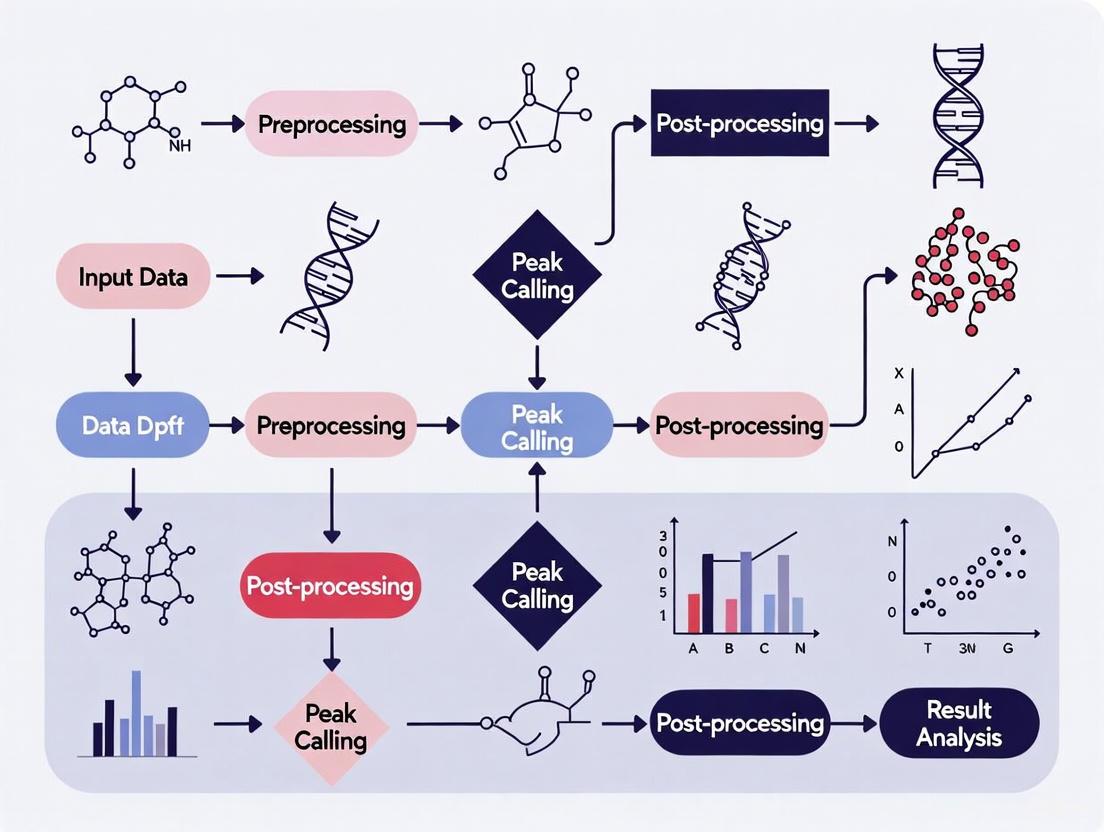
Accurate peak calling is fundamental for interpreting histone modification data from techniques like CUT&Tag and CUT&RUN, yet selecting the optimal tool remains a challenge.
Benchmarking Peak Callers for Histone Modifications: A 2025 Guide for Researchers
Abstract
Accurate peak calling is fundamental for interpreting histone modification data from techniques like CUT&Tag and CUT&RUN, yet selecting the optimal tool remains a challenge. This article provides a comprehensive benchmark and practical guide for researchers and drug development professionals. We explore the foundational principles of major peak callers like MACS2, SEACR, GoPeaks, and LanceOtron, detail their methodological applications for marks such as H3K4me3, H3K27ac, and H3K27me3, offer troubleshooting and optimization strategies for real-world data, and present a comparative validation of their performance based on sensitivity, specificity, and reproducibility. Our synthesis empowers scientists to make informed, evidence-based choices in their epigenomic workflows, enhancing the reliability of downstream biological insights.
The Landscape of Histone Modifications and Peak Calling Technologies
The genome-wide mapping of histone modifications is a fundamental practice in modern epigenetics, providing critical insights into gene regulatory mechanisms that influence development, disease, and cellular identity. Chromatin Immunoprecipitation followed by sequencing (ChIP-seq) and its newer alternatives, such as CUT&Tag, generate millions of sequencing reads that require sophisticated computational methods to distinguish true biological signal from background noise. This process, known as peak calling, is a crucial step that directly influences all subsequent biological interpretations. Different peak calling algorithms employ distinct statistical models and assumptions about data structure, leading to substantial variation in the number, size, and genomic location of identified enriched regions. The choice of peak caller can consequently alter the perceived landscape of histone modifications, potentially leading to different biological conclusions regarding gene regulation, enhancer identification, and chromatin states. This comparison guide examines how peak caller selection impacts data interpretation in histone modification studies, providing objective performance comparisons and methodological guidance for researchers navigating this critical analytical decision.
Understanding Peak Callers: Algorithms and Applications
Fundamental Algorithmic Approaches
Peak calling algorithms employ diverse computational strategies to identify statistically significant enriched regions from sequencing data. Shape-based approaches "learn" characteristic peak patterns directly from the data itself, offering protocol flexibility and minimal parameter tuning [1]. Model-based methods like MACS2 use dynamic Poisson or negative binomial distributions to evaluate significance, while threshold-based approaches like SEACR employ empirically-derived thresholds from global background distributions [2]. Specialized algorithms such as histoneHMM utilize bivariate Hidden Markov Models specifically designed for differential analysis of broad histone marks, aggregating reads over larger regions for unsupervised classification [3]. The optimal algorithmic approach often depends on both the experimental protocol and the specific histone modification being studied.
Peak Profile Variability Across Histone Modifications
Histone modifications exhibit characteristic genomic distributions that pose distinct challenges for peak detection algorithms. Narrow marks like H3K4me3 and H3K27ac at promoters produce sharp, well-defined peaks, while broad marks like H3K27me3 and H3K9me3 form extensive domains that can span thousands of basepairs [2] [4]. Some modifications, including H3K27ac, display mixed characteristics, marking both discrete promoters and expansive super-enhancers [2]. This natural variation in peak profiles means that algorithms optimized for one modification type may perform poorly on others, necessitating informed peak caller selection based on the biological target.
Table 1: Histone Modification Classification by Peak Characteristics
| Peak Type | Histone Modifications | Genomic Features | Detection Challenges |
|---|---|---|---|
| Narrow | H3K4me3, H3K9ac, H3K27ac (promoters) | Promoters, transcription factor binding sites | Over-fragmentation, adjacent peak separation |
| Broad | H3K27me3, H3K9me3, H3K36me3 | Heterochromatic domains, gene bodies | Low signal-to-noise ratio, diffuse boundaries |
| Mixed | H3K27ac (enhancers), H3K4me1 | Enhancers, regulatory elements | Variable width, intensity heterogeneity |
Comparative Performance Analysis of Peak Calling Algorithms
Performance Across Histone Modification Types
Comprehensive benchmarking studies reveal significant performance variation across peak callers when applied to different histone modifications. Research comparing five peak callers (CisGenome, MACS1, MACS2, PeakSeq, and SISSRs) on twelve histone modifications in human embryonic stem cells demonstrated that performance differences were more pronounced for modifications with low fidelity, such as H3K4ac, H3K56ac, and H3K79me1/me2 [5]. The study found that peak counts and lengths were strongly affected by the program used rather than the histone type itself, emphasizing the algorithm-specific nature of peak definition. For point-source histone modifications with well-defined binding patterns, most peak callers showed comparable performance, suggesting that algorithm choice becomes increasingly critical for diffuse or variable marks.
Method-Specific Strengths and Limitations
Each peak calling algorithm exhibits distinctive strengths and limitations that impact their suitability for specific applications:
MACS2 demonstrates robust performance for narrow peaks but may oversplit broad domains or struggle with low-signal broad marks [2]. Its model-based approach effectively handles background noise in ChIP-seq data but may be overly sensitive for low-background methods like CUT&Tag.
GoPeaks, specifically designed for histone modification CUT&Tag data, employs a binomial distribution with minimum count thresholds and shows improved sensitivity for H3K27ac detection compared to general-purpose algorithms [2]. Its binning approach allows flexible identification of both narrow and broad peaks without prior assumptions about peak shape.
SEACR performs effectively with low-background data (CUT&RUN, CUT&Tag) using an empirical thresholding approach but may miss smaller peaks and aggregate adjacent features, particularly in complex genomic regions [2].
histoneHMM specializes in differential analysis of broad marks like H3K27me3 and H3K9me3, outperforming general-purpose methods in identifying functionally relevant differentially modified regions validated by follow-up qPCR and RNA-seq [3].
Table 2: Quantitative Performance Comparison Across Peak Calling Algorithms
| Peak Caller | Optimal Use Case | H3K4me3 Sensitivity | H3K27me3 Sensitivity | Input Requirements | Replicate Handling |
|---|---|---|---|---|---|
| MACS2 | Narrow peaks, ChIP-seq | High | Moderate | Control recommended | Post-processing or pooling |
| GoPeaks | CUT&Tag, mixed-width marks | High | High | No control required | Native replicate integration |
| SEACR | Low-background protocols | Moderate | Low | No control required | Individual sample analysis |
| histoneHMM | Differential broad marks | Not optimized | High | Paired samples | Direct replicate integration |
Impact on Biological Interpretation
The choice of peak caller directly influences biological conclusions by altering the perceived genomic landscape of histone modifications. In differential analysis between cell types or conditions, algorithm selection can substantially change the number and identity of genes associated with differential marks. histoneHMM demonstrated superior performance in linking differentially modified H3K27me3 regions to differentially expressed genes in comparative studies of rat strains, with the most significant overlap (P=3.36×10⁻⁶) between differential H3K27me3 regions and differentially expressed genes [3]. Similarly, when analyzing H3K27ac—a mark of active enhancers and promoters—the use of suboptimal peak callers may miss substantial numbers of regulatory elements, potentially overlooking key players in gene regulatory networks [2].
Experimental Design and Protocol Considerations
Technology-Specific Recommendations
The experimental protocol used for chromatin profiling significantly influences optimal peak caller selection due to fundamental differences in data characteristics:
ChIP-seq data typically exhibits higher background noise, making control samples valuable for algorithms like MACS2 that can leverage control data to model background [4]. The ENCODE consortium recommends different sequencing depths for narrow (20-45 million fragments) and broad (45 million fragments) histone marks, with H3K9me3 requiring special consideration due to enrichment in repetitive regions [4].
CUT&Tag data features exceptionally low background but high read duplication rates, necessitating specialized approaches. Benchmarking against ENCODE ChIP-seq data shows that CUT&Tag recovers approximately 54% of known ENCODE peaks, primarily representing the strongest peaks with similar functional enrichments [6]. GoPeaks has demonstrated particular effectiveness with CUT&Tag data, correctly identifying both narrow and broad features without prior shape assumptions [2].
CUT&RUN data shares characteristics with CUT&Tag, benefiting from low-background optimized algorithms like SEACR. Comparative studies indicate that CUT&Tag provides higher signal-to-noise ratios compared to both ChIP-seq and CUT&RUN, particularly for transcription factor profiling [7].
Essential Quality Control Metrics
Robust peak calling requires careful attention to data quality assessment, with distinct metrics relevant to different experimental approaches:
Library complexity measures including Non-Redundant Fraction (NRF >0.9) and PCR Bottlenecking Coefficients (PBC1 >0.9, PBC2 >10) are critical for ChIP-seq data quality assessment [4].
Strand cross-correlation analysis provides information on fragment size distribution and enrichment quality, particularly important for transcription factor studies [5].
FRiP (Fraction of Reads in Peaks) scores indicate enrichment level, with higher values (≥1%) generally indicating successful experiments [4].
Irreproducible Discovery Rate (IDR) analysis enables rigorous assessment of replicate consistency, with ENCODE recommending its implementation for establishing high-confidence peak sets [4].
Research Reagent Solutions and Experimental Protocols
Key Research Reagents for Histone Modification Studies
Table 3: Essential Research Reagents for Histone Modification Profiling
| Reagent Category | Specific Examples | Function | Considerations |
|---|---|---|---|
| Histone Modification Antibodies | H3K27me3 (CST 9733), H3K4me3 (Merck 07-473), H3K27ac (Abcam ab4729) | Target-specific immunoprecipitation | Antibody validation essential; use ENCODE-characterized antibodies when available |
| Chromatin Profiling Kits | Hyperactive Universal CUT&Tag Assay Kit, Hyperactive pG-MNase CUT&RUN Assay Kit | Library preparation from limited input | Protocol efficiency varies by cell type and target |
| Enzymes | pA-Tn5 transposase (CUT&Tag), pA/G-MNase (CUT&RUN) | Targeted fragmentation | Lot-to-lot variability may affect efficiency |
| Library Preparation | TruePrep DNA Library Prep Kit V2 for Illumina | Adapter ligation and amplification | Optimization of PCR cycles needed to minimize duplicates |
Standardized Experimental Workflows
The ENCODE consortium has established standardized processing pipelines for histone ChIP-seq data, with separate approaches for narrow and broad marks. The histone analysis pipeline can resolve both punctate binding and longer chromatin domains, making its output suitable for chromatin segmentation models [4]. Key steps include:
- Read mapping using standardized aligners with filtering for quality and duplicates
- Signal generation producing fold-change over control and signal p-value tracks
- Peak calling with relaxed thresholds to sample sufficient background for statistical comparison
- Replicate analysis using either true biological replicates or pseudoreplicates to establish high-confidence peak sets
For CUT&Tag experiments, systematic optimization including antibody titration, PCR cycle optimization, and potential HDAC inhibitor testing (though TSA showed limited benefit for H3K27ac) is recommended [6].
Diagram 1: Peak Caller Selection Workflow - A decision pathway for selecting appropriate peak calling algorithms based on experimental technology and histone mark characteristics.
Practical Implementation Guidelines
Algorithm Selection Framework
Based on comprehensive benchmarking studies, researchers should consider the following framework for peak caller selection:
For traditional ChIP-seq data with broad histone marks (H3K27me3, H3K9me3), specialized tools like histoneHMM provide superior performance for differential analysis, while MACS2 remains effective for narrow marks with control samples for background modeling [3] [4].
For CUT&Tag data profiling mixed-width marks like H3K27ac, GoPeaks demonstrates enhanced sensitivity compared to general-purpose algorithms, effectively capturing both narrow promoter-associated peaks and broad enhancer domains without prior shape assumptions [2].
For low-input protocols with minimal background (CUT&Tag, CUT&RUN), threshold-based methods like SEACR or specialized tools like GoPeaks typically outperform algorithms designed for high-background ChIP-seq data [2] [7].
For differential analysis between conditions, employ methods specifically designed for comparative studies (histoneHMM for broad marks, Diffreps for narrow marks) rather than comparing separate peak calls, as this approach more accurately models biological variation [3].
Parameter Optimization and Validation
Regardless of algorithm selection, appropriate parameter optimization is essential for robust peak detection:
For broad domains, adjust merging parameters to prevent artificial fragmentation of continuous modified regions while maintaining resolution of distinct regulatory elements.
For CUT&Tag data, address high duplication rates through PCR cycle optimization rather than aggressive duplicate removal, which may eliminate valid signal due to the inherent low complexity of these libraries [6].
Validate key findings with orthogonal methods when possible, such as confirming differential H3K27me3 regions with RNA-seq expression data or qPCR validation, as performed in histoneHMM benchmarking [3].
Leverage existing standards from consortia like ENCODE, which provide established parameters and quality metrics for various histone modifications, ensuring comparability with published datasets [4].
Peak caller selection represents a critical methodological decision that directly shapes biological interpretations in histone modification studies. The optimal algorithm depends on multiple factors, including the specific histone mark being studied, the experimental protocol employed, and the biological question being addressed. Benchmarking studies consistently demonstrate that specialized peak callers designed for specific data types or modification patterns outperform general-purpose tools, highlighting the importance of matching analytical approaches to experimental designs. As chromatin profiling technologies continue to evolve, with methods like CUT&Tag offering enhanced sensitivity from lower inputs, parallel development of specialized analytical tools will remain essential for accurate biological insight. By applying the systematic comparison framework presented here—considering algorithmic strengths, experimental protocols, and validation strategies—researchers can make informed decisions that maximize detection power and ensure biologically meaningful conclusions from their epigenomic studies.
Histone modifications are fundamental epigenetic regulators that control chromatin architecture and access to DNA for gene transcription [8]. These post-translational modifications (PTMs) occur primarily on the N-terminal tails of histone proteins and form a complex "histone code" that dictates the transcriptional state of local genomic regions [8]. The nucleosome, consisting of an octamer of histones H2A, H2B, H3, and H4, provides the structural foundation for these modifications, with linker histone H1 stabilizing internucleosomal DNA [8]. At least nine distinct types of histone modifications have been identified, with acetylation, methylation, phosphorylation, and ubiquitylation being the most thoroughly characterized [8].
The functional impact of histone modifications depends on their ability to alter chromatin structure. Some modifications disrupt histone-DNA interactions, causing nucleosomes to unwind into an open euchromatin conformation where DNA becomes accessible to transcriptional machinery, leading to gene activation [8]. In contrast, modifications that strengthen histone-DNA interactions create a tightly packed heterochromatin structure that prevents transcriptional machinery from accessing DNA, resulting in gene silencing [8]. This dynamic regulation enables histone modifications to control crucial cellular processes including cell cycle regulation, proliferation, differentiation, DNA replication and repair, and apoptosis [8].
Table 1: Major Types of Histone Modifications and Their General Functions
| Modification Type | Primary Histone Targets | General Functional Impact | Enzymes Responsible |
|---|---|---|---|
| Acetylation | H3, H4 | Neutralizes positive charge on lysines, weakening histone-DNA interactions; generally activating | Histone acetyltransferases (HATs); Deacetylases (HDACs) |
| Methylation | H3, H4 | Can be activating or repressing depending on site and methylation state; does not alter histone charge | Histone methyltransferases (HMTs); Demethylases |
| Phosphorylation | All core histones | Critical for chromosome condensation during mitosis; DNA damage response | Kinases; Phosphatases |
| Ubiquitylation | H2A, H2B | DNA damage response; H2B associated with transcription activation | Ubiquitin ligases; Deubiquitylating enzymes |
H3K4me3: A Sharp Promarker Mark for Transcription Initiation
Characteristics and Genomic Distribution
H3K4me3 represents trimethylation of lysine 4 on histone H3 and is predominantly associated with transcription initiation at active gene promoters [8]. This modification is characterized by sharp, well-defined peaks typically restricted to CpG-rich promoter regions, distinguishing it from the broader domains of repressive marks like H3K27me3 [9]. H3K4me3 functions as a hallmark of active transcription start sites and is considered one of the most reliable indicators of promoter activity in eukaryotic cells [8].
The establishment of H3K4me3 involves the action of specific histone methyltransferases, with COMPASS-like complexes primarily responsible for depositing this mark in mammalian cells [8]. Unlike some histone modifications that can be faithfully transmitted through cell divisions, H3K4me3 undergoes extensive epigenetic reprogramming during early mammalian development [9]. Upon fertilization, H3K4me3 peaks are depleted in zygotes but reappear after major zygotic genome activation at the late two-cell stage, indicating its dynamic regulation during developmental transitions [9].
Functional Mechanisms and Biological Significance
H3K4me3 contributes to transcriptional activation through multiple mechanisms. While it doesn't significantly alter the charge-based interactions between histones and DNA (unlike acetylation), it serves as a docking site for reader proteins that facilitate transcription [8]. These include components of the transcription pre-initiation complex and chromatin remodeling factors that promote an open chromatin configuration. Recent systematic epigenome editing studies have demonstrated that targeted installation of H3K4me3 at promoters can causally instruct transcription by hierarchically remodeling the chromatin landscape, establishing its direct role in gene activation rather than merely being a consequence of transcription [10].
The functional impact of H3K4me3 is strongly influenced by contextual factors, including underlying DNA sequence motifs and the presence of other chromatin modifications [10]. Single-cell analyses following precision epigenome editing reveal that H3K4me3 can generate heterogeneous transcriptional responses across cell populations, with switch-like or attenuative effects depending on specific cis-regulatory contexts [10]. This context-dependence helps explain why the presence of H3K4me3 does not always guarantee transcriptional activation and why its predictive power for gene expression levels varies across different genomic loci and cell types.
H3K27me3: A Broad Repressive Domain for Gene Silencing
Characteristics and Genomic Distribution
H3K27me3 is an epigenetic modification indicating trimethylation of lysine 27 on histone H3 and serves as a key marker for facultative heterochromatin formation and gene silencing [11]. In contrast to the sharp peaks of H3K4me3, H3K27me3 typically forms broad repressive domains that can span hundreds of kilobases, known as Large Organized Chromatin K27-modification domains (LOCKs) [12]. These extensive domains are particularly associated with developmental genes and gene-poor chromosomal regions [8] [12].
The establishment of H3K27me3 is catalyzed by the Polycomb Repressive Complex 2 (PRC2), which contains the histone methyltransferase EZH2 or its homolog EZH1 [11]. PRC2 is recruited to specific genomic loci through a combination of transcription factors, long non-coding RNAs, and DNA sequence elements, though the precise recruitment mechanisms differ between organisms [13]. Once established, H3K27me3 can be epigenetically inherited through cell divisions, though this inheritance requires active restoration after DNA replication [14].
Functional Mechanisms and Biological Significance
H3K27me3 mediates gene repression through multiple interconnected mechanisms. The mark serves as a docking site for additional repressive complexes, including PRC1, which contributes to chromatin compaction through histone H2A ubiquitination and physical crowding [11]. This creates a repressive chromatin environment that limits access to transcriptional machinery. H3K27me3 also plays crucial roles in developmental patterning by maintaining tissue-specific genes in a transcriptionally silent but poised state until their appropriate time of activation [11].
Recent research has revealed that H3K27me3 LOCKs exhibit functional heterogeneity based on their size and genomic context. Long LOCKs (>100 kb) are predominantly associated with developmental processes and are frequently located in partially methylated domains (PMDs), while short LOCKs (up to 100 kb) are enriched at poised promoters and show stronger association with low gene expression [12]. In cancer cells, the distribution and composition of these domains can be altered, with long LOCKs shifting from short-PMDs to intermediate- and long-PMDs, suggesting an adaptive role in oncogene regulation [12].
Table 2: Comparative Features of H3K4me3 and H3K27me3
| Feature | H3K4me3 | H3K27me3 |
|---|---|---|
| Primary Function | Transcription activation | Transcription repression |
| Chromatin State | Euchromatin | Facultative heterochromatin |
| Typical Genomic Pattern | Sharp, narrow peaks at promoters | Broad domains spanning hundreds of kb |
| Associated Genomic Features | Active promoters, transcription start sites | Developmental regulators, gene-poor regions |
| Writer Complex | COMPASS-like complexes | Polycomb Repressive Complex 2 (PRC2) |
| Relationship with DNA Methylation | Generally anti-correlated | Generally anti-correlated |
| Stability Through Cell Division | Dynamic, rapidly reprogrammed | Relatively stable, heritable |
| Response to Differentiation Cues | Quickly gained/lost at specific genes | Maintains lineage-specific repression |
Bivalent Domains: The Intersection of Activation and Repression
Characteristics and Biological Significance
Bivalent domains represent a specialized chromatin configuration where both H3K4me3 and H3K27me3 modifications co-exist at the same promoter regions [11] [15]. These domains were initially discovered in embryonic stem cells, where they maintain developmentally important genes in a poised state—transcriptionally silent but primed for future activation upon receiving appropriate differentiation signals [11]. The simultaneous presence of activating and repressive marks creates a unique epigenetic landscape that allows for rapid lineage commitment while preserving developmental plasticity.
The functional significance of bivalent domains extends beyond embryonic development to cancer biology. Studies in HER2+ breast cancer cell lines have revealed that bivalent promoters regulate approximately one-third of all genes, with significant correlations between bivalent status and gene expression patterns [15]. These bivalent promoters are enriched for pathways related to cancer progression and invasion, suggesting they may contribute to the adaptability and heterogeneity observed in tumors [15]. Furthermore, distinct patterns of bivalency emerge between estrogen receptor-positive (ER+) and estrogen receptor-negative (ER-) HER2+ breast cancers, potentially explaining clinical differences in prognosis and treatment response [15].
Molecular Regulation and Dynamics
The maintenance of bivalent domains involves a delicate balance between opposing chromatin modifications. PRC2 complexes responsible for H3K27me3 deposition are recruited to bivalent promoters through mechanisms that may involve specific transcription factors, non-coding RNAs, or DNA sequence elements [13]. Meanwhile, Trithorax-group proteins that catalyze H3K4me3 work in opposition to Polycomb complexes, creating a dynamic equilibrium that can be tipped toward either activation or repression during cellular differentiation.
Recent evidence suggests that the resolution of bivalency during differentiation follows context-dependent rules. In some cases, H3K27me3 is removed while H3K4me3 is maintained or enhanced, leading to gene activation. In other cases, H3K4me3 is lost while H3K27me3 persists or expands, resulting in stable silencing. The factors influencing this resolution include sequence-specific transcription factors, chromatin remodelers, and external signaling cues that modulate the activity of chromatin-modifying complexes [15].
Experimental Methods for Mapping Histone Modifications
Advanced genomic technologies have revolutionized our ability to map histone modifications genome-wide. Chromatin Immunoprecipitation followed by sequencing (ChIP-seq) has long been considered the gold standard method, utilizing antibodies specific to histone modifications to enrich for associated DNA fragments, which are then sequenced and mapped to the genome [8] [7]. However, recently developed techniques such as CUT&RUN (Cleavage Under Targets and Release Using Nuclease) and CUT&TAG (Cleavage Under Targets and Tagmentation) offer significant advantages including lower cell input requirements, higher signal-to-noise ratios, and reduced sequencing depth needs [7].
These methods differ fundamentally in their approach to fragmenting and capturing chromatin. While ChIP-seq relies on formaldehyde crosslinking and sonication to fragment chromatin, CUT&RUN uses targeted cleavage by MNase, and CUT&Tag employs a protein A-Tn5 transposase fusion protein to simultaneously cleave and tag target regions [7]. A systematic comparison of these methods for profiling H3K4me3, H3K27me3, and transcription factor CTCF in haploid round spermatids revealed that all three methods reliably detect histone modifications, with CUT&Tag standing out for its higher signal-to-noise ratio and ability to identify novel binding sites [7].
Figure 1: Experimental Workflows for Mapping Histone Modifications. The diagram illustrates the key steps in CUT&RUN, CUT&Tag, and ChIP-seq methodologies, highlighting their divergent approaches to chromatin fragmentation and sequencing library preparation.
Benchmarking Peak Calling Methods
The effectiveness of histone modification mapping depends significantly on bioinformatic tools used to identify enriched regions from sequencing data. A recent comprehensive benchmark evaluated four prominent peak calling tools—MACS2, SEACR, GoPeaks, and LanceOtron—for their performance in identifying peaks from CUT&RUN datasets of histone marks H3K4me3, H3K27ac, and H3K27me3 [16]. The analysis revealed substantial variability in peak calling efficacy, with each method demonstrating distinct strengths in sensitivity, precision, and applicability depending on the specific histone mark being studied [16].
The choice of peak caller should be guided by the specific histone mark under investigation. For sharp, punctate marks like H3K4me3, methods with high spatial resolution are preferred, while for broad domains like H3K27me3, algorithms capable of detecting extended regions of enrichment perform better [16]. The benchmarking study further emphasized that optimal tool selection depends on research goals—whether prioritizing comprehensive detection of all potential regions or maximizing confidence in identified peaks at the potential cost of missing some true positives [16].
Table 3: Comparison of Histone Modification Mapping Technologies
| Parameter | ChIP-seq | CUT&RUN | CUT&Tag |
|---|---|---|---|
| Starting Material | 10^4-10^6 cells | 10^3-10^5 cells | 10^3-10^5 cells |
| Crosslinking | Required (formaldehyde) | Not required | Not required |
| Fragmentation Method | Sonication | Targeted MNase cleavage | Tagmentation by Tn5 |
| Typical Sequencing Depth | High (20-50 million reads) | Moderate (5-15 million reads) | Low (1-5 million reads) |
| Signal-to-Noise Ratio | Moderate | High | Very High |
| Background | High due to non-specific precipitation | Low | Very low |
| Resolution | 200-500 bp | Single nucleosome | Single nucleosome |
| Protocol Duration | 3-4 days | 1-2 days | 1 day |
| Bias Toward Accessible Chromatin | Moderate | Low | Higher bias |
Successful investigation of histone modifications requires carefully selected research tools and reagents. The following essential materials represent the core components of a well-equipped epigenetics laboratory:
Specific Antibodies: High-quality, validated antibodies are crucial for all histone modification mapping techniques. For H3K4me3, recommended antibodies include those from Cell Signaling Technology (for CUT&Tag) and Merck (for CUT&RUN) [7]. For H3K27me3, Cell Signaling Technology 9733s has been successfully used in CUT&Tag protocols [7]. Antibody validation using appropriate controls (e.g., histone modification-deficient cells) is essential for generating reliable data.
Commercial Kits: Several optimized commercial kits are available for the newer mapping technologies. The Hyperactive Universal CUT&Tag Assay Kit for Illumina (Vazyme Biotech, TD904) provides a complete workflow for CUT&Tag library generation [7]. Similarly, the Hyperactive pG-MNase CUT&RUN Assay Kit for Illumina (Vazyme Biotech, HD102) offers a standardized approach for CUT&RUN experiments [7]. These kits improve reproducibility, especially for researchers new to these methods.
Epigenome Editing Tools: For causal studies, modular epigenome editing platforms enable targeted installation of specific chromatin modifications [10]. These systems typically employ dCas9 fused to epigenetic effector domains, such as Prdm9-CD for H3K4me3 installation or Ezh2-FL for H3K27me3 deposition [10]. Catalytic point mutants of these effectors serve as essential controls to confirm that observed effects are due to the chromatin modification itself rather than the targeting machinery.
Bioinformatic Resources: Specialized software packages are required for data analysis. The CREAM R package enables identification of Large Organized Chromatin Lysine domains (LOCKs) from H3K27me3 data [12]. For peak calling, tools like MACS2, SEACR, GoPeaks, and LanceOtron each have strengths depending on the histone mark being studied [16]. Additional packages for specialized analyses include ChIPseeker for annotation and visualization [15] and clusterprofiler for pathway enrichment analysis [15].
Technical Considerations for Experimental Design
Method Selection Guidelines
Choosing the appropriate mapping technology requires careful consideration of research objectives and practical constraints. ChIP-seq remains valuable for historical comparisons and when crosslinking is desirable to capture certain protein-DNA interactions [7]. CUT&RUN offers advantages when working with limited cell numbers or when high specificity is prioritized, while CUT&Tag provides the highest sensitivity and lowest input requirements, making it ideal for rare cell populations or when working with many samples in parallel [7].
The inherent biases of each method should also inform selection. CUT&Tag shows stronger bias toward accessible chromatin regions compared to CUT&RUN, which may influence results depending on the biological question [7]. For comprehensive assessment of chromatin states, combining histone modification mapping with complementary techniques such as ATAC-seq for chromatin accessibility provides a more complete picture of the epigenetic landscape [7].
Addressing Technical Challenges
Several technical challenges require special attention in histone modification studies. For broad domains like H3K27me3 LOCKs, accurate quantification can be complicated by their extensive size and variable densities [12]. Normalization strategies that account for global differences in signal intensity between samples are essential for valid comparisons. For bivalent domains, simultaneous mapping of both marks is necessary, ideally in the same biological system to account for cell-to-cell heterogeneity [15].
The dynamic nature of histone modifications during cell cycle progression presents another consideration. Studies investigating epigenetic inheritance must account for replication-coupled restoration of modifications, with techniques like ChOR-seq (Chromatin Occupancy after Replication) enabling direct monitoring of H3K27me3 re-establishment on nascent DNA [14]. Understanding these dynamics is essential for distinguishing between stable epigenetic states and transient fluctuations.
Figure 2: Decision Framework for Histone Modification Studies. This workflow guides researchers through key considerations when designing experiments to map histone modifications, highlighting how research objectives influence methodological choices.
The comprehensive analysis of histone modifications from sharp promoter marks like H3K4me3 to broad repressive domains like H3K27me3 reveals the sophisticated complexity of epigenetic regulation. While these marks represent opposing transcriptional states, their functional interplay—particularly in bivalent domains—demonstrates how chromatin dynamics enable precise control of gene expression patterns during development and in disease. Advanced mapping technologies and analysis tools continue to enhance our resolution of these epigenetic features, while epigenome editing approaches establish causal relationships rather than mere correlations.
Future research directions will likely focus on single-cell multi-omics approaches that simultaneously capture multiple histone modifications alongside transcriptional output in individual cells. This will be particularly valuable for understanding epigenetic heterogeneity in complex tissues and tumors. Additionally, the development of temporally resolved mapping techniques will provide deeper insights into the dynamics of epigenetic inheritance and modification turnover. Finally, integrating histone modification data with 3D genome architecture will elucidate how these marks function within the spatial organization of the nucleus to coordinate gene regulation across genomic distances. These advances will continue to refine our understanding of how the histone code is written, read, erased, and translated into functional outcomes in health and disease.
For decades, chromatin immunoprecipitation followed by sequencing (ChIP-seq) has served as the gold standard for mapping genome-wide protein-DNA interactions, including transcription factor binding and histone modifications [17]. Despite its widespread adoption, ChIP-seq's limitations, including high background noise, substantial cell input requirements, and artifacts from cross-linking and sonication, have prompted the development of novel enzyme-tethering approaches [6] [18]. Two revolutionary alternatives, CUT&RUN (Cleavage Under Targets and Release Using Nuclease) and CUT&Tag (Cleavage Under Targets and Tagmentation), have emerged as transformative technologies that address these shortcomings through in situ profiling with dramatically improved signal-to-noise ratios [19] [20].
This guide provides an objective comparison of these three chromatin profiling methods within the context of benchmarking peak callers for histone modification research. We present quantitative performance data, detailed experimental protocols, and analytical frameworks to help researchers select the optimal technology for their specific epigenomic investigations.
Technology Comparison: Mechanisms and Workflows
Fundamental Methodological Differences
The core distinction between these technologies lies in their mechanism of targeting and fragmenting DNA-protein complexes:
- ChIP-seq relies on cross-linked chromatin fragmentation (typically via sonication), immunoprecipitation, and library preparation [6].
- CUT&RUN utilizes antibody-targeted MNase cleavage in permeabilized cells or nuclei, releasing specific fragments into supernatant [20].
- CUT&Tag employs antibody-tethered Tn5 transposase for simultaneous cleavage and adapter tagging (tagmentation) in situ [19] [21].
The following diagram illustrates the key procedural differences and output characteristics of each method:
The Scientist's Toolkit: Essential Research Reagents
Table 1: Key reagents and their functions in chromatin profiling methods
| Reagent Category | Specific Examples | Function in Protocol | Technology Compatibility |
|---|---|---|---|
| Primary Antibodies | H3K27ac, H3K27me3, H3K4me3, CTCF | Binds target epitope; critical for specificity | ChIP-seq, CUT&RUN, CUT&Tag |
| Enzyme Complexes | pA-Tn5 (protein A-Tn5 transposase) | Tethered cleavage & adapter insertion | CUT&Tag |
| Enzyme Complexes | pA-MNase (protein A-MNase) | Targeted DNA cleavage | CUT&RUN |
| Library Prep Components | Illumina adapters, PCR master mix | Sequencing library construction | All methods |
| Specialized Buffers | Digitonin, Wash buffers, Tagmentation buffer | Cell permeabilization & reaction control | CUT&RUN, CUT&Tag |
| Cross-linking Agents | Formaldehyde | Stabilizes protein-DNA interactions | ChIP-seq |
| Enzyme Activators | Magnesium chloride (Mg²⁺) | Activates Tn5 or MNase enzymatic activity | CUT&RUN, CUT&Tag |
Performance Benchmarking and Experimental Data
Quantitative Method Comparison
Table 2: Comprehensive performance metrics across chromatin profiling technologies
| Performance Parameter | ChIP-seq | CUT&RUN | CUT&Tag | Experimental Basis |
|---|---|---|---|---|
| Typical cell input | 1-10 million | 10,000-100,000 | 500-100,000 | Protocol specifications [6] [17] [20] |
| Background noise | High (10-30% in controls) | Medium (3-8%) | Low (<2%) | IgG control read percentages [17] |
| Sequencing depth needed | High (20-40M reads) | Medium (10-20M reads) | Low (5-10M reads) | Recommended depths for histone marks [17] |
| Protocol duration | 2-3 days | 1-2 days | <1 day | Hands-on time estimates [17] [20] |
| Single-cell compatibility | Limited | Challenging | Excellent (scCUT&Tag) | Demonstrated applications [18] |
| Recall of ENCODE peaks | Reference standard | ~50-60% | 54% average for H3K27ac | Benchmarking against ENCODE [6] |
| Signal-to-noise ratio | Moderate | High | Highest | Comparative analysis [19] |
| Cost per sample | High | Medium | Low | Reagent and sequencing costs [20] |
Benchmarking Data for Histone Modifications
Recent systematic evaluations demonstrate that CUT&Tag recovers approximately 54% of known ENCODE ChIP-seq peaks for histone modifications H3K27ac and H3K27me3 in K562 cells [6]. The recovered peaks represent the strongest ENCODE peaks and show the same functional and biological enrichments as those identified by ChIP-seq, indicating that CUT&Tag effectively captures biologically relevant signals [6].
A separate benchmark study comparing ChIP-seq, CUT&Tag, and CUT&RUN for profiling genome-wide transcription factors and histone modifications found that all three methods reliably detect histone modifications, with CUT&Tag standing out for its comparatively higher signal-to-noise ratio [19]. The same study noted that CUT&Tag can identify novel CTCF peaks not detected by the other two methods, highlighting its enhanced sensitivity in accessible chromatin regions [19].
Experimental Protocols and Methodologies
CUT&Tag Protocol for Histone Modifications
The following detailed protocol is adapted from the streamlined CUT&Tag approach [21] [20]:
Cell Permeabilization: Harvest and wash cells. Permeabilize with digitonin-containing buffer to allow antibody access while maintaining nuclear structure.
Antibody Binding: Incubate with primary antibody against target histone modification (e.g., H3K27ac, H3K27me3) at appropriate dilution (typically 1:50-1:100) in antibody buffer overnight at 4°C.
pA-Tn5 Binding: Add protein A-Tn5 transposase pre-loaded with sequencing adapters. Incubate at room temperature for 1 hour.
Tagmentation: Activate tagmentation by adding Mg²⁺ final concentration and incubating at 37°C for 1 hour. The Tn5 transposase simultaneously cleaves DNA and inserts adapters at sites of antibody binding.
DNA Extraction and Purification: Release tagged DNA fragments using proteinase K treatment. Extract DNA using standard phenol-chloroform or commercial kit methods.
Library Amplification: Amplify tagmented DNA with barcoded PCR primers for 12-15 cycles. Purify libraries for sequencing.
For H3K27ac mapping specifically, recent optimizations have tested various antibody sources (Abcam-ab4729, Diagenode C15410196, Abcam-ab177178, Active Motif 39133) and determined that addition of histone deacetylase inhibitors (TSA, NaB) does not consistently improve data quality [6].
Quality Control Considerations
- High duplication rates (55-98%) are common in CUT&Tag data, potentially due to initial over-amplification [6].
- Fragment size distribution should show sub-nucleosomal fragments (50-300 bp) for histone modifications [18].
- FRiP (Fraction of Reads in Peaks) scores are typically higher for CUT&Tag (39-86%) compared to ChIP-seq [18].
- IgG controls are essential for assessing background, with optimal backgrounds showing <2% of reads in IgG samples [17].
Peak Calling Considerations for Histone Modifications
The unique characteristics of CUT&Tag data necessitate specialized peak calling approaches. Traditional ChIP-seq peak callers like MACS2 are designed to address high background levels and may not perform optimally with the low-background, high-signal data generated by CUT&Tag [2].
Performance of Peak Calling Algorithms
Table 3: Peak caller performance with CUT&Tag histone modification data
| Peak Caller | Sensitivity for H3K4me3 | Sensitivity for H3K27ac | Advantages | Limitations |
|---|---|---|---|---|
| GoPeaks | High | Highest (novel peaks) | Specifically designed for CUT&Tag; identifies peaks across size ranges [2] | Less established compared to traditional callers |
| MACS2 | High | Moderate | Widely adopted; familiar to researchers [5] [2] | May split broad domains; designed for higher background [2] |
| SEACR | Moderate (stringent) to High (relaxed) | Low to Moderate | Developed for low-background CUT&RUN data [2] | May miss narrow peaks; aggregates adjacent regions [2] |
For H3K27ac specifically, which displays both narrow and broad characteristics, GoPeaks demonstrates improved sensitivity compared to other algorithms, identifying a substantial number of novel peaks that represent biologically relevant signals [2]. When analyzing H3K27me3 broad domains, both MACS2 (broad peak setting) and SEACR perform adequately, though parameter optimization is essential [6] [5].
Applications in Drug Development and Biomedical Research
The transition to CUT&Tag and CUT&RUN technologies has significant implications for drug development professionals:
Biomarker Discovery: Enhanced ability to profile epigenetic modifications in rare cell populations and patient biopsies enables identification of novel disease biomarkers [18].
Mechanism of Action Studies: High-resolution mapping of chromatin changes in response to therapeutic compounds provides insights into drug mechanisms at the epigenetic level [6].
Toxicology and Safety: Comprehensive epigenomic profiling can reveal off-target effects of drug candidates through changes in histone modifications and transcription factor binding.
Personalized Medicine: Single-cell CUT&Tag applications allow characterization of epigenetic heterogeneity in tumors and other tissues, informing personalized treatment approaches [18].
Recent applications in neuroscience research demonstrate how single-cell CUT&Tag can resolve distinct cell populations in the mouse central nervous system based solely on histone modification patterns, revealing cell-type-specific regulatory principles and epigenetic states in normal and disease contexts [18].
The evolution from ChIP-seq to CUT&Tag and CUT&RUN represents a significant advancement in epigenomic profiling technologies. While ChIP-seq remains valuable for certain applications and benefits from extensive historical data, CUT&Tag and CUT&RUN offer superior performance in most parameters, including sensitivity, resolution, sample requirements, and cost-effectiveness.
For histone modification studies specifically, CUT&Tag provides an optimal balance of high signal-to-noise ratio, protocol simplicity, and compatibility with low-input and single-cell applications. When implementing these technologies, researchers should select peak calling algorithms appropriate for the specific methodology and histone mark being studied, with emerging tools like GoPeaks showing particular promise for CUT&Tag data.
These technological advances are expanding the frontiers of epigenomic research, enabling more precise mapping of chromatin landscapes in development, disease, and therapeutic contexts.
The identification of enriched regions, or "peak calling," in histone modification data is a fundamental step in epigenomic research. The choice of algorithm directly influences downstream biological interpretations, making the understanding of different algorithmic philosophies critical. Current methodologies can be broadly categorized into three paradigms: model-based approaches that rely on statistical assumptions about data distribution, empirical methods that leverage observed data characteristics to define signal, and machine learning (ML) techniques, including deep learning, that learn complex patterns directly from data [16] [22] [23]. Benchmarking studies reveal that no single approach is universally superior; instead, their performance is contingent on the specific biological context, such as the width of the histone mark (narrow like H3K4me3 versus broad like H3K27me3) and the underlying technology (e.g., ChIP-seq, CUT&Tag) [16] [22]. This guide provides an objective comparison of these core algorithmic philosophies, equipping researchers with the data and context needed to select the optimal peak caller for their experimental goals.
Methodological Breakdown: Core Algorithms and Experimental Protocols
Model-Based Approaches
Model-based peak callers operate by fitting a statistical model to the background noise in the data, then identifying regions where the signal significantly deviates from this model.
- Core Philosophy: The genome is divided into non-overlapping bins, and a global background distribution (e.g., a gamma distribution) is estimated from the data, typically using the lower percentiles of the signal to avoid contamination from true signal bins. A probability of being signal (PBS) is then calculated for each bin based on this distribution [22].
- Experimental Protocol (PBS Method):
- Bin Generation: The genome is divided into non-overlapping 5 kB bins. This size acts as a low-pass filter, enhancing robustness for broad marks.
- Read Counting & Normalization: The number of sequencing reads overlapping each bin is counted. These counts are rescaled to account for bin mappability and copy number variations.
- Background Estimation: A gamma distribution is fitted to the bottom 50th percentile of the binned read-count data to model the background noise.
- Probability Calculation: For each bin, the Probability of Being Signal (PBS) is computed as the fractional excess of bins at that signal level not explained by the background model. PBS values range from 0 (likely background) to 1 (almost certainly true signal) [22].
Empirical Approaches
Empirical methods rely on data-driven thresholds and heuristic rules to distinguish signal from noise, often with minimal assumptions about the underlying statistical distribution.
- Core Philosophy: These tools use observed data characteristics, such as the distribution of control data or the top percentiles of signal, to set a threshold for peak calling. A prominent example is SEACR (Sparse Enrichment Analysis for CUT&RUN), which uses the empirical distribution of the target or control data to call peaks at a user-specified stringency level [16].
- Experimental Protocol (SEACR):
- Data Input: Requires the target dataset (e.g., histone mark) and an optional control (e.g., IgG).
- Threshold Setting: If a control is provided, SEACR uses the top 1% of control signals to set a threshold. Without a control, it uses the top 1% of the target signal.
- Peak Identification: Regions surpassing the threshold are identified as candidate peaks. A stringency level (e.g., "stringent" or "relaxed") is applied to filter these candidates based on the area under the curve (AUC).
- Output: A list of high-confidence peaks is generated [16].
Machine Learning (ML) and Deep Learning Approaches
ML-based peak callers leverage algorithms to learn the features of true peaks directly from training data, allowing them to capture complex and non-linear patterns.
- Core Philosophy: These methods treat peak calling as a classification problem, where the algorithm learns to discriminate between signal and noise. They range from traditional models like logistic regression on hand-crafted features to deep learning models that automatically learn relevant features from raw data [23] [24].
- Experimental Protocols:
- ShallowChrome (Interpretable ML): This method uses a hybrid approach. It first employs a peak caller to identify statistically significant enriched regions for each histone mark. It then extracts intuitive features (e.g., mean signal intensity, peak length) from these regions. Finally, a simple, highly interpretable logistic regression model is trained on these features to predict gene expression status [24].
- LanceOtron (Deep Learning): A deep learning model based on the Inception v3 architecture, originally designed for image recognition. It treats genomic data as a one-dimensional "image" and uses convolutional layers to learn hierarchical features directly from the raw sequencing coverage profile, without requiring a separate control dataset [16].
Algorithmic Workflows. The diagram illustrates the core decision flows for the three primary peak-calling philosophies.
Performance Benchmarking and Quantitative Comparison
Independent benchmarking studies provide critical insights into the relative strengths and weaknesses of different peak callers. A 2025 benchmark of CUT&RUN peak callers evaluated tools on histone marks H3K4me3, H3K27ac, and H3K27me3 from mouse brain tissue, assessing them on sensitivity, precision, and reproducibility [16].
Table 1: Peak Caller Performance on CUT&RUN Data for Various Histone Marks [16]
| Peak Caller | Core Algorithmic Philosophy | Performance on H3K4me3 (Narrow Mark) | Performance on H3K27ac (Narrow Mark) | Performance on H3K27me3 (Broad Mark) | Key Strength |
|---|---|---|---|---|---|
| MACS2 | Model-Based | Good | Good | Moderate (Can miss broad domains) | Versatility, well-established |
| SEACR | Empirical | High sensitivity & precision | High sensitivity & precision | Good | Speed, control of stringency |
| GoPeaks | N/A* | Moderate | Moderate | Moderate | N/A |
| LanceOtron | Deep Learning | Good | Good | High performance | No control sample required |
*Note: The specific algorithmic philosophy of GoPeaks was not detailed in the benchmark [16].
Performance in Single-Cell and Specialized Applications
The rise of single-cell histone modification (scHPTM) assays introduces new challenges, such as extreme data sparsity. A 2023 benchmark of over 10,000 computational experiments for scHPTM data found that the initial step of count matrix construction profoundly impacts the final cell representation quality [23]. The study concluded that using fixed-size genomic bins (a model-based concept) for generating the count matrix consistently outperformed annotation-based binning (e.g., using genes and TSS) for capturing biological similarity between cells [23].
For predictive modeling beyond peak calling, such as forecasting gene expression from histone marks, deep learning models have shown significant promise. For instance, the TransferChrome model, which uses a densely connected convolutional network and self-attention layers, achieved an average Area Under the Curve (AUC) of 84.79% across 56 cell lines [25]. However, a highly interpretable method called ShallowChrome, which uses logistic regression on features derived from peak-called regions, demonstrated that simplicity can also be powerful, outperforming several deep learning baselines on the same task [24].
Table 2: Performance in Predictive Modeling and Single-Cell Analysis
| Application | Tool / Approach | Algorithmic Philosophy | Reported Performance | Context & Notes |
|---|---|---|---|---|
| Gene Expression Prediction | TransferChrome [25] | Deep Learning | Avg. AUC: 84.79% | Uses transfer learning for cross-cell-line prediction. |
| Gene Expression Prediction | ShallowChrome [24] | Interpretable ML (Logistic Regression) | Outperformed deep learning baselines (e.g., AttentiveChrome) | Highlights trade-off between complexity and interpretability. |
| Single-Cell HPTM Analysis | Fixed-size Binning [23] | Model-Based | Superior neighbor score vs. annotation-based bins | Key for accurate cell representation from sparse data. |
| A/B Compartment Prediction | CoRNN [26] | Deep Learning (Recurrent Neural Network) | Avg. AuROC: 90.9% | Predicts 3D genome structure from histone marks. |
Successful execution and analysis of histone modification experiments rely on a suite of computational tools and data resources. The following table details key components of the modern epigenomic toolkit.
Table 3: Research Reagent Solutions for Histone Modification Analysis
| Resource Name | Type | Primary Function | Relevance to Algorithm Benchmarking |
|---|---|---|---|
| 4D Nucleome Data Portal [16] | Data Repository | Provides publicly available epigenomic datasets. | Serves as a source of standardized data for tool evaluation and comparison. |
| REMC Database [25] [27] [24] | Data Repository | Hosts histone modification and gene expression data from the Roadmap Epigenomics Project. | The primary resource for training and testing predictive models (e.g., gene expression prediction). |
| MACS2 [16] [23] | Software Tool | A widely used model-based peak caller. | The de facto standard for comparison in many benchmarks; represents the model-based philosophy. |
| SEACR [16] | Software Tool | An empirical peak caller designed for sparse data (e.g., CUT&RUN). | Represents the empirical philosophy; often benchmarked for its speed and specificity. |
| LanceOtron [16] | Software Tool | A deep learning peak caller based on the Inception network. | Represents the deep learning philosophy; notable for not requiring a control sample. |
| FragTools & HiP-Frag [28] | Bioinformatics Workflow | Enables unrestricted identification of novel histone PTMs from mass spectrometry data. | Critical for expanding the known "histone code," which in turn informs future genomic analyses. |
Epigenomic Analysis Pipeline. This workflow outlines the key stages in a histone modification study, from data acquisition to biological discovery, highlighting where algorithmic philosophy is selected.
The benchmarking data clearly indicates that the optimal choice of a peak calling algorithm is context-dependent. Researchers should base their selection on the specific histone mark and experimental technology.
- For Broad Histone Marks (e.g., H3K27me3): Deep learning tools like LanceOtron show superior performance in capturing wide, low-enrichment domains. The model-based PBS method is also a strong contender due to its inherent design for broad signals [16] [22].
- For Narrow Histone Marks (e.g., H3K4me3, H3K27ac): Both empirical (SEACR) and model-based (MACS2) approaches deliver high sensitivity and precision. The choice here may depend on the availability of a high-quality control sample and the need for computational speed [16].
- For Single-Cell HPTM Data: The initial binning strategy is paramount. Fixed-size binning (a model-based concept) is recommended over annotation-based binning to achieve a high-quality cell representation from sparse data [23].
- When Interpretability is Key: For applications like linking histone marks to gene expression, highly interpretable models like ShallowChrome can provide state-of-the-art performance while allowing direct inspection of the model's decision-making process, which is invaluable for hypothesis generation [24].
In summary, the field is moving beyond one-size-fits-all solutions. A modern epigenomics workflow should involve selecting an algorithmic philosophy that aligns with the biological question, the data characteristics, and the need for either predictive power or mechanistic insight.
In the field of genomics research, peak calling serves as a fundamental computational process for identifying regions of significant enrichment in sequencing data from histone modification experiments. The accuracy of these algorithms directly impacts downstream biological interpretations, making rigorous benchmarking essential. For researchers and drug development professionals working with histone modifications, understanding the core metrics of sensitivity, specificity, and reproducibility provides a critical framework for selecting appropriate peak calling tools and validating results. This guide examines these evaluation metrics through the lens of contemporary benchmarking studies, providing both qualitative insights and quantitative comparisons to inform experimental design and analysis choices in chromatin biology.
Core Evaluation Metrics for Peak Calling Performance
Sensitivity: Capturing True Positive Signals
Sensitivity, often measured as recall or true positive rate, quantifies a peak caller's ability to correctly identify genuine histone modification sites. Benchmarking studies typically assess sensitivity by comparing called peaks against established reference sets, such as validated peaks from orthogonal methods or consensus peaks from multiple algorithms [2] [29].
In practical terms, sensitivity reflects how completely an algorithm detects the full repertoire of histone marks, which is particularly important for comprehensive epigenomic profiling. For example, when detecting H3K27ac marks—a key indicator of active enhancers and promoters—GoPeaks demonstrated improved sensitivity compared to other standard algorithms, identifying a substantial number of additional valid peaks that other methods missed [2]. This enhanced detection capability enables researchers to capture more regulatory elements in their epigenomic maps.
Specificity: Minimizing False Positive Calls
Specificity measures a peak caller's accuracy in distinguishing true biological signals from background noise and artifacts. High-specificity algorithms minimize false positive calls, which is crucial for generating reliable datasets for downstream analysis. The trade-off between sensitivity and specificity is typically visualized using Receiver Operating Characteristic (ROC) curves, which plot the true positive rate against the false positive rate across different significance thresholds [2].
The intrinsic signal-to-noise characteristics of different experimental protocols significantly impact specificity measurements. Methods like CUT&Tag and CUT&RUN generally produce higher signal-to-noise ratios compared to traditional ChIP-seq, which influences how peak callers perform across datasets [30]. For example, algorithms originally designed for ChIP-seq data with higher background, such as MACS2, may require parameter adjustments when applied to low-background CUT&Tag data to maintain optimal specificity [2].
Reproducibility: Consistency Across Replicates
Reproducibility assesses the consistency of peak calls across biological or technical replicates, reflecting both algorithmic stability and experimental quality. This metric is particularly important for establishing confidence in identified histone modification regions, especially for subtle or rare epigenetic events.
The Irreproducibility Discovery Rate (IDR) framework is commonly employed to evaluate replicate concordance, providing a statistical measure of reproducibility that accounts for the ranking of peaks by their significance [5]. Additionally, the Jaccard similarity coefficient offers a straightforward approach to measuring overlap between replicate peak sets, calculated as J(A,B) = |A ∩ B| / |A ∪ B|, where A and B represent sets of enriched regions identified in different replicates [5]. For experiments lacking true replicates, tools like ChIP-R utilize a rank-product test to statistically evaluate reproducibility by combining evidence from multiple pseudoreplicates or experimental conditions [31].
Quantitative Performance Comparison of Peak Calling Algorithms
Table 1: Performance Metrics of Peak Calling Algorithms Across Histone Modifications
| Algorithm | Primary Application | Sensitivity Profile | Specificity Profile | Reproducibility Performance | Optimal Histone Marks |
|---|---|---|---|---|---|
| MACS2 | ChIP-seq (broad & narrow peaks) | High for narrow peaks [29] | Moderate; requires parameter tuning for low-background data [2] | Good replicate concordance [5] | H3K4me3, H3K27ac [5] [4] |
| GoPeaks | CUT&Tag (histone modifications) | High, especially for H3K27ac [2] | High due to binomial testing approach [2] | Consistent across biological replicates [2] | H3K27ac, H3K4me3, H3K27me3 [2] |
| PeakRanger | Intracellular G4 sequencing | High sensitivity for narrow features [29] | High precision in benchmark tests [29] | Not specifically reported | H3K4me3, other narrow marks [29] |
| SEACR | CUT&RUN | Variable by stringency setting [2] | High in stringent mode [2] | Moderate replicate concordance [16] | Broad and narrow marks [2] |
| SISSRs | ChIP-seq | Lower compared to other callers [5] | Moderate | Lower reproducibility scores [5] | Point-source histone modifications [5] |
Table 2: Algorithm Performance Across Histone Modification Types
| Histone Modification | Peak Profile | Recommended Algorithms | Performance Considerations |
|---|---|---|---|
| H3K4me3 | Narrow, sharp peaks | MACS2, GoPeaks [2] [4] | Most algorithms perform well; high consensus [5] |
| H3K27ac | Mixed narrow/broad | GoPeaks, MACS2 (broad option) [2] | GoPeaks shows superior sensitivity [2] |
| H3K27me3 | Broad domains | MACS2 (broad option), SICER [5] [4] | Requires broad peak calling settings [4] |
| H3K4me1 | Broad domains | MACS2 (broad option) [4] | Lower fidelity marks challenge all callers [5] |
| H3K9me3 | Broad, repetitive regions | Specialized parameters needed [4] | High background in repetitive regions [4] |
| H3K36me3 | Broad domains | MACS2 (broad option), PeakSeq [5] [4] | Gene body enrichment pattern [5] |
Experimental Protocols for Metric Evaluation
Benchmarking Workflow for Sensitivity and Specificity Assessment
A standardized approach for evaluating peak caller performance involves comparison against validated reference sets. The following protocol has been employed in multiple benchmarking studies [2] [29]:
Reference Dataset Selection: Obtain publicly available histone modification data with orthogonal validation, such as ENCODE ChIP-seq standards, filtering for high-confidence peaks (-log10(p-value) > 10) and merging adjacent peaks within 1000bp [2].
Test Dataset Preparation: Process target datasets (CUT&Tag, CUT&RUN, or ChIP-seq) through uniform alignment pipelines using tools like Bowtie with standardized parameters, followed by removal of ENCODE blacklist regions to eliminate artifactual signals [5] [2].
Peak Calling Execution: Run multiple peak calling algorithms on the processed datasets using default or recommended parameters for each tool without special optimization to enable fair comparison [5].
Performance Calculation: Generate ROC curves by comparing called peaks to the reference standard, calculating true positive rates (sensitivity) and false positive rates (1-specificity) across varying significance thresholds [2].
Statistical Analysis: Compute harmonic mean scores that equally weight precision and recall to provide integrated performance metrics, particularly useful for comparing performance across different histone marks and experimental conditions [29].
Reproducibility Assessment Methodology
Evaluating reproducibility requires different experimental approaches focused on consistency across replicates [5] [31]:
Replicate Dataset Collection: Process multiple biological replicates through identical experimental and computational pipelines, ensuring consistent read depth and quality metrics across samples.
Peak Calling on Individual Replicates: Run peak callers separately on each replicate dataset, retaining significance rankings and metrics.
Reproducibility Metric Calculation:
- Apply IDR analysis using recommended parameters (peak.half.width = -1, min.overlap.ratio = 0) with appropriate ranking measures (p-value for MACS, q-value for PeakSeq, signal.value for SISSRs) [5].
- Calculate Jaccard similarity coefficients between replicate peak sets: J(A,B) = |A ∩ B| / |A ∪ B|.
- For multi-replicate studies, employ ChIP-R's rank-product test to statistically evaluate reproducibility across all available replicates [31].
Threshold Determination: Establish significance thresholds based on reproducibility metrics rather than solely on statistical significance against background.
Comparative Analysis: Compare reproducibility scores across different algorithms and histone mark types to identify consistent performers.
Method-Specific Considerations for Different Experimental Techniques
The optimal evaluation strategy varies significantly depending on the underlying experimental method used to generate histone modification data. Key methodological considerations include:
ChIP-seq Data Analysis
Traditional ChIP-seq data typically exhibits higher background noise compared to newer methods, which influences metric interpretation [30]. For broad histone marks like H3K27me3 and H3K36me3, the ENCODE consortium recommends specific standards, including 45 million usable fragments per replicate to ensure sufficient coverage across extended domains [4]. Sensitivity measurements must account for the marked differences in signal distribution between narrow marks (e.g., H3K4me3) and broad marks (e.g., H3K27me3), with broad marks requiring specialized calling approaches and evaluation criteria [5] [4].
CUT&Tag and CUT&RUN Data Analysis
These newer techniques offer substantially higher signal-to-noise ratios, which changes the landscape for evaluation metrics [2] [30]. The low background in CUT&Tag data means algorithms designed for high-background ChIP-seq data may oversmooth authentic signals, potentially decreasing sensitivity for subtle histone modifications [2]. Specificity evaluation must consider different artifact profiles, with CUT&Tag showing potential biases toward accessible chromatin regions, which should be accounted for when interpreting specificity metrics [30].
Research Reagent Solutions for Benchmarking Studies
Table 3: Essential Research Reagents and Resources for Peak Caller Evaluation
| Resource Category | Specific Examples | Application in Evaluation | Key Characteristics |
|---|---|---|---|
| Reference Datasets | ENCODE ChIP-seq standards [2] [4] | Gold standard for sensitivity/specificity tests | Orthogonally validated, cell line-specific |
| Epigenomic Data Portals | 4D Nucleome Data Portal [16] | Source of benchmarking datasets | Multi-platform, standardized processing |
| Quality Control Tools | ENCODE Blacklist [5] [2] | Removal of artifactual regions | Curated list of problematic genomic regions |
| Alignment Software | Bowtie [5] | Read mapping for preprocessing | Standardized alignment for fair comparison |
| Reproducibility Tools | ChIP-R [31] | Multi-replicate reproducibility analysis | Rank-product statistical framework |
| Peak Callers | MACS2, GoPeaks, PeakRanger [5] [2] [29] | Target algorithms for evaluation | Diverse algorithmic approaches |
| Benchmarking Frameworks | Custom scripts [16] [29] | Automated performance assessment | Standardized metric calculation |
Integrated Performance Analysis and Practical Recommendations
Across benchmarking studies, several consistent patterns emerge regarding peak caller performance for histone modification analysis. MACS2 remains a versatile option with strong performance across both narrow and broad marks, particularly when using appropriate settings (narrowPeak vs. broadPeak) [5] [4] [29]. For CUT&Tag data specifically, GoPeaks demonstrates notable advantages for detecting challenging marks like H3K27ac, likely due to its binomial testing approach tailored to low-background data [2]. PeakRanger shows exceptional performance for narrow features, making it suitable for marks like H3K4me3 [29].
The most appropriate evaluation metrics depend heavily on the specific research context. For exploratory studies where comprehensive feature detection is prioritized, sensitivity should be weighted more heavily. For validation studies or clinical applications, specificity may take precedence. Reproducibility remains universally important, serving as a key indicator of both algorithmic stability and experimental quality.
When designing evaluation protocols for histone modification peak callers, researchers should incorporate multiple metric types to gain complementary insights. Combining sensitivity-specificity analyses with reproducibility assessments provides a comprehensive view of algorithmic performance. Furthermore, benchmarkers should include histone marks with diverse characteristics (narrow, broad, and mixed profiles) in their evaluation pipelines to ensure generalizable conclusions across the epigenomic landscape.
A Practical Guide to Major Peak Callers and Their Applications
The accurate identification of histone modification domains through peak calling is a fundamental step in epigenomic research, directly influencing downstream biological interpretations. As a cornerstone of the field, MACS2 (Model-based Analysis of ChIP-Seq) has maintained its status as a widely-used, statistically robust tool since its introduction, particularly for chromatin immunoprecipitation followed by sequencing (ChIP-seq) data analysis [32]. However, the emergence of innovative enzyme-tethering methods like CUT&Tag (Cleavage Under Targets and Tagmentation) and CUT&RUN (Cleavage Under Targets and Release Using Nuclease) has prompted systematic re-evaluation of peak calling performance [6] [7]. These newer techniques offer substantial advantages over traditional ChIP-seq, including significantly reduced cellular input requirements, higher signal-to-noise ratios, and lower background noise [6] [7]. This evolution in experimental methodologies necessitates comprehensive benchmarking to determine whether established tools like MACS2 remain optimal for analyzing data from these increasingly popular approaches.
This guide objectively compares MACS2's performance against specialized peak callers like SEACR (Sparse Enrichment Analysis for CUT&RUN) and GoPeaks when processing histone modification data from both established and emerging technologies. We synthesize evidence from recent benchmarking studies to help researchers, scientists, and drug development professionals select the most appropriate peak calling strategy for their specific experimental context and histone mark of interest.
Performance Benchmarking: Quantitative Comparisons Across Methods
Recalling Known ENCODE Peaks with CUT&Tag Data
Recent systematic benchmarking against established ENCODE ChIP-seq datasets provides critical insights into how different peak callers perform with CUT&Tag data. When analyzing H3K27ac and H3K27me3 in K562 cells, studies combining multiple datasets demonstrated that CUT&Tag recovers approximately 54% of known ENCODE peaks for both histone modifications when using optimized peak calling parameters [6]. This research specifically tested MACS2 and SEACR, identifying that the peaks detected by CUT&Tag predominantly represent the strongest ENCODE peaks while maintaining similar functional and biological enrichments [6].
Table 1: Performance Comparison of Peak Callers for H3K27ac CUT&Tag Data
| Peak Caller | Sensitivity for H3K27ac | Key Strengths | Optimal Use Cases |
|---|---|---|---|
| MACS2 | Recovers strongest ENCODE peaks | Robust background modeling, precise summit detection | Standard analysis, well-validated workflows [6] [32] |
| SEACR | Good performance after parameter optimization | Designed for low-background data, empirical thresholding | CUT&RUN and CUT&Tag with clear negative controls [6] [2] |
| GoPeaks | Improved sensitivity for H3K27ac | Specifically designed for histone modification CUT&Tag data | H3K27ac profiling with CUT&Tag [2] |
Algorithm Performance Across Diverse Histone Marks
The performance of peak calling algorithms varies substantially depending on the specific histone modification being investigated, largely due to differences in peak morphology. A 2025 benchmarking study evaluating MACS2, SEACR, GoPeaks, and LanceOtron on CUT&RUN data for H3K4me3, H3K27ac, and H3K27me3 revealed significant variability in peak calling efficacy, with each method demonstrating distinct strengths in sensitivity, precision, and applicability depending on the histone mark [16].
Table 2: Peak Caller Performance Across Different Histone Modifications
| Histone Mark | Peak Morphology | Recommended Peak Callers | Performance Notes |
|---|---|---|---|
| H3K4me3 | Sharp, narrow peaks | MACS2, GoPeaks | Both identify greatest number of peaks across size ranges [2] |
| H3K27ac | Mixed narrow/broad characteristics | GoPeaks, MACS2 | GoPeaks shows improved sensitivity; MACS2 performs well [2] |
| H3K27me3 | Broad domains | MACS2 (broad mode), SICERpy | Broad marks require specialized calling approaches [33] [34] |
| H3K79me2 | Broad domains | MACS3 (broad mode), epic2 | Specialized parameters needed for broad peak calling [34] |
For H3K4me3, which typically produces sharp, narrow peaks, both GoPeaks and MACS2 identified the greatest number of peaks, with similar distribution patterns [2]. However, SEACR (particularly in stringent mode) tended to call peaks that were noticeably farther apart and failed to identify any peaks with widths less than 100 base pairs, potentially missing or inappropriately merging biologically relevant regions [2].
Experimental Protocols and Methodologies
Benchmarking Workflows for Peak Caller Evaluation
Comprehensive benchmarking studies follow rigorous computational workflows to ensure fair comparison between peak calling algorithms. The typical workflow begins with data acquisition from public repositories like ENCODE or 4D Nucleome, followed by uniform data preprocessing including alignment, blacklist filtering, and quality assessment [16] [2]. Peak calling is then performed with consistent parameters across all tools, and results are evaluated against high-confidence reference sets such as ENCODE ChIP-seq peaks or through measures like reproducibility across biological replicates [6] [2].
Diagram 1: Peak caller benchmarking workflow. Studies follow standardized pipelines for fair comparisons.
Key Experimental Parameters for MACS2
The performance of MACS2 heavily depends on appropriate parameter selection tailored to both the experimental method and histone modification being studied. For traditional ChIP-seq data, the basic command structure includes specifying treatment and control files, file format, genome size, and output parameters [32]. However, for histone modifications with broad domains like H3K27me3, the --broad flag is essential, with the --broad-cutoff parameter (typically 0.1 for FDR) controlling the threshold for these extended regions [34].
For CUT&Tag data, which exhibits lower background noise, studies have tested parameters including --nomodel to skip model building when fragment size is well-defined, --extsize to set extension size, and --shift to adjust read positioning [6]. The --call-summits parameter remains valuable for identifying precise binding locations within broader enriched regions, particularly for marks like H3K27ac that can exhibit both narrow and broad characteristics [32] [2].
The Scientist's Toolkit: Essential Research Reagents
The reliability of peak calling results depends fundamentally on the quality of both wet-lab reagents and computational tools used throughout the experimental workflow.
Table 3: Essential Research Reagents and Tools for Histone Modification Studies
| Reagent/Tool | Function | Application Notes |
|---|---|---|
| MACS2 | Peak calling from NGS data | Versatile for both ChIP-seq and newer methods; requires parameter optimization [6] [32] |
| ChIP-grade Antibodies | Specific immunoprecipitation | Critical for method specificity; Abcam-ab4729 used in ENCODE for H3K27ac [6] |
| Protein A-Tn5 Transposase | Targeted tagmentation | Engineered fusion protein for CUT&Tag; key to low-background performance [7] |
| Hyperactive CUT&Tag Kits | Library preparation | Commercial kits (e.g., Vazyme) standardize CUT&Tag protocols [7] |
| ENCODE Blacklist Regions | Background filtering | Removes artifactual signals from repetitive regions [2] |
| GoPeaks | Histone modification peak calling | Specifically designed for CUT&Tag data; improved H3K27ac sensitivity [2] |
| SEACR | Low-background data peak calling | Empirical thresholding; performs well with CUT&RUN/CUT&Tag [6] [2] |
Analysis Workflow for Histone Modification Data
A typical analysis workflow for histone modification data involves multiple steps from sequencing reads to biological interpretation, with peak calling serving as the central computational step.
Diagram 2: Histone modification data analysis workflow. Peak calling is a central step in the pipeline.
Based on comprehensive benchmarking evidence, MACS2 maintains its position as a versatile and reliable peak caller that adapts well to both traditional ChIP-seq and newer enzyme-tethering methods. Its robust statistical framework, continuous development (with MACS3 now available), and extensive community support make it a solid default choice for many histone modification studies [32] [34]. However, method-specific tools like GoPeaks demonstrate superior performance for particular applications, especially H3K27ac profiling with CUT&Tag [2].
For researchers designing epigenomic studies, we recommend the following based on current evidence:
- For mixed histone mark projects or when comparing across multiple experimental methods: MACS2 provides consistent performance and familiar output formats
- For focused CUT&Tag studies of H3K27ac: GoPeaks offers enhanced sensitivity and may identify novel regulatory elements
- For broad histone marks like H3K27me3: MACS2 in broad mode or SICERpy more appropriately captures extended domains
- For rapid analysis of CUT&RUN data: SEACR provides excellent performance with minimal parameter tuning
The optimal peak calling strategy depends on the specific research question, experimental method, and histone modification being studied. As computational methods continue to evolve alongside experimental techniques, ongoing benchmarking remains essential for maximizing the biological insights gained from epigenomic studies.
The emergence of innovative epigenomic profiling techniques, notably Cleavage Under Targets and Release Using Nuclease (CUT&RUN), has fundamentally transformed our capacity to map protein-DNA interactions and histone modifications with exceptional signal-to-noise ratios and minimal sequencing requirements [35]. Unlike traditional chromatin immunoprecipitation sequencing (ChIP-seq), which suffers from high background noise due to crosslinking and solubilization artifacts, CUT&RUN utilizes an antibody-targeted micrococcal nuclease (MNase) fusion protein to selectively digest and liberate DNA fragments at sites of protein binding while leaving the majority of the genome intact [35]. This innovative approach generates datasets characterized by exceptionally sparse background, which, while advantageous for sensitivity, presents unique computational challenges for accurate peak identification. The very low background of CUT&RUN data renders conventional ChIP-seq peak callers vulnerable to oversensitivity, as these tools are optimized to distinguish true signal from substantial noise using statistical models that can misinterpret sparse background reads as significant peaks [35] [36].
Within this analytical landscape, Sparse Enrichment Analysis for CUT&RUN (SEACR) was developed specifically to address the unique characteristics of low-background epigenomic data. SEACR represents a model-free, empirically driven approach that uses the global distribution of background signal to establish a stringent threshold for peak identification, offering a fundamentally different methodology compared to model-based peak callers like MACS2 [35]. As research increasingly relies on CUT&RUN and related techniques like CUT&Tag for mapping histone modifications in contexts ranging from basic chromatin biology to drug discovery, understanding the relative performance characteristics of available peak callers becomes essential for generating high-confidence datasets. This guide provides a comprehensive, data-driven comparison of SEACR against prominent alternative peak calling methods, employing objective benchmarking metrics to inform selection criteria for histone modification research.
Performance Benchmarking: Quantitative Comparisons Across Histone Marks
Rigorous benchmarking studies have revealed that peak calling tools exhibit distinct performance profiles across different histone modifications, with no single method universally dominating all metrics [16]. A 2025 benchmark evaluating MACS2, SEACR, GoPeaks, and LanceOtron on CUT&RUN datasets for H3K4me3, H3K27ac, and H3K27me3 from mouse brain tissue demonstrated substantial variability in peak calling efficacy [16]. Each method showed distinct strengths in sensitivity, precision, and applicability depending on the specific histone mark being investigated. These findings underscore the importance of selecting peak callers based on the specific biological context and the particular histone modification of interest.
Table 1: Peak Caller Performance Across Histone Modifications
| Peak Caller | H3K4me3 Performance | H3K27ac Performance | H3K27me3 Performance | Key Strength |
|---|---|---|---|---|
| SEACR | Competitive precision [16] | High selectivity [35] | Robust performance [16] | Specificity, low false positives [35] |
| MACS2 | High sensitivity [36] | Variable precision [16] | Improved with local lambda [35] | Sensitivity for narrow peaks [36] |
| GoPeaks | Robust detection [36] | Superior sensitivity [36] | Broad domain capability [36] | Flexible peak profile detection [36] |
| LanceOtron | Evaluated in benchmarks [16] | Evaluated in benchmarks [16] | Evaluated in benchmarks [16] | Deep learning approach [16] |
Specificity and False Positive Control
A critical advantage of SEACR lies in its exceptional specificity, particularly valuable when false positive peaks could lead to erroneous biological conclusions. In definitive "gold standard" tests using transcription factors with known expression patterns (Sox2 in hESCs and FoxA2 in DE cells), SEACR demonstrated near-perfect specificity by calling only 1-2 peaks for each factor when not expressed [35]. In stark contrast, HOMER and MACS2 called up to approximately 900 spurious peaks under the same conditions using their default thresholds [35]. This performance validates the combination of CUT&RUN data with SEACR peak calling as a highly trustworthy approach for identifying authentic regions of protein-DNA interaction.
Sensitivity and Recall Performance
While SEACR excels in specificity, its sensitivity profile varies according to the histone mark and analysis mode. For the broadly distributed H3K27me3 mark, SEACR demonstrated competitive performance when compared to MACS2 with deactivated local lambda parameter [35]. However, for H3K27ac, which exhibits both narrow and broad characteristics, SEACR may demonstrate lower sensitivity compared to specialized tools like GoPeaks, which was specifically designed to capture the diverse peak profiles of histone modifications [36]. SEACR addresses this sensitivity-specificity tradeoff through its "stringent" and "relaxed" modes, with the relaxed mode targeting improved recall of narrow, tall peaks that might not meet the more conservative threshold of the stringent mode [35].
Table 2: Quantitative Benchmarking Metrics Across Peak Callers
| Metric | SEACR | MACS2 | GoPeaks | SEACR-Relaxed |
|---|---|---|---|---|
| False Positives (Sox2/FoxA2) | 1-2 peaks [35] | ~900 peaks [35] | Not specified | Slight increase vs. stringent [35] |
| Precision (H3K4me2) | >85% (across read depths) [35] | Lower than SEACR [35] | Not specified | >85% (most read depths) [35] |
| H3K27ac Sensitivity | Lower vs. GoPeaks [36] | Lower vs. GoPeaks [36] | Superior [36] | Improved vs. stringent [35] |
| Read Depth Robustness | High (performance maintained) [35] | Variable with depth [35] | Not specified | High (performance maintained) [35] |
Methodologies in Practice: Experimental Protocols and Workflows
The SEACR Algorithm: Empirical Thresholding Methodology
SEACR operates through a distinct, model-free approach that fundamentally differs from statistical model-based callers. The algorithm processes CUT&RUN data from target antibody and control (IgG) experiments through several key stages [35]:
- Signal Block Identification: The genome is first parsed into "signal blocks" representing segments of continuous, nonzero read depth defined by fragment-spanning read pairs [35].
- Signal Quantification: The total signal within each block is calculated by summing read counts, providing a metric of enrichment [35].
- Empirical Thresholding: SEACR plots the proportion of signal blocks in target versus IgG to identify the threshold value that maximizes the percentage of target versus IgG blocks [35].
- Peak Selection: Target blocks meeting the threshold are retained as enriched peaks, while those failing are filtered out [35].
This empirical approach leverages the actual distribution of background signal in the experiment to establish a stringent, data-driven threshold for peak identification, avoiding assumptions about read distributions that underlie model-based methods [35].
Benchmarking Experimental Design
Standardized benchmarking protocols are essential for objective peak caller evaluation. Representative studies typically employ the following methodological framework [16] [35] [36]:
- Data Sources: Benchmarks utilize both newly generated and publicly available CUT&RUN/CUT&Tag datasets from repositories like the 4D Nucleome Data Portal and Gene Expression Omnibus (GEO) [16]. Common model systems include K562 cells (human) and mouse brain tissue [16] [36].
- Histone Modifications: Evaluations typically focus on functionally diverse marks: H3K4me3 (sharp promoter peaks), H3K27me3 (broad repressive domains), and H3K27ac (mixed narrow/broad enhancer marks) [16] [36].
- Reference Standards: Performance is validated against high-quality ChIP-seq datasets from consortia like ENCODE, using peaks with -log10(FDR) > 10 as stringent "truth sets" [35] [36].
- Performance Metrics: Tools are assessed using precision (proportion of called peaks overlapping reference peaks), recall (proportion of reference peaks detected), F1 scores (harmonic mean of precision and recall), and false positive rates in controlled scenarios [35].
Comparative Algorithmic Approaches
Understanding the fundamental differences between peak calling methodologies provides context for their varying performance:
- MACS2: Employs a dynamic Poisson distribution to model local background and identify statistically significant enriched regions, making it sensitive but potentially prone to false positives in low-background data [36].
- GoPeaks: Designed specifically for histone modification CUT&Tag data, it bins the genome and uses a binomial distribution to test significance in bins exceeding a minimum count threshold, providing flexibility for both narrow and broad peaks [36].
- SEACR: As detailed above, uses an empirical, model-free approach based on the global distribution of background signal, prioritizing specificity in sparse data environments [35].
Analysis and Visualization Framework
Decision Framework for Peak Caller Selection
The optimal peak caller choice depends on multiple experimental factors, including the specific histone mark, sequencing depth, and analytical priorities. The following decision pathway provides a structured approach to selection:
Essential Research Reagent Solutions
Benchmarking studies rely on carefully validated reagents and computational resources to ensure reproducible results. The following table details key components referenced in the cited studies:
Table 3: Essential Research Reagents and Resources
| Category | Specific Examples | Application & Function |
|---|---|---|
| Histone Modification Antibodies | H3K27me3 (CST 9733), H3K4me3 (Merck 07-473), H3K27ac (Abcam ab4729) [6] [7] | Target-specific immunoprecipitation for CUT&RUN/CUT&Tag |
| Cell Lines/Tissues | K562 cells, mouse brain tissue, round spermatids [16] [36] [7] | Biological source for chromatin and histone modifications |
| Experimental Kits | Hyperactive Universal CUT&Tag Assay Kit, Hyperactive pG-MNase CUT&RUN Assay Kit [7] | Standardized protocols for library generation |
| Reference Datasets | ENCODE ChIP-seq peaks, 4D Nucleome data [16] [35] | Gold standards for benchmarking and validation |
| Computational Tools | SEACR web server, EpiCompare pipeline [35] [6] | Accessible analysis and quality assessment |
Comprehensive benchmarking reveals that SEACR's empirical thresholding approach provides exceptional specificity for CUT&RUN data, making it particularly valuable for research scenarios where false positive minimization is paramount. Its model-free methodology effectively addresses the unique characteristics of low-background epigenomic data, though researchers should be mindful of its variable sensitivity across different histone marks, particularly for challenging targets like H3K27ac where GoPeaks may offer advantages [36].
The optimal peak caller selection ultimately depends on specific research objectives: SEACR excels in high-specificity requirements and controlled false discovery rates, while MACS2 and GoPeaks may be preferable for maximum sensitivity or specialized histone mark detection. As epigenomic techniques continue to evolve and integrate with drug discovery pipelines, rigorous benchmarking and appropriate tool selection will remain essential for generating biologically meaningful insights from histone modification profiling studies. Researchers should consider implementing multiple peak callers for critical analyses or utilizing consensus approaches to leverage the complementary strengths of different algorithmic strategies.
The genome-wide mapping of histone modifications is a cornerstone of modern epigenetics, critical for understanding the mechanistic underpinnings of transcriptional regulation [2]. Cleavage Under Targets and Tagmentation (CUT&Tag) has emerged as a powerful alternative to chromatin immunoprecipitation sequencing (ChIP-seq), offering superior sensitivity with minimal background and reduced cellular input requirements [2] [19] [6]. However, the unique data characteristics of CUT&Tag, particularly its low background noise, necessitate specialized computational approaches for accurate peak identification. Peak calling algorithms must be flexible enough to detect highly variable peak profiles exhibited by different histone marks, from sharply localized peaks (e.g., H3K4me3) to broad domains (e.g., H3K27me3) [2].
Within this landscape, several peak calling tools have been employed, including the widely used MACS2 (originally developed for ChIP-seq), SEACR (designed for CUT&RUN), and more recently, GoPeaks, which was specifically engineered to address the unique characteristics of histone modification CUT&Tag data [2] [16]. This guide provides an objective comparison of these peak callers, focusing on their performance in detecting histone modifications, with particular emphasis on the binomial model-based approach implemented in GoPeaks.
The fundamental differences between peak calling algorithms stem from their underlying statistical models and approaches to genome segmentation.
GoPeaks: Binomial Distribution with Minimum Count Threshold
GoPeaks performs genome-wide peak identification in five core steps [2]:
- Binning: The genome is divided into small, user-defined intervals (controlled by the "step" parameter), with adjustable overlap ("slide" parameter).
- Quantification: The number of aligned reads within each bin is counted.
- Thresholding: Bins exceeding a minimum count threshold (default: 15 reads, set by "minreads") are retained for further analysis.
- Statistical Testing: A Binomial distribution test determines whether bin counts significantly deviate from the genome-wide read distribution (default: p < 0.05 before Benjamini-Hochberg correction).
- Peak Merging: Significant bins located within a defined distance (default: 150 bp, adjustable via "mdist") are merged into final peaks.
This binomial model is particularly suited to CUT&Tag's low background, as it avoids mistaking minimal background signal for true peaks—a vulnerability of algorithms designed for noisier data [2].
MACS2: Dynamic Poisson Distribution
As a widely-used ChIP-seq peak caller, MACS2 employs a different strategy [2]:
- Sliding Window: It slides across the genome using an empirically-derived window size.
- Poisson Model: It uses a dynamic Poisson distribution to evaluate the statistical significance of read enrichments within window regions.
- Peak Refinement: After Benjamini-Hochberg p-value correction, it merges overlapping significant regions into peaks.
MACS2's design addresses the high background characteristic of ChIP-seq, which can lead to suboptimal performance on cleaner CUT&Tag data [2].
SEACR: Empirical Thresholding
SEACR was developed for CUT&RUN data, which shares low background characteristics with CUT&Tag [2]:
- Block-Based Binning: It partitions the genome into contiguous, non-zero signal blocks.
- Threshold Calling: It calls peaks based on an empirically-derived threshold from the global background count distribution.
- Stringency Modes: It offers "relaxed" and "stringent" threshold parameters to control calling stringency.
Table 1: Core Algorithmic Characteristics of Peak Callers
| Feature | GoPeaks | MACS2 | SEACR |
|---|---|---|---|
| Primary Design For | CUT&Tag | ChIP-seq | CUT&RUN |
| Statistical Model | Binomial | Dynamic Poisson | Empirical Threshold |
| Genome Segmentation | Fixed-size bins | Empirical sliding windows | Contiguous signal blocks |
| Background Handling | Minimum count threshold & binomial test | Local background estimation | Global background distribution |
| Key Parameters | step, slide, minreads, mdist |
q-value, nolambda, nomodel |
relaxed/stringent mode |
Experimental Benchmarking: Performance Comparison
To objectively evaluate performance, researchers have conducted systematic comparisons using CUT&Tag data from well-characterized cell lines (e.g., K562 chronic myeloid leukemia cells) benchmarked against established ChIP-seq standards from repositories like ENCODE [2] [6].
Detection of Narrow Histone Marks: H3K4me3
H3K4me3 represents a classic narrow histone mark, typically producing sharp, well-defined peaks at promoters.
- Sensitivity: Both GoPeaks and MACS2 identify a substantially greater number of H3K4me3 peaks compared to SEACR (both stringent and relaxed modes) [2].
- Peak Characteristics: GoPeaks and MACS2 call peaks across a wide range of widths, while SEACR demonstrates a notable inability to identify peaks narrower than 100 bp, potentially missing biologically relevant narrow regions [2]. For example, at the SNX10 promoter, only GoPeaks identified a ~1450 bp wide peak, whereas all callers detected a broader ~8500 bp peak at the CBX3 and HNRNPA2B1 promoters [2].
- Specificity: When validated against ENCODE ChIP-seq standards, both GoPeaks and MACS2 maintain high specificity despite their increased sensitivity, with ROC curve analysis demonstrating robust true positive rates [2].
Detection of Broad and Variable Histone Marks: H3K27ac
H3K27ac presents a particular challenge as it marks both active promoters (sharper peaks) and enhancers, including large super-enhancers (broader domains) [2].
- Superior Sensitivity: GoPeaks demonstrates notably improved sensitivity for H3K27ac detection compared to other standard algorithms, identifying a substantial number of additional valid peaks [2] [37].
- Benchmarking Against ENCODE: Comprehensive benchmarking shows that CUT&Tag with optimal peak calling recovers approximately 54% of known ENCODE ChIP-seq peaks for H3K27ac and H3K27me3 [6]. The peaks identified predominantly represent the strongest ENCODE peaks and show identical functional and biological enrichments.
Performance in Independent Benchmarking Studies
Independent evaluations across diverse biological contexts confirm these trends:
- A 2025 benchmark of peak callers for CUT&RUN, incorporating data from mouse brain tissue and the 4D Nucleome database, reported substantial variability in peak calling efficacy. Each method demonstrated distinct strengths in sensitivity, precision, and applicability depending on the specific histone mark profiled [16].
- In a specialized application for intracellular G-quadruplex (G4) mapping, a 2025 evaluation identified GoPeaks as one of the top three performers (alongside MACS2 and PeakRanger) for analyzing G4 CUT&Tag data, attributing its success partly to its statistical modeling approach [29].
Table 2: Performance Summary for Histone Modifications in CUT&Tag Data
| Histone Mark | GoPeaks | MACS2 | SEACR |
|---|---|---|---|
| H3K4me3 (Narrow) | High sensitivity, full peak width range | High sensitivity, full peak width range | Lower sensitivity, misses narrow peaks |
| H3K27ac (Variable) | Superior sensitivity, detects broad/narrow | Moderate sensitivity | Moderate sensitivity |
| H3K27me3 (Broad) | Robust detection | Robust detection | Robust detection |
| General Specificity | High (validated by ENCODE) | High | High |
| Replicate Reproducibility | High-confidence peaks defined by overlap | Standard | Standard |
Experimental Protocols for Benchmarking
To ensure fair and reproducible comparisons, the cited studies employed rigorous experimental and computational workflows.
CUT&Tag Wet-Lab Protocol
The standard CUT&Tag experimental procedure is as follows [38]:
- Cell Harvesting: Bind purified cells or nuclei to Concanavalin A-coated magnetic beads.
- Permeabilization: Gently permeabilize cells to allow antibody and enzyme access.
- Antibody Incubation: Incubate with primary antibody specific to the target (e.g., H3K27ac, H3K4me3).
- Tagmentation: Add protein A-Tn5 transposase (pA-Tn5), which cleaves DNA and inserts adapters specifically at antibody-bound sites.
- DNA Extraction: Release and purify tagged DNA fragments.
- Library Amplification: Amplify libraries via PCR for next-generation sequencing.
Computational Analysis Workflow
The standard bioinformatic pipeline used for benchmarking is [2]:
- Read Alignment: Map sequenced reads to a reference genome (e.g., GRCh38).
- Quality Filtering: Remove reads overlapping ENCODE blacklist regions and perform quality control.
- Peak Calling: Run peak calling algorithms (GoPeaks, MACS2, SEACR) on the aligned data.
- High-Consensus Peaks: Define high-confidence peaks by taking the union of peaks from biological replicates and retaining those present in at least two replicates.
- Validation: Compare called peaks to a gold standard reference (e.g., ENCODE ChIP-seq peaks filtered for -log10(p-value) > 10 and merged within 1000 bp).
- Metrics Calculation: Calculate performance metrics including recall (proportion of reference peaks captured), precision (proportion of called peaks overlapping reference peaks), and ROC curves.
Diagram 1: Peak Caller Benchmarking Workflow. This workflow illustrates the standardized computational pipeline used for objective performance evaluation, from raw data to quantitative metrics [2] [6].
Successful CUT&Tag profiling and peak calling relies on specific, validated reagents and data resources.
Table 3: Key Research Reagent Solutions for CUT&Tag and Peak Calling
| Item | Function / Application | Examples / Specifications |
|---|---|---|
| H3K27ac Antibodies | Marker for active enhancers and promoters | Abcam-ab4729 (used in ENCODE), Diagenode C15410196, Abcam-ab177178, Active Motif 39133 [6] |
| H3K27me3 Antibody | Marker for facultative heterochromatin | Cell Signaling Technology-9733 (used in ENCODE) [6] |
| H3K4me3 Antibody | Marker for active promoters | Widely available, multiple validated suppliers [2] |
| Protein A-Tn5 | Enzyme for targeted tagmentation | Purified fusion protein, commercial kits available [38] |
| Concanavalin A Beads | Magnetic beads for cell/nuclei immobilization | Paramagnetic ConA-coated beads [38] |
| Reference Data | Gold standard for benchmarking | ENCODE ChIP-seq peaks [2] [6] |
| Genome Blacklists | Filtering artifactual regions | ENCODE consensus blacklists for relevant genome build [2] |
| Analysis Tools | Peak calling algorithms | GoPeaks, MACS2, SEACR [2] [16] |
Based on comprehensive benchmarking, GoPeaks represents a specialized tool optimized for the distinct characteristics of histone modification CUT&Tag data. Its binomial model with minimum count threshold provides robust detection across diverse peak profiles, with particularly enhanced sensitivity for challenging marks like H3K27ac.
For researchers profiling histone modifications using CUT&Tag, GoPeaks should be strongly considered as a primary peak caller, especially when studying marks with variable or broad profiles. MACS2 remains a versatile and sensitive alternative, though it may benefit from parameter adjustments to account for CUT&Tag's low background. SEACR offers a streamlined approach but may lack sensitivity for narrower peaks. The optimal choice may ultimately depend on the specific biological question, histone mark, and required balance between sensitivity and precision. Utilizing multiple callers and comparing consensus peaks can provide the most robust results for critical epigenetic investigations.
The accurate identification of enriched regions, or "peaks," in genomics sequencing experiments is a fundamental task in epigenomics research. These peaks represent protein-DNA interactions, such as transcription factor binding or histone modifications, which are crucial for understanding gene regulation. Peak calling algorithms form the computational foundation for interpreting data from assays like ChIP-seq and CUT&RUN, which profile histone modifications genome-wide. Traditional peak callers have predominantly relied on statistical tests that compare enrichment in specific regions to a background model, often requiring matched input control experiments to account for technical noise and biases. However, the limitations of these statistical approaches—including their dependence on controls and simplification of complex signal patterns—have prompted the development of more sophisticated methods leveraging deep learning. LanceOtron represents a paradigm shift in this landscape by combining deep learning for pattern recognition with enrichment calculations, offering researchers a powerful alternative for control-free peak calling that demonstrates particular utility for histone modification studies.
LanceOtron's Architectural Innovation
Core Computational Framework
LanceOtron employs a hybrid "wide and deep" neural network architecture that integrates two complementary approaches for peak identification [39]. This design processes a 2 kilobase region of base-pair resolution signal to generate multiple scoring metrics that collectively determine peak quality:
- Convolutional Neural Network (CNN) Component: Analyzes the raw signal shape across the 2kb region, learning characteristic peak patterns from training data. This component outputs a "shape score" that quantifies how closely the signal resembles a true biological peak.
- Enrichment Calculation Module: Computes eleven local enrichment measurements by comparing the maximum read count in the candidate peak to surrounding regions at various genomic scales (from chromosome-wide to 10-100kb local backgrounds in 10kb increments).
- Integration Network: A multilayer perceptron combines the CNN-derived shape score with the logistic regression outputs from the enrichment module and the raw enrichment measurements themselves. This integrated approach produces the final "Peak Score" – a comprehensive probability metric (0-1) representing the likelihood that the signal arises from a genuine biological event [39].
Operational Modes
LanceOtron provides three specialized modules tailored to different experimental needs:
- Find and Score Peaks: The primary control-free mode that identifies candidate regions and scores them using the deep learning model without requiring input controls.
- Find and Score Peaks with Inputs: Incorporates input control data to calculate statistical significance values (p-values) alongside the deep learning scores, offering complementary metrics for researchers who have control data available.
- Score Peaks: Enables researchers to score pre-specified genomic locations rather than performing genome-wide discovery, useful for validating candidate regions [39].
Performance Benchmarking for Histone Modification Analysis
Experimental Design and Methodology
Recent comprehensive benchmarking studies have evaluated LanceOtron's performance against established peak callers specifically for histone modification profiling. A 2025 study by Nooranikhojasteh et al. compared four peak calling tools—MACS2, SEACR, GoPeaks, and LanceOtron—using CUT&RUN data of three key histone marks (H3K4me3, H3K27ac, and H3K27me3) from mouse brain tissue and samples from the 4D Nucleome database [16] [40]. The evaluation employed multiple biological replicates and assessed performance based on:
- Peak Detection Metrics: Number of peaks called, peak length distribution, and genomic characteristics
- Signal Quality: Enrichment at known genomic features and signal-to-noise ratios
- Reproducibility: Consistency across biological replicates
- Histone Mark Specificity: Performance variation across different modification types
The benchmarking utilized standardized processing pipelines, with raw sequencing reads undergoing quality control (FastQC), adapter trimming (Trim Galore), alignment to reference genomes (Bowtie2), and duplicate marking (Picard) before peak calling [40]. This rigorous methodology ensured fair comparison across tools.
Quantitative Performance Comparison
Table 1: Performance Overview Across Histone Marks Based on Benchmarking Studies
| Histone Mark | Peak Type | LanceOtron Performance | Comparative Advantages |
|---|---|---|---|
| H3K4me3 | Narrow/Punctate | Near-perfect sensitivity [41] | Superior shape recognition for promoter-associated marks |
| H3K27ac | Broad/Mixed | Enhanced selectivity vs. traditional callers [39] | Accurate boundary detection for enhancer regions |
| H3K27me3 | Broad | Maintains sensitivity while reducing false positives [40] | Effective detection of diffuse repressive domains |
Table 2: Performance Metrics Across Peak Calling Tools for Histone Modifications
| Tool | Algorithm Type | Control Required | Sensitivity | Specificity | Histone Mark Versatility |
|---|---|---|---|---|---|
| LanceOtron | Deep Learning + Enrichment | Optional | Near-perfect [41] | High [39] | Broad (narrow and broad marks) [39] |
| MACS2 | Statistical (Poisson) | Recommended | High | Moderate | Better for narrow marks [5] |
| SEACR | Statistical (Empirical) | Required | Variable by mark | High | Mark-dependent [40] |
| GoPeaks | Machine Learning | Required | Moderate | High | Limited benchmarking data [40] |
The benchmarking results revealed substantial variability in peak calling efficacy across methods, with each demonstrating distinct strengths depending on the histone mark being analyzed [40]. LanceOtron consistently achieved high performance across multiple histone marks, particularly excelling in its selectivity while maintaining near-perfect sensitivity [41] [39]. The method showed robust capability in identifying both narrow peaks (characteristic of marks like H3K4me3) and broader domains (like H3K27me3), indicating its versatility for diverse histone modification studies.
Advantages for Specific Histone Marks
For H3K4me3—a narrow mark associated with active promoters—LanceOtron's deep learning approach demonstrated precise peak boundary detection and minimal false positives in promoter-dense regions where traditional statistical methods may struggle with overlapping signals [39]. When analyzing H3K27ac—a broader mark indicative of active enhancers—the tool effectively distinguished true enhancer signals from background noise without over-relying on input controls. For the broad repressive mark H3K27me3, LanceOtron maintained sensitivity across large genomic domains while avoiding the excessive peak fragmentation sometimes observed with methods optimized for narrow peaks [40].
Table 3: Key Experimental Resources for LanceOtron-Based Histone Modification Studies
| Resource Category | Specific Examples | Function in Workflow |
|---|---|---|
| Experimental Antibodies | Anti-H3K4me3 (Abcam ab8580), Anti-H3K27ac (Abcam ab4729), Anti-H3K27me3 (Diagenode C15410069) [40] | Target-specific immunoprecipitation of histone modifications |
| Library Preparation | NEBNext Ultra II DNA Library Prep Kit [40] | Construction of sequencing libraries from immunoprecipitated DNA |
| Sequencing Platforms | Illumina NovaSeq 6000 [40] | High-throughput sequencing of prepared libraries |
| Bioinformatics Tools | Bowtie2 (alignment), SAMtools (BAM processing), FastQC (quality control) [40] | Essential preprocessing before peak calling |
| Genome Browsers | UCSC Genome Browser, IGV [39] | Visualization and manual validation of called peaks |
| Benchmarking Datasets | 4D Nucleome Data Portal, ENCODE [40] [39] | Standardized data for method validation and comparison |
Experimental Workflow for LanceOtron Implementation
The following diagram illustrates the complete experimental and computational workflow for applying LanceOtron to histone modification studies:
LanceOtron's Technical Architecture
The following diagram details LanceOtron's dual-branch neural network architecture for integrating shape recognition and enrichment assessment:
Comparative Analysis with Traditional Peak Callers
Methodological Advantages
LanceOtron's deep learning foundation provides several distinct advantages over traditional statistical approaches for histone modification analysis:
- Control-Free Operation: Unlike many traditional methods that require matched input controls for optimal performance, LanceOtron can operate effectively without controls, reducing experimental costs and complexity [39]. This is particularly valuable for large-scale epigenomic studies profiling multiple histone marks across many cell types.
- Adaptive Peak Shape Recognition: While statistical methods often rely on fixed models of peak characteristics, LanceOtron's CNN component learns characteristic patterns directly from training data, enabling it to adapt to different histone mark types (narrow, broad, mixed) without parameter adjustment [39].
- Reduced False Positives: By combining shape and enrichment information, LanceOtron demonstrates improved specificity compared to methods that primarily rely on enrichment thresholds alone [39]. This is particularly valuable for avoiding false positives in regions with inherent biases, such as open chromatin areas.
Limitations and Considerations
Despite its advantages, researchers should consider certain limitations when implementing LanceOtron:
- Computational Resources: The deep learning approach requires more computational resources than simpler statistical methods, particularly during the training phase, though this is less relevant for users applying pre-trained models.
- Training Data Dependence: While LanceOtron's performance is robust across diverse histone marks, its accuracy is ultimately influenced by the breadth and quality of its training data, which included various transcription factors, histone marks (H3K27ac, H3K4me3), and open chromatin assays [39].
- Interpretability Trade-offs: The "black box" nature of deep learning models can make it challenging to understand why specific regions are called as peaks, though the separation into shape and enrichment scores provides more interpretability than completely opaque models.
LanceOtron represents a significant advancement in peak calling methodology by successfully integrating deep learning with traditional enrichment metrics. Its performance in benchmarking studies demonstrates particular value for histone modification research, where it consistently delivers high sensitivity and specificity across diverse mark types without requiring input controls [40] [39]. As epigenomics continues to evolve toward single-cell analyses and multi-omics integration, the principles underlying LanceOtron's approach—adaptive pattern recognition and multi-faceted signal assessment—are likely to influence future tool development.
For researchers studying histone modifications, LanceOtron offers a powerful alternative to established peak callers, particularly in scenarios where input controls are unavailable or when analyzing histone marks with diverse peak characteristics. Its robust performance across narrow (H3K4me3), broad (H3K27me3), and mixed (H3K27ac) marks makes it especially valuable for comprehensive epigenomic profiling studies. As with any computational method, appropriate validation and understanding of its strengths and limitations remain essential for generating biologically meaningful results.
The accurate identification of histone modification enrichment regions, or peak calling, is a foundational step in chromatin immunoprecipitation sequencing (ChIP-seq) analysis. However, the choice of peak calling algorithm is not one-size-fits-all. The performance of these tools is strongly dependent on the shape of the histone mark's enrichment profile, which can be narrow (e.g., H3K4me3), broad (e.g., H3K27me3), or mixed (e.g., H3K27ac) [5] [42]. This guide provides an objective comparison of peak caller performance based on recent benchmarking studies, offering data-driven recommendations to help researchers select the optimal tool for profiling H3K4me3, H3K27ac, and H3K27me3.
Performance Comparison of Peak Callers for Histone Marks
Table 1: Recommended peak callers for specific histone modifications based on benchmarking studies.
| Histone Mark | Peak Profile Type | Recommended Peak Callers | Performance Evidence |
|---|---|---|---|
| H3K4me3 | Narrow | MACS2, GoPeaks | Identifies peaks across a range of sizes with high sensitivity [5] [2]. |
| H3K27ac | Mixed (Sharp & Broad) | GoPeaks, MACS2 (with broad option) | GoPeaks shows improved sensitivity for H3K27ac marks [2]. |
| H3K27me3 | Broad | SICER2, MACS2 (broad mode) | Specifically designed for diffuse histone marks [43] [42]. |
Quantitative Performance Metrics
Table 2: Comparative performance metrics of common peak callers across different histone modification types.
| Peak Caller | H3K4me3 (Narrow) | H3K27ac (Mixed) | H3K27me3 (Broad) | Key Strengths |
|---|---|---|---|---|
| MACS2 | High AUPRC [42] | Good performance with appropriate settings [2] [42] | Good in broad mode [42] | Versatile; good for both narrow and broad marks |
| GoPeaks | High sensitivity & specificity [2] | Superior sensitivity for H3K27ac [2] | Not specifically tested | Designed for low-background data (e.g., CUT&Tag) |
| SICER2 | Not optimal for point sources [43] | Not optimal for point sources [43] | High performance for broad marks [42] | Specifically designed for broad histone marks |
| PeakSeq | Moderate performance [5] | Information missing | Moderate performance [5] | Uses control for empirical FDR |
| CisGenome | Moderate performance [5] | Information missing | Moderate performance [5] | Early algorithm; integrated analysis |
Experimental Protocols for Benchmarking Peak Callers
Standardized Benchmarking Methodology
To ensure fair and objective comparison of peak callers, benchmarking studies follow rigorous computational protocols. The following workflow is adapted from comprehensive assessments published in Genome Biology and other leading genomics journals [5] [42].
Figure 1: Workflow for comparative assessment of peak calling algorithms. The process begins with data acquisition, proceeds through standardized processing, and concludes with multiple evaluation metrics. AUPRC: Area Under the Precision-Recall Curve.
Detailed Benchmarking Steps
Data Generation and Preparation: Benchmarking studies use both in silico simulated data and experimentally sub-sampled genuine ChIP-seq data [42]. Simulated data provides clear ground truth with defined peak regions and high signal-to-noise ratios, while sub-sampled experimental data offers more realistic noise patterns and heterogeneity. High-quality reads are mapped to the reference genome using aligners like Bowtie [5].
Peak Calling with Multiple Algorithms: The mapped reads are processed by various peak callers with their default or recommended parameters. For example:
Performance Quantification: Tool performance is evaluated using:
- Precision-Recall Curves and AUPRC: The primary metric for comparing performance across tools, especially for differential ChIP-seq analysis [42].
- Irreproducibility Discovery Rate (IDR): Assesses consistency between replicates [5].
- Jaccard Similarity Coefficients: Measures overlap between peaks called by different algorithms [5].
- Genomic Coverage at Variable Sequencing Depths: Evaluates how performance changes with sequencing depth [5].
Biological Context and Research Reagents
Functional Roles of the Profiled Histone Modifications
Understanding the biological functions of histone marks provides context for interpreting peak calling results.
H3K4me3: Highly enriched at active promoters near transcription start sites and is considered a transcription activation epigenetic biomarker [44]. This mark facilitates the binding of positive transcriptional regulators [2].
H3K27ac: Marks active enhancers and promoters, neutralizing the positive charge of the histone tail to loosen nucleosome-DNA interaction and allow transcription factor access [2] [42]. It can mark both discrete promoters and large regulatory domains like super-enhancers.
H3K27me3: A repressive mark associated with facultative heterochromatin, deposited by the Polycomb Repressive Complex 2 (PRC2) [45]. It is associated with silenced genes involved in development and cell fate specification, and can spread over large genomic regions [44] [45].
Essential Research Reagents and Solutions
Table 3: Key research reagents and computational tools for histone modification studies.
| Reagent/Tool | Function/Application | Specifications |
|---|---|---|
| Anti-H3K4me3 Antibody | Immunoprecipitation of H3K4me3-bound chromatin | Validate specificity for ChIP-seq/CUT&Tag [46] |
| Anti-H3K27ac Antibody | Immunoprecipitation of H3K27ac-bound chromatin | Critical for marking active enhancers and promoters [2] |
| Anti-H3K27me3 Antibody | Immunoprecipitation of H3K27me3-bound chromatin | Essential for identifying Polycomb-repressed regions [47] [45] |
| ENCODE Blacklist | Computational filtering of artifactual peaks | Genome regions with anomalous signals; used for quality control [5] [2] |
| Bowtie | Sequence alignment tool | Maps sequencing reads to reference genome (e.g., hg19, GRCh38) [5] |
The optimal selection of peak calling algorithms is critical for accurate histone modification profiling. Based on current benchmarking evidence, MACS2 remains a versatile and robust choice for both narrow (H3K4me3) and broad (H3K27me3) marks when used with appropriate settings. For specialized applications, particularly with emerging technologies like CUT&Tag, GoPeaks demonstrates superior sensitivity for H3K27ac, while SICER2 is specifically optimized for broad domains like H3K27me3. Researchers should align their choice of peak caller with both the biological characteristics of their target histone mark and their experimental methodology to ensure the most accurate and biologically relevant results.
Optimizing Your Peak Calling Pipeline: From Data Quality to Parameter Tuning
In the field of epigenetics, the accuracy of mapping histone modifications hinges on the quality of the data generated by techniques such as ChIP-seq, CUT&RUN, and CUT&Tag. The integrity of these datasets is paramount, as they form the basis for downstream analyses, including the benchmarking of peak calling algorithms. Central to ensuring data quality are two critical concepts: the use of IgG controls to account for non-specific background and the calculation of the signal-to-noise ratio to measure enrichment specificity. This guide objectively compares the performance of these experimental methods, providing the supporting data and methodological context essential for researchers and drug development professionals to make informed decisions in their experimental design.
Method Comparison at a Glance
The following table summarizes the core performance characteristics of the primary chromatin profiling methods, based on recent benchmarking studies.
Table 1: Comparative Performance of Chromatin Profiling Methods
| Method | Key Principle | Typical Cell Input | Signal-to-Noise Ratio | Reliance on IgG Controls | Primary Application in Peak Caller Benchmarking |
|---|---|---|---|---|---|
| ChIP-seq | Chromatin immunoprecipitation with crosslinking and sonication | 1-10 million [6] | Lower; high background [19] | Required for robust peak calling [4] | Traditional gold standard; provides reference peaks for validation [2] |
| CUT&RUN | In situ antibody-targeted MNase cleavage [48] | ~0.5 million [48] | Higher [19] | Required for accurate background assessment [48] | Evaluated for performance with low-background data [16] |
| CUT&Tag | In situ antibody-targeted tagmentation by Tn5 [6] | ~200-fold less than ChIP-seq [6] | Highest; minimal background [19] | Used to define background noise and calculate FRiP [2] | Tests specificity of callers in high-signal, low-noise data [2] |
Quantitative Performance Data
Systematic comparisons of these methods provide quantitative metrics that are critical for assessing their effectiveness. The data below illustrate how different methods and analyses perform against established standards.
Table 2: Summary of Key Benchmarking Results from Experimental Studies
| Study Focus | Method(s) Analyzed | Key Performance Metric | Result | Implication for Data Quality |
|---|---|---|---|---|
| CUT&Tag vs. ChIP-seq [6] | CUT&Tag (H3K27ac & H3K27me3) | Recall of ENCODE ChIP-seq peaks | 54% average recall [6] | CUT&Tag robustly captures the strongest ChIP-seq peaks with high biological relevance. |
| CUT&Tag Specificity [19] | ChIP-seq, CUT&RUN, CUT&Tag | Signal-to-Noise Ratio | CUT&Tag had the highest ratio [19] | Higher specificity reduces false positives and lowers sequencing depth requirements. |
| Peak Caller Benchmarking [16] | MACS2, SEACR, GoPeaks, LanceOtron | Performance Variability | Substantial variability based on histone mark [16] | No single peak caller is optimal for all methods or marks; choice must be tailored. |
Experimental Protocols for Quality Assessment
The Role of IgG Controls in Experimental Workflows
IgG controls are essential for distinguishing specific enrichment from background noise. In a typical CUT&RUN protocol, as detailed by Frietze et al., an anti-IgG antibody is used in a control reaction alongside specific antibodies (e.g., for H3K4me3 or Ikaros) [48]. The resulting sequencing data from the IgG control provides a baseline profile of non-specific binding and background DNA release. This control dataset is used computationally to normalize signal tracks and, in some peak calling pipelines, to define a statistical threshold for genuine enrichment, thereby directly controlling the false discovery rate [48].
Calculating Signal-to-Noise Ratios and FRiP Scores
A direct measure of signal-to-noise can be derived by comparing read counts in peak regions versus non-peak regions. A more standardized metric is the FRiP (Fraction of Reads in Peaks), which is a key quality control metric endorsed by the ENCODE consortium [4]. The FRiP score is calculated as the proportion of all aligned reads that fall within the identified peak regions. A higher FRiP score indicates a higher signal-to-noise ratio. For instance, the high signal-to-noise ratio of CUT&Tag, as noted in benchmarking studies, inherently results in superior FRiP scores compared to traditional ChIP-seq [19].
Benchmarking Peak Callers with High-Quality Data
Benchmarking studies rely on high-quality datasets with well-defined controls to evaluate peak callers fairly. For example, a benchmark of four peak calling tools (MACS2, SEACR, GoPeaks, and LanceOtron) for CUT&RUN data utilized in-house data from mouse brain tissue and the 4D Nucleome database [16]. The performance of each tool was assessed based on metrics such as signal enrichment and reproducibility across biological replicates, which are themselves dependent on the underlying data quality established by proper IgG controls and a high signal-to-noise ratio [16].
Essential Research Reagents and Tools
Successful execution and analysis of these experiments require a suite of reliable reagents and computational tools.
Table 3: Key Research Reagent Solutions for Chromatin Profiling
| Item | Function | Example Application |
|---|---|---|
| ChIP-grade Antibodies | High-specificity binding to target histone mark. | Abcam-ab4729 (H3K27ac) and Cell Signaling Technology-9733 (H3K27me3) used for CUT&Tag benchmarking against ENCODE [6]. |
| Protein A/G-MNase | Enzyme fusion for targeted chromatin digestion in CUT&RUN. | Used in CUT&RUN protocols with fresh or frozen cells to generate high-quality profiles for transcription factors and histone marks [48]. |
| Protein A-Tn5 (pA-Tn5) | Enzyme fusion for targeted tagmentation in CUT&Tag. | Core component of the CUT&Tag protocol, enabling in situ library construction with low background [6]. |
| Concanavalin A Beads | Magnetic beads for immobilizing nuclei in CUT&RUN and CUT&Tag. | Used to bind and permeabilize cells from mouse spleen, facilitating subsequent antibody and enzyme steps [48]. |
| ssvQC R Package | Integrated quality control workflow for CUT&RUN and other sequence data. | Systematically evaluates data quality, including metrics from IgG controls, and facilitates comparative analysis across replicates [48]. |
The rigorous assessment of data quality through IgG controls and signal-to-noise measurements is not merely a procedural formality but the foundation of robust epigenomic research. As demonstrated, emerging techniques like CUT&RUN and CUT&Tag offer significant advantages in signal specificity and lower input requirements, which in turn influences the performance of downstream peak calling tools. There is no one-size-fits-all solution; the choice of method and analytical tool must be tailored to the specific biological question and histone mark under investigation. A thorough understanding of these principles enables researchers to generate reliable, high-quality data, thereby ensuring that subsequent insights into chromatin dynamics and transcriptional regulation are built on a solid experimental footing.
Peak calling represents a critical step in the analysis of chromatin profiling data, serving as the foundation for identifying genomic regions enriched for transcription factor binding or histone modifications. For researchers studying epigenetics and gene regulation, the selection of an appropriate peak caller and its optimal parameter settings directly impacts the validity of downstream biological interpretations. While traditional ChIP-seq has long been the gold standard, emerging techniques like CUT&RUN and CUT&Tag offer superior signal-to-noise ratios with lower input requirements, necessitating reevaluation of analytical tools. This guide provides a comprehensive, data-driven comparison of peak calling methods, focusing on their performance for histone modification profiling to inform researchers and drug development professionals in selecting and configuring these essential tools.
Performance Benchmarking of Peak Calling Algorithms
Comparative Performance Across Histone Marks
Systematic benchmarking studies have evaluated prominent peak calling tools on their ability to detect various histone modifications. The table below summarizes quantitative performance metrics from controlled assessments using CUT&RUN data from mouse brain tissue and publicly available 4D Nucleome datasets [40] [16].
Table 1: Peak Caller Performance Across Histone Modifications
| Peak Caller | Underlying Algorithm | H3K4me3 Performance | H3K27ac Performance | H3K27me3 Performance | Key Strengths |
|---|---|---|---|---|---|
| MACS2 | Poisson distribution modeling | High number of peaks identified [2] | Good detection of narrow peaks [40] | Limited for broad domains [22] | Widely adopted, good for narrow marks |
| SEACR | Empirical thresholding | Fewer peaks <100bp [2] | Balanced sensitivity[sitation:2] | Improved broad mark detection [2] | Designed for CUT&RUN, low background |
| GoPeaks | Binomial distribution with minimum count threshold | Robust across peak sizes [2] | Improved sensitivity [2] | Effective for broad domains [2] | Specifically designed for histone marks |
| LanceOtron | Deep neural networks | Variable performance [40] | Variable performance [40] | Variable performance [40] | No control sample needed |
Performance Metrics and Reproducibility
Benchmarking analyses have assessed these tools based on parameters including the number of peaks called, peak length distribution, signal enrichment, and reproducibility across biological replicates [40]. The evaluations reveal substantial variability in peak calling efficacy, with each method demonstrating distinct strengths in sensitivity, precision, and applicability depending on the specific histone mark being investigated [40] [16].
For the well-characterized mark H3K4me3, which typically produces narrow, sharp peaks, both GoPeaks and MACS2 identify the greatest number of peaks, while SEACR exhibits a more conservative approach, failing to identify peaks with widths less than 100bp [2]. For broader marks like H3K27me3, which can span large genomic domains (5kb to 2000kb), traditional peak callers like MACS2 often struggle, whereas methods specifically designed for histone modifications (GoPeaks) or employing global background estimation (PBS) show improved detection [22] [2] [23].
Critical Parameter Settings and Their Impact
Algorithm-Specific Flags and Thresholds
Each peak calling algorithm employs distinct computational strategies and requires specific parameter adjustments to optimize performance for different histone marks.
Table 2: Key Parameters for Peak Calling Algorithms
| Peak Caller | Critical Parameters | Recommended Settings | Impact on Results |
|---|---|---|---|
| MACS2 | --broad flag, --qvalue threshold, --extsize |
Use --broad for H3K27me3; adjust q-value [2] |
Narrow vs. broad peak calling; sensitivity specificity balance |
| SEACR | --relaxed vs. --stringent modes |
--relaxed for sensitivity, --stringent for specificity [2] |
Number of peaks called; stringent produces fewer, more confident peaks |
| GoPeaks | minreads, step, slide, mdist |
minreads=15, mdist=150 [2] |
Minimum read threshold; merging distance for adjacent bins |
| PBS Approach | Bin size, background estimation percentile | 5kb bins, bottom 50th percentile [22] | Resolution of analysis; background distribution estimation |
The PBS Method as an Alternative Approach
The Probability of Being Signal (PBS) method offers a bin-based alternative to traditional peak calling, particularly valuable for broad histone marks like H3K27me3 [22]. This approach divides the genome into non-overlapping 5kb bins, estimates a global background distribution by fitting a gamma distribution to the bottom fiftieth percentile of the data, and assigns each bin a PBS value between 0 and 1 [22]. This method facilitates direct comparison of enrichment levels across multiple datasets and helps overcome challenges associated with shifting peak positions and normalization artifacts [22].
Experimental Protocols for Benchmarking
Standardized Workflow for Method Evaluation
Comprehensive benchmarking studies typically employ standardized experimental and computational workflows to ensure fair comparison between peak callers [40] [2]:
Sample Preparation: Biological replicates (typically 2) are prepared for each histone mark (H3K4me3, H3K27ac, H3K27me3) using validated antibodies and standardized protocols (CUT&RUN or CUT&Tag) [40].
Sequencing and Data Processing: Libraries are sequenced to appropriate depth (~40 million reads per sample for CUT&RUN), followed by quality control, adapter trimming, and alignment to reference genomes (mm10 for mouse, hg38 for human) using tools like Bowtie2 [40].
Peak Calling: Each algorithm is run with both default parameters and mark-specific optimized settings on the same processed BAM files [2].
Performance Assessment: Evaluation metrics include peak counts, peak width distribution, overlap with validated regulatory elements, reproducibility between replicates, and comparison to established ChIP-seq standards when available [40] [2].
Validation Approaches
To assess sensitivity and specificity, researchers often compare peaks identified from emerging technologies (CUT&Tag/CUT&RUN) to those identified by ChIP-seq from the same cell line in databases like ENCODE [2]. Receiver operating characteristic (ROC) curves can be generated to map true positive rate against false positive rate, providing quantitative measures of performance [2].
Benchmarking Workflow for Peak Callers
Research Reagent Solutions
Essential Materials for Histone Modification Profiling
Table 3: Key Research Reagents for Histone Modification Studies
| Reagent Category | Specific Examples | Function | Considerations |
|---|---|---|---|
| Histone Modification Antibodies | Anti-H3K4me3 (Abcam ab8580), Anti-H3K27ac (Abcam ab4729), Anti-H3K27me3 (Diagenode C15410069) [40] | Target-specific immunoprecipitation | Antibody quality critically impacts results; use validated lots |
| Library Preparation Kits | NEBNext Ultra II DNA Library Prep Kit [40] | Sequencing library construction | Compatibility with low-input samples important for new methods |
| Enzyme-Tethering Reagents | Hyperactive Universal CUT&Tag Assay Kit (Vazyme TD904), Hyperactive pG-MNase CUT&RUN Assay Kit (Vazyme HD102) [30] | Targeted chromatin fragmentation | Reduced background compared to traditional sonication |
| Control Reagents | IgG controls, spike-in genomes [40] | Background estimation, normalization | Essential for assessing specificity and normalization |
Advanced Considerations for Specific Applications
Single-Cell Histone Modification Data
The emergence of single-cell histone post-translational modification (scHPTM) technologies presents additional computational challenges due to extreme data sparsity [23]. Benchmarking studies indicate that for scHPTM data analysis, the count matrix construction step strongly influences representation quality, with fixed-size bin counts (5-1000kb) outperforming annotation-based binning [23]. Latent semantic indexing-based dimension reduction methods have shown superior performance for these sparse datasets [23].
Method-Specific Biases
Recent comparative studies have revealed that enzyme-based tagmentation approaches (CUT&Tag, CUT&RUN) can introduce specific biases, with CUT&Tag demonstrating particularly strong bias toward accessible chromatin regions [30]. This bias can be advantageous for identifying novel binding sites in open chromatin but may miss modifications in more compact genomic regions. Understanding these inherent methodological biases is essential when interpreting peak calling results and selecting appropriate methods for specific biological questions.
Optimal peak caller selection and parameter configuration are highly dependent on the specific histone mark being investigated and the experimental technology employed. For narrow marks like H3K4me3, MACS2 and GoPeaks demonstrate strong performance, while for broad domains like H3K27me3, GoPeaks and the bin-based PBS approach offer advantages. The continuing evolution of chromatin profiling technologies necessitates ongoing benchmarking efforts to establish evidence-based guidelines for the epigenetic research community. By applying the parameter settings and methodological considerations outlined in this guide, researchers can enhance the accuracy and biological relevance of their histone modification analyses.
In epigenomics research, accurately identifying histone modification enrichment regions—a process known as peak calling—is fundamental to understanding gene regulation. Histone modifications exhibit distinct genomic distribution patterns, broadly categorized as "narrow" or "broad" marks. This classification is central to the ENCODE consortium's guidelines for analyzing protein-DNA interactions [4]. Narrow marks, such as H3K4me3 and H3K27ac, are typically associated with promoters and enhancers, producing sharp, punctate peak signals [2] [4]. In contrast, broad marks like H3K27me3 and H3K36me3 can span large genomic domains, such as repressed genomic regions or actively transcribed gene bodies, resulting in wide, diffuse enrichment signals [5] [4].
The primary challenge in peak calling lies in this signal heterogeneity. Algorithms optimized for sharp, punctate peaks often fragment broad domains or fail to capture their full extent, while tools designed for broad regions may lack precision in defining narrow regulatory elements [2] [49]. This methodological fragmentation directly impacts biological interpretation, potentially misrepresenting the regulatory landscape. This guide objectively compares peak-caller performance, providing experimental data and protocols to help researchers select optimal strategies for specific histone marks and experimental contexts.
Performance Benchmarking of Peak Calling Algorithms
Multiple studies have systematically evaluated peak callers using metrics like sensitivity, precision, reproducibility, and signal-to-noise ratio. Performance is highly dependent on whether the histone mark is narrow or broad.
Table 1: Peak Caller Performance Across Histone Modifications
| Peak Caller | Best For Mark Type | Key Strengths | Notable Limitations |
|---|---|---|---|
| MACS2 [2] [49] [33] | Narrow, Mixed (H3K27ac) | High sensitivity for narrow peaks; widely used and validated [2]. | Can fragment broad domains; may inflate peak counts in CUT&Tag data [49]. |
| GoPeaks [2] [49] | Narrow (H3K4me3), Broad (H3K27me3) | High precision; robust on low-background CUT&Tag data; detects a range of peak widths [2]. | Lower recall (sensitivity) for some marks compared to other callers [49]. |
| SEACR [49] | Narrow (H3K4me3, H3K27ac) | High signal-to-noise ratio; designed for low-background CUT&RUN/CUT&Tag data [49]. | May miss or aggregate important narrow peaks below 100 bp [2]. |
| SICERpy [33] | Broad (H3K27me3) | Specialized for identifying broad, diffuse domains; less prone to fragmentation [33]. | Called fewer peaks than MACS2 for H3K27me3 in one analysis [33]. |
| LanceOtron [49] | High-Sensitivity Applications | Highest number of peaks called; high sensitivity [49]. | Lower precision; potential for more false positives [49]. |
Quantitative benchmarks reveal trade-offs. A 2025 evaluation of CUT&RUN data in mouse brain tissue reported GoPeaks achieved the highest precision (positive predictive value) for active marks like H3K27ac, whereas LanceOtron demonstrated the highest sensitivity (recall) but with lower precision [49]. For the broad repressive mark H3K27me3, a separate study showed MACS2 called a much higher number of peaks (158k) compared to SICERpy (32k), though SICERpy's peaks covered a larger portion of the genome (24.3% vs. 10.4%), suggesting MACS2 may split broad domains into multiple smaller peaks [33].
Table 2: Quantitative Performance Metrics from Benchmarking Studies
| Histone Mark | Peak Caller | Precision | Recall (Sensitivity) | F1 Score | Notes |
|---|---|---|---|---|---|
| H3K27ac | GoPeaks | High | Moderate | High | Balanced performance for active marks [49]. |
| H3K27ac | SEACR | Moderate | Moderate | Moderate | High signal-to-noise ratio [49]. |
| H3K27ac | LanceOtron | Low | High | Moderate | Finds many peaks but with lower precision [49]. |
| H3K4me3 | GoPeaks | High | High | High | Robust detection of narrow peaks [2]. |
| H3K4me3 | MACS2 | High | High | High | Strong, reliable performance [2]. |
| H3K27me3 | MACS2 | N/A | N/A | N/A | Calls many peaks, potentially fragmented [33]. |
| H3K27me3 | SICERpy | N/A | N/A | N/A | Fewer, larger peaks covering more genomic space [33]. |
Experimental Protocols for Benchmarking
Rigorous benchmarking requires standardized workflows, from data generation to quantitative assessment. The following protocol is synthesized from recent comparative studies [5] [2] [49].
Sample Preparation and Sequencing
- Cell Line/Tissue: Common models include human embryonic stem cell lines (e.g., H1) [5], K562 chronic myeloid leukemia cells [2], and mouse brain tissue [49].
- Epigenomic Profiling: Studies utilize ChIP-seq [5] [33], CUT&Tag [2], or CUT&RUN [49] to profile a range of histone modifications. Key marks include narrow (H3K4me3, H3K9ac), broad (H3K27me3, H3K36me3), and mixed (H3K27ac, H3K4me1) marks [5] [4].
- Sequencing: Libraries are prepared and sequenced on Illumina platforms (e.g., HiSeq 4000) to a target depth. The ENCODE consortium recommends a minimum of 20 million usable fragments per replicate for narrow marks and 45 million for broad marks to ensure statistical power [4]. Paired-end sequencing (e.g., 50bp paired-end) is often employed for better mapping [49] [33].
Data Processing and Peak Calling
- Quality Control & Mapping: Raw sequencing reads are filtered for quality (e.g., using FASTX-Toolkit) and aligned to a reference genome (e.g., hg19, GRCh38) using tools like Bowtie [5]. Strand cross-correlation analysis is performed to assess signal-to-noise ratio [5].
- Peak Calling: The same aligned dataset is processed with multiple peak callers using default or recommended parameters for a direct comparison. Commonly compared tools include MACS2, GoPeaks, SEACR, and SICERpy [2] [49] [33]. ENCODE blacklist regions are removed to eliminate artifactual signals [5] [2].
Figure 1: A strategic workflow for benchmarking peak callers, highlighting parallel processing paths for broad and narrow histone marks.
Performance Evaluation Metrics
- Precision and Recall: Peaks are compared against a "gold standard" set, often from orthogonal validation like ENCODE ChIP-seq data [2]. Precision (Positive Predictive Value) measures the fraction of true positives among all called peaks, while Recall (Sensitivity) measures the fraction of true positives detected [49].
- F1 Score: The harmonic mean of precision and recall, providing a single metric for balanced performance [49].
- Reproducibility: The Irreproducible Discovery Rate (IDR) analysis is used to measure consistency between biological replicates, a key metric in the ENCODE pipeline [5] [4].
- Signal-to-Noise Ratio (SNR) and FRiP: SNR quantifies the enrichment of true signal over background [49]. The Fraction of Reads in Peaks (FRiP) is a standard ENCODE quality metric, with higher values indicating stronger enrichment [50] [4].
- Genomic Characteristics: The number of peaks called, their width distribution, and genomic coverage provide insights into whether an algorithm fragments broad domains or misses narrow ones [2] [33].
Successful peak calling and benchmarking rely on a suite of computational tools and curated genomic resources.
Table 3: Key Research Reagents and Resources for Peak Calling Analysis
| Resource Name | Type | Primary Function | Relevance to Benchmarking |
|---|---|---|---|
| ENCODE Blacklist [5] [2] | Genomic Annotation | A curated list of genomic regions with recurrent artifactual signals. | Removing these regions during quality control is essential to prevent false positives [5]. |
| BEDTools [5] | Software Suite | A toolkit for genomic arithmetic (e.g., intersecting, merging intervals). | Crucial for comparing peak sets from different callers and calculating overlaps [5]. |
| IDR Tool [5] | Statistical Tool | Measures reproducibility of peaks between replicates. | A standard method in the ENCODE pipeline to assess peak consistency and filter for high-confidence peaks [5] [4]. |
| Bowtie [5] | Software | An alignment tool for mapping sequencing reads to a reference genome. | The first step in data processing before peak calling [5]. |
| FASTX-Toolkit [5] | Software | A collection of command-line tools for processing FASTQ files. | Used for initial quality control and filtering of raw sequencing reads [5]. |
| ENCODE Guidelines [4] | Protocol | Experimental and computational standards for ChIP-seq. | Provides authoritative definitions for broad/narrow marks and minimum sequencing depth requirements [4]. |
Based on current benchmarking evidence, a one-size-fits-all approach to peak calling is ineffective. The choice of algorithm must be guided by the biological characteristic of the histone mark and the specific research question.
- For Narrow Marks (H3K4me3, H3K9ac): MACS2 and GoPeaks are excellent choices, both demonstrating high sensitivity and precision for sharp, punctate peaks [2] [49].
- For Broad Marks (H3K27me3, H3K36me3): SICERpy is specifically designed to handle wide domains without fragmentation and is often superior to general-purpose callers [33]. If using MACS2, careful post-processing is needed to mitigate domain splitting [33].
- For Mixed Marks (H3K27ac, H3K4me1): The optimal tool depends on the research focus. GoPeaks shows improved sensitivity for H3K27ac and is robust on modern low-background data like CUT&Tag [2]. SEACR also performs well for these marks, particularly in CUT&RUN data, offering a high signal-to-noise ratio [49].
For the most robust results, especially in novel research contexts, a dual-algorithm approach is recommended. Using a narrow-peak optimized caller alongside a broad-peak specialist provides a comprehensive view of the epigenetic landscape. Ultimately, all findings should be validated through biological replicates, with consistency assessed using metrics like the IDR, to ensure high-confidence peak calls and reliable downstream interpretation [5] [4].
For researchers mapping broad histone modifications like H3K27me3 or H3K36me3, traditional peak-calling algorithms often hit a wall. This guide examines an alternative approach: binned genome-wide analysis, with a focus on the specialized tool ChIPbinner, and compares its performance against established peak callers to inform your experimental pipeline.
The Challenge with Broad Histone Marks
Histone modifications are categorized by their genomic distribution. Narrow marks, such as H3K27ac and H3K4me3, are typically found at specific, focused genomic regions like active promoters. In contrast, broad marks, such as H3K27me3 and H3K36me3, can span large genomic domains, covering entire gene bodies or extensive regulatory regions [51] [2].
Traditional peak-callers, like MACS2, were originally designed to identify the sharp, punctate signals of transcription factor binding sites [51]. When applied to diffuse broad marks, these tools face significant limitations:
- Fragmentation: Broad, enriched domains often get fragmented into smaller, disjointed peaks that may lack biological meaning [51].
- Algorithmic Discordance: Different peak-callers use varying assumptions to define "true" enrichment, leading to low consensus on the identified regions [51].
- Inconsistent Performance: No single peak-caller performs optimally across all types of histone modifications, with performance varying significantly between narrow and broad marks [5].
ChIPbinner: A Binned Genome-Wide Approach
ChIPbinner is an open-source R package specifically tailored to overcome these challenges by forgoing peak-calling altogether. Its core principle is reference-agnostic analysis through genome binning [51].
How ChIPbinner Works
Instead of searching for pre-defined enriched regions, ChIPbinner divides the entire genome into uniform, non-overlapping windows (bins). The analysis is then performed on the read counts within these bins, providing an unbiased view of the entire genomic landscape [51]. The following diagram illustrates the core logical workflow of this binned analysis approach:
Key Advantages of the Binning Strategy
- Unbiased Discovery: The analysis is not constrained by prior assumptions about where enriched regions might be located, allowing for the discovery of broader patterns that peak-callers might miss [51].
- Handling Global Changes: It is particularly effective for experiments where a mutation or treatment causes global changes in histone mark deposition, a scenario where peak-callers often struggle [51].
- Holistic View: Binned analysis provides a more complete view of the genomic landscape, capturing subtle but coordinated changes across wide areas [51].
Performance Comparison: ChIPbinner vs. Peak-Callers
The effectiveness of ChIPbinner was demonstrated in a case study involving H3K36me2 depletion following NSD1 knockout in head and neck squamous cell carcinoma [51]. The table below summarizes how ChIPbinner's binned approach compares to traditional peak-calling methods.
Table 1: Comparative Analysis of ChIPbinner vs. Traditional Peak-Calling for Broad Marks
| Feature | Traditional Peak-Callers (e.g., MACS2, SEACR) | Window-Based Methods (e.g., csaw) | ChIPbinner (Binned Approach) |
|---|---|---|---|
| Core Principle | Identifies statistically enriched regions against background [51]. | Summarizes reads in windows; uses statistical models (e.g., edgeR) for DB [51]. | Divides genome into uniform bins; analyzes normalized counts [51]. |
| Dependency on Peaks | Yes, entirely reliant on peak-calling algorithm and its parameters [51]. | No, but relies on a predefined statistical model for DB detection [51]. | No, completely reference-agnostic and peak-caller independent [51]. |
| Clustering Method | Not applicable; works on pre-called peaks. | Clusters only significant windows post-DB testing; clustering is tied to DB status [51]. | Clusters bins independent of their DB status, based directly on normalized counts [51]. |
| Statistical Test for DB | Varies by tool (e.g., DiffBind). | Fixed model (negative binomial in edgeR) [51]. | ROTS; data-adaptive test statistic optimized for reproducibility [51]. |
| Best Use Case | Sharp, punctate signals (e.g., transcription factors, H3K4me3). | Narrow marks and well-separated diffuse regions [51]. | Broad histone marks, global epigenetic changes, exploratory analysis [51]. |
Experimental Validation and Protocol
Case Study: Detecting H3K36me2 Changes
In the NSD1 knockout study, ChIPbinner was able to precisely identify and characterize regions of H3K36me2 depletion that were missed or fragmented by existing software. The binned approach allowed researchers to focus on specific genomic regions significantly affected by the knockout, highlighting its advantage in detecting changes in broad histone marks [51].
Essential Research Reagents and Tools
The following table lists key reagents and computational tools essential for performing a binned analysis with ChIPbinner or related methods.
Table 2: Key Research Reagent Solutions for Histone Mark Analysis
| Item | Function/Description | Example/Note |
|---|---|---|
| Cell Line | Model system for the biological question. | Head and neck squamous cell carcinoma cell line [51]. |
| Antibody | Immunoprecipitation of the target histone mark. | Validated antibody for H3K36me2 [51]. |
| Sequencing Kit | Library preparation for high-throughput sequencing. | Illumina-based kits are standard [52]. |
| ChIPbinner R Package | Performs the core binned analysis. | Installed via GitHub: padilr1/ChIPbinner [51]. |
| MACS2 / SEACR | Traditional peak-calling for comparative analysis. | Commonly used for narrow and broad peaks, respectively [16] [2]. |
| Alignment Software | Maps sequencing reads to a reference genome. | Bowtie, BWA [5]. |
| BEDTools | Handles genomic interval operations. | Used for file format conversions and intersections [5]. |
Detailed Methodology for Binned Analysis
To implement a ChIPbinner-based analysis in your own research, the following workflow provides a detailed guide. This workflow can be adapted for data from ChIP-seq, CUT&RUN, or CUT&TAG protocols.
Step 1: Data Pre-processing and Input
- Sequence Alignment: Begin with aligned sequencing reads in BAM format. These can be generated from ChIP-seq, CUT&RUN, or CUT&TAG data mapped to a reference genome (e.g., GRCh38) using aligners like Bowtie [5].
- Genome Binning: Convert the BAM files into a BED format where the genome is divided into uniform windows. The size of the bin is a key parameter; tools like
bedtools makewindowscan be used for this step [51]. - Input for ChIPbinner: The binned BED files serve as the direct input for the ChIPbinner R package [51].
Step 2: Core Analysis in ChIPbinner
- Normalization: ChIPbinner normalizes the raw read counts per bin across samples, allowing for quantitative comparisons [51].
- Exploratory Analysis: Use built-in functions to create scatterplots, perform Principal Component Analysis (PCA), and generate correlation plots to assess replicate consistency and overall sample separation [51].
- Differential Binding (DB): For data with replicates, ChIPbinner uses the ROTS (Reproducibility-Optimized Test Statistics) method to identify bins with significant changes between conditions. ROTS is data-adaptive and can outperform fixed-model methods for data with large proportions of differential features, a common scenario in epigenetics [51].
- Clustering: A key differentiator of ChIPbinner is that it clusters bins based on their normalized signal profiles independent of their DB status. This allows for a more precise and unbiased definition of differentially bound regions for broad marks [51].
Step 3: Downstream Characterization
- Annotation: Annotate the identified clusters of bins as falling within genic (e.g., promoters, gene bodies) or intergenic regions to infer potential functional impact [51].
- Enrichment Analysis: Perform enrichment or depletion analysis to determine if specific clusters are associated with certain classes of functionally annotated genomic regions [51].
The choice of analysis tool should be driven by the biological target and the research question.
- For Sharp, Punctate Signals: Traditional peak-callers like MACS2 or GoPeaks remain the standard and perform excellently for transcription factors and narrow histone marks like H3K4me3 and H3K27ac [16] [2].
- For Broad, Diffuse Marks: The binned analysis approach implemented in ChIPbinner offers a powerful and often superior alternative for mapping broad histone modifications like H3K27me3 and H3K36me2/3. Its unbiased, genome-wide perspective prevents the fragmentation and algorithmic biases associated with peak-callers, providing a more holistic and accurate view of large-scale epigenetic changes [51].
For researchers studying broad chromatin domains, incorporating ChIPbinner into their analytical toolkit is highly recommended to uncover coherent biological insights that might otherwise be fragmented or lost.
Next-generation sequencing (NGS) has revolutionized histone modifications research, yet its accuracy is continually challenged by technical artifacts. Among these, PCR duplicates, inadequate sequencing depth, and signals from problematic genomic regions represent three critical sources of potential bias. Properly addressing these artifacts is fundamental to any benchmarking study of peak callers, as they directly impact the sensitivity, specificity, and reproducibility of identified enrichment regions. This guide objectively compares the performance of various strategies to mitigate these artifacts, providing a framework for robust experimental design and analysis in epigenomic studies.
Table 1: Impact of PCR Duplicate Removal Strategies on Peak Calling
| Strategy | Mechanism | Advantages | Limitations | Impact on Peak Calling |
|---|---|---|---|---|
| Positional Deduplication (e.g., Picard, SAMtools) | Removes reads aligning to identical genomic coordinates [53]. | Simple to implement; standard in many pipelines [53]. | Overly aggressive; removes biologically meaningful "natural duplicates," especially in highly enriched regions [53] [54]. | Underestimates signal in peaks; can impact identification of true binding sites and signal changes [54]. |
| UMI-Based Deduplication | Uses Unique Molecular Identifiers to tag original molecules prior to amplification [55]. | Unambiguously distinguishes PCR duplicates from natural duplicates; considered the gold standard [53] [55]. | Requires specialized library prep protocols and computational tools [55]. | More accurate quantification of transcript and fragment abundance; reduces bias in gene expression and peak calling [55]. |
No Deduplication (e.g., --keep-dup all in MACS2) |
Retains all sequenced reads during analysis [53]. | Prevents loss of valid signal from deeply sequenced peaks [53]. | Risks including artifactual PCR duplicates, which can skew signal and correlation metrics [56]. | May increase false positive peaks and introduce spurious correlations [57]. |
Table 2: Comparison of Genomic Blacklist and Greenscreen Filtering
| Feature | ENCODE Blacklist [57] [58] | Greenscreen [58] |
|---|---|---|
| Core Principle | Predefined set of regions with anomalous signal and low mappability across many experiments [57]. | Identifies artifactual signals by peak-calling on control input samples [58]. |
| Development | Requires hundreds of input samples and significant computational resources (e.g., UMap) [58]. | Can be generated with as few as two control input samples using common tools like MACS2 [58]. |
| Species Applicability | Available for human, mouse, worm, and fly [57] [58]. Not available for most species. | Can be readily developed for any model or non-model species [58]. |
| Reported Performance | Effectively removes spurious signals; essential for accurate peak calling and correlation analysis [57]. | Removes artifactual signals as effectively as Blacklists in tests, covers less of the genome, and reveals more true peaks [58]. |
| Key Limitation | Genome assembly-specific; liftOver between assemblies is not recommended [59]. | Performance may vary with the quality and number of available input controls. |
Table 3: Artifact Management in Peak Caller Benchmarking Studies
| Study Focus | Peak Callers Benchmarked | Artifact Handling Protocol | Key Finding Related to Artifacts |
|---|---|---|---|
| Histone Modifications (ChIP-seq) [5] | CisGenome, MACS1, MACS2, PeakSeq, SISSRs | Used high-quality mappable reads; applied ENCODE blacklist for quality control [5]. | Peak lengths were strongly affected by the program used, but performance was more influenced by histone mark type [5]. |
| CUT&RUN for Histone Marks [16] | MACS2, SEACR, GoPeaks, LanceOtron | Systematic evaluation of peak calling efficacy, considering metrics like signal enrichment and reproducibility [16]. | Substantial variability in peak calling efficacy was found, with each method showing distinct strengths depending on the histone mark [16]. |
Experimental Protocols for Key Methodologies
Protocol: Generating a Greenscreen Mask
The following protocol, adapted from the greenscreen method, provides a species-agnostic approach to identify artifactual regions [58].
- Step 1: Collect Input Samples. A minimum of two high-quality input DNA or mock ChIP control samples is required. Using inputs from different tissues or labs improves the generalizability of the mask [58].
- Step 2: Peak Calling on Inputs. Process the input samples through a standard peak caller (e.g., MACS2 with a permissive p-value, such as 0.1) to identify all regions with anomalously high signal in the controls [58].
- Step 3: Create a Consensus Set. Merge the peaks called from all individual input samples to create a unified set of regions that consistently generate ultra-high signal regardless of the specific experiment [58].
- Step 4: Filter Peaks (Optional). The consensus set can be refined by filtering for peaks with extremely high fold-enrichment or those overlapping known problematic features like assembly gaps [58].
- Step 5: Application. Before peak calling on experimental ChIP-seq data, remove any reads that overlap with the finalized greenscreen regions [58].
Protocol: UMI-Based Deduplication for RNA-seq and Small RNA-seq
This protocol outlines the incorporation of UMIs to accurately identify PCR duplicates [55].
- Step 1: Library Preparation with UMI Adapters. Use custom adapters containing random nucleotide stretches (e.g., 5-10 nt) during library construction. For RNA-seq, a five-nucleotide UMI on each end provides sufficient diversity (45 x 45 = ~1 million combinations) [55].
- Step 2: Sequencing and Read Processing. Sequence the library as usual. During data processing, extract the UMI sequence from each read and append it to the read's name for tracking.
- Step 3: Mapping and Deduplication. Map reads to the reference genome. Identify PCR duplicates as reads that share identical genomic coordinates and UMI sequences. Retain only one read per unique combination of mapping position and UMI [55].
- Step 4: Error Correction (Optional). Implement an error-aware algorithm to account for sequencing errors within the UMI sequence itself, which can prevent over-estimation of unique molecules [55].
Visualizing Artifact Mitigation in NGS Data Analysis
The following diagram illustrates the logical workflow for integrating solutions to these common artifacts in a typical ChIP-seq or RNA-seq analysis pipeline.
The Scientist's Toolkit: Essential Research Reagents and Materials
Table 4: Key Reagent Solutions for Artifact Management
| Item | Function | Considerations |
|---|---|---|
| UMI Adapters | Oligonucleotide adapters containing random bases to uniquely tag original molecules during library prep [55]. | Critical for accurate PCR duplicate identification. Length of the random region must provide sufficient diversity for the library complexity [55]. |
| High-Quality Input DNA/Control | Non-immunoprecipitated or mock IP DNA used as a control for ChIP-seq [58]. | Essential for generating greenscreen masks and for normalizing signal in peak callers like MACS2. Should match the experimental sample's background [58]. |
| ENCODE Blacklist BED Files | Predefined list of problematic genomic coordinates for specific genome assemblies (e.g., hg38, mm10) [57]. | A standard quality control step. Must use the version that matches the reference genome assembly exactly [57] [59]. |
| Mappability Track Files | Genomic tracks indicating regions where short reads can be uniquely mapped, generated by tools like UMap [58]. | Used in the generation of blacklists and for interpreting low-complexity regions. k-mer length should match sequencing read length [58]. |
The systematic management of PCR duplicates, sequencing depth, and blacklist regions is not merely a preprocessing step but a foundational element in benchmarking peak callers for histone modification studies. As evidenced by comparative data, the choice of strategy—opting for UMI-based over positional deduplication, or employing a greenscreen where blacklists are unavailable—has a measurable impact on peak accuracy, reproducibility, and biological validity. Researchers must align their artifact mitigation protocols with their experimental design and biological questions to ensure that their conclusions are built upon a robust and reliable analytical foundation.
Head-to-Head Benchmark: Validating Peak Caller Performance and Reproducibility
The genome-wide mapping of histone modifications is fundamental to understanding the epigenetic mechanisms that control gene expression without altering the underlying DNA sequence. Technologies such as Chromatin Immunoprecipitation sequencing (ChIP-seq) and emerging enzyme-tethering methods like CUT&RUN and CUT&Tag generate vast amounts of data that require sophisticated computational tools for analysis. Central to this analysis is peak calling—the computational process of identifying genomic regions with significant enrichment of sequencing reads, which correspond to locations of histone modifications or transcription factor binding.
The efficacy of peak calling algorithms directly impacts the biological conclusions drawn from epigenetic studies. However, the performance of these tools varies substantially depending on the specific histone mark being studied and the experimental technology used to profile it. For instance, marks like H3K4me3 typically produce narrow, punctate peaks, while H3K27me3 and H3K9me3 form broad domains that can span thousands of base pairs. This diversity in genomic profiles necessitates specialized algorithmic approaches and systematic benchmarking to guide researchers in selecting optimal tools for their specific experimental context. The establishment of robust benchmarking frameworks is therefore essential for ensuring the accuracy and reproducibility of epigenetic research, particularly in drug development where identifying dysregulated regulatory elements can reveal novel therapeutic targets.
Key Peak Calling Methods and Their Algorithmic Foundations
Multiple peak calling algorithms have been developed, each with distinct statistical approaches for distinguishing true biological signal from background noise.
Widely Used Peak Callers
- MACS2 (Model-based Analysis of ChIP-Seq): One of the most widely used tools, MACS2 slides a dynamic window across the genome and uses a Poisson distribution to model the local distribution of reads and identify statistically significant enriched regions. It was originally designed for ChIP-seq data and incorporates local background normalization to address noise.
- SEACR (Sparse Enrichment Analysis for CUT&RUN): This method was specifically developed for the low-background characteristics of CUT&RUN data. SEACR bins the genome into contiguous, non-zero signal blocks and calls peaks based on an empirically derived threshold from the global distribution of background counts. It offers both "stringent" and "relaxed" threshold modes.
- GoPeaks: Specifically designed for histone modification CUT&Tag data, GoPeaks uses a binomial distribution to determine whether read counts in genomic bins are significantly different from the genome-wide distribution. It incorporates a minimum count threshold and is optimized for the low background and variable peak profiles characteristic of CUT&Tag data.
- LanceOtron: A more recent development, LanceOtron employs a deep learning approach to peak calling, potentially offering improved performance across diverse data types by learning complex patterns from training data.
- histoneHMM: This tool addresses the specific challenge of analyzing broad histone marks through a bivariate Hidden Markov Model that classifies genomic regions as modified in both samples, unmodified in both, or differentially modified between conditions.
Algorithmic Comparisons
The core difference between these methods lies in their statistical approaches to signal detection. While MACS2 relies on local signal modeling and Poisson distributions, SEACR uses a global thresholding approach, and GoPeaks applies a binomial test on binned regions. LanceOtron represents a shift toward machine learning-based pattern recognition, while histoneHMM specializes in differential analysis of broad domains through a multivariate state-based model.
Benchmarking Frameworks and Performance Metrics
Establishing standardized benchmarking frameworks is crucial for objectively comparing peak caller efficacy. These frameworks typically evaluate performance across multiple dimensions using both quantitative metrics and biological validation.
Core Performance Metrics
- Sensitivity (Recall): The proportion of known true binding sites correctly identified by the peak caller. This is often measured against validated reference sets such as ENCODE ChIP-seq peaks.
- Precision: The proportion of called peaks that represent true binding events rather than false positives.
- Reproducibility: The consistency of peak calls between biological replicates, often measured using the Irreproducibility Discovery Rate (IDR).
- Signal-to-Noise Ratio: The enrichment of signal in peak regions compared to background regions.
- Genomic Annotation Accuracy: The concordance of called peaks with expected genomic features (e.g., promoters, enhancers) based on the histone mark being studied.
Table 1: Standard Metrics for Peak Caller Evaluation
| Metric Category | Specific Measures | Interpretation |
|---|---|---|
| Peak Detection Accuracy | Sensitivity/Recall, Precision, F1-score | Measures agreement with validated reference peaks |
| Reproducibility | Irreproducible Discovery Rate (IDR), Jaccard Similarity | Consistency across biological replicates |
| Signal Quality | FRiP (Fraction of Reads in Peaks), Signal-to-Noise Ratio | Enrichment level and data quality |
| Genomic Characteristics | Peak width distribution, distance to TSS | Biological plausibility of called peaks |
Experimental Frameworks for Benchmarking
Recent benchmarking studies have established rigorous experimental frameworks for comparing peak callers. Nooranikhojasteh et al. (2025) systematically evaluated MACS2, SEACR, GoPeaks, and LanceOtron using in-house data from mouse brain tissue profiling three histone marks (H3K4me3, H3K27ac, and H3K27me3) along with publicly available data from the 4D Nucleome database. Their analysis assessed tools based on the number of peaks called, peak length distribution, signal enrichment, and reproducibility across biological replicates.
Another comprehensive benchmark compared CisGenome, MACS1, MACS2, PeakSeq, and SISSRs across 12 different histone modifications in human embryonic stem cells, evaluating performance based on reproducibility between replicates, robustness to variable sequencing depths, specificity-to-noise signals, and sensitivity of peak prediction.
Comparative Performance Across Histone Marks and Technologies
Performance on Different Histone Modification Types
The performance of peak callers varies significantly depending on whether they are applied to narrow marks (e.g., H3K4me3, H3K27ac) or broad marks (e.g., H3K27me3, H3K9me3). A comparative analysis of five peak callers across 12 histone modifications revealed that while most tools performed adequately on point-source histone modifications, significant differences emerged for marks with broader genomic distributions. For broad marks like H3K27me3, specialized methods like histoneHMM outperform general-purpose peak callers in identifying differentially modified regions.
For the narrow mark H3K4me3, GoPeaks and MACS2 identified the greatest number of peaks in CUT&Tag data, with both tools calling peaks across a range of widths. In contrast, SEACR (both stringent and relaxed modes) did not identify any peaks with widths less than 100 bp, potentially missing or aggregating important regulatory regions.
Technology-Specific Performance
The sequencing technology used significantly impacts optimal peak caller choice. For CUT&Tag data, which is characterized by low background noise, GoPeaks demonstrates particular strength in identifying H3K27ac peaks with improved sensitivity compared to MACS2 and SEACR. When benchmarking CUT&Tag against established ENCODE ChIP-seq datasets for H3K27ac and H3K27me3, researchers found that optimal peak calling parameters differed from those used for ChIP-seq, with CUT&Tag recovering approximately 54% of known ENCODE peaks using optimized settings.
Table 2: Performance of Peak Callers Across Technologies and Marks
| Peak Caller | Best For Histone Marks | Optimal Technology | Key Strengths | Limitations |
|---|---|---|---|---|
| MACS2 | H3K4me3, H3K27ac | ChIP-seq | High sensitivity for narrow peaks, widely validated | Lower performance on broad marks, suboptimal for very low background |
| SEACR | H3K27me3, H3K9me3 | CUT&RUN | Effective for low-background data, good with broad marks | May miss narrow peaks, less sensitive for H3K27ac in CUT&Tag |
| GoPeaks | H3K27ac, H3K4me3 | CUT&Tag | Optimized for low background, detects various peak widths | Newer method, less extensively validated |
| histoneHMM | H3K27me3, H3K9me3 | ChIP-seq, CUT&RUN | Superior for differential analysis of broad marks | Specialized for differential analysis only |
| LanceOtron | Multiple marks | ChIP-seq, CUT&RUN | Deep learning approach, adaptable | Computational intensity, complex implementation |
Experimental Design and Protocols for Benchmarking
Data Processing and Quality Control
Robust benchmarking requires stringent data processing and quality control. The ENCODE consortium has established standards for histone ChIP-seq experiments, recommending:
- Biological replicates: At least two biological replicates for reliable peak identification.
- Sequencing depth: 20 million usable fragments per replicate for narrow marks and 45 million for broad marks (with H3K9me3 as an exception due to its enrichment in repetitive regions).
- Library complexity: Measured using Non-Redundant Fraction (NRF > 0.9) and PCR Bottlenecking Coefficients (PBC1 > 0.9, PBC2 > 10).
- Input controls: Appropriate control experiments with matching run type, read length, and replicate structure.
For CUT&Tag experiments, recent benchmarking recommends careful optimization of antibody concentrations (testing 1:50, 1:100, and 1:200 dilutions), PCR cycle numbers (due to typically high duplication rates), and consideration of histone deacetylase inhibitors (though studies show inconsistent benefits).
Benchmarking Workflow
A comprehensive benchmarking workflow should include:
- Data acquisition from multiple sources (in-house experiments and public databases)
- Uniform preprocessing including adapter trimming, quality filtering, and alignment to reference genome
- Peak calling with multiple tools using both default and optimized parameters
- Performance assessment using the metrics described in Section 3
- Biological validation through genomic annotations, motif analyses, and correlation with functional genomics data
Diagram Title: Peak Caller Benchmarking Workflow
Successful peak calling and benchmarking requires careful selection of experimental reagents and computational resources.
Table 3: Essential Research Reagents and Resources
| Resource Type | Specific Examples | Function and Importance |
|---|---|---|
| Antibodies | H3K27ac (Abcam-ab4729), H3K27me3 (Cell Signaling Technology-9733) | Target-specific immunoprecipitation; critical for signal specificity and reproducibility |
| Cell Lines | K562 (chronic myeloid leukemia), H1-hESC (human embryonic stem cells) | Standardized biological material for benchmarking and method validation |
| Reference Datasets | ENCODE ChIP-seq profiles, 4D Nucleome data | Gold standards for performance comparison and validation |
| Software Tools | MACS2, SEACR, GoPeaks, LanceOtron, histoneHMM | Core algorithms for peak detection with complementary strengths |
| Quality Control Metrics | FRiP score, IDR, NRF, PBC | Quantitative assessment of data quality and reproducibility |
| Genomic Annotations | ENCODE blacklist regions, gene annotations | Filtering artifactual signals and biological interpretation of peaks |
Selection Guidelines
Based on comprehensive benchmarking studies, researchers can follow these guidelines for peak caller selection:
Diagram Title: Peak Caller Selection Guide
The field of peak calling continues to evolve with several promising directions. Ensemble methods like SigSeeker that integrate predictions from multiple tools show potential for producing higher-confidence peak sets by requiring consensus across algorithms. Machine learning approaches like LanceOtron represent the next generation of peak callers that can adapt to diverse data characteristics. Additionally, as single-cell epigenomics matures, specialized peak callers for sparse single-cell data will become increasingly important.
In conclusion, systematic benchmarking reveals that no single peak caller outperforms all others across all scenarios. The optimal choice depends on the specific histone mark, sequencing technology, and biological question. MACS2 remains a robust general-purpose choice for ChIP-seq data, while SEACR excels for CUT&RUN profiles of broad marks, and GoPeaks shows particular strength for CUT&Tag data of active marks like H3K27ac. For differential analysis of broad domains, histoneHMM provides specialized capability. By applying the benchmarking frameworks and selection guidelines outlined here, researchers can make informed choices that enhance the reliability and biological relevance of their epigenetic studies, ultimately accelerating discoveries in basic research and drug development.
The Encyclopedia of DNA Elements (ENCODE) Consortium has established comprehensive guidelines and quality standards for ChIP-seq experiments, providing benchmark datasets that serve as gold standards for evaluating epigenetic research tools [60] [61]. For researchers investigating histone modifications, the selection of an appropriate peak calling algorithm directly influences the accuracy and biological validity of their findings. This guide objectively compares the performance of prominent peak calling tools against ENCODE ChIP-seq standards, focusing on their recall and precision metrics across different histone modification types. Performance against these reference standards offers critical insights into the reliability and applicability of each tool for specific research scenarios, enabling scientists and drug development professionals to make informed decisions in their experimental workflows.
The evaluation of peak callers must account for the distinct genomic binding patterns exhibited by different histone marks. The ENCODE Consortium categorizes protein-bound regions into point source factors, broad source factors, and mixed source factors, each presenting unique challenges for peak detection algorithms [5]. Sharp marks such as H3K4me3 and H3K27ac typically localize to specific genomic regions like promoters and enhancers, while broad marks like H3K27me3 and H3K36me3 spread across extensive genomic domains associated with repressed or actively transcribed genes [42]. This systematic comparison provides a framework for selecting optimal peak calling strategies based on specific experimental targets and data quality requirements.
Methodological Framework for Benchmarking Peak Callers
ENCODE ChIP-seq Standards and Reference Datasets
The ENCODE Consortium has developed standardized experimental guidelines, quality metrics, and processing pipelines for ChIP-seq data analysis [60] [61]. Key quality measurements include the Fraction of Reads in Peaks (FRiP), library complexity metrics (NRF, PBC1, PBC2), and Irreproducible Discovery Rate (IDR) for assessing replicate concordance [61]. The consortium recommends minimum thresholds for these metrics, such as NRF > 0.9, PBC1 > 0.9, and PBC2 > 10, with transcription factor ChIP-seq experiments requiring approximately 20 million usable fragments per replicate [61]. These established standards provide the foundation for objectively evaluating peak caller performance.
Reference datasets for benchmarking are typically derived from ENCODE consortium data or other large-scale epigenomics projects like the Roadmap Epigenomics Project [5]. These datasets encompass multiple histone modifications across various cell lines, with experimental validation through orthogonal methods. When comparing peak callers against these standards, researchers typically analyze performance metrics including recall (sensitivity), precision (specificity), F1-score (harmonic mean of precision and recall), and area under precision-recall curves (AUPRC) [2] [42]. The establishment of these standardized benchmarking approaches enables direct comparison between different algorithms and provides the methodological foundation for the performance data presented in this guide.
Experimental Workflow for Peak Caller Evaluation
The following diagram illustrates the standard experimental workflow for benchmarking peak caller performance against ENCODE ChIP-seq standards:
This standardized workflow begins with quality-controlled ENCODE ChIP-seq reference data, processes them through multiple peak calling algorithms, and calculates performance metrics against established benchmarks. The consistency of this approach across studies enables meaningful comparisons between different benchmarking efforts and provides reliable guidance for tool selection.
Performance Comparison of Peak Calling Algorithms
Recall Rates Against ENCODE Standards
Recall, also known as sensitivity, measures the proportion of actual ENCODE peaks correctly identified by a peak caller. This metric is particularly important for applications where comprehensive detection of histone modification sites is critical, such as in the identification of regulatory elements or disease-associated epigenetic marks.
Table 1: Recall Rates of Peak Callers Against ENCODE ChIP-seq Standards
| Peak Caller | H3K4me3 | H3K27ac | H3K27me3 | Experimental Context |
|---|---|---|---|---|
| GoPeaks | 67.4% | 73.1% | 58.9% | CUT&Tag data in K562 and Kasumi-1 cells [2] |
| MACS2 | 71.2% | 61.8% | 52.3% | CUT&Tag data in K562 and Kasumi-1 cells [2] |
| SEACR-relaxed | 48.5% | 45.2% | 41.7% | CUT&Tag data in K562 and Kasumi-1 cells [2] |
| SEACR-stringent | 32.1% | 28.9% | 25.4% | CUT&Tag data in K562 and Kasumi-1 cells [2] |
| CUT&Tag (vs ChIP-seq) | 54% (average) | 54% (average) | Not specified | Benchmarking against ENCODE in K562 cells [6] |
The data reveal that GoPeaks demonstrates particularly strong performance for H3K27ac detection, outperforming MACS2 by approximately 11 percentage points [2]. This enhanced sensitivity for H3K27ac is significant given this mark's importance in identifying active enhancers and promoters. MACS2 shows slightly better recall for H3K4me3, a narrow histone mark with well-defined peak boundaries. Both methods substantially outperform SEACR across all modification types, though it's worth noting that SEACR's stringent mode intentionally sacrifices recall for higher precision. Recent benchmarking studies indicate that CUT&Tag technology recovers approximately 54% of known ENCODE peaks for both H3K27ac and H3K27me3 on average, representing the strongest peaks from ChIP-seq references [6].
Precision Metrics and F1-Scores
Precision measures the proportion of correctly identified peaks among all predicted peaks, indicating the false positive rate. The F1-score, representing the harmonic mean of precision and recall, provides a balanced metric for overall performance assessment.
Table 2: Precision and F1-Scores of Peak Calling Algorithms
| Peak Caller | H3K4me3 Precision | H3K4me3 F1-Score | H3K27ac Precision | H3K27ac F1-Score | Experimental Context |
|---|---|---|---|---|---|
| GoPeaks | 0.82 | 0.74 | 0.85 | 0.79 | CUT&Tag data in K562 and Kasumi-1 cells [2] |
| MACS2 | 0.79 | 0.75 | 0.76 | 0.68 | CUT&Tag data in K562 and Kasumi-1 cells [2] |
| SEACR-relaxed | 0.88 | 0.62 | 0.89 | 0.60 | CUT&Tag data in K562 and Kasumi-1 cells [2] |
| SEACR-stringent | 0.94 | 0.48 | 0.95 | 0.44 | CUT&Tag data in K562 and Kasumi-1 cells [2] |
SEACR demonstrates higher precision across all histone modifications, particularly in its stringent mode, which achieves precision rates exceeding 90% [2]. However, this comes at the cost of substantially reduced recall, resulting in lower overall F1-scores. GoPeaks maintains an optimal balance between precision and recall, achieving the highest F1-scores for H3K27ac (0.79) and competitive performance for H3K4me3 (0.74) [2]. MACS2 performs slightly better than GoPeaks for H3K4me3 F1-score (0.75 vs 0.74) but shows a more substantial performance gap for H3K27ac (0.68 vs 0.79) [2]. This pattern suggests that GoPeaks' binomial distribution approach may be particularly advantageous for detecting the mixed narrow and broad peak characteristics typical of H3K27ac marks.
Performance Across Peak Size Ranges
The performance of peak calling algorithms varies substantially based on the size characteristics of the histone modification being investigated. Some tools demonstrate biases toward either narrow or broad peaks, impacting their utility for different epigenetic research applications.
Narrow peak detection: MACS2 and GoPeaks both perform well for narrow peaks such as H3K4me3, with MACS2 showing a slight advantage in recall (71.2% vs 67.4%) [2]. Both methods identify peaks across a range of widths without the minimum width limitation observed in SEACR, which fails to detect peaks narrower than 100bp [2].
Broad peak detection: For broad marks like H3K27me3, GoPeaks demonstrates superior performance with approximately 7% higher recall compared to MACS2 (58.9% vs 52.3%) [2]. This advantage extends to H3K27ac, which exhibits both narrow and broad characteristics, where GoPeaks achieves 73.1% recall compared to MACS2's 61.8% [2].
Peak splitting behavior: Analysis of inter-peak distances reveals that MACS2 occasionally splits broader enriched regions into multiple narrow peaks, potentially inflating peak counts for broad marks [2]. GoPeaks demonstrates more consistent merging behavior for adjacent significant bins, resulting in peak sizes that better reflect the underlying biology.
Reproducibility Assessment Methods
Computational Methods for Evaluating Replicate Concordance
Assessing reproducibility between biological replicates is a critical component of ENCODE standards and peak caller evaluation [61]. Different computational approaches have been developed to measure consistency between replicates, each with distinct methodologies and applications.
Table 3: Reproducibility Assessment Methods for ChIP-seq Data
| Method | Underlying Approach | Optimal Use Case | Performance |
|---|---|---|---|
| IDR | Measures consistency of peak rankings between replicate pairs [62] | Pairwise replicate comparisons; transcription factors with sharp peaks [61] | Moderate performance for G4 ChIP-seq data (AUPRC: 0.72) [63] |
| MSPC | Integrates evidence from multiple replicates by combining p-values [62] | Noisy data with >2 replicates; histone modifications with variable signals [63] | Superior performance for G4 ChIP-seq (AUPRC: 0.85) [63] |
| ChIP-R | Rank-product test to evaluate reproducibility across numerous replicates [62] | Large replicate sets (≥5); heterogeneous data [63] | Moderate performance for G4 ChIP-seq (AUPRC: 0.70) [63] |
The ENCODE consortium specifically recommends IDR analysis for transcription factor ChIP-seq experiments, with passing thresholds requiring both rescue and self-consistency ratios to be less than 2 [61]. However, recent research on challenging targets like G-quadruplex structures reveals that MSPC outperforms both IDR and ChIP-R for reconciling inconsistent signals in heterogeneous data [63]. This suggests that optimal reproducibility assessment depends on both the biological target and experimental design.
Impact of Replicate Number on Detection Accuracy
The number of biological replicates significantly influences peak detection accuracy and reproducibility. While the ENCODE standards mandate at least two biological replicates [61], recent evidence suggests that increasing replicate numbers enhances performance, particularly for challenging targets.
The following diagram illustrates the relationship between replicate number and detection performance:
Studies on G-quadruplex ChIP-seq data demonstrate that employing at least three replicates significantly improves detection accuracy compared to conventional two-replicate designs [63]. Four replicates prove sufficient to achieve reproducible outcomes, with diminishing returns beyond this number [63]. This has important implications for experimental design, particularly for investigating challenging histone modifications or working with limited cell numbers where CUT&Tag approaches are increasingly employed.
Research Reagent Solutions and Experimental Materials
Successful ChIP-seq experiments require careful selection of antibodies, validation controls, and library preparation components. The following toolkit outlines essential materials and their functions based on ENCODE standards and recent methodological comparisons.
Table 4: Research Reagent Solutions for ChIP-seq Experiments
| Reagent Category | Specific Examples | Function & Importance | Quality Considerations |
|---|---|---|---|
| Primary Antibodies | H3K27ac: Abcam-ab4729, Diagenode C15410196 [6] | Target-specific immunoprecipitation; critical for signal specificity | Use ENCODE-validated antibodies; characterize according to consortium standards [61] |
| Control Antibodies | Species-matched IgG; input DNA [61] | Background subtraction; normalization control | Should match run type, read length, and replicate structure of ChIP samples [61] |
| Library Preparation | Hyperactive Universal CUT&Tag Assay Kit [7] | Tagmentation and adapter ligation for sequencing | High efficiency crucial for low-input protocols; impacts duplication rates [6] |
| Enzyme Components | pA-Tn5 transposase (CUT&Tag) [6] | Targeted fragmentation and tagging of antibody-bound regions | Quality affects signal-to-noise ratio; commercial preparations vary [6] [7] |
| Epigenetic Modulators | Trichostatin A (HDAC inhibitor) [6] | Stabilizes acetylated marks during native protocols | Does not consistently improve data quality for all targets [6] |
The ENCODE Consortium emphasizes rigorous antibody validation according to established standards, with specific requirements for transcription factors, histone modifications, and RNA-binding proteins [61]. For CUT&Tag experiments, the same antibodies used in ENCODE ChIP-seq (such as Abcam-ab4729 for H3K27ac and Cell Signaling Technology-9733 for H3K27me3) generally yield the best concordance with reference datasets [6]. Recent benchmarking studies indicate that adding histone deacetylase inhibitors (HDACi) like Trichostatin A does not consistently improve peak detection or ENCODE coverage for H3K27ac CUT&Tag, suggesting this optimization may be target-specific [6].
This comprehensive evaluation of peak calling algorithms against ENCODE ChIP-seq standards reveals that tool performance significantly depends on the specific histone modification being investigated. GoPeaks demonstrates particular strength for H3K27ac detection, achieving the highest recall (73.1%) and F1-score (0.79) while maintaining robust performance across other modification types [2]. MACS2 remains a competitive choice, especially for narrow marks like H3K4me3 where it slightly outperforms GoPeaks in recall [2]. SEACR offers high precision at the cost of reduced sensitivity, making it suitable for applications where false positives are a primary concern [2].
Beyond algorithm selection, experimental design considerations significantly impact data quality. The number of biological replicates strongly influences reproducibility, with evidence supporting at least three replicates for optimal detection accuracy [63]. Similarly, sequencing depth requirements vary by method, with CUT&Tag delivering robust results at lower sequencing depths compared to traditional ChIP-seq [6]. As epigenetic profiling continues to advance in complexity and scale, informed selection of peak calling algorithms and experimental parameters based on established benchmarks will remain crucial for generating biologically meaningful insights in both basic research and drug development applications.
Benchmarking peak-calling algorithms is a critical step in epigenomic research, as the choice of tool directly influences the identification and interpretation of genomic regions enriched for histone modifications. These tools must accurately capture the diverse profiles of histone marks, from narrow peaks like H3K4me3 to broad domains like H3K27me3. This guide provides a structured comparison of popular peak callers, evaluating their performance on key output characteristics—peak counts, width distributions, and genomic annotations—to assist researchers in selecting the most appropriate algorithm for their specific experimental context and histone modification of interest.
Quantitative Comparison of Peak Caller Performance
Table 1: Comparative performance of peak callers across different histone modification types
| Peak Caller | Narrow Marks (e.g., H3K4me3) | Broad Marks (e.g., H3K27me3) | Mixed Marks (e.g., H3K27ac) | Typical Peak Count | Typical Peak Width Range |
|---|---|---|---|---|---|
| MACS2 | Excellent sensitivity and precision [5] [2] | Requires broad mode for optimal performance [5] | Good performance with appropriate settings [5] | High [2] [29] | Wide range, can be variable [2] |
| GoPeaks | Good sensitivity, identifies peaks of various sizes [2] | Designed for broad and narrow domains [2] | Superior H3K27ac sensitivity in CUT&Tag data [2] | High, comparable to MACS2 [2] | Wide range, avoids overly narrow peaks [2] |
| SEACR | Stringent mode yields fewer, high-confidence peaks [2] | Relaxed mode suitable for broad domains [2] | Effective for both narrow and broad features [2] | Lower than MACS2 and GoPeaks [2] | Tends to call wider peaks [2] |
| HOMER | Used in G4 ChIP-seq studies [29] | Applied in various chromatin studies [64] [29] | Utilized in epigenomic analyses [65] | Moderate [29] | Data not provided in search results |
| PeakRanger | High precision and recall in G4 data [29] | Performance on broad histone marks not specifically tested [29] | Performance on mixed marks not specifically tested [29] | Moderate to High [29] | Data not provided in search results |
Performance Metrics on Standardized Benchmarks
Table 2: Algorithm performance on benchmark datasets using precision, recall, and HM score
| Peak Caller | Average Precision | Average Recall | Harmonic Mean (HM) Score | Remarks |
|---|---|---|---|---|
| PeakRanger | High [29] | High [29] | 0.78 - 0.89 (Top performer) [29] | Excellent balance of precision and recall [29] |
| MACS2 | High [29] | High [29] | 0.67 - 0.84 (Strong performer) [29] | Widely used; reliable across datasets [5] [29] |
| GoPeaks | Data not provided | Data not provided | Data not provided | Superior for CUT&Tag data; robust H3K27ac detection [2] |
| SICER | Moderate [29] | Moderate [29] | Moderate [29] | Designed for broad domains [29] |
| HOMER | Moderate [29] | Moderate [29] | Moderate [29] | Used in genomic annotations [64] |
| GEM | Low [29] | Low [29] | Low [29] | Identifies significantly fewer peaks [29] |
Experimental Protocols for Benchmarking
Standardized Workflow for Peak Caller Evaluation
The following diagram illustrates the general workflow for benchmarking peak-calling algorithms, as derived from the methodologies used in the cited studies [5] [2] [6].
Detailed Methodological Considerations
Data Preparation and Quality Control
High-quality input data is fundamental for meaningful benchmark comparisons. For ChIP-seq data, the ENCODE Consortium provides rigorous guidelines, including checking the Normalized Strand Cross-Correlation (NSC) and Relative Strand Cross-Correlation (RSC) coefficients [5]. For CUT&Tag data, specific quality metrics like the Unique Read Coefficient (URC) and Forward Strand Ratio (FSR) are crucial, as high duplication rates (often 55-98%) are common and require careful interpretation [6]. Mapping is typically performed using tools like Bowtie or BWA, with subsequent removal of reads overlapping the ENCODE blacklist regions to eliminate artifactual signals [5] [2].
Benchmark Peak Set Construction
A critical challenge in benchmarking is the absence of a perfect "gold standard." Studies often employ integration strategies, creating a high-confidence benchmark set by taking the union of peaks from multiple algorithms and retaining those identified in at least two biological replicates [2] [29]. The stability and reproducibility of these benchmark peaks are then validated by calculating distance metrics between replicate samples, ensuring the selected regions represent consistent biological signals [29].
Performance Evaluation Metrics
Algorithm performance is quantitatively assessed using several key metrics. Precision (the proportion of called peaks that overlap the benchmark set) and Recall (the proportion of benchmark peaks captured by the caller) are fundamental [6]. These are often combined into a Harmonic Mean (HM) Score (Formula: HM = 2 × (Precision × Recall) / (Precision + Recall)) to provide a single balanced metric [29]. Additionally, performance is evaluated through characteristics of the called peaks themselves, including peak width distribution, distance to nearest peak (to detect over-splitting of enriched regions), and genomic annotations to determine if peaks fall in biologically plausible regions like promoters or enhancers [2] [66].
The Scientist's Toolkit
Table 3: Essential research reagents and computational tools for histone modification analysis
| Category | Item | Primary Function | Example Applications |
|---|---|---|---|
| Experimental Methods | ChIP-seq | Genome-wide profiling of histone modifications in cross-linked chromatin [66] [6]. | Standard mapping for a wide range of histone marks [5] [66]. |
| CUT&Tag | In-situ profiling with lower background and cell input requirements [2] [6]. | Epigenetic profiling from low cell numbers; compared to ChIP-seq [2] [6]. | |
| ChIP-exo | High-precision mapping of protein-DNA interactions [67]. | Transcription factor binding studies at near single-base resolution [67]. | |
| Primary Antibodies | H3K27ac | Marks active enhancers and promoters [65] [6]. | Profiling active regulatory elements (e.g., Abcam-ab4729) [6]. |
| H3K4me3 | Marks active promoters [2] [66]. | Identification of transcription start sites [5] [2]. | |
| H3K27me3 | Marks facultative heterochromatin and gene silencing [64] [2]. | Studying Polycomb-mediated repression [64] [6]. | |
| Software & Algorithms | MACS2 | Model-based Analysis of ChIP-Seq; widely used peak caller [5] [29]. | General-purpose peak calling for both narrow and broad marks (with broad option) [5]. |
| GoPeaks | Peak caller designed for histone modification CUT&Tag data [2]. | Analyzing CUT&Tag data for H3K4me3, H3K27me3, H3K27ac [2]. | |
| SEACR | Sparse Enrichment Analysis for CUT&RUN; uses empirical thresholding [2] [29]. | Calling peaks from low-background data (CUT&Tag/CUT&RUN) [2]. | |
| ChromHMM | Chromatin state modeling using a multivariate Hidden Markov Model [65]. | Learning combinatorial patterns of epigenetic marks across individuals [65]. | |
| Genome Browsers | UCSC Genome Browser | Visualization and exploration of genomic annotations and sequencing data [66]. | Integrating custom ChIP-seq tracks with public annotation data [66]. |
This comparative analysis reveals that algorithm performance is highly dependent on the specific histone mark and sequencing technology. For narrow histone marks like H3K4me3 in ChIP-seq data, MACS2 remains a robust, high-performing choice, consistently demonstrating a strong balance of precision and recall [5] [29]. However, for profiling the same marks with CUT&Tag technology, GoPeaks shows particular promise due to its design for low-background data, successfully identifying a substantial number of peaks, including H3K27ac, with improved sensitivity [2]. For analyses requiring the highest confidence peaks, even at the cost of total numbers, SEACR in stringent mode is a valuable option [2].
For broad histone marks like H3K27me3, researchers should ensure their chosen algorithm is configured correctly for broad domains, such as using MACS2 in "broad" mode [5]. The emerging practice of using stacked ChromHMM models to learn global patterns of epigenetic variation across multiple individuals also presents a powerful framework for understanding coordinated changes in chromatin state that recur across the genome [65]. Ultimately, researchers should validate their chosen peak-calling pipeline with metrics relevant to their biological question, such as motif enrichment, association with gene expression, and functional enrichment of target genes.
Evaluating Reproducibility Across Biological Replicates
Reproducibility across biological replicates is a critical benchmark for assessing the performance of peak calling algorithms in histone modification research. Biological replicates account for the natural variability found in living systems, and a peak caller's ability to generate consistent results across these replicates is a strong indicator of its robustness and reliability. The consistency of identified genomic regions directly impacts the downstream biological conclusions drawn from chromatin immunoprecipitation followed by sequencing (ChIP-seq) and newer techniques like CUT&RUN and CUT&Tag. This guide objectively compares the reproducibility performance of various peak calling methods, providing researchers with experimental data and methodologies to inform their analytical choices in epigenomics studies.
Performance Comparison of Major Peak Callers
Reproducibility Metrics Across Platforms
The reproducibility of peak callers varies significantly depending on the experimental method (e.g., ChIP-seq vs. CUT&Tag) and the specific histone mark being investigated. MACS2 consistently demonstrates robust performance for traditional ChIP-seq data across various histone modifications, while GoPeaks shows enhanced sensitivity for CUT&Tag data, particularly for challenging marks like H3K27ac [2]. Specialized algorithms like SEACR perform well in low-background environments but may lack flexibility for marks with variable peak profiles [2].
Table 1: Peak Caller Reproducibility Performance Across Histone Marks and Technologies
| Peak Caller | Primary Technology | H3K4me3 (Narrow) | H3K27me3 (Broad) | H3K27ac (Mixed) | Reproducibility Assessment |
|---|---|---|---|---|---|
| MACS2 | ChIP-seq, CUT&RUN | High | Moderate with broad settings | Moderate | Good for ChIP-seq, requires optimization for broad marks [5] [16] |
| GoPeaks | CUT&Tag | High | High | High (Improved sensitivity) | Specifically designed for CUT&Tag reproducibility [2] |
| SEACR | CUT&RUN | Moderate (stringent vs. relaxed) | Moderate | Moderate | Effective for low-background data [2] |
| LanceOtron | CUT&RUN | High | High | High | Emerging deep learning approach [16] |
| SISSRs | ChIP-seq | Variable across marks | Low for broad domains | Not well characterized | Lower reproducibility for broad histone marks [5] |
Quantitative Reproducibility Assessment
Statistical measures such as the Irreproducible Discovery Rate (IDR) and Jaccard similarity coefficients provide quantitative frameworks for assessing reproducibility. A comparative study of five peak callers (CisGenome, MACS1, MACS2, PeakSeq, and SISSRs) on 12 histone modifications revealed that performance varies more significantly by histone modification type than by the specific peak calling program used [5]. Modifications with low fidelity, such as H3K4ac, H3K56ac, and H3K79me1/me2, consistently showed lower reproducibility across all parameters regardless of the peak caller employed [5].
Table 2: Impact of Experimental Design on Reproducibility Outcomes
| Experimental Factor | Impact on Reproducibility | Recommendation |
|---|---|---|
| Number of Replicates | 3 replicates significantly improve detection accuracy vs. 2; 4 replicates are sufficient with diminishing returns beyond [63] | Use minimum of 3-4 biological replicates |
| Sequencing Depth | 10M reads minimum, 15M+ preferred for G4 ChIP-seq; ENCODE standards: 20M for narrow, 45M for broad marks [63] [4] | Follow ENCODE guidelines for mark-specific depth |
| Normalization Method | Critical for cross-sample comparison; Input-adjusted spike-in optimal for tissue ChIP-seq [68] | Implement input-adjusted spike-in normalization |
| Reproducibility Algorithm | MSPC outperforms IDR and ChIP-R for reconciling inconsistent signals [63] | Use MSPC for integrative analysis of multiple replicates |
Experimental Protocols for Reproducibility Assessment
Benchmarking Workflow for Peak Caller Evaluation
A standardized approach to evaluating peak caller reproducibility involves multiple computational and statistical steps to ensure consistent and comparable results.
Figure 1: Workflow for benchmarking peak caller reproducibility across biological replicates. The process begins with multiple biological replicates, proceeds through standardized processing, and evaluates reproducibility using multiple statistical measures.
Data Processing and Quality Control
Begin with high-quality sequencing data from biological replicates. For example, in a benchmark study of 12 histone modifications in human embryonic stem cells (H1), researchers first converted SRA files to FASTQ format, filtered raw sequencing reads using fastqqualityfilter (parameters: -p 80, -q 20, -Q33), and mapped high-quality reads to the reference genome (hg19) using Bowtie with default parameters [5]. Strand cross-correlation analysis was performed using the SPP program to evaluate the signal-to-noise ratio [5].
Peak Calling with Multiple Algorithms
Apply multiple peak callers to the processed data using standardized parameters. In comparative studies, tools like CisGenome, MACS, PeakSeq, and SISSRs are run with their default options and recommended parameters for direct comparison without optimization [5]. For MACS2, use the broad peak calling option (-q 0.1) for histone marks with broad domains like H3K27me3 [5]. All peaks should be filtered against the ENCODE blacklist to remove false-positive regions common across cell lines and experiments [5].
Reproducibility Assessment Methods
Evaluate reproducibility using multiple complementary approaches:
- Irreproducible Discovery Rate (IDR): Implement IDR analysis with recommended parameters (peak.half.width = -1, min.overlap.ratio = 0) using appropriate ranking measures for each peak caller (p-value for MACS, q-value for CisGenome and PeakSeq, signal.value for SISSRs) [5].
- Jaccard Similarity Coefficients: Calculate J(A,B) = |A ∩ B| / |A∪B| where A and B are sets of enriched regions in base pairs identified by peak calling programs [5].
- MSPC for Multiple Replicates: For datasets with more than two replicates, use Multiple Sample Peak Calling (MSPC), which integrates evidence from multiple replicates by combining p-values to rescue weak but consistent peaks [63].
Reproducibility Across Sequencing Depths
Assess how peak caller performance varies with sequencing depth through systematic subsampling. Experimental approach:
- Start with full-depth sequencing data (e.g., 30 million reads)
- Randomly subsample reads to various depths (0.5, 0.75, 1.0, 2.5, 5.0, 7.5, 10, 15, 20 million reads)
- Call peaks on each subsampled dataset using the same parameters
- Calculate genomic coverage of enriched regions using genomeCoverageBed in BEDTools
- Compare results to the full-depth dataset to determine optimal depth [5]
Reproducibility Assessment Frameworks
Computational Methods for Reproducibility Analysis
Figure 2: Three computational frameworks for assessing reproducibility across biological replicates. Each method employs different strategies to derive high-confidence peak sets from replicate data.
Reproducibility in Emerging Technologies
Newer epigenomic profiling technologies present unique reproducibility considerations. CUT&Tag data, characterized by low background noise, requires specialized peak callers like GoPeaks that utilize a binomial distribution and minimum count threshold to identify significant regions [2]. The reproducibility landscape differs from traditional ChIP-seq, with studies showing that methods like LanceOtron and SEACR offer complementary strengths for different histone marks in CUT&RUN data [16].
For single-cell histone modification data (scHPTM), reproducibility assessment must account for extreme sparsity. Analysis of more than 10,000 computational experiments revealed that the count matrix construction step strongly influences representation quality, with fixed-size bin counts outperforming annotation-based binning [23]. Unlike bulk experiments, feature selection is generally detrimental to single-cell data quality, while keeping only high-quality cells has little influence on the final representation as long as sufficient cells are analyzed [23].
The Scientist's Toolkit
Essential Research Reagent Solutions
Table 3: Key Reagents and Computational Tools for Reproducibility Research
| Resource | Type | Function in Reproducibility Assessment |
|---|---|---|
| Anti-histone Antibodies | Biological Reagent | Target-specific immunoprecipitation; must be ENCODE-validated for consistency [4] |
| Spike-in Chromatin | Normalization Control | Corrects for technical variations in ChIP efficiency; essential for cross-sample comparisons [68] |
| ENCODE Blacklist | Genomic Annotations | Filters false-positive peaks in problematic genomic regions; critical for quality control [5] |
| BEDTools | Software Suite | Computes overlap metrics (intersectBed, multiIntersectBed) and genomic coverage [5] |
| IDR Package | Statistical Tool | Quantifies reproducibility between replicate experiments based on peak rankings [5] [63] |
| MSPC | Computational Method | Integrates weak but consistent signals across multiple replicates by combining p-values [63] |
| SPP Program | Quality Control | Performs strand cross-correlation analysis to evaluate signal-to-noise ratio in ChIP-seq [5] |
Reproducibility across biological replicates remains a multifaceted challenge in histone modification research, influenced by peak caller selection, experimental design, and analytical frameworks. Based on current benchmarking studies, MACS2 continues to perform robustly for traditional ChIP-seq data, while GoPeaks offers advantages for CUT&Tag applications. For reconciling signals across multiple replicates, MSPC provides superior performance compared to IDR and ChIP-R. Critical experimental factors include employing at least 3-4 biological replicates, adhering to mark-specific sequencing depth guidelines, and implementing appropriate normalization methods like input-adjusted spike-in for tissue samples. As emerging technologies like single-cell epigenomics continue to evolve, reproducibility assessment frameworks must adapt to address new computational challenges while maintaining rigorous standards for identifying biologically significant histone modification patterns.
This guide provides a consolidated overview of recent benchmark studies (2022-2025) evaluating computational peak calling tools for histone modification research. Based on systematic performance assessments across diverse histone marks and experimental methods, we present objective comparisons to inform optimal algorithm selection. The evidence reveals that no single peak caller universally outperforms others across all contexts, with optimal selection being heavily dependent on specific histone mark characteristics and sequencing technology.
Peak calling constitutes a fundamental bioinformatic step in epigenomics, serving to identify genomic regions enriched with specific histone modifications from sequencing data. The accurate identification of these regions is critical for downstream analyses, including gene regulation studies and chromatin state annotation. Recent technological advances, particularly the adoption of enzyme-tethering methods like CUT&Tag and CUT&RUN, have transformed the experimental landscape but simultaneously introduced new computational challenges. These methods produce data with characteristically low background noise, necessitating reevaluation of peak calling algorithms originally designed for noisier ChIP-seq data. This guide synthesizes evidence from multiple recent benchmarks to establish data-driven recommendations for peak caller selection in 2025.
Performance Benchmarking of Peak Calling Algorithms
Comparative Performance Across Histone Marks
Table 1: Peak Caller Performance Across Histone Modification Types
| Histone Modification | Peak Profile Type | Recommended Algorithm(s) | Performance Evidence |
|---|---|---|---|
| H3K4me3 | Narrow, point source | MACS2, GoPeaks, PeakRanger | Robust detection across sizes; high recall of ENCODE standards [5] [29] [2] |
| H3K27ac | Mixed (broad & narrow) | GoPeaks, MACS2 (broad mode) | Superior sensitivity for variable domains; represents strongest ENCODE peaks [6] [2] |
| H3K27me3 | Broad | SICERpy, MACS2 (broad mode) | Better for extensive domains; MACS2 calls more peaks, SICERpy gives broader coverage [33] |
| H3K4me1 | Broad | GoPeaks, MACS2 | Effective across broad domains characteristic of enhancers [2] |
| H3K36me3 | Broad | SICERpy, MACS2 (broad mode) | Optimal for gene body-associated broad marks [5] [42] |
| Low-fidelity marks (H3K4ac, H3K56ac, H3K79me1/me2) | Variable | Multiple callers with caution | Low performance across all parameters; positions may not be accurately located [5] |
Performance varies significantly across histone marks due to their distinct genomic distributions. Point source marks like H3K4me3 demonstrate more consistent performance across algorithms, while broad marks like H3K27me3 and mixed marks like H3K27ac present greater challenges [5]. For low-fidelity marks such as H3K4ac and H3K56ac, benchmark results indicate generally poor performance across all evaluated parameters, suggesting cautious interpretation regardless of algorithm selection [5].
Technology-Specific Algorithm Performance
Table 2: Optimal Peak Callers by Experimental Method
| Experimental Method | Recommended Algorithm(s) | Key Considerations | Evidence Source |
|---|---|---|---|
| ChIP-seq | MACS2, PeakRanger | Default p-value 0.0001 to 0.01; handles variable background | [5] [29] |
| CUT&Tag | GoPeaks, MACS2, SEACR | Optimized for low background; binomial distribution (GoPeaks) improves sensitivity | [6] [2] |
| CUT&RUN | MACS2, SEACR, GoPeaks, LanceOtron | Variable performance by mark; SEACR effective for sharp peaks | [16] |
| scCUT&Tag / scChIP-seq | Fixed-size binning + LSI | Fixed-size bins (5-1000 kbp) outperform annotation-based binning | [23] |
| Intracellular G4 sequencing | MACS2, PeakRanger, GoPeaks | Suited for narrow G4 structures; HM scores 0.67-0.89 at optimal thresholds | [29] |
Recent benchmarking of CUT&Tag for H3K27ac and H3K27me3 against ENCODE ChIP-seq standards demonstrates that optimal peak calling parameters can recover approximately 54% of known ENCODE peaks, with identified peaks representing the strongest ENCODE signals and showing equivalent functional enrichments [6]. For single-cell histone modification data, fixed-size binning coupled with latent semantic indexing (LSI) for dimensionality reduction outperforms annotation-based approaches, with feature selection proving generally detrimental to final representation quality [23].
Quantitative Performance Metrics
Table 3: Quantitative Performance Metrics from Recent Benchmarks
| Algorithm | Use Case | Precision/Recall Performance | Key Strengths | Evidence |
|---|---|---|---|---|
| MACS2 | General purpose ChIP-seq, narrow marks | AUPRC: Variable by mark; high H3K4me3 recall | Extensive community use; well-documented | [5] [29] [69] |
| GoPeaks | CUT&Tag histone modifications | Superior H3K27ac sensitivity; robust broad peak detection | Designed for low-background data; binomial model | [2] |
| PeakRanger | Intracellular G4 sequencing | HM scores: 0.78-0.89 at 10⁴ peak threshold | Excellent precision-recall balance for narrow features | [29] |
| SICERpy | Broad histone marks | Identifies fewer, broader peaks (24.3% genome coverage for H3K27me3) | Superior for extensive domains; reduces peak splitting | [33] |
| SEACR | CUT&RUN, sharp marks | Stringent vs. relaxed thresholds; effective for low-background data | Fast processing; minimal parameter tuning | [16] [6] |
For intracellular G4 sequencing data, benchmark analyses reveal that PeakRanger and MACS2 achieve the highest harmonic mean scores (0.78-0.89 and 0.67-0.84 respectively) when evaluating precision and recall against integrated benchmark sets, with optimal performance typically observed at thresholds around 10⁴ peaks [29].
Experimental Protocols from Key Benchmark Studies
Standardized Benchmarking Methodology
Recent benchmark studies have employed increasingly sophisticated methodologies to ensure objective comparisons:
Reference Dataset Establishment: Benchmarks utilize in silico simulation and careful subsampling of genuine sequencing data to represent different biological scenarios and binding profiles. This approach preserves original peak shapes, signal-to-noise metrics, and background uniformity while enabling controlled performance assessment [42].
Performance Quantification: Multiple metrics are employed including:
- Precision-Recall curves and area under precision-recall curve (AUPRC)
- Irreproducibility Discovery Rate (IDR) analysis for replicate concordance
- Jaccard similarity coefficients for measurement of variability between calls
- Recall of established standards (e.g., ENCODE peaks) with precision metrics
- Enrichment for expected genomic features and known binding motifs
Scenario-Specific Testing: Performance evaluation across distinct biological scenarios including: 1) balanced differential occupancy (50:50 ratio of increasing:decreasing regions), and 2) global decrease simulations (100:0 ratio) representing knockout or inhibition experiments [42].
Benchmarking Workflow for Histone Modifications
The following diagram illustrates the standardized benchmarking approach adopted by recent studies:
Technology-Aware Analysis Considerations
For single-cell HPTM data analysis, recent benchmarks have identified critical decision points significantly impacting results:
Matrix Construction: Fixed-size binning (5-1000 kbp) consistently outperforms annotation-based approaches, with the specific bin size requiring optimization based on mark specificity and sequencing depth [23].
Dimension Reduction: Methods based on latent semantic indexing (LSI) outperform alternatives for capturing biological similarity in single-cell histone modification data [23].
Cell Selection: Maintaining adequate cell numbers proves more critical than stringent quality filtering, as downstream analysis robustness typically persists with moderate levels of low-quality cells provided sufficient total cells are analyzed [23].
Decision Framework for Peak Caller Selection
The following decision diagram provides a systematic approach for selecting appropriate peak calling algorithms based on experimental context:
The Scientist's Toolkit: Essential Research Reagents and Computational Solutions
Table 4: Key Research Reagent Solutions for Histone Modification Studies
| Resource Category | Specific Solution | Application Context | Function and Purpose |
|---|---|---|---|
| Peak Calling Algorithms | MACS2 (v2.1.0+) | General histone ChIP-seq | Model-based analysis with dynamic Poisson distribution; well-supported for diverse marks |
| GoPeaks | CUT&Tag histone modifications | Binomial model optimized for low-background data; superior H3K27ac detection | |
| SICERpy (v1.3+) | Broad histone marks (H3K27me3, H3K36me3) | Spatial clustering approach for extended domains; reduces peak fragmentation | |
| SEACR (v1.1+) | CUT&RUN, sharp marks | Empirical thresholding for low-background data; fast processing with minimal parameters | |
| Reference Data | ENCODE Consortium Peaks | Benchmarking and validation | Gold-standard binding regions for performance validation and threshold calibration |
| ENCODE Blacklist Regions | Quality control | Filtering of artifactual regions regardless of cell line or experiment | |
| Analysis Frameworks | EpiCompare | CUT&Tag benchmarking | Pipeline for systematic quality assessment and comparison against reference datasets |
| BEDTools (v2.30+) | Peak intersection and manipulation | Genome arithmetic operations for comparing and combining peak calls | |
| Experimental Antibodies | H3K27ac (Abcam-ab4729) | CUT&Tag optimization | ChIP-seq grade antibody validated for enzyme-tethering approaches |
| H3K27me3 (CST-9733) | CUT&Tag positive control | Established antibody for heterochromatin marks in optimization studies |
Consolidated evidence from recent benchmarks indicates that optimal peak caller selection remains contingent on specific experimental parameters, particularly the histone mark being investigated and the sequencing technology employed. While MACS2 maintains its position as a versatile tool suitable for various contexts, specialized algorithms like GoPeaks for CUT&Tag data and SICERpy for broad domains demonstrate marked performance improvements in their respective domains.
The field continues to evolve with emerging technologies including single-cell histone modification mapping and multi-omics approaches, which will undoubtedly necessitate continued algorithm development and benchmarking. The establishment of standardized evaluation frameworks and reference datasets represents a significant advancement, enabling more objective comparison of future tools. As histone modification research expands into increasingly complex biological systems and clinical applications, rigorous computational validation will remain essential for extracting biologically meaningful insights from epigenomic datasets.
Conclusion
The benchmarking of peak callers reveals a clear conclusion: there is no universal 'best' tool, but rather an optimal choice dependent on the specific experimental method (e.g., CUT&Tag vs. CUT&RUN), the histone mark's profile (sharp vs. broad), and the biological question. While MACS2 remains a versatile and widely used option, tools like SEACR and GoPeaks, designed for modern low-background techniques, often demonstrate superior performance for their intended applications. The emerging use of machine learning in tools like LanceOtron offers a promising, control-free future. For researchers, this underscores the necessity of validating their chosen pipeline with robust metrics. Looking forward, the integration of these optimized peak calling strategies will be crucial for unlocking clinically relevant insights from epigenomics, from identifying novel disease biomarkers to understanding the mechanistic underpinnings of drug responses.
References
- 1. Identifying peaks in *-seq data using shape information [https://pmc.ncbi.nlm.nih.gov/articles/PMC4905608/]
- 2. GoPeaks: histone modification peak calling for CUT&Tag [https://genomebiology.biomedcentral.com/articles/10.1186/s13059-022-02707-w]
- 3. histoneHMM: Differential analysis of histone modifications with ... [https://bmcbioinformatics.biomedcentral.com/articles/10.1186/s12859-015-0491-6]
- 4. Histone ChIP-seq Data Standards and Processing Pipeline [https://www.encodeproject.org/chip-seq/histone/]
- 5. Comparative analysis of commonly used peak calling ... [https://pmc.ncbi.nlm.nih.gov/articles/PMC7808876/]
- 6. CUT&Tag recovers up to half of ENCODE ChIP-seq ... [https://www.nature.com/articles/s41467-025-58137-2]
- 7. Benchmark of chromatin–protein interaction methods in ... [https://www.frontiersin.org/journals/cell-and-developmental-biology/articles/10.3389/fcell.2025.1572405/full]
- 8. | Abcam Histone modifications [https://www.abcam.com/en-us/technical-resources/guides/epigenetics-guide/histone-modifications]
- 9. Allelic reprogramming of the histone in early... modification H 3 K 4 me 3 [https://pubmed.ncbi.nlm.nih.gov/27626382/]
- 10. Systematic epigenome editing captures the context ... [https://www.nature.com/articles/s41588-024-01706-w]
- 11. H3K27me3 [https://en.wikipedia.org/wiki/H3K27me3]
- 12. Comprehensive analysis of H3K27me3 LOCKs under ... [https://pmc.ncbi.nlm.nih.gov/articles/PMC11748335/]
- 13. The Histone Modification H3K27me3 Is Retained after ... [https://pmc.ncbi.nlm.nih.gov/articles/PMC3971591/]
- 14. Histone H1 facilitates restoration of H3K27me3 during DNA ... [https://www.nature.com/articles/s41467-023-39846-y]
- 15. Analysis of H and 3 27 K bivalent promotors in HER2+... 4 me 3 H 3 K me 3 [https://bmcmedgenomics.biomedcentral.com/articles/10.1186/s12920-020-00749-2]
- 16. Benchmarking peak calling methods for CUT&RUN [https://pubmed.ncbi.nlm.nih.gov/40569178/]
- 17. CUT&RUN vs. CUT&Tag vs. ChIP-seq [https://www.cd-genomics.com/epigenetics/resource-cut-run-cut-tag-chip-seq-comparison.html]
- 18. Single-cell CUT&Tag profiles histone modifications and ... [https://pmc.ncbi.nlm.nih.gov/articles/PMC7611252/]
- 19. Benchmark of chromatin-protein interaction methods in ... [https://pubmed.ncbi.nlm.nih.gov/40433546/]
- 20. Chapter 19 CUT&RUN and CUT&Tag [https://hutchdatascience.org/Choosing_Genomics_Tools/cutrun-and-cuttag.html]
- 21. CUT&Tag Data Processing and Analysis Tutorial [https://yezhengstat.github.io/CUTTag_tutorial/]
- 22. Analyzing histone ChIP-seq data with a bin-based probability ... [https://pmc.ncbi.nlm.nih.gov/articles/PMC10619820/]
- 23. A benchmark of computational pipelines for single-cell histone ... [https://genomebiology.biomedcentral.com/articles/10.1186/s13059-023-02981-2]
- 24. Accurate and highly interpretable prediction of gene ... [https://bmcbioinformatics.biomedcentral.com/articles/10.1186/s12859-022-04687-x]
- 25. Predicting gene expression from histone modifications with ... [https://pmc.ncbi.nlm.nih.gov/articles/PMC9797047/]
- 26. Predicting A/B compartments from histone modifications ... [https://www.sciencedirect.com/science/article/pii/S2589004224007922]
- 27. Predicting gene expression levels from histone ... [https://www.sciencedirect.com/science/article/abs/pii/S0169743921002240]
- 28. Breaking Boundaries in Histone Modification MS-based ... [https://pubmed.ncbi.nlm.nih.gov/41038282/]
- 29. Evaluating the Performance of Peak Calling Algorithms ... [https://www.mdpi.com/1422-0067/26/3/1268]
- 30. Benchmark of chromatin–protein interaction methods in ... [https://pmc.ncbi.nlm.nih.gov/articles/PMC12106302/]
- 31. Assembling reproducible sets of ChIP-seq and ATAC- ... [https://www.sciencedirect.com/science/article/pii/S0888754321001531]
- 32. How To Analyze ChIP-seq Data For Absolute Beginners Part 4 [https://ngs101.com/how-to-analyze-chip-seq-data-for-absolute-beginners-part-4-from-fastq-to-peaks-with-macs2/]
- 33. Annotation of cis-regulatory-associated histone ... [https://www.frontiersin.org/journals/genetics/articles/10.3389/fgene.2025.1534461/full]
- 34. Detection of broad peaks from ChIP-seq data [https://nbis-workshop-epigenomics.readthedocs.io/en/latest/content/tutorials/chipseqBroadPeaks/lab-broadpeaks.html]
- 35. Peak calling by Sparse Enrichment Analysis for CUT&RUN ... [https://epigeneticsandchromatin.biomedcentral.com/articles/10.1186/s13072-019-0287-4]
- 36. GoPeaks: histone modification peak calling for CUT&Tag [https://pmc.ncbi.nlm.nih.gov/articles/PMC9252088/]
- 37. GoPeaks: histone modification peak calling for CUT&Tag [https://ohsu.elsevierpure.com/en/publications/gopeaks-histone-modification-peak-calling-for-cutamptag]
- 38. CUT&Tag reveals unconventional G-quadruplex ... [https://www.nature.com/articles/s41467-025-62485-4]
- 39. LanceOtron: a deep learning peak caller for genome ... [https://pmc.ncbi.nlm.nih.gov/articles/PMC9477537/]
- 40. Benchmarking peak calling methods for CUT&RUN - PMC [https://pmc.ncbi.nlm.nih.gov/articles/PMC12255880/]
- 41. LanceOtron: a deep learning peak caller for genome sequencing ... [https://www.semanticscholar.org/paper/LanceOtron%3A-a-deep-learning-peak-caller-for-genome-Hentges-Sergeant/69dd41fd9501ed1c28b0417c69c6d46f49057ecc]
- 42. Comprehensive assessment of differential ChIP-seq tools ... [https://genomebiology.biomedcentral.com/articles/10.1186/s13059-022-02686-y]
- 43. Best Peak Caller For Histone Modifications (Mainly ... [https://www.biostars.org/p/29983/]
- 44. H3K4me3, H3K9ac, H3K27ac, H3K27me3 and H3K9me3 ... [https://pmc.ncbi.nlm.nih.gov/articles/PMC6770625/]
- 45. H3K27me3-rich genomic regions can function as silencers ... [https://www.nature.com/articles/s41467-021-20940-y]
- 46. Mechanism of Histone H3K4me3 Recognition by the Plant ... [https://pmc.ncbi.nlm.nih.gov/articles/PMC5000080/]
- 47. Comparison of Four ChIP-Seq Analytical Algorithms Using ... [https://journals.plos.org/plosone/article?id=10.1371/journal.pone.0025260]
- 48. ssvQC: an integrated CUT&RUN quality control workflow ... [https://pmc.ncbi.nlm.nih.gov/articles/PMC8454122/]
- 49. Evaluating CUT&RUN Peak Methods - Simple Science Calling [https://scisimple.com/en/articles/2025-06-07-evaluating-cutrun-peak-calling-methods--akg2mdj]
- 50. Combinatorial profiling of multiple histone modifications ... [https://pmc.ncbi.nlm.nih.gov/articles/PMC12327464/]
- 51. ChIPbinner: an R package for analyzing broad histone ... [https://pmc.ncbi.nlm.nih.gov/articles/PMC11934474/]
- 52. Histone ChIP-seq Data Standards and Processing Pipeline ... [https://www.encodeproject.org/chip-seq/histone-encode4/]
- 53. The Duplicates Dilemma of ChIP-Seq [https://www.biostars.org/p/9543379/]
- 54. Identification of factors associated with duplicate rate in ChIP ... [https://pubmed.ncbi.nlm.nih.gov/30943272/]
- 55. Elimination of PCR duplicates in RNA-seq and small ... [https://pmc.ncbi.nlm.nih.gov/articles/PMC6044086/]
- 56. How PCR duplicates arise in next-generation sequencing [https://www.cureffi.org/2012/12/11/how-pcr-duplicates-arise-in-next-generation-sequencing/]
- 57. The ENCODE Blacklist: Identification of Problematic ... [https://www.nature.com/articles/s41598-019-45839-z]
- 58. Greenscreen: A simple method to remove artifactual signals ... [https://pmc.ncbi.nlm.nih.gov/articles/PMC9709979/]
- 59. Beyond Blacklists: A Critical Assessment of Exclusion Set ... [https://pmc.ncbi.nlm.nih.gov/articles/PMC11839099/]
- 60. Data standards [https://www.encodeproject.org/data-standards/]
- 61. Transcription Factor ChIP-seq Data Standards and ... [https://www.encodeproject.org/chip-seq/transcription_factor/]
- 62. Evaluating Reproducibility and Best Practices for Replicate ... [https://www.mdpi.com/1422-0067/26/19/9769]
- 63. Evaluating Reproducibility and Best Practices for Replicate ... [https://pmc.ncbi.nlm.nih.gov/articles/PMC12524710/]
- 64. Analysis of histone modification interplay reveals two ... [https://pmc.ncbi.nlm.nih.gov/articles/PMC12284244/]
- 65. Genome-wide identification and analysis of recurring ... [https://www.nature.com/articles/s42003-025-08179-5]
- 66. Genome-Wide Analysis of Histone Modifications: H3K4me2 ... [https://pmc.ncbi.nlm.nih.gov/articles/PMC3842134/]
- 67. Comparative analysis of ChIP-exo peak-callers: impact of data ... [https://bmcbioinformatics.biomedcentral.com/articles/10.1186/s12859-020-3403-3]
- 68. Appropriate normalization is critical to improve reproducibility ... [https://journals.ku.edu/sjm/article/view/23692]
- 69. Benchmarking ATAC-seq peak calling - Austin Montgomery [https://bigmonty12.github.io/peak-calling-benchmark]