Benchmarking Protein Structure Prediction Tools: From Monomeric Accuracy to Complex Challenges in Biomedical Research
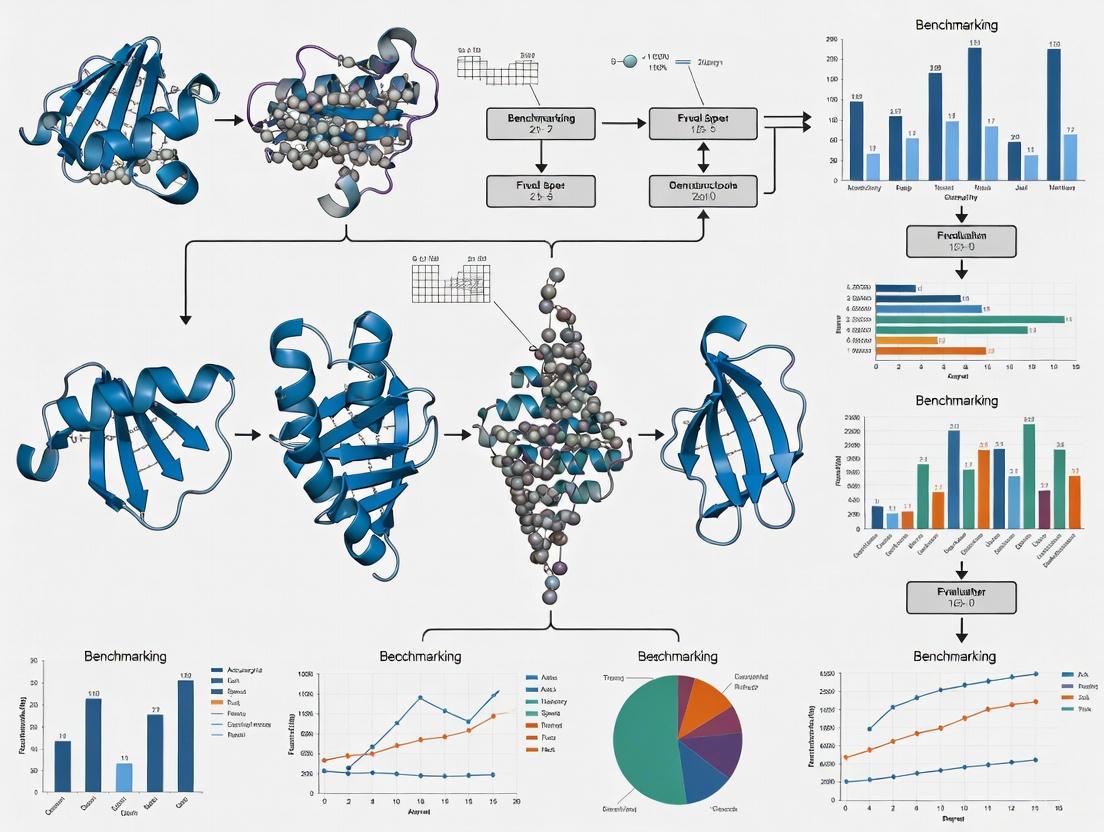
This article provides a comprehensive benchmarking analysis of modern protein structure prediction tools, addressing critical needs for researchers, scientists, and drug development professionals.
Benchmarking Protein Structure Prediction Tools: From Monomeric Accuracy to Complex Challenges in Biomedical Research
Abstract
This article provides a comprehensive benchmarking analysis of modern protein structure prediction tools, addressing critical needs for researchers, scientists, and drug development professionals. We explore the foundational principles underpinning AI-driven structure prediction, evaluate methodological approaches for single-chain and complex structures, identify key challenges and optimization strategies, and establish rigorous validation frameworks. By synthesizing findings from recent benchmarking studies and Critical Assessment of protein Structure Prediction (CASP) experiments, this review offers practical guidance for tool selection while highlighting persistent gaps in predicting multi-chain complexes, dynamic conformations, and functionally relevant structural features essential for drug discovery applications.
The Protein Structure Prediction Revolution: From AlphaFold Breakthroughs to Current Landscape
The Critical Assessment of protein Structure Prediction (CASP) is a community-wide, biennial blind experiment established to objectively assess the state of the art in predicting protein 3D structure from amino acid sequence [1]. Since 1994, CASP has served as the gold-standard benchmark for the field, providing rigorous testing through targets whose experimental structures are known but not yet public [2] [3]. The fundamental challenge, often referred to as the "protein folding problem," has been to computationally achieve atomic-level accuracy—a goal that had remained elusive for five decades despite intensive research [4] [5].
The fourteenth CASP experiment (CASP14), conducted in 2020, marked a historic turning point. The AlphaFold2 system developed by DeepMind demonstrated accuracy competitive with experimental methods for the majority of targets, leading CASP organizers to declare the protein folding problem for single chains essentially "solved" [3] [6]. This paradigm shift has profound implications for structural biology, biomedical research, and drug development, establishing a new benchmark for what computational methods can achieve.
Quantitative Assessment: AlphaFold2's Unprecedented Accuracy in CASP14
In CASP14, AlphaFold2's performance substantially exceeded all competing methods. The official CASP assessment uses z-scores based on Global Distance Test (GDT_TS) for ranking, which measures the percentage of amino acid residues within a threshold distance from their correct positions [7] [5].
Table 1: CASP14 Final Group Rankings by Summed Z-Scores
| Group Rank | Group Code | Group Name | Domains Count | Sum Z-Score (>-2.0) |
|---|---|---|---|---|
| 1 | 427 | AlphaFold2 | 92 | 244.0 |
| 2 | 473 | BAKER | 92 | 90.8 |
| 3 | 403 | BAKER-experimental | 92 | 89.0 |
| 4 | 480 | FEIG-R2 | 92 | 72.5 |
| 5 | 129 | Zhang | 92 | 67.9 |
AlphaFold2 achieved a median domain GDTTS of 92.4 across all targets, with predictions exceeding GDTTS of 90 (considered competitive with experimental accuracy) for 58 out of 92 domains [8]. The system produced high-accuracy structures (GDT_TS > 70) for 87 domains [8]. This performance was unmatched, with AlphaFold2 scoring nearly three times higher than the next best group in summed z-scores [7].
Accuracy Across Target Difficulty Categories
CASP categorizes targets by difficulty, from TBM-easy (template-based modeling with clear templates) to FM (free modeling, with no detectable homology to known structures) [3]. Historically, accuracy sharply declined for more difficult targets, but AlphaFold2 dramatically reduced this gap.
Table 2: AlphaFold2 Performance by CASP14 Target Category
| Target Category | Description | Median GDT_TS | Performance Characterization |
|---|---|---|---|
| TBM-Easy | Straightforward template modeling | ~95 | Near-experimental accuracy |
| TBM-Hard | Difficult homology modeling | ~90 | Competitive with experiment |
| FM/TBM | Remote structural homologies | ~87 | High accuracy |
| FM | No detectable homology | ~85 | High accuracy |
The most remarkable aspect was AlphaFold2's performance on free modeling (FM) targets, where it achieved a median GDT_TS of 87.0 [5]. This demonstrated that the system could accurately predict structures even without evolutionary information from homologous proteins.
Atomic-Level Accuracy and Confidence Estimation
Beyond backbone accuracy, AlphaFold2 achieved unprecedented all-atom precision, including side-chain conformations. The all-atom accuracy was 1.5 Å RMSD₉₅ (root-mean-square deviation at 95% residue coverage) compared to 3.5 Å RMSD₉₅ for the best alternative method [4].
The system's internal confidence measure, predicted lDDT-Cα (pLDDT), reliably estimated the actual per-residue accuracy (lDDT-Cα) of predictions [8] [4]. This allowed researchers to identify regions of higher uncertainty within otherwise accurate structures.
The AlphaFold2 Architecture: Core Technical Innovations
AlphaFold2 represented a complete redesign from the CASP13 system, implementing a novel end-to-end deep neural network architecture that directly produces atomic-level protein structures from sequence data [8] [4].
The AlphaFold2 system processes multiple sequence alignments (MSAs) and template structures through several specialized components to generate refined 3D coordinates.
Diagram 1: AlphaFold2 End-to-End Architecture. The system processes sequence and evolutionary information through specialized modules to directly produce 3D atomic coordinates with confidence estimates.
Evoformer: Integrating Evolutionary and Structural Information
The Evoformer is a novel neural network block that constitutes the core of AlphaFold2's reasoning engine [4]. It jointly processes the MSA and pairwise residue representations through multiple attention mechanisms and update operations:
- MSA Representation: An Nseq × Nres array encoding evolutionary information across sequences
- Pair Representation: An Nres × Nres array encoding residue-residue relationships
- Triangular Attention: Self-attention mechanisms that enforce geometric constraints by considering triplets of residues
- Information Exchange: Continuous bidirectional information flow between MSA and pair representations
The Evoformer develops and refines a concrete structural hypothesis through its layers, enabling the system to reason about spatial and evolutionary relationships simultaneously [4].
Structure Module: From Representations to 3D Coordinates
The Structure Module generates explicit 3D atomic coordinates using a rotationally and translationally equivariant architecture [8] [4]. Key innovations include:
- Frame Representation: Each residue is represented as a rigid body frame (rotation and translation)
- Equivariant Transformers: Process the frame representations while preserving geometric symmetries
- Side-Chain Prediction: Implicit reasoning about unrepresented side-chain atoms
- Iterative Refinement: Repeated processing through "recycling" to progressively improve accuracy
The structure module is initialized with all residues at the origin but rapidly develops a highly accurate protein structure through multiple iterations [4].
Experimental Protocols and Methodologies
CASP14 Assessment Protocol
The CASP14 experiment followed a rigorous blind assessment protocol [2] [3]:
- Target Selection: 52 proteins with recently solved but unpublished structures were provided as sequences
- Prediction Period: Participants had approximately three weeks to submit models
- Evaluation: Predictions were compared to experimental structures using metrics including GDT_TS, RMSD, and lDDT
- Categories: Targets were divided into difficulty categories based on similarity to known structures
AlphaFold2 Implementation and Training
AlphaFold2 was trained on publicly available data including ~170,000 structures from the Protein Data Bank and large databases of protein sequences with unknown structure [5]. The training process incorporated:
- Multi-task Learning: Joint training on structure, distograms, and pLDDT
- Recycling: Iterative refinement where outputs are fed back into the same modules
- Masked MSA Loss: Training on corrupted MSAs to improve robustness
- Physical Constraints: Incorporation of stereochemical knowledge through the structure module
The system used approximately 16 TPUv3s (equivalent to ~100-200 GPUs) over several weeks for training [5].
Model Selection and Ranking Strategy
For CASP14 submissions, AlphaFold2 employed a specific prediction protocol [8]:
- Multiple Predictions: Five models generated using different parameter sets
- Confidence Ranking: Models ranked by predicted lDDT (pLDDT)
- Template Clustering: For targets with conformational diversity (e.g., T1024), templates were clustered to generate structurally diverse predictions
- Relaxation: Gradient descent using Amber99sb to remove stereochemical violations
This approach ensured that the highest-confidence models were submitted while maintaining diversity where appropriate.
Table 3: Key Research Resources for Protein Structure Prediction
| Resource/Component | Type | Function in Workflow | Access Information |
|---|---|---|---|
| AlphaFold Protein Structure Database | Database | Provides >200 million pre-computed structures for known protein sequences | Publicly available at alphafold.ebi.ac.uk [9] |
| Evoformer | Algorithm | Neural network architecture for joint processing of MSA and pairwise information | Open source code available [4] |
| Structure Module | Algorithm | Equivariant network for generating 3D atomic coordinates | Open source code available [4] |
| Multiple Sequence Alignment (MSA) | Data Input | Evolutionary information from homologous sequences | Generated from sequence databases (UniProt) [4] |
| pLDDT (predicted lDDT) | Metric | Per-residue confidence estimate for predictions | Generated by AlphaFold2 system [8] [4] |
| Global Distance Test (GDT_TS) | Assessment | Primary metric for overall structure accuracy | Used in CASP evaluation [1] [7] |
| Template Structures | Data Input | Known structures from PDB for homology information | Retrieved from Protein Data Bank [8] |
Case Study: T1024 - Handling Conformational Diversity
The prediction for target T1024 (active transporter LmrP) demonstrated AlphaFold2's capabilities and limitations when dealing with proteins exhibiting multiple conformations [8].
Initial Analysis and Challenges
Initial predictions for T1024 showed:
- High MSA coverage (5702 alignments) and good templates
- Low pLDDT in the linker region around residue 200, suggesting flexibility
- Lack of diversity in five initial predictions (all TM score >0.99 to one another)
- Unrealized inter-domain contacts in the expected distance matrix
Intervention Strategy
The AlphaFold team implemented a manual intervention to capture alternate conformations [8]:
- Template Clustering: Templates were clustered by conformational state (inward-facing vs. outward-facing)
- MSA Limitation: Reducing MSA to top 30 sequences to increase template influence
- Diverse Prediction Generation: Creating extra predictions using different template clusters
This case highlighted both the system's ability to detect uncertainty and the potential need for targeted interventions in complex cases.
Implications for Structural Biology and Drug Development
Immediate Applications and Validation
AlphaFold2 predictions have already proven valuable in practical structural biology:
- Molecular Replacement: Models successfully used to solve crystal structures through molecular replacement [10] [3]
- Membrane Proteins: Accurate predictions for challenging membrane proteins that are difficult to crystallize [5]
- Structure Correction: Identification and correction of local errors in experimental structures [10]
Professor Andrei Lupas, a CASP assessor, noted that "AlphaFold's astonishingly accurate models have allowed us to solve a protein structure we were stuck on for close to a decade" [5].
Limitations and Future Directions
Despite the breakthrough, AlphaFold2 has limitations that represent future research directions:
- Protein Complexes: Limited capability for predicting protein-protein interactions and complexes
- Dynamics: Does not capture conformational dynamics and multiple states
- Conditional Effects: Cannot model environmental influences on structure
- Ligand Interactions: Limited ability to predict binding sites and small molecule interactions
The CASP14 results represent a beginning rather than an endpoint, opening new research avenues in structural biology and computational biophysics [3] [6].
AlphaFold2's performance at CASP14 represents a paradigm shift from incremental progress to transformative accuracy. By achieving atomic-level precision competitive with experimental methods for most single-protein targets, the system has effectively solved the classical protein folding problem that stood for 50 years [4] [3].
This breakthrough was enabled by several key innovations: the Evoformer architecture for joint reasoning about evolutionary and structural information; an equivariant structure module for direct coordinate generation; and iterative refinement through recycling [8] [4]. The system's performance, with a median GDT_TS of 92.4 and overwhelming dominance in CASP14 assessment, establishes a new benchmark for the field [7] [6].
For researchers and drug development professionals, AlphaFold2 and its open-access database provide immediate resources for structural insight, particularly for proteins resistant to experimental determination [9] [5]. As the methods continue to develop and address remaining challenges like complex prediction and conformational dynamics, the impact on biological research and therapeutic development is expected to grow substantially in the coming years.
The prediction of protein three-dimensional structures from amino acid sequences represents a cornerstone of modern computational biology. Accurate structural models provide an indispensable bridge between genomic information and biological function, enabling mechanistic insights at the molecular level. The field has undergone a revolutionary transformation with the advent of deep learning-based methods, notably AlphaFold2, which achieve accuracy comparable to some experimental structure determination methods [11] [12]. This advancement has fundamentally altered the landscape of structural biology, providing researchers with unprecedented access to reliable protein models for diverse applications. These computed structure models (CSMs) have transitioned from theoretical curiosities to practical tools that drive discovery across biological disciplines, from fundamental biochemistry to applied drug design [12].
The utility of these predictions is systematically evaluated through community-wide initiatives such as the Critical Assessment of Structure Prediction (CASP), which provides rigorous blind testing of methodology performance [13] [14]. As the accuracy and accessibility of prediction tools continue to improve, their integration into biological research workflows accelerates, enabling scientists to generate testable hypotheses about protein function, interaction networks, and molecular mechanisms underlying health and disease. This technical guide examines the key biological applications of protein structure prediction, focusing on the experimental validation protocols and quantitative benchmarks that establish their reliability for research and development.
Foundational Technologies and Methods
Modern protein structure prediction relies on two primary computational approaches: template-based modeling for sequences with recognizable homology to experimentally determined structures, and template-free modeling for novel folds [12]. The breakthrough in template-free modeling came from integrating evolutionary information derived from multiple sequence alignments (MSAs) with deep learning architectures. AlphaFold2 implements an end-to-end deep neural network that simultaneously processes co-evolutionary information through a specialized transformer (Evoformer) and amino acid geometry through a structural module [11]. This approach leverages the observation that amino acids in close spatial proximity often exhibit correlated evolutionary patterns, allowing for accurate inference of residue-residue contacts [11] [15].
RoseTTAFold from the Baker group represents another significant advancement, producing predictions approaching AlphaFold2 accuracy [11]. Recently, protein language models such as ESMFold have demonstrated capability to predict structures from single sequences without explicit MSAs, potentially by memorizing motifs derived from co-evolutionary information during training [11]. For challenging targets with few homologs, ESMFold can sometimes outperform MSA-dependent methods [11].
The confidence of predicted models is typically quantified using per-residue local distance difference test (pLDDT) scores, which estimate the reliability of local structure predictions on a scale from 0 to 100 [12]. Regions with pLDDT > 70 are generally considered confident predictions, while lower scores may indicate unstructured regions or prediction uncertainties [12] [16]. For multimetric assemblies, methods like DeepSCFold have advanced complex structure prediction by incorporating sequence-derived structure complementarity and interaction probability metrics, demonstrating significant improvements in interface accuracy [17].
Table 1: Key Protein Structure Prediction Tools and Their Applications
| Tool | Methodology | Primary Application | Key Output | Confidence Metric |
|---|---|---|---|---|
| AlphaFold2 | Deep learning with MSAs and structural modules | Monomeric protein structures | Atomic coordinates | pLDDT (0-100) |
| AlphaFold-Multimer | Extension of AlphaFold2 for complexes | Multi-chain protein complexes | Atomic coordinates | pLDDT, interface score |
| RoseTTAFold | Deep learning with three-track architecture | Monomeric structures | Atomic coordinates | pLDDT |
| DeepSCFold | Sequence-derived structure complementarity | Protein complexes with low co-evolution | Atomic coordinates | TM-score, interface metrics |
| ESMFold | Protein language model without explicit MSAs | Structures with limited homologs | Atomic coordinates | pLDDT |
Key Biological Applications and Experimental Validation
Drug Design and Target Identification
Protein structure predictions have profound implications for structure-based drug design, particularly for targets lacking experimental structures. Accurate models of drug targets enable virtual screening of compound libraries, identification of binding pockets, and rational design of inhibitors with optimized interactions. The reliability of these applications depends on high-confidence predictions, particularly in binding sites and functional regions.
For the human dopamine transporter, homology modeling using the fruit fly structure as a template (55% sequence identity) generated a reliable CSM that highlighted structural differences in a key loop region [12]. This model provided insights for inhibitor design despite variations in loop length between species. Similarly, for the Kir7.1 potassium channel, a disease-associated mutant (T153I) was modeled to understand its impact on potassium conduction, revealing how the mutation within the inner pore affects ion transport [18]. These examples demonstrate how CSMs bridge structural information between homologs to facilitate drug discovery.
Functional Annotation of Proteins and Domains
A primary application of structure prediction is the functional annotation of proteins of unknown function. Structural similarity often reveals functional relationships even in the absence of sequence similarity, enabling transfer of functional insights from well-characterized proteins to unannotated ones.
The application to centrosomal and centriolar proteins exemplifies this approach. For CEP44, a protein with essential roles in centrosome and centriole biogenesis, AF2 predicted a Calponin Homology (CH) domain structure with remarkable accuracy (RMSD 0.74 Å compared to subsequent experimental structure) [16]. The prediction revealed a conserved basic patch on the domain surface, which subsequent mutagenesis confirmed as essential for microtubule and centriole association [16]. Similarly, for CEP192, AF2 correctly predicted the structure of its Spd2 domain, including a unique 60-residue insertion that defines a cradle-like conformation critical for function [16]. In both cases, the predictions provided insights years before experimental structures were determined.
Elucidating Protein-Protein Interaction Networks
Understanding cellular function requires knowledge of how proteins assemble into complexes. Predicting the structures of protein-protein interactions remains challenging but has seen significant advances. DeepSCFold, for instance, uses sequence-based deep learning to predict protein-protein structural similarity and interaction probability, constructing deep paired multiple-sequence alignments for complex structure prediction [17].
This approach proved particularly valuable for elucidating the Chibby1-FAM92A complex, for which no structural information was previously available [16]. The prediction enabled hypothesis-driven experiments that validated the interaction and provided insights into its regulatory mechanism. Similarly, AF2 predictions elucidated previously unknown features in the structure of TTBK2 bound to CEP164, with important implications for understanding the regulation and function of this complex in centriole biology [16]. For antibody-antigen complexes from the SAbDab database, DeepSCFold enhanced the prediction success rate for binding interfaces by 24.7% and 12.4% over AlphaFold-Multimer and AlphaFold3, respectively [17].
Characterization of Disease Mutations
Protein structure models enable mechanistic interpretation of genetic variations by mapping mutations to structural contexts. This approach helps distinguish pathogenic mutations from benign polymorphisms by assessing their potential to disrupt protein stability, interaction interfaces, or functional sites.
In the Src oncoprotein, CSMs reveal a multi-domain architecture with flexible regions that adopt different conformations in active versus inactive states [12]. The C-terminal tail contains a key tyrosine residue (Tyr-529) whose phosphorylation status regulates activity through conformational changes [12]. Modeling disease-associated mutations in this context provides insights into how they might alter regulatory mechanisms. Similarly, for the HINT1 protein associated with axonal motor neuropathy, structural predictions facilitated understanding of its function as a zinc- and calmodulin-regulated cysteine SUMO protease [18].
Table 2: Quantitative Benchmarks of Prediction Tools for Biological Applications
| Application Domain | Evaluation Metric | AlphaFold2 | AlphaFold-Multimer | DeepSCFold | ESMFold |
|---|---|---|---|---|---|
| Monomer Structures | TM-score (CASP15) | 0.89 | - | - | 0.79 |
| Protein Complexes | TM-score (CASP15) | - | 0.76 | 0.85 | - |
| Antibody-Antigen Interfaces | Success Rate (%) | - | 68.3 | 85.9 | - |
| Challenging Targets | Improvement over AF2 | - | - | +11.6% TM-score | Varies |
| Prediction Speed | Sequences/day | ~100 | ~50 | ~40 | ~1000 |
Experimental Protocols for Validation
X-ray Crystallography Verification
Purpose: To experimentally validate the accuracy of predicted protein structures and provide atomic-level insights into functional mechanisms.
Methodology:
- Protein Expression and Purification: Clone the gene of interest into an appropriate expression vector. Express the protein in a suitable system (e.g., E. coli, insect cells). Purify using affinity, ion-exchange, and size-exclusion chromatography [16].
- Crystallization: Screen crystallization conditions using commercial screens. Optimize initial hits. For CEP44 CH domain and CEP192 Spd2 domain, crystals were obtained at 20°C using sitting-drop vapor diffusion [16].
- Data Collection and Structure Determination: Collect X-ray diffraction data at synchrotron sources. For CEP44: 2.3 Å resolution, experimentally phased. For CEP192 Spd2: 2.1 Å resolution, experimentally phased [16].
- Model Building and Refinement: Build atomic models into electron density maps. Refine using phenix.refine or similar software [16].
- Validation: Compare experimental structures with predictions using root-mean-square deviation (RMSD) calculations. For CEP44 CH domain: 116 residues superposed with RMSD of 0.74 Å. For CEP192 Spd2: 273 residues superposed with RMSD of 1.83 Å [16].
Functional Characterization Through Mutagenesis
Purpose: To validate functional insights derived from predicted structures by assessing the consequences of targeted mutations.
Methodology:
- Identification of Functional Regions: Analyze predicted structures to identify conserved surface patches, potential binding sites, or critical structural elements [16].
- Site-Directed Mutagenesis: Design mutants to disrupt identified regions. For CEP44, mutate residues constituting the conserved basic patch (K41, R45, R79, R105) to alanine [16].
- Functional Assays: Assess the functional consequences of mutations. For CEP44, evaluate microtubule and centriole association through immunofluorescence and binding assays [16].
- Interpretation: Correlate structural features with functional data. For CEP44, mutations in the basic patch abolished microtubule binding, validating the functional importance of the predicted region [16].
Protein-Protein Interaction Validation
Purpose: To experimentally confirm predicted protein complexes and interaction interfaces.
Methodology:
- Complex Prediction: Use tools like AlphaFold-Multimer or DeepSCFold to predict the structure of protein complexes [17] [16].
- Interaction Assays: Validate predictions using co-immunoprecipitation, pull-down assays, or surface plasmon resonance [16].
- Interface Mutagenesis: Design mutations at predicted interface residues and test their impact on binding affinity [16].
- Functional Consequences: Assess how disrupting the interface affects biological function. For TTBK2-CEP164 and Chibby1-FAM92A complexes, validation provided insights into their regulation and function in centriole biology [16].
Workflow for protein structure prediction validation and application
Table 3: Key Research Reagent Solutions for Protein Structure Analysis
| Resource Category | Specific Tools/Databases | Primary Function | Application Context |
|---|---|---|---|
| Structure Prediction Servers | NovaFold AI, NovaFold AI-Multimer, NovaFold AI Boltz | AI-based structure prediction | Monomeric and multimeric protein structure prediction |
| Protein Sequence Databases | UniRef30/90, UniProt, Metaclust, BFD, MGnify | Provide evolutionary information for MSAs | Input for co-evolutionary analysis in AlphaFold2 |
| Structure Databases | Protein Data Bank (PDB), AlphaFold Database, ModelArchive | Repository of experimental and predicted structures | Template-based modeling, comparative analysis |
| Specialized Resources | Big Fantastic Virus Database, Viro3D, SAbDab | Domain-specific structural information | Virus proteins, antibody-antigen complexes |
| Model Quality Assessment | DeepUMQA-X, pLDDT, TM-score | Evaluate prediction reliability | Model selection, confidence estimation |
| Visualization & Analysis | Protean 3D, NGLView, Biopython | 3D structure visualization and manipulation | Structural analysis, figure preparation |
| Experimental Validation | X-ray crystallography, Cryo-EM, SPR, Mutagenesis kits | Experimental verification of predictions | Benchmarking and validating computational models |
Protein structure prediction has evolved from a challenging computational problem to a practical tool that drives biological discovery. The applications spanning drug design, functional annotation, protein-protein interactions, and disease characterization demonstrate the transformative impact of these technologies on biomedical research. As benchmarked through rigorous experimental validation, the accuracy of leading prediction tools now supports their integration into standard research workflows.
Future advancements will likely address current limitations, particularly for multimeric assemblies, flexible regions, and interactions with nucleic acids and small molecules. Emerging methods like DeepSCFold show promise in capturing structural complementarity beyond sequence co-evolution, offering improved performance for challenging targets such as antibody-antigen complexes [17]. The continued growth of experimental structures in the PDB and sequence databases will further enhance prediction accuracy, enabling even broader applications in structural biology and drug development.
For researchers, the key to successful application lies in understanding both the capabilities and limitations of these tools. Critical assessment of pLDDT scores, experimental validation when possible, and integration with complementary biochemical and biophysical approaches remain essential for deriving biologically meaningful insights from predicted structures. As the field continues to advance, protein structure prediction will increasingly serve as a fundamental technology bridging genomic information and biological function across diverse research applications.
The field of protein structure prediction has been revolutionized by the advent of sophisticated computational methods, particularly deep learning-based approaches. Independent, blind assessment is fundamental for establishing the state-of-the-art, identifying methodological limitations, and guiding future research and development [19]. The Critical Assessment of protein Structure Prediction (CASP) experiments serve as the primary community-wide benchmark for the field, providing a rigorous, biennial evaluation of the accuracy of protein structure modeling methods based on amino acid sequence [10] [2]. These experiments are complemented by platforms like the Continuous Automated Model EvaluatiOn (CAMEO), which provides weekly, automated benchmarking of publicly available prediction servers, ensuring ongoing assessment between CASP rounds [19]. For researchers, scientists, and drug development professionals, understanding these frameworks is essential for critically evaluating the tools they may employ in their work. This guide provides an in-depth technical examination of the evolution, current state, and methodologies of these crucial assessment frameworks, contextualized within the broader landscape of benchmarking protein structure prediction tools.
The CASP Experimental Framework: Methodology and Evolution
Core Principles and Design
Since its inception in 1994, the fundamental design of CASP has been a blind prediction experiment. Organizers release amino acid sequences of proteins whose structures have been experimentally determined but are not yet publicly available. Predicting groups worldwide submit their models, which are subsequently compared to the experimental reference structures by independent assessors [10] [2]. This blind design prevents bias and ensures a fair evaluation of a method's true predictive power. CASP has historically been a biennial experiment, with CASP16 scheduled for 2024 [10]. The assessment covers multiple categories of modeling, reflecting the different challenges in the field, as detailed in Table 1.
Table 1: Key Prediction Categories in Recent CASP Experiments
| Category | Focus of Assessment | Key Metrics |
|---|---|---|
| High Accuracy (HA) | Accuracy of models on domains where high accuracy is achievable [2]. | GDTTS, GDTHA |
| Topology (TO) | Accuracy of models for difficult targets with low accuracy [2]. | GDT_TS |
| Assembly | Accuracy in modeling domain-domain, subunit-subunit, and protein-protein interactions (a.k.a. quaternary structure) [10] [2]. | Interface Contact Score (ICS/F1), LDDTo |
| Refinement | Ability to improve the accuracy of near-native models [10] [2]. | GDT_TS improvement |
| Contact/Distance Prediction | Accuracy in predicting inter-residue contacts and distances [2]. | Precision |
| Accuracy Estimation | Reliability of model quality scores provided by predictors [2]. | Correlation between predicted and observed scores |
| Biological Relevance | Usefulness of models in answering biologically meaningful questions [2]. | Target provider-defined questions |
Quantifying Progress: Key Performance Metrics
The CASP assessment relies on robust, quantitative metrics to evaluate and compare submitted models. The Global Distance Test (GDT) is a central metric, expressed as GDTTS (Total Score) and GDTHA (High Accuracy). GDTTS estimates the average percentage of Cα atoms in the model that can be superimposed on the corresponding atoms in the experimental structure within a defined distance cutoff (typically 1, 2, 4, and 8 Å) [10]. A higher GDTTS indicates a more accurate model, with scores above ~90 considered competitive with experimental methods for many applications [10]. The Local Distance Difference Test (lDDT) is another key metric, a superposition-free score that evaluates local distance differences of atoms in a model, making it particularly useful for assessing models of multi-chain complexes [10]. For the Assembly category, the Interface Contact Score (ICS or F1) is used, which measures the precision and recall of inter-chain residue contacts in the model compared to the native structure [10].
The progression of these metrics across CASP experiments reveals the dramatic advances in the field. As shown in Table 2, the introduction of deep learning, particularly AlphaFold2, marked a step-change in performance.
Table 2: Evolution of Model Accuracy in CASP (Selected Highlights)
| CASP Edition (Year) | Key Methodological Development | Representative Performance Leap |
|---|---|---|
| CASP4 (2000) | Early ab initio modeling | First reasonable accuracy for small proteins (<120 residues) [10]. |
| CASP11 (2014) | Utilization of predicted contacts | First accurate model of a larger new fold protein (256 residues) [10]. |
| CASP13 (2018) | Advanced deep learning for contact/distance prediction | Average GDT_TS for free modeling targets increased from 52.9 (CASP12) to 65.7 [10]. |
| CASP14 (2020) | AlphaFold2 (end-to-end deep learning) | ~2/3 of targets reached GDTTS >90 (competitive with experiment); high accuracy (GDTTS>80) for ~90% of targets [10]. |
| CASP15 (2022) | Extension of deep learning to multimers | Accuracy of multimer models almost doubled in ICS and increased by 1/3 in LDDTo compared to CASP14 [10]. |
Complementary Benchmarking Platforms
The CAMEO Platform
The Continuous Automated Model EvaluatiOn (CAMEO) platform operates as a crucial complement to the biennial CASP experiments. CAMEO performs weekly, fully automated evaluations of protein structure prediction servers that are publicly accessible. Its continuous nature allows for real-time tracking of method performance on a larger set of targets, providing a valuable dynamic view of the field's progress [19]. CAMEO has also been extended to benchmark methods for predicting macromolecular complexes, mirroring the expanding scope of CASP [19].
Benchmarking Specific Challenges
Specialized benchmarks have emerged to stress-test predictors in specific areas. For instance, the performance on peptide structures (typically 10-40 amino acids) has been systematically investigated using experimentally determined NMR structures as a reference. One such study benchmarked AlphaFold2 on 588 peptides across categories like α-helical membrane-associated, β-hairpin, and disulfide-rich peptides, finding high accuracy for α-helical and disulfide-rich peptides but shortcomings in predicting Φ/Ψ angles and disulfide bond patterns in some cases [20]. Similarly, the SPIRED method, a lightweight single-sequence predictor, was recently evaluated on CASP15 and CAMEO targets, achieving a TM-score of 0.786 on the CAMEO set, comparable to other state-of-the-art single-sequence methods like OmegaFold [21].
Quantitative Performance of State-of-the-Art Tools
The evolution of assessment frameworks has provided clear, quantitative evidence of the performance leap driven by new AI methods. The following table synthesizes recent benchmarking results for several leading protein structure prediction tools, highlighting their performance across different types of structural challenges.
Table 3: Benchmarking Performance of Modern Protein Structure Prediction Tools
| Tool / Method | Benchmark Set | Reported Performance | Key Context |
|---|---|---|---|
| AlphaFold2 | CASP14 Targets | GDT_TS >90 for ~2/3 of targets; >80 for ~90% of targets [10]. | Revolutionized monomer prediction; accuracy competitive with experiment. |
| DeepSCFold | CASP15 Multimer Targets | Improvement of 11.6% and 10.3% in TM-score over AlphaFold-Multimer and AlphaFold3, respectively [17]. | Focuses on protein complexes; uses sequence-derived structural complementarity. |
| AlphaFold3 | CASP15 Multimer Targets | Baseline for DeepSCFold comparison [17]. | Integrated model for proteins, nucleic acids, ligands, etc. |
| SPIRED | CAMEO (680 proteins) | Average TM-score = 0.786 (without recycling) [21]. | Lightweight, single-sequence-based model for fast inference. |
| OmegaFold | CAMEO (680 proteins) | Average TM-score = 0.778 (without recycling) [21]. | Single-sequence-based model. |
| ESMFold | CAMEO (680 proteins) | Outperformed SPIRED and OmegaFold [21]. | Single-sequence-based model with very large number of parameters. |
Experimental Protocols for Benchmarking
The CASP Assessment Workflow
The CASP experiment follows a rigorous, multi-stage protocol to ensure a fair and comprehensive evaluation.
- Target Identification and Release: Experimentalists provide protein sequences for structures that will be made public after the prediction season. CASP organizers release these sequences to predictors over a period of several months [2].
- Model Submission: Predictors submit their 3D atomic coordinates for each target within a strict deadline. Each group can submit multiple models per target [2].
- Blind Assessment: As experimental structures become available, independent assessors (experts in each prediction category) evaluate the submissions using a range of metrics without knowing the identity of the predictor [2].
- Numerical Evaluation and Ranking: The Prediction Center processes the models to generate numerical evaluation results, which are used to rank the methods [10].
- Publication and Community Discussion: Results are published in a special issue of the journal Proteins, and findings are discussed at a public conference [2].
Protocol for Evaluating Complex (Multimer) Prediction
The protocol for assessing protein complex structures, a key focus in recent CASPs, involves specific steps:
- Target Selection: Include experimentally determined structures of protein-protein complexes, ensuring a variety of interface sizes and complexities [10] [17].
- Model Generation: Predictors use only the amino acid sequences of the constituent chains to generate a model of the assembled complex.
- Interface-Focused Evaluation: Assessors compare the predicted complex to the experimental reference using metrics that specifically evaluate the interface quality:
- Interface Contact Score (ICS/F1): Calculated by first identifying residue pairs from different chains that are in contact in both the model and the native structure (True Positives), those in contact only in the model (False Positives), and those in contact only in the native structure (False Negatives). Precision (TP/(TP+FP)), Recall (TP/(TP+FN)), and the F1-score (the harmonic mean of Precision and Recall) are then computed [10].
- LDDTo: A version of the lDDT score used specifically for evaluating the overall accuracy of oligomeric structures [10].
- Comparative Analysis: Performance is compared against baseline methods like AlphaFold-Multimer and earlier CASP results to quantify progress [10] [17].
Workflow Visualization: CASP and CAMEO Assessment Cycles
The following diagram illustrates the integrated and cyclical relationship between the CASP and CAMEO assessment frameworks, which together provide both intensive biennial checkpoints and continuous weekly monitoring of progress in the field.
The following table details key databases, software, and computational resources that are foundational for both developing and benchmarking protein structure prediction methods.
Table 4: Essential Resources for Protein Structure Prediction Research
| Resource Name | Type | Primary Function in Research |
|---|---|---|
| Protein Data Bank (PDB) | Database | Primary repository of experimentally determined 3D structures of proteins, nucleic acids, and complexes; serves as the source of ground-truth data for benchmarking [17]. |
| UniProt (UniRef30/90) | Database | Comprehensive resource of protein sequences and functional information; used for constructing Multiple Sequence Alignments (MSAs), which are critical inputs for many prediction methods [17]. |
| AlphaFold Protein Structure Database | Database | Provides open access to over 200 million predicted protein structures generated by AlphaFold; enables large-scale analysis and can serve as a source of predicted structural features for downstream tasks [9]. |
| ColabFold DB | Database | Combination of multiple sequence databases (UniRef, BFD, MGnify) optimized for fast, scalable MSA construction with ColabFold and AlphaFold2 [17]. |
| AlphaFold-Multimer | Software | An extension of AlphaFold2 specifically designed for predicting structures of protein complexes (multimers); a common baseline and framework for advanced complex prediction [17]. |
| ESMFold | Software | A single-sequence-based protein structure predictor that uses a protein language model; balances high speed with high accuracy, useful for high-throughput predictions [21]. |
| OmegaFold | Software | A deep-learning-based method that predicts structure from a single sequence without the need for MSAs; useful for orphan sequences with few homologs [21]. |
| DeepSCFold | Software | A pipeline for protein complex structure modeling that uses deep learning to predict structural complementarity from sequence, improving interface prediction [17]. |
The evolution of assessment frameworks like CASP and CAMEO has been instrumental in guiding the rapid progress of protein structure prediction. The shift from assessing small, single-domain proteins to evaluating complex multimers and the ability to answer biological questions reflects the field's growing maturity and expanding scope. The rigorous, blind nature of these benchmarks has provided undeniable evidence of the revolutionary impact of deep learning. As the field advances, benchmarks will continue to evolve, likely placing greater emphasis on functional insight, dynamics, and interactions with nucleic acids, ligands, and other molecules in complex cellular environments. For researchers and drug developers, a deep understanding of these assessment frameworks is no longer a niche interest but a critical tool for leveraging the power of modern protein structure prediction.
The field of protein structure prediction has been revolutionized by the advent of deep learning, transitioning from a challenging biological puzzle to a routine computational task. This transformation began in earnest with the breakthrough performance of AlphaFold2 at the CASP14 competition, where it demonstrated accuracy competitive with experimental methods for the first time [22] [11]. The core problem—predicting a protein's three-dimensional atomic structure from its amino acid sequence—has implications spanning basic biological research, understanding disease mechanisms, and drug discovery.
Current state-of-the-art tools operate at the interface of biology, chemistry, and computer science, employing sophisticated neural networks trained on known protein structures and evolutionary information. These methods have largely superseded traditional approaches like homology modeling and protein-protein docking, though significant challenges remain in capturing protein dynamics, conformational diversity, and complex molecular interactions [23] [11]. This technical overview examines the architectural principles, methodological approaches, and performance characteristics of major prediction tools, with particular emphasis on their applicability in pharmaceutical research and structural biology.
Methodology: Comparative Framework for Tool Evaluation
Benchmarking Datasets and Metrics
To ensure consistent evaluation across prediction tools, researchers employ standardized datasets and assessment metrics. The Critical Assessment of Protein Structure Prediction (CASP) competition provides the most rigorous framework, using recently solved experimental structures as blind targets [11]. Additional specialized benchmarks include the SAbDab database for antibody-antigen complexes [17] and curated sets of intrinsically disordered proteins [23].
Primary metrics for assessment include:
- TM-score: Measures global fold similarity (0-1 scale, where >0.5 indicates correct fold)
- pLDDT: Per-residue confidence score (0-100 scale, where >90 indicates high confidence)
- RMSD: Measures atomic distance differences between predicted and experimental structures
- Interface TM-score: Specialized version for evaluating protein-protein interactions
Technical Specifications of Major Prediction Tools
Table 1: Core architectural specifications of major protein structure prediction tools
| Tool | Developer | Core Architecture | Input Requirements | Confidence Metrics |
|---|---|---|---|---|
| AlphaFold2 | Google DeepMind | Evoformer + Structural Module | MSA + Templates | pLDDT, pTM |
| RoseTTAFold | Baker Lab | 3-track neural network | MSA (optional templates) | pLDDT |
| ESMFold | Meta AI | Transformer-based language model | Single sequence | pLDDT |
| OmegaFold | Oxford Protein Informatics | Transformer-based | Single sequence | pLDDT |
| EMBER3D | University of California | Geometric deep learning | Single sequence | Confidence score |
| SimpleFold | Apple | Flow-matching transformer | Single sequence | Ensemble variance |
Table 2: Performance characteristics and computational requirements
| Tool | Prediction Type | MSA Dependency | Disordered Region Handling | Typical Runtime |
|---|---|---|---|---|
| AlphaFold2 | Monomer, Multimer (via AF-Multimer) | High | Moderate (low pLDDT indicates disorder) | Hours (MSA-dependent) |
| RoseTTAFold | Monomer, Complexes | Medium | Moderate | Moderate |
| ESMFold | Monomer | None | Limited | Minutes |
| OmegaFold | Monomer | None | Limited | Minutes |
| EMBER3D | Monomer | None | Limited | Fast |
| SimpleFold | Monomer (full-atom) | None | Good (via ensembles) | Variable |
Established Protein Structure Prediction Tools
AlphaFold2
Architectural Principles: AlphaFold2 employs a novel end-to-end deep neural network architecture that jointly embeds evolutionary information and structural constraints. The system consists of two primary components: the Evoformer, a specialized transformer that processes multiple sequence alignments (MSAs) to extract co-evolutionary signals, and the Structural Module, which generates atomic coordinates using invariant point attention [22] [11]. This architecture enables the model to reason simultaneously about sequence relationships and spatial geometry.
Methodological Workflow: The standard AlphaFold2 pipeline begins with querying massive sequence databases (UniRef, MGnify) using tools like JackHMMER or MMseqs2 to construct deep MSAs. The Evoformer processes these alignments to produce pairwise distance and angle distributions, which the Structural Module translates into 3D atomic coordinates through iterative refinement. The system outputs both the predicted structure and per-residue confidence estimates (pLDDT) that reliably indicate model quality [22].
Performance and Limitations: AlphaFold2 achieves remarkable accuracy, with a median RMSD of approximately 1.6Å on Cα atoms in CASP14, rivaling experimental methods for well-folded domains [22]. However, it exhibits limitations for intrinsically disordered regions (indicated by low pLDDT scores), conformationally flexible proteins, and cases with limited evolutionary information [23] [22]. Additionally, while AlphaFold-Multimer extends capability to complexes, performance remains lower than for monomers, particularly for antibody-antigen interactions where co-evolutionary signals are weak [17].
RoseTTAFold
Architectural Principles: RoseTTAFold implements a three-track neural network that simultaneously processes sequence, distance, and coordinate information, allowing information flow between different representation types [22]. This multi-track approach enables the model to integrate evolutionary coupling information with geometric constraints, though with a different architectural philosophy than AlphaFold2's Evoformer.
Methodological Workflow: The method can operate with or without deep MSAs, though accuracy improves with evolutionary information. RoseTTAFold employs an iterative refinement process where initial predictions inform subsequent updates across the three information tracks. This approach provides robustness when working with shallower MSAs or orphan sequences with limited homologs [23].
Performance Characteristics: While generally slightly less accurate than AlphaFold2 for targets with rich evolutionary information, RoseTTAFold demonstrates competitive performance with significantly reduced computational requirements. Its modular architecture has facilitated adaptations for specialized applications including protein-protein docking and de novo protein design [22].
ESMFold
Architectural Principles: ESMFold represents a paradigm shift from MSA-dependent methods, instead leveraging a protein language model (ESM-2) trained on millions of sequences through self-supervision [22] [24]. The model learns structural principles implicitly from sequence statistics without explicit evolutionary coupling analysis, using a standard transformer architecture to map sequence embeddings directly to 3D coordinates.
Methodological Workflow: ESMFold operates on single sequences without MSAs, dramatically reducing computational requirements from hours to minutes. The ESM-2 encoder produces contextual residue embeddings that capture structural and functional properties, which a structure module decodes into atomic coordinates using geometric transformations [24].
Performance and Applications: While generally less accurate than AlphaFold2 for proteins with rich evolutionary histories, ESMFold excels for orphan sequences with few homologs and enables rapid screening of metagenomic databases [22] [24]. Comparative studies show ESMFold models are superior to AlphaFold2 for approximately 49% of human proteins when predictions disagree, suggesting complementary strengths [24].
Emerging Contenders and Methodological Innovations
SimpleFold: Generative Approaches to Protein Folding
Architectural Innovation: SimpleFold represents a significant departure from established architectures, eliminating domain-specific components like MSA processing, pairwise representations, and triangular updates in favor of a general-purpose transformer backbone trained with flow-matching generative objectives [25]. This approach treats protein folding as a conditional generation task where the amino acid sequence serves as a prompt, analogous to text-to-image generation in computer vision.
Methodological Workflow: The system employs a linear interpolant between noise samples and all-atom positions, conditioned on the amino acid sequence. A transformer-based network learns to approximate the velocity field that moves noise to data through ordinary differential equation integration [25]. This generative approach naturally captures structural uncertainty and enables ensemble prediction, addressing limitations of deterministic methods.
Performance Advantages: SimpleFold-3B, trained on approximately 9 million distilled structures, achieves competitive performance with state-of-the-art baselines while demonstrating superior efficiency on consumer hardware [25]. The flow-matching framework particularly excels at generating structurally diverse ensembles, making it valuable for modeling conformational flexibility.
FiveFold: Ensemble Prediction Methodology
Consensus Architecture: FiveFold employs a meta-prediction strategy that combines outputs from five complementary algorithms: AlphaFold2, RoseTTAFold, OmegaFold, ESMFold, and EMBER3D [23]. This ensemble approach mitigates individual algorithmic limitations through weighted consensus building, leveraging the unique strengths of each component method.
Analytical Framework: The methodology introduces two innovative components: the Protein Folding Shape Code (PFSC), which provides standardized structural representation enabling quantitative comparison, and the Protein Folding Variation Matrix (PFVM), which systematically captures and visualizes conformational diversity [23]. This framework facilitates generation of multiple biologically plausible conformations rather than single static structures.
Therapeutic Applications: The ensemble approach demonstrates particular utility for intrinsically disordered proteins and dynamic systems relevant to drug discovery. By capturing conformational heterogeneity, FiveFold enables targeting of transient binding sites and allosteric pockets previously considered "undruggable" [23].
DeepSCFold: Advancements in Complex Prediction
Architectural Specialization for Complexes: DeepSCFold addresses the significant challenge of protein complex prediction by incorporating sequence-derived structural complementarity information. The method predicts protein-protein structural similarity (pSS-score) and interaction probability (pIA-score) purely from sequence information, enabling more biologically relevant paired MSA construction [17].
Methodological Innovations: Unlike traditional approaches that rely primarily on sequence co-evolution, DeepSCFold leverages structural conservation patterns at interaction interfaces, which are more evolutionarily constrained than sequence motifs. This proves particularly valuable for systems lacking clear co-evolutionary signals, such as antibody-antigen and virus-host interactions [17].
Performance Benchmarks: DeepSCFold demonstrates substantial improvements over existing methods, achieving 11.6% and 10.3% TM-score improvements on CASP15 multimer targets compared to AlphaFold-Multimer and AlphaFold3, respectively [17]. For antibody-antigen complexes, success rates for interface prediction improve by 24.7% and 12.4% over the same benchmarks.
Experimental Protocols and Implementation
Standardized Prediction Workflow
Input Preparation: For MSA-dependent methods, comprehensive sequence databases (UniRef30, UniRef90, BFD, MGnify) must be searched using tools like HHblits, JackHMMER, or MMseqs2. MSA-independent methods require only the canonical amino acid sequence. Specialized applications may require additional inputs like template structures or interaction partners.
Model Configuration: Standard protocols employ default network parameters with 3-5 recycling iterations for refinement. For uncertainty estimation, multiple runs with different random seeds or dropout configurations provide confidence intervals. Ensemble methods typically generate 10-20 structures per target.
Quality Assessment and Validation: pLDDT scores provide reliable per-residue confidence estimates, with values <70 indicating low confidence regions potentially corresponding to disorder or flexibility [22]. TM-score >0.5 indicates correct fold prediction, while RMSD <2.0Å indicates high atomic accuracy. Experimental validation through cryo-EM, X-ray crystallography, or NMR provides ultimate confirmation.
Research Reagent Solutions
Table 3: Essential computational resources and databases for protein structure prediction
| Resource | Type | Primary Function | Access |
|---|---|---|---|
| AlphaFold DB | Database | >200 million precomputed structures | https://alphafold.ebi.ac.uk [9] |
| ColabFold | Software Suite | Rapid MSA generation + AF2/ RoseTTAFold | https://github.com/sokrypton/ColabFold [11] |
| UniProt | Database | Reference protein sequences and annotations | https://www.uniprot.org [26] |
| PDB | Database | Experimental protein structures | https://www.rcsb.org [11] |
| AlphaSync | Database | Continuously updated predicted structures | https://alphasync.stjude.org [26] |
| FiveFold | Methodology | Conformational ensemble generation | Implementation required [23] |
Discussion and Future Perspectives
The rapid evolution of protein structure prediction tools has transformed structural biology from a bottleneck to a high-throughput endeavor. Current methods demonstrate remarkable accuracy for static monomeric structures, yet significant challenges remain in capturing conformational dynamics, protein-ligand interactions, and cellular context [11].
The emerging trend toward ensemble methods and generative approaches represents a paradigm shift from single-structure prediction to modeling structural landscapes. Methods like FiveFold and SimpleFold explicitly address conformational heterogeneity, providing more biologically realistic representations for drug discovery [25] [23]. Similarly, specialized tools like DeepSCFold extend capabilities to protein complexes, particularly for challenging cases like antibody-antigen interactions [17].
Future developments will likely focus on integrating temporal dynamics, environmental factors, and multi-scale representations bridging atomic to cellular resolution. The convergence of physical principles with data-driven approaches promises more physiologically relevant predictions, ultimately enhancing our understanding of biological function and accelerating therapeutic development.
For research implementation, tool selection should be guided by specific application requirements: AlphaFold2 for maximum accuracy with well-characterized proteins, ESMFold for orphan sequences or high-throughput screening, ensemble methods for conformational diversity assessment, and specialized complex predictors for interaction studies. As the field continues to evolve, these tools will increasingly become integrated components of comprehensive structural biology pipelines rather than standalone applications.
Methodologies in Practice: Single-Chain Predictions, Complex Modeling, and Specialized Approaches
The field of computational biology has been revolutionized by the advent of deep learning approaches to protein structure prediction. At the heart of this revolution lies the Evoformer network architecture and the paradigm of end-to-end structure learning, which together have enabled unprecedented accuracy in predicting protein structures from amino acid sequences. These architectural foundations represent a significant departure from previous computational methods that relied heavily on physical simulations or fragment assembly. Framed within the broader context of benchmarking protein structure prediction tools, the Evoformer's innovative design enables the seamless integration of evolutionary information with structural reasoning, allowing models to directly output accurate atomic coordinates. This technical guide examines the core architectural principles underlying these advances, providing researchers and drug development professionals with a comprehensive understanding of the methodologies driving modern computational structural biology.
The Evoformer Architectural Framework
Core Components and Information Processing
The Evoformer constitutes the fundamental building block of AlphaFold2, serving as the primary engine for processing evolutionary and structural information. This novel neural network module was specifically designed to address the graph inference problem of protein structure prediction in three-dimensional space, where edges represent residues in spatial proximity [4]. Unlike traditional sequential architectures, the Evoformer employs a sophisticated multi-track design that simultaneously reasons about sequence patterns, inter-residue relationships, and three-dimensional structure.
The architecture maintains and processes two primary representations: an MSA representation shaped as an Nseq × Nres array (where Nseq is the number of sequences and Nres is the number of residues) and a pair representation shaped as an Nres × Nres array [4]. The MSA representation encapsulates information about individual residues across homologous sequences, while the pair representation encodes the relationships between residues. The key innovation of the Evoformer lies in its continuous exchange of information between these representations through a series of attention-based and non-attention-based operations that occur within each block of the network.
A crucial aspect of the Evoformer's design is its update operations that enforce geometric consistency constraints essential for producing physically plausible structures. The architecture incorporates triangle multiplicative updates that operate on triples of edges, effectively ensuring that the pairwise relationships satisfy triangle inequality constraints necessary for realizable three-dimensional structures [4]. This explicit enforcement of geometric consistency distinguishes the Evoformer from previous approaches and contributes significantly to its atomic-level accuracy.
Attention Mechanisms and Evolutionary Reasoning
The Evoformer employs specialized attention mechanisms that enable efficient reasoning about long-range dependencies in protein sequences and structures. Specifically, it utilizes axial attention operations within the MSA representation, where attention is applied along sequence and residue dimensions separately [27]. During the per-sequence attention in the MSA, the model projects additional logits from the pair representation to bias the MSA attention, creating a closed loop of information flow between different representations [4].
The attention mechanism follows the scaled dot-product formula:
Attention(Q,K,V) = softmax(QKᵀ/√dₖ)V
where Q, K, and V are query, key, and value matrices derived from residue features, and dₖ is the dimension of the keys, which prevents vanishing gradients in high-dimensional spaces [27]. This mechanism allows the model to query interactions between residues, effectively modeling how distant parts of the protein influence each other based on co-evolutionary signals present in the multiple sequence alignment.
The Evoformer's ability to jointly embed MSAs and pairwise features enables it to infer complex evolutionary and spatial relationships. By processing these information sources simultaneously, the network can identify co-evolution patterns where correlated mutations between residues suggest spatial proximity in the folded structure, providing rich implicit structural information without relying exclusively on templates [4]. This integrated reasoning capability represents a significant advancement over previous systems that processed evolutionary and structural information separately.
End-to-End Structure Learning Paradigm
From Distances to Direct Coordinate Prediction
Modern protein structure prediction has transitioned from predicting intermediate representations to direct atomic coordinate generation. Early deep learning approaches, including AlphaFold1, focused on predicting inter-residue distances and angles, which then required post-processing to generate 3D coordinates [27]. In contrast, AlphaFold2 introduced a fully differentiable architecture that directly outputs 3D atomic coordinates through an end-to-end learning approach [27] [4].
This end-to-end paradigm is implemented through two main network stages. The first stage consists of the Evoformer trunk, which processes input sequence alignments and templates. The second stage comprises the structure module, which introduces explicit 3D structure in the form of a rotation and translation for each residue of the protein [4]. These representations are initialized in a trivial state but rapidly develop into a highly accurate protein structure with precise atomic details through iterative refinement.
Key innovations enabling this end-to-end approach include:
- Equivariant Transformers: The structure module uses novel equivariant attention architectures that respect the symmetry of 3D space, allowing the network to implicitly reason about unrepresented side-chain atoms [4].
- Invariant Point Attention (IPA): A specialized attention mechanism that predicts rigid-body transformations for each residue while preserving rotational invariance [27].
- Iterative Refinement: The network employs a recycling mechanism where outputs are recursively fed back into the same modules, enabling continuous improvement of structural accuracy [4].
Integrated Sequence-Structure Learning
Recent advances have extended the end-to-end learning paradigm to encompass both structure prediction and sequence design. The E2EFold model demonstrates this integration by learning both tasks end-to-end in a discrete, stochastic autoencoder framework [28]. This approach enables significantly improved sequence design self-consistency, where the model reconstructs input backbones and predicts sidechain conformations while being guided by an auxiliary sequence recovery objective.
The RoseTTAFold-based ProteinGenerator (PG) further exemplifies this trend by implementing diffusion in sequence space rather than structure space [29]. Beginning from a noised sequence representation, PG simultaneously generates protein sequences and structures by iterative denoising, guided by desired sequence and structural attributes. This approach enables reasoning over both sequence and structure space, allowing the design of proteins with specific functional properties and amino acid compositions beyond the natural distribution [29].
Table 1: Comparison of End-to-End Learning Approaches in Protein Structure Prediction
| Method | Primary Innovation | Training Approach | Key Outputs | Applications |
|---|---|---|---|---|
| AlphaFold2 | Evoformer with structure module | Supervised learning on PDB structures | 3D atomic coordinates | Protein structure prediction [4] |
| E2EFold | Discrete stochastic autoencoder | End-to-end reconstruction | Sequences and structures | Joint structure prediction and sequence design [28] |
| ProteinGenerator | Sequence space diffusion | Denoising diffusion probabilistic model | Sequence-structure pairs | Functional protein design [29] |
| BoltzGen | Unified protein design and structure prediction | Multi-task learning | Novel protein binders | Drug discovery for undruggable targets [30] |
Benchmarking and Performance Metrics
Accuracy Metrics and Validation
Rigorous benchmarking of protein structure prediction tools requires multiple complementary metrics that capture different aspects of structural accuracy. The Critical Assessment of protein Structure Prediction (CASP) competitions have established standardized evaluation protocols that have become the gold standard in the field [27]. Key metrics include:
- Global Distance Test (GDTTS): Measures the percentage of residues aligned within distance cutoffs of 1, 2, 4, and 8 Å, scaled from 0 to 100. AlphaFold2 achieved a median GDTTS of 92.4 in CASP14, dramatically outperforming other methods [27].
- Root-Mean-Square Deviation (RMSD): Quantifies the average atomic distance between superimposed predicted and native structures after optimal alignment. AlphaFold2 demonstrated a median backbone accuracy of 0.96 Å RMSD95 compared to 2.8 Å for the next best method in CASP14 [4].
- Predicted Local Distance Difference Test (pLDDT): A per-residue confidence metric that reliably estimates the local accuracy of predictions. pLDDT values greater than 90 indicate high confidence, while values below 50 suggest low reliability [4] [31].
These metrics collectively provide a comprehensive assessment of prediction quality, with GDT_TS offering a global measure of fold correctness, RMSD quantifying atomic-level precision, and pLDDT providing residue-level confidence estimates.
Comparative Performance Analysis
Extensive benchmarking has demonstrated the revolutionary performance of Evoformer-based approaches. In the challenging CASP14 assessment, AlphaFold2 structures were vastly more accurate than competing methods, with accuracy competitive with experimental structures in a majority of cases [4]. This performance advantage extends beyond the CASP benchmark to real-world applications, as evidenced by the rapid adoption of these tools in biological research.
The impact of these advances is quantifiable through large-scale studies of scientific output. Researchers using AlphaFold submitted approximately 50% more protein structures to the Protein Data Bank than a non-AlphaFold-using baseline of structural biology researchers [32]. Furthermore, the AlphaFold database has been accessed by approximately 3.3 million users in over 190 countries, with more than one million users coming from low- and middle-income countries, dramatically expanding global access to structural information [32].
Table 2: Performance Benchmarks for Protein Structure Prediction Tools
| Method | CASP14 GDT_TS (Median) | Backbone RMSD95 (Å) | All-Atom RMSD95 (Å) | Computational Requirements |
|---|---|---|---|---|
| AlphaFold2 | 92.4 [27] | 0.96 [4] | 1.5 [4] | High (GPU/TPU clusters) |
| Previous Best Method | ~50 (estimated) | 2.8 [4] | 3.5 [4] | Moderate to High |
| RoseTTAFold | Not reported in CASP14 | Not reported | Not reported | Moderate (gaming computer) [33] |
| Liteformer | Competitive with AlphaFold2 [34] | Similar to AlphaFold2 [34] | Not reported | 44% reduced memory vs Evoformer [34] |
Experimental Protocols and Methodologies
Network Training and Optimization
The training of Evoformer-based networks involves sophisticated methodologies that combine supervised learning with novel regularization techniques. AlphaFold2 was trained on experimentally determined protein structures from the Protein Data Bank, incorporating several key innovations [4]:
- Intermediate Losses: Application of loss functions at multiple stages of the network to achieve iterative refinement of predictions.
- Masked MSA Loss: Joint training with the structure prediction objective by randomly masking portions of the input MSA and training the network to reconstruct the original sequences.
- Self-Distillation: Learning from unlabeled protein sequences using the network's own predictions to expand the training dataset.
- Recycling: Repeatedly applying the final loss to outputs and feeding them recursively into the same modules, enabling progressive refinement.
The training process incorporates a frame-aligned point error (FAPE) loss that operates directly on the 3D atomic positions and orientations, placing substantial weight on the orientational correctness of residues [27]. This geometric loss function is crucial for achieving high all-atom accuracy, particularly for side-chain placement.
Architectural Variants and Efficiency Optimizations
While the original Evoformer architecture delivers exceptional accuracy, its computational demands have motivated research into more efficient variants. Liteformer addresses the Evoformer's high memory consumption, particularly concerning the computational complexity associated with sequence length (L) and the number of Multiple Sequence Alignments (s) [34]. The original Evoformer exhibits complexity of O(L³+sL²) due to attention mechanisms involving third-order MSA and pair-wise tensors.
Liteformer employs an innovative attention linearization mechanism, reducing complexity to O(L²+sL) through a bias-aware flow attention mechanism that seamlessly integrates MSA sequences and pair-wise information [34]. This optimization achieves up to a 44% reduction in memory usage and a 23% acceleration in training speed while maintaining competitive accuracy in protein structure prediction, making the technology more accessible for researchers with limited computational resources.
Diagram 1: Evoformer Architecture and Information Flow. This diagram illustrates the key components and information pathways in the Evoformer-based structure prediction network, showing how multiple sequence alignments, templates, and sequence information are integrated to produce 3D atomic structures with confidence estimates.
Research Reagent Solutions
The experimental implementation of Evoformer-based models requires specific computational tools and resources. The following table details essential components for researchers seeking to utilize or build upon these architectural foundations.
Table 3: Essential Research Reagents for Evoformer-Based Protein Structure Prediction
| Resource | Type | Function | Access |
|---|---|---|---|
| AlphaFold2 Code | Software | Reference implementation of Evoformer architecture | Open source (July 2021) [27] |
| RoseTTAFold | Software | Alternative three-track neural network for protein structure prediction | Open source via GitHub [33] |
| Protein Data Bank (PDB) | Database | Experimental protein structures for training and validation | Public repository [35] [27] |
| AlphaFold Protein Structure Database | Database | Precomputed predictions for over 240 million protein structures | EMBL-EBI hosted [32] [27] |
| UniProt | Database | Protein sequences for multiple sequence alignment generation | Public repository [27] |
| Liteformer | Software | Optimized Evoformer variant with reduced memory footprint | Research implementation [34] |
| E2EFold | Software | End-to-end model for joint structure prediction and sequence design | Research implementation [28] |
| ProteinGenerator | Software | Sequence space diffusion model based on RoseTTAFold | Research implementation [29] |
Advanced Applications and Future Directions
Complex Biomolecular Systems
The architectural principles established in Evoformer networks are being extended to model increasingly complex biological systems. AlphaFold3 demonstrates the capability to model joint structures and interactions of biomolecular complexes, including proteins with DNA, RNA, ligands, and ions, using a diffusion-based architecture for enhanced accuracy [27]. Similarly, tools like Umol predict the fully flexible all-atom structure of protein-ligand complexes directly from sequence information, achieving a success rate of 45% when pocket information is provided [31].
These advances enable new applications in drug discovery, where accurate prediction of protein-ligand interactions is crucial. Umol's confidence metrics (pLDDT) can distinguish between strong and weak binders, with ligand pLDDT values above 70 correlating with median affinities of 30 nM, compared to 500 nM for values below 60 [31]. This capability to predict interaction strength directly from sequence information represents a significant advancement toward AI-based drug discovery.
Integrated Design and Prediction Frameworks
The future of protein structure prediction lies in increasingly integrated frameworks that combine structure prediction with design capabilities. BoltzGen exemplifies this trend as the first model to unify protein design and structure prediction while maintaining state-of-the-art performance [30]. This model can carry out a variety of tasks and includes built-in constraints informed by wet-lab collaborators to ensure the creation of functional proteins that respect physical and chemical laws.
The ProteinGenerator framework demonstrates how sequence space diffusion enables the design of proteins with specific properties, such as controlled amino acid composition, isoelectric points, and hydrophobicity [29]. By guiding the diffusion process with sequence-based potentials, researchers can design proteins with evolutionarily undersampled amino acids that confer structural or functional properties, expanding the design space beyond natural proteins.
Diagram 2: Integrated Protein Design and Structure Prediction Workflow. This diagram illustrates the iterative process of protein design and validation using Evoformer-based architectures, showing how sequence, structural, and functional constraints inform the generation of novel proteins that undergo experimental validation.
The architectural foundations of Evoformer networks and end-to-end structure learning have fundamentally transformed the landscape of protein structure prediction and design. By enabling direct reasoning about the spatial and evolutionary relationships inherent in protein sequences, these approaches have achieved accuracy competitive with experimental methods in many cases. The integration of these architectures into broader computational workflows accelerates drug discovery, enzyme design, and fundamental biological research. As these methods continue to evolve toward more efficient implementations and expanded capabilities for modeling complex biomolecular interactions, they promise to further bridge the gap between sequence information and functional understanding, empowering researchers to address previously intractable challenges in structural biology and therapeutic development.
The accurate prediction of protein tertiary (single-chain) structures from amino acid sequences is a cornerstone of structural bioinformatics, with profound implications for understanding biological mechanisms and accelerating drug discovery [35] [36]. The field has been revolutionized by deep learning approaches, particularly AlphaFold2 and its successors, which achieve atomic accuracy for many targets [4]. Despite these advances, obtaining high-quality predictions for difficult targets—those with shallow or noisy evolutionary signals or complex multi-domain architectures—remains a significant challenge [37] [38].
This technical guide details the core components of modern single-chain prediction pipelines, focusing on the iterative refinement of inputs and outputs to boost performance. The methodologies presented are framed within the context of benchmarking research, providing a framework for the systematic evaluation of prediction tools. Performance is quantitatively assessed in community-wide initiatives like the Critical Assessment of protein Structure Prediction (CASP), which serves as the gold standard for comparing state-of-the-art methods [37] [38]. The following sections dissect the pipeline into its fundamental stages: input sequence processing, multiple sequence alignment (MSA) engineering, deep learning-based coordinate generation, and extensive model sampling/ranking, providing protocols and metrics essential for rigorous benchmarking.
Pipeline Architecture and Workflow
The modern single-chain protein structure prediction pipeline is an integrated system where the quality of each stage critically impacts the final output. The following diagram illustrates the core workflow and data flow, from initial input to final model selection.
Input Processing and MSA Engineering
The initial stage of the prediction pipeline transforms the raw amino acid sequence into a rich set of evolutionary and contextual features, with the construction of the Multiple Sequence Alignment (MSA) being particularly critical.
The Role of MSAs in Deep Learning Prediction
MSAs, which consist of homolog sequences aligned to the target, provide the evolutionary co-evolutionary signals that modern deep learning models, like AlphaFold2, use to infer spatial relationships between residues [35] [4]. The Evoformer module in AlphaFold2 processes the MSA and a residue-pair representation to build a concrete structural hypothesis, which is then refined into atomic coordinates by the structure module [4]. For difficult targets, however, the standard MSA generated from standard databases and tools may be shallow (containing too few sequences) or noisy, lacking sufficient co-evolutionary information for accurate prediction [37].
Advanced MSA Engineering Strategies
To address these challenges, advanced pipelines like MULTICOM4 employ MSA engineering, which involves generating a diverse set of MSAs rather than relying on a single best attempt [37]. The core strategies for MSA engineering are outlined below.
Table 1: Key Sequence Databases for MSA Construction
| Database | Description | Role in MSA Construction |
|---|---|---|
| UniProtKB [38] | Comprehensive protein sequence database with manually curated (Swiss-Prot) and automatically annotated (TrEMBL) sections. | Primary source for finding homologous sequences. |
| UniRef [38] | Clusters UniProtKB sequences at various identity thresholds (100%, 90%, 50%) to reduce redundancy. | Improves search efficiency and coverage of sequence space. |
| BFD (Big Fantastic Database) [38] | A large collection of sequences from multiple sources. | Provides a vast resource for finding distant homologs, used by AlphaFold2. |
| MGnify [17] | A catalogue of metagenomic sequences. | Helps find unique homologs from environmental samples, expanding evolutionary coverage. |
Experimental Protocol: Generating Diverse MSAs
- Gather Sequences: Individually search the target sequence against multiple sequence databases (e.g., UniRef30, UniRef90, BFD, MGnify) using tools like Jackhammer, HHblits, or MMseqs2 [37] [17]. This yields several preliminary MSAs with varying depths and evolutionary backgrounds.
- Apply Domain Segmentation: For long or multi-domain targets, use domain prediction tools to identify discrete domains within the sequence. Generate independent MSAs for each segmented domain to capture more focused co-evolutionary signals [37].
- Filter and Combine: The resulting collection of MSAs from the previous steps forms the diverse MSA set that serves as the enhanced input for the structure prediction model.
Coordinate Generation and Model Sampling
The engineered MSAs are fed into deep learning models to generate three-dimensional atomic coordinates. Relying on a single model run is often insufficient for difficult targets.
Deep Learning-Based Structure Prediction
Models like AlphaFold2 and AlphaFold3 employ an end-to-end deep learning architecture to predict atomic coordinates. The process involves two main stages:
- Evoformer Processing: The input MSA and pairwise features are processed through the Evoformer block, a novel neural network architecture that uses attention mechanisms to exchange information between the MSA and residue pairs, building a refined structural representation [4].
- Structure Module: This module takes the output of the Evoformer and generates a full atomic structure (including side chains) through a series of equivariant transformations. It outputs a 3D structure and per-residue and pairwise confidence measures (pLDDT and predicted aligned error - PAE) [4].
Extensive Model Sampling
To explore the conformational space more thoroughly, advanced pipelines perform extensive model sampling. This involves running the prediction model multiple times using different MSAs from the engineered set, different random seeds, and varying model parameters (e.g., recycling steps, network dropout) [37] [17]. The goal is to generate a large ensemble of models (hundreds or thousands) with the hope that at least a subset will be high-quality, even if the first-run model is poor.
Model Ranking and Quality Assessment
After extensive sampling, the pipeline faces the critical challenge of selecting the best model from the generated ensemble. This model ranking step can be more difficult than model generation for hard targets [37].
Limitations of Internal Confidence Scores
AlphaFold models provide internal confidence scores like pLDDT (per-residue local distance difference test) and PAE (predicted aligned error). While generally useful, these scores are not infallible and can fail to identify the best model, especially for hard targets where the model's self-assessment becomes unreliable [37].
Advanced Quality Assessment (QA) Strategies
To overcome this, integrative systems employ a multi-pronged QA strategy:
- Complementary QA Methods: Using multiple, independent model quality assessment methods that leverage different principles (e.g., physics-based energy functions, consensus-based methods, deep learning predictors) provides a more robust evaluation than any single method [37].
- Model Clustering: Clustering models based on structural similarity (e.g., using TM-score) can identify the largest and most structurally consistent cluster. The center of the dominant cluster is often a reliable and accurate prediction [37].
Table 2: Key Evaluation Metrics for Benchmarking Predictions
| Metric | Description | Interpretation |
|---|---|---|
| GDT-TS [37] | Global Distance Test Total Score. Measures the average percentage of Cα atoms under a certain distance cutoff (e.g., 1-8 Å) after superposition. | Closer to 1.00 (or 100%) is better. A high-quality model typically has a GDT-TS > 0.9 [37]. |
| TM-Score [37] [17] | Template Modeling Score. A length-independent metric for measuring global fold similarity. | Ranges from 0-1. A score > 0.5 indicates a correct fold (same SCOP fold family), and > 0.8 indicates a high-accuracy model [37]. |
| pLDDT [4] | Predicted Local Distance Difference Test. AlphaFold's per-residue confidence score. | Ranges from 0-100. Scores > 90 are high confidence, 70-90 are confident, 50-70 are low confidence, and < 50 are very low confidence. |
| Z-Score [37] | Standard score used in CASP to rank predictors. Measures how many standard deviations a predictor's score is above/below the mean for a target. | A positive Z-score indicates above-average performance. The sum of Z-scores across targets determines the overall ranking in CASP. |
Experimental Protocol: Benchmarking a Prediction Pipeline
- Dataset Curation: Use a standardized benchmark dataset like the latest CASP targets or other curated sets (e.g., CB513, TS115) [38]. Ensure no proteins in the test set were used in the training of the models being evaluated.
- Run Predictions: Execute the pipeline (MSA engineering -> model sampling -> model ranking) for every target in the benchmark set.
- Calculate Metrics: For each submitted (top-1) model, compute metrics like GDT-TS and TM-score against the experimental structure using official assessment software.
- Comparative Analysis: Compare the performance (e.g., average TM-score, cumulative Z-score) against baseline methods (e.g., standard AlphaFold2/3 server) and other state-of-the-art predictors as reported in CASP results [37].
The Scientist's Toolkit
Table 3: Essential Research Reagent Solutions for Protein Structure Prediction
| Tool / Resource | Type | Function in the Pipeline |
|---|---|---|
| AlphaFold2/3 [37] [4] | Deep Learning Model | Core engine for generating 3D structure predictions from sequence and MSA inputs. |
| UniProtKB [38] | Database | Primary source of protein sequences for constructing multiple sequence alignments (MSAs). |
| PDB (Protein Data Bank) [38] | Database | Repository of experimentally solved structures; used for training models and as a ground truth for benchmarking. |
| HHblits/Jackhammer/MMseqs2 [17] | Software Tool | Programs used to search sequence databases and generate the initial MSAs. |
| CASP [37] [38] | Benchmarking Initiative | The gold-standard community experiment for objectively assessing the performance of protein structure prediction methods. |
| TM-score [37] | Software Metric | A key metric for evaluating the topological similarity of a predicted model to the native structure. |
| DeepSHAP [39] | Explainable AI (XAI) Tool | Interprets AlphaFold2's predictions by identifying influential amino acids in the input sequence. |
The accuracy of single-chain protein structure prediction for challenging targets has been significantly advanced by moving beyond standardized, single-run approaches. As demonstrated by top-performing systems in CASP16, the key to success lies in an integrative strategy that combines diverse MSA engineering, extensive conformational sampling, and ensemble-based model ranking [37]. Framing these techniques within a rigorous benchmarking context, using standardized datasets and metrics, is essential for driving future innovation. While current methods can generate correct folds for nearly all single-chain proteins, the persistent challenge of reliably selecting the best model underscores the need for continued research into robust, interpretable quality assessment methods.
Determining the structures of protein complexes is fundamental to understanding cellular machinery, yet it remains a formidable challenge in structural biology. The advent of deep learning has revolutionized the prediction of single-chain protein structures, with AlphaFold2 demonstrating unprecedented accuracy. However, the prediction of multimeric protein complexes introduces additional complexities, including accurately modeling inter-chain interactions and interface geometries, often with limited co-evolutionary signals. Benchmarking studies have systematically quantified these challenges, revealing that while AlphaFold-Multimer (AFM) represents a significant advancement over traditional docking approaches, its performance varies considerably across different complex types. For instance, on a benchmark of 152 diverse heterodimeric complexes, AFM generated near-native models (medium or high accuracy) for 43% of cases as top-ranked predictions, vastly surpassing the 9% success rate of unbound protein–protein docking [40]. Nevertheless, its performance on antibody–antigen complexes was notably low, with a subsequent study confirming only an 11% success rate for this critical class of interactions [40].
This whitepaper examines the core challenges in protein complex modeling through the lens of benchmarking results, focusing specifically on strategic improvements to the AlphaFold-Multimer framework. We explore two complementary approaches: the DeepSCFold pipeline, which enhances the quality of input multiple sequence alignments (MSAs) using sequence-derived structural complementarity, and other methods that refine the MSA representation or integrate experimental data. The quantitative benchmarking data and detailed methodologies presented herein provide researchers and drug development professionals with a framework for selecting and implementing advanced complex prediction strategies, ultimately supporting the broader goal of accelerating structure-based drug discovery and functional analysis.
Performance Benchmarking: Quantifying the Current State
Systematic benchmarking is crucial for understanding the capabilities and limitations of protein complex prediction tools. The following tables consolidate key performance metrics from recent evaluations, highlighting the relative strengths of various methods across different categories of complexes.
Table 1: Overall Performance on General Protein Complex Benchmarks
| Method | Benchmark Set | Success Rate (Medium/High Accuracy) | Key Performance Metric |
|---|---|---|---|
| AlphaFold-Multimer (AFM) | 152 heterodimers (BM5.5) | 43% (Top-ranked model) | CAPRI criteria [40] |
| AlphaFold-Multimer (AFM) | 487 difficult complexes | ~60% (for dimers, MMscore >0.75) | MMscore [41] |
| Traditional Docking (ZDOCK) | 152 heterodimers (BM5.5) | 9% (Top-ranked model) | CAPRI criteria [40] |
| DeepSCFold | CASP15 Multimer Targets | 11.6% higher than AFM | TM-score [42] |
Table 2: Performance on Challenging Complex Types
| Method | Complex Type | Benchmark | Performance |
|---|---|---|---|
| AlphaFold-Multimer | Antibody-Antigen | 152 heterodimers subset | 11% success rate [40] |
| AlphaFold-Multimer | Antibody-Antigen | SAbDab (32 targets) | Average DockQ = 0.29 [43] |
| DeepSCFold | Antibody-Antigen | SAbDab database | 24.7% higher success vs. AFM [42] |
| AlphaLink (+ crosslinking MS) | Antibody-Antigen | SAbDab (32 targets) | Average DockQ = 0.59 [43] |
| AlphaFold-Multimer | T Cell Receptor-Antigen | Specialized benchmark | Low accuracy [40] |
The data reveal a clear performance hierarchy. While AFM substantially outperforms traditional docking methods on general heterodimeric complexes, its accuracy drops significantly for adaptive immune recognition complexes like antibody-antigen and T-cell receptor-antigen pairs [40]. This underscores a specific area where strategic enhancements are most needed. Furthermore, benchmarking of a multimer-optimized version of AlphaFold confirmed these limitations, showing that adaptive immune recognition poses a particular challenge for the current algorithm and model [40].
Strategic Approach 1: DeepSCFold and Advanced MSA Construction
Core Methodology and Workflow
The DeepSCFold pipeline addresses a fundamental limitation in complex prediction: the quality and evolutionary signal within the paired Multiple Sequence Alignment (MSA). Unlike standard approaches that rely primarily on sequence-level co-evolution, DeepSCFold leverages deep learning to predict protein-protein structural similarity (pSS-score) and interaction probability (pIA-score) directly from sequence, thereby incorporating structure-aware information [42] [44].
The following diagram illustrates the comprehensive DeepSCFold workflow for constructing paired MSAs and generating complex structures.
Experimental Protocol for DeepSCFold Benchmarking
To objectively evaluate DeepSCFold against state-of-the-art methods, a standardized benchmarking protocol is essential. The following steps outline the methodology used in recent publications [42]:
Dataset Curation:
- CASP15 Multimer Targets: Utilize targets from the Critical Assessment of Structure Prediction (CASP15) competition to assess general performance on a diverse set of complexes. Protein sequence databases available up to a fixed cutoff date (e.g., May 2022) should be used to ensure a temporally blind assessment.
- Antibody-Antigen Complexes: Curate a set of recent antibody-antigen complexes from the Structural Antibody Database (SAbDab) to specifically test performance on notoriously difficult targets with weak co-evolutionary signals.
Model Generation and Comparison:
- Execute DeepSCFold, AlphaFold-Multimer, and AlphaFold3 using the same input sequences for all targets in the benchmark sets.
- For each method, generate a predetermined number of models (e.g., 5 or 25) per target.
Model Quality Assessment:
- Evaluate the global accuracy of the predicted complex structures using the TM-score, which measures topological similarity to the experimental structure (the ground truth).
- Evaluate the local interface accuracy using the DockQ score, a composite metric that combines interface residue contacts (Fnat), interface RMSD (iRMSD), and ligand RMSD (LRMSD) [43]. A DockQ score > 0.23 is generally considered acceptable, > 0.49 medium quality, and > 0.80 high quality [43].
Analysis:
- Calculate the average improvement in TM-score and DockQ for DeepSCFold over the baseline methods.
- Report the success rate, defined as the percentage of targets for which a model of acceptable quality or better was generated.
Strategic Approach 2: MSA Denoising and Experimental Integration
AFProfile: Gradient Descent for MSA Denoising
The AFProfile strategy is predicated on the insight that the information needed for high-quality predictions is often present in the MSAs, but the standard sampling method may fail to utilize it effectively [41]. This method directly "denoises" the MSA cluster profile through gradient descent.
Table 3: Research Reagent Solutions for MSA Denoising and Experimental Integration
| Reagent / Resource | Type | Function in the Protocol |
|---|---|---|
| AFProfile Code | Software | Implements gradient descent to optimize the MSA profile input for AlphaFold-Multimer [41]. |
| AlphaFold-Multimer Weights | Algorithm | Provides the base deep learning network through which gradients are backpropagated [41]. |
| MSA Cluster Profile | Data | The statistical representation of amino acid frequencies at MSA positions, which is the subject of optimization [41]. |
| Predicted Confidence (ipTM/pTM) | Metric | Serves as the target function for gradient descent; the goal is to maximize this score [41]. |
| SDA Crosslinker | Chemical Reagent | Provides experimental distance restraints (< 25 Å) between Lys, Ser, Thr, Tyr residues for AlphaLink [43]. |
| DSSO Crosslinker | Chemical Reagent | Provides in-situ crosslinking data (primarily between Lys residues) from cellular experiments [43]. |
Protocol for AFProfile [41]:
- Initialization: Generate initial MSAs using the standard AlphaFold-Multimer pipeline.
- Sequence Sampling and Feature Creation: Sample sequences from the MSAs to create input features for AFM, including the cluster profile.
- Gradient Descent: Learn a "cluster bias" (a residual) to the cluster profile by performing gradient descent through the AFM network. The optimization aims to maximize the model's confidence score (a combination of interface pTM (ipTM) and pTM).
- Prediction: The optimized MSA profile is used to predict the final protein complex structure. This process effectively sharpens the evolutionary signal, directing the network toward a more accurate structural configuration.
AlphaLink: Integrating Crosslinking Mass Spectrometry Data
For particularly challenging targets, integrating low-resolution experimental data can guide the prediction process. AlphaLink extends AlphaFold-Multimer to incorporate distance restraints derived from crosslinking mass spectrometry (XL-MS) [43].
The following workflow illustrates how experimental crosslinking data is integrated into the deep learning framework to enhance prediction.
Protocol for AlphaLink with Crosslinking MS [43]:
- Data Preparation:
- Generate standard MSAs and templates for the constituent protein chains.
- Obtain crosslinking MS data, either through simulation for benchmarking (e.g., 10% sequence coverage, 20% false-discovery rate) or from real experiments (e.g., using SDA or DSSO crosslinkers).
- Model Generation:
- Input the MSAs, templates, and crosslink distance restraints into the AlphaLink network. The distance restraints are integrated directly into the pair representation of the model to bias the prediction.
- Increase the number of recycling iterations (e.g., to 20) and the number of generated models (e.g., to 200) to allow the network to better converge on a structure satisfying the experimental restraints.
- Model Selection:
- Select the final model based on a combination of high model confidence (ipTM + pTM) and high satisfaction of the crosslinking distance restraints. For flexible complexes, model selection can be improved by first filtering models by crosslink satisfaction and then by confidence [43].
Benchmarking studies have clearly delineated the frontiers of protein complex prediction, demonstrating that while AlphaFold-Multimer is a transformative tool, its performance is not universal. Challenges remain, particularly for complexes involving antibody-antigen and T-cell receptor-antigen recognition. The strategies detailed in this whitepaper—DeepSCFold's structure-aware MSA construction, AFProfile's MSA denoising, and AlphaLink's integration of crosslinking MS data—represent the vanguard of efforts to overcome these hurdles.
These approaches are not mutually exclusive; future pipelines may well combine the structure-complementarity insights of DeepSCFold with the ability to leverage experimental data from AlphaLink. Furthermore, benchmarking frameworks like PepPCBench for protein-peptide complexes will be crucial for guiding future development [45]. As these methods mature and are more widely adopted, the scientific community moves closer to the goal of reliably modeling any protein-protein interaction of interest, thereby unlocking new avenues for understanding cellular biology and accelerating rational drug design.
The accurate prediction of antibody-antigen complex structures is a cornerstone of modern immunology and therapeutic development. These interactions are central to the adaptive immune response, and computational models for predicting them have seen remarkable advances, primarily driven by deep learning technologies. For researchers benchmarking protein structure prediction tools, understanding the capabilities and limitations of these methods is crucial. This guide provides an in-depth technical examination of current state-of-the-art approaches, their performance metrics, and detailed experimental protocols for antibody-antigen interaction prediction, framed within the context of rigorous computational benchmarking.
Current State of Prediction Tools
Performance Benchmarking of Deep Learning Approaches
Recent evaluations of deep learning systems demonstrate significant progress in predicting antibody-antigen interactions. A 2024 assessment of AF2Complex (based on AlphaFold multimer models) employed two benchmark tests focusing on antibodies targeting the SARS-CoV-2 spike protein's receptor-binding domain (RBD). In the first benchmark comprising 36 known experimental structures (PDB36), the system achieved a 61% recall rate and 47% success rate when using a combination of multiple sequence alignment strategies [46].
The performance varied significantly based on the MSA strategy employed. The RBD-binding strategy, which utilizes sequences of known antigen binders, outperformed standard UniProt searches, achieving 58% recall (21/36 targets) compared to 50% recall (18/36) with standard protocols [46]. This highlights the importance of tailored input features for specific interaction types when benchmarking tools.
The introduction of AlphaFold 3 (AF3) represents a substantial advancement in the field. As reported in Nature in 2024, AF3 incorporates a "substantially updated diffusion-based architecture" that demonstrates "substantially higher antibody–antigen prediction accuracy compared with AlphaFold-Multimer v.2.3" [47]. This model moves beyond the evoformer architecture of AF2 to a more streamlined pairformer module and implements a diffusion-based approach that operates directly on raw atom coordinates, eliminating the need for specialized frame representations and stereochemical losses [47].
Table 1: Performance Comparison of Antibody-Antigen Complex Prediction Tools
| Tool | Architecture | Key Features | Reported Success Rate | Limitations |
|---|---|---|---|---|
| AF2Complex (2024) | Evoformer-based | Interface score (iScore) ranking, Multiple MSA strategies | 47-61% recall on PDB36 set [46] | Performance depends on MSA strategy |
| AlphaFold 3 (2024) | Diffusion-based, Pairformer | Unified framework for biomolecules, Direct coordinate prediction | "Substantially higher" than AF-Multimer v2.3 [47] | Prone to hallucination without cross-distillation [47] |
| RoseTTAFold (2022) | Three-track network | Balanced accuracy for H3 loop prediction [48] | Lower overall accuracy than specialized tools [48] | Less accurate for overall antibody structure |
| HADDOCK2.4 | Data-driven docking | Integrates experimental restraints, Ambiguous Interaction Restraints (AIRs) | Not quantified in results | Dependent on accurate paratope definition [49] |
Specialized Challenges in Antibody Modeling
Accurate prediction of antibody-antigen interactions presents unique challenges distinct from general protein-protein interaction prediction. The complementarity-determining regions (CDRs), particularly the H3 loop, exhibit exceptional variability in both sequence and structure, defying conventional homology modeling approaches [48]. As noted in a 2022 assessment of RoseTTAFold, "Precise antibody structure prediction has been a core challenge for a prolonged period, especially the accuracy of H3 loop prediction" [48].
The limited evolutionary conservation of antibody-antigen pairs creates significant obstacles for deep learning methods that rely on multiple sequence alignments. Unlike typical protein complexes with many evolutionary orthologs, "for an antigen–antibody target, such orthologous sequences are unavailable, posing a significant obstacle that limits the predictive capabilities for deep learning methods" [46].
Experimental Protocols and Methodologies
Deep Learning Prediction Workflow
Protocol 1: AF2Complex for Antibody-Antigen Complex Prediction
This protocol outlines the methodology employed in the 2024 benchmark study of AF2Complex for predicting structures of IgG antibodies targeting diverse epitopes [46]:
Target Preparation:
- Extract sequences of variable domains of antibody light (VL) and heavy (VH) chains from databases such as CoV-AbDab
- Include the antigen sequence (e.g., SARS-CoV-2 spike RBD)
- Verify that sequences are not trivially similar to those in training sets
Multiple Sequence Alignment Strategy:
- Implement three distinct MSA approaches:
- UniProt: Standard UniProt sequence library
- RBD-binding: Antibodies known to bind RBD from CoV-AbDab
- Arbitrary: Randomly selected antibodies from healthy individuals
- For strategies (ii) and (iii), compile VH and VL sequences separately, then pair according to cognate pairings in the search library
- Keep MSAs of RBD unpaired from antibody chains
- Implement three distinct MSA approaches:
Structure Prediction:
- Generate 50 structures per target for each MSA strategy
- Use interface score (iScore) for ranking models
- Focus evaluation on antibody-antigen interface, ignoring VH-VL interface
Model Selection and Validation:
- Select top-ranked model based on iScore for each strategy
- Implement combined strategy selecting highest iScore across all approaches
- Evaluate using Interface Similarity score (IS-score) with statistical significance (P-value < 0.01)
- Require confident iScore > 0.4 for practical success
Diagram 1: Deep Learning Prediction Workflow. This illustrates the multi-strategy MSA approach for antibody-antigen complex prediction.
Data-Driven Docking with Experimental Restraints
Protocol 2: HADDOCK2.4 for Antibody-Antigen Docking
This protocol follows the established HADDOCK2.4 workflow for predicting antibody-antigen complex structures using the PDB-tools webserver and ProABC-2 paratope prediction [49]:
System Setup:
- Obtain antibody and antigen structures (e.g., from PDB)
- Use PDB-tools webserver to extract amino acid sequences
- Process biological unit considering functional form
Paratope and Epitope Identification:
- Run ProABC-2 convolutional neural network to identify paratope residues
- Categorize residues by interaction type (hydrophobic/hydrophilic)
- Define epitope based on experimental data or homology
Ambiguous Interaction Restraints (AIRs) Definition:
- Classify residues as "active" (central to interaction) or "passive" (contributory)
- Active residues restrained to be part of interface
- Passive residues can be outside interface without penalty
Three-Stage Docking Protocol:
- Stage 1 (it0): Randomization of orientations and rigid-body minimization
- Stage 2 (it1): Semi-flexible simulated annealing in torsion angle space
- Stage 3: Refinement in Cartesian space with explicit solvent
Analysis and Clustering:
- Cluster final models based on interface ligand RMSD (iL-RMSD) or fraction of common contacts (FCC)
- Select representative structures from top clusters
Cross-Platform Benchmarking Methodology
Protocol 3: Comparative Assessment of Prediction Tools
A 2022 study evaluated RoseTTAFold's performance in antibody modeling through systematic comparison with other tools [48]:
Test Set Generation:
- Retrieve non-redundant antibody set from SAbDab with maximum sequence identity of 80%
- Apply resolution cutoff of < 3.2 Å
- Select 30 antibodies with unique VH and VL chains
Structure Prediction:
- Run RoseTTAFold with HHblits for MSAs, compiled HH-suite-3.3.0
- Process with Rosetta FastRelax to add side chains
- Compare with SWISS-MODEL (homology modeling) and ABodyBuilder
Evaluation Metrics:
- Stratify by Global Model Quality Estimate (GMQE) scores
- Compare accuracy across CDR loops, particularly H3
- Assess overall structure quality and CDR loop geometry
Critical Technical Considerations
Multiple Sequence Alignment Strategies
The quality of multiple sequence alignments fundamentally impacts prediction accuracy. As noted in a 2025 review, "The reliability of multiple sequence alignment (MSA) results directly determines the credibility of the conclusions drawn from biological research" [50]. Post-processing methods have emerged to address inherent limitations in MSA generation:
Table 2: MSA Post-Processing Methods for Enhanced Accuracy
| Method | Type | Key Principle | Applicability to Antibody Prediction |
|---|---|---|---|
| M-Coffee | Meta-alignment | Constructs consistency library from multiple alignments | Moderate (depends on input alignment quality) |
| TPMA | Meta-alignment | Integrates alignments by sum-of-pairs scores | Potentially high for diverse antibody sequences |
| ReAligner | Realigner | Iteratively realigns sequences using single-type partitioning | Useful for refining antibody CDR regions |
| RF Method | Realigner | Optimizes one sequence per iteration | Suitable for antibody humanization studies |
Architectural Innovations in AlphaFold 3
AlphaFold 3 introduces substantial architectural changes that impact its performance on antibody-antigen complexes [47]:
- Pairformer Module: Replaces the evoformer of AF2, operating only on pair representation and emphasizing MSA de-emphasis
- Diffusion Module: Predicts raw atom coordinates directly without frame representations, enabling general molecular graph handling
- Cross-Distillation: Uses AF-Multimer predictions to reduce hallucination in unstructured regions
- Confidence Metrics: Implements diffusion "rollout" procedure for predicting atom-level and pairwise errors
The training process reveals that "during initial training, the model learns quickly to predict the local structures... while the model needs considerably longer to learn the global constellation" [47], explaining the particular challenges in interface prediction.
Diagram 2: AlphaFold 3 Architecture for Complex Prediction. Highlights the simplified MSA processing and diffusion-based coordinate prediction.
The Scientist's Toolkit
Table 3: Essential Research Reagents and Computational Tools
| Tool/Resource | Type | Function | Application in Antibody-Antigen Prediction |
|---|---|---|---|
| CoV-AbDab | Database | Archives antibodies binding to coronavirus spikes | Source of curated antibody sequences for benchmarking [46] |
| SAbDab | Database | Structural antibody database | Non-redundant antibody test set generation [48] |
| ProABC-2 | Predictive Tool | Convolutional neural network for paratope prediction | Identifies antibody binding residues for docking restraints [49] |
| PDB-tools Web Server | Processing Tool | Edits and processes PDB files without scripting | Prepares antibody structures for docking simulations [49] |
| HH-suite | Alignment Tool | Generates multiple sequence alignments | Creates input MSAs for deep learning prediction [48] |
| AF2Complex | Prediction Software | Leverages AF2 models for protein interactions | Predicts antibody-antigen complex structures [46] |
The prediction of antibody-antigen complexes has evolved from specialized docking protocols to unified deep learning frameworks capable of high-accuracy modeling. For researchers benchmarking protein structure prediction tools, key considerations include the selection of appropriate MSA strategies, understanding the trade-offs between different architectural approaches, and implementing rigorous validation metrics focused on interface accuracy. As the field progresses, the integration of these advanced computational methods with experimental data will continue to enhance our ability to predict and design antibody-antigen interactions for therapeutic applications.
Sequence Embedding and Structural Complementarity in DeepSCFold
In the rapidly evolving field of structural biology, the accurate prediction of protein complex structures represents a formidable challenge with profound implications for understanding cellular functions and advancing drug discovery. Despite the revolutionary breakthrough achieved by AlphaFold2 in predicting protein monomeric structures, accurately capturing inter-chain interaction signals and modeling the structures of protein complexes remains a significant obstacle [17]. The limitations of existing methods become particularly apparent in systems lacking clear co-evolutionary signals, such as antibody-antigen complexes and virus-host interactions, where traditional sequence-based approaches struggle to identify meaningful interaction patterns [17].
Within this context, DeepSCFold emerges as a novel computational pipeline that addresses these limitations through an innovative approach combining sequence embedding with structural complementarity principles. This technical guide examines DeepSCFold's methodology and performance within the broader framework of benchmarking protein structure prediction tools, providing researchers and drug development professionals with a comprehensive analysis of its architectural innovations, experimental validation, and practical implementation considerations.
DeepSCFold Methodology
Core Architectural Principles
DeepSCFold operates on the fundamental principle that protein structures are more functionally conserved than their corresponding sequences, with interaction interfaces exhibiting greater conservation than sequence motifs [17]. This evolutionary conservation is evident at the structural level of protein-protein interactions (PPIs), where similar structural binding patterns occur across diverse PPIs despite sequence-level variations [17]. DeepSCFold leverages this insight by combining protein sequence embedding with physicochemical and statistical features through a deep learning framework to systematically capture structural complementarity between protein chains [17].
The pipeline employs two specialized deep learning models that operate directly on sequence information. The first predicts protein-protein structural similarity (pSS-score) between the input sequence and its corresponding homologs in monomeric multiple sequence alignments (MSAs). The second model estimates interaction probability (pIA-score) based solely on sequence-level features between potential pairs of sequence homologs derived from distinct subunit MSAs [17] [51]. These complementary scoring mechanisms enable DeepSCFold to infer structural and interaction properties without relying on prior structural knowledge or explicit co-evolutionary signals.
Workflow and Implementation
Table: DeepSCFold Workflow Components and Functions
| Component | Function | Output |
|---|---|---|
| Monomeric MSA Generation | Searches multiple sequence databases for homologs | Individual chain MSAs |
| pSS-score Prediction | Assesses structural similarity between query and homologs | Ranked monomeric MSAs |
| pIA-score Prediction | Estimates interaction probability between chain homologs | Interaction probabilities |
| Paired MSA Construction | Systematically concatenates monomeric homologs | Deep paired MSAs |
| Complex Structure Prediction | Generates 3D models using AlphaFold-Multimer | Initial complex models |
| Model Selection & Refinement | Assesses quality and performs iterative refinement | Final output structure |
The DeepSCFold protocol begins with input protein complex sequences, from which it first generates monomeric multiple sequence alignments (MSAs) from diverse sequence databases including UniRef30, UniRef90, UniProt, Metaclust, BFD, MGnify, and the ColabFold DB [17] [51]. The predicted pSS-score serves as a complementary metric to traditional sequence similarity, enhancing the ranking and selection process of monomeric MSAs by incorporating structural awareness at the sequence level.
Subsequently, the pIA-score predictions enable the systematic concatenation of monomeric homologs to construct paired MSAs, identifying biologically relevant interaction patterns. DeepSCFold additionally integrates multi-source biological information, including species annotations, UniProt accession numbers, and experimentally determined protein complexes from the PDB, to construct extra paired MSAs with enhanced biological relevance [17]. This comprehensive approach to paired MSA construction represents a significant advancement over traditional methods that rely primarily on sequence-level co-evolutionary signals.
The final stage involves using the constructed paired MSAs for complex structure prediction through AlphaFold-Multimer. The top-ranking model is selected based on an in-house complex model quality assessment method called DeepUMQA-X, which is then used as an input template for AlphaFold-Multimer for one additional iteration to generate the refined output structure [17] [51].
Diagram 1: DeepSCFold Computational Workflow. The pipeline integrates multiple data sources and deep learning models to predict protein complex structures through sequential stages of MSA generation, scoring, and structure refinement.
Key Signaling and Information Pathways
The core innovation of DeepSCFold lies in its information processing pathway, which transforms sequence data into structural predictions through multiple integrated stages. The signaling pathway begins with raw sequence input, which is processed through database searches to generate comprehensive monomeric MSAs. The critical signaling transition occurs through the dual deep learning models (pSS and pIA), which extract structural complementarity signals directly from sequence information rather than relying on traditional co-evolutionary analysis.
This approach is particularly valuable for complexes that lack clear co-evolutionary signatures, such as antibody-antigen systems, where identifying orthologs between host and pathogenic proteins is challenging due to the absence of species overlap [17]. The pSS-score pathway captures structural conservation patterns that persist even when sequence conservation is weak, while the pIA-score pathway identifies interaction propensities based on physicochemical complementarity and statistical regularities in known complexes.
The integration of these complementary signaling pathways creates a more robust prediction system than methods relying on single information channels. This multi-modal approach enables DeepSCFold to effectively handle diverse protein complex types, from stable homomultimers to transient antibody-antigen interactions, by leveraging different aspects of sequence-structure relationships captured through distinct but complementary deep learning architectures.
Experimental Benchmarking
Performance Evaluation Framework
To quantitatively evaluate DeepSCFold's performance, comprehensive benchmarks were conducted using standardized datasets and comparison with state-of-the-art methods. The evaluation framework included multimeric targets from the CASP15 competition and antibody-antigen complexes from the SAbDab database [17]. This dual approach allowed for assessing both general protein complex prediction capability and specialized performance on challenging cases lacking clear co-evolutionary signals.
For each target, complex models were generated using protein sequence databases available up to May 2022, ensuring a temporally unbiased assessment of predictive capabilities [17]. Predictions were compared against several state-of-the-art methods, including AlphaFold3, Yang-Multimer, MULTICOM, and NBIS-AF2-multimer, with AlphaFold3 models generated using its online server and other methods retrieved from the CASP15 official website [17].
Table: DeepSCFold Benchmark Results on CASP15 Multimer Targets
| Method | TM-score Improvement | Interface Accuracy | Key Strengths |
|---|---|---|---|
| DeepSCFold | Baseline (Reference) | Highest | Superior structural complementarity capture |
| AlphaFold-Multimer | 11.6% lower | Lower | Effective for co-evolution rich complexes |
| AlphaFold3 | 10.3% lower | Moderate | General-purpose architecture |
| Yang-Multimer | Not specified | Moderate | Advanced MSA processing |
| MULTICOM | Not specified | Moderate | Diverse MSA generation strategies |
The TM-score metric was used to evaluate global fold accuracy, with additional metrics assessing local interface accuracy. The results demonstrated that DeepSCFold significantly outperforms existing methods, achieving an improvement of 11.6% and 10.3% in TM-score compared to AlphaFold-Multimer and AlphaFold3, respectively [17]. These improvements highlight the advantage of incorporating sequence-derived structure-aware information rather than relying solely on sequence-level co-evolutionary signals.
Specialized Performance on Antibody-Antigen Complexes
A particularly challenging test case for protein complex prediction methods involves antibody-antigen complexes, which often lack clear inter-chain co-evolutionary signals due to the absence of species overlap between host and pathogenic proteins [17]. DeepSCFold was specifically evaluated on such complexes from the SAbDab database, focusing on binding interface prediction accuracy.
Table: Antibody-Antigen Complex Prediction Performance
| Method | Success Rate Improvement | Applicability Domain |
|---|---|---|
| DeepSCFold | Baseline (Reference) | Broad, including low co-evolution cases |
| AlphaFold-Multimer | 24.7% lower | Limited for antibody-antigen complexes |
| AlphaFold3 | 12.4% lower | Moderate for antibody-antigen complexes |
The results demonstrated that DeepSCFold enhances the prediction success rate for antibody-antigen binding interfaces by 24.7% and 12.4% over AlphaFold-Multimer and AlphaFold3, respectively [17]. This specialized performance advantage underscores the method's ability to effectively handle complexes where traditional co-evolution-based approaches struggle, making it particularly valuable for therapeutic antibody development and infectious disease research.
Experimental Protocols and Methodologies
For researchers seeking to reproduce or extend DeepSCFold's benchmarking experiments, the following methodological details provide essential guidance:
CASP15 Evaluation Protocol:
- Dataset Preparation: Utilize multimeric targets from CASP15 with sequences and official structure releases
- Temporal Segmentation: Employ protein sequence databases available only up to May 2022 to prevent data leakage
- Method Comparison: Generate predictions using DeepSCFold, AlphaFold-Multimer, and other baseline methods under identical conditions
- Assessment Metrics: Calculate TM-scores for global structure accuracy and interface-specific metrics for binding regions
Antibody-Antigen Complex Validation:
- Data Sourcing: Curate antibody-antigen complexes from SAbDab database, representing diverse structural classes
- Interface Definition: Define binding interfaces based on atomic contacts within specific distance thresholds
- Success Criteria: Establish success thresholds for interface prediction based on RMSD and interface contact recovery
- Statistical Analysis: Perform significance testing to validate performance differences between methods
Paired MSA Construction Methodology:
- Monomeric MSA Generation: Execute iterative searches across genomic and metagenomic sequence databases using HHblits, Jackhammer, and MMseqs2
- Structure-Aware Filtering: Apply pSS-score thresholds to select homologs with high structural similarity to query
- Interaction-Aware Pairing: Utilize pIA-score predictions to identify biologically plausible interaction partners across chains
- Biological Integration: Incorporate species information, UniProt annotations, and known complex structures from PDB
Implementation Guide
Research Reagent Solutions
Table: Essential Research Reagents and Computational Resources for DeepSCFold Implementation
| Category | Specific Resource | Function | Implementation Notes |
|---|---|---|---|
| Sequence Databases | UniRef30, UniRef90, BFD, MGnify | Provides evolutionary context for MSA construction | Requires substantial storage (~4TB) |
| Structure Databases | Protein Data Bank (PDB) | Template-based modeling and validation | Essential for biological integration |
| Deep Learning Frameworks | TensorFlow/PyTorch | pSS and pIA model implementation | GPU acceleration recommended |
| Structure Prediction | AlphaFold-Multimer | Core structure generation engine | Modified for DeepSCFold pipeline |
| Model Quality Assessment | DeepUMQA-X | Selection of optimal predicted structures | Custom implementation required |
| Bioinformatics Tools | HHblits, Jackhammer, MMseqs2 | Sequence search and alignment | Standard bioinformatics stack |
Technical Implementation Considerations
Implementing DeepSCFold requires careful attention to several technical considerations that significantly impact performance and usability:
Computational Resource Requirements: The pipeline demands substantial computational resources, particularly for the MSA construction and deep learning inference stages. A high-performance computing environment with multiple GPUs (≥ 16GB memory) is recommended for practical application. The initial MSA generation requires extensive storage (several terabytes) for sequence databases and intermediate files.
Database Integration and Management: Effective implementation requires integration of multiple sequence and structure databases. The system must maintain strict version control for databases to ensure reproducibility, particularly for benchmarking studies. Temporal segmentation of sequence databases is essential for fair evaluation to prevent data leakage from future sequences.
Parameter Optimization and Tuning: While DeepSCFold's core architecture is well-defined, optimal performance for specific protein classes may require parameter tuning. Key tunable parameters include pSS-score and pIA-score thresholds for MSA pairing, recycling iterations in AlphaFold-Multimer, and depth of MSAs for different protein types.
Diagram 2: Paired MSA Construction Logic. The process transforms individual chain MSAs into biologically meaningful paired alignments through sequential filtering, scoring, and integration steps, with optional iterative refinement.
DeepSCFold represents a significant methodological advancement in protein complex structure prediction by effectively addressing the limitation of traditional co-evolution-based approaches through sequence-derived structure complementarity. The integration of pSS-score and pIA-score deep learning models enables the capture of intrinsic and conserved protein-protein interaction patterns that persist even in the absence of strong sequence-level co-evolutionary signals.
Benchmark results establish DeepSCFold's superior performance compared to state-of-the-art methods, with particular advantages for challenging targets such as antibody-antigen complexes. The method's unique approach to paired MSA construction through structural complementarity rather than purely sequence-based pairing provides a more generalizable framework for diverse protein complex types.
For researchers and drug development professionals, DeepSCFold offers an enhanced tool for probing protein interaction mechanisms with potential applications in therapeutic antibody design, protein engineering, and fundamental biological research. The method's ability to accurately model complexes lacking clear co-evolutionary signals expands the applicability domain of computational structure prediction to previously intractable biological systems.
Navigating Limitations: Challenges in Complex Prediction, Dynamics, and Functional Interpretation
The remarkable success of deep learning in protein structure prediction, exemplified by AlphaFold2, has revolutionized structural biology by providing highly accurate models for single protein chains [52]. However, the prediction of protein complexes—biological machines comprising multiple interacting chains—presents a formidable challenge that remains at the forefront of computational structural biology [17]. A consistent observation in the field is the multi-chain prediction gap: a significant decline in predictive accuracy as the size and complexity of protein assemblies increase [53]. This gap represents a critical limitation for researchers studying large molecular complexes that underlie fundamental cellular processes.
Understanding this accuracy decline is essential for researchers and drug development professionals who rely on structural insights. While current methods can accurately model dimers, their performance on larger complexes with three or more chains remains substantially lower [53]. This technical review examines the quantitative evidence for this gap, explores the methodological challenges specific to multi-chain prediction, and summarizes current strategies aimed at bridging this divide, all within the context of benchmarking protein structure prediction tools.
Quantitative Evidence of the Accuracy Decline
Performance Metrics for Complex Structures
Evaluating protein complex predictions requires specialized metrics that capture both global topology and interface accuracy:
- TM-score (Template Modeling Score): Measures global topological similarity, where a score >0.5 generally indicates the same fold, though higher thresholds are needed for multichain complexes [53].
- DockQ: Quantifies interface quality, with scores >0.23 considered acceptable according to CAPRI criteria [53].
- pDockQ2: A recently developed metric to estimate interface quality in the absence of experimental structures [53].
- pLDDT (predicted Local Distance Difference Test): AlphaFold's per-residue confidence measure, where scores >70 indicate generally correct backbone predictions [52].
Benchmarking Studies Reveal the Scaling Problem
Systematic evaluations on homology-reduced datasets demonstrate a clear decline in prediction quality with increasing complex size. The following table summarizes key findings from comprehensive benchmarking:
Table 1: Performance Decline of AlphaFold-Multimer Across Complex Sizes
| Complex Type | Number of Chains | Success Rate | Key Challenges |
|---|---|---|---|
| Dimers | 2 | ~40-60% | Decreasing interface accuracy |
| Trimers | 3 | Moderate decline | Multi-interface coordination |
| Tetramers | 4 | Significant drop | Cumulative error propagation |
| Pentamers | 5 | Substantial drop | Symmetry mismatches |
| Hexamers | 6 | ~40-60% | Memory and time constraints |
A comprehensive analysis of AlphaFold-Multimer performance on a dataset of 1,928 protein complexes revealed success rates ranging from approximately 40% to 60% across different oligomeric states, with a small but consistent decrease observed for larger heteromeric complexes [53]. This benchmark included 1,148 dimers, 220 trimers, 367 tetramers, 62 pentamers, and 131 hexamers, providing robust statistical evidence of the scaling problem.
The CASP15 Benchmark and Recent Improvements
The CASP15 competition provided an independent assessment of state-of-the-art methods. DeepSCFold, a recently developed pipeline, demonstrated significant improvements over existing methods, achieving an 11.6% and 10.3% improvement in TM-score compared to AlphaFold-Multimer and AlphaFold3, respectively [17]. Particularly relevant to the multi-chain gap, DeepSCFold enhanced the prediction success rate for challenging antibody-antigen binding interfaces by 24.7% and 12.4% over AlphaFold-Multimer and AlphaFold3, indicating progress on historically difficult targets [17].
Methodological Challenges in Multi-Chain Prediction
Fundamental Limitations in Current Approaches
The accuracy decline in predicting larger complexes stems from several interconnected methodological challenges:
- Inter-chain Interaction Signals: Accurately capturing inter-chain residue-residue interactions remains significantly more challenging than modeling intra-chain contacts [17].
- Co-evolutionary Signal Scarcity: For many complexes, particularly virus-host and antibody-antigen systems, identifying clear inter-chain co-evolution is challenging due to the absence of species overlap [17].
- Conformational Sampling Complexity: The search space grows exponentially with additional chains, creating challenges in conformational sampling [17].
- MSA Pairing Limitations: Constructing accurate paired multiple sequence alignments (pMSAs) becomes increasingly difficult with more interaction partners [17] [53].
Figure 1: Computational workflow for multi-chain protein structure prediction, integrating multiple data sources and constraints.
The Paired MSA Challenge
At the heart of the multi-chain prediction problem lies the challenge of constructing biologically meaningful paired multiple sequence alignments:
- Traditional Limitations: Popular sequence search tools (HHblits, Jackhammer, MMseqs) are primarily designed for monomeric MSAs and cannot directly construct paired MSAs [17].
- Species Matching: Methods like FoldDock and ColabFold combine MSAs by matching sequences based on organism pairing, but this approach fails when evolutionary relationships are distant [53].
- Innovative Approaches: DeepSCFold addresses this by predicting protein-protein structural similarity (pSS-score) and interaction probability (pIA-score) directly from sequence information, enabling more informed MSA pairing [17].
Experimental Protocols for Benchmarking
Standardized Evaluation Frameworks
To ensure reproducible assessment of multi-chain prediction methods, researchers should follow standardized benchmarking protocols:
Table 2: Key Research Reagents and Computational Tools for Complex Prediction Benchmarking
| Resource Category | Specific Tools/Databases | Primary Function | Access Information |
|---|---|---|---|
| Structure Prediction | AlphaFold-Multimer, DeepSCFold, ColabFold | Generate complex structures from sequences | DeepSCFold: [17]; ColabFold: [11] |
| Quality Assessment | pDockQ2, TM-score, DockQ | Evaluate prediction accuracy against experimental structures | pDockQ2: [53] |
| Benchmark Datasets | CASP15 targets, CORUM complexes | Provide standardized test cases | CORUM: [53] |
| Structure Comparison | GraSR, FoldSeek, TM-align | Rapid structural similarity assessment | GraSR: [54]; FoldSeek: [11] |
| Sequence Databases | UniRef30/90, BFD, MGnify | Source for multiple sequence alignments | DeepSCFold utilizes multiple databases [17] |
Homology-Reduced Dataset Construction
A critical aspect of rigorous benchmarking is the creation of appropriate test datasets:
- Data Collection: Download biological units from the PDB with 2-6 chains, each containing at least 30 residues [53].
- Temporal Filtering: Use structures released after AlphaFold's training cutoff (April 30, 2018) to prevent data leakage [53].
- Similarity Reduction: Perform all-versus-all structural alignment using MMalign and cluster with MM-score threshold of 0.6 [53].
- Homology Reduction: Remove structures sharing ≥30% sequence identity with AlphaFold's training set using MMseqs2 [53].
- Stoichiometry Verification: Manually examine global stoichiometries and remove conflicting structures [53].
This protocol resulted in a high-quality benchmark dataset of 1,997 proteins (1,151 dimers, 224 trimers, 397 tetramers, 70 pentamers, and 155 hexamers) [53].
Model Generation and Assessment Protocol
For consistent model evaluation:
- Model Generation: Run prediction tools with default parameters, using top-ranked models for analysis [53].
- MSA Handling: Employ standard MSA generation protocols, noting that some large complexes may require reduced settings to avoid memory errors [53].
- Quality Metrics: Calculate both TM-score (global topology) and DockQ (interface quality) for comprehensive assessment [53].
- Interface-Focused Evaluation: Use pDockQ2 to estimate interface quality in the absence of experimental structures [53].
Figure 2: Step-by-step workflow for constructing homology-reduced benchmark datasets to ensure fair evaluation of prediction methods.
Emerging Solutions and Future Directions
Advanced MSA Construction Methods
Novel approaches to MSA construction show promise in addressing the multi-chain gap:
- DeepSCFold's Integrated Approach: Leverages both structural similarity (pSS-score) and interaction probability (pIA-score) to construct more informative paired MSAs [17].
- Structure-Aware Pairing: Uses sequence-based deep learning to predict structural complementarity, particularly valuable for complexes lacking clear co-evolutionary signals [17].
- Multi-Source Biological Integration: Incorporates species annotations, UniProt accession numbers, and experimental complexes to enhance biological relevance [17].
Specialized Architectures for Complex Prediction
Next-generation methods are developing specialized components for multi-chain challenges:
- Iterative Refinement: DeepSCFold employs an initial prediction round followed by template-based refinement, using in-house quality assessment (DeepUMQA-X) to select top models [17].
- Interface-Focused Training: Methods increasingly prioritize accurate interface prediction, particularly for flexible regions that challenge traditional docking [17].
- Language Model Integration: Protein language models like ESMFold show promise for targets with limited homologous sequences, potentially complementing MSA-based approaches [11].
The multi-chain prediction gap remains a significant challenge in structural bioinformatics, with quantitative benchmarks demonstrating a clear decline in accuracy as complex size increases. This gap stems from fundamental limitations in capturing inter-chain interactions, constructing biologically relevant paired MSAs, and efficiently sampling the conformational space of large assemblies.
However, recent methodological advances offer promising directions. Improved MSA construction techniques, specialized architectures for complex prediction, and enhanced quality assessment metrics are gradually bridging this gap. The development of standardized benchmarking protocols and homology-reduced datasets enables rigorous evaluation of these emerging methods.
For researchers and drug development professionals, understanding these limitations is crucial for appropriate application of prediction tools. While current methods provide valuable structural hypotheses for multi-chain complexes, particularly for dimers and trimers, caution remains necessary when interpreting models of larger assemblies. The ongoing development of more sophisticated approaches, combined with increasing computational resources, suggests that the multi-chain prediction gap will continue to narrow, ultimately providing more reliable structural insights into the complex machinery of life.
In living organisms, protein function is intrinsically linked to protein dynamics. Flexibility and dynamics are essential characteristics that enable the process of molecular recognition between receptors and ligands, playing a fundamental role in virtually all biochemical processes [55]. Rather than existing as single, static structures, proteins in living systems exist as ensembles of different conformers, and the variety of their properties cannot be explained by one static structure alone [56]. This conformational plasticity enables key biological processes including signal transduction, enzyme catalysis, and allosteric regulation. The shift from viewing proteins as rigid, static entities to recognizing them as dynamic systems has profound implications for structural biology, particularly in the critical application of drug discovery where molecular recognition events dictate therapeutic efficacy.
Within the context of benchmarking protein structure prediction tools, accounting for conformational flexibility represents both a formidable challenge and a necessary evolution. Traditional benchmarking approaches have predominantly focused on static structural accuracy, often measured by metrics like root-mean-square deviation (RMSD) from crystallographic data. However, this fails to capture the essential dynamics that underlie protein function. Modern benchmarking frameworks must therefore expand to evaluate how well computational tools can predict conformational landscapes, identify allosteric pathways, and model the structural consequences of ligand binding. This whitepaper provides a comprehensive technical guide to the mechanisms, methodologies, and computational approaches for capturing protein dynamics, with specific emphasis on their integration into rigorous benchmarking protocols for the next generation of structure prediction tools.
Biophysical Mechanisms of Conformational Flexibility
The coupling between protein conformational change and ligand binding is primarily explained by two dominant biophysical models: induced fit and conformational selection (also referred to as population-shift) [55]. These mechanisms provide complementary frameworks for understanding how proteins and ligands achieve complementary shapes during molecular recognition events.
Induced-Fit and Conformational-Selection Models
In the induced-fit model, the ligand initially binds to the protein in a suboptimal conformation, and the binding event itself induces the structural changes necessary to achieve optimal complementarity. This pathway proceeds from the ligand-unoccupied open (UO) state to the ligand-bound closed (BC) state via the ligand-bound open (BO) intermediate state [55].
In contrast, the conformational-selection model posits that the protein already samples the closed conformation (UC) in the absence of ligand, albeit typically as a minor population. The ligand selectively binds to this pre-existing conformation, thereby shifting the equilibrium toward the bound state (BC) [55]. Computational studies using double-basin Hamiltonian models have revealed that strong, long-range protein-ligand interactions tend to favor the induced-fit mechanism, whereas weak, short-range interactions favor conformational selection [55].
Notably, these mechanisms are not mutually exclusive, and experimental evidence suggests that both pathways can coexist within the same protein-ligand system. For instance, studies on antibody SPE7 demonstrated that ligands initially bind to pre-existing conformations (conformational selection) followed by induced-fit adjustments to form the final high-affinity complex [55].
Table 1: Key Characteristics of Flexibility Mechanisms
| Characteristic | Induced-Fit Model | Conformational-Selection Model |
|---|---|---|
| Temporal Sequence | Conformational change occurs AFTER initial binding | Conformational change occurs BEFORE binding (pre-existing states) |
| Ligand Interaction Strength | Favored by strong, long-range interactions | Favored by weak, short-range interactions |
| Energy Landscape | Binding energy drives conformational change | Ligand stabilizes rarely populated states |
| Experimental Evidence | Identification of intermediate states | Detection of holo-like conformations in apo state |
Computational Methodologies for Modeling Flexibility
Accurately capturing protein flexibility computationally requires sophisticated approaches that span multiple spatial and temporal scales. These methods can be broadly categorized into simulation-based techniques and enhanced sampling algorithms, each with distinct strengths and limitations for benchmarking applications.
Molecular Dynamics and Free Energy Calculations
All-atom molecular dynamics (MD) simulations provide the most detailed approach for sampling protein conformational space by numerically solving Newton's equations of motion for all atoms in the system. Standard MD can be enhanced with advanced free energy methods including:
- Free Energy Perturbation (FEP): Computes free energy differences between similar states by gradually morphing one system into another [55].
- Thermodynamic Integration (TI): Similar to FEP but uses integration over a coupling parameter to compute free energy differences [55].
- Umbrella Sampling: Applies biasing potentials to enhance sampling along predefined reaction coordinates [55].
These methods can achieve remarkable accuracy (within 1-2 kcal/mol of experimental values) but remain computationally demanding, typically requiring specialized high-performance computing resources [55]. Recent advances like the "confine-and-release" framework and Independent-Trajectory Thermodynamics-Integration (IT-TI) have improved the ability to model conformational changes coupled to binding, with IT-TI demonstrating particular utility for modeling flexible loop regions in systems such as peramivir binding to H5N1 neuraminidase [55].
AI-Enhanced Sampling and Metadynamics
Artificial intelligence has recently revolutionized the exploration of protein conformational landscapes by integrating with traditional computational methods. Metadynamics, an enhanced sampling technique, accelerates the exploration of free energy surfaces by adding history-dependent bias potentials along collective variables (CVs) [56]. The critical challenge has been the selection of appropriate CVs, which traditionally required expert knowledge.
AI approaches now automatically discover optimal CVs through various neural network architectures:
- Variational Autoencoders (VAEs): Learn low-dimensional representations of protein conformational space [56].
- Hyperspherical VAEs: Specifically prevent dispersion loss terms from pushing data infinitely apart, creating a more compact latent space representation ideal for metadynamics [56].
- State Predictive Information Bottlenecks: Identify slow modes in protein dynamics for more efficient sampling [56].
This integrated AI-metadynamics approach has been successfully validated on multiple systems, including Trp-cage folding and conformational plasticity of ubiquitin, demonstrating its ability to recover experimental NMR structures and characterize previously unresolved mobile regions in enzymes like 2-hydroxybiphenyl-3-monooxygenase [56].
AI-Enhanced Metadynamics Workflow: Diagram illustrating the integration of artificial intelligence with metadynamics for exploring protein energy landscapes.
Flexible Docking Approaches
Receptor-ligand docking methods represent a less computationally demanding alternative to full MD simulations, making them suitable for virtual screening of large compound libraries. Traditional docking often treats the protein receptor as rigid, but advanced methods now incorporate flexibility through various strategies:
- Side-chain rotamer libraries: Allow sampling of alternative side-chain conformations.
- Ensemble docking: Utilize multiple receptor conformations from MD simulations or experimental structures.
- Induced-fit docking: Iteratively adjust protein conformation in response to ligand binding.
While docking algorithms can often generate bioactive conformations (RMSD < 2 Å) for up to 90% of ligands in favorable cases, current scoring functions remain insufficiently accurate for reliable binding affinity prediction, particularly when substantial conformational rearrangements occur [55].
Table 2: Computational Methods for Capturing Protein Flexibility
| Method | Spatial Scale | Temporal Scale | Key Applications | Limitations |
|---|---|---|---|---|
| Molecular Dynamics | Atomic | Nanoseconds to Milliseconds | Conformational sampling, pathway analysis | Computationally expensive, force field accuracy |
| Metadynamics | Atomic + CVs | Enhanced Sampling | Free energy landscapes, rare events | CV selection bias, deposition time estimation |
| AI-Enhanced Sampling | Latent Space | System-Dependent | Automated CV discovery, state identification | Training data requirements, model interpretability |
| Flexible Docking | Residue to Domain | Instantaneous | Virtual screening, pose prediction | Limited backbone flexibility, scoring inaccuracy |
Experimental Approaches for Characterizing Dynamics
Computational predictions of protein dynamics require validation against experimental data. Several biophysical techniques provide direct measurements of conformational flexibility across different timescales and resolutions.
Single-Molecule Fluorescence Resonance Energy Transfer (smFRET)
smFRET enables real-time observation of conformational changes in individual protein molecules, providing unique insights into heterogeneity and dynamics that are obscured in ensemble measurements. In application to the Hsp90 chaperone system, smFRET has revealed how point mutations, cochaperone binding, and macromolecular crowding all shift the conformational equilibrium toward closed states through distinct kinetic mechanisms [57]. This technique directly measures population distributions and transition rates between conformational states, offering crucial data for validating computational models.
Integrated Experimental-Computational Workflows
Combining multiple experimental approaches with computational methods creates powerful workflows for characterizing conformational flexibility:
Integrated Conformational Analysis Workflow: Comprehensive pipeline combining experimental and computational approaches for characterizing protein dynamics.
Advanced AI-Driven Structure Prediction
The recent revolution in AI-based protein structure prediction has dramatically advanced our ability to model static structures, with profound implications for studying dynamics.
AlphaFold and RoseTTAFold Advancements
AlphaFold2 represented a transformative breakthrough in accurate monomeric protein structure prediction, while AlphaFold3 and RoseTTAFold All-Atom extended these capabilities to molecular complexes including protein-ligand and protein-nucleic acid interactions [58]. However, despite these advances, the accurate prediction of protein complex structures remains challenging, with AlphaFold-Multimer accuracy considerably lower than AlphaFold2 for monomers [17].
Recent developments like DeepSCFold address these limitations by incorporating sequence-derived structure complementarity information rather than relying solely on co-evolutionary signals. This approach has demonstrated significant improvements, achieving 11.6% and 10.3% higher TM-scores than AlphaFold-Multimer and AlphaFold3 respectively on CASP15 targets, with particularly notable enhancements for antibody-antigen complexes (24.7% and 12.4% improvements in interface prediction success rates) [17].
From Static Structures to Conformational Ensembles
While current AI tools typically generate single, static models, multiple strategies exist for extracting conformational diversity:
- Multiple seed sampling: Generating predictions with different random seeds.
- MSA subsampling: Creating varied multiple sequence alignments to perturb co-evolutionary signals.
- Template exclusion: Forcing ab initio predictions without homologous templates.
- Latent space interpolation: Exploring continuous transitions between conformational states.
These approaches can provide initial ensembles for further refinement with MD simulations and enhanced sampling methods.
Table 3: Key Research Reagents and Computational Tools for Studying Protein Flexibility
| Resource | Type | Primary Function | Application in Flexibility Studies |
|---|---|---|---|
| GROMACS | Software Package | Molecular Dynamics Simulation | High-performance MD of conformational changes |
| PLUMED | Software Library | Enhanced Sampling | Metadynamics and collective variable analysis |
| AlphaFold3 | AI Model | Structure Prediction | Predicting complexes with ligands and nucleic acids |
| DeepSCFold | AI Pipeline | Complex Structure Modeling | Sequence-based structural complementarity prediction |
| Cytoscape | Software Platform | Network Visualization | Analyzing interaction networks and allosteric pathways |
| smFRET Setup | Experimental System | Single-Molecule Detection | Monitoring real-time conformational transitions |
| Hsp90 A577I Mutant | Protein Reagent | Chaperone Study | Investigating allosteric regulation mechanisms |
| Ficoll400 | Chemical Reagent | Crowding Agent | Mimicking intracellular macromolecular crowding |
Benchmarking Dynamics-Aware Structure Prediction
The integration of dynamics into structure prediction benchmarking requires new metrics and approaches beyond traditional static structure comparisons.
Essential Benchmarking Metrics
Comprehensive benchmarking should evaluate multiple aspects of conformational ensemble accuracy:
- State Population Accuracy: Comparison of computed versus experimental state populations.
- Transition Rate Fidelity: For methods simulating dynamics, accuracy of transition kinetics.
- Allosteric Pathway Identification: Ability to predict communication networks within proteins.
- Binding-Induced Conformational Changes: Accuracy in modeling structural adaptations upon ligand binding.
Experimental Benchmarking Data Sets
Critical benchmarking resources include:
- Multi-state NMR structures: Providing experimental ensembles of conformations.
- smFRET efficiency distributions: Offering population-level validation data.
- Hydrogen-deuterium exchange (HDX-MS): Reporting on regional flexibility and solvent accessibility.
- Cryo-EM heterogeneity analyses: Capturing conformational variability in large complexes.
The paradigm of protein structural biology is undergoing a fundamental transformation from a static to a dynamic view of protein structure. This shift necessitates corresponding evolution in how we benchmark and evaluate protein structure prediction tools. While remarkable progress has been made in predicting static folds, the next frontier lies in capturing the conformational landscapes that enable protein function. Success in this endeavor will require tight integration of computational methods spanning AI-based structure prediction, molecular dynamics simulations, and enhanced sampling techniques, all validated against experimental data from single-molecule and spectroscopic techniques. For researchers in drug discovery and structural biology, embracing these dynamics-aware approaches will be essential for understanding molecular recognition, allosteric regulation, and ultimately for designing more effective therapeutics that target specific conformational states.
In the rapidly evolving field of structural biology, accurately predicting the three-dimensional structure of protein complexes remains a formidable challenge. While AlphaFold2 has revolutionized monomeric protein structure prediction, accurately capturing inter-chain interaction signals to model multimeric complexes continues to present significant obstacles [42]. Multiple sequence alignment (MSA) serves as the computational foundation for these predictions, providing evolutionary information essential for locating approximate global minima in protein conformation space [42]. Within the context of benchmarking protein structure prediction tools, the critical limitation emerges from traditional MSAs that focus primarily on intra-chain co-evolutionary signals, often insufficient for modeling the intricate interfaces between protein chains.
Protein complexes perform pivotal roles in cellular processes, including signal transduction, transport, and metabolism, yet determining their structures experimentally through X-ray crystallography, NMR, or cryo-EM remains challenging [42]. Computational methods have therefore become indispensable complements to experimental techniques, though predicting quaternary structures necessitates accurate modeling of both intra-chain and inter-chain residue-residue interactions [42]. The core thesis of this whitepaper posits that strategic optimization of paired multiple sequence alignments (pMSAs) specifically enhances interaction interface prediction, thereby advancing the accuracy of protein complex structure modeling for drug development applications.
This technical guide examines state-of-the-art MSA optimization methodologies that extend beyond traditional sequence similarity approaches to incorporate structural complementarity and interaction probability metrics. We demonstrate through quantitative benchmarking that these advanced pMSA construction techniques significantly outperform conventional methods in both global and local interface accuracy, providing researchers and drug development professionals with enhanced computational frameworks for elucidating protein-protein interactions.
Methodological Foundations of MSA Optimization
Traditional MSA Approaches and Limitations
Multiple sequence alignment fundamentally involves comparing two or more DNA, RNA, or protein sequences to identify regions of similarity [59]. These similarities provide insights into functional regions, structural characteristics, and evolutionary relationships between sequences [59]. Traditional MSA methods employ either progressive alignment algorithms (Clustal Omega, MUSCLE, MAFFT) that build alignments based on sequence similarity through guide trees, iterative methods that repeatedly refine suboptimal alignments, or consensus approaches that combine outputs from different alignments [59].
However, for protein complex prediction, conventional MSA construction faces specific limitations. Popular sequence search tools including HHblits, Jackhammer, and MMseqs are primarily designed for constructing monomeric MSAs and cannot be directly applied to generating paired MSAs [42]. This restriction compromises the accuracy and generality of protein complex structure predictions, particularly for tightly intertwined complexes or highly flexible interactions like antibody-antigen systems [42]. The fundamental shortcoming lies in their inability to adequately capture inter-chain co-evolutionary signals necessary for accurate interface prediction.
Advanced Paired MSA Construction Strategies
Recent methodological advances address these limitations through innovative pairing strategies that systematically combine monomeric MSAs across different protein chains. These approaches integrate multiple biological information sources to identify plausible interacting homologs:
- DeepMSA2: Performs iterative alignment searches across genomic and metagenomic sequence databases, followed by filtering using AlphaFold2/AlphaFold-Multimer [42]
- MULTICOM3: Generates diverse paired MSAs by concatenating subunit MSAs while leveraging potential protein-protein interactions extracted from multiple sources [42]
- ESMPair: Ranks monomeric MSAs using ESM-MSA-1b and integrates species information to construct paired MSAs [42]
- DiffPALM: Employs an MSA transformer to estimate amino acid probabilities, creating a permutation matrix to pair protein sequences [42]
These methods effectively capture inter-chain co-evolutionary information through paired MSA construction, though they may face limitations when applied to complexes lacking clear co-evolutionary signals at the sequence level, such as virus-host and antibody-antigen systems [42].
DeepSCFold: A Structural Complementarity Approach
The DeepSCFold framework introduces a paradigm shift by incorporating structural complementarity predictions directly from sequence information [42]. This approach addresses scenarios where traditional co-evolutionary signals are absent or insufficient. The methodology employs two deep learning models that operate purely from sequence information:
- pSS-score: Predicts protein-protein structural similarity between input sequences and their corresponding homologs in monomeric MSAs
- pIA-score: Estimates interaction probability based solely on sequence-level features [42]
These predictive scores enable ranking and selection of monomeric homologs based on structural compatibility rather than just sequence similarity, then systematically concatenate them to construct biologically relevant paired MSAs [42]. This structural-aware approach proves particularly valuable for complexes lacking clear co-evolutionary patterns.
Table 1: Core Components of Advanced MSA Optimization Methods
| Method | Core Approach | Advantages | Limitations |
|---|---|---|---|
| DeepMSA2 | Iterative alignment searches with AlphaFold filtering | Comprehensive genomic coverage | Computationally intensive |
| MULTICOM3 | Multi-source protein-protein interaction integration | Diverse pMSA construction | Dependent on existing interaction databases |
| ESMPair | ESM-MSA-1b ranking with species integration | Effective homolog selection | Requires species annotation |
| DiffPALM | MSA transformer probability estimation | Direct permutation matrix generation | Complex implementation |
| DeepSCFold | Structural complementarity prediction | Effective for non-coevolutionary complexes | Requires specialized deep learning models |
Quantitative Performance Benchmarking
Evaluation on CASP15 Protein Complex Targets
Rigorous benchmarking on the CASP15 protein complex dataset demonstrates the significant performance improvements achievable through advanced MSA optimization techniques. DeepSCFold, representing the structural complementarity approach, achieves remarkable improvements in TM-score compared to state-of-the-art methods [42]. Specifically, it demonstrates an 11.6% improvement over AlphaFold-Multimer and a 10.3% improvement over AlphaFold3 [42]. These metrics indicate substantial enhancements in global fold recognition and topological similarity for multimeric targets.
The TM-score metric, which measures structural similarity between predicted and experimental structures with values ranging from 0-1 (where values >0.5 indicate generally correct topology and values >0.8 indicate high accuracy), provides critical validation of the methodological advances. The double-digit percentage improvements observed with optimized pMSA approaches highlight the significance of incorporating structural complementarity metrics alongside traditional co-evolutionary signals.
Antibody-Antigen Complex Prediction Enhancement
Antibody-antigen complexes present particularly challenging test cases due to their frequently limited co-evolutionary signals. When evaluated on complexes from the SAbDab database, DeepSCFold demonstrates enhanced prediction success rates for antibody-antigen binding interfaces by 24.7% over AlphaFold-Multimer and 12.4% over AlphaFold3 [42]. This substantial improvement in interface prediction accuracy underscores the value of structural-complementarity based pMSAs for complexes where traditional co-evolutionary approaches struggle.
The enhanced performance on antibody-antigen systems holds particular significance for drug development professionals, as these complexes represent important targets for therapeutic antibody development and vaccine design. The ability to accurately model such interfaces computationally accelerates biological understanding and therapeutic discovery.
Table 2: Quantitative Performance Comparison of MSA Optimization Methods
| Evaluation Metric | AlphaFold-Multimer | AlphaFold3 | DeepSCFold | Improvement (%) |
|---|---|---|---|---|
| CASP15 TM-score | Baseline | +0.2% | +11.6% | 11.6 (vs. AF-Multimer) |
| CASP15 TM-score | -0.3% | Baseline | +10.3% | 10.3 (vs. AF3) |
| SAbDab Interface Success Rate | Baseline | +10.0% | +24.7% | 24.7 (vs. AF-Multimer) |
| SAbDab Interface Success Rate | -12.4% | Baseline | +12.4% | 12.4 (vs. AF3) |
Experimental Protocols for MSA Optimization
DeepSCFold Protocol Implementation
The DeepSCFold protocol provides a comprehensive framework for implementing structural-complementarity enhanced pMSA construction [42]. The methodology consists of the following key experimental steps:
Input Preparation: Collect protein complex sequences representing all interacting chains.
Monomeric MSA Generation: Generate individual MSAs for each subunit from multiple sequence databases including UniRef30, UniRef90, UniProt, Metaclust, BFD, MGnify, and the ColabFold DB [42]. This ensures comprehensive coverage of potential homologs.
Structural Similarity Scoring: Apply the pSS-score deep learning model to quantify structural similarity between input sequences and their corresponding homologs in monomeric MSAs. This provides complementary metrics to traditional sequence similarity for ranking and selection.
Interaction Probability Assessment: Utilize the pIA-score deep learning model to predict interaction probabilities for potential pairs of sequence homologs derived from distinct subunit MSAs.
Biological Information Integration: Incorporate multi-source biological information including species annotations, UniProt accession numbers, and experimentally determined protein complexes from the PDB to construct additional paired MSAs with enhanced biological relevance.
Complex Structure Prediction: Employ the series of constructed paired MSAs with AlphaFold-Multimer to generate complex structure predictions.
Model Selection and Refinement: Select the top-1 model based on quality assessment methods like DeepUMQA-X, then use this as input template for AlphaFold-Multimer for one additional iteration to generate the final output structure [42].
MSA Transformer for Coevolutionary Feature Extraction
For researchers focusing on coevolutionary signal extraction, the MSA Transformer approach offers a robust protocol [60]:
MSA Data Collection: For each protein sequence, collect homologous sequences and construct an MSA using UniClust30 and HHblits [60].
Diversity Maximization: Adjust the number of sequences in the MSA using a greedy diversity maximization strategy starting from the reference and adding sequences with highest average hamming distance to the current set [60].
Coevolutionary Feature Extraction: Utilize the MSA Transformer to extract features capturing coevolutionary information and homologous protein relationships from the MSA data.
Latent Representation Generation: Create MSA-composition features consisting of latent vectors for amino acids in matrix form, enabling projection into protein embedding space with coevolutionary information-enriched representations [60].
Prediction Model Implementation: Employ these features in downstream prediction tasks such as virulence factor identification or interaction interface prediction.
NCBI MSA Viewer for Alignment Analysis
The NCBI Multiple Sequence Alignment Viewer provides analytical capabilities for assessing MSA quality [61]:
Data Upload: Upload alignment files in FASTA or ASN format, or directly input BLAST results [61].
Quality Assessment: Examine the Panorama view to identify positions with high proportions of mismatches (colored red) versus conserved positions (colored gray) [61].
Anchor Sequence Setting: Set specific sequences as anchors to evaluate how other sequences compare to a reference of interest [61].
Consensus Analysis: Display consensus sequences for nucleotide alignments (showing nucleotides present in ≥70% of alignments) to identify conserved regions [61].
Feature Annotation Expansion: Expand sequence rows to view annotated features, with purple bars representing RNA features and green bars representing gene features [61].
Visualization of MSA Optimization Workflows
DeepSCFold Methodology Diagram
Diagram 1: DeepSCFold workflow for protein complex structure prediction
MSA Transformer Feature Extraction
Diagram 2: MSA transformer workflow for coevolutionary feature extraction
Essential Research Reagents and Computational Tools
Table 3: Essential Research Reagent Solutions for MSA Optimization
| Tool/Database | Type | Primary Function | Application Context |
|---|---|---|---|
| UniRef30/90 | Sequence Database | Non-redundant protein sequence clusters | MSA construction, homolog identification |
| BFD/MGnify | Metagenomic Database | Environmental protein sequences | Expanded diversity in MSA generation |
| HHblits | Search Tool | Rapid homology detection | MSA construction from sequence databases |
| AlphaFold-Multimer | Structure Prediction | Protein complex modeling | Final structure prediction from pMSAs |
| MSA Transformer | Deep Learning Model | Coevolutionary feature extraction | Learning interaction patterns from MSAs |
| DeepUMQA-X | Quality Assessment | Protein complex model selection | Identifying highest quality predicted structures |
| NCBI MSA Viewer | Visualization Tool | Alignment inspection and analysis | Quality control of constructed MSAs |
| COBALT | Alignment Tool | Constraint-based multiple alignment | Incorporating domain/motif information |
The strategic optimization of paired multiple sequence alignments represents a fundamental advancement in protein complex structure prediction. By transitioning from traditional sequence-similarity based approaches to methodologies incorporating structural complementarity and interaction probability metrics, researchers can significantly enhance prediction accuracy for challenging targets, including antibody-antigen complexes. The quantitative benchmarking results demonstrate substantial improvements in both global topology (TM-score) and local interface prediction, validating these advanced MSA optimization approaches.
For the drug development community, these methodological advances offer enhanced capabilities for elucidating protein-protein interactions critical to therapeutic discovery. The experimental protocols and computational tools detailed in this technical guide provide actionable frameworks for implementation in structural biology pipelines. As the field continues to evolve, further integration of structural-aware learning with coevolutionary analysis promises to deliver even more accurate modeling of biological complexes, ultimately accelerating both fundamental understanding and therapeutic development.
The revolutionary advances in deep learning-based protein structure prediction, led by tools like AlphaFold2, have provided researchers with an unprecedented number of accurate protein models [11]. However, these static models often lack crucial biological context, limiting their immediate utility for understanding molecular mechanisms and guiding drug discovery. This technical guide examines three critical limitations in current protein structure prediction: the absence of essential ligands and cofactors, the modulation of structure and function by post-translational modifications (PTMs), and the functional consequences of missense mutations. We explore computational frameworks designed to address these gaps, providing benchmarking data, experimental protocols, and practical resources to enhance predictive models for biological and therapeutic applications.
Missing Ligands and Cofactors
Protein function often depends on interactions with small molecules, ions, and cofactors that are absent in predicted structures. AlphaFold models exclusively account for the 20 canonical amino acid residues, lacking coordinates for small molecules, ligands, and cofactors typically associated with a protein [62]. This presents a significant limitation as many proteins require these molecules for proper folding and function; for instance, hemoglobin requires heme, zinc-finger motifs require zinc ions for structural integrity, and metalloproteases require metal ions for catalysis [62].
The AlphaFill Algorithm
The AlphaFill algorithm addresses this gap by "transplanting" small molecules and ions from experimentally determined structures to predicted protein models based on sequence and structure similarity [62]. The algorithm has been successfully validated against experimental structures and applied to AlphaFold models.
Table 1: AlphaFill Transplantation Statistics and Validation
| Metric | Result | Description |
|---|---|---|
| Models Filled | 586,137 | AlphaFold models with ≥1 transplanted compound |
| Total Transplants | 12,029,789 | Compounds transplanted into AlphaFold models |
| LEV Score | Correlates with local RMSD | All-atom RMSD of ligand and protein atoms within 6.0 Å |
| High-Confidence Transplants | 65.3% | Based on local RMSD validation metrics |
The transplantation process involves identifying sequence homologs in the PDB-REDO databank with >25% identity over at least 85 aligned residues [62]. After structural alignment, compounds are transplanted unless the same compound already exists within 3.5 Å of the centroid. Quality indicators include the Local Environment Validation (LEV) score and Transplant Clash Score (TCS), with high-confidence transplants achieving local RMSD <0.92 Å [62].
Experimental Protocol for Ligand Transplantation
Objective: Transplant missing ligands and cofactors into AlphaFold models.
- Input: AlphaFold model (PDB format) and UniProt accession code.
- Homology Search: Identify experimental structures (PDB) with sequence identity >25% over 85+ aligned residues to the target model.
- Ligand Selection: Curate ligands, cofactors, and ions from the CoFactor database (2,694 compounds representing >95% of PDB ligand occurrences).
- Structural Alignment: Perform global Cα alignment followed by local alignment of backbone atoms within 6.0 Å of the ligand.
- Ligand Transplantation: Transfer ligand coordinates to the AlphaFold model, avoiding duplicates within 3.5 Å of existing compound centroids.
- Quality Assessment: Calculate local RMSD and TCS. Apply energy minimization (e.g., YASARA) for high-clash transplants.
- Output: Annotated AlphaFill model with confidence metrics (high: local RMSD <0.92 Å; medium: 0.92-3.10 Å; low: >3.10 Å).
AlphaFill Ligand Transplantation Workflow
Post-Translational Modifications
PTMs play a crucial role in regulating protein activity, stability, and function by introducing new chemical functionalities and altering structural and electrostatic properties [63]. Phosphorylation can create novel sites for protein-protein interactions, while glycosylation can affect drug binding affinity to receptors [63]. Defects in PTMs have been linked to numerous human diseases, including cancer, diabetes, and neurodegenerative disorders [63].
AI-Based Prediction of PTM Effects
Recent advances in AI-based protein structure prediction enable large-scale exploration of PTM structural contexts. AlphaFold3, RoseTTAFold All-Atom (RFAA), and Chai-1 can model PTM-modified proteins with docked ligands, providing insights into how modifications affect drug binding [63]. In one study, researchers generated 14,178 models of PTM-modified human proteins with docked ligands, identifying 6,131 small molecule binding-associated PTMs within 10 Å of drug compounds [63].
Table 2: AI Tools for Modeling PTM Effects on Protein Structure and Ligand Binding
| Tool | Methodology | PTM Handling | Key Application |
|---|---|---|---|
| AlphaFold3 | Deep learning with expanded chemical vocabulary | Predicts PTM-modified regions and ligand binding | Proteome-wide modeling of PTM effects on drug binding |
| RoseTTAFold All-Atom | End-to-end deep learning | Models proteins with modified residues and small molecules | Testing phosphorylation effects on binding affinity |
| Chai-1 | Diffusion-based architecture | Incorporates PTMs during structure generation | Large-scale PTM-modified model generation |
| KarmaDock | Molecular docking on AI-predicted structures | Docks to structures with PTMs | Assessing PTM-induced binding affinity changes |
A notable case study identified that phosphorylation of NADPH-Cytochrome P450 Reductase, detected in cervical and lung cancer, causes significant structural disruption in the binding pocket, potentially impairing protein function [63]. This demonstrates how AI-based PTM modeling can reveal mechanisms of disease-associated dysfunction.
Experimental Protocol for PTM Effect Analysis
Objective: Model structural and functional consequences of PTMs on protein-ligand interactions.
- PTM Identification: Retrieve experimentally verified PTMs from databases (e.g., dbPTM) for the target protein.
- Binding Site Mapping: Identify PTMs within 10 Å of bound small molecules using structural analysis (e.g., BioPython).
- Model Generation: Create structures of modified and unmodified proteins using multiple AI tools (AlphaFold3, RFAA, Chai-1).
- Ligand Docking: For modified structures, perform molecular docking (e.g., KarmaDock) using PTM-containing models as input.
- Structural Analysis: Compare binding pocket geometry, electrostatic properties, and conformational changes between modified and unmodified states.
- Validation: Compare models with experimental structures (when available) using local distance difference test (lDDT) and RMSD metrics.
- Output: Ensemble of PTM-modified structures with quantitative assessment of structural perturbations and predicted binding affinity changes.
PTM Effect Analysis Workflow
Mutational Effects
Understanding the effects of amino acid substitutions on protein stability, function, and binding affinity is crucial for protein engineering, drug design, and precision medicine. Single-point mutations can cause alterations in protein structure or function, contributing to pathogenesis in genetic disorders like sickle-cell disease and Rett syndrome [64].
Benchmarking Mutation Effect Predictors
The VenusMutHub benchmark provides a comprehensive evaluation of 23 computational models on 905 small-scale experimental datasets curated from 527 unique proteins [65] [66]. This benchmark covers four key functional properties: stability (59.7%), activity (19.3%), binding affinity (15.8%), and selectivity (5.2%) [65].
Table 3: Performance of Mutation Effect Predictors by Functional Property (VenusMutHub Benchmark)
| Functional Property | Best-Performing Model Type | Key Metric | Performance | Limitations |
|---|---|---|---|---|
| Stability | Structure-aware (e.g., MIF) | Accuracy | 0.627 | Lower performance on small datasets |
| Activity | Evolution-informed (e.g., VESPA) | Spearman Correlation | 0.338 | Requires deep multiple sequence alignments |
| Binding Affinity | Multichain models (PPIs); Various (DTI) | Correlation & Accuracy | Variable | Challenging for protein-protein interactions |
| Selectivity | All models | Spearman Correlation | 0.099 | High complexity, limited data |
The benchmark reveals that different models excel in different areas. Structure-aware models perform best for stability predictions, evolution-informed models lead for activity predictions, while all models struggle with predicting selectivity due to the complexity of these predictions [65]. Performance generally improves with dataset size, with significant gains observed when datasets contain 8-13 mutations or more [65].
Physics-Based Approaches for Mutational Effects
Free energy perturbation (FEP) represents a powerful physics-based approach for quantifying mutational effects. QresFEP-2 is a novel hybrid-topology FEP protocol benchmarked on a comprehensive protein stability dataset of 10 protein systems encompassing almost 600 mutations [64]. This approach combines excellent accuracy with high computational efficiency and has been validated through domain-wide mutagenesis of the 56-residue B1 domain of streptococcal protein G (Gβ1), assessing thermodynamic stability of over 400 mutations [64].
QresFEP-2 utilizes a hybrid topology approach, combining a single-topology representation of conserved backbone atoms with separate topologies for variable side-chain atoms [64]. This differs from true dual-topology approaches that would entail separate coordinate sets for backbone atoms as well, potentially affecting main-chain conformation. The protocol avoids transformation of atom types or bonded parameters, enabling rigorous and automatable FEP calculations [64].
Experimental Protocol for Mutation Effect Prediction
Objective: Predict effects of point mutations on protein stability and function using complementary approaches.
- Variant Selection: Choose mutation sites based on structural analysis, conservation, or functional domains.
- Model Selection: Choose predictor based on target property:
- Stability: Structure-aware models (e.g., MIF)
- Activity: Evolution-informed models (e.g., VESPA)
- Binding affinity: Multichain models for PPIs
- Structure Preparation: Obtain experimental or AlphaFold-predicted structures; use AlphaFill for missing ligands if needed.
- FEP Setup (QresFEP-2):
- Prepare hybrid topology with conserved backbone and dual side-chains
- Define restraint between topologically equivalent atoms
- Set up spherical boundary conditions
- Simulation Protocol:
- Run alchemical transformation using molecular dynamics
- Calculate free energy differences via thermodynamic integration
- Perform error analysis through bootstrapping
- Validation: Compare predictions with experimental data (thermal shift assays, binding measurements).
- Output: Quantitative predictions of ΔΔG for stability changes or binding affinity alterations.
Mutation Effect Prediction Workflow
The Scientist's Toolkit
Table 4: Essential Resources for Addressing Biological Context in Protein Structure Prediction
| Resource | Type | Function | Access |
|---|---|---|---|
| AlphaFill | Algorithm & Database | Transplants ligands/cofactors into AF models | alphafill.eu |
| AlphaFold3 | Prediction Tool | Models PTM-modified proteins with ligands | https://golgi.sandbox.google.com/ |
| DeepSCFold | Pipeline | Improves protein complex modeling using sequence-derived complementarity | [17] |
| VenusMutHub | Benchmark | Evaluates mutation effect predictors on small-scale experimental data | [65] |
| QresFEP-2 | FEP Protocol | Calculates mutational effects on stability/binding using hybrid topology | [64] |
| dbPTM | Database | Integrates experimental PTM sites from 40+ databases | [63] |
| DrugDomain | Database | Documents protein domain-drug interactions with PTM context | http://prodata.swmed.edu/DrugDomain/ |
| Cross-linking MS | Experimental Method | Provides distance constraints for flexible regions and complexes | [67] |
Incorporating biological context through ligands, PTMs, and mutational effects transforms static protein models into dynamic functional representations. The integrated use of computational tools—from AlphaFill for ligand transplantation to AI-based PTM modeling and robust mutation effect prediction—enables researchers to bridge the gap between sequence-based predictions and biologically relevant structural models. As these methods continue to mature and integrate with experimental validation through techniques like cross-linking mass spectrometry, they promise to accelerate drug discovery and protein engineering workflows. The benchmarks and protocols presented here provide a framework for evaluating and applying these advanced tools to overcome the limitations of current protein structure prediction approaches.
The advent of advanced protein structure prediction tools like AlphaFold2 and ESMFold has revolutionized structural biology, offering unprecedented insights into protein architecture. These artificial intelligence (AI)-based systems provide confidence metrics, primarily the predicted Local Distance Difference Test (pLDDT) and predicted Template Modeling (pTM) scores, intended to estimate prediction reliability. However, growing evidence indicates that these confidence scores exhibit poor correlation with experimental binding affinities, creating significant limitations for drug discovery applications. This whitepaper synthesizes current research findings to analyze the disconnect between computational confidence metrics and experimental binding data, examines the underlying causes, and proposes methodological frameworks for more reliable application in therapeutic development. Within the broader context of benchmarking protein structure prediction tools, our analysis reveals that confidence scores primarily reflect structural knowledge within training databases rather than predictive utility for novel therapeutic targets, urging cautious interpretation in lead optimization workflows.
Protein structure prediction has achieved remarkable accuracy through AI systems like AlphaFold2, which demonstrated performance competitive with experimental methods in the CASP14 assessment [68]. These tools generate per-residue confidence scores (pLDDT) and global structure quality scores (pTM) on a scale of 0-100, where higher values indicate greater predicted reliability [69]. The scientific community has embraced these tools for their ability to predict structures at unprecedented scale, with the AlphaFold Database now containing over 200 million entries [9].
Despite these advances, a critical limitation persists: confidence metrics from prediction algorithms show poor correlation with experimental binding affinities, a crucial parameter in drug discovery. This disconnect poses significant challenges for researchers relying on these predictions for therapeutic development. As noted in one comprehensive study, "the confidence scores [from AlphaFold2 and ESMFold] lack correlation with structural or protein properties" of therapeutic proteins [69]. This whitepaper systematically analyzes this limitation through multiple dimensions: examining the evidence, exploring root causes, reviewing assessment methodologies, and proposing mitigation strategies—all within the framework of rigorous benchmarking practices for protein structure prediction tools.
Quantitative Evidence of the Correlation Problem
Therapeutic Protein Analysis
A landmark study evaluating 204 FDA-approved therapeutic proteins revealed fundamental limitations in confidence score utility. Researchers tested the hypothesis that confidence scores could rank-order therapeutic proteins for instability during pre-translational modification stages—a valuable application if validated. The analysis encompassed 188 non-conjugated therapeutic proteins representing diverse structural and functional categories [69].
Table 1: Confidence Score Analysis of FDA-Approved Therapeutic Proteins
| Analysis Parameter | Finding | Implication |
|---|---|---|
| Correlation with structural properties | No significant correlation | pLDDT cannot predict structural stability |
| Correlation with protein properties | No significant correlation | Scores not informative for biophysical properties |
| Inter-algorithm consistency | 72% correlation between AlphaFold2 and ESMFold | Similar limitations across different tools |
| Utility for modified structures | Failed to predict structures for modified sequences | Limited application for engineered therapeutics |
The study concluded that "these algorithms primarily replicate information derived from existing structures" rather than providing novel insights for drug discovery [69]. This finding is particularly problematic for drug development professionals seeking to utilize these predictions for characterizing novel therapeutic candidates without existing structural templates.
Experimental Reproducibility Versus Computational Accuracy
The fundamental limit of any computational prediction is set by experimental reproducibility. A comprehensive survey of experimental binding affinity measurements found substantial variability depending on assay type and conditions [70]. The root-mean-square difference between independent measurements ranged from 0.56 pKi units (0.77 kcal mol⁻¹) to 0.69 pKi units (0.95 kcal mol⁻¹) depending on data curation methods [70]. This experimental noise sets the theoretical minimum error achievable by any prediction method.
When careful preparation of protein and ligand structures is undertaken, Free Energy Perturbation (FEP) methods can achieve accuracy comparable to experimental reproducibility [70]. However, confidence metrics from structure prediction tools do not correlate well with the accuracy of subsequent binding affinity calculations, creating uncertainty in prospective drug discovery applications.
Root Causes of the Confidence-Affinity Disconnect
Algorithmic Limitations and Training Biases
The poor correlation between confidence metrics and binding affinities stems from fundamental aspects of how prediction algorithms are designed and trained:
Database Dependency: Predictive accuracy is "contingent upon the presence of the known structure of the protein in the accessible database" [69]. Algorithms excel when similar structures exist in training data but struggle with novel folds or modifications.
Static Structure Focus: Confidence scores evaluate static structural accuracy but cannot capture dynamic conformational changes essential for binding [68]. Molecular recognition often involves induced fit mechanisms that static structures cannot represent.
MSA Limitations: AlphaFold2 depends on Multiple Sequence Alignment (MSA), limiting predictions for proteins with few homologs [69]. ESMFold reduces but does not eliminate this dependency.
Training Data Bias: Models are trained on Protein Data Bank (PDB) structures, which may not represent native physiological states [69]. Many PDB structures are determined in the presence of other proteins, ligands, or non-physiological conditions.
Molecular Complexity in Binding Interactions
Binding affinity is determined by complex molecular interactions that confidence scores do not adequately capture:
Solvent Effects: Binding involves sophisticated solvent interactions including water displacement, hydrophobic effects, and solvation/desolvation penalties [71]. Standard structure predictions do not model these explicitly.
Electrostatic Complementarity: Accurate binding requires precise electrostatic complementarity at binding interfaces, which global confidence metrics do not quantify [70].
Flexibility and Entropy: Binding often involves conformational changes with significant entropy contributions that static structures cannot capture [68]. Flexible regions typically receive low pLDDT scores despite potential functional importance.
Table 2: Molecular Factors Influencing Binding Affinity Not Captured by Confidence Metrics
| Molecular Factor | Impact on Binding Affinity | Representation in Confidence Scores |
|---|---|---|
| Solvent displacement | Significant (1-5 kcal/mol) | Not captured |
| Protonation states | Variable (1-3 kcal/mol) | Not captured |
| Conformational entropy | Substantial (2-10 kcal/mol) | Indirectly indicated via low pLDDT |
| Electrostatic complementarity | Critical for charged ligands | Poorly represented |
| Allosteric effects | System-dependent | Not captured |
Methodological Frameworks for Assessment
Experimental Protocols for Validation
Robust validation of confidence metrics requires standardized experimental protocols. The following methodology outlines a comprehensive approach for assessing the correlation between predicted confidence scores and experimental binding affinities:
Protein Preparation and Structure Prediction
- Sequence Selection: Curate a diverse set of protein targets representing different fold classes and therapeutic categories [69].
- Structure Prediction: Generate 3D structures using multiple prediction tools (AlphaFold2, ESMFold, RoseTTAFold) with default parameters [72].
- Confidence Scoring: Extract per-residue pLDDT scores and global pTM scores from predictions.
- Structural Clustering: Group predictions based on confidence metrics for comparative analysis.
Experimental Affinity Determination
- Assay Selection: Implement multiple binding assay formats (SPR, ITC, functional assays) to account for experimental variability [70].
- Control Compounds: Include reference compounds with well-characterized binding profiles for assay validation.
- Replicate Measurements: Perform minimum of three independent replicates for each protein-ligand pair.
- Data Collection: Measure binding parameters (Kd, Ki, IC50) under standardized conditions.
Data Correlation Analysis
- Statistical Comparison: Calculate correlation coefficients between confidence scores and experimental binding affinities.
- Error Analysis: Quantify root-mean-square deviations between predicted and experimental values.
- Domain-Specific Assessment: Evaluate correlation within specific protein families or structural domains.
Uncertainty Quantification Techniques
Advanced computational methods can help bridge the gap between confidence scores and binding affinity predictions:
Conformal Prediction: Ensemble-based approaches like ENS-Score adopt conformal prediction techniques to evaluate confidence for each prediction based on diverse ensembles of predictors [73]. This method provides confidence intervals for protein-ligand binding affinity values.
Ensemble Methods: ENS-Score incorporates 30 models with different protein-ligand representation approaches, achieving Pearson's correlation of 0.842 on the CASF 2016 benchmark core set [73].
Residual Error Analysis: Comprehensive investigation of residual errors assesses normality behavior of distribution and correlation to structural features like hydrophobic interactions and halogen bonding [73].
Visualization of the Confidence-Affinity Disconnect
The following diagram illustrates the fundamental disconnect between computational confidence metrics and experimental binding affinities, highlighting the key factors contributing to this limitation:
Diagram 1: Confidence-Affinity Disconnect Factors. This visualization contrasts the factors driving computational confidence metrics versus those determining experimental binding affinities, highlighting the fundamental mismatch that causes poor correlation.
Research Reagent Solutions
To address the confidence-affinity disconnect, researchers require specialized computational and experimental reagents. The following table details essential resources for rigorous assessment:
Table 3: Essential Research Reagents for Confidence-Affinity Correlation Studies
| Reagent Category | Specific Tools/Resources | Function in Assessment |
|---|---|---|
| Structure Prediction Tools | AlphaFold2, ESMFold, RoseTTAFold, ColabFold | Generate protein structures with confidence metrics [68] [72] |
| Confidence Metrics | pLDDT (per-residue), pTM (global) | Quantify prediction reliability [69] |
| Binding Affinity Benchmarks | CASF 2016, PDBbind, Custom therapeutic protein sets | Provide standardized datasets for validation [73] [69] |
| Uncertainty Quantification | ENS-Score, Conformal Prediction | Estimate prediction confidence intervals [73] |
| Experimental Assay Systems | SPR, ITC, Functional enzymatic assays | Measure experimental binding affinities [70] |
| Visualization & Analysis | Mol*, RCSB PDB Sequence Annotations 3D | Map sequence features to 3D structures [74] |
Discussion and Future Directions
The disconnect between confidence metrics and binding affinities represents a significant challenge in computational structural biology. While AI-based prediction tools have revolutionized structural coverage, their direct application to drug discovery remains limited by this fundamental issue. Several promising directions emerge for addressing this limitation:
Integrated Assessment Frameworks
Future benchmarking efforts should develop integrated assessment frameworks that explicitly evaluate the correlation between confidence scores and functional metrics like binding affinity. Such frameworks should include:
- Standardized Datasets: Curated protein-ligand complexes with reliable experimental affinity data across diverse protein families.
- Cross-validation Protocols: Procedures for assessing performance on novel targets absent from training databases.
- Multi-scale Validation: Correlation assessment across structural, dynamic, and functional levels.
Advanced Confidence Metrics
Next-generation confidence metrics should incorporate additional factors relevant to molecular recognition:
- Interface-Specific Scoring: Development of confidence metrics specifically for binding interfaces rather than global structures.
- Dynamics Integration: Incorporation of flexibility and conformational entropy estimates into confidence assessments.
- Solvation Models: Inclusion of implicit or explicit solvation effects in confidence estimations.
The recent development of ensemble methods like ENS-Score represents a step in this direction, demonstrating that diverse predictor ensembles with conformal prediction can provide more reliable uncertainty quantification [73].
Confidence metrics from protein structure prediction tools show poor correlation with experimental binding affinities, creating significant limitations for drug discovery applications. This disconnect stems from fundamental differences in what confidence scores measure (static structural accuracy relative to training data) versus what determines binding affinity (dynamic molecular interactions in solution). Through systematic analysis of therapeutic proteins, assessment of experimental reproducibility, and evaluation of computational methodologies, this whitepaper demonstrates that confidence metrics primarily reflect database coverage rather than predictive utility for novel drug targets.
Researchers should exercise caution when interpreting confidence scores for binding affinity predictions, particularly for therapeutic proteins with modified sequences or novel folds. Instead, integrated approaches combining structure prediction with experimental validation, ensemble methods, and advanced uncertainty quantification offer more reliable pathways for leveraging these powerful tools in drug development. As the field progresses, benchmark development should prioritize functional correlations alongside structural accuracy to maximize the utility of protein structure prediction in therapeutic applications.
Benchmarking Frameworks and Performance Metrics: Quantitative Tool Assessment
The emergence of advanced artificial intelligence systems, such as AlphaFold2, AlphaFold3, and ColabFold, has fundamentally transformed the field of protein structure prediction. Accurately benchmarking these tools requires a deep understanding of standardized evaluation metrics that assess both global folds and local interface geometries. This whitepaper provides an in-depth technical guide to the core confidence and accuracy metrics—pLDDT, PAE, pTM/iPTM, and interface-specific scores like pDockQ—that are essential for rigorous assessment of predicted protein structures and complexes. We synthesize contemporary benchmarking studies to delineate optimal interpretation thresholds and methodologies, providing structured protocols and data integration frameworks tailored for researchers and drug development professionals engaged in critical analysis of predictive models.
The revolutionary progress in AI-driven protein structure prediction, exemplified by AlphaFold2 and its successors, has made the development of robust, standardized evaluation metrics more critical than ever [75]. These metrics serve as the primary interface between the predictive model and the researcher, providing essential estimates of model quality in the absence of an experimental ground truth. For monomeric predictions, the focus lies on the accuracy of the single-chain fold. However, for the burgeoning field of protein-complex prediction, the challenge expands to include the precise assessment of inter-chain interactions and binding interfaces [17]. Benchmarking studies consistently reveal that the performance of prediction tools varies significantly; for instance, AlphaFold3 and ColabFold with templates demonstrate a higher proportion of 'high' quality models (approx. 35-40% with DockQ >0.8) compared to template-free ColabFold (approx. 29%) [75]. This underscores the necessity for metrics that can reliably discriminate between correct and incorrect models across different prediction methods. The core principles of evaluation encompass both local reliability (the confidence in the position of individual atoms or residues) and global correctness (the overall topological fold and, for complexes, the relative positioning of subunits). A nuanced understanding of metrics like pLDDT, PAE, TM-score, and interface scoring systems is, therefore, a prerequisite for any rigorous benchmarking initiative in structural bioinformatics.
Core Metric Definitions and Theoretical Foundations
pLDDT (Predicted Local Distance Difference Test)
The pLDDT is a per-residue metric that estimates the local confidence of a predicted model. It is a prediction of the Local Distance Difference Test (lDDT), a model-to-structure comparison score that evaluates the local consistency of inter-atom distances without the need for a superposition [76].
pLDDT is calculated by the AlphaFold network during inference and is derived from the model's internal representations. The metric is scaled between 0 and 1, and it is conventionally interpreted using the following confidence bands [76]:
- pLDDT > 90: Very high confidence
- 70 ≤ pLDDT ≤ 90: High confidence
- 50 ≤ pLDDT < 70: Low confidence
- pLDDT < 50: Very low confidence
Regions with low pLDDT often correspond to intrinsically disordered regions or flexible linkers that lack a defined tertiary structure [76]. In the context of protein complexes, an interface-specific pLDDT (ipLDDT) can be computed by averaging the pLDDT scores of residues located at the subunit interface. This value has been shown to be predictive of interface quality; for example, an ipLDDT threshold of 85 has been used to distinguish near-native structures for subsequent refinement steps [77].
PAE (Predicted Aligned Error)
The PAE is a 2D matrix that represents the expected positional error between any two residues in the predicted model after an optimal superposition is performed on a third residue [76]. Formally, the PAE value at position (i, j) represents the expected distance error in Ångströms for residue i when the model is aligned on residue j.
The PAE plot provides a powerful visual tool for assessing the domain architecture and rigidity of a structure:
- Low PAE values (e.g., < 5 Å) between two regions indicate that the model is confident about their relative placement.
- High PAE values (e.g., > 15 Å) suggest high uncertainty in the spatial relationship between those regions.
For protein complexes, the inter-chain PAE is particularly informative. A confident complex prediction will typically show a block-like pattern of low error within each subunit and at their interface, while high error between chains indicates uncertainty in the docking orientation [75]. A related metric, the interface PAE (iPAE), can be calculated as the average PAE over all residue pairs across the interface, providing a single scalar summary of the interface confidence [75].
TM-score (Template Modeling Score) and Its Predicted Variants
The TM-score is a widely used metric for measuring the global topological similarity between two protein structures. It is designed to be more sensitive to global fold similarity than local metrics like RMSD. A TM-score > 0.5 indicates a model with the correct overall fold, while a TM-score < 0.5 indicates an essentially incorrect topology [78].
In AlphaFold-Multimer and AlphaFold3, this concept is extended to two key predictive metrics:
- pTM (Predicted TM-score): An estimate of the TM-score that would be obtained after superposing the predicted model and the true structure. It reflects the confidence in the overall structure of the complex [78]. A pTM > 0.5 suggests the global fold of the complex is likely correct.
- ipTM (Interface Predicted TM-score): A metric that specifically evaluates the accuracy of the predicted relative positions of subunits in a complex [78]. It is often more informative than pTM for assessing complex quality because accurate subunit positioning is a stronger indicator of a correct model.
Interpretation guidelines for ipTM are [78] [76]:
- ipTM > 0.8: High-confidence, high-quality prediction.
- 0.6 ≤ ipTM ≤ 0.8: A "grey zone" where predictions could be correct or incorrect.
- ipTM < 0.6: Indicates a likely failed prediction.
It is crucial to note that pTM can be dominated by a large, well-predicted subunit, masking errors in a smaller partner, which is why ipTM is generally preferred for complex assessment [78].
Interface Contact Score (pDockQ)
The pDockQ (predicted DockQ) score is a specialized metric developed specifically for evaluating protein-protein interfaces. It is derived by calculating the number of interfacial contacts and the average predicted quality of the interacting residues, which are then fitted to a sigmoid function of the DockQ score [75]. DockQ is a composite score combining interface RMSD (I-RMSD), ligand RMSD (L-RMSD), and fraction of native contacts (Fnat), and is the standard metric for the CAPRI (Critical Assessment of Predicted Interactions) experiment.
The more recent iteration, pDockQ2, was developed specifically for the assessment of multimeric protein complexes and has been benchmarked against AlphaFold2/3 and ColabFold predictions [75]. In benchmarking studies, ipTM and the model's internal confidence score have been shown to achieve the best discrimination between correct and incorrect predictions, with interface-specific scores generally proving more reliable than global scores for evaluating complexes [75].
Quantitative Data and Benchmarking Thresholds
Rigorous benchmarking provides the empirical foundation for interpreting confidence scores. The following tables consolidate quantitative findings from recent large-scale evaluations to guide metric interpretation.
Table 1: Benchmarking performance of different prediction methods on a set of 223 heterodimeric structures. Quality is classified by DockQ score [75].
| Prediction Method | 'High' Quality (DockQ > 0.8) | 'Medium' Quality | 'Incorrect' (DockQ < 0.23) |
|---|---|---|---|
| AlphaFold3 (AF3) | 39.8% | 41.0% | 19.2% |
| ColabFold with Templates (CF-T) | 35.2% | 34.7% | 30.1% |
| ColabFold without Templates (CF-F) | 28.9% | 38.8% | 32.3% |
Table 2: Standardized interpretation thresholds for key confidence metrics in protein complex prediction.
| Metric | High Confidence | Intermediate / Caution | Low Confidence |
|---|---|---|---|
| ipTM | > 0.8 [78] [76] | 0.6 - 0.8 [78] [76] | < 0.6 [78] [76] |
| pLDDT (General) | > 90 [76] | 70 - 90 [76] | < 50 [76] |
| Interface pLDDT | > 85 [77] | - | < 85 [77] |
| PAE (Inter-domain/chain) | < 5 Å [76] | 5 - 15 Å [76] | > 15 Å [76] |
| pTM | > 0.5 [78] | - | < 0.5 [78] |
The data in Table 1 highlights a critical point for benchmarking: the choice of prediction tool significantly impacts outcomes. Furthermore, benchmark studies reveal that assessment scores themselves perform differently across prediction methods; for example, they tend to perform best on template-free ColabFold predictions despite its overall lower accuracy [75]. This necessitates a tool-aware approach when setting evaluation thresholds.
Experimental Protocols for Metric Calculation and Benchmarking
General Workflow for Benchmarking Protein Complex Predictions
The following diagram illustrates a standardized experimental workflow for generating and benchmarking protein complex predictions, integrating the key steps from dataset curation to final metric analysis.
Diagram 1: A standardized workflow for benchmarking protein complex predictions, from dataset curation to final analysis.
Protocol 1: Benchmarking Dataset Curation
Objective: To assemble a non-redundant set of high-quality experimental structures for training and testing assessment metrics.
- Source Structures: Download protein complex structures from the Protein Data Bank (PDB). Prefer structures solved by X-ray crystallography at high resolution (e.g., < 2.5 Å) or cryo-EM.
- Select Complex Type: Focus on heterodimeric complexes, as they present a more challenging and diverse benchmark compared to homodimers [75].
- Critical Filtering: A crucial step is to verify that the biological assembly (BA) assigned in the PDB is identical to the asymmetric unit (AU). Discrepancies can lead to misalignment and artificially low quality scores during evaluation [75]. The final benchmark set should only include targets where the dimeric BA matches the AU.
- Remove Redundancy: Use sequence identity clustering tools (e.g., CD-HIT) to ensure no two complexes in the set share high sequence similarity, preventing benchmark bias.
Protocol 2: Generating and Evaluating Predictions
Objective: To produce predicted models and calculate both ground-truth and confidence-based metrics for correlation analysis.
- Generate Predictions: Use the curated dataset to run predictions with tools like ColabFold (with and without templates) and AlphaFold3. Standardize settings, such as performing predictions with three recycles and generating five models per target [75].
- Calculate Ground-Truth Metrics: For each predicted model, align it to the corresponding experimental structure. Calculate interface-specific quality metrics:
- DockQ: A composite score integrating Fnat (fraction of native contacts), iRMSD (interface RMSD), and LRMSD (ligand RMSD). It is the standard for CAPRI classification [75].
- I-RMSD: The RMSD calculated over the backbone atoms of interface residues after superposition on the interface of the experimental structure.
- Extract Confidence Metrics: From the model output files, extract:
- ipLDDT: Compute the average pLDDT for all residues involved in inter-chain contacts.
- ipTM & pTM: Read directly from the model output.
- iPAE: Compute the average PAE for all residue pairs across the subunit interface.
- pDockQ/pDockQ2: Calculate using published scripts that analyze interface contacts and residue quality [75].
- Statistical Analysis: Perform Receiver Operating Characteristic (ROC) or precision-recall analysis to determine the optimal cutoff for each confidence metric (e.g., ipTM, pDockQ) to discriminate between correct and incorrect models, using DockQ as the ground truth [75].
Integrated Interpretation and Decision Framework
No single metric should be used in isolation to judge a protein complex prediction. A holistic, multi-metric analysis is required for a reliable assessment. The following integrated workflow guides this process.
Diagram 2: A decision framework for the integrated interpretation of multiple confidence metrics.
- Start with Global Metrics: First, examine the pTM score. A value above 0.5 suggests the overall fold of the complex is plausible [78]. Simultaneously, inspect the global pLDDT to identify poorly structured regions that might require pruning.
- Focus on the Interface: The ipTM score is the most critical single metric for complexes. A value above 0.8 indicates high confidence in the subunit arrangement [78] [76]. Values between 0.6 and 0.8 require caution and further validation [76].
- Visualize with PAE: Examine the PAE plot to verify the confidence in the inter-chain orientation. A confident prediction will show a distinct block of low error (dark color) at the intersection of the chains, indicating the model is certain about their relative placement [76].
- Synthesize Findings: A model with high pTM, high ipTM, and a clean inter-chain PAE plot can be considered confident. If metrics are contradictory (e.g., high pTM but low ipTM), the model is likely incorrect in the interface region, a situation where the larger subunit can dominate the pTM score [78].
Table 3: A curated list of key software tools, databases, and resources for evaluating protein structure predictions.
| Tool / Resource | Type | Primary Function | Relevance to Evaluation |
|---|---|---|---|
| AlphaFold3 & ColabFold [47] [79] | Prediction Server / Software | Predicts structures of proteins and complexes. | Generates models with associated pLDDT, PAE, pTM, and ipTM scores. |
| ChimeraX with PICKLUSTER v.2.0 [75] | Visualization & Analysis Software | Molecular visualization and analysis plug-in. | Integrates the C2Qscore combined assessment metric for interactive model evaluation. |
| DockQ [75] | Calculation Script | Calculates DockQ score from two structures. | Provides the ground-truth quality metric (Fnat, iRMSD, LRMSD) for benchmarking. |
| C2Qscore [75] | Command-Line Tool | Weighted combined score for model quality assessment. | Improves discrimination between correct/incorrect predictions by combining multiple scores. |
| Protein Data Bank (PDB) | Database | Repository of experimental structures. | Source of high-resolution structures for benchmark dataset curation. |
| VoroIF-GNN [75] | Scoring Method | Graph neural network-based interface scoring. | Top-performing method in CASP15 for assessing interface quality. |
The standardized metrics pLDDT, PAE, TM-score/pTM/ipTM, and interface contact scores like pDockQ form an indispensable toolkit for the rigorous benchmarking of protein structure prediction tools. As the field progresses with models like AlphaFold3 and advanced pipelines like DeepSCFold [17], the interplay between these metrics becomes increasingly nuanced. Benchmarking studies consistently affirm that interface-specific metrics (ipTM, ipLDDT, pDockQ) are more reliable for evaluating complexes than global scores [75]. Furthermore, the development of combined scoring functions, such as C2Qscore, represents the next frontier in robust model quality assessment [75]. For researchers in structural biology and drug discovery, mastering the interpretation of these metrics—understanding their thresholds, limitations, and interdependencies—is fundamental to leveraging the full power of modern AI-based structure prediction.
Protein-peptide interactions are fundamental to cellular processes, mediating up to 40% of all protein-protein interactions and serving as promising targets for therapeutic development due to their high specificity and ability to target binding sites inaccessible to small molecules [80]. The accurate prediction of protein-peptide complex structures represents a significant challenge in computational structural biology, primarily due to the inherent conformational flexibility of peptides and the dynamic nature of their binding mechanisms. Recent advances in artificial intelligence (AI) have produced sophisticated protein folding neural networks (PFNNs) with expanded capabilities for predicting protein-peptide complexes, exemplified by AlphaFold3 (AF3), AlphaFold-Multimer (AFM), and RoseTTAFold-All-Atom (RFAA) [45]. While these methods show considerable promise, meaningful evaluation of their performance requires specialized benchmarking frameworks that can provide fair, systematic, and comprehensive assessments under controlled conditions.
The development of PepPCBench addresses this critical need by providing a standardized framework specifically designed for evaluating PFNN performance in predicting protein-peptide complexes [45]. This benchmarking framework enables researchers to conduct robust comparisons across different computational methods, identify specific strengths and limitations, and guide future development toward more accurate and reliable predictions. Within the broader context of protein structure prediction research, specialized benchmarks like PepPCBench play an essential role in translating algorithmic advances into practical tools for biological discovery and drug development. By establishing standardized evaluation protocols and carefully curated datasets that exclude structures used in model training, PepPCBench enables temporally unbiased assessments that more accurately reflect real-world performance [80].
The PepPCBench Framework: Design and Methodology
Dataset Curation: PepPCSet
The foundation of the PepPCBench framework is PepPCSet, a carefully curated dataset of 261 experimentally resolved protein-peptide complexes with peptide lengths ranging from 5 to 30 residues [45] [81]. This dataset was specifically constructed to exclude any complexes present in the training or validation sets of popular PFNNs, particularly AlphaFold3, thereby ensuring a fair evaluation that tests generalizability rather than memorization [80]. The exclusion of training set homologs is a critical methodological consideration that prevents inflated performance metrics and provides a more realistic assessment of how these methods would perform on novel therapeutic targets.
The PepPCSet curation process employed multiple strategies to ensure broad coverage and biological relevance. Complexes were selected to represent diverse peptide conformations, binding modes, and interaction types commonly encountered in biological systems. The peptide length range of 5-30 residues captures typical interaction domains while encompassing the transition from short linear motifs to more structured peptide elements. Each complex in the dataset includes high-resolution experimental structures determined by X-ray crystallography or cryo-electron microscopy, ensuring reliability in the ground truth data used for evaluation [45]. This systematic approach to dataset construction addresses a significant limitation in earlier benchmarking efforts that often suffered from limited scope and potential overlap with method training sets.
Evaluation Metrics and Experimental Protocol
PepPCBench employs comprehensive evaluation metrics that assess prediction accuracy from multiple complementary perspectives [45]. These include:
- Interface Accuracy Metrics: Measures the root mean square deviation (RMSD) specifically at protein-peptide binding interfaces to evaluate local binding mode prediction.
- Global Structure Metrics: Assesses overall complex structure quality using metrics like TM-score and GDT-TS.
- Peptide Conformation Metrics: Evaluates the accuracy of predicted peptide backbone and side chain conformations.
- Binding Assessment: Analyzes the correlation between predicted confidence metrics and experimental binding affinities.
The experimental protocol within PepPCBench involves running each PFNN on the entire PepPCSet using standardized hardware and software configurations to ensure comparable results [45]. Predictions are generated without using any template information or specialized knowledge about the specific complexes. The resulting models are then evaluated against experimental reference structures using the comprehensive metrics outlined above. This systematic approach allows for direct comparison across different methods and identifies specific scenarios where each method excels or struggles.
Table 1: Core Components of the PepPCBench Framework
| Component | Description | Significance |
|---|---|---|
| PepPCSet Dataset | 261 experimentally resolved complexes with peptides (5-30 residues) | Provides standardized test set excluded from PFNN training data |
| Evaluation Metrics | Interface RMSD, global structure quality, peptide conformation | Enables multi-dimensional performance assessment |
| Standardized Protocol | Consistent hardware/software environment and run parameters | Ensures fair comparison across different methods |
| Analysis Pipeline | Automated scoring, statistical testing, and visualization | Facilitates reproducible benchmarking and insight generation |
Performance Analysis of Protein Folding Neural Networks
Comparative Performance Across PFNNs
Comprehensive benchmarking using PepPCBench has revealed meaningful performance differences among state-of-the-art protein folding neural networks. According to evaluations conducted on the PepPCSet, AlphaFold3 demonstrates superior performance in protein-peptide complex structure prediction compared to other PFNNs, including AlphaFold-Multimer (AFM), Chai-1, HelixFold3 (HF3), and RoseTTAFold-All-Atom (RFAA) [45]. This performance advantage manifests across multiple metrics, particularly in interface accuracy and overall model quality. However, the benchmarking results also indicate that even the best-performing method remains insufficient for practical peptide drug discovery applications, highlighting a significant area for future development [80].
The comparative analysis reveals that each method has distinct strengths and limitations in handling different aspects of the protein-peptide complex prediction problem. While AF3 generally outperforms other approaches, its advantage is not uniform across all complex types or peptide lengths. Some methods demonstrate better performance on specific subcategories of complexes, suggesting that complementary approaches might be valuable for particular applications. These nuanced insights would be difficult to obtain without the standardized evaluation framework provided by PepPCBench, underscoring its value for the research community [45].
Table 2: Performance Comparison of Protein Folding Neural Networks on PepPCBench
| Method | Overall Accuracy | Interface Prediction | Peptide Conformation | Key Strengths |
|---|---|---|---|---|
| AlphaFold3 (AF3) | Highest | Most accurate | Most reliable | Best overall performance across metrics |
| AlphaFold-Multimer (AFM) | Moderate | Moderate | Moderate | Balanced performance |
| RoseTTAFold-All-Atom (RFAA) | Moderate | Variable | Variable | Complementary approach to AF3 |
| HelixFold3 (HF3) | Moderate to High | Good | Good | Efficient sampling |
| Chai-1 | Moderate | Moderate | Moderate | Alternative architecture |
Critical Factors Influencing Prediction Accuracy
PepPCBench analysis has identified several key factors that significantly influence prediction accuracy across all PFNN methods [45]:
Peptide Length: Prediction accuracy generally decreases as peptide length increases, with particularly notable declines observed for peptides exceeding 15-20 residues. This pattern reflects the growing conformational space and flexibility challenges associated with longer peptides.
Conformational Flexibility: Complexes involving highly flexible peptides or substantial conformational changes upon binding present the greatest challenges for all PFNNs. Methods struggle to accurately capture induced-fit mechanisms and alternative binding modes.
Training Set Similarity: Performance is significantly better for complexes that share topological or sequential similarity with structures in method training sets. This observation highlights the ongoing challenge of generalizing to novel fold types and interaction modes not well-represented in training data.
Binding Interface Characteristics: Interfaces with well-defined pockets and complementary electrostatic properties are more accurately predicted than those with flat, hydrophobic, or transient interaction surfaces.
These insights provide valuable guidance for both method developers and end-users. Developers can focus on addressing the specific challenges identified, while users can better understand the limitations and appropriate application domains for current prediction tools.
Implementation Guide for Researchers
Experimental Workflow for Benchmarking Studies
The following diagram illustrates the standardized experimental workflow implemented in PepPCBench for conducting rigorous benchmarking studies of protein-peptide complex prediction methods:
Research Reagent Solutions for Protein-Peptide Complex Prediction
Table 3: Essential Research Reagents and Computational Tools for Protein-Peptide Complex Prediction Studies
| Resource Category | Specific Tools/Databases | Function in Research |
|---|---|---|
| Benchmarking Frameworks | PepPCBench, PepPCSet | Standardized evaluation and dataset for protein-peptide complexes |
| Protein Structure Databases | PDB, AlphaFold Database | Source of experimental and predicted structures for analysis |
| Sequence Databases | UniRef30/90, UniProt, Metaclust | Multiple sequence alignments and evolutionary information |
| Deep Learning Platforms | AlphaFold3, AlphaFold-Multimer, RoseTTAFold-All-Atom | Protein-peptide complex structure prediction |
| Analysis Tools | DockQ, iScore, MM-GBSA | Model quality assessment and binding interface evaluation |
Limitations and Future Directions
Despite its sophisticated design, the PepPCBench framework has several limitations that present opportunities for future development. The current dataset, while substantial, may not fully capture the diversity of biological peptide interactions, particularly for transient complexes, disordered peptide segments, and membrane-associated complexes. Additionally, the benchmark focuses primarily on static structures and does not evaluate the ability of methods to capture binding dynamics, allosteric mechanisms, or the kinetic aspects of protein-peptide interactions [45].
A particularly significant finding from PepPCBench evaluations is the poor correlation between predicted confidence metrics and experimental binding affinities [45]. This limitation substantially restricts the utility of current PFNNs for therapeutic applications where accurately predicting binding strength is essential for prioritizing candidates. Future benchmarking efforts should incorporate binding affinity prediction as an additional evaluation dimension to address this critical gap.
The development of PepPCBench represents a significant advancement in standardized evaluation for protein-peptide complex prediction. As the field evolves, future iterations of this framework will likely expand to include more diverse complex types, dynamic properties, and functional annotations. By providing a reproducible and extensible foundation, PepPCBench enables robust evaluation of PFNN-based methods and supports their continued development toward practical applications in basic research and therapeutic discovery [45]. The framework establishes a much-needed standard for the field that will facilitate meaningful comparisons across methods and accelerate progress in addressing the challenging problem of protein-peptide interaction prediction.
PepPCBench represents a critical infrastructure advancement for the structural bioinformatics community, providing the first comprehensive benchmarking framework specifically designed for evaluating protein-peptide complex prediction methods. Through its carefully curated dataset excluded from method training sets, standardized evaluation protocols, and multi-dimensional assessment metrics, PepPCBench enables fair and systematic comparison of state-of-the-art protein folding neural networks. The framework has already yielded valuable insights, demonstrating AlphaFold3's superior performance while highlighting significant limitations in handling peptide flexibility and predicting binding affinities [45].
As protein-peptide interactions continue to gain importance as therapeutic targets, robust benchmarking tools like PepPCBench will play an increasingly vital role in guiding method development and establishing performance standards. The framework's modular design allows for expansion to incorporate new complex types, evaluation dimensions, and emerging computational methods. By providing researchers with a common foundation for method evaluation, PepPCBench advances the field toward more accurate, reliable, and ultimately useful predictive tools for understanding biological mechanisms and accelerating peptide-based drug discovery.
The prediction of protein complex structures, or quaternary structures, is fundamental to understanding cellular functions and enabling rational drug design. The Critical Assessment of Techniques for Protein Structure Prediction (CASP) provides a blind, independent benchmark for the state of the art in this field. The 15th CASP experiment (CASP15) in 2022 marked a pivotal moment for assessing deep learning-driven methods for predicting protein assemblies. This whitepaper provides an in-depth technical analysis of the performance of key systems in CASP15: the established AlphaFold-Multimer, the newly released AlphaFold3, and the novel DeepSCFold pipeline. We frame their performance within a broader thesis on benchmarking methodologies, providing structured quantitative data, detailed experimental protocols, and essential resource toolkits for research scientists and drug development professionals.
AlphaFold-Multimer
AlphaFold-Multimer (AF-Multimer) is an extension of AlphaFold2 specifically tailored for protein complexes. Its accuracy heavily depends on the quality of multiple sequence alignment (MSA) input and, to a lesser extent, structural templates. It employs an end-to-end deep learning architecture to predict the joint structure of multiple protein chains, considering both intra-chain and inter-chain residue-residue interactions [82] [42].
AlphaFold3
AlphaFold3 (AF3) introduces a substantially updated, diffusion-based architecture that replaces the evoformer and structure module of AlphaFold2. Key innovations include:
- Pairformer Module: A simpler block that processes only single and pair representations, de-emphasizing MSA processing [83] [84].
- Diffusion Module: Predicts raw atom coordinates directly via a generative diffusion process, eliminating the need for torsion-based parameterizations and stereochemical violation losses [83].
- Broad Biomolecular Scope: Capable of predicting complexes of proteins, nucleic acids, ligands, and ions within a unified framework [83] [85].
DeepSCFold
DeepSCFold is a pipeline designed to enhance AlphaFold-Multimer-based predictions by leveraging sequence-derived structural complementarity. Its core innovation lies in two deep learning models that operate purely on sequence information [42] [86]:
- pSS-score: Predicts protein-protein structural similarity (TM-score) between a query sequence and its homologs.
- pIA-score: Estimates the probability of interaction between sequences from different monomeric MSAs. These scores are used to construct high-quality paired MSAs (pMSAs), which are then fed into AlphaFold-Multimer for structure prediction [42].
Quantitative Performance Benchmarking in CASP15
The following tables summarize the performance of the assessed systems on CASP15 multimer targets and other key benchmarks. The standard benchmarking metrics include TM-score (global structure similarity), interface TM-score (ipTM), and DockQ (interface quality).
Table 1: Performance on CASP15 Multimer Targets
| Prediction System | Average TM-score (Top 1) | Average TM-score (Best of 5) | CASP15 Official Ranking (Servers) |
|---|---|---|---|
| AlphaFold-Multimer (Standard) | 0.72 [82] | 0.74 [82] | ~10th (NBIS-AF2-multimer) [82] |
| MULTICOM_qa (AF-Multimer based) | 0.76 (5.3% improvement) [82] | 0.80 (8% improvement) [82] | 3rd [82] |
| DeepSCFold (AF-Multimer based) | ~0.80 (11.6% improvement over AF-M) [42] | Information Not Specified | Not an official CASP15 predictor [42] |
| AlphaFold3 | Outperforms AF-Multimer [83] | Information Not Specified | Did not participate in CASP15 [83] |
Table 2: Performance on Specialized Complexes
| Prediction System | Antibody-Antigen Interface Success Rate (DockQ > 0.23) | Protein-Protein BFE Change Prediction (Pearson Rp) | Notes |
|---|---|---|---|
| AlphaFold-Multimer | Baseline | Information Not Specified | Poor performance on antibody-antigen due to lack of inter-chain co-evolution [42] [87] |
| DeepSCFold | 24.7% improvement over AF-M; 12.4% improvement over AF3 [42] | Information Not Specified | Excels where sequence co-evolution is weak [42] |
| AlphaFold3 | "Much higher" than AF-Multimer v2.3 [83] | 0.86 (with 8.6% higher RMSE vs. PDB structures) [88] [89] | Struggles with highly flexible regions; errors not fully captured by ipTM [88] [89] |
Detailed Experimental Protocols
The MULTICOM System Protocol
The MULTICOM system, a top-performing server in CASP15, operates through a multi-stage process [82]:
- Input Diversification: Generates a diverse set of MSAs and templates for AlphaFold-Multimer. It employs both traditional sequence alignments and Foldseek-based structure alignments. MSAs for monomers are concatenated into multimer MSAs based on criteria like same species or known protein-protein interactions.
- Structure Generation: The diverse MSAs and templates are fed into AlphaFold-Multimer to generate an ensemble of structural predictions.
- Quality Assessment (QA) and Ranking: Predictions are ranked using multiple complementary metrics, including AlphaFold-Multimer's internal confidence score, the average pairwise structural similarity (PSS) between a prediction and others, and the average of the two.
- Refinement: The top-ranked predictions are refined using a Foldseek structure alignment-based method to produce the final output.
The DeepSCFold Protocol
DeepSCFold's workflow leverages structural complementarity and is particularly effective for complexes with weak co-evolutionary signals [42] [86]:
- Monomeric MSA Generation: For each protein chain in the complex, monomeric MSAs are generated using tools like HHblits, Jackhammer, and MMseqs2 against multiple sequence databases (UniRef30, UniRef90, UniProt, BFD, MGnify, ColabFold DB).
- MSA Ranking and Selection: The pSS-score model is used to rank and select homologs within each monomeric MSA, providing a structure-aware complement to traditional sequence similarity.
- Paired MSA (pMSA) Construction: The pIA-score model predicts interaction probabilities between sequence homologs from different monomeric MSAs. These probabilities guide the concatenation of monomeric homologs to construct biologically relevant pMSAs. Additional pMSAs are constructed using multi-source biological information (species, UniProt IDs, known PDB complexes).
- Complex Structure Prediction and Refinement: The series of constructed pMSAs are used by AlphaFold-Multimer to predict the complex structure. The top-1 model, selected by an in-house quality assessment method (DeepUMQA-X), is used as an input template for one additional iteration of refinement with AlphaFold-Multimer to generate the final model.
Independent Benchmarking Protocol for AlphaFold3
An independent study evaluated AF3's reliability for predicting binding free energy (BFE) changes upon mutation, a critical application in protein engineering [88] [89]:
- Dataset Curation: The SKEMPI 2.0 database, comprising 317 protein-protein complexes and 8,330 mutation-induced BFE changes, was used.
- Complex Prediction: The AF3 server was used to predict structures for the 317 wild-type complexes.
- Feature Extraction and Prediction: Topological deep learning features were extracted from the AF3-predicted complexes. The MT-TopLapAF3 model was then used to predict the mutation-induced BFE changes for the 8,330 mutations via 10-fold cross-validation.
- Validation: The predictions were compared against those made using original PDB structures, revealing an 8.6% increase in Root Mean Square Error (RMSE) when using AF3 models.
Workflow Visualization
Diagram Title: Core Workflows of Top CASP15 Systems
Table 3: Key Databases and Software Tools
| Resource Name | Type | Primary Function in Workflow |
|---|---|---|
| UniRef30/90, UniProt, BFD, MGnify [42] [86] | Sequence Database | Provides homologous sequences for constructing deep Multiple Sequence Alignments (MSAs). |
| HHblits, Jackhammer, MMseqs2 [42] [86] | Sequence Search Tool | Performs iterative alignment searches against sequence databases to build monomeric MSAs. |
| Foldseek [82] | Structure Alignment Tool | Used for structure-based template identification and MSA construction (MULTICOM) and structure refinement. |
| AlphaFold-Multimer [82] [42] | Structure Prediction Engine | Core deep learning model for predicting protein complex structures from sequences and MSAs. |
| SKEMPI 2.0 [88] [89] | Benchmark Database | A comprehensive database of mutation-induced binding free energy changes for validating predictions on protein-protein interactions. |
| TM-score, ipTM, DockQ [82] [42] [88] | Assessment Metric | Quantitative metrics for evaluating the global and interface accuracy of predicted protein complex structures. |
The CASP15 benchmark and subsequent independent studies reveal a dynamic landscape in protein complex structure prediction. While the standard AlphaFold-Multimer set a strong baseline, systems like MULTICOM demonstrated that optimizing its input (MSAs) and output (model selection/refinement) could yield significant gains (5-10%). DeepSCFold represents a strategic shift towards leveraging sequence-derived structural complementarity, showing remarkable success, particularly for challenging targets like antibody-antigen complexes that lack strong co-evolutionary signals. Although AlphaFold3 did not participate in CASP15, its subsequent release with a unified, diffusion-based architecture shows promise across a broader range of biomolecules. However, independent validation indicates that challenges remain, especially in modeling highly flexible regions and for specific applications like predicting binding energy changes. The integration of evolutionary data with structural complementarity and physics-based refinement, as exemplified by these systems, points toward the next frontier in achieving robust, high-accuracy modeling of the interactome.
Within the broader thesis of benchmarking protein structure prediction tools, the development of robust, quantitative validation methods is paramount. Accurate validation enables researchers to assess the quality of computational models, track progress in the field, and determine which models are suitable for downstream applications like drug design. Traditional methods often rely on single quality scores, which can be limited in scope and interpretability. This technical guide explores advanced composite validation strategies, focusing on the Generalized Linear Model Root-Mean-Square Deviation (GLM-RMSD) approach and contemporary multi-metric quality scores. These methodologies provide a more holistic and reliable assessment of protein structural models, forming a critical foundation for rigorous benchmarking in structural biology.
The GLM-RMSD Methodology
The GLM-RMSD method addresses a fundamental challenge in protein structure validation: the need to combine diverse, individual quality scores—each with different units and scales—into a single, intuitive metric that predicts the accuracy of a model against an unavailable "true" structure [90] [91].
Core Conceptual Framework
The primary innovation of GLM-RMSD is its use of a generalized linear model to integrate multiple coordinate-based quality scores into a single quantity: the predicted heavy-atom RMSD between the model under evaluation and the true, experimentally determined structure [91]. This predicted RMSD provides a direct and easily interpretable estimate of model quality. The method was developed in response to the needs of large-scale structure determination initiatives, such as the Critical Assessment of protein Structure Prediction (CASP) and the Critical Assessment of protein Structure Determination by NMR (CASD-NMR), which require reliable, automated validation criteria [90] [91].
Technical Implementation and Workflow
The implementation of the GLM-RMSD method involves a defined statistical and computational pipeline, transforming raw structural coordinates into a final quality prediction.
Key Input Quality Metrics
The predictive power of the GLM-RMSD model depends on the careful selection of input quality scores. The original research incorporated a suite of established validation tools, as detailed in Table 1.
Table 1: Key Quality Scores Used in GLM-RMSD Validation [90] [91]
| Quality Score | Description | Primary Function in Validation |
|---|---|---|
| PROCHECK | Analyzes residue-by-residue geometry [90] | Assesses stereochemical quality (e.g., Ramachandran plot) |
| MolProbity | All-atom contact analysis [90] | Identifies steric clashes and poor rotamer fittings |
| VERIFY3D | 3D-1D profile compatibility [90] | Evaluates the compatibility of an atomic model with its own amino acid sequence |
| WHAT IF | Molecular modeling and drug design program [90] | Provides various structural checks and geometric analyses |
Performance and Validation
The GLM-RMSD method was rigorously tested on structural models from CASD-NMR and CASP projects. The correlation coefficients between the actual RMSD (model vs. experimental reference) and the GLM-predicted RMSD were 0.69 and 0.76 for the CASD-NMR and CASP datasets, respectively [91]. This performance was considerably higher than the correlations observed for any of the individual quality scores, which ranged from -0.24 to 0.68 [91]. This demonstrates that the composite GLM-RMSD provides a more reliable accuracy prediction than any single metric alone.
Multi-Metric Quality Scores in Modern Protein Structure Prediction
The advent of deep learning-based structure prediction tools like AlphaFold2 has revolutionized the field, necessitating the development of new, specialized validation metrics, particularly for complex multi-chain structures.
Confidence Metrics for Protein Complexes
AlphaFold-Multimer, a version designed for predicting protein complexes, introduced two key confidence metrics that extend beyond the per-residue pLDDT score used for monomers. These metrics are derived from the Template Modeling Score (TM-score), which measures global structural similarity and is less sensitive to local inaccuracies [78].
Table 2: Key Confidence Metrics in AlphaFold-Multimer [78]
| Confidence Metric | Description | Interpretation Guide |
|---|---|---|
| Predicted TM-score (pTM) | A measure of the predicted overall structural accuracy of the entire complex. | A score > 0.5 suggests the overall fold may be correct. Can be dominated by a large, well-predicted subunit. |
| Interface pTM (ipTM) | Measures the accuracy of the predicted relative positions of subunits in a complex. | > 0.8: High-confidence prediction.0.6 - 0.8: Grey zone; prediction may be correct or wrong.< 0.6: Likely a failed prediction. |
In practice, the ipTM score is often more informative for assessing the quality of a protein-protein interaction interface. A high ipTM score generally indicates that the overall complex prediction is correct [78]. However, final confidence should be based on a combination of pTM, ipTM, pLDDT, and the predicted aligned error (PAE) [78].
Benchmarking Advanced Complex Prediction Tools
Next-generation protein complex modeling tools are now being benchmarked using these multi-metric approaches. For example, DeepSCFold, a pipeline that uses sequence-derived structure complementarity, has demonstrated significant improvements. On CASP15 multimer targets, it achieved an improvement of 11.6% and 10.3% in TM-score compared to AlphaFold-Multimer and AlphaFold3, respectively [17]. Furthermore, for challenging antibody-antigen complexes, it enhanced the success rate for interface prediction by 24.7% and 12.4% over the same benchmarks [17]. This highlights how advanced methods can better capture intrinsic protein-protein interaction patterns.
Another method, DeepAssembly, focuses on multi-domain proteins and complexes by assembling structures based on predicted inter-domain interactions. It outperformed AlphaFold2 on a test set of 219 multi-domain proteins, achieving an average TM-score of 0.922 and an RMSD of 2.91 Å, compared to 0.900 and 3.58 Å for AlphaFold2 [92]. This shows the critical importance of accurate inter-domain and inter-chain orientation assessment in full-scope protein structure benchmarking.
Experimental Protocols for Validation Benchmarking
To ensure reproducible and fair evaluation of protein structure prediction tools, standardized experimental protocols are essential.
Protocol 1: Benchmarking Protein Complex Prediction Accuracy
This protocol outlines the steps for evaluating a method's performance on protein-protein complexes, as used in studies like DeepSCFold [17].
- Dataset Curation: Assemble a non-redundant set of experimentally determined protein complex structures from sources like the PDB. For antibody-antigen specific benchmarks, use specialized databases like SAbDab [17].
- Target Sequence Preparation: Input only the amino acid sequences of the complex subunits into the prediction tool, withholding the true 3D structure.
- Model Generation: Run the prediction tool (e.g., AlphaFold-Multimer, DeepSCFold) to generate three-dimensional models of the complexes.
- Structure Quality Calculation: For each predicted model, compute the following quality metrics by comparing it to the experimental reference structure:
- TM-score: To assess the global topological similarity of the entire complex and of individual chains.
- Interface RMSD (I-RMSD): To quantify the local accuracy of the binding interface after superimposing the interacting chains.
- DockQ Score: A composite score specifically for evaluating protein-protein docking models, which combines I-RMSD, Ligand RMSD (L-RMSD), and fraction of native contacts [17].
- Statistical Analysis: Aggregate the results across all targets in the benchmark set. Report success rates, defined as the percentage of targets predicted with a DockQ score above a certain threshold (e.g., ≥ 0.23 for acceptable quality) [17].
Protocol 2: Assessing Multi-Domain Protein Assembly
This protocol is designed for evaluating methods that predict the structures of multi-domain proteins, as seen in the DeepAssembly study [92].
- Domain Segmentation: For a given multi-domain protein sequence, first predict the boundaries of its constituent compact domains using a domain segmentation tool.
- Single-Domain Modeling: Predict the 3D structure of each individual domain segment using a high-accuracy monomer predictor (e.g., AlphaFold2).
- Full-Chain Assembly: Assemble the individual domain structures into a full-length protein model using the method under evaluation (e.g., via predicted inter-domain interactions and rigid-body docking).
- Accuracy Assessment: Compare the final assembled model to the experimental structure:
- Calculate the global TM-score and RMSD for the full chain.
- Pay specific attention to the inter-domain distance precision, which measures the accuracy of the relative orientation between domains [92].
- Comparative Benchmarking: Compare the accuracy metrics against those obtained from end-to-end prediction tools like AlphaFold2 on the same targets.
Table 3: Key Resources for Protein Structure Validation and Benchmarking
| Resource / Reagent | Type | Function in Research |
|---|---|---|
| AlphaFold Protein Structure Database [9] | Database | Provides open access to over 200 million pre-computed protein structure predictions for benchmarking and analysis. |
| MolProbity [90] [91] | Software | Provides all-atom structure validation, identifying steric clashes, poor rotamers, and geometric outliers. |
| PROCHECK [90] [91] | Software | Assesses the stereochemical quality of a protein structure, focusing on residue geometry (e.g., Ramachandran plot). |
| PepPCBench [45] | Benchmarking Framework | A curated framework and dataset (PepPCSet) for fairly evaluating protein-peptide complex prediction methods. |
| CASP / CASD-NMR Datasets [90] [91] | Benchmark Datasets | Standardized, blinded datasets from community-wide experiments for the critical assessment of prediction and determination methods. |
| SAbDab [17] | Database | The Structural Antibody Database, a resource for obtaining antibody structures, including antibody-antigen complexes, for specialized benchmarking. |
The rapid advancement of computational protein structure prediction tools, particularly deep learning methods like AlphaFold2, has created an pressing need for robust experimental validation methodologies. This whitepaper presents an integrated framework combining cross-linking mass spectrometry (XL-MS) and nuclear magnetic resonance (NMR) spectroscopy to benchmark and validate computational models. By leveraging the complementary strengths of both techniques—XL-MS for providing spatial proximity constraints and NMR for elucidating local atomic-level structure and dynamics—researchers can achieve a comprehensive assessment of model accuracy. This technical guide details experimental protocols, data integration strategies, and validation metrics essential for researchers and drug development professionals engaged in protein structure prediction benchmarking.
The revolutionary performance of AlphaFold2 and other AI-based structure prediction tools has fundamentally transformed structural biology, enabling accurate modeling of many proteins directly from sequence [93] [20]. However, as these computational methods are increasingly applied to complex biological systems—including multidomain proteins, dynamic complexes, and peptide structures—robust experimental validation becomes paramount. Traditional validation metrics like global root-mean-square deviation (RMSD) often fail to capture critical local inaccuracies in functionally important regions [94] [20].
The integration of XL-MS and NMR addresses this challenge by providing complementary experimental constraints. XL-MS captures spatial proximity information between specific amino acid residues under near-physiological conditions, offering mid-range distance restraints (typically 20-30 Å) [95] [96]. NMR, particularly through chemical shift analysis, provides atomic-resolution information on local backbone conformation and dynamics [94]. When combined, these techniques enable multi-scale validation of computational models, from global topology to local bond angles.
Within the context of benchmarking protein structure prediction tools, this integrated approach allows researchers to:
- Identify systematic errors in computational methods
- Validate conformational dynamics and flexible regions
- Assess model quality for specific structural classes (e.g., membrane proteins, disulfide-rich peptides)
- Provide experimental constraints for refinement of computational models
Technical Foundations: Principles of XL-MS and NMR
Cross-Linking Mass Spectrometry Methodology
Chemical cross-linking mass spectrometry identifies proximal amino acid residues by introducing covalent linkages using bifunctional reagents, followed by proteolytic digestion and LC-MS/MS analysis to identify cross-linked peptides [95]. The spatial distance constraints derived from identified cross-links provide direct experimental evidence for validating protein tertiary and quaternary structures.
Key Principles:
- Cross-linker Chemistry: The most commonly used cross-linkers are amine-reactive N-hydroxysuccinimide (NHS) esters such as DSS and BS³, which target lysine residues with a linker arm length of approximately 11.4 Å [95].
- Distance Constraints: An observed cross-link indicates that the Cα atoms of the linked residues are within the maximum distance determined by the linker length plus the side chain flexibility (typically 20-30 Å) [95] [96].
- Applications in Structural Biology: XL-MS has been successfully applied to study challenging systems including the Salmonella type 3 secretion system needle complex, archaeal and eukaryotic proteasomes, and yeast transcription initiation complexes [95].
NMR Spectroscopy for Local Structure Validation
NMR provides atomic-level information about protein structure and dynamics in solution through chemical shifts, J-couplings, and nuclear Overhauser effects (NOEs) [94]. For model validation, backbone chemical shifts are particularly valuable as they can be obtained rapidly and reliably with minimal sample manipulation.
Key Principles:
- Random Coil Index (RCI): RCI calculates local rigidity by comparing backbone chemical shifts to tabulated "random coil" values, providing a reliable guide to protein flexibility [94].
- Rigidity Theory Analysis: Mathematical rigidity theory, implemented in tools like FIRST (Floppy Inclusions and Rigid Substructure Topography), determines rigid and flexible regions from protein structures by analyzing hydrogen bonding networks and other non-covalent interactions [94].
- ANSURR Method: The Accuracy of NMR Structures using Random Coil Index and Rigidity (ANSURR) compares RCI-predicted flexibility with FIRST-calculated rigidity from structures, providing two validation scores: correlation (assessing secondary structure placement) and RMSD (measuring overall rigidity accuracy) [94].
Experimental Protocols and Workflows
XL-MS Experimental Workflow
Table 1: Key Steps in XL-MS Sample Preparation and Data Acquisition
| Step | Description | Key Considerations | Optimal Conditions |
|---|---|---|---|
| Sample Preparation | Purified protein or complex in native buffer | Maintain native structure and activity | Low micromolar protein concentration in appropriate physiological buffer |
| Cross-linking Reaction | Incubation with cross-linking reagent | Preserve native structure; avoid aggregation | 20- to 1000-fold molar excess cross-linker; slightly basic pH for NHS esters [95] |
| Reaction Quenching | Stop reaction with quenching agent | Prevent over-crosslinking | Ammonium bicarbonate or Tris buffer [95] |
| Proteolytic Digestion | Enzymatic cleavage (typically trypsin) | Generate suitable peptide fragments | Standard protocols with possible optimization for cross-linked samples |
| LC-MS/MS Analysis | Chromatographic separation and mass spectrometry | Detect low-abundance cross-linked peptides | High-sensitivity instrumentation; exclusion of low charge state ions to enrich for cross-linked peptides [95] |
| Data Analysis | Identification of cross-linked peptides | Specialized informatics tools | Software tools like xQuest, plink, or XlinkX [95] [96] |
NMR Experimental Workflow for Model Validation
Table 2: Key Steps in NMR Sample Preparation and Data Acquisition for Model Validation
| Step | Description | Key Considerations | Optimal Conditions |
|---|---|---|---|
| Sample Preparation | ¹⁵N/¹³C-labeled protein in appropriate buffer | Ensure protein stability and proper folding | 0.1-1 mM protein concentration; minimal buffer components that interfere with NMR |
| Backbone Assignment | Triple resonance experiments (HNCO, HNCA, etc.) | Complete sequence-specific assignment | Standard triple resonance experiments at appropriate temperature |
| Data Processing | NMR spectra processing and peak picking | Accurate chemical shift extraction | Software tools like NMRPipe, NMRViewJ [97] |
| RCI Calculation | Derive flexibility from chemical shifts | Use appropriate reference values | Programs like RCI or TALOS+ [94] |
| Rigidity Analysis | FIRST analysis of protein structure | Proper parameterization of hydrogen bonds | Default parameters with possible adjustment for unusual structures [94] |
| ANSURR Analysis | Compare RCI and FIRST results | Interpret both correlation and RMSD scores | Percentile scores relative to PDB database [94] |
Integrated Workflow Diagram
Figure 1: Integrated workflow for combining XL-MS and NMR data to validate computational protein structure models. The approach leverages complementary experimental constraints to provide comprehensive model assessment.
Data Integration and Validation Metrics
Cross-Validation of Experimental Data
Before integrating XL-MS and NMR data for model validation, it is essential to verify the internal consistency between the experimental techniques:
- Consistency Checks: Metabolites identified by both NMR and MS in metabolomic studies generally exhibit similar changes under different conditions, demonstrating the complementary nature of these techniques [97]. This principle extends to structural studies, where XL-MS distance constraints should be consistent with NMR-derived structural features.
- Mass Balance: Ensure adequate coverage of the protein sequence by both techniques, addressing any significant gaps that might limit validation completeness [95] [94].
- Conflict Resolution: Identify and investigate discrepancies between XL-MS and NMR data, as these may indicate dynamic regions, multiple conformations, or potential artifacts in sample preparation or data collection.
Quantitative Validation Metrics
Table 3: Key Metrics for Integrated Model Validation
| Metric | Description | Interpretation | Optimal Values |
|---|---|---|---|
| Cross-link Satisfaction Rate | Percentage of experimental cross-links satisfied by the model | Measures overall topological accuracy | >80-90% for high-quality models [95] [96] |
| Cross-link Violation Analysis | Extent and magnitude of distance violations for unsatisfied cross-links | Identifies local structural errors | Minimal violations (<5-10 Å beyond constraint distance) |
| ANSURR Correlation Score | Correlation between RCI-predicted and FIRST-calculated flexibility | Assesses secondary structure accuracy | High percentile score relative to PDB database [94] |
| ANSURR RMSD Score | RMSD between RCI-predicted and FIRST-calculated flexibility | Measures overall rigidity accuracy | High percentile score relative to PDB database [94] |
| Local Angle Recovery | Agreement of Φ/Ψ angles with NMR-derived values | Assesses backbone geometry accuracy | >80% recovery within 30° for well-predicted regions [20] |
ANSURR Validation Methodology
Figure 2: ANSURR workflow for validating protein structures using NMR chemical shifts and rigidity theory. The method produces two scores that assess different aspects of model accuracy.
Application to Protein Structure Prediction Benchmarking
Benchmarking Computational Models
The integration of XL-MS and NMR provides a robust framework for benchmarking protein structure prediction tools:
- Assessment of AlphaFold2 and Similar Tools: While AlphaFold2 demonstrates remarkable accuracy for many protein targets, benchmarking against experimental XL-MS and NMR data reveals specific limitations, particularly for peptides with non-helical secondary structures, disulfide bond patterns, and solvent-exposed regions [20].
- Identifying Systematic Errors: Consistent violations of experimental constraints across multiple models from the same prediction method indicate systematic errors in the algorithm or training data.
- Validation of Dynamic Regions: NMR-derived flexibility parameters can specifically assess the accuracy of computational models in predicting flexible loops, disordered regions, and conformational dynamics.
Case Study: Peptide Structure Prediction
A comprehensive benchmark of AlphaFold2 on 588 peptide structures between 10-40 amino acids revealed both strengths and limitations:
- Performance Variation by Structural Class: AlphaFold2 predicted α-helical membrane-associated peptides with high accuracy (mean normalized Cα RMSD: 0.098 Å/residue) but showed reduced performance for mixed secondary structure membrane-associated peptides (mean normalized Cα RMSD: 0.202 Å/residue) [20].
- Specific Shortcomings: The study identified limitations in predicting Φ/Ψ angles, disulfide bond patterns, and noted that the lowest RMSD structures did not always correlate with the lowest pLDDT confidence scores [20].
- Validation Value: The integration of experimental NMR structures with computational predictions enabled precise identification of these limitations, guiding future method development.
Research Reagent Solutions and Materials
Table 4: Essential Research Reagents for Integrated XL-MS and NMR Studies
| Category | Specific Reagents/Tools | Function | Key Features |
|---|---|---|---|
| Cross-linkers | DSS (Disuccinimidyl suberate), BS³ (Bis[sulfosuccinimidyl] suberate) | Introduce covalent linkages between proximal amino acids | Amine-reactive (lysine-targeting), spacer arm length ~11.4 Å [95] |
| Enrichable Cross-linkers | Biotinylated, CID-cleavable, or isotope-labeled variants | Facilitate enrichment and identification of cross-linked peptides | Enable affinity purification or simplify MS/MS interpretation [95] [96] |
| NMR Reagents | ¹⁵N/¹³C-labeled compounds for isotope labeling | Enable multidimensional NMR experiments | Essential for backbone assignment and dynamics studies |
| Software Tools | ANSURR, FIRST, xQuest/MeroX, NMRPipe, NMRViewJ | Data analysis and validation | Specialized tools for rigidity analysis, cross-link identification, and NMR data processing [95] [94] |
| Protein Production | Recombinant expression systems | Generate high-quality protein samples | Essential for both XL-MS and NMR studies; isotope labeling for NMR |
The integration of cross-linking mass spectrometry and NMR spectroscopy provides a powerful framework for validating computational protein structure models. By combining spatial proximity constraints from XL-MS with atomic-level structural and dynamic information from NMR, researchers can achieve comprehensive assessment of model accuracy that exceeds what either technique can provide alone.
For the benchmarking of protein structure prediction tools, this integrated approach enables:
- Identification of systematic errors in computational methods
- Validation of both structured and flexible regions
- Assessment of model quality across diverse protein classes
- Generation of experimental constraints for model refinement
As computational methods continue to advance, the role of experimental validation will evolve from simply verifying predictions to providing the high-quality data needed to train next-generation algorithms. The complementary nature of XL-MS and NMR makes their integration an essential component of this ongoing development in structural biology and drug discovery.
Future developments in this field will likely include increased automation of integrated data collection and analysis, improved methods for studying dynamic complexes in living cells [96], and tighter integration with emerging techniques such as cryo-electron microscopy and molecular dynamics simulations. For researchers engaged in benchmarking protein structure prediction tools, the combined XL-MS/NMR approach provides an essential validation methodology that balances comprehensive structural assessment with practical experimental feasibility.
Conclusion
The benchmarking of protein structure prediction tools reveals a rapidly evolving field where revolutionary advances in single-chain prediction coexist with significant challenges in modeling biological complexity. While tools like AlphaFold3 and specialized methods such as DeepSCFold demonstrate remarkable progress in complex prediction—showing 10-25% improvements in specific benchmarks—critical gaps remain in consistently predicting multi-chain assemblies, capturing protein dynamics, and incorporating functional biological context. The development of specialized benchmarking frameworks like PepPCBench and advanced validation methodologies represents crucial progress toward standardized assessment. For biomedical research, these tools now provide unprecedented structural hypotheses that, when combined with experimental validation, can accelerate drug discovery and functional characterization. Future directions must focus on improving accuracy for transient interactions, integrating physiological context including ligands and modifications, developing dynamic rather than static structural models, and creating more reliable confidence metrics that correlate with biological function. As the field matures, the synergy between computational prediction and experimental validation will be essential for translating structural models into meaningful biological insights and therapeutic advancements.
References
- 1. CASP [https://en.wikipedia.org/wiki/CASP]
- 2. Home - CASP14 [https://predictioncenter.org/casp14/]
- 3. Critical Assessment of Methods of Protein Structure ... [https://pmc.ncbi.nlm.nih.gov/articles/PMC8726744/]
- 4. Highly accurate protein structure prediction with AlphaFold [https://www.nature.com/articles/s41586-021-03819-2]
- 5. AlphaFold: a solution to a 50-year-old grand challenge in ... [https://deepmind.google/blog/alphafold-a-solution-to-a-50-year-old-grand-challenge-in-biology/]
- 6. AlphaFold2 @ CASP14: “It feels like one's child has left home.” [https://moalquraishi.wordpress.com/2020/12/08/alphafold2-casp14-it-feels-like-ones-child-has-left-home/]
- 7. Groups Analysis: zscores - CASP14 [https://predictioncenter.org/casp14/zscores_final.cgi]
- 8. Applying and improving AlphaFold at CASP14 - PMC [https://pmc.ncbi.nlm.nih.gov/articles/PMC9299164/]
- 9. AlphaFold Protein Structure Database [https://alphafold.ebi.ac.uk/]
- 10. Protein Structure Prediction Center [https://predictioncenter.org/]
- 11. Emerging frontiers in protein structure prediction following ... [https://pmc.ncbi.nlm.nih.gov/articles/PMC11999738/]
- 12. Guide to Understanding PDB Data: Computed Structure Models [https://pdb101.rcsb.org/learn/guide-to-understanding-pdb-data/computed-structure-models]
- 13. Assessment of Protein Model Structure Accuracy ... [https://pmc.ncbi.nlm.nih.gov/articles/PMC6851486/]
- 14. Protein structure prediction [https://en.wikipedia.org/wiki/Protein_structure_prediction]
- 15. Experimentally-Driven Protein Structure Modeling - PMC [https://pmc.ncbi.nlm.nih.gov/articles/PMC7214187/]
- 16. Structural validation and assessment of AlphaFold2 ... [https://www.nature.com/articles/s42003-022-03269-0]
- 17. High-accuracy protein complex structure modeling based ... [https://www.nature.com/articles/s41467-025-65090-7]
- 18. Protein Structure Prediction Workflow [https://www.dnastar.com/workflows/protein-structure-prediction/]
- 19. Beyond Single Chains: Benchmarking Macromolecular ... [https://pubmed.ncbi.nlm.nih.gov/41017158/]
- 20. Benchmarking AlphaFold2 on Peptide Structure Prediction [https://pmc.ncbi.nlm.nih.gov/articles/PMC9883802/]
- 21. An end-to-end framework for the prediction of protein structure ... [https://pmc.ncbi.nlm.nih.gov/articles/PMC11349999/]
- 22. Scaling up structural biology with AlphaFold2 [https://www.mindwalkai.com/blog/scaling-up-structural-biology-with-alphafold2]
- 23. A comprehensive application of FiveFold for conformation ... [https://www.nature.com/articles/s41598-025-17022-0]
- 24. Evaluation of the structural models of the human reference ... [https://www.sciencedirect.com/science/article/pii/S2665928X25000042]
- 25. SimpleFold: Folding Proteins is Simpler than You Think [https://arxiv.org/html/2509.18480v2]
- 26. AlphaSync database keeps protein structure prediction ... [https://www.stjude.org/media-resources/news-releases/2025-medicine-science-news/alphasync-database-keeps-protein-structure-prediction-resource-up-to-date.html]
- 27. AlphaFold [https://grokipedia.com/page/AlphaFold]
- 28. Towards End-to-End Learning of Protein Structure ... [https://openreview.net/forum?id=EuACaJblk4]
- 29. Multistate and functional protein design using ... [https://www.nature.com/articles/s41587-024-02395-w]
- 30. MIT scientists debut a generative AI model that could ... [https://news.mit.edu/2025/mit-scientists-debut-generative-ai-model-that-could-create-molecules-addressing-hard-to-treat-diseases-1125]
- 31. of Structure -ligand... | Nature Communications prediction protein [https://www.nature.com/articles/s41467-024-48837-6?error=cookies_not_supported&code=78bbae03-0704-4a2c-9125-4ae2bbfb4354]
- 32. AlphaFold is five years old — these charts show how it ... [https://www.nature.com/articles/d41586-025-03886-9]
- 33. RoseTTAFold: Accurate protein structure prediction accessible ... [https://www.ipd.uw.edu/2021/07/rosettafold-accurate-protein-structure-prediction-accessible-to-all/]
- 34. Liteformer: Lightweight Evoformer for Protein Structure Prediction [https://openreview.net/forum?id=t0m0DdCCQ2]
- 35. Protein structure prediction via deep learning: an in-depth ... [https://www.frontiersin.org/journals/pharmacology/articles/10.3389/fphar.2025.1498662/full]
- 36. Protein structure prediction via deep learning: an in-depth ... [https://pmc.ncbi.nlm.nih.gov/articles/PMC12003282/]
- 37. Boosting AlphaFold protein tertiary structure prediction ... [https://www.nature.com/articles/s42003-025-08960-6]
- 38. Advancements in one-dimensional protein structure ... [https://pmc.ncbi.nlm.nih.gov/articles/PMC12002955/]
- 39. Enhancing protein structure predictions: DeepSHAP as a ... [https://www.sciencedirect.com/science/article/pii/S0957417425014757]
- 40. Benchmarking AlphaFold for protein complex modeling ... [https://pmc.ncbi.nlm.nih.gov/articles/PMC9278006/]
- 41. Improved protein complex prediction with AlphaFold-multimer ... [https://journals.plos.org/ploscompbiol/article?id=10.1371/journal.pcbi.1012253]
- 42. High-accuracy protein complex structure modeling based ... [https://pmc.ncbi.nlm.nih.gov/articles/PMC12630834/]
- 43. Modelling protein complexes with crosslinking mass ... [https://www.nature.com/articles/s41467-024-51771-2]
- 44. iobio-zjut/DeepSCFold [https://github.com/iobio-zjut/DeepSCFold]
- 45. PepPCBench is a Comprehensive Benchmarking ... [https://pubmed.ncbi.nlm.nih.gov/40792461/]
- 46. Improved deep learning prediction of antigen–antibody ... [https://pmc.ncbi.nlm.nih.gov/articles/PMC11474075/]
- 47. Accurate structure prediction of biomolecular interactions ... [https://www.nature.com/articles/s41586-024-07487-w]
- 48. Differential performance of RoseTTAFold in antibody ... [https://pmc.ncbi.nlm.nih.gov/articles/PMC9487640/]
- 49. HADDOCK2.4 Antibody - Antigen tutorial using PDB-tools ... [https://www.bonvinlab.org/education/HADDOCK24/HADDOCK24-antibody-antigen/]
- 50. Advances in post-processing methods for multiple ... [https://pmc.ncbi.nlm.nih.gov/articles/PMC12640688/]
- 51. DeepSCFold - IOBIO Lab [http://zhanglab-bioinf.com/DeepSCFold/]
- 52. Highly accurate protein structure prediction for the human ... [https://www.nature.com/articles/s41586-021-03828-1]
- 53. Evaluation of AlphaFold-Multimer prediction on multi-chain ... [https://pmc.ncbi.nlm.nih.gov/articles/PMC10348836/]
- 54. Fast protein structure comparison through effective ... [https://pmc.ncbi.nlm.nih.gov/articles/PMC8982879/]
- 55. Efficient incorporation of protein flexibility and dynamics into ... [https://pmc.ncbi.nlm.nih.gov/articles/PMC3172316/]
- 56. Characterization of conformational flexibility in protein ... [https://www.sciencedirect.com/science/article/abs/pii/S1047847725000395]
- 57. Controlling protein function by fine-tuning conformational ... [https://elifesciences.org/articles/57180]
- 58. What's Hot in 2025: Protein Structure Prediction using AI [https://www.criver.com/eureka/whats-hot-2025-protein-structure-prediction-using-ai]
- 59. Understanding Sequence Alignment [https://www.geneious.com/guides/understanding-sequence-alignment]
- 60. Coevolutionary signals in multiple sequence alignments ... [https://www.nature.com/articles/s41598-025-24298-9]
- 61. Guide to Using the Multiple Sequence Alignment Viewer - NCBI [https://www.ncbi.nlm.nih.gov/tools/msaviewer/tutorial1]
- 62. AlphaFill: enriching AlphaFold models with ligands and ... [https://www.nature.com/articles/s41592-022-01685-y]
- 63. Leveraging AI to explore structural contexts of post ... [https://jcheminf.biomedcentral.com/articles/10.1186/s13321-025-01019-y]
- 64. Accurate predictions of protein mutational effects ... [https://www.nature.com/articles/s42004-025-01771-0]
- 65. VenusMutHub—A benchmark for protein mutation effect ... [https://pmc.ncbi.nlm.nih.gov/articles/PMC12145004/]
- 66. A systematic evaluation of protein mutation effect predictors ... [https://www.sciencedirect.com/science/article/pii/S2211383525001650]
- 67. Filling in missing puzzle pieces in protein structural biology ... [https://pmc.ncbi.nlm.nih.gov/articles/PMC11950787/]
- 68. Challenges and limitations in computational prediction of ... [https://pmc.ncbi.nlm.nih.gov/articles/PMC10796696/]
- 69. Limitations of Protein Structure Prediction Algorithms in ... [https://www.mdpi.com/2673-7426/4/1/7]
- 70. The maximal and current accuracy of rigorous protein ... [https://www.nature.com/articles/s42004-023-01019-9]
- 71. A Concise Review of Biomolecule Visualization - PMC [https://pmc.ncbi.nlm.nih.gov/articles/PMC10887528/]
- 72. A comparative study of protein structure prediction tools for ... [https://www.sciencedirect.com/science/article/pii/S0041010123003707]
- 73. An ensemble-based approach to estimate confidence of ... [https://pubmed.ncbi.nlm.nih.gov/38358080/]
- 74. Sequence Annotations in 3D [https://www.rcsb.org/docs/sequence-viewers/sequence-annotations-in-3d]
- 75. Assessing scoring metrics for AlphaFold2 and AlphaFold3 ... [https://pmc.ncbi.nlm.nih.gov/articles/PMC12516916/]
- 76. Interpreting Chai-1 (AlphaFold3) Metrics and Visualizations ... [https://neurosnap.ai/blog/post/interpreting-chai-1-alphafold3-metrics-and-visualizations-on-neurosnap/67943bec1d1c9fa86479c694]
- 77. Reliable protein–protein docking with AlphaFold, Rosetta ... [https://elifesciences.org/articles/94029/peer-reviews]
- 78. Confidence scores in AlphaFold-Multimer [https://www.ebi.ac.uk/training/online/courses/alphafold/inputs-and-outputs/evaluating-alphafolds-predicted-structures-using-confidence-scores/confidence-scores-in-alphafold-multimer/]
- 79. ColabFold: making protein folding accessible to all [https://www.nature.com/articles/s41592-022-01488-1]
- 80. Science Cast [https://sciencecast.org/casts/gt7ilp95ekcf]
- 81. PepPCBench is a Comprehensive Benchmarking ... [https://research.mpu.edu.mo/en/publications/peppcbench-is-a-comprehensive-benchmarking-framework-for-proteinp]
- 82. Enhancing alphafold - multimer -based protein complex structure... [https://pmc.ncbi.nlm.nih.gov/articles/PMC10638423/]
- 83. Accurate structure prediction of biomolecular interactions with... | Nature [https://www.nature.com/articles/s41586-024-07487-w?error=cookies_not_supported]
- 84. and its improvements in AlphaFold to... | Medium 3 comparison [https://medium.com/@falk_hoffmann/alphafold3-and-its-improvements-in-comparison-to-alphafold2-96815ffbb044]
- 85. AlphaFold3: An Overview of Applications and Performance ... [https://www.mdpi.com/1422-0067/26/8/3671]
- 86. [Literature Review] High-accuracy protein complex ... [https://www.themoonlight.io/en/review/biorxiv/high-accuracy-protein-complex-structure-modeling-based-on-sequence-derived-structure-complementarity]
- 87. Reliable protein-protein docking with AlphaFold , Rosetta, and... [https://elifesciences.org/reviewed-preprints/94029]
- 88. Benchmarking AlphaFold3's protein-protein complex ... [https://arxiv.org/html/2406.03979v1]
- 89. Benchmarking AlphaFold3's protein-protein complex ... [https://pmc.ncbi.nlm.nih.gov/articles/PMC11177964/]
- 90. (PDF) Protein structure validation by generalized ... linear model [https://www.academia.edu/28208424/Protein_structure_validation_by_generalized_linear_model_root_mean_square_deviation_prediction]
- 91. Protein structure validation by generalized ... linear model [https://pubmed.ncbi.nlm.nih.gov/22113924/]
- 92. Multi-domain and complex protein structure prediction using ... [https://pmc.ncbi.nlm.nih.gov/articles/PMC10692239/]
- 93. Protein structure prediction and model quality assessment [https://pmc.ncbi.nlm.nih.gov/articles/PMC2808711/]
- 94. A method for validating the accuracy of NMR protein ... [https://www.nature.com/articles/s41467-020-20177-1]
- 95. Cross-Linking and Mass Spectrometry Methodologies to ... [https://pmc.ncbi.nlm.nih.gov/articles/PMC3796448/]
- 96. In vivo cross-linking mass spectrometry: Advances and ... [https://www.sciencedirect.com/science/article/abs/pii/S1367593125000626]
- 97. Combining Mass Spectrometry and NMR Improves Metabolite ... [https://pmc.ncbi.nlm.nih.gov/articles/PMC6668615/]