Beyond the Shine-Dalgarno: Ribosomal Binding Sites as Crucial Elements in Prokaryotic Gene Prediction and Annotation
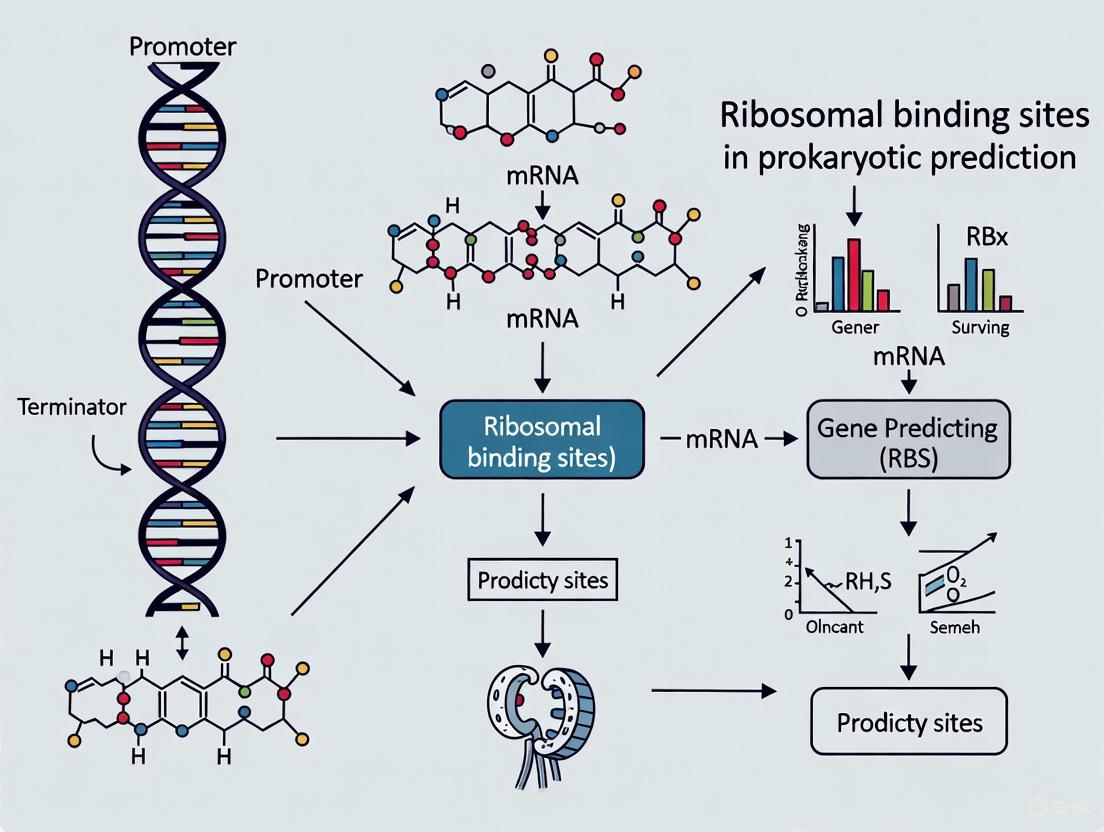
This article provides a comprehensive overview of the critical role ribosomal binding sites (RBS) play in the accurate prediction and annotation of prokaryotic genes.
Beyond the Shine-Dalgarno: Ribosomal Binding Sites as Crucial Elements in Prokaryotic Gene Prediction and Annotation
Abstract
This article provides a comprehensive overview of the critical role ribosomal binding sites (RBS) play in the accurate prediction and annotation of prokaryotic genes. For researchers, scientists, and drug development professionals, we explore the foundational biology of RBS, including canonical Shine-Dalgarno sequences and the widespread occurrence of non-canonical and leaderless genes. The piece delves into advanced computational methodologies that leverage RBS patterns for gene finding, addresses common challenges in predicting atypical genes, and validates these approaches through comparative analysis with proteomic data. Finally, we discuss the direct implications of these findings for understanding bacterial physiology and for the targeted development of novel ribosome-targeting antibiotics in an era of growing antimicrobial resistance.
The Genetic Grammar: Deconstructing Prokaryotic Ribosomal Binding Sites
In prokaryotic translation initiation, the Shine-Dalgarno (SD) sequence serves as a critical recognition element that enables the ribosome to identify the correct start codon on messenger RNA (mRNA). Proposed by Australian scientists John Shine and Lynn Dalgarno in 1973, this mechanism facilitates the proper positioning of the ribosomal subunit for protein synthesis initiation through specific base-pairing interactions with the 3' end of 16S ribosomal RNA (rRNA) [1]. The discovery that a purine-rich tract upstream of the start codon complementary to a pyrimidine-rich sequence at the 3' terminus of 16S rRNA established a fundamental principle in molecular biology that continues to inform gene prediction algorithms and synthetic biology applications [1] [2].
The SD sequence represents a foundational concept in prokaryotic genetics with far-reaching implications for genome annotation, genetic circuit design, and therapeutic development. Understanding its mechanistic basis provides researchers with critical insights for interpreting genomic data, predicting gene structures, and engineering expression systems [2] [3]. This review examines the molecular details of the SD mechanism, its experimental validation, quantitative parameters, and contemporary relevance in genomic research.
Molecular Mechanism of the Shine-Dalgarno Sequence
Core Components and Base-Pairing Interaction
The SD mechanism centers on complementary base pairing between two key RNA elements:
- SD Sequence: A purine-rich region typically located 8-12 nucleotides upstream of the start codon (AUG) on prokaryotic mRNA [1] [4]. The canonical consensus sequence in Escherichia coli is 5'-AGGAGGU-3', though significant sequence variation exists across genes and species [1] [5].
- Anti-Shine-Dalgarno (aSD) Sequence: The 3'-terminal sequence of 16S rRNA that complements the SD sequence. In E. coli, the established aSD sequence is 5'-GAUCACCUCCUUA-3', with the core recognition motif 5'-CCUCC-3' being particularly critical for binding [1] [6].
This complementary interaction serves two primary functions: (1) it recruits the 30S ribosomal subunit to the mRNA, and (2) it aligns the ribosomal P-site directly with the start codon to ensure accurate initiation of protein synthesis [1] [7]. The base pairing between the SD and aSD sequences stabilizes the mRNA-ribosome complex and facilitates the selection of the correct translational start site among multiple AUG codons [1].
Mechanism Visualization
The following diagram illustrates the core molecular recognition event in the Shine-Dalgarno mechanism:
Diagram Title: SD-aSD Base-Pairing Mechanism
The diagram depicts how complementarity between the mRNA's SD sequence and the 16S rRNA's aSD sequence positions the ribosome such that the start codon aligns with the ribosomal P-site. The precise spacing between these elements (typically 5-9 nucleotides) ensures proper registration for initiation [1] [8] [7].
Experimental Validation and Methodologies
Key Historical Experiments
The SD hypothesis was substantiated through several critical experimental approaches that demonstrated the functional importance of the rRNA-mRNA interaction:
Ribosome Binding Assays: Steitz and Jakes (1975) provided direct evidence for the SD mechanism by demonstrating that ribosomes bound to mRNA protect a region encompassing both the SD sequence and start codon from nuclease digestion. Their approach involved incubating E. coli ribosomes with radiolabeled mRNA from bacteriophage R17, followed by RNase treatment and analysis of protected fragments [1].
Mutational Analysis: Hui and de Boer (1987) conducted systematic mutagenesis experiments altering either the SD sequence on mRNA or the aSD sequence on 16S rRNA.当他们 modified the SD sequence of the lacI gene or introduced compensatory mutations in 16S rRNA, they observed correlated changes in translation efficiency that followed base-pairing predictions [1] [2].
Gene Expression Studies: Experimental manipulation of SD sequences demonstrated their quantitative impact on translation initiation rates. Mutations that strengthened SD-aSD complementarity typically enhanced translation, while disruptive mutations diminished protein synthesis, though the relationship is not strictly linear as extremely strong binding can inhibit the initiation-to-elongation transition [1] [6].
Contemporary Experimental Protocols
Computational Identification of SD Sequences
Free Energy Calculations: Modern approaches often employ thermodynamic modeling to identify putative SD sequences based on hybridization energy with the aSD sequence:
- Sequence Extraction: Isolate the translation initiation region (TIR) spanning approximately -60 to +20 nucleotides relative to the start codon [2].
- Energy Calculation: Compute the binding free energy (ΔG°) between the aSD sequence and all possible subsequences within the TIR using the Individual Nearest Neighbor Hydrogen Bond (INN-HB) model or similar thermodynamic framework [2].
- Peak Identification: Locate regions with significant free energy minima (typically < -8.4 kcal/mol) that indicate stable hybridization [2].
- Positional Analysis: Determine the location of the energy minimum relative to the start codon using metrics like Relative Spacing (RS) [2].
Relative Spacing Metric: Starmer et al. (2006) developed the RS metric to normalize the position of SD sequences across different genes and species. RS calculates the binding position relative to both the SD sequence and start codon, enabling identification of atypical SD locations that may indicate annotation errors [2].
RNA-Seq Boundary Mapping
Recent methodologies employ high-throughput RNA sequencing to precisely define the 3' terminus of mature 16S rRNA:
- Library Preparation: Isolate total RNA without ribodepletion to preserve rRNA fragments [6].
- Sequence Alignment: Map RNA-Seq reads to reference 16S rDNA sequences using alignment tools like BLAST [6].
- Terminus Identification: Identify the 3' boundaries by analyzing read endpoints that encompass the conserved CCUCC core motif [6].
- Frequency Analysis: Generate distribution profiles of 3' termini to determine the predominant mature ends in bacterial cells [6].
This approach has resolved discrepancies in 16S rRNA annotations, confirming the mature 3' tail in B. subtilis as 5'-CCUCCUUUCU-3' and revealing multiple dominant termini in E. coli, including the established 5'-CCUCCUUA-3' [6].
Quantitative Analysis of SD Sequence Features
Sequence and Spacing Parameters
Table 1: Key Quantitative Parameters of Shine-Dalgarno Sequences
| Parameter | Typical Range | Optimal Value | Functional Significance |
|---|---|---|---|
| SD-aSD spacing | 5-9 nucleotides upstream of start codon [1] [7] | 7 nucleotides [8] | Positions start codon in ribosomal P-site |
| Binding affinity | -3.5 to -15.0 kcal/mol [2] | Intermediate (-8 to -12 kcal/mol) [6] | Balances initiation efficiency with elongation transition |
| SD sequence length | 3-9 nucleotides [1] | 4-6 nucleotides [3] | Determines specificity and binding strength |
| Genomic prevalence | ~77% of bacterial genes [3] | Species-dependent | Indicates alternative initiation mechanisms |
| Spacer impact on elongation | 6-21 nucleotides [8] | 4-6 nucleotides for unimpeded translocation [8] | Affects ribosome movement and frameshifting |
SD Sequence Diversity and Conservation
Table 2: SD and aSD Sequence Variations Across Species
| Organism/Context | SD Consensus | aSD Sequence (16S rRNA 3' end) | Prevalence |
|---|---|---|---|
| E. coli | AGGAGGU [1] | GAUCACCUCCUUA [6] | High in model organisms |
| B. subtilis | AGGAGG [6] | CCUCCUUUCU [6] | Varies by taxonomic group |
| T4 phage early genes | GAGG [1] | GAUCACCUCCUUA [1] | Adaptation for efficient host takeover |
| Archaeal species | GGAGG/TGGTG [3] | Variable, often shortened [3] | Lower frequency than bacteria |
| Chloroplasts | GGAGG [1] | Modified from bacterial ancestor [1] | Organellar conservation |
Functional Roles Beyond Initiation
While traditionally associated with translation initiation, SD-like sequences influence multiple aspects of protein synthesis:
Translation Elongation Regulation: Internal SD-like sequences within coding regions can modulate ribosome movement during elongation. These sequences base-pair with the aSD sequence of ribosomes already engaged in translation, potentially causing translational pausing that influences co-translational folding or transcription termination [8].
Programmed Ribosomal Frameshifting (PRF): Specific SD sequences stimulate both +1 and -1 frameshifting events. For example, in E. coli release factor 2 (RF2) production, an SD sequence positioned upstream of a "slippery" sequence promotes +1 frameshifting. The spacing between SD and frameshift site critically determines efficiency, with optimal spacing differing from that of initiation (10-14 nt for -1 PRF in dnaX mRNA versus 4-9 nt for initiation) [8].
Spacing-Dependent Translocation Rates: Recent biochemical studies demonstrate that extending the spacer between SD sequences and P-site codons beyond 6 nucleotides destabilizes mRNA-tRNA-ribosome interactions and reduces translocation rates by 5- to 10-fold. This suggests that SD-aSD interactions may persist during initial elongation cycles, with structural rearrangements in the spacer region influencing ribosome dynamics [8].
Relevance to Gene Prediction and Genome Annotation
SD Sequences in Computational Gene Finding
The SD mechanism provides critical signals for prokaryotic gene prediction algorithms:
Start Codon Identification: Gene prediction tools like Prodigal scan upstream of potential start codons for SD-like sequences to distinguish true initiation sites from internal AUG codons [2] [3]. The presence of a strong SD sequence with proper spacing significantly increases the probability of correct start codon assignment.
Annotation Error Detection: Analysis of SD sequence location has revealed systematic annotation errors. Starmer et al. (2006) identified 384 genes across 18 prokaryotic genomes where the strongest SD binding occurred at the +1 position relative to the annotated start codon, suggesting mis-annotation. These RS+1 genes predominantly used GUG rather than AUG start codons [2].
Translation Efficiency Prediction: Quantitative models incorporating SD binding affinity, spacer length, and upstream sequence composition can predict relative translation initiation rates, informing metabolic engineering and synthetic biology applications [2] [6].
Limitations and Alternative Mechanisms
Despite its prevalence, the SD mechanism is not universal:
Non-SD Translation Initiation: Approximately 23% of prokaryotic genes lack recognizable SD sequences [3]. These "non-SD" mRNAs utilize alternative initiation mechanisms, potentially relying on 5' UTR secondary structure avoidance, A/U-rich upstream elements, or interactions with ribosomal protein S1 [5] [3].
Leaderless mRNAs: Some transcripts completely lack 5' untranslated regions, with the start codon positioned at or very near the 5' terminus. These leaderless mRNAs are particularly common in archaea and some bacterial species, employing distinct initiation mechanisms that may involve direct 70S ribosome binding [5] [3].
Species-Specific Variation: SD usage varies significantly across taxonomic groups, with some bacteroidetes, cyanobacteria, and archaea showing minimal dependence on canonical SD motifs [3]. This diversity reflects adaptation to different ecological niches and growth demands [5].
Research Reagent Solutions
Table 3: Essential Research Tools for Studying SD Mechanisms
| Reagent/Resource | Application | Key Features |
|---|---|---|
| Prodigal [3] | Prokaryotic gene prediction | Incorporates SD detection for start codon identification |
| RBPsuite 2.0 [9] | RBP binding site prediction | Deep learning-based; supports 7 species & 353 RBPs |
| INN-HB Model [2] | SD-aSD binding energy calculation | Nearest-neighbor thermodynamics for RNA hybridization |
| RNA-Seq (non-ribodepleted) [6] | 16S rRNA 3' boundary mapping | Direct experimental determination of mature rRNA ends |
| Model mRNA templates [8] | Translocation kinetics | Systematic spacer length variation between SD and P-site |
| mRNABERT [10] | mRNA sequence design | AI model for therapeutic mRNA optimization including UTRs |
The classic Shine-Dalgarno mechanism represents a fundamental principle of prokaryotic translation initiation that continues to inform contemporary genomic research. While the core concept of mRNA-rRNA complementarity remains firmly established, modern research has revealed unexpected complexity in its implementation, including optimal intermediate binding affinity, spacer-dependent elongation effects, and significant diversity across taxonomic groups. The SD sequence serves as a critical signal for computational gene prediction while also highlighting the existence of alternative initiation mechanisms in prokaryotic systems. As genomic databases expand and analytical methods advance, the nuanced understanding of SD-mediated initiation provides a foundation for improved genome annotation, more sophisticated genetic engineering, and deeper insights into the evolution of gene expression mechanisms.
The Shine-Dalgarno (SD) sequence, a ribosome binding site (RBS) typically located upstream of the start codon in prokaryotic mRNAs, facilitates translation initiation through base-pairing with the anti-Shine-Dalgarno (aSD) sequence at the 3' end of 16S rRNA. Since its discovery, the SD sequence has been considered a cornerstone of prokaryotic translation initiation. However, its presumed universality has been challenged by genomic studies revealing substantial diversity in translation initiation mechanisms across bacterial species. This whitepaper examines the prevalence and diversity of SD motifs within bacterial genomes, framing this variability within the critical context of prokaryotic gene prediction research. Accurate identification of gene starts is fundamental to defining proteomes and understanding regulatory networks, yet the variable nature of RBSs presents significant computational challenges. By synthesizing evidence from large-scale genomic analyses and mechanistic studies, we provide a technical guide for researchers and drug development professionals navigating the complexities of translation initiation in bacteria.
Quantitative Prevalence of SD Motifs Across Bacterial Genomes
Genome-Wide Distribution Patterns
Large-scale genomic analyses reveal that SD motifs are widespread but not universal across bacterial genomes. A study of 2,458 bacterial genomes found that approximately 77.0% of genes utilize an SD RBS, while the remaining 23.0% operate through non-SD or leaderless mechanisms [3]. The distribution varies significantly between organisms with unipartite (single chromosome) and multipartite (multiple chromosomes) genomes, with the latter showing higher SD usage [3].
Table 1: Prevalence of SD Motifs in Bacterial Genomes
| Category | Percentage of Genes | Notes |
|---|---|---|
| Genes with SD RBS | ~77.0% | Varies by species and genome structure |
| Genes with no RBS | ~23.0% | Includes leaderless mRNAs and non-SD mechanisms |
| Strong SD users | 58.7% of genomes | ≥80% genes with SD sequence |
| Moderate SD users | 28.3% of genomes | 40-79% genes with SD sequence |
| Minimal SD users | 3.0% of genomes | 18-39% genes with SD sequence |
| Non-SD species | 10.0% of genomes | Includes Bacteroidetes, Cyanobacteria [3] |
The strength of SD usage also varies substantially across taxonomic groups. While model organisms like Escherichia coli and Bacillus subtilis show high percentages of SD-containing genes (54% and 78% respectively), species in the Bacteroidetes and Cyanobacteria phyla show little to no enrichment of SD motifs upstream of start codons [11]. This distribution suggests that the loss of SD-dependent initiation has occurred multiple times throughout bacterial evolution [11].
Influence of Genomic Context
The genomic context significantly influences SD prevalence. Research indicates that within multipartite genomes, primary chromosomes show divergent SD usage compared to secondary chromosomes and plasmids, with the latter two being more similar in their utilization of SD RBS [3]. This variation highlights the potential influence of genomic architecture and gene location on translation initiation mechanisms.
Diversity of SD Sequences and Complementary Initiation Mechanisms
Sequence Diversity and Functional Implications
SD sequences display remarkable diversity both within and between genomes, while the aSD sequence of the 16S rRNA remains largely static [5]. This paradox suggests alternative mechanisms for translation initiation beyond canonical SD:aSD base-pairing.
Table 2: Diversity of Translation Initiation Mechanisms in Bacteria
| Mechanism Type | Key Features | Prevalence | Representative Taxa |
|---|---|---|---|
| SD:aSD-dependent | Base-pairing between SD and 16S rRNA | ~77% of genes average | E. coli, B. subtilis |
| SD:aSD-independent | Non-SD motifs, A/U-rich sequences | Variable | Widespread |
| Leaderless (LS) | Lack 5' UTR, start codon at 5' end | Abundant in some species | Archaea, M. tuberculosis |
| Non-canonical RBS | AT-rich, G/U-rich motifs | ~10.4% of bacterial species | Bacteroides [12] |
The functional SD motif itself exhibits substantial sequence variation. While the canonical GGAGG sequence is often considered the prototype, analysis of enriched motifs reveals diversity including GGA, GAG, AGG, and the full AGGAGG sequence [3]. This diversity extends beyond simple sequence variations to fundamentally different initiation mechanisms.
Non-SD and Leaderless Initiation Mechanisms
For the approximately 23% of bacterial genes that lack SD motifs, alternative initiation mechanisms have evolved:
- A/U-rich sequences: These regions, particularly upstream of start codons, promote initiation potentially through interactions with ribosomal protein S1, which has affinity for single-stranded pyrimidine-rich sequences [11].
- Leaderless mRNAs: These transcripts completely lack 5' untranslated regions, with the start codon positioned at or very near the 5' end. Leaderless initiation is particularly abundant in archaea and some bacterial species like Mycobacterium tuberculosis [5] [12].
- Non-canonical RBS motifs: Experimental systems using randomized leader sequences have selected efficient non-SD motifs dominated by guanine- and uracil-rich sequences that still exhibit complementarity to regions of the 16S rRNA [13].
The distribution of these alternative mechanisms correlates with phylogenetic relationships and ecological niches, suggesting adaptation to specific environmental constraints and growth demands [5].
Methodologies for Studying SD Prevalence and Function
Bioinformatic Approaches for Genome Analysis
Large-scale identification of SD motifs relies on bioinformatic pipelines that analyze annotated genomic sequences:
Diagram 1: SD Analysis Workflow
The standard methodology involves:
- Data Acquisition: Downloading Protein Table files (.ptt) and corresponding gene prediction files from NCBI FTP directories [3].
- RBS Identification: Analyzing sequences upstream of annotated start codons for potential SD motifs based on sequence similarity to known RBS sequences.
- Motif Classification: Categorizing identified RBS sequences into SD motifs, non-SD motifs, or leaderless transcripts.
- Functional Categorization: Mapping genes to Cluster of Orthologous Groups (COG) functional categories to identify patterns in SD usage across different gene functions [3].
- Statistical Analysis: Applying statistical tests to identify significant differences in SD usage across genomic contexts and taxonomic groups.
This approach enabled the analysis of 2,458 fully sequenced bacterial genomes, revealing that specific SD motifs are preferentially associated with particular functional categories. For instance, motif 13 (5'-GGA-3'/5'-GAG-3'/5'-AGG-3') appears predominantly in genes involved in information storage and processing, while motif 27 (5'-AGGAGG-3') is preferentially used by genes for translation and ribosome biogenesis [3].
Experimental Validation Methods
While bioinformatic analyses provide broad patterns, experimental approaches are essential for mechanistic understanding:
- Ribosome Profiling (RIBO-Seq): This technique sequences ribosome-protected mRNA fragments, providing nucleotide-resolution mapping of ribosome positions across the transcriptome [14] [11]. Standard protocols recommend size selection between 22-30 nucleotides and sequencing depths of at least 20 million non-rRNA/tRNA mapping reads for comprehensive gene detection [14].
- ASD Mutagenesis: Engineered ribosomes with altered anti-Shine-Dalgarno sequences allow researchers to isolate the effects of SD:aSD base-pairing from other mRNA features [11]. Studies using this approach have revealed that SD motifs affect initiation efficiency but are not necessary for correct start site selection [11].
- In Vitro Selection Systems: Ribosome display with randomized leader sequences has identified efficient non-SD RBSs that operate through complementary interactions with various regions of 16S rRNA [13]. These systems use fully randomized 18-base regions upstream of start codons to select for sequences that promote efficient translation in minimal systems.
Implications for Gene Prediction and Annotation
Challenges in Computational Gene Finding
The diversity of translation initiation mechanisms creates significant challenges for computational gene prediction algorithms:
Table 3: Gene Start Prediction Tools and Their Approaches to RBS Detection
| Tool | RBS Detection Approach | Strengths | Limitations |
|---|---|---|---|
| Prodigal | Optimized for canonical SD RBSs | High accuracy in E. coli | Primarily oriented to SD sequences [12] |
| GeneMarkS-2 | Multiple RBS models per genome | Handles mixed initiation mechanisms | Requires sufficient sequence for training [12] |
| StartLink | Homology-based using multiple alignments | Not dependent on RBS patterns | Limited by homolog availability [12] |
| StartLink+ | Combines ab initio and alignment | 98-99% accuracy on verified genes | Covers ~73% of genes per genome [12] |
Discrepancies in gene start predictions between different algorithms affect 15-25% of genes in a typical genome, with higher disagreement rates in GC-rich genomes [12]. This inconsistency presents a serious challenge for accurate genome annotation, particularly for species with atypical initiation mechanisms.
Impact on Functional Annotation and Downstream Analysis
Inaccurate identification of translation start sites has cascading effects on biological interpretation:
- Regulatory Element Identification: Misannotated gene starts lead to incorrect definition of upstream regulatory regions, including promoter elements and transcription factor binding sites [12].
- Functional Assignment: Incorrectly predicted N-terminal can affect protein localization predictions and functional domain identification.
- Comparative Genomics: Inconsistent start site annotation complicates ortholog identification and evolutionary studies across species.
- Drug Target Identification: As some antibiotics inhibit translation initiation specifically in leadered transcripts but not leaderless ones [12], accurate identification of initiation mechanisms is crucial for predicting drug effects on pathogens.
The integration of multiple evidence sources—including homology information, sequence patterns, and experimental data—is essential for improving annotation accuracy, particularly for non-model organisms with atypical initiation mechanisms.
Table 4: Key Research Reagents for Studying Bacterial Translation Initiation
| Reagent/Resource | Function | Application Examples |
|---|---|---|
| PURExpress System | Reconstituted E. coli translation system | In vitro studies of RBS function [13] |
| Retapamulin | Antibiotic that traps initiation complexes | Ribosome profiling at start codons [11] |
| MS2-tagged Ribosomes | Affinity-tagged ribosomal subunits | Purification of specific ribosome populations [11] |
| Prodigal Software | Ab initio gene prediction | Identifying coding sequences in genomes [3] [12] |
| GeneMarkS-2 Software | Self-training gene finder | Handling multiple initiation mechanisms [12] |
| NCBI PTT Files | Annotated protein tables | Reference data for RBS analysis [3] |
The Shine-Dalgarno motif, while prevalent across bacterial genomes, represents just one of several mechanisms for translation initiation. Approximately 77% of bacterial genes utilize SD-mediated initiation, while the remaining 23% employ alternative strategies including leaderless initiation and non-SD RBSs. This diversity reflects evolutionary adaptation to ecological niches and growth demands, with distinct initiation mechanisms coexisting within individual genomes. For gene prediction research, this variability presents significant challenges that require sophisticated computational approaches capable of recognizing multiple initiation patterns. The development of tools that integrate ab initio prediction with homology-based methods and experimental validation represents the path forward for accurate genome annotation. Understanding the prevalence and diversity of SD motifs is not merely an academic exercise but a practical necessity for advancing prokaryotic genomics, with implications for drug development, synthetic biology, and evolutionary studies.
In the established model of prokaryotic translation initiation, the Shine-Dalgarno (SD) sequence in the mRNA leader region is paramount for ribosome binding and start codon selection. However, a significant class of genes—leaderless genes (lmRNAs)—challenges this paradigm. These genes lack a 5' untranslated region (5'-UTR) and an SD sequence entirely, initiating translation directly at a start codon positioned at or near the 5' end of the mRNA. This whitepaper provides an in-depth technical guide to leaderless genes and non-canonical translation initiation, framing their discovery and study as a critical evolution in our understanding of ribosomal binding sites and their role in accurate prokaryotic gene prediction.
For decades, the SD-led initiation mechanism has been the cornerstone of prokaryotic molecular biology and the basis for computational gene-finding algorithms. The model is straightforward: the anti-Shine-Dalgarno (aSD) sequence at the 3'-end of the 16S rRNA base-pairs with a complementary SD sequence upstream of the start codon, positioning the ribosome for accurate initiation [15] [16].
Nevertheless, systematic genomic analyses and experimental evidence have revealed that SD-led initiation is not universal. It is now estimated that approximately 50% of bacterial genes lack a recognizable SD sequence [17]. Among these non-canonical initiation mechanisms, the most radical is the one employed by leaderless mRNAs (lmRNAs). Translation of lmRNAs proceeds via the direct binding of the 70S ribosome to the start codon, a mechanism that is conserved across bacteria, archaea, and eukaryotes, suggesting it may be an ancient and fundamental mode of translation [15] [18] [19]. Understanding this mechanism is not merely an academic exercise; it is essential for refining gene prediction tools and comprehending the full regulatory complexity of prokaryotic genomes.
Prevalence and Evolution of Leaderless Genes
Leaderless genes are not a rarity; they are widespread across the prokaryotic domain. However, their prevalence varies dramatically between species, indicating potential evolutionary adaptations.
Table 1: Prevalence of Leaderless Genes in Selected Prokaryotic Groups
| Organism or Group | Approximate Proportion of Leaderless Genes | Notes | Primary Source |
|---|---|---|---|
| Deinococcus deserti | Up to ~60% | Highest reported proportion in bacteria. | [15] |
| Mycobacterium tuberculosis | >20% (up to ~26%) | Model for lmRNA study; many virulence factors may be leaderless. | [15] [19] |
| Actinobacteria & Deinococcus-Thermus | >20% | Bacterial phyla with a high abundance of leaderless genes. | [15] [18] |
| Archaeal Genomes | Often high/dominant | e.g., Pyrobaculum aerophilum and Haloarchaea have a majority of leaderless transcripts. | [18] |
| Escherichia coli | Rare | Model organism where lmRNAs are uncommon but have been critical for mechanistic studies. | [15] [17] |
The evolutionary trajectory of translation initiation mechanisms suggests a decreasing trend in the proportion of leaderless genes throughout bacterial evolution [18]. This trend posits the leaderless initiation mechanism as a primordial, ancient process potentially used by the last universal common ancestor (LUCA), with the more complex SD-led mechanism representing a derived, specialized innovation [18].
Molecular Mechanisms of Leaderless Translation Initiation
The absence of a 5' UTR and an SD sequence necessitates a fundamentally different interaction between the lmRNA and the ribosome.
Key Mechanistic Features
- Ribosome Recruitment: Unlike canonical initiation, which involves the binding of the small 30S ribosomal subunit, lmRNA translation can begin with the direct binding of a full 70S ribosome to the mRNA [15] [19]. This bypasses the subunit-joining step and is independent of initiation factors IF1 and IF3 under certain conditions [15].
- Start Codon Preference: The initiation codon is of critical importance. In E. coli, lmRNA translation starts almost exclusively at an AUG codon, with alternative initiator codons (GUG, UUG) being much less efficient. In other bacteria like Mycobacterium smegmatis and Streptomyces species, GUG can be an efficient start codon for lmRNAs [15].
- Role of the 5' End: The presence of a 5' phosphate is essential for lmRNA translation, potentially serving as a recognition signal or protecting the transcript from degradation [15].
- Downstream Enhancer Elements: Specific sequences downstream of the start codon, such as CA repeats or the "downstream box" (DB) in the λcI lmRNA (5'-AGCACA-3'), can strongly enhance translation efficiency [15] [19].
Structural Insights from Cryo-EM
Recent cryo-electron microscopy (cryo-EM) structures have provided unprecedented insights into lmRNA translation. A key study investigated the translation of the leaderless λcI repressor mRNA by a specialized E. coli ribosome lacking ribosomal proteins uS2 and bS21 [19].
The structural analysis revealed that:
- The absence of bS21, which normally structurally supports the aSD sequence, causes the aSD region to shift away from the mRNA exit channel. This removes a potential steric hindrance, thereby easing the exit of the lmRNA [19].
- The A1493 base of 16S rRNA forms a π-stacking interaction with an adenine at the +4 position of the lmRNA, potentially acting as a specific recognition signal for leaderless transcripts [19].
- Ribosomes lacking uS2 exhibit increased dynamics in the 30S head, creating a peristalsis-like motion and a Coulomb charge flow within the mRNA entrance channel that facilitates the propagation of the lmRNA [19].
This structural model illustrates the specialized adaptations that can optimize ribosomes for leaderless translation.
Methodologies for Studying Leaderless Initiation
Research in this domain relies on a combination of bioinformatic, genetic, and structural biology approaches.
Bioinformatics and Genomic Identification
Identifying leaderless genes on a genomic scale requires careful analysis of transcription start sites (TSSs) and the sequences surrounding the start codon.
- Algorithmic Classification: One effective method involves scanning the upstream regions of all genes in a genome for statistically significant signals. Genes are classified as:
- SD-led: Possess a strong SD-like sequence.
- TA-led (Leaderless): Possess a TA-like signal (e.g., TANNNT) approximately 10-12 bp upstream of the TIS, which corresponds to a -10 promoter box. The presence of this promoter immediately upstream indicates a very short or absent 5'-UTR, defining a leaderless gene [18].
- Atypical: Genes that fit neither category.
- Validation: Predictions are validated through shuffling tests to ensure signals are significant versus random sequences and by comparison with experimentally documented TSSs and leaderless genes [18].
Structural Biology Workflow: Cryo-EM of Initiation Complexes
Cryo-EM has become the technique of choice for obtaining high-resolution structural snapshots of translation complexes.
Table 2: Key Research Reagent Solutions for Leaderless Translation Studies
| Reagent / Tool | Function / Application | Example / Note |
|---|---|---|
| Specialized Bacterial Strains | Genetic models with enhanced lmRNA translation. | E. coli rpsB mutants (e.g., rpsB11) deficient in ribosomal protein uS2 [19]. |
| Minimal lmRNA Constructs | For forming defined initiation complexes for structural studies. | λcI lmRNA with a 12-base sequence (AUGAGCACAAAA) containing the start codon and downstream box [19]. |
| Initiation Complex Components | Building the complex for structural analysis. | Purified 70S ribosomes, fMet-tRNAfMet, initiation factors (IF2, IF3), and non-hydrolyzable GTP analogs (GDPCP) [20] [19]. |
| Cryo-Electron Microscopy | High-resolution structure determination of macromolecular complexes. | Used to solve structures of 70S-lmRNA-tRNA complexes, revealing mechanistic details [19]. |
| Computational Prediction Tools | Genome-wide identification of non-canonical genes. | Algorithms for identifying TA-led signals; tools like Prodigal for gene prediction incorporate non-SD initiation models [18] [16]. |
Implications for Prokaryotic Gene Prediction Research
The existence and abundance of leaderless genes have profound implications for the field of computational gene prediction.
- Challenge to Conventional Tools: Many early gene-finding algorithms relied heavily on the presence of an SD sequence to identify translation initiation sites (TIS). This bias leads to the misannotation or complete omission of leaderless genes in genomic sequences [18] [16].
- Modern Algorithm Development: State-of-the-art gene prediction software, such as Prodigal, now explicitly incorporates models for both SD-led and leaderless initiation, significantly improving the accuracy of TIS identification and N-terminal prediction in diverse prokaryotic genomes [16].
- Need for Organism-Specific Models: Given the vast differences in the proportion of leaderless genes between species (e.g., E. coli vs. Mycobacterium), accurate genome annotation requires tools that are either trained on broad datasets or can adapt to the specific initiation code of the target organism [18].
The study of leaderless genes has irrevocably broken the mold of a prokaryotic translation initiation dogma centered solely on the Shine-Dalgarno sequence. It has revealed a world of mechanistic diversity and evolutionary depth, forcing a re-evaluation of long-held principles in ribosomal binding and gene prediction. Future research will likely focus on:
- Elucidating the full repertoire of cis-acting elements that guide 70S ribosomes to the correct start codon on lmRNAs.
- Understanding the global regulatory networks that employ leaderless initiation for rapid stress responses or coordinated gene expression.
- Further refining bioinformatic tools to achieve near-perfect TIS prediction across the entire tree of prokaryotic life, which is crucial for the accurate functional annotation of genomes in metagenomic and drug discovery efforts.
For researchers and drug development professionals, acknowledging and understanding non-canonical initiation mechanisms is no longer a niche pursuit but a necessary step for a comprehensive and accurate view of prokaryotic genetics and physiology.
Within the broader thesis on the role of ribosomal binding sites (RBS) in prokaryotic gene prediction, the phylum Deinococcus-Thermus presents a paradigm-shifting case study. Traditional gene prediction algorithms heavily rely on the presence of a Shine-Dalgarno (SD) sequence upstream of the start codon for accurate annotation. However, a significant proportion of genes in this phylum, and in many bacteria, are "leaderless," meaning they lack a 5' untranslated region (5' UTR) and thus a canonical SD sequence. This report investigates the critical role of the -10 promoter motif in the expression of these leaderless genes, a mechanism that necessitates a re-evaluation of standard prokaryotic gene prediction models.
The -10 Promoter Motif and Leaderless Genes
In canonical prokaryotic transcription, promoters are defined by two conserved hexamers: the -35 box (TTGACA) and the -10 Pribnow box (TATAAT). Transcription initiation typically produces an mRNA with a 5' UTR containing an RBS. Leaderless genes (LLGs) defy this convention. They start directly at the transcription start site (TSS), which is the first base of the start codon (usually AUG). Consequently, the promoter architecture for LLGs is distinct, often characterized by a strong, consensus -10 motif but a degenerate or absent -35 box. The stability and sequence of the -10 region become the primary determinant for transcription initiation and, by extension, translation efficiency for these genes.
Experimental Protocols for Analysis
3.1. High-Resolution Transcriptome Mapping (dRNA-seq or Ribo-seq)
- Purpose: To precisely identify Transcription Start Sites (TSSs) and distinguish leadered mRNAs from leaderless mRNAs on a genome-wide scale.
- Methodology:
- RNA Extraction: Total RNA is isolated from Deinococcus radiodurans or Thermus thermophilus cultures under defined growth conditions.
- Terminator Exonuclease Treatment (for dRNA-seq): RNA is split into two aliquots. One is treated with Terminator 5'-Phosphate-Dependent Exonuclease, which degrades RNA molecules with a 5'-monophosphate (processed RNAs). The other aliquot is untreated.
- Library Preparation: Both treated and untreated RNA samples are used to construct cDNA libraries for high-throughput sequencing. The untreated library captures all transcripts, while the treated library is enriched for primary transcripts with a 5'-triphosphate.
- Data Analysis: Mapping the sequence reads to the genome identifies TSSs as genomic positions with a significant enrichment of reads in the untreated library relative to the treated library. A TSS coinciding with the first nucleotide of a start codon defines a leaderless transcript.
3.2. In Vitro Transcription Assay with Mutagenesis
- Purpose: To functionally validate the role of the -10 motif in driving the expression of a specific leaderless gene.
- Methodology:
- Template Construction: A DNA fragment containing the putative promoter region (e.g., ~100 bp upstream and ~50 bp downstream of the TSS) of a target LLG is cloned into a plasmid vector.
- Site-Directed Mutagenesis: Specific mutations are introduced into the -10 motif (e.g., TATAAT -> GGCGCC) to create a series of mutant templates.
- Transcription Reaction: Wild-type and mutant DNA templates are incubated with purified E. coli or T. thermophilus RNA polymerase holoenzyme, NTPs (including [α-³²P]CTP for radiolabeling), and transcription buffer.
- Product Analysis: The reaction products are separated by denaturing polyacrylamide gel electrophoresis (PAGE). The amount of radiolabeled transcript produced from each template is quantified using a phosphorimager to determine the effect of -10 mutations on transcription efficiency.
Data Presentation
Table 1: Comparison of Promoter Features in Leadered vs. Leaderless Genes in Deinococcus radiodurans
| Feature | Leadered Genes | Leaderless Genes |
|---|---|---|
| 5' UTR Length | 20-150 nucleotides | 0 nucleotides |
| Shine-Dalgarno | Present (>80%) | Absent (by definition) |
| -35 Motif | Consensus (TTGACA) often present | Frequently degenerate or absent |
| -10 Motif | Consensus (TATAAT) | Strong, high-confidence consensus (TATAAT) |
| TSS-to-Start Codon | >1 nucleotide | 1 nucleotide (coincident) |
Table 2: Quantitative Impact of -10 Motif Mutations on Transcription Efficiency
| Promoter Template | -10 Sequence | Relative Transcription Level (%)* |
|---|---|---|
| Wild-Type LLG Promoter | TATAAT | 100.0 ± 5.2 |
| Single-Nucleotide Mutant | TATAGT | 25.1 ± 3.1 |
| Double-Nucleotide Mutant | TACGAT | 8.4 ± 1.5 |
| Scrambled Mutant | GGCGCC | 2.1 ± 0.5 |
| Data from in vitro transcription assays; values are mean ± SD. |
Visualization
Workflow for LLG Promoter Analysis
Leaderless Gene Expression Mechanism
The Scientist's Toolkit
Table 3: Essential Research Reagents for Leaderless Gene Studies
| Reagent / Tool | Function / Explanation |
|---|---|
| Terminator 5'-Phosphate-Dependent Exonuclease | Enzymatically degrades processed RNAs with 5'-monophosphates, enriching for primary transcripts with 5'-triphosphates in dRNA-seq protocols. |
| RNA Polymerase (T. thermophilus) | Purified RNA polymerase from a thermophilic host is highly stable and ideal for in vitro transcription assays of native promoters. |
| Site-Directed Mutagenesis Kit | Enables precise, PCR-based introduction of point mutations into promoter regions cloned into plasmids for functional validation. |
| [α-³²P]CTP | Radiolabeled nucleotide used to incorporate a detectable and quantifiable signal into RNA transcripts during in vitro assays. |
| Strain-Specific Ribo-Seq Database | A pre-computed database of ribosome-protected fragments mapped to the genome is crucial for confirming translation of predicted leaderless ORFs. |
In prokaryotic gene prediction and synthetic biology, the accurate identification and optimization of functional genetic elements are paramount. While promoter regions and coding sequences have received significant attention, the ribosome binding site (RBS) and its constituent spacer region represent a critical control point in the regulation of gene expression. This technical guide examines the RBS spacer region—the sequence between the Shine-Dalgarno (SD) sequence and the initiation codon—focusing on how its length and nucleotide composition determine translational efficiency. Within a broader thesis on RBSs in prokaryotic gene prediction research, understanding these parameters provides a framework for enhancing the accuracy of gene-finding algorithms and optimizing recombinant protein expression for therapeutic and industrial applications. Emerging evidence suggests that the spacer region functions not merely as a passive connector but as an active contributor to translation initiation kinetics through its influence on mRNA secondary structure, ribosome binding energy, and start codon recognition [21] [22].
The Functional Anatomy of the Ribosome Binding Site
The canonical prokaryotic RBS comprises three core elements: the SD sequence, the spacer region, and the initiation codon. The SD sequence, typically TAAGGAGG or similar variants, base-pairs with the anti-SD sequence at the 3' end of the 16S rRNA to position the ribosome correctly on the mRNA [22]. The initiation codon (most commonly AUG) defines the start of translation. The intervening spacer region, while variable, plays a decisive role in ensuring the proper spatial orientation of these two elements for efficient initiation complex formation.
The mechanism of spacer function operates primarily through structural determinants. The length of the spacer directly influences the flexibility and spatial alignment between the ribosome and the start codon. Furthermore, the nucleotide composition of the spacer affects the local mRNA secondary structure, potentially occluding or exposing the SD sequence and start codon to translational machinery [23] [21]. Computational tools like the RBS Calculator leverage these principles to predict translation initiation rates (TIRs) by modeling the hybridization energies between the mRNA and 16S rRNA, as well as the intramolecular folding of the mRNA itself [24] [22].
Quantitative Analysis of Spacer Length and Composition
Optimal Spacer Length Across Bacterial Species
Systematic studies across diverse bacterial hosts reveal that even single-nucleotide variations in spacer length can dramatically alter protein yield. The optimal length, however, is not universal and exhibits species- and context-dependence.
Table 1: Experimentally Determined Optimal Spacer Lengths in Bacteria
| Host Organism | Optimal Spacer Length | Impact on Protein Yield | Experimental Context | Source |
|---|---|---|---|---|
| Bifidobacterium longum 105-A | 5 nucleotides | Most efficient protein expression | Synthetic RBSs with SD "AAGGAG" | [25] |
| Bacillus subtilis | 7–9 nucleotides | Up to 27-fold increase for intracellular proteins | Strong SD "TAAGGAGG"; intracellular GFPmut3 and β-glucuronidase | [22] |
| Bacillus subtilis (Secreted proteins) | 7–10 nucleotides | Up to 10-fold increase for secreted proteins | Sec-dependent signal peptides (SPPel, SPBsn) | [22] |
| Bacillus subtilis (Signal peptide SPEpr) | 10–12 nucleotides | Maximum production yield | Fusions with cutinase and swollenin | [22] |
The data in Table 1 underscore a key principle: while a general range of 7-9 nucleotides is often effective, the optimal spacer must be determined empirically, particularly for secreted proteins where the nucleotide sequence encoding the signal peptide can exert a dominant influence on translation initiation [22].
The Role of Nucleotide Composition
Beyond length, the specific nucleotide sequence of the spacer and its surrounding 5' Untranslated Region (5' UTR) is a critical determinant of translational efficiency. Research in E. coli has demonstrated that the overall nucleotide composition of the 5' UTR can have a profound effect.
Table 2: Impact of Nucleotide Composition on Translation Efficiency in E. coli
| 5' UTR Composition | Observation | Proposed Mechanism | Source |
|---|---|---|---|
| Lack of Cytosine (C) | Highest overall translation efficiency | Altered minimum free energy (MFE) and 16S rRNA hybridization energy | [23] |
| Nucleotide-specific effects | Single nucleotide changes can cause significant differences in TIR | Perturbation of mRNA secondary structure, altering RBS accessibility | [24] |
Studies constructing 5' UTR libraries lacking specific nucleotides found that libraries devoid of cytosine (the "25D library") exhibited superior translation efficiency compared to those lacking other bases [23]. This suggests that cytosine exclusion may favor configurations with lower MFE or more favorable hybridization energies with the 16S rRNA, thereby facilitating ribosome binding.
Experimental Protocols for Spacer Optimization
Systematic Spacer Length Variation
A standard methodology for empirical spacer optimization involves constructing a series of vectors with varying spacer lengths, followed by quantification of a reporter protein.
Protocol 1: Spacer Length Screening in B. subtilis [22]
- Vector System: Utilize a shuttle vector (e.g., pBSMul1) with a strong constitutive promoter (e.g., PHpaII) and a defined strong SD sequence (e.g., TAAGGAGG).
- Spacer Library Construction: Using the vector with the shortest spacer as a template, employ site-directed mutagenesis (e.g., QuikChange PCR) with primers designed to insert adenosines, thereby systematically increasing the spacer length from 4 to 12 nucleotides. This creates a vector series (pBSxnt, where x is the spacer length).
- Gene Cloning: Ligate the gene of interest (e.g., GFPmut3 for intracellular expression or a gene fused to a signal peptide for secretion) into the vector series, ensuring all other regulatory elements are constant.
- Host Transformation and Cultivation: Transform the constructs into a protease-deficient B. subtilis strain (e.g., TEB1030). Inoculate expression cultures and grow under standardized conditions (e.g., 37°C for 6 hours).
- Yield Quantification:
- Intracellular Proteins: Measure fluorescence (for GFP) or enzyme activity (for β-glucuronidase). Normalize values by cell density (OD580).
- Secreted Proteins: Separate cells via centrifugation and analyze the supernatant by SDS-PAGE, activity assays, or split GFP assays to quantify extracellular protein yield.
Analysis of Nucleotide Composition
Investigating the effect of nucleotide composition requires generating a diverse library of spacer sequences.
Protocol 2: 5' UTR Library Construction for Nucleotide Composition Analysis [23]
- Library Design: Construct four distinct reporter plasmid libraries, each designed with 5' UTRs that systematically lack one specific type of nucleotide (A, T, C, or G). These are often denoted as 25B (no A), 25D (no C), 25H (no G), and 25V (no T) libraries.
- Reporter System: Place the variant 5' UTR libraries upstream of a reporter gene, such as super-folder GFP (sfGFP).
- Transformation and Screening: Transform the library pools into E. coli and analyze the population using flow cytometry. The distribution of fluorescence intensities across the cell population indicates the overall translation efficiency conferred by each library type.
- Data Analysis: Quantify the median fluorescence from each library. Libraries with higher median fluorescence (e.g., the 25D library lacking C) are identified as supporting higher translation efficiency. Subsequent sequencing of high-expressers can reveal consensus motifs or structural features.
Diagram 1: Experimental workflow for systematic spacer optimization, integrating both length and composition analysis.
Advanced Considerations in Spacer Design
The Host Chassis Effect
The genetic context of the host organism significantly influences circuit performance, a phenomenon known as the chassis effect. Research on genetic toggle switches has demonstrated that variations in host context (e.g., E. coli, Pseudomonas putida, Stutzerimonas stutzeri) cause large shifts in overall performance, while RBS modulation provides finer, incremental tuning [24]. This implies that a spacer sequence optimized for one bacterial species may not be optimal for another, necessitating host-specific validation.
mRNA Stability and Secretion Signals
The 5' UTR, encompassing the spacer, is a key determinant of mRNA stability. In B. subtilis, incorporating a 5' UTR with a known RNA stabilizing element (RSE) from the aprE gene significantly increased the half-life of mRNA and led to a nearly 50-fold higher production of a recombinant β-galactosidase [21]. This highlights that the selection of the 5' UTR and spacer must consider post-transcriptional regulation alongside translation initiation.
For secreted proteins, the spacer region's influence extends further. The nucleotide sequence immediately downstream of the start codon, which often encodes the signal peptide, can form secondary structures that interfere with the RBS [22]. Consequently, the optimal spacer length can vary depending on the specific signal peptide used, as demonstrated by the distinct optimal spacer lengths for fusions with SPPel/SPBsn (7-10 nt) versus SPEpr (10-12 nt) [22].
The Scientist's Toolkit: Research Reagent Solutions
Table 3: Essential Reagents and Tools for RBS Spacer Research
| Reagent / Tool | Function / Description | Application Example | Source |
|---|---|---|---|
| pBSMul1 Shuttle Vector | E. coli-B. subtilis vector with strong PHpaII promoter and modifiable RBS. | Systematic spacer length variation studies in Bacillus. | [22] |
| B. subtilis TEB1030 | Protease-deficient host strain (ΔAprE, ΔBpr, ΔEpr, ΔNprE, ΔIspA, ΔLipA, ΔLipB). | Minimizes proteolytic degradation of intracellular and secreted target proteins during expression screening. | [22] |
| RBS Calculator | Computational model to predict Translation Initiation Rates (TIR) from mRNA sequence. | In silico design and optimization of RBS spacer sequences prior to experimental validation. | [24] |
| OSTIR Program | Open-Source Translation Initiation Rate predictor. | Predicting translation initiation rates of designed genetic constructs. | [24] |
| Orthogonal Ribosome Systems | Engineered ribosomes that translate only specific mRNAs with orthogonal RBSs. | Directed evolution of rRNA and dissection of translation mechanisms without affecting host viability. | [26] |
| Flow Cytometry | High-throughput analysis of fluorescence distribution in cell populations. | Screening 5' UTR/spacer libraries using fluorescent reporters (e.g., sfGFP). | [23] |
The RBS spacer region is a master regulator of translation initiation, whose function is defined by an interplay of length-dependent spacing and nucleotide-mediated structural dynamics. For prokaryotic gene prediction research, moving beyond simple SD sequence identification to model the spacer's role in mRNA structure and ribosome accessibility will enhance the accuracy of in silico gene annotation. For applied research in drug development and industrial biotechnology, empirical optimization of the spacer, guided by the protocols and data herein, remains a powerful and necessary strategy to maximize the yield of therapeutic proteins, enzymes, and synthetic genetic circuits. Future directions will likely leverage machine learning models trained on high-throughput spacer library data to generate predictive algorithms capable of designing optimal RBS-spacer configurations for any given gene and host chassis, ultimately achieving precise control over gene expression in synthetic biology.
From Sequence to Function: Computational Tools for RBS-Driven Gene Prediction
Ribosomal binding sites (RBS) are pivotal elements in prokaryotic translation initiation, and their accurate identification is a cornerstone of precise gene annotation. The advent of sophisticated ab initio algorithms has transformed our ability to predict genes by modeling the complex sequence patterns of RBS, which are often species-specific. This technical guide delves into the operational mechanics of GeneMarkS-2, a leading algorithm that self-discovers and utilizes these RBS patterns for gene start prediction. We explore how it classifies prokaryotic genomes into distinct categories based on their transcription and translation initiation signals, enabling high-accuracy gene prediction even for newly sequenced, non-model organisms. The content is framed within a broader thesis on the critical role of RBS in prokaryotic gene prediction research, underscoring how a nuanced understanding of these sites leads to more biologically accurate genomic annotations, which are fundamental for downstream research in microbiology and drug development.
In prokaryotes, the ribosome binding site (RBS) is a sequence region upstream of the start codon that is responsible for recruiting the ribosome to initiate translation [16]. The classical Shine-Dalgarno (SD) sequence, with a consensus of 5'-AGGAGG-3', base-pairs with the anti-Shine-Dalgarno sequence at the 3' end of the 16S rRNA to facilitate this process [16] [27]. However, the assumption that this motif is universal and sufficient for gene prediction is flawed. Large-scale genomic studies have revealed that approximately 23% of prokaryotic genes lack a discernible RBS and are transcribed as leaderless mRNAs, while in some genomes, RBS sites do not necessarily exhibit the SD consensus [3] [28]. This diversity presents a significant challenge for computational gene prediction.
Ab initio gene prediction methods aim to identify protein-coding genes based on intrinsic properties of the DNA sequence alone, without relying on external evidence like homologous sequences or RNA-seq data [29]. Their accuracy, particularly for pinpointing the precise start codon, is highly dependent on the algorithm's ability to recognize the species-specific signals that govern translation initiation [28]. This guide examines how modern tools, with a focus on GeneMarkS-2, have evolved to model the complex landscape of RBS patterns, thereby significantly improving the accuracy of prokaryotic genome annotation.
The Biological Foundation of Ribosome Binding Sites
Classical and Non-Classical RBS Patterns
The SD sequence is the best-characterized RBS, and its level of complementarity to the anti-SD sequence greatly influences translation initiation efficiency [16]. Richer complementarity typically results in higher initiation efficiency, although excessively tight binding can paradoxically decrease the translation rate by impeding ribosome progression [16]. The optimal spacing between the SD sequence and the start codon (typically 5-10 nucleotides) is also critical and can vary [16].
However, genomic analyses have uncovered a remarkable diversity beyond the SD sequence. A study of 2,458 prokaryotic genomes found that, on average, only ~77% of genes use an SD RBS, meaning about ~23% of genes operate without one [3]. Furthermore, the study identified 34 eubacterial and 29 archaeal genomes where a significant portion of genes lack an RBS altogether [3]. These leaderless genes initiate translation without a 5' untranslated region (UTR), implying the existence of alternative, yet poorly characterized, initiation mechanisms [3] [28]. Other non-SD motifs have been discovered, such as AT-rich sequences in cyanobacteria that may be recognized by ribosomal protein S1, and a conserved 5'-GGTG-3' motif in some archaea [3] [27].
Functional Impact on Translation
The RBS is a primary determinant of translation initiation rate, which in turn influences protein abundance [16] [27]. The sequence and structure of the RBS affect the efficiency of two key steps:
- Recruitment of the ribosome to the mRNA, which can be enhanced by adenine-rich sequences that bind ribosomal protein S1 [16].
- The actual initiation of translation by the recruited ribosome, which is affected by SD complementarity and spacer region nucleotide composition [16].
The mRNA secondary structure around the RBS is another critical factor. Stable secondary structures can hide the RBS and start codon, inhibiting translation. This mechanism is exploited by certain genes, such as heat shock proteins, whose RBS secondary structures melt at elevated temperatures, allowing a rapid burst of translation in response to cellular stress [16].
Table 1: Prevalence of Shine-Dalgarno (SD) Ribosome Binding Sites in Prokaryotic Genomes
| Category | Number of Genomes | Percentage of Genes with SD RBS | Notes |
|---|---|---|---|
| All Genomes | 2,458 | ~77% | Average across a diverse range of prokaryotes [3] |
| Strong SD Users | 1,444 (~58.7%) | ≥80% | Representative of unipartite genomes [3] |
| Minimal SD Users | 75 (~3.0%) | 18-39% | Includes some Bacteroidetes, Cyanobacteria, Crenarchaea, and Nanoarchaea [3] |
| Non-SD Users | 244 (~10.0%) | 0% | Do not use a consensus SD sequence [3] |
GeneMarkS-2: A Model for Advanced RBS Integration
GeneMarkS-2 is an ab initio gene prediction algorithm designed to address the diversity of sequence patterns regulating gene expression in prokaryotes [28]. Its key innovation lies in moving beyond a single, species-specific model for the RBS. Instead, it employs a multi-faceted approach that self-discovers the predominant transcription and translation initiation signals in a given genome and uses them to classify the genome into one of several functional categories.
The algorithm's workflow can be summarized as follows. It begins by analyzing the input genomic sequence to identify potential protein-coding regions using a self-training, three-periodic Markov model that captures the species-specific codon usage bias [28]. Concurrently, it employs an array of precomputed "atypical" gene models to identify genes with compositionally biased sequences that may have been horizontally transferred [28]. Most critically for RBS modeling, the algorithm simultaneously identifies sequence motifs around potential gene starts. Based on the discovered motifs—such as the presence of an SD sequence, non-SD RBS, or evidence of leaderless transcription—the genome is classified into a specific group (A, B, C, D, or X) [28]. This classification directly determines the model used for precise gene start prediction. Finally, the algorithm integrates the predictions from the coding sequence model and the appropriate RBS model to generate the final, high-confidence gene calls.
Classification of Genomic RBS Patterns
GeneMarkS-2's ability to accurately model RBS patterns hinges on its classification of genomes into distinct categories based on the signals upstream of genes [28]. This classification is a form of unsupervised learning that identifies the dominant biological mechanism for translation initiation in the genome.
Table 2: GeneMarkS-2 Genome Categories Based on RBS and Promoter Patterns
| Genome Group | RBS Type | Leaderless Transcription | Promoter Signal | Phylogenetic Distribution |
|---|---|---|---|---|
| Group A | Strong Shine-Dalgarno (SD) consensus | Negligible or nonexistent | Classical -35 and -10 regions | Common in well-studied model organisms [28] |
| Group B | Non-SD RBS consensus | Low or moderate | Varies | Found in various bacteria and archaea [28] |
| Group C | Not applicable (leaderless) | Significant (>25% of genes) | Bacterial promoter at ~10 nt from gene start | e.g., Mycobacterium tuberculosis, Streptomyces coelicolor [28] |
| Group D | Not applicable (leaderless) | Significant (>60% of genes) | Archaeal promoter | e.g., Halobacterium salinarum, Sulfolobus solfataricus [28] |
| Group X | Weak or unclassified signals | Varies | Unclassified or novel | Genomes with hard-to-detect or new initiation mechanisms [28] |
This nuanced classification allows GeneMarkS-2 to apply a tailored model for gene start prediction. For a Group A genome, the algorithm will heavily weight the presence of a canonical SD sequence at the expected spacing from a start codon. In contrast, for a Group C or D genome, it will rely on different signals, such as the presence of a promoter-like 5'-TANNNT-3' -10 motif immediately upstream of the start codon, a pattern recently validated in the Deinococcus-Thermus phylum [30]. This data-driven approach prevents the algorithm from forcing an inappropriate model (e.g., a strong SD model) onto a genome that primarily uses leaderless transcription.
Experimental Validation and Performance Metrics
Methodology for Benchmarking Gene Prediction Tools
Validating the accuracy of gene prediction algorithms like GeneMarkS-2 requires carefully curated benchmarks. The following methodological approach is standard in the field:
- Reference Gene Sets: Using genes validated by protein sequencing, proteomics experiments, or those with high-confidence annotations from resources like the Clusters of Orthologous Genes (COG) database [28].
- Accuracy Metrics: Calculating standard metrics including:
- Sensitivity (Sn): The proportion of true positive genes that are correctly identified. ( Sn = \frac{TP}{TP+FN} )
- Specificity (Sp): The proportion of predicted genes that are true positives. ( Sp = \frac{TP}{TP+FP} )
- Nucleotide-Level Accuracy: Assessment of correct prediction of coding vs. non-coding nucleotides across long genome segments [31].
- Comparative Framework: Benchmarking against other state-of-the-art tools such as GeneMarkS, Glimmer3, and Prodigal on the same dataset [28].
Performance of GeneMarkS-2
GeneMarkS-2 has demonstrated superior performance in independent evaluations. In a comprehensive assessment, it performed better on average in all accuracy measures compared to contemporary gene prediction tools [28]. Its ability to model leaderless transcription and non-canonical RBS patterns directly resulted in more accurate gene prediction, particularly for the 5' end (start codon) of genes, which is the most challenging part of the prediction process [28].
This performance is a direct result of its multi-model approach. By not being constrained to a single type of RBS pattern, GeneMarkS-2 achieves robust accuracy across a wide phylogenetic range. It successfully identifies genes that would be false negatives (missed altogether) for other tools because they belong to the "atypical" category, possessing sequence patterns that do not match the species-specific model trained on the bulk of the genome [28].
This section details essential materials, software, and data resources used in the development and application of RBS-aware gene prediction tools, as featured in the cited research.
Table 3: Essential Resources for RBS and Gene Prediction Research
| Resource Name | Type | Function / Application | Relevant Study/Source |
|---|---|---|---|
| GeneMarkS-2 | Software Algorithm | Ab initio prokaryotic gene finder that models SD, non-SD, and leaderless genes. | [28] |
| Prodigal | Software Algorithm | PROkaryotic DYnamic programming Gene-finding ALgorithm; used for initial gene calls in genomic studies. | [3] |
| Clusters of Orthologous Genes (COG) | Database | System for classifying genes from completely sequenced organisms into functional groups; used for validation. | [3] [28] |
| dRNA-seq Data | Experimental Data | Differential RNA sequencing to identify transcription start sites (TSS), crucial for defining 5' UTRs and leaderless genes. | [28] |
| RBS Library | Synthetic Biology Tool | A collection of sequenced-defined RBS variants used to measure and optimize translation initiation rates (TIR). | [27] |
| SANDSTORM | Software Algorithm | Deep learning model that uses RNA sequence and structure for functional prediction (e.g., of RBSs). | [32] |
Visualizing the RBS-Mediated Translation Initiation Mechanism
The following diagram illustrates the core biological process that algorithms like GeneMarkS-2 aim to recognize computationally: the recruitment of the ribosome to the mRNA via the RBS.
The accurate modeling of species-specific RBS patterns by ab initio algorithms like GeneMarkS-2 represents a significant leap forward in prokaryotic genomics. By moving beyond a one-size-fits-all approach and implementing a flexible, data-driven classification system, these tools can now reliably annotate genes across a diverse spectrum of prokaryotes, including those with atypical translation initiation mechanisms. This capability is fundamental for exploring the vast universe of microbial dark matter and for the functional characterization of non-model organisms with biotechnological or clinical relevance.
Future progress in this field will likely come from the deeper integration of deep learning models, such as the SANDSTORM architecture, which can simultaneously learn from both RNA sequence and predicted secondary structure to predict functional activity [32]. Furthermore, the continuous generation of high-throughput experimental data mapping RBS sequences to translational efficiency will provide richer training datasets [27] [32]. As these computational and experimental streams converge, the next generation of gene prediction tools will achieve an even finer-grained understanding of genetic regulation, further solidifying the role of RBS modeling as an indispensable component of prokaryotic genome annotation.
Leveraging RBS Strength for Predicting Translation Initiation Rates and Protein Abundance
Ribosome Binding Sites (RBSs) serve as critical regulatory elements in prokaryotic gene expression, directly influencing translation initiation rates and consequent protein abundance. This technical guide explores the mechanistic basis of RBS function and provides a quantitative framework for predicting translation initiation through RBS engineering. Within the broader context of prokaryotic gene prediction research, precise RBS characterization addresses fundamental challenges in annotating translation initiation sites and understanding post-transcriptional regulation. We summarize key biochemical parameters governing RBS strength, present experimentally-validated predictive models, and detail methodologies for RBS library construction and validation. The integration of RBS quantitative models into gene prediction pipelines enhances the accuracy of proteome annotation and facilitates the rational design of synthetic genetic circuits for biotechnological and therapeutic applications.
In prokaryotes, the ribosome binding site (RBS) is a nucleotide sequence upstream of the start codon that recruits the ribosome to initiate translation [16]. The core component of the bacterial RBS is the Shine-Dalgarno (SD) sequence, with consensus 5'-AGGAGG-3', which base-pairs with the complementary anti-Shine-Dalgarno (ASD) sequence located at the 3' end of the 16S rRNA of the 30S ribosomal subunit [16] [7]. This RNA-RNA interaction positions the ribosome correctly relative to the start codon (usually AUG) to begin protein synthesis. The efficiency of this initiation process directly determines the rate of translation initiation, which is often the rate-limiting step in protein synthesis and a primary determinant of final protein yield [16] [33].
The strategic importance of RBSs extends beyond fundamental biology into the realm of prokaryotic gene prediction. Accurate identification of RBSs is essential for correctly determining translation initiation sites in unannotated DNA sequences, a challenge known as N-terminal prediction [16]. This process is particularly crucial when multiple potential start codons are present in a genomic region. Furthermore, the development of predictive models for RBS strength allows researchers to move from mere sequence identification to functional prediction, enabling the forward engineering of microbial strains for synthetic biology and metabolic engineering [33]. The ability to quantitatively link RBS sequence to translation initiation rates represents a significant advancement in the field of gene expression control.
Mechanistic Basis of RBS Function and Key Regulatory Parameters
Molecular Interactions During Translation Initiation
Translation initiation in bacteria is a multi-stage process involving the coordinated assembly of the ribosome, mRNA, and initiation factors on the RBS. The process begins with the formation of a complex between the 30S ribosomal subunit and the mRNA, facilitated by RNA-protein and RNA-RNA interactions [34]. The complementarity between the SD sequence and the ASD sequence of the 16S rRNA is a primary determinant of binding efficiency, with richer complementarity generally leading to higher initiation efficiency, though excessively tight binding can paradoxically decrease translation rates by impeding ribosome progression [16]. The ribosomal protein S1 plays an auxiliary role in some bacteria by binding to adenine-rich sequences upstream of the RBS and acting as an RNA chaperone to help unfold structured mRNAs, thereby enhancing ribosome recruitment [33].
The spatial relationship between the SD sequence and the start codon is critically important. The optimal distance between these elements is approximately 6-7 nucleotides, which allows both the SD-ASD interaction and the start codon-initiator tRNA interaction to occur simultaneously within the ribosome complex [7]. Deviation from this optimal spacing can significantly reduce translation efficiency by mispositioning the ribosome relative to the start codon. Additionally, the nucleotide composition of the spacer region itself can influence translation initiation rates, potentially due to effects on local RNA structure or flexibility [16].
Key Factors Determining RBS Strength
The "strength" of an RBS refers to its efficiency in recruiting ribosomes and initiating translation, which directly influences the rate of protein synthesis. Multiple sequence-specific and structural factors contribute to RBS strength:
- SD Sequence Complementarity: The degree of complementarity to the 3' end of the 16S rRNA (5'-ACCUCC-3') directly correlates with initiation efficiency, though extremely high complementarity can be inhibitory [16].
- Spacer Length and Composition: The distance between the SD sequence and the start codon significantly impacts efficiency, with optimal spacing typically between 5-9 nucleotides [7]. The nucleotide composition of the spacer region also influences initiation rates [16].
- RNA Secondary Structure: The presence of stable secondary structures in the RBS region can sequester the SD sequence or start codon, preventing ribosome access and dramatically reducing translation efficiency [16] [33].
- Upstream A-Rich Sequences: Adenine-rich regions upstream of the SD sequence can enhance ribosome recruitment through interactions with ribosomal protein S1 [16].
- Start Codon Context: While AUG is the most common start codon, alternative start codons (e.g., GUG, UUG) can be used with lower efficiency, and the nucleotides immediately surrounding the start codon can influence recognition [35].
The interplay between these factors creates a complex regulatory landscape where RBS strength cannot be predicted from any single parameter but must be evaluated through integrated models that account for multiple sequence features simultaneously.
Quantitative Relationships Between RBS Sequence and Translation Initiation
Mathematical Modeling of Translation Initiation
The translation initiation process can be quantitatively described using kinetic models that account for the recruitment of ribosomes and initiation factors. The Resources Recruitment Strength (RRS) represents a key functional coefficient that quantifies the capacity of a gene to engage cellular resources for expression [36]. For a generic protein-coding gene, the RRS (Jₖ) is defined as:
[Jk = \frac{\omegak(Tf)}{d{mk}} \cdot \frac{K{C0k}(si) \cdot E{mk}(l{pk}, l_e)}{\mu r}]
Where:
- (\omegak(Tf)) represents the promoter strength (transcription rate)
- (d_{mk}) is the mRNA degradation rate constant
- (K{C0k}(si)) is the effective RBS strength
- (E{mk}(l{pk}, l_e)) is the ribosome density-related term
- (\mu) is the specific growth rate
- (r) is the number of free ribosomes [36]
The effective RBS strength, (K{C0k}(si)), is further defined as:
[K{C0k}(si) = \frac{K{bk}}{Ku + Ke(si)}]
Where (K{bk}) and (Ku) are the association and dissociation rate constants between a free ribosome and the RBS, and (Ke(si)) is the translation initiation rate constant, which depends on substrate availability [36].
Experimentally Determined Parameters for RBS Strength Prediction
Extensive experimental work has quantified the relationship between specific RBS features and translation initiation rates. The following table summarizes key parameters derived from empirical studies:
Table 1: Quantitative Parameters Affecting RBS Strength and Translation Initiation
| Parameter | Optimal Value/Range | Effect on Translation | Experimental System |
|---|---|---|---|
| SD-ASD Complementarity | 5'-GGAGGU-3' (full complement) | ~100-fold range in initiation rates | E. coli in vitro systems [16] |
| Spacer Length | 6-7 nucleotides | Maximum initiation efficiency | Synthetic RBS libraries [7] |
| Spacer Sequence | U-rich sequences preferred | Up to 10-fold variation | Systematic mutagenesis [16] |
| Secondary Structure | ΔG > -5 kcal/mol (unstructured) | Up to 100-fold reduction when structured | Hairpin insertion studies [33] |
| Upstream A-rich Elements | 3-5 consecutive A residues | ~2-3 fold enhancement | Sequence swapping experiments [16] |
The quantitative understanding of these parameters has enabled the development of computational tools for RBS strength prediction, such as the RBS Calculator, UTR Designer, and EMOPEC, which incorporate thermodynamic models of RNA-RNA interactions and RNA folding to predict translation initiation rates from sequence data [33].
Experimental Protocols for RBS Characterization
RBS Library Construction and Validation
The construction of comprehensive RBS libraries enables systematic characterization of sequence-strength relationships. The following protocol, adapted from recent work in Bacillus species, provides a robust methodology for RBS library development:
Materials:
- Bacterial chassis (e.g., E. coli, B. subtilis, or other target organism)
- Expression vectors with compatible replication origins
- Reporter genes (e.g., eGFP, RFP, lacZ)
- Oligonucleotides for RBS variant synthesis
- PCR reagents and equipment
- Transformation equipment and materials
Methodology:
- Library Design: Design RBS variants with systematic variations in SD sequence complementarity, spacer length (typically testing -4 to +15 nt relative to optimal spacing), and spacer composition. Include both natural RBS sequences and synthetic designs.
- Vector Construction: Clone RBS variants upstream of a reporter gene in an appropriate expression vector. Ensure consistent context by including sufficient upstream and downstream sequence.
- Transformation: Introduce the RBS library vectors into the target bacterial host through transformation, ensuring sufficient library coverage (typically >10× coverage of theoretical diversity).
- Cultivation and Measurement: Grow transformed cells under defined conditions and measure reporter output using flow cytometry (for fluorescent reporters), enzyme assays (for lacZ), or mass spectrometry (for absolute quantification).
- Data Analysis: Normalize reporter measurements to cell density and transform to relative translation rates. Calculate coupling efficiency between upstream and downstream genes where applicable [37].
Critical Considerations:
- Maintain consistent genetic context beyond the RBS to isolate RBS-specific effects
- Use multiple reporter genes to account for gene-specific effects on translation
- Control for copy number effects using quantitative PCR if using multi-copy plasmids
- Account for growth rate effects on resource availability [36]
In Vivo Measurement of Translation Initiation Rates
Accurate measurement of translation initiation rates requires careful experimental design to distinguish translational effects from transcriptional and post-translational influences:
Dual Reporter Assay:
- Construct operons with the test RBS driving a downstream reporter gene (e.g., GFP) and a constitutive RBS driving an upstream reference reporter (e.g., RFP).
- Measure fluorescence for both reporters using flow cytometry or plate readers.
- Calculate translation initiation rates from the ratio of downstream to upstream reporter signals, normalized to mRNA levels determined by RT-qPCR.
Ribosome Profiling:
- Treat growing cultures with translation inhibitors to arrest ribosomes.
- Nuclease-treat cell lysates to generate ribosome-protected mRNA footprints.
- Islect, sequence, and map protected fragments to determine ribosome positions.
- Quantify initiation rates from the density of ribosomes at start codons preceded by different RBS sequences.
Polysome Profiling:
- Separate ribosome-bound mRNA from free mRNA using sucrose gradient centrifugation.
- Fractionate gradients and quantify mRNA distribution across fractions.
- Isolate polysomal fractions and quantify specific mRNAs to determine ribosome loading efficiency.
Each method provides complementary information, with dual reporter assays offering high-throughput screening capability and ribosome profiling providing nucleotide-resolution insights into ribosome positioning.
Computational Modeling and Prediction of RBS Strength
Established Prediction Algorithms and Their Applications
Several computational tools have been developed to predict RBS strength and translation initiation rates from sequence information:
Table 2: Computational Tools for RBS Strength Prediction
| Tool | Underlying Principle | Applicable Organisms | Key Input Parameters |
|---|---|---|---|
| RBS Calculator | Thermodynamic model of RNA-RNA hybridization | Primarily E. coli, with some species-specific parameters | SD sequence, spacer sequence, start codon context [33] |
| UTR Designer | Free energy calculations of mRNA secondary structure | E. coli, Bacillus species | Full 5' UTR sequence, coding sequence beginning [33] |
| EMOPEC | Empirical optimization based on codon usage | E. coli and related species | SD sequence, initial codons of coding sequence [33] |
| Prodigal | Integrated gene prediction with RBS identification | Diverse prokaryotes | Genomic sequence upstream of potential start codons [16] |
These tools vary in their computational approaches and species specificity. The RBS Calculator, for instance, uses a thermodynamic model that accounts for the free energy of SD-ASD pairing, the unfolding energy of mRNA secondary structures that might occlude the RBS, and the steric effects of ribosome binding. In contrast, empirical tools like EMOPEC rely on correlation between sequence features and measured expression levels across large datasets.
Species-Specific Considerations in RBS Prediction
A critical consideration in RBS prediction is the significant variation in translation initiation mechanisms across bacterial species. For example, Bacillus species lack a homologous protein S1, which plays a crucial role in determining translation initiation sites in E. coli [33]. Consequently, Bacillus requires a more stringent SD region for gene expression compared to E. coli, and Bacillus ribosomes are less tolerant of secondary structure within the RBS region [33]. These differences necessitate species-specific model training and parameterization for accurate prediction.
Recent work has addressed this challenge through the development of specialized RBS libraries and predictive models for specific taxonomic groups. For instance, a synthetic hairpin RBS (shRBS) library developed for Bacillus licheniformis provides incremental regulation of expression levels across a 10⁴-fold range, with a corresponding predictive model that accurately estimates expression levels with arbitrary genes [33]. This library and model have demonstrated reliability when applied to other Bacillus species, including B. subtilis, B. thuringiensis, and B. amyloliquefaciens [33].
Visualization of RBS Mechanism and Experimental Workflow
RBS Mechanism in Prokaryotic Translation Initiation
The following diagram illustrates the key molecular interactions during RBS-mediated translation initiation in prokaryotes:
Diagram Title: RBS-Mediated Translation Initiation in Prokaryotes
This visualization highlights the central role of the RBS in recruiting the 30S ribosomal subunit through complementary base pairing between the Shine-Dalgarno sequence and the anti-Shine-Dalgarno sequence of the 16S rRNA. Proper spacing between the RBS and start codon allows simultaneous interaction with both the ribosome and initiator tRNA, positioning the translation machinery correctly to begin protein synthesis.
RBS Library Construction and Screening Workflow
The experimental pipeline for RBS characterization involves a systematic approach from library design to quantitative assessment:
Diagram Title: RBS Library Construction and Screening Workflow
This workflow illustrates the comprehensive process from initial RBS design through quantitative characterization and model development. Each stage requires careful optimization to ensure accurate measurement of RBS strength and generation of predictive models that can be applied to novel sequences.
Research Reagent Solutions for RBS Studies
Table 3: Essential Research Reagents for RBS Characterization Studies
| Reagent/Category | Specific Examples | Function/Application | Key Characteristics |
|---|---|---|---|
| Reporter Genes | eGFP, RFP, lacZ, luciferase | Quantitative measurement of translation efficiency | Different stability, detection methods, and dynamic range |
| Expression Vectors | pHY300PLK, T2(2)-Ori, pET series | Provide consistent genetic context for RBS testing | Variable copy number, selection markers, and host range |
| Bacterial Hosts | E. coli DH5α, B. subtilis 168, B. licheniformis DW2 | Chassis for RBS function assessment | Different translation machinery, growth characteristics |
| RBS Libraries | Synthetic hairpin RBS (shRBS) library | Systematic assessment of RBS strength | Pre-characterized strength range, portability across genes |
| Quantification Tools | Flow cytometers, plate readers, mass spectrometers | Measurement of reporter output and protein abundance | Sensitivity, throughput, and quantitative accuracy |
The selection of appropriate reagents is critical for robust RBS characterization. The synthetic hairpin RBS (shRBS) design, which permanently exposes the SD sequence on a hairpin loop, has demonstrated particular utility by providing enhanced mRNA stability and better ribosome recognition while minimizing the influence of target genes on RBS secondary structure [33]. This design enables more portable RBS elements that maintain consistent strength across different genetic contexts.
The quantitative relationship between RBS sequence features and translation initiation rates represents a cornerstone of prokaryotic gene expression prediction and engineering. By integrating mechanistic understanding of ribosome-mRNA interactions with empirical measurements across systematically designed RBS libraries, researchers have developed increasingly accurate predictive models that span diverse bacterial species. These advances have direct implications for improving gene annotation in prokaryotic genomes, where accurate identification of translation initiation sites remains challenging, particularly for genes with atypical RBS architectures or those lacking canonical Shine-Dalgarno sequences.
Looking forward, several emerging areas promise to enhance our ability to leverage RBS strength for predictive purposes. The integration of machine learning approaches with high-throughput experimental data will enable more accurate predictions across diverse sequence contexts and bacterial taxa. Additionally, the growing appreciation for the role of cellular resource allocation in modulating translation efficiency highlights the need for models that incorporate systems-level constraints, such as the Resources Recruitment Strength framework [36]. Finally, the application of RBS engineering principles to therapeutic development, including live biotherapeutic products and vaccine vectors, represents a promising frontier where precise control of bacterial gene expression can be harnessed for medical applications.
As these capabilities mature, the predictive understanding of RBS function will continue to transform prokaryotic gene prediction from a primarily sequence-based annotation exercise to a functionally-informed modeling endeavor, with broad implications for basic microbiology, synthetic biology, and therapeutic development.
Horizontal gene transfer (HGT) is a fundamental evolutionary process enabling prokaryotes to rapidly acquire novel traits, including antibiotic resistance and virulence factors. However, identifying horizontally transferred genes, particularly those deeply ameliorated into the recipient genome or transferred between closely related species, remains a significant computational challenge. This whitepaper provides an in-depth technical guide on leveraging heuristic models to detect these elusive sequences. We frame this discussion within the critical context of ribosomal binding site (RBS) analysis in prokaryotic gene prediction, demonstrating how integration of RBS characterization with parametric and phylogenetic methods enhances detection sensitivity. For researchers and drug development professionals, we present structured comparisons of computational tools, detailed experimental protocols, and specialized workflows to advance the study of microbial genome evolution and functional adaptation.
Horizontal Gene Transfer (HGT), or lateral gene transfer, is the movement of genetic material between organisms outside of vertical inheritance. It is a powerful driver of evolutionary innovation in prokaryotes, facilitating the rapid spread of adaptive traits such as antibiotic resistance genes, virulence determinants, and novel metabolic pathways [38]. Accurately identifying HGT events is therefore crucial for understanding bacterial evolution, pathogenesis, and for tracking the emergence of public health threats.
The computational identification of HGT relies on detecting the genomic "signatures" these events leave behind. These can be broadly categorized into two types of signals:
- Parametric (Compositional) Signals: A transferred gene may possess sequence composition—such as guanine-cytosine (GC) content, codon usage bias, or oligonucleotide frequency—that deviates significantly from the recipient genome's genomic signature [38] [39].
- Phylogenetic Signals: A transferred gene has an evolutionary history distinct from the recipient species. Its phylogenetic tree will be incongruent with the species tree of the organisms carrying it [38] [40].
A major challenge in prokaryotic genomics is that newly acquired genes can be "hard-to-detect," especially when they have undergone amelioration—the process where a horizontally acquired sequence gradually accumulates mutations, causing its compositional signature to converge with that of the recipient genome over time [38] [40]. Furthermore, transfers between closely related species or strains often lack strong compositional signals, making detection difficult.
Within this landscape, the accurate prediction and characterization of ribosomal binding sites (RBS) plays a pivotal role. In prokaryotes, the Shine-Dalgarno (SD) sequence—a consensus motif (5'-AGGAGG-3') upstream of the start codon—is essential for translation initiation [16]. However, RBS sequences are highly variable; some genes, particularly those acquired via HGT, may possess sub-optimal, atypical, or even missing SD sequences [16] [30]. Consequently, inconsistencies in RBS signatures can serve as a valuable heuristic for flagging potential horizontal acquisitions. Gene prediction algorithms that incorporate RBS identification are, therefore, not only essential for accurate genome annotation but also provide a critical data layer for HGT detection pipelines [16] [41]. This technical guide explores how heuristic models that integrate RBS analysis with other parametric and phylogenetic methods can significantly improve the identification of horizontally transferred sequences.
Core Methodologies for HGT Detection
Computational methods for HGT detection can be classified into two primary categories, each with distinct strengths, weaknesses, and applicability to detecting challenging transfer events.
Parametric (Compositional) Methods
Parametric methods function by identifying genomic regions with atypical sequence features relative to the host genome's background signature. These methods are highly scalable and require only the genome of interest for analysis, making them ideal for initial screening [38].
- Fundamental Principle: A recently transferred genomic fragment may retain the unique compositional signature of its donor genome. By scanning for significant deviations from the host genome's norms, these regions can be flagged as potential HGT candidates.
- Key Signatures and Techniques:
- GC Content: Calculates the proportion of guanine and cytosine nucleotides in a sliding window. A significant deviation from the genomic average is a classic, though sometimes unreliable, indicator [38].
- Oligonucleotide Frequencies (k-mers): A more powerful and discriminatory signature that measures the frequency of all possible nucleotide sequences of a specific length (k). The tetranucleotide frequency (k=4) is often used [38].
- Codon Usage Bias: Identifies genes whose pattern of synonymous codon usage differs from the majority of genes in the genome [38].
- Limitations: These methods are most effective for recent HGT events before amelioration obscures the donor signature. They are prone to false positives from naturally atypical native regions (e.g., highly expressed genes) and may miss transfers from donors with similar compositional signatures [38] [40].
Phylogenetic Methods
Phylogenetic methods detect HGT by identifying genes whose evolutionary history conflicts with the accepted species phylogeny.
- Fundamental Principle: Genes are clustered into families, and their phylogenetic trees are reconstructed. A strong statistical conflict between a gene tree and the species tree indicates a potential transfer event [38] [39].
- Explicit vs. Implicit Approaches:
- Explicit Phylogenetics: Involves the full, computationally intensive process of multiple sequence alignment, gene tree reconstruction, and formal reconciliation with the species tree [40].
- Implicit Phylogenetics (Similarity-Based): Uses fast homology search tools like BLAST to identify the closest relatives of a query gene. If the best hits are from distant taxa rather than close relatives, an HGT event is inferred. Methods include the calculation of an Alien Index (AI) or Lineage Probability Index (LPI) [40].
- Limitations: These methods require a set of comparative genomes and are computationally expensive. They can be confounded by factors like incomplete lineage sorting, gene duplication and loss, and poor-quality sequence alignments [39].
Table 1: Comparison of Primary HGT Detection Method Categories
| Feature | Parametric Methods | Phylogenetic Methods |
|---|---|---|
| Core Principle | Detect deviations in genomic signature (GC content, codon usage, k-mers) | Detect incongruence between gene evolution and species evolution |
| Data Required | Single genome | Multiple genomes from related and distant taxa |
| Computational Cost | Low to Moderate | High (especially for explicit methods) |
| Best For | Recent transfer events, initial high-throughput screening | Ancient and recent events, identifying donor lineages |
| Key Limitations | Fails with ameliorated DNA; high false-positive rate from native atypical regions | Computationally intensive; requires a reliable species tree; confounded by complex gene families |
The RBS as a Heuristic Tool in HGT Detection
The Ribosome Binding Site (RBS) serves as a critical functional element for gene expression. Its properties can be leveraged as a powerful heuristic filter within HGT detection pipelines.
RBS Diversity and Atypicality as an HGT Signal
While the canonical Shine-Dalgarno (SD) sequence is 5'-AGGAGG-3', significant natural variation exists. In Archaea, a highly conserved 5'-GGTG-3' motif is often found upstream of the start site [16]. Furthermore, some bacterial genes, including rpsA in E. coli, completely lack an identifiable SD sequence and instead have leaderless mRNAs [16] [30].
A gene acquired via HGT may carry an RBS that is sub-optimal or atypical for the recipient organism's translational machinery. This can manifest as:
- A weak or non-canonical SD sequence with low complementarity to the 3' end of the 16S rRNA of the recipient.
- An optimal spacer region between the RBS and the start codon is crucial for efficient translation initiation [16]. A transferred gene may have a spacer length outside the optimal range for the recipient.
- The RBS region may be embedded in a stable secondary structure that inhibits ribosome access, a feature potentially counter-selected in native genes [16].
The presence of such an atypical RBS can lower the gene's translation initiation rate and serve as a red flag for its foreign origin, especially when used in conjunction with other signals.
RBS Analysis in Gene Prediction and Annotation
Accurate in silico gene prediction is a prerequisite for most HGT detection methods. Modern gene-finding algorithms for prokaryotes, such as Prodigal and GeneMarkS, incorporate models for identifying RBS sequences to determine the correct translation initiation site [41]. Inconsistencies in this process can directly point to HGT:
- N-terminal Prediction: RBS identification is used to resolve the correct start codon when multiple potential start sites are present upstream of a coding sequence [16]. An incorrectly annotated start site due to a misidentified RBS can obscure the true nature of a gene.
- Challenges in Annotation: RBS sequences are often highly degenerate, making them difficult to identify consistently across genomes [16]. Inconsistent annotation of identical gene sequences in different genomes, a common problem in pangenome analyses, can create artefacts that mimic HGT patterns [41]. Advanced tools like Balrog and Bakta are being developed to create more consistent gene-calling models, which reduces such errors and improves the baseline data for HGT screening [41].
Integrated Workflows and Tools for Enhanced Detection
Given the complementary strengths and weaknesses of different methods, a combined approach is essential for identifying hard-to-detect HGT events.
A Scalable Screening Workflow
The following diagram illustrates a scalable workflow that integrates parametric screening, RBS analysis, and phylogenetic validation to identify robust HGT candidates.
Catalog of HGT Detection Tools
Researchers can select from a wide array of computational tools to operationalize the workflow above. The following table summarizes key software for different analytical approaches.
Table 2: Computational Tools for Detecting Horizontal Gene Transfer
| Tool Name | Category | Methodology Summary | Use Case |
|---|---|---|---|
| Alien_hunter [38] [40] | Parametric | Uses interpolated variable order motifs (IVOMs) to detect compositional biases. | Rapid screening of bacterial/archaeal genomes for atypical regions. |
| HGTector [40] | Phylogenetic (Implicit) | Uses BLAST to classify hits into self, close, and distant groups; calculates HGT probability based on distribution. | Screening for HGT in a wide taxonomic context without building full trees. |
| ShadowCaster [40] | Hybrid | Combines SVM on compositional features with phylogenetic filtering. | Balanced approach for detecting recent and older transfers. |
| RANGER-DTL [40] | Phylogenetic (Explicit) | Reconciles gene and species trees to infer Duplication, Transfer, and Loss (DTL) events. | Detailed analysis of evolutionary history in a gene family. |
| preHGT [40] | Hybrid Workflow | Integrates multiple existing methods (parametric & phylogenetic) for flexible, rapid pre-screening. | Scalable screening of many genomes across all domains of life. |
| NearHGT [39] | Phylogenetic (Implicit) | Measures loss of synteny (Synteny Index) and constant relative mutability between closely related genomes. | Detecting HGT between closely related species/strains where composition is similar. |
| IslandViewer4 [40] | Parametric / Hybrid | Integrates multiple genomic island prediction tools (IslandPick, IslandPath-DIMOB, SIGI-HMM). | Comprehensive identification of genomic islands, which are often hotspots of HGT. |
Experimental Protocol: A Combined Parametric and RBS-Centric Analysis
This protocol provides a detailed methodology for a bioinformatic analysis designed to identify hard-to-detect HGT events in a prokaryotic genome by integrating compositional screening with RBS characterization.
Sample Collection, Sequencing, and Assembly
- Genomic DNA Extraction: Isolate high-quality genomic DNA from the target bacterial strain using a standardized kit (e.g., Qiagen DNeasy Blood & Tissue Kit), following manufacturer's instructions. Verify DNA integrity and purity via agarose gel electrophoresis and spectrophotometry (NanoDrop).
- Whole-Genome Sequencing: Perform sequencing using an Illumina NovaSeq platform to generate ~5-10 Gb of 150-bp paired-end reads. For improved assembly, supplement with long-read data from an Oxford Nanopore Technologies (ONT) MinION flow cell to generate ~20x coverage.
- Genome Assembly and Annotation:
- Quality Control: Use FastQC v0.12.0 to assess read quality. Trim adapters and low-quality bases with Trimmomatic v0.39.
- Hybrid Assembly: Assemble the genome using the Unicycler hybrid assembler v0.5.0 with default parameters.
- Gene Prediction: Annotate the assembled genome using the Bakta pipeline v1.6.1 (with its fixed, comprehensive database) to ensure consistent and high-quality CDS annotation, including RBS identification. Alternatively, use Prokka v1.14.6 for rapid annotation.
2In SilicoHGT Screening and RBS Characterization
Parametric Screening:
- Input: The assembled genome in FASTA format.
- Tool: Run Alien_hunter v1.7 with default parameters. This will output a list of genomic regions predicted to be of foreign origin based on IVOMs.
- Output Processing: Extract the genes overlapping with these predicted regions using BEDTools v2.30.0. This forms the primary candidate list (
candidate_list_A.txt).
RBS Heuristic Analysis:
- Input: The GFF file and nucleotide FASTA file from the Bakta/Prokka annotation.
- Custom Script: Execute a custom Python script to analyze the RBS of all annotated genes. The script will: a. Extract the 50 bp upstream of each start codon. b. Scan for the presence of a Shine-Dalgarno-like motif (e.g., using a position weight matrix). c. Calculate the complementarity score between the putative SD sequence and the anti-SD sequence (3'-UCUUUCCUCC-5') of the organism's 16S rRNA. d. Flag genes with a complementarity score below a defined threshold (e.g., bottom 10th percentile) or with no identifiable SD motif.
- Output: A list of genes with atypical RBS (
candidate_list_B.txt).
Candidate Integration and Phylogenetic Validation:
- Merge Lists: Combine
candidate_list_A.txtandcandidate_list_B.txtto create a non-redundant list of candidate genes. - Homology Search: For each candidate gene, perform a BLASTP search (e.g., via the NCBI BLAST+ suite v2.13.0) against the non-redundant (nr) protein database, limiting output to the top 500 hits.
- HGT Scoring: Use HGTector2 with the BLASTP results to calculate an HGT score. The tool will use a user-provided taxonomic definition of "self" (e.g., the species or genus of the query) to identify genes with best hits to distant taxa.
- Merge Lists: Combine
Data Analysis and Validation
- Synteny Examination: For high-confidence candidates from HGTector, visualize their genomic context in the recipient genome using a genome browser (e.g., Artemis). Compare this context to the gene neighborhood in closely related species that lack the candidate gene. A loss of synteny supports a recent insertion.
- Phylogenetic Tree Reconciliation (For Select Candidates): For a few high-interest candidates, build a robust phylogenetic tree.
- Alignment: Gather homologous sequences and create a multiple sequence alignment using MAFFT v7.505.
- Tree Building: Construct a maximum-likelihood tree using IQ-TREE v2.2.0 with model selection.
- Reconciliation: Use RANGER-DTL to reconcile the gene tree with a trusted species tree to infer a transfer event.
- PCR Validation (Wet-Lab): Design primers flanking the candidate HGT region. Use PCR to amplify the region from the original strain's DNA. Sanger sequence the amplicon to confirm the in silico prediction and rule out assembly errors.
Table 3: Key Research Reagents and Computational Tools for HGT Studies
| Item / Resource | Function / Description | Example / Source |
|---|---|---|
| DNA Extraction Kit | Isolation of high-quality, high-molecular-weight genomic DNA for sequencing. | Qiagen DNeasy Blood & Tissue Kit. |
| Sequencing Platform | Generation of short-read (high accuracy) and long-read (scaffolding) data. | Illumina NovaSeq; Oxford Nanopore MinION. |
| Gene Annotation Pipeline | Consistent identification of coding sequences (CDSs), start/stop codons, and RBSs. | Bakta [41]; Prokka [41]. |
| RBS Analysis Script | Custom heuristic to identify genes with atypical Shine-Dalgarno sequences. | In-house Python script using Biopython. |
| HGT Detection Software Suite | Integrated environment for running multiple detection algorithms. | preHGT workflow [40]. |
| Comparative Genomics Database | Provides essential data for phylogenetic and synteny-based methods. | NCBI RefSeq; EggNog database [39]. |
The accurate identification of horizontally transferred genes is a complex but essential endeavor in microbial genomics. No single method is sufficient to capture the full spectrum of HGT events, particularly those that are ancient, ameliorated, or between close relatives. As detailed in this guide, a heuristic, multi-layered approach that strategically combines fast parametric screening with the nuanced analysis of ribosomal binding sites and rigorous phylogenetic validation provides the most powerful strategy. Integrating RBS characteristics—a functional imperative for gene expression—into HGT detection frameworks offers a critical and often overlooked filter that enhances predictive sensitivity. For researchers and drug developers, adopting these integrated workflows will lead to a more accurate understanding of microbial pangenomes, more reliable functional annotations, and improved ability to track the movement of genes that dictate pathogenicity and antibiotic resistance, ultimately informing the development of next-generation therapeutic strategies.
In prokaryotes, the ribosome binding site (RBS) is a sequence of nucleotides upstream of the start codon that is responsible for recruiting a ribosome during translation initiation [16]. The RBS typically contains the Shine-Dalgarno (SD) sequence with the consensus 5'-AGGAGG-3', which base-pairs with the complementary anti-Shine-Dalgarno sequence located in the 3' end of the 16S ribosomal RNA [16]. The RBS directly influences gene expression by affecting both the rate of ribosome recruitment and the efficiency of translation initiation [16]. Factors such as the degree of complementarity to the ribosomal ASD, the spacing between the RBS and start codon, and the nucleotide composition of the spacer region collectively determine translational efficiency [16]. In synthetic biology, particularly for engineering cyanobacteria as photosynthetic cell factories, RBS engineering has emerged as a powerful strategy for optimizing heterologous gene expression and metabolic pathway flux.
RBS Function and Mechanism in Prokaryotic Systems
Molecular Mechanism of Translation Initiation
The prokaryotic RBS functions through a specific molecular mechanism. The ribosomal protein S1 initially binds to adenine-rich sequences upstream of the RBS, facilitating initial ribosome recruitment [16]. The SD sequence then base-pairs with the ASD of the 16S ribosomal subunit, properly positioning the ribosome relative to the start codon [16]. The distance between the SD sequence and the start codon is critical, as optimal spacing (typically 5-10 nucleotides) significantly increases translation initiation efficiency by ensuring proper ribosomal positioning [16]. Once bound, the ribosome initiates protein synthesis at the start codon.
Factors Influencing RBS Efficiency
Several key factors determine RBS-mediated translation efficiency:
- Complementarity Strength: The level of complementarity between the SD sequence and the ribosomal ASD directly affects initiation efficiency, though excessive complementarity can decrease translation by binding ribosomes too tightly [16].
- Spacer Region Characteristics: The nucleotide composition and length of the region between the SD sequence and start codon influence initiation rates [16] [36].
- Upstream A-content: Adenine-rich sequences upstream of the RBS enhance ribosomal protein S1 binding, increasing ribosome recruitment rates [16].
- mRNA Secondary Structure: Structural elements around the RBS can either block or facilitate ribosome access, with unstructured regions generally favoring translation [42].
The resources recruitment strength (RRS) is a key functional coefficient that quantifies a gene's capacity to engage cellular resources for expression. It explicitly depends on RBS strength and promoter characteristics, capturing their interplay with growth-dependent flux of available cellular resources [36].
RBS Engineering in Cyanobacteria: Experimental Approaches and Characterization
Cyanobacterial Chassis for Heterologous Expression
Several cyanobacterial strains have emerged as model organisms for synthetic biology applications, each with distinct advantages:
Table 1: Model Cyanobacterial Strains Used in Synthetic Biology Applications
| Strain Name | Classification | Key Features | Biotechnological Applications |
|---|---|---|---|
| Synechocystis sp. PCC 6803 | Freshwater unicellular | Well-studied, versatile carbon metabolism, genetically tractable [43] | Heterologous production of terpenoids, fatty acids, sugars [43] |
| Synechococcus elongatus UTEX 2973 | Freshwater unicellular | Fast growth, thermotolerant, closely related to Syn7942 [44] [43] | Glycogen accumulation, biofuel production [43] |
| Anabaena sp. PCC 7120 | Filamentous, freshwater | Capable of nitrogen fixation, differentiates into heterocysts [44] | Heterologous production of natural products [44] |
| Synechococcus elongatus PCC 7942 | Freshwater unicellular | First cyanobacterium transformed with exogenous DNA [43] | Circadian clock studies, heterologous production [43] |
High-Throughput RBS Library Construction and Screening
Advanced high-throughput methods have been developed to characterize RBS libraries in cyanobacteria. A recent innovative approach involves generating large expression libraries and screening them using a 'sort and sequence' method that combines fluorescence-activated cell sorting (FACS) and deep sequencing in Synechocystis sp. PCC 6803 [45].
Table 2: High-Throughput RBS Library Screening Results for Biocatalyst Expression in Synechocystis 6803 [45]
| Enzyme | Enzyme Class | Optimal Genetic Design | Fold Improvement | Final Activity (U gCDW⁻¹) |
|---|---|---|---|---|
| LfSDR1M50 | Ketoreductase | Specific promoter-RBS combination | 17-fold | 39.2 |
| YqjM | Enoate reductase | Tailored RBS and promoter | 16-fold | 58.7 |
| CHMOmut | Baeyer-Villiger monooxygenase | Optimized expression system | 1.5-fold | 7.3 |
This comprehensive molecular toolbox encompassed 12 promoters, 20 RBSs, a bicistronic domain (BCD2), and a genetic insulator, totaling 504 possible genetic combinations per gene of interest [45]. The study demonstrated that improved expression directly correlated with enhanced biocatalytic activity, highlighting the critical importance of RBS optimization for metabolic engineering in cyanobacteria.
Quantitative Characterization of RBS and Promoter Combinations
Systematic studies have evaluated both promoters and RBSs for biotechnological applications in unicellular cyanobacteria. One comprehensive study in Synechocystis sp. PCC 6803 compared metal-ion inducible promoters with commonly used constitutive promoters, measuring fluorescence of a reporter protein under standardized conditions [46].
The PnrsB promoter was identified as particularly versatile, exhibiting low leakiness and high inducibility (nearly 40-fold induction), reaching nearly the activity of the strong psbA2 promoter [46]. This promoter could be finely tuned by varying concentrations of Ni²⁺ and Co²⁺ inducers, and its utility was demonstrated in ethanol production experiments [46].
RBS activity has been shown to vary significantly between cyanobacteria and E. coli, underscoring the importance of host-specific characterization. In one study, RBSs were tested in parallel in both Synechocystis and E. coli, revealing different performance patterns between these organisms [46]. This highlights that RBS strength is not an intrinsic property but depends on host-specific factors including ribosomal composition, mRNA structure, and available translation factors.
Integrating RBS Engineering with Computational Prediction Tools
Computational Models for Prokaryotic Genetic Element Prediction
Accurate prediction of genetic elements is essential for synthetic biology. Recent advances have led to the development of iPro-MP, a BERT-based model for predicting multiple prokaryotic promoters across 23 phylogenetically diverse species [47]. This tool utilizes a multi-head attention mechanism to capture textual information in DNA sequences and effectively learns hidden patterns, achieving AUC scores exceeding 0.9 in 18 out of 23 species tested [47].
The model revealed significant species-specificity at the sequence level, with the best performance occurring when training and testing on the same species [47]. However, closely related species (e.g., different Campylobacter jejuni strains) showed high cross-predictivity due to conserved promoter motif patterns [47]. Such computational tools are valuable for designing synthetic RBS-promoter systems tailored to specific cyanobacterial hosts.
Modeling Host-Circuit Interactions
Mathematical models of gene expression that account for cellular resource competition have been developed to predict how RBS and promoter strengths affect gene expression and cell growth [36]. These models define the cellular resources recruitment strength (RRS) as a key functional coefficient that explains the distribution of resources among host and heterologous genes [36].
The RRS explicitly incorporates lab-accessible gene expression characteristics, including promoter and RBS strengths, capturing their interplay with growth-dependent flux of available free cellular resources [36]. This modeling framework explains why endogenous genes have evolved different strategies in expression space and enables model-based design of exogenous synthetic gene expression systems with desired characteristics [36].
The Scientist's Toolkit: Essential Research Reagents and Materials
Table 3: Essential Research Reagents for RBS Library Construction and Testing in Cyanobacteria
| Reagent/Material | Function/Application | Examples/Specific Types |
|---|---|---|
| Cyanobacterial Strains | Host chassis for heterologous expression | Synechocystis sp. PCC 6803, Synechococcus elongatus UTEX 2973 [44] [43] |
| Promoter Libraries | Transcriptional regulation of gene expression | PnrsB (metal-inducible), PpsbA2 (constitutive), Pcpc560 (strong native) [46] [45] |
| RBS Library Variants | Modulation of translation initiation efficiency | 20+ RBS sequences with varying strengths [45] |
| Reporter Systems | Quantitative measurement of gene expression | GFP, EYFP, other fluorescent proteins [46] [45] |
| Vector Systems | DNA delivery and maintenance in cyanobacteria | pPMQAK1 (self-replicating), CyanoGate compatible systems [46] [45] |
| Selection Markers | Selection of transformed cyanobacteria | Antibiotic resistance cassettes (spectinomycin, kanamycin) [45] |
| Computational Tools | Prediction and design of genetic elements | iPro-MP (promoter prediction), RBS calculators [47] |
RBS library construction represents a powerful strategy for optimizing heterologous gene expression in cyanobacteria. The integration of high-throughput experimental characterization with advanced computational models has significantly advanced our ability to predictably engineer these photosynthetic organisms. Future directions will likely focus on expanding the repertoire of well-characterized genetic parts, improving the accuracy of cross-species prediction models, and developing more sophisticated resource allocation models that account for the unique metabolic features of cyanobacteria. As synthetic biology tools continue to mature, RBS engineering will remain a cornerstone strategy for harnessing cyanobacteria as sustainable biofactories for the production of valuable natural products and biofuels.
Accurately predicting and controlling gene expression is a fundamental goal in molecular biology and synthetic biology. In prokaryotes, this process is governed by the precise interplay of several genetic elements, primarily the promoter, the ribosome binding site (RBS), and the coding sequence (CDS) itself. The RBS plays a particularly critical role in recruiting ribosomes and initiating translation, making it a cornerstone of prokaryotic gene prediction research [16]. While early models treated these elements as modular and independent components, contemporary research reveals complex interactions and trade-offs between them. These interactions create a sophisticated regulatory landscape where the translation initiation rate is determined by the summary effect of multiple molecular interactions [48]. Understanding this integrated control is essential for advancing fields from basic microbial physiology to the rational design of synthetic genetic circuits and optimized industrial strains.
Core Components and Their Biophysical Foundations
The Promoter: Gatekeeper of Transcription
Promoters are DNA sequences located upstream of a gene that serve as the binding site for RNA polymerase (RNAP) and sigma factors to initiate transcription [49]. In prokaryotes, canonical σ70 promoters contain several key motifs:
- -35 and -10 Hexamers: These are the primary recognition sites for the RNAP-sigma factor complex. Their consensus sequences (TTGACA and TATAAT, respectively, in E. coli) and their degree of conservation strongly influence RNAP binding affinity and transcription initiation rates [50].
- UP Element: An AT-rich upstream element that enhances transcription by providing an additional binding site for the RNAP alpha subunit [50].
- Spacer Region: The nucleotide sequence and length (typically 15-19 bp) between the -35 and -10 motifs affect DNA bending and rigidity, influencing the efficiency of closed complex formation [50].
- Discriminator and Initial Transcribed Region (ITR): Sequences downstream of the -10 motif and around the transcription start site (TSS) influence the stability of the open complex and the initial stages of RNA synthesis [50].
Modern computational tools leverage machine learning and artificial intelligence to identify promoters in prokaryotic genomes. Methods using features like k-mer nucleotide composition, position-correlation scoring, and information-theoretic sequence analysis (e.g., Shannon entropy) have achieved prediction accuracies with Area Under the Curve (AUC) values of up to 0.90 [49] [51].
The Ribosome Binding Site: Hub of Translational Control
The RBS is an mRNA sequence upstream of the start codon that recruits the ribosome to initiate translation. In prokaryotes, its core is often the Shine-Dalgarno (SD) sequence (5'-AGGAGG-3'), which base-pairs with the anti-Shine-Dalgarno (ASD) sequence at the 3' end of the 16S rRNA [16]. The efficiency of translation initiation is governed by a thermodynamic equilibrium influenced by several sequence-dependent factors [48]:
- Hybridization Energy (ΔGmRNA:rRNA): The binding strength between the SD sequence and the 16S rRNA.
- Spacing and Start Codon (ΔGspacing & ΔGstart): The distance between the SD sequence and the start codon (AUG, GUG, etc.) must be optimal (~5 nucleotides) to avoid distorting the 30S ribosomal subunit. The pairing energy between the start codon and the initiating tRNA is also a factor.
- mRNA Secondary Structure (ΔGmRNA & ΔGstandby): RNA folding can occlude the RBS or the standby site (nucleotides immediately upstream of the SD), preventing ribosome access. This is a critical regulatory mechanism, as seen in heat shock proteins whose RBS structures melt at elevated temperatures, permitting translation [16].
The Coding Sequence: More Than Just an Amino Acid Blueprint
The coding sequence dictates the amino acid sequence of a protein, but it also contains information that affects its own expression:
- Codon Usage: The frequency of synonymous codons can influence the rate of translation elongation. Non-optimal codons can cause ribosomal stalling, which affects both protein yield and fidelity.
- 5' Coding Sequence Context: The nucleotide sequence immediately following the start codon can influence the rate of translation initiation by affecting local mRNA secondary structure and the stability of the initiating ribosome complex [48] [33].
- Sequence Length: The length of the protein impacts the ribosome density on the mRNA and the overall resource allocation during translation [36].
Integrated Models: From Independent Parts to System Behavior
Thermodynamic Models of Translation Initiation
A foundational model for predicting translation initiation rates uses a statistical thermodynamic approach, considering the system's transition from a free mRNA and 30S subunit to a fully assembled 30S pre-initiation complex [48]. The total free energy change (ΔGtot) is calculated as:
ΔGtot = ΔGmRNA:rRNA + ΔGstart + ΔGspacing - ΔGstandby - ΔGmRNA
This model directly relates the free energy to the translation initiation rate (r): r ∝ exp(-βΔGtot), where β is the Boltzmann factor [48]. This framework allows for both "reverse engineering" (predicting the translation rate of an existing sequence) and "forward engineering" (designing a synthetic RBS to achieve a desired expression level). This method has been shown to predict protein production rates accurately to within a factor of 2.3 over a 100,000-fold range [48].
Host-Circuit Interactions and Resource Competition
As synthetic genetic systems become more complex, interactions between the host cell and introduced circuits must be considered. A key concept is the Resources Recruitment Strength (RRS), which quantifies a gene's ability to engage cellular resources, particularly free ribosomes [36]. The RRS for a gene k is defined as:
Jk(μ, r) = [ ωk(Tf) / (dmk + μ) ] × [ KC0k(si) / (1 + KC0k(si) / Emk(lpk, le) ) ]
Where:
- ωk(Tf) is the promoter strength (transcription rate).
- KC0k(si) is the effective RBS strength.
- Emk(lpk, le) is a ribosome density-related term dependent on protein length.
- μ is the specific growth rate, and r is the number of free ribosomes [36].
This model explicitly captures the interplay between promoter strength, RBS strength, and coding sequence length, and their collective impact on resource allocation and cell growth. It explains how overexpression of exogenous genes can create a metabolic burden, reducing growth rate and altering the system's overall functionality [36].
Automated and Combinatorial Design
Recent advances combine massively parallel experiments with machine learning to create predictive models for multi-component genetic systems. For instance, a model incorporating 346 interaction energy parameters can predict transcription initiation rates for any σ70 promoter sequence, validated across 22,132 bacterial promoters [50]. Similarly, for Bacillus species, a "smart" synthetic hairpin RBS (shRBS) library was developed that allows for fine-tuning of gene expression over a 10,000-fold range. A corresponding model accurately predicts translation rates for arbitrary coding genes, enabling the rational optimization of metabolic pathways [33].
The following diagram illustrates the logical and biophysical relationships between the promoter, RBS, and coding sequence within an integrated system, highlighting the key factors that influence each stage of gene expression.
Experimental and Computational Toolkit
Key Experimental Protocols and Workflows
1. High-Throughput Measurement of Promoter Strength:
- Method: Massively parallel reporter assays using barcoded oligo pools.
- Procedure: Design and synthesize a library of thousands of promoter variants. Clone each variant upstream of a reporter gene (e.g., GFP) and a unique barcode in a plasmid. Transform the library into the host organism. Measure promoter activity for each variant via RNA-Seq to quantify barcode counts (representing transcript abundance) or via fluorescence. Use the data to train predictive models [50].
- Key Consideration: Using in vitro transcription with purified RNAP eliminates confounding factors like mRNA decay, allowing direct measurement of transcription initiation rates [50].
2. Quantifying Translation Initiation with the RBS Calculator:
- Method: Thermodynamic modeling of RBS strength.
- Procedure: For a given mRNA sequence, the algorithm calculates the free energy of the most stable secondary structure (ΔGmRNA) and the binding energy between the 16S rRNA and the RBS (ΔGmRNA:rRNA). It also accounts for the energy penalty of non-optimal spacing (ΔGspacing) and the standby site. The total free energy change (ΔGtot) is computed and used to predict the relative translation initiation rate [48].
- Application: This protocol can be used to predict the effect of RBS mutations or to design novel RBS sequences for a desired protein expression level.
3. Fine-Tuning Gene Expression in Bacillus Species:
- Method: Construction and application of a synthetic hairpin RBS (shRBS) library.
- Procedure: Design an RBS with a constant, optimized Shine-Dalgarno sequence presented on the loop of a hairpin structure to ensure ribosomal access. Systematically vary the spacer region between the SD sequence and the start codon to create a library with a wide range of translation initiation strengths. Clone these shRBS variants upstream of reporter and target genes. Measure protein output (e.g., via fluorescence) to empirically determine strength and build a species-specific prediction model [33].
Essential Research Reagents and Computational Tools
Table 1: Key Reagents and Tools for Integrated Genetic Analysis
| Tool / Reagent Name | Function / Description | Application Context |
|---|---|---|
| PPD Database [49] | A manually curated database for experimentally verified prokaryotic promoters. | Reference for training and validating promoter prediction models. |
| RBS Calculator [48] | A thermodynamic model and software tool for predicting translation initiation rates from mRNA sequence. | Forward engineering of synthetic RBS; reverse engineering of existing genetic constructs. |
| Synthetic Hairpin RBS (shRBS) Library [33] | A predefined set of RBS sequences with a hairpin structure, providing a wide, predictable dynamic range of expression. | Fine-tuning gene expression in Bacillus species (B. subtilis, B. licheniformis, etc.). |
| Barcoded Plasmid Pools [50] | A mixture of plasmids, each containing a genetic variant (e.g., promoter) and a unique DNA barcode for identification via sequencing. | Enabling massively parallel measurement of transcriptional or translational activity for thousands of variants simultaneously. |
| Prodigal [16] | A software tool for prokaryotic gene recognition and translation initiation site identification. | Ab initio annotation of coding sequences in genomic data. |
Comparative Analysis of Predictive Models
Table 2: Overview of Computational Models for Promoter and RBS Analysis
| Model Name | Target Element | Core Methodology | Key Input Features | Applicable Organisms |
|---|---|---|---|---|
| Neural Network Promoter Predictors [49] [51] | Promoter | Artificial Neural Networks (ANN) | k-mer composition, information-theoretic features (entropy), SIDD profiles | E. coli, B. subtilis, P. aeruginosa |
| Statistical Thermodynamic Model [50] | Promoter | Biophysical Modeling | Sequence motifs (-35, -10, UP, etc.), DNA structural properties | σ70 promoters in bacteria |
| RBS Calculator [48] | RBS | Thermodynamic Equilibrium Model | mRNA-rRNA hybridization energy, mRNA secondary structure, spacing | E. coli |
| Bacillus shRBS Prediction Model [33] | RBS | Empirical Correlation Model | Spacer sequence, folding energy of synthetic hairpin RBS | B. licheniformis, B. subtilis, and other Bacilli |
The integration of promoter, RBS, and coding sequence analysis represents a paradigm shift in prokaryotic gene prediction research. Moving beyond the modular view of genetic parts to a systems-level understanding is crucial for both interpreting genomic data and engineering biological systems with precision. The development of biophysical models that account for the thermodynamics of molecular interactions, coupled with data-driven approaches powered by machine learning, has significantly advanced our predictive capabilities.
Future research will likely focus on refining these models to better capture the dynamic interplay between genetic elements under varying physiological conditions and in diverse bacterial species. Furthermore, the integration of these transcriptional and translational models with metabolic network models will pave the way for whole-cell simulations, ultimately achieving the grand challenge of predicting phenotype from genotype. For researchers and drug development professionals, these tools and concepts provide a powerful foundation for rationally programming cellular behavior, optimizing bioproduction, and advancing therapeutic development.
Navigating the Annotations: Overcoming Challenges in Non-Canonical Gene Prediction
Prokaryotic gene prediction has long relied on the presence of a Shine-Dalgarno (SD) sequence as a primary signal for identifying translation initiation sites. However, this paradigm fails completely for a significant class of genes—leaderless genes—which lack upstream SD sequences and 5' untranslated regions. This whitepaper examines the molecular basis of the leaderless gene problem, quantifies its prevalence across bacterial taxa, and presents a framework of integrated multi-omics solutions to address these critical gaps in genomic annotation, with direct implications for antibiotic discovery and synthetic biology applications.
The accurate prediction of protein-coding genes is fundamental to modern microbiology and drug development research. Traditional prokaryotic gene finders predominantly utilize the Shine-Dalgarno (SD) ribosome binding site (RBS) as the key signal for identifying translation initiation sites [16]. In canonical translation, the 30S ribosomal subunit binds mRNA through complementary base pairing between the 3' end of the 16S rRNA (anti-Shine-Dalgarno sequence) and the SD motif located typically 5-10 nucleotides upstream of the start codon [15] [27]. This mechanism is reinforced by initiation factors IF1, IF2, and IF3, which ensure proper initiation complex formation [15].
However, this SD-centric model possesses a critical blind spot: it systematically fails to identify leaderless mRNAs (lmRNAs). These transcripts are characterized by the absence of a 5' untranslated region (5' UTR), with the start codon positioned at or extremely near the 5' end of the mRNA [15] [52]. Consequently, they completely lack an SD sequence or other 5' UTR features that guide traditional prediction algorithms. This limitation has profound implications for genome annotation completeness, functional genomics, and the identification of novel bacterial drug targets.
The Scale of the Problem: Quantitative Assessment of Leaderless Genes
Leaderless genes are not rare exceptions but rather constitute a substantial fraction of the coding capacity in many bacterial species, particularly those of clinical and biotechnological importance.
Table 1: Prevalence of Leaderless Genes Across Bacterial Taxa
| Organism/Group | Percentage of Leaderless Genes | Key Characteristics | Citation |
|---|---|---|---|
| Mycobacterium tuberculosis | ~25% | Robust translation from 5' ATG/GTG; hundreds of small unannotated proteins | [52] |
| Deinococcus deserti | Up to 60% | Common -10 promoter motif (TANNNT) adjacent to ORF | [15] [30] |
| General Prokaryotes (2,458 genomes) | ~23% (average) | 23% of all genes lack RBS motifs; significant taxonomic variation | [3] |
| Escherichia coli | Rare | Mostly limited to mobile DNA elements (phage, transposons) | [15] [52] |
| Archaea | Highly common | Many species contain leaderless transcripts as major component | [52] |
The table reveals striking phylogenetic variation in lmRNA utilization. While enterobacteria like E. coli contain relatively few leaderless genes, other taxa have evolved to employ this initiation mechanism extensively. A comprehensive analysis of 2,458 prokaryotic genomes demonstrated that approximately 23% of all genes lack identifiable RBS motifs [3]. In extremophiles from the Deinococcus-Thermus phylum, this proportion can exceed 60% of all genes [15] [30].
Molecular Mechanisms: Why Traditional Prediction Fails
The failure of SD-based predictors stems from fundamental differences in the molecular mechanisms of translation initiation between leadered and leaderless transcripts.
Distinct Initiation Mechanisms
Canonical (Leadered) Initiation:
- 30S subunit binding to mRNA via SD-antiSD interaction
- Requires unfolding of structured 5' UTR by ribosomal protein bS1
- Strict dependency on initiation factors (IF1, IF2, IF3)
- Initiation codon selection enhanced by upstream SD positioning [15]
Leaderless Initiation:
- Direct 70S ribosome binding to the 5' end of mRNA
- Minimal role for initiation factors; IF3 actually inhibits lmRNA translation
- No requirement for bS1 protein (absent in many lmRNA-rich species)
- Absolute requirement for 5' terminal start codon (AUG predominates) [15] [52]
Diagram 1: Molecular mechanisms of translation initiation. Leaderless mRNAs bypass the standard 30S subunit binding pathway, instead recruiting complete 70S ribosomes directly.
Sequence and Structural Requirements
Experimental validation in mycobacteria demonstrates that leaderless translation requires remarkably simple cis-regulatory information: an ATG or GTG start codon at the exact 5' end of the mRNA is both necessary and sufficient for robust initiation [52]. This minimal requirement contrasts sharply with the complex sequence motifs (SD, spacer, and structural context) needed for canonical initiation.
Additional features influencing lmRNA translation efficiency include:
- 5' phosphate requirement for proper ribosome binding [15]
- CA repeats downstream of the start codon enhance translation [15]
- Structured regions surrounding the start codon strongly inhibit translation [15]
- Non-AUG start codons (GTG, TTG, ATT) can initiate, albeit with varying efficiencies across species [52]
Computational Challenges: Specific Failure Modes of Traditional Predictors
Algorithmic Limitations
Traditional gene prediction tools face multiple specific challenges with leaderless genes:
SD-Dependent Scoring Models: Most algorithms (e.g., early versions of GeneMark, GLIMMER) incorporate SD presence and positioning as primary features in their scoring matrices [53]. Leaderless genes automatically receive poor scores in these systems.
Fixed Sequence Context Assumptions: Predictors often assume conserved spacing between putative SD motifs and downstream start codons. Leaderless genes violate this fundamental assumption by having zero-length 5' UTRs [3].
Short ORF Exclusion: Many leaderless genes encode small proteins (<50 amino acids) that fall below length thresholds designed to filter false positives [54] [52].
Table 2: Traditional Predictor Failure Modes with Leaderless Genes
| Failure Mode | Impact on Leaderless Gene Detection | Potential Solution |
|---|---|---|
| SD motif dependency | Complete failure to identify lmRNA initiation sites | Develop motif-independent models |
| 5' UTR length assumptions | Misannotation of transcription start sites | Integrate TSS sequencing data |
| Short ORF filtering | Exclusion of small protein-coding genes | Adjust length thresholds with proteomic validation |
| Homology-based annotation | Perpetuation of missing annotations | De novo discovery approaches |
| Monocistronic bias | Failure to identify lmRNAs in operons | Ribosome profiling integration |
Annotation Inertia and Homology Gaps
The leaderless gene problem is compounded by traditional homology-based annotation pipelines. When a leaderless gene fails initial prediction in a reference genome, homologs in related species will also likely escape detection due to "annotation inertia" [54]. This creates systematic gaps in comparative genomics and functional assignments.
Solutions: Integrated Multi-Omics Approaches
Addressing the leaderless gene problem requires moving beyond purely computational prediction to integrated experimental validation frameworks.
Experimental Validation Workflows
Diagram 2: Integrated multi-omics workflow for comprehensive leaderless gene identification, combining transcriptomic, translatomic, and proteomic evidence.
The Scientist's Toolkit: Essential Research Reagents
Table 3: Key Research Reagents for Leaderless Gene Investigation
| Reagent/Technique | Function in Leaderless Gene Research | Key Applications |
|---|---|---|
| Ribosome Profiling (Ribo-seq) | Maps ribosome-protected mRNA fragments; provides direct evidence of translation initiation regardless of 5' UTR features | Genome-wide identification of translated regions; validation of non-canonical start sites [52] |
| Cappable-seq / TSS Mapping | Precisely identifies transcription start sites; distinguishes truly leaderless transcripts from processed mRNAs | Determination of authentic 5' ends; confirmation of absent 5' UTRs [52] |
| Mass Spectrometry (Proteomics) | Detects expressed proteins through peptide identification; validates computational predictions | Confirmation of small protein expression; N-terminal validation [54] |
| Translational Reporters | Quantifies translation initiation efficiency from specific sequence contexts; tests cis-regulatory requirements | Mechanistic studies of initiation requirements; validation of suspected lmRNAs [52] |
| Modified Ribosomes | Specialized ribosomes (e.g., ΔS1, ASD mutants) for mechanistic studies | Understanding ribosome-lmRNA interactions; species-specific initiation mechanisms [15] |
Detailed Experimental Protocol: Leaderless Gene Validation
Protocol 1: Integrated Identification and Validation of Leaderless Genes
Step 1: Transcription Start Site Mapping
- Isolate total RNA from target bacterium under multiple growth conditions
- Perform Cappable-seq or similar TSS identification protocol
- Identify transcripts initiating within 3 nucleotides of a start codon as high-confidence leaderless candidates [52]
Step 2: Ribosome Profiling
- Treat bacterial cultures with translation inhibitors (cycloheximide or similar)
- Digest RNA with ribonuclease I to generate ribosome-protected fragments
- Prepare sequencing libraries from protected fragments
- Map ribosome P-site positions to identify translation initiation sites genome-wide
- Validate ribosome occupancy at 5' terminal start codons of candidate lmRNAs [52]
Step 3: Proteomic Validation
- Prepare protein extracts from same conditions used for transcriptomics
- Perform tryptic digestion and LC-MS/MS analysis
- Search mass spectra against customized database including all putative leaderless ORFs
- Validate expression through detection of N-terminal peptides matching predicted start sites [54]
Step 4: Computational Integration
- Develop custom pipeline to integrate TSS, Ribo-seq, and proteomic evidence
- Implement leaderless-specific scoring metric that weights:
- TSS proximity to start codon (0-3 nt ideal)
- Ribosome occupancy at 5' start site
- Proteomic support
- Phylogenetic conservation when available
- Generate final validated set of leaderless genes
Protocol 2: Translational Reporter Assay for Mechanism Testing
Step 1: Construct Design
- Clone candidate 5' regions (minimal promoter + start codon context) upstream of fluorescent reporter (e.g., GFP)
- Systematically vary start codon identity (ATG, GTG, TTG, ATT)
- Include positive controls (known leaderless genes) and negative controls (mutated start codons)
Step 2: Transformation and Expression
- Introduce constructs into target bacterial host
- Measure fluorescence output across growth phases
- Normalize measurements to cell density and control constructs
Step 3: Efficiency Calculation
- Quantitate translation initiation efficiency from fluorescence data
- Compare relative efficiencies of different start codon contexts
- Validate necessity of 5' terminal position by introducing 5' extensions [52]
Implications for Drug Discovery and Synthetic Biology
The systematic identification of leaderless genes opens new avenues for therapeutic intervention and bioengineering.
Novel Antibacterial Targets
Leaderless genes are enriched for stress response functions and condition-specific essentiality in multiple pathogens [52]. In Mycobacterium tuberculosis, leaderless genes represent ~25% of all protein-coding capacity, including many uniquely mycobacterial pathways. Their distinct translation mechanism offers species-specific targeting opportunities with reduced off-target effects on host microbiota.
Synthetic Biology Applications
The minimal sequence requirements of leaderless initiation enable simplified genetic circuit design in industrial and therapeutic bacteria. Leaderless constructs eliminate complex 5' UTR optimization, providing predictable, context-independent expression valuable for metabolic engineering and recombinant protein production [27].
The leaderless gene problem represents a significant challenge in prokaryotic genomics with far-reaching implications for basic research and applied microbiology. Traditional gene predictors, built on SD-centric models of translation initiation, systematically fail to identify this abundant class of genes. Resolution requires integrated multi-omics approaches that combine TSS mapping, ribosome profiling, and proteomic validation with leaderless-aware computational models. Implementing these solutions will complete our understanding of bacterial genomic architecture, reveal novel therapeutic targets, and enable next-generation synthetic biology applications.
Dealing with Degenerate and Atypical RBS Sequences Beyond the GGAGG Consensus
The ribosome binding site (RBS) is a fundamental genetic element that positions the ribosome on messenger RNA to initiate protein synthesis. In prokaryotes, the Shine-Dalgarno (SD) sequence with a GGAGG consensus has long been considered the canonical RBS model, base-pairing with the anti-SD sequence at the 3'-end of 16S ribosomal RNA [55] [16]. However, emerging genomic and experimental evidence reveals that this paradigm is insufficient to explain the full diversity of translation initiation mechanisms. Atypical and degenerate RBS sequences that deviate from this consensus are not rare anomalies but widespread functional elements that expand the regulatory capacity of bacterial genomes [3] [56]. This technical guide examines the mechanisms, detection methods, and functional significance of non-canonical RBS sequences within the broader context of prokaryotic gene prediction research, providing researchers and drug development professionals with comprehensive frameworks for investigating these elements.
Table 1: Prevalence of RBS Types in Prokaryotic Genomes
| RBS Category | Prevalence (%) | Key Characteristics | Representative Examples |
|---|---|---|---|
| Canonical SD RBS | ~77% | Contains recognizable Shine-Dalgarno sequence (e.g., AGGAGG) | Majority of bacterial genes [3] |
| Non-SD RBS | ~23% | Lacks identifiable SD sequence but remains translationally competent | rpsA in E. coli [3] [56] |
| Leaderless mRNA | Variable | No 5' UTR; translation initiates directly at start codon | Deinococcus-Thermus phylum [57] |
Biological Mechanisms of Atypical RBS Function
Structural RNA Elements Compensating for SD Absence
The E. coli rpsA mRNA, which encodes ribosomal protein S1, represents a paradigmatic example of efficient translation initiation without a canonical SD sequence. This system employs a complex structural architecture wherein three successive hairpins (I, II, and III) create a specific three-dimensional organization that facilitates ribosome binding [58]. Within this structure, two conserved GGA trinucleotides in the apical loops of hairpins I and II, though separated by 39 nucleotides in the linear sequence, are positioned spatially to form a potential discontinuous ribosome recognition platform. Experimental evidence confirms that mutations disrupting these GGA motifs reduce translation efficiency three- to sevenfold, underscoring their functional importance despite the absence of classical SD-anti-SD base pairing [58].
The rpsA translation initiation region (TIR) extends approximately 91 nucleotides upstream of the start codon and includes A/U-rich single-stranded regions between the structural domains that facilitate ribosomal protein binding. This extensive leader sequence folds into a specific architecture that positions critical nucleotide motifs for optimal interaction with the 30S ribosomal subunit, demonstrating how structural complexity can compensate for the absence of a strong SD sequence [56] [58].
Protein-Mediated Recruitment Mechanisms
Ribosomal protein S1 plays a particularly important role in facilitating translation initiation at atypical RBS sequences. S1 possesses RNA-binding domains with affinity for A/U-rich sequences upstream of potential start sites, effectively recruiting the ribosome to mRNAs lacking strong SD elements [56] [59]. This protein-mediated mechanism represents a fundamental alternative to the RNA-based recognition of canonical SD sequences.
In the rpsA system, S1 functions as both a essential initiation factor and an autogenous regulator. Under normal conditions, S1 supports efficient translation initiation through interactions with the structured TIR. However, when S1 concentrations exceed cellular requirements, the excess protein binds to its own mRNA and inhibits translation through structural perturbation of the TIR. This dual functionality demonstrates how protein-mediated RBS recognition enables sophisticated regulatory control [56].
Leaderless Transcription and Translation
In the Deinococcus-Thermus phylum, genomic analyses have revealed a prevalent alternative expression mechanism wherein a promoter -10 region-like motif (TANNNT) is positioned immediately upstream of open reading frames [57]. This configuration produces leaderless mRNAs that completely lack 5' untranslated regions, with transcription initiation occurring just nucleotides before the start codon. Approximately one-third of genes in Deinococcus radiodurans follow this expression pattern, which appears to represent a specialized adaptation rather than an exception [57].
Experimental validation confirms that these -10 motifs function as genuine promoter elements, with mutations at conserved positions significantly reducing gene expression. The absence of 5' UTRs in the resulting transcripts indicates that translation initiation must occur through mechanisms independent of both SD sequences and upstream leader elements. This organization blurs the traditional distinction between promoter and RBS functions, requiring reassessment of gene annotation pipelines [57].
Computational Detection and Prediction Methods
Genome-Wide Pattern Recognition
Large-scale genomic analyses have quantified the distribution of RBS types across diverse prokaryotic taxa. One comprehensive study examining 2,458 bacterial genomes found that approximately 77% of genes contain recognizable SD motifs, while 23% lack conventional RBS elements [3]. The research also revealed significant differences in SD usage between organisms with unipartite versus multipartite genomes, suggesting distinct evolutionary pressures on translation initiation mechanisms in different genomic contexts.
The detection of non-canonical RBS sequences presents particular challenges for gene prediction algorithms. Non-SD RBSs exhibit substantial sequence diversity and lack conserved motifs that can be identified through simple pattern matching. Furthermore, the presence of leaderless mRNAs further complicates accurate gene annotation, as traditional approaches rely on identifying RBS elements within 5' UTRs [3] [57].
Table 2: Computational Approaches for RBS Detection and Gene Prediction
| Method | Underlying Principle | Applications | Considerations |
|---|---|---|---|
| Neural Networks | Pattern recognition through machine learning | RBS identification in E. coli [16] | Requires large training datasets |
| Gibbs Sampling | Probabilistic detection of conserved motifs | N-terminal prediction in unannotated sequences [16] | Effective for degenerate motifs |
| ORFeus | Hidden Markov Model analyzing ribosome profiling data | Detection of non-canonical translation events [60] | Identifies recoding events and alternative ORFs |
| Prodigal | Dynamic programming gene-finding algorithm | Microbial genome annotation [3] | Incorporates non-canonical initiation |
| pyRBDome | Machine learning pipeline for RNA-binding sites | Enhanced RBS prediction [61] | Integrates multiple prediction tools |
Ribosome Profiling and ORFeus Analysis
Ribosome profiling (ribo-seq) provides experimental data on ribosome positions at nucleotide resolution, enabling computational detection of non-canonical translation events that violate standard initiation rules. The ORFeus algorithm employs a hidden Markov model specifically designed to analyze ribo-seq data and identify alternative open reading frames, programmed ribosomal frameshifts, stop codon readthrough, and initiation at non-canonical start sites [60].
ORFeus processes aligned ribosome profiling data by normalizing read counts to relative ribo-seq density (ρ), which enables comparison across transcripts of different lengths and expression levels. The model then identifies translated regions based on characteristic patterns of ribosome footprint density and periodicity, even when these regions do not conform to canonical translation rules. This approach has proven particularly valuable for detecting initiation events at non-AUG start codons and in leaderless contexts [60].
Machine Learning and Feature Engineering
Advanced machine learning approaches have been developed to predict translation initiation efficiency based on multiple sequence and structural features. The IIT-Madras iGEM team created a random forest regressor model that incorporates eight key features influencing translation initiation: 16S rRNA hybridization energy, spacer length between SD and start codon, interaction with S1 ribosomal protein, mRNA folding energy, mRNA accessibility, standby site availability, start codon identity, and Gram stain classification [59].
This model demonstrates that non-canonical RBS sequences can be accurately evaluated through integrated analysis of these features, with binding energy and folding energy emerging as particularly important predictors. The implementation of this model within a genetic algorithm optimization framework enables reverse engineering of RBS sequences to achieve desired expression levels, providing a powerful tool for synthetic biology applications involving atypical RBS elements [59].
Experimental Characterization Protocols
Specialized Ribosome Systems
The specialized ribosome approach provides a powerful methodological framework for investigating RBS-anti-SD interactions without perturbing essential cellular translation machinery. This system utilizes plasmid-encoded ribosomal RNA with engineered anti-SD sequences that can be specifically matched to mutated SD elements in reporter gene constructs [58].
The experimental protocol involves:
- Engineering arabinose-inducible rrnB operons encoding 16S rRNA with wild-type (CCUCCU) or mutated (GGAGGU) anti-SD sequences
- Introducing specific mutations into the RBS of chromosomal reporter gene fusions (e.g., rpsA-lacZ or galE-lacZ)
- Co-expressing specialized ribosomes with matched or mismatched reporter constructs
- Quantifying reporter activity (e.g., β-galactosidase) to assess translation initiation efficiency
- Differentiating plasmid-encoded and chromosomal 16S rRNA using primer extension analysis of specific nucleotide markers [58]
This approach enabled researchers to test the "discontinuous SD" hypothesis for the rpsA TIR by examining whether compensatory mutations in the anti-SD could restore translation initiation when GGA motifs were mutated. The lack of restoration observed provided compelling evidence against the discontinuous SD model and pointed to alternative mechanisms for GGA function [58].
In Vivo Reporter Fusion Assays
Chromosomal reporter fusions represent a robust method for quantifying the functional activity of atypical RBS sequences under physiological conditions. The standard protocol involves:
- Cloning the candidate TIR (typically extending from -91 to +57 relative to the start codon) upstream of a reporter gene (e.g., lacZ) in a low-copy plasmid vector
- Introducing specific mutations into putative functional elements (e.g., GGA trinucleotides, A/U-rich regions, or structural domains)
- Transferring the constructed fusions to the chromosome via homologous recombination to ensure single-copy expression
- Measuring reporter enzyme activity in cell lysates under controlled growth conditions
- Assessing autogenous regulation by co-expressing the cognate protein (e.g., S1) from a compatible plasmid [56] [58]
This methodology revealed that truncation of the rpsA leader to 82 nucleotides dramatically reduced both translational efficiency and autogenous regulation, while further truncation to 29 nucleotides partially restored efficiency but eliminated regulation entirely. These findings demonstrated the distributed functional organization of non-SD TIRs, where distinct regions contribute differentially to efficiency versus regulation [56].
Ribosome Profiling Experimental Workflow
Ribosome profiling provides genome-wide experimental data on translation initiation sites through deep sequencing of ribosome-protected mRNA fragments. The standard protocol includes:
- Treating growing cells with translation inhibitors to immobilize ribosomes
- Harvesting cells and extracting total RNA
- Digesting unprotected mRNA regions with RNase I or micrococcal nuclease
- Purifying ribosome-protected fragments (∼20-30 nucleotides) by size selection
- Converting protected fragments into a sequencing library
- Aligning sequence reads to the reference genome
- Identifying translation initiation sites based on ribosome footprint density and triplet periodicity [60]
For bacterial systems, supplementing MNase digestion with the endonuclease RelE significantly improves resolution by generating clearer triplet periodicity in footprint ends. Computational processing then determines the P-site position within different-length ribo-seq fragments to enhance positional accuracy [60].
Functional and Evolutionary Significance
Regulatory Advantages of Atypical RBS Architectures
Non-canonical RBS sequences frequently function within sophisticated regulatory circuits where they provide distinct advantages over standard SD-mediated initiation. The rpsA system exemplifies this principle, as its complex structural organization enables precise autogenous control that would be difficult to achieve with a conventional RBS. The extended TIR architecture permits binding of multiple S1 proteins in a coordinated manner, creating a threshold response mechanism that maintains S1 homeostasis without compromising translational efficiency under normal conditions [56].
Leaderless mRNA architectures found in the Deinococcus-Thermus phylum may represent adaptations to extreme environmental conditions. By eliminating the requirement for 5' UTR elements and SD-mediated initiation, these streamlined transcripts potentially enable more rapid transcriptional and translational responses to environmental challenges. The positioning of promoter elements immediately adjacent to coding sequences reduces the regulatory complexity but may increase robustness in stressful conditions [57].
Metabolic Adaptation Through Non-Canonical Start Codons
Non-canonical start codons represent another dimension of variation in translation initiation that frequently associates with atypical RBS architectures. Genomic analyses reveal that specific metabolic regulator genes show strong evolutionary preference for non-ATG start codons across Enterobacteriaceae [62]. For example, more than 99% of E. coli strains possess a GTG start codon in lacI, which encodes the lactose operon repressor.
Experimental investigation demonstrates that translation of lacI from its native GTG start codon, rather than ATG, establishes higher basal expression of the lactose utilization cluster through reduced repressor production. This enhanced readiness for lactose metabolism provides a competitive advantage in the mammalian gut environment, particularly when lactose availability is variable or limited. The fitness benefit conferred by this non-canonical initiation mechanism exemplifies how subtle variations in translation initiation can significantly impact ecological specialization [62].
Table 3: Research Reagent Solutions for Atypical RBS Investigation
| Reagent/Tool | Function | Application Examples |
|---|---|---|
| Specialized Ribosome Plasmids (pOFX503/pOFX504) | Express 16S rRNA with engineered anti-SD sequences | Testing SD-anti-SD interactions without chromosomal mutation [58] |
| Chromosomal Reporter Fusions (rpsA-lacZ) | Quantify translation initiation in single copy | Assessing TIR mutations under physiological conditions [56] [58] |
| RBS Prediction Tools (ORFeus, pyRBDome) | Computational detection of non-canonical sites | Genome-wide identification of atypical translation initiation [60] [61] |
| Relative Expression Prediction Tool | Machine learning-based RBS strength prediction | Designing and optimizing synthetic RBS sequences [59] |
| RBS Optimization Tool | Genetic algorithm-based sequence design | Engineering RBS elements for desired expression levels [59] |
Implications for Gene Prediction and Therapeutic Development
Enhanced Gene Finding Algorithms
The prevalence of atypical RBS sequences necessitates substantial refinement of prokaryotic gene prediction algorithms. Traditional approaches that rely heavily on SD sequence identification inevitably miss substantial portions of the coding capacity, particularly in taxonomic groups with high frequencies of non-SD or leaderless genes. Next-generation gene finders such as Prodigal now incorporate more sophisticated models that account for non-canonical initiation mechanisms, significantly improving annotation accuracy across diverse bacterial taxa [3] [16].
The integration of ribosome profiling data with computational prediction methods represents a particularly promising approach. Tools such as ORFeus leverage experimental translation data to identify initiation sites that violate canonical rules, providing training datasets that enhance ab initio prediction for non-model organisms. This integrated approach is especially valuable for identifying genes with non-AUG start codons, which may comprise up to 20% of coding sequences in some bacterial genomes [60] [62].
Applications in Antimicrobial Drug Development
The mechanistic differences between canonical and non-canonical translation initiation pathways offer promising targets for antimicrobial development. Protein-mediated initiation mechanisms that rely on specific ribosomal proteins such as S1 represent particularly attractive targets, as inhibitors could selectively disrupt translation of specific mRNA subsets without completely blocking global protein synthesis. This selective inhibition approach could potentially reduce resistance development compared to broad-spectrum translation inhibitors [56] [61].
The taxonomic variation in RBS usage patterns also enables species-specific targeting strategies. For example, the prevalence of leaderless mRNAs in the Deinococcus-Thermus phylum, which includes several antibiotic-resistant pathogens, suggests potential for targeted therapeutic approaches. Similarly, the unique structural features of non-SD TIRs in essential genes could be leveraged for antisense oligonucleotide designs with enhanced specificity [57].
The investigation of degenerate and atypical RBS sequences has moved from recognizing exceptions to establishing new paradigms in prokaryotic translation initiation. The functional characterization of these elements reveals sophisticated mechanisms that expand the regulatory repertoire of bacterial genes and contribute to environmental adaptation. For researchers and drug development professionals, comprehensive understanding of these non-canonical mechanisms enables more accurate gene prediction, enhanced synthetic biology applications, and novel antimicrobial strategies. As computational and experimental methods continue to advance, the systematic exploration of atypical RBS diversity will undoubtedly yield additional insights into the remarkable flexibility of prokaryotic translation initiation.
The Impact of mRNA Secondary Structure in the 5' UTR on RBS Accessibility and Prediction Accuracy
Within the broader thesis on the role of Ribosomal Binding Sites (RBS) in prokaryotic gene prediction, the 5' Untranslated Region (5' UTR) emerges as a critical regulatory landscape. The accessibility of the RBS, a key determinant of translation initiation efficiency, is profoundly influenced by the local mRNA secondary structure. This guide delves into the mechanistic interplay between 5' UTR secondary structure, RBS accessibility, and the consequent challenges and opportunities for improving computational prediction accuracy in synthetic biology and drug target identification.
The Mechanistic Interplay Between Secondary Structure and RBS Accessibility
The RBS, typically containing the Shine-Dalgarno (SD) sequence in prokaryotes, must be physically accessible for the 16S rRNA of the small ribosomal subunit to bind. mRNA molecules fold co-transcriptionally, often forming stable secondary structures (stems, loops, and hairpins) that can occlude the RBS.
Logical Relationship of 5' UTR Structure Impact on Translation
Experimental Protocols for Assessing RBS Accessibility
Understanding this relationship relies on empirical methods to probe structure and measure accessibility.
Protocol 3.1: In-line Probing for RNA Structural Analysis This method exploits the inherent instability of the RNA phosphodiester backbone, which is sensitive to local RNA flexibility. Unpaired regions are more flexible and undergo spontaneous cleavage faster than base-paired regions.
- Template Preparation: A DNA template containing the 5' UTR and RBS upstream of a gene of interest is generated via PCR.
- In Vitro Transcription: The RNA is transcribed in vitro in the presence of [α-³²P] GTP or ATP to produce end-labeled RNA.
- Spontaneous Cleavage Reaction: The purified RNA is incubated in a folding buffer (e.g., 50 mM Tris-HCl pH 8.3, 20 mM MgCl₂, 100 mM KCl) at 25°C for 40-70 hours. A "T1 ladder" (RNase T1, which cleaves after unpaired G residues) and an "OH- ladder" (alkaline hydrolysis, which cleaves at every residue) are prepared as reference markers.
- Analysis: Reactions are quenched, and the cleavage products are resolved on a denaturing polyacrylamide gel. Bands are visualized by phosphorimaging. The intensity of bands corresponds to the flexibility and thus the single-stranded character of each nucleotide.
Protocol 3.2: Ribosome Toeprinting (Primer Extension Inhibition Assay) This assay directly measures the ability of the 30S ribosomal subunit to bind and protect the RBS from reverse transcriptase.
- mRNA and 30S Complex Formation: A defined in vitro transcribed mRNA is incubated with purified E. coli 30S ribosomal subunits, initiation factors (IF1, IF2, IF3), and a fMet-tRNA in a suitable buffer.
- Primer Extension: A fluorescently or radioactively labeled DNA primer, complementary to a region downstream of the RBS, is added along with reverse transcriptase (RT) and dNTPs.
- Gel Electrophoresis: The RT will stop ("toeprint") when it collides with the bound 30S subunit. The resulting cDNA fragments are resolved on a sequencing gel.
- Interpretation: A strong toeprint signal at a position ~15 nucleotides downstream of the start codon indicates successful 30S binding. The intensity of this signal is quantitatively correlated with RBS accessibility.
Experimental Workflow for RBS Accessibility Analysis
Quantitative Data on Structural Impact
The data below summarizes the correlation between computed structural stability around the RBS and experimentally measured protein expression.
Table 1: Impact of RBS Region Free Energy (ΔG) on Protein Expression
| RBS Variant | Computed ΔG of RBS Region (kcal/mol) | Relative GFP Expression (a.u.) | Toeprinting Signal Intensity (a.u.) |
|---|---|---|---|
| Wild-Type | -5.2 | 1.00 | 1.00 |
| Mutant 1 | -1.5 | 3.45 ± 0.21 | 3.10 ± 0.35 |
| Mutant 2 | -9.8 | 0.15 ± 0.04 | 0.22 ± 0.07 |
| Mutant 3 | -3.0 | 2.10 ± 0.15 | 1.85 ± 0.24 |
Table 2: Prediction Accuracy of RBS Strength Models With and Without Structural Features
| Prediction Tool | Features Used | Pearson Correlation (r) with Experimental Expression | Mean Absolute Error (MAE) |
|---|---|---|---|
| Model A | SD Sequence Strength Only | 0.41 | 4.75 |
| Model B | SD Strength + Upstream/Downstream Sequence | 0.58 | 3.20 |
| Model C | SD Strength + Full 5' UTR Folding (ΔG) | 0.82 | 1.45 |
| Model D (NUPACK) | Thermodynamic Ensemble Prediction | 0.89 | 0.95 |
The Scientist's Toolkit: Research Reagent Solutions
Table 3: Essential Reagents for RBS Accessibility Studies
| Reagent / Material | Function / Explanation |
|---|---|
| T7 RNA Polymerase | High-yield in vitro transcription of target mRNA sequences for structural and toeprinting assays. |
| Purified E. coli 30S Ribosomal Subunits | Essential for toeprinting assays to form initiation complexes and assess physical RBS accessibility. |
| Initiation Factors (IF1, IF2, IF3) | Required for canonical initiation complex formation in toeprinting assays. |
| [α-³²P] GTP or Fluorescent Nucleotides | For radiolabeling or fluorescently labeling RNA during in vitro transcription for detection. |
| RNase T1 | Cleaves RNA specifically after unpaired guanosine residues; used to generate a structural ladder for in-line probing. |
| Reverse Transcriptase (e.g., SuperScript IV) | High-processivity enzyme used in toeprinting to generate cDNA; the stall position indicates the bound ribosome. |
| Fluorescently-labeled DNA Primers | Used for modern, non-radioactive toeprinting assays, compatible with capillary electrophoresis analyzers. |
| NUPACK Software | A computational suite for the analysis and design of nucleic acid systems, used to predict secondary structure and ΔG. |
Computational Prediction and the Path Forward
The integration of thermodynamic folding models has revolutionized RBS strength prediction. Tools like the RBS Calculator and NUPACK use partition function calculations to consider an ensemble of possible structures rather than a single minimum free energy structure, leading to a more accurate prediction of accessibility and thus translation initiation rates.
Computational RBS Strength Prediction Workflow
Accurate prediction of RBS accessibility, by accounting for 5' UTR secondary structure, is no longer a mere academic exercise. It is a cornerstone for rational design of genetic constructs in metabolic engineering, for optimizing recombinant protein production for biotherapeutics, and for identifying novel essential bacterial genes where RBS accessibility could be a target for future antibacterial strategies.
In prokaryotic gene prediction, the precise identification of the translation start site is a fundamental determinant of correctly defining a gene's coding sequence. The ribosome binding site (RBS), particularly the Shine-Dalgarno sequence, serves as the primary landing platform for the 30S ribosomal subunit to initiate protein synthesis [16]. Misannotation of translation start sites represents a significant error source in genome annotation pipelines, leading to incorrect predictions of protein-coding sequences with consequential impacts on downstream functional analyses and experimental designs. This technical guide examines the sources of these misannotations, quantifies their prevalence, and presents robust experimental and computational strategies for their correction, framed within the critical context of ribosomal binding site research.
The translation initiation mechanism in prokaryotes relies on complementary base pairing between the 3' end of the 16S rRNA (anti-Shine-Dalgarno sequence) and the Shine-Dalgarno sequence located upstream of the true start codon [16]. While the consensus Shine-Dalgarno sequence 5'-AGGAGG-3' is well-established, variations in this motif, spacer region length, and nucleotide composition significantly influence translation efficiency and complicate computational identification [3] [63]. Furthermore, the surprising finding that approximately 23% of prokaryotic genes lack a consensus Shine-Dalgarno sequence altogether highlights the magnitude of the annotation challenge [3].
Mechanisms and Prevalence of Start Site Misannotation
Misannotation of translation start sites arises from several technical and biological factors:
Non-canonical or absent Shine-Dalgarno sequences: Comprehensive analysis of 2,458 prokaryotic genomes revealed that approximately 23% of genes lack identifiable Shine-Dalgarno motifs, presenting a substantial challenge for prediction algorithms that rely exclusively on this feature [3]. These non-SD led genes may utilize alternative initiation mechanisms, such as AT-rich sequences that interact with ribosomal protein S1 [3].
Incorrect spacer length estimation: The distance between the Shine-Dalgarno sequence and the start codon typically ranges from 5-10 nucleotides, with optimal spacing being critical for translation initiation efficiency [16]. Prediction algorithms may select incorrect start codons when the spacer region deviates from this expected length.
Leaderless transcripts: Some prokaryotic mRNAs, particularly in archaea, completely lack 5' untranslated regions, with translation initiating directly at the 5' proximal start codon [3]. These transcripts bypass conventional Shine-Dalgarno mediated initiation and are frequently misannotated in genomic databases.
Multiple in-frame start codons: When several potential start codons exist in the same reading frame, algorithms may select downstream codons due to stronger Shine-Dalgarno-like sequences, resulting in truncated protein predictions, or upstream codons leading to extended N-terminal [64].
Quantitative Assessment of RBS Diversity
Analysis of ribosomal binding site distribution across prokaryotic genomes provides critical insight into the scope of the misannotation problem. The following table summarizes key findings from a comprehensive study of 2,458 bacterial genomes:
Table 1: Distribution and Diversity of Ribosome Binding Sites in Prokaryotic Genomes
| Genomic Feature | Percentage | Functional Correlation |
|---|---|---|
| Genes with SD motifs | ~77% | Universal distribution across functional categories |
| Genes with no RBS | ~23% | Enriched in specific taxonomic groups |
| Strong SD usage (≥80% genes) | 58.7% of genomes | Representative of unipartite genomes |
| Moderate SD usage (40-79% genes) | 28.3% of genomes | - |
| Minimal SD usage (18-39% genes) | 3.0% of genomes | Bacteroidetes, cyanobacteria, archaea |
| Multipartite genomes with SD sequences | >40% of genes | Primary chromosomes show divergent usage |
Source: Adapted from Omotajo et al. 2015 [3]
This distribution pattern demonstrates that Shine-Dalgarno-dependent initiation is not universal, and annotation pipelines must account for significant taxonomic variation in RBS usage. Furthermore, the study identified that specific Shine-Dalgarno motifs show functional preferences, with motif 13 (5'-GGA-3'/5'-GAG-3'/5'-AGG-3') predominantly used by genes involved in information storage and processing, while motif 27 (5'-AGGAGG-3') is preferentially utilized by genes for translation and ribosome biogenesis [3].
Experimental Strategies for Validation and Correction
RBS Switching Strategy for High-Throughput Validation
The ribosomal binding site switching method provides an efficient experimental approach for validating predicted start sites in high-throughput cloning applications. This strategy exploits the principle that Shine-Dalgarno activity depends on adenine-guanine (A/G) richness, with mutations to thymine-cytosine (T/C) significantly reducing or abolishing translation initiation [65].
Table 2: Key Research Reagents for RBS Validation Experiments
| Reagent/Tool | Function | Application Example |
|---|---|---|
| pDNB100 vector | Contains inactive RBS with insertion site | Positive selection of correct insert orientation |
| ccdB negative selection marker | Eliminates vectors without insert | Counterselection against self-ligated vectors |
| cat gene reporter | Chloramphenicol resistance | Verification of functional RBS restoration |
| XcmI cassette | Provides spacer DNA and ccdB marker | Facilitates TA cloning with orientation selection |
| Taq polymerase | Adds 3' dAMP tails | Preparation of PCR products for TA cloning |
Source: Adapted from Hu et al. 2012 [65]
Experimental Workflow:
Vector Design: An inactive RBS sequence (low A/G content) is engineered upstream of a reporter gene (e.g., chloramphenicol acetyltransferase), with the start codon included within the multiple cloning site [65].
Insert Preparation: Target sequences containing the putative start site and upstream region are amplified with specific tail sequences designed to complete a functional RBS when inserted in the correct orientation.
Ligation and Transformation: The tailed PCR fragments are ligated into the vector and transformed into appropriate bacterial strains.
Selection: Only clones with forward insertions that restore a functional Shine-Dalgarno sequence (high A/G content) will express the reporter gene, enabling positive selection of correctly oriented fragments while eliminating background from vector self-ligation and reverse insertions [65].
This method has been successfully applied to TA cloning, blunt-end ligation, gene overexpression, bacterial hybrid systems, and promoter library construction, demonstrating its versatility for high-throughput start site validation [65].
Figure 1: RBS Switching Strategy Experimental Workflow. This diagram illustrates the key steps in the ribosomal binding site switching method for high-throughput validation of translation start sites. Forward insertion of specifically tailed PCR fragments restores an active RBS, while reverse insertions or empty vectors maintain an inactive RBS, enabling efficient selection.
Proteomics-Based Validation of Translation Initiation
Mass spectrometry-based proteomics provides direct experimental evidence for validating translation start sites by identifying N-terminal peptides. This approach has revealed unexpected complexity in the human "short ORFeome," including translation from non-AUG start sites and upstream open reading frames (uORFs) [64].
Protocol for Proteomic Validation:
Sample Preparation: Human K562 or HEK293 cells are cultured under standard conditions and harvested during logarithmic growth phase.
Protein Extraction and Digestion: Proteins are extracted using lysis buffer, reduced, alkylated, and digested with trypsin.
Liquid Chromatography-Tandem Mass Spectrometry (LC-MS/MS): Peptide mixtures are separated using two-dimensional nano-liquid chromatography and analyzed by tandem mass spectrometry.
Database Searching and N-terminal Peptide Identification: MS/MS spectra are searched against customized databases that include alternative protein sequences generated from potential start site variants.
Validation: Identified N-terminal peptides provide direct experimental evidence for translation initiation at specific sites, including non-canonical start codons and upstream open reading frames [64].
This approach has successfully identified eight novel protein-coding regions and 197 small proteins in human cells, demonstrating that diversity in translation start sites significantly increases proteome complexity [64].
Computational Correction Strategies
Integrated Gene Prediction Algorithms
Modern computational approaches for correcting start site annotations integrate multiple signals beyond Shine-Dalgarno sequence recognition:
Prodigal (PROkaryotic DYnamic programming Gene-finding ALgorithm) incorporates:
- Sequence patterns upstream of potential start codons
- Coding potential assessment using interpolated Markov models
- Taxonomic-specific training to account for genomic variation
- RBS spacer region nucleotide composition analysis [3]
MetaGeneAnnotator implements:
- Species-specific patterns of ribosomal binding site recognition
- Adaptive scoring matrices for different taxonomic groups
- Consideration of both Shine-Dalgarno-dependent and independent initiation [16]
RBS Calculator and Design Tools
Computational tools originally developed for synthetic biology applications can be repurposed for start site validation:
RBS Calculator: Uses thermodynamic models to predict translation initiation rates based on Shine-Dalgarno strength, spacer sequence, and start codon context [27]
UTR Designer: Optimizes 5' untranslated regions to achieve desired translation initiation rates, helping identify natural sequences that may have been misannotated [27]
These tools enable researchers to computationally assess whether an annotated start site possesses the necessary features for efficient translation initiation, flagging improbable annotations for experimental validation.
Figure 2: Computational Correction Pipeline for Translation Start Sites. This diagram outlines the integrated approach for computationally correcting start site annotations, combining multiple signals beyond Shine-Dalgarno recognition and incorporating experimental validation when necessary.
Implications for Genomic Research and Therapeutic Development
Accurate translation start site annotation has far-reaching implications across multiple domains:
Drug target validation: Misannotated start sites can lead to incorrect protein sequences used for drug screening, potentially compromising target validation efforts. Antibiotics targeting ribosomal function require precise understanding of translation initiation mechanisms [66].
Vaccine development: In bacterial pathogens, surface protein expression depends on correct translation initiation. Misannotation may lead to failed vaccine candidates targeting incorrectly predicted antigens.
Metabolic engineering: Optimizing heterologous protein expression in industrial microorganisms requires precise RBS engineering, building on accurate natural template sequences [27].
Functional genomics: Accurate gene annotation is fundamental to interpreting omics data, with start site errors propagating through transcriptomic, proteomic, and metabolomic analyses.
The integration of experimental validation methods with increasingly sophisticated computational algorithms represents a promising path toward comprehensive correction of translation start site annotations across prokaryotic genomes. As ribosomal profiling techniques and proteomic methods continue to advance, they will provide richer training datasets for computational tools, creating a virtuous cycle of improvement in gene prediction accuracy.
Misannotation of translation start sites remains a significant challenge in prokaryotic genomics, with approximately 23% of genes lacking canonical Shine-Dalgarno sequences and presenting particular difficulties for prediction algorithms [3]. The integration of experimental approaches such as RBS switching and proteomic validation with sophisticated computational methods that account for taxonomic diversity in initiation mechanisms provides a robust framework for correcting these errors. As research increasingly reveals the complexity of translation initiation – including non-AUG start codons, upstream ORFs, and leaderless transcripts – continued refinement of these correction strategies will be essential for accurate genome interpretation and their successful application in biotechnology and therapeutic development.
The accurate identification of translation initiation sites (TIS) represents a fundamental challenge in prokaryotic genomics, with direct implications for genome annotation, functional genomics, and drug discovery. ribosomal binding sites (RBS) serve as critical regulatory elements that mediate the interaction between mRNA and the ribosome, yet their sequence diversity and structural heterogeneity complicate computational prediction. In prokaryotes, the Shine-Dalgarno (SD) sequence facilitates translation initiation through complementary base pairing with the 3' end of the 16S ribosomal RNA [67]. However, genome-wide analyses reveal that approximately 23% of prokaryotic genes lack canonical SD motifs, indicating the presence of alternative translation initiation mechanisms that remain poorly characterized [68] [69]. This technical guide examines integrated experimental-computational frameworks for validating and refining RBS prediction models, with particular emphasis on proteomics and N-terminal sequencing technologies that provide empirical validation of in silico predictions.
The limitations of purely computational approaches necessitate experimental validation strategies. While tools like Prodigal [68] and MetaGeneAnnotator [70] employ sophisticated statistical models for gene prediction, their accuracy diminishes for atypical genes, including those with non-canonical RBS motifs or horizontally transferred genetic elements. Furthermore, studies demonstrate that RBS motif usage varies significantly across taxonomic groups and functional categories [68]. For instance, genes involved in information storage and processing preferentially utilize specific SD motifs (e.g., 5'-GGA-3′/5′-GAG-3′/5′-AGG-3′), while ribosomal biogenesis genes favor the 5′-AGGAGG-3′ motif [68]. This functional and taxonomic bias underscores the need for experimental validation strategies that can capture the full diversity of translation initiation mechanisms.
Experimental Methodologies for RBS Validation
N-terminal Proteomics and Ribosome Profiling
N-terminal Proteomics enables the systematic identification of protein N-terminal at the proteome-wide scale, providing direct evidence of translation initiation sites. This approach employs selective enrichment strategies for protein N-terminal, followed by high-sensitivity mass spectrometry (MS) analysis. The experimental workflow involves:
- Protein Extraction and Blocking: Free amine groups of lysine side chains and intact protein N-terminal are chemically blocked via reductive dimethylation or acetylation.
- Proteolytic Digestion: Proteins are digested with trypsin, generating internal peptides with blocked amines while N-terminal peptides retain free α-amines.
- N-terminal Peptide Enrichment: Charge-based fractional diagonal chromatography (COFRADIC) or positive selection methods isolate the native N-terminal peptides.
- LC-MS/MS Analysis: Enriched peptides are separated by liquid chromatography and sequenced via tandem mass spectrometry.
- Database Searching and TIS Mapping: MS/MS spectra are matched against customized protein sequence databases to identify N-terminal peptides, which serve as proxies for translation initiation events [71] [72].
In practice, N-terminal proteomics has revealed that >20% of identified protein N termini in eukaryotic systems correspond to alternative translation initiation sites (aTIS) [71], including extensions or truncations relative to database annotations. While this percentage specifically derives from eukaryotic studies, the methodology is equally applicable to prokaryotic systems for experimental validation of predicted start codons.
Ribosome Profiling (Ribo-Seq) provides a complementary genomics-based approach that maps ribosome-protected mRNA fragments with sub-codon resolution. The experimental protocol entails:
- Cell Harvesting and Nuclease Treatment: Rapid harvesting of bacterial cultures followed by treatment with RNase I to digest mRNA regions not protected by ribosomes.
- Ribosome Footprint Isolation: Size-selection of ribosome-protected fragments (~28-30 nucleotides) through sucrose density gradient centrifugation and gel extraction.
- Library Preparation and Sequencing: Conversion of ribosome footprints into a sequencing library through linker ligation, reverse transcription, and circularization.
- Computational Mapping: Alignment of sequence reads to the reference genome to determine ribosome positions [71] [73].
When combined with initiation-specific inhibitors such as harringtonine or lactimidomycin, Ribo-Seq enables precise mapping of translation initiation sites (GTI-seq) [71]. This integrated approach has demonstrated that nearly half of all transcripts harbor multiple translation initiation sites, revealing previously unannotated upstream open reading frames (uORFs) and alternative start codons [71].
Table 1: Comparative Analysis of RBS Validation Methodologies
| Method | Resolution | Throughput | Key Advantages | Principal Limitations |
|---|---|---|---|---|
| N-terminal Proteomics | Protein-level | Moderate | - Direct protein-level evidence- Identifies post-translational modifications- Validates signal peptide processing | - Limited by MS detection sensitivity- Cannot distinguish closely spaced TIS |
| Ribosome Profiling | Codon-level | High | - Nucleotide-resolution mapping- Captures transient initiation events- Provides positional information | - Indirect evidence of translation- Protocol-induced biases possible |
| RBS Mutagenesis | Nucleotide-level | Low | - Establishes causal relationships- Quantitative measurement of RBS strength | - Low-throughput- Labor-intensive |
| In vitro Translation | Sequence-level | Moderate | - Controlled experimental conditions- Direct measurement of initiation efficiency | - May not recapitulate cellular context |
Proteogenomic Integration for Model Refinement
The integration of proteomic and ribosome profiling data creates a powerful framework for validating and refining computational predictions. This proteogenomic approach involves:
- Custom Database Construction: Generating a specialized protein sequence database that incorporates alternative translation start sites identified through ribosome profiling.
- Peptide Spectrum Matching: Searching MS/MS data against this customized database to identify peptides corresponding to novel TIS.
- Multi-evidence Integration: Correlating ribosome profiling signals with N-terminal peptide identifications to distinguish functional TIS from non-productive initiation events [72].
In a study on Arabidopsis thaliana, this integrated strategy identified 117 protein N termini indicative of novel translation initiation events, including N-terminal extensions and translation from transposable elements [72]. Approximately 50% of these findings received additional support through gene prediction algorithms, demonstrating how experimental data can refine computational annotations.
Benchmarking Computational Predictions Against Experimental Data
Performance Metrics for RBS Prediction Tools
Rigorous benchmarking requires quantitative assessment of computational predictions against experimental datasets. Key performance metrics include:
- Sensitivity: Proportion of experimentally verified TIS correctly predicted by the tool
- Specificity: Proportion of predicted TIS that are experimentally validated
- Positional Accuracy: Distance between predicted and experimentally determined start codons
- Atypical Gene Detection: Ability to identify genes with non-canonical RBS motifs or unusual sequence features
Evaluation studies demonstrate that self-training algorithms like MetaGeneAnnotator achieve 96% sensitivity and 93% specificity for 700 bp genomic fragments [70]. This performance advantage stems from MGA's adaptable RBS model, which detects species-specific RBS patterns through analysis of complementary sequences to the 3′ tail of 16S rRNA [70].
Table 2: Computational Tools for Prokaryotic RBS Prediction and Gene Finding
| Tool | Primary Methodology | RBS Detection | Specialty Features | Applicability |
|---|---|---|---|---|
| Prodigal | Dynamic programming | Yes | - Identifies translation initiation sites- Works with short sequences | Complete genomes and draft assemblies |
| MetaGeneAnnotator | Di-codon frequency statistics | Yes (Adaptable) | - Self-training model- Prophage gene detection- Species-specific RBS patterns | Metagenomic sequences and complete genomes |
| DeepRibo | Neural networks | Yes | - Combines ribosome profiling signal and sequence patterns- Precise ORF annotation | Ribosome profiling data integration |
| RiboXYZ | Structural analysis | No | - Comprehensive ribosome structure database- Visualization capabilities | Structural analysis of ribosome-mRNA interactions |
| RiboReport | Comparative analysis | No | - Benchmarking tool for ribosome profiling data- Quality assessment | Performance evaluation of Ribo-Seq studies |
Experimental Validation of Non-Canonical Translation Initiation
Proteogenomic approaches have revealed several classes of non-canonical translation initiation events that challenge conventional prediction models:
- Near-Cognate Start Codons: Initiation at codons differing from AUG by a single nucleotide (e.g., GUG, UUG) [71]
- Leaderless mRNAs: Translation initiation without a 5' UTR or RBS motif, particularly prevalent in Archaea [68]
- Internal Ribosome Entry Sites (IRES): Structured RNA elements that mediate cap-independent translation initiation [71]
- N-terminal Extensions: Protein isoforms with altered subcellular localization patterns due to upstream initiation [71]
TargetP analysis indicates that alternative TIS usage frequently alters subcellular localization patterns, suggesting a mechanism for functional diversification [71]. This finding has particular relevance for drug development, as altered localization can impact protein function and therapeutic targeting.
Technical Protocols for Integrated Validation
Proteogenomic Pipeline for Start Site Annotation
A standardized workflow for RBS model validation incorporates the following stages:
Proteogenomic Validation Workflow
Phase 1: Data Generation
- Perform ribosome profiling under multiple growth conditions to capture condition-dependent initiation events
- Conduct N-terminal proteomics using COFRADIC or positive selection methods
- Implement appropriate biological replicates to ensure statistical robustness
Phase 2: Database Construction and Search
- Extract putative TIS from ribosome profiling data with a minimum read threshold
- Construct a six-frame translation database incorporating novel TIS candidates
- Search MS/MS data against both standard and custom databases using tools like MaxQuant or FragPipe
Phase 3: Validation and Integration
- Apply stringent false discovery rate (FDR) filtering (e.g., ≤1% at peptide and protein levels)
- Require complementary evidence from both ribosome profiling and N-terminal proteomics for high-confidence TIS
- Integrate validated TIS into genome annotation files (GBF format)
Quality Control Metrics
Implement rigorous QC measures throughout the experimental workflow:
- Ribosome Profiling: Assess ribosome footprint periodicity through metagene analysis
- N-terminal Enrichment: Monitor enrichment efficiency using internal standard peptides
- MS Data Quality: Ensure fragmentation coverage sufficient for TIS localization
- Cross-Validation: Require overlapping evidence from both methodologies for high-confidence TIS
Table 3: Research Reagent Solutions for RBS Validation Studies
| Category | Specific Reagents/Tools | Application Purpose | Technical Notes |
|---|---|---|---|
| Computational Tools | Prodigal [68], MetaGeneAnnotator [70], DeepRibo [73] | Gene prediction and RBS identification | MetaGeneAnnotator particularly effective for species-specific RBS patterns |
| Ribosome Profiling | RNase I, Size selection beads, 5' P-dependent exonuclease | Mapping translating ribosomes | Critical for precise TIS identification when combined with initiation inhibitors |
| N-terminal Proteomics | Triethyloxonium tetrafluoroborate, NHS-acetate, Trypsin | Selective enrichment of protein N-terminal | COFRADIC protocol provides high specificity for native N-terminal |
| Database Resources | RefSeq, UniProt, RiboXYZ [73] | Reference annotations and structural data | RiboXYZ offers comprehensive ribosome structure information |
| Specialized Reagents | Harringtonine/Lactimidomycin, Formaldehyde | Translation initiation complex stabilization | Initiation inhibitors essential for GTI-seq applications |
Applications in Drug Development and Biotechnology
The precise annotation of RBS and translation initiation sites has direct implications for pharmaceutical and biotechnological applications:
Heterologous Protein Production: RBS engineering represents a powerful strategy for optimizing expression of therapeutic proteins in prokaryotic systems. Studies in Streptomyces species demonstrate that modifying RBS strength and accessibility can increase yields of polyketide synthases (PKS) by up to 4.7-fold [74]. The implementation of a protein quality control (strProQC) system that selectively translates full-length PKS mRNAs highlights the therapeutic relevance of RBS manipulation [74].
Biosynthetic Pathway Optimization: Fine-tuning gene expression through RBS modification enables balanced expression of pathway enzymes for natural product synthesis. In cyanobacterial hosts, systematic evaluation of promoters and RBS elements has facilitated the development of tunable expression systems for metabolic engineering [75]. The metal-inducible PnrsB promoter exhibits a 39-fold induction range with minimal leakiness, providing precise temporal control of gene expression [75].
Antibiotic Target Identification: Understanding alternative translation initiation mechanisms reveals novel protein isoforms with potentially distinct functions. Ribosome profiling has uncovered numerous database non-annotated alternative translation initiation sites, expanding the repertoire of potential drug targets [71].
The integration of proteomics and N-terminal sequencing with computational predictions establishes a powerful framework for refining RBS annotation in prokaryotic genomes. This multi-evidence approach has demonstrated that approximately one-third of uniquely identified protein N termini derive from alternative translation initiation events [71], highlighting the limitations of conventional gene prediction algorithms. As ribosomal profiling and proteomic technologies continue to advance in sensitivity and throughput, their systematic application will further elucidate the complex landscape of translation initiation.
Future developments in this field will likely focus on single-cell proteogenomic approaches, machine learning algorithms that incorporate structural features of mRNA, and high-throughput RBS functionality screens. For drug development professionals, these methodological advances will enable more precise engineering of microbial production strains, identification of novel bacterial drug targets, and enhanced understanding of regulatory mechanisms controlling gene expression in pathogenic bacteria. The continued refinement of RBS prediction models through experimental validation represents a critical step toward comprehensive genome annotation and functional characterization.
Validating Predictions and Exploring the RBS-Pathogen Connection
This whitepaper evaluates the performance of GeneMarkS-2, a pioneering ab initio gene prediction algorithm for prokaryotic genomes, against contemporary state-of-the-art tools. GeneMarkS-2 introduced a transformative approach by incorporating multiple models of sequence patterns regulating gene expression, with particular emphasis on ribosomal binding sites (RBSs) and leaderless transcription mechanisms. Benchmarking analyses demonstrate that GeneMarkS-2 achieves superior accuracy in gene start prediction and overall gene finding compared to existing methods. By advancing the precision of proteome boundary definition, GeneMarkS-2 enables more reliable identification of upstream regulatory elements and provides deeper insights into the mechanistic diversity of prokaryotic translation initiation, with significant implications for microbial genomics and drug development research.
Accurate computational gene prediction forms the critical foundation for downstream genomic analyses, including functional annotation, metabolic pathway reconstruction, and drug target identification. In prokaryotes, translation initiation—governed by the interaction between the ribosomal binding site (RBS) on mRNA and the 16S rRNA of the ribosome—has been a cornerstone of gene finding algorithms. The canonical Shine-Dalgarno (SD) sequence has traditionally guided the identification of gene starts [28] [12]. However, accumulating experimental evidence reveals a remarkable diversity in translation initiation mechanisms, including prevalent leaderless transcription (where genes lack a 5' untranslated region and RBS) and non-canonical RBS patterns that deviate from the SD consensus [28] [30].
Prior to GeneMarkS-2, even state-of-the-art gene prediction tools exhibited significant discrepancies, disagreeing on gene start positions for 15-25% of genes in typical genomes [12]. This inconsistency posed a substantial problem for accurate proteome definition and regulatory motif discovery. GeneMarkS-2 addressed this limitation through innovative modeling of diverse sequence patterns in gene upstream regions, fundamentally advancing the role of RBS understanding in prokaryotic gene prediction research.
Methodological Innovations of GeneMarkS-2
Core Algorithmic Framework
GeneMarkS-2 employs a multi-faceted approach to gene prediction, integrating several key innovations:
Multifaceted Gene Modeling: The algorithm uses a self-training procedure to derive a species-specific model of protein-coding sequence, represented as a three-periodic Markov chain. This typical model is supplemented with an array of 41 precomputed bacterial and 41 archaeal "atypical" gene models covering GC content ranges from 30% to 70%, enabling detection of horizontally transferred genes with divergent sequence composition [28].
Dual-Tiered Model Selection: Each candidate open reading frame (ORF) is evaluated by both the species-specific typical model and the GC-matching atypical model. The model yielding the highest score determines the gene prediction, effectively treating the collection of disjoint genes in a genome as a "metagenome" requiring multiple models for accurate analysis [28].
Modeling Regulatory Sequence Diversity
GeneMarkS-2's most significant contribution lies in its systematic approach to characterizing sequence patterns involved in translation initiation:
Comprehensive RBS Modeling: The algorithm identifies several types of distinct sequence patterns in gene upstream regions, including canonical Shine-Dalgarno motifs, non-canonical RBS patterns, and the patterns characteristic for leaderless transcription [28].
Genome Categorization by Regulatory Patterns: Based on the predominant sequence motifs around gene starts, GeneMarkS-2 classifies prokaryotic genomes into five distinct categories:
- Group A: Dominance of SD-type RBSs with negligible leaderless transcription
- Group B: Prevalence of non-SD-type RBSs
- Group C: Bacterial genomes with significant leaderless transcription
- Group D: Archaeal genomes with significant leaderless transcription
- Group X: Genomes with weak regulatory signals or unknown initiation mechanisms [28]
This categorization revealed the unexpected prevalence of leaderless transcription, particularly in archaea where 83.6% of species frequently use this mechanism, and in bacteria where 21.6% of species employ leaderless transcription in up to 40% of their transcripts [12].
Experimental Validation Protocols
The accuracy of GeneMarkS-2 was assessed using multiple orthogonal validation approaches:
Curated Gene Start Sets: Performance was measured against genes with experimentally validated translation initiation sites determined through N-terminal protein sequencing, mass spectroscopy, and frame-shift mutagenesis. The primary test set comprised 2,841 genes across five species (E. coli, M. tuberculosis, R. denitrificans, H. salinarum, and N. pharaonis) with the largest numbers of experimentally verified starts [12].
Proteomics Integration: Additional validation utilized proteomics data from 46 diverse bacterial and archaeal organisms, where mass spectrometry evidence confirmed protein N-terminal [28].
Comparative Genome Analysis: Large-scale benchmarking involved 5,488 representative prokaryotic genomes from RefSeq, enabling comprehensive comparison of gene start predictions across diverse phylogenetic lineages and GC content ranges [12].
Performance Benchmarks
Accuracy Metrics and Comparative Analysis
GeneMarkS-2 was evaluated against leading gene prediction tools including GeneMarkS, Glimmer3, and Prodigal using standardized accuracy measures.
Table 1: Gene Prediction Accuracy Comparison on Experimentally Validated Sets
| Tool | Gene Start Precision | Gene 3' End Accuracy | Overall Gene Detection |
|---|---|---|---|
| GeneMarkS-2 | 94.4% (E. coli) | >97% | Matches best methods |
| GeneMarkS | 83.2% (B. subtilis) | >97% | Matches best methods |
| Prodigal | ~90% (average) | >97% | Matches best methods |
| Glimmer3 | ~90% (average) | >97% | Matches best methods |
GeneMarkS-2 demonstrated particular strength in accurately pinpointing translation initiation sites, achieving 94.4% precision on experimentally validated E. coli genes compared to 83.2% for the previous GeneMarkS version on B. subtilis genes [28] [76].
Table 2: Gene Start Prediction Discrepancies Across Tools (5,488 Genomes)
| GC Content Range | Percentage of Genes with Differing Predictions |
|---|---|
| Low GC Genomes | ~7% |
| Medium GC Genomes | ~15% |
| High GC Genomes | 22% |
Discrepancies in gene start predictions were most pronounced in high-GC genomes, where differences reached up to 22% of genes per genome, highlighting the particular challenges these genomes pose for accurate translation initiation site identification [12].
StartLink+:
To resolve gene start ambiguities, the StartLink+ algorithm was developed, combining GeneMarkS-2's ab initio predictions with homology-based inferences from multiple sequence alignments of syntenic genomic regions. When StartLink and GeneMarkS-2 predictions concurred, validation against experimentally verified starts showed a 98-99% accuracy rate, significantly reducing false positive start predictions [12].
Biological Insights and Implications
Diversity of Translation Initiation Mechanisms
GeneMarkS-2's genome-wide analyses revealed unexpected diversity in prokaryotic translation initiation strategies:
Leaderless Transcription Prevalence: Screening of ~5,000 representative prokaryotic genomes predicted frequent leaderless transcription in both archaea and bacteria, with some archaeal species showing >60% of genes utilizing this mechanism [28].
Non-Canonical RBS Patterns: In many bacterial species with leadered transcription, RBS sites frequently lacked the Shine-Dalgarno consensus, indicating alternative mechanisms for ribosome recruitment [28].
Novel Regulatory Motifs: In the Deinococcus-Thermus phylum, GeneMarkS-2-enabled accurate gene start prediction facilitated discovery of a -10 region-like motif (TANNNT) positioned immediately upstream of ORFs, functioning as a promoter for leaderless transcription and representing a distinct gene expression pattern [30].
Ribosome Heterogeneity and Translation Initiation
Recent research has revealed that ribosomal heterogeneity may further influence translation initiation efficiency. Cells express multiple variant ribosomal DNA alleles, creating functionally distinct ribosome sub-types that can exhibit differential translation activities and drug sensitivities [77]. This heterogeneity adds another layer of complexity to the relationship between RBS motifs and translation efficiency.
Practical Applications and Implementation
Research Reagent Solutions for Genomic Analysis
Table 3: Essential Computational Tools for Prokaryotic Gene Prediction
| Tool/Resource | Function | Application Context |
|---|---|---|
| GeneMarkS-2 | Ab initio gene prediction with multi-model RBS detection | Primary gene annotation for novel prokaryotic genomes |
| StartLink+ | Hybrid gene start prediction combining ab initio and homology | Resolving ambiguous gene starts; refining existing annotations |
| NCBI RefSeq | Curated database of annotated genomes | Reference for comparative analysis; benchmark datasets |
| MEME Suite | Regulatory motif discovery | Identification of novel RBS and promoter motifs |
| Gibbs Sampler | Multiple sequence alignment | RBS model parameter estimation from upstream sequences |
Recommended Workflow for Genome Annotation
The following workflow diagram outlines an optimized gene prediction pipeline incorporating GeneMarkS-2:
GeneMarkS-2 represents a significant advancement in prokaryotic gene prediction by systematically addressing the diversity of translation initiation mechanisms, particularly through its sophisticated modeling of ribosomal binding sites and leaderless transcription. Benchmark analyses demonstrate its superior performance in gene start identification, achieving 94.4% accuracy on experimentally validated sets and outperforming contemporary tools across diverse genomic contexts. The algorithm's ability to classify genomes based on regulatory patterns has revealed unexpected biological insights, including the prevalence of non-canonical initiation mechanisms across prokaryotic lineages.
For researchers in drug development, the accurate identification of translation initiation sites enabled by GeneMarkS-2 provides critical information for targeting pathogen-specific regulatory mechanisms. The discovery of lineage-specific patterns, such as the -10 motif-driven leaderless transcription in Deinococcus-Thermus, highlights potential avenues for developing narrow-spectrum antimicrobial agents. As genomic sequencing continues to expand into uncharted phylogenetic space, GeneMarkS-2's model-driven approach offers a robust framework for characterizing gene regulatory logic in newly discovered prokaryotes, firmly establishing the central role of ribosomal binding site analysis in prokaryotic genomics.
The accurate prediction of protein-coding genes in prokaryotic genomes is fundamentally linked to the identification of Ribosome Binding Sites (RBS), which direct the initiation of translation. While the Shine-Dalgarno (SD) sequence has long been considered the canonical bacterial RBS, contemporary genomic analyses reveal a surprising diversity in RBS architecture across the bacterial domain. Understanding this natural variation is crucial for improving gene-finding algorithms and for comprehending how translational control mechanisms have evolved to support diverse bacterial lifestyles.
This technical guide examines the correlation between RBS types, bacterial phylogenetic lineage, and ecological adaptation. We synthesize findings from large-scale genomic studies to provide a framework for researchers investigating prokaryotic gene regulation, with particular emphasis on implications for gene prediction methodologies in both annotated and novel genomic sequences.
Core Concepts: RBS Architecture and Functional Determinants
The prokaryotic RBS, typically located upstream of the start codon, facilitates the recruitment of the 30S ribosomal subunit to the mRNA. The core functional components include:
- Shine-Dalgarno (SD) Sequence: A purine-rich region (consensus 5'-AGGAGG-3') that base-pairs with the anti-Shine-Dalgarno (ASD) sequence at the 3' end of the 16S rRNA [16]. This interaction is a primary determinant of translation initiation efficiency in many bacteria.
- Spacer Region: The nucleotide sequence separating the SD motif from the start codon. The length and composition of this spacer significantly influence the rate of translation initiation [16].
- mRNA Secondary Structure: Local hairpins or other structures in the 5' UTR can mask the RBS or start codon, thereby inhibiting ribosome access. The stability of these structures is often sensitive to environmental conditions such as temperature [16].
It is critical to note that a significant proportion of prokaryotic genes operate without a canonical SD sequence. Genome-wide analyses indicate that approximately 23% of bacterial genes lack an identifiable RBS, relying on alternative, yet poorly characterized, mechanisms for ribosome recruitment [3].
Quantitative Analysis of RBS Distribution Across Bacterial Taxa
Prevalence of RBS Types
Large-scale bioinformatic surveys provide a quantitative overview of RBS usage across the bacterial domain. Analysis of 2,458 fully sequenced bacterial genomes reveals the distribution of RBS types summarized in Table 1 [3].
Table 1: Genome-wide Distribution of RBS Types in Prokaryotes
| RBS Category | Average Prevalence (% of genes) | Notes on Phylogenetic Distribution |
|---|---|---|
| Genes with SD Motifs | ~77.0% | Dominant mechanism in most phyla. |
| Genes with No RBS | ~23.0% | Found in both eubacteria and archaebacteria. |
| Minimal SD Users (<39% genes with SD) | ~3.0% of genomes | Includes some Bacteroidetes, Cyanobacteria. |
| Non-SD Users | ~10.0% of genomes | Some Crenarchaeota, Nanoarchaea. |
Phylogenetic Patterns and Genome Architecture Correlations
The distribution of SD motifs is not uniform across bacterial phylogeny and shows correlation with genomic organization:
- Genome Multipartition: Organisms with multipartite genomes (multiple chromosomes) show significantly higher and more consistent usage of SD motifs (~40% and above of genes) compared to those with unipartite genomes (single chromosome), which display a wider range of SD usage [3].
- Replicon-Specific Differences: Within multipartite genomes, primary chromosomes show divergent SD usage compared to secondary chromosomes and plasmids, with the latter two being more similar in their RBS composition [3].
- Functional Gene Bias: Certain SD motifs are preferentially associated with genes involved in specific cellular processes. For example, the AGGAGG motif (Motif 27) is predominantly used by genes responsible for translation and ribosome biogenesis, while a cluster of related motifs (GGA, GAG, AGG) is overrepresented in genes for information storage and processing [3].
Experimental Methodologies for RBS Characterization
Computational Identification and N-terminal Prediction
The identification of RBS is a critical step in the annotation of translation initiation sites. The challenges are significant, as RBS sequences tend to be highly degenerated [16]. Key methodological approaches include:
- Algorithmic Gene Prediction: Tools like Prodigal (PROkaryotic DYnamic programming Gene-finding ALgorithm) integrate RBS identification with gene calling in anonymous prokaryotic and phage genomes [16]. These systems use statistical models derived from known RBS sequences to predict initiation sites in novel sequences.
- Gibbs Sampling: This computational method identifies conserved sequence motifs upstream of start codons across a genome, enabling the detection of both canonical SD and non-canonical RBS patterns without prior knowledge of their consensus [16].
- Neural Networks: Machine learning models, particularly neural networks, have been trained to recognize patterns associated with functional RBS in E. coli and other organisms, improving prediction accuracy for degenerate sites [16].
Ribosome Profiling (Ribo-seq) for Empirical Translation Mapping
Ribo-seq provides a high-resolution, experimental method for mapping ribosome positions across the transcriptome, thereby empirically defining translated open reading frames (ORFs) and their associated initiation regions [78]. An optimized protocol for bacteria involves the following key steps:
- Cell Harvesting and Lysis: Grow bacterial cultures to the desired optical density. Harvest cells by rapid centrifugation and immediately flash-freeze the pellet. Use a frozen polysome extraction buffer (e.g., 20 mM Tris-HCl pH 7.5, 140 mM KCl, 25 mM MgCl₂, 1% Triton X-100, 5% sucrose) supplemented with cycloheximide to arrest ribosomes, and pulverize the frozen cells under liquid nitrogen [78].
- Ribosome Footprint Generation: Thaw the lysate on ice and digest with RNase I (e.g., 1.25-3.75 units/μg RNA) at room temperature for 30 minutes with gentle agitation. This enzyme cleaves mRNA regions not protected by the bound ribosome, generating ribosome-protected fragments (RPFs) [78].
- Monosome Isolation and RPF Purification: Stop digestion with an RNase inhibitor. Isolate monosomes by size-exclusion chromatography (e.g., using MicroSpin S-400 HR columns). Purify the RNA fragments (>17 nt) from the monosome fraction using a commercial RNA cleanup kit [78].
- Library Preparation and Sequencing: Construct a sequencing library from the purified RPFs. The resulting data, when aligned to the reference genome, shows a characteristic 3-nucleotide periodicity corresponding to the ribosome's translocation along the coding sequence. This allows for precise definition of translated ORFs, identification of alternative initiation sites, and discovery of upstream ORFs (uORFs) [78].
The following diagram illustrates the core workflow of the Ribo-seq protocol:
Diagram 1: Ribo-seq Experimental Workflow
The Scientist's Toolkit: Essential Research Reagents
Table 2: Key Reagents for RBS and Translation Initiation Research
| Reagent / Tool | Function / Application | Specific Example |
|---|---|---|
| RNase I | Digests ribosome-unprotected mRNA to generate Ribosome-Protected Fragments (RPFs). | Thermo Fisher Scientific, Ambion AM2294 [78]. |
| Size Exclusion Columns | Isolate monosomes from digested lysate. | Amersham MicroSpin S-400 HR Columns [78]. |
| RNase Inhibitor | Stops RNase I activity after digestion. | SUPERase•In RNase Inhibitor [78]. |
| Polysome Extraction Buffer | Lyse cells while preserving polysome integrity. | Composition: Tris-HCl, KCl, MgCl₂, DTT, cycloheximide, detergents [78]. |
| Gene Prediction Software | Computationally identifies genes and their RBS in genomic sequences. | Prodigal [16]. |
| Ribo-seq Analysis Pipeline | Processes sequencing data to map ribosome positions and quantify translation. | Custom pipelines for periodicity analysis, TE calculation [78]. |
Implications for Ribosome-Targeting Therapeutics and Research
The natural variation in ribosomal components extends beyond the RBS to include the drug-binding sites of the ribosome itself. Understanding this diversity has direct implications for antibiotic development and use:
- Intrinsic Antibiotic Resistance: Many bacterial pathogens possess naturally divergent drug-binding sites in their rRNAs and ribosomal proteins compared to model organisms like E. coli. These polymorphisms confer intrinsic resistance to specific ribosome-targeting antibiotics and are widespread in nature, arising from ancient evolutionary events [79].
- Informed Drug Selection: The lineage-specific diversity of ribosomal drug-binding sites offers a resource for developing more targeted antibiotics and enabling personalized drug selection for specific pathogens [79]. This principle also extends to eukaryotic ribosomes, where divergence in drug-binding sites across species can inform the use of anti-ribosome drugs in medicine and research [80].
The taxonomic distribution of RBS types is deeply intertwined with bacterial phylogeny and lifestyle. The canonical SD sequence, while prevalent, is only one of several mechanisms for translation initiation. A significant fraction of genes across diverse bacterial phyla operate effectively without a discernible SD motif, underscoring the need for sophisticated computational and empirical methods like Ribo-seq to fully capture the complexity of prokaryotic gene expression. Integrating this knowledge of RBS diversity and its correlation with genomic and ecological factors is paramount for advancing genomic annotation, understanding microbial evolution, and designing precise therapeutic agents that target the translational machinery.
This technical guide explores the relationship between Clusters of Orthologous Groups (COG) functional categories and specific ribosome binding site (RBS) motifs in prokaryotes. Through analysis of large-scale genomic data, we demonstrate statistically significant enrichment patterns that reveal fundamental principles of translational regulation in bacterial genomes. Specifically, genes involved in information storage and processing show distinct RBS motif preferences compared to those encoding metabolic functions. These findings have profound implications for prokaryotic gene prediction algorithms, metabolic engineering, and drug development targeting bacterial translation mechanisms. The functional biases observed in RBS motifs across COG categories provide a framework for understanding how translational efficiency is optimized for different cellular functions.
The ribosome binding site (RBS) is a cis-regulatory element located upstream of the start codon in prokaryotic mRNA that plays a critical role in translation initiation by facilitating the proper docking, anchoring, and accommodation of mRNA to the 30S ribosomal subunit [3]. The canonical Shine-Dalgarno (SD) sequence, a purine-rich motif typically located 5-10 nucleotides upstream of the start codon, complements the 3' end of the 16S rRNA and has been considered the primary mechanism for translation initiation in bacteria [3]. However, genomic analyses have revealed that approximately 23% of prokaryotic genes lack a consensus SD sequence, indicating the presence of alternative translation initiation mechanisms [3].
The study of RBS motifs extends beyond mere sequence identification to understanding their functional distribution across bacterial genomes. Different functional categories of genes, as classified by the COG database, may exhibit distinct RBS motif preferences based on their expression requirements and regulatory constraints. Genes with specific cellular functions might be enriched for particular RBS motifs that optimize their translational efficiency according to functional demands. This potential enrichment represents a fundamental aspect of bacterial genome organization with significant implications for gene prediction algorithms, synthetic biology, and antibacterial drug development.
Quantitative Evidence for COG-Based RBS Enrichment
Large-scale genomic analyses provide compelling evidence for the non-random distribution of RBS motifs across functional categories. A comprehensive study of 2,458 fully sequenced bacterial genomes revealed statistically significant associations between specific COG functional categories and particular RBS motifs [3].
Table 1: Prevalence of RBS Types Across Prokaryotic Genomes
| Genome Type | Genes with SD Motifs | Genes with No RBS | Total Genomes Analyzed |
|---|---|---|---|
| Unipartite | ~77% | ~23% | 2,343 |
| Multipartite | >40% | Variable | 115 |
| Overall Average | 77% | 23% | 2,458 |
The distribution of SD motif usage varies significantly between organisms with unipartite genomes (single chromosome) and those with multipartite genomes (multiple chromosomes), with wider interquartile ranges and higher percentages of outliers observed in unipartite genomes (p < 0.001, Kruskal Wallis test) [3]. This suggests that genome organization influences RBS motif distribution across functional categories.
Table 2: Significant Associations Between RBS Motifs and COG Functional Categories
| RBS Motif | Sequence | Enriched COG Category | Functional Domain | Statistical Significance |
|---|---|---|---|---|
| Motif 13 | 5'-GGA-3'/5'-GAG-3'/5'-AGG-3' | Information Storage and Processing | Transcription, DNA replication, repair | Predominant use |
| Motif 27 | 5'-AGGAGG-3' | Translation and Ribosome Biogenesis | Ribosomal proteins, translation factors | Predominant use |
| Standard SD | GGAGG | Energy Production & Conversion | Carbohydrate and energy metabolism | Uniform distribution |
| Standard SD | GGAGG | Amino Acid Biosynthesis | Amino acid metabolic pathways | Uniform distribution |
Notably, the study found that 1,444 genomes (~58.7%) use SD RBS strongly (≥80% genes with SD sequence), 695 (~28.3%) use SD RBS moderately (40-79% genes with SD sequence), and 75 (~3%) use SD RBS minimally (18-39% genes with SD sequence) [3]. The remaining 244 genomes (~10%), including bacteroidetes, cyanobacteria, crenarchaea, and nanoarchaea, do not use a consensus SD sequence at all, indicating alternative translation initiation mechanisms in these lineages.
Experimental Methodologies for RBS-COG Analysis
Genome-Wide RBS Identification Protocols
The standard methodology for identifying RBS motifs and their association with COG categories involves a multi-step computational pipeline. The Protein Table files (.ptt) and corresponding gene prediction files (.Prodigal-2.50) for each replicon are downloaded from NCBI FTP directory [3]. For each replicon, genes commonly present in both the Protein Table files and Prodigal files are targeted to minimize false positive gene selection.
For each selected gene, the following information is systematically collected and organized: (1) taxonomic classification, (2) replicon type (chromosome or plasmid), (3) RBS type (specific SD motif or no RBS), (4) RBS spacer length (distance between RBS and start codon), and (5) COG functional classification [3]. This structured approach enables large-scale comparative analysis across diverse bacterial taxa.
Advanced gene-finding tools like MetaGeneAnnotator (MGA) employ sophisticated RBS detection methods that identify species-specific patterns through RBS map analysis [70]. MGA defines nine hexamer motifs derived from sequences complementary to the 3' tail of 16S rRNA and searches for exact matches or one-base mismatch sequences in upstream regions of start codons (positions -2 to -21) [70]. The detected sequences are considered representative RBSs of the species, and the proportion of genes having representative RBSs (RBS ratio, wRBS) is stored for use in scoring RBSs.
RBS Strength Quantification Methods
For experimental validation of computational predictions, synthetic biology approaches enable precise measurement of RBS strength across different functional contexts. A recently developed method for Bacillus species constructs a synthetic hairpin RBS (shRBS) library with gradient strength over a 10⁴-fold dynamic range by adjusting the spacer region between the SD sequence and the start codon [33].
The experimental workflow involves:
- Designing shRBS variants with permanently exposed 10-nt SD sequences (agaaaggagg) on loop structures
- Systematically adjusting folding energy of shRBSs within -7.10 kcal/mol to -1.4 kcal/mol range
- Cloning RBS variants upstream of reporter genes (eGFP, RFP, BgaB)
- Quantifying fluorescence intensity or enzyme activity to measure translation rates
- Developing mathematical models to predict translation initiation rates based on sequence features
This methodology demonstrates that RBS elements must be considered in the context of their associated coding sequences, as nucleotide changes around the start codon can significantly affect translation efficiency [33]. The approach provides a robust framework for validating computational predictions of RBS strength across different functional gene categories.
Computational Workflow for RBS-COG Association Analysis
Figure 1: Computational workflow for identifying RBS-COG functional associations
Implications for Prokaryotic Gene Prediction Research
Enhanced Gene-Finding Algorithms
The demonstrated enrichment of specific RBS motifs in particular COG categories has significant implications for prokaryotic gene prediction algorithms. Tools like MetaGeneAnnotator leverage species-specific RBS patterns to improve prediction accuracy, especially for short sequences [70]. By incorporating functional category information, these algorithms can apply appropriate RBS models based on the likely functional classification of predicted genes, thereby increasing both sensitivity and specificity.
MetaGeneAnnotator's approach involves constructing position weight matrices (PWMs) for each detected RBS motif and calculating RBS scores using the formula:
[ S{RBS} = w{RBS} \times \summ wm \times \sum{i=1}^6 \log \frac{pm(x{i,j})}{q(x{i,j})} ]
where (w{RBS}) is the RBS ratio, (wm) is the frequency of motif m, (pm(x{i,j})) is the frequency of nucleotide (x) at position (i) of the PWM for motif m, and (q(x_{i,j})) is the background frequency [70]. This weighted approach accounts for both motif conservation and functional prevalence.
Metabolic Engineering Applications
The non-random distribution of RBS motifs across COG categories provides a rational framework for metabolic engineering. In Bacillus species, synthetic RBS libraries enable fine-tuning of gene expression across a 10⁴-fold dynamic range by manipulating spacer regions between SD sequences and start codons [33]. The enrichment of strong RBS motifs in highly expressed metabolic genes suggests design principles for optimizing heterologous pathway expression.
Engineering strategies can exploit natural RBS-COG relationships by:
- Applying information processing-associated RBS motifs (Motif 13) to regulatory genes
- Utilizing translation-associated RBS motifs (Motif 27) for ribosomal components
- Implementing strong metabolic RBS variants for rate-limiting enzymes in biosynthetic pathways
- Avoiding conflicting RBS strengths in operon structures to maintain stoichiometric balance
The Scientist's Toolkit: Essential Research Reagents
Table 3: Key Research Reagents for RBS-COG Analysis
| Reagent/Software | Function | Application Context |
|---|---|---|
| Prodigal | Gene prediction in prokaryotic genomes | Identifies protein-coding sequences and their start sites for RBS analysis [3] |
| MetaGeneAnnotator (MGA) | Prokaryotic gene finding from genomic sequences | Detects species-specific RBS patterns and atypical genes through integrated RBS models [70] |
| geNomad | Mobile genetic element identification | Classifies plasmid and viral sequences that may contain unique RBS motifs [81] |
| shRBS Library | Synthetic hairpin RBS variants | Enables experimental validation of RBS strength across different functional contexts [33] |
| dRNA-Seq/Term-Seq | Transcript boundary mapping | Precisely identifies transcription start sites and 5'-UTR boundaries for RBS characterization [82] |
| COG Database | Functional classification of genes | Provides standardized functional categories for enrichment analysis [3] |
The enrichment of specific RBS motifs within particular COG functional categories represents a fundamental aspect of prokaryotic genome organization that reflects optimization of translational efficiency for different cellular functions. The statistically significant predominance of Motif 13 in information storage and processing genes and Motif 27 in translation and ribosome biogenesis genes demonstrates the functional bias in RBS usage across bacterial genomes. These findings have transformative potential for improving gene prediction algorithms, guiding metabolic engineering strategies, and developing novel antibacterial agents that target translation initiation. Future research should focus on elucidating the evolutionary drivers of these associations and exploiting them for biotechnological applications.
The escalating crisis of antimicrobial resistance represents one of the most significant threats to global public health. While acquired resistance mechanisms have been extensively studied, recent evidence reveals that natural variation in ribosomal binding sites constitutes a fundamental and widespread form of intrinsic antibiotic evasion. This technical review synthesizes current understanding of how sequence polymorphisms in ribosomal RNA and structural variations in mRNA ribosome binding sites enable bacteria to circumvent ribosome-targeting antibiotics. We examine the mechanistic basis of these evasion strategies, discuss advanced methodologies for their detection, and explore the implications for drug development and clinical treatment strategies. Within the broader context of prokaryotic gene prediction research, these findings underscore the critical importance of accounting for ribosomal heterogeneity when modeling bacterial translation and antibiotic susceptibility.
The bacterial ribosome, a complex macromolecular machine composed of ribosomal RNA (rRNA) and proteins, serves as a primary target for numerous clinically essential antibiotics [83] [84]. These ribosome-targeting compounds represent more than half of all medicines used to treat bacterial infections, underscoring their therapeutic importance [83]. Antibiotics typically bind to functional centers of the ribosome, including the decoding center on the 30S subunit, the peptidyl transferase center (PTC) on the 50S subunit, and various intersubunit bridges, where they sterically block essential processes in protein synthesis [83] [85].
Traditional understanding of antibiotic resistance has focused on acquired mechanisms such as efflux pumps, drug-inactivating enzymes, and target mutations. However, emerging research demonstrates that extensive natural variation in ribosomal drug-binding sites provides a fundamental evasion strategy that predates clinical antibiotic use [86] [79]. A systematic analysis of ribosomal evolution reveals that many rRNA residues currently viewed as universal bacterial features are in fact conserved only in specific lineages, with polymorphisms at drug-binding interfaces being widespread in nature [79]. This intrinsic variation creates a hidden reservoir of antibiotic resistance that complicates treatment and drug development.
Within prokaryotic gene prediction research, the conventional paradigm has emphasized the Shine-Dalgarno (SD) sequence as the primary determinant of translation initiation. However, genomic analyses of 2,458 bacterial genomes reveal that approximately 23% of prokaryotic genes lack identifiable SD motifs, utilizing alternate mechanisms for ribosome recruitment [3]. This diversity in ribosome binding site architecture complements the structural variation in the ribosome itself, creating a multi-layered system of natural variation that influences antibiotic susceptibility.
Ribosome-Targeting Antibiotics: Mechanisms of Action
Antibiotics inhibit protein synthesis by targeting specific functional centers of the ribosome. Understanding their precise mechanisms provides critical context for comprehending how natural variations confer resistance.
Table 1: Major Classes of Ribosome-Targeting Antibiotics and Their Mechanisms
| Antibiotic Class | Primary Binding Site | Mechanism of Action | Representative Drugs |
|---|---|---|---|
| Aminoglycosides | 30S subunit decoding center | Induce conformational changes in A1492/A1493, increase miscoding, inhibit translocation | Streptomycin, Paromomycin, Gentamicin |
| Tetracyclines | 30S subunit A-site | Prevent aminoacyl-tRNA binding to A-site | Tetracycline, Tigecycline |
| Macrolides | 50S subunit peptide exit tunnel | Block progression of nascent peptide chain | Erythromycin, Azithromycin |
| Phenicols | 50S subunit peptidyl transferase center | Inhibit peptide bond formation | Chloramphenicol |
| Oxazolidinones | 50S subunit PTC | Prevent initiation complex formation | Linezolid |
| Streptogramins | 50S subunit PTC and exit tunnel | Synergistic inhibition of peptide elongation | Pristinamycin, Dalfopristin |
| Pleuromutilins | 50S subunit PTC | Inhibit peptide transfer | Retapamulin |
Antibiotics Targeting the 30S Subunit
The small ribosomal subunit facilitates mRNA decoding and codon-anticodon interactions. Antibiotics that bind to the 30S subunit typically disrupt these processes:
Aminoglycosides (e.g., streptomycin, paromomycin) bind to the decoding center (DC) comprising the A-site on the 30S subunit. Structural studies reveal that these antibiotics induce flipping out of conserved nucleotides A1492 and A1493 from helix 44 of 16S rRNA, mimicking the conformational changes that occur during cognate tRNA recognition [83]. This mispositioning promotes miscoding by enabling near-cognate tRNAs to bind in the A-site. Some aminoglycosides like gentamicin and neomycin also bind to H69 of the 50S subunit, potentially inhibiting ribosome recycling [83].
Tetracyclines bind to an overlapping site in the DC but employ a different mechanism—they sterically block the binding of aminoacyl-tRNA to the A-site, preventing the elongation cycle from initiating [83].
Spectinomycin interacts with helix 34 of 16S rRNA and inhibits translocation by limiting the rotation of the 30S head domain required for tRNA-mRNA movement [83].
Antibiotics Targeting the 50S Subunit
The large ribosomal subunit catalyzes peptide bond formation and manages the nascent polypeptide chain. Key antibiotic classes include:
Macrolides bind to the peptide exit tunnel near the PTC, physically blocking the progression of the nascent chain and causing premature termination [84] [85].
Chloramphenicol acts at the PTC, competing with aminoacyl-tRNA substrates and inhibiting peptide bond formation [84].
Oxazolidinones (e.g., linezolid) bind to the PTC and prevent formation of the initiation complex, representing a unique mechanism among protein synthesis inhibitors [85].
Table 2: Antibiotic Resistance Through rRNA Methylation
| Methyltransferase | rRNA Nucleotide Modified | Antibiotic Resistance Conferred |
|---|---|---|
| Erm family | A2058 (23S rRNA) | MLSB (Macrolide-Lincosamide-Streptogramin B) |
| Cfr | A2503 (23S rRNA) | PhLOPSA (Phenicols, Lincosamides, Oxazolidinones, Pleuromutilins, Streptogramin A) |
| TlyA | C1409 (16S rRNA) | Capreomycin |
| RsmA | A1518/A1519 (16S rRNA) | Kasugamycin |
| RsmG | G527 (16S rRNA) | Streptomycin |
Natural Variation in Ribosomal Binding Sites
Diversity in Ribosomal RNA Drug-Binding Sites
Contrary to the historical view of ribosomal conservation, systematic studies reveal extensive natural variation in bacterial ribosomal drug-binding sites:
Widespread polymorphisms: Ribosomal residues considered universal drug-binding targets actually exhibit substantial lineage-specific diversity. These polymorphisms occur at the direct ribosome-drug interface and arise from ancient evolutionary events [86] [79].
Intrinsic resistance patterns: Bacterial species with divergent drug-binding sites demonstrate natural resistance to corresponding ribosome-targeting antibiotics. Pathogens with reduced genomes display particularly divergent drug-binding sites, suggesting specialized adaptation [79].
Conservation subsets: Many rRNA residues currently viewed as bacterial-specific features of ribosomal drug-binding sites are conserved only in a subset of bacteria, with divergence being the rule rather than the exception across taxonomic groups [79].
Structural Diversity in Ribosome Binding Sites
The recruitment of ribosomes to mRNA involves more complex and varied mechanisms than traditionally appreciated:
Non-SD translation initiation: Analysis of 2,458 bacterial genomes reveals that approximately 23% of genes lack identifiable Shine-Dalgarno sequences, utilizing alternate mechanisms for translation initiation [3]. These non-SD genes are present in both eubacteria and archaebacteria, distributed across diverse taxonomic groups.
Genomic distribution patterns: Genes in multipartite genomes (those with multiple chromosomes) show significant differences in SD usage compared to unipartite genomes, with primary chromosomes diverging from secondary chromosomes and plasmids in their utilization of SD motifs [3].
Functional specialization: Certain SD motifs show preferential association with specific functional categories. For instance, motif 13 (5'-GGA-3'/5'-GAG-3'/5'-AGG-3') appears predominantly in genes involved in information storage and processing, while motif 27 (5'-AGGAGG-3') is preferentially utilized by genes for translation and ribosome biogenesis [3].
Figure 1: Mechanisms of antibiotic evasion through natural variation in ribosomal binding sites. Antibiotics bind to specific target sites on the ribosome, but natural variations in rRNA sequences, methylation patterns, RBS structures, and ribosomal proteins can prevent effective binding, conferring intrinsic resistance.
Mechanisms of Resistance Through Binding Site Variation
rRNA Sequence Polymorphisms
Natural sequence variations in rRNA components of drug-binding sites represent a fundamental resistance mechanism:
Direct interference: Polymorphisms at antibiotic contact points physically disrupt drug binding through steric hindrance or charge distribution alterations, effectively preventing inhibitory interactions [86] [79].
Allosteric effects: Sequence variations distal to the binding site can induce conformational changes in rRNA that indirectly alter the drug-binding pocket, reducing antibiotic affinity without directly modifying contact residues [86].
Lineage-specific adaptations: Different bacterial lineages have evolved distinct polymorphism patterns corresponding to their ecological niches and antibiotic exposure histories, creating taxonomic-specific resistance profiles [79].
rRNA Methylation Modifications
Enzymatic methylation of rRNA nucleotides represents a sophisticated resistance mechanism that directly blocks antibiotic binding:
Housekeeping vs. specialized methyltransferases: While some rRNA methyltransferases perform fine-tuning "housekeeping" functions, others specialize in antibiotic resistance by modifying drug-binding sites [85]. The distinction between these categories is sometimes blurred, with some enzymes serving dual purposes.
The Cfr methyltransferase: This enzyme methylates nucleotide A2503 of 23S rRNA, conferring combined resistance to five different classes of PTC-targeting antibiotics (PhLOPSA: Phenicols, Lincosamides, Oxazolidinones, Pleuromutilins, and Streptogramin A) [85]. Cfr adds a methyl group at the C-8 position of A2503, representing a novel RNA modification that sterically hinders antibiotic binding.
Erm methyltransferases: These enzymes mediate mono- or dimethylation of A2058 in 23S rRNA, conferring resistance to macrolides, lincosamides, and streptogramin B antibiotics (MLSB phenotype) [85]. The added methyl groups physically prevent drug binding at the peptide exit tunnel.
rRNA Modification Dynamics in Response to Antibiotics
Recent evidence indicates that rRNA modification patterns can change dynamically in response to environmental challenges:
Antibiotic-induced modification loss: Exposure to antibiotics like streptomycin and kasugamycin causes specific loss of rRNA modifications in the A- and P-sites of the ribosome in an antibiotic-dependent manner [87].
Spatial patterning: Dysregulated rRNA modified sites are spatially clustered in the vicinity of the antibiotic binding sites, suggesting a targeted response to drug pressure [87].
Subpopulation emergence: The loss of rRNA modifications results from the de novo appearance of a subpopulation of under-modified rRNA molecules that were not present in untreated cultures, representing a heterogeneous response to antibiotic challenge [87].
Methodologies for Studying Ribosomal Variation and Antibiotic Resistance
Native RNA Nanopore Sequencing for rRNA Modification Detection
Direct RNA nanopore sequencing (DRS) has emerged as a powerful tool for characterizing rRNA modifications and their dynamics:
Principle of detection: The DRS platform translocates native RNA molecules through protein nanopores embedded in synthetic membranes, detecting alterations in ionic current that correspond to modified nucleotides [87]. Unlike indirect methods, DRS can detect multiple modification types simultaneously without requiring specific antibodies or chemical treatments.
NanoConsensus pipeline: This novel computational approach integrates predictions from multiple algorithms (EpiNano, Nanopolish, Tombo, and Nanocompore) to identify differentially modified rRNA sites with improved sensitivity and specificity across diverse modification types and stoichiometries [87]. The pipeline is robust across varying sequencing depths and modification stoichiometries.
Application to antibiotic studies: DRS with NanoConsensus analysis enables comprehensive characterization of rRNA modification landscapes following antibiotic exposure, revealing dynamic, antibiotic-specific changes in modification patterns [87].
Figure 2: Workflow for detecting antibiotic-induced changes in rRNA modifications using native RNA nanopore sequencing. The NanoConsensus pipeline integrates multiple algorithms to identify differentially modified sites with high confidence.
Evolutionary Analysis of Ribosomal Drug-Binding Sites
Reconstructing the evolutionary history of drug-binding residues provides insights into the origins and distribution of intrinsic resistance:
Phylogenetic mapping: By mapping ribosomal polymorphisms onto bacterial phylogenies, researchers can determine whether variations represent ancestral states or recent adaptations [86] [79].
Conservation analysis: Systematic identification of conserved versus variable positions in drug-binding sites reveals which residues are essential for ribosome function and which tolerate variation that may confer resistance [79].
Correlation with susceptibility: Linking specific ribosomal variations to antibiotic susceptibility profiles enables prediction of intrinsic resistance patterns based on genomic sequence alone [79].
Structural Biology Approaches
High-resolution structural techniques continue to provide fundamental insights into antibiotic binding and resistance mechanisms:
X-ray crystallography: Crystal structures of ribosomes complexed with antibiotics reveal atomic-level details of drug-target interactions and how natural variations disrupt these interactions [83] [84].
Cryo-electron microscopy (cryo-EM): This technique enables visualization of ribosomal complexes under near-native conditions, capturing dynamic processes and transient states that may be relevant to antibiotic action and resistance [83].
The Scientist's Toolkit: Essential Research Reagents and Methodologies
Table 3: Key Research Reagent Solutions for Studying Ribosomal Variation and Antibiotic Resistance
| Reagent/Method | Primary Function | Key Applications | Technical Considerations |
|---|---|---|---|
| Native RNA Nanopore Sequencing | Direct detection of rRNA modifications | Profiling modification dynamics after antibiotic exposure; identifying novel modifications | Requires specialized equipment; optimized with NanoConsensus pipeline |
| Evolutionary Analysis Software | Phylogenetic reconstruction of ribosomal evolution | Mapping rRNA polymorphisms across bacterial phylogeny; identifying conservation patterns | Dependent on quality of multiple sequence alignments and phylogenetic models |
| Ribosome Structural Analysis | High-resolution determination of ribosome-drug interactions | Characterizing how variations disrupt antibiotic binding; drug design | Requires specialized expertise in crystallography or cryo-EM |
| Bacterial Growth Assays | Quantification of antibiotic susceptibility phenotypes | Correlating ribosomal variations with resistance profiles; synergy studies | Standardized protocols essential for cross-study comparisons |
| Gene Prediction Algorithms | Identification of ribosomal binding sites in genomic sequences | Analyzing RBS diversity; correlating RBS features with gene expression | Must account for non-SD initiation mechanisms for comprehensive analysis |
Implications for Drug Development and Clinical Practice
Designing Improved Ribosome-Targeting Antibiotics
Understanding natural variation in ribosomal binding sites informs the development of next-generation antibiotics:
Species-specific drug design: Knowledge of lineage-specific ribosomal variations enables development of narrow-spectrum antibiotics tailored to particular pathogens, potentially reducing collateral damage to beneficial microbiota and slowing resistance development [79].
Resilient target selection: Targeting conserved ribosomal elements that are constrained against variation identifies sites where resistance is less likely to develop through natural polymorphism [83] [79].
Combination therapies: Simultaneous targeting of multiple ribosomal sites or combining ribosome-targeting agents with adjuvants that block resistance mechanisms can overcome pre-existing intrinsic resistance [84].
Diagnostic Applications and Treatment Personalization
The predictable nature of ribosomal variation-based resistance enables improved diagnostic and treatment strategies:
Predictive resistance profiling: Detection of specific ribosomal polymorphisms in clinical isolates can predict intrinsic antibiotic resistance, guiding appropriate therapy selection without requiring extensive susceptibility testing [79].
Personalized antibiotic regimens: For chronic or recalcitrant infections, genomic analysis of the causative pathogen's ribosomal sequences could inform customized treatment selection based on the specific resistance profile conferred by its natural variations [79].
Epidemiological tracking: Monitoring the distribution and spread of ribosomal variations associated with resistance provides insights into resistance epidemiology and informs empirical treatment guidelines [86].
Natural variation in ribosomal binding sites represents a fundamental, widespread, and clinically significant mechanism of antibiotic evasion that operates independently of acquired resistance elements. The extensive diversity in both ribosomal RNA drug-binding sites and mRNA ribosome binding sites reveals the complex evolutionary landscape that bacteria have navigated long before the antibiotic era. This intrinsic variation creates a hidden reservoir of resistance that complicates treatment and demands renewed attention in both research and clinical practice.
From the perspective of prokaryotic gene prediction research, these findings underscore the limitations of universal models for translation initiation and ribosome function. The substantial proportion of non-SD genes and the taxonomic diversity in RBS architecture necessitate more sophisticated, context-aware algorithms for accurate gene prediction and expression modeling. Furthermore, the integration of ribosomal variation data with gene prediction pipelines could enhance the functional annotation of bacterial genomes and improve predictions of gene expression levels.
Future research directions should include comprehensive mapping of ribosomal variations across the bacterial domain, systematic correlation of these variations with antibiotic susceptibility profiles, and development of predictive models that can anticipate resistance based on genomic sequence. Additionally, further exploration of dynamic rRNA modification in response to environmental stresses may reveal novel regulatory mechanisms and potential therapeutic targets. As we advance our understanding of these natural resistance mechanisms, we move closer to the goal of precision antimicrobial therapy that can circumvent pre-existing resistance and extend the utility of our precious antibiotic resources.
The growing crisis of antimicrobial resistance necessitates innovative approaches to drug development and therapy personalization. Ribosomal Binding Site (RBS) diversity presents a promising frontier for advancing pathogen genomics and personalized antimicrobial strategies. This technical guide explores how systematic analysis of RBS heterogeneity across bacterial pathogens can inform drug selection, target identification, and therapeutic customization. By integrating high-resolution genomic mapping, structural biology, and computational modeling, researchers can leverage RBS polymorphism to develop lineage-specific antibiotics and optimize treatment regimens based on individual pathogen genetic profiles, ultimately advancing precision medicine in infectious disease management.
The ribosomal binding site (RBS) is a crucial regulatory element in prokaryotic translation initiation, typically located upstream of the start codon in messenger RNA. The classical Shine-Dalgarno (SD) sequence, characterized by the consensus motif 5'-AGGAGG-3', facilitates translation initiation through complementary base pairing with the 3' end of the 16S rRNA [68]. However, genomic analyses reveal substantial diversity in RBS architecture across bacterial species, with significant implications for gene expression regulation and protein synthesis.
Recent studies demonstrate that approximately 77% of prokaryotic genes utilize an SD-containing RBS, while 23% operate through non-SD or leaderless mechanisms [68]. This heterogeneity is not randomly distributed but exhibits phylogenetic patterns and functional associations. Genes involved in information storage, processing, and ribosome biogenesis show preferential use of specific SD motifs, suggesting evolutionary optimization for translational efficiency [68]. Understanding this natural diversity provides the foundation for exploiting RBS variations in pathogen-specific drug development.
The RBS plays a critical role in translation initiation kinetics, influencing ribosomal docking, mRNA accommodation, and start codon selection. Structural analyses reveal that the ribosomal protein S1 interacts with AU-rich regions upstream of the start codon, while the 16S rRNA anti-SD sequence engages with complementary SD motifs [68] [83]. These interactions position the ribosome correctly for initiation and facilitate the unwinding of secondary structures that might impede translation. The precise sequence composition, spacer length between RBS and start codon, and surrounding nucleotide context collectively determine translational efficiency, making the RBS a potent regulatory target.
RBS Diversity Across Pathogens: Quantitative Landscape
Comprehensive genomic surveys reveal striking variations in RBS architecture across bacterial taxa, with implications for pathogen-specific vulnerability to ribosome-targeting antibiotics. The table below summarizes the distribution of RBS types across prokaryotic genomes based on analysis of 2,458 fully sequenced bacterial genomes.
Table 1: Distribution of RBS Types Across Prokaryotic Genomes
| Category | Percentage of Genes | Representative Taxa | Functional Notes |
|---|---|---|---|
| SD RBS | ~77.0% | Most eubacteria | Classical GGAGG motif predominates |
| Non-SD RBS | ~23.0% | Bacteroidetes, Cyanobacteria | AU-rich motifs common |
| Leaderless mRNAs | Variable (up to 30% in some species) | Deinococcus-Thermus, Archaea | -10 promoter motif adjacent to ORF [30] |
| Minimal SD Usage (<40% genes) | ~3.0% | Crenarchaea, Nanoarchaea | Alternative initiation mechanisms |
Table 2: RBS Preference by Genomic Context
| Genomic Context | SD RBS Prevalence | Statistical Significance |
|---|---|---|
| Unipartite Genomes | Lower median usage | p < 0.001 (Kruskal Wallis test) |
| Multipartite Primary Chromosomes | Moderate usage | Reference group |
| Multipartite Secondary Chromosomes | Higher usage | p = 0.009 vs. primary |
| Plasmids | Higher usage | p = 0.014 vs. primary chromosome |
The Deinococcus-Thermus phylum exemplifies extreme RBS divergence, with approximately one-third of genes in Deinococcus radiodurans utilizing a promoter-associated -10 motif (5'-TANNNT-3') immediately upstream of open reading frames, resulting in leaderless mRNA transcripts [30]. This non-canonical architecture bypasses traditional SD-mediated initiation, with significant implications for antibiotic targeting.
Distribution patterns also reflect functional constraints, with genes involved in translation and ribosome biogenesis showing strong preference for specific SD motifs. Notably, motif 13 (5'-GGA-3'/5'-GAG-3'/5'-AGG-3') predominates in information storage and processing genes, while motif 27 (5'-AGGAGG-3') is enriched in translation-related genes [68]. This functional partitioning suggests evolutionary optimization of translational efficiency for core cellular processes.
Methodologies for High-Resolution RBS Analysis
Saturation Mutagenesis and Essentiality Mapping
Advanced transposon mutagenesis approaches enable nucleotide-resolution mapping of functional genetic elements, including RBS regions. The following experimental protocol has been validated for high-resolution essentiality assessment in prokaryotic pathogens:
Protocol: Saturation Mutagenesis for RBS Functional Mapping
Library Construction:
- Engineer transposon vectors with outward-facing promoters (e.g., pMTnCatBDPr) or terminators (e.g., pMTnCatBDter) to minimize polar effects [88].
- Generate complex mutant libraries with >400,000 unique insertion sites for near-single-nucleotide resolution.
- For Mycoplasma pneumoniae, achieve ~92.4% average linear density (approximately 1 insertion per bp) in non-essential regions [88].
Selection and Sequencing:
- Culture mutant libraries through serial passages (approximately 10 divisions each) to eliminate non-viable mutants.
- Isolate genomic DNA from temporal points (e.g., passages 1-10) and process for next-generation sequencing.
- Map insertion sites using specialized algorithms (e.g., FASTQINS) [88].
Data Analysis:
- Calculate insertion indices and fitness contributions for each genomic position.
- Identify essential protein domains and regulatory elements through insertion tolerance patterns.
- Apply k-means unsupervised clustering to classify genes based on essentiality dynamics [88].
This approach successfully identified structurally tolerant regions within essential genes capable of producing functionally split proteins, revealing unexpected genetic flexibility in compact bacterial genomes [88].
Computational Identification of RBS Motifs
Bioinformatic analysis of upstream genomic regions enables systematic characterization of RBS diversity:
Protocol: Genome-Wide RBS Motif Identification
Sequence Extraction:
- Retrieve upstream sequences (typically -50 to -1 relative to start codon) for all annotated ORFs.
- Use validated gene prediction files (e.g., Prodigal output) from NCBI databases [68].
Motif Discovery:
- Apply motif-finding algorithms (e.g., MEME Suite) to identify conserved sequences [30].
- Validate putative motifs through comparative genomics across related pathogens.
Functional Association:
- Correlate specific RBS motifs with COG functional categories.
- Analyze spacer length distributions between RBS motifs and start codons.
- Predict mRNA secondary structures that might influence accessibility.
This methodology confirmed the prevalence of the -10 motif (5'-TANNNT-3') in Deinococcus-Thermus species and its role in leaderless transcription [30].
Experimental Workflow for RBS Analysis
Research Reagent Solutions for RBS Studies
Table 3: Essential Research Reagents for RBS Investigation
| Reagent/Tool | Function | Application Example |
|---|---|---|
| pMTnCat_BDPr Transposon | Mini-transposon with outward-facing promoters; minimizes polar effects | High-resolution essentiality mapping in Mycoplasma [88] |
| pMTnCat_BDter Transposon | Mini-transposon with terminator sequences; assesses transcriptional interference | Evaluating termination impact on fitness [88] |
| FASTQINS Algorithm | Maps transposon insertion sites from NGS data | Identification of insertion-tolerant regions [88] |
| MEME Suite | Discovers conserved DNA motifs in upstream regions | Identification of -10 motif in Deinococcus [30] |
| Prodigal (PROkaryotic DYnamic programming Gene-finding ALgorithm) | Predicts protein-coding genes in prokaryotic genomes | Gene annotation for RBS analysis [68] |
| Cluster of Orthologous Genes (COG) Database | Functional classification of genes | Correlation of RBS types with gene function [68] |
Therapeutic Applications and Drug Selection Strategies
Ribosome-Targeting Antibiotics and RBS Diversity
The substantial diversity in RBS architecture across pathogens creates opportunities for developing lineage-specific ribosome-targeting antibiotics. Different binding sites on the bacterial ribosome represent distinct targeting opportunities:
Table 4: Ribosome-Targeting Antibiotics and Their Mechanisms
| Antibiotic Class | Binding Site | Mechanism of Action | Spectrum Implications |
|---|---|---|---|
| Aminoglycosides (e.g., Paromomycin) | Decoding center (h44 of 16S rRNA) | Induces conformational changes in A1492/A1493; increases miscoding [83] | Broad-spectrum with RBS-dependent variations |
| Tetracyclines | Decoding center | Prevents aminoacyl-tRNA binding to A site [83] | Broad-spectrum |
| Thermorubin | Interface of h44 and H69 (bridge B2a) | Inhibits initiation and elongation by displacing C1914 [83] | Structural specificity |
| Kasugamycin | P and E sites of 30S subunit | Prevents 30S initiation complex formation [83] | Effective against leaderless translation |
| Viomycin/Capreomycin | Overlaps hygromycin B and paromomycin sites | Interferes with ribosomal dynamics; stabilizes ratcheted conformation [83] | Second-line tuberculosis treatment |
Evolutionary analyses reveal that drug-binding residues in ribosomes exhibit substantial sequence variation across eukaryotic and bacterial pathogens [80]. Some eukaryotic clades show more substitutions in ribosomal drug-binding sites compared to humans than humans do compared to bacteria, highlighting the potential for selective antimicrobial targeting [80].
Personalized Drug Selection Based on RBS Profiling
The integration of RBS diversity into therapeutic decision-making enables more precise antibiotic selection. The following diagram illustrates a personalized medicine approach incorporating RBS profiling:
Personalized Drug Selection Based on RBS Profiling
This approach leverages several key principles:
Pathogen-Specific Vulnerability Mapping: Identify RBS types that correlate with enhanced sensitivity to specific antibiotic classes.
Resistance Prediction: Certain RBS polymorphisms associate with resistance mechanisms, enabling preemptive avoidance of ineffective treatments.
Dosage Optimization: Translation initiation efficiency influenced by RBS strength can affect bacterial growth rates and antibiotic susceptibility.
The APPRAISE-RS methodology provides a framework for automated, updated, participatory, and personalized treatment recommendation systems that could incorporate RBS profiling data [89]. Such systems integrate current evidence from clinical studies with patient-specific pathogen characteristics to generate dynamic therapeutic recommendations.
Future Directions and Implementation Challenges
While RBS-based drug personalization presents significant opportunities, several challenges must be addressed for clinical translation:
Technical Hurdles:
- Development of rapid, cost-effective RBS sequencing methods for clinical microbiology laboratories
- Validation of RBS-antibiotic response correlations across diverse pathogen populations
- Integration of RBS data with other resistance determinants in predictive algorithms
Clinical Implementation Barriers:
- Regulatory frameworks for RBS-based treatment guidance
- Education of healthcare professionals on RBS interpretation
- Equity in access to advanced pathogen genomics across healthcare systems
Research initiatives like the "All of Us" program and the H3Africa initiative highlight the importance of diverse genomic representation in precision medicine [90] [91]. Similar diversity-conscious approaches are essential for RBS research to ensure broad applicability of findings across global pathogen populations.
Future research should prioritize prospective clinical validation of RBS-based treatment algorithms, development of point-of-care RBS profiling technologies, and expansion of curated databases linking RBS diversity to antibiotic susceptibility profiles across clinically relevant pathogens.
Ribosomal binding site diversity represents a critical dimension of bacterial genetic variation with substantial implications for pathogen genomics and personalized drug selection. Systematic characterization of RBS architectures across bacterial pathogens enables development of more targeted antimicrobial strategies, informed by fundamental differences in translation initiation mechanisms. The integration of high-resolution essentiality mapping, computational motif discovery, and structural biology provides a powerful framework for exploiting RBS heterogeneity in therapeutic development. As precision medicine advances in infectious diseases, RBS profiling promises to enhance antibiotic selection, optimize dosing regimens, and combat the escalating threat of antimicrobial resistance through pathogen-specific targeting approaches.
Conclusion
The accurate prediction of prokaryotic genes is inextricably linked to a sophisticated understanding of ribosomal binding sites. Moving beyond the classic Shine-Dalgarno model is no longer optional, as genomic studies consistently reveal a vast landscape of non-canonical and leaderless genes that constitute a significant portion of bacterial genomes. Modern computational tools that incorporate this diversity are essential for precise genome annotation. For biomedical and clinical research, these advances are not merely academic; they provide a critical foundation for understanding bacterial physiology and pathogenesis. The natural variation in RBS and ribosome structure itself is a key factor in intrinsic antibiotic resistance, revealing new targets for the development of more targeted therapeutics. Future directions will involve refining predictive models with multi-omics data, further exploring the link between RBS architecture and cellular regulation, and harnessing this knowledge to design next-generation antimicrobials that overcome existing resistance mechanisms.
References
- 1. Shine–Dalgarno sequence [https://en.wikipedia.org/wiki/Shine%E2%80%93Dalgarno_sequence]
- 2. Predicting Shine–Dalgarno Sequence Locations Exposes ... [https://journals.plos.org/ploscompbiol/article?id=10.1371/journal.pcbi.0020057]
- 3. Distribution and diversity of ribosome binding sites in ... [https://pmc.ncbi.nlm.nih.gov/articles/PMC4535381/]
- 4. Shine-Dalgarno Sequence - an overview [https://www.sciencedirect.com/topics/biochemistry-genetics-and-molecular-biology/shine-dalgarno-sequence]
- 5. The diversity of Shine-Dalgarno sequences sheds light on the ... [https://pmc.ncbi.nlm.nih.gov/articles/PMC8583243/]
- 6. Elucidating the 16S rRNA 3′ boundaries and defining ... [https://www.nature.com/articles/s41598-017-17918-6]
- 7. Help:Ribosome Binding Sites/Mechanism [https://parts.igem.org/Help:Ribosome_Binding_Sites/Mechanism]
- 8. Extending the Spacing between the Shine–Dalgarno ... [https://www.sciencedirect.com/science/article/abs/pii/S0022283620304046]
- 9. RBPsuite 2.0: an updated RNA-protein binding site prediction ... [https://bmcbiol.biomedcentral.com/articles/10.1186/s12915-025-02182-2]
- 10. mRNABERT: advancing mRNA sequence design with a ... [https://pmc.ncbi.nlm.nih.gov/articles/PMC12644827/]
- 11. Translational initiation in E. coli occurs at the correct sites ... [https://elifesciences.org/articles/55002]
- 12. StartLink and StartLink+: Prediction of Gene Starts in ... [https://www.frontiersin.org/journals/bioinformatics/articles/10.3389/fbinf.2021.704157/full]
- 13. Evidence for Context-Dependent Complementarity of Non- ... [https://pmc.ncbi.nlm.nih.gov/articles/PMC3666857/]
- 14. Recommendations for bacterial ribosome profiling ... [https://www.sciencedirect.com/science/article/pii/S0021925817503233]
- 15. Regulation of Leaderless mRNA Translation in Bacteria [https://pmc.ncbi.nlm.nih.gov/articles/PMC9031893/]
- 16. Ribosome-binding site [https://en.wikipedia.org/wiki/Ribosome-binding_site]
- 17. Noncanonical Translation Initiation Comes of Age - PMC [https://pmc.ncbi.nlm.nih.gov/articles/PMC5494744/]
- 18. Leaderless genes in bacteria: clue to the evolution of ... [https://bmcgenomics.biomedcentral.com/articles/10.1186/1471-2164-12-361]
- 19. How Dedicated Ribosomes Translate a Leaderless mRNA [https://www.sciencedirect.com/science/article/abs/pii/S0022283623005405]
- 20. Structural analysis of noncanonical translation initiation ... [https://www.sciencedirect.com/science/article/pii/S0021925824022440]
- 21. Importance of the 5' untranslated region for recombinant ... [https://pmc.ncbi.nlm.nih.gov/articles/PMC11805744/]
- 22. The length of ribosomal binding site spacer sequence controls ... [https://microbialcellfactories.biomedcentral.com/articles/10.1186/s12934-020-01404-2]
- 23. Influence of 5′-UTR nucleotide composition on translation ... [https://www.sciencedirect.com/science/article/abs/pii/S0923250824001177]
- 24. Fine-Tuning Genetic Circuits via Host Context and RBS ... [https://pmc.ncbi.nlm.nih.gov/articles/PMC11744933/]
- 25. Determination of the ribosome-binding sequence and ... [https://www.sciencedirect.com/science/article/abs/pii/S1389172311004853]
- 26. Directed evolution of rRNA improves translation kinetics ... [https://www.nature.com/articles/s41467-021-25852-5]
- 27. Ribosomal Binding Site - an overview [https://www.sciencedirect.com/topics/biochemistry-genetics-and-molecular-biology/ribosomal-binding-site]
- 28. Modeling leaderless transcription and atypical genes ... [https://pmc.ncbi.nlm.nih.gov/articles/PMC6028130/]
- 29. Understand the Ab Initio Method in Gene Prediction [https://blog.bioinfoquant.com/ab-initio-method-in-gene-prediction]
- 30. The −10 region adjacent to open reading frames is a ... [https://www.life-science-alliance.org/content/8/11/e202503354]
- 31. Ab initio gene prediction for protein-coding regions - PMC [https://pmc.ncbi.nlm.nih.gov/articles/PMC10448985/]
- 32. Generative and predictive neural networks for the design of ... [https://www.nature.com/articles/s41467-025-59389-8]
- 33. A smart RBS library and its prediction model for robust ... [https://www.sciencedirect.com/science/article/abs/pii/S1096717623001507]
- 34. Initiation of Translation in Bacteria and Chloroplasts [https://www.sciencedirect.com/science/article/pii/S0022283625002037]
- 35. Protein translation: biological processes and therapeutic ... [https://pmc.ncbi.nlm.nih.gov/articles/PMC10884018/]
- 36. RBS and Promoter Strengths Determine the Cell-Growth ... [https://pmc.ncbi.nlm.nih.gov/articles/PMC8689641/]
- 37. Translational coupling of neighboring genes in prokaryotes [https://pmc.ncbi.nlm.nih.gov/articles/PMC12548453/]
- 38. Inferring Horizontal Gene Transfer - PMC [https://pmc.ncbi.nlm.nih.gov/articles/PMC4462595/]
- 39. Detecting horizontal gene transfer: a probabilistic approach [https://bmcgenomics.biomedcentral.com/articles/10.1186/s12864-019-6395-5]
- 40. PreHGT: A scalable workflow that screens for horizontal ... [https://research.arcadiascience.com/pub/resource-prehgt/release/7/]
- 41. Challenges in prokaryote pangenomics - PMC - PubMed Central [https://pmc.ncbi.nlm.nih.gov/articles/PMC10272878/]
- 42. Pervasive Regulatory Functions of mRNA Structure ... [https://www.sciencedirect.com/science/article/pii/S0092867418302113]
- 43. Current Metabolic Engineering Strategies for Photosynthetic ... [https://pmc.ncbi.nlm.nih.gov/articles/PMC9964548/]
- 44. Synthetic biology strategies for cyanobacterial systems to ... [https://pmc.ncbi.nlm.nih.gov/articles/PMC12002140/]
- 45. Unlocking the potential of cyanobacteria: a high-throughput ... [https://www.sciencedirect.com/science/article/abs/pii/S0167779924001896]
- 46. Evaluation of promoters and ribosome binding sites for ... [https://www.nature.com/articles/srep36640]
- 47. iPro-MP: a BERT-based model to predict multiple prokaryotic ... [https://genomebiology.biomedcentral.com/articles/10.1186/s13059-025-03819-9]
- 48. Automated Design of Synthetic Ribosome Binding Sites to ... [https://pmc.ncbi.nlm.nih.gov/articles/PMC2782888/]
- 49. Computational analysis of promoters in prokaryotic genomes [https://pmc.ncbi.nlm.nih.gov/articles/PMC10364605/]
- 50. Automated model-predictive design of synthetic promoters ... [https://www.nature.com/articles/s41467-022-32829-5]
- 51. Prediction and analysis of prokaryotic promoters based on ... [https://www.sciencedirect.com/science/article/pii/S030326472030109X]
- 52. Leaderless Transcripts and Small Proteins Are Common ... [https://journals.plos.org/plosgenetics/article?id=10.1371/journal.pgen.1005641]
- 53. Deriving ribosomal binding site (RBS) statistical models ... [https://pubmed.ncbi.nlm.nih.gov/9697189/]
- 54. Propensity for proto-gene emergence in bacteria - PMC [https://pmc.ncbi.nlm.nih.gov/articles/PMC12542359/]
- 55. Help:Ribosome Binding Site [https://parts.igem.org/Help:Ribosome_Binding_Site]
- 56. Non-canonical mechanism for translational control in bacteria [https://pmc.ncbi.nlm.nih.gov/articles/PMC149162/]
- 57. The −10 region adjacent to open reading frames is a ... [https://pmc.ncbi.nlm.nih.gov/articles/PMC12340547/]
- 58. The Highly Efficient Translation Initiation Region from the ... [https://pmc.ncbi.nlm.nih.gov/articles/PMC1595398/]
- 59. Software | IIT-Madras - iGEM 2023 [https://2023.igem.wiki/iit-madras/software]
- 60. ORFeus: a computational method to detect programmed ... [https://bmcbioinformatics.biomedcentral.com/articles/10.1186/s12859-023-05602-8]
- 61. pyRBDome: a comprehensive computational platform for ... [https://www.life-science-alliance.org/content/7/10/e202402787]
- 62. Non-canonical start codons confer context-dependent ... [https://www.nature.com/articles/s41564-024-01775-x]
- 63. Ribosomal Binding Site Sequence Requirements [https://www.thermofisher.com/us/en/home/references/ambion-tech-support/translation-systems/general-articles/ribosomal-binding-site-sequence-requirements.html]
- 64. Diversity of Translation Start Sites May Define Increased ... [https://www.sciencedirect.com/science/article/pii/S1535947620317060]
- 65. An Effective Strategy for High-Throughput Cloning Constructions [https://journals.plos.org/plosone/article?id=10.1371/journal.pone.0050142]
- 66. Errors in translational decoding: tRNA wobbling or ... [https://pmc.ncbi.nlm.nih.gov/articles/PMC6438450/]
- 67. Sequence... | Thermo Fisher Scientific - RU Ribosomal Binding Site [https://www.thermofisher.com/ru/ru/home/references/ambion-tech-support/translation-systems/general-articles/ribosomal-binding-site-sequence-requirements.html]
- 68. Distribution and diversity of ribosome in binding ... sites prokaryotic [https://bmcgenomics.biomedcentral.com/articles/10.1186/s12864-015-1808-6]
- 69. (PDF) Distribution and diversity of ribosome in... binding sites [https://www.academia.edu/59528347/Distribution_and_diversity_of_ribosome_binding_sites_in_prokaryotic_genomes]
- 70. MetaGeneAnnotator: Detecting Species-Specific Patterns of... [https://pmc.ncbi.nlm.nih.gov/articles/PMC2608843/]
- 71. N-terminal Proteomics and Ribosome Profiling Provide a ... [https://pmc.ncbi.nlm.nih.gov/articles/PMC4014282/]
- 72. N-terminal Proteomics Assisted Profiling of the Unexplored ... [https://www.sciencedirect.com/science/article/pii/S1535947620323707]
- 73. Recent Advancements in Ribosome ... Binding Site Prediction [https://link.springer.com/chapter/10.1007/978-981-97-1769-9_14]
- 74. Developing the protein quality control system in ... [https://pmc.ncbi.nlm.nih.gov/articles/PMC12613044/]
- 75. Evaluation of promoters and ribosome for... binding sites [https://www.nature.com/articles/srep36640?error=cookies_not_supported&code=3f143ff7-ba3e-4414-a759-3baf26c6caa9]
- 76. GeneMarkS: a self-training method for prediction of gene ... [https://pmc.ncbi.nlm.nih.gov/articles/PMC55746/]
- 77. Impacts of ribosomal RNA sequence variation on gene ... [https://pmc.ncbi.nlm.nih.gov/articles/PMC11883441/]
- 78. Optimised Ribosome Profiling Reveals New Insights Into ... [https://pmc.ncbi.nlm.nih.gov/articles/PMC12319295/]
- 79. Extensive natural variation in bacterial ribosomal drug- ... [https://www.sciencedirect.com/science/article/pii/S2211124725006497]
- 80. Evolution of drug-binding residues in eukaryotic ribosomes [https://www.sciencedirect.com/science/article/pii/S2211124725010150]
- 81. Identification of mobile genetic elements with geNomad [https://www.nature.com/articles/s41587-023-01953-y]
- 82. Genome-scale analysis of genetic regulatory elements in ... [https://bmcgenomics.biomedcentral.com/articles/10.1186/s12864-022-08314-0]
- 83. Ribosome-Targeting Antibiotics: Modes of Action, Mechanisms of Resistance, and Implications for Drug Design - PMC [https://pmc.ncbi.nlm.nih.gov/articles/PMC9176271/]
- 84. Ribosome-targeting antibiotics and mechanisms of bacterial resistance | Nature Reviews Microbiology [https://www.nature.com/articles/nrmicro3155]
- 85. Antibiotic Resistance in Bacteria Caused by Modified ... - NCBI [https://www.ncbi.nlm.nih.gov/books/NBK6514/]
- 86. Extensive natural variation in bacterial ribosomal drug- ... [https://pubmed.ncbi.nlm.nih.gov/40536873/]
- 87. Native RNA nanopore sequencing reveals antibiotic ... [https://www.nature.com/articles/s41467-024-54368-x]
- 88. Quantitative essentiality in a reduced genome: a functional ... [https://pmc.ncbi.nlm.nih.gov/articles/PMC12494982/]
- 89. APPRAISE-RS: Automated, updated, participatory, and ... [https://www.sciencedirect.com/science/article/pii/S2405844023002815]
- 90. Diversity in the Era of Precision Medicine - From Bench to ... [https://pmc.ncbi.nlm.nih.gov/articles/PMC6645716/]
- 91. Can minority populations bring us closer to implementation? [https://pmc.ncbi.nlm.nih.gov/articles/PMC6663589/]