Beyond the Static Model: A Practical Framework for Validating Protein Structures in Mutational Studies
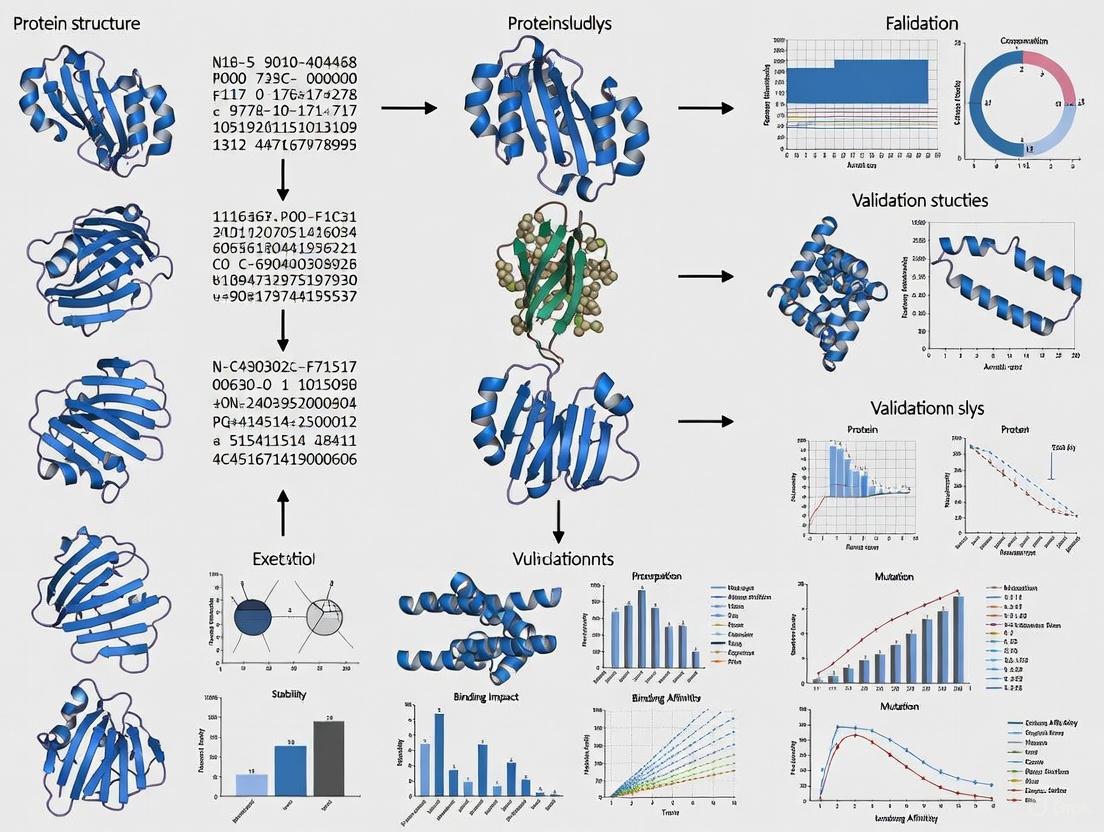
Accurate protein structures are foundational for reliable mutational studies, yet the transition from static computational models to biologically relevant insights is non-trivial.
Beyond the Static Model: A Practical Framework for Validating Protein Structures in Mutational Studies
Abstract
Accurate protein structures are foundational for reliable mutational studies, yet the transition from static computational models to biologically relevant insights is non-trivial. This article provides a comprehensive framework for researchers and drug development professionals to critically validate protein structures for mutational analysis. We explore the fundamental principles of protein dynamics and the limitations of AI-predicted structures, detail cutting-edge methodologies that integrate experimental data and physics-based simulations, address common troubleshooting scenarios, and establish robust validation protocols. By synthesizing foundational knowledge with practical application and comparative evaluation, this guide aims to enhance the accuracy and translational impact of mutational studies in biomedical research.
The Why and How: Understanding the Critical Need for Validation in Protein Mutational Studies
The accurate prediction of how mutations affect protein stability and function is a cornerstone of modern biochemical research and therapeutic development. Traditional computational approaches have often relied on single, static protein structures as their input, operating under the assumption that a single snapshot can adequately represent protein dynamics. This application note details the critical limitations of these single-state models and presents advanced, validated protocols that incorporate dynamic and ensemble-based data to significantly enhance prediction accuracy for mutational studies. Framed within the broader context of rigorous protein structure validation, we provide researchers with the methodologies and tools necessary to advance beyond static approximations toward a more dynamic understanding of protein behavior.
Quantitative Comparison of Predictive Methodologies
The field has moved beyond single-method approaches. The table below summarizes the performance of various computational methods, highlighting how integrating diverse data types and machine learning models addresses the limitations of static structures.
Table 1: Performance Metrics of Protein Stability Change Prediction Methods
| Method Name | Underlying Approach | Prediction Type | Reported Performance | Key Features / Data Used |
|---|---|---|---|---|
| DMS-Fold [1] | Deep Neural Network (OpenFold) | Structure Prediction & Refinement | TM-Score improvement for 88% of targets vs. AlphaFold2 | Integrates residue burial restraints from Deep Mutational Scanning (DMS) |
| PMSPcnn [2] | Convolutional Neural Network (CNN) | Single Point Mutation Stability (ΔΔG) | State-of-the-art on Ssym, p53, myoglobin test sets | Uses persistent homology for topological features; regression stratification cross-validation |
| SVR/RF/DNN Ensemble [3] | Support Vector Regression, Random Forest, Deep Neural Network | Single & Double Mutation Stability (ΔΔG) | Pearson Correlation: 0.71 (single), 0.81 (double) | Uses rigidity metrics from in silico mutagenesis; features a voting scheme |
| RF-based Model [3] | Random Forest | Thermostability Changes (ΔΔG) | Accuracy: 79.9% (single), 78.2% (double) | Based on 41 features for single and multiple point mutations |
Experimental Protocols
Protocol: Validating Predicted Stability Changes Using a Comparison of Methods Experiment
This protocol provides a framework for experimentally validating computational predictions of protein stability changes (ΔΔG) upon mutation, based on established methodological comparison guidelines [4].
1. Purpose and Principle: To estimate the systematic error (inaccuracy) between computationally predicted ΔΔG values and experimentally determined ΔΔG values, which is critical for assessing the real-world performance of a predictive model.
2. Research Reagent Solutions:
- Stability Measurement Buffer: A standardized buffer (e.g., phosphate-buffered saline at physiological pH) to ensure consistent folding conditions.
- Denaturant Stock Solutions: High-concentration solutions of chemical denaturants like Guanidine Hydrochlorium (GdnHCl) or Urea for unfolding curves.
- Wild-Type and Mutant Protein Purification Kits: Affinity chromatography kits suitable for the protein tag system in use (e.g., His-tag, GST-tag).
3. Procedure:
Protocol: Integrating DMS Data for Enhanced Structure Refinement (DMS-Fold)
This protocol describes how to use experimental deep mutational scanning data to guide and improve protein structure prediction, overcoming limitations of static models [1].
1. Purpose: To refine a protein's predicted structure by incorporating residue burial information derived from single-mutant deep mutational scanning data.
2. Research Reagent Solutions:
- DMS Library Construction Kit: A kit for generating a comprehensive single-mutant library of the target protein.
- Selection/Screening Assay Reagents: Reagents for the functional or stability-based assay (e.g., cDNA display proteolysis reagents , fluorescence-activated cell sorting (FACS) buffers, or enzyme activity substrates).
- High-Throughput Sequencing Reagents: Kits for next-generation sequencing to quantify variant abundance pre- and post-selection.
3. Procedure:
Visual Workflows and Signaling Pathways
DMS-Fold Workflow
This diagram illustrates the logical flow and data integration points of the DMS-Fold protocol for refining protein structures using deep mutational scanning data [1].
Mutational Study Validation
This workflow outlines the key steps for validating computational predictions of mutational effects through experimental comparison, as described in Protocol 3.1 [4].
The Scientist's Toolkit: Research Reagent Solutions
The following table catalogues essential materials and digital tools for conducting rigorous mutational studies, as featured in the protocols above.
Table 2: Key Research Reagents and Tools for Protein Mutational Studies
| Item Name | Function / Purpose | Example / Specification |
|---|---|---|
| cDNA Display Proteolysis Kit [1] | High-throughput measurement of protein folding stability for thousands of variants in a DMS experiment. | Enables mega-scale stability profiling as used in Tsuboyama et al. (2023). |
| Chemical Denaturants | Used in equilibrium unfolding experiments (e.g., by CD or fluorescence) to determine the free energy of unfolding (ΔG). | Ultrapure Guanidine Hydrochloride (GdnHCl) or Urea. |
| Saturation Mutagenesis Library Kit | To generate a comprehensive library of mutant genes for a target protein, serving as the starting point for DMS. | Commercially available kits for error-prone PCR or oligonucleotide-directed synthesis. |
| DMS-Fold Software [1] | A deep neural network that refines AlphaFold2 predictions by integrating residue burial restraints derived from DMS data. | Publicly available at: https://github.com/LindertLab/DMS-Fold. |
| PMSPcnn Predictor [2] | An unbiased convolutional neural network for predicting ΔΔG upon single point mutations, utilizing persistent homology. | Available upon request or from the referenced publication. |
| ThermoMPNN [1] | A graph neural network used to simulate protein folding stabilities (ΔΔGs) from a PDB structure for in silico training and testing. | Used to generate simulated DMS data for DMS-Fold training. |
The advent of sophisticated artificial intelligence systems like AlphaFold2 has revolutionized protein structure prediction, yet significant accuracy gaps persist in specific biological contexts that critically impact their utility for mutational studies. Two particular challenges stand out: the prediction of orphan proteins (those with no sequence homologs) and the modeling of dynamic regions within protein structures. For researchers investigating the structural consequences of mutations, these limitations present substantial hurdles, as inaccurate base structures compromise all downstream analyses. This Application Note details these specific challenges and provides validated experimental protocols to address them, enabling more reliable mutational studies when working with AI-predicted models.
Quantitative Assessment of Accuracy Gaps
Performance Discrepancies in Orphan Protein Prediction
Table 1: Comparative Performance of Protein Structure Prediction Methods on Orphan vs. Standard Proteins
| Method | Input Data | Average GDT_TS on Orphan Proteins | Average GDT_TS on Standard Proteins | Computational Requirements |
|---|---|---|---|---|
| AlphaFold2 | MSA-dependent | Substantially lower [5] | High (>85 in CASP14) [6] | High (MSA construction dominates) |
| RoseTTAFold | MSA-dependent | Substantially lower [5] | High [6] | High |
| RGN2 | Single sequence | Outperforms AF2 on orphans [6] | Lower than AF2 [6] | Up to 10⁶-fold reduction [6] |
| trRosettaX-Single | Single sequence | Better than AF2 [5] | Not specified | Not specified |
Accuracy Limitations in Dynamic Regions
Table 2: Method Performance in Dynamic Protein Regions
| Validation Method | Sensitivity to Dynamics | Advantages for Dynamic Regions | Limitations |
|---|---|---|---|
| X-ray Crystallography | Low (captures static states) | Atomic resolution | Poor for flexible loops |
| NMR Spectroscopy | High (solves structures in solution) | Captures conformational diversity [7] | Lower resolution, size limitations |
| AlphaFold2 Prediction | Variable (confidence correlates) | Complete atomic models | Often inaccurate in low-confidence regions [7] |
| ANSURR Validation | Specifically designed for dynamics | Quantifies accuracy in solution [7] | Requires NMR data |
Experimental Protocols for Validation
Protocol 1: Validating Orphan Protein Structures
Principle: Orphan proteins lack evolutionary information from Multiple Sequence Alignments (MSAs), which AlphaFold2 and similar MSA-dependent methods rely on for accurate prediction [5]. This protocol uses single-sequence methods and experimental validation to address this gap.
Procedure:
- Sequence Analysis: Confirm orphan status by performing iterative homology searches (e.g., with HHblits, JackHMMER) against UniRef30, MGnify, and PDB70 databases. A true orphan will have no significant homologs (MSA depth = 1) [6].
- Structure Prediction:
- Model Quality Assessment:
- Calculate global metrics (GDT_TS, RMSD) for all predictions.
- Identify conserved structural motifs despite sequence divergence.
- Experimental Cross-Validation (where feasible):
Expected Outcomes: Single-sequence methods typically outperform MSA-dependent methods on orphan proteins, with RGN2 achieving higher GDT_TS than AlphaFold2 on benchmarked orphan datasets [6].
Figure 1: Validation workflow for orphan protein structures
Protocol 2: Assessing and Refining Dynamic Regions
Principle: AI-predicted structures, particularly from AlphaFold2, often show lower accuracy in dynamic regions, which are crucial for understanding mutational effects on conformational flexibility and allostery [7].
Procedure:
- Identify Dynamic Regions:
- Analyze AlphaFold2's per-residue confidence metric (pLDDT).
- Map low pLDDT scores (<70) to sequence and secondary structure.
- Comparative Structure Determination:
- For the same protein, obtain an NMR ensemble where available [7].
- Calculate root-mean-square fluctuation (RMSF) from NMR models to quantify flexibility.
- Quantitative Accuracy Assessment:
- Use ANSURR (Accuracy of NMR Structures Using RCI and Rigidity) to compare AlphaFold2 predictions with NMR ensembles [7].
- Focus analysis on regions with significant divergence between methods.
- Refinement of Dynamic Regions:
- Use Rosetta-based refinement protocols in torsion and Cartesian space [6].
- Apply molecular dynamics simulations to sample conformational space.
Expected Outcomes: AlphaFold2 predictions generally show higher accuracy than individual NMR models in rigid regions, but NMR ensembles better capture conformational diversity in flexible regions, particularly where pLDDT is low [7].
Protocol 3: Protein Complex Structure Modeling with DeepSCFold
Principle: Predicting protein-protein complexes remains challenging due to difficulties in capturing inter-chain interaction signals. DeepSCFold uses sequence-derived structure complementarity rather than solely relying on sequence-level co-evolutionary signals [8].
Procedure:
- Input Preparation: Provide sequences of interacting protein chains.
- Monomeric MSA Generation: Create individual MSAs for each subunit from multiple databases (UniRef30, UniRef90, Metaclust, etc.) [8].
- Structural Complementarity Assessment:
- Predict protein-protein structural similarity (pSS-score) from sequence.
- Calculate interaction probability (pIA-score) using deep learning models.
- Paired MSA Construction: Systematically concatenate monomeric homologs using predicted interaction probabilities and multi-source biological information.
- Complex Structure Prediction: Use generated paired MSAs with AlphaFold-Multimer to model complex structures.
- Model Selection: Apply quality assessment (DeepUMQA-X) and use top-ranked model as template for iterative refinement.
Expected Outcomes: DeepSCFold significantly increases accuracy of protein complex structure prediction, achieving 11.6% and 10.3% improvement in TM-score compared to AlphaFold-Multimer and AlphaFold3, respectively, on CASP15 multimer targets [8].
Figure 2: DeepSCFold workflow for protein complex modeling
The Scientist's Toolkit: Research Reagent Solutions
Table 3: Essential Computational Tools for Validating AI-Predicted Structures
| Tool Name | Type | Primary Function | Application Context |
|---|---|---|---|
| RGN2 | Structure Prediction | Single-sequence prediction using protein language model | Orphan proteins, designed proteins [6] |
| trRosettaX-Single | Structure Prediction | Single-sequence method with knowledge distillation | Orphan proteins [5] |
| DeepSCFold | Complex Modeling | Sequence-derived structure complementarity | Protein complexes, antibody-antigen interactions [8] |
| ANSURR | Validation | Accuracy assessment of solution structures | Dynamic regions, NMR validation [7] |
| QresFEP-2 | Mutational Analysis | Hybrid-topology free energy calculation | Protein stability changes upon mutation [9] |
| Rosetta | Modeling Suite | Structure refinement and design | Flexible region refinement, protein engineering [10] |
| AlphaFold-Multimer | Complex Prediction | MSA-based complex structure prediction | Protein-protein interactions [8] |
Addressing accuracy gaps in AI-predicted structures for orphan proteins and dynamic regions requires specialized approaches that move beyond standard structure prediction pipelines. By implementing the validation protocols outlined in this Application Note—leveraging single-sequence methods for orphan proteins, solution-state techniques for dynamic regions, and structure complementarity for complexes—researchers can significantly enhance the reliability of structural models used in mutational studies. As AI methods continue to evolve, the integration of these complementary approaches will remain essential for ensuring that computational predictions provide a solid foundation for understanding protein function and designing therapeutic interventions.
The advent of deep learning-based protein structure prediction tools, notably AlphaFold2 (AF2), has revolutionized structural biology by providing highly accurate models of protein structures from amino acid sequences [11]. A critical aspect of leveraging these predictions, especially for sensitive downstream tasks such as mutational analysis, lies in the correct interpretation of the confidence scores that accompany each model. AF2 provides two primary metrics for assessing prediction reliability: the predicted local distance difference test (pLDDT), which measures local per-residue confidence, and the predicted aligned error (PAE), which estimates the confidence in the relative positional arrangement of different parts of the structure [12] [13]. Misinterpretation of these metrics can lead to incorrect biological conclusions, particularly when assessing the impact of mutations on protein stability and function. This guide details the interpretation of these metrics and outlines protocols for their application in mutational studies, providing a framework for researchers to validate protein structures for this specific research context.
Defining the Core Confidence Metrics
pLDDT: Local Per-Residue Confidence
The pLDDT is a per-residue measure of local model confidence, scaled from 0 to 100. It estimates the predicted agreement between the model and a hypothetical experimental structure based on the local distance difference test for Cα atoms [13].
- High Confidence (pLDDT > 90): Indicates very high confidence in the local structure. Both the backbone and side chains are typically predicted with high accuracy, often comparable to experimentally resolved structures.
- Confident (90 > pLDDT > 70): Represents a backbone prediction that is likely correct, but side-chain placements may be inaccurate.
- Low (70 > pLDDT > 50): Suggests a low-confidence region that should be interpreted with caution. These regions often correspond to flexible loops or intrinsically disordered regions (IDRs).
- Very Low (pLDDT < 50): Indicates very low confidence. These regions are typically highly flexible or unstructured in their native state, and the predicted coordinates should not be trusted for structural analysis [13].
It is crucial to understand that a high pLDDT score for all domains of a protein does not guarantee confidence in their relative positions or orientations within the global structure. pLDDT is strictly a local measure [13].
PAE: Global Confidence in Relative Positions
The PAE is a 2D metric that quantifies AlphaFold2's confidence in the relative position of any two residues in the predicted structure. It is defined as the expected positional error (in Ångströms) at residue x if the predicted and true structures were aligned on residue y [12] [14].
The PAE is visualized as a plot where both axes represent the protein sequence. Each tile's color indicates the expected distance error between the corresponding residue pair:
- Low PAE score (Dark Green): Low predicted error; high confidence in the relative position of the two residues.
- High PAE score (Light Green): High predicted error; low confidence in the relative position [12].
The PAE plot is essential for evaluating the confidence in domain packing and relative orientations of subunits in a complex. A high PAE between different domains or chains indicates that their predicted spatial arrangement is unreliable, even if each domain has high pLDDT scores [12].
Table 1: Summary of Key AlphaFold2 Confidence Metrics
| Metric | Scope | Interpretation of Scores | Primary Application | |||
|---|---|---|---|---|---|---|
| pLDDT | Local, per-residue | 0-50: V. Low | 50-70: Low | 70-90: Confident | 90-100: High | Assessing local backbone and side-chain reliability; identifying disordered regions. |
| PAE | Global, residue-pair | Low PAE (Dark Green): High confidence in relative position.High PAE (Light Green): Low confidence in relative position. | Evaluating domain orientations, protein-protein interfaces, and multi-chain complexes. |
Workflow for Interpreting Confidence Metrics
The following diagram illustrates the logical workflow for interpreting AlphaFold2's pLDDT and PAE scores to assess a model's reliability for structural and mutational analysis.
Experimental Validation of AF2 Confidence Metrics
Protocol: Validating AF2 Predictions with Experimental Structures
Objective: To assess the real-world accuracy of AlphaFold2 predictions and their confidence metrics by comparing them with experimentally determined structures.
Materials:
- Software: Molecular visualization software (e.g., ChimeraX, PyMOL).
- Data: AF2 prediction model (PDB format with pLDDT in B-factor column) and corresponding experimental structure from PDB.
Methodology:
- Structure Retrieval: Obtain the AF2 model of interest from the AlphaFold Protein Structure Database or generate it using ColabFold.
- Experimental Structure Alignment: Download a high-resolution experimental structure (e.g., from X-ray crystallography or cryo-EM) of the same protein or a close homolog. Superimpose the AF2 model onto the experimental structure using Cα atoms of well-aligned regions.
- Root-Mean-Square Deviation (RMSD) Calculation: Calculate the global and local RMSD to quantify the coordinate differences between the predicted and experimental structures.
- Correlation with pLDDT: Map the per-residue RMSD values against the pLDDT scores. Residues with high pLDDT should exhibit low RMSD, indicating high accuracy.
- Correlation with PAE: Analyze the PAE plot in the context of domain movements or flexibility observed in experimental structures. High PAE between domains often correlates with inherent flexibility or multiple conformational states.
Exemplary Validation Data: A study focusing on centrosomal proteins validated AF2 predictions against novel X-ray crystal structures. For the CEP44 CH domain, the AF2 model (AF-Q9C0F1-F1-model_v1) superposed with the experimental structure with a root-mean-square deviation (RMSD) of 0.74 Å over 116 residues [11]. The pLDDT scores for the structured regions were consistently >90, confirming that high pLDDT correlates with high experimental accuracy. Furthermore, the AF2 model was more accurate than any available homologous template from the PDB, which had RMSDs ranging from 2.8 to 3.1 Å [11].
Table 2: Validation of AlphaFold2 Predictions Against Experimental Structures
| Protein | Experimental Method | Resolution (Å) | AF2 vs. Exp. RMSD | Corresponding pLDDT | Interpretation |
|---|---|---|---|---|---|
| CEP44 CH Domain [11] | X-ray Crystallography | 2.3 | 0.74 Å | >90 (structured regions) | High pLDDT correlates with atomic-level accuracy. |
| CEP192 Spd2 Domain [11] | X-ray Crystallography | 2.1 | Not Specified | High confidence | AF2 provided insights where only weak sequence similarity existed. |
Implications for Mutational Analysis
Limitations of AF2 in Predicting Mutational Effects
A critical application of structural models is predicting the impact of mutations on protein stability (ΔΔG) and function. However, studies have shown that AlphaFold2 has significant limitations for this task.
Protocol: Assessing AF2 for Mutational Effect Prediction
Objective: To evaluate the capability of AF2's pLDDT metric to predict changes in protein stability and function upon mutation.
Materials:
- Dataset: Curated set of proteins with experimentally measured stability changes (ΔΔG) or functional changes upon single-point mutations (e.g., from ThermoMutDB).
- Software: Standalone AlphaFold2 or ColabFold for generating wild-type and mutant models.
Methodology:
- Model Generation: Run AF2 for the wild-type sequence and for each single-point mutant sequence.
- Metric Extraction: For each run, extract the pLDDT score of the mutated residue in both wild-type and mutant models. Also, calculate the average pLDDT (
) for the entire model. - Calculate ΔpLDDT: Compute the difference in the mutated residue's pLDDT (and the global
) between the wild-type and mutant models (ΔpLDDT = pLDDTmutant - pLDDTwildtype). - Correlation Analysis: Perform a linear correlation analysis (e.g., calculating Pearson correlation coefficient) between ΔpLDDT and the experimentally measured ΔΔG or functional change.
Key Finding:
A comprehensive study analyzing over 1,154 mutations found a very weak correlation (Pearson correlation coefficient = -0.17) between the change in pLDDT and experimentally determined ΔΔG values. The change in the global model confidence (
Recommended Workflow for Mutational Studies
Given AF2's limitations in direct mutational effect prediction, the following workflow is recommended for robust mutational analysis:
- Model Quality Assurance: Always use the confidence metrics (pLDDT and PAE) as a first step to vet the reliability of the initial structural model. Mutational analysis should only be performed on high-confidence regions (pLDDT > 70) with confident relative positioning (low inter-domain PAE).
- Leverage Specialized Tools: Use the AF2-validated structure as input for physics-based or machine learning methods specifically designed for predicting mutational effects, such as:
- Free Energy Perturbation (FEP): A physics-based approach implemented in protocols like QresFEP-2, which has been benchmarked on large datasets and shows high accuracy for predicting changes in protein stability and protein-ligand binding affinity [9].
- Deep Mutational Scanning (DMS): An experimental method that couples genotype to phenotype, enabling the functional assessment of hundreds of thousands of protein variants in a single experiment. The resulting data can be used to infer protein properties and validate computational predictions [16].
- Experimental Validation: Correlate computational predictions with experimental data whenever possible to validate the chosen approach.
Table 3: The Scientist's Toolkit for Mutational Analysis
| Tool / Reagent | Type | Primary Function in Mutational Analysis |
|---|---|---|
| AlphaFold2 / AlphaFold3 | Software | Provides high-accuracy protein structure models for wild-type and mutant sequences. Serves as the structural foundation for analysis. |
| ChimeraX / PyMOL | Software | Molecular visualization and analysis; used for structure validation, superposition, and calculating RMSD. |
| QresFEP-2 [9] | Software/Protocol | A physics-based Free Energy Perturbation (FEP) method for accurately predicting the effect of point mutations on protein stability and ligand binding. |
| Deep Mutational Scanning (DMS) [16] | Experimental Method | High-throughput functional assay of mutant libraries to generate empirical data on the effects of mutations. |
| ThermoMutDB [15] | Database | Curated dataset of experimental protein stability changes (ΔΔG) upon mutation, used for benchmarking. |
The confidence metrics pLDDT and PAE provided by AlphaFold2 are indispensable for determining the reliability of predicted protein structures. pLDDT accurately identifies well-resolved local regions, while PAE is critical for assessing the confidence in domain arrangements and multi-chain complexes. Validation studies confirm that models with high pLDDT scores can achieve near-experimental accuracy. However, researchers must be aware of a key limitation: these metrics are not reliable proxies for predicting the functional or stability impacts of mutations. For mutational studies, a robust protocol involves using AF2 to generate a validated structural framework and then applying specialized tools like FEP or DMS to investigate the consequences of amino acid changes. This integrated approach ensures that the revolutionary power of AF2 is effectively and correctly harnessed for protein engineering and drug development.
The energy landscape paradigm provides a fundamental framework for understanding how proteins fold, function, and evolve. It conceptualizes a protein's conformational space as a multidimensional surface where energy coordinates define the probability of a molecule adopting a specific structure or conformation [17] [18]. The evolutionary selection of protein sequences is driven primarily by functional requirements rather than mere stability, resulting in energy landscapes that are often "rough," containing multiple energy minima accessible depending on cellular conditions [17]. This ruggedness is not a design flaw but a functional necessity, enabling proteins to utilize conformational dynamics for biological activities such as ligand binding, allosteric regulation, and catalytic function [17] [19]. The landscape topography is characterized by stable states (deep energy minima corresponding to native functional states), metastable states (kinetically trapped local minima), and transition states (high-energy saddle points separating minima that dictate transition rates between states) [17] [20]. Understanding how mutations alter this delicate topographic organization is crucial for elucidating their effects on protein function, stability, and disease pathogenesis.
Key Concepts and Definitions
Fundamental States in the Energy Landscape
The functionality of a protein is governed by the interplay between three key states on its energy landscape. The characteristics and functional implications of these states are summarized in the table below.
Table 1: Key States in Protein Energy Landscapes
| State Type | Energetic Definition | Structural Characteristics | Functional Role |
|---|---|---|---|
| Stable State (N) | Global or local energy minimum; deepest well on landscape | Native functional conformation; often well-ordered | Primary biologically active state; highest population under physiological conditions |
| Metastable State (M, N*) | Local energy minimum separated by significant barriers from stable state | Partially folded, excited, or alternative conformations | Functional intermediates, signaling states, or risk states for aggregation |
| Transition State (TS) | Saddle point with exactly one negative Hessian eigenvalue | Partial broken/formed interactions; distorted geometry | Kinetic bottleneck for interconversions; determines rate of state transitions |
Visualizing Landscape Topography and Mutational Effects
The following diagram illustrates the organization of a multifunnel energy landscape and how mutations can alter its topography, affecting the distribution and accessibility of functional states.
Quantitative Effects of Mutations on Energy Landscape Features
Case Study: Strain-Specific Evolution in Influenza NS1
A comprehensive study on influenza A virus nonstructural protein 1 (NS1) illustrates how seemingly neutral mutations accumulate over time to reshape energy landscapes through long-range epistatic interactions [21]. The research tracked NS1 evolution across strains emerging between 1918-2004 (1918 H1N1, PR8 H1N1, Udorn H3N2, and Vietnam H5N1), quantifying how strain-specific mutations altered biophysical properties and binding kinetics to the host p85β subunit of PI3K.
Table 2: Evolutionary Changes in NS1 Energy Landscape and Binding Properties
| Influenza Strain (Year) | Sequence Divergence from 1918 | kon to p85β (×10⁵ M⁻¹s⁻¹) | koff to p85β (×10⁻³ s⁻¹) | Epistatic Pattern with Core Residues |
|---|---|---|---|---|
| 1918 H1N1 | Reference | 2.14 ± 0.11 | 8.71 ± 0.43 | Reference state |
| PR8 H1N1 | ~3% of residues | 2.22 ± 0.10 | 6.92 ± 0.31 | Sign epistasis at Y89, negative epistasis elsewhere |
| Udorn H3N2 | ~8% of residues | 2.18 ± 0.09 | 6.53 ± 0.27 | Positive epistasis dominant (less deleterious mutational effects) |
| Vietnam H5N1 (2004) | ~14% of residues | 2.21 ± 0.12 | 6.51 ± 0.35 | Reversal of epistatic trend (increased deleterious effects) |
The data demonstrate that while association rates (kon) remained largely conserved—suggesting evolutionary constraint—dissociation rates (koff) progressively decreased, indicating stronger binding in later strains [21]. Crucially, alanine scanning of core interface residues revealed substantial epistasis, where the energetic effects of mutations differed significantly across strain backgrounds. This epistasis emerged from mutations altering the conformational dynamics of the hydrophobic core, effectively reshaping the NS1 energy landscape during viral evolution without immediate functional consequences, potentially diversifying genetic backgrounds for future adaptation [21].
Energetic Consequences of Landscape Perturbations
Mutations can induce various energetic changes to the protein landscape, with distinct functional outcomes. The table below summarizes quantitative relationships between landscape perturbations and functional consequences.
Table 3: Energetic Consequences of Landscape Perturbations by Mutations
| Landscape Perturbation | ΔΔG Range (kcal/mol) | Structural Consequences | Functional & Pathological Outcomes |
|---|---|---|---|
| Destabilization of Native State | 2-10 | Reduced population of native fold; increased unfolding | Loss of function; accelerated degradation; reduced cellular activity |
| Stabilization of Metastable States | 1-5 | Enhanced population of aggregation-prone or dysfunctional conformations | Gain-of-function; toxic oligomerization; amyloid formation |
| Altered Transition State Barriers | 3-15 | Changed rates of interconversion between functional states | Impaired allosteric regulation; altered signaling kinetics; molecular dysfunction |
| Epistatic Rewiring | 1-8 | Long-range changes in dynamic allosteric networks | Background-dependent mutational effects; evolutionary capacitance; personalized disease manifestations |
Experimental Protocols for Characterizing Mutational Effects on Energy Landscapes
Protocol: Computational Reconstruction of Energy Landscapes from Discrete Samples
This protocol enables the reconstruction of protein energy landscapes from discrete conformational samples, allowing comparison between wild-type and variant proteins to detect mutation-induced alterations [20].
Materials and Reagents
Table 4: Computational Resources for Landscape Reconstruction
| Resource Category | Specific Tools/Sources | Application Purpose |
|---|---|---|
| Sample Generation Algorithms | SoPriM/SoPriMp [20], Basin-Hopping [18], Discrete Path Sampling [18] | Generate conformation-energy pairs representing landscape |
| Energy Functions | Amber ff14SB [20], CHARMM [19], AMBER [19], GROMACS [19] | Evaluate energy of sampled conformations |
| Experimental Data Sources | Protein Data Bank (PDB) [20], CoDNaS 2.0 [19], PDBFlex [19] | Provide known conformations for PCA space definition |
| Landscape Analysis Software | TopSearch [22], Custom MATLAB/Python scripts [20] | Detect basins, saddles, and landscape features |
Procedure
Variable Space Definition: Collect experimentally resolved conformations of the protein of interest (wild-type and variants) from the PDB. Perform Principal Component Analysis (PCA) to identify the dominant collective motions. Select the top 3-10 principal components as the reduced-dimensional variable space for landscape exploration [20].
Conformational Sampling: Execute stochastic global optimization algorithm (e.g., SoPriMp) in the defined PC space. Generate ≥50,000 conformation-energy samples for each protein variant to ensure adequate coverage of low-energy regions. Utilize fast transformation methods to convert PC coordinates to all-atom structures for energy evaluation [20].
Energy Evaluation: Calculate potential energy for each sampled conformation using molecular mechanics forcefields (e.g., Amber ff14SB). Employ implicit or explicit solvation models consistent with biological conditions. Parallelize computations across high-performance computing clusters to manage computational load [20].
Landscape Reconstruction: Apply basin detection algorithms to identify local energy minima and their associated basins. Utilize topological data analysis to identify basin hierarchies and connectivity. Implement saddle point detection using mathematical formulations based on level set theory [20].
Feature Extraction and Comparison: Quantify landscape features including basin depths, volumes, and barrier heights. Compute committor probabilities and reactive visitation probabilities for key transitions. Compare landscapes of wild-type versus variant proteins to identify statistically significant alterations in landscape topography [20].
Data Analysis
- Calculate free energy differences between dominant basins using multistate Bennett acceptance ratio (MBAR) or weighted histogram analysis method (WHAM)
- Identify mutational effects by comparing barrier heights between functional states in wild-type versus variant landscapes
- Correlate altered landscape features with experimental measurements of function and stability
- Generate hypotheses regarding molecular mechanisms of dysfunction by identifying which state interconversions are most perturbed
Protocol: Hybrid-Topology Free Energy Pertigation (QresFEP-2) for Quantifying Mutational Effects
The QresFEP-2 protocol provides a physics-based approach for accurately calculating changes in protein stability and binding affinity resulting from point mutations [9].
Materials and Reagents
Table 5: Essential Components for QresFEP-2 Simulations
| Component | Specifications | Purpose |
|---|---|---|
| Software Platform | QresFEP-2 integrated with Q molecular dynamics software [9] | Execution of free energy calculations |
| Force Fields | Compatible with AMBER, CHARMM, OPLS-AA [9] | Molecular mechanics energy evaluation |
| System Preparation | Experimentally determined or predicted structures (AlphaFold2) [9] [19] | Initial molecular coordinates |
| Computational Resources | High-performance CPU/GPU clusters; 50-100 nodes recommended for throughput [9] | Practical execution of calculations |
Procedure
System Setup: Obtain protein structure from PDB or predicted models. For binding free energy calculations, include complete binding partners. Place the system in spherical water droplet with 25-30Å radius. Apply restraints to non-transforming regions to maintain structural integrity [9].
Hybrid Topology Construction: Implement "dual-like" hybrid topology approach with single-topology representation for conserved backbone atoms and separate topologies for mutating side chains. Avoid transformation of atom types or bonded parameters during the alchemical transformation [9].
Dynamic Restraint Application: Identify topologically equivalent heavy atoms between wild-type and mutant side chains. Apply distance restraints (force constant: 50-100 kcal/mol/Ų) between equivalent atoms within 0.5Šin initial conformation. This prevents "flapping" artifacts while maintaining conformational freedom [9].
FEP Simulation Execution: Perform 24 independent λ-windows for each transformation with 100-200ps simulation per window. Utilize soft-core potentials for non-bonded interactions to avoid end-point singularities. Employ replica exchange between adjacent λ-windows every 1-2ps to enhance sampling [9].
Free Energy Analysis: Calculate ΔΔG using Bennett acceptance ratio (BAR) or multistate BAR (MBAR) between intermediate states. Estimate statistical errors using bootstrapping with 100-200 repetitions. Perform consistency checks through cycle closures in thermodynamic cycles [9].
Data Analysis
- Validate predictions against experimental ΔΔG values from stability or binding assays
- Identify outliers with >1.5 kcal/mol deviation for investigation of sampling issues
- Categorize mutations by structural location (core, surface, interface) and chemical nature (conservative, non-conservative)
- Implement quality controls including convergence tests and Hamiltonian continuity checks
Research Reagent Solutions
Table 6: Essential Resources for Energy Landscape and Mutational Studies
| Resource Category | Specific Tools/Databases | Key Functionality |
|---|---|---|
| Landscape Benchmarking | Landscape17 [22] | Reference kinetic transition networks for small molecules to validate computational methods |
| Molecular Dynamics Datasets | ATLAS, GPCRmd, SARS-CoV-2 MD Database [19] | Pre-computed MD trajectories for various protein families |
| Conformational Diversity Databases | CoDNaS 2.0, PDBFlex [19] | Collections of alternative conformations for proteins |
| AI-Assisted Prediction | AlphaFold2, RoseTTAFold, GVP-MSA [19] [23] | Prediction of protein structures and fitness landscapes from sequence |
| Free Energy Calculation | QresFEP-2, FEP+, PMX [9] | Physics-based prediction of mutational effects on stability and binding |
The energy landscape paradigm provides a powerful conceptual and computational framework for understanding how mutations alter protein function by redistributing populations between stable states, metastable states, and transition states. Through the integration of computational landscape reconstruction, free energy calculations, and experimental validation, researchers can move beyond static structural analysis to dynamic mechanistic understanding of mutational effects. The protocols and resources outlined herein enable rigorous characterization of these effects, supporting advances in protein engineering, drug design, and personalized medicine. As the field progresses, increasing integration of AI methods with physics-based approaches promises to enhance our ability to predict and manipulate protein energy landscapes for therapeutic benefit.
Building Confidence: A Toolkit of Modern Methods for Structure Validation and Refinement
The prediction of protein structures has been revolutionized by deep learning algorithms like AlphaFold2. However, challenges remain in accurately determining structures for dynamic proteins, multimeric complexes, and orphan proteins without strong evolutionary signals. This application note details protocols for enhancing AlphaFold2's predictive accuracy by integrating sparse, experimental restraints derived from Deep Mutational Scanning (DMS), Nuclear Magnetic Resonance (NMR) spectroscopy, and cryo-Electron Microscopy (cryo-EM). We provide structured methodologies and workflows for researchers to incorporate these complementary data types, enabling atomic-resolution structure determination and validation critical for mutational studies and drug development.
Deep learning has transformed protein structure prediction, with AlphaFold2 (AF2) providing near-atomic accuracy for many targets. Despite its success, AF2 has inherent limitations, including handling proteins with multiple conformations, predicting mutational effects, and modeling orphan or intrinsically disordered proteins [1] [24]. Sparse experimental data from techniques like DMS, NMR, and cryo-EM can reveal key structural insights that overcome these limitations.
These techniques provide highly complementary information: DMS infers residue burial and stability, NMR provides atomic-level local restraints and dynamics information, and cryo-EM visualizes global molecular architecture. Integrating these sparse data types with AF2 creates a powerful synergistic approach, enabling structure determination for challenging biological systems at a resolution unattainable by any single method [25] [26] [27]. This note provides validated protocols for this integration, framed within the context of validating protein structures for mutational research.
The table below summarizes the core characteristics, data types, and integration capabilities of the three primary experimental techniques discussed.
Table 1: Summary of Sparse Data Techniques for Integration with AlphaFold
| Technique | Primary Data Type | Key Structural Information Provided | Typical Resolution/Precision | Integration Method with AlphaFold |
|---|---|---|---|---|
| Deep Mutational Scanning (DMS) | Mutational stability (ΔΔG) | Residue burial extent, folding stability | N/A (Functional data) | Embedding as restraint in pair representation (DMS-Fold) [1] |
| Nuclear Magnetic Resonance (NMR) | Chemical Shifts, NOEs, RDCs | Local distance & dihedral restraints, secondary structure, dynamics | Atomic (0.5 - 2 Å) | Use in model validation; as restraints in MD-assisted refinement [25] [26] [27] |
| Cryo-Electron Microscopy (cryo-EM) | 3D Coulomb Density Map | Molecular envelope, secondary structure placement | ~3 - 8 Å (Single-Particle) | Direct docking and refinement; integrated with NMR in MD simulations [25] [26] [27] |
| Combined NMR/cryo-EM | Hybrid of above | Atomic details within accurate global fold | < 1 Å (Achievable in integrated approach) | Joint refinement against all experimental data using MD simulations [27] |
Experimental Protocols
Protocol 1: Integrating DMS Data Using DMS-Fold
DMS measures the effects of mutations on protein folding stability, providing information on residue burial that can guide structure prediction.
Key Reagents & Materials:
- ThermoMPNN: A graph neural network for simulating mutational ΔΔGs from a structure [1].
- DMS-Fold Software: A modified version of OpenFold (AF2 trainable reimplementation) available at: https://github.com/LindertLab/DMS-Fold [1].
- Single-Mutant DMS Dataset: Experimentally measured or simulated ΔΔG values for point mutations.
Methodology:
- Extract Burial Information: From the DMS dataset (e.g., a mega-scale set of folding stabilities [1]), calculate a "burial score" for each residue. This score is a weighted average of ΔΔGs for different mutation types, where lower scores indicate buried, core residues.
- Integrate into Network: Embed the encoded burial scores along the diagonal of the pair representation during the initialization of the DMS-Fold network. This biases the model to correctly place core and surface residues without distorting specific pair information.
- Train and Predict: Initialize DMS-Fold with AF2's weights and train using a curated set of proteins with simulated or experimental DMS data. Generate predictions and compare them to AF2 baseline using metrics like TM-Score.
Validation: DMS-Fold has been shown to outperform standard AF2 for 88% of protein targets tested, with an average TM-Score improvement of 0.08 [1].
Protocol 2: Integrating NMR Chemical Shifts and Cryo-EM Maps
This integrated protocol is ideal for large protein complexes where neither technique alone can achieve atomic resolution.
Key Reagents & Materials:
- Cryo-EM Map: A medium-resolution (4-8 Å) 3D reconstruction of the target complex.
- NMR Sample: Uniformly or selectively (e.g., ILV methyl) labeled protein for MAS or solution NMR.
- Molecular Dynamics (MD) Software: Software like Xplor-NIH or GROMACS capable of hybrid energy minimization with experimental restraints.
Methodology:
- Data Collection:
- NMR: Acquire near-complete backbone and side-chain resonance assignments using multi-dimensional MAS or solution NMR experiments. Derive secondary structure propensities (using TALOS-N) and obtain distance restraints (e.g., from NOEs) [27].
- Cryo-EM: Collect single-particle cryo-EM data and reconstruct a 3D density map.
- Initial Model Building: Manually or automatically identify secondary structure elements (α-helices, β-sheets) within the cryo-EM density map.
- Assignment and Docking: Unambiguously assign the sequence-derived secondary structure elements from NMR to the features in the 3D EM map. This is guided by NMR-derived distance restraints that inform the spatial proximity of these elements [27].
- Joint Refinement: Refine the model by simultaneously minimizing a hybrid energy function during molecular dynamics simulations:
E = E_MM + w_NMR * E_NMR + w_EM * E_EMwhereE_MMis the molecular mechanics forcefield, andE_NMRandE_EMare the fits to the NMR data and cryo-EM map, respectively [25] [26].
Validation: This approach determined the structure of the 468 kDa dodecameric TET2 complex to a backbone RMSD of 0.7 Å relative to a crystal structure, even with a 4.1 Å cryo-EM map [27].
Workflow Visualization
The following diagram illustrates the logical workflow for the integrated NMR and cryo-EM structure determination protocol.
Integrated Workflow for NMR and Cryo-EM Data
The Scientist's Toolkit: Research Reagent Solutions
The table below lists essential materials and computational tools required for implementing the protocols described.
Table 2: Essential Research Reagents and Tools for Sparse Data Integration
| Item Name | Function / Application | Specific Use-Case / Notes |
|---|---|---|
| DMS-Fold | Software for integrating residue burial data with AF2. | Publicly available GitHub repository. Ideal for incorporating single-mutant DMS data [1]. |
| ThermoMPNN | Graph neural network for predicting ΔΔG of mutation. | Used to simulate mutational stability data if experimental DMS is unavailable [1]. |
| Uniformly ¹³C/¹⁵N-labeled Protein | Sample for multidimensional MAS NMR assignment. | Crucial for obtaining near-complete backbone assignments of large proteins [27]. |
| ILV Methyl-labeled Protein | Sample for solution NMR of large complexes. | Enables assignment of isoleucine, leucine, and valine methyl groups in high molecular weight systems [27]. |
| TALOS-N | Software for predicting secondary structure from chemical shifts. | Derives dihedral angle restraints from assigned NMR chemical shifts [26] [27]. |
| Molecular Dynamics (MD) Software (e.g., Xplor-NIH) | Platform for hybrid structure refinement. | Performs energy minimization integrating force fields with NMR and cryo-EM restraints [25] [26]. |
| OpenFold | Trainable implementation of AlphaFold2. | Serves as the base framework for developing custom integrations like DMS-Fold [1]. |
| Direct Electron Detector | Hardware for high-resolution cryo-EM data collection. | Essential for acquiring the high-quality images needed for 3-5 Å resolution maps [25] [27]. |
The integration of sparse experimental data from DMS, NMR, and cryo-EM with AlphaFold represents a powerful frontier in structural biology. The protocols outlined here provide researchers with a clear roadmap to overcome the inherent limitations of standalone computational or experimental methods. By strategically leveraging these complementary data types, scientists can achieve highly accurate and validated structural models, thereby accelerating research in protein engineering, understanding disease mechanisms, and rational drug design.
The accurate determination of protein three-dimensional structure is fundamental to understanding function and designing mutational studies. While deep learning systems like AlphaFold2 have revolutionized protein structure prediction, they still face limitations in predicting structures for numerous protein systems, including dynamic proteins with multiple conformations and orphan proteins with limited evolutionary information [1]. DMS-Fold represents a significant methodological advancement that addresses these limitations by integrating experimental deep mutational scanning data with deep learning frameworks to significantly enhance prediction accuracy [1] [28].
This integration is particularly valuable within the context of mutational studies research, where validating structural models is a critical prerequisite for interpreting variant effects. By leveraging sparse residue burial restraints derived from DMS experiments, DMS-Fold refines AlphaFold2 predictions to achieve more biologically accurate structures [1]. The method exploits the fundamental principle that protein tertiary structures typically exhibit hydrophobic residues concentrated in the core and exposed hydrophilic residues at the surface [1]. This physical basis provides a constraint that guides the neural network toward more physiologically plausible configurations.
Scientific Basis and Computational Framework
Theoretical Foundation: From Mutational Effects to Structural Constraints
The DMS-Fold approach is grounded in the well-established correlation between residue burial and mutational destabilization. Point mutations that convert hydrophobic core residues to polar/charged residues cause significant disruptions to protein folding stability and dynamics [1]. By analyzing mega-scale DMS datasets that systematically measure folding stabilities for numerous mutations across hundreds of proteins, researchers can infer the distance of a residue from the protein surface by assessing the detrimental effects of different mutational types [1].
This relationship between mutational type and structural context enables the extraction of burial information from DMS data. Specifically, mutations from small nonpolar residues (e.g., A, V, I) to charged/polar residues (e.g., N, K, Q, E, H, D, S, R, T) show the strongest correlation between a residue's burial extent and mutational stability effects [1]. The computational framework quantifies this relationship using a weighted average of neighbor count and atomic depth metrics, termed "burial extent" [1].
The DMS-Fold Architecture: Enhancing AlphaFold2 with Burial Embeddings
DMS-Fold builds upon OpenFold, a trainable reproduction of AlphaFold2, by incorporating burial information as an additional input feature [1] [29]. The key innovation involves embedding predicted residue surface distances into the pair representation of the network, which biases the MSA transformer to correctly place residues as core or surface during retrieval of co-evolutionary information [1].
The process begins with calculating a "burial score" from DMS data, which averages ΔΔGs of different mutations for a specific residue weighted by mutational type correlations [1]. This burial score is embedded along the diagonal of the pair representation during initialization prior to Evoformer processing, ensuring that specific pair information is not distorted while informing the network about residue burial constraints [1]. This approach allows the network to leverage both evolutionary patterns from multiple sequence alignments and empirical burial constraints from experimental DMS data.
Table 1: Key Components of the DMS-Fold Computational Architecture
| Component | Description | Function in Structure Prediction |
|---|---|---|
| Burial Score Calculation | Averages ΔΔGs of mutations weighted by mutational type correlations | Quantifies residue burial extent from DMS data |
| Pair Representation | Nres × Nres array representing residue pairs | Encodes spatial relationships between residues |
| Burial Embedding | Encoded burial scores added to pair representation diagonal | Guides residue placement during structure generation |
| Evoformer Blocks | Neural network blocks that process MSA and pair representations | Reasons about spatial and evolutionary relationships |
| Structure Module | Transforms representations into 3D coordinates | Generates final atomic-level protein structure |
Experimental Protocols and Implementation
Data Requirements and Input Preparation
Implementing DMS-Fold requires specific data inputs in defined formats. The system needs a protein sequence in FASTA format and single mutant deep mutational scanning thermodynamic stabilities (ΔΔGs) in a CSV file [29]. The CSV must be structured with four columns: (1) residue sequence number, (2) wildtype residue one-letter code, (3) mutated residue, and (4) measured ΔΔG for the corresponding mutation [29].
For researchers generating DMS data, the experimental protocol involves creating a comprehensive variant library that covers single-amino-acid mutations across the protein of interest. This library is then subjected to high-throughput functional assays that evaluate mutational effects on folding stability or activity [16]. The selection assay must be carefully designed to directly probe the property of interest, with thermodynamic stability assays being most appropriate for structural inference [16]. The resulting data undergoes quality control and processing to calculate enrichment scores and functional scores for each variant before conversion to the required ΔΔG format.
DMS-Fold Execution Workflow
The following diagram illustrates the complete DMS-Fold workflow from data preparation to structure prediction:
The execution of DMS-Fold requires setting up the appropriate computational environment following OpenFold's documentation for installing dependencies and conda requirements [29]. The model is executed with the 'model5ptm' config preset and can utilize GPU acceleration for faster computation. For challenging targets with limited evolutionary information, MSA subsampling can be specified with Neff parameters to optimize performance [29].
Validation and Quality Assessment
Validating DMS-Fold predictions follows standard protein structure assessment protocols. The TM-score metric provides a global measure of structural accuracy, with improvements greater than 0.1 considered significant [1] [28]. Additionally, the predicted local-distance difference test (pLDDT) from the AlphaFold2 framework provides per-residue reliability estimates [30]. For mutational studies, particular attention should be paid to the accuracy of core residue placement, as these regions are most critical for stability and often the focus of functional investigations.
Performance and Validation Metrics
Quantitative Assessment of Prediction Improvement
DMS-Fold has been rigorously validated against standard AlphaFold2 predictions using both simulated and experimental DMS data. The performance assessment demonstrates substantial improvements across a diverse set of protein targets:
Table 2: DMS-Fold Performance Comparison with AlphaFold2
| Evaluation Metric | Simulated DMS Data | Experimental DMS Data | Significance |
|---|---|---|---|
| Proteins with improved TM-score | 89% (631/710 targets) | 85% of targets | Majority benefit from DMS integration |
| Average TM-score improvement | 0.08 | Comparable improvement | Substantial enhancement |
| Proteins with TM-score improvement >0.1 | 253 proteins | Similar proportion | Clinically relevant improvement |
| Performance at low MSA depth | Significantly enhanced | N/A | Addresses key AlphaFold2 limitation |
The validation studies utilized proteins from CASP14 and CAMEO sets, with folding stabilities simulated using ThermoMPNN for 710 protein targets [1]. Under conditions simulating challenging targets with limited evolutionary information (low Neff values), the inclusion of DMS data led to particularly significant improvements, addressing a key limitation of standard AlphaFold2 [1].
Case Studies and Specific Applications
The performance advantages of DMS-Fold are most pronounced in specific protein classes where standard evolutionary-based methods struggle. These include:
- Proteins with few homologs: Where sparse MSA limits co-evolutionary signal
- Proteins with conformational flexibility: Where static structures inadequately represent functional states
- Designed proteins: With novel sequences lacking evolutionary history
- Disease-associated variants: Where structural context informs mechanism
For researchers validating protein structures for mutational studies, DMS-Fold provides particularly valuable insights for residues with ambiguous placement in standard predictions, as the burial constraints help resolve uncertainties in core packing and surface accessibility.
Research Reagent Solutions
Implementing DMS-Fold and associated experimental workflows requires specific computational and experimental resources:
Table 3: Essential Research Reagents and Resources for DMS-Fold Implementation
| Resource Category | Specific Tool/Reagent | Function in Workflow |
|---|---|---|
| Computational Tools | DMS-Fold GitHub Repository | Core structure prediction algorithm |
| OpenFold Dependencies | Required software environment | |
| ThermoMPNN | Simulating folding stabilities if experimental DMS unavailable | |
| Experimental Resources | cDNA Display Proteolysis | High-throughput stability assay for DMS |
| Next-generation Sequencing | Variant frequency quantification | |
| Mutant Library Construction | Comprehensive coverage of single-amino-acid mutations | |
| Data Resources | Mega-scale DMS Dataset | Training data for burial extent correlations |
| Protein Data Bank | Reference structures for validation | |
| CASP14/CAMEO Datasets | Benchmark proteins for performance testing |
Implementation Guidelines for Mutational Studies
Integrating DMS-Fold into Protein Validation Pipelines
For researchers focused on validating protein structures for mutational studies, DMS-Fold offers a powerful validation tool when integrated strategically:
- Initial Assessment: Run both standard AlphaFold2 and DMS-Fold on the protein of interest
- Divergence Analysis: Identify regions with significant structural differences between predictions
- Burial Validation: Cross-reference predicted burial with experimental/biochemical data
- Functional Correlation: Map known functional sites to structural features
This approach is particularly valuable when investigating variants of unknown significance, where accurate structural context is essential for interpreting mutational mechanisms.
Troubleshooting and Optimization
Common implementation challenges and solutions include:
- Sparse DMS Data: Utilize simulated ΔΔGs from tools like ThermoMPNN when experimental coverage is incomplete
- Conflicting Predictions: Prioritize DMS-Fold for core residues and AlphaFold2 for surface regions in hybrid approaches
- Memory Limitations: Use MSA subsampling strategies for large proteins
- Validation Uncertainty: Focus validation efforts on regions with high confidence (pLDDT > 90) from both methods
The continuous development of DMS-Fold and related methodologies promises further enhancements to protein structure validation, ultimately strengthening the foundation for mutational studies research and therapeutic development.
Understanding the effects of point mutations on protein stability and function is fundamental to biomedical research, with implications for genetic disease elucidation, drug design, and protein engineering. Single amino acid substitutions can lead to abnormal protein function and misfolding, contributing to pathologies such as sickle-cell disease, Rett syndrome, and neurodegenerative conditions like Alzheimer's and Parkinson's disease [31]. Accurately predicting these effects remains challenging, as mutations can alter thermodynamic stability, protein-ligand binding, and protein-protein interactions.
While statistical and machine learning approaches have advanced the field, they often lack generalizability when applied to novel protein systems beyond their training data and may neglect the influence of protein dynamics and solvent interactions [31]. Physics-based methods like Free Energy Perturbation (FEP) offer a rigorous alternative by modeling the underlying physical principles of molecular interactions. This application note focuses on QresFEP-2, a novel hybrid-topology FEP protocol that combines excellent accuracy with high computational efficiency for quantifying mutational impact in protein stability studies [31] [9].
QresFEP-2: A Hybrid Topology Approach
QresFEP-2 represents a significant evolution from its predecessor, QresFEP-1, by implementing a hybrid-topology approach designed to overcome limitations of previous single-topology methods. The protocol automates the estimation of relative free energy changes resulting from single-point mutations through molecular dynamics (MD) sampling along the FEP pathway [31] [9].
Traditional single-topology FEP implementations, such as QresFEP-1, relied on stepwise annihilation of amino acid side chains to a common alanine methyl group. This required parallel simulations of both wild-type and mutant protein versions, defining two thermodynamic cycles linked through a common alanine intermediate. While robust, this approach introduced potential artifacts from the explicit consideration of unnatural alanine intermediates and required a large number of simulation steps, particularly for non-alanine mutations [31].
QresFEP-2 utilizes a "dual-like" hybrid topology that combines a single-topology representation for conserved backbone atoms with separate topologies for variable side-chain atoms. This innovative approach avoids transforming atom types or bonded parameters while maintaining a rigorous and automatable FEP protocol [31] [9].
Technical Implementation
The hybrid topology implementation in QresFEP-2 addresses a critical challenge in dual-topology approaches: the potential for redundant backbone transformation that could affect main-chain conformation. By maintaining a single-topology representation for backbone atoms, the protocol ensures structural integrity while allowing efficient transformation of side chains [31].
A key technical innovation in QresFEP-2 is its dynamic restraint system, which combines topological equivalence with spatial overlap criteria. The protocol initially enumerates analogous heavy atoms between the two side chains, then progressively designates them as "restrained to each other" if placed within 0.5 Å of each other in their initial conformation. This prevents the "flapping" phenomenon – erroneous overlap with non-equivalent neighboring atoms – while maintaining adequate conformational freedom during the FEP transformation [9].
QresFEP-2 is integrated with the molecular dynamics software Q, making it compatible with multiple force fields and leveraging spherical boundary conditions to maximize computational efficiency without compromising predictive performance [31].
Performance Benchmarking and Validation
Accuracy and Efficiency Metrics
QresFEP-2 has been rigorously validated against comprehensive protein stability datasets encompassing 10 protein systems and nearly 600 mutations. The protocol demonstrates exceptional accuracy while achieving the highest computational efficiency among available FEP methods [31] [9].
Table 1: QresFEP-2 Performance Benchmarking Across Protein Systems
| Validation Dataset | Number of Mutations | Reported Accuracy | Comparative Advantage |
|---|---|---|---|
| Comprehensive protein stability dataset | ~600 | Excellent accuracy | Highest computational efficiency among FEP protocols |
| Gβ1 domain-wide mutagenesis | >400 | High robustness | Systematic mutation scan of 56-residue protein |
| A2A adenosine receptor (GPCR) | 26 | Successful application | Validates site-directed mutagenesis on membrane protein |
| Barnase/barstar complex | 11 | Reliable assessment | Demonstrates utility for protein-protein interactions |
The robustness of QresFEP-2 was further validated through comprehensive domain-wide mutagenesis, assessing the thermodynamic stability of over 400 mutations generated by a systematic mutation scan of the 56-residue B1 domain of streptococcal protein G (Gβ1) [31]. This large-scale demonstration highlights the protocol's capability for high-throughput virtual screening of protein mutations.
Comparison with Alternative FEP Approaches
Several FEP protocols exist for assessing mutational effects, each with distinct implementations and sampling strategies:
- PMX: A GROMACS-based protocol that employs dual-topology models with full-protein embedding under periodic boundary conditions, originally benchmarked on the ribonuclease Barnase dataset [31]
- FEP+: Schrödinger's commercial implementation utilizing dual-topology models with enhanced sampling techniques, validated across diverse protein targets [31] [32]
- QresFEP-2: Implements a hybrid-topology approach with spherical boundary conditions, achieving comparable accuracy with superior computational efficiency [31]
Table 2: Comparison of FEP Methodologies for Mutational Studies
| Methodology | Topology Approach | Sampling Environment | Computational Efficiency | Accessibility |
|---|---|---|---|---|
| QresFEP-2 | Hybrid (single backbone + dual sidechains) | Spherical boundary conditions | Highest | Open-source |
| PMX | Dual-topology | Periodic boundary conditions | Moderate | Open-source |
| FEP+ | Dual-topology | Periodic boundary conditions with enhanced sampling | High | Commercial |
| Traditional QresFEP-1 | Single-topology (alanine intermediate) | Spherical boundary conditions | Lower due to doubled steps | Open-source |
Experimental Protocols
Workflow for Protein Stability Assessment
The standard workflow for assessing mutational impact on protein thermodynamic stability using QresFEP-2 involves the following key steps:
System Preparation
Begin with a high-quality protein structure, either experimentally determined (X-ray crystallography, cryo-EM) or computationally predicted. Critical preparation steps include:
- Protonation state assignment: Determine appropriate protonation states for all ionizable residues at the target pH using tools like PROPKA or H++
- Structural optimization: Perform energy minimization to relieve steric clashes and correct non-ideal geometries
- Solvation model: Embed the protein in an explicit solvent sphere with appropriate boundary conditions
- Force field selection: Choose compatible force fields (OPLS, AMBER, or CHARMM) based on system requirements
Hybrid Topology Construction
The distinctive QresFEP-2 workflow involves:
- Backbone atom alignment: Maintain single-topology representation for conserved backbone atoms
- Side-chain mapping: Establish correspondence between wild-type and mutant side-chain atoms
- Restraint definition: Implement dynamic restraints based on topological equivalence and spatial proximity (within 0.5 Å)
- Lambda scheduling: Optimize the number of intermediate states (λ windows) for efficient transformation
FEP Simulation and Analysis
- Molecular dynamics sampling: Conduct simulations at each λ window with sufficient sampling time (typically nanoseconds per window)
- Free energy estimation: Calculate ΔΔG values using Bennett Acceptance Ratio (BAR) or Multistate BAR (MBAR) methods
- Error analysis: Estimate statistical uncertainty through bootstrapping or block averaging techniques
- Convergence assessment: Monitor free energy change as a function of simulation time to ensure adequate sampling
Validation with Experimental Data
For method validation, compare computational predictions with experimental data:
- Thermal shift assays: Measure changes in protein melting temperature (ΔTₘ)
- Isothermal titration calorimetry: Directly determine binding affinity changes (ΔΔG)
- Circular dichroism: Assess secondary structure stability
- Enzyme activity assays: Quantify functional impacts of mutations
Integration with Structure Prediction Models
Synergy with AI-Based Structure Prediction
The rapid advancement of deep learning-based protein structure prediction tools like AlphaFold2 and HelixFold presents new opportunities for FEP applications. When experimental structures are unavailable, high-quality predicted models can enable structure-based approaches for an expanding number of drug discovery programs [33] [34].
Recent studies have demonstrated that FEP calculations can validate AI-predicted protein-ligand complex structures by comparing computed binding free energies with experimental values. For instance, HelixFold3-predicted holo structures have been successfully validated using Flare FEP, with results comparable to those obtained from crystal structures for most targets [33].
Practical Considerations for Predicted Structures
When utilizing AI-predicted structures for FEP studies:
- Model quality assessment: Evaluate predicted structures using confidence metrics (pLDDT for AlphaFold2) and structural sanity checks
- Binding site refinement: Pay particular attention to binding site geometry, as global accuracy does not guarantee local binding site precision
- Multiple model consideration: Generate and test multiple predicted structures when possible, as demonstrated in HF3 validation studies where five apo and holo structures were predicted for each target [33]
- Experimental cross-validation: Whenever feasible, validate computational predictions with targeted experimental measurements
Applications in Drug Discovery and Protein Engineering
Drug Discovery Applications
QresFEP-2 and similar FEP protocols have demonstrated utility across multiple drug discovery scenarios:
- GPCR mutagenesis: Successful application to 26 site-directed mutagenesis experiments on the A2A adenosine receptor, a pharmaceutically relevant GPCR [31]
- Protein-protein interactions: Assessment of 11 mutants in the barnase/barstar complex, illustrating utility for interrogating biological interactions [31]
- Off-target profiling: Evaluation of binding specificity and selectivity against related protein targets
- Ligand optimization: Guidance for medicinal chemistry efforts by predicting affinity changes for candidate compounds
Protein Engineering Applications
Beyond drug discovery, FEP protocols enable rational protein engineering:
- Thermostability enhancement: Optimization of protein stability for industrial and therapeutic applications
- Enzyme engineering: Modification of substrate specificity and catalytic efficiency for biocatalysis
- Antibody design: Affinity maturation and stability optimization of therapeutic antibodies
- Variant interpretation: Functional characterization of disease-associated genetic variants
The Scientist's Toolkit
Essential Research Reagents and Computational Tools
Table 3: Essential Resources for FEP-Based Mutational Studies
| Resource Category | Specific Tools | Function and Application |
|---|---|---|
| FEP Software | QresFEP-2, FEP+, PMX, Flare FEP | Core free energy calculation platforms with varying topology implementations |
| Molecular Dynamics Engines | Q, GROMACS, Desmond, OpenMM | Simulation execution with different boundary conditions and sampling algorithms |
| Force Fields | OPLS4, AMBER, CHARMM | Molecular mechanical parameter sets for proteins, ligands, and solvents |
| System Preparation | PDB2PQR, Maestro, CHARMM-GUI | Structure preprocessing, protonation, solvation, and parameter assignment |
| Structure Prediction | AlphaFold2, HelixFold, ESMFold | Generation of protein models when experimental structures are unavailable |
| Analysis Tools | MDAnalysis, PyTraj, VMD | Simulation trajectory processing, visualization, and result interpretation |
- Thermal shift assays: Differential scanning fluorimetry platforms for protein stability assessment
- Isothermal titration calorimetry: Direct measurement of binding thermodynamics
- Surface plasmon resonance: Kinetic characterization of molecular interactions
- Circular dichroism spectroscopy: Secondary structure and folding stability analysis
QresFEP-2 represents a significant advancement in physics-based validation for mutational studies, combining the accuracy of rigorous free energy calculations with enhanced computational efficiency. Its hybrid topology approach addresses key limitations of previous FEP implementations while maintaining robustness across diverse biological systems.
The protocol's demonstrated success in predicting mutational effects on protein stability, protein-ligand binding, and protein-protein interactions highlights its broad applicability in biomedical research and drug discovery. As computational methods continue to evolve, the integration of FEP with AI-predicted structures promises to expand the scope of structure-based design to previously inaccessible targets.
For researchers engaged in protein engineering, variant characterization, or drug discovery, QresFEP-2 offers an open-source, physics-based tool for quantifying mutational impact with accuracy approaching experimental measurements. Its implementation within the accessible Q software framework ensures that this powerful methodology remains available to the broader scientific community.
The identification of functional mutation hotspots is a critical step in cancer genomics and protein engineering, distinguishing driver mutations from passenger events. This protocol details the application of PFMI3DSC (Protein Functional Mutation Identification by 3D Structure Comparison), a statistical framework that leverages structural conservation within protein families via AlphaFold-predicted structures to pinpoint candidate functional mutations. Compared to methods relying solely on mutation frequency, PFMI3DSC enhances prediction accuracy by integrating family-level structural alignments with recurrence data, effectively mapping mutation hotspots onto functional domains and interaction interfaces even for poorly characterized proteins.
In the mutational landscape of cancer, a primary challenge is distinguishing functionally important "driver" mutations that confer a selective advantage to tumor cells from incidental "passenger" mutations [35]. Large-scale sequencing studies have identified recurrent mutation hotspots, but frequency-based analyses often lack the mechanistic context needed for reliable classification [35] [36].
The core hypothesis of structure-based approaches is that malignancies exploiting common pathways often share conserved genetic alterations. By analyzing the three-dimensional (3D) structural conservation within protein families, it becomes possible to identify residues where mutations are likely to have functional consequences, based on their location and structural role rather than frequency alone [35]. PFMI3DSC embodies this principle by integrating protein family structural alignments with mutation recurrence data to estimate the likelihood of a mutation occurring by chance, offering a significant advancement over sequence-only or single-structure methods [35].
The following protocol provides a detailed guide for implementing PFMI3DSC, from data preparation and structural analysis to mutation hotspot identification and subsequent validation, all framed within the critical context of protein structure validation for mutational studies.
Comparative Analysis of Structural Hotspot Identification Tools
A range of computational tools is available for identifying mutation hotspots and predicting mutational effects. The table below summarizes the core methodologies of key tools in this field.
Table 1: Computational Tools for Mutation Hotspot Identification and Analysis
| Tool Name | Core Methodology | Primary Application | Input Requirements |
|---|---|---|---|
| PFMI3DSC [35] | Statistical framework using 3D structural alignment of protein families and AlphaFold structures. | Identifying functional driver mutations in cancer. | UniProt Accession ID (ACCID). |
| QresFEP-2 [9] | Hybrid-topology Free Energy Perturbation (FEP) protocol based on molecular dynamics. | Quantifying effects of point mutations on protein stability and ligand binding. | Experimentally determined or predicted protein structure. |
| HotSpot Wizard 3.0 [37] | Automated identification of hotspots using multiple prediction tools and phylogenetic analysis. | Semi-rational protein design for stability and catalytic activity. | Protein structure or sequence. |
| AlphaMissense [35] | Deep learning-based pathogenicity predictor. | Independent evaluation and validation of mutation pathogenicity. | Protein sequence. |
PFMI3DSC Protocol: A Step-by-Step Guide
This section provides a detailed workflow for executing the PFMI3DSC pipeline to identify and analyze functional mutation hotspots.
Table 2: Essential Research Reagents and Resources for PFMI3DSC
| Item | Specification / Source | Function / Purpose |
|---|---|---|
| PFMI3DSC-Nextflow Pipeline | GitHub Repository: hobzy987/PFMI3DSC-Nextflow [38] | Modular, automated workflow for structural alignment and hotspot scoring. |
| Protein Structures | AlphaFold Database (AFDB) or Protein Data Bank (PDB) [35] [39] | Source of 3D structural data for the target and its homologs. |
| Protein Family Data | Databases such as Pfam; derived via multiple sequence alignments (MSAs) [35] [39] | Defines the set of homologous proteins for structural comparison. |
| Mutation Data | Public repositories like COSMIC (Catalogue Of Somatic Mutations In Cancer) or user-provided datasets. | Provides recurrence data for mutated residues in the protein of interest. |
| Pathogenicity Validator | AlphaMissense or similar tools (e.g., FoldX, Rosetta) [35] [37] | Independent assessment of predicted hotspot pathogenicity. |
Computational Protocol
Step 1: Input and Data Acquisition
- Input: Begin with a UniProt accession ID (ACCID) for the target protein [35].
- Structure Retrieval: The pipeline retrieves the 3D structure of the target protein, preferentially from the AlphaFold Database if an experimental structure is unavailable [35] [39].
- Homolog Identification: Identify homologous protein sequences and structures using the target's protein family information.
Step 2: Structural Alignment and Model Quality Assessment
- Structural Alignment: Perform a 3D structural alignment of the target protein with its homologous structures. This step is crucial for identifying evolutionarily conserved structural regions over purely sequence-based methods [35] [40].
- Quality Assessment (Critical Step): Validate the quality of all input structures, especially homology models. Use quality assessment tools like MolProbity [37] [41] and PROCHECK [37] [41] to analyze backbone torsion angles and identify steric clashes. The GLM-RMSD method can be employed to predict the coordinate RMSD between a model and the unavailable "true" native structure, providing a single, intuitive quality metric [41]. Be cautious when interpreting results from poorly modeled regions.
Step 3: Mutation Mapping and Statistical Analysis
- Mapping: Project recurrence data for mutated residues from the protein family onto the 3D structure of the target protein [35].
- Statistical Scoring: Calculate the likelihood that the observed mutation at a specific residue occurs by chance. Residues with statistically significant over-representation of mutations are flagged as candidate hotspots [35].
Step 4: Results Interpretation and Hotspot Validation
- Functional Context: Examine the location of predicted hotspots. True functional hotspots are frequently located within functional domains, catalytic sites, or near protein-protein interaction interfaces [35].
- Pathogenicity Validation: Cross-reference the candidate hotspots with a deep learning-based pathogenicity predictor like AlphaMissense. PFMI3DSC-predicted hotspots typically show consistently high average pathogenicity scores in such independent evaluations [35].
- Output: The pipeline generates an HTML report summarizing aligned residues and their associated statistical probabilities [35].
The overall workflow and the central role of structural alignment are visualized below.
Figure 1: The PFMI3DSC Workflow. The protocol involves retrieving structures, performing a core structural alignment of the protein family, mapping mutation data, and statistically scoring hotspots before final validation.
Validation and Integration Framework
Validating Predicted Hotspots
Robust validation is essential for confirming the functional relevance of predicted hotspots.
- Pathogenicity Concordance: As performed in the original PFMI3DSC study, use predictors like AlphaMissense to verify that identified hotspots have high pathogenicity scores [35].
- Experimental MAVEs: When possible, leverage Multiplexed Assays of Variant Effects (MAVEs) to provide high-throughput experimental evidence for the functional impact of mutations, helping to close the interpretation gap for Variants of Uncertain Significance (VUS) [36].
- Physics-Based Validation: For critical hotspots, employ physics-based free energy calculations like QresFEP-2 to quantitatively estimate the change in protein stability or binding affinity caused by the mutation, providing a mechanistic explanation for the variant's effect [9] [36].
Integrating with Broader Structural Validation
Integrating PFMI3DSC into a broader structural validation framework strengthens the entire research pipeline.
- Pre-Alignment Structure Check: Always pre-process protein structures with validation suites like PSVS or MolProbity to ensure the input models are of sufficient quality [41].
- Leveraging AlphaFold Responsibly: While AlphaFold has revolutionized structural biology, it is crucial to be aware that its predictions are static and may not capture functionally important conformational dynamics [39].
- Composite Quality Scores: Utilize composite scores like GLM-RMSD, which combines multiple individual quality metrics into a single predicted RMSD value, offering a more reliable assessment of model accuracy than any single score [41].
The PFMI3DSC framework demonstrates that integrating family-level 3D structural information significantly enhances the identification of functional mutation hotspots beyond what is achievable through mutation frequency analysis alone [35]. Its application to proteins like HRAS, RHOA, and ERG has shown that structurally informed methods identify more candidate hotspots, which are consistently located in functionally relevant regions and score highly for pathogenicity in independent assessments [35].
For researchers, the key advantage of this approach is its ability to provide mechanistic hypotheses for why a mutation is pathogenic—by disrupting a stable fold, a binding interface, or an allosteric network—rather than just a pathogenicity score [36]. This is particularly valuable for interpreting Variants of Uncertain Significance (VUS) in a clinical or research setting.
Future developments will likely focus on better incorporating protein dynamics, flexibility, and the effects of mutations on multi-protein complexes into the analysis [40] [39]. As structural biology continues to be transformed by deep learning, tools like PFMI3DSC represent a critical step towards a more structurally informed and mechanistic understanding of the genetic drivers of disease.
Understanding protein function, stability, and the molecular effects of mutations requires moving beyond static structural snapshots to explore the full conformational ensemble—the dynamic collection of structures a protein adopts. Molecular dynamics (MD) simulation is a pivotal tool for this, providing full atomic details unmatched by experimental techniques [42]. However, a vast timescale gap exists between the microseconds achievable by standard MD and the millisecond-to-hour timescales of functional processes, making direct simulation often infeasible [42].
To bridge this gap, computational structural biology has developed two powerful families of techniques: enhanced sampling methods, which use physics-based simulations to accelerate the exploration of conformational space, and generative models, which use deep learning to directly sample equilibrium distributions. When applied to mutational studies, these methods allow researchers to predict how amino acid substitutions alter not just a single structure, but the protein's dynamic energy landscape, enabling more accurate predictions of mutational effects on stability, binding, and function [43] [9]. This Application Note details protocols for employing these methods, framed within the essential context of protein structure validation for mutational research.
Key Methodological Frameworks
Enhanced Sampling for Conformational Dynamics
Enhanced sampling methods accelerate conformational changes by applying bias potentials to system coordinates. Their efficacy critically depends on the choice of collective variables (CVs). The optimal CVs are true reaction coordinates (tRCs), the few essential coordinates that fully determine the committor—the probability a trajectory reaches the product state before the reactant state [42]. Biasing tRCs can accelerate processes like ligand dissociation in the PDZ2 domain and HIV-1 protease by 10⁵ to 10¹⁵-fold, generating trajectories that follow natural transition pathways [42].
The generalized work functional (GWF) method identifies tRCs by analyzing potential energy flows (PEFs). The PEF through a coordinate qi measures its energy cost and is given by:
ΔWi(t1,t2) = ∫dWi = - ∫(∂U(q)/∂qi)dqi
Coordinates with the highest PEFs are identified as the tRCs driving the conformational change [42]. The GWF method can compute tRCs from energy relaxation simulations, requiring only a single protein structure as input, thus enabling predictive sampling [42].
Other advanced sampling techniques include:
- OFLOOD-GERBIL (G-factor external bias limiter): A non-biased sampling method that uses the G-factor from structural validation to prevent searches in physically irrelevant configurational subspaces, ensuring sampled configurations are of high quality [44].
- Coarse-grained Machine Learning Potentials: These reduce the dimensionality of the potential energy surface. For instance, Majewski et al. trained a neural network on 12 fast-folding proteins, while Charron et al. developed a transferable potential for monomers and protein-protein interactions (PPIs) [43].
Generative Models for Ensemble Emulation
Generative models represent a paradigm shift, learning to sample molecular configurations directly, thus overcoming the correlated samples problem of MD. They draw statistically independent samples with fixed computational cost [43].
Table 1: Representative Generative Models for Protein Ensembles
| Model Name | Largest System Demonstrated | Key Features | Training Data |
|---|---|---|---|
| DiG [43] | 306 AA | Recovers conformational states observed in longer MD simulations. | PDB + 100 µs MD + force field |
| AlphaFlow [43] | PDB-based | Systematically assesses ensemble accuracy on 82 test proteins; reports RMSF profiles, contact fluctuations. | PDB + 380 µs MD |
| UFConf [43] | PDB-based | Uses MSA features from folding models to condition a diffusion model. | PDB |
| BioEmu [43] | PDB-based | One of the largest efforts towards building an ensemble emulator. | AFDB + 200 ms MD |
A critical challenge is evaluating these models beyond standard metrics like designability, novelty, and diversity. The Protein Frechet Inception Distance (FID) has been proposed to measure how well a model samples the design space of the training data. It computes the Wasserstein distance between Gaussian approximations of model-generated and reference PDB distributions in a latent space (e.g., from ESM3 embeddings). A lower FID indicates better capture of the reference distribution, penalizing models that miss any part of it, such as undersampling specific CATH domains or secondary structures [45].
Application Notes & Protocols
This section provides detailed protocols for applying enhanced sampling and generative models to map mutational effects, incorporating structural validation as a critical step.
Protocol 1: Mapping Mutational Effects with Enhanced Sampling and Free Energy Perturbation
Objective: Quantify the effect of a point mutation on protein stability (ΔΔG) using a physics-based, hybrid-topology Free Energy Perturbation (FEP) protocol.
Background: The QresFEP-2 protocol provides a robust and computationally efficient method for this task. It uses a hybrid-topology approach, combining a single-topology backbone with dual topologies for the mutating side chains, avoiding the transformation of atom types or bonded parameters [9].
Table 2: Key Research Reagents and Computational Tools for FEP
| Item/Tool | Function/Description | Role in Protocol |
|---|---|---|
| QresFEP-2 Software [9] | Automated, physics-based FEP software integrated with the Q molecular dynamics package. | Performs the core alchemical transformation and free energy calculation. |
| Wild-type & Mutant Structures | Experimentally determined or AI-predicted structures (e.g., from AlphaFold2). | Provide the initial atomic coordinates for the simulation system. |
| Force Fields | Molecular mechanics parameter sets (e.g., AMBER, CHARMM). | Define the potential energy function for the system. |
| Solvation Model | Explicit or implicit solvent environment. | Mimics the physiological aqueous environment. |
| Spherical Boundary Conditions (Q) [9] | A simulation boundary condition implemented in the Q software. | Enhances computational efficiency compared to standard Periodic Boundary Conditions (PBC). |
Procedure:
- System Preparation:
- Obtain the wild-type protein structure from the PDB or a predictive model like AlphaFold2.
- Generate the mutant structure using a tool like KINARI-Mutagen [3] or by manually modifying the side chain in molecular visualization software. Protonate the structure appropriately for the chosen force field.
Structure Validation:
- Validate both wild-type and initial mutant structures using a geometric validation tool like MolProbity. A key metric is the G-factor, which combines several geometric quality indicators. Use the GERBIL framework to flag and correct low-quality (e.g., G-factor < -0.5) or physically irrelevant configurations before proceeding [44].
Topology Building with QresFEP-2:
- The software automatically constructs a hybrid topology for the mutation site. The backbone atoms (N, Cα, C, O) are treated with a single topology, while the side chains are represented by separate, dual topologies for the wild-type and mutant atoms [9].
- The protocol dynamically identifies and applies restraints between topologically equivalent heavy atoms in the two side chains if they are within 0.5 Å in the initial conformation, preventing "flapping" and ensuring phase-space overlap [9].
Simulation Setup:
- Embed the protein in a spherical droplet of water molecules. Apply harmonic restraints to protein atoms near the sphere's boundary.
- Assign a force field and set the simulation temperature (e.g., 300 K).
FEP Simulation Execution:
- QresFEP-2 performs MD sampling at multiple intermediate λ-states (e.g., 16-24 windows) that alchemically transform the wild-type side chain into the mutant side chain.
- Run simulations in both directions (wild-type→mutant and mutant→wild-type) to check for hysteresis.
Analysis and Validation:
- The free energy change (ΔΔG) is calculated by combining the results from all λ-windows using the Bennett Acceptance Ratio (BAR) or similar method.
- Validate the prediction against experimental data if available. The protocol has been benchmarked on datasets like T4 Lysozyme, achieving high accuracy [9].
The following workflow diagram summarizes the key steps of this protocol:
Protocol 2: Using Generative Models and AI Predictors for Zero-Shot Mutational Scanning
Objective: Rapidly assess the functional impact of single or multiple mutations across a protein sequence without performing MD simulations.
Background: AI-based predictors learn the relationship between sequence, structure, and function from massive datasets. ProMEP is a multimodal, MSA-free method that leverages both sequence and structure context from ~160 million AlphaFold2 structures to predict mutation effects in a zero-shot manner [46].
Table 3: Key Research Reagents and Computational Tools for AI Prediction
| Item/Tool | Function/Description | Role in Protocol |
|---|---|---|
| ProMEP [46] | A multimodal deep representation learning model for zero-shot mutation effect prediction. | Core engine for calculating mutation effect scores. |
| AlphaFold Protein Structure Database [46] | A repository of millions of predicted protein structures. | Source of high-quality structural context for ProMEP. |
| ProteinGym [46] | A benchmark suite containing 1.43 million variants from 53 proteins. | For external validation and benchmarking of predictions. |
| VenusMutHub [47] | A benchmark with 905 small-scale experimental datasets. | For practical performance assessment on specific protein properties. |
Procedure:
- Input Preparation:
- Provide the wild-type amino acid sequence and a corresponding 3D structure of the protein. The structure can be experimentally determined or sourced from the AlphaFold Protein Structure Database.
Model Processing with ProMEP:
- ProMEP's multimodal deep learning model converts the input protein into a point cloud representation and generates a semantically rich embedding that integrates both sequence and structure contexts [46].
- For a given mutation (e.g., V12L), the model computes the log-likelihood of the wild-type sequence and the mutated sequence within this combined context. The effect is quantified by the log-ratio of these probabilities [46].
Output and Interpretation:
- The output is a score representing the predicted directional effect of the mutation (e.g., stabilizing/destabilizing, beneficial/deleterious).
- Rank all scanned mutations based on their predicted scores to identify candidate stabilizing or gain-of-function mutations for further experimental testing.
Experimental Cross-Validation:
- For critical predictions, especially those intended for therapeutic or industrial applications, validate the computational results using small-scale experimental assays. The VenusMutHub benchmark can guide the selection of an appropriate predictor for your specific protein and property of interest (e.g., stability, activity, binding affinity) [47].
The Scientist's Toolkit
Table 4: Essential Research Reagent Solutions for Mapping Conformational Ensembles
| Category | Item / Software | Primary Function |
|---|---|---|
| Enhanced Sampling & FEP | QresFEP-2 [9] | Hybrid-topology FEP for calculating ΔΔG of mutations. |
| GWF Method [42] | Identifies true reaction coordinates (tRCs) for optimal enhanced sampling. | |
| OFLOOD-GERBIL [44] | Non-biased conformational sampling constrained to physically relevant subspaces. | |
| Generative & AI Models | ProMEP [46] | MSA-free, zero-shot prediction of mutation effects using sequence and structure. |
| AlphaFlow / DiG [43] | Generative models for sampling diverse, designable protein conformations. | |
| AlphaMissense [46] | MSA-based pathogenicity prediction of missense variants. | |
| Structure Validation | GERBIL [44] | Limits conformational search to high-quality, physically relevant structures using G-factor. |
| MolProbity | Provides all-atom contact analysis and geometric validation (e.g., G-factor). | |
| Benchmarking & Datasets | VenusMutHub [47] | Benchmark for predictors on small-scale experimental data (stability, activity, binding). |
| ProteinGym [46] | Large-scale benchmark for mutational effect predictors. |
The integration of enhanced sampling and generative AI provides a powerful, complementary framework for exploring protein conformational ensembles and predicting the dynamic consequences of mutations. While physics-based methods like FEP offer a rigorous route to free energies, AI-based predictors enable rapid, high-throughput screening. The critical step uniting these approaches is rigorous structure validation, ensuring that all computational explorations, whether via simulation or generation, are constrained to physically relevant and high-quality configurational subspaces. By adopting the protocols and tools outlined in this document, researchers can more reliably connect genetic variation to functional changes, accelerating efforts in protein engineering and drug design.
Solving Real-World Problems: Troubleshooting Common Pitfalls in Structure Validation
AlphaFold2 has revolutionized structural biology by providing accurate protein structure predictions, yet a significant challenge remains in the interpretation of low-confidence regions, particularly for mutational studies. This application note provides a comprehensive framework for classifying, validating, and extracting biological insights from low-pLDDT regions. We detail three distinct prediction modes—barbed wire, pseudostructure, and near-predictive—with specific protocols for their identification using packing analysis and validation metrics. Within the context of protein mutational research, we demonstrate how distinguishing these modes enables accurate assessment of variant effects, identification of conditionally folded regions, and avoidance of misinterpretation in drug discovery pipelines. The strategies outlined empower researchers to leverage the full potential of AlphaFold2 predictions beyond high-confidence domains.
AlphaFold2 protein structure predictions have become indispensable tools for structural biology, yet regions with low predicted Local Distance Difference Test (pLDDT) scores present significant interpretative challenges, especially in eukaryotic proteins where such regions are extensive [48]. The pLDDT metric, scaled from 0 to 100, provides a per-residue measure of local confidence, with scores below 70 indicating declining reliability [13]. For mutational studies research, accurate interpretation of these regions is critical, as misclassification can lead to erroneous conclusions about variant effects, stability changes, and functional impacts.
Low pLDDT scores generally arise from two scenarios: naturally flexible or intrinsically disordered regions (IDRs) that lack defined structures, or regions with predictable structures for which AlphaFold2 lacks sufficient information for confident prediction [13]. Notably, intrinsically disordered proteins (IDPs) and IDRs are highly prevalent in eukaryotes, often serving as hubs in signaling networks and fulfilling crucial biological roles through conformational plasticity [49] [50]. Their enrichment in disease-associated mutations makes proper interpretation essential for biomedical research [50].
This application note establishes a structured approach for handling low-pLDDT regions within mutational studies, providing classification frameworks, validation protocols, and strategic recommendations to enhance research accuracy and biological insight.
Classification of Low-pLDDT Prediction Modes
Low-pLDDT regions exhibit distinct behavioral modes that determine their potential predictive value and appropriate handling strategies. Research has categorized these into three primary modes based on packing relationships and validation outlier density [48].
Table 1: Classification of Low-pLDDT Prediction Modes
| Prediction Mode | pLDDT Range | Structural Features | Packing Contacts | Validation Outliers | Biological Correlation |
|---|---|---|---|---|---|
| Barbed Wire | <50 | Wide looping coils, spike-like parallel backbone carbonyl arrangements | Essentially absent | Extremely high density (multiple outliers per residue) | Canonical intrinsic disorder |
| Pseudostructure | ~40-70 | Isolated, badly formed secondary-structure-like elements | Low to intermediate | Moderate density | Associated with signal peptides |
| Near-Predictive | ~40-70 | Resembles folded protein architecture | Protein-like packing | Minimal validation outliers | Regions of conditional folding |
Barbed Wire Mode
Barbed wire represents the extreme of non-predictive regions, characterized by wide, looping coils and spike-like parallel arrangements of backbone carbonyl oxygens [48] [51]. These regions are essentially unpacked, lacking local steric contacts, and exhibit extreme un-protein-like geometry. Diagnostically, barbed wire residues typically display multiple validation outliers, including: Ramachandran outliers (primarily in the upper right quadrant), CaBLAM outliers, cis or twisted peptide bonds, and covalent bond length/angle outliers [48]. The C-N-CA bond angle is systematically abnormal, typically falling at approximately -4σ from ideal values [51]. These regions must be removed for molecular replacement and other structural biology applications.
Pseudostructure Mode
Pseudostructure presents an intermediate behavior with a misleading appearance of isolated, badly formed secondary-structure-like elements [48]. These regions maintain some packing contacts but display moderate validation outlier density. Interestingly, pseudostructure shows a specific association with signal peptides in proteome-wide analyses [48]. While not predictive of atomic coordinates, this mode may contain biologically meaningful information about local structural propensity.
Near-Predictive Mode
The near-predictive mode comprises low-pLDDT regions (pLDDT <70) that nevertheless exhibit protein-like packing and minimal validation outliers [48]. These regions represent instances where AlphaFold2 has likely produced a mostly correct prediction but undervalued its confidence. Near-predictive regions are strongly associated with conditionally folded regions—intrinsically disordered regions that undergo folding upon binding or post-translational modification [48] [13]. For example, eukaryotic translation initiation factor 4E-binding protein 2 (4E-BP2) is predicted with high confidence in a helical conformation that closely resembles its bound state, despite being disordered in its unbound form [13].
Quantitative Validation Metrics and Interpretation
Accurate discrimination between low-pLDDT modes requires quantitative assessment beyond visual inspection. The integration of packing scores and validation metrics provides an objective framework for classification.
Table 2: Quantitative Thresholds for Prediction Mode Classification
| Analysis Type | Specific Metrics | Barbed Wire Indicators | Near-Predictive Indicators |
|---|---|---|---|
| Packing Analysis | Contacts per heavy atom (5-residue window) | <0.6 for helix/coil, <0.35 for β-strand | >0.6 for helix/coil, >0.35 for β-strand |
| Geometry Validation | Ramachandran, CaBLAM, peptide bond outliers | ≥2 outlier types in 3-residue window | No significant outlier clusters |
| Backbone Bond Angles | C-N-CA angle deviation | ~-4σ from ideal values | Within expected ranges |
| Contact Omission | Local contacts (sequence distance <4) | Not applicable | Excluded from packing assessment |
Packing scores should be calculated using a five-residue window (i-2 to i+2) around each residue of interest, counting steric contacts within 0.5Å van der Waals surface separation [48]. Contacts within secondary structure elements and local contacts within sequence distance of 4 should be omitted to focus on tertiary packing [48]. Validation outliers are best assessed in three-residue windows, with barbed wire typically showing two or more outlier types (e.g., cis/twisted peptides combined with CaBLAM/geometry outliers) [48].
Experimental Protocols for Low-pLDDT Region Assessment
Protocol 1: phenix.barbedwireanalysis Implementation
The phenix.barbed_wire_analysis tool provides automated categorization of AlphaFold2 predictions into behavioral modes [48]. The protocol encompasses the following steps:
Input Preparation: Provide AlphaFold2 structure in PDB or mmCIF format with pLDDT scores in the B-factor field as per AlphaFold standard output.
Hydrogen Addition and Contact Analysis:
- Run Reduce software to add hydrogens to the submitted structure.
- Perform contact analysis with Probe software using 0.5Å van der Waals surface separation.
Secondary Structure Identification:
- Identify secondary structure elements based on Cα geometry using DSSP or similar algorithm.
Packing Score Calculation:
- For each residue, determine packing score based on number of different steric contacts per non-hydrogen atom in a five-residue window (i-2 to i+2).
- Apply residue-specific cutoffs: >0.6 contacts per heavy atom for helix and coil residues; >0.35 for β-strand residues.
Validation Metrics Application:
- Run MolProbity validation via Phenix (ramalyze, CaBLAM, omegalyze, mpvalidatebonds).
- Identify signature outliers: cis-nonPro or twisted peptide bonds, CaBLAM/CA geometry outliers, covalent bond length/angle outliers.
Residue Classification:
- Categorize residues based on combined pLDDT, packing, and validation criteria.
- Output annotations in text, JSON, or visual kinemage markup for KiNG software.
This protocol typically requires 10-30 minutes per structure depending on protein size and computational resources.
Protocol 2: Conditional Folding Assessment for Mutational Studies
For researchers investigating mutations in low-pLDDT regions, this protocol assesses potential conditional folding:
Sequence Analysis:
- Identify Molecular Recognition Features (MoRFs) using computational predictors (e.g., ANCHOR, MoRFpred).
- Scan for post-translational modification sites (phosphorylation, acetylation, ubiquitination).
Conservation Assessment:
- Examine multiple sequence alignment conservation patterns in low-pLDDT regions.
- Identify conserved motifs despite low overall conservation.
Structural Neighborhood Analysis:
- Assess spatial proximity to functional sites (binding pockets, catalytic residues).
- Evaluate potential for binding-induced folding.
Experimental Integration:
- Correlate with experimental disorder predictions (NMR, CD, FRET).
- Validate conditional folding hypotheses through binding assays.
Low-pLDDT Region Analysis Workflow: This workflow outlines the sequential process for analyzing and interpreting low-pLDDT regions, from initial categorization through to mutation interpretation.
Table 3: Research Reagent Solutions for Low-pLDDT Region Analysis
| Tool/Resource | Type | Primary Function | Application Context |
|---|---|---|---|
| phenix.barbedwireanalysis | Software tool | Automated categorization of low-pLDDT prediction modes | Initial assessment of AlphaFold2 predictions |
| MolProbity | Validation suite | Structure validation geometry analysis | Identification of barbed wire signature outliers |
| MobiDB | Database | Disorder annotations and conditional folding predictions | Correlation with experimental disorder data |
| IUPred2 | Algorithm | Intrinsic disorder prediction from sequence | Independent assessment of disorder propensity |
| AlphaCutter | Software tool | Alternative approach using contact packing | Preparation for molecular replacement |
| CABS-flex | Flexibility simulation | Protein dynamics with pLDDT integration | Modeling flexibility in low-confidence regions |
Application to Mutational Studies Research
Proper handling of low-pLDDT regions is particularly critical for mutational studies, where misinterpretation can lead to incorrect assessment of variant effects.
Mutation Effect Prediction
Accurate prediction of mutational effects requires distinguishing between truly disordered regions and conditionally folded elements. Physics-based approaches like QresFEP-2, a hybrid-topology free energy protocol, enable quantitative assessment of mutation effects on protein stability [9]. This method has been benchmarked on comprehensive protein stability datasets encompassing hundreds of mutations and demonstrates robust performance in predicting stability changes [9].
Variant Interpretation Framework
For variants in low-pLDDT regions:
- Barbed wire variants: Interpret as potentially affecting intrinsic disorder rather than structured elements; consider impacts on conformational ensembles.
- Pseudostructure variants: Assess potential effects on short linear motifs, modification sites, or local structural propensity.
- Near-predictive variants: Evaluate as potentially affecting conditionally folded states; consider binding interfaces or allosteric regions.
Drug Discovery Considerations
IDPs and conditionally folded regions represent challenging yet valuable drug targets [49]. The conformational heterogeneity of IDRs enables high-specificity, reversible interactions with multiple partners [50]. Small molecules that modulate IDP function typically work through mechanisms distinct from traditional active-site inhibitors, including stabilization of specific conformational states or disruption of fuzzy complexes [49].
Low-pLDDT regions in AlphaFold2 predictions represent both challenges and opportunities for mutational studies research. Through systematic categorization into barbed wire, pseudostructure, and near-predictive modes, researchers can make informed decisions about structural reliability and biological relevance. The integration of packing analysis, validation metrics, and biological context enables accurate interpretation of genetic variants even in low-confidence regions. As mutational profiling increasingly informs therapeutic development and personalized medicine, the rigorous handling of low-pLDDT regions ensures maximal extraction of biological insight from computational structural predictions.
In the field of computational structural biology, accurate protein structure prediction is foundational for validating protein structures in mutational studies research. The revolutionary success of deep learning-based prediction tools like AlphaFold2 is heavily dependent on evolutionary information derived from Multiple Sequence Alignments (MSAs) [30]. However, a significant challenge arises with orphan proteins (which possess no close homologs) and proteins with novel folds, where constructing deep, informative MSAs is not feasible [52] [53]. For researchers investigating the effects of point mutations on protein stability and function—a critical aspect of drug development and understanding genetic diseases—this limitation poses a substantial barrier. Inadequate structural models for such proteins can lead to unreliable predictions of mutational effects, hindering research progress [9]. This Application Note details advanced computational techniques and protocols designed to overcome the challenge of poor MSA targets, enabling more reliable structural validation for mutational studies.
Understanding the Core Challenge: The MSA Dependence of State-of-the-Art Predictors
AlphaFold2 and similar MSA-dependent methods achieve high accuracy by extracting co-evolutionary signals from MSAs to infer spatial relationships between residues [52] [30]. When homologous sequences are abundant, this approach yields structures of remarkable, often near-experimental, accuracy. However, for orphan proteins, which arise from rapidly evolving genes or de novo emergence, and for de novo designed proteins with novel folds, the number of detectable homologous sequences is insufficient or zero [52] [54] [55]. Consequently, the MSA depth is shallow, causing these methods to fail or produce inaccurate structures [53]. This inaccuracy directly impacts downstream mutational studies, as the calculated effects of mutations are highly sensitive to the initial structural model [9].
Table 1: Performance Comparison of Structure Prediction Methods on Poor MSA Targets
| Method | Category | Key Principle | Reported Performance on Orphan/Novel Fold Targets |
|---|---|---|---|
| AlphaFold2 [30] | MSA-based | Uses co-evolution from MSAs via Evoformer. | Fails on orphan proteins due to lack of homologous sequences [52]. |
| trRosettaX-Single [52] [53] | MSA-free | Uses a pretrained protein language model (s-ESM-1b) to predict 2D geometry, then converts to 3D. | Better performance than AF2 on orphan proteins; fast prediction (~40s) [53]. |
| ESMFold [53] [56] | MSA-free | An MSA-free language model that directly maps sequence to 3D structure. | Comparable to AF2 for short peptides and targets with few homologs; very fast [53]. |
| FoldPAthreader [57] | Folding Pathway | Predicts folding pathway using a folding force field derived from known protein universe. | Predicts folding intermediates; 70% agreement with experimental folding data on tested set [57]. |
| DeepMSA2 [58] | MSA-enhancement | Hierarchical MSA construction using huge metagenomic databases (40B sequences). | Improves AF2 accuracy, especially on difficult targets with previously shallow MSAs [58]. |
| PLAME [56] | MSA-generation | Generates synthetic MSAs in embedding space using a protein language model. | Improves AF2/AF3 accuracy on low-homology and orphan protein benchmarks [56]. |
Technical Approaches and Solutions
To address the challenge of poor MSA targets, the scientific community has developed several complementary strategies. These can be broadly classified into MSA-free approaches and MSA-enhancement/generation approaches.
MSA-Free Structure Prediction
MSA-free methods bypass the need for homologous sequences altogether, often leveraging the power of protein language models (pLMs) that are pre-trained on millions of individual sequences to learn evolutionary constraints implicitly.
- trRosettaX-Single: This method employs a supervised pre-trained language model (s-ESM-1b) to encode the single query sequence as an embedding vector. This vector is then fed into a multiscale residual network to predict inter-residue distances and orientations (2D geometry). Finally, energy minimization is used to generate the 3D structure from this predicted 2D geometry [52].
- ESMFold: Built on the ESM-2 protein language model, ESMFold uses a transformer architecture to directly produce a 3D structure from a single sequence. It forgoes the explicit MSA processing module of AlphaFold2, resulting in significantly faster prediction times (orders of magnitude faster) while maintaining competitive accuracy on many targets, especially those with some evolutionary information [53] [56].
MSA Enhancement and Generation
Instead of avoiding MSAs, these techniques aim to create better, more informative MSAs for targets where natural homologs are scarce.
- DeepMSA2: This is a hierarchical pipeline for constructing MSAs for both monomer and multimer targets. It performs iterative alignment searches against massive, integrated genomic and metagenomic sequence databases (containing ~40 billion sequences). It features multiple searching strategies (dMSA, qMSA, mMSA) and a deep learning-driven scoring system to select the optimal MSA for downstream structure prediction [58]. When used with AlphaFold2 (in a hybrid pipeline called DMFold), it has been shown to significantly improve model accuracy, particularly for difficult free-modeling targets in CASP experiments [58].
- PLAME: A lightweight MSA design framework, PLAME generates synthetic MSAs to support downstream folding. It leverages evolutionary embeddings from pre-trained pLMs and uses a conservation-diversity loss function to create biologically plausible MSAs. It also includes a selection strategy (HiFiAD) to filter the generated MSAs for those most likely to improve folding accuracy, effectively linking alignment characteristics to folding outcomes [56].
Predicting Folding Pathways and Novel Fold Design
Understanding a protein's folding pathway can provide insights that complement static structure prediction.
- FoldPAthreader: This method predicts the protein folding pathway by first using Foldseek to search the AlphaFold DB for remote homologs. It then calculates a residue frequency score from a multiple structure alignment of these homologs, which forms the basis of a novel folding force field. This force field guides Monte Carlo conformational sampling, driving the chain to fold through potential intermediates into its native state [57]. This approach provides dynamic information relevant for understanding mutations that may cause misfolding diseases.
- Principles for Novel Fold Design: Studies in de novo protein design suggest that nature has only explored a tiny fraction of the possible protein fold universe [54]. This implies a vast space of unexplored structures, necessitating robust prediction methods that do not rely on evolutionary history.
Experimental Protocols
Protocol 1: Structure Prediction for Orphan Proteins Using MSA-Free Methods
Application: Generating a reliable initial structural model for an orphan protein to serve as a baseline for in silico mutational studies.
Procedure:
- Sequence Preparation: Obtain the amino acid sequence of the orphan protein. Ensure it is in a standard format (e.g., FASTA).
- Tool Selection and Setup:
- Option A (trRosettaX-Single): Download and install trRosettaX-Single from its GitHub repository. Ensure all dependencies (e.g., PyRosetta, s-ESM-1b model) are correctly installed.
- Option B (ESMFold): Access ESMFold via the public web server or install the model locally from the ESMPackage repository.
- Execution:
- For trRosettaX-Single: Run the provided inference script, specifying your input FASTA file and the output directory. The pipeline will automatically generate the 3D model.
- For ESMFold: Input the FASTA sequence into the web interface or local script. The model will output atomic coordinates in PDB format.
- Model Validation:
- Analyze the per-residue confidence score (pLDDT). Regions with low pLDDT (<70) should be interpreted with caution.
- Where possible, use orthogonal biochemical data (e.g., known disulfide bonds, mutagenesis data) to validate topological features.
- Output: The final output is a PDB file containing the predicted 3D atomic coordinates, which can be used as input for molecular dynamics simulations or free energy perturbation protocols to study mutations.
Protocol 2: Enhancing MSA Depth for Low-Homology Targets with DeepMSA2
Application: Improving the accuracy of AlphaFold2 for proteins with shallow MSAs by constructing deeper, more informative alignments.
Procedure:
- Input Preparation: Prepare the query protein sequence in FASTA format.
- Database Configuration: Ensure the necessary genomic and metagenomic databases (e.g., Uniclust30, Metaclust, TaraDB, JGIclust) are available and linked to the DeepMSA2 pipeline.
- MSA Construction:
- Run the DeepMSA2 monomer pipeline. It will automatically execute its three parallel blocks (dMSA, qMSA, mMSA) to search the sequence databases.
- The pipeline performs iterative searches: if an initial search does not yield a sufficient number of effective sequences (
Neff), it proceeds to search larger databases. - The top-ranked MSA from the deep learning-based selection is automatically chosen.
- Structure Prediction with Enhanced MSA:
- Use the generated DeepMSA2 MSA as the direct input for AlphaFold2 or AlphaFold-Multimer (for complexes).
- Execute AlphaFold2 with standard parameters.
- Model Selection and Analysis: Compare the model generated with the DeepMSA2 MSA to the model from the standard AlphaFold2 MSA. Evaluate improvements using the predicted TM-score and pLDDT, paying particular attention to previously low-confidence regions.
The Scientist's Toolkit: Research Reagent Solutions
Table 2: Essential Computational Tools and Resources
| Tool/Resource Name | Type | Primary Function in Research | Access Information |
|---|---|---|---|
| AlphaFold2/3 [30] | Structure Prediction | High-accuracy MSA-dependent structure prediction; industry standard for targets with good homology. | Open source; available via Google ColabFold. |
| ESMFold [53] | Structure Prediction | Ultra-fast, MSA-free structure prediction; ideal for high-throughput screening of orphan proteins. | Open source; web server available. |
| trRosettaX-Single [52] | Structure Prediction | Accurate MSA-free prediction for orphan proteins using language model and 2D geometry. | Open source; requires local installation. |
| DeepMSA2 [58] | MSA Construction | Enhances MSA quality using huge metagenomic DBs to boost AF2 performance on difficult targets. | Open source; requires local DB setup. |
| FoldPAthreader [57] | Folding Pathway | Predicts folding intermediates and pathways; useful for studying mutation-induced misfolding. | Open source; requires local installation. |
| QresFEP-2 [9] | Mutational Effect Prediction | Physics-based FEP protocol for accurately predicting changes in protein stability upon mutation. | Open source; integrated with MD software Q. |
| AlphaFold DB [57] | Structure Database | Repository of predicted structures for over 200M proteins; used for remote homolog search. | Freely accessible database. |
| PLAME [56] | MSA Generation | Generates synthetic, high-quality MSAs for low-homology targets to improve folding accuracy. | Open source. |
Integrating Techniques for Mutational Studies Validation
The ultimate goal within a mutational studies research context is to generate a structurally and thermodynamically robust model for interpreting the effects of point mutations. The following integrated workflow is recommended:
- Baseline Structure Generation: For a protein of interest, first attempt a standard AlphaFold2 prediction. If the MSA is deep and the pLDDT confidence is high (>90 average), proceed to mutational analysis. If the MSA is shallow and pLDDT is low, employ the techniques in this document.
- Model Refinement:
- For orphan proteins, use trRosettaX-Single or ESMFold to generate a primary model.
- For low-homology proteins, use DeepMSA2 or PLAME to enhance the MSA, then rerun AlphaFold2.
- For insights into folding stability, use FoldPAthreader to identify potential folding nuclei and vulnerable intermediate states.
- Mutational Effect Prediction: Use the refined, high-confidence structural model as input for a physics-based free energy perturbation protocol like QresFEP-2. This protocol uses a hybrid-topology approach to alchemically mutate residues and calculate the associated change in free energy (ΔΔG), providing a robust prediction of how a mutation will affect protein stability [9].
- Validation Loop: Whenever possible, use experimental data from site-directed mutagenesis or deep mutational scanning to validate the computational predictions, creating a feedback loop to further refine the models and protocols.
The reliance of high-accuracy structure predictors on deep MSAs has historically been a critical weakness for orphan proteins and novel folds. However, as detailed in these Application Notes, a new generation of computational methods—including MSA-free predictors like trRosettaX-Single and ESMFold, MSA-enhancers like DeepMSA2 and PLAME, and specialized tools like FoldPAthreader—now provides researchers with a powerful toolkit to overcome this challenge. By systematically applying these protocols, scientists engaged in mutational studies can generate more reliable structural models for the most challenging protein targets. This, in turn, ensures that downstream predictions of mutational effects on protein stability and function, calculated using rigorous physics-based methods like QresFEP-2, are built upon a solid foundation, thereby accelerating research in protein engineering, drug design, and the understanding of genetic diseases.
Validating three-dimensional protein structures is a critical prerequisite for reliable mutational studies in biomedical research and drug development. The accuracy of a structural model directly dictates the confidence with which researchers can interpret function, engineer proteins, or design drugs. This application note details integrated computational protocols for refining protein complexes and protein-ligand interactions, with a specific focus on ensuring the atomic-level precision required for predicting the effects of binding site mutations. We frame these methods within a broader research thesis on structural validation, providing step-by-step workflows, performance benchmarks, and essential toolkits for researchers.
Quantitative Benchmarking of State-of-the-Art Methods
The field has seen rapid advancement with methods offering distinct advantages in accuracy, speed, and applicability. The tables below summarize the quantitative performance of contemporary tools.
Table 1: Performance Benchmarks for Protein Complex Structure Prediction
| Method | Key Principle | Reported Improvement | Best Application Context |
|---|---|---|---|
| DeepSCFold [8] | Sequence-derived structural complementarity; deep learning for interaction probability (pIA-score). | +11.6% TM-score vs. AlphaFold-Multimer; +24.7% success rate for antibody-antigen interfaces [8]. | Complexes lacking clear co-evolution, e.g., antibody-antigen, virus-host [8]. |
| AlphaFold-Multimer [8] | Extension of AlphaFold2 for multimers; uses paired MSAs for inter-chain co-evolution. | Baseline for comparison [8]. | General protein complex prediction. |
| AlphaFold3 [8] | End-to-end deep learning for complexes with proteins, nucleic acids, ligands. | Outperformed by DeepSCFold on CASP15 multimer targets [8]. | General biomolecular complexes. |
| Relax-DE [59] | Memetic algorithm combining Differential Evolution with Rosetta Relax. | Better energy-optimized conformations vs. Rosetta Relax alone in same runtime [59]. | Full-atom refinement of protein side chains, resolving atomic collisions. |
Table 2: Performance Benchmarks for Interaction Affinity and Hotspot Prediction
| Method | Key Principle | Application | Reported Performance |
|---|---|---|---|
| CORDIAL [60] | Interaction-only deep learning; distance-dependent physicochemical interaction signatures. | Protein-ligand binding affinity ranking. | Maintains performance on novel protein families (CATH-LSO benchmark); superior generalizability [60]. |
| QresFEP-2 [9] | Hybrid-topology Free Energy Perturbation (FEP); physics-based. | Predicting mutational effects on stability, protein-ligand, and protein-protein interactions. | Excellent accuracy on 600+ stability mutations; high computational efficiency [9]. |
| HotspotPred [61] | Queries a database of interacting residue triplets (TriXDB_20K) from ~20k PDB structures. | Identifying binding hotspot residues in protein-protein and nanobody complexes. | 73% accuracy for hotspot identification; correctly identifies ≥2 binding surface residues in 63.4% of cases [61]. |
| 3D-CNN & GNN Models [60] | Structure-centric embeddings (voxel-based 3D-CNNs or Graph Neural Networks). | Protein-ligand affinity prediction. | Performance degrades significantly on out-of-distribution benchmarks (novel protein families) [60]. |
Experimental Protocols for Key Applications
Protocol 1: High-Accuracy Protein Complex Modeling with DeepSCFold
Application Note: This protocol is designed for modeling protein complexes where traditional co-evolutionary signals are weak, such as antibody-antigen or virus-host systems. It leverages structural complementarity inferred directly from sequence [8].
Step-by-Step Workflow:
- Input & Monomeric MSA Generation: Provide the amino acid sequences of all interacting protein chains. Generate monomeric Multiple Sequence Alignments (MSAs) for each chain using tools like HHblits or Jackhammer against standard databases (UniRef30/90, BFD, MGnify) [8].
- Deep Learning-Based Ranking and Pairing:
- Process each monomeric MSA with the DeepSCFold deep learning model to predict a protein-protein structural similarity score (pSS-score) for each sequence homolog. Use this score to re-rank and select high-quality monomeric MSAs.
- Using the same model, predict the protein-protein interaction probability (pIA-score) for potential pairs of sequence homologs derived from the MSAs of different subunits.
- Construct Paired MSAs: Systematically concatenate monomeric homologs from different chains into deep paired multiple sequence alignments (pMSAs) using the predicted pIA-scores as a primary guide. Integrate multi-source biological information (e.g., species annotation, known complexes from PDB) to build additional biologically relevant pMSAs.
- Structure Prediction & Model Selection: Use the constructed series of paired MSAs as input to AlphaFold-Multimer to generate a pool of candidate complex structures. Select the top-ranked model using a complex-specific model quality assessment method like DeepUMQA-X.
- Iterative Refinement (Optional): Use the selected top-1 model as an input template for a final iteration of AlphaFold-Multimer to generate the ultimate output structure [8].
Protocol 2: Generalizable Protein-Ligand Affinity Ranking with CORDIAL
Application Note: This protocol is optimized for virtual screening scenarios where the target protein is novel or significantly different from those in the model's training data. It focuses on generalizable principles of interaction [60].
Step-by-Step Workflow:
- System Preparation: Obtain the 3D structure of the protein-ligand complex. Pre-process the structures by adding hydrogens, assigning protonation states, and performing energy minimization if necessary.
- CORDIAL Featurization - Interaction-Only Embedding:
- For every protein atom and every ligand atom within a defined cutoff distance, compute their pairwise distance.
- For each atom pair, calculate the distance-dependent cross-correlation of fundamental chemical properties (e.g., atomic number, partial charge, hybridization state) to create Interaction Radial Distribution Functions (RDFs). This step explicitly avoids parameterizing the chemical structures of the protein or ligand, forcing the model to learn the physicochemical principles of the interaction interface.
- Model Inference: Process the structured interaction RDFs through the CORDIAL deep learning architecture, which uses 1D convolutions for local distance-dependent learning and axial attention for global context.
- Affinity Ranking: The model outputs an ordinal ranking of binding affinity (e.g., pKd thresholds from 1 to 8). Use these rankings to prioritize compounds in a virtual screen, with confidence in the model's generalizability to novel targets [60].
Protocol 3: Predicting Mutation Effects with a Hybrid-Topology FEP (QresFEP-2)
Application Note: This physics-based protocol provides high-accuracy, quantitative predictions of how point mutations affect protein stability, protein-ligand binding, and protein-protein interactions. Its hybrid topology offers an excellent balance of accuracy and computational efficiency [9].
Step-by-Step Workflow:
- System Setup: Start with a high-resolution structure of the protein or complex (experimental or predicted). Define the mutation (e.g., Leu 50 to Ile 50). Place the system within spherical boundary conditions solvated with explicit water molecules.
- Build Hybrid Topology: For the mutating residue, create a dual-topology representation for the side-chain atoms while maintaining a single-topology representation for the conserved backbone atoms. This "dual-like" approach avoids transforming atom types or bonded parameters.
- Apply Restraints: Dynamically apply restraints between topologically equivalent atoms in the wild-type and mutant side chains during the FEP transformation. This prevents "flapping" and ensures sufficient phase-space overlap, but only if the atoms are within 0.5 Å in the initial conformation and share the same atom type.
- Run FEP Simulations: Perform molecular dynamics sampling along the alchemical perturbation pathway, gradually mutating the wild-type side chain into the mutant side chain. Multiple independent replicates are recommended for convergence.
- Free Energy Analysis: Calculate the relative free energy change (ΔΔG) for the mutation from the FEP simulation data. A negative ΔΔG indicates a stabilizing mutation or one that improves binding [9].
Table 3: Key Computational Tools and Databases for Structural Refinement and Mutation Analysis
| Category | Item / Software | Function / Application | Access / Reference |
|---|---|---|---|
| Software & Algorithms | DeepSCFold | High-accuracy protein complex structure prediction pipeline [8]. | [8] |
| CORDIAL | Generalizable, interaction-only deep learning for protein-ligand affinity ranking [60]. | [60] | |
| QresFEP-2 | Hybrid-topology Free Energy Perturbation for predicting mutational effects [9]. | Open-source, integrated with MD software Q [9]. | |
| HotspotPred | Scalable algorithm for predicting binding hotspot residues using triplet interactions [61]. | [61] | |
| Rosetta Relax | Widely used protocol for full-atom refinement of protein structures [59]. | Integrated within Rosetta software suite. | |
| Databases | TriXDB_20K | Curated database of ~176 million interacting residue triplets from non-redundant PDB structures; used for hotspot prediction and stability analysis [61]. | [61] |
| AlphaFold DB (AFDB) | Vast repository of predicted protein structures; source of initial models and structural context [62] [63]. | https://www.alphafold.ebi.ac.uk | |
| ESMAtlas | Large collection of structures from metagenomic data; expands structural diversity for analysis [62]. | https://esmatlas.com | |
| Analysis Resources | SARST2 | High-throughput protein structural alignment algorithm for massive database searches [63]. | https://github.com/NYCU-10lab/sarst [63] |
| Foldseek | Fast structural similarity search tool using 3Di strings [63]. | https://foldseek.com |
The accurate prediction of mutation effects is a cornerstone of modern protein science, with critical applications in understanding genetic disease and guiding drug development [64]. The central challenge lies in moving beyond purely structural predictions to models that reliably correlate with experimental functional and stability data [65]. This requires robust validation frameworks that explicitly test for this correlation. Cross-validation strategies, particularly those utilizing orthogonal data types—where structural model outputs are tested against independent functional assays—are essential to prevent over-optimistic performance estimates and build generalizable predictive tools [66] [67]. This application note details the protocols and analytical frameworks for implementing such cross-validation, contextualized within the broader goal of validating protein structures for mutational research.
Key Concepts and Quantitative Benchmarks
The Need for Orthogonal Validation in Protein Bioinformatics
Standard random cross-validation can produce inflated performance metrics because related protein sequences or structures in both training and test sets do not adequately test a model's ability to generalize to novel protein folds or families [67]. Supervised cross-validation, which deliberately partitions data based on known biological subgroups (e.g., SCOP or CATH families), provides a more realistic assessment of a model's generalization capability to distantly related or novel protein types [67]. Furthermore, predictions of variant impact can be confounded because a mutation may alter function directly or indirectly by destabilizing the protein structure [65]. Therefore, correlating structural predictions with orthogonal functional and stability data is not merely a final validation step but a critical component of model development, ensuring that the extracted signals are biologically relevant.
Performance Benchmarks of Prediction Modalities
The table below summarizes the performance of various computational approaches, highlighting the differential effectiveness of methods trained on different data types and the value of integrated models.
Table 1: Performance Comparison of Variant Effect Prediction Methods
| Method / Category | Underlying Principle | Key Input Features | Reported Performance (AUCROC or Accuracy) |
|---|---|---|---|
| SNAP2 [68] | Neural Network | Evolutionary information, biophysical features | 83% Accuracy (Two-state effect/neutral) |
| VEST3 [66] | Machine Learning | Curated feature set | 0.80 (AUCROC on pharmacogenetic set) |
| MutationAssessor [66] | Evolutionary Conservation | Sequence homology | 0.78 (AUCROC on pharmacogenetic set) |
| ADME-Optimized Model [66] | Ensemble Machine Learning | Combination of LRT, MutationAssessor, PROVEAN, VEST3, CADD | 93% Sensitivity & Specificity |
| Physics-Based (QresFEP-2) [9] | Free Energy Perturbation | Molecular dynamics, hybrid topology | High accuracy on comprehensive stability dataset |
| Functional Site Predictor [65] | Gradient Boosting Classifier | ΔΔG (stability), ΔΔE (evolution), hydrophobicity, contact number | 90% of SBI variants correctly classified |
Abbreviations: SBI, Stable but Inactive; AUCROC, Area Under the Receiver Operating Characteristic Curve.
Experimental Protocols
Protocol 1: Supervised Cross-Validation for Protein Classification
This protocol, adapted from a standardized benchmarking approach [67], assesses a model's ability to generalize to novel protein subtypes.
- Database Selection and Hierarchy Definition: Select a structured database with a known hierarchical classification of proteins (e.g., SCOP, CATH, or COG). The levels of this hierarchy (e.g., Fold → Superfamily → Family) will form the basis for the data partitioning.
- Define Classification Task: Identify a positive group of proteins at a specific level in the hierarchy (e.g., a Superfamily).
- Supervised Data Partitioning:
- Positive Test Set: Select one or several subgroups from the next lower level of the hierarchy (e.g., specific Families within the chosen Superfamily) to serve as the positive test set. These represent the "novel" subtypes the model should recognize.
- Positive Training Set: Use the remaining subgroups (e.g., all other Families in the Superfamily) as the positive training set.
- Negative Sets: Curate negative training and test sets from proteins outside the positive group but at a comparable level in the hierarchy, ensuring no significant sequence similarity to the positive sets.
- Model Training and Evaluation: Train the predictive model (e.g., a neural network or support vector machine) exclusively on the training set. Evaluate its performance on the held-out test set. This process is repeated (e.g., k-fold) across different subgroups to obtain a robust estimate of generalization accuracy [67].
Protocol 2: Cross-Validating Structural Predictions with Functional Assays
This protocol outlines a framework for integrating structural prediction models with high-quality experimental data to distinguish direct functional effects from stability effects [65].
- Data Curation: Compile a dataset from Multiplexed Assays of Variant Effects (MAVEs) that provides separate readouts for both protein function (e.g., enzyme activity, binding affinity) and abundance/stability (e.g., cellular abundance, thermal shift).
- Variant Categorization: Categorize each variant into one of four classes based on experimental thresholds [65]:
- WT-like: High abundance, high activity.
- Total Loss: Low abundance, low activity.
- Stable but Inactive (SBI): High abundance, low activity.
- Low Abundance, High Activity: Low abundance, high activity.
- Feature Calculation: For each variant, compute a set of in silico features, including:
- Model Training and Cross-Validation:
- Use the experimental labels (e.g., "SBI" vs. others) as the prediction target.
- Train a machine learning classifier (e.g., a gradient boosting classifier) using the computed in silico features.
- Employ a clustered cross-validation strategy [68] where proteins are grouped by sequence similarity to ensure that no proteins in the training set are closely related to those in the test set, providing a strict measure of generalizability.
- Validation and Interpretation: The trained model can identify residues where variants are likely to directly impact function without destabilizing the structure, thereby pinpointing putative active sites, binding interfaces, or regulatory sites [65].
The following workflow diagram illustrates the integrated process of Protocol 2, from data collection to model interpretation:
The Scientist's Toolkit
Table 2: Essential Research Reagents and Computational Tools
| Item / Resource | Function / Application | Key Features / Notes |
|---|---|---|
| SCOP/CATH Databases [67] | Curated hierarchical classification of protein domains. | Provides the biological framework for supervised cross-validation; essential for testing generalization. |
| ProteinGym Benchmark [69] | A large-scale open benchmark for mutation effect prediction. | Contains over 2 million mutants from 217 assays; ideal for unbiased performance evaluation. |
| Rosetta [65] | Software suite for protein structure prediction and design. | Used for calculating predicted changes in thermodynamic stability (ΔΔG). |
| GEMME [65] | Evolutionary analysis tool. | Generates evolutionary conservation scores (ΔΔE) from multiple sequence alignments. |
| QresFEP-2 [9] | Physics-based free energy perturbation protocol. | An open-source, physics-based method for calculating mutation effects on stability and binding. |
| VenusREM [69] | Retrieval-enhanced protein language model. | Integrates sequence, structure, and evolutionary information for state-of-the-art mutation effect prediction. |
| Stable but Inactive (SBI) Variants [65] | A critical data category for functional site discovery. | Variants that lose function without affecting abundance; a high-confidence signal for direct functional involvement. |
Concluding Remarks
Effectively correlating structural predictions with functional data requires moving beyond simple validation metrics. The protocols outlined herein—leveraging supervised cross-validation and integrated analysis of orthogonal functional and stability data—provide a robust framework for developing and benchmarking predictive models in mutational studies. By adopting these rigorous approaches, researchers can build more reliable tools, leading to improved interpretation of genetic variants and accelerating therapeutic development.
Benchmarks and Best Practices: Establishing a Robust Validation Framework for Your Study
The advent of artificial intelligence (AI) has revolutionized protein structure prediction, providing researchers with powerful tools to model biological macromolecules with unprecedented accuracy. For professionals engaged in mutational studies, selecting the appropriate computational tool is paramount for validating structural models and interpreting variant effects. This analysis provides a detailed comparison of leading AI-driven structure prediction tools—AlphaFold2 (AF2), AlphaFold3 (AF3), RoseTTAFold, and key open-source alternatives—with a specific focus on their application in protein mutation research. We evaluate architectural differences, performance benchmarks, and specific limitations relevant to predicting wild-type and mutant protein structures, providing actionable protocols for their effective implementation in validation pipelines.
The current landscape of protein structure prediction tools is dominated by deep learning approaches that have dramatically improved accuracy. AlphaFold2, introduced by DeepMind, revolutionized the field by achieving atomic-level accuracy in the CASP14 competition [70]. Its architecture employs an Evoformer module for processing multiple sequence alignments (MSAs) and a structure module that iteratively refines atomic coordinates [71]. A key innovation was the direct prediction of atom coordinates rather than inter-residue distances [70].
AlphaFold3 represents a substantial evolution, extending capabilities beyond single proteins to complexes with nucleic acids, ligands, and modified residues [72]. Architecturally, AF3 replaces AF2's Evoformer with a simpler Pairformer module that emphasizes pair representation over MSA processing [72] [71]. Most significantly, it introduces a diffusion-based approach that generates structures through iterative denoising, replacing the structure module of AF2 [72]. This generative process produces a distribution of possible structures rather than a single prediction [71].
RoseTTAFold, developed by the Baker laboratory, employs a three-track architecture that simultaneously processes sequence, distance, and coordinate information [73]. While achieving performance comparable to early AlphaFold versions, it typically trails AF2 in accuracy benchmarks [73]. Its open-source nature has made it a valuable tool for the research community and a foundation for further developments.
Other notable open-source tools include ESMFold, which utilizes a protein language model trained on millions of sequences and can perform predictions without explicit MSAs, offering speed advantages for high-throughput applications [73]. OpenFold represents an effort to create an open-source replica of AF2, providing researchers with similar capabilities without restrictions [73].
Table 1: Architectural Comparison of Major Protein Structure Prediction Tools
| Tool | Developer | Core Architecture | Biomolecule Coverage | Key Innovations |
|---|---|---|---|---|
| AlphaFold2 | DeepMind | Evoformer + Structure Module | Proteins | End-to-end differentiable architecture, direct coordinate prediction |
| AlphaFold3 | DeepMind/Isomorphic Labs | Pairformer + Diffusion | Proteins, nucleic acids, ligands, modifications | Diffusion-based generation, unified biomolecular complex modeling |
| RoseTTAFold | Baker Lab | Three-track neural network | Proteins | Simultaneous sequence-distance-coordinate processing |
| ESMFold | Meta AI | Single-sequence protein language model | Proteins | MSA-free prediction, rapid inference |
| OpenFold | Academic Consortium | AF2-inspired architecture | Proteins | Open-source AF2 implementation |
Performance Benchmarks and Accuracy Assessment
General Protein Structure Prediction
In comprehensive assessments, AF2 consistently demonstrates superior accuracy for single-chain protein prediction. On the CASP14 benchmark, AF2 achieved a median backbone accuracy (GDT_TS) exceeding 90% for most protein categories, dramatically outperforming all previous methods [70]. This accuracy extends to peptide structures, where AF2 reliably predicts α-helical, β-hairpin, and disulfide-rich peptides with RMSD values often below 2.0Å [74].
AF3 shows modest but consistent improvements over AF2 for single-protein structures while dramatically expanding capabilities to molecular complexes [72]. In protein-ligand interaction prediction on the PoseBusters benchmark (428 complexes), AF3 significantly outperformed both classical docking tools like Vina and other machine learning approaches, with approximately 60-70% of predictions achieving ligand RMSD below 2.0Å [72] [71].
RoseTTAFold provides competitive accuracy for protein structure prediction, typically within 5-10% of AF2 performance on standard benchmarks [73]. ESMFold, while faster due to its single-sequence approach, generally shows reduced accuracy compared to MSA-dependent methods, particularly for sequences with limited evolutionary information [73].
Performance on Mutational Studies
For mutational research, the critical metric is a tool's ability to generate structurally plausible models for both wild-type and variant proteins. Recent systematic evaluations reveal important considerations:
Table 2: Performance Metrics for Mutation-Relevant Applications
| Tool | Stability Prediction Accuracy | Repeat Protein Handling | Antisymmetry Performance (ΔΔG) | Recommended Use Cases |
|---|---|---|---|---|
| AlphaFold2 | Moderate (r=0.4-0.6 with experimental ΔΔG) | Poor (confident but unrealistic β-solenoids) | Limited | Wild-type structure basis, pathogenic mutation mapping |
| AlphaFold3 | Not fully benchmarked | Improved over AF2 | Not fully benchmarked | Protein-ligand complexes with mutants |
| Structure-based predictors (FoldX, DDMut) | High (r=0.6-0.8 with experimental ΔΔG) | Varies by method | Good for antisymmetry-designed tools | Direct ΔΔG calculation from structures |
| ESMFold | Limited (sequence-based) | Not systematically evaluated | Limited | Rapid screening, large-scale variant analysis |
AF2 demonstrates a concerning tendency to generate overconfident but unrealistic structures for perfect repeat proteins, forming implausible β-solenoids that other methods correctly identify as disordered [75]. This has significant implications for mutational studies on repeat-containing proteins implicated in various diseases.
When used as input for stability change predictors (ΔΔG), AF2 models generally support good performance, though careful validation is required. One systematic evaluation found that ΔΔG predictors using AF2 models maintained correlation coefficients of r=0.6-0.75 with experimental data, only slightly reduced compared to using experimental structures [76]. Tools like DDMut and ACDC-NN that incorporate structural information show particularly robust performance when using AF2 models [76].
Experimental Protocols for Mutational Studies
Protocol 1: Validating Protein Structures for Point Mutation Analysis
Purpose: To generate and validate reliable wild-type protein structures as basis for point mutation studies.
Materials:
- Protein sequence in FASTA format
- AlphaFold2 or OpenFold access (local installation or via server)
- Molecular visualization software (PyMOL, ChimeraX)
- Validation tools (MolProbity, SAVES v6.0)
Procedure:
- Input Preparation: Prepare protein sequence in FASTA format. For transmembrane proteins, include structural annotations if available.
- Model Generation:
- Run AF2 with default parameters (5 models per sequence)
- Use Amber relaxation for side chain optimization
- Generate paired MSAs using genetic databases
- Model Selection: Rank models by pLDDT score. Select the highest-ranking model with >90% confidence for core residues.
- Structural Validation:
- Analyze Ramachandran plots using MolProbity (target: >95% in favored regions)
- Check steric clashes with clash score function (<10 clashes per 100 residues)
- Verify side chain rotamer normality (>90% in favored conformations)
- Mutation Analysis Preparation:
- Use validated wild-type structure as template for in silico mutagenesis
- For stability predictions, employ FoldX or DDMut with AF2-generated structures
Troubleshooting: For low-confidence regions (pLDDT<70), consider template-based modeling or molecular dynamics refinement. For multimeric proteins, use AlphaFold-Multimer rather than single-chain AF2.
Protocol 2: Protein-Ligand Interaction Analysis for Mutants
Purpose: To predict how mutations affect protein-ligand binding using AF3.
Materials:
- Protein sequence in FASTA format
- Ligand structure in SMILES format
- AlphaFold Server access (for non-commercial research)
- Visualization software capable of displaying interaction surfaces
Procedure:
- Complex Preparation:
- Input protein sequence and ligand SMILES string into AF3
- Specify ligand attachment sites if known from experimental data
- Structure Prediction:
- Run AF3 with diffusion steps set to 10-20 for balance of speed and accuracy
- Generate 3-5 complex structures to assess consistency
- Confidence Assessment:
- Evaluate interface pLDDT scores (>80 indicates high confidence)
- Analyze predicted aligned error (PAE) at binding interface
- Mutant Analysis:
- Introduce point mutations through sequence modification
- Re-predict complex structures for mutant variants
- Compare binding pocket geometries and ligand poses
- Experimental Correlation:
- Validate predictions against known binding affinity changes
- Use molecular dynamics for binding free energy verification
Troubleshooting: For low-confidence ligand poses, consider ensemble docking approaches. When AF3 access is limited, use AF2 structures with traditional docking tools like AutoDock Vina or DiffDock as alternatives.
Protocol 3: Systematic Mutational Scanning with Structural Filters
Purpose: To identify stabilizing mutations through computational scanning with structural validation.
Materials:
- Wild-type protein structure (experimental or AF2-predicted)
- Mutation effect predictors (DDGun3D, ACDC-NN, DDMut)
- Structural analysis tools (PyMOL, Rosetta)
- Custom scripts for batch processing
Procedure:
- Baseline Structure Preparation:
- Obtain high-confidence wild-type structure (pLDDT>90 for core residues)
- Energy minimization with restraints to maintain overall fold
- Systematic Mutagenesis:
- Generate all possible single-point mutations at target residues
- Create mutant structural models using FoldX BuildModel or RosettaFixBB
- Stability Prediction:
- Calculate ΔΔG values using at least two complementary methods (e.g., DDMut and ACDC-NN)
- Flag mutations with ΔΔG<-1.0 kcal/mol as destabilizing
- Structural Filtering:
- Eliminate mutations causing steric clashes (>1.0Å overlap)
- Discard mutations disrupting catalytic sites or key interactions
- Prioritize mutations with improved core packing
- Experimental Triaging:
- Select top 10-20 mutations for experimental testing
- Include positive and negative controls based on known variants
Troubleshooting: For membrane proteins, use specialized force fields. When AF2 models show artifacts in loop regions, apply loop modeling protocols before mutagenesis.
Visualization of Validation Workflow
The following workflow diagram illustrates the integrated process for validating protein structures specifically for mutational studies research:
Diagram 1: Protein Structure Validation Workflow for Mutational Studies
Table 3: Key Research Resources for Protein Structure Validation and Mutational Analysis
| Resource | Type | Function | Access |
|---|---|---|---|
| AlphaFold Protein Structure Database | Database | Precomputed AF2 predictions for ~200 million proteins | Public access via EMBL-EBI |
| Protein Data Bank (PDB) | Database | Experimentally determined structures | Public access |
| ESM Metagenomic Atlas | Database | ~700 million predicted structures from metagenomic data | Public access |
| RoseTTAFold Server | Tool | Web-based protein structure prediction | Public access |
| AlphaFold Server | Tool | Web-based AF3 for biomolecular complexes | Free for non-commercial research |
| OpenFold | Tool | Open-source AF2 implementation | GitHub repository |
| FoldX | Tool | Protein stability calculation upon mutation | Academic licensing |
| QresFEP-2 | Tool | Physics-based free energy perturbation for mutations | Open-source |
| VenusMutHub | Benchmark | Evaluation platform for mutation effect predictors | Public access |
| MolProbity | Tool | Structure validation and quality assessment | Public access |
Discussion and Outlook
The integration of AI-predicted structures into mutational studies has transformed our ability to interpret genetic variants and engineer proteins with desired properties. AF2 provides exceptional baseline structures for wild-type proteins, while AF3 dramatically expands capabilities to study mutant effects in complex with relevant binding partners. Nevertheless, important limitations persist.
The systematic tendency of AF2 to generate overconfident but unrealistic structures for repeat proteins [75] necessitates careful inspection of pLDDT and PAE metrics, particularly for proteins containing tandem repeats. Additionally, while AF2 models generally support reasonable ΔΔG predictions, performance varies significantly across different predictor tools [76]. For critical applications, we recommend using AF2 structures as input for multiple ΔΔG predictors and prioritizing mutations identified consistently across methods.
Looking forward, several emerging trends will shape the field. The integration of molecular dynamics with AI-predicted structures helps refine models and assess conformational flexibility [9]. Physics-based methods like QresFEP-2 offer complementary approaches to pure AI prediction, particularly for calculating binding free energy changes in protein-ligand complexes [9]. As tools like ESMFold improve, rapid screening of massive mutation libraries may become feasible, though careful validation will remain essential.
For researchers validating protein structures for mutational studies, we recommend a hybrid approach that leverages the strengths of multiple tools: use AF2 for reliable wild-type structures, AF3 for complexes, RoseTTAFold for independent validation, and structure-based ΔΔG predictors for stability assessment. This multi-tool strategy, combined with experimental validation of key predictions, represents the current best practice for robust mutational analysis.
In the field of structural bioinformatics, the reliability of computational protein structure predictions is paramount, especially when these models are used to inform downstream applications such as mutational studies and drug design [39]. To objectively determine the practical accuracy and limitations of prediction methods, researchers rely on independent blind assessments that benchmark computed models against gold-standard experimental structures before their public release [77] [78]. Two cornerstone initiatives in this field are the Critical Assessment of protein Structure Prediction (CASP) and the Continuous Automated Model EvaluatiOn (CAMEO) platform [77] [79] [78].
CASP is a community-organized, biannual experiment that rigorously tests protein structure prediction methods using sequences for which experimental structures have been determined but not yet published [78]. Its doubly-blinded format ensures a fair comparison, providing a comprehensive snapshot of the state of the art every two years. To complement this, CAMEO operates a fully automated, weekly evaluation cycle based on the pre-release of sequences from the Protein Data Bank (PDB) [77] [80]. This continuous process allows developers to benchmark and refine their methods more frequently on a larger volume of targets, making it an invaluable tool for preparing for CASP experiments and for monitoring server performance in real-time [77] [79]. For researchers employing these models for mutational analysis, understanding the benchmarking outcomes of CASP and CAMEO is critical for selecting appropriate prediction tools and interpreting their results with confidence.
The Critical Assessment of Protein Structure Prediction (CASP)
CASP is a biennial blind assessment that has been instrumental in driving progress in protein structure prediction. During each CASP experiment, organizers release amino acid sequences of soon-to-be-published protein structures. Prediction groups worldwide submit their models, which are subsequently compared to the experimental reference structures once they are released [78]. CASP evaluates a wide range of prediction categories, including:
- Template-Based Modeling (TBM): Assessing models built using structures of homologous proteins as templates.
- Free Modeling (FM): Evaluating models for proteins with no identifiable structural homologs, requiring ab initio prediction.
- Model Quality Assessment (MQA): Judging methods that estimate the accuracy of predicted structures without knowledge of the true structure.
- Assembly Modeling: Quantifying the accuracy of predicted quaternary structures and complexes [78].
CASP's rigorous independent assessment has documented the extraordinary progress in the field, most notably the breakthrough performance of deep learning methods like AlphaFold2 in CASP14, which produced models competitive with experimental accuracy for approximately two-thirds of the targets [39] [78].
The Continuous Automated Model Evaluation (CAMEO) Platform
Operating in the intervals between CASP experiments, CAMEO provides a continuous, automated benchmarking service [77] [80]. Each week, CAMEO retrieves sequences from the pre-release section of the PDB and selects suitable targets for assessment. Registered prediction servers then have a four-day window to submit their 3D models and quality estimates. Upon publication of the corresponding experimental structures, CAMEO performs an automated evaluation against the ground truth [77].
Key operational features of CAMEO include:
- Weekly Benchmarking Cycles: Provides frequent performance feedback, assessing approximately 100 targets over five weeks [77] [79].
- Consistent Evaluation Environment: All predictions for a given target are generated using the same background information (e.g., database states), ensuring a fair comparison [77].
- Diverse Scoring Metrics: Uses multiple superposition-free scores like lDDT (local Distance Difference Test) and CADscore to evaluate different aspects of model accuracy, including ligand binding sites and oligomeric state [77].
- Development and Public Modes: Allows developers to test new methods privately ("development servers") before making them publicly visible [77].
- Performance Alerts: Sends weekly emails to developers warning of low performance, facilitating rapid debugging and improvement [77].
Table 1: Core Characteristics of CASP and CAMEO
| Feature | CASP | CAMEO |
|---|---|---|
| Assessment Frequency | Biannual [78] | Continuous (Weekly) [77] |
| Typical Targets per Cycle | ~100 over several months [78] | ~100 over 5 weeks [77] |
| Primary Operating Mode | Community challenge / experiment [78] | Automated evaluation platform [77] |
| Developer Feedback Cycle | Long (post-experiment analysis) [78] | Short (weekly reports and alerts) [77] |
| Key Role in Ecosystem | Defining state-of-the-art, catalyzing major advances [78] | Enabling continuous monitoring, rapid development cycles, and CASP preparation [77] |
Quantitative Benchmarking Data and Scoring Metrics
A variety of numerical scores are employed by CASP and CAMEO to quantify different aspects of modeling accuracy. These metrics provide developers and users with nuanced insights into model quality.
Key Scoring Metrics
- Local Distance Difference Test (lDDT): A superposition-free score that compares inter-atomic distances in the model to those in the reference structure. It is robust for evaluating both global and local model quality, and is particularly useful for multi-domain proteins or cases with large domain rearrangements [77] [81]. The lDDT-BS variant specifically assesses the accuracy of predicted ligand binding sites [77].
- Global Distance Test (GDT): A widely used metric in CASP, particularly GDTTS (Total Score) and GDT-HA (High Accuracy). It measures the average percentage of Cα atoms in the model that can be superimposed on the corresponding atoms in the reference structure within multiple distance thresholds (e.g., 1, 2, 4, and 8 Å) [81] [78]. A GDTTS above 90 is considered competitive with experimental accuracy [78].
- Template Modeling Score (TM-score): A metric designed for assessing the global topology of a model, with values between 0 and 1. A score above 0.5 generally indicates a model with the correct fold [77].
- Interface Contact Score (ICS or F1): Used in CASP to evaluate the accuracy of protein-protein interfaces in complex (assembly) predictions. It is the harmonic mean of precision and recall of interfacial contacts [78].
- CADscore: A superposition-free score based on comparing contact areas of residues in the model and the native structure [77].
Performance Benchmarks
The progress documented by these metrics has been remarkable. In CASP15 (2022), the accuracy of multimeric complex models nearly doubled in terms of ICS and increased by one-third in terms of overall LDDT compared to CASP14 [78]. For tertiary structure, the emergence of AlphaFold2 in CASP14 represented a quantum leap; the trend line for CASP14 started at a GDT_TS of about 95 for easy targets and finished at about 85 for difficult targets, with about two-thirds of targets reaching accuracy competitive with experiment [78].
Table 2: Key Quantitative Metrics for Protein Structure Model Assessment
| Metric | Description | Interpretation | Primary Use Case |
|---|---|---|---|
| lDDT [77] | Superposition-free, all-atom distance comparison | 0-1 scale; higher is better. Robust for multi-domain proteins. | General model accuracy, local quality |
| GDT_TS [81] [78] | Percentage of Cα atoms within distance thresholds of reference | ~0-100 scale; >90 is considered experimentally competitive. | Global backbone accuracy, CASP hallmark |
| TM-score [77] | Scale-invariant measure of global topology | 0-1 scale; >0.5 indicates correct fold. | Overall fold correctness |
| ICS (F1) [78] | Harmonic mean of interface contact precision/recall | 0-1 scale; higher is better for interfaces. | Quaternary structure, complexes |
| CADscore [77] | Superposition-free residue contact area comparison | 0-1 scale; higher is better. | General model accuracy |
Experimental Protocols for Benchmarking
CAMEO Protocol for Weekly 3D Structure Prediction Assessment
The following workflow details the continuous automated evaluation process implemented by CAMEO [77].
Step-by-Step Protocol:
- Target Selection from PDB Pre-release: On a weekly basis, CAMEO compiles an initial set of potential target sequences from the pre-release section of the Protein Data Bank [77].
- Sequence Clustering and Filtering: The sequences are clustered using cd-hit with a 99% sequence identity threshold to remove redundancy. Sequences shorter than 30 residues are excluded [77].
- Template-Based Filtering: Each remaining sequence is run through BLAST against a database of released PDB structures. Sequences that exhibit more than 85% sequence identity and at least 70% coverage to any known structure are excluded, ensuring a focus on targets with novel folds or significant modifications [77].
- Final Target Set Definition: The first 20 eligible targets from the filtered list are selected to form the weekly prediction set, balancing computational load and data volume [77].
- Prediction Window: Registered prediction servers have a four-day window to submit their 3D structure models for the selected targets [77].
- Reference Structure Release: The experimental structures corresponding to the target sequences are published by the PDB the following Wednesday, providing the gold standard for evaluation [77].
- Automated Evaluation and Scoring: CAMEO automatically performs a structural comparison of all submitted models against the experimental reference. It calculates a suite of metrics, including lDDT (for global and local accuracy), QS-score (for quaternary structure), and lDDT-BS (for ligand binding sites) [77].
- Result Publication and Feedback: Benchmarking results are published on the CAMEO website. Simultaneously, the platform sends weekly summary emails to server developers, which include submission statistics and performance alerts for predictions that score significantly lower than those from other methods [77].
CASP Protocol for Blind Assessment
The CASP experiment follows a more intensive, biannual cycle managed by the Protein Structure Prediction Center [78].
Step-by-Step Protocol:
- Target Identification and Sequence Release: CASP organizers procure sequences of proteins whose structures are soon to be solved by experimentalists but are not yet public. These target sequences are released to predictors in a staggered manner throughout the prediction season [78].
- Blind Prediction Submission: Participating research groups submit their structure models for these targets over a period of several weeks, without access to the experimental coordinates [78].
- Experimental Structure Release: As the experimental structures are solved and deposited in the PDB, they become the benchmark for assessment.
- Comprehensive Assessment: Assessment teams, independent of the organizers, perform a detailed evaluation of the predictions. This involves both automated scoring (using metrics like GDT_TS, lDDT, and TM-score) and manual, expert analysis to evaluate nuanced aspects of model quality, such as the correctness of side-chain packing, rotamer geometry, and the accuracy of specific functional sites [78]. For multi-domain proteins, targets may be split into Assessment Units (AUs) to account for domain movements [77].
- Results Presentation and Publication: The experiment culminates in a meeting where assessors present their findings, highlighting progress and identifying outstanding challenges. Detailed analyses and methods descriptions are subsequently published in a special issue of the journal Proteins [78].
Table 3: Key Resources for Structural Benchmarking and Analysis
| Resource Name | Type | Function in Benchmarking/Validation |
|---|---|---|
| Protein Data Bank (PDB) [77] [39] | Database | Primary repository of experimental protein structures used as gold-standard references for CASP, CAMEO, and method training. |
| AlphaFold Database (AFDB) [39] | Database | Repository of over 214 million pre-computed AlphaFold2 models for various organisms, enabling rapid access to predictions. |
| Local Distance Difference Test (lDDT) [77] | Software / Metric | Superposition-free scoring function for evaluating model accuracy, implemented in CAMEO and widely used for its robustness. |
| Foldseek [39] | Software | Tool for rapid structural similarity searches within large model databases like the AFDB. |
| ColabFold [39] | Software | Accessible platform combining MMseqs2 for fast MSA generation and AlphaFold2 for simplified, cloud-based structure prediction. |
| ModelArchive [80] | Database | Repository for sharing and accessing predicted macromolecular structure models. |
| QMEAN [80] | Software | Tool for protein model quality estimation, used to assess the reliability of predicted structures. |
| PMX [9] | Software / Protocol | A GROMACS-based toolbox for protein mutational studies, including free energy perturbation (FEP) calculations. |
| Free Energy Perturbation (FEP) [9] | Computational Protocol | A physics-based method for quantitatively predicting the effect of point mutations on protein stability or ligand binding. |
Application in Mutational Studies and Drug Development
For researchers investigating the effects of mutations, the models and benchmarking data provided by CASP and CAMEO are invaluable. Reliable structural models form the basis for understanding how single-point mutations can alter protein stability, function, and interaction with ligands—insights that are crucial for pharmaceutical and biotechnological applications [9].
The advancement of highly accurate structure prediction tools like AlphaFold2 has significantly expanded the scope for in silico mutational analysis. However, the performance of these tools must be contextualized by their benchmarking results. For instance, while AF2 produces high-accuracy models for most single-domain globular proteins, its performance can vary for multi-domain proteins, complexes, and proteins with large intrinsically disordered regions [39]. Knowledge of these limitations, as quantified in CASP and CAMEO assessments, helps researchers determine when a predicted model is trustworthy for designing mutational experiments or for interpreting variants of unknown significance.
Furthermore, the demonstrated ability of top-performing CASP models to assist in solving experimental structures—for example, through molecular replacement in X-ray crystallography—confirms their utility in hybrid modeling approaches [78]. This synergy between computation and experiment accelerates structural biology projects, which in turn provides more high-quality data for benchmarking and training the next generation of predictive algorithms.
Within the broader context of validating protein structures for mutational studies, selecting appropriate metrics to quantify structural similarity is paramount. Mutational research, whether investigating the molecular basis of disease or engineering stable enzymes, relies on accurate three-dimensional models to interpret the functional consequences of amino acid changes. The assessment of a computational model against an experimental reference structure, or the evaluation of structural changes induced by mutations, requires robust, quantitative measures. This application note details three central metrics—RMSD, TM-score, and lDDT—providing structured protocols for their application in validating protein structures for mutational research.
Metric Definitions and Comparative Analysis
Protein structure comparison metrics can be broadly categorized into superposition-based and superposition-free methods, as well as global and local measures. The table below summarizes the core characteristics of RMSD, TM-score, and lDDT.
Table 1: Core Characteristics of Protein Structure Validation Metrics
| Metric | Full Name | What It Measures | Score Range | Key Strengths | Key Limitations |
|---|---|---|---|---|---|
| RMSD | Root-Mean-Square Deviation [82] | Average distance between corresponding atoms after optimal superposition. | 0 to ∞ (Å) [83] | Intuitive units (Å); excellent for highly similar structures [82]. | Highly sensitive to local outliers; length-dependent; difficult to interpret for divergent structures [83] [84]. |
| TM-score | Template Modeling Score [85] | Weighted mean of distances between Cα atoms, normalized by protein length. | (0, 1] [85] | Length-independent; more sensitive to global fold than local variations; >0.5 indicates same fold [86] [87]. | Primarily focuses on Cα atoms and global topology; less sensitive to local side-chain accuracy [83]. |
| lDDT | local Distance Difference Test [84] | Preservation of all-atom local distances without global superposition. | [0, 1] [88] | Superposition-free; assesses all atoms and side chains; robust to domain movements [84] [88]. | A local measure that may not fully capture global topological correctness on its own [83]. |
The following diagram illustrates a recommended workflow for selecting and applying these metrics in a mutational study validation pipeline.
Detailed Experimental Protocols
Protocol for Calculating Global TM-score
The TM-score is ideal for an initial assessment of whether a mutated or predicted model retains the correct global fold, a critical first step in mutational studies [86] [87].
1. Principle: TM-score measures the global topological similarity of two protein structures based on their Cα atoms. It uses a length-dependent scale to normalize the score, making scores for random pairs independent of protein size and allowing for direct interpretation [85] [87].
2. Materials and Reagents:
- Software: TM-score program (C++ or Fortran version available for download) [86].
- Input Files: Two protein structure files in PDB or mmCIF format.
native_structure.pdb: The experimentally determined reference structure.model_structure.pdb: The computational model or mutant structure for evaluation.
3. Procedure:
1. Download and Compile: Obtain the TM-score C++ source code (TMscore.cpp) from the Zhang Lab website and compile it on a Linux system using the command:
Protocol for Calculating Local lDDT
lDDT is particularly valuable in mutational studies for assessing the accuracy of a specific region, such as a binding site or the local environment of a mutated residue, without the result being skewed by domain movements [84] [88].
1. Principle: lDDT is a superposition-free metric that evaluates the conservation of all-atom local distances. It tests if distances between atom pairs within a defined cutoff in the reference structure are preserved in the model across multiple tolerance thresholds [84].
2. Materials and Reagents:
- Software: The lDDT software, available as a standalone tool or via the SWISS-MODEL web server [88].
- Input Files: Two protein structure files in PDB format.
reference_structure.pdb: The native or wild-type structure.model_structure.pdb: The model or mutant structure for evaluation.
3. Procedure: 1. Access Tool: Navigate to the SWISS-MODEL lDDT web service or download the standalone version. 2. Submit Structures: Upload the reference and model structure files to the server. The default parameters (15 Å inclusion radius, all atoms, zero sequence separation) are typically appropriate. 3. Analyze Results: The server returns a global lDDT score and often a per-residue breakdown. A higher score (closer to 1) indicates better local structural agreement. The per-residue scores allow researchers to pinpoint inaccuracies in specific regions, such as the vicinity of a mutation [88].
Protocol for Calculating RMSD
RMSD remains a standard tool, best used for comparing very similar structures, such as assessing the local structural perturbation caused by a point mutation in an otherwise fixed backbone [82].
1. Principle: RMSD is the square root of the average squared distance between corresponding atoms (typically Cα atoms) after optimal rigid-body superposition [82].
2. Materials and Reagents:
- Software: Most molecular graphics and modeling suites (e.g., PyMOL, Chimera) or standalone tools like the RMSD program provided by the Zhang Lab [86].
- Input Files: Two protein structure files in PDB format.
3. Procedure:
1. Load Structures: Open both structure files in your chosen software (e.g., PyMOL).
2. Superpose Structures: Align the model onto the reference structure. In PyMOL, this is done with the align or super command, which performs optimal rotation and translation.
3. Calculate RMSD: The same alignment command typically reports the RMSD value for the specified selection of atoms (e.g., align model and name ca, native and name ca). A lower RMSD indicates higher similarity. Note that values below 1-2 Å are generally considered very good for the protein backbone, but interpretation is highly dependent on the length and context of the compared regions [82].
The Scientist's Toolkit
Table 2: Essential Research Reagent Solutions for Structure Validation
| Tool/Reagent | Function/Description | Application in Validation |
|---|---|---|
| TM-score Program [86] | A standalone command-line program for calculating the TM-score between two structures with given residue correspondence. | Quantifying the global fold correctness of a model resulting from a series of mutations. |
| lDDT Web Server [88] | An online tool for calculating the local Distance Difference Test, providing a superposition-free assessment of local accuracy. | Assessing the structural accuracy of a specific binding pocket or mutational cluster within a larger, multi-domain protein. |
| PyMOL [82] | A widely used molecular visualization system that can perform structural superpositions and calculate RMSD. | Visualizing the structural alignment of a mutant and wild-type protein and calculating their Cα RMSD. |
| PDB Format File | The standard file format for storing three-dimensional structures of biological macromolecules. | Serves as the primary input for all structure comparison software and protocols. |
| Reference (Native) Structure | An experimentally determined protein structure (e.g., via X-ray crystallography or cryo-EM) serving as the ground truth. | The benchmark against which computational models or mutant structures are validated. |
The integrated application of TM-score, lDDT, and RMSD provides a robust framework for validating protein structures in mutational research. TM-score robustly confirms global fold preservation, lDDT delivers a sensitive, local assessment of structural details critical for function, and RMSD offers a precise measure of atomic-level deviations in highly similar regions. By following the provided protocols and understanding the distinct information each metric conveys, researchers can rigorously quantify the structural impact of mutations, thereby strengthening the conclusions drawn from their studies.
Within structural biology, the accurate prediction of protein three-dimensional structures is a cornerstone for understanding function and designing therapeutics. While deep learning systems like AlphaFold2 have revolutionized the field, significant limitations remain, particularly for proteins with few evolutionary relatives, dynamic conformations, or for predicting the effects of mutations [1]. Deep Mutational Scanning (DMS) is a high-throughput experimental technique that systematically measures the functional effects of thousands of single-amino acid mutations, creating rich datasets that encode information about protein stability and function [1] [89]. This application note details a case study on DMS-Fold, a novel deep learning method that integrates sparse residue burial restraints derived from single-mutant DMS data to significantly enhance the accuracy of protein structure predictions, successfully addressing some of the key limitations of existing prediction tools.
DMS-Fold was rigorously validated against the standard AlphaFold2 ('model5ptm' weights) using a benchmark set of 710 protein targets from the CASP14 and CAMEO datasets [1]. The evaluation metric, TM-Score, is a scale for measuring the similarity of protein structures, where a higher score indicates greater accuracy.
The table below summarizes the key performance outcomes, demonstrating DMS-Fold's substantial improvement over AlphaFold2.
Table 1: Summary of DMS-Fold Performance vs. AlphaFold2
| Validation Dataset | Proteins with Improved TM-Score | Proteins with TM-Score Improvement > 0.1 | Average TM-Score Improvement |
|---|---|---|---|
| Simulated DMS Data | 89% (631 of 710 targets) | 252 | 0.08 [1] |
| Experimental DMS Data | 85% | Information missing | Information missing |
The performance gains were consistently observed across different levels of prediction difficulty. When the availability of evolutionary information, simulated by varying the effective number of sequences (Neff) in the multiple sequence alignment (MSA), was reduced, the inclusion of DMS data provided the most substantial improvements [1]. This indicates that DMS-Fold is particularly valuable for challenging targets where evolutionary data is sparse.
Experimental Protocols
Protocol A: Extracting Residue Burial Information from DMS Data
The core innovation of DMS-Fold lies in its method for converting raw DMS data into a structural restraint called a "burial score." This protocol outlines the steps for this process.
1. Principle: A residue's location in a protein structure (buried in the core or exposed on the surface) strongly correlates with the thermodynamic impact of mutating it to different amino acid types. Buried hydrophobic residues mutated to charged/polar residues are typically highly destabilizing [1].
2. Materials & Input Data:
- DMS Dataset: A mega-scale dataset of single-mutant folding stabilities (ΔΔG) for 331 natural and 148 designed proteins, as described by Tsuboyama et al. [1].
- Reference Structures: Known native structures for a subset of 175 proteins from the above dataset.
- Burial Metrics: Two solvent exposure metrics are calculated for each residue in the reference structures:
- Neighbor Count: Number of neighboring residues within a defined radius.
- Atomic Depth: Distance from the protein surface.
3. Procedure: 1. Correlation Analysis: For each residue in the 175 reference proteins, calculate the correlation (coefficient of determination, R²) between the experimental ΔΔG of its mutations and its two burial metrics. 2. Identify Informative Mutations: Determine which mutational types (e.g., Isoleucine → Glutamate) show the strongest correlation between destabilization (highly negative ΔΔG) and a buried location. Mutations from small nonpolar residues to charged/polar residues typically show the highest correlations [1]. 3. Calculate Burial Score: For a new protein of interest with DMS data, compute a per-residue burial score. This score is a weighted average of the ΔΔG values for all mutations at that residue, with weights corresponding to the correlation strengths of the respective mutational types identified in Step 2 [1]. 4. Interpretation: A low (negative) burial score indicates the residue is likely buried in the protein core, while a high (positive) score suggests a surface-exposed location.
Diagram: Workflow for deriving burial scores from DMS data. Weights from the correlation analysis are applied to ΔΔG values from a target protein to compute its burial scores.
Protocol B: Structure Prediction with DMS-Fold
This protocol describes the procedure for integrating the calculated burial scores into the structure prediction network.
1. Principle: DMS-Fold is built on OpenFold, a trainable reproduction of AlphaFold2. It incorporates burial scores by embedding them into the network's pair representation, biasing the model to place residues correctly as core or surface during structure generation [1].
2. Materials & Software:
- Software: DMS-Fold (publicly available at https://github.com/LindertLab/DMS-Fold) [1].
- Inputs:
- Target protein amino acid sequence.
- Per-residue burial scores (from Protocol A).
- Multiple Sequence Alignment (MSA) of homologs (optional, but enhances performance).
3. Procedure: 1. Network Initialization: Initialize the DMS-Fold network with pre-trained AlphaFold2 weights. 2. Data Embedding: Encode the burial scores and embed them along the diagonal of the "pair representation" matrix within the OpenFold framework. This ensures the burial information for each residue pair is considered without distorting other pairwise information. 3. Model Processing: The embedded data is processed through the Evoformer module, which uses both the evolutionary information from the MSA and the DMS-derived burial restraints to update the representations. 4. Structure Generation: The updated representations are passed to the structure module, which iteratively generates the atomic 3D coordinates of the protein structure. 5. Output: The final output is a highly accurate protein structure model, with typically 5 models generated per target for reliability assessment.
Diagram: DMS-Fold architecture. Burial scores are embedded into OpenFold's pair representation, guiding the Evoformer and structure modules.
The Scientist's Toolkit: Research Reagent Solutions
The following table lists key computational tools and data resources essential for applying DMS-Fold and related methods in a research setting.
Table 2: Essential Research Reagents & Resources for DMS-Guided Structure Prediction
| Resource Name | Type | Function & Application |
|---|---|---|
| DMS-Fold | Software Tool | Core deep learning model for predicting protein structures guided by DMS-derived burial restraints. Publicly available for use. [1] |
| ThermoMPNN | Graph Neural Network | Used in validation to simulate ΔΔG folding stabilities for proteins where experimental DMS data is unavailable. Trained on a mega-scale DMS dataset. [1] |
| OpenFold | Software Framework | A trainable, open-source implementation of AlphaFold2. Serves as the foundational architecture for DMS-Fold. [1] |
| Mega-Scale DMS Dataset | Reference Data | A large dataset of ~776,000 high-quality folding stabilities used to train ThermoMPNN and establish correlations between mutational type and residue burial. [1] |
| AlphaFold2 | Software Tool | Benchmark and baseline structure prediction system. Its published weights are used to initialize DMS-Fold. [1] |
| Single-Mutant DMS | Experimental Technique | High-throughput method for generating the primary experimental data (mutational effects on stability/function) required by DMS-Fold. [1] [89] |
Understanding the effects of point mutations on protein stability and function is a cornerstone of modern biomedical research, with critical implications for elucidating disease mechanisms and advancing therapeutic development [31]. While computational methods for predicting mutational effects have proliferated, achieving an optimal balance between accuracy and computational efficiency remains challenging [9]. Free energy perturbation (FEP) represents a rigorous, physics-based approach for quantifying these effects, but traditional implementations have been hampered by artifacts and computational demands [31]. This case study examines the validation of QresFEP-2, a novel hybrid-topology FEP protocol, against a comprehensive dataset of nearly 600 mutations [31] [9]. We present detailed methodologies and quantitative results to establish QresFEP-2 as a validated tool for protein engineering and drug discovery within the broader context of structural validation for mutational studies.
Results and Discussion
QresFEP-2 implements an automated, physics-based approach designed to accurately estimate relative free energy changes resulting from protein single-point mutations [31]. The protocol represents a significant evolution from its predecessor, QresFEP-1, by adopting a hybrid-topology approach that combines a single-topology representation for conserved backbone atoms with separate topologies for variable side-chain atoms [31] [9]. This architecture overcomes limitations of previous single-topology approaches that required annihilation to an unnatural alanine intermediate, thereby reducing potential artifacts and improving computational efficiency [31].
Table 1: Key Features of the QresFEP-2 Protocol
| Feature | Description | Advantage |
|---|---|---|
| Topology Design | Hybrid approach: single-topology backbone + dual-topology side chains | Avoids transformation of atom types or bonded parameters; maximizes phase-space overlap [31] |
| Boundary Conditions | Spherical boundary conditions integrated with Q molecular dynamics software | Enhanced computational efficiency without compromising accuracy [9] |
| Restraint Strategy | Dynamic combination of topological equivalence and spatial overlap | Prevents "flapping" artifacts; ensures sufficient phase-space overlap during transformation [31] |
| Automation Level | Fully automated protocol | Suitable for high-throughput virtual screening of protein mutations [9] |
Comprehensive Benchmark Performance
The validation of QresFEP-2 was conducted on a carefully curated benchmark encompassing 10 diverse protein systems and almost 600 mutations [31]. This extensive dataset provides a robust framework for assessing protocol performance across different protein scaffolds and mutation types. The benchmark was designed to enable comparative analysis with existing FEP protocols, including GROMACS-based PMX and Schrödinger's FEP+ [31] [9].
Table 2: QresFEP-2 Benchmark Results on Protein Stability Dataset
| Protein System | Number of Mutations | Accuracy Metric | Comparative Performance |
|---|---|---|---|
| T4 Lysozyme (T4L) | Used for initial calibration | High correlation with experimental ΔΔG | Served as calibration standard [9] |
| GB1 Domain | >400 from systematic mutation scan | Robust across comprehensive mutagenesis | Validated protocol robustness on domain-wide scale [31] |
| A2A Adenosine Receptor | 26 site-directed mutants | Excellent accuracy for binding affinity | Demonstrated applicability to GPCR systems [31] [9] |
| Barnase/Barstar Complex | 11 mutants | Reliable prediction for protein-protein interactions | Confirmed utility for protein interaction interfaces [31] |
| Overall Benchmark (10 systems) | ~600 mutations | Excellent accuracy with highest computational efficiency | Surpassed other FEP protocols in computational efficiency [31] |
The benchmark results demonstrated that QresFEP-2 combines excellent accuracy with the highest computational efficiency among available FEP protocols [31]. This performance profile makes it particularly suitable for large-scale mutational screening projects where both reliability and resource constraints must be considered.
Extended Validation Through Domain-Wide Mutagenesis
Beyond the standard benchmark, QresFEP-2 underwent rigorous validation through comprehensive domain-wide mutagenesis of the 56-residue B1 domain of streptococcal protein G (Gβ1) [31]. This systematic mutation scan assessed the thermodynamic stability of over 400 mutations, providing an unprecedented test of robustness across a wide sequence space [31]. The successful performance on this challenging dataset underscores the protocol's capability to handle diverse mutational landscapes encountered in real-world protein engineering applications.
Experimental Protocols
QresFEP-2 Workflow Implementation
The QresFEP-2 protocol follows a structured workflow that ensures rigorous free energy calculations while maintaining computational efficiency. The process can be divided into three main phases: system preparation, simulation execution, and result analysis.
Hybrid Topology Generation
The core innovation of QresFEP-2 lies in its hybrid topology implementation. The protocol combines a single-topology representation for the conserved backbone atoms with a dual-topology approach for the changing side-chain atoms [31]. This design avoids the transformation of atom types or bonded parameters, which historically posed convergence challenges in FEP simulations [31].
Key Technical Specifications:
- Backbone Treatment: Conserved protein backbone maintains identical atom types and parameters throughout the transformation [31]
- Side-Chain Transformation: Changing side chains are represented as separate topological entities that are alchemically interconverted [31]
- Restraint Application: Dynamic restraints are applied between topologically equivalent atoms based on both topological equivalence and spatial proximity (within 0.5 Å in initial conformation) [31]
- Boundary Conditions: Utilizes spherical boundary conditions integrated with the Q molecular dynamics software [9]
Simulation Parameters and Convergence
The FEP simulations were typically run for sufficient duration to ensure convergence, with benchmark validation including simulations extending to 100ns [31] [9]. The protocol employs multiple intermediate λ-windows to ensure smooth transformation between wild-type and mutant states. For mutations involving titratable residues, the protocol includes perturbations to alternate protonation states, which has been shown to improve correlation with experimental binding free energies [90].
Application Notes
Research Reagent Solutions
Table 3: Essential Research Reagents and Computational Tools
| Reagent/Software | Function/Application | Specifications/Alternatives |
|---|---|---|
| Q Molecular Dynamics Software | Primary simulation engine for QresFEP-2 | Integrated platform supporting spherical boundary conditions [9] |
| Protein Structures (PDB) | Input structures for mutational analysis | Experimental structures or high-confidence models (e.g., AlphaFold2 predictions) [91] |
| Gβ1 Domain System | Validation scaffold for comprehensive mutagenesis | 56-residue domain enabling systematic mutation scanning [31] |
| Force Field Parameters | Molecular mechanics energy functions | Compatible with multiple force fields; optimized for protein systems [31] |
| A2A Adenosine Receptor | GPCR test case for protein-ligand binding | Validates protocol on pharmaceutically relevant membrane protein [31] [9] |
Applicability Domain and Limitations
QresFEP-2 demonstrates versatility across multiple biological contexts, including:
- Protein Thermodynamic Stability: Prediction of ΔΔG for protein folding stability upon mutation [31]
- Protein-Ligand Binding: Assessment of mutation effects on small molecule binding affinity, validated on GPCR systems [31] [9]
- Protein-Protein Interactions: Evaluation of mutational impact on protein complex formation, tested on barnase/barstar complex [31]
Current limitations include potential challenges with large conformational changes and the treatment of highly charged residues in buried environments, which are common challenges across FEP methodologies [90].
The comprehensive validation of QresFEP-2 against a dataset of nearly 600 mutations establishes it as a robust, accurate, and computationally efficient tool for predicting mutational effects [31]. Its hybrid-topology approach represents a significant advancement in physics-based protein modeling, offering researchers a validated protocol for protein engineering, drug design, and investigating mutation impacts on human health [31] [9]. The successful application across diverse protein systems—from small domains to complex membrane proteins—demonstrates its broad applicability in structural validation for mutational studies. As computational methods continue to complement experimental structural biology techniques, protocols like QresFEP-2 provide the rigorous physical foundation necessary for reliable prediction of mutational outcomes in both basic research and therapeutic development.
Conclusion
Validating protein structures for mutational studies is not a single step but a continuous, multi-faceted process. The integration of AI-predicted models with experimental data, physics-based simulations, and ensemble-based dynamic representations is paramount for moving from structurally plausible models to functionally predictive insights. As the field advances, the future lies in hybrid approaches that combine the scalability of deep learning with the physical rigor of FEP and the contextual richness of experimental data. This rigorous validation framework is essential for accelerating drug discovery, enabling precise protein engineering, and accurately interpreting the pathological impact of mutations in human disease, ultimately bridging the gap between computational prediction and clinical application.
References
- 1. Deep-learning structure elucidation from single-mutant ... [https://www.nature.com/articles/s41467-025-62261-4]
- 2. PMSPcnn: Predicting protein stability changes upon single ... [https://www.sciencedirect.com/science/article/pii/S0969212624000546]
- 3. Predicting the Effect of Single and Multiple Mutations on ... [https://pmc.ncbi.nlm.nih.gov/articles/PMC6017198/]
- 4. The Comparison of Methods Experiment [https://www.westgard.com/lessons/basic-method-validation/lesson23.html]
- 5. Structure prediction for orphan proteins | Nature Methods [https://www.nature.com/articles/s41592-023-01795-1]
- 6. Single-sequence protein structure prediction using language models and deep learning - PMC [https://www.ncbi.nlm.nih.gov/pmc/articles/PMC10440047/]
- 7. The accuracy of protein structures in solution determined ... [https://www.sciencedirect.com/science/article/pii/S0969212622001320]
- 8. High-accuracy protein complex structure modeling based ... [https://www.nature.com/articles/s41467-025-65090-7]
- 9. Accurate predictions of protein mutational effects ... [https://www.nature.com/articles/s42004-025-01771-0]
- 10. Structure-based Protocol for Identifying Mutations that ... [https://pmc.ncbi.nlm.nih.gov/articles/PMC2682327/]
- 11. Structural validation and assessment of AlphaFold2 ... [https://pmc.ncbi.nlm.nih.gov/articles/PMC8983713/]
- 12. PAE: A measure of global confidence in AlphaFold2 ... [https://www.ebi.ac.uk/training/online/courses/alphafold/inputs-and-outputs/evaluating-alphafolds-predicted-structures-using-confidence-scores/pae-a-measure-of-global-confidence-in-alphafold-predictions/]
- 13. pLDDT: Understanding local confidence | AlphaFold [https://www.ebi.ac.uk/training/online/courses/alphafold/inputs-and-outputs/evaluating-alphafolds-predicted-structures-using-confidence-scores/plddt-understanding-local-confidence/]
- 14. PAE viewer: a webserver for the interactive visualization of ... [https://pmc.ncbi.nlm.nih.gov/articles/PMC10320053/]
- 15. Using AlphaFold to predict the impact of single mutations on ... [https://journals.plos.org/plosone/article?id=10.1371/journal.pone.0282689]
- 16. Deep mutational scanning: a new style of protein science - PMC [https://pmc.ncbi.nlm.nih.gov/articles/PMC4410700/]
- 17. Energy landscapes of functional proteins are inherently risky [https://pmc.ncbi.nlm.nih.gov/articles/PMC4416114/]
- 18. The Energy Landscape Perspective: Encoding Structure ... [https://www.frontiersin.org/journals/molecular-biosciences/articles/10.3389/fmolb.2022.820792/full]
- 19. Beyond static structures: protein dynamic conformations ... [https://pmc.ncbi.nlm.nih.gov/articles/PMC12262120/]
- 20. From mutations to mechanisms and dysfunction via ... [https://bmcgenomics.biomedcentral.com/articles/10.1186/s12864-018-5024-z]
- 21. Energy landscape reshaped by strain-specific mutations ... [https://pmc.ncbi.nlm.nih.gov/articles/PMC9526705/]
- 22. Global properties of the energy landscape: a testing and ... [https://arxiv.org/html/2508.16425v1]
- 23. Learning protein fitness landscapes with deep mutational ... [https://www.sciencedirect.com/science/article/pii/S2405471223002107]
- 24. Using AlphaFold Predictions in Viral Research - PMC [https://pmc.ncbi.nlm.nih.gov/articles/PMC10136805/]
- 25. CryoEM Structure Refinement by Integrating NMR ... [https://pmc.ncbi.nlm.nih.gov/articles/PMC5459578/]
- 26. Integrating cryo-EM and NMR data [https://www.sciencedirect.com/science/article/abs/pii/S0959440X20300087]
- 27. Integrated NMR and cryo-EM atomic-resolution structure ... [https://www.nature.com/articles/s41467-019-10490-9]
- 28. Item - DMS-Fold: Deep-Learning Structure Elucidation from ... [https://figshare.com/articles/presentation/DMS-Fold_Deep-Learning_Structure_Elucidation_from_Deep_Mutational_Scanning_Experiments/28746287]
- 29. LindertLab/DMS-Fold [https://github.com/LindertLab/DMS-Fold]
- 30. Highly accurate protein structure prediction with AlphaFold [https://www.nature.com/articles/s41586-021-03819-2]
- 31. Accurate predictions of protein mutational effects accelerated ... [https://pmc.ncbi.nlm.nih.gov/articles/PMC12634679/]
- 32. FEP+ - Schrödinger [https://www.schrodinger.com/platform/products/fep/]
- 33. Validating AI protein structure prediction models using Free ... [https://cresset-group.com/science/science-resources/validating-ai-protein-structure-prediction-models-using-free-energy-perturbation/]
- 34. Enabling structure-based drug discovery utilizing predicted ... [https://www.sciencedirect.com/science/article/pii/S0092867423014447]
- 35. PFMI3DSC: Protein functional mutation identification by 3D ... [https://www.sciencedirect.com/science/article/pii/S2950363925000328]
- 36. Predicting the structure-altering mechanisms of disease ... [https://www.sciencedirect.com/science/article/pii/S0959440X25000120]
- 37. HotSpot Wizard 3.0: web server for automated design of ... [https://pmc.ncbi.nlm.nih.gov/articles/PMC6030891/]
- 38. hobzy987/PFMI3DSC-Nextflow [https://github.com/hobzy987/PFMI3DSC-Nextflow]
- 39. Emerging frontiers in protein structure prediction following ... [https://pmc.ncbi.nlm.nih.gov/articles/PMC11999738/]
- 40. Methods of protein structure comparison - PMC [https://pmc.ncbi.nlm.nih.gov/articles/PMC4321859/]
- 41. Protein structure validation by generalized linear model ... [https://pmc.ncbi.nlm.nih.gov/articles/PMC3324767/]
- 42. Enhanced sampling of protein conformational changes via ... [https://www.nature.com/articles/s41467-025-55983-y]
- 43. AI-based Methods for Simulating, Sampling, and Predicting ... [https://arxiv.org/html/2509.17224v1]
- 44. Protein Structure Validation Derives a Smart ... [https://pubmed.ncbi.nlm.nih.gov/36449380/]
- 45. Improved Evaluation of Protein Structure Generative Models [https://arxiv.org/html/2505.08041v1]
- 46. Zero-shot prediction of mutation effects with multimodal ... [https://www.nature.com/articles/s41422-024-00989-2]
- 47. A systematic evaluation of protein mutation effect predictors ... [https://www.sciencedirect.com/science/article/pii/S2211383525001650]
- 48. Categorizing prediction modes within low-pLDDT regions ... [https://pmc.ncbi.nlm.nih.gov/articles/PMC12485489/]
- 49. Intrinsically Disordered Protein - an overview [https://www.sciencedirect.com/topics/medicine-and-dentistry/intrinsically-disordered-protein]
- 50. Functions of Intrinsically Disordered Regions - PMC [https://pmc.ncbi.nlm.nih.gov/articles/PMC12292460/]
- 51. Categorizing prediction modes within low-pLDDT regions ... [https://pmc.ncbi.nlm.nih.gov/articles/PMC12157579/]
- 52. Structure prediction for orphan | Nature Methods proteins [https://www.nature.com/articles/s41592-023-01795-1?error=cookies_not_supported&code=e9104062-0630-4ac4-90fa-84446862bf39]
- 53. Improved structure-related prediction for insufficient ... [https://pubmed.ncbi.nlm.nih.gov/37321965/]
- 54. Review Article Inventing Novel Protein Folds [https://www.sciencedirect.com/science/article/pii/S0022283624004133]
- 55. Foster thy young: enhanced prediction of orphan genes in assembled... [https://pmc.ncbi.nlm.nih.gov/articles/PMC9023268/]
- 56. PLAME: Lightweight MSA Design Advances Protein ... [https://arxiv.org/html/2507.07032v2]
- 57. FoldPAthreader: predicting protein folding pathway using a ... [https://genomebiology.biomedcentral.com/articles/10.1186/s13059-024-03291-x]
- 58. Improving deep learning protein monomer and complex ... [https://www.nature.com/articles/s41592-023-02130-4]
- 59. Protein structure refinement with a memetic algorithm [https://link.springer.com/article/10.1007/s11047-025-10027-8]
- 60. A generalizable deep learning framework for structure ... [https://pmc.ncbi.nlm.nih.gov/articles/PMC12557521/]
- 61. Predicting interacting hotspots for nanobodies' binding using ... [https://pmc.ncbi.nlm.nih.gov/articles/PMC12268110/]
- 62. Large protein databases reveal structural complementarity ... [https://www.nature.com/articles/s41467-025-63250-3]
- 63. SARST2 high-throughput and resource-efficient protein ... [https://www.nature.com/articles/s41467-025-63757-9]
- 64. Structural and functional prediction, evaluation ... [https://pmc.ncbi.nlm.nih.gov/articles/PMC10787220/]
- 65. Discovering functionally important sites in proteins [https://www.nature.com/articles/s41467-023-39909-0]
- 66. An optimized prediction framework to assess the functional ... [https://pmc.ncbi.nlm.nih.gov/articles/PMC6462826/]
- 67. Benchmarking protein classification algorithms via ... [https://www.sciencedirect.com/science/article/abs/pii/S0165022X07001169]
- 68. Better prediction of functional effects for sequence variants [https://bmcgenomics.biomedcentral.com/articles/10.1186/1471-2164-16-S8-S1]
- 69. advancing mutation effect prediction with a retrieval-enhanced ... [https://pmc.ncbi.nlm.nih.gov/articles/PMC12261477/]
- 70. AlphaFold2 and its applications in the fields of biology and ... [https://pmc.ncbi.nlm.nih.gov/articles/PMC10011802/]
- 71. AlphaFold3 and its improvements in comparison to ... [https://medium.com/@falk_hoffmann/alphafold3-and-its-improvements-in-comparison-to-alphafold2-96815ffbb044]
- 72. Accurate structure prediction of biomolecular interactions ... [https://www.nature.com/articles/s41586-024-07487-w]
- 73. Advances in AI for Protein Structure Prediction [https://pmc.ncbi.nlm.nih.gov/articles/PMC10968151/]
- 74. Benchmarking AlphaFold2 on peptide structure prediction [https://www.sciencedirect.com/science/article/pii/S0969212622004798]
- 75. AlphaFold 2, but not AlphaFold 3, predicts confident ... [https://www.sciencedirect.com/science/article/pii/S2001037025000200]
- 76. Influence of Model Structures on Predictors of Protein ... [https://pmc.ncbi.nlm.nih.gov/articles/PMC10742815/]
- 77. Continuous Automated Model Evaluation (CAMEO) ... [https://pmc.ncbi.nlm.nih.gov/articles/PMC5820194/]
- 78. Home - Prediction Center [https://predictioncenter.org/]
- 79. Continuous Automated Model EvaluatiOn (CAMEO ... - PubMed [https://pubmed.ncbi.nlm.nih.gov/29178137/]
- 80. CAMEO - SIB Swiss Institute of Bioinformatics [https://www.expasy.org/resources/cameo]
- 81. A Benchmark Dataset for Evaluating Practical Performance ... [https://pmc.ncbi.nlm.nih.gov/articles/PMC8945737/]
- 82. Root mean square deviation of atomic positions [https://en.wikipedia.org/wiki/Root_mean_square_deviation_of_atomic_positions]
- 83. Comparative analysis of methods for evaluation of protein ... [https://pmc.ncbi.nlm.nih.gov/articles/PMC6419896/]
- 84. lDDT: a local superposition-free score for comparing ... [https://pmc.ncbi.nlm.nih.gov/articles/PMC3799472/]
- 85. Template modeling score [https://en.wikipedia.org/wiki/Template_modeling_score]
- 86. TM-score: Quantitative assessment of similarity between ... [https://aideepmed.com/TM-score/]
- 87. How significant is a protein structure similarity with TM- ... [https://pmc.ncbi.nlm.nih.gov/articles/PMC2913670/]
- 88. LDDT - local Distance Difference Test [https://swissmodel.expasy.org/lddt]
- 89. A side-by-side comparison of variant function ... [https://pmc.ncbi.nlm.nih.gov/articles/PMC11244880/]
- 90. Robust prediction of relative binding energies for protein ... [https://pmc.ncbi.nlm.nih.gov/articles/PMC11339910/]
- 91. AlphaFold Protein Structure Database and 3D-Beacons [https://www.sciencedirect.com/science/article/pii/S0022283625000336]