Bisulfite Genomic Sequencing: Validating the Gold Standard for DNA Methylation Analysis in Biomedical Research
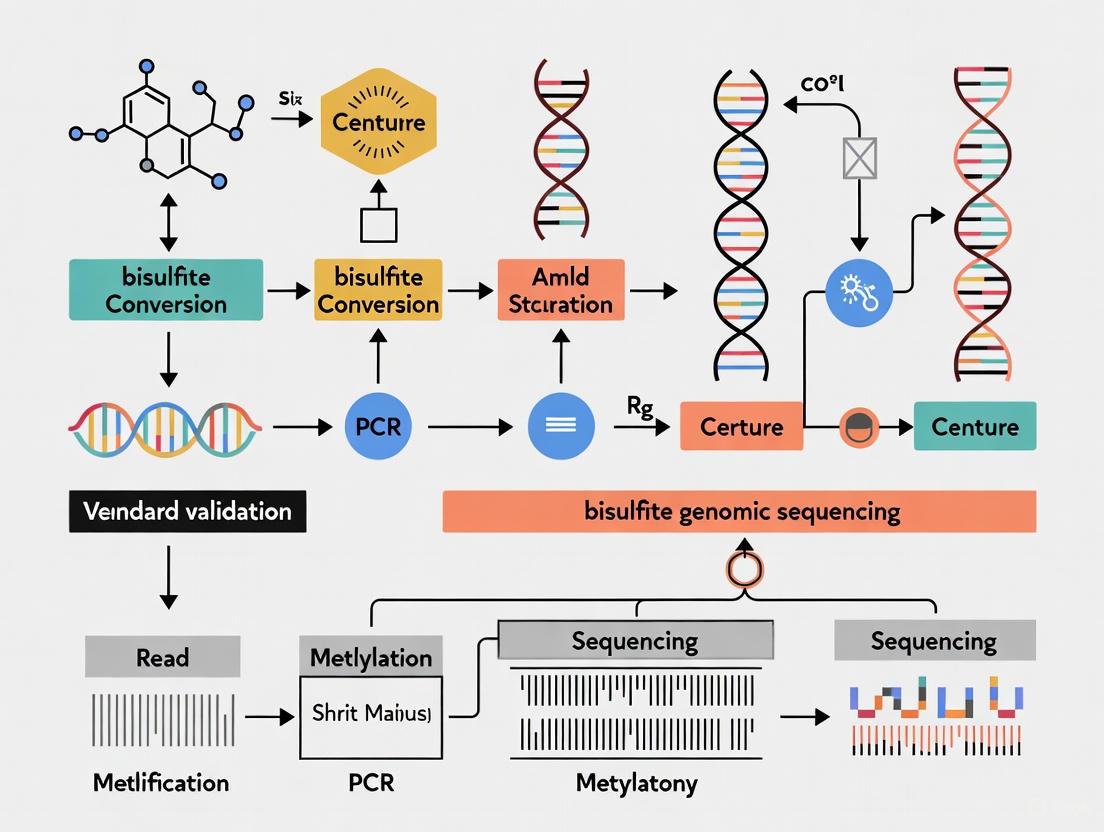
This article provides a comprehensive validation of bisulfite genomic sequencing (BS-seq) as the gold standard for DNA methylation analysis.
Bisulfite Genomic Sequencing: Validating the Gold Standard for DNA Methylation Analysis in Biomedical Research
Abstract
This article provides a comprehensive validation of bisulfite genomic sequencing (BS-seq) as the gold standard for DNA methylation analysis. We explore the foundational principles that established its status, detail core methodologies and diverse applications from whole-genome to targeted approaches, and address key technical challenges with modern optimization strategies. A critical comparative analysis evaluates BS-seq against emerging enzymatic methods and microarray technologies, highlighting performance in clinically relevant samples like cfDNA and FFPE tissues. Tailored for researchers and drug development professionals, this review synthesizes current evidence to guide method selection for both discovery and diagnostic applications in epigenetics and precision medicine.
The Unwavering Gold Standard: Core Principles and Historical Context of Bisulfite Sequencing
For decades, bisulfite conversion has represented the gold standard for DNA methylation analysis, providing the foundational technology for countless epigenetic discoveries across diverse fields from basic developmental biology to clinical cancer research. This chemical process enables the precise discrimination between methylated and unmethylated cytosines at single-base resolution, forming the core methodology for whole-genome bisulfite sequencing (WGBS) and its many derivatives. As the International Human Epigenome Consortium maintains, a full DNA methylome must achieve at least 30-fold redundant coverage of the reference genome, establishing a rigorous benchmark for comprehensive methylation analysis [1]. Despite the recent emergence of enzymatic alternatives claiming superior performance, bisulfite sequencing continues to serve as the reference against which new technologies are validated. This review examines the fundamental principles of bisulfite conversion, evaluates its performance against emerging methodologies, and synthesizes experimental data from recent benchmarking studies to objectively assess its enduring status as the epigenetic gold standard.
The Fundamental Principle of Bisulfite Conversion
Chemical Mechanism and Historical Significance
The bisulfite conversion principle relies on a straightforward yet powerful chemical process: sodium bisulfite treatment induces the deamination of unmethylated cytosines into uracils, which are subsequently amplified as thymines during PCR, while methylated cytosines (5mC and 5hmC) resist this conversion and are read as cytosines after sequencing [2]. This differential conversion creates a binary signal that enables researchers to distinguish methylated from unmethylated positions at single-nucleotide resolution across the genome.
First described in 1992 by Frommer et al., this transformation occurs through a multi-step mechanism [2] [3]. Under acidic conditions, bisulfite sulfonates cytosine at the C5-C6 double bond, making the cytosine-bisulfite adduct susceptible to hydrolytic deamination that yields a uracil-bisulfite derivative. Subsequent alkaline desulfonation then produces uracil, completing the C-to-U conversion [4]. Critically, the addition of a methyl or hydroxymethyl group at the 5-position of cytosine sterically hinders the initial sulfonation reaction, thereby protecting 5mC and 5hmC from deamination [5].
The fundamental principle of bisulfite conversion enables discrimination between methylated and unmethylated cytosines through differential chemical modification.
Methodological Evolution and Standardization
The original bisulfite sequencing protocol has undergone significant refinement to address its inherent limitations. Conventional BS-seq requires lengthy reaction times (typically 16 hours including overnight incubation) and results in substantial DNA degradation—up to 90% DNA loss in some protocols [2] [6]. Recent innovations like ultrafast BS-seq (UBS-seq) have dramatically accelerated this process using highly concentrated ammonium bisulfite reagents at elevated temperatures (98°C), reducing conversion time to approximately 10 minutes while maintaining high efficiency [4]. This accelerated approach demonstrates reduced DNA damage and lower background noise, particularly benefiting applications with limited starting material such as cell-free DNA or single-cell analyses [4].
Standardization efforts have produced optimized library construction methods compatible with various sequencing platforms, including DNBSEQ-Tx, which generates high-quality WGBS data meeting stringent quality controls [1]. These methodological advances have preserved the relevance of bisulfite sequencing in an increasingly diverse epigenetic toolkit while maintaining its position as the benchmark for methylation detection.
Comparative Performance Analysis: Bisulfite vs. Enzymatic Conversion
Quantitative Performance Metrics
Recent comprehensive studies have directly compared bisulfite-based methods with emerging enzymatic conversion approaches, particularly enzymatic methyl-seq (EM-seq). The table below summarizes key performance metrics derived from these comparative analyses:
Table 1: Performance comparison between bisulfite and enzymatic conversion methods
| Performance Metric | Bisulfite Conversion | Enzymatic Conversion (EM-seq) | Experimental Context |
|---|---|---|---|
| DNA Input Requirements | 500 pg - 2 μg [6] | 10-200 ng [6] | Genomic DNA from reference samples |
| Conversion Efficiency | >99.5% [6] | >99.5% [6] | Lambda phage DNA spike-in controls |
| DNA Recovery | 130% (overestimation) [6] | 40% [6] | 10 ng human genomic DNA input |
| Fragmentation Index | 14.4 ± 1.2 [6] | 3.3 ± 0.4 [6] | Degraded DNA samples |
| CpG Detection (10 ng input, 1x coverage) | 36 million [5] | 54 million [5] | Human genomic DNA |
| CpG Detection (10 ng input, 8x coverage) | 1.6 million [5] | 11 million [5] | Human genomic DNA |
| Protocol Duration | ~16 hours (including incubation) [6] | ~4.5 hours [6] | Standard commercial kits |
The data reveal a consistent pattern: while both methods achieve excellent conversion efficiency, they exhibit complementary strengths and limitations. Bisulfite conversion demonstrates higher DNA recovery but causes significantly more fragmentation, particularly problematic with degraded samples. Enzymatic conversion preserves DNA integrity more effectively, enabling superior CpG detection rates, especially at lower input amounts and higher coverage requirements [6] [5].
Methylation Measurement Concordance
Titration experiments using controlled mixtures of hypermethylated and hypomethylated DNA demonstrate high concordance between bisulfite and enzymatic methods in quantifying methylation levels across a dynamic range [3]. Both techniques accurately reflect expected methylation values in dilution series, though slight deviations occur at extremes of methylation density. This correlation establishes strong methodological agreement in standard applications.
Table 2: Methodological advantages and limitations for methylation analysis
| Characteristic | Bisulfite Conversion | Enzymatic Conversion |
|---|---|---|
| Resolution | Single-base | Single-base |
| 5mC/5hmC Discrimination | No [2] | No [3] |
| DNA Damage | High (depyrimidination) [5] | Low (enzymatic treatment) [5] |
| Sequence Complexity | Reduced (3-letter genome) [2] | Reduced (3-letter genome) [3] |
| GC Bias | Significant [5] | Minimal [5] |
| Protocol Cost | Lower | Higher |
| Commercial Kit Availability | Extensive [6] | Limited [6] |
| Stranded Information | Yes [7] | Yes |
The fundamental limitation shared by both approaches is their inability to distinguish 5-methylcytosine from 5-hydroxymethylcytosine without additional chemical or enzymatic pretreatment steps, such as oxidative bisulfite sequencing (oxBS-seq) [2]. Additionally, both methods reduce genomic sequence complexity by converting unmethylated cytosines to thymines, complicating alignment and increasing computational requirements [2].
Experimental Protocols and Benchmarking Standards
Standardized Bisulfite Sequencing Methodology
Robust WGBS requires meticulous protocol standardization to ensure reproducible results. The following workflow represents a consensus approach derived from multiple benchmarking studies [8] [1]:
DNA Quality Assessment: DNA integrity is verified via fluorometric quantification and gel electrophoresis, with minimal degradation to ensure representative coverage.
Library Preparation - Pre-Bisulfite Protocol:
- Fragmentation of genomic DNA (100-300bp) via sonication or enzymatic digestion
- End repair, A-tailing, and adapter ligation using methylated adapters
- Bisulfite conversion using commercial kits (e.g., Zymo EZ DNA Methylation-Gold Kit)
- Purification and size selection (typically 200-400bp fragments)
- Limited-cycle PCR amplification (4-8 cycles) to enrich for converted fragments
Library Preparation - Post-Bisulfite Protocol:
- Initial bisulfite conversion of unfragmented genomic DNA
- Post-bisulfite adapter tagging (PBAT) to minimize DNA loss
- PCR amplification with reduced cycles to maintain complexity
Quality Control:
- Conversion efficiency assessment via spike-in controls (lambda DNA)
- Library quantification using qPCR-based methods
- Fragment size analysis via bioanalyzer
Sequencing and Data Analysis:
- High-throughput sequencing on appropriate platforms (Illumina, DNBSEQ-Tx)
- Alignment using bisulfite-aware tools (Bismark, BWA-meth, Biscuit)
- Methylation calling and differential methylation analysis
Ultrafast Bisulfite Sequencing (UBS-seq)
The recently developed UBS-seq protocol addresses key limitations of conventional bisulfite treatment by utilizing high-concentration ammonium bisulfite/sulfite reagents (UBS-1 recipe: 10:1 vol/vol 70% and 50% ammonium bisulfite) at elevated temperatures (98°C) to reduce conversion time to merely 10 minutes [4]. This accelerated approach demonstrates:
- Reduced DNA damage compared to conventional 16-hour protocols
- Lower background noise in high-GC regions and structured DNA (e.g., mitochondrial DNA)
- Improved detection of 4-methylcytosine (4mC) sites by achieving complete 4mC-to-U conversion
- Compatibility with low-input samples (1-100 cells) without compromising coverage
UBS-seq maintains the fundamental principle of bisulfite conversion while optimizing reaction kinetics, representing a significant advancement in methodology that preserves the gold standard status of bisulfite-based approaches [4].
Bioinformatics Considerations for Data Processing
Computational Workflow Benchmarking
The unique characteristics of bisulfite-converted DNA necessitate specialized bioinformatic processing, with recent comprehensive evaluations identifying optimal workflow combinations [8]. The conversion of unmethylated cytosines to thymines reduces sequence complexity to a three-letter alphabet (A, G, T), complicating read alignment and requiring specialized algorithms.
Table 3: Performance characteristics of bisulfite sequencing data processing tools
| Tool | Alignment Strategy | Strengths | Limitations |
|---|---|---|---|
| Bismark | Wild-card/3-letter alignment [8] | High precision, comprehensive documentation | Moderate computational requirements |
| Biscuit | Three-letter alphabet [8] [7] | High sensitivity for variant detection | Lower precision for SNP calling |
| BWA-meth | Wild-card approach [8] | Balanced sensitivity/precision | |
| BSBolt | Three-letter alphabet [8] | Efficient memory usage | |
| FAME | Asymmetric mapping [8] | Novel alignment strategy | Less established |
Benchmarking studies employing gold-standard samples with highly accurate DNA methylation calls have revealed that workflow performance depends significantly on the specific bisulfite protocol employed (standard WGBS, T-WGBS, PBAT, etc.) [8]. No single tool dominates across all metrics, with the choice dependent on whether the research prioritizes maximal precision (favoring Bis-SNP), maximal sensitivity (favoring Biscuit), or a balanced approach (BWA-meth, BSBolt) [7].
SNP Calling from Bisulfite Sequencing Data
The C-to-T conversions inherent to bisulfite treatment complicate single nucleotide polymorphism (SNP) detection, particularly for C-to-T SNPs, which constitute approximately 80% of SNPs at CpG sites [7]. Specialized tools have been developed to address this challenge, with performance evaluations demonstrating a clear trade-off between sensitivity and precision. Directional bisulfite sequencing protocols provide strand-specific information that enables discrimination between true C-to-T SNPs and bisulfite-mediated conversions, as reads mapping to one strand inform methylation status while reads mapping to the complementary strand enable SNP identification [7].
Research Reagent Solutions
The consistent performance of bisulfite sequencing across diverse applications relies on standardized reagent systems. The following table details essential materials and their functions in typical bisulfite conversion workflows:
Table 4: Essential research reagents for bisulfite sequencing
| Reagent/Kits | Function | Application Context |
|---|---|---|
| Sodium Bisulfite | Chemical conversion of unmethylated C to U | Core conversion reaction |
| EZ DNA Methylation-Gold Kit (Zymo) | Commercial bisulfite conversion | Standard WGBS protocols [6] [4] |
| NEBNext Enzymatic Methyl-seq Kit | Enzymatic conversion alternative | Comparison studies [3] [6] |
| Accel-NGS Methyl-Seq Kit (Swift) | Library preparation with bisulfite conversion | Targeted methylation studies [3] |
| Lambda DNA | Conversion efficiency control | Quality assessment [3] |
| Methylated Adapters | Library preparation | Maintain sequence context after conversion |
| Uracil-Tolerant Polymerase | PCR amplification of converted DNA | Essential for BS-library amplification |
Bisulfite conversion maintains its status as the gold standard for DNA methylation analysis through nearly three decades of refinement and validation. While emerging enzymatic methods demonstrate advantages in DNA preservation and coverage efficiency, particularly for low-input and degraded samples, the well-established principles, cost-effectiveness, and extensive benchmarking of bisulfite sequencing secure its continuing fundamental role in epigenetic research. The recent development of ultrafast bisulfite protocols addresses historical limitations while preserving the robust chemical principles that have made this method indispensable. As epigenomics increasingly transitions toward clinical applications, the comprehensive validation history and standardized implementations of bisulfite sequencing ensure its enduring relevance as the reference against which novel methodologies are evaluated. Future methodological developments will undoubtedly build upon—rather than replace—the foundational principle of bisulfite conversion that has propelled our current understanding of the DNA methylome.
The discovery that sodium bisulfite could selectively deaminate unmethylated cytosine to uracil, while leaving methylated cytosine intact, sparked a revolution in epigenetics research. Frommer's 1992 publication of the bisulfite genomic sequencing method provided the first reliable technique for detecting 5-methylcytosine at single-base resolution, establishing a gold standard that would dominate DNA methylation analysis for decades. This methodology transformed our understanding of epigenetic regulation, enabling researchers to decipher methylation patterns critical for gene expression, cellular differentiation, genomic imprinting, and X-chromosome inactivation. The subsequent integration of bisulfite conversion with next-generation sequencing platforms created powerful tools like whole-genome bisulfite sequencing (WGBS), which provides comprehensive epigenome mapping but also revealed significant limitations inherent to the chemical conversion process. As we trace the evolution from Frommer's foundational method to contemporary approaches, this review examines how technological innovations have addressed the persistent challenges of bisulfite sequencing while maintaining the rigorous validation standards required for both basic research and clinical applications.
Methodological Evolution: From Chemical to Enzymatic Conversion
The Fundamental Limitations of Conventional Bisulfite Sequencing
Traditional bisulfite sequencing suffers from several methodological constraints that impact data quality and practical implementation. The chemical conversion process requires harsh conditions including extended incubation times (typically 16-20 hours), elevated temperatures (64°C), and extreme pH levels, which collectively cause substantial DNA degradation through depyrimidination. This damage results in DNA fragmentation and loss, particularly problematic for precious clinical samples with limited DNA quantity. Studies demonstrate that bisulfite treatment causes significant DNA fragmentation, with one analysis showing fragmentation values of 14.4 ± 1.2 for degraded DNA inputs compared to just 3.3 ± 0.4 for enzymatic methods [9]. Additionally, the conversion of unmethylated cytosines to uracils reduces sequence complexity from a 4-letter to effectively a 3-letter genome (A, T, G), complicating subsequent alignment and analysis. Perhaps most concerning is the issue of incomplete conversion, particularly in GC-rich regions or highly structured DNA elements like mitochondrial DNA, which leads to false-positive methylation calls and overestimation of global methylation levels [4].
Innovative Solutions: Enzymatic and Ultrafast Approaches
Recent technological advances have introduced two primary strategies to overcome the limitations of conventional bisulfite sequencing: enzymatic conversion methods and optimized ultrafast bisulfite protocols. Enzymatic methyl-seq (EM-seq) replaces harsh chemical treatment with a gentle enzymatic process using TET2 and T4-BGT to oxidize and protect modified cytosines, followed by APOBEC-mediated deamination of unmodified cytosines. This approach demonstrates significantly reduced DNA fragmentation while maintaining high conversion efficiency, making it particularly suitable for degraded samples or low-input applications [10] [11]. Comparative studies show EM-seq provides highly concordant results with WGBS while offering improved library complexity and better coverage in GC-rich regions [10].
Ultrafast bisulfite sequencing (UBS-seq) represents an optimized chemical approach that uses highly concentrated ammonium bisulfite/sulfite reagents at elevated temperatures (98°C) to accelerate the conversion process approximately 13-fold. This method completes bisulfite conversion in just 10 minutes instead of hours, substantially reducing DNA damage while improving conversion efficiency, particularly in challenging genomic regions [4]. UBS-seq demonstrates reduced overestimation of methylation levels and enables library construction from minute DNA inputs, including cell-free DNA or directly from 1-100 mouse embryonic stem cells [4].
Table 1: Performance Comparison of DNA Methylation Profiling Methods
| Method | DNA Input | Protocol Duration | DNA Damage | Conversion Efficiency | Best Application |
|---|---|---|---|---|---|
| Conventional BS-seq | 500pg-2μg | 16-20 hours | High fragmentation | Incomplete in GC-rich regions | Standard samples with ample DNA |
| EM-seq | 10-200ng | 6 hours | Minimal fragmentation | High, uniform across regions | Clinical samples, degraded DNA |
| UBS-seq | 1-100 cells | ~10 minutes | Reduced damage | Improved in structured DNA | Low-input studies, cfDNA |
| RRBS | 5-100ng | 16-20 hours | High fragmentation | Similar to conventional BS-seq | Cost-effective targeted profiling |
| OXBS-seq | 500pg-2μg | 20+ hours | High fragmentation | Distinguishes 5mC from 5hmC | Hydroxymethylation studies |
Comparative Performance Benchmarking
Systematic Method Comparisons
Comprehensive benchmarking studies provide critical insights into the relative performance of bisulfite and enzymatic conversion methods across multiple technical parameters. A 2025 systematic comparison evaluated complete computational workflows for processing DNA methylation sequencing data using a dedicated benchmarking dataset generated with five whole-genome profiling protocols [8]. This analysis identified workflows that consistently demonstrated superior performance and revealed that enzymatic methods significantly outperform bisulfite conversion in key sequencing metrics, including higher estimated counts of unique reads, reduced DNA fragmentation, and higher library yields [11]. Specifically, enzymatic conversion produced 20-30% more unique reads than bisulfite methods when applied to the same samples, directly addressing the coverage limitations that have plagued conventional bisulfite sequencing approaches.
Cross-platform comparisons further demonstrate that EM-seq shows the highest concordance with WGBS, indicating strong reliability due to their similar sequencing chemistry, while also providing more uniform genome coverage [10]. Importantly, enzymatic methods maintain this high concordance while demonstrating superior performance with challenging sample types. For formalin-fixed paraffin-embedded (FFPE) tissue and circulating cell-free DNA (cfDNA) - two of the most clinically relevant sample types - enzymatic conversion generated significantly higher quality data with better coverage of informative genomic regions compared to bisulfite treatment [11].
Quantitative Performance Metrics
Direct head-to-head comparisons provide quantitative evidence for the advantages of emerging methodologies. In one carefully controlled study comparing bisulfite and enzymatic conversion using the NEBNext EM-seq kit and Zymo Research bisulfite kit, the enzymatic approach demonstrated substantially better DNA preservation, with recovery rates approximately double those of bisulfite methods for low-input samples [9]. While bisulfite conversion showed structurally overestimated recovery (130% compared to expected values), enzymatic conversion provided more accurate quantification despite lower absolute recovery (40%), suggesting bisulfite methods may overestimate usable DNA [9].
For conversion efficiency, both methods perform well under optimal conditions, with the limit of reproducible conversion being 5ng and 10ng for bisulfite and enzymatic conversion, respectively [9]. However, enzymatic methods show particular advantages in maintaining high efficiency with suboptimal samples, including those with pre-existing degradation or inhibitors that commonly compromise bisulfite conversion. When assessing the critical metric of library complexity, enzymatic conversion consistently produces libraries with 15-25% higher unique alignment rates, directly translating to more efficient sequencing and lower costs per informative read [11].
Table 2: Technical Comparison of Bisulfite vs. Enzymatic Conversion Methods
| Performance Metric | Bisulfite Conversion | Enzymatic Conversion | Significance |
|---|---|---|---|
| DNA Recovery | 130% (overestimated) | 40% (accurate) | Enzymatic provides truer recovery estimation |
| DNA Fragmentation | 14.4 ± 1.2 (high) | 3.3 ± 0.4 (low-medium) | Enzymatic preserves integrity |
| Conversion Efficiency | >99.5% at ≥5ng input | >99.5% at ≥10ng input | Similar efficiency at optimal inputs |
| Library Complexity | Moderate (30-50% duplicates) | High (15-25% duplicates) | Enzymatic provides better value |
| GC-Rich Region Coverage | Limited due to fragmentation | Improved coverage | Enzymatic better for CpG islands |
| Protocol Duration | 12-16 hours | 4.5-6 hours | Enzymatic is 3x faster |
Experimental Protocols for Gold-Standard Validation
Whole Genome Methylation Sequencing Protocol
Comprehensive whole genome methylation analysis requires careful experimental design and execution to generate publication-quality data. The following protocol represents current best practices for gold-standard validation studies:
Sample Preparation and Quality Control: Begin with DNA quantification using fluorometric methods (Qubit) rather than spectrophotometry to ensure accurate concentration measurements. Assess DNA integrity via agarose gel electrophoresis or Bioanalyzer, with DNA Integrity Numbers (DIN) >7.0 recommended for optimal results. For FFPE samples, employ specialized repair enzymes prior to conversion to mitigate formalin-induced damage [11].
Library Preparation - Enzymatic Method: For EM-seq, fragment 100ng genomic DNA to 300bp using Covaris shearing. Perform enzymatic conversion using the NEBNext EM-seq Kit following manufacturer's specifications: incubate with TET2 and T4-BGT for 6 hours at 37°C, followed by APOBEC deamination for 2 hours at 37°C. For bisulfite comparison, process parallel samples using the Zymo Research EZ DNA Methylation-Gold Kit with 16-hour incubation at 64°C [9] [11].
Library Construction and Sequencing: Converted DNA is processed using Illumina-compatible library prep kits with uracil-tolerant polymerases. Incorporate unique dual indexing to enable sample multiplexing. Perform quality control using Bioanalyzer to verify library size distribution (expected peak ~350bp) and quantify by qPCR. Sequence on Illumina NovaSeq 6000 or comparable platform to target 30x genome coverage, using 150bp paired-end reads [8].
Data Analysis Pipeline: Process raw sequencing data through a standardized bioinformatics workflow: (1) Quality assessment with FastQC; (2) Adapter trimming with Trim Galore; (3) Alignment to reference genome using Bismark or BWA-meth; (4) Methylation calling with MethylDackel; (5) Differential methylation analysis with methylSig or DSS [8].
Targeted Methylation Analysis Protocol
For focused studies or clinical validations, targeted approaches provide cost-effective solutions:
Panel Design: Design probes to capture 50-200kb of genomic regions encompassing CpG islands, shores, shelves, and gene promoters of interest. Include control regions with known methylation states for quality monitoring.
Hybridization Capture: Prepare converted libraries as above, then hybridize with custom biotinylated probes (IDT or Twist Bioscience) for 16 hours at 65°C. Capture with streptavidin beads, wash stringently, and amplify captured libraries with 12-14 PCR cycles [11].
Sequencing and Analysis: Sequence to high depth (500-1000x) on MGIseq-2000 or Illumina platforms. Process data through alignment and methylation calling pipelines with additional steps for capture efficiency assessment and coverage uniformity analysis [12].
Visualization of Methodological Evolution and Performance
The Scientist's Toolkit: Essential Research Reagents
Table 3: Essential Research Reagents for DNA Methylation Analysis
| Reagent/Category | Specific Examples | Function & Application Notes |
|---|---|---|
| Conversion Kits | Zymo EZ DNA Methylation-Gold Kit | Chemical bisulfite conversion, optimal for standard DNA inputs |
| NEBNext EM-seq Kit | Enzymatic conversion, preferred for degraded or clinical samples | |
| Ultrafast Bisulfite Reagents | Ammonium bisulfite/sulfite mixtures for rapid conversion | |
| Library Prep | KAPA HyperPrep Kit | Uracil-tolerant enzymes for converted DNA |
| Illumina DNA Prep | Integration with major sequencing platforms | |
| Accel-NGS Methyl-Seq Kit | Optimized for bisulfite-converted libraries | |
| Quality Control | Qubit dsDNA HS Assay | Accurate quantification of limited samples |
| Agilent Bioanalyzer/TapeStation | DNA integrity assessment pre-conversion | |
| Spike-in Controls | Lambda DNA, fully methylated/unmethylated controls | |
| Bioinformatics | FastQC | Raw read quality assessment |
| Bismark/BWA-meth | Bisulfite-aware alignment | |
| MethylKit/DSS | Differential methylation analysis | |
| Reference Materials | NA12878 gDNA | Well-characterized human standard |
| Methylation Titration Series | Mixed methylated/unmethylated DNA for calibration |
The evolution from Frommer's original bisulfite method to contemporary enzymatic and ultrafast approaches represents a paradigm shift in epigenetic analysis, addressing fundamental limitations while expanding applications across diverse research and clinical contexts. The comprehensive benchmarking data now available demonstrates that enzymatic conversion methods match the analytical performance of established bisulfite sequencing while offering substantial practical advantages in DNA preservation, library complexity, and applicability to challenging sample types. As these technologies continue to mature, their integration with multi-omics approaches and adaptation to single-cell analyses will further transform our understanding of epigenetic regulation in development, disease, and environmental adaptation. The ongoing validation of these methods against gold-standard references ensures that while the technologies evolve, the rigorous standards required for robust epigenetic discovery remain firmly in place, honoring the legacy of precision established by Frommer's revolutionary method nearly three decades ago.
DNA methylation, the addition of a methyl group to the 5-carbon position of cytosine bases, is a fundamental epigenetic mechanism regulating gene expression, cellular differentiation, genomic imprinting, and X-chromosome inactivation [10]. The precise mapping of this modification is crucial for understanding its role in development, aging, and disease pathogenesis, particularly in cancer where aberrant methylation patterns serve as valuable biomarkers [13] [14]. While numerous technologies exist for methylation profiling, methods offering single-base resolution provide a distinct critical advantage by enabling the determination of methylation status at individual cytosine bases throughout the genome, rather than providing averaged or regional methylation estimates [15].
This capability is particularly vital for identifying subtle methylation variations in regulatory regions, understanding allele-specific methylation patterns, and detecting rare epigenetic events in heterogeneous cell populations. The pursuit of single-base resolution has driven the development and refinement of multiple biochemical and sequencing approaches, each with unique strengths, limitations, and optimal applications in biomedical research [10] [15]. This guide objectively compares the performance of these methods, with particular focus on their ability to deliver precise, base-resolution methylation data.
The Technological Landscape of Methylation Detection
Defining Single-Base Resolution
Single-base resolution in DNA methylation analysis refers to the ability to determine the methylation state (methylated or unmethylated) of individual cytosine bases within a DNA sequence [15]. This high-resolution view is essential because methylation patterns can be highly specific to individual cytosines, even within the same genomic region. For example, the methylation status of a single cytosine within a transcription factor binding site can significantly influence gene expression, while adjacent cytosines may have minimal functional impact [10]. Methods lacking this resolution can obscure critical biological insights by providing averaged signals across DNA fragments or genomic regions.
Classification of Methylation Profiling Methods
DNA methylation detection methods broadly fall into three categories based on their resolution and underlying biochemistry:
- Chemical Conversion Methods: These techniques, primarily bisulfite sequencing and its derivatives, use chemical treatment to convert unmethylated cytosines to uracils, while methylated cytosines remain unchanged. Subsequent sequencing or hybridization then reveals the original methylation status at each cytosine position [10] [15].
- Enzymatic Conversion Methods: These approaches use enzyme cocktails (e.g., TET2 and APOBEC in EM-seq) to selectively convert unmethylated cytosines, offering a gentler alternative to harsh bisulfite chemistry while maintaining single-base resolution [10] [16].
- Direct Detection Methods: Third-generation sequencing technologies, such as Oxford Nanopore, detect modified bases in native DNA through alterations in electrical signals, eliminating the need for conversion steps [10] [17].
- Enrichment-Based Methods: Techniques like MeDIP-seq and MBD-seq isolate methylated DNA fragments using antibodies or methyl-binding proteins, but they typically provide regional rather than single-base resolution [18] [15].
Table 1: Classification of DNA Methylation Profiling Methods
| Method Category | Representative Techniques | Single-Base Resolution? | Key Distinguishing Feature |
|---|---|---|---|
| Chemical Conversion | WGBS, UMBS-seq, RRBS | Yes | Chemical deamination of unmethylated C to U |
| Enzymatic Conversion | EM-seq, TAPS | Yes | Enzymatic conversion of unmethylated C to U |
| Direct Detection | Oxford Nanopore, PacBio | Yes | Direct detection of modified bases in native DNA |
| Enrichment-Based | MeDIP-seq, MBD-seq | No | Immunoprecipitation or affinity capture of methylated DNA |
Comparative Performance Analysis of Single-Base Resolution Methods
Whole-Genome Bisulfite Sequencing (WGBS) and Its Derivatives
Experimental Protocol: In standard WGBS, genomic DNA is treated with sodium bisulfite, which deaminates unmethylated cytosines to uracils, while methylated cytosines remain unchanged [15]. The converted DNA is then purified, library-prepared, and sequenced. During alignment and analysis, converted uracils are read as thymines, allowing for the identification of original cytosine positions that were methylated (read as cytosines) versus unmethylated (read as thymines) [8]. This process provides the gold standard for comprehensive, base-resolution methylation mapping across the entire genome [15].
Performance Data: A 2025 comparative evaluation examined WGBS alongside other methods using human samples from tissue, cell lines, and whole blood [10]. The study found that WGBS assessed approximately 80% of all CpG sites in the genome, achieving near-comprehensive coverage. However, it also confirmed that the harsh bisulfite treatment introduces substantial DNA fragmentation, with fragment lengths significantly reduced compared to input DNA [10]. This degradation necessitates higher DNA input (typically micrograms) and can lead to biased representation in GC-rich regions, including CpG islands where methylation information is particularly biologically relevant [10].
Recent Innovations: The development of Ultra-Mild Bisulfite Sequencing (UMBS-seq) represents a significant advancement in bisulfite-based methods. By optimizing bisulfite composition and reaction conditions (55°C for 90 minutes with a specialized formulation), UMBS-seq minimizes DNA damage while maintaining conversion efficiency >99.9% [16]. In head-to-head comparisons using cell-free DNA, UMBS-seq outperformed both conventional bisulfite sequencing and EM-seq in library yield, complexity, and background levels at low inputs (as low as 10 pg) [16]. UMBS-seq preserved the characteristic cfDNA triple-peak profile after treatment, whereas conventional bisulfite methods did not, demonstrating superior DNA preservation [16].
Enzymatic Methyl-Sequencing (EM-seq)
Experimental Protocol: EM-seq utilizes a series of enzymatic reactions rather than chemical conversion. The protocol involves first using TET2 to oxidize 5-methylcytosine (5mC) and 5-hydroxymethylcytosine (5hmC) to 5-carboxylcytosine (5caC), while T4-BGT glucosylates 5hmC to protect it from oxidation [10]. APOBEC3A then deaminates unmodified cytosines to uracils, while all oxidized derivatives are protected. This process results in sequencing-ready libraries where original methylation status is encoded in the sequence [10].
Performance Data: In the 2025 comparative study, EM-seq showed the highest concordance with WGBS data, indicating strong reliability due to their similar sequencing outputs [10]. The method demonstrated reduced DNA damage compared to conventional bisulfite approaches, with longer insert sizes and higher mapping efficiency [10] [16]. However, EM-seq showed significantly higher background conversion signals at low DNA inputs (exceeding 1% unconverted cytosines at the lowest inputs), along with substantial variability among replicates [16]. Approximately 7.6% of unmethylated cytosines exhibited unconverted ratios greater than 1% in EM-seq, potentially leading to false-positive methylation calls [16].
Oxford Nanopore Technologies (ONT) Sequencing
Experimental Protocol: ONT sequencing detects DNA methylation directly from native DNA without pre-conversion [10] [17]. As DNA passes through protein nanopores, modifications alter the electrical current signal, allowing for direct detection of 5mC and 5hmC [17]. The minimal sample processing preserves DNA integrity and enables long-read sequencing, facilitating methylation profiling in complex genomic regions.
Performance Data: While ONT sequencing showed lower agreement with WGBS and EM-seq in comparative analyses, it uniquely captured certain loci and enabled methylation detection in challenging genomic regions like repetitive elements and structural variants [10]. The long-read capability allows for haplotype-phased methylation analysis, providing insights into allele-specific epigenetic regulation [15]. A limitation noted in the evaluation was the relatively high DNA input requirement (approximately 1μg of 8 kb fragments) compared to other methods [10].
Microarrays and Enrichment Methods: The Resolution Compromise
Illumina Methylation EPIC Array: This popular array-based method interrogates over 935,000 predefined CpG sites but covers only 2-4% of all CpGs in the human genome [10] [18] [13]. While cost-effective for large studies, it lacks single-base resolution as it provides composite methylation signals for each probe [13]. A 2025 study demonstrated that targeted bisulfite sequencing could reliably reproduce array-based methylation profiles, suggesting sequencing methods may offer superior flexibility for custom applications [13].
MBD-seq and MeDIP-seq: These enrichment methods provide significantly better genome coverage than arrays (interrogating ~27 million CpGs with optimized protocols) but deliver regional methylation scores rather than single-base resolution [18]. MBD-seq captures methylated DNA fragments using the MBD2 protein, with resolution limited by fragment size (typically 150-200bp) [18]. While highly cost-effective for methylome-wide association studies, these methods cannot pinpoint methylation status of individual cytosines, a critical limitation for mechanistic studies [18].
Table 2: Quantitative Performance Comparison of Single-Base Resolution Methods
| Performance Metric | WGBS | UMBS-seq | EM-seq | Oxford Nanopore |
|---|---|---|---|---|
| CpG Coverage | ~80% of all CpGs [10] | Comparable to WGBS [16] | Comparable to WGBS [10] | Genome-wide, excels in repetitive regions [10] |
| DNA Damage | Severe fragmentation [10] | Minimal damage [16] | Reduced damage [10] | Minimal processing damage [10] |
| Input DNA | High (μg range) [10] | Low (pg-ng range) [16] | Moderate [10] | High (μg range) [10] |
| Conversion/Detection Efficiency | >99.5% conversion [19] | >99.9% conversion [16] | >99%, but higher background at low input [16] | Direct detection, no conversion needed [17] |
| Background Noise | <0.5% unconverted C [16] | ~0.1% unconverted C [16] | 1-7.6% unconverted C at low input [16] | Signal interpretation challenges [10] |
| Cost Considerations | High sequencing costs [15] | High sequencing costs [16] | High reagent costs [16] | Lower per-base cost, specialized equipment [15] |
Experimental Design and Workflow Considerations
Visualizing the Single-Base Resolution Advantage
The following diagram illustrates how single-base resolution methods enable precise mapping of methylation patterns across individual CpG sites, a critical capability for understanding epigenetic regulation:
Single-base resolution enables precise CpG-specific methylation calls, unlike regional averaging.
Method Selection Guide for Specific Research Applications
Choosing the appropriate single-base resolution method depends on specific research goals, sample characteristics, and resource constraints:
- For comprehensive discovery studies with sufficient DNA quality and quantity: WGBS remains the gold standard, though UMBS-seq shows superior performance with degraded samples [16].
- For low-input or fragmented samples (cfDNA, FFPE): UMBS-seq and EM-seq offer advantages, with UMBS-seq demonstrating higher library yields and lower background in recent evaluations [16].
- For analyzing repetitive regions or structural variants: Oxford Nanopore excels due to long-read capabilities, enabling methylation profiling in genomically challenging regions [10] [15].
- For large-scale epidemiological studies: Microarrays provide cost-effective solutions when predefined CpG coverage is sufficient, though they lack true single-base resolution [13].
- For clinical biomarker validation: Targeted bisulfite sequencing panels offer a balance between cost, throughput, and base resolution, reliably reproducing array-based methylation profiles [13].
Research Reagent Solutions for Methylation Studies
Table 3: Essential Research Reagents for Single-Base Resolution Methylation Analysis
| Reagent/Kits | Primary Function | Key Features | Representative Examples |
|---|---|---|---|
| Bisulfite Conversion Kits | Chemical conversion of unmethylated C to U | Streamlined procedure, desulphonation columns, DNA recovery >80% [19] | EZ DNA Methylation Kit (Zymo Research) [19] |
| Enzymatic Conversion Kits | Enzyme-based conversion of unmethylated C to U | Reduced DNA damage, compatible with low-input samples [10] | NEBNext EM-seq Kit [16] |
| Methyl-Binding Domain Kits | Enrichment of methylated DNA fragments | Based on MBD2 protein with high affinity for methylated CpGs [18] | MethylMiner Kit [18] |
| Targeted Methyl Panels | Amplification of specific methylated regions | Custom design, cost-effective for validation studies [13] | QIAseq Targeted Methyl Panel [13] |
| Long-read Sequencing Kits | Direct detection of modified bases | Native DNA sequencing, no conversion required [17] | Oxford Nanopore Ligation Kit [17] |
Single-base resolution remains the critical standard for precise DNA methylation mapping, enabling researchers to decipher the complex epigenetic code with unprecedented accuracy. While bisulfite-based methods like WGBS have long served as the gold standard, recent innovations such as UMBS-seq and enzymatic approaches like EM-seq offer improved DNA preservation and reduced bias while maintaining base-level resolution [10] [16]. Direct detection methods like Oxford Nanopore further expand the possibilities through long-read capabilities that capture methylation in traditionally challenging genomic regions [10] [17].
The choice between these methods involves careful consideration of resolution requirements, sample characteristics, and practical constraints. For discovery research requiring comprehensive methylation assessment, WGBS and its enhanced derivatives provide the most complete solution. For clinical applications with limited sample material, targeted bisulfite sequencing or low-input optimized methods offer the best balance of precision and practicality [13] [16]. As single-cell multi-omic technologies continue to advance [20], the integration of single-base methylation data with other molecular layers will further transform our understanding of epigenetic regulation in health and disease, solidifying the indispensable role of base-resolution analysis in modern biomedical research.
DNA methylation, the process of adding a methyl group to cytosine bases, primarily at CpG dinucleotides, is a fundamental epigenetic mechanism for controlling gene expression without altering the underlying DNA sequence [21]. This modification plays a crucial role in numerous biological processes, including embryonic development, genomic imprinting, and chromatin structure organization [22] [21]. Aberrant DNA methylation patterns disrupt normal gene regulation and are implicated in a wide spectrum of human diseases, from cancer and autoimmune conditions to metabolic and neurological disorders [22]. The accurate detection of DNA methylation is therefore paramount for understanding disease mechanisms and developing diagnostic biomarkers. Among the various technologies available, bisulfite genomic sequencing stands as the gold standard for validation, providing the precise, single-base resolution necessary to unravel the complex relationships between epigenetic modification, gene regulation, and human pathology.
Bisulfite Sequencing: The Gold Standard Methodology
Fundamental Principles and Core Workflow
Bisulfite sequencing (BS-seq) operates on a chemically straightforward yet powerful principle: treatment of DNA with sodium bisulfite converts unmethylated cytosines to uracil through deamination, while methylated cytosines remain protected from conversion [2] [21]. During subsequent PCR amplification, uracils are amplified as thymines, allowing methylated and unmethylated cytosines to be distinguished by sequencing [23] [21]. This process enables precise mapping of methylation patterns at single-nucleotide resolution across the genome.
The core workflow for bisulfite sequencing involves several critical stages, each requiring meticulous execution to ensure data accuracy and reliability.
DNA Extraction requires obtaining pure, high-quality DNA free from contaminants like proteins or RNA, which is crucial for efficient bisulfite conversion [21]. Sources range from fresh tissues to clinical samples like cervical swabs and cell-free DNA, though formalin-fixed paraffin-embedded (FFPE) tissues may yield degraded DNA and require specialized protocols [13] [21].
Bisulfite Conversion represents the most critical step, where DNA is treated with sodium bisulfite under controlled conditions. Traditional methods required harsh conditions leading to significant DNA fragmentation, but modern commercial kits have improved efficiency and reduced DNA damage [24]. The conversion efficiency must be rigorously validated, as incomplete conversion leaves unmethylated cytosines unconverted, leading to false-positive methylation calls [4] [21].
PCR Amplification of bisulfite-converted DNA presents unique challenges. The converted DNA becomes AT-rich with reduced sequence complexity, increasing the risk of non-specific amplification [21]. Successful amplification requires longer primers (typically 26-30 bases), shorter amplicons (150-300 bp), and more PCR cycles (35-40) than standard PCR [21]. Primers should ideally avoid CpG sites, but when necessary, they should be positioned at the 5'-end with a mixed base at the cytosine position [21]. Using high-fidelity "hot start" polymerases is strongly recommended to minimize errors [21].
Sequencing and Data Analysis can be performed using Sanger sequencing for targeted analysis or next-generation sequencing (NGS) for genome-wide approaches [21]. Bioinformatics processing includes mapping reads to reference genomes, accounting for the reduced sequence complexity due to C-to-T conversions, and calculating methylation percentages at each cytosine position [21]. Quality control measures must include assessment of conversion efficiency, read quality, and coverage depth to ensure reliable results [21].
The Researcher's Toolkit: Essential Reagents and Kits
Table: Essential Research Reagents for Bisulfite Sequencing
| Reagent/Kits | Primary Function | Specific Examples & Applications |
|---|---|---|
| Bisulfite Conversion Kits | Convert unmethylated cytosine to uracil | EpiTect Plus DNA Bisulfite Kit (Qiagen), EZ DNA Methylation-Gold Kit (Zymo Research), MethylEdge Bisulfite Conversion System (Promega) [23] [4] |
| DNA Extraction Kits | Isolate high-quality genomic DNA | AllPrep DNA/RNA Micro Kit (Qiagen), Maxwell RSC Tissue DNA Kit (Promega) for tissues; QIAamp DNA Mini Kit (Qiagen) for swabs [23] [13] |
| Library Preparation Kits | Prepare sequencing libraries from bisulfite-converted DNA | QIAseq Targeted Methyl Panel (Qiagen) for targeted sequencing; NEBNext EM-seq kit as enzymatic alternative [13] [16] |
| Specialized Polymerases | Amplify bisulfite-converted DNA with high fidelity | GO Taq master mix (Promega); hot-start high-fidelity polymerases to reduce non-specific amplification [23] [21] |
| Quantification Assays | Precisely measure DNA concentration | AccuBlue High Sensitivity dsDNA Quantitation Kit (Biotium); QIAseq Library Quant Assay Kit (Qiagen) [23] [13] |
Comparative Performance of Bisulfite Sequencing Methods
Advanced Bisulfite Sequencing Variants
The fundamental bisulfite sequencing approach has evolved into several specialized methodologies, each with distinct advantages and limitations tailored to different research applications and sample types.
Table: Comparison of Bisulfite Sequencing Methodologies
| Method | Resolution & Coverage | Advantages | Limitations | Ideal Applications |
|---|---|---|---|---|
| Whole-Genome Bisulfite Sequencing (WGBS) | Single-base; genome-wide [2] [21] | Comprehensive coverage of CpG and non-CpG methylation; identifies novel methylation regions [2] | High cost; substantial bioinformatics resources; DNA degradation concerns [2] [4] | Discovery studies; novel biomarker identification; comprehensive epigenomic profiling [21] |
| Reduced Representation Bisulfite Sequencing (RRBS) | Single-base; targeted regions [2] [21] | Cost-effective; focuses on CpG-rich regions; requires less sequencing [2] [21] | Limited to ~10-15% of CpGs; restriction enzyme bias; misses non-CpG methylation [2] | Large cohort studies; cancer biomarker validation; when budget is constrained [21] |
| Targeted Bisulfite Sequencing | Single-base; custom regions [13] [21] | High depth on specific targets; cost-effective for validating specific loci [13] | Requires prior knowledge of target regions; limited to pre-selected sites [13] | Validation of array or WGBS findings; clinical assay development; specific gene panels [13] [21] |
| Oxidative Bisulfite Sequencing (oxBS-Seq) | Single-base; distinguishes 5mC from 5hmC [2] [21] | Differentiates 5-methylcytosine from 5-hydroxymethylcytosine; absolute quantification of 5mC [2] [21] | Complex workflow; additional oxidation step; cannot distinguish 5hmC from unmodified C [2] | Studying active demethylation processes; precise 5mC quantification in complex samples [21] |
Emerging Methods: Addressing Traditional Limitations
Recent technological advancements have yielded improved bisulfite sequencing methods that address fundamental limitations of conventional approaches:
Ultrafast Bisulfite Sequencing (UBS-seq) utilizes highly concentrated bisulfite reagents and elevated reaction temperatures (98°C) to accelerate the bisulfite reaction by approximately 13-fold [4]. This dramatic reduction in reaction time significantly decreases DNA damage and background noise while allowing library construction from small amounts of purified genomic DNA, including cell-free DNA and limited cell inputs (1-100 mouse embryonic stem cells) [4]. UBS-seq demonstrates reduced overestimation of 5mC levels and higher genome coverage than conventional BS-seq, particularly in challenging regions like mitochondrial DNA with high GC content or strong secondary structures [4].
Ultra-Mild Bisulfite Sequencing (UMBS-seq) represents a further refinement, optimizing bisulfite concentration and pH to enable highly efficient cytosine-to-uracil conversion at lower temperatures (55°C) with minimal DNA damage [16]. In comparative studies, UMBS-seq outperformed both conventional bisulfite sequencing and enzymatic methyl-seq (EM-seq) in library yield, complexity, and conversion efficiency, particularly with low-input samples [16]. This method preserves the characteristic fragmentation profile of cell-free DNA better than conventional approaches and maintains low background unconversion rates (~0.1%) even at minimal inputs, demonstrating particular strength in 5mC biomarker detection from clinically relevant samples [16].
DNA Methylation in Disease Mechanisms and Clinical Applications
Cancer and Metabolic Disorders
Aberrant DNA methylation represents a fundamental mechanism in oncogenesis and cancer progression. In ovarian cancer, DNA methylation has emerged as a promising tool for early detection, with studies demonstrating that targeted bisulfite sequencing can reliably reproduce results from the Infinium Methylation Array while offering a more cost-effective option for analyzing larger sample sets [13]. This approach has proven effective in both tissue samples and less invasive materials like cervical swabs, highlighting its potential for clinical screening applications [13].
In atherosclerosis, bioinformatic analysis of DNA methylation data has identified differential methylation positions (DMPs) and regions (DMRs) that distinguish diseased from healthy tissues [25]. Key genes including GRIK2, HOXA2, and HOXA3 showed significant methylation differences in promoter CpG islands, and these findings were experimentally validated using methylation-specific PCR (MS-PCR) [25]. Furthermore, immune infiltration analysis revealed significantly upregulated monocyte levels in atherosclerotic tissues, demonstrating how DNA methylation patterns correlate with specific cellular responses in disease pathogenesis [25].
Autoimmune and Neuropsychiatric Diseases
DNA methylation plays a critical role in autoimmune diseases such as rheumatoid arthritis (RA), systemic lupus erythematosus (SLE), and multiple sclerosis (MS) [22]. The low concordance rates in monozygotic twins for these conditions (12.3-21% for RA, 11.1-24.4% for SLE, and 16.7% for MS) strongly suggest epigenetic contributions to disease etiology [22]. In RA, altered DNA methylation of human leukocyte antigen (HLA) class II mediates genetic risk, while DNA methylation at diagnosis associates with treatment response to disease-modifying anti-rheumatic drugs [22]. Importantly, DNA methylation appears to integrate both genetic and environmental risk factors, as demonstrated by how it mediates the interaction between genotype and smoking in RA development [22].
Validation Methods and Comparative Accuracy
While bisulfite sequencing represents the gold standard, several validation methods offer complementary approaches for specific applications:
Pyrosequencing provides quantitative methylation analysis of bisulfite-converted DNA, enabling examination of every CpG in a chosen region with high accuracy [24]. This method is suitable for both CpG-poor and CpG-rich regions, though it is limited to shorter sequences (80-200 bp) and requires specialized instrumentation [24].
Methylation-Specific High-Resolution Melting (MS-HRM) is a simple, rapid PCR-based method that measures methylation levels through DNA melting curve analysis [24]. This approach offers quick, cost-effective assessment without requiring specialized sequencing equipment, making it accessible for many laboratories [24].
Methylation-Specific Restriction Endonuclease (MSRE) Analysis involves selective DNA digestion by methylation-sensitive enzymes without requiring bisulfite conversion [24]. While historically significant, this method is limited to specific restriction sites and is less suitable for intermediately methylated regions [24].
Quantitative Methylation-Specific PCR (qMSP) uses primers specific for methylated and unmethylated alleles after bisulfite conversion [24]. Although widely used, this method can be less accurate than alternatives and requires demanding primer design and optimization [24].
Bisulfite sequencing maintains its position as the gold standard for DNA methylation analysis, providing the single-base resolution necessary to decipher the complex epigenetic landscape of human health and disease. While conventional bisulfite sequencing methods face challenges including DNA degradation and incomplete conversion, emerging technologies like UBS-seq and UMBS-seq demonstrate significant improvements in preserving DNA integrity while maintaining high conversion efficiency, particularly valuable for low-input clinical samples such as cell-free DNA and limited tissue specimens.
The critical role of DNA methylation in diverse pathological processes—from cancer and atherosclerosis to autoimmune disorders—underscores the importance of accurate, reliable detection methods. As research continues to unravel the connections between epigenetic regulation and disease mechanisms, bisulfite sequencing and its evolving methodologies will remain essential tools for validating discoveries, developing clinical biomarkers, and advancing our understanding of the biological imperative linking DNA methylation to gene regulation and human disease.
From Bench to Bedside: Core Protocols, Sequencing Strategies, and Translational Applications
DNA methylation analysis, particularly the detection of 5-methylcytosine (5mC), represents a cornerstone of epigenetic research with profound implications for understanding gene regulation, development, and disease pathogenesis. For nearly three decades, bisulfite genomic sequencing has maintained its position as the gold standard for 5mC detection, providing the foundational methodology for major epigenomic mapping initiatives including the NIH Roadmap Epigenomics Project and The Cancer Genome Atlas [3]. This chemical conversion approach leverages the differential reactivity of methylated and unmethylated cytosines with bisulfite reagents, enabling single-base resolution mapping of methylation patterns across the genome.
Despite its widespread adoption and standardization, conventional bisulfite sequencing (CBS) suffers from significant limitations that compromise its effectiveness, particularly with precious clinical samples. The harsh chemical conditions required for complete cytosine conversion induce substantial DNA fragmentation and degradation, resulting in biased sequencing data, reduced library complexity, and overestimation of methylation levels [16] [4]. These limitations become particularly problematic when working with low-input, fragmented DNA sources such as cell-free DNA (cfDNA), formalin-fixed paraffin-embedded (FFPE) tissues, and archival specimens [9] [26].
Recent technological innovations have produced two distinct approaches to overcome these challenges: ultra-mild bisulfite sequencing (UMBS-seq) and enzymatic methyl sequencing (EM-seq). This comprehensive guide objectively compares the performance of these emerging methodologies against conventional bisulfite approaches, providing researchers with experimental data and protocols to inform their methylation analysis workflow decisions.
Methodological Fundamentals
Conventional Bisulfite Sequencing (CBS)
The fundamental principle underlying all bisulfite-based methods involves the selective deamination of unmethylated cytosine to uracil, which is subsequently read as thymine during PCR amplification, while methylated cytosines remain protected from conversion [3]. Conventional protocols typically employ sodium bisulfite at concentrations of 3-5 M under extended incubation conditions (often 16 hours), requiring high temperatures and extreme pH conditions that drive DNA fragmentation through depyrimidination pathways [4] [3].
Ultra-Mild Bisulfite Sequencing (UMBS-seq)
UMBS-seq represents a significant refinement of the traditional bisulfite approach, engineered to minimize DNA damage while maintaining high conversion efficiency. This method utilizes highly concentrated ammonium bisulfite formulations (approximately 72%) at an optimized pH, enabling efficient cytosine deamination under markedly milder conditions [16]. The protocol incorporates an alkaline denaturation step and specialized DNA protection buffers to further preserve nucleic acid integrity throughout the conversion process.
Enzymatic Methyl Sequencing (EM-seq)
As a non-chemical alternative, EM-seq employs a series of enzymatic steps to achieve discrimination between methylated and unmethylated cytosines. The workflow involves TET2-mediated oxidation of 5mC and 5hmC, followed by T4-BGT glycosylation to protect modified cytosines, and culminates with APOBEC3A-catalyzed deamination of unmodified cytosines to uracil [3] [26]. This enzymatic approach completely avoids the harsh chemical conditions that characterize bisulfite-based methods.
Table 1: Core Methodological Principles of DNA Methylation Detection Approaches
| Method | Conversion Mechanism | Key Reagents | Fundamental Principle |
|---|---|---|---|
| CBS | Chemical deamination | Sodium bisulfite | Selective deamination of unmethylated C to U under harsh chemical conditions |
| UMBS-seq | Chemical deamination | Ammonium bisulfite (72%), DNA protection buffers | High-concentration bisulfite at optimized pH enables milder reaction conditions |
| EM-seq | Enzymatic conversion | TET2, T4-BGT, APOBEC3A | Enzyme-mediated oxidation and deamination creates C-to-U conversion without chemicals |
Comparative Performance Analysis
DNA Integrity and Recovery
Preservation of DNA integrity throughout the conversion process represents a critical metric, particularly for limited or degraded samples. Comparative analyses demonstrate that UMBS-seq causes significantly less DNA fragmentation than conventional bisulfite treatment, with bioanalyzer electrophoresis revealing superior preservation of high-molecular-weight DNA [16]. Both UMBS-seq and EM-seq effectively maintain the characteristic triple-peak profile of cell-free DNA after treatment, whereas conventional bisulfite methods substantially degrade this signature [16].
Quantitative assessment of DNA recovery reveals notable differences between methodologies. Bisulfite conversion typically yields recovery rates of 61-81%, markedly superior to the 34-47% recovery associated with enzymatic conversion [26]. This recovery advantage persists despite the greater fragmentation induced by bisulfite chemistry, suggesting that losses in enzymatic methods occur primarily during the multiple purification steps rather than through direct DNA damage.
Conversion Efficiency and Specificity
All three methods achieve high cytosine conversion efficiencies (>99%) under optimal conditions with sufficient DNA input [16] [26]. However, performance diverges significantly when applied to low-input samples. UMBS-seq maintains consistent background unconversion rates of approximately 0.1% across input levels from 5 ng down to 10 pg [16]. In contrast, EM-seq demonstrates substantially higher and more variable background signals at lower inputs, exceeding 1% unconversion at the lowest input levels [16].
Enzymatic methods display particular vulnerability to incomplete denaturation, with a subset of reads exhibiting widespread failure of C-to-U conversion [16]. Introduction of an additional denaturation step and computational filtering of problematic reads reduces background noise from 2% to 0.4%, highlighting the critical importance of complete DNA denaturation for enzymatic conversion efficiency [16].
Library Construction and Sequencing Metrics
The quality of sequencing libraries constructed following conversion directly impacts data quality and experimental costs. UMBS-seq consistently produces higher library yields and complexity than both CBS and EM-seq across all input levels, with particularly pronounced advantages in low-input scenarios (5 ng to 10 pg) [16]. UMBS-seq libraries demonstrate substantially lower duplication rates than CBS and comparable or superior performance to EM-seq [16].
Insert size distributions reveal another key differentiator, with UMBS-seq and EM-seq both generating significantly longer inserts than conventional bisulfite treatment [16]. This length preservation directly translates to more uniform genomic coverage, particularly in GC-rich regions and regulatory elements such as promoters and CpG islands [16].
Table 2: Quantitative Performance Comparison Across Methodologies
| Performance Metric | CBS | UMBS-seq | EM-seq |
|---|---|---|---|
| DNA Recovery | 61-81% [26] | Higher than CBS and EM-seq [16] | 34-47% [26] |
| Background Unconversion | <0.5% [16] | ~0.1% [16] | >1% at low inputs [16] |
| Library Complexity | Low (high duplication rates) [16] | High (low duplication rates) [16] | Moderate [16] |
| Insert Size Length | Shortest [16] | Comparable to EM-seq [16] | Longest [16] |
| GC Coverage Uniformity | Poor [16] | Good [16] | Best [16] |
| Optimal DNA Input | 0.5-2000 ng [9] | Low input (cfDNA, single-cells) [16] | 10-200 ng [9] |
Experimental Protocols
UMBS-seq Conversion Protocol
The UMBS-seq method employs an optimized bisulfite formulation consisting of 100 μL of 72% ammonium bisulfite and 1 μL of 20 M KOH, creating reaction conditions that maximize bisulfite concentration at an optimal pH [16]. The standardized protocol proceeds as follows:
- DNA Denaturation: Dilute DNA in 20 μL of molecular grade water, add 2.5 μL of 2 M NaOH, and incubate at 37°C for 10 minutes.
- Bisulfite Conversion: Add 120 μL of UMBS reagent to denatured DNA and incubate at 55°C for 90 minutes.
- Desulphonation: Purify converted DNA using magnetic beads, then incubate with 100 μL of 0.1 M NaOH for 15 minutes at room temperature.
- Cleanup: Perform final purification with magnetic beads and elute in molecular grade water.
This protocol achieves complete conversion of unmethylated cytosines within 90 minutes while preserving DNA integrity, representing a significant improvement over conventional 16-hour bisulfite incubations [16].
EM-seq Conversion Protocol
The enzymatic conversion methodology follows a multi-step procedure based on the NEBNext Enzymatic Methyl-seq Conversion Module [26]:
- DNA Oxidation: Incubate DNA with TET2 enzyme at 37°C for 60 minutes to oxidize 5mC and 5hmC.
- Glucosylation: Add T4-BGT enzyme and incubate at 37°C for 60 minutes to protect oxidized methylcytosines.
- Deamination: Treat with APOBEC3A enzyme at 37°C for 90 minutes to deaminate unmethylated cytosines.
- Cleanup: Perform two magnetic bead purification steps between enzymatic reactions.
Protocol modifications, including the elimination of pre-conversion fragmentation and optimization of magnetic bead ratios, can improve performance with degraded or low-input samples [9] [26].
Workflow Integration and Applications
Specialized Applications
Cell-Free DNA Analysis
The gentle conversion conditions of both UMBS-seq and EM-seq make them particularly suited for cfDNA methylation analysis, where input DNA is naturally fragmented and limited in quantity. UMBS-seq demonstrates exceptional performance with cfDNA, preserving native fragment length distributions while achieving high conversion efficiency [16]. For ddPCR-based methylation detection in cfDNA, however, bisulfite conversion emerges as the preferred method due to higher DNA recovery and consequently higher numbers of positive droplets in digital PCR reactions [26].
FFPE and Archival Samples
The compromised DNA quality typical of FFPE-derived material presents particular challenges for methylation analysis. Enzymatic conversion demonstrates superior performance with these suboptimal samples, producing significantly higher unique read counts and reduced duplication rates compared to bisulfite methods [3]. The reduced fragmentation associated with enzymatic treatment is particularly advantageous for heavily cross-linked DNA from archival tissues.
Low-Input and Single-Cell Applications
UMBS-seq enables robust methylation profiling from extremely limited starting material, including single cells and low-input cell-free DNA [16] [4]. The method's high conversion efficiency at low DNA concentrations (down to 10 pg) minimizes background noise while preserving library complexity, addressing a critical limitation of both conventional bisulfite and enzymatic approaches in the low-input regime [16].
Downstream Compatibility
All three conversion methods interface effectively with standard downstream processing including whole genome methylation sequencing, targeted capture approaches, and array-based methylation profiling. EM-seq demonstrates particularly strong performance in hybridization-based capture applications due to its longer fragment lengths [16]. For projects requiring high-throughput automation, bisulfite-based methods (particularly UMBS-seq) offer advantages in workflow simplicity and compatibility with automated liquid handling systems [16] [27].
Diagram 1: Comprehensive DNA Methylation Analysis Workflow. The workflow begins with DNA extraction, proceeds through conversion technology selection, library preparation, sequencing, and culminates in data analysis. Key decision points include extraction method, conversion technology, and library preparation approach.
The Scientist's Toolkit
Essential Research Reagent Solutions
Table 3: Key Reagents and Kits for DNA Methylation Analysis
| Product Name | Supplier | Function | Application Notes |
|---|---|---|---|
| UMBS-seq Reagent | Custom formulation | Chemical conversion of unmethylated C to U | 72% ammonium bisulfite with KOH adjustment; enables mild conversion conditions [16] |
| NEBNext Enzymatic Methyl-seq Kit | New England Biolabs | Enzymatic conversion of unmethylated C to U | Includes TET2, T4-BGT, and APOBEC3A enzymes; gentle on DNA [3] [26] |
| EZ DNA Methylation-Gold Kit | Zymo Research | Conventional bisulfite conversion | Widely used CBS method; suitable for high-quality DNA [16] [9] |
| AMPure XP Beads | Beckman Coulter | Magnetic bead purification | Critical for cleanup steps; optimal performance at 1.8-3.0× ratios [26] |
| Chelex-100 Resin | Bio-Rad | DNA extraction/purification | Rapid, cost-effective extraction from dried blood spots and low-input samples [28] |
The evolving landscape of DNA methylation analysis now offers researchers multiple refined methodologies that address the limitations of conventional bisulfite sequencing. UMBS-seq emerges as a superior bisulfite-based approach, minimizing DNA damage while maintaining the robustness and cost-effectiveness of chemical conversion. EM-seq provides a compelling non-destructive alternative, particularly advantageous for intact DNA and FFPE samples, though with potential limitations in DNA recovery and low-input performance.
Method selection should be guided by sample characteristics, project requirements, and practical considerations. For clinical applications involving cfDNA or low-input samples, UMBS-seq offers an optimal balance of high conversion efficiency and DNA preservation. For intact DNA sources where fragment length preservation is paramount, EM-seq may be preferable. Conventional bisulfite methods remain viable for standard applications with sufficient high-quality DNA, particularly when cost considerations are primary.
Future methodological developments will likely focus on further minimizing input requirements, enhancing automation compatibility, and reducing costs while maintaining analytical performance. The ongoing refinement of both chemical and enzymatic conversion technologies continues to expand the accessibility and applicability of DNA methylation analysis across diverse research and clinical contexts.
Diagram 2: Method Selection Decision Tree. This workflow guides researchers in selecting the optimal conversion method based on sample type, DNA quality, input amount, and application goals. UMBS-seq is recommended for cfDNA and low-input applications, EM-seq for FFPE and intact DNA, and conventional bisulfite for cost-effective applications with high-quality DNA.
DNA methylation, a fundamental epigenetic modification, plays a critical role in gene regulation, cellular differentiation, genomic imprinting, and disease pathogenesis. Bisulfite sequencing has emerged as the gold standard technique for detecting DNA methylation at single-base resolution, revolutionizing epigenetics research since its inception in 1992 [2] [29]. The fundamental principle underlying all bisulfite sequencing methods is the selective chemical conversion of cytosine bases by bisulfite treatment: unmethylated cytosines undergo deamination to uracil, while methylated cytosines (5mC) remain protected from conversion [2]. This differential conversion creates sequence polymorphisms that can be detected through subsequent PCR amplification and sequencing, allowing precise mapping of methylation status across the genome.
The bisulfite sequencing landscape has diversified into several specialized methodologies, each with distinct advantages, limitations, and optimal applications. Whole-genome bisulfite sequencing (WGBS) provides comprehensive genome-wide coverage, reduced representation bisulfite sequencing (RRBS) offers a cost-effective targeted approach, and various targeted bisulfite sequencing methods enable ultra-deep sequencing of specific genomic regions. This guide provides an objective comparison of these approaches, supported by experimental data and methodological considerations, to assist researchers in selecting the optimal strategy for their specific research goals in drug development and basic science.
Methodological Principles and Technical Comparisons
Whole-Genome Bisulfite Sequencing (WGBS)
Principles and Workflow: WGBS subjects fragmented genomic DNA to bisulfite conversion, followed by library preparation and high-throughput sequencing. The method provides single-base resolution methylation data for virtually all cytosines in the genome, including CpG, CHG, and CHH contexts (where H represents A, T, or C) [2] [29]. After sequencing, reads are aligned to a reference genome, and methylation status is determined by comparing C-to-T conversion rates at each cytosine position.
Protocol Variations: Several WGBS protocol variations have been developed to address specific research needs:
- Standard WGBS: Typically requires microgram quantities of input DNA and involves DNA fragmentation, end-repair, adapter ligation, bisulfite conversion, and limited-cycle PCR amplification [30].
- Post-Bisulfite Adapter Tagging (PBAT): Adapters are added after bisulfite conversion, reducing DNA loss and enabling lower input requirements [8] [30].
- Tagmentation-based WGBS (T-WGBS): Utilizes Tn5 transposase for simultaneous fragmentation and adapter tagging, streamlining library preparation and reducing input requirements to approximately 20 ng [2].
- Ultrafast BS-seq (UBS-seq): Employs highly concentrated bisulfite reagents at elevated temperatures to accelerate conversion, reducing reaction time by approximately 13-fold and minimizing DNA damage [4].
Performance Characteristics: WGBS covers approximately 80-90% of all CpG sites in the human genome, providing the most comprehensive methylation atlas available [10] [29]. However, the method requires substantial sequencing depth (typically 20-30x genome coverage) for accurate methylation quantification, making it resource-intensive [29]. Global methylation estimates from WGBS can be influenced by protocol-specific biases, with amplification-based protocols sometimes overestimating methylation levels due to selective amplification of methylated templates [30].
Reduced Representation Bisulfite Sequencing (RRBS)
Principles and Workflow: RRBS utilizes restriction enzymes (typically MspI) to selectively digest genomic DNA at CCGG sites, enriching for CpG-rich regions including promoters, CpG islands, and shores [2] [31]. Size selection is performed to isolate fragments predominantly from CpG-dense regions, followed by bisulfite conversion and sequencing. This targeted approach reduces sequencing costs while providing high coverage of functionally relevant methylomic regions.
Genomic Coverage and Bias: RRBS typically captures 5-15% of all CpG sites in the genome, with a strong bias toward high-CpG-density regions [2] [29]. Comparative analyses have demonstrated that RRBS differentially methylated regions (DMRs) show a distinct bifurcation in CpG densities, with some datasets skewed toward high densities (>10 CpG/100bp) while others favor intermediate densities [31]. This contrasts with WGBS, which detects DMRs across a broader CpG density spectrum, including regions with 2-5 CpG/100bp [31].
Protocol Adaptations: Single-cell RRBS (scRRBS) has been developed for methylation profiling of limited cell populations, utilizing the same restriction enzyme-based enrichment principle adapted for low-input applications [2].
Targeted Bisulfite Sequencing
Principles and Approaches: Targeted bisulfite sequencing focuses on specific genomic regions of interest through either capture-based or amplification-based approaches:
- Capture-based Methods: Utilize biotinylated RNA probes to hybridize and capture bisulfite-converted DNA from specific genomic regions, followed by sequencing [2] [29].
- Amplicon-based Methods: Employ bisulfite-specific PCR primers to amplify regions of interest from bisulfite-converted DNA, enabling deep sequencing of targeted loci.
Applications and Advantages: Targeted approaches allow for ultra-deep sequencing (>1000x coverage) of specific gene panels, making them ideal for biomarker validation and clinical applications [2]. The dramatically reduced sequencing requirements make targeted methods cost-effective for high-sample-number studies. These methods are particularly valuable for focused research questions where specific genes or regulatory regions are of primary interest.
Comparative Performance Analysis
Technical Performance Metrics
Table 1: Comprehensive Comparison of Bisulfite Sequencing Methodologies
| Parameter | WGBS | RRBS | Targeted BS-Seq |
|---|---|---|---|
| Genome Coverage | ~80-90% of CpGs, entire genome [10] [29] | 5-15% of CpGs, CpG-rich regions [2] [29] | <1% of CpGs, user-defined regions [2] |
| Resolution | Single-base [2] [29] | Single-base [2] [31] | Single-base [2] |
| Input DNA | 100ng-5μg (standard), 20ng (T-WGBS), 1-100 cells (scBS) [2] [4] | 2-50ng [32] | Varies, typically 10-100ng |
| Sequencing Depth | 20-30x genome coverage [29] | 5-10M reads/sample [29] | Varies by target size |
| CpG Density Bias | Uniform across densities [31] | Strong bias toward high CpG density [31] | User-defined |
| Cost per Sample | High (deep sequencing) | Moderate (reduced sequencing) | Low (focused sequencing) |
| Ability to Detect non-CpG Methylation | Yes [2] | Limited | User-defined |
| DNA Degradation Concerns | Significant (up to 90% degradation) [2] [30] | Moderate | Moderate |
| PCR Amplification Bias | Significant concern [30] | Moderate concern | Significant concern for amplicon-based |
Experimental Validation Data
Recent benchmarking studies have systematically evaluated the performance of bisulfite sequencing methodologies. A 2024 study comparing WGBS, RRBS, and other methylation detection platforms revealed that each method identifies unique CpG sites, emphasizing their complementary nature [10]. While WGBS provides the most comprehensive coverage, RRBS and targeted approaches offer cost-effective alternatives for specific genomic contexts.
Sequencing platform comparisons demonstrate that both Illumina NovaSeq 6000 and MGI DNBSEQ-T7 platforms show robust intra- and inter-platform reproducibility for RRBS and WGBS, with NovaSeq performing better for WGBS applications, particularly in GC-rich regions [32]. The DNBSEQ platform exhibited better raw read quality but showed lower sequencing depth and less coverage uniformity in GC-rich regions compared to NovaSeq [32].
Bias analyses have identified bisulfite conversion as the primary source of sequencing biases, with PCR amplification building upon these underlying artefacts [30]. BS-induced fragmentation creates sequence-specific biases, preferentially depleting cytosine-rich regions from sequencing libraries [30]. Amplification-free library preparation methods demonstrate the least biased sequence coverage, while the choice of bisulfite conversion protocol and polymerase can significantly minimize artefacts in amplified libraries [30].
Experimental Protocols and Methodological Considerations
Standard WGBS Protocol
DNA Quality and Quantity: High-molecular-weight DNA (≥1μg) is recommended for standard WGBS protocols. DNA quality should be verified by agarose gel electrophoresis or fragment analyzer, with 260/280 ratios of 1.8-2.0 indicating sufficient purity [33].
Bisulfite Conversion: The EZ DNA Methylation-Gold Kit (Zymo Research) represents a widely used conversion protocol, requiring 10 minutes at 98°C plus 150 minutes at 64°C [4]. Complete conversion is verified through spike-in controls of unmethylated DNA.
Library Preparation: Pre-BS adapter ligation involves DNA fragmentation (sonication or enzymatic), end-repair, A-tailing, and adapter ligation prior to bisulfite conversion. Post-BS methods, including PBAT, add adapters after conversion to minimize DNA loss [30].
Sequencing and Alignment: Paired-end sequencing (2×100bp or 2×150bp) provides optimal alignment efficiency. Dedicated bisulfite-aware aligners such as Bismark, BWA-meth, or BS-Seeker are used for reference genome alignment [8].
RRBS Protocol
Restriction Digestion: Genomic DNA (2-50ng) is digested with MspI restriction enzyme, which cuts at CCGG sites regardless of methylation status [32].
Size Selection: Digested fragments are size-selected (typically 40-220bp) using gel electrophoresis or SPRI beads, enriching for CpG-rich regions [31].
End-Repair and Adapter Ligation: Fragment ends are repaired and methylated adapters are ligated to facilitate sequencing library preparation.
Bisulfite Conversion and Sequencing: Libraries undergo bisulfite conversion followed by limited-cycle PCR and sequencing on appropriate platforms [32].
Protocol Optimization Strategies
Minimizing Biases: Incorporation of unique molecular identifiers (UMIs) helps distinguish true methylation signals from PCR duplicates [30]. Balanced PCR cycling and the use of low-bias polymerases (e.g., KAPA HiFi Uracil+) reduce amplification artefacts [30].
Handling Low-Input Samples: T-WGBS and PBAT protocols enable methylation profiling from limited material, including single cells [2] [8]. These methods utilize post-conversion adapter tagging to minimize sample loss.
Quality Control Metrics: Bisulfite conversion efficiency should exceed 99%, as measured by spike-in controls or endogenous unmethylated positions [30]. Sequencing quality metrics, mapping efficiency, and coverage uniformity should be monitored throughout the analysis pipeline.
Bisulfite Sequencing Workflow and Decision Framework
Diagram 1: Bisulfite sequencing method selection workflow based on research objectives and practical constraints.
Research Toolkit: Essential Reagents and Materials
Table 2: Essential Research Reagents for Bisulfite Sequencing Experiments
| Reagent/Category | Specific Examples | Function and Application Notes |
|---|---|---|
| Bisulfite Conversion Kits | EZ DNA Methylation-Gold Kit (Zymo Research), EpiTect Fast Bisulfite Conversion Kit (Qiagen) | Chemical conversion of unmethylated cytosines to uracil; kit selection impacts conversion efficiency and DNA degradation [4] [32] |
| Library Preparation Kits | TruSeq DNA Methylation Kit (Illumina), Accel-NGS Methyl-Seq Kit (Swift Biosciences) | Platform-specific library construction; post-conversion kits minimize DNA loss for low-input samples [8] [32] |
| Restriction Enzymes | MspI | RRBS-specific digestion at CCGG sites regardless of methylation status; creates fragments enriched for CpG regions [31] [32] |
| Low-Bias Polymerases | KAPA HiFi Uracil+ Polymerase, Pfu Turbo Cx | Amplification of bisulfite-converted DNA with reduced sequence-specific bias; essential for accurate methylation quantification [30] |
| Bisulfite Conversion Controls | Unmethylated λ-DNA, Methylated spike-in controls | Monitoring conversion efficiency; critical for data quality assessment and normalization [30] |
| Methylated Adapters | Platform-specific methylated adapters | Library preparation without affecting methylation status assessment; prevent adapter conversion during bisulfite treatment |
| Size Selection Reagents | SPRIselect beads, Agarose gels | RRBS fragment size selection (typically 40-220bp); critical for CpG island enrichment [31] |
| Quality Control Assays | Qubit dsDNA HS Assay, Bioanalyzer/TapeStation | Accurate DNA quantification and integrity assessment; essential for input normalization [32] [33] |
The selection of an appropriate bisulfite sequencing approach requires careful consideration of research objectives, practical constraints, and methodological limitations. WGBS remains the gold standard for comprehensive methylome profiling, providing unbiased genome-wide coverage at single-base resolution. RRBS offers a cost-effective alternative focused on CpG-rich regulatory regions, while targeted approaches enable ultra-deep sequencing of specific loci for clinical applications. Recent methodological advances, including enzymatic conversion and long-read sequencing platforms, continue to expand the bisulfite sequencing toolkit, providing researchers with increasingly sophisticated options for DNA methylation analysis. By aligning methodological strengths with specific research goals, scientists can leverage these powerful technologies to advance understanding of epigenetic regulation in health and disease.
DNA methylation, the process of adding a methyl group to cytosine bases in CpG dinucleotides, represents a fundamental epigenetic mechanism for regulating gene expression without altering the underlying DNA sequence [34]. This modification plays crucial roles in diverse biological processes including genomic imprinting, X-chromosome inactivation, embryonic development, and cellular differentiation [10]. Aberrant DNA methylation patterns are implicated in various human diseases, particularly cancer, making accurate detection and analysis essential for both basic research and clinical applications [33].
For decades, bisulfite genomic sequencing has served as the gold standard for DNA methylation analysis, leveraging the differential sensitivity of methylated and unmethylated cytosines to bisulfite conversion [34]. However, emerging technologies including enzymatic conversion methods and long-read sequencing platforms now offer compelling alternatives that address certain limitations of traditional bisulfite approaches [10] [6]. This evolving methodological landscape necessitates rigorous comparison of bioinformatics pipelines for methylation calling to ensure data accuracy and biological validity.
This guide provides an objective performance comparison of current methylation analysis methods, focusing on experimental data-driven evaluations of whole-genome bisulfite sequencing (WGBS), enzymatic methyl-sequencing (EM-seq), Oxford Nanopore Technologies (ONT), PacBio HiFi sequencing, and methylation microarrays. By synthesizing evidence from recent comparative studies, we aim to inform selection of appropriate methodologies and analytical frameworks for specific research contexts within the broader validation framework of bisulfite sequencing as a gold standard.
Comparative Performance of Methylation Detection Technologies
Current DNA methylation detection methods employ distinct biochemical principles and sequencing approaches, each with characteristic strengths and limitations:
Bisulfite Sequencing (WGBS): Relies on chemical conversion with sodium bisulfite, which deaminates unmethylated cytosines to uracils while methylated cytosines remain unchanged. This conversion allows discrimination of methylation states in subsequent sequencing [10] [34]. Bioinformatics pipelines like Bismark and wg-blimp align bisulfite-converted reads to converted reference genomes and extract methylation calls [34] [35].
Enzymatic Methyl-Sequencing (EM-seq): Utilizes enzymatic conversion with TET2 and T4-BGT to protect methylated cytosines, followed by APOBEC deamination of unmethylated cytosines. This approach avoids DNA fragmentation associated with bisulfite treatment [10] [6].
Oxford Nanopore Technologies (ONT): Detects methylation directly through changes in electrical current as DNA strands pass through protein nanopores. Modified bases exhibit distinct current signatures, enabling real-time methylation detection without pre-conversion [10] [36].
PacBio HiFi Sequencing: Identifies methylation states based on polymerase kinetics during sequencing. The duration and width of fluorescence pulses are influenced by base modifications, with deep learning models integrating kinetic information and sequence context for methylation calling [34] [35].
Methylation Microarrays (EPIC): Hybridization-based platforms that probe predefined CpG sites (≥850,000 sites). Methylation levels are derived from fluorescence intensity ratios of methylated and unmethylated alleles [10] [13].
Experimental Data from Comparative Studies
Recent systematic evaluations provide quantitative performance data across multiple methodological dimensions:
Table 1: Performance Comparison of Major Methylation Detection Technologies
| Technology | Resolution | Genomic Coverage | DNA Input | DNA Fragmentation | Cost Considerations |
|---|---|---|---|---|---|
| WGBS | Single-base | ~80% of CpGs [10] | High (μg range) [34] | Severe fragmentation [10] [6] | Moderate to high [10] |
| EPIC Array | Single-CpG | 850,000-935,000 predefined sites [10] [13] | Moderate (500 ng) [10] | Minimal from processing | Low per sample [10] |
| EM-seq | Single-base | Comparable to WGBS [10] | Lower than WGBS [10] | Minimal fragmentation [6] | Similar to WGBS [10] |
| ONT | Single-base | Genome-wide, excels in repetitive regions [10] [36] | High (~1 μg) [10] | No additional fragmentation | Moderate (sequencer cost) |
| PacBio HiFi | Single-base | Genome-wide, detects more mCs in repetitive elements [34] [35] | High (5 μg) [35] | No additional fragmentation | High [34] |
Table 2: Concordance and Technical Performance Metrics
| Technology Comparison | Correlation Coefficient | Key Advantages | Key Limitations |
|---|---|---|---|
| EM-seq vs WGBS | Highest concordance [10] | More uniform coverage, preserves DNA integrity [10] [6] | Similar cost to WGBS [10] |
| ONT vs WGBS | Lower agreement [10] | Captures unique loci, accesses challenging regions [10] | Disagreement in methylation levels [10] |
| PacBio HiFi vs WGBS | Pearson's r ≈ 0.8 [34] [35] | Detects more mCs in repetitive elements [34] | Higher average methylation in WGBS [34] |
| Targeted BS vs EPIC Array | Strong sample-wise correlation [13] | Cost-effective for larger samples sets [13] | Slightly lower agreement in cervical swabs [13] |
Analysis of Region-Specific Performance
Different technologies exhibit variable performance across genomic contexts:
Repetitive Regions and Low-Complexity Areas: HiFi WGS detected a greater number of methylated CpGs (mCs) in repetitive elements and regions with low WGBS coverage [34] [35]. ONT sequencing also demonstrates strong performance in repetitive regions and structurally complex areas [10] [36].
CpG Islands and Promoters: Both WGBS and HiFi WGS show concordant patterns of low methylation in CpG islands, consistent with known biological principles [34]. EPIC arrays provide comprehensive coverage of promoter-associated CpG islands [10].
GC-Rich Regions: Bisulfite conversion faces challenges in GC-rich regions due to incomplete denaturation or partial renaturation during treatment, potentially leading to false-positive methylation calls [10]. Enzymatic conversion methods show improved performance in these contexts [6].
Bioinformatics Pipelines for Methylation Calling
Pipeline Architectures and Workflows
Each detection technology requires specialized bioinformatics pipelines for accurate methylation calling:
Methylation Calling Bioinformatics Workflows
Pipeline-Specific Processing Steps
WGBS with Bismark/wg-blimp: Reads are aligned to in silico bisulfite-converted reference genomes, followed by deduplication to remove PCR artifacts. Methylation extraction calculates methylation percentages at each cytosine, while quality control metrics like bisulfite conversion efficiency are assessed via non-CpG context methylation (CHH contexts should show ~1% methylation indicating complete conversion) [34] [35].
PacBio HiFi with pb-CpG-tools: Circular consensus sequencing (CCS) generates highly accurate HiFi reads, which are processed with kinetics information for methylation calling. The Jasmine tool within pb-CpG-tools annotates CpG methylation using integrated kinetic and sequence features [34] [35].
Nanopore Modification Calling: Electrical signal data is basecalled then aligned to a reference genome. specialized tools like Dorado or Megalodon detect modified bases using hidden Markov models or neural networks that interpret signal deviations characteristic of 5mC, 5hmC, and other modifications [36].
Quality Control and Validation Metrics
Effective methylation analysis requires rigorous quality control:
Bisulfite Conversion Efficiency: Typically assessed through CHH methylation levels, with values <2% indicating efficient conversion [35]. The qBiCo multiplex qPCR assay provides quantitative measures of conversion efficiency, converted DNA recovery, and fragmentation [6].
Coverage Depth: WGBS and HiFi sequencing show improved methylation concordance at coverages >20×, with strong correlation (r ≈ 0.8) achieved at sufficient depths [34] [35].
Cross-Platform Validation: Bisulfite sequencing demonstrates strong sample-wise correlation with EPIC array data (Spearman correlation), particularly in high-quality DNA samples [13].
Experimental Protocols for Method Comparison
Standardized DNA Processing Across Platforms
To enable fair technology comparisons, studies have implemented standardized DNA processing protocols:
DNA Extraction and Quality Control: DNA is typically extracted using commercial kits (e.g., Nanobind Tissue Big DNA Kit, DNeasy Blood & Tissue Kit) with quality assessment via NanoDrop for purity (260/280 ratio) and Qubit fluorometer for quantification [10]. For degraded or forensic-type samples, enzymatic conversion outperforms bisulfite conversion due to reduced DNA fragmentation [6].
Library Preparation Protocols:
- WGBS: 10μg genomic DNA with Accel-NGS Methyl-Seq DNA Library Kit [35] or EZ DNA Methylation kit [10] [13].
- EM-seq: NEBNext Enzymatic Methyl-seq Conversion Module with 10-200ng DNA input [6].
- PacBio HiFi: 5μg DNA with SMRTbell Express Template Prep Kit 2.0, size selection with BluePippin [35].
- Targeted Panels: Custom QIAseq Targeted Methyl Panels with bisulfite-converted DNA [13].
Method-Specific Processing Conditions
Bisulfite Conversion: Incubation with sodium bisulfite under denaturing conditions (16 hours at elevated temperatures) followed by column-based purification [6]. This process causes substantial DNA fragmentation (14.4 ± 1.2 fragmentation index) and ~60% DNA loss [6].
Enzymatic Conversion: Sequential incubation with TET2 and T4-BGT enzymes (4.5 hours total) followed by APOBEC deamination, with bead-based cleanup steps. Causes significantly less fragmentation (3.3 ± 0.4 fragmentation index) [6].
Long-Rread Sequencing: No conversion required; native DNA is sequenced with modification detection integrated into the sequencing process [34] [36].
Essential Research Reagents and Solutions
Table 3: Key Research Reagents for Methylation Analysis
| Reagent/Kit | Application | Function | Technology |
|---|---|---|---|
| EZ DNA Methylation Kit (Zymo Research) | Bisulfite conversion | Chemical conversion of unmethylated cytosines | WGBS, EPIC array [10] [13] |
| NEBNext Enzymatic Methyl-seq Conversion Module | Enzymatic conversion | Enzyme-based protection and deamination | EM-seq [6] |
| Accel-NGS Methyl-Seq DNA Library Kit | Library preparation | Preparation of bisulfite sequencing libraries | WGBS [35] |
| SMRTbell Express Template Prep Kit 2.0 | Library preparation | Construction of SMRTbell libraries | PacBio HiFi [35] |
| QIAseq Targeted Methyl Panel | Targeted sequencing | Custom panel for focused methylation analysis | Targeted BS [13] |
| Infinium MethylationEPIC BeadChip | Array-based profiling | Genome-wide methylation at predefined sites | EPIC array [10] [13] |
Interpretation Guidelines and Clinical Applications
Technology Selection Framework
Choosing appropriate methylation analysis methods requires consideration of research objectives and practical constraints:
Discovery vs. Targeted Studies: EPIC arrays provide cost-effective solutions for large-scale epigenome-wide association studies, while WGBS and EM-seq offer hypothesis-free genome-wide discovery [10] [13]. Targeted bisulfite sequencing enables validation and clinical assay development with lower DNA input requirements [13].
Sample Quality Considerations: Enzymatic conversion and long-read technologies demonstrate superior performance with degraded DNA samples, such as formalin-fixed paraffin-embedded (FFPE) tissue, cell-free DNA, and forensic samples [6] [36].
Structural Variant Context: Oxford Nanopore and PacBio HiFi sequencing enable methylation detection in regions with structural variants and repetitive elements that are challenging for short-read technologies [34] [36].
Emerging Applications and Future Directions
Advanced methylation detection methods are enabling novel research applications:
Allele-Specific Methylation: Long-read technologies permit haplotype-resolved methylation analysis, as demonstrated by nanopore sequencing of the APOE locus in Alzheimer's disease research, revealing 18 novel allele-specific CpG methylation sites [36].
Multi-Omics Integration: Single-molecule long-read sequencing allows simultaneous detection of genetic variants, methylation patterns, and chromatin accessibility, providing comprehensive epigenetic profiling [36].
Non-Invasive Diagnostics: Bisulfite sequencing of cell-free DNA from liquid biopsies shows promise for early cancer detection, with targeted panels offering cost-effective clinical implementation [13].
The expanding methodological landscape for DNA methylation analysis offers researchers multiple validated options beyond the traditional bisulfite sequencing gold standard. Enzymatic conversion methods address DNA degradation concerns while maintaining high concordance with WGBS, whereas long-read technologies provide unique advantages for complex genomic regions and haplotype-resolved methylation profiling. Bioinformatics pipelines continue to evolve in parallel with wet-lab methodologies, enabling more accurate base-resolution methylation calling across diverse genomic contexts.
Selection of appropriate methylation analysis strategies should be guided by research objectives, sample characteristics, and practical constraints, leveraging the complementary strengths of available technologies. As methylation analysis increasingly transitions toward clinical applications, targeted bisulfite sequencing and array-based methods offer cost-effective solutions for validation studies and diagnostic assay development.
DNA methylation, the addition of a methyl group to cytosine bases in CpG dinucleotides, is a fundamental epigenetic process that regulates gene expression, cellular differentiation, and genomic stability without altering the underlying DNA sequence. Aberrant DNA methylation patterns are hallmark features of cancer and other diseases, making them powerful biomarkers for early detection, diagnosis, and monitoring. For decades, bisulfite genomic sequencing has served as the gold-standard method for detecting 5-methylcytosine (5mC) at single-base resolution, forming the critical technological foundation for translating epigenetic discoveries into clinical applications. This guide compares the performance of established and emerging bisulfite-based methods against enzymatic alternatives, providing researchers with the experimental data and protocols needed to select optimal approaches for cancer biomarker development, particularly in challenging contexts like liquid biopsies.
The Gold Standard and Its Evolution: Bisulfite Sequencing Technologies
The principle of all bisulfite-based methods relies on the differential reactivity of sodium bisulfite with cytosine and 5-methylcytosine. Bisulfite converts unmethylated cytosines to uracils, which are then amplified as thymines during PCR, while methylated cytosines remain unchanged. This process creates sequence polymorphisms that allow for precise mapping of methylation status [37]. However, conventional bisulfite sequencing (CBS) suffers from significant limitations, including severe DNA degradation, long reaction times, and incomplete conversion in high-GC regions, which are particularly problematic for low-input samples like cell-free DNA (cfDNA) from liquid biopsies [16] [4].
Recent technological advances have sought to overcome these limitations while maintaining the robust principle of chemical conversion. The following table summarizes the key performance characteristics of current gold-standard and emerging methods.
Table 1: Performance Comparison of DNA Methylation Profiling Technologies
| Method | Key Principle | Reaction Time | DNA Damage | Input DNA Requirements | Best Application Context |
|---|---|---|---|---|---|
| Conventional BS-seq (CBS) | Chemical deamination with sodium bisulfite [37] | 2.5-16 hours [16] [4] | High [16] [4] | High (micrograms) | Standard input DNA with ample quantity |
| Ultrafast BS-seq (UBS-seq) | High-concentration ammonium bisulfite at high temperature [4] | ~10 minutes [4] | Moderate [4] | Low (1-100 cells) [4] | Rapid processing; low-input samples |
| Ultra-Mild BS-seq (UMBS-seq) | Optimized high-concentration bisulfite at moderate pH and temperature [16] | 90 minutes [16] | Low [16] | Very low (10 pg) [16] | Liquid biopsies (cfDNA); FFPE samples |
| Enzymatic Methyl-seq (EM-seq) | TET2 oxidation + APOBEC3A deamination [8] [3] | ~3 hours [16] | Very Low [3] [16] | Low (nanograms) | Samples where DNA integrity is paramount |
Table 2: Quantitative Sequencing Performance Metrics for Low-Input DNA
| Metric | UMBS-seq [16] | EM-seq [16] | Conventional BS-seq [16] |
|---|---|---|---|
| Library Yield | Highest | Moderate | Lowest |
| Duplication Rate | Lower | Low | Highest |
| Background C-to-U Conversion | ~0.1% | >1% at low inputs | <0.5% |
| Insert Size Length | Longest | Long | Shortest |
| CpG Coverage Uniformity | Good | Best | Poor |
Experimental Protocols for Methylation Detection
Core Protocol: Bisulfite Genomic Sequencing
The fundamental protocol for bisulfite conversion, as described in [37], involves the following key steps:
- Genomic DNA Preparation: Extract 1-10 μg of genomic DNA from source material (cells, tissues, FFPE blocks) and dissolve in deionized water [37].
- DNA Denaturation: Boil the DNA for 20 minutes, then add freshly prepared 3 M NaOH and incubate to create single-stranded DNA [37].
- Bisulfite Conversion: Add sodium bisulfite solution (3-5 M, pH 5.0) and the antioxidant hydroquinone. Layer with mineral oil to prevent evaporation and incubate in the dark at 50°C for 12-16 hours [37].
- Purification and Desulfonation: Use a commercial DNA clean-up system. The purified DNA is then treated with NaOH to desulfonate the converted residues, followed by ethanol precipitation [37].
- PCR Amplification: Amplify target regions using primers designed specifically for bisulfite-converted DNA, accounting for the reduced sequence complexity [37].
- Analysis: Determine methylation status via direct Sanger sequencing of PCR products (for average methylation) or clone PCR products and sequence multiple clones (for methylation pattern heterogeneity) [37].
Protocol Modifications for Advanced Methods
UMBS-seq Protocol [16]:
- Bisulfite Formulation: 100 μL of 72% ammonium bisulfite with 1 μL of 20 M KOH.
- Reaction Conditions: Incubate at 55°C for 90 minutes with an alkaline denaturation step and DNA protection buffer.
- Advantage: This optimized formulation and milder temperature dramatically reduce DNA fragmentation while maintaining high conversion efficiency, making it ideal for precious, low-input samples.
UBS-seq Protocol [4]:
- Bisulfite Formulation: A 10:1 (vol/vol) mixture of 70% and 50% ammonium bisulfite.
- Reaction Conditions: Incubate at 98°C for approximately 10 minutes.
- Advantage: The extreme reaction conditions accelerate conversion by ~13-fold, reducing overall degradation and enabling library construction from minute inputs like 1-100 cells.
Visualizing Methylation Detection Workflows
The following diagrams illustrate the core principles and procedural workflows for the key methylation detection technologies.
Core Principle of Bisulfite Conversion
Workflow Comparison: BS-seq vs. EM-seq
The Scientist's Toolkit: Essential Reagents and Solutions
Successful methylation profiling requires specific reagents and kits tailored to handle the challenges of bisulfite-converted DNA. The following table details essential solutions for key steps in the workflow.
Table 3: Key Research Reagent Solutions for Bisulfite Sequencing
| Reagent/Kits | Function | Specific Application Notes |
|---|---|---|
| EpiTect Bisulfite Kit (Qiagen) [37] | Complete solution for bisulfite conversion and clean-up | Widely used in standard protocols; suitable for various input DNA quantities. |
| Wizard DNA Clean-Up System (Promega) [37] | Purification of bisulfite-treated DNA | Critical for removing bisulfite salts and other reaction components before PCR. |
| pGEM-T Easy Vector System (Promega) [37] | Cloning of bisulfite PCR products | Essential for single-molecule methylation analysis by Sanger sequencing of individual clones. |
| NEBNext EM-seq Kit (NEB) [3] [16] | Enzymatic conversion for methylation detection | Reduces DNA damage; requires multiple enzymatic steps and purifications. |
| Methylated Adapters | Library preparation for sequencing | Prevents introduction of unmethylated cytosines during adapter ligation, which could confound methylation calling [8]. |
| MSP (Methylation-Specific PCR) Primers | Targeted amplification of methylated sequences | Primer design is critical: they must distinguish between converted (unmethylated) and unconverted (methylated) sequences [38]. |
Translational Applications in Oncology
Cancer Biomarker Discovery
Bisulfite-based sequencing has been instrumental in identifying novel DNA methylation biomarkers across cancer types. A prime example is pancreatic cancer, where a methylome-wide search using reduced representation bisulfite sequencing (RRBS) identified highly discriminant markers like CD1D and KCNK12. When tested in pancreatic juice, CD1D methylation demonstrated superior discrimination between pancreatic cancer and chronic pancreatitis (AUC=0.92) compared to mutant KRAS (AUC=0.62), highlighting the translational power of methylation markers for early detection in difficult-to-diagnose cancers [38].
Liquid Biopsies and Minimal Residual Disease
The advent of low-input methods like UMBS-seq and EM-seq has unlocked the potential for methylation profiling in liquid biopsies. These techniques enable the detection of tumor-derived methylation signatures in circulating cell-free DNA (cfDNA), providing a non-invasive means for cancer detection, monitoring treatment response, and detecting minimal residual disease (MRD) [3] [39]. UMBS-seq, with its high library yield and low duplication rates from low-input cfDNA, is particularly suited for this application, allowing for the development of robust clinical pipelines [16].
Elucidating Environmental Carcinogenesis
Whole-genome bisulfite sequencing (WGBS) has also proven valuable in understanding how environmental exposures drive cancer. A recent study investigating chronic exposure to the pesticide chlorpyrifos (CPF) used WGBS to reveal genome-wide DNA methylation alterations in liver cells, identifying hypermethylation of tumor suppressor genes (e.g., SMAD4) and hypomethylation of oncogenes (e.g., FoxO1). This provided a mechanistic link between pesticide exposure and epigenetic drivers of liver cell neoplasia, underscoring the role of bisulfite sequencing in uncovering novel exposure-related biomarkers [33].
Bisulfite genomic sequencing remains the cornerstone of DNA methylation analysis, a status earned through its quantitative accuracy and single-base resolution. While conventional methods face challenges with DNA degradation, innovative approaches like UMBS-seq and UBS-seq have successfully mitigated these issues, offering enhanced performance for the low-input and fragmented samples typical of liquid biopsies. Enzymatic methods like EM-seq provide a compelling alternative with minimal DNA damage, though they can exhibit higher conversion background at very low inputs. The choice of technology must be guided by the specific translational application: robust, established bisulfite kits for ample tissue samples; advanced, mild bisulfite protocols for precious liquid biopsy specimens; and enzymatic conversion when maximizing DNA integrity is the primary concern. As the field advances, these refined methylation detection tools will continue to power the discovery and clinical implementation of epigenetic biomarkers, ultimately enabling earlier cancer detection and more personalized therapeutic strategies.
Navigating Technical Challenges and Modern Solutions for Robust Results
For decades, bisulfite genomic sequencing has remained the gold standard for DNA methylation analysis, providing the foundation for epigenetic research and clinical biomarker discovery. Despite its widespread adoption, the technique's inherent limitations—significant DNA damage, extensive fragmentation, and substantial background noise—have persistently constrained its application, particularly with precious, low-input clinical samples. Recent technological innovations have sought to mitigate these drawbacks, leading to the development of enhanced bisulfite methods and bisulfite-free alternatives. This objective comparison examines the performance of conventional bisulfite sequencing against these emerging methodologies, evaluating their effectiveness in overcoming traditional limitations while maintaining analytical precision. The data reveals a shifting landscape where optimized bisulfite chemistry and enzymatic approaches now offer researchers viable paths to more reliable methylation data, potentially redefining the gold standard for future epigenetic studies.
Methodological Comparison: Performance Metrics and Limitations
The pursuit of accurate 5-methylcytosine (5mC) detection has driven the development of multiple technological platforms, each with distinct advantages and limitations. The table below systematically compares four prominent methods across critical performance parameters that directly address DNA damage, fragmentation, and background noise.
Table 1: Comparative Performance of DNA Methylation Detection Methods
| Method | DNA Damage & Fragmentation | Background Noise (C-to-T Conversion Efficiency) | Library Complexity & Yield | GC Bias & Coverage Uniformity | Optimal Input DNA |
|---|---|---|---|---|---|
| Conventional Bisulfite Sequencing (CBS) | Severe DNA degradation and fragmentation [16] | Moderate (~0.5% unconverted C); over-estimation of 5mC levels [16] | Low library yield and complexity; high duplication rates [16] | Significant GC bias; poor coverage in GC-rich regions [16] [40] | Standard to high input requirements |
| Ultra-Mild Bisulfite Sequencing (UMBS-seq) | Minimal DNA damage; preserves DNA integrity significantly better than CBS [16] | Very low (~0.1% unconverted C); minimal variation even at lowest inputs [16] | Highest library yields across all input levels; substantially lower duplication rates than CBS [16] | Improved GC coverage uniformity over CBS; comparable to EM-seq [16] | Excellent performance with low-input samples (cfDNA) [16] |
| Enzymatic Methyl Sequencing (EM-seq) | Minimal fragmentation due to non-destructive enzymatic conversion [16] [40] | Significantly higher background at lower inputs (exceeding 1%); prone to false positives [16] | Higher complexity than CBS but lower yields than UMBS-seq; lengthy, complex workflow [16] | Best coverage uniformity; reduced GC bias [16] [40] | Challenging at very low inputs due to enzyme kinetics [16] |
| Long-Read Sequencing (Nanopore/PacBio) | No chemical conversion damage; preserves long fragments [40] [34] | Concordant with BS-seq; different error profiles from direct detection [34] | Long reads enable phased methylation; higher DNA input requirements (~1μg) [40] | Excellent for repetitive and GC-rich regions; unique access to challenging genomic areas [40] | High input requirements; improving with newer chemistries [40] |
Experimental Data: Quantitative Performance Assessment
DNA Damage and Preservation Metrics
Recent comparative studies provide quantitative evidence of method-specific DNA damage profiles. In head-to-head evaluations using intact lambda DNA, UMBS-seq treatment resulted in significantly less DNA fragmentation and higher DNA recovery compared to conventional bisulfite methods [16]. When assessing DNA preservation via bioanalyzer electrophoresis, both EM-seq and UMBS-seq largely maintained DNA integrity, with UMBS-seq demonstrating significantly higher DNA recovery rates, attributed to fewer purification steps compared to the enzymatic approach [16]. This preservation advantage directly translates to clinical applications, as evidenced by UMBS-seq and EM-seq effectively maintaining the characteristic triple-peak profile of cell-free DNA after treatment, whereas conventional bisulfite approaches degraded this clinically informative fragmentation pattern [16].
Background Noise and Conversion Specificity
The critical parameter of conversion efficiency reveals substantial methodological differences. UMBS-seq consistently generates exceptionally low background levels of unconverted cytosines (~0.1%) across all DNA input amounts, with minimal variation even at the lowest inputs (10pg) [16]. In direct contrast, EM-seq exhibits significantly higher background signals at reduced inputs (exceeding 1% at the lowest input) alongside considerable inconsistency among technical replicates [16]. Further analysis revealed that a subset of EM-seq reads displayed widespread C-to-U conversion failure, with nearly all cytosines remaining unconverted—a phenomenon potentially attributable to incomplete DNA denaturation during processing [16].
Library Performance and Coverage Metrics
Methodological differences significantly impact practical sequencing outcomes, particularly for low-input and clinically relevant samples. The table below summarizes key comparative library performance metrics derived from empirical studies.
Table 2: Library Performance and Genomic Coverage Comparison
| Performance Metric | CBS-seq | UMBS-seq | EM-seq | Impact on Data Quality |
|---|---|---|---|---|
| Library Yield (low input) | Low | Highest across all input levels [16] | Lower than UMBS-seq [16] | Affects cost-effectiveness and detection sensitivity |
| Duplication Rate | High | Substantially lower than CBS [16] | Comparable or slightly higher than UMBS-seq [16] | Impacts library complexity and usable sequence depth |
| Insert Size Length | Shortest | Comparable to EM-seq [16] | Longest among all methods [16] | Influences ability to phase methylation events |
| CpG Coverage Uniformity | Significant GC bias | Improved over CBS; slightly worse than EM-seq [16] | Best coverage uniformity [16] [40] | Affects representation of regulatory regions |
| Promoter & CpG Island Coverage | Limited | Improved representation [16] | Best representation of regulatory elements [16] | Critical for functional epigenetic studies |
Experimental Protocols: Key Methodologies
Ultra-Mild Bisulfite Sequencing (UMBS-seq) Protocol
The UMBS-seq method represents a significant advancement in bisulfite chemistry optimization. The protocol employs an optimized bisulfite formulation consisting of 100 μL of 72% ammonium bisulfite and 1 μL of 20 M KOH, creating reaction conditions that maximize bisulfite concentration at an optimal pH to facilitate efficient C-to-U conversion under ultra-mild conditions [16]. The incubation conditions are carefully calibrated at 55°C for 90 minutes, substantially reducing DNA damage compared to conventional approaches while maintaining complete conversion efficiency [16]. Critical to its success is the incorporation of an alkaline denaturation step and DNA protection buffer, which further enhance bisulfite efficiency while preserving DNA integrity [16]. This optimized workflow demonstrates that bisulfite-based methods can achieve excellent performance with minimal DNA damage when reaction parameters are systematically refined.
Enzymatic Methyl Sequencing (EM-seq) Protocol
EM-seq replaces harsh chemical conversion with a series of enzymatic reactions. The method utilizes the TET2 enzyme for oxidation and protection of 5-methylcytosine (5mC) to 5-carboxylcytosine (5caC), simultaneously employing T4 β-glucosyltransferase (T4-BGT) to specifically glucosylate any 5-hydroxymethylcytosine (5hmC), protecting it from subsequent deamination [40]. The APOBEC enzyme then selectively deaminates unmodified cytosines while all modified cytosines (including 5mC, 5hmC, 5caC, and 5fC) remain protected [40]. This multi-step enzymatic process preserves DNA integrity but introduces complexity through multiple purification steps that can reduce overall DNA recovery [16]. The protocol's sensitivity to enzyme-to-substrate ratios becomes particularly problematic at low DNA inputs, where limited enzyme-substrate interactions can lead to incomplete conversion and elevated background noise [16].
Cross-Platform Validation Approach
Rigorous method validation requires orthogonal verification. Recent studies have established protocols comparing bisulfite sequencing against methylation microarrays, demonstrating that targeted bisulfite sequencing can reliably replicate Infinium Methylation Array results across diverse sample types including ovarian tissue and cervical swabs [13]. This validation approach involves processing identical samples through both platforms, then focusing comparison on shared CpG sites while implementing strict quality control measures, including coverage thresholds (>30x) and sample-wise correlation analysis [13]. Similarly, long-read sequencing technologies are validated through comparison with WGBS data, assessing concordance across genomic features and implementing depth-matched comparisons to account for coverage disparities [34].
Visualizing Methodological Workflows and DNA Integrity Impact
The following diagram illustrates the key procedural steps and their impact on DNA integrity across the three main methylation detection methodologies:
Essential Research Reagents and Solutions
The following table catalogues critical laboratory reagents and their functions in DNA methylation studies, particularly those focused on assessing and mitigating DNA damage:
Table 3: Essential Research Reagents for DNA Methylation and Damage Studies
| Reagent / Kit | Manufacturer | Primary Function | Application Notes |
|---|---|---|---|
| EZ DNA Methylation-Gold Kit | Zymo Research | Conventional bisulfite conversion | Benchmark for comparison studies; known for DNA degradation [16] |
| NEBNext EM-seq Kit | New England Biolabs | Enzymatic methylation conversion | Reduced DNA damage but complex workflow; enzyme stability concerns [16] |
| Ultra-Mild Bisulfite Formulation | Custom | Optimized chemical conversion | 72% ammonium bisulfite + KOH; minimal damage with high efficiency [16] |
| QIAseq Targeted Methyl Panel | QIAGEN | Targeted bisulfite sequencing | Cost-effective for biomarker validation; reproduces array data [13] |
| Nanopore Ligation Sequencing Kit | Oxford Nanopore | Long-read methylation detection | Direct methylation detection without conversion; preserves long fragments [40] |
| Repair Enzymes (hOGG1, T4-PDG) | Various | Specific DNA damage repair | Used in damage detection assays; creates strand breaks at lesion sites [41] |
| Comet Assay Reagents | Various | DNA strand break quantification | Electrophoresis-based damage detection; sensitive but variable [42] |
The empirical data clearly demonstrates that while conventional bisulfite sequencing established the methodological foundation for DNA methylation analysis, its inherent limitations regarding DNA damage, fragmentation, and background noise are substantial. Emerging methodologies each present distinct strategies for overcoming these challenges: UMBS-seq optimizes bisulfite chemistry to minimize damage while maintaining robustness, EM-seq eliminates bisulfite entirely but introduces enzymatic complexity, and long-read technologies offer direct detection while currently requiring higher inputs. The optimal methodological selection depends heavily on specific research requirements—including sample type, input quantity, genomic regions of interest, and analytical priorities. For applications requiring maximal DNA preservation from limited clinical samples, particularly cell-free DNA or archival tissues, UMBS-seq currently offers the most balanced approach, combining minimal damage with high conversion efficiency. Continued innovation across all platforms promises further refinement of methylation detection capabilities, potentially establishing new benchmarks for epigenetic analysis while acknowledging that each method carries its own signature limitations that researchers must consider in experimental design.
DNA methylation, the addition of a methyl group to cytosine bases at the C5 position within CpG dinucleotides, constitutes a fundamental epigenetic mechanism regulating gene expression, cellular differentiation, and chromosome stability [35] [37]. Accurate mapping of this modification is paramount for understanding diverse biological processes and disease mechanisms, from embryonic development to cancer progression [37] [40] [43]. For decades, bisulfite genomic sequencing has remained the gold standard for 5-methylcytosine (5mC) detection, providing a qualitative and quantitative method to identify methylation status at single-base resolution [37] [44]. This technique, first introduced by Frommer et al., relies on the differential reactivity of cytosines with sodium bisulfite: unmethylated cytosines are converted to uracils, while methylated cytosines remain intact [37].
However, this established methodology presents researchers with a fundamental trade-off. The harsh chemical treatment required for efficient cytosine conversion—entailing prolonged incubation at elevated temperatures with strong basic conditions—inevitably causes severe DNA fragmentation and degradation [9] [16] [4]. This damage leads to substantial DNA loss, reduced library complexity in sequencing applications, and biased coverage in GC-rich regions [16] [40]. Consequently, the central challenge in protocol optimization lies in balancing the competing demands of maximizing conversion efficiency while preserving DNA integrity, a balance particularly crucial when working with precious or limited samples such as clinical biopsies, cell-free DNA, or archival tissues.
This guide systematically compares current DNA methylation detection technologies, evaluating their performance across these critical parameters to inform protocol selection for diverse research and clinical applications.
Established Gold Standard: Bisulfite Conversion and Its Evolution
Conventional Bisulfite Sequencing (CBS)
The fundamental workflow for conventional bisulfite sequencing involves bisulfite conversion of genomic DNA, followed by PCR amplification and sequencing. During conversion, DNA is denatured and treated with sodium bisulfite, facilitating the deamination of unmethylated cytosines to uracils while 5-methylcytosines remain unchanged. Subsequent PCR amplification then converts uracils to thymines, creating sequence differences that allow methylation status to be deduced [37]. The EZ DNA Methylation-Gold Kit (Zymo Research) represents one of the most widely used commercial bisulfite conversion kits [4] [6].
Despite its established status, conventional bisulfite sequencing suffers from several well-documented limitations. The process inflicts substantial DNA damage, with fragmentation levels significantly higher than enzymatic alternatives—approximately 14.4 ± 1.2 compared to 3.3 ± 0.4 for enzymatic conversion based on qBiCo fragmentation index measurements [9] [6]. This degradation results in considerable DNA loss, potentially overestimating methylation levels due to preferential degradation of unmethylated DNA [4]. Furthermore, the lengthy protocol (often 16+ hours incubation) and incomplete conversion in high-GC or structured genomic regions contribute to background noise and mapping challenges [16] [4].
Advanced Bisulfite Methods: UBS-seq and UMBS-seq
Recent innovations have substantially improved upon conventional bisulfite chemistry. Ultrafast Bisulfite Sequencing (UBS-seq) utilizes highly concentrated ammonium bisulfite/sulfite reagents at elevated temperatures (98°C) to dramatically accelerate the conversion process, completing in approximately 10 minutes instead of hours. This reduced reaction time minimizes DNA damage while maintaining high conversion efficiency, enabling library construction from small amounts of input DNA, such as cell-free DNA or directly from 1-100 mouse embryonic stem cells [4].
Building on this progress, Ultra-Mild Bisulfite Sequencing (UMBS-seq) further optimizes reagent composition and reaction conditions (55°C for 90 minutes) to achieve superior DNA preservation. When compared directly to conventional bisulfite sequencing and enzymatic methods, UMBS-seq demonstrates higher library yields across input levels (5 ng to 10 pg), longer insert sizes, and lower background conversion rates (~0.1% versus >1% for EM-seq at low inputs) [16]. This method effectively preserves the characteristic triple-peak profile of cell-free DNA after treatment, highlighting its utility for liquid biopsy applications [16].
Emerging Alternatives: Enzymatic and Direct Detection Methods
Enzymatic Methyl-seq (EM-seq)
Enzymatic conversion represents a non-chemical alternative that circumvents bisulfite-induced DNA damage. The NEBNext Enzymatic Methyl-seq Conversion Module employs a series of enzymatic steps: TET2 oxidizes 5-methylcytosine (5mC) to 5-carboxylcytosine (5caC), while T4-BGT glucosylates 5-hydroxymethylcytosine (5hmC). Subsequently, APOBEC deaminates unmodified cytosines to uracils, leaving all modified cytosines protected [40] [6]. This gentle treatment preserves DNA integrity, resulting in significantly longer fragment sizes, higher mapping efficiency, and improved coverage of GC-rich regulatory elements such as promoters and CpG islands compared to conventional bisulfite methods [16] [40].
However, EM-seq presents its own limitations. The method demonstrates higher susceptibility to incomplete conversion, particularly with low-input samples, leading to elevated background signals (exceeding 1% at lowest inputs) and potential false positives [16]. The protocol involves multiple purification steps that can result in substantial DNA recovery issues (approximately 40% recovery reported versus overestimation for BC) [9] [6]. Additionally, the requirement for specialized enzymes increases cost and introduces potential batch-to-batch variability [16].
Direct Detection Technologies
Third-generation sequencing platforms enable methylation detection without chemical conversion. PacBio HiFi sequencing detects DNA methylation directly through polymerase kinetic variations—measuring fluorescence pulse widths and durations during the sequencing reaction—using a deep learning model that integrates sequencing kinetics and base context [35]. Similarly, Oxford Nanopore Technologies (ONT) sequencing identifies modified bases through characteristic electrical current deviations as DNA passes through protein nanopores [40].
These approaches offer significant advantages for specific applications. Both technologies generate longer reads that facilitate methylation profiling in repetitive regions and structurally complex genomic areas challenging for short-read methods [35] [40]. A 2025 comparative analysis reported that HiFi WGS detected a greater number of methylated CpGs, particularly in repetitive elements and regions with low WGBS coverage [35]. Direct detection methods also demonstrate strong concordance with bisulfite sequencing (Pearson correlation r ≈ 0.8), with improved agreement at sequencing depths beyond 20× coverage [35].
However, these technologies currently require higher DNA inputs (approximately 1μg for nanopore sequencing) and face challenges with throughput and cost compared to conversion-based methods for many applications [40].
Comparative Performance Analysis
Method Performance Across Key Metrics
Table 1: Comprehensive Comparison of DNA Methylation Detection Methods
| Method | Conversion Efficiency | DNA Recovery | Fragmentation Level | Input DNA Requirements | Protocol Duration | Cost Considerations |
|---|---|---|---|---|---|---|
| Conventional BS-seq | High (>99.5%) but incomplete in GC-rich regions [4] | Overestimated (130% reported) due to preferential degradation [6] | High (14.4 ± 1.2 fragmentation index) [6] | 500 pg - 2 μg [6] | 16+ hours [6] | Low reagent cost [40] |
| UBS-seq | High with reduced background in GC-rich regions [4] | Improved due to shorter reaction time [4] | Reduced vs. conventional [4] | 1-100 cells [4] | ~10 minutes [4] | Moderate [4] |
| UMBS-seq | Very high (~0.1% background) [16] | High across all inputs (5 ng to 10 pg) [16] | Low, preserves cfDNA profile [16] | 10 pg - 5 ng [16] | 90 minutes [16] | Moderate [16] |
| EM-seq | High but variable at low inputs (>1% background) [16] | Low (~40%) due to cleanup steps [6] | Low (3.3 ± 0.4 fragmentation index) [6] | 10-200 ng [6] | 6 hours [6] | High [16] |
| PacBio HiFi | N/A (direct detection) | N/A (no conversion) | N/A (no conversion) | Varies by application [35] | Sequencing-focused | High [35] |
| Nanopore | N/A (direct detection) | N/A (no conversion) | N/A (no conversion) | ~1 μg [40] | Sequencing-focused | High [40] |
Genomic Coverage and Application-Specific Performance
Table 2: Genomic Coverage and Application Suitability by Method
| Method | CpG Island Coverage | Repetitive Element Coverage | Single-Base Resolution | Best-Suited Applications |
|---|---|---|---|---|
| Conventional BS-seq | Limited by conversion efficiency [40] | Moderate [35] | Yes [37] | General profiling, validated biomarker analysis [13] |
| UBS-seq | Improved vs. conventional [4] | Improved vs. conventional [4] | Yes [4] | Low-input DNA, structured genomic regions [4] |
| UMBS-seq | Excellent [16] | Excellent [16] | Yes [16] | Cell-free DNA, clinical biomarkers, fragmented samples [16] |
| EM-seq | Excellent [16] [40] | High [40] | Yes [40] | Epigenome-wide association studies, regulatory element mapping [40] |
| PacBio HiFi | High [35] | Excellent [35] | Yes [35] | Repetitive regions, haplotype-specific methylation [35] |
| Nanopore | Moderate [40] | High [40] | Moderate [40] | Real-time methylation detection, long-range phasing [40] |
Independent comparative studies confirm that EM-seq demonstrates the highest concordance with WGBS, indicating strong reliability due to their similar sequencing chemistry [40]. Meanwhile, UMBS-seq has shown exceptional performance with low-input cell-free DNA, achieving higher library yields and complexity than both CBS-seq and EM-seq across input levels from 5 ng to 10 pg [16]. PacBio HiFi sequencing has proven particularly valuable for detecting methylation in repetitive elements and regions with low WGBS coverage, with one 2025 study reporting it detected a greater number of methylated CpGs in these challenging regions compared to WGBS [35].
Experimental Protocols for Method Evaluation
Quantitative Conversion Efficiency Assessment
The qBiCo (quantitative Bisulfite Conversion) assay provides a robust framework for evaluating conversion performance across methods. This multiplex qPCR approach assesses three critical parameters:
- Conversion Efficiency: Calculated using two assays targeting genomic and converted versions of the multi-copy human L1 repetitive element (LINE-1) [9] [6].
- Converted DNA Concentration: Measured with an assay targeting the converted version of the single-copy hTERT gene [9] [6].
- Converted DNA Fragmentation: Determined by comparing assays targeting converted short and long versions of single-copy genes (hTERT and TPT1) [9] [6].
Using this standardized assessment, researchers can directly compare the actual performance of different conversion methods in their specific laboratory settings, moving beyond manufacturer claims to empirical validation.
Library Preparation and Sequencing Considerations
For sequencing-based methylation analyses, library preparation protocols must be optimized for each conversion method:
- Post-Conversion Cleanup: Bisulfite-converted DNA requires careful purification to remove residual salts that can inhibit downstream enzymatic steps. Column-based purification systems (e.g., Wizard DNA Clean-up System) are commonly used [37].
- Library Amplification: Use uracil-tolerant polymerases for bisulfite-converted libraries to efficiently amplify uracil-containing templates [37].
- Quality Control: Assess library quality using bioanalyzer electrophoresis and quantify using methods specific for bisulfite-converted DNA (e.g., Qubit fluorometer combined with qPCR) [13].
- Coverage Requirements: For whole-genome approaches, ensure sufficient sequencing depth (≥20×) to achieve strong concordance between platforms, as methylation detection agreement improves with increasing coverage [35].
The Scientist's Toolkit: Essential Research Reagents
Table 3: Key Research Reagents for DNA Methylation Analysis
| Reagent/Kits | Primary Function | Application Notes |
|---|---|---|
| EZ DNA Methylation-Gold Kit (Zymo Research) | Conventional bisulfite conversion | Most popular commercial kit; suitable for various DNA inputs [4] [6] |
| NEBNext Enzymatic Methyl-seq Conversion Module | Enzymatic conversion | Gentle DNA treatment; improved coverage in GC-rich regions [40] [6] |
| Ultra-Mild Bisulfite Reagents | Advanced bisulfite conversion | Custom formulation for maximal DNA preservation [16] |
| Wizard DNA Clean-up System (Promega) | Purification of bisulfite-treated DNA | Column-based purification for converted DNA [37] |
| QIAseq Targeted Methyl Panel (QIAGEN) | Targeted bisulfite sequencing | Custom panel design for cost-effective biomarker validation [13] |
| Accel-NGS Methyl-Seq DNA Library Kit | WGBS library preparation | Optimized for Illumina platforms [35] |
| SMRTbell Express Template Prep Kit 2.0 (PacBio) | HiFi WGS library preparation | Enables direct methylation detection via kinetics [35] |
Method Selection Guide
The following decision framework visualizes the process of selecting the optimal methylation detection method based on research requirements:
Concluding Recommendations
The evolving landscape of DNA methylation detection technologies now offers researchers multiple refined options that effectively balance conversion efficiency with DNA integrity. Based on current comparative data:
- For clinical applications utilizing low-input or fragmented DNA (e.g., cell-free DNA, FFPE samples), UMBS-seq provides optimal performance with superior DNA preservation and minimal background [16].
- For epigenome-wide association studies requiring comprehensive coverage, particularly of GC-rich regulatory elements, EM-seq offers the most uniform coverage and high concordance with WGBS [40].
- For specialized applications targeting repetitive regions or requiring haplotype-specific methylation analysis, PacBio HiFi sequencing delivers unique advantages despite higher costs [35].
- For budget-conscious projects with sufficient high-quality DNA input, conventional BS-seq remains a viable option, particularly when using improved protocols that minimize conversion time [4] [6].
The continued innovation in both chemical and enzymatic conversion methods, coupled with emerging direct detection technologies, ensures that researchers can now select from a toolkit of approaches specifically optimized for their experimental requirements and sample characteristics. As these technologies mature, the historical compromise between conversion efficiency and DNA integrity is becoming increasingly manageable, opening new possibilities for methylation analysis in previously challenging sample types.
For decades, bisulfite sequencing has stood as the undisputed gold standard for DNA methylation analysis, providing the foundation for countless epigenetic discoveries in development, disease, and drug development research. This status is built on its robust principle of using chemical conversion to discriminate methylated from unmethylated cytosines, enabling precise mapping of 5-methylcytosine (5mC) at single-base resolution [40]. However, the conventional bisulfite conversion process has long been hampered by significant limitations that compromise data quality and practical utility—primarily severe DNA degradation, substantial DNA loss, sequence complexity reduction, and challenges with incomplete conversion in structured genomic regions [40] [4]. These limitations become particularly problematic when working with precious, low-input clinical samples such as formalin-fixed paraffin-embedded (FFPE) tissues, circulating free DNA (cfDNA), and limited cell populations, creating critical bottlenecks in translational research and diagnostic assay development.
The emerging next-generation solutions—Ultra-Mild Bisulfite Sequencing (UMBS) and Ultrafast Bisulfite Sequencing (UBS-seq)—represent transformative advances that directly address these historical limitations while maintaining the fundamental strengths of bisulfite chemistry. UMBS technology introduces a novel, gentle bisulfite formulation that dramatically reduces DNA damage while achieving exceptional conversion efficiency, thereby preserving DNA integrity for demanding applications [45]. Concurrently, UBS-seq utilizes highly concentrated bisulfite reagents and elevated reaction temperatures to accelerate the conversion process approximately 13-fold, minimizing exposure to damaging conditions while ensuring complete conversion even in challenging genomic regions [4]. This comprehensive analysis compares the performance, methodologies, and practical applications of these innovative protocols against conventional bisulfite and enzymatic approaches, providing researchers with critical experimental data to guide technology selection for specific research objectives and sample types.
Comparative Performance Analysis of Bisulfite Sequencing Technologies
Key Metric Comparison Across Platforms
Table 1: Comprehensive performance comparison of bisulfite-based and enzymatic methylation detection technologies
| Technology | Conversion Efficiency (%) | DNA Recovery | DNA Fragmentation | Input DNA Requirements | Protocol Duration | Best Applications |
|---|---|---|---|---|---|---|
| Conventional BS | ~99% (kit-dependent) | Moderate to Low | High [6] | 500 pg - 2 μg [6] | 4-16 hours [6] [4] | General purpose methylation analysis |
| Enzymatic (EM-seq) | High concordance with BS [46] | Lower than BS (~40% at 10ng) [6] | Significantly reduced vs. BS [46] [6] | 10-200 ng [6] | ~4.5 hours + cleanup [6] | cfDNA, FFPE, low-quality samples [46] [6] |
| UBS-seq | >99% with reduced background [4] | Higher than conventional BS [4] | Reduced due to shorter reaction [4] | 1-100 cells [4] | ~10-13 minutes [4] | Low-input DNA, structured regions, mitochondrial DNA |
| UMBS | 99.8% [45] | High yield across samples [45] | Minimal (enzymatic-level preservation) [45] | Low-input clinical samples [45] | 2-3 hours [45] | cfDNA, FFPE, biomarker detection |
Table 2: Technical specifications and data quality metrics across platforms
| Technology | Background Noise | GC-Rich Region Performance | CpG Coverage | Multiplexing Capability | RNA Methylation Application | Cost Considerations |
|---|---|---|---|---|---|---|
| Conventional BS | Higher false positives [4] [45] | Incomplete conversion issues [4] | Standard ~80% of genome [40] | Established | Limited by degradation | Lower reagent cost, higher sample loss |
| Enzymatic (EM-seq) | Low [46] | Improved detection [46] | Enhanced in repetitive elements [46] | Compatible | Not designed for RNA | Higher reagent cost, better sample preservation |
| UBS-seq | Significantly reduced [4] | Excellent due to high temp [4] | Comprehensive, including mtDNA [4] | Compatible | Quantitative mRNA m5C mapping [4] | Fast turnaround potential |
| UMBS | 6x fewer false positives [45] | Not specified | High-fidelity detection [45] | Compatible | Not highlighted in results | Balanced cost for clinical apps |
The performance data reveal distinct advantages for each next-generation approach. UMBS demonstrates exceptional conversion efficiency (99.8%) while minimizing false positives by six-fold compared to conventional methods, making it particularly valuable for clinical applications where accuracy is paramount [45]. UBS-seq achieves comprehensive conversion in merely 10-13 minutes—approximately 13 times faster than conventional protocols—while simultaneously reducing background noise and improving coverage in challenging regions like mitochondrial DNA [4]. Enzymatic Methylation Sequencing (EM-seq) shows strong concordance with bisulfite data while offering superior DNA preservation, evidenced by significantly higher unique reads, reduced fragmentation, and improved library yields [46]. This makes EM-seq particularly advantageous for degraded samples like cfDNA and FFPE tissues, though it demonstrates lower DNA recovery rates (approximately 40% at 10ng input) compared to conventional bisulfite conversion [6].
Performance in Challenging Sample Types
When analyzing clinically relevant samples, both enzymatic and ultra-mild bisulfite methods demonstrate notable advantages over conventional approaches. In a comprehensive comparison using clinical samples including chronic lymphocytic leukemia patients, enzymatic conversion outperformed bisulfite methods in key sequencing metrics, enabling robust pipeline development for targeted sequencing in cfDNA [46]. The gentle treatment of UMBS supports "high-fidelity detection of 5-methylcytosine from challenging low-input clinical samples such as cell-free DNA (cfDNA) and FFPE-derived DNA," which is critical for biomarker detection and epigenetic profiling research [45]. For UBS-seq, the method enables library construction from small amounts of purified genomic DNA, such as from cell-free DNA or directly from 1-100 mouse embryonic stem cells, with less overestimation of 5mC level and higher genome coverage than conventional BS-seq [4].
Experimental Protocols and Methodologies
Ultra-Mild Bisulfite Sequencing (UMBS) Protocol
The UMBS method represents a significant departure from conventional bisulfite chemistry through its novel bisulfite formulation and optimized reaction conditions that maximize conversion efficiency while minimizing DNA damage. The protocol is characterized by an exceptionally gentle, enzyme-free approach that maintains DNA integrity without the complexity of enzyme-based reactions [45]. The commercial implementation in the SuperMethyl Max Bisulfite Conversion Kit features a streamlined two-to-three-hour workflow, making it practically accessible for routine laboratory use [45].
Key Protocol Steps:
- DNA Input Preparation: The method accommodates low-input clinical samples, including cfDNA and FFPE-derived DNA, without requiring specialized equipment.
- UMBS Reaction Incubation: Utilizing a proprietary bisulfite formulation that achieves 99.8% C-to-T conversion efficiency while preserving DNA integrity.
- Cleanup and Recovery: Optimized purification steps maximize DNA recovery, critical for downstream applications.
- Library Preparation and Sequencing: Compatible with standard bisulfite sequencing workflows including targeted and whole-genome approaches.
The exceptional performance of UMBS stems from its specialized bisulfite chemistry that reduces DNA depyrimidination and strand breakage while maintaining complete conversion. This balance addresses the fundamental compromise that has limited conventional bisulfite sequencing for decades [45].
Ultrafast Bisulfite Sequencing (UBS-seq) Protocol
UBS-seq revolutionizes conventional bisulfite sequencing by dramatically accelerating the conversion process through highly concentrated bisulfite reagents and elevated reaction temperatures. The method employs a specialized bisulfite recipe (UBS-1) consisting of a 10:1 (vol/vol) mixture of 70% and 50% ammonium bisulfite, which enables complete conversion in approximately 10 minutes at 98°C—13 times faster than conventional protocols [4]. This approach fundamentally restructures the traditional bisulfite sequencing workflow by minimizing DNA exposure to damaging conditions.
Key Protocol Steps:
- DNA Denaturation: Initial separation of DNA strands to ensure accessibility for bisulfite conversion.
- UBS-1 Reaction: Incubation with the concentrated ammonium bisulfite/sulfite mixture at 98°C for 10 minutes.
- Desulphonation: Standard alkaline treatment to remove sulfonate groups from converted bases.
- Purification and Library Construction: Compatible with both standard and low-input library preparation methods.
The mechanistic advantage of UBS-seq lies in accelerating both steps of the bisulfite reaction (C-BS formation and subsequent deamination) while using elevated temperature to denature DNA secondary structures that typically resist conversion. Although higher bisulfite concentration and temperature might theoretically increase degradation, the dramatically shortened reaction time ultimately results in net DNA preservation [4].
Enzymatic Methylation Sequencing (EM-seq) Protocol
For comprehensive comparison, the enzymatic alternative to bisulfite methods provides important performance context. EM-seq utilizes a completely different biochemical approach, replacing chemical conversion with enzymatic steps. The method employs TET2 enzyme to oxidize 5-methylcytosine (5mC) to 5-carboxylcytosine (5caC), while T4 β-glucosyltransferase (T4-BGT) specifically glucosylates any 5-hydroxymethylcytosine (5hmC) to protect it from further oxidation and deamination. Subsequently, APOBEC selectively deaminates unmodified cytosines, while all modified cytosines—including 5mC, 5hmC, 5caC, and 5-formylcytosine (5fC)—are protected from deamination [40]. This multi-enzyme system creates the same C-to-T sequencing signature as bisulfite conversion but without DNA fragmentation.
The Scientist's Toolkit: Essential Research Reagents
Table 3: Key research reagents and kits for advanced methylation analysis
| Reagent/Kits | Technology Type | Primary Function | Key Features/Benefits |
|---|---|---|---|
| SuperMethyl Max Bisulfite Conversion Kit (Ellis Bio) [45] | Ultra-Mild Bisulfite | DNA conversion for methylation analysis | UMBS technology; simple 2-3hr workflow; 6x fewer false positives; optimal for low-input samples |
| UBS-1 Reagent [4] | Ultrafast Bisulfite | Rapid chemical conversion | Ammonium bisulfite/sulfite mixture; enables 10-min conversion; improved structured region coverage |
| NEBNext Enzymatic Methyl-seq Conversion Module (New England Biolabs) [6] | Enzymatic Conversion | Enzyme-based methylation analysis | Gentle DNA treatment; compatible with degraded samples; reduced fragmentation |
| EZ DNA Methylation-Gold Kit (Zymo Research) [4] | Conventional Bisulfite | Standard chemical conversion | Widely adopted; extensive literature support; multiple input ranges |
| QIAseq Targeted Methyl Custom Panel (QIAGEN) [13] | Targeted Bisulfite Sequencing | Custom targeted methylation analysis | Multiplexing capability; cost-effective for validation studies; 648 CpG site capacity |
The selection of appropriate conversion methodology and associated reagents fundamentally influences experimental outcomes in methylation studies. For researchers prioritizing DNA integrity above all other considerations, particularly with fragile samples like cfDNA or FFPE extracts, the SuperMethyl Max Kit implementing UMBS technology provides optimal preservation while maintaining exceptional conversion efficiency [45]. For projects requiring rapid turnaround or dealing with challenging genomic regions like CpG islands or mitochondrial DNA, the UBS-1 formulation enables unprecedented speed and completeness of conversion [4]. The NEBNext Enzymatic Methyl-seq Conversion Module offers a compelling alternative when analyzing partially degraded samples, though researchers should note its lower DNA recovery rates (approximately 40% at 10ng input) compared to bisulfite methods [6]. For targeted validation studies following discovery phase research, the QIAseq Targeted Methyl Custom Panel provides a cost-effective solution for analyzing hundreds of CpG sites across many samples [13].
The development of Ultra-Mild and Ultrafast Bisulfite Sequencing technologies represents significant progress in overcoming the historical limitations of conventional bisulfite conversion while preserving its fundamental advantages. UMBS technology establishes a new benchmark for gentle, high-efficiency conversion that enables reliable analysis of the most challenging clinical samples, particularly valuable for biomarker discovery and diagnostic assay development [45]. UBS-seq offers unprecedented speed and completeness of conversion, especially beneficial for high-throughput studies and structured genomic regions that have traditionally posed challenges for conventional protocols [4].
These advanced bisulfite methods now coexist with enzymatic alternatives like EM-seq, which demonstrates superior DNA preservation and sequencing library characteristics while maintaining high concordance with bisulfite data [46]. The optimal technology selection depends heavily on specific research priorities: UMBS for maximal accuracy with delicate samples, UBS-seq for speed and comprehensive coverage, and EM-seq for degraded samples where DNA integrity is the primary concern. As these technologies continue to mature and become more widely adopted, they promise to expand the boundaries of epigenetic research by enabling more reliable, comprehensive, and accessible DNA methylation analysis across diverse basic research and clinical applications.
In modern clinical and translational research, critical insights often come from the most challenging biological samples. Formalin-fixed paraffin-embedded (FFPE) tissues, cell-free DNA (cfDNA), and other low-input materials represent invaluable resources for studying disease mechanisms, particularly in cancer. However, these samples present significant technical hurdles for next-generation sequencing (NGS). FFPE samples contain nucleic acids that are often fragmented, chemically modified, and cross-linked to proteins due to formalin fixation, making them suboptimal for gene expression profiling and methylation analysis [47] [48]. Similarly, cfDNA is characterized by its low molecular weight and limited quantity, creating substantial challenges for sensitive detection of low-frequency variants and methylation markers [16] [49].
For DNA methylation analysis, bisulfite conversion has long been the gold standard method for discriminating methylated from unmethylated cytosines. This chemical process deaminates unmethylated cytosine to uracil, which is read as thymine in subsequent sequencing, while methylated cytosines remain intact [3] [6]. However, conventional bisulfite sequencing (CBS-seq) suffers from substantial limitations, including severe DNA damage, high fragmentation, and significant DNA loss—problems that are particularly pronounced with already compromised samples [16] [3]. These limitations have prompted the development of improved bisulfite methods and enzymatic alternatives that promise gentler treatment of precious clinical material.
This guide objectively compares the performance of various library preparation and DNA conversion methods for these challenging sample types, providing researchers with evidence-based recommendations to maximize data quality from limited and degraded materials.
Methodological Comparisons: Evaluating the Technical Landscape
Library Preparation Methods for FFPE and Low-Input Samples
The selection of an appropriate NGS library preparation kit is crucial for successfully sequencing challenging samples. Key considerations include input requirements, compatibility with degraded material, workflow efficiency, and automation potential [50]. The following experimental data summarizes the performance characteristics of various commercially available kits validated for FFPE and low-input applications.
Table 1: Comparison of DNA Library Prep Kits for FFPE and Low-Input Samples
| Manufacturer | Kit Name | Input Range | Hands-On Time | Automation Compatibility | Key Features |
|---|---|---|---|---|---|
| Illumina | DNA Prep with Enrichment | 50-1000 ng FFPE DNA | ~2 hours | Yes | Increased PCR cycles (12) recommended for FFPE DNA [50] |
| New England Biolabs | NEBNext Ultrashear FFPE DNA Prep | 5-250 ng DNA | 3.25-4.25 hours | Yes | Specialized enzyme mix for FFPE DNA; includes damage repair reagents [50] |
| Roche | KAPA DNA HyperPrep | 1 ng-1 μg DNA | 2-3 hours | Yes | Single-tube chemistry; PCR and PCR-free versions available [50] |
| IDT | xGen cfDNA & FFPE DNA Prep v2 | 1-250 ng DNA | 4 hours | Yes | Unique single-stranded ligation strategy; includes UMIs for error correction [51] |
| Takara Bio | ThruPLEX DNA-Seq | As little as 50 pg fragmented dsDNA | 2 hours | No | Single-tube workflow; no purification steps [50] |
| Watchmaker | DNA Library Prep | 500 pg-1 μg DNA | 2 hours | Yes | Designed for automation; high library conversion rates [50] [52] |
For RNA sequencing from FFPE samples, similar considerations apply. The TaKaRa SMARTer Stranded Total RNA-Seq Kit v2 has demonstrated comparable gene expression quantification to the Illumina Stranded Total RNA Prep while requiring 20-fold less RNA input, a crucial advantage for limited samples [47]. The Watchmaker RNA Library Prep Kit features a novel reverse transcriptase engineered for FFPE samples and includes a dedicated FFPE treatment step, delivering excellent sensitivity for broader clinical sample access [52].
DNA Methylation Analysis: Bisulfite vs. Enzymatic Conversion
The rapidly evolving landscape of DNA methylation analysis features both improved bisulfite methods and emerging enzymatic alternatives. The following experimental comparison highlights the performance differences between these approaches across critical metrics.
Table 2: Performance Comparison of DNA Methylation Conversion Methods
| Method | Technology | DNA Damage | Input Requirements | Conversion Efficiency | Best Applications |
|---|---|---|---|---|---|
| Conventional Bisulfite (CBS-seq) | Chemical deamination | High fragmentation and DNA loss [16] [3] | 500 pg-2 μg [6] | ~97-99.9% [49] | Standard samples with abundant DNA |
| Ultra-Mild Bisulfite (UMBS-seq) | Optimized chemical formulation | Significantly reduced damage vs. CBS [16] | Low-input compatible (tested 10 pg-5 ng) [16] | >99.9% with low background (~0.1%) [16] | Low-input cfDNA and FFPE samples |
| Enzymatic Conversion (EM-seq) | TET2 oxidation + APOBEC deamination | Minimal fragmentation [3] [6] | 10-200 ng [6] | High but increased background at low inputs (>1% at 10pg) [16] | FFPE, cfDNA, and samples requiring long insert sizes |
Recent studies directly comparing these methods reveal that enzymatic conversion outperforms conventional bisulfite approaches in several key metrics. EM-seq demonstrates significantly higher unique reads, reduced DNA fragmentation, and higher library yields than bisulfite conversion [3]. However, UMBS-seq achieves complete conversion of cytosine-containing oligonucleotides while preserving 5mC integrity and causing substantially less DNA damage than previous bisulfite methods [16].
Experimental Protocols: Methodologies for Robust Results
UMBS-seq Conversion for Low-Input DNA
The Ultra-Mild Bisulfite Sequencing (UMBS-seq) protocol represents a significant advancement in bisulfite conversion technology, particularly for low-input and fragmented DNA samples [16]. The optimized methodology proceeds as follows:
DNA Input Preparation: Use 1-100 ng of DNA (successfully demonstrated with inputs as low as 10 pg). For FFPE-derived DNA, assess fragmentation quality prior to conversion.
Bisulfite Reaction Mixture Preparation:
- Combine 100 μL of 72% ammonium bisulfite with 1 μL of 20 M KOH for optimal pH adjustment
- Add DNA protection buffer to preserve integrity
- Perform alkaline denaturation to separate DNA strands
Conversion Reaction:
- Incubate at 55°C for 90 minutes
- This temperature balance minimizes DNA damage while ensuring complete conversion
Purification and Desulfonation:
- Use standard bisulfite cleanup procedures
- Elute in compatible buffer for downstream library preparation
This optimized formulation maximizes bisulfite concentration at an optimal pH, enabling efficient cytosine-to-uracil conversion under milder conditions that minimize DNA damage [16]. When applied to cfDNA, UMBS-seq effectively preserves the characteristic triple-peak profile after treatment, unlike conventional bisulfite methods [16].
Enzymatic Methyl-seq (EM-seq) Workflow
The Enzymatic Methyl-seq method provides a non-destructive alternative to bisulfite conversion through sequential enzymatic reactions [3] [6]:
DNA Input and Quality Assessment: Use 10-200 ng of DNA. While EM-seq is more tolerant of input quality, consistent quantification remains important.
Methylated Cytosine Protection:
- Perform TET2 oxidation of 5-methylcytosine (5mC) and 5-hydroxymethylcytosine (5hmC) to generate 5-carboxylcytosine (5caC)
- Apply T4-BGT glucosylation to protect 5hmC derivatives
APOBEC3A Deamination:
- Treat with APOBEC3A to deaminate unmodified cytosines to uracils
- Incubate according to manufacturer specifications (typically 2-4 hours)
Library Preparation and Sequencing:
- Proceed with standard library preparation protocols
- During PCR amplification, uracils are replaced with thymines, creating the same C>T transitions as bisulfite conversion
This enzymatic approach maintains DNA integrity better than chemical conversion but may show higher background signals at lower inputs and requires careful optimization to ensure complete conversion [16] [6].
DNA Methylation Analysis Decision Pathway
Performance Benchmarking: Quantitative Comparisons
Library Preparation Kit Performance
Experimental comparisons of library preparation kits reveal significant performance differences for challenging samples. The xGen cfDNA & FFPE DNA Library Prep Kit demonstrates higher conversion rates than TA-ligation-based methods, enabling variant identification at ≤1% variant allele frequency (VAF) from degraded samples [51]. When testing library yield and complexity from formalin-compromised DNA reference standards, this kit maintained robust performance across inputs ranging from 25-250 ng, consistently detecting expected mutations with high accuracy [51].
For RNA sequencing from FFPE samples, a direct comparison between TaKaRa SMARTer Stranded Total RNA-Seq Kit v2 (Kit A) and Illumina Stranded Total RNA Prep Ligation with Ribo-Zero Plus (Kit B) revealed distinct trade-offs. While Kit B showed better alignment performance with higher percentages of uniquely mapped reads, Kit A achieved comparable gene expression quantification with 20-fold less RNA input [47]. Both kits produced highly reproducible expression patterns, with a 91.7% concordance in differentially expressed genes and similar pathway enrichment results [47].
DNA Conversion Method Efficiency
Independent benchmarking of DNA conversion methods provides critical insights for method selection. A developmental validation comparing bisulfite conversion (EZ DNA Methylation kit) and enzymatic conversion (NEBNext EM-seq) found that while both methods showed similar conversion efficiency, they differed significantly in DNA recovery and fragmentation [6].
Bisulfite conversion showed overestimated DNA recovery (130% versus 40% for enzymatic conversion), likely due to measurement artifacts from severe fragmentation. Enzymatic conversion caused substantially less fragmentation (3.3 ± 0.4 versus 14.4 ± 1.2 for bisulfite conversion), making it more suitable for degraded DNA samples [6].
Table 3: DNA Recovery and Fragmentation in Conversion Methods
| Sample Type | Conversion Method | DNA Recovery | Fragmentation Index | Recommended Application |
|---|---|---|---|---|
| High-quality DNA | Bisulfite Conversion | 130% (overestimated) | 14.4 ± 1.2 | Standard samples with sufficient DNA |
| High-quality DNA | Enzymatic Conversion | 40% | 3.3 ± 0.4 | Applications requiring long fragments |
| Degraded DNA | Bisulfite Conversion | Highly variable | Extreme fragmentation (>15) | Not recommended |
| Degraded DNA | Enzymatic Conversion | Moderate but reliable | Minimal increase (~3-4) | Ideal for FFPE, cfDNA, forensic samples |
| cfDNA from plasma | Bisulfite Conversion | 22-66% (kit-dependent) [49] | High | Only with optimized kits |
| cfDNA from plasma | Enzymatic Conversion | Not reported | Minimal | Promising for liquid biopsy |
When applied to cfDNA, the choice of bisulfite conversion kit significantly impacts recovery, with performance varying dramatically between products. Testing of 12 commercially available BSC kits revealed recovery rates between 9-32% for genomic DNA, and 22-66% for plasma cfDNA, highlighting the importance of kit selection for methylation marker studies [49].
The Scientist's Toolkit: Essential Research Reagents
Successful analysis of challenging samples requires careful selection of specialized reagents and kits designed to address their unique limitations.
Table 4: Essential Research Reagents for Challenging Samples
| Reagent Category | Specific Examples | Function | Sample Applications |
|---|---|---|---|
| DNA Library Prep Kits | IDT xGen cfDNA & FFPE DNA Prep; NEBNext Ultrashear FFPE DNA Prep | Convert limited/degraded DNA to sequenceable libraries; repair FFPE damage | Low-input WGS; variant calling from cfDNA [50] [51] |
| RNA Library Prep Kits | Takara SMARTer Universal Low Input RNA; Watchmaker RNA with Polaris Depletion | Maintain transcript representation from degraded/low-input RNA; FFPE-optimized | Fusion detection; expression profiling from FFPE [47] [52] |
| Bisulfite Conversion Kits | Zymo EZ DNA Methylation; UMBS-seq protocol | Convert unmethylated C to U for methylation detection; minimized damage | Methylation biomarker discovery; epigenetic profiling [16] [6] |
| Enzymatic Conversion Kits | NEBNext EM-seq Conversion Module | Enzymatic alternative to bisulfite; gentle DNA treatment | Sensitive samples; long-insert libraries [3] [6] |
| DNA Damage Repair Reagents | NEBNext Ultra II FS; specialized enzyme mixes | Repair formalin-induced damage; fragment size normalization | FFPE DNA restoration; ancient DNA studies [50] |
| Quality Assessment Tools | Illumina Infinium FFPE QC; DV200 RNA QC; qBiCo assay | Assess sample usability; conversion efficiency; fragmentation | Pre-library prep QC; conversion method validation [47] [6] |
The evolving landscape of technologies for challenging samples provides researchers with multiple pathways to success. For DNA methylation analysis, enzymatic conversion methods now offer a genuine alternative to the traditional bisulfite gold standard, particularly for fragmented and low-input samples where DNA preservation is paramount [3] [6]. However, improved bisulfite methods like UMBS-seq maintain the robustness and cost-effectiveness of chemical conversion while minimizing DNA damage [16].
For FFPE samples with extremely limited RNA, the TaKaRa SMARTer kit provides exceptional sensitivity with 20-fold lower input requirements, though researchers should be prepared for potentially higher duplication rates and ribosomal content [47]. When DNA quantity is not limiting, the Illumina Stranded Total RNA Prep offers excellent alignment performance and lower duplicate rates.
For liquid biopsy applications utilizing cfDNA, the unique single-stranded ligation chemistry of the IDT xGen cfDNA & FFPE kit delivers higher library complexity essential for detecting low-frequency variants [51]. When selecting bisulfite conversion for cfDNA methylation studies, kit choice dramatically impacts recovery, with performance varying up to threefold between different products [49].
The optimal methodology depends ultimately on sample characteristics, research objectives, and available resources. By matching the appropriate library preparation and conversion technologies to specific sample challenges, researchers can maximize the scientific value extracted from these precious clinical resources, advancing personalized medicine and biomarker discovery through more reliable and comprehensive genomic analysis.
Head-to-Head Comparisons: Bisulfite Sequencing vs. Emerging Methodologies
DNA methylation, specifically 5-methylcytosine (5mC), is a fundamental epigenetic mark involved in gene regulation, embryonic development, cellular proliferation, and differentiation [37]. Aberrant DNA methylation patterns are strongly associated with diseases such as cancer, making accurate detection crucial for biomedical research and clinical diagnostics [16] [37]. For decades, bisulfite sequencing (BS-seq) has been the gold standard for 5mC detection, providing single-base resolution by exploiting the differential reactivity of methylated and unmethylated cytosines to sodium bisulfite treatment [37] [21]. This method, first introduced by Frommer et al., converts unmethylated cytosine to uracil (read as thymine after PCR amplification), while methylated cytosine remains unchanged [37] [11]. Despite its widespread adoption and the development of various implementations like Whole-Genome Bisulfite Sequencing (WGBS) and Reduced Representation Bisulfite Sequencing (RRBS), conventional BS-seq suffers from significant drawbacks, including severe DNA damage, incomplete conversion in structured regions, overestimation of 5mC levels, and long reaction times [16] [4].
The recent development of Enzymatic Methyl sequencing (EM-seq) offers a non-destructive alternative that aims to overcome these limitations. EM-seq uses an enzymatic conversion strategy, involving TET2 oxidation and APOBEC3A deamination, to achieve the same readout of methylation status while preserving DNA integrity [11] [53]. This emerging technology has prompted a necessary and systematic evaluation within the context of bisulfite genomic sequencing gold-standard validation research. This guide provides an objective, data-driven comparison of the performance of enzymatic and bisulfite-based methods, drawing on the most current experimental evidence to inform researchers, scientists, and drug development professionals.
Methodological Principles and Workflows
The fundamental difference between EM-seq and BS-seq lies in their core mechanisms for discriminating methylated from unmethylated cytosines. The following diagrams illustrate the distinct biochemical pathways and experimental workflows for each method.
Biochemical Pathways
Diagram 1: Biochemical Pathways of BS-seq and EM-seq. BS-seq relies on harsh chemical conversion that competes with a DNA damage pathway. EM-seq uses a series of enzymatic steps to protect and then deaminate bases, avoiding destructive chemistry.
Experimental Workflows
Diagram 2: Simplified Experimental Workflows. The BS-seq workflow is characterized by a damaging bisulfite conversion step that acts on fragmented DNA, leading to library construction from degraded material. EM-seq performs enzymatic conversion, which can be done on intact DNA, resulting in higher-quality sequencing libraries.
Key Performance Metrics: A Quantitative Comparison
Recent comprehensive studies have directly compared EM-seq and bisulfite-based methods using controlled reference materials and clinically relevant samples. The tables below summarize critical performance metrics from these comparisons, highlighting the operational and analytical strengths and weaknesses of each approach.
Table 1: Experimental and Sequencing Performance Metrics
| Performance Metric | Conventional BS-seq | Ultra-Mild BS-seq (UMBS-seq) | EM-seq |
|---|---|---|---|
| Typical Input DNA | Microgram (μg) range [53] | Low input (10 pg - 5 ng) [16] | Nanogram (ng) range, as low as 10 ng [53] |
| Conversion Time | Long (4-16 hours) [37] [4] | Short (~90 minutes) [16] | Moderate (Several hours) [16] |
| DNA Damage | Severe (up to 90% degradation) [16] [2] | Minimal [16] | Minimal [16] [11] |
| Library Yield | Low [16] [11] | High [16] | Moderate to High [16] [11] |
| Library Complexity | Low (High duplication rates) [16] | High (Low duplication rates) [16] | High (Low duplication rates) [16] [11] |
| Insert Size | Short [16] | Long [16] | Long [16] |
| GC Bias | High [16] | Reduced [16] | Low [16] [11] |
| Background Noise (C-to-U Conv.) | ~0.5% (can be higher) [16] | ~0.1% [16] | Can exceed 1%, especially at low inputs [16] |
Table 2: Application-Specific Suitability and Cost Analysis
| Characteristic | Conventional BS-seq | Ultra-Mild BS-seq (UMBS-seq) | EM-seq |
|---|---|---|---|
| CpG Coverage Uniformity | Poor in high-GC regions [16] [4] | Good [16] | Excellent [16] [11] |
| Distinction of 5mC/5hmC | No (Detects both) [2] | No (Detects both) | No (Detects both) [11] |
| Cost | Low reagent cost [16] | Moderate | High (Specialized enzymes) [53] |
| Workflow Robustness | High, automation-compatible [16] | High, automation-compatible [16] | Moderate (Enzyme sensitivity) [16] |
| Ideal for Low-Input/FFPE/cfDNA | Poor [16] [11] | Excellent [16] | Excellent [11] [53] |
Detailed Experimental Protocols for Key Comparisons
To ensure the reproducibility of the comparative data presented, this section outlines the core methodologies used in recent benchmarking studies.
Protocol for UMBS-seq vs. EM-seq Comparison on Low-Input DNA
A 2025 study in Nature Communications directly compared UMBS-seq, CBS-seq, and EM-seq using low-input DNA and cell-free DNA (cfDNA) [16].
- Sample Preparation: Genomic DNA was fragmented to simulate cfDNA. A dilution series was created, with inputs ranging from 5 ng down to 10 pg of unmethylated lambda phage DNA and human cfDNA.
- Conversion Treatments:
- UMBS-seq: DNA was treated with the optimized Ultra-Mild Bisulfite formulation (100 μL of 72% ammonium bisulfite and 1 μL of 20 M KOH) at 55°C for 90 minutes, including an alkaline denaturation step and DNA protection buffer [16].
- CBS-seq: The Zymo Research EZ DNA Methylation-Gold Kit was used as the conventional bisulfite benchmark, following the manufacturer's protocol [16].
- EM-seq: The NEBNext EM-seq Kit (New England Biolabs) was used according to the manufacturer's instructions [16].
- Library Construction and Sequencing: Libraries were constructed from the converted DNA using commercial kits adapted for bisulfite or enzymatically converted DNA. All libraries were sequenced on Illumina platforms to generate high-coverage data.
- Data Analysis: Key metrics analyzed included library yield (qPCR), library complexity (duplicate read rate), insert size distribution (bioanalyzer), conversion efficiency (percentage of unconverted cytosines in lambda DNA), and CpG coverage uniformity across genomic regions of varying GC content [16].
Protocol for Whole-Genome Methylome Sequencing in Clinical Samples
A 2025 multi-arm study in Clinical Epigenetics provided a comprehensive comparison in clinically relevant contexts [11].
- Sample Types (Multi-Arm Design):
- Arm 1: Methylation Titration Series. Hypermethylated and hypomethylated human control DNA was blended at defined ratios to create samples with predictable methylation levels.
- Arm 2: Reference Cell Lines. Well-characterized cell lines (NA12878, K562) from the ENCODE database were used as benchmarks.
- Arm 3: Clinical Samples. Matatched fresh frozen (FF) and formalin-fixed paraffin-embedded (FFPE) tumor tissue, fresh frozen normal tissue, and plasma cfDNA from non-small cell lung cancer (NSCLC) and colorectal cancer (CRC) patients.
- Conversion and Assays: For each sample, parallel processing was performed using:
- Enzymatic Conversion: NEBNext EM-seq kit.
- Bisulfite Conversion: Zymo Research EZ-96 DNA Methylation-Gold Kit with a post-bisulfite adapter tagging (PBAT) approach.
- Assays: All samples were analyzed by Whole Genome Methylome Sequencing (WGMS), a targeted methylation panel, and Illumina MethylationEPIC arrays [11].
- Data Analysis: Concordance of methylation calls, estimated unique read counts, DNA fragmentation levels, library yields, and differential methylation analysis were performed. The study also applied the best-practice protocol to a cohort of chronic lymphocytic leukemia (CLL) patients (Arm 4) to assess clinical utility [11].
The Scientist's Toolkit: Essential Research Reagents and Solutions
The following table catalogues key reagents and kits used in the featured comparative experiments, providing researchers with a reference for experimental design.
Table 3: Key Research Reagent Solutions for DNA Methylation Sequencing
| Item Name | Type/Supplier | Critical Function in Experiment |
|---|---|---|
| EZ DNA Methylation-Gold Kit | Bisulfite Conversion Kit / Zymo Research | Served as the benchmark for Conventional Bisulfite Sequencing (CBS-seq) in comparisons [16] [11]. |
| NEBNext EM-seq Kit | Enzymatic Conversion Kit / New England Biolabs | Used for all EM-seq conversions in cited studies, providing the enzymatic alternative to bisulfite [16] [11]. |
| Ultra-Mild Bisulfite (UMBS) Formulation | Custom Bisulfite Reagent / Research Use | Optimized high-concentration, pH-adjusted ammonium bisulfite reagent designed to minimize DNA damage while ensuring efficient conversion [16]. |
| Accel-NGS Methyl-Seq DNA Library Kit | Library Prep Kit / Swift Bioscience | Used for post-bisulfite adapter tagging (PBAT) library construction in comparative studies [11]. |
| MethylationEPIC BeadChip | Methylation Array / Illumina | Used to assess the performance of enzymatic vs. bisulfite conversion in the context of microarray technology, where enzymatic conversion underperformed [11]. |
| Unmethylated Lambda DNA | Control DNA / Commercial Sources | Spike-in control used to accurately calculate cytosine conversion efficiency and background noise levels [16] [11]. |
| AllPrep DNA/RNA Micro Kit | Nucleic Acid Extraction Kit / Qiagen | Enables simultaneous extraction of genomic DNA and total RNA from the same sample, crucial for integrative omics studies [23]. |
The systematic comparison between Enzymatic Methyl sequencing and bisulfite-based methods reveals a nuanced landscape. EM-seq convincingly addresses the most significant limitation of traditional BS-seq—DNA degradation—delivering superior performance in library complexity, yield, and coverage uniformity, particularly from challenging clinical samples like FFPE tissue and cfDNA [16] [11]. However, enzymatic methods can exhibit higher background conversion noise at very low inputs and come with increased costs and workflow complexity [16] [53].
Simultaneously, innovations in bisulfite chemistry, such as UMBS-seq, demonstrate that the traditional approach still holds potential for improvement. By optimizing reagent composition and reaction conditions, UMBS-seq achieves performance comparable to EM-seq in many metrics, retaining the robustness and lower cost of chemical conversion [16].
For the researcher, the choice between EM-seq and BS-seq is no longer a simple question of replacing a gold standard. Instead, it is a strategic decision based on sample type, priority metrics (e.g., utmost integrity vs. lowest cost), and application. EM-seq is positioned as the superior tool for precious, low-input, or highly fragmented samples where preserving molecular information is paramount. For large-scale studies with robust DNA sources, advanced bisulfite methods like UMBS-seq may offer a more cost-effective solution without compromising data quality. As both technologies continue to evolve, this competition will undoubtedly propel the entire field of epigenomics toward more accurate, efficient, and accessible methylation profiling.
In bisulfite genomic sequencing, the journey from sample to insight is paved with critical quantitative measurements. The reliability of the resulting data and the validity of biological conclusions are deeply contingent on rigorously assessing library yield, sequence complexity, and coverage. These metrics are not merely quality control checkpoints; they are fundamental to the experimental design, determining the statistical power and sensitivity to detect true biological differences, such as variations in DNA methylation between sample groups. This guide objectively compares the performance of different methodologies and technologies based on experimental data, framing the discussion within the broader thesis of establishing gold-standard validation research for bisulfite sequencing. We summarize quantitative data into structured tables, provide detailed experimental protocols, and visualize key workflows to equip researchers and drug development professionals with the evidence needed to optimize their studies.
Quantitative Metrics for Library Assessment
The performance of sequencing libraries, particularly in bisulfite-based methods, is quantifiable through a set of interdependent metrics. The table below summarizes key parameters and their impact on data quality, drawing from empirical comparisons of different library preparation methods [54] [55].
Table 1: Key Quantitative Metrics for Sequencing Library Assessment
| Metric | Definition | Impact on Data Quality & Interpretation | Typical Gold-Standard Range or Target |
|---|---|---|---|
| Library Yield | The molar concentration (nM) of sequencing-ready library fragments. | Inadequate yield limits sequencing depth; over-estimation can lead to under-clustering. | Varies by input; e.g., >2.8 nM by ssDNA Qubit for high-input PCR-free protocols [56]. |
| Sequence Complexity | A measure of the diversity of unique sequences in a library, calculated based on the observed vocabulary of k-mers [57]. | Low complexity indicates over-amplification or high duplication, reducing effective coverage and power [54]. | Higher values are better; a simple sequence (e.g., AAAAAAA) has near-zero complexity [57]. |
| Coverage/Read Depth | The average number of times a given nucleotide in the genome is sequenced. | Directly impacts power to detect methylation differences; low depth limits detection of small effects [55]. | WGBS: ≥30X [58]; For differential analysis, depth must be justified by expected effect size [55]. |
| Mapping Efficiency | The percentage of sequenced reads that align uniquely to the reference genome. | Low efficiency can indicate poor library quality or issues with bisulfite conversion. | Varies by method; e.g., 62.9-77.2% reported in metatranscriptomic study [54]. |
| Duplication Rate | The percentage of reads that are exact duplicates of another read. | High rates indicate low library complexity and potential amplification bias. | Varies; e.g., TruSeq showed 1.23-5.84% in mixed microbial RNA libraries [54]. |
| Bisulfite Conversion Rate | The efficiency with which unmethylated cytosines are converted to uracils. | The foundational metric for accuracy; low rates lead to false positive methylation calls. | Should be ≥98% [58]. |
Comparative Performance of Experimental Methods
Different library preparation and sequencing strategies exhibit distinct performance profiles. The choice of method involves trade-offs between input requirements, quantitative accuracy, and genomic coverage.
Table 2: Comparative Performance of Bisulfite Sequencing and Validation Methods
| Method | Typical Input DNA | Key Performance Characteristics | Best Application |
|---|---|---|---|
| Whole-Genome Bisulfite Sequencing (WGBS) | Varies; requires sufficient material for 30X coverage [58]. | Single-base resolution genome-wide. High cost per sample, but comprehensive. | Gold standard for discovery and genome-wide methylation mapping [59] [58]. |
| Reduced Representation Bisulfite Sequencing (RRBS) | Can be lower than WGBS due to enrichment. | Targets CpG-rich regions (~85-90% of CpG islands). More cost-effective for large cohorts [55]. | Powerful for large-scale studies focusing on promoter and regulatory regions [55]. |
| Bisulfite Amplicon Sequencing (BSAS) | As low as 1 μg genomic DNA [60]. | Ultra-high depth (100s-1000s X) at targeted loci. Highly quantitative when optimized [61] [59]. | Ideal for validating loci identified from WGBS/arrays and screening in large cohorts [61] [59]. |
| Illumina EPIC BeadChip | Suitable for very low inputs. | Interrogates 850,000 pre-defined CpG sites. Robust and cost-effective for human studies [61]. | Primary tool for epigenome-wide association studies (EWAS) in human populations [61] [55]. |
A systematic comparison of library preparation kits for transcriptomics revealed that the TruSeq method generally performed best in terms of library complexity and reproducibility but requires hundreds of nanograms of input RNA. The SMARTer method was identified as a good compromise for lower input amounts, while the Ovation system, though capable of working with very low inputs, introduced significant biases, highlighting its limitations for quantitative analyses [54]. In DNA methylation studies, BSAS demonstrates high correlation with EPIC array data, especially when the magnitude of methylation change is greater than 5%, validating its use for following up on array-based discoveries [61].
Experimental Protocols for Key Metrics
Protocol 1: Assessing Library Yield and Complexity
Quantification of Library Yield:
- Method Selection: For standard DNA inputs (>300 ng), use the single-stranded DNA (ssDNA) assay on the Qubit fluorometer. For low-input libraries (<300 ng), use quantitative PCR (qPCR) as it detects amplifiable fragments, which is critical for accurate clustering on the sequencer [56].
- Molarity Calculation: Convert concentration (ng/μL) to molarity (nM) using the formula: Molarity (nM) = [Concentration (ng/μL) / (660 g/mol × average library size in bp)] × 10^6. A default library size of 450 bp is often used, but this should be adjusted based on the actual size distribution from a fragment analyzer [56].
Evaluation of Sequence Complexity:
- Calculation: Sequence complexity is computed bioinformatically by analyzing the unaligned ends of sequencing reads. It is defined as the product of the observed vocabulary usage divided by the maximal possible vocabulary usage for word sizes (k) from 1 to 7 [57].
- Example: For the sequence
CAGTACAG, the observed number of unique words for k=1 is 4 (A, C, G, T), for k=2 is 5 (CA, AG, GT, TA, AC), and so on. The maximum for a sequence of length 8 for k=1 is 4, for k=2 is 7, etc. The final complexity is (4/4) * (5/7) * (5/6) * (5/5) * (4/4) * (3/3) * (2/2) = 0.595. In contrast, a low-complexity sequence likeAAAAAAAhas a complexity approaching zero [57].
Protocol 2: Bisulfite Amplicon Sequencing (BSAS) for Validation
This protocol is commonly used for high-precision validation of specific gene regions [59] [60].
- Bisulfite Conversion: Extract and quantify genomic DNA (e.g., using Picogreen). Convert 1 μg of DNA with a commercial bisulfite conversion kit (e.g., EZ DNA Methylation from Zymo Research), following the manufacturer's protocol. This step deaminates unmethylated cytosines to uracils [60].
- Target Amplification: Design primers specific to the bisulfite-converted sequence of your region of interest. Amplify the target using a high-fidelity polymerase (e.g., KOD-Multi & Epi)[ccitation:9].
- Library Preparation and Sequencing: Purify the PCR products (e.g., with QIAquick columns). Prepare sequencing libraries (e.g., using Illumina TruSeq Nano DNA kit). Quantify the final library by qPCR, normalize, and sequence on an appropriate Illumina platform (e.g., MiSeq with 300 bp paired-end reads) [60].
- Bioinformatic Analysis: Trim adapters and low-quality bases from raw reads (e.g., with Skewer). Map high-quality reads to a bisulfite-converted reference genome using a specialized aligner like BS-seeker2, allowing for a minimal mismatch rate (e.g., 10%). Extract methylation calls for each CpG site and perform statistical comparisons (e.g., Kruskal-Wallis test) between sample groups [60].
Diagram 1: BSAS validation workflow.
Protocol 3: Determining Power and Coverage for Bisulfite Sequencing
Statistical power to detect between-group differences in DNA methylation is influenced by read depth, sample size, and the magnitude of the methylation difference [55].
- Define Experimental Parameters: Establish the expected effect size (e.g., 5% methylation difference), desired statistical power (e.g., 80%), and significance level (e.g., p < 0.05). Estimate the average DNA methylation level for the locus of interest [55].
- Simulate Data: Use a data-driven simulation framework, such as the one underlying the POWEREDBiSeq tool, to model bisulfite sequencing data. This tool utilizes properties from real datasets (e.g., RRBS data showing read depth follows a negative binomial distribution) to simulate realistic scenarios [55].
- Analyze Power: Run multiple simulations to determine the power for a given combination of read depth, number of DNA methylation points (sample size at a specific site), and effect size. This reveals how power is not dependent on a single parameter but on their combination [55].
- Apply Read Depth Filter: Based on the power analysis, set a minimum read depth threshold (e.g., 10-20x) for including DNA methylation points in the final analysis. This step is crucial for improving the reproducibility of findings by ensuring sufficient sensitivity to detect the expected differences [55].
Diagram 2: Power and coverage determination.
The Scientist's Toolkit: Essential Reagents and Materials
The following table details key reagents and their functions for successful bisulfite sequencing and validation experiments [59] [62] [60].
Table 3: Essential Research Reagent Solutions for Bisulfite Sequencing
| Reagent / Kit | Function | Application Notes |
|---|---|---|
| Sodium Bisulfite (e.g., EZ DNA Methylation Kit) | Selectively deaminates unmethylated cytosine to uracil, the core chemical reaction enabling methylation detection. | Critical for high conversion rates (>98%); includes all necessary reagents for desulfonation and cleanup [62] [60] [58]. |
| High-Fidelity DNA Polymerase (e.g., KOD-Multi & Epi) | Amplifies bisulfite-converted DNA, which is often fragmented and depleted in cytosines, for library construction. | Essential for unbiased amplification of the converted template during PCR target enrichment [60]. |
| Bisulfite-Specific Primers | Designed to bind sequences where cytosines have been converted to uracils (read as thymine in subsequent steps). | Must be designed for the converted genome sequence; specificity is key for successful target amplification [59] [62]. |
| Library Prep Kit (e.g., Illumina TruSeq Nano DNA) | Prepares the amplified DNA fragments for sequencing by adding platform-specific adapters and indexing barcodes. | Enables multiplexing of samples and formation of clusters on the sequencing flow cell [60]. |
| Bismark/Bowtie2 Software | Aligns bisulfite-treated short-read sequences to a reference genome and performs methylation calling. | The gold-standard aligner for bisulfite sequencing data; accounts for C-to-T changes in the read sequences [58]. |
| ssDNA Qubit Assay / qPCR Kits | Accurately quantifies the final sequencing library. ssDNA Qubit is for standard yields; qPCR is for low-input libraries. | Using the wrong quantification method can lead to sequencing failure due to inaccurate loading concentrations [56]. |
The rigorous assessment of library yield, complexity, and coverage is not a mere formality but the bedrock of credible bisulfite sequencing research. As the comparative data shows, method selection entails trade-offs between input requirements, quantitative accuracy, and cost. Validation of discoveries, particularly through targeted methods like Bisulfite Amplicon Sequencing (BSAS), is a critical step in the research workflow. Furthermore, power analysis conducted a priori—using tools like POWEREDBiSeq and considering the interplay of read depth, sample size, and effect size—is essential for designing reproducible and sufficiently powered studies. By adhering to established metrics, protocols, and best practices, researchers can generate high-quality, reliable data that advances our understanding of the epigenome in health and disease.
DNA methylation analysis is a cornerstone of epigenetic research, with implications ranging from developmental biology to cancer diagnostics. The field primarily utilizes two technological approaches: microarray-based profiling, dominated by Illumina's Infinium MethylationEPIC BeadChips, and sequencing-based methods, which include whole-genome bisulfite sequencing (WGBS) and targeted bisulfite sequencing. A critical question for researchers and drug development professionals is how well these different platforms agree in their methylation measurements, especially when integrating datasets or transitioning technologies.
Cross-platform validation ensures that biological conclusions are robust and not artifacts of measurement techniques. This guide objectively compares the performance of Infinium MethylationEPIC arrays with sequencing-based alternatives, providing experimental data and methodologies to assess their concordance, with particular attention to the new EPICv2 array. The information is framed within the broader context of bisulfite genomic sequencing gold standard validation research, offering a practical resource for experimental design and data interpretation.
Infinium MethylationEPIC BeadChip Arrays
Illumina's Infinium MethylationEPIC BeadChip microarrays are widely used in large-scale epidemiological studies due to their cost-effectiveness, high throughput, and standardized analysis pipelines [63] [64]. The recently launched EPICv2 array represents the latest iteration, featuring approximately 930,000 probes targeting CpG sites in biologically significant genomic regions, including enhanced coverage of enhancers, open chromatin regions, and CTCF-binding domains [65].
Key improvements in EPICv2 include better probe mapping to the GRCh38 human genome build, removal of approximately 143,000 poorly performing probes from EPICv1, and reduced susceptibility to interference from underlying sequence polymorphisms [63] [64]. Notably, EPICv2 demonstrates excellent performance with low DNA input quantities, with recent studies reporting high probe call rates (mean 99.76%) even with inputs as low as 19.2 ng from dried blood spots [66].
Bisulfite Sequencing Technologies
Bisulfite sequencing is regarded as the gold standard for DNA methylation detection, providing single-base resolution and comprehensive genome coverage [67]. The fundamental principle involves treating DNA with sodium bisulfite, which converts unmethylated cytosines to uracils (read as thymines after amplification) while leaving methylated cytosines unchanged [4].
- Whole Genome Bisulfite Sequencing (WGBS): Provides the most comprehensive DNA methylation map, covering >90% of CpG sites in the human genome, but remains cost-prohibitive for large cohort studies [33].
- Reduced Representation Bisulfite Sequencing (RRBS): Uses enzymatic digestion to target CpG-rich regions, balancing cost and coverage but with variable capture across samples [68].
- Targeted Bisulfite Sequencing: Focuses on specific genomic regions of interest, offering cost-efficient profiling for candidate gene studies or clinical applications [69] [70].
- Ultrafast BS-seq (UBS-seq): A recent innovation using highly concentrated bisulfite reagents and high reaction temperatures to accelerate the bisulfite reaction by approximately 13-fold, resulting in reduced DNA damage and lower background noise [4].
Table 1: Core DNA Methylation Profiling Technologies
| Technology | Resolution | Coverage | Relative Cost | Best Application |
|---|---|---|---|---|
| EPICv2 Array | Pre-defined sites | ~930,000 CpG sites | Low | Large cohort studies |
| EPICv1 Array | Pre-defined sites | ~850,000 CpG sites | Low | Existing dataset integration |
| WGBS | Single-base | >90% of genomic CpGs | High | Discovery research |
| RRBS | Single-base | ~85-90% of CpG islands | Medium | Balanced coverage/cost studies |
| Targeted Sequencing | Single-base | User-defined regions | Low-Medium | Clinical/validation studies |
Comparative Performance Data
Concordance Between EPIC Array Versions
Direct comparisons between EPICv1 and EPICv2 using matched samples reveal generally high concordance but important differences. At the array level, correlation between matched samples profiled on both platforms is high, with one study reporting that samples from the same individual cluster together in hierarchical analysis [63]. However, the EPIC version contributes significantly to DNA methylation variation, though to a lesser extent than biological factors like sample relatedness and cell type composition [63].
At the individual probe level, agreement is more variable. Studies observing modest but statistically significant differences in DNA methylation-based estimates (e.g., epigenetic clocks, cell type composition) between versions note that these discrepancies persist regardless of data preprocessing methods [63]. Probes with altered Infinium chemistry (70 switched from Infinium-I to Infinium-II; 12 switched from II to I) or different sequences due to strand choice switches show slightly higher methylation differences compared to probes with identical designs [64].
Table 2: Key Differences Between EPIC Array Versions
| Feature | EPICv1 | EPICv2 |
|---|---|---|
| Total Probes | ~850,000 | ~930,000 |
| Probe Retention | - | 83% of EPICv1 probes retained |
| New Probes | - | ~183,000 |
| Genome Build | GRCh37 (primarily) | GRCh38 |
| Problematic Probes Removed | - | ~143,000 |
| Infinium Chemistry Changes | - | 82 probes |
| Strand Switch Probes | - | 22 probes |
| Low Input Performance | Standard (250 ng) | Excellent (down to <20 ng) |
Array versus Sequencing Concordance
The concordance between array-based and sequencing-based methylation data varies based on genomic context and analytical approach. Generally, high correlation is observed in regions well-covered by both technologies, but significant differences emerge in areas with limited or problematic array coverage.
The crossNN computational framework enables direct comparison across platforms by using a neural network-based classifier that handles sparse methylomes from different technologies [70]. Validation across more than 5,000 tumors profiled on different platforms demonstrated that classification accuracy remained high (91% accuracy at the tumor type level) despite varying CpG coverage across platforms [70]. This suggests that core methylation patterns are consistently detected across technologies, though platform-specific biases exist.
For differential methylation analysis, the agreement between platforms depends on effect size and genomic location. Large methylation differences (>10%) are typically well-correlated, while subtle differences may be platform-specific. Sequencing technologies generally detect a wider range of methylation differences, particularly in regions not covered by arrays [67].
Experimental Protocols for Cross-Platform Validation
Matched Sample Profiling Protocol
The most direct approach for cross-platform validation involves profiling the same DNA samples on multiple platforms. The following protocol is adapted from studies that successfully compared EPIC arrays with sequencing methods [63] [70]:
- Sample Selection: Use diverse DNA samples representing various tissues/cell types, conditions, and quality states (including high- and low-quality DNA).
- DNA Processing: Split each DNA sample into aliquots for different platforms, using the same DNA extraction method.
- Parallel Processing:
- For arrays: Follow standard Infinium HD Methylation assay protocol with 250 ng input DNA (or lower for EPICv2 capability testing).
- For sequencing: Perform library preparation using appropriate kits (e.g., Zymo Research bisulfite conversion kits), with sequencing depth sufficient for confident methylation calling (typically 10-30x for WGBS).
- Data Generation:
- Array data: Process using GenomeStudio or similar software, generating β-values for each probe.
- Sequencing data: Align to reference genome using specialized tools (e.g., Bismark, BS-Seeker3), then calculate methylation proportions at each cytosine.
- Overlap Analysis: Identify genomic positions covered by both platforms, focusing on the ~930,000 EPICv2 CpG sites for array-to-sequencing comparisons.
Cross-Platform Classification Validation
For studies focused on classification (e.g., tumor typing), the following protocol validates performance across platforms [70]:
- Reference Dataset: Establish a training set using one platform (typically EPIC arrays given cost advantages for large sample sizes).
- Model Training: Train a classifier (e.g., crossNN, random forest) using the reference data.
- Cross-Platform Application: Apply the classifier to data generated from other platforms (sequencing technologies) without retraining.
- Performance Assessment: Calculate accuracy, precision, and recall metrics for platform-transferred classifications.
- Threshold Adjustment: Establish platform-specific confidence cutoffs based on validation results (e.g., >0.4 for microarrays, >0.2 for sequencing platforms).
Bioinformatics Processing for Concordance Assessment
Proper bioinformatic processing is essential for meaningful cross-platform comparisons:
- Quality Control:
- Arrays: Probe detection p-values, sample-dependent and independent quality metrics.
- Sequencing: Read quality, bisulfite conversion efficiency (>99%), alignment rates.
- Normalization: Apply platform-appropriate normalization methods to remove technical artifacts.
- Genomic Coordination: Standardize to a common genome build (recommend GRCh38), accounting for probe mapping differences between versions.
- Batch Effect Correction: Include platform as a potential batch effect in cross-study analyses.
- Concordance Metrics: Calculate correlation coefficients (Pearson, Spearman) at overlapping CpG sites, mean absolute differences, and technical variability estimates.
Visualizing Cross-Platform Analysis
The following diagram illustrates the key decision points and methodological relationships in cross-platform methylation study design and analysis:
Diagram 1: Cross-Platform Methylation Analysis Workflow. This diagram outlines the decision process for selecting methylation profiling platforms and key considerations for cross-platform analysis. Critical steps include platform selection based on research needs, data generation, and essential harmonization procedures to enable valid biological interpretation.
The Scientist's Toolkit: Essential Research Reagents and Materials
Table 3: Essential Reagents and Materials for Cross-Platform Methylation Studies
| Item | Function | Example Products | Considerations |
|---|---|---|---|
| DNA Bisulfite Conversion Kit | Converts unmethylated cytosines to uracils | Zymo Research EZ DNA Methylation series | Critical for both sequencing and array applications; conversion efficiency >99% required |
| Infinium MethylationEPIC Kit | Array-based methylation profiling | Illumina Infinium MethylationEPIC v2.0 BeadChip | Choose v2.0 for new studies; compatible with low-input (≥250 ng standard) |
| Bisulfite Sequencing Library Prep Kit | Preparation of sequencing libraries | Illumina DNA Methylation Library Prep | Platform-specific; consider compatibility with your sequencer |
| Methylation-Aware Alignment Software | Maps bisulfite-treated sequences to reference genome | Bismark, BS-Seeker3, BS-SNPer | Essential for sequencing data analysis; provides methylation calls |
| Cross-Platform Analysis Tools | Enables integration of data from different platforms | crossNN, SeSAMe, Minfi | crossNN specifically designed for sparse data across platforms |
| Reference Methylomes | Positive controls for method validation | NA12878 (Genome in a Bottle), commercial methylated/unmethylated DNA | Enables assessment of technical performance across platforms |
| Quality Control Metrics | Assesses data quality pre-analysis | Bisulfite Conversion Efficiency Calculator, Methylation Array QC tools | Zymo Research provides conversion efficiency calculators |
Cross-platform validation studies demonstrate that Infinium MethylationEPIC arrays and bisulfite sequencing technologies produce highly concordant results for core methylation patterns, though important differences exist that researchers must consider in experimental design and data analysis. The recently launched EPICv2 array shows improved performance characteristics compared to its predecessor, including better probe mapping and performance with low-input samples.
For most large-scale epidemiological studies or clinical applications requiring standardized, cost-effective profiling, the EPICv2 array provides an optimal balance of coverage, reproducibility, and analytical simplicity. For discovery-phase research requiring comprehensive genome coverage or investigation of non-CpG methylation, bisulfite sequencing remains the gold standard, despite higher costs and computational demands.
Emerging computational approaches like crossNN demonstrate that cross-platform classification is feasible with high accuracy, facilitating the integration of existing array datasets with new sequencing data. As methylation profiling continues to evolve, researchers should explicitly account for platform differences through appropriate experimental design, sample processing, and bioinformatic correction to ensure biological conclusions are robust and reproducible.
DNA methylation analysis has become a cornerstone of cancer epigenetics, providing critical insights for early detection, diagnosis, and monitoring. Within this field, bisulfite genomic sequencing stands as the gold standard for mapping 5-methylcytosine (5mC) at single-base resolution [4] [3]. The principle involves treating DNA with bisulfite, which converts unmethylated cytosines to uracils (read as thymines after PCR amplification), while methylated cytosines remain unchanged [3]. This process enables precise discrimination between methylated and unmethylated states.
However, traditional bisulfite conversion faces significant challenges in clinical settings, particularly with delicate sample types like circulating cell-free DNA (cfDNA) and swab-derived DNA. These challenges include substantial DNA damage due to harsh reaction conditions (high temperature, low pH), DNA fragmentation, and high DNA loss—factors that critically impact downstream analysis sensitivity [4] [26] [3]. Despite these limitations, bisulfite conversion remains the benchmark against which emerging technologies are evaluated.
This guide provides a comprehensive performance comparison of bisulfite-based methylation analysis across three critical clinical sample types: liquid biopsy-derived cfDNA, minimally invasive swabs, and traditional tumor tissues, contextualized within bisulfite genomic sequencing validation research.
Performance Comparison Across Sample Matrices
Circulating Cell-Free DNA (cfDNA)
Table 1: Performance Metrics of Bisulfite Conversion on cfDNA
| Performance Metric | Bisulfite Conversion Performance | Experimental Measurement Method |
|---|---|---|
| DNA Recovery Rate | 51-81% [26] | ddPCR with control assays (Chr3/MYOD1) [26] |
| Conversion Efficiency | ~100% [26] | ddPCR with control assays [26] |
| Degree of Fragmentation | High - reduces peak fragment size [26] | Electrophoretic fragment analysis (e.g., Bioanalyzer) [26] |
| Input DNA Requirements | Can work with low inputs (e.g., from 1-100 cells) [4] | Library preparation success rates from limited material [4] |
| Sensitivity for Low-Frequency Variants | Challenging below 0.5% VAF [71] | Detection limits using contrived reference samples with known VAFs [71] |
cfDNA presents unique analytical challenges due to its naturally fragmented state and low concentration in plasma, particularly in early-stage cancers where tumor-derived cfDNA can represent <0.1% of total cfDNA [72] [71]. Bisulfite conversion exacerbates fragmentation issues, as the process causes substantial DNA damage through depyrimidination [3]. Studies demonstrate that while bisulfite conversion achieves excellent conversion efficiency (~100%), it results in significant DNA loss (19-49% recovery rate) [26], complicating detection of low-frequency methylation variants.
Despite these limitations, bisulfite-treated cfDNA effectively enables methylation-based cancer detection and treatment monitoring. For instance, one study comparing bisulfite and enzymatic conversion for detecting the BCAT1 methylation biomarker in colorectal cancer cfDNA found similar detection rates despite differences in DNA recovery [26]. The high conversion efficiency maintains bisulfite sequencing as a clinically viable option, though sensitivity constraints remain for minimal residual disease monitoring.
Swab-Derived DNA
Table 2: Performance Metrics of Bisulfite Conversion on Swab Samples
| Performance Metric | Bisulfite Conversion Performance | Experimental Context |
|---|---|---|
| Sample-Wise Correlation with Arrays | Slightly lower than tissue samples [13] | Cervical swabs analyzed via custom BS panel vs. Infinium MethylationEPIC array [13] |
| Data Quality | Reduced, likely due to lower DNA quality/quantity [13] | Coverage and detection rates in cervical swabs [13] |
| Diagnostic Classification | Broadly preserved despite lower quality [13] | Sample clustering patterns by diagnosis (benign vs. malignant) [13] |
Swab collection offers a minimally invasive approach for biomarker discovery, particularly for cancers accessible through bodily fluids or mucosal surfaces. Research on cervical swabs for ovarian cancer detection reveals that bisulfite sequencing produces methylation profiles highly consistent with Infinium MethylationEPIC array data, though with slightly reduced agreement compared to tissue samples [13]. This performance reduction primarily stems from lower DNA quality and quantity typical of swab collection methods.
Notably, despite quality challenges, diagnostic clustering patterns remain largely intact across bisulfite sequencing and array platforms [13]. This preservation of biological signal underscores the robustness of methylation patterns and supports the use of bisulfite-treated swab DNA for diagnostic classification, even when absolute data quality metrics are suboptimal.
Tumor Tissue DNA
Table 3: Performance Metrics of Bisulfite Conversion on Tumor Tissue
| Performance Metric | Bisulfite Conversion Performance | Experimental Context |
|---|---|---|
| Sample-Wise Correlation with Arrays | Strong correlation [13] | Ovarian cancer tissue samples analyzed via custom BS panel vs. Infinium MethylationEPIC array [13] |
| Library Success Rate | High with sufficient input quality [4] | Library construction from purified genomic DNA [4] |
| Coverage Uniformity | Can be affected by DNA damage-induced bias [4] | Genome coverage comparisons with improved methods [4] |
Tumor tissue DNA represents the highest-quality starting material among the three sample types for bisulfite sequencing. Fresh-frozen ovarian cancer tissue samples demonstrate strong sample-wise correlation between targeted bisulfite sequencing and Infinium MethylationEPIC array data [13]. The superior DNA quality and quantity obtained from tissues mitigates the inherent limitations of bisulfite chemistry, resulting in more robust libraries and higher-quality data.
Nevertheless, the fundamental constraints of bisulfite conversion persist, including DNA degradation and biased fragmentation at unmethylated cytosine sites, potentially leading to overestimation of methylation levels [4]. These effects are simply less pronounced compared to more degraded sample types like cfDNA.
Methodological Comparisons & Emerging Alternatives
Bisulfite Versus Enzymatic Conversion
Table 4: Bisulfite vs. Enzymatic Conversion for DNA Methylation Analysis
| Characteristic | Bisulfite Conversion | Enzymatic Conversion |
|---|---|---|
| Conversion Principle | Chemical deamination [3] | Enzymatic deamination or oxidation [3] |
| DNA Damage | High - causes fragmentation [26] [3] | Low - longer fragments preserved [26] [3] |
| DNA Recovery | Higher (51-81%) [26] | Lower (5-47%) [26] |
| Conversion Efficiency | ~100% [26] | Slightly lower (97-100%) [26] |
| Input DNA Requirements | Compatible with low inputs [4] | May require optimization for low inputs [26] |
| CpG Coverage | Comprehensive [3] | Comprehensive and highly concordant with bisulfite [3] |
| Best Application | ddPCR methylation detection [26] | Sequencing applications benefiting from longer reads [3] |
Enzymatic conversion technologies have emerged as promising alternatives to bisulfite treatment, leveraging enzymatic reactions (e.g., using APOBEC3A or TET2 enzymes) to distinguish methylated from unmethylated cytosines with reduced DNA damage [3]. Comparative studies reveal a critical trade-off: while enzymatic methods produce longer DNA fragments ideal for sequencing, they currently demonstrate lower DNA recovery rates than bisulfite conversion [26].
For droplet digital PCR (ddPCR) applications specifically, bisulfite conversion remains superior due to its higher DNA recovery, which translates to higher numbers of positive droplets and more reliable detection [26]. However, for sequencing applications, enzymatic conversion's ability to preserve fragment length may provide advantages in coverage uniformity and library complexity [3].
Bisulfite Sequencing Versus Methylation Arrays
Table 5: Targeted Bisulfite Sequencing vs. Methylation Arrays
| Characteristic | Targeted Bisulfite Sequencing | Infinium Methylation Array |
|---|---|---|
| Cost Profile | Cost-effective for larger sample sets [13] | Higher cost [13] |
| Throughput | High - custom targets across many samples [13] | Fixed - limited to predefined probes [13] |
| Flexibility | High - customizable panels [13] | Low - fixed content [13] |
| DNA Input Requirements | Lower [13] | Higher [13] |
| Coverage | Customizable - focuses on regions of interest [13] | Broad but fixed (~850,000-930,000 sites) [13] |
| Concordance | High with array data [13] | Serves as reference standard [13] |
Targeted bisulfite sequencing provides a cost-effective alternative to comprehensive methylation arrays like the Infinium MethylationEPIC platform, particularly for large-scale studies focused on specific biomarker panels [13]. The strong concordance between these platforms, especially in tissue samples, validates targeted bisulfite sequencing as a reliable approach for biomarker validation and clinical assay development [13].
The key advantages of targeted bisulfite sequencing include customizable content, lower DNA input requirements, and higher throughput capacity for validating predefined targets across large sample cohorts [13]. These characteristics make it particularly suitable for clinical assay development where specific methylation signatures have already been identified.
Experimental Protocols for Bisulfite Conversion
Standardized Bisulfite Conversion Protocol
The following protocol is adapted from methodologies used in the cited comparative studies:
Reagents Required:
- EZ DNA Methylation-Gold Kit (Zymo Research) or EpiTect Plus DNA Bisulfite Kit (QIAGEN) [13] [3]
- Bisulfite-converted DNA quantification kit (e.g., QIAseq Library Quant Assay)
- Magnetic beads for cleanup (e.g., AMPure XP) [26]
Procedure:
- Input DNA Preparation: Dilute DNA to appropriate volume with elution buffer. For cfDNA, input 10-50 ng; for tissue DNA, 100-500 ng; for swab DNA, use maximum available [13] [71].
- Bisulfite Conversion:
- Add bisulfite conversion reagent (typically sodium bisulfite solution with specific pH modifiers).
- Incubate using thermal cycler program: 98°C for 10 minutes (denaturation) followed by 64°C for 150 minutes (conversion) [4]. Newer "ultrafast" protocols use highly concentrated bisulfite at 98°C for ~10 minutes total [4].
- Desulfonation and Cleanup:
- Bind converted DNA to spin column or magnetic beads.
- Wash with appropriate buffers.
- Perform desulfonation reaction on column (incubation with desulfonation buffer).
- Elute in low-EDTA TE buffer or nuclease-free water [26].
- Quality Control:
Ultrafast Bisulfite Sequencing (UBS-seq)
Recent innovations have led to UBS-seq, which uses highly concentrated bisulfite reagents (ammonium salts) at high reaction temperatures (98°C) to accelerate the conversion process approximately 13-fold [4]. This approach reduces DNA damage by shortening exposure to degrading conditions while maintaining high conversion efficiency, particularly beneficial for low-input samples like cfDNA or limited cellular material [4].
Visualizing Experimental Workflows
Bisulfite Conversion Workflow
Bisulfite Conversion and Sequencing Workflow
This diagram illustrates the standard bisulfite conversion process, highlighting the critical step where DNA fragmentation and loss occur due to harsh chemical treatment.
Sample Type Performance Relationships
Sample Quality Impact on Final Data
This diagram illustrates the relationship between initial sample quality, susceptibility to bisulfite-induced fragmentation, and final data quality across different sample types.
The Scientist's Toolkit: Essential Research Reagents
Table 6: Key Reagents for Bisulfite-Based Methylation Analysis
| Reagent/Category | Specific Examples | Function & Application Note |
|---|---|---|
| Bisulfite Conversion Kits | EZ DNA Methylation-Gold Kit (Zymo Research) [4] [3], EpiTect Plus DNA Bisulfite Kit (QIAGEN) [13] [26] | Chemical conversion of unmethylated C to U; kit selection impacts DNA recovery and conversion efficiency. |
| Enzymatic Conversion Kits | NEBNext Enzymatic Methyl-seq Conversion Module [26] [3] | Alternative gentle conversion preserving DNA integrity; better for sequencing but lower recovery for ddPCR. |
| Magnetic Beads | AMPure XP, NEBNext Sample Purification Beads [26] | Post-conversion cleanup; bead type and ratio impact DNA recovery, especially for enzymatic methods. |
| Quantification Assays | QIAseq Library Quant Assay Kit [13], ddPCR conversion efficiency assays [26] | Accurate quantification of converted DNA; essential for proper library loading. |
| Targeted Panels | QIAseq Targeted Methyl Panels (custom) [13] | Focused sequencing on biomarker regions; cost-effective for large studies. |
| Control DNA | Hyper/hypomethylated cell line DNA [3], Lambda DNA spike-in [3] | Process controls for conversion efficiency and methylation level quantification. |
Bisulfite sequencing maintains its position as the gold standard for DNA methylation analysis in clinical research, demonstrating strong performance across diverse sample types despite inherent limitations in DNA degradation. The method shows highest reliability with tumor tissue DNA, where sample quality mitigates technical artifacts. For cfDNA applications, bisulfite conversion provides sufficient sensitivity despite fragmentation issues, while for swab-derived DNA, it effectively preserves biological signals despite lower input quality.
Emerging technologies like enzymatic conversion and ultrafast bisulfite protocols address key limitations while maintaining the fundamental principles of conversion-based methylation detection. The choice between bisulfite sequencing and alternative platforms depends heavily on sample type, analytical sensitivity requirements, and intended application—highlighting the continued importance of validation studies across clinical sample matrices.
Conclusion
Bisulfite genomic sequencing solidly maintains its status as the gold standard for DNA methylation analysis, a position validated by its unparalleled single-base resolution, robust and time-tested protocols, and strong concordance with other technologies. While inherent challenges like DNA damage persist, recent methodological breakthroughs such as Ultra-mild Bisulfite Sequencing (UMBS-seq) and Ultrafast Bisulfite Sequencing (UBS-seq) have significantly mitigated these issues, enhancing performance for low-input and fragmented clinical samples. Comparative analyses confirm that BS-seq holds its own against enzymatic alternatives, which, despite offering reduced fragmentation, can suffer from higher background noise and incomplete conversion. For researchers and drug developers, this validation underscores that BS-seq, particularly in its modern optimized forms, remains the cornerstone for definitive methylation mapping, crucial for unlocking the diagnostic and therapeutic potential of epigenetics in precision medicine. Future directions will focus on increasing accessibility through cost reduction, full automation of workflows, and the continued refinement of protocols for minimal and degraded samples to accelerate clinical translation.
References
- 1. The performance of whole genome bisulfite sequencing on ... [https://www.sciencedirect.com/science/article/pii/S2405844023037787]
- 2. Bisulfite Sequencing (BS-Seq)/WGBS [https://www.illumina.com/techniques/sequencing/methylation-sequencing/bisulfite-sequencing.html]
- 3. Comprehensive comparison of enzymatic and bisulfite DNA ... [https://pmc.ncbi.nlm.nih.gov/articles/PMC12495756/]
- 4. Ultrafast bisulfite sequencing detection of 5-methylcytosine ... [https://www.nature.com/articles/s41587-023-02034-w]
- 5. Bisulfite sequencing, but at what cost? [https://www.neb.com/en-us/nebinspired-blog/bisulfite-sequencing-but-at-what-cost?srsltid=AfmBOooejW3fj0PgmfTpOoVZtLIyEC1QcqES_ZTjIH5yYXYAt7WWnXPv]
- 6. Comparative performance evaluation of bisulfite- and enzyme ... [https://clinicalepigeneticsjournal.biomedcentral.com/articles/10.1186/s13148-025-01855-7]
- 7. Performance of methods to detect genetic variants from ... [https://pmc.ncbi.nlm.nih.gov/articles/PMC9290141/]
- 8. PMC - PubMed Central [https://pmc.ncbi.nlm.nih.gov/articles/PMC12539629/]
- 9. Comparative performance evaluation of bisulfite [https://pmc.ncbi.nlm.nih.gov/articles/PMC11969950/]
- 10. Comparison of current methods for genome-wide DNA ... [https://pmc.ncbi.nlm.nih.gov/articles/PMC12376410/]
- 11. Comprehensive comparison of enzymatic and bisulfite DNA ... [https://clinicalepigeneticsjournal.biomedcentral.com/articles/10.1186/s13148-025-01959-0]
- 12. Cross-platform comparisons for targeted bisulfite sequencing ... [https://clinicalepigeneticsjournal.biomedcentral.com/articles/10.1186/s13148-023-01543-4]
- 13. Comparative Performance of Methylation Array and ... [https://pmc.ncbi.nlm.nih.gov/articles/PMC12589796/]
- 14. DNA methylation and machine learning - PubMed Central - NIH [https://pmc.ncbi.nlm.nih.gov/articles/PMC12512482/]
- 15. A Comprehensive Guide to DNA Methylation Sequencing ... [https://www.epicypher.com/resources/blog/a-comprehensive-guide-to-dna-methylation-sequencing-methods/]
- 16. Ultra-mild bisulfite outperforms existing methods for 5- ... [https://www.nature.com/articles/s41467-025-66033-y]
- 17. Detection and mapping of DNA methylation with 2D ... [https://www.nature.com/articles/s41699-017-0005-7]
- 18. MBD-seq - realities of a misunderstood method for high- ... [https://pmc.ncbi.nlm.nih.gov/articles/PMC7153543/]
- 19. EZ DNA Methylation Kit [https://www.zymoresearch.com/products/ez-dna-methylation-kit?srsltid=AfmBOoq2TevyUX3dV252TjrFXelkyiHxSfQF0YrECMF_yhEGMDs6_KiV]
- 20. Single-cell multi-omic detection of DNA methylation and ... [https://www.nature.com/articles/s41592-025-02847-4]
- 21. Bisulfite sequencing in DNA methylation analysis [https://www.abcam.com/en-us/knowledge-center/dna-and-rna/bisulfite-sequencing]
- 22. DNA methylation in human diseases - PMC - PubMed Central [https://pmc.ncbi.nlm.nih.gov/articles/PMC6147084/]
- 23. Bisulfite Sequencing for DNA Methylation Analysis of ... [https://pmc.ncbi.nlm.nih.gov/articles/PMC6433475/]
- 24. DNA Methylation Validation Methods: a Coherent Review with ... [https://biologicalproceduresonline.biomedcentral.com/articles/10.1186/s12575-019-0107-z]
- 25. Bioinformatic analysis and experimental validation identified ... [https://pmc.ncbi.nlm.nih.gov/articles/PMC9493181/]
- 26. Comparison of enzymatic and bisulfite conversion of ... [https://clinicalepigeneticsjournal.biomedcentral.com/articles/10.1186/s13148-025-01901-4]
- 27. Which NGS DNA Library Prep Kit should you choose? [https://frontlinegenomics.com/which-ngs-dna-library-prep-kit-should-you-choose/]
- 28. Comparison and Optimization of DNA Extraction Methods ... [https://pmc.ncbi.nlm.nih.gov/articles/PMC11932244/]
- 29. A Comprehensive Guide to DNA Methylation Sequencing ... - EpiCypher [https://www.epicypher.com/resources/blog/dna-methylation-sequencing-guide/]
- 30. Comparison of whole-genome bisulfite sequencing library ... [https://genomebiology.biomedcentral.com/articles/10.1186/s13059-018-1408-2]
- 31. MeDIP-seq vs . RRBS vs . WGBS - CD Genomics [https://www.cd-genomics.com/resource-medip-seq-vs-rrbs-vs-wgbs.html]
- 32. Beyond the base pairs: comparative -wide DNA methylation... genome [https://pmc.ncbi.nlm.nih.gov/articles/PMC11387064/]
- 33. Whole genome bisulfite sequencing reveals epigenetic ... [https://www.sciencedirect.com/science/article/abs/pii/S0304389425033035]
- 34. A comparison of DNA methylation detection between HiFi ... [https://journals.plos.org/plosone/article?id=10.1371/journal.pone.0329593]
- 35. A comparison of DNA methylation detection between HiFi ... [https://pmc.ncbi.nlm.nih.gov/articles/PMC12324119/]
- 36. Science unlocked: publication picks from July 2025 [https://nanoporetech.com/blog/science-unlocked-publication-picks-from-july-2025]
- 37. DNA methylation detection: Bisulfite genomic sequencing ... [https://pmc.ncbi.nlm.nih.gov/articles/PMC3233226/]
- 38. New DNA Methylation Markers for Pancreatic Cancer [https://pmc.ncbi.nlm.nih.gov/articles/PMC4592385/]
- 39. Translational science: Understanding the impact in oncology [https://www.astrazeneca.com/content/astraz/what-science-can-do/topics/technologies/translational-science.html]
- 40. Comparison of current methods for genome-wide DNA ... [https://epigeneticsandchromatin.biomedcentral.com/articles/10.1186/s13072-025-00616-3]
- 41. Rapid Quantification of Oxidative and UV induced DNA ... [https://pmc.ncbi.nlm.nih.gov/articles/PMC7616909/]
- 42. Loud Noise Exposure Produces DNA, Neurotransmitter ... [https://www.frontiersin.org/journals/neuroanatomy/articles/10.3389/fnana.2017.00049/full]
- 43. Whole Genome Bisulfite Sequencing: Case Studies Across ... [https://www.cd-genomics.com/resource-whole-genome-bisulfite-sequencing-case-studies.html]
- 44. Validation of the sequencing data by bisulfite treatment [https://bio-protocol.org/exchange/minidetail?id=2445131&type=30]
- 45. Ellis Bio and UChicago Announce Breakthrough Ultra-Mild ... [https://ellisbio.com/blog/ellis-bio-and-uchicago-announce-breakthrough-ultra-mild-bisulfite-sequencing-technology]
- 46. Comprehensive comparison of enzymatic and bisulfite ... [https://pubmed.ncbi.nlm.nih.gov/41044668]
- 47. Comparative analysis of library preparation approaches for ... [https://www.nature.com/articles/s41598-025-12992-7]
- 48. Applications of FFPE samples in modern research [https://www.lexogen.com/blog/applications-of-ffpe-samples-in-modern-research/]
- 49. Comparative analysis of 12 different kits for bisulfite ... [https://pmc.ncbi.nlm.nih.gov/articles/PMC5687322/]
- 50. Library Prep Kits for Sequencing Low-Input and Degraded ... [https://blog.genohub.com/2025/01/31/low-input-and-degraded-ffpe-samples-in-ngs-choosing-the-right-library-prep-kit/]
- 51. cfDNA & FFPE DNA Library Prep Kit | IDT [https://www.idtdna.com/pages/products/next-generation-sequencing/workflow/xgen-ngs-library-preparation/dna-library-preparation/cfdna-ffpe-prep-kit]
- 52. NGS Solutions for Translational and Clinical Research [https://www.watchmakergenomics.com/translational-sequencing]
- 53. WGBS vs. EM-seq: Key Differences in Principles, Pros ... [https://www.cd-genomics.com/resource-em-seq-wgbs-comparison-workflow-applications.html]
- 54. Comparison of library preparation methods reveals their ... [https://pmc.ncbi.nlm.nih.gov/articles/PMC4213505/]
- 55. Characterizing the properties of bisulfite sequencing data ... [https://bmcgenomics.biomedcentral.com/articles/10.1186/s12864-021-07721-z]
- 56. How to quantify and what is the expected yield for ... [https://knowledge.illumina.com/library-preparation/dna-library-prep/library-preparation-dna-library-prep-faq-list/000003477]
- 57. How sequence complexity is calculated [https://resources.qiagenbioinformatics.com/manuals/clcgenomicsworkbench/850/index.php?manual=How_sequence_complexity_is_calculated.html]
- 58. Whole-Genome Bisulfite Sequencing Data Standards and ... [https://www.encodeproject.org/data-standards/wgbs/]
- 59. How to Validate DNA Methylation Sequencing Results [https://www.cd-genomics.com/resource-how-to-validate-dna-methylation-sequencing-results.html]
- 60. Validation analysis using bisulfite sequencing [https://bio-protocol.org/exchange/minidetail?id=9108643&type=30]
- 61. A validation of Illumina EPIC array system with bisulfite- ... [https://pmc.ncbi.nlm.nih.gov/articles/PMC7881719/]
- 62. Bisulfite genomic sequencing: systematic investigation of ... [https://pmc.ncbi.nlm.nih.gov/articles/PMC55789/]
- 63. Accounting for differences between Infinium ... [https://pmc.ncbi.nlm.nih.gov/articles/PMC11245009/]
- 64. Comprehensive evaluation of the Infinium human ... [https://epicom.biomedcentral.com/articles/10.1186/s43682-023-00021-5]
- 65. Infinium MethylationEPIC v2.0 Kit | Methylation profiling array [https://www.illumina.com/products/by-type/microarray-kits/infinium-methylation-epic.html]
- 66. Performance of the Illumina Infinium MethylationEPIC v.2 ... [https://www.medrxiv.org/content/10.1101/2025.03.10.25323486v1]
- 67. DNA methylation data by sequencing - Clinical Epigenetics [https://clinicalepigeneticsjournal.biomedcentral.com/articles/10.1186/s13148-019-0795-x]
- 68. Characterizing the properties of bisulfite sequencing data [https://pmc.ncbi.nlm.nih.gov/articles/PMC8204428/]
- 69. Development and validation of a novel cell type estimation ... [https://pubmed.ncbi.nlm.nih.gov/40098449/]
- 70. crossNN is an explainable framework for cross-platform ... [https://www.nature.com/articles/s43018-025-00976-5]
- 71. Analytical evaluation of circulating tumor DNA sequencing ... [https://www.nature.com/articles/s41598-024-54361-w]
- 72. Circulating cell-free DNA for non-invasive cancer management [https://pmc.ncbi.nlm.nih.gov/articles/PMC6598437/]