Crosslinking Optimization for Histone Modification ChIP: A Complete Guide from Fundamentals to Advanced Applications
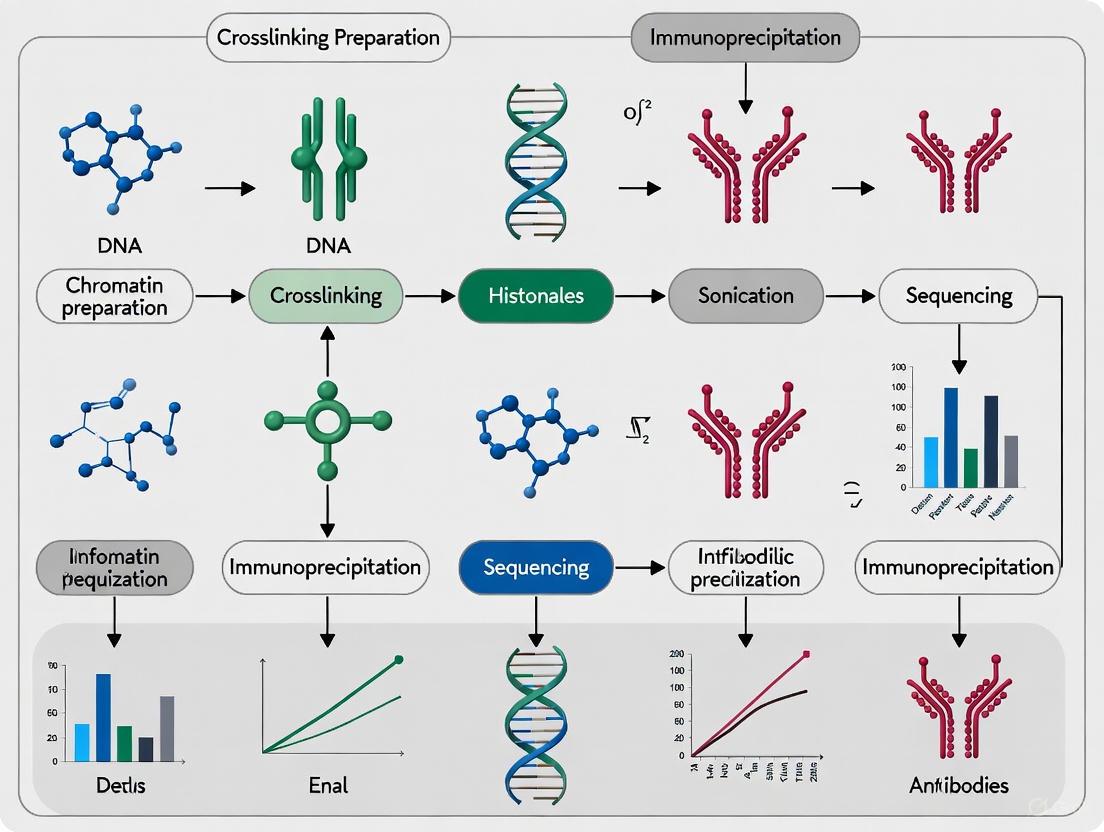
This comprehensive guide details the critical role of crosslinking optimization in chromatin immunoprecipitation (ChIP) studies focused on histone modifications.
Crosslinking Optimization for Histone Modification ChIP: A Complete Guide from Fundamentals to Advanced Applications
Abstract
This comprehensive guide details the critical role of crosslinking optimization in chromatin immunoprecipitation (ChIP) studies focused on histone modifications. It covers foundational chemical principles of crosslinkers like formaldehyde and disuccinimidyl glutarate (DSG), provides step-by-step methodological protocols for standard and dual-crosslinking approaches, and offers extensive troubleshooting guidance for common experimental challenges. The article further explores advanced validation techniques and comparative analyses with emerging methods such as CUT&Tag, empowering researchers to generate high-quality, reproducible data for epigenetic research and drug discovery.
The Chemistry of Crosslinking: Understanding How Formaldehyde and DSG Preserve Histone-DNA Interactions
The Fundamental Role of Crosslinking in Histone ChIP
Chromatin immunoprecipitation (ChIP) has revolutionized our understanding of epigenetic regulation by enabling researchers to map protein-DNA interactions across the genome. At the heart of this technique lies crosslinking—a critical chemical process that preserves transient molecular interactions within the native cellular environment. For histone studies, crosslinking stabilizes the association between histone proteins and their bound DNA sequences, creating a snapshot of chromatin architecture that can be isolated and analyzed. The choice of crosslinking strategy directly impacts every subsequent step in the ChIP workflow, from chromatin fragmentation to immunoprecipitation efficiency and ultimately, data quality.
The fundamental challenge in histone ChIP stems from the dynamic nature of chromatin interactions. Without crosslinking, weakly associated complexes may dissociate during processing, leading to false negatives, while excessive crosslinking can create non-specific associations that generate false positives [1]. This application note examines crosslinking methodologies within the broader context of optimizing histone modification research, providing researchers and drug development professionals with evidence-based protocols to enhance data quality and biological relevance.
Crosslinking Methodologies: Principles and Applications
Formaldehyde-Based Single Crosslinking
Formaldehyde (HCHO) serves as the cornerstone reagent for most ChIP experiments due to its unique biochemical properties. This short-arm (∼2 Å) crosslinker rapidly penetrates cells and reversibly connects primary amines in protein side chains to DNA through methylene bridges [2] [3]. The rapid kinetics (typically 8-15 minutes) and reversible nature (through heat reversal) make it ideal for capturing direct protein-DNA interactions like histone binding.
Standard formaldehyde crosslinking employs a 1% final concentration with incubation times ranging from 8-15 minutes at room temperature, followed by quenching with 125 mM glycine [4]. This approach works exceptionally well for core histones and their post-translational modifications due to their direct, stable association with DNA. However, for histone variants or modifying enzymes that interact with chromatin through larger complexes, the short spacer arm of formaldehyde may be insufficient to stabilize these indirect interactions.
Dual-Crosslinking Strategies
Dual-crosslinking methodologies address the limitations of formaldehyde alone by incorporating longer-arm crosslinkers prior to formaldehyde treatment. These bifunctional reagents (spacer arms 7.7-16.1 Å) stabilize protein-protein interactions within multi-subunit complexes before formaldehyde fixes these complexes to DNA [5] [2].
Ethylene glycol bis(succinimidyl succinate) (EGS), with its 16.1 Å spacer arm, has proven particularly effective for challenging chromatin targets including chromatin modifiers and transcriptional co-regulators [2]. The sequential application—typically 1.5 mM EGS for 30 minutes followed by 1% formaldehyde for 30 minutes—creates a stabilized network that preserves both direct and indirect chromatin associations [2]. This approach significantly enhances the signal-to-noise ratio for factors that do not directly contact DNA, enabling more accurate mapping of their genomic occupancy.
Table 1: Comparison of Crosslinking Methodologies for Histone ChIP
| Method | Crosslinker(s) | Spacer Arm Length | Incubation Time | Optimal Applications | Key Advantages | Limitations |
|---|---|---|---|---|---|---|
| Single Crosslink | Formaldehyde | ~2 Å | 8-15 minutes | Core histones, direct DNA binders | Rapid, reversible, minimal over-crosslinking | Poor for indirect interactions |
| Dual Crosslink | EGS + Formaldehyde | 16.1 Å + ~2 Å | 30 min + 30 min | Chromatin modifiers, complexes | Stabilizes large complexes, reduces false negatives | Requires optimization, potential for over-crosslinking |
| Dual Crosslink | DSG + Formaldehyde | 7.7 Å + ~2 Å | 30 min + 30 min | Transcription regulators | Intermediate spacing, good efficiency | May not span larger complexes |
Quantitative Impact of Crosslinking on Data Quality
Crosslinking Duration and Specificity
The duration of formaldehyde crosslinking profoundly affects the specificity of histone ChIP outcomes. Research demonstrates that prolonged fixation (60 minutes) dramatically increases non-specific recovery of chromatin-associated proteins compared to shorter treatments (4-10 minutes) [1]. In controlled experiments comparing DNA-bound Topoisomerase I (Top1) versus non-DNA-binding GFP, brief crosslinking (4 minutes) enabled specific recovery of Top1-bound chromatin with minimal GFP background. In contrast, extended fixation (60 minutes) augmented non-specific GFP recovery to levels comparable with specific interactions, severely compromising data interpretation [1].
This non-specific signal amplification presents particular challenges for abundant nuclear proteins, including many histone-modifying enzymes. The thermal base-flipping mechanism of formaldehyde crosslinking requires temporary disruption of DNA base pairing to expose reactive amino groups [1]. Extended crosslinking times increase the probability of non-specific protein-DNA encounters becoming permanently captured, particularly in open chromatin regions that are more accessible to formaldehyde penetration.
Tissue- and Context-Specific Considerations
Crosslinking efficiency varies significantly across biological sample types. In skeletal muscle tissue, for example, native ChIP (N-ChIP) without crosslinking identified approximately 15,000 H3K27me3-enriched regions compared to only 2,000 regions detected by crosslinked ChIP (X-ChIP) [6]. This seven-fold difference demonstrates how crosslinking can sometimes obscure rather than enhance epitope detection, particularly for broad histone marks in challenging tissues.
Muscle tissue fixation presents unique obstacles due to dense extracellular matrix and inefficient fixative penetration. For the repressive H3K27me3 mark, N-ChIP peaks showed greater consistency between replicates and higher enrichment values at validated loci including PAX5 and SOX2 [6]. These findings underscore the importance of empirical optimization rather than universal protocol application, particularly when working with specialized tissues or novel histone modifications.
Table 2: Impact of Crosslinking Time on ChIP Specificity
| Crosslinking Time | Temperature | Specific Signal (Top1) | Non-specific Signal (GFP) | Signal-to-Noise Ratio | Recommended Applications |
|---|---|---|---|---|---|
| 4 minutes | 37°C | High | Minimal | Excellent | Standard histone mapping, abundant targets |
| 10 minutes | 37°C | High | Low | Good | Complex-bound histones, moderate abundance |
| 60 minutes | 37°C | High | High | Poor | Not recommended for histone studies |
Experimental Protocols
Standard Formaldehyde Crosslinking Protocol
This protocol is optimized for adherent cells (HeLa) using 1×10⁷ cells per ChIP sample [4]:
- Cell Preparation: Grow cells to 90% confluence. Wash twice with 10-20 mL ice-cold PBS.
- Crosslinking: Add formaldehyde directly to culture medium to 1% final concentration. Incubate 10 minutes at room temperature with gentle swirling.
- Quenching: Add glycine to 125 mM final concentration. Incubate 5 minutes at room temperature.
- Cell Harvesting: Wash twice with PBS. Scrape adherent cells in 5 mL PBS and transfer to conical tubes.
- Nuclear Extraction:
- Pellet cells (1,500 × g, 5 minutes, 4°C)
- Resuspend in 2 mL Nuclear Extraction Buffer 1 (50 mM HEPES-NaOH pH=7.5, 140 mM NaCl, 1 mM EDTA, 10% Glycerol, 0.5% NP-40, 0.25% Triton X-100, protease inhibitors)
- Incubate 15 minutes at 4°C with rocking
- Pellet cells and resuspend in 2 mL Nuclear Extraction Buffer 2 (10 mM Tris-HCl pH=8.0, 200 mM NaCl, 1 mM EDTA, 0.5 mM EGTA, protease inhibitors)
- Incubate 15 minutes at 4°C with rocking
- Sonication: Pellet nuclei and resuspend in 350 μL Sonication Buffer (1×10⁷ cells). Sonicate to shear DNA to 150-300 bp fragments. Pellet debris (17,000 × g, 15 minutes, 4°C).
Dual-Crosslinking Protocol for Challenging Targets
This protocol, optimized for fission yeast but adaptable to mammalian cells, enhances recovery of indirect chromatin interactions [2]:
- Cell Preparation: Grow cells to mid-log phase (OD₆₀₀ 2.2-2.5). Harvest and wash twice with PBS without Tris buffers (primary amines inhibit crosslinking).
- Primary Crosslinking: Resuspend cells in PBS containing 1.5 mM EGS. Incubate 30 minutes with gentle rotation.
- Secondary Crosslinking: Add formaldehyde to 1% final concentration. Incubate 30 minutes with gentle rotation.
- Quenching and Washes: Add glycine to 125 mM final concentration. Incubate 5 minutes. Pellet cells and wash twice with PBS.
- Cell Lysis and Chromatin Preparation:
- For yeast: Lyse cells with glass beads in lysis buffer
- For mammalian cells: Proceed with nuclear extraction as in section 4.1
- Sonication: Sonicate to appropriate fragment size (200-700 bp for non-histone targets).
Native ChIP Protocol for Sensitive Tissues
For tissues like skeletal muscle where crosslinking compromises epitope recognition [6]:
- Tissue Homogenization: Freshly isolate tissue and homogenize in appropriate buffer.
- Micrococcal Nuclease Digestion: Digest chromatin with MNase (0.5-5 units/μg DNA) to yield predominantly mononucleosomes.
- Chromatin Extraction: Centrifuge and collect soluble chromatin fraction.
- Immunoprecipitation: Incubate native chromatin with antibody without prior crosslinking.
Visualization of Crosslinking Strategies
The following workflow diagram illustrates the decision process for selecting appropriate crosslinking strategies in histone ChIP experiments:
Crosslinking Strategy Decision Workflow - A methodological framework for selecting appropriate crosslinking approaches based on biological questions and sample characteristics.
The Scientist's Toolkit: Essential Research Reagents
Table 3: Key Research Reagent Solutions for Crosslinking ChIP
| Reagent/Category | Specific Examples | Function in ChIP | Optimization Tips |
|---|---|---|---|
| Primary Crosslinkers | Formaldehyde (1%), DSG (2 mM), EGS (1.5 mM) | Stabilize protein-DNA and protein-protein interactions | Fresh formaldehyde required; EGS moisture-sensitive |
| Quenching Agents | Glycine (125 mM), Tris buffer | Neutralize crosslinkers; stop reaction | Glycine preferred for formaldehyde quenching |
| Lysis & Extraction Buffers | Nuclear Extraction Buffer 1 & 2, RIPA-150 | Cell lysis, nuclear isolation, chromatin preparation | Avoid amine-containing buffers with EGS/DSG |
| Chromatin Fragmentation | Sonication (150-300 bp), MNase digestion | Shear DNA to appropriate fragment size | Histone targets tolerate more sonication than non-histones |
| Immunoprecipitation | Protein A/G magnetic beads, ChIP-grade antibodies | Target-specific chromatin isolation | 4 μg antibody for histones; 8 μg for non-histones |
| DNA Purification | Phenol-chloroform, silica columns, PCR purification kits | Isolve and clean immunoprecipitated DNA | Include crosslink reversal (65°C overnight) |
Advanced Applications and Normalization Strategies
Quantitative ChIP Methodologies
Recent methodological advances address the long-standing perception that ChIP-seq lacks quantitative rigor. Spike-in normalization approaches using exogenous reference chromatin enable precise comparisons across experimental conditions [7] [8]. The PerCell method incorporates orthologous cell spike-ins (e.g., mouse chromatin in human samples) at fixed ratios prior to sonication, providing internal controls that account for technical variability [7]. This strategy proves particularly valuable when evaluating pharmacological inhibitors that globally alter histone modification states, such as histone deacetylase (HDAC) or p300/CBP inhibitors [9] [7].
Alternatively, spike-in free quantitative methods like siQ-ChIP leverage mass conservation principles to establish absolute quantification scales [9]. This approach computes a proportionality constant (α) that relates sequenced read depth to total immunoprecipitated chromatin mass, creating a physical quantitative framework without additional reagents. The resulting data are interpreted as probability distributions, enabling direct comparison of histone modification abundance across genomic loci and experimental conditions [9].
Emerging Alternatives to Crosslinking
While crosslinking remains fundamental to most ChIP applications, newer technologies like CUT&RUN (Cleavage Under Targets and Release Using Nuclease) offer compelling alternatives, particularly for limited cell numbers [10]. This approach uses antibody-directed MNase cleavage to release specific protein-DNA complexes without bulk chromatin fragmentation. For fragile primary cells like activated B lymphocytes, optimized CUT&RUN protocols incorporating gentle fixation yield robust histone modification data from as few as 100,000 nuclei while maintaining high signal-to-noise ratios [10].
The CUT&RUN methodology circumvents several crosslinking-related artifacts, including epitope masking and non-specific protein-DNA crosslinking. However, it requires specialized expertise and may not be suitable for all histone marks or experimental systems. The choice between traditional ChIP and emerging alternatives should be guided by specific research questions, sample availability, and technical constraints.
Crosslinking methodology represents both a foundational technique and an ongoing optimization challenge in histone ChIP research. The strategic selection of appropriate crosslinking approaches—from standard formaldehyde to dual-crosslinking and native preparations—directly determines the accuracy and biological relevance of resulting epigenomic maps. As the field advances toward increasingly quantitative applications, particularly in drug development and clinical translation, precise crosslinking optimization will remain essential for distinguishing subtle epigenetic changes from technical artifacts.
Future methodological developments will likely focus on extending crosslinking principles to single-cell epigenomics, integrating orthogonal validation approaches, and establishing standardized normalization frameworks that enhance reproducibility across laboratories. By thoughtfully applying the principles and protocols outlined in this application note, researchers can leverage crosslinking not merely as a technical requirement, but as a powerful tool for precise epigenetic investigation.
Formaldehyde (FA) is a fundamental tool in chromatin immunoprecipitation (ChIP) and related assays, prized for its ability to preserve in vivo protein-DNA interactions at their native genomic locations. As a zero-length crosslinker with a spacer arm of approximately 2.3–2.7 Å, formaldehyde creates direct covalent bonds between proteins and DNA, making it ideally suited for studying histone modifications and transcription factor binding [11] [12]. Its small size ensures that only proteins in immediate, direct contact with DNA are crosslinked, providing high spatial precision. The crosslinking process involves a two-step reaction: initially, nucleophilic groups on amino acids or DNA bases form methylol adducts with formaldehyde, which then rapidly form Schiff bases that can be stabilized into methylene bridges between closely apposed functional groups [12]. For histone modification studies—where histones are in intimate contact with DNA—formaldehyde's zero-length property allows efficient capture of these direct interactions without stabilizing larger, indirect complexes, thereby providing a accurate snapshot of the authentic chromatin landscape [13] [11].
Quantitative Optimization of Crosslinking Conditions
The efficacy of formaldehyde crosslinking is highly dependent on specific experimental parameters. Systematic optimization of these conditions is essential for generating reliable and reproducible data in chromatin research.
Effects of Formaldehyde Concentration and Temperature
A comprehensive study evaluating crosslinking strength for 3C-based protocols revealed that both formaldehyde concentration and incubation temperature significantly influence library quality and chromatin conformation detection [14]. The table below summarizes key quantitative findings from this systematic investigation.
Table 1: Impact of Crosslinking Conditions on Hi-C Library Properties in K562 Cells
| Crosslinking Condition | Digestion Bias (Open vs. Closed Chromatin) | Re-ligation Proportion | FR Ligation Enrichment (χ² statistic) | Strength Ranking |
|---|---|---|---|---|
| 4°C / 0.5% FA | PS = 0.46 (p ≈ 1.0) | ~0.5% | 2.29 × 10³ | Lowest |
| 4°C / 1% FA | Data not specified | Data not specified | Data not specified | Intermediate |
| 25°C / 1% FA | Data not specified | Data not specified | Data not specified | Intermediate |
| 37°C / 1% FA | PS = 0.82 (p ≈ 0.0) | ~5.5% | 1.03 × 10⁷ | High |
| 37°C / 2% FA | PS = 0.82 (p ≈ 0.0) | ~7.5% | 1.03 × 10⁷ | Highest |
The data indicates that increased crosslinking strength (higher temperature and concentration) correlates with enhanced enzymatic digestion bias toward open chromatin regions, elevated re-ligation events, and substantial enrichment of short-range cis contacts (≤20 kbp) while depleting longer-range interactions [14]. This has practical implications for histone ChIP studies, as stronger crosslinking conditions may preferentially capture interactions in open chromatin domains where access to crosslinking sites is greater.
Temporal Dynamics of Crosslinking Reactions
The kinetics of formaldehyde crosslinking play a crucial role in accurately capturing protein-DNA interactions. Research demonstrates that crosslinking rates vary dramatically for different protein-DNA interactions in vivo [15]. Some interactions crosslink rapidly (on the minute timescale), making them suitable for kinetic analysis, while others occur on the same time scale or slower than binding dynamics, complicating the interpretation of results [15]. For standard histone ChIP protocols, typical crosslinking times range from 5-30 minutes depending on the biological system and target protein [4] [2].
Table 2: Crosslinking Duration Across Experimental Systems
| Experimental System | Typical Crosslinking Duration | Key Considerations |
|---|---|---|
| Drosophila embryos | 5 minutes [13] | Hexane permeabilization followed by 5 min fixation in 5% formaldehyde |
| Mammalian cells (HeLa) | 10 minutes [4] | Direct addition of 1% formaldehyde to cells at room temperature |
| Yeast systems | 30 minutes [2] | Dual-crosslinking approaches may require longer incubation |
| In vitro systems | As little as 5 seconds [16] | High formaldehyde concentrations (10%) can achieve fixation in seconds |
Recent methodological improvements for measuring binding kinetics suggest that increased formaldehyde concentrations paired with robust quenching conditions yield more accurate measurements of in vivo binding constants for direct DNA-binding proteins like histones [15].
Experimental Protocols for Histone Modification ChIP
Standard Formaldehyde Crosslinking ChIP Protocol for Histones
The following protocol is optimized for mapping histone modifications in mammalian cells, adapted from established methodologies [4] [11].
Detailed Steps:
Cell Harvesting and Crosslinking
- Grow HeLa cells to 90% confluence (approximately 1×10⁷ cells per ChIP sample).
- Add formaldehyde directly to culture medium to a final concentration of 1%.
- Incubate for 10 minutes at room temperature with gentle swirling [4].
- Perform all formaldehyde steps in a fume hood.
Quenching
- Add glycine to a final concentration of 125 mM to quench the crosslinking reaction.
- Incubate for 5 minutes at room temperature with gentle agitation [4].
- Wash cells twice with ice-cold PBS.
Nuclear Extraction
- Resuspend cell pellet in 2 mL of Nuclear Extraction Buffer 1 (50 mM HEPES-NaOH pH=7.5, 140 mM NaCl, 1 mM EDTA, 10% Glycerol, 0.5% NP-40, 0.25% Triton X-100, 1× protease inhibitors).
- Incubate 15 minutes at 4°C with rocking [4].
- Pellet cells (1,500 × g, 5 minutes, 4°C) and resuspend in 2 mL of Nuclear Extraction Buffer 2 (10 mM Tris-HCl pH=8.0, 200 mM NaCl, 1 mM EDTA, 0.5 mM EGTA, 1× protease inhibitors).
- Incubate 15 minutes at 4°C with rocking.
Chromatin Shearing
- Pellet nuclei and resuspend in 350 μL Histone Sonication Buffer (50 mM Tris-HCl pH=8.0, 10 mM EDTA, 1% SDS, protease inhibitors).
- Sonicate to shear DNA to an average fragment size of 150–300 bp for histone targets [4].
- Pellet debris (17,000 × g, 15 minutes, 4°C) and transfer supernatant to a new tube.
Immunoprecipitation
- Pre-clear chromatin with Protein A/G magnetic beads for 1 hour at 4°C.
- Incubate supernatant with 4 μg of ChIP-validated histone modification antibody overnight at 4°C with rotation [4].
- Add pre-blocked Protein A/G magnetic beads and incubate for 6 hours at 4°C.
- Wash beads sequentially with: RIPA-150, RIPA-500, LiCl Wash Buffer, and TE Buffer [4].
Crosslink Reversal and DNA Purification
- Resuspend beads in Elution Buffer (1% SDS, 100 mM NaHCO₃) and incubate at 65°C overnight with shaking.
- Add Proteinase K (final concentration 0.2 mg/mL) and incubate at 55°C for 2 hours [11].
- Purify DNA using phenol-chloroform extraction or spin columns.
- Quantify enriched DNA by qPCR or prepare libraries for sequencing.
Specialized Application: Dual-Crosslinking for Indirect Chromatin Regulators
While this application note focuses on zero-length crosslinking for direct DNA-binding proteins like histones, researchers studying chromatin complexes that include proteins without direct DNA contact should consider dual-crosslinking approaches. These methods first stabilize protein-protein interactions using longer-arm crosslinkers like EGS (16.1 Å) before formaldehyde crosslinking of proteins to DNA [2]. Although beyond the scope of this document focused on direct DNA-binding proteins, dual-crosslinking can be valuable for comprehensive chromatin studies.
The Scientist's Toolkit: Essential Research Reagents
Table 3: Essential Reagents for Formaldehyde-Based Chromatin Studies
| Reagent/Category | Specific Examples | Function & Application Notes |
|---|---|---|
| Crosslinkers | Formaldehyde (37% stock) [4] | Primary protein-DNA crosslinker for direct interactions; use at 0.5-2% final concentration |
| Quenching Agents | Glycine (125 mM-1.25 M) [4] [17] | Neutralizes excess formaldehyde by reacting with primary amines |
| Lysis & Extraction Buffers | Nuclear Extraction Buffers 1 & 2 [4] | Sequential extraction to isolate nuclear fraction and reduce cytoplasmic contamination |
| Sonication Buffers | Histone Sonication Buffer [4] | Optimized for histone targets; contains SDS for efficient chromatin shearing |
| Immunoprecipitation Reagents | Protein A/G magnetic beads [4] | Solid support for antibody-based purification of crosslinked complexes |
| ChIP-Validated Antibodies | Histone modification-specific antibodies [4] | Critical for specific enrichment; use 4-8 μg per ChIP depending on target |
| Crosslink Reversal Reagents | Proteinase K [11] | Enzymatic digestion of proteins to liberate crosslinked DNA for analysis |
Troubleshooting and Quality Control Considerations
Addressing Common Experimental Challenges
- Low Signal-to-Noise Ratio: Optimize formaldehyde concentration and crosslinking time based on your specific histone target. Excessive crosslinking can create dense networks that trap non-specific proteins [12] [14].
- Antibody Performance: Validate antibody specificity after crosslinking, as formaldehyde modification can affect epitope recognition [12] [17]. Test multiple antibodies if possible.
- Chromatin Fragmentation Efficiency: For histone targets, aim for 150-300 bp fragments [4]. Over-sonication may disrupt nucleosome structure, while under-sonication reduces resolution.
- Crosslinking Reversal Efficiency: Ensure complete crosslink reversal through extended incubation at 65°C overnight followed by Proteinase K treatment [11].
Validation Methods for Histone Modification Studies
- Positive and Negative Control Loci: Include known modified and unmodified genomic regions in qPCR validation.
- Input DNA normalization: Always prepare input control (crosslinked and sheared chromatin without immunoprecipitation) for proper normalization.
- Antibody validation: Use Western blotting to confirm antibody specificity before ChIP applications.
- Reproducibility: Perform biological replicates to ensure consistent enrichment patterns.
The proper implementation of these formaldehyde crosslinking protocols provides a robust foundation for investigating histone modifications and their roles in gene regulation, epigenetics, and drug development.
The study of histone modifications and chromatin-associated protein complexes is fundamental to understanding epigenetic regulation. Standard chromatin immunoprecipitation (ChIP) protocols often rely solely on formaldehyde (FA) crosslinking. While effective for direct protein-DNA interactions, FA is a zero-length crosslinker (~2 Å), which limits its efficiency for capturing larger, multi-subunit protein complexes where direct DNA binding is absent [18]. Many chromatin regulators, including histone-modifying enzymes and chromatin remodelers, function within such complexes, making them difficult to profile with conventional methods [18] [19].
To address this limitation, the integration of disuccinimidyl glutarate (DSG), a homobifunctional NHS-ester crosslinker, prior to FA treatment creates a superior double-crosslinking (dx) strategy. DSG features a 7.7 Å spacer arm, which is better suited for bridging protein-protein interfaces typical of multi-subunit complexes [18] [20]. This sequential crosslinking approach first 'locks' protein assemblies with DSG before securing protein-DNA interactions with FA, providing a more complete snapshot of chromatin architecture and enabling the study of complex biological questions related to gene regulation and genome maintenance [18].
DSG Crosslinking Chemistry and Mechanism
DSG crosslinking operates through a mechanism distinct from and complementary to formaldehyde. DSG is a homobifunctional NHS-ester crosslinker with two reactive groups separated by a glutarate spacer, spanning approximately 7.7 Å [18] [21]. Each NHS ester group independently acylates primary amines, typically found on lysine residues, forming stable amide bonds without generating DNA-reactive intermediates [18]. This defined spacer length matches distances typical of protein-protein interfaces, making it highly efficient for stabilizing protein assemblies.
In contrast, formaldehyde (FA) is a small electrophilic aldehyde that primarily reacts with nucleophilic sites like lysine side chains. Its crosslinking proceeds in two steps, forming a very short methylene bridge (~2 Å) that strongly favors protein-DNA crosslinking due to the close positioning of lysine residues to the DNA backbone [18]. The sequential use of DSG and FA is therefore complementary: DSG first stabilizes protein-protein contacts, and FA then secures protein-DNA interactions, together providing a more complete capture of protein complexes on DNA [18].
Table 1: Comparative Properties of Crosslinking Reagents
| Property | DSG (Disuccinimidyl Glutarate) | Formaldehyde (FA) |
|---|---|---|
| Crosslinker Type | Homobifunctional NHS-ester | Monoaddehyde |
| Spacer Length | ~7.7 Å [21] | ~2 Å (zero-length) [18] |
| Primary Target | Primary amines (Lysine residues) [18] | Nucleophilic sites (Lysine, Arginine, DNA bases) [18] |
| Chemistry | Stable amide bond formation [18] | Reversible methylene bridge formation [18] |
| Optimal Application | Stabilizing protein-protein interactions and multi-subunit complexes [18] [20] | Capturing direct protein-DNA interactions [18] |
Application Note: dxChIP-seq for Chromatin Factor Mapping
The double-crosslinking ChIP-seq (dxChIP-seq) protocol has been developed to improve the mapping of chromatin factors, including those that do not bind DNA directly, while simultaneously enhancing the signal-to-noise ratio [18]. This is particularly valuable for investigating the interplay between histone modifications and the protein complexes that write, read, and erase them.
For instance, comprehensive interactome studies have identified physical links between the core cohesin complex and numerous chromatin-associated proteins, including chromatin remodeling complexes like SWI/SNF and histone-modifying complexes such as MLL and Polycomb [19]. Similarly, research on Polycomb repression in Drosophila has revealed how diversification of Polycomb protein complexes and feedback mechanisms involving histone modification cross-talk confer plasticity to the system [22]. The dxChIP-seq protocol, with its enhanced ability to stabilize these often transient or indirect interactions, provides a powerful tool to dissect such complex regulatory networks [18].
Experimental Protocol: Double-Crosslinking Chromatin Immunoprecipitation (dxChIP-seq)
Reagent Setup
- DSG Solution: Prepare a stock solution of DSG in DMSO or DMF immediately before use. The working concentration is typically 1.66 mM in PBS [18].
- Formaldehyde Solution: Use 16% (w/v), methanol-free formaldehyde. The working concentration is 1% in PBS [18].
- Quenching Solution: 1.25 M glycine.
- Lysis Buffer: Compatible with subsequent ultrasonication and containing protease inhibitors (e.g., cOmplete protease inhibitor cocktail) and phosphatase inhibitors [18] [20].
- Immunoprecipitation (IP) Buffer: A standard ChIP IP buffer, often containing detergents like Triton X-100, SDS, and sodium deoxycholate [18].
Step-by-Step Procedure
Step 1: Double-Crosslinking
- DSG Crosslinking: For adherent cells, add the pre-warmed DSG working solution (1.66 mM in PBS) directly to the culture medium. Incubate for 18 minutes at room temperature [18].
- Formaldehyde Crosslinking: Following DSG crosslinking, add formaldehyde directly to the culture medium to a final concentration of 1%. Incubate for 8 minutes at room temperature without shaking [18].
- Quenching: Add glycine to a final concentration of 125 mM to quench the crosslinking reaction. Incubate for 5 minutes at room temperature [18] [20].
- Cell Washing: Aspirate the medium and wash cells twice with cold PBS. Cell pellets can be stored at -80°C at this stage.
Step 2: Cell Lysis and Chromatin Extraction
- Resuspend the cell pellet in a detergent-based lysis buffer supplemented with protease and phosphatase inhibitors.
- Incubate on ice for 10-15 minutes to allow for complete cell lysis. The extent of lysis can be visualized under a microscope [20].
- Isolate the nuclear fraction if necessary to reduce cytoplasmic background [20].
Step 3: Chromatin Shearing
- Focused Ultrasonication: Shear the crosslinked chromatin to an average fragment size of 200-700 bp using a focused ultrasonicator. Keep samples on ice at all times and use short pulses (e.g., 30 seconds on, 30 seconds off) to avoid overheating [18] [20].
- Quality Control: Reverse the crosslinks for a small aliquot of the sheared chromatin and analyze the DNA fragment size using an Agilent Bioanalyzer with a high-sensitivity DNA kit [18].
Step 4: Immunoprecipitation and DNA Purification
- Pre-clearance: Incubate the sheared chromatin with Protein G Dynabeads for 1 hour at 4°C to reduce non-specific binding [18].
- Immunoprecipitation: Add the target-specific antibody (e.g., 8 µg for anti-RPB1) to the pre-cleared chromatin and incubate overnight at 4°C with rotation [18].
- Bead Capture: Add Protein G Dynabeads and incubate for 2 hours to capture the antibody-chromatin complexes.
- Washing: Wash the beads sequentially with low salt, high salt, and LiCl wash buffers, followed by a final TE buffer wash [18].
- DNA Elution and Purification: Elute the immunoprecipitated DNA from the beads, reverse the crosslinks, and treat with Proteinase K and RNase A. Purify the DNA using a commercial kit like the ChIP DNA Clean & Concentrator [18].
Step 5: Library Preparation and Sequencing
- Use a library preparation kit (e.g., NEBNext Ultra II DNA Library Prep Kit) to prepare sequencing libraries from the purified ChIP DNA [18].
- Assess library quality and fragment size using an Agilent Bioanalyzer or similar system.
- Sequence the libraries on an appropriate platform (e.g., Illumina) [18].
Table 2: Key Protocol Parameters and Optimization Tips for dxChIP-seq
| Protocol Step | Key Parameter | Recommended Condition | Optimization Tips |
|---|---|---|---|
| Double-Crosslinking | DSG concentration & time | 1.66 mM for 18 min [18] | Balance complex stabilization with over-fixation that hinders shearing. |
| Formaldehyde concentration & time | 1% for 8 min [18] | Shorter than standard ChIP to complement DSG, not overwhelm it. | |
| Chromatin Shearing | Fragment Size Target | 200-700 bp [20] | Perform a shearing time course with a new cell line. Over-shearing can disrupt complexes. |
| Method | Focused ultrasonication [18] | Keep samples on ice, use short pulses to prevent heat denaturation. | |
| Immunoprecipitation | Antibody Specificity | Critical [20] | Use antibodies validated for ChIP or IP. Test specificity via ELISA for histone modifications [20]. |
| Controls | Essential [20] | Include "no-antibody" control, positive control region, negative control region. |
Data Analysis and Normalization
Following sequencing, data processing typically involves:
- Read Trimming and Alignment: Use tools like Trim Galore and Bowtie2 to trim adapters and align reads to a reference genome [18].
- Peak Calling: Identify significant regions of enrichment compared to input controls.
- Normalization: For experiments involving complex perturbations, consider spike-in normalization strategies to account for technical variations [18].
The Scientist's Toolkit: Essential Research Reagents
Table 3: Key Research Reagent Solutions for dxChIP-seq
| Reagent / Kit | Function / Application | Example Source / Catalog Number |
|---|---|---|
| Disuccinimidyl Glutarate (DSG) | Homobifunctional crosslinker for stabilizing protein-protein interactions within complexes. | Thermo Scientific (#20593) [18] |
| Formaldehyde, 16%, methanol-free | Zero-length crosslinker for capturing direct protein-DNA interactions. | Thermo Scientific (#28908) [18] |
| Protein G Dynabeads | Magnetic beads for efficient immunoprecipitation of antibody-bound complexes. | Fisher Scientific (#10004D) [18] |
| ChIP DNA Clean & Concentrator | Column-based kit for purification of immunoprecipitated DNA after crosslink reversal. | Zymo Research (#D5205) [18] |
| NEBNext Ultra II DNA Library Prep Kit | For preparation of sequencing-ready libraries from low-input ChIP DNA. | New England Biolabs (#E7645L) [18] |
| cOmplete Protease Inhibitor Cocktail | Inhibits a broad range of proteases to maintain complex integrity during lysis. | Roche (#11697498001) [18] |
| Spike-in Antibody & Chromatin | For normalization between samples, critical in complex perturbation studies. | Active Motif (#61686, #53083) [18] |
Workflow and Pathway Visualization
Eukaryotic gene regulation is controlled by transcription factors and chromatin-modifying enzymes binding to regulatory sequences in a tissue-specific and hormone-responsive manner. The analysis of these interactions within native chromatin has been significantly advanced by chromatin immunoprecipitation (ChIP) methodologies. However, conventional single-step cross-linking techniques often fail to preserve all protein-DNA interactions, particularly for transcription factors in hyper-dynamic equilibrium with chromatin or for coactivator interactions that occur through protein-protein binding rather than direct DNA contact [23].
The dual-crosslinking strategy addresses these limitations by employing a sequential fixation approach that stabilizes protein-protein interactions before mediating DNA-protein crosslinking. This synergistic use of disuccinimidyl glutarate (DSG) and formaldehyde has proven particularly valuable for capturing challenging chromatin targets, including highly inducible transcription factors and transcriptional coactivators, while simultaneously enhancing the signal-to-noise ratio in subsequent genomic analyses [23] [5].
Crosslinking Agent Chemistry and Properties
The effectiveness of dual-crosslinking strategies depends significantly on the chemical properties of the crosslinking agents employed, particularly their reactive groups, spacer arm lengths, and reversibility characteristics.
Crosslinker Classification and Characteristics
Table 1: Properties of Common Crosslinking Reagents
| Crosslinker | Chemistry | Spacer Arm (Å) | Reversible? | Working Concentration | Primary Application |
|---|---|---|---|---|---|
| DSG | NHS-ester | 7.7 | No | 2 mM | Protein-protein |
| Formaldehyde | methylene bridge | 2 | Yes (65°C + 0.2M NaCl) | 1% | Protein-DNA |
| DSP | NHS-ester | 12 | Yes (thiols) | 2 mM | Protein-protein |
| EGS | NHS-ester | 16.1 | Yes (hydroxylamine) | 2 mM | Protein-protein |
DSG, as an irreversible cross-linking agent with NHS esters, provides an effective cross-linking radius of approximately 7Å, making it ideal for initial protein-protein stabilization. Formaldehyde subsequently creates reversible methylene bridges between proteins and DNA with a shorter 2Å spacing arm [23]. The sequential application of these complementary chemistries creates a stabilized chromatin complex that preserves both direct and indirect DNA interactions throughout the processing and immunoprecipitation steps.
Quantitative Impact of Crosslinking Parameters
Recent systematic investigations have revealed that crosslinking intensity significantly modulates the reliability and sensitivity of chromatin conformation detection at different structural levels. Variations in formaldehyde concentration and crosslinking temperature substantially impact downstream results, with intense crosslinking preferred when targeting lower-level structures such as topologically associated domains (TADs) or chromatin loops [14].
Table 2: Effects of Crosslinking Conditions on Chromatin Capture
| Crosslinking Condition | Digestion Bias | Re-ligation Proportion | Short-range Contact Enrichment | Recommended Application |
|---|---|---|---|---|
| Weak (4°C/0.5% FA) | Minimal bias | Low (~1X) | Depleted | Chromosome compartments |
| Moderate (25°C/1% FA) | Moderate bias | Intermediate | Moderate | General purpose |
| Strong (37°C/2% FA) | Strong bias to open chromatin | High (~15X) | Enriched | TADs/Chromatin loops |
| Dual (DSG + 1% FA) | Enhanced coverage | Optimized | Balanced | Transcription factors/Coactivators |
Studies demonstrate that crosslinking conditions substantially affect global preferences of DNA fragmentation and ligation. Higher crosslinking temperatures and formaldehyde concentrations monotonically increase restriction enzyme cutting frequency in open chromatin regions compared to closed ones, with the probability of superiority of open over closed regions increasing from 0.46 to 0.82 in response to intensified crosslinking conditions [14].
Experimental Protocol: Dual-Crosslinked Chromatin Immunoprecipitation
Cell Culture and Crosslinking
Cell Preparation: Seed cells 24 hours prior to experiment at a density of 4-6 × 10^6 cells per 100 mm dish to achieve approximately 75% confluence on the day of experimentation for adherent cells [23].
Protein-Protein Crosslinking:
- Wash cells with PBS at room temperature three times, carefully removing residual solution with vacuum aspiration.
- Add 10 ml of PBS/MgCl₂ to each plate, directing pipette spray to the side of the tissue culture dish to avoid disrupting adherent cells.
- Add 80 μL of freshly prepared 0.25 M DSG solution (in DMSO) to each plate, rapidly swirling to achieve a final working concentration of 2 mM.
- Incubate at room temperature for 45 minutes. Note that cells may become vacuolated but should remain adherent [23].
DNA-Protein Crosslinking:
- Wash DSG-treated cells with PBS three times.
- Add 10 ml of formaldehyde-PBS solution (1% final concentration) to each plate.
- Incubate at room temperature for 10 minutes to facilitate formaldehyde-mediated DNA-protein crosslinking [23].
Chromatin Extraction and Shearing
Cell Lysis: Resuspend cell pellets in SDS-Lysis Buffer (1% SDS, 10 mM EDTA, 50 mM Tris, pH 8.0) supplemented with protease inhibitor cocktail immediately before use [23].
Chromatin Fragmentation:
- For downstream quantitative real-time genomic PCR: Fragment chromatin to 500-1000 bp fragments using focused ultrasonication.
- For next-generation sequencing applications: Fragment chromatin to smaller 300-500 bp fragments to optimize library preparation and mapping efficiency [23].
Immunoprecipitation:
- Pre-clear chromatin lysate with Protein A DynaBeads.
- Incubate with specific primary antibodies directed against protein of interest (e.g., transcription factors, modified histones, coactivators).
- Include control samples immunoprecipitated with pre-immune IgG for background quantification [23].
DNA Purification and Analysis
Wash Steps:
- Wash beads sequentially with Low Ionic Strength ChIP dilution buffer, High Salt Wash Buffer (500 mM NaCl, 0.1% SDS, 1% IGEPAL CA-630, 2 mM EDTA, 20 mM Tris-Cl pH 8.0), and LiCl Wash Buffer (0.25 M LiCl, 1% IGEPAL CA-630, 1% Sodium Deoxycholate, 1 mM EDTA, 10 mM Tris-HCl, pH 8.0) [23].
Elution and Decrosslinking:
- Elute chromatin complexes using Elution Buffer (0.09 M NaHCO₃, 1% SDS).
- Reverse crosslinks by adding Decross-linking Mixture (0.2 M NaCl, 0.1M EDTA, 0.4 M Tris-HCl, pH6.8, 0.4 mg/ml proteinase K) and incubating at 65°C for 4-6 hours [23].
DNA Purification:
- Recover DNA by phenol-chloroform extraction and ethanol precipitation.
- Analyze target enrichment using quantitative genomic PCR, microarray hybridization, or next-generation sequencing based on experimental requirements [23].
Workflow Visualization
Dual-Crosslinking ChIP Workflow
Research Reagent Solutions
Table 3: Essential Materials for Dual-Crosslinking ChIP
| Reagent/Category | Specific Examples | Function & Application Notes |
|---|---|---|
| Primary Crosslinker | Disuccinimidyl glutarate (DSG) | Stabilizes protein-protein interactions; 0.25M stock in DMSO; working concentration 2mM |
| Secondary Crosslinker | Formaldehyde (37%) | Creates protein-DNA crosslinks; used at 1% final concentration in PBS |
| Cell Preparation | PBS/MgCl₂, Protease Inhibitor Cocktail (P8340) | Maintains cellular integrity during initial processing; inhibits proteolytic degradation |
| Lysis & Immunoprecipitation | SDS-Lysis Buffer, Protein A DynaBeads | Extracts crosslinked chromatin; captures antibody-antigen complexes |
| Wash Buffers | Low Ionic Strength Buffer, High Salt Wash Buffer, LiCl Wash Buffer | Removes non-specifically bound material while preserving specific interactions |
| Elution & Decrosslinking | Elution Buffer, Decross-linking Mixture with Proteinase K | Releases bound chromatin; reverses crosslinks for DNA recovery |
| Downstream Analysis | Quantitative PCR reagents, Next-generation sequencing kits | Detects and quantifies enriched genomic regions |
Applications and Performance Considerations
The dual-crosslinking approach has been successfully implemented for various chromatin targets, demonstrating particular utility for:
Transcription Factors: NF-κB and STAT3, which exhibit stimulus-inducible chromatin interactions and dynamic exchange with DNA [23].
Transcriptional Coactivators: p300/CBP and CDK9, which interact with chromatin primarily through protein-protein interactions rather than direct DNA binding [23].
Polymerases and Elongation Factors: RNA Polymerase II and associated factors that engage in transient interactions with chromatin templates [23].
Chromatin Structural Proteins: Modified histones and architectural proteins that require stabilization of higher-order chromatin structures [5].
Experimental optimization should consider that crosslinking intensity modulates the reliability and sensitivity of chromatin conformation detection at different structural levels. While intense crosslinking is preferred for capturing lower-level structures such as TADs or chromatin loops, a more delicate balance between sensitivity and reliability is required when detecting higher-level structures such as chromosome compartments [14].
The synergistic combination of DSG and formaldehyde in dual-crosslinking protocols represents a significant advancement over conventional single-step crosslinking methods. This approach provides researchers with a versatile tool for comprehensive capture of chromatin interactions, particularly for challenging targets that involve dynamic protein exchange or indirect DNA binding. By sequentially stabilizing protein-protein interactions followed by protein-DNA crosslinks, this methodology enhances the detection of biologically significant chromatin interactions while improving the signal-to-noise ratio in downstream genomic analyses. The detailed protocol and reagent specifications provided herein serve as a robust foundation for implementing this powerful technique in chromatin research and drug discovery applications.
Impact of Crosslinking on Epitope Availability and Antibody Recognition
Within chromatin immunoprecipitation (ChIP) research, formaldehyde crosslinking is a critical first step for capturing transient protein-DNA interactions and preserving the native chromatin state for analysis [3] [20]. However, this process presents a fundamental methodological conflict: while it stabilizes biological complexes, the same chemical fixation can simultaneously mask or alter the very epitopes that antibodies are designed to recognize, potentially compromising immunoprecipitation efficiency [24]. For researchers investigating histone modifications, this balance is particularly crucial, as over-crosslinking can reduce antibody binding affinity through steric hindrance or conformational changes of histone tails [20] [24].
The impact of crosslinking on epitope availability represents a significant optimization challenge in epigenetic studies. The relationship between fixation time and ChIP signal is not linear; it depends on complex interactions between crosslinking kinetics, antibody affinity, and the specific chromatin architecture being studied [25]. This application note examines these interactions within the broader context of crosslinking optimization for histone modification ChIP research, providing quantitative data, detailed protocols, and strategic frameworks to maximize experimental success while maintaining epitope integrity.
Quantitative Impact of Crosslinking on ChIP Efficiency
Crosslinking Duration and Antibody Performance
The effect of crosslinking time on antibody recognition varies significantly between different antibody types and their specific targets. Systematic investigations reveal that the optimal fixation period must balance sufficient chromatin capture against epitope preservation.
Table 1: Impact of Crosslinking Time on Antibody Performance
| Antibody Target | Optimal Crosslinking Time | Effect of Under-Crosslinking | Effect of Over-Crosslinking |
|---|---|---|---|
| Transcription Factors | 10 minutes [4] | Loss of transient interactions [20] | Severe epitope masking; reduced IP efficiency [24] |
| Histone Modifications | 10-30 minutes [4] [2] | Potential loss of some interactions | Moderate epitope masking [24] |
| Indirect Chromatin Binders | Dual-crosslink: EGS 30 min + formaldehyde 30 min [2] | Failure to capture protein complexes | Excessive stabilization, difficult chromatin shearing [5] |
Different antibody preparations exhibit distinct sensitivities to crosslinking conditions. As demonstrated in Figure 3 of [24], while an antibody against hyperacetylated H4 maintained consistent ChIP efficiency across a wide range of chromatin concentrations, an antibody recognizing an invariant H3 domain showed improved efficiency with diluted input chromatin, indicating sensitivity to inhibitory factors in concentrated crosslinked samples [24].
Dual-Crosslinking Efficiency Data
For chromatin-associated proteins that do not bind DNA directly, a dual-crosslinking approach using a primary protein-protein crosslinker like EGS (ethylene glycol bis(succinimidyl succinate)) followed by formaldehyde fixation significantly enhances recovery. This method is particularly valuable for mapping chromatin regulators and heterochromatin proteins.
Table 2: Dual-Crosslinking Reagents and Applications
| Crosslinker | Spacer Arm Length | Primary Target | Typical Application |
|---|---|---|---|
| Formaldehyde | ~2 Å [2] | Protein-DNA | Direct DNA binders (e.g., histones, transcription factors) [3] |
| DSG (Disuccinimidyl Glutarate) | 7.7 Å [20] | Protein-Protein | Stabilizing smaller protein complexes |
| EGS (Ethylene Glycol Bis(succinimidyl succinate)) | 16.1 Å [20] [2] | Protein-Protein | Large multi-subunit complexes, indirect chromatin binders [5] |
Research indicates that dual-crosslinking ChIP-seq (dxChIP-seq) improves the signal-to-noise ratio and enhances detection of challenging chromatin targets, including those that do not bind DNA directly [5]. In practice, this approach has enabled high-quality mapping of heterochromatin proteins like the H3K9 methyltransferase Clr4 in fission yeast, which proved refractory to conventional formaldehyde-only ChIP [2].
Experimental Optimization Strategies
Systematic Crosslinking Optimization Protocol
Purpose: To empirically determine the optimal crosslinking conditions that maximize epitope availability while ensuring sufficient chromatin complex stabilization.
Materials:
- Fresh formaldehyde solution (37%)
- Quenching solution (2.5 M glycine or 3 M Tris base pH 8.0) [25]
- Cell culture or tissue samples
- PBS with protease inhibitors
- ChIP-validated antibodies
Procedure:
- Sample Preparation: Divide cell cultures or tissue samples into equal aliquots. For adherent cells, use ~90% confluent cultures washed with ice-cold PBS [4].
- Crosslinking Time Course: Treat samples with 1% formaldehyde for varying durations (1, 5, 10, 20, 30, 45 minutes) at room temperature with gentle agitation [24] [4].
- Quenching: Add glycine to a final concentration of 125-150 mM and incubate for 5 minutes at room temperature [4] [2].
- Cell Harvesting: Wash cells twice with cold PBS. Pellet cells and either proceed immediately or freeze at -80°C.
- Chromatin Preparation: Lyse cells and isolate nuclei using appropriate buffers. Shear chromatin to 200-700 bp fragments using optimized sonication conditions [20] [4].
- Immunoprecipitation: Perform parallel ChIP reactions with a constant amount of chromatin and antibody for each crosslinking time point.
- Analysis: Isplicate precipitated DNA and analyze by qPCR using positive and negative control genomic regions.
Optimization Assessment: The optimal crosslinking time produces the highest target signal at positive control regions while maintaining low background at negative control regions, indicating successful complex capture without epitope destruction [24].
Antibody Validation for Crosslinked Chromatin
Purpose: To confirm antibody specificity and efficiency in recognizing epitopes in crosslinked chromatin.
Materials:
- Candidate ChIP antibodies
- Crosslinked and native chromatin samples
- Western blotting equipment
- Peptide competition assays (if available)
Procedure:
- Western Blot Comparison: Compare antibody performance on western blots using both crosslinked and native protein extracts [24].
- Peptide Blocking: Pre-incubate antibody with the immunogen peptide (if available) and demonstrate loss of ChIP signal [20].
- Dilution Series: Test a range of antibody concentrations (typically 1-10 µg per IP) to determine the optimal working concentration that provides strong signal with minimal non-specific background [4].
- Cross-reactivity Assessment: For modification-specific antibodies (e.g., H3K9me2), validate specificity against related epitopes (e.g., H3K9me1, H3K9me3) using ELISA or similar methods [20].
- Functional Testing: Perform pilot ChIP with established positive and negative control genomic regions to confirm expected enrichment patterns [24].
The Scientist's Toolkit: Research Reagent Solutions
Table 3: Essential Reagents for Crosslinking ChIP Optimization
| Reagent Category | Specific Examples | Function | Optimization Tips |
|---|---|---|---|
| Crosslinkers | Formaldehyde (37%), EGS, DSG [20] [2] | Stabilize protein-DNA and protein-protein interactions | Always use fresh formaldehyde; EGS is moisture-sensitive [2] |
| Lysis & Extraction Buffers | Nuclear Extraction Buffers, RIPA-150 [4] | Release and solubilize crosslinked chromatin | Include protease inhibitors; optimize detergent concentration |
| Chromatin Shearing Reagents | Sonication buffers, MNase [20] | Fragment chromatin to optimal size | Sonication efficiency improves with SDS; avoid foaming [24] |
| Immunoprecipitation Beads | Protein A/G magnetic beads [4] | Capture antibody-antigen complexes | Pre-block with BSA; use protein A/G mix for broader species coverage |
| Antibody Validation Tools | Peptide arrays, competitor peptides, control cell lines | Confirm epitope specificity | Use modification-specific antibodies validated for crosslinked chromatin [20] |
| DNA Purification Kits | QIAQuick PCR Purification Kit [25] | Isolate and clean ChIP DNA | Ensure complete crosslink reversal before purification |
Workflow and Pathway Visualizations
Experimental Workflow for Crosslinking Optimization
Impact of Crosslinking on Epitope Accessibility
The interplay between crosslinking efficiency and epitope availability represents a critical parameter in histone modification ChIP research that directly impacts data quality and biological interpretation. Successful experimental outcomes require careful optimization of fixation conditions tailored to specific antibody-epitope interactions, rather than applying universal crosslinking protocols. The strategies outlined here—systematic time-course experiments, rigorous antibody validation, and selective application of dual-crosslinking approaches—provide a framework for researchers to maximize signal recovery while maintaining specificity. As chromatin mapping techniques continue to evolve toward single-cell and low-input applications, understanding and controlling for crosslinking-induced epitope masking will remain essential for generating biologically meaningful datasets in epigenetic research.
Practical Protocols: Implementing Optimized Single and Dual-Crosslinking for Histone Marks
Standard Formaldehyde Crosslinking Protocol for Core Histone Modifications
Chromatin Immunoprecipitation (ChIP) has revolutionized our understanding of epigenetic landscapes, enabling researchers to map histone modifications and their functional consequences across the genome. Formaldehyde crosslinking represents a critical step that preserves in vivo protein-DNA interactions before immunoprecipitation and analysis. Despite its widespread use, insufficient attention has been given to optimization of crosslinking parameters specifically for core histone modifications, where the close association between histones and DNA presents unique experimental considerations.
The fundamental chemistry of formaldehyde crosslinking involves electrophilic attack by formaldehyde on nucleophilic groups of amino acids and DNA bases, forming methylol adducts that subsequently create stable methylene bridges between closely apposed macromolecules [12]. For histone modifications, this process must be carefully optimized to preserve authentic interactions while minimizing non-specific background. Recent evidence indicates that crosslinking intensity significantly influences the reliability and sensitivity of chromatin analysis [14], emphasizing the need for protocol standardization.
This application note provides a standardized, optimized formaldehyde crosslinking protocol specifically validated for core histone modifications, incorporating quantitative data on parameter optimization and troubleshooting guidance to ensure reproducible, high-quality results for drug discovery and basic research applications.
Chemical Principles of Formaldehyde Crosslinking
Molecular Mechanisms
Formaldehyde, the smallest aldehyde, functions as an electrophile that reacts with nucleophilic functional groups in proteins and DNA. The crosslinking process occurs in two distinct steps:
- Methylol Adduct Formation: A nucleophilic group (e.g., lysine ε-amino group) forms a covalent bond with formaldehyde, creating an intermediate methylol adduct.
- Methylene Bridge Formation: The methylol adduct dehydrates to form a Schiff base, which then reacts with a second nucleophile from an adjacent macromolecule, creating a stable methylene bridge [12].
The small size of formaldehyde (∼2 Å span) makes it ideal for capturing intimate macromolecular interactions without causing significant structural perturbations [12]. For histone modifications, this property allows efficient crosslinking of the tight histone-DNA interface within nucleosomes.
Figure 1: Two-step mechanism of formaldehyde-mediated crosslinking. Formaldehyde initially reacts with a nucleophilic group (Step 1) to form a methylol adduct, which then creates a stable methylene bridge between macromolecules (Step 2).
Reactivity with Histone and DNA Targets
In native chromatin, formaldehyde exhibits preferential reactivity toward solvent-accessible lysine residues, which are particularly abundant in histone proteins and serve as key sites for post-translational modifications [12]. This chemical preference makes formaldehyde exceptionally well-suited for histone ChIP applications. The reaction with DNA occurs primarily through the amino and imino groups of DNA bases, requiring temporary disruption of base pairing ("DNA breathing") for accessibility [12].
Optimization of Crosslinking Parameters
Crosslinking Duration
Crosslinking time represents a critical determinant of signal-to-noise ratio in histone ChIP experiments. Insufficient crosslinking fails to preserve authentic interactions, while prolonged fixation artificially increases non-specific background signals.
Table 1: Effect of Crosslinking Duration on ChIP Performance
| Crosslinking Time | Specific Signal | Non-specific Background | Signal-to-Noise Ratio | Recommended Application |
|---|---|---|---|---|
| 4-10 minutes | Strong for direct binders | Minimal | High | Optimal for histone modifications |
| 20-30 minutes | Moderate | Elevated | Moderate | Transcription factor ChIP |
| >45-60 minutes | Diminished | Very high | Poor | Not recommended; high false positives |
Substantial experimental evidence demonstrates that brief formaldehyde fixation (10 minutes) sufficiently stabilizes direct histone-DNA interactions while minimizing non-specific recovery [1] [26]. In contrast, prolonged fixation (60 minutes) dramatically augments non-specific background by capturing soluble nuclear proteins that lack genuine chromatin associations [1]. This effect is particularly pronounced at open chromatin regions associated with active transcription, where increased DNA accessibility promotes non-specific protein capture during extended crosslinking.
Crosslinking Temperature and Concentration
Both temperature and formaldehyde concentration significantly influence crosslinking efficiency and specificity. Systematic assessments indicate that these parameters affect chromatin conformation detection across multiple structural levels [14].
Table 2: Optimization of Crosslinking Temperature and Concentration
| Parameter | Condition | Efficiency | Specificity | Recommendation |
|---|---|---|---|---|
| Temperature | 4°C | Low | High | Suboptimal for histones |
| 25°C | Moderate | Moderate | Acceptable | |
| 37°C | High | High | Optimal | |
| Formaldehyde Concentration | 0.5% | Low | High | Insufficient |
| 1% | High | High | Optimal for histones | |
| 2% | Very high | Moderate | May increase background |
Standard protocols employ 1% formaldehyde at room temperature or 37°C for histone modification ChIP [26] [4]. Elevated temperature (37°C) enhances crosslinking efficiency while maintaining specificity, likely by increasing molecular motion and collision frequency without promoting non-specific interactions [1]. Higher formaldehyde concentrations (2%) preferentially capture short-range chromatin interactions but may reduce specificity for histone mapping applications [14].
Standardized Crosslinking Protocol for Histone Modifications
Reagent Preparation
Crosslinking Solution
- 37% formaldehyde (methanol-free)
- Phosphate-buffered saline (PBS), ice-cold
- Protease inhibitor cocktail (200X)
Quenching Solution
- Glycine (10X solution, 1.25 M)
Cell Lysis Buffer
- ChIP Sonication Cell Lysis Buffer (1X) + protease inhibitors
Cell Culture Crosslinking Procedure
Figure 2: Experimental workflow for standardized histone crosslinking, showing critical steps from cell harvesting to chromatin preparation.
Cell Harvesting
- Grow adherent cells to 90% confluence in 15 cm culture dishes.
- Prepare 2 mL PBS + protease inhibitors per dish; keep on ice.
- For suspension cells, ensure density <0.5 × 10^6 cells/mL at fixation.
Crosslinking
- Add 540 μL of 37% formaldehyde directly to 20 mL culture medium.
- Swirl gently to mix and incubate for 10 minutes at room temperature.
- Final formaldehyde concentration: 1%.
Quenching
- Add 2 mL of 10X glycine solution to each dish.
- Swirl to mix and incubate for 5 minutes at room temperature.
- Glycine neutralizes residual formaldehyde by reacting with unbound reagent.
Cell Washing and Lysis
- Remove medium and wash cells twice with 20 mL ice-cold PBS.
- Scrape adherent cells into 2 mL ice-cold PBS + protease inhibitors.
- Centrifuge at 1,000 × g for 5 minutes at 4°C.
- Resuspend cell pellet in 1 mL 1X ChIP Sonication Cell Lysis Buffer + protease inhibitors per 2 × 10^7 cells.
- Proceed immediately to sonication or freeze at -80°C for long-term storage.
Chromatin Fragmentation and Quality Control
- Sonication Buffer: For histone targets, use buffer containing 50 mM Tris-HCl (pH 8.0), 10 mM EDTA, 1% SDS, plus protease inhibitors.
- Sonication Parameters: Sonicate crosslinked chromatin to achieve fragment sizes of 150-300 bp.
- Quality Assessment: Analyze fragmented chromatin by agarose gel electrophoresis to verify appropriate size distribution before immunoprecipitation.
Research Reagent Solutions
Table 3: Essential Reagents for Histone Modification ChIP
| Reagent | Function | Specifications | Example |
|---|---|---|---|
| Formaldehyde | Crosslinking agent | 37%, methanol-free, fresh | Thermo Scientific #28906 |
| Glycine | Quenching solution | 10X (1.25 M) | Cell Signaling #7005 |
| Protease Inhibitors | Prevent protein degradation | 200X cocktail in DMSO | Cell Signaling #7012 |
| Magnetic Beads | Immunoprecipitation | Protein A/G magnetic beads | Cell Signaling #9006 |
| Sonication Buffer | Chromatin fragmentation | SDS-containing for histones | Cell Signaling #28778 |
| ChIP-Grade Antibodies | Target-specific IP | Validated for ChIP application | Cell Signaling #4620 |
Troubleshooting and Quality Assessment
Common Optimization Challenges
- High Background Signal: Typically results from prolonged crosslinking times >30 minutes. Optimize by reducing fixation to 10 minutes [1].
- Low Signal Intensity: May indicate insufficient crosslinking, antibody inefficiency, or suboptimal sonication.
- Poor Fragment Size Distribution: Over-sonication creates fragments that are too small; under-sonication yields inefficient immunoprecipitation.
Quality Control Metrics
- Chromatin Fragment Size: Verify distribution (150-300 bp) by bioanalyzer or agarose gel electrophoresis.
- Crosslinking Efficiency: Assess by reversal of crosslinks and PCR amplification of control loci.
- Antibody Specificity: Include positive and negative control genomic regions in qPCR validation.
Optimized formaldehyde crosslinking represents a fundamental prerequisite for reliable mapping of histone modifications by ChIP. The standardized protocol presented here, employing brief (10-minute) crosslinking with 1% formaldehyde at room temperature, maximizes signal-to-noise ratio by preserving authentic histone-DNA interactions while minimizing non-specific background. This approach provides a robust foundation for epigenetic drug discovery and mechanistic studies of chromatin regulation, ensuring reproducible and biologically meaningful results across research applications.
Chromatin immunoprecipitation followed by sequencing (ChIP-seq) has revolutionized our understanding of epigenetic regulation, yet conventional methods using formaldehyde (FA) crosslinking alone present significant limitations for mapping histone modifications mediated by large, multi-protein complexes. Standard FA crosslinking employs a zero-length chemistry (∼2 Å) that strongly favors direct protein-DNA interactions but proves less effective at capturing protein-protein associations typical of the looser interfaces found in chromatin remodeling complexes and histone-modifying enzymes [18]. This technical gap is particularly relevant for studying histone marks, as their establishment and recognition often involve complex protein assemblies that do not directly bind DNA.
Dual-crosslinking ChIP-seq (dxChIP-seq) addresses this fundamental limitation by incorporating disuccinimidyl glutarate (DSG) prior to FA crosslinking. DSG, a homobifunctional NHS-ester crosslinker with a 7.7 Å spacer, matches distances typical of protein-protein interfaces and efficiently stabilizes protein assemblies without generating DNA-reactive intermediates [18] [20]. The sequential application of DSG followed by FA creates a complementary chemistry: DSG first 'locks' protein-protein contacts within chromatin complexes, and FA then secures protein-DNA interactions [18]. This innovative approach provides a more complete capture of protein complexes on DNA, enabling improved mapping of histone modifications and the complexes that regulate them.
Principle and Innovation of Dual-Crosslinking
Chemical Basis of Sequential Crosslinking
The enhanced performance of dxChIP-seq stems from the complementary chemistries of its two crosslinking agents:
DSG (7.7 Å spacer): This homobifunctional NHS-ester crosslinker features a five-atom glutarate spacer that matches distances typical of protein-protein interfaces. Each NHS ester independently acylates primary amines (generally at lysine residues), forming stable amide bonds at both ends without generating DNA-reactive intermediates [18]. This defined spacer and non-sequential chemistry efficiently stabilizes protein assemblies while contributing little to protein-DNA crosslinking.
Formaldehyde (∼2 Å spacer): FA is a small electrophilic aldehyde that reacts primarily with nucleophilic sites in proteins - most often the ε-amino group of lysine side chains. At physiological pH, lysine residues are mostly protonated and positively charged, naturally positioning them near negatively charged DNA backbone. Crosslinking proceeds in two steps: first, FA reacts with a nucleophile to form a reactive intermediate, which can then couple to a second nucleophile, including exocyclic amino groups of DNA bases, to form a very short methylene bridge [18].
The sequential use of these crosslinkers creates a synergistic effect: DSG stabilizes the higher-order protein architecture, while FA anchors these stabilized complexes to DNA. This approach is particularly valuable for histone modification studies, as many histone-modifying enzymes and readers operate within large multi-subunit complexes that may not directly contact DNA.
Advantages for Histone Modification Research
dxChIP-seq offers several distinct advantages for investigating histone marks:
Enhanced Capture of Indirect Associations: Histone modifications are recognized by reader domains that often function within larger complexes. DXChIP-seq improves mapping of these indirect chromatin interactions by stabilizing the entire complex architecture [18].
Improved Signal-to-Noise Ratio: The protocol refinements in crosslinking, lysis, and shearing conditions enhance detection of chromatin factors, particularly at low-occupancy regions that are difficult to capture with standard protocols [18].
Broadened Applicability: This method expands the range of proteins amenable to ChIP-seq, having proven effective for probing RNA Pol II, the Mediator complex, the PAF complex, and various histone modifications [18].
Table 1: Comparison of Crosslinking Reagents in ChIP Applications
| Parameter | Formaldehyde (FA) | DSG | Combined DSG+FA |
|---|---|---|---|
| Spacer Length | ∼2 Å (zero-length) | 7.7 Å | Complementary distances |
| Primary Target | Protein-DNA interactions | Protein-protein interactions | Both interactions |
| Crosslinking Chemistry | Sequential; forms methylene bridges | Non-sequential; forms amide bonds | Combined approaches |
| Optimal Conditions | 1% for 8-10 min at RT | 1.66 mM for 18 min at RT | Sequential application |
| Reversal Requirements | 65°C for several hours | Requires SDS and higher temperature | Modified reversal protocol |
Materials and Reagents
Key Research Reagent Solutions
Table 2: Essential Reagents for dxChIP-seq Protocol
| Reagent Category | Specific Examples | Function in Protocol |
|---|---|---|
| Primary Crosslinker | Disuccinimidyl glutarate (DSG) | Stabilizes protein-protein interactions in chromatin complexes |
| Secondary Crosslinker | 16% formaldehyde, methanol-free | Crosslinks proteins to DNA with zero-length spacing |
| Cell Lysis Reagents | HEPES-KOH pH 7.5, NaCl, glycerol, EDTA, EGTA, Triton X-100, NP-40 alternative | Disrupts cellular and nuclear membranes while maintaining complex integrity |
| Chromatin Shearing | Focused ultrasonication system | Fragments chromatin to optimal size (200-300 bp) |
| Immunoprecipitation | Protein G Dynabeads, specific antibodies | Captures target protein-DNA complexes |
| DNA Purification | ChIP DNA Clean & Concentrator | Purifies immunoprecipitated DNA for sequencing |
| Library Preparation | NEBNext Ultra II DNA library prep kit, NEBNext multiplex oligos | Prepares sequencing libraries from ChIP DNA |
| Quality Assessment | Qubit dsDNA HS assay kit, Agilent Bioanalyzer HS DNA kit | Quantifies and qualifies DNA throughout protocol |
Antibody Selection Considerations
Antibody quality remains paramount in dxChIP-seq, as in conventional ChIP-seq. The following considerations should guide antibody selection:
Specificity Validation: Antibodies should demonstrate ≥5-fold enrichment in ChIP-PCR assays at several positive-control regions compared to negative control regions [27]. For histone modifications, stringent validation is essential to ensure recognition of only the intended modification state (e.g., distinguishing H3K9me2 from H3K9me1 or H3K9me3) [20].
Clonality Considerations: Both monoclonal and polyclonal antibodies can be effective. Monoclonal antibodies offer higher specificity but risk epitope masking, while polyclonal antibodies recognize multiple epitopes and may provide better signal in complex environments [27] [20].
Validation Controls: Include knockout or knockdown models when possible to confirm antibody specificity. The ENCODE consortium recommends both primary (immunoblot or immunofluorescence) and secondary characterization for each antibody [28].
Step-by-Step dxChIP-seq Protocol
The following diagram illustrates the complete dxChIP-seq workflow, highlighting the key innovations in dual-crosslinking:
Detailed Protocol Steps
Dual-Crosslinking Procedure
DSG Crosslinking:
- Prepare fresh DSG solution at 1.66 mM in DMSO/PBS.
- Add DSG solution directly to culture medium and incubate for 18 minutes at room temperature with gentle agitation [18].
- Terminate reaction by adding 1M Tris-HCl (pH 7.5) to a final concentration of 20 mM.
Formaldehyde Crosslinking:
- Add methanol-free 16% formaldehyde directly to cells to a final concentration of 1%.
- Incubate for 8 minutes at room temperature with gentle agitation [18].
- Quench crosslinking by adding glycine to a final concentration of 125 mM and incubate for 5 minutes.
Cell Harvesting:
- Wash cells twice with cold PBS containing protease inhibitors.
- Scrape cells and transfer to pre-chilled tubes.
- Pellet cells by centrifugation at 500 × g for 5 minutes at 4°C.
- Flash-freeze cell pellets in liquid nitrogen and store at -80°C or proceed immediately.
Note: Crosslinked cell pellets can be stored at -80°C for several months without significant degradation [20].
Chromatin Preparation and Shearing
Cell Lysis and Nuclear Isolation:
- Resuspend cell pellets in cold Lysis Buffer 1 (50 mM HEPES-KOH pH 7.5, 140 mM NaCl, 1 mM EDTA, 10% glycerol, 0.5% NP-40 alternative, 0.25% Triton X-100) supplemented with protease inhibitors.
- Incubate for 10 minutes at 4°C with gentle mixing.
- Pellet nuclei by centrifugation at 1,500 × g for 5 minutes at 4°C.
- Resuspend in cold Lysis Buffer 2 (10 mM Tris-HCl pH 8.0, 200 mM NaCl, 1 mM EDTA, 0.5 mM EGTA) with protease inhibitors.
- Incubate for 10 minutes at 4°C with gentle mixing.
- Pellet nuclei by centrifugation at 1,500 × g for 5 minutes at 4°C.
Chromatin Shearing by Ultrasonication:
- Resuspend nuclear pellet in Sonication Buffer (0.1% SDS, 10 mM EDTA, 50 mM Tris-HCl pH 8.0, supplemented with protease inhibitors).
- Transfer suspension to appropriate sonication tubes.
- Shear chromatin using a focused ultrasonicator with optimized settings:
- Time: 15-20 minutes total (30 seconds ON, 30 seconds OFF cycles)
- Power setting: Optimized to achieve 200-500 bp fragments
- Keep samples on ice throughout sonication to prevent heating.
Shearing Efficiency Validation:
- Reverse crosslinks for a small aliquot (10-20 μL) by adding NaCl to 200 mM and incubating at 65°C for 4 hours.
- Purify DNA and analyze fragment size distribution using Agilent Bioanalyzer High Sensitivity DNA kit.
- Optimal fragment size ranges from 200-300 bp for transcription factors to 200-500 bp for histone modifications [27].
Table 3: Troubleshooting Chromatin Shearing
| Issue | Potential Cause | Solution |
|---|---|---|
| Large fragment size | Insufficient sonication time/power | Increase sonication time in 2-minute increments |
| Over-fragmentation | Excessive sonication | Reduce sonication time or power setting |
| Variable fragment sizes | Inconsistent sample cooling | Ensure adequate ice bath throughout process |
| Low DNA yield | Inefficient chromatin extraction | Optimize lysis buffer composition and incubation times |
Immunoprecipitation and DNA Recovery
Chromatin Pre-clearing:
- Dilute sheared chromatin 1:10 with ChIP Dilution Buffer (0.01% SDS, 1.1% Triton X-100, 1.2 mM EDTA, 16.7 mM Tris-HCl pH 8.0, 167 mM NaCl).
- Pre-clear with Protein G Dynabeads for 1-2 hours at 4°C to reduce non-specific background.
Antibody Binding:
- Add specific antibody to pre-cleared chromatin (typically 2-10 μg per IP).
- Incubate overnight at 4°C with rotation.
- Include controls: No-antibody control and species-matched IgG control.
Bead Capture and Washes:
- Add Protein G Dynabeads (40 μL bead slurry per IP) and incubate for 2 hours at 4°C.
- Collect beads using magnetic separation and wash sequentially with:
- Low Salt Wash Buffer (0.1% SDS, 1% Triton X-100, 2 mM EDTA, 20 mM Tris-HCl pH 8.0, 150 mM NaCl)
- High Salt Wash Buffer (0.1% SDS, 1% Triton X-100, 2 mM EDTA, 20 mM Tris-HCl pH 8.0, 500 mM NaCl)
- LiCl Wash Buffer (0.25 M LiCl, 1% NP-40, 1% sodium deoxycholate, 1 mM EDTA, 10 mM Tris-HCl pH 8.0)
- TE Buffer (10 mM Tris-HCl pH 8.0, 1 mM EDTA)
- Perform all washes for 5 minutes at 4°C with rotation.
Elution and Crosslink Reversal:
- Elute chromatin complexes twice with Elution Buffer (1% SDS, 0.1 M NaHCO₃) at 65°C for 15 minutes with vigorous shaking.
- Reverse crosslinks by adding NaCl to 200 mM and incubating at 65°C overnight.
DNA Purification:
- Digest RNA with RNase A (0.2 mg/mL) for 30 minutes at 37°C.
- Digest proteins with Proteinase K (0.2 mg/mL) for 2 hours at 55°C.
- Purify DNA using silica column-based purification (e.g., Zymo Research ChIP DNA Clean & Concentrator).
- Elute in nuclease-free water or TE buffer.
- Quantify DNA using Qubit dsDNA HS Assay kit.
Library Preparation and Quality Control
Sequencing Library Construction
Library Preparation:
- Use 1-10 ng of purified ChIP DNA for library construction.
- Employ commercial library preparation kits (e.g., NEBNext Ultra II DNA Library Prep Kit) following manufacturer's instructions.
- Include unique dual indexes to enable sample multiplexing.
Library Quality Control:
- Assess library quality and fragment size using Agilent Bioanalyzer High Sensitivity DNA kit.
- Quantify libraries using qPCR methods compatible with your sequencing platform.
- Sequence on appropriate platform (Illumina, MGI/DNBSEQ) with recommended read length (50-100 bp paired-end).
Quality Assessment Metrics
The following diagram outlines the key quality checkpoints throughout the dxChIP-seq workflow:
Table 4: Quality Control Parameters and Standards
| QC Step | Assessment Method | Acceptance Criteria |
|---|---|---|
| Crosslinking Efficiency | Western blot of soluble vs. crosslinked fractions | >70% target protein in crosslinked fraction |
| Chromatin Fragmentation | Bioanalyzer fragment analysis | Primary peak 200-500 bp |
| IP Specificity | qPCR at positive/negative control loci | ≥5-fold enrichment at positive loci |
| DNA Yield | Qubit dsDNA HS assay | ≥1 ng for abundant targets, ≥0.1 ng for rare factors |
| Library Complexity | PCR duplication rate | <50% for transcription factors, <30% for histone marks |
| Sequencing Alignment | Mapping efficiency | >70% uniquely mapped reads |
Data Analysis and Normalization Strategies
Bioinformatic Processing
Primary Data Analysis:
Peak Calling and Annotation:
Normalization Considerations
Proper normalization is critical for comparative analyses in dxChIP-seq:
Spike-in Controls: For experiments comparing different conditions, include spike-in controls (e.g., Drosophila chromatin) to normalize for technical variations in IP efficiency [18] [8].
Input DNA normalization: Use sequenced input DNA as control for peak calling, as it accounts for biases in chromatin fragmentation and sequencing efficiency [27].
Cross-comparison normalization: When comparing dxChIP-seq with standard ChIP-seq, consider using methods like ChIP-Rx that employ reference exogenous genomes for quantitative comparisons [8].
Research Applications
dxChIP-seq enables researchers to address previously challenging questions in chromatin biology:
Complex-Associated Histone Marks: Map histone modifications established by multi-subunit complexes with improved sensitivity and resolution.
Low-Abundancy Factors: Enhance detection of transcription factors and co-regulators present at low cellular concentrations.
Dynamic Complex Assembly: Study changes in complex composition under different physiological conditions or in response to perturbations.
Disease-Relevant Epigenetics: Identify subtle but biologically important changes in chromatin organization in disease models.
The dxChIP-seq protocol represents a significant advancement in chromatin immunoprecipitation methodology by addressing the fundamental limitation of standard ChIP-seq in capturing protein complexes that interact with chromatin through indirect mechanisms. The optimized dual-crosslinking approach, combining DSG and formaldehyde, preserves the architecture of multi-protein complexes while maintaining efficient protein-DNA crosslinking. This technique provides researchers with a powerful tool for investigating the complex landscape of histone modifications and their regulatory complexes, ultimately contributing to a more comprehensive understanding of epigenetic regulation in health and disease.
When properly implemented with appropriate controls and quality assessment measures, dxChIP-seq generates high-quality data with enhanced signal-to-noise ratio and improved coverage of biologically relevant binding events. The protocol's compatibility with standard sequencing platforms and analysis pipelines facilitates its integration into existing epigenomics workflows, making it accessible to researchers investigating chromatin dynamics across diverse biological systems.
Chromatin immunoprecipitation (ChIP) has revolutionized our understanding of epigenetic regulation and protein-DNA interactions. At the heart of this technique lies the crosslinking step, which serves to preserve biologically relevant interactions by covalently linking proteins to DNA in their native chromatin context. Achieving optimal crosslinking represents a fundamental balancing act – insufficient crosslinking fails to capture transient interactions, while excessive crosslinking masks epitopes and impedes downstream processing. For researchers investigating histone modifications, this balance is particularly crucial as it directly impacts data quality, signal-to-noise ratio, and the biological validity of results. This application note examines the key parameters of crosslinking time and concentration, providing evidence-based guidance to optimize these conditions for histone modification ChIP research.
The Crosslinking Equilibrium: Consequences of Imbalance
The duration and concentration of crosslinking agents, primarily formaldehyde, must be carefully calibrated to preserve chromatin interactions without introducing artifacts. Both under-crosslinking and over-crosslinking present distinct challenges that can compromise experimental outcomes.
Under-crosslinking results in inefficient stabilization of protein-DNA complexes, leading to their dissociation during processing and ultimately yielding poor chromatin recovery [30]. This is particularly problematic for histone modifications, where the natural dynamicity of histone-DNA interactions requires adequate stabilization to withstand the subsequent fragmentation and immunoprecipitation steps.
Over-crosslinking, while effectively stabilizing interactions, creates several technical hurdles: it can mask antibody epitopes critical for immunoprecipitation, cause difficulties in cell lysis, prevent effective chromatin shearing, and inhibit reversal of protein-DNA crosslinks prior to final analysis [30]. Critically, prolonged formaldehyde fixation has been demonstrated to dramatically augment non-specific recovery of proteins that lack genuine chromatin associations, significantly increasing background noise and potential false positives [1].
The following workflow diagram illustrates the critical decision points and their consequences in crosslinking optimization:
Quantitative Evidence: Systematic Analysis of Crosslinking Parameters
The Critical Window for Formaldehyde Crosslinking
Research systematically evaluating crosslinking duration reveals a precise temporal window that maximizes specific signal while minimizing background. A comparative study analyzing Topoisomerase 1 (a genuine DNA-binding protein) versus GFP (a non-specific nuclear protein) demonstrated that brief formaldehyde fixation (4-10 minutes) efficiently recovered Top1 from active promoters while showing minimal non-specific GFP recovery [1]. However, prolonged fixation (60 minutes) dramatically augmented non-specific recovery of GFP, particularly at highly active genomic loci with accessible chromatin structures [1]. This evidence highlights how extended crosslinking times can compromise target specificity.
Table 1: Impact of Formaldehyde Crosslinking Time on ChIP Specificity
| Crosslinking Time | Specific Recovery of DNA-Binding Proteins | Non-Specific Background | Recommended Application |
|---|---|---|---|
| Short (4-10 min) | High efficiency recovery | Minimal | Histone modifications, direct DNA-binding proteins |
| Medium (15-30 min) | Moderate efficiency | Moderate | Some transcription factors, chromatin regulators |
| Long (45-60+ min) | Reduced due to epitope masking | High, especially at open chromatin | Generally discouraged due to artifacts |
Optimizing Formaldehyde Concentration
While 1% formaldehyde is widely adopted as a standard concentration, systematic optimization may yield improved results for specific applications or challenging targets. An optimized ChIP-seq framework for profiling histone modifications in algae demonstrated that careful assessment of formaldehyde concentration was essential for achieving high-quality data [31]. Although the specific optimal concentration may vary by cell type and target, the 1% standard provides a validated starting point for histone modification studies.
Table 2: Formaldehyde Concentration Guidelines for Histone Modification ChIP
| Formaldehyde Concentration | Advantages | Limitations | Typical Crosslinking Time |
|---|---|---|---|
| 1% (most common) | Sufficient for histone-DNA crosslinksLimited protein-protein crosslinksGood epitope preservation | May be suboptimal for indirect interactors | 10 minutes at room temperature |
| 1.5% | Enhanced for some weak interactions | Potential increase in background | 5-10 minutes (requires optimization) |
| >1.5% | Maximum crosslinking efficiency | High background, epitope maskingChromatin shearing difficulties | <5 minutes (highly system-dependent) |
Experimental Protocols: Methodologies for Crosslinking Optimization
Standard Formaldehyde Crosslinking Protocol for Histone Modifications
This protocol is optimized for adherent mammalian cells and histone modification targets, based on established methodologies [4] with critical optimization parameters incorporated.
Materials Required:
- Fresh formaldehyde solution (1%, diluted from 37% stock in PBS)
- Glycine (2.5 M stock solution for quenching)
- Ice-cold PBS
- Cell scrapers for adherent cells
Procedure:
- Cell Preparation: Grow cells to approximately 90% confluence. Remove culture medium and gently rinse cells twice with 10-20 mL ice-cold PBS.
- Crosslinking: Add freshly prepared 1% formaldehyde solution directly to cells in PBS. Incubate for exactly 10 minutes at room temperature with gentle swirling.
- Quenching: Add glycine to a final concentration of 125 mM to quench crosslinking. Incubate for 5 minutes at room temperature with gentle agitation.
- Cell Harvesting: Remove solution and wash cells twice with ice-cold PBS. Scrape adherent cells into fresh PBS and transfer to conical tubes.
- Processing: Pellet cells by centrifugation (1,500 × g for 5 minutes at 4°C). Cell pellets can be stored at -80°C or processed immediately for chromatin preparation.
Critical Optimization Steps:
- Always use freshly prepared formaldehyde from sealed ampoules for consistent results [2]
- Perform crosslinking at room temperature unless specific experimental requirements dictate otherwise
- Precisely time the crosslinking duration to prevent under- or over-fixation
- Ensure complete quenching with glycine to prevent continued crosslinking
Empirical Test for Optimal Crosslinking Conditions
This systematic approach enables researchers to determine ideal crosslinking parameters for their specific experimental system [24].
Procedure:
- Prepare multiple aliquots of cells or tissue samples.
- Crosslink parallel samples using a range of formaldehyde concentrations (0.5%, 1%, 1.5%) and times (5, 10, 20, 30 minutes).
- Process samples through standard ChIP procedure with antibodies against a well-characterized histone modification (e.g., H3K4me3).
- Assess crosslinking efficiency by quantifying DNA recovery from precipitated chromatin and input samples.
- Evaluate specificity using positive and negative control genomic regions.
Interpretation Guidelines:
- Optimal crosslinking: Efficient DNA recovery from positive control regions with minimal signal in negative controls
- Under-crosslinking: Poor DNA recovery despite adequate input chromatin
- Over-crosslinking: Difficulty fragmenting chromatin to desired size range, high background in negative controls
Advanced Applications: Dual-Crosslinking for Challenging Targets
While standard formaldehyde crosslinking suffices for most histone modifications, some chromatin-associated proteins and specialized applications benefit from dual-crosslinking approaches. Dual-crosslinking ChIP-seq (dxChIP-seq) employs two crosslinkers – typically an amine-reactive homo-bifunctional crosslinker like EGS (ethylene glycol bis(succinimidyl succinate)) followed by formaldehyde – to stabilize both protein-protein and protein-DNA interactions [5] [2].
This approach is particularly valuable for:
- Chromatin factors lacking direct DNA-binding activity
- Multi-subunit complexes where the target protein interacts indirectly with DNA
- Transient chromatin interactions that require additional stabilization
- Enhancing signal-to-noise ratio for challenging targets
The dual-crosslinking protocol involves an initial crosslinking step with EGS (1.5 mM for 30 minutes) to stabilize protein-protein interactions, followed by standard formaldehyde crosslinking (1% for 30 minutes) to fix proteins to DNA [2]. This method has proven effective for mapping genomic occupancy of various chromatin regulators, including H3K9 methyltransferases and deacetylases, that may be refractory to conventional single-crosslinking ChIP [2].
The Scientist's Toolkit: Essential Research Reagent Solutions
Table 3: Key Reagents for Crosslinking Optimization in ChIP Experiments
| Reagent/Category | Specific Examples | Function in Crosslinking Optimization |
|---|---|---|
| Primary Crosslinkers | Formaldehyde (1-1.5%)EGS (1.5 mM for dual-crosslinking) | Primary protein-DNA crosslinkingStabilizes protein-protein interactions |
| Quenching Reagents | Glycine (125 mM)Tris buffers (avoid with EGS) | Stops formaldehyde crosslinkingNeutralizes crosslinking activity |
| Lysis & Sonication Buffers | SimpleChIP Sonication BuffersRIPA-150 buffer | Optimized chromatin fragmentationMaintains protein-complex integrity |
| Chromatin Fragmentation | Sonicator with microtipMicrococcal nuclease (MNase) | Shears chromatin to 200-1000 bpEnzymatic fragmentation alternative |
| IP & Wash Buffers | Protein A/G magnetic beadsLow/High salt wash buffers | Capture antibody-complexesRemove non-specific binding |
| Validation Tools | H3K4me3 antibodies (positive control)GFP antibodies (negative control) | Verify successful histone ChIPAssess non-specific background |
Optimizing crosslinking time and concentration represents a fundamental prerequisite for robust and reproducible histone modification ChIP experiments. The evidence clearly indicates that relatively brief formaldehyde crosslinking (typically 10 minutes at 1% concentration) provides the optimal balance for most histone targets, sufficient to preserve genuine interactions while minimizing non-specific background. Researchers should empirically validate these parameters for their specific experimental systems, considering factors such as cell type, fixation conditions, and the characteristics of their target epitopes. Through systematic optimization of these key parameters, scientists can ensure their chromatin data accurately reflects biological reality, providing reliable insights into epigenetic mechanisms with direct relevance to drug development and therapeutic discovery.
The study of histone modifications via Chromatin Immunoprecipitation (ChIP) provides critical insights into epigenetic regulation of gene expression. For researchers and drug development professionals, obtaining physiologically relevant data hinges on appropriate sample preparation, particularly the crosslinking step that preserves in vivo protein-DNA interactions. This process exhibits significant cell type-specific variability, requiring tailored optimization for different biological starting materials—from monolayer adherent cells to complex tissues and multicellular structures. The fundamental goal of crosslinking is to efficiently capture transient histone-DNA interactions without inducing epitope masking or introducing bias through over-fixation [32] [1]. This application note details specialized methodologies and quantitative parameters for crosslinking optimization across diverse sample types, framed within the broader context of histone modification ChIP research.
Technical Background: ChIP Method Selection for Histone Analysis
Chromatin Immunoprecipitation techniques primarily fall into two categories: crosslinked ChIP (X-ChIP) and native ChIP (N-ChIP). X-ChIP uses chemical fixatives like formaldehyde to covalently link proteins to DNA, preserving interactions during the rigorous isolation and fragmentation process. This method is essential for tissues and multicellular structures where native chromatin integrity might be compromised during extraction [32] [3]. Conversely, N-ChIP uses unfixed, native chromatin fragmented via enzymatic digestion (e.g., Micrococcal Nuclease, MNase). While N-ChIP offers superior antibody recognition for some histone epitopes and is ideal for abundant histone targets, it is generally unsuitable for tissues or complex structures due to the high risk of protein dissociation and chromatin loss during processing [32] [24].
The double-crosslinking ChIP-seq (dxChIP-seq) protocol has been developed to further improve the mapping of chromatin factors, enhancing the signal-to-noise ratio for challenging targets in complex biological samples [5]. The workflow below illustrates the core steps and decision points in a standard X-ChIP procedure, which forms the basis for the optimized protocols described in this document.
Cell Type-Specific Protocols and Optimization
Adherent Cells
Adherent cell cultures represent the most standardized system for ChIP. The key advantage is the direct accessibility of fixative to a uniform monolayer of cells.
Detailed dxChIP-seq Protocol for Adherent Cells [5]:
- Culture and Crosslinking: Grow cells to 70-80% confluency in appropriate culture vessels. For double-crosslinking, prepare a primary crosslinker (e.g., Disuccinimidyl Glutarate, DSG) in DMSO and add directly to the culture medium to a final concentration of 2 mM. Incubate for 45 minutes at room temperature.
- Formaldehyde Fixation: Aspirate the medium containing DSG and replace with fresh medium containing 1% formaldehyde. Incubate for 10 minutes at room temperature with gentle agitation.
- Quenching: Add glycine to a final concentration of 125 mM to quench the formaldehyde reaction. Incubate for 5 minutes at room temperature.
- Cell Lysis and Chromatin Preparation: Wash cells twice with cold PBS. Scrape cells in cold PBS containing protease inhibitors. Pellet cells and resuspend in cell lysis buffer (e.g., 5 mM PIPES pH 8.0, 85 mM KCl, 0.5% NP-40) and incubate on ice for 10 minutes. Pellet nuclei and resuspend in nuclear lysis buffer (e.g., 50 mM Tris-Cl pH 8.1, 10 mM EDTA, 1% SDS).
- Chromatin Shearing: Sonicate the chromatin suspension using a focused ultrasonicator to achieve fragments between 200-500 bp. Optimal conditions (e.g., power, duration, pulse settings) must be determined empirically for each cell line.
- Immunoprecipitation: Dilute sheared chromatin 10-fold in ChIP dilution buffer. Incubate with a validated antibody specific to the histone modification of interest (e.g., H3K4me3, H3K27ac) pre-bound to Protein A/G magnetic beads, overnight at 4°C.
- Washing and Elution: Wash beads sequentially with Low Salt Wash Buffer, High Salt Wash Buffer, LiCl Wash Buffer, and TE Buffer. Elute bound complexes with freshly prepared elution buffer (1% SDS, 0.1 M NaHCO3).
- Reverse Crosslinking and DNA Purification: Add NaCl to the eluate to a final concentration of 200 mM and incubate at 65°C for at least 4 hours (or overnight) to reverse crosslinks. Treat with Proteinase K, then purify DNA using a commercial PCR purification kit.
Tissues and Multicellular Structures
Tissues present unique challenges due to their three-dimensional architecture, cellular heterogeneity, and the presence of structural components like the extracellular matrix and waxy cuticles in plant tissues [32] [24]. These factors significantly impede the penetration of fixatives and lysis buffers.
Optimized X-ChIP Protocol for Tissue Samples [32] [24]:
- Rapid Dissection and Mincing: Rapidly dissect tissue and immediately mince into 1-2 mm³ pieces in cold PBS to maximize surface area for fixative penetration.
- Vacuum Infiltration for Fixation: Submerge minced tissue in PBS containing 1% formaldehyde. Apply a gentle vacuum (15-20 inches of Hg) intermittently (e.g., 3 cycles of 2 minutes vacuum, 2 minutes rest) until tissue pieces appear translucent and sink. Total fixation time should be determined empirically but often ranges from 15-30 minutes. Critical note: Prolonged fixation (>30 minutes) dramatically increases non-specific background by trapping soluble proteins in open chromatin regions [1].
- Quenching and Washing: Quench with 125 mM glycine for 5 minutes. Wash tissue twice with cold PBS.
- Nuclei Isolation and Chromatin Shearing: Homogenize the fixed tissue using a Dounce homogenizer or mechanical homogenizer in cell lysis buffer with protease inhibitors. Pellet nuclei and proceed with nuclear lysis and sonication as described for adherent cells. For fibrous tissues, additional optimization of sonication energy and duration is critical.
Table 1: Empirically Determined Crosslinking Parameters for Different Sample Types
| Sample Type | Recommended Fixative | Fixation Duration | Key Optimization Consideration |
|---|---|---|---|
| Adherent Cells (Simple) | 1% Formaldehyde | 8-12 minutes [1] | Avoid over-confluency; ensure uniform fixation. |
| Adherent Cells (Challenging Targets) | DSG (2mM) + 1% Formaldehyde [5] | 45 min (DSG) + 10 min (Formaldehyde) | Double-crosslinking stabilizes weak/indirect interactions. |
| Soft Tissues (e.g., Liver, Spleen) | 1% Formaldehyde | 15-20 minutes | Vacuum infiltration is recommended. |
| Hard/Fibrous Tissues (e.g., Heart, Brain) | 1% Formaldehyde | 20-30 minutes | Extended vacuum infiltration and mincing are critical [32]. |
| Plant Tissues | 1% Formaldehyde | 10-15 minutes (under vacuum) | Waxy cuticle significantly impedes penetration [24]. |
Quantitative Analysis of Crosslinking Optimization
Rigorous quantitative assessment is required to establish an optimized protocol. Data normalization is a critical, yet often underestimated, aspect that directly impacts biological interpretation. The siQ-ChIP (sans spike-in quantitative ChIP) method provides an absolute quantitative scale by connecting sequenced fragments to the total immunoprecipitated mass, framing the result as IP reaction efficiency ($S^b/S^t$) [9]. This is superior to relative methods like '% Input' or 'Fold Enrichment' which can obscure biological meaning [24].
The following data, synthesized from controlled studies, demonstrates the profound impact of crosslinking duration on experimental outcomes. The relationship between fixation time and data quality follows a Goldilocks principle: too little fails to capture interactions, while too much introduces significant artifact.
Table 2: Impact of Crosslinking Duration on ChIP Outcomes: A Quantitative Summary [24] [1]
| Experimental Condition | Specific Signal (e.g., Top1 at Promoters) | Non-Specific Background (e.g., GFP at Promoters) | Signal-to-Noise Ratio | Data Interpretation |
|---|---|---|---|---|
| Short Fixation (4 min) | Low to Moderate | Very Low | Moderate | True negatives are maintained, but sensitivity for true targets may be low. |
| Optimal Fixation (10 min) | High | Low | High | High fidelity; specific interactions are enriched over minimal background. |
| Prolonged Fixation (60 min) | High (but can be reduced) | Very High | Low | High false positive rate; loss of specificity as non-DNA binding proteins are crosslinked. |
The Scientist's Toolkit: Essential Research Reagents
Successful execution of cell type-specific ChIP requires a suite of validated reagents. The table below details essential materials and their functions.
Table 3: Key Research Reagent Solutions for Histone Modification ChIP
| Reagent / Material | Function & Application Note | Key Considerations for Cell Type-Specific Use |
|---|---|---|
| Formaldehyde | Primary crosslinker; creates reversible protein-DNA and protein-protein bridges. | For tissues, use with vacuum infiltration. Concentration (typically 1%) and time must be optimized. |
| DSG (Disuccinimidyl Glutarate) | Primary amine-reactive crosslinker for double-crosslinking (dxChIP-seq) [5]. | Stabilizes protein complexes before formaldehyde fixation. Crucial for challenging, indirect targets. |
| Micrococcal Nuclease (MNase) | Enzyme for chromatin fragmentation in N-ChIP. | Yields precise nucleosomal fragments. Not suitable for heavily crosslinked tissues [32]. |
| Validated Antibodies | Immunoprecipitation of target histone modification-protein complex. | Must be validated for ChIP (not just WB). Batch-to-batch variation can occur [24]. |
| Protein A/G Magnetic Beads | Solid-phase support for antibody capture and complex purification. | Superior recovery and washing efficiency compared to agarose beads, especially for low-abundance targets. |
| Protease Inhibitors | Protect chromatin and epitopes from degradation during processing. | Essential for all protocols, particularly critical for tissues with high endogenous protease activity (e.g., liver). |
| Sonicator (Focused-Ultrasonicator) | Device for mechanical shearing of crosslinked chromatin. | Optimal settings (power, duration, cycles) are highly dependent on cell type and crosslinking extent [32]. |
Optimizing crosslinking conditions for the specific biological sample—whether adherent cells, complex tissues, or multicellular structures—is a non-negotiable prerequisite for generating high-quality, biologically meaningful histone modification data. The protocols and quantitative guidelines provided here underscore that a one-size-fits-all approach is insufficient. The move towards more quantitative frameworks like siQ-ChIP [9] and robust double-crosslinking protocols [5] represents the forefront of method development, enabling more precise comparisons across samples and conditions. For researchers in drug development, where epigenetic dysregulation is a major therapeutic target, these optimized, cell type-aware protocols are essential for accurately mapping the histone modification landscape in disease-relevant models.
Within chromatin immunoprecipitation (ChIP) workflows, the fragmentation of chromatin represents a critical step that profoundly influences the resolution, efficiency, and overall success of the assay. For researchers investigating histone modifications, the choice between sonication-based (physical) and micrococcal nuclease (MNase)-based (enzymatic) fragmentation of crosslinked chromatin requires careful consideration of experimental goals and sample characteristics [3]. This application note delineates the operational principles, advantages, and limitations of each method within the context of a crosslinking optimization strategy for histone modification studies. We provide detailed, actionable protocols and data-driven comparisons to guide researchers in selecting and implementing the optimal fragmentation approach for their specific research objectives in drug development and epigenetic mechanism exploration.
Fundamental Principles of Chromatin Fragmentation
Sonication (Physical Shearing)
Sonication utilizes high-frequency sound waves to physically shear chromatin into smaller fragments. The process involves transferring acoustic energy to the sample, which creates cavitation bubbles that collapse and generate shear forces to break DNA strands. This method is largely sequence-agnostic and applicable to a wide range of sample types, including crosslinked tissues and cells [33] [34]. The fragment size distribution is controlled by adjusting parameters such as sonication time, power intensity, duty cycle, and sample volume [34].
MNase Digestion (Enzymatic Shearing)
Micrococcal nuclease (MNase) is an endo-exonuclease that preferentially cleaves linker DNA between nucleosomes [35]. In crosslinked ChIP (X-ChIP), formaldehyde fixation preserves protein-DNA interactions before MNase digestion is employed to fragment the chromatin. This enzymatic approach exploits the natural packaging of DNA, often resulting in mononucleosomal fragments of approximately 150-200 base pairs, providing nucleosome-level resolution [36] [35]. The degree of digestion must be carefully titrated, as it significantly impacts data quality and interpretation [37] [35].
Comparative Analysis: Sonication vs. MNase Digestion
The table below summarizes the key characteristics of each chromatin fragmentation method for crosslinked samples:
Table 1: Comprehensive Comparison of Sonication and MNase Digestion for Crosslinked Chromatin
| Feature | Sonication | MNase Digestion |
|---|---|---|
| Basic Principle | Physical shearing via acoustic energy [34] | Enzymatic cleavage of linker DNA [35] |
| Typical Fragment Size | Broader distribution (e.g., 200-1000 bp); can be optimized to 250-600 bp [36] [34] | Sharper distribution centered ~150-200 bp (mononucleosomal) [36] |
| Impact on Chromatin/Epitopes | Harsher process; may damage chromatin integrity and antibody epitopes [36] | Milder process; better preserves chromatin integrity and antibody epitopes [36] |
| IP Efficiency & Sensitivity | Standard efficiency | Increased IP efficiency for target proteins; enhanced detection of protein-bound DNA loci [36] |
| Input Material Requirement | Standard amount | Often requires less input chromatin [36] |
| Resolution | Locus-specific, limited by fragment size | Nucleosome-level resolution [37] |
| Sequence Bias | Generally low sequence bias | Inherent sequence preference [35] |
| Key Advantage | Universally applicable; well-suited for tough samples (e.g., tissues) and transcription factors [38] [33] | Superior for mapping histone modifications and nucleosome positions; high resolution and sensitivity [36] [35] |
| Primary Limitation | Requires optimization for each sample type; potential for over-heating and epitope damage [34] | Digestion efficiency is influenced by chromatin accessibility, potentially introducing bias [35] |
Detailed Experimental Protocols
Protocol A: Sonication-Based Fragmentation for Crosslinked Chromatin
This protocol is optimized for suspension cell lines (e.g., Kasumi-1) and can be adapted for other cell types or tissues [34].
Reagents & Buffers:
- FA Lysis Buffer: 50 mM HEPES-KOH pH 7.5, 140 mM NaCl, 1 mM EDTA pH 8.0, 1% Triton X-100, 0.1% Sodium deoxycholate, 0.1% SDS. Add protease inhibitors fresh before use [39] [33].
- Sonication Buffer (Optimized): Contains 0.15% SDS and 0.05% Sodium deoxycholate (DOC) [34].
- PBS + Protease Inhibitors: 1x PBS supplemented with PMSF (10 µL/mL), Aprotinin (1 µL/mL), and Leupeptin (1 µL/mL) [33].
Procedure:
- Cross-linking: Harvest approximately 4 x 10^7 cells. Cross-link protein-DNA interactions by adding formaldehyde to a final concentration of 1% and incubating for 10-15 minutes at room temperature. Quench the reaction with 0.125 M glycine [36] [40] [33].
- Cell Lysis: Pellet the cells and wash with cold PBS. Resuspend the cell pellet in 750 µL of optimized Sonication Buffer per 1 x 10^7 cells [33] [34].
- Sonication: Shear the chromatin using a focused ultrasonicator. The following parameters serve as a starting point for optimization:
- Peak Incident Power: 150 W
- Duty Factor: 7.0%
- Cycles per Burst: 200
- Water Fill Level: 8
- Total Sonication Time: 7 minutes (achieved in multiple cycles with adequate cooling on ice between cycles) [34].
- Verification: Reverse cross-link a 50 µL aliquot of sheared chromatin and purify the DNA. Analyze the fragment size distribution (target 250-600 bp) using agarose gel electrophoresis or a Bioanalyzer [39] [34].
Protocol B: MNase-Based Fragmentation for Crosslinked Chromatin
This protocol is suitable for mammalian cells and highlights critical titration steps [36] [35].
Reagents & Buffers:
- SimpleChIP Enzymatic Chromatin IP Kit (Cell Signaling Technology) or equivalent reagents [36].
- MNase Digestion Buffer: Typically includes CaCl₂, as MNase is calcium-dependent.
- FA Lysis Buffer: (As described in Protocol A) [39].
Procedure:
- Cross-linking & Lysis: Perform cross-linking as described in Step 1 of Protocol A. Lyse cells in a mild buffer to isolate nuclei.
- MNase Titration: Resuspend the nuclear pellet in MNase Digestion Buffer. It is critical to titrate MNase concentration (e.g., test 200 U, 600 U, 800 U per 4 million nuclei in a 100 µL reaction) to achieve optimal digestion without over-digestion, which diminishes ligation efficiency and signal [37]. Incubate at 37°C for 5-20 minutes, stopping the reaction with EDTA.
- Chromatin Solubilization: After digestion, add SDS to a final concentration of 1% and incubate to solubilize the chromatin. This step significantly improves subsequent ligation efficiency in protocols like Micro-C [37].
- Fragmentation Release: Lyse the digested nuclei with FA Lysis Buffer to release the soluble chromatin fragments.
- Verification: Purify DNA from an aliquot and assess fragment size. Successful digestion should yield a dominant band around 150 bp, corresponding to mononucleosomal DNA [36] [37].
The following diagram illustrates the integrated workflow for crosslinked ChIP, highlighting the key decision points and procedural steps for both sonication and MNase fragmentation methods.
Diagram Title: ChIP Workflow with Fragmentation Choice
The Scientist's Toolkit: Essential Research Reagents
Table 2: Key Reagents for Chromatin Fragmentation and Quality Control
| Reagent / Kit | Function / Application | Specific Example / Note |
|---|---|---|
| SimpleChIP Enzymatic Chromatin IP Kit | All-in-one solution for MNase-based ChIP; includes buffers, enzymes, and beads [36]. | Co-developed by CST and NEB; suitable for both agarose and magnetic bead-based IP [36]. |
| Micrococcal Nuclease (MNase) | Enzyme for digesting linker DNA to generate nucleosome-sized fragments [35]. | Requires calcium; digestion level must be empirically titrated for each cell type or sample [37] [35]. |
| Focused Ultrasonicator | Instrument for physical chromatin shearing via acoustic energy. | Parameters like power, duty cycle, and treatment time must be optimized [34]. |
| FA Lysis Buffer | Standard buffer for cell lysis and chromatin preparation in crosslinked ChIP [39] [33]. | Contains detergents (SDS, Triton X-100, Deoxycholate) to solubilize membranes and chromatin. |
| Protease Inhibitors | Prevent proteolytic degradation of proteins, including histones and transcription factors, during extraction. | Must be added fresh to all buffers. Common inhibitors include PMSF, Aprotinin, and Leupeptin [39] [33]. |
| Bioanalyzer / TapeStation | Microfluidics-based systems for high-resolution analysis of DNA fragment size distribution. | Preferred over agarose gels for accurate sizing and quantification, especially for NGS library prep [39]. |
The integration of an optimal chromatin fragmentation strategy is a cornerstone of robust crosslinked ChIP experiments. Sonication offers a versatile, widely applicable method for challenging samples, while MNase digestion provides superior resolution and sensitivity for detailed nucleosomal mapping, such as in histone modification studies [36] [35]. The choice is not merely technical but strategic, influencing the biological interpretability of the results. By applying the detailed protocols and comparative data presented here, researchers can make informed decisions, effectively troubleshoot their workflows, and generate high-quality, reproducible epigenetic data to advance drug discovery and mechanistic biology.
Solving Common Crosslinking Challenges: A Troubleshooting Guide for Robust Histone ChIP
Diagnosing and Remedying Under- vs. Over-Crosslinking
In histone modification chromatin immunoprecipitation (ChIP) research, formaldehyde (FA) crosslinking represents a critical foundational step that profoundly influences experimental outcomes. This process preserves transient protein-DNA interactions by creating covalent bonds between histones, associated chromatin proteins, and DNA. However, achieving optimal crosslinking presents a significant technical challenge, as both insufficient and excessive crosslinking can compromise data quality and biological interpretation. Under-crosslinking fails to adequately capture transient or weak interactions, particularly those involving chromatin factors that lack direct DNA-binding activity [41]. Conversely, over-crosslinking can introduce substantial biases, including preferential capture of interactions in accessible chromatin regions and masking of genuine biological signals with excessive noise [42]. Within the context of a broader thesis on crosslinking optimization, this application note provides researchers with a systematic framework for diagnosing and remedying crosslinking-related issues, enabling more reliable and reproducible epigenomic studies.
Diagnosing Crosslinking Issues: Technical Signatures and Quantitative Assessment
Characteristic Symptoms of Crosslinking Problems
Researchers can identify potential crosslinking issues through several common experimental signatures. Suboptimal crosslinking manifests in distinct ways across different chromatin profiling methodologies:
In ChIP-seq, under-crosslinking typically results in low library complexity, poor signal-to-noise ratio, and failure to detect known interactions, especially for transcription factors and chromatin-associated proteins that do not bind DNA directly [41]. Over-crosslinking in standard ChIP-seq often produces high background noise and increased non-specific immunoprecipitation.
In 3C-based methods like Hi-C, under-crosslinking yields insufficient valid read pairs and poor detection of chromatin loops and topologically associating domains (TADs), while over-crosslinking generates excessive short-range ligation products and re-ligation artifacts, skewing contact probability curves [42].
Emerging techniques including CUT&RUN and CUT&Tag show inherent biases toward accessible chromatin regions, which may be exacerbated by crosslinking conditions [43].
Quantitative Framework for Crosslinking Assessment
The table below summarizes key quantitative parameters for assessing crosslinking strength based on recent methodological studies:
Table 1: Quantitative Indicators of Crosslinking Strength in Chromatin Profiling
| Method | Parameter | Under-Crosslinking | Optimal Crosslinking | Over-Crosslinking |
|---|---|---|---|---|
| Hi-C/3C Methods | Proportion of re-ligation fragments | <2% (K562) | ~5-10% | >15% (up to 15-fold increase) [42] |
| Hi-C/3C Methods | Digestion bias (Open vs. Closed chromatin) | PS* ≈ 0.46 | Moderate enrichment | PS ≈ 0.82 [42] |
| Hi-C/3C Methods | Contact frequency decay slope | Steeper decay | Balanced near-distance and far-distance contacts | Depleted distal cis and trans contacts [42] |
| General ChIP | Signal-to-Noise Ratio | Low, high background | CUT&Tag shows comparatively higher signal-to-noise [43] | High background, non-specific binding |
PS: Probability of Superiority
Recent research demonstrates that crosslinking intensity significantly modulates the reliability and sensitivity of chromatin interaction detection [42]. Systematic assessment of Hi-C libraries under varying crosslinking conditions revealed that both temperature and FA concentration substantially affect global preferences of DNA fragmentation and ligation. Intense crosslinking preferentially targets open chromatin regions, with cutting frequency in open versus closed regions (measured by PS) monotonically increasing from 0.46 to 0.82 in response to increased crosslinking temperature or FA concentration [42].
Experimental Protocols for Crosslinking Optimization
Double-Crosslinking ChIP-seq (dxChIP-seq) Protocol
For challenging chromatin targets, including histone modifications with transient binding, we recommend implementing a double-crosslinking approach that enhances detection sensitivity while maintaining specificity [41]:
Table 2: Reagents for Double-Crosslinking ChIP-seq
| Reagent | Function | Specifications |
|---|---|---|
| Formaldehyde | Primary crosslinker | 1-2% final concentration, molecular biology grade |
| DSP (dithiobis(succinimidyl propionate)) | Secondary crosslinker | 1-2 mM in DMSO, amine-reactive |
| Glycine | Quenching agent | 125 mM final concentration |
| SDS Lysis Buffer | Cell lysis | 1% SDS, 10 mM EDTA, 50 mM Tris-HCl pH 8.1 |
| Dilution Buffer | SDS concentration reduction | 0.01% SDS, 1.1% Triton X-100, 1.2 mM EDTA, 16.7 mM Tris-HCl pH 8.1, 167 mM NaCl |
| Proteinase K | Reverse crosslinking | Molecular biology grade, incubation at 65°C |
Step-by-Step Procedure:
Cell Harvesting: Collect approximately 1×10^7 cells per immunoprecipitation, washing twice with cold PBS.
Primary Crosslinking: Resuspend cell pellet in 10 mL PBS containing 1% formaldehyde. Incubate for 10 minutes at room temperature with gentle agitation [41].
Secondary Crosslinking: Add DSP to a final concentration of 1-2 mM from a fresh 50 mM stock in DMSO. Incubate for 30 minutes at room temperature with gentle agitation.
Quenching: Add glycine to a final concentration of 125 mM and incubate for 5 minutes at room temperature to quench unreacted formaldehyde.
Cell Lysis: Pellet cells and wash twice with cold PBS. Resuspend in 1 mL SDS Lysis Buffer with protease inhibitors. Incubate for 10 minutes on ice.
Chromatin Shearing: Sonicate lysate to fragment DNA to 200-500 bp fragments. Use focused ultrasonication with optimized settings for your cell type.
Immunoprecipitation: Dilute lysate 10-fold with Dilution Buffer. Add 2-10 μg of histone modification-specific antibody and incubate overnight at 4°C with rotation.
Washing and Elution: Follow standard ChIP protocols for bead-based capture, washing, and elution.
Reverse Crosslinking: Incubate eluates with Proteinase K for 2 hours at 65°C, followed by DNA purification.
This double-crosslinking strategy has demonstrated particular effectiveness for mapping chromatin factors that lack direct DNA-binding activity while enhancing the signal-to-noise ratio compared to conventional single-crosslinking approaches [41].
Crosslinking Titration Protocol for Method Optimization
To systematically optimize crosslinking conditions for specific experimental systems, we recommend a titration approach:
FA Concentration Series: Prepare crosslinking solutions with FA concentrations of 0.5%, 1%, and 2% in PBS.
Temperature Variations: Test crosslinking at 4°C, 25°C, and 37°C for each FA concentration [42].
Time Course: Evaluate crosslinking durations from 5 to 30 minutes for each temperature-concentration combination.
Quality Assessment: For each condition, assess (a) immunoprecipitation efficiency, (b) library complexity, and (c) signal-to-noise ratio using positive control regions.
Recent systematic studies indicate that crosslinking at 37°C with 1% FA often represents a balanced condition for detecting higher-level chromatin structures, while more intense crosslinking (2% FA at 37°C) may be preferred when targeting lower-level structures such as TADs or chromatin loops [42].
Visualization of Crosslinking Optimization Workflow
The Scientist's Toolkit: Essential Research Reagents and Solutions
Table 3: Key Research Reagent Solutions for Crosslinking Optimization
| Reagent/Category | Specific Examples | Function & Application Notes |
|---|---|---|
| Crosslinkers | Formaldehyde (1-2%) | Primary protein-DNA crosslinker; standard for most ChIP applications [41] |
| Crosslinkers | DSP (1-2 mM) | Secondary amine-reactive crosslinker; enhances capture of challenging targets in dxChIP-seq [41] |
| Chromatin Fragmentation | Focused ultrasonication | DNA shearing to 200-500 bp; optimized for crosslinked chromatin [41] |
| Chromatin Fragmentation | MNase (Micro-C-ChIP) | Nucleosome-resolution fragmentation; ideal for histone modification studies [44] |
| Quality Assessment | Denaturing Mass Photometry | Rapid optimization of crosslinking reactions; single-molecule sensitivity [45] |
| Spike-in Controls | PerCell Spike-in | Orthologous chromatin for normalization; enables quantitative comparisons [7] |
| Antibodies | Histone modification-specific | H3K4me3, H3K27me3, etc.; validated for ChIP applications [44] |
| Alternative Methods | CUT&RUN / CUT&Tag | Enzyme-based mapping; lower input, reduced crosslinking bias [43] |
Advanced Methodological Considerations and Future Directions
Integration with Emerging Technologies
The field of chromatin research continues to evolve with emerging technologies that either complement or circumvent traditional crosslinking approaches. Methods such as CUT&RUN and CUT&Tag offer advantages including lower input requirements and reduced background noise, though they may introduce different biases, particularly toward accessible chromatin regions [43]. When diagnosing persistent crosslinking issues, researchers should consider these alternative approaches, especially for sensitive primary samples or when working with histone modifications that are particularly challenging to capture.
For comprehensive 3D chromatin architecture studies integrating histone modification data, Micro-C-ChIP represents a promising advancement that combines Micro-C with chromatin immunoprecipitation to map 3D genome organization at nucleosome resolution for defined histone modifications [44]. This approach specifically enriches for histone mark-specific interactions while reducing sequencing costs, though it still requires optimized crosslinking conditions.
Quantitative Normalization Strategies
When comparing chromatin landscapes across experimental conditions, particularly those that might globally alter chromatin states, implementing spike-in normalization is essential. The PerCell methodology incorporates orthologous chromatin spike-ins (e.g., mouse chromatin in human cells) mixed at fixed ratios prior to sonication, enabling highly quantitative comparisons of histone modification abundance [7]. This approach addresses fundamental limitations in conventional ChIP-seq when comparing samples with global epigenetic alterations, such as those induced by drug treatments targeting histone-modifying enzymes.
Crosslinking Parameter Interdependencies
Recent systematic investigations reveal that crosslinking temperature and concentration exhibit complex interdependencies that non-linearly influence chromatin capture efficiency [42]. The conceptual molecular thermal motion model proposed in these studies suggests that both parameters collectively restrict molecular mobility, with higher temperatures potentially compensating for lower formaldehyde concentrations in some experimental contexts. This understanding enables more nuanced optimization strategies when standard protocols prove suboptimal for particular biological systems or histone modifications.
Within the broader scope of crosslinking optimization for histone modification research, chromatin fragmentation is a critical step that directly impacts the resolution and quality of Chromatin Immunoprecipitation (ChIP) data. Following the covalent stabilization of protein-DNA complexes by crosslinking, the extracted genomic DNA must be sheared into workable fragments to enable specific analysis of histone-mark enrichment [20]. Ideal chromatin fragment sizes typically range from 200 to 700 base pairs [20]. The choice between mechanical shearing via sonication and enzymatic digestion via Micrococcal Nuclease (MNase) presents a key methodological crossroads, each with distinct advantages and limitations requiring careful optimization through empirical time-course studies.
Chromatin Fragmentation Methodologies: A Comparative Analysis
The two primary methods for chromatin fragmentation—sonication and MNase digestion—offer different benefits and are chosen based on the specific requirements of the experiment, including the desired fragment randomness, equipment availability, and the need for reproducibility. The table below provides a direct comparison of these two core techniques.
Table 1: Comparison of Chromatin Fragmentation Methods
| Parameter | Sonication (Mechanical) | MNase (Enzymatic) |
|---|---|---|
| Principle | Physical shearing of DNA via high-frequency sound waves | Enzymatic cleavage of DNA at internucleosomal regions |
| Fragment Output | Truly randomized fragments [20] | Preferentially cleaves linker DNA between nucleosomes [20] |
| Reproducibility | Requires extensive optimization; can be variable [20] | Highly reproducible once conditions are established [20] |
| Key Equipment | Sonicator (e.g., probe or bath) | Thermonixer; no specialized shearing equipment |
| Hands-on Time | Extended, with need for tuning and optimization [20] | More amenable to processing multiple samples [20] |
| Major Challenge | Maintaining temperature; risk of protein denaturation [20] | Variability due to changes in enzyme activity [20] |
Detailed Experimental Protocols
Protocol 1: Optimization of Sonication via Time Course
Sonication uses ultrasonic energy to physically break apart crosslinked chromatin. This protocol outlines a systematic approach to determine the optimal sonication time for your specific cell type and equipment.
I. Materials
- Crosslinked cell pellet (from ~2 x 10^6 cells per IP) [20]
- Cell Lysis Buffer (with detergents)
- Protease and Phosphatase Inhibitors [20]
- Ice bucket and microcentrifuge
- Sonicator (e.g., probe or bath sonicator)
- Proteinase K
- RNase A
- DNA purification columns or phenol-chloroform
II. Step-by-Step Procedure
- Resuspend the crosslinked cell pellet in an appropriate volume of ice-cold Lysis Buffer containing fresh protease inhibitors.
- Incubate on ice for 10-15 minutes to ensure complete cell and nuclear lysis.
- Pre-cool the sonicator and keep samples on ice throughout the process.
- Perform Sonication Time Course:
- Divide the lysate into 5-6 aliquots in thin-walled PCR tubes.
- Subject each aliquot to a different number of sonication pulses (e.g., 5, 10, 15, 20, 25 pulses).
- Key parameters to keep constant: pulse duration (e.g., 15-30 seconds), amplitude or power setting, and rest time on ice between pulses (e.g., 30-60 seconds) to avoid overheating [20].
- Reverse Crosslinks and Purity DNA: For each time point, treat an aliquot of sheared chromatin with Proteinase K and RNase A, then purify the DNA using a column or phenol-chloroform extraction [20].
- Analyze DNA Fragmentation: Assess the purified DNA using a Bioanalyzer or agarose gel electrophoresis. The optimal sonication time yields a majority of fragments between 200-500 bp.
Protocol 2: Optimization of MNase Digestion via Time Course
Micrococcal Nuclease cleaves DNA preferentially in the linker regions between nucleosomes. This protocol details how to titrate the enzyme to achieve the desired level of digestion.
I. Materials
- Crosslinked cell pellet
- Micrococcal Nuclease (MNase) [20]
- MNase Digestion Buffer (e.g., containing CaCl₂, as MNase is calcium-dependent)
- Thermonixer or water bath
- Stop Solution (e.g., EGTA or EDTA)
- DNA purification and analysis reagents (as in Protocol 1)
II. Step-by-Step Procedure
- Resuspend the cell pellet in MNase Digestion Buffer.
- Pre-warm the aliquots to 37°C.
- Perform MNase Titration:
- Divide the lysate into several aliquots.
- Add a series of increasing concentrations of MNase enzyme to each aliquot (e.g., 0.5, 1, 2, 4, 8 units). Alternatively, a time course at a fixed concentration can be performed.
- Incubate the aliquots at 37°C for a fixed time (e.g., 5-20 minutes).
- Stop the Reaction: Add a stop solution containing EDTA or EGTA to chelate the calcium and inactivate the MNase.
- Reverse Crosslinks and Purity DNA as described in Protocol 1.
- Analyze DNA Fragmentation: Assess the DNA. The goal is to find the condition that produces a predominant ~150 bp mononucleosome band and a ladder of larger oligomers on a gel.
Data Interpretation and Optimization Strategy
The success of a fragmentation time course is judged by the size distribution of the resulting DNA. The data from the protocols above should be systematically recorded to identify the optimal point for main experiments.
Table 2: Example Data from a Sonication Time Course in HeLa Cells
| Sonication Pulses (15 sec each) | Predominant Fragment Size Range | Recommended for ChIP? |
|---|---|---|
| 5 | > 1000 bp | No - too large |
| 10 | 700 - 1000 bp | Borderline - suboptimal |
| 15 | 300 - 600 bp | Yes - ideal |
| 20 | 150 - 400 bp | Yes - good for high resolution |
| 25 | < 200 bp | No - potentially too short |
Troubleshooting Tips:
- Insufficient Fragmentation: If fragments are too large, increase sonication pulses or power, or increase MNase concentration/time.
- Over-fragmentation: If fragments are too small, reduce sonication energy or MNase amount. For sonication, ensure the sample is kept cold at all times to prevent heat-induced DNA damage [20].
- Poor Yield: Visually confirm cell lysis under a microscope using a hemocytometer [20]. If lysis is inefficient, increase incubation time in lysis buffer or use a Dounce homogenizer.
Experimental Workflow for Chromatin Fragmentation
The following diagram illustrates the key decision points and steps in the chromatin fragmentation optimization process, from crosslinked cells to validated sheared chromatin ready for immunoprecipitation.
The Scientist's Toolkit: Essential Research Reagents
Successful chromatin fragmentation and subsequent ChIP rely on a set of core reagents and tools. The following table lists key solutions and their critical functions in the process.
Table 3: Essential Reagents for Chromatin Fragmentation and QC
| Reagent / Kit | Primary Function | Application Note |
|---|---|---|
| Formaldehyde | Primary crosslinker for stabilizing direct protein-DNA interactions [20]. | A zero-length crosslinker; crosslinking time must be optimized and quenched to prevent over-linking. |
| Protease Inhibitor Cocktail | Protects protein-DNA complexes from degradation during cell lysis and chromatin preparation [20]. | Essential for maintaining complex integrity; must be added fresh to lysis and wash buffers. |
| Micrococcal Nuclease (MNase) | Enzyme for digesting DNA at internucleosomal linker regions [20]. | Activity can vary; requires calcium and produces a nucleosome ladder when digestion is controlled. |
| Proteinase K | Reverses crosslinks and digests proteins after fragmentation [20]. | Used with RNase A to purify DNA for quality control analysis of fragment size. |
| Chromatin Prep Module | Commercial kit for isolating nuclear fraction from cytosolic components [20]. | Can help reduce background signal and enhance ChIP sensitivity by removing cytoplasmic proteins. |
| ChIP Kits (Agarose/Magnetic) | Provide pre-optimized buffers and beads for the immunoprecipitation and wash steps [20]. | Contain most necessary reagents, streamlining the workflow post-fragmentation. |
Addressing Low Signal and Poor Enrichment at Target Loci
In chromatin immunoprecipitation (ChIP) studies for histone modifications, achieving robust signal and specific enrichment at target loci is paramount for generating meaningful data. Inefficient crosslinking often underpins failure in these experiments, leading to both poor signal-to-noise ratios and loss of critical protein-DNA interactions during processing. The fundamental principle of ChIP relies on capturing and preserving transient chromatin interactions through crosslinking before immunoprecipitation with specific antibodies [46]. When crosslinking is suboptimal, histone modifications may not be adequately stabilized on their target DNA sequences, resulting in weak signals and inconclusive results. This application note details optimized crosslinking strategies and methodologies to overcome these challenges, with particular emphasis on protocols validated for challenging samples and complex histone states.
Crosslinking Strategy Comparison and Selection
Crosslinking Methodologies for Histone Modifications
Table 1: Comparison of Crosslinking Strategies for Histone Modification ChIP
| Method | Best Application | Key Advantages | Limitations | Validation Evidence |
|---|---|---|---|---|
| Standard Formaldehyde (Single Crosslink) | Abundant histone marks in cell cultures | Simplicity, rapid reaction termination, suitable for many histone marks | May insufficiently capture fragile complexes; over-crosslinking reduces antibody accessibility | Baseline for most protocols; requires titration [46] [47] |
| Double-Crosslinking (dxChIP-seq) | Challenging chromatin targets, indirect binding, complex tissues | Stabilizes both direct and indirect protein-DNA interactions; enhances signal-to-noise ratio | More complex protocol; requires optimization of both crosslinkers | Improved mapping of chromatin factors not directly DNA-bound [5] |
| Sequential Crosslinking for reChIP | Bivalent chromatin (e.g., H3K4me3/H3K27me3), complex histone modifications | Enables detection of two modifications on same nucleosome; eliminates false positives from heterogeneity | Technically demanding; low-input requires meticulous optimization | Accurately mapped 8,789 bivalent regions in mESCs from 2 million cells [48] |
Quantitative Impact of Optimized Crosslinking
Table 2: Performance Metrics of Optimized Crosslinking Protocols
| Protocol | Starting Material | Signal-to-Noise Improvement | Target Recovery Efficiency | Technical Reproducibility |
|---|---|---|---|---|
| dxChIP-seq [5] | Adherent cells, multicellular structures | Significant enhancement over single crosslink | Greatly enhanced for indirect binders | High across biological replicates |
| Optimized X-ChIP [47] | 3 biological replicates of peach bud/fruit tissue | High with 1% formaldehyde fixation | 77-95% for H3K4me3 and H3K27me3 | Consistent across tissue types |
| Low-input reChIP [48] | 2 million mouse ES cells | Robust peak enrichment with low background | 1,511 novel bivalent promoters identified | High sensitivity in Dppa2/4 KO validation |
Experimental Protocols for Enhanced Crosslinking
Double-Crosslinking Chromatin Immunoprecipitation (dxChIP-seq) Protocol
The double-crosslinking approach addresses the instability of multiprotein complexes and indirect chromatin associations that often yield poor enrichment in standard protocols [5].
Materials:
- Disuccinimidyl glutarate (DSG) prepared fresh in DMSO
- Formaldehyde (37% stock)
- Glycine (2.5M solution for quenching)
- Cell culture or tissue samples
- Lysis buffers (appropriate for your sample type)
- Sonicator or focused ultrasonicator
Procedure:
- Primary Crosslinking with DSG:
- For cell cultures: Resuspend cell pellet in PBS containing 2mM DSG
- Incubate for 45 minutes at room temperature with gentle rotation
- Pellet cells and wash once with cold PBS
Secondary Crosslinking with Formaldehyde:
- Resuspend DSG-crosslinked cells in PBS containing 1% formaldehyde
- Incubate for 10 minutes at room temperature for cells or 15-20 minutes for tissues
- Quench reaction by adding 2.5M glycine to a final concentration of 0.125M
- Incubate 5 minutes at room temperature, then pellet cells
Chromatin Preparation and Immunoprecipitation:
- Proceed with standard chromatin extraction using optimized lysis buffers
- Fragment chromatin using focused ultrasonication to 200-500 bp fragments
- Confirm fragmentation quality by agarose gel electrophoresis
- Perform immunoprecipitation with histone modification-specific antibodies
- Include appropriate controls (IgG, input DNA)
This sequential crosslinking strategy first stabilizes protein-protein interactions with DSG, then fixes protein-DNA complexes with formaldehyde, creating a more comprehensive stabilization of chromatin structures [5].
Tissue-Optimized Crosslinking Protocol for Histone Modifications
Complex tissues present additional challenges due to dense matrices and variable cell types that impede crosslinking efficiency. This protocol has been successfully applied to colorectal cancer and fruit tissues [38] [47].
Materials:
- Dounce homogenizer or gentleMACS Dissociator
- Formaldehyde (1% final concentration optimized for tissues)
- Protease inhibitor cocktail
- Sucrose-based chromatin isolation buffer
Procedure:
- Tissue Preparation and Homogenization:
- Mince frozen tissue (50-100mg) finely in a Petri dish on ice
- Transfer to Dounce homogenizer with 1ml cold PBS + protease inhibitors
- Apply 8-10 even strokes with pestle A while keeping samples deeply immersed in ice
- For tougher tissues, use gentleMACS Dissociator with htumor03.01 program
Optimized Crosslinking for Tissues:
- Transfer homogenate to conical tube, add formaldehyde to 1% final concentration
- Crosslink for 20 minutes at room temperature with gentle rotation
- Quench with 125mM glycine for 5 minutes
- Pellet cells at 800×g for 5 minutes at 4°C
Chromatin Extraction with Metabolic Interference Mitigation:
- For metabolically rich tissues (e.g., fruit mesocarp): Include an additional wash with sucrose-based buffer (0.3M sucrose, 10mM Tris-HCl pH8, 1mM MgCl₂, 1% Triton X-100) to reduce polysaccharides
- Proceed with standard chromatin extraction and shearing
- For challenging fruit tissues at late developmental stages (118-125 DAFB), pool 3 biological replicates to overcome inhibitory metabolites [47]
Low-Input Sequential ChIP (reChIP) for Bivalent Chromatin
This protocol enables mapping of two histone modifications on the same nucleosome from limited material, essential for studying bivalent domains [48].
Materials:
- Micrococcal nuclease (MNase) for chromatin fragmentation
- Protein A/G magnetic beads
- H3K4me3 and H3K27me3-specific antibodies (validated for reChIP)
- SDS elution buffer (1% SDS, 0.1M NaHCO₃)
- 3kDa molecular weight cutoff filters
Procedure:
- Cell Crosslinking and Nucleosome Preparation:
- Crosslink 2 million cells with 1% formaldehyde for 10 minutes, quench with glycine
- Lyse cells with gentle lysis buffer (10mM Tris-HCl pH7.5, 10mM NaCl, 0.5% NP-40)
- Digest chromatin with 0.5U MNase per million cells for 5 minutes at 37°C
- Confirm mononucleosome formation by agarose gel electrophoresis
First Immunoprecipitation:
- Pre-clear chromatin with pre-washed magnetic beads for 3 hours at 4°C
- Incubate with first antibody (e.g., H3K4me3) overnight at 4°C
- Capture with protein A/G beads, wash stringently
Chromatin Elution and Second Immunoprecipitation:
- Elute chromatin from first IP with SDS elution buffer
- Dilute eluate 10× with ChIP dilution buffer
- Concentrate and buffer-exchange using 3kDa MWCO filters
- Perform second immunoprecipitation with second antibody (e.g., H3K27me3)
- Process final DNA for qPCR or sequencing
This method generates five datasets from one sample: two reChIP orientations, IgG control, and two single modification controls, providing comprehensive bivalent chromatin profiling [48].
Visualization of Crosslinking Optimization Workflows
Figure 1: Decision Framework for Crosslinking Protocol Selection
The Scientist's Toolkit: Essential Research Reagents
Table 3: Key Research Reagent Solutions for Crosslinking Optimization
| Reagent/Category | Specific Examples | Function in Protocol | Optimization Tips |
|---|---|---|---|
| Primary Crosslinkers | Disuccinimidyl glutarate (DSG), Formaldehyde | Stabilize protein-protein and protein-DNA interactions | DSG at 2mM for 45 min before 1% formaldehyde for 10 min [5] |
| Chromatin Fragmentation | Focused ultrasonication, Micrococcal nuclease (MNase) | Generate optimal chromatin fragment size | MNase preferred for reChIP; sonication for standard ChIP [48] |
| Validated Antibodies | H3K4me3 (abcam ab8580), H3K27me3 (Active Motif 39155) | Specific immunoprecipitation of target epitopes | Validate for sequential IP in reChIP applications [48] |
| Magnetic Separation | Protein A/G magnetic beads | Efficient capture and washing of immune complexes | Pre-wash beads and extend pre-clearing to 3h for low-input [48] |
| Chromatin Extraction Aids | Sucrose gradient buffers, Protease inhibitors | Preserve chromatin integrity during extraction | Critical for metabolically rich tissues [47] |
| Elution Systems | SDS-based elution buffer, Peptide competitors | Release captured chromatin between IP steps | SDS elution outperforms overnight peptide competition [48] |
Optimized crosslinking strategies represent a fundamental solution to the pervasive challenge of low signal and poor enrichment in histone modification ChIP studies. The protocols detailed herein—double-crosslinking for enhanced stabilization of chromatin complexes, tissue-optimized methods for challenging samples, and sequential ChIP for bivalent chromatin—provide actionable pathways to significantly improve data quality. Implementation should begin with careful diagnosis of the specific signal enrichment challenge, followed by selection of the appropriate crosslinking strategy based on sample type and biological question. Through systematic application of these optimized crosslinking methodologies, researchers can overcome technical barriers and generate high-quality, reproducible histone modification data that accurately reflects biological reality.
Mitigating High Background and Non-Specific Binding
In chromatin immunoprecipitation (ChIP) research focused on histone modifications, high background and non-specific binding represent significant technical challenges that compromise data quality and interpretation. These artifacts primarily stem from methodological limitations of standard ChIP protocols, including inefficient crosslinking that fails to stabilize transient interactions, and the harsh fragmentation and immunoprecipitation conditions that co-purify non-specifically bound proteins and DNA [18] [49]. For histone modification studies, where precise mapping of enrichment patterns is crucial, elevated background noise can obscure genuine binding signals, particularly at heterochromatic regions and repetitive elements, leading to an incomplete understanding of the epigenetic landscape [49]. This application note examines the sources of these artifacts and presents optimized crosslinking strategies and novel methodologies to mitigate background noise, thereby enhancing signal-to-noise ratio and data reliability for histone modification studies.
Fundamental Limitations of Standard ChIP Methodologies
Standard formaldehyde-based ChIP-seq exhibits several inherent limitations that contribute to high background. Formaldehyde's zero-length crosslinking chemistry (~2 Å bridge length) strongly favors protein-DNA crosslinks but is less effective at capturing protein-protein interactions essential for stabilizing many chromatin-associated complexes [18]. This inefficient stabilization results in partial complex dissociation during subsequent processing steps, releasing proteins and DNA fragments that contribute to non-specific background.
Furthermore, chromatin fragmentation via sonication creates uneven DNA shearing patterns, preferentially fragmenting open euchromatin while under-representing condensed heterochromatic regions [49]. This bias generates a distorted input material for immunoprecipitation, where accessible genomic regions are over-represented. Studies demonstrate that ChIP-seq input material is significantly enriched at gene promoters and other accessible regions (R = 0.76 correlation with ATAC-Seq signal) compared to intergenic and heterochromatic regions [49]. The subsequent immunoprecipitation step itself introduces non-specific binding, as antibodies may cross-react with non-target epitopes, and the solid-phase purification with Protein A/G beads non-specifically traps chromatin fragments regardless of their biological relevance.
Comparative Performance of ChIP-seq vs. CUT&Tag
The table below summarizes key performance differences between standard ChIP-seq and the newer CUT&Tag technology, highlighting how methodological differences impact background and specificity:
Table 1: Comparative Analysis of ChIP-seq and CUT&Tag Performance Characteristics
| Parameter | ChIP-seq | CUT&Tag |
|---|---|---|
| Assay Type | In vitro | In situ |
| Core Principle | Crosslinking + sonication + immunoprecipitation | Antibody-recruited Tn5 transposase tagmentation |
| Signal-to-Noise Ratio | Lower (non-specific binding, off-target sonication) [50] | High (minimal background) [50] |
| Background Sources | Non-specific crosslinking, off-target sonication, non-specific immunoprecipitation | Minimal; primarily antibody specificity-dependent |
| Cell Input Requirement | 100,000 - millions of cells [50] | 100 - 100,000 cells [50] |
| Protocol Duration | 2-5 days [50] | ~1 day [50] |
| Chromatin Bias | Strong bias toward open chromatin and against heterochromatin [49] | More uniform coverage including heterochromatic regions [49] |
| Performance on Heterochromatin Marks | Under-represents H3K9me3 at repetitive elements [49] | Robust detection of H3K9me3, especially over young retrotransposons [49] |
Notably, CUT&Tag demonstrates superior performance for specific histone modifications, particularly H3K9me3 enrichment at repetitive elements like mouse IAPEz-int elements, which are substantially under-represented in ChIP-seq datasets [49]. While both methods show similar enrichment patterns for marks like H2A.Z, H3K27ac, and H3K27me3 at genic regions, CUT&Tag provides more comprehensive genome coverage with significantly reduced background.
Solution Strategy: Double-Crosslinking ChIP-seq (dxChIP-seq)
Principle and Rationale
Double-crosslinking ChIP-seq (dxChIP-seq) addresses fundamental limitations of standard formaldehyde fixation by incorporating a two-step crosslinking approach using disuccinimidyl glutarate (DSG) followed by formaldehyde [18]. This sequential strategy leverages the complementary chemistries of these crosslinkers: DSG first stabilizes protein-protein interactions through its 7.7 Å spacer arm that matches distances typical of protein-protein interfaces, while subsequent formaldehyde treatment secures protein-DNA interactions through its zero-length bridges [18]. This approach more effectively preserves native chromatin architecture and maintains the integrity of multi-protein complexes throughout the extraction and fragmentation process, reducing dissociation of non-specifically associated proteins that contribute to background noise.
The DSG crosslinking mechanism involves NHS esters that independently acylate primary amines (typically lysine residues) on adjacent proteins, forming stable amide bonds without generating DNA-reactive intermediates [18]. This makes it ideal for protein complex stabilization without increasing non-specific protein-DNA crosslinking. When followed by standard formaldehyde crosslinking, the combined approach captures both indirect chromatin associations through protein partners and direct DNA contacts, significantly improving the signal-to-noise ratio for chromatin factors that do not bind DNA directly.
dxChIP-seq Protocol for Histone Modifications
Reagents and Equipment:
- DSG (disuccinimidyl glutarate) stock solution prepared in DMSO
- 16% formaldehyde (w/v), methanol-free
- Glycine (2.5 M stock solution for quenching)
- Nuclear extraction buffers 1 and 2
- Sonicator with microtip (e.g., Covaris M220)
- ChIP-grade antibodies specific for target histone modifications
- Protein A/G magnetic beads
- Cell lysis and immunoprecipitation buffers
- DNA purification kit (e.g., Zymo Research ChIP DNA Clean & Concentrator)
Step-by-Step Procedure:
Cell Culture and Double-Crosslinking:
- Grow adherent cells to 90% confluence. For histone modifications, 1×10⁷ cells per ChIP sample typically provides sufficient material.
- Prepare crosslinking solution: Add DSG to culture medium to a final concentration of 1.66 mM from DMSO stock.
- Incubate for 18 minutes at room temperature with gentle agitation [18].
- Add formaldehyde directly to the culture medium to a final concentration of 1%.
- Incubate for 8 minutes at room temperature with gentle agitation [18].
- Quench crosslinking reactions by adding glycine to a final concentration of 125 mM and incubating for 5 minutes.
Nuclear Extraction and Chromatin Preparation:
- Wash cells twice with ice-cold PBS.
- Resuspend cell pellet in 2 mL of Nuclear Extraction Buffer 1 (50 mM HEPES-NaOH pH=7.5, 140 mM NaCl, 1 mM EDTA, 10% Glycerol, 0.5% NP-40, 0.25% Triton X-100, 1× protease inhibitors).
- Incubate for 15 minutes at 4°C with rocking.
- Pellet nuclei by centrifugation at 1,500 × g for 5 minutes at 4°C.
- Resuspend pellet in 2 mL of Nuclear Extraction Buffer 2 (10 mM Tris-HCl pH=8.0, 200 mM NaCl, 1 mM EDTA, 0.5 mM EGTA, 1× protease inhibitors).
- Incubate for 15 minutes at 4°C with rocking.
- Pellet nuclei by centrifugation at 1,500 × g for 5 minutes at 4°C.
Chromatin Fragmentation:
- Resuspend nuclear pellet in 350 μL of Histone Sonication Buffer (50 mM Tris-HCl pH=8.0, 10 mM EDTA, 1% SDS, protease inhibitors).
- Sonicate using focused ultrasonication with the following optimized parameters for histone targets: 150-300 bp fragment size, 20-30% duty cycle, 5-10 cycles of 30-second pulses with 30-second rest intervals on ice [4].
- Pellet debris by centrifugation at 17,000 × g for 15 minutes at 4°C.
- Transfer supernatant containing fragmented chromatin to a new tube.
Immunoprecipitation and DNA Recovery:
- Pre-clear chromatin with Protein A/G beads for 30 minutes at 4°C.
- Incubate chromatin with 4 μg of histone modification-specific antibody (e.g., H3K4me3, H3K27me3) overnight at 4°C with rotation [4].
- Add pre-washed Protein A/G magnetic beads and incubate for 6 hours at 4°C with rotation.
- Wash beads sequentially with: Low Salt Wash Buffer (0.1% SDS, 1% Triton X-100, 2 mM EDTA, 20 mM Tris-HCl pH 8.0, 150 mM NaCl), High Salt Wash Buffer (0.1% SDS, 1% Triton X-100, 2 mM EDTA, 20 mM Tris-HCl pH 8.0, 500 mM NaCl), LiCl Wash Buffer (0.25 M LiCl, 1% NP-40, 1% sodium deoxycholate, 1 mM EDTA, 10 mM Tris-HCl pH 8.0), and TE Buffer (10 mM Tris-HCl pH 8.0, 1 mM EDTA).
- Elute chromatin complexes from beads with Elution Buffer (1% SDS, 0.1 M NaHCO₃).
- Reverse crosslinks by adding NaCl to a final concentration of 200 mM and incubating at 65°C for 6 hours.
- Treat with RNase A and Proteinase K, then purify DNA using DNA Clean & Concentrator kit.
Diagram 1: dxChIP-seq workflow for histone modifications
Alternative Approach: CUT&Tag for Low-Background Profiling
Methodology and Advantages
CUT&Tag (Cleavage Under Targets and Tagmentation) represents a fundamentally different approach that eliminates several background-generating steps of conventional ChIP-seq. This in situ method utilizes a protein A/G-Tn5 transposase fusion protein that is recruited to target sites via specific antibodies [50] [49]. Upon magnesium activation, the tethered Tn5 transposase simultaneously cleaves DNA and inserts sequencing adapters exclusively at antibody-bound sites, effectively bypassing the need for crosslinking, chromatin fragmentation, and immunoprecipitation [50].
The key advantage of CUT&Tag for histone modification studies lies in its exceptional signal-to-noise ratio, which stems from minimal background tagmentation. Since the Tn5 transposase is selectively targeted to sites of interest, off-target activity is significantly reduced compared to the non-specific fragmentation and precipitation in ChIP-seq [50]. Additionally, CUT&Tag requires substantially fewer cells (100-100,000 cells compared to 100,000-millions for ChIP-seq) and can be completed in approximately one day, making it ideal for rare cell populations or high-throughput studies [50]. Most importantly for epigenetic studies, CUT&Tag overcomes ChIP-seq's bias against heterochromatic regions, providing robust detection of marks like H3K9me3 at repetitive elements and retrotransposons that are typically under-represented in standard ChIP-seq datasets [49].
CUT&Tag Protocol for Histone Modifications
Reagents and Equipment:
- Concanavalin A-coated magnetic beads
- Digitonin permeabilization buffer
- Primary antibody specific for target histone modification
- Secondary antibody (if needed for signal amplification)
- Protein A/G-Tn5 fusion transposase
- MgCl₂ solution (100 mM)
- DNA purification beads or columns
Step-by-Step Procedure:
Cell Permeabilization and Binding:
- Bind permeabilized cells or nuclei to Concanavalin A-coated magnetic beads.
- Permeabilize cells with Digitonin-containing buffer to allow antibody access.
- Incubate with primary antibody against target histone modification (e.g., H3K4me3, H3K27me3) for 1-2 hours at room temperature.
- Wash to remove unbound antibody.
Tn5 Transposase Loading and Tagmentation:
- Incubate with protein A/G-Tn5 fusion transposase pre-loaded with sequencing adapters for 1 hour at room temperature.
- Wash to remove unbound Tn5 transposase.
- Activate tagmentation by adding MgCl₂ to a final concentration of 10 mM.
- Incubate for 1 hour at 37°C to allow targeted DNA cleavage and adapter insertion.
DNA Extraction and Library Preparation:
- Stop tagmentation by adding SDS and EDTA.
- Extract DNA by heating samples with Proteinase K at 70°C for 1 hour.
- Purify DNA using SPRI beads or similar magnetic beads.
- Amplify libraries with PCR using primers compatible with the adapter sequences.
- Sequence libraries to appropriate depth (typically 5-10 million reads for histone modifications).
Diagram 2: CUT&Tag workflow for histone modifications
Comparative Data Analysis and Validation
Performance Metrics and Optimization Guidelines
The table below presents quantitative comparisons between standard ChIP-seq, dxChIP-seq, and CUT&Tag across key performance parameters for histone modification studies:
Table 2: Quantitative Comparison of Background Reduction Methodologies
| Performance Metric | Standard ChIP-seq | dxChIP-seq | CUT&Tag |
|---|---|---|---|
| Signal-to-Noise Ratio | Baseline (reference) | 2-3× improvement [18] | 5-10× improvement [50] |
| Input Cell Requirement | 1×10⁶ - 1×10⁷ [50] | 1×10⁶ - 1×10⁷ [18] | 1×10² - 1×10⁵ [50] |
| Protocol Duration | 2-5 days [50] | 3-5 days | ~1 day [50] |
| Sequencing Depth Required | 20-40M reads for histone modifications [50] | 20-40M reads | 5-10M reads for histone modifications [50] |
| Coverage of Heterochromatin | Under-represents repetitive elements [49] | Improved for protein complexes | Robust coverage including repetitive elements [49] |
| Cost Per Sample | $Higher (more reagents, deep sequencing) [50] | $Higher (additional crosslinker) | $Lower (less reagents, shallow sequencing) [50] |
| Optimal Application | Established targets with validated antibodies | Indirect chromatin binders, protein complexes | Rare cells, sensitive epitopes, high-throughput studies [50] |
For researchers selecting the appropriate methodology, the following guidelines are recommended:
Standard ChIP-seq remains suitable for established histone marks with well-validated antibodies, particularly when methodology consistency with previous studies is required.
dxChIP-seq is recommended when studying histone modifications in complex with accessory proteins, or when investigating chromatin regulators that do not directly bind DNA [18].
CUT&Tag is ideal for limited cell populations, high-throughput screening, or when investigating heterochromatic marks like H3K9me3 at repetitive elements that are poorly captured by ChIP-based methods [49].
Validation Strategies and Quality Control
Rigorous validation is essential when implementing background reduction strategies. Recommended quality control measures include:
Spike-in Controls: Use exogenous chromatin (e.g., from Drosophila or S. pombe) normalized to cell number to account for technical variation between samples [18].
Antibody Validation: Verify antibody specificity through peptide competition assays or using genetic models (knockout/knockdown) when available.
Comparative Analysis: Cross-validate novel findings with orthogonal methods such as CUT&RUN, ChIP-qPCR on selected loci, or comparison with public datasets.
Bioinformatic Quality Metrics: Monitor strand cross-correlation, FRiP scores, and background uniformity in sequencing data.
The Scientist's Toolkit: Essential Research Reagents
Table 3: Key Research Reagent Solutions for Background Reduction in Histone ChIP
| Reagent/Category | Function and Importance | Specific Examples |
|---|---|---|
| Crosslinking Reagents | Stabilize protein-DNA and protein-protein interactions | Formaldehyde (protein-DNA), DSG (protein-protein) [18] |
| Chromatin Fragmentation | Generate appropriately sized DNA fragments | Focused ultrasonicator (Covaris), MNase enzyme |
| Affinity Beads | Immunoprecipitation of target complexes | Protein A/G magnetic beads [4] |
| Histone Modification Antibodies | Target-specific enrichment | H3K4me3, H3K27me3, H3K9me3 ChIP-grade antibodies [4] |
| Tagmentation Enzyme | CUT&Tag-specific cleavage and tagging | Protein A/G-Tn5 fusion transposase [50] |
| Chromatin Permeabilization | Enable antibody access in CUT&Tag | Digitonin [50] |
| Background Reduction Buffers | Minimize non-specific binding | RIPA-150, LiCl wash buffer [4] |
| DNA Purification Systems | Cleanup of immunoprecipitated DNA | SPRI beads, Zymo DNA Clean & Concentrator [18] |
Effective mitigation of high background and non-specific binding in histone modification ChIP requires careful consideration of both methodological and reagent-level optimization. The implementation of double-crosslinking strategies addresses fundamental limitations of standard formaldehyde ChIP by preserving native chromatin interactions, while alternative approaches like CUT&Tag circumvent many background-generating steps entirely through in situ profiling. The selection between these approaches should be guided by specific research needs, considering factors such as cell input requirements, target specificity, and genomic regions of interest. Through strategic implementation of these background reduction techniques, researchers can significantly enhance data quality and reliability in histone modification studies, enabling more accurate mapping of the epigenetic landscape.
Strategies for Low-Input and Precious Samples
In the field of epigenetics, chromatin immunoprecipitation followed by sequencing (ChIP-seq) has become the cornerstone technique for mapping histone modifications and transcription factor binding sites genome-wide [3]. However, conventional ChIP-seq protocols routinely require millions of cells, creating a significant barrier for research fields where sample material is inherently limited [51]. Such scenarios include studies of early mammalian embryogenesis, rare cell populations from tissues, patient-derived biopsies, or stem cell cultures [52] [51].
This challenge is compounded in studies focused on histone modifications, which are crucial regulators of gene expression and cell identity. To address these limitations, several innovative strategies have been developed, enabling robust epigenomic profiling from hundreds to a few thousand cells [53] [52] [54]. These methods often incorporate optimized crosslinking conditions, advanced microfluidics, and streamlined library preparation workflows. This application note details these strategies, framing them within the context of crosslinking optimization to provide researchers with practical protocols for investigating histone modifications in low-input and precious samples.
Key Low-Input ChIP-seq Methodologies at a Glance
The table below summarizes the principal modern methodologies that enable ChIP-seq from low-input samples, highlighting their core principles, requirements, and key advantages.
Table 1: Comparison of Key Low-Input ChIP-seq Methodologies
| Method Name | Core Principle | Typical Cell Input | Key Advantage(s) |
|---|---|---|---|
| Low-input MNase ChIP-seq [53] | Uses MNase for chromatin fragmentation instead of sonication. | 100,000 cells | Avoids harsh sonication; compatible with various low-input primary cells. |
| MOWChIP-seq [52] | Microfluidic oscillatory washing with antibody-coated beads in a packed bed. | 100 cells | High sensitivity and specificity; semi-automated for reproducibility. |
| HT-ChIPmentation [54] | Integrates tagmentation (Tn5 transposase) directly into the ChIP workflow. | 2,500 - 10,000 cells | Extremely rapid; single-day protocol; high library complexity from low inputs. |
| STAR ChIP-seq [51] | An optimized small-scale TELP-assisted rapid protocol. | A few hundred cells | Proven robustness for embryos and cultured cells. |
| MINUTE-ChIP [55] | multiplexed, quantitative ChIP with sample barcoding before immunoprecipitation. | Scalable; enables multiplexing of 12 samples | Enables quantitative comparisons across multiple samples and conditions in a single experiment. |
| LAHMAS [56] | A miniaturized CUT&Tag platform using exclusion-based sample preparation (ESP) and exclusive liquid repellency (ELR). | 100 cells | Minimizes sample loss through evaporation and surface binding. |
Detailed Experimental Protocols
Low-Input MNase ChIP-seq for Primary Cells
This protocol is particularly suited for fragile primary cells, such as mouse cholangiocytes, as it replaces the damaging step of sonication with a gentler enzymatic fragmentation [53].
Day 1: Cell Lysis, MNase Digestion, and Antibody Incubation
- Cell Preparation: Aliquot 100,000 freshly isolated primary cholangiocytes per tube. Centrifuge at 2,000 × g for 5 minutes at 4°C and discard the supernatant [53].
- Lysis: Resuspend the cell pellet in 19 µL of ice-cold ChIP Lysis Buffer containing protease inhibitor. Incubate on ice for 10 minutes, avoiding bubble formation [53].
- MNase Digestion: Add 19 µL of ChIP MNase Buffer and 2 µL of MNase (0.01 U/µL) to the lysate. Mix gently and incubate at 37°C for exactly 5 minutes.
- Critical Step: The concentration of MNase and incubation time are critical and may require optimization for different cell types [53].
- Stop Digestion: Immediately place the sample on ice and add 5 µL of ChIP Stop Buffer to terminate the reaction [53].
- Immunoprecipitation: The digested chromatin is then incubated with antibody-coated beads overnight with rotation at 4°C [53].
Day 2: Washing, Elution, and DNA Purification
- Washing: Wash the beads sequentially with low-salt, high-salt, and LiCl buffers, followed by a final TE buffer wash to remove non-specifically bound chromatin [53].
- Elution and Reverse Crosslinking: Elute the chromatin from the beads and reverse the crosslinks by incubating at 65°C for several hours [53].
- DNA Purification: Treat the sample with RNase A and Proteinase K, then purify the DNA using a PCR purification kit. The DNA can be stored at -80°C [53].
Day 3: Library Construction and Sequencing
- Construct sequencing libraries from the purified DNA using a standard library prep kit.
- Sequence the libraries on a next-generation sequencer. A depth of at least 50 million paired-end reads is recommended for robust detection [53].
HT-ChIPmentation for Rapid, Low-Input Profiling
HT-ChIPmentation combines chromatin immunoprecipitation with tagmentation, dramatically reducing time and input requirements while maintaining high data quality [54].
Diagram 1: HT-ChIPmentation workflow for rapid, low-input profiling.
- Cell Fixation and Sorting: Fix cells with 1% formaldehyde. For low-input studies, FACS sort the desired number of cells (e.g., 2,500 to 10,000) directly into lysis buffer [54].
- Chromatin Immunoprecipitation: Lyse and sonicate the fixed cells to shear chromatin. Incubate the sonicated chromatin with antibody-bound Protein G beads (e.g., 2 µL beads with 0.6 µg H3K27Ac antibody for <10k cells) for 4 hours at 4°C [54].
- On-Bead Tagmentation: While the chromatin is still bound to the beads, add a loaded Tn5 transposase to simultaneously fragment the DNA and insert sequencing adapters. This is the "tagmentation" step [54].
- Adapter Extension and Reverse Crosslinking: Directly on the beads, perform a brief extension reaction to complete the double-stranded sequencing adapters. Subsequently, perform a high-temperature reverse crosslinking step to dissociate the protein-DNA complexes. This combination bypasses the need for a separate DNA purification [54].
- Library Amplification: Amplify the library directly from the reaction mixture using PCR. The resulting libraries are ready for sequencing [54].
dxChIP-seq for Challenging Chromatin Targets
For transcription factors or co-regulators that do not bind DNA directly, a double-crosslinking (dxChIP-seq) protocol can significantly improve capture efficiency and signal-to-noise ratio [5].
- Double-Crosslinking: Treat cells first with a protein-protein crosslinker (e.g., DSG), followed by the standard protein-DNA crosslinker (formaldehyde). This two-step process stabilizes both direct and indirect protein-DNA interactions [5].
- Chromatin Extraction and Shearing: Lyse the double-crosslinked cells and shear the chromatin using focused ultrasonication to an appropriate fragment size [5].
- Immunoprecipitation and Analysis: Proceed with standard immunoprecipitation, washing, elution, and DNA purification steps. The resulting DNA is used for library preparation and sequencing [5].
The Scientist's Toolkit: Essential Research Reagents
Successful low-input ChIP-seq requires careful selection of reagents and tools to maximize specificity and minimize sample loss.
Table 2: Key Research Reagent Solutions for Low-Input ChIP
| Reagent / Tool | Function | Key Considerations for Low-Input |
|---|---|---|
| Micrococcal Nuclease (MNase) [53] | Enzymatic fragmentation of chromatin. | Gentler than sonication; preferred for fragile primary cells. Requires concentration and time optimization. |
| Tn5 Transposase [54] | Simultaneously fragments DNA and inserts sequencing adapters ("tagmentation"). | Streamlines library prep; highly efficient in low-input protocols like HT-ChIPmentation. |
| MOWChIP Chip [52] | A microfluidic device with a packed bed of antibody-coated beads. | Minimizes sample loss through semi-automated, oscillatory washing in a confined volume. |
| Protein G-coupled Dynabeads [54] | Solid substrate for antibody immobilization and chromatin capture. | Superior recovery during magnetic separation compared to agarose beads. |
| High-Sensitivity DNA Assay Kits [39] | Quantify and assess the quality of purified DNA prior to sequencing. | Essential for accurately measuring the limited yield from low-input preps (e.g., Agilent High Sensitivity DNA Kit). |
| SPRIselect Beads | Size-selection and purification of DNA fragments. | Used in a double-sided clean-up to remove primers and select for optimal library insert size. |
| Anti-H3K27Ac Antibody [54] | Immunoprecipitation of chromatin bearing this mark of active enhancers and promoters. | A common positive control; requires high specificity and lot-to-lot consistency (e.g., Diagenode cat# C15410196). |
The advent of low-input ChIP-seq methodologies has fundamentally expanded the scope of epigenetic research, allowing scientists to probe histone modifications in previously inaccessible biological systems. The choice of strategy—whether it be enzymatic fragmentation, microfluidics, tagmentation, or multiplexing—depends on the specific research context, including the number of available cells, the required throughput, and the nature of the histone mark or chromatin factor under investigation.
By integrating these optimized protocols, particularly with attention to crosslinking conditions and workflow efficiencies, researchers can confidently pursue ambitious epigenomic studies even with the most precious and limited samples, thereby unlocking new insights into gene regulation in development, disease, and cellular identity.
Ensuring Data Quality: Peak Calling, Method Comparison, and Advanced Validation Techniques
The accurate genome-wide mapping of histone modifications is fundamental to understanding the regulatory mechanisms that control gene expression. Chromatin Immunoprecipitation followed by sequencing (ChIP-seq) has long been the cornerstone method for profiling these modifications, with emerging techniques like CUT&Tag and CUT&RUN offering advantages in sensitivity and reduced background [57]. However, the data generated by these technologies is only as valuable as our ability to interpret it, making peak calling—the computational process of identifying statistically significant regions of enrichment—a critical step in the analysis pipeline. The challenge lies in the inherent diversity of histone modification profiles, which range from sharp, punctate signals to broad, diffuse domains, necessitating peak callers with different algorithmic strengths [58].
The performance of these algorithms is intrinsically linked to wet-lab methodologies, particularly crosslinking optimization. The choice of crosslinking protocol directly impacts chromatin fragmentation efficiency, epitope preservation, and the signal-to-noise ratio in sequencing data, which in turn influences the peak calling process [38] [5]. This application note synthesizes recent benchmarking studies to provide a structured framework for selecting the optimal peak caller based on histone mark type, with a specific focus on the context of crosslinking-based ChIP-seq protocols.
Histone Modification Landscape and Peak Calling Challenges
Histone modifications exhibit distinct genomic distributions that directly correspond to their biological functions and present unique challenges for peak detection algorithms.
- Narrow Marks (Point Source Factors): Histone marks such as H3K4me3 (associated with active promoters) and H3K9ac typically produce sharp, well-defined peaks. Peak callers for these marks must deliver high resolution to accurately define transcription start sites [59].
- Broad Marks (Broad Source Factors): Modifications including H3K27me3 (a mark of facultative heterochromatin) and H3K36me3 cover extensive genomic regions, such as entire gene bodies in a repressed state. Detecting these broad domains requires algorithms that can integrate signal across large genomic windows without segmenting them into multiple false-positive narrow peaks [59] [58].
- Mixed Marks: Some marks, most notably H3K27ac (a hallmark of active enhancers and promoters), can display both narrow and broad characteristics. H3K27ac can mark discrete promoter regions as well as large regulatory domains like super-enhancers, demanding exceptional flexibility from peak calling software [58].
The following table summarizes the characteristics of key histone modifications:
Table 1: Characteristics of Major Histone Modifications
| Histone Modification | Genomic Distribution | Biological Function | Peak Profile |
|---|---|---|---|
| H3K4me3 | Promoters | Transcriptional activation | Narrow, sharp peaks |
| H3K27ac | Active enhancers and promoters | Transcriptional activation | Mixed (both narrow and broad) |
| H3K4me1 | Enhancers | Transcriptional activation | Broad domains |
| H3K27me3 | Gene bodies of silenced genes | Transcriptional repression | Very broad domains |
| H3K9me3 | Constitutive heterochromatin | Transcriptional repression | Broad domains |
Benchmarking Peak Caller Performance
Quantitative Comparison of Peak Callers
Independent benchmarking studies have evaluated the performance of popular peak calling algorithms across different histone marks and experimental methods. The following table synthesizes key findings from these studies, providing a comparative overview of tool performance.
Table 2: Peak Caller Performance Across Histone Modifications and Methods
| Peak Caller | Primary Design For | H3K4me3 (Narrow) | H3K27ac (Mixed) | H3K27me3 (Broad) | Key Strengths and Notes |
|---|---|---|---|---|---|
| MACS2 | ChIP-seq | Excellent sensitivity [58] | Good performance, widely used [29] | Requires --broad flag for optimal results [59] |
General-purpose; most widely used; benefits from deep sequencing [60]. |
| GoPeaks | CUT&Tag (Histones) | Excellent, identifies peaks across a range of sizes [58] | Superior sensitivity for both narrow and broad peaks [58] | Robust detection [58] | Specifically designed for low-background CUT&Tag data; handles mixed profiles well. |
| SEACR | CUT&RUN | Conservative, may miss smaller peaks [58] | Performance varies with stringent/relaxed settings [29] | Effective with appropriate threshold [61] | Low false-positive rate; good for high-specificity needs. |
| BCP | ChIP-seq (Histones) | Not the primary strength | Not the primary strength | One of the best performers for broad marks [60] | Bayesian approach; particularly recommended for histone data. |
| MUSIC | ChIP-seq (Histones) | Not the primary strength | Not the primary strength | One of the best performers for broad marks [60] | Uses multi-scale enrichment calling. |
Recovery Rates Against Reference Standards
A critical metric for evaluating any new profiling method is its ability to recover known binding sites from established gold-standard datasets. A comprehensive 2025 benchmarking study of CUT&Tag for histone acetylation marks revealed that, when optimized, CUT&Tag recovers an average of 54% of known H3K27ac and H3K27me3 peaks from ENCODE ChIP-seq data in K562 cells [29]. The peaks identified by CUT&Tag consistently represented the strongest ENCODE peaks and showed the same functional and biological enrichments, indicating that while sensitivity may differ, the biological relevance of the detected peaks is high [29].
Integrated Experimental and Computational Workflows
Decision Framework for Peak Caller Selection
The following diagram outlines a systematic workflow for selecting a peak caller based on the experimental method and the histone mark being studied.
Refined Crosslinking ChIP-seq Protocol for Solid Tissues
Optimizing the crosslinking and chromatin fragmentation steps is paramount for generating high-quality data for peak calling. The following protocol is optimized for solid tissues, such as colorectal cancer samples, which present challenges due to their dense and heterogeneous nature [38].
Basic Protocol: ChIP-seq for Solid Tissues with Crosslinking Optimization
Figure 1: Schematic workflow of the crosslinking ChIP-seq protocol.
Materials:
- Frozen tissue samples (e.g., colorectal tumors and adjacent normal tissues)
- 1× phosphate-buffered saline (PBS) supplemented with protease inhibitors, 4°C
- Cross-linking agent: 1% Formaldehyde
- Quencher: 125 mM Glycine
- Nuclear extraction buffers 1 and 2
- Sonication buffer (composition varies for histone vs. non-histone targets)
- ChIP-grade primary antibody
- Protein A/G magnetic beads
- Library preparation kit
Procedure:
Frozen Tissue Preparation and Homogenization:
- Transfer frozen tissue to a Petri dish on ice and mince finely with sterile scalpel blades.
- Transfer the minced tissue to a Dounce homogenizer or gentleMACS C-tube.
- For Dounce homogenization: Add 1 mL of cold PBS with protease inhibitors and apply 8-10 even strokes with the A pestle. Avoid warming the sample.
- For gentleMACS: Use the preconfigured "htumor03.01" program.
- Rinse the homogenizer/tube and pool the homogenate in a 50-mL conical tube [38].
Double-Crosslinking:
- Cross-link the cell suspension with 1% formaldehyde for 10 minutes at room temperature to preserve protein-DNA interactions.
- Quench the cross-linking reaction by adding glycine to a final concentration of 125 mM and incubating for 5 minutes at room temperature.
- Wash the cells twice with ice-cold PBS to remove residual cross-linker [38] [4]. Note: A specific double-crosslinking (dxChIP-seq) protocol uses an additional cross-linker to capture proteins indirectly bound to DNA, which can improve the signal-to-noise ratio and enhance the detection of challenging chromatin targets [5].
Nuclei Isolation and Chromatin Shearing:
- Pellet the cells and resuspend in Nuclear Extraction Buffer 1. Incubate for 15 minutes at 4°C with rocking.
- Pellet the cells again and resuspend in Nuclear Extraction Buffer 2. Incubate for another 15 minutes at 4°C with rocking.
- Pellet the nuclei and resuspend in an appropriate sonication buffer. The buffer composition should be optimized for histone targets (e.g., 1% SDS) or non-histone targets (e.g., 0.1% sodium deoxycholate) [4].
- Shear the DNA using focused ultrasonication to an average fragment size of 150–300 bp for histone targets. This step requires optimization depending on the tissue type and sonicator [38].
- Pellet cell debris at 17,000 g for 15 minutes at 4°C. The supernatant contains the sheared chromatin and is ready for immunoprecipitation [4].
Immunoprecipitation and Library Construction:
- Incubate the sheared chromatin with antibody-bound beads (prepared according to Stage 1 of the Abcam protocol) overnight at 4°C with rotation [4].
- Wash the beads thoroughly to remove non-specifically bound chromatin.
- Reverse cross-links, purify DNA, and proceed to library construction. The refined protocol integrates steps for end-repair, A-tailing, and ligation with platform-specific adaptors (e.g., for MGI/Complete Genomics platforms) followed by PCR amplification [38].
- Assess the final library's size distribution and quality before sequencing.
The Scientist's Toolkit: Key Research Reagent Solutions
Table 3: Essential Reagents for Histone Modification ChIP-seq
| Reagent / Solution | Function / Purpose | Considerations for Protocol |
|---|---|---|
| Formaldehyde | Cross-linking agent that preserves protein-DNA interactions. | Standard concentration is 1%. Double-crosslinking protocols may use additional agents for indirect binders [5]. |
| Protease Inhibitors | Prevents proteolytic degradation of proteins and histones during processing. | Critical in all buffers during tissue preparation and lysis to maintain complex integrity [38]. |
| ChIP-grade Antibodies | Specifically binds the target histone modification for immunoprecipitation. | Validate for specificity and application (e.g., Abcam ab4729 for H3K27ac). Antibody choice is a major factor in success [29]. |
| Protein A/G Magnetic Beads | Solid-phase support for antibody binding and complex pulldown. | Beads are blocked with BSA to reduce non-specific binding [4]. |
| Nuclear Extraction Buffers | Sequential buffers for isolating intact nuclei and removing cytoplasmic contaminants. | Buffer 1 is a gentle lysis buffer, while Buffer 2 stabilizes the isolated nuclei [4]. |
| Sonication Buffer (SDS-based) | Environment for chromatin shearing via ultrasonication. | Composition varies for histone vs. transcription factor targets. SDS helps dissociate chromatin complexes [4]. |
Selecting the appropriate peak caller is not a one-size-fits-all decision but a critical methodological choice that must be tailored to the specific histone modification and experimental technique. For traditional crosslinking ChIP-seq, MACS2 remains a robust general-purpose choice for narrow marks, while BCP and MUSIC excel with broad histone marks. For the increasingly popular CUT&Tag method, GoPeaks demonstrates superior performance, particularly for challenging mixed-profile marks like H3K27ac. The synergy between wet-lab optimizations—especially in crosslinking and chromatin preparation—and computational analysis is fundamental to generating high-quality, biologically meaningful epigenomic maps. By aligning the peak calling strategy with both the biological question and the experimental methodology, researchers can ensure the accurate interpretation of the complex language of histone modifications.
Within the framework of crosslinking optimization for histone modification Chromatin Immunoprecipitation (ChIP) research, the emergence of in situ mapping techniques like CUT&RUN and CUT&Tag represents a significant methodological shift. These techniques address critical limitations of traditional ChIP-seq, including its high cellular input, substantial background noise, and reliance on crosslinking and sonication. This application note provides a structured benchmark of these emerging methods, detailing their performance against established ChIP-seq standards and offering optimized protocols for their application in histone profiling. The objective is to guide researchers and drug development professionals in selecting and implementing the most appropriate technique for their specific epigenomic studies, particularly in contexts involving rare samples or complex chromatin states.
Performance Benchmarking and Quantitative Comparison
A systematic evaluation of ChIP-seq, CUT&RUN, and CUT&Tag reveals a trade-off between historical data compatibility and superior signal quality. A recent benchmarking study demonstrated that all three methods reliably detect histone modifications, with CUT&Tag standing out for its comparatively higher signal-to-noise ratio [43]. However, a comprehensive analysis against ENCODE ChIP-seq standards in K562 cells found that while CUT&Tag recovers functionally relevant regions, it recalls approximately 54% of known ENCODE peaks for H3K27ac and H3K27me3. These CUT&Tag peaks predominantly represent the strongest ENCODE peaks and show equivalent functional and biological enrichments [29]. This suggests that while CUT&Tag may not capture the entire epigenomic landscape defined by ChIP-seq, it effectively identifies the most biologically significant regions with enhanced efficiency.
Table 1: Technical Comparison of Chromatin Profiling Methods
| Feature | ChIP-seq | CUT&RUN | CUT&Tag |
|---|---|---|---|
| Starting Cell Input | Very high (millions) [62] | Low (10³–10⁵ cells) [62] | Extremely low (10³–10⁴ cells; single-cell possible) [62] |
| Background Noise | Relatively high [62] | Very low [62] | Extremely low [62] |
| Peak Resolution | High (tens to over a hundred bp) [62] | Very high (precise MNase cleavage) [62] | Very high (precise Tn5 insertion) [62] |
| Protocol Duration | ~1 week (complex steps) [62] | ~1–2 days (no crosslinking) [62] | ~2 days (streamlined workflow) [62] |
| Key Bias/Consideration | Heterochromatin bias from sonication [29] | Less bias toward open chromatin [43] | Strong correlation with chromatin accessibility [43] |
The choice between CUT&RUN and CUT&Tag can be further guided by the specific biological question. CUT&Tag's signal intensity shows a strong correlation with chromatin accessibility, making it excellent for profiling open chromatin regions but potentially introducing bias in quantitative comparisons across regions with varying accessibility [43]. CUT&RUN appears less susceptible to this bias. For complex histone modification studies, a novel method, single-cell multitargets and mRNA sequencing (scMTR-seq), enables simultaneous profiling of six histone modifications alongside the transcriptome in single cells, revealing coordinated epigenetic and transcriptional dynamics [63].
Detailed Experimental Protocols
Optimized CUT&RUN Protocol for Challenging Cell Types
The standard CUT&RUN protocol can be unsuitable for fragile cells like activated primary B lymphocytes due to cellular fragility and potential activation by Concanavalin A beads [10]. The following optimized protocol addresses these challenges and has been validated for histone marks like H3K4me3.
Key Modifications:
- Nuclei Isolation and Fixation: Use nuclei instead of whole cells to eliminate surface signaling interference and cellular fragility issues. A gentle fixation step (not detailed in results) is added to stabilize nuclei and chromatin-protein interactions [10].
- Dead Cell Removal: Prior to nuclei preparation, remove dead cells using magnetic beads to ensure a high-quality starting population [10].
- Freeze-Thaw Compatibility: Fixed nuclei or cells can be frozen in FBS with 10% DMSO using a controlled-rate freezer and stored at -80°C, allowing for experimental flexibility. Thaw quickly in a 37°C water bath [10].
Workflow Diagram:
Procedure:
- Cell Culture and Stimulation: Isolate primary B cells and stimulate with LPS and IL-4 for 48 hours [10].
- Dead Cell Removal: Wash cells and incubate with dead cell removal microbeads. Pass the cell suspension through an LS column placed in a magnetic field. Collect the flow-through containing live cells [10].
- Nuclei Preparation and Fixation: Isolate nuclei from live cells and apply a gentle fixation step to stabilize interactions [10].
- Chromatin Digestion: Permeabilize nuclei. Incubate with a primary antibody specific to the histone mark (e.g., H3K4me3). After washing, add pA-MNase fusion protein. Bind the pA-MNase and activate targeted chromatin cleavage by adding Ca²⁺. Stop the reaction and release DNA fragments by heating [10] [62].
- DNA Purification and Sequencing: Purify the released DNA fragments and construct a sequencing library using standard methods (end repair, adapter ligation, and PCR) [62]. Sequence the library.
This protocol yields robust peaks with as little as 100,000 nuclei and is compatible with frozen cell samples [10].
CUT&Tag Protocol for Low-Input Histone Profiling
CUT&Tag is ideal for low-input and high-sensitivity applications. The protocol below is adapted from the original method but incorporates insights from recent benchmarking studies.
Workflow Diagram:
Procedure:
- Cell Permeabilization: Harvest and wash cells. Resuspend the cell pellet in a permeabilization buffer to make the nuclear membrane accessible to antibodies and enzymes [62].
- Antibody Binding: Incubate the permeabilized cells with a primary antibody specific for the histone modification (e.g., H3K27me3 or H3K27ac). To amplify signal, a secondary antibody (e.g., anti-rabbit) can be used [62].
- Transposase Binding and Tagmentation: Introduce the pre-assembled pA-Tn5 transposase, which is pre-loaded with sequencing adapters. The Protein A moiety binds to the antibody. Upon adding Mg²⁺, the tethered Tn5 is activated, simultaneously cleaving DNA and inserting adapters at the antibody-bound sites [62].
- DNA Extraction and Library Amplification: After tagmentation, extract DNA. Since the adapters are already inserted, the purified DNA is ready for PCR amplification to generate the final sequencing library [62].
Critical Optimization Steps from Recent Research:
- Antibody Validation: For H3K27ac, multiple ChIP-grade antibodies were tested (Abcam-ab4729, Diagenode C15410196, etc.), with performance varying by dilution. Systematic antibody titration is recommended [29].
- HDAC Inhibition: The addition of histone deacetylase inhibitors (HDACi) like Trichostatin A (TSA) to stabilize H3K27ac marks during the native CUT&Tag procedure was tested but did not consistently improve data quality or ENCODE peak recall [29].
- PCR Cycle Optimization: High PCR duplication rates were observed in initial CUT&Tag libraries. Testing and reducing the number of PCR cycles during library amplification is crucial to improve library complexity and data quality [29].
For ultra-rare samples, a novel microfluidic platform called LAHMAS (Lossless Altered Histone Modification Analysis System) has been developed. This system uses Exclusive Liquid Repellency (ELR) to enable CUT&Tag processing of cell inputs as low as 100 cells with higher specificity than the macroscale protocol [64].
Research Reagent Solutions
Successful implementation of CUT&RUN and CUT&Tag relies on critical reagents. The table below lists essential components and their functions.
Table 2: Key Research Reagents for CUT&RUN and CUT&Tag
| Reagent / Kit | Function / Application | Examples / Specifications |
|---|---|---|
| CUTANA Kits | Commercial kits for robust CUT&RUN/CUT&Tag workflows. | CUTANA ChIC/CUT&RUN Kit (14-1048); CUTANA CUT&Tag Library Prep Kit (14-1001) [65]. |
| Validated Antibodies | High-specificity antibodies are critical for target enrichment. | H3K27me3 (CST-9733); H3K4me3 (13-0041); H3K27ac (Abcam-ab4729) [65] [29]. |
| pA-Tn5 / pA-MNase | Enzyme fusion proteins for targeted chromatin cleavage. | CUTANA pAG-Tn5 (15-1017); pA-MNase is used in CUT&RUN [65] [62]. |
| Spike-In Controls | Normalization controls for assay quality control. | SNAP-CUTANA Spike-ins [65]. |
| Microfluidic Platform (LAHMAS) | For ultra-low-input CUT&Tag processing. | Enables lossless processing of samples as low as 100 cells [64]. |
CUT&RUN and CUT&Tag have firmly established themselves as powerful alternatives to ChIP-seq for histone profiling, offering superior resolution, lower background, and compatibility with scarce samples. The choice between them hinges on specific experimental needs: CUT&RUN may be preferable for quantitative profiling that requires minimal bias toward accessible chromatin, while CUT&Tag offers maximum sensitivity and a streamlined workflow for standard histone marks. As these technologies continue to mature, they are poised to deepen our understanding of epigenetic regulation in development and disease, providing invaluable insights for basic research and drug discovery.
Leveraging Spike-In Controls for Normalization and Quantitative Accuracy
Chromatin immunoprecipitation followed by sequencing (ChIP-seq) has revolutionized our understanding of epigenetics and gene regulation. However, standard ChIP-seq normalization methods, which typically rely on total read depth, fail to account for technical variations in chromatin fragmentation, immunoprecipitation efficiency, and sample handling. This limitation becomes critically important when studying global changes in histone modifications, such as the massive hyperacetylation induced by histone deacetylase (HDAC) inhibitors. Without proper normalization, increased signal per cell cannot be distinguished from increased cell input, potentially leading to erroneous biological interpretations [66] [67].
Spike-in normalization addresses these limitations by adding a constant amount of exogenous chromatin from a different species to each sample before immunoprecipitation. This spike-in chromatin serves as an internal control, enabling researchers to distinguish true biological changes from technical variation. When properly implemented, spike-in controls can significantly increase quantification accuracy across a spectrum of conditions, from narrow dynamic ranges (e.g., 1x to 3x changes) to massive global alterations in histone modification levels [66]. This application note details the integration of spike-in controls with advanced crosslinking protocols to achieve robust quantitative accuracy in histone modification ChIP research.
Key Spike-In Normalization Methods and Their Applications
Spike-in normalization methods vary in their source of exogenous chromatin, antibody strategy, and computational normalization model. The table below summarizes the prominent methods and their key characteristics:
Table 1: Comparison of Major Spike-In Normalization Methods
| Method Name | Spike-In Chromatin Source | Antibody Strategy | Key Normalization Principle | Ideal Applications |
|---|---|---|---|---|
| ChIP-Rx [66] | D. melanogaster (biological) | Common antibody for sample and spike-in | Normalization constant (α) = 1/Nd, where Nd is spike-in reads | General histone modification studies |
| Bonhoure et al. [66] | D. julia (biological) | Common antibody for sample and spike-in | Background-adjusted counts assumed invariant between samples; normalization only to "reliable signal" regions | Conditions with predictable background patterns |
| Egan et al. [66] | D. melanogaster (biological) | Spike-in specific antibody | Correction factors based on spike-in read counts (control/treated reads) | Studies with highly conserved epitopes |
| SNP-ChIP [66] | Different S. cerevisiae strains | Common antibody | Normalization factor derived from SNP regions in hybrid samples | Intraspecies studies with distinguishable strains |
| ICEChIP [66] | Synthetic nucleosomes | Common antibody for epitope tags | Normalized signal = (% Input of Gene Locus) / (% Input of SNAP-ChIP Spike-in) | Targeted studies of specific histone modifications |
Computational Normalization Strategies
Different computational approaches can be applied to spike-in data, each with distinct advantages. The following table compares the primary normalization strategies used in spike-in ChIP-seq analysis:
Table 2: Computational Normalization Strategies for Spike-In ChIP-seq Data
| Normalization Method | Calculation Formula | Key Assumptions | Advantages | Limitations |
|---|---|---|---|---|
| RRPM (Reference-Adjusted RPM) [68] | α = 1/Nspike-in in ChIP | Constant spike-in read quantities across samples | Simple calculation, widely adopted | Does not account for input variations |
| Rx-Input [68] | α = (Nspike-in in Input/Ntotal in Input) / (Nspike-in in ChIP/Ntotal in ChIP) | Spike-in to sample ratio consistent in input and IP | Accounts for immunoprecipitation efficiency and background noise | Requires high-quality input samples |
| Downsampling [68] | α = min(Nspike-in) / N |
All samples can be scaled to minimum spike-in reads | Prevents over-normalization from low spike-in counts | Can discard substantial data in extreme cases |
| Median Normalization [68] | α = median(Nspike-in) / N |
Median spike-in count represents ideal reference | Robust to outliers in spike-in counts | May not reflect true biological scaling in all samples |
Integrated Experimental Protocol: Dual-Crosslinking with Spike-In Controls
Cell Culture and Crosslinking Optimization
This protocol integrates dual-crosslinking for enhanced capture of chromatin proteins with spike-in normalization for quantitative accuracy, specifically optimized for histone modification studies.
- Cell Culture and Treatment: Grow human cells (e.g., PC-3 prostate cancer cells) in appropriate media until 70% confluence. Treat with experimental compounds (e.g., 1μM SAHA HDAC inhibitor or DMSO vehicle control) for 12 hours [67].
- Dual-Crosslinking for Histone Modifications [2]:
- Harvest cells and wash with room-temperature 1X PBS. Avoid Tris buffers as they contain primary amines that interfere with crosslinking.
- Resuspend cell pellet in PBS at a concentration of approximately 5×10⁷ cells per 6 mL.
- Add EGS (ethylene glycol bis(succinimidyl succinate)) to a final concentration of 1.5 mM from a fresh 150 mM stock solution. Incubate horizontally on an orbital shaker for 30 minutes at low speed.
- Add formaldehyde to a final concentration of 1% and incubate for an additional 30 minutes with shaking.
- Critical Considerations: Always use fresh formaldehyde from a new ampoule. Do not aliquot moisture-sensitive EGS; use directly from manufacturer's container. Optimize crosslinking time empirically for specific protein targets [2].
Chromatin Preparation with Spike-In Addition
- Cell Lysis and Chromatin Fragmentation [67]:
- Resuspend crosslinked cell pellet in LB1 buffer and rock at 4°C for 10 minutes. Pellet nuclei by centrifugation.
- Resuspend in LB2 buffer and incubate at room temperature for 10 minutes. Pellet nuclei again.
- Resuspend in LB3 buffer and sonicate using a focused ultrasonicator (e.g., Misonix 3000) with microtip. Use 7 cycles of 30 seconds ON/60 seconds OFF at power setting 7, keeping samples in an ice-water bath.
- Add Triton X-100 to 1% final concentration and centrifuge at 11,000 × g for 10 minutes to pellet debris.
- Spike-In Addition: Add a fixed amount of prepared Drosophila melanogaster S2 cell chromatin (approximately 10% of sample chromatin by mass) to each experimental sample [69] [67]. Use consistent spike-in to sample ratios across all conditions for accurate normalization.
Immunoprecipitation and Library Preparation
- Antibody Validation: Verify antibody specificity and efficiency for both sample and spike-in chromatin through western blotting before proceeding with ChIP [67].
- Immunoprecipitation: Perform IP using validated antibody (e.g., anti-H3K27ac for histone studies) with standard magnetic bead protocols. Include control IgGs for background subtraction.
- Crosslink Reversal and DNA Purification: Reverse crosslinks by incubating at 65°C for 4-16 hours. Purify DNA using phenol-chloroform extraction or commercial kits.
- Library Preparation and Sequencing: Prepare sequencing libraries using standard kits. Sequence on Illumina platforms with sufficient depth (typically 20-40 million reads per sample for histone modifications).
Integrated Experimental and Computational Workflow for Spike-In ChIP-seq
Bioinformatics Implementation and Quality Control
Automated Analysis Pipelines
Specialized computational tools have been developed to handle the unique aspects of spike-in ChIP-seq data analysis:
- SpikeFlow: A comprehensive Snakemake workflow that automates spike-in data processing from raw reads to differential analysis. SpikeFlow implements multiple normalization options (RRPM, Rx-input, downsampling, median) and performs both standard and spike-in-normalized peak calling [68].
- Spiker: A tool that modifies MACS2 behavior to incorporate spike-in normalization during peak calling, enabling more accurate identification of enriched regions [68].
- Alignment Strategy: Create a synthetic reference genome by concatenating the target (e.g., human GRCh38) and spike-in (e.g., D. melanogaster dm6) genomes. Align reads to this combined reference, then separate alignments by species of origin for downstream analysis [68].
Essential Quality Control Metrics
- Spike-in Read Proportion: Monitor the percentage of reads mapping to the spike-in genome across samples. Large variations (>2-fold) may indicate issues with spike-in addition or chromatin preparation [66].
- Correlation Between Replicates: Assess replicate concordancy after spike-in normalization. Properly normalized samples should show higher inter-replicate correlations than with standard normalization [66].
- Input and Background Assessment: For Rx-input normalization, verify that input samples show consistent spike-in to sample ratios. Significant deviations may indicate technical artifacts [66] [68].
Table 3: Key Research Reagent Solutions for Spike-In ChIP Experiments
| Reagent/Resource | Function/Purpose | Example Sources/Products |
|---|---|---|
| Spike-In Chromatin | Provides internal control for normalization | Drosophila melanogaster S2 cells [69] [67] |
| Dual Crosslinkers | Stabilizes direct and indirect DNA-protein interactions | EGS (ethylene glycol bis(succinimidyl succinate)) + Formaldehyde [2] |
| Validated Antibodies | Specific immunoprecipitation of target epitopes | Anti-H3K27ac; verify cross-reactivity with spike-in species [67] |
| Chromatin Shearing System | Fragmentation of chromatin to optimal size | Focused ultrasonicator (e.g., Misonix 3000) [67] |
| Spike-In Analysis Software | Computational normalization and analysis | SpikeFlow, Spiker, DiffBind [68] |
| Spike-In Normalization Kits | Commercial solutions for spike-in ChIP | Active Motif Spike-in Normalization Kit (#61686, #53083) [66] |
Troubleshooting Common Implementation Challenges
- High Variability in Spike-in Reads: This often results from inconsistent spike-in chromatin addition or quality. Ensure spike-in chromatin is aliquoted and stored properly to prevent degradation. Verify concentration measurements before use [66] [69].
- Poor Crosslinking Efficiency: Optimize crosslinking time empirically for each target protein. Test different EGS and formaldehyde concentrations, particularly for challenging chromatin targets [2] [5].
- Low Signal-to-Noise Ratio: Implement dual-crosslinking with EGS for indirect DNA binders. Remove bud scales or tough tissue structures before chromatin extraction to improve yield [2] [47].
- Inadequate Normalization Performance: Apply the Rx-input method when possible, as it accounts for both immunoprecipitation efficiency and background noise. Ensure input samples are available for all conditions [68].
The integration of spike-in controls with optimized crosslinking protocols represents a significant advancement in quantitative chromatin biology. When properly implemented with rigorous quality controls and appropriate computational normalization, spike-in ChIP enables accurate detection of global changes in histone modifications that would otherwise be obscured by technical variation. This approach is particularly valuable for drug development applications where quantifying the epigenetic effects of therapeutic compounds is essential for understanding mechanism of action and treatment efficacy.
Micro-C-ChIP is an advanced genomic technique that combines the nucleosome-resolution 3D genome mapping capability of Micro-C with the targeting power of chromatin immunoprecipitation (ChIP). This hybrid methodology enables researchers to investigate histone-modification-specific chromatin architecture at unprecedented resolution, addressing critical limitations of conventional genome-wide approaches. Where traditional Hi-C requires billions of sequencing reads to achieve nucleosome-scale resolution, Micro-C-ChIP focuses sequencing power on functionally relevant genomic regions marked by specific histone post-translational modifications (PTMs), making it both cost-efficient and highly specific for studying promoter-enhancer interactions and other fine-scale chromatin features [44].
The fundamental innovation of Micro-C-ChIP lies in its ability to map genuine 3D genome features specifically associated with histone modifications such as H3K4me3 (active promoters) and H3K27me3 (Polycomb-repressed domains) without being driven by ChIP-enrichment bias [44]. This technology has proven particularly valuable for identifying extensive promoter-promoter contact networks and resolving the distinct 3D architecture of bivalent promoters in mouse embryonic stem cells (mESCs) and human immortalized retinal pigment epithelial cells [44]. For researchers investigating how epigenetic states influence nuclear organization, Micro-C-ChIP provides a powerful tool to decipher the relationship between histone marks, chromatin folding, and gene regulatory mechanisms.
Table: Key Histone Modifications Profiled by Micro-C-ChIP
| Histone Mark | Chromatin State | Biological Role | Micro-C-ChIP Applications |
|---|---|---|---|
| H3K4me3 | Active Promoters | Gene activation | Mapping promoter-promoter interaction networks |
| H3K27me3 | Repressed/Polycomb domains | Gene silencing | Resolving 3D architecture of bivalent chromatin |
| H3K4me1 | Enhancers | Regulatory element activity | Identifying enhancer-promoter loops |
Crosslinking Optimization for Histone Modification Studies
Dual Crosslinking Strategy
The integrity of Micro-C-ChIP data critically depends on effective crosslinking optimization to preserve native protein-DNA interactions while ensuring chromatin accessibility for downstream processing. For histone modification studies, a dual crosslinking approach using both formaldehyde and disuccinimidyl glutarate (DSG) has proven highly effective. Formaldehyde rapidly stabilizes protein-DNA interactions through reversible methylol adducts, while DSG, a longer-range amine-to-amine crosslinker, strengthens protein-protein interactions within chromatin complexes. This combination is particularly valuable for capturing the 3D architecture of histone-marked chromatin domains, as it maintains the spatial relationships between nucleosomes and associated protein complexes [70].
The protocol involves initial fixation with 1% paraformaldehyde at room temperature for 10 minutes, followed by quenching with Tris-HCl. Subsequent crosslinking with 3 mM DSG for 45 minutes provides additional stabilization for chromatin complexes. This sequential dual crosslinking approach is crucial for maintaining the structural integrity of chromatin during the rigorous processing steps of Micro-C-ChIP, including MNase digestion and proximity ligation [70]. The optimization of crosslinking conditions must balance sufficient stabilization to preserve native interactions with the need to maintain antibody accessibility for immunoprecipitation of specific histone modifications.
Critical Parameters in Crosslinking Optimization
Several parameters require careful optimization to ensure successful Micro-C-ChIP experiments. Crosslinking time must be determined empirically, typically ranging from 2-30 minutes for formaldehyde, as excessive crosslinking can hinder antigen accessibility and reduce sonication efficiency [46]. The formaldehyde concentration also requires optimization, with 1% being standard for many applications but sometimes requiring adjustment for specific cell types or histone marks [46]. For DSG crosslinking, concentration and duration must be balanced to provide sufficient stabilization without creating chromatin aggregates that resist downstream processing.
The crosslinking termination step using glycine is critical for preventing over-crosslinking and ensuring reproducible results. After crosslinking, proper cell washing with ice-cold BSA in PBS helps remove residual crosslinkers before chromatin isolation [70]. These optimized conditions are particularly important for studying histone modifications, as different histone PTMs may be associated with chromatin regions of varying compaction and protein composition, potentially requiring mark-specific adjustments to standard protocols.
Micro-C-ChIP Protocol Workflow
Chromatin Preparation and MNase Digestion
Following dual crosslinking, chromatin is prepared for Micro-C-ChIP through MNase digestion, which provides nucleosome-resolution fragmentation superior to restriction enzyme-based approaches. The protocol begins with resuspending cell pellets in Micro-C Buffer 1 (containing 50 mM NaCl, 10 mM Tris pH 7.5, 5 mM MgCl₂, 1 mM CaCl₂, and 0.05% digitonin) and incubating on ice for 20 minutes. Critical to this step is performing a titration of MNase to determine the optimal concentration for each cell type – typically testing 20U to 400U for 1 million cells, with 200U often being optimal [70]. Digestion proceeds at 37°C for 10 minutes before being stopped with EGTA [44].
The digestion efficiency must be verified by capillary electrophoresis (Fragment Analyzer/Bioanalyzer) to ensure proper fragment size distribution. Unlike traditional Hi-C, which uses restriction enzymes with uneven genomic distribution, MNase cleaves accessible linker DNA between nucleosomes, providing more uniform coverage and higher resolution for studying histone-marked regions [44]. This step leaves nucleosomes intact, making it ideal for determining the 3D interactions of genomic regions marked by specific histone modifications. After digestion, samples are centrifuged, and supernatants are washed with Micro-C Buffer 2 before proceeding to end repair.
End Repair, Proximity Ligation, and Immunoprecipitation
Following MNase digestion, the end repair process begins with chromatin solubilization in 0.5% SDS at 62°C for 10 minutes, followed by SDS quenching with 5% Triton X-100. The end repair mix containing T4 PNK and Klenow Fragment is then added to repair DNA ends and fill in missing nucleotides [70]. After end repair, the proximity ligation is performed in situ to capture genuine 3D interactions, with biotin-labeled nucleotides incorporated to enable later enrichment of ligated fragments [44].
The immunoprecipitation phase represents the crucial ChIP component of Micro-C-ChIP. After proximity ligation, chromatin is sonicated to solubilize heavily cross-linked material prior to immunoprecipitation. The optimal sonication conditions (sonicator type, cycles, and detergent concentration) are selected to release a high fraction of proximity-ligated dinucleosomal-sized DNA fragments into the soluble fraction [44]. Immunoprecipitation is then performed using antibodies specific to histone modifications of interest (e.g., H3K4me3 or H3K27me3), followed by stringent washes to reduce nonspecific binding. The precipitated DNA is then purified and prepared for sequencing analysis.
Data Processing and Normalization Considerations
Micro-C-ChIP data analysis requires specialized normalization strategies distinct from conventional Hi-C or Micro-C. Standard ICE normalization assumes equal coverage across genomic regions, an assumption that doesn't hold for enrichment-based methods where coverage varies inherently [44]. To address this, researchers have implemented an input-based normalization approach similar to 1D ChIP-seq experiments, leveraging corresponding bulk Micro-C data as an input and using its scaling factors for plotting Micro-C-ChIP contact matrices [44].
This input normalization accounts for biases inherent to chromatin accessibility, sequencing, and experimental artifacts, ensuring that observed interactions reflect true protein-mediated enrichment rather than general chromatin features. Data visualization also requires special consideration – genome-wide heatmaps can be challenging to interpret due to intentional enrichment bias for PTM-associated regions. To indicate this bias, matrices can be visualized by color-coding specific sites identified as peaks in ChIP-seq, presenting interacting regions as distinct viewpoints rather than as genome-wide data [44].
Performance and Validation Metrics
Comparative Performance Against Alternative Methods
Micro-C-ChIP demonstrates significant advantages over related technologies in both resolution and efficiency. When benchmarked against MChIP-C and HiChIP protocols, Micro-C-ChIP maintains a substantially higher fraction of informative reads (42% versus 4% in MChIP-C and similar depletion in HiChIP) [44]. This performance advantage stems from methodological differences: MChIP-C omits the biotin enrichment step that enhances abundance of proximity-ligated products, while HiChIP performs proximity ligation after ChIP enrichment, potentially allowing non-specific ligation between molecules [44].
Visual comparison of Micro-C-ChIP data with deeply sequenced bulk Micro-C datasets (~3 billion reads) confirms that despite much lower sequencing depth, Micro-C-ChIP detects structural features with high definition [44]. The technology also shows stronger patterning at histone mark-enriched sites compared to other methods, enabling identification of fine-scale features like the grid-like structure formed by H3K4me3-marked promoters in pluripotent and differentiated cells [44].
Table: Performance Comparison of Chromatin Conformation Capture Methods
| Method | Resolution | Sequencing Depth Required | Genome Coverage | Best Applications |
|---|---|---|---|---|
| Micro-C-ChIP | Nucleosome-level | Moderate (300M reads) | Targeted (histone marks) | Histone-mark-specific 3D architecture |
| Bulk Micro-C | Nucleosome-level | High (3B+ reads) | Genome-wide | Comprehensive 3D genome mapping |
| Hi-C | 1-10 kb | High (1B+ reads) | Genome-wide | A/B compartments, TAD identification |
| ChIA-PET | Protein-specific | Moderate | Targeted (protein-based) | Protein-mediated chromatin interactions |
| HiChIP | Protein-specific | Moderate | Targeted (protein-based) | Protein-centric chromatin interactions |
Validation of Genuine 3D Interactions
A critical concern with enrichment-based chromatin conformation methods is distinguishing genuine 3D interactions from artifacts caused by ChIP enrichment bias. Micro-C-ChIP addresses this through several validation strategies. 4C-like plots using H3K4me3 peaks as viewpoints show comparable signals between bulk Micro-C and Micro-C-ChIP, supporting that Micro-C-ChIP detects authentic 3D contacts [44]. Additionally, the observed/expected Micro-C-ChIP signal at promoter-promoter and enhancer-promoter intersection sites confirms enrichment at biologically expected chromatin domains [44].
The technology also validates known biological phenomena, such as the extensive promoter-promoter contact networks in mESCs and hTERT-RPE1 cells, and successfully resolves the distinct 3D architecture of bivalent promoters in mESCs [44]. These findings align with existing knowledge about chromatin organization and provide confidence in the method's ability to reveal true biological interactions rather than methodological artifacts.
Essential Research Reagent Solutions
Successful Micro-C-ChIP experiments require carefully selected reagents optimized for each procedural step. The following table details essential materials and their specific functions in the Micro-C-ChIP workflow.
Table: Essential Research Reagents for Micro-C-ChIP
| Reagent Category | Specific Examples | Function in Workflow | Optimization Notes |
|---|---|---|---|
| Crosslinkers | Formaldehyde, Disuccinimidyl Glutarate (DSG) | Stabilize protein-DNA and protein-protein interactions | Dual crosslinking with 1% PFA + 3mM DSG provides optimal stabilization [70] |
| Chromatin Digestion Enzymes | Micrococcal Nuclease (MNase) | Nucleosome-resolution chromatin fragmentation | Titration required (20-400U per million cells); 200U often optimal [70] |
| Histone Modification Antibodies | H3K4me3, H3K27me3 specific antibodies | Immunoprecipitation of mark-specific chromatin | Specificity validation critical; recommend ChIP-seq validated antibodies [44] |
| Enzymatic Mixes | T4 PNK, Klenow Fragment | End repair and biotin labeling | Essential for preparing ends for ligation and downstream enrichment [70] |
| Ligation Components | T4 DNA Ligase, Buffer | Proximity ligation of spatially adjacent fragments | In situ ligation preserves genuine 3D interactions [44] |
| Cell Permeabilization Agents | Digitonin | Enable enzyme access to chromatin | 0.05% concentration in Micro-C Buffer 1 [70] |
| Protease Inhibitors | Complete Protease Inhibitor Cocktail | Prevent protein degradation during processing | Maintain chromatin complex integrity throughout protocol [70] |
Application Insights and Biological Findings
Micro-C-ChIP has enabled significant advances in understanding the relationship between histone modifications and 3D genome architecture. In mouse embryonic stem cells, the technology has revealed extensive promoter-promoter contact networks at active promoters marked by H3K4me3, forming a fine grid-like structure in 3D space [44]. These networks appear to be a conserved feature across both pluripotent and differentiated cell types, suggesting a fundamental organization principle for coordinating gene expression programs.
Perhaps more intriguingly, Micro-C-ChIP has resolved the distinct 3D architecture of bivalent promoters in mESCs – genomic regions marked by both activating (H3K4me3) and repressive (H3K27me3) modifications [44]. These bivalent domains are characteristic of pluripotent cells and are thought to maintain genes in a "poised" state ready for activation during differentiation. The ability of Micro-C-ChIP to resolve their 3D organization provides new insights into how conflicting histone modifications are spatially organized within the nucleus and how this organization might contribute to developmental gene regulation.
The technology has also proven valuable for mapping enhancer-promoter interactions specifically associated with defined chromatin states. By focusing on histone-marked regions, Micro-C-ChIP provides high-resolution insights into how distal regulatory elements communicate with their target promoters through spatial proximity, revealing how the epigenetic landscape shapes the functional architecture of the genome [44]. These applications demonstrate how Micro-C-ChIP serves as a powerful tool for bridging the gap between linear epigenomics and 3D genome organization.
Assessing Specificity and Reproducibility with Irreproducibility Discovery Rate (IDR) Analysis
Within the framework of optimizing crosslinking for histone modification research, assessing the reliability of identified genomic regions is paramount. The Irreproducible Discovery Rate (IDR) analysis is a critical statistical framework, widely adopted by consortia like ENCODE, for evaluating the reproducibility of peak calls between replicates in ChIP-seq experiments [71] [72]. Unlike histone modifications that often form broad domains, the binding sites of transcription factors are typically punctate, making IDR an excellent tool for measuring consistency in such contexts. This method helps distinguish true binding events from background noise by comparing the rank-order consistency of peaks called from two or more biological replicates [71]. Implementing IDR analysis provides a robust and standardized metric for data quality, ensuring that subsequent biological inferences about protein-DNA interactions are based on highly reproducible findings.
Protocol for IDR Analysis
Experimental Prerequisites and Replicate Preparation
A successful IDR analysis begins with a properly designed ChIP-seq experiment.
- Biological Replicates: The foundation of IDR analysis is the use of two or more biological replicates—isogenic or anisogenic—derived from independent cell cultures or samples [71]. This controls for technical and biological variability.
- Control Experiments: Each ChIP-seq experiment should include a corresponding input control experiment with matching run type, read length, and replicate structure [71]. The input DNA, which undergoes sequencing without immunoprecipitation, is crucial for identifying artifacts related to sequencing and mapping biases.
- Antibody Validation: Antibodies must be rigorously characterized according to ENCODE standards to ensure specificity for the target histone modification [28] [71]. A primary characterization via immunoblot analysis is recommended, where the primary reactive band should contain at least 50% of the signal observed on the blot [28].
Computational Workflow for IDR
The following steps outline the core computational pipeline for performing IDR analysis, from raw sequencing data to reproducible peak calls. The ENCODE consortium provides standardized pipelines for this purpose [71].
- Sequence Read Quality Control and Mapping: Begin by assessing the quality of raw sequencing reads (in FASTQ format) using tools like FastQC [73] [74]. Filter the reads based on Phred quality scores and trim low-quality bases if necessary [73]. Subsequently, map the high-quality reads to an appropriate reference genome (e.g., GRCh38 for human, mm10 for mouse) using aligners such as Bowtie2 [73] [74]. A percentage of uniquely mapped reads above 70% is generally considered good for organisms like human or mouse [73].
- Filtering and File Preparation: After alignment (SAM/BAM format), filter the mapped reads to retain only uniquely mapping, non-duplicate reads. This can be achieved using tools like sambamba with a filter such as
[XS]==null and not unmapped and not duplicate[74]. - Initial Peak Calling on Replicates and Pooled Data: Perform peak calling on each biological replicate individually and on a pooled dataset created by combining aligned reads from all replicates. For histone marks, the ENCODE histone ChIP-seq pipeline is recommended, as it can resolve both punctate binding and broader chromatin domains [71]. A common peak caller like MACS2 can be used for this step [74].
- Execute IDR Analysis: The IDR algorithm takes the initial, relaxed peak calls from the two replicates and assesses the consistency of their p-values or ranks. It outputs a set of peaks that pass a specified significance threshold (e.g., IDR < 0.05), which are considered highly reproducible [72]. The ENCODE pipeline for replicated experiments generates a set of "replicated peaks" that are observed in both true biological replicates or in two pseudoreplicates derived from the pooled data [71].
- Quality Assessment: Evaluate the success of the IDR analysis using two key metrics provided in the ENCODE outputs [71]:
- Rescue Ratio: Should ideally be less than 2.
- Self-Consistency Ratio: Should ideally be less than 2.
Table 1: Key Quality Metrics for a Successful ChIP-seq Experiment with IDR Analysis
| Metric | Target Value | Description |
|---|---|---|
| Replicate Concordance (IDR) | IDR < 0.05 | Peaks passing this threshold are considered highly reproducible [72]. |
| Rescue Ratio | < 2 | A measure of how consistent the peak calls are between different analysis partitions [71]. |
| Self-Consistency Ratio | < 2 | Another internal measure of the consistency of the peak-calling procedure [71]. |
| Library Complexity (PBC1) | > 0.9 | PCR Bottlenecking Coefficient 1; indicates high library complexity [71] [73]. |
| Library Complexity (PBC2) | > 10 | PCR Bottlenecking Coefficient 2; a higher value indicates better complexity [71]. |
| Fraction of Reads in Peaks (FRiP) | Varies by target | The FRiP score should be moderate to high, indicating a good signal-to-noise ratio [72]. |
The workflow below illustrates the key steps in the ChIP-seq and IDR analysis pipeline:
The Scientist's Toolkit: Research Reagent Solutions
Table 2: Essential Reagents and Tools for ChIP-seq and IDR Analysis
| Item | Function/Description | Considerations |
|---|---|---|
| Specific Antibody | Immunoprecipitation of the target histone-protein complex. | Must be validated for ChIP-seq specificity (e.g., by immunoblot) [28]. |
| Formaldehyde | Reversible crosslinking of proteins to DNA. | Use fresh 37% stock; crosslinking time may require optimization [2] [3]. |
| Protein A/G Magnetic Beads | Solid substrate for antibody immobilization and complex capture. | More efficient and easier to handle than sepharose beads. |
| Cell Lysis & Wash Buffers | Cell disruption and purification of immunoprecipitated complexes. | Composition is critical for reducing background noise. |
| Sequencing Kit | Preparation of sequencing libraries from immunoprecipitated DNA. | Library complexity (NRF, PBC) is a key quality metric [71] [73]. |
| Bowtie2 | Mapping sequenced reads to a reference genome. | Provides options for global and local alignment [73] [74]. |
| samtools/sambamba | Processing, filtering, and sorting aligned reads (SAM/BAM format). | Used to remove duplicates and multi-mapping reads [74]. |
| MACS2 | Initial peak calling from aligned reads. | Widely used for transcription factors and histone marks [73] [74]. |
| IDR Software Package | Statistical evaluation of reproducibility between replicates. | The ENCODE standard for assessing replicate concordance [71] [72]. |
Advanced Applications and Integration with Crosslinking Optimization
The integrity of samples prepared through crosslinking is a foundational element that directly influences the success of downstream IDR analysis. Inefficient crosslinking can lead to a loss of protein-DNA complexes during processing, reducing the signal-to-noise ratio and library complexity, which in turn compromises the ability of IDR to identify reproducible peaks [73]. For histone modifications or chromatin regulators that do not directly bind DNA, a dual-crosslinking strategy can be particularly beneficial [2] [5]. This approach often involves initial stabilization of protein-protein interactions with a longer-arm crosslinker like EGS (ethylene glycol bis (succinimidyl succinate)), followed by standard formaldehyde crosslinking to fix the complex to DNA [2] [5]. This enhanced stabilization is especially critical for mapping the genomic occupancy of indirect interactors and can significantly improve the FRiP score and overall quality of the ChIP-seq data, providing a more robust input for IDR analysis.
Integrating IDR analysis into the ChIP-seq workflow provides an objective, high-standard measure of data reproducibility, which is essential for drawing meaningful biological conclusions about histone modifications and transcription factor binding. Adherence to the protocols outlined here—from rigorous experimental design and potential crosslinking optimization to the detailed computational pipeline—empowers researchers to generate high-quality, reliable datasets. As the field moves toward more complex integrative analyses, such as those enabled by resources like ChIP-Hub, the role of standardized, reproducible peak calls becomes even more critical for the accurate modeling of regulatory networks and the exploration of epigenetic landscapes across diverse biological contexts [72].
Conclusion
Mastering crosslinking optimization is paramount for successful histone modification ChIP, directly influencing data quality, specificity, and biological relevance. The strategic choice between standard formaldehyde and enhanced dual-crosslinking approaches, coupled with rigorous troubleshooting and validation, enables researchers to accurately capture the dynamic nature of the epigenetic landscape. As the field advances, the integration of optimized ChIP protocols with cutting-edge techniques like Micro-C-ChIP for 3D chromatin mapping and the informed selection of alternatives like CUT&Tag will continue to drive discoveries in gene regulation, disease mechanisms, and the development of novel epigenetic therapies.
References
- 1. ChIP bias as a function of cross-linking time - PMC [https://pmc.ncbi.nlm.nih.gov/articles/PMC4860130/]
- 2. Protocol for chromatin immunoprecipitation of ... [https://pmc.ncbi.nlm.nih.gov/articles/PMC11952799/]
- 3. Chromatin Immunoprecipitation (ChIP): The Complete Guide [https://www.antibodies.com/applications/chromatin-immunoprecipitation]
- 4. Cross-linking ChIP-seq protocol [https://www.abcam.com/en-us/technical-resources/protocols/cross-linking-chip-seq]
- 5. Protocol for double-crosslinking ChIP-seq to improve data ... [https://www.sciencedirect.com/science/article/pii/S2666166725005775]
- 6. An Assessment of Fixed and Native Chromatin Preparation ... [https://pubmed.ncbi.nlm.nih.gov/28855851/]
- 7. Highly quantitative measurement of differential protein ... [https://pmc.ncbi.nlm.nih.gov/articles/PMC12272247/]
- 8. Quantitative ChIP-Seq Normalization Reveals Global ... [https://www.sciencedirect.com/science/article/pii/S2211124714008729]
- 9. Streamlined quantitative analysis of histone modification ... [https://www.nature.com/articles/s41598-023-34430-2]
- 10. Optimized CUT&RUN protocol for activated primary mouse B ... [https://journals.plos.org/plosone/article?id=10.1371/journal.pone.0322139]
- 11. Chromatin IP (ChIP Assays) [https://www.thermofisher.com/us/en/home/life-science/protein-biology/protein-biology-learning-center/protein-biology-resource-library/pierce-protein-methods/chromatin-ip-chip-assays.html]
- 12. Formaldehyde Crosslinking: A Tool for the Study of Chromatin ... [https://pmc.ncbi.nlm.nih.gov/articles/PMC4646298/]
- 13. The specificity of protein–DNA crosslinking by formaldehyde [https://pmc.ncbi.nlm.nih.gov/articles/PMC102536/]
- 14. Crosslinking intensity modulates the reliability and ... [https://www.nature.com/articles/s42003-024-06904-0]
- 15. Second-generation method for analysis of chromatin ... [https://www.sciencedirect.com/science/article/pii/S0021925820329033]
- 16. Fast fixing and comprehensive identification to help improve ... [https://proteomesci.biomedcentral.com/articles/10.1186/1477-5956-12-6]
- 17. Optimization of Formaldehyde Cross-Linking for Protein ... [https://pmc.ncbi.nlm.nih.gov/articles/PMC2896913/]
- 18. Protocol for double-crosslinking ChIP-seq to improve data ... [https://pmc.ncbi.nlm.nih.gov/articles/PMC12603744/]
- 19. Unraveling the cohesin-chromatin interface: identifying protein ... [https://epigeneticsandchromatin.biomedcentral.com/articles/10.1186/s13072-025-00596-4]
- 20. A Step-by-Step Guide to Successful Chromatin ... [https://www.thermofisher.com/us/en/home/life-science/antibodies/antibodies-learning-center/antibodies-resource-library/antibody-application-notes/step-by-step-guide-successful-chip-assays.html]
- 21. Probing Native Protein Structures by Chemical Cross ... [https://www.sciencedirect.com/science/article/pii/S1535947620309208]
- 22. Histone modification cross-talk and protein complex ... [https://pubmed.ncbi.nlm.nih.gov/41062290/]
- 23. Two-step Crosslinking for Analysis of Protein-Chromatin ... [https://pmc.ncbi.nlm.nih.gov/articles/PMC4148016/]
- 24. Chromatin immunoprecipitation: optimization, quantitative ... [https://pmc.ncbi.nlm.nih.gov/articles/PMC2077865/]
- 25. Analysis of chromatin binding dynamics using the crosslinking ... [https://pmc.ncbi.nlm.nih.gov/articles/PMC4267959/]
- 26. SimpleChIP ® Plus Sonication Chromatin ... [https://www.cellsignal.com/learn-and-support/protocols/protocol-simplechip-plus-sonication?srsltid=AfmBOopjQdJcmBsyz5JAbstZLmzvxNwcM1JiC6zdA46r0ORgR62mNVXM]
- 27. ChIP-Seq: Technical Considerations for Obtaining High ... [https://pmc.ncbi.nlm.nih.gov/articles/PMC3541830/]
- 28. ChIP-seq guidelines and practices of the ENCODE and ... [https://pmc.ncbi.nlm.nih.gov/articles/PMC3431496/]
- 29. CUT&Tag recovers up to half of ENCODE ChIP-seq ... [https://www.nature.com/articles/s41467-025-58137-2]
- 30. 7 Tech Tips For Successful ChIP Experiments [https://www.ptglab.com/news/blog/7-tech-tips-for-successful-chip-experiments/?srsltid=AfmBOoqlVoJLMp0tMRl3wJ_6s9S7mGZEgOiug4biknrWyJuBrH9e6anl]
- 31. An optimized ChIP‐Seq framework for profiling histone ... [https://pmc.ncbi.nlm.nih.gov/articles/PMC8961045/]
- 32. Overview of Chromatin Immunoprecipitation (ChIP) [https://www.cellsignal.com/applications/chip-and-chip-seq/regulation-expression-in-cell-and-tissue?srsltid=AfmBOopAL4_H5GzVXhzf5d8MvozVjxCUBby5B3-Td2MZTSzxNw2COE-a]
- 33. Chromatin preparation from tissues for ChIP [https://www.abcam.com/en-us/technical-resources/protocols/chromatin-preparation-from-tissues]
- 34. Chromatin Shearing in Suspension Cell Line: A Guide for ... [https://pubmed.ncbi.nlm.nih.gov/40321026/]
- 35. MNase titration reveals differences between nucleosome ... [https://www.nature.com/articles/ncomms11485]
- 36. Benefits of Enzyme-based Chromatin Digestion [https://www.cellsignal.com/applications/chip-and-chip-seq/enzyme-based-chip?srsltid=AfmBOoql3J82iSmbUwLVLBPMBlhPQ1CBl0N7rkXmkSjVrqQsQZLICfHb]
- 37. Single-cell Micro-C profiles 3D genome structures at high ... [https://pmc.ncbi.nlm.nih.gov/articles/PMC12283367/]
- 38. Refined ChIP‐Seq Protocol for High‐Quality Chromatin ... [https://pmc.ncbi.nlm.nih.gov/articles/PMC12628287/]
- 39. An Optimized Chromatin Immunoprecipitation Protocol for ... [https://pmc.ncbi.nlm.nih.gov/articles/PMC7357673/]
- 40. An efficient chromatin immunoprecipitation (ChIP) protocol for ... [https://plantmethods.biomedcentral.com/articles/10.1186/s13007-022-00876-0]
- 41. Protocol for double-crosslinking ChIP-seq to improve data ... [https://pubmed.ncbi.nlm.nih.gov/41166303/]
- 42. Crosslinking intensity modulates the reliability and sensitivity ... [https://pmc.ncbi.nlm.nih.gov/articles/PMC11442689/]
- 43. Benchmark of chromatin-protein interaction methods in ... [https://pubmed.ncbi.nlm.nih.gov/40433546/]
- 44. Deciphering histone mark-specific fine-scale chromatin ... [https://www.nature.com/articles/s41467-025-64350-w]
- 45. Denaturing mass photometry for rapid optimization of ... [https://www.nature.com/articles/s41467-024-47732-4]
- 46. Chromatin immunoprecipitation: Techniques, advances, ... [https://www.abcam.com/en-us/knowledge-center/epigenetics/chromatin-immunoprecipitation-techniques-advances-and-insights]
- 47. An efficient chromatin immunoprecipitation (ChIP) protocol ... [https://pmc.ncbi.nlm.nih.gov/articles/PMC8973749/]
- 48. A low-input high resolution sequential chromatin ... [https://epigeneticsandchromatin.biomedcentral.com/articles/10.1186/s13072-024-00527-9]
- 49. CUT&Tag overcomes biases of ChIP and establishes ... [https://pmc.ncbi.nlm.nih.gov/articles/PMC12605858/]
- 50. CUT&Tag vs ChIP-seq: 5 Key Tips for Epigenetics Studies [https://www.cd-genomics.com/epigenetics/resource-cut-tag-chip-seq-comparison.html]
- 51. Tracking Histone in Embryos and Modifications - Low Samples... Input [https://link.springer.com/protocol/10.1007/978-1-0716-0958-3_16]
- 52. MOWChIP-seq for low-input and multiplexed ... - PubMed - NIH [https://pubmed.ncbi.nlm.nih.gov/31666743/]
- 53. Multi-omics Techniques for Profiling Chromatin State Transitions in... [https://www.jove.com/t/68606/multi-omics-techniques-for-profiling-chromatin-state-transitions-low]
- 54. High-throughput ChIPmentation: freely scalable, single day ... [https://bmcgenomics.biomedcentral.com/articles/10.1186/s12864-018-5299-0]
- 55. Multiplexed chromatin immunoprecipitation... | Nature Protocols [https://www.nature.com/articles/s41596-024-01058-z?error=cookies_not_supported&code=08863523-a09a-456b-b868-49882b3c176e]
- 56. Lossless Altered Histone Analysis System (LAHMAS) Modification [https://pubs.rsc.org/en/content/articlelanding/2025/lc/d5lc00060b]
- 57. Benchmark of chromatin–protein interaction methods in ... [https://pmc.ncbi.nlm.nih.gov/articles/PMC12106302/]
- 58. GoPeaks: histone modification peak calling for CUT&Tag [https://genomebiology.biomedcentral.com/articles/10.1186/s13059-022-02707-w]
- 59. Comparative analysis of commonly used peak calling ... [https://pmc.ncbi.nlm.nih.gov/articles/PMC7808876/]
- 60. Features that define the best ChIP-seq peak calling algorithms [https://pmc.ncbi.nlm.nih.gov/articles/PMC5429005/]
- 61. Benchmarking peak calling methods for CUT&RUN [https://pubmed.ncbi.nlm.nih.gov/40569178/]
- 62. ChIP-qPCR, ChIP-seq, CUT&RUN, CUT&Tag, and More [https://www.bosterbio.com/blog/post/a-comprehensive-guide-to-epigenomic-profiling-chip-qpcr-chip-seq-cut-and-run-cut-and-tag-and-more?srsltid=AfmBOoqiE5NAlRtPdmu6ZY1GpyM-Bgl2sJc9YMpN-LPdGmS8Vu1I-5iX]
- 63. Combinatorial profiling of multiple histone modifications ... [https://pmc.ncbi.nlm.nih.gov/articles/PMC12327464/]
- 64. Lossless Altered Histone Modification Analysis System ... [https://pubs.rsc.org/en/content/articlehtml/2025/lc/d5lc00060b]
- 65. 4 CUT&RUN and CUT&Tag applications to inspire your ... [https://www.epicypher.com/resources/blog/4-cutrun-and-cuttag-applications-to-inspire-your-research-in-2025/]
- 66. The Wild West of Spike-in Normalization - PMC [https://pmc.ncbi.nlm.nih.gov/articles/PMC12266361/]
- 67. Protocol to apply spike-in ChIP-seq to capture massive ... [https://pmc.ncbi.nlm.nih.gov/articles/PMC8313745/]
- 68. SpikeFlow: automated and flexible analysis of ChIP-Seq data ... [https://pmc.ncbi.nlm.nih.gov/articles/PMC11358820/]
- 69. Protocol for using heterologous spike-ins to normalize ... [https://www.sciencedirect.com/science/article/pii/S2666166721003166]
- 70. single-cell Micro-C protocol V.2 [https://www.protocols.io/view/single-cell-micro-c-protocol-dszw6f7e.html]
- 71. Histone ChIP-seq Data Standards and Processing Pipeline ... [https://www.encodeproject.org/chip-seq/histone-encode4/]
- 72. ChIP-Hub provides an integrative platform for exploring ... [https://www.nature.com/articles/s41467-022-30770-1]
- 73. Practical Guidelines for the Comprehensive Analysis of ChIP ... [https://journals.plos.org/ploscompbiol/article?id=10.1371/journal.pcbi.1003326]
- 74. ChIP-Seq Data Analysis - CRCD User Manual - Pitt CRC [https://crc-pages.pitt.edu/user-manual/advanced-genomics-support/ChipSeq-data-analysis/]