Decoding Prokaryotic Genomes: How Gene Prediction Algorithms Power Biomedical Discovery
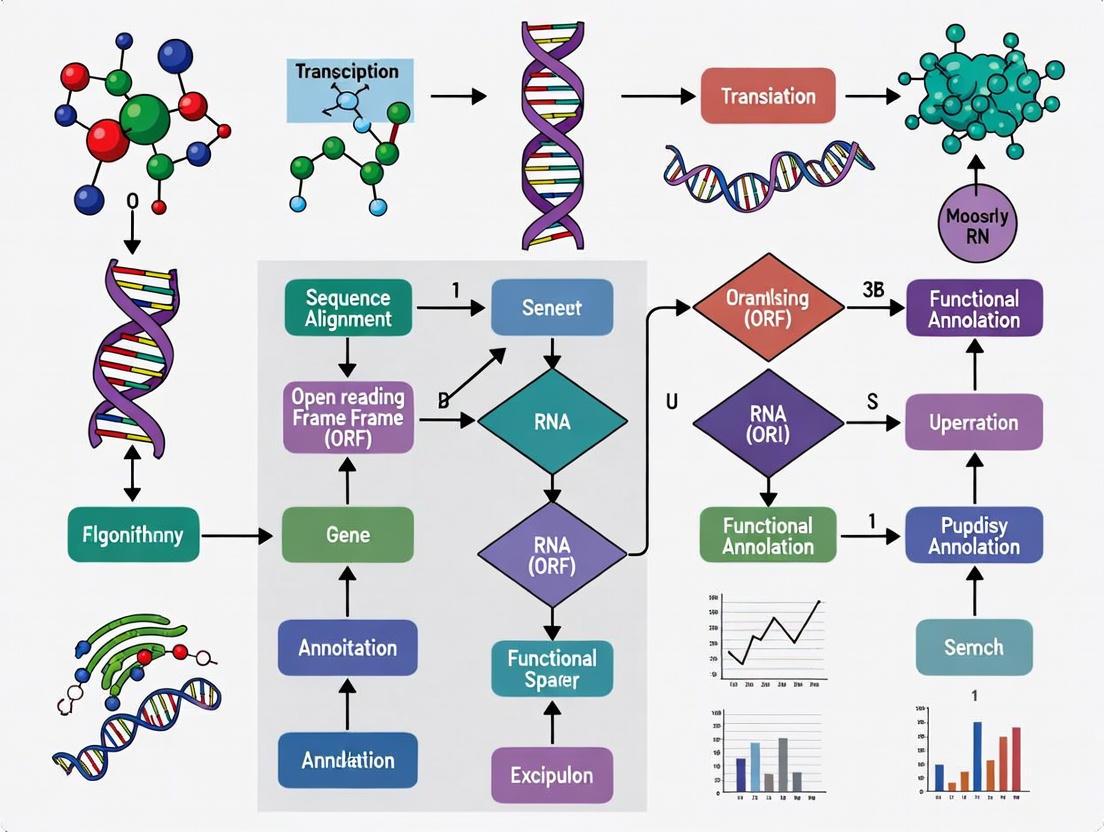
This article provides a comprehensive overview of prokaryotic gene prediction algorithms, from foundational ab initio methods to advanced machine learning approaches.
Decoding Prokaryotic Genomes: How Gene Prediction Algorithms Power Biomedical Discovery
Abstract
This article provides a comprehensive overview of prokaryotic gene prediction algorithms, from foundational ab initio methods to advanced machine learning approaches. Tailored for researchers and drug development professionals, it explores the core mechanisms of tools like Prodigal and GeneMark, their integration into pipelines like NCBI's PGAP, and critical evaluation frameworks. The content addresses persistent challenges including small protein prediction and lineage-specific optimization, highlighting direct implications for functional genomics, microbiome research, and therapeutic target identification.
The Core Mechanics: Understanding Ab Initio Prokaryotic Gene Prediction
Prokaryotic genomes are characterized by their high gene density, with protein-coding sequences (CDS) typically constituting approximately 86-90% of the DNA [1] [2]. This "wall-to-wall" architecture stands in stark contrast to eukaryotic genomes, where coding DNA often represents only 1-2% of the total sequence [2]. Despite this high coding density, the remaining 10-14% of non-coding DNA in prokaryotes plays crucial biological roles through its content of regulatory elements, origins of replication, and non-coding RNA genes [2] [3]. The accurate distinction between coding and non-coding regions presents a fundamental challenge in genomics, with significant implications for our understanding of bacterial biology, virulence, and metabolic capabilities. As the volume of sequenced prokaryotic genomes continues to grow exponentially, the development and refinement of computational tools for gene prediction have become increasingly critical for accurate genome annotation and subsequent biological discovery [1] [4].
Table 1: Genomic Composition Across Life Domains
| Organism Type | Total Genome Size | Percentage Coding DNA | Percentage Non-Coding DNA | Key Non-Coding Components |
|---|---|---|---|---|
| Prokaryotes | 0.5 - 10 Mbp | 86-90% | 10-14% | Regulatory elements, origins of replication, non-coding RNA [2] [3] |
| Eukaryotes | 10 - 150,000 Mbp | 1-2% (human) | 98-99% (human) | Introns, regulatory sequences, repetitive DNA, telomeres, centromeres [2] |
| Human | ~3,000 Mbp | 1-2% | 98-99% | Introns (37%), repetitive elements, regulatory sequences [2] |
Fundamental Biological Distinctions
Composition and Function
The primary distinction between coding and non-coding DNA lies in their functional roles and molecular outputs. Coding DNA consists of nucleotide sequences that are transcribed into messenger RNA (mRNA) and subsequently translated into amino acid sequences to form proteins [5]. These proteins execute the vast majority of catalytic, structural, and regulatory functions within the cell. In prokaryotes, coding sequences are typically contiguous, lacking the intron-exon structure common in eukaryotes, which significantly simplifies their identification in theory, though several practical challenges remain [1].
Non-coding DNA encompasses all genomic regions that do not encode protein sequences but may still be functional [2]. This category includes several important subclasses: promoters and other regulatory sequences that control gene expression; origins of DNA replication; genes for functional non-coding RNAs (such as tRNA, rRNA, and regulatory RNAs); and sequences without clearly defined functions, sometimes termed "junk" DNA [2] [5]. In prokaryotes, non-coding regions are significantly shorter than in eukaryotes but contain a high density of regulatory information essential for coordinating cellular processes.
Structural and Organizational Differences
Beyond their functional distinctions, coding and non-coding regions exhibit differential structural properties at the nucleotide level. Research has revealed that purines and pyrimidines show distinct distribution patterns between these genomic compartments. In non-coding DNA, these bases demonstrate significant aggregation, whereas in coding regions, their distribution is more uniform or even over-dispersed in nearly half of prokaryotic genomes [6]. This structural difference likely reflects the contrasting evolutionary constraints acting on these regions: coding sequences are constrained by the dual requirements of maintaining open reading frames and encoding functional proteins, while non-coding regions are shaped by the selective pressure to maintain regulatory signals while minimizing genome size [3] [6].
Table 2: Structural Properties of Coding vs. Non-Coding DNA in Prokaryotes
| Structural Property | Coding DNA | Non-Coding DNA | Biological Significance |
|---|---|---|---|
| Base Distribution | Uniform or over-dispersed in ~44% of genomes | Aggregated in 86% of genomes | Reflects different evolutionary constraints and functions [6] |
| Sequence Conservation | High amino acid sequence conservation | Higher nucleotide-level conservation in regulatory motifs | Different evolutionary rates due to different functional constraints |
| GC Content Bias | Exhibits codon position-specific GC bias | Lacks consistent positional bias | Coding bias relates to translation efficiency and accuracy [7] |
| Typical Length | ~300-1000 nucleotides per gene | Short (often <50 bp) between convergent genes; longer between divergent genes | Determined by functional requirements and selective pressure for compaction [3] |
The Computational Challenge: Gene Prediction Algorithms
Core Principles and Historical Approaches
Prokaryotic gene prediction algorithms leverage specific statistical and sequence properties to distinguish coding from non-coding regions. The fundamental assumption underlying these tools is that coding sequences exhibit statistical signatures distinct from non-coding DNA, reflecting their biological function and evolutionary constraints [7]. Early algorithms primarily relied on codon usage bias—the non-random use of synonymous codons—and GC content variation across the three codon positions [7]. Coding sequences typically show preference for certain codons that may correspond to abundant tRNAs or optimize translation efficiency, and often display GC content that differs significantly between codon positions, particularly in the third ("wobble") position where mutations are frequently silent [7].
Additional key signals include the presence of ribosomal binding sites (RBS), such as the Shine-Dalgarno sequence, located upstream of start codons; identifiable start and stop codons that define open reading frames (ORFs); and sequence composition biases that reflect the constraints of encoding functional proteins [1] [7]. Early generation tools like GLIMMER and GeneMark implemented these principles using Markov models of varying orders to capture the statistical properties of coding sequences and distinguish them from non-coding background [7].
The Prodigal Algorithm: A Case Study in Modern Gene Prediction
Prodigal (PROkaryotic DYnamic programming Gene-finding ALgorithm) represents a significant advancement in gene prediction methodology, explicitly designed to address three key challenges: improved gene structure prediction, more accurate translation initiation site recognition, and reduction of false positives [7]. The algorithm employs a multi-stage process that begins with unsupervised training on the input genome to identify organism-specific signatures.
During its initial training phase, Prodigal analyzes the GC frame plot bias across the genome, examining the preference for guanine and cytosine bases in each of the three codon positions within potential open reading frames [7]. This analysis reveals the characteristic codon position bias of the organism, which is then used to construct preliminary coding scores for each putative gene. The algorithm subsequently applies dynamic programming to identify an optimal "tiling path" of genes across the genome, considering constraints on gene overlaps (maximum 60 bp for same-strand overlaps) and ensuring comprehensive coverage while minimizing false positives [7].
A distinctive feature of Prodigal is its sophisticated approach to translation initiation site (TIS) prediction. The algorithm evaluates multiple potential start sites for each gene using a weighted combination of evidence, including RBS motif strength, sequence conservation upstream of start codons, and the coding potential of the resulting extended ORF [7]. This comprehensive approach enables Prodigal to achieve higher accuracy in start site identification compared to earlier methods, reducing the need for post-processing correction with specialized TIS prediction tools.
Current Limitations and Biases in Gene Prediction
Systematic Biases in Tool Performance
Despite considerable advances, current gene prediction tools exhibit systematic biases that impact our understanding of prokaryotic genomes. The ORForise evaluation framework, which assesses tools across 12 primary and 60 secondary metrics, has demonstrated that no single tool performs optimally across all genomes or metrics [1]. This performance variability stems from several factors, including differences in algorithmic approaches, training data composition, and inherent biases toward specific gene characteristics.
A significant limitation shared by many tools is poor performance with atypical genes, including those with non-standard codon usage, genes that overlap other coding sequences, and particularly short genes encoding small proteins [1]. The latter represents a substantial challenge, as many tools implement minimum length thresholds (often 90-110 nucleotides) that automatically exclude genuine small coding sequences [1] [7]. This bias has profound implications for genome annotation, as it results in the systematic under-representation of entire functional categories, such as short/small ORFs (sORFs) that play important regulatory roles [1].
Furthermore, most algorithms exhibit biases toward historic genomic annotations from model organisms, creating a self-reinforcing cycle where tools are optimized to find genes similar to those already known [1]. This "knowledge bias" hinders the discovery of novel genomic information, particularly when analyzing genomes from poorly characterized taxonomic groups or metagenomic assemblies from environmental samples [1]. The integration of machine learning approaches, while powerful, can exacerbate this problem if training datasets are not representative of the full diversity of prokaryotic gene sequences.
The Impact of Genome Composition
Tool performance varies substantially with genomic characteristics, particularly GC content [7]. High-GC genomes present specific challenges due to their lower frequency of stop codons and consequent abundance of spurious open reading frames. This increases both false positive rates and errors in translation initiation site identification, as longer ORFs contain more potential start codons [7]. Performance differences across the GC spectrum highlight the importance of tool selection based on the specific characteristics of the target genome.
Comparative analyses have revealed that tool performance is genome-dependent, with different tools exhibiting superior accuracy on different organisms [1]. This context-dependent performance underscores the limitations of a "one-size-fits-all" approach to gene prediction and emphasizes the need for systematic evaluation frameworks that can guide tool selection for specific applications.
Table 3: Performance Challenges with Specific Gene Classes
| Gene Class | Prediction Challenge | Biological Significance | Potential Solutions |
|---|---|---|---|
| Short Genes (<300 nt) | Often missed due to length filters; high false negative rate | Encode important regulatory proteins; underrepresented in databases [1] | Specialized tools (e.g., smORFer); integration of transcriptomic data [1] |
| High-GC Genes | More spurious ORFs; reduced TIS accuracy | Common in Actinobacteria and other soil microbes [7] | Organism-specific training; adjusted statistical thresholds [7] |
| Non-Canonical Starts | Non-ATG start codons poorly recognized | Limited knowledge of translation initiation mechanisms [7] | Expanded start codon models; RBS motif integration |
| Horizontally Acquired Genes | Atypical codon usage reduces sensitivity | Important for adaptation and virulence [1] | Integration of homology searches; codon adaptation index analysis |
Evaluation Frameworks and Emerging Solutions
Systematic Tool Assessment with ORForise
The ORForise evaluation framework represents a significant advancement in the objective assessment of gene prediction tools [1]. This comprehensive system employs 12 primary and 60 secondary metrics to facilitate detailed comparison of tool performance across diverse genomic contexts. By providing a standardized, replicable approach to tool evaluation, ORForise enables researchers to make data-informed decisions about tool selection for specific applications [1].
Key findings from ORForise-based evaluations include the lack of a universally superior tool, with performance depending strongly on the specific genome being analyzed and the metrics considered most important for the research question [1]. Even top-performing tools produce substantially different gene collections, and simple aggregation of multiple tool outputs does not resolve these discrepancies effectively [1]. These observations highlight the complex nature of gene prediction and the limitations of current computational approaches.
Integration of Artificial Intelligence and Multi-Omics Data
The integration of artificial intelligence, particularly deep learning models, represents a promising direction for improving gene prediction accuracy [8] [4]. Frameworks such as gReLU provide comprehensive environments for developing and applying deep learning models to genomic sequences, enabling advanced analyses including variant effect prediction, regulatory element identification, and even synthetic sequence design [8]. These approaches can capture complex, non-linear sequence patterns that may elude traditional statistical methods.
The incorporation of additional data types significantly enhances gene prediction accuracy. Transcriptomic data (RNA-seq) provides direct evidence of transcription, helping to validate putative genes and identify non-coding RNAs [1]. Homology evidence from sequence databases can support gene calls, particularly for evolutionarily conserved genes, though this approach risks reinforcing existing biases in genomic knowledge [1]. Epigenomic signatures and ribosome profiling data provide additional layers of functional evidence that can distinguish coding from non-coding regions with high confidence [4].
Table 4: Key Computational Tools and Resources
| Tool/Resource | Primary Function | Application Context | Key Features |
|---|---|---|---|
| Prodigal | Prokaryotic gene prediction | Initial genome annotation | Dynamic programming; unsupervised training; high accuracy with TIS identification [7] |
| ORForise | Tool evaluation framework | Comparative assessment of gene predictors | 12 primary and 60 secondary metrics; reproducible analyses [1] |
| gReLU | Deep learning framework | Regulatory element prediction; variant effect analysis | Unified environment for sequence modeling; model zoo with pre-trained models [8] |
| smORFer | Short ORF prediction | Identification of small protein-coding genes | Integration of RNA-seq and conservation scores [1] |
| DeepVariant | Variant calling | Mutation detection in sequenced genomes | Deep learning-based approach; superior accuracy to traditional methods [4] |
The distinction between coding and non-coding DNA in prokaryotes remains a challenging computational problem with significant implications for genomic interpretation and biological discovery. While current gene prediction algorithms leverage sophisticated statistical models and evolving machine learning approaches, systematic biases and limitations persist, particularly for atypical gene classes and genetically diverse organisms. The development of comprehensive evaluation frameworks like ORForise provides researchers with critical insights for selecting appropriate tools based on specific genomic contexts and research objectives. Future advances will likely emerge from the integration of multi-omics data, the application of more sophisticated AI models, and continued refinement of algorithms to reduce existing biases. As prokaryotic genomics continues to expand into non-model organisms and complex metagenomic samples, accurate distinction between coding and non-coding sequences will remain fundamental to unlocking the biological insights encoded in microbial genomes.
In the realm of genomics, accurate gene prediction is a fundamental challenge, particularly in prokaryotic organisms where genomic architecture differs significantly from that of eukaryotes. The efficiency of computational algorithms designed to identify genes hinges on the recognition of key genomic signals. Among these, ribosomal binding sites (RBS), start/stop codons, and GC-content play pivotal roles in delineating the beginning, end, and structural context of protein-coding sequences. These elements are not merely passive landmarks; they are active participants in the mechanistic process of translation, influencing both the efficiency and fidelity of gene expression. This guide provides an in-depth technical examination of these core signals, framing their functionality and properties within the context of prokaryotic gene prediction algorithms. Understanding these components is essential for researchers and bioinformaticians aiming to refine annotation accuracy, explore genomic diversity, and advance applications in synthetic biology and drug development.
Ribosomal Binding Sites (RBS)
Definition and Core Function
The Ribosomal Binding Site (RBS) is a specific nucleotide sequence upstream of the start codon on an mRNA transcript that is responsible for the recruitment of a ribosome to initiate translation [9]. In prokaryotes, this site is paramount for the correct and efficient initiation of protein synthesis. The primary function of the RBS is to ensure the ribosome is positioned correctly on the mRNA, with the start codon aligned in the ribosome's P-site, thereby setting the correct reading frame for translation [10]. While RBSs are predominantly discussed in bacterial systems, eukaryotic ribosomes typically employ a different mechanism, recruiting directly to the 5' cap of the mRNA, though internal ribosome entry sites (IRES) represent an alternative, cap-independent initiation pathway [9].
Key Sequence Elements: The Shine-Dalgarno Sequence
The most critical component of the prokaryotic RBS is the Shine-Dalgarno (SD) sequence [10] [9]. This consensus sequence, 5'-AGGAGG-3', is located upstream of the start codon and base-pairs with a complementary sequence (CCUCCU), known as the anti-Shine-Dalgarno (ASD) sequence, located at the 3' end of the 16S rRNA component of the 30S ribosomal subunit [9]. This specific Watson-Crick base pairing is a key determinant for the identification of the correct translation initiation site by the ribosome.
Table 1: Key Prokaryotic RBS Components and Their Functions
| Component | Sequence/Location | Function in Translation Initiation |
|---|---|---|
| Shine-Dalgarno (SD) Sequence | 5'-AGGAGG-3' (consensus) | Base-pairs with 16S rRNA to position the ribosome on the mRNA. |
| Anti-Shine-Dalgarno (ASD) | 3'...CCUCCU...5' (of 16S rRNA) | The ribosomal binding partner for the SD sequence. |
| Spacer Region | ~5-10 nucleotides | Separates the SD sequence from the start codon; length and composition affect initiation efficiency. |
| Start Codon | AUG (most common), GUG, UUG | Specifies the first amino acid of the protein (fMet in prokaryotes). |
Factors Influencing RBS Efficiency and Algorithmic Detection
The efficiency of translation initiation is highly regulated and influenced by several RBS properties, which also pose challenges and provide features for gene prediction algorithms.
- Complementarity to ASD: The degree of complementarity between the mRNA's SD sequence and the ribosomal ASD significantly impacts the initiation efficiency. Richer complementarity generally leads to higher efficiency, although extremely tight binding can paradoxically reduce the translation rate by impeding ribosome progression downstream [9].
- Spacer Region: The distance and the nucleotide composition between the SD sequence and the start codon are critical. An optimal spacing (typically 5-10 nucleotides) maximizes the rate of translation initiation once a ribosome has been bound [9].
- Secondary Structure: mRNA can form secondary structures through base-pairing, which may hide the RBS and make it inaccessible to the ribosome. This is a key regulatory mechanism, as seen in heat shock proteins whose RBS secondary structures melt at elevated temperatures, allowing translation to initiate [9].
- Sequence Degeneracy: Not all prokaryotic genes possess a strong, canonical SD sequence. Some, like E. coli's rpsA, completely lack an identifiable SD sequence, relying on alternative, less-characterized signals for ribosome binding [9]. This degeneracy makes computational identification of RBSs non-trivial and necessitates sophisticated pattern recognition or machine learning models, such as neural networks or Gibbs sampling methods, for accurate N-terminal prediction in unannotated sequences [9].
Start and Stop Codons
The Genetic Code's Punctuation Marks
Start and stop codons are triple-nucleotide sequences within messenger RNA (mRNA) that signal the initiation and termination of translation, respectively. They function as the fundamental punctuation marks of the genetic code, defining the boundaries of the protein-coding region [11].
Start Codons
The Canonical Start Codon and Initiator tRNA
The AUG codon is the universal start codon across all domains of life. It is decoded by a specialized initiator transfer RNA (tRNA) that is distinct from the tRNA used to incorporate methionine during elongation [12]. This distinction is crucial for the fidelity of initiation. In prokaryotes, the initiator tRNA carries a formylmethionine (fMet), whereas in eukaryotes and archaea, it carries an unmodified methionine (Met) [10] [12].
Alternative Start Codons
Despite the centrality of AUG, alternative start codons are utilized, particularly in prokaryotes, mitochondria, and archaea. These codons are still translated as formylmethionine (in prokaryotes) or methionine due to the use of the initiator tRNA [12].
Table 2: Start Codon Usage in Prokaryotes and Other Systems
| System | Primary Start Codon | Alternative Start Codons | Notes |
|---|---|---|---|
| General Prokaryotes (e.g., E. coli) | AUG (83%) | GUG (14%), UUG (3%) [12] | Non-AUG start codons are functional in genes like lacI (GUG) and lacA (UUG) [12]. |
| Eukaryotes | AUG | Very rare non-AUG codons [12] | AUG initiation is highly regulated and precise. |
| Human Mitochondria | AUG | AUA, AUU [12] | Utilize an alternative genetic code. |
| Archaea | AUG | UUG, GUG [12] | Simpler initiation machinery compared to eukaryotes. |
Stop Codons
Standard Termination Signals
There are three stop codons in the standard genetic code: UAA, UAG, and UGA [13] [14]. These codons are also known as nonsense or termination codons. Unlike sense codons, they are not recognized by a tRNA. Instead, they are bound by proteins called release factors, which cause the ribosome to disassemble and release the completed polypeptide chain [14].
The stop codons have historical names derived from the mutants in which they were first characterized: UAG is "amber," UAA is "ochre," and UGA is "opal" or "umber" [14].
Genomic Distribution and Context
The distribution of stop codons within a genome is non-random and can be influenced by the overall GC-content [14]. For example, in the E. coli K-12 genome (GC content 50.8%), the UAA (TAA) stop codon, which is AT-rich, is the most prevalent (63%), followed by UGA (TGA) (29%), and the UAG (TAG) is the least used (8%) [14]. The frequency of TAA decreases in high-GC genomes, while TGA frequency increases [14].
Recoding and Exceptions
In certain contexts, the standard function of a stop codon can be "overridden" in a process called translational readthrough, where a near-cognate tRNA incorporates an amino acid instead of terminating translation [14]. Furthermore, specific mechanisms have evolved to reassign stop codons. For instance, UGA can be recoded to incorporate the amino acid selenocysteine, and UAG can be recoded to incorporate pyrrolysine [14]. These exceptions are important considerations for advanced gene prediction and annotation pipelines.
GC-Content
Definition and Structural Implications
GC-content is the percentage of nitrogenous bases in a DNA or RNA molecule that are guanine (G) or cytosine (C) [15]. It is a fundamental genomic property with significant structural and functional implications. Guanine and cytosine form a base pair held together by three hydrogen bonds, in contrast to the two hydrogen bonds of adenine-thymine (A-T) base pairs. This makes GC base pairs thermodynamically more stable than AT pairs [15].
It was once presumed that this hydrogen bonding was the primary reason for the higher thermostability of high-GC DNA; however, research has shown that the base-stacking interactions between adjacent bases are a more important factor contributing to thermal stability [15].
GC-Content in Genomes and Genes
Genomic Variation and Isochores
GC-content is not uniform across a genome. In more complex organisms, the genome is organized into mosaic regions with different GC-ratios, known as isochores [15]. These variations can be observed as different staining intensities on chromosomes. GC-rich isochores are typically associated with a higher density of protein-coding genes [15].
GC-Content and Coding Sequences
Protein-coding regions often exhibit a higher GC-content compared to the genomic background [15]. This is a critical feature exploited by gene prediction algorithms. There is a direct correlation between the length of a coding sequence and its GC-content, partly because the stop codons are AT-rich (UAA, UAG, UGA); shorter genes have a higher probability of being AT-rich [15]. Furthermore, within a gene, the GC-content at the third, or "wobble," position of a codon is highly variable and is a major contributor to codon usage bias [16].
Table 3: GC-Content Variations Across Genomes and Regions
| Genomic Region/Organism | GC-Content Characteristics | Significance |
|---|---|---|
| Human Genome | 35% - 60% across 100-kb fragments (mean ~41%) [15] | Shows strong isochore structure. |
| Yeast (S. cerevisiae) | 38% [15] | A standard model organism with a relatively low GC-content. |
| Actinomycetota | High GC-content (e.g., Streptomyces coelicolor at 72%) [15] | Historically classified as "high GC-content bacteria." |
| Plasmodium falciparum | ~20% [15] | An example of an extremely AT-rich genome. |
| Typical Coding Sequence | Higher than genomic background [15] | A key signal for computational gene identification. |
Experimental and Computational Analysis
Determining GC-Content: An HPLC Protocol
A standard and accurate method for determining the molar percentage (mol%) G+C content of DNA is Reverse-Phase High-Performance Liquid Chromatography (HPLC) [16]. This protocol is essential for the taxonomic description of novel prokaryotes.
Detailed Methodology:
- DNA Isolation and Purification: Genomic DNA is extracted from the organism and purified to remove contaminants like proteins and RNA.
- Enzymatic Digestion: The purified DNA is completely digested into its constituent deoxynucleosides using a cocktail of enzymes, typically including nuclease P1 and bacterial alkaline phosphatase.
- Chromatographic Separation: The resulting deoxynucleoside mixture is injected into an HPLC system equipped with a reverse-phase C18 column. The nucleosides are separated based on their hydrophobicity as they elute with a solvent gradient.
- Detection and Quantification: The separated nucleosides are detected by their UV absorbance. The area under the peak for each deoxynucleoside (dA, dT, dG, dC) is measured.
- Calculation: The mol% G+C content is calculated using the formula:
The Scientist's Toolkit: Research Reagent Solutions
Table 4: Essential Reagents and Tools for Genomic Signal Analysis
| Research Reagent / Tool | Function / Application |
|---|---|
| Nuclease P1 & Alkaline Phosphatase | Enzymatic cocktail for complete DNA digestion to deoxynucleosides for HPLC-based GC-content analysis [16]. |
| C18 Reverse-Phase HPLC Column | The core matrix for separating individual nucleosides during chromatographic GC-content determination [16]. |
| Shine-Dalgarno (SD) Sequence (5'-AGGAGG-3') | The key prokaryotic RBS sequence used in synthetic biology to design and control translation initiation rates [17]. |
| Initiator tRNA (tRNAfMet) | Specialized tRNA that recognizes the start codon (AUG/GUG/UUG) and initiates protein synthesis with fMet [10] [12]. |
| Release Factors (RF1/RF2) | Proteins that recognize stop codons and catalyze the release of the finished polypeptide from the ribosome [14]. |
| Neural Network & Gibbs Sampling Software | Computational methods used in gene prediction algorithms to identify degenerate RBS sequences and translation start sites [9]. |
Visualizing the Logic of Prokaryotic Gene Prediction
The following diagram illustrates the logical workflow a prokaryotic gene prediction algorithm follows, leveraging the genomic signals discussed in this guide to identify potential protein-coding regions (Open Reading Frames - ORFs).
Diagram 1: Prokaryotic gene prediction logic based on key genomic signals.
Ribosomal binding sites, start/stop codons, and GC-content are not isolated elements but form an integrated system of genomic signals that guide the machinery of gene expression. For prokaryotic gene prediction algorithms, these signals provide the essential features for distinguishing protein-coding sequences from non-coding background DNA. The Shine-Dalgarno sequence ensures precise initiation, the start and stop codons define the unambiguous boundaries of the coding sequence, and the GC-content and associated codon usage bias provide a statistical measure of coding potential. As genomic sequencing continues to expand into uncharted taxonomic space, and as synthetic biology demands more precise genetic design, a deeper understanding of these core signals—including their variations, exceptions, and interactions—will remain paramount for researchers, scientists, and drug development professionals aiming to decipher and engineer the genetic code.
Prodigal (Prokaryotic Dynamic Programming Gene-finding Algorithm) employs a sophisticated dynamic programming approach to identify optimal gene tiling paths across microbial genomes. This algorithm addresses fundamental challenges in prokaryotic gene prediction, including translation initiation site recognition and false positive reduction. By integrating GC-frame bias analysis with a dynamic programming scoring system, Prodigal achieves high-precision gene calling without requiring extensive manual curation or training data. This technical examination details the core methodology, computational framework, and performance characteristics of Prodigal's tiling path approach, providing researchers with comprehensive insights into its application for genomic annotation.
Prokaryotic gene prediction represents a fundamentally different challenge than eukaryotic gene finding due to the absence of introns and higher gene density in microbial genomes [18]. While early methods like Glimmer and GeneMarkHMM demonstrated reasonable performance, significant limitations persisted in translation initiation site (TIS) prediction and false positive identification, particularly in high GC-content genomes where spurious open reading frames abound [7]. These limitations motivated the development of Prodigal, which implemented a novel dynamic programming framework to select optimal combinations of genes across the entire genome sequence.
The algorithm's "tiling path" approach refers to its methodology of evaluating multiple potential gene arrangements and selecting the highest-scoring combination through dynamic programming, effectively "tiling" the genome with the most probable set of coding sequences. This method significantly improved both gene structure prediction and translation initiation site recognition while reducing false positives compared to previous methodologies [7].
Core Algorithmic Methodology
Dynamic Programming Framework
Prodigal implements a dynamic programming algorithm that operates on a matrix of nodes representing start and stop codons throughout the genome [7]. The algorithm connects these nodes through two types of connections: "gene" connections (start to stop codons) and "intergenic" connections (stop to start codons). Each potential gene receives a preliminary coding score based on GC-frame bias analysis, while intergenic regions receive small bonuses or penalties based on distance between genes.
The dynamic programming process evaluates all possible paths through this network of connections to identify the highest-scoring combination of genes. This approach allows Prodigal to make global decisions about gene selection rather than evaluating each potential gene in isolation, effectively addressing the challenge of choosing between overlapping open reading frames in the same genomic region [7].
GC Frame Plot Analysis
Before executing the dynamic programming algorithm, Prodigal analyzes the GC content bias across codon positions to build a training profile for the specific organism [7]. The algorithm examines all open reading frames longer than 90 base pairs, analyzing the preference for G and C nucleotides in each of the three codon positions:
- Codon Position Analysis: For each ORF, the algorithm identifies which codon position (1st, 2nd, or 3rd) contains the highest GC content within a 120-base pair sliding window centered on each position
- Bias Calculation: The preferences are aggregated across all ORFs and normalized to generate frame bias scores for each of the three codon positions
- Preliminary Scoring: Each potential gene receives an initial score based on how well its GC pattern matches the organism's characteristic coding bias
This GC frame plot analysis enables Prodigal to adapt to the specific codon usage patterns of the input genome without requiring pre-existing training data or manual curation [7].
Scoring System and Tiling Path Selection
The dynamic programming scoring system integrates multiple signals to evaluate potential genes [7]. The score (S) for a gene starting at position n1 and ending at n2 is calculated as:
S = Σ [B(i) × l(i)]
Where B(i) is the bias score for codon position i, and l(i) is the number of bases in the gene where the 120-bp maximal window at that position corresponds to codon position i.
The algorithm populates a dynamic programming matrix by evaluating all valid start-stop pairs, considering three types of connections:
- Gene connections: Start codon to corresponding stop codon
- Intergenic connections: Stop codon to start codon of next gene
- Overlap connections: Special rules for handling genes with limited overlap
Table 1: Dynamic Programming Connection Types in Prodigal
| Connection Type | From | To | Score Basis | Constraints |
|---|---|---|---|---|
| Gene Connection | Start codon | Stop codon | GC frame plot coding score | Minimum 90 bp length |
| Intergenic Connection | Stop codon | Start codon | Distance-based bonus/penalty | Follows stop codon |
| Same-Strand Overlap | 3' end | 3' end | Pre-calculated best overlap | Max 60 bp overlap |
| Opposite-Strand Overlap | 3' end (forward) | 5' end (reverse) | Implied gene score | Max 200 bp 3' overlap |
Implementation Details
Handling Gene Overlaps
A significant innovation in Prodigal's dynamic programming approach is its systematic handling of overlapping genes [7]. Since standard dynamic programming assumes non-overlapping solutions, Prodigal implements special rules to accommodate biologically plausible gene overlaps:
- Same-Strand Overlaps: The algorithm pre-calculates the highest-scoring overlapping gene in each frame for every stop codon, allowing connections between the 3' ends of two genes on the same strand with a maximum overlap of 60 bp
- Opposite-Strand Overlaps: The algorithm permits 200 bp overlap between the 3' ends of genes on opposite strands, but prohibits 5' end overlaps
- Frame-Specific Evaluation: For each potential overlap situation, the algorithm evaluates candidates in all three reading frames to identify optimal configurations
This overlap handling mechanism enables Prodigal to accurately represent the complex gene arrangements found in microbial genomes while maintaining the computational efficiency of the dynamic programming paradigm [7].
Training Set Construction
Prodigal operates in a fully unsupervised manner by automatically constructing a training set from the input sequence [7]. The process includes:
- Initial ORF Collection: All open reading frames longer than 90 bp are identified
- GC Bias Profiling: Organism-specific codon position biases are calculated
- Preliminary Scoring: Each start-stop pair is scored based on GC frame plot compatibility
- Dynamic Programming Selection: The initial tiling path is selected using dynamic programming to identify the most promising training genes
- Profile Refinement: The selected genes are used to build hexamer coding statistics, RBS motifs, and other species-specific signals
This automated training process allows Prodigal to achieve high accuracy without manual intervention or pre-trained models, making it particularly valuable for newly sequenced organisms with no existing annotation [7].
Performance and Evaluation
Quantitative Assessment
Prodigal was rigorously evaluated against existing gene prediction methods including Glimmer and GeneMarkHMM [7]. The evaluation focused on three key metrics: gene structure prediction accuracy, translation initiation site recognition, and false positive reduction.
Table 2: Performance Comparison of Prodigal Against Other Gene Prediction Tools
| Metric | Prodigal | Glimmer | GeneMarkHMM | Evaluation Method |
|---|---|---|---|---|
| Gene Prediction Accuracy | High overall, especially in high-GC genomes | Reduced in high-GC genomes | Moderate across GC ranges | Comparison to curated genomes |
| Start Site Precision | Significantly improved | Lower accuracy | Moderate accuracy | Experimental validation |
| False Positive Rate | Substantially reduced | Higher short gene predictions | Moderate | Proteomics validation |
| Unsupervised Operation | Fully automated | Requires training | Requires training | Pre-processing requirements |
Experimental Validation
The development team employed extensive experimental validation using curated genomes from the JGI ORNL pipeline [7]. The validation methodology included:
- Reference Data Sets: Initial testing used 10 curated genomes plus Escherichia coli K12, Bacillus subtilis, and Pseudomonas aeruginosa
- Expanded Validation: Final testing expanded to over 100 genomes from GenBank
- Rule Optimization: Algorithmic rules were refined based on performance across the entire validation set rather than optimizing for specific genomes
- Cross-Validation: Rules that improved performance only on specific genome types were rejected in favor of generally applicable approaches
This rigorous validation strategy ensured that Prodigal would perform robustly across diverse microbial organisms rather than being optimized for specific phylogenetic groups [7].
Research Reagent Solutions
Table 3: Essential Research Materials for Gene Prediction Validation
| Reagent/Resource | Function in Gene Prediction Research | Example Applications |
|---|---|---|
| Curated Genome Sequences | Gold standard for algorithm training and validation | JGI ORNL pipeline genomes, Ecogene Verified Protein Starts |
| High-Quality Genome Annotations | Benchmark for prediction accuracy comparison | GenBank annotations, manually curated references |
| Proteomics Datasets | Experimental validation of predicted coding sequences | Mass spectrometry data to verify expressed proteins |
| Ribosomal Binding Site Motifs | Training signal for translation initiation site prediction | RBS sequence patterns for start codon identification |
| GC Frame Plot Analysis Tools | Visualization of coding potential across the genome | Artemis compatibility, custom visualization scripts |
| Dynamic Programming Frameworks | Core algorithmic implementation for tiling path selection | Custom C code in Prodigal, general DP libraries |
Visualization of Core Algorithm
Dynamic Programming Matrix Structure
Prodigal Dynamic Programming Network: This diagram illustrates the connection types in Prodigal's dynamic programming matrix, showing how start and stop codons are connected through gene, intergenic, and overlap connections to form the complete tiling path.
GC Frame Plot Analysis Workflow
GC Frame Plot Analysis: This workflow diagram shows Prodigal's process for analyzing GC content bias across codon positions to build organism-specific training profiles for gene prediction.
Prodigal's dynamic programming approach to gene tiling path selection represents a significant advancement in prokaryotic gene prediction methodology. By integrating GC-frame bias analysis with a comprehensive scoring system that evaluates gene combinations across the entire genome, the algorithm achieves improved accuracy in both gene identification and translation initiation site recognition while substantially reducing false positives. The fully automated nature of the algorithm, combined with its robust performance across diverse microbial taxa, has established Prodigal as a valuable tool in genomic annotation pipelines. As sequencing technologies continue to generate vast amounts of microbial genomic data, efficient and accurate computational methods like Prodigal remain essential for extracting biological insights from sequence information.
Prokaryotic gene prediction represents a fundamental challenge in computational genomics, essential for understanding microbial diversity and function. Unlike supervised methods requiring pre-labeled data, unsupervised algorithms autonomously derive organism-specific parameters directly from genomic sequences, enabling their application across the vast diversity of uncharacterized microorganisms. This technical guide elucidates the core principles and methodologies underpinning unsupervised learning in prokaryotic gene finders, focusing on statistical models that self-train on intrinsic genomic features. We examine how these systems detect coding sequences through iterative refinement of sequence models, translation initiation signals, and open reading frame characteristics without external annotations. Within the broader thesis of prokaryotic gene prediction mechanisms, this review details the mathematical foundations and computational frameworks that allow algorithms to adapt to species-specific genetic architectures, providing researchers with a comprehensive understanding of this critical bioinformatics capability.
The exponential growth of sequenced prokaryotic genomes has far outpaced experimental characterization, creating a critical need for computational methods that can accurately identify protein-coding genes without relying on existing annotations [19]. Unsupervised algorithms address this challenge by learning organism-specific parameters directly from the genomic sequence itself, requiring no pre-trained models or labeled examples. This capability is particularly vital for studying microbial "dark matter"—the enormous diversity of uncharacterized bacteria and archaea that constitute approximately 99% of microbial species and remain functionally unknown [19].
Unsupervised gene finders operate on the fundamental principle that protein-coding regions exhibit statistical signatures distinct from non-coding DNA. These signatures include codon usage bias, nucleotide composition patterns, and sequence periodicity that reflect the molecular machinery of translation and evolutionary constraints [20]. By detecting these signals through iterative statistical learning, algorithms can derive a species-specific model of gene structure that accommodates the substantial variation in genomic features across different taxa. This adaptability is crucial given the remarkable diversity of prokaryotes, which span extremes of GC content, genome size, and genetic organization [21].
The development of unsupervised methods represents a significant evolution from early gene finders that relied on conserved rules or supervised training on model organisms. By learning directly from each genome, these algorithms avoid biases toward well-studied species and can more accurately annotate novel microorganisms with divergent sequence features [1]. This technical guide examines the core mechanisms through which unsupervised algorithms learn organism-specific parameters, with detailed analysis of their mathematical foundations, implementation workflows, and performance characteristics.
Core Mathematical Principles
Statistical Foundations of Unsupervised Parameter Learning
Unsupervised gene prediction algorithms are grounded in statistical learning theory, employing probabilistic models to distinguish coding from non-coding sequences without labeled training data. The fundamental assumption is that protein-coding regions exhibit measurable statistical biases in nucleotide composition and sequence organization that differ systematically from non-functional DNA [20].
The Entropy Density Profile (EDP) model provides a sophisticated approach to capturing these statistical regularities. For a DNA sequence, the EDP computes the information-theoretic properties of its potential amino acid composition. The model defines a vector S = {s_i} for i = 1,...,20 amino acids, where each component is calculated as:
si = - (1/H) × pi × log p_i
Here, pi represents the probability of amino acid i, and H is the Shannon entropy of the amino acid distribution: H = -Σj pj log pj [20]. This transformation emphasizes the information content of the sequence rather than simply its composition. In the EDP phase space, coding open reading frames (ORFs) form distinct clusters separate from non-coding ORFs, enabling discrimination based on their position in this multidimensional space [20].
For GC-rich genomes, Principal Component Analysis reveals that ORFs form six clusters in the EDP phase space—one for coding ORFs and five for non-coding ORFs—reflecting the impact of genomic GC content bias on sequence statistics [20]. This clustering behavior provides the mathematical basis for distinguishing functional genes through unsupervised clustering algorithms.
Modeling Translation Initiation Sites
Accurate identification of translation initiation sites (TIS) is critical for precise gene annotation. Unsupervised approaches model TIS by integrating multiple sequence features around potential start codons. The MED 2.0 algorithm implements a comprehensive TIS model that incorporates:
- Sequence motifs surrounding start codons (ATG, GTG, TTG)
- Ribosomal binding site (Shine-Dalgarno sequence) characteristics
- Sequence conservation patterns upstream of potential starts
- Codon usage biases in the immediate downstream region [20]
These features are combined into a multivariate statistical model that scores potential TIS locations based on their congruence with expected patterns derived from the genome itself. The algorithm learns the genome-specific parameters for these features through iterative analysis, without requiring prior knowledge of validated start sites [20]. This approach is particularly valuable for archaeal genomes, which exhibit divergent translation initiation mechanisms compared to bacteria [20].
Algorithmic Implementation
The MED 2.0 Framework
The Multivariate Entropy Distance (MED 2.0) algorithm exemplifies the unsupervised learning approach to prokaryotic gene prediction. Its implementation involves a structured workflow that iteratively refines genome-specific parameters through statistical analysis of sequence features.
Figure 1: MED 2.0 unsupervised learning workflow. The algorithm iteratively refines genome-specific parameters through statistical analysis until convergence.
The MED 2.0 workflow begins with comprehensive identification of all possible open reading frames (ORFs) in the input genome. For each ORF, the algorithm calculates its Entropy Density Profile vector, which captures the information-theoretic properties of its potential amino acid composition [20]. These vectors are then analyzed through clustering techniques in the 20-dimensional EDP phase space, where coding and non-coding ORFs form distinct clusters due to different evolutionary constraints [20].
Through iterative expectation-maximization, MED 2.0 progressively refines the discrimination boundary between these clusters, simultaneously deriving genome-specific parameters for codon usage bias, nucleotide composition, and other sequence features. This iterative process continues until cluster assignments stabilize, indicating convergence. The final step integrates the EDP-based coding potential assessment with a translation initiation site (TIS) model to produce comprehensive gene predictions [20].
A key advantage of this approach is its ability to reveal divergent biological characteristics across taxa. For example, MED 2.0 can identify variations in translation initiation mechanisms and start codon usage patterns (ATG, GTG, TTG) in archaeal genomes without any prior training on these organisms [20]. This adaptability makes unsupervised methods particularly valuable for studying non-model microorganisms with unusual genetic architectures.
Comparative Performance of Gene Prediction Tools
Different gene prediction algorithms employ varying strategies for learning organism-specific parameters, with significant implications for their performance across diverse taxa.
Table 1: Comparison of prokaryotic gene prediction tools and their parameter learning methods
| Tool | Learning Approach | Primary Features | Organism-Specific Training Required | Key Applications |
|---|---|---|---|---|
| MED 2.0 | Unsupervised (EDP model) | Entropy density profiles, TIS features | No - learns during execution | GC-rich genomes, Archaea [20] |
| Balrog | Supervised (Universal model) | Temporal convolutional network | No - uses pre-trained universal model | Diverse bacteria and archaea [22] |
| Glimmer | Unsupervised | Interpolated Markov models | Yes - before gene prediction | Finished genomes [22] |
| Prodigal | Unsupervised | Dynamic programming, heterogeneous starts | Yes - before gene prediction | Bacterial and archaeal genomes [22] |
| GeneMark | Unsupervised | Inhomogeneous Markov models | Yes - before gene prediction | Standard microbial genomes [20] |
The comparative performance of these tools highlights trade-offs between different learning strategies. In evaluations, Balrog—which uses a universally pre-trained model rather than organism-specific learning—achieved sensitivity comparable to Prodigal (2,248 vs. 2,250 known genes found) while reducing "hypothetical protein" predictions by 11% (664 vs. 747) [22]. This suggests that universal models may reduce false positives while maintaining high sensitivity.
However, unsupervised methods like MED 2.0 show particular strength on non-standard genomes. MED 2.0 demonstrates "competitive high performance in gene prediction for both 5' and 3' end matches, compared to current best prokaryotic gene finders," with advantages "particularly evident for GC-rich genomes and archaeal genomes" [20]. This performance advantage stems from their ability to adapt to the specific statistical properties of each genome without bias from previously seen organisms.
Experimental Validation Protocols
Benchmarking Framework and Metrics
Rigorous evaluation of unsupervised gene prediction algorithms requires standardized benchmarks and quantitative metrics. The ORForise framework provides a comprehensive evaluation system based on 12 primary and 60 secondary metrics that facilitate assessment of coding sequence (CDS) prediction performance [1]. This systematic approach enables researchers to identify which tool performs better for specific use cases, as "the performance of any tool is dependent on the genome being analysed, and no individual tool ranked as the most accurate across all genomes or metrics analysed" [1].
Key evaluation metrics include:
- Sensitivity: Proportion of known genes correctly identified
- Specificity: Proportion of predicted genes that match known annotations
- Accuracy at start codons: Precision in identifying correct translation initiation sites
- Accuracy at stop codons: Precision in identifying correct translation termination sites
- Hypothetical gene rate: Number of predictions labeled as "hypothetical protein"
Experimental protocols typically involve hold-out testing, where algorithms are evaluated on genomes excluded from any training process. For example, in validating Balrog, researchers used "a test set of 30 bacteria and 5 archaea that were not included in the Balrog training set" [22]. This approach provides unbiased performance estimation and reveals how tools generalize to novel organisms.
Genomic Signature Analysis for Environmental Adaptation
Unsupervised learning extends beyond basic gene prediction to uncover correlations between genomic signatures and environmental adaptations. Research on prokaryotic extremophiles has demonstrated that "adaptations to extreme temperatures and pH imprint a discernible environmental component in the genomic signature of microbial extremophiles" [21].
The experimental protocol for this analysis involves:
- Sequence Fragment Selection: Extracting 500 kbp DNA fragments to represent each genome
- k-mer Frequency Calculation: Computing k-mer frequency vectors for values 1≤k≤6
- Unsupervised Clustering: Applying clustering algorithms to group sequences by genomic signature similarity
- Environmental Correlation: Assessing whether clusters correspond to environmental conditions rather than taxonomy
This methodology has revealed that "hyperthermophile organisms [have] large similarities in their genomic signatures, in spite of belonging to different domains in the Tree of Life" [21]. Such findings demonstrate how unsupervised analysis of sequence composition can reveal fundamental biological relationships beyond taxonomic boundaries.
The Scientist's Toolkit
Implementation and evaluation of unsupervised gene prediction algorithms requires specific computational resources and data sources.
Table 2: Essential research reagents and resources for unsupervised gene prediction research
| Resource | Type | Function | Application Context |
|---|---|---|---|
| ORForise | Evaluation framework | Assess CDS prediction tool performance | Benchmarking gene finders [1] |
| GTDB | Database | Taxonomic classification of genomes | Training and testing set construction [22] |
| BacDive | Database | Phenotypic data for prokaryotes | Correlation of genomic and phenotypic traits [23] |
| Pfam | Database | Protein family annotations | Functional characterization of predictions [23] |
| Genomic-benchmarks | Dataset collection | Standardized sequences for classification | Method development and comparison [24] |
These resources enable comprehensive development and testing of unsupervised learning algorithms. The Genomic-benchmarks collection, for example, provides "a collection of datasets for genomic sequence classification with an interface for the most commonly used deep learning libraries" [24], addressing the critical need for standardized evaluation datasets in computational genomics.
Implementation Considerations for Novel Genomes
When applying unsupervised gene prediction to newly sequenced organisms, several practical considerations influence algorithm performance:
- Genome Quality: Highly fragmented assemblies disrupt the statistical patterns used for unsupervised learning
- GC Content: Extreme GC bias requires specialized handling, as implemented in MED 2.0 for GC-rich genomes [20]
- Taxonomic Group: Algorithm performance varies across bacterial and archaeal domains [22]
- Gene Density: Prokaryotic genomes typically have 80-90% coding density, but this varies significantly [1]
Tools like MED 2.0 specifically address these challenges through their adaptive learning approach, which automatically adjusts to genome-specific characteristics without requiring manual parameter tuning [20]. This capability makes unsupervised methods particularly valuable for annotating novel microorganisms that diverge significantly from model organisms.
Unsupervised learning algorithms represent a powerful approach for prokaryotic gene prediction, capable of deriving organism-specific parameters directly from genomic sequences without prior training or manual intervention. Through statistical models that detect coding potential, translation initiation signals, and sequence composition biases, these methods adapt to the remarkable diversity of microbial genomes, from GC-rich bacteria to archaea with divergent genetic codes. The MED framework demonstrates how entropy-based modeling and iterative refinement can achieve performance competitive with state-of-the-art tools while providing insights into genome biology.
As sequencing technologies continue to reveal the vast expanse of microbial diversity, unsupervised methods will play an increasingly vital role in initial genome characterization. Their ability to learn species-specific parameters without external references makes them uniquely suited for exploring the functional dark matter of prokaryotic life—the hypothetical proteins that constitute approximately 30% of genes even in well-studied model organisms like Escherichia coli [19]. Future developments in unsupervised learning will likely incorporate additional sequence features and more sophisticated statistical models to further improve annotation accuracy across the tree of life.
The Role of Hidden Markov Models in GeneMark's Prediction Strategy
Accurate identification of genes is a fundamental challenge in computational genomics. For prokaryotic genomes, which are typically gene-dense and lack the intron-exon structure of eukaryotes, the primary challenges involve locating coding regions and precisely determining translation start sites [25] [26]. The Hidden Markov Model (HMM) has emerged as a powerful statistical framework for addressing these challenges by modeling DNA sequences as stochastic processes with observable nucleotides and hidden functional states [27] [28]. GeneMark.hmm, developed in 1998, represents a significant evolution from the original GeneMark algorithm by embedding GeneMark's probabilistic models into a sophisticated HMM framework specifically designed to improve the accuracy of gene boundary prediction [25]. This integration has established GeneMark.hmm and its self-training successor, GeneMarkS, as standard tools for gene identification in newly sequenced prokaryotic genomes and metagenomes [26].
Theoretical Foundations of Hidden Markov Models
Core Concepts and Definitions
A Hidden Markov Model is a statistical framework that models doubly-embedded stochastic processes: an observable sequence (nucleotides) and an underlying sequence of hidden states (functional regions) that are not directly observable but govern the probability distribution of the observations [27] [28]. Formally, an HMM is characterized by the parameter set λ = (A, B, π), where:
- State Space (Q): The set of all possible hidden states, Q = {q₁, q₂, ..., q_N}, where N is the number of states [28].
- Observation Space (V): The set of all possible observable symbols (in genomics, V = {A, C, G, T}) [28].
- Transition Probability Matrix (A): The probabilities of transitioning between hidden states, aij = P(x{t+1} = qj | xt = q_i) [28].
- Emission Probability Matrix (B): The probabilities of emitting observable symbols given a hidden state, bj(k) = P(ot = vk | xt = q_j) [28].
- Initial State Distribution (π): The probability distribution over states at the beginning of the sequence [28].
The Three Fundamental HMM Problems and Their Solutions
Three canonical problems must be addressed to utilize HMMs in practical applications [28]:
Table 1: The Three Fundamental Problems of Hidden Markov Models
| Problem Name | Description | Solution Algorithm | Relevance to Gene Prediction |
|---|---|---|---|
| Evaluation Problem | Given model λ and observation sequence O, compute P(O|λ) | Forward Algorithm or Backward Algorithm | Determine likelihood of DNA sequence given gene model |
| Decoding Problem | Given λ and O, find the most likely hidden state sequence | Viterbi Algorithm | Predict locations of coding/non-coding regions in DNA |
| Learning Problem | Given O, adjust λ to maximize P(O|λ) | Baum-Welch Algorithm or Supervised Learning | Train model parameters on known genomic sequences |
The Viterbi algorithm, particularly crucial for gene finding, employs dynamic programming to efficiently find the most probable path through hidden states [28]. For a DNA sequence of length T, it computes two variables: δt(i) representing the maximum probability of reaching state i at time t, and ψt(i) that tracks the optimal path. The algorithm proceeds through initialization, recursion, termination, and backtracking to reconstruct the optimal state sequence [28].
Evolution of GeneMark: From Markov Models to HMMs
The Original GeneMark Algorithm
The original GeneMark algorithm, developed in 1993, was among the first gene finding methods recognized as an efficient and accurate tool for genome projects [26]. It was used for the annotation of the first completely sequenced bacteria, Haemophilus influenzae, and the first completely sequenced archaea, Methanococcus jannaschii [26]. GeneMark employed species-specific inhomogeneous Markov chain models of protein-coding DNA sequence alongside homogeneous Markov chain models of non-coding DNA [26]. The core algorithm computed a posteriori probability of a sequence fragment carrying genetic code in one of six possible frames (including three frames in the complementary DNA strand) or being "non-coding" [26].
The GeneMark.hmm Advancement
GeneMark.hmm was specifically designed to improve gene prediction quality, particularly in finding exact gene boundaries [25] [26]. The key innovation was integrating GeneMark models into a naturally designed hidden Markov model framework with gene boundaries modeled as transitions between hidden states [25] [26]. This HMM architecture allowed for more precise modeling of the sequence segment dependencies and state transitions that characterize genuine gene structures. Additionally, the algorithm incorporated a ribosome binding site (RBS) model to refine predictions of translation initiation codons, addressing one of the most challenging aspects of prokaryotic gene prediction [25].
Table 2: Performance Comparison of GeneMark and GeneMark.hmm
| Algorithm | Development Year | Core Methodology | Key Innovation | Gene Start Prediction Accuracy |
|---|---|---|---|---|
| GeneMark | 1993 | Inhomogeneous Markov Models | Species-specific codon usage models | Limited accuracy |
| GeneMark.hmm | 1998 | Hidden Markov Models | Integration of Markov models into HMM framework with RBS patterns | Significantly improved |
| GeneMarkS | 2001 | Self-training HMM | Unsupervised parameter estimation from target genome | 83.2% in B. subtilis, 94.4% in E. coli [29] |
Evaluation demonstrated that GeneMark.hmm was significantly more accurate than the original GeneMark in exact gene prediction, even when using relatively simple Markov models of order zero, one, and two [25]. Interestingly, this high accuracy was maintained despite the simplicity of the underlying Markov models, highlighting the power of the HMM framework itself [25].
GeneMark.hmm Architecture and Methodology
HMM State Design for Prokaryotic Genes
The GeneMark.hmm algorithm implements an HMM architecture specifically designed for prokaryotic gene organization. The hidden states correspond to distinct functional regions in DNA sequences:
GeneMark.hmm State Transition Diagram
The model incorporates states for:
- Non-coding regions: Intergenic sequences with homogeneous statistical properties
- Ribosome Binding Sites (RBS): Translation initiation signals upstream of start codons
- Coding regions with codon position awareness: Three distinct states for first, second, and third codon positions, capturing the period-3 property of coding sequences [25] [26]
- Start and stop codons: Critical for defining gene boundaries
This state structure enables the model to capture the fundamental statistical differences between coding and non-coding regions, as well as the distinct nucleotide frequencies at different codon positions—a phenomenon known as "codon bias" [27].
Integration of Ribosome Binding Site Models
A key innovation in GeneMark.hmm was the incorporation of specially derived ribosome binding site patterns to refine predictions of translation initiation codons [25]. The RBS model identifies conserved sequence motifs upstream of start codons that facilitate the initiation of translation in prokaryotes. By integrating this specific signal pattern into the HMM framework, the algorithm could more accurately distinguish true translation start sites from false ones, addressing one of the most persistent challenges in prokaryotic gene prediction.
Implementation of the Viterbi Algorithm for Gene Prediction
GeneMark.hmm employs the Viterbi algorithm to find the most probable path through the hidden states [28]. For a given DNA sequence O = o₁o₂...o_L, the algorithm computes:
Initialization: δ₁(i) = πi · bi(o₁) for 1 ≤ i ≤ N
Recursion: δt(j) = max₁≤i≤N [δ{t-1}(i) · a{ij}] · bj(ot) ψt(j) = argmax₁≤i≤N [δ{t-1}(i) · a{ij}]
Termination: P* = max₁≤i≤N [δL(i)] yL* = argmax₁≤i≤N [δ_L(i)]
Backtracking: yt* = ψ{t+1}(y_{t+1}*) for t = L-1, L-2, ..., 1
This dynamic programming approach efficiently computes the optimal state sequence (gene structure) without explicitly evaluating all possible paths, making it computationally feasible for entire microbial genomes [28].
GeneMarkS: Self-Training Advancement
The Self-Training Methodology
GeneMarkS represents a further evolution of the HMM approach by incorporating a self-training method for prediction of gene starts in microbial genomes [29]. This algorithm combines GeneMark.hmm and GeneMark with a self-training procedure that determines parameters for both models through iterative refinement [26] [29]. The self-training process enables the method to be applied to newly sequenced prokaryotic genomes with no prior knowledge of any protein or rRNA genes, significantly enhancing its applicability to the growing number of sequenced genomes [29].
The self-training procedure operates as follows:
- Initialization: Generate initial heuristic models based on genomic GC content
- Iterative refinement: Alternately predict genes and refine model parameters
- Convergence: Terminate when parameter estimates stabilize between iterations
- Final prediction: Execute GeneMark.hmm with optimized parameters
This methodology leverages the observation that parameters of Markov models used in GeneMark can be approximated by functions of sequence G+C content, enabling parameter derivation from relatively short DNA fragments [26].
Performance and Accuracy
GeneMarkS demonstrated remarkable accuracy in empirical evaluations, precisely predicting 83.2% of translation starts in GenBank-annotated Bacillus subtilis genes and 94.4% of translation starts in an experimentally validated set of Escherichia coli genes [29]. The self-training approach also proved effective for detecting prokaryotic genes in terms of identifying open reading frames containing real genes, with accuracy matching the best gene detection methods available at the time [29].
Comparative Analysis with Other HMM-Based Approaches
Prokaryotic versus Eukaryotic Gene Prediction
While this whitepaper focuses on prokaryotic applications, it is noteworthy that HMM-based approaches have been extensively applied to eukaryotic gene finding with appropriate architectural modifications. Eukaryotic GeneMark.hmm incorporates additional hidden states for initial, internal, and terminal exons, introns, intergenic regions, single-exon genes on both DNA strands, and states for initiation sites, termination sites, donor sites, and acceptor splice sites [26]. This more complex architecture reflects the additional regulatory elements and splicing mechanisms in eukaryotic genes.
HMMs in Contemporary Gene Finding
Traditional HMMs like those in GeneMark.hmm continue to be used alongside newer deep learning approaches. For example, Helixer, a recently developed AI-based tool for ab initio gene prediction, combines deep learning with a hidden Markov model for post-processing [30]. Interestingly, evaluations show that Helixer's performance is very similar to existing HMM tools for fungi, with only a slight margin of improvement (0.007 overall), though it shows more significant advantages in plant and vertebrate genomes [30]. This demonstrates the continued relevance and competitiveness of well-designed HMM approaches in genomic annotation.
Table 3: Essential Research Reagents and Computational Resources
| Resource Type | Specific Tool/Resource | Function in Gene Prediction | Application Context |
|---|---|---|---|
| Algorithm Suite | GeneMark.hmm (prokaryotic) | Core gene prediction algorithm | Primary gene finding in microbial genomes |
| Training Method | GeneMarkS self-training procedure | Unsupervised parameter estimation | New genome annotation without prior knowledge |
| Sequence Data | FASTA format genomic sequences | Input data for analysis | Standardized sequence representation |
| Model Parameters | Species-specific parameter sets | Pre-computed algorithm parameters | Rapid annotation without training phase |
| Evaluation Framework | False positive/negative analysis | Prediction accuracy assessment | Method validation and comparison |
The integration of Hidden Markov Models into GeneMark's prediction strategy represents a significant milestone in computational genomics. By embedding established Markov models of coding potential into an HMM framework with explicit state transitions for gene boundaries, GeneMark.hmm substantially improved the accuracy of exact gene prediction in prokaryotic genomes [25] [26]. The subsequent development of GeneMarkS with its self-training capability further enhanced the method's applicability to newly sequenced organisms without requiring pre-existing annotation [29].
The enduring utility of HMMs in gene prediction stems from their principled probabilistic foundation, computational efficiency, and natural alignment with the sequential organization of genomic features. While newer approaches based on deep learning are emerging, HMM-based methods continue to offer robust performance, particularly for prokaryotic genomes [30]. The GeneMark.hmm implementation demonstrates how domain knowledge—such as ribosome binding site patterns and codon position statistics—can be effectively incorporated into statistical frameworks to solve complex biological problems.
As genomic sequencing continues to expand into uncharted taxonomic space and metagenomic exploration, the self-training HMM approach pioneered by GeneMarkS provides an essential tool for extracting meaningful genetic information from sequence data. The methodology exemplifies how sophisticated computational strategies can transform raw sequence data into biological knowledge, advancing our understanding of genomic architecture and supporting drug development through improved gene annotation.
From Sequence to Function: Integrated Pipelines and Real-World Applications
The NCBI Prokaryotic Genome Annotation Pipeline (PGAP) is an automated system designed to provide comprehensive structural and functional annotation for bacterial and archaeal genomes, including both chromosomes and plasmids [31]. As a cornerstone of the RefSeq database, PGAP delivers consistent, high-quality annotation that supports comparative genomics and facilitates research in microbial genetics, pathogenesis, and drug discovery. The pipeline has evolved significantly since its initial development in 2001, incorporating increasingly sophisticated methods that combine homology-based evidence with ab initio gene prediction algorithms to accurately identify genomic features [31] [32]. For researchers investigating prokaryotic gene prediction algorithms, PGAP represents a robust, standardized approach that leverages both extrinsic evidence from protein families and intrinsic statistical patterns within genomic sequences.
PGAP operates on a non-redundant protein data model where each unique protein sequence receives a single WP_ accession number that represents all identical occurrences across annotated genomes [33]. This model enables efficient propagation of updated functional annotations across thousands of genomes simultaneously, ensuring that new characterizations of protein function can be systematically applied to all identical sequences. The pipeline is capable of processing both complete genomes and draft Whole Genome Shotgun (WGS) assemblies consisting of multiple contigs, making it applicable to a wide range of sequencing projects [31].
Core Methodology and Architectural Framework
PGAP employs a sophisticated multi-level approach to genome annotation that integrates multiple evidence sources before executing ab initio prediction. This fundamental architectural difference distinguishes it from other pipelines that typically run ab initio prediction first and then face the challenge of reconciling conflicting evidence [32]. The PGAP workflow determines structural annotation by comparing open reading frames (ORFs) to libraries of protein hidden Markov models (HMMs), representative RefSeq proteins, and proteins from well-characterized reference genomes [34].
Table: Major Components of the PGAP Structural Annotation Workflow
| Component | Function | Tools Used |
|---|---|---|
| ORF Prediction | Identifies potential coding regions in all six frames | ORFfinder |
| Protein Evidence Mapping | Maps homologous proteins to genome | BLAST, ProSplign |
| HMM-based Prediction | Identifies genes using protein family models | HMMER (TIGRFAM, Pfam, NCBIfams) |
| ab initio Prediction | Predicts genes in regions lacking homology evidence | GeneMarkS-2+ |
| Non-coding RNA Identification | Finds structural RNAs, tRNAs, small ncRNAs | tRNAscan-SE, Infernal cmsearch |
The following diagram illustrates the comprehensive workflow of the PGAP system:
Pan-Genome Approach and Protein Family Models
A fundamental innovation in PGAP is its pan-genome approach to protein annotation. For well-populated taxonomic clades, PGAP utilizes pre-computed sets of core proteins that are conserved across at least 80% of genomes within that clade [32]. This approach leverages the exponential growth of sequenced prokaryotic genomes to provide evolutionary context for annotation. The core protein sets are generated through clustering analyses that reduce redundancy while maintaining representative sequences for homologous protein groups.
PGAP employs a hierarchical system of Protein Family Models for functional annotation, comprising Hidden Markov Models (HMMs), BlastRules, and Conserved Domain Database (CDD) architectures [35]. This evidence hierarchy follows a strict order of precedence when assigning names and functions to predicted proteins:
Table: Protein Family Model Hierarchy and Precedence in PGAP
| Evidence Type | Precedence Score | Description | Typical Use Case |
|---|---|---|---|
| BlastRuleIS | 96 | Strict rules (99% identity) for transposases | Insertion sequence elements |
| BlastRuleException | 95 | Specific function groups (94% identity) | Specialized proteins like toxins |
| Exception HMM | 77 | HMMs for specific chemical functions | Named isozymes with specific roles |
| Equivalog HMM | 70 | Proteins with conserved specific function | Enzymes with conserved EC numbers |
| Domain Architecture | 60 | Conserved domain arrangements | Multi-domain proteins |
| Subfamily HMM | 55 | Proteins with general but not specific function | NAD-dependent oxidoreductases |
| Superfamily HMM | 33 | Broad homology detection | Diverse protein families |
| Domain HMM | 30 | Localized regions of homology | General functional categorization |
Detailed Methodologies and Experimental Protocols
Structural Annotation of Protein-Coding Genes
PGAP determines structural annotation through a multi-step process that integrates various evidence types. Initially, ORFfinder identifies potential open reading frames in all six frames of the input genome [34]. These ORFs are then searched against libraries of protein family HMMs (TIGRFAM, Pfam, PRK HMMs, and NCBIfams). Short ORFs without HMM hits that overlap with ORFs having significant hits are eliminated from consideration [34].
The remaining translated ORFs undergo similarity searching against BlastRules, lineage-specific reference proteins, and protein cluster representatives using BLAST followed by ProSplign, which aligns protein sequences to genomic DNA even in the presence of frameshifts [34]. All HMM hits and protein alignments are mapped from ORFs to the genomic coordinates. The final set of predicted proteins is determined based on this aligning evidence, supplemented by GeneMarkS-2+ predictions in regions lacking protein alignment evidence [34].
PGAP handles special cases including programmed frameshifts/ribosomal slippage in transposases and PrfB genes, selenoproteins, and pseudogenes. Partial genes are annotated when the pipeline cannot identify proper start or stop codons, particularly near sequence ends or gaps [34].
Non-Coding RNA and Mobile Genetic Element Annotation
For structural RNAs (5S, 16S, and 23S rRNAs) and small non-coding RNAs, PGAP searches RFAM models against the query genome using Infernal's cmsearch [34]. The pipeline applies quality thresholds, annotating 16S and 23S candidate features that span mismatches of 100 bases or more as misc_feature rather than rRNA features.
tRNA genes are identified using tRNAscan-SE, which applies different parameter sets for Archaea and Bacteria and achieves 99-100% sensitivity with minimal false positives (less than one per 15 gigabases) [34]. The input genome sequence is divided into ~200nt windows with ~100nt overlaps for processing. Predictions with tRNAscan-SE scores below 20 are discarded [34].
For mobile genetic elements, PGAP incorporates specialized detection methods. Phage-related proteins are annotated based on homology to a curated reference set of bacteriophage proteins [34]. CRISPR arrays are identified using PILER-CR and the CRISPR Recognition Tool (CRT), which detect characteristic repeat-spacer patterns through different algorithmic approaches [34].
Implementation and Technical Requirements
PGAP is available as a stand-alone software package that researchers can run locally on their own systems, in addition to being available as an annotation service for GenBank submitters [31] [36]. The pipeline requires a Linux environment with compatible container technology (Docker or Singularity) and Common Workflow Language (CWL) implementation [36].
Table: Technical Requirements and Resources for PGAP Implementation
| Resource Type | Specification | Purpose |
|---|---|---|
| Computational Environment | Linux with Docker/Singularity | Execution environment |
| Workflow Language | Common Workflow Language (CWL) | Pipeline orchestration |
| Memory | 32 GB minimum (recommended) | Processing large genomes |
| Storage | 30 GB for supplemental data | HMM libraries, protein databases |
| Input Files | Assembly FASTA, metadata YAML | Genome data and organism information |
The input requirements for PGAP include the genome assembly in FASTA format and a metadata YAML file containing information about the organism, particularly the taxonomic genus and species [37]. The pipeline can process both WGS (draft) and non-WGS (complete) genomes, with the key distinction being that non-WGS submissions must have each sequence assigned to a chromosome, plasmid, or organelle, with chromosomes in single contiguous sequences [31].
Annotation Output and Quality Assessment
Output Specifications and Data Formats
PGAP produces comprehensive annotation output in GenBank submission-ready format [34]. Each annotated sequence includes a summary section that documents critical metadata about the annotation process:
The pipeline generates detailed feature annotations including genes, CDS, rRNAs, tRNAs, and ncRNAs. For protein-coding genes, the annotation includes product names, gene symbols, EC numbers, and supporting evidence sources [34] [35]. The functional annotation follows international protein nomenclature guidelines established through collaboration between EBI, NCBI, PIR, and Swiss Institute of Bioinformatics [34].
Quality Control and Validation Measures
PGAP incorporates multiple quality assessment mechanisms. Recent versions include CheckM completeness estimates, with specific thresholds applied based on species representation in RefSeq [38]. For species with more than 1000 assemblies, the completeness must exceed the species average minus three standard deviations. For species with 10-1000 assemblies, the threshold is the smaller of 90% or the average minus three standard deviations [38].
The pipeline also includes a Taxonomy Check module to verify organism identity using Average Nucleotide Identity, helping researchers confirm or correct taxonomic assignments before annotation proceeds [39]. For assemblies submitted to RefSeq, PGAP applies additional quality filters to ensure sequence quality, completeness, and freedom from contamination [33].
Research Reagents and Computational Tools
Table: Essential Research Reagents and Computational Resources in PGAP
| Resource Name | Type | Function in PGAP | Relevance to Researchers |
|---|---|---|---|
| GeneMarkS-2+ | Algorithm | ab initio gene prediction | Integrates evidence for start site selection |
| tRNAscan-SE | Software | tRNA gene identification | Provides high-sensitivity tRNA detection |
| HMMER | Software Suite | HMM search and analysis | Identifies protein family memberships |
| Protein Family Models | Data Resource | Functional annotation | Curated HMMs and BlastRules for naming |
| CheckM | Software | Genome completeness estimation | Quality assessment of final annotation |
| CRISPRCasFinder | Algorithm | CRISPR array identification | Detects adaptive immunity systems |
| Infernal | Software | RNA sequence alignment | Identifies non-coding RNA genes |
| RefSeq Representative Genomes | Data Resource | Comparative genomics | Provides lineage-specific reference proteins |
The NCBI Prokaryotic Genome Annotation Pipeline represents a sophisticated, continuously evolving system that integrates multiple evidence types to provide consistent, high-quality genome annotation. Its dual availability as both a centralized service and stand-alone software ensures broad accessibility while maintaining annotation consistency across the research community. For researchers investigating prokaryotic gene prediction algorithms, PGAP offers a robust reference implementation that demonstrates the practical integration of homology-based and ab initio methods at scale. The pipeline's hierarchical evidence system, pan-genome approach, and comprehensive quality assessment mechanisms make it an invaluable resource for genomic research, comparative genomics, and drug discovery efforts targeting prokaryotic pathogens.
Gene prediction, the computational task of identifying the precise location and structure of genes within a raw DNA sequence, represents a foundational step in genomic analysis. In prokaryotes, this process is complicated by the absence of introns in protein-coding genes and the presence of short genes, overlapping genes, and alternative translation initiation mechanisms [40]. The scientific community has developed two primary computational philosophies to address this challenge: ab initio prediction and homology-based prediction.
Ab initio methods identify genes by detecting signals and patterns inherent to the DNA sequence itself, such as start and stop codons, ribosome binding sites (RBS), and codon usage statistics [41] [40]. Conversely, homology-based methods (also called evidence-based or comparative methods) rely on external data, predicting genes by aligning the genomic sequence to known proteins, expressed sequence tags (ESTs), or other evidence of transcription from related organisms [42].
Independently, each approach has notable limitations. Ab initio tools may miss genes with atypical sequence composition or non-canonical regulatory signals, while homology-based methods fail to identify novel genes lacking sequence similarity to any known protein [1]. This critical weakness in both camps has given rise to a powerful third paradigm: hybrid approaches that synergistically combine ab initio prediction with homology searches. These integrated methods leverage the strengths of each strategy to achieve a level of accuracy and completeness unattainable by either method alone, thereby providing a more reliable foundation for downstream research in drug discovery and functional genomics [41].
The Core Mechanics of Hybrid Gene Prediction
Hybrid frameworks are designed to create a feedback loop where ab initio predictions and homology evidence continuously inform and refine one another. The integration logic typically follows a structured workflow.
Workflow Integration Logic
The process begins with the initial ab initio gene calls. These raw predictions are subsequently validated and adjusted against extrinsic evidence. For instance, an ab initio-predicted gene that finds strong support from a homologous protein in a database is retained with high confidence. Conversely, an ab initio prediction that lacks homology support may be flagged for re-evaluation or discarded. Critically, the absence of an ab initio call in a genomic region that shows strong homology to known genes can prompt the algorithm to re-scan that region to identify a previously missed gene [42]. This iterative refinement results in a final, high-confidence gene set that is more complete and accurate.
The following diagram illustrates the typical workflow of a hybrid gene prediction system.
Several established bioinformatics pipelines implement this hybrid philosophy to annotate prokaryotic genomes.
Table 1: Key Prokaryotic Hybrid Gene Prediction Pipelines
| Tool/Pipeline | Core Ab Initio Engine | Homology Integration Method | Primary Use-Case |
|---|---|---|---|
| PGAP (NCBI) | Multiple (e.g., GeneMarkS-2) | Alignment to annotated starts of homologous genes [40] | Comprehensive genome annotation for public databases |
| PROKKA | Prodigal | Similarity searches against protein databases (e.g., UniProt) [1] | Rapid automated annotation of (meta)genomic sequences |
| StartLink+ | GeneMarkS-2 | Infers gene starts from multiple alignments of homologous nucleotide sequences [40] | High-precision resolution of translation start sites |
Case Study: Resolving Gene Starts with StartLink+
The accurate identification of translation start sites (TSS) is a persistent challenge in prokaryotic gene prediction, directly impacting the definition of the N-terminus of the encoded protein and the upstream regulatory elements. A compelling case study of a hybrid approach is StartLink+, a tool specifically designed to resolve this issue with high precision [40].
The Problem of Discrepant Start Codons
State-of-the-art ab initio algorithms like GeneMarkS-2 and Prodigal often disagree on gene start predictions for a significant proportion of genes in a genome—anywhere from 15% to 25%, with higher rates in GC-rich genomes [40]. This discrepancy arises from the variability of sequence patterns in gene upstream regions, including the presence of canonical Shine-Dalgarno (SD) ribosome binding sites (RBS), non-canonical RBSs, and leaderless transcription (where no RBS is present) [40]. Resolving these differences experimentally is time-consuming, leading to a scarcity of verified data for benchmarking.
The StartLink+ Hybrid Methodology
StartLink+ combines two independent methods to achieve high-confidence start codon assignments.
- Ab Initio Prediction: The genome is first analyzed by GeneMarkS-2, which uses self-training to model multiple sequence patterns in gene upstream regions, allowing it to handle mixed translation initiation mechanisms (SD, non-SD, leaderless) within a single genome [40].
- Homology-Based Inference: Independently, the StartLink algorithm analyzes each gene. It extracts the gene's longest open-reading frame (LORF) and searches for homologs in a database of syntenic genomic sequences from a closely related clade. It then constructs multiple sequence alignments of these nucleotide sequences, looking for patterns of conservation around the start codon. The underlying principle is that the true start site is evolutionarily conserved among homologs [40].
- Consensus Calling: StartLink+ only outputs a gene start prediction when the ab initio prediction from GeneMarkS-2 and the homology-based prediction from StartLink are in perfect agreement. This conservative strategy prioritizes precision over completeness [40].
Performance and Validation
This hybrid approach demonstrates exceptional accuracy. On sets of genes with experimentally verified starts, StartLink+ achieved an accuracy of 98–99% [40]. When compared to database annotations, StartLink+ predictions deviated for approximately 5% of genes in AT-rich genomes and 10–15% of genes in GC-rich genomes, suggesting its potential to correct erroneous annotations in public databases [40].
Table 2: StartLink+ Performance Metrics
| Evaluation Metric | Result | Context / Implication |
|---|---|---|
| Accuracy on Verified Genes | 98-99% | Measured on 2,841 genes with experimentally validated starts [40] |
| Coverage (Genes per Genome) | ~73% | Percentage of genes for which a high-confidence call is made [40] |
| Disagreement with Annotations | 5-15% | Suggests potential for improving existing database annotations [40] |
| Ab Initio Disagreement Rate | 15-25% | Highlights the initial problem that StartLink+ aims to solve [40] |
Experimental Evaluation of Gene Predictors
Evaluating the performance of gene prediction tools, including hybrid approaches, requires rigorous benchmarking against trusted reference sets and the use of standardized metrics.
Benchmarking Frameworks and Metrics
The ORForise framework provides a comprehensive set of 12 primary and 60 secondary metrics for assessing the performance of Coding Sequence (CDS) prediction tools [1]. This allows for a granular analysis of a tool's strengths and weaknesses, such as its ability to predict short genes, genes with unusual codon usage, or overlapping genes. Common evaluation metrics include:
- Accuracy, Precision, and Recall: At the base, exon, and gene level.
- BUSCO (Benchmarking Universal Single-Copy Orthologs): Assesses the completeness of a predicted proteome by searching for evolutionarily conserved, single-copy orthologs [30].
Performance Insights from Comparative Studies
A critical insight from large-scale evaluations is that "no single tool ranked as the most accurate across all genomes or metrics analysed" [1]. The performance of any tool is dependent on the genome being analyzed. For example, a tool might perform exceptionally well on E. coli but poorly on Mycoplasma genitalium due to differences in GC-content, gene density, or prevalence of non-canonical RBSs [1]. This finding underscores the importance of tool selection based on the specific organism and research question, and it validates the rationale for hybrid methods that can leverage multiple sources of evidence to improve robustness across diverse genomes.
Successfully implementing a hybrid gene prediction strategy requires access to computational tools, biological databases, and reference materials.
Table 3: Essential Research Reagents and Resources for Hybrid Gene Prediction
| Resource Type | Item / Tool | Function in Hybrid Prediction |
|---|---|---|
| Computational Tools | GeneMarkS-2, Prodigal | Provides the initial ab initio gene model predictions [40] |
| DIAMOND, BLAST | Performs high-speed sequence alignment against protein databases for homology evidence [43] | |
| Snakemake, Nextflow | Workflow managers that automate and reproduce the multi-step hybrid annotation process [44] | |
| Biological Databases | UniProtKB | A comprehensive protein sequence and functional information database used for homology searches [43] |
| OrthoDB | A database of orthologs used for functional inference and evolutionary analysis [43] | |
| RefSeq (NCBI) | A curated collection of reference sequences used for comparative genomics and validation [40] | |
| Reference Data | Experimentally Verified Gene Starts | A limited set of genes with N-terminally verified proteins used for gold-standard benchmarking [40] |
| Gene Ontology (GO) | A controlled vocabulary for functional annotation, enabling enrichment analysis and network visualization [45] [43] |
Advanced Topics and Future Directions
The field of gene prediction continues to evolve, driven by new technologies and computational paradigms.
The Impact of AI and Machine Learning
Modern gene prediction tools are increasingly leveraging artificial intelligence (AI) and machine learning (ML). Deep learning models, with their capacity to learn extraordinarily complex and non-linear patterns from large amounts of data, are demonstrating remarkable performance. For example, Helixer is a deep learning-based tool for eukaryotic gene annotation that uses a sequence-to-label neural network to predict base-wise genomic features based solely on nucleotide sequence, achieving state-of-the-art performance [30]. Furthermore, AI is being used to build foundation models like BigRNA and Evo, which are trained on millions of genomes and can predict gene functions, regulatory mechanisms, and design novel biological systems [41]. The integration of these AI models into hybrid frameworks represents the next frontier, where they can serve as powerful, generalized ab initio components or provide sophisticated prior probabilities for homology assessment.
Network Analysis for Functional Insight
Beyond identifying gene structures, hybrid approaches are being integrated with network analysis to gain functional and evolutionary insights. Tools like Hayai-Annotation not only perform functional annotation via orthologs and Gene Ontology terms but also build networks where orthologs and GO terms are nodes connected by edges based on gene annotations [43]. This network approach provides a comprehensive view of gene distribution and function across species, helping to highlight conserved biological processes, species-specific adaptations, and infer functions for uncharacterized genes by analyzing their position and connections within the network [43]. This represents a shift from a purely structural annotation to a functional and evolutionary-driven annotation paradigm.
Hybrid approaches that combine ab initio gene prediction with homology searches have firmly established themselves as the most robust and accurate strategy for prokaryotic genome annotation. By integrating the complementary strengths of intrinsic sequence signal detection and extrinsic evolutionary evidence, tools like StartLink+ and pipelines like PGAP effectively address the individual weaknesses of each method. The resulting high-confidence gene models are indispensable for downstream research, from constructing accurate metabolic models and inferring cellular networks to identifying novel drug targets in pathogenic species. As the field advances, the integration of deep learning and network-based functional analysis into these hybrid frameworks promises to further deepen our understanding of genomic blueprints and accelerate discovery in genomics-driven drug development.
The advent of long-read sequencing technologies has fundamentally transformed prokaryotic genomics, enabling the assembly of complete, gapless bacterial and archaeal genomes and providing unprecedented access to complex genomic regions. These advancements are intrinsically linked to the evolution of prokaryotic gene prediction algorithms, which form the computational foundation for converting raw sequence data into biological insights. Modern gene prediction in prokaryotes employs a sophisticated combination of ab initio gene prediction algorithms and homology-based methods to achieve high-quality structural and functional annotation [31]. As outlined by the NCBI Prokaryotic Genome Annotation Pipeline (PGAP) team, this multi-level process predicts protein-coding genes, structural RNAs, tRNAs, small RNAs, pseudogenes, and various functional genome units [31].
The integration of long-read sequencing with advanced bioinformatics platforms has created powerful, end-to-end workflows that streamline the journey from sample preparation to biological interpretation. For researchers and drug development professionals, understanding this integrated landscape is crucial for leveraging genomic data in microbial pathogenesis studies, antibiotic development, and industrial biotechnology applications. This technical guide explores the core platforms, tools, and methodologies that constitute modern workflows for long-read assembly and annotation of prokaryotic genomes, framed within the context of how these processes illuminate the function and prediction of prokaryotic genes.
The Evolution of Prokaryotic Gene Prediction
Prokaryotic gene prediction algorithms have evolved significantly to address the challenge of accurately identifying gene boundaries, particularly translation initiation sites (TIS). Early algorithms like Glimmer and GeneMarkHMM faced challenges in high GC genomes where fewer stop codons and more spurious open reading frames reduced prediction accuracy [7]. The development of Prodigal (PROkaryotic DYnamic programming Gene-finding ALgorithm) represented a substantial advance by focusing on three key objectives: improved gene structure prediction, enhanced translation initiation site recognition, and reduced false positives [7].
A persistent challenge in the field has been the accurate prediction of gene starts, with major algorithms disagreeing on start site predictions for 15-25% of genes in a typical genome [40]. This discrepancy stems from biological complexity in translation initiation mechanisms, including:
- Canonical Shine-Dalgarno (SD) ribosome binding sites (RBSs)
- Non-canonical RBSs (prevalent in 10.4% of bacterial species)
- Leaderless transcription (observed in 83.6% of archaeal species and up to 40% of transcripts in some bacterial genomes like Mycobacterium tuberculosis) [40]
Advanced tools like StartLink and StartLink+ have emerged to address these challenges by combining ab initio prediction with homology-based methods using multiple sequence alignments of syntenic genomic regions [40]. When StartLink and GeneMarkS-2 predictions concur, the error rate drops to approximately 1%, demonstrating how integration of complementary approaches significantly enhances annotation accuracy [40].
Table 1: Key Algorithms in Prokaryotic Gene Prediction
| Algorithm | Methodology | Key Features | Accuracy Metrics |
|---|---|---|---|
| Prodigal | Dynamic programming with GC-frame bias analysis | Unsupervised training, focuses on reducing false positives | Improved TIS recognition vs. earlier methods [7] |
| GeneMarkS-2 | Self-training with multiple RBS models | Handles mixed translation initiation mechanisms in single genome | Predicts SD-RBS usage in 61.5% of bacterial genomes [40] |
| StartLink+ | Hybrid: ab initio + homology-based | Combines GeneMarkS-2 with conservation patterns from multiple alignments | 98-99% accuracy on genes with experimentally verified starts [40] |
| PGAP | Integrated: multiple algorithms + homology | Curated HMMs, BlastRules, and CDD architectures | Regular improvements documented in RefSeq [31] [36] |
Long-Read Sequencing Technologies and Primary Analysis
Two dominant long-read sequencing technologies currently enable high-quality prokaryotic genome assembly: Pacific Biosciences (PacBio) HiFi and Oxford Nanopore Technologies (ONT) sequencing [46]. Both platforms produce continuous long reads but differ in their underlying biochemistry, error profiles, and data processing requirements.
PacBio HiFi sequencing employs circular consensus sequencing (CCS) to generate highly accurate reads (>99%) by repeatedly sequencing both strands of the same DNA molecule [46]. The platform's SMRT Link software serves as a command center for run setup, real-time monitoring, and initial data processing [47]. Primary analysis on PacBio instruments includes demultiplexing of barcoded samples and native methylation detection without bisulfite conversion, providing simultaneous genomic and epigenomic data [47].
Oxford Nanopore Technologies sequences DNA by measuring changes in electrical current as nucleic acids pass through protein nanopores [46]. Basecalling converts raw squiggles into nucleotide sequences using algorithms like Dorado, with accuracy now approaching 99% [46]. Unlike PacBio's integrated basecalling, ONT's frequently updated software presents challenges for clinical workflows requiring reproducibility and standardized validation [46].
For both technologies, rigorous quality control (QC) is essential using tools like LongQC and NanoPack, which assess read length distribution, base quality, and other critical metrics [46]. Proper DNA quality and quantity are fundamental, as both platforms have specific requirements for input DNA [46].
Table 2: Long-Read Sequencing Platform Comparison
| Feature | PacBio HiFi | Oxford Nanopore Technologies (ONT) |
|---|---|---|
| Accuracy | >99% [46] | Approaching 99% [46] |
| Read Length | Varies by platform | ~10 kbp–4 Mbp [46] |
| Methylation Detection | Native, without special library prep [47] | Direct detection, including direct RNA methylation [46] |
| Primary Analysis Software | SMRT Link [47] | Dorado [46] |
| Unique Features | Circular Consensus Sequencing (CCS) [46] | Adaptive sampling, direct RNA-seq [46] |
Genome Assembly Algorithms and Strategies
Long-read assembly transforms sequence reads into contiguous genomic sequences, with algorithm performance significantly impacting downstream annotation quality. A comprehensive 2025 benchmark study evaluating eleven long-read assemblers on Escherichia coli DH5α data revealed substantial differences in performance [48].
NextDenovo and NECAT emerged as top performers, consistently generating near-complete, single-contig assemblies with low misassembly rates [48]. These tools employ progressive error correction with consensus refinement, demonstrating stable performance across different preprocessing strategies. Flye provided an optimal balance of accuracy, contiguity, and computational efficiency, though it showed sensitivity to input read quality [48]. Canu achieved high accuracy but produced fragmented assemblies (3-5 contigs) with the longest runtimes [48].
Preprocessing strategies significantly influence assembly outcomes. Read filtering improves genome fraction and BUSCO completeness, while trimming reduces low-quality artifacts [48]. Error correction benefits overlap-layout-consensus (OLC) assemblers but may increase misassemblies in graph-based approaches [48]. The benchmark concluded that no single assembler is universally optimal, emphasizing that assembler choice and preprocessing strategies jointly determine accuracy, contiguity, and computational efficiency [48].
Diagram 1: Long-Read Assembly Workflow. This workflow illustrates the key stages and tool options for prokaryotic genome assembly from long-read data, highlighting critical preprocessing steps and high-performing assembly algorithms.
Integrated Platforms for End-to-End Workflow Management
Several comprehensive platforms have emerged to streamline the complete workflow from raw data processing to biological interpretation, significantly reducing bioinformatics barriers for research teams.
Galaxy for Accessible Genomics
The Galaxy Project provides a web-based, open-source platform that facilitates reproducible, scalable genomic analyses without command-line expertise [49]. As of March 2025, Galaxy offers approximately 108 distinct tools for genome assembly and 104 tools for genome annotation, all regularly updated to current versions [49]. Galaxy's strength lies in its standardized workflows, which incorporate state-of-the-art tools like HiFiasm and Flye for long-read assembly, and BRAKER and AUGUSTUS for structural gene prediction [49].
Galaxy has contributed significantly to large-scale biodiversity projects, including the Vertebrate Genomes Project (VGP) and the European Reference Genome Atlas (ERGA) [49]. The platform provides dedicated computational infrastructure through TIaaS (Training Infrastructure as a Service), with 75 instances allocated for assembly and annotation training as of March 2025 [49]. For prokaryotic researchers, Galaxy enables complex analyses through accessible interfaces while maintaining reproducibility and adherence to FAIR data principles.
PacBio's Ecosystem and SMRT Link
PacBio's SMRT Link platform provides an integrated environment for managing the complete sequencing workflow, from run setup to secondary analysis [47]. The software includes modular pipelines for demultiplexing, alignment, variant detection, phasing, and methylation calling [47]. For prokaryotic researchers, PacBio offers specialized solutions for microbial applications, including metagenomic assembly and full-length 16S rRNA sequencing [47].
The SMRT Link Cloud implementation eliminates local computational infrastructure requirements, providing a fully hosted environment maintained by PacBio [47]. This cloud-native approach facilitates collaboration and scalability, particularly valuable for multi-institutional projects and clinical applications requiring secure data management.
NCBI's Prokaryotic Genome Annotation Pipeline (PGAP)
The NCBI PGAP represents a gold standard for automated prokaryotic genome annotation, combining ab initio gene prediction algorithms with homology-based methods [31] [36]. The pipeline has been regularly upgraded since its initial development in 2001, with recent improvements incorporating curated protein profile hidden Markov models (HMMs) and complex domain architectures for functional annotation [36].
PGAP is available both as a standalone software package for local execution and as a service for GenBank submitters [31]. The pipeline annotates both complete genomes and draft whole-genome shotgun (WGS) assemblies, handling chromosomes and plasmids for bacterial and archaeal genomes [31]. PGAP integrates multiple gene prediction algorithms, including GeneMarkS-2+, and assesses annotated gene set completeness using CheckM [36].
Annotation Pipelines and Functional Analysis
Following genome assembly, comprehensive annotation transforms contiguous sequences into biologically meaningful information through multi-level analysis.
Structural Annotation
Structural annotation identifies genomic features, with gene prediction as its cornerstone. The NCBI PGAP performs this through integrated evidence evaluation:
- Ab initio predictions from algorithms like GeneMarkS-2+
- Homology evidence from curated HMMs and BlastRules
- Conserved Domain Database (CDD) architectures for functional inference [31]
Advanced tools like StartLink+ enhance start codon prediction by combining ab initio methods with homology-based conservation patterns, achieving 98-99% accuracy on experimentally verified genes [40]. This hybrid approach is particularly valuable for resolving discrepancies between different prediction algorithms, which may disagree on start sites for 15-25% of genes in typical genomes [40].
Functional Annotation and Comparative Genomics
Functional annotation assigns biological meaning to predicted genes, connecting sequence features to cellular functions. Specialized workflows like bacLIFE provide user-friendly frameworks for large-scale comparative genomics and prediction of lifestyle-associated genes (LAGs) in bacteria [44]. This streamlined approach integrates genome annotation, ortholog clustering, and machine learning to identify genes associated with specific ecological adaptations or pathogenic capabilities [44].
In a proof-of-concept analysis of 16,846 genomes from Burkholderia/Paraburkholderia and Pseudomonas genera, bacLIFE identified 786 and 377 predicted LAGs for phytopathogenic lifestyles, respectively [44]. Experimental validation confirmed the role of several predicted LAGs of unknown function, including glycosyltransferases, extracellular binding proteins, homoserine dehydrogenases, and hypothetical proteins [44].
Diagram 2: Genome Annotation Workflow. This diagram outlines the multi-stage process of prokaryotic genome annotation, from structural feature identification to functional inference and comparative analysis.
The Scientist's Toolkit: Essential Research Reagents and Computational Solutions
Table 3: Essential Research Reagents and Computational Solutions
| Item | Function | Examples/Formats |
|---|---|---|
| High-Quality DNA Extraction Kits | Obtain ultrapure, high-molecular-weight DNA for long-read sequencing | Platform-specific recommendations (PacBio/ONT) for bacterial cultures [46] |
| Barcoding/Multiplexing Kits | Pool multiple samples for cost-effective sequencing | PacBio SMRTbell kits, ONT Native Barcoding [47] |
| Reference Databases | Provide curated sequences for functional annotation | RefSeq, TIGRFAMs, CDD, GENCODE [31] [36] |
| Quality Control Tools | Assess read quality and preparation success | LongQC, NanoPack [46] |
| Assembly Algorithms | Reconstruct genomes from sequence reads | NextDenovo, NECAT, Flye [48] |
| Gene Prediction Tools | Identify protein-coding genes and other features | Prodigal, GeneMarkS-2, StartLink+ [40] [7] |
| Functional Annotation Suites | Assign biological functions to predicted genes | PGAP, bacLIFE, InterProScan [31] [44] |
| Workflow Management Platforms | Integrate tools into reproducible pipelines | Galaxy, SMRT Link, Common Workflow Language (CWL) [47] [36] [49] |
The integration of long-read sequencing technologies with sophisticated bioinformatics platforms has created a powerful ecosystem for prokaryotic genome analysis, directly advancing our understanding of gene prediction algorithms and their applications. Modern workflows seamlessly connect laboratory preparation, computational assembly, structural annotation, and functional analysis through user-friendly platforms that maintain methodological rigor while expanding accessibility.
These advances are particularly significant for drug development professionals investigating microbial pathogenesis, antibiotic resistance, and industrial biotechnology. The ability to generate complete, closed bacterial genomes with accurate gene annotations provides crucial insights into virulence mechanisms, metabolic capabilities, and evolutionary adaptations. As these technologies continue to evolve—with ongoing improvements in accuracy, cost-efficiency, and computational methods—they promise to further democratize access to high-quality genomics while enhancing our fundamental understanding of prokaryotic biology.
The accurate prediction of protein-coding genes is a foundational step in genomic analysis, directly influencing downstream biological interpretation. For decades, prokaryotic gene prediction operated on the assumption that a single, universally applicable algorithm could adequately identify genes across diverse microbial taxa. However, growing evidence now demonstrates that this "one-size-fits-all" approach is fundamentally flawed, leading to substantial inaccuracies in genome annotation [50] [1]. Lineage-specific prediction has emerged as a critical corrective paradigm, systematically accounting for the vast diversity in genetic codes, gene structures, and genomic features across the tree of life.
The limitations of universal approaches are particularly pronounced in metagenomic analysis, where ignoring lineage-specific characteristics causes spurious protein predictions and prevents accurate functional assignment [50]. This ultimately limits our functional understanding of complex ecosystems like the human gut microbiome. Research has confirmed that the performance of any gene prediction tool is dependent on the genome being analysed, with no single tool ranking as the most accurate across all genomes or metrics [1]. This revelation has driven the development of new methodologies that incorporate taxonomic assignment to inform gene prediction parameters, significantly enhancing prediction accuracy and expanding our functional understanding of microbial communities.
The Critical Limitations of Universal Gene Finders
Fundamental Challenges in Prokaryotic Gene Prediction
Prokaryotic gene prediction faces several persistent challenges that universal tools struggle to address systematically. These include variability in translation initiation mechanisms, particularly in high-GC content genomes where fewer stop codons and more spurious open reading frames (ORFs) complicate accurate identification [7]. Translation initiation site (TIS) prediction has proven particularly problematic, with existing microbial gene-finding tools demonstrating insufficient accuracy, necessitating specialized corrective tools [7].
Additionally, most methods tend to predict excessive genes, many of which are labeled as "hypothetical proteins" with no known function. While some represent genuine discoveries, proteomics studies frequently fail to identify peptides for these predictions, suggesting many are false positives [7]. This inflation of hypothetical predictions creates downstream challenges for functional analysis and genome interpretation.
Taxonomic Biases in Genetic Features
Different taxonomic groups exhibit distinct genomic characteristics that confound universal prediction approaches:
- Genetic Code Variation: Numerous bacterial lineages utilize alternative genetic codes, yet standard prediction tools typically assume standard code usage [50].
- GC Content Effects: High-GC genomes present particular challenges due to reduced stop codon frequency and increased spurious ORFs [7].
- Gene Structure Diversity: Eukaryotic genes with complex multi-exon structures are often poorly predicted by prokaryotic-focused tools, and vice versa [50].
- Regulatory Element Variation: Ribosomal binding site motifs, promoter regions, and other regulatory elements display significant taxonomic variation [7].
These variations mean that tools optimized for one taxonomic group frequently underperform when applied to evolutionarily distant lineages, resulting in inconsistent prediction quality across the microbial tree of life.
Methodological Framework for Lineage-Specific Prediction
Core Principles and Workflow Architecture
Lineage-specific prediction operates on the fundamental principle that gene prediction parameters should be informed by the taxonomic affiliation of each genetic sequence. This approach involves:
- Taxonomic Assignment: First, contigs or sequences are classified to appropriate taxonomic levels using tools like Kraken 2 [50].
- Tool Selection: Specific gene prediction tools are selected based on the taxonomic assignment (e.g., eukaryotic vs. prokaryotic tools).
- Parameter Customization: Genetic code, gene size parameters, and other prediction parameters are customized according to lineage-specific characteristics.
- Integration and Validation: Predictions are integrated and validated using metatranscriptomic evidence and comparative analysis.
Table 1: Core Components of Lineage-Specific Prediction Workflows
| Component | Function | Example Tools/Approaches |
|---|---|---|
| Taxonomic Classifier | Assigns sequences to taxonomic groups | Kraken 2 [50] |
| Prokaryotic Gene Predictor | Identifies bacterial and archaeal genes | Prodigal, Pyrodigal [50] |
| Eukaryotic Gene Predictor | Identifies eukaryotic genes with intron/exon structure | AUGUSTUS, SNAP [50] |
| Genetic Code Reference | Provides alternative genetic codes for specific lineages | Custom translation tables [50] |
| Validation Framework | Assesses prediction quality and removes spurious calls | ORForise, metatranscriptomic confirmation [50] [1] |
Experimental Protocol for Workflow Implementation
Implementing a lineage-specific prediction pipeline requires careful methodological consideration:
Step 1: Taxonomic Profiling
- Input: Metagenomic assembled contigs or genomic sequences
- Process: Run Kraken 2 or similar classifier against standardized database
- Output: Taxonomic assignment for each contig/sequence
Step 2: Tool Selection Matrix Development
- Test multiple gene prediction tools (e.g., 13 tools as in [50]) on diverse reference organisms
- Quantify annotation quality using evaluation frameworks like ORForise [1]
- Establish optimal tool combinations for each major taxonomic group
Step 3: Parameter Optimization
- Customize genetic code based on taxonomic assignment
- Adjust minimum gene length parameters according to lineage characteristics
- Optimize for small protein prediction where taxonomically appropriate
Step 4: Execution and Integration
- Execute lineage-appropriate tools on taxonomically sorted sequences
- Combine results from multiple tools where synergistic effects are observed
- Remove incomplete protein predictions and resolve overlapping calls
Step 5: Validation and Quality Control
- Confirm expression of predicted proteins using metatranscriptomic data
- Compare with independent gene catalogues for validation
- Quantify improvements in functional capture and reduction in spurious predictions
This protocol, when applied to 9,634 human gut metagenomes, increased the landscape of captured microbial proteins by 78.9% compared to standard approaches, demonstrating its substantial impact [50].
Figure 1: Workflow for lineage-specific gene prediction. The process begins with taxonomic assignment, followed by domain-specific tool selection, prediction integration, and validation through metatranscriptomic evidence.
Comparative Analysis of Gene Prediction Approaches
Performance Metrics Across Taxonomic Groups
Different gene prediction tools exhibit variable performance across taxonomic groups, with significant implications for annotation completeness and accuracy. Empirical evaluations demonstrate that combining multiple tools in a lineage-aware framework produces superior results compared to any single approach.
Table 2: Performance Comparison of Gene Prediction Strategies
| Prediction Approach | Number of Genes Predicted | Sensitivity to Known Genes | Small Protein Coverage | Domain Specific Performance |
|---|---|---|---|---|
| Universal (Pyrodigal only) | 737,874,876 | High for prokaryotes, poor for eukaryotes | Limited | Highly variable across domains [50] |
| Lineage-Specific Workflow | 846,619,045 (14.7% increase) | Consistently high across domains | 3,772,658 clusters captured | Optimized for each taxonomic group [50] |
| Balrog (Universal ML Model) | Reduced hypothetical predictions | Matches Prodigal sensitivity | Not specifically reported | Effective across diverse prokaryotes [51] |
| Prodigal (Prokaryote-Specific) | Varies by GC content | 99% for known genes in E. coli | Limited by length parameters | Excellent for prokaryotes, unsuitable for eukaryotes [7] |
The lineage-specific workflow applied to human gut metagenomes demonstrated a 14.7% increase in total genes predicted compared to Pyrodigal alone, with particularly significant improvements in eukaryotic and viral gene capture [50]. This expansion included previously hidden functional groups and substantially improved the coverage of small proteins, a historically challenging gene class.
Impact on Functional Discovery and Ecological Analysis
The ecological distribution of proteins, termed "protein ecology," represents a powerful framework for understanding microbial community function beyond taxonomic composition. Lineage-specific prediction enables this approach by dramatically expanding the catalog of reliably predicted proteins.
In one large-scale application, lineage-specific prediction of 9634 human gut metagenomes generated 29,232,510 protein clusters after dereplication at 90% similarity—a 210.2% increase over the previously established Unified Human Gastrointestinal Protein (UHGP) catalog [50]. This expanded catalog, termed MiProGut, revealed extensive previously hidden diversity, with rarefaction analysis suggesting further diversity remains uncaptured even with nearly 10,000 samples.
Strikingly, metatranscriptomic analysis confirmed expression for 39.1% of singleton protein clusters (clusters containing only one sequence), validating that these are not spurious predictions but functionally relevant components of the gut microbiome [50]. This demonstrates how lineage-specific approaches recover genuine biological signals missed by conventional methods.
Implementation Tools and Research Reagents
Successful implementation of lineage-specific prediction requires leveraging specialized bioinformatics tools and resources. The following table summarizes key solutions for building effective prediction pipelines.
Table 3: Research Reagent Solutions for Lineage-Specific Prediction
| Resource | Type | Function in Lineage-Specific Prediction | Key Features |
|---|---|---|---|
| ORForise [1] | Evaluation Framework | Assesses performance of CDS prediction tools | 12 primary and 60 secondary metrics for comprehensive tool comparison |
| InvestiGUT [50] | Ecological Analysis Tool | Identifies associations between protein prevalence and host parameters | Integrates protein sequences with sample metadata for ecological studies |
| q2-feature-classifier [52] | Taxonomy Classifier | Provides machine-learning based taxonomic classification | Optimized for marker-gene sequences; enables accurate taxonomic assignment |
| Balrog [51] | Universal Protein Model | Prokaryotic gene prediction without genome-specific training | Temporal convolutional network trained on diverse microbial genomes |
| Prodigal [7] | Prokaryotic Gene Finder | Dynamic programming-based gene prediction for prokaryotes | Optimized for translation initiation site identification |
| MIRRI Platform [53] | Integrated Workflow | Complete analysis from long-read assembly to functional annotation | Reproducible CWL workflows with HPC acceleration for diverse microbes |
Integrated Platforms and Workflow Management
Recent advances have produced integrated platforms that streamline lineage-specific analysis. The MIRRI ERIC Italian node platform exemplifies this trend, providing a comprehensive solution for analyzing both prokaryotic and eukaryotic genomes from long-read data [53]. Built on Common Workflow Language (CWL) with Docker containerization, it ensures reproducibility while leveraging high-performance computing infrastructure to accelerate analysis.
Such platforms typically integrate multiple assemblers (Canu, Flye, wtdbg2) with domain-specific gene predictors (BRAKER3 for eukaryotes, Prokka for prokaryotes) and functional annotation tools (InterProScan) [53]. This integration facilitates lineage-aware analysis without requiring extensive bioinformatics expertise, making sophisticated prediction approaches accessible to broader research communities.
Figure 2: Architecture of integrated platforms for lineage-specific analysis. These systems leverage HPC infrastructure to combine multiple assemblers with taxonomic classification and domain-specific gene prediction.
Future Directions and Clinical Applications
Emerging Technologies and Methodology Development
The field of lineage-specific prediction continues to evolve rapidly, driven by several technological and methodological trends:
Machine Learning Integration: New approaches like Balrog demonstrate how universal protein models can be created using temporal convolutional networks trained on diverse genomes [51]. These models achieve sensitivity comparable to traditional tools while reducing hypothetical protein predictions.
Long-Read Sequencing: Platforms optimized for long-read data are improving assembly quality and consequently gene prediction accuracy, particularly for eukaryotic organisms with complex gene structures [53].
Benchmarking Frameworks: Resources like ORForise provide comprehensive evaluation metrics that enable data-driven tool selection for specific taxonomic groups [1].
Market Expansion: The growing gene prediction tools market (projected 18.69% CAGR from 2025-2030) reflects increasing investment and innovation in the field [54].
Implications for Drug Discovery and Precision Medicine
Lineage-specific prediction directly enhances drug discovery and development by improving the identification of microbial therapeutic targets. The expanded protein catalogs generated through these approaches reveal previously hidden functional elements with potential clinical relevance.
In microbiome research, tools like InvestiGUT leverage lineage-specific predictions to identify associations between protein prevalence and host health parameters [50]. This enables discovery of microbial functions linked to disease states, potentially revealing novel drug targets or diagnostic biomarkers. The approach is particularly valuable for understanding horizontal gene transfer of clinically relevant elements like antibiotic resistance genes and virulence factors [50].
Furthermore, the improved accuracy of lineage-specific methods supports more reliable functional annotation in pathogenic organisms, enhancing our understanding of pathogenesis mechanisms and potential intervention points. As genomic medicine advances, these refined prediction capabilities will increasingly inform personalized therapeutic strategies based on an individual's microbiome composition and functional potential.
Lineage-specific prediction represents a fundamental advancement in genomic analysis, systematically addressing the taxonomic biases that limit universal gene finders. By integrating taxonomic classification with customized prediction parameters and tool selection, this approach significantly expands the protein landscape while reducing spurious predictions. The methodological framework, supported by specialized bioinformatics tools and integrated platforms, enables more accurate functional characterization of diverse organisms and complex microbial communities. As sequencing technologies continue to advance and multi-omics integration becomes standard practice, lineage-aware methodologies will play an increasingly critical role in extracting biologically meaningful insights from genomic data, with significant implications for basic research, drug discovery, and precision medicine.
The central dogma of molecular biology has been progressively reshaped by the discovery of diverse functional elements beyond conventional protein-coding genes. Among these, small open reading frames (sORFs) and non-coding RNAs (ncRNAs) represent crucial regulatory components in genomic landscapes. While prokaryotic gene prediction algorithms have traditionally focused on identifying standard protein-coding sequences, recent research has revealed that bacterial and archaeal genomes also contain sORFs encoding functional microproteins and various ncRNAs with regulatory roles. This technical guide explores the specialized tools and methodologies developed to address the unique challenges in identifying these elusive genomic elements, with particular emphasis on their application in prokaryotic systems and their implications for drug development.
The challenge in predicting sORFs stems from their defining characteristic: they typically encode polypeptides of 100 amino acids or fewer [55] [56]. This compact size falls below the conventional threshold used by standard gene prediction algorithms to distinguish coding from non-coding sequences. Similarly, non-coding RNAs present identification challenges due to their lack of long open reading frames and dependence on structural features rather than coding potential for functionality. Understanding how prokaryotic gene prediction algorithms work requires examining both their core principles and the specialized adaptations needed to detect these unconventional genomic elements.
Prokaryotic Gene Prediction: Foundational Algorithms and Limitations
Core Principles of Prokaryotic Gene Finding
Prokaryotic gene prediction algorithms operate on fundamentally different principles compared to eukaryotic gene finders, reflecting the distinct architecture of bacterial and archaeal genomes. Prokaryotic genes are typically continuous coding sequences without introns, bounded by start and stop codons, and often organized into polycistronic operons [57] [58]. Key algorithmic approaches include:
- Dynamic Programming: Tools like Prodigal (Prokaryotic Dynamic Programming Genefinding Algorithm) employ dynamic programming to identify optimal gene models based on codon usage, ribosomal binding sites, and sequence composition [58].
- Interpolated Markov Models: Glimmer uses interpolated Markov models to distinguish coding from non-coding regions based on oligonucleotide frequencies [57].
- Self-Training Capabilities: Most prokaryotic gene finders can automatically train their parameters on the input genome, learning species-specific characteristics like GC content, codon usage tables, and ribosomal binding site motifs without requiring pre-existing training data [57] [58].
These algorithms achieve high accuracy for conventional protein-coding genes but face significant limitations when applied to sORFs and ncRNAs, primarily due to their reliance on features optimized for standard-length genes.
Technical Limitations in sORF and ncRNA Identification
Traditional prokaryotic gene prediction tools exhibit several specific limitations when dealing with sORFs and ncRNAs:
- Length Filtering: Most algorithms implement minimum length thresholds (typically 300-400 bp) to reduce false positives, automatically excluding genuine sORFs [56].
- RBS Dependency: Prodigal and similar tools heavily rely on identifying ribosomal binding sites upstream of start codons, but some sORFs may utilize alternative translation initiation mechanisms [58].
- Coding Potential Assessment: Statistical measures of coding potential (e.g., codon usage bias, hexamer frequencies) become less reliable for short sequences, reducing prediction accuracy for sORFs [56].
- ncRNA Blindness: Conventional gene finders like Prodigal explicitly exclude RNA gene prediction from their functionality, focusing solely on protein-coding sequences [58].
Table 1: Limitations of Conventional Prokaryotic Gene Predictors for sORF and ncRNA Identification
| Limitation | Impact on sORF Detection | Impact on ncRNA Detection |
|---|---|---|
| Minimum length thresholds | Exclusion of genuine sORFs below threshold | Less relevant as ncRNAs are not length-filtered |
| RBS dependency | Missing sORFs with atypical translation initiation | Not applicable to non-coding elements |
| Coding potential assessment | Reduced statistical significance for short sequences | ncRNAs correctly identified as non-coding |
| Focus on protein-coding genes | Potential false negatives | Complete failure to detect ncRNA features |
| Training on standard genes | Algorithmic bias toward conventional features | Lack of ncRNA-specific training parameters |
Specialized Tools and Methods for sORF Detection
Computational Approaches for sORF Prediction
Specialized computational tools have emerged to address the unique challenges of sORF prediction, implementing innovative approaches beyond conventional gene-finding algorithms:
- Ribosome Profiling Integration: Tools like RiboCode and ORFscore incorporate ribosome footprinting data to identify translated sORFs based on characteristic periodic ribosome protection patterns, providing direct experimental evidence of translation [55].
- Phylogenetic Conservation: Algorithms such as sORF finder utilize comparative genomics approaches, identifying sORFs that exhibit evolutionary conservation across related species, which suggests functional importance [56].
- Machine Learning Frameworks: Advanced tools employ machine learning classifiers trained on validated sORF datasets, incorporating features like codon conservation, amino acid composition, and structural RNA elements that might inhibit translation [56].
- Mass Spectrometry Correlation: Computational pipelines can now integrate mass spectrometry data to validate sORF translations, though this approach faces challenges due to the technical difficulties in detecting small peptides [55] [56].
These specialized approaches have revealed that sORFs are not rare genomic curiosities but rather represent a substantial component of prokaryotic genomes, with potentially thousands of sORF-encoded microproteins participating in diverse cellular processes from metabolism to stress response.
Experimental Validation Techniques for sORFs
Computational predictions of sORFs require rigorous experimental validation, which presents distinct technical challenges due to the small size of the encoded peptides:
- Ribosome Profiling (Ribo-seq): This technique involves deep sequencing of ribosome-protected mRNA fragments, providing nucleotide-resolution maps of translation across the genome. For sORF validation, researchers look for characteristic tri-periodic signals in the reading frame and accumulation of ribosome footprints at start and stop codons [55].
- Mass Spectrometry-Based Proteomics: Advanced mass spectrometry techniques, particularly coupled with liquid chromatography (LC-MS/MS), can directly detect sORF-encoded peptides. Specialized sample preparation methods, including enrichment of small proteins and extended separation gradients, improve detection sensitivity for micropeptides [55].
- Peptide Tagging and Antibody Development: Epitope tagging of predicted sORFs allows immunological detection of expressed microproteins, though generating specific antibodies against small peptides remains technically challenging due to their limited immunogenic epitopes [56].
- Genetic Manipulation: Functional validation through CRISPR-based gene knockout or overexpression in model systems provides biological context for sORF function, particularly when phenotypic screens are incorporated [59].
Table 2: Experimental Techniques for sORF Validation
| Technique | Key Principle | Advantages | Limitations |
|---|---|---|---|
| Ribosome Profiling | Sequencing of ribosome-protected mRNA fragments | Genome-wide, direct evidence of translation | Does not confirm stable protein product |
| Mass Spectrometry Proteomics | Direct detection of peptide fragments | Confirms stable protein existence | Technical challenges with small, low-abundance peptides |
| Epitope Tagging | Fusion of sORFs with immunogenic tags | Enables detection without custom antibodies | Potential disruption of native function or localization |
| CRISPR Manipulation | Genetic deletion or overexpression of sORF regions | Provides functional context | Time-consuming, especially for high-throughput validation |
- Functional Assays: Depending on the predicted function of the sORF-encoded peptide, specialized assays for enzyme activity, protein-protein interactions, or subcellular localization can provide additional validation [55].
The following diagram illustrates the integrated computational and experimental workflow for sORF discovery and validation:
Non-Coding RNA Prediction in Prokaryotic Systems
Computational Identification of ncRNAs
Non-coding RNA prediction in prokaryotes involves distinct computational approaches tailored to detect RNA molecules that function without being translated into proteins:
- Sequence Conservation and Structural Alignment: Tools like Infernal and Rfam scan genomes against curated families of known ncRNAs using covariance models that simultaneously consider sequence conservation and secondary structure [60].
- De Novo Prediction Algorithms: Programs such as RNAz analyze local sequence segments for evidence of conserved secondary structures and thermodynamic stability exceeding what would be expected by chance, indicating potential functional RNA elements [60].
- Transcriptomic Integration: Incorporating RNA-seq data allows identification of transcribed regions independent of coding potential, revealing ncRNAs through their expression patterns [61].
- Operon Mapping: Since many bacterial ncRNAs are located in intergenic regions or antisense to protein-coding genes, algorithms can leverage genomic context clues to prioritize candidate ncRNAs [60].
These approaches have uncovered diverse classes of regulatory ncRNAs in prokaryotes, including CRISPR RNAs, riboswitches, small regulatory RNAs, and ribozymes, which play crucial roles in gene regulation, defense systems, and metabolic sensing.
Functional Characterization of ncRNAs
Once predicted, ncRNAs require experimental validation to confirm their existence and determine their biological functions:
- Northern Blotting: This classical technique remains a gold standard for validating ncRNA size and expression, though it has lower throughput than sequencing-based methods [60].
- RNA Immunoprecipitation (RIP): Using antibodies against RNA-binding proteins or modification-specific reagents, RIP can identify in vivo associations between ncRNAs and their protein partners [60].
- CRISPR-Based Functional Screens: Pooled CRISPR interference screens targeting predicted ncRNA loci can systematically assess their phenotypic importance under various conditions [59].
- Structural Probing: Techniques like SHAPE-MaP and DMS-MaP provide nucleotide-resolution information about RNA secondary structure, which is often crucial for ncRNA function [60].
The following diagram illustrates the complex regulatory networks involving ncRNAs and their protein interaction partners:
Multi-Omics Integration for Enhanced Prediction
The most robust approaches for sORF and ncRNA identification combine multiple computational and experimental techniques in integrated workflows:
- Proteogenomics: This approach combines genomic, transcriptomic, and proteomic data to identify translated regions, including non-canonical ORFs. Customized databases containing predicted sORFs are used to search mass spectrometry data, providing direct evidence of translation [55].
- Ribo-Seq and RNA-Seq Integration: Simultaneous analysis of ribosome footprints and transcript abundance helps distinguish translated sORFs from non-coding transcripts, with periodic ribosome coverage providing evidence of active translation [55].
- Comparative Genomics Across Related Species: Analyzing conservation patterns of predicted sORFs and ncRNAs across evolutionary lineages helps prioritize functionally important elements, though some species-specific elements may be missed [56].
- Machine Learning Classifiers: Advanced frameworks integrate multiple genomic features (sequence composition, conservation, structural motifs, expression data) to distinguish functional sORFs and ncRNAs from random non-coding sequences [56].
The research community has developed specialized databases to catalog validated and predicted sORFs and ncRNAs:
- sORFs.org: A dedicated repository for validated and predicted small open reading frames, incorporating conservation data and experimental evidence across multiple species [56].
- Rfam: A comprehensive database of ncRNA families, each represented by multiple sequence alignments, consensus secondary structures, and covariance models for homology detection [60].
- ncRNAOrtho: A resource focusing on orthologous ncRNAs across multiple species, facilitating evolutionary studies of ncRNA function and conservation [60].
- Prokaryotic ncRNA Databases: Specialized resources such as BacSRN and ProNonBase catalog experimentally validated and computationally predicted ncRNAs in bacterial and archaeal genomes [60].
Table 3: Integrated Multi-Omics Approaches for sORF and ncRNA Discovery
| Approach | Data Types Integrated | Advantages | Applications |
|---|---|---|---|
| Proteogenomics | Genomics, transcriptomics, proteomics | Direct evidence of translation | sORF validation, novel microprotein discovery |
| Ribo-Seq/RNA-Seq | Ribosome profiling, RNA expression | Distinguishes translated vs. non-coding transcripts | sORF identification, uORF discovery |
| Comparative Genomics | Genomic sequences across multiple species | Identifies evolutionarily conserved elements | Functional prioritization of sORFs/ncRNAs |
| Machine Learning | Multiple genomic and experimental features | Improved prediction accuracy | High-throughput genome annotation |
The Scientist's Toolkit: Research Reagent Solutions
Implementing robust sORF and ncRNA research requires specialized reagents and tools. The following table details essential research solutions for experimental investigation:
Table 4: Essential Research Reagents for sORF and ncRNA Studies
| Reagent/Tool | Function | Application Examples |
|---|---|---|
| CRISPR Cas9 Systems | Targeted genome editing | Functional validation through sORF knockout or ncRNA disruption [59] |
| Specialized AAV Vectors | Efficient gene delivery | sORF overexpression studies in relevant model systems [59] |
| Epitope Tag Systems | Protein detection and purification | Tracking expression and localization of sORF-encoded peptides [56] |
| Ribosome Profiling Kits | Genome-wide translation mapping | Identifying translated sORFs through ribosome protection [55] |
| RNA Immunoprecipitation Kits | RNA-protein interaction studies | Characterizing ncRNA binding partners and complexes [60] |
| Mass Spectrometry Standards | Peptide identification and quantification | Detecting sORF-encoded micropeptides in complex samples [55] |
The field of sORF and ncRNA research represents a rapidly advancing frontier in genomics, with particular significance for understanding the full coding potential of prokaryotic genomes. As specialized tools continue to evolve, several emerging trends promise to enhance our capabilities:
- Single-Cell Multi-Omics: Emerging technologies for simultaneous measurement of transcriptomes and translatomes in individual cells will reveal cell-to-cell heterogeneity in sORF and ncRNA expression [55].
- Deep Learning Architectures: Neural network models trained on expanded datasets of validated sORFs and ncRNAs show promise for improved prediction accuracy, potentially learning complex sequence features beyond current computational models [56].
- Advanced Structural Proteomics: Cryo-EM and NMR techniques are becoming increasingly capable of characterizing the structures of sORF-encoded microproteins, providing insights into their molecular mechanisms [55].
- High-Throughput Functional Screening: Massively parallel reporter assays and CRISPR-based functional genomics screens enable systematic assessment of sORF and ncRNA activities across diverse conditions [59].
For researchers and drug development professionals, these advances offer exciting opportunities to explore a largely untapped reservoir of functional elements in prokaryotic genomes. The continued refinement of specialized tools for sORF and ncRNA investigation will not only expand our understanding of basic biology but may also reveal novel therapeutic targets and diagnostic biomarkers across a range of diseases. As these technologies mature, they will increasingly become integrated into standard genomic analysis pipelines, ultimately transforming our approach to genome annotation and interpretation.
Overcoming Annotation Challenges: Biases, Errors, and Optimization Strategies
Accurate gene prediction is a cornerstone of modern genomics, forming the critical foundation for downstream research in fields ranging from functional genetics to drug discovery. For prokaryotic genomes, this process involves the complex identification of key elements such as promoter regions, Shine-Dalgarno ribosomal binding sites, and operons to determine gene position and order [1]. Despite technological advances, the automated annotation of prokaryotic genomes remains fraught with challenges that can systematically bias our biological understanding. The persistence of these errors is particularly concerning given that CDS prediction tools form the basis of most annotations deposited in public databases, thereby propagating inaccuracies through subsequent research [1].
This technical guide examines three fundamental pitfalls in prokaryotic gene prediction: over-annotation (predicting false positive genes), under-annotation (missing genuine genes), and start site misidentification (incorrectly defining gene boundaries). These errors stem from inherent limitations in prediction algorithms and are compounded by the biases introduced through training data primarily derived from model organisms. We frame this discussion within the context of a broader thesis on prokaryotic gene prediction algorithms, providing researchers with the methodological framework to recognize, quantify, and mitigate these critical errors in genomic analyses.
Algorithmic Foundations and Their Limitations
Prokaryotic gene prediction tools primarily employ two computational approaches: evidence-based methods that leverage experimental data such as expressed sequence tags and protein homology, and ab initio methods that rely on computational models to identify genes based on statistical patterns in DNA sequences [62]. Contemporary tools often combine these approaches in automated annotation pipelines, yet the underlying prediction algorithms remain prone to systematic errors.
The core limitation stems from algorithmic biases toward genes with features that conform to established rules, such as standard codon usage patterns and minimum length thresholds. As a result, genes with atypical characteristics—including those with non-standard codon usage, overlapping gene arrangements, or those falling below length thresholds—are systematically under-represented in predictions [1]. This bias is particularly problematic for short genes; while many tools are theoretically capable of predicting CDSs as short as 110 nucleotides, evaluations of prokaryotic genome annotations have revealed significant under-annotation of genes below 300 nucleotides [1].
Simultaneously, over-annotation occurs when algorithms misinterpret non-coding regions as genuine genes, often due to sequence features that statistically resemble true coding sequences. This problem is exacerbated by the high density of protein-coding genes in prokaryotic genomes (approximately 80-90% of prokaryotic DNA), creating a challenging background against which to distinguish true signals from statistical noise [1].
Table 1: Core Methodologies in Prokaryotic Gene Prediction
| Method Category | Underlying Principle | Key Strengths | Inherent Limitations |
|---|---|---|---|
| Ab Initio | Identifies genes based on statistical patterns (e.g., codon usage, GC content) without external evidence | Fast, applicable to novel genomes without existing homologs | Prone to missing atypical genes; performance varies by genome |
| Evidence-Based | Leverages experimental data (e.g., transcriptomic, protein homology) to identify genes | Higher accuracy for genes with supporting evidence | Limited to genes with detectable homology or expression |
| Hybrid Approaches | Combines ab initio and evidence-based methods in automated pipelines | More comprehensive gene sets; balances sensitivity and specificity | Propagates biases from underlying methods; complex to implement |
Quantifying Prediction Errors: Metrics and Experimental Frameworks
Systematic Evaluation with ORForise
The ORForise framework provides researchers with a replicable approach to assess gene prediction tool performance using 12 primary and 60 secondary metrics [1]. This comprehensive evaluation system enables direct comparison of tools against reference annotations and each other, facilitating identification of tools that perform optimally for specific genomic characteristics or research applications.
Key metrics for identifying core pitfalls include:
- Over-annotation: Measured by false positive rates and precision metrics comparing predicted genes to reference annotations
- Under-annotation: Quantified through false negative rates and recall metrics for missing known genes
- Start site misidentification: Assessed via exact gene boundary matching and sequence alignment comparisons
Evaluation studies using this framework have demonstrated that no single tool consistently ranks as the most accurate across diverse prokaryotic genomes, with performance being highly dependent on the specific genome being analyzed [1]. This underscores the critical importance of tool selection based on systematic evaluation rather than default choices.
Experimental Validation Protocols
Reference-Based Validation
- Dataset Selection: Obtain high-quality, manually curated reference annotations for model organisms (e.g., from Ensembl Bacteria)
- Tool Execution: Run multiple prediction tools on the same genome sequences
- Metric Calculation: Use frameworks like ORForise to compute precision, recall, and F1 scores
- Error Characterization: Categorize discrepancies by type (over-annotation, under-annotation, boundary errors)
Experimental Confirmation
- Transcriptomic Verification: Use RNA-seq data to validate expression of predicted genes, particularly those lacking homologs
- Proteomic Analysis: Employ mass spectrometry to confirm translation of predicted coding sequences
- Ribo-Seq Integration: Utilize ribosome profiling to validate translation initiation sites and distinguish coding from non-coding regions
Table 2: Performance Variation Across Prokaryotic Genomes
| Model Organism | Genome Size (Mbp) | GC Content (%) | Tool Performance Variation | Notable Annotation Challenges |
|---|---|---|---|---|
| Bacillus subtilis BEST7003 | 4.04 | 43.89 | Moderate | Standard genome with typical performance |
| Caulobacter crescentus CB15 | 4.02 | 67.21 | High | High GC content affects prediction accuracy |
| Escherichia coli K-12 ER3413 | 4.56 | 50.80 | Low | Well-studied with reliable references |
| Mycoplasma genitalium G37 | 0.58 | - | Significant | Small genome with dense gene organization |
Start Site Misidentification: Causes and Consequences
Accurate identification of translation start sites represents one of the most persistent challenges in prokaryotic gene prediction. Errors in start site annotation propagate through downstream analyses, resulting in incorrect protein sequence predictions with potentially severe consequences for functional characterization and structural inference.
The primary causes of start site misidentification include:
- Weak Shine-Dalgarno Sequences: Algorithms trained on strong consensus motifs may miss genes with atypical ribosomal binding sites
- Overlapping Gene Boundaries: Complex genomic architectures where start sites are embedded within upstream genes challenge simplistic models
- Non-AUG Start Codons: Although rare, non-canonical start codons are frequently missed by prediction algorithms
- Context-Dependent Initiation: The influence of flanking sequences on translation initiation is not fully captured by current models
The impact of these errors is particularly acute in precision breeding applications, where single-nucleotide changes are introduced to modulate gene function. Incorrect start site annotation can lead to failed experiments and misinterpretation of variant effects [63].
Start Site Error Impact: This diagram illustrates the primary causes and functional consequences of translation start site misidentification in prokaryotic gene prediction.
Research Reagent Solutions
Table 3: Essential Research Reagents for Experimental Validation
| Reagent/Category | Primary Function | Application in Validation |
|---|---|---|
| RNA-seq Libraries | Capture transcriptome-wide expression data | Verify expression of predicted genes, identify transcription boundaries |
| Ribo-seq Libraries | Map translating ribosomes genome-wide | Confirm translation of predicted ORFs, validate start sites |
| CRISPR Guides | Enable targeted genome editing | Functionally validate gene predictions through knockout/complementation |
| Antibodies | Detect specific protein products | Confirm translation of predicted coding sequences |
| Mass Spectrometry | Identify peptide sequences | Provide direct evidence of protein expression from predicted genes |
- ORForise: Evaluation framework enabling systematic comparison of gene prediction tools using comprehensive metrics [1]
- Balrog: Machine learning-based predictor trained on diverse bacterial genomes to improve prediction across species [1]
- BEACON: Benchmarking tool that compares predictions against reference annotations and other pipelines [1]
- PROKKA & PGAP: Automated annotation pipelines that combine multiple prediction methods and evidence sources [1]
Emerging Approaches and Future Directions
The field of gene prediction is undergoing rapid transformation through the integration of artificial intelligence and machine learning. Modern tools like Helixer demonstrate how deep learning architectures can capture complex sequence patterns beyond the capabilities of traditional hidden Markov models [30]. By combining convolutional and recurrent neural networks, these approaches can identify both local sequence motifs and long-range dependencies that characterize genuine coding sequences.
The emerging paradigm shifts toward:
- Context-Aware Prediction: Models that consider genomic context rather than evaluating features in isolation
- Multi-Omics Integration: Combining genomic, transcriptomic, and proteomic evidence in unified frameworks
- Species-Agnostic Algorithms: Tools like Helixer that generalize across phylogenetic boundaries without requiring retraining [30]
- Error-Aware Frameworks: Approaches that explicitly model and account for sequencing and genotyping errors in predictions [64]
These advances are particularly crucial for plant breeding and microbiome research, where reference annotations are often incomplete or nonexistent. As noted in recent assessments, even highly cited genetics studies have been found to contain sequence errors, highlighting the pervasive nature of these challenges and the importance of robust validation [65].
Future Prediction Framework: This diagram outlines the integrated components and expected outcomes of next-generation gene prediction systems that address current pitfalls.
The challenges of over-annotation, under-annotation, and start site misidentification remain significant obstacles in prokaryotic genomics, with profound implications for research and applied biotechnology. Addressing these pitfalls requires both technical improvements in prediction algorithms and methodological advances in validation frameworks. The integration of AI-based approaches with multi-omics validation data represents the most promising path toward more accurate and comprehensive genome annotations. As the field progresses, researchers must maintain critical awareness of these fundamental limitations while leveraging emerging tools and frameworks to advance our understanding of prokaryotic genome biology.
Prokaryotic gene prediction represents a fundamental challenge in computational genomics, with the accuracy of these algorithms directly impacting downstream biological interpretations, including drug target identification and vaccine development. Among the various factors affecting prediction performance, genomic guanine-cytosine (GC) content stands out as a particularly persistent and multifaceted problem. The "high-GC content problem" refers to the systematic decline in gene prediction accuracy observed when analyzing genomes with elevated GC concentrations, typically above 60-65%. This phenomenon affects multiple aspects of gene finding, from start codon identification to whole gene characterization, ultimately compromising the reliability of genomic annotations that form the foundation of many research and development pipelines.
In bacterial and archaeal genomes, GC content varies dramatically, ranging from approximately 25% to over 75% across different taxa. This variation is not merely statistical but reflects deep evolutionary adaptations and environmental influences. Conventional gene prediction tools, often trained on model organisms with moderate GC content, struggle when confronted with genomic sequences that deviate significantly from this norm. The consequences are particularly acute in medical microbiology, where numerous pathogens with extreme GC compositions—such as Mycobacterium tuberculosis (65.6% GC) and Streptomyces coelicolor (72%)—require accurate gene annotation for therapeutic development.
The Fundamental Biology: Why GC Content Matters
The mechanistic relationship between GC content and gene prediction accuracy stems from the fundamental principles of statistical gene finding. Most ab initio prediction algorithms rely on sequence composition features—particularly codon usage patterns, oligonucleotide frequencies, and nucleotide transitions—to distinguish protein-coding regions from non-coding DNA. In high-GC genomes, these statistical signatures become distorted and less discriminative, leading to several specific challenges:
Codon Usage Bias: The genetic code's degeneracy means that most amino acids can be encoded by multiple codons with varying GC content. In high-GC genomes, there is a strong preference for GC-ending codons (e.g., glycine: GGC, GGG; alanine: GCC, GCG) over AT-ending alternatives. This skewed distribution reduces the natural contrast between coding and non-coding regions, as both exhibit similar nucleotide compositions. The problem is particularly pronounced at third codon positions, which in high-GC genomes may approach 90% GC content, compared to approximately 50% at first and second positions [66].
Reduced Signal-to-Noise Ratio: In typical bacterial genomes, the statistical contrast between coding and intergenic regions enables reliable discrimination. However, as GC content increases, intergenic regions often become more GC-rich themselves, diminishing this critical contrast. This effect is compounded by the fact that high-GC genomes frequently contain fewer and weaker Shine-Dalgarno sequences, key signals for translation initiation in prokaryotes [40].
Sequence Homogeneity: Extremely high GC content can lead to decreased sequence complexity, with repetitive elements and homopolymeric tracts becoming more common. This homogeneity challenges algorithms that depend on varied k-mer distributions to identify coding potential, particularly for genes with atypical composition [66] [67].
Table 1: Impact of GC Content on Genomic Features Relevant to Gene Prediction
| Genomic Feature | Moderate GC (~50%) | High GC (>65%) | Effect on Prediction |
|---|---|---|---|
| Codon Bias | Balanced codon usage | Strong GC-codon preference | Reduces coding/non-coding contrast |
| Intergenic GC | Typically lower than coding regions | Similar to coding regions | Diminishes discrimination power |
| Start Codon Usage | ATG (90%), GTG (9%), TTG (1%) | Increased GTG and TTG usage | Complicates start site identification |
| RBS Strength | Strong Shine-Dalgarno motifs | Weaker, non-canonical RBSs | Challenges translation initiation modeling |
| Gene Length | Fairly consistent | More variable | Affects ORF scoring algorithms |
Algorithmic Challenges: Where Prediction Fails
Start Codon Identification
Precise start codon determination represents one of the most persistent challenges in high-GC genomes. While gene ends (stop codons) are readily identified by their invariant sequences (TAA, TAG, TGA), start codons exhibit more variability and context dependency. Benchmarking studies reveal that even state-of-the-art algorithms disagree on start codon predictions for 15-25% of genes in high-GC genomes, compared to 5-10% in moderate-GC genomes [40]. This discrepancy stems from several factors:
Ribosome Binding Site (RBS) Variability: In high-GC genomes, canonical Shine-Dalgarno sequences (typically GGAGG or similar) become less frequent, replaced by non-canonical RBS motifs or leaderless transcription initiation mechanisms. For instance, in Mycobacterium tuberculosis, up to 40% of transcripts may be leaderless, completely bypassing RBS-mediated initiation [40]. Most gene finders struggle with this diversity because their training sets are dominated by canonical patterns.
Start Codon Context: The nucleotide context surrounding start codons differs significantly between GC-rich and AT-rich genomes, affecting the scoring functions used by prediction algorithms. In particular, the -3 position (a key determinant in prokaryotic translation initiation) shows different nucleotide preferences across the GC spectrum [67].
Whole Gene Prediction
Beyond start sites, entire gene structures prove difficult to identify accurately in high-GC genomes. The Glimmer developers noted that earlier versions exhibited particularly high false-positive rates in high-GC genomes, primarily due to excessive predictions of overlapping genes [67]. This occurred because the statistical models could not adequately distinguish true coding regions from non-coding ORFs that occur by chance in GC-rich sequences.
The problem extends to sensitivity as well. Genes with atypical composition—even when genuine—may be missed entirely by composition-based predictors. This is particularly problematic for horizontally acquired genes, which often retain the compositional signature of their donor genome and thus represent statistical outliers in their new genomic context. For drug development, this oversight can be critical, as horizontally transferred genes frequently include virulence factors and antibiotic resistance determinants.
Metagenomic Applications
In metagenomic settings, where sequences are fragmentary and phylogenetic origins unknown, the GC problem intensifies. Gene prediction on short, anonymous reads from microbial communities must proceed without organism-specific training, relying instead on generalized models. Performance evaluations demonstrate that all major metagenomic gene finders show decreasing accuracy with increasing sequencing error rates, with the effect magnified in high-GC contexts [68]. This has practical implications for drug discovery from uncultured microbes, as potentially valuable biosynthetic gene clusters (common in high-GC Actinobacteria) may be missed or incorrectly annotated.
Compensation Strategies: Technical Solutions
GC-Adaptive Algorithmic Approaches
GC-Dependent Model Training: The most direct approach to the GC problem involves creating multiple specialized models tailored to different GC ranges. For example, Bowman et al. trained three separate hidden Markov models (HMMs) on low, medium, and high GC genes, significantly improving prediction accuracy compared to a single model [66]. Similarly, Glimmer 3.0 introduced automated training procedures that produce substantially improved parameter sets for high-GC genomes [67].
Explicit GC Gradient Modeling: Some genomes, particularly in grasses but also in certain prokaryotes, exhibit sharp 5'-3' decreasing GC content gradients within genes. The GPRED-GC tool addresses this by modifying the standard HMM architecture to incorporate multiple exon states representing high, medium, and low GC content [66]. This allows the model to represent genes with strong internal GC gradients, which conventional tools handle poorly.
Integrated RBS Detection: Improved start codon prediction in high-GC genomes requires better modeling of translation initiation mechanisms. Glimmer 3.0 integrated ELPH, a Gibbs sampling algorithm that identifies RBS motifs de novo from upstream regions, creating position weight matrices specific to each genome [67]. This approach adapts to non-canonical RBS patterns prevalent in high-GC organisms.
Table 2: Computational Tools Addressing GC-Related Challenges
| Tool | Approach | GC-Specific Features | Best Applications |
|---|---|---|---|
| GPRED-GC | Hidden Markov Model | Multiple exon states for different GC contents | Genomes with strong internal GC gradients |
| Glimmer 3 | Interpolated Markov Models | Automated high-GC training; integrated RBS discovery | Finished genomes with ≥500 kb sequence |
| StartLink+ | Comparative genomics + ab initio | Combines alignment conservation with statistical signals | Genes with sufficient homologs available |
| GeneMarkS-2 | Self-training HMM | Multiple models for different initiation mechanisms | Novel genomes without close relatives |
| MetaGeneAnnotator | Metagenome-optimized | Di-codon frequency models with GC adjustment | Metagenomic reads from mixed communities |
Hybrid and Comparative Methods
Consensus Approaches: The StartLink+ algorithm demonstrates how combining independent prediction methods can yield more reliable results, particularly for challenging regions. By requiring agreement between alignment-based StartLink predictions and ab initio GeneMarkS-2 calls, StartLink+ achieves 98-99% accuracy on genes with experimentally verified starts, even in high-GC genomes [40]. This consensus approach effectively filters out many GC-induced errors.
Homology-Based Refinement: Comparative genomic evidence provides a powerful corrective to composition-based predictions. When a predicted gene exhibits conservation with homologs in other species, particularly in its N-terminal region, this supports the validity of the prediction. StartLink leverages this principle by using multiple alignments of homologous nucleotide sequences to infer correct start codons based on conservation patterns [40].
Information-Theoretic Features: Recent approaches have explored features derived from information theory, such as entropy measures, mutual information profiles, and complexity estimates, to complement traditional composition features. One study achieved an average AUC of 0.791 across 37 prokaryotes using 114 information-theoretic features, demonstrating their robustness to GC variation [69].
Experimental Protocols for Validation and Benchmarking
Assessing Prediction Accuracy in High-GC Genomes
Reference Set Curation: Begin with genomes having both computational predictions and experimental validation. Key resources include the five species with the largest numbers of experimentally verified gene starts: Escherichia coli, Mycobacterium tuberculosis, Rhodobacter denitrificans, Halobacterium salinarum, and Natronomonas pharaonis (totaling 2,841 genes) [40].
Performance Metrics: Calculate standard metrics including sensitivity (Sn), specificity (Sp), and accuracy at both the whole-gene and start-codon levels. For start codon accuracy, use the formula:
GC-Stratified Evaluation: Partition results by GC content bins (e.g., <40%, 40-55%, 55-65%, >65%) to directly quantify GC-dependent effects. This reveals whether tools maintain performance across the GC spectrum or show degradation at extremes.
De Novo Training for Novel High-GC Genomes
Data Preparation: For a novel high-GC genome, begin by extracting all long open reading frames (ORFs) longer than 300 nucleotides. Use this set for initial model training.
Iterative RBS Discovery: Apply the Gibbs sampling approach (as implemented in ELPH) to regions upstream of putative start codons to identify genome-specific RBS motifs. Iterate until convergence between gene predictions and RBS models [67].
Model Validation: Use cross-validation within the genome, holding out 10% of sequences for testing while training on the remainder. For genomes with sufficient genes, create GC-stratified folds to ensure balanced representation.
Diagram 1: Integrated gene prediction workflow with GC compensation strategies. Key components address GC-related challenges through specialized models and evidence integration.
Table 3: Key Computational Resources for High-GC Gene Prediction
| Resource | Type | Function | Implementation Considerations |
|---|---|---|---|
| GC-Profile | Analysis tool | Calculates GC content and GC skew across genomes | Use to identify regions with atypical composition |
| ELPH | Algorithm | Gibbs sampler for motif discovery | Integrates with Glimmer3 for RBS identification |
| IMM | Statistical model | Interpolated Markov Model for coding potential | Core of Glimmer3; particularly sensitive to GC |
| Position Weight Matrix | Data structure | Represents RBS motif strength | Genome-specific PWMs improve start prediction |
| BLAST+ | Sequence search | Finds homologous genes | Essential for comparative approaches |
| HMMER | Profile HMM toolkit | Builds and searches protein family models | Useful for verifying atypical genes |
| DEG | Database | Database of Essential Genes | Reference for training and validation |
Future Directions and Emerging Solutions
The ongoing revolution in deep learning presents promising avenues for addressing GC-related challenges. Deep neural networks can learn complex, non-linear relationships between sequence features and coding potential, potentially overcoming the limitations of Markov-based models. Initial results are encouraging: one study using convolutional neural networks achieved R² = 0.82 for mRNA abundance prediction directly from DNA sequence in yeast, demonstrating that holistic sequence analysis can capture regulatory information beyond simple composition [70].
For the specific problem of long-range dependencies in GC-rich regions, specialized architectures are emerging. The DNALONGBENCH benchmark evaluates methods on tasks requiring context up to 1 million base pairs, including enhancer-target interactions and 3D genome organization [71]. While current DNA foundation models (HyenaDNA, Caduceus) still lag behind task-specific expert models, their ability to capture long-range dependencies continues to improve.
In therapeutic development, where synonymous recoding approaches are increasingly used to optimize protein expression, computational tools must accurately predict the effects of GC-altering mutations. Machine learning platforms show growing proficiency in assessing recoded sequences, though their performance in extreme GC contexts requires further validation [72].
The high-GC content problem in prokaryotic gene prediction remains a significant challenge but not an insurmountable one. Through specialized algorithmic approaches, careful validation, and emerging technologies, researchers can compensate for GC-induced inaccuracies and produce reliable genome annotations. The solutions outlined here—from GC-adaptive statistical models to integrated evidence combination—provide a roadmap for more accurate gene prediction across the full spectrum of genomic diversity. As genomic medicine advances, with particular emphasis on pathogenic microbes that often exhibit extreme GC content, continued refinement of these approaches will be essential for translating raw sequence data into biological insights and therapeutic opportunities.
In the landscape of genomics, small open reading frames (sORFs)—typically defined as sequences encoding proteins of fewer than 100 amino acids—represent a vast, underexplored frontier. For decades, standard prokaryotic gene prediction algorithms have systematically overlooked these genetic elements, dismissing them as transcriptional noise. This oversight is not due to a lack of biological significance but is a direct consequence of historical and technical constraints built into annotation pipelines [73]. The arbitrary imposition of a 100-codon cutoff in automated genome annotation was originally designed to minimize false-positive predictions. However, this filter also excludes a multitude of bona fide, functional small proteins [74] [75]. Recent advances in ribosome profiling and mass spectrometry have revealed that sORFs are not only transcribed and translated but also play critical roles in a diverse array of cellular processes, including regulation, stress response, and virulence in prokaryotes [76] [73]. This whitepaper delves into the technical limitations of traditional gene-finding tools, explores the cutting-edge methodologies overcoming these barriers, and frames these developments within the broader context of prokaryotic genome annotation.
The Technical Gap: Core Limitations of Standard Annotation Engines
Standard prokaryotic genome annotation pipelines, such as the NCBI Prokaryotic Genome Annotation Pipeline (PGAP), rely on assumptions that are ill-suited for the detection of sORFs. The limitations are not trivial but are foundational to their design.
The Arbitrary Length Filter: The most significant barrier is the application of a minimum length threshold. An ORF must typically exceed 100 codons to be considered a protein-coding gene [74] [75]. This practice stems from the statistical challenge posed by the sheer number of random, non-functional sORFs. For instance, in a well-studied organism like E. coli, there are over 100,000 possible ORFs between 10 and 50 codons, a number that dwarfs the ~4,300 proteins in its known proteome [76]. Annotation engines use the length filter as a pragmatic way to manage this overwhelming number of candidates, but in doing so, they discard genuine functional elements.
Dependence on Sequence Conservation and Homology: Traditional ab initio prediction tools heavily rely on metrics like evolutionary conservation and sequence homology to known proteins to distinguish coding from non-coding sequences [74] [77]. sORFs, however, are often evolutionarily young, having arisen from de novo origination, and may lack detectable homologs in existing databases [73] [78]. Furthermore, their short length provides insufficient sequence information for traditional conservation-based metrics to yield statistically significant results, leading to high false-negative rates [74] [77].
Assumptions About Genomic Context: Standard algorithms often operate under the assumption that coding sequences do not overlap and are initiated by a canonical AUG start codon [76]. In reality, functional sORFs frequently violate these rules. They can be located within annotated genes but in a different reading frame (alt-ORFs), in intergenic regions, or can be initiated by near-cognate start codons such as GUG, UUG, or CUG [79] [80]. These non-canonical features are typically filtered out by conventional pipelines.
Table 1: Core Limitations of Standard Gene Prediction Tools for sORF Detection
| Limitation | Impact on sORF Detection |
|---|---|
| 100-codon minimum length cutoff | Automatically excludes all sORFs from final annotation, regardless of translation evidence. |
| Dependence on evolutionary conservation | Fails to identify evolutionarily young, species-specific sORFs that lack sequence homologs. |
| Assumption of non-overlapping ORFs | Overlooks alt-ORFs that reside within larger, annotated coding sequences. |
| Preference for canonical AUG start | Disregards sORFs initiated by near-cognate start codons (e.g., GUG, UUG). |
| Higher false-positive rate for short sequences | Leads to the implementation of strict length filters, exacerbating the under-annotation problem. |
Beyond the Basics: Advanced Experimental Methods for sORF Discovery
The limitations of computational prediction have been countered by the development of sophisticated experimental techniques that provide empirical evidence for sORF translation.
Ribosome Profiling (Ribo-Seq)
Ribosome profiling is a transformative technique that enables the genome-wide, empirical mapping of translated regions by sequencing ribosome-protected mRNA fragments (RPFs) [76] [80]. The power of Ribo-Seq lies in its ability to pinpoint the exact location of translating ribosomes, thereby allowing for the accurate mapping of ORF boundaries independent of their length or the presence of a canonical start codon [76].
Critical Workflow and Optimizations for Prokaryotes:
- Arresting Translation: A critical step is rapidly halting cellular translation without introducing artifacts. Early methods used elongation inhibitors like chloramphenicol (Cm), but these trap ribosomes near the 5' ends of genes and cause context-dependent pausing [76]. Recommended best practice is to rapidly filter cultures without antibiotics and flash-freeze cell pellets in liquid nitrogen, which arrests ribosomes quickly and more accurately represents the native translational landscape [76].
- RNase Digestion and Footprint Isolation: Cell lysates are treated with RNases to degrade mRNA regions not protected by ribosomes. The resulting ~30-nucleotide ribosome-protected fragments are then purified via sucrose density gradient centrifugation [80].
- Library Preparation and Sequencing: cDNA libraries are constructed from the purified footprints and subjected to deep sequencing. The resulting data, when compared to standard RNA-seq, reveal the translational efficiency and boundaries of all ORFs [76].
Hallmarks of True Translation in Ribo-Seq Data:
- Initiation Peaks: Strong ribosome density at start codons, which can be enhanced using initiation-inhibiting antibiotics like retapamulin [76].
- Termination Peaks: Peaks of ribosome density at stop codons due to slower ribosome dissociation.
- 3-Nucleotide Periodicity: The ribosome advances one codon (3 nucleotides) at a time, resulting in a clear periodic pattern in the sequencing reads across the ORF [76].
Figure 1: Ribo-Seq Workflow for sORF Discovery. The process involves capturing translating ribosomes, isolating protected mRNA fragments, and sequencing them to identify genuine, translated ORFs based on key hallmarks.
Initiation Site Mapping with Antibiotics
A powerful refinement of Ribo-Seq involves pre-treating cells with antibiotics like retapamulin or Onc112, which trap ribosomes directly at the translation initiation site (TIS) [76]. This TIS-profiling technique allows for the unambiguous identification of start codons, distinguishing between canonical AUG and near-cognate start sites, and is instrumental in defining the precise reading frame of novel sORFs [76].
Mass Spectrometry (Peptidomics)
Mass spectrometry (MS) provides direct biochemical confirmation of sORF-encoded peptides (SEPs) [79] [80]. Despite its power, MS faces challenges in detecting SEPs due to their low abundance, small size, and the difficulty in generating tryptic peptides of a detectable length [80] [75]. Advanced "peptidomics" approaches and de novo sequencing strategies are improving the detection rates, making MS a crucial validation tool following Ribo-Seq discovery [80].
The Computational Vanguard: New Tools for sORF Annotation
The influx of data from Ribo-Seq and MS has driven the creation of new computational tools and databases specifically designed for sORFs.
Table 2: Specialized Computational Resources for sORF Research
| Tool / Resource | Type | Key Features & Application | Reference |
|---|---|---|---|
| RiboTaper | Analytical Tool | Detects regions of active translation based on the 3-nucleotide periodicity of Ribo-Seq reads. | [80] |
| ORF-RATER | Analytical Tool | Identifies and quantifies translated ORFs using linear regression models on Ribo-Seq data. | [80] |
| sORFdb | Database | A dedicated database for bacterial sORFs and small proteins, providing families, HMMs, and physicochemical properties. | [73] |
| OpenProt | Database | A comprehensive resource that catalogs sORFs and alternative ORFs using a mass spectrometry-aware annotation. | [80] [78] |
| D-sORF | Prediction Tool | A machine learning framework that uses nucleotide context around the start codon to predict coding sORFs with high accuracy, without relying on conservation. | [78] |
These tools move beyond traditional assumptions. For example, the D-sORF algorithm utilizes a support vector machine (SVM) model trained on features from the nucleotide composition of the ORF and the sequence motif around the translation initiation site. This allows it to achieve high precision (94.74%) and accuracy (92.37%) for sORFs of 33-60 amino acids, even for sequences with low evolutionary conservation [78].
Furthermore, comparative genetics approaches are being used to validate putative sORFs. By analyzing patterns of human genetic variation (e.g., from gnomAD) and evolutionary conservation (e.g., GERP scores), researchers can identify high-confidence sORFs that behave like known protein-coding genes, providing an orthogonal line of evidence for their biological significance [77].
Table 3: Key Research Reagent Solutions for sORF Investigation
| Reagent / Resource | Function in sORF Research | |
|---|---|---|
| Retapamulin / Onc112 | Antibiotics that trap ribosomes at translation initiation sites, enabling precise start codon mapping in Ribo-Seq experiments. | [76] |
| Liquid Nitrogen | Used for flash-freezing cell cultures to instantaneously arrest translation without the artifacts associated with antibiotic pretreatment. | [76] |
| AntiFam HMMs | Hidden Markov Models designed to identify and filter out false-positive protein families, crucial for cleaning sORF datasets. | [73] |
| sORFdb Database | A specialized repository for high-quality bacterial sORF sequences, families, and Hidden Markov Models, supporting findability and functional prediction. | [73] |
| Ribo-Seq Wet Lab Protocols | Optimized, species-specific protocols for harvesting, lysing, and generating ribosome footprints from prokaryotic cells. | [76] |
The problem of sORF annotation is a stark reminder that our genomic tools shape our view of biology. The historical reliance on arbitrary filters and assumptions has blinded us to a entire class of functional molecules. Tackling the "small protein problem" requires a fundamental shift from purely in silico prediction to an integrated, empirical approach. The future of comprehensive prokaryotic genome annotation lies in the synergy of advanced experimental techniques like Ribo-Seq, powerful computational tools like D-sORF and RiboTaper, and dedicated community resources like sORFdb. As these methods continue to mature and become standard components of the annotation pipeline, our understanding of the genetic repertoire of prokaryotes will expand, undoubtedly revealing new regulators, virulence factors, and potential therapeutic targets that have been hiding in plain sight.
The exponential growth in prokaryotic genome sequencing has fundamentally reshaped microbial genomics, yet a persistent reliance on model organisms introduces significant biases that compromise the accuracy and applicability of research findings. Since the first bacterial genome was sequenced in 1995, the number of available prokaryotic genomes has doubled approximately every 20 months for bacteria and every 34 months for archaea [81]. Despite this expansion, functional annotation levels remain strikingly low—averaging just 44.8% in understudied bacterial phyla and only 57.4% in better-studied groups like Pseudomonadota [23]. This annotation gap, combined with the propagation of gene prediction errors affecting up to 50% of sequences in some databases [82], presents critical challenges for drug development professionals and researchers relying on accurate genomic data. This technical guide examines the core limitations of model organism-centric approaches, provides quantitative comparisons of emerging methodologies, and outlines experimental frameworks to overcome these biases, enabling more reliable genomic analysis of non-model prokaryotes with direct implications for natural product discovery and therapeutic development.
The field of prokaryotic genomics faces a fundamental paradox: while sequencing technologies have become routine and accessible, our functional understanding of microbial genomes remains disproportionately skewed toward a handful of model organisms. This bias manifests systematically across multiple domains, from gene prediction algorithms trained on limited datasets to phenotypic annotations that poorly represent true microbial diversity. The immense functional potential of non-model microbes is underscored by analyses of biosynthetic gene clusters (BGCs)—the genomic regions encoding natural product synthesis—which remain largely unexplored in eukaryotic algae and other non-model systems despite their pharmaceutical promise [83].
The core challenge stems from an ever-widening imbalance between genomic sequence data and functional phenotypic information. While 70% of bacterial type strains in the BacDive database have genome sequences available, basic phenotypic data such as Gram-staining response is available for only about half of these strains, dropping to just 17% when considering all bacterial strains [23]. This data gap is particularly problematic for machine learning approaches that require robust training sets, ultimately limiting their applicability to the less-studied taxa that may hold the greatest potential for drug discovery and biotechnology innovation.
Technical Challenges in Non-Model Genome Analysis
Limitations in Gene Prediction Accuracy
Computational gene prediction in prokaryotes faces particular challenges when applied to non-model organisms, where genome-specific characteristics may diverge significantly from trained models. Table 1 summarizes the prevalence and types of gene prediction errors identified in primate proteomes, which illustrate systematic issues equally relevant to prokaryotic systems.
Table 1: Prevalence of Gene Prediction Errors in Primate Proteomes
| Error Type | Frequency | Impact on Protein Sequence |
|---|---|---|
| Internal Deletions | 29,045 | Truncated functional domains |
| Internal Insertions | 12,436 | Frameshifts and disrupted structures |
| Mismatched Segments | 11,015 | Replacement with erroneous sequences |
| N-terminal Extensions | 10,280 | Disrupted start sites and localization signals |
| N-terminal Deletions | 10,264 | Loss of regulatory or targeting domains |
| C-terminal Extensions | 4,573 | Disrupted termination and functional domains |
| C-terminal Deletions | 4,692 | Loss of functional domains and motifs |
Data derived from analysis of 176,478 primate proteins compared to human reference proteomes [82]
These errors frequently stem from undetermined genome regions, sequencing or assembly issues, and limitations in the models used to represent gene structures [82]. In prokaryotes, the challenges are particularly acute for GC-rich genomes and archaeal species, whose sequence patterns diverge significantly from those of well-studied model organisms [20]. The prediction of translation initiation sites (TISs) and short genes remains especially problematic, with systematic biases introduced when algorithms are pre-trained on limited datasets that do not represent the full diversity of prokaryotic genomes [20].
Algorithmic Biases in Prokaryotic Gene Finding
Traditional gene prediction algorithms for prokaryotes, including GeneMark and Glimmer, employ inhomogeneous Markov models for short DNA segments to estimate the likelihood that a segment belongs to a protein-coding sequence [20]. While successful for model organisms, these approaches demonstrate systematic biases when applied to genomes with atypical nucleotide compositions or divergent genetic codes. The MED 2.0 algorithm represents one alternative that addresses these limitations through a non-supervised learning process that generates genome-specific parameters without pre-training on existing gene data [20].
This approach is particularly valuable for archaeal genomes, where translational initiation mechanisms appear to be diversified and poorly represented in models trained primarily on bacterial sequences [20]. The performance gap is notably evident in extremophilic archaea such as Aeropyrum pernix, where significant disagreements have emerged between computational prediction groups and original genome annotations [20].
Methodological Frameworks for Unbiased Genome Analysis
Experimental Design for Non-Model Organisms
Establishing robust genome sequencing and assembly strategies for non-model prokaryotes requires careful consideration of research objectives and available resources. Table 2 outlines recommended sequencing approaches based on specific research goals.
Table 2: Sequencing Strategy Selection Based on Research Objectives
| Research Goal | Recommended Approach | Expected Assembly Quality | Key Applications |
|---|---|---|---|
| Phylogenomic analysis of single-copy orthologs | Short-read with low coverage (5-20×) | Highly fragmented but captures coding regions | Phylogenetic studies, marker gene identification |
| Population genomics | Short-read with medium coverage (20-50×) | Fragmented, suitable for SNP calling | Conservation genetics, selective pressure analysis |
| Gene family evolution | Long-read sequencing | Contig-level assembly, improved gene models | Metabolic pathway analysis, comparative genomics |
| Genome structure analysis | Long-read + Hi-C scaffolding | Chromosome-level scaffolds | Structural variation, synteny analysis, BGC characterization |
| Complete genome resolution | Telomere-to-telomere (T2T) | Gap-free assembly | Horizontal gene transfer, repeat element dynamics |
Adapted from guidelines for non-model organism genome projects [84]
For comprehensive genome analysis, long-read sequencing technologies are strongly recommended, as they enable much better assemblies up to chromosome-scale scaffolds [84]. However, for projects with limited resources or difficult-to-extract DNA, short-read assemblies can still provide useful data for SNP comparison, comparative analysis of nuclear markers, and primer design for follow-up studies [84].
Machine Learning Approaches for Domain Classification
Modern machine learning algorithms have demonstrated remarkable accuracy in distinguishing archaeal and bacterial genomic sequences based on fundamental sequence properties. Recent research achieving classification accuracy of 0.993-0.998 has identified particularly discriminative features including tRNA topological and Shannon's entropy, nucleotide frequencies in tRNA, rRNA and ncRNA, and Chargaff's scores for structural RNAs [85].
These findings highlight the importance of RNA genes as key genomic elements distinguishing archaea from bacteria, with higher nucleotide diversity observed in bacterial tRNAs compared to archaeal ones [85]. The successful application of Random Forest, Neural Networks, and other ML algorithms to this classification task demonstrates the potential of feature-based approaches to overcome limitations of sequence similarity-based methods when working with non-model prokaryotes.
Figure 1: Comprehensive workflow for genome analysis of non-model prokaryotes, from project initiation to functional application [84]
Advanced Computational Approaches
Feature-Based Machine Learning for Phenotype Prediction
Beyond taxonomic classification, machine learning approaches show significant promise for predicting phenotypic traits from genomic data, addressing the critical gap between sequence information and functional understanding. Random Forest algorithms have demonstrated particular utility for this application, effectively leveraging protein family annotations (Pfam) to predict traits such as oxygen requirements, Gram-staining response, and temperature tolerance [23].
The Pfam database provides optimal balance between granularity and interpretability for this purpose, with approximately 80% mean annotation coverage compared to just 52% for alternative tools like Prokka [23]. This approach successfully bypasses the limitations of functional annotation by operating directly on protein domain inventories, making it particularly valuable for non-model organisms where functional gene annotations are sparse.
Biosynthetic Gene Cluster Characterization in Non-Model Eukaryotes
The application of biosynthetic domain architecture (BDA) analysis enables comparative study of biosynthetic gene clusters across phylogenetically diverse organisms, facilitating natural product discovery in non-model systems. This approach employs vectorized biosynthetic domains to investigate conservation of biosynthetic machineries, overcoming challenges posed by variable sequence identities among BGCs from distinct organisms [83].
By focusing on domain architecture rather than sequence similarity, this method has identified 16 candidate modular BGCs in eukaryotic algae with similar BDAs to previously validated BGCs, providing prioritized targets for natural product discovery [83]. This represents a crucial advancement for drug development, offering an alternative to laborious manual curation for BGC prioritization.
Experimental Protocols for Enhanced Genome Annotation
Protocol for Gene Prediction Error Identification and Correction
Objective: Systematically identify and correct gene prediction errors in newly annotated genomes through comparison with reference proteomes.
Materials:
- High-quality genome assembly of target organism
- Reference proteome from closely related well-annotated organism
- Computing infrastructure with BLASTP and multiple sequence alignment capabilities
Procedure:
- Perform BLASTP search of reference proteome against target genome proteome
- Identify orthologous relationships using reciprocal best hits
- Generate multiple sequence alignments for all orthologous pairs
- Identify discrepancies including:
- N-terminal and C-terminal extensions/deletions
- Internal insertions and deletions
- Mismatched segments where correct sequence is replaced
- Classify error types and frequencies
- Propose corrected sequences based on reference alignments
- Validate corrections through conserved domain analysis
Validation: Assess proposed corrections through conserved protein domain architecture using tools such as InterProScan and phylogenetic conservation analysis [82].
Protocol for Genome Reduction in Non-Model Prokaryotes
Objective: Develop reduced-genome chassis from non-model prokaryotes for improved industrial applications.
Materials:
- Wild-type non-model prokaryotic strain with complete genome sequence
- Molecular tools for genetic manipulation (CRISPR-Cas, transposon mutagenesis)
- Selection markers appropriate for target organism
- High-throughput screening methodology
Procedure:
- In silico essentiality prediction:
- Identify non-essential genes through comparative genomics
- Flag mobile genetic elements (prophages, insertion sequences)
- Identify putative pathogenic elements
- Annotate secondary metabolite clusters
Iterative deletion series:
- Begin with large genomic regions with low essentiality scores
- Progressively delete smaller regions
- Monitor growth rates and morphological traits
Performance assessment:
- Measure growth characteristics under industrial conditions
- Assess genetic stability over multiple generations
- Evaluate production capacity for target compounds
- Test transformation efficiency with foreign DNA
Applications: Enhanced genomic stability, improved transformation efficiency, optimization of precursor supply for target products [86].
Table 3: Key Research Reagents and Computational Tools for Non-Model Genome Analysis
| Resource Category | Specific Tools/Reagents | Function | Application Context |
|---|---|---|---|
| Gene Prediction Algorithms | MED 2.0, GeneMark, Glimmer | Ab initio gene prediction | Initial genome annotation |
| Protein Family Databases | Pfam, eggNOG, CDD | Protein domain annotation | Functional inference, feature extraction |
| BGC Detection Tools | antiSMASH, PRISM | Biosynthetic gene cluster identification | Natural product discovery |
| Machine Learning Frameworks | Random Forest, Neural Networks | Phenotypic trait prediction | Bridging genotype-phenotype gap |
| Genetic Manipulation Systems | CRISPR-Cas, Transposon mutagenesis | Genome engineering | Functional validation, chassis development |
| Sequence Analysis Platforms | BLAST, HMMER, OrthoDB | Comparative genomics | Ortholog identification, functional inference |
| Quality Assessment Tools | BUSCO, CheckM | Assembly and annotation evaluation | Quality control metrics |
Moving beyond model organisms in prokaryotic genomics requires both methodological sophistication and conceptual shifts in research approach. The integration of machine learning methods that leverage genomic features beyond sequence similarity, such as tRNA entropy and protein domain inventories, represents a promising avenue for overcoming current limitations in functional annotation [85] [23]. Similarly, the application of biosynthetic domain architecture analysis enables researchers to prioritize promising biosynthetic gene clusters across phylogenetically diverse organisms, opening new frontiers for natural product discovery [83].
Future progress will depend on continued development of unsupervised and semi-supervised learning approaches that can extract meaningful biological insights from increasingly complex genomic datasets without relying exclusively on curated training data from model organisms. Additionally, the systematic application of genome reduction strategies to non-model prokaryotes will enable the development of specialized microbial chassis optimized for industrial applications, facilitating the transition toward a bio-based circular economy [86]. By adopting these innovative approaches and maintaining critical awareness of inherent biases, researchers can unlock the immense functional potential housed within the vast diversity of non-model prokaryotes, with significant implications for drug development, biotechnology, and fundamental understanding of microbial biology.
Parameter optimization represents a critical frontier in enhancing the accuracy and efficiency of prokaryotic gene prediction algorithms. While foundational tools like Glimmer and GeneMark rely on genome-specific training, newer approaches such as Balrog leverage universal models to achieve high sensitivity with reduced false positives [22]. This technical guide examines the core mathematical frameworks, performance benchmarks, and experimental protocols for adapting these algorithms to specific genomic contexts. We provide quantitative comparisons of optimization techniques and detailed methodologies for evaluating prediction accuracy, enabling researchers to tailor gene finders to their particular organisms of interest. The integration of machine learning with evolutionary algorithms shows particular promise for addressing the challenges of hypothetical protein over-prediction and metagenomic fragmentation, ultimately advancing drug discovery through more reliable genome annotation.
Prokaryotic gene prediction presents distinct computational challenges compared to eukaryotic systems, primarily due to higher gene density (approximately 90% of DNA is protein-coding), absence of introns, and more straightforward open reading frame (ORF) structures [87] [22]. Traditional algorithms like Glimmer, GeneMark, and Prodigal employ hidden Markov models and interpolated Markov models that require bootstrapping—training on each new genome to identify organism-specific patterns in codon usage, ribosomal binding sites, and nucleotide composition [22]. This genome-specific training enables remarkable sensitivity (near 99% for known genes) but introduces several limitations: it requires sufficient genomic data for training, struggles with fragmented assemblies typical in metagenomics, and generates substantial hypothetical protein predictions that may include false positives [22].
The emerging paradigm shifts from genome-specific training to universal models that capture essential protein-coding properties across diverse bacterial and archaeal lineages. Balrog exemplifies this approach, implementing a temporal convolutional network trained on amino acid sequences from thousands of microbial genomes to create a single, universal protein model [22]. This data-driven strategy leverages the vast expansion of sequenced prokaryotic genomes—now numbering over 100,000 in public archives—to achieve high sensitivity without genome-specific retraining, simultaneously reducing false positive predictions by approximately 11-30% compared to established tools [22].
Core Optimization Parameters and Performance Metrics
Quantitative Measures for Algorithm Evaluation
Robust parameter optimization requires precise quantification of prediction accuracy. The gene prediction community employs standardized metrics including sensitivity (Sn), specificity (Sp), and accuracy (Acc) for evaluating gene-finder performance [88]. Recent advancements introduce additional measures to address specific annotation challenges:
- Annotation Edit Distance (AED): Quantifies structural changes to gene annotations between software versions or algorithm parameter sets, measuring differences in exon-intron structures and addressing aspects not well captured by conventional sensitivity/specificity measures [88].
- Splice Complexity: Evaluates alternative splicing patterns in eukaryotic systems, providing insights into transcriptional complexity independent of sequence homology [88].
- Hypothetical Protein Ratio: Measures the proportion of predicted genes labeled "hypothetical protein," with lower ratios suggesting better specificity and reduced false positives [22].
For prokaryotic systems, evaluation typically focuses on exact gene boundary identification, with predictions considered correct only if the stop codon is precisely identified [22].
Table 1: Performance Comparison of Prokaryotic Gene Prediction Tools
| Tool | Methodology | Training Requirement | Sensitivity (%) | Hypothetical Reduction | Best Application Context |
|---|---|---|---|---|---|
| Balrog | Temporal Convolutional Network | Universal (once) | 98.1-98.2 | 11% vs Prodigal, 30% vs Glimmer3 | Metagenomics, Diverse Taxa |
| Prodigal | Interpolated Markov Models | Genome-specific | ~98.1 | Baseline | Isolated genomes, Finished assemblies |
| Glimmer3 | Interpolated Markov Models | Genome-specific | ~98.1 | 30% more than Balrog | Finished genomes, Microbial isolates |
Benchmarking Frameworks and Comparative Analysis
Rigorous benchmarking requires carefully curated reference sets that represent diverse phylogenetic lineages and gene structures. The G3PO (benchmark for Gene and Protein Prediction PrOgrams) framework exemplifies this approach, containing 1,793 reference genes from 147 eukaryotic organisms with varying gene lengths, exon counts, and sequence features [89]. While focused on eukaryotes, its principles apply to prokaryotic evaluation: inclusion of confirmed and unconfirmed protein sequences, representation of diverse phylogenetic groups, and assessment of different sequence contexts through inclusion of flanking genomic regions [89].
Benchmark studies reveal that even state-of-the-art programs fail to perfectly predict approximately 68% of exons and 69% of confirmed protein sequences when evaluated across diverse organisms [89]. Performance varies significantly with genomic features including GC content, gene density, and phylogenetic lineage, underscoring the necessity for parameter optimization specific to target genome characteristics.
Optimization Techniques and Algorithms
Machine Learning Approaches
Modern gene prediction increasingly employs sophisticated machine learning architectures that capture long-range genomic dependencies:
- Enformer Architecture: This deep learning model integrates information from up to 100 kb of genomic sequence using self-attention mechanisms, substantially improving gene expression prediction accuracy (increasing mean correlation from 0.81 to 0.85) compared to previous convolutional approaches [90]. The architecture excels at identifying enhancer-promoter interactions and cell-type-specific regulatory elements directly from DNA sequence [90].
- Temporal Convolutional Networks: Balrog implements this architecture to learn a universal representation of prokaryotic genes from amino acid sequences across diverse taxa, achieving 98.1-98.2% sensitivity without genome-specific training [22].
- Regularized Linear Regression: Used in model-guided genome engineering to quantify individual allelic effects from multiplexed editing experiments, overcoming bias from hitchhiking mutations and context-dependent editing efficiency [91].
Evolutionary Algorithms for Parameter Optimization
Genetic algorithms (GAs) provide powerful metaheuristic approaches for optimizing complex parameter spaces in gene prediction models. Inspired by natural selection, GAs maintain a population of candidate solutions that evolve through selection, crossover, and mutation operations [92]. The standard GA framework includes:
- Chromosome Representation: Encoding hyperparameters as genes within a chromosome, typically as arrays of bits or real values [93] [92].
- Fitness Evaluation: Assessing solution quality using objective functions such as prediction accuracy or AED [88] [93].
- Selection Mechanisms: Choosing individuals for reproduction based on fitness, often using roulette or tournament selection [92].
- Genetic Operators: Applying crossover (recombining parent solutions) and mutation (introducing random variations) to maintain diversity [93] [92].
Table 2: Genetic Algorithm Operators and Implementation Considerations
| Operator | Standard Implementation | Enhanced Methods | Application in Gene Prediction |
|---|---|---|---|
| Selection | Roulette, Tournament | Speciation, Fitness scaling | Preventing premature convergence |
| Crossover | Single-point, Two-point | Uniform, Multi-parent | Combining promoter detection models |
| Mutation | Point, Probabilistic | Pulse Mutation Method | Maintaining optimal AT/GC balance |
| Immigration | Random organisms | Competitive Immigrants | Maintaining genetic diversity |
| Termination | Fixed generations, Plateau detection | Multi-criteria | Balancing computation vs. accuracy |
Recent advancements introduce domain-specific modifications that significantly improve GA performance for biological sequence analysis:
- Pulse Mutation Method: Replaces standard mutation operators to prevent bias toward equal distribution of ones and zeros, particularly important for maintaining biological patterns in sequence data [94].
- Competitive Immigrants: Enhances diversity by mating random immigrants with high-fitness parents, maintaining competitive fitness across generations [94].
- Variable Pattern Length: Progressively increases solution complexity, improving convergence speed without limiting optimal solution discovery [94].
Experimental implementations demonstrate that modified GAs converge to superior solutions in many fewer iterations than standard approaches, particularly valuable for computationally intensive optimization of gene prediction parameters [94].
Experimental Protocols for Algorithm Validation
Benchmarking Procedure for Prokaryotic Gene Finders
Robust validation requires standardized procedures to evaluate prediction accuracy across diverse genomic contexts:
Reference Set Curation:
- Select 30+ bacterial and 5+ archaeal genomes not included in training data [22]
- Include representatives from diverse phylogenetic lineages with varying GC content
- Obtain experimentally validated gene sets with functional annotations
Algorithm Execution:
- Run each gene finder with default parameters on reference genomes
- For tools requiring training (Glimmer, GeneMark), execute standard training procedures
- For universal tools (Balrog), apply pre-trained models without modification [22]
Performance Quantification:
- Calculate sensitivity for known (non-hypothetical) genes using stop codon accuracy [22]
- Record total gene predictions and compute hypothetical protein ratio
- Compare runtime and computational requirements
Statistical Analysis:
- Perform pairwise significance testing between tools
- Evaluate consistency across phylogenetic groups
- Identify systematic errors in specific genomic contexts
This protocol revealed that Balrog matches Prodigal's sensitivity (2,248 vs 2,250 known genes) while reducing extra predictions by 11% (664 vs 747), demonstrating the value of universal models for minimizing false positives without compromising sensitivity [22].
Model-Guided Multiplex Genome Engineering
An emerging validation approach combines genome engineering with predictive modeling to identify optimal genomic configurations [91]:
Diagram 1: Model-guided engineering workflow (76 characters)
This iterative process generates rich genotypic and phenotypic diversity through multiplexed editing, characterizes clones via whole-genome sequencing and phenotyping, then employs regularized multivariate linear regression to quantify individual allelic effects [91]. Applied to optimizing fitness in recoded E. coli, this approach identified six single nucleotide mutations that recovered 59% of the fitness defect, demonstrating how model-guided optimization can efficiently navigate complex genetic landscapes [91].
The Scientist's Toolkit: Research Reagent Solutions
Table 3: Essential Resources for Gene Prediction Optimization
| Resource | Function | Implementation Example |
|---|---|---|
| Balrog Software | Universal prokaryotic gene finder | GitHub: salzberg-lab/Balrog [22] |
| G3PO Benchmark | Reference dataset for evaluation | 1,793 genes from 147 organisms [89] |
| Annotation Edit Distance | Quantifying structural changes | Tracking annotation revisions [88] |
| Enformer Architecture | Gene expression prediction | Integrating long-range interactions [90] |
| Genetic Algorithm Framework | Hyperparameter optimization | Custom modifications for biological sequences [94] |
| Millstone Platform | Genome engineering analysis | Processing multiplex editing data [91] |
| Elastic Net Regularization | Modeling allelic effects | Identifying causal mutations [91] |
Parameter optimization for prokaryotic gene prediction is evolving from single-genome training toward universal models that leverage the expanding universe of microbial sequence data. Balrog demonstrates that temporal convolutional networks can achieve state-of-the-art sensitivity while reducing hypothetical protein predictions, addressing a critical challenge in genome annotation [22]. The integration of deep learning architectures like Enformer, which captures long-range genomic interactions, shows promise for extending these approaches to regulatory element prediction [90].
Future advancements will likely focus on several key areas: (1) developing specialized architectures for metagenomic assemblies with inherent fragmentation; (2) integrating multi-omics data to constrain predictions using transcriptional and translational evidence; and (3) creating adaptive systems that continuously refine parameters as new genomic data becomes available. Evolutionary algorithms with domain-specific modifications will continue to play crucial roles in navigating the high-dimensional parameter spaces of these sophisticated models [94]. For drug development professionals, these computational advances translate to more reliable identification of therapeutic targets, better understanding of resistance mechanisms, and accelerated engineering of microbial production strains [91].
Benchmarking and Validation: Ensuring Prediction Accuracy and Reliability
Prokaryotic gene prediction is a fundamental task in genomics, essential for understanding the biology of bacteria and archaea and for applications in drug development and biotechnology. Numerous computational algorithms have been developed to identify coding sequences (CDSs) in prokaryotic genomes, each employing different statistical models and biological assumptions. However, a significant challenge has persisted: the lack of a standardized, comprehensive framework to evaluate and compare the performance of these diverse prediction tools. Without a unified assessment system, researchers face difficulties in objectively determining which algorithm performs best for their specific genomic analysis needs, whether for annotating a novel pathogen or engineering microbial strains for therapeutic production.
ORForise addresses this critical gap by providing a dedicated platform for the analysis and comparison of prokaryotic CDS gene predictions. This open-source tool enables bioinformaticians and genomics researchers to systematically benchmark novel genome annotations against reference annotations from sources like Ensembl Bacteria or against predictions from other tools [95]. By offering a standardized evaluation environment, ORForise brings much-needed objectivity to the field of genomic annotation quality assessment. Its most sophisticated feature is an extensive 72-point metric system that provides an unparalleled depth of analytical insight into prediction accuracy, far surpassing conventional binary comparisons.
ORForise Platform Architecture and Implementation
System Requirements and Installation
ORForise is implemented in Python (compatible with versions 3.6-3.9) and requires only the NumPy library as a dependency, which is typically included in most standard Python installations and should install automatically via pip [95]. This minimal dependency design ensures broad compatibility and easy deployment across diverse computational environments.
The platform is available through the Python Package Index (PyPI) and can be installed with a single command:
Developers recommend using the --no-cache-dir flag with pip to ensure download of the most recent package version [95]. For researchers who prefer manual installation or wish to access pre-computed testing data, the complete source code is available via the GitHub repository at NickJD/ORForise.
Core Functionality and Input Requirements
ORForise operates on the principle of comparative annotation analysis. To execute an evaluation, the platform requires three essential input components:
- Genome DNA FASTA file: The complete genomic sequence in FASTA format that both the reference and prediction annotations are based upon.
- Reference annotation file: A GFF file containing the annotated genes for the genome to be used as the evaluation benchmark.
- Tool prediction file: A GFF file or tool-specific output containing the CDS predictions from the algorithm being evaluated [95].
The platform supports comparisons against Ensembl reference annotations or direct comparisons between different prediction tools, enabling both benchmark validation and competitive algorithm analysis. For specialized tool outputs that use non-standard formats, developers can request compatibility expansions through ORForise's GitHub repository [95].
The 72-Point Metric System: A Comprehensive Framework for Prediction Assessment
ORForise's most powerful feature is its extensive metric system that transforms qualitative annotation comparisons into quantitative, actionable data. The system generates 72 distinct measurements categorized into "Representative" and "All" metrics, providing both summary insights and granular analytical data.
Representative Metrics (12 Key Performance Indicators)
The platform condenses the most critical evaluation criteria into 12 representative metrics that offer a high-level overview of prediction performance [95]. These key indicators include:
Table 1: ORForise Representative Metrics
| Metric Category | Specific Metric | Description |
|---|---|---|
| Gene Detection Accuracy | Percentage of Genes Detected | Proportion of reference genes identified by the prediction tool |
| Percentage of ORFs that Detected a Gene | Measures prediction specificity and efficiency | |
| Sequence Alignment | Percentage of Perfect Matches | Genes with exact start and stop coordinate matches |
| Median Start Difference of Matched ORFs | Average nucleotide discrepancy in start positions | |
| Median Stop Difference of Matched ORFs | Average nucleotide discrepancy in stop positions | |
| Structural Analysis | Median Length Difference | Systematic length variation between predicted and reference genes |
| Percentage Difference of Short-Matched-ORFs | Accuracy in predicting shorter coding sequences | |
| Statistical Performance | Precision | Proportion of correct predictions among all predicted genes |
| Recall | Sensitivity in detecting reference genes | |
| False Discovery Rate | Proportion of incorrect predictions among all predictions |
Comprehensive Metrics (72 Detailed Measurements)
The complete 72-metric suite provides exhaustive coverage of prediction characteristics, enabling researchers to perform multidimensional performance analysis [95]. These metrics are organized into several analytical categories:
- Quantitative Assessment: Number of ORFs, percent difference of all ORFs, number of ORFs that detected a gene, percentage of ORFs that detected a gene, number of genes detected, percentage of genes detected.
- Length Distribution Analysis: Median length of all ORFs, median length difference, minimum and maximum length of all ORFs, corresponding length differences.
- GC Content Correlation: Median GC content of all ORFs, percent difference of all ORFs median GC, median GC content of matched ORFs, percent difference of matched ORF GC.
- Genomic Architecture: Number of ORFs which overlap another ORF, percent difference of overlapping ORFs, maximum ORF overlap, median ORF overlap.
- Strand Distribution: Number of all ORFs on positive strand, percentage of all ORFs on positive strand, number of all ORFs on negative strand, percentage of all ORFs on negative strand.
- Frame Analysis: Number of out-of-frame ORFs, number of matched ORFs extending a coding region, percentage of matched ORFs extending a coding region.
This comprehensive metric collection enables researchers to move beyond simple binary classification (correct/incorrect predictions) to understand nuanced aspects of algorithm performance, including systematic biases, length preference tendencies, and strand-specific accuracy variations.
Experimental Protocols for Annotation Comparison
Standard Single-Tool Evaluation Workflow
The primary application of ORForise involves comparing a single tool's predictions against a reference annotation. The command-line interface follows a straightforward structure:
A concrete implementation example using provided test data:
This command generates both a summary output to the terminal and, if specified, detailed CSV files containing the complete 72-metric analysis [95]. The terminal output provides immediate insights in a human-readable format:
Multi-Tool Aggregate Analysis Protocol
For comparative studies evaluating multiple prediction algorithms, ORForise provides an Aggregate-Compare function:
This aggregate analysis performs individual comparisons for each specified tool and generates a unified output facilitating direct cross-algorithm comparison [95]. The function is particularly valuable for tool selection in project-specific contexts, as different algorithms may perform variably across genomes with distinct characteristics such as GC content or coding density.
Output Interpretation and Analysis
ORForise produces structured CSV outputs designed for both human interpretation and programmatic analysis. The output format includes:
- Representative Metrics Section: The 12 key performance indicators for quick assessment.
- All Metrics Section: The complete 72 measurements for comprehensive analysis.
- Detailed Gene-by-Gene Classification: Categorization of each prediction into perfect matches, partial matches, missed genes, predicted CDSs without corresponding reference genes, and predictions detecting multiple genes.
This structured output enables researchers to perform stratified analyses, such as focusing specifically on short ORF detection accuracy or analyzing positional bias in prediction errors.
Integration with Contemporary Prokaryotic Genomics Research
ORForise operates within a rapidly evolving ecosystem of prokaryotic genomic analysis tools and methodologies. Recent advances in machine learning and deep learning have revolutionized multiple aspects of microbial genomics, from promoter prediction to functional gene discovery [96].
The iPro-MP tool exemplifies this progression, utilizing a BERT-based deep learning model to predict prokaryotic promoters across 23 diverse species with AUC values exceeding 0.9 in most cases [97]. Such specialized predictors complement ORForise's evaluation framework by providing more accurate transcriptional unit boundaries that can enhance CDS prediction accuracy.
Similarly, the GPGI (Genomic and Phenotype-based machine learning for Gene Identification) framework demonstrates how large-scale cross-species genomic and phenotypic data can be leveraged for functional gene discovery [98]. By using protein structural domain profiles as features and machine learning to associate these domains with phenotypic outcomes, GPGI successfully identified key genes involved in bacterial rod-shape determination, including pal and mreB [98].
Generative genomic models represent another frontier in sequence analysis. The Evo genomic language model can perform "semantic design" of novel functional genes by learning from genomic context and functional relationships in prokaryotic genomes [99]. This approach has generated functional anti-CRISPR proteins and toxin-antitoxin systems with no significant sequence similarity to natural proteins, pushing beyond evolutionary constraints [99].
ORForise provides the critical evaluation framework necessary to validate and compare these emerging methodologies against established benchmarks, ensuring that advances in predictive algorithm development are objectively measured and comparable across studies.
Essential Research Reagent Solutions
Table 2: Key Research Reagents and Computational Tools
| Reagent/Tool | Function | Application Context |
|---|---|---|
| ORForise Platform | Prokaryotic CDS prediction evaluation | Comparative analysis of gene prediction algorithms |
| NCBI RefSeq Bacteria | Curated reference genome database | Source of reliable reference annotations |
| Pfam-A Database | Protein family and domain annotation | Functional characterization of predicted genes |
| CRISPR/Cpf1 System | Targeted gene knockout validation | Experimental verification of gene function predictions |
| antiSMASH | Biosynthetic gene cluster identification | Specialized mining of secondary metabolite pathways |
| ResFinder | Antimicrobial resistance gene detection | Prediction of AMR profiles from genomic data |
| MG-RAST | Metagenomic analysis pipeline | Community-level genomic assessment |
| Evo Genomic Model | Generative sequence design | De novo gene synthesis with specified functions |
ORForise represents a critical advancement in the standardization of prokaryotic gene prediction evaluation. By providing a unified platform with a comprehensive 72-point metric system, it enables researchers to move beyond simplistic accuracy measurements to multidimensional performance assessment. This sophisticated evaluation framework is particularly valuable in an era of increasingly specialized prediction algorithms that may exhibit complementary strengths across different genomic contexts or organism types.
As machine learning and generative approaches continue to transform prokaryotic genomics [96], robust evaluation tools like ORForise will play an essential role in validating these novel methodologies and ensuring that performance claims are grounded in systematic, comparable metrics. For drug development professionals and research scientists, this translates to more reliable genomic annotations that can accelerate target identification, pathogen characterization, and therapeutic development.
ORForise Evaluation Workflow
Genomics Research Ecosystem
In the field of genomics, accurately identifying genes within prokaryotic sequences is a fundamental yet complex task. Despite decades of algorithmic development, no single gene prediction method has emerged as universally superior across all applications and datasets. The persistence of diverse methodological approaches—from ab initio prediction to homology-based and increasingly machine learning-driven techniques—reflects the multifaceted nature of the biological problems researchers seek to solve. Each method embodies different trade-offs between computational efficiency, accuracy, generalizability, and biological interpretability, making them uniquely suited to specific research contexts.
This fragmented landscape stems from core biological challenges. Prokaryotic genomes, while less complex than their eukaryotic counterparts, still present substantial difficulties including horizontal gene transfer, high gene density, overlapping genes, and varying regulatory architectures [100]. Furthermore, the explosive growth of sequencing data has intensified the need for methods that can scale to thousands of genomes while maintaining precision [101]. This technical guide examines the current tool performance landscape through a detailed analysis of methodological approaches, benchmarking data, and emerging trends, providing researchers with a framework for selecting appropriate algorithms based on specific scientific objectives.
Methodological Approaches and Their Trade-offs
Core Algorithmic Paradigms
Gene prediction algorithms have evolved along several distinct philosophical pathways, each with characteristic strengths and limitations:
Ab Initio Methods: These approaches identify genes based solely on intrinsic sequence features and statistical patterns without external evidence. They scan for promoter sequences, ribosome binding sites, open reading frames (ORFs), and codon usage statistics [100] [102]. Tools like Glimmer and GeneMark exemplify this category, achieving high accuracy for typical protein-coding regions but struggling with atypical genes, short genes, and recently acquired genetic elements [102].
Homology/Evidence-Based Methods: These methods leverage extrinsic evidence from known proteins, expressed sequence tags (ESTs), or RNA-seq data to identify genes through sequence similarity [100]. While highly accurate for conserved genes, they inherently cannot discover novel gene families absent from reference databases and depend heavily on the quality and comprehensiveness of these databases [101] [100].
Comparative Genomics Approaches: By examining evolutionary conservation across related species, these methods identify functional elements under selective pressure [100]. They excel at distinguishing coding from non-coding regions but require multiple genome alignments and may miss lineage-specific innovations.
Integrated/Hybrid Approaches: Modern pipelines like Maker combine multiple evidence types, using homology data to refine ab initio predictions [100]. These systems typically achieve the highest accuracy but at increased computational cost and complexity.
Machine Learning/Deep Learning: Emerging methods apply neural networks and other ML techniques to predict genes from sequence patterns and additional features [98]. For example, GPGI (Genomic and Phenotype-based machine learning for Gene Identification) leverages large-scale, cross-species genomic and phenotypic data for functional gene discovery [98].
Table 1: Comparative Analysis of Major Gene Prediction Methodologies
| Method Type | Representative Tools | Key Strengths | Inherent Limitations | Optimal Use Cases |
|---|---|---|---|---|
| Ab Initio | Glimmer, GeneMark | Fast; no external database dependency; works for novel genes | Limited accuracy for atypical genes; species-specific parameter tuning | Initial genome annotation; metagenomic analysis |
| Homology-Based | BLAST-based pipelines | High accuracy for conserved genes; functional insights | Database-dependent; misses novel genes; limited by annotation quality | Annotation transfer from model organisms |
| Comparative Genomics | TWINSCAN, CONTRAST | Identifies evolutionarily constrained regions | Requires multiple genomes; computationally intensive | Evolutionary studies; conservation analysis |
| Integrated | Maker, Prokka | Higher accuracy through evidence integration | Complex setup; computational overhead | Final genome annotation; clinical applications |
| Machine Learning | GPGI, mGene | Pattern recognition; phenotypic correlation | Requires large training datasets; "black box" limitations | Trait-associated gene discovery; large-scale genomics |
The Scaling Challenge: From Single Genomes to Pan-Genomics
The dramatic increase in sequenced prokaryotic genomes—from dozens in early studies to thousands today—has fundamentally transformed gene prediction requirements [101]. Early tools designed for analyzing individual genomes struggle with the computational complexity and statistical challenges of pan-genome analysis, which aims to characterize the full complement of genes across entire species or populations.
PGAP2 represents a next-generation approach that addresses these scaling challenges through fine-grained feature networks and a dual-level regional restriction strategy [101]. By organizing genomic data into gene identity and synteny networks, the system can rapidly identify orthologous and paralogous genes while maintaining accuracy across thousands of strains. This methodological innovation highlights how algorithmic requirements evolve with dataset scale, necessitating specialized approaches for different biological questions.
Benchmarking and Performance Evaluation
Quantitative Performance Assessment
Rigorous benchmarking is essential for understanding the relative performance of different algorithms. Recent evaluations demonstrate the context-dependent nature of tool performance:
Table 2: Performance Metrics Across Algorithm Classes (Based on Benchmark Studies)
| Algorithm Class | Sensitivity (%) | Specificity (%) | Computational Efficiency | Scalability to Large Datasets |
|---|---|---|---|---|
| Ab Initio | 85-95 | 80-90 | High | Moderate |
| Homology-Based | 90-98 | 95-99 | Database-dependent | Limited by search space |
| Comparative | 88-94 | 92-96 | Low to moderate | Limited by genome availability |
| Integrated | 95-99 | 96-99 | Moderate to low | Variable |
| ML Approaches | 92-97 | 90-95 | Training: low; Prediction: high | High once trained |
PGAP2 has demonstrated superior performance in systematic evaluations using both simulated and gold-standard datasets, showing particularly strong performance in ortholog identification accuracy compared to tools like Roary, Panaroo, PanTa, PPanGGOLiN, and PEPPAN [101]. However, these advantages are not uniform across all metrics or dataset types, reinforcing the principle that optimal algorithm selection depends on specific research goals and data characteristics.
Standardized Datasets for Method Comparison
The lack of standardized benchmarking datasets presents a significant challenge in comparing gene prediction tools. Initiatives like the curated benchmark datasets for molecular identification help address this problem by providing consistent frameworks for evaluation [103]. These resources include:
- The Malpighiales dataset: Tests hierarchical classification from species to family level in plants [103]
- Species- and subspecies-level datasets: Enable testing of shallow-level classification [103]
- Mycobacterium tuberculosis lineage data: Allows evaluation on recently diverged bacterial lineages [103]
Such standardized datasets are crucial for objective performance assessment, yet their development lags behind algorithm innovation, contributing to the fragmented tool landscape.
Experimental Protocols and Workflows
Standard Prokaryotic Gene Prediction and Annotation Protocol
The following experimental workflow represents a comprehensive approach for prokaryotic gene prediction and annotation, incorporating multiple tools to leverage their complementary strengths:
Detailed Methodology
Input Data Preparation and Quality Control
Parallel Gene Prediction Execution
Evidence Integration and Consensus Building
- Combine predictions from multiple methods using evidence integrators
- Resolve conflicts through quality scores and overlapping evidence
- Generate consensus gene models that incorporate strengths of different approaches
Functional Annotation and Manual Curation
- Annotate predicted genes using conserved domain databases (Pfam, CDD, TIGRFAM) via InterProScan [102] [53]
- Perform comparative analysis with closely related organisms using genome viewers like IGV or Geneious [102]
- Manually curate problematic regions following established guidelines for start codon selection, gene boundaries, and overlap resolution [102]
Machine Learning-Based Gene Discovery Protocol
The GPGI framework demonstrates an emerging approach that connects genomic features to phenotypes through machine learning:
Detailed Methodology
Large-Scale Data Compilation
- Collect thousands of bacterial genomes with associated phenotypic data from public repositories (NCBI, BacDive) [98]
- Resolve protein structural domains for each proteome using pfam_scan with the Pfam-A database [98]
- Construct a feature matrix where rows represent bacteria and columns represent unique protein domain strings, with values indicating occurrence counts [98]
Machine Learning Model Development
- Partition data into training and testing sets using stratified sampling (e.g., 3:1 ratio) [98]
- Compare multiple algorithms (decision trees, random forests, SVMs, conditional inference trees, naive Bayes) [98]
- Optimize hyperparameters (e.g., random forests with ntree=1000) and evaluate performance using accuracy, recall, and Kappa coefficient [98]
Candidate Gene Identification and Validation
- Extract feature importance rankings from the trained model to identify protein domains most influential for the target phenotype [98]
- Map high-ranking domains to corresponding genes in the target organism's genome
- Validate candidate genes through knockout experiments (e.g., using CRISPR/Cpf1 systems) and phenotype assessment [98]
Table 3: Key Research Reagents and Computational Tools for Gene Prediction Research
| Resource Category | Specific Tools/Databases | Function and Application | Access Information |
|---|---|---|---|
| Gene Prediction Software | Glimmer, GeneMark, Prokka, BRAKER3 | Ab initio and integrated gene prediction for prokaryotes and eukaryotes | Open source; available through GitHub/bioconda [102] [53] |
| Protein Domain Databases | Pfam, CDD, TIGRFAM, PROSITE | Functional annotation of predicted genes through conserved domains | Publicly accessible; integrated in InterProScan [98] [102] |
| Sequence Databases | UniProt, RefSeq, NCBI nr | Evidence for homology-based prediction and functional annotation | Publicly accessible [102] |
| Benchmarking Datasets | OrthoBench, varKoder datasets | Standardized data for tool performance evaluation and comparison | Publicly available [103] |
| Structure Prediction | AlphaFold Database, AlphaSync | Protein structure prediction for functional inference | Free access; updated regularly [104] [105] |
| Genome Browsers | IGV, Geneious, GenomeView | Visualization and manual curation of gene predictions | Open source/commercial [102] |
| Workflow Management | CWL, Snakemake, Nextflow | Reproducible execution of complex analysis pipelines | Open source [53] |
Emerging Trends and Future Directions
AI and Machine Learning Revolution
Artificial intelligence is fundamentally transforming gene prediction, moving beyond traditional algorithms to data-driven approaches. Systems like GPGI demonstrate how machine learning can connect genomic features to phenotypes across species, enabling the discovery of genes associated with complex traits [98]. Meanwhile, structural prediction tools like AlphaFold have created new opportunities for functional annotation by providing insights into protein folding and interactions [104].
The recent development of generative AI models like BoltzGen further expands possibilities, moving from predictive to generative capabilities in protein design [106]. These advances suggest a future where gene prediction increasingly integrates with functional characterization and design, though they also introduce new challenges in interpretability and validation.
Scalability Solutions and Continuous Updates
As genomic datasets continue exponential growth, scalability has become a critical concern. Next-generation tools like PGAP2 address this through innovative computational architectures that maintain accuracy while processing thousands of genomes [101]. Simultaneously, resources like AlphaSync ensure protein structure predictions remain current by continuously updating as new sequence information becomes available, addressing the problem of outdated annotations in rapidly expanding databases [105].
Integrated Platforms and Accessibility
A significant trend involves the development of integrated platforms that combine multiple tools into user-friendly workflows. The MIRRI ERIC Italian node service exemplifies this approach, providing comprehensive analysis from assembly to annotation through accessible web interfaces while leveraging high-performance computing infrastructure [53]. Such platforms lower barriers for non-specialists while maintaining computational rigor through containerization and workflow management systems.
The persistent diversity of gene prediction algorithms reflects the multifaceted nature of biological problems rather than methodological immaturity. Ab initio methods offer speed and independence from reference databases, homology-based approaches provide reliability for conserved genes, comparative methods deliver evolutionary insights, and emerging machine learning techniques enable discovery of novel genotype-phenotype relationships. This functional specialization ensures that no single algorithm can address all research scenarios optimally.
Navigating this landscape requires careful consideration of research objectives, data characteristics, and computational resources. For initial genome annotation, integrated pipelines like Prokka or domain-specific tools like GeneMark offer practical starting points. For pan-genomic analyses, scalable solutions like PGAP2 provide necessary performance. For connecting genes to phenotypes, machine learning frameworks like GPGI represent cutting-edge approaches. As the field evolves toward more integrated, AI-driven methodologies, the fundamental principle of tool diversity seems likely to persist, guided by the complex biological reality that these algorithms seek to capture.
Prokaryotic gene prediction represents a cornerstone of genomic science, enabling researchers to decipher the functional potential of microbial organisms from their raw DNA sequence. For decades, this field has been dominated by sophisticated statistical tools like Prodigal, GeneMark, and Glimmer that use hidden Markov models and interpolated Markov models to distinguish coding from non-coding regions. However, the recent explosion of genomic data and advances in artificial intelligence have catalyzed a paradigm shift toward machine learning approaches, particularly deep learning and genomic language models that promise unprecedented accuracy in identifying coding sequences (CDSs) and translation initiation sites (TIS). This technical guide provides a comprehensive comparative analysis of traditional prokaryotic gene prediction tools alongside emerging machine learning methods, examining their underlying algorithms, performance characteristics, and practical applications within genomic research workflows. Framed within the broader context of how prokaryotic gene prediction algorithms work, this analysis aims to equip researchers, scientists, and drug development professionals with the knowledge needed to select appropriate tools for their specific research objectives and genomic analysis pipelines.
Traditional Gene Prediction Tools: Algorithms and Methodologies
Traditional prokaryotic gene prediction tools have established themselves as reliable workhorses in bioinformatics pipelines through their robust statistical foundations and computational efficiency.
Prodigal: Practical Dynamic Programming Approach
Prodigal (PROkaryotic DYnamic programming Gene-finding ALgorithm) employs a dynamic programming algorithm that identifies coding sequences based on codon usage biases and ribosomal binding site patterns. Unlike many earlier tools, Prodigal does not require species-specific training, making it particularly suitable for analyzing novel genomes with limited prior information. The algorithm begins by identifying candidate ORFs and then scores them based on a log-likelihood function that incorporates sequence composition characteristics. Prodigal's efficiency and accuracy have made it one of the most widely used gene predictors in contemporary genomic pipelines [107].
GeneMark: Family of Self-Training Algorithms
The GeneMark suite utilizes hidden Markov models (HMMs) to capture the statistical patterns of coding and non-coding regions in prokaryotic genomes. The algorithm can operate in unsupervised mode, training its parameters directly from the input genome using an iterative process that progressively refines its model of codon usage, sequence composition, and gene structure signals. GeneMark-HMM specifically extends this approach with a generalized HMM architecture that can model complex gene structures including overlapping genes and genes with unusual start codons. This mathematical foundation allows GeneMark to adapt to the specific compositional biases of each analyzed genome [107].
Glimmer: Interpolated Markov Models for Microbial Gene Finding
Glimmer (Gene Locator and Interpolated Markov ModelER) employs interpolated Markov models (IMMs) to distinguish coding from non-coding sequences with high accuracy. The algorithm trains on a set of known or suspected coding sequences from the target organism, then uses this trained model to identify novel genes throughout the genome. Glimmer's IMM approach combines evidence from multiple Markov models of different orders, making it particularly sensitive to the subtle statistical patterns that characterize coding regions. The system has demonstrated strong performance across diverse bacterial and archaeal genomes [107].
Table 1: Core Algorithmic Characteristics of Traditional Gene Prediction Tools
| Tool | Core Algorithm | Training Requirement | Key Strengths | Primary Limitations |
|---|---|---|---|---|
| Prodigal | Dynamic Programming | None (unsupervised) | Fast execution; no training needed; robust across diverse taxa | Limited sensitivity for short genes; struggles with high-GC genomes |
| GeneMark | Hidden Markov Models | Self-training or species-specific | Adapts to genome-specific biases; handles unusual start codons | Computationally intensive for large datasets |
| Glimmer | Interpolated Markov Models | Requires training data | High sensitivity for typical genes; well-established method | Performance dependent on training set quality |
Machine Learning Approaches in Gene Prediction
The application of machine learning, particularly deep learning architectures, to gene prediction represents a fundamental shift from statistical modeling to data-driven pattern recognition.
Deep Learning Architectures for Genomic Sequence Analysis
Convolutional Neural Networks (CNNs) have been successfully applied to genomic sequences, where they function as motif detectors that scan DNA sequences for patterns indicative of coding regions. These networks employ multiple layers of filters that recognize nucleotide patterns at different spatial scales, from short transcription factor binding sites to longer protein domain-encoding regions. Recurrent Neural Networks (RNNs), particularly Long Short-Term Memory (LSTM) networks, address the challenge of capturing long-range dependencies in genomic sequences by maintaining an internal state that processes information sequentially. This architecture proves valuable for modeling the contextual relationships between nucleotides separated by considerable distances in linear sequence [108] [109].
Genomic Language Models (gLMs) and Transformer Architectures
Inspired by breakthroughs in natural language processing, genomic language models treat DNA sequences as textual data where k-mers (short overlapping nucleotide sequences) function analogously to words. The transformer architecture, particularly the Bidirectional Encoder Representations from Transformers (BERT) model adapted as DNABERT, employs self-attention mechanisms to capture global dependencies across entire sequences regardless of distance between elements. These models are first pre-trained on large corpora of genomic sequences using self-supervised objectives, then fine-tuned for specific prediction tasks such as CDS identification and TIS recognition [107] [108].
The DNABERT model specifically uses a k-mer tokenization approach with k=6, splitting DNA sequences into overlapping 6-mer tokens that are then embedded into a 768-dimensional vector space. The model architecture consists of 12 transformer layers with self-attention mechanisms that learn contextual relationships between these tokens. For gene prediction tasks, DNABERT and similar gLMs typically employ a two-stage classification framework: first identifying CDS regions from non-coding sequences, then refining these predictions by accurately pinpointing translation initiation sites within the coding regions [107].
Table 2: Machine Learning Architectures for Gene Prediction
| Architecture | Representative Tools | Key Innovations | Performance Advantages |
|---|---|---|---|
| CNNs | DeepBind, Basset | Automatic feature extraction; motif discovery | Excellent at capturing local patterns and motifs |
| RNNs/LSTMs | DeepZ, AttentiveChrome | Modeling long-range dependencies; variable-length inputs | Effective for distant nucleotide interactions |
| Transformers/gLMs | DNABERT, GeneLM, Evo | Self-attention mechanisms; context-aware representations | State-of-the-art accuracy in CDS and TIS prediction |
Performance Comparison: Quantitative Analysis
Rigorous benchmarking studies provide critical insights into the relative performance of traditional and machine learning-based gene prediction methods.
Coding Sequence (CDS) Prediction Accuracy
Comparative evaluations demonstrate that machine learning approaches consistently outperform traditional tools on CDS prediction tasks. In a comprehensive assessment, the GeneLM model (a DNABERT-based implementation) reduced missed CDS predictions by 15-22% compared to Prodigal, GeneMark-HMM, and Glimmer when evaluated on a curated set of NCBI complete bacterial genomes. The transformer-based approach achieved particularly significant improvements in recall, identifying genuine coding regions that traditional methods missed, especially in genomes with atypical composition characteristics [107].
Translation Initiation Site (TIS) Identification
Accurate identification of translation initiation sites remains a challenging aspect of gene prediction, with traditional methods often struggling to distinguish true start codons from internal methionine codons. The GeneLM framework demonstrated remarkable performance in TIS prediction, surpassing traditional methods by 18-27% when tested against experimentally verified sites. The model's attention mechanisms enabled it to capture subtle contextual patterns around start codons, including ribosomal binding site characteristics and upstream regulatory elements that influence translation initiation [107].
Handling Genomic Diversity and Complex Cases
Machine learning models exhibit particular advantages when analyzing genomes with unusual sequence compositions or complex genetic architectures. High-GC content genomes present challenges for traditional methods due to increased numbers of potential open reading frames and ambiguous start codon selection. The contextual understanding of gLMs enables more robust performance in these scenarios by considering broader sequence patterns beyond simple codon statistics. Additionally, ML approaches show improved capability in identifying short genes, overlapping genes, and genes with non-canonical start codons that often elude detection by traditional methods [107] [110].
Table 3: Quantitative Performance Comparison Across Gene Prediction Tools
| Tool | CDS Prediction F1 Score | TIS Prediction Accuracy | Short Gene Sensitivity | High-GC Genome Performance |
|---|---|---|---|---|
| Prodigal | 0.89 | 0.82 | 0.71 | 0.79 |
| GeneMark-HMM | 0.91 | 0.85 | 0.75 | 0.83 |
| Glimmer | 0.88 | 0.79 | 0.69 | 0.76 |
| GeneLM (DNABERT) | 0.95 | 0.94 | 0.89 | 0.92 |
Note: Performance metrics are approximate values derived from comparative evaluations reported in the literature [107].
Experimental Protocols and Workflows
Implementing robust gene prediction pipelines requires careful attention to data preparation, tool configuration, and validation methodologies.
Data Processing and Quality Control
High-quality input data is fundamental to accurate gene prediction. For prokaryotic genomes, this begins with quality assessment of sequencing reads and assembly evaluation using metrics such as N50, BUSCO completeness, and contamination checks. The PGAP2 pipeline exemplifies modern approaches to quality control, employing average nucleotide identity (ANI) calculations and unique gene counts to identify outlier strains that may require special analytical consideration [101]. Before gene prediction, genome assemblies should be assessed for completeness and accuracy, with particular attention to potential misassemblies that could generate artificial gene fragments.
Machine Learning Model Training Protocols
Training effective gene prediction models requires carefully curated datasets and appropriate preprocessing steps. The DNABERT framework employs a multi-stage process beginning with k-mer tokenization, where DNA sequences are split into overlapping 6-mer tokens with a stride of 3 for CDS classification tasks. These tokens are then mapped to 768-dimensional embeddings using pretrained weights. For CDS classification, sequences are truncated to a maximum length of 510 nucleotides and labeled as positive if their coordinates align with annotated CDS regions in reference databases. For TIS prediction, models use 60-nucleotide sequences centered on potential start codons (30bp upstream and downstream) with binary labels indicating verified translation initiation sites [107].
To ensure robust model performance, datasets must be carefully balanced through strategic sampling. For CDS classification, negative samples are downsampled based on sequence length to match the distribution of positive classes, forcing the model to learn discriminative features beyond simple length characteristics. For TIS datasets where all sequences have fixed length, random undersampling is employed to achieve class balance without introducing additional biases [107].
Validation and Benchmarking Methods
Rigorous validation of gene predictions requires multiple complementary approaches. Comparative assessments against experimentally verified gene sets provide the most reliable performance metrics, though such datasets remain limited for most prokaryotic organisms. In their absence, consensus approaches that compare predictions across multiple tools can identify high-confidence gene calls, while discordant predictions may indicate errors or particularly challenging cases. Functional validation through sequence similarity searches against curated databases like UniProt and COG can provide supporting evidence for predicted coding sequences, though this method introduces circularity when similar sequences were originally annotated using the same prediction tools [110] [101].
Figure 1: Comparative Workflows for Traditional and ML-Based Gene Prediction
Implementing effective gene prediction strategies requires access to appropriate computational tools, databases, and analytical resources.
Table 4: Essential Research Reagents and Computational Tools for Gene Prediction
| Resource | Type | Primary Function | Application in Gene Prediction |
|---|---|---|---|
| Prokka | Software Pipeline | Prokaryotic Genome Annotation | Integrated annotation pipeline combining multiple gene predictors |
| PGAP2 | Analysis Toolkit | Prokaryotic Pan-genome Analysis | Ortholog identification and comparative genomics |
| InterProScan | Database/Software | Protein Family Classification | Functional validation of predicted genes |
| BUSCO | Assessment Tool | Genome Completeness Evaluation | Quality control for assembly and annotation |
| RAST | Annotation Service | Automated Microbial Annotation | Comparative annotation platform |
| NCBI GenBank | Database | Reference Sequence Repository | Source of training and validation data |
| UniProt | Database | Curated Protein Sequences | Functional annotation of predicted genes |
| GeneLM | ML Model | Gene Prediction | State-of-the-art CDS and TIS identification |
Emerging Trends and Future Directions
The field of prokaryotic gene prediction is evolving rapidly, with several emerging trends poised to further transform annotation methodologies.
Generative Genomic Models and Semantic Design
The application of generative AI to genomic sequences represents a frontier in biological sequence analysis. Models such as Evo demonstrate capability for "genomic autocomplete," generating novel sequences conditioned on functional prompts. This semantic design approach leverages the distributional hypothesis of gene function—that genes with similar functions tend to cluster in genomes—to create novel sequences with specified properties. Experimental validation has confirmed that Evo can generate functional anti-CRISPR proteins and toxin-antitoxin systems, including de novo genes with no significant sequence similarity to natural proteins [99].
Multi-Omics Integration and Functional Annotation
Next-generation gene prediction increasingly incorporates diverse data types beyond primary sequence. Integration of transcriptomic evidence (RNA-seq), ribosome profiling (Ribo-seq), and epigenomic data enables more comprehensive gene model verification, particularly for challenging cases such as short genes, non-canonical genes, and conditionally expressed genes. Tools that leverage these multi-omics data streams demonstrate improved accuracy in defining gene boundaries and regulatory elements, moving beyond pure computational prediction toward evidence-supported annotation [109] [111].
Long-Read Sequencing and Improved Genome Assemblies
Advances in long-read sequencing technologies (PacBio, Nanopore) are producing increasingly contiguous genome assemblies that simplify the gene prediction problem by reducing fragmentation. These technologies enable more accurate resolution of repetitive regions and structural variants that traditionally challenged short-read assemblers and consequently complicated gene prediction. As demonstrated in the assembly of the Taohongling Sika deer genome, modern sequencing approaches can achieve chromosome-scale contiguity with scaffold N50 values exceeding 85 Mb, providing ideal substrates for gene prediction algorithms [112].
Figure 2: Semantic Design Workflow Using Generative Genomic Models
The comparative analysis of Prodigal, GeneMark, Glimmer, and machine learning tools reveals a dynamic landscape in prokaryotic gene prediction. Traditional algorithms continue to offer robust, computationally efficient solutions for standard annotation workflows, with Prodigal maintaining particular popularity due to its unsupervised operation and proven accuracy across diverse taxa. However, machine learning approaches, particularly genomic language models based on transformer architectures, demonstrate measurable performance advantages, especially for challenging prediction tasks such as translation initiation site identification and annotation of genomes with atypical sequence compositions. As the field evolves, the integration of multiple evidence types—including long-read sequencing data, transcriptional evidence, and protein functional information—will likely further blur the boundaries between pure computational prediction and evidence-supported annotation. For researchers and drug development professionals, tool selection should be guided by specific research objectives, with traditional methods offering efficiency for large-scale comparative analyses and machine learning approaches providing superior accuracy for critical annotation tasks where precision is paramount. The emerging capability of generative genomic models to design novel functional sequences suggests that the future of gene prediction may expand beyond annotation of natural sequences toward deliberate design of genetic elements with predetermined functions.
The accurate annotation of genes represents a foundational challenge in genomics, directly influencing downstream research in biology and drug development. For prokaryotic genomes, this task involves the precise identification of protein-coding Open Reading Frames (ORFs) and their Translation Initiation Sites (TISs). Despite the success of individual ab initio prediction algorithms, systematic biases persist, particularly for GC-rich genomes, short genes, and archaeal species [20]. These limitations highlight a critical thesis: that a synthetic approach, combining multiple complementary algorithms and data types, provides a more robust, accurate, and biologically meaningful annotation outcome than any single tool can achieve. This whitepaper explores the core mechanisms of prokaryotic gene prediction and demonstrates how integrative strategies significantly enhance annotation quality, providing researchers with a framework for generating more reliable genomic interpretations.
The inherent complexity of genomic architecture necessitates a multi-faceted approach. Ab initio tools like MED 2.0 and GeneMark excel at identifying coding potential through statistical models of DNA sequence, while homology-based methods like BLAST leverage evolutionary conservation. Functional annotation platforms like DAVID then contextualize the resulting gene lists within biological pathways and processes [113] [20]. By understanding the strengths and limitations of each method, researchers can design annotation pipelines that synthesize these diverse signals, leading to a more comprehensive understanding of genomic data, which is crucial for applications ranging from basic microbial research to identifying novel drug targets in pathogenic bacteria.
Understanding Core Prokaryotic Gene Prediction Algorithms
Prokaryotic gene prediction algorithms primarily operate by identifying patterns in DNA sequence that distinguish protein-coding regions from non-coding DNA. These can be broadly categorized into two strategies: ab initio (or evidence-free) prediction and homology-based (or evidence-driven) prediction. A third category, represented by tools like Gnomon at NCBI, explicitly combines these approaches [114].
1Ab initioApproaches: MED 2.0 as a Case Study
The MED 2.0 algorithm exemplifies a modern ab initio approach designed to address specific weaknesses in prior tools, such as poor performance on GC-rich and archaeal genomes. Its power comes from a non-supervised learning process that does not require pre-training with existing gene data, thus reducing systematic bias [20]. MED 2.0 operates through a sophisticated two-component model:
- Entropy Density Profile (EDP) Model for Coding Potential: This model provides a global statistical description of a DNA sequence using a Shannon's artificial linguistic description. Instead of relying on amino acid composition {pi}, it uses an EDP vector S = {si} that emphasizes information content, calculated as si = - (1/H) * pi * log(pi), where H is the Shannon entropy. The underlying hypothesis is that the EDP vectors for coding ORFs form separate clusters from non-coding ORFs in a 20-dimensional phase space due to different evolutionary selection pressures [20].
- Translation Initiation Site (TIS) Model: This component integrates multiple features related to the initiation of translation, such as Shine-Dalgarno sequences and start codon context, to accurately pinpoint the start of a gene [20].
The algorithm implements an iterative learning process that refines genome-specific parameters before final gene prediction. This allows it to reveal divergent biological mechanisms, such as differences in translation initiation across archaeal species, while achieving high accuracy for both 5' and 3' end matches [20].
Combined Approaches: The Gnomon Framework
The Gnomon tool from NCBI embodies the synthesis of multiple evidence types. It combines homology searching with ab initio modeling in an integrated pipeline [114]. The process begins by collecting all available experimental data for the organism, including cDNAs and target protein sets. The key steps are:
- Compart: Analyzes BLAST hits to find approximate genomic positions of target sequences, accounting for gene duplications.
- Splign/ProSplign: Performs spliced alignment for cDNA and protein compartments, respectively.
- Chainer: Combines partial alignments into longer chains.
- Gnomon: Evaluates chains, extends them using ab initio predictions if they are partial, and produces the final gene models [114].
In this framework, ab initio scores are used to evaluate alignments, extend partial alignments, and create models where no experimental evidence exists. The final annotation is a combination of the best placements of RefSeq mRNA alignments and supported Gnomon predictions, demonstrating a clear preference for experimental data when available [114].
Table 1: Comparison of Major Prokaryotic Gene Prediction Algorithm Categories
| Category | Key Examples | Core Methodology | Strengths | Weaknesses |
|---|---|---|---|---|
| Ab initio | MED 2.0, GeneMark, Glimmer | Statistical sequence models (e.g., EDP, Markov Models) | No need for prior training data; fast; species-agnostic | Systematic biases (e.g., GC-content, gene starts); can miss atypical genes |
| Homology-Based | BLASTX, ORPHEUS | Similarity searches against known proteins/genes | High accuracy for conserved genes; functional insights | Misses novel genes; dependent on reference database quality |
| Combined | Gnomon, EasyGene | Integrates ab initio scoring with extrinsic evidence | Leverages all available data; more robust and accurate | Computationally intensive; pipeline complexity |
Methodologies for Integrated Annotation
Implementing a synthetic annotation strategy requires a systematic methodology that leverages the complementary strengths of various tools. The following protocols outline a general workflow and a specific experimental setup for prokaryotic genome annotation.
A Generic Workflow for Combined Annotation
This workflow is adaptable for most prokaryotic genomic sequencing projects.
- Data Collection: Assemble the genomic DNA sequence in FASTA format. Gather any available extrinsic evidence, such as RNA-Seq data (in BAM format after alignment) and a curated set of protein sequences (e.g., from UniProt/SwissProt) [115].
- Ab initio Prediction: Run one or more ab initio tools like MED 2.0 on the genome sequence. For MED 2.0, the iterative, non-supervised learning process will generate a set of genome-specific parameters and an initial set of gene predictions without requiring training data [20].
- Evidence-Based Prediction: Perform homology-based searches using the genomic sequence against the curated protein database (e.g., using BLAST). Simultaneously, if RNA-Seq data is available, use it as direct evidence for transcribed regions [115].
- Synthesis and Consensus Building: Use a combined annotation tool like Gnomon or a custom pipeline to integrate the outputs from steps 2 and 3. The synthesis should prioritize high-quality homology matches but use ab initio predictions to extend partial models and to call genes with no homologs in the database [114].
- Functional Annotation: Take the final, synthesized list of gene models and submit it to a functional annotation tool like DAVID. This tool identifies enriched Gene Ontology (GO) terms, biological pathways, and other functional themes, providing biological context to the gene list [113].
- Visualization and Manual Curation: Visualize the annotated genomic features using a genome browser. Tools like DNA Visualizer can display genes, regulatory elements, and other features, facilitating manual inspection and validation [116].
Protocol: Annotation with MED 2.0 and DAVID
This specific protocol details the steps for using the MED 2.0 algorithm followed by functional analysis with DAVID, as cited in primary literature [20].
Research Reagent Solutions:
- Genomic FASTA File: The input DNA sequence of the prokaryotic genome to be annotated.
- MED 2.0 Software: The algorithm for ab initio gene prediction. Key internal parameters include the EDP model for ORF coding potential and the multivariate TIS model.
- DAVID Bioinformatics Database: The knowledgebase used for functional interpretation of the resulting gene list [113].
Procedure:
- Input Preparation: Format the prokaryotic genomic sequence as a standard FASTA file.
- MED 2.0 Execution:
- Execute the MED 2.0 algorithm on the FASTA file. The software will automatically initiate its iterative, non-supervised learning process.
- During this process, the algorithm calculates the EDP vectors for all ORFs and performs clustering in the 20-dimensional phase space to separate coding from non-coding ORFs.
- The TIS model is applied concurrently to determine the most likely start sites for each predicted gene.
- The output is a list of predicted genes, including their coordinates and predicted start codons.
- Functional Analysis with DAVID:
- Compile the list of gene identifiers from the MED 2.0 output. Preferred formats include gene symbol, RefSeq, or UniProt accession [117].
- Access the DAVID tool (https://davidbioinformatics.nih.gov/) [113].
- Upload the gene list using the "Gene List Report" or similar tool for ID conversion if necessary.
- Navigate to the "Functional Annotation" tools.
- Select the desired analysis, such as "Gene Ontology" (selecting Biological Process, Molecular Function, and Cellular Component), "KEGG Pathways," or "Protein Domains."
- Run the analysis. DAVID will generate tables and charts of statistically enriched functional terms associated with the input gene list.
- Interpretation: Analyze the DAVID output to identify key biological themes, pathways, and functions present in the annotated genome.
Visualization of Synthesis Workflows
The integrated annotation process, combining multiple tools and data types, can be visualized through the following workflow diagrams, generated using Graphviz DOT language with an accessible color palette.
Integrated Workflow for Genomic Annotation and Analysis
Successful genomic annotation relies on a suite of bioinformatics tools and databases, each serving a specific function in the pipeline.
Table 2: Essential Toolkit for Combined Genomic Annotation
| Tool/Resource | Type | Primary Function in Annotation | Key Feature |
|---|---|---|---|
| MED 2.0 | Ab initio Gene Finder | Predicts protein-coding ORFs and TISs using a non-supervised EDP model | No training data required; performs well on GC-rich/archaeal genomes [20] |
| Gnomon (NCBI) | Combined Annotation Pipeline | Integrates homology evidence (cDNA, protein) with ab initio predictions | Produces models classified as experimentally supported or ab initio [114] |
| DAVID | Functional Annotation Database | Identifies enriched biological themes (GO terms, pathways) in gene lists | Provides comprehensive set of functional annotation tools [113] |
| DNA Visualizer/Bakta | Annotation & Visualization | Rapidly annotates genomic features (genes, ncRNA, CRISPR) and visualizes results | User-friendly visualization of genome annotations for exploration [116] |
| BLAST | Sequence Alignment Tool | Finds regions of local similarity between query sequence and database sequences | Provides extrinsic evidence for gene models based on evolutionary conservation |
| UniProt/SwissProt | Protein Sequence Database | Curated, high-quality protein sequences used as evidence for homology searches | Manually annotated and reviewed data provides reliable evidence [115] |
The integration of multiple gene prediction tools is not merely a technical convenience but a scientific necessity for achieving high-quality genome annotation. As demonstrated, ab initio algorithms like MED 2.0 provide powerful, evidence-free prediction, especially when refined through iterative, genome-specific learning. However, their limitations are effectively compensated for by homology-based methods and combined frameworks like Gnomon, which leverage extrinsic experimental data. The final step of functional annotation with tools like DAVID translates raw gene lists into biological understanding, completing the cycle from sequence to biological insight. For researchers and drug development professionals, adopting this synthetic philosophy is crucial for maximizing the reliability and utility of genomic data, thereby providing a more solid foundation for discovery and innovation.
Prokaryotic gene prediction algorithms are foundational to modern microbiology, enabling the annotation of gene structures and functions directly from genomic sequence data. These computational tools identify coding regions and infer gene products by leveraging signatures such as open reading frames (ORFs), ribosome binding sites, and sequence homology [118]. However, the initial in silico predictions generated by these algorithms remain hypothetical until they are empirically confirmed. Experimental validation is the critical process that bridges this gap between computational prediction and biological reality, transforming digital annotations into verified biological knowledge.
The core challenge in gene prediction validation stems from the fundamental information deficit inherent in working solely with DNA sequence data. Algorithmic predictions do not confirm whether a putative gene is actually transcribed into messenger RNA (messenger RNA (mRNA)) under physiological conditions, whether this transcript is successfully translated into a functional protein, or what post-transcriptional and post-translational modifications might regulate its activity [119]. This validation process has evolved significantly with the advent of high-throughput omics technologies, moving from single-gene confirmation to systems-level approaches that can assess thousands of predictions simultaneously.
This technical guide examines established and emerging methodologies for correlating computational predictions with experimental evidence from transcriptomics and proteomics, with particular emphasis on their application within prokaryotic systems. We present detailed protocols, analytical frameworks, and practical considerations for designing robust validation studies that effectively bridge the gap between in silico predictions and empirical biological truth.
Foundational Concepts and Workflows
Proteogenomics: An Integrative Validation Framework
Proteogenomics has emerged as a powerful strategy for validating and refining gene predictions by directly integrating mass spectrometry (MS)-based proteomic data with genomic and transcriptomic evidence. This approach provides experimental confirmation of protein-coding genes at an unprecedented scale, enabling the discovery of novel genes and the correction of inaccurate annotations in reference genomes [118].
The core principle of proteogenomics involves searching MS/MS spectra against customized protein databases that include not only known annotated proteins but also putative gene sequences derived from computational predictions and transcriptome assemblies. When a peptide spectrum match (PSM) is identified for a predicted gene sequence that lacks existing annotation, it provides compelling evidence for the existence of that gene product. This methodology has proven particularly valuable for identifying categories of genes that are frequently missed by conventional prediction algorithms, including small ORFs (sORFs), alternative splice variants, and genes with atypical codon usage or sequence composition [118] [120].
A recent proteogenomic reassessment of Tetrahymena thermophila demonstrates the power of this approach, where researchers validated 24,319 previously predicted protein-coding genes and discovered 383 novel genes by integrating high-resolution MS-based proteomic profiling across 10 strategically selected life cycle states [118]. This study highlights how multi-condition proteomic sampling enhances validation coverage by capturing condition-specific gene expression that would be missed in single-state designs.
Table 1: Key Proteogenomic Database Types for Validation Studies
| Database Type | Description | Utility in Validation | Example Source |
|---|---|---|---|
| Six-Frame Translation | In silico translation of genome in all six reading frames | Identifies coding regions regardless of annotation | Genomic sequence |
| Transcript-Assembled | Protein sequences derived from transcriptome assembly | Confirms transcribed regions and splice variants | RNA-Seq data |
| Predicted ORF Database | Computational gene predictions from multiple algorithms | Tests algorithmic predictions against proteomic evidence | AUGUSTUS, Glimmer, Prodigal |
| Variant Databases | Sequences incorporating single amino acid polymorphisms | Validates non-synonymous SNPs and sequence variants | Genome sequencing data |
Multi-Omics Integration Strategies
Beyond proteogenomics, several computational frameworks have been developed to integrate multiple data types for enhanced validation. These approaches recognize that each omics layer provides complementary information, and their integration offers a more complete picture of gene activity than any single data type alone.
Machine learning approaches have shown particular promise for predicting missing proteomic values from transcriptomic data. Random forest algorithms trained on transcriptomic features, including known translational regulatory elements, can effectively impute protein abundances in samples where proteomic measurements are sparse or incomplete [121]. This capability is especially valuable for validating gene predictions in prokaryotes, where comprehensive proteomic coverage remains technically challenging.
Transformer-based deep learning architectures represent the cutting edge in multi-omics integration. The scTEL framework, for instance, establishes a sophisticated mapping from single-cell RNA sequencing data to protein expression in the same cells using Transformer encoder layers [122]. This approach leverages attention mechanisms to capture complex relationships between transcript and protein abundances, enabling more accurate prediction of protein expression from the more readily available scRNA-seq data. Such methods are particularly useful for validating gene predictions in complex microbial communities where direct proteomic measurement may be limited.
Experimental Methodologies and Protocols
Comprehensive Proteogenomic Workflow
The proteogenomic workflow provides a systematic approach for experimentally validating gene predictions through direct proteomic evidence. The following protocol outlines the key steps for implementing this methodology in prokaryotic systems:
Step 1: Sample Preparation and Multi-Condition Design
- Cultivate prokaryotic cells under multiple physiological conditions relevant to the research context (e.g., different growth phases, nutrient limitations, stress exposures)
- Harvest cells and extract total protein using appropriate lysis buffers compatible with downstream MS analysis
- Process protein extracts using either in-gel or in-solution tryptic digestion protocols to generate peptides for MS analysis [118]
Step 2: Mass Spectrometry Data Acquisition
- Analyze peptides using high-resolution tandem MS instruments (e.g., Q Exactive HF-X)
- Employ both data-dependent acquisition (DDA) and data-independent acquisition (DIA) methods to maximize proteome coverage
- Implement fractionation techniques (e.g., high-pH reverse-phase chromatography) to reduce sample complexity and enhance detection of low-abundance peptides [118]
Step 3: Custom Database Construction
- Compile a comprehensive search database containing:
- Reference proteome from annotated genomes
- Six-frame translation of the entire genome
- Gene predictions from multiple algorithms (e.g., Glimmer, Prodigal)
- Transcriptome-assembled sequences from RNA-Seq data
- Known sequence variants and polymorphisms [120]
Step 4: Database Search and Spectral Matching
- Search MS/MS spectra against the custom database using search engines such as pFind, MaxQuant, or MS-GF+
- Apply strict false discovery rate (FDR) controls (typically ≤1%) at both peptide and protein levels
- Validate novel discoveries with orthogonal metrics including MS1 intensity, retention time, and fragmentation quality [118]
Step 5: Integrative Analysis and Validation
- Correlate proteomic evidence with transcriptomic data (RNA-Seq) to assess concordance between prediction, transcription, and translation
- Perform functional annotation of validated genes using domain databases (e.g., Pfam, InterPro) and homology searches
- Prioritize novel discoveries for orthogonal validation using methods such as recombinant expression or targeted MS [118] [123]
Diagram 1: Proteogenomic workflow for validating gene predictions through integrated omics analysis.
Dynamic Protein Abundance Prediction Protocol
For validating gene predictions under dynamic biological conditions, a mathematical framework incorporating protein turnover parameters provides a more physiologically relevant approach than steady-state assumptions:
Mathematical Framework and Experimental Design
- Apply the kinetic equation: $\frac{d[Pi(t)]}{dt} = k{trans,i} \cdot [mRNAi(t)] - k{d,i}[P_i(t)]$
- Where $[Pi(t)]$ is protein concentration, $k{trans,i}$ is translation rate, $[mRNAi(t)]$ is mRNA concentration, and $k{d,i}$ is degradation rate [124]
- Design time-course experiments that capture biological cycles (e.g., cell division, diurnal rhythms) or response trajectories
- Collect matched transcriptome and proteome samples at multiple time points throughout the process
Parameter Estimation and Model Implementation
- Obtain protein half-life data from pulsed stable isotope labeling with amino acids in cell culture (pSILAC) experiments or database resources
- Estimate translation rates ($k_{trans,i}$) using ribosome profiling data when available
- Solve the differential equation numerically using the Fixed Point Iteration method with boundary conditions reflecting system return to baseline [124]
- Validate predictions against experimentally measured protein abundances using Western blotting or targeted MS
Expanded Model for Post-Translationally Regulated Proteins
- For proteins showing discrepancies between predicted and observed abundances, implement a variable half-life model
- Iteratively test different half-life values throughout the time course to identify patterns consistent with post-translational regulation
- Cross-reference with known regulatory mechanisms (e.g., phosphorylation-dependent degradation) to validate biological plausibility [124]
Table 2: Key Reagents and Solutions for Experimental Validation
| Reagent/Solution | Specifications | Application in Validation |
|---|---|---|
| Lysis Buffer | 50 mM Tris-HCl, 2% SDS, protease inhibitors | Protein extraction for MS sample preparation |
| Trypsin | Sequencing grade, modified | Proteolytic digestion for peptide generation |
| TMT/KITRAQ Reagents | 11-plex isobaric labeling kits | Multiplexed quantitative proteomics |
| C18 Cartridges | 100 mg bed weight, 1 mL volume | Peptide desalting and cleanup |
| LC-MS Grade Solvents | 0.1% formic acid in water/acetonitrile | Mobile phases for LC-MS/MS |
| RNA Stabilization Reagent | RNAlater or similar | Preservation of transcriptomic profiles |
| Poly-A Selection Beads | Oligo(dT) magnetic beads | mRNA enrichment for RNA-Seq |
Data Integration and Analytical Approaches
Multi-Omics Data Correlation Strategies
The correlation between transcriptomic and proteomic data provides a crucial metric for assessing the functional output of predicted genes. However, this relationship is complex and influenced by multiple biological and technical factors:
Quantitative Correlation Analysis
- Calculate correlation coefficients (Pearson/Spearman) between matched mRNA and protein measurements across multiple conditions
- Account for temporal delays between transcription and translation through time-shifted correlation analysis
- Implement normalization strategies that address the different dynamic ranges and measurement biases of transcriptomic and proteomic platforms [125]
Multi-Factor Integration Frameworks
- Incorporate additional data layers that influence protein abundance, including:
- Translation rates from ribosome profiling
- Protein degradation rates from pulse-chase or SILAC experiments
- miRNA expression profiles that may mediate post-transcriptional regulation
- Codon usage bias and tRNA adaptation indices [125]
- Apply multivariate regression or machine learning models to predict protein abundance from multi-factor inputs
- Use model performance metrics (e.g., R², mean squared error) to assess the completeness of biological understanding
Condition-Specific Analysis
- Stratify correlation analysis by biological conditions (e.g., growth phase, stress exposure)
- Identify genes with condition-dependent discordance between mRNA and protein levels, which may indicate context-specific regulation
- Focus validation efforts on genes showing consistent correlation across conditions, as these represent the most reliable predictions [125]
Machine Learning for Functional Prediction
For the large proportion of predicted genes that lack functional annotation, machine learning approaches can infer putative functions by leveraging community-wide patterns in multi-omics data:
Feature Extraction and Network Construction
- Calculate co-expression networks from metatranscriptomic time-series data
- Extract genomic context features including gene neighborhood conservation and operon structures
- Compute sequence-derived features including domain architectures and homology scores [123]
Two-Layer Random Forest Classification
- Implement the FUGAsseM framework for community-wide function prediction
- Train individual random forest classifiers for each type of association evidence (co-expression, genomic proximity, sequence similarity)
- Integrate evidence-specific predictions through an ensemble random forest meta-classifier
- Assign Gene Ontology terms based on guilt-by-association principles with calibrated confidence scores [123]
Validation and Confidence Assessment
- Evaluate prediction accuracy through cross-validation against known annotations
- Prioritize high-confidence predictions for experimental follow-up
- Leverage the expanded functional landscape to guide hypothesis generation for uncharacterized gene products [123]
Diagram 2: Multi-omics data integration pipeline for validating and characterizing predicted genes.
Advanced Applications and Interpretation
Single-Cell Multi-Omics Validation
Recent technological advances enable the validation of gene predictions at single-cell resolution, providing unprecedented insight into cellular heterogeneity and context-specific gene expression:
CITE-Seq Methodology and Adaptation
- Implement Cellular Indexing of Transcriptomes and Epitopes by Sequencing (CITE-Seq) for simultaneous measurement of mRNA and surface protein expression in individual cells
- Overcome limitations of antibody availability through computational imputation of protein expression from transcriptomic data [122]
- Apply transformer-based architectures (e.g., scTEL) to establish accurate mappings between single-cell RNA sequencing and protein expression patterns
- Validate predictions across cell types and states to identify context-specific gene models [122]
Network-Based Analysis of Regulatory Architecture
- Apply machine learning tools (e.g., GENIE3) to infer gene regulatory networks from single-cell transcriptomic data
- Analyze network topology to identify key regulatory modules and hub genes, despite limitations in predicting individual transcription factor-gene interactions [126]
- Use network centrality metrics to prioritize candidate regulators for experimental validation
- Correlate regulatory network activity with protein expression dynamics to validate predicted regulatory relationships [126]
Case Studies in Prokaryotic Systems
Table 3: Performance Metrics from Representative Validation Studies
| Study System | Validation Approach | Key Findings | Validation Rate |
|---|---|---|---|
| Tetrahymena thermophila [118] | Multi-stage proteogenomics | 24,319 genes validated, 383 novel genes identified | ~98.5% validation of expressed predictions |
| Synechococcus elongatus [126] | Network centrality + transcriptomics | Identified novel circadian regulators (HimA, TetR, SrrB) | Moderate TF-gene prediction accuracy (AUPR: 0.02-0.12) |
| Human Gut Microbiome [123] | Community-wide coexpression | >443,000 protein families functionally annotated | ~82.3% previously uncharacterized |
| S. cerevisiae Cell Cycle [124] | Dynamic abundance modeling | Accurate prediction of cycling proteins (Cdc5, Clb2) | High concordance for short-half-life proteins |
Case Study 1: Proteogenomic Refinement of Prokaryotic Genomes
- Implemented a proteogenomic workflow for prokaryotic systems with compact genomes
- Discovered novel small ORFs (sORFs) that were systematically overlooked by conventional prediction algorithms due to length filters
- Identified condition-specific genes expressed only under particular physiological states
- Corrected erroneous gene boundaries and start site annotations in reference genomes [118]
Case Study 2: Circadian Regulation in Cyanobacteria
- Applied network analysis to transcriptional data from Synechococcus elongatus PCC 7942
- Identified distinct regulatory modules coordinating day-night metabolic transitions
- Discovered previously understudied transcriptional regulators (HimA, TetR, SrrB) working alongside established global regulators
- Demonstrated how network-level analysis extracts biologically meaningful insights despite limitations in predicting direct regulatory interactions [126]
Case Study 3: Function Prediction in Microbial Communities
- Leveraged community-wide coexpression patterns from 800 metatranscriptomes
- Applied two-layer random forest classifier to assign functions to uncharacterized gene products
- Annotated >443,000 protein families, including >33,000 without significant sequence homology to known proteins
- Expanded functional landscape of gut microbiome, enabling exploration of microbial proteins in undercharacterized communities [123]
The experimental validation of prokaryotic gene predictions through correlation with transcriptomic and proteomic data has evolved from a confirmatory exercise to a discovery-driven process that continually refines our understanding of genomic complexity. The methodologies outlined in this technical guide—from proteogenomic workflows to multi-omics integration strategies—provide a comprehensive toolkit for transforming computational predictions into biologically verified knowledge.
As these technologies continue to advance, several emerging trends are poised to further enhance our validation capabilities. Single-cell multi-omics approaches will enable the resolution of cellular heterogeneity in prokaryotic populations, revealing context-specific gene expression patterns that are obscured in bulk measurements. The integration of additional data layers, including protein structures and metabolic fluxes, will provide more comprehensive functional insights. Meanwhile, increasingly sophisticated deep learning architectures will improve our ability to predict functional outcomes from sequence features alone.
For researchers engaged in prokaryotic genomics, the imperative is clear: computational predictions provide the starting hypotheses, but experimental validation through multi-omics integration remains essential for building accurate models of biological systems. By implementing the rigorous methodologies described in this guide, scientists can bridge the gap between in silico prediction and empirical truth, advancing both fundamental knowledge and biotechnological applications in prokaryotic systems.
Conclusion
Prokaryotic gene prediction has evolved from rigid, rule-based systems to flexible, learning-based approaches, yet no single tool provides a perfect solution. The future lies in specialized, lineage-aware algorithms and integrated pipelines that combine the strengths of multiple methods. For biomedical research, accurate annotation is the critical first step toward understanding microbial function in health and disease. Emerging capabilities in predicting small proteins and leveraging machine learning will directly enhance drug discovery, microbiome therapeutics, and our functional understanding of microbial communities. Researchers must strategically select and validate tools based on their specific organisms and research goals to maximize biological insights and accelerate translational applications.
References
- 1. No one tool to rule them all: prokaryotic gene prediction ... [https://pmc.ncbi.nlm.nih.gov/articles/PMC8825762/]
- 2. Non-coding DNA [https://en.wikipedia.org/wiki/Non-coding_DNA]
- 3. Congruent evolution of different classes of non-coding ... [https://pmc.ncbi.nlm.nih.gov/articles/PMC140549/]
- 4. Integrating Artificial Intelligence in Next-Generation Sequencing [https://pmc.ncbi.nlm.nih.gov/articles/PMC12191491/]
- 5. Difference between Coding and Noncoding DNA [https://byjus.com/biology/difference-between-coding-and-noncoding-dna/]
- 6. Simple Structural Differences between Coding and ... [https://pmc.ncbi.nlm.nih.gov/articles/PMC3033402/]
- 7. Prodigal: prokaryotic gene recognition and translation ... [https://bmcbioinformatics.biomedcentral.com/articles/10.1186/1471-2105-11-119]
- 8. gReLU: a comprehensive framework for DNA sequence ... [https://www.nature.com/articles/s41592-025-02868-z]
- 9. Ribosome-binding site - Wikipedia [https://en.wikipedia.org/wiki/Ribosome-binding_site]
- 10. Ribosomal Binding Site - an overview | ScienceDirect Topics [https://www.sciencedirect.com/topics/agricultural-and-biological-sciences/ribosomal-binding-site]
- 11. START and STOP Codons [https://www.news-medical.net/life-sciences/START-and-STOP-Codons.aspx]
- 12. Start codon [https://en.wikipedia.org/wiki/Start_codon]
- 13. Stop Codon [https://www.genome.gov/genetics-glossary/Stop-Codon]
- 14. Stop codon [https://en.wikipedia.org/wiki/Stop_codon]
- 15. GC-content [https://en.wikipedia.org/wiki/GC-content]
- 16. GC-content - an overview [https://www.sciencedirect.com/topics/neuroscience/gc-content]
- 17. Ribosome Binding Sites - parts.igem.org [https://parts.igem.org/Ribosome_Binding_Sites]
- 18. A Brief Review of Computational Gene Prediction Methods [https://pmc.ncbi.nlm.nih.gov/articles/PMC5187414/]
- 19. Elucidating the functional roles of prokaryotic proteins using ... [https://pmc.ncbi.nlm.nih.gov/articles/PMC9960493/]
- 20. MED: a new non-supervised gene prediction algorithm for ... [https://pmc.ncbi.nlm.nih.gov/articles/PMC1847833/]
- 21. Environment and taxonomy shape the genomic signature ... [https://www.nature.com/articles/s41598-023-42518-y]
- 22. Balrog: A universal protein model for prokaryotic gene prediction [https://journals.plos.org/ploscompbiol/article?id=10.1371/journal.pcbi.1008727]
- 23. Predicting bacterial phenotypic traits through improved ... [https://www.nature.com/articles/s42003-025-08313-3]
- 24. a collection of datasets for genomic sequence classification [https://bmcgenomdata.biomedcentral.com/articles/10.1186/s12863-023-01123-8]
- 25. GeneMark.hmm: new solutions for gene finding - PMC [https://pmc.ncbi.nlm.nih.gov/articles/PMC147337/]
- 26. GeneMark: Background [https://genemark.bme.gatech.edu/background.html]
- 27. Hidden Markov Models and their Applications in Biological ... [https://pmc.ncbi.nlm.nih.gov/articles/PMC2766791/]
- 28. The hidden Markov model and its applications in ... [https://pmc.ncbi.nlm.nih.gov/articles/PMC12505677/]
- 29. GeneMarkS: a self-training method for prediction of gene ... [https://pubmed.ncbi.nlm.nih.gov/11410670/]
- 30. Helixer: ab initio prediction of primary eukaryotic gene ... [https://www.nature.com/articles/s41592-025-02939-1]
- 31. NCBI Prokaryotic Genome Annotation Pipeline - NIH [https://www.ncbi.nlm.nih.gov/refseq/annotation_prok/]
- 32. NCBI prokaryotic genome annotation pipeline - PMC [https://pmc.ncbi.nlm.nih.gov/articles/PMC5001611/]
- 33. RefSeq: an update on prokaryotic genome annotation and ... [https://pmc.ncbi.nlm.nih.gov/articles/PMC5753331/]
- 34. NCBI Prokaryotic Genome Annotation Process - NIH [https://www.ncbi.nlm.nih.gov/genome/annotation_prok/process/]
- 35. PGAP Protein Annotation Evidence Documentation - NCBI - NIH [https://www.ncbi.nlm.nih.gov/genome/annotation_prok/evidence/]
- 36. ncbi/pgap: NCBI Prokaryotic Genome Annotation Pipeline [https://github.com/ncbi/pgap]
- 37. NCBI Prokaryotic Genome Annotation Pipeline (PGAP) [https://bioinformaticsworkbook.org/dataAnalysis/GenomeAnnotation/PGAP_tutorial.html]
- 38. NCBI Prokaryotic Genome Annotation Pipeline Release Notes [https://www.ncbi.nlm.nih.gov/genome/annotation_prok/release_notes/]
- 39. NCBI Prokaryotic Genome Annotation Pipeline (PGAP) Archives [https://ncbiinsights.ncbi.nlm.nih.gov/tag/pgap/page/4/]
- 40. StartLink and StartLink+: Prediction of Gene Starts in ... [https://www.frontiersin.org/journals/bioinformatics/articles/10.3389/fbinf.2021.704157/full]
- 41. Gene Prediction Tools Market Size & Outlook, 2025-2033 [https://straitsresearch.com/report/gene-prediction-tools-market]
- 42. A Third Approach to Gene Prediction Suggests Thousands ... [https://pmc.ncbi.nlm.nih.gov/articles/PMC1391917/]
- 43. Hayai-Annotation: A functional gene prediction tool that ... [https://www.sciencedirect.com/science/article/pii/S2001037024004331]
- 44. bacLIFE: a user-friendly computational workflow for ... [https://www.nature.com/articles/s41467-024-46302-y]
- 45. Exploratory Gene Ontology Analysis with Interactive ... [https://www.nature.com/articles/s41598-019-42178-x]
- 46. A Hitchhiker's Guide to long-read genomic analysis - PMC [https://pmc.ncbi.nlm.nih.gov/articles/PMC12047252/]
- 47. Software and bioinformatics powering long-read sequencing [https://www.pacb.com/blog/sequencing-101-software-and-bioinformatics-powering-long-read-sequencing/]
- 48. Research Article Benchmarking long-read assembly tools ... [https://www.sciencedirect.com/science/article/pii/S2215017X2500058X]
- 49. Galaxy's contributions to Genome Assembly and Annotation [https://galaxyproject.org/news/2025-03-18-assembly-galaxy/]
- 50. Lineage-specific microbial protein prediction enables large ... [https://www.nature.com/articles/s41467-025-58442-w]
- 51. Balrog: A universal protein model for prokaryotic gene ... [https://pmc.ncbi.nlm.nih.gov/articles/PMC7946324/]
- 52. Optimizing taxonomic classification of marker-gene ... [https://pmc.ncbi.nlm.nih.gov/articles/PMC5956843/]
- 53. Long-read microbial genome assembly, gene prediction ... [https://www.frontiersin.org/journals/bioinformatics/articles/10.3389/fbinf.2025.1632189/full]
- 54. Gene Prediction Tools Market Analysis Report 2025-2030, [https://www.globenewswire.com/de/news-release/2025/02/27/3033954/0/en/Gene-Prediction-Tools-Market-Analysis-Report-2025-2030-with-Bio-Techne-Charles-River-Laboratories-Eurofins-GenScript-Danaher-MedGenome-Sino-Biological-Syngene-Twist-Bioscience.html]
- 55. 朱亚锋团队通过蛋白质基因组学分析揭示人类和小鼠 ... [http://www.gzsys.org.cn/article/33203]
- 56. LncRNA编码小肽的功能及研究现状 [http://dianda.cqvip.com/Qikan/Article/Detail?id=7106313919&from=Qikan_Article_Detail]
- 57. 原核生物基因预测- 入门基础- bioinfoer - 手机版 [https://bioinfoer.com/forum.php?mod=viewthread&tid=91]
- 58. Prodigal-原核生物基因预测原创 [https://blog.csdn.net/qq_42491125/article/details/108980595]
- 59. 2025年新发客户文献——本期热点『过表达/干扰AAV/CRISPR ... [https://bydrug.pharmcube.com/news/detail/9ed4496a04ae7bb20dd06949088bd6e6]
- 60. 小RNA与蛋白质的相互作用 - 每日生物评论 [http://www.bio-review.com/xiaornayudanbaizhidexianghuzuoyong/]
- 61. 2025年中国长链非编码RNA测序市场及行业数据分析研究报告 [https://www.gelonghui.com/p/1972290]
- 62. Chapter 11 - Gene prediction approaches [https://www.sciencedirect.com/science/article/pii/B9780443219801000139]
- 63. In silico prediction of variant effects: promises and limitations ... [https://pmc.ncbi.nlm.nih.gov/articles/PMC12304032/]
- 64. The Impact of Sequencing and Genotyping Errors on ... [https://pmc.ncbi.nlm.nih.gov/articles/PMC12359030/]
- 65. Highly cited genetics studies found to contain sequence ... [https://www.nature.com/articles/d41586-023-00385-7]
- 66. GPRED-GC: a Gene PREDiction model accounting for 5 ′- 3 [https://pmc.ncbi.nlm.nih.gov/articles/PMC6929509/]
- 67. Identifying bacterial genes and endosymbiont DNA with ... [https://pmc.ncbi.nlm.nih.gov/articles/PMC2387122/]
- 68. The effect of sequencing errors on metagenomic gene prediction [https://bmcgenomics.biomedcentral.com/articles/10.1186/1471-2164-10-520]
- 69. Predicting essential genes of 37 prokaryotes by combining ... [https://www.sciencedirect.com/science/article/abs/pii/S0167701221001652]
- 70. Deep learning suggests that gene expression is encoded ... [https://www.nature.com/articles/s41467-020-19921-4]
- 71. a benchmark suite for long-range DNA prediction tasks [https://www.nature.com/articles/s41467-025-65077-4]
- 72. Implementing computational methods in tandem with ... [https://www.sciencedirect.com/science/article/pii/S0165614722002048]
- 73. sORFdb – a database for sORFs, small proteins, and small ... [https://bmcgenomics.biomedcentral.com/articles/10.1186/s12864-025-11301-w]
- 74. Small Open Reading Frames: Current Prediction ... [https://pmc.ncbi.nlm.nih.gov/articles/PMC3203329/]
- 75. Short open reading frames (sORFs) and microproteins [https://jbiomedsci.biomedcentral.com/articles/10.1186/s12929-022-00802-5]
- 76. Identifying Small Open Reading Frames in Prokaryotes ... [https://pmc.ncbi.nlm.nih.gov/articles/PMC8765392/]
- 77. Small open reading frames: a comparative genetics approach ... [https://bmcgenomics.biomedcentral.com/articles/10.1186/s12864-023-09311-7]
- 78. D-sORF: Accurate Ab Initio Classification of Experimentally ... [https://www.mdpi.com/2079-7737/13/8/563]
- 79. Small Open Reading Frames, How to Find Them and ... [https://pmc.ncbi.nlm.nih.gov/articles/PMC8831751/]
- 80. Small Open Reading Frame-Encoded Micro-Peptides [https://pmc.ncbi.nlm.nih.gov/articles/PMC10341979/]
- 81. Genomics of bacteria and archaea: the emerging dynamic ... [https://pmc.ncbi.nlm.nih.gov/articles/PMC2588523/]
- 82. Understanding the causes of errors in eukaryotic protein ... [https://pmc.ncbi.nlm.nih.gov/articles/PMC7656754/]
- 83. Global characterization of biosynthetic gene clusters in non ... [https://www.nature.com/articles/s41598-023-50095-3]
- 84. Establishing genome sequencing and assembly for non- ... [https://pmc.ncbi.nlm.nih.gov/articles/PMC12004614/]
- 85. Machine learning classification of archaea and bacteria ... [https://bmcgenomics.biomedcentral.com/articles/10.1186/s12864-024-10832-y]
- 86. Promising non-model microbial cell factories obtained by ... [https://www.frontiersin.org/journals/bioengineering-and-biotechnology/articles/10.3389/fbioe.2024.1427248/full]
- 87. Current methods of gene prediction, their strengths ... [https://pmc.ncbi.nlm.nih.gov/articles/PMC140543/]
- 88. Quantitative measures for the management and comparison of ... [https://pmc.ncbi.nlm.nih.gov/articles/PMC2653490/]
- 89. A benchmark study of ab initio gene prediction methods in ... [https://bmcgenomics.biomedcentral.com/articles/10.1186/s12864-020-6707-9]
- 90. Effective gene expression prediction from sequence by ... [https://www.nature.com/articles/s41592-021-01252-x]
- 91. Optimizing complex phenotypes through model-guided ... [https://genomebiology.biomedcentral.com/articles/10.1186/s13059-017-1217-z]
- 92. Genetic algorithm [https://en.wikipedia.org/wiki/Genetic_algorithm]
- 93. Optimizing Machine Learning Models with Genetic ... [https://medium.com/@burak96egeli/optimizing-machine-learning-models-with-genetic-algorithm-based-hyperparameter-tuning-76d6f15fde6c]
- 94. An improved genetic algorithm for designing optimal temporal ... [https://pmc.ncbi.nlm.nih.gov/articles/PMC5730972/]
- 95. NickJD/ORForise [https://github.com/NickJD/ORForise]
- 96. Progressing microbial genomics: Artificial intelligence and ... [https://www.sciencedirect.com/science/article/pii/S2666521225000559]
- 97. iPro-MP: a BERT-based model to predict multiple prokaryotic ... [https://genomebiology.biomedcentral.com/articles/10.1186/s13059-025-03819-9]
- 98. Rapid key gene discovery for bacterial shape: a cross- ... [https://pmc.ncbi.nlm.nih.gov/articles/PMC12581320/]
- 99. Semantic design of functional de novo genes from a ... [https://www.nature.com/articles/s41586-025-09749-7]
- 100. Gene prediction [https://en.wikipedia.org/wiki/Gene_prediction]
- 101. PGAP2: A comprehensive toolkit for prokaryotic pan ... [https://www.nature.com/articles/s41467-025-64846-5]
- 102. Essential Concepts in Gene Prediction and Annotation [https://expertcytometry.com/essential-concepts-in-gene-prediction-and-annotation/]
- 103. A curated benchmark dataset for molecular identification ... [https://pmc.ncbi.nlm.nih.gov/articles/PMC12122930/]
- 104. AlphaFold [https://deepmind.google/science/alphafold/]
- 105. AlphaSync database keeps protein structure prediction ... [https://www.stjude.org/media-resources/news-releases/2025-medicine-science-news/alphasync-database-keeps-protein-structure-prediction-resource-up-to-date.html]
- 106. MIT scientists debut a generative AI model that could ... [https://news.mit.edu/2025/mit-scientists-debut-generative-ai-model-that-could-create-molecules-addressing-hard-to-treat-diseases-1125]
- 107. Genomic language models (gLMs) decode bacterial ... [https://pmc.ncbi.nlm.nih.gov/articles/PMC12222049/]
- 108. Tokenization and deep learning architectures in genomics [https://pmc.ncbi.nlm.nih.gov/articles/PMC12356405/]
- 109. Advances in Artificial Intelligence (AI) Models and Generative ... [https://pmc.ncbi.nlm.nih.gov/articles/PMC12652821/]
- 110. Comparison of genomic assembly and annotation based ... [https://www.sciencedirect.com/science/article/pii/S0923250825000804]
- 111. Long-read microbial genome assembly, gene prediction and ... [https://pmc.ncbi.nlm.nih.gov/articles/PMC12256462/]
- 112. High-quality chromosome-scale genome assembly and ... [https://www.nature.com/articles/s41597-025-06122-1]
- 113. DAVID Functional Annotation Bioinformatics Microarray Analysis [https://davidbioinformatics.nih.gov/]
- 114. Gnomon - the NCBI eukaryotic gene prediction tool - NIH [https://www.ncbi.nlm.nih.gov/refseq/annotation_euk/gnomon]
- 115. Comparison of two annotation tools - Helixer and Braker3 [https://training.galaxyproject.org/training-material/topics/genome-annotation/tutorials/comparison-braker-helixer-annotation/tutorial.html]
- 116. The DNA Visualizer tool for feature exploration ... [https://sequenceserver.com/blog/dna-visualizer/]
- 117. GOrilla - a tool for identifying enriched GO terms [https://cbl-gorilla.cs.technion.ac.il/]
- 118. Proteogenomic Reassessment Provides Novel Insight into the ... [https://pmc.ncbi.nlm.nih.gov/articles/PMC12615304/]
- 119. Genome, transcriptome and proteome: the rise of omics data ... [https://pmc.ncbi.nlm.nih.gov/articles/PMC6018996/]
- 120. Integrated Transcriptomic-Proteomic Analysis Using a ... [https://www.sciencedirect.com/science/article/pii/S1535947620337269]
- 121. Predicting missing proteomics values using machine learning [https://www.sciencedirect.com/science/article/pii/S2001037022001349]
- 122. A joint analysis of single cell transcriptomics and ... [https://www.nature.com/articles/s41540-024-00484-9]
- 123. Predicting functions of uncharacterized gene products from ... [https://www.nature.com/articles/s41587-025-02813-7]
- 124. Predicting proteome dynamics using gene expression data [https://www.nature.com/articles/s41598-018-31752-4]
- 125. Gene expression and protein abundance: Just how ... [https://www.sciencedirect.com/science/article/pii/S073497502500206X]
- 126. Gene network centrality analysis identifies key regulators ... [https://www.frontiersin.org/journals/microbiology/articles/10.3389/fmicb.2025.1569559/full]