Evaluating Protein Side-Chain Prediction Accuracy: Methods, Benchmarks, and Best Practices for Structural Biology and Drug Development
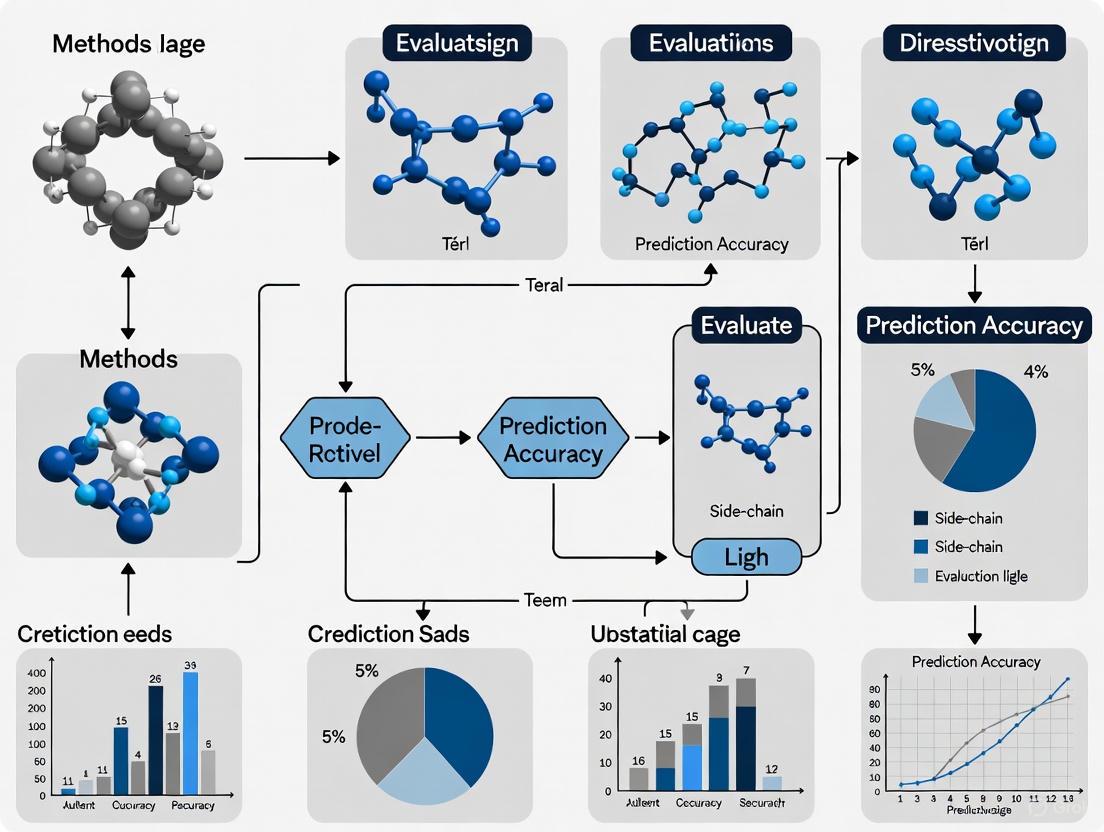
Accurate prediction of protein side-chain conformations is critical for applications ranging from protein design to drug discovery.
Evaluating Protein Side-Chain Prediction Accuracy: Methods, Benchmarks, and Best Practices for Structural Biology and Drug Development
Abstract
Accurate prediction of protein side-chain conformations is critical for applications ranging from protein design to drug discovery. This article provides a comprehensive guide to the methodologies for evaluating side-chain prediction accuracy, exploring foundational concepts, current computational tools like AlphaFold2 and specialized side-chain packing (PSCP) methods, and established benchmarking practices. It covers key metrics such as dihedral angle errors and rotamer recovery, examines performance across different residue environments, and discusses strategies for troubleshooting and optimization. Aimed at researchers and drug development professionals, this review synthesizes recent advances and persistent challenges, offering a roadmap for validating structural models in biomedical research.
The Critical Role of Side-Chain Conformations in Protein Structure and Function
The precise three-dimensional arrangement of protein side-chains, known as the side-chain conformation, is a fundamental determinant of protein function. Accurate prediction of these conformations, referred to as the Protein Side-Chain Packing (PSCP) problem, is critically important for high-accuracy modeling of macromolecular structures and interactions [1]. Side-chain atoms define the physicochemical properties of protein surfaces, directly influencing how proteins interact with small molecule drugs, biological ligands, and other proteins. Inaccuracies in side-chain positioning can lead to faulty predictions of binding affinity, specificity, and ultimately, the failure of rationally designed therapeutic compounds.
This Application Note examines the critical importance of side-chain accuracy across computational structural biology and drug discovery pipelines. We detail experimental protocols for assessing prediction quality, provide quantitative benchmarks for state-of-the-art methods, and present a structured toolkit to guide researchers in selecting appropriate methodologies for their specific applications, particularly within the context of modern AI-driven structure prediction frameworks.
The Critical Role of Side-Chain Conformation
Fundamental Impact on Molecular Interactions
Protein side-chains form the primary interface for molecular recognition. Their precise orientation determines the geometry of binding pockets, affecting complementarity with drug molecules. Key aspects include:
- Hydrogen Bonding Networks: The placement of donor and acceptor atoms on side-chains (e.g., Ser, Thr, Asn, Gln, Arg, Lys) must be precise to form optimal hydrogen bonds with ligands.
- Hydrophobic Patches: Accurate positioning of non-polar side-chains (e.g., Val, Leu, Ile, Phe) defines hydrophobic regions crucial for binding affinity.
- Steric Complementarity: Even minor deviations in side-chain rotameric states can create fatal steric clashes that preclude binding or generate incorrect poses in molecular docking.
The accuracy of side-chain prediction is not uniform across all protein environments. Empirical studies demonstrate that prediction performance varies significantly across different structural contexts, with buried residues generally predicted more accurately than surface residues, and interface regions presenting unique challenges [2].
Consequences for Drug Discovery Applications
In computer-aided drug design (CADD), side-chain accuracy directly impacts virtual screening outcomes and lead optimization. Inaccurate side-chains can misrepresent binding site topography, leading to false positives in virtual screening and wasted resources on synthesizing inactive compounds [3]. During lead optimization, incorrect side-chain conformations provide misleading structure-activity relationship data, potentially steering medicinal chemistry efforts in unproductive directions.
Scaffold hopping—the design of novel core structures that maintain biological activity—relies heavily on accurate molecular representation of interaction patterns [4]. Modern AI-driven molecular representation methods enable more comprehensive exploration of chemical space, but their effectiveness depends on accurate structural models that correctly portray key interactions such as hydrogen bonding patterns, hydrophobic interactions, and electrostatic forces [4].
Quantitative Assessment of Side-Chain Prediction Methods
Performance Benchmarks Across Structural Environments
Recent large-scale benchmarking studies have evaluated PSCP methods across diverse protein environments. The table below summarizes the empirical accuracy of various methods when tested on experimentally determined backbone structures, providing a baseline for their capabilities under ideal conditions [2] [1].
Table 1: Performance of Side-Chain Prediction Methods on Experimental Backbones
| Method | Category | χ₁ Angle Accuracy (°) | χ₁+₂ Angle Accuracy (°) | Computational Speed |
|---|---|---|---|---|
| SCWRL4 | Rotamer library-based | High | Moderate | Fast |
| FASPR | Rotamer library-based | High | Moderate | Very Fast |
| Rosetta Packer | Rotamer library-based | High | High | Slow |
| DLPacker | Deep learning-based | Moderate | Moderate | Fast |
| AttnPacker | Deep learning-based | High | High | Moderate |
| DiffPack | Deep generative model | Very High | Very High | Moderate |
| PIPPack | Deep learning-based | High | High | Moderate |
| FlowPacker | Deep generative model | Very High | Very High | Moderate |
Performance with AlphaFold-Generated Structures
The advent of highly accurate protein structure prediction by AlphaFold has transformed structural biology. However, existing PSCP methods face challenges when repacking side-chains on AlphaFold-predicted backbone coordinates. The following table compares the performance of various methods when using AlphaFold-generated backbones versus experimental backbones as input [1].
Table 2: Side-Chain Prediction Performance on AlphaFold-Generated Backbones
| Method | Performance on Experimental Backbones | Performance on AF2 Backbones | Performance on AF3 Backbones | Generalization Gap |
|---|---|---|---|---|
| SCWRL4 | High | Moderate | Moderate | Significant |
| Rosetta Packer | High | Moderate | Moderate | Significant |
| FASPR | High | Moderate | Moderate | Significant |
| DLPacker | Moderate | Low | Low | Pronounced |
| AttnPacker | High | Moderate | Moderate | Significant |
| DiffPack | Very High | High | High | Modest |
| PIPPack | High | Moderate | Moderate | Significant |
| FlowPacker | Very High | High | High | Modest |
The "generalization gap" refers to the decrease in performance when methods trained on experimental structures are applied to AI-predicted backbones. This gap highlights a key challenge in the post-AlphaFold era and underscores the need for methods specifically designed for or robust to predicted backbone structures [1].
Experimental Protocols for Side-Chain Accuracy Assessment
Protocol 1: Benchmarking PSCP Method Performance
Purpose: To quantitatively evaluate and compare the accuracy of different side-chain prediction methods on a standardized dataset.
Materials:
- Protein test set (e.g., CASP targets, curated non-redundant PDB structures)
- PSCP software packages (SCWRL4, Rosetta Packer, FASPR, AttnPacker, DiffPack, etc.)
- Computational resources (CPU/GPU based on method requirements)
- Analysis scripts (Python/MATLAB for calculating RMSD, χ angle differences)
Procedure:
- Dataset Preparation:
- Select a diverse set of protein structures with high-resolution experimental data (<2.0 Å recommended)
- Divide structures into subsets based on structural environments (buried, surface, interface, membrane-spanning)
- Extract backbone coordinates and store native side-chain conformations as reference
Method Execution:
- Run each PSCP method using the experimental backbone coordinates as input
- For each method, use default parameters as specified in documentation
- Generate predicted side-chain conformations for all residues in each structure
Accuracy Assessment:
- Calculate χ₁ and χ₁+₂ angle accuracies by comparing predictions to native conformations
- Compute heavy-atom RMSD for side-chain atoms after backbone superposition
- Determine the percentage of correctly predicted rotamers (within 40° of native χ angles)
- Analyze performance variation across different residue types and structural environments
Statistical Analysis:
- Perform paired t-tests to identify statistically significant performance differences
- Generate correlation analyses between accuracy and structural features (e.g., B-factors, solvent accessibility)
Troubleshooting:
- For methods requiring extensive computational resources, consider subsetting larger proteins
- Ensure consistent atom naming conventions between predicted and reference structures
- Verify that all methods are using identical protonation states for histidine residues
Protocol 2: Assessment of Drug Binding Site Accuracy
Purpose: To evaluate side-chain prediction accuracy specifically within pharmacologically relevant binding sites.
Materials:
- Protein-ligand complex structures from PDB
- Binding site definition (catalytic residues, ligand contact residues)
- Molecular visualization software (PyMOL, ChimeraX)
- Binding site analysis tools (FPocket, CASTp)
Procedure:
- Binding Site Characterization:
- Identify residues with atoms within 5Å of bound ligand in experimental structure
- Categorize residues by type (polar, non-polar, charged) and functional role
- Calculate solvent accessibility and secondary structure for each binding site residue
Side-Chain Prediction in Binding Sites:
- Execute PSCP methods using the experimental backbone (excluding ligand)
- Extract predicted conformations for binding site residues
- Compare to native ligand-bound conformations
Binding Site Geometry Analysis:
- Measure distances between key functional atoms in predicted vs native structures
- Calculate RMSD specifically for binding site residues
- Assess conservation of hydrogen bonding networks and hydrophobic contours
Docking Validation:
- Perform molecular docking of native ligand into predicted binding sites
- Compare docking poses and scores to those obtained with experimental structures
- Analyze correlation between side-chain accuracy and docking performance
Troubleshooting:
- For proteins with conformational changes upon ligand binding, consider backbone flexibility
- When binding sites include disordered regions, apply appropriate constraints
- For metalloproteins, ensure proper handling of metal coordination geometry
Protocol 3: Integrating AlphaFold Confidence Metrics in Side-Chain Packing
Purpose: To leverage AlphaFold's self-assessment confidence scores for improving side-chain prediction on predicted structures.
Materials:
- AlphaFold-predicted protein structures with pLDDT scores
- PSCP methods with capacity to incorporate external constraints
- Custom scripts for weighting predictions by confidence metrics
- Rosetta Energy Function (REF2015) for energy minimization
Procedure:
- Backbone Confidence Assessment:
- Obtain per-residue pLDDT scores from AlphaFold predictions
- Categorize residues by confidence levels (pLDDT >90: high, 70-90: medium, <70: low)
- Identify regions of uncertain backbone conformation
Confidence-Aware Side-Chain Packing:
- Implement greedy energy minimization scheme that weights χ angles by backbone confidence
- Use pLDDT as weighting factor to bias search toward more confident predictions
- Alternatively, apply different packing strategies based on local confidence levels
Integrative Multi-Method Approach:
- Generate side-chain predictions using multiple independent methods
- For high-confidence regions, prioritize methods with best performance on stable structures
- For low-confidence regions, employ ensemble approaches or methods robust to backbone variation
Validation and Refinement:
- Assess whether confidence-aware integration improves accuracy over baseline methods
- Use Rosetta Energy Function to identify and resolve steric clashes
- Perform brief energy minimization while restraining high-confidence regions
Troubleshooting:
- When pLDDT scores are uniformly low, consider using template-based modeling instead
- For multi-chain complexes, incorporate interface pLDDT and predicted aligned error
- Balance between accuracy and computational cost based on project requirements
Visualization of Methodologies and Relationships
Figure 1: PSCP Methodologies and Applications Overview. This diagram illustrates the relationship between different side-chain prediction approaches and their applications in drug discovery, along with key evaluation metrics.
Table 3: Key Research Resources for Side-Chain Prediction Studies
| Resource | Type | Primary Function | Application Context |
|---|---|---|---|
| SCWRL4 | Software | Rotamer-based side-chain packing | Rapid prediction on experimental backbones |
| Rosetta Packer | Software | Monte Carlo side-chain optimization | High-accuracy packing with energy minimization |
| AttnPacker | Software | Deep graph transformer prediction | State-of-the-art accuracy on diverse proteins |
| DiffPack | Software | Torsional diffusion model | Cutting-edge generative approach |
| AlphaFold2/3 | Software | Protein structure prediction | Generating backbone inputs for PSCP |
| PDB | Database | Experimental protein structures | Benchmarking and training data |
| CASP Datasets | Benchmark | Blind prediction targets | Method validation and comparison |
| plDDT | Metric | AlphaFold confidence score | Assessing backbone reliability for PSCP |
| REF2015 | Scoring | Rosetta energy function | Energy-based validation of predictions |
Accurate side-chain conformation prediction remains a crucial challenge in structural biology and drug discovery, with significant implications for the reliability of computational models. While modern methods have achieved impressive accuracy on experimental backbones, the generalization to AI-predicted structures represents a new frontier. The protocols and benchmarks provided here offer researchers a framework for rigorous evaluation of side-chain accuracy in specific application contexts. As generative AI methods continue to advance, integration of confidence-aware approaches and multi-method strategies will be essential for maximizing predictive reliability in drug discovery pipelines.
The three-dimensional structure of a protein is paramount to its biological function. While the polypeptide backbone provides the overall scaffold, the side chains of amino acids dictate molecular recognition, enzymatic activity, and ligand binding. Accurately modeling these side chains is therefore a critical aspect of protein structure prediction, design, and functional analysis. This process relies fundamentally on two key concepts: χ (chi) dihedral angles, which quantitatively describe side-chain conformation, and rotamer libraries, which are curated collections of statistically preferred conformations derived from experimental structures [5] [6]. The ability to predict side-chain conformations from a given backbone structure is a cornerstone of computational biology, with direct applications in homology modeling, protein engineering, and rational drug design [7] [8].
This application note frames these concepts within the broader context of methodological research for evaluating side-chain prediction accuracy. We provide a detailed explanation of χ dihedral angles, present a comparative analysis of different rotamer library types, and outline standardized protocols for assessing their predictive performance. The information is structured to equip researchers with the knowledge and methodologies necessary to critically evaluate and apply these tools in their own work.
Defining χ Dihedral Angles and Rotamers
The Side-Chain Conformational Landscape
Protein structures are defined in angular space by dihedral angles, which describe the rotations around bonds connecting atoms. The backbone is characterized by φ (phi), ψ (psi), and ω (omega) angles. Similarly, the conformations of amino acid side chains are described by χ dihedral angles [6]. The number of χ angles varies by amino acid, ranging from zero (in glycine) to four (e.g., in arginine and lysine). Each χ angle defines the twist between planes formed by every other atom in the side chain, starting from the backbone. For example, the χ1 angle of a standard amino acid is defined by the atoms N-Cα-Cβ-Cγ [6].
Due to steric clashes and torsional energetics, these χ angles are not free to adopt any value. Instead, they cluster around favored, discrete conformations known as rotamers (short for "rotational isomers") [5] [7]. The concept of rotamers dramatically reduces the combinatorial complexity of the side-chain packing problem, transforming it from a continuous search into a discrete optimization problem.
The Scientist's Toolkit: Essential Components for Side-Chain Prediction
The computational prediction of side-chain conformations relies on a core set of components, each with a specific function, as detailed in the table below.
Table 1: Key Research Reagents and Components for Side-Chain Modeling
| Component Name | Type/Category | Function in Side-Chain Modeling |
|---|---|---|
| χ Dihedral Angles | Structural Parameter | Quantitatively define the conformational state of a side chain by specifying rotations around its covalent bonds [6]. |
| Rotamer Library | Knowledge Base | A curated collection of statistically preferred side-chain conformations (rotamers) and their frequencies, derived from experimental protein structures [5] [6]. |
| Energy Function | Computational Scoring | A set of mathematical terms used to evaluate the thermodynamic stability of a predicted side-chain conformation, typically including van der Waals, electrostatic, hydrogen bonding, and solvation terms [5] [9]. |
| Optimization Algorithm | Search Strategy | A method for exploring the combinatorial space of possible rotamer assignments to find the lowest-energy configuration (e.g., Dead-End Elimination, Monte Carlo, Belief Propagation) [6] [9]. |
| Protein Data Bank (PDB) | Data Source | The primary repository of experimentally solved protein structures, serving as the source data for building and validating rotamer libraries [9]. |
Types of Rotamer Libraries and Comparative Analysis
Rotamer libraries are broadly classified based on the amount of contextual information they encode. The choice of library is a critical independent variable in any side-chain prediction accuracy study.
Classification of Rotamer Libraries
- Backbone-Independent Rotamer Libraries (BBIRLs): These libraries provide the probability of a rotamer based solely on the amino acid identity [6]. They are simpler but offer less discriminative power.
- Backbone-Dependent Rotamer Libraries (BBDRLs): These libraries, first pioneered by Dunbrack and Karplus, assign rotamer probabilities based on the local backbone conformation, specifically the φ and ψ dihedral angles of the residue [7] [6]. This encoding of local structural context allows for more precise rotamer choices and is widely used in modern prediction tools [5].
- Protein-Dependent Rotamer Libraries: A more recent advancement, these libraries go beyond local backbone to incorporate structural information from all spatially neighboring residues in a specific protein. They use probabilistic graphical models like Markov Random Fields to re-rank rotamer probabilities based on the full atomic environment, leading to higher prediction accuracy [6].
The logical relationship between these library types and their core defining features is illustrated below.
Figure 1: A hierarchy of rotamer libraries based on the contextual information they encode.
Quantitative Performance Comparison
A systematic study compared the performance of different rotamer library types in several key areas, providing crucial quantitative data for evaluation [5]. The following table summarizes the core findings.
Table 2: Systematic Performance Comparison of Rotamer Library Types [5]
| Evaluation Metric | Backbone-Independent (BBIRL) | Backbone-Dependent (BBDRL) | Key Takeaway |
|---|---|---|---|
| Side-Chain Reproduction Rate | Higher | Lower | BBIRLs, especially high-resolution ones with thousands of rotamers, can more closely match native conformations due to a larger search space [5]. |
| Side-Chain Prediction Accuracy | Lower | Higher | When used with a physical energy function and search algorithm, BBDRLs achieve higher accuracy as their backbone-dependent probability term helps distinguish correct conformations [5]. |
| Sequence Recapitulation in Design | Lower | Higher | BBDRLs lead to higher native sequence recovery rates in de novo protein design experiments [5]. |
| Computational Speed | Slower | Faster | The backbone-dependent restriction of the rotamer search space drastically speeds up computation, despite the library's larger total number of rotamers [5]. |
Protocols for Evaluating Side-Chain Prediction Accuracy
Robust evaluation is essential for benchmarking side-chain prediction methods and rotamer libraries. The following protocol outlines a standard workflow for such assessments.
Experimental Workflow for Method Benchmarking
The overall process, from data preparation to accuracy assessment, involves a series of structured steps as visualized below.
Figure 2: Standardized workflow for benchmarking side-chain prediction accuracy.
Detailed Methodology
Protocol: Benchmarking Side-Chain Prediction Methods
Objective: To quantitatively evaluate and compare the accuracy of different side-chain prediction methods or rotamer libraries in reproducing native protein structures.
Materials:
- Software: The side-chain prediction programs to be evaluated (e.g., SCWRL4, Rosetta, OPUS-Rota5, FoldX) [9] [8].
- Data Set: A curated set of high-quality, non-redundant protein structures from the PDB.
Procedure:
Data Set Preparation
- Collect high-resolution crystal structures (e.g., ≤1.8 Å) to ensure the reliability of the "ground truth" conformations.
- Remove sequence redundancy using a tool like CD-HIT with a standard cutoff (e.g., 30% sequence identity) to prevent bias [5].
- Perform a homology check against the training sets of the methods being evaluated to ensure fair testing on independent data.
- Optional: Curate specialized data sets for specific environments, such as membrane proteins or protein-protein interfaces [9].
Define Residue Microenvironments
- Classify residues into structural environments, as prediction accuracy can vary significantly. A common approach is to use Cβ density (Cα for Glycine):
- Core Residues: >20 Cβ atoms within a 10 Å radius.
- Surface Residues: <15 Cβ atoms within a 10 Å radius [5].
- Classify residues into structural environments, as prediction accuracy can vary significantly. A common approach is to use Cβ density (Cα for Glycine):
Execute Side-Chain Prediction
- For each protein in the test set, provide only the backbone atomic coordinates to the prediction program.
- Run each method according to its developer's specifications to generate a full-atom model with predicted side-chain coordinates.
- Ensure consistent and fair comparison by using default parameters for all methods.
Measure Prediction Accuracy
- Dihedral Angle Accuracy: For each residue, calculate the absolute difference between each predicted χ angle and its native value. Report the percentage of χ1 and χ1+2 angles predicted within a specified tolerance (common cutoffs are 20° or 40°). A χ1+2 prediction is considered correct only if both χ1 and χ2 are within the tolerance [5] [9].
- Root-Mean-Square Deviation (RMSD): For each residue, calculate the all-heavy-atom RMSD between the predicted and native side chain, excluding Cβ. Consider the molecular symmetry of residues like Asp, Glu, Phe, and Tyr by calculating the minimum RMSD across symmetric alternatives [5].
- Report both per-residue and overall averages.
Analysis and Reporting
- Stratify and report results by amino acid type and structural environment (core vs. surface).
- Perform statistical significance testing to determine if performance differences between methods are meaningful.
- For design studies, evaluate the "sequence recapitulation rate," which measures the method's ability to recover the native amino acid sequence during a de novo design simulation [5].
Advanced Applications and Future Directions
The field of side-chain modeling continues to evolve. Modern methods like OPUS-Rota5 leverage deep learning architectures, such as 3D-Unet and transformer-based "RotaFormer" modules, to capture complex features from the local atomic environment, including ligand information [8]. These methods have demonstrated state-of-the-art performance, outperforming many traditional physics-based methods on recent benchmarks like CASP15 [8].
A critical application of accurate side-chain modeling is in molecular docking. For example, refining the side chains of G protein-coupled receptor (GPCR) structures predicted by AlphaFold2 using tools like OPUS-Rota5 has been shown to significantly improve the success rate of "back-docking" their natural ligands [8]. This highlights the direct impact of side-chain prediction accuracy on drug discovery efforts, where precise modeling of binding sites is essential. As computational power increases and algorithms become more sophisticated, the integration of physical energy functions with data-driven deep learning models represents the future frontier for achieving atomic-level accuracy in protein structure prediction and design.
The field of structural biology has been fundamentally transformed by the development of DeepMind's AlphaFold2 (AF2), a deep learning-based system that predicts protein structures from amino acid sequences with unprecedented accuracy. This breakthrough, recognized by the 2024 Nobel Prize in Chemistry, has provided researchers with structural models for hundreds of millions of proteins, enabling new avenues of biological investigation and drug discovery [10]. While initial validation focused on global backbone accuracy, the critical question for many applications remains: how accurately does AlphaFold2 predict all-atom structures, including the conformations of amino acid side chains? This Application Note provides a comprehensive framework for evaluating AlphaFold2's performance in side-chain prediction, detailing quantitative assessment methodologies, experimental protocols for validation, and practical considerations for applications in molecular modeling and drug development.
Quantitative Assessment of Side-Chain Prediction Accuracy
Accurate side-chain conformations (rotamer states) are essential for predicting the effects of mutations on protein stability, understanding molecular recognition, and facilitating structure-based drug design [10]. Recent systematic analyses have revealed both the capabilities and limitations of AlphaFold2 in predicting the atomic details of side-chain conformations.
Dihedral Angle Prediction Accuracy
A detailed benchmark study of ten diverse proteins assessed ColabFold (an implementation of AlphaFold2) performance in predicting side-chain dihedral angles (χ), with results summarized in Table 1 [10].
Table 1: Side-chain dihedral angle prediction accuracy in ColabFold
| Dihedral Angle | Accuracy Without Templates | Accuracy With Templates | Notable Residue-Specific Variations |
|---|---|---|---|
| χ1 | ~83% | ~88% | Higher accuracy for non-polar side chains; better prediction in α+β proteins than α-helical or β-strand only structures |
| χ2 | Not reported | Not reported | Accuracy decreases with increasing χ index |
| χ3 | ~50% | ~53% | - |
| χ4 | Not reported | Not reported | Only exists in Arg and Lys |
The study defined a "correct" prediction as being within ±40° of the experimental value, a standard threshold in the field [10]. The accuracy generally decreases with higher-order χ angles further from the protein backbone, reflecting increased conformational freedom and complexity.
Systematic Biases and Limitations
Beyond overall accuracy metrics, several systematic biases have been identified in AlphaFold2 predictions:
- Rotamer State Bias: ColabFold demonstrates a bias toward the most prevalent rotamer states in the Protein Data Bank (PDB), potentially limiting its ability to capture rare but biologically relevant side-chain conformations [10].
- Ligand-Binding Pocket Geometry: A comprehensive analysis of nuclear receptor structures revealed that AlphaFold2 systematically underestimates ligand-binding pocket volumes by 8.4% on average compared to experimental structures [11]. This has significant implications for drug discovery applications.
- Conformational Diversity: AlphaFold2 typically predicts a single conformational state, missing functionally important asymmetry present in experimental structures of homodimeric receptors and potentially overlooking alternative biologically relevant states [11].
Experimental Protocols for Assessing Prediction Accuracy
This section provides detailed methodologies for researchers to evaluate AlphaFold2 side-chain prediction accuracy against experimental reference structures or for specific application contexts.
Protocol 1: Side-Chain Conformation Assessment Against Experimental Structures
Purpose: To quantitatively evaluate AlphaFold2 prediction accuracy for side-chain dihedral angles using experimental structures as ground truth.
Materials and Reagents:
- Reference Experimental Structures: High-resolution (preferably <2.0 Å) crystal structures or NMR ensembles from the PDB
- Computational Tools: ColabFold or local AlphaFold2 installation, molecular visualization software (PyMOL, ChimeraX), dihedral angle calculation scripts (Python/MATLAB)
- Target Proteins: Protein sequences of interest
Procedure:
- Obtain Reference Structure: Download high-resolution experimental structure from PDB for your target protein
- Generate Predictions: Run AlphaFold2/ColabFold prediction for the same protein sequence:
- Perform prediction both with and without providing the experimental structure as a template
- Use default settings with MMseqs2 for multiple sequence alignment generation
- Export all five models and corresponding pLDDT confidence scores
- Structural Alignment: Superimpose predicted structures onto the experimental reference structure using Cα atoms of well-aligned regions
- Calculate Dihedral Angles: Compute side-chain dihedral angles (χ1-χ4) for both experimental and predicted structures using computational scripts
- Compare Conformations: For each residue, calculate the absolute difference in dihedral angles between prediction and experimental reference
- Apply Accuracy Threshold: Classify predictions as "correct" if within ±40° of experimental values [10]
- Stratify Analysis: Analyze results by:
- Residue type (polar, non-polar, charged)
- Secondary structure context
- pLDDT confidence bins (≥90: very high, 70-89: confident, 50-69: low, <50: very low)
Troubleshooting Tips:
- For proteins with missing residues in experimental structures, consider only complete regions for analysis
- When experimental structures contain multiple conformations, compare predictions to all observed states
- For NMR ensembles, calculate average dihedral angles across the ensemble for comparison
Protocol 2: Experimental Validation Using Electron Density Maps
Purpose: To assess whether AlphaFold2 predictions are compatible with experimental electron density maps, independent of previously deposited PDB models [12].
Materials and Reagents:
- Experimental Data: Crystallographic structure factors from PDB or new collections
- Software: Crystallographic refinement programs (Phenix, Refmac), model-building tools (Coot), map-generation utilities
- Computational Resources: AlphaFold2/ColabFold access, molecular graphics software
Procedure:
- Obtain Unbiased Maps: Generate experimental electron density maps using crystallographic data:
- Use deposited structure factors from PDB entries
- Perform manual rebuilding and refinement to create maps unbiased by deposited models [12]
- Generate Predictions: Run AlphaFold2 prediction for the corresponding protein sequence
- Quantitative Map Fitting:
- Superimpose AlphaFold2 prediction onto the experimental map
- Calculate map-model correlation coefficients to quantify fit quality
- Compare to map-model correlation of the deposited structure
- Visual Inspection: Systematically examine regions where:
- High-confidence (pLDDT > 90) predictions disagree with electron density
- Side-chain density is unambiguous but prediction differs
- Backbone conformation shows discrepancies
- Identify Systematic Errors: Document patterns of disagreement, particularly in:
- Ligand-binding sites
- Flexible loops
- Domain interfaces
Interpretation Guidelines:
- Map-model correlations >0.8 indicate excellent agreement [12]
- Correlations of 0.7-0.8 suggest generally good fit with local discrepancies
- Correlations <0.5 indicate significant incompatibility with experimental data
- Consider whether alternative conformations in crystals might explain differences
Visualization of Assessment Workflows
Workflow for assessing AlphaFold2 side-chain prediction accuracy
The Scientist's Toolkit: Research Reagent Solutions
Table 2: Essential resources for AlphaFold2 side-chain accuracy research
| Resource | Type | Function in Research | Access Information |
|---|---|---|---|
| ColabFold | Software Platform | Cloud-based implementation of AlphaFold2 for rapid structure prediction | Publicly available Google Colab notebooks |
| Protein Data Bank (PDB) | Database | Repository of experimental structures for ground truth comparison | https://www.rcsb.org/ |
| pLDDT | Confidence Metric | AlphaFold2's per-residue confidence score (0-100 scale) for interpreting local reliability | Generated with all AlphaFold2 predictions |
| ChimeraX/PyMOL | Visualization Software | Molecular graphics for visual inspection and analysis of structural discrepancies | Free academic licenses available |
| MMseqs2 | Bioinformatics Tool | Rapid multiple sequence alignment generation for AlphaFold2 pipeline | Integrated into ColabFold, also standalone |
| Phenix/Coot | Crystallography Software | Suite for crystallographic refinement and electron density map analysis | Freely available to academic researchers |
The revolutionary capabilities of AlphaFold2 in predicting protein structures with near-experimental accuracy for many targets represent a paradigm shift in structural biology. However, as detailed in this Application Note, the assessment of all-atom accuracy—particularly for side-chain conformations—reveals systematic limitations that researchers must consider when employing these predictions for molecular modeling and drug design applications. The methodologies and protocols provided here enable rigorous evaluation of AlphaFold2 predictions for specific research contexts. As the field advances, future developments may address current limitations in capturing conformational diversity, ligand-induced structural changes, and rare rotamer states, further enhancing the utility of predicted structures for understanding biological function and facilitating therapeutic development.
Accurately assessing protein side-chain conformation predictions is a critical step in validating computational models for structure prediction and functional analysis. Defining a "correct" prediction requires establishing robust, quantitative thresholds that account for the inherent flexibility of side-chains and their varied structural environments. This application note synthesizes current empirical data and methodologies to provide a standardized framework for evaluating prediction accuracy, essential for research in protein engineering and drug development.
Quantitative Accuracy Thresholds for Side-Chain Predictions
Dihedral Angle Prediction Accuracies
Evaluation of side-chain conformation prediction accuracy primarily relies on measuring the deviation of predicted dihedral angles (χ1, χ2, etc.) from experimentally determined reference structures. The table below summarizes typical accuracy ranges for state-of-the-art methods across different structural environments.
Table 1: Side-Chain Dihedral Angle Prediction Accuracies by Environment
| Structural Environment | χ1 Accuracy (%) | χ3 Accuracy (%) | Representative Methods |
|---|---|---|---|
| Buried Residues | >80% [9] [2] | ~48% [13] | SCWRL4, Rosetta Packer, FASPR [1] |
| Surface Residues | Lower than buried [9] | Information Missing | SCWRL4, Rosetta Packer, FASPR [1] |
| Protein Interfaces | Better than surface [9] [2] | Information Missing | SCWRL4, Rosetta Packer, FASPR [1] |
| Membrane-Spanning | Better than surface [9] [2] | Information Missing | SCWRL4, Rosetta Packer, FASPR [1] |
For specific tools like ColabFold (an AlphaFold2 implementation), prediction errors are approximately 14% for χ1 dihedral angles, increasing to about 48% for χ3 angles [13]. AlphaFold3 demonstrates slightly better side-chain prediction accuracy than ColabFold [13].
Tolerance Ranges for Correct Predictions
Defining a "correct" prediction requires establishing tolerance ranges for dihedral angle deviations. The biophysical properties of rotameric states inform these thresholds.
Table 2: Tolerance Ranges for "Correct" Side-Chain Predictions
| Assessment Metric | Tolerance Range | Methodological Consideration |
|---|---|---|
| χ1 Dihedral Angle | 20-40° from experimental [9] | Matches rotamer library bin width [14] |
| χ2+ Dihedral Angles | Wider tolerance than χ1 [9] | Increased conformational freedom downstream |
| Atomic Distance RMSD | <1.0 Å for high-confidence regions [1] | Integrates all angular deviations into single metric |
Experimental Protocols for Assessment
Workflow for Benchmarking Prediction Accuracy
The following diagram illustrates the standardized protocol for evaluating side-chain conformation prediction methods.
Protocol Steps and Specifications
Input Structure Preparation: Obtain high-resolution experimental structures from the Protein Data Bank. Structures should be determined by X-ray crystallography with resolution better than 2.0 Å and low R-factors to ensure reliable reference data [9].
Backbone Coordinate Extraction: Strip all side-chain atoms from the experimental structure, retaining only backbone coordinates (N, Cα, C, O) and Cβ atoms. This serves as input for prediction methods [1].
Run Prediction Methods: Execute side-chain prediction algorithms using standardized parameters. For rotamer-based methods (SCWRL4, Rosetta Packer, FASPR), use default rotamer libraries and energy functions [1]. For deep learning methods (AttnPacker, DiffPack), use pre-trained models without further tuning [1].
Dihedral Angle Calculation: Compute all possible dihedral angles (χ1, χ2, χ3, χ4) for both predicted and experimental structures using standard geometric calculations [13] [9]. For χ1 angles, define the torsion as N-Cα-Cβ-Cγ for all residues except glycine and alanine.
Environment Classification: Categorize residues into structural environments using accessible surface area calculations:
Accuracy Assessment: Calculate the percentage of dihedral angles falling within the tolerance ranges specified in Table 2. Generate separate accuracy statistics for each residue type and environmental class.
Advanced Integrative Assessment Approaches
Incorporating AlphaFold Confidence Metrics
In the post-AlphaFold era, integrative approaches that leverage self-assessment confidence scores can enhance evaluation protocols. The following workflow illustrates this process:
This integrative protocol uses AlphaFold's predicted Local Distance Difference Test (plDDT) confidence scores to weight predictions from multiple Protein Side-Chain Packing (PSCP) methods, followed by energy minimization using the REF2015 force field to resolve steric clashes and optimize geometry [1].
Functional Accuracy Assessment
For proteins where conformational changes are functionally critical, assessment should incorporate multiple structural states:
Multi-State Backbone Input: Use ABACUS-T or similar multimodal inverse folding frameworks that incorporate multiple backbone conformational states and evolutionary information from multiple sequence alignments [15].
Ligand-Bound Conformations: When assessing predictions for enzyme active sites or binding pockets, include ligand-bound structures to evaluate conservation of functionally critical residue geometries [15].
State-Specific Drug Docking: For pharmacological targets like hERG channels, validate predicted conformations through state-specific drug docking simulations and compare with experimental binding affinities [16].
Research Reagent Solutions
Table 3: Essential Tools and Resources for Conformational Assessment
| Tool/Resource | Type | Primary Function | Application Note |
|---|---|---|---|
| SCWRL4 [1] | Software Algorithm | Rotamer-based side-chain packing | Fast prediction using graph theory; benchmarked on experimental backbones |
| Rosetta Packer [1] | Software Suite | Rotamer-based packing with energy minimization | Uses REF2015 energy function; good for protein design applications |
| AttnPacker [1] | Deep Learning Model | SE(3)-equivariant coordinate prediction | End-to-end direct prediction; includes clash reduction post-processing |
| DiffPack [1] | Deep Learning Model | Torsional diffusion model | Autoregressive packing; state-of-the-art on experimental backbones |
| AlphaFold2/3 [13] [16] | AI Structure Prediction | Complete structure prediction | Provides plDDT confidence scores; can be guided to multiple states |
| PDB [9] [17] | Database | Experimental reference structures | Source of high-resolution structures for benchmark creation |
| Rotamer Libraries [14] | Data Resource | Statistical side-chain conformations | Backbone-dependent distributions for rotamer-based methods |
| ABACUS-T [15] | Multimodal Model | Inverse folding with functional constraints | Integrates MSA and multiple states; preserves functional activity |
Core Metrics and Computational Tools for Side-Chain Accuracy Assessment
Accurately evaluating the precision of computational protein structure models is a cornerstone of structural bioinformatics, particularly for applications requiring atomic-level detail, such as drug design and enzyme engineering. Within this framework, the prediction of amino acid side-chain conformations is a critical subproblem. Two metrics have emerged as the gold standard for quantifying side-chain prediction accuracy: dihedral angle deviation and rotamer recovery rates [5] [9]. These metrics provide a rigorous, atomically detailed assessment of how well a computational model reproduates the experimentally determined structure. This application note delineates the experimental protocols for calculating these metrics and provides a consolidated reference of benchmarked accuracy for current state-of-the-art methods, serving as a vital toolkit for researchers engaged in method development and validation.
Quantitative Metrics and Benchmarking Data
The accuracy of side-chain prediction is typically quantified by measuring how closely the predicted conformations match those in a reference experimental structure (often from X-ray crystallography). The core metrics are defined below and benchmark data for various methods is summarized in Table 1.
- χ Angle Accuracy: This metric reports the percentage of side-chain dihedral angles (χ1, χ2, etc.) in the predicted model that fall within a specific tolerance (e.g., 20° or 40°) of the angles in the experimental structure [5] [9]. A χ1+2 accuracy indicates that both the first and second dihedral angles must be within the cutoff.
- Rotamer Recovery Rate: This measures the percentage of residues for which the predicted side-chain conformation belongs to the same discrete rotameric state (or "bin") as the conformation in the experimental structure [18].
- All-Atom Root-Mean-Square Deviation (RMSD): This calculates the root-mean-square deviation of the positions of all heavy atoms in the side chain between the predicted and experimental structures after aligning the protein backbones [19] [5].
Table 1: Summary of Side-Chain Prediction Accuracy for Selected Methods
| Method | χ1 Accuracy (≤ 40°) | χ1+2 Accuracy (≤ 40°) | Overall Heavy-Atom RMSD (Å) | Key Characteristics |
|---|---|---|---|---|
| NCN (2004) [19] | 92% (buried) | 83% (buried) | ~1.0 Å | Large rotamer library (~50,000 rotamers); Ab initio potential |
| Detailed BBIRL [5] | 87% (≤20°) | 74% (≤20°) | 1.32 Å | Backbone-independent library (>7,000 rotamers) |
| Dunbrack 2010 BBDRL [5] | 84-86% | 71-75% | 1.46-1.65 Å | Backbone-dependent library; Widely used |
| OPUS-Rota5 (2024) [8] | N/A | N/A | Outperforms others | Uses 3D-Unet & RotaFormer; Improves docking success |
| AlphaFold2 (2021) [20] | N/A | N/A | 1.5 Å (all-atom) | End-to-end structure prediction; Highly accurate side chains when backbone is accurate |
| Upside (2018) [21] | State-of-the-art (χ1) | N/A | N/A | Coarse-grained model; Rapid χ1 prediction |
Experimental Protocols for Metric Calculation
The following protocols standardize the process of calculating dihedral angle deviation and rotamer recovery, ensuring reproducibility and fair comparison between different prediction methods.
Protocol for Dihedral Angle Deviation Analysis
This protocol measures the angular difference between predicted and experimentally observed side-chain dihedral angles [5] [9].
I. Required Inputs
- Experimental Structure File: A PDB-format file containing the experimentally determined protein structure.
- Predicted Model File: A PDB-format file of the computational model being evaluated.
- Alignment: A structural superposition of the model onto the experimental structure based on the protein backbone atoms (Cα, C, N).
II. Step-by-Step Procedure
- Structure Pre-processing: Isolate the target protein chain from both files. Remove water molecules, ions, and heteroatoms. Ensure the residue numbering is consistent between the two structures.
- Backbone Alignment: Perform a rigid-body alignment of the predicted model's backbone atoms (Cα, C, N) onto the backbone of the experimental structure. This step minimizes the influence of backbone placement errors on the side-chain metric.
- Dihedral Angle Calculation: a. For each residue with rotatable bonds (exclude Gly, Ala), calculate the χ dihedral angles for both the experimental and predicted structures. b. The χ1 angle is defined by atoms N-Cα-Cβ-Cγ (Cδ1 for Leu/Val/Ile). c. The χ2 angle is defined by atoms Cα-Cβ-Cγ-Cδ (and so on for higher χ angles).
- Angular Difference Computation: a. For each residue, compute the absolute difference for each χ angle: |χexp - χpred|. b. Account for angle periodicity by reducing differences greater than 180° (e.g., a difference of 350° is equivalent to 10°).
- Accuracy Tally: For a chosen tolerance (e.g., 20° or 40°), count a residue's χ angle as "correct" if the difference is within the cutoff. Calculate the overall percentage of correct χ1 and χ1+2 angles across all evaluated residues.
Protocol for Rotamer Recovery Analysis
This protocol evaluates whether a predicted side-chain conformation belongs to the same discrete rotamer bin as the experimental conformation [18].
I. Required Inputs
- The same aligned experimental and predicted structure files from the previous protocol.
- A Rotamer Library, such as the Dunbrack library, which defines the canonical dihedral angle ranges for each rotameric state of each amino acid type [5] [18].
II. Step-by-Step Procedure
- Structure Alignment & Angle Calculation: Complete Steps 1-3 from the Dihedral Angle Deviation protocol.
- Rotamer Bin Assignment:
a. For each residue in the experimental structure, map its calculated χ angles to the corresponding rotamer bin in the library (e.g.,
p-90°for χ1~-60°,t-180°for χ1~180°,m+60°for χ1~+60°). b. Repeat this bin assignment for each residue in the predicted model. - Recovery Determination: A residue is considered "recovered" if all of its χ angles are assigned to the same rotamer bins in the predicted model as they are in the experimental structure.
- Statistical Reporting: The rotamer recovery rate is reported as the percentage of recovered residues out of the total number of residues analyzed. This can be reported globally or broken down by amino acid type, secondary structure, or solvent accessibility (e.g., core vs. surface) [5] [9].
The logical workflow for implementing these protocols is summarized in the diagram below.
Successful evaluation of side-chain prediction accuracy relies on a suite of software tools, databases, and libraries. Key resources are cataloged in Table 2.
Table 2: Essential Research Reagents and Resources
| Resource Name | Type | Primary Function in Evaluation | Reference |
|---|---|---|---|
| Protein Data Bank (PDB) | Database | Source of experimental "gold standard" structures for benchmarking. | [19] [22] |
| Dunbrack Rotamer Library | Rotamer Library | Provides discrete rotamer bins and probabilities for Rotamer Recovery analysis. Backbone-dependent. | [5] [9] |
| SCWRL4 | Software Algorithm | Widely used side-chain prediction tool; often used as a performance benchmark. | [9] [21] |
| Rosetta | Software Suite | Contains the RotamerRecovery application and multiple protocols (e.g., PackRotamers, RTMin) for flexible benchmarking. |
[18] |
| OPUS-Rota5 | Software Algorithm | State-of-the-art method using deep learning for side-chain modeling; useful for comparative studies. | [8] |
| AlphaFold DB | Database | Repository of high-accuracy predicted structures; useful for testing side-chain placement on predicted backbones. | [20] |
Advanced Applications and Considerations
The utility of dihedral angle and rotamer recovery analysis extends beyond simple method benchmarking.
- Environmental Dependence: Prediction accuracy is highly dependent on the residue's local environment. Buried residues are typically predicted with higher accuracy (e.g., >90% for χ1) than surface residues, as they are constrained by tighter packing [19] [9]. Separate analysis for core, surface, and protein-protein interface residues is therefore essential for a nuanced performance assessment.
- Application-Driven Validation: For problems like molecular docking, where success is critically dependent on the precise geometry of binding pockets, high rotamer recovery rates are a necessary prerequisite. Refining AlphaFold2 models with tools like OPUS-Rota5 has been shown to significantly improve docking success rates by correcting side chains, even on accurate backbones [8].
- Protocol Selection in Rosetta: The choice of recovery protocol (
RRProtocol) in Rosetta determines the stringency of the test.RRProtocolRotamerTrialstests one-at-a-time optimization in the native environment, whileRRProtocolMinPacktests a full repacking and minimization, which is more representative of true prediction challenges [18].
The advent of deep learning-based protein structure prediction tools, notably AlphaFold2 (AF2) and its successors, has revolutionized structural biology by providing highly accurate three-dimensional models from amino acid sequences [20]. These models have become indispensable for researchers, scientists, and drug development professionals seeking atomic-level insights for applications ranging from mechanistic studies to rational drug design. However, critical questions remain regarding the interpretation of model confidence metrics and the specific accuracy of side-chain conformational predictions, which are crucial for understanding protein function, stability, and interactions [10] [9].
This application note systematically evaluates AlphaFold's performance in predicting side-chain conformations and examines the relationship between its primary confidence metric—pLDDT (predicted local distance difference test)—and protein flexibility. We present quantitative analyses of side-chain prediction errors across different residue types and structural environments, provide detailed protocols for performance assessment, and offer practical guidance for researchers relying on these models for advanced applications.
Quantitative Analysis of Side-Chain Prediction Accuracy
Recent benchmarking studies reveal specific patterns in AlphaFold's side-chain prediction capabilities. When evaluated across ten diverse benchmark proteins, ColabFold (an optimized implementation of AF2) demonstrates varying accuracy depending on the dihedral angle index and use of structural templates [10].
Table 1: Side-Chain Dihedral Angle Prediction Errors in ColabFold
| Dihedral Angle | Average Error (With Templates) | Average Error (Without Templates) | Key Observations |
|---|---|---|---|
| χ1 | ~14% | ~17% | Highest accuracy; improved with templates |
| χ2 | ~31% | Not reported | Moderate accuracy |
| χ3 | ~47% | ~50% | Lowest accuracy; minimal template improvement |
| χ4 | Exception noted | Exception noted | Only in Lysine and Arginine |
The data indicates that prediction accuracy decreases substantially for higher-order dihedral angles (χ3 and beyond), suggesting limitations in modeling complex side-chain packing arrangements. The utilization of structural templates provides the most significant improvement for χ1 angles (~31% improvement) but offers diminishing returns for more flexible side-chain termini [10].
Amino Acid-Specific Performance and Structural Biases
AlphaFold's side-chain prediction performance varies considerably by amino acid type and structural environment. Analysis indicates several important trends:
- Non-polar residues generally exhibit higher prediction accuracy compared to polar and charged residues [10]
- The algorithm demonstrates a bias toward the most prevalent rotamer states in the Protein Data Bank (PDB), potentially limiting its ability to capture rare side-chain conformations [10]
- Buried residues are typically predicted with higher accuracy than surface residues across most amino acid types [9]
- Contrary to expectations, side-chains at protein interfaces and membrane-spanning regions are often better predicted than surface residues, despite most methods not being specifically trained on these environments [9]
These patterns highlight the importance of considering residue-specific and environment-specific factors when interpreting AlphaFold side-chain predictions for applications such as protein design or functional characterization.
pLDDT Scores and Protein Flexibility
Interpreting pLDDT Values
AlphaFold provides pLDDT scores as a per-residue estimate of prediction confidence, ranging from 0-100. Conventional interpretation suggests:
- pLDDT ≥ 90: Very high confidence
- 70 ≤ pLDDT < 90: Confident
- 50 ≤ pLDDT < 70: Low confidence
- pLDDT < 50: Very low confidence, potentially disordered [23]
Relationship Between pLDDT and B-Factors
A critical investigation into the correlation between pLDDT values and experimental B-factors from X-ray crystallography reveals important insights for model interpretation. Systematic comparison of high-quality, non-redundant crystal structures determined at both room temperature (288-298 K) and cryogenic temperatures (95-105 K) demonstrates:
- No significant correlation exists between pLDDT values and either raw or normalized B-factors [23]
- This lack of correlation persists across different temperature regimes and normalization approaches
- pLDDT values therefore do not convey substantive information about local conformational flexibility in globular proteins [23]
This finding has important practical implications: researchers should not interpret low pLDDT values as indicators of high flexibility or high pLDDT values as indicators of rigidity. The pLDDT metric appears to serve primarily as an internal confidence measure for the prediction process rather than a proxy for physical dynamics.
Diagram 1: Workflow for evaluating pLDDT and B-factor correlation. Analysis shows no significant relationship between prediction confidence and flexibility.
Experimental Protocols for Side-Chain Evaluation
Benchmarking Side-Chain Prediction Accuracy
To quantitatively evaluate AlphaFold's side-chain prediction performance, researchers can implement the following protocol:
Step 1: Dataset Preparation
- Select high-resolution experimental structures (≤1.5 Å recommended) from diverse protein families
- Ensure structures cover various structural classes (α, β, α+β, membrane proteins)
- Include both monomeric and multimeric proteins to assess environmental effects
- Remove structures with missing residues or ambiguous electron density
Step 2: Structure Prediction
- Use ColabFold with default parameters for baseline predictions
- Perform parallel predictions with and without structural templates
- Enable AMBER relaxation for improved stereochemistry
- Execute multiple prediction cycles (minimum 3 recommended)
Step 3: Conformational Analysis
- Calculate dihedral angles (χ1, χ2, χ3, χ4) for both experimental and predicted structures
- Define correct prediction as within ±40° of experimental values [10]
- Categorize results by residue type, secondary structure, and solvent accessibility
- Compute root-mean-square deviation (RMSD) for side-chain heavy atoms
Step 4: Statistical Evaluation
- Calculate percentage of correct predictions for each dihedral angle type
- Compare performance across different structural environments
- Assess potential biases toward common rotameric states
- Evaluate impact of template usage on prediction accuracy
Assessing pLDDT Relationship to Flexibility
To examine the relationship between pLDDT and experimental flexibility measures:
Step 1: Crystallographic Data Collection
- Curate non-redundant datasets of high-resolution crystal structures (≤2.0 Å)
- Include structures determined at different temperatures (room temperature vs. cryogenic)
- Apply strict quality filters: no TLS refinement, no NCS restraints, complete residues
- Reduce sequence redundancy to ≤40% identity using CD-HIT [23]
Step 2: B-Factor Processing
- Extract B-factors for all atoms from PDB files
- Calculate normalized B-factors (BN) using: BNi = (Bi - Bave) / Bstd where Bave is the mean B-factor and Bstd is the standard deviation [23]
- Compute residue-average B-factors and normalized B-factors
Step 3: AlphaFold Prediction and Comparison
- Generate AlphaFold/ColabFold models for all structures in the dataset
- Extract pLDDT values for each residue
- Perform correlation analysis between pLDDT and both raw and normalized B-factors
- Conduct statistical testing (Pearson correlation, linear regression)
Research Toolkit for Side-Chain Accuracy Assessment
Table 2: Essential Tools for Evaluating AlphaFold Side-Chain Predictions
| Tool/Resource | Type | Primary Function | Application Notes |
|---|---|---|---|
| ColabFold | Software | Protein structure prediction | Fast implementation using MMseqs2; customizable parameters [10] |
| LocalDistanceDifferenceTest | Metric | Structure quality assessment | Basis for pLDDT; evaluates local distance differences [23] |
| Dunbrack Rotamer Library | Reference Data | Side-chain conformation statistics | Used by many prediction methods for rotamer preferences [9] |
| PDBe PDB | Database | Experimental structures | Source of high-resolution structures for benchmarking [23] |
| CD-HIT | Software | Sequence redundancy reduction | Creates non-redundant datasets for evaluation [23] |
| MolProbity | Software | Structure validation | Assesses stereochemical quality of predictions |
| PyMOL | Software | Molecular visualization | Visual comparison of predicted vs. experimental conformations |
Advanced Applications and Integration Approaches
Combining Sequence-Based Models with Structure Prediction
Recent research demonstrates the value of integrating evolutionary sequence information with structural prediction for understanding mutational effects:
Potts Model Integration
- Use Potts sequence-based statistical energy models to identify cooperative mutational pairs [10]
- Employ ColabFold to predict structural signatures of cooperativity on interacting side-chains
- The combined pipeline enables exploration of relationships between mutations, cooperative structural changes, and fitness [10]
Alternative Conformation Prediction
- For proteins with multiple conformations, implement MSA clustering or dropout techniques to sample structural diversity [24]
- Cfold, a network trained on conformational splits of the PDB, can predict alternative conformations with >50% accuracy (TM-score >0.8) for nonredundant structures [24]
- Categorize conformational changes as: hinge motions, rearrangements, or fold switches [24]
Diagram 2: Integrated pipeline combining sequence coevolution analysis with structure prediction to study mutational effects on side-chain conformations.
This evaluation provides researchers with critical insights and practical methodologies for assessing AlphaFold's performance in side-chain conformation prediction. Key findings indicate that while AlphaFold achieves remarkable accuracy for backbone structures and χ1 angles, higher-order dihedral angles (χ2, χ3) show substantially higher error rates. Furthermore, the lack of correlation between pLDDT and B-factors indicates that prediction confidence metrics should not be interpreted as proxies for protein flexibility.
The protocols and analyses presented here enable researchers to: (1) quantitatively evaluate side-chain prediction accuracy for specific proteins of interest; (2) properly interpret pLDDT scores in the context of model reliability rather than flexibility; and (3) implement integrated approaches combining coevolutionary information with structural prediction for studying mutational effects. These capabilities are essential for advancing applications in protein engineering, drug design, and functional characterization where accurate side-chain conformations are critical for success.
Protein Side-Chain Packing (PSCP) is a fundamental challenge in structural biology that involves predicting the three-dimensional conformations of amino acid side chains given a fixed protein backbone structure [1]. The accuracy of PSCP is critically important for numerous applications in molecular biology, including protein structure prediction, homology modeling, protein design, and the modeling of macromolecular interactions such as protein-ligand and protein-protein docking [25] [1]. The biological significance of PSCP stems from the fact that side chains govern most of the chemical interactions that determine protein folding, stability, and function—their precise spatial arrangement affects everything from enzymatic activity to the formation of binding interfaces.
The PSCP problem is computationally challenging due to the astronomical number of possible side-chain conformation combinations. For a typical protein with hundreds of residues, the conformational space is far too large to sample exhaustively. Historically, two main approaches have emerged to address this challenge: physics-based methods that use energetic optimization and knowledge-based methods that leverage statistical patterns from known protein structures. More recently, deep learning approaches have demonstrated remarkable success by directly learning the relationship between backbone geometry and optimal side-chain conformations [26]. The evaluation of PSCP method accuracy typically involves metrics such as dihedral angle accuracy (χ1 and χ1+2), root-mean-square deviation (RMSD) of atomic positions, and the presence of steric clashes, with rigorous benchmarking performed on native and predicted backbone structures from resources like the Critical Assessment of Structure Prediction (CASP) challenges [1].
Traditional PSCP Methods and the SCWRL4 Algorithm
Core Technological Framework
Traditional computational methods for PSCP largely rely on rotamer libraries—statistical compilations of preferred side-chain conformations observed in experimentally determined protein structures [25]. These libraries can be backbone-independent (aggregating all conformations regardless of local backbone structure) or backbone-dependent (where frequencies and dihedral angles vary with the backbone φ and ψ dihedral angles) [25]. SCWRL4, one of the most widely used traditional PSCP tools, implements a sophisticated graph-based algorithm that combines a backbone-dependent rotamer library with efficient combinatorial optimization [25] [27].
The SCWRL4 algorithm incorporates several key innovations that significantly improve its accuracy and speed over previous versions. These include: (1) a backbone-dependent rotamer library based on kernel density estimates that provides smooth variation of rotamer frequencies and dihedral angles as a function of backbone conformation; (2) energy averaging over sampled conformations around rotamer library positions; (3) a fast anisotropic hydrogen bonding function; (4) a short-range, soft van der Waals atom-atom interaction potential; (5) rapid collision detection using k-discrete oriented polytopes (kDOPs); (6) a tree decomposition algorithm to solve the combinatorial optimization problem; and (7) parameter optimization within the crystal environment using crystallographic symmetry operators [25] [27].
SCWRL4 Workflow and Implementation
Table 1: Key Components of the SCWRL4 Algorithm
| Component | Description | Function |
|---|---|---|
| Backbone-dependent Rotamer Library | Kernel density estimates of rotamer frequencies and dihedral angles | Provides initial conformational sampling based on local backbone structure |
| Soft Van der Waals Potential | Short-range atom-atom interaction function | Models steric repulsion while allowing some atomic overlap |
| Anisotropic Hydrogen Bonding | Direction-specific hydrogen bonding evaluation | Captures specific polar interactions important for packing |
| k-Discrete Oriented Polytopes (kDOPs) | Rapid collision detection method | Efficiently identifies steric clashes between side chains |
| Tree Decomposition | Graph optimization algorithm | Solves combinatorial selection of optimal rotamer combinations |
The SCWRL4 workflow begins with input of protein backbone coordinates in PDB format, requiring at minimum the positions of the N, Cα, C, and O atoms for each residue [27]. The algorithm then calculates backbone dihedral angles φ and ψ for each residue, with special handling of N-terminal and C-terminal residues. For each residue position, SCWRL4 retrieves possible rotamers from its backbone-dependent rotamer library and calculates interaction energies that incorporate rotamer frequencies, van der Waals interactions, and hydrogen bonding [25] [27]. A critical innovation in SCWRL4 is its treatment of the combinatorial optimization problem—rather than testing all possible combinations of rotamers (which is computationally intractable), it represents the problem as an interaction graph where residues are nodes and edges represent spatial proximity, then uses tree decomposition to efficiently find the global minimum energy configuration [25].
Performance and Accuracy Metrics
SCWRL4 demonstrates impressive accuracy in side-chain prediction, particularly for residues with well-defined electron density. For a testing set of 379 proteins, SCWRL4 achieves 86% accuracy for χ1 angles and 75% accuracy for χ1+2 angles (within 40° of X-ray positions) [25] [27]. For side chains with higher electron density (25th-100th percentile), these accuracy values increase to 89% and 80%, respectively [25] [27]. The method shows particular strength in predicting buried hydrophobic residues, with χ1 accuracy exceeding 95% for Ile, Val, Phe, Tyr, and Leu [27].
Table 2: SCWRL4 Prediction Accuracy by Residue Type
| Residue Type | Number of Residues | χ1 Prediction Accuracy (%) | χ1+2 Prediction Accuracy (%) |
|---|---|---|---|
| ILE | 3043 | 98.6 | 90.9 |
| VAL | 3898 | 97.1 | - |
| PHE | 2115 | 96.9 | 94.8 |
| TYR | 1828 | 95.6 | 93.2 |
| LEU | 5096 | 95.4 | 91.0 |
| THR | 2935 | 94.0 | - |
| TRP | 758 | 93.0 | 83.0 |
| CYS | 805 | 92.7 | - |
| HIS | 1202 | 91.1 | 62.3 |
| ASN | 2238 | 90.1 | 74.9 |
Deep Learning Revolution in PSCP
Next-Generation PSCP Approaches
The advent of deep learning has transformed the PSCP landscape, introducing methods that directly predict side-chain conformations without explicit reliance on rotamer libraries or expensive conformational sampling [26]. These approaches leverage various neural network architectures, including convolutional networks, graph transformers, and SE(3)-equivariant networks, to learn the complex relationship between backbone geometry and optimal side-chain packing [1] [26]. Notable deep learning-based PSCP methods include AttnPacker, DLPacker, DiffPack, PIPPack, and FlowPacker, each employing distinct architectural innovations [1].
AttnPacker represents a significant advancement as an end-to-end deep learning method that simultaneously predicts all side-chain coordinates without delegating to discrete rotamer libraries [26] [28]. It incorporates a deep graph transformer architecture that leverages both geometric and relational aspects of PSCP, using locality-aware triangle updates inspired by AlphaFold2 to refine pairwise features [26]. The network operates on a featurized graph where nodes represent residues and edges connect spatially proximate residues (within a threshold distance), with features derived from amino acid type, backbone dihedral angles, relative sequence position, and local microenvironments [26].
Architectural Innovations
Deep learning methods for PSCP differ significantly from traditional approaches in their representation of the problem and solution strategy. While methods like SCWRL4 rely on discrete optimization over rotamer libraries, deep learning approaches like AttnPacker use continuous representations and direct coordinate prediction [26]. AttnPacker's architecture consists of two main modules: a Locality Aware Graph Transformer that selectively updates node and pair features using attention mechanisms restricted to spatially close neighbors, and an SE(3)-equivariant transformer that operates on a fixed basis defined by input backbone coordinates to guarantee rotational and translational invariance of predictions [26]. This architecture enables the network to jointly reason about all side chains while maintaining physical realism, producing conformations with minimal steric clashes and near-ideal bond lengths and angles [26].
Comparative Performance Analysis
Benchmarking Frameworks and Metrics
Rigorous evaluation of PSCP methods requires comprehensive benchmarking on diverse datasets with multiple performance metrics. The Critical Assessment of Structure Prediction (CASP) challenges provide standardized datasets and evaluation frameworks that enable direct comparison of methods [1]. Key evaluation metrics include dihedral angle accuracy (χ1 and χ1+2 within 40° of experimental values), side-chain atom RMSD, number of steric clashes, computational efficiency, and performance on both native and predicted backbone structures [1] [26].
Recent large-scale benchmarking studies have evaluated PSCP methods on CASP14 and CASP15 targets, assessing their performance when using both experimental backbone coordinates and AlphaFold-predicted backbone structures [1]. This distinction is particularly important in the post-AlphaFold era, where PSCP methods are increasingly applied to predicted rather than experimentally determined backbones. Performance is typically measured both in terms of absolute accuracy and improvement over AlphaFold's native side-chain predictions [1].
Method Performance Comparison
Table 3: Comparative Performance of PSCP Methods
| Method | Approach | χ1 Accuracy (%) | Computational Speed | Key Advantages |
|---|---|---|---|---|
| SCWRL4 | Rotamer library + graph decomposition | 86-89 | Fast (seconds to minutes) | Proven reliability, well-suited for homology modeling |
| Rosetta Packer | Rotamer library + Monte Carlo minimization | ~85 | Slow (hours) | Sophisticated energy function, design capabilities |
| FASPR | Rotamer library + deterministic search | ~85 | Fast (seconds to minutes) | Speed, competitive accuracy |
| AttnPacker | Deep graph transformer | ~88 | Very fast (seconds) | Minimal clashes, no rotamer dependency |
| DLPacker | U-net architecture + voxelized input | ~84 | Moderate (minutes) | Early deep learning approach |
| DiffPack | Torsional diffusion model | ~87 | Moderate (minutes) | State-of-the-art accuracy |
| PIPPack | Invariant point message passing | ~87 | Moderate | Excellent on predicted backbones |
Empirical results demonstrate that traditional PSCP methods perform well when using experimental backbone inputs but often fail to generalize effectively to AlphaFold-generated structures [1]. On native backbones, deep learning methods like AttnPacker achieve significant improvements in computational efficiency, decreasing inference time by over 100× compared to DLPacker and RosettaPacker while reducing steric clashes and improving both RMSD and dihedral accuracy [26]. AttnPacker specifically demonstrates an 11% lower average RMSD compared to DLPacker and outperforms SCWRL4, FASPR, and RosettaPacker on CASP13 and CASP14 native and non-native backbones [26].
In the context of AlphaFold-predicted structures, integrative approaches that leverage AlphaFold's self-assessment confidence scores (pLDDT) show promise but deliver inconsistent improvements [1]. These methods use the per-residue pLDDT scores to weight the contribution of different PSCP methods in a greedy energy minimization scheme that searches for optimal χ angles while biasing toward AlphaFold's more confident predictions [1]. While this approach can yield modest accuracy gains, it does not produce consistent or pronounced improvements across diverse protein targets, highlighting the ongoing challenge of robust side-chain prediction on computationally generated backbones [1].
Experimental Protocols and Applications
Standard PSCP Evaluation Protocol
Objective: To evaluate the accuracy of protein side-chain packing methods using experimental protein structures as ground truth references.
Materials and Software:
- Protein Data Bank (PDB) structures with high-resolution crystallographic data (≤2.0 Å resolution recommended)
- SCWRL4 software (available from Dunbrack Lab website [27])
- Deep learning methods (AttnPacker, DLPacker, or DiffPack)
- Computational resources (workstation or computing cluster)
- Reference dataset (e.g., CASP targets or curated high-quality structures)
Procedure:
- Dataset Preparation:
- Select protein structures with high-resolution crystal structures (≤2.0 Å) and good side-chain electron density
- Remove ligands, water molecules, and heteroatoms from PDB files
- Extract backbone coordinates (N, Cα, C, O atoms) to create input files
Method Execution:
Accuracy Assessment:
- Calculate χ1 and χ1+2 dihedral angle differences between predicted and experimental conformations
- Compute RMSD of side-chain heavy atoms after optimal superposition of backbone atoms
- Identify and count steric clashes (atom-atom distances less than sum of van der Waals radii minus 0.5 Å)
- Compare results across different residue types and solvent accessibility categories
Statistical Analysis:
- Aggregate accuracy metrics across the entire dataset
- Perform paired statistical tests to determine significant differences between methods
- Analyze performance correlation with structural features (secondary structure, solvent accessibility, etc.)
Protocol for PSCP on AlphaFold-Predicted Structures
Objective: To assess and improve side-chain packing accuracy when using AlphaFold-predicted backbone structures rather than experimental coordinates.
Materials:
- AlphaFold2 or AlphaFold3 predicted structures for target sequences
- Multiple PSCP methods (SCWRL4, Rosetta Packer, AttnPacker, etc.)
- AlphaFold confidence scores (pLDDT) at residue level
- Rosetta Energy Function (REF2015) for energy evaluation [1]
Procedure:
- Backbone Generation:
- Obtain AlphaFold predictions for target protein sequences using AlphaFold server or local installation
- Extract predicted backbone coordinates and pLDDT confidence scores
Baseline Assessment:
- Evaluate AlphaFold's native side-chain predictions using standard accuracy metrics
- Establish baseline performance for each target
Side-Chain Repacking:
- Apply each PSCP method to the AlphaFold-predicted backbone structures
- Generate alternative side-chain conformations for the same backbone
Confidence-Integrated Optimization:
- Implement greedy energy minimization that incorporates pLDDT scores as weights
- Iteratively update χ angles using predictions from multiple tools, preferring changes that lower Rosetta energy while respecting high-confidence AlphaFold predictions [1]
- Use Algorithm 1 (referenced in [1]) for systematic integration of confidence scores
Validation:
- Compare repacked structures against experimental references where available
- Analyze correlation between confidence scores and final accuracy
- Assess improvement over AlphaFold baseline predictions
Table 4: Key Resources for PSCP Research
| Resource | Type | Function | Availability |
|---|---|---|---|
| SCWRL4 | Software tool | Side-chain prediction using graph-based rotamer optimization | Non-profit academic license [27] |
| AttnPacker | Deep learning model | End-to-end side-chain coordinate prediction | Open source implementation [26] |
| Rosetta Packer | Software suite | Rotamer-based packing with Monte Carlo optimization | Academic license [1] |
| AlphaFold2/3 | Structure prediction | Provides accurate backbone structures for packing | Open source / Server [1] |
| CASP Datasets | Benchmark data | Curated protein structures for method evaluation | Public access [1] |
| REF2015 | Energy function | All-atom energy evaluation for protein structures | Part of Rosetta suite [1] |
The field of protein side-chain packing has evolved substantially from traditional rotamer-based methods like SCWRL4 to modern deep learning approaches such as AttnPacker. While SCWRL4 remains a widely used and robust method, particularly for homology modeling with experimental backbones, deep learning methods offer significant advantages in speed, physical realism (reduced clashes), and accuracy, especially on challenging targets [26]. The integration of these methods with AlphaFold-predicted structures represents both an opportunity and a challenge, as current PSCP methods show inconsistent performance when applied to computational rather than experimental backbones [1].
Future advancements in PSCP will likely focus on improved handling of predicted backbone structures, better incorporation of physical constraints, and more effective use of evolutionary information. The ability to accurately pack side chains on AlphaFold-generated structures will enable large-scale structural bioinformatics and protein design applications at an unprecedented scale. Additionally, methods that jointly optimize sequence and structure, like the codesign capability demonstrated by AttnPacker, point toward more integrated approaches to protein design and engineering [26]. As benchmarking continues to highlight strengths and limitations of different approaches, the field appears poised for continued rapid advancement, with potential applications in drug discovery, enzyme design, and fundamental studies of protein structure-function relationships.
The accuracy of protein side-chain conformation prediction is not uniform across all residues; it is profoundly influenced by the local structural environment. Residues can be categorized based on their solvent accessibility and functional roles into buried, surface, and interface regions. Understanding the performance variations across these environments is crucial for reliably applying predictive models in fields such as protein design, docking, and understanding mutation impacts. This application note synthesizes current research to provide a standardized protocol for assessing side-chain prediction accuracy, complete with quantitative benchmarks, experimental methodologies, and essential computational tools.
Defining Structural Regions and Their Impact on Accuracy
The first step in a environmentally-resolved assessment is the consistent definition of structural regions. A residue's relative Accessible Surface Area (rASA)—the solvent-accessible surface area of a residue in a folded protein compared to its area in an extended tri-peptide conformation—is the primary metric for classification.
- Buried/Interior Residues: Characterized by low solvent exposure, these residues are typically part of the hydrophobic core and are crucial for protein stability. A common operational definition classifies a residue as buried if its rASA is less than 25% [29].
- Surface Residues: These residues are highly exposed to solvent and generally have hydrophilic side-chains. They are defined as having an rASA greater than 25% [29].
- Interface Residues: A subset of surface residues that become buried upon the formation of a protein-protein or protein-ligand complex. The Decrease in Surface Area (DSA) is a more precise measure than the commonly used Buried Surface Area (BSA) for these residues, as it accounts for conformational changes between bound and unbound states [30].
The prediction accuracy varies significantly between these regions due to differences in physical constraints and conformational freedom. A study evaluating eight side-chain prediction methods found that the highest accuracy was consistently observed for buried residues in both monomeric and multimeric proteins [2]. Surface residues are generally more challenging to predict due to greater flexibility and fewer packing constraints. Interestingly, side-chains at protein interfaces and membrane-spanning regions were often better predicted than surface residues, even by methods not specifically trained on complex data, indicating their environments impose specific, learnable constraints [2].
The diagram below illustrates the logical relationship between a residue's structural environment and the expected prediction accuracy.
Quantitative Accuracy Benchmarks Across Environments
To provide a clear reference for expected performance, the following table summarizes key quantitative findings on side-chain prediction accuracy across different residue environments, as reported in the literature.
Table 1: Benchmarks of Side-Chain Prediction Accuracy in Different Residue Environments
| Residue Environment | Reported Accuracy (Metric) | Performance Context | Citation |
|---|---|---|---|
| Buried (Core) Residues | ~0.7 Å RMSD; 94% of χ1 and 89% of χ1+2 angles within 20° of native | Highest achievable accuracy with an extensive rotamer library and force field [31] | |
| Buried Residues | Highest prediction accuracy | General assessment across eight prediction methods [2] | |
| Surface Residues | Lower prediction accuracy | Compared to buried and interface residues [2] | |
| Interface Residues | Better predicted than surface residues | Performance in multimeric proteins and docking interfaces [2] | |
| Membrane-Spanning | Better predicted than surface residues | Performance in membrane protein structures [2] |
These benchmarks highlight that the core represents the upper limit of prediction capability, while surface residues remain the most significant challenge. The relatively strong performance at interfaces is encouraging for applications in predicting protein-protein and protein-ligand interactions.
Experimental Protocol for Environment-Specific Assessment
This section provides a detailed, step-by-step protocol for researchers to evaluate the performance of a side-chain prediction method, with a specific focus on differentiating accuracy between buried, surface, and interface residues.
The experimental workflow, from data preparation to final analysis, is outlined below.
Step-by-Step Protocol
Step 1: Dataset Curation
- Objective: Assemble a non-redundant set of high-resolution protein structures that include different types (monomeric, multimeric, membrane) and, for interface analysis, both unbound and bound complexes.
- Procedure:
- Source structures from the Protein Data Bank (PDB).
- Filter for resolution (e.g., ≤ 1.2 Å for stringent testing) to ensure the experimental reference is of high quality [31].
- Apply a sequence identity cutoff (e.g., < 20-30%) to avoid bias [31].
- For interface assessment, use a curated database like the Protein–Protein Interaction Affinity Database (PPIAD) which provides bound complexes and their unbound components [30].
Step 2: Structure Preprocessing
- Objective: Prepare a consistent and clean starting structure for prediction.
- Procedure:
- Remove all heteroatoms (waters, ions, ligands).
- Use a tool like
PDB2PQRorWHAT IFto add missing hydrogen atoms and correct any obvious atomic clashes or nomenclature issues [31].
Step 3: Calculate Relative Accessible Surface Area (rASA)
- Objective: Quantify the solvent exposure of each residue in its native state.
- Procedure:
- Use a surface area calculation algorithm such as DSSP, NACCESS, or FreeSASA.
- Calculate the ASA for each residue in the isolated protein chain.
- Compute the rASA by normalizing the residue's ASA by its theoretical maximum ASA in an extended conformation.
Step 4: Residue Classification
- Objective: Categorize each residue into an environmental class based on its rASA and context.
- Procedure:
- Buried: rASA < 25% [29].
- Surface: rASA ≥ 25%.
- Interface:
Step 5: Execute Side-Chain Prediction
- Objective: Generate predicted side-chain conformations using the method under evaluation.
- Procedure:
Step 6: Calculate Accuracy Metrics
- Objective: Quantify the deviation between predicted and native side-chain conformations.
- Procedure: For each residue, compute:
- Root-Mean-Square Deviation (RMSD): Calculate after aligning the backbone atoms to minimize overall positional differences. Report for heavy atoms or Cβ and beyond.
- Dihedral Angle Recovery: Calculate the percentage of χ1 and χ1+2 angles that are predicted within a threshold (e.g., 20° or 40°) of the native conformation [31].
Step 7: Environment-Specific Analysis
- Objective: Compare prediction accuracy across the predefined residue classes.
- Procedure:
- Separate the calculated RMSD and dihedral angle recovery data by the classes from Step 4 (Buried, Surface, Interface).
- Perform statistical tests (e.g., t-tests) to confirm that observed differences in mean accuracy between groups are significant.
- Visualize the results using box plots or bar charts to clearly display the performance disparities.
This table lists essential computational tools and data resources for conducting environment-specific side-chain prediction assessments.
Table 2: Research Reagent Solutions for Side-Chain Prediction Assessment
| Resource Name | Type | Primary Function in Assessment | Citation |
|---|---|---|---|
| Protein Data Bank (PDB) | Data Repository | Source for experimental protein structures used as ground truth for benchmarking. | [30] |
| NACCESS / DSSP | Software Tool | Calculates solvent accessible surface areas (ASA) to define buried, surface, and interface residues. | [34] [29] |
| PPIAD Database | Curated Dataset | Provides sets of protein-protein complexes with unbound component structures for interface analysis. | [30] |
| SCWRL4 | Software Tool | A widely used, fast algorithm for side-chain prediction; serves as a standard baseline for performance comparison. | [31] |
| PackPPI | Software Tool | A modern diffusion model-based framework for side-chain packing in protein complexes, with integrated ΔΔG prediction. | [32] |
| AF2χ | Software Tool | Uses AlphaFold2 to predict side-chain rotamer distributions and generate structural ensembles, capturing flexibility. | [33] |
Application Notes and Limitations in Drug Development
Understanding the environmental dependence of side-chain accuracy is critical for real-world applications in drug development.
- Virtual Screening and Docking: Accurate placement of side-chains at binding interfaces is paramount. The observation that interface residues are generally well-predicted is encouraging [2]. However, one must be cautious of overfitting; recent co-folding models like AlphaFold3 and RoseTTAFold All-Atom can sometimes maintain incorrect ligand poses even after disruptive binding site mutagenesis, indicating a potential lack of robust physical understanding [35]. Cross-verification with physics-based docking tools is recommended.
- Protein Design and Engineering: When designing novel proteins or optimizing stability, the high accuracy in the core is reliable for selecting stabilizing hydrophobic packing mutations. For surface design, where accuracy is lower, incorporating ensemble methods like AF2χ [33] or structural relaxation is crucial to account for conformational flexibility and avoid clashes.
- Predicting Mutation Effects (ΔΔG): The integrated ΔΔG prediction in tools like PackPPI relies on accurate side-chain packing [32]. Mis-packing in the core or at interfaces can lead to large errors in estimated binding energies or protein stability. Therefore, reporting the local environmental context of a mutation (e.g., "a buried core residue with high prediction confidence") adds valuable nuance to the interpretation of ΔΔG results.
In conclusion, a rigorous evaluation of side-chain prediction methods must stratify performance by structural environment. The protocols and benchmarks provided here offer a framework for such an assessment, enabling researchers to make informed decisions about the applicability and limitations of these powerful computational tools.
Identifying Prediction Limitations and Strategies for Performance Enhancement
Accurate computational prediction of protein side-chain conformations is a cornerstone of modern structural biology, with critical applications in protein design, understanding the effects of mutations, and drug development. This application note, framed within a broader thesis on evaluating side-chain prediction accuracy, details the common failure modes of prediction algorithms. We summarize quantitative benchmarking data, provide standardized protocols for assessing prediction accuracy, and visualize the core concepts to equip researchers with the tools to critically evaluate and improve their models.
Quantitative Analysis of Prediction Accuracy
The accuracy of side-chain conformation prediction is not uniform across all residues or structural environments. Performance varies significantly based on amino acid type, solvent accessibility, and structural context. The following tables synthesize key findings from large-scale benchmark studies.
Table 1: Side-Chain Prediction Accuracy by Residue Type and Structural Environment. Data derived from a large-scale assessment of eight prediction methods on experimentally solved structures [9]. Accuracy is reported as the percentage of χ1 dihedral angles predicted within 40° of the native conformation.
| Residue Type | Buried (%) | Surface (%) | Interface (%) | Membrane-Spanning (%) |
|---|---|---|---|---|
| Leucine (L) | 92 | 82 | 89 | 90 |
| Isoleucine (I) | 91 | 80 | 88 | 89 |
| Valine (V) | 90 | 78 | 87 | 88 |
| Phenylalanine (F) | 89 | 76 | 86 | 87 |
| Methionine (M) | 88 | 75 | 85 | 86 |
| Tryptophan (W) | 87 | 74 | 84 | 85 |
| Histidine (H) | 86 | 72 | 83 | 84 |
| Tyrosine (Y) | 85 | 71 | 82 | 83 |
| Cysteine (C) | 84 | 70 | 81 | 82 |
| Threonine (T) | 83 | 69 | 80 | 81 |
| Serine (S) | 82 | 68 | 79 | 80 |
| Arginine (R) | 81 | 67 | 78 | 79 |
| Glutamine (Q) | 80 | 66 | 77 | 78 |
| Asparagine (N) | 79 | 65 | 76 | 77 |
| Glutamic Acid (E) | 78 | 64 | 75 | 76 |
| Aspartic Acid (D) | 77 | 63 | 74 | 75 |
| Lysine (K) | 76 | 62 | 73 | 74 |
| Overall Average | 83 | 70 | 81 | 82 |
Table 2: Challenging Residues and Characteristic Prediction Errors. RMSD values for side-chain remodeling from a study on the Hunter knowledge-based potential [36] and analysis of long, flexible residues [9].
| Residue Type | Common Failure Mode | Average RMSD (Å) |
|---|---|---|
| Lysine (K) | High flexibility of long, charged side-chain; multiple rotameric states. | ~2.5 - 3.5 |
| Arginine (R) | Complex guanidinium group; multiple potential hydrogen-bonding configurations. | ~2.5 - 3.5 |
| Glutamic Acid (E) | Carboxylate group orientation; sensitivity to local electrostatic environment. | ~2.0 - 3.0 |
| Aspartic Acid (D) | Similar to Glutamic Acid; shorter side-chain can be less forgiving. | ~2.0 - 3.0 |
| Glutamine (N) | Amide group flips; difficulty in modeling hydrogen bonding networks. | ~2.0 - 3.0 |
| Asparagine (Q) | Amide group flips; similar to Glutamine but with shorter side-chain. | ~2.0 - 3.0 |
| Methionine (M) | Flexible, hydrophobic terminus; difficult to model van der Waals packing. | ~1.8 - 2.8 |
| All Residues (Buried) | Steric clashes due to tight packing; subtle backbone adjustments. | ~0.73 [36] |
| All Residues (All) | General error including surface and buried residues. | ~1.47 [36] |
Experimental Protocols for Evaluation
Protocol: Benchmarking Side-Chain Prediction Accuracy
This protocol is designed to evaluate the performance of a side-chain prediction method against a set of high-resolution reference structures [9].
Input Preparation:
- Reference Structure Set: Curate a set of high-resolution (e.g., < 2.0 Å) protein structures from the PDB. The set should include diverse protein types: monomeric soluble proteins, multimeric complexes, and membrane proteins if possible.
- Structure Processing: For each reference structure, generate a "backbone-only" input file. This involves removing all side-chain atoms beyond Cβ (for amino acids except Glycine and Alanine).
Prediction Execution:
- Using the backbone-only input, run the target side-chain prediction algorithm (e.g., SCWRL4, Rosetta, FoldX) to generate a full-atomic model with predicted side-chain conformations.
Accuracy Assessment:
- Root-Mean-Square Deviation (RMSD): Calculate the all-atom RMSD between the predicted and native side-chains. This provides a global measure of accuracy. It is often useful to calculate this for buried residues separately [36].
- χ Angle Accuracy: Calculate the percentage of χ1 and χ1+2 dihedral angles that are predicted within 40° of the native conformation. This measures torsional correctness [9].
- Stratified Analysis: Analyze the above metrics by grouping residues based on:
- Amino Acid Type (see Table 1).
- Solvent Accessibility: Buried (ASA < 20%), Surface (ASA > 40%).
- Structural Context: Protein-protein interface, membrane-spanning, soluble surface [9].
Protocol: Assessing Robustness to Backbone Perturbations
This protocol tests a method's sensitivity to small errors in the backbone framework, a common failure mode in homology modeling [37].
Input Preparation:
- Select a high-resolution wild-type protein structure (e.g., T4 lysozyme).
- Obtain experimentally determined structures of point mutants (e.g., Ala98→Val) where the mutation induces a minor backbone shift (0.2–0.5 Å).
Prediction Execution:
- Use the wild-type backbone as the input for side-chain prediction, but attempt to model the mutant side-chain (e.g., Valine at position 98).
- As a control, run the prediction using the true mutant backbone.
Accuracy Assessment:
- Coordinate Error: Measure the RMSD of the mutated side-chain between the prediction (on wild-type backbone) and the experimental mutant structure. Compare this to the error from the control prediction.
- Torsional Error: Measure the difference in χ angles for the mutated residue between the two scenarios. Studies show that backbone shifts of 0.2–0.5 Å can induce torsional errors of 10–30° [37].
- Energy Strain: Calculate the packing energy of the predicted conformation. Predictions on incorrect backbones often exhibit exaggerated strain energies for overpacked mutants [37].
Visualization of Key Concepts
Workflow for Side-Chain Prediction and Evaluation
The following diagram illustrates the logical flow and evaluation pathways for a side-chain prediction study, integrating the protocols above.
The 4-Distance Description of Residue Interaction Geometry
A novel approach for high-resolution modeling describes residue-residue interactions using four distances between two pairs of atoms, which captures interaction geometry more effectively than single distances [36].
The Scientist's Toolkit: Research Reagent Solutions
Table 3: Essential Software and Resources for Side-Chain Prediction Research.
| Item Name | Type | Function & Application Notes |
|---|---|---|
| SCWRL4 | Software Algorithm | Predicts side-chain conformations using a graph-based algorithm and a backbone-dependent rotamer library. Known for its speed and accuracy, especially on monomeric proteins [9]. |
| Rosetta-fixbb | Software Algorithm | Part of the Rosetta software suite. Uses Monte Carlo sampling and a sophisticated energy function for side-chain prediction, often used in protein design [9]. |
| FoldX | Software Algorithm | Uses an empirical force field. While designed for calculating protein stability, its side-chain modeling function is useful for analyzing point mutants [9] [37]. |
| Hunter | Knowledge-Based Potential | A potential that uses a 4-distance description of residue geometry for high-resolution evaluation and modeling, showing excellent decoy discrimination [36]. |
| Dunbrack Rotamer Library | Data Resource | A backbone-dependent rotamer library used as a core component by many prediction programs like SCWRL4 and Rosetta [9]. |
| Protein Data Bank (PDB) | Data Resource | The primary repository for experimentally determined protein structures. Serves as the source of "ground truth" for training and benchmarking prediction methods [9]. |
| Catalytic Site Atlas (CSA) | Data Resource | A database of enzyme active sites and catalytic residues. Useful for benchmarking predictions in functionally critical regions [38]. |
- Introduction: Overview of side-chain prediction and backbone accuracy relationship.
- Quantitative Data: Tables comparing side-chain prediction methods and accuracy.
- Experimental Protocols: Methodologies for evaluating prediction fidelity.
- Workflow Visualization: Diagrams of evaluation and modeling workflows.
- Research Tools: Table of key resources for side-chain prediction.
The Impact of Backbone Accuracy on Side-Chain Prediction Fidelity
Side-chain conformation prediction represents a critical component of protein structure modeling, with direct implications for understanding protein function, ligand binding, and drug development. The accuracy of these predictions is intrinsically dependent on the quality of the backbone structure upon which side chains are assembled. As demonstrated by foundational research, side-chain conformation is strongly dependent on local backbone geometry, with small changes in φ/ψ angles producing significant variations in rotameric distributions even within regions with the same secondary structure classification [39] [13]. This relationship forms the basis for backbone-dependent rotamer libraries, which have consistently demonstrated superior performance compared to their backbone-independent counterparts in both prediction accuracy and computational efficiency [39] [40].
Recent advances in protein structure prediction, particularly through deep learning systems like AlphaFold, have revolutionized our ability to determine accurate backbone conformations from amino acid sequences. However, evidence suggests that even highly accurate backbone predictions (with Cα root mean-square deviation <1 Å from experimental structures) do not guarantee equivalent side-chain prediction fidelity. Studies evaluating AlphaFold's side-chain prediction capabilities reveal persistent challenges, with ColabFold (an AlphaFold2 implementation) demonstrating χ1 dihedral angle errors of approximately 14% that escalate to 48% for χ3 angles [13]. This accuracy gradient from backbone to terminal side-chain dihedrals underscores the complex relationship between backbone quality and side-chain packing fidelity.
Within drug discovery pipelines, accurate side-chain conformation predictions are indispensable for rational drug design, protein engineering, and understanding mutation effects. The continued development of specialized side-chain prediction methods that operate on both experimental and predicted backbones highlights the ongoing importance of this field. This application note examines the quantitative relationship between backbone accuracy and side-chain prediction fidelity, provides detailed protocols for evaluation, and identifies essential computational tools for researchers in structural biology and drug development.
Quantitative Data on Prediction Accuracy
The relationship between backbone accuracy and side-chain prediction fidelity can be quantified through multiple metrics, including dihedral angle deviations, rotamer recovery rates, and atomic distance measures. Systematic evaluations across diverse protein sets reveal consistent patterns in how backbone quality constrains side-chain modeling performance.
Table 1: Side-Chain Prediction Accuracy Across Methods
| Method | Backbone Source | χ1 Accuracy (%) | χ1+2 Accuracy (%) | Key Limitations |
|---|---|---|---|---|
| SCWRL (Backbone-dependent) | Native backbone | 77% | 66% | Standard 40° threshold [7] |
| SCWRL (Homology modeling) | Non-native backbone (30-90% ID) | 82% | 72% | Performance dependent on template quality [7] |
| ColabFold (AlphaFold2) | Predicted backbone | ~86% | N/A | Error increases to ~48% for χ3 [13] |
| AlphaFold3 | Predicted backbone | Slightly better than ColabFold | N/A | Bias toward prevalent rotamers [13] |
| OPUS-Rota5 | Native or predicted backbone | Significantly outperforms others | N/A | Leverages 3D-Unet & RotaFormer [8] |
Recent investigations into AlphaFold's side-chain prediction capabilities reveal systematic biases that impact their utility for certain applications. ColabFold demonstrates a marked preference for prevalent rotamer states from the Protein Data Bank, potentially limiting its ability to accurately capture rare side-chain conformations that may be functionally important [13]. This bias persists despite the overall high accuracy of AlphaFold-predicted backbone structures. The integration of structural templates can moderately improve side-chain prediction accuracy within AlphaFold, but significant challenges remain, particularly for residues with higher degrees of rotational freedom [13].
Table 2: Side-Chain Prediction Error by Residue Type in AlphaFold
| Residue Type | χ1 Error | χ2 Error | χ3 Error | Notes |
|---|---|---|---|---|
| Nonpolar residues | Lower | Lower | Lower | Better performance than polar/charged [13] |
| Polar residues | Moderate | Higher | Higher | Challenging due to interaction networks |
| Charged residues | Moderate | Higher | Higher | Sensitive to electrostatic environments |
| Buried residues | Lower | Lower | N/A | Restricted conformational space |
| Surface residues | Higher | Higher | N/A | Increased flexibility and solvent interactions |
The backbone-dependent Energy-Based Library (bEBL) represents a significant advancement in conformer library design, specifically addressing the relationship between backbone geometry and side-chain conformational sampling. By sorting conformers independently for each populated region of Ramachandran space, the bEBL closely mirrors local backbone-dependent distributions of side-chain conformations. This approach demonstrates enhanced efficiency over the backbone-independent version, achieving similar or better prediction outcomes with fewer conformers [39]. The library construction process involves analyzing energetic interactions between conformers and natural protein environments from crystal structures, guided by the propensity of conformers to fit into spaces that should accommodate a side chain [39].
Experimental Protocols
Protocol 1: Evaluating Side-Chain Prediction Fidelity on Experimental Backbones
Purpose: To quantify the maximal achievable accuracy of side-chain prediction methods when using experimentally determined backbone structures, establishing a baseline for method performance comparison.
Materials:
- High-resolution protein crystal structures (<2.0 Å resolution)
- Computational tools: Molecular Software Libraries (MSL) or compatible software
- Side-chain prediction software (SCWRL, OPUS-Rota5, etc.)
- Backbone-dependent rotamer libraries (Dunbrack library, bEBL, etc.)
Procedure:
- Structure Curation:
- Select 299 high-resolution crystal structures following established protocols [7]
- Remove hydrogen atoms and rebuild missing side-chain atoms using tools like Reduce
- Eliminate multiple side-chain conformations and convert missing main chain residues to chain termini
- Perform energy minimization using 3 cycles of 50 steps of adopted basis Newton Raphson method with CHARMM force field [39]
Side-Chain Removal and Prediction:
- Retain backbone coordinates while removing all side-chain atoms beyond Cβ
- Apply prediction algorithm to rebuild side chains using backbone-dependent rotamer libraries
- For each residue, consider fewer than ten rotamers per residue from the library [7]
- Implement search algorithms to eliminate steric conflicts while preserving dihedral constraints
Accuracy Assessment:
- Calculate the percentage of χ1 and χ1+2 dihedral angles predicted within 40° of experimental values
- Compute root mean square deviation (RMSD) of side-chain heavy atoms
- Determine rotamer recovery rate by comparing predicted and experimental rotamer states
- Analyze accuracy variation by residue type, secondary structure, and solvent accessibility
Expected Outcomes: This protocol typically yields approximately 77% accuracy for χ1 angles and 66% for χ1+2 angles when using backbone-dependent rotamer libraries [7]. Performance varies significantly by residue type, with nonpolar residues generally showing higher accuracy than polar and charged residues.
Protocol 2: Assessing Backbone Accuracy Effects in Homology Modeling
Purpose: To evaluate how decreasing backbone accuracy in homology models impacts side-chain prediction fidelity, simulating real-world scenarios where experimental structures are unavailable.
Materials:
- Paired protein structures with 30-90% sequence identity
- Structure alignment software (DALI, TM-align, etc.)
- Homology modeling pipeline (MODELLER, SWISS-MODEL, etc.)
- Quality assessment tools (MolProbity, PROCHECK)
Procedure:
- Template-Target Identification:
- Identify 9424 protein pairs across identity brackets (30-40%, 40-50%, 50-60%, 60-70%, 70-80%, 80-90%) [7]
- Ensure structural coverage and minimal indel regions in aligned segments
Backbone Generation:
- For each pair, use the higher-resolution structure as template to model the target sequence
- Construct backbone models using structurally conserved regions
- Add loops using fragment insertion or ab initio methods
- Apply backbone refinement to relieve steric clashes
Side-Chain Prediction on Non-Native Backbones:
- Apply SCWRL or similar tools with backbone-dependent rotamer libraries
- Use identical parameters as in Protocol 1 for consistency
- For each model, quantify backbone deviation from native using Cα RMSD
Analysis:
- Correlate backbone RMSD with side-chain prediction accuracy
- Calculate Z-scores to normalize performance across different protein folds
- Identify threshold values where prediction accuracy deteriorates significantly
- Domain segmentation may be applied for proteins with multi-domain architectures [41]
Expected Outcomes: In homology modeling scenarios with 30-90% sequence identity, side-chain prediction accuracies of 82% for χ1 and 72% for χ1+2 angles are achievable [7]. Performance remains relatively stable until backbone deviation exceeds 1.5-2.0 Å Cα RMSD.
Protocol 3: AlphaFold Model Evaluation and Refinement
Purpose: To assess and improve side-chain predictions on AlphaFold-generated backbone structures, addressing specific limitations of deep learning-based structure prediction.
Materials:
- AlphaFold2 or AlphaFold3 implementations (ColabFold, local installation)
- Multiple sequence alignment tools (Jackhmmer, HHblits)
- Model quality assessment programs (pLDDT, MolProbity)
- Refinement tools (OPUS-Rota5, Rosetta)
Procedure:
- Model Generation:
- Generate multiple sequence alignments using diverse databases (UniRef, MGnify)
- Run AlphaFold with and without structural templates (if available)
- Generate multiple models (5-20) to sample conformational diversity
- For difficult targets with shallow MSAs, employ MSA engineering techniques [41]
Side-Chain Accuracy Evaluation:
- Extract χ1, χ2, χ3, and χ4 dihedral angles from predicted models
- Compare with experimental data where available
- Calculate rotamer recovery rates using backbone-dependent rotamer libraries as reference
- Identify systematic errors by residue type, secondary structure, and solvent accessibility
Model Refinement:
- Apply specialized side-chain prediction tools (OPUS-Rota5) on AlphaFold backbones
- Use 3D-Unet to capture local environmental features including ligand information [8]
- Implement RotaFormer to aggregate different feature types for improved accuracy
- Perform limited minimization to relieve steric clashes while preserving backbone geometry
Validation:
- For proteins with known ligands, perform docking studies to assess functional validation
- Compare binding site geometries between predicted and experimental structures
- Calculate success rates in "back-docking" native ligands to refined models [8]
Expected Outcomes: Standard AlphaFold predictions yield approximately 86% accuracy for χ1 angles, decreasing to about 52% for χ3 angles [13]. Refinement with tools like OPUS-Rota5 can significantly improve these rates, particularly for binding site residues, and enhance docking success rates for drug discovery applications.
Workflow Visualization
Figure 1: Workflow for evaluating side-chain prediction fidelity. The diagram illustrates the comprehensive evaluation process encompassing both experimental and predicted backbone structures, multiple evaluation metrics, and functional validation.
Figure 2: Side-chain modeling workflow with backbone dependence. The diagram highlights critical decision points in library selection and search algorithms that collectively determine prediction fidelity.
The Scientist's Toolkit: Research Reagent Solutions
Table 3: Essential Resources for Side-Chain Prediction Research
| Resource Name | Type | Function | Application Context |
|---|---|---|---|
| Dunbrack Rotamer Library | Backbone-dependent rotamer library | Provides frequencies, mean dihedral angles, and standard deviations of side-chain conformations as function of φ/ψ angles | Foundation for homology modeling, protein design, and structure prediction [40] |
| Energy-Based Library (EBL/bEBL) | Energetically optimized conformer library | Sorted list of conformers based on propensity to fit into natural protein environments; backbone-dependent version (bEBL) offers improved performance | Side-chain optimization in protein modeling applications; customized sampling granularity [39] |
| SCWRL | Side-chain prediction algorithm | Rapid side-chain conformation prediction using backbone-dependent rotamer library and steric conflict resolution | Homology modeling, protein design, crystallographic refinement [7] |
| OPUS-Rota5 | Side-chain modeling method | Two-stage approach using 3D-Unet for local environmental features and RotaFormer for feature aggregation | High-accuracy side-chain modeling particularly for molecular docking; refinement of AlphaFold2 models [8] |
| Molecular Software Libraries (MSL) | C++ software library | Molecular modeling, analysis, and design; supports bEBL implementation | Protein engineering, mutational analysis, side-chain optimization [39] |
| AlphaFold2/3 | Protein structure prediction | Deep learning-based protein structure prediction from sequence | Generating backbone structures for side-chain prediction; assessing native vs predicted backbone performance [13] |
| Rosetta | Macromolecular modeling suite | All-atom energy function for macromolecular modeling and design | Protein design, structure refinement, docking; utilizes Dunbrack rotamer library [40] |
The fidelity of side-chain prediction remains inextricably linked to backbone accuracy, with even state-of-the-art deep learning methods demonstrating limitations in capturing the full complexity of side-chain conformational space. Backbone-dependent rotamer libraries and specialized side-chain prediction tools continue to offer significant advantages, particularly when applied to refined backbone models. The experimental protocols outlined in this application note provide standardized methodologies for evaluating and improving side-chain predictions across various backbone sources. As structural biology increasingly relies on computational predictions for drug discovery and protein engineering, understanding and addressing the relationship between backbone accuracy and side-chain fidelity will remain crucial for researchers developing and applying these tools in biomedical research.
Leveraging Structural Templates and Multiple Sequence Alignments for Improved Accuracy
For researchers and drug development professionals, the accuracy of protein structure predictions is paramount, especially when atomic-level details are required for applications like rational drug design and understanding mutation effects. A critical challenge in the field lies in moving beyond overall backbone accuracy to achieve high-fidelity prediction of side-chain conformations (rotamers), which are essential for understanding protein function and interactions [10] [2]. This application note details practical protocols for leveraging structural templates and engineered Multiple Sequence Alignments (MSAs) to significantly enhance the accuracy of protein structure predictions, with a particular focus on side-chain conformations. These methods are especially valuable for "hard targets" characterized by shallow or noisy MSAs and complex multi-domain architectures, where standard prediction pipelines often fail [42]. By integrating these strategies, researchers can achieve near-experimental accuracy, thereby improving the reliability of structural models for downstream biological applications.
Core Concepts and Quantitative Comparison
The integration of structural templates and deep MSAs provides complementary evolutionary and structural constraints that guide protein folding algorithms toward more accurate configurations, including the intricate positioning of side chains.
Table 1: Quantitative Impact of Structural Templates and MSAs on Prediction Accuracy
| Method / Factor | Metric | Performance without Template | Performance with Template | Context / Notes |
|---|---|---|---|---|
| ColabFold (Side-chain χ1) [10] | Average Prediction Error | ~17% | ~12% | Error measured over 10 benchmark proteins; template improves χ1 accuracy by ~31%. |
| ColabFold (Side-chain χ3) [10] | Average Prediction Error | ~50% | ~47% | Higher dihedral angles remain challenging even with templates. |
| MULTICOM4 (CASP16) [42] | Average TM-score (Top-1) | N/A | 0.902 | Achieved for 84 CASP16 domains using advanced MSA engineering & sampling. |
| MULTICOM4 (CASP16) [42] | Targets with High Accuracy (TM-score>0.9) | N/A | 73.8% | Percentage of domains where top-1 prediction was highly accurate. |
| PROMALS3D (Alignment) [43] | Alignment Quality Score (Q-score) | Varies by base method | ~1.5x weight vs sequence | Structure constraints empirically weighted 1.5x sequence constraints. |
Table 2: Side-Chain Prediction Accuracy Across Different Structural Environments [2]
| Structural Environment | General Prediction Accuracy | Remarks |
|---|---|---|
| Buried Residues | Highest Accuracy | Well-suited for current methods. |
| Surface Residues | Lower Accuracy | More challenging due to flexibility/solvent exposure. |
| Interface Residues | Moderately High | Useful for modeling protein-protein interactions. |
| Membrane-Spanning | Moderately High | Applicable for transmembrane protein modeling. |
Application Protocols
Protocol 1: MSA Engineering for Enhanced Model Sampling
This protocol describes how to generate diverse MSAs to improve the exploration of the conformational space in AlphaFold2/3, which is critical for difficult targets.
Procedure:
- Diverse Database Search: Perform homology searches against multiple, distinct protein sequence databases (e.g., UniRef90, UniClust30) to capture a broader spectrum of evolutionary information [42].
- Utilize Multiple Alignment Tools: Generate MSAs using different alignment tools (e.g., MMseqs2, JackHMMER) instead of relying on a single method. Different tools may capture varying evolutionary signals [42].
- Domain-Based Alignment (Segmentation): For proteins with complex multi-domain architectures:
- Identify domain boundaries using tools like Pfam or InterPro.
- Generate separate, targeted MSAs for individual domains. This prevents the alignment depth of one domain from overwhelming the signal from another [42].
- Input into Prediction System: Feed the collection of diverse and domain-specific MSAs into the structure prediction system (e.g., AlphaFold2/3 via MULTICOM4) to initiate large-scale model sampling [42].
- Downstream Processing: The generated models are then passed to the model quality assessment and ranking stage.
Protocol 2: Integrating Structural Templates into Alignment and Prediction
This protocol utilizes PROMALS3D to integrate 3D structural information directly into the MSA construction process, leading to higher-quality alignments that improve structure prediction [43].
Procedure:
- Identify Structural Homologs: For the target sequence, use a tool like PSI-BLAST to search against a structural domain database (e.g., ASTRAL SCOP) to identify homologs with known 3D structures (
homolog3D). Filter based on e-value (e.g., < 0.001) and sequence identity (e.g., ≥ 20%) [43]. - Generate Structural Constraints:
- Create a sequence alignment between the target and each
homolog3D. - Perform pairwise structure-based alignments between all identified
homolog3Dstructures using programs like DaliLite, FAST, or TM-align. - Derive residue-residue match constraints for the target sequences by transitively combining the sequence-to-structure and structure-to-structure alignments [43].
- Create a sequence alignment between the target and each
- Build Consistency-Based MSA:
- Input the target sequence and the derived structural constraints into PROMALS3D.
- The algorithm combines these structural constraints with sequence-based profile-profile comparisons and predicted secondary structures.
- It employs a probabilistic consistency framework to produce a final MSA that respects both evolutionary and structural information [43].
- Proceed to Structure Prediction: Use the output MSA from PROMALS3D as the input for AlphaFold2 or similar prediction tools.
Protocol 3: Model Quality Assessment and Ranking for Hard Targets
Generating models is only the first step; selecting the best one is crucial, especially for hard targets where AlphaFold's self-reported pLDDT can be unreliable [42].
Procedure:
- Generate Model Ensemble: Use the protocols above to produce a large and diverse set of structural models (e.g., 25+ models) through extensive sampling with different MSAs and templates.
- Apply Multiple QA Methods: Subject the entire model ensemble to several complementary Model Quality Assessment (QA) methods. These can include:
- pLDDT: AlphaFold's internal confidence score.
- TM-score: For comparing model folds to a reference (if available) or to each other.
- Clustering-Based Scores: Models recurring in large clusters are often more reliable [42].
- Other External QA Tools: Such as VoroMQA, GOAP, or ModFOLD.
- Consensus Ranking: Rank the models based on a consensus or weighted average of the scores from the different QA methods. A model that scores highly across multiple metrics is typically more trustworthy.
- Select Final Model: Choose the top-ranked model as the final, high-confidence prediction for the target protein.
The Scientist's Toolkit
Table 3: Essential Research Reagents and Computational Tools
| Tool / Resource Name | Type | Primary Function in Protocol |
|---|---|---|
| MMseqs2 [10] | Software | Rapid generation of Multiple Sequence Alignments (MSAs) from sequence databases. |
| PROMALS3D [43] | Web Server / Software | Constructs high-quality multiple sequence alignments guided by 3D structural information. |
| DaliLite [43] | Software | Performs pairwise structure-based alignments to generate structural constraints. |
| AlphaFold2/3 (ColabFold) [42] [10] | Software | End-to-end deep learning system for protein structure prediction from MSAs and/or single sequences. |
| MULTICOM4 System [42] | Software | Integrative prediction system that performs MSA engineering, model sampling, and quality assessment. |
| UniRef90 [43] | Database | Non-redundant protein sequence database used for homology searching and MSA construction. |
| ASTRAL SCOP [43] | Database | Curated database of protein structural domains, used for identifying structural homologs (templates). |
| PSI-BLAST [43] | Software | Position-Specific Iterated BLAST, used for sensitive homology searches against sequence and structure DBs. |
The revolutionary ability of AlphaFold to predict protein structures with high accuracy has transformed structural biology [20]. However, despite its overall performance, the prediction of side-chain conformations remains a challenge, particularly when using AlphaFold-predicted backbones as input for specialized Protein Side-Chain Packing (PSCP) tools [1]. This application note details advanced integration methodologies that combine AlphaFold's predictive power with physics-based energy functions and specialized PSCP algorithms. These protocols are designed for researchers aiming to achieve atomic-level accuracy in protein structure models, which is crucial for applications in drug development and protein design. The core challenge addressed is that while traditional PSCP methods perform well on experimental backbone structures, they often fail to generalize effectively on AlphaFold-generated backbones, limiting their potential for large-scale application [1]. The integration strategies outlined herein leverage AlphaFold's self-assessment confidence scores and combine them with robust energy minimization protocols to overcome these limitations and enhance side-chain prediction fidelity beyond the AlphaFold baseline.
Core Integration Strategy and Workflow
The fundamental integration strategy involves a multi-stage pipeline that treats AlphaFold as a highly accurate backbone generator and subsequently applies specialized PSCP tools under the guidance of physics-based scoring. A key innovation in this process is the use of AlphaFold's predicted Local Distance Difference Test (pLDDT) scores, which provide a residue-level estimate of prediction confidence [1] [20]. These scores are repurposed to inform and bias the side-chain repacking process, ensuring that modifications are made primarily to regions where AlphaFold's predictions are less confident.
The following workflow diagram, "AlphaFold-PSCP Integration Pipeline," illustrates the logical sequence and data flow for this core strategy:
This pipeline begins with the protein sequence, which is processed by AlphaFold to generate an initial all-atom structure along with pLDDT confidence scores. The backbone coordinates and confidence scores are then extracted and fed into an ensemble of PSCP methods. Finally, a confidence-aware energy minimization step integrates the various side-chain predictions to produce a refined all-atom structure.
Performance Benchmarking of PSCP Methods
To select appropriate PSCP tools for integration, understanding their relative performance on both experimental and AlphaFold-predicted backbones is essential. Recent large-scale benchmarking on CASP14 and CASP15 datasets reveals critical differences in method capabilities.
Table 1: Performance Comparison of PSCP Methods on Experimental vs. AlphaFold-Predicted Backbones
| Method Category | Method Name | Key Algorithmic Feature | Performance on Experimental Backbones | Performance on AF2/AF3 Backbones |
|---|---|---|---|---|
| Rotamer Library-Based | SCWRL4 [1] [9] | Graph-based decomposition & dead-end elimination [9] | High | Fails to generalize effectively [1] |
| Rosetta Packer [1] [9] | Monte Carlo with rotamer library & energy minimization [9] | High | Fails to generalize effectively [1] | |
| FASPR [1] | Deterministic search with optimized scoring | High | Fails to generalize effectively [1] | |
| Deep Learning-Based | AttnPacker [1] | SE(3)-equivariant deep graph transformer | High | Variable / Method-dependent [1] |
| PIPPack [1] | Invariant point message passing (IPMP) | High | Variable / Method-dependent [1] | |
| DiffPack [1] | Torsional diffusion model | State-of-the-art [1] | Variable / Method-dependent [1] | |
| OPUS-Rota5 [8] | 3D-Unet & RotaFormer | Significantly outperforms other leading methods [8] | N/A (Information not in search results) |
The benchmarking data indicates a clear performance gap. While traditional rotamer-based methods like SCWRL4 and Rosetta Packer are highly accurate on experimental backbones, they struggle to maintain this accuracy when applied to AlphaFold-predicted structures [1]. Newer deep learning-based approaches, such as OPUS-Rota5, have demonstrated superior performance in reproducing side-chain conformations on experimental structures and have shown practical utility in improving molecular docking success rates when used to refine AlphaFold2-predicted models [8]. This makes them strong candidates for integration.
Protocol: Confidence-Aware Integrative Side-Chain Repacking
This protocol describes a method to repack side-chains on an AlphaFold-generated structure by integrating multiple PSCP tools, guided by AlphaFold's confidence scores and a physics-based energy function.
Research Reagent Solutions
Table 2: Essential Materials and Software Tools
| Item Name | Function in Protocol | Source / Implementation |
|---|---|---|
| AlphaFold2/3 Prediction | Generates input backbone coordinates and per-residue pLDDT confidence scores. | Google DeepMind; Publicly available servers and code [20]. |
| PSCP Tool Ensemble (e.g., SCWRL4, Rosetta Packer, AttnPacker) | Generates alternative candidate side-chain conformations for a given backbone. | Publicly available repositories and software suites [1]. |
| REF2015 Energy Function | Physics-based scoring function used to evaluate the all-atom energy of a structure during minimization [1]. | Part of the Rosetta3 software suite [1]. |
| plDDT Confidence Weights | Residue-level weights that bias the energy minimization to trust AlphaFold's original conformation more in high-confidence regions. | Extracted directly from AlphaFold output JSON/PDB files [1] [20]. |
Step-by-Step Workflow
The following workflow, "Confidence-Aware Repacking Algorithm," details the computational steps for the integrative repacking procedure:
Procedure:
- Initialization: Begin with a structure identical to the AlphaFold-generated model. This structure includes both the backbone and side-chain atoms as predicted by AlphaFold.
- Variant Generation: Use multiple PSCP tools (e.g., SCWRL4, Rosetta Packer, AttnPacker) to repack the side-chains of the initialized structure. This results in several alternative models, each proposing a different set of side-chain conformations (χ angles).
- Iterative Search: For each residue
iand for each PSCP toolk, perform the following steps: a. Weighted Angle Proposal: Calculate a candidate χ angle for residuei. This candidate is a weighted average between the current χ angle in the working structure and the χ angle proposed by toolk. The weight for the current structure's angle is the backbone pLDDT confidence of residuei(ranging from 0 to 100). This ensures that in high-confidence regions, the algorithm is biased to retain AlphaFold's original prediction. b. Energy-Based Acceptance: Temporarily update the χ angle of residueiin the working structure to the candidate value. Calculate the total all-atom energy of the resulting structure using the REF2015 energy function. If the energy decreases, the change is permanently accepted. Otherwise, the structure is reverted [1]. - Termination: Repeat step 3, cycling through residues and tools, until a predetermined number of cycles is completed or the energy converges to a minimum.
This greedy energy minimization scheme, enhanced by confidence weighting, allows the protocol to search for more optimal side-chain conformations while being physically constrained by a robust energy function and logically constrained by the self-estimated accuracy of the initial AlphaFold model.
Application in Molecular Docking
Accurate side-chain positioning is critically important for modeling molecular interactions, such as in protein-ligand and protein-protein docking. Inaccurate side-chains can severely hinder the prediction of binding interfaces and affinities. The integration protocol described above has demonstrated tangible benefits in this domain.
For instance, using OPUS-Rota5 to reconstruct side chains on the AlphaFold2-predicted backbones of 25 G protein-coupled receptors (GPCRs) significantly improved the success rate in subsequent "back-docking" of their natural ligands [8]. This application highlights a practical workflow: an accurately predicted backbone from AlphaFold2 is first obtained, its side-chains are refined using a high-performance PSCP tool like OPUS-Rota5, and the resulting all-atom model is then used for reliable molecular docking. This demonstrates the direct utility of these integration methods in drug discovery efforts, where predicting ligand binding is a key objective.
The integration of AlphaFold with specialized PSCP tools and physics-based energy functions represents a sophisticated approach to achieving the highest possible accuracy in computational protein modeling. The specific protocol outlined here, which leverages AlphaFold's internal confidence metrics to guide a multi-tool energy minimization process, provides a robust method for overcoming the limitations of using either system in isolation. As both deep learning-based structure prediction and side-chain packing methodologies continue to advance, these integrative strategies will become increasingly vital for applications that demand atomic-level precision, from de novo protein design to structure-based drug discovery.
Benchmarking Protocols and Comparative Analysis of Prediction Methods
Standardized benchmarking datasets are fundamental to progress in computational structural biology, providing the objective framework necessary for comparing methods, tracking advancements, and identifying areas requiring improvement. The Critical Assessment of protein Structure Prediction (CASP) experiments represent the gold standard in this domain, establishing a rigorous, blind testing paradigm that has catalyzed breakthroughs like AlphaFold [44] [45]. For the specialized task of evaluating side-chain conformation prediction accuracy, these benchmarks are indispensable. Accurate side-chain packing is critical for applications demanding atomic-level precision, including protein-drug docking, protein design, and understanding the structural basis of disease [9]. This application note explores the ecosystem of standardized datasets, from the long-standing CASP targets to newer resources, and outlines detailed protocols for their use in benchmarking side-chain prediction methods.
The table below summarizes the primary datasets used for benchmarking protein structure prediction methods, highlighting their respective focuses and utility for side-chain evaluation.
Table 1: Key Benchmarking Datasets for Protein Structure Prediction
| Dataset Name | Primary Focus | Key Features & Metrics | Relevance to Side-Chain Prediction |
|---|---|---|---|
| CASP [44] [45] | General protein structure prediction (Tertiary, Quaternary, MQA) | Blind assessment; GDT_TS, lDDT, ICS; Biennial cycles; Template-Based (TBM) and Free Modeling (FM) categories. | Provides native structures for absolute accuracy measurement (e.g., χ angle accuracy). Models often lack full side-chain accuracy. |
| HMDM [46] | Model Quality Assessment (MQA) for homology models | Curated high-quality homology models; Focus on single and multi-domain proteins; Addresses CASP's lack of high-GDT_TS models. | Offers high-accuracy models where superior side-chain prediction is crucial for distinguishing top models. |
| ProteinNet [47] [48] | Machine learning of protein structure | Standardized training/validation/test splits based on CASP 7-12; Integrated MSAs and PSSMs; TensorFlow-ready format. | Large-scale, standardized data for training and validating data-driven side-chain prediction algorithms. |
| PSBench [49] | Estimation of Model Accuracy (EMA) for protein complexes | >1 million models; CASP15/16 targets; 10 quality scores (global, local, interface); Diverse stoichiometries. | Critical for assessing side-chain accuracy at protein-protein interfaces, a key challenge in multimeric modeling. |
Experimental Protocols for Benchmarking Side-Chain Prediction
The following protocols provide a framework for rigorously evaluating the accuracy of side-chain conformation prediction methods using standardized datasets.
Protocol 1: Benchmarking Against CASP and HMDM Targets
This protocol is designed for assessing overall side-chain prediction accuracy on high-quality model structures.
Dataset Selection and Preparation:
- Download a CASP (e.g., CASP14-16) or HMDM target set, ensuring the inclusion of both experimental (native) structures and predicted models [46] [44].
- Pre-process the structures by removing heteroatoms and water molecules. Ensure all residues to be evaluated have complete atomic coordinates in the native structure.
Side-Chain Prediction Execution:
- Input the backbone coordinates (N, Cα, C, O) of the predicted models into the side-chain prediction method(s) under evaluation (e.g., SCWRL4, Rosetta-fixbb, FoldX) [9].
- Run the predictors using their default parameters for a baseline comparison. Record the output structures with predicted side-chain coordinates.
Accuracy Measurement and Analysis:
- Calculate Dihedral Angles: For each residue, compute the side-chain dihedral angles (χ1, χ2, etc.) for both the native structure and the predicted model.
- Determine χ Angle Accuracy: A predicted χ angle is considered correct if it is within a threshold (typically 40°) of the native angle [9].
- Compute Overall Accuracy: Report the percentage of correctly predicted χ1 and χ1+χ2 angles for the entire dataset. Stratify the results by:
- Amino Acid Type: Some residues (e.g., Leu, Val) are inherently more predictable than others (e.g., Lys, Arg).
- Structural Environment: Burying status (buried vs. surface), secondary structure, and protein type (monomeric, multimeric, membrane) [9].
Protocol 2: Evaluating Interface Side-Chains with PSBench
This protocol focuses on the critical challenge of predicting side-chain conformations at protein-protein interfaces, using a complex-focused benchmark.
Data Sourcing and Curation:
- Access the PSBench dataset and select complexes of interest, ensuring you have both the community-predicted models and the experimental reference structures [49].
- Identify interface residues using a geometric criterion, typically defined as any residue with an atom within 5-10 Å of an atom in a different chain.
Model Processing and Prediction:
- Extract the backbone of the predicted complex models.
- Apply the side-chain prediction tools. Note whether the method uses a single-chain logic or is specifically designed for multimers.
Interface-Specific Analysis:
- Calculate the standard χ angle accuracy specifically for the subset of interface residues.
- Employ interface-specific quality metrics provided by PSBench, such as the Interface Contact Score (ICS or F1), to determine if correct side-chain packing maintains the native interface contacts [49].
- Compare the performance of side-chain predictors on the same set of complexes to identify methods robust to the environmental changes at interfaces.
Protocol 3: Training and Validating ML Models with ProteinNet
This protocol is tailored for developing and validating machine learning-based side-chain predictors.
Data Partitioning:
- Select a ProteinNet version (e.g., ProteinNet12) corresponding to a specific CASP experiment. Use the predefined training and validation splits to ensure a fair comparison with existing methods [47] [48].
- Pay particular attention to the low-sequence-identity validation sets (<20%), which test a model's ability to generalize to novel folds.
Feature Extraction and Model Training:
- From ProteinNet records, extract features such as amino acid sequence, PSSMs, secondary structure, and solvent accessibility.
- Train the machine learning model (e.g., a Graph Transformer like GATE or a convolutional neural network) to predict side-chain rotamers or continuous dihedral angles.
Validation and Benchmarking:
- Evaluate the trained model on the ProteinNet test set, which contains CASP targets held out during training.
- Benchmark the model's performance against the baseline methods listed in the original ProteinNet publication or subsequent CASP assessment reports [48].
Workflow Visualization
The following diagram illustrates the logical workflow for designing and executing a benchmarking study for side-chain prediction methods, integrating the protocols above.
Figure 1: Side-Chain Prediction Benchmarking Workflow. This workflow outlines the process from defining objectives and selecting appropriate datasets (CASP, HMDM, PSBench, ProteinNet) to executing predictions and performing stratified accuracy analysis.
Table 2: Essential Tools and Datasets for Side-Chain Prediction Research
| Resource / Reagent | Type | Primary Function in Research |
|---|---|---|
| SCWRL4 [9] | Software | A widely used algorithm for fast, accurate side-chain prediction using a graph-based approach and continuous rotamer libraries. |
| Rosetta-fixbb [9] | Software | A Monte Carlo-based method within the Rosetta software suite for packing side chains, often used for protein design. |
| FoldX [9] | Software | A tool for quantifying energy changes, includes side-chain modeling capabilities; useful for assessing stability. |
| Dunbrack Rotamer Library [9] | Data/Resource | A backbone-dependent rotamer library used by many predictors (e.g., SCWRL4, Rosetta) to define probable side-chain conformations. |
| CASP Targets Archive [44] | Dataset | The official repository of historical CASP targets and predictions, providing ground-truth structures for blind benchmarking. |
| ProteinNet [47] [48] | Dataset | A standardized, ML-ready dataset with precomputed MSAs and splits, drastically reducing the barrier to entry for developing new ML models. |
| PSBench [49] | Dataset & Tool | A large-scale benchmark for protein complex model accuracy assessment, essential for testing methods on quaternary structures. |
The continued evolution of standardized benchmarks, from the foundational CASP experiments to specialized resources like HMDM, ProteinNet, and PSBench, provides a powerful and necessary infrastructure for the structural biology community. For researchers focused on the nuanced problem of side-chain conformation prediction, these datasets enable rigorous, reproducible, and objective evaluation across diverse protein environments, including the challenging context of protein complexes. By adhering to the detailed protocols outlined in this document and leveraging the curated toolkit of resources, scientists can robustly benchmark their methods, drive innovation in algorithmic development, and ultimately enhance the reliability of atomic-level protein models for downstream applications in drug discovery and protein engineering.
In the post-AlphaFold era, the accurate prediction of protein side-chain conformations remains a critical challenge with profound implications for computational drug design and understanding protein function. While AlphaFold has revolutionized protein structure prediction, its performance in determining the precise orientations of amino acid side chains—a problem known as Protein Side-Chain Packing (PSCP)—presents a more nuanced picture. This analysis examines the comparative performance between AlphaFold's integrated side-chain predictions and specialized PSCP methods that operate on fixed backbone structures, providing researchers with actionable insights for selecting appropriate methodologies based on their specific accuracy requirements and application contexts.
Performance Benchmarking and Quantitative Comparison
Key Performance Metrics for Side-Chain Prediction
The assessment of side-chain prediction accuracy relies on several established metrics. The root mean square deviation (RMSD) measures the average distance between predicted and experimental atomic positions, providing an overall structural accuracy assessment. Dihedral angle error quantifies the deviation in χ angles (χ1, χ2, χ3, etc.), with particular importance placed on χ1 as it establishes the initial side-chain orientation. The rotamer recovery rate indicates the percentage of side chains correctly assigned to their experimental rotameric states, while the clash score evaluates structural realism by counting the number of steric overlaps per thousand atoms.
Performance Comparison Across Methods
Table 1: Comparative Performance of AlphaFold and Specialized PSCP Methods on Experimental Backbones
| Method | Category | χ1 Angle Error (°) | χ1-χ4 Angle Error (°) | RMSD (Å) | Key Characteristics |
|---|---|---|---|---|---|
| AlphaFold2/3 | Integrated Structure Prediction | ~14%* | ~48% (χ3)* | ~1.5 [20] | End-to-end structure prediction, bias toward common rotamers |
| AttnPacker | Deep Learning PSCP | - | - | 18% lower than SCWRL4 [26] | SE(3)-equivariant transformer, reduced steric clashes |
| SCWRL4 | Rotamer Library-Based | - | - | Baseline | Widely used, backbone-dependent rotamer library |
| FASPR | Rotamer Library-Based | - | - | - | Optimized scoring function, deterministic search |
| OPUS-Rota5 | Deep Learning PSCP | - | - | Significantly outperforms others [8] | 3D-Unet + RotaFormer, improves docking success |
| DiffPack | Generative PSCP | - | - | - | Torsional diffusion model, state-of-the-art accuracy |
*Percentage values indicate the error rate for correctly predicted dihedral angles rather than the degree of error [13].
Table 2: Performance on AlphaFold-Generated Backbones
| Method | Performance on Experimental Backbones | Performance on AF-Generated Backbones | Limitations |
|---|---|---|---|
| Specialized PSCP Methods | Perform well with experimental inputs [50] | Fail to generalize effectively [50] [1] | Accuracy degradation with imperfect backbones |
| AlphaFold Integrated | Provides baseline side-chain accuracy [50] | Direct prediction without repacking | Limited ability to correct initial predictions |
| Confidence-Aware Integration | Modest accuracy gains [50] | Modest, statistically significant gains [50] | Not consistent or pronounced |
Specialized PSCP methods demonstrate strong performance when provided with high-quality experimental backbone structures but face significant challenges when repacking AlphaFold-generated structures. These methods generally fail to generalize effectively to predicted backbones, despite achieving impressive accuracy with experimental inputs [50]. This performance gap highlights a critical limitation in current PSCP methodologies and underscores the need for approaches specifically designed to handle the subtle inaccuracies present in predicted backbone structures.
AlphaFold itself provides a baseline side-chain accuracy that is challenging to surpass. One study investigating a confidence-aware integrative approach that combined multiple PSCP methods with AlphaFold's self-assessment metrics achieved only modest improvements over AlphaFold's baseline performance, without delivering consistent and pronounced gains [50]. This suggests that substantially outperforming AlphaFold's side-chain predictions requires more sophisticated integration strategies.
Experimental Protocols for Performance Assessment
Benchmarking Dataset Preparation
Dataset Curation Protocol:
- Source Selection: Utilize protein targets from CASP (Critical Assessment of Structure Prediction) experiments, specifically CASP14 (66 single-chain targets) and CASP15 (71 single-chain targets) [50] [1].
- Length Filtering: Exclude proteins exceeding 2,000 residues to manage computational complexity [50].
- Structure Acquisition: For each target, collect:
- Experimental structures from the Protein Data Bank (PDB)
- AlphaFold2 predictions from CASP data archives and GitHub repository
- AlphaFold3 predictions from the AlphaFold server (https://alphafoldserver.com/) [50]
- Data Preprocessing: Ensure consistent atom naming, remove heteroatoms, and correct residue numbering.
Side-Chain Prediction Evaluation Workflow
Figure 1: Workflow for evaluating side-chain prediction methods.
Execution Protocol:
- Backbone Preparation:
- Extract backbone heavy atoms (N, Cα, C, O) from experimental and AlphaFold-predicted structures
- Remove all existing side-chain atoms to ensure fair comparison
- Ensure consistent backbone alignment to eliminate global coordinate biases
Side-Chain Prediction Execution:
- Run each PSCP method (SCWRL4, Rosetta Packer, FASPR, DLPacker, AttnPacker, DiffPack, PIPPack, FlowPacker) on both experimental and predicted backbones
- Utilize default parameters for each method unless specified for specific experimental conditions
- For integrated AlphaFold predictions, extract side chains directly from full structure predictions
Accuracy Assessment:
- Calculate RMSD between predicted and experimental side-chain conformations
- Compute dihedral angle differences for χ1, χ2, χ3, and χ4 angles
- Determine rotamer recovery rates using standard rotamer libraries
- Quantify steric clashes using molecular visualization software
Confidence-Aware Repacking Protocol
Algorithm Implementation:
- Initialization: Start with AlphaFold's predicted structure as the initial model [50]
- Variation Generation: Use multiple PSCP tools to repack side chains on the AlphaFold-predicted backbone
- Energy Minimization: Employ a greedy search algorithm to minimize the 2015 Rosetta Energy Function (REF2015)
- Confidence Integration: Weight conformational sampling using AlphaFold's pLDDT scores, favoring high-confidence regions
- Iterative Refinement: Repeatedly select χ angles from different tools and residues, updating only if the overall energy decreases
The Scientist's Toolkit: Essential Research Reagents
Table 3: Key Computational Tools for Protein Side-Chain Prediction Research
| Tool Name | Type | Primary Function | Application Context |
|---|---|---|---|
| AlphaFold2/3 | Structure Prediction | End-to-end protein structure prediction | Baseline side-chain generation, confidence estimation |
| SCWRL4 | Rotamer-Based PSCP | Side-chain packing using backbone-dependent rotamer library | Traditional benchmark comparison, rapid packing |
| Rosetta Packer | Energy-Based PSCP | Monte Carlo optimization with physical energy functions | Physically realistic packing, protein design |
| AttnPacker | Deep Learning PSCP | SE(3)-equivariant graph transformer for direct coordinate prediction | State-of-the-art accuracy, minimal steric clashes |
| OPUS-Rota5 | Deep Learning PSCP | 3D-Unet + RotaFormer architecture | Molecular docking applications, high accuracy |
| DiffPack | Generative PSCP | Torsional diffusion model for autoregressive packing | Cutting-edge accuracy, generative approach |
| FASPR | Rotamer-Based PSCP | Optimized scoring function with deterministic search | Fast predictions, rotamer library approach |
Advanced Analysis Techniques
Error Pattern Analysis
Figure 2: Factors affecting PSCP performance on AlphaFold-generated backbones.
Systematic Error Characterization Protocol:
- Backbone Dependency Analysis:
- Correlate backbone coordinate errors with side-chain prediction accuracy
- Quantify the sensitivity of PSCP methods to subtle backbone deviations
- Analyze the relationship between pLDDT scores and side-chain RMSD
Residue-Specific Performance Profiling:
- Stratify accuracy by amino acid type (e.g., buried vs. exposed, flexible vs. rigid)
- Identify systematic errors in specific rotameric states
- Evaluate performance on rare versus common rotamers
Structural Context Assessment:
- Analyze error distribution in secondary structure elements (helices, sheets, coils)
- Evaluate performance at protein-protein interfaces
- Assess accuracy in binding pockets and catalytic sites
This comparative analysis reveals that while specialized PSCP methods maintain an advantage on experimental backbone structures, AlphaFold provides a robust baseline for side-chain prediction that is challenging to surpass, particularly on its own predicted backbones. The performance gap highlights the need for next-generation PSCP methods specifically designed to handle the subtle inaccuracies present in predicted structures.
For researchers pursuing applications requiring the highest side-chain accuracy, we recommend a tiered approach:
- For rapid screening applications, rely on AlphaFold's integrated predictions, using pLDDT scores to identify high-confidence regions
- For critical applications with experimental backbones, employ specialized PSCP methods like AttnPacker or OPUS-Rota5
- For structure-based drug design, consider confidence-aware integrative approaches that combine multiple methods with energy refinement
The field would benefit from developing specialized PSCP methods specifically trained on AlphaFold-predicted backbones and better integration frameworks that more effectively leverage AlphaFold's self-assessment capabilities to guide side-chain repacking.
In structural biology, cross-validation (CV) is a critical statistical practice used to estimate the robustness and predictive power of computational models, particularly in the field of protein structure prediction and validation [51]. The core principle involves partitioning the available experimental data into subsets, using some for training a model and others for testing it. This process helps prevent overfitting—a scenario where a model memorizes the training data but fails to generalize to new, unseen data [52]. For research focusing on side-chain prediction accuracy, rigorous cross-validation is indispensable. It provides an unbiased assessment of a method's performance, ensuring that reported accuracies are reliable and can be trusted for downstream applications like drug design and functional analysis [26].
The practice is especially pertinent given the complementary strengths and limitations of the three primary experimental methods for macromolecular structure determination: X-ray crystallography, Nuclear Magnetic Resonance (NMR), and cryo-electron microscopy (cryo-EM). As of 2023, X-ray crystallography solved over 66% of the protein structures in the PDB, cryo-EM accounted for nearly 32%, while NMR contributed about 1.9% [53]. Each technique generates data with different characteristics, resolutions, and potential biases. Therefore, a cross-validation strategy that utilizes structures from multiple experimental sources provides a more comprehensive and rigorous evaluation of computational tools, as it tests the model's ability to handle diverse structural inputs.
The Scientist's Toolkit: Key Structural Biology Methods
A foundational understanding of the primary structure determination techniques is a prerequisite for designing effective cross-validation protocols. The following table summarizes the core principles, advantages, and limitations of X-ray crystallography, NMR, and cryo-EM.
Table 1: Comparison of Key Structural Biology Experimental Methods
| Method | Core Principle | Typical Resolution | Key Advantages | Key Limitations |
|---|---|---|---|---|
| X-ray Crystallography [53] [54] | Measures X-ray diffraction from a crystalline sample. | Atomic (~1-3 Å) | Very high resolution; well-established; vast majority of PDB structures. | Requires high-quality crystals; crystal packing may distort native conformation. |
| NMR Spectroscopy [53] | Measures magnetic interactions in atomic nuclei in solution. | Atomic (~1-3 Å) | Studies proteins in solution; captures dynamics and flexibility. | Limited to smaller proteins and complexes (< ~100 kDa). |
| Cryo-Electron Microscopy (Cryo-EM) [53] [54] | Images frozen-hydrated single particles with electrons and averages thousands of images. | Near-atomic to Atomic (3-5 Å, can reach ~2 Å) | No crystallization needed; handles large, dynamic complexes; captures multiple states. | Requires substantial data collection and processing; resolution can be heterogeneous. |
Beyond the core experimental techniques, the computational researcher's toolkit includes several essential resources and reagents.
Table 2: Essential Research Reagent Solutions for Side-Chain Prediction Research
| Reagent / Resource | Function / Description | Application in Research |
|---|---|---|
| Protein Data Bank (PDB) [53] | A central repository for experimentally determined 3D structures of biological macromolecules. | Serves as the primary source of ground-truth data for training and testing side-chain prediction algorithms. |
| Rotamer Libraries [26] | Statistical databases of preferred side-chain dihedral angle combinations. | Used by traditional side-chain packing methods as a discrete set of conformations to sample during optimization. |
| Multiple Sequence Alignments (MSAs) [26] [20] | Alignments of evolutionarily related protein sequences. | Provide information on co-evolutionary constraints that inform inter-residue distances and structural contacts. Input for methods like AlphaFold and AttnPacker. |
| Rosetta Software Suite [26] | A comprehensive software suite for macromolecular modeling and design. | Used for physics-based energy scoring and refinement of predicted side-chain conformations. |
| CASP Datasets [26] [20] | Datasets from the Critical Assessment of protein Structure Prediction, a community-wide blind experiment. | Provides a standardized and unbiased benchmark for comparing the accuracy of different prediction methods. |
Core Cross-Validation Techniques and Their Application
A variety of cross-validation techniques can be employed, each with specific strengths suited to different data scenarios. The foundational method is k-fold cross-validation, where the dataset is randomly partitioned into k smaller sets (or folds) [52]. The model is trained k times, each time using k-1 folds for training and the remaining one fold for validation. The performance measure reported is the average of the values computed from the k iterations [52]. This approach provides a robust performance estimate while making efficient use of the available data.
Several common variations exist, primarily differing in how the data is partitioned [51]:
- Leave-One-Out CV (LOOCV): A special case of k-fold CV where k equals the number of samples. One sample is used for validation and the rest for training. This is repeated for every sample in the dataset. It is useful for very small datasets but computationally expensive for large ones.
- Leave-P-Out CV (LPOCV): A more general form where p samples are left out for validation in each iteration. The number of possible splits grows combinatorially, making it computationally intensive.
- Stratified K-Fold CV: This technique ensures that each fold preserves the same percentage of samples of each target class as the complete dataset. It is particularly important for dealing with imbalanced datasets where a simple random split might not represent the class distribution in some folds [55].
For time-series or temporally dependent data, variations like Rolling Cross-Validation are used, where the model is trained on a window of past observations and tested on future data, respecting the temporal order [55].
A critical best practice is to perform all data preprocessing, such as standardization, after splitting the data and to learn the parameters for preprocessing (e.g., mean and standard deviation) from the training set only, then applying them to the validation and test sets. This prevents information leakage from the validation/test sets into the training process, which would lead to overly optimistic performance estimates [52].
Experimental Protocols for Method Evaluation
Protocol: Benchmarking Side-Chain Prediction Accuracy
Objective: To quantitatively evaluate and compare the accuracy of different protein side-chain packing (PSCP) methods against experimental structures.
Materials:
- A curated dataset of high-resolution protein structures (e.g., from CASP13/14 targets or a recent PDB release) [26].
- Computational methods for comparison (e.g., AttnPacker, SCWRL4, RosettaPacker, DLPacker) [26].
- A computing cluster or high-performance workstation.
Procedure:
- Dataset Curation:
- Select protein structures solved by X-ray crystallography at high resolution (e.g., < 2.0 Å).
- Split the dataset into training, validation, and hold-out test sets using a stratified k-fold approach, ensuring no homologous proteins are shared between sets.
- Input Preparation:
- Method Execution:
- Run each PSCP method (e.g., AttnPacker, SCWRL4) on the hold-out test set, providing only the backbone coordinates and sequence as input [26].
- Record the predicted side-chain coordinates and any per-residue confidence scores.
- Accuracy Metrics Calculation:
- Calculate the root-mean-square deviation (RMSD) between the predicted and experimental side-chain atom positions [26].
- Calculate the dihedral angle accuracy for χ1, χ2, etc., reporting the fraction of correctly predicted angles within a threshold (e.g., 40°).
- Quantify the number of steric clashes (atoms unrealistically close) in the predicted structures.
- Statistical Analysis:
- Perform paired statistical tests to determine if performance differences between methods are significant.
- Correlate predicted confidence scores with observed RMSD to assess the reliability of the confidence measure [26].
Protocol: Cross-Validation Across Experimental Methods
Objective: To assess the generalizability of a side-chain prediction model by testing it on structures determined by different experimental techniques.
Materials:
- Matched datasets of the same (or highly homologous) proteins solved by X-ray crystallography, cryo-EM, and NMR.
- A trained side-chain prediction model (e.g., AttnPacker).
Procedure:
- Dataset Assembly:
- Identify a set of proteins for which high-quality structures are available from at least two different methods (e.g., X-ray and cryo-EM).
- Model Training:
- Train the model exclusively on a dataset composed of structures from a single method (e.g., X-ray crystallography).
- Cross-Method Validation:
- Evaluate the trained model on the hold-out test sets from the other methods (e.g., cryo-EM and NMR structures).
- Analysis:
- Compare the performance (RMSD, dihedral accuracy) across the different experimental method test sets.
- A significant drop in performance on non-X-ray test sets may indicate model bias or overfitting to artifacts specific to crystallographic structures.
Workflow Visualization
The following diagram illustrates the integrated workflow of cross-validation and side-chain prediction evaluation using multi-method experimental data.
Integrated Workflow for Cross-Validation in Structural Biology
The logical framework for selecting an appropriate cross-validation technique based on dataset characteristics is outlined below.
Cross-Validation Technique Selection Logic
The rigorous application of cross-validation is fundamental to advancing the field of protein side-chain prediction. By leveraging diverse experimental data from X-ray crystallography, cryo-EM, and NMR, researchers can develop and validate models that are robust, generalizable, and less susceptible to the biases inherent in any single structure determination method. As new, powerful deep learning methods like AttnPacker and AlphaFold2 continue to emerge [26] [20], the principles of careful experimental design and thorough cross-validation outlined in this protocol will remain the bedrock of credible and reproducible scientific progress. This approach ensures that performance claims are reliable, ultimately accelerating the application of these tools in critical areas like rational drug design and protein engineering.
In the field of computational structural biology, accurately placing protein side-chains onto a backbone structure—a process known as protein side-chain packing (PSCP)—is crucial for understanding protein function, interaction interfaces, and enabling rational drug design. The revolutionary accuracy of AlphaFold2 (AF2) in predicting protein structures from sequence has established a new paradigm, with its predicted Local Distance Difference Test (pLDDT) score emerging as the standard metric for estimating model confidence. However, when evaluating the specific accuracy of side-chain atom placements, researchers must understand both the capabilities and limitations of these self-assessment scores.
This Application Note examines the interpretation of pLDDT and related confidence metrics specifically for side-chain prediction evaluation. We frame this discussion within a broader thesis on methods for assessing side-chain prediction accuracy, providing structured data, experimental protocols, and practical tools to guide researchers in making informed judgments about the reliability of predicted side-chain conformations in structural models.
Understanding pLDDT and Its Limitations for Side-Chains
pLDDT Fundamentals
The pLDDT is an AlphaFold-predicted estimate of the local confidence in a structure model, corresponding to what the empirical LDDT (Local Distance Difference Test) score would be when comparing a model to its true structure. pLDDT is calculated per-residue and reported on a scale of 0-100, with higher values indicating higher confidence. Importantly, pLDDT is primarily a local backbone accuracy metric that evaluates the agreement of inter-atomic distances within a local neighborhood [56] [20].
AlphaFold2 generates structures with atomic detail, including side-chain atoms, and its internal confidence metrics have been shown to correlate with overall model quality. However, the relationship between pLDDT and side-chain-specific accuracy is more nuanced than for backbone accuracy.
Limitations for Side-Chain Assessment
Several key limitations affect pLDDT's utility specifically for side-chain evaluation:
- Local Backbone Focus: pLDDT primarily reflects the local backbone conformation quality rather than specifically evaluating side-chain placement accuracy [56].
- Potential for Overconfidence: Poorly modeled regions may sometimes be assigned high confidence scores, creating a reliability gap [56].
- Limited Side-Chain Specificity: Standard pLDDT does not provide angle-specific (χ1, χ2, etc.) confidence estimates, making it difficult to pinpoint which torsion angles in a side-chain are reliably modeled.
Table 1: Interpreting pLDDT Scores for Structural Elements
| pLDDT Range | Overall Interpretation | Backbone Reliability | Side-Chain Reliability |
|---|---|---|---|
| ≥90 | Very high confidence | Likely correct | High confidence for most residues |
| 70-89 | Confident | Generally correct | Good confidence, but χ angles may vary |
| 50-69 | Low confidence | Caution advised | Significant potential for error |
| <50 | Very low confidence | Unreliable | Essentially unpredictable |
Specialized Methods for Side-Chain Assessment
Enhanced Self-Assessment Methods
To address the limitations of standard pLDDT, researchers have developed enhanced self-assessment approaches:
EQAFold introduces an Equivariant Quality Assessment Folding framework that replaces AlphaFold's standard LDDT prediction head with an equivariant graph neural network (EGNN). This architecture leverages both spatial relationships in the predicted structure and additional features including:
- Root mean square fluctuation (RMSF) across multiple dropout-enabled AF2 runs
- Embeddings from protein language models (ESM2)
- Pairwise residue information through graph edges
In benchmarking, EQAFold demonstrated improved accuracy over standard AF2, with 65.7% of targets having model-level pLDDT within 0.5 LDDT error compared to 59.6% for standard AF2, and reduced average pLDDT errors (4.74 versus 5.16) [56].
External Quality Assessment (QA) Methods
External Model Quality Assessment (MQA) methods analyze already-predicted protein structures to assign independent quality scores, rather than relying on the self-confidence metrics generated during the prediction process. These methods can be particularly valuable for evaluating side-chain placements, especially for structures predicted by older versions of AlphaFold or other modeling tools [56].
Consensus-based methods leverage structural variations across multiple models (such as those generated with different random seeds or dropout iterations) to identify stable, well-predicted regions. Residues with high positional fluctuation (RMSF) across models typically correlate with lower accuracy, providing an orthogonal confidence measure to pLDDT [56].
Experimental Protocols for Evaluating Side-Chain Prediction Accuracy
Protocol: Benchmarking Side-Chain Packing Methods
Objective: Systematically evaluate and compare the performance of multiple PSCP methods on either experimental or AlphaFold-predicted backbone structures.
Materials:
- Target protein structures (native or predicted)
- PSCP software tools (e.g., SCWRL4, Rosetta Packer, AttnPacker, OPUS-Rota5)
- Computing infrastructure suitable for the chosen methods
Method:
- Dataset Preparation: Curate a non-redundant set of protein structures with high-resolution experimental determinations. Ensure no more than 40% sequence similarity between training and testing datasets [56].
- Input Preparation: For each target, extract the backbone coordinates (N, Cα, C, O atoms) and the primary sequence.
- Method Execution:
- Run each PSCP method using the same input backbone structures.
- For methods requiring multiple sequence alignments (MSAs), use consistent MSA inputs where possible.
- Record computational time and resource requirements for each method.
- Performance Evaluation:
- Calculate root-mean-square deviation (RMSD) of side-chain heavy atoms compared to experimental reference structures.
- Compute per-residue χ angle accuracy (χ1, χ2, etc.).
- Quantify steric clashes using MolProbity or similar tools.
- Assess physical realism through bond lengths and angle deviations.
Table 2: Key PSCP Methods and Characteristics
| Method | Approach | Key Features | Side-Chain Output |
|---|---|---|---|
| SCWRL4 [1] | Rotamer library-based | Graph theory, backbone-dependent rotamers | Coordinates |
| Rosetta Packer [1] | Rotamer library-based | Monte Carlo minimization, Rosetta energy function | Coordinates |
| AttnPacker [26] | Deep learning, SE(3)-equivariant | Direct coordinate prediction, no rotamer library | Coordinates |
| OPUS-Rota5 [8] | Deep learning | 3D-Unet + RotaFormer, incorporates ligand information | Coordinates & distributions |
| DiffPack [1] | Deep generative modeling | Torsional diffusion model | Coordinates & distributions |
Protocol: Integrating AlphaFold Confidence in Side-Chain Repacking
Objective: Improve side-chain placement on AlphaFold-predicted structures by leveraging pLDDT confidence scores in a repacking pipeline.
Materials:
- AlphaFold-predicted protein structures with pLDDT scores
- Side-chain packing tools (e.g., from Table 2)
- Scripting environment for algorithmic implementation
Method:
- Structure Initialization: Begin with AlphaFold's output structure as the starting conformation.
- Alternative Generation: Use multiple PSCP tools to generate alternative side-chain packings for the same AF2 backbone.
- Confidence-Weighted Optimization:
- Implement a greedy energy minimization algorithm that searches for optimal χ angles.
- For each residue i, use its backbone pLDDT as a weight biasing toward AlphaFold's original χ angles.
- Iteratively update χ angles by computing a weighted average between the current angle and alternatives, prioritizing changes that improve the overall energy while respecting confidence scores [1].
- Validation: Compare the final repacked structure to experimental references (if available) and evaluate improvements in steric clashes, rotamer quality, and energy metrics.
The Scientist's Toolkit: Research Reagents and Computational Tools
Table 3: Essential Resources for Side-Chain Confidence Research
| Resource | Type | Purpose | Access |
|---|---|---|---|
| AlphaFold Database [20] | Data repository | Pre-computed AF2 predictions & pLDDT | Public access |
| EQAFold [56] | Software | Enhanced self-confidence estimation | GitHub |
| AttnPacker [26] | Software | Deep learning side-chain packing | GitHub |
| OPUS-Rota5 [8] | Software | Side-chain modeling with 3D-Unet | Available on request |
| pLDDT-Predictor [57] | Software | High-speed pLDDT estimation | GitHub |
| PackBench [1] | Benchmarking suite | Standardized PSCP evaluation | GitHub |
| CASP Datasets [1] | Benchmark data | Blind test targets for validation | Public access |
Interpreting pLDDT and self-assessment scores for side-chain prediction requires both understanding the fundamental principles of these confidence metrics and recognizing their limitations. While pLDDT provides an excellent initial guide to model reliability, researchers working on applications requiring precise side-chain conformations—such as molecular docking or enzyme active site characterization—should employ the specialized methods and protocols outlined in this document. The integration of enhanced self-assessment approaches like EQAFold, external quality assessment tools, and confidence-aware repacking protocols represents the current state of the art in ensuring accurate side-chain placements for structural biology and drug discovery applications.
Conclusion
The evaluation of side-chain prediction accuracy has evolved significantly with the advent of AI-based structure prediction tools like AlphaFold, yet important challenges remain. While overall backbone prediction has reached remarkable accuracy, side-chain conformations, particularly for higher χ angles and rare rotamers, show substantial error rates that vary by residue type and environmental context. The integration of AlphaFold with specialized side-chain packing methods and energy-based refinement represents a promising direction for improvement. For biomedical researchers, rigorous validation using multiple metrics and understanding the limitations of these tools is crucial for reliable application in protein engineering and structure-based drug design. Future advancements will likely focus on better capturing conformational flexibility, incorporating environmental factors, and improving performance on non-standard residues and complexes, ultimately enabling more precise manipulation of protein function for therapeutic applications.
References
- 1. revisiting protein side-chain packing in the post-AlphaFold era [https://pmc.ncbi.nlm.nih.gov/articles/PMC11888329/]
- 2. Assessment of protein side-chain conformation prediction ... [https://www.lifescience.net/publications/1609070/assessment-of-protein-side-chain-conformation-pred/]
- 3. Computational-aided drug design strategies for drug ... [https://pmc.ncbi.nlm.nih.gov/articles/PMC12634332/]
- 4. Recent advances in molecular representation methods and ... [https://www.nature.com/articles/s44386-025-00017-2]
- 5. A Systematic Study on Rotamer Libraries - PMC [https://pmc.ncbi.nlm.nih.gov/articles/PMC7938712/]
- 6. A protein-dependent side-chain rotamer library [https://bmcbioinformatics.biomedcentral.com/articles/10.1186/1471-2105-12-S14-S10]
- 7. Prediction of protein side-chain rotamers from a backbone ... [https://www.sciencedirect.com/science/article/abs/pii/S0022283697909268]
- 8. OPUS-Rota5: A highly accurate protein side-chain ... [https://www.sciencedirect.com/science/article/pii/S0969212624001266]
- 9. Assessment of Protein Side-Chain Conformation Prediction ... [https://pmc.ncbi.nlm.nih.gov/articles/PMC5007623/]
- 10. Using AlphaFold2 to Predict the Conformations of Side ... [https://pmc.ncbi.nlm.nih.gov/articles/PMC11844428/]
- 11. Bridging prediction and reality: Comprehensive analysis of ... [https://www.sciencedirect.com/science/article/pii/S2001037025001734]
- 12. AlphaFold predictions are valuable hypotheses and ... [https://www.nature.com/articles/s41592-023-02087-4]
- 13. Predicting Side Chain Conformations in Folded Proteins by ... [https://www.sciencedirect.com/science/article/pii/S0006349525006101]
- 14. Data-efficient generation of protein conformational ... [https://arxiv.org/html/2311.11459v2]
- 15. Enhancing functional proteins through multimodal inverse ... [https://pmc.ncbi.nlm.nih.gov/articles/PMC12630938/]
- 16. Harnessing AlphaFold to reveal hERG channel ... [https://elifesciences.org/articles/104901]
- 17. Conformational ensembles for protein structure prediction [https://www.nature.com/articles/s41598-024-84066-z]
- 18. Rotamer Recovery Scientific Benchmark [https://docs.rosettacommons.org/docs/latest/scripting_documentation/RosettaScripts/FeaturesReporter/features_reporters/RotamerRecoveryScientificBenchmark]
- 19. Improved side - chain using an ab initio potential... prediction accuracy [https://pmc.ncbi.nlm.nih.gov/articles/PMC2286725/]
- 20. Highly accurate protein structure prediction with AlphaFold [https://www.nature.com/articles/s41586-021-03819-2]
- 21. Accurate calculation of side chain packing and free energy ... [https://journals.plos.org/ploscompbiol/article?id=10.1371/journal.pcbi.1006342]
- 22. Protein structure prediction [https://en.wikipedia.org/wiki/Protein_structure_prediction]
- 23. pLDDT Values in AlphaFold2 Protein Models Are ... [https://www.mdpi.com/2073-4352/13/11/1560]
- 24. Structure prediction of alternative protein conformations - PMC [https://pmc.ncbi.nlm.nih.gov/articles/PMC11347660/]
- 25. Improved prediction of protein side-chain conformations ... [https://pmc.ncbi.nlm.nih.gov/articles/PMC2885146/]
- 26. An end-to-end deep learning method for protein side-chain ... [https://pmc.ncbi.nlm.nih.gov/articles/PMC10266014/]
- 27. scwrl4 - Dunbrack Lab [https://dunbrack.fccc.edu/lab/scwrl]
- 28. An end-to-end deep learning method for protein side-chain ... [https://pubmed.ncbi.nlm.nih.gov/37253017/]
- 29. A Simple Definition of Structural Regions in Proteins and Its ... [https://www.sciencedirect.com/science/article/abs/pii/S0022283610010168]
- 30. Reassessing buried surface areas in protein– ... [https://pmc.ncbi.nlm.nih.gov/articles/PMC3795504/]
- 31. Extending the accuracy limits of prediction for side-chain ... [https://www.sciencedirect.com/science/article/abs/pii/S002228360194865X]
- 32. PackPPI: An integrated framework for protein ... [https://pubmed.ncbi.nlm.nih.gov/40260988/]
- 33. AF2χ: Predicting protein side-chain rotamer distributions with ... [https://sciety.org/articles/activity/10.1101/2025.04.16.649219]
- 34. An algorithm for predicting protein–protein interaction sites [https://pmc.ncbi.nlm.nih.gov/articles/PMC2242518/]
- 35. Investigating whether deep learning models for co-folding ... [https://www.nature.com/articles/s41467-025-63947-5]
- 36. Protein structure modelling and evaluation based on a 4- ... [https://pmc.ncbi.nlm.nih.gov/articles/PMC2912888/]
- 37. Testing homology modeling on mutant proteins: predicting ... [https://www.sciencedirect.com/science/article/pii/S1359027896000065]
- 38. Accurate Prediction of Protein Catalytic Residues by Side ... [https://journals.plos.org/plosone/article?id=10.1371/journal.pone.0047951]
- 39. Backbone dependency further improves side chain ... [https://pmc.ncbi.nlm.nih.gov/articles/PMC4206580/]
- 40. Backbone-dependent rotamer library [https://en.wikipedia.org/wiki/Backbone-dependent_rotamer_library]
- 41. Boosting AlphaFold protein tertiary structure prediction ... [https://www.nature.com/articles/s42003-025-08960-6]
- 42. Boosting AlphaFold protein tertiary structure prediction ... - PMC [https://pmc.ncbi.nlm.nih.gov/articles/PMC12623963/]
- 43. a tool for multiple protein sequence and structure alignments [https://pmc.ncbi.nlm.nih.gov/articles/PMC2367709/]
- 44. Home - Prediction Center [https://predictioncenter.org/]
- 45. Critical assessment of methods of protein structure ... [https://pmc.ncbi.nlm.nih.gov/articles/PMC4394854/]
- 46. A Benchmark Dataset for Evaluating Practical Performance ... [https://pmc.ncbi.nlm.nih.gov/articles/PMC8945737/]
- 47. aqlaboratory/proteinnet: Standardized data set for machine ... [https://github.com/aqlaboratory/proteinnet]
- 48. ProteinNet: a standardized data set for machine learning of ... [https://bmcbioinformatics.biomedcentral.com/articles/10.1186/s12859-019-2932-0]
- 49. PSBench: a large-scale benchmark for estimating the ... [https://arxiv.org/html/2505.22674v1]
- 50. revisiting protein side-chain packing in the post-AlphaFold era [https://pmc.ncbi.nlm.nih.gov/articles/PMC12192453/]
- 51. Cross-Validation Visualized: A Narrative Guide to ... [https://www.mdpi.com/2504-4990/6/2/65]
- 52. 3.1. Cross-validation: evaluating estimator performance [https://scikit-learn.org/stable/modules/cross_validation.html]
- 53. Comparison of X-ray Crystallography, NMR and EM - Creative Biostructure [https://www.creative-biostructure.com/comparison-of-crystallography-nmr-and-em_6.htm]
- 54. How cryo‐electron microscopy and X‐ray crystallography complement each other - PMC [https://pmc.ncbi.nlm.nih.gov/articles/PMC5192981/]
- 55. A Visual Guide to Popular Cross Validation Techniques [https://blog.dailydoseofds.com/p/a-visual-guide-to-popular-cross-validation]
- 56. AlphaFold model quality self‐assessment improvement via ... [https://pmc.ncbi.nlm.nih.gov/articles/PMC12359199/]
- 57. pLDDT-Predictor: High-Speed Protein Screening using ... [https://arxiv.org/html/2410.21283v2]