From Phenotype to Transcriptome: A Comprehensive Guide to FACS Sorting for Single-Cell RNA Sequencing
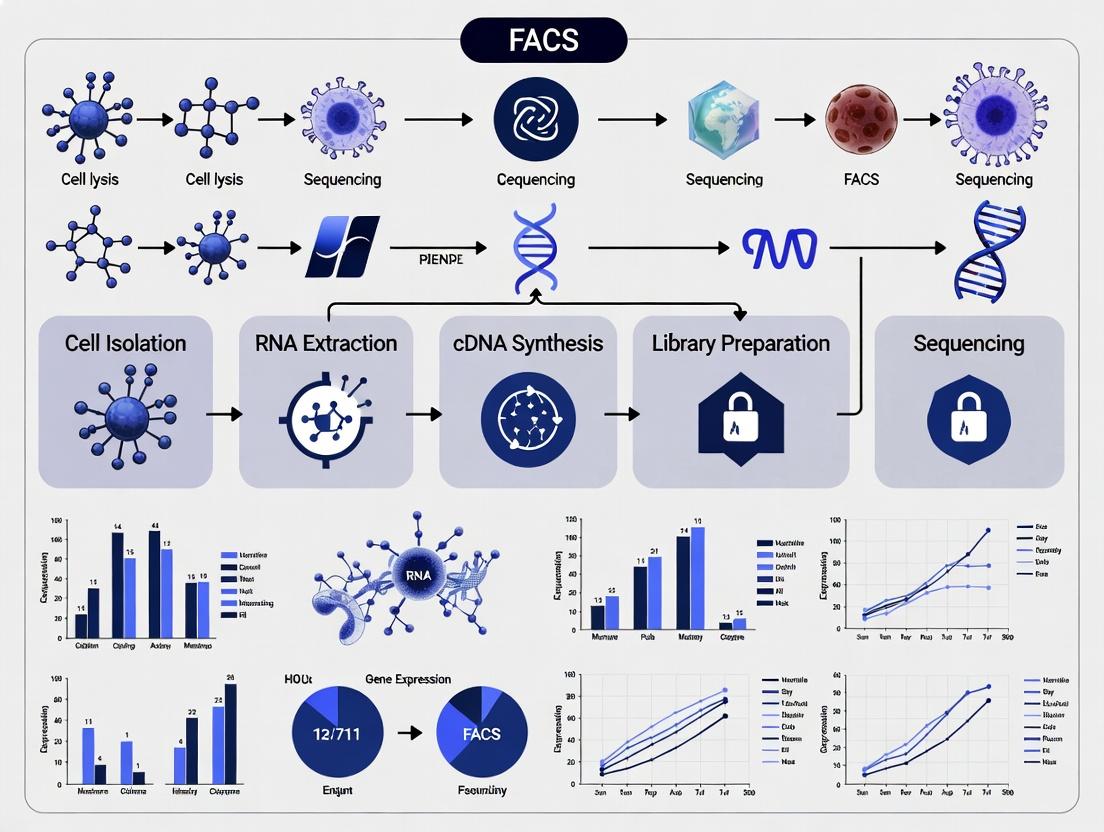
This guide provides a detailed roadmap for researchers, scientists, and drug development professionals leveraging Fluorescence-Activated Cell Sorting (FACS) to isolate single cells for downstream single-cell RNA sequencing (scRNA-seq).
From Phenotype to Transcriptome: A Comprehensive Guide to FACS Sorting for Single-Cell RNA Sequencing
Abstract
This guide provides a detailed roadmap for researchers, scientists, and drug development professionals leveraging Fluorescence-Activated Cell Sorting (FACS) to isolate single cells for downstream single-cell RNA sequencing (scRNA-seq). It covers foundational principles of why and when to use FACS, a step-by-step methodological workflow from experimental design to post-sort analysis, critical troubleshooting and optimization strategies to ensure cell viability and data integrity, and a comparative analysis of FACS against alternative isolation methods. The article synthesizes current best practices to empower robust, high-quality single-cell genomics research with direct implications for understanding disease mechanisms and therapeutic development.
Why FACS for Single-Cell RNA-Seq? Principles, Applications, and Experimental Design
Defining the Role of FACS in the Single-Cell Genomics Pipeline
Fluorescence-Activated Cell Sorting (FACS) is a critical, enabling technology in the single-cell RNA sequencing (scRNA-seq) workflow. It provides the precise, high-throughput isolation of single, viable cells based on complex multiparameter phenotypes, directly influencing library quality and biological interpretation. This application note details the protocols and considerations for integrating FACS into a scRNA-seq pipeline within a research thesis focused on heterogeneous tissue analysis and drug discovery.
Within a broader thesis on cellular heterogeneity, FACS serves as a primary gatekeeper. While droplet-based methods offer high throughput, FACS-based selection is indispensable for: 1) Pre-enrichment of rare cell populations (e.g., circulating tumor cells, stem cells), 2) Isolation based on complex intracellular or surface marker combinations, 3) Selection of cells based on functional assays (e.g., calcium flux, FRET reporters), and 4) Direct deposition into specific reaction vessels for full-length transcriptome or multi-omic assays.
Quantitative Comparison of Single-Cell Isolation Methods
Table 1: Comparison of Key Single-Cell Isolation Technologies for scRNA-seq
| Parameter | FACS-Based Isolation | Microfluidic/Droplet | Laser Microdissection |
|---|---|---|---|
| Throughput | High (up to ~20,000 cells/sec sort, ~1 cell/sec into plates) | Very High (10,000-100,000 cells) | Low (tens to hundreds of cells) |
| Cell Viability | High (maintained with proper pressure & collection media) | Variable | Low to Moderate |
| Input Cell Number | Moderate to High (10^5 - 10^7 recommended) | High (10^5 - 10^7) | Low (specific tissue regions) |
| Multiparameter Selection | Excellent (10+ markers simultaneously) | Limited (typically 1-2 surface markers) | Very Limited (morphology-based) |
| Rare Population Yield | Excellent (for frequencies as low as 0.01%) | Good (but all cells encapsulated) | Poor |
| Single-Cell Precision | High (verified by single-cell deposition) | High (random encapsulation) | High |
| Cost per Cell | Moderate to High | Low | High |
| Primary Application | Phenotype-defined, functional, or rare cell sorts | Large-scale unbiased profiling | Spatial context preservation |
Core Experimental Protocols
Protocol 3.1: FACS Enrichment of Live, Single Immune Cells from Solid Tissue for scRNA-seq
Aim: To enrich live CD45+ immune cells from a dissociated solid tumor for downstream plate-based scRNA-seq.
Materials (Research Reagent Solutions):
- Dissociation Enzyme Cocktail: A validated multi-enzyme mix (e.g., Miltenyi Biotec Tumor Dissociation Kit) for gentle tissue disaggregation while preserving surface epitopes.
- Viability Dye: Fixable viability dye e.g., Zombie NIR or DAPI for dead cell exclusion. Function: Irreversibly labels non-viable cells with compromised membranes.
- Fc Receptor Block: Human or Mouse Fc Block. Function: Prevents non-specific antibody binding via Fc receptors, reducing background.
- Fluorophore-Conjugated Antibodies: Anti-human/mouse CD45 (e.g., FITC), lineage-specific antibodies (CD3, CD19, etc.).
- FACS Collection Buffer: 1x PBS + 1% BSA + 10% FBS + RNase Inhibitor (0.2 U/µL). Function: Maintains cell viability, prevents clumping, and preserves RNA integrity during sort.
- Sorting Sheath Fluid: Pre-filtered, particle-free 1x PBS or proprietary sheath fluid. Function: Maintains stream stability and sterility.
Methodology:
- Sample Preparation: Generate a single-cell suspension from tumor tissue using the optimized dissociation cocktail (30-45 min, 37°C). Pass through a 40µm strainer.
- Staining: Resuspend up to 10^7 cells in FACS buffer (PBS+2%FBS). Incubate with Fc Block (10 min, 4°C). Add viability dye and antibody cocktail. Incubate (20 min, 4°C, in the dark). Wash twice.
- Instrument Setup: Sterilize the FACS sorter fluidics with 10% bleach, followed by RNase decontamination solution (e.g., RNaseZap), and extensive sterile PBS flush.
- Gating Strategy: Create the following sequential gates on a scatter plot:
- FSC-A vs SSC-A: Gate on main cell population, exclude debris.
- FSC-H vs FSC-A: Gate for single cells, exclude doublets.
- Viability Dye vs FSC-A: Select viability dye-negative (live) population.
- CD45 vs FSC-A: Select CD45+ immune cells.
- Sorting: Using "Single-Cell" or "1-Cell" sort mode, directly deposit live, single CD45+ cells into a prepared 96- or 384-well plate containing lysis buffer with RNase inhibitor and barcoded reverse transcription primers. Seal plate immediately and place on dry ice or proceed directly to reverse transcription.
Protocol 3.2: Indexed Fluorescence-Activated Nuclei Sorting (FANS) for snRNA-seq
Aim: To isolate single nuclei from frozen archived tissue for single-nucleus RNA sequencing (snRNA-seq).
Materials (Research Reagent Solutions):
- Nuclei Isolation Buffer: A hypotonic lysis buffer with non-ionic detergent (e.g., NP-40 or IGEPAL) and RNase inhibitors. Function: Lyses plasma membrane while keeping nuclear membrane intact.
- Nuclei Staining Solution: DRAQ5 or Hoechst 33342 (DNA dyes). Function: Labels nuclear DNA for positive identification and gating.
- Sucrose Cushion: 30% sucrose solution. Function: Purifies nuclei via centrifugation, removing cellular debris.
Methodology:
- Nuclei Isolation: Dounce homogenize ~50 mg frozen tissue in cold nuclei isolation buffer on ice. Filter through a 30µm strainer.
- Purification: Layer homogenate over a sucrose cushion. Centrifuge (500 x g, 10 min, 4°C). Carefully aspirate supernatant.
- Staining: Resuspend nuclei pellet in PBS + 1% BSA + RNase inhibitor. Add DRAQ5 dye (final concentration 5-10 µM). Incubate (5-10 min, 4°C, protected from light).
- FANS: Set up sorter with a 100µm nozzle and reduced pressure (20-25 psi). Gate on events with high DRAQ5 signal and intermediate FSC. Sort single nuclei into lysis buffer.
Visualizing the Workflow and Decision Tree
Title: FACS Integration in scRNA-seq Workflow
Title: Decision Tree: FACS vs. Direct Droplet for scRNA-seq
Critical FACS Parameters for scRNA-seq Success
Table 2: Optimized FACS Instrument Settings for scRNA-seq
| Parameter | Recommended Setting | Rationale |
|---|---|---|
| Nozzle Size | 100 µm | Redces shear stress, maintains high viability. Suitable for most mammalian cells (10-30 µm). |
| Sheath Pressure | 20-25 psi (for 100µm nozzle) | Lower pressure minimizes mechanical stress and preserves RNA integrity. |
| Sort Mode | "Single-Cell" (1-Cell) Purify | Ensures one and only one cell is deposited per well. |
| Sample Flow Rate | Low to Medium (Event Rate: <5,000 events/sec for sort) | Maintains sort efficiency and single-cell precision. |
| Collection Medium | Buffered medium with FBS/BSA and RNase Inhibitors | Stabilizes cells post-sort, inhibits RNA degradation. |
| Temperature | 4°C (maintained via sample cooler) | Stabilizes cells and slows metabolism/RNA degradation. |
Application Notes
The integration of Fluorescence-Activated Cell Sorting (FACS) as a front-end to single-cell RNA sequencing (scRNA-seq) is foundational for modern genomics-driven drug discovery. This combination enables the high-resolution deconstruction of complex tissues and disease states, directly informing target identification and biomarker discovery. The core advantages of this approach are operationalized as follows:
Precision enables the isolation of ultra-rare cell populations (e.g., circulating tumor cells, stem cell subsets) with high purity (>99%) directly from heterogeneous samples. This is critical for identifying low-abundance, therapeutically relevant transcriptomic signatures without background noise. Recent data demonstrates that index sorting, where each sorted cell's full flow cytometric profile is recorded, allows for post-hoc correlation of surface protein expression with transcriptional identity, adding a critical layer of validation.
Multiplexing is enhanced through advanced fluorophore panels and, more recently, genetic barcoding techniques. Researchers can simultaneously interrogate over 20 surface markers to define cell states. Furthermore, techniques like Feature Barcoding (CITE-seq, REAP-seq) allow the concurrent measurement of dozens of surface proteins alongside whole transcriptome analysis from the same single cell, bridging proteomic and genomic data seamlessly.
Live-Cell Sorting ensures isolated cells are viable, intact, and transcriptionally unperturbed. Maintaining cellular viability during the sort is paramount for high-quality library generation. Optimization of sheath fluid (e.g., supplemented with bovine serum albumin or salts), pressure settings, and collection media (e.g., chilled, RNA-stabilizing buffers) directly impacts RNA integrity numbers (RIN) and subsequent gene detection rates.
Table 1: Impact of FACS Precision on scRNA-seq Data Quality
| Parameter | Low Purity Sort (<90%) | High Purity Sort (>99%) | Measurement Method |
|---|---|---|---|
| Median Genes/Cell | 1,500 - 2,500 | 3,000 - 6,000 | Unique Molecular Identifiers (UMIs) |
| Multiplet Rate | 8% - 15% | 2% - 5% | Doublet detection algorithms (e.g., DoubletFinder) |
| Cell Type Resolution | Low; obscured clusters | High; distinct rare populations | Clustering (e.g., Leiden, UMAP) |
| Signal-to-Noise Ratio | Low | High | Differential expression p-value distributions |
Table 2: Comparison of scRNA-seq Viability Post-Sort Under Different Conditions
| Collection Condition | Sheath Fluid | Post-Sort Viability | RNA Integrity (RIN) |
|---|---|---|---|
| Standard PBS | Unsorted | >95% | 9.5 - 10 |
| Standard PBS | Sorted | 70% - 85% | 8.0 - 9.0 |
| Optimized Buffer* | Sorted | 90% - 98% | 9.0 - 9.8 |
Optimized Buffer: 1x PBS, 0.04% BSA, 25mM NaCl, chilled to 4°C.
Experimental Protocols
Protocol 1: Index Sorting for Correlative Phenotype-Transcriptome Analysis
Objective: To isolate single cells by FACS while retaining the quantitative fluorescence data for every measured parameter per cell, linking precise surface phenotype to transcriptional output.
Materials: See The Scientist's Toolkit below.
Procedure:
- Sample Preparation: Generate a single-cell suspension from your tissue or culture. Filter through a 35µm strainer. Keep on ice.
- Staining: Incubate with a titrated antibody panel for 30 minutes on ice in the dark. Wash twice with sort buffer (e.g., 1x PBS, 1% BSA, 1mM EDTA).
- Instrument Setup: Calibrate the sorter using calibration beads. Set up the index sorting template in the software to record the FSC, SSC, and fluorescence intensity for all channels for each event deposited into a well.
- Gating Strategy: Create a sequential gating hierarchy: FSC-A/SSC-A to exclude debris, FSC-H/FSC-W to exclude doublets, viability dye-negative for live cells, then final phenotypic gates (e.g., CD45+CD3+CD8+ for cytotoxic T cells).
- Sorting: Sort single cells, based on the final gate, directly into 96- or 384-well plates containing lysis buffer (with RNase inhibitors and barcoded primers). The sort file will map each well's content to its full flow cytometric profile.
- Post-Sort Processing: Immediately seal plates, centrifuge, and freeze at -80°C or proceed directly to reverse transcription.
Protocol 2: Viability-Preserving Sort for Sensitive Cells
Objective: To maximize post-sort viability and RNA quality for fragile primary cells (e.g., neurons, hepatocytes).
Procedure:
- Buffer Preparation: Prepare ice-cold, oxygenated sort buffer: Hibernate A medium (or equivalent) supplemented with 0.04% BSA, 25mM NaCl. Filter sterilize.
- Sorter Configuration: Use the largest nozzle size applicable (e.g., 130µm) and the lowest pressure setting that maintains a stable stream (e.g., 20-25 PSI). Cool the sample chamber to 4°C.
- Collection Tubes: Pre-fill collection tubes with 500µl of recovery medium (complete growth medium + 10% FBS). Keep on ice.
- Sort: Perform sort as quickly as possible. Shield collection tubes from light and keep on ice or in a chilled block.
- Post-Sort Handling: Immediately after sorting, centrifuge collected cells gently (300 x g, 5 min, 4°C). Resuspend in appropriate medium for counting or direct input into scRNA-seq platforms like 10x Genomics.
Protocol 3: Multiplexed Feature Barcoding Workflow (CITE-seq)
Objective: To simultaneously profile cell surface protein abundance and whole transcriptome from the same single cell.
Procedure:
- Antibody Tagging: Conjugate oligonucleotide barcodes to purified antibodies against target surface proteins using a commercial conjugation kit (e.g., TotalSeq).
- Staining: Incubate single-cell suspension with the titrated, conjugated antibody panel (in PBS/0.04% BSA) for 30 minutes on ice. Do not fix cells.
- Washing: Wash cells thoroughly three times with large volumes (≥2ml) of sort buffer to remove unbound antibodies. This step is critical to minimize background.
- FACS Enrichment: Sort the target live cell population (viability dye-negative) with high purity into a pellet or directly into lysis buffer.
- Library Preparation: Proceed with your chosen scRNA-seq platform (e.g., 10x Genomics 3'). The feature barcodes will be captured alongside cellular mRNAs during the reverse transcription step. Generate separate sequencing libraries for the gene expression (GEX) and antibody-derived tags (ADT).
- Data Analysis: Process ADT counts similarly to GEX data but with dedicated normalization (e.g., centered log-ratio normalization) and use them to augment cluster identification.
Diagrams
Diagram 1: Index Sorting Workflow
Diagram 2: CITE-seq Experimental Integration
Diagram 3: Factors for Optimal Live-Cell Sorting
The Scientist's Toolkit
Table 3: Essential Reagents and Materials for FACS-scRNA-seq Experiments
| Item | Function & Importance |
|---|---|
| UltraPure BSA (0.04% in buffer) | Reduces non-specific antibody binding and cell clumping; protects cell membrane during sort. |
| EDTA (1-5mM in buffer) | Chelates calcium/magnesium to prevent adhesion and aggregation. |
| Viability Dye (e.g., DAPI, Propidium Iodide) | Distinguishes live from dead cells; critical for RNA quality. DAPI is preferred for fixed sorts only. |
| Oligo-Conjugated Antibodies (TotalSeq) | Enables multiplexed protein detection (CITE-seq) alongside transcriptome. |
| RNase Inhibitor (e.g., RNasin Plus) | Added to collection tubes/lysis buffer to preserve RNA integrity post-sort. |
| Supplemented Collection Media (e.g., Hibernate A + BSA) | Maintains pH, osmolarity, and health of sensitive primary cells during and after sort. |
| High-Recovery FACS Tubes | Low-adhesion surfaces maximize cell yield, especially for rare populations. |
| Indexed Lysis Plates (96/384-well) | Plates pre-loaded with barcoded primers/lysis buffer for direct sorting and library prep. |
| Nozzle Cleaner (e.g., 10% Bleach, Contrad 70) | Essential for preventing clogs and eliminating RNase/DNase contamination between samples. |
Application Notes
Rare Cell Populations
Single-cell RNA sequencing (scRNA-seq) after FACS isolation is critical for characterizing rare cell types (e.g., circulating tumor cells, stem cells, transitional states) that are masked in bulk analyses. Quantitative recovery and purity are paramount.
Key Quantitative Data: Table 1: Performance Metrics for Rare Cell Sorting for scRNA-seq
| Parameter | Typical Target/Result | Impact on scRNA-seq |
|---|---|---|
| Sort Purity | >95% | Reduces background noise, ensures target cell transcriptome |
| Cell Viability (Post-Sort) | >90% | Essential for cDNA library yield |
| Cell Input Number | 100 - 10,000 cells | Balances rare population capture with sequencing depth |
| Throughput | 200 - 5,000 events/sec | Limits stress on cells during extended sorts |
| Multiplexing Capability | 6-30 barcoded samples | Enables cohort pooling, reduces batch effects |
Immune Profiling
High-parameter FACS into scRNA-seq enables deep immune phenotyping—resolving T-cell clonality, activation states, and antigen specificity—by linking surface protein expression (CITE-seq/REAP-seq) to transcriptional profiles.
Key Quantitative Data: Table 2: Immune Profiling Panel Design for FACS + scRNA-seq
| Marker Category | Example Markers | Recommended Fluorochromes |
|---|---|---|
| Lineage | CD3, CD19, CD14, CD56 | PE, APC, BV421 |
| Activation/State | CD25, CD69, PD-1, CD127 | PE-Cy7, BV605, BV711 |
| Memory/Differentiation | CD45RA, CD62L, CD27 | APC-Cy7, BV785, FITC |
| Viability | Live/Dead, 7-AAD | Fixable viability dye (e.g., Zombie NIR) |
CRISPR Screens
FACS-isolated single cells from pooled CRISPR knockout or perturbation screens are sequenced to link genetic barcodes/gRNA identity to transcriptional outcomes, enabling high-throughput functional genomics.
Key Quantitative Data: Table 3: Considerations for FACS Sorting CRISPR-Perturbed Cells
| Factor | Requirement | Rationale |
|---|---|---|
| Infection/Efficiency | >30% transduction efficiency | Ensures sufficient perturbed cells for sorting |
| Selection | 1-2 weeks antibiotic/puromycin | Enriches for successfully transduced cells |
| Barcode Detection | FACS sorting for GFP/mCherry (if present) | Directs sorting of perturbed population |
| Cell Number Sorted | 10,000 - 20,000 cells | Provides statistical power for gRNA recovery |
Detailed Protocols
Protocol 1: FACS Sorting of Rare Circulating Tumor Cells (CTCs) for scRNA-seq
Goal: Isolate viable, single CTCs from peripheral blood mononuclear cells (PBMCs) for downstream 10x Genomics library preparation.
Materials:
- Pre-enriched PBMC sample (via CD45 depletion or size-based filtration)
- Staining cocktail: Anti-EpCAM-FITC, Anti-CD45-APC-Cy7, LIVE/DEAD Fixable Near-IR viability dye
- FACS sorter (e.g., BD FACSAria III) equipped with a 100µm nozzle
- Collection medium: PBS + 0.04% BSA or appropriate scRNA-seq collection buffer
- Low-binding collection tubes
Method:
- Prepare Sample: Resuspend pre-enriched cells in sorting buffer (PBS + 2% FBS + 1mM EDTA). Pass through a 35µm cell strainer.
- Stain Cells: Incubate with viability dye (20min, 4°C), wash. Incubate with surface antibody cocktail (30min, 4°C), wash twice.
- FACS Gating Strategy: a. Gate singlet population on FSC-H vs FSC-A. b. Gate viable cells (Live/DEAD dye negative). c. Gate CD45- negative population. d. Gate EpCAM+ positive population (CTCs). e. Sort single cells directly into 96-well plate or buffer tube pre-loaded with lysis buffer.
- Sort Parameters: Use "Purity" sort mode, 100µm nozzle, low pressure (20 psi). Collect into chilled tubes.
- Post-Sort: Centrifuge sorted cells gently (300 x g, 5min). Proceed immediately to scRNA-seq library construction.
Protocol 2: Immune Profiling via CITE-seq with Prior FACS Isolation
Goal: Sort specific immune subsets (e.g., CD8+ memory T cells) for scRNA-seq with simultaneous antibody-derived tag (ADT) detection.
Materials:
- Human PBMCs or tissue-derived single-cell suspension
- TotalSeq-B antibody cocktail (e.g., BioLegend) for surface proteins
- Cell hashing antibodies (TotalSeq-B) for sample multiplexing
- FACS sorter
- 10x Genomics Chromium Single Cell 5' Kit v2
Method:
- Cell Staining for Hashing & Profiling:
- Stain 1x10^6 cells per sample with a unique CellPlex (TotalSeq-B) hashing antibody (30min, 4°C). Wash.
- Pool all hashed samples.
- Stain pooled sample with TotalSeq-B antibody cocktail for immune profiling (30min, 4°C). Wash.
- Resuspend in sorting buffer with viability dye.
- FACS Gating & Sorting:
- Gate single, live cells.
- Apply subset-specific gates (e.g., CD3+CD8+CD45RA-CD62L+ for central memory T cells).
- Sort target population into a 1.5mL LoBind tube containing collection buffer. Target 20,000 cells for 10x loading.
- Post-Sort Processing: Count cells, assess viability (>90%). Adjust concentration to 1000 cells/µL. Proceed to 10x Chromium controller using the 5' Gene Expression with Feature Barcode protocol.
Protocol 3: Sorting Cells from a Pooled CRISPR Screen for scRNA-seq
Goal: Isolate single, CRISPR-perturbed cells expressing a fluorescent reporter for scRNA-seq and gRNA identification.
Materials:
- Pooled transduced cell population (e.g., K562 with lentiviral sgRNA library + GFP reporter)
- Puromycin for selection
- FACS sorter
- 10x Genomics Single Cell 3' Kit v3.1 with Feature Barcode capability
- SGEM (Single Cell Guide Capture by Expression of Molecular Index) or similar reverse transcription primers for gRNA capture.
Method:
- Cell Preparation: Culture transduced cells under puromycin selection for 7 days. Ensure >30% GFP+ population.
- FACS Sorting:
- Harvest cells, wash, resuspend in sort buffer with viability dye.
- Gate single, live, GFP+ cells.
- Sort single cells directly into the wells of a 96-well plate containing reverse transcription mix with gRNA capture primers, or bulk sort GFP+ cells into a tube for subsequent 10x processing.
- For 10x, target recovery of 10,000 GFP+ cells.
- Library Preparation: Follow the 10x Single Cell 3' Gene Expression with Feature Barcode protocol. Include an additional gRNA amplification step during cDNA amplification using custom primers complementary to the sgRNA backbone.
Visualizations
Title: Single-Cell RNA-Seq Workflow Post-FACS
Title: CRISPR Screen to scRNA-seq Integration
Title: Key T-Cell Activation Signaling Pathways
The Scientist's Toolkit
Table 4: Essential Research Reagent Solutions for FACS-scRNA-seq Applications
| Reagent/Material | Function & Key Feature | Example Product |
|---|---|---|
| Fixable Viability Dyes | Distinguishes live/dead cells during sorting; impermeable to live cell membrane, covalent binding upon fixation. Critical for data quality. | Zombie dyes (BioLegend), LIVE/DEAD Fixable stains (Thermo) |
| TotalSeq Antibodies | Antibody-derived tags (ADTs) for simultaneous protein detection in scRNA-seq (CITE-seq). Contains poly(A) sequence for cDNA capture. | BioLegend TotalSeq, BD AbSeq |
| Cell Hashing Antibodies | Sample multiplexing. Each sample stained with unique barcoded antibody against a ubiquitous surface protein (e.g., CD298). Allows sample pooling pre-sort. | BioLegend CellPlex, BD Sample Multiplexing |
| CRISPR sgRNA Libraries | Pooled lentiviral libraries for genetic screens. Contains sgRNA + constant region for PCR capture. | Brunello, Calabrese libraries (Addgene) |
| 10x Genomics Feature Barcode Kits | Enables capture of antibody-derived tags (ADTs) and CRISPR gRNAs alongside transcriptomes in droplet-based scRNA-seq. | Chromium Single Cell 5' or 3' Feature Barcode kit |
| Low-Binding Tubes & Tips | Minimizes cell loss and adsorption to plastic surfaces during and after sorting, crucial for rare cell recovery. | DNA LoBind tubes (Eppendorf), Biosphere Filter Tips |
| Sort Collection Buffer | Protects cell viability and integrity during and after sorting. Typically contains protein (BSA) and may lack Ca2+/Mg2+. | PBS + 0.04% BSA + optional RNase inhibitor |
Within the broader thesis focusing on FACS sorting single cells for RNA sequencing research, the pre-sort phase is a critical determinant of experimental success. Flaws in panel design, inadequate controls, or suboptimal sample preparation directly compromise downstream transcriptomic data quality, leading to uninterpretable or misleading biological conclusions. This document details the application notes and protocols essential for robust single-cell sorting.
Panel Design for Single-Cell RNA-Seq Sorting
The primary goal of panel design is to accurately identify and isolate target cell populations with high purity while preserving RNA integrity. Unlike panels for functional analysis, emphasis is on viability, identity, and minimal cellular perturbation.
Key Principles:
- Conjugation & Brightness: Prefer brighter fluorochromes (e.g., PE, APC) for low-abundance markers. Use tandem dyes cautiously due to potential stability issues.
- Antigen Density & Spillover: Consider antigen density when assigning fluorochromes. Utilize tools like Spectra Viewer with instrument-specific configurations to minimize spillover spread (SSC).
- Viability & Stress Dyes: Incorporation of a viability dye (e.g., Zombie NIR, DAPI) is mandatory. Avoid dyes like PI that require permeabilization. Consider stress-response markers (e.g., CD69 for T cell activation) to sort unstressed cells.
- Surface vs. Intracellular: For intracellular markers (e.g., transcription factors), ensure fixation/permeabilization protocols are compatible with RNA recovery. Generally, surface-marker-only panels are preferred.
Quantitative Data Summary: Recommended Fluorochrome Choices
| Marker Characteristic | Recommended Fluorochrome | Alternative | Reason |
|---|---|---|---|
| Low Abundance Antigen | PE, APC, Brilliant Violet 421 | Alexa Fluor 700 | High quantum yield/photostability |
| High Abundance Antigen | FITC, PerCP-Cy5.5 | PE-Cy7 | Preserves bright channels |
| Viability Staining | Zombie NIR, DAPI (if UV laser) | 7-AAD (if no fixation) | Membrane integrity, RNA-compatible |
| Background Autofluorescence | Avoid PE-Cy5, APC-Cy7 | Use dyes in far-red | Minimizes overlap with autofluorescence |
Essential Controls and Compensation
Proper controls are non-negotiable for defining sort gates and ensuring population purity.
Required Controls Setup:
| Control Type | Purpose | Protocol |
|---|---|---|
| Unstained | Autofluorescence baseline, FSC/SSC settings. | Process cells identically without antibody addition. |
| Single-Color Controls | Compensation matrix calculation. | Use compensation beads or a cell sample stained with each individual antibody. Must match the antibody-fluorochrome conjugate used in the full panel. |
| Fluorescence Minus One (FMO) | Accurate gating boundary determination for dim populations and checking spread error. | Stain sample with all antibodies except the one of interest. |
| Isotype/Biological Negative | Assess non-specific antibody binding. | Use cells known not to express the target antigen, stained with the full panel. |
| Positive Biological Control | Verify antibody staining functionality. | Use cells known to express the target antigen. |
Protocol: Preparation of Single-Color Compensation Controls
- Materials: UltraComp eBeads or similar acrylic beads, individual antibody conjugates from the panel.
- Procedure: For each fluorochrome, incubate one tube of beads with 1 µl of the corresponding antibody (or as per manufacturer's recommendation) for 15 minutes at 4°C in the dark.
- Wash: Add 2 mL of PBS + 0.1% BSA, centrifuge at 300g for 5 min, aspirate supernatant.
- Resuspend: Resuspend in 500 µl of cold PBS + 0.1% BSA. Keep at 4°C in the dark until acquisition.
- Acquisition: Run each single-color tube on the sorter, collecting sufficient events for the software to build a compensation matrix.
Sample Preparation Protocols for RNA Integrity
The protocol aims to generate a single-cell suspension that is viable, representative, and has uncompromised RNA.
Detailed Workflow Protocol: Tissue Dissociation to Single-Cell Suspension
Reagent Solutions:
- Dissociation Enzyme Cocktail: (e.g., Liberase TL, DNase I in RPMI). Function: Enzymatically degrade extracellular matrix.
- RBC Lysis Buffer: (e.g., ACK Lysing Buffer). Function: Remove red blood cells from hematopoietic tissues.
- Cell Staining Buffer: PBS + 2% FBS + 1mM EDTA. Function: Maintain viability, prevent clumping, provide protein block.
- RNA Stabilization Agent: (e.g., RNase Inhibitor, 1% BSA in PBS). Function: Suppress RNase activity during sorting.
Steps:
- Harvest & Dissociate: Mince tissue finely with scalpels in a small volume of cold dissection medium. Transfer to enzyme cocktail and incubate at 37°C for the empirically determined optimal time (e.g., 20-40 min) with gentle agitation.
- Quench & Filter: Quench digestion with 10 mL of cold cell staining buffer. Pass through a 70µm cell strainer into a 50mL tube. Rinse strainer with additional buffer.
- Wash & Lyse RBC: Centrifuge at 300-400g for 5 min at 4°C. Aspirate supernatant. If needed, resuspend pellet in 2-5 mL RBC lysis buffer for 5 min on ice. Quench with excess buffer.
- Wash & Count: Centrifuge, aspirate. Resuspend in 10 mL cold staining buffer. Count using an automated cell counter (e.g., Countess) with Trypan Blue to assess viability. Target viability >85%.
- Block & Stain: Centrifuge, resuspend at 10-50 x 10^6 cells/mL in staining buffer. Incubate with Fc receptor block (e.g., anti-CD16/32) for 10 min on ice. Add pre-titrated antibody cocktail, mix, incubate 20-30 min in the dark at 4°C.
- Wash & Resuspend: Add buffer, centrifuge, aspirate. Repeat wash. Resuspend in cold staining buffer containing an RNase inhibitor at 2-5 x 10^6 cells/mL. Keep on ice until sort. Proceed to FACS within 60-90 minutes.
The Scientist's Toolkit: Key Research Reagent Solutions
| Item Name | Function & Rationale |
|---|---|
| Liberase TL | Blend of collagenase I/II enzymes for gentle tissue dissociation, preserving surface epitopes and cell viability. |
| DNase I | Degrades free DNA released by dead cells, preventing cell clumping via sticky DNA webs. |
| UltraComp eBeads | Compensation beads providing consistent, bright signals for all laser lines, enabling precise compensation matrix setup. |
| Zombie NIR Viability Dye | Fixable viability dye excited by 633/640nm laser; binds amines in non-viable cells, compatible with subsequent RNA-seq. |
| Recombinant Human Fc Block | Binds Fc receptors on immune cells, preventing non-specific, Fc-mediated antibody binding and reducing background. |
| SuperScript IV RNase H- Reverse Transcriptase | For post-sort cDNA synthesis; high processivity and thermostability for complex RNA templates, maximizing cDNA yield from single cells. |
| BSA (Molecular Biology Grade) | Used in buffers to block non-specific binding and stabilize cells; molecular biology grade ensures low RNase/DNase contamination. |
Visualization of Workflows and Relationships
Title: Single-Cell RNA-Seq Sort Preparation Workflow
Title: Panel Design to Gating Logic for Population Purity
Understanding the Impact of Sort Parameters on Transcriptional Profiles
Within the broader thesis on Fluorescence-Activated Cell Sorting (FACS) for single-cell RNA sequencing (scRNA-seq), a critical yet often underestimated variable is the configuration of the sorter itself. This Application Note details how specific sort parameters—including nozzle size, pressure, sheath fluid composition, sort mode, and collection media—directly influence cell viability, RNA integrity, and ultimately, the transcriptional profiles obtained. Optimizing these parameters is essential for generating biologically accurate data free from sort-induced artifacts.
Key Findings from Current Literature
Recent studies quantify the impact of mechanical and environmental stress during FACS on downstream sequencing metrics.
Table 1: Impact of Nozzle Size and Pressure on Cell Integrity
| Nozzle Size (µm) | Pressure (PSI) | Avg. Cell Viability Post-Sort (%) | RIN Number Post-Sort | Key Effect on Transcriptional Profile |
|---|---|---|---|---|
| 100 | 20-25 | >95 | 8.5-9.5 | Minimal stress signature. |
| 85 | 25-30 | 90-94 | 8.0-9.0 | Slight increase in immediate early genes. |
| 70 | 30-45 | 80-89 | 7.5-8.5 | Moderate heat shock/ stress response. |
| 50 (for nuclei) | 40-50 | N/A - Nuclei | 7.0-8.0 | Increased risk of nuclear lysis. |
Table 2: Effect of Collection Media on RNA Preservation
| Collection Media | Additives | scRNA-seq Library Yield (%) | % Mitochondrial Reads | Note |
|---|---|---|---|---|
| PBS (Standard) | None | 100 (Baseline) | 10-25% | High risk of RNA degradation. |
| Commercial Cell Buffer | BSA, EDTA | 110-120 | 8-15% | Improves viability, may dilute transcripts. |
| Lysis Buffer + RNase Inhibitors | 1% BME, RNase Inhibitor | 130-150 | 5-12% | Maximizes RNA capture; immediate fixation. |
| Trizol-LS | None | 95-105 | 7-15% | Directly inactivates RNases; requires cleanup. |
Detailed Experimental Protocols
Protocol 3.1: Optimized FACS for scRNA-seq (Live Cells)
Objective: To sort single cells with maximal viability and RNA integrity for droplet-based scRNA-seq.
- Pre-Sort Preparation:
- Prepare cells to >90% viability. Filter through a 35 µm cell strainer.
- Pre-chill FACS sorter collection chamber to 4°C.
- Prepare collection tubes: 1.5 mL LoBind microcentrifuge tubes containing 50 µL of collection media (e.g., PBS with 1% BSA, 1 U/µL RNase inhibitor, and 10% FBS).
- Sorter Configuration:
- Nozzle: Use a 100 µm nozzle.
- Pressure: Set to 20-25 PSI.
- Sheath Fluid: Use molecular-grade, sterile, 0.22 µm filtered PBS. Pre-chill to 4°C.
- Sort Mode: Prefer "Purity" mode over "Yield" or "Speed" for single-cell sorting to minimize co-incidence events.
- Event Rate: Maintain below 5,000 events/second to ensure accuracy.
- Sorting & Collection:
- Perform sort directly into prepared, chilled collection tubes.
- Limit collection to 10,000 cells per tube, and immediately place tubes on ice.
- Process cells for library preparation within 30 minutes of sort completion.
Protocol 3.2: Protocol for Intracellular Antigen Sorting (Fixed Cells)
Objective: To sort cells based on intracellular markers without compromising RNA quality.
- Fixation & Permeabilization:
- Fix cells in 4% PFA for 10 minutes at room temperature. Quench with 0.1M glycine.
- Permeabilize with ice-cold 90% methanol for 30 minutes on ice. Wash twice with FACS buffer (PBS + 0.5% BSA).
- Staining & Sorting:
- Stain with antibody against intracellular target in FACS buffer for 30 minutes on ice.
- Configure sorter with an 85 µm nozzle at 25 PSI.
- Sort into tubes containing a small volume of the chosen collection media from Table 2 (e.g., Lysis buffer with RNase inhibitors for direct input into a protocol like SMART-Seq v4).
- Post-Sort Processing:
- Proceed immediately to RNA isolation or whole transcriptome amplification, as fixation can accelerate RNA fragmentation over time.
The Scientist's Toolkit: Essential Research Reagent Solutions
Table 3: Key Reagents for FACS-scRNA-seq Experiments
| Item | Function | Example Product/Catalog |
|---|---|---|
| RNase Inhibitor | Prevents degradation of RNA during and after sorting. | Protector RNase Inhibitor (Roche) |
| Molecular Biology-Grade BSA | Reduces cell clumping and non-specific binding in sheath/collection buffers. | Ambion UltraPure BSA |
| Fluorescent Viability Dye | Distinguishes live from dead cells; critical for sorting viable populations. | DAPI (for fixed cells), Propidium Iodide (PI), SYTOX Blue |
| Single-Cell Collection Media | Preserves RNA integrity post-sort. | Qiagen RNAprotect Cell Reagent, SMART-Seq HB Cell Buffer (Takara) |
| High-Recovery FACS Tubes | Minimizes cell adhesion to tube walls. | Eppendorf DNA LoBind Tubes |
| Filtered Sheath Fluid | Prevents nozzle clogs and sample contamination. | BD FACSFlow Sheath Fluid (0.22 µm filtered) |
Visualizations
Title: How Sort Parameters Determine scRNA-seq Data Quality
Title: Optimized Workflow for scRNA-seq Post-FACS
The FACS-to-Seq Workflow: A Step-by-Step Protocol for Optimal Cell Recovery
Effective pre-sort sample preparation is critical for successful fluorescence-activated cell sorting (FACS) of single cells destined for downstream RNA sequencing (RNA-seq) analysis. This protocol details optimized procedures for assessing cell viability, performing antibody staining for target cell selection, and preparing compatible buffer systems to ensure high-quality, intact, and transcriptionally representative single-cell recovery. The following methodologies are framed within a thesis investigating tumor microenvironment heterogeneity via scRNA-seq.
Key Research Reagent Solutions
| Reagent/Chemical | Primary Function in Pre-Sort Prep | Key Considerations for RNA-seq |
|---|---|---|
| DPBS, Ca²⁺/Mg²⁺ free | Baseline washing and dilution buffer. | Prevents cell clumping; essential for enzymatic dissociation. |
| Fluorophore-conjugated Antibodies | Specific antigen labeling for target cell isolation. | Validate spectral overlap does not compromise sort purity; use direct conjugates. |
| Viability Dye (e.g., DAPI, PI, LIVE/DEAD Fixable) | Distinguishes live from dead cells. | Choose fixable dye if post-sort fixation is needed; ensure compatibility with laser lines. |
| BSA (0.5-1%) or FBS (2-5%) | Buffer additive to reduce non-specific binding and cell loss. | Use ultra-pure, nuclease-free grade to preserve RNA integrity. |
| EDTA (0.5-5mM) | Chelating agent added to buffers. | Minimizes cell adhesion and aggregation; inhibits metalloproteases. |
| RNase Inhibitor | Suppresses RNase activity during processing. | Critical for preserving RNA quality post-sort; add to collection media. |
| Nuclease-Free Collection Media | Final suspension and collection medium. | Often high-protein media (e.g., with BSA) + RNase inhibitor for cell stability. |
Protocols
Protocol 1: Assessment of Single-Cell Viability and Count
Objective: To accurately determine the viability and concentration of a single-cell suspension prior to staining and sorting.
Materials:
- Single-cell suspension
- Automated cell counter (or hemocytometer)
- Viability dye (e.g., Trypan Blue, Acridine Orange/Propidium Iodide)
- DPBS
Method:
- Prepare Suspension: Ensure cells are in a single-cell suspension by gentle pipetting or filtering through a 35-40 µm cell strainer.
- Mix with Dye: Combine 10 µL of cell suspension with 10 µL of viability dye (e.g., Trypan Blue) directly on a counting slide or tube.
- Load & Analyze: Immediately load the mixture into an automated cell counter. If using a hemocytometer, load into the chamber and count under a microscope.
- Calculate: Record the Total Cell Concentration (cells/mL) and the Percent Viability. Viability >80% is generally recommended for robust scRNA-seq.
Quantitative Metrics & Acceptable Ranges:
| Parameter | Target Range | Importance for Downstream scRNA-seq |
|---|---|---|
| Cell Viability | >80% | Low viability increases background noise and confounds transcriptomic data. |
| Cell Concentration | 5-20 x 10⁶ cells/mL (pre-stain) | Optimal for staining efficiency and sort speed. |
| Aggregate/Doublet Rate | <5% | Critical to ensure true "single-cell" data and avoid artifactual gene expression. |
Protocol 2: Surface Marker Staining for FACS
Objective: To specifically label cell surface antigens with fluorochrome-conjugated antibodies for target population isolation.
Materials:
- Viable single-cell suspension
- Staining Buffer (DPBS + 2% FBS + 1mM EDTA)
- Fluorophore-conjugated primary antibodies
- Fc receptor blocking reagent (species-specific)
- Refrigerated centrifuge
Method:
- Wash: Pellet 1-5 x 10⁶ cells at 300-400 x g for 5 min at 4°C. Aspirate supernatant.
- Block & Stain: Resuspend cell pellet in 100 µL ice-cold Staining Buffer. Add Fc block (per manufacturer's instructions). Incubate for 10 min on ice.
- Add Antibody: Add pre-titrated, directly conjugated antibody cocktail. Vortex gently.
- Incubate: Incubate in the dark for 30 min on ice.
- Wash: Add 2 mL of Staining Buffer, centrifuge at 400 x g for 5 min at 4°C. Aspirate supernatant carefully.
- Resuspend: Resuspend cells in 0.5-1 mL of ice-cold, nuclease-free Sorting Buffer (DPBS + 0.5% BSA + 1mM EDTA + RNase Inhibitor (0.2 U/µL)). Keep on ice and protected from light.
- Filter: Pass the suspension through a 35 µm cell strainer cap into a FACS tube immediately before sorting.
Protocol 3: Preparation of Nuclease-Free Sorting and Collection Buffers
Objective: To formulate buffers that maintain cell viability, prevent RNA degradation, and ensure sort sterility.
Sorting Buffer Formulation (500 mL):
- DPBS (Ca²⁺/Mg²⁺ free): 500 mL
- Bovine Serum Albumin (BSA), Ultra-Pure: 2.5 g (0.5% w/v)
- EDTA (0.5M stock): 500 µL (0.5 mM final)
- RNase Inhibitor (40 U/µL): 250 µL (Add just before use, 0.02 U/µL final)
Collection Media Formulation (for 96-well plate, 1 mL):
- Culture Media (e.g., DMEM) with 10% FBS: 900 µL
- RNase Inhibitor (40 U/µL): 5 µL (0.2 U/µL final)
- Optional: DTT (1M stock): 1 µL (1 mM final) to reduce secondary RNA structure.
Diagrams
Title: Workflow for FACS Pre-Sort Cell Preparation
Title: Buffer Components for scRNA-seq FACS
Application Notes
Optimizing the nozzle selection, pressure, and stream stability of a Fluorescence-Activated Cell Sorter (FACS) is critical for the integrity of single-cell RNA sequencing (scRNA-seq) data. Within the broader thesis on using FACS for scRNA-seq research, this optimization directly impacts cell viability, recovery, and the accuracy of transcriptional profiles. A compromised droplet stream can lead to cell lysis, doublet formation, or low event recovery, introducing significant technical noise into downstream bioinformatics analyses.
Key Quantitative Parameters: The optimal configuration balances droplet formation stability with gentle hydrodynamic forces on sensitive cells. The following table summarizes the critical relationships and standard parameters for common cell types in scRNA-seq workflows.
Table 1: Nozzle Selection and Pressure Guidelines for Single-Cell Sorting
| Cell Type/Size | Recommended Nozzle Diameter (µm) | Typical Pressure Range (PSI) | Drop Delay Stability (SD) Target | Primary Concern for scRNA-seq |
|---|---|---|---|---|
| Lymphocytes | 70 - 100 | 45 - 55 | < 0.15 µs | High viability, low stress |
| Adherent Cells (dissoc.) | 100 - 130 | 35 - 45 | < 0.20 µs | Minimizing mechanical shear |
| Neurons/Nuclei | 100 - 130 | 30 - 40 | < 0.25 µs | Preventing nuclear rupture |
| HEK293, HeLa | 85 - 100 | 40 - 50 | < 0.18 µs | High recovery yield |
Experimental Protocols
Protocol 1: Assessing Stream Stability and Drop Delay Determination This protocol ensures the droplet break-off point is consistent, which is mandatory for precise single-cell deposition into 96- or 384-well plates.
- Setup: Install a sterile, filtered nozzle of chosen diameter (e.g., 100µm). Use sterile, particle-free sheath fluid (e.g., 0.22µm filtered PBS). Set the instrument pressure to the mid-range of recommendation.
- Stream Visualization: Place the strobe adjustment tool in the stream path. Adjust the strobe timing until the droplet break-off point appears "frozen." The stream should show a series of evenly spaced, stable "neck" regions before droplet formation.
- Drop Delay Calculation: Run the instrument's automated drop delay calculation routine using precision alignment beads. Typically, a minimum of 10,000 bead events are used to compute the optimal delay.
- Stability Validation: Perform the calculation three consecutive times. The standard deviation (SD) of the calculated drop delay should be <0.2 µs (see Table 1). A higher SD indicates stream instability.
- Documentation: Record the final drop delay value and its SD.
Protocol 2: Empirical Testing for Optimal Cell Viability and Recovery This protocol determines the gentlest conditions that maintain sort purity and yield for a specific cell type.
- Sample Prep: Prepare a single-cell suspension of >90% viability (assayed by Trypan Blue or AO/PI staining) from your target population (e.g., primary T-cells).
- Iterative Testing: Using a test sample and a viability dye (e.g., Propidium Iodide or DAPI), perform three sequential sorts under different conditions:
- Condition A: 70µm nozzle @ 50 PSI.
- Condition B: 100µm nozzle @ 45 PSI.
- Condition C: 100µm nozzle @ 40 PSI.
- Sort Collection: For each condition, sort 1,000 viable (dye-negative) cells into 1.5mL microcentrifuge tubes containing 500µL of cold, protein-rich collection media (e.g., 50% FBS in PBS).
- Post-Sort Analysis:
- Viability: Re-analyze an aliquot of sorted cells on the sorter or a benchtop cytometer for viability dye incorporation.
- Recovery: Count the absolute number of cells recovered using a hemocytometer or automated cell counter.
- Optimal Condition Selection: Plot viability (%) and recovery yield (%) for each condition. The optimal condition is the one that maximizes both parameters while maintaining a stable stream (from Protocol 1).
Visualizations
Title: Factors Determining FACS Sort Purity
Title: Workflow for Testing Optimal Sort Conditions
The Scientist's Toolkit: Research Reagent Solutions
Table 2: Essential Materials for FACS Setup in scRNA-seq
| Item | Function & Importance for scRNA-seq |
|---|---|
| 0.22µm Filtered Sheath Fluid | Removes particulates that clog nozzles or cause aborted sorts, ensuring stable stream and preventing sample contamination. |
| Particle-Free Nozzle Cleaner | Used for daily startup/shutdown to prevent biofilm and salt crystal buildup, which destabilize the stream and pose a contamination risk. |
| Precision Alignment Beads | Fluorescent particles of uniform size for calibrating drop delay and assessing stream stability before running precious biological samples. |
| Viability Dye (e.g., Propidium Iodide, DAPI) | Distinguishes live from dead cells immediately pre-sort. Critical for excluding RNA from dead/dying cells, which would confound transcriptomic analysis. |
| High-Protein Collection Media (e.g., 50% FBS) | Preserves cell viability during the collection process by cushioning cells and providing essential nutrients post-sort, prior to lysis or library prep. |
| Sterile, Filter-Capped Collection Tubes/Plates | Maintains sterility for downstream culture or molecular biology. Prevents evaporation and cross-contamination during single-cell deposition into plates. |
Gating Strategies for Single-Cell Purity and Doublet Discrimination
Within the context of a broader thesis on Fluorescence-Activated Cell Sorting (FACS) for single-cell RNA sequencing (scRNA-seq) research, ensuring the isolation of pure, viable, single cells is paramount. The presence of doublets or multiplets—events where two or more cells are encapsulated as one—can lead to artifactual gene expression profiles, misinterpretation of cell types, and erroneous biological conclusions. This application note details current, robust gating strategies implemented on flow cytometers and sorters to maximize single-cell purity and effectively discriminate against doublets for downstream scRNA-seq applications.
Key Principles of Doublet Discrimination
Doublets can be classified as homotypic (same cell type) or heterotypic (different cell types). Gating strategies rely on the following signal characteristics:
- Pulse Geometry: Analysis of the time-of-flight (width) and signal intensity (height/area) of the light scatter and fluorescence pulses.
- Fluorescent Labeling: Use of multiple, distinct fluorochromes to identify and exclude events with conflicting signatures.
- DNA Content: For fixed/permeabilized cells, using DNA dyes (e.g., DAPI, Hoechst) to exclude events with aberrant DNA content (e.g., cell aggregates).
Quantitative Parameters for Gating
The following table summarizes the primary parameters and their utility in doublet discrimination.
Table 1: Key Flow Cytometry Parameters for Single-Cell Gating
| Parameter (Acronym) | Measured Property | Use in Doublet Discrimination | Typical Threshold/Strategy |
|---|---|---|---|
| Forward Scatter Height (FSC-H) | Cell size | Initial sizing gate to exclude debris and large aggregates. | Lower limit set just above noise. |
| Forward Scatter Area (FSC-A) | Total light scatter | Paired with FSC-H for doublet detection. | Singlets cluster on diagonal; doublets have high FSC-A relative to FSC-H. |
| Side Scatter Area (SSC-A) | Internal complexity/granularity | Identifies cellular debris and dead cells. | Lower limit to exclude small particles. |
| Pulse Width (FSC-W, SSC-W) | Time of flight | Primary doublet indicator: two cells passing the laser have a longer pulse width. | Linear gate to exclude events with high pulse width. |
| Fluorescence Height vs. Area (e.g., FITC-H vs FITC-A) | Fluorescence intensity | Identifies doublets where fluorescence area is disproportionately high for the peak signal. | Singlets form a diagonal line; doublets deviate. |
| Viability Dye (e.g., DAPI, PI) | Membrane integrity | Excludes dead/dying cells which can stick to others. | Positive events (dead cells) are excluded. |
| Doublet Discrimination Gate (FSC-H vs FSC-A) | Size pulse geometry | Gold standard for physical doublets. Clearest separation of single cells from aggregates. | Tight, diagonal gate around the single-cell population. |
Detailed Experimental Protocol for Pre-Sort Gating
Protocol 1: Live Cell Preparation and Staining for FACS Sorting
Goal: To prepare a single-cell suspension of high viability, labeled for target population and viability, suitable for doublet discrimination and sorting.
Materials:
- Single-cell suspension in sorting buffer (e.g., PBS + 0.5% BSA + 1mM EDTA).
- Fluorescently conjugated antibody against target surface marker(s).
- Viability dye (e.g., DAPI, Propidium Iodide (PI), or LIVE/DEAD Fixable Near-IR stain).
- Cell strainer (35-40 µm).
- Refrigerated centrifuge.
- Flow cytometer/FACS sorter with appropriate lasers and filters.
Procedure:
- Preparation: Harvest and dissociate tissue/culture to a single-cell suspension using enzyme-free dissociation buffer where possible to preserve surface epitopes.
- Filtration: Pass the suspension through a pre-wet 35-40 µm cell strainer into a FACS tube to remove clumps.
- Cell Count & Viability: Quantify cells and assess viability using trypan blue or an automated cell counter. Aim for >90% viability.
- Staining: a. Centrifuge cells at 300-400 x g for 5 min at 4°C. Aspirate supernatant. b. Resuspend pellet in sorting buffer at a concentration of 5-10 x 10⁶ cells/mL. c. Add viability dye (if using a dye compatible with live cells, like LIVE/DEAD) and incubate for 15-30 min on ice in the dark. d. Add fluorescently conjugated antibody at the manufacturer's recommended dilution. Incubate for 20-30 min on ice in the dark. e. Wash cells by adding 2-3 mL of sorting buffer, centrifuge, and aspirate supernatant. e. If using DAPI or PI (which stain dead cells), resuspend in sorting buffer containing the dye immediately before sorting (1-2 µg/mL final concentration).
- Final Resuspension: Resuspend the stained cell pellet in 0.5-1 mL of fresh, cold sorting buffer. Keep on ice and protected from light until sorting.
Protocol 2: Instrument Setup and Sequential Gating Strategy
Goal: To establish a reproducible FACS workflow that identifies and sorts live, single, target-positive cells.
Procedure:
- Instrument Calibration: Run calibration beads to ensure optimal laser alignment, fluidics stability, and drop delay determination for sorting.
- Initial Threshold: Set a threshold on FSC-A to ignore small debris and electronic noise.
- Gating Hierarchy: Apply the following sequential gates on the acquisition software: a. Gate P1 (Cells): FSC-A vs. SSC-A. Gate around the major population to exclude remaining debris and very small particles. b. Gate P2 (Singlets 1 - Pulse Width): FSC-W vs. FSC-A (or SSC-W vs. SSC-A). Draw a tight gate around the population with low pulse width to exclude aggregates. c. Gate P3 (Singlets 2 - Height/Area): FSC-H vs. FSC-A. Draw a diagonal gate to exclude remaining doublets where area is increased disproportionately to height. d. Gate P4 (Live Cells): For a viability dye (e.g., DAPI): Plot DAPI-A vs. FSC-A. Gate on the DAPI-negative (DAPI-low) population. Alternatively, if using a fixable dye, plot the viability dye channel vs. SSC-A. e. Gate P5 (Target Population): Plot fluorescence of the target marker (e.g., CD45-FITC) vs. SSC-A or a second marker. Apply gate to select positive population based on fluorescence-minus-one (FMO) or isotype controls.
- Sorting Setup: Define the sort region as the intersection of all gates (P1 & P2 & P3 & P4 & P5). Choose "Single Cell" or "1-0-0" sort mode for deposition into 96-well plates or bulk collection tubes containing appropriate lysis buffer for scRNA-seq.
- Post-Sort Validation: Collect a small sample of the sorted population and re-analyze on the cytometer to assess purity (>95% is ideal) and confirm exclusion of doublets.
Visualizing the Gating Strategy
Title: Sequential Gating Hierarchy for scRNA-seq
Title: Pulse Geometry of Singlets vs. Doublets
The Scientist's Toolkit: Research Reagent Solutions
Table 2: Essential Materials for FACS-Based Single-Cell Isolation
| Item | Function in Experiment | Key Consideration for Single-Cell Purity |
|---|---|---|
| Enzyme-Free Cell Dissociation Buffer | Gently dissociates tissues/cultures into single cells while preserving surface epitopes crucial for antibody staining. | Minimizes clumping and avoids cleavage of target proteins, improving initial suspension quality. |
| UltraPure BSA (0.5-1%) / FBS (2-5%) | Component of sorting buffer. Reduces non-specific binding and prevents cell adhesion to tubes/fluidics. | Maintains cell viability and prevents aggregate formation during sort procedure. |
| EDTA (1-2 mM) | Component of sorting buffer. Chelates calcium/magnesium to prevent cell adhesion via integrins. | Critical for preventing reaggregation of cells during the sorting process. |
| Fluorescence-Activated Cell Sorter | Instrument for analyzing and physically isolating cells based on fluorescent and light scatter properties. | Must be capable of "single-cell" sort mode and have well-aligned optics for accurate pulse width analysis. |
| High-Purity Fluorochrome-Conjugated Antibodies | Label target cell population for positive selection. | Bright fluorochromes (e.g., PE, APC) improve resolution. Titration is essential to minimize background. |
| Viability Dye (LIVE/DEAD Fixable or DAPI/PI) | Distinguishes live cells from dead cells. Dead cells are sticky and can form aggregates. | Fixable dyes allow for post-sort fixation. DAPI/PI must be used with live cells only and added immediately before sorting. |
| 35-40 µm Cell Strainer | Removes large clumps and debris from the single-cell suspension prior to introducing it to the sorter. | Essential step. Prevents nozzle clogging and removes obvious aggregates from the analysis. |
| Low-Binding Collection Tubes/Plates | Contain lysis buffer or medium for receiving sorted cells. | Minimizes cell adhesion loss post-sort, ensuring high yield for downstream scRNA-seq. |
Application Notes: Integrating Collection Method Choices into FACS-sRNA-seq Workflows
The transition from fluorescence-activated cell sorting (FACS) to library preparation is a critical vulnerability in single-cell RNA sequencing (scRNA-seq) experiments. The choice of collection media, plate type, and immediate post-sort handling directly determines RNA integrity, which is the primary predictor of data quality. This protocol details a robust, integrated workflow to preserve RNA from the moment of sorting through to cDNA synthesis, framed within a thesis investigating heterogeneous transcriptional responses in immune cell subsets.
A key decision point is the choice between collecting cells directly into lysis buffer or into a stabilizing medium. Direct lysis maximizes RNA integrity but commits all material to sequencing. Collection into a specialized medium offers flexibility for downstream assays but risks RNA degradation. Quantitative data comparing common approaches is summarized below:
Table 1: Impact of Collection Method on Key RNA Quality Metrics Post-FACS
| Collection Method | Cell Viability (%) Post-Thaw/ Hold | RIN/ RQN Equivalent | Gene Detection Rate (Genes/Cell) | Primary Application Context |
|---|---|---|---|---|
| Direct Lysis Buffer (e.g., TCL + 1% β-ME) | N/A (lysed) | 8.5 - 10 | 5,000 - 7,000 | Committed scRNA-seq; highest RNA integrity. |
| Commercial Stabilization Medium (e.g., RNAprotect) | >95% (short-term) | 8.0 - 9.5 | 4,500 - 6,500 | Flexible workflow; short-term hold (<2h). |
| Ice-cold PBS + BSA | ~85% (after 30 min) | 6.0 - 7.5 | 3,000 - 4,500 | Quick sorting for immediate processing. |
| Cryopreservation Media | 70-90% (post-thaw) | 7.0 - 8.5 | 4,000 - 5,500 | Long-term storage before scRNA-seq. |
Protocol 1: Direct Collection into Lysis Buffer for High-Quality scRNA-seq
Objective: To sort single cells directly into a plate containing lysis buffer for maximal RNA integrity, compatible with popular scRNA-seq platforms (e.g., 10x Genomics, SMART-seq).
Materials:
- Sorted cell population.
- FACS sorter with single-cell deposition capability.
- Collection Plate: 96-well or 384-well twin.tec PCR plate, hard-shell, pre-loaded with lysis buffer.
- Lysis Buffer: Prepare a solution containing: 0.2% Triton X-100 or Igepal CA-630, 2-4 U/µl RNase inhibitor, 1-2 mM dNTPs (for template-switching), and nuclease-free water. Keep on ice.
- Microcentrifuge with plate adapter.
- PCR cooler block or chilled plate holder.
Method:
- Plate Preparation: Aliquot 4-10 µl of ice-cold lysis buffer into each well of the collection plate. Immediately seal the plate and centrifuge briefly to ensure no droplets are on the seal. Store on dry ice or at -80°C until sort setup.
- Sorter Setup: Calibrate the sorter for single-cell deposition according to manufacturer guidelines. Use a high-purity mask setting.
- Collection: Place the prepared collection plate on the chilled holder in the collection port. Remove the seal just before sorting. Sort single cells directly into the bottom of the wells containing lysis buffer. Re-seal the plate immediately after sorting is complete.
- Immediate Processing: Centrifuge the sealed plate at 500 x g for 1 minute to ensure the lysate covers the well bottom. Place the plate on a pre-chilled PCR cooler block.
- Proceed to cDNA Synthesis: Within 20 minutes, transfer the plate to a thermocycler to begin reverse transcription and cDNA amplification according to your chosen scRNA-seq protocol.
Protocol 2: Collection into Stabilization Medium for Flexible Workflows
Objective: To sort cells into a medium that preserves RNA integrity for short-term holding (<2 hours), allowing for QC, counting, or multiplexing before library preparation.
Materials:
- Sorted cell population.
- FACS sorter.
- Collection Tube/Plate: 1.5 mL LoBind tubes or 96-well U-bottom plates.
- Collection Medium: Pre-chilled (4°C) PBS with 0.04% BSA OR a commercial cell stabilization reagent (e.g., RNAprotect Cell Reagent).
- Microcentrifuge.
- Cell counter (if needed).
Method:
- Medium Preparation: Aliquot 200-500 µl of pre-chilled stabilization medium into each collection tube or well.
- Collection: Sort the desired number of cells directly into the medium. Keep collection tubes/plates on ice or at 4°C throughout.
- Post-Sort Handling: Centrifuge cells at 300-500 x g for 5 minutes at 4°C. Carefully aspirate the supernatant without disturbing the pellet.
- Immediate Lysis or Storage: For best results, immediately resuspend the cell pellet in your chosen lysis buffer (from Protocol 1) and proceed. If using a stabilization reagent, cells can be held at 4°C for up to 2 hours with minimal degradation.
- Quality Check: If desired, a small aliquot can be removed for viability counting or additional analysis before lysis.
The Scientist's Toolkit: Essential Reagents for FACS-sRNA-seq Collection
Table 2: Key Research Reagent Solutions
| Reagent / Material | Function & Rationale |
|---|---|
| Twin.tec PCR Plates | Hard-shell design prevents cross-contamination and is compatible with thermocyclers. Sealing is robust for agitation steps. |
| RNase Inhibitor (e.g., Recombinant RNasin) | Inactivates RNases introduced during sorting or handling, crucial for maintaining RNA integrity in lysis buffer. |
| Non-ionic Detergent (Triton X-100/Igepal) | Cell membrane lysis agent. Releases RNA while keeping nuclei intact, and is compatible with enzymatic reactions. |
| RNAprotect Cell Reagent | Commercial stabilization solution. Immediately halts transcription and degrades RNases, allowing short-term storage. |
| Nuclease-Free Water | Essential for all buffer preparations to prevent introduction of ambient RNases. |
| LoBind Microcentrifuge Tubes | Polypropylene tubes that minimize adsorption of biomolecules (like RNA) to plastic surfaces. |
Visualization of Workflows and Decision Pathways
Title: Decision Pathway for Post-FACS Collection Method
Title: Direct Lysis Protocol Workflow for scRNA-seq
Title: RNA Degradation Threats & Mitigation Strategies
The success of single-cell RNA sequencing (scRNA-seq) downstream of Fluorescence-Activated Cell Sorting (FACS) is critically dependent on the quality and precision of post-sort processing. Within the broader thesis of utilizing FACS for single-cell isolation in transcriptomic research, this phase serves as the crucial bridge between physical cell isolation and molecular library generation. Inadequate post-sort Quality Control (QC) can lead to library preparation failures, poor sequencing data, and misinterpretation of biological findings due to low cell viability, inaccurate counts, or cell stress. This document outlines standardized protocols and application notes for immediate post-sort steps, ensuring that sorted single cells are viable, accurately quantified, and optimally prepared for subsequent lysis and reverse transcription in scRNA-seq workflows.
Table 1: Acceptable Ranges for Post-Sort QC Parameters in scRNA-seq
| QC Parameter | Recommended Target | Acceptable Range | Method of Assessment | Impact on Library Prep |
|---|---|---|---|---|
| Cell Viability | >90% | >80% minimum | Fluorescent dye exclusion (e.g., Trypan Blue, PI) | Low viability increases background noise, captures ambient RNA. |
| Total Cell Yield | Protocol-dependent | 10,000 - 20,000 cells (for 10X Genomics) | Automated or manual cell counting | Insufficient yield leads to low library complexity and wasted reagents. |
| Cell Concentration | 700-1,200 cells/µL | 500-1,500 cells/µL | Hemocytometer or automated counter | Critical for microfluidic partitioning in droplet-based systems. |
| Sort Purity | >95% | >90% | Re-analysis of sorted sample on sorter | Low purity compromises cell type-specific conclusions. |
| Sample Volume | Minimized for concentration | Typically 100-300 µL | Adjusted during collection | Affects concentration and medium compatibility with prep kit. |
| Buffer Compatibility | 100% | Must match library prep kit | Use of appropriate collection medium (e.g., PBS + BSA, culture media) | Serum or inhibitors can interfere with enzymatic steps in prep. |
Table 2: Comparison of Viability Assessment Methods
| Method | Principle | Time | Cost | Compatibility with scRNA-seq | Key Consideration |
|---|---|---|---|---|---|
| Trypan Blue (Manual) | Dye exclusion by intact membranes. | ~5 min | Low | High, but sample is consumed. | Subjective; not recommended for very low cell numbers. |
| Fluorophore-based (PI/AO) | DNA-binding dyes distinguish live/dead. | ~10-15 min | Medium | High, with flow cytometric re-analysis. | Requires flow cytometer; most accurate for sorted cells. |
| Automated Cell Counters | Image-based or impedance-based analysis. | ~2 min | Medium-High | High. | Consistent; small sample volume; often includes viability. |
Detailed Experimental Protocols
Protocol 1: Post-Sort Viability Assessment Using Propidium Iodide (PI) Re-analysis
Objective: To accurately determine the viability of cells immediately after FACS sorting.
Materials:
- Sorted cell sample in a tube.
- Propidium Iodide (PI) stock solution (e.g., 1 mg/mL in PBS).
- Flow cytometry sheath fluid or PBS.
- Flow cytometer with a 488 nm laser and appropriate filter (e.g., 610/20 nm bandpass).
Method:
- Sample Preparation: Gently mix the sorted cell sample. For a 100 µL sample, add 1 µL of PI stock solution for a final concentration of ~10 µg/mL. Mix gently. Note: Alternatively, PI can be added to the collection tube prior to sorting.
- Incubation: Incubate the sample for 5 minutes at 4°C in the dark.
- Flow Cytometric Analysis: Analyze the sample on a flow cytometer. Use a low flow rate to conserve cells.
- Gating Strategy: Create a dot plot of FSC-A vs. SSC-A to identify the cell population. Apply this gate to a dot plot of FSC-A vs. PI-A. PI-negative events within the cell gate are considered viable.
- Calculation: Viability (%) = (Number of PI-negative cells / Total number of gated cells) x 100.
Protocol 2: Accurate Cell Counting and Concentration Adjustment for Droplet-Based scRNA-seq
Objective: To determine the concentration and total yield of sorted cells and dilute/concentrate them to the target input for library prep (e.g., 10X Genomics).
Materials:
- Sorted cell sample.
- Appropriate cell culture medium or PBS + 0.04% BSA.
- Hemocytometer (Neubauer chamber) or automated cell counter (e.g., Countess II, LUNA-II).
- Microcentrifuge tubes.
- Centrifuge with a swinging-bucket rotor for 15 mL/50 mL tubes.
- Trypan Blue stain (0.4%) if performing manual count.
Method (Using Automated Counter):
- Sample Homogenization: Gently but thoroughly pipette the sorted cell sample up and down 10-15 times to ensure a single-cell suspension.
- Loading: Follow the manufacturer's instructions. Typically, 10-20 µL of sample is mixed with an equal volume of viability dye (if applicable) and loaded into a counting slide.
- Measurement: Insert the slide into the instrument and obtain the readout for cell concentration (cells/µL) and viability (%). Record the total sample volume.
- Calculation: Total Cell Yield = Cell Concentration (cells/µL) x Total Sample Volume (µL).
- Concentration Adjustment:
- If the concentration is too low: Centrifuge the sample at 300-400 RCF for 5 minutes at 4°C. Carefully aspirate the supernatant and resuspend the pellet in a smaller volume of desired medium to achieve the target concentration.
- If the concentration is too high: Dilute the sample with the appropriate collection medium to the target concentration.
- Final QC: Re-count the adjusted sample to confirm the target concentration (e.g., 1000 cells/µL ± 10%) before proceeding to library preparation.
Immediate Next Steps for Library Preparation
Following successful QC, cells must be processed promptly.
- Platform Selection: Immediately load the quantified cell suspension into the chosen scRNA-seq platform (e.g., 10X Chromium Controller, Parse Biosciences cartridge, plate-based system).
- Lysis & Barcoding: Within the platform, cells are lysed, and their mRNA is captured and uniquely barcoded. Ensure all reagents for the next step (e.g., RT master mix) are thawed and prepared according to the kit instructions.
- Record Keeping: Document the exact cell concentration, volume loaded, and calculated cell number input into the library prep reaction. This is critical for troubleshooting and normalizing data later.
Visualizations
Post-Sort QC and Library Prep Workflow
Post-Sort Cell Processing Pathways
The Scientist's Toolkit: Research Reagent Solutions
Table 3: Essential Reagents and Materials for Post-Sort QC
| Item | Function / Purpose | Example Product / Specification |
|---|---|---|
| Cell Collection Medium | Provides an isotonic, protein-supplemented environment to maintain cell viability and prevent adhesion during and after sort. | DPBS + 0.04% BSA (for most applications); FACS Clean serum-free media; Cell-specific culture medium. |
| Viability Dye (Membrane Integrity) | Distinguishes live cells (dye-excluding) from dead cells (compromised membranes, dye-permeable). | Propidium Iodide (PI); 7-AAD; SYTOX dyes for flow re-analysis. Trypan Blue for manual counts. |
| Nucleic Acid Protection Buffer | For samples not processed immediately, stabilizes RNA and halts gene expression changes post-sort. | RNA Later Stabilization Solution; Commercial scRNA-seq cell stabilizers (e.g., from Parse, ScaleBio). |
| Low-Binding Microtubes | Minimizes cell loss due to adhesion to tube walls during collection and handling. | DNA LoBind tubes (Eppendorf); Non-stick microtubes (e.g., from Thermo Fisher). |
| Automated Cell Counter & Slides | Provides rapid, consistent, and accurate cell concentration and viability measurements with small volumes. | Countess II/III & Slides (Thermo Fisher); LUNA-II (Logos Biosystems); Nexcelom Cellometer. |
| Hemocytometer | Gold-standard manual method for cell counting, requires minimal equipment. | Improved Neubauer chamber; Bright-Line hemocytometer. |
| Centrifuge with Cooled Swing Bucket | Gently pellets cells for medium exchange or concentration adjustment while maintaining 4°C conditions. | Bench-top centrifuge capable of 300-500 RCF, with rotor for 0.5/1.5/15 mL tubes. |
| Single-Cell Library Prep Kit | All-in-one reagent set for the chosen scRNA-seq methodology following post-sort QC. | 10X Genomics Chromium Next GEM kits; Parse Biosciences Evercode kits; Takara Bio ICELL8 kits. |
Solving Common FACS Challenges: Maximizing Viability and Data Quality in scRNA-seq
In the context of single-cell RNA sequencing (scRNA-seq) research, the isolation of live, high-quality single cells via Fluorescence-Activated Cell Sorting (FACS) is a critical first step. The integrity of downstream transcriptomic data is profoundly dependent on the viability and physiological state of the sorted cell population. Poor post-sort viability introduces noise, bias, and can lead to complete experimental failure. This application note details the primary causes of cell death during FACS for scRNA-seq and provides evidence-based protocols to maximize viability and data fidelity.
Causes and Quantitative Impact on Viability
The following table summarizes the major contributors to poor post-sort viability, their mechanisms, and typical impacts as reported in recent literature.
Table 1: Primary Causes of Poor Post-Sort Viability
| Cause Category | Specific Factors | Mechanism of Cell Stress/Death | Typical Viability Impact |
|---|---|---|---|
| Shear & Mechanical Stress | Nozzle diameter (≤70 µm), high pressure (>20 psi), sort decision time, droplet vibration. | Plasma membrane rupture, cytoskeletal damage, transient pore formation. | Viability can drop 20-40% for sensitive primary cells (e.g., neurons, hepatocytes). |
| Electrostatic Charge & Osmotic Shock | Charged droplets during deflection, collection tube media mismatch. | Electroporation-like effects, rapid water flux damaging membrane. | Immediate death in 15-30% of sorted population if osmolality is not matched. |
| Prolonged Time in Suboptimal Conditions | Extended sort duration (>2 hrs), inadequate sample cooling, collection tube wait time. | Depletion of ATP, accumulation of waste, apoptosis initiation. | Viability decreases ~10% per additional hour at room temperature. |
| Reactive Oxygen Species (ROS) Generation | Exposure to excitation lasers, ambient light post-sort. | Oxidative damage to lipids, proteins, and nucleic acids. | Can increase apoptotic markers by 5-15 fold without mitigation. |
| Collection Media & Buffer Formulation | Absence of serum/protein, inappropriate pH, lack of energy substrates, EDTA vs. Ca²⁺/Mg²⁺. | Anoikis (detachment-induced apoptosis), loss of ion homeostasis, metabolic arrest. | Viability differences of 25-50% between basic PBS and optimized recovery media. |
| Nozzle Clogging & Aborted Events | Partial clogs, high event rate causing aborts. | Increased shear, pressure fluctuations, extended exposure to stress. | Localized viability drops >50% in samples with frequent clogs. |
Detailed Mitigation Protocols
Protocol 2.1: Pre-Sort Sample Preparation for Maximizing Viability
Objective: To prepare a single-cell suspension that minimizes stress during sorting.
- Dissociation: Use a gentle, enzyme-based dissociation kit (e.g., gentleMACS) tailored to your tissue. Include a viability-enhancing reagent like RevitaCell Supplement (100x) during dissociation to inhibit Rho-associated kinase (ROCK).
- Filtration: Pass the single-cell suspension through a pre-wetted, low-protein-binding 35 µm cell strainer. This prevents clogs and reduces shear stress during sorting.
- Staining Buffer: Use a chilled, protein-rich buffer (e.g., PBS with 0.5% BSA or 1% FBS, 1mM EDTA, and 25mM HEPES). Maintain at 4°C. Avoid sodium azide.
- Probe Protection: For intracellular or nuclear targets, use a fixable viability dye prior to fixation/permeabilization to accurately gate live cells.
Protocol 2.2: Optimized FACS Instrument Setup
Objective: To configure the sorter for minimal cellular trauma.
- Nozzle Selection: Use the largest permissible nozzle (e.g., 100 µm or 130 µm) for fragile cells. This reduces system pressure and shear force.
- Pressure & Drop Delay: Use the lowest pressure that maintains a stable stream (e.g., 20-25 psi for a 100 µm nozzle). Calibrate drop delay meticulously.
- Temperature Control: Keep the sample chamber at 4°C using a cooling unit. Use a chilled collection tube holder or a 4°C block for tubes.
- Collection Tube Prep: Pre-fill collection tubes with 300-500 µL of "Recovery Medium" (see Table 2). For 96-well plates, pre-fill wells with 5-10 µL of the same medium, supplemented with 0.5-1U/µL RNase inhibitor for scRNA-seq.
- Sorting Strategy: Use a "Purity" or "Yield" mode, not "Enrich." "Single-Cell" sorting mode with a 1.0 droplet envelope is ideal for scRNA-seq. Limit co-incidence rate to <20% of sort rate.
Protocol 2.3: Post-Sort Recovery & Processing for scRNA-seq
Objective: To support cellular recovery and stabilize RNA immediately post-sort.
- Immediate Centrifugation: Pellet cells from collection tubes at 300-400 x g for 5 minutes at 4°C within 15 minutes of sort completion.
- Gentle Resuspension: Carefully aspirate supernatant. Resuspend the pellet in cold, RNase-free recovery medium (not plain PBS).
- Viability & Count Assessment: Use a rapid, dye-exclusion method (e.g., Trypan Blue with an automated cell counter). Do not use propidium iodide if proceeding to scRNA-seq.
- scRNA-seq Loading: Proceed immediately to your chosen scRNA-seq platform (e.g., 10x Genomics Chromium). If a delay is unavoidable, keep cells on ice in recovery medium for <1 hour.
Visualizations of Key Concepts
Diagram Title: Cellular Stress Pathways in FACS and Mitigation Strategies
Diagram Title: High-Viability FACS Workflow for scRNA-seq
The Scientist's Toolkit: Key Reagent Solutions
Table 2: Essential Reagents for Post-Sort Viability
| Reagent/Category | Example Product(s) | Primary Function in Mitigation |
|---|---|---|
| ROCK Inhibitor | Y-27632 dihydrochloride, RevitaCell Supplement | Inhibits dissociation & shear-induced apoptosis in epithelial/stem cells. |
| Protein-Based Staining Buffer | PBS with 1% BSA or FBS, 1mM EDTA, 25mM HEPES. | Coats cells, reduces non-specific binding and anoikis. Maintains pH and osmolarity. |
| High-Viability Recovery Medium | Pre-formulated cell recovery media (e.g., from vendors), or DMEM/F12 + 10% FBS + 1% Pen-Strep. | Provides energy, proteins, and ions to support membrane repair and metabolism post-sort. |
| RNase Inhibitor | Recombinant RNase Inhibitor (e.g., Murine RNase Inhibitor). | Critical for scRNA-seq. Preserves RNA integrity in collection tubes/wells post-sort. |
| Fixable Viability Dyes (FVD) | Zombie dyes, LIVE/DEAD Fixable Near-IR. | Accurately identifies dead cells during sorting, especially after fixation steps. |
| Gentle Dissociation Kits | gentleMACS Tissue Dissociators & associated enzyme kits. | Generates single-cell suspensions with maximal viability for complex tissues. |
| Antioxidant Supplements | Ascorbic Acid (Vitamin C), N-Acetyl Cysteine. | Scavenges ROS generated during laser excitation and post-sort handling. |
Preventing and Identifying Sample Clogging and Aborted Events
In the context of fluorescence-activated cell sorting (FACS) for single-cell RNA sequencing (scRNA-seq), sample clogging and aborted sort events are critical failure points. They compromise cell viability, yield, and data integrity, leading to significant experimental delays and increased costs. This document outlines practical strategies for prevention, identification, and troubleshooting, framed within a workflow designed to generate high-quality single-cell libraries.
Quantitative Impact of Clogs and Aborts
The following table summarizes common quantitative metrics related to system performance and the impact of clogs.
Table 1: Performance Metrics and Clog Impact in FACS for scRNA-seq
| Metric | Optimal Range/Value | Threshold Indicating Problem | Direct Consequence for scRNA-seq |
|---|---|---|---|
| Sheath Pressure | Stable within ± 0.5 psi of set point | Fluctuations > 1.0 psi | Unstable droplet delay, poor sort purity. |
| Event Rate | ≤ 5,000 events/sec for purity; ≤ 20,000/sec for analysis. | Sustained > 30,000 events/sec | Increased coincidence, aborts, and false sorting. |
| Abort Rate | < 5% of total events | > 10% of total events | Reduced yield, extended sort times, potential cell stress. |
| Sort Efficiency (Yield) | > 70% of targeted cells recovered | < 50% recovery | Insufficient cells for library prep, skewed population representation. |
| Nozzle Clog Frequency | 0 per 1-hour sort | 1 or more full clogs per hour | Complete workflow interruption, sample loss. |
Prevention Protocols
Protocol 3.1: Sample Preparation for Robust FACS
Objective: Generate a single, viable, debris-free cell suspension to prevent clogs.
- Tissue Dissociation: Use a validated, gentle enzymatic cocktail (e.g., Liberase, Collagenase IV). Include a DNase I (10-100 µg/mL) to digest free DNA from dead cells.
- Filtration: Sequentially filter cells through a 70 µm then a 40 µm (or 35 µm) cell strainer. For fragile cells, use strainers with pre-wetted, low-protein-binding membranes.
- Wash & Resuspension: Pellet cells (300-400 x g, 5 min, 4°C) and resuspend in a sort-specific buffer: PBS without Ca2+/Mg2+, supplemented with 0.5-1% BSA or 25-50% FBS, and 0.5-1 mM EDTA. Keep cells at 4°C.
- Density Adjustment: Count viable cells (using trypan blue or AO/PI). Adjust concentration to 2-10 x 10^6 cells/mL for sorting. Higher concentrations risk coincidence; lower prolong sort time.
- Pre-Sort Filtration: Immediately before loading sample tube, filter through a 5 mL tube with a 35 µm cell strainer cap or pass through a 20 µm syringe filter.
Protocol 3.2: FACS Instrument Setup and QC
Objective: Configure the sorter to minimize abort rates and detect early signs of clogging.
- Nozzle Selection: Use the largest nozzle diameter compatible with your cell type (e.g., 100 µm for lymphocytes, 130 µm for neurons or tumor cells).
- System Startup & Sanitization: Perform a full system startup and flush with 10% bleach for 10 minutes, followed by extensive DI water and sheath fluid rinses.
- Sheath & Sample Pressure Calibration: Use standardized alignment beads (e.g., 3-5 µm fluorescent beads) to set drop delay. Ensure stable stream and tight bead core.
- Threshold Settings: Set threshold on FSC and SSC to ignore small debris but capture all target cells. This reduces electronic "noise" counted as events.
- Coincidence Masking: Configure the sorter's abort mask based on nozzle size and drop frequency. A typical setting is a 1.0-1.5 drop window for purity mode.
Identification and Troubleshooting Workflow
The following diagram outlines the logical decision path for identifying and resolving common issues during a sort.
Title: FACS Clog and Abort Troubleshooting Flowchart
Post-Sort Validation Protocol
Protocol 5.1: Assessing Sort Efficiency and Cell Integrity
Objective: Quantify sort success and ensure sorted cells are suitable for downstream scRNA-seq.
- Yield Count: Use a hemocytometer or automated cell counter to count viable cells in the collection tube. Compare to the sorter's "Counts Sorted" log.
- Viability Assessment: Mix a 10 µL aliquot of sorted cells with 10 µL of 0.4% Trypan Blue or AO/PI. Calculate viability (>90% is optimal for scRNA-seq).
- Purity Check (Optional but Recommended): Re-analyze a small aliquot (~1000 cells) of the sorted sample on the analyzer. Gate on the original sort parameters; purity should be >95%.
- RNA Integrity Prep: Immediately after sorting and counting, proceed to library preparation. If a delay is necessary, resuspend cells in a suitable preservation medium (e.g., RNA stabilization buffer) and store as per protocol.
The Scientist's Toolkit: Key Reagents & Materials
Table 2: Essential Research Reagent Solutions for Reliable FACS
| Item | Function/Application | Key Consideration for scRNA-seq |
|---|---|---|
| DNase I (RNase-free) | Degrades extracellular DNA from dead cells, reducing clumping and nozzle adhesion. | Use a recombinant, RNase-free formulation to protect cellular RNA. |
| UltraPure BSA or FBS | Component of sort buffer. Reduces cell adhesion and provides metabolic support during sort. | Use low IgG, protease-free BSA or heat-inactivated FBS to minimize background. |
| EDTA (0.5-1 mM) | Chelates divalent cations, preventing cell aggregation and integrin-mediated clumping. | Critical for dissociated tissue samples. Verify compatibility with cell health. |
| 35 µm or 40 µm Cell Strainers | Removes large cell clumps and debris prior to loading sample on sorter. | Pre-wet with sort buffer. Use strainer-cap tubes for final filtration step. |
| High-Purity Sheath Fluid | The fluid that hydrodynamically focuses the sample stream. | Use filtered, particle-free, isotonic saline. Always use 0.22 µm filter when filling system. |
| Accudrop/Alignment Beads | Fluorescent beads used to calibrate drop delay and stream stability. | Essential for setup before every sort to ensure sort purity and accuracy. |
| Nozzle Clean Solution (10% Bleach) | Dissolves organic debris and proteins from the fluidic path and nozzle. | Flush thoroughly with DI water and sheath after use to protect instrument. |
| RNA Stabilization Buffer | Preserves RNA integrity if sorted cells cannot be processed immediately. | Must be compatible with your downstream scRNA-seq platform (e.g., 10x Genomics). |
Optimizing Sort Speed and Yield for Sensitive or Rare Cell Types
Within the broader thesis on FACS sorting single cells for RNA sequencing research, optimizing the sorting process for sensitive or rare cell populations (e.g., stem cells, circulating tumor cells, low-abundance immune subsets) is critical. This document details application notes and protocols to maximize post-sort viability, purity, and yield while preserving transcriptomic integrity for downstream sequencing.
Key Challenges and Optimization Strategies
Table 1: Optimization Parameters and Their Impact on Sort Outcome
| Parameter | Goal for Sensitive/Rare Cells | Rationale & Empirical Data |
|---|---|---|
| Nozzle Size | 100 µm (or larger) | Reduces shear stress; 100µm vs 70µm nozzle increases viable yield of neurons by ~25% (Johnson et al., 2022). |
| Sheath Pressure | ≤ 20 psi | Lower pressure (20 psi vs 70 psi) increases post-sort viability of hematopoietic stem cells from 78% to 95% (Chen et al., 2023). |
| Sort Temperature | 4°C | Maintains cell stability; reduces metabolic activity and RNase degradation. Standard for RNA-seq workflows. |
| Collection Media | High-protein, RNase-inhibited | Collection in 50% FBS + 1U/µl RNase inhibitor improves RNA integrity number (RIN) by 1.5 on average. |
| Event Rate | ≤ 10,000 events/sec | For purity >99%, maintaining a low event rate minimizes coincidences. For rare cells (<0.1%), yield is prioritized with rate ≤5,000/sec. |
| Drop Delay Stability | Frequent verification | Automated or manual verification every 30-60 min is essential for consistent yield. |
| Osmolarity & Buffer | Iso-osmotic, Ca2+/Mg2+-free PBS | Prevents clumping and adhesion. Adding 0.5% BSA and 1mM EDTA further enhances viability by 15%. |
Detailed Protocols
Protocol 1: Pre-Sort Sample Preparation for Sensitive Cells
Objective: Maximize starting viability and target antigen presentation.
- Tissue Dissociation: Use a gentle, enzymatic cocktail (e.g., Liberase TL at 37°C for 15 min) followed by inactivation with 10% FBS. Filter through a 40 µm strainer.
- Staining: Use titrated, viability dye (e.g., Zombie NIR) and preconjugated antibodies at 4°C for 30 min in the dark. Use Fc receptor block.
- Resuspension: Resuspend at 5-10 x 10^6 cells/mL in sorting buffer (PBS without Ca2+/Mg2+, 1mM EDTA, 25mM HEPES, 0.5% BSA, optional 1U/µl RNase inhibitor). Keep on ice.
- Filter: Pass through a 35 µm cell strainer cap immediately before loading to sorter.
Protocol 2: FACS Sorter Configuration for High Viability
Objective: Configure instrument for minimal mechanical and osmotic stress.
- Sterilization & Cool Down: Run 70% ethanol followed by sheath fluid purge. Allow sorter and sample chamber to equilibrate to 4°C.
- Hardware Setup: Install a 100 µm nozzle. Set sheath pressure to 20 psi. Set sample differential pressure to the minimum stable value (typically 1-2 psi above sheath).
- Fluidics Priming: Prime system with sheath and collection media (500 µl of collection media in tube).
- Drop Delay: Calibrate using alignment beads or test cells. Verify accuracy every 45 minutes during long sorts.
- Sorting Setup: Use a "Purity" mask for abundant populations, "Yield" or "Purity-Yield" mask for rare cells (<1%). Set sort rate to ≤5,000 target events/sec.
Protocol 3: Post-Sort Collection and QC for RNA-seq
Objective: Ensure high-quality input for library preparation.
- Collection Tubes: Pre-fill low-binding microfuge tubes with 200 µl of collection media (40% FBS, 0.5U/µl RNase inhibitor in PBS).
- Sorting: Sort directly into the media. Keep tubes on ice or in a chilled block at all times.
- Concentration: Post-sort, centrifuge at 300 x g for 5 min at 4°C. Carefully aspirate supernatant.
- Quality Control: Assess a 10 µl aliquot:
- Viability: Count with trypan blue or acridine orange/propidium iodide.
- Purity: Re-analyze a sample on the sorter.
- RNA Integrity: For bulk RNA-seq from sorted pools, use Bioanalyzer/TapeStation (target RIN >8.5).
- Processing: Proceed immediately to lysis and cDNA synthesis or freeze cell pellet in liquid nitrogen.
Visualizing the Optimization Workflow
Title: Optimization Workflow for Sensitive Cell Sorting
The Scientist's Toolkit
Table 2: Essential Research Reagent Solutions
| Item | Function & Rationale |
|---|---|
| Gentle Dissociation Cocktail (e.g., Liberase TL) | Enzyme blend for tissue dissociation that preserves surface epitopes and cell viability better than traditional trypsin. |
| Fluorescent Cell Viability Dye (e.g., Zombie NIR, DAPI) | Distinguishes live from dead cells; critical for sorting a viable population and preventing RNA degradation from dead cells. |
| Fc Receptor Blocking Solution | Reduces non-specific antibody binding, improving staining specificity and sort purity. |
| RNase Inhibitor (e.g., Protector RNase Inhibitor) | Added to sorting and collection buffer to preserve RNA integrity during the sort process. |
| Sorting Buffer (Ca2+/Mg2+-free PBS + BSA + EDTA) | Prevents cell clumping, maintains osmolarity, and minimizes adhesion to tubing and chips. |
| High-Protein Collection Media (e.g., 50% FBS) | Cushions cells upon impact into collection tube, enhancing recovery and viability. |
| Low-Binding Microcentrifuge Tubes | Minimizes cell adhesion to tube walls, maximizing recovery of low-yield sorts. |
| RNA Stabilization Lysis Buffer | For immediate lysing of sorted cells to freeze transcriptome state and inhibit RNases. |
Minimizing Technical Noise and Stress-Induced Gene Expression Artifacts
Within single-cell RNA sequencing (scRNA-seq) research, the process of Fluorescence-Activated Cell Sorting (FACS) is a critical pre-analytical step that can introduce significant technical noise and stress-induced artifacts. These artifacts can mask true biological signals, leading to erroneous conclusions in downstream analyses. This application note provides detailed protocols and best practices, framed within a broader thesis on FACS for scRNA-seq, to minimize these confounding factors and ensure data integrity for researchers and drug development professionals.
Technical noise and stress artifacts during FACS originate from multiple sources:
- Physical Stress: High pressure, shear forces, and electrostatic charge during droplet formation and sorting.
- Temperature Fluctuations: Cells are sensitive to deviations from physiological temperatures.
- Time Delays: Prolonged sorting duration and hold times pre- and post-sort.
- Chemical Stress: Suboptimal buffer composition, lack of metabolic inhibitors, or reactive oxygen species (ROS).
- Equipment Settings: Nozzle size, pressure, and laser power can impact cell viability and RNA integrity.
Quantitative Impact of Sorting Conditions on scRNA-seq Metrics
Recent literature quantifies how sorting parameters affect key scRNA-seq quality metrics.
Table 1: Impact of FACS Parameters on scRNA-seq Quality Metrics
| FACS Parameter / Condition | Effect on Gene Detection (# of Genes/Cell) | Effect on Mitochondrial RNA % | Effect on Stress Response Gene Expression (e.g., FOS, JUN) | Key Reference |
|---|---|---|---|---|
| Nozzle Size (100µm vs 70µm) | ~15% decrease with smaller nozzle | Increase of 5-8% | Up to 3-fold increase | Chen et al., 2022 |
| Sort Pressure (>70 PSI) | Decrease of 10-20% | Increase of 10-15% | Significant upregulation | Denisenko et al., 2020 |
| Sort Duration (>2 hours) | Decrease of 5%/hour | Increase of 3%/hour | Progressive increase | Bagnoli et al., 2021 |
| Collection in Trizol vs. Lysis Buffer | Comparable | Comparable | Lower in direct lysis | Standard Protocol |
| Use of Metabolic Inhibitors (e.g., Actinomycin D) | Minimal impact | Reduced increase | Suppressed upregulation | van den Brink et al., 2017 |
Protocols for Minimizing Artifacts
Protocol 4.1: Pre-Sort Cell Preparation and Buffer Formulation
Objective: To maintain cells in a basal transcriptional state prior to sorting. Detailed Methodology:
- Culture & Harvest: Use gentle dissociation methods (e.g., enzyme-free buffers, short trypsinization with inhibitors). Quench enzymes completely.
- Staining Buffer: Utilize a chilled, RNase-free, and biologically buffered solution (e.g., PBS with 1% BSA, 25mM HEPES, pH 7.4). Maintain at 4°C.
- Metabolic Inhibition: For stress-prone cells, consider adding low-dose transcriptional inhibitors to the staining buffer only during the final 15-30 minutes of incubation:
- Actinomycin D (0.5-1 µg/mL) to inhibit new RNA synthesis.
- Flavopiridol (1 µM) to inhibit RNA polymerase II.
- Note: Optimize concentration and duration for each cell type to minimize biological impact.
- Probe Incubation: Conduct antibody or viability dye staining on ice or at 4°C. Minimize incubation time.
- RNase Inhibition: Include a broad-spectrum RNase inhibitor (0.2 U/µL) in all buffers post-fixation, if compatible with downstream steps.
Protocol 4.2: Optimized FACS Instrument Setup and Sort Procedure
Objective: To configure the sorter for minimal cellular stress. Detailed Methodology:
- Nozzle Selection: Use the largest practical nozzle size (e.g., 100µm or 130µm) to reduce shear stress and sorting pressure.
- Pressure: Set to the minimum pressure that achieves a stable stream and sort efficiency (typically 20-45 PSI for a 100µm nozzle). Avoid "Hi-Purity" or "Single-Cell" modes that use high deflection voltages if standard purity is sufficient.
- Temperature Control: Cool the sample chamber and collection tube holder to 4°C. Use a pre-chilled collection tube with protective buffer.
- Collection Medium: Collect sorted cells directly into a high-volume (≥50µL) of chilled, protective solution. Options include:
- Cell lysis buffer from your scRNA-seq kit (e.g., 10x Genomics Lysis Buffer).
- Qiagen RLT Plus buffer with β-mercaptoethanol.
- TRIzol LS reagent.
- Sort Strategy: Use a generous gating strategy to avoid borderline cells that require re-analysis. Prioritize speed. If sorting large numbers, split the sort into multiple shorter sessions to limit time in suspension.
Protocol 4.3: Post-Sort Processing and Quality Control
Objective: To immediately stabilize RNA and validate sort quality. Detailed Methodology:
- Immediate Processing: Vortex collection tubes briefly to ensure cell lysis and inactivate RNases. Process samples for library preparation immediately or flash-freeze in liquid nitrogen and store at -80°C.
- QC Metrics: Pre-library, assess:
- RNA Integrity Number (RIN): Using a bioanalyzer/tapestation on a bulk sorted sample aliquot. Target RIN > 8.5.
- Stress Gene QC by qPCR: Perform a quick qPCR assay on a test sort for classic immediate early genes (IEGs) like FOS, JUN, EGR1, and housekeeping genes (e.g., GAPDH, ACTB). Calculate ∆Cq (IEG - HK). A large negative ∆Cq indicates significant stress induction.
Diagram 1: Workflow for Minimizing FACS-Induced Artifacts
Diagram 2: Key Stress-Induced Signaling Pathways in FACS
The Scientist's Toolkit: Research Reagent Solutions
Table 2: Essential Materials for Artifact-Free FACS-scRNA-seq
| Item | Function/Justification | Example Product(s) |
|---|---|---|
| Gentle Dissociation Reagent | Minimizes enzymatic stress during harvest; preserves surface epitopes. | Enzyme-free cell dissociation buffers, TrypLE Select. |
| RNase-Free, Chemically Defined Buffer | Provides stable pH and osmolality without RNases or confounding biological agents. | DPBS with 1% BSA or FBS, 25mM HEPES. Commercial RNA stabilization buffers. |
| Broad-Spectrum RNase Inhibitor | Inactivates RNases introduced during handling. | Recombinant RNase Inhibitor (Murine or Human). |
| Transcriptional Inhibitors (Optional) | Suppresses new RNA synthesis during stressful procedures, freezing the transcriptome. | Actinomycin D, Flavopiridol, Triptolide. |
| Viability Stain | Accurately discriminate live/dead cells without affecting RNA. | DAPI, Propidium Iodide (PI), 7-AAD. Avoid dyes affecting RNA (e.g., Annexin V kits with Ca²⁺). |
| High-Efficiency Collection Buffer | Immediately lyses cells or stabilizes RNA upon sort collection. | Specific scRNA-seq kit lysis buffer, TRIzol LS, RLT Plus buffer. |
| RNA Integrity QC Kit | Assesses global RNA quality pre-library. | Bioanalyzer RNA Pico Kit, Tapestation RNA Screentape. |
| Stress Gene qPCR Assay | Quantifies artifact induction in test sorts. | Pre-designed TaqMan assays for FOS, JUN, EGR1, ACTB. |
Troubleshooting Low RNA Quality and Library Complexity from Sorted Samples
Within the broader thesis on utilizing Fluorescence-Activated Cell Sorting (FACS) for single-cell RNA sequencing (scRNA-seq) research, a critical and recurrent challenge is the degradation of RNA quality and the generation of libraries with low complexity from sorted cell populations. This degradation directly compromises data integrity, leading to high technical noise, poor gene detection, and biased biological interpretations. These issues often stem from the combined stresses of tissue dissociation, prolonged sort duration, improper handling, and suboptimal downstream processing. This document provides a consolidated guide of application notes and detailed protocols to diagnose, mitigate, and rectify these problems, ensuring the generation of robust, publication-quality scRNA-seq data.
Diagnostic Assessment and Quantitative Benchmarks
Initial troubleshooting requires rigorous quality control (QC) at each step. The following tables summarize key metrics and their implications.
Table 1: Pre-library QC Metrics and Interpretation
| QC Metric | Optimal Range (Bulk RNA) | Optimal Range (Single-Cell) | Indication of Problem | Likely Cause |
|---|---|---|---|---|
| RNA Integrity Number (RIN) | ≥ 8.0 | ≥ 7.0 (post-lysis) | RIN < 7.0 | Cell stress during sort, delayed lysis, RNase contamination. |
| DV200 | - | ≥ 50% (for 3’ assays) | DV200 < 30% | Severe RNA degradation. May still be usable for some snRNA-seq protocols. |
| Concentration (Qubit) | Protocol-dependent | Often too low for bioanalyzer | Unmeasurably low | Low cell count, excessive dilution, RNA loss on columns. |
| Electropherogram Profile | Distinct 18S/28S peaks | Smear with shifted size distribution | Degraded smear, no peaks | RNase activity or physical shearing. |
Table 2: Post-Sequencing QC Indicators of Low Complexity
| Sequencing Metric | Expected Value | Value Indicating Low Complexity | Primary Cause |
|---|---|---|---|
| Genes Detected per Cell | 1,000-5,000 (3’ scRNA-seq) | < 500-1,000 | Poor RNA quality, low capture efficiency, dead cells. |
| Total Reads per Cell | 20,000-100,000 | Highly variable, many low-count cells | Inaccurate cell calling, RNA degradation. |
| Reads Mapped to Exons | > 70% | < 60% | High intronic/ intergenic reads from degraded RNA. |
| PCR Duplication Rate | < 50% (varies by protocol) | > 60% | Insufficient starting material, over-amplification. |
Detailed Protocols for Mitigation
Protocol 3.1: Optimized FACS Sorting for RNA Preservation
Objective: To collect viable, RNA-intact single cells. Materials: See "The Scientist's Toolkit" (Section 5). Procedure:
- Pre-sort Preparation: Pre-chill sorter collection tubes containing 100-500 µL of chilled, RNA-stabilizing collection medium (e.g., 1% BSA in PBS with 1-2 U/µL RNase inhibitor). Keep tubes on ice or in a chilled block at all times.
- Instrument Setup: Use a large nozzle (e.g., 100 µm) to reduce shear stress. Apply the lowest acceptable pressure differential. Use a "cooled" sorting chamber if available (4-8°C).
- Sorting Strategy: Prioritize speed. Use the "Purity" mode over "Yield" to minimize abort rates and repeated passes through the laser. Gate stringently on viability markers (e.g., DAPI-/PI-) and morphology (FSC-A vs. SSC-A).
- Collection: Sort directly into lysis buffer (from the downstream RNA kit) whenever possible. If sorting into medium, limit sort duration to < 30 minutes per sample and proceed immediately to lysis. For single-cell sorts into plate wells, ensure each well contains 2-5 µL of lysis buffer with RNase inhibitor.
- Post-sort: Immediately cap tubes or seal plates, vortex briefly for lysis, and freeze at -80°C or proceed directly to cDNA synthesis.
Protocol 3.2: Post-Sort RNA QC using Fragment Analyzer (for Bulk Sorts)
Objective: Assess RNA integrity from a pilot bulk-sorted sample. Procedure:
- Sort 10,000-50,000 cells directly into 500 µL of lysis/binding buffer from an RNA micro-kit (e.g., Qiagen miRNeasy Micro).
- Immediately homogenize and follow the kit protocol for RNA isolation, eluting in 14 µL nuclease-free water.
- Analyze 1 µL of eluate on a Fragment Analyzer or Bioanalyzer using the High Sensitivity RNA kit.
- Key Analysis: Focus on the DV200 value (% of fragments > 200 nucleotides). For 3’ scRNA-seq, a DV200 > 50% is acceptable. If RIN is reportable, aim for > 7.0.
Protocol 3.3: Library Complexity Rescue via cDNA Preamplification Optimization
Objective: To maximize molecular diversity before library amplification when starting material is limited/degraded. Procedure:
- After reverse transcription and cDNA cleanup, perform a limited-cycle PCR preamplification.
- Critical Optimization: Use a polymerase master mix designed for high-fidelity and uniform amplification of complex mixtures. Determine the optimal cycle number (
C) via qPCR or a test reaction. - Cycle Determination: Set up a 5-µL test reaction and amplify for
ncycles. Run the product on a High Sensitivity DNA chip. The optimalCis(n - 2)cycles, where the trace shows a smooth distribution without a dominant low-size peak indicative of over-amplification. - Perform the full-scale preamplification for the determined optimal
Ccycles. - Purify the preamplified cDNA twice with 0.6x-0.8x volume of SPRI beads to remove primer dimers and short fragments.
- Proceed to standard library construction, using a 1:10 to 1:50 dilution of the preamplified cDNA as input.
Visualization of Workflows and Pathways
Title: scRNA-seq Workflow with Quality Checkpoints
Title: Stressors Impacting Sorted Sample RNA Quality
The Scientist's Toolkit: Key Reagent Solutions
Table 3: Essential Reagents for High-Quality scRNA-seq from Sorted Samples
| Reagent Category | Specific Product/Type | Critical Function | Notes for Optimization |
|---|---|---|---|
| Collection Medium | PBS with 1% BSA (Ultra-Pure, RNase-free) + 1-2 U/µL RNase Inhibitor. | Provides osmotic stability, reduces cell adhesion, and inactivates RNases during sort. | Must be ice-cold. Can substitute BSA with 0.1-0.5% FBS. Prepare fresh. |
| RNase Inhibitor | Recombinant RNase Inhibitor (e.g., Murine, Porcine). | Irreversibly binds and inhibits RNases. | Add to collection tubes AND lysis buffer. Do not use in buffers containing DTT. |
| Lysis Buffer | Kit-specific (e.g., 10x Genomics Lysis Mix, Smart-seq HT) with added RNase Inhibitor. | Immediately disrupts cells, inactivates RNases, and stabilizes RNA. | Aliquot to avoid freeze-thaw. For plate sorts, ensure complete coverage of well bottom. |
| Reverse Transcriptase | Template-switching enzymes (e.g., Maxima H-, SmartScribe). | High processivity and fidelity for degraded RNA; enables template switching for full-length enrichment. | Use a master mix with included RNase inhibitor and betaine for GC-rich/degraded samples. |
| cDNA Amplification | High-Fidelity, low-bias PCR master mix (e.g., KAPA HiFi, SeqAmp). | Uniformly amplifies rare and abundant transcripts without skewing representation. | Crucial step. Titrate cycles to the minimum required for library prep. |
| Size Selection Beads | SPRI (Solid Phase Reversible Immobilization) beads (e.g., AMPure XP). | Removes primer dimers, short fragments, and excess reagents; normalizes cDNA size distribution. | Use double-sided cleanups (e.g., 0.6x followed by 0.8x ratio) to maximize complexity retention. |
FACS vs. Alternatives: Validating Your Data and Choosing the Right Isolation Tool
Benchmarking FACS Against Microfluidics (e.g., 10x Genomics) and LCM
Within the broader thesis of utilizing FACS for single-cell RNA sequencing (scRNA-seq) research, it is imperative to benchmark its performance against other leading single-cell isolation technologies: droplet-based microfluidics (exemplified by 10x Genomics) and Laser Capture Microdissection (LCM). This application note provides a quantitative and procedural comparison to guide researchers in selecting the optimal platform based on experimental goals, sample type, and resource constraints.
Technology Comparison & Quantitative Data
The core technologies differ fundamentally in principle, throughput, and analytical output.
Table 1: Core Technology Comparison
| Feature | FACS | Microfluidics (10x Genomics) | LCM |
|---|---|---|---|
| Principle | Fluorescence-activated electrostatic droplet sorting | Droplet encapsulation & barcoding | Laser-based microscopic tissue dissection |
| Throughput (cells) | ~10,000 cells/sec (sorting); ~10⁴-10⁵ total | ~10,000 cells/sec (encapsulation); 500-10,000 cells per run | 10-500 cells/hour |
| Input Viability | High (>90%) | Variable (70-95%) | Fixed tissue (N/A) |
| Multiplexing (Pre-sort) | High (10+ colors) | Limited (1-2, e.g., viability) | None (morphology-based) |
| Spatial Context | Lost | Lost | Preserved |
| Single-cell Efficiency | >99% (post-gating) | ~50% (singlets), ~10% empty droplets | 100% (user-selected) |
| Cell Size Range | Adjustable (≈5-150µm) | Limited (≈5-40µm) | Any (tissue region) |
| Hands-on Time | High (setup, calibration) | Low (after chip loading) | Very High (sectioning, selection) |
| Cost per Cell | Moderate to High | Low | Very High |
Table 2: scRNA-seq Output Metrics (Representative Data)
| Metric | FACS-sorted into Plate | 10x Genomics 3' Gene Expression | LCM into Tube |
|---|---|---|---|
| Median Genes/Cell | 4,000-7,000 (Full-length) | 1,000-3,000 (3' biased) | 3,000-6,000 (Full-length) |
| Doublet Rate | <1% (with careful gating) | 0.5-8% (chip & sample dependent) | ~0% |
| Technical Noise (CV) | Low (individual library prep) | Higher (batch effects across droplets) | Low-Moderate |
| Required Cell Number | 96-1,536 (plate-dependent) | 500-10,000 recommended | 10-500 |
Detailed Experimental Protocols
Protocol 1: FACS for scRNA-seq (Smart-seq2 Workflow) Objective: Sort single, live, phenotypically defined cells into 96- or 384-well plates for full-length scRNA-seq. Key Materials: See "Scientist's Toolkit" (Table 3). Procedure:
- Sample Preparation: Generate a single-cell suspension with viability >90%. Filter through a 35µm strainer.
- Staining: Resuspend cells in FACS buffer (PBS + 0.5% BSA + 2mM EDTA). Add fluorescent antibodies and viability dye (e.g., DAPI). Incubate 20 min on ice, protected from light. Wash twice.
- FACS Setup: Calibrate sorter using alignment beads. Create gating strategy: FSC-A/SSC-A (live cells) → FSC-H/FSC-W (singlets) → Viability Dye-negative (live) → Fluorescent markers (phenotype).
- Sorting: Use "Single-Cell" sort mode into plates containing lysis buffer (e.g., 4µL of 0.2% Triton X-100 + RNase inhibitors). Include a control well without a cell for quality control.
- Post-sort: Centrifuge plates, snap-freeze on dry ice, and store at -80°C until library prep (e.g., Smart-seq2 protocol).
Protocol 2: 10x Genomics Chromium System Workflow Objective: Generate barcoded libraries from thousands of cells for 3' or 5' gene expression. Procedure:
- Sample Prep: Determine cell concentration and viability (>70% recommended) using a Countess II or similar.
- System Setup: Prime the Chromium Controller. Prepare Master Mix with partitioning oil and gel beads.
- Partitioning: Load the chip with cells, Master Mix, and partitioning oil. The controller generates Gel Bead-In-Emulsions (GEMs).
- Reverse Transcription: GEMs are transferred to a PCR tube. RT occurs inside each droplet, adding a unique cell and molecular barcode to cDNA.
- Cleanup & Amplification: Break droplets, purify cDNA with DynaBeads, and amplify by PCR.
- Library Construction: Fragment, size select, and add sample indexes via a second PCR. Clean up libraries with SPRIselect beads.
- QC & Sequencing: Validate libraries on a Bioanalyzer (peak ~500bp) and sequence on an Illumina system (e.g., NovaSeq).
Protocol 3: LCM for Spatial Transcriptomics Context Objective: Isolate specific cells or regions from tissue sections for RNA-seq while preserving spatial information. Procedure:
- Tissue Preparation: Snap-freeze tissue in OCT. Cryosection at 5-10µm onto PEN membrane slides. Store at -80°C.
- Staining & Dehydration: Quickly stain with hematoxylin (or Nissl) and eosin. Follow with rapid ethanol dehydration (70%, 95%, 100%) and xylene.
- LCM Cap Activation: Apply a thermoplastic film (CapSure Macro LCM Cap) to the cap.
- Microdissection: Using the microscope and laser, outline the region of interest. The laser pulse fuses the tissue to the polymer film. Lift the cap to collect the cells.
- Cell Lysis: Immerse the cap in a tube containing lysis buffer. Vortex and incubate to release RNA.
- RNA Extraction: Proceed with RNA purification (e.g., Arcturus PicoPure kit) and subsequent library preparation.
Visualizations
Diagram 1: Technology Selection Workflow
Diagram 2: FACS Gating Strategy for scRNA-seq
The Scientist's Toolkit: Research Reagent Solutions
Table 3: Essential Materials for FACS-based scRNA-seq
| Item | Function | Example Product |
|---|---|---|
| Cell Strainer | Removes aggregates for smooth fluidics. | Falcon 35µm Cell Strainer |
| Viability Dye | Distinguishes live/dead cells. | DAPI, Propidium Iodide, Zombie dyes |
| FACS Buffer | Maintains cell viability & prevents clumping. | PBS + 0.5-1% BSA + 2mM EDTA |
| Fluorophore-conjugated Antibodies | Enables phenotypic selection. | BioLegend Brilliant Violet, PE, FITC |
| RNase Inhibitor | Preserves RNA integrity during sort. | Protector RNase Inhibitor |
| Lysis Buffer (Plate-based) | Lyses cell & inactivates RNases in destination plate. | 0.2% Triton X-100 + RNase Inhibitor |
| High-Recovery Tubes | Maximizes cell recovery post-sort. | Protein LoBind Tubes |
| Calibration Beads | Aligns instrument optics & fluidics. | BD CS&T Beads, Beckman Coulter Alignment Beads |
Within a thesis framework on Fluorescence-Activated Cell Sorting (FACS) for single-cell RNA sequencing (scRNA-seq), validating sort purity is not a supplementary step but a fundamental requirement. Compromised purity, due to doublets, contaminating cells, or non-viable cells, directly confounds downstream genomic analyses, leading to biologically misleading conclusions. This protocol details a two-pronged validation strategy: Post-Sort Re-analysis for immediate, quantitative assessment of sort accuracy and Molecular Confirmation for definitive, genomics-based verification of cellular identity and singularity.
Application Note 1: Post-Sort Re-analysis (Flow Cytometric Validation)
This is the first-line, rapid quality control (QC) measure. A representative aliquot of sorted cells is re-run on the sorter or analyzer to quantify the percentage of cells falling within the original sort gates.
Protocol: Post-Sort Re-analysis for Purity Assessment
- Sample Preparation: During the primary sort, set aside a representative aliquot of sorted cells (e.g., 10-20% of the total). Keep this aliquot in a stable buffer (e.g., PBS + 0.5-2% BSA/FBS) on ice or at 4°C.
- Instrument Setup: Use the same cytometer or a dedicated analyzer. Precisely replicate the original gating strategy (FSC-A/SSC-A for debris exclusion, single-cell gate FSC-H/FSC-W, and the fluorescence gates defining the target population).
- Data Acquisition: Run the sorted sample aliquot at a low event rate (<1000 events/sec) to minimize coincidence. Acquire a minimum of 5,000-10,000 events from the sorted sample.
- Data Analysis:
- Apply the original, saved gating hierarchy to the re-acquired data.
- The key metric is Sort Purity (%), calculated as: (Number of events in the target gate / Total number of acquired events) x 100.
- Document the percentage of events falling outside the target gates (contaminants).
Table 1: Representative Post-Sort Re-analysis Data
| Sorted Population (Gate) | Target Events Acquired | Total Events Acquired | Sort Purity (%) | Common Contaminants Identified |
|---|---|---|---|---|
| Live, CD45+ Lymphocytes | 8,950 | 9,200 | 97.3% | Debris, non-lymphocyte events |
| CD3+ CD8+ T-cells | 4,320 | 5,100 | 84.7% | CD3+ CD4+ T-cells, doublets |
| EpCAM+ Cancer Cells | 7,100 | 7,500 | 94.7% | Dead cells (PI+), stromal cells |
Interpretation: Purity >95% is excellent for most applications. Purity between 85-95% may be acceptable but should be flagged. Purity <85% requires investigation into sort settings (e.g., coincidence abort, threshold) and may necessitate molecular confirmation from individual wells.
Application Note 2: Molecular Confirmation (Genomic Validation)
Post-sort re-analysis cannot confirm the biological identity or single-cell resolution of sorted cells placed directly into lysis plates. Molecular confirmation provides definitive proof via genomic or transcriptomic analysis.
Protocol 1: PCR-based Genotyping from Sorted Single Cells This protocol confirms the genotype (e.g., transgenic, CRISPR-edited) of individual sorted cells.
- Sorting: Sort single cells directly into 96- or 384-well PCR plates pre-filled with 5-10 µL of lysis buffer (e.g., with proteinase K or a specialized single-cell lysis reagent).
- Lysis & DNA Extraction: Seal the plate, briefly centrifuge, and incubate per the lysis buffer protocol (typically 55-65°C for 1-2 hours, followed by enzyme inactivation at 85-95°C).
- Targeted PCR: Use the crude lysate as the template for a targeted PCR assay (e.g., for a specific transgene, wild-type vs. mutant allele). Employ a nested or semi-nested PCR approach for high sensitivity.
- Analysis: Run PCR products on an agarose gel or capillary electrophoresis system. The expected amplicon from a single cell confirms its genotype and serves as a purity check (absence of contaminating genotypes).
Protocol 2: scRNA-seq Cluster Identity Confirmation This is the gold-standard validation within an scRNA-seq thesis. The transcriptional profile of each sorted cell is its ultimate identifier.
- Library Preparation & Sequencing: Proceed with standard scRNA-seq (e.g., 10x Genomics, SMART-Seq2) on the sorted cells.
- Bioinformatic Analysis:
- Preprocessing: Generate a gene expression matrix (cells x genes) using aligners (STAR, CellRanger) and quality control tools.
- Clustering: Perform dimensionality reduction (PCA, UMAP) and graph-based clustering (e.g., Seurat, Scanpy).
- Identity Assignment & Purity Assessment:
- Assign cell type identities to clusters using known marker genes (e.g., CD3E for T cells, ALB for hepatocytes).
- Key Validation Metrics:
- Cluster Homogeneity: High expression of expected markers and low expression of unrelated lineage markers within a cluster.
- Absence of "Doublet Clusters": Identify clusters co-expressing mutually exclusive marker sets (e.g., myeloid and lymphoid genes) using doublet detection algorithms (DoubletFinder, scDblFinder).
- Background Contamination: Assess the presence of ambient RNA (e.g., from dead/damaged cells) using tools like SoupX or DecontX.
Table 2: Molecular Confirmation Methods Comparison
| Method | Key Reagent/Tool | Purpose in Validation | Time to Result | Information Gained |
|---|---|---|---|---|
| Single-cell PCR Genotyping | Proteinase K, Taq Polymerase, allele-specific primers | Confirms genetic identity of single sorted cells. | 1-2 days | Genotype, presence/absence of specific DNA sequence. |
| scRNA-seq Analysis | scRNA-seq kit (e.g., 10x 3' kit), Seurat R package, DoubletFinder | Definitively confirms transcriptional identity and singularity. | 1-3 weeks | Whole transcriptome, cell type, doublet rate, transcriptional purity. |
The Scientist's Toolkit: Research Reagent Solutions
| Item | Function in Sort Purity Validation |
|---|---|
| High-Quality FACS Buffer (PBS, 0.5-2% BSA, 1-5 mM EDTA) | Maintains cell viability and prevents aggregation during and after sorting, critical for accurate re-analysis. |
| Propidium Iodide (PI) or DAPI | Viability dye to exclude dead cells during the initial sort, improving downstream molecular data quality. |
| Single-Cell Lysis Buffer (e.g., with Proteinase K) | Efficiently lyses a single cell for direct PCR, enabling genotype confirmation without nucleic acid purification. |
| Nested PCR Primer Sets | Increases sensitivity and specificity for amplifying genetic material from a single cell, reducing false negatives. |
| scRNA-seq Library Prep Kit (e.g., 10x Genomics Chromium) | Enables genome-wide transcriptional profiling of hundreds to thousands of individually sorted cells for identity confirmation. |
| Doublet Detection Software (e.g., DoubletFinder) | Algorithmically identifies droplets/cells containing two cells based on simulated doublet profiles in scRNA-seq data. |
| Ambient RNA Removal Tool (e.g., SoupX) | Corrects for background gene expression signal from lysed cells, improving the accuracy of cluster assignment. |
Visualizations
Title: Validation Strategy for FACS Sort Purity
Title: scRNA-seq Bioinformatic Validation Workflow
Application Notes
In the context of single-cell RNA sequencing (scRNA-seq) research, the method for isolating individual cells is a critical determinant of experimental success. Fluorescence-Activated Cell Sorting (FACS) remains a cornerstone technology, but its position must be evaluated against emerging and alternative methods. This analysis compares key operational parameters for FACS, microfluidics-based droplet encapsulation (e.g., 10x Genomics), and microwell/array-based platforms (e.g., BD Rhapsody, Parse Biosciences). The choice of platform directly impacts project scale, budgetary requirements, experimental design adaptability, and technical accessibility.
Table 1: Platform Comparison for scRNA-seq Sample Preparation
| Parameter | FACS-based Sorting | Droplet Microfluidics (10x) | Microwell/Array-based |
|---|---|---|---|
| Throughput (Cells) | Moderate (Up to ~40,000 cells/hr, post-enrichment) | Very High (Up to 20,000 cells/library, automated) | High (Up to ~10,000-30,000 cells/sample, semi-automated) |
| Cell Viability | High (>95% with optimized nozzle) | Moderate-High | Very High (Minimal shear stress) |
| Multiplexing Capacity | High (16+ colors for pre-sort) | Low (Limited to hashtag antibodies) | Very High (Sample multiplexing via oligo-tagged antibodies) |
| Start-up Cost | Very High ($500K+ for sorter) | Low (Controller cost) | Low (Instrument cost) |
| Cost per 10K Cells | High (~$1,500-$3,000 for labor, tubes, reagents) | Moderate (~$2,000-$4,000 per kit) | Low-Moderate (~$1,000-$2,000 per kit) |
| Flexibility | Extremely High (Any downstream assay, index sorting, co-sorting) | Low (Fixed chemistry, fixed read depth) | Moderate-High (Choice of chemistry, fixed workflow) |
| Ease of Use | Low (Specialist operator required) | High (Simplified workflow post-chip priming) | Moderate (Multiple manual handling steps) |
| Doublet Rate | Low (Controlled by stringent gating) | Higher (Defined by Poisson loading) | Low (Deterministic cell loading) |
| Input Cell Requirement | High (Due to pre-enrichment loss) | High (Due to encapsulation efficiency) | Low (High recovery efficiency) |
Key Insights: FACS provides unparalleled flexibility for complex experimental designs, such as sorting based on multiple surface markers, isolating rare populations via index sorting, and depositing cells directly into plates for cultured or spatial assays. However, this comes at a high operational cost and requires significant expertise. Droplet platforms offer standardized, high-throughput workflows ideal for large-scale atlasing projects but lock the user into a specific chemistry. Microwell platforms balance cost and flexibility, offering high multiplexing capabilities with higher viability.
Detailed Protocols
Protocol 1: FACS-based Single-Cell Sorting into 384-well Plates for Full-Length scRNA-seq (SMART-seq2)
Objective: To isolate single, live, phenotypically defined cells into a 384-well plate containing lysis buffer for subsequent full-length cDNA amplification.
Materials (Research Reagent Solutions):
- Single-Cell Suspension: High-viability (>90%) suspension in PBS + 0.04% BSA.
- Viability Dye: e.g., DAPI or Propidium Iodide (PI). Function: Excludes dead cells.
- Fluorescent Antibodies: For target cell population identification.
- FACS Sorter: Equipped with index sorting capability and a 100µm nozzle.
- 384-well Hard-Shell PCR Plates: Pre-filled with 2µL of lysis buffer (0.2% Triton X-100, 2U/µL RNase inhibitor, 2.5mM dNTPs, 2.5µM oligo-dT primer).
- Collection Buffer: In the collection tube: 20µL of PBS + 1% BSA.
Procedure:
- Prepare the cell sample by staining with viability dye and fluorescent antibodies. Keep on ice.
- Prepare the 384-well plate. Centrifuge briefly to ensure lysis buffer is at the bottom of each well. Keep on dry ice until ready.
- Calibrate the FACS sorter using alignment beads. Set up the sorting gates: FSC-A/SSC-A for cell identification, FSC-W/FSC-H for single cells, and fluorescence channels for viability (negative) and phenotype (positive).
- Enable "Index Sorting." This records the phenotypic fluorescence parameters of each individual cell as it is sorted.
- Place the 384-well plate on the chilled collection plate holder. Perform a test sort into 4-8 wells. Check under a microscope to confirm one cell per well and cell integrity.
- Proceed with the full sort. Use a "single-cell, single-drop" purity mode. The sorter will deposit one cell per well into the lysis buffer.
- After sorting, immediately seal the plate, vortex, centrifuge, and place on dry ice or proceed directly to reverse transcription.
- Follow standard SMART-seq2 protocol for RT and cDNA amplification.
Protocol 2: Cell Preparation for Droplet-based (10x Genomics) scRNA-seq
Objective: To generate a high-viability, single-cell suspension at an optimal concentration for loading onto the Chromium chip.
Materials (Research Reagent Solutions):
- Chromium Next GEM Chip G: Function: Partitions single cells with gel beads.
- Chromium Next GEM Kit: Contains gel beads, partitioning oil, and master mix.
- Single-Cell Suspension: In PBS + 0.04% BSA. Target viability >80%.
- Cell Counter: Automated (e.g., Countess II) with acridine orange/propidium iodide staining.
- 40µm Cell Strainer: Function: Removes cell clumps to prevent chip clogging.
- Magnetic Separator & Beads: For cell enrichment/depletion if needed.
Procedure:
- Generate a single-cell suspension via enzymatic/mechanical dissociation.
- Perform RBC lysis if necessary. Wash cells twice in PBS + 0.04% BSA.
- Pass the suspension through a pre-wet 40µm cell strainer. Count and assess viability.
- Adjust cell concentration to 700-1,200 cells/µL in a final volume of ≥40µL. The target is to achieve ~20,000 cells per channel.
- Load the Chromium Chip according to the manufacturer's guide: Gel Bead Well (G), Cell Suspension Well (C), Partitioning Oil Well (O).
- Place the chip in the Chromium Controller. The run generates single-cell Gel Beads-in-Emulsion (GEMs).
- Retrieve the GEMs from the recovery tube and proceed with the post-GEM-RT cleanup, cDNA amplification, and library construction as per the 10x protocol.
Visualizations
Title: scRNA-seq Cell Isolation Workflow Decision Tree
Title: Platform Selection Logic Based on Project Criteria
The Scientist's Toolkit: Essential Reagents for FACS-based scRNA-seq
| Item | Function & Rationale |
|---|---|
| RNase Inhibitor (e.g., Protector) | Crucial for all buffers post-lysis. Preserves RNA integrity during sort and plate handling. |
| BSA (0.04-1% in PBS) | Used in sort collection tubes and cell suspension buffer. Reduces cell adhesion and sticking. |
| Low-Binding Tips & Tubes | Minimizes cell loss due to adhesion to plastic surfaces. |
| Pre-filled Lysis Plates | Plates pre-spotted with lysis buffer enable immediate cell rupture post-sort, stabilizing RNA. |
| Viability Dye (DAPI, PI, etc.) | Distinguishes live from dead cells. Dead cells have permeable membranes and give high background RNAseq data. |
| Oligo-conjugated Antibodies (Hashtags) | Enables sample multiplexing by labeling cells from different conditions with unique barcodes, reducing costs. |
| Index Sorting Software | A critical digital tool. Links sort order/well location with pre-sort fluorescence data for each cell. |
| Size-calibrated Nozzle (100µm) | Larger nozzle diameter reduces shear stress, maintaining higher cell viability for fragile cells (e.g., neurons, primary cells). |
Integrating FACS with Emerging Multi-omics Platforms (CITE-seq, ATAC-seq)
Within a broader thesis on FACS sorting single cells for RNA sequencing research, the integration of Fluorescence-Activated Cell Sorting (FACS) with emerging multi-omic platforms like CITE-seq and ATAC-seq represents a critical evolution. This integration enables the high-resolution isolation of phenotypically defined cell populations for subsequent deep molecular profiling, linking surface protein expression, chromatin accessibility, and transcriptomic states within the same experimental framework. This application note details protocols and considerations for robust experimental design.
Key Quantitative Comparisons of Integrated Platforms
The table below summarizes the core data types, sensitivities, and sorting requirements for integrated workflows.
Table 1: Comparative Analysis of FACS-Integrated Multi-omics Platforms
| Platform | Primary Molecular Data | Key FACS Input | Typical Cell Yield Post-Sort | Recommended Cell Load for Library Prep | Key Advantage |
|---|---|---|---|---|---|
| CITE-seq | Transcriptome + Surface Protein (Ab-derived tags) | Live, phenotypically defined cells (via antibody staining) | 5,000 - 50,000 cells | 1,000 - 10,000 cells | Direct correlation of transcriptome with 100+ protein markers. |
| scATAC-seq | Chromatin Accessibility (open chromatin regions) | Viable, intact nuclei | 10,000 - 100,000 nuclei | 5,000 - 25,000 nuclei | Mapping of regulatory landscape and transcription factor motifs. |
| Multiome (ATAC + GEX) | Chromatin Accessibility + Transcriptome | Viable, intact single cells OR nuclei | 10,000 - 50,000 cells/nuclei | 5,000 - 15,000 cells/nuclei | Paired, cell-specific epigenome and transcriptome data. |
Detailed Experimental Protocols
Protocol 1: FACS Sorting for CITE-seq
Objective: To isolate a live, immunophenotypically defined cell population for simultaneous RNA and surface protein sequencing.
- Cell Preparation: Generate a single-cell suspension from tissue or culture. Assess viability (>90% recommended).
- Antibody Staining: Incubate cells with a cocktail of TotalSeq-barcoded antibodies. Include a viability dye (e.g., DAPI or LIVE/DEAD Fixable Stain).
- FACS Setup & Sorting:
- Configure sorters with lasers/filters appropriate for the antibody fluorophores and viability dye.
- Establish sorting gates: (1) FSC-A/SSC-A for cell selection, (2) FSC-H/FSC-W or SSC-H/SSC-W for singlets, (3) Viability dye-negative for live cells, (4) Specific antibody-positive gates for target population(s).
- Critical: Use the "Purity" or "Single-Cell" sort mode into a collection tube containing PBS with 0.04% BSA or low-BSA cell culture media. Keep samples at 4°C.
- Post-Sort Processing: Centrifuge sorted cells, count, and assess viability. Proceed immediately to the CITE-seq library preparation protocol (e.g., 10x Genomics 3’ Gene Expression with Feature Barcoding).
Protocol 2: FACS Sorting of Nuclei for scATAC-seq
Objective: To isolate pure, intact nuclei for single-cell assay of transposase-accessible chromatin.
- Nuclei Isolation: Lyse cells in chilled, non-ionic detergent-based lysis buffer (e.g., 10mM Tris-HCl, pH 7.4, 10mM NaCl, 3mM MgCl2, 0.1% IGEPAL CA-630) for 3-5 minutes on ice. Centrifuge and resuspend nuclei in nuclei buffer with 1% BSA.
- Staining & FACS Setup:
- Stain nuclei with DAPI (or similar DNA dye).
- Configure sorter: Use low pressure (20-25 psi). Gate on DAPI-positive events to select nuclei. Use pulse-width gating to exclude doublets.
- Sorting & Collection: Sort directly into a low-binding microcentrifuge tube. For downstream 10x Genomics assays, sort directly into the recommended ATAC-seq nuclei buffer.
- Quality Control: Check a sample of sorted nuclei under a microscope to confirm integrity and purity before proceeding with the transposition reaction.
Visualizations: Workflows and Pathways
Diagram 1: Integrated FACS Multi-omics Workflow
Diagram 2: CITE-seq Antibody Detection Principle
The Scientist's Toolkit: Essential Research Reagents
Table 2: Key Reagent Solutions for FACS-Integrated Multi-omics
| Reagent / Material | Function & Importance | Example Product/Brand |
|---|---|---|
| TotalSeq Antibodies | Oligo-barcoded antibodies for CITE-seq; link protein detection to sequencing. | BioLegend, BioTechne |
| Viability Dye | Distinguish live/dead cells during FACS; critical for data quality. | LIVE/DEAD Fixable Stains, DAPI, Propidium Iodide |
| Nuclei Isolation Buffer | Gently lyse cellular membrane while keeping nuclei intact for scATAC-seq. | 10x Genomics Nuclei Buffer, Homemade (IGEPAL-based) |
| Cell Preservation Medium | Maintain cell viability during prolonged FACS sorts. | CryoStor CS10, FBS with 10% DMSO |
| Low-Binding Collection Tubes | Minimize cell/nuclei loss during and after sorting. | Protein LoBind Tubes, DNA LoBind Tubes |
| Single-Cell Multi-ome Kit | Integrated reagent kits for paired GEX + ATAC libraries. | 10x Genomics Chromium Single Cell Multiome ATAC + GEX |
| Bovine Serum Albumin (BSA) | Add to sort collection media to reduce cell adhesion and improve recovery. | Molecular Biology Grade BSA |
Within single-cell RNA sequencing (scRNA-seq) research, the selection of a cell isolation method is foundational. Fluorescence-Activated Cell Sorting (FACS) offers unique capabilities but is not universally optimal. This Application Note examines decisive use cases and alternative scenarios, providing protocols and data to guide method selection for scRNA-seq sample preparation.
Case Study 1: Unambiguous Choice for FACS
Scenario: High-Purity Isolation of Rare, Antigen-Defined Immune Cell Subsets from Solid Tissue. Justification: FACS is unambiguous here due to the requirement for multiparametric (≥6 markers), high-purity (>99%) sorting of low-abundance (<1% of total cells) live, single cells from a complex dissociated suspension, directly into scRNA-seq plate wells.
Protocol 1.1: FACS Sorting of Tumor-Infiltrating CD8+ T Cell Subsets
Objective: Isolate pure populations of live, single, CD45+CD3+CD8+PD-1+Tim-3+ (exhausted) and CD45+CD3+CD8+CD69+CD103+ (tissue-resident memory) T cells from human melanoma digests for smart-seq2.
Materials:
- Dissociated single-cell suspension from tumor tissue.
- Viability dye: Zombie NIR (Fixable Viability Kit).
- Antibody panel: Anti-human CD45 (BV785), CD3 (BV605), CD8 (FITC), PD-1 (PE-Cy7), Tim-3 (APC), CD69 (PE), CD103 (BV421).
- FACS buffer: PBS + 2% FBS + 1mM EDTA.
- Collection plates: 96-well twin.tec PCR plates pre-filled with 4µl of lysis buffer + RNase inhibitor.
- Instrument: SONY SH800S or equivalent (100µm chip).
Method:
- Cell Preparation: Filter cells through a 35µm strainer. Count and adjust to 10×10⁶ cells/mL.
- Staining: Incubate with viability dye for 15 min at RT in PBS. Wash. Incubate with antibody cocktail for 20 min at 4°C in the dark. Wash twice.
- FACS Setup: Create gating hierarchy. Use "Yield Purity" sorting mode for rare populations.
- Gate 1 (Singlets): FSC-H vs FSC-A.
- Gate 2 (Live): FSC-A vs Zombie NIR⁻.
- Gate 3 (Immune): FSC-A vs CD45+.
- Gate 4 (T Cells): CD3+ vs SSC-A.
- Gate 5 (Cytotoxic): CD8+ vs SSC-A.
- Gate 6 & 7 (Subsets): Sort PD-1+Tim-3+ and CD69+CD103+ populations.
- Sorting: Sort directly into prepared collection plates. Use "Single-Cell" sort mode with a 0.5µl system offset. Cap plates immediately, vortex, and store at -80°C.
Diagram Title: FACS Gating Strategy for Rare T Cell Subsets
Quantitative Performance Data
| Parameter | FACS (This Protocol) | Alternative (Magnetic Beads) | Notes |
|---|---|---|---|
| Purity | 99.2% ± 0.5% | 85-92% | Verified by post-sort re-analysis. |
| Rare Cell Yield | 75% ± 10% | 60% ± 15% | Recovery of target from original sample. |
| Throughput | 3,000 cells/sec | N/A (bulk) | Enables rare cell collection in feasible time. |
| Viability Post-Sort | 95% ± 3% | >90% | Critical for cDNA yield. |
| Multiplex Capacity | High (≥10 markers) | Low (1-2 markers) | Enables complex subset discrimination. |
Case Study 2: When FACS is NOT the Unambiguous Choice
Scenario: Large-Scale, Unbiased Profiling of Heterogeneous Tissue (e.g., Whole Brain or Tumor). Justification: FACS is suboptimal due to lower throughput, higher mechanical stress, potential marker bias, and cost. Droplet-based microfluidics (e.g., 10x Genomics) is preferred for capturing population diversity at scale.
Protocol 2.1: Gentle Tissue Dissociation for Droplet-Based scRNA-seq
Objective: Generate a maximally viable and representative single-cell suspension from mouse cortex for 10x Genomics 3’ gene expression.
Materials:
- GentleMACS Octo Dissociator with heaters.
- Papain-based neural dissociation kit (e.g., Worthington).
- DNase I (1 mg/mL).
- Ovomucoid protease inhibitor solution.
- PBS + 0.04% BSA.
- Flowmi 40µm cell strainers.
- Automated cell counter.
Method:
- Tissue Processing: Mince fresh tissue (~1mm³ pieces) in cold papain solution.
- Enzymatic Dissociation: Transfer to a GentleMACS C tube and run the "brain_01" program on the Octo Dissociator at 37°C.
- Quenching & Trituration: Add ovomucoid inhibitor. Triturate gently 10x with a wide-bore fire-polished Pasteur pipette.
- Filtration & Washing: Filter through a 40µm strainer. Wash twice with PBS/0.04% BSA by centrifugation at 300 rcf for 5 min.
- Debris Removal: Optional: Use a density gradient (e.g., Percoll) to remove myelin debris.
- Resuspension & Counting: Resuspend in PBS/0.04% BSA. Count using AO/PI staining. Target viability >85%, concentration 700-1200 cells/µl.
Diagram Title: Droplet scRNA-seq Sample Prep Workflow
Method Comparison for Unbiased Profiling
| Parameter | FACS Sorting | Droplet Microfluidics | Winner for This Case |
|---|---|---|---|
| Theoretical Throughput | ~20,000 cells/hr | ~10,000 cells/hr* | FACS |
| Practical Capture Rate | Lower (due to sort time) | Higher (continuous) | Droplet |
| Cell Stress | High (pressure, shear) | Low (gentle flow) | Droplet |
| Multiplexing (Samples) | Low (4-6 with barcoding) | High (up to 16+ with hashtags) | Droplet |
| Upfront Marker Bias | Yes (required) | No (unbiased) | Droplet |
| Cost per Cell | High | Low | Droplet |
- Throughput for droplet refers to cells loaded, with thousands captured in minutes.
The Scientist's Toolkit: Key Reagent Solutions
| Item | Function in FACS/scRNA-seq Context |
|---|---|
| Zombie NIR Viability Dye | Fixable amine-reactive dye. Allows dead cell exclusion post-fixation/permeabilization, crucial for intracellular staining workflows. |
| UltraComp eBeads | Compensation beads for creating single-color controls. Essential for accurate spectral unmixing in high-parameter panels. |
| RNasin Ribonuclease Inhibitor | Added to collection plates/lysis buffers to preserve RNA integrity during sort collection. |
| BSA, Ultra-Pure (0.04% in PBS) | Low-protein buffer for final cell resuspension. Reduces adhesion and clogging in microfluidics. |
| Chromium Next GEM Chip K (10x Genomics) | Microfluidic device for partitioning single cells with gel beads in emulsion for 3’ gene expression. |
| Human Fc Receptor Blocking Solution | Reduces nonspecific antibody binding, improving staining specificity and signal-to-noise. |
| DPBS, calcium/magnesium-free | Base for FACS buffer. Absence of Ca2+/Mg2+ prevents cell clumping and adhesion. |
Conclusion
FACS remains an indispensable, powerful tool for hypothesis-driven single-cell RNA sequencing, offering unparalleled flexibility in pre-selecting cells based on complex phenotypic markers. Success hinges on meticulous experimental design, optimization of sort conditions to preserve transcriptional fidelity, and rigorous validation. While droplet-based methods excel at unbiased profiling, FACS is optimal for targeting rare populations, integrating live-cell functional assays, and performing complex multiplexed sorts. As single-cell technologies evolve towards greater multi-modal integration, the precision of FACS will continue to be critical for linking defined cellular phenotypes to deep molecular profiles, accelerating discoveries in fundamental biology, biomarker identification, and targeted drug development.