Histone ChIP Crosslinking Methods Compared: From Formaldehyde to Dual Fixation for Epigenetic Research
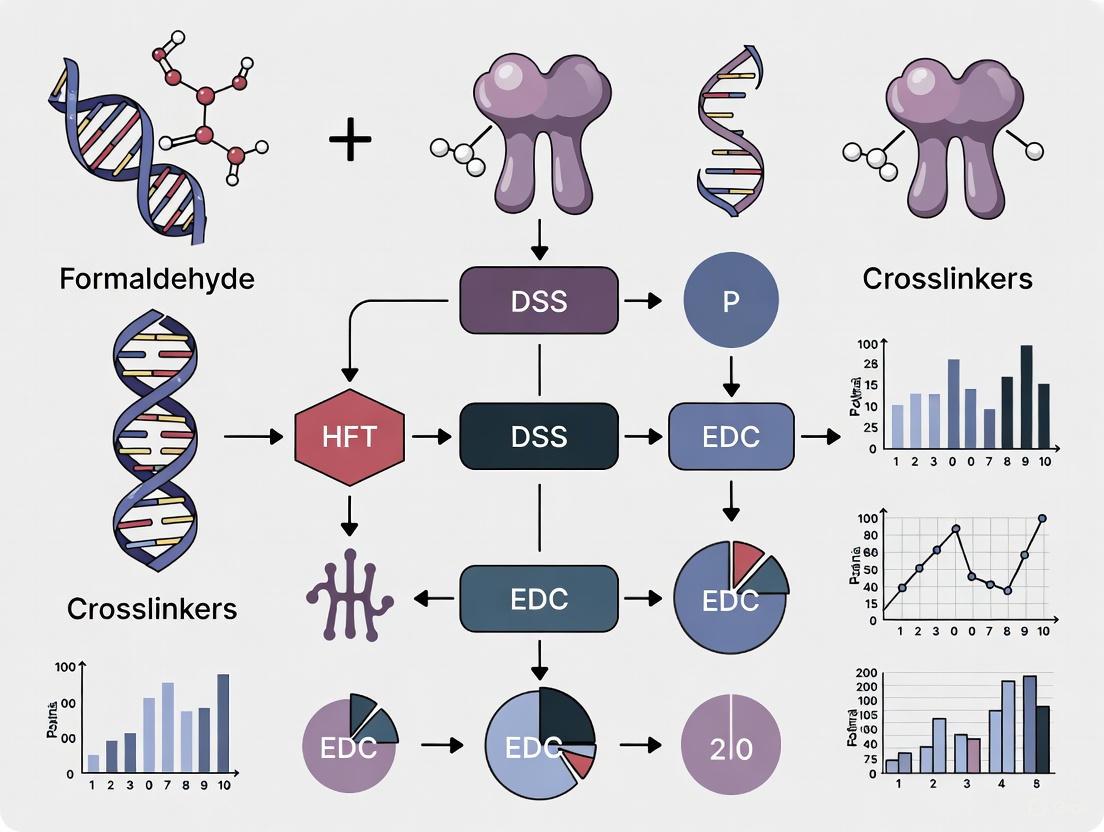
This comprehensive review examines crosslinking methodologies for chromatin immunoprecipitation (ChIP) studies focused on histone modifications, addressing the critical needs of researchers and drug development professionals.
Histone ChIP Crosslinking Methods Compared: From Formaldehyde to Dual Fixation for Epigenetic Research
Abstract
This comprehensive review examines crosslinking methodologies for chromatin immunoprecipitation (ChIP) studies focused on histone modifications, addressing the critical needs of researchers and drug development professionals. We systematically compare standard formaldehyde fixation against emerging dual-crosslinking approaches that incorporate agents like DSG or EGS, highlighting their distinct chemistries and applications in preserving chromatin architecture. The article provides foundational principles of protein-DNA crosslinking chemistry, detailed methodological protocols for various biological contexts, optimization strategies for challenging tissues, and rigorous validation frameworks incorporating spike-in controls and benchmarking against alternative techniques. By synthesizing current evidence and practical considerations, this resource enables informed method selection to enhance data quality, signal-to-noise ratio, and biological relevance in epigenetic studies across diverse research and preclinical applications.
The Chemistry of Crosslinking: Fundamental Principles for Histone-DNA Preservation
Formaldehyde (FA) crosslinking serves as a fundamental tool in chromatin biology for stabilizing direct protein-DNA interactions. As a zero-length crosslinker, formaldehyde creates covalent bonds between proteins and DNA that are in immediate proximity, typically within 2-3 Å, effectively "freezing" these interactions in their native cellular context [1] [2]. This capability is particularly valuable for studying histone-DNA binding, transcription factor occupancy, and chromatin architecture through techniques like Chromatin Immunoprecipitation (ChIP) and its numerous derivatives [1] [3].
The chemistry of formaldehyde crosslinking involves a two-step reaction process. Initially, nucleophilic groups on amino acids (primarily lysine, arginine, and cysteine) and DNA bases (especially deoxyguanosine) form methylol adducts with formaldehyde. These intermediates then react with a second nucleophilic group to form a methylene bridge, creating a stable crosslink between the protein and DNA [1] [4]. Recent mass spectrometry evidence surprisingly reveals that the predominant crosslinking product adds 24 Da (two carbon atoms) to the total mass of cross-linked peptides, rather than the traditionally expected 12 Da (one carbon atom) addition for a simple methylene bridge [5].
This guide objectively examines the mechanics of formaldehyde crosslinking and compares its performance against alternative protein-DNA crosslinking methods, providing researchers with experimental data to inform their chromatin study designs.
Chemical Mechanism of Formaldehyde Crosslinking
Molecular Reaction Pathway
Formaldehyde mediates protein-DNA crosslinking through a well-defined chemical mechanism that leverages its small size and high reactivity with nucleophilic groups. The process begins when formaldehyde's electrophilic carbon atom is attacked by a nucleophilic side chain on a protein (typically lysine or cysteine) or a DNA base (primarily deoxyguanosine), forming an unstable methylol intermediate [1] [4]. This intermediate subsequently dehydrates to form a Schiff base, which then reacts with a second nucleophile on the adjacent molecule to establish a methylene bridge [1].
Recent mass spectrometry studies have revolutionized our understanding of this process, revealing that the dominant crosslinking product involves a 24 Da mass addition rather than the traditionally expected 12 Da methylene bridge [5]. This 24 Da adduct represents the dimerization product of two formaldehyde-induced amino acid modifications and displays unique fragmentation patterns in mass spectrometry analysis [5]. The crosslinks are highly susceptible to higher-energy collisional dissociation, breaking symmetrically to yield a mass addition of 12 Da on each peptide [5].
Figure 1: Formaldehyde Crosslinking Reaction Pathway. The mechanism progresses through nucleophilic attack, methylol intermediate formation, dehydration to a Schiff base, and final crosslink formation with a characteristic 24 Da mass addition.
Key Reactive Sites and Specificity
Formaldehyde demonstrates distinct preferences for specific amino acids and DNA bases in crosslinking reactions. Table 1 summarizes the primary reactive sites and their characteristics.
Table 1: Reactive Sites for Formaldehyde-Mediated Crosslinking
| Macromolecule | Reactive Sites | Reaction Type | Crosslinking Efficiency |
|---|---|---|---|
| Proteins | Lysine, Arginine, Cysteine, Tryptophan, Histidine | Methylol addition, Schiff base formation | High for Lys/Arg (most accessible) |
| DNA Bases | Deoxyguanosine (dG), Deoxyadenosine, Deoxycytosine | Mainly with Lys-dG forming aminal linkage | Highest for Lys-dG coupling |
| Composite | Lysine-deoxyguanosine | Aminail linkage | Predominant reaction [6] |
| Composite | Cysteine-deoxyguanosine | Hemiaminal thioether linkage | Secondary prominent reaction [6] |
Lysine residues constitute the most reactive functional groups in native proteins due to their high nucleophilicity and frequent solvent accessibility [1]. In DNA, deoxyguanosine represents the primary target for formaldehyde crosslinking, with the Lys-dG coupling forming the predominant aminal linkage [6]. The requirement for close spatial proximity (∼2 Å) between reactive groups makes formaldehyde an excellent zero-length crosslinker for capturing direct protein-DNA contacts without connecting distantly associated molecules [1] [2].
Experimental Protocols for Formaldehyde Crosslinking
Standard Chromatin Crosslinking Protocol
The following protocol for formaldehyde crosslinking of chromatin has been optimized for protein-DNA interaction studies, particularly for subsequent ChIP analysis [6] [2]:
Cell Preparation: Grow yeast or mammalian cells to mid-log phase (OD600 ∼0.6-1.0 for yeast; 70-80% confluency for mammalian cells). For 1.5 L yeast culture, pellet cells at 5,000g for 20 min [6].
Crosslinking: Resuspend cell pellet in PBS containing 1-3% formaldehyde (from 37% stock solution). Incubate for 10-30 minutes at room temperature with mild agitation [6] [2]. The optimal concentration and time depend on the specific application and protein-DNA interaction being studied.
Quenching: Add glycine to a final concentration of 125 mM (or 1.25 M glycine/PBS for concentrated cell pellets) to quench unreacted formaldehyde. Incubate for 5 minutes at room temperature [2].
Cell Lysis: Pellet cells and wash once with cold PBS. Resuspend in lysis buffer (20 mM EDTA, 200 mM NaCl, 50 mM Tris pH 7, plus protease inhibitors). Lyse cells using high-pressure disruption (30 kpsi) or sonication [6].
Chromatin Fragmentation: Add SDS to 1% final concentration and incubate at 65°C for 5 minutes. Sonicate chromatin to 200-500 bp fragments (e.g., 3.5 min total with alternating 4s on/4s off cycles at 20V) [6].
Chromatin Preparation: Centrifuge at 8,000g for 12 min to remove debris. Dilute supernatant 5-fold with lysis buffer to reduce SDS concentration to 0.2%. Add RNaseA to 60 μg/mL and incubate at 37°C for 60 min with shaking [6].
Critical Parameter Optimization
Successful formaldehyde crosslinking requires careful optimization of several key parameters:
Formaldehyde Concentration: While 1-3% is standard for most applications, lower concentrations (0.4-1%) may better preserve epitope recognition for certain antibodies [2]. Higher concentrations (up to 3%) increase crosslinking efficiency but may reduce antibody binding in subsequent steps [2] [7].
Crosslinking Temperature: Temperature significantly impacts crosslinking efficiency and specificity. Studies demonstrate that crosslinking strength increases with temperature, with 25°C and 37°C providing stronger stabilization than 4°C [7]. However, lower temperatures may better preserve certain labile interactions.
Duration: Crosslinking times of 10-30 minutes typically provide optimal results. Longer incubations risk over-crosslinking, which can mask antibody epitopes and create inaccessible chromatin networks [2].
Recent systematic evaluations of crosslinking parameters in Hi-C experiments reveal that both formaldehyde concentration and temperature substantially influence downstream results, with higher temperatures (37°C) and concentrations (2%) preferentially capturing short-range chromatin interactions [7].
Quantitative Analysis of Crosslinking Dynamics
Crosslink Stability and Reversal Kinetics
Formaldehyde-mediated crosslinks are reversible, which presents both advantages (ability to reverse crosslinks when desired) and challenges (potential for undesired dissociation during experimental procedures) [6]. The stability of these crosslinks exhibits strong temperature dependence, as quantified in Table 2.
Table 2: Formaldehyde Crosslink Reversal Kinetics at Various Temperatures
| Temperature (°C) | Half-Life (Hours) | Experimental Conditions | Implications for Protocols |
|---|---|---|---|
| 4 | 179 | Yeast cell lysate, protein-DNA complexes | Stable for long-term storage |
| 23 | Not reported | Room temperature conditions | Handle at 4°C when possible |
| 37 | 11.3 | Standard incubation temperature | Significant reversal during overnight steps |
| 47 | 11.3 | Elevated temperature | Rapid reversal within hours |
The reversal kinetics follow an exponential pattern with increasing temperature, with crosslink half-life decreasing from 179 hours at 4°C to 11.3 hours at 47°C [6]. This temperature sensitivity necessitates careful temperature control throughout experimental procedures to maintain crosslink integrity. The reversal rate is independent of salt concentration, indicating that the dissociation mechanism primarily involves breakage of the methylene bridge rather than protein-DNA ionic interactions [6].
Impact of Crosslinking Intensity on Chromatin Conformation Detection
Systematic studies evaluating formaldehyde concentration and temperature in chromatin conformation capture experiments reveal that crosslinking intensity significantly modulates the reliability and sensitivity of chromatin interaction detection [7]. Table 3 summarizes how these parameters affect specific chromatin architectural features.
Table 3: Crosslinking Condition Effects on Chromatin Feature Detection
| Chromatin Feature | Optimal FA Concentration | Optimal Temperature | Performance Characteristics |
|---|---|---|---|
| Chromosome Compartments (A/B) | 1% | 25°C | Balanced sensitivity/reliability |
| TADs (Topologically Associating Domains) | 2% | 37°C | Intense crosslinking preferred |
| Chromatin Loops | 2% | 37°C | Enhanced detection with stronger crosslinking |
| Promoter-Enhancer Interactions | 1-2% | 25-37°C | Condition-dependent sensitivity |
Higher crosslinking intensities (2% FA, 37°C) preferentially capture short-range cis interactions (<20 kb) while depleting distal cis and trans contacts [7]. This bias occurs because intense crosslinking restricts molecular mobility, limiting ligation efficiency between more distant genomic regions. These findings demonstrate that crosslinking conditions should be tailored to the specific chromatin features of interest.
Comparison with Alternative Crosslinking Methods
Method Performance Benchmarking
Formaldehyde crosslinking represents one of several approaches for stabilizing protein-DNA interactions. Table 4 provides a comparative analysis of major crosslinking and non-crosslinking methods used in chromatin studies.
Table 4: Comparative Performance of Chromatin Profiling Methods
| Method | Crosslinking Approach | Resolution | Signal-to-Noise Ratio | Input Requirements | Key Applications |
|---|---|---|---|---|---|
| X-ChIP (Formaldehyde) | Formaldehyde (reversible) | 200-500 bp | Moderate | 10^5-10^7 cells | Genome-wide binding, histone modifications |
| N-ChIP | None (native) | Nucleosome-level | High for stable complexes | 10^5-10^6 cells | Strong histone-DNA interactions |
| CUT&RUN | MNase-targeted cleavage | Single nucleosome | High | 10^3-10^5 cells | Low-input profiling, transcription factors |
| CUT&Tag | Tn5 transposase-targeted | Single nucleosome | High | 10^3-10^5 cells | Low-input, high-resolution mapping |
| UV Crosslinking | UV254 nm (zero-length) | Amino acid level | Variable | 10^5-10^7 cells | Direct binding interfaces, residue mapping |
Formaldehyde-based X-ChIP provides a balanced approach suitable for genome-wide studies of both strong and weak protein-DNA interactions, though it requires higher cell inputs than enzyme-based methods like CUT&RUN and CUT&Tag [8] [3]. Recent benchmarking reveals that CUT&Tag offers superior signal-to-noise ratios and lower background, but may exhibit bias toward accessible chromatin regions [8].
UV Crosslinking as a Complementary Approach
UV irradiation at 254 nm provides an alternative zero-length crosslinking method that offers distinct advantages and limitations compared to formaldehyde [9]. The UV crosslinking workflow enables:
- Amino Acid-Level Resolution: Mapping of exact protein-DNA contact points through mass spectrometric identification of crosslinked peptides [9].
- Direct Interaction Capture: Exclusive crosslinking of directly interacting molecules due to the zero-distance requirement of UV crosslinking.
- Compatibility with MS Analysis: Identification of crosslinked amino acids (primarily lysine, but also tyrosine, histidine, and proline) and DNA bases (mainly thymine, with cytosine, guanine, and adenine also observed) [9].
Unlike formaldehyde, UV crosslinking captures protein-deoxyribose phosphate interactions in addition to protein-base crosslinks, providing complementary structural information [9]. However, UV crosslinking is less efficient for capturing complex, multi-protein DNA interactions and may require specialized equipment and expertise not needed for formaldehyde crosslinking.
Figure 2: Decision Framework for Protein-DNA Interaction Methods. The selection of appropriate methodology depends on research goals, sample availability, and desired resolution.
The Scientist's Toolkit: Essential Research Reagents
Table 5: Essential Reagents for Formaldehyde Crosslinking Experiments
| Reagent | Function | Example Specifications |
|---|---|---|
| Formaldehyde | Crosslinking agent | 37% solution, methanol-free for optimal reactivity [6] [2] |
| Glycine | Quenching reagent | 1.25 M solution in PBS to stop crosslinking [2] |
| Protease Inhibitors | Prevent protein degradation | Commercial cocktails (e.g., Complete Mini, EDTA-free) [2] |
| SDS (Sodium Dodecyl Sulfate) | Denaturing agent for chromatin fragmentation | 20% stock solution, molecular biology grade [6] |
| RNase A | RNA removal | 60 μg/mL final concentration to eliminate RNA [6] |
| Proteinase K | Protein digestion for crosslink reversal | 10 units per sample for complete protein degradation [6] |
| Phenol-Chloroform | DNA purification | 25:24:1 phenol-chloroform-isoamyl alcohol for clean extraction [6] |
| Specific Antibodies | Target immunoprecipitation | Validated for ChIP applications, epitope availability after crosslinking [2] |
Successful formaldehyde crosslinking experiments require careful reagent selection and quality control. Particularly critical are formaldehyde purity (methanol-free preparations provide superior crosslinking efficiency) and antibody validation (only 75% of anti-integrin β1 antibodies tested effectively immunoprecipitated their target after formaldehyde crosslinking) [2].
Formaldehyde crosslinking mechanics establish it as a versatile zero-length crosslinker ideal for capturing direct protein-DNA linkages in chromatin studies. Its advantages include excellent cell permeability, rapid kinetics, and reversible crosslinks that can be strategically exploited in experimental designs. Recent research has refined our understanding of its chemical mechanism, revealing a predominant 24 Da crosslink adduct rather than the traditionally assumed 12 Da methylene bridge [5].
The selection of crosslinking method should be guided by specific research objectives. Formaldehyde-based approaches remain the gold standard for genome-wide binding studies requiring stabilization of both direct and indirect interactions, while UV crosslinking offers superior resolution for mapping direct binding interfaces at amino acid resolution [9]. Enzyme-based methods like CUT&RUN and CUT&Tag provide compelling alternatives when working with limited sample material or requiring high signal-to-noise ratios [8].
Optimal experimental outcomes require careful parameter optimization, particularly regarding formaldehyde concentration (1-2%), crosslinking temperature (25-37°C), and duration (10-30 minutes), as these significantly impact both crosslinking efficiency and downstream detection of specific chromatin features [7]. By understanding the quantitative dynamics of crosslink formation and reversal, researchers can strategically employ formaldehyde crosslinking to capture the dynamic protein-DNA interactions that govern chromatin structure and function.
Chromatin immunoprecipitation (ChIP) has revolutionized our understanding of protein-DNA interactions and epigenetic regulation, enabling researchers to map transcription factor binding sites and histone modifications across the genome [3]. The foundational step in crosslinking ChIP (XChIP) involves formaldehyde (FA) mediated fixation to preserve these interactions. However, standard single-step FA crosslinking presents significant limitations for capturing the full complexity of chromatin architecture. FA creates very short (∼2 Å) methylene bridges, strongly favoring protein-DNA crosslinks but proving less effective at capturing protein-protein associations due to the looser interfaces typical of these contacts [10]. This limitation is particularly problematic for studying transcription factors in hyper-dynamic equilibrium with chromatin or for mapping coactivator interactions that occur through indirect protein-protein contacts rather than direct DNA binding [11] [10].
To address these challenges, dual-crosslinking methodologies have emerged that strategically combine two different crosslinking agents with complementary properties. By first stabilizing protein complexes with homobifunctional NHS-ester crosslinkers like disuccinimidyl glutarate (DSG) or ethylene glycolbis(succinimidyl succinate) (EGS), followed by standard FA-mediated DNA-protein crosslinking, researchers can achieve a more complete preservation of chromatin architecture [11] [10]. This approach is particularly valuable for histone ChIP research, where understanding the context of histone modifications within multi-protein complexes is essential for deciphering the epigenetic code. The strategic application of spacer technology through these crosslinkers bridges the gap in capturing both direct and indirect chromatin interactions, enabling more comprehensive epigenetic mapping.
Chemical Rationale: Complementary Crosslinking Mechanisms
Formaldehyde Chemistry and Its Limitations
Formaldehyde serves as the cornerstone of conventional ChIP protocols through its unique chemical properties. FA is a small electrophilic aldehyde that primarily reacts with nucleophilic sites in proteins – most often the ε-amino group of lysine side chains, but also arginine, histidine, and cysteine residues [10]. At physiological pH, lysine residues are mostly protonated and positively charged, naturally positioning them near the negatively charged DNA backbone in DNA-binding proteins. The crosslinking proceeds in two steps: first, FA reacts with a nucleophile to form a reactive intermediate such as a Schiff base or hydroxymethyl adduct; this can then couple to a second nucleophile, including the exocyclic amino groups of DNA bases, to form a very short (∼2 Å) methylene bridge [10]. This sequential, zero-length chemistry strongly favors protein-DNA crosslink formation due to the close positioning of lysine residues to DNA.
The same chemistry makes FA less effective at capturing protein-protein associations. To link two proteins, FA must first react with a nucleophilic site on one residue, then couple to a second nucleophile within ∼2 Å – a spacing less reliably achieved at the looser interfaces typical of protein-protein contacts [10]. Because ChIP-seq requires crosslinks to be reversible for DNA recovery, the efficiency of protein-protein capture cannot simply be increased by raising FA concentration or exposure time. Instead, protocols use mild and reversible conditions – typically 1% FA for ∼10 min at room temperature – which generate crosslinks that can be cleaved by prolonged heating (∼65°C for several hours) [10]. These constraints fundamentally limit protein-protein crosslinking and stabilization, leading to underrepresentation of indirectly bound factors and multi-protein complexes in standard ChIP experiments.
NHS-Ester Crosslinkers: DSG and EGS Spacer Technology
Homobifunctional NHS-ester crosslinkers like DSG and EGS employ fundamentally different chemistry that specifically addresses the limitations of formaldehyde. DSG is a homobifunctional NHS-ester crosslinker with two reactive esters joined by a five-atom glutarate spacer (∼7.7 Å) [11] [10]. Unlike the zero-length chemistry of FA, this spacer matches distances typical of protein-protein interfaces. Each NHS ester independently acylates a primary amine, generally at lysine residues, forming stable amide bonds at both ends without generating DNA-reactive intermediates [10]. Thus, its defined spacer and non-sequential chemistry efficiently stabilize protein assemblies while contributing little to protein-DNA crosslinking.
EGS shares the same NHS-ester reactivity but features a longer spacer arm (∼16.1 Å) due to its ethylene glycol backbone [11]. This extended distance can bridge larger protein complexes or accommodate structural arrangements where binding interfaces are more distant. The NHS-ester chemistry of both compounds ensures efficient reaction with primary amines under physiological conditions, while their homobifunctional nature enables simultaneous conjugation of two polypeptide chains.
Figure 1: Dual-Crosslinking Workflow Combining Spacer Technology with Standard Formaldehyde Fixation
Strategic Integration for Comprehensive Chromatin Capture
The sequential application of these crosslinkers creates a synergistic effect that significantly enhances chromatin complex preservation. DSG or EGS first 'locks' protein-protein contacts through their optimized spacer arms, then FA secures protein-DNA interactions through its zero-length chemistry [10]. This complementary approach provides a more complete capture of protein complexes on DNA, enabling researchers to study chromatin regulators that function through large multi-subunit assemblies rather than direct DNA contact. The strategic combination effectively overcomes the hyper-dynamic exchange of some transcription factors with target DNA that prevents effective crosslinking with formaldehyde alone [11].
Recent methodological advances have optimized this sequential approach for practical application. The dxChIP-seq protocol demonstrates that relatively short crosslinking times (1.66 mM DSG for 18 minutes, followed by 1% FA for 8 minutes at room temperature) strike the optimal balance between preserving chromatin architecture and avoiding over-fixation [10]. This refined dual-crosslinking strategy has proven effective for probing RNA Pol II, the Mediator complex, the PAF complex, and various histone modifications – targets that would be challenging to capture comprehensively with single-step FA crosslinking alone.
Comparative Analysis of Crosslinker Properties
Structural and Functional Characteristics
The effectiveness of NHS-ester crosslinkers in dual-crosslinking protocols depends significantly on their structural properties, particularly spacer arm length and chemical reactivity. The optimal spacer distance must accommodate typical protein-protein interaction interfaces while maintaining efficient crosslinking kinetics.
Table 1: Structural and Functional Properties of Common Crosslinking Reagents
| Crosslinker | Chemistry | Spacer Arm (Å) | Reversible? | Primary Application | Working Concentration |
|---|---|---|---|---|---|
| DSG | NHS-ester | 7.7 | No | Protein-protein crosslinking | 2 mM [11] |
| EGS | NHS-ester | 16.1 | Hydroxylamine | Protein-protein crosslinking | 2 mM [11] |
| Formaldehyde | Methylene bridge | 2 | 65°C + 0.2 M NaCl | Protein-DNA crosslinking | 1% [11] |
| DSP | NHS-ester | 12 | Thiols | Protein-protein crosslinking | 2 mM [11] |
The spacer arm length directly influences which protein complexes can be effectively captured. DSG's 7.7 Å spacer matches distances typical of tight protein-protein interfaces, while EGS's 16.1 Å spacer can bridge more extensive molecular arrangements [11]. This distinction becomes methodologically significant when studying different classes of chromatin regulators. The irreversibility of DSG crosslinks necessitates complete protein digestion for DNA recovery, whereas EGS can be cleaved with hydroxylamine treatment, offering potential advantages for certain downstream applications [11].
Performance Comparison in Chromatin Studies
Dual-crosslinking methodologies demonstrate distinct advantages across multiple performance parameters compared to single-step formaldehyde approaches. The complementary chemistry translates to tangible improvements in data quality and biological insight.
Table 2: Performance Comparison of Crosslinking Methodologies in Chromatin Applications
| Performance Metric | Single-Step FA | Dual-Crosslinking (DSG+FA) | Experimental Evidence |
|---|---|---|---|
| Transcription Factor Capture | Limited for dynamic factors | Enhanced stabilization | Effective for NF-κB, STAT3 [11] |
| Coactivator Detection | Inefficient | Significant improvement | Successful for CBP/p300, CDK9 [11] |
| Signal-to-Noise Ratio | Variable | Enhanced | Improved mapping at low-occupancy regions [10] |
| Chromatin Complex Stability | Moderate | High preservation | Better recovery of indirect interactions [10] |
| Applicability to Challenging Targets | Limited | Broad | Effective for Pol II, Mediator complex [10] |
The performance advantages of dual-crosslinking are particularly evident when studying transcription factors that exhibit stimulus-inducible chromatin interactions [11]. The method has been successfully applied to analyze chromatin binding for NF-κB, STAT3, polymerases like RNA Pol II, coactivators including CBP/p300 and CDK9, and chromatin structural proteins with modified histones [11]. This broad applicability across different chromatin regulatory categories underscores the versatility of the approach compared to conventional single-step crosslinking.
Experimental Implementation and Protocol Optimization
Standardized Dual-Crosslinking Protocol
Implementing an effective dual-crosslinking strategy requires careful attention to sequential processing and optimal reagent concentrations. The following protocol has been validated across multiple cell types and target proteins:
Cell Culture and Pre-treatment: Seed cells 24 hours prior to experiment, aiming for ~75% confluence on the day of experiment for adherent cells. For factors requiring stimulation in the absence of serum, change cells to growth medium supplemented with 0.5% (wt/vol) Bovine Serum Albumin [11].
Protein-Protein Crosslinking:
- Wash cells with PBS at room temperature three times, carefully removing residual solution.
- Add 10 ml of PBS/MgCl₂ to each plate, directing pipette spray to the side to avoid disrupting adherent cells.
- Add freshly prepared 0.25 M DSG solution in DMSO to achieve a final working concentration of 2 mM, rapidly swirling to distribute.
- Incubate at room temperature for 45 minutes [11] (optimized protocols suggest 18 minutes [10]).
Protein-DNA Crosslinking:
- Wash with PBS three times to remove residual DSG.
- Add 10 ml of 1% formaldehyde in PBS to each plate.
- Incubate for 10 minutes at room temperature with gentle swirling [11] (optimized to 8 minutes [10]).
- Quench with 125 mM glycine for 5 minutes at room temperature [12].
Chromatin Processing and Immunoprecipitation:
- Prepare nuclear extracts using appropriate buffers (e.g., Nuclear Extraction Buffer 1: 50 mM HEPES-NaOH pH=7.5, 140 mM NaCl, 1 mM EDTA, 10% Glycerol, 0.5% NP-40, 0.25% Triton X-100, 1× protease inhibitors) [12].
- Shear chromatin to appropriate fragment size (500–1000 bp for PCR applications, 300–500 bp for sequencing applications) [11].
- Perform immunoprecipitation with target-specific antibodies following standard XChIP protocols [11] [12].
Critical Parameter Optimization
Several parameters require careful optimization to maximize dual-crosslinking effectiveness while maintaining chromatin integrity:
Crosslinking Intensity Balance: Crosslinking strength significantly influences chromatin conformation detection across different structural levels. Intense crosslinking is preferred when targeting lower-level structures such as topologically associated domains (TADs) or chromatin loops, while a delicate balance between sensitivity and reliability is required for detecting higher-level structures like chromosome compartments [7]. Both FA concentration and crosslinking temperature modulate this strength, with systematic assessments recommending 1% FA at room temperature for most applications [7].
Chromatin Fragmentation Considerations: The degree of chromatin shearing must align with downstream analysis methods. For conventional PCR detection, fragmentation to 500–1000 bp fragments is optimal, while next-generation sequencing applications benefit from smaller 300–500 bp fragments [11]. The choice of sonication buffer should also match the target protein category – histone targets typically use buffer with 1% SDS, while non-histone targets may benefit from lower SDS concentrations (0.1%) with additional detergents like sodium deoxycholate and sodium lauroylsarcosine [12].
Quality Control Measures: Incorporation of spike-in normalization controls is particularly important for dual-crosslinking experiments where crosslinking efficiency may vary between conditions. Proper spike-in implementation uses exogenous chromatin from another species added prior to immunoprecipitation, with computational normalization to account for global changes in epitope abundance [13]. Critical quality control steps include verifying consistent spike-in to sample chromatin ratios across conditions and ensuring adequate spike-in read depth for accurate quantification [13].
Research Reagent Solutions for Dual-Crosslinking
Successful implementation of dual-crosslinking methodologies requires specific reagents optimized for preserving chromatin architecture while maintaining antibody epitope integrity.
Table 3: Essential Research Reagents for Dual-Crosslinking Chromatin Studies
| Reagent Category | Specific Products | Application Purpose | Key Considerations |
|---|---|---|---|
| Primary Crosslinker | DSG (Thermo Scientific #20593) | Protein-protein stabilization | Dissolve in DMSO to 0.25M stock; use freshly [11] |
| Secondary Crosslinker | Methanol-free Formaldehyde (Thermo Scientific #28908) | Protein-DNA crosslinking | Use at 1% final concentration; quench with glycine [10] [12] |
| Chromatin Shearing | Bioruptor Sonicator (Diagenode) | DNA fragmentation | Optimize duration for target fragment size [14] |
| Immunoprecipitation | Protein A/G Magnetic Beads | Antigen capture | Pre-block with BSA; use antibody-coupled beads [12] |
| Quality Control | Spike-in Chromatin (Active Motif #53083) | Normalization control | Add prior to IP; use species-specific alignment [13] |
| DNA Purification | ChIP DNA Clean & Concentrator (Zymo Research) | DNA recovery | Effective for crosslink reversal products [10] |
The selection of appropriate antibodies remains particularly critical for dual-crosslinking success. For histone targets, 4 μg antibody per IP is typically sufficient, while non-histone targets generally require 8 μg per IP [12]. Antibody validation for crosslinked chromatin is essential, as some epitopes may be disrupted by formaldehyde crosslinking, particularly those involving lysine ε-amino groups in N-terminal regions [15].
Dual-crosslinking technology represents a significant methodological advancement for comprehensive chromatin analysis, particularly for studying histone modifications within their native protein complex contexts. The strategic combination of DSG or EGS spacer technology with standard formaldehyde crosslinking overcomes fundamental limitations of single-step approaches by preserving both protein-protein interactions and protein-DNA contacts. The optimized spacer arms of these NHS-ester crosslinkers (7.7 Å for DSG, 16.1 Å for EGS) specifically address the distance requirements for effective protein complex stabilization, creating a more complete preservation of chromatin architecture.
The experimental evidence demonstrates that this approach enhances signal-to-noise ratio, improves detection of coactivators and challenging chromatin targets, and provides more reliable mapping of transcription factors with dynamic chromatin interactions. As chromatin research increasingly focuses on the complex multi-protein assemblies that regulate epigenetic states, dual-crosslinking methodologies offer researchers a powerful tool for capturing this complexity. The continued optimization and standardization of these protocols, including appropriate quality controls like spike-in normalization, will further establish dual-crosslinking as an essential approach for rigorous epigenetic investigation, particularly in the context of histone ChIP research where understanding the protein context of modifications is essential for biological insight.
In chromatin immunoprecipitation (ChIP) research, a fundamental tension exists between the need to preserve biologically relevant chromatin complexes and the necessity to maintain nucleosome structural integrity. This balance is particularly critical when studying histone modifications and their role in gene regulation, DNA repair, and epigenetic inheritance. Crosslinking, typically using formaldehyde (FA), serves as the foundational step for capturing transient chromatin-protein interactions in their native state. However, the very process intended to preserve these interactions can itself introduce significant experimental artifacts by altering nucleosome dynamics and stability. The core challenge lies in optimizing crosslinking conditions to faithfully capture genuine biological interactions without distorting the chromatin landscape through over-stabilization or insufficient preservation. This guide systematically compares the performance and tradeoffs of various crosslinking methodologies, providing researchers with evidence-based criteria for selecting appropriate protocols based on specific experimental goals in histone research.
Crosslinking Fundamentals: Mechanisms and Molecular Consequences
The Chemistry of Crosslinking and Its Impact on Chromatin
Formaldehyde (FA), the most widely used crosslinking agent in chromatin studies, primarily creates reversible methylene bridges between amino and guanidinino groups of amino acid side chains, as well as between amino groups and nucleotides. This process initially forms unstable methylol adducts that subsequently react with other functional groups to generate stable covalent crosslinks. The reversible nature of these bonds is crucial, as it allows for reversal during DNA purification steps. However, this chemistry also means that crosslinking efficiency and specificity are highly dependent on reaction conditions, including FA concentration, temperature, and incubation time.
At the nucleosome level, crosslinking aims to capture the precise spatial relationships between histone proteins, their post-translational modifications, DNA, and associated regulatory factors. The nucleosome core particle itself consists of an octameric complex of core histones (H2A, H2B, H3, H4) with approximately 147 base pairs of DNA wrapped around it in 1.7 superhelical turns. Each core histone contains a structured histone fold domain that facilitates heterodimeric interactions and unstructured N-terminal tails that undergo extensive post-translational modifications. Successful crosslinking must preserve this architecture while capturing functionally relevant interactions.
DNA-Histone Crosslinks: Extreme Stabilization and Its Consequences
Recent research has illuminated the profound effects of DNA-histone crosslinks (DHCs) on nucleosome properties. Structurally homogeneous nucleosomes containing a single, site-specific DHC demonstrate markedly enhanced thermal stability and complete resistance to both thermally induced passive sliding and chromatin remodeler-mediated active sliding. These crosslinked nucleosomes also obstruct transcription elongation by RNA polymerase, leading to premature termination approximately 15 base pairs upstream of the crosslinking site. Furthermore, DHCs increase histone resistance to proteolytic digestion within nucleosomes. Collectively, these findings indicate that even a single DHC can substantially "lock" and rigidify nucleosome structure, broadly interfering with recognition and processing by various cellular machineries. While intentionally induced DHCs in experimental settings represent an extreme scenario, they illustrate the fundamental tradeoff between interaction preservation and structural perturbation that exists across all crosslinking approaches.
Comparative Analysis of Crosslinking Methodologies
Formaldehyde Crosslinking Intensity Spectrum
The strength of formaldehyde crosslinking, modulated by concentration and temperature, creates a continuum of chromatin preservation states with distinct advantages and limitations. Systematic assessments using chromosome conformation capture (3C) as a model system reveal that crosslinking strength significantly influences chromatin conformation detection at nearly all structural levels.
Table 1: Effects of Formaldehyde Crosslinking Conditions on Chromatin Capture
| Condition | Crosslinking Strength | Optimal Structural Level | Advantages | Limitations |
|---|---|---|---|---|
| 0.5% FA at 4°C | Very Low | Chromosome Territories | Minimal rearrangement artifacts | Poor preservation of transient interactions |
| 1% FA at 4°C | Low | Compartments | Good for large-scale structures | Limited resolution for TADs/loops |
| 1% FA at 25°C | Moderate | TADs | Balance of sensitivity & reliability | Intermediate performance across scales |
| 1% FA at 37°C | High | Chromatin Loops | Excellent for fine-scale structures | Potential over-stabilization |
| 2% FA at 37°C | Very High | Protein-DNA Contacts | Maximum interaction preservation | Altered digestion/ligation efficiency |
The selection of crosslinking conditions involves inherent tradeoffs between sensitivity and reliability, particularly for higher-order chromatin structures. Intense crosslinking (e.g., 2% FA at 37°C) is preferred when targeting finer-scale structures such as topologically associated domains (TADs) or chromatin loops, as it maximizes interaction preservation. Conversely, a more delicate balance is required when detecting higher-level structures like chromosome compartments, where excessive crosslinking may mask the natural dynamicity of these domains.
Emerging Crosslinking-Free Methodologies
Recent technological advances have introduced crosslinking-independent approaches that fundamentally alter the tradeoff landscape between nucleosome stability and complex preservation. Cleavage under targets and tagmentation (CUT&Tag) and cleavage under targets and release using nuclease (CUT&RUN) represent this new generation of techniques that bypass formaldehyde crosslinking altogether.
Table 2: Comparison of Chromatin Profiling Methodologies
| Method | Crosslinking | Input Requirements | Signal-to-Noise Ratio | Resolution | Best Applications |
|---|---|---|---|---|---|
| ChIP-seq | Formaldehyde (1-2%) | High (0.5-1 million cells) | Moderate | 200-500 bp | Historical comparisons, broad marks |
| CUT&RUN | None | Low (10,000-100,000 cells) | High | Single nucleosome | Low-input studies, labile complexes |
| CUT&Tag | None | Very Low (<10,000 cells) | Very High | Single nucleosome | Rare cell populations, high resolution |
These enzyme-based approaches offer significant advantages including substantially lower input requirements and improved signal-to-noise ratios due to the elimination of non-specific background DNA. However, they may introduce their own biases, as the enzymatic cleavage efficiency can be influenced by local chromatin accessibility. CUT&Tag demonstrates particular strength in detecting transcription factors and provides high-resolution maps of histone modifications in haploid cells, with signal intensity showing strong correlation with chromatin accessibility.
Experimental Protocols and Methodological Considerations
Standardized ChIP-seq Crosslinking Protocol
For traditional ChIP-seq with formaldehyde crosslinking, the following protocol represents a standardized approach optimized for histone modifications:
Cell Fixation: Add formaldehyde directly to cell culture medium to a final concentration of 1% and incubate at room temperature for 10 minutes. Quench the reaction by adding glycine to a final concentration of 0.125 M.
Chromatin Preparation: Resuspend fixed cells in lysis buffer (1% SDS, 10 mM EDTA, 50 mM Tris-HCl, pH 8.1) with protease inhibitors. Sonicate to fragment DNA to 200-500 bp fragments.
Immunoprecipitation: Dilute lysate 10-fold in dilution buffer (0.01% SDS, 1.1% Triton X-100, 1.2 mM EDTA, 16.7 mM Tris-HCl, pH 8.1, 167 mM NaCl). Add histone modification-specific antibody and incubate overnight at 4°C.
Bead Capture and Washes: Add protein A/G beads, incubate 2 hours, then wash sequentially with low salt wash buffer (0.1% SDS, 1% Triton X-100, 2 mM EDTA, 20 mM Tris-HCl, pH 8.1, 150 mM NaCl), high salt wash buffer (same with 500 mM NaCl), LiCl wash buffer (0.25 M LiCl, 1% Igepal, 1% deoxycholate, 1 mM EDTA, 10 mM Tris-HCl, pH 8.1), and TE buffer.
Elution and Decrosslinking: Elute in elution buffer (1% SDS, 0.1 M NaHCO3) and reverse crosslinks by adding NaCl to 200 mM and incubating at 65°C for 4 hours.
DNA Purification: Treat with proteinase K, then purify DNA using phenol-chloroform extraction and ethanol precipitation.
CUT&Tag Protocol for Histone Modifications
The CUT&Tag method provides a crosslinking-free alternative with distinct advantages for low-input samples:
Cell Permeabilization: Isolate nuclei and bind to Concanavalin A-coated magnetic beads in binding buffer (20 mM HEPES, pH 7.5, 10 mM KCl, 1 mM CaCl2, 1 mM MnCl2).
Antibody Binding: Incubate with primary antibody against specific histone modification in antibody buffer (20 mM HEPES, pH 7.5, 150 mM NaCl, 0.5 mM EDTA, 0.1% BSA, 0.05% Digitonin) overnight at 4°C.
pA-Tn5 Binding: Wash unbound antibody and incubate with pA-Tn5 adapter complex in Dig-300 buffer (20 mM HEPES, pH 7.5, 300 mM NaCl, 0.5 mM EDTA, 0.1% BSA, 0.05% Digitonin) for 1 hour at room temperature.
Tagmentation: Induce tagmentation by adding MgCl2 to 10 mM and incubating at 37°C for 1 hour.
DNA Extraction: Release DNA by incubating with SDS and proteinase K, then purify using DNA clean beads.
The entire CUT&Tag procedure can be completed within two days with minimal hands-on time, compared to the 3-4 day timeline for conventional ChIP-seq.
Visualization of Experimental Workflows
Research Reagent Solutions
Table 3: Essential Research Reagents for Chromatin Studies
| Reagent | Function | Application Notes |
|---|---|---|
| Formaldehyde (1-2%) | Protein-DNA crosslinking | Concentration affects preservation of different chromatin structures; higher concentrations stabilize finer-scale interactions |
| pA-Tn5 Fusion Protein | Tagmentation enzyme | Critical for CUT&Tag; simultaneously cleaves and adapts DNA in targeted regions |
| Protein A/G Magnetic Beads | Antibody capture | Enable efficient immunoprecipitation with minimal non-specific binding |
| Concanavalin A Beads | Nuclear capture | Used in CUT&Tag to immobilize permeabilized nuclei during processing |
| Micrococcal Nuclease (MNase) | Chromatin digestion | Used in CUT&RUN for targeted chromatin cleavage; requires calcium activation |
| Protease Inhibitors | Prevent protein degradation | Essential for preserving histone integrity and modifications during processing |
| Digitoxin | Cell permeabilization | Enables antibody and enzyme access to nuclear targets in crosslinking-free methods |
The tradeoff between nucleosome stability and complex preservation represents a fundamental consideration in experimental design for histone research. Traditional formaldehyde-based crosslinking methods provide robust capture of chromatin interactions but can artificially stabilize nucleosome structures and introduce biases in fragmentation and ligation efficiencies. Emerging crosslinking-free techniques offer superior resolution for specific applications, particularly with limited input material, but may exhibit accessibility biases. The optimal methodological approach depends critically on the specific biological question, the structural scale of interest, and available sample resources. As the chromatin profiling landscape continues to evolve, researchers must carefully weigh these tradeoffs when selecting appropriate methodologies for their specific investigative goals. Future technical developments will likely further refine this balance, potentially through integrated approaches that combine the complementary strengths of both crosslinking and crosslinking-free paradigms.
The efficiency of chromatin crosslinking is a pivotal factor in chromatin immunoprecipitation (ChIP) research, directly influencing the accuracy and reliability of protein-genome binding data. For histone studies, where the goal is often to capture dynamic post-translational modifications (PTMs) and protein-DNA interactions, the choice of crosslinking methodology can significantly impact histone retention and the subsequent interpretation of epigenetic mechanisms. This guide provides an objective comparison of contemporary crosslinking and chromatin fragmentation methodologies, evaluating their performance in preserving histone-DNA interactions while maintaining compatibility with high-resolution downstream analyses. Framed within a broader thesis on optimizing chromatin preparation for histone research, this comparison synthesizes experimental data to inform method selection by researchers, scientists, and drug development professionals engaged in epigenetic studies.
Crosslinking Methodologies and Histone Dynamics
Crosslinking stabilizes transient histone-DNA and histone-protein interactions, creating a snapshot of chromatin architecture. The dynamics of histone complexes, including transitions from nucleosomes to subnucleosomal particles like hexasomes (missing one H2A/H2B dimer) and tetrasomes (missing both H2A/H2B dimers), are crucial considerations. Tetrasomes, for instance, are remarkably dynamic structures with greatly compromised DNA–histone interactions, forming a much lower barrier to transcribing RNA polymerase II than nucleosomes [16]. This inherent plasticity means that crosslinking efficiency must be sufficient to capture these dynamic states without inducing artifacts.
The selection of crosslinking agents and conditions is thus critical. Formaldehyde remains the most widely used agent, effectively penetrating cells and creating reversible crosslinks between proteins and DNA over short distances (∼2 Å). However, for stabilizing larger complexes or interactions involving intermediate proteins, dual crosslinking with agents like disuccinimidyl glutarate (DSG) followed by formaldehyde is often employed. This approach is particularly beneficial for MNase-based assays like Micro-C-ChIP and MNase HiChIP, which require stabilization of higher-order structures [17] [18].
Comparative Analysis of Chromatin Fragmentation and Enrichment Methods
Following crosslinking, chromatin must be fragmented to enable precise mapping. The choice between enzymatic fragmentation (e.g., Micrococcal Nuclease, MNase) and sonication has profound implications for histone retention, resolution, and data quality.
MNase-Based Methods
MNase digests naked DNA and exhibits exonuclease activity, preferentially cleaving DNA not protected by bound proteins. This allows for "footprinting" – the identification of protein-bound regions at near base-pair resolution based on protected fragment lengths [18].
- Micro-C-ChIP: This method combines Micro-C (an MNase-based version of Hi-C) with chromatin immunoprecipitation. It leverages dual crosslinking (e.g., DSG and formaldehyde) and MNase digestion to map histone mark-specific 3D genome organization at nucleosome resolution [17]. A key advantage is its ability to enrich for specific histone modifications (e.g., H3K4me3, H3K27me3), dramatically reducing sequencing depth requirements and cost while maintaining high resolution for promoter-promoter and promoter-enhancer interactions [17].
- MNase HiChIP for CTCF/Cohesin: As demonstrated in K562 cells, this method can simultaneously determine 3D contacts and the identity of bound proteins. Fragment length analysis reveals that nucleosome-bound DNA produces protected fragments of ~150 bp or longer, while CTCF-bound DNA produces significantly shorter fragments (<80 bp), enabling precise localization of binding sites independent of antibody availability [18].
Sonication-Based Methods
Sonication shears chromatin through physical disruption, producing fragments of varying sizes without the sequence bias of restriction enzymes. However, it lacks the intrinsic protein-footprinting capability of MNase.
- Standard ChIP-seq: While a foundational method, traditional ChIP-seq struggles with quantitative comparisons between samples. Variations in sonication efficiency, chromatin extraction, and immunoprecipitation make it difficult to compare signal magnitude across conditions or cell lines [19].
- PerCell ChIP-seq: This innovative approach addresses quantification challenges by using an orthologous cellular spike-in (e.g., mouse chromatin mixed with human cells in a fixed ratio prior to crosslinking and sonication). This provides an internal standard for normalization, enabling highly quantitative comparisons of histone modification abundance and transcription factor localization across different experimental conditions, genetic backgrounds, or drug treatments [19] [20]. Benchmarking shows PerCell achieves consistent spike-in read percentages (16%–25% in IP'd samples), avoiding the extreme variation (1%–65%) seen in other spike-in methods, which leads to more reliable normalization [19].
Quantitative Comparison of Method Performance
The table below summarizes the key characteristics and performance metrics of these methodologies based on recent experimental data.
Table 1: Performance Comparison of Chromatin Fragmentation and Enrichment Methods
| Method | Fragmentation Principle | Crosslinking Typical | Key Strength | Quantitative Rigor | Best Suited For |
|---|---|---|---|---|---|
| Micro-C-ChIP [17] | MNase Digestion | Dual (DSG + Formaldehyde) | Histone-mark-specific 3D architecture at nucleosome resolution | Moderate (relies on internal normalization) | Mapping 3D interactions at specific epigenetic domains |
| MNase HiChIP [18] | MNase Digestion | Dual (DSG + Formaldehyde) | Base-pair resolution footprinting of DNA-bound factors (CTCF, histones) | High (single-molecule fragment analysis) | Simultaneous protein binding and 3D contact analysis |
| Standard ChIP-seq | Sonication | Formaldehyde | Widely adopted, protocol familiarity | Low (challenging for cross-condition comparison) | Qualitative mapping of histone marks/TF binding |
| PerCell ChIP-seq [19] [20] | Sonication | Formaldehyde | Highly quantitative comparison via cellular spike-in normalization | Very High (internal control for global changes) | Comparing PTM abundance across cell states, drug treatments |
Experimental Protocols for Key Methodologies
- Cell Fixation: Crosslink cells (e.g., mESC, hTERT-RPE1) in situ using a dual crosslinker like DSG followed by formaldehyde.
- Nuclei Isolation & MNase Digestion: Isolate nuclei and digest chromatin with MNase to generate nucleosome-sized fragments.
- End Biotinylation & Proximity Ligation: Label digested DNA ends with biotin and perform in situ proximity ligation under dilute conditions.
- Solubilization & Sonication: Sonicate the crosslinked, ligated chromatin to solubilize it for immunoprecipitation.
- Chromatin Immunoprecipitation: Immunoprecipitate the chromatin using antibodies against specific histone marks (e.g., H3K4me3).
- Library Prep & Sequencing: Purify and process the DNA for high-throughput sequencing.
- Dual Crosslinking: Fix K562 cells with DSG and formaldehyde.
- MNase Digestion: Digest chromatin to completion. The exonuclease activity of MNase trims back DNA not protected by CTCF or nucleosomes.
- Immunoprecipitation: Use an anti-CTCF antibody to enrich for CTCF-bound fragments.
- Proximity Ligation & Sequencing: Ligate the ends of protein-bound DNA fragments and sequence them.
- Fragment Length Analysis: Bioinformatically identify fragments shorter than the read length (e.g., <150 bp) to find those protected by CTCF (~20-80 bp) versus nucleosomes (~147 bp).
- Spike-in Cell Mixing: Mix experimental cells (e.g., human) with orthologous spike-in cells (e.g., mouse) at a defined ratio (e.g., 3:1) before crosslinking.
- Crosslinking & Sonication: Crosslink the mixed cell pellet with formaldehyde and lyse/sonicate the cells.
- Chromatin Immunoprecipitation: Perform ChIP with a single antibody targeting the histone PTM or protein of interest.
- Library Preparation & Sequencing: Prepare sequencing libraries from the immunoprecipitated DNA.
- Bioinformatic Normalization: Use a dedicated pipeline (e.g., the provided Nextflow workflow) to separate reads by species genome and normalize experimental signals using the spike-in read counts as an internal reference.
The following workflow diagram illustrates the key decision points and steps involved in the PerCell ChIP-seq and MNase-based methods.
Diagram 1: Comparative workflows for quantitative (PerCell) and high-resolution (MNase-based) ChIP methodologies.
The Scientist's Toolkit: Essential Research Reagents
Successful execution of these advanced protocols requires specific reagents. The table below lists key solutions used in the featured experiments.
Table 2: Key Research Reagent Solutions for Histone Crosslinking Studies
| Reagent / Solution | Function | Example Use Case |
|---|---|---|
| Disuccinimidyl Glutarate (DSG) | Homobifunctional crosslinker for protein-protein crosslinking; stabilizes large complexes. | Dual crosslinking in Micro-C-ChIP and MNase HiChIP for stabilizing 3D chromatin structures [17] [18]. |
| Formaldehyde | Reversible crosslinker for protein-DNA and protein-protein interactions over short distances. | Standard crosslinking in most ChIP protocols; secondary crosslinker in dual crosslinking workflows [17] [19] [18]. |
| Micrococcal Nuclease (MNase) | Endo-/exonuclease that digests unprotected DNA; used for nucleosome-resolution fragmentation and footprinting. | Generation of mononucleosomes in Micro-C-ChIP; identification of CTCF binding sites via protected fragment length in MNase HiChIP [17] [18]. |
| Orthologous Cellular Spike-in | Cells from a related species (e.g., mouse) used as an internal control for normalization. | Enables quantitative comparison in PerCell ChIP-seq by normalizing experimental reads to spike-in reads [19] [20]. |
| Site-Specific H1 Deamidation Antibody | Antibody generated against a specific PTM (H1(N76D/N77D)) to study rare histone modifications. | Detection and enrichment of deamidated histone H1.4 around DNA double-strand breaks in specialized ChIP experiments [21]. |
| CTCF Antibody | Immunoprecipitation of CTCF-bound chromatin fragments. | Enrichment of CTCF-mediated loops and footprints in MNase HiChIP experiments [18]. |
The selection of a crosslinking and fragmentation methodology for histone research involves a critical trade-off between quantitative accuracy, spatial resolution, and practical considerations. MNase-based methods (Micro-C-ChIP, MNase HiChIP) offer unparalleled resolution for studying 3D chromatin architecture and protein footprinting but can be technically demanding. Sonication-based PerCell ChIP-seq provides a robust and highly quantitative framework for comparing histone PTM abundance across conditions, making it ideal for drug discovery and disease modeling where measuring global changes is essential.
The emerging trend is the integration of these approaches—using quantitative normalization strategies to enhance high-resolution spatial data—paving the way for a more precise and comprehensive understanding of the dynamic epigenetic landscape.
Protocol Implementation: Standard and Dual-Crosslinking Methods in Practice
Chromatin Immunoprecipitation followed by sequencing (ChIP-seq) has emerged as a powerful method for interrogating protein-chromatin interactions and mapping chromatin modifications across the genome [22]. For histone modification studies, Standard Formaldehyde ChIP (X-ChIP) remains the most widely adopted and validated approach due to its effectiveness in preserving histone-DNA interactions while maintaining relatively straightforward experimental requirements. Formaldehyde crosslinking works by creating reversible methylene bridges between proteins and DNA with an effective radius of approximately 2Å, perfectly suited for capturing tight histone-DNA interactions [11]. This method has become the cornerstone of epigenetic research since its initial applications in the 1980s, when researchers first discovered that acetylated histone H4 was enriched at actively transcribed genomic regions [3].
The popularity of X-ChIP for histone modification studies stems from its optimal balance between interaction preservation and experimental feasibility. Unlike transcription factors that may exhibit transient chromatin interactions, histones form stable complexes with DNA through the nucleosomal structure, making them particularly amenable to standard formaldehyde crosslinking. This protocol detail the standardized X-ChIP approach specifically optimized for histone modifications, providing researchers with a robust framework for investigating the epigenetic landscape in various biological contexts, from basic cell culture systems to complex tissue environments [22] [23].
Experimental Protocol: Standard Formaldehyde X-ChIP for Histone Modifications
Crosslinking and Cell Preparation
The crosslinking process begins with proper cell or tissue preparation. For tissue cultures, cells should be harvested at approximately 90% confluence, while tissue samples require meticulous processing to remove unwanted material such as fat and necrotic regions [23].
- Formaldehyde Crosslinking: Add formaldehyde directly to cells or tissue suspension to a final concentration of 1% and incubate for 10 minutes at room temperature with gentle agitation [23] [12]. For histone modifications, this shorter fixation time is sufficient compared to the 10-30 minutes recommended for transcription factors [23].
- Reaction Quenching: Add glycine to a final concentration of 125 mM to quench the crosslinking reaction, followed by a 5-minute incubation at room temperature [12].
- Cell Washing: Wash cells twice with ice-cold PBS containing protease inhibitors to remove residual formaldehyde and glycine [23] [12].
- Nuclear Isolation (Optional for histone ChIP): Resuspend cell pellet in nuclear extraction buffer 1 (50 mM HEPES-NaOH pH=7.5, 140 mM NaCl, 1 mM EDTA, 10% Glycerol, 0.5% NP-40, 0.25% Triton X-100, 1× protease inhibitors) and incubate for 15 minutes at 4°C with rocking. Follow with nuclear extraction buffer 2 (10 mM Tris-HCl pH=8.0, 200 mM NaCl, 1 mM EDTA, 0.5 mM EGTA, 1× protease inhibitors) for another 15 minutes [12].
Chromatin Fragmentation and Immunoprecipitation
Proper chromatin fragmentation is crucial for achieving optimal resolution in histone modification mapping.
- Chromatin Fragmentation: Resuspend cells or nuclei in histone sonication buffer (50 mM Tris-HCl pH=8.0, 10 mM EDTA, 1% SDS, protease inhibitors) and sonicate to shear DNA to an average fragment size of 150-300 bp [12]. The optimal sonication conditions must be determined empirically for different cell types or tissues [22].
- Chromatin Clarification: Pellet cell debris by centrifugation at 17,000 × g for 15 minutes at 4°C. Transfer the supernatant containing the sheared chromatin to a new tube [12].
- Antibody-Bead Preparation: During chromatin preparation, pre-bind ChIP-grade histone antibodies to Protein A/G magnetic beads. For histone targets, typically 4 μg of antibody is used per immunoprecipitation reaction [12]. Incubate antibodies with beads for approximately 6 hours or overnight at 4°C with gentle rotation.
- Immunoprecipitation: Incubate the prepared chromatin with antibody-bound beads overnight at 4°C with rotation to allow efficient capture of histone-bound chromatin fragments [22].
Washing, Elution, and DNA Purification
- Bead Washing: Wash beads sequentially with low salt wash buffer, high salt wash buffer (500 mM NaCl, 0.1% SDS, 1% IGEPAL CA-630, 2 mM EDTA, 20 mM Tris-Cl pH 8.0), LiCl wash buffer, and finally TE buffer to remove non-specifically bound chromatin [11] [23].
- Crosslink Reversal and Elution: Elute chromatin from beads using ChIP Elution Buffer (0.09 M NaHCO3, 1% SDS) and reverse crosslinks by incubating at 65°C for 4-6 hours or overnight with occasional mixing [23].
- DNA Purification: Treat samples with RNase A and Proteinase K, then purify DNA using DNA purification columns or phenol-chloroform extraction [23]. The purified DNA is now ready for downstream analysis by qPCR or sequencing.
Crosslinking Method Comparisons: Quantitative Assessment
Technical Comparison of Crosslinking Approaches
Table 1: Comparison of Crosslinking Methods for Histone ChIP
| Parameter | Standard Formaldehyde X-ChIP | Dual Crosslinking (DSG + FA) | Native ChIP (No Crosslinking) |
|---|---|---|---|
| Crosslinking Chemistry | Methylene bridges (2Å span) | DSG: NHS esters (7.7Å) + FA | Not applicable |
| Target Suitability | Histone modifications, tight DNA binders | Transcription factors, coactivators, chromatin regulators | Native histone-DNA interactions |
| Typical Fixation Time | 10 minutes | DSG: 45 min + FA: 10 min | Not applicable |
| Optimal Fragment Size | 150-300 bp | 300-500 bp for sequencing | 150-300 bp |
| Key Advantages | Simple protocol, well-established, reversible crosslinks | Captures indirect and protein-protein interactions | No crosslinking artifacts, simpler reversal |
| Limitations | Less effective for indirect binders | More complex, additional optimization needed | Only for tight interactions |
Performance Metrics in Histone Modification Studies
Table 2: Quantitative Performance Assessment of Crosslinking Methods
| Performance Metric | Standard Formaldehyde X-ChIP | Dual Crosslinking | Native ChIP |
|---|---|---|---|
| Protocol Duration | 3-4 days | 4-5 days | 2-3 days |
| Input Material Required | 4×10^6 cells or 25 mg tissue per IP [23] | 5-6×10^6 cells per IP | 2-3×10^6 cells per IP |
| Signal-to-Noise Ratio | High for direct binders | Improved for complex factors | Variable |
| Resolution Potential | 150-300 bp | 200-500 bp | 150-300 bp |
| Data Reproducibility | High between replicates | Moderate to high with optimization | High for suitable targets |
| Downstream Compatibility | qPCR, sequencing, microarray | qPCR, sequencing | qPCR, sequencing |
Experimental Data Supporting Crosslinking Comparisons
Method Efficiency and Artifact Assessment
Recent systematic comparisons of ChIP methodologies have revealed significant differences in efficiency and data quality between approaches. In studies benchmarking various crosslinking strategies, standard formaldehyde X-ChIP consistently demonstrated robust performance for histone modifications with higher efficiency compared to more complex dual-crosslinking approaches [11]. The reproducibility between technical replicates for histone mark mapping using standard X-ChIP typically exceeds R² = 0.9 in well-optimized systems [22].
Advanced methods like the PerCell methodology, which incorporates spike-in controls, have enabled more quantitative comparisons across experimental conditions. These approaches reveal that standard formaldehyde X-ChIP maintains consistent spike-in percentages between 16-25% for immunoprecipitated histone samples, indicating stable experimental conditions [19]. This contrasts with some alternative methods where spike-in percentages ranged widely from 4-65%, complicating data normalization and quantitative comparisons [19].
Tissue Applications and Practical Considerations
The application of standard formaldehyde X-ChIP to tissue samples presents specific challenges that require protocol adjustments. Recent optimized protocols for solid tissues, particularly in colorectal cancer, have demonstrated that proper tissue preparation and homogenization are critical for success [22]. The refined X-ChIP approach for tissues incorporates:
- Cold condition processing to minimize histone degradation during tissue manipulation
- Multiple homogenization options including Dounce homogenizers (8-10 strokes with pestle A) or semi-automated systems like gentleMACS Dissociator
- Enhanced chromatin extraction buffers designed for complex tissue matrices
- Quality control checkpoints throughout the protocol to assess chromatin integrity
These optimizations have enabled highly reproducible and sensitive chromatin profiling from tissue samples while maintaining the fundamental advantages of standard formaldehyde crosslinking [22].
Visualization of Experimental Workflows
Standard Formaldehyde X-ChIP Workflow
Crosslinking Chemistry Comparison
The Scientist's Toolkit: Essential Research Reagents
Table 3: Key Research Reagent Solutions for Standard Formaldehyde X-ChIP
| Reagent Category | Specific Examples | Function in Protocol | Considerations for Histone ChIP |
|---|---|---|---|
| Crosslinking Agents | 37% formaldehyde, 16% methanol-free formaldehyde | Preserves protein-DNA interactions | 1% final concentration, 10 min fixation sufficient for histones |
| Protease Inhibitors | PMSF, protease inhibitor cocktails | Prevents protein degradation during processing | Essential throughout protocol to protect histone epitopes |
| Lysis Buffers | SDS-based lysis buffers, RIPA buffer | Releases chromatin from nuclei | Histone sonication buffer: 50 mM Tris-HCl pH=8.0, 10 mM EDTA, 1% SDS |
| Chromatin Shearing | Sonicators (probe or bath), MNase | Fragments chromatin to optimal size | Target 150-300 bp fragments for histone modifications |
| Immunoprecipitation | Protein A/G magnetic beads, ChIP-grade antibodies | Captifies target histone-DNA complexes | 4 μg histone-specific antibody per IP recommended |
| Wash Buffers | High salt buffer, LiCl buffer, TE buffer | Removes non-specifically bound chromatin | Sequential washing reduces background signal |
| Elution & Reversal | Elution buffer (1% SDS, 0.1M NaHCO3), Proteinase K | Releases and cleans DNA for analysis | Crosslink reversal at 65°C for 4-6 hours optimal |
| DNA Purification | Phenol-chloroform, silica columns, magnetic beads | Isolates pure DNA for downstream analysis | Column-based methods provide consistent recovery |
Standard Formaldehyde X-ChIP remains the gold standard for histone modification studies due to its proven effectiveness, straightforward protocol, and well-characterized behavior across diverse biological systems. The method's optimal crosslinking span of 2Å through reversible methylene bridges makes it particularly suitable for capturing tight histone-DNA interactions without introducing excessive complexity. While dual-crosslinking approaches offer advantages for certain challenging targets like transcription factors and coactivators [11], the standard formaldehyde method provides superior simplicity and reliability for routine histone mapping applications.
Recent methodological advances, including optimized tissue processing protocols [22] and quantitative normalization strategies [19], have further enhanced the utility of standard formaldehyde X-ChIP. These developments maintain the core advantages of the approach while addressing specific challenges in complex samples. For researchers investigating histone modifications, standard formaldehyde X-ChIP offers the optimal balance of experimental feasibility, data quality, and reproducibility, making it the recommended starting point for most epigenetic studies. As the field progresses toward increasingly quantitative applications, the robust foundation provided by this established method continues to support discoveries in chromatin biology and epigenetic regulation.
Chromatin immunoprecipitation followed by sequencing (ChIP-seq) has served as a cornerstone method for epigenomic research, enabling genome-wide profiling of histone modifications and transcription factor binding sites. Traditional ChIP-seq protocols rely primarily on formaldehyde (FA) crosslinking, which effectively captures direct protein-DNA interactions but proves suboptimal for stabilizing complex chromatin architectures. The dynamic, transient nature of many chromatin regulator interactions necessitates methodological refinements for comprehensive mapping. Double-crosslinking ChIP-seq (dxChIP-seq) addresses these limitations through the sequential application of disuccinimidyl glutarate (DSG) and formaldehyde, creating a synergistic stabilization system that significantly enhances data quality for challenging biological samples.
Principle and Chemistry of Dual Crosslinking
The dxChIP-seq protocol exploits the complementary chemistries of DSG and formaldehyde to achieve superior stabilization of chromatin complexes. Formaldehyde, a small electrophilic aldehyde, primarily reacts with nucleophilic sites in proteins—most often the ε-amino group of lysine side chains. At physiological pH, lysine residues are positively charged and naturally positioned near negatively charged DNA backbones. FA crosslinking proceeds in two steps: first forming a reactive intermediate that then couples to a second nucleophile, including DNA bases, creating very short (∼2 Å) methylene bridges. This "zero-length" chemistry strongly favors protein-DNA crosslink formation but is less effective at capturing protein-protein associations due to the ∼2 Å spacing requirement, which is less reliably achieved at typical protein-protein interfaces [10].
DSG features fundamentally different chemistry as a homobifunctional NHS-ester crosslinker with two reactive esters joined by a five-atom glutarate spacer (∼7.7 Å). Unlike FA's sequential chemistry, each NHS ester independently acylates primary amines at lysine residues, forming stable amide bonds at both ends without generating DNA-reactive intermediates. This defined spacer matches distances typical of protein-protein interfaces, making it exceptionally effective at stabilizing protein assemblies while contributing minimally to protein-DNA crosslinking [10].
The sequential application—DSG first 'locks' protein-protein contacts, followed by FA to secure protein-DNA interactions—provides more complete capture of protein complexes on DNA, particularly beneficial for indirectly bound chromatin factors and multi-protein complexes [10].
Optimized dxChIP-seq Experimental Protocol
Crosslinking Procedure
The dxChIP-seq protocol has been systematically optimized to balance chromatin architecture preservation with avoiding over-fixation [10]:
- DSG Crosslinking: Prepare fresh 1.66 mM DSG in appropriate buffer (e.g., PBS or solution A) and incubate with cells for 18 minutes at room temperature.
- Formaldehyde Crosslinking: Add formaldehyde directly to the reaction to achieve 1% final concentration without removing DSG solution. Incubate for 8 minutes at room temperature.
- Quenching: Add glycine to a final concentration of 125-250 mM to quench crosslinking reactions.
- Cell Harvesting: Wash cells three times with cold PBS and scrape for collection.
Chromatin Preparation and Immunoprecipitation
After crosslinking, nuclei are isolated and chromatin is fragmented using focused ultrasonication. Optimal shearing achieves fragments between 150-300 bp, equivalent to mono- and dinucleosome sizes that provide high resolution for sequencing [10] [24]. Following fragmentation, immunoprecipitation proceeds using specific antibodies against the target of interest. The dxChIP-seq protocol utilizes stringent wash conditions (typically 10 RIPA washes followed by one TBS wash) to minimize background noise while maintaining specific interactions [10] [25].
Library Preparation and Sequencing
After reverse crosslinking and DNA purification, libraries are prepared using standard kits such as NEBNext Ultra II DNA Library Prep Kit. Sequencing is typically performed on Illumina platforms with recommended depths of 20-40 million reads per library for sufficient signal over background, though dxChIP-seq's enhanced signal-to-noise ratio may enable reduced requirements in some applications [10] [26].
Figure 1: dxChIP-seq Experimental Workflow. The optimized protocol features sequential DSG and formaldehyde crosslinking, followed by standard chromatin preparation steps with optimized parameters for fragmentation and washing [10] [25].
Comparative Performance Analysis
Quantitative Assessment Against Standard ChIP-seq
dxChIP-seq demonstrates significant improvements over standard formaldehyde-only ChIP-seq across multiple performance metrics, particularly for challenging targets like transcription factors and chromatin complex components.
Table 1: Performance Comparison of dxChIP-seq vs. Standard ChIP-seq
| Performance Metric | Standard ChIP-seq | dxChIP-seq | Experimental Evidence |
|---|---|---|---|
| Transcription Factor Recovery | Limited for dynamic/indirect binders | Greatly enhanced | ∼100% success rate for AR, FOXA1 in tumor samples [25] |
| Signal-to-Noise Ratio | Variable, often moderate | Significantly enhanced | Improved detection at low-occupancy regions [10] |
| Success Rate with Clinical Samples | Challenging with core needle biopsies | High reliability | High-quality data from single core needle biopsy [25] |
| Cell Input Requirements | 105-107 cells [26] [27] | Similar range | 1-10 million cells typically required [24] |
| Target Compatibility | Direct DNA-binding proteins | Direct and indirect binders, complexes | Effective for Pol II, Mediator, PAF complex [10] |
Comparison with Emerging Chromatin Mapping Technologies
While dxChIP-seq represents an evolution of traditional ChIP-seq, newer technologies like CUT&RUN and CUT&Tag offer alternative approaches with distinct advantages and limitations.
Table 2: Method Comparison Across Chromatin Mapping Technologies
| Parameter | Standard ChIP-seq | dxChIP-seq | CUT&RUN | CUT&Tag |
|---|---|---|---|---|
| Crosslinking | Formaldehyde only | DSG + Formaldehyde | None (native) or mild | None (native) |
| Chromatin Fragmentation | Sonication | Sonication | MNase cleavage | Tagmentation in situ |
| Cell Input Requirements | 105-107 [26] [27] | 105-107 | 500,000 (down to 5,000) [26] | 100,000 nuclei [26] |
| Protocol Duration | ~1 week [26] | ~1 week | 3 days [26] | <3 days [26] |
| Sequencing Depth | 20-40 million reads [26] | 20-40 million reads | 3-8 million reads [26] | 3-8 million reads [26] |
| Signal-to-Noise Ratio | Variable, often moderate | Enhanced | High [26] | High [26] |
| Ideal Application | Standard histone marks, abundant factors | Indirect binders, complexes, clinical samples | Broad application, low inputs | High-throughput, expert users |
| Limitations | High background, challenging for indirect binders | Protocol complexity | May miss some transient interactions | Technical challenges, optimization needed [26] |
Recent benchmarking studies indicate that CUT&Tag recovers approximately 54% of ENCODE ChIP-seq peaks for histone modifications H3K27ac and H3K27me3, primarily capturing the strongest peaks while showing similar functional enrichments [28]. This suggests that while newer methods offer advantages in efficiency, established ChIP-seq methods including dxChIP-seq continue to provide valuable comprehensive mapping.
Applications and Evidence in Histone Research
dxChIP-seq has proven particularly valuable in scenarios where standard ChIP-seq underperforms:
Transcription Factor Profiling in Clinical Samples
When applied to human tumor tissues from breast, prostate, and endometrial cancers, dxChIP-seq achieved approximately 100% success rate for all transcription factors analyzed, including steroid hormone receptors ERα and AR, and pioneer factor FOXA1. The method enabled high-quality transcription factor profiling from single core needle biopsy specimens, demonstrating exceptional sensitivity for limited clinical material [25].
Mapping Indirect Chromatin Interactions
The dual-crosslinking approach excels at capturing chromatin regulators that lack direct DNA-binding activity, including components of the Mediator complex, PAF complex, and RNA Polymerase II. These factors drive essential genome functions but are difficult to profile with conventional methods due to their transient, indirect associations with chromatin [10].
Enhanced Signal in Low-Occupancy Regions
dxChIP-seq demonstrates improved detection sensitivity at genomic regions with low factor occupancy that standard protocols struggle to capture. The enhanced signal-to-noise ratio enables more comprehensive chromatin state annotation, particularly important for understanding subtle regulatory changes in development and disease [10] [29].
Research Reagent Solutions
Table 3: Essential Reagents for dxChIP-seq Implementation
| Reagent Category | Specific Examples | Function & Importance |
|---|---|---|
| Primary Crosslinker | Disuccinimidyl glutarate (DSG) | Stabilizes protein-protein interactions with ~7.7Å spacer [10] |
| Secondary Crosslinker | Formaldehyde, methanol-free | Captures protein-DNA interactions via zero-length bridges [10] |
| Antibodies | RPB1 (Pol II), histone modification-specific | Target immunoprecipitation; critical for specificity [10] [24] |
| Chromatin Shearing | Focused ultrasonication systems | Fragments chromatin to 150-300bp optimal sizes [10] |
| Magnetic Beads | Protein G Dynabeads | Antibody capture and complex purification [10] [25] |
| Library Preparation | NEBNext Ultra II DNA Library Prep | Sequencing library construction with high efficiency [10] |
| Spike-In Controls | Spike-in chromatin & antibodies | Normalization for experimental variability [10] |
Dual-crosslinking ChIP-seq represents a significant methodological advancement over standard formaldehyde-based ChIP-seq for histone research. By leveraging the complementary chemistries of DSG and formaldehyde, dxChIP-seq achieves superior stabilization of chromatin complexes, enabling enhanced mapping of transcription factors, indirect binders, and multi-protein complexes. While newer technologies like CUT&RUN and CUT&Tag offer advantages in cellular input requirements and throughput, dxChIP-seq maintains particular utility for clinical samples and challenging targets where maximum sensitivity and compatibility with existing datasets are paramount. The optimized DSG/formaldehyde sequential application protocol provides researchers with a powerful tool for comprehensive chromatin landscape characterization, especially in scenarios where conventional methods prove insufficient.
This guide provides an objective comparison of crosslinking methods used in chromatin conformation studies, with a specific focus on the performance of formaldehyde-enhanced glutaraldehyde (FA-EGS) fixation in HiChIP protocols. As researchers seek to unravel the intricate relationship between three-dimensional genome architecture and gene regulation, the choice of crosslinking method has emerged as a critical factor influencing data quality and biological insights. We present experimental data demonstrating that FA-EGS HiChIP significantly outperforms traditional formaldehyde-only approaches in detecting chromatin loops and stripes, particularly when studying dynamic protein complexes like cohesin. This advanced fixation method addresses fundamental limitations in signal-to-noise ratio while maintaining compatibility with downstream analytical pipelines, offering researchers a powerful tool for investigating chromatin interactions at unprecedented resolution.
Chromatin conformation capture (3C) techniques have revolutionized our understanding of genome organization by enabling genome-wide mapping of chromatin interactions. These methods rely on chemical crosslinking to preserve native chromatin structures before enzymatic digestion and proximity ligation. Formaldehyde (FA) has been the traditional crosslinking agent of choice due to its ability to penetrate cells rapidly and create reversible protein-DNA and protein-protein crosslinks. However, evidence suggests that FA crosslinking alone may introduce biases in detectable chromatin interactions based on the crosslinking ability of individual loci [30].
The emerging recognition of these limitations has driven the development of enhanced crosslinking strategies. Dual crosslinking methods, particularly those combining formaldehyde with ethylene glycol bis(succinimidyl succinate) (EGS), have demonstrated substantial improvements in capturing certain chromatin features. EGS is a membrane-permeable, amine-reactive homobifunctional N-hydroxysuccinimide ester crosslinker with a 16.1 Å spacer arm that stabilizes protein-protein interactions more effectively than formaldehyde alone. This enhanced stabilization is particularly valuable for capturing transient or dynamic chromatin interactions that may be poorly preserved with single-agent fixation approaches [31] [32].
Comparative Performance Analysis of Crosslinking Methods
Quantitative Assessment of HiChIP Performance Metrics
Table 1: Performance comparison of standard FA versus FA-EGS HiChIP protocols
| Performance Metric | Standard FA HiChIP | FA-EGS HiChIP | Experimental Basis |
|---|---|---|---|
| Signal-to-Noise Ratio | Low | Substantially improved | Visual inspection and quantitative analysis in genome browser [31] |
| ChIP Efficiency | Limited enrichment around ChIP-seq peaks | Significantly increased | Comparison with cohesin (SA1) ChIP-seq signal in GM12878 cells [31] |
| Chromatin Loop Detection | Reduced sensitivity | Robust detection | Comprehensive bioinformatic analysis of chromatin loops [31] |
| Architectural Stripe Detection | Suboptimal | Improved detection | Advanced approaches for biophysical modeling and stripe calling [31] |
| Data Reproducibility | Variable between replicates | High reproducibility between biological replicates | Pearson correlation coefficient analysis [31] |
Systematic Evaluation of Crosslinking Parameters
Table 2: Comprehensive comparison of crosslinking methods across 3C-based assays
| Crosslinking Method | Chromatin Fragmentation | Compartment Strength | Loop Detection | Random Ligation Events | Recommended Applications |
|---|---|---|---|---|---|
| FA only | Variable based on enzyme | Weaker compartment patterns | Moderate sensitivity | Higher trans interactions | Standard Hi-C, basic interaction screening |
| FA+DSG | Slightly reduced efficiency | Stronger compartment patterns | Improved sensitivity | Reduced random ligations | Compartment analysis, domain identification |
| FA+EGS | Maintained efficiency | Strongest compartment patterns | Highest sensitivity | Lowest random ligations | Chromatin loop detection, architectural stripes |
| Varying FA Concentration (1% vs 2%) | Affected by concentration | Temperature and concentration-dependent | Enhanced with intense crosslinking | Decreased with higher concentration | Context-dependent optimization needed [33] |
Recent systematic evaluations of 3C-based protocols reveal that crosslinking intensity significantly modulates the reliability and sensitivity of chromatin interaction detection. Studies demonstrate that more intense crosslinking conditions (including higher FA concentrations or additional crosslinkers like EGS) generally improve the detection of higher-order chromatin structures such as topologically associated domains (TADs) and chromatin loops. However, this enhanced sensitivity must be balanced against potential alterations in global ligation preferences and library structures observed under different crosslinking conditions [33].
The underlying chemistry of formaldehyde crosslinking provides insight into these performance differences. Formaldehyde reacts with macromolecules through a two-step process: initially forming methylol adducts with nucleophilic groups, which then convert to Schiff bases and potentially stabilize into methylene bridges. The small size of formaldehyde (~2 Å span) makes it ideal for capturing closely apposed interactions, while EGS with its longer spacer arm can bridge slightly more distant functional groups [1].
Experimental Protocols and Methodologies
Standard HiChIP Protocol with Formaldehyde Fixation
The conventional HiChIP approach begins with single-agent formaldehyde crosslinking, typically using 1-2% FA for 10-30 minutes at room temperature. After crosslinking, chromatin is fragmented using restriction enzymes (commonly MboI or DpnII), followed by end repair and biotin-dATP incorporation. Proximity ligation then connects crosslinked DNA fragments, after which chromatin immunoprecipitation with a protein-specific antibody enriches for protein-mediated interactions. The resulting chimeric DNA fragments are processed into sequencing libraries and subjected to high-throughput sequencing [31] [34].
Enhanced FA-EGS HiChIP Protocol
The improved FA-EGS HiChIP protocol incorporates dual crosslinking to better preserve chromatin structures:
The key modifications in the FA-EGS protocol include:
- Initial formaldehyde fixation (1% for 10 minutes) to preserve basic chromatin architecture
- Secondary EGS crosslinking (3 mM for 45-60 minutes) to stabilize protein complexes
- Crosslinking quenching with glycine or Tris buffer
- Cell permeabilization using mild detergent and gentle heating
- Standard HiChIP steps for digestion, biotin incorporation, ligation, and immunoprecipitation
This protocol specifically enhances the capture of cohesin-mediated interactions, which are particularly challenging to preserve with formaldehyde alone due to the complex's dynamic nature and rapid chromatin association-dissociation kinetics [31].
Analytical Frameworks for HiChIP Data
Bioinformatics Pipelines for Enhanced Data Interpretation
The development of advanced crosslinking protocols has been paralleled by innovations in computational analysis methods. Several specialized pipelines have been developed to process HiChIP data:
- nf-HiChIP: An automated Nextflow-based pipeline that processes raw sequencing reads into significant chromatin interactions without requiring additional ChIP-seq experiments [31]
- FitHiChIP: A computational method that models non-uniform coverage and genomic distance scaling of contact counts to identify statistically significant interactions [34]
- DiffHiChIP: A comprehensive framework specifically designed to detect differential chromatin contacts between experimental conditions [35]
- AQuA-HiChIP: An absolute quantification approach that uses spike-in normalization with orthologous chromatin to enable direct comparisons between samples [36]
These analytical tools employ various statistical frameworks to distinguish biological interactions from technical artifacts, with particular attention to the distance-dependent decay of contact probability that characterizes chromatin interaction data.
The Scientist's Toolkit: Essential Research Reagents
Table 3: Key reagents for implementing FA-EGS HiChIP protocols
| Reagent Category | Specific Examples | Function in Protocol | Considerations for Use |
|---|---|---|---|
| Crosslinking Agents | Formaldehyde (FA), Ethylene glycol bis(succinimidyl succinate) (EGS) | Preserve native chromatin structure; stabilize protein complexes | EGS requires DMSO for solubilization; crosslinking time affects efficiency [31] |
| Restriction Enzymes | DpnII, MboI, DdeI, HindIII | Fragment chromatin at specific recognition sites | Choice affects resolution; fragment size influences detectable interactions [32] |
| Enzymatic Mixes | Klenow Fragment, T4 DNA Ligase | End repair, biotin incorporation, proximity ligation | Biotin-dATP used for specific labeling of ligation junctions [36] |
| Immunoprecipitation Reagents | Protein-specific antibodies (e.g., anti-cohesin, anti-CTCF), Protein A/G beads | Enrich for protein-mediated interactions | Antibody cross-reactivity important for spike-in normalization approaches [36] |
| Spike-In Controls | Drosophila chromatin, Mouse NIH3T3 cells | Normalization for quantitative comparisons | Genome size and conservation affect spike-in utility [36] |
The experimental data comprehensively demonstrates that FA-EGS HiChIP represents a significant advancement over traditional formaldehyde-based crosslinking for chromatin conformation studies. The dual crosslinking approach provides substantially improved signal-to-noise ratios, enhanced ChIP efficiency, and more robust detection of chromatin loops and architectural stripes. These technical improvements are particularly valuable for investigating dynamic chromatin-associated complexes like cohesin, where traditional methods have shown limitations.
For researchers studying histone modifications and chromatin architecture, the implementation of FA-EGS HiChIP offers the opportunity to capture previously undetectable interactions while maintaining compatibility with established bioinformatic pipelines. The method's enhanced sensitivity and reproducibility make it particularly suitable for investigating subtle changes in chromatin organization in response to developmental cues, environmental perturbations, or disease states. As the field continues to recognize the importance of three-dimensional genome organization in gene regulation, the adoption of optimized crosslinking strategies will be essential for generating biologically meaningful interaction maps.
Chromatin immunoprecipitation followed by sequencing (ChIP-seq) has revolutionized our understanding of epigenetic regulation, yet its successful application across diverse tissue types requires careful optimization of crosslinking conditions. Formaldehyde crosslinking of DNA and proteins is a critical step designed to trap their interactions inside cells before immunoprecipitation and analysis. However, insufficient attention to crosslinking variables can give rise to significant artifacts that compromise data quality and biological interpretation [37]. The duration of formaldehyde fixation represents a particularly crucial parameter that directly impacts the signal-to-noise ratio in ChIP experiments [37]. Prolonged fixation has been demonstrated to augment non-specific recovery of proteins that lack genuine DNA interactions, dramatically increasing background noise and false positive signals [37]. This technical challenge becomes even more pronounced when comparing structurally distinct tissues, particularly those classified as "hard" (mineralized, dense extracellular matrix) versus "soft" (lipid-rich, more cellular) tissues, each presenting unique obstacles for chromatin analysis.
Comparative Analysis of Crosslinking Methods Across Tissues
Quantitative Comparison of Crosslinking Parameters
Table 1: Comparative Analysis of Crosslinking and Fragmentation Methods Across Tissue Types
| Parameter | Standard Protocol (Cell Lines) | Soft Tissue Adaptations | Hard Tissue Challenges |
|---|---|---|---|
| Optimal Crosslinking Time | 4-10 minutes at 37°C [37] | Requires empirical optimization | Likely extended due to diffusion barriers |
| Crosslinking Temperature | 37°C recommended [37] | 37°C standard | Potential need for temperature optimization |
| Fragmentation Method | Sonication standard [38] | Sonication with optimized buffers [38] | May require specialized homogenization |
| Critical Additives | Standard protease inhibitors | Sodium butyrate (NaBu) essential [38] | Potential decalcification agents needed |
| Input Chromatin Challenges | Standard requirements | High lipid content interferes [38] | Matrix density limits chromatin accessibility |
| Specificity Preservation | High with short crosslinking [37] | Maintainable with optimization | Risk of non-specific binding |
Performance Metrics Across Methodologies
Table 2: Performance Comparison of Chromatin Profiling Techniques Across Tissues
| Method | Signal-to-Noise Ratio | Input Requirements | Tissue Compatibility | Key Limitations |
|---|---|---|---|---|
| ChIP-seq | Variable, fixation-dependent [37] | 1-10 million cells [28] | Broad with optimization | Crosslinking artifacts, high background [39] [37] |
| CUT&Tag | Higher for histone modifications [39] [28] | ~200-fold reduced vs ChIP-seq [28] | Limited validation in complex tissues | Enzyme accessibility concerns in dense tissues |
| CUT&RUN | Comparable to CUT&Tag [39] | Low input similar to CUT&Tag | Unknown for mineralized tissues | Nuclear extraction challenges from hard tissues |
| Micro-C-ChIP | High for 3D chromatin [17] | Moderate | Not established for tough tissues | Complex protocol, multiple optimization steps |
Tissue-Specific Protocol Modifications: Detailed Methodologies
Soft Tissue Protocol: Adipose Tissue Case Study
Soft tissues like adipose present unique challenges due to their high lipid content and heterogeneous cellular composition. The following protocol has been specifically optimized for frozen human adipose tissue, encompassing subcutaneous adipose tissue (SAT) and omental visceral adipose tissue (OVAT) [38]:
Tissue Preparation and Crosslinking:
- Begin with ~100 mg of frozen adipose tissue
- Homogenize in cold PBS using an Omni Tissue Homogenizer with hard tissue Omni Tip plastic homogenizing probes
- Crosslink with 1% methanol-free formaldehyde for optimal time (requires empirical determination)
- Quench crosslinking with 125 mM glycine
- Centrifuge at 500 × g for 5 minutes at 4°C to separate lipid layer
Chromatin Isolation and Sonication:
- Resuspend pellet in cell lysis buffer (5 mM PIPES, 85 mM KCl, 1% NP-40, 1× protease inhibitor cocktail (PIC), 1 mM PMSF)
- Incubate 10 minutes on ice
- Centrifuge at 2000 × g for 5 minutes at 4°C
- Resuspend nuclear pellet in RIPA Zero-SDS buffer (10 mM Tris-HCl pH 8.0, 140 mM NaCl, 1 mM EDTA, 0.5 mM EGTA, 0.1% sodium deoxycholate, 1% Triton X-100, 0.1% SDS, 1× PIC, 1 mM PMSF, 20 mM sodium butyrate)
- Sonicate using Bioruptor Plus (30 cycles: 30 seconds ON, 30 seconds OFF)
- Centrifuge at 16,000 × g for 10 minutes at 4°C; collect supernatant
Immunoprecipitation:
- Pre-clear chromatin with Protein G Dynabeads for 1 hour at 4°C
- Incubate with histone modification-specific antibody (e.g., H3K36me3 antibody, 1:100 dilution) overnight at 4°C with rotation
- Add Protein G Dynabeads, incubate 2 hours at 4°C
- Wash sequentially with: Low Salt Wash Buffer (0.1% SDS, 1% Triton X-100, 2 mM EDTA, 20 mM Tris-HCl pH 8.0, 150 mM NaCl), High Salt Wash Buffer (0.1% SDS, 1% Triton X-100, 2 mM EDTA, 20 mM Tris-HCl pH 8.0, 500 mM NaCl), LiCl Wash Buffer (0.25 M LiCl, 1% NP-40, 1% sodium deoxycholate, 1 mM EDTA, 10 mM Tris-HCl pH 8.0)
- Perform two final washes with TE buffer
DNA Recovery and Purification:
- Elute with Elution Buffer (1% SDS, 0.1 M NaHCO3)
- Reverse crosslinks overnight at 65°C with proteinase K
- Purify DNA using MinElute PCR Purification Kit
- Validate quality by qPCR and Agilent High-Sensitivity DNA kit [38]
Hard Tissue Protocol: General Considerations
While specific hard tissue protocols are less documented in the provided literature, the following adaptations can be inferred from general ChIP principles and methodologies described in other challenging contexts:
Tissue Preparation and Decalcification (if required):
- Potential need for gentle decalcification agents for mineralized tissues
- Extended homogenization times while maintaining cold temperature
- Additional washing steps to remove extracellular matrix debris
Crosslinking Optimization:
- Potential extension of crosslinking time to account for diffusion barriers
- Consideration of dual crosslinking with agents like ethylene glycol bis(succinimidyl succinate) (EGS), which has been shown to improve signal-to-noise ratio in challenging ChIP experiments [31]
- Temperature optimization to balance crosslinking efficiency and tissue integrity
Chromatin Fragmentation:
- Potential need for extended sonication cycles
- Validation of fragment size distribution after each protocol modification
- Consideration of enzymatic fragmentation alternatives if sonication proves insufficient
Advanced Crosslinking Strategies
Recent methodological advances suggest promising alternatives for challenging tissues:
Dual Crosslinking Approaches:
- Combining formaldehyde with EGS has been shown to substantially improve signal-to-noise ratio, increase ChIP efficiency, and enhance detection of chromatin interactions [31]
- This approach may be particularly beneficial for tissues with extensive protein complexes or dense structural organization
Crosslinking Time Optimization:
- Systematic testing of crosslinking duration is essential, as prolonged fixation (e.g., 60 minutes) dramatically increases non-specific recovery of control proteins like GFP, while shorter fixation (4-10 minutes) maintains specificity [37]
- This optimization should be performed for each new tissue type under investigation
Figure 1: Tissue-specific workflow adaptations for histone ChIP protocols, highlighting key modifications for soft (yellow) versus hard (green) tissues.
The Scientist's Toolkit: Essential Research Reagents
Table 3: Key Research Reagent Solutions for Tissue-Specific Chromatin Studies
| Reagent/Category | Specific Examples | Function & Importance | Tissue-Specific Considerations |
|---|---|---|---|
| Crosslinking Agents | Formaldehyde (methanol-free), EGS | Preserve protein-DNA interactions | Concentration and duration require tissue-specific optimization [31] [37] |
| Protease Inhibitors | cOmplete EDTA-free PIC, PMSF | Prevent protein degradation during processing | Essential for all tissue types, particularly those with high endogenous protease activity |
| Histone Deacetylase Inhibitors | Sodium butyrate (NaBu), Trichostatin A (TSA) | Preserve acetylation marks during processing | Critical for soft tissues like adipose; concentration may need adjustment [38] |
| Chromatin Fragmentation | Bioruptor Plus sonicator, MNase | Fragment chromatin to appropriate size | Sonication conditions must be empirically determined for each tissue type [38] |
| Immunoprecipitation Beads | Protein G Dynabeads | Antibody binding and target capture | Standard across tissues; quantity may vary with input material [38] |
| Antibodies | Histone modification-specific (e.g., H3K36me3) | Target-specific enrichment | Validation in each tissue type recommended due to potential epitope masking |
| DNA Purification Kits | MinElute PCR Purification Kit | Efficient DNA recovery after de-crosslinking | Particularly important with limited starting material from difficult tissues [38] |
| Quality Control Tools | Agilent High-Sensitivity DNA kit, Qubit Fluorometer | Assess chromatin and DNA library quality | Essential for troubleshooting tissue-specific challenges [38] |
Figure 2: Essential research reagents for tissue-specific chromatin studies, categorized by function and application across tissue types.
The systematic comparison of crosslinking methods for histone ChIP research reveals that tissue-specific adaptations are not merely optional refinements but essential requirements for generating high-quality epigenetic data. The optimal crosslinking strategy must balance sufficient fixation to preserve genuine biological interactions with minimization of non-specific background [37]. For soft tissues like adipose, this involves addressing lipid content and cellular heterogeneity through specialized buffers and inhibitor cocktails [38]. For hard tissues, the challenges likely revolve around overcoming physical barriers to reagent penetration and chromatin accessibility. Emerging methodologies such as dual crosslinking with formaldehyde plus EGS offer promising avenues for improving signal-to-noise ratio in challenging tissue contexts [31]. Furthermore, alternative approaches like CUT&Tag may provide advantages for certain applications, particularly when working with limited input material or seeking higher signal-to-noise ratios for specific histone modifications [39] [28]. Ultimately, researchers must tailor their methodological choices to the specific biological question, tissue characteristics, and analytical requirements, recognizing that rigorous optimization of crosslinking conditions forms the foundation for reliable chromatin studies across diverse tissue types.
Cell Number Requirements and Scalability Across Experimental Designs
The evolution of Chromatin Immunoprecipitation (ChIP) technologies has fundamentally transformed our ability to investigate histone modifications and protein-DNA interactions. Within the broader context of comparing crosslinking methods for histone ChIP research, understanding cell number requirements and scalability across experimental designs becomes paramount for researchers, scientists, and drug development professionals. Traditional ChIP-seq protocols, while powerful, typically require large cell inputs—often millions of cells per experiment—creating significant limitations for studies involving rare cell populations, primary tissues, or large-scale screening applications [40]. This substantial cell requirement stems from the multi-step nature of ChIP protocols, which involve extensive sample manipulation with limited quality control at each stage, making straightforward scaling challenging without methodological adaptations.
In response to these limitations, the field has developed innovative approaches that either physically reduce scale through specialized protocols or computationally enhance quantitative comparisons through advanced normalization strategies. The scalability of ChIP methods exists along a continuum, with each technological advancement offering distinct trade-offs between cell number requirements, quantitative precision, multiplexing capability, and experimental throughput. This guide objectively compares the performance of various ChIP technologies and their suitability for different research scenarios, with particular emphasis on their operational cell requirements and applications in histone research.
Quantitative Comparison of ChIP Method Cell Requirements
Table 1: Cell Number Requirements Across ChIP Technologies
| Method | Typical Cell Input | Key Applications | Quantitative Capability | Throughput/Multiplexing |
|---|---|---|---|---|
| Standard ChIP-seq | 1×10⁷ cells per sample [12] | Genome-wide histone modification mapping, transcription factor binding | Relative enrichment; requires spike-ins or advanced normalization for quantification [41] | Low; individual sample processing |
| cChIP-seq | 10,000-100 cells [40] | Histone modifications (H3K4me3, H3K4me1, H3K27me3) with limited material | Equivalent to reference epigenomic maps from 3 orders of magnitude more cells [40] | Moderate; compatible with standard protocols |
| Mint-ChIP | 1,000 cells [42] | Quantitative chromatin state mapping across rare cell types | Quantitative precision via normalization to total H3 [42] | High; enables highly multiplexed ChIP-seq |
| CUT&Tag | Not specified in results | Transcription factors, histone modifications | Higher signal-to-noise ratio compared to ChIP-seq [39] | Moderate; lower background signal |
| siQ-ChIP | Standard cell inputs | Absolute quantification of histone modification abundance | Absolute physical quantitative scale without spike-ins [41] | Low; focuses on quantitative normalization |
Table 2: Performance Characteristics in Histone Modification Studies
| Method | Signal-to-Noise Ratio | Required Chromatin Input | Advantages | Limitations |
|---|---|---|---|---|
| Standard ChIP-seq | Variable; depends on antibody quality and protocol | 5-10 μg for histone targets [43] | Established protocol, widely accepted | High cell input, relative quantification only |
| cChIP-seq | Maintained with proper carrier optimization | 1-2 μg chromatin DNA for histone PTM ChIP [43] | No need to optimize chromatin:bead:antibody ratios | Requires recombinant histone carrier |
| Mint-ChIP | High due to barcoding strategy | Not specified | Profiles multiple histone modifications concurrently | Complex barcoding implementation |
| CUT&Tag | Higher than ChIP-seq [39] | Not specified | Low background, high resolution | Potential bias toward accessible chromatin [39] |
| Micro-C-ChIP | Maintains informative read fraction (42%) | Not specified | Maps histone-mark-specific 3D genome organization | Specialized normalization required |
Experimental Protocols and Workflows
Standard Cross-Linking ChIP-seq Protocol
The conventional cross-linking ChIP-seq protocol remains the benchmark against which newer methods are compared. The detailed workflow involves multiple stages that collectively contribute to its substantial cell number requirements:
Stage 1: Bead Preparation - Magnetic protein A/G beads are prepared through washing and blocking steps. Antibody binding utilizes 4μg for histone targets incubated for approximately 6 hours or overnight at 4°C with gentle rotation [12].
Stage 2: Cell Harvesting and Cross-Linking - Cells are cross-linked with 1% formaldehyde for 10 minutes at room temperature, followed by quenching with 125mM glycine. This process preserves DNA-protein interactions while maintaining chromatin integrity [12].
Stage 3: Nuclear Fraction Isolation - Cells are incubated sequentially in two nuclear extraction buffers. The first buffer (50 mM HEPES-NaOH pH=7.5, 140 mM NaCl, 1 mM EDTA, 10% Glycerol, 0.5% NP-40, 0.25% Triton X-100) gently permeabilizes cells, while the second buffer (10 mM Tris-HCl pH=8.0, 200 mM NaCl, 1 mM EDTA, 0.5 mM EGTA) further purifies nuclei [12].
Stage 4: Sonication - Cross-linked nuclear lysate is sonicated to shear DNA into fragments of 150-300bp for histone targets. The protocol specifies using 1×10⁷ cells resuspended in 350μL of sonication buffer for HeLa cells, highlighting the substantial cell requirements of standard ChIP-seq [12].
Carrier ChIP-seq (cChIP-seq) Protocol
The cChIP-seq methodology addresses the scalability limitations of conventional ChIP-seq through the innovative use of a DNA-free histone carrier:
Carrier Principle - The protocol employs chemically modified recombinant histone H3 as a carrier to maintain working ChIP reaction scale, eliminating the need to tailor chromatin-to-bead-to-antibody ratios for different cell amounts or histone modifications [40].
Optimized Sonication - The protocol optimizes sonication of limited cell numbers down to 30,000 cross-linked cells using focused ultrasonication. Critical optimization includes accurate cell counting prior to chromatin isolation and nuclei counting before sonication to ensure consistent chromatin amounts [40].
Carrier Addition - Following sonication, 10,000 to 100 whole-cell equivalents are mixed with recombinant histone H3 carrying the specific modification being studied (e.g., recH3K4me3). This carrier provides sufficient epitope density to maintain antibody binding efficiency despite low cellular input [40].
Immunoprecipitation - The cell-carrier mixture is incubated with magnetic beads pre-bound with target-specific antibodies. The carrier ensures that the physical scale of the IP reaction remains optimal, preventing non-specific interactions that typically increase with scale reduction [40].
Library Preparation - Libraries are generated using PCR amplification performed in two sequential rounds of limited cycles to reduce amplification-based background, a critical consideration when working with minimal starting material [40].
Mint-ChIP for Quantitative Multiplexed Analysis
Mint-ChIP represents a fundamentally different approach to scalability through sample multiplexing:
DNA Barcoding - The technology leverages DNA barcoding to profile chromatin quantitatively in multiplexed format, enabling concurrent mapping of relative levels of multiple histone modifications across many samples [42].
Low-Input Capability - The method successfully profiles chromatin states from samples comprising as few as 1,000 cells, making it particularly valuable for studying rare cell populations like hematopoietic stem cells [42].
Quantitative Normalization - Quantitative precision is achieved by normalizing histone modification signals to total H3 levels, providing internal reference standards across samples and conditions [42].
Application in Dynamic Studies - The technology has been demonstrated for monitoring dynamic changes following inhibitor treatments (p300, EZH2, KDM5), linking altered epigenetic landscapes to chromatin regulator mutations, and mapping active and repressive marks in purified rare cell populations [42].
Research Reagent Solutions for Scalable ChIP
Table 3: Essential Research Reagents for Scalable ChIP Applications
| Reagent/Category | Function | Example Specifications | Application Notes |
|---|---|---|---|
| Cross-linking Agents | Preserve protein-DNA interactions | 1% formaldehyde, 10min incubation [12] | Standard for most ChIP variants; concentration and time may require optimization |
| Chromatin Carriers | Maintain working reaction scale | Recombinant histone H3 with specific modifications [40] | Critical for cChIP-seq; must match target modification |
| Immunoprecipitation Beads | Antibody immobilization | Protein A/G magnetic beads [12] | Magnetic beads facilitate washing and buffer changes |
| Chromatin Fragmentation | DNA shearing for analysis | Sonication (150-300bp for histones) [12] | Fragment size critical for resolution |
| Antibodies | Target-specific enrichment | 4μg for histone targets [12] | Quality and specificity paramount for success |
| Library Preparation Kits | Sequencing library construction | Dual-step limited cycle PCR [40] | Reduced amplification background for low input |
| Quantitative Normalizers | Cross-sample comparison | Total H3 normalization [42] | Essential for quantitative comparisons |
| Barcoding Systems | Sample multiplexing | DNA barcodes for Mint-ChIP [42] | Enable highly multiplexed studies |
Performance Comparison and Experimental Considerations
Signal Quality and Reproducibility
The comparative performance of scalable ChIP methods reveals important trade-offs between cell number requirements and data quality:
cChIP-seq demonstrates remarkable reproducibility despite substantial scale reduction, with data equivalent to reference epigenomic maps generated from three orders of magnitude more cells. The method successfully recapitulates bulk data for key histone modifications including H3K4me3, H3K4me1, and H3K27me3, with differences between small-scale and reference data largely attributable to lab-to-lab variability rather than the reduction in scale [40].
CUT&Tag technologies generally provide higher signal-to-noise ratios compared to ChIP-seq, though they may exhibit biases toward accessible chromatin regions. Detailed peak comparisons reveal both overlapping and unique enrichment patterns across methods, with CUT&Tag capable of identifying novel binding sites not detected by other techniques [39].
Mint-ChIP enables quantitative comparisons across samples and conditions through its innovative normalization scheme, providing robust measurement of chromatin state dynamics that traditional methods cannot easily capture [42].
Method Selection Guidelines
Choosing the appropriate ChIP method requires careful consideration of experimental goals and constraints:
For maximum scalability with limited cells - cChIP-seq enables robust histone modification mapping from as few as 10,000 cells (and potentially down to 100 cells) without requiring extensive protocol reoptimization, making it ideal for rare cell populations or screening applications [40].
For quantitative comparisons across conditions - Mint-ChIP provides superior quantitative precision through its built-in normalization to total H3, enabling direct comparison of histone modification levels across genotypes, environmental conditions, and drug treatments [42].
For studies requiring high signal-to-noise - CUT&Tag offers reduced background and higher specificity, though researchers should be aware of its potential bias toward accessible chromatin regions [39].
For standard applications with ample cells - Conventional ChIP-seq remains a reliable choice, particularly when leveraging established protocols and analysis pipelines, though researchers should implement appropriate normalization strategies like siQ-ChIP for quantitative comparisons [41].
Emerging Technologies and Future Directions
The field of chromatin analysis continues to evolve with emerging technologies that further push the boundaries of scalability and resolution:
Micro-C-ChIP represents an innovative integration of ChIP with chromatin conformation capture, enabling mapping of histone-mark-specific 3D genome organization at nucleosome resolution. This method specifically enriches for proximity ligation products associated with particular histone modifications, dramatically reducing sequencing costs while providing high-resolution insights into genome organization at low sequencing depth [17].
siQ-ChIP introduces a novel quantitative framework that establishes an absolute physical scale for ChIP-seq measurements without requiring spike-in reagents. This approach reinterprets ChIP-seq data through the lens of equilibrium binding reactions, creating a quantitative scale that enables direct comparison across experiments and conditions based on fundamental biophysical principles [41].
These emerging methodologies highlight the ongoing innovation in chromatin analysis, progressively reducing cell number requirements while enhancing quantitative capabilities and expanding the biological questions that can be addressed through histone modification studies.
Optimization Strategies: Enhancing Signal-to-Noise in Challenging Samples
In chromatin immunoprecipitation (ChIP) research, formaldehyde crosslinking serves as a critical first step that covalently stabilizes protein-DNA interactions, preserving a snapshot of chromatin states for subsequent analysis. However, this process presents a fundamental methodological challenge: insufficient crosslinking fails to adequately preserve transient interactions, while excessive crosslinking can mask antibody epitopes and compromise chromatin fragmentation. This balance is particularly crucial for studying histone modifications, where antibody accessibility to specific post-translational modifications must be maintained while ensuring faithful representation of in vivo chromatin architecture. This guide objectively compares crosslinking duration optimization strategies to achieve this balance, supported by experimental data and detailed protocols.
Quantitative Comparison of Crosslinking Durations
Table 1: Comparative Analysis of Crosslinking Duration Effects on Experimental Outcomes
| Crosslinking Duration | Chromatin Preservation | Epitope Accessibility | DNA Fragment Size | Recommended Applications |
|---|---|---|---|---|
| Short (5-8 minutes) | Suboptimal for transient interactions | Excellent preservation | 150-300 bp (after sonication) | Strong histone-DNA interactions; abundant targets |
| Standard (10 minutes) | Adequate for most histone interactions | Good retention | 150-300 bp (after sonication) | Routine histone ChIP (H3K4me3, H3K27me3); transcription factors |
| Extended (15+ minutes) | Superior for weak/transient interactions | Potentially compromised | Larger fragments (>500 bp) | Indirect chromatin associations; challenging targets |
| Double Crosslinking (Formaldehyde + EGS) | Maximum protein complex preservation | Significantly reduced | Varies with protocol | Highly indirect associations (e.g., ATRX protein) |
Data synthesized from multiple experimental sources [12] [44] [45] reveals a clear trade-off between structural preservation and epitope accessibility. Short crosslinking durations (5-8 minutes) maintain excellent epitope accessibility but provide suboptimal preservation of transient interactions. The standard 10-minute duration recommended in foundational protocols [12] offers a balanced approach for most histone modifications. Extended durations (15+ minutes) or double crosslinking strategies using reagents like EGS (ethylene glycol bis[succinimidyl succinate)) provide superior preservation of complex chromatin architecture but can significantly compromise antibody binding [46] [44].
Experimental Evidence and Protocol Comparisons
Optimized Single Crosslinking Protocol
The standard crosslinking protocol adapted for histone targets involves specific timing at each critical step [12]:
- Cell Preparation: Harvest approximately 1×10⁷ cells per ChIP sample at 90% confluence
- Crosslinking: Add formaldehyde directly to cells to a final concentration of 1%
- Duration Optimization: Incubate for exactly 10 minutes at room temperature with gentle swirling
- Quenching: Add glycine to a final concentration of 125 mM and incubate for 5 minutes
- Washing: Wash cells twice with ice-cold PBS to remove residual crosslinker
Experimental validation in plant reproductive tissues demonstrates that 1% formaldehyde for 10 minutes provides optimal balance, allowing efficient chromatin extraction while maintaining antibody accessibility for histone marks including H3K4me3 and H3K27me3 [45]. This duration preserves chromatin structure without introducing excessive crosslinking that hampers subsequent immunoprecipitation efficiency.
Alternative Crosslinking Strategies
Double Crosslinking Methodology [46] [44]: For challenging targets such as the ATRX chromatin remodeler that associates indirectly with DNA through protein-protein interactions, a sequential crosslinking approach is recommended:
- Primary crosslinking with DSG (disuccinimidyl glutarate) or EGS for 45 minutes
- Secondary crosslinking with formaldehyde for 10 minutes
- Quenching with glycine (125 mM) for 5 minutes
This method enhances stabilization of higher-order protein complexes but requires rigorous optimization as it can substantially reduce epitope accessibility, necessitating higher antibody concentrations or epitope retrieval strategies.
Tissue-Specific Optimization [45]: Reproductive tissues in peach (flower buds and fruit mesocarp) required protocol adjustments:
- Fixed tissue samples performed better with 1% formaldehyde versus 3%
- Scale removal from buds improved chromatin extraction efficiency
- Fruit maturation stage significantly impacted crosslinking efficiency, with later stages (118-125 days after full bloom) showing reduced quality due to metabolite interference
Visualizing the Crosslinking Optimization Workflow
The following diagram illustrates the strategic decision process for optimizing crosslinking duration based on experimental goals and target properties:
Research Reagent Solutions for Crosslinking Optimization
Table 2: Essential Reagents for Crosslinking Optimization Experiments
| Reagent Category | Specific Examples | Function in Protocol | Optimization Considerations |
|---|---|---|---|
| Primary Crosslinkers | Formaldehyde (1%) [12] [45] | Covalently stabilizes protein-DNA interactions | Concentration and duration critically affect epitope accessibility |
| Extended Reach Crosslinkers | EGS, DSG [46] [44] | Stabilizes protein complexes with larger molecular distances | Used sequentially with formaldehyde for challenging targets |
| Quenching Agents | Glycine (125 mM) [12] | Neutralizes excess crosslinker | Standard 5-minute incubation prevents over-crosslinking |
| Sonication Buffers | Histone Sonication Buffer [12] | Optimized environment for chromatin shearing | 50 mM Tris-HCl pH=8.0, 10 mM EDTA, 1% SDS, protease inhibitors |
| Immunoprecipitation Beads | Protein A/G Magnetic Beads [12] [47] | Antibody immobilization and target capture | Block with 0.5% w/v BSA before use to reduce non-specific binding |
| Positive Control Antibodies | H3K4me3, H3K27me3 [47] [45] | Benchmark crosslinking efficacy | Establish expected enrichment patterns for optimization |
| Negative Control Antibodies | Normal Rabbit IgG [47] | Measures non-specific background | Essential for calculating specific signal in all conditions |
Crosslinking duration represents a critical parameter in histone ChIP research that directly influences data quality and biological interpretation. The optimal balance between structural preservation and epitope accessibility must be determined empirically for each experimental system, considering the specific histone modification, cellular context, and biological question. The standard 10-minute formaldehyde crosslinking provides a robust starting point for most histone targets, while extended or double crosslinking strategies offer solutions for challenging indirect associations. Systematic optimization using the frameworks and controls outlined in this guide enables researchers to establish laboratory-specific protocols that maximize signal-to-noise ratio in histone modification studies.
The mapping of histone modifications and protein-DNA interactions through chromatin immunoprecipitation followed by sequencing (ChIP-seq) represents a cornerstone of modern epigenetics research. Within this workflow, the fragmentation of chromatin into manageable pieces represents a critical step that directly influences data quality, resolution, and biological validity. For histone studies, researchers primarily employ two fragmentation approaches: sonication (physical shearing) and enzymatic digestion using micrococcal nuclease (MNase). The choice between these methods carries significant implications for experimental outcomes, particularly when studying histones and their post-translational modifications (PTMs). This comparison guide examines the technical foundations, performance characteristics, and optimal applications of each method to inform researchers' experimental design.
Fundamental Principles and Mechanisms
Sonication-Based Fragmentation
Sonication utilizes acoustic energy to physically shear chromatin into fragments ranging from 200-1000 base pairs. This method involves subjecting crosslinked chromatin to high-frequency sound waves that create cavitation bubbles, whose collapse produces sufficient shear force to break DNA strands. As a noted supplier explains, sonication works well for abundant and stable chromatin components like histones and their modifications but requires careful optimization to prevent damage to chromatin and displacement of bound factors [48]. Specialized lysis buffers have been developed to create milder sonication conditions that help preserve transcription factors and cofactors, though the technique remains susceptible to biases, as heterochromatic regions show increased resistance to fragmentation [49] [48].
MNase Enzymatic Digestion
MNase digestion employs a biochemical approach where the enzyme cleaves linker DNA between nucleosomes. As both an endo- and exonuclease, MNase chews back unprotected DNA until it encounters DNA-histone interactions at nucleosome entry and exit sites [50]. The resulting fragments primarily consist of mono-, di-, and tri-nucleosomes (approximately 150-1000 base pairs). This method preserves nucleosomal integrity and protects protein-DNA interactions within the nucleosome core [48]. However, researchers must note that MNase exhibits sequence bias toward digesting A/T-rich regions more rapidly and cannot be used to study proteins binding to nucleosome-depleted regions since the linker DNA is destroyed [50].
Table 1: Fundamental Characteristics of Chromatin Fragmentation Methods
| Characteristic | Sonication | MNase Digestion |
|---|---|---|
| Mechanism | Physical shearing via acoustic energy | Enzymatic cleavage of linker DNA |
| Typical Fragment Size | 200-1000 bp (smear) | 150-1000 bp (nucleosomal ladder) |
| Resolution | ~200 bp half-height width [49] | ~50 bp half-height width [49] |
| Crosslinking Requirement | Typically requires crosslinking (X-ChIP) | Compatible with native and crosslinked chromatin (N-ChIP/X-ChIP) |
| Sequence Bias | Preferentially fragments accessible regions [49] | Preferentially digests A/T-rich sequences [50] |
Performance Comparison and Experimental Outcomes
Resolution and Data Quality
MNase digestion provides superior resolution for mapping protein-DNA interactions. In direct comparisons, high-resolution X-ChIP-seq using MNase yielded a much more focused distribution of reads with a half-height width of only 50 bp for the transcription factor CTCF, compared to 200 bp achieved with conventional sonication ChIP-seq [49]. This enhanced resolution enables precise mapping of transcription factor binding sites and histone modifications at nearly single-base-pair resolution. The technique specifically excels at revealing nucleosome-scale interactions, as demonstrated by the Micro-C-ChIP method that maps histone mark-specific 3D genome organization at nucleosome resolution [17].
Sonication, in contrast, produces broader peaks that limit precise mapping. This limitation stems from both the average fragment size (200-500 bp) being significantly larger than most protein footprints, and from the non-random fragmentation pattern where accessible regions like promoters fragment more readily than heterochromatic regions [49]. This bias can distort apparent protein distributions, as evidenced by PolII mapping where sonicated chromatin showed a broad peak centered at the transcription start site, while MNase-based mapping accurately aligned with the polymerase's active site at +35 bp [49].
Reproducibility and Technical Variability
MNase digestion offers better reproducibility between experiments due to its enzymatic nature and defined cutting preferences [48]. The method produces a characteristic nucleosomal ladder across experiments, with fragment sizes primarily determined by nucleosome positioning rather than instrumental variables. This consistency is particularly valuable for time-course experiments or large patient cohorts where technical variability must be minimized [17].
Sonication reproducibility depends heavily on instrument calibration and sample handling. Factors including sonicator power output, tip placement, sample volume, and buffer composition all influence fragmentation efficiency [48]. Even with extensive optimization, sonication typically produces fragments between 200-500 bp, and further reduction often comes at the cost of protein-DNA interaction disruption [49].
Applications for Histone Studies
For histone modification mapping, MNase digestion offers distinct advantages by preserving nucleosomal context. Since MNase preferentially digests linker DNA, the resulting fragments are enriched for nucleosome-associated proteins and modifications. This makes it ideal for studying histone modification patterns, nucleosome positioning, and chromatin remodeling complexes [50] [51]. The sans spike-in quantitative ChIP-seq (siQ-ChIP) method utilizes MNase digestion to generate mono-nucleosome fragments for quantitative histone PTM analysis without requiring spike-in normalization [52].
Sonication remains valuable for studying broad histone marks like H3K27me3 in certain tissue contexts. One study comparing fixed and native chromatin preparations in chicken muscle tissue found that cross-linked sonicated chromatin (X-ChIP-seq) identified only 2,000 H3K27me3-enriched regions compared to approximately 15,000 regions detected with native MNase-based ChIP (N-ChIP-seq) [53]. However, the researchers noted that for challenging tissues like skeletal muscle, native chromatin preparation (compatible with MNase) outperformed cross-linked methods for broad mark analysis [53].
Table 2: Experimental Performance Comparison for Histone Studies
| Performance Metric | Sonication | MNase Digestion |
|---|---|---|
| Peak Resolution (Half-Height Width) | ~200 bp [49] | ~50 bp [49] |
| Reproducibility | Moderate (instrument-dependent) | High (enzymatically defined) |
| Required Sequencing Depth | Higher for equivalent resolution | Lower due to specific enrichment [49] |
| Mapping Accuracy | Subject to sonication bias | Minimal sequence-specific bias |
| Success with Difficult Tissues | Variable; requires optimization [53] | More consistent across tissues [52] [53] |
| Broad Peak Detection (e.g., H3K27me3) | 2,000 regions in muscle [53] | 15,000 regions in muscle [53] |
Methodological Protocols
Sonication-Based ChIP Workflow
The sonication ChIP protocol begins with formaldehyde crosslinking to preserve protein-DNA interactions, typically for 10-30 minutes depending on the target and tissue type [48] [53]. After cell lysis, chromatin is fragmented using a focused ultrasonicator or Bioruptor system. Critical optimization steps include determining the minimum number of sonication cycles that produce fragments between 200-1000 bp, with crosslinking time significantly affecting results [48]. Longer crosslinking may be necessary for transcription factors but increases fragment size. After sonication, chromatin is immunoprecipitated with specific antibodies, crosslinks are reversed, and DNA is purified for sequencing.
MNase-Based ChIP Workflow
For MNase ChIP, cells may be either crosslinked or used in their native state. After permeabilization, chromatin is digested with titrated MNase concentrations (typically 75-150 units per 4×10⁶ cells) for short durations (5 minutes) to prevent over-digestion [50] [52]. The reaction is stopped with EDTA, and a brief sonication step is sometimes employed to release the digested chromatin from nuclei without further fragmenting it [48]. Following immunoprecipitation and DNA purification, libraries are prepared for sequencing. Size selection steps can further enrich for fragments representing specific protein footprints (20-70 bp for transcription factors) [49].
The Scientist's Toolkit: Essential Research Reagents
Table 3: Key Research Reagents for Chromatin Fragmentation Studies
| Reagent/Kit | Function | Application Notes |
|---|---|---|
| Micrococcal Nuclease (MNase) | Enzymatic digestion of linker DNA | Titration required (0.5 μL per 4×10⁶ cells); sequence bias toward A/T-rich regions [50] [48] |
| Formaldehyde | Crosslinking protein-DNA interactions | Crosslinking time affects results (5-30 min); tissue penetration can be challenging [48] [53] |
| SimpleChIP Enzymatic IP Kits | Integrated workflow for MNase-ChIP | Compatible with magnetic beads for ChIP-seq; no DNA blocking agent [48] |
| Protein G Magnetic Beads | Antibody capture and purification | Preferred for ChIP-seq; enable complete supernatant removal [48] |
| Glycine/Tris Quenching | Stop formaldehyde crosslinking | Tris quenching (750 mM) may improve reproducibility over glycine [52] |
| MNase Digestion Buffer | Optimize enzymatic activity | Contains Ca²⁺ (essential cofactor), spermidine, and IGEPAL [50] |
The choice between sonication and MNase digestion for histone studies depends primarily on the research objectives and sample characteristics. MNase digestion offers superior resolution, reduced sequencing requirements, and better reproducibility for nucleosome-associated studies, making it ideal for high-resolution mapping of histone modifications and chromatin architecture. Sonication remains valuable for studying non-histone proteins, particularly in well-characterized systems where its biases can be accounted for, and for projects where equipment access outweighs sequencing cost considerations. As chromatin analysis continues evolving toward higher-resolution techniques, MNase-based methods provide an essential pathway to single-nucleosome resolution understanding of epigenetic regulation.
Molecular research in plants often grapples with a fundamental challenge: the efficient extraction of high-quality biomolecules from tissues abundant in interfering metabolites. Polysaccharides, polyphenols, and other secondary metabolites present in many plant species bind to or co-precipitate with nucleic acids, compromising yield, purity, and integrity. This interference is particularly problematic for sophisticated downstream applications such as next-generation sequencing, chromatin immunoprecipitation, and mass spectrometry-based peptidomics. The reliability of these techniques is contingent upon starting material of the highest caliber, necessitating optimized protocols to mitigate metabolite interference. This guide objectively compares current methodologies for handling polysaccharide-rich tissues, providing experimental data and detailed protocols to inform researcher decisions across various molecular applications.
Comparative Analysis of RNA Extraction Methodologies
Performance Metrics Across Different Protocols
Various RNA extraction protocols have been developed to address the challenges posed by polysaccharide and polyphenol-rich plant tissues. The table below summarizes the performance of different methods based on recent studies.
Table 1: Performance Comparison of RNA Extraction Methods for Challenging Plant Tissues
| Method | Tissue Tested | Average Yield | Purity (A260/A280) | Integrity (RIN) | Key Advantages |
|---|---|---|---|---|---|
| Optimized CTAB Protocol [54] | Banana (leaf, pulp, peel) | 120-2120 ng/μL (tissue-dependent) | 1.8-2.1 | Not specified | Effective for high-polyphenol tissues; reproducible |
| Sorbitol Pre-wash + Commercial Kit [55] | Grape Berry Skins | 20.8 ng/μL | 1.9 | 7.2 | Significantly improves integrity from highly contaminated tissues |
| Modified SDS-LiCl Method [56] | Wheat Seeds | High (intense gel bands) | 1.8-2.0 | 7-9 | Universal application across diverse tissues and species |
| Enhanced CTAB (10% β-mercaptoethanol) [57] | Various Woody Plants | 2.37-91.33 μg/μL | 1.77-2.13 | 7.1-8.1 | Broad applicability across 17 woody and herbaceous species |
Detailed Methodological Protocols
Optimized CTAB-Based RNA Extraction
The CTAB (cetyl trimethylammonium bromide) method remains a cornerstone for nucleic acid extraction from polysaccharide-rich plants. Recent optimizations have enhanced its efficacy [54] [57]:
- Extraction Buffer Composition: 2% CTAB, 2% PVP, 100 mM Tris-HCl, 20 mM EDTA, 2 M NaCl, with 10% β-mercaptoethanol added fresh before use [57]. The high concentration of β-mercaptoethanol is crucial for neutralizing polyphenols by preventing their oxidation.
- Tissue Processing: Flash-freeze 0.5-1 g of tissue in liquid nitrogen and grind to a fine powder. Maintain samples at low temperatures throughout processing to preserve RNA integrity [54].
- Extraction Conditions: Incubate the homogenized tissue in pre-heated (65°C) extraction buffer for 10 minutes with occasional mixing [57].
- Phase Separation: Add an equal volume of chloroform:isoamyl alcohol (24:1), mix thoroughly, and centrifuge at 15,000-20,000 g for 10-20 minutes. Transfer the upper aqueous phase carefully to avoid interface contamination [54] [57].
- RNA Precipitation: Use either lithium chloride (LiCl) to a final concentration of 2.5-4 M or 8 M LiCl with incubation at -20°C overnight [54] [57]. Lithium chloride selectively precipitates RNA while leaving polysaccharides in solution.
- Purification: Pellet RNA by centrifugation, wash with 70-80% ethanol, and resuspend in RNase-free water or TE buffer [54]. Include DNase treatment if required for downstream applications [57].
Sorbitol Pre-Wash Enhancement
A significant innovation for challenging tissues like grape berry skins involves incorporating a sorbitol pre-wash step before standard RNA extraction [55]:
- Procedure: Wash frozen, powdered tissue with 5 mL of pre-cooled sorbitol wash buffer (100 mM Tris-HCl pH 8.0, 0.35 M sorbitol, 5 mM EDTA, 0.1% BSA, 10 mM β-mercaptoethanol added fresh).
- Mechanism: Sorbitol stabilizes cell membranes and selectively solubilizes and removes polyphenols and polysaccharides without precipitating RNA, thereby reducing subsequent interference during extraction.
- Efficacy: This simple step dramatically improved RNA Integrity Numbers (RIN) from unmeasurable levels to 7.2 when combined with a commercial kit, and yielded high-quality sequencing data with 95.7% clean reads and Q30 scores exceeding 90% [55].
Modified SDS-LiCl Protocol
For starchy tissues like seeds, an optimized SDS-LiCl method has proven effective as a universal RNA extraction approach [56]:
- Key Differentiator: The method avoids guanidine isothiocyanate-based buffers that induce starch solidification, instead using an SDS-based extraction buffer.
- Universal Application: Successfully extracted high-quality RNA from mature, developing, and germinated seeds, leaves, and roots exposed to various abiotic stresses across multiple cereal species.
- Validation: Extracted RNA performed excellently in downstream applications including cDNA synthesis, gene amplification, and RT-qPCR [56].
Table 2: Critical Reagents for Managing Metabolite Interference
| Research Reagent | Function in Protocol | Mechanism of Action |
|---|---|---|
| CTAB (Cetyltrimethylammonium bromide) [54] [57] | Extraction buffer component | Ionic detergent that disrupts membranes and complexes with polysaccharides and polyphenols |
| PVP (Polyvinylpyrrolidone) [54] [57] | Extraction buffer component | Binds to and sequesters polyphenols through hydrogen bonding, preventing oxidation and RNA binding |
| β-Mercaptoethanol [54] [57] | Reducing agent in extraction buffer | Prevents oxidation of polyphenols to quinones which irreversibly bind RNA; breaks disulfide bonds in proteins |
| Lithium Chloride (LiCl) [54] [56] [57] | RNA precipitation | Selectively precipitates RNA while leaving polysaccharides and proteins in solution |
| Sorbitol [55] | Pre-wash buffer component | Stabilizes membranes and selectively solubilizes interfering compounds without precipitating RNA |
| Chloroform:Isoamyl Alcohol [54] [57] | Phase separation | Denatures and removes proteins, lipids, and other hydrophobic contaminants |
| Spermidine [54] | Extraction buffer additive | Stabilizes RNA molecules by interacting with negatively charged phosphate groups, reducing nuclease activity |
Advanced Chromatin Profiling in Complex Environments
Micro-C-ChIP for Histone-Mark Specific Chromatin Architecture
For chromatin studies in metabolite-rich environments, Micro-C-ChIP represents a significant advancement over traditional Hi-C for mapping 3D genome organization at nucleosome resolution [17].
- Workflow Innovation: Combines Micro-C (which uses MNase for nucleosome-resolution fragmentation) with chromatin immunoprecipitation for specific histone modifications.
- Advantages Over Hi-C: Provides superior resolution of short-range features like enhancer-promoter loops while requiring substantially lower sequencing depth (approximately 300 million reads versus >1 billion for Micro-C) [17].
- Experimental Validation: Successfully mapped H3K4me3 and H3K27me3-specific 3D genome architecture in multiple cell types, identifying extensive promoter-promoter contact networks and distinct 3D architecture of bivalent promoters [17].
- Normalization Strategy: Implements input-based normalization using bulk Micro-C as input to account for chromatin accessibility biases, ensuring observed interactions reflect true protein-mediated enrichment [17].
Optimized HiChIP with Dual Cross-Linking
Recent improvements to HiChIP methodology address limitations in studying dynamic chromatin complexes like cohesin [31]:
- Dual Cross-Linking Enhancement: Supplementing standard formaldehyde fixation with ethylene glycol bis(succinimidyl succinate) (EGS) significantly improved signal-to-noise ratio, ChIP efficiency, and detection of chromatin loops and architectural stripes.
- Protocol Impact: The dual cross-linking approach increased the fraction of informative reads and enhanced enrichment around cohesin binding sites, enabling more robust detection of chromatin features.
- Bioinformatic Pipeline: Development of nf-HiChIP, an automated Nextflow-based pipeline for processing HiChIP data from raw sequencing reads to significant chromatin interactions without requiring additional ChIP-seq experiments [31].
Figure 1: Optimized RNA Extraction Workflow with Metabolite Interference Mitigation
Polysaccharide-Based Materials for Peptide Enrichment
Beyond nucleic acid extraction, polysaccharide interference also challenges proteomic analyses. Innovative approaches using natural polysaccharide-based materials have emerged for selective enrichment of phosphopeptides and glycopeptides from complex food matrices [58]:
- Material Advantages: Natural polysaccharides like cellulose, chitosan, and β-cyclodextrin offer renewable, biodegradable, and easily functionalizable platforms for affinity enrichment.
- Functionalization Strategies:
- Phosphorylated cellulose combined with Ti⁴⁺ coordination achieves exceptional sensitivity for phosphopeptides (detection limit: 0.1 fmol/μL).
- Chitosan enhances Ti⁴⁺ chelation stability through cross-linking polymerization, strengthening hydrophilic capture capacity for glycopeptides (150 mg/g binding capacity).
- β-cyclodextrin achieves highly selective glycopeptide enrichment (1:500 selectivity) via host-guest interactions with embedded adamantane molecules [58].
- Synergistic Mechanisms: Composite materials leverage multiple enrichment mechanisms simultaneously - metal ion coordination, hydrophilic interactions, crosslinking polymerization, and host-guest self-assembly - to achieve superior selectivity and sensitivity in complex matrices.
Method Selection Framework
Figure 2: Method Selection Framework for Metabolite-Rich Tissues
Addressing metabolite interference in polysaccharide-rich tissues requires tailored methodological approaches specific to both the target biomolecule and tissue characteristics. For RNA extraction, optimized CTAB and SDS-LiCl protocols with sorbitol pre-wash enhancements provide robust solutions for maintaining RNA integrity and purity. Chromatin studies benefit from advanced Micro-C-ChIP and dual cross-linking HiChIP methodologies that improve resolution while reducing sequencing requirements. In proteomic applications, polysaccharide-based enrichment materials offer innovative solutions for selective phosphopeptide and glycopeptide capture. The continued refinement of these methodologies, coupled with appropriate bioinformatic tools, empowers researchers to overcome longstanding technical barriers in molecular analysis of challenging biological samples.
Antibody Validation and Selection Criteria for Modified Histone Recognition
The robustness of chromatin immunoprecipitation (ChIP) datasets is highly dependent upon the quality of antibodies used for recognizing histone post-translational modifications (PTMs) [59]. Histones undergo a remarkable assortment of PTMs—including methylation, acetylation, phosphorylation, ubiquitination, SUMOylation, and ribosylation—that significantly contribute to the regulation of gene expression [60]. Due to the large number of modified histone residues and the additional complexity resulting from different methylation states of lysine or arginine residues, studying the epigenome requires a set of highly specific and validated tools [60]. Antibodies specific for histone PTMs are essential reagents across various experimental techniques, including ChIP-seq, western blotting, immunofluorescence, and immunohistochemistry, with the accuracy of these experiments directly depending on the antibody's ability to distinguish between subtly different PTMs [60].
Recent studies testing commercially available histone PTM antibodies have raised significant concerns regarding their specificity, which is of paramount importance when analyzing the association of histone modifications and disease [60] [61]. As part of large-scale validation efforts, researchers have reported that over 25% of commercially available histone-modification antibodies fail specificity tests by dot blot or western blot, and among specific antibodies, over 20% fail in chromatin immunoprecipitation experiments [61]. This comprehensive guide systematically compares antibody validation methodologies and performance data to establish rigorous selection criteria for modified histone recognition in epigenetic research.
Antibody Validation Methodologies
Specificity Analysis Using Peptide Arrays
Peptide array analysis represents a fundamental approach for determining antibody specificity by testing recognition against a comprehensive panel of modified peptides. This method utilizes arrays containing 384 peptides from the N-terminal tails of histones featuring 59 different post-translational modifications [60]. The assay involves incubating antibodies with these peptide arrays followed by quantification of binding intensity across all spots.
The data are typically represented as a graph of the "specificity factor" for each modification, which is the ratio of the average intensity of all spots containing a particular PTM to the average intensity of all spots lacking that PTM on the peptide array [60]. Researchers generally define "specific" antibodies as those showing greater than a two-fold difference in the specificity factors for binding at the target site versus at the best nontarget site [60]. This methodology effectively identifies antibodies that bind specifically to their intended target modification versus those exhibiting cross-reactivity with similar epigenetic marks.
Table 1: Key Performance Metrics from Peptide Array Validation
| Validation Parameter | Assessment Method | Pass Criteria |
|---|---|---|
| Specificity Factor | Ratio of target vs. non-target signal | >2-fold difference |
| Percentage Specificity | Signal intensity on cognate vs. other peptides | ≥75% specificity |
| Cross-reactivity | Binding to unrelated modifications | Minimal to none |
| Background Signal | Binding to unmodified peptides | Minimal to none |
Western Blot Analysis for Specificity Assessment
Western blot analysis serves as a crucial validation step to test for cross-reactivity of antibodies with unmodified histones or non-histone proteins in nuclear or whole-cell extracts [61]. Standard protocols involve running a dilution series of both total nuclear extract prepared from wild-type embryos and unmodified recombinant histone on SDS-polyacrylamide gels, using an amount of recombinant histone comparable to the corresponding histone level in the nuclear extract [61].
Established criteria for passing western blot validation require that: (1) the histone band constitutes at least 50% of the total nuclear signal, (2) it is at least 10-fold more intense than any other single nuclear band, and (3) it is at least 10-fold more intense relative to recombinant, unmodified histone [61]. In large-scale assessments, approximately 63% of tested histone-modification antibodies met these criteria, while 26% failed, and 11% produced no signal [61].
Functional Validation in ChIP Assays
Chromatin immunoprecipitation provides functional validation of histone PTM antibodies in their intended application context. This assay requires recognition of the modification in the context of nucleosomes, establishing both that target epitopes are accessible and that the antibody binds to expected genomic loci [60]. ChIP validation typically involves evaluating the antibody's ability to reproducibly immunoprecipitate discrete DNA regions with a correlation above 0.8 on any pair of ChIPs performed from independent preparations matched for stage, cell type, or biological tissue [61].
In functional assessments, researchers evaluate whether antibodies show the expected enrichment patterns at known genomic features. For example, the Invitrogen anti-H3K4me2 antibody demonstrates expected enrichment of H3K4me2 on active but not silent loci, whereas non-specific antibodies show much lower fold enrichment of the active loci compared with silent loci [60]. Approximately 78% of antibodies tested by ChIP-chip or ChIP-seq passed these functional criteria, while 22% failed, including 23 that were marketed as ChIP-grade [61].
Figure 1: Antibody Validation Workflow for Histone Modifications. This diagram outlines the sequential validation process for histone modification antibodies, incorporating peptide array analysis, western blot specificity testing, and functional ChIP validation.
Comparative Performance Data
Monoclonal Versus Polyclonal Antibodies
The choice between monoclonal and polyclonal antibodies represents a critical consideration for histone modification research. Polyclonal antibodies have traditionally been the standard despite several limitations: they are non-renewable, vary in performance between lots, and require validation with each new lot [59]. In contrast, monoclonal antibody lots are renewable and provide consistent performance over time [59].
Systematic comparisons of monoclonal versus polyclonal antibodies for mapping histone modifications by ChIP-seq have demonstrated that overall performance is highly similar for most monoclonal/polyclonal pairs, including when using two distinct lots of the same monoclonal antibody [62] [59]. In direct comparisons targeting five key histone modifications (H3K4me1, H3K4me3, H3K9me3, H3K27ac, and H3K27me3), researchers found that monoclonal antibodies as a class perform equivalently to polyclonal antibodies for the detection of histone post-translational modifications in both human and mouse [59]. However, performance variations can occur due to distinct immunogen design rather than the clonality of the antibody itself [59].
Table 2: Monoclonal vs. Polyclonal Antibody Performance Comparison
| Parameter | Monoclonal Antibodies | Polyclonal Antibodies |
|---|---|---|
| Renewability | Renewable (cell line) | Non-renewable (limited lot) |
| Lot Consistency | High consistency between lots | Variable performance between lots |
| Specificity | Single epitope recognition | Multiple epitope recognition |
| Validation Requirements | Once per clone | Each new lot |
| Pass Rate in ChIP | ~78% | ~78% |
| Citation Frequency | 46% of citations | 54% of citations |
Antibody Performance Across Applications
Validation data demonstrates substantial variation in antibody performance across different experimental applications. Antibodies that perform well in one assay may fail in another, indicating that antibodies should be tested in multiple assays regardless of initial success or failure in a given assay [61]. The following table summarizes performance characteristics of specific histone modification antibodies based on empirical validation studies:
Table 3: Validated Histone Modification Antibodies and Performance Characteristics
| Antibody Target | Host and Clonality | Peptide Array Specificity | ChIP Performance | Key Genomic Localization |
|---|---|---|---|---|
| H3K4me1 | Rabbit oligoclonal | High | High | Active enhancers |
| H3K4me2 | Rabbit oligoclonal | Target-specific binding | Expected active locus enrichment | Active promoters |
| H3K4me3 | Rabbit monoclonal | High | High | Active promoters |
| H3K9me3 | Rabbit polyclonal | High | High | Heterochromatin |
| H3K27ac | Rabbit monoclonal | High | High | Active enhancers/promoters |
| H3K27me3 | Rabbit monoclonal | High | High | Repressed Polycomb domains |
| H3K9ac | Rabbit monoclonal | High | High | Active genes |
| H3K36me2 | Rabbit monoclonal | High | High | Transcribed regions |
Experimental Protocols for Antibody Validation
Peptide Array Protocol
The peptide array protocol utilizes MODified Histone Peptide Arrays containing 384 peptides from the N-terminal tails of histones featuring 59 post-translational modifications [60]. The methodology involves blocking the membrane in non-fat milk, incubating with primary antibody, washing, incubating with secondary antibody, washing again, and developing with enhanced chemiluminescence [61]. For precise quantification, illuminated spots are encircled and quantitated, with percent-specificity calculated relative to total intensity of all illuminated modified-peptide spots normalized to background [61].
Peptide amounts typically range from 100 to 3 pmol spotted onto nitrocellulose or PVDF membranes [61]. Membranes are pre-washed in 100% methanol, rinsed in PBS, and spotted with decreasing concentrations of each peptide in a systematic matrix format [61]. This protocol allows comprehensive assessment of antibody cross-reactivity across numerous similar histone modifications simultaneously.
Western Blot Validation Protocol
Western blot validation protocols require preparation of nuclear extracts from target organisms. For example, C. elegans embryos are obtained by dissolving adult worms with bleach, washed, and dounce-homogenized extensively using a tight pestle [61]. Nuclei are collected by centrifugation and sonicated to prepare extract. Samples in sample buffer are boiled, and a 3-fold dilution series of both nuclear extract and recombinant histone are electrophoresed on SDS-polyacrylamide gels [61].
The gel is stained with Coomassie blue to verify that approximately equal levels of recombinant histone and the corresponding histone were loaded [61]. Samples are transferred to a nitrocellulose membrane, blocked in non-fat milk, incubated with primary antibody, washed, incubated with secondary antibody, washed again, and developed with ECL [61]. This protocol specifically tests for cross-reactivity with unmodified histones and non-histone proteins.
Functional ChIP Validation Protocol
Functional ChIP validation follows standardized protocols across the field. The ENCODE Consortium guidelines suggest sequencing a whole cell extract (WCE) sample, or a mock ChIP reaction such as an IgG control, as a background sample [47]. For histone modification ChIP-seq investigations, a Histone H3 (H3) pull-down can also serve to map the underlying distribution of histones [47].
Standardized automated ChIP-seq processes implemented on liquid handling systems help ensure precise liquid handling, maximize reproducibility, and control for human error [59]. Cells are typically cross-linked with formaldehyde, sonicated in a Covaris sonicator, and incubated with antibody overnight at 4°C [47]. Immune complexes are purified by incubation with protein G beads, cross-links are reversed by incubation at 65°C, and DNA fragments are purified with cleanup kits [47]. Sequencing libraries are prepared using commercial kits such as the TruSeq DNA Sample Prep Kit and sequencing is performed on Illumina platforms [47].
Figure 2: Chromatin Immunoprecipitation Sequencing Workflow. This diagram illustrates the key steps in the ChIP-seq protocol, from crosslinking and chromatin shearing to immunoprecipitation, library preparation, and sequencing.
Research Reagent Solutions
Table 4: Essential Research Reagents for Histone Modification Studies
| Reagent Category | Specific Examples | Function and Application |
|---|---|---|
| Histone PTM Antibodies | H3K4me3, H3K27ac, H3K27me3, H3K9me3 | Immunoprecipitation of modified histones in ChIP-seq |
| Control Antibodies | Histone H3, IgG | Background normalization in ChIP experiments |
| Peptide Arrays | MODified Histone Peptide Arrays | Comprehensive antibody specificity profiling |
| Chromatin Shearing Systems | Covaris sonicator | DNA fragmentation to optimal size for ChIP |
| Immunoprecipitation Beads | Protein G beads | Antibody immobilization and complex purification |
| Library Prep Kits | TruSeq DNA Sample Prep Kit | Sequencing library construction |
| Cell Isolation Tools | Fluorescence-activated cell sorting | Isolation of specific cell populations |
| Validation Resources | Antibody Validation Database | Community resource for validation data |
The selection of appropriate antibodies for modified histone recognition requires rigorous validation and consideration of multiple performance factors. Based on comprehensive comparative data, researchers should implement the following best practices: First, always validate antibody specificity using peptide arrays or dot blots to assess cross-reactivity with similar modifications [60] [61]. Second, verify functional performance in the intended application, whether ChIP-seq, western blot, or immunofluorescence, as performance varies significantly across techniques [61] [63]. Third, consider monoclonal antibodies for long-term projects to ensure lot-to-lot consistency and renewable availability [59].
Additionally, researchers should consult community resources such as the Antibody Validation Database (http://compbio.med.harvard.edu/antibodies/) that provides up-to-date validation information, including tests of lot-to-lot variability [61]. The integration of rigorous antibody validation protocols with appropriate control samples, such as whole cell extract or histone H3 pull-downs, ensures the generation of reliable and reproducible data in epigenetic research [47]. As the field advances, the adoption of standardized validation methodologies and comprehensive reporting will enhance the reliability of epigenomic studies investigating the crucial role of histone modifications in gene regulation, development, and disease.
Buffer Composition Optimization for Complex Stability and Background Reduction
Within the context of comparing crosslinking methods for histone chromatin immunoprecipitation (ChIP) research, the optimization of buffer composition emerges as a critical determinant of experimental success. Effective buffers are paramount for maintaining the stability of chromatin complexes throughout the rigorous ChIP workflow and for minimizing non-specific background, thereby ensuring the high signal-to-noise ratio required for robust, publication-quality data [3] [64]. This guide provides an objective comparison of buffer systems and their performance, drawing on experimental data and refined protocols to establish best practices for researchers and drug development professionals.
The Critical Role of Buffers in Histone ChIP Workflow
The ChIP workflow involves multiple steps where buffer composition directly impacts complex stability and background levels. The schematic below illustrates the key stages where specific buffer systems are deployed.
- Step 1: Crosslinking. Formaldehyde (1-1.5%) is most commonly used to fix protein-DNA interactions [12] [37]. The duration of crosslinking must be optimized, as prolonged fixation (e.g., 60 minutes) can dramatically increase non-specific recovery of background proteins, such as GFP, while short fixation (e.g., 4-10 minutes) preserves specific signals [37].
- Step 2: Cell Lysis and Nuclear Extraction. Sequential buffers with varying detergent compositions are used to isolate nuclei and remove cytoplasmic components. Nuclear Extraction Buffer 1 (containing Triton X-100 or NP-40) provides gentle initial lysis, while Buffer 2 prepares chromatin for fragmentation [12].
- Step 3: Chromatin Fragmentation. Shearing, typically via sonication or enzymatic digestion, produces chromatin fragments of 150-300 bp for high-resolution data [64]. Buffer composition during sonication differs for histone versus non-histone targets [12].
- Step 4: Immunoprecipitation. The immunoprecipitation is performed in a buffer like RIPA-150, which contains salts and detergents that help maintain complex stability while initial non-specific background is reduced [12].
- Step 5: Stringent Washes. A critical series of washes with buffers of increasing stringency (e.g., higher salt concentrations) are applied to remove weakly bound contaminants without disrupting antibody-target complexes [64].
Comparative Analysis of ChIP Buffer Systems
Lysis and Wash Buffer Compositions
The table below summarizes the key components and functions of buffers used in the initial and final stages of the ChIP protocol to ensure complex stability and low background.
Table 1: Composition and Function of Key Lysis and Wash Buffers
| Buffer Name | Key Components | Primary Function | Impact on Complex Stability & Background |
|---|---|---|---|
| FA Lysis Buffer [17] [65] | 50 mM HEPES-KOH (pH 7.5), 140 mM NaCl, 1 mM EDTA, 1% Triton X-100, 0.1% Na-Deoxycholate, 0.1% SDS | Initial solubilization of crosslinked chromatin; used in ChIP-seq protocols for histone marks. | Detergents solubilize membranes and nucleoproteins; controlled salt and pH maintain native interactions. |
| Nuclear Extraction Buffer 1 [12] | 50 mM HEPES-NaOH (pH 7.5), 140 mM NaCl, 1 mM EDTA, 10% Glycerol, 0.5% NP-40, 0.25% Triton X-100 | Gentle cell lysis and initial nuclear extraction. | Mild detergents permeabilize plasma membrane; glycerol acts as a stabilizing osmolyte. |
| Nuclear Extraction Buffer 2 [12] | 10 mM Tris-HCl (pH 8.0), 200 mM NaCl, 1 mM EDTA, 0.5 mM EGTA | Further nuclear purification and removal of cytoplasmic contaminants. | Higher salt concentration helps dissociate non-chromatin associated proteins. |
| RIPA-150 [12] [37] | 50 mM Tris-HCl (pH 8.0), 150 mM NaCl, 1 mM EDTA, 0.1% SDS, 1% Triton X-100 or NP-40, 0.1% Na-Deoxycholate | Standard buffer for immunoprecipitation and initial washes. | Balanced ionic and detergent strength for maintaining specific interactions while reducing background. |
| High-Salt Wash Buffer [37] [64] | RIPA buffer with 300 mM NaCl | High-stringency wash to remove non-specifically bound chromatin. | Elevated salt concentration disrupts ionic and hydrophobic interactions of weakly bound contaminants. |
| LiCl Wash Buffer [37] | 10 mM Tris-HCl (pH 8.0), 1 mM EDTA, 250 mM LiCl, 0.5% NP-40, 0.5% Na-Deoxycholate | High-stringency wash to remove residual non-specific binding. | Uses LiCl, a chaotropic salt, to efficiently denature and remove proteins without disrupting crosslinked complexes. |
Performance Comparison of Buffer Systems
Experimental data from protocol optimizations provide a quantitative basis for comparing buffer performance. The following table summarizes key findings related to background reduction and complex stability.
Table 2: Experimental Data on Buffer Performance and Optimization
| Experimental Focus | Key Comparative Finding | Impact on Background/Stability |
|---|---|---|
| Crosslinking Time [37] | Fixation for 60 min vs. 4-10 min: Non-specific recovery of a control protein (GFP-NLS) increased dramatically with prolonged fixation, masking specific signals. | Background: Prolonged crosslinking drastically increases non-specific background. Short, optimized times (e.g., 10 min at 37°C) are critical for a high signal-to-noise ratio. |
| Salt Concentration in Washes [37] | Washes with RIPA-150 (150 mM NaCl) vs. RIPA-300 (300 mM NaCl): The higher salt buffer was more effective at removing non-specifically bound chromatin without eluting the target complex. | Background: Incremental increase in salt concentration during washes is a proven strategy for effective background reduction. |
| Dual Crosslinking [66] | Double-crosslinking (dxChIP-seq) vs. standard formaldehyde: Improved mapping of chromatin factors, especially those not directly bound to DNA, and enhanced signal-to-noise ratio. | Stability: Dual agents stabilize larger or more complex interactions. Background: Enhanced specificity reduces false positives. |
| Sonication Buffer Formulation [12] | Histone-specific vs. non-histone sonication buffers: Buffers are tailored to the target. Histone buffers (e.g., with 1% SDS) are more denaturing, while transcription factor buffers are milder. | Stability: Using the appropriate buffer preserves the epitope and integrity of the target complex during the harsh sonication process. |
Detailed Experimental Protocols for Buffer Optimization
Protocol: Optimization of Crosslinking Conditions for Background Reduction
This protocol is adapted from studies demonstrating that crosslinking time is a major contributor to non-specific background [37].
Materials:
- Cells of interest (e.g., HCT116 cells).
- 1% Formaldehyde in growth medium.
- Quenching solution: 125 mM Glycine in PBS.
- Ice-cold PBS.
- Lysis and wash buffers (See Table 1).
- Antibody against your histone target of interest (e.g., H3K4me3) and a control IgG.
Method:
- Crosslinking Time-Course: Divide cells into aliquots and crosslink with 1% formaldehyde for different durations (e.g., 4 min, 10 min, 30 min, 60 min) at 37°C [37].
- Quenching: Stop the reaction by adding glycine to a final concentration of 0.125 M and incubating for 5 minutes at room temperature.
- Cell Washing: Wash cells twice with ice-cold PBS.
- Standard ChIP Workflow: Proceed with chromatin fragmentation, immunoprecipitation, and washes using standardized buffers (e.g., RIPA-150 for IP, followed by high-salt and LiCl washes) [12] [37].
- Analysis: Purify DNA and analyze by qPCR at known positive and negative genomic loci. Calculate the % input enrichment for each time point.
Expected Outcome: Short crosslinking times (e.g., 10 minutes) will yield high specific enrichment at positive loci with low signal at negative loci. Prolonged fixation will show a convergence of signals, with increased non-specific recovery at negative control regions, thus identifying the optimal time for specific signal detection [37].
Protocol: Titration of Wash Stringency for Background Reduction
This protocol outlines a systematic approach to optimizing wash conditions post-immunoprecipitation.
Materials:
- Crosslinked, sheared chromatin from the optimal condition identified in Protocol 4.1.
- RIPA-150 buffer.
- High-salt wash buffer (RIPA with 300 mM NaCl).
- LiCl wash buffer.
- TE buffer (10 mM Tris-HCl, 1 mM EDTA, pH 8.0).
Method:
- Immunoprecipitation: After the overnight antibody incubation and bead binding, divide the bead-bound complexes into several identical aliquots.
- Differential Washing: Subject each aliquot to a different wash regimen:
- Regimen A: 2x with RIPA-150.
- Regimen B: 2x with RIPA-150, 1x with High-salt buffer.
- Regimen C: 2x with RIPA-150, 1x with High-salt buffer, 1x with LiCl buffer.
- Regimen D: 2x with RIPA-150, 1x with High-salt buffer, 1x with LiCl buffer, 2x with TE.
- Elution and Analysis: Elute DNA from all samples simultaneously and analyze by qPCR. Compare the enrichment at a specific target locus and a known non-target locus for each regimen.
Expected Outcome: Regimen A will likely have the highest yield but also the highest background. Regimens B and C will progressively reduce the background signal at the non-target locus while striving to retain the specific signal. The optimal regimen is the one that achieves the best balance, i.e., the highest signal-to-noise ratio [37] [64].
The Scientist's Toolkit: Key Reagent Solutions
Successful implementation of the above protocols relies on a core set of validated reagents. The following toolkit details essential materials for histone ChIP experiments focused on buffer optimization.
Table 3: Essential Research Reagent Solutions for Buffer Optimization in Histone ChIP
| Reagent / Solution | Function in Protocol | Key Considerations for Use |
|---|---|---|
| Formaldehyde (1-1.5%) [65] [12] [37] | Reversible crosslinking of proteins to DNA, preserving in vivo interactions. | Concentration and time must be optimized for each cell type/target. Always use in a fume hood. |
| Protease Inhibitors [22] [65] | Added fresh to all buffers to prevent protein degradation by endogenous proteases. | Critical for maintaining complex integrity during the lengthy protocol. |
| Magnetic Beads (Protein A/G) [12] | Solid support for immobilizing antibody-chromatin complexes during IP and washes. | Magnetic beads facilitate efficient and rapid buffer exchanges during washes compared to sepharose. |
| ChIP-Grade Antibody [64] | Specific immunoprecipitation of the target histone mark or protein. | The most critical reagent. Must be validated for specificity and efficiency in ChIP assays. |
| Glycine (125 mM) [65] [12] | Quenches excess formaldehyde to stop the crosslinking reaction. | Prevents over-crosslinking, which can mask epitopes and increase background. |
| SDS (0.1-1%) [65] [12] | Ionic detergent used in lysis and sonication buffers to denature proteins and solubilize chromatin. | Concentration varies by step; higher concentrations (1%) for sonication, lower (0.1%) in IP/wash buffers. |
| Sodium Deoxycholate (0.1-0.5%) [65] [12] [37] | Ionic detergent used in lysis and wash buffers to disrupt lipid membranes and protein aggregates. | Works synergistically with Triton X-100/NP-40 and SDS to reduce non-specific binding. |
| Triton X-100 / NP-40 (0.25-1%) [65] [12] [37] | Non-ionic detergents used for cell membrane permeabilization and in wash buffers. | Effective at disrupting hydrophobic interactions without denaturing proteins, helping to maintain complex stability while reducing background. |
Method Validation: Quantitative Assessment and Comparative Performance Metrics
In chromatin immunoprecipitation (ChIP) research, the signal-to-noise ratio fundamentally determines data quality and biological validity. Crosslinking methods, which preserve protein-DNA interactions, stand as a critical variable affecting this ratio. While single crosslinking with formaldehyde (FA) has been the conventional approach, dual-crosslinking methods incorporating protein-protein crosslinkers like disuccinimidyl glutarate (DSG) prior to FA treatment have emerged to address specific limitations. This guide objectively compares the performance of dual versus single crosslinking methods through quantitative experimental data, providing researchers with evidence-based selection criteria for histone and chromatin-factor ChIP studies. The analysis focuses specifically on how each method balances capture efficiency against background noise across different biological contexts.
Theoretical Basis and Crosslinking Chemistry
Chemical Mechanisms of Crosslinking
The fundamental difference between single and dual-crosslinking approaches lies in their chemical mechanisms and resulting structural stabilization.
Single Crosslinking with Formaldehyde (FA): FA is a small electrophilic aldehyde that primarily reacts with nucleophilic sites in proteins—most often the ε-amino group of lysine side chains. [10] Its crosslinking proceeds in two steps: first, FA reacts with a nucleophile to form a reactive intermediate, which then couples to a second nucleophile, including the exocyclic amino groups of DNA bases, forming a very short (∼2 Å) methylene bridge. [10] This sequential, zero-length chemistry strongly favors protein-DNA crosslink formation because lysine residues in DNA-binding proteins are often positioned close to DNA through natural electrostatic interactions.
Dual Crosslinking with DSG and FA: Dual-crosslinking employs disuccinimidyl glutarate (DSG) in the first step to stabilize protein complexes, followed by FA-mediated DNA-protein fixation. [11] DSG is a homobifunctional NHS-ester crosslinker with two reactive esters joined by a five-atom glutarate spacer (∼7.7 Å). [10] Unlike FA's zero-length chemistry, each NHS ester independently acylates a primary amine, generally at lysine residues, forming stable amide bonds at both ends without generating DNA-reactive intermediates. [10] This defined spacer matches distances typical of protein-protein interfaces, making DSG particularly effective for stabilizing multi-protein assemblies before FA secures protein-DNA interactions.
Molecular Targets and Stabilization Scope
The complementary chemistries of these approaches translate to different stabilization scopes:
- FA alone excels at capturing direct protein-DNA contacts but is less effective for protein-protein associations, as the ∼2 Å bridge requires extremely close proximity. [10]
- DSG+FA sequential treatment first 'locks' protein-protein contacts using DSG's appropriate spacer length for protein complexes, then secures protein-DNA interactions with FA, together providing more complete capture of protein complexes on DNA. [10]
Table 1: Crosslinking Agent Properties and Applications
| Crosslinker | Chemistry | Spacer Arm | Primary Targets | Reversal Method |
|---|---|---|---|---|
| Formaldehyde (FA) | Methylene bridge formation | ∼2 Å | Protein-DNA | Heating at 65°C for several hours |
| DSG | NHS-ester reacting with primary amines | ∼7.7 Å | Protein-protein | Not easily reversible |
| DMA | Imidoester | 8.6 Å | Protein-protein | No |
| DSP | NHS-ester | 12 Å | Protein-protein | Thiols |
Crosslinking Chemistry Comparison
Quantitative Performance Comparison
Signal-to-Noise Metrics in Genomic Studies
Direct comparisons of dual versus single crosslinking reveal significant differences in signal-to-noise ratios across multiple experimental contexts. In dxChIP-seq (double-crosslinking ChIP-seq) studies, the method demonstrates enhanced detection of chromatin factors, particularly at low-occupancy regions that are difficult to capture with standard protocols. [10] The optimized dxChIP-seq protocol achieves this improved performance through refined crosslinking, lysis, and shearing conditions—specifically using 1.66 mM DSG for 18 minutes followed by 1% FA for 8 minutes at room temperature. [10] This balanced approach preserves chromatin architecture without over-fixation that can introduce noise through non-specific crosslinking.
In quantitative mass spectrometry studies of chromatin-associated complexes, double crosslinking significantly increases pull-down efficiency for known interactors. When analyzing the Estrogen Receptor alpha (ERα) interactome, researchers observed that dual crosslinking with DSG and FA enhanced recovery of key interacting proteins including FOXA1, NR2F2 and NCOR2 compared to single crosslinking with FA alone. [67] This improved efficiency directly translates to higher signal for true biological interactions relative to non-specific background.
Applications for Different Chromatin Factors
The performance advantage of dual crosslinking varies significantly by target type:
Transcription Factors: Dual crosslinking shows particular benefit for inducible transcription factors in hyper-dynamic exchange with chromatin that do not cross-link effectively with single-step methods. [11] Studies with NF-κB and STAT3 demonstrate successful stimulus-inducible chromatin interactions only detectable with two-step crosslinking. [11]
Coactivators and Chromatin Regulators: Proteins like CBP/p300 and CDK9 that interact with chromatin primarily through protein-protein interactions show markedly improved enrichment with dual crosslinking, as they do not cross-link well to DNA using FA alone. [11] [10]
Histone Modifications: For direct histone-DNA contacts, single crosslinking often suffices, though dual crosslinking can provide benefits in preserving higher-order chromatin structures.
Table 2: Quantitative Performance Across Protein Types
| Protein Category | Example Targets | Single Crosslinking Performance | Dual Crosslinking Performance | Key Supporting Evidence |
|---|---|---|---|---|
| Transcription Factors | NF-κB, STAT3 | Limited for hyper-dynamic factors | Successful stimulus-inducible mapping | Two-step XChIP enabled detection of stimulus-inducible interactions [11] |
| Coactivators/Chromatin Regulators | CBP/p300, CDK9, Mediator complex | Suboptimal due to indirect DNA binding | Enhanced recovery and signal-to-noise | Effective for probing RNA Pol II, Mediator complex, PAF complex [10] |
| Histone Modifications | Histone H3 modifications | Generally effective | Context-dependent benefits | Standard ChIP often sufficient; dual may help with higher-order structures |
Experimental Protocols and Methodologies
Dual-Crosslinking ChIP Protocol
The following optimized dxChIP-seq protocol has been demonstrated to improve signal-to-noise ratio for chromatin factors:
Cell Preparation and Crosslinking:
- Wash cells with PBS at room temperature three times. [11]
- Add PBS/MgCl₂ to each plate (10 ml per 100 mm dish). [11]
- Add freshly prepared 0.25 M DSG solution (80 μL per plate) to achieve final working concentration of 2 mM. [11]
- Incubate at room temperature for 45 minutes (or 18 minutes in optimized protocols). [11] [10]
- Wash with PBS 3 times to remove DSG. [11]
- Add 1% formaldehyde in PBS (10 ml per plate) and incubate for 10 minutes (or 8 minutes in optimized protocols) at room temperature. [11] [10]
- Quench with glycine (125 mM final concentration) for 5 minutes. [11]
Chromatin Preparation and Immunoprecipitation:
- Lyse cells in SDS-Lysis Buffer (1% SDS, 10 mM EDTA, 50 mM Tris, pH 8.0) with protease inhibitors. [11]
- Sonicate chromatin to 300-500 bp fragments for ChIP-seq or 500-1000 bp for qPCR detection. [11]
- Dilute lysate 10-fold in ChIP dilution buffer (50 mM NaCl, 10 mM HEPES, pH 7.4, 1% IGEPAL-630, 10% glycerol). [11]
- Immunoprecipitate with target-specific antibody overnight at 4°C with rotation. [11]
- Add Protein A/G beads and incubate 2 hours additional. [11]
- Wash sequentially with: Low Salt Wash Buffer, High Salt Wash Buffer, LiCl Wash Buffer, and TE Buffer. [11]
- Elute in Elution Buffer (0.09 M NaHCO₃, 1% SDS). [11]
- Reverse crosslinks by adding 0.2 M NaCl and incubating at 65°C for 4-6 hours (or overnight with proteinase K). [11]
- Purify DNA for downstream analysis (qPCR or sequencing). [11]
Critical Parameter Optimization
Several parameters require careful optimization to maximize signal-to-noise:
Crosslinking Duration: Excessive crosslinking (either DSG or FA) can mask epitopes and reduce antibody accessibility, increasing background noise. [10] [68] The optimized dxChIP-seq protocol uses relatively short crosslinking times (18 min DSG + 8 min FA) to balance preservation versus accessibility. [10]
Chromatin Fragmentation: For ChIP-seq applications, fragmentation to 300-500 bp fragments is optimal, while 500-1000 bp works better for qPCR detection. [11] Oversonication can disrupt protein-DNA complexes, while undersonication reduces resolution.
Antibody Specificity: This remains crucial regardless of crosslinking method. Include controls with pre-immune IgG or isotype-matched antibodies to establish specific signal above background. [11]
Dual-Crosslinking ChIP Experimental Workflow
Research Reagent Solutions
The following reagents are essential for implementing optimized dual-crosslinking ChIP protocols:
Table 3: Essential Research Reagents for Crosslinking ChIP
| Reagent/Category | Specific Examples | Function | Considerations |
|---|---|---|---|
| Primary Crosslinker | Disuccinimidyl glutarate (DSG) | Stabilizes protein-protein interactions | Use 1.66-2 mM final concentration; prepare fresh in DMSO [11] [10] |
| Secondary Crosslinker | Formaldehyde (FA), methanol-free | Crosslinks proteins to DNA | Use 1% final concentration; methanol-free reduces background [11] [10] |
| Chromatin Shearing | Focused ultrasonicator | Fragments crosslinked chromatin | Optimize for 300-500 bp fragments (ChIP-seq) or 500-1000 bp (qPCR) [11] |
| Immunoprecipitation | Protein A/G Dynabeads | Antibody-based chromatin enrichment | Magnetic beads reduce non-specific background [10] |
| Specific Antibodies | Target-specific validated antibodies | Enrichment of target protein-DNA complexes | Validation for ChIP application is critical [11] |
| Control Antibodies | Pre-immune IgG, spike-in antibodies | Normalization and background assessment | Essential for quantifying signal-to-noise ratio [11] [10] |
Discussion and Research Implications
Application-Specific Recommendations
The choice between dual and single crosslinking methods should be guided by specific research goals and target proteins:
Choose Dual Crosslinking When:
- Studying transcription factors with highly dynamic chromatin interactions [11]
- Investigating coactivators or chromatin regulators that bind indirectly to DNA [10]
- Working with multi-protein complexes where protein-protein interactions are key [67]
- Maximizing signal-to-noise for low-abundance or transient chromatin associations [10]
Single Crosslinking May Suffice For:
- Direct histone-DNA interactions and histone modification mapping [68]
- Targets with strong, direct DNA binding affinity
- Studies where minimal perturbation of chromatin structure is desired
- Initial screening studies where protocol simplicity is prioritized
Emerging Trends and Future Directions
Recent methodological advances continue to refine crosslinking approaches for chromatin studies. The integration of dual-crosslinking with isobaric labelling and tribrid mass spectrometry (qPLEX-RIME) enables quantitative monitoring of chromatin-associated protein complex dynamics. [67] This combination has proven effective for characterizing the temporal changes in the Estrogen Receptor alpha interactome in response to treatment, demonstrating the utility of dual-crosslinking for capturing dynamic complex rearrangements. [67]
Additionally, systematic assessments of crosslinking intensity reveal its significant impact on chromatin conformation detection across different structural levels. [7] While stronger crosslinking (higher FA concentration or temperature) preferentially captures smaller-scale interactions like chromatin loops, moderate crosslinking may better preserve higher-order structures. [7] These findings suggest that future methodological developments may incorporate target-specific optimization of crosslinking intensity to match the biological question and structural scale of interest.
Why Spike-In Normalization is Essential for Quantitative ChIP-seq
In chromatin immunoprecipitation followed by sequencing (ChIP-seq), conventional analysis normalizes data to total read depth, which effectively compares the distribution of a signal across the genome but fails to accurately capture global changes in its overall abundance [13]. This presents a major problem when studying biological conditions that alter global levels of histone modifications or chromatin-associated proteins.
Spike-in normalization was developed to address this limitation. This approach involves adding a constant amount of exogenous chromatin from a different species to each sample before immunoprecipitation [13] [69]. This spike-in chromatin serves as an internal control, as the epitope of interest within it should not vary between experimental conditions. By normalizing against this invariant control, researchers can accurately quantify global changes in ChIP-seq signal intensity that would otherwise be obscured [13]. However, the implementation of spike-in normalization often omits critical quality control steps, and improper use can lead to erroneous biological interpretations [13] [70].
Comparison of Major Spike-in Normalization Methods
The table below summarizes the key characteristics, strengths, and limitations of prominent spike-in normalization methods.
| Method Name | Core Principle & Spike-in Source | Key Applications | Advantages | Limitations / Considerations |
|---|---|---|---|---|
| ChIP-Rx [13] | Common antibody for sample & spike-in (e.g., D. melanogaster chromatin). | General ChIP-seq for histone modifications and DNA-binding proteins. | Simplicity; uses a single scaling factor. | Assumes linear behavior of signal; requires separate alignment to hybrid genome [13]. |
| SNP-ChIP [71] | Intra-species spike-in leveraging SNPs (e.g., different yeast strains). | Organisms with sufficient genetic diversity; ideal for non-conserved targets. | No cross-reactivity concerns; physiologically coherent; works for any ChIP-grade antibody [71]. | Limited to genetically diverse populations or model organisms; requires a high-quality SNP database [71]. |
| Parallel ChIP / Spike-in Specific Antibody [13] | Uses a separate antibody specific to the spike-in chromatin (e.g., D. melanogaster histone variant). | Conditions where a common antibody is not feasible. | Controls for IP efficiency separately. | Does not control for variation in the primary IP step; assumes experimental procedures affect both IPs equally [13]. |
| Egan et al. Method [13] | Spike-in specific antibody (e.g., against D. melanogaster material). | Measuring global changes in histone modifications. | Straightforward calculation of normalization factors. | Does not use input controls to account for variable spike-in/target chromatin ratio [13]. |
| Mint-ChIP [72] [73] | Sample multiplexing using barcoded adapters; often used with carrier chromatin (not always spike-in). | High-throughput, low-input quantitative profiling of chromatin states. | High throughput; quantitative comparisons; suitable for low cell numbers (500-1,000 cells) [72]. | Protocol complexity; carrier chromatin (if used) may not control for IP efficiency like epitope-containing spike-ins. |
| SNAP-ChIP (Synthetic Nucleosomes) [13] | Synthetic, defined nucleosomes with a specific modification as spike-in. | Targeted studies of specific histone modifications. | Highly defined and controlled spike-in material. | Must be purchased for each modification; limited to common epitope tags and histone marks [13]. |
Experimental Protocol for Spike-in ChIP-seq
The following workflow outlines a standard protocol for a spike-in controlled ChIP-seq experiment, for instance, to study massive changes in H3K27 acetylation following histone deacetylase (HDAC) inhibition [69].
Workflow of a Spike-in Controlled ChIP-seq Experiment
The diagram below summarizes the key stages of the protocol.
Detailed Step-by-Step Methodology
- Determine the Necessity for Spike-in: Before the main experiment, confirm a significant global change in the histone modification of interest using a quantitative method like western blotting. For example, treating cells with an HDAC inhibitor (e.g., SAHA) should show a robust increase in global H3K27ac signal compared to a DMSO control [69].
- Cell Culture and Crosslinking:
- Grow and treat your target cells (e.g., human PC-3 cells) according to the experimental design.
- Crosslink proteins to DNA by adding formaldehyde (e.g., 1/10 volume of 11% formaldehyde) directly to the culture medium for 10 minutes at room temperature.
- Quench the crosslinking reaction by adding glycine. Harvest cells by scraping, wash with ice-cold PBS, and flash-freeze cell pellets for storage at -80°C [69].
- Prepare Target and Spike-in Chromatin:
- Target Chromatin: Resuspend the cell pellet in cell lysis buffer (e.g., LB1) to isolate nuclei. After centrifugation, resuspend the nuclear pellet in sonication buffer (e.g., LB3) [69].
- Spike-in Chromatin: Grow spike-in cells (e.g., Drosophila S2 cells) and process them in parallel using the same crosslinking and lysis protocol as the target cells [69].
- Critical Step: Add a fixed amount of prepared spike-in chromatin (e.g., from S2 cells) to a fixed amount of each target cell chromatin sample before sonication. Maintaining a consistent ratio is paramount [13] [69].
- Chromatin Shearing and Immunoprecipitation:
- Sonicate the chromatin-spike-in mixture to shear DNA to an average size of 100-600 bp. Optimization is required for cell type and equipment [69].
- Centrifuge to pellet debris and collect the supernatant containing sheared chromatin.
- Use a portion of this chromatin to perform the immunoprecipitation with a validated antibody specific to your target (e.g., anti-H3K27ac). Another portion should be saved as the "input" control [69].
- Library Preparation and Sequencing: Reverse the crosslinks, purify the DNA from both the IP and input samples, and prepare next-generation sequencing libraries. These libraries are then sequenced on an Illumina platform [69] [73].
- Computational Analysis:
- Alignment: Create a hybrid reference genome by concatenating the target (e.g., human) and spike-in (e.g., Drosophila) genomes. Align sequencing reads to this hybrid genome [13] [71].
- Normalization Factor Calculation: Count the number of reads uniquely aligning to the spike-in genome for each sample. The normalization factor (NF) for a given sample is often calculated as:
NF_sample = (Spike-in reads in reference sample) / (Spike-in reads in sample)The sample with the lowest number of spike-in reads is often used as the reference [13]. - Signal Scaling: Normalize the sample's ChIP-seq signal by applying the calculated normalization factor to generate quantitatively comparable tracks [13].
| Item / Reagent | Function / Purpose in Experiment |
|---|---|
| Exogenous Chromatin (e.g., D. melanogaster S2 cells) | Serves as the invariant internal control for normalization. Must be added in a fixed amount to each sample prior to IP [13] [69]. |
| ChIP-Grade Antibody (e.g., anti-H3K27ac) | Specifically immunoprecipitates the chromatin fragment containing the protein or modification of interest. Must be validated for specificity [69]. |
| Hybrid Reference Genome | A concatenated genome of the target organism and the spike-in organism. Allows for unique alignment of sequencing reads and quantification of spike-in reads [13] [71]. |
| Normalization Software/Pipeline (e.g., SPIKER, minute) | Dedicated computational tools to automate the calculation of normalization factors and generation of scaled signal tracks [69] [73]. |
| Formaldehyde | Crosslinks proteins to DNA, preserving in vivo protein-DNA interactions for analysis [69]. |
| MNase or Sonication Equipment | Fragments chromatin into smaller pieces suitable for immunoprecipitation and sequencing [72] [69]. |
Guidelines for Robust Spike-in Normalization
To avoid common pitfalls and ensure the validity of your spike-in normalized ChIP-seq data, adhere to the following guidelines derived from the literature [13]:
- Incorporate Rigorous Quality Controls: Do not assume the spike-in to sample chromatin ratio is identical between conditions without verification. Check for large variabilities in spike-in read counts, which can indicate experimental error and lead to erroneous normalization.
- Follow Original Protocols Precisely: Deviations, such as improper alignment strategies (e.g., aligning to spike-in and target genomes separately instead of a hybrid genome), are a major source of error.
- Use Adequate Biological Replicates: The use of true biological replicates is essential to reveal unexpected technical or biological variation that could compromise the analysis.
- Choose the Right Control: For studies expecting massive global changes in histone occupancy or modification, an epitope-containing chromatin spike-in is necessary. The use of naked DNA (e.g., E. coli DNA) only controls for library preparation variation and not for changes in IP efficiency [13].
For decades, chromatin immunoprecipitation followed by sequencing (ChIP-seq) has served as the gold standard for mapping histone modifications and protein-DNA interactions, forming the foundation of our understanding of epigenetic regulation. However, rapid technological innovations have introduced powerful alternatives—CUT&RUN and CUT&Tag—that address fundamental limitations of traditional ChIP-seq methodologies. These enzyme-tethering approaches operate on distinct biochemical principles that eliminate the need for crosslinking, chromatin fragmentation, and immunoprecipitation, offering significant advantages for specific research applications.
This guide provides an objective comparison of CUT&Tag and CUT&RUN performance against established ChIP-seq benchmarks, focusing specifically on their application for histone modification mapping. We present quantitative experimental data, detailed methodologies, and practical implementation frameworks to enable researchers to select the optimal methodology for their specific chromatin mapping requirements within the broader context of crosslinking methods for histone research.
Performance Benchmarking and Quantitative Comparison
Technical Specifications and Experimental Outcomes
Rigorous benchmarking reveals significant differences in performance metrics between chromatin mapping technologies. The quantitative advantages of CUT&RUN and CUT&Tag over traditional ChIP-seq are substantial and consistent across multiple experimental parameters.
Table 1: Comprehensive Performance Comparison of Chromatin Mapping Technologies
| Parameter | ChIP-seq | CUT&RUN | CUT&Tag |
|---|---|---|---|
| Cell Input Requirements | 1-10 million cells [26] [28] | 500,000 cells (can go down to 5,000) [26] | 100,000 nuclei (can go down to single-cell) [26] [74] |
| Sequencing Depth | 20-40 million reads [26] | 3-8 million reads [26] | 5-8 million reads [74] |
| Protocol Duration | ~5 days [74] | ~3 days [26] | ~2 days [74] |
| Background Noise | High (10-30% in controls) [75] | Low (3-8% in controls) [75] | Very Low (<2% in controls) [75] |
| Signal-to-Noise Ratio | Low [26] | High [26] | Very High [39] [75] |
| Crosslinking Required | Yes (extensive) [26] | Optional (light for some TFs) [26] | No (native conditions) [74] |
| Library Preparation | Separate required [26] | Traditional steps needed [76] | Integrated (tagmentation) [74] |
Recovery of Established Chromatin Marks
Recent systematic benchmarking against ENCODE ChIP-seq data demonstrates that CUT&Tag recovers approximately 54% of known H3K27ac and H3K27me3 peaks from established reference datasets [28]. This recovery rate represents the strongest ENCODE peaks, which show the same functional and biological enrichments as those identified by ChIP-seq. The peaks identified by CUT&Tag consistently represent the most robust chromatin features, suggesting that while sensitivity may differ, specificity remains high.
For heterochromatic marks, CUT&Tag demonstrates superior performance compared to ChIP-seq. A 2024 study revealed that CUT&Tag detects robust levels of H3K9me3 over repetitive elements and retrotransposons, regions that are notoriously challenging for ChIP-seq due to their insoluble nature during chromatin preparation [77]. This capability enables investigation of heterochromatic regions that were previously inaccessible with conventional methods.
Table 2: Target Compatibility and Performance by Chromatin Feature
| Chromatin Feature | ChIP-seq Performance | CUT&RUN Performance | CUT&Tag Performance |
|---|---|---|---|
| H3K27me3 | Reliable but high background [26] | High resolution, clean background [26] | Excellent, high signal-to-noise [26] [28] |
| H3K27ac | Standard, established protocols [28] | Robust, high quality [78] | Good, recovers strongest ENCODE peaks [28] |
| H3K9me3 | Underrepresented at repeats [77] | Compatible [26] | Superior for repetitive elements [77] |
| Transcription Factors | Requires crosslinking, variable quality [26] | Excellent for most nuclear proteins [26] | Challenging, not recommended [26] [74] |
| Chromatin Architects (CTCF) | Robust but high background [75] | High resolution mapping [75] | Weaker signal, challenging [76] |
Experimental Protocols and Methodological Workflows
Fundamental Methodological Principles
The core technological differences between these methods stem from their distinct approaches to targeting and fragmenting chromatin:
ChIP-seq relies on crosslinking to stabilize protein-DNA interactions, followed by chromatin fragmentation (typically via sonication), immunoprecipitation with specific antibodies, and library preparation of the precipitated DNA fragments [26]. This process introduces multiple technical variabilities, including epitope masking from fixation and heterochromatin bias from sonication [28].
CUT&RUN (Cleavage Under Targets and Release Using Nuclease) utilizes antibody-targeted chromatin profiling in situ where micrococcal nuclease tethered to protein A binds to an antibody of choice and cleaves immediately adjacent DNA [76]. This approach avoids crosslinking and solubilization issues, resulting in precise histone modification profiles with extremely low backgrounds.
CUT&Tag (Cleavage Under Targets and Tagmentation) employs a proteinA-Tn5 fusion protein that is tethered to the target primary antibody. The Tn5 transposase is pre-loaded with sequencing adapters that insert into adjacent DNA upon activation with magnesium, simultaneously fragmenting and tagging the chromatin for sequencing [74] [79]. This integrated tagmentation step eliminates the need for separate library preparation.
Diagram 1: Experimental workflow comparison across chromatin mapping methods. CUT&Tag demonstrates the most streamlined process with integrated tagmentation.
CUT&Tag Experimental Protocol in Detail
The CUT&Tag protocol has been optimized through systematic benchmarking to yield high-quality results for histone modification mapping:
Nuclei Isolation and Immobilization: Nuclei are prepared from cell populations and coupled to magnetic beads coated with Concanavalin A (ConA), which binds glycoproteins in the nuclear membrane [74]. This immobilization enables efficient sample processing.
Antibody Incubation: Nuclei are incubated with a target-specific primary antibody (e.g., against H3K27me3 or H3K27ac) overnight at 4°C [74]. Critical optimization points include antibody selection and dilution, with recommended dilutions typically ranging from 1:50 to 1:200 [28].
Secondary Antibody and pA-Tn5 Incubation: A species-matched secondary antibody is applied to amplify pA-Tn5 localization, followed by incubation with pA-Tn5 pre-loaded with sequencing adapters [74]. High-salt washes (300 mM NaCl) are critical at this stage to minimize nonspecific binding.
Tagmentation: Magnesium is added to activate Tn5 transposase, which simultaneously cleaves and ligates sequencing adapters to antibody-bound chromatin regions [74]. The reaction is performed under high salt concentrations to suppress background tagmentation in accessible chromatin.
Library Preparation and Sequencing: Tagmented DNA fragments are amplified directly via PCR with barcoded primers, purified, and sequenced [74]. Only 5-8 million paired-end reads are typically required for high-quality data, significantly less than ChIP-seq requirements.
For H3K27ac mapping specifically, experimental optimizations have tested the addition of histone deacetylase inhibitors (HDACi) such as Trichostatin A (TSA; 1 µM) to stabilize acetyl marks, though systematic evaluation showed no consistent improvement in peak detection or signal-to-noise ratio [28].
Heterochromatin Mapping: A Key Differentiator
The methodological differences between these approaches become particularly evident when mapping heterochromatic regions marked by modifications such as H3K9me3. Comparative analyses reveal that ChIP-seq significantly underrepresents repetitive elements and retrotransposons, while CUT&Tag provides robust detection of these challenging regions [77].
This discrepancy stems from fundamental methodological biases: during ChIP-seq preparation, heterochromatic regions are frequently lost to the insoluble pellet due to crosslinking and sonication inefficiencies [77]. In contrast, CUT&Tag performs chromatin fragmentation in situ, preserving these traditionally problematic regions. This capability has enabled novel discoveries in heterochromatin biology, including the mapping of H3K9me3 over evolutionarily young retrotransposons like mouse IAPEz-int elements, which are poorly detected by ChIP-seq [77].
The implications of this technological difference are substantial, as it enables investigation of repetitive genomic regions that play important roles in development, immune response, and disease states, including cancer [77]. For researchers focusing on heterochromatic silencing, repetitive element regulation, or centromeric chromatin, CUT&Tag offers distinct advantages over traditional methods.
Practical Implementation Guide
Method Selection Framework
Choosing the appropriate chromatin mapping method requires careful consideration of research goals, sample limitations, and technical constraints:
Select CUT&RUN when prioritizing transcription factor profiling, requiring maximum robustness across diverse targets, or working with new cell types [26] [76]. CUT&RUN demonstrates excellent performance for most nuclear proteins, including transcription factors and chromatin-associated proteins, with minimal optimization requirements.
Choose CUT&Tag when mapping histone modifications, working with limited cell numbers (including single-cell applications), prioritizing protocol speed, or requiring cost-effective high-throughput processing [26] [74]. CUT&Tag excels for high-abundance targets like histone modifications but is not recommended for transcription factors or low-abundance chromatin proteins [26].
Consider ChIP-seq when comparing to extensive existing datasets, studying transient interactions requiring strong crosslinking, or when established ChIP-seq protocols already exist for the target of interest [26]. However, the technical limitations and resource requirements make it less favorable for new studies.
Essential Research Reagents and Solutions
Successful implementation of CUT&RUN and CUT&Tag methodologies requires specific reagent systems optimized for these applications:
Table 3: Essential Research Reagents for CUT&RUN and CUT&Tag Experiments
| Reagent Category | Specific Examples | Function and Importance |
|---|---|---|
| Enzyme Systems | pA-Tn5 (CUT&Tag), pA-MNase (CUT&RUN) [74] [76] | Core enzyme components that enable targeted chromatin fragmentation and tagging |
| Validated Antibodies | H3K27me3 (CST-9733), H3K27ac (Abcam-ab4729) [28] | Target-specific primary antibodies critical for assay specificity and success |
| Control Antibodies | Species-matched IgG [74] | Essential negative controls for background assessment and peak calling |
| Magnetic Beads | Concanavalin A-coated beads [74] | Enable nuclei immobilization and streamlined processing |
| Library Preparation | CUTANA Direct-to-PCR kits [74] | Optimized reagents for efficient library construction with minimal sample loss |
| Spike-in Controls | SNAP-CUTANA Spike-ins [26] | Normalization controls for experimental variability and quantitative comparisons |
Data Analysis Considerations
Data processing for CUT&RUN and CUT&Tag shares similarities with ChIP-seq but requires specific analytical approaches:
Peak Calling: MACS2 and SEACR are commonly used peak callers, with SEACR specifically designed for high signal-to-noise ratio data [26] [28]. Optimal parameters differ from ChIP-seq, with stringent thresholds recommended to leverage the low background.
Quality Metrics: Fraction of Reads in Peaks (FRiP) scores are typically higher for CUT&RUN and CUT&Tag compared to ChIP-seq due to reduced background [80]. IgG controls should show minimal enrichment, with background levels typically below 10% [75].
Comparative Analysis: When comparing to existing ChIP-seq data, researchers should expect strong concordance for euchromatic marks but significant differences in heterochromatic regions [77]. The highest-confidence CUT&Tag peaks typically represent the strongest ChIP-seq signals [28].
Diagram 2: Method selection framework for chromatin mapping experiments. Research priorities should guide technology selection.
CUT&RUN and CUT&Tag represent significant methodological advancements over traditional ChIP-seq for histone modification mapping, offering improved signal-to-noise ratios, reduced sample requirements, and streamlined workflows. The choice between these methods depends on specific research requirements: CUT&RUN provides broader target compatibility and robustness, while CUT&Tag offers superior efficiency for histone mapping and low-input applications.
Benchmarking studies demonstrate that these methods reliably capture the strongest chromatin features identified by ChIP-seq while overcoming specific limitations in heterochromatin mapping. As the epigenetics field continues to evolve, these enzyme-tethering methods are poised to become the new standards for chromatin profiling, particularly as antibody validation and analytical frameworks continue to mature.
Researchers should consider their specific biological questions, sample limitations, and technical capabilities when selecting between these methods, recognizing that each approach offers distinct advantages for different experimental contexts within the broader landscape of histone mapping technologies.
In histone chromatin immunoprecipitation (ChIP) research, the initial crosslinking step is fundamental to preserving native protein-DNA interactions for accurate genome-wide analysis. Formaldehyde (FA)-assisted crosslinking stabilizes these interactions by creating covalent bonds between histones and DNA, allowing researchers to capture the chromatin landscape at a specific moment. The reliability of subsequent genome-wide correlation assessments—comparing ChIP results across experiments, against computational predictions, or with other genomic datasets—heavily depends on the efficacy of this crosslinking process. Variations in crosslinking protocols directly impact data quality, introducing potential artifacts that can compromise biological interpretations. This guide objectively compares established and emerging crosslinking-dependent methods for histone ChIP research, providing performance data and detailed methodologies to inform experimental design in drug development and basic research.
Performance Comparison of Chromatin Profiling Methods
The choice of methodology significantly impacts the resolution, specificity, and quantitative accuracy of histone-DNA interaction data. The table below provides a systematic comparison of three primary techniques based on recent benchmark studies.
Table 1: Performance Comparison of Chromatin Profiling Methods
| Method | Principle | Crosslinking | Signal-to-Noise Ratio | Input Requirements | Key Advantages | Key Limitations |
|---|---|---|---|---|---|---|
| ChIP-seq | Chromatin Immunoprecipitation followed by sequencing | Formaldehyde crosslinking required [3] | Standard (higher background) [8] | High (typically 0.5-1 million cells) [3] | Established gold standard; robust protocols [8] [81] | Complex protocol with multiple steps; lower resolution for some factors [8] |
| CUT&RUN | Cleavage Under Targets & Release Using Nuclease | No crosslinking (uses permeabilized cells) [8] | Improved over ChIP-seq [8] | Low (as few as 100 cells reported) [8] | Low background; in situ digestion | Potential enzyme-specific biases [8] |
| CUT&Tag | Cleavage Under Targets & Tagmentation | No crosslinking (uses permeabilized cells) [8] | Highest among the three [8] | Very Low (single-cell applications possible) [8] | Simplified workflow; high-resolution maps [8] [82] | Bias toward accessible chromatin regions [8] |
Recent benchmarking reveals that enzyme-based methods (CUT&RUN and CUT&Tag) offer significant practical advantages over traditional ChIP-seq, particularly for histone modifications [8]. CUT&Tag stands out for its exceptionally high signal-to-noise ratio and ability to identify novel binding sites, such as novel CTCF peaks not detected by other methods [8]. However, a critical consideration is that CUT&Tag demonstrates a inherent bias toward accessible chromatin regions, which researchers must account for during data interpretation [8].
Experimental Protocols for Crosslinking Methods
Traditional Crosslinking ChIP-seq (X-ChIP) Protocol
The following protocol for crosslinking ChIP-seq is adapted from established guides and tutorials [81] [3].
- Cell Fixation and Crosslinking: Treat cells with 1-2% formaldehyde solution for 5-15 minutes at room temperature to reversibly crosslink histones to DNA. Quench the reaction by adding glycine to a final concentration of 0.125-0.25 M [3].
- Cell Lysis and Chromatin Shearing: Lyse cells using a suitable lysis buffer. Shear the crosslinked chromatin to fragments of 200-500 base pairs using sonication. The efficiency of shearing should be checked by agarose gel electrophoresis [81] [3].
- Immunoprecipitation: Incubate the sheared chromatin with a specific antibody against the histone modification of interest. Antibody-chromatin complexes are then captured using protein A/G magnetic beads [3].
- Washing and Elution: Wash the beads stringently to remove non-specifically bound chromatin. Elute the immunoprecipitated chromatin from the beads [3].
- Reverse Crosslinking and Purification: Reverse the formaldehyde crosslinks by incubating the eluate at 65°C for several hours (often overnight). Treat with Proteinase K, then purify the DNA using a standard PCR purification kit [3].
- Library Preparation and Sequencing: Prepare a sequencing library from the purified DNA and sequence on an appropriate high-throughput platform [81].
Crosslinking-Free CUT&Tag Protocol
This protocol outlines the key steps for the crosslinking-free CUT&Tag method, which has gained prominence for its low input and high-quality data [8].
- Cell Permeabilization: Isolate nuclei and permeabilize cells with digitonin to allow antibody and enzyme access to chromatin [8].
- Primary Antibody Binding: Incubate permeabilized cells with a primary antibody specific to the target histone mark at 4°C overnight [8].
- Secondary Antibody Binding: Wash away unbound primary antibody and incubate with a secondary antibody for 1 hour to facilitate the binding of the pA-Tn5 transposase complex [8].
- Tagmentation: Incubate cells with a hyperactive pA-Tn5 transposase preloaded with sequencing adapters. The pA-Tn5 is directed to the target sites by the secondary antibody, where it simultaneously cleaves DNA and inserts adapters ("tagmentation") [8].
- DNA Extraction and Purification: Activate the Tn5 to complete tagmentation and release the DNA fragments. Extract and purify the DNA, which is now ready for PCR amplification [8].
- Library Amplification and Sequencing: Amplify the purified DNA with primers complementary to the adapter sequences to create the final sequencing library [8].
Workflow and Method Selection Visualization
The following diagram illustrates the key decision points and fundamental procedural differences between the primary methods discussed, highlighting the role of crosslinking.
Figure 1: A decision workflow for choosing a histone ChIP method, contrasting crosslinking and crosslinking-free approaches.
The Scientist's Toolkit: Essential Research Reagents and Materials
Successful execution of chromatin profiling experiments relies on a suite of specialized reagents and tools. The following table details essential components for method validation and execution.
Table 2: Key Research Reagent Solutions for Chromatin Studies
| Reagent / Material | Function / Purpose | Method Application |
|---|---|---|
| Formaldehyde (FA) | Reversible crosslinking of proteins to DNA, preserving in vivo interactions. | ChIP-seq [7] [3] |
| pA-Tn5 Transposase | Enzyme that cleaves DNA and inserts sequencing adapters; targeted by antibodies. | CUT&Tag [8] |
| pA/G-MNase Fusion Protein | Enzyme that cleaves DNA surrounding the target protein; targeted by antibodies. | CUT&RUN [8] |
| Histone Modification-Specific Antibodies | High-specificity antibodies to bind target histone marks (e.g., H3K27me3, H3K4me3). | All Methods (ChIP-seq, CUT&RUN, CUT&Tag) [8] [3] |
| Magnetic Beads (Protein A/G) | Solid substrate for immobilizing antibody-protein-DNA complexes. | ChIP-seq [3] |
| Concanavalin A (ConA) Beads | Magnetic beads that bind to permeabilized cell membranes to immobilize cells. | CUT&RUN, CUT&Tag [8] |
| Digitonin | A detergent used to permeabilize cell membranes, allowing antibody/enzyme entry. | CUT&RUN, CUT&Tag [8] |
| SeqCode Platform | Open-source software for standardized visualization and graphical mining of NGS data. | Data Analysis for all methods [83] |
| Phantompeakqualtools | R package for calculating strand cross-correlation to assess ChIP-seq quality. | ChIP-seq Quality Control [81] |
The evolution from traditional crosslinking ChIP-seq to modern, crosslinking-free techniques like CUT&Tag represents a significant advancement in histone research. While ChIP-seq remains a robust and widely validated method, its performance is heavily influenced by crosslinking efficiency, which in turn modulates the reliability of downstream genome-wide correlations [7]. CUT&Tag offers a compelling alternative with superior signal-to-noise and lower input requirements, though it introduces its own biases [8]. The choice of method should be guided by the specific research question, considering the trade-offs between the established gold standard and the enhanced performance of newer techniques. For any method chosen, rigorous quality control and standardized data visualization are paramount to ensuring that genome-wide assessments yield biologically relevant and actionable findings.
In the field of epigenetics, chromatin immunoprecipitation followed by sequencing (ChIP-seq) has long been the cornerstone method for mapping histone modifications and protein-DNA interactions genome-wide. However, a critical and often costly aspect of ChIP-seq experiments lies in determining the appropriate sequencing depth—the balance between sufficient data for robust statistical power and the diminishing returns of excessive sequencing. This challenge is intrinsically linked to experimental efficiency, which is heavily influenced by prior methodological choices, particularly the crosslinking step. The fixation process preserves protein-DNA interactions but can directly impact data quality and complexity, thereby altering the sequencing depth required to achieve reliable results. This guide provides a systematic comparison of crosslinking-dependent ChIP-seq methods, presenting quantitative data on their performance and offering evidence-based recommendations for optimizing sequencing depth and overall experimental efficiency.
The initial crosslinking step is fundamental to ChIP-seq, as it冻结 transient interactions in place. The choice of method directly affects chromatin accessibility, antibody efficacy, and the background noise of the final data, all of which are key determinants of the necessary sequencing depth.
Standard Formaldehyde Crosslinking (X-ChIP)
Standard X-ChIP uses formaldehyde to create covalent bonds between proteins and DNA, as well as between closely associated proteins. This stabilizes direct and indirect interactions but requires a delicate balance. Over-crosslinking can mask antibody epitopes and reduce sonication efficiency, leading to larger DNA fragments and lower-resolution data [68]. Consequently, this increases the required sequencing depth to distinguish specific binding events from noise. One study systematically evaluating crosslinking duration found that prolonged fixation (60 minutes) dramatically increased non-specific recovery of a control GFP protein, whereas shorter fixation times (4-10 minutes) preserved specificity [37]. This non-specific signal acts as background noise, necessitating deeper sequencing to maintain an adequate signal-to-noise ratio.
Double Crosslinking (dxChIP-seq)
Double-crosslinking ChIP-seq (dxChIP-seq) employs a two-step fixation process, typically using a primary crosslinker like DSG (disuccinimidyl glutarate) followed by formaldehyde. DSG stabilizes protein-protein interactions before formaldehyde fixes proteins to DNA. This is particularly beneficial for capturing large complexes or transcription factors that do not bind DNA directly [66]. The protocol highlights that this approach improves the signal-to-noise ratio and enhances the detection of challenging chromatin targets [66]. By more efficiently stabilizing the target of interest, dxChIP-seq can reduce background, which in turn can improve the efficiency of sequencing read utilization and potentially lower the required depth for confident peak calling.
Crosslinking-Free Native ChIP (N-ChIP)
Native ChIP (N-ChIP) bypasses crosslinking entirely, relying on micrococcal nuclease (MNase) digestion to fragment native chromatin. This method is highly suited for studying tight histone-DNA interactions, as it preserves the native chromatin state and avoids crosslinking-induced artifacts [3] [68]. Its major advantages include high antibody specificity and a reduction in background noise stemming from non-specific protein-DNA crosslinking [84] [68]. Without the complex, crosslinked background, a greater proportion of sequenced reads correspond to genuine target regions, which typically translates to a lower sequencing depth requirement for achieving the same coverage of true binding sites compared to X-ChIP.
Table 1: Comparison of Key ChIP-seq Crosslinking Methods
| Method | Principle | Best For | Impact on Sequencing Efficiency | Key Considerations |
|---|---|---|---|---|
| Standard X-ChIP [3] [68] | Formaldehyde crosslinks proteins to DNA and other proteins. | Transcription factors, chromatin-associated proteins, and histone marks with weak direct DNA binding. | Higher background noise from non-specific crosslinking can necessitate greater sequencing depth. | Crosslinking time and concentration must be carefully optimized to avoid epitope masking and high background [37]. |
| Double X-ChIP (dxChIP-seq) [66] | Two-step crosslinking (e.g., DSG + formaldehyde) to stabilize protein-protein interactions first. | Large multi-protein complexes, indirect DNA binders, and challenging chromatin targets. | Improved signal-to-noise ratio can enhance sequencing read efficiency, potentially lowering depth requirements. | More complex protocol; requires optimization of two crosslinking agents. |
| Native ChIP (N-ChIP) [3] [68] | No crosslinking; uses MNase to digest native chromatin. | Stable histone-DNA interactions (e.g., histone PTMs). | Lower background noise allows for high-resolution data with lower sequencing depth. | Not suitable for most transcription factors or proteins with transient DNA binding. |
Quantitative Comparison of Sequencing Depth and Performance
The choice of crosslinking method directly influences key performance metrics that dictate sequencing needs. The signal-to-noise ratio is paramount; methods with higher background require more sequencing reads to achieve statistical confidence in peak calling.
Performance Metrics Across Methods
A systematic benchmark study comparing ChIP-seq with newer techniques like CUT&Tag highlighted that CUT&Tag, which uses a different enzymatic approach, achieved a comparatively higher signal-to-noise ratio than ChIP-seq [8]. This inherent advantage often allows such modern methods to operate effectively at lower sequencing depths. Within the realm of ChIP-seq, the principle remains: methods or conditions that reduce background noise improve sequencing efficiency. For instance, the optimization of formaldehyde crosslinking from 60 minutes down to 4-10 minutes was shown to drastically reduce the non-specific signal of a control protein [37]. This refinement effectively increases the useful information per sequencing read.
Impact of Crosslinking on Data Complexity and Depth
The "efficiency" of a sequencing library refers to the proportion of reads that map to genuine binding sites versus those that map to background regions. Crosslinking intensity modulates this efficiency. Research on chromatin conformation capture (which also relies on formaldehyde crosslinking) provides relevant insights: stronger crosslinking (higher concentration or temperature) enriched for short-range cis contacts and increased the proportion of "re-ligation" fragments [7]. This alters the global structure of the sequencing library and its complexity. In a ChIP-seq context, over-crosslinking can create a less complex library with more duplicate reads and a higher background, forcing researchers to sequence deeper to obtain a unique, high-quality map of protein-DNA interactions.
Table 2: Sequencing Depth Recommendations Based on Method and Target
| Method | Typical Cell Input | Recommended Sequencing Depth (for Mammalian Genomes) | Supporting Evidence |
|---|---|---|---|
| Standard X-ChIP | 0.5 - 5 million cells [64] | 20 - 50 million reads (histones); 50 - 100 million reads (transcription factors) | Depth requirement is elevated due to potential for crosslinking-induced background [37]. |
| Double X-ChIP (dxChIP-seq) | Similar to X-ChIP [66] | Similar to or slightly lower than X-ChIP, due to improved signal-to-noise. | The enhanced signal-to-noise ratio improves detection of challenging targets, making sequencing more efficient [66]. |
| Native ChIP (N-ChIP) | Can be lower than X-ChIP [68] | 10 - 30 million reads (for stable histone marks) | High specificity and low background noise allow for robust peak calling at lower depths [84] [68]. |
| CUT&Tag (Enzyme-based) [8] | 50,000 - 100,000 cells | 5 - 15 million reads | The high signal-to-noise ratio and low background of this method enable very low sequencing depth requirements [8]. |
Experimental Protocols for Crosslinking Methods
Detailed and optimized protocols are critical for reproducibility and for achieving the data quality that informs sequencing depth decisions.
Optimized Standard X-ChIP Protocol
- Crosslinking: Add formaldehyde directly to the cell culture medium to a final concentration of 1%. Incubate for 4-10 minutes at 37°C to minimize non-specific crosslinking [37] [84]. Quench the reaction with 125 mM glycine.
- Chromatin Shearing: Lyse cells and isolate chromatin. Shear crosslinked chromatin using a focused ultrasonicator to achieve a fragment size distribution of 150-300 bp. This step is critical and requires optimization for each cell type and crosslinking condition [64] [85].
- Immunoprecipitation: Incubate sheared chromatin with a target-specific, ChIP-validated antibody overnight at 4°C. Use magnetic beads coated with Protein A/G to capture the antibody-chromatin complexes [64].
- Wash and Elution: Perform stringent washes with buffers of increasing ionic strength to reduce non-specific binding. Reverse crosslinks by incubating with Proteinase K at 65°C, then purify the DNA [3].
Double Crosslinking ChIP-seq (dxChIP-seq) Protocol
- Primary Crosslinking: Treat cells with a membrane-permeable crosslinker like DSG (e.g., 2-3 mM) for 30-45 minutes at room temperature [66].
- Secondary Crosslinking: Without quenching, add formaldehyde to a final concentration of 1% and incubate for an additional 8-10 minutes [66].
- Chromatin Extraction and Shearing: Lyse cells and isolate chromatin. The dual-crosslinked chromatin is typically more resistant to sonication and may require focused ultrasonication with optimized cycles to achieve the desired fragmentation [66].
- Immunoprecipitation and Downstream Processing: Follow standard X-ChIP steps for immunoprecipitation, washing, and DNA purification.
Visualization of Experimental Workflow and Decision Logic
The following diagrams illustrate the core experimental workflow and the logical relationship between crosslinking choices and sequencing outcomes.
ChIP-seq Crosslinking Workflow Comparison
Crosslinking Impact on Sequencing
The Scientist's Toolkit: Essential Research Reagents
The success of a ChIP-seq experiment, and by extension its sequencing efficiency, depends on the quality of key reagents.
Table 3: Essential Reagents for Crosslinking-Dependent ChIP-seq
| Reagent / Solution | Function | Critical Considerations |
|---|---|---|
| Formaldehyde (37%) [37] [84] | Primary crosslinker for X-ChIP; creates protein-DNA and protein-protein bridges. | Concentration and time must be optimized (typically 1% for 4-10 min) to balance specificity preservation and avoidance of over-crosslinking [37]. |
| DSG (Disuccinimidyl Glutarate) [66] | Primary crosslinker for dxChIP-seq; stabilizes protein-protein interactions with amine-to-amine linkages. | Used before formaldehyde addition. Requires optimization of concentration and incubation time for the specific target complex. |
| Micrococcal Nuclease (MNase) [68] [64] | Enzyme for chromatin fragmentation in N-ChIP; digests linker DNA to yield mononucleosomes. | Digestion must be titrated to achieve a majority of mononucleosomal fragments (~150 bp) for high resolution. |
| ChIP-Validated Antibodies [64] [8] | Specific immunoprecipitation of the target protein or histone modification. | Antibody specificity is paramount. Use antibodies validated for ChIP applications. Cross-reactivity can lead to false positives and increased sequencing background [64]. |
| Protein A/G Magnetic Beads [64] [3] | Solid-phase support for capturing antibody-target complexes. | Beads offer easier handling and washing compared to sepharose beads. A/G mix ensures broad species and isotype coverage. |
| Stringent Wash Buffers [64] [3] | Remove non-specifically bound chromatin after IP. | Typically include buffers with high salt (e.g., 300-500 mM LiCl) and detergents to reduce background without eluting the specific target. |
Conclusion
The evolving landscape of histone ChIP crosslinking methodologies demonstrates that dual-crosslinking approaches using DSG or EGS combined with formaldehyde offer significant advantages for comprehensive chromatin studies, particularly through enhanced stabilization of protein complexes and improved signal-to-noise ratios. While standard formaldehyde crosslinking remains effective for direct histone-DNA interactions, the complementary chemistry of dual crosslinkers provides more complete capture of chromatin architecture, especially valuable for studying higher-order chromatin organization and transcription factor cooperativity. Future directions should focus on developing standardized quantitative normalization methods, expanding applications to clinical samples and complex tissues, and integrating these approaches with emerging single-cell epigenomic technologies. For drug development professionals, these methodological advances enable more accurate mapping of epigenetic drug effects and enhance our ability to correlate chromatin states with therapeutic outcomes, ultimately strengthening the bridge between basic epigenetic research and clinical translation.
References
- 1. Formaldehyde Crosslinking: A Tool for the Study of Chromatin ... [https://pmc.ncbi.nlm.nih.gov/articles/PMC4646298/]
- 2. Optimization of Formaldehyde Cross-Linking for Protein ... [https://pmc.ncbi.nlm.nih.gov/articles/PMC2896913/]
- 3. Chromatin Immunoprecipitation (ChIP): The Complete Guide [https://www.antibodies.com/applications/chromatin-immunoprecipitation]
- 4. DNA-Protein Cross-links: Formation, Structural Identities ... [https://pmc.ncbi.nlm.nih.gov/articles/PMC4704791/]
- 5. Mass spectrometry reveals the chemistry of formaldehyde ... [https://www.nature.com/articles/s41467-020-16935-w]
- 6. Measuring the Formaldehyde Protein–DNA Cross-Link ... [https://pmc.ncbi.nlm.nih.gov/articles/PMC4063333/]
- 7. Crosslinking intensity modulates the reliability and ... [https://www.nature.com/articles/s42003-024-06904-0]
- 8. Benchmark of chromatin–protein interaction methods in ... [https://pmc.ncbi.nlm.nih.gov/articles/PMC12106302/]
- 9. Analysis of protein-DNA interactions in chromatin by UV ... [https://www.nature.com/articles/s41467-020-19047-7]
- 10. Protocol for double-crosslinking ChIP-seq to improve data ... [https://pmc.ncbi.nlm.nih.gov/articles/PMC12603744/]
- 11. Two-step Crosslinking for Analysis of Protein-Chromatin ... [https://pmc.ncbi.nlm.nih.gov/articles/PMC4148016/]
- 12. - Cross -seq protocol | Abcam linking ChIP [https://www.abcam.com/en-us/technical-resources/protocols/cross-linking-chip-seq]
- 13. The Wild West of Spike-in Normalization - PMC [https://pmc.ncbi.nlm.nih.gov/articles/PMC12266361/]
- 14. An Assessment of Fixed and Native Chromatin Preparation Methods to... [https://biologicalproceduresonline.biomedcentral.com/articles/10.1186/s12575-017-0059-0]
- 15. Chromatin immunoprecipitation - Wikipedia [https://en.wikipedia.org/wiki/Chromatin_immunoprecipitation]
- 16. Histone tetrasome dynamics affects chromatin transcription [https://pmc.ncbi.nlm.nih.gov/articles/PMC12041859/]
- 17. Deciphering histone mark-specific fine-scale chromatin ... [https://www.nature.com/articles/s41467-025-64350-w]
- 18. High-resolution CTCF footprinting reveals impact of ... [https://www.nature.com/articles/s41467-025-57775-w]
- 19. Highly quantitative measurement of differential protein ... [https://pmc.ncbi.nlm.nih.gov/articles/PMC12272247/]
- 20. Highly quantitative measurement of differential protein ... [https://www.sciencedirect.com/science/article/pii/S2667237525000888]
- 21. Histone H1 deamidation facilitates chromatin relaxation for ... [https://www.nature.com/articles/s41586-025-08835-0]
- 22. Refined ChIP‐Seq Protocol for High‐Quality Chromatin ... [https://pmc.ncbi.nlm.nih.gov/articles/PMC12628287/]
- 23. Sonication Chromatin Immunoprecipitation Protocol [https://www.cellsignal.com/protocols/1384?srsltid=AfmBOorDHyh4LbfnmUI_gwX5DJcJPMKx883Zq2EUx2uM6gfZ2GyzupG2]
- 24. ChIP-Seq: Technical Considerations for Obtaining High ... [https://pmc.ncbi.nlm.nih.gov/articles/PMC3541830/]
- 25. Optimized ChIP-seq method facilitates transcription factor ... [https://pmc.ncbi.nlm.nih.gov/articles/PMC6311467/]
- 26. ChIP-seq vs. CUT&RUN vs. CUT&Tag: Which should you ... [https://www.epicypher.com/resources/blog/chip-seq-vs-cutrun-vs-cuttag-which-should-you-use/]
- 27. ChIP-seq vs. ATAC-seq [https://www.cd-genomics.com/resource-chip-seq-vs-atac-seq.html]
- 28. CUT&Tag recovers up to half of ENCODE ChIP-seq ... [https://www.nature.com/articles/s41467-025-58137-2]
- 29. Methods for ChIP-seq analysis: A practical workflow and ... [https://www.sciencedirect.com/science/article/pii/S1046202320300591]
- 30. intrinsic methods to study chromatin conformation [https://pmc.ncbi.nlm.nih.gov/articles/PMC5199123/]
- 31. Improved cohesin HiChIP protocol and bioinformatic ... [https://www.nature.com/articles/s42003-025-07847-w]
- 32. Systematic evaluation of chromosome conformation ... [https://www.nature.com/articles/s41592-021-01248-7]
- 33. Crosslinking intensity modulates the reliability and sensitivity ... [https://pmc.ncbi.nlm.nih.gov/articles/PMC11442689/]
- 34. Identification of significant chromatin contacts from HiChIP ... [https://pmc.ncbi.nlm.nih.gov/articles/PMC6748947/]
- 35. Identifying differential chromatin contacts from HiChIP data [https://www.sciencedirect.com/science/article/pii/S2667237525002504]
- 36. Measurement of differential chromatin interactions with ... [https://pmc.ncbi.nlm.nih.gov/articles/PMC10763690/]
- 37. ChIP bias as a function of cross-linking time - PMC [https://pmc.ncbi.nlm.nih.gov/articles/PMC4860130/]
- 38. Protocol for chromatin immunoprecipitation of histone ... [https://pmc.ncbi.nlm.nih.gov/articles/PMC11261134/]
- 39. Benchmark of chromatin-protein interaction methods in ... [https://pubmed.ncbi.nlm.nih.gov/40433546/]
- 40. cChIP-seq: a robust small-scale method for investigation of ... [https://bmcgenomics.biomedcentral.com/articles/10.1186/s12864-015-2285-7]
- 41. Streamlined quantitative analysis of histone modification ... [https://www.nature.com/articles/s41598-023-34430-2]
- 42. A Multiplexed System for Quantitative Comparisons of ... [https://www.sciencedirect.com/science/article/pii/S1097276515008631]
- 43. How much chromatin do I need for my ChIP experiment? [https://www.cellsignal.com/learn-and-support/technical-support/how-much-chromatin-do-i-need-for-my-chip-experiment/000001347?srsltid=AfmBOoqx2h1qEN5A9ju8JFRJoRItY3xG7d1WvXQt6rCT7CSfjW7V8OvF]
- 44. A Step-by-Step Guide to Successful... | Thermo Fisher Scientific - JP [https://www.thermofisher.com/jp/ja/home/life-science/antibodies/antibodies-learning-center/antibodies-resource-library/antibody-application-notes/step-by-step-guide-successful-chip-assays.html]
- 45. An efficient chromatin immunoprecipitation ( ChIP ) protocol for studying... [https://plantmethods.biomedcentral.com/articles/10.1186/s13007-022-00876-0]
- 46. How to Tackle Challenging ChIP -Seq, with Long-Range Cross - Linking ... [https://pubmed.ncbi.nlm.nih.gov/30073524/]
- 47. A comparison of control samples for ChIP-seq of histone ... [https://pmc.ncbi.nlm.nih.gov/articles/PMC4174756/]
- 48. Chromatin IP Frequently Asked Questions [https://www.cellsignal.com/learn-and-support/frequently-asked-questions/chip-faqs?srsltid=AfmBOorpd-qCQFXB6JexGi_98zv34KAZmkjC6rUh-NGmXV_N6BxzeKW1]
- 49. A simple method for generating high-resolution maps of ... [https://elifesciences.org/articles/09225]
- 50. Measuring occupancies of the nucleosome and ... [https://pmc.ncbi.nlm.nih.gov/articles/PMC10529416/]
- 51. Genome-wide analysis of chromatin structures in ... [https://www.sciencedirect.com/science/article/pii/S0014489417301406]
- 52. Analysis of histone antibody specificity directly in ... [https://pmc.ncbi.nlm.nih.gov/articles/PMC10028865/]
- 53. An Assessment of Fixed and Native Chromatin Preparation ... [https://pmc.ncbi.nlm.nih.gov/articles/PMC5576305/]
- 54. An optimized RNA extraction protocol for polyphenol and ... [https://link.springer.com/article/10.1007/s44372-025-00338-6]
- 55. Optimized Protocol for High-Quality RNA Extraction from ... [https://pmc.ncbi.nlm.nih.gov/articles/PMC11990153/]
- 56. A universal method for high-quality RNA extraction from ... [https://www.nature.com/articles/s41598-020-73958-5]
- 57. A modified CTAB method for the extraction of high-quality ... [https://plantmethods.biomedcentral.com/articles/10.1186/s13007-024-01198-z]
- 58. Optimization of polysaccharide-based materials via multi ... [https://www.sciencedirect.com/science/article/abs/pii/S0924224425003176]
- 59. Systematic comparison of monoclonal versus polyclonal ... [https://epigeneticsandchromatin.biomedcentral.com/articles/10.1186/s13072-016-0100-6]
- 60. Specificity Analysis of Antibodies That Recognize Histone ... [https://www.thermofisher.com/us/en/home/references/newsletters-and-journals/bioprobes-journal-of-cell-biology-applications/bioprobes-78/antibody-specificity-histone-posttranslational-modifications.html]
- 61. An assessment of histone-modification antibody quality - PMC [https://pmc.ncbi.nlm.nih.gov/articles/PMC3017233/]
- 62. Systematic comparison of monoclonal versus polyclonal ... [https://pubmed.ncbi.nlm.nih.gov/27826357/]
- 63. How to Choose Antibodies in Epigenetics Research [https://www.bosterbio.com/blog/post/Antibodies-in-epigenetics-research?srsltid=AfmBOoqlqeaq0pNrWeV0OH9P8Ff-B3RtwkjlCn2cBJIr0Ct6AIT8rnKY]
- 64. Chromatin Mapping Basics: ChIP-seq [https://www.epicypher.com/resources/blog/chromatin-mapping-basics-chip-seq/]
- 65. Chromatin preparation from tissues for ChIP [https://www.abcam.com/en-us/technical-resources/protocols/chromatin-preparation-from-tissues]
- 66. Protocol for double-crosslinking ChIP-seq to improve data ... [https://www.sciencedirect.com/science/article/pii/S2666166725005775]
- 67. A quantitative mass spectrometry-based approach to ... [https://www.nature.com/articles/s41467-018-04619-5]
- 68. Chromatin immunoprecipitation: Techniques, advances, ... [https://www.abcam.com/en-us/knowledge-center/epigenetics/chromatin-immunoprecipitation-techniques-advances-and-insights]
- 69. Protocol to apply spike-in ChIP-seq to capture massive ... [https://pmc.ncbi.nlm.nih.gov/articles/PMC8313745/]
- 70. The Wild West of spike-in normalization [https://www.nature.com/articles/s41587-024-02377-y]
- 71. SNP- ChIP : a versatile and tag-free method to quantify changes in... [https://bmcgenomics.biomedcentral.com/articles/10.1186/s12864-018-5368-4]
- 72. A multiplexed system for quantitative of chromatin... comparisons [https://pmc.ncbi.nlm.nih.gov/articles/PMC4707994/]
- 73. Multiplexed chromatin immunoprecipitation sequencing for quantitative ... [https://www.nature.com/articles/s41596-024-01058-z?error=cookies_not_supported&code=08863523-a09a-456b-b868-49882b3c176e]
- 74. The Complete Guide to CUT&Tag Experiments [https://www.epicypher.com/resources/blog/the-complete-guide-to-cuttag-experiments/]
- 75. CUT&RUN vs. CUT&Tag vs. ChIP-seq [https://www.cd-genomics.com/epigenetics/resource-cut-run-cut-tag-chip-seq-comparison.html]
- 76. Chapter 19 CUT&RUN and CUT&Tag [https://hutchdatascience.org/Choosing_Genomics_Tools/cutrun-and-cuttag.html]
- 77. CUT&Tag overcomes biases of ChIP and establishes ... [https://pmc.ncbi.nlm.nih.gov/articles/PMC12605858/]
- 78. 4 CUT&RUN and CUT&Tag applications to inspire your ... [https://www.epicypher.com/resources/blog/4-cutrun-and-cuttag-applications-to-inspire-your-research-in-2025/]
- 79. Cut&tag: a powerful epigenetic tool for chromatin profiling - PMC [https://pmc.ncbi.nlm.nih.gov/articles/PMC10730171/]
- 80. CUT&Tag Data Processing and Analysis Tutorial [https://yezhengstat.github.io/CUTTag_tutorial/]
- 81. ChIP-seq data processing tutorial [https://nbis-workshop-epigenomics.readthedocs.io/en/latest/content/tutorials/chipseqProc/lab-chipseq-processing.html]
- 82. GQ-DNABERT reveals GQ proximal enhancer–promoter ... [https://pmc.ncbi.nlm.nih.gov/articles/PMC12526042/]
- 83. Productive visualization of high-throughput sequencing ... [https://www.nature.com/articles/s41598-021-98889-7]
- 84. An efficient chromatin immunoprecipitation (ChIP) protocol ... [https://pmc.ncbi.nlm.nih.gov/articles/PMC8973749/]
- 85. An optimized ChIP‐Seq framework for profiling histone ... [https://pmc.ncbi.nlm.nih.gov/articles/PMC8961045/]