How to Read a Gene Expression Heatmap: A Complete Guide for Biomedical Researchers
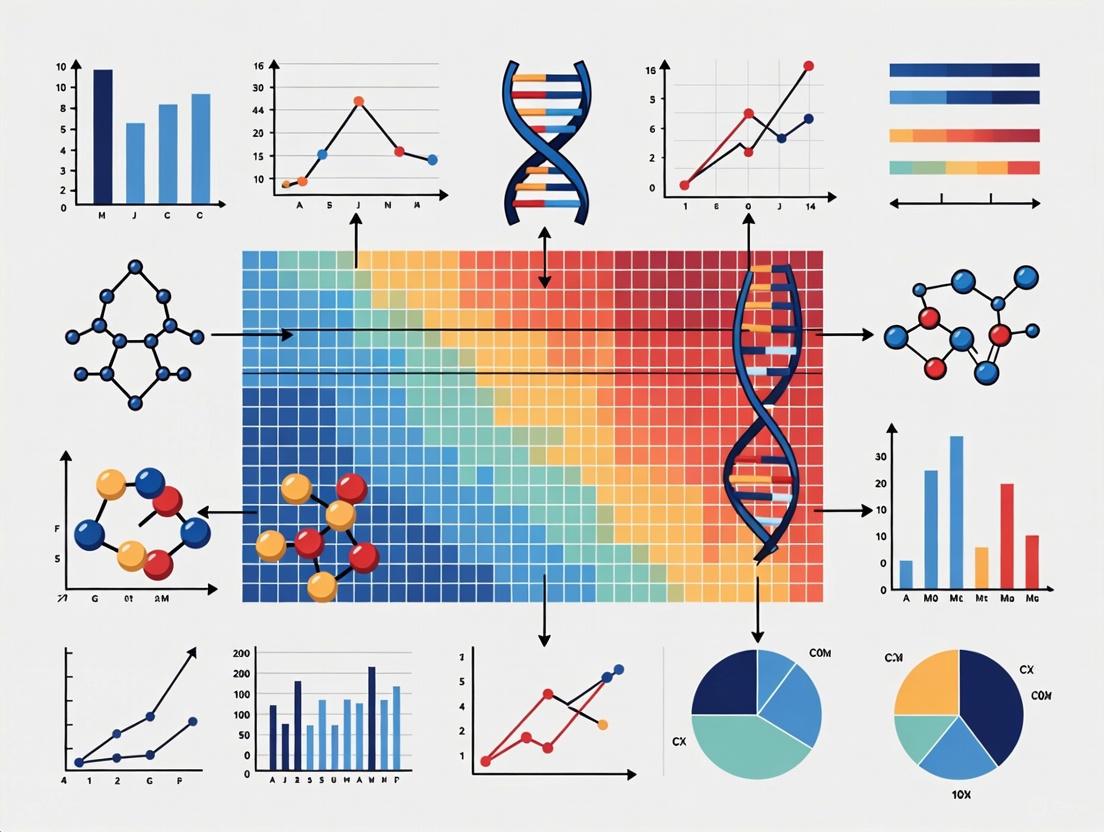
This guide provides researchers, scientists, and drug development professionals with a comprehensive framework for interpreting and utilizing gene expression heatmaps.
How to Read a Gene Expression Heatmap: A Complete Guide for Biomedical Researchers
Abstract
This guide provides researchers, scientists, and drug development professionals with a comprehensive framework for interpreting and utilizing gene expression heatmaps. It covers foundational principles—from understanding color scales and matrix structure to identifying expression patterns—and progresses to methodological applications in clustering and differential expression analysis. The article also addresses common interpretation challenges, data normalization pitfalls, and validation techniques through visual integration with other omics data. By bridging theoretical concepts with practical analytical workflows, this resource empowers professionals to extract robust biological insights and make data-driven decisions in genomics research and therapeutic development.
Decoding the Visual Language: Core Components of a Gene Expression Heatmap
In the field of genomics and biomedical research, the heatmap has become an indispensable tool for visualizing complex gene expression data. At its core, a gene expression heatmap utilizes a simple but powerful grid structure: rows represent genes and columns represent samples [1] [2]. Each cell within this grid displays the expression level of a single gene in a single sample, with color intensity representing the degree of gene up-regulation or down-regulation [1]. This visualization technique transforms numerical matrices of expression values into intuitive color patterns, enabling researchers to identify significant biological signatures associated with diseases, treatments, or other experimental conditions through immediate visual pattern recognition [2].
The power of this structure lies in its ability to present data from hundreds of genes across multiple experimental conditions or patient samples simultaneously. When combined with clustering algorithms, this basic framework reveals hidden patterns and relationships that might otherwise remain buried in spreadsheets of numerical data [1]. For drug development professionals and researchers, mastering the interpretation of this fundamental structure is the first critical step toward extracting meaningful biological insights from transcriptomic experiments.
Fundamental Structural Framework
Core Architectural Components
The standard architecture of a gene expression heatmap follows a consistent organizational logic that forms the foundation for all subsequent interpretation.
- Rows (Y-axis): Each row corresponds to a single gene whose expression is being measured across all samples in the experiment. The gene names or identifiers are typically listed along the vertical axis [1] [2].
- Columns (X-axis): Each column represents an individual biological sample, which could be derived from different patients, tissue types, experimental conditions, or time points. Sample identifiers are displayed along the horizontal axis [1].
- Color Cells: The intersection of each gene row and sample column forms a colored tile whose hue and intensity represent the normalized expression value of that gene in that particular sample [1] [2]. Importantly, these colors typically represent changes in expression (relative values) rather than absolute expression values [1] [2].
This structured arrangement creates a visual matrix where patterns of color both across rows (showing how a gene's expression varies across samples) and down columns (showing which genes are highly or lowly expressed in a particular sample) become immediately apparent to the trained eye.
Standard Color Conventions
The color scheme applied to the data matrix follows established conventions that facilitate intuitive interpretation.
Most gene expression heatmaps use a diverging color palette where one color represents up-regulation, another represents down-regulation, and a neutral color represents no significant change [1] [2]. While specific color choices may vary between publications, the fundamental principle remains consistent: color intensity corresponds to the magnitude of expression change, creating an intuitive visual scale that quickly directs attention to the most biologically significant alterations in gene expression.
Data Processing and Normalization Workflow
Before visualization, raw gene expression data must undergo extensive processing and normalization to ensure meaningful comparisons. The transformation from raw sequencing data to heatmap-visualizable values involves multiple critical steps.
Experimental Protocols and Methodologies
Table 1: Key Differential Gene Expression Analysis Tools
| DGE Tool | Publication Year | Statistical Distribution | Normalization Method | Key Features |
|---|---|---|---|---|
| DEGseq | 2009 | Binomial | None | Fisher's exact test, likelihood ratio test [3] |
| edgeR | 2010 | Negative binomial | TMM | Empirical Bayes estimate, exact test for over-dispersed data [3] |
| DESeq2 | 2014 | Negative binomial | DESeq | Shrinkage variance with variance-based and Cook's distance pre-filtering [3] |
| limma | 2015 | Log-normal | TMM | Generalized linear model with voom transformation [3] |
| NOIseq | 2012 | Non-parametric | RPKM | Noise distribution simulation, no replication requirement [3] |
The workflow begins with raw read counts from RNA-sequencing experiments, which must be processed to account for technical variability before meaningful biological comparisons can be made [3]. Two normalization approaches are particularly prevalent in modern transcriptomic analysis: the Trimmed Mean of M-values (TMM) method used by edgeR, and the geometric mean-based approach employed by DESeq2 [3]. TMM normalization operates on the assumption that most genes are not differentially expressed and estimates scaling factors to adjust for differences in library size and composition between samples [3]. This method effectively eliminates the effect of sequencing depth on analysis results, minimizing false positives and false negatives associated with technical variability [3].
Following normalization, statistical testing identifies differentially expressed genes (DEGs) with significant expression changes between experimental conditions. Parametric methods like edgeR and DESeq2 are typically preferred for RNA-Seq data as they align well with the negative binomial distribution characteristic of count-based sequencing data and remain efficient even with small sample sizes [3]. The final step before visualization involves calculating log2 fold change values, which transform the expression differences onto a symmetrical logarithmic scale suitable for the color mapping in heatmap visualization [1].
Research Reagent Solutions
Table 2: Essential Research Materials and Databases for Gene Expression Analysis
| Resource | Type | Primary Function | Application Context |
|---|---|---|---|
| GDSC Database | Database | Provides drug response levels (IC50), drug names, and cell line names [4] | Anti-cancer drug sensitivity research [4] |
| CCLE | Database | Supplies gene expression data from cancer cell lines [4] | Linking gene expression patterns to drug responses [4] |
| PubChem | Database | Source for drug SMILES vectors and structural information [4] | Drug representation and molecular graph construction [4] |
| RDKit | Software Library | Converts SMILES vectors into molecular graphs [4] | Drug representation for graph-based machine learning [4] |
| LINCS L1000 | Reference | Defines 956 landmark genes for reduced dimensionality analysis [4] | Targeted gene expression analysis without significant information loss [4] |
The Genomics of Drug Sensitivity in Cancer (GDSC) and Cancer Cell Line Encyclopedia (CCLE) databases frequently serve as primary data sources for gene expression studies in pharmaceutical research [4]. These resources provide comprehensive drug response data and corresponding transcriptomic profiles from hundreds of cancer cell lines. For studies focusing on specific gene subsets, the LINCS L1000 landmark genes provide a curated list of 956 representative genes whose expression patterns can reliably predict the expression of other genes, effectively reducing dimensionality while minimizing information loss [4].
Advanced Analysis: Clustering and Interpretation
Clustered Heatmaps and Pattern Recognition
The true analytical power of gene expression heatmaps emerges when the basic structure is enhanced with clustering algorithms. Clustered heatmaps reorganize the rows and columns based on the similarity of their expression patterns, creating meaningful groupings that reveal underlying biological relationships [1].
Hierarchical clustering is commonly applied to both genes and samples, resulting in the characteristic dendrograms displayed along the axes of sophisticated heatmaps [1]. For genes, this clustering groups together those with similar expression profiles across all samples, potentially identifying co-regulated genes or genes participating in the same biological pathway [1]. For samples, clustering groups together those with similar overall expression patterns, which might correspond to disease subtypes, response categories, or other biologically relevant classifications [1].
Unexpected clustering results can be particularly insightful. For example, if tumor samples from different presumed subtypes cluster together based on their gene expression profiles, this might indicate previously unrecognized molecular similarities or suggest new classification schemas [1]. Similarly, genes with unknown functions that cluster with well-characterized genes may suggest potential biological roles warranting further investigation.
Interpretation Framework and Analytical Approach
Interpreting a gene expression heatmap requires a systematic approach that moves beyond simply noting colorful patterns to extracting biologically meaningful insights.
- Axis Examination: Begin by carefully reviewing both axes. Sample labels should identify experimental conditions, disease states, or time points. Gene lists may include familiar genes or pathways relevant to your research question [1].
- Color Scale Reference: Always consult the color scale legend to understand the meaning of colors and their intensities. Typically, log2 fold change values are displayed, where values greater than 0 indicate up-regulation and values less than 0 indicate down-regulation [1].
- Pattern Identification: Look for distinct blocks of color that indicate coordinated gene expression. Vertical blocks suggest groups of samples with similar expression profiles, while horizontal blocks reveal sets of genes behaving similarly across conditions [1].
- Biological Contextualization: Relate the observed patterns to existing biological knowledge. Are up-regulated genes in a particular cluster known to participate in related cellular processes? Do sample clusters correspond to clinical outcomes or experimental treatments?
- Outlier Recognition: Note any samples or genes that don't cluster as expected. These outliers may represent technical artifacts, unique biological cases, or potentially novel discoveries worthy of further investigation.
This structured interpretive approach transforms the heatmap from a simple visualization into a hypothesis-generating tool that can guide subsequent experimental designs in drug development and basic research.
Integration with Downstream Analysis
The patterns identified in gene expression heatmaps typically serve as starting points for more specialized bioinformatic analyses that provide deeper biological interpretation. Gene set enrichment analysis and pathway analysis help determine whether differentially expressed genes identified in heatmaps are statistically associated with specific biological processes, molecular functions, or established metabolic/signaling pathways [2]. Popular tools for this type of analysis include DAVID, GSEA, g:Profiler, and clusterProfiler, which leverage resources like the Gene Ontology, KEGG, Reactome, and WikiPathways [2].
Network analysis provides a complementary approach that visualizes how key components from different pathways interact, potentially identifying regulatory hubs that influence multiple biological processes simultaneously [2]. This approach is particularly valuable in drug discovery, where understanding the broader network context of gene expression changes can reveal unexpected drug effects or identify potential resistance mechanisms.
For drug development professionals, these integrative analyses bridge the gap between observational patterns in heatmaps and mechanistic understanding of drug actions, potentially revealing novel therapeutic targets or biomarkers for patient stratification. The combination of heatmap visualization with downstream bioinformatic interrogation creates a powerful pipeline for translating raw gene expression data into biologically actionable insights.
In gene expression analysis, a heatmap transforms complex numerical matrices of expression data into an intuitive visual representation where color intensity systematically encodes expression values. This transformation allows researchers to identify patterns, clusters, and outliers across thousands of genes and multiple samples simultaneously. The fundamental principle involves mapping expression magnitudes to a color gradient, creating a direct visual correlation where specific hues and intensities correspond to precise quantitative measurements [5] [6].
The effectiveness of this visualization hinges on proper interpretation of its color scale, which serves as the essential legend connecting visual perception to numerical reality. Without accurate scale interpretation, biological conclusions drawn from heatmap patterns may be misleading or fundamentally flawed. This technical guide examines the core principles and methodologies for correctly interpreting color scales in gene expression heatmaps, providing researchers with frameworks to extract meaningful biological insights from these powerful visualizations.
Core Principles of Color Scale Design
Color Palette Typologies
The relationship between expression values and visual intensity is governed by specific color palette typologies, each suited to particular analytical contexts and data structures. Understanding these typologies is fundamental to accurate heatmap interpretation.
Table: Color Palette Typologies for Gene Expression Heatmaps
| Palette Type | Data Characteristics | Visual Representation | Common Applications |
|---|---|---|---|
| Sequential | Unidirectional data (all positive or all negative) | Light to dark gradient of single hue or similar hues | Expression levels, fold-changes without negative values |
| Diverging | Data with meaningful central point (often zero) | Two contrasting hues diverging from neutral center | Fold-change relative to control, up/down-regulation |
| Binned/Discrete | Categorical data or threshold-based analysis | Distinct color steps representing value ranges | Expression categorization (low/medium/high), significance levels |
Sequential palettes demonstrate ranges in data sets using light to dark shades of the same color, typically with lighter colors representing lower values and darker colors indicating higher values [5] [7]. This approach is ideal for visualizing absolute expression levels where the direction of change is uniformly positive.
Diverging palettes incorporate two contrasting hues that diverge from a neutral central color, making them particularly valuable for visualizing fold-change data where expression is measured relative to a control condition or baseline [8] [9]. The central point (often white or yellow) typically represents no change, while the two contrasting directions (commonly red and blue) represent up-regulation and down-regulation respectively.
The choice between continuous and binned color scales further affects interpretation. Continuous scales provide smooth transitions across the expression spectrum, while binned scales group values into discrete intervals, which can help identify threshold-based patterns but may obscure subtle gradients [9].
Quantitative to Visual Mapping
The mathematical transformation of expression values to color intensities follows either linear or nonlinear mapping functions. In linear mapping, expression values are directly proportional to color intensity, creating a uniform perceptual relationship across the data range. Nonlinear mappings (such as logarithmic or square root transformations) may be applied to better visualize data with extreme outliers or wide dynamic ranges [5].
The interpretation process requires understanding that color perception is not uniform across different hues at equivalent numerical intervals. For example, the human visual system is more sensitive to variations in yellow hues than blue hues at equivalent value differences. This perceptual non-uniformity necessitates careful palette selection to ensure that visual prominence aligns with biological significance [7].
Methodologies for Color Scale Implementation
Experimental Workflow for Scale Application
The process of implementing and validating a color scale for gene expression analysis follows a systematic workflow that ensures accurate visual representation of underlying data. The diagram below illustrates this process from data preparation to biological interpretation.
Diagram: Color Scale Implementation Workflow
This workflow begins with robust data preparation, including normalization and quality control, as these preliminary steps fundamentally affect all subsequent color mapping. Research demonstrates that improper normalization can introduce artifacts that are then amplified through color representation, potentially leading to erroneous biological conclusions [10].
Technical Protocols for Scale Optimization
Optimal color scale implementation requires adherence to specific technical protocols that address both analytical and perceptual requirements:
Normalization Protocol: Apply quantile normalization across samples to ensure equivalent distribution properties, confirmed through histogram analysis of normalized intensity distributions [10]. This step is critical for meaningful cross-sample comparison.
Dynamic Range Assessment: Calculate data range (minimum, maximum, and distribution percentiles) to inform scale endpoint selection. For divergent scales, establish the meaningful central point (often zero for fold-change or median for absolute expression).
Perceptual Validation: Verify that adjacent colors in the selected palette are perceptually distinguishable across the entire data range using Just Noticeable Difference (JND) evaluation methods [7]. Tools like Viz Palette can generate color reports visualizing the JND between colors.
Accessibility Compliance: Ensure all color mappings maintain minimum 3:1 contrast ratio against backgrounds and that data interpretation doesn't rely solely on color perception [7]. Implement texture or pattern overlays for critical distinctions when required.
For clustered heatmaps, additional considerations include applying clustering algorithms before final color mapping to ensure that organizational structure aligns with color patterns [5] [11].
Analytical Framework for Scale Interpretation
Interpretation Methodology
Correct interpretation of heatmap color scales requires a systematic analytical approach that accounts for both technical and biological contexts. The diagram below illustrates the decision pathway for extracting biological meaning from visual patterns.
Diagram: Color Scale Interpretation Pathway
This interpretive framework emphasizes three critical analytical components: absolute value reference (mapping specific colors to exact expression values via the legend), relative pattern recognition (identifying clusters, gradients, and outliers), and biological contextualization (correlating visual patterns with known biological pathways and functions).
Case Study: Hypertension Gene Expression Analysis
A study investigating differentially expressed genes (DEGs) in hypertension demonstrates proper color scale interpretation methodology. Researchers analyzed 22 Affymetrix cDNA datasets, identifying 50 DEGs with seven key genes showing statistical significance (p-value < 0.05): ADM, ANGPTL4, USP8, EDN, NFIL3, MSR1, and CEBPD [10].
Table: Hypertension Gene Expression Analysis Results
| Gene Symbol | Protein Name | Expression Trend | Fold Change | Biological Function |
|---|---|---|---|---|
| ADM | Adrenomedullin | Upregulated | 3× higher | Cardiovascular regulation |
| ANGPTL4 | Angiopoietin-related protein 4 | Upregulated | 3× higher | Lipid metabolism |
| USP8 | Ubiquitin-specific peptidase 8 | Upregulated | 3× higher | Protein degradation |
| EDN1 | Endothelin 1 | Upregulated | 3× higher | Vasoconstriction |
| NFIL3 | Nuclear factor, interleukin-3 regulated | Downregulated | Significant decrease | Immune regulation |
| MSR1 | Macrophage scavenger receptor 1 | Downregulated | Significant decrease | Inflammatory response |
| CEBPD | CCAAT/enhancer-binding protein delta | Downregulated | Significant decrease | Transcriptional regulation |
In this study, a diverging color palette successfully visualized the differential expression patterns, with intense red hues indicating upregulation and blue hues representing downregulation relative to control samples. The color scale allowed immediate identification of ADM, ANGPTL4, USP8, and EDN1 as strongly upregulated genes, while NFIL3, MSR1, and CEBPD appeared as notably downregulated [10].
The validation of expression profiles via qPCR showed approximately 3-times higher fold changes (2−ΔΔCt) for upregulated genes compared to control, confirming that the color intensities accurately represented magnitude of expression changes. This correspondence between visual intensity and experimental validation demonstrates the critical role of proper color scale interpretation in drawing accurate biological conclusions [10].
Research Reagent Solutions
The implementation and interpretation of heatmap color scales requires specific research tools and computational resources. The table below details essential solutions for rigorous heatmap-based gene expression analysis.
Table: Essential Research Reagent Solutions for Heatmap Analysis
| Resource Category | Specific Tools/Platforms | Primary Function | Application Context |
|---|---|---|---|
| Spatial Omics Analysis | NicheCompass | Graph deep-learning for niche identification | Identifies cell niches based on signaling events in spatial transcriptomics [12] |
| Visualization Libraries | ComplexHeatmap (R) | Flexible heatmap visualization with annotations | Creates publication-quality heatmaps with row/column annotations [13] |
| Color Palette Tools | ColorBrewer 2.0, Viz Palette | Accessible color scheme selection | Evaluates palette effectiveness and color differentiation [7] [8] |
| Data Integration | circlize (R package) | Color mapping for continuous values | Implements colorRamp2 for continuous value mapping [13] |
| Validation Platforms | qPCR Systems | Expression validation | Confirms heatmap patterns with orthogonal methods [10] |
| Web Analytics | VWO Insights, Hotjar | Behavioral heatmap generation | Tracks user interaction patterns on websites [6] [14] |
These specialized tools enable the rigorous implementation of color scales that accurately represent underlying gene expression data. Computational resources like ComplexHeatmap provide sophisticated annotation capabilities that contextualize expression patterns with sample metadata or gene classifications [13]. Validation platforms, particularly qPCR systems, serve as essential orthogonal methods to confirm that visual patterns in heatmaps correspond to actual expression differences [10].
Advanced analytical frameworks like NicheCompass represent the cutting edge of heatmap interpretation, moving beyond simple expression visualization to modeling cellular communication based on spatial gene program activities [12]. These tools enable quantitative characterization of cellular niches based on communication pathways, demonstrating how proper color interpretation facilitates deeper biological insights.
The interpretation of color scales in gene expression heatmaps represents a critical intersection of computational biology, visual perception science, and experimental validation. Accurate interpretation requires understanding of color palette typologies, implementation methodologies, and analytical frameworks that connect visual patterns to biological meaning. As spatial omics technologies continue to advance, generating increasingly complex datasets, the principles of effective color scale design and interpretation will remain essential for extracting meaningful insights from visual representations of gene expression data. The rigorous approach outlined in this guide provides researchers with a systematic framework for ensuring their heatmap interpretations accurately reflect biological reality.
This technical guide provides researchers, scientists, and drug development professionals with a comprehensive framework for interpreting gene expression heatmaps. Within the broader thesis of mastering biological data visualization, we detail methodologies for identifying expression patterns, experimental protocols for data generation, and advanced visualization techniques to extract meaningful biological insights from complex transcriptomic datasets.
Gene expression heatmaps serve as fundamental tools in functional genomics, providing a visual representation of complex transcriptomic data across multiple samples or experimental conditions. These visualizations employ a color-grid system where rows typically represent genes and columns represent samples, with color intensity corresponding to expression levels [2]. This compact format enables researchers to discern patterns of upregulation, downregulation, and expression gradients across biological contexts, facilitating hypothesis generation about functional relationships and regulatory mechanisms.
The analytical power of heatmaps extends beyond mere visualization when combined with clustering algorithms, which group genes and/or samples based on expression similarity [2]. This integration allows for the identification of co-regulated gene sets, biological signatures associated with specific conditions, and potential biomarkers for disease states or therapeutic responses. In precision medicine and drug development contexts, these patterns can reveal critical information about molecular drivers of disease progression and treatment efficacy [15].
Interpreting Expression Patterns in Heatmaps
Fundamental Expression Patterns
Upregulation and Downregulation In a typical gene expression heatmap, color coding represents changes in expression levels, with conventional schemes using red for up-regulated genes and blue for down-regulated genes, with black indicating unchanged expression [2]. These differential expressions are rarely binary phenomena but rather exist along a spectrum of expression gradients that reflect the complex regulatory dynamics within biological systems. Proper interpretation requires understanding that these representations typically display relative changes rather than absolute expression values, with colors indicating deviation from a reference state or mean expression level.
Expression Gradients Gradients manifest in heatmaps as gradual transitions in color intensity across samples or experimental conditions. These patterns may reveal dose-dependent responses to treatments, temporal progression of expression changes, or spatial organization of gene activity in tissue samples. The recent development of Temporal GeneTerrain visualization addresses the limitation of conventional heatmaps in capturing dynamic transitions, providing continuous trajectories that expose transient waves and sustained shifts in gene activity [15].
Biological Significance of Patterns
The patterns observed in heatmaps serve as visual proxies for underlying biological processes. Co-regulated genes—those showing similar expression patterns across conditions—often participate in shared biological pathways or are controlled by common regulatory elements [2]. For example, a 2025 benchmarking study on spatial gene expression prediction demonstrated that heatmaps could capture biologically relevant gene patterns from tissue images, identifying genes like FASN (associated with therapeutic resistance in HER2+ breast cancer) and LMNA (with increased expression in skin cancer) through their distinct expression signatures [16].
Table 1: Biologically Significant Expression Patterns in Heatmaps
| Pattern Type | Visual Representation | Biological Interpretation | Clinical/Drug Development Relevance |
|---|---|---|---|
| Co-upregulation | Contiguous red horizontal bands | Activated pathway or shared regulatory response | Identifies potential combination therapy targets |
| Co-downregulation | Contiguous blue horizontal bands | Suppressed cellular process or pathway inhibition | Reveals drug mechanism of action or toxicity signatures |
| Opposing regulation | Alternating red/blue patterns in gene clusters | Compensatory mechanisms or feedback loops | Predicts resistance mechanisms or adaptive responses |
| Gradual gradients | Smooth color transitions across samples | Dose-response relationships or temporal progression | Informs dosing regimens and treatment timing |
| Spatial clusters | Color groupings in spatial transcriptomics | Tissue microenvironments or regional biology | Identifies regional drug targeting opportunities |
Experimental Design and Methodologies
Data Generation Workflows
Robust heatmap analysis begins with rigorous experimental design and data generation. The following workflow outlines a standardized approach for generating gene expression data suitable for heatmap visualization:
Data Preprocessing and Normalization
Prior to visualization, gene expression data requires careful preprocessing to ensure meaningful pattern recognition. RNA-seq or microarray data must be transformed from raw counts or intensities to normalized values that enable valid cross-sample comparisons [17]. A common approach includes:
- Logarithmic Transformation: Converting expression values using log₁₀ or log₂ to better visualize variation across orders of magnitude and normalize variance [17].
- Z-score Normalization: Scaling data to have mean of 0 and standard deviation of 1, which emphasizes relative expression patterns across genes [15].
- Data Filtering: Selecting the most variable genes for visualization to reduce noise and enhance signal detection, typically achieved by calculating coefficient of variation or interquartile range and retaining the top performers [15].
For temporal studies, additional preprocessing steps may include smoothing functions to capture dynamic trends and interpolation between time points to create continuous trajectories [15].
Clustering Methodologies
Clustering represents a critical analytical step that groups genes with similar expression patterns, potentially revealing co-regulated gene sets or samples with similar expression profiles.
Table 2: Clustering Methods for Gene Expression Heatmaps
| Method Category | Specific Algorithms | Best Use Cases | Technical Considerations |
|---|---|---|---|
| Hierarchical Clustering | Ward.D, Ward.D2, Complete, Average (UPGMA) | General purpose clustering, sample classification | Distance metric selection critical; produces dendrograms |
| Partitioning Methods | K-means, PAM | Identifying distinct expression modules | Requires pre-specification of cluster number (k) |
| Distance Metrics | Euclidean, Manhattan, Pearson correlation | Shape-based vs magnitude-based similarity | Euclidean sensitive to magnitude; correlation finds shape similarity |
| Advanced Approaches | Self-organizing maps (SOM) | Large-scale data exploration | Can yield difficult-to-interpret results [15] |
Implementation of these methods requires careful parameter selection. As demonstrated in the TOmicsVis package, effective clustering requires specifying distance methods ("euclidean", "manhattan", "canberra"), hierarchical clustering methods ("average", "complete", "ward.D"), and the number of groups for cutting dendrograms [18].
Advanced Technical Implementation
Visualization Best Practices
Color Scheme Selection Effective heatmaps employ intentional color palettes that enhance pattern recognition while maintaining accessibility. Scientific conventions often use red-blue diverging schemes (RdBu) where red indicates upregulation, blue indicates downregulation, and white represents neutral expression [18]. Alternative palettes include Spectral, BrBG, PiYG, PRGn, and PuOr, selected based on data characteristics and visualization goals [18]. For accessibility, ensure a minimum 3:1 contrast ratio for non-text elements as specified in WCAG 2.1 guidelines [19] [20].
Layout and Annotation
Optimizing heatmap layout involves strategic decisions about row and column ordering, typically guided by clustering results. Additional annotations—such as sample phenotypes, experimental conditions, or gene functional classifications—provide essential context for biological interpretation. As demonstrated in the heatmap_cluster function, parameters like show_rownames, angle_col, and border_color significantly impact readability [18].
Addressing Visualization Limitations
Traditional heatmaps face challenges including data overcrowding, loss of resolution with large gene sets, and limited temporal dynamics representation [15]. Advanced methods like Temporal GeneTerrain address these limitations by creating continuous, integrated views of gene expression trajectories that evolve during disease progression and treatment response [15]. This approach employs fixed network topologies and adaptive noise smoothing to enhance pattern recognition in dynamic datasets.
Research Reagent Solutions
Successful gene expression heatmap analysis requires specific laboratory reagents and computational tools. The following table outlines essential resources referenced in recent literature:
Table 3: Essential Research Reagents and Tools for Gene Expression Heatmap Analysis
| Reagent/Tool | Category | Function/Purpose | Example Sources/Platforms |
|---|---|---|---|
| RNA Extraction Kits | Wet-bench reagent | Isolate high-quality RNA from tissues/cells | Standard commercial kits (Qiagen, ThermoFisher) |
| Library Prep Kits | Wet-bench reagent | Prepare sequencing libraries for transcriptomics | Illumina, ThermoFisher, NEB |
| Clustering Algorithms | Computational tool | Group genes/samples by expression similarity | Ward.D, UPGMA, WPGMA [18] |
| Heatmap Visualization Packages | Computational tool | Generate publication-quality heatmaps | TOmicsVis [18], ggplot2 [17] |
| Color Palettes | Computational parameter | Represent expression gradients intuitively | "RdBu", "Spectral", "PuOr" [18] |
| Spatial Transcriptomics Platforms | Integrated system | Capture gene expression with spatial coordinates | 10x Visium, Slide-seq [16] |
| Pathway Analysis Tools | Computational tool | Biological interpretation of expression patterns | GSEA, Enrichr, DAVID [2] |
Analytical Validation and Interpretation
Statistical Framework
Validating patterns observed in heatmaps requires rigorous statistical support. For clustering results, measures such as silhouette width assess cluster compactness and separation. Bootstrap resampling can determine cluster stability, while statistical tests for enrichment (e.g., Fisher's exact test) evaluate whether identified clusters are enriched for specific biological functions [2]. For differential expression, adjusted p-values and false discovery rates (FDR) control for multiple testing across thousands of genes.
A 2025 benchmarking study employed multiple metrics including Pearson Correlation Coefficient (PCC), Mutual Information (MI), Structural Similarity Index (SSIM), and Area Under the Curve (AUC) to evaluate the performance of spatial gene expression prediction methods, providing a comprehensive assessment framework [16].
Biological Validation Strategies
Gene Set Enrichment Analysis This approach determines whether defined gene sets (e.g., based on co-expression patterns from heatmaps) show statistically significant enrichment for specific biological pathways, molecular functions, or disease associations [2]. The Gene Ontology database provides standardized annotations for this purpose, while pathway databases like KEGG, Reactome, and WikiPathways offer curated biological pathway information.
Network Analysis Complementary to pathway analysis, network methods visualize how key components of different pathways interact, identifying regulatory events that influence multiple biological processes [2]. Protein-protein interaction networks can be embedded in two dimensions using force-directed algorithms like Kamada-Kawai to reveal functional modules within expression data [15].
Gene expression heatmaps remain indispensable tools for visualizing complex transcriptomic data, but their full potential requires sophisticated interpretation within appropriate biological context. By implementing rigorous experimental designs, advanced clustering methodologies, and comprehensive validation frameworks, researchers can reliably identify biologically significant patterns of upregulation, downregulation, and expression gradients. The continued development of enhanced visualization approaches like Temporal GeneTerrain addresses limitations in capturing dynamic expression changes, further empowering drug development professionals and researchers to extract meaningful insights from increasingly complex genomic datasets.
This technical guide details the core components of a clustered heatmap—dendrograms, labels, and legends—within the context of interpreting gene expression data. Mastery of these elements is fundamental for researchers, scientists, and drug development professionals to accurately decipher complex biological patterns, identify novel disease signatures, and validate clustering outcomes in genomic research. This document provides a structured framework for both reading and constructing biologically meaningful heatmaps.
In functional genomics, a heatmap is a critical visualization tool for representing differential gene expression data across multiple samples [2]. It functions as a data grid where each row typically represents a gene, each column represents a sample or experimental condition, and the color and intensity of each cell represent the level of gene expression, often as a log2 fold change [1].
Clustered heatmaps enhance this basic structure by integrating hierarchical clustering, a method that groups genes and/or samples with similar expression profiles [2] [1]. This reordering reveals inherent patterns, such as genes co-regulated in a biological pathway or samples clustering by disease subtype. The interpretation of these patterns hinges on three core elements: the dendrogram, which illustrates the clustering relationship; the axis labels, which identify the genes and samples; and the legend, which decodes the color scale. Proper configuration of these elements is paramount for generating robust and interpretable biological insights.
Core Element 1: Dendrograms
A dendrogram, or tree diagram, is a direct output of hierarchical clustering analysis and is visually overlaid onto the heatmap axes. It graphically represents the similarity and the sequential merging of clusters, showing how genes or samples are grouped based on their expression patterns [21] [1].
Biological Interpretation of Dendrograms
The dendrogram's branch lengths correspond to the "distance" or dissimilarity between clusters; shorter branches indicate higher similarity [21]. In practice:
- Sample Clustering: Clustering on the column axis can reveal biologically distinct groups, such as healthy versus diseased tissues, or different molecular subtypes of cancer [1]. The dendrogram shows which samples are most transcriptionally similar.
- Gene Clustering: Clustering on the row axis groups genes with correlated expression. These genes often share biological functions, are part of the same regulatory network, or are co-regulated in a particular pathway [2]. Identifying such gene modules can pinpoint key drivers of a biological condition.
Formatting and Customization
Dendrograms can be customized for clarity and to highlight specific clusters, as detailed in Table 1.
Table 1: Dendrogram Customization Options [21]
| Feature | Description | Impact on Interpretation |
|---|---|---|
| Orientation | Vertical (left/right) or Horizontal (top/bottom). | Aligns with the corresponding heatmap axis (rows or columns). |
| Branch Color | Single color or variable coloring by pre-defined cluster. | Allows for visual emphasis of specific, pre-determined clusters. |
| Branch Style | Adjustment of line thickness, pattern, and transparency. | Improves visual distinction, especially in complex figures. |
| Distance Axis | Axis displaying the distance scale at which clusters merge. | Provides a quantitative measure of cluster dissimilarity. |
A key analytical step is to "cut" the dendrogram to define discrete clusters. This can be done by specifying a cut-off height on the distance axis or by defining a number of clusters. Many software packages allow for subsequent visual emphasis, such as coloring all branches within a defined cluster the same way [21].
Core Element 2: Labels
Labels are the identifiers on the heatmap's rows (genes) and columns (samples). Effective label management is crucial for connecting the visual patterns to biological entities.
Strategic Labeling for Readability
In gene expression heatmaps, it is common to have hundreds or thousands of rows, making it impossible to display every gene name legibly. Therefore, strategic labeling is required:
- Sample (Column) Labels: Should always be displayed clearly. These are essential for understanding the experimental design and the biological groups that are clustering.
- Gene (Row) Labels: Often, only a subset of key genes (e.g., highly significant differentially expressed genes or genes of interest) is labeled. Software options allow for displaying labels at intervals (e.g., every 10th gene) or only for specific, pre-selected genes [21].
- Alternate Identifiers: Labels can be displayed using gene symbols, database accession numbers, or even temporarily with alphanumeric codes (1,2,3...) for a cleaner look during the analysis phase [21].
Label Formatting Protocols
- Font and Rotation: Use a clear, sans-serif font. Rotating column labels (typically 45 or 90 degrees) is a standard practice to prevent overlapping and improve readability [21].
- Interactive Exploration: For static figures, label clutter must be minimized. When possible, using interactive visualization tools allows users to zoom in on regions of interest or hover over cells to reveal gene identities.
Core Element 3: Legends and Color Scales
The heatmap legend deciphers the color-to-value mapping, making it the key to a quantitative interpretation of the data.
Interpreting the Color Scale
In differential gene expression analysis, the colors almost always represent log2 fold change values relative to a control or reference group [1].
- Diverging Color Palette: A three-color scheme is standard:
- Red: Upregulated expression (positive log2 fold change).
- Black/White: No change (log2 fold change near zero).
- Blue: Downregulated expression (negative log2 fold change).
- Intensity: The saturation or darkness of the color typically corresponds to the magnitude of the change, allowing for quick identification of the most dramatically altered genes.
Best Practices for Legend Design
- Sequential vs. Diverging: Use a diverging palette when the data has a meaningful central point (like zero log2 fold change) [5].
- High Contrast & Accessibility: The color steps must be easily distinguishable. It is critical to verify that the palette is interpretable by individuals with color vision deficiencies and that all text in the legend has sufficient contrast against its background [22].
- Inclusion is Mandatory: A heatmap is uninterpretable without its legend. The legend must be clearly visible and accurately describe the variable and units being displayed [5].
Integrated Workflow for Analysis
The process of creating and interpreting a clustered heatmap is methodical. The following diagram outlines the key steps and the role of the core elements at each stage.
The Scientist's Toolkit: Essential Research Reagents & Software
Success in gene expression analysis relies on a combination of wet-lab reagents and dry-lab computational tools. The following table details key solutions and their functions in the context of generating data for a heatmap.
Table 2: Key Research Reagent Solutions for Heatmap-Based Gene Expression Analysis
| Category / Item | Function in Experimental Workflow |
|---|---|
| RNA Extraction Kits | Isolate high-quality, intact total RNA from cell or tissue samples, serving as the starting material for downstream analysis. |
| Reverse Transcription Kits | Synthesize complementary DNA (cDNA) from the isolated RNA template, enabling gene expression measurement via PCR or sequencing. |
| qPCR Assays | Quantify the expression levels of a targeted, pre-selected set of genes. Data from these assays can be directly visualized in a heatmap. |
| Microarray Platforms | Simultaneously measure the expression levels of tens of thousands of genes in a single experiment. A classic data source for heatmaps. |
| RNA-Seq Library Prep Kits | Prepare sequencing libraries from RNA for whole-transcriptome analysis using Next-Generation Sequencing (NGS), providing the most comprehensive data for heatmap visualization. |
| Statistical Analysis Software (R/Python) | Provide the computational environment for performing differential expression analysis and hierarchical clustering. |
| Visualization Packages (ComplexHeatmap, Prism) | Specialized software libraries (e.g., ComplexHeatmap in R) [13] or commercial tools (e.g., GraphPad Prism) [21] used to generate, annotate, and customize the publication-quality heatmap figure. |
Dendrograms, labels, and legends are not mere decorative features but are fundamental to the rigorous interpretation of gene expression heatmaps. The dendrogram provides a visual summary of the statistical clustering, guiding the identification of sample groups and co-expressed gene modules. Strategic use of labels ensures that these patterns can be traced back to specific biological entities, while a well-designed legend provides the quantitative scale necessary for accurate analysis. A thorough understanding of these elements, combined with robust experimental data, empowers researchers to transform a colorful grid into actionable biological insights, accelerating discovery in basic research and drug development.
From Data to Discovery: Analytical Techniques and Research Applications
Gene expression heatmaps are indispensable tools in modern genomic research, providing an intuitive graphical representation of complex gene expression data across multiple samples. They utilize a color-coding system where intensities represent expression values, allowing researchers to quickly identify patterns in high-dimensional datasets. In life sciences, effective data visualization is critical for enhancing understanding, improving data integrity, and making research clearer and more reproducible [23]. Heatmaps specifically help in visualizing relationships between two categorical or numerical variables and observing patterns in values for either or both of them [23]. For clustering analysis, they serve as the primary visual output for grouping genes with similar expression profiles and samples with comparable molecular signatures, enabling discoveries in areas like cancer heterogeneity, cell type identification, and therapeutic target discovery.
The fundamental value of clustering analysis lies in its ability to reduce dimensionality and reveal underlying structure in data. Single-cell analytics, for instance, focuses on individual cells to study unique characteristics and cellular heterogeneity often masked in bulk analyses [24]. Heatmaps transform complex numerical gene expression matrices into accessible visual summaries that facilitate biological interpretation and hypothesis generation. When properly analyzed, these visualizations can accelerate biomarker discovery, illuminate disease mechanisms, and inform drug development decisions by providing a clear picture of molecular relationships across experimental conditions.
Fundamentals of Gene Expression Heatmaps
Core Principles and Color Interpretation
A gene expression heatmap is essentially a data matrix where rows typically represent genes and columns represent samples or experimental conditions. Each cell in this matrix is colored based on the normalized expression value of a particular gene in a specific sample. The color scheme follows an intuitive gradient where warmer colors (like red) often indicate higher expression values, while cooler colors (like blue) represent lower expression values [25]. This system allows researchers to quickly scan thousands of data points and identify prominent patterns.
The interpretation of a heatmap relies on understanding both the color scale and the arrangement of rows and columns. In genomic applications, expression values are typically transformed through Z-score normalization across genes or samples to emphasize relative differences. The selection of an appropriate color palette is crucial, as poorly chosen colors can misrepresent data patterns or be inaccessible to color-blind users [26]. Scientific visualization best practices recommend using perceptually uniform colormaps like Viridis instead of rainbow schemes [23].
Role in Clustering Analysis
Heatmaps serve as the visual embodiment of clustering results, displaying how both genes and samples group based on expression similarity. The arrangement of rows and columns is not arbitrary but reflects the output of clustering algorithms that reorder the matrix to place similar entities adjacent to one another. This reorganization creates coherent color blocks that reveal biological meaningful relationships. For example, genes involved in the same metabolic pathway may show similar expression patterns across samples and thus cluster together, while samples from the same cancer subtype will cluster based on shared expression profiles.
The combined visualization of data matrix and clustering structure makes heatmaps particularly powerful for exploratory data analysis in genomics. They enable simultaneous assessment of gene clusters, sample groups, and the relationships between them. Additionally, most genomic heatmaps include dendrograms showing hierarchical clustering relationships and annotation tracks providing metadata about samples (e.g., disease status, tissue type) and genes (e.g., functional categories), enriching the interpretive context.
Methodological Framework for Clustering Analysis
Data Preprocessing Requirements
Before clustering can begin, gene expression data must undergo rigorous preprocessing to ensure meaningful results. Single-cell RNA sequencing data is often noisy, with significant variability introduced by technical artifacts like batch effects, dropouts, and sequencing errors [24]. Effective preprocessing includes:
- Normalization: Adjusting counts to account for differences in sequencing depth and other technical factors, enabling meaningful comparisons across samples [24].
- Batch effect correction: Removing variability introduced by technical artifacts when integrating datasets from different experiments [24].
- Quality control: Identifying and filtering outlier cells or genes with anomalous expression patterns to reduce noise [24].
- Feature selection: Filtering to highly variable genes that drive biological variation rather than technical noise.
These steps improve the reliability of visual outputs by quality control of cells and genes included in downstream analysis [24]. Without proper preprocessing, clustering results may reflect technical artifacts rather than biological truth, leading to incorrect interpretations.
Distance Metrics and Clustering Algorithms
The core of clustering analysis involves calculating pairwise similarities between genes and samples using appropriate distance metrics and then applying clustering algorithms to group similar entities.
Table 1: Common Distance Metrics for Gene Expression Clustering
| Metric Name | Calculation Method | Best Use Cases | Considerations |
|---|---|---|---|
| Euclidean Distance | Straight-line distance between points in n-dimensional space | General use, when absolute expression differences matter | Sensitive to outliers |
| Manhattan Distance | Sum of absolute differences along each dimension | High-dimensional data, more robust to outliers | Less sensitive to extreme values |
| Pearson Correlation | Measures linear relationship between expression profiles | Identifying genes with similar expression patterns regardless of magnitude | Focuses on pattern similarity rather than absolute values |
| Spearman Correlation | Rank-based correlation measure | When relationships may be non-linear | More robust to outliers |
For clustering algorithms, several approaches are commonly employed:
- Hierarchical clustering: Builds a tree structure (dendrogram) showing nested clusters, useful for visualizing relationships at multiple scales [27].
- k-means clustering: Partitions data into a pre-specified number of clusters by minimizing within-cluster variance [27].
- Seriation-based methods: Reorder results to facilitate pattern identification, an approach implemented in tools like GeneSetCluster 2.0 [27].
The choice of algorithm depends on the research question, data characteristics, and whether the goal is discovery of novel groups or validation of hypothesized structures.
Experimental Protocols and Workflows
Standard Clustering Pipeline
A comprehensive clustering analysis follows a structured workflow from raw data to biological interpretation. The diagram below illustrates this standard pipeline:
Diagram 1: Gene expression clustering analysis workflow
This workflow begins with a raw expression matrix, typically from RNA sequencing or microarray experiments. The data preprocessing step includes normalization, transformation, and filtering to prepare data for analysis. Quality control ensures data integrity before proceeding to distance calculation, where an appropriate metric is selected based on the biological question. The clustering algorithm then groups genes and/or samples, with results visualized through heatmaps and related plots for biological interpretation.
Advanced Integrated Analysis
For more comprehensive insights, advanced workflows integrate clustering with complementary analytical approaches:
Diagram 2: Integrated analysis workflow for biological interpretation
Gene-set enrichment analysis (GSEA) helps interpret gene clusters by identifying functional themes and biological processes overrepresented in each cluster [27]. This addresses the key challenge of moving from gene lists to biological meaning. Pathway analysis extends this by mapping clustered genes to known molecular pathways, while multimodal integration combines transcriptomics with other data types like proteomics or epigenomics for a holistic view of cellular biology [24]. Interactive exploration enables researchers to dynamically interrogate results and test hypotheses.
Visualization and Interpretation Guidelines
Creating Effective Visualizations
Effective heatmap design follows established data visualization best practices to ensure clear communication of findings. These principles include:
- Strategic color use: Applying color with clear purpose to guide attention and convey meaning [26]. Use sequential palettes for expression values and qualitative palettes for group annotations.
- Appropriate chart selection: Ensuring the visualization format matches the data structure and analytical goals [26].
- Clear labeling: Providing comprehensive titles, axis labels, and legends to eliminate ambiguity [26].
- Data-ink optimization: Maximizing the proportion of ink dedicated to presenting data rather than decorative elements [26].
Additionally, genomic heatmaps should include dendrograms showing clustering relationships, annotation tracks for sample metadata, and a color key explaining the expression value color scale. These elements provide essential context for interpreting the patterns observed in the main heatmap body.
Interpretation Framework
Systematic heatmap interpretation involves analyzing patterns at multiple levels:
- Sample clustering patterns: Identify groups of samples with similar expression profiles and assess whether they correspond to expected biological categories (e.g., disease vs. control).
- Gene clustering patterns: Examine groups of genes with coordinated expression and investigate their biological relationships through functional enrichment analysis.
- Sample-gene relationships: Look for characteristic expression patterns in specific sample groups that may represent molecular subtypes or treatment responses.
A critical consideration in interpretation is understanding that correlation does not imply causation. Genes that cluster together may be co-regulated but not necessarily functionally related. Similarly, sample clusters may reflect technical batches rather than biological groups, highlighting the importance of proper experimental design and batch correction.
Research Tools and Reagents
Computational Tools for Clustering Analysis
Table 2: Essential Tools for Gene Expression Clustering Analysis
| Tool Name | Type/Platform | Primary Function | Clustering Capabilities |
|---|---|---|---|
| GeneSetCluster 2.0 [27] | R package, Web application | Gene-set interpretation | Seriation-based clustering, sub-cluster analysis |
| Elucidata Polly [24] | Cloud platform | Single-cell analytics | Dimensionality reduction, interactive clustering |
| exvar [28] | R package | Gene expression & variant analysis | Differential expression, basic clustering |
| CellxGene [24] | Interactive tool | Single-cell visualization | Dimensionality reduction, cell clustering |
| ggplot2 [28] | R package | Data visualization | Flexible heatmap creation |
| ClusterProfiler [28] | R package | Functional enrichment | Interpretation of gene clusters |
The selection of appropriate tools depends on the data type (bulk vs. single-cell RNA-seq), scale of the experiment, and the researcher's computational expertise. For large-scale single-cell studies, tools like Elucidata's platform offer scalable solutions that can handle millions of cells while providing interactive capabilities [24]. For more standard bulk RNA-seq analyses, R packages like GeneSetCluster 2.0 provide specialized methods for addressing redundancies in gene-set analysis results [27].
Experimental Reagents and Materials
Table 3: Key Research Reagents for Gene Expression Studies
| Reagent/Material | Function in Analysis | Considerations for Clustering |
|---|---|---|
| RNA sequencing kits | Generate raw expression data | Sequencing depth affects data quality |
| Single-cell isolation reagents | Enable single-cell resolution | Impact cell viability and data noise |
| Reference genomes | Alignment for read mapping | Version consistency crucial for reproducibility |
| Cell type markers | Validation of clusters | Used to annotate identified clusters |
| Spike-in controls | Technical variation assessment | Aid in normalization and batch correction |
Wet-lab reagents form the foundation of gene expression data generation, and their selection directly impacts downstream clustering quality. RNA sequencing kits with unique molecular identifiers (UMIs) help reduce technical noise, while single-cell isolation reagents affect cell viability and the proportion of ambient RNA in single-cell experiments. Reference genomes must be consistently applied across analyses to ensure comparability, and cell type markers provide biological validation for computationally identified clusters.
Applications in Pharmaceutical Development
Clustering analysis of gene expression data plays several crucial roles in drug discovery and development:
- Target identification: By clustering gene expression profiles across disease states, researchers can identify genes with aberrant expression patterns that may represent potential therapeutic targets.
- Biomarker discovery: Clustering patient samples based on expression profiles can reveal molecular subtypes with different disease progression or treatment response, enabling development of companion diagnostics.
- Mechanism of action studies: Clustering gene expression responses to drug treatment can reveal patterns indicative of therapeutic mechanisms and potential off-target effects.
- Toxicology assessment: Clustering expression patterns in response to compound exposure can identify signatures predictive of adverse effects.
In the biopharmaceutical industry, these applications directly support the development of precision medicine approaches where treatments are matched to patients based on molecular profiles. The integration of clustering analysis with other data types, such as genetic variants from tools like exvar [28], further enhances the ability to identify patient subgroups most likely to respond to specific therapies while experiencing minimal adverse effects.
Clustering analysis through gene expression heatmaps represents a powerful methodology for extracting biological insights from complex genomic datasets. When properly executed with appropriate preprocessing, algorithm selection, and interpretation frameworks, this approach can reveal meaningful patterns in high-dimensional data that would otherwise remain hidden. The continued development of specialized tools like GeneSetCluster 2.0 [27] and integrated platforms like Elucidata's suite [24] are making these analyses increasingly accessible to researchers with varying computational backgrounds.
As genomic technologies evolve toward increasingly high-resolution modalities like single-cell multi-omics and spatial transcriptomics, clustering methodologies must similarly advance to handle the growing scale and complexity of biological data. Future directions will likely involve more sophisticated integration of multimodal data, improved handling of temporal dynamics, and enhanced interactive visualization capabilities that enable researchers to explore clustering results in increasingly intuitive ways. Through these advancements, clustering analysis will continue to be a cornerstone of genomic research and therapeutic development, transforming raw expression data into biological understanding and clinical applications.
Identifying Co-expressed Gene Modules and Biological Signatures
Gene co-expression analysis is a powerful method for identifying groups of genes (modules) that exhibit similar expression patterns across different experimental conditions, tissues, or time points. These modules often correspond to functionally related genes participating in shared biological pathways or processes. Within the context of a broader thesis on interpreting gene expression heatmaps, understanding co-expression is fundamental as it transforms complex expression matrices into biologically meaningful patterns. Heatmaps serve as the primary visual tool for representing these relationships, where clustered rows (genes) and columns (samples) reveal underlying regulatory networks and functional signatures. For researchers and drug development professionals, this analytical approach can uncover novel therapeutic targets, biomarker signatures, and disease mechanisms by connecting expression patterns to biological function.
The fundamental principle behind co-expression analysis is that genes with correlated expression profiles are often co-regulated or involved in the same cellular process. Analysis of these patterns typically begins with a normalized gene expression matrix, where computational methods identify groups of genes whose expression levels rise and fall in a coordinated manner. These co-expressed gene modules can then be mapped to existing biological knowledge bases—such as Gene Ontology (GO) terms and the Kyoto Encyclopedia of Genes and Genomes (KEGG)—to infer their biological significance. The resulting heatmaps provide a visual synthesis of these relationships, enabling researchers to quickly identify key gene clusters and their association with sample phenotypes.
Key Analytical Methods and Workflows
Weighted Gene Co-Expression Network Analysis (WGCNA)
WGCNA is a widely used systems biology method for constructing co-expression networks from high-dimensional transcriptomic data. Unlike simple pairwise correlation methods, WGCNA identifies modules of highly correlated genes across a subset of samples and relates these modules to external sample traits. The algorithm is implemented in the R package "WGCNA" and follows a structured workflow [29].
The protocol begins with data input and preprocessing. Researchers typically use a gene expression matrix (e.g., from RNA-seq or microarrays) with genes as rows and samples as columns. The data is first checked for missing values and outliers. A soft-thresholding power is then selected to transform the Pearson correlation matrix into an adjacency matrix that follows a scale-free topology. This adjacency matrix, representing connection strengths between genes, is subsequently converted into a Topological Overlap Matrix (TOM), which measures network interconnectedness while mitigating the effects of spurious correlations. Hierarchical clustering of the TOM-based dissimilarity matrix identifies modules of co-expressed genes, typically visualized as branches of a clustering tree. Each module is summarized by its module eigengene (ME), defined as the first principal component of the module expression matrix. Finally, module-trait relationships are assessed by correlating MEs with external sample characteristics (e.g., disease status, treatment response) to identify biologically relevant modules [29].
Differential Gene Expression Analysis
Differential expression analysis identifies individual genes with statistically significant expression changes between experimental conditions. When combined with co-expression analysis, it helps prioritize modules enriched for disease-relevant genes. A standard differential analysis protocol using the "limma" R package involves several steps [29].
First, raw count data from RNA-seq experiments undergoes normalization to account for technical variability, typically using the Trimmed Mean of M-values (TMM) method. A linear model is fitted to the normalized data, and empirical Bayes moderation is applied to stabilize the gene-wise variances. Differential expression is assessed using moderated t-statistics, with significance determined by false discovery rate (FDR)-adjusted p-values. Genes are considered differentially expressed when they meet predefined thresholds, commonly |log2FC| > 1.5 and adjusted p-value < 0.05 [29]. The results are often visualized using heatmaps that display expression patterns of significant genes across samples.
Table 1: Standard Thresholds for Differential Expression Analysis
| Parameter | Typical Threshold | Purpose | |
|---|---|---|---|
| Log2 Fold Change (log2FC) | > 1.5 | Filters biologically meaningful changes | |
| Adjusted p-value | < 0.05 | Controls false discoveries | |
| Base Mean Expression | Varies by experiment | Filters lowly expressed genes |
Data Integration and Batch Effect Correction
When analyzing multiple datasets—common in meta-analyses or validation studies—batch effects must be addressed to prevent technical artifacts from obscuring biological signals. The protocol using the "sva" R package involves combining datasets from different platforms or studies, then applying ComBat or other empirical Bayes methods to remove batch effects while preserving biological variability. The merged and corrected dataset then serves as input for downstream co-expression or differential expression analyses [29].
Experimental Protocols and Workflows
Comprehensive Workflow for Module Identification
A typical integrated workflow for identifying co-expressed gene modules with biological signatures combines multiple analytical approaches [29]:
- Data Collection and Integration: Obtain gene expression datasets from public repositories like GEO (Gene Expression Omnibus). For multi-dataset studies, apply batch effect correction using packages like "sva" in R.
- Differential Expression Analysis: Identify significantly dysregulated genes between conditions using "limma," "DESeq2," or "edgeR" with appropriate significance thresholds.
- Co-expression Network Construction: Perform WGCNA to identify modules of highly correlated genes. Select soft-thresholding power based on scale-free topology fit.
- Module-Trait Association: Correlate module eigengenes with clinical or phenotypic traits to identify biologically relevant modules.
- Functional Enrichment Analysis: Use clusterProfiler or similar tools to interpret significant modules and differentially expressed genes through GO and KEGG pathway analysis.
- Network Visualization: Construct protein-protein interaction networks using STRING and Cytoscape, and generate heatmaps for key gene clusters.
- Validation: Validate key genes using independent datasets or experimental approaches.
Protocol for Biomarker Signature Identification
The following specialized protocol was used to identify diagnostic signatures for diabetic foot ulcers (DFUs) and can be adapted to other disease contexts [29]:
- Differential Expression and WGCNA Integration: Identify differentially expressed genes (DEGs) using |log2FC| > 1.5 and adjusted p-value < 0.05. Perform WGCNA to identify disease-relevant modules. Intersect DEGs with genes from significant WGCNA modules to create a candidate gene list.
- Protein-Protein Interaction (PPI) Network Analysis: Input candidate genes into the STRING database to identify interaction networks. Visualize and analyze the network in Cytoscape. Use the MCODE plugin to identify densely connected regions as potential hub genes.
- Machine Learning Refinement: Apply LASSO regression via the "glmnet" R package to refine the gene signature. Use 10-fold cross-validation to determine the optimal regularization parameter (λ) that minimizes mean squared error.
- Diagnostic Validation: Evaluate the diagnostic performance of the final gene signature using receiver operating characteristic (ROC) curves and calculate area under curve (AUC) values.
- Biological Interpretation: Conduct Gene Set Enrichment Analysis (GSEA) to identify pathways enriched in samples expressing the signature. Perform immune infiltration analysis using CIBERSORT to connect signature genes to tumor microenvironment composition.
Visualization and Interpretation of Results
Creating Effective Gene Expression Heatmaps
Heatmaps are essential visualization tools for representing gene expression data, where colors represent expression levels across genes and samples. Effective heatmap design follows specific principles to ensure accurate interpretation [30].
The DgeaHeatmap R package provides a streamlined workflow for creating publication-ready heatmaps. The process begins with normalized expression data, which is converted to a Z-score scaled matrix to emphasize relative expression patterns across samples. For large gene sets, filtering to the top most variable genes enhances pattern detection. K-means clustering is then applied, with the optimal cluster number (k) determined using the elbow method, which plots the percentage of variance explained against the number of clusters and identifies the point of diminishing returns (the "elbow"). The final heatmap incorporates clustering of both genes and samples, with optional annotation bars to display sample metadata or gene attributes [31].
Table 2: Heatmap Color Scale Selection Guidelines
| Data Type | Recommended Scale | Rationale | Example Use Cases |
|---|---|---|---|
| Non-negative values (e.g., TPM, FPKM) | Sequential | Represents progression from low to high expression | Raw gene expression values |
| Values with meaningful midpoint (e.g., Z-scores) | Diverging | Highlights deviation from reference value | Standardized expression, up/down-regulation |
| Categorical data | Qualitative | Distinguishes distinct groups without implying order | Sample groups, gene classes |
Critical considerations for heatmap design include color selection and accessibility. The "rainbow" scale should be avoided due to its non-linear perceptual properties and potential to misrepresent data gradients. Instead, sequential scales using a single hue progression (e.g., light to dark blue) or multiple related hues (e.g., Viridis scale) are preferred for non-negative data. Diverging scales (e.g., blue-white-red) are appropriate when representing deviations from a meaningful center point, such as Z-score normalized expression data. All color schemes should be color-blind friendly, avoiding problematic combinations like red-green, and should provide sufficient contrast following WCAG guidelines, with a minimum 3:1 contrast ratio for graphical elements [30] [20].
Visualizing Protein-Protein Interaction Networks
PPI networks provide crucial context for co-expressed gene modules by mapping their protein products onto known interaction landscapes. The standard protocol involves using STRING database for initial network construction, followed by Cytoscape for advanced visualization and analysis. Within Cytoscape, the MCODE plugin can identify highly interconnected regions (clusters) that may represent functional complexes, while node coloring by expression fold-change or module membership integrates co-expression data with protein interactions [29].
Table 3: Key Research Reagent Solutions for Co-Expression Analysis
| Resource/Reagent | Type | Function/Purpose |
|---|---|---|
| Nanostring GeoMx DSP | Platform | Spatial transcriptomics enabling region-specific gene expression profiling in tissue sections [31] |
| DgeaHeatmap R Package | Software Tool | Streamlined differential expression analysis and heatmap generation supporting both normalized and raw count data [31] |
| limma, DESeq2, edgeR | R Packages | Statistical analysis of differential gene expression from RNA-seq and microarray data [31] [29] |
| WGCNA R Package | Software Tool | Construction of weighted co-expression networks and identification of modules [29] |
| STRING Database | Web Resource | Prediction and visualization of protein-protein interactions for candidate gene lists [29] |
| Cytoscape with MCODE | Software Tool | Network visualization and cluster identification from protein-protein interaction data [29] |
| CIBERSORT | Algorithm | Deconvolution of immune cell populations from bulk gene expression data [29] |
| clusterProfiler | R Package | Functional enrichment analysis of gene sets (GO, KEGG) [29] |
| glmnet R Package | Software Tool | LASSO regression for feature selection and biomarker signature refinement [29] |
Pathway and Workflow Diagrams
WGCNA Algorithm Mechanics
The integration of co-expression analysis with sophisticated visualization techniques represents a powerful approach for extracting biological meaning from complex transcriptomic data. The methodologies outlined in this guide—from WGCNA and differential expression to heatmap generation and pathway enrichment—provide researchers with a comprehensive framework for identifying functionally relevant gene modules and biomarker signatures. As transcriptomic technologies continue to evolve, particularly with the rise of spatial profiling platforms like Nanostring GeoMx DSP, these analytical approaches will become increasingly important for connecting molecular patterns to tissue context and cellular organization [31]. For drug development professionals, these methods offer systematic approaches to target identification, biomarker discovery, and mechanistic understanding of disease processes, ultimately supporting more targeted and effective therapeutic strategies.
Integrating Heatmaps with Differential Expression Analysis
Gene expression heatmaps are indispensable tools in functional genomics, providing a powerful means to visualize complex three-dimensional data in two dimensions. They transform tabular data—typically with genes as rows and samples as columns—into a colored grid where hue and intensity represent changes in gene expression levels [2]. This visualization technique is particularly valuable for investigating differential gene expression, as it enables researchers to quickly discern patterns across multiple genes and samples simultaneously [17].
Within the context of a broader thesis on interpreting gene expression heatmaps, understanding their construction and biological significance is fundamental. Heatmaps are often combined with clustering methods that group genes and/or samples based on expression similarity [32] [2]. This dual approach reveals biologically meaningful signatures associated with specific conditions, such as disease states or experimental treatments, by identifying co-regulated genes and sample subgroups with similar expression profiles [32] [2]. The resulting visualizations serve as diagnostic tools in high-throughput sequencing experiments, allowing researchers to assess data quality and identify potential batch effects or unexpected relationships between samples [32].
Key Concepts and Terminology
Fundamental Components of a Heatmap
- Matrix Structure: Heatmaps display data in a grid format where rows typically represent genes and columns represent samples or experimental conditions [2].
- Color Encoding: Color intensity and hue represent expression values, with common schemes using red for up-regulated genes, blue for down-regulated genes, and black for unchanged expression [2].
- Dendrograms: Tree-like structures that visualize the hierarchical clustering of genes (row dendrogram) and samples (column dendrogram) based on similarity [32].
- Color Key: A legend that maps color gradients to corresponding expression values, enabling quantitative interpretation of the visualization [32].
Biological Significance of Visual Patterns
The patterns revealed in heatmaps provide direct biological insights. Clusters of genes with similar expression patterns across samples often represent functionally related genes participating in the same biological pathways or regulatory networks [2]. Similarly, samples that cluster together based on gene expression profiles may share biological characteristics or experimental conditions [32]. These relationships can identify novel biological signatures associated with specific phenotypes, disease states, or treatment responses [2].
Technical Implementation
Data Preprocessing for Heatmap Visualization
Proper data preprocessing is essential for generating biologically meaningful heatmaps. The process begins with raw expression data and transforms it into a format suitable for visualization and clustering.
Table 1: Critical Data Preprocessing Steps for Heatmap Generation
| Processing Step | Purpose | Common Methods | Considerations |
|---|---|---|---|
| Normalization | Adjusts for technical variations (sequencing depth, library preparation) | CPM (Counts Per Million), RPKM/FPKM, TPM | Method choice depends on sequencing technology and experimental design |
| Transformation | Stabilizes variance and reduces the influence of extreme values | Log2, Variance Stabilizing Transformation (VST) | Log2 transformation is common for RNA-seq data; improves color distribution in heatmap |
| Filtering | Removes uninformative genes | Low-expression filters, variance-based filtering | Reduces noise and computational complexity; retains biologically relevant genes |
| Scaling | Standardizes values for better color representation | Z-score (per gene), Row/column scaling | Enables comparison across genes with different expression ranges; crucial for clustering |
Choosing Appropriate Software Tools
Several R packages are available for heatmap generation, each with distinct strengths and limitations for different analytical scenarios.
Table 2: Comparison of Heatmap Generation Tools in R
| Package | Strengths | Limitations | Best Use Cases |
|---|---|---|---|
| ggplot2 [17] | Highly customizable, integrates with tidyverse workflow | Requires separate dendrogram generation and alignment | When full control over aesthetics is needed; publication-quality figures |
| pheatmap [32] | Comprehensive features, built-in scaling, publication-ready | Less flexible for complex layouts | General-purpose clustered heatmaps; most common analytical needs |
| heatmap.2 (gplots) [33] [34] | Highly customizable, numerous parameters | Steeper learning curve, less intuitive syntax | Advanced users needing specific customization options |
| ComplexHeatmap [32] | Extremely flexible for complex annotations | No built-in scaling; requires pre-scaled data | Advanced heatmaps with multiple annotations; integration with other Bioconductor objects |
| heatmaply [32] | Interactive output, mouse-over information | Static publication requires additional steps | Data exploration; interactive web applications |
Step-by-Step Implementation Guide
Data Wrangling and Tidy Format Preparation
Heatmap visualization typically requires data in a "tidy" format with three key columns: sample identifiers, gene symbols, and expression values [17]. The pivot_longer function from the tidyr package facilitates this transformation from wide to long format:
This transformation restructures the data from a format with separate columns for each gene to one with a single column for gene identifiers and another for expression values, which is essential for ggplot2-based heatmaps [17].
Basic Heatmap Creation with ggplot2
The geom_tile() function in ggplot2 creates the heatmap by drawing rectangular tiles colored according to expression values:
To better visualize variation across genes with different expression ranges, applying a logarithmic transformation is often necessary [17]:
Creating Clustered Heatmaps with pheatmap
For heatmaps with integrated clustering, pheatmap provides a more straightforward approach:
The scale = "row" parameter applies Z-score scaling to each gene, calculating the number of standard deviations each value is from the gene's mean across samples [32]. This enhances the visualization of expression patterns relative to the average expression of each gene.
Experimental Design and Methodologies
Case Study: Influenza Infection Response
To illustrate a complete experimental workflow from data generation to heatmap visualization, we examine a study investigating gene expression in human plasmacytoid dendritic cells infected with influenza virus [17]. This case study demonstrates how heatmaps can reveal biological insights into host-pathogen interactions.
Experimental Protocol:
- Cell Culture and Treatment: Human plasmacytoid dendritic cells were divided into two groups: control (uninfected) and experimental (influenza-infected) [17].
- RNA Extraction: Total RNA was isolated from cells at appropriate time points post-infection to capture early transcriptional responses.
- Library Preparation and Sequencing: RNA-seq libraries were prepared using standard protocols and sequenced on an appropriate sequencing platform.
- Differential Expression Analysis: Read alignment, quantification, and statistical analysis to identify significantly differentially expressed genes.
- Heatmap Visualization: Selected genes were visualized using heatmaps to compare expression patterns between infected and control cells.
The resulting heatmap revealed strong induction of interferon-responsive genes (IFNA5, IFNA13, IFNA2, IFNA16, IFNW1) in influenza-infected cells compared to controls, illustrating the potent antiviral response mounted by plasmacytoid dendritic cells [17].
Advanced Methodology: Single-Cell DNA-RNA Sequencing
Recent methodological advances like Single-cell DNA-RNA sequencing (SDR-seq) enable simultaneous profiling of genomic DNA loci and gene expression in thousands of single cells [35]. This technology provides unprecedented resolution for linking genetic variants to transcriptional consequences.
SDR-seq Workflow Protocol:
- Cell Preparation: Create single-cell suspension from target tissue or cell culture.
- Fixation and Permeabilization: Use glyoxal (non-crosslinking) or PFA for cell fixation.
- In Situ Reverse Transcription: Add unique molecular identifiers (UMIs) and sample barcodes to cDNA molecules.
- Droplet Generation and Cell Lysis: Partition single cells into droplets with barcoding beads.
- Multiplex PCR Amplification: Simultaneously amplify both gDNA and RNA targets.
- Library Preparation and Sequencing: Prepare separate libraries for gDNA and RNA targets.
SDR-seq successfully detected 80% of gDNA targets in >80% of cells across panels of 120-480 targets, demonstrating robust scaling while maintaining high correlation between technical replicates [35].
The Scientist's Toolkit
Research Reagent Solutions
Table 3: Essential Reagents and Tools for Gene Expression Heatmap Analysis
| Category | Specific Tool/Reagent | Function | Considerations |
|---|---|---|---|
| Sequencing Platforms | Illumina NovaSeq, NextSeq | High-throughput RNA sequencing | Balance between read depth, coverage, and cost |
| RNA Extraction | TRIzol, Qiagen RNeasy, magnetic bead-based kits | High-quality RNA isolation | RNA integrity number (RIN) >8.0 for optimal results |
| Library Prep Kits | Illumina TruSeq, NEBNext Ultra II | cDNA library construction | Compatibility with downstream analysis pipelines |
| Analysis Software | R/Bioconductor, Python | Data processing and visualization | R preferred for comprehensive bioinformatics packages |
| Normalization Methods | DESeq2, edgeR, limma-voom | Technical variation removal | Choice depends on experimental design and data type |
| Clustering Algorithms | Hierarchical, k-means, Partitioning Around Medoids (PAM) | Pattern identification in expression data | Hierarchical clustering most common for heatmaps |
Biological Interpretation and Downstream Analysis
Extracting Biological Meaning from Heatmap Patterns
The ultimate goal of heatmap visualization in differential expression analysis is to extract biologically meaningful insights. Several analytical approaches facilitate this interpretation:
Gene Set Enrichment Analysis (GSEA) This method determines whether defined sets of genes (e.g., those belonging to specific biological pathways) show statistically significant concordant differences between experimental conditions [2]. Popular tools include DAVID, GSEA, and clusterProfiler, which compare the frequency of functional annotations in differentially expressed genes against background expectations [2].
Pathway Analysis Biological pathway analysis extends GSEA by mapping differentially expressed genes onto known metabolic, signaling, or regulatory pathways from databases like KEGG, Reactome, or WikiPathways [2]. This approach reveals how multiple genes within the same biological pathway are coordinately regulated in response to experimental conditions.
Network Analysis Complementary to pathway analysis, network analysis visualizes interactions between key components of different pathways, identifying regulatory events that influence multiple biological processes simultaneously [2]. This systems-level perspective helps contextualize heatmap patterns within broader cellular regulatory networks.
Diagnostic Applications of Heatmaps
Beyond hypothesis testing, heatmaps serve important diagnostic functions in genomic studies. They can reveal:
- Batch effects or technical artifacts that may confound biological interpretations
- Sample mislabeling or contamination through unexpected clustering patterns
- Quality control issues with specific samples or experimental batches
- Biological replicates that show unexpectedly divergent expression profiles
These diagnostic applications make heatmaps invaluable for quality assessment throughout the analytical pipeline [32].
Best Practices and Accessibility Considerations
Optimization of Visualization Parameters
Color Selection and Contrast Effective heatmaps require careful color selection to ensure accurate data interpretation. The Web Content Accessibility Guidelines (WCAG) recommend a minimum contrast ratio of 3:1 for graphical elements [19]. This is particularly important when using red-green color schemes, which pose challenges for color-blind users. Alternative color palettes like blue-white-red or purple-white-yellow provide more accessible options while maintaining visual distinction.
Dendrogram Optimization The appearance of dendrograms can significantly impact the interpretability of clustered heatmaps. Best practices include:
- Choosing appropriate clustering methods (e.g., "complete," "average," or "ward.D2") based on data characteristics
- Selecting suitable distance metrics (e.g., Euclidean, correlation-based) that reflect biological relationships
- Trimming or highlighting specific branches to emphasize key patterns
- Ensuring dendrogram scalability for large datasets with many elements
Technical Implementation Guidelines
Data Scaling Decisions The choice of scaling approach significantly influences heatmap patterns and biological interpretation:
Table 4: Scaling Strategies for Different Analytical Questions
| Scaling Approach | Formula | Interpretation | Best Use Cases |
|---|---|---|---|
| Row Scaling (Z-score) | ( Z = \frac{X - \mu{gene}}{\sigma{gene}} ) | Expression relative to gene mean | Identifying which genes are up/down-regulated in specific samples |
| Column Scaling | ( Z = \frac{X - \mu{sample}}{\sigma{sample}} ) | Expression relative to sample mean | Identifying outlier genes within each sample |
| No Scaling | — | Absolute expression values | When absolute expression levels are biologically meaningful |
Handling Large Datasets For heatmaps containing hundreds of genes or samples, several strategies improve interpretability:
- Filtering to include only the most variable or statistically significant genes
- Implementing interactive visualization tools (e.g., heatmaply) for exploration
- Creating separate focused heatmaps for specific gene subsets or pathways
- Using row and column annotation to group related elements
These practices ensure that heatmaps remain effective visualization tools even for complex, high-dimensional datasets.
A heatmap is a powerful graphical representation of data where values contained within a matrix are represented as colors [5]. In the context of gene expression analysis, it provides an intuitive method for visualizing the expression levels of thousands of genes across multiple samples simultaneously [1] [2]. This visualization technique transforms complex numerical data into an accessible color-coded grid, enabling researchers to quickly identify patterns, trends, and outliers that would be difficult to discern from raw numerical data alone.
In a typical gene expression heatmap, each row represents a gene, each column represents a sample or experimental condition, and the color and intensity of each tile represent the expression level or change in expression of that gene under those specific conditions [1]. Through the strategic use of color gradients and clustering algorithms, heatmaps serve as an indispensable tool in functional genomics, allowing scientists to formulate hypotheses about gene co-regulation, biological pathways, and disease mechanisms [2].
Case Study: Identifying Novel Alzheimer's Disease-Associated Genes
Background and Experimental Aim
A 2025 study published in Nature Communications employed heatmap analysis as part of an integrative approach to identify novel genetic factors associated with Alzheimer's Disease (AD) using whole-genome sequencing (WGS) data [36]. While previous genome-wide association studies (GWAS) had identified 75 AD-associated genetic loci, these only accounted for approximately 15% of the phenotypic variance, indicating that a substantial portion of the genetic factors involved in AD remained undiscovered [36]. The study aimed to leverage WGS to identify various genetic variants and biomarkers associated with AD, focusing particularly on a Korean cohort to address the research gap in non-European populations [36].
Methodology and Experimental Workflow
The experimental design incorporated multiple genomic approaches, with heatmap analysis playing a crucial role in visualizing and interpreting the complex datasets. The comprehensive methodology is summarized in the workflow below:
Figure 1. Experimental workflow for genomic analysis of Alzheimer's Disease, highlighting the role of heatmap visualization in data interpretation.
Cohort Description and Data Generation
The study utilized a Korean AD cohort recruited from the Korea Registries to Overcome and Accelerate Dementia (K-ROAD) project, comprising 1,559 individuals after quality control (655 cognitively unimpaired, 590 with mild cognitive impairment, and 314 with dementia of the Alzheimer's type) [36]. Researchers generated high-depth whole-genome sequencing data (average 30× depth per sample) and prioritized high-quality single-nucleotide variants and insertions/deletions for subsequent analysis [36]. The dataset included comprehensive phenotypic information, including Aβ positivity determined by PET imaging, cognitive function assessments, and clinical diagnostic data [36].
Genetic Association Analyses
The analysis pipeline incorporated multiple complementary approaches to identify disease-associated genes:
- Single-variant association analysis using common variants (minor allele frequency ≥ 1%)
- Gene-based association analyses using rare coding variants (MAF < 1%) annotated as deleterious
- Meta-analysis combining results with other East Asian GWAS datasets
- Statistical fine-mapping through expression quantitative trait loci (eQTL) colocalization using three different eQTL databases [36]
Key Findings and Heatmap Visualization
The study successfully identified several novel genetic associations with Alzheimer's Disease, with heatmap analysis enabling the visualization of complex expression patterns across sample groups. The key genetic findings from the analysis are summarized in the table below:
Table 1. Summary of Key Genetic Associations Identified in the Alzheimer's Disease Study
| Genetic Locus/Gene | Association Type | Significance | Biological Relevance |
|---|---|---|---|
| APCDD1 | Common variant (previously unreported) | p = 1.81 × 10⁻⁸ (meta-analysis) | Novel AD-associated locus [36] |
| APOE | Common variant | Genome-wide significant | Established AD risk gene [36] |
| SAMD3 | Suggestive locus for Aβ positivity | p = 1.22 × 10⁻⁷ | Novel association [36] |
| PTPRD | Suggestive locus for Aβ positivity | p = 2.07 × 10⁻⁷ | Novel association [36] |
| DRC7 | Rare coding variants (Aβ positivity) | p = 5.99 × 10⁻⁶ (suggestive) | Elevated expression in excitatory neurons and astrocytes [36] |
The relationship between gene prioritization approaches and their application in the study can be visualized through the following conceptual diagram:
Figure 2. Gene prioritization strategies integrated with heatmap visualization to identify high-confidence candidate genes.
The expression patterns of the prioritized genes were further analyzed across different tissues and cell types. The APCDD1 locus exhibited colocalization with eQTL signals, and both APCDD1 and VAPA (another gene in the region) have been reported in previous AD and brain-related studies [36]. DRC7, identified through rare variant analysis, showed elevated expression in excitatory neuron subtypes and astrocytes, suggesting potential roles in AD-relevant cell types [36].
Technical Protocols for Heatmap Construction and Analysis
Data Preprocessing and Normalization
Prior to heatmap generation, gene expression data must undergo rigorous preprocessing and normalization to ensure accurate representation. For RNA-seq data, this typically includes quality control, adapter trimming, read alignment, transcript quantification, and normalization to account for variables such as library size and transcript length [2]. The resulting normalized counts or transformations (e.g., log2-counts-per-million) form the numerical matrix that serves as input for heatmap visualization.
Clustered Heatmap Generation
Clustered heatmaps combine the color-coded representation of expression values with clustering methods that group genes and/or samples based on the similarity of their gene expression patterns [1]. This methodological approach involves:
- Data Transformation: Conversion of normalized expression values to Z-scores or other scaling metrics to emphasize relative expression patterns across samples
- Distance Calculation: Computation of pairwise distances between genes and samples using metrics such as Euclidean, Manhattan, or correlation-based distances
- Clustering Application: Hierarchical clustering or other clustering algorithms (e.g., k-means) to group genes with similar expression profiles and samples with similar expression patterns [1]
- Visualization: Application of color schemes to represent expression values, with dendrograms indicating clustering relationships
The interpretation framework for analyzing a completed heatmap is summarized below:
Figure 3. Systematic approach for interpreting gene expression heatmaps, from basic elements to complex patterns.
Advanced Analytical Integration
Beyond basic visualization, the case study demonstrates the power of integrating heatmap analysis with complementary bioinformatic approaches:
- Gene set enrichment analysis: Testing whether differentially expressed genes are associated with specific biological processes or molecular functions using resources such as Gene Ontology, KEGG, or Reactome [2]
- Pathway analysis: Identifying biological pathways significantly represented among genes showing distinctive expression patterns [2]
- Network analysis: Showing how key components of different pathways interact, identifying regulatory events that influence multiple biological processes [2]
The Scientist's Toolkit: Essential Research Reagents and Materials
Table 2. Essential Research Reagents and Computational Tools for Heatmap-Based Gene Expression Analysis
| Category/Item | Specification/Example | Function/Purpose |
|---|---|---|
| Sample Collection | Korean AD cohort (K-ROAD project) | Provides biological samples with detailed phenotypic data [36] |
| Sequencing Technology | High-depth Whole-Genome Sequencing (30x coverage) | Identifies genetic variants across the entire genome [36] |
| Quality Control Tools | Variant calling quality filters, relatedness analysis | Ensures data integrity and removes problematic samples [36] |
| Genetic Association Software | Single-variant association tools, gene-based burden tests | Identifies statistically significant genetic associations [36] |
| Clustering Algorithms | Hierarchical clustering, k-means | Groups genes and samples by expression pattern similarity [1] [5] |
| Visualization Packages | R packages (ggplot2, pheatmap), Python libraries (matplotlib, seaborn) | Generates publication-quality heatmap visualizations [5] |
| Functional Annotation Databases | Gene Ontology, KEGG, Reactome, WikiPathways | Provides biological context for gene lists [2] |
| Expression Databases | GTEx, ARCHS4, Tabula Sapiens | Offers reference expression data across tissues and cell types [37] |
Interpretation Framework for Disease Gene Identification
Systematic Heatmap Interpretation
The interpretation of a gene expression heatmap requires a structured approach to extract meaningful biological insights [1]:
- Axis Examination: Begin by checking the x-axis (typically representing samples or experimental conditions) and y-axis (typically representing genes) to understand the data structure and organization [1]
- Color Scale Analysis: Consult the color legend to understand the mapping between colors and expression values, noting whether colors represent absolute expression levels or changes (e.g., log2 fold changes) and the direction of regulation (upregulation vs. downregulation) [1]
- Pattern Recognition: Identify visual patterns in the color distribution, including distinct blocks of similar colors, gradient transitions, and outlier samples or genes that deviate from general patterns [5]
- Cluster Analysis: Examine dendrograms to identify groups of genes with coordinated expression patterns and samples with similar expression profiles, which may indicate shared biological functions or disease states [1] [2]
Biological Validation and Triangulation
The Alzheimer's Disease case study exemplifies the importance of validating heatmap-derived hypotheses through complementary approaches [36] [37]. By integrating GWAS results with gene expression data from 46 tissues and 204 cell types, the researchers employed "triangulation" of evidence across multiple methods [37]:
- GWAS to Gene Expression: Testing whether putative disease genes exhibit distinct expression patterns compared to control genes
- Gene Expression to GWAS: Examining whether high-expression genes are enriched for GWAS signals
- Literature Validation: Assessing evidence for tissue-disease associations reported in existing scientific literature [37]
This multi-faceted approach strengthens the validity of findings and helps differentiate causal relationships from correlative patterns.
Heatmap analysis represents a powerful methodology in the functional genomics toolkit, enabling researchers to visualize complex gene expression patterns and identify disease-associated genes. The Alzheimer's Disease case study demonstrates how heatmap visualization, when integrated with comprehensive genomic analyses and rigorous statistical approaches, can reveal novel genetic associations and provide insights into disease mechanisms. The technical protocols and interpretation frameworks outlined in this review provide a foundation for researchers to implement these approaches in their investigations of disease genetics, ultimately contributing to the development of novel therapeutic strategies and precision medicine applications.
Beyond the Colors: Overcoming Common Interpretation Challenges
Addressing Data Normalization and Scaling Artifacts
In the analysis of gene expression data, a heatmap is more than a colorful visualization; it is a quantitative representation of complex biological signals. The process of data normalization and scaling is a critical pre-analytical step that directly determines whether this representation is biologically accurate or misleading. Raw RNA-seq count data cannot be directly compared between samples due to inherent technical biases, including sequencing depth (the total number of reads obtained per sample), gene length, and library composition (the distribution of RNA species within a sample) [38]. Without correction, these technical artifacts can create patterns in a heatmap that reflect experimental procedure rather than underlying biology, leading to false conclusions.
This guide details the principles and procedures for addressing normalization and scaling artifacts, providing a framework for researchers to generate and interpret gene expression heatmaps with confidence. Proper application of these methods ensures that the visual output truthfully represents the biological state under investigation.
Core Concepts in Data Normalization
The primary goal of normalization is to remove technical variation, allowing for valid biological comparison. The major sources of bias are:
- Sequencing Depth: A sample sequenced to a depth of 40 million reads will naturally have higher raw counts for most genes than a sample sequenced to 20 million reads, even if the actual RNA expression levels are identical [38]. Heatmaps generated from raw counts would misleadingly show the first sample as "hotter" overall.
- Library Composition: If a few genes are extremely highly expressed in one sample, they consume a large fraction of the sequencing reads. This can make the remaining genes appear less expressed in that sample, not due to true downregulation, but due to the composition of the library [38].
- Gene Length: For certain analyses, longer genes will have more sequenced fragments simply due to their size, necessitating a length correction to compare expression across different genes [38].
Classification of Normalization Methods
Normalization methods are broadly categorized into two groups, each with distinct assumptions and use cases [39]:
- Within-Sample Normalization: These methods, such as FPKM and TPM, adjust for gene length and sequencing depth, enabling comparisons of expression levels between different genes within the same sample. They are less suited for direct comparisons of the same gene across different samples, as they do not adequately correct for composition biases [38] [39].
- Between-Sample Normalization: These methods, including TMM and RLE, are specifically designed to compare expression of the same gene across different samples. They operate on the assumption that most genes are not differentially expressed and are therefore essential for robust differential expression analysis and the related visualizations like heatmaps [38] [39].
Quantitative Comparison of Normalization Methods
The choice of normalization method has a profound impact on downstream analysis. Benchmarking studies that map normalized data onto genome-scale metabolic models (GEMs) reveal clear performance differences.
Method Performance Benchmark
Table 1: Characteristics and Benchmarking of Common RNA-Seq Normalization Methods
| Method | Sequencing Depth Correction | Gene Length Correction | Library Composition Correction | Suitable for DE Analysis | Impact on Model Variability (from [39]) |
|---|---|---|---|---|---|
| CPM | Yes | No | No | No | High variability in model size (Not Benchmarked) |
| FPKM | Yes | Yes | No | No | High variability in model size |
| TPM | Yes | Yes | Partial | No | High variability in model size |
| TMM | Yes | No | Yes | Yes | Low variability in model size |
| RLE (DESeq2) | Yes | No | Yes | Yes | Low variability in model size |
| GeTMM | Yes | Yes | Yes | Yes | Low variability in model size |
Practical Implications of Method Selection
Benchmarking on human datasets for Alzheimer's disease and lung adenocarcinoma demonstrated that the choice of normalization method significantly affects the stability of biological models derived from the data [39]:
- Low-Variability Methods: The between-sample normalization methods (RLE, TMM, GeTMM) produced condition-specific metabolic models with considerably low variability in the number of active reactions. This consistency leads to more reliable and reproducible identification of disease-associated metabolic changes [39].
- High-Variability Methods: The within-sample methods (FPKM, TPM) resulted in models with high variability across samples. While they sometimes identified a higher number of potentially affected reactions, this came at the cost of increased false positives and reduced reliability [39].
- Effect of Covariates: The benchmark also showed that adjusting for covariates like age, gender, and post-mortem interval after normalization can further increase the accuracy of all methods in capturing true disease-associated genes [39].
Experimental Protocols for Normalization
Implementing a rigorous normalization workflow is essential for preparing data for a meaningful gene expression heatmap.
Full RNA-Seq Data Preprocessing and Normalization Workflow
The following protocol describes the end-to-end process from raw sequencing data to a normalized count matrix ready for visualization.
Protocol Details and Reagent Solutions
The following table outlines the key computational tools and their functions in the workflow.
Table 2: Research Reagent Solutions: Key Tools for RNA-Seq Analysis
| Tool Name | Function | Brief Explanation |
|---|---|---|
| FastQC / multiQC | Initial Quality Control | Assesses raw read quality, identifies adapter contamination, and flags potential technical errors [38]. |
| Trimmomatic / Cutadapt | Read Trimming | Removes low-quality base calls, adapter sequences, and other technical sequences to clean the data [38]. |
| STAR / HISAT2 | Read Alignment | Maps sequenced reads to a reference genome to identify their genomic origin [38]. |
| Kallisto / Salmon | Pseudo-alignment | Rapidly estimates transcript abundances without base-by-base alignment, using a statistical model [38]. |
| SAMtools / Picard | Post-Alignment QC | Processes alignment files to remove poorly mapped or duplicate reads that can inflate counts [38]. |
| featureCounts / HTSeq | Read Quantification | Counts the number of reads mapped to each gene, producing a raw count matrix [38]. |
| DESeq2 (RLE) | Between-Sample Normalization | Uses the "median-of-ratios" method to correct for sequencing depth and library composition [38]. |
| edgeR (TMM) | Between-Sample Normalization | Uses the "trimmed mean of M-values" to correct for sequencing depth and composition [38]. |
Detailed Protocol Steps
- Initial Quality Control: Run FastQC on raw FASTQ files from all samples. Use multiQC to aggregate results into a single report. Critically review the QC report for issues like leftover adapter sequences, unusual base composition, or low per-base quality scores [38].
- Read Trimming: Based on the QC report, use Trimmomatic or Cutadapt to trim adapter sequences and remove low-quality bases. Avoid over-trimming, as this can excessively reduce data and weaken subsequent analysis [38].
- Alignment / Pseudo-alignment:
- Alignment-based: Use STAR or HISAT2 to align reads to a reference genome. This is required for detecting novel isoforms or genetic variants [38].
- Pseudo-alignment: Use Kallisto or Salmon for transcript-level quantification. These methods are faster, require less memory, and are often sufficient for standard gene-level differential expression analysis [38].
- Post-Alignment QC: Use SAMtools to sort and index alignment files. Use Qualimap or Picard tools to assess mapping statistics, including the rate of uniquely mapped reads versus reads mapped to multiple locations. High rates of multi-mapping reads can artificially inflate counts and should be investigated [38].
- Read Quantification: Using the aligned reads (or transcript abundances from pseudo-aligners) and a gene annotation file (GTF/GFF), run featureCounts or HTSeq-count to generate a raw count matrix. This matrix, where rows are genes and columns are samples, summarizes the raw expression data [38].
- Normalization: For analyses comparing gene expression across samples, such as generating a heatmap to show differences between conditions, apply a between-sample normalization method. The RLE method in DESeq2 or the TMM method in edgeR are standard choices. These methods produce normalized counts that are comparable across samples and suitable for visualization [38] [39].
Visualization and Accessibility in Heatmap Design
The final step is to visualize the normalized data in a heatmap. The choice of color scheme is not merely aesthetic; it is a critical determinant of how accurately the data is perceived.
Selecting a Color Palette
- Sequential Palette: Use a single hue (e.g., light to dark blue) to represent a continuous range of values from low to high. This is ideal for displaying raw expression values (e.g., TPM) which are all non-negative [30] [9].
- Diverging Palette: Use two contrasting hues with a neutral color (like white or black) at the midpoint. This is ideal for showing standardized data (e.g., Z-scores) that include both up-regulated and down-regulated genes relative to a mean or reference point [30] [9].
- Avoid Rainbow Scales: Rainbow color scales are problematic because they have no consistent perceptual ordering, create false boundaries where colors change abruptly, and are often inaccessible to color-blind readers [30].
Ensuring Accessibility and Accurate Interpretation
To make heatmaps accessible and interpretable for all readers, including those with color vision deficiencies, follow these guidelines:
- Color-Blind Friendly Palettes: Avoid the classic red-green combination, as it is the most common form of color blindness. Instead, use accessible combinations like blue and orange, or a modified palette with no green [40] [30].
- Sufficient Contrast: Ensure that the colors used at the extremes of the scale have a minimum contrast ratio of 3:1 against the background, as recommended by web accessibility guidelines (WCAG) for non-text elements [19] [20]. This principle is equally important in scientific figures.
- Use Additional Cues: Do not rely on color alone. Where possible, add shapes or patterns to denote different sample types or conditions. For critical findings, always inspect the underlying numerical data to confirm visual impressions [40].
- Provide Grayscale View: For microscopy or imaging data, it is considered best practice to show grayscale images for individual channels alongside the merged color image, as the human eye is better at detecting changes in intensity without color [40].
The diagram below summarizes the logical decision process for selecting and applying a normalization method and color scheme to create a biologically meaningful and accessible heatmap.
Identifying and Managing Outliers in Clustering Results
In the analysis of gene expression data, clustering is a fundamental procedure used to group genes with similar expression profiles, often visualized through heatmaps, to uncover underlying biological patterns [41]. The presence of outliers—data points with expression profiles that are markedly different from the majority—can significantly distort the results of a clustering analysis. These outliers may arise from technical artifacts, such as errors in sample processing or measurement noise, or they may represent true biological phenomena, such as rare cell types or genes undergoing active, subset-specific regulation [42]. Effectively identifying and managing these outliers is therefore a critical step in ensuring that the resulting clusters are biologically meaningful and reproducible, leading to accurate scientific interpretations.
This guide provides an in-depth technical framework for handling outliers within the context of gene expression heatmaps, detailing robust methodologies for their detection, validation, and integration into a coherent analytical workflow.
Detection and Identification of Outliers
Statistical Methods for Outlier Detection
A multi-faceted statistical approach is essential for reliable outlier identification. The following table summarizes key metrics and their applications:
Table 1: Statistical Methods for Outlier Detection in Gene Expression Data
| Method Category | Specific Metric/Index | Primary Function | Interpretation |
|---|---|---|---|
| Gene Expression Stability | Gene Homeostasis Z-index [42] | Identifies genes upregulated in a small proportion of cells. | A higher Z-index indicates low stability and active regulation in a cell subset. |
| Cluster Validity | Silhouette Width [43] | Measures how well a data point fits its assigned cluster versus its neighboring clusters. | Values close to -1 suggest the point may be an outlier. |
| Cluster Validity | Dunn's Index [43] | Identifies outliers by finding clusters that are compact and well-separated. | A low value can indicate the presence of outlier clusters. |
| Cluster Validity | Davies-Bouldin Index [43] | Measures the average similarity between each cluster and its most similar one. | A high value suggests less defined clusters, potentially due to outliers. |
The Gene Homeostasis Z-Index
The Gene Homeostasis Z-index is a novel statistical measure designed to detect genes that are not stably expressed across a population of cells but are instead actively regulated in a specific subset [42]. Its calculation is based on the "k-proportion," which is the percentage of cells where a gene's expression level is below a value k, determined by the gene's mean expression count.
- Concept: In a homeostatic cell population, gene expression should follow a negative binomial distribution. Regulatory genes, or outliers, will have a k-proportion that is significantly higher than expected because a few cells with extreme expression skew the mean upward, leaving most cells with expression below this inflated mean [42].
- Calculation:
- Compute k-proportion: For each gene, calculate the proportion of cells with expression counts less than or equal to
k, wherekis an integer near the gene's mean expression. - Inflation Test: Compare the observed k-proportion to the expected value under a negative binomial distribution with an empirically shared dispersion parameter.
- Z-Score: The test statistic is asymptotically normal, yielding a Z-index. A high Z-index indicates low stability and flags the gene as a potential outlier undergoing active regulation [42].
- Compute k-proportion: For each gene, calculate the proportion of cells with expression counts less than or equal to
- Performance: Simulation studies show that the Z-index matches or outperforms traditional variability metrics like scran and Seurat VST/MVP, particularly in scenarios with higher noise levels or when 5-10% of cells show sharp upregulation [42].
Visual Detection via Heatmap Inspection
Heatmaps are a primary tool for visualizing clustering results, and their color scales can be tuned to reveal outliers.
- Color Scale Selection: Using an appropriate color scale is critical. Sequential color scales (e.g., Viridis) are ideal for raw expression values (e.g., TPM), progressing from light (low) to dark (high) values. Diverging color scales (e.g., blue-white-red) should be used when the data is centered, such as with Z-score standardized expression, where the neutral center color represents a baseline (e.g., zero or average expression), and extremes in both directions highlight potential outliers [30].
- Visual Cues: Outliers in a heatmap often appear as isolated rows (genes) or columns (samples) with a strikingly uniform color that contrasts sharply with the patterned blocks formed by the core clusters. These visual anomalies warrant further statistical investigation.
Validation of Clustering Results Post-Outlier Management
After addressing outliers, it is crucial to validate that the resulting clusters are biologically meaningful. Using external biological knowledge, such as Gene Ontology (GO) databases, provides a robust framework for this validation [41].
Biological Validation Indices
Two key performance measures are used to quantify a clustering algorithm's ability to produce biologically coherent groups:
Table 2: Indices for Biological Validation of Clusters
| Index Name | Acronym | Definition | Interpret and Ideal Value |
|---|---|---|---|
| Biological Homogeneity Index | BHI [41] | Measures how biologically homogeneous the clusters are. It assesses whether genes within the same cluster share the same functional annotations. | Range: 0 to 1. A value closer to 1 indicates higher biological homogeneity within clusters. |
| Biological Stability Index | BSI [41] | Measures the consistency of the algorithm in producing biologically meaningful clusters when applied to similar datasets (e.g., via resampling). | Range: 0 to 1. A value closer to 1 indicates higher stability and reproducibility of the biological conclusions. |
A good clustering algorithm, after proper outlier management, should yield high BHI and moderate to high BSI values [41]. These indices can be used to compare different clustering algorithms (e.g., UPGMA, K-means, Diana) and select the optimal one for a given gene expression dataset [41].
Experimental Protocol for Biological Validation
The following protocol outlines the steps for calculating BHI and BSI:
- Obtain a Reference Set of Functional Classes: Use gene ontology (GO) tools and databases to assign functional annotations (e.g., biological processes, molecular functions) to the annotated genes in your dataset [41].
- Perform Clustering: Run your chosen clustering algorithm on the gene expression dataset (post-outlier processing) to assign genes to clusters.
- Calculate the Biological Homogeneity Index (BHI):
- For each cluster, examine the functional annotations of the genes within it.
- BHI quantifies the probability that two genes randomly picked from the same cluster share a functional annotation.
- A BHI significantly higher than that achieved by random clustering (evaluated via a Monte Carlo scheme) indicates statistically significant biological homogeneity [41].
- Calculate the Biological Stability Index (BSI):
- Generate multiple similar datasets from your original data, for example, by repeatedly drawing random subsets (resampling) [41].
- Perform clustering on each of these subsetted datasets.
- BSI measures the consistency of the biological homogeneity (as per BHI) across these multiple clustering runs. A stable algorithm will produce clusters with consistently high biological similarity [41].
Managing Outliers: A Practical Workflow
Decision Framework and Management Strategies
Once potential outliers are detected, a systematic approach is required to manage them.
Table 3: Key Research Reagent Solutions for Genomic Analysis
| Tool or Resource | Primary Function | Role in Outlier Management |
|---|---|---|
| R / Bioconductor [41] | An open-source programming environment for statistical computing and genomics. | Provides libraries for calculating Silhouette Width, Dunn's Index, and custom scripts for implementing the Z-index and BHI/BSI validation. |
| Gene Ontology (GO) Databases [41] | Curated databases of gene functions and biological pathways. | Supplies the reference set of functional classes required to compute the Biological Homogeneity and Stability Indices (BHI/BSI). |
| Single-Cell RNA-Seq Analysis Tools (e.g., Seurat, scran) [42] | Software packages designed for preprocessing and analyzing single-cell genomics data. | Used for initial data processing and provides alternative variability metrics (Seurat VST, MVP) for benchmarking against the Z-index. |
| BioRender [44] | Scientific illustration software with a vast library of pre-drawn icons. | Creates publication-quality diagrams of experimental workflows, signaling pathways of outlier genes, and cluster validation results. |
| Python Seaborn [45] | A Python data visualization library based on Matplotlib. | Generates and customizes heatmaps with appropriate sequential or diverging color palettes to visually screen for outliers. |
The identification and management of outliers are not merely procedural steps but are integral to the rigorous interpretation of gene expression heatmaps and clustering results. By employing a combination of advanced statistical measures like the Gene Homeostasis Z-index, visual best practices for heatmap design, and robust biological validation using indices such as BHI and BSI, researchers can confidently distinguish technical noise from biological signal. This structured approach ensures that the final clusters are not only statistically sound but also faithfully reflect the underlying biology, thereby driving more reliable and impactful scientific discoveries in genomics and drug development.
Optimizing Color Schemes for Accurate Pattern Recognition
The application of color in scientific visualization is not merely an aesthetic choice but a critical methodological decision that directly impacts data interpretation and analytical outcomes. The historical distinction between warm colors (red-yellow spectrum) and cool colors (blue-green spectrum), originating in the 18th century, remains fundamentally relevant in modern scientific visualization [45]. Warm colors are perceptually "active or advancing," while cool colors appear to be "receding," creating a natural intuitive scale for representing value intensities [45].
In the specific context of gene expression heatmaps, color functions as a primary encoding mechanism for numerical data, transforming complex matrices of expression values into readily interpretable visual patterns. The guiding principle behind using color in heatmaps is to simplify the interpretation of complex numerical data to make the decision-making process faster and more efficient [45]. When optimized effectively, color schemes can highlight biological signatures, reveal clustering patterns, and identify outliers in genomic datasets. Conversely, poorly selected color palettes can obscure meaningful patterns, introduce visual bias, or misrepresent effect sizes, potentially compromising scientific conclusions.
Fundamentals of Heatmap Color Schemes
Palette Types and Their Applications
The selection of an appropriate color palette must be driven by the nature of the underlying data. Three primary palette types serve distinct purposes in scientific visualization, each with specific applications for genomic data [45] [46]:
Table: Color Palette Types for Scientific Visualization
| Palette Type | Data Characteristics | Common Applications | Examples |
|---|---|---|---|
| Sequential | Numeric, ordered values (all positive or all negative) | Gene expression levels (TPM, FPKM), correlation coefficients | White → Dark Blue, Light Yellow → Dark Red |
| Diverging | Numeric values with a meaningful central point | Log-fold changes (positive and negative), z-scores | Blue → White → Red, Purple → White → Green |
| Qualitative | Categorical, non-ordered data | Cell types, tissue types, experimental conditions | Distinct hues (red, blue, green, purple) |
Sequential palettes are most appropriate for data that progresses from low to high values without an inherent midpoint, such as raw gene expression counts or protein abundance measurements. These palettes typically use light-to-dark transitions of a single hue or multiple hues with increasing intensity [45] [46]. The perceptual consistency of the progression is critical—each step in color should correspond to an equivalent step in data value.
Diverging palettes are essential for datasets where deviation from a central value carries biological significance, most commonly in differential gene expression analysis. These palettes combine two sequential palettes that meet at a shared central point (often zero), using distinct hues to indicate directionality (upregulation/downregulation) and saturation to indicate magnitude [45] [47]. The central value typically represents no change or a baseline state.
Qualitative palettes employ distinct hues without inherent ordering for categorical data where the primary need is discrimination between groups rather than mapping to numeric values. In genomic applications, these are suitable for annotating sample groups, cell types, or experimental conditions [45]. Effective qualitative palettes ensure all categories are visually distinct while maintaining relatively equal perceptual weight.
The Problem with Rainbow and Red-Green Color Schemes
Despite their persistent use in scientific literature, rainbow color schemes and traditional red-green palettes present significant interpretative challenges:
Rainbow color scales (typically transitioning through purple, blue, green, yellow, red) introduce multiple problems for accurate data interpretation. The scale has many colors of striking differences, making humble value differences appear to be of big magnitudes [45]. Additionally, the non-linear perceptual characteristics of rainbow scales can create false boundaries where none exist in the data—a phenomenon known as "visual quantization."
The red-green color combination presents two critical limitations. First, it is the most common form of color vision deficiency, affecting approximately 8% of males and 0.5% of females [40]. For readers with red-green color blindness, the distinction between these colors becomes significantly challenging or impossible to perceive. Second, even for those with typical color vision, the red-green association carries contradictory intuitive meanings across different contexts (e.g., financial markets versus temperature scales) [47].
Accessibility Considerations for Scientific Audiences
Color Blindness Accommodation
Designing accessible figures is an essential responsibility in scientific communication, ensuring research findings are available to the broadest possible audience. The most common forms of color vision deficiency affect perception of red-green distinctions, necessitating alternative color strategies [40]:
- Alternative two-color combinations: Green/magenta, yellow/blue, and red/cyan provide more distinguishable pairings for most forms of color blindness [40]
- Monochromatic approaches: When color differentiation is not essential, black/white, grayscale, or single-hue sequential palettes ensure universal interpretability [40]
- Supplementary encoding: Incorporating different shapes, lines, or textures alongside color provides redundant coding that maintains distinguishability regardless of color perception [40] [48]
For diverging palettes representing positive/negative values or up/down regulation, blue-red combinations generally provide better differentiation than red-green, though yellow-blue or magenta-cyan alternatives may offer even greater perceptual distance for various forms of color vision deficiency [46].
Contrast and Perceptual Uniformity
Beyond color deficiency considerations, effective palettes must maintain sufficient luminance contrast throughout the entire value range. The Web Content Accessibility Guidelines (WCAG) 2.1 specify a 3:1 contrast ratio for meaningful graphics against adjacent colors [7]. However, in data visualization contexts, strict adherence to background contrast requirements must be balanced against the need for internal differentiation within the visualization [7].
Perceptual uniformity—the property that equal steps in data value correspond to equal steps in perceptual color difference—is a fundamental requirement for accurate visualization. Non-uniform palettes can distort the apparent magnitude of differences, potentially leading to misinterpretation of effect sizes in gene expression patterns.
Table: Accessibility Assessment of Common Bioinformatics Color Schemes
| Color Scheme | Color Blindness Safety | Contrast Performance | Perceptual Uniformity | Recommended Applications |
|---|---|---|---|---|
| Viridis | High | Moderate to High | High | General purpose, publication figures |
| Red-Blue Diverging | Moderate | High | Variable | Differential expression (fold changes) |
| Red-Green Diverging | Low | High | Variable | Avoid in publication contexts |
| Rainbow/Jet | Low | Variable | Low | Generally not recommended |
| Grayscale | High | Variable | High | Print publications, backup figures |
Practical Implementation for Genomic Data
Workflow for Color Scheme Selection
The process of selecting and implementing an optimal color scheme for gene expression heatmaps involves multiple decision points with specific considerations at each stage. The following workflow provides a systematic approach to color optimization:
Technical Implementation in Bioinformatics Tools
Modern bioinformatics platforms and programming languages offer extensive capabilities for customizing heatmap color schemes. The following examples demonstrate practical implementation across common analytical environments:
R Programming Language:
Python Programming Language:
For specialized genomic analysis, tools like the "exvar" R package provide integrated visualization functions for gene expression and genetic variation data [28]. The package includes functions such as vizexp() for expression data visualization, which generates MA plots, PCA plots, and volcano plots with optimized color schemes [28].
When using commercial tools such as IBM's Carbon Design System, built-in accessibility features include both sequential and categorical palettes that have been pre-optimized for contrast and color deficiency [7]. These systems often incorporate additional non-color cues such as divider lines, tooltips, and textures to enhance interpretability [7].
Research Reagent Solutions
Table: Essential Tools for Heatmap Creation in Bioinformatics
| Tool/Platform | Type | Primary Function | Color Customization Features |
|---|---|---|---|
| Seurat | R Package | Single-cell RNA analysis | Color-blind friendly palettes, annotation coloring |
| DESeq2 | R Package | Differential expression | Automated plot coloring with consistent schemes |
| ComplexHeatmap | R Package | Heatmap creation | Extensive palette control, annotation graphics |
| scVelo | Python Package | RNA velocity analysis | Custom colormaps for dynamic visualizations |
| Cell Ranger | Analysis Pipeline | Single-cell processing | Standardized output visualizations |
| VWO | Web Tool | Heatmap generation | Customizable color palettes for website data |
| Carbon Charts | Visualization Library | General purpose charts | Accessibility-optimized categorical palettes |
| ImageJ | Image Analysis | Microscopy data | Color blindness simulation tools |
Experimental Protocols for Color Scheme Validation
Methodology for Color Scheme Evaluation
Rigorous validation of color schemes should be incorporated into the visualization workflow to ensure optimal data communication. The following experimental protocol provides a systematic approach for evaluating heatmap color schemes:
Protocol 1: Color Deficiency Simulation Testing
- Generate test visualizations using your candidate color scheme with representative datasets of varying structures (clustered, diffuse, sparse)
- Apply color deficiency simulation using tools such as:
- Evaluate interpretability by assessing whether all critical patterns remain distinguishable under each simulation condition
- Document failure modes where distinctions become ambiguous or patterns disappear entirely
- Iterate on palette selection until all critical data characteristics remain discernible across simulation conditions
Protocol 2: Perceptual Uniformity Assessment
- Create a standardized test gradient from minimum to maximum data values using candidate palette
- Generate uniform test data with known, regularly spaced values
- Visualize test data and measure perceived distance between known intervals
- Assess for false boundaries where sharp color transitions create the appearance of discontinuities in continuous data
- Quantize the color space and verify that each quantization step corresponds to equivalent value differences
Case Study: Optimization for Gene Expression Visualization
The exvar R package demonstrates an integrated approach to genomic data visualization, combining analysis and visualization functionalities [28]. The package's vizexp() function requires gene counts data and metadata files as inputs, then performs differential expression analysis using DESeq2 and visualizes results in multiple plot types [28]. The function incorporates:
- Differential expression visualization via MA plots, PCA plots, and volcano plots
- Gene ontology enrichment analysis with statistical significance thresholds
- Multiple representation formats including barplots, dotplots, and cnet plots
- Color schemes optimized for distinct representation of expression patterns [28]
This integrated approach ensures that color schemes are applied consistently across complementary visualization types, facilitating coherent interpretation of gene expression patterns.
Advanced Techniques and Future Directions
Multi-Dimensional Data Representation
As genomic datasets increase in complexity, incorporating multiple data modalities into unified visualizations presents new challenges for color scheme design. Advanced approaches include:
- Complementary encoding strategies: Combining color with other visual variables such as size, shape, and texture to represent additional data dimensions [7]
- Interactive color mapping: Implementing dynamic color adjustment based on user-selected value ranges or statistical thresholds
- Contextual palettes: Developing specialized palettes for specific genomic contexts that incorporate domain-specific conventions while maintaining accessibility
The integration of single-cell RNA-seq and ATAC-seq data, as demonstrated in workshops using Signac and Seurat packages, exemplifies the need for sophisticated color strategies in multi-omics data visualization [49].
Emerging Standards and Tools
The field of scientific visualization continues to evolve with increasing emphasis on accessibility and perceptual accuracy. Promising developments include:
- Perceptually uniform palettes: Tools like Viz Palette enable quantitative evaluation of color differentiation across entire palettes, generating reports on just-noticeable differences between colors [7]
- Standardization initiatives: Journal policies increasingly encouraging or requiring accessible color schemes in published figures [40]
- Open-source palette libraries: Community-developed color schemes specifically optimized for scientific visualization, such as ColorBrewer, Viridis, and Cividis
These developments support a broader movement toward improved scientific communication through more effective visual representation of complex data.
Optimizing color schemes for gene expression heatmaps is a critical component of rigorous scientific communication that intersects technical implementation, perceptual psychology, and accessibility ethics. By applying the systematic approaches outlined in this guide—selecting palette types based on data structure, validating accessibility for diverse audiences, and implementing robust technical solutions—researchers can significantly enhance the interpretability and impact of their genomic visualizations. The continued development and adoption of optimized color strategies will ensure that scientific insights derived from complex genomic datasets remain accessible to all members of the research community, regardless of individual visual capabilities.
Best Practices for Data Transformation and Handling Technical Variation
In the analysis of gene expression data, a raw count matrix is seldom analysis-ready. Data transformation is a critical preparatory step that converts raw sequencing reads into a structured format suitable for statistical analysis and visual interpretation. The primary goal is to mitigate technical variations arising from library size differences, sequencing depth, and batch effects, thereby revealing the underlying biological signal. Failure to adequately address these technical artifacts can lead to misleading conclusions, as they may obscure true biological differences or create false patterns in downstream analyses like clustering and differential expression. This process ensures that the variation observed in a gene expression heatmap genuinely reflects biological states rather than technical confounding factors.
Technical variation in gene expression studies, particularly those utilizing RNA-sequencing (RNA-seq), can be introduced at multiple stages of the experimental workflow. Recognizing these sources is the first step in effectively controlling for them.
- Library Preparation and Sequencing Depth: Variations in the total number of sequenced reads per sample create differences in count magnitudes that are not biologically meaningful. This is one of the most significant sources of technical variation.
- Batch Effects: Systematic technical biases can be introduced when samples are processed in different groups (e.g., on different days, by different technicians, or using different reagent lots). Batch effects can strongly confound results if not properly accounted for.
- Gene Length and Composition: Longer genes tend to generate more reads, and genes with high GC content can be under-represented due to amplification biases during library preparation.
- RNA Composition: A few highly expressed genes can consume a substantial portion of the sequencing library, affecting the detection and quantification of other, less abundant transcripts.
Addressing these sources requires a combination of careful experimental design and specific computational data transformation techniques.
Core Data Transformation and Normalization Methods
Several methodologies have been developed to normalize gene expression data. The choice of method depends on the data structure and the specific technical factors one aims to correct. The table below summarizes the most common approaches.
Table 1: Common Normalization Methods for Gene Expression Data
| Method Name | Core Function | Key Formula / Principle | Best Used For | Key Assumptions |
|---|---|---|---|---|
| Counts Per Million (CPM) | Controls for sequencing depth | ( \text{CPM} = \frac{\text{Gene Count}}{\text{Total Counts}} \times 10^6 ) | Within-sample comparisons; not recommended for between-sample comparisons. | All genes are affected equally by sequencing depth. |
| Trimmed Mean of M-values (TMM) | Identifies a set of stable genes between a sample and a reference to calculate a scaling factor. | Uses a weighted trimmed mean of log expression ratios (M-values). | Comparing between samples, especially when the majority of genes are not differentially expressed. | Most genes are not differentially expressed. |
| Relative Log Expression (RLE) | Calculates a scaling factor based on the median of expression ratios of each gene to a reference sample. | The reference is the geometric mean across all samples. | Same as TMM; robust for between-sample comparisons in RNA-seq data. | Most genes are not differentially expressed. |
| DESeq2's Median of Ratios | Models raw counts using a negative binomial distribution and estimates size factors for normalization. | Size factor is the median of the ratios of a sample's counts to the geometric mean per gene. | Differential expression analysis with the DESeq2 package. | Data follows a negative binomial distribution; most genes are not DE. |
| Upper Quartile (UQ) | Scales counts based on the upper quartile of counts different from zero. | ( \text{SF} = \frac{\text{Sample's Upper Quartile}}{\text{Mean of Upper Quartiles}} ) | An alternative to TMM and RLE, useful when TMM's assumptions are violated. | The upper quartile is representative of the sample's sequencing depth. |
| Transcripts Per Million (TPM) | Accounts for both sequencing depth and gene length. | ( \text{TPM} = \frac{\frac{\text{Reads}}{\text{Gene Length}}}{\sum(\frac{\text{Reads}}{\text{Gene Length}})} \times 10^6 ) | Comparing expression levels of different genes within a single sample. | Gene length is accurately known and accounted for. |
Experimental Protocol: Implementing TMM Normalization
The following is a detailed protocol for performing TMM normalization, a common and effective method for between-sample comparison in RNA-seq data.
Objective: To normalize raw gene count data across multiple samples to eliminate the influence of varying sequencing depths, preparing the data for accurate differential expression analysis and visualization.
Materials:
- Raw gene count matrix (rows = genes, columns = samples)
- R statistical programming environment (version 4.0 or higher)
edgeRpackage installed in R
Methodology:
- Data Import: Load the raw count matrix into R. Ensure that the data is stored as a numeric matrix.
- Create DGEList Object: Use the
DGEList(counts = count_matrix)function from theedgeRpackage to create a digital gene expression list object. This object stores the counts and associated sample information. - Filter Lowly Expressed Genes: Remove genes that are not expressed at a sufficient level across samples. A common filter is to keep genes with counts per million (CPM) above 1 in at least the number of samples corresponding to the smallest group size. This can be done with the command
keep <- filterByExpr(y)followed byy <- y[keep, ]. - Calculate Normalization Factors: Apply the TMM method to calculate scaling factors for each sample using the
calcNormFactors(object = y, method = "TMM")function. This function does not change the count data itself but adds a"norm.factors"vector to the DGEList object. - Data Transformation: For downstream analyses that assume homoscedasticity (constant variance), such as many clustering algorithms, transform the normalized data. Using the
cpm(...)function on the DGEList object with thelog=TRUEparameter (e.g.,log2(CPM + 1)) produces a log2-transformed Counts Per Million matrix that incorporates the TMM scaling factors. This log-CPM matrix is suitable for visualization in a heatmap.
Expected Outcome: A normalized and log-transformed gene expression matrix where the technical variation due to sequencing depth has been minimized, revealing a clearer biological signal.
Advanced Technical Variation: Batch Effect Correction
Beyond sequencing depth, batch effects are a major confounder. While good experimental design (randomization, blocking) is the best defense, post-hoc statistical correction is often necessary.
- Identifying Batch Effects: Exploratory data analysis, particularly Principal Component Analysis (PCA), is essential for visualizing batch effects. If samples cluster strongly by batch (e.g., processing date) rather than by biological group in a PCA plot, a batch effect is likely present.
- ComBat and Related Methods: Tools like ComBat (from the
svaR package) use an empirical Bayes framework to adjust for batch effects while preserving the biological signal of interest. These methods require a model matrix defining the biological groups and a batch variable. - Harmony and HDBSCAN: More advanced algorithms like Harmony iteratively correct the embeddings of PCA or other dimensional reduction spaces, effectively integrating data from multiple batches without requiring a rigid model matrix.
The following workflow diagram illustrates the comprehensive process from raw data to a batch-corrected, analysis-ready dataset suitable for creating an interpretable gene expression heatmap.
The Scientist's Toolkit: Research Reagent Solutions
Successful data transformation relies on both robust algorithms and high-quality experimental materials. The table below details essential reagents and their functions in generating reliable gene expression data.
Table 2: Essential Research Reagents for RNA-seq Experiments
| Reagent / Kit | Function | Critical Parameters |
|---|---|---|
| RNA Extraction Kit | Isolate high-quality total RNA from biological samples. | RNA Integrity Number (RIN) > 8.0; minimal genomic DNA contamination. |
| Poly-A Selection Beads | Enrich for messenger RNA (mRNA) by binding to the poly-adenylated tail. | Efficiency of ribosomal RNA removal; yield of mRNA. |
| Reverse Transcriptase Enzyme | Synthesize complementary DNA (cDNA) from the mRNA template. | Processivity and fidelity; ability to handle complex secondary structures. |
| Library Preparation Kit | Fragment cDNA and attach platform-specific sequencing adapters. | Insert size distribution; efficiency of adapter ligation; minimal bias. |
| Unique Molecular Identifiers | Short random nucleotide sequences added to each molecule before PCR amplification. | Enables accurate quantification by correcting for PCR amplification bias. |
| Quantification Standards | Synthetic RNA spikes-in of known concentration. | Monitor technical performance and normalize across batches. |
Interpreting a Transformed Gene Expression Heatmap
A properly constructed heatmap is a powerful tool for visualizing complex gene expression patterns. The following diagram deconstructs the key components of a clustered heatmap, highlighting how effective data transformation underpins its biological interpretability.
- The Color Scale: The legend maps a continuous color gradient (e.g., blue-white-red) to normalized expression values (e.g., Z-scores). After transformation, the center of the scale (often white) typically represents the mean expression level across samples, with red indicating high expression and blue indicating low expression. This centered scaling allows for clear visualization of relative up- and down-regulation.
- Row and Column Clustering: Hierarchical clustering groups genes (rows) with similar expression profiles and samples (columns) with similar expression patterns. This clustering is performed on the normalized and transformed data matrix. The resulting dendrograms visually represent the relationships between genes and samples. Clusters of samples often correspond to biological groups (e.g., diseased vs. control), while gene clusters may represent co-regulated genes or members of the same functional pathway.
- Annotations: Adding annotations to the rows (genes) and columns (samples) is critical for biological interpretation [13]. Sample annotations can include phenotype, treatment, or batch, allowing you to verify that the primary clustering is driven by biology and not by a hidden technical covariate. Gene annotations can include Gene Ontology terms or pathway membership, providing immediate functional context for the observed expression patterns.
In conclusion, rigorous data transformation and correction for technical variation are not mere preprocessing steps but foundational to the meaningful biological interpretation of gene expression heatmaps. By systematically applying the normalization, transformation, and correction strategies outlined in this guide, researchers can ensure that the vibrant patterns visualized in a heatmap are a true reflection of biology, leading to more robust and reproducible scientific insights.
Ensuring Biological Relevance: Validation Methods and Multi-Modal Integration
Correlating Heatmap Patterns with Statistical Significance Measures
A heatmap is a powerful graphical representation used to visualize complex gene expression data across multiple samples. In this visualization, data is displayed in a grid where each row typically represents a gene, and each column represents a sample or experimental condition [2] [1]. The color and intensity of each cell (tile) represent changes in gene expression levels rather than absolute values, creating an intuitive visual summary of patterns that would be difficult to discern from raw numerical data alone [2] [1]. This visualization technique has become indispensable in functional genomics, enabling researchers to identify biological signatures associated with specific conditions, such as diseases or environmental factors [2].
In the context of gene expression analysis, heatmaps transform differential expression values into a color spectrum, where specific hues represent up-regulated genes, down-regulated genes, and unchanged expression [2]. For example, red often indicates up-regulated genes while blue represents down-regulated genes, with black typically indicating unchanged expression [2]. This color-coding allows scientists to quickly identify patterns of co-expression, sample similarities, and potential regulatory networks across experimental conditions.
Statistical Foundations for Heatmap Interpretation
Key Statistical Measures
Proper interpretation of gene expression heatmaps requires understanding the statistical measures that underpin the visualized data. These measures provide the mathematical foundation for determining whether observed patterns represent biologically significant findings or random variations.
Table 1: Essential Statistical Measures for Gene Expression Heatmaps
| Statistical Measure | Calculation | Interpretation in Heatmaps | Typical Threshold |
|---|---|---|---|
| Fold Change | Ratio of expression between conditions | Magnitude of expression difference | ≥2 or ≤0.5 (1-fold) |
| Log2 Fold Change | Logarithm base 2 of fold change | Symmetrical scale (positive=up-regulation, negative=down-regulation) | ±1 (2-fold change) |
| P-value | Probability of obtaining results as extreme as observed, assuming null hypothesis is true | Statistical significance of expression change | <0.05 |
| Adjusted P-value (FDR/Benjamini-Hochberg) | P-value corrected for multiple testing | Control for false discoveries in multiple comparisons | <0.05 or <0.1 |
| Z-score | (Value - Mean)/Standard Deviation | Standardized expression for cross-gene comparison | ±1.96 (95% interval) |
The fold change represents the simplest measure of differential expression, calculated as the ratio of expression values between two conditions [1]. However, this measure lacks information about statistical significance and variability. The log2 transformation of fold change creates a symmetrical scale where positive values indicate up-regulation and negative values indicate down-regulation, with zero representing no change [1]. This transformed metric is particularly valuable for heatmap visualization as it normalizes the distribution of expression changes.
Statistical significance testing, typically resulting in p-values, determines whether observed expression differences are unlikely to have occurred by random chance alone [1]. In genomics studies involving thousands of simultaneous tests, adjusted p-values (such as False Discovery Rate or FDR) correct for multiple comparisons to reduce false positives. Additionally, Z-score normalization standardizes expression values across genes, enabling meaningful comparison of expression patterns despite different baseline expression levels [5].
Integrating Statistical Measures with Visualization
The connection between statistical measures and heatmap visualization occurs through data transformation and filtering processes. Before visualization, researchers typically apply statistical thresholds to focus on biologically meaningful changes. For example, a common approach involves filtering genes based on both magnitude of change (e.g., |log2FC| > 1) and statistical significance (e.g., FDR < 0.05) [1]. This ensures that the resulting heatmap highlights patterns most likely to represent true biological signals rather than random noise.
The color intensity in each cell of a gene expression heatmap directly corresponds to these statistical metrics, most commonly the Z-score or log2 fold change value [1] [5]. This color mapping creates the visual patterns that researchers interpret to form biological hypotheses. Understanding this direct relationship between statistical values and visual representation is crucial for accurate heatmap interpretation and avoiding misinterpretation of visual artifacts.
Methodological Framework for Significant Heatmap Generation
Experimental Design and Data Collection
The foundation for meaningful heatmap analysis begins with robust experimental design. For gene expression studies using technologies like RNA-seq or microarrays, biological replicates are essential for reliable statistical testing [2]. The minimum number of replicates depends on expected effect sizes and variability, but typically 3-6 replicates per condition provide reasonable statistical power for detecting differentially expressed genes.
Data collection follows standardized protocols specific to the expression profiling technology. For RNA-seq experiments, this includes RNA extraction, quality control, library preparation, sequencing, and read alignment. For microarrays, the process involves hybridization, scanning, and signal quantification [2]. Throughout these steps, quality control metrics should be recorded to identify potential technical artifacts that might later influence heatmap patterns.
Data Preprocessing and Normalization
Raw expression data requires substantial preprocessing before visualization and statistical testing. This critical phase ensures that observed patterns reflect biological reality rather than technical artifacts.
Table 2: Data Preprocessing Steps for Gene Expression Heatmaps
| Processing Step | Purpose | Common Methods | Impact on Heatmap |
|---|---|---|---|
| Quality Control | Identify low-quality samples | PCA, sample clustering, missing value assessment | Prevents technical outliers from dominating patterns |
| Normalization | Remove technical variability | TPM, RPKM/FPKM for RNA-seq; RMA for microarrays | Enables valid cross-sample comparisons |
| Missing Value Imputation | Handle missing data | k-nearest neighbors, mean imputation | Ensures complete data matrix for clustering |
| Filtering | Remove uninformative genes | Low expression filters, variance filters | Reduces noise, focuses on biologically relevant genes |
| Transformation | Stabilize variance | Log2, VST, Z-score normalization | Improves color distribution in heatmap |
Normalization methods adjust for technical variations in sequencing depth (for RNA-seq) or hybridization efficiency (for microarrays), enabling meaningful comparisons between samples [2]. The choice of normalization method significantly impacts downstream statistical testing and consequently the patterns emerging in heatmaps. Following normalization, data filtering removes uninformative genes (e.g., those with consistently low expression or minimal variability) to reduce multiple testing burden and focus on biologically relevant features.
Statistical Testing and Clustering Algorithms
Differential expression analysis forms the core of statistically significant heatmap generation. This process typically involves applying statistical tests (e.g., t-tests, limma, DESeq2, edgeR) to identify genes with significant expression changes between conditions [1]. The resulting p-values are then adjusted for multiple testing using methods like Benjamini-Hochberg False Discovery Rate (FDR) control.
Clustering algorithms reorganize the data matrix to group similar expression patterns together, revealing underlying biological structure [2] [1]. The most common approach is hierarchical clustering, which creates dendrograms showing relationships between both genes and samples. The distance metric (e.g., Euclidean, Manhattan, Pearson correlation) and linkage method (e.g., complete, average, Ward) significantly impact clustering results and should be chosen based on the biological question.
Visualization Principles for Statistically Significant Patterns
Color Scale Selection
The choice of color scale fundamentally influences how patterns are perceived in a heatmap. Two primary types of color scales are used in gene expression visualization, each with specific applications based on the nature of the data and research question.
Sequential color scales use a single hue progressing from light to dark shades, representing low to high values [30] [45] [5]. These are ideal for displaying raw expression values (e.g., TPM, FPKM) that are inherently non-negative. The gradual intensity change allows intuitive interpretation of expression levels, with darker shades typically indicating higher expression.
Diverging color scales progress in two directions from a neutral central color, using different hues for each direction [30] [45]. These are particularly valuable for visualizing differential expression data, where the neutral midpoint (often white or yellow) represents no change (log2FC = 0), one hue (e.g., blue) represents down-regulation, and another hue (e.g., red) represents up-regulation [30]. This symmetrical design effectively highlights both positive and negative deviations from the reference point.
Critical considerations for color scale selection include color-blind friendliness and perceptual uniformity [30]. Avoid problematic combinations like red-green that are indistinguishable to individuals with color vision deficiencies [30] [1]. Instead, opt for accessible palettes such as blue-orange or blue-red [30]. Additionally, ensure sufficient color contrast between adjacent cells to maintain pattern discernibility, following WCAG guidelines recommending a minimum 3:1 contrast ratio for graphical elements [19] [20].
Annotation and Labeling Strategies
Effective annotation transforms a basic heatmap into an interpretable scientific visualization. Strategic labeling helps researchers connect visual patterns with biological context and statistical confidence.
Dendrograms, representing hierarchical clustering results, should be clearly displayed alongside the heatmap to indicate similarity relationships between genes and samples [1]. Sample annotations above or below the heatmap columns should indicate experimental conditions, treatment groups, or other relevant metadata. For gene rows, grouping annotations can highlight functional categories, pathway membership, or chromosomal location.
A comprehensive legend is essential for interpreting color intensity in relation to expression values [5]. The legend should clearly indicate the color scale (sequential or diverging), the metric being visualized (e.g., Z-score, log2FC), and the value range. Including statistical significance indicators, such as asterisks denoting significance levels directly on the heatmap, can integrate statistical confidence with visual patterns.
Advanced Analytical Techniques
Cluster Validation and Stability Assessment
Clustering results can be sensitive to algorithm parameters and data preprocessing decisions, making validation essential for robust biological interpretation. Several techniques assess cluster quality and stability:
- Internal validation metrics (silhouette width, within-cluster sum of squares) measure cluster compactness and separation using the expression data itself.
- External validation compares clustering results with known biological annotations or pathways to assess biological relevance.
- Stability assessment through resampling techniques (bootstrapping, subsampling) evaluates how consistently clusters form across slightly perturbed datasets.
These validation approaches help determine the appropriate number of clusters and provide confidence measures for the biological interpretations drawn from heatmap patterns.
Integration with Complementary Analysis Methods
Heatmap interpretation gains substantial biological context when integrated with complementary bioinformatics approaches:
Gene Set Enrichment Analysis (GSEA) identifies biological pathways, processes, or functions that are overrepresented in the patterned genes observed in heatmaps [2]. This functional annotation helps explain why certain genes show coordinated expression patterns.
Pathway Analysis extends beyond individual genes to examine expression changes within established biological pathways [2]. Tools like KEGG, Reactome, or WikiPathways facilitate this analysis, connecting heatmap patterns to known metabolic, signaling, or regulatory networks.
Network Analysis reveals interactions between genes/proteins showing significant expression patterns [2]. Protein-protein interaction networks, co-expression networks, or regulatory networks can identify hub genes or key regulators within the observed expression patterns.
Research Reagents and Computational Tools
Table 3: Essential Research Reagents and Computational Tools for Heatmap Analysis
| Category | Specific Tools/Reagents | Function/Purpose |
|---|---|---|
| Wet Lab Reagents | RNA extraction kits (e.g., TRIzol) | Isolate high-quality RNA for expression profiling |
| Library prep kits (Illumina) | Prepare sequencing libraries for RNA-seq | |
| Microarray platforms (Affymetrix) | Alternative platform for expression profiling | |
| Quality control assays (Bioanalyzer) | Assess RNA integrity before sequencing | |
| Bioinformatics Tools | R/Bioconductor (DESeq2, limma) | Statistical analysis of differential expression |
| Python (scikit-learn, seaborn) | Clustering algorithms and heatmap visualization | |
| Clustering algorithms (hierarchical, k-means) | Identify patterns in expression data | |
| Interactive visualization (BioTuring, Heatmapper) | Explore and customize heatmap displays | |
| Reference Databases | Gene Ontology (GO) | Functional annotation of gene sets [2] |
| KEGG, Reactome, WikiPathways | Pathway analysis and enrichment [2] | |
| STRING, GeneMANIA | Network analysis of interacting genes [2] |
The integration of these tools creates a comprehensive workflow from experimental data collection to biological interpretation. Modern computational tools like BioVinci, BioTuring, and various R/Python packages provide user-friendly interfaces for generating publication-quality heatmaps with appropriate statistical foundations [30].
Effective correlation of heatmap patterns with statistical significance measures requires meticulous attention to experimental design, statistical rigor, and visualization principles. By understanding the mathematical foundations underlying heatmap generation, applying appropriate statistical thresholds, and following visualization best practices, researchers can transform complex gene expression data into biologically meaningful insights. The integrated approach outlined in this guide—combining robust statistical testing with thoughtful visualization strategies—ensures that observed patterns represent biologically significant findings rather than artistic artifacts, advancing the interpretation of gene expression heatmaps from qualitative visualizations to quantitatively supported biological conclusions.
Integrating Heatmaps with Pathway and Gene Set Enrichment Analysis
A heatmap is a two-dimensional visualization of data that uses color to represent numerical values, providing an intuitive, bird's-eye view of complex datasets [9]. In genomics research, heatmaps serve as an indispensable tool for interpreting gene expression patterns across multiple samples or experimental conditions. By transforming a data matrix of expression values into a grid of colored squares, where each row typically represents a gene and each column a sample, heatmaps enable researchers to quickly identify patterns, trends, and outliers that would be difficult to discern from raw numerical data alone [11] [5]. The power of heatmaps lies in their ability to condense large amounts of data into a visually digestible format, facilitating immediate insight and pattern recognition without requiring extensive numerical analysis [11].
When integrated with pathway and gene set enrichment analysis, heatmaps transcend their role as mere visualization tools and become powerful instruments for biological discovery. This integration allows researchers to move beyond individual gene analysis to understand systemic functional changes, connecting expression patterns to biological meaning through established knowledge repositories like Gene Ontology (GO) and the Kyoto Encyclopedia of Genes and Genomes (KEGG). The combined approach addresses a fundamental challenge in modern genomics: extracting biologically meaningful insights from high-dimensional data. This technical guide explores the methodologies, best practices, and experimental protocols for effectively integrating these complementary analytical frameworks within the context of gene expression research.
Core Concepts: Heatmap Variants and Their Biological Applications
Heatmap Types in Genomics
Genomics research employs several specialized heatmap variants, each with distinct advantages for specific analytical scenarios. Understanding these variants is crucial for selecting the appropriate visualization strategy for different research questions.
The Clustered Heatmap specializes matrix heatmaps by applying clustering algorithms to both rows (genes) and columns (samples) to create dendrograms that visually group similar entities [11] [9]. This rearrangement reveals inherent structures in the data, such as co-expressed gene groups or sample subtypes, making it particularly valuable for identifying novel biological classifications. The primary purpose of clustering is to aid in visual comparison by grouping entities with similar expression profiles, thus revealing the underlying data structure [11]. In practice, clustered heatmaps are frequently used to visualize results from unsupervised machine learning approaches, where the clustering reveals previously unknown subgroups within samples or genes.
The Correlation Heatmap visualizes pairwise correlation coefficients between variables as a colored grid [11] [5]. These visualizations employ a square matrix structure where both columns and rows represent the same set of variables (e.g., genes or samples), with each cell color indicating the calculated correlation between the intersecting row and column variables [11]. In genomics, correlation heatmaps help identify co-regulated gene modules or technical batch effects, and they frequently serve in quality control workflows to assess sample similarity before differential expression analysis.
Table 1: Heatmap Types and Their Applications in Genomic Research
| Heatmap Type | Data Structure | Primary Applications in Genomics | Key Advantages |
|---|---|---|---|
| Matrix Heatmap | 2D grid with rows (genes) and columns (samples) [9] | Visualizing expression matrices; Identifying general patterns and outliers [9] | Simple interpretation; Direct mapping of data values to colors |
| Clustered Heatmap | Matrix enhanced with dendrograms [11] [9] | Discovering sample subgroups; Identifying co-expressed gene clusters [9] | Reveals inherent data structure; Facilitates pattern discovery |
| Correlation Heatmap | Square matrix with identical rows and columns [11] | Assessing sample similarity; Identifying co-regulated genes [50] | Quantifies relationships between variables; Useful for quality control |
Pathway and Gene Set Enrichment Analysis Fundamentals
Pathway and Gene Set Enrichment Analysis (GSEA) represent a paradigm shift from individual gene analysis to systems-level interpretation. While traditional differential expression analysis focuses on identifying significantly changed genes one at a time, enrichment methods assess whether predefined sets of genes (grouped by biological pathway, molecular function, or cellular component) show statistically significant coordinated changes [9]. This approach operates on the principle that subtle but coordinated changes across multiple genes in a pathway can be biologically important even when individual gene changes don't reach strict significance thresholds after multiple testing correction.
GSEA specifically uses a ranked gene list (typically based on fold-change or statistical significance) to determine whether members of a gene set tend to occur toward the top or bottom of that ranked list, suggesting association with phenotypic differences [9]. Over-representation analysis (ORA), an alternative approach, uses a threshold to define differentially expressed genes then tests whether certain gene sets contain more of these genes than expected by chance. Both methods translate gene-level expression changes into functional insights, connecting quantitative expression data with biological meaning through established knowledge repositories.
Methodological Framework: Integration Protocols
Experimental Workflow for Integrated Analysis
The following diagram illustrates the comprehensive workflow for integrating heatmap visualization with pathway and gene set enrichment analysis, from raw data processing to biological interpretation:
Diagram 1: Integrated analysis workflow from data to interpretation.
Detailed Experimental Protocols
Protocol 1: Preprocessing and Differential Expression Analysis
Objective: Generate normalized expression values and identify differentially expressed genes for downstream enrichment analysis.
Materials and Reagents:
- Raw gene expression data (count matrix from RNA-seq or normalized intensity values from microarrays)
- Sample metadata with experimental conditions
- Bioinformatics software (R/Bioconductor with appropriate packages)
Methodology:
- Quality Control: Assess data quality using appropriate metrics. For RNA-seq data, examine sequencing depth, gene detection rates, and sample clustering. Remove outliers exhibiting poor quality metrics [50].
- Normalization: Apply appropriate normalization method for technology:
- For RNA-seq: Apply normalization methods such as TMM (Trimmed Mean of M-values) or DESeq's median-of-ratios to correct for library size and composition biases.
- For microarrays: Utilize RMA (Robust Multi-array Average) for background correction and quantile normalization.
- Differential Expression: Perform statistical testing to identify genes significantly associated with conditions of interest:
- For RNA-seq: Use negative binomial models implemented in DESeq2 or edgeR.
- For microarrays: Employ linear models with empirical Bayes moderation using limma.
- Result Compilation: Create a ranked gene list based on significance metrics (adjusted p-value) and effect size (fold-change) for GSEA.
Technical Notes: Always inspect PCA plots post-normalization to confirm batch effect removal and check positive control genes to verify expected expression patterns.
Protocol 2: Gene Set Enrichment Analysis Implementation
Objective: Identify biologically relevant gene sets showing coordinated expression changes.
Materials and Reagents:
- Ranked gene list from Protocol 1
- Gene set collections (MSigDB, KEGG, GO, Reactome)
- GSEA software (clusterProfiler, fgsea, or standalone GSEA application)
Methodology:
- Gene Set Selection: Download appropriate gene sets from MSigDB or create custom sets relevant to your biological context.
- Enrichment Analysis:
- For pre-ranked GSEA: Use the GSEA algorithm with 1000 permutations to calculate significance.
- For over-representation analysis: Apply hypergeometric test on threshold-based differentially expressed gene lists.
- Result Filtering: Retain gene sets with FDR < 0.25 (GSEA standard) or adjusted p-value < 0.05 (over-representation analysis).
- Visualization: Generate enrichment plots for top gene sets to inspect enrichment patterns.
Technical Notes: When using pre-ranked GSEA, the ranking metric should incorporate both statistical significance and biological effect size (e.g., signed -log10(p-value) × fold-change direction).
Protocol 3: Integrated Heatmap Generation
Objective: Create clustered heatmaps visualizing expression patterns for enriched gene sets.
Materials and Reagents:
- Normalized expression matrix from Protocol 1
- Significant gene sets from Protocol 2
- Heatmap generation tools (ComplexHeatmap, pheatmap, or seaborn)
Methodology:
- Data Extraction: Extract normalized expression values for all genes belonging to significant gene sets.
- Row Annotation: Annotate genes with their membership in specific gene sets and functional categories.
- Clustering: Apply hierarchical clustering with appropriate distance metric (Euclidean) and linkage method (Ward's) to both rows (genes) and columns (samples) [9].
- Visualization Design:
- Interpretation: Correlate clustering patterns with enrichment results to identify coherent biological themes.
Technical Notes: Use Z-score normalization within rows (genes) to emphasize pattern over absolute expression level. For large gene sets, consider splitting into multiple focused heatmaps by biological theme.
Data Presentation and Statistical Considerations
Quantitative Data Standards
Effective integration of heatmaps with enrichment analysis requires careful attention to quantitative data standards. The following table summarizes key metrics and thresholds for evaluating analysis quality:
Table 2: Quantitative Standards for Integrated Heatmap and Enrichment Analysis
| Analysis Phase | Key Metrics | Reporting Standards | Quality Thresholds |
|---|---|---|---|
| Data Preprocessing | Sequencing depth (RNA-seq), Present calls (arrays) | Mean values per group with ranges | >10M reads/sample (RNA-seq), >30% present calls (arrays) |
| Differential Expression | Adjusted p-value, Log2 fold-change | Number of significant genes at FDR<0.05 | Fold-change >1.5 for biological significance |
| Enrichment Analysis | Normalized Enrichment Score (GSEA), Odds Ratio (ORA) | Top 10 gene sets per category | FDR<0.25 (GSEA), adj. p<0.05 (ORA) |
| Heatmap Visualization | Z-score range, Cluster stability | Color key with value range | Jaccard similarity >0.75 for cluster stability |
Color Selection and Accessibility Compliance
Color selection critically impacts heatmap interpretation. Follow these evidence-based guidelines for optimal visualization:
Palette Selection: Use sequential palettes for expression values (light to dark) when representing values with consistent directionality, and diverging palettes when representing Z-scores or fold-changes with a meaningful center point (e.g., blue-white-red) [9]. These palettes should transition smoothly from cool to hot colors to intuitively represent data intensity [11].
Accessibility Compliance: Ensure all non-text elements meet WCAG 2.1 Level AA requirements with a minimum 3:1 contrast ratio for graphical objects and user interface components [19] [20]. This is particularly important for distinguishing plot elements and interface controls. Avoid red-green combinations, which are problematic for colorblind users [20].
Legend Implementation: Include a clear, well-labeled legend defining how colors map to numeric values, as color alone has no inherent association with value [5]. The legend should be legible and positioned close to the heatmap for easy reference.
Table 3: Essential Research Reagents and Computational Tools for Integrated Analysis
| Category | Specific Tools/Reagents | Function/Purpose | Application Notes |
|---|---|---|---|
| Experimental Reagents | TRIzol/RNA extraction kits | High-quality RNA isolation | RNA Integrity Number (RIN) >8.0 for sequencing |
| Library prep kits (Illumina) | cDNA library construction | Poly-A selection for mRNA, ribodepletion for total RNA | |
| Sequencing reagents | High-throughput sequencing | 75M+ paired-end reads per sample for mammalian transcriptomes | |
| Computational Tools | R/Bioconductor packages | Statistical analysis and visualization | DESeq2, limma, clusterProfiler, ComplexHeatmap |
| GSEA software | Gene set enrichment analysis | Java application with MSigDB gene set collections | |
| Pathway databases | Biological context interpretation | KEGG, Reactome, Gene Ontology, MSigDB | |
| Visualization Resources | ComplexHeatmap (R) | Advanced heatmap generation | Supports annotations and multiple data tracks |
| ggplot2 | Custom visualization | For enrichment dotplots and bar charts | |
| Cytoscape | Pathway network visualization | Integration with enrichment results |
Interpretation Framework: Reading Integrated Heatmaps in Biological Context
Systematic Interpretation Strategy
Interpreting heatmaps integrated with enrichment analysis requires a systematic approach that moves beyond visual pattern recognition to biological insight extraction. Follow this four-step framework:
Cluster Inspection: Begin by examining the dendrogram structure and sample clustering patterns. Verify that samples group primarily by experimental conditions rather than technical batches. Within gene clusters, identify coherent expression patterns that may represent co-regulated gene modules or functional units [9].
Color Pattern Analysis: Read the heatmap by scanning for distinct "blocks" of color that indicate coordinated gene expression across sample groups. These blocks often represent molecular signatures of biological processes or pathway activities. Use the legend to translate colors to quantitative values, remembering that our visual perception does not allow us to accurately judge intensities of different hues without reference to the scale [9].
Annotation Correlation: Correlate gene clusters with their associated pathway annotations and enrichment statistics. Genes clustering together and sharing functional annotations provide stronger evidence for biological relevance than either observation alone.
Biological Validation: Contextualize findings within existing biological knowledge. For example, if analyzing immune cell activation, expect to see enrichment of inflammatory pathways with corresponding heatmap patterns showing coordinated up-regulation of these genes in stimulated conditions.
Advanced Analytical Considerations
For sophisticated analyses, consider these advanced approaches:
Temporal Patterns: When working with time-course data, use heatmaps to visualize dynamic expression patterns, then perform enrichment analysis on time-dependent gene clusters to identify pathways with coordinated temporal regulation [9].
Cross-Species Integration: For comparative genomics, create side-by-side heatmaps of orthologous genes across species, then test whether specific pathways show conserved expression patterns.
Multi-omics Correlation: Generate correlation heatmaps between gene expression and other molecular data types (e.g., protein abundance, metabolite levels), then perform enrichment analysis on strongly correlated gene sets to identify functionally coherent cross-omic modules.
The integration of heatmaps with pathway and gene set enrichment analysis represents a powerful framework for extracting biological meaning from high-dimensional gene expression data. This approach combines the pattern recognition strengths of visual data representation with the systematic functional interpretation provided by enrichment methods, creating a synergistic analytical pipeline that transcends the limitations of either method alone. By following the standardized protocols, visualization guidelines, and interpretation frameworks presented in this technical guide, researchers can consistently generate biologically insightful and computationally rigorous analyses that advance understanding of complex biological systems. As genomic technologies continue to evolve, this integrated approach will remain essential for translating quantitative molecular measurements into meaningful biological discoveries with potential impact on therapeutic development and fundamental biological understanding.
In the analysis of high-dimensional biological data, such as gene expression matrices, researchers require robust visualization techniques to extract meaningful patterns. The inherent complexity of datasets, where the number of features (genes) vastly exceeds the number of observations (samples), presents significant interpretative challenges. This technical guide examines three foundational visualization methods—heatmaps, Principal Component Analysis (PCA), and parallel coordinate plots—within the context of gene expression research. We frame this examination within a broader thesis on how to effectively read and interpret gene expression heatmap research, providing生命 scientists and drug development professionals with practical methodologies for evaluating these visualizations in concert rather than isolation. Each technique offers complementary strengths: heatmaps provide a dense overview of expression patterns, PCA reveals intrinsic data structure through dimensionality reduction, and parallel coordinates maintain feature semantics while displaying high-dimensional relationships [51] [52]. By understanding the comparative advantages, limitations, and appropriate application contexts for each method, researchers can develop more nuanced interpretations of their data and avoid over-reliance on any single visualization technique.
Fundamental Concepts and Definitions
The Gene Expression Data Matrix
Gene expression data from technologies like RNA-sequencing is typically organized in a matrix format, where rows represent genes or transcripts, columns represent samples or experimental conditions, and each cell contains an expression value (e.g., read counts, TPM, FPKM). This matrix structure serves as the fundamental input for all visualization techniques discussed in this guide. The primary analytical challenge stems from the high-dimensional nature of this data, where thousands of genes (features) are measured across relatively few samples (observations), creating a space where traditional visualization methods fail [53].
Visualization Techniques as Analytical Tools
Each visualization technique transforms the high-dimensional expression matrix to highlight different aspects of the data:
- Heatmaps employ a color-encoded matrix to represent expression values, allowing rapid assessment of global patterns across genes and samples simultaneously through visual perception of color intensity [51] [54].
- Principal Component Analysis (PCA) utilizes linear algebra to project high-dimensional data into a lower-dimensional space defined by orthogonal principal components that capture maximum variance [53].
- Parallel Coordinate Plots display each dimension as a vertical axis and represents each observation (sample) as a line connecting its values across all axes, preserving the original feature semantics while enabling pattern recognition [52].
The following diagram illustrates the conceptual relationship between these techniques in addressing the challenge of high-dimensional data visualization:
Technical Deep Dive: Visualization Methodologies
Heatmaps for Gene Expression Visualization
Heatmaps represent expression values through a color-encoded matrix, transforming numerical data into visual patterns that the human visual system can rapidly process [54]. In gene expression analysis, they typically display genes as rows and samples as columns, with color intensity representing expression levels—commonly with red indicating high expression, blue indicating low expression, and white representing intermediate values.
Experimental Protocol: Generating Gene Expression Heatmaps
- Data Preprocessing: Normalize raw count data using appropriate methods (e.g., TPM, DESeq2's median of ratios, or edgeR's TMM normalization) to account for technical variability.
- Transformations: Apply log₂ transformation to reduce the influence of extreme values and improve visualization of expression differences.
- Scaling: Standardize expression values by row (gene) or by column (sample) as biologically appropriate—typically by gene to highlight expression patterns across samples.
- Clustering: Implement hierarchical clustering using Euclidean distance and Ward's linkage or correlation-based distance metrics to group genes with similar expression patterns and samples with similar profiles.
- Color Scheme Selection: Choose diverging color palettes that are perceptually uniform and consider colorblind accessibility.
- Annotation: Add sample annotations (e.g., treatment groups, disease status) and gene annotations (e.g., functional categories) as side bars to provide biological context.
When reading a gene expression heatmap, researchers should assess both the overall structure and specific patterns: consistent color blocks along both dimensions indicate co-expressed gene sets or similarly responding samples; isolated rows or columns with distinct patterns may represent specialized biological functions or outlier samples; and checkered patterns may suggest subtype distinctions or batch effects [54].
Principal Component Analysis (PCA) for Dimensionality Reduction
PCA is a linear dimensionality reduction technique that identifies the orthogonal directions of maximum variance in high-dimensional data, projecting it into a lower-dimensional space defined by principal components [53]. This transformation helps researchers visualize the overall structure of gene expression data and identify potential technical artifacts or biological patterns.
Experimental Protocol: Performing PCA on Gene Expression Data
- Data Preparation: Begin with normalized, log-transformed expression values for all genes across all samples.
- Feature Selection: Filter to include only highly variable genes (e.g., those with highest coefficient of variation or dispersion) to reduce noise and computational burden.
- Standardization: Center and scale each gene to mean zero and unit variance using Z-score normalization to prevent highly expressed genes from dominating the analysis.
- Covariance Matrix Computation: Calculate the covariance matrix or directly perform singular value decomposition (SVD) on the standardized data matrix.
- Component Identification: Extract eigenvectors (principal components) and eigenvalues (variance explained) from the decomposition.
- Projection: Project the original data onto the selected principal components to create a lower-dimensional representation.
- Visualization: Generate 2D or 3D scatter plots of the first 2-3 principal components, coloring points by experimental conditions or sample characteristics.
PCA outputs several key visualizations that aid interpretation:
- Scree Plot: Displays the variance explained by each principal component, helping determine how many components to retain [55].
- 2D/3D Scatter Plot: Shows sample relationships in reduced dimensions, where proximity indicates similarity in expression profiles [55].
- Loading Plots: Visualize how original genes contribute to principal components, identifying genes that drive sample separation [55].
Parallel Coordinate Plots for High-Dimensional Pattern Recognition
Parallel coordinate plots provide a mechanism for visualizing high-dimensional data by representing features as parallel vertical axes and observations as lines connecting values across these axes [52]. For gene expression analysis, they enable researchers to track expression patterns across multiple genes or samples while maintaining the semantic meaning of original features.
Experimental Protocol: Creating Parallel Coordinate Plots for Expression Data
- Feature Selection: Identify a manageable subset of genes (typically 10-30) based on biological interest or statistical significance from differential expression analysis.
- Data Scaling: Apply standardization (Z-score normalization) to each gene to ensure equal weighting across axes and prevent features with larger numerical ranges from dominating the visual pattern [52].
- Axis Ordering: Arrange genes logically based on biological pathways, chromosomal location, or correlation structure to enhance pattern detection.
- Plotting: Draw polylines for each sample across all gene axes, using color to encode sample groups or experimental conditions.
- Interactivity Implementation: Enable brushing and highlighting techniques to track individual samples or groups across dimensions [56].
- Pattern Enhancement: Adjust transparency (alpha) to mitigate overplotting issues in datasets with many samples [52].
When interpreting parallel coordinate plots, researchers should look for several key patterns: bundles of lines with similar trajectories indicate samples with correlated gene expression profiles; crossing lines represent divergent expression patterns; and steep slopes between adjacent axes highlight strong differential expression between genes [52].
Comparative Analysis: Strengths, Limitations, and Applications
Technical Comparison of Visualization Methods
Table 1: Comparative Analysis of Visualization Techniques for Gene Expression Data
| Aspect | Heatmaps | PCA | Parallel Coordinates |
|---|---|---|---|
| Primary Strength | Dense overview of expression patterns across genes and samples [51] [54] | Reveals intrinsic data structure and major sources of variation [53] | Maintains original feature semantics while showing high-dimensional relationships [52] |
| Dimensionality Handling | Limited by screen size; requires aggregation or filtering for large gene sets | Effectively reduces dimensionality while preserving variance [53] | Theoretically unlimited dimensions, but practically limited by interpretability [52] |
| Patterns Revealed | Co-expression clusters, sample groups, outlier genes | Sample groupings, batch effects, outliers in reduced space [55] | Correlations between specific genes, sample-wise expression trajectories [52] |
| Data Loss | None when properly scaled and clustered | Loss of variance in excluded components [53] | Potential overplotting obscuring patterns [52] |
| Ideal Use Cases | Identifying co-expressed gene modules, quality control assessment | Exploratory data analysis, identifying technical artifacts, visualizing sample relationships [53] [57] | Tracking expression of pre-selected gene sets across samples, identifying biomarker patterns [52] |
Integrated Workflow for Gene Expression Analysis
The most powerful analytical approaches combine these visualization techniques in a complementary workflow. The following diagram illustrates how these methods can be integrated throughout a typical gene expression analysis pipeline:
Experimental Protocols and Best Practices
Case Study: Single-Cell RNA-Seq Analysis of PBMCs
To illustrate the practical application of these visualization techniques, we outline a representative analysis using a publicly available single-cell RNA-sequencing dataset of Peripheral Blood Mononuclear Cells (PBMCs) [58]. This case study follows the experimental workflow endorsed by 10x Genomics, a leading provider of single-cell sequencing technologies.
Experimental Protocol: Comprehensive Visualization of scRNA-seq Data
- Data Acquisition and Processing:
- Obtain raw sequencing data (FASTQ files) from 10x Genomics platform [58].
- Process using Cell Ranger pipeline to align reads, generate feature-barcode matrices, and perform initial clustering [58].
- Download output files including web_summary.html, Loupe Browser file (.cloupe), and feature-barcode matrices [58].
Quality Control Assessment:
- Review the web_summary.html file for critical quality metrics: number of cells recovered, percentage of confidently mapped reads in cells, median genes per cell, and mitochondrial read percentage [58].
- Filter cells based on UMI counts (remove extremes potentially representing multiplets or empty droplets), number of features, and mitochondrial percentage (using 10% threshold for PBMCs) [58].
- Perform PCA to identify potential outliers and assess overall data structure before proceeding to downstream analyses.
Integrated Visualization Approach:
- PCA Application: Generate 2D scatter plots of the first two principal components, coloring points by sample source or initial clustering results to visualize global sample relationships.
- Heatmap Implementation: Create expression heatmaps for highly variable genes across cell clusters identified through clustering algorithms, incorporating side annotations for cell type markers.
- Parallel Coordinates Deployment: Select key marker genes for major immune cell types (CD3E for T-cells, CD19 for B-cells, CD14 for monocytes) and visualize their expression patterns across single cells using parallel coordinates to identify transitional states or hybrid phenotypes.
Interpretation and Validation:
- Correlate patterns observed across all three visualization techniques to build confidence in identified cell populations.
- Use the complementary strengths of each method: PCA for overall structure, heatmaps for cluster definition, and parallel coordinates for detailed examination of specific gene sets.
- Employ interactive features in tools like Loupe Browser or Plotly to investigate specific patterns of interest across visualization modalities [52] [58].
Essential Computational Tools and Reagents
Table 2: Research Reagent Solutions for Gene Expression Visualization
| Tool/Resource | Function | Implementation Considerations |
|---|---|---|
| Scanpy | Python-based toolkit for single-cell analysis | Provides integrated implementations of all three visualization methods with optimized defaults for biological data |
| Seurat | R package for single-cell genomics | Offers comprehensive visualization capabilities including enhanced heatmaps, dimensionality reduction, and interactive plotting |
| Loupe Browser | Commercial visualization software for 10x Genomics data [58] | Enables interactive exploration of single-cell data without programming expertise |
| Plotly | Interactive graphing library | Facilitates creation of interactive parallel coordinate plots with brushing and highlighting capabilities [52] |
| ComplexHeatmap | R/Bioconductor package | Provides highly customizable heatmaps with sophisticated annotation capabilities for publication-quality figures |
| Cell Ranger | Processing pipeline for 10x Genomics data [58] | Generates initial quality metrics and basic visualizations as starting point for analysis |
Advanced Applications in Drug Development
For researchers in pharmaceutical development, these visualization techniques offer critical insights for key applications. Heatmaps efficiently communicate compound effects on gene expression across multiple doses and time points in high-throughput screening data. PCA reveals batch effects in large-scale compound screens and identifies potential subpopulations in patient-derived samples that might respond differentially to therapies. Parallel coordinate plots enable tracking of key biomarker expression across patient cohorts in clinical trials, helping identify signatures of treatment response or resistance.
In biomarker discovery, integrated visualization approaches prove particularly valuable. Parallel coordinate plots can display expression of candidate biomarker panels across patient samples, revealing patterns that distinguish responders from non-responders. Heatmaps validate these findings by showing coordinated expression patterns across sample groups, while PCA assesses whether these biomarker signatures indeed separate patient populations in unsupervised analysis. This multi-faceted visualization strategy strengthens confidence in biomarker identification before proceeding to costly validation studies.
Effective analysis of gene expression data requires moving beyond reliance on any single visualization technique. Heatmaps, PCA, and parallel coordinate plots offer complementary perspectives on high-dimensional biological data, each with distinct strengths and limitations. Heatmaps provide dense pattern overviews, PCA reveals intrinsic data structure through dimensionality reduction, and parallel coordinates maintain feature semantics while displaying high-dimensional relationships. By understanding the theoretical foundations, practical implementations, and appropriate integration of these methods within coordinated analytical workflows, researchers and drug development professionals can extract more meaningful insights from complex gene expression datasets and make better-informed decisions in both basic research and translational applications.
Validation Through Experimental Confirmation and Cross-Platform Consistency
In the analysis of gene expression heatmaps, the transition from visual pattern identification to biologically meaningful insight is a critical challenge. The colorful arrays, which effectively represent the relative abundance of thousands of transcripts across multiple experimental conditions, are merely the starting point for scientific discovery. The genuine validation of hypotheses generated from these visualizations requires a rigorous, multi-faceted approach centered on two fundamental pillars: experimental confirmation and cross-platform consistency.
Experimental confirmation provides the necessary ground-truthing that connects computational findings with biological reality, ensuring that observed expression patterns correspond to actual molecular events. Cross-platform consistency assesses whether identified patterns remain robust across different technological methodologies, protecting against platform-specific artifacts and strengthening the reliability of conclusions. Together, these approaches transform visually appealing heatmaps into scientifically validated findings that can confidently inform downstream applications in drug development and clinical decision-making.
This guide details the methodologies and frameworks that enable researchers to establish this essential verification, with a particular focus on practical implementation across diverse research scenarios. By systematically implementing these validation strategies, scientists can advance beyond provisional observations to generate robust, actionable insights from gene expression heatmap analyses.
Experimental Confirmation of Heatmap Findings
Quantitative Real-Time PCR (qPCR) Validation
Quantitative Real-Time PCR (qPCR) remains the gold standard for validating gene expression patterns observed in heatmaps derived from high-throughput screening technologies such as microarrays and RNA sequencing. This method provides independent confirmation through its superior sensitivity, dynamic range, and precision for measuring transcript levels of specific genes of interest.
A standardized protocol for qPCR validation involves several critical phases. First, RNA Extraction and Quality Control requires isolation of high-quality RNA from biological samples using TRIzol or silica-membrane column methods, followed by rigorous assessment using spectrophotometry (A260/A280 ratio ~1.8-2.0) and microfluidic analysis (RIN > 8.0). Next, cDNA Synthesis converts 1-2 μg of total RNA to cDNA using reverse transcriptase with oligo(dT) and/or random hexamer primers. For the qPCR Reaction Setup, prepare reactions in triplicate containing cDNA template, gene-specific forward and reverse primers (optimized for 95-105 bp amplicons with 60°C annealing temperature), and SYBR Green master mix. Finally, Data Analysis utilizes the 2−ΔΔCT method to calculate relative fold changes, normalizing to appropriate reference genes (e.g., GAPDH, ACTB) that demonstrate stable expression across experimental conditions [10].
Key considerations for robust qPCR validation include selecting primers that span exon-exon junctions to preclude genomic DNA amplification, establishing primer efficiencies between 90-110% through standard curve validation, and including appropriate negative controls (no-template and no-reverse transcription). This methodological rigor ensures that differential expression patterns initially observed in heatmaps reflect true biological variation rather than technical artifacts.
Functional Validation Through Pathway Analysis
Gene expression heatmaps frequently reveal coordinated patterns among functionally related genes. Experimental validation of these patterns requires moving beyond individual gene confirmation to assess the functional activity of implicated biological pathways.
Gene Set Enrichment Analysis (GSEA) provides a computational framework for identifying coordinated pathway activity, but experimental validation requires direct measurement of pathway outputs. For example, if a heatmap suggests activation of the unfolded protein response (UPR) pathway, researchers should employ Western blot analysis to detect increased phosphorylation of key UPR mediators like PERK and IRE1α, along with elevated expression of downstream effectors including CHOP and BiP. Similarly, heatmaps indicating pro-inflammatory pathway activation would warrant enzyme-linked immunosorbent assays (ELISA) to measure secreted cytokines in cell culture supernatants or serum samples [59].
For signaling pathways, phospho-flow cytometry enables multiplexed assessment of phosphorylation states in individual cells, while reporter assays using constructs with pathway-responsive promoters (e.g., NF-κB, STAT) coupled to luciferase or fluorescent proteins provide functional readouts of pathway activity. These experimental approaches transform correlative observations from heatmaps into causally understood biological mechanisms, substantially strengthening the interpretation of transcriptomic data.
Table 1: Key Experimental Techniques for Validating Heatmap Findings
| Technique | Application | Key Metrics | Advantages |
|---|---|---|---|
| qPCR | Individual gene validation | Fold change (2−ΔΔCT), p-value | High sensitivity, low cost, rapid implementation |
| Western Blot | Protein-level confirmation | Band intensity, phosphorylation ratio | Direct protein measurement, post-translational modifications |
| ELISA | Secreted protein quantification | Concentration (pg/mL), significance | High specificity, quantitative, clinically translatable |
| Flow Cytometry | Single-cell pathway activity | Median fluorescence intensity, % positive cells | Single-cell resolution, multiparameter analysis |
| Reporter Assays | Pathway activity measurement | Luminescence/fluorescence units, fold induction | Functional readout, high throughput capability |
Cross-Platform Consistency and Data Integration
Multi-Omics Integration Frameworks
The integration of spatial omics with single-cell transcriptomics represents a powerful approach for verifying heatmap findings across technological platforms. The MESA (Multiomics and Ecological Spatial Analysis) framework exemplifies this strategy by systematically combining data from complementary modalities to validate and extend initial observations [59].
MESA operates through a multi-stage process that begins with cross-modality data fusion, matching cells across spatial omics (e.g., CODEX) and single-cell RNA sequencing datasets through computational integration tools like MaxFuse. This creates in silico multiomics profiles that enrich spatial context with transcriptomic depth. The framework then characterizes cellular neighborhoods by aggregating multiomics information from spatially determined neighbors (typically 15-25 cells) to capture microenvironmental context. Finally, functional annotation through differential expression analysis and gene set enrichment explores mechanistic pathways within these validated spatial contexts [59].
This integrated approach demonstrates enhanced spatial delineation of neighborhoods compared to single-modality analysis. In human tonsil tissue, MESA revealed distinct subniches within germinal centers that were undetectable using conventional cellular composition analysis alone, with higher Shannon entropy values (3.1 for protein-based, 3.0 for mRNA-based vs. 2.7 for cellular composition) confirming finer granularity in niche characterization [59]. The method's robustness has been verified through integration with independent scRNA-seq datasets, preserving key spatial structures across technical platforms.
Ecological Diversity Metrics for Spatial Validation
Drawing inspiration from ecology, MESA adapts biodiversity metrics to systematically quantify cellular distribution patterns observed in spatial heatmaps. This approach provides quantitative measures for assessing whether organizational patterns remain consistent across analytical scales and technological platforms [59].
The Multiscale Diversity Index (MDI) evaluates diversity variations across spatial scales by dividing tissue sections into patches of varying sizes, assessing diversity within each patch, and computing an average diversity score for each corresponding scale. MDI is derived as the slope of the linear regression line fitted to these diversity scores across scales, with lower values indicating consistent diversity across scales and higher values signaling more pronounced fluctuations [59].
Complementary indices include the Global Diversity Index (GDI), which assesses whether patches of similar diversity are spatially adjacent, and the Local Diversity Index (LDI), which distinguishes regions by their diversity patterns to identify 'hot spots' (clusters of high diversity) and 'cold spots' (clusters of low diversity). The Diversity Proximity Index (DPI) further evaluates spatial relationships among these spots, with higher values suggesting more dynamic cellular interactions due to closer proximity and larger habitat size [59]. These quantitative metrics enable robust assessment of spatial patterns across platforms, moving beyond qualitative visual comparison of heatmap structures.
Table 2: Cross-Platform Validation Strategies for Heatmap Analysis
| Validation Strategy | Methodology | Output Metrics | Interpretation Guidelines |
|---|---|---|---|
| Multi-Omics Integration | Spatial omics + scRNA-seq fusion | Shannon entropy, neighborhood conservation | Higher entropy indicates finer niche delineation |
| Multiscale Diversity Index | Diversity assessment across spatial scales | MDI slope value | Lower slope = consistent diversity; Higher slope = fluctuating diversity |
| Platform Reproducibility | Compare patterns across technologies | Correlation coefficient, conserved features | r ≥ 0.7 indicates strong cross-platform consistency |
| Temporal Validation | Assess pattern persistence over time | Pattern stability index | Sustained patterns suggest biological robustness |
Implementing Validation Frameworks: A Practical Workflow
Integrated Experimental Design
Implementing effective validation requires forward planning that integrates confirmation strategies into initial experimental designs. Researchers should allocate resources for both technical validation (assessing measurement consistency) and biological validation (confirming functional significance).
For technical validation, budget for orthogonal measurement platforms at the experimental design stage. When planning RNA-seq experiments that will generate expression heatmaps, allocate 15-20% of samples for qPCR confirmation of key findings. Similarly, when employing spatial transcriptomics, plan for complementary protein-level validation through immunohistochemistry or CODEX for a subset of targets. This integrated approach ensures that resources are available for confirmation without requiring additional funding cycles [10].
For biological validation, incorporate functional assays early in the experimental timeline. If heatmaps are expected to reveal specific pathway activations, design experiments to include appropriate functional readouts concurrently rather than as afterthoughts. For drug development applications, this might include coupling transcriptomic profiling with cell viability assays, apoptosis measurements, or cell cycle analysis to connect expression patterns with phenotypic outcomes. This proactive design generates a cohesive validation narrative rather than fragmented confirmatory experiments [59] [10].
Visualization and Interpretation Standards
Robust validation requires standardized approaches for visualizing and interpreting confirmation data alongside original heatmap findings. Implement these practices to enhance clarity and reproducibility:
Comparative Visualization: Display original heatmap patterns alongside their experimental validations using consistent coloring and scaling. For qPCR data, create paired visualizations showing both the heatmap expression values and the independent qPCR fold changes for the same gene set, using matching color scales to facilitate direct comparison.
Quantitative Correlation Assessment: Calculate correlation coefficients between high-throughput screening results and orthogonal validation data. Report both Pearson correlation (for linear relationships) and Spearman correlation (for monotonic relationships) with confidence intervals. Strong validation is evidenced by correlations ≥0.7 with statistically significant p-values [10].
Cross-Platform Consistency Metrics: Develop standardized scores for evaluating pattern preservation across technologies. The Pattern Conservation Index (PCI) can quantify how well spatial structures or expression hierarchies are maintained, with values above 0.8 indicating excellent cross-platform consistency [59].
The Scientist's Toolkit
Table 3: Essential Research Reagent Solutions for Validation Experiments
| Reagent/Category | Specific Examples | Function in Validation | Implementation Notes |
|---|---|---|---|
| RNA Isolation Kits | TRIzol, RNeasy Mini Kit | High-quality RNA extraction for qPCR | Assess integrity via Bioanalyzer; RIN >8.0 required |
| Reverse Transcription Kits | High-Capacity cDNA Reverse Transcription | cDNA synthesis from RNA templates | Include genomic DNA elimination step |
| qPCR Master Mixes | SYBR Green, TaqMan assays | Amplification and detection | Validate primer efficiencies (90-110%) |
| Spatial Barcoding Reagents | 10x Genomics Visium, NanoString CosMx | Spatial transcriptomics mapping | Enables cross-platform consistency checking |
| Protein Detection Antibodies | Phospho-specific, isoform-selective | Western blot validation | Validate specificity using knockdown controls |
| Pathway Reporter Assays | Luciferase-based, GFP-based | Functional pathway validation | Clone response elements into vectors |
| Single-Cell Multiomics Kits | 10x Multiome, CITE-seq | Integrated validation | Correlates surface protein + transcript expression |
Visualizing Validation Workflows
The following diagram illustrates the integrated experimental and computational workflow for validating gene expression heatmap findings:
Validation Workflow for Gene Expression Heatmaps
Validation through experimental confirmation and cross-platform consistency represents a fundamental requirement for deriving biologically meaningful insights from gene expression heatmaps. The frameworks and methodologies presented here provide a structured approach for transforming visual patterns into validated scientific findings. By implementing qPCR confirmation of individual genes, functional assessment of implicated pathways, multi-omics integration across technological platforms, and ecological metrics for spatial validation, researchers can establish the robustness necessary for advanced applications in drug development and precision medicine. This rigorous validation paradigm ensures that the compelling patterns visualized in heatmaps translate to reliable biological knowledge with potential for therapeutic innovation.
Conclusion
Mastering gene expression heatmap interpretation requires synthesizing visual pattern recognition with statistical rigor and biological context. By understanding the foundational components, applying appropriate analytical methods, troubleshooting common artifacts, and validating findings through complementary approaches, researchers can reliably extract meaningful biological insights from complex transcriptomic data. As single-cell technologies and multi-omics integration advance, heatmaps will continue to serve as indispensable tools for identifying disease biomarkers, understanding drug mechanisms, and advancing personalized medicine. Future directions include developing more interactive visualization platforms and standardized interpretation frameworks that bridge computational analysis with clinical application, ultimately accelerating therapeutic discovery and development.
References
- 1. Heatmaps for gene expression analysis – simple ... [https://biostatsquid.com/heatmaps-simply-explained/]
- 2. Biological interpretation of gene expression data [https://www.ebi.ac.uk/training/online/courses/functional-genomics-ii-common-technologies-and-data-analysis-methods/biological-interpretation-of-gene-expression-data-2/]
- 3. Differential gene expression analysis pipelines and ... [https://pmc.ncbi.nlm.nih.gov/articles/PMC10951429/]
- 4. Drug discovery and mechanism prediction with explainable ... [https://www.nature.com/articles/s41598-024-83090-3]
- 5. A Complete Guide to Heatmaps [https://www.atlassian.com/data/charts/heatmap-complete-guide]
- 6. What is a Heatmap - Comprehensive Guide and Best ... [https://vwo.com/website-heatmap/what-is-a-heatmap/]
- 7. Color palettes and accessibility features for data ... - Medium [https://medium.com/carbondesign/color-palettes-and-accessibility-features-for-data-visualization-7869f4874fca]
- 8. 10 Essential Data Visualization Best Practices for 2025 [https://www.timetackle.com/data-visualization-best-practices/]
- 9. Heatmaps in Data Visualization: A Comprehensive ... [https://inforiver.com/insights/heatmaps-in-data-visualization-a-comprehensive-introduction/]
- 10. Quantitative Real-Time Analysis of Differentially Expressed ... [https://pmc.ncbi.nlm.nih.gov/articles/PMC8872078/]
- 11. How To Prepare a Heat Map Data Visualizations ... [https://slidemodel.com/how-to-prepare-heat-map-presentations/]
- 12. Quantitative characterization of cell niches in spatially ... [https://www.nature.com/articles/s41588-025-02120-6]
- 13. Chapter 3 Heatmap Annotations - Zuguang Gu [https://jokergoo.github.io/ComplexHeatmap-reference/book/heatmap-annotations.html]
- 14. 11 Best Free Heatmap Tools & Software for Your Business ... [https://vwo.com/blog/free-heatmap-tool/]
- 15. Temporal GeneTerrain: advancing precision medicine ... [https://www.frontiersin.org/journals/bioinformatics/articles/10.3389/fbinf.2025.1602850/full]
- 16. Benchmarking the translational potential of spatial gene ... [https://www.nature.com/articles/s41467-025-56618-y]
- 17. Heatmaps - the gene expression edition – learn-r - Jeff Oliver [https://jcoliver.github.io/learn-r/009-expression-heatmaps.html]
- 18. Heatmap cluster for visualizing clustered gene expression data. [https://benben-miao.github.io/TOmicsVis/reference/heatmap_cluster.html]
- 19. Understanding Success Criterion 1.4.11: Non-text Contrast [https://www.w3.org/WAI/WCAG21/Understanding/non-text-contrast.html]
- 20. Understanding WCAG 2 Contrast and Color Requirements [https://webaim.org/articles/contrast/]
- 21. GraphPad Prism 10 User Guide - Dendrograms [https://www.graphpad.com/guides/prism/latest/user-guide/mv_graphs_dendrograms.htm]
- 22. Text has enhanced contrast | ACT Rule | WAI [https://www.w3.org/WAI/standards-guidelines/act/rules/09o5cg/]
- 23. Effective Data Visualization in Life Sciences: Tools, charts ... [https://lifesciences.enago.com/blogs/effective-data-visualization-in-life-sciences-tools-charts-and-best-practices]
- 24. Advanced Single-Cell Visualization Tools for Genomic ... [https://www.elucidata.io/blog/advanced-single-cell-visualization-suite-for-genomic-research]
- 25. How to Interpret a Heatmap [https://mouseflow.com/blog/how-to-interpret-a-heatmap/]
- 26. 10 Data Visualization Best Practices for 2025 [https://frozencrow.com/data-visualization-best-practices/]
- 27. GeneSetCluster 2.0: a comprehensive toolset for summarizing ... [https://bmcbioinformatics.biomedcentral.com/articles/10.1186/s12859-025-06249-3]
- 28. Efficient and easy gene expression and genetic variation ... [https://www.nature.com/articles/s41598-025-93067-5]
- 29. An analysis of gene expression profiles through machine ... [https://www.frontiersin.org/journals/genetics/articles/10.3389/fgene.2025.1620749/full]
- 30. Dos and don'ts for a heatmap color scale - BioTuring Team [https://bioturing.medium.com/dos-and-donts-for-a-heatmap-color-scale-75929663988b]
- 31. DgeaHeatmap: an R package for transcriptomic analysis ... [https://pmc.ncbi.nlm.nih.gov/articles/PMC12401572/]
- 32. Lesson5: Visualizing clusters with heatmap and dendrogram [https://bioinformatics.ccr.cancer.gov/docs/data-visualization-with-r/Lesson5_intro_to_ggplot/]
- 33. heatmap.2 Enhanced Heat Map [https://www.rdocumentation.org/packages/gplots/versions/3.2.0/topics/heatmap.2]
- 34. 18.1 heatmap.2 function from gplots package | Introduction to R [https://biocorecrg.github.io/CRG_RIntroduction/heatmap-2-function-from-gplots-package]
- 35. Functional phenotyping of genomic variants using joint ... [https://www.nature.com/articles/s41592-025-02805-0]
- 36. Whole-genome sequencing analyses suggest novel ... [https://www.nature.com/articles/s41467-025-59949-y]
- 37. The Gene Expression Landscape of Disease Genes - PMC [https://pmc.ncbi.nlm.nih.gov/articles/PMC11213058/]
- 38. a practical guide to RNA sequencing data analysis [https://pmc.ncbi.nlm.nih.gov/articles/PMC12599993/]
- 39. A benchmark of RNA-seq data normalization methods for ... [https://www.nature.com/articles/s41540-024-00448-z]
- 40. How to make scientific figures accessible to readers with ... [https://www.ascb.org/diversity-equity-and-inclusion/how-to-make-scientific-figures-accessible-to-readers-with-color-blindness/]
- 41. Methods for evaluating clustering algorithms for gene ... [https://pmc.ncbi.nlm.nih.gov/articles/PMC1590054/]
- 42. A novel gene expression stability metric to unveil homeostasis ... [https://pmc.ncbi.nlm.nih.gov/articles/PMC12512952/]
- 43. Cluster validation techniques for genome expression data [https://www.sciencedirect.com/science/article/abs/pii/S0165168402004759]
- 44. BioRender: Scientific Image and Illustration Software [https://www.biorender.com/]
- 45. How to Choose the Right Heatmap Colors Palette? [https://vwo.com/blog/heatmap-colors/]
- 46. How to choose the right color map for your heatmap [https://www.linkedin.com/posts/%F0%9F%8E%AF-ming-tommy-tang-40650014_heatmaps-are-everywhere-in-bioinformatics-activity-7315361535290204160-1KYW]
- 47. Is there an "official" standard usage of Red and Green on ... [https://bioinformatics.stackexchange.com/questions/13596/is-there-an-official-standard-usage-of-red-and-green-on-differential-gene-expr]
- 48. Patterns and contrast [https://highcharts.com/docs/accessibility/patterns-and-contrast]
- 49. Bioinformatics workshops - Spring 2025 - Pitt CRC [https://www.crc.pitt.edu/bioinformatics-workshops-spring-2025]
- 50. Heatmap | Introduction to Statistics [https://www.jmp.com/en/statistics-knowledge-portal/exploratory-data-analysis/heatmap]
- 51. Multivariate and Advanced Risk-Utility Maps for Evaluating ... [https://arxiv.org/html/2510.23500v2]
- 52. Guide to Visual Data Mining using Parallel Coordinates [https://www.analyticsvidhya.com/blog/2025/09/parallel-coordinates/]
- 53. 24 PCA I (Summer 2025) [https://ds100.org/course-notes/pca_1/pca_1.html]
- 54. How To Read A Heatmap Like An Expert Researcher [https://thegood.com/insights/how-to-read-a-heatmap/]
- 55. 5 PCA Visualizations You Must Try On Your Next Data ... [https://darioradecic.substack.com/p/top-5-pca-visualizations]
- 56. Parallel Coordinate Post Processing [https://2025.help.altair.com/2025/hwdesktop/hst/topics/design_exploration/post_process_parallel_coordinate_r-2.htm]
- 57. Comparative assessment of projection and clustering ... [https://www.sciencedirect.com/science/article/pii/S2352914824001291]
- 58. Best Practices for Analysis of 10x Genomics Single Cell ... [https://www.10xgenomics.com/analysis-guides/best-practices-analysis-10x-single-cell-rnaseq-data]
- 59. Quantitative characterization of tissue states using ... [https://www.nature.com/articles/s41588-025-02119-z]