Integrating ChIP-seq and RNA-seq Data: A Comprehensive Guide to Unlocking Histone Mark Biology
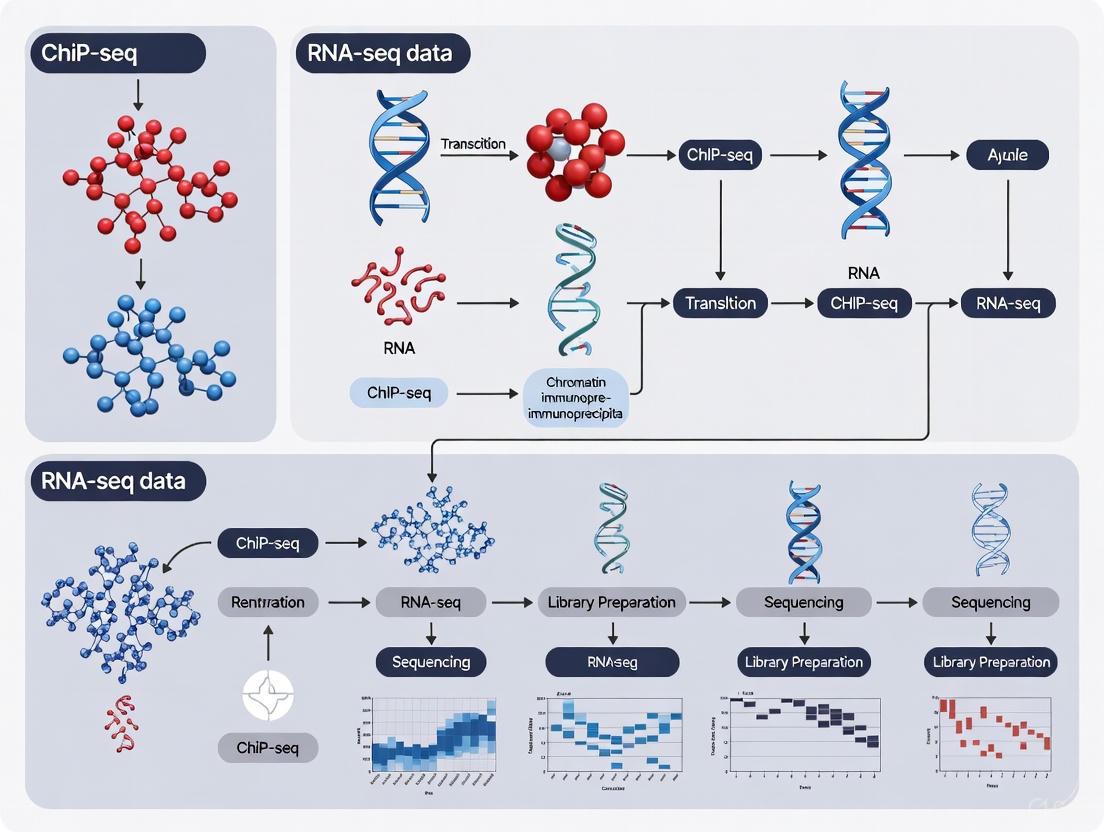
This article provides a comprehensive guide for researchers and drug development professionals on integrating ChIP-seq and RNA-seq data to elucidate the functional role of histone modifications in gene regulation.
Integrating ChIP-seq and RNA-seq Data: A Comprehensive Guide to Unlocking Histone Mark Biology
Abstract
This article provides a comprehensive guide for researchers and drug development professionals on integrating ChIP-seq and RNA-seq data to elucidate the functional role of histone modifications in gene regulation. It covers the foundational principles of how histone marks like H3K4me3, H3K27ac, and H3K27me3 influence transcription, explores practical methodologies and tools for data integration—from automated web platforms to advanced statistical packages—and addresses key challenges such as batch effects and distinguishing direct from indirect targets. Furthermore, it outlines robust validation strategies using complementary techniques like CRISPR and Hi-C, empowering scientists to confidently translate epigenomic data into mechanistic insights and therapeutic discoveries.
The Epigenetic Code: How Histone Marks Bridge Chromatin State and Gene Expression
Histone modifications are post-translational alterations that play a pivotal role in the epigenetic regulation of gene expression without changing the underlying DNA sequence. These chemical modifications, which include methylation and acetylation, directly influence chromatin structure and determine the accessibility of DNA to transcriptional machinery. Among the numerous existing modifications, H3K4me3, H3K27ac, H3K4me1, and H3K27me3 have emerged as core histone marks with distinct and crucial transcriptional roles in defining cellular identity and function.
The integration of Chromatin Immunoprecipitation followed by sequencing (ChIP-Seq) with RNA sequencing (RNA-Seq) provides a powerful multi-omics approach to elucidate the functional relationship between these epigenetic marks and gene expression outcomes. This integrated analysis enables researchers to move beyond correlation to causality, determining how the location and abundance of specific histone modifications directly regulate transcriptional activity in various biological contexts, from normal development to disease states such as cancer [1].
Transcriptional Roles and Genomic Distribution
Each core histone mark exhibits a characteristic genomic distribution and fulfills specific functions in transcriptional regulation, collectively forming a complex regulatory code that can be deciphered through integrated genomic approaches.
Activating Marks
H3K4me3 (Histone H3 Lysine 4 trimethylation) is highly enriched at active promoters near transcription start sites (TSS) and is considered a primary transcription activation epigenetic biomarker [2] [3]. This mark denotes promoters that are either actively transcribed or poised for activation, facilitating the recruitment of transcription factors and RNA polymerase II to initiate gene transcription.
H3K27ac (Histone H3 Lysine 27 acetylation) distinguishes actively enhanced elements from their inactive counterparts. While both active enhancers and poised enhancers may carry H3K4me1, the presence of H3K27ac specifically marks enhancers that are actively driving gene expression in a given cell type or condition [3]. This mark prevents the formation of repressive chromatin structures and promotes interaction with transcriptional co-activators.
H3K4me1 (Histone H3 Lysine 4 monomethylation) is predominantly found at enhancer regions, both active and poised, and is involved in defining regulatory elements that control cell-type-specific gene expression patterns [3]. While not exclusively indicative of active enhancers, its presence signifies regulatory potential that can be fully activated through additional modifications such as H3K27ac.
Repressive Marks
H3K27me3 (Histone H3 Lysine 27 trimethylation) is associated with facultative heterochromatin and transcriptional repression, predominantly targeting developmental genes, including homeobox transcription factors [2] [3]. This mark, catalyzed by the Polycomb Repressive Complex 2 (PRC2), facilitates the formation of compact chromatin structures that are inaccessible to transcriptional activators, thereby maintaining genes in a silenced state until their expression is required during specific developmental stages.
Table 1: Core Histone Marks and Their Transcriptional Roles
| Histone Mark | Chromatin State | Primary Genomic Location | Transcriptional Role |
|---|---|---|---|
| H3K4me3 | Euchromatin | Active promoters near TSS | Transcription activation |
| H3K27ac | Euchromatin | Active enhancers and promoters | Enhancer/promoter activity |
| H3K4me1 | Euchromatin | Enhancers (active and poised) | Enhancer identification |
| H3K27me3 | Facultative heterochromatin | Developmentally regulated genes | Transcriptional repression |
The following diagram illustrates the characteristic genomic locations of these core histone marks and their combined effect on transcriptional regulation:
Experimental Protocols for ChIP-seq
Chromatin Immunoprecipitation followed by sequencing (ChIP-seq) is the gold-standard method for genome-wide mapping of histone modifications. The following detailed protocol has been optimized for primary tissues and cell lines, incorporating critical quality control checkpoints to ensure robust and reproducible results [3] [1].
Sample Preparation and Crosslinking
- Cell Harvesting: Grow cells to 80% confluence. For each immunoprecipitation (IP) preparation, use 4×10⁶ cells, with cell number verified using an automated cell counter. For primary tissues, mechanically dissociate samples while preserving chromatin integrity.
- Crosslinking: Add formaldehyde (37% w/w) directly to the cell culture medium to a final concentration of 1% and incubate for 10 minutes at room temperature with gentle agitation. This crosslinks proteins, including histones, to DNA.
- Quenching: Add glycine to a final concentration of 0.125 M to quench the crosslinking reaction. Incubate for 5 minutes at room temperature with gentle agitation.
- Washing: Wash cells twice with ice-cold phosphate-buffered saline (PBS) containing protease inhibitors (1 μl/ml aprotinin, 1 μl/ml leupeptin, 10 μl/ml PMSF).
Chromatin Preparation and Fragmentation
- Cell Lysis: Resuspend cell pellet in cell lysis buffer (5 mM PIPES pH 8, 85 mM KCl, 1% igepal) with fresh protease inhibitors. Incubate on ice for 15 minutes.
- Nuclear Lysis: Pellet nuclei and resuspend in nuclei lysis buffer (50 mM Tris-HCl pH 8, 10 mM EDTA, 1% SDS) with protease inhibitors. Incubate on ice for 10 minutes.
- Chromatin Shearing: Using a Bioruptor or equivalent sonicator, shear chromatin to an average fragment size of 200-500 bp. Optimal shearing conditions must be determined empirically for each cell type or tissue. Critical checkpoint: Analyze sheared chromatin size distribution using agarose gel electrophoresis or Bioanalyzer.
Chromatin Immunoprecipitation
- Immunoprecipitation: Dilute sheared chromatin 10-fold in IP dilution buffer (50 mM Tris-HCl pH 7.4, 150 mM NaCl, 1% igepal, 0.25% deoxycholic acid, 1 mM EDTA) with protease inhibitors.
- Antibody Incubation: Add ChIP-grade antibodies specific for the target histone modification. Recommended antibodies based on ENCODE standards include:
- H3K4me3: Anti-Tri-Methyl-Histone H3 (Lys4) (C42D8) rabbit monoclonal antibody (CST #9751S)
- H3K27ac: Anti-acetyl-Histone H3 (Lys27) rabbit polyclonal antibody
- H3K4me1: Anti-Mono-Methyl-Histone H3 (Lys4) rabbit antibody (Diagenode #pAb-037-050)
- H3K27me3: Anti-Tri-Methyl-Histone H3 (Lys27) (C36B11) rabbit monoclonal antibody (CST #9733S)
- Incubation: Rotate overnight at 4°C.
- Bead Capture: Add protein A/G magnetic beads and incubate for 2 hours at 4°C.
- Washing: Wash beads sequentially with:
- Low salt wash buffer (20 mM Tris-HCl pH 8, 150 mM NaCl, 2 mM EDTA, 1% Triton X-100, 0.1% SDS)
- High salt wash buffer (20 mM Tris-HCl pH 8, 500 mM NaCl, 2 mM EDTA, 1% Triton X-100, 0.1% SDS)
- LiCl wash buffer (10 mM Tris-HCl pH 8, 250 mM LiCl, 1 mM EDTA, 1% NP-40, 1% deoxycholic acid)
- TE buffer (10 mM Tris-HCl pH 8, 1 mM EDTA)
- Elution: Elute chromatin from beads with elution buffer (50 mM NaHCO₃, 1% SDS) at 65°C for 15 minutes with vigorous shaking.
- Reverse Crosslinking: Add 200 mM NaCl and incubate at 65°C overnight to reverse crosslinks.
- DNA Purification: Treat with RNase A and proteinase K, followed by purification using QIAquick PCR purification kit or equivalent. Critical checkpoint: Quantify ChIP DNA concentration using a sensitive method such as Qubit or NanoDrop.
Library Preparation and Sequencing
- Library Preparation: Use Illumina-compatible library preparation kits following manufacturer's instructions. Critical checkpoint: Assess library quality and fragment size distribution using Bioanalyzer or TapeStation.
- Sequencing: According to ENCODE standards, sequence each replicate to a minimum depth of:
- 20 million usable fragments for narrow marks (H3K4me3, H3K27ac)
- 45 million usable fragments for broad marks (H3K27me3) [4]
- Quality Control: Ensure library complexity metrics meet ENCODE standards: NRF>0.9, PBC1>0.9, and PBC2>10 [4].
The following workflow diagram summarizes the key steps in the ChIP-seq protocol:
Integrated Analysis of ChIP-seq and RNA-seq Data
The true power of histone mark analysis emerges when ChIP-seq data is integrated with transcriptomic data from RNA-seq. This multi-omics approach enables researchers to establish direct functional links between epigenetic states and gene expression patterns, providing mechanistic insights into transcriptional regulation.
Data Matching Strategies
A critical challenge in integrative analysis is the accurate matching of histone modification data with corresponding gene expression data. The intePareto R package provides two principal matching strategies for promoter-associated marks such as H3K4me3 and H3K27me3 [5]:
- Highest Strategy: Selects the promoter with the maximum ChIP-seq abundance value among all promoters as the representative signal for the gene.
- Weighted Mean Strategy: Calculates the abundance-weighted mean of all promoters to represent the ChIP-seq signal for the gene.
For enhancer-associated marks like H3K27ac and H3K4me1, matching becomes more complex due to the potential long-range interactions between enhancers and their target genes. In these cases, integration may require additional chromatin conformation data (e.g., Hi-C) or computational prediction of enhancer-promoter interactions.
Quantitative Integration Methods
The intePareto package implements a Pareto optimization approach to prioritize genes showing consistent changes in both histone modifications and gene expression between biological conditions [5]. The integration process involves:
- Differential Analysis: Perform separate differential analyses for ChIP-seq and RNA-seq data using tools such as DESeq2, calculating log fold changes between conditions.
Z-score Calculation: For each gene (g) and histone modification (h), compute a Z-score defined as:
[ Z{g,h} = \frac{logFC^{(RNA)}{g}}{sd(logFC^{(RNA)}{g})} \cdot \frac{logFC^{(ChIP)}{g,h}}{sd(logFC^{(ChIP)}_{g,h})} ]
Multi-objective Optimization: Apply Pareto optimization to the Z-scores from multiple histone modifications to identify genes with the most consistent and significant changes across both epigenetic and transcriptional dimensions.
Application in Cancer Research
Integrated analysis has proven particularly valuable in cancer research, where chromatin reorganization often drives pervasive gene expression changes. In HPV+ head and neck squamous cell carcinoma (HNSCC), for example, integrated ChIP-seq and RNA-seq analysis revealed strong disease-specific distribution of H3K4me3 and H3K27ac marks that correlated with differential expression of nearby cancer-related genes and their associated pathways [1]. This approach has identified sample-specific associations of H3K27ac marks with sites of HPV integration and known HNSCC driver genes, providing mechanistic insights into viral carcinogenesis.
Table 2: Expected Correlations Between Histone Mark Changes and Gene Expression
| Histone Mark | Change in Modification | Expected Expression Change | Biological Interpretation |
|---|---|---|---|
| H3K4me3 | Increase | Upregulation | Promoter activation |
| H3K4me3 | Decrease | Downregulation | Promoter silencing |
| H3K27ac | Increase | Upregulation | Enhanced enhancer/promoter activity |
| H3K27ac | Decrease | Downregulation | Loss of enhancer/promoter activity |
| H3K27me3 | Increase | Downregulation | Polycomb-mediated repression |
| H3K27me3 | Decrease | Upregulation | Loss of Polycomb-mediated repression |
The following diagram illustrates the conceptual framework for integrating ChIP-seq and RNA-seq data:
The Scientist's Toolkit: Essential Research Reagents and Materials
Successful investigation of core histone marks requires carefully selected reagents and computational tools. The following table details essential materials and their specific applications in histone mark research.
Table 3: Essential Research Reagents and Computational Tools for Histone Mark Studies
| Reagent/Tool | Specific Application | Function and Importance |
|---|---|---|
| Anti-H3K4me3 (CST #9751S) | ChIP for active promoters | Rabbit monoclonal antibody specifically recognizing trimethylated K4 on histone H3; marks active transcriptional start sites |
| Anti-H3K27ac | ChIP for active enhancers | Antibody recognizing acetylated K27 on histone H3; distinguishes active enhancers from poised ones |
| Anti-H3K4me1 (Diagenode #pAb-037-050) | ChIP for enhancer regions | Rabbit antibody detecting monomethylated K4 on histone H3; identifies enhancer elements |
| Anti-H3K27me3 (CST #9733S) | ChIP for repressed regions | Rabbit monoclonal antibody specific for trimethylated K27 on histone H3; marks Polycomb-repressed domains |
| Protein A/G Magnetic Beads | Chromatin immunoprecipitation | Efficient capture of antibody-bound chromatin complexes; enable streamlined washing steps |
| intePareto R Package | Integrated data analysis | Implements Pareto optimization for prioritizing genes with consistent changes in histone marks and expression [5] |
| DESeq2 | Differential analysis | Statistical analysis of differential ChIP-seq and RNA-seq signals between conditions [5] |
| ENCODE Histone Pipeline | ChIP-seq data processing | Standardized processing of histone ChIP-seq data, including peak calling and quality metrics [4] |
| Bioruptor Sonicator | Chromatin fragmentation | Consistent and controllable chromatin shearing to optimal fragment sizes (200-500 bp) |
| Nuclei Lysis Buffer (50 mM Tris-HCl, 10 mM EDTA, 1% SDS) | Chromatin preparation | Efficient nuclear lysis while preserving protein-DNA interactions; contains SDS for complete nuclear disruption |
The integrated analysis of core histone marks through ChIP-seq and RNA-seq technologies provides unprecedented insights into the epigenetic mechanisms governing gene expression. The distinct genomic distributions and transcriptional roles of H3K4me3, H3K27ac, H3K4me1, and H3K27me3 form a fundamental regulatory code that directs cellular differentiation, function, and response to environmental cues. The robust experimental protocols and analytical frameworks presented here offer researchers a comprehensive roadmap for investigating these epigenetic marks in diverse biological contexts. As single-cell and spatial multi-omics technologies continue to advance, our ability to decipher the complex relationships between histone modifications and transcriptional outcomes will further deepen, opening new avenues for therapeutic intervention in epigenetic diseases.
For researchers investigating gene regulatory mechanisms, the combination of Chromatin Immunoprecipitation followed by sequencing (ChIP-seq) and RNA sequencing (RNA-seq) has become instrumental. While each technique provides valuable snapshots—ChIP-seq mapping the genomic locations of histone modifications and transcription factors, and RNA-seq quantifying the transcriptional output—their independent application often yields merely correlative relationships. True mechanistic understanding requires integrated multi-omics approaches that can distinguish causal drivers from coincidental associations. This Application Note details practical frameworks and protocols for integrating ChIP-seq with RNA-seq data to establish causal links between histone modifications and gene expression changes, with direct implications for drug discovery and therapeutic development.
Establishing Causality: From Correlation to Functional Validation
Integrated ChIP-seq and RNA-seq analysis enables researchers to move beyond observational data toward causal inference through a multi-stage validation pipeline. The following table summarizes key evidence types that help establish causality:
Table 1: Evidence Hierarchy for Establishing Causal Relationships in Gene Regulation
| Evidence Type | Experimental Approach | Causal Inference Strength | Key Interpretations |
|---|---|---|---|
| Spatial Co-occurrence | Co-localization of histone marks with gene expression changes | Moderate | Identifies potential regulatory relationships requiring validation |
| Dynamic Coordination | Time-course studies of mark appearance/disappearance and expression | Strong | Temporal precedence suggests directional relationship |
| Functional Perturbation | CRISPR-mediated editing of histone modifiers | Very Strong | Direct demonstration of mechanistic requirement |
| Multi-omics Concordance | Integration with proteomics, epigenomics | Strongest | Systems-level confirmation of regulatory networks |
A prime example of this approach comes from a recent study on triple-negative breast cancer (TNBC), where researchers first identified H3K4me2 as elevated in TNBC patients through mass spectrometry, then used integrated epigenomic, transcriptomic, and proteomic data to demonstrate that H3K4me2 sustains the expression of genes associated with the TNBC phenotype [6]. Critically, they established causality through CRISPR-mediated epigenome editing to modulate H3K4me2 levels, observing corresponding changes in target gene expression [6].
Integrated Analytical Framework: A Practical Workflow
Stage 1: Experimental Design Considerations
Effective integration begins with strategic experimental design. RNA-seq and ChIP-seq experiments should be performed on matched biological samples under identical conditions [7]. When investigating transcription factors, RNA-seq can first identify differentially expressed transcription factors, which then become targets for subsequent ChIP-seq assays using specific antibodies or tagged proteins [7]. For histone mark studies, prioritize modifications with established functional roles relevant to your biological context.
Stage 2: Data Generation Protocols
RNA-seq Protocol for Integration Studies
Sample Preparation:
- Extract high-quality total RNA using silica-membrane columns with DNase treatment
- Assess RNA Integrity Number (RIN) > 8.0 for optimal results
- For mRNA sequencing: enrich polyadenylated RNA using oligo(dT) beads
- For total RNA sequencing: deplete ribosomal RNA using probe-based methods
Library Preparation:
- Fragment RNA to 200-300 bp fragments using divalent cations at elevated temperature
- Convert to cDNA using reverse transcriptase with random hexamer priming
- Prepare sequencing libraries using validated kits (Illumina, NEB, etc.)
- Use unique dual indexing for sample multiplexing
- Perform quality control with Bioanalyzer/Fragment Analyzer and qPCR quantification
Sequencing Parameters:
- Sequence depth: 30-50 million reads per sample for standard differential expression
- Read configuration: Paired-end (2×150 bp) for alternative splicing analysis
- Platform: Illumina NovaSeq or NextSeq for high-quality data [7]
ChIP-seq Protocol for Histone Modifications
Chromatin Cross-Linking and Preparation:
- Cross-link cells with 1% formaldehyde for 10 minutes at room temperature
- Quench with 125 mM glycine for 5 minutes
- Harvest cells and wash with cold PBS containing protease inhibitors
- Lyse cells and isolate nuclei using hypotonic buffer
- Sonicate chromatin to 200-500 bp fragments (optimized for each cell type)
- Verify fragmentation size using agarose gel electrophoresis
Immunoprecipitation:
- Pre-clear chromatin with Protein A/G beads for 1 hour at 4°C
- Incubate with validated histone modification-specific antibodies overnight at 4°C
- Recommended antibodies: H3K4me3 (active promoters), H3K27ac (active enhancers), H3K27me3 (polycomb repression), H3K36me3 (transcriptional elongation)
- Capture antibody-chromatin complexes with Protein A/G beads for 2 hours
- Wash beads sequentially with low salt, high salt, LiCl, and TE buffers
- Reverse cross-links at 65°C overnight with shaking
- Purify DNA using silica-membrane columns or SPRI beads
Library Preparation and Sequencing:
- Prepare sequencing libraries from ChIP DNA using Th5-based tagmentation (Nextera) or ligation-based methods
- Include input DNA control library for background subtraction
- Sequence to depth of 20-40 million reads per sample on Illumina platform [8]
Stage 3: Computational Integration Methods
Integrated analysis requires specialized bioinformatic approaches that move beyond simple peak-gene association:
Table 2: Data Integration Methods for Establishing Regulatory Relationships
| Method Category | Key Tools/Approaches | Application Context | Causal Inference Value |
|---|---|---|---|
| Peak-Gene Association | Genomic Region Enrichment, GREAT | Initial hypothesis generation | Low to Moderate |
| Multi-omics Correlation | Correlation of ChIP-seq signal intensity with RNA-seq expression | Identifying potential regulatory links | Moderate |
| Machine Learning Integration | Borzoi, Enformer, Random Forest models | Predicting variant effects on expression | Moderate to Strong |
| Network Inference | Bayesian networks, GRN reconstruction | Systems-level regulatory inference | Strong |
| Sequential Perturbation Modeling | Causal mediation analysis | Statistical causal inference | Strong |
Advanced models like Borzoi demonstrate the power of integrated approaches by learning to predict RNA-seq coverage directly from DNA sequence, enabling variant effect prediction across multiple regulatory layers including transcription, splicing, and polyadenylation [9].
Case Study Application: Histone Lactylation in Pregnancy Disorders
A recent investigation into subclinical hypothyroidism (SCH) during early pregnancy exemplifies the integrated approach. Researchers performed parallel RNA-seq and H3K18la ChIP-seq on peripheral blood mononuclear cells from pregnant women with and without SCH [10].
RNA-seq analysis revealed extracellular matrix genes were significantly downregulated in SCH, while apoptosis-related genes were upregulated [10]. ChIP-seq identified 1,660 hypomodified and 766 hypermodified H3K18la peaks in the SCH group compared to controls [10]. Integrated analysis specifically identified six genes (KCTD7, SIPA1L2, HDAC9, BCL2L14, TXNRD1, and SGK1) with concordant increases in both expression and H3K18la enrichment in SCH [10]. This multi-layered evidence, confirmed by RT-qPCR and ChIP-PCR, strongly suggests a causal role for histone lactylation modifications in SCH pathogenesis during pregnancy [10].
Integrated multi-omics workflow for establishing causality in gene regulation.
The Scientist's Toolkit: Essential Research Reagents
Table 3: Key Research Reagents for ChIP-seq and RNA-seq Integration Studies
| Reagent Category | Specific Examples | Function/Application | Validation Considerations |
|---|---|---|---|
| Histone Modification Antibodies | H3K18la, H3K4me2/3, H3K27ac, H3K27me3 | Immunoprecipitation of modified chromatin | Validate specificity using peptide arrays or knockout cells |
| Chromatin Preparation Kits | Magna ChIP, SimpleChIP, CUT&Tag | Chromatin fragmentation and preparation | Optimize for cell type and input amount |
| RNA Library Prep Kits | TruSeq Stranded mRNA, NEBNext Ultra II | cDNA synthesis and library construction | Select based on RNA input amount and quality |
| CRISPR Epigenetic Editors | dCas9-p300, dCas9-LSD1, dCas9-KRAB | Targeted histone modification manipulation | Verify editing efficiency and specificity |
| Integrated Analysis Tools | Borzoi, HOMER, diffBind, DESeq2 | Multi-omics data integration and statistical analysis | Benchmark against negative control regions |
Emerging technologies like CUT&Tag (Cleavage Under Targets and Tagmentation) enable high-resolution chromatin profiling from as few as 10 cells, making them particularly valuable for precious clinical samples [8]. For histone modification studies, recombinant antibodies with high specificity and affinity perform well in ChIP-seq applications [11].
Pathway to Therapeutic Development
The transition from correlation to causality has profound implications for drug development. In the TNBC study, after establishing that H3K4me2 sustains pro-tumorigenic gene expression, researchers demonstrated that treatment with H3K4 methyltransferase inhibitors reduced TNBC cell growth in vitro and in vivo [6], revealing a novel epigenetic pathway targetable for therapy.
Therapeutic targeting of histone modification pathways.
Integrating ChIP-seq with RNA-seq represents a paradigm shift in gene regulation research, moving the field from descriptive correlation to mechanistic causality. The frameworks and protocols outlined here provide a roadmap for researchers to design studies that can distinguish causal regulatory relationships from coincidental associations. As single-cell multi-omics technologies advance and machine learning approaches like Borzoi become more sophisticated [9], our ability to decipher the causal grammar of the epigenome will continue to accelerate, opening new avenues for therapeutic intervention in cancer and other diseases driven by epigenetic dysregulation.
The precise spatiotemporal regulation of gene expression is fundamental to cellular identity, development, and disease pathogenesis. This control is orchestrated by a complex interplay of cis-regulatory elements within the genome, including promoters, enhancers, and super-enhancers. Promoters, typically located immediately upstream of transcription start sites (TSSs), initiate basal transcription. Enhancers are non-coding DNA sequences that can be situated upstream, downstream, or within introns of their target genes, functioning to amplify transcriptional output in a cell-type-specific manner [12]. A specialized class of enhancers, termed super-enhancers (SEs), are large clusters of enhancers that exhibit exceptionally strong transcriptional activation capabilities and are pivotal for controlling cell identity and fate-determining genes [13] [12].
The integration of Chromatin Immunoprecipitation followed by sequencing (ChIP-seq) for histone marks with RNA sequencing (RNA-seq) has emerged as a powerful multi-omics approach to functionally link these regulatory elements to gene expression output. This protocol details standardized methods for identifying and characterizing these elements, with a particular focus on integrating ChIP-seq and RNA-seq data to move beyond correlative observations toward mechanistic insights in disease contexts such as cancer and autoimmune disorders.
Computational Analysis of Histone Modifications
Histone ChIP-seq Data Processing and Quality Control
The ENCODE consortium has established rigorous standards for histone ChIP-seq data processing to ensure reproducibility and high-quality results. The following workflow outlines the critical steps, from read mapping to peak calling [14].
Table 1: Key Quality Control Metrics for Histone ChIP-seq Experiments (ENCODE Standards)
| Metric | Target Value for Broad Marks (e.g., H3K27me3) | Target Value for Narrow Marks (e.g., H3K4me3) | Measurement Purpose |
|---|---|---|---|
| Usable Fragments per Replicate | > 45 million (recommended) | > 20 million | Sequencing depth adequacy |
| Non-Redundant Fraction (NRF) | > 0.9 | > 0.9 | Library complexity |
| PCR Bottlenecking Coefficient 1 (PBC1) | > 0.9 | > 0.9 | Library complexity / duplication |
| PCR Bottlenecking Coefficient 2 (PBC2) | > 3 | > 3 | Library complexity / duplication |
| Irreproducible Discovery Rate (IDR) | Rescue/Self-consistency ratio < 2 | Rescue/Self-consistency ratio < 2 | Replicate concordance |
The initial computational analysis begins with aligning sequencing reads to a reference genome (e.g., GRCh38 for human) using tools like BWA. Post-alignment, filtering is essential to remove unmapped reads, PCR duplicates, and multiply mapped reads to reduce noise [15]. For peak calling, MACS2 is widely used with a minimum false discovery rate (FDR) threshold. It is crucial to distinguish between broad marks (e.g., H3K27me3, H3K36me3) and narrow marks (e.g., H3K4me3, H3K27ac), as they require different MACS2 parameters, with the -broad option used for the former [15] [14]. Peaks overlapping with blacklisted genomic regions (e.g., repetitive sequences) should be filtered out to avoid spurious signals [15].
Annotation of Regulatory Elements via Histone Marks
Specific histone post-translational modifications (PTMs) serve as reliable markers for annotating distinct types of regulatory elements.
- Promoters: Active promoters are characterized by high levels of H3K4me3 and H3K27ac [15] [6]. Inactive or poised promoters may carry H3K27me3 [15].
- Enhancers: Active enhancers are defined by a combination of H3K4me1 and H3K27ac [13] [12]. The monomethylation marks the element as an enhancer, while acetylation indicates its active state.
- Transcribed Regions: Actively transcribed gene bodies are enriched with H3K36me3 [15] [6].
Chromatin state annotation tools like ChromHMM can integrate multiple histone marks to segment the genome into functional states, providing a comprehensive view of the regulatory landscape [15].
Protocol: Super-Enhancer Identification and Validation
Super-Enhancer Detection with ROSE
Super-enhancers can be identified from H3K27ac ChIP-seq data using the Rank Ordering of Super-Enhancers (ROSE) algorithm. The workflow is as follows [13]:
- Input Data: H3K27ac ChIP-seq data in BAM or BED format.
- Enhancer Calling: Identify significant H3K27ac peaks using MACS2.
- Stitching: Merge adjacent enhancer peaks within a default distance of 12.5 kb to form candidate SE regions.
- Ranking: Calculate the total H3K27ac signal (e.g., read density) for each stitched region. All enhancers are then ranked by this signal.
- Identification: A cutoff point on the rank-ordered plot is determined where the slope of the curve exceeds 1. Enhancers above this cutoff are designated as SEs.
Linking Super-Enhancers to Target Genes with SEgene
A significant limitation of using ROSE alone is that it identifies SEs based solely on histone mark density, without direct functional linkage to gene expression. The SEgene platform overcomes this by integrating ChIP-seq with RNA-seq data to establish statistical confidence for SE-gene pairs [13].
SEgene Workflow:
- Input: ChIP-seq (H3K27ac) and RNA-seq data from the same sample or cohort.
- SE Detection: Run ROSE to generate a list of candidate SEs.
- Correlation Analysis: Apply a peak-to-gene linking method to assess correlations between the H3K27ac signal of each SE and the expression levels of genes within a defined genomic window (typically ±1 Mb from the TSS).
- Filtering: Extract high-confidence SE-gene links by applying statistical thresholds (e.g., FDR < 0.05 and correlation coefficient r > 0.5).
- Network Analysis: Construct an interaction network to visualize SE-gene regulatory clusters and identify key regulatory hubs.
This integrated approach was successfully applied to a colorectal cancer dataset (GSE156614), where it refined the initial list of 1,371 SEs from a tumor sample down to 221 (16.1%) with statistically supported gene links, including known cancer-associated genes like CYP2W1 [13].
Advanced Integration: Multi-Omics for Mechanistic Insights
Integrating ChIP-seq and RNA-seq Data
The true power of a multi-omics approach lies in the direct integration of chromatin landscape data with transcriptional output. A practical workflow involves identifying differentially enriched histone marks and correlating them with differentially expressed genes.
Table 2: Example Data from an Integrated ChIP-seq/RNA-seq Study on Subclinical Hypothyroidism (SCH) in Pregnancy
| Gene Name | Change in H3K18la (ChIP-seq) | Change in Expression (RNA-seq) | Confirmed by | Proposed Functional Association |
|---|---|---|---|---|
| BCL2L14 | Increased | Increased | RT-qPCR, ChIP-PCR | Apoptotic process [10] |
| HDAC9 | Increased | Increased | RT-qPCR, ChIP-PCR | Immune cell differentiation [10] |
| SGK1 | Increased | Increased | RT-qPCR, ChIP-PCR | OXT signaling pathway [10] |
| KCTD7 | Increased | Increased | RT-qPCR, ChIP-PCR | Nervous system, female pregnancy [10] |
In a study on early pregnancy with subclinical hypothyroidism, researchers performed integrated RNA-seq and ChIP-seq for the novel histone lactylation mark H3K18la. They discovered 766 hypermodified H3K18la peaks in the SCH group compared to controls. By intersecting this data with RNA-seq, they identified several genes (e.g., KCTD7, SIPA1L2, HDAC9) that showed concurrent increases in both H3K18la enrichment and expression, a finding validated by orthogonal methods like ChIP-PCR and RT-qPCR [10]. This provides a robust model for establishing a functional link between a histone modification and its transcriptional consequences.
Protocol: Refined ChIP-seq for Solid Tissues
Performing ChIP-seq on solid tissues presents unique challenges, including cellular heterogeneity and complex matrices. The following refined protocol is optimized for solid tissues like colorectal cancer [16]:
Tissue Preparation:
- Snap-freeze tissues in liquid nitrogen immediately after dissection.
- Use a pre-cooled mortar and pestle or a cryogenic mill to pulverize tissue into a fine powder under liquid nitrogen. This ensures efficient cross-linking and chromatin fragmentation.
Chromatin Immunoprecipitation:
- Cross-link powder with 1% formaldehyde for 10-15 minutes at room temperature.
- Quench cross-linking with glycine.
- Lyse cells and isolate nuclei. Perform chromatin shearing via sonication to a fragment size of 200-500 bp. Critical: Optimize sonication conditions for each tissue type to balance yield and fragment size.
- Incubate sheared chromatin with a validated, target-specific antibody overnight.
- Use protein A/G beads to capture antibody-chromatin complexes. Wash beads stringently to reduce non-specific binding.
Library Construction and Sequencing:
- Reverse cross-links and purify immunoprecipitated DNA.
- Construct sequencing libraries using a kit compatible with low-input DNA.
- For the MGI/DNBSEQ-G99RS platform, prepare DNA nanoballs and sequence according to manufacturer's instructions to achieve the recommended depth from [14].
The Scientist's Toolkit
Table 3: Essential Research Reagents and Resources
| Item | Function / Application | Examples / Notes |
|---|---|---|
| Validated Antibodies | Immunoprecipitation of specific histone marks or chromatin-associated proteins. | Must be characterized per ENCODE standards [14]. Examples: anti-H3K27ac (for enhancers), anti-H3K4me3 (for promoters). |
| ChIP-seq Grade Protein A/G Magnetic Beads | Efficient capture of antibody-chromatin complexes. | Reduce non-specific background compared to agarose beads. |
| Crosslinking Reagents | Fix proteins to DNA to preserve in vivo interactions. | Formaldehyde (reversible) is standard [16]. |
| Sonication System | Shearing chromatin to optimal fragment size. | Focused ultrasonicator or bath-based system; requires tissue-specific optimization [16]. |
| Spike-in Controls | Normalization for technical variation between samples. | Heavy-isotope labeled histones or foreign chromatin [6]. |
| Nucleic Acid Extraction Kits | Purification of high-quality DNA after immunoprecipitation. | Should be optimized for low-concentration, low-volume elutions. |
| High-Sensitivity DNA Assay Kits | Quantification of low-abundance ChIP DNA. | Critical for accurate library preparation input (e.g., Qubit dsDNA HS Assay). |
| Library Prep Kits | Preparation of sequencing-ready libraries from ChIP DNA. | Select kits compatible with low-input DNA and your sequencing platform (e.g., Illumina, MGI) [16]. |
| Computational Tools | Data analysis, from alignment to peak calling and integration. | BWA (alignment), MACS2 (peak calling), ROSE (SE identification), SEgene/ChromHMM (integration/annotation) [15] [13] [14]. |
Chromatin Immunoprecipitation (ChIP) is a foundational technique for capturing protein-DNA interactions and mapping epigenetic modifications in living cells. When coupled with high-throughput sequencing (ChIP-seq), it enables genome-wide profiling of transcription factor binding sites, histone modifications, and chromatin-associated proteins [17]. The fundamental principle of ChIP relies on the specific immunoprecipitation of chromatin fragments using antibodies against the protein or histone modification of interest, followed by identification of the associated DNA sequences [17]. In the context of histone mark research, these post-translational modifications—including methylation, acetylation, phosphorylation, and lactylation—serve as critical regulators of chromatin structure and gene expression [10] [6] [17].
The integration of ChIP-seq with RNA sequencing (RNA-seq) has emerged as a powerful multi-omics approach for elucidating the functional consequences of epigenetic regulation. While ChIP-seq identifies the genomic locations of histone marks, RNA-seq quantitatively measures the transcriptional output, enabling researchers to establish direct links between chromatin states and gene expression patterns [7] [5]. This integrative strategy is particularly valuable for unraveling complex biological processes, including cellular differentiation, disease mechanisms, and therapeutic responses [10] [6] [18]. For instance, recent studies have demonstrated how histone lactylation modification participates in early pregnancy with subclinical hypothyroidism, and how H3K4 methylation sustains triple-negative breast cancer phenotypes [10] [6].
Fundamental Principles of Chromatin Immunoprecipitation
Core Mechanisms and Chromatin Architecture
The ChIP technique capitalizes on the biochemical properties of chromatin, the complex of DNA and histone proteins that packages eukaryotic genomes. The nucleosome, comprising DNA wrapped around a histone octamer, represents the fundamental repeating unit of chromatin [17]. Histone proteins undergo numerous post-translational modifications on their N-terminal tails, creating an "epigenetic code" that influences chromatin accessibility and function [17]. Key modifications include histone acetylation (generally associated with gene activation), methylation (which can be activating or repressive depending on the specific residue and methylation state), and newer modifications such as lactylation [10] [17].
Protein-DNA interactions are stabilized through hydrogen bonds and van der Waals forces between protein amino acids and DNA bases [17]. In standard ChIP protocols, formaldehyde cross-linking covalently attaches proteins to DNA, preserving these interactions in their native state. Following fragmentation, typically by sonication or enzymatic digestion, antibodies specific to the protein or histone modification of interest are used to immunoprecipitate the target chromatin fragments [17]. The cross-linking is then reversed, and the associated DNA is purified for downstream analysis.
Chromatin States and Regulatory Elements
Distinct combinatorial patterns of histone modifications define functional chromatin states associated with specific genomic elements. Table 1 summarizes the characteristic histone modifications associated with major chromatin states.
Table 1: Characteristic Histone Modifications at Regulatory Elements
| Genomic Element | Activating Modifications | Repressive Modifications | Functional Role |
|---|---|---|---|
| Active Promoter | H3K4me3, H3K9ac, H3K27ac | - | Transcription initiation |
| Poised/Inactive Promoter | H3K4me3 | H3K27me3 | Regulation of developmental genes |
| Active Enhancer | H3K4me1, H3K27ac | - | Tissue-specific gene activation |
| Poised Enhancer | H3K4me1 | H3K27me3 | Primed for activation |
| Transcribed Region | H3K36me3, H3K79me | - | Elongation-coupled functions |
| Heterochromatin | - | H3K9me3, H3K27me3 | Facultative/constitutive repression |
As illustrated in Table 1, active promoters are typically marked by high levels of H3K4me3 coupled with acetylation marks such as H3K9ac and H3K27ac, while enhancers are characterized by H3K4me1 and H3K27ac [19]. In contrast, repressive domains are associated with H3K27me3 (facultative heterochromatin) or H3K9me3 (constitutive heterochromatin) [19]. The combinatorial nature of these modifications creates a complex regulatory landscape that can be deciphered through ChIP-seq profiling of multiple histone marks.
Experimental Workflows: From Sample Preparation to Data Generation
ChIP-seq Methodologies and Protocol Variations
Several ChIP-seq methodologies have been developed to address different research needs and sample types. The choice of protocol depends on factors such as the target protein, available cell numbers, and desired throughput. Table 2 compares the major ChIP-seq techniques used in epigenetic research.
Table 2: Comparison of ChIP-seq Methodologies for Histone Mark Analysis
| Method | Key Features | Advantages | Limitations | Applications |
|---|---|---|---|---|
| Native ChIP (N-ChIP) | No cross-linking; micrococcal nuclease digestion | Preserves native chromatin structure; high antibody specificity | Unsuitable for non-histone proteins; nucleosome rearrangement risk | Histone modifications [17] |
| Cross-linked ChIP (XChIP) | Formaldehyde cross-linking; sonication | Stabilizes transient interactions; works for non-histone proteins | Potential over-cross-linking; more background | Transcription factors, histone marks [17] |
| Indexing-first ChIP (iChIP) | Early barcoding; sample multiplexing | High throughput; reduced variability | DNA loss concerns; optimized barcoding needed | Low-input epigenomics [17] |
| Chromatin Interaction Analysis (ChIA-PET) | Identifies long-range interactions | Maps chromatin looping; high resolution | Computationally intensive; complex library prep | 3D genome architecture [17] |
| Engineered DNA-binding molecule-mediated ChIP (enChIP) | CRISPR/dCas9 system for locus-specific purification | Locus-specific studies; no need for specific antibodies | Potential off-target effects | Specific genomic loci [17] |
The standard cross-linked ChIP-seq protocol involves multiple critical steps: (1) formaldehyde cross-linking to fix protein-DNA interactions (typically 2-30 minutes, optimized for each system), (2) chromatin extraction and fragmentation (via sonication or enzymatic digestion to 200-600 bp fragments), (3) immunoprecipitation with specific antibodies, (4) reversal of cross-links and DNA purification, and (5) library preparation and high-throughput sequencing [17]. For histone modifications, fragmentation using micrococcal nuclease (MNase) is often preferred as it cleaves linker DNA between nucleosomes, providing nucleosome-resolution mapping [17].
RNA-seq Complementary Workflow
RNA-seq analysis typically begins with total RNA extraction, followed by selection of specific RNA populations (e.g., mRNA enrichment using poly-A selection or rRNA depletion). The RNA is fragmented, converted to cDNA, and ligated with platform-specific adapters for sequencing [7]. Key considerations in experimental design include the selection of sequencing platform (e.g., Illumina for short reads, PacBio for long reads), read configuration (single-end vs. paired-end), sequencing depth (typically 20-50 million reads per sample for standard differential expression analysis), and adequate biological replication (minimum n=3) to ensure statistical power [7].
The integration of ChIP-seq and RNA-seq data begins with experimental design—ideally using matched samples processed in parallel to minimize technical variability. For time-course or condition-comparison studies, collecting both chromatin and RNA samples from the same biological source ensures that observed correlations reflect true biological relationships rather than sample heterogeneity [7] [5].
Workflow Visualization
The following diagram illustrates the integrated experimental workflow for combined ChIP-seq and RNA-seq analysis:
Diagram 1: Integrated ChIP-seq and RNA-seq workflow. The parallel processing of samples for chromatin and RNA analysis converges during data integration to generate biological insights.
Data Analysis and Integration Strategies
ChIP-seq Data Processing and Peak Calling
ChIP-seq data analysis begins with quality control of raw sequencing reads, followed by alignment to a reference genome. For histone modification data, specialized peak callers or segmentation methods are often required, particularly for broad domains such as H3K27me3 or H3K9me3 that may evade detection by transcription-factor-optimized algorithms [20]. The Probability of Being Signal (PBS) method provides an alternative approach that divides the genome into non-overlapping 5 kb bins and estimates a global background distribution using a gamma distribution fit to the bottom fiftieth percentile of the data [20]. Each bin receives a PBS value between 0 and 1, representing the probability that it contains true signal rather than background. This approach facilitates comparison across multiple datasets and is particularly effective for detecting broad histone marks [20].
For more traditional peak-based analysis, tools like MACS3 are commonly employed [21]. Key quality metrics include the fraction of reads in peaks (FRiP), which should typically exceed 0.72-0.88 for high-quality histone mark ChIP-seq datasets [21], and cross-correlation analysis to assess fragment size parameters. Normalization strategies, such as spike-in controls using exogenous chromatin or computational normalization methods, are essential for quantitative comparisons between conditions [6] [20].
RNA-seq Data Processing and Differential Expression
RNA-seq analysis involves similar initial steps of quality control and alignment, followed by transcript quantification. For integration with ChIP-seq data, gene-level counts are typically used, although isoform-level analysis can provide additional insights. Differential expression analysis is commonly performed using tools such as DESeq2, which implements a median-of-ratios method for normalization and statistical tests based on negative binomial distributions [5].
The selection of a reference transcriptome and annotation is critical, as inaccuracies in gene models can propagate through the integrated analysis. For protein-coding genes, definitions of promoter regions (typically ±2.5 kb from transcription start sites) and gene bodies must be consistent between ChIP-seq and RNA-seq analyses to ensure proper matching [5].
Multi-Omic Data Integration Approaches
Integrative analysis of ChIP-seq and RNA-seq data can be approached through several computational frameworks. The intePareto R package implements a Pareto optimization approach that prioritizes genes showing consistent changes in both expression and histone modifications between conditions [5]. The method calculates Z-scores for each gene and histone mark combination:
[Z{g,h} = \frac{logFC^{(RNA)}{g}}{sd(logFC^{(RNA)}{g})} \cdot \frac{logFC^{(ChIP)}{g,h}}{sd(logFC^{(ChIP)}_{g,h})}]
Where high positive Z-scores indicate genes with strong, coordinated changes in both expression and histone modification [5].
More complex integrative methods include ChromHMM and Segway, which use hidden Markov models to segment the genome into chromatin states based on combinatorial patterns of multiple histone marks [19]. Self-organizing maps (SOMs) provide an alternative machine learning approach that can capture subtle patterns in high-dimensional epigenomic data [19]. These methods enable the identification of context-specific regulatory elements whose activity states can then be correlated with gene expression patterns.
The following diagram illustrates the conceptual relationship between chromatin states and gene expression:
Diagram 2: Relationship between histone modifications, chromatin states, and gene expression. Histone modifications establish chromatin states that influence accessibility and transcription factor binding, ultimately determining regulatory function and gene expression output.
Advanced Applications and Research Insights
Disease Mechanism Elucidation
Integrated ChIP-seq and RNA-seq analyses have yielded significant insights into disease mechanisms, particularly in cancer research. In triple-negative breast cancer (TNBC), mass spectrometry-based epigenetic profiling of over 200 tumors revealed distinct histone modification signatures that discriminate TNBC from other subtypes [6]. Specifically, TNBC samples showed increased H3K4 methylation (H3K4me1/me2/me3), H3K9me3, and H3K36 methylation, alongside decreased H3K27me3, H3K79 methylation, H4K16ac, and H4K20me3 [6]. Multi-omics integration demonstrated that H3K4me2 sustains the expression of genes associated with the TNBC phenotype, establishing a causal relationship confirmed through CRISPR-mediated epigenome editing and pharmacological inhibition of H3K4 methyltransferases [6].
Similarly, in prostate cancer, integrative multi-omics analysis and machine learning have identified global histone modification patterns that classify tumors into distinct subtypes with different clinical behaviors and therapeutic vulnerabilities [18]. The Comprehensive Machine Learning Histone Modification Score (CMLHMS) stratifies prostate cancer into two categories: high-CMLHMS tumors exhibit elevated histone modification activity with enriched proliferative and metabolic pathways, while low-CMLHMS tumors show stress-adaptive and immune-regulatory phenotypes [18]. This classification has direct therapeutic implications, with high-CMLHMS tumors showing greater sensitivity to growth factor and kinase inhibitors, while low-CMLHMS tumors respond better to cytoskeletal and DNA damage repair-targeting agents [18].
Novel Histone Modifications and Physiological Processes
Beyond conventional histone marks, integrated approaches are uncovering roles for newer modifications in physiological processes. Recent research on subclinical hypothyroidism during early pregnancy employed both ChIP-seq and RNA-seq to investigate histone lactylation modification [10]. The study identified 1,660 hypomodified and 766 hypermodified H3K18la-binding peaks in early pregnant women with subclinical hypothyroidism compared to controls [10]. Integrated analysis revealed increased expression and H3K18la enrichment of genes including KCTD7, SIPA1L2, HDAC9, BCL2L14, TXNRD1, and SGK1, suggesting novel regulatory mechanisms linking metabolic changes to epigenetic regulation in pregnancy complications [10].
Single-Cell Multi-Omic Technologies
Recent technological advances now enable simultaneous profiling of histone modifications and gene expression at single-cell resolution. The scEpi2-seq method provides joint readout of histone modifications and DNA methylation in single cells by leveraging TET-assisted pyridine borane sequencing (TAPS) [21]. This approach allows direct investigation of epigenetic interactions during cell type specification and reveals how DNA methylation maintenance is influenced by local chromatin context [21]. Application in intestinal epithelium has demonstrated independent and cooperative regulation between H3K27me3 and DNA methylation, revealing how CpG methylation acts as an additional layer of control in facultative heterochromatin [21].
Essential Research Reagents and Computational Tools
Successful implementation of integrated ChIP-seq and RNA-seq workflows requires specific reagents and computational resources. Table 3 catalogues essential solutions for histone mark research.
Table 3: Research Reagent Solutions for Integrated Histone Mark Analysis
| Category | Specific Examples | Function/Application | Considerations |
|---|---|---|---|
| Histone Modification Antibodies | Anti-H3K4me3, Anti-H3K27ac, Anti-H3K27me3, Anti-H3K18la | Target-specific immunoprecipitation | Specificity validation critical; lot-to-lot variability |
| Chromatin Shearing Enzymes | Micrococcal Nuclease (MNase) | Nucleosome-resolution fragmentation | Preferred for histone ChIP; preserves nucleosome structure |
| Cross-linking Reagents | Formaldehyde, DSG (disuccinimidyl glutarate) | Stabilize protein-DNA interactions | Dual cross-linking (DSG + formaldehyde) for challenging targets |
| Spike-in Controls | Drosophila chromatin, S. pombe chromatin | Normalization between samples | Essential for quantitative comparisons |
| Library Prep Kits | Illumina TruSeq ChIP, NEB Next Ultra II | Sequencing library construction | Compatibility with low-input samples |
| Quality Control Assays | Bioanalyzer, Qubit, qPCR | Assess DNA quality and quantity | Confirm enrichment at positive control regions |
| Computational Tools | intePareto, ChromHMM, DESeq2, MACS3 | Data integration and analysis | Specialized for different histone mark types |
As highlighted in Table 3, antibody specificity remains a critical consideration, particularly for histone modifications with similar chemical properties (e.g., H3K4me1/2/3). Validation using peptide arrays or knock-down/knock-out controls is essential for generating reliable data [20] [17]. For computational analysis, the intePareto package specifically addresses the challenge of integrating RNA-seq and ChIP-seq data by matching datasets at the gene level, calculating correlation metrics, and prioritizing genes with consistent changes using Pareto optimization [5].
The integration of ChIP-seq and RNA-seq technologies provides a powerful framework for elucidating the epigenetic mechanisms governing gene expression. As demonstrated in diverse applications from cancer biology to reproductive medicine, this multi-omics approach enables researchers to move beyond correlation to establish causal relationships between histone modifications and transcriptional outcomes. The continuing development of single-cell multi-omic technologies, improved computational integration methods, and more specific epigenetic tools promises to further enhance our understanding of the epigenetic landscape in health and disease.
For researchers embarking on integrated histone mark studies, careful experimental design—including matched samples, appropriate controls, and sufficient replication—combined with thoughtful computational analysis strategies is essential for generating biologically meaningful insights. The protocols and applications outlined herein provide a foundation for designing and implementing these powerful multi-omics approaches to address diverse research questions in epigenetics and gene regulation.
From Data to Insights: Practical Workflows and Tools for Multi-Omic Integration
The interplay between chromatin modifications and gene expression is a cornerstone of gene regulatory mechanisms, particularly in disease states such as cancer. Histone modifications, including H3K4me3, H3K27ac, H3K9me3, and H3K27me3, form a complex "histone code" that directly influences chromatin accessibility and transcriptional activity [1] [19]. Understanding this code requires simultaneous examination of both the epigenomic landscape via Chromatin Immunoprecipitation followed by sequencing (ChIP-seq) and transcriptional outputs via RNA sequencing (RNA-seq). However, technical challenges have traditionally impeded such integrated analyses, especially when working with primary tumor samples that exhibit wide heterogeneity [1]. The volume and complexity of next-generation sequencing (NGS) data further complicate this picture, creating a pressing need for robust, accessible computational tools that can streamline multi-omic data integration [22].
Web-based automated platforms represent a paradigm shift in epigenomic research, significantly reducing the technical barriers to comprehensive data analysis. This application note explores how emerging platforms, particularly H3NGST, enable end-to-end workflow automation for integrated ChIP-seq and RNA-seq analysis. We provide detailed protocols and resource guidelines to help researchers leverage these powerful tools for elucidating gene regulatory mechanisms governed by histone modifications, with particular relevance to cancer research and therapeutic development [23] [22].
Platform Landscape: Automated Solutions for ChIP-seq and Multi-Omic Integration
The computational landscape for NGS analysis has evolved from command-line tools requiring significant bioinformatics expertise to streamlined web-based platforms that automate complex workflows. These platforms vary in their specific capabilities, with some focusing exclusively on ChIP-seq analysis while others support integrated multi-omic approaches.
Table 1: Comparison of Automated Platforms for ChIP-seq and Integrated Analysis
| Platform | Primary Focus | Integration Capabilities | Data Retrieval | Access Method |
|---|---|---|---|---|
| H3NGST | ChIP-seq analysis | Standalone epigenomic analysis | BioProject ID-based from SRA | Web-based, no installation |
| aPEAch | Multiple NGS assays | Modular design for ChIP-seq & RNA-seq | Local file upload | Python package |
| Pluto | Multi-omics | Cloud-based collaborative analysis | Local file upload | Commercial web platform |
| ROSALIND | Multi-omics | Integrated analysis across experiment types | Local file upload | Commercial web platform |
| CWL Pipelines | Workflow standardization | RNA-Seq, ChIP-Seq, variant calling | Flexible input options | Local/cloud execution |
H3NGST exemplifies the modern approach to ChIP-seq analysis, offering a fully automated, web-based platform that requires no local installation or programming expertise. Its distinctive BioProject ID-based data retrieval system eliminates the need for manual file uploads, directly accessing raw sequencing data from public repositories like the Sequence Read Archive (SRA) [23]. This approach significantly streamlines the initial data acquisition phase, which often presents a technical hurdle for experimental researchers.
For more comprehensive multi-omic integration, platforms like aPEAch provide a modular Python-based framework that supports both ChIP-seq and RNA-seq analysis within a unified environment. Its architecture enables researchers to create customized analysis paths tailored to specific experimental designs while maintaining reproducibility across samples [22]. Similarly, Pluto and ROSALIND offer commercial-grade solutions with intuitive interfaces designed for collaborative research teams, enabling wet-lab biologists to perform sophisticated bioinformatics analyses without coding expertise [24] [25].
A critical advancement in workflow management comes from platforms implementing the Common Workflow Language standard, which ensures reproducibility and reusability of analytical pipelines. CWL-formatted workflows, when combined with containerization technologies like Docker, effectively overcome issues of software incompatibility and laborious configuration requirements, making them suitable for analyzing short-read data from platforms like Illumina [26].
H3NGST Platform: Protocol for End-to-End ChIP-seq Analysis
H3NGST implements a completely automated pipeline that transforms a BioProject accession number into fully analyzed ChIP-seq results through a four-step interface [23]:
- Users enter a valid accession number (e.g., BioProject PRJNA, SRA experiment SRX, GEO sample GSM, or GEO series GSE)
- Assign a nickname for the analysis job
- Configure minimal parameters (reference genome, peak type, promoter region, FDR threshold)
- Submit for automated processing
The system automatically determines library configuration (single-end or paired-end) from SRA metadata and dynamically adjusts all downstream parameters accordingly. This automation extends to the entire analytical workflow, which executes server-side without requiring further user intervention [23].
Core Analytical Workflow
The H3NGST pipeline encompasses four principal stages that transform raw sequencing data into biologically interpretable results:
- Raw Data Retrieval: The system queries the NCBI Entrez system to resolve accessions into corresponding SRR identifiers, downloads SRA files using the prefetch utility, and converts them to FASTQ format using fasterq-dump [23].
- Quality Control and Pre-processing: Initial quality assessment is performed using FastQC, followed by adapter trimming and quality filtering with Trimmomatic using a sliding window approach. FastQC is run again post-trimming to verify quality improvement [23].
- Sequence Alignment and Processing: Cleaned reads are aligned to a user-specified reference genome (e.g., hg38, mm10) using BWA-MEM, generating SAM files that are subsequently sorted and converted to BAM format using Samtools. Bedtools converts BAM files to BED format for downstream analysis, while DeepTools generates BigWig signal tracks for genome browser visualization [23].
- Peak Calling and Annotation: Peak calling is performed using HOMER, which supports both narrow (transcription factor binding) and broad (histone modification) peak profiles. HOMER also conducts motif enrichment analysis and annotates resulting peaks with genomic features including gene names, proximity to transcription start sites, and functional categories [23].
Result Interpretation and Access
Upon completion, users access results by entering their assigned nickname on the H3NGST results page. The output includes comprehensive data products: quality control reports, alignment statistics, peak coordinates, motif discovery results, annotated peak tables, and visualization files [23]. Key interpretive elements include:
- Annotated Peak Tables: Provide genomic coordinates, associated genes, distances to transcription start sites, peak types, and enrichment scores
- Motif Enrichment Analysis: Identifies overrepresented transcription factor binding motifs in the peak regions
- Genomic Region Categorization: Classifies peaks by genomic features (promoters, exons, introns, intergenic regions)
- Visualization Files: BigWig files can be directly visualized in the UCSC Genome Browser or Integrative Genomics Viewer for locus-specific signal inspection [23]
The platform provides a per-sample analysis status table that visualizes progress through each processing step and lists putative target genes linked to identified peaks, enabling direct access to top candidate genes associated with each dataset [23].
Integrative Analysis: Combining ChIP-seq with RNA-seq Data
Statistical Integration Frameworks
While platforms like H3NGST excel at automated ChIP-seq analysis, understanding the functional consequences of histone modifications requires correlation with transcriptional outputs. The intePareto R package addresses this need specifically, providing a computational tool for integrative analysis of RNA-seq and ChIP-seq data [5]. Its three-stage workflow includes:
- Matching: Links histone modification data with corresponding gene expression data through two primary strategies for promoter-associated marks (H3K4me3, H3K27me3): (a) "highest" - selects the promoter with maximum ChIP-seq abundance; (b) "weighted.mean" - calculates the abundance-weighted mean of all promoters [5].
- Integration: Computes log fold changes between biological conditions using DESeq2, which works effectively for both RNA-seq and ChIP-seq data. The package calculates Z-scores for each gene and histone modification combination to identify consistent changes in the same direction [5].
- Prioritization: Employs Pareto optimization to generate a rank-ordered gene list based on the consistency of changes across multiple histone modifications, effectively identifying genes with strong concordant evidence from both data types [5].
This statistical approach enables researchers to move beyond simple correlation to identify genes where histone modification changes and expression changes show biologically meaningful coordination, suggesting direct regulatory relationships.
Biological Interpretation of Histone Marks
Proper biological interpretation of integrated ChIP-seq and RNA-seq data requires understanding the functional associations of specific histone modifications:
- H3K4me3: Strongly enriched at active promoters, associated with transcriptional initiation [19]
- H3K27ac: Marks active enhancers and promoters, distinguishing them from their poised or inactive counterparts [19]
- H3K36me3: Associated with transcriptional elongation and found across transcribed regions [19]
- H3K27me3: A repressive mark deposited by Polycomb group proteins, associated with facultative heterochromatin [19]
- H3K9me3: Characteristic of constitutive heterochromatin and gene silencing [19]
These modifications often occur in recurring combinations that define "chromatin states" with predictable effects on gene expression. For example, H3K4me1 alone marks primed enhancers, while H3K4me1 combined with H3K27ac identifies active enhancers. Promoters typically show H3K4me3 enrichment with a high ratio of H3K4me3 to H3K4me1 [19].
Successful implementation of integrated ChIP-seq and RNA-seq workflows requires both computational resources and well-characterized experimental reagents. The following table outlines key components essential for generating data compatible with the automated analysis platforms described herein.
Table 2: Essential Research Reagents for Histone Mark Studies
| Reagent/Resource Type | Specific Examples | Function/Application |
|---|---|---|
| Histone Modification Antibodies | Anti-H3K4me3, Anti-H3K27ac, Anti-H3K9me3, Anti-H3K27me3 | Target-specific immunoprecipitation in ChIP experiments for mapping chromatin states |
| Library Preparation Kits | Illumina DNA Prep, NEBNext Ultra II DNA Library Prep | Preparation of sequencing libraries from immunoprecipitated DNA |
| Reference Genomes | GRCh38 (hg38), GRCm39 (mm39) | Reference sequences for read alignment and annotation |
| Annotation Resources | GENCODE, RefSeq, Ensembl | Gene models and genomic features for peak annotation |
| Analysis Platforms | H3NGST, aPEAch, Pluto, ROSALIND | Automated processing and integration of sequencing data |
Antibody quality represents a particularly critical factor in ChIP-seq experiments, as specificity directly impacts signal-to-noise ratios and overall data quality. Researchers should prioritize antibodies with demonstrated performance in ChIP-seq applications, ideally validated through independent quality control measures such as the ENCODE antibody validation standards [1].
For studies focusing on HPV-related head and neck squamous cell carcinoma - a model system for virus-associated carcinogenesis discussed in the literature - additional virological reagents including HPV typing assays and detection methodologies (in situ hybridization, p16 immunohistochemistry, qRT-PCR for HPV DNA) become essential for proper sample characterization [1].
Application Protocol: Integrated Analysis of Histone Modifications in Cancer Models
This section provides a detailed step-by-step protocol for applying automated platforms to investigate histone modification patterns in cancer models, using HPV+ head and neck squamous cell carcinoma (HNSCC) as an illustrative example.
Experimental Design and Sample Preparation
- Sample Selection: Identify matched tumor and normal control samples. For HPV+ HNSCC, patient-derived xenograft (PDX) models can help overcome limitations of primary tissue availability while preserving tumor biology [1].
- Histone Mark Selection: Choose histone modifications relevant to your biological question. For cancer epigenetics, include both activating (H3K4me3, H3K27ac) and repressive (H3K9me3, H3K27me3) marks to capture the full spectrum of chromatin states [1].
- Cross-linking and Immunoprecipitation: Perform chromatin cross-linking (typically with formaldehyde) followed by sonication to fragment chromatin. Perform immunoprecipitation with validated antibodies against target histone modifications [1].
- Library Preparation and Sequencing: Prepare sequencing libraries from immunoprecipitated DNA using compatible library preparation kits. Include appropriate controls (input DNA) and replicates to ensure statistical robustness.
Computational Analysis Workflow
Data Generation and Retrieval:
- Generate ChIP-seq and RNA-seq data from matched samples
- Upload data to public repository (SRA) if using H3NGST, or to platform servers for other platforms
- For H3NGST: Initiate analysis by entering BioProject ID on platform interface [23]
Quality Assessment:
- Review quality control metrics including Q30 scores, alignment rates, duplicate rates, and fraction of reads in peaks
- For RNA-seq data: assess sequencing depth, alignment rates, and read distribution across genomic features
- Identify and exclude outlier samples showing poor quality metrics [25]
Peak Calling and Annotation:
- Execute peak calling with parameters appropriate for your histone marks (narrow peaks for transcription factors, broad peaks for histone modifications)
- Annotate peaks with genomic features using platform-specific annotation tools
- Identify differentially enriched regions between experimental conditions [23]
Integrated Analysis:
- For platforms with integrated RNA-seq capability: correlate histone modification changes with gene expression changes
- Use statistical frameworks like intePareto to prioritize genes showing consistent changes in both data types [5]
- Perform pathway enrichment analysis on prioritized gene sets to identify biological processes affected by chromatin alterations
Interpretation and Validation
- Functional Annotation: Identify candidate genes with concordant changes in histone modifications and expression. Focus on genes proximal to differentially modified regions, particularly those involved in cancer-relevant pathways [1].
- Visual Exploration: Use integrated genome browsers to visually inspect histone modification patterns and RNA-seq coverage at candidate loci.
- Experimental Validation: Design orthogonal validation experiments (e.g., RT-qPCR for gene expression, ChIP-qPCR for histone modifications) to confirm key findings from bioinformatic analysis.
Automated web platforms like H3NGST represent a significant advancement in making sophisticated ChIP-seq analysis accessible to researchers without specialized bioinformatics training. When combined with integrative statistical approaches for correlating epigenomic and transcriptomic data, these tools enable comprehensive characterization of gene regulatory mechanisms governed by histone modifications.
The field continues to evolve toward increasingly integrated multi-omic analysis platforms that combine ChIP-seq with complementary assays such as ATAC-seq for chromatin accessibility, Hi-C for chromatin architecture, and whole-genome bisulfite sequencing for DNA methylation profiling. Emerging methodologies including low-input ChIP-seq and single-cell epigenomic profiling present new opportunities and challenges that will likely drive further innovation in automated analysis solutions [19].
For researchers investigating histone marks in disease contexts, particularly cancer, these automated platforms offer the potential to uncover novel regulatory mechanisms and therapeutic targets by deciphering the complex relationship between chromatin organization and gene expression programs. The protocols and resources outlined in this application note provide a foundation for implementing these powerful approaches in diverse research contexts.
A fundamental challenge in modern genomics is bridging the gap between identified protein-DNA binding sites and their functional gene targets. This challenge is particularly acute in studies investigating histone modifications, where connecting epigenetic marks to regulated genes is essential for understanding transcriptional control mechanisms. Within the broader framework of integrating ChIP-seq with RNA-seq data, accurate peak-to-gene matching forms the critical link that enables researchers to move from correlative observations to mechanistic insights about gene regulation. The strategies outlined in this application note provide a structured approach for making these essential connections, focusing specifically on the context of histone marks research.
Fundamental Approaches for Peak Annotation
Proximity-Based Annotation Methods
The most straightforward strategy for linking ChIP-seq peaks to genes relies on genomic proximity, typically by identifying the nearest transcription start site (TSS). This method is widely implemented in tools such as ChIPseeker, an R/Bioconductor package that annotates peaks based on their genomic context [27]. When using this approach, researchers must define the TSS region; a common parameter is to consider a window from -1000 to +1000 bp around the TSS [27]. The underlying assumption is that many functional regulatory elements, particularly promoters, are located near TSSs. However, this method has limitations, especially for enhancer regions that may act over long distances.
Table 1: Genomic Feature Categories for Peak Annotation
| Feature Category | Description | Typical Priority in Annotation |
|---|---|---|
| Promoter | Region around transcription start site (e.g., -1kb to +1kb from TSS) | Highest |
| 5' UTR | Untranslated region at the beginning of a transcript | High |
| 3' UTR | Untranslated region at the end of a transcript | High |
| 1st Exon | First exon of a transcript | Medium |
| Other Exon | Exons other than the first | Medium |
| 1st Intron | First intron of a transcript | Medium |
| Other Intron | Introns other than the first | Medium |
| Downstream (≤3kb) | Region immediately downstream of gene end | Low |
| Distal Intergenic | Regions far from any annotated gene | Lowest |
The priority system shown in Table 1 reflects biological relevance, with promoter regions taking precedence in annotation workflows [27]. This hierarchy helps resolve ambiguity when peaks overlap multiple genomic features.
Advanced Matching Strategies for Histone Marks
For histone modification marks with distinct genomic distributions, specialized matching strategies are required. The intePareto R package offers two principal methods for matching promoter-associated histone marks like H3K4me3 and H3K27me3 to genes [5]:
- "Highest" strategy: Selects the promoter with the maximum ChIP-seq signal intensity among all promoters associated with a gene as the representative value.
- "Weighted mean" strategy: Calculates an abundance-weighted mean of signals from all promoters associated with a gene.
For enhancer-associated marks such as H3K27ac and H3K4me1, linking to target genes is more complex. Enhancers can act over long distances (dozens of kilobases) and are often cell type-specific [5]. While not implemented in standard tools, successful approaches frequently combine genomic proximity with correlation analyses between histone modification signals and gene expression patterns [28].
Figure 1: Decision workflow for selecting appropriate peak-to-gene matching strategies based on histone mark type
Practical Computational Protocol
Peak Annotation with ChIPseeker
A robust protocol for basic peak annotation utilizes the ChIPseeker package in R [27]:
Required Packages and Setup:
Data Loading and Annotation:
Annotation Visualization and Export:
Integrative Analysis with intePareto
For more sophisticated integration of histone modification data with expression patterns, the intePareto package implements a Pareto optimization approach [5]:
Workflow Implementation:
- Data Matching: Link histone modification signals to genes using either "highest" or "weighted.mean" strategies for promoter-associated marks.
- Integration: Calculate log fold changes between conditions for both RNA-seq and ChIP-seq data using DESeq2, then compute Z-scores for each gene-histone mark combination.
- Prioritization: Apply Pareto optimization to identify genes with consistent changes in both expression and histone modifications.
Key Analytical Step: The Z-score for each gene (g) and histone modification (h) is calculated as: Z{g,h} = [logFC(RNA)g / sd(logFC(RNA)g)] × [logFC(ChIP)g,h / sd(logFC(ChIP)_g,h)]
This approach prioritizes genes showing strong, consistent changes in both expression and histone modifications between conditions [5].
Table 2: Computational Tools for Peak-to-Gene Matching
| Tool/Package | Primary Function | Strengths | Applicable Histone Marks |
|---|---|---|---|
| ChIPseeker | Peak annotation and visualization | User-friendly, comprehensive genomic context analysis | All types, particularly promoter-associated |
| intePareto | Integrative analysis of RNA-seq and ChIP-seq | Identifies consistent changes using Pareto optimization | Multiple marks simultaneously |
| BETA | Integrates binding with expression | Predicts activating/repressive function, works with enhancers | TF binding and chromatin regulators |
Integration with RNA-seq Data
Correlation-Based Integration Framework
Advanced integration of ChIP-seq and RNA-seq data moves beyond simple overlap analyses to correlation-based approaches that can suggest functional relationships [28]. A comprehensive workflow involves:
- Cluster cis-regulatory elements by their temporal patterns across conditions.
- Group genes by their expression patterns.
- Link CREs to genes using both genomic proximity and correlation between epigenetic signals and expression.
- Identify regulatory networks by connecting transcription factors to target genes through binding motifs and expression correlation.
This multi-step approach enables the reconstruction of active regulatory pathways, providing a systems-level view of how histone modifications influence gene expression programs [28].
The BETA Algorithm for Functional Inference
The Binding and Expression Target Analysis (BETA) algorithm integrates ChIP-seq data with differential expression to infer functional targets [29]. BETA operates by:
- Calculating a regulatory potential (RP) score for each gene based on the number and proximity of binding sites within a specified range (typically ±100 kb from TSS).
- Combining RP scores with expression changes to compute a rank product for each gene.
- Using cumulative distribution functions to determine whether up- and down-regulated gene groups differ from non-differentially expressed genes, thereby inferring activating or repressive functions [29].
Figure 2: BETA algorithm workflow for integrating binding and expression data
Experimental Validation Approaches
Computational predictions of peak-gene relationships require experimental validation. Several methodological approaches provide confirmation:
Chromatin Conformation Capture: Techniques such as Hi-C provide genome-wide evidence of physical interactions between distant genomic loci, including enhancer-promoter contacts [28].
CRISPR-Cas9 Genome Editing: Deleting putative regulatory elements using CRISPR-Cas9 and quantifying expression changes in target genes represents the gold standard for validating regulatory function [28].
Transcription Factor ChIP-seq: When integrating multiple histone marks, follow-up ChIP-seq for specific transcription factors can verify protein-DNA interactions suggested by motif analyses [28].
Troubleshooting and Quality Control
Successful peak-to-gene matching depends heavily on ChIP-seq data quality. Key quality metrics include:
- Sequencing Depth: For mammalian histone marks, 20-60 million reads may be required depending on the number and size of binding regions [30].
- Alignment Rates: >70% uniquely mapped reads is typical for human/mouse samples; rates below 50% indicate potential issues [30].
- Strand Cross-Correlation: Normalized strand coefficient (NSC) >1.05 and relative strand coefficient (RSC) >0.8 indicate high-quality experiments [30].
Table 3: Essential Research Reagents and Tools
| Reagent/Tool | Function | Application Notes |
|---|---|---|
| ChIPseeker R Package | Peak annotation and visualization | Supports various organisms via TxDb objects |
| intePareto R Package | Integrated RNA-seq/ChIP-seq analysis | Implements Pareto optimization for prioritization |
| BETA Software | Target gene prediction | Combines binding and expression data |
| DESeq2 | Differential expression analysis | Used by intePareto for fold change calculations |
| TxDb Database | Genomic annotation | Organism-specific annotation resources |
| FastQC | Sequencing quality control | Assesses read quality before alignment |
Linking regulatory regions to their target genes represents a critical step in interpreting ChIP-seq data, particularly in studies of histone modifications. By selecting appropriate matching strategies based on histone mark type, implementing robust computational protocols, and integrating with transcriptomic data, researchers can move beyond simple peak calling to construct meaningful regulatory networks. The strategies outlined here provide a framework for making these essential connections, with validation approaches that confirm computational predictions. As multi-omics approaches continue to evolve, these peak-to-gene matching methods will remain fundamental to understanding how epigenetic information flows to functional transcriptional outcomes.
The integration of Chromatin Immunoprecipitation followed by sequencing (ChIP-seq) and RNA sequencing (RNA-seq) represents a transformative approach in modern functional genomics. This multi-omics strategy enables researchers to move beyond correlation to causation by connecting epigenetic regulatory elements with transcriptional outcomes. When investigating histone modifications, this integration is particularly powerful as it helps distinguish direct transcriptional targets from secondary effects, revealing how chromatin reorganization drives gene expression changes in development, cell differentiation, and disease states such as cancer [1]. The technical challenges of this approach are non-trivial, as ChIP-seq data from primary tissues presents limitations including variable antibody efficiency, material loss during purification, and non-uniform chromatin fragmentation across the genome [1]. Furthermore, biological interpretation is complicated by the fact that not all binding sites are functional, and a single histone modification site can potentially regulate multiple genes.
To address these challenges, sophisticated computational tools have been developed to integrate and prioritize signals from these complementary datasets. Among these, BETA (Binding and Expression Target Analysis) and intePareto have emerged as powerful solutions with distinct methodological approaches. BETA, initially developed in Shirley Liu's lab, specializes in integrating transcription factor or chromatin regulator binding data with differential gene expression to infer direct target genes [31] [32]. In contrast, intePareto implements a multi-objective optimization framework to prioritize genes showing consistent changes in both RNA-seq and ChIP-seq data across multiple histone modifications between biological conditions [5]. Together, these tools provide robust computational frameworks for extracting biological insights from complex epigenomic datasets, enabling researchers to identify high-confidence candidates for further experimental validation.
Table 1: Key Characteristics of BETA and intePareto
| Feature | BETA | intePareto |
|---|---|---|
| Primary Function | Predicts direct target genes by integrating TF/chromatin regulator binding with differential expression [31] | Prioritizes genes with consistent changes in RNA-seq and multiple histone modification ChIP-seq datasets [5] |
| Core Methodology | Regulatory potential scoring with distance decay + rank product integration [32] | Pareto optimization of Z-scores from multiple histone marks [5] |
| Input Requirements | ChIP-seq peaks (BED format) + differential expression data (with logFC and statistics) [31] | RNA-seq count data + ChIP-seq abundance data for multiple histone marks [5] |
| Distance Consideration | Exponentially decaying function up to 100kb from TSS [32] | Promoter-based mapping (default ±5kb from TSS) [5] |
| Regulatory Function Prediction | Yes (activator/repressor via KS test) [32] | Implicit through consistent direction of changes |
| Multiple Histone Mark Integration | Limited | Yes (central feature) |
| Programming Language | Python [32] | R [5] |
| Availability | Open source (Cistrome) [31] [32] | R package [5] |
Theoretical Foundations and Algorithms
BETA's Regulatory Potential and Rank Product Framework
BETA addresses the fundamental biological challenge of distinguishing direct from indirect targets by integrating binding and expression data through three key computational components. First, it calculates a regulatory potential score for each gene based on all nearby binding sites within a user-defined distance (default 100kb) from the transcription start site (TSS). Unlike simple nearest-gene assignments, BETA uses an exponentially decaying distance function where binding sites closer to the TSS contribute more significantly to the score [32]. The mathematical formulation for each gene g is:
[ Sg = \sum \exp(-0.5 - 4 \times \Deltai) ]
Where (\Delta_i) represents the normalized distance from binding site i to the gene TSS, calculated as the absolute distance in base pairs divided by the distance cutoff. This exponential decay model reflects the biological observation that regulatory effects decrease non-linearly with distance, with parameters empirically validated against known TF-target relationships [32].
The second component employs statistical testing for regulatory function. BETA uses the Kolmogorov-Smirnov test to determine whether upregulated genes, downregulated genes, or both have significantly higher regulatory potential scores than non-differentially expressed genes. This analysis determines whether the factor primarily functions as an activator, repressor, or has dual functionality [32]. The test is conceptually similar to Gene Set Enrichment Analysis (GSEA) but reverses the perspective: instead of testing if known pathway genes are differentially expressed, BETA tests if differentially expressed genes have strong binding signals nearby [32].
The third component uses rank product integration to identify direct targets. Genes are ranked separately by regulatory potential (binding strength) and expression change significance. The rank product identifies genes that perform well on both criteria:
[ \text{Rank Product} = (\text{binding_rank} / \text{total_genes}) \times (\text{expression_rank} / \text{total_genes}) ]
This approach preferentially selects genes with strong binding evidence and significant expression changes while minimizing false positives from either approach alone [32].
intePareto's Multi-Objective Optimization Approach
intePareto addresses a different but related challenge: prioritizing genes when multiple histone modifications are assayed simultaneously. The tool implements a three-step workflow—matching, integration, and prioritization—with Pareto optimization as its core innovation [5].
The matching step addresses the technical challenge of linking histone modification data with corresponding gene expression data. For promoter-associated marks like H3K4me3 and H3K27me3, intePareto offers two strategies: (1) "highest"—selecting the promoter with maximum ChIP-seq abundance among all promoters for a gene, or (2) "weighted.mean"—calculating the abundance-weighted mean of all promoters [5]. The promoter region is typically defined as a 5kb window centered on the transcription start site, though this parameter can be adjusted.
The integration step computes Z-scores for each gene and histone modification combination. The Z-score is defined as:
[ Z{g,h} = \frac{logFC^{(RNA)}{g}}{sd(logFC^{(RNA)}{g})} \cdot \frac{logFC^{(ChIP)}{g,h}}{sd(logFC^{(ChIP)}_{g,h})} ]
This formulation produces high positive Z-scores when gene expression and histone modification change strongly in the same direction between compared conditions [5]. The resulting Z-scores capture the magnitude and consistency of changes across both data types.
The prioritization step implements Pareto optimization, a multi-objective optimization technique that identifies genes performing well across multiple histone modifications without requiring artificial weighting schemes. The algorithm takes Z-scores for different user-selected histone modifications as input and constructs an objective function vector for each gene: ((\alpha1Z1, \alpha2Z2, \ldots, \alphanZn)), where (\alpha_i \in {-1,1}) depending on whether the histone mark is repressive or activating [5]. Pareto optimization then identifies genes that are non-dominated, meaning no other gene performs better across all histone modifications simultaneously.
Experimental Protocols and Implementation
Practical Workflow for BETA
Software Installation and Setup BETA is available as open-source software from the Cistrome website (http://cistrome.org/BETA/). Recently, the community has ported BETA to Python 3 to address dependency issues with the deprecated Python 2 [32]. The installation can be performed via command line:
Input Data Preparation BETA requires two primary input files:
- ChIP-seq peaks in BED format containing genomic coordinates of binding sites
- Differential expression data in a tab-delimited format with gene identifiers, log fold changes, and statistical measures (p-values or FDR)
The differential expression data should be generated from comparisons between conditions with and without the factor of interest (e.g., knockdown vs. control, treatment vs. untreated). Tools such as LIMMA for microarray data or DESeq2 for RNA-seq data are recommended for this purpose [31].
Execution Protocol The basic BETA analysis can be run with the command:
Where parameters include:
-p: ChIP-seq peaks file-e: differential expression file--df: differential expression filter (FDR cutoff)-k: method for assigning peaks to genes ("BC" for binding and expression target analysis)-g: genome version-o: output prefix
Output Interpretation BETA generates multiple output files including:
_function.pdf: Visualization of cumulative distribution curves showing whether the factor has activating or repressive function based on KS test results_target.txt: List of predicted direct target genes with rank product scores_motif.html: Motif analysis results for collaborating factors (if using BETA-plus)
Genes with the lowest rank product values represent the highest-confidence direct targets, as they rank highly in both binding potential and expression change [32].
Practical Workflow for intePareto
Software Installation and Setup intePareto is implemented as an R package available through GitHub. Installation requires:
Input Data Preparation intePareto requires two types of input data:
- RNA-seq quantification data preferably as estimated read counts from tools like Kallisto
- ChIP-seq abundance data for multiple histone modifications, aligned to the reference genome and processed with tools like BWA and Samtools
The tool accepts various input formats but is optimized for the output structure of Kallisto for RNA-seq and processed BAM files for ChIP-seq [5].
Execution Protocol A typical intePareto analysis involves:
Where the alpha parameter indicates the direction of effect for each histone mark (1 for activating, -1 for repressive).
Output Interpretation intePareto generates a rank-ordered gene list based on Pareto optimization. Genes at the top of the list show the most consistent changes across both transcriptomic and multiple epigenomic dimensions. The tool also provides visualization capabilities to examine correlations between histone modification densities and gene expression levels for quality assessment [5].
Research Reagent Solutions
Table 2: Essential Research Reagents and Resources
| Reagent/Resource | Function | Implementation Considerations |
|---|---|---|
| ChIP-seq Antibodies | Specific immunoprecipitation of histone modifications | Validate specificity using knockout controls; H3K4me3, H3K27ac, H3K27me3 are well-characterized [1] |
| RNA-seq Library Prep Kits | cDNA library preparation for transcriptome analysis | Select based on input material requirements; consider stranded protocols for better transcript identification |
| Cell Line Models | Controlled experimental systems | HPV+ HNSCC lines (UM-SCC-047, UPCI-SCC-090) used in chromatin studies [1] |
| Patient-Derived Xenografts | Physiologically relevant cancer models | Maintain chromatin integrity through processing; PDX models show high similarity to parental tumors [1] |
| Functional Association Networks | Context for gene prioritization | FunCoup provides comprehensive gene/protein functional associations without GO data contamination [33] |
| Gene Ontology Annotations | Benchmarking and validation | Use GO term sizes of 10-300 genes for robust benchmarking; avoid overly specific or general terms [33] |
Applications in Disease Research
The integration of ChIP-seq and RNA-seq data using these computational frameworks has yielded significant insights into disease mechanisms, particularly in cancer research. In HPV+ head and neck squamous cell carcinoma (HNSCC), integrated analysis revealed how chromatin reorganization drives oncogenesis in tumors with relatively few genetic alterations [1]. This approach identified differential histone enrichment associated with tumor-specific gene expression variation, HPV integration sites, and HPV-associated histone enrichment upstream of cancer driver genes.
In Alzheimer's disease research, deep learning frameworks that incorporate protein-protein interaction networks with expression data have identified novel putative therapeutic targets such as DLG4, EGFR, RAC1, and SYK [34]. These computational approaches enable the prioritization of drug targets and the inference of repositionable candidate compounds including tamoxifen, bosutinib, and dasatinib [34].
The field continues to evolve with emerging methodologies including single-cell ChIP-seq analysis, which elucidates cellular diversity within complex tissues and cancers [35], and advanced machine learning applications that predict gene expression levels and chromatin loops from epigenome data [35]. These innovations promise to further enhance the resolution and predictive power of integrated epigenomic analyses.
Performance Benchmarking and Validation
Rigorous benchmarking is essential for selecting appropriate gene prioritization tools. A large-scale evaluation of gene prioritization methods utilizing Gene Ontology terms demonstrated that robust benchmarks should use GO terms with 10-300 annotated genes to avoid overly specific or general categories [33]. Performance measures should include:
- Partial Area Under ROC Curve (pAUC): Focusing on false positive rates up to 10% to emphasize top-ranked candidates
- Median Rank Ratio (MedRR): Normalizing the median rank of true positives by the total list length
- Normalized Discounted Cumulative Gain (NDCG): Penalizing late true positives to emphasize early retrieval
These metrics revealed that network-based prioritization tools generally outperform simple association methods, with diffusion-based algorithms showing particular strength [33].
For integrated ChIP-seq and RNA-seq tools, validation should include both computational benchmarks and experimental confirmation. The predictive model in Pharmacorank, for instance, demonstrated a correlation coefficient of 0.9978 between protein priority scores and the percentage of protein targets known to bind medications indicated for disease treatment (pertinency score) [36]. This strong correlation enables the identification of general thresholds for drug repositioning candidates.
When applying these tools, researchers should consider the specific biological question: BETA excels in scenarios focusing on transcription factor targets or single chromatin regulators, while intePareto provides advantages when multiple histone modifications are simultaneously assayed. Both tools significantly outperform naive approaches that simply overlap binding sites with differentially expressed genes, providing more reliable prioritization for subsequent experimental validation.
The integration of ChIP-seq with RNA-seq data represents a powerful approach in modern functional genomics, particularly for investigating the role of epigenetic regulators in gene expression. Super-enhancers (SEs) are large clusters of transcriptional enhancers that drive high expression of genes critical for cell identity and disease, including cancer. Conventional SE identification methods, which primarily rely on histone mark ChIP-seq data (such as H3K27ac), often generate extensive lists of candidates that do not always correlate with functional gene expression outcomes. This limitation underscores the need for analytical frameworks that can directly link SE regions with their transcriptional targets. The SEgene platform addresses this gap by implementing a super-enhancer to gene links (SE-to-gene Links) analysis, which statistically integrates ChIP-seq and RNA-seq data to identify functionally relevant SE-gene networks. This application note details the use of the SEgene platform to uncover oncogenic SE-gene networks in colorectal cancer, providing a validated protocol for researchers investigating histone modifications.
Background: Super-Enhancers in Disease and Research Limitations
Super-enhancers are broad genomic domains characterized by a high density of transcription factors, coactivators, and histone modifications such as H3K27ac. They exhibit exceptionally strong transcriptional activation potential and are crucial for maintaining cellular identity. In oncology, dysregulated SEs are frequently implicated in tumorigenesis, metastasis, and therapeutic resistance by promoting the aberrant expression of oncogenes. Standard tools for SE identification, like the ROSE algorithm, rely on ranking enhancer regions by ChIP-seq signal intensity. However, this approach presents two significant challenges:
- Lack of Transcriptional Validation: ROSE-derived SE lists are based solely on epigenetic marker density and do not incorporate RNA expression data to verify their functional impact on transcription.
- Analytical Overload: These methods often yield hundreds to thousands of candidate SEs, complicating the prioritization of biologically significant regions for functional studies.
The SEgene platform overcomes these hurdles by incorporating a peak-to-gene linking methodology, creating a critical bridge between epigenetic landscape data from ChIP-seq and transcriptional output data from RNA-seq.
The SEgene Platform: An Integrated Solution
SEgene is an analytical platform designed to identify super-enhancers that are functionally linked to gene expression within user-provided sample groups. Its core innovation lies in the SE-to-gene Links analysis, which correlates enhancer groups within each SE with the expression of potential target genes. The platform requires only two data inputs—ChIP-seq and RNA-seq data from the same sample set—and does not depend on additional spatial chromatin interaction data like Hi-C, enhancing its accessibility and applicability.
The following diagram illustrates the core analytical workflow of the SEgene platform:
Key Research Reagent Solutions
The following table details the essential computational tools and resources required to implement the SEgene analysis platform.
Table 1: Key Research Reagent Solutions for SEgene Analysis
| Tool/Resource | Function | Application in SEgene Workflow |
|---|---|---|
| ROSE Algorithm | Identifies super-enhancer regions from ChIP-seq data. | Processes input ChIP-seq data to generate candidate SE regions based on H3K27ac signal intensity and clustering. |
| Peak-to-Gene Links | Statistical method correlating peak regions with gene expression. | Core engine of SEgene; calculates correlations between SEs and genes within ±1 Mb of TSS. |
| Bowtie2 | Sequence alignment tool. | Aligns sequencing reads to the reference genome (e.g., hg19). |
| MACS2 | Peak-calling software. | Identifies significant enrichment regions (peaks) from aligned ChIP-seq data. |
| HOMER | Suite for motif discovery and functional genomics. | Annotates genomic regions and identifies transcription factor binding motifs. |
| Integrated Genomics Viewer (IGV) | Visualization tool for genomic data. | Enables visual exploration of SE regions, gene loci, and correlation data. |
Application Protocol: Identifying SE-Gene Networks in Colorectal Cancer
Experimental Design and Dataset
- Objective: To identify super-enhancers functionally linked to oncogenic gene expression in colorectal cancer (CRC).
- Dataset: Public dataset GSE156614, comprising tumor tissue samples from 72 colorectal cancer patients.
- Data Inputs: ChIP-seq data (for H3K27ac marks) and RNA-seq data from the same patient cohort.
Step-by-Step Methodology
Step 1: Data Preprocessing and Quality Control
- Process ChIP-seq and RNA-seq raw reads using Cutadapt to remove adapters and low-quality bases.
- Perform quality control with FastQC.
- Align cleaned reads to the human reference genome (e.g., hg19) using Bowtie2.
Step 2: Super-Enhancer Detection
- Identify significant H3K27ac peaks from aligned ChIP-seq data using MACS2 (p < 1×10⁻⁹).
- Input the significant peaks into the ROSE algorithm to define candidate SE regions. ROSE stitches adjacent enhancers within a default distance of 12.5 kb and ranks the resulting composite enhancers by signal intensity to designate super-enhancers.
Step 3: Correlation Analysis (SE-to-Gene Links)
- Calculate correlation coefficients between the H3K27ac signal of each SE and the expression levels of all genes within a ±1 megabase window of the transcription start site (TSS) using the peak-to-gene links methodology.
- Perform statistical testing to assess the significance of each correlation.
Step 4: Filtering and Prioritization
- Apply stringent filters to identify high-confidence SE-gene pairs. Recommended thresholds: False Discovery Rate (FDR) < 0.05 and correlation coefficient (r) > 0.5.
- This step significantly refines the initial SE list. For example, in a tested tumor sample (T01), only 221 out of 1,371 SEs (16.1%) survived this filtering, highlighting the platform's ability to prioritize functionally relevant regions.
Step 5: Network Mapping and Biological Validation
- Merge significant SE regions across all tumor samples to identify recurrent, clinically relevant SE hotspots.
- Perform Gene Ontology (GO) and Kyoto Encyclopedia of Genes and Genomes (KEGG) pathway enrichment analysis on genes linked to significant SEs to interpret their biological roles.
- Validate findings by visualizing specific loci (e.g., chr7:748,439–998,341) and their linked genes (e.g., CYP2W1, ADAP1) in the Integrative Genomics Viewer (IGV).
Key Results and Output
Application of the SEgene protocol to the colorectal cancer dataset successfully identified a network of super-enhancers with significant links to gene expression. The analysis yielded:
Table 2: Key Findings from SEgene Analysis of Colorectal Cancer Dataset
| Genomic Region | Linked Gene(s) | Known Association/Biological Function |
|---|---|---|
| chr7:748,439–998,341 | CYP2W1, ADAP1 | CYP2W1 has documented links to colorectal cancer; ADAP1 is associated with oncogenic processes. |
| chr1:1,109,435–1,174,178 | ATAD3A, NOC2L | ATAD3A is a mitochondrial membrane protein; NOC2L is involved in transcriptional repression. |
| Genome-wide | 1,554 significant genes | GO analysis revealed enrichment in cellular development; KEGG analysis identified Wnt and Hippo signaling pathways, both critically linked to colorectal cancer. |
The following diagram summarizes the biological network and regulatory relationships uncovered in this case study:
This application note demonstrates that the SEgene platform provides a robust and refined method for identifying functional super-enhancer gene networks by directly integrating ChIP-seq and RNA-seq data. The case study in colorectal cancer confirmed its efficacy, moving beyond simple SE cataloging to pinpointing SE-gene links with high transcriptional relevance. The identification of known cancer-related genes like CYP2W1 and pathways like Wnt and Hippo signaling validates the platform's biological accuracy.
The ability to filter over 80% of initial ROSE-identified SEs as non-significantly correlated with gene expression underscores the platform's power to reduce analytical complexity and focus resources on the most promising regulatory targets. For drug development professionals, this offers a strategic advantage in prioritizing super-enhancers as potential therapeutic targets. Furthermore, the platform's flexibility allows for application across diverse disease contexts and sample types, provided paired ChIP-seq and RNA-seq data are available.
In conclusion, within a broader thesis on ChIP-seq/RNA-seq integration, SEgene represents a critical methodological advance. It translates epigenetic data into functional insights, offering a clear, actionable protocol for uncovering the mechanistic role of super-enhancers in gene regulation and disease pathology.
The precise orchestration of gene expression is fundamental to development, cellular differentiation, and disease pathogenesis. While transcriptomics reveals the ultimate output of gene regulatory networks, it provides limited insight into the underlying control mechanisms. Histone modifications serve as critical epigenetic landmarks that shape chromatin architecture and direct transcriptional outcomes [8]. The strategic integration of Chromatin Immunoprecipitation followed by sequencing (ChIP-seq) with RNA-seq has emerged as a powerful multi-omics approach to move beyond correlation and establish causal relationships between epigenetic marks and gene expression patterns. This application note explores how this integrated methodology is illuminating transcriptional regulatory networks across diverse biological contexts, from early embryonic development to complex diseases like cancer and endocrine disorders.
The power of this integration lies in its ability to connect the regulatory potential of genomic regions, as defined by specific histone marks, with transcriptional outputs. For instance, H3K4me3 marks active promoters, H3K27ac identifies active enhancers, H3K4me1 denotes poised enhancers, and H3K27me3 indicates polycomb-mediated repression [8] [37]. By simultaneously mapping these modifications and transcriptomes, researchers can construct predictive models of gene regulation and identify master regulatory circuits driving biological processes.
Key Biological Insights from Integrated Histone Modification and Transcriptomic Profiling
Elucidating Epigenetic Reprogramming in Early Development
Early embryonic development is characterized by dramatic epigenetic remodeling that enables zygotic genome activation and cellular differentiation. Single-cell multi-omics technologies have recently enabled genome-coverage profiling of histone modifications during mouse pre-implantation development, revealing unprecedented heterogeneity in epigenetic states at the two-cell stage, particularly for H3K27ac, which may prime future lineage specification [38]. Similar approaches in Pacific white shrimp embryogenesis have established the first epigenomic framework for crustacean development, demonstrating how chromatin state transitions correlate with zygotic genome activation and the specification of critical traits like molting and body segmentation [37].
Table 1: Key Histone Modifications and Their Functional Roles in Development and Disease
| Histone Modification | Functional Role | Biological Process | Associated Technique |
|---|---|---|---|
| H3K4me3 | Active promoter mark | Zygotic genome activation, transcriptional initiation | ChIP-seq, CUT&Tag [38] [37] |
| H3K27ac | Active enhancer mark | Lineage specification, cellular identity | ChIP-seq, TACIT [38] |
| H3K27me3 | Repressive mark (Polycomb) | Developmental gene silencing, cellular memory | ChIP-seq, CUT&Tag [39] [37] |
| H3K9me3 | Heterochromatin formation | Transposable element silencing, genomic stability | ChIP-seq [39] |
| H3K18la | Lactylation mark | Immune regulation in pregnancy | ChIP-seq [10] |
| H3K4me2 | Transcriptional activation | Sustaining TNBC phenotype | Mass spectrometry, ChIP-seq [6] |
Uncovering Epigenetic Drivers in Disease Pathogenesis
In cancer biology, integrated epigenomic-transcriptomic analyses have revealed subtype-specific epigenetic signatures with profound clinical implications. A recent multi-omics study of breast cancer subtypes identified increased H3K4 methylation as a key sustainer of the triple-negative breast cancer (TNBC) phenotype, distinguishing this aggressive subtype from luminal A cancers [6]. Mass spectrometry-based profiling of over 200 breast tumors revealed that TNBCs exhibit characteristic increases in H3K4me1/me2, H3K9me3, and H3K36 methylation alongside decreases in H3K27me3 and H4K20me3, providing both prognostic biomarkers and potential therapeutic targets [6].
Beyond oncology, this integrated approach has illuminated epigenetic mechanisms in endocrine disorders. Research on subclinical hypothyroidism (SCH) during early pregnancy revealed that histone lactylation modification influences extracellular matrix organization and apoptotic processes through genes including KCTD7, SIPA1L2, and HDAC9, demonstrating how metabolic changes can interface with epigenetic gene regulation [10].
Advancing Forensic Epigenetics
Histone post-translational modifications are increasingly recognized as promising forensic biomarkers due to their stability in degraded samples and potential for differentiating monozygotic twins [8]. Specific marks including H3K4me3, H3K27me3, and γ-H2AX persist in forensic-type specimens such as bloodstains and bone fragments, enabling applications in postmortem interval estimation and individual identification where conventional DNA analysis fails [8].
Experimental Framework and Methodologies
Integrated ChIP-seq and RNA-seq Workflow
A typical integrated epigenomics workflow encompasses parallel sequencing of histone modifications and transcripts, followed by coordinated bioinformatic analysis. The key stages include experimental design, sample preparation, library construction, sequencing, and multi-omics data integration.
Core Protocol: Integrated ChIP-seq and RNA-seq for Histone Modification Analysis
3.2.1 Sample Preparation and Quality Control
- Starting Material: 1×10^6 cells per assay (ChIP-seq and RNA-seq)
- Cross-linking: For ChIP-seq, cross-link cells with 1% formaldehyde for 10 minutes at room temperature
- Quenching: Add glycine to 125 mM final concentration
- Cell Lysis: Use ice-cold lysis buffer (50 mM HEPES-KOH pH 7.5, 140 mM NaCl, 1 mM EDTA, 10% glycerol, 0.5% NP-40, 0.25% Triton X-100) supplemented with protease inhibitors
- Chromatin Shearing: Sonicate to 200-500 bp fragments using Covaris sonicator (6 cycles of 30 seconds ON/30 seconds OFF at 4°C) [10] [6]
- RNA Extraction: Use TRIzol reagent with DNase I treatment to eliminate genomic DNA contamination
- Quality Assessment: Verify RNA Integrity Number (RIN) >8.0 for RNA-seq; check chromatin fragment size on bioanalyzer
3.2.2 Chromatin Immunoprecipitation
- Antibody Binding: Incubate 50-100 μg chromatin with 2-5 μg histone modification-specific antibody overnight at 4°C with rotation
- Immune Complex Capture: Add protein A/G magnetic beads and incubate 2 hours at 4°C
- Washes: Perform sequential washes with low salt (20 mM Tris-HCl pH 8.0, 150 mM NaCl, 2 mM EDTA, 1% Triton X-100), high salt (20 mM Tris-HCl pH 8.0, 500 mM NaCl, 2 mM EDTA, 1% Triton X-100), and LiCl (10 mM Tris-HCl pH 8.0, 250 mM LiCl, 1 mM EDTA, 1% NP-40, 1% sodium deoxycholate) buffers [10] [35]
- Elution: Use elution buffer (1% SDS, 100 mM NaHCO3) at 65°C for 30 minutes
- Cross-link Reversal: Incubate at 65°C overnight with 200 mM NaCl
- DNA Purification: Use PCR purification kit or phenol-chloroform extraction
3.2.3 Library Preparation and Sequencing
- ChIP-seq Library: Use Illumina TruSeq DNA Sample Prep Kit with 8-12 cycles of PCR amplification
- RNA-seq Library: Use poly-A selection or ribosomal RNA depletion with Illumina TruSeq Stranded mRNA Kit
- Quality Control: Assess library size distribution using Bioanalyzer
- Sequencing: Sequence on Illumina platform (NovaSeq 6000 or equivalent) to obtain:
Advanced Methodological Considerations
3.3.1 Control Samples for ChIP-seq The choice of control samples significantly impacts ChIP-seq data quality. The ENCODE Consortium recommends:
- Whole Cell Extract (WCE): Samples sheared chromatin prior to immunoprecipitation
- IgG Control: Mock immunoprecipitation with non-specific antibody
- Histone H3 Pull-down: Maps underlying histone distribution, often providing superior background estimation for histone modifications [40]
3.3.2 Emerging Techniques
- CUT&Tag: This protein A-Tn5 transposase fusion-based method offers higher signal-to-noise ratio, greater sensitivity, and lower input requirements (as few as 10 cells) compared to traditional ChIP-seq [8] [37]
- TACIT (Target Chromatin Indexing and Tagmentation): Enables genome-coverage single-cell profiling of histone modifications with high resolution, particularly valuable for capturing cellular heterogeneity [38]
- Multi-omics Mass Spectrometry: Provides unbiased, comprehensive quantification of histone PTMs, identifying cancer-specific epigenetic signatures [6]
Data Analysis and Integration Strategies
Computational Workflow for Multi-omics Data Integration
The analysis of integrated ChIP-seq and RNA-seq data requires specialized computational approaches to derive biologically meaningful insights.
Specialized Analytical Tools for Histone Modification Data
The analysis of broad histone marks like H3K27me3 and H3K9me3 requires specialized algorithms designed for diffuse genomic footprints rather than sharp peaks. histoneHMM implements a bivariate Hidden Markov Model that aggregates short-reads over larger regions and classifies genomic regions as modified in both samples, unmodified in both samples, or differentially modified between samples [39]. This approach outperforms peak-centric methods for functionally relevant differential analysis of repressive marks.
Table 2: Essential Research Reagents and Computational Tools for Integrated Epigenomics
| Resource Category | Specific Examples | Application Purpose | Key Features |
|---|---|---|---|
| Histone Modification Antibodies | H3K4me3, H3K27ac, H3K27me3, H3K9me3, H3K18la | Target-specific chromatin immunoprecipitation | High specificity, validated for ChIP-seq [10] [6] |
| Library Prep Kits | Illumina TruSeq DNA/RNA, Vazyme CUT&Tag Assay Kit | Sequencing library construction | Optimized for low input, high complexity [37] |
| Analysis Software | histoneHMM, MACS2, Diffreps, Chipdiff | Differential peak calling | Specialized for broad histone marks [39] |
| Alignment Tools | BWA, Bowtie2, STAR, HISAT2 | Read mapping to reference genome | BWT-based for efficiency [41] |
| Integrated Analysis Platforms | Seurat, ChromHMM | Multi-omics data integration | Identifies chromatin states, correlates with expression [38] [37] |
| Validation Reagents | qPCR primers, CRISPR activation systems | Functional validation of regulatory elements | Confirms causal relationships [6] [39] |
Integration Approaches and Validation
Successful integration of ChIP-seq and RNA-seq data involves:
- Spatial Correlation: Associating histone modification changes in promoter/enhancer regions with expression changes of nearby genes
- Chromatin State Annotation: Using tools like ChromHMM to integrate multiple histone marks and define combinatorial chromatin states [37]
- Functional Enrichment Analysis: Identifying biological processes and pathways enriched among genes with coordinated epigenetic and expression changes
- Experimental Validation: Using CRISPR-mediated epigenome editing to establish causal relationships, as demonstrated in TNBC where H3K4me2 was shown to directly sustain expression of phenotype-defining genes [6]
Technical Considerations and Best Practices
Experimental Design and Quality Metrics
Robust experimental design is crucial for meaningful multi-omics studies:
- Biological Replicates: Include at least 3 biological replicates per condition to account for variability
- Control Samples: Implement appropriate controls (Input DNA, IgG, or H3 pull-down) for ChIP-seq normalization [40]
- Sequencing Depth: Ensure sufficient sequencing depth - typically 20-50 million reads for ChIP-seq and 25-40 million for RNA-seq
- Quality Metrics:
- ChIP-seq: Assess FRiP (Fraction of Reads in Peaks) scores >1%, cross-correlation analysis
- RNA-seq: Verify sequencing saturation, even coverage across transcript length
Addressing Analytical Challenges
The analysis of integrated epigenomic data presents several challenges:
- Data Normalization: Develop strategies to account for technical variability between ChIP-seq and RNA-seq datasets
- Multiple Testing Correction: Implement appropriate correction for the large number of statistical tests performed in genome-wide analyses
- Cell Type Heterogeneity: Employ single-cell or deconvolution approaches when working with complex tissues
- Temporal Dynamics: Capture time-dependent changes in epigenetic states and their relationship to transcriptional outputs
The integration of ChIP-seq for histone modifications with RNA-seq has fundamentally advanced our ability to decipher transcriptional regulatory networks in development and disease. This multi-omics approach has revealed epigenetic drivers of embryonic development, identified subtype-specific epigenetic signatures in cancer, and illuminated novel regulatory mechanisms in various pathological conditions. As single-cell technologies like TACIT and CUT&Tag become more accessible, we anticipate unprecedented resolution in mapping epigenetic heterogeneity and its functional consequences across cellular populations. These advances will continue to fuel therapeutic innovation, particularly in the development of epigenetic therapies for cancer and other diseases driven by aberrant gene regulation.
Navigating Pitfalls: Solutions for Batch Effects, Data Quality, and Interpretation
Batch effects are technical variations introduced during experimental processing that are unrelated to the biological factors of interest. These systematic biases arise from differences in experimental conditions over time, the use of different laboratories or equipment, or variations in analysis pipelines [42]. In multi-omic studies that integrate diverse data types such as genomics, transcriptomics, proteomics, and epigenomics, batch effects present particularly complex challenges as they involve multiple data types measured on different platforms with distinct distributions and scales [42] [43]. The profound negative impact of batch effects ranges from increased variability and reduced statistical power to completely misleading conclusions and irreproducible findings [42]. In translational research and drug development, misinterpreting batch effects can lead to false targets, missed biomarkers, and significant delays in research programs [44]. This application note provides detailed protocols and best practices for identifying, assessing, and correcting batch effects with a specific focus on integrating ChIP-seq with RNA-seq for histone modification research.
Batch effects can emerge at virtually every step of a high-throughput study. During study design, flawed or confounded arrangements where samples are not randomized or are selected based on specific characteristics can introduce systematic biases. Protocol procedures during sample preparation and storage represent frequent sources of variation, including differences in centrifugal forces during plasma separation, variations in time and temperature prior to centrifugation, and sample storage conditions such as temperature fluctuations, duration, and freeze-thaw cycles [42]. In the context of histone mark research, additional technical variations can arise from differences in chromatin immunoprecipitation efficiency, antibody lot variability, and cross-linking conditions.
Impact on Histone Modification Studies
The integration of ChIP-seq and RNA-seq data is particularly vulnerable to batch effects due to the fundamental differences in these technologies. Histone modification patterns identified through ChIP-seq must be carefully correlated with gene expression data from RNA-seq, but technical variations can create false associations or obscure genuine biological relationships. For example, a study on lower-grade glioma that integrated single-cell RNA sequencing with histone modification patterns required careful batch effect correction to develop a robust risk signature [45] [46]. Without proper harmonization, the identified associations between histone modifications, gene expression, and clinical outcomes could have been misleading.
Table 1: Common Sources of Batch Effects in Multi-Omic Studies
| Stage | Source | Impact | Common Omics Types |
|---|---|---|---|
| Study Design | Flawed or confounded design | Systematic bias | Common to all omics |
| Sample Preparation | Protocol variations | Molecular degradation | Common to all omics |
| Storage Conditions | Temperature, duration variations | Analyte degradation | Common to all omics |
| Library Preparation | Reagent lot variations | Quantification bias | Sequencing-based omics |
| Data Generation | Equipment/platform differences | Measurement scale variation | Common to all omics |
| Data Analysis | Processing pipeline differences | Inconsistent feature detection | Common to all omics |
Quality Assessment and Metrics for Multi-Omic Data
Harmonized Figures of Merit (FoM)
To systematically evaluate data quality across different omic platforms, harmonized Figures of Merit (FoM) provide essential quality descriptors. These metrics enable researchers to assess platform performance and identify potential batch effects before integration [47]. Key FoM include:
- Sensitivity: The ability to distinguish small differences in analyte levels. In sequencing platforms, this depends on read depth, while in mass spectrometry-based methods, it varies by instrument and compound [47].
- Reproducibility: Measured as relative standard deviation (RSD), this indicates how well repeated experiments provide the same results. NMR is highly reproducible, while LC-MS proteomics faces challenges due to peptide detection variability [47].
- Limit of Detection (LOD): The lowest detectable true signal level. In MS-based methods, LOD depends on the platform and sample complexity, while in sequencing technologies, it primarily depends on sequencing depth [47].
- Limit of Quantitation (LOQ): The minimum measurement value considered reliable according to predefined accuracy standards [47].
- Dynamic Range: The range between the lowest and highest quantifiable signals.
- Accuracy: The closeness of measurements to true values.
- Precision: The repeatability of measurements under unchanged conditions.
Power Calculation in Multi-Omic Studies
Appropriate sample size determination is crucial for robust multi-omic studies. The MultiPower method supports sample size estimation for multi-omics experiments, accounting for different experimental settings, data types, and sample sizes [47]. This approach considers the distinct noise levels and dynamic ranges of different omic platforms, enabling researchers to design sufficiently powered studies that can detect true biological signals amidst technical variations.
Table 2: Quality Metrics Across Omic Platforms
| Figure of Merit | RNA-seq | ChIP-seq | Proteomics (MS) | Metabolomics (LC-MS) |
|---|---|---|---|---|
| Sensitivity | Read depth dependent | Recall/true positive rate | Compound-dependent | Compound-dependent |
| Reproducibility | High for technical replicates | Library prep dependent | Column lifetime dependent | Highly reproducible (NMR) |
| Limit of Detection | Read depth dependent | Read depth dependent | Sample complexity dependent | ~5 µmolar (NMR) |
| Dynamic Range | >10^5 | >10^4 | 10^4-10^5 | 10^3-10^5 |
| Critical Factors | Sequencing depth, RNA stability | Antibody affinity, fragmentation | Digestion efficiency, separation | Derivatization, detection |
Experimental Design Strategies to Minimize Batch Effects
Strategic Planning for Multi-Omic Studies
Proper experimental design represents the most effective approach to minimize batch effects. Researchers should implement randomization schemes where samples from different experimental groups are processed together rather than in separate batches. When integrating ChIP-seq and RNA-seq data, matched samples should be processed in parallel whenever possible. Blocking designs should be employed where technical factors are balanced across biological groups of interest. For longitudinal studies aiming to determine how time-varying exposures affect outcomes, special care must be taken as technical variables may affect the outcome similarly to the exposure, making it difficult to distinguish true biological changes from batch artifacts [42].
Quality Control and Sample Tracking
Comprehensive sample tracking and metadata documentation are essential for identifying batch effects during analysis. All technical parameters should be recorded, including sample preparation dates, reagent lots, equipment used, personnel, and processing order. Quality control samples, including technical replicates and reference standards, should be incorporated throughout the experimental workflow. For histone modification studies, internal standards and spike-in controls can help normalize variations in ChIP efficiency [47].
Computational Methods for Batch Effect Correction
Multiple computational approaches exist for correcting batch effects in multi-omic data. These include:
- ComBat and limma: Empirical Bayes methods that adjust for batch effects by standardizing mean and variance across batches [44].
- Harmony: An algorithm that iteratively corrects batch effects by maximizing the diversity of batch-specific clusters while preserving biological heterogeneity [46].
- Pareto Optimization: Implemented in tools like intePareto, this approach prioritizes genes with consistent changes in both RNA-seq and ChIP-seq data between conditions, effectively handling multiple histone modifications simultaneously [5].
- Distribution-independent Methods: Advanced approaches like OmicsTweezer that use optimal transport with deep learning to align simulated and real data in a shared latent space, effectively mitigating data shifts and inter-omics distribution differences [48].
Integrated Workflow for ChIP-seq and RNA-seq Data
The following diagram illustrates a comprehensive workflow for integrating ChIP-seq and RNA-seq data while addressing batch effects:
Integrated Analysis Workflow for ChIP-seq and RNA-seq Data
The intePareto Package for RNA-seq and ChIP-seq Integration
The intePareto R package provides a specialized workflow for integrative analysis of RNA-seq and ChIP-seq data, with particular relevance for histone modification studies [5]. The implementation involves three main steps:
Matching: Histone modification data from ChIP-seq is matched to corresponding gene expression data from RNA-seq. For promoter-associated marks like H3K4me3 and H3K27me3, intePareto offers two strategies: (1) "highest" - selecting the promoter with maximum ChIP-seq abundance; or (2) "weighted.mean" - calculating the abundance-weighted mean of all promoters [5].
Integration: After genewise matching, the two data types are integrated by calculating log fold changes between conditions using DESeq2, which works effectively for both RNA-seq and ChIP-seq data. Z-scores are computed for each gene and histone modification type to identify combinations where gene expression and histone modification change strongly in the same direction [5].
Prioritization: intePareto uses Pareto optimization to prioritize genes based on the consistency of changes across multiple histone modifications, generating a rank-ordered gene list that highlights genes with the most consistent epigenomic and transcriptomic changes [5].
Validation and Best Practices for Batch Effect Correction
Post-Correction Validation Strategies
After applying batch effect correction methods, rigorous validation is essential to ensure that technical artifacts have been removed without eliminating biological signal. Effective validation approaches include:
- Positive Controls: Verify that known biological differences between sample groups persist after correction.
- Negative Controls: Confirm that differences between technical replicates or batches are minimized.
- Visual Inspection: Use PCA plots and other visualization techniques to assess whether samples cluster by biological group rather than batch.
- Statistical Tests: Employ metrics like the Silhouette Score or Principal Component Variance to quantify the degree of batch separation versus biological separation.
Best Practices for Multi-Omic Data Harmonization
Based on current research and methodological developments, the following best practices are recommended for harmonizing multi-omic datasets:
- Model Technical and Biological Covariates Separately: This preserves true biological variation while removing technical artifacts [44].
- Align Across Modalities: Ensure consistent patterns across data types while preserving true cross-layer biological relationships [44].
- Implement Sequential Correction: Apply batch effect correction to each omic data type individually before integration.
- Maintain Balanced Design: When possible, distribute biological groups evenly across processing batches.
- Document Comprehensive Metadata: Record all technical parameters to facilitate proper modeling of batch effects.
Research Reagent Solutions and Tools
Table 3: Essential Research Reagents and Computational Tools
| Resource | Type | Function | Application Context |
|---|---|---|---|
| Harmony Algorithm | Computational Tool | Batch effect correction for single-cell and multi-sample data | Integration of multiple samples or batches [46] |
| intePareto R Package | Computational Tool | Integrative analysis of RNA-seq and ChIP-seq data | Histone modification and gene expression integration [5] |
| DESeq2 | Computational Tool | Differential expression analysis | RNA-seq and ChIP-seq data normalization [5] |
| OmicsTweezer | Computational Tool | Distribution-independent cell deconvolution | Multi-omics deconvolution resistant to batch effects [48] |
| Pluto Bio | Platform | Multi-omics data harmonization | Batch effect correction without coding [44] |
| SingleR Package | Computational Tool | Cell type annotation | Automated cell type identification in single-cell data [46] |
| Seurat (v5.0.0) | Computational Tool | Single-cell RNA sequencing analysis | scRNA-seq data processing and integration [46] |
| Histone Modification Antibodies | Laboratory Reagent | Chromatin immunoprecipitation | Specific enrichment of histone marks in ChIP-seq |
Effectively addressing batch effects is not merely a technical necessity but a fundamental requirement for producing valid, reproducible research in multi-omics studies. The integration of ChIP-seq and RNA-seq data for histone modification research presents particular challenges due to the different nature of these data types and their sensitivity to technical variations. By implementing robust experimental designs, applying appropriate computational correction methods, and rigorously validating results, researchers can overcome the challenges posed by batch effects and uncover meaningful biological insights. The continued development of specialized tools like intePareto for histone modification studies provides promising avenues for more accurate and efficient integration of epigenomic and transcriptomic data, ultimately advancing our understanding of gene regulatory mechanisms in health and disease.
Resolving the Direct vs. Indirect Target Problem with Statistical Frameworks
A central challenge in modern epigenomics lies in distinguishing genes directly regulated by histone modifications from those with expression changes resulting from secondary, indirect effects. This application note details a robust statistical and computational workflow that integrates Chromatin Immunoprecipitation followed by sequencing (ChIP-seq) and RNA sequencing (RNA-seq) data to resolve this direct versus indirect target problem. Focusing on histone mark research, we provide step-by-step protocols for coordinated experimental design, data processing, and—crucially—the application of a Bayesian mixture model for integrative analysis. This framework quantitatively assesses the correlation between histone modification changes and transcriptional alterations, enabling the high-confidence identification of direct regulatory targets. A case study on histone lactylation in subclinical hypothyroidism during early pregnancy demonstrates the power of this approach, identifying genes like KCTD7 and SGK1 as direct targets [10].
In the functional interpretation of histone marks, a fundamental ambiguity persists: the observation of a differential histone mark at a genomic locus and a concomitant change in the transcription of a nearby gene does not establish a direct regulatory relationship. The expression change could be a downstream consequence of the altered expression of a true direct target (e.g., a transcription factor). This "direct vs. indirect target problem" confounds simplistic correlative analyses and can lead to erroneous biological conclusions [7].
The simultaneous generation of ChIP-seq for histone modifications and RNA-seq from matched samples provides the foundational data to address this problem. However, separate analyses of each data type are insufficient. True direct targets should exhibit a concordant and statistically significant change in both the local histone mark enrichment and gene expression levels. Advanced statistical frameworks are required to formally test this concordance and separate it from random background associations [49].
This protocol describes the use of the epigenomix R package, which implements a Bayesian mixture model for this specific purpose [49]. We outline the complete workflow from experimental design to biological interpretation, providing a structured solution for researchers and drug development professionals aiming to identify high-confidence, direct regulatory targets of epigenetic mechanisms.
Integrated Experimental Design
The reliability of any integrative analysis is contingent on a rigorously designed experiment.
- Biological Replicates: A minimum of three biological replicates per condition is essential for reliably estimating biological variance and achieving sufficient statistical power. This applies to both ChIP-seq and RNA-seq experiments [50].
- Sample Matching: For the most robust correlation analysis, ChIP-seq and RNA-seq data should be generated from the same biological samples or, if technically unfeasible, from samples derived from the same population and processed simultaneously [49].
- Control Samples for ChIP-seq: The choice of control is critical for accurate peak calling. The Encyclopedia of DNA Elements (ENCODE) Consortium guidelines suggest either a whole cell extract (WCE or "Input") or a mock ChIP reaction (IgG control). For histone modifications, a Histone H3 (H3) pull-down can also serve as an effective control, as it maps the underlying distribution of nucleosomes [40].
- RNA-seq Library Construction: Strand-specific, paired-end sequencing is recommended. This preserves the strand orientation of transcripts, which is crucial for accurately defining transcription units and is indispensable for studying antisense transcription or complex loci [50].
A Workflow for Integrated Data Generation and Analysis
The following section details the procedural pipeline for generating and analyzing coupled ChIP-seq and RNA-seq data.
ChIP-seq Wet-Lab Protocol and Data Processing
This protocol is adapted from methodologies used in studies of histone modifications in disease models [10] [6].
Materials:
- Cross-linking Reagent: Formaldehyde.
- Cell Lysis Buffers: Lysis buffers for cell membrane and nuclear envelope.
- Sonication Device: Covaris sonicator or equivalent for chromatin shearing.
- Antibody: Validated antibody specific for the histone mark of interest (e.g., H3K18la, H3K4me2).
- Protein G Beads: For antibody-bound chromatin complex purification.
- Library Prep Kit: e.g., Illumina TruSeq DNA Sample Prep Kit.
Method:
- Cross-linking: Fix approximately 250,000 cells with 1% formaldehyde for 10 minutes at room temperature to cross-link proteins to DNA. Quench with glycine.
- Chromatin Preparation: Lyse cells and isolate nuclei. Resuspend the nuclear pellet in shearing buffer.
- Chromatin Shearing: Sonicate chromatin to an average fragment size of 200–500 bp using a Covaris sonicator. Confirm fragment size by agarose gel electrophoresis.
- Immunoprecipitation: Incubate the sheared chromatin with the target-specific antibody overnight at 4°C. Include a control sample (e.g., Input or H3 antibody).
- Capture and Washing: Capture antibody-chromatin complexes with Protein G beads. Wash beads extensively with low- and high-salt buffers to remove non-specific binding.
- Elution and Reverse Cross-linking: Elute chromatin complexes from beads and reverse cross-links by incubation at 65°C for 4 hours.
- DNA Purification: Purify the immunoprecipitated DNA using a commercial kit (e.g., Zymo's ChIP Clean & Concentrator).
- Library Preparation and Sequencing: Construct sequencing libraries from the purified DNA and Input control using the Illumina kit. Perform sequencing on an Illumina HiSeq platform to a recommended depth of 20-50 million reads per sample [40].
Bioinformatic Processing:
- Quality Control: Assess raw read quality using FastQC [50]. Perform adapter trimming and quality filtering with Trimmomatic [50].
- Alignment: Map reads to the reference genome (e.g., GRCh38/hg38 for human) using aligners like Bowtie 2 [40] or HISAT2 [51]. Filter for uniquely mapped reads.
- Peak Calling: Identify regions of significant histone enrichment using peak callers such as MACS2 [35]. For broad histone marks like H3K27me3, use tools specifically designed for diffuse signals, such as
histoneHMM[39]. - Normalization: Normalize read counts in peaks using counts per million (CPM) or fragments per kilobase per million (FPKM) to enable cross-sample comparisons.
RNA-seq Wet-Lab Protocol and Data Processing
This protocol follows established best practices for transcriptome sequencing [50].
Materials:
- RNA Extraction Kit: For high-quality total RNA isolation.
- rRNA Depletion or poly(A) Selection Kits: e.g., NEBNext rRNA Depletion Kit or Poly(A) mRNA Magnetic Isolation Module.
- Strand-Specific Library Prep Kit: e.g., Illumina TruSeq Stranded mRNA LT Sample Prep Kit.
Method:
- RNA Extraction: Extract total RNA from matched samples, ensuring high RNA Integrity Number (RIN > 8).
- RNA Selection: Deplete ribosomal RNA or select polyadenylated RNA from total RNA.
- Library Preparation: Construct strand-specific RNA-seq libraries using the selected kit. Paired-end sequencing is strongly recommended.
- Sequencing: Sequence libraries on an Illumina platform. The required depth depends on the transcriptome's complexity; 20-40 million paired-end reads per sample is a typical starting point [50].
Bioinformatic Processing:
- Quality Control: Use FastQC to evaluate sequence quality. Trim adapters and low-quality bases with Trimmomatic [50].
- Alignment: Map reads to the reference genome and transcriptome using a splice-aware aligner like HISAT2 [51] or STAR.
- Quantification: Generate count matrices for genes/transcripts using featureCounts or similar tools. Normalization methods like TMM (implemented in edgeR) are recommended for subsequent differential expression analysis [50].
Statistical Integration Usingepigenomix
The core of this protocol is the integration of the processed ChIP-seq and RNA-seq data matrices using the epigenomix R package [49].
Procedure:
- Data Input: Prepare two data objects: a matrix of normalized ChIP-seq read counts (e.g., RPKM or CPM) in genomic regions of interest (e.g., promoters), and a matrix of normalized RNA-seq counts (e.g., TMM) for the corresponding genes.
- Mapping: Map histone modification signals to gene isoforms. Promoter-proximal signals are typically used for marks associated with transcriptional activation.
- Correlation Calculation: For each isoform,
epigenomixcalculates a correlation measure based on the differences observed between case and control samples in both the RNA-seq and ChIP-seq data. - Bayesian Mixture Modeling: The distribution of these correlation measures is analyzed using a Bayesian mixture model. This model classifies isoforms into components representing different types of relationships between the histone mark and expression (e.g., positive correlation, no correlation, negative correlation).
- Target Identification: Isoforms with a high posterior probability of falling into the "positive correlation" component are identified as high-confidence direct targets of the histone modification under study.
The following diagram illustrates the logical flow of this statistical framework.
Case Study: Histone Lactylation in Early Pregnancy
A study investigating the role of histone lactylation (H3K18la) in subclinical hypothyroidism (SCH) during early pregnancy provides a compelling validation of this integrative framework [10].
Experimental Setup: Peripheral blood mononuclear cells were collected from early pregnant women with or without SCH. The researchers performed H3K18la ChIP-seq and RNA-seq on these matched samples.
Integrated Analysis:
- Separate analyses identified 1660 hypomodified and 766 hypermodified H3K18la peaks in the SCH group, and numerous differentially expressed genes.
- Data Integration: By intersecting the ChIP-seq and RNA-seq datasets, the researchers moved beyond mere association. They identified genes that showed concurrent increases in both H3K18la enrichment at their loci and their expression levels.
- Validation: This analysis pinpointed several genes, including
KCTD7,SIPA1L2,HDAC9, andSGK1, as putative direct targets of lactylation-mediated regulation in SCH. The direct relationship for these genes was further confirmed by RT-qPCR and ChIP-PCR, resolving the direct vs. indirect target problem for this specific pathway [10].
Table 1: Key Direct Targets Identified in the Histone Lactylation Study
| Gene Symbol | Change in H3K18la | Change in Expression | Putative Functional Role |
|---|---|---|---|
| KCTD7 | Increased | Increased | Neuronal function, potential role in pregnancy [10] |
| SIPA1L2 | Increased | Increased | Signal transduction and cellular adhesion [10] |
| HDAC9 | Increased | Increased | Histone deacetylase, epigenetic regulator [10] |
| BCL2L14 | Increased | Increased | Apoptosis regulation [10] |
| SGK1 | Increased | Increased | Hormonal regulation, stress response [10] |
The Scientist's Toolkit
Table 2: Essential Research Reagents and Computational Tools
| Item Name | Function/Application | Example/Note |
|---|---|---|
| Histone Modification Antibody | Immunoprecipitation of cross-linked chromatin for ChIP-seq. | Validate specificity for the target mark (e.g., H3K18la) [10]. |
| Covaris Sonicator | Shearing of cross-linked chromatin to optimal fragment size. | Ensures efficient IP and high-resolution mapping [40]. |
| TruSeq DNA/RNA Kits | Preparation of sequencing libraries for Illumina platforms. | Strand-specific RNA kits are recommended [50]. |
| Bowtie 2 / HISAT 2 | Alignment of sequencing reads to a reference genome. | HISAT2 is splice-aware and preferred for RNA-seq [51]. |
| MACS2 | Peak calling for sharp histone marks. | Standard for transcription factor and many histone marks [35]. |
| histoneHMM | Differential analysis of broad histone marks (e.g., H3K27me3). | An R package for identifying differentially modified regions [39]. |
| epigenomix R Package | Integrative analysis of ChIP-seq and RNA-seq data. | Implements the Bayesian mixture model for direct target identification [49]. |
| ROSALIND Cloud Platform | User-friendly, interactive analysis of ChIP-seq data. | No programming required; enables QC, visualization, and interpretation [25]. |
The direct versus indirect target problem is a significant hurdle in functional epigenomics. The statistical framework outlined here, combining coordinated ChIP-seq/RNA-seq experiments with a Bayesian integrative analysis, provides a powerful and reasoned solution. The epigenomix package directly addresses the core statistical challenge, allowing researchers to move from correlative observations to causal inferences about histone mark function. As demonstrated in the case of histone lactylation, this pipeline enables the prioritization of high-confidence direct regulatory targets, thereby accelerating the discovery of key epigenetic drivers in development, disease, and drug discovery.
Optimizing Peak Calling and Alignment for Robust Histone Mark Signal Detection
Integrating Chromatin Immunoprecipitation followed by sequencing (ChIP-seq) with RNA sequencing (RNA-seq) provides a powerful framework for elucidating the functional impact of histone modifications on gene regulation. This multi-omics approach enables researchers to correlate epigenetic landscapes with transcriptional outputs, offering unprecedented insights into gene regulatory mechanisms in development and disease. A critical bottleneck in this pipeline, however, lies in the robust detection of histone mark signals through optimized peak calling and alignment, which forms the foundation for all subsequent integrative analyses [7]. Challenges such as tissue heterogeneity, sample degradation, and suboptimal signal-to-noise ratio can severely compromise data quality, leading to ambiguous biological interpretations. This application note details standardized protocols and analytical strategies designed to overcome these hurdles, ensuring the generation of high-quality, reproducible histone modification data that can be effectively correlated with transcriptomic profiles.
Key Challenges in Histone Mark Analysis
Profiling histone modifications presents unique technical challenges that must be addressed for successful integration with RNA-seq data.
- Tissue Heterogeneity: Solid tissues comprise diverse cell types, each with a distinct epigenetic landscape. This complexity can obscure specific histone modification patterns if not properly managed during tissue processing and analysis [52].
- Chromatin Complexity: The dense and heterogeneous nature of chromatin in tissue samples makes fragmentation and extraction difficult. Standard protocols optimized for cell lines often fail with tissue samples, leading to low yields and high background noise [52].
- Signal-to-Noise Ratio: Histone modifications that do not bind DNA directly, or those present in low abundance, are particularly challenging to profile with sufficient specificity. Conventional single-crosslinking ChIP-seq methods often yield inadequate signal for these targets [53].
- Data Integration: Correlating histone modification data with gene expression patterns requires careful normalization and precise genomic localization. Inconsistent peak calling or alignment errors at this stage can invalidate subsequent integrative analyses [7] [28].
Optimized Experimental Workflows
Refined ChIP-seq Protocol for Solid Tissues
The following protocol, optimized for solid tissues like colorectal cancer, overcomes common limitations related to tissue processing and enables highly reproducible chromatin profiling [52].
Basic Protocol 1: Frozen Tissue Preparation
- Materials: Frozen tissue samples, cold 1× PBS supplemented with protease inhibitors, biosafety cabinet, ice, sterile Petri dishes, sterile scalpel blades, sterile Dounce tissue grinder (7-ml, pestle A) or gentleMACS Dissociator with C-tubes, 50-ml conical tubes, refrigerated benchtop centrifuge.
- Procedure:
- Keep frozen tissue cryotubes on ice and perform all subsequent steps in a biosafety cabinet.
- Place a Petri dish firmly on ice, transfer the tissue sample to the dish, and mince it finely with two sterile scalpel blades.
- Collect the minced tissue and transfer it to a Dounce grinder or gentleMACS C-tube.
- For Dounce Homogenization: Add 1 ml of cold PBS with protease inhibitors. Shear the tissue with 8-10 even strokes of the A pestle. Rinse the grinder with 2-3 ml of cold PBS and transfer the contents to a 50-ml tube. Repeat the rinse.
- For GentleMACS Homogenization: Add 1 ml of cold PBS with protease inhibitors to the C-tube. Tap the upside-down tube on the bench to ensure contact with the blade. Run the preconfigured "htumor03.01" program. Add 2-3 ml of cold PBS and transfer the homogenate to a 50-ml tube.
Basic Protocol 2: Chromatin Immunoprecipitation from Tissues
- This protocol involves cross-linking tissue samples with formaldehyde, followed by chromatin extraction, shearing, and immunoprecipitation with an antibody specific to the histone mark of interest (e.g., H3K18la, H3K4me3, H3K27ac). Emphasis is placed on optimized buffer composition, shearing parameters (using focused ultrasonication), and washing steps to minimize background and enhance the quality of the immunoprecipitated DNA [52].
Basic Protocol 3: Library Construction and Sequencing
- Procedures are outlined for end-repair and A-tailing, adaptor ligation, and PCR amplification to construct sequencing libraries. The protocol is compatible with platforms like the DNBSEQ-G99RS from MGI, offering a cost-effective solution for large cohort studies [52].
Double-Crosslinking ChIP-seq (dxChIP-seq)
For challenging chromatin targets, particularly factors that do not bind DNA directly, a double-crosslinking ChIP-seq (dxChIP-seq) protocol is recommended. This method uses a two-step crosslinking process to capture both direct and indirect protein-DNA interactions, significantly improving the signal-to-noise ratio and enhancing the detection of a broader range of histone modifications [53]. The protocol includes steps for dual-crosslinking, focused ultrasonication, immunoprecipitation, DNA purification, and library preparation, and is compatible with adherent cells and complex multicellular structures [53].
The Scientist's Toolkit: Research Reagent Solutions
Table 1: Essential Research Reagents and Kits for ChIP-seq and RNA-seq Integration
| Item | Function/Application | Examples/Notes |
|---|---|---|
| Protease Inhibitors | Preserves protein integrity, including histones, during tissue homogenization and lysis. | Added to PBS during tissue preparation [52]. |
| Histone Modification-Specific Antibodies | Immunoprecipitation of chromatin fragments bearing specific histone marks. | Critical for ChIP-seq specificity; validation is essential [10] [38]. |
| PAT (Protein A-Tn5 Transposon) | Simultaneously fragments and tags chromatin at antibody-bound sites. | Core component of TACIT and CUT&Tag methods for low-input and single-cell profiling [38]. |
| MGI-Specific Adaptors | Library preparation for sequencing on DNBSEQ platforms. | Enables cost-effective sequencing for large studies [52]. |
| DNBSEQ-G99RS Platform | Next-generation sequencing platform. | Used in the refined tissue protocol for efficient sequencing [52]. |
| RnaXtract Pipeline | End-to-end bulk RNA-seq analysis (quality control, gene expression, variant calling, cell deconvolution). | Built on Snakemake for reproducibility; integrates with EcoTyper/CIBERSORTx for cell-type composition [54]. |
| EpiMapper Python Package | Analyzes high-throughput sequencing data from CUT&Tag, ATAC-seq, or ChIP-seq. | Simplifies data analysis from quality control to differential peak analysis and visualization [55]. |
Data Analysis and Quality Control
Computational Tools for Robust Peak Calling
Advanced computational tools are essential for transforming raw sequencing data into reliable histone modification peaks.
- EpiMapper: This Python package provides a comprehensive analysis suite for CUT&Tag, ATAC-seq, and ChIP-seq data. It handles the entire workflow, from quality control and read alignment to peak calling, differential peak analysis, and genome annotation. Its user-friendly design makes high-level sequencing data analysis accessible to biomedical scientists without expert-level computational skills [55].
- Integrated Analysis Workflows: For integrative analysis, a correlation-based approach is highly effective. This involves processing epigenomic and transcriptomic data separately before bringing them together. Key steps include classifying cis-regulatory elements (CREs) based on their epigenetic signal, grouping genes by expression patterns, and linking CREs to genes based on genomic proximity and correlation between epigenetic activity and gene expression [28].
Key Quantitative Metrics for Quality Assessment
Rigorous quality control is paramount. The following metrics should be assessed to ensure data robustness.
Table 2: Key Quantitative Metrics for ChIP-seq and RNA-seq Data Quality Control
| Metric | Target/Description | Importance |
|---|---|---|
| Non-Duplicated Reads per Cell (TACIT) | Up to ~500,000 for H3K4me1 in a 2-cell stage mouse embryo [38]. | Indicates sequencing depth and library complexity. |
| Fraction of Reads in Peaks (FRiP) | High signal-to-noise ratio in TACIT method [38]. | Measures enrichment and specificity of the immunoprecipitation. |
| Median Euclidean Distance (H3K27ac) | Scaled distance: 1 (zygote) to 6.77 (2-cell) in mouse embryos [38]. | Quantifies cellular heterogeneity based on histone modification profiles. |
| MCC (Matthews Correlation Coefficient) of Integrated Model | 0.737 for a model combining gene expression, SNPs, INDELs, and cell composition [54]. | Demonstrates the predictive power gained from multi-omics data integration. |
Integrating ChIP-seq with RNA-seq Data
The synergy between ChIP-seq and RNA-seq data allows for the construction of causal regulatory models.
- Identify Active Cis-Regulatory Elements: Cluster analysis of ChIP-seq peaks (e.g., for H3K27ac or H3K4me3) identifies dynamically changing CREs. These can be annotated with enriched transcription factor binding motifs [28].
- Profile Transcriptional Changes: RNA-seq data is clustered to identify groups of differentially expressed genes, which are then annotated for biological function [54] [28].
- Correlate and Link: Putative CREs are linked to target genes based on genomic proximity and, crucially, the correlation between the ChIP-seq signal intensity at the CRE and the expression level of the target gene across conditions or time points [28].
- Reconstruct Regulatory Networks: Transcription factors whose binding motifs are enriched in active CREs and whose own expression correlates with the state of those CREs can be linked to their potential target genes, building a network of active trans-regulatory paths [28].
Diagram 1: Integrative multi-omics analysis workflow for correlating histone modifications with gene expression.
Advanced Applications and Future Directions
Single-Cell Epigenomics
Recent breakthroughs enable histone modification profiling at single-cell resolution. Target Chromatin Indexing and Tagmentation (TACIT) allows for genome-coverage single-cell profiling of multiple histone modifications (e.g., H3K4me3, H3K27ac, H3K27me3, H3K9me3) across thousands of cells. This technology has been applied to mouse early embryos, revealing epigenetic heterogeneities that prime cell fate decisions as early as the two-cell stage. Furthermore, CoTACIT extends this capability to profile multiple histone modifications simultaneously in the same single cell, providing a truly multimodal view of the epigenetic landscape [38].
Validation and Functional Follow-up
Integrative analysis generates hypotheses that require experimental validation [28]:
- Validate CRE-target interactions using chromosome conformation capture methods (e.g., Hi-C) to confirm physical looping.
- Confirm functional roles of CREs by CRISPR-Cas9-mediated deletion and measuring the impact on target gene expression.
- Verify TF-CRE interactions by performing ChIP-seq (or CUT&Tag) with an antibody against the specific transcription factor.
Robust peak calling and alignment are the cornerstones of reliable histone mark research, especially when integrated with transcriptomic data. By adopting the optimized wet-lab protocols for challenging samples like solid tissues, leveraging advanced computational tools like EpiMapper for analysis, and implementing a rigorous correlation-based framework for data integration, researchers can significantly enhance the quality and biological relevance of their findings. These strategies empower the scientific community to decode the complex language of histone modifications and their pivotal role in governing gene expression networks in health and disease.
Integrating Chromatin Immunoprecipitation followed by sequencing (ChIP-seq) with RNA sequencing (RNA-seq) has become a powerful methodological paradigm for moving beyond correlation to causation in gene regulation studies. This approach is particularly impactful in histone mark research, where it enables researchers to directly connect epigenetic landscapes with transcriptional outcomes. A robust experimental design—specifically, the appropriate selection of controls and replicates—forms the statistical foundation upon which valid biological conclusions are built. This protocol provides detailed guidance for establishing this foundation, ensuring that integrated ChIP-seq and RNA-seq data yield statistically sound and biologically interpretable results.
Experimental Design Fundamentals
The Critical Role of Controls
Controls are essential for distinguishing specific biological signals from experimental background noise. Their requirements vary significantly between ChIP-seq and RNA-seq assays.
Table 1: Essential Control Experiments for ChIP-seq and RNA-seq
| Assay | Control Type | Description | Purpose | Key Standards |
|---|---|---|---|---|
| ChIP-seq | Input DNA | Genomic DNA from crosslinked and sonicated chromatin, taken before immunoprecipitation. [14] [56] | Controls for sequencing biases from chromatin fragmentation, open chromatin accessibility, and mapping artifacts. | Must use the same sample type, processing method, and sequencing parameters as the IP sample. [14] |
| ChIP-seq | IgG (Alternative) | Immunoprecipitation with a non-specific immunoglobulin. [56] | Controls for non-specific antibody binding and background signal. | Less preferred than input DNA for histone mark studies. |
| RNA-seq | Background Library | Varies by experiment (e.g., rRNA-depleted total RNA from a different condition). [50] | Helps identify contamination, technical artifacts, and off-target transcripts in complex experimental setups. | Not always mandatory but critical for novel organism studies or specialized protocols. |
For ChIP-seq, the input control is non-negotiable. It is used directly in the bioinformatic pipeline to generate fold-change and p-value signal tracks, which are fundamental for accurate peak calling. [14] [56] For RNA-seq, the need for a separate control sample is more context-dependent but becomes crucial when investigating transcriptional noise or potential contamination. [50]
Replicate Strategy for Statistical Rigor
Biological replicates—samples collected from distinct biological units—are essential for capturing natural variation and ensuring findings are generalizable. Technical replicates, which involve re-sequencing the same library, are generally not useful for assessing data reproducibility in high-throughput sequencing and are not a substitute for biological replicates.
Table 2: Replicate and Sequencing Depth Standards
| Factor | ChIP-seq (Histone Marks) | RNA-seq |
|---|---|---|
| Minimum Biological Replicates | 2 or more biological replicates, isogenic or anisogenic. [14] | Depends on effect size and biological variability; determined via power analysis. [50] |
| Recommended Sequencing Depth (per replicate) | Broad marks (e.g., H3K27me3): 45 million usable fragments. [14] Narrow marks (e.g., H3K4me3): 20 million usable fragments. [14] | Varies by transcriptome complexity and goal. 5-100 million mapped reads for standard applications; can be as low as 1 million for single-cell studies. [50] |
| Replicate Concordance Metric | Irreproducible Discovery Rate (IDR). Acceptable if both rescue and self-consistency ratios are < 2. [14] | Statistical power analysis for Differential Expression (e.g., using DESeq2, edgeR). |
The ENCODE consortium standards mandate a minimum of two biological replicates for ChIP-seq experiments to ensure findings are reproducible. [14] For RNA-seq, the number of replicates should be determined by a power analysis, considering the expected effect size and the natural biological variability of the system under study. [50]
Integrated Protocols for Histone Mark Research
Protocol: ChIP-seq for Histone Modifications
This protocol is adapted from established methodologies for studying histone modifications in primary cells and tissues. [3]
Day 1: Crosslinking and Chromatin Preparation
- Crosslinking: For a 10 cm plate of cells, add 37% formaldehyde directly to the culture medium to a final concentration of 1%. Incubate for 10 minutes at room temperature.
- Quenching: Add glycine to a final concentration of 0.125 M to stop the crosslinking reaction. Incubate for 5 minutes at room temperature.
- Cell Lysis: Wash cells twice with ice-cold PBS. Scrape cells into PBS and pellet. Resuspend the cell pellet in 1 mL of Cell Lysis Buffer (5 mM PIPES pH 8, 85 mM KCl, 1% Igepal) supplemented with fresh protease inhibitors (PMSF, aprotinin, leupeptin). Incubate on ice for 15 minutes.
- Nuclei Lysis: Pellet the nuclei and resuspend in 500 µL of Nuclei Lysis Buffer (50 mM Tris-HCl pH 8, 10 mM EDTA, 1% SDS) with protease inhibitors. Incubate on ice for 10 minutes.
- Sonication: Shear the chromatin to an average fragment size of 200-500 bp using a focused ultrasonicator (e.g., Bioruptor). This may require 4-6 cycles of 30 seconds ON, 30 seconds OFF.
- Quality Control: Take a 50 µL aliquot of sheared chromatin. Reverse crosslinks, purify DNA with a kit (e.g., QIAquick PCR purification kit), and analyze on a bioanalyzer to confirm fragment size distribution.
Day 2: Chromatin Immunoprecipitation
- Dilution: Dilute the sheared chromatin 10-fold in IP Dilution Buffer (50 mM Tris-HCl pH 7.4, 150 mM NaCl, 1% Igepal, 0.25% deoxycholic acid, 1 mM EDTA) with protease inhibitors.
- Pre-clearing (Optional): Incubate with Protein A/G beads for 1 hour at 4°C to reduce non-specific background.
- Immunoprecipitation: Add 1-5 µg of ChIP-grade, validated antibody to the chromatin. For example, use anti-H3K4me3 (CST #9751S) or anti-H3K27me3 (CST #9733S). [3] Incubate overnight with rotation at 4°C.
- Bead Capture: The next day, add 50 µL of pre-blocked Protein A/G magnetic beads and incubate for 2 hours at 4°C.
- Washing: Pellet the beads and wash sequentially for 5 minutes each on a rotator with the following cold buffers: Low Salt Wash Buffer, High Salt Wash Buffer, LiCl Wash Buffer, and finally TE Buffer.
- Elution: Elute the protein-DNA complexes from the beads twice with 250 µL of Elution Buffer (50 mM NaHCO3, 1% SDS), vortexing briefly each time.
- Reverse Crosslinking: Add 20 µL of 5M NaCl to the combined eluates (500 µL) and incubate at 65°C overnight to reverse crosslinks. Also, treat the input control sample (saved from Day 1) the same way.
Day 3: DNA Purification and Library Preparation
- Digestion: Treat the samples with RNase A for 30 minutes at 37°C, followed by Proteinase K for 2 hours at 45°C.
- Purification: Purify the DNA using a PCR purification kit (e.g., QIAquick) and elute in 30 µL of EB buffer.
- Library Preparation and Sequencing: Use the purified ChIP and Input DNA to prepare sequencing libraries compatible with your platform (e.g., Illumina). Follow the standard protocol for end-repair, adapter ligation, and PCR amplification. Sequence as single-end or paired-end, with a minimum read length of 50 bp. [14]
Protocol: RNA-seq for Integration with ChIP-seq
Sample Preparation and Library Construction
- RNA Extraction: Isolate total RNA from the same biological source as the ChIP-seq material using a method that preserves RNA integrity (e.g., guanidinium thiocyanate-phenol-chloroform extraction).
- RNA Quality Control: Determine the RNA Integrity Number (RIN) using a bioanalyzer. A RIN > 8 is generally recommended for poly(A) selection protocols. [50]
- rRNA Depletion / mRNA Enrichment:
- Poly(A) Selection: Use oligo(dT) beads to capture mRNA. This is suitable for high-quality RNA and focuses on polyadenylated transcripts.
- Ribosomal Depletion: Use probe-based methods to remove ribosomal RNA. This is essential for degraded samples (e.g., FFPE tissues), bacterial RNA, and for capturing non-coding RNAs. [50]
- Strand-Specific Library Prep: Use a strand-specific protocol (e.g., dUTP method) to retain information on the direction of transcription, which is critical for identifying antisense transcripts and accurately quantifying overlapping genes. [50]
- Sequencing: Sequence as paired-end reads, which are preferable for transcript discovery and isoform quantification. The required depth depends on the goals, but 20-30 million read pairs per sample is a common starting point for standard differential expression analysis. [50]
The Scientist's Toolkit: Research Reagent Solutions
Table 3: Essential Reagents for Integrated ChIP-seq and RNA-seq Studies
| Item | Function | Example & Notes |
|---|---|---|
| ChIP-grade Antibodies | Specific immunoprecipitation of histone-DNA complexes. | Validate for specificity. Examples: H3K4me3 (CST #9751S), H3K27me3 (CST #9733S). [3] |
| Protein A/G Magnetic Beads | Efficient capture of antibody-bound complexes. | Facilitate low-backroom washes and easy handling compared to agarose beads. |
| Crosslinking Reagent | Fixes protein-DNA interactions in living cells. | 37% Formaldehyde solution. Glycine is used for quenching. [3] |
| Protease Inhibitors | Prevent proteolytic degradation of histones and proteins during chromatin prep. | Cocktails including PMSF, Aprotinin, and Leupeptin. [3] |
| RNA Stabilization Reagent | Preserves RNA integrity from the moment of sample collection. | e.g., RNAlater. Critical for maintaining high RIN numbers. |
| Strand-Specific RNA Library Kit | Prepares sequencing libraries that retain strand-of-origin information. | Kits based on the dUTP second-strand marking method are widely used. [50] |
| rRNA Depletion Kit | Removes abundant ribosomal RNA to enrich for mRNA and other RNAs. | Essential for working with degraded samples or studying non-polyadenylated RNAs. [50] |
| SPRRI Size Selection Beads | Normalizes library fragment sizes and removes primers and adapter dimers. | e.g., AMPure XP beads. Used in both ChIP-seq and RNA-seq library prep. |
A Unified Workflow for Data Generation and Analysis
The following diagram illustrates the integrated experimental and computational workflow for combining ChIP-seq and RNA-seq to derive mechanistic insights into gene regulation by histone marks.
Figure 1: Integrated ChIP-seq and RNA-seq Workflow. This diagram outlines the parallel experimental and computational paths for ChIP-seq (green) and RNA-seq (blue), culminating in data integration and validation (red). The dashed line emphasizes the critical use of the Input DNA control for ChIP-seq peak calling.
Case Study: Integrating H3K18la Modifications with Transcriptomics
A recent study on subclinical hypothyroidism (SCH) during early pregnancy provides an excellent example of this integrated workflow in action. [10] Researchers performed H3K18la ChIP-seq and RNA-seq on peripheral blood mononuclear cells from pregnant women with and without SCH.
- Differential Analysis: ChIP-seq identified 1,660 genomic regions with decreased H3K18la binding (hypomodified) and 766 regions with increased binding (hypermotified) in the SCH group. [10]
- Functional Enrichment: The genes associated with hypomodified peaks were enriched for biological processes like apoptosis and immune cell differentiation. Genes with hypermodified peaks were linked to the nervous system, female pregnancy, and specific signaling pathways. [10]
- Data Integration: By overlaying the ChIP-seq and RNA-seq datasets, the study pinpointed several key genes (including KCTD7, SIPA1L2, and HDAC9) that showed concurrent changes in both H3K18la enrichment and gene expression. [10] This strong correlation suggests a direct regulatory role for histone lactylation in the molecular pathology of SCH during pregnancy.
A meticulously planned experimental design is the most critical factor for success in integrated omics studies. The stringent application of the principles outlined here—employing mandatory input controls, including sufficient biological replicates, adhering to sequencing depth standards, and utilizing validated reagents—will ensure the generation of high-quality, statistically robust ChIP-seq and RNA-seq data. This rigorous foundation enables confident integration, allowing researchers to move beyond mere observation and build compelling causal models of how histone marks direct transcriptional programs in health and disease.
Ensuring Rigor: Validation Strategies and Comparative Analysis of Methods
Corroborating Findings with 3D Chromatin Structure Data from Hi-C and ChIA-PET
The linear sequence of DNA and one-dimensional mapping of histone modifications provide an incomplete picture of gene regulation. The human genome's two-meter-long DNA is intricately folded within the nucleus, and long-range chromatin interactions play an indispensable role in transcription regulation by bringing distant regulatory elements, such as enhancers, into physical proximity with their target gene promoters [57] [58]. Methodologies like ChIP-seq effectively map protein-DNA interactions and histone marks but provide only one-dimensional localization data. They inherently fail to resolve the functional, long-range regulatory connections that define cellular state [58]. Consequently, integrating these datasets with three-dimensional chromatin structure data from technologies like Hi-C and ChIA-PET is critical for moving from correlative observations to mechanistic understandings of gene regulation, especially in the context of disease and drug development [59].
Technologies for capturing 3D chromatin architecture have evolved to meet different research objectives, broadly categorized into global mapping and protein-centric approaches. The choice of method depends on whether the goal is to map the entire folding structure of the genome or specifically interrogate the interactions mediated by a particular protein or histone mark.
Table 1: Comparison of Key 3D Chromatin Capture Technologies
| Feature | Hi-C | ChIA-PET | HiChIP | PLAC-seq |
|---|---|---|---|---|
| Scope | Unbiased, genome-wide [58] | Protein-centric [58] | Protein-centric [58] | Protein-centric [58] |
| Core Principle | In situ ligation of all chromatin contacts [59] | ChIP followed by chromatin interaction linking [57] [58] | In situ ligation first, followed by ChIP [58] | Similar to HiChIP; optimized for histone marks [58] |
| Key Advantage | Identifies overall chromatin organization (TADs, compartments) [58] | High resolution; specific enrichment of target protein-mediated interactions [57] | High sensitivity and efficiency; low input requirement (≤ 10^5 cells) [58] | High specificity for promoter-enhancer loops [58] |
| Key Limitation | Does not identify mediating proteins; high sequencing depth required [57] [58] | High input requirement (≥ 10^7 cells); technically complex [58] | Antibody-dependent; potential open chromatin bias [58] | Sensitive to digestion conditions [58] |
| Ideal Application | De novo mapping of chromatin domains and structures [57] [58] | Comprehensive analysis of a specific protein's interactome with abundant sample [57] | Functional studies of transcription factors with low cell input [58] | Fine mapping of promoter-enhancer interactions and GWAS follow-up [58] |
Integrated Analytical Protocols
Protocol A: Corroborating Histone Mark Function with ChIA-PET/HiChIP
This protocol is designed to validate whether a histone mark identified via ChIP-seq as a candidate enhancer or promoter is functionally involved in long-range gene regulation through chromatin looping.
Step 1: Perform Target-Specific 3D Mapping
- Experimental Step: Conduct a ChIA-PET, HiChIP, or PLAC-seq experiment targeting the histone mark of interest (e.g., H3K27ac for active enhancers/promoters or H3K4me3 for promoters) [58].
- Key Consideration: For rare samples (e.g., patient biopsies), prioritize HiChIP or PLAC-seq due to their low input requirement (≤ 500,000 cells) compared to traditional ChIA-PET (≥ 10 million cells) [58].
- Methodology Details:
- Crosslinking: Use formaldehyde to fix DNA-protein complexes in the nucleus [57].
- Fragmentation: Sonicate chromatin to break complexes into fragments [57].
- Immunoprecipitation: Use an antibody specific to your histone mark to enrich for bound DNA fragments [57] [58].
- Ligation: For ChIA-PET, ligate half-linkers to fragments, followed by proximity ligation to create "tag-linker-tag" constructs [57]. For HiChIP/PLAC-seq, in situ ligation is performed inside the intact nucleus before cell lysis, which reduces background noise [58].
- Sequencing: Prepare a library from the ligated products for paired-end sequencing [57].
Step 2: Data Processing and Interaction Calling
- Linker Filtering: Align raw sequencing reads to reference half-linker sequences and remove linker sequences [57].
- Mapping: Align the remaining DNA sequences (Paired-End Tags, or PETs) to a reference genome (e.g., hg38) using tools like BWA or Bowtie [57].
- Classification: Divide PETs into two categories:
- Self-ligation PETs: Both ends map close together on the same chromosome. These help define the primary binding sites of the histone mark, similar to ChIP-seq peaks [57].
- Inter-ligation PETs: Ends map to different chromosomes or long distances on the same chromosome. These represent candidate chromatin interactions [57].
- Cluster Identification: Use tools like ChIA-PET Tool to cluster inter-ligation PETs and identify statistically significant interaction anchors. Statistical models (e.g., based on Fisher's exact test or non-central hypergeometric distribution) are used to quantify interaction frequency and assign p-values [57].
Step 3: Integrate with ChIP-seq and RNA-seq Data
- Overlap Anchors with ChIP-seq Peaks: Identify the subset of ChIA-PET interaction anchors that overlap with your ChIP-seq peaks for the same histone mark. This confirms the histone mark is directly at the looping anchor.
- Annotate Loops to Genes: Annotate the gene promoters located at the other end of the chromatin loop.
- Correlate with RNA-seq: Check the expression levels of these target genes from RNA-seq data. A functionally important loop connecting an enhancer mark to a promoter should correlate with the expression of that gene [58].
Protocol B: Contextualizing Differential Expression using Hi-C
This protocol uses Hi-C data as a structural framework to interpret gene expression changes and histone modification dynamics observed in differential analyses.
Step 1: Acquire or Generate Hi-C Data
- Perform in situ Hi-C on your cell type of interest to obtain a genome-wide contact map [59]. This identifies large-scale chromatin structures like Topologically Associating Domains (TADs) [58].
Step 2: Map Data onto the 3D Framework
- Differential Gene/Peak Mapping: Take your lists of differentially expressed genes (from RNA-seq) and differential histone marks (from ChIP-seq).
- Spatial Co-localization Analysis: Determine if differentially regulated genes and putative regulatory elements (e.g., enhancers with gained H3K27ac) fall within the same TAD. Regulatory elements typically interact with and influence genes within the same TAD [59].
Step 3: Generate Mechanistic Hypotheses
- Formulate testable hypotheses. For example: "The observed downregulation of Gene X, along with the loss of H3K27ac at a distal element, is potentially explained by their confinement to the same TAD, which may have undergone a global repressive change."
Computational Analysis and Visualization Tools
The complexity of 3D genomics data necessitates robust computational tools for analysis and visualization.
Table 2: Essential Computational Tools for Integrated 3D Genomics Analysis
| Tool Name | Primary Function | Application in Integration | Data Input | Source/Reference |
|---|---|---|---|---|
| ChIA-PET Tool | End-to-end processing of ChIA-PET data [57] | Identifying significant chromatin interactions mediated by a target protein/mark | ChIA-PET sequencing reads (FASTQ) | [57] |
| H3NGST | Fully automated, web-based ChIP-seq analysis [23] | Rapidly processing histone mark ChIP-seq data to define 1D binding profiles | ChIP-seq BioProject ID or FASTQ | [23] |
| DeepHistone | Deep learning prediction of histone modification sites [60] | Predicting histone modification landscapes from sequence and accessibility | DNA sequence, DNase-seq data | [60] |
| PTM-CrossTalkMapper | Visualizing dynamics and crosstalk of histone PTMs [61] | Understanding combinatorial histone code in the context of 3D structure | Middle-down MS PTM data | [61] |
| UCSC Genome Browser/IGV | Genome track visualization [23] | Overlaying ChIP-seq, RNA-seq, and Hi-C/ChIA-PET data for a genomic locus | BAM, BigWig, BED files | [23] |
Table 3: Key Research Reagent Solutions for Integrated 3D Genomics
| Reagent/Resource | Type | Function in Workflow | Example/Target |
|---|---|---|---|
| Histone Modification Antibodies | Biological Reagent | Immunoprecipitation of specific histone marks in ChIP-seq and ChIA-PET/HiChIP [58] [38] | H3K27ac (active enhancers), H3K4me3 (active promoters), H3K27me3 (Polycomb repression) [38] |
| Protein A-Tn5 Transposon (PAT) | Enzymatic Reagent | Simultaneous fragmentation and adapter ligation in modern protocols like TACIT and HiChIP, increasing efficiency [58] [38] | Used in TACIT for single-cell histone modification profiling [38] |
| Crosslinking Reagents | Chemical Reagent | Preserve in vivo protein-DNA and chromatin interactions before lysis (e.g., Formaldehyde) [57] | Critical for all 3C-derived methods (Hi-C, ChIA-PET, HiChIP) [57] [58] |
| WERAM Database | Bioinformatics Database | Database of reader, writer, and eraser proteins for histones; helps interpret PTM function [62] | Integrated into PTMViz tool for analysis [62] |
| Reference Epigenome Data | Data Resource | Provides baseline histone modification and chromatin states for comparative analysis (e.g., Roadmap Epigenomics) [60] | Used for training predictive models like DeepHistone [60] |
Application Note: From Non-Coding Variants to Target Genes
A powerful application of this integrated approach is in functional follow-up of Genome-Wide Association Studies (GWAS). A significant challenge is linking non-coding disease-associated genetic variants to their target genes. A study might reveal a risk Single Nucleotide Polymorphism (SNP) in what appears to be a "gene desert" based on linear genomics.
- Step 1: H3K27ac ChIP-seq on disease-relevant cell types can identify putative enhancers that are gained or lost, potentially overlapping the SNP [10].
- Step 2: H3K27ac PLAC-seq or HiChIP on the same cell type can map all promoter-enhancer loops, potentially revealing that the SNP-containing enhancer physically interacts with the promoter of a gene hundreds of kilobases away [58].
- Step 3: RNA-seq can show that this target gene is differentially expressed in disease states or upon perturbation.
- Outcome: This multi-layered evidence strongly nominates the specific gene as the mediator of the GWAS signal, providing a mechanistic hypothesis and a direct target for therapeutic intervention [58]. This strategy is instrumental in moving from genetic association to biological mechanism in complex diseases.
Integrating Chromatin Immunoprecipitation followed by sequencing (ChIP-seq) with RNA sequencing (RNA-seq) is a powerful multi-omics approach for elucidating the functional role of histone modifications in gene regulation. While ChIP-seq identifies the genomic locations of epigenetic marks, RNA-seq measures their transcriptional outcomes. However, bridging these datasets to establish causal regulatory relationships presents significant computational challenges, necessitating sophisticated analytical tools. This application note provides a comparative analysis of three distinct software tools—BETA, intePareto, and SEgene—framed within histone marks research. We evaluate their underlying algorithms, provide detailed protocols for their application, and assess their performance to guide researchers and drug development professionals in selecting the optimal method for their integrative analysis.
The following table summarizes the core characteristics, primary functions, and key advantages of the three tools.
Table 1: Overview of BETA, intePareto, and SEgene
| Feature | BETA | intePareto | SEgene |
|---|---|---|---|
| Primary Function | Predicting direct target genes of a regulatory protein and classifying its function [32] | Prioritizing genes with consistent changes in both expression and histone modification between conditions [5] | Identifying and prioritizing functionally relevant super-enhancers (SEs) linked to gene expression [63] |
| Core Algorithm | Regulatory potential scoring + Rank-product integration [32] | Pareto optimization for multi-objective ranking [5] | Peak-to-gene linkage correlation + ROSE-based SE detection [63] |
| Typical Input | TF or histone mark ChIP-seq peaks; RNA-seq differential expression results [32] | Matched RNA-seq and ChIP-seq count data for multiple histone marks [5] | ChIP-seq data (e.g., H3K27ac) and RNA-seq data from the same samples [63] |
| Key Output | Ranked list of direct target genes; activator/repressor prediction [32] | Rank-ordered list of genes prioritized by consistent changes [5] | A curated list of SEs significantly correlated with target gene expression [63] |
| Best Suited For | Identifying direct transcriptional targets and defining the role of a single protein or mark [32] | Multi-mark studies to find genes with the most coherent epigenetic and transcriptional changes [5] | Uncovering the role of broad, complex regulatory regions (SEs) in phenotype-specific gene regulation [63] |
Detailed Methodologies and Protocols
BETA (Binding and Expression Target Analysis)
BETA addresses the challenge of distinguishing direct from indirect targets by integrating binding and expression data through a three-step statistical procedure [32].
Protocol Steps:
Input Data Preparation:
- ChIP-seq Data: A BED file containing genomic coordinates of significant peaks from a transcription factor or histone mark (e.g., H3K27ac, H3K4me3).
- RNA-seq Data: A file with differential expression results for all genes, containing identifiers, log2 fold changes, and p-values or FDRs.
Regulatory Potential Scoring: BETA calculates a regulatory potential score for every gene. This score is a distance-based function where all binding sites within a user-defined distance (default: 100 kb) from the Transcription Start Site (TSS) contribute, with sites closer to the TSS having exponentially greater weight [32]. The formula for a gene ( g ) is: ( Sg = \sum \exp(-0.5 - 4 \times \Deltai) ) where ( \Delta_i ) is the normalized distance from binding site ( i ) to the TSS.
Function Prediction: A one-tailed Kolmogorov-Smirnov (KS) test determines whether up-regulated or down-regulated genes have significantly higher regulatory potential scores than non-differentially expressed genes. This indicates if the protein acts primarily as an activator, repressor, or has a dual function [32].
Direct Target Prediction: Genes are ranked independently by their regulatory potential score and the significance of their expression change. A rank product is computed, and genes with a high combined rank are reported as high-confidence direct targets [32].
The following diagram illustrates the logical workflow of the BETA algorithm:
intePareto
intePareto uses Pareto optimization to identify genes that show the most consistent and strong co-occurring changes in RNA-seq and multiple ChIP-seq datasets [5].
Protocol Steps:
Data Matching:
- Quantify ChIP-seq abundance for histone marks at gene promoters (e.g., ±5 kb from TSS). For genes with multiple promoters, use the "highest" or "weighted.mean" strategy to assign a single value per gene per mark [5].
- Load RNA-seq data (e.g., estimated counts from Kallisto).
Integration and Z-score Calculation:
- For each gene and each histone mark, calculate the log2 fold change (logFC) between conditions for both RNA-seq and ChIP-seq data using DESeq2 [5].
- Compute a integrative Z-score for each gene-mark pair: ( Z{g,h} = \frac{logFC^{(RNA)}g}{sd(logFC^{(RNA)}g)} \cdot \frac{logFC^{(ChIP)}{g,h}}{sd(logFC^{(ChIP)}_{g,h})} )
- Assign a positive sign (( \alpha = +1 )) to activating marks and a negative sign (( \alpha = -1 )) to repressive marks.
Prioritization via Pareto Optimization:
- For each gene, form an objective vector from the signed Z-scores of all histone marks.
- Apply Pareto optimization to rank genes. A gene is "non-dominated" (higher rank) if no other gene has equal or better Z-scores in all marks and a better Z-score in at least one mark. This identifies genes with strong, consistent evidence across all data types without needing to combine scores into a single arbitrary metric [5].
The workflow for intePareto is summarized below:
SEgene
SEgene is designed to address the limitation that super-enhancer (SE) detection often relies solely on ChIP-seq signal intensity without direct validation of transcriptional activity. It integrates ChIP-seq and RNA-seq to find SEs with functional gene links [63].
Protocol Steps:
Input and SE Detection:
- Input H3K27ac or other relevant ChIP-seq data, along with RNA-seq data, for a cohort of samples.
- Identify candidate SE regions using the ROSE algorithm, which stitches individual enhancers into larger SE domains based on a stitching distance (default: 12.5 kb) [63].
SE-to-Gene Links Correlation Analysis:
- For each SE, analyze the correlation between its ChIP-seq signal and the expression of all genes within a defined genomic window (e.g., ±1 Mb from the TSS) [63].
- Perform statistical testing to generate a list of significant peak-to-gene associations.
Filtered SE Prioritization:
- Apply statistical thresholds (e.g., FDR < 0.05, correlation coefficient > 0.5) to the correlation results.
- Extract SE regions that show a significant association with gene expression from the broader ROSE-generated list. This yields a refined, high-confidence set of transcriptionally relevant SEs [63].
The core process of the SEgene platform is as follows:
Performance and Application Context
Tool performance is highly dependent on the biological question and the nature of the histone mark. A comprehensive benchmark study of differential ChIP-seq tools revealed that performance is strongly influenced by peak size (narrow for transcription factors vs. broad for histone marks like H3K27me3) and the biological scenario (e.g., 50:50 differential binding vs. global changes) [64].
- BETA is highly effective for establishing direct regulatory relationships for a single mark, as its rank-product method is stringent against false positives [32].
- intePareto excels in complex experimental designs involving multiple histone modifications, as it avoids the need to combine different marks into a single score and instead identifies genes that are top-ranked across all marks simultaneously [5].
- SEgene is specialized for the analysis of broad histone marks and super-enhancers. It was successfully applied to a colorectal cancer dataset, where it identified a super-enhancer region on chromosome 7 linked to the cancer-relevant gene
CYP2W1, demonstrating its utility in prioritizing biologically significant regulatory regions from patient cohort data [63].
The Scientist's Toolkit: Essential Research Reagents and Materials
Successful execution of an integrated ChIP-seq and RNA-seq study requires the following key reagents and computational resources.
Table 2: Essential Materials and Reagents for Integrated Analysis
| Item | Function/Description |
|---|---|
| Specific Antibodies | High-quality, validated antibodies for the chromatin immunoprecipitation of target histone modifications (e.g., anti-H3K27ac, anti-H3K4me3, anti-H3K27me3) [35]. |
| Cell/Tissue Samples | Biologically relevant samples representing the conditions under comparison. Adequate biological replicates are crucial for robust statistical power [65]. |
| Library Prep Kits | Kits for preparing sequencing libraries from both immunoprecipitated DNA (ChIP-seq) and total RNA (RNA-seq), ensuring compatibility with the sequencing platform. |
| High-Throughput Sequencer | Platform (e.g., Illumina) to generate the short-read sequences for both ChIP and RNA libraries. |
| Reference Genome | A high-quality, annotated reference genome sequence (e.g., GRCh38/hg38) and associated gene annotation files (GTF/GFF) for read alignment and peak annotation [41]. |
| Computational Infrastructure | Access to a high-performance computing cluster or server with sufficient RAM and storage, as processing NGS data is computationally intensive. |
| Core Bioinformatics Software | Tools for read alignment (e.g., BWA, Bowtie2), peak calling (e.g., MACS2, SICER2), and differential expression analysis (e.g., DESeq2) form the foundation before integrative analysis [41] [64] [35]. |
BETA, intePareto, and SEgene offer complementary strengths for integrating ChIP-seq and RNA-seq data in histone mark research. BETA is the tool of choice for inferring the regulatory function of a single protein or mark and deriving a concise list of high-confidence direct target genes. intePareto is uniquely powerful for genome-wide, multi-mark studies aimed at prioritizing genes governed by a complex combinatorial epigenetic code. SEgene fills a critical niche by functionally validating and prioritizing super-enhancers, which are increasingly recognized as key drivers of cell identity and disease. The selection of the optimal tool should be guided by the specific biological question, the number of histone marks being investigated, and the nature of the regulatory elements of interest.
Integrating data from Transcription Factor Chromatin Immunoprecipitation sequencing (TF ChIP-seq) and the Assay for Transposase-Accessible Chromatin with sequencing (ATAC-seq) provides a powerful methodological approach for validating genomic discoveries within histone mark research. This cross-validation framework significantly enhances the robustness of findings in gene regulation studies, offering a complementary perspective that strengthens individual assay results. While ChIP-seq precisely identifies the genomic binding locations of specific proteins or histone modifications, ATAC-seq delivers a genome-wide map of chromatin accessibility, revealing regions of open chromatin potentially primed for regulatory activity [66] [67]. The confluence of these datasets allows researchers to build a more confident and nuanced model of transcriptional regulation, which is foundational for downstream applications in drug discovery and therapeutic target identification.
The synergy between these techniques is rooted in their complementary views of chromatin biology. TF ChIP-seq offers a targeted, protein-centric perspective, revealing where a specific transcription factor or histone variant is physically associated with DNA. In contrast, ATAC-seq provides a global, chromatin-centric view, mapping all regions of the genome that are nucleosome-depleted and thus accessible to nuclear factors [66]. When a transcription factor binding site identified by ChIP-seq co-localizes with a region of open chromatin identified by ATAC-seq, the evidence for a functional regulatory element is substantially strengthened. This integrated approach is particularly valuable for prioritizing functional enhancers and understanding the epigenetic mechanisms underlying cell-type-specific gene expression, as recently highlighted by benchmarks showing that open chromatin is one of the strongest predictors of functional enhancer activity [67].
Experimental Protocols and Methodologies
Detailed ATAC-seq Wet-Lab Protocol
The ATAC-seq protocol begins with cell preparation, requiring 50,000 to 100,000 viable cells per reaction, ideally with high viability (>90%) to minimize background from apoptotic cells. Cells are washed with cold PBS and resuspended in cold lysis buffer (10 mM Tris-HCl, pH 7.4, 10 mM NaCl, 3 mM MgCl₂, 0.1% IGEPAL CA-630) for 3-10 minutes on ice. Immediately following lysis, nuclei are pelleted and resuspended in the transposase reaction mix.
The tagmentation reaction utilizes the Tn5 transposase (commercially available from Illumina as Nextera Tn5), which simultaneously fragments DNA and inserts sequencing adapters into accessible chromatin regions. The reaction mixture consists of 25 μL 2x TD Buffer, 2.5 μL Tn5 Transposase, 22.5 μL nuclease-free water, and the nuclei suspension in a total volume of 50 μL. Tagmentation is performed at 37°C for 30 minutes with mild agitation (300-1000 rpm), immediately followed by purification using a MinElute PCR Purification Kit or equivalent SPRI bead-based cleanup. The purified tagmented DNA is then amplified with 1x NPM PCR Mix and custom-designed primers incorporating Illumina P5 and P7 sequences, using the following thermal cycler conditions: 72°C for 5 minutes; 98°C for 30 seconds; followed by 10-14 cycles of 98°C for 10 seconds, 63°C for 30 seconds, and 72°C for 1 minute. The final library is purified, and quality is assessed using a High Sensitivity DNA Kit on a Bioanalyzer or TapeStation system before sequencing on an Illumina platform (typically 2x75bp or 2x150bp configuration).
Detailed TF ChIP-seq Wet-Lab Protocol
The TF ChIP-seq protocol starts with cross-linking ~1x10^6 to 1x10^7 cells using 1% formaldehyde for 8-10 minutes at room temperature. The cross-linking reaction is quenched with 125 mM glycine for 5 minutes. Cells are washed with cold PBS containing protease inhibitors, then resuspended in SDS lysis buffer (1% SDS, 10 mM EDTA, 50 mM Tris-HCl, pH 8.1) and incubated on ice for 10 minutes. Chromatin is sheared using a focused-ultrasonicator (Covaris M220 or equivalent) to achieve fragments of 200-500 bp, with optimal settings determined empirically for each cell type.
The sheared chromatin is diluted 10-fold in ChIP dilution buffer (0.01% SDS, 1.1% Triton X-100, 1.2 mM EDTA, 16.7 mM Tris-HCl, pH 8.1, 167 mM NaCl) and pre-cleared with Protein A/G magnetic beads for 1-2 hours at 4°C. An aliquot is saved as "input control." Immunoprecipitation is performed with 2-5 μg of specific transcription factor antibody or corresponding species-matched normal IgG as a negative control, incubating overnight at 4°C with rotation. Antibody-bound complexes are captured with Protein A/G magnetic beads for 2 hours, followed by sequential washing: once with low salt wash buffer (0.1% SDS, 1% Triton X-100, 2 mM EDTA, 20 mM Tris-HCl, pH 8.1, 150 mM NaCl); once with high salt wash buffer (0.1% SDS, 1% Triton X-100, 2 mM EDTA, 20 mM Tris-HCl, pH 8.1, 500 mM NaCl); once with LiCl wash buffer (0.25 M LiCl, 1% IGEPAL CA-630, 1% sodium deoxycholate, 1 mM EDTA, 10 mM Tris-HCl, pH 8.1); and twice with TE buffer (10 mM Tris-HCl, 1 mM EDTA, pH 8.0). Complexes are eluted with freshly prepared elution buffer (1% SDS, 0.1 M NaHCO₃), and cross-links are reversed by adding 200 mM NaCl and incubating at 65°C for 4-6 hours. Following Proteinase K treatment, DNA is purified using a PCR purification kit or SPRI beads. Libraries are prepared using the NEBNext Ultra II DNA Library Prep Kit for Illumina, with appropriate size selection (typically 200-400 bp inserts) before sequencing.
Key Research Reagent Solutions
Table 1: Essential Research Reagents for TF ChIP-seq and ATAC-seq Experiments
| Reagent/Material | Function/Application | Key Considerations |
|---|---|---|
| Tn5 Transposase | Enzyme that fragments DNA and inserts sequencing adapters in accessible chromatin regions [66]. | Critical for ATAC-seq; hyperactive Tn5 variants increase efficiency. |
| Formaldehyde | Reversible crosslinking agent for preserving protein-DNA interactions in ChIP-seq. | Concentration and fixation time must be optimized for each transcription factor. |
| Magnetic Protein A/G Beads | Solid support for antibody-mediated capture of chromatin complexes in ChIP-seq. | Reduce non-specific background compared to agarose beads. |
| Transcription Factor-specific Antibodies | Immunoprecipitation of specific DNA-bound transcription factors. | Specificity and ChIP-grade validation are essential for successful experiments. |
| SPRI Beads | Solid-phase reversible immobilization for DNA size selection and purification. | Replace traditional column-based purification; enable automation and high-throughput processing. |
| Illumina Sequencing Primers and Kits | Library amplification and sequencing on Illumina platforms. | Must be compatible with library preparation method (Nextera for ATAC-seq). |
| Nuclei Isolation/Permeabilization Buffers | Preparation of intact nuclei for ATAC-seq tagmentation. | Maintain nuclear integrity while allowing Tn5 access to accessible chromatin. |
| Protease and Phosphatase Inhibitors | Preserve protein integrity and post-translational modifications during ChIP-seq. | Crucial for maintaining epitope recognition by antibodies. |
Computational Analysis and Data Integration
Bioinformatic Processing and Peak Calling
ATAC-seq Data Processing: Following sequencing, raw ATAC-seq reads require specialized bioinformatic processing. Adapter sequences are trimmed using tools like Trimmomatic or Cutadapt, followed by alignment to a reference genome (e.g., GRCm39 for mouse) using aligners such as Bowtie2 [66]. A critical ATAC-seq-specific step involves shifting alignment coordinates to account for the 9-bp duplication created by Tn5 transposase binding: reads aligning to the positive strand are shifted +4 bp, and reads aligning to the negative strand are shifted -5 bp [66]. This adjustment centers the read on the actual transposase binding event, providing a more accurate representation of chromatin accessibility.
Peak calling in ATAC-seq data can be performed using Genrich (with the -j parameter for ATAC-seq mode) or MACS3 [66]. Genrich offers dedicated functionality for ATAC-seq data, including the ability to jointly analyze biological replicates by combining p-values using Fisher's method, which often increases sensitivity for detecting open chromatin regions [66]. For example, in a typical experiment analyzing murine CD8+ T lymphocytes, Genrich detected 2,860 peaks in one replicate, 2,791 in another, and 4,661 peaks when both replicates were analyzed jointly [66].
TF ChIP-seq Data Processing: ChIP-seq data analysis follows a similar workflow of quality control, adapter trimming, and alignment. Peak calling is typically performed using MACS3 (Model-based Analysis of ChIP-Seq), which uses a dynamic Poisson distribution to model the background signal and identify statistically significant enrichment regions compared to a control sample (input DNA or IgG control). MACS3 accounts for local biases in the genome and calculates false discovery rates (FDRs) to identify confident binding sites.
Data Integration and Cross-Validation Analysis
The integration of ATAC-seq and TF ChIP-seq data enables rigorous cross-validation through overlap analysis and correlation assessments. This can be visualized computationally using tools like BEDTools to identify genomic intervals where transcription factor binding sites coincide with regions of open chromatin. Statistical significance of the overlap is typically determined using permutation tests that randomize genomic intervals while maintaining chromosomal distribution.
Table 2: Quantitative Metrics for Cross-Validation Analysis
| Analysis Metric | Calculation Method | Interpretation Guide |
|---|---|---|
| Peak Overlap Significance | Fisher's exact test or hypergeometric test | p-value < 0.05 indicates significant overlap beyond random chance |
| Spatial Correlation | Correlation coefficient between ATAC-seq and ChIP-seq signal intensities at shared sites | Values > 0.7 suggest strong biological concordance |
| Fraction of TF Sites in Accessible Chromatin | (Number of TF peaks overlapping ATAC-seq peaks) / (Total TF peaks) | High fraction (>70%) suggests TF binding is strongly associated with open chromatin |
| Distance to Nearest ATAC-seq Peak | Calculate distance from each TF ChIP-seq peak summit to nearest ATAC-seq peak summit | Median distance < 100 bp suggests close functional association |
| Joint Peak Calling Results | Number of peaks identified when analyzing replicates together versus individually [66] | Increase in detected peaks (e.g., 4,661 vs ~2,800) indicates enhanced sensitivity [66] |
Advanced integrative approaches include machine learning frameworks that leverage both chromatin accessibility and sequence features to improve the prediction of functional enhancers. Recent benchmarks demonstrate that combining these data types significantly enhances prediction accuracy for cell-type-specific regulatory elements [67]. Sequence models can further identify transcription factor binding codes that help distinguish functional from non-functional enhancer candidates.
Workflow Visualization
The following workflow diagrams, created using Graphviz DOT language, illustrate the experimental and computational processes for cross-validating TF ChIP-seq and ATAC-seq data. All diagrams adhere to the specified color palette and contrast requirements.
Figure 1: Integrated Experimental Workflow for ATAC-seq and TF ChIP-seq
Figure 2: Computational Analysis and Integration Pipeline
Figure 3: Data Integration Logic for Cross-Validation
Conclusion
The integration of ChIP-seq and RNA-seq data transforms static histone modification maps into dynamic models of gene regulatory logic. By mastering the foundational principles, methodological tools, and rigorous validation frameworks outlined in this guide, researchers can confidently distinguish driver epigenetic events from passenger effects, directly linking histone mark dynamics to transcriptional outcomes. This powerful synergy is poised to accelerate the discovery of novel epigenetic drivers in complex diseases, paving the way for the development of next-generation therapeutics that target the epigenome. Future directions will be shaped by the increasing adoption of single-cell multi-omics and the continued development of sophisticated computational models that can predict transcriptional outcomes from chromatin state.
References
- 1. analysis of whole-genome Integrated - ChIP and Seq - RNA data of... Seq [https://pmc.ncbi.nlm.nih.gov/articles/PMC6029614/]
- 2. H3K4me3, H3K9ac, H3K27ac, H3K27me3 and H3K9me3 ... [https://pmc.ncbi.nlm.nih.gov/articles/PMC6770625/]
- 3. Using ChIP-Seq Technology to Generate High-Resolution ... [https://pmc.ncbi.nlm.nih.gov/articles/PMC4151291/]
- 4. Histone ChIP-seq Data Standards and Processing Pipeline [https://www.encodeproject.org/chip-seq/histone/]
- 5. intePareto: an R package for integrative analyses of RNA - Seq and... [https://bmcgenomics.biomedcentral.com/articles/10.1186/s12864-020-07205-6]
- 6. A histone-centric multi-omics study shows that increased ... [https://www.nature.com/articles/s41467-025-63745-z]
- 7. RNA-seq and ChIP-seq as Complementary Approaches for ... [https://pmc.ncbi.nlm.nih.gov/articles/PMC6981605/]
- 8. Histone Modifications as Individual-Specific Epigenetic ... [https://pmc.ncbi.nlm.nih.gov/articles/PMC12385217/]
- 9. Predicting RNA-seq coverage from DNA sequence as a ... [https://www.nature.com/articles/s41588-024-02053-6]
- 10. ChIP-seq and RNA-seq Reveal the Involvement of Histone ... [https://pubmed.ncbi.nlm.nih.gov/40252140/]
- 11. Histone post-translational modifications | Nature Methods [https://www.nature.com/subjects/histone-post-translational-modifications/nmeth]
- 12. Current progress and future perspective of super-enhancers [https://pmc.ncbi.nlm.nih.gov/articles/PMC12263373/]
- 13. SEgene identifies links between super enhancers and ... [https://www.nature.com/articles/s41540-025-00533-x]
- 14. Histone ChIP-seq Data Standards and Processing Pipeline ... [https://www.encodeproject.org/chip-seq/histone-encode4/]
- 15. Analysis of histone marks by ChIP-seq [https://bio-protocol.org/exchange/minidetail?id=18347127&type=30]
- 16. Refined ChIP-Seq Protocol for High-Quality Chromatin ... [https://pubmed.ncbi.nlm.nih.gov/41257332/?utm_source=FeedFetcher&utm_medium=rss&utm_campaign=None&utm_content=1-SjSZJSoHBGsnEXcLDjZZ8F-vz5YagNLIUYugSQFZXvZle9Rx&fc=None&ff=20251119210750&v=2.18.0.post22+67771e2]
- 17. Chromatin immunoprecipitation: Techniques, advances, ... [https://www.abcam.com/en-us/knowledge-center/epigenetics/chromatin-immunoprecipitation-techniques-advances-and-insights]
- 18. Integrative multi-omics analysis and machine learning ... [https://www.frontiersin.org/journals/molecular-biosciences/articles/10.3389/fmolb.2025.1557843/full]
- 19. Integrating ChIP-seq with other functional genomics data [https://pmc.ncbi.nlm.nih.gov/articles/PMC5888983/]
- 20. Analyzing histone ChIP-seq data with a bin-based probability ... [https://pmc.ncbi.nlm.nih.gov/articles/PMC10619820/]
- 21. Single-cell multi-omic detection of DNA methylation and ... [https://pmc.ncbi.nlm.nih.gov/articles/PMC12510880/]
- 22. aPEAch: Automated Pipeline for End-to-End Analysis of ... [https://www.mdpi.com/2079-7737/13/7/492]
- 23. H3NGST: a fully automated, web-based platform for end-to ... [https://bmcbioinformatics.biomedcentral.com/articles/10.1186/s12859-025-06247-5]
- 24. Automated ChIP-seq analysis platform | Assay Supported [https://pluto.bio/product/assay/chip-experiment]
- 25. Histone Mark & Transcription Factor Analysis [https://www.rosalind.bio/chip-seq-analysis]
- 26. Software pipelines for RNA-Seq, ChIP-Seq and germline ... [https://pmc.ncbi.nlm.nih.gov/articles/PMC10662043/]
- 27. ChIP-seq Peak Annotation and Functional Analysis [https://hbctraining.github.io/Intro-to-ChIPseq/lessons/12_functional_analysis.html]
- 28. Integrative analysis of RNA-seq and ChIP-seq data [https://geneviatechnologies.com/blog/integrative-analysis-of-rna-seq-and-chip-seq-data/]
- 29. Integrating RNA-seq and ChIP-seq | In-depth-NGS-Data ... [https://hbctraining.github.io/In-depth-NGS-Data-Analysis-Course/sessionV/lessons/integrating_rna-seq_and_chip-seq.html]
- 30. Practical Guidelines for the Comprehensive Analysis of ChIP ... [https://pmc.ncbi.nlm.nih.gov/articles/PMC3828144/]
- 31. Target analysis by integration of transcriptome and ChIP- ... [https://pmc.ncbi.nlm.nih.gov/articles/PMC4135175/]
- 32. Reviving BETA for Python 3: Integrating ChIP-seq and RNA ... [https://divingintogeneticsandgenomics.com/post/reviving-beta-chip-seq-rna-seq-integration-python3/]
- 33. A large-scale benchmark of gene prioritization methods [https://www.nature.com/articles/srep46598]
- 34. Artificial intelligence-based computational framework for drug ... [https://alzres.biomedcentral.com/articles/10.1186/s13195-021-00826-3]
- 35. Methods for ChIP-seq analysis: A practical workflow and ... [https://www.sciencedirect.com/science/article/pii/S1046202320300591]
- 36. The Pharmacorank Search Tool for the Retrieval of Prioritized ... [https://pmc.ncbi.nlm.nih.gov/articles/PMC9687941/]
- 37. Dynamic epigenomic landscape and gene regulatory ... [https://epigeneticsandchromatin.biomedcentral.com/articles/10.1186/s13072-025-00615-4]
- 38. Genome-coverage single-cell histone modifications for ... [https://www.nature.com/articles/s41586-025-08656-1]
- 39. histoneHMM: Differential analysis of histone modifications with ... [https://bmcbioinformatics.biomedcentral.com/articles/10.1186/s12859-015-0491-6]
- 40. A comparison of control samples for ChIP-seq of histone ... [https://pmc.ncbi.nlm.nih.gov/articles/PMC4174756/]
- 41. Statistical Issues in the Analysis of ChIP-Seq and RNA-Seq Data [https://pmc.ncbi.nlm.nih.gov/articles/PMC3954086/]
- 42. Assessing and mitigating batch effects in large-scale omics ... [https://pmc.ncbi.nlm.nih.gov/articles/PMC11447944/]
- 43. Applications of multi‐omics analysis in human diseases - PMC [https://pmc.ncbi.nlm.nih.gov/articles/PMC10390758/]
- 44. Stop Wasting Time: Correcting Batch Effects in Multi-Omics ... [https://pluto.bio/resources/Learning%20Series/batch-effects-multi-omics-data-analysis]
- 45. Integration of histone modification-based risk signature ... [https://pubmed.ncbi.nlm.nih.gov/39872055/]
- 46. Integration of histone modification-based risk signature ... [https://www.frontiersin.org/journals/pharmacology/articles/10.3389/fphar.2024.1523779/full]
- 47. Harmonization of quality metrics and power calculation in ... [https://www.nature.com/articles/s41467-020-16937-8]
- 48. A distribution-independent cell deconvolution model for ... [https://www.sciencedirect.com/science/article/pii/S2666979X2500206X]
- 49. Integrative Analysis of Histone ChIP-seq and RNA-seq Data [https://pubmed.ncbi.nlm.nih.gov/27367165/]
- 50. A survey of best practices for RNA-seq data analysis [https://genomebiology.biomedcentral.com/articles/10.1186/s13059-016-0881-8]
- 51. CHIP-seq and RNA-seq data analysis [https://bio-protocol.org/exchange/minidetail?id=7949557&type=30]
- 52. Refined ChIP‐Seq Protocol for High‐Quality Chromatin ... [https://pmc.ncbi.nlm.nih.gov/articles/PMC12628287/]
- 53. Protocol for double-crosslinking ChIP-seq to improve data ... [https://www.sciencedirect.com/science/article/pii/S2666166725005775]
- 54. RnaXtract, a tool for extracting gene expression, variants ... [https://www.nature.com/articles/s41598-025-16875-9]
- 55. EpiMapper: A new tool for analyzing high-throughput ... [https://www.sciencedirect.com/science/article/pii/S0010482525000423]
- 56. Transcription Factor ChIP-seq Data Standards and ... [https://www.encodeproject.org/chip-seq/transcription_factor/]
- 57. Interaction Analysis with Paired-End Tag ( Chromatin - ChIA )... PET [https://bmcgenomics.biomedcentral.com/articles/10.1186/1471-2164-15-S12-S11]
- 58. Genome Sequencing: HiChIP sequencing vs.... - CD Genomics 3 D [https://www.cd-genomics.com/longseq/resource-hic-hichip-placseq-comparison.html]
- 59. Advances in Genomic Profiling and Analysis of 3 ... D Chromatin [https://pubmed.ncbi.nlm.nih.gov/28885554/]
- 60. DeepHistone: a deep learning approach to predicting histone ... [https://bmcgenomics.biomedcentral.com/articles/10.1186/s12864-019-5489-4]
- 61. Visualization of the dynamics of histone modifications and ... [https://www.sciencedirect.com/science/article/abs/pii/S1046202319301392]
- 62. PTMViz: a tool for analyzing and visualizing histone post ... [https://pmc.ncbi.nlm.nih.gov/articles/PMC8157737/]
- 63. SEgene identifies links between super enhancers and gene ... [https://pmc.ncbi.nlm.nih.gov/articles/PMC12089303/]
- 64. Comprehensive assessment of differential ChIP-seq tools ... [https://genomebiology.biomedcentral.com/articles/10.1186/s13059-022-02686-y]
- 65. A novel statistical method for quantitative comparison of ... [https://pmc.ncbi.nlm.nih.gov/articles/PMC4542775/]
- 66. ATAC-seq — Epigenomics Workshop 2025 1 documentation [https://nbis-workshop-epigenomics.readthedocs.io/en/latest/content/tutorials/ATACseq/lab-atacseq-bulk.html]
- 67. Evaluating methods for the prediction of cell-type-specific ... [https://www.sciencedirect.com/science/article/pii/S2666979X25001351]