Maximal Mappable Prefix (MMP): The Core Algorithm Powering STAR RNA-Seq Alignment
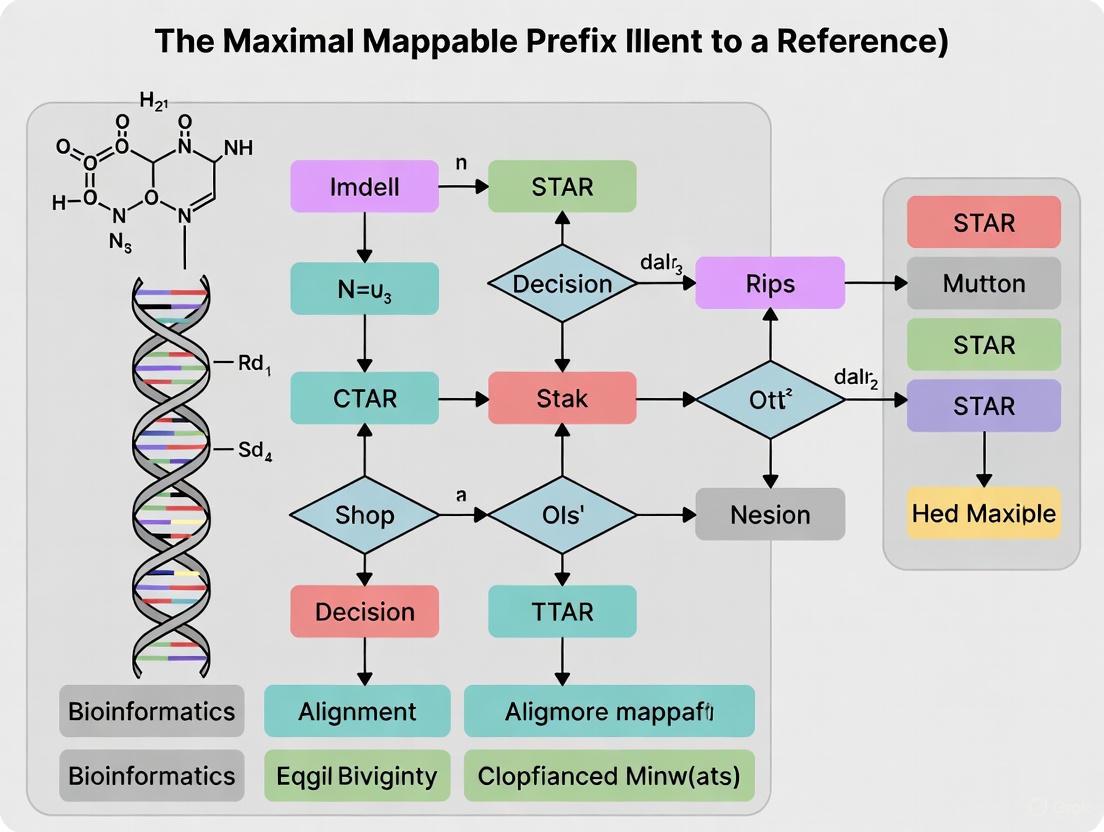
This article provides a comprehensive exploration of the Maximal Mappable Prefix (MMP), the foundational concept behind the popular STAR RNA-seq aligner.
Maximal Mappable Prefix (MMP): The Core Algorithm Powering STAR RNA-Seq Alignment
Abstract
This article provides a comprehensive exploration of the Maximal Mappable Prefix (MMP), the foundational concept behind the popular STAR RNA-seq aligner. Tailored for researchers, scientists, and drug development professionals, we dissect the core two-step algorithm—seed searching via MMPs and clustering/stitching—that enables STAR's exceptional speed and accuracy in mapping spliced transcripts. The scope extends from foundational definitions and the role of uncompressed suffix arrays to practical guidance on parameter optimization for sensitive junction detection, validation strategies for novel discoveries, and a comparative analysis with other aligner architectures. This resource is designed to enhance the understanding and application of STAR in diverse transcriptomic studies, from basic research to clinical biomarker discovery.
What is a Maximal Mappable Prefix? Deconstructing STAR's Core Algorithm
The Maximal Mappable Prefix (MMP) represents a foundational concept in the STAR (Spliced Transcripts Alignment to a Reference) alignment algorithm, serving as the core computational unit that enables its unprecedented speed and accuracy in RNA-seq read mapping. Within the broader thesis of STAR algorithm research, the MMP is defined as the longest subsequence starting from a given position in a read that exactly matches one or more locations in the reference genome [1]. This concept resolves a critical challenge in bioinformatics: how to efficiently map RNA-seq reads that often span non-contiguous genomic regions due to RNA splicing. The sequential identification of MMPs allows STAR to fundamentally reinterpret the alignment problem, transforming it from a monolithic full-read alignment task into an iterative process of exact seed discovery [2] [1].
STAR's innovative use of MMPs directly addresses the dual challenges of computational efficiency and biological accuracy that plagued earlier RNA-seq aligners. Traditional DNA-seq aligners, which assume sequence contiguity, prove inadequate for eukaryotic transcriptomes where reads frequently cross splice junctions. Prior to STAR, RNA-seq aligners employed various workarounds, including pre-defined junction databases or multi-pass mapping strategies, but these approaches often compromised on speed, sensitivity, or both [1] [3]. The MMP-based strategy established a new paradigm for spliced alignment by performing direct, single-pass mapping of reads to the reference genome without requiring prior knowledge of splice junctions, thereby enabling both novel junction discovery and ultra-rapid alignment [1].
The Core Algorithm: MMP Discovery and Processing
The Two-Phase MMP Mechanism
STAR's alignment process operates through two distinct yet interconnected phases: seed searching (where MMPs are identified) and clustering, stitching, and scoring (where MMPs are assembled into complete alignments) [2] [1].
Phase 1: Seed Searching via Sequential MMP Identification The algorithm initiates alignment at the first base of the read, searching for the longest possible exact match to the reference genome—the first MMP [2]. This search utilizes an uncompressed suffix array (SA) index of the genome, allowing for efficient identification of maximal exact matches with logarithmic scaling relative to genome size [1] [4]. When the read contains a splice junction, the initial MMP will terminate at the donor site. The algorithm then recursively applies the same MMP search to the remaining unmapped portion of the read, identifying the next MMP that begins at the corresponding acceptor site [1]. This sequential processing of only the unmapped read portions represents a key innovation that dramatically enhances STAR's efficiency compared to algorithms that perform full-read alignment attempts before considering discontinuous mappings [2].
Table 1: MMP Processing Scenarios and Algorithm Response
| Scenario | MMP Search Behavior | Resulting Action |
|---|---|---|
| Continuous genomic match | Single MMP spans (nearly) entire read | Simple contiguous alignment |
| Splice junction present | Multiple MMPs discovered sequentially | Spliced alignment with junction annotation |
| Mismatches/indels present | MMP extension with allowed mismatches | Gapped alignment within extended seeds |
| Poor quality/adapter sequence | Failed MMP search with no good matches | Soft-clipping of unmapped portion |
Phase 2: Clustering, Stitching, and Scoring After identifying all potential MMPs for a read, STAR proceeds to cluster them based on proximity to selected "anchor" seeds—typically those with unique genomic mappings [1]. A dynamic programming algorithm then stitches the clustered seeds together, allowing for a limited number of mismatches and indels in the final alignment [1]. The stitching process evaluates different seed combinations to produce an optimal alignment for the entire read, with scoring based on mismatches, indels, and gap penalties [2]. For paired-end reads, seeds from both mates are clustered and stitched concurrently, treating the pair as a single sequence with a possible gap or overlap between mates, which significantly enhances mapping sensitivity [1].
Visualizing the MMP Workflow
The following diagram illustrates the complete MMP identification and processing workflow within the STAR alignment algorithm:
MMP Identification and Processing Workflow in STAR
Implementation and Experimental Considerations
Technical Requirements and Parameters
Successful implementation of STAR's MMP-based alignment requires careful attention to computational resources and parameter configuration. The algorithm demands substantial memory, typically ~48 GB for the human genome, to hold the uncompressed suffix arrays that enable rapid MMP lookup [2] [3]. This memory-intensive approach represents a trade-off that enables STAR's remarkable alignment speed—often 50x faster than competing aligners while maintaining high accuracy [1].
Table 2: Critical STAR Parameters Influencing MMP Behavior
| Parameter | Default Value | Impact on MMP Discovery | Recommended Adjustment |
|---|---|---|---|
--seedSearchStartLmax |
50 | Maximum length for initial MMP search | Increase for longer reads |
--seedSearchStartLmin |
12 | Minimum length for initial MMP search | Keep default for most applications |
--seedSearchLmax |
0 | Maximum length for subsequent MMPs | 0 = disabled (uses read length) |
--seedPerReadNmax |
1000 | Maximum number of MMPs per read | Increase for complex genomic regions |
--seedPerWindowNmax |
50 | Maximum MMPs per window | Adjust based on read coverage |
--seedNoneLmax |
15 | Maximum length for non-MMP sequences | Controls soft-clipping behavior |
--sjdbOverhang |
100 | Length around annotated junctions | Set to read length minus 1 |
Research Reagent Solutions for RNA-Seq Alignment
Table 3: Essential Research Reagents and Computational Tools for STAR Alignment
| Resource Type | Specific Examples | Function in MMP-Based Alignment |
|---|---|---|
| Reference Genome | GRCh38 (human), GRCm39 (mouse) | Provides genomic sequence for MMP identification and alignment [2] |
| Annotation File | ENSEMBL GTF, RefSeq GTF | Supplies known splice junctions for enhanced MMP discovery near exon boundaries [2] |
| Sequence Read Files | FASTQ format (single/paired-end) | Contains raw sequencing reads for MMP mapping [2] |
| Alignment Output | BAM/SAM format | Stores finalized alignments after MMP stitching and scoring [2] |
| Computational Index | STAR genome index | Pre-built suffix arrays for rapid MMP lookup [2] [5] |
Experimental Protocol for STAR Alignment
A typical STAR alignment workflow proceeds through two mandatory stages: genome index generation and read alignment. The following protocol outlines the essential steps:
Step 1: Genome Index Generation
Construct a custom genome index using the STAR --runMode genomeGenerate command. Critical parameters include --genomeDir to specify output location, --genomeFastaFiles for reference sequences, and --sjdbGTFfile for genome annotations. The --sjdbOverhang parameter should be set to read length minus 1, which optimizes MMP discovery at splice junctions [2]. For 100bp reads, use --sjdbOverhang 99. This process requires significant computational resources—approximately 30GB RAM and 30 minutes for the human genome.
Step 2: Read Alignment
Execute the alignment proper using STAR --runThreadN to specify computational cores and --readFilesIn to input FASTQ files. Essential parameters for MMP handling include --outSAMtype (output format), --outSAMunmapped (handling of unaligned reads), and --outFilterMultimapNmax (controls reporting of multi-mapping reads) [2]. The default maximum of 10 multiple alignments per read is suitable for most applications.
Step 3: Output Processing STAR generates alignment files in BAM format, junction tables of novel splice sites, and mapping statistics. Downstream tools like rMATS can leverage these MMP-based alignments for specialized analyses such as differential splicing quantification [3].
Discussion: MMPs in the Context of Alignment Algorithm Evolution
The MMP concept represents a significant departure from earlier alignment strategies that dominated the early RNA-seq era. Unlike methods that relied on pre-built junction databases or multi-pass alignment schemes, STAR's MMP approach enables direct, single-pass discovery of spliced alignments without prior knowledge of transcript structures [1]. This methodological shift has proven particularly valuable for detecting novel biological phenomena, including non-canonical splicing events, gene fusions, and previously unannotated transcripts [1] [3].
STAR's implementation contrasts sharply with the Knuth-Morris-Pratt (KMP) algorithm sometimes mentioned in similar contexts. While KMP performs linear-time preprocessing on the query (read) to find all exact occurrences in the reference, STAR preprocesses the reference genome into suffix arrays, enabling efficient MMP lookup across many different reads [4]. This reference-centric indexing strategy, while memory-intensive, provides the computational foundation that makes large-scale RNA-seq studies practical.
The continued relevance of the MMP concept is evident in STAR's widespread adoption across diverse research domains, from basic molecular biology to pharmaceutical development. Its ability to accurately identify splicing events and gene fusions has proven particularly valuable in cancer genomics and drug target discovery [1] [3]. As sequencing technologies evolve toward longer reads, the fundamental principles of MMP-based alignment continue to provide a robust foundation for analyzing the increasingly complex transcriptomes being revealed in modern genomic medicine.
The Spliced Transcripts Alignment to a Reference (STAR) algorithm represents a significant advancement in RNA-seq read mapping, achieving a balance of high accuracy and exceptional speed—outperforming other aligners by more than a factor of 50. This performance is largely attributable to its core two-step process: seed searching and clustering, stitching, and scoring. Central to this mechanism is the concept of the Maximal Mappable Prefix (MMP), which enables STAR to efficiently handle spliced alignments. This whitepaper provides an in-depth technical overview of the STAR algorithm, detailing its operational workflow, key parameters, and performance characteristics. Aimed at researchers and drug development professionals, it also summarizes quantitative data and provides practical resources for implementing STAR in genomic analysis pipelines.
RNA sequencing (RNA-seq) is a powerful next-generation sequencing (NGS) technology used to probe the DNA sequences of living organisms. A primary challenge in RNA-seq data analysis is read alignment (or mapping), a computationally intensive process that involves determining the origin of millions of short sequence reads (typically 50-300 base pairs) within a reference genome. The alignment of RNA-seq reads is complicated by the presence of introns; during transcription, introns are spliced out, meaning a single sequencing read can span an exon-exon junction. This necessitates the use of "splice-aware" aligners capable of detecting these discontinuities.
Among the available aligners, STAR (Spliced Transcripts Alignment to a Reference) has emerged as a widely adopted tool due to its high accuracy and speed. Unlike earlier algorithms that often search for the entire read sequence before splitting reads, STAR employs an efficient two-step process that significantly accelerates mapping. Its algorithm is designed to account for various challenges in read mapping, including mismatches, insertions and deletions (indels), and the presence of repetitive regions in the genome. A cornerstone of STAR's efficiency is its use of the Maximal Mappable Prefix (MMP), a concept that allows it to sequentially map portions of a read to the genome, making it particularly adept at identifying splice junctions without heavy reliance on pre-existing annotation databases.
The Core Two-Step Algorithm of STAR
Step 1: Seed Searching
The first step in STAR's alignment process is seed searching. For every read presented for alignment, STAR searches for the longest sequence starting from its beginning that exactly matches one or more locations on the reference genome. This longest exactly matching sequence is termed the Maximal Mappable Prefix (MMP).
- Process of Sequential Searching: The algorithm begins by mapping the first MMP, designated seed1. Following this, STAR searches only the unmapped portion of the read to find the next longest sequence that exactly matches the reference genome—the next MMP, or seed2. This process repeats sequentially for any remaining unmapped portions of the read. This targeted, sequential search of unmapped regions is a key factor underlying STAR's computational efficiency [2].
- Handling Inexact Matches: If an exact matching sequence for a part of the read cannot be found due to mismatches or indels, the preceding MMPs are algorithmically extended in an attempt to find a suitable alignment. If this extension fails to produce a high-quality alignment, the poor-quality or adapter sequence is soft-clipped [2].
- Use of Suffix Arrays: To enable rapid searching of the entire reference genome for these MMPs, STAR utilizes an uncompressed suffix array (SA). A suffix array is a data structure that contains all the suffixes of a string (in this case, the reference genome) in lexicographical order, allowing for efficient string matching operations [2] [6].
- Pre-indexing for Speed: To mitigate the performance issue of frequent cache misses that can occur with suffix array searches, STAR employs a pre-indexing strategy. This involves creating a lookup table for all possible short sequences of a user-defined length (L, typically 12-15 base pairs). This table maps each unique L-mer directly to an interval within the suffix array where all suffixes starting with that L-mer are located. This drastically reduces the search space, as the algorithm can jump directly to the relevant section of the suffix array instead of performing a full binary search [7].
Step 2: Clustering, Stitching, and Scoring
Once the seeds (MMPs) for a read have been identified, the second step involves reconstructing the complete read alignment from these separate segments.
- Clustering: The separate seeds are first grouped or clustered based on their proximity to a set of "anchor" seeds. Anchor seeds are those that are uniquely mapped to the genome (i.e., not multi-mapping) and serve as reliable points around which other seeds are gathered [2].
- Stitching: After clustering, the seeds are stitched together to form a complete, contiguous alignment for the read. This process must account for the gaps between seeds, which may represent intronic regions, insertions, or deletions [2].
- Scoring: Finally, the stitched alignments are evaluated and scored based on several criteria, including the number of mismatches, indels, and gap sizes. The alignment with the best score is selected as the final representation for that read [2]. By default, STAR filters out reads that map to more than 10 locations in the genome (
outFilterMultimapNmax), as these multi-mapping reads can confound downstream analysis [2].
Table 1: Core Steps of the STAR Alignment Algorithm
| Algorithm Step | Key Action | Primary Outcome |
|---|---|---|
| Seed Searching | Find Maximal Mappable Prefixes (MMPs) for sequential portions of the read. | A set of exactly matching "seed" sequences mapped to the genome. |
| Clustering | Group seeds based on proximity to uniquely mapping "anchor" seeds. | Provisional grouping of seeds likely originating from the same genomic locus. |
| Stitching | Connect clustered seeds into a single, contiguous alignment. | A complete alignment for the read, potentially spanning introns. |
| Scoring | Evaluate stitched alignments based on mismatches, indels, and gaps. | Selection of the best-scoring, most plausible alignment for the read. |
The Central Role of the Maximal Mappable Prefix (MMP)
The Maximal Mappable Prefix (MMP) is the foundational concept that enables STAR's efficient and accurate alignment strategy. An MMP is defined as the longest substring starting at a given position in a read that exactly matches one or more locations in the reference genome [2]. By breaking the read down into these maximal contiguous blocks, STAR can effectively decompose the complex problem of aligning a potentially spliced read into a series of simpler, exact-matching operations.
This approach provides a significant advantage in identifying splice junctions. Since an MMP will end precisely at a base where no further exact match is possible—such as at an exon boundary—the end of one MMP and the start of the next naturally highlight the location of a potential junction. This allows STAR to detect novel splice junctions de novo, without requiring a prior database of known junctions, although such annotation can be incorporated to improve accuracy [2]. The sequential search for MMPs, as opposed to attempting to align the entire read at once, is a key algorithmic innovation that contributes to STAR's speed and its high sensitivity in detecting spliced alignments.
Performance and Benchmarking Data
STAR's design prioritizes both speed and accuracy. Its performance has been extensively benchmarked against other contemporary aligners. In a study comparing RNA-seq aligners using the Arabidopsis thaliana genome, STAR demonstrated superior performance in base-level alignment accuracy, achieving over 90% accuracy under various test conditions [8]. This highlights its robustness in correctly mapping the majority of bases within a read.
However, the same study found that at the more challenging junction base-level resolution—which assesses accuracy in correctly aligning the bases that flank exon-exon junctions—another aligner, SubRead, emerged as the most accurate, scoring over 80% [8]. This suggests that while STAR is an excellent general-purpose aligner, the optimal tool may depend on the specific analytical focus.
Table 2: Performance Comparison of RNA-Seq Aligners on Arabidopsis thaliana Data
| Aligner | Base-Level Accuracy | Junction Base-Level Accuracy | Key Characteristics |
|---|---|---|---|
| STAR | >90% | Not the highest | Fast, splice-aware, good all-rounder [8] |
| SubRead | High | >80% | Most accurate at junction resolution [8] |
| HISAT2 | High | High | Efficient, uses hierarchical indexing [8] |
A critical trade-off to consider when using STAR is its resource consumption. The algorithm is known to be memory-intensive, as it requires loading the entire compressed reference genome index into memory. For the human genome, this can require over 30 GB of RAM [2]. Nonetheless, its unparalleled mapping speed often makes this a worthwhile trade-off in environments with sufficient computational resources.
Experimental Protocols and Implementation
Standard Workflow for Running STAR
Implementing STAR in an RNA-seq analysis pipeline involves two main stages: generating a genome index and performing the read alignment.
A. Genome Index Generation Before mapping reads, a reference genome index must be built. This is a one-time process for each combination of reference genome and annotation.
Key Parameters for Indexing:
--runThreadN: Number of CPU threads to use.--genomeDir: Path to the directory where the index will be stored.--genomeFastaFiles: Path to the reference genome FASTA file.--sjdbGTFfile: Path to the annotation file in GTF format for junction information.--sjdbOverhang: This should be set to (read length - 1). For paired-end reads, use the length of one read minus one [2].
B. Read Alignment After the index is built, reads can be mapped.
Key Parameters for Alignment:
--readFilesIn: Path(s) to the input FASTQ file(s).--outFileNamePrefix: Prefix for all output files.--outSAMtype: Output alignment format.BAM SortedByCoordinateproduces a coordinate-sorted BAM file, which is standard for downstream analysis.--outSAMunmapped: Specifies how to handle unmapped reads.
Table 3: Key Reagents and Resources for STAR Alignment
| Item Name | Function / Description | Example Source / Note |
|---|---|---|
| Reference Genome | A FASTA file of the organism's genomic sequence. | Ensembl, GENCODE, UCSC Genome Browser |
| Annotation File (GTF/GFF) | Contains known gene models and splice junctions to guide alignment. | Ensembl, GENCODE |
| High-Performance Computing (HPC) Cluster | A computer system with large memory and multiple cores. | Required for large genomes (e.g., human). |
| STAR Software | The aligner software itself. | GitHub repository or package managers like Conda. |
| Sequence Read File (FASTQ) | The raw input data from the sequencing machine. | Output of NGS platforms (Illumina, etc.). |
Visualization of the STAR Algorithm Workflow
The following diagram illustrates the two-step STAR algorithm, from reading the input sequence to generating the final aligned output.
Title: Two-Step Workflow of the STAR Alignment Algorithm
The STAR aligner has cemented its role as a cornerstone tool in modern genomics and bioinformatics pipelines, particularly for RNA-seq analysis. Its innovative two-step algorithm—comprising seed searching via Maximal Mappable Prefixes (MMPs) followed by clustering, stitching, and scoring—provides an effective solution to the challenging problem of rapid and accurate splice-aware alignment. While its memory footprint can be substantial, its unparalleled speed and sensitivity make it an indispensable asset for researchers. As the field of genomics continues to evolve, with an increasing emphasis on personalized medicine and large-scale cohort studies, efficient and reliable tools like STAR will remain fundamental to extracting biological insights from the vast and complex landscape of sequencing data.
How STAR Uses Sequential MMP Searches to Handle Spliced Reads and Introns
The Spliced Transcripts Alignment to a Reference (STAR) algorithm represents a significant methodological advancement in RNA-seq data analysis, employing an exact-match seed-based strategy centered on the concept of the Maximal Mappable Prefix (MMP). This approach enables unprecedented mapping speeds—over 50 times faster than previous aligners—while maintaining high sensitivity and precision for detecting complex transcriptional phenomena, including canonical splicing, non-canonical splices, and chimeric fusion transcripts [1]. This technical guide delineates the core principles of STAR's sequential MMP search mechanism, its application in handling spliced reads and intronic regions, and its critical importance for researchers and drug development professionals requiring accurate transcriptome characterization.
RNA sequencing alignment presents unique computational challenges distinct from DNA read mapping, primarily due to the non-contiguous structure of eukaryotic transcripts where exons are separated by introns [1]. Prior to STAR, most RNA-seq aligners operated as extensions of DNA short-read mappers, utilizing either pre-compiled splice junction databases or arbitrary read-splitting methods, approaches that often compromised on speed, sensitivity, or both [1] [9].
STAR introduced a novel algorithm based on sequential Maximal Mappable Prefix (MMP) searches. An MMP is defined as the longest substring starting from a read position that matches one or more substrings of the reference genome exactly [1]. This core concept allows STAR to directly align non-contiguous read sequences to the genome in a single pass without prerequisite annotation databases, enabling both ultrafast performance and high accuracy in splice junction discovery [1] [8].
The STAR Algorithm: A Two-Step Process
STAR's alignment methodology consists of two distinct computational phases: an initial seed searching step utilizing sequential MMP discovery, followed by a clustering, stitching, and scoring step that reconstructs complete alignments from the individual seeds [1] [2].
Step 1: Seed Searching via Sequential MMP Discovery
The seed searching phase employs a sequential maximum mappable seed search in uncompressed suffix arrays (SA) [1]. The algorithm processes each read as follows:
- Initial MMP Search: Beginning at the first base of the read sequence, STAR identifies the longest exact match (MMP) to the reference genome.
- Sequential Processing: For reads spanning splice junctions, the initial MMP typically extends to a donor splice site. The algorithm then repeats the MMP search starting from the first unmapped base after the initial seed, which often maps to an acceptor splice site [1].
- Suffix Array Implementation: The MMP search is implemented through uncompressed suffix arrays, allowing for efficient logarithmic-time searches even against large mammalian genomes [1] [7]. A pre-indexing strategy further optimizes performance by caching the locations of all possible L-mers (where L typically ranges 12-15) in the suffix array, dramatically reducing search intervals and minimizing cache misses [7].
Table: Key Terminology in STAR's MMP Search
| Term | Definition | Role in Alignment |
|---|---|---|
| Maximal Mappable Prefix (MMP) | Longest read substring starting from position i that exactly matches reference genome | Serves as alignment anchor; defines seed boundaries |
| Seed | A shorter part of read mapped to genome as a unit | Fundamental building block for complete alignment |
| Suffix Array (SA) | Data structure containing all genome suffixes in lexicographical order | Enables efficient exact-match search with logarithmic scaling |
| L-mer | Fixed-length substring (typically L=12-15) used for pre-indexing | Accelerates SA lookup by restricting search space |
For reads containing mismatches or indels, the MMP search operates similarly, with MMPs serving as anchors that can be extended with alignment tolerances [1]. The sequential application of MMP searches exclusively to unmapped read portions constitutes a key innovation that differentiates STAR from earlier algorithms and underlies its exceptional speed [1].
Step 2: Clustering, Stitching, and Scoring
Following seed identification, STAR reconstructs complete alignments through:
- Seed Clustering: Seeds are grouped by proximity to selected "anchor" seeds with unique genomic positions.
- Seed Stitching: Clustered seeds are connected using a dynamic programming algorithm that allows for mismatches and a single insertion or deletion between seeds [1].
- Scoring: Competing alignments are evaluated based on mismatches, indels, and gap penalties.
This process accommodates paired-end reads by treating mate pairs as a single sequencing fragment, increasing mapping sensitivity when only one mate contains a reliable anchor [1]. The maximum intron size, a user-definable parameter, determines the genomic window for clustering, enabling species-specific optimization [2].
Handling Spliced Reads and Introns
STAR's sequential MMP approach provides distinct advantages for identifying splice junctions and managing intronic regions:
Unbiased Splice Junction Discovery
Unlike database-dependent methods, STAR detects splice junctions de novo through the inherent alignment process. When a read spans an intron, the sequential MMP search naturally identifies the exon-intron boundaries: the first MMP concludes at the donor site, and the subsequent MMP begins at the acceptor site [1]. This allows STAR to discover both canonical and non-canonical splices without prior knowledge [1].
Comprehensive Transcriptome Characterization
STAR's algorithm extends beyond basic splicing analysis to detect complex transcriptional events:
- Chimeric (Fusion) Transcripts: When seeds cluster in multiple distant genomic windows, STAR reports chimeric alignments with different read portions mapping to distal loci, different chromosomes, or different strands [1].
- Full-Length RNA Mapping: The capacity to handle long reads enables alignment of full-length transcript sequences, particularly valuable for third-generation sequencing technologies [1].
- Multimapping Reads: The suffix array implementation efficiently identifies all distinct genomic matches for each MMP, facilitating accurate handling of reads mapping to multiple loci [1].
Table: STAR Performance Characteristics for Spliced Alignment
| Performance Metric | Capability | Experimental Validation |
|---|---|---|
| Mapping Speed | >50x faster than other aligners; 550 million 2×76 bp PE reads/hour on 12-core server | ENCODE Transcriptome dataset (>80 billion reads) [1] |
| Junction Precision | 80-90% validation rate for novel splice junctions | Experimental validation of 1,960 novel junctions via 454 sequencing [1] |
| Base-Level Accuracy | >90% overall accuracy in plant genome benchmarking | Arabidopsis thaliana simulation study [8] |
| Junction Base-Level Accuracy | Varies by algorithm; Subread achieved >80% in plant study | Arabidopsis thaliana simulation study [8] |
Experimental Protocols and Implementation
Benchmarking Methodology
Recent assessments of RNA-seq aligners employ sophisticated simulation approaches to evaluate performance. The following protocol exemplifies a rigorous benchmarking framework:
- Genome Index Preparation: Generate reference indices using the species-appropriate genome assembly and annotation files [2].
- Read Simulation: Utilize tools like Polyester to generate synthetic RNA-seq reads with biological replicates and specified differential expression patterns [8].
- Variant Introduction: Incorporate annotated single-nucleotide polymorphisms (SNPs) to simulate natural genetic variation [8].
- Alignment Execution: Process simulated reads through STAR using both default and optimized parameters.
- Accuracy Assessment: Evaluate performance at base-level and junction base-level resolution using ground truth knowledge from the simulation [8].
STAR Implementation Protocol
For researchers implementing STAR alignment, the following workflow represents current best practices:
STAR RNA-seq Analysis Workflow
Genome Index Generation
The --sjdbOverhang parameter should be set to read length minus 1, with 100 as a safe default for most applications [2].
Read Alignment
The Scientist's Toolkit: Research Reagent Solutions
Table: Essential Computational Tools for STAR-Based RNA-seq Analysis
| Tool/Resource | Function | Application Context |
|---|---|---|
| STAR Aligner | Spliced alignment of RNA-seq reads via sequential MMP searches | Primary alignment tool for transcriptome studies [1] [2] |
| Suffix Arrays | Uncompressed index structure for exact match searches | Enables fast MMP discovery in reference genome [1] |
| Quality Control Tools (FastQC/MultiQC) | Sequence quality assessment and report aggregation | Pre-alignment QC and post-alignment metric collection [10] [11] |
| SAM/BAM Tools | Processing and manipulation of alignment files | Format conversion, filtering, and indexing [11] |
| Reference Genome & Annotation | Species-specific genomic sequence and gene models | Essential for genome indexing and junction annotation [2] |
| Polyester | RNA-seq read simulation with differential expression | Algorithm benchmarking and method validation [8] |
Discussion and Future Perspectives
STAR's sequential MMP search algorithm represents a paradigm shift in RNA-seq alignment methodology, demonstrating that comprehensive spliced alignment can be achieved orders of magnitude faster than previously possible. The two-step process of exact-match seed finding followed by clustering and stitching provides both computational efficiency and analytical precision [1].
Recent benchmarking studies reveal STAR's continued superiority in base-level alignment accuracy (>90%), though junction base-level resolution may vary depending on the organism and specific application [8]. This underscores the importance of parameter optimization for non-mammalian genomes, where default settings (optimized for human data) may require adjustment for organisms with different genomic architectures, such as the shorter introns characteristic of Arabidopsis thaliana [8].
The computational intensity of STAR, particularly its memory requirements (≥32GB recommended for mammalian genomes), remains a consideration for resource-constrained environments [12]. However, this is offset by extraordinary mapping speed and the ability to process large-scale consortium datasets, such as the ENCODE transcriptome (>80 billion reads) [1].
Future algorithm development will likely build upon STAR's foundational MMP approach while addressing emerging challenges from long-read sequencing technologies and single-cell transcriptomics. The principles of sequential exact-match searching established by STAR continue to influence next-generation aligners, maintaining its relevance for evolving transcriptomic applications in both basic research and drug development.
The Role of Uncompressed Suffix Arrays in Enabling Fast MMP Discovery
Within the domain of RNA sequencing (RNA-seq) analysis, the Spliced Transcripts Alignment to a Reference (STAR) aligner represents a significant performance breakthrough, outperforming other contemporary aligners by a factor of greater than 50 in mapping speed [1]. This exceptional efficiency is fundamentally enabled by the algorithm's use of Maximal Mappable Prefixes (MMPs) and the uncompressed suffix array (SA) data structure that facilitates their rapid discovery. This whitepaper details the core algorithmic mechanics of STAR, explaining how the synergistic combination of MMP search and uncompressed SAs achieves high-speed, sensitive alignment of RNA-seq data. We further provide empirical validation of the method's precision and a practical toolkit for researchers seeking to implement or benchmark this technology.
The accurate alignment of high-throughput RNA-seq data presents unique computational challenges distinct from DNA read mapping. Eukaryotic transcriptomes are characterized by the splicing together of non-contiguous exons, meaning that a single sequencing read may span an intron [1]. Traditional DNA aligners, which assume sequence contiguity, are ill-suited for this task. Early RNA-seq aligners often suffered from compromises between mapping speed, sensitivity, and precision [1] [13]. With sequencing technologies consistently increasing throughput, the computational step became a significant bottleneck for large-scale projects like ENCODE, which generated over 80 billion reads [1]. The STAR aligner was developed specifically to address these challenges, employing a novel strategy centered on the direct alignment of non-contiguous sequences to the reference genome. The following sections dissect the two core components of this strategy: the sequential discovery of MMPs and the data structure that makes this process exceptionally fast.
The Core Algorithm: Maximal Mappable Prefixes (MMPs)
The central idea of STAR's seed-finding phase is the sequential search for a Maximal Mappable Prefix (MMP). An MMP is defined as the longest substring starting from a given read position that matches one or more substrings of the reference genome exactly [1] [14].
Table 1: Key Definitions in the STAR Algorithm
| Term | Definition | Role in Alignment |
|---|---|---|
| Maximal Mappable Prefix (MMP) | The longest substring from a read position that matches the reference genome exactly [1]. | Serves as an anchor "seed"; defines splice junctions and error boundaries. |
| Seed | A part of a read that has been mapped to the genome, corresponding to an MMP [14]. | The basic aligned unit; the first MMP is seed1, the next is seed2, etc. |
| Uncompressed Suffix Array (SA) | A data structure storing all suffixes of a reference genome in lexicographical order [1]. | Enables efficient, logarithmic-time search for any sequence substring, crucial for fast MMP discovery. |
| Clustering & Stitching | The process of grouping seeds from a read based on genomic proximity and connecting them into a complete alignment [1]. | Reconstructs the full read alignment, allowing for introns (gaps) and scoring based on mismatches/indels. |
The sequential application of the MMP search only to the unmapped portions of the read is a key differentiator and a primary source of STAR's efficiency [1]. This approach provides a natural way to identify splice junction locations within the read sequence. If the initial MMP search is interrupted by mismatches or indels, the MMPs act as anchors that can be extended to accommodate these differences. If extension fails, the algorithm can identify and soft-clip poor-quality or adapter sequences [1] [14].
The Engine: Uncompressed Suffix Arrays
The efficient discovery of MMPs is implemented through uncompressed suffix arrays (SAs) [1]. A suffix array is an index data structure that stores all suffixes of a string (in this case, the reference genome) in sorted order. This arrangement allows for extremely fast substring searches using a binary search algorithm, which scales logarithmically with the length of the reference genome [1].
STAR's use of uncompressed SAs is a critical design choice that trades memory usage for a significant speed advantage. While compressed SAs, such as the FM-index used by Bowtie and other Burrows-Wheeler transform-based aligners, reduce memory footprint, they also introduce computational overhead for compression and decompression operations during querying [1] [9]. Uncompressed SAs avoid this overhead, enabling the rapid, repeated MMP searches required by STAR's sequential algorithm. For each MMP, the SA search can find all distinct genomic matches with minimal additional cost, which aids in the accurate handling of reads that map to multiple genomic loci (multimapping reads) [1].
Table 2: Comparative Analysis of Indexing Techniques in Read Aligners
| Indexing Method | Representative Aligner(s) | Key Mechanism | Advantages | Disadvantages |
|---|---|---|---|---|
| Uncompressed Suffix Array | STAR | Lexicographically sorted array of all genome suffixes; enables binary search [1]. | Very fast search speed (logarithmic scaling); simple and efficient for exact matching [1]. | High memory usage [1]. |
| Compressed FM-index (BWT) | Bowtie, HISAT2, BWA | Burrows-Wheeler Transform compressed index [9] [8]. | Memory-efficient; suitable for hardware with limited RAM [9]. | Slower due to compression/ decompression overhead [1]. |
| Hashing | GSNAP, MapSplice | Hash table of k-mers from genome or reads [9]. | Fast lookup for short sequences; well-established technique. | Becomes less efficient with longer reads and higher error rates [9]. |
Experimental Validation and Benchmarking
The performance claims of the STAR algorithm are supported by rigorous experimental validation. In its foundational study, STAR was used to align a vast ENCODE Transcriptome dataset of over 80 billion reads [1]. To validate the precision of its mapping strategy, particularly for novel splice junctions, researchers experimentally validated 1,960 novel intergenic splice junctions discovered by STAR using Roche 454 sequencing of reverse transcription polymerase chain reaction (RT-PCR) amplicons. This validation achieved an 80-90% success rate, corroborating the high precision of the STAR mapping strategy [1].
Subsequent independent benchmarking studies have consistently affirmed STAR's performance. A recent evaluation using the Arabidopsis thaliana genome found that at the read base-level assessment, "the overall performance of the aligner STAR was superior to other aligners, with the overall accuracy reaching over 90% under different test conditions" [8]. This demonstrates that the core algorithm generalizes effectively beyond human data to other complex eukaryotes.
Detailed Experimental Protocol: Validating Novel Splice Junctions
The following protocol outlines the key validation experiment performed in the original STAR study [1].
- Objective: To experimentally confirm the novel splice junctions detected by STAR's MMP-based algorithm.
- Method: Reverse Transcription Polymerase Chain Reaction (RT-PCR) followed by Sanger sequencing or 454 sequencing of amplicons.
- Experimental Workflow:
- Alignment and Junction Calling: RNA-seq reads are aligned to the reference genome using STAR with standard parameters. The resulting
SJ.out.tabfile, which contains high-confidence splice junctions, is analyzed to identify junctions not present in known annotation databases. These are classified as "novel." - Primer Design: For each novel junction, design PCR primers that bind in the exons flanking the predicted intron. Ensure amplicon size is suitable for the chosen sequencing method.
- RT-PCR: Synthesize cDNA from the original RNA sample. Perform PCR amplification using the designed primers.
- Product Verification: Analyze PCR products by agarose gel electrophoresis. A distinct band of the expected size provides initial confirmation.
- Sequencing and Analysis: Purify the PCR product and subject it to sequencing. Map the resulting sequence back to the genome. Confirmation is achieved if the sequenced amplicon precisely matches the exon-exon junction predicted by STAR.
The Scientist's Toolkit: Essential Research Reagents
Table 3: Key Research Reagents and Computational Tools
| Item / Resource | Function / Description | Relevance to STAR & MMP Research |
|---|---|---|
| STAR Aligner | Standalone C++ software for splicing-aware alignment of RNA-seq reads [1]. | The primary implementation of the MMP and uncompressed SA algorithm. Freely available under GPLv3. |
| Reference Genome | A high-quality, curated genomic sequence (e.g., GRCh38 for human, Araport11 for A. thaliana). | The sequence against which the uncompressed suffix array is built and MMPs are discovered. |
| Suffix Array Index | The genome index generated by STAR's --runMode genomeGenerate command. |
The uncompressed SA and other necessary data structures that enable fast searching. |
| RT-PCR Reagents | Enzymes and reagents for reverse transcription and polymerase chain reaction. | Essential for the experimental validation of novel splice junctions discovered by STAR [1]. |
| RNA-seq Simulator (e.g., BEERS, Polyester) | Software to generate synthetic RNA-seq reads with known splice junctions and variations [13] [8]. | Critical for benchmarking and evaluating the accuracy and sensitivity of STAR's alignment performance. |
The STAR aligner exemplifies how a well-designed algorithm tailored to the specific challenges of a domain can yield monumental gains in performance. By introducing the concept of sequential Maximal Mappable Prefix search, powered by the computational efficiency of uncompressed suffix arrays, STAR provides a robust solution to the problem of fast and accurate RNA-seq read alignment. The method's high precision, validated by orthogonal experimental techniques, makes it a cornerstone tool in genomics research and drug development, where reliable transcriptome analysis is paramount. As sequencing technologies continue to evolve, the underlying principles of MMP discovery remain relevant for the development of future alignment algorithms.
Contrasting MMPs with Alignment Strategies in Other RNA-Seq Aligners
The accuracy of transcript quantification in RNA-seq analysis is fundamentally influenced by the choice of alignment algorithm and its underlying strategy. This technical guide explores the central role of the Maximal Mappable Prefix (MMP), the core mechanism of the STAR aligner, and contrasts it with methods used by other prevalent tools such as HISAT2 and lightweight mappers. Framed within broader research on RNA-seq algorithm efficiency and accuracy, we demonstrate how STAR's two-step MMP-based strategy enables ultrafast, sensitive alignment and precise discovery of splice junctions and chimeric transcripts. Empirical evidence from controlled studies on clinical samples, including formalin-fixed paraffin-embedded (FFPE) tissues, reveals that the alignment methodology can significantly impact downstream differential expression analysis, a critical consideration for drug development pipelines. This review provides a detailed examination of these core algorithms, their practical implementation, and their influence on biological interpretation.
RNA sequencing (RNA-seq) has become a cornerstone of modern genomic analysis, enabling precise transcriptome profiling in both basic research and clinical settings [15]. A pivotal computational step in this process is read alignment—determining where in the genome or transcriptome the short sequences (reads) originated. This task is uniquely challenging for eukaryotic RNA-seq data due to the presence of spliced transcripts, where a single read may span an intron, requiring the aligner to correctly identify non-contiguous genomic locations [1] [16].
The development of alignment tools has evolved alongside sequencing technologies, leading to a diverse ecosystem of algorithms, each with distinct strengths and weaknesses [9]. These can be broadly categorized into:
- Spliced aligners to the genome (e.g., STAR, HISAT2), which explicitly account for introns.
- Unspliced aligners to the transcriptome (e.g., Bowtie2).
- Lightweight mapping approaches (e.g., quasi-mapping), which forgo full alignment for speed [16].
The choice of aligner is not merely a technicality; it directly affects the accuracy of transcript abundance estimation and can alter the outcomes of downstream analyses, such as differential expression testing, which is vital for identifying drug targets and biomarkers [15] [16]. This guide delves into the core algorithms of these tools, with a specific focus on elucidating the concept of the Maximal Mappable Prefix in the STAR aligner and contrasting it with the strategies of its contemporaries.
The Core Algorithm: What is a Maximal Mappable Prefix (MMP)?
The Maximal Mappable Prefix (MMP) is the fundamental concept powering the STAR (Spliced Transcripts Alignment to a Reference) aligner. It is defined as the longest substring starting from a given position in a read that matches exactly to one or more locations in the reference genome [1] [4].
STAR's algorithm is designed to handle the entirety of a read sequence through a two-step process:
Step 1: Seed Searching
STAR processes a read sequentially. It begins by searching for the MMP starting from the read's first base.
- Once this first MMP, or seed, is found and mapped, the algorithm repeats the process on the unmapped portion of the read.
- This sequential search is applied iteratively until the entire read is processed [1] [2]. This approach is computationally efficient because it avoids realigning the already-mapped segments. For a read that crosses a splice junction, the first seed will map to the end of an exon (donor site), and the next seed will map to the beginning of the following exon (acceptor site), thereby pinpointing the junction de novo without prior annotation [1]. This search is facilitated by an uncompressed suffix array (SA) of the reference genome, which allows for rapid exact match lookup with logarithmic scaling relative to the genome size [1] [4].
Step 2: Clustering, Stitching, and Scoring
In this phase, the individually mapped seeds from the first step are assembled into a complete alignment for the read.
- Clustering: Seeds are grouped based on their proximity to a set of high-confidence "anchor" seeds in the genome.
- Stitching: Seeds within a cluster are stitched together using a dynamic programming algorithm that allows for mismatches and indels but is constrained by a local linear transcription model. This step effectively reconstructs the read's path across the genome, including across introns.
- Scoring: The final stitched alignments are scored based on user-defined penalties for mismatches, insertions, and deletions, and the highest-scoring alignment is selected [1].
The following diagram illustrates the complete STAR alignment workflow, integrating both the seed search and clustering/stitching phases.
Comparative Analysis of Alignment Methodologies
While STAR utilizes the MMP strategy for spliced alignment to the genome, other aligners employ fundamentally different approaches. The table below summarizes the core methodologies and indexing techniques of three major classes of alignment/mapping tools.
Table 1: Comparison of RNA-Seq Read Alignment and Mapping Strategies
| Methodology | Representative Tool | Core Algorithm & Indexing | Key Mechanism for Handling Splicing |
|---|---|---|---|
| Spliced Alignment to Genome | STAR | Maximal Mappable Prefix (MMP) with uncompressed Suffix Array [1] | Sequential MMP search identifies splice junctions de novo during alignment. |
| Spliced Alignment to Genome | HISAT2 | Hierarchical Graph FM Index [15] | Uses a global genomic FM-index and numerous small local FM-indices for alignment extension, relying on a database of known splice sites. |
| Unspliced Alignment to Transcriptome | Bowtie2 | Ferragina-Manzini (FM) Index based on Burrows-Wheeler Transform (BWT) [15] [16] | Aligns only to a reference transcriptome, thus bypassing the need to directly model introns. |
| Lightweight Mapping | Salmon (quasi-mapping) | K-mer-based hashing or other fast lookup structures [16] | Rapidly determines the transcript of origin without performing a base-by-base alignment, trading some accuracy for substantial speed. |
HISAT2 vs. STAR: A Direct Comparison on FFPE Samples
A 2019 study provided a direct empirical comparison of STAR and HISAT2 using RNA-seq data from a breast cancer progression series derived from FFPE samples, a common but challenging sample type in clinical research [15].
The study identified significant differences in the aligners' performance:
- HISAT2 was found to be more prone to misaligning reads to retrogene genomic loci.
- STAR generated more precise alignments, particularly for early neoplasia samples, and was concluded to be a well-suited tool for differential gene expression analysis from FFPE samples [15].
This highlights that algorithmic differences can have tangible consequences on data integrity, especially with suboptimal RNA samples often encountered in biomedical and drug discovery contexts.
The Impact on Downstream Quantification
The choice of alignment strategy extends beyond mapping accuracy to influence transcript abundance estimation. A 2020 study investigated this by isolating the effect of the alignment method while using a consistent quantification model (Salmon) [16].
The key findings were:
- Lightweight mapping approaches, while highly concordant with traditional aligners on simulated data, can produce significantly different abundance estimates on real experimental data. This is attributed to spurious mappings that arise because these methods do not validate mappings with a full alignment score [16].
- Even among traditional aligners, non-trivial differences exist between quantifications based on STAR (spliced genomic alignment) and those based on Bowtie2 (unspliced transcriptomic alignment) [16].
- The differences in estimated abundances were sufficient to affect subsequent differential expression analysis, underscoring the critical importance of alignment methodology in the research workflow [16].
Experimental Protocols and Best Practices
Protocol: Aligning RNA-Seq Reads with STAR
The following detailed protocol is adapted from the Harvard Bioinformatics Core (HBC) training materials and the original STAR publication [2] [1].
Step 1: Generating a Genome Index Before alignment, a reference genome index must be generated. This is a one-time, computationally intensive step for a given genome and annotation combination.
Key Parameters Explained:
--runThreadN: Number of CPU cores to use.--runMode genomeGenerate: Directs STAR to build an index.--genomeDir: Path to the directory where the index will be stored.--genomeFastaFiles: Path to the reference genome FASTA file(s).--sjdbGTFfile: Path to the annotation file in GTF format, used to inform the index about known splice junctions.--sjdbOverhang: Specifies the length of the genomic sequence around the annotated junctions to be included in the index. This should be set toReadLength - 1[2].
Step 2: Performing the Alignment Once the index is built, reads can be aligned.
Key Parameters Explained:
--readFilesIn: Input FASTQ file.--outFileNamePrefix: Prefix for all output files.--outSAMtype BAM SortedByCoordinate: Outputs the alignments as a BAM file, sorted by genomic coordinate, which is required by many downstream tools.--outSAMunmapped Within: Reports unmapped reads within the output BAM file.--outSAMattributes Standard: Includes a standard set of alignment attributes in the output file [2].
Table 2: Key Resources for RNA-Seq Alignment Analysis
| Item / Resource | Function / Description | Example Source / Access |
|---|---|---|
| Reference Genome | The standard genomic sequence for the species, used as the mapping target. | ENSEMBL, UCSC Genome Browser, GENCODE |
| Annotation File (GTF/GFF) | Contains coordinates of known genes, transcripts, and exon/intron boundaries. | ENSEMBL, UCSC Genome Browser, GENCODE |
| High-Performance Computing (HPC) Cluster | Essential for the memory-intensive and parallelizable tasks of alignment. | Institutional HPC resources, cloud computing (AWS, GCP) |
| STAR Aligner Software | The splice-aware aligner that implements the MMP algorithm. | https://github.com/alexdobin/STAR [1] |
| Shared Genome Indices | Pre-computed genome indices for common model organisms, saving computational time. | The /n/groups/shared_databases/ on O2 cluster is one example [2] |
| Sequencing Read File (FASTQ) | The raw data input containing the nucleotide sequences and quality scores. | Output from sequencing core facilities |
Advanced Concepts: Selective Alignment and Future Directions
To address the limitations of both traditional alignment and lightweight mapping, a new methodology called Selective Alignment (SA) has been introduced [16]. Selective Alignment aims to combine the speed of lightweight mapping with the accuracy of traditional alignment. It operates by:
- Performing a sensitive but fast search for potential mapping locations.
- Applying a rigorous alignment scoring step to these candidate locations to discern the true origin of the read and avoid spurious mappings [16].
This approach can be further augmented by including decoy sequences from the genome to prevent false mappings to annotated transcripts that have high sequence similarity to unannotated genomic loci. Benchmarks show that Selective Alignment leads to improved concordance with abundance estimates derived from traditional alignment, offering a robust solution for accurate transcript quantification [16].
The internal algorithm of an RNA-seq aligner is a critical determinant of data quality. The Maximal Mappable Prefix (MMP) strategy employed by STAR represents a distinct and powerful approach for sensitive and accurate spliced alignment to the genome, contrasting with the hierarchical FM-index of HISAT2, the transcriptome-focused approach of Bowtie2, and the k-mer-based heuristics of lightweight mappers. Empirical evidence confirms that these algorithmic differences translate into variations in mapping precision, quantification accuracy, and ultimately, biological conclusions. For researchers and drug development professionals, a thorough understanding of these core algorithms is not merely academic but is essential for designing robust, reproducible bioinformatics pipelines that underpin reliable biomarker discovery and therapeutic target identification. As the field progresses, hybrid methods like Selective Alignment promise to further refine the balance between computational efficiency and analytical fidelity.
Implementing STAR in Your RNA-Seq Pipeline: From Theory to Practice
A Step-by-Step Guide to Generating a Genome Index for STAR Alignment
The genome index is a foundational component for the Spliced Transcripts Alignment to a Reference (STAR) aligner, enabling its ultrafast and accurate mapping of RNA-seq reads. STAR’s exceptional performance, which can be over 50 times faster than other contemporary aligners, is intrinsically linked to its unique alignment algorithm and the index that supports it [1]. At the heart of this algorithm is the concept of the Maximal Mappable Prefix (MMP), which represents the longest substring starting from a read position that exactly matches one or more locations on the reference genome [1] [14]. The genome index is the pre-computed data structure that allows STAR to perform these MMP searches with remarkable efficiency. Understanding how to generate this index is therefore not merely a procedural prerequisite but a critical step that directly influences the sensitivity, accuracy, and speed of the entire RNA-seq analysis pipeline. This guide provides an in-depth, technical protocol for constructing a genome index for STAR, framed within the broader context of how the index facilitates the MMP search process.
Theoretical Foundation: Maximal Mappable Prefixes and the STAR Algorithm
STAR’s two-step alignment algorithm relies heavily on a pre-built genome index to function. The index is specifically optimized for the sequential maximum mappable seed search that defines STAR's approach [1].
The Two-Step STAR Alignment Process
- Seed Searching: For each read, STAR sequentially searches for the longest sequence that exactly matches the reference genome—the Maximal Mappable Prefix (MMP) [2] [14]. The first MMP is designated seed 1. The algorithm then searches the unmapped portion of the read to find the next MMP (seed 2), and repeats this process. This sequential search of only the unmapped parts is a key factor in STAR's efficiency [2]. The search is implemented using an uncompressed suffix array (SA), which allows for rapid exact matching against large genomes [1] [7].
- Clustering, Stitching, and Scoring: In the second phase, the separately mapped seeds (MMPs) are clustered based on proximity to "anchor" seeds in the genome. A scoring and stitching process then connects these seeds to form a complete alignment for the read, allowing for gaps that represent features like splice junctions [2] [1] [14].
The Critical Function of the Genome Index
The genome index is the pre-computed data structure that contains the uncompressed suffix array of the reference genome. STAR uses this index to perform its initial seed search. To accelerate the search process further, STAR employs a pre-indexing strategy [7]. This involves creating a lookup table for all possible L-mers (where L is typically 12-15). This table maps every short, length-L sequence to its corresponding interval within the larger suffix array. When searching for an MMP, STAR can first look up the read's initial L-mer in this table, instantly narrowing the search down to a specific, much smaller portion of the suffix array, rather than performing a binary search over the entire structure. This pre-indexing drastically reduces search times and is a key reason for STAR's speed [7].
Materials and Methods: Generating the Genome Index
Research Reagent and Computational Solutions
The following table details the essential inputs and computational resources required for genome index generation.
Table 1: Essential Materials for Genome Index Generation with STAR
| Item Name | Type | Function/Description |
|---|---|---|
| Reference Genome FASTA File | Data Input | The primary DNA sequence of the organism in FASTA format. This is the sequence against which reads will be mapped. Must be the same version used for the annotation file [2]. |
| Annotation GTF File | Data Input | A file in Gene Transfer Format containing annotated gene features, including the coordinates of exons and splice junctions. This information helps STAR build a database of known junctions for more sensitive alignment [2]. |
| STAR Aligner Software | Software | The core executable software required to run the genomeGenerate command and subsequent alignment [2] [5]. |
| High-Performance Computing (HPC) Cluster | Computational Resource | A server or cluster with substantial memory (RAM) is recommended, as the indexing process is memory-intensive [2] [3]. |
| Sufficient Storage Space | Computational Resource | Adequate disk space, preferably on a scratch drive with high I/O capacity, to store the generated index files [2]. |
Step-by-Step Protocol for Index Generation
This protocol outlines the process for generating a STAR genome index, using an example based on the human genome.
Step 1: Software and Environment Setup First, load the STAR module on your HPC cluster or ensure the STAR executable is in your system's PATH.
Step 2: Organize Files and Create Directories Create a dedicated, organized directory structure for your RNA-seq analysis. The index should be stored in its own directory.
Step 3: Execute the genomeGenerate Command
The core indexing is performed with the -runMode genomeGenerate command. The following example uses a SLURM job script.
Create a job submission script (e.g., genome_index.run):
Submit the job to the scheduler:
Key Parameters for Index Generation
The following table summarizes the critical parameters used in the genome generation command and their biological significance.
Table 2: Critical STAR Genome Generation Parameters
| Parameter | Example Value | Biological/Bioinformatic Rationale |
|---|---|---|
-runMode |
genomeGenerate |
Directs STAR to build a genome index rather than perform read alignment [2]. |
-genomeDir |
chr1_hg38_index |
Path to the directory where the genome indices will be stored [2]. |
-genomeFastaFiles |
Homo_sapiens.GRCh38.dna.fa |
Path to the reference genome FASTA file(s) [2]. |
-sjdbGTFfile |
Homo_sapiens.GRCh38.92.gtf |
Provides annotated gene models to help STAR identify known splice junctions, improving the alignment of reads spanning these junctions [2]. |
-sjdbOverhang |
99 |
This parameter should be set to the maximum read length minus 1. It specifies the length of the genomic sequence around annotated junctions to be included in the index, ensuring that the aligner can properly map reads that cross the junction [2]. |
-runThreadN |
6 |
Number of CPU threads to use for parallel processing, which speeds up index generation [2]. |
The diagram below illustrates the logical workflow and data flow for the genome index generation process.
Discussion and Best Practices
Computational Considerations
STAR's indexing and alignment are memory-intensive processes. The human genome typically requires approximately 32 GB of RAM for alignment, though larger genomes will require more [2] [3]. The process is also computationally intensive, but the -runThreadN parameter allows for significant speedups through parallelization. The resulting index files occupy substantial disk space, so it is advisable to use high-throughput scratch storage during analysis and archive the index for future use [2].
Parameter Optimization
The -sjdbOverhang parameter is critical for accurate junction mapping. As noted in the official documentation, for reads of varying length, the ideal value is max(ReadLength)-1 [2]. If the value is too low, it can truncate the genomic sequence around annotated junctions, preventing STAR from fully utilizing the junction information. If the value is unspecified, STAR defaults to 100, which is sufficient for many standard sequencing setups but should be verified against your read length.
Generating a genome index is a crucial first step that empowers the sophisticated STAR alignment algorithm. By providing a pre-compiled suffix array with a pre-indexed L-mer lookup table, the index enables STAR's efficient two-step process of seed searching via Maximal Mappable Prefixes and subsequent clustering and stitching. A correctly constructed index, tailored to the specific reference genome, annotation, and expected read length, is fundamental to achieving the high-speed, high-sensitivity alignments for which STAR is renowned. This guide provides a standardized protocol that researchers and drug development professionals can adapt to their specific experimental systems, ensuring a robust foundation for downstream transcriptomic analysis.
This technical guide examines three essential parameters in the Spliced Transcripts Alignment to a Reference (STAR) algorithm: --genomeDir, --readFilesIn, and `--outSAMtype. Within the broader context of maximal mappable prefix (MMP) research, these parameters represent critical control points that directly influence the efficiency and accuracy of RNA-seq read alignment. The MMP algorithm forms the theoretical foundation of STAR's unprecedented mapping speed, enabling it to outperform other aligners by more than a factor of 50 while maintaining high sensitivity and precision [1] [2]. This whitepaper provides researchers, scientists, and drug development professionals with both theoretical understanding and practical implementation guidelines, including structured quantitative data, experimental protocols, and visualizations to optimize STAR alignment workflows for diverse research applications.
The STAR aligner represents a significant advancement in RNA-seq data analysis through its implementation of the maximal mappable prefix (MMP) algorithm, which fundamentally differs from traditional approaches to read alignment. Where conventional aligners often struggle with the computational demands of spliced alignment, STAR employs a two-step process that leverages uncompressed suffix arrays (SA) to achieve unprecedented mapping speeds without sacrificing accuracy [1] [2].
The core innovation of STAR lies in its sequential application of MMP searches to only the unmapped portions of reads. For each read sequence R, read location i, and reference genome sequence G, the MMP(R,i,G) is defined as the longest substring that matches exactly one or more substrings of G [1]. This approach represents a natural method for identifying precise splice junction locations within read sequences without requiring prior knowledge of junction loci or properties. The algorithm automatically detects canonical splices, non-canonical splices, and chimeric (fusion) transcripts through this methodology [1].
STAR's strategic implementation provides particular advantages for drug development research, where accurate detection of splice variants and fusion transcripts can identify potential therapeutic targets. The algorithm's speed and precision have made it instrumental for large-scale consortia efforts like ENCODE, which generated over 80 billion Illumina reads requiring alignment [1]. Understanding the relationship between key command-line parameters and the underlying MMP theory enables researchers to optimize alignment results for their specific experimental contexts.
Core Parameter Specifications and Functional Relationships
--genomeDir: Reference Genome Index Specification
The --genomeDir parameter specifies the path to the directory containing the pre-generated genome indices, serving as the foundational reference system for the MMP search algorithm. This directory houses the uncompressed suffix arrays that enable STAR's efficient sequential searching of maximal mappable prefixes [2] [17].
Table 1: --genomeDir Parameter Specifications
| Attribute | Specification | Functional Impact |
|---|---|---|
| Parameter Type | Required | Must be specified in all alignment runs |
| Default Value | ./GenomeDir/ | Uses current working directory if not explicitly set |
| Input Format | Directory path | Points to pre-built genome indices |
| Memory Usage | High (proportional to genome size) | Uncompressed suffix arrays require significant RAM |
The genome directory must be generated prior to alignment using STAR's genomeGenerate mode, which processes reference genome FASTA files and annotation files to create the specialized data structures that facilitate rapid MMP identification [18] [2]. For optimal performance with shared computing resources, researchers can employ the --genomeLoad option to control how genome indices are loaded into memory, with LoadAndKeep providing performance benefits for multiple sequential alignments by maintaining the genome in shared memory [18] [17].
--readFilesIn: Input Read Files Configuration
The --readFilesIn parameter defines the input sequence files containing the RNA-seq reads to be aligned, serving as the raw material for the MMP search process. Proper configuration of this parameter is essential for accurate read alignment and interpretation [2] [19].
Table 2: --readFilesIn Configuration Options
| Configuration | Options | Use Cases |
|---|---|---|
| File Types | Fastx (FASTA/FASTQ), SAM SE, SAM PE | Standard FASTQ for most RNA-seq experiments |
| Compression | Plain text or compressed (with --readFilesCommand) | Use zcat for .gz files, bzcat for .bz2 files |
| Read Type | Single-end: one file Paired-end: two files | Technical replicates as comma-separated lists |
| Strandness | Automatic detection with proper library preparation | Strand-specific protocols improve accuracy |
For paired-end reads, which provide more structural information for transcriptome reconstruction, the file order must maintain R1 and R2 correspondence. When working with technical replicates (multiple sequencing lanes for the same sample), researchers can specify comma-separated lists of files, ensuring that R1 and R2 technical replicates maintain identical ordering [18]. For compressed input files (e.g., .fastq.gz), the --readFilesCommand zcat option must be included to enable decompression during file reading [18] [2].
--outSAMtype: Output Alignment Format Control
The --outSAMtype parameter determines the format and sorting characteristics of the alignment output, controlling how the results of the MMP clustering, stitching, and scoring process are persisted for downstream analysis [2] [17].
Table 3: --outSAMtype Output Options
| Option | Output Format | Downstream Applications |
|---|---|---|
| SAM | Unsorted SAM text format | Compatibility with various tools |
| BAM Unsorted | Binary BAM, unsorted | HTSeq count (requires name sorting) |
| BAM SortedByCoordinate | Binary BAM, coordinate-sorted | IGV visualization, variant calling |
The BAM SortedByCoordinate option is particularly valuable for visualization and efficient downstream processing, as it organizes alignments according to their genomic positions, enabling rapid region-based queries. When selecting this option, researchers should consider allocating sufficient memory for sorting operations using the --limitBAMsortRAM parameter, particularly for large datasets [18] [19]. Different downstream applications have specific requirements—for example, HTSeq count for gene expression quantification requires name-sorted BAM files, while IGV visualization benefits from coordinate-sorted alignments [18] [2].
Experimental Protocols for Parameter Optimization
Genome Index Generation Protocol
The generation of genome indices represents a critical preliminary step that directly impacts the efficiency of the MMP search algorithm. The following protocol outlines the standardized methodology for creating optimized genome indices:
Resource Allocation: Allocate sufficient computational resources, typically 16GB RAM and 6 cores for human genomes [2]. For larger genomes, adjust
--limitGenomeGenerateRAMaccordingly [17] [19].Reference Preparation: Obtain reference genome FASTA files and annotation files (GTF format) from curated sources such as ENSEMBL, GENCODE, or RefSeq, ensuring version consistency between genome and annotation [20].
Index Generation Command:
The
--sjdbOverhangparameter should be set to (read length - 1), with 100 as a commonly used default that works well in most scenarios [18] [2].Quality Verification: Confirm the generation of essential index files including genomeParameters.txt, SA, and SAindex, which collectively enable the efficient MMP search process.
Read Alignment Execution Protocol
Once genome indices are prepared, the following protocol ensures optimal alignment execution leveraging the MMP algorithm:
Input Verification: Validate read file quality using FastQC and perform appropriate adapter trimming and quality control using tools like Trimmomatic or fastp [21] [22].
Basic Alignment Command:
Parameter Optimization for Specific Applications:
Output Management: Process resulting BAM files for downstream applications including gene quantification (HTSeq, featureCounts), variant calling, or visualization (IGV).
Table 4: Research Reagent Solutions for STAR Alignment
| Resource Category | Specific Solutions | Function in Workflow |
|---|---|---|
| Reference Genomes | GRCh38 (human), GRCm38 (mouse), ENSEMBL, GENCODE | Standardized genomic sequences for alignment |
| Annotation Files | GTF/GFF3 from ENSEMBL, RefSeq, GENCODE | Gene structure definitions for splice-aware alignment |
| Quality Control Tools | FastQC, Qualimap, MultiQC | Assessment of read quality and alignment metrics |
| Trimming Tools | Trimmomatic, Cutadapt, fastp, Trim Galore | Adapter removal and quality-based trimming |
| Quantification Tools | HTSeq, featureCounts, RSEM | Gene/transcript expression quantification |
| Differential Expression | DESeq2, edgeR, limma-voom | Statistical analysis of expression differences |
The selection of appropriate reference genomes represents a particularly critical decision point, as species-specific references significantly impact alignment accuracy [21] [20]. Researchers should prioritize the most recent genome assemblies (e.g., GRCh38 for human studies) and ensure consistency between genome versions and annotation sources. For specialized applications in drug development, particularly those investigating specific mutation profiles, the --varVCFfile parameter enables incorporation of known sequence variations directly into the alignment process [17] [19].
Advanced Configuration: Two-Pass Mapping and Novel Junction Detection
For research applications requiring high sensitivity in splice variant detection, STAR's two-pass mapping mode provides enhanced capability for novel junction discovery. This advanced approach directly extends the core MMP algorithm by incorporating empirically discovered junctions into the alignment reference:
First Pass: Initial alignment identifies splice junctions from the RNA-seq data using the standard MMP approach with existing annotations.
Junction Collection: Novel junctions detected in the first pass are compiled along with annotated junctions.
Second Pass: Genome indices are regenerated incorporating both known and novel junctions, followed by complete read realignment against this enhanced reference.
The two-pass approach is particularly valuable for drug target discovery, where comprehensive transcriptome characterization is essential. Implementation requires a simple parameter modification:
This methodology significantly improves sensitivity for detecting alternative splicing events and novel transcripts, with studies validating up to 80-90% of novel intergenic splice junctions through experimental approaches like Roche 454 sequencing of RT-PCR amplicons [1] [19].
The parameters --genomeDir, --readFilesIn, and --outSAMtype represent critical control points that bridge the theoretical foundation of STAR's maximal mappable prefix algorithm with practical research applications. Through proper configuration of these parameters, researchers can leverage STAR's exceptional speed and accuracy to address diverse biological questions, from basic transcriptome characterization to targeted drug discovery initiatives. The experimental protocols and optimization strategies presented in this whitepaper provide a framework for implementing robust, reproducible RNA-seq analyses across various research contexts. As sequencing technologies continue to evolve, maintaining alignment between parameter configurations and underlying algorithmic principles will remain essential for extracting meaningful biological insights from transcriptomic data.
Accurate detection of splice junctions from RNA sequencing (RNA-Seq) data is a fundamental challenge in transcriptomics. Splice junctions represent the boundaries between exons and introns in a transcribed RNA molecule, and their precise identification is essential for understanding alternative splicing, gene expression, and functional proteomic diversity. The process of aligning short sequencing reads that span these junctions is computationally complex, as a single read may cover two exons that are distant in the genome but adjacent in the mature transcript. Annotation files in GTF (Gene Transfer Format) or GFF (General Feature Format) provide a priori knowledge of gene models, including exon coordinates and known splice sites, which dramatically enhances the accuracy and efficiency of this process. Incorporating these annotations allows aligners to focus computational resources on verifying known splicing patterns and discovering novel events with high confidence, rather than performing purely de novo discovery on an entire genome, which is computationally intensive and prone to false positives [23] [24].
This guide frames the use of GTF/GFF files within the context of advanced alignment algorithms, specifically the maximal mappable prefix (MMP) method used by the STAR aligner. The MMP is defined as the longest subsequence starting from a read's first base that maps uniquely to the reference genome. In spliced alignment, when an MMP is found, the remaining portion of the read is analyzed as a potential intronic gap, and the algorithm searches for the next MMP, thereby identifying a potential splice junction [25] [8]. Providing a curated set of known junctions via a GTF/GFF file acts as a guide for this process, helping the algorithm to quickly validate potential splice sites and significantly improving the detection of both annotated and novel splicing events [23].
Foundational Concepts: File Formats and Algorithmic Principles
GTF/GFF File Structure and Content
GTF and GFF are tab-delimited text files that contain annotations for genomic features. While their specifications differ slightly, both are used to represent the coordinates and structure of genes, transcripts, exons, and other elements. For splice junction detection, the most critical information within these files is the exon records, which define the start and end coordinates of every exon for every known transcript. From these records, the precise locations of donor and acceptor sites (splice junctions) can be directly inferred.
A typical exon record includes:
- Seqname: The chromosome or contig name.
- Source: The algorithm or database that generated the feature (e.g., "Ensembl" or "HAVANA").
- Feature: The type of feature (e.g., "gene", "transcript", "exon").
- Start and End: The genomic coordinates for the start and end of the feature.
- Strand: The DNA strand (
+or-) on which the feature is located. - Frame: For CDS features, indicates the reading frame.
- Attribute: A semicolon-separated list of additional information providing gene IDs, transcript IDs, and other metadata crucial for grouping exons into coherent transcripts [23] [26].
The Maximal Mappable Prefix (MMP) in the STAR Aligner
The STAR aligner's algorithm is central to understanding how annotations can enhance mapping. STAR operates through a two-step process: seed searching and clustering/stitching/scoring [8].
- Seed Searching with Maximal Mappable Prefix (MMP): STAR begins by searching for the longest possible sequence from the beginning of a read that maps uniquely to the genome—this is the MMP. The search employs a suffix array (SA) for ultra-fast scanning of the reference. When an MMP is found, the algorithm considers the remaining, unmapped portion of the read.
- Clustering and Stitching: The read is split at the end of the first MMP. The next segment of the read is then processed to find its own MMP. If this subsequent MMP is located on the same chromosome but at a distant coordinate, and the gap aligns with known intronic boundaries (e.g., "GT-AG" splice signals), a splice junction is inferred. STAR then "stitches" these separate MMPs together to form a complete, spliced alignment for the read [25] [8].
The provision of a GTF/GFF file supercharges this process. STAR uses the annotation to pre-populate a database of known junctions. During the stitching phase, if a potential junction discovered via the MMP method closely matches a junction in this database, it is immediately validated, increasing both the speed and accuracy of the alignment.
Table 1: Key Algorithms for Splice-Aware Alignment and Their Use of Annotations
| Aligner | Core Algorithm | How it Uses GTF/GFF | Primary Use Case |
|---|---|---|---|
| STAR | Maximal Mappable Prefix (MMP) with suffix arrays | Creates a junction database for validation and clustering of MMPs. | Fast, accurate alignment for known and novel junction discovery. |
| HISAT2 | Hierarchical Graph FM-index (HGFM) | Graphs known splice sites into the global index for guided alignment. | Memory-efficient alignment, well-suited for desktop computers. |
| TopHat2 | First aligns to transcriptome, then segments unmapped reads. | Defines the initial transcriptome for alignment and known splice sites. | Legacy tool, part of the original Tuxedo suite. |
Methodological Workflow: An Integrated Approach
This section outlines a comprehensive protocol for leveraging GTF/GFF files in a splice junction analysis pipeline, from data preparation to downstream discovery.
Experimental and Computational Preparation
A. Cell Culture and RNA Extraction (Wet-Lab Protocol) The foundational steps for generating high-quality RNA-Seq data are critical. As demonstrated in a study that integrated RNA-Seq and proteomics for novel junction discovery, the process begins with cultivating the cell population of interest (e.g., Jurkat T cells). Cells are grown to an optimal density (e.g., ~1.3 × 10^6 cells/ml) with high viability (>95%). After centrifugation and washing with ice-cold PBS, the cell pellet is lysed using a buffer such as SDT (containing SDS, Tris-HCl, and DTT) and sonicated to solubilize chromatin. Total RNA is then isolated, and its quality is assessed using a metric like the RNA Integrity Number (RIN), where a value >7.0 is typically considered high-quality for library preparation [27] [28].
B. Library Preparation and Sequencing For standard RNA-Seq, mRNA is selected from total RNA using poly(A) tail enrichment. The mRNA is then reverse-transcribed into cDNA, which is fragmented, and sequencing adapters are ligated. The library is sequenced on a platform such as Illumina, producing FASTQ files containing millions of short reads (e.g., 75-150 bp, single or paired-end) [28] [29].
Bioinformatics Pipeline: A Step-by-Step Guide
The following workflow, implemented in a command-line environment (Terminal/Shell), details the computational steps.
Step 1: Software Installation and Data Acquisition Install the necessary bioinformatics tools using a package manager like Conda.
Download your FASTQ files and the appropriate reference genome and GTF/GFF annotation file for your organism from sources like ENSEMBL or NCBI [29].
Step 2: Quality Control and Read Trimming Assess the raw sequence data for quality and adapter contamination.
Table 2: Research Reagent Solutions for RNA-Seq and Junction Detection
| Reagent / Software | Function | Key Consideration |
|---|---|---|
| Poly(A) Selection Kit | Enriches for mRNA from total RNA by binding poly-A tails. | Introduces bias against non-polyadenylated transcripts. |
| Conda/Bioconda | Package manager for installing bioinformatics software. | Ensures version compatibility and reproducible environments. |
| STAR Aligner | Splice-aware aligner using the MMP algorithm. | Requires significant RAM for genome indexing. |
| SICILIAN | Statistical wrapper for precise junction calling. | Reduces false positives by modeling alignment features [24]. |
| featureCounts | Quantifies reads aligned to genomic features. | Uses GTF file to assign reads to genes and exons [29]. |
Step 3: Genome Indexing and Read Alignment with STAR and GTF Generate a genome index for STAR, including the GTF annotation file. This step is where the junction database is built.
The --sjdbGTFfile parameter is crucial, as it directs STAR to extract splice junction information from the annotation and incorporate it directly into the genome index, guiding the MMP search and clustering process [23] [8].
Step 4: Junction File Processing and Novel Junction Discovery
STAR outputs a file SJ.out.tab containing all detected splice junctions. This file can be filtered to distinguish between annotated and novel junctions by comparing it against the reference GTF file using custom scripts or tools like bedtools. The high-confidence novel junctions can then be translated into polypeptide sequences to create custom databases for mass spectrometry discovery, as demonstrated in a study that identified 57 novel splice-junction peptides [27].
Step 5: Downstream Quantification and Differential Analysis
For gene-level expression analysis, use a tool like featureCounts to count reads per gene, using the same GTF file for consistency.
The count matrix can then be imported into R/Bioconductor packages like DESeq2 or edgeR for differential expression analysis [28] [29].
The following diagram illustrates the complete workflow, highlighting the central role of the GTF/GFF file.
Advanced Analysis: Validation and Discovery
Statistical Validation of Splice Junctions
Raw junction calls from aligners can contain false positives due to technical artifacts. The SICILIAN (SIngle Cell precIse spLice estImAtioN) method provides a robust statistical framework for validating junctions, though it is applicable to both bulk and single-cell data. SICILIAN acts as a wrapper for alignment results (BAM files) and assigns a confidence score to each junction [24].
SICILIAN Workflow:
- Feature Extraction: For each read spanning a junction, SICILIAN extracts features such as the number of alignment locations, alignment score, number of mismatches, soft-clipped bases, and read entropy (a measure of sequence repetitiveness that is highly indicative of artifacts).
- Model Training: A penalized generalized linear model is trained on the dataset itself. The training set is defined by comparing junctional reads that have a unique genomic alignment (likely true positives) against those that do not (likely false positives).
- Junction Scoring: The model assigns a statistical score to each junctional read, and these scores are aggregated to the junction level. An empirical p-value is calculated and corrected for multiple testing, resulting in a final "SICILIAN score." A user-defined threshold (e.g., 0.15) is applied to classify high-confidence junctions [24].
This method has been shown to significantly improve the concordance of junction calls between matched single-cell and bulk datasets and achieves high accuracy on simulated data [24].
Experimental Validation via Proteogenomics
The ultimate validation of a novel splice junction is its translation into a functional protein. A proteogenomic approach can be employed for this purpose:
- Custom Database Construction: High-confidence novel splice junction sequences identified from the RNA-Seq data (e.g., from the filtered
SJ.out.tabfile) are translated in silico into all possible polypeptide sequences spanning the junction. - Mass Spectrometry Search: These custom polypeptide sequences are added to a reference proteomic database. Tandem mass spectrometry (MS/MS) data from the same cell population is then searched against this augmented database.
- Discovery of Novel Peptides: The identification of MS/MS spectra that match only the custom junction peptides provides strong evidence for the translation of the novel splice variant. This method has successfully led to the discovery of dozens of previously unannotated splice junction peptides [27].
The following diagram outlines this integrated validation workflow.
Benchmarking Aligner Performance with Annotations
The performance of splice-aware aligners varies, particularly when applied to non-default organisms like plants. A benchmark study on Arabidopsis thaliana data provides critical insights. The aligners were evaluated on base-level accuracy (correct alignment of each base) and junction base-level accuracy (correct alignment of bases specifically at exon-intron boundaries) [8].
Table 3: Benchmarking RNA-Seq Aligner Accuracy with Arabidopsis thaliana Data
| Aligner | Base-Level Accuracy (%) | Junction Base-Level Accuracy (%) | Key Strength |
|---|---|---|---|
| STAR | >90% (Superior) | Not the highest | Overall high performance and speed at base-level. |
| Subread | High | >80% (Most promising) | Excellent accuracy at critical junction bases. |
| HISAT2 | High | Moderate | Efficient memory usage with hierarchical indexing. |
The study concluded that while STAR's overall base-level performance was superior, Subread emerged as the most accurate tool at the critical junction bases, highlighting that the choice of aligner may depend on the specific biological question—whether overall mapping precision or splice junction accuracy is paramount [8].
Leveraging GTF/GFF annotation files is not a mere optional step but a critical component of a robust workflow for splice junction detection. By integrating these annotations, algorithms like STAR's MMP can operate with greater precision and efficiency, effectively distinguishing between known biological signals and technical noise. As transcriptomic studies increasingly focus on the nuances of alternative splicing in diverse biological contexts and less-characterized organisms, the combination of annotated-guided alignment, statistical validation methods like SICILIAN, and proteogenomic confirmation will be essential for driving discoveries in functional genomics and drug development.
Configuring the Critical '--sjdbOverhang' Parameter for Your Read Length
The --sjdbOverhang parameter is a critical configuration setting in the Spliced Transcripts Alignment to a Reference (STAR) algorithm that directly influences the accuracy and sensitivity of RNA-seq read alignment across splice junctions. This parameter's function is rooted in STAR's core algorithmic strategy, which relies on the concept of the Maximal Mappable Prefix (MMP) to efficiently identify non-contiguous genomic sequences corresponding to spliced transcripts. Proper configuration of --sjdbOverhang is essential for constructing an effective splice junctions database (sjdb), enabling researchers to fully leverage the connectivity information embedded in RNA-seq data for transcriptome studies, novel isoform discovery, and differential expression analysis.
The Maximal Mappable Prefix (MMP): STAR's Foundational Algorithm
The STAR aligner employs a novel two-step strategy that fundamentally differs from traditional DNA read mappers, specifically designed to address the challenges of spliced RNA-seq alignment.
Seed Searching via Sequential MMP Discovery
For each read, STAR performs a sequential search to find the longest sequence from its start that exactly matches one or more locations on the reference genome—the Maximal Mappable Prefix (MMP) [1]. When a read spans a splice junction and cannot be mapped contiguously, the first MMP is mapped up to the donor splice site. The algorithm then repeats the MMP search on the unmapped portion of the read, which will be mapped to the acceptor splice site [2] [1]. This sequential application of MMP search exclusively to unmapped read portions provides STAR's significant speed advantage.
Clustering, Stitching, and Scoring
In the algorithm's second phase, STAR builds complete read alignments by clustering the separately mapped seeds (MMPs) based on proximity to selected "anchor" seeds [1]. A dynamic programming algorithm then stitches these seeds together, allowing for mismatches and gaps while scoring the final alignment based on alignment quality metrics [2].
The following diagram illustrates how the MMP search process enables splice junction detection:
The Role and Configuration of --sjdbOverhang
Conceptual Definition and Purpose
The --sjdbOverhang parameter specifies the length of the genomic sequence around annotated splice junctions to be included when constructing the splice junctions database during genome index generation [30]. This parameter determines how many exonic bases from both donor and acceptor sites are concatenated for each annotated junction, creating artificial reference sequences that represent potential spliced alignments [31].
Relationship to Read Length and MMP Search
The parameter's ideal value is directly derived from the sequencing read length. For reads of length L, the optimal --sjdbOverhang setting is L-1 [2] [32] [33]. This configuration ensures that even a read aligning with a single base on one side of a junction and L-1 bases on the other side can be successfully mapped using the splice junction database [31].
Table 1: Recommended --sjdbOverhang Settings for Various Read Lengths
| Read Length | Ideal --sjdbOverhang | Alternative Recommendation | Use Case |
|---|---|---|---|
| 50 bp or less | ReadLength - 1 [31] | - | Short-read sequencing |
| 51 bp | 50 [33] | - | Standard RNA-seq |
| 75 bp | 74 [32] | 100 [31] | Common RNA-seq |
| 100 bp | 99 [2] [30] | 100 [31] | Standard RNA-seq |
| 101 bp | 100 [34] | - | Common RNA-seq |
| 150 bp | 149 | 100 [31] | Long-read RNA-seq |
| Variable lengths | Maximum(ReadLength) - 1 [35] [30] | 100 (default) [31] | Mixed datasets |
Advanced Configuration Scenarios and Troubleshooting
Handling Multiple Read Lengths
When working with datasets containing varying read lengths, the recommended approach is to set --sjdbOverhang to the maximum read length minus 1 [35] [30]. However, Alexander Dobin, STAR's developer, notes that for reads longer than 50 bp, the default value of 100 often works practically the same as the ideal value, simplifying workflow design for heterogeneous datasets [31].
Interaction with Other STAR Parameters
--sjdbOverhang interacts critically with the --seedSearchStartLmax parameter, which controls the maximum length of the seeds used in the initial MMP search (default: 50). The general rule is that --sjdbOverhang should be at least min(ReadLength-1, seedSearchStartLmax-1) [31]. Reducing --seedSearchStartLmax can increase mapping sensitivity for annotated and unannotated junctions, particularly for shorter reads or those with sequencing errors [31].
Version-Specific Behavior
Recent STAR versions (2.4+) allow setting --sjdbOverhang and related sjdb parameters during the alignment step, providing greater flexibility [32]. However, the parameter value used during alignment must match the value used during genome index generation, or STAR will exit with a fatal error [35].
Table 2: Key Parameter Interactions and Recommendations
| Parameter | Default Value | Function | Interaction with --sjdbOverhang |
|---|---|---|---|
--seedSearchStartLmax |
50 | Maximum length for initial MMP search | sjdbOverhang should be ≥ min(ReadLength-1, seedSearchStartLmax-1) [31] |
--alignSJDBoverhangMin |
3 | Minimum allowed overhang for annotated junctions | Distinct parameter; controls filtering, not database construction [32] |
--sjdbGTFfile |
- | Annotation file for splice junctions | Required for sjdbOverhang to have effect [34] |
Experimental Protocols for Optimal Performance
Genome Index Generation Protocol
- Input Preparation: Obtain reference genome (FASTA) and annotations (GTF recommended). Ensure chromosome names match between files [30].
- Parameter Calculation: Determine
--sjdbOverhangbased on your read length using Table 1. - Command Execution:
- Validation: Check log files for successful completion and ensure the generated indices are stored for alignment steps [2].
RNA-seq Read Alignment Protocol
- Input Verification: Confirm read file formats (compressed or uncompressed) and prepare appropriate
--readFilesCommandif needed [34]. - Alignment Execution:
- Quality Assessment: Monitor
Log.progress.outfor real-time mapping statistics and examine final alignment rates [34].
Table 3: Essential Components for STAR RNA-seq Analysis
| Component | Specifications | Function | Critical Notes |
|---|---|---|---|
| Reference Genome | FASTA format; include major chromosomes and scaffolds [30] | Genomic coordinate system for alignment | Exclude patches and alternative haplotypes [30] |
| Gene Annotations | GTF format recommended [30] | Defines known splice junctions for sjdb | Chromosome names must match FASTA file [30] |
| Computational Resources | ~30GB RAM for human genome; 12+ CPU cores [34] | Enable efficient MMP search and alignment | Memory scales with genome size [34] |
| RNA-seq Reads | FASTQ format; single or paired-end [30] | Input data for transcriptome analysis | Record read length for proper sjdbOverhang setting |
The --sjdbOverhang parameter represents a critical intersection between STAR's core MMP algorithm and practical experimental considerations. By determining how the splice junction database is constructed, this parameter directly influences the mappability of reads spanning splice junctions, particularly those with minimal exonic sequence on one side. Proper configuration requires understanding both the algorithmic principles and the specific characteristics of the sequencing data. Following the guidelines and protocols outlined in this technical guide will enable researchers to optimize STAR's performance for sensitive and accurate detection of both annotated and novel splice junctions, ultimately enhancing the quality of transcriptomic analyses in basic research and drug development contexts.
The Spliced Transcripts Alignment to a Reference (STAR) aligner is a cornerstone of modern RNA-seq analysis, renowned for its speed and accuracy. Its performance is fundamentally driven by the Maximal Mappable Prefix (MMP) algorithm, a novel strategy for direct alignment of spliced transcripts. This guide provides an in-depth technical interpretation of STAR's core output files—BAM alignments, splice junction tables, and log files—framed within the context of this foundational algorithm, enabling researchers to accurately assess data quality and biological content.
The Core Algorithm: Maximal Mappable Prefix (MMP)
The MMP is the longest substring from a given read position that matches one or more locations on the reference genome exactly [1]. Unlike aligners that arbitrarily split reads or rely on pre-defined junction databases, STAR employs a sequential MMP search to navigate biological challenges like splicing and sequencing errors [2] [1].
- Seed Searching: For each read, STAR identifies the longest sequence from its start that exactly matches the reference genome (MMP1). It then repeats this search on the unmapped portion of the read to find the next MMP (MMP2), and so on. These segments are called "seeds" [2] [1].
- Clustering, Stitching, and Scoring: In the second phase, STAR clusters these seeds based on proximity to a set of stable "anchor" seeds. A dynamic programming algorithm then stitches them together to form a complete read alignment, allowing for mismatches, indels, and one gap, which often represents a biological splice junction [2] [1].
This two-step process, visualized below, allows STAR to precisely detect exon-intron boundaries and other complex genomic events in a single, efficient pass.
A Detailed Guide to STAR Output Files
Following alignment, STAR generates several output files. Proper interpretation of these files is critical for quality control and downstream analysis.
Alignment Log Files (Log.final.out)
The Log.final.out file is the first stop for quality control, providing a summary of key mapping statistics [36].
Table: Key Metrics in Log.final.out
| Metric | Description | Interpretation & Quality Threshold |
|---|---|---|
| Uniquely Mapped Reads | Percentage of reads mapped to exactly one genomic location [36]. | A good quality sample typically has at least 75% uniquely mapped reads. Values below 60% warrant investigation [36]. |
| Multi-Mapped Reads | Percentage of reads mapped to multiple locations [36]. | Best kept as low as possible. These reads are often excluded from read counting [36]. |
| Unmapped Reads | Reads that failed to align [36]. | High numbers can indicate poor sequencing quality or adapter contamination. |
| Splice Junction Metrics | Statistics on reads mapping to known and novel splice junctions. | Helps assess the effectiveness of splice-aware alignment. |
| Mismatch and Deletion Rates | Frequency of base mismatches and deletions in alignments. | High rates may indicate poor sequencing quality or genetic variation. |
Splice Junction File (SJ.out.tab)
The SJ.out.tab file is a tab-delimited summary of high-confidence splice junctions detected from uniquely mapping reads [36] [37]. It is a crucial resource for transcript discovery and validation.
Table: Columns in the SJ.out.tab File [37]
| Column | Name | Description |
|---|---|---|
| 1 | contig name |
The chromosome or contig of the splice junction. |
| 2 | first base |
The first base of the intron (1-based). |
| 3 | last base |
The last base of the intron (1-based). |
| 4 | strand |
Strand orientation: 0 (undefined), 1 (+), 2 (-). |
| 5 | intron motif |
Splice site motif: 0 (noncanonical), 1 (GT/AG), 2 (CT/AC), etc. [37]. |
| 6 | annotated |
0 (unannotated) or 1 (annotated), if a GTF file was provided [37]. |
| 7 | unique read count |
Number of uniquely mapping reads spanning the junction [37]. |
| 8 | multi-map read count |
Number of multi-mapping reads spanning the junction [37]. |
| 9 | max overhang |
The maximum spliced alignment overhang, a key confidence indicator [37]. |
The "maximum spliced alignment overhang" (column 9) is a critical confidence metric. For a read spliced as ACGT----ACGT, the overhang is 4. A longer overhang indicates a more reliable anchoring alignment. STAR applies automated filters to this file, for instance, removing noncanonical junctions with an overhang less than 30 or canonical junctions with an overhang less than 12 [37].
Aligned Reads File (Aligned.sortedByCoord.out.bam)
The primary alignment file is in BAM format, a binary, compressed version of the Sequence Alignment Map (SAM). This file contains all the alignment information for every read, sorted by genomic coordinate for efficient access [36].
SAM/BAM Format Structure:
- Header: Optional section with metadata about the source data, reference sequence, and alignment method [36].
- Alignment Section: Each line has 11 mandatory fields for essential mapping information [36].
Table: Essential SAM/BAM Alignment Fields for Interpretation [36]
| Field | Name | Key Information |
|---|---|---|
| 1 | QNAME |
The query template name (read name). |
| 2 | FLAG |
Bitwise flag summarizing mapping properties (see below). |
| 3 | RNAME |
Reference sequence name (e.g., chr1). |
| 4 | POS |
1-based leftmost mapping position of the first matching base. |
| 5 | MAPQ |
Mapping quality (Phred-scaled probability the alignment is wrong). |
| 6 | CIGAR |
String encoding the alignment (matches, mismatches, insertions, deletions, splices) [36]. |
| 10 | SEQ |
The raw nucleotide sequence of the read. |
| 11 | QUAL |
The ASCII-encoded base quality scores for the read. |
Decoding the SAM Flag and CIGAR String:
The FLAG and CIGAR fields are particularly rich sources of information. The FLAG is a sum of numeric codes describing the alignment. A flag of 163, for example, is a combination of flags indicating a paired read that is mapped in a proper pair, with the read from the reverse strand and being the second mate in the pair [36]. The CIGAR (Compact Idiosyncratic Gapped Alignment Report) string uses operations like M (match/mismatch), I (insertion), D (deletion), and N (splice junction) to detail how the read aligns to the reference. A CIGAR string of 50M1000N50M describes a read split by a 1000-base intron [36].
The Scientist's Toolkit: Essential Research Reagents & Materials
Successful execution and interpretation of a STAR RNA-seq alignment experiment relies on several key components.
Table: Essential Materials for a STAR RNA-seq Alignment Workflow
| Item | Function & Importance |
|---|---|
| Reference Genome FASTA | The canonical genomic sequence for the organism. Required for genome index generation. Must be plain text, not zipped [2]. |
| Annotation File (GTF/GFF) | Provides known gene models and splice junctions. Used during indexing to create a sensitive junction database, improving splice-aware alignment [2]. |
| High-Performance Computing (HPC) | STAR is memory-intensive. A 12-core server with ample RAM (e.g., 64GB+) is typical for aligning to large mammalian genomes [2] [1]. |
| SAMtools | A critical software suite for post-processing BAM files, including sorting, indexing, filtering, and quality control [36]. |
| Genome Browser (e.g., IGV) | Enables visual validation of alignments and splice junctions against the reference genome, a crucial step for verifying computational findings [36]. |
Advanced Quality Control and Validation
Beyond STAR's own logs, tools like Qualimap or RNASeQC provide additional, critical quality metrics [36].
- Reads Genomic Origin: Assess the percentage of reads mapping to exonic, intronic, and intergenic regions. A high intronic mapping rate (>30%) can indicate genomic DNA contamination or significant pre-mRNA presence [36].
- Ribosomal RNA (rRNA) Content: Despite depletion methods, some rRNA remains. Excess ribosomal content (>2%) should be noted as it can affect alignment rates and skew data normalization [36].
- Strand Specificity: For strand-specific protocols, this metric assesses library construction performance. A successful protocol typically yields a distribution of 99%/1% for sense/antisense reads, whereas a non-strand-specific protocol gives 50%/50% [36].
The interpretation of STAR's outputs is a direct extension of its core MMP algorithm. The sequential search for Maximal Mappable Prefixes enables the precise detection of splice junctions recorded in SJ.out.tab, the comprehensive read alignments stored in the BAM file, and the summary statistics in the log files. By understanding this foundational principle, researchers and drug developers can move beyond treating STAR as a black box. They can critically evaluate data quality, troubleshoot effectively, and confidently leverage the aligner's full capabilities to uncover novel transcripts, validate splicing variants, and generate robust biological insights crucial for advancing scientific discovery and therapeutic development.
Optimizing STAR Performance: Balancing Speed, Sensitivity, and Memory
Managing STAR's High Memory Requirements for Large Genomes
The Spliced Transcripts Alignment to a Reference (STAR) algorithm represents a significant advancement in RNA-seq data analysis, enabling accurate alignment of spliced transcripts through its innovative maximal mappable prefix (MMP) approach. However, this method presents substantial computational challenges, particularly regarding memory consumption during genome indexing and alignment phases when working with large mammalian genomes. This technical guide examines the foundational principles of the MMP algorithm and provides comprehensive strategies for optimizing STAR's memory utilization without compromising alignment accuracy. We present detailed methodologies for parameter configuration, memory limitation techniques, and practical workflows that enable researchers to effectively manage computational resources while maintaining the sensitivity and precision required for advanced transcriptomic analyses in drug development and biomedical research.
STAR's alignment methodology fundamentally differs from traditional RNA-seq aligners through its implementation of the maximal mappable prefix (MMP) algorithm, which enables unprecedented mapping speeds while maintaining high sensitivity [1]. The algorithm employs sequential maximum mappable seed search in uncompressed suffix arrays followed by seed clustering and stitching procedures. This approach allows STAR to outperform other aligners by a factor of greater than 50 in mapping speed, capable of aligning 550 million 2 × 76 bp paired-end reads per hour on a modest 12-core server [1]. However, this performance comes with significant memory demands, particularly during the genome indexing phase where STAR requires more than 30 GB of random access memory (RAM) for mammalian genomes [38].
The memory-intensive nature of STAR primarily stems from its use of uncompressed suffix arrays (SAs) for the MMP search algorithm [1]. Unlike compressed indexing structures used by other aligners, uncompressed SAs provide significant speed advantages but require substantial memory resources. This trade-off between speed and memory consumption creates practical challenges for researchers working with large genomes, particularly in shared computational environments with memory limitations. Understanding these fundamental algorithmic principles is essential for implementing effective memory management strategies without compromising alignment quality.
Algorithmic Foundations: Maximal Mappable Prefix
Core Concept and Implementation
The maximal mappable prefix (MMP) represents the longest substring starting from a given read position that matches exactly one or more substrings of the reference genome [1]. Formally, given a read sequence R, read location i, and a reference genome sequence G, the MMP(R,i,G) is defined as the longest substring (Ri, Ri+1, …, Ri+MML−1) that matches exactly one or more substrings of G, where MML is the maximum mappable length. This concept shares similarities with the maximal exact match used by large-scale genome alignment tools like Mummer and MAUVE, but with crucial implementation differences that optimize it for RNA-seq data [1].
STAR implements the MMP search through uncompressed suffix arrays, which provide a computationally efficient framework for identifying these maximum matches. The binary nature of the suffix array search results in logarithmic scaling of search time with reference genome length, allowing fast searching even against large genomes [1]. For each MMP, the suffix array search can identify all distinct exact genomic matches with minimal computational overhead, facilitating accurate alignment of reads that map to multiple genomic loci ("multimapping" reads).
Sequential MMP Search in Spliced Alignment
The sequential application of MMP search to unmapped portions of reads constitutes STAR's innovative approach to spliced alignment [1]. As illustrated in the workflow below, the algorithm first finds the MMP starting from the first base of the read. For reads containing splice junctions, the initial seed maps to a donor splice site, after which the MMP search repeats for the unmapped portion, mapping it to an acceptor splice site. This natural approach to identifying splice junction locations differs significantly from arbitrary read-splitting methods used in other aligners.
STAR Alignment Workflow Using Maximal Mappable Prefix - This diagram illustrates the sequential MMP search process that forms the core of STAR's alignment methodology, showing how reads are progressively mapped through iterative MMP identification.
The MMP search enables STAR to detect splice junctions in a single alignment pass without prior knowledge of splice junction loci or properties, and without preliminary contiguous alignment passes required by junction database approaches [1]. This capability extends beyond canonical splice sites to include non-canonical splices and chimeric (fusion) transcripts, with experimental validation demonstrating 80-90% success rates for novel intergenic splice junctions [1].
Comparison with Other Seed-Based Methods
STAR's MMP approach differs fundamentally from other seed-based alignment techniques that rely on fixed-length k-mers or spaced seeds [39]. While methods like Minimap2 use fixed k-mer lengths that require optimization for different sequence types and divergence rates, STAR's adaptive MMP length automatically adjusts to the specific genomic context [39]. This adaptive property enables more sensitive alignment of divergent sequences but contributes to the algorithm's memory requirements through its dependence on uncompressed suffix arrays.
Memory Management Strategies for Large Genomes
Genome Indexing Phase Optimization
The genome indexing phase represents the most memory-intensive step in STAR analysis, particularly for large genomes such as human or mouse. Proper parameter configuration is essential for managing memory consumption while maintaining alignment accuracy. The key parameters affecting memory usage during genome generation include:
Table: Key Parameters for STAR Genome Indexing
| Parameter | Default Impact | Optimization Strategy | Effect on Memory |
|---|---|---|---|
--genomeSAindexNbases |
Scales index size based on genome length | Reduce for smaller genomes | Decreases significantly |
--genomeChrBinNbits |
Controls chromosome bin size | Increase for larger genomes | Moderate decrease |
--genomeSAsparseD |
Controls suffix array sparseness | Increase to reduce index size | Moderate decrease |
--limitGenomeGenerateRAM |
Explicit memory limit | Set to available physical RAM | Prevents system overload |
The --limitGenomeGenerateRAM parameter provides direct control over memory usage during genome indexing, allowing researchers to specify the maximum amount of RAM that STAR can allocate [40]. For example, setting --limitGenomeGenerateRAM 60000000000 limits memory usage to approximately 60 GB, which is essential for systems with constrained resources [40]. This parameter is particularly crucial in high-performance computing environments where job scheduling systems like SLURM require explicit memory requests.
Alignment Phase Memory Control
During the alignment phase, memory management focuses primarily on controlling the resources used for sorting and storing aligned reads. The --limitBAMsortRAM parameter specifically limits the memory available for BAM file sorting operations, which constitutes a significant portion of alignment-phase memory consumption [40]. For environments with strict memory constraints, setting --limitBAMsortRAM 10000000000 limits sorting RAM to approximately 10 GB [40].
Additional memory conservation strategies during alignment include:
- Using
--outSAMtype BAM Unsortedto avoid memory-intensive sorting operations, with subsequent sorting using external tools like samtools - Implementing
--runThreadNto control parallel processing based on available cores and memory bandwidth - Adjusting
--outFilterScoreMinand--outFilterMatchNminto reduce intermediate alignment storage - Utilizing
--limitOutSJcollapsedto control splice junction collection memory usage
Computational Resource Trade-offs
Effective memory management requires understanding the inherent trade-offs between computational resources. The following table summarizes the key relationships between memory reduction strategies and their potential impacts on alignment performance:
Table: Resource Trade-offs in STAR Optimization
| Memory Reduction Strategy | Speed Impact | Sensitivity Impact | Use Case |
|---|---|---|---|
Reduce --genomeSAindexNbases |
Minimal increase | Potential decrease in junction discovery | Large genomes with limited RAM |
Increase --genomeSAsparseD |
Moderate increase | Minimal effect on canonical junctions | Memory-constrained environments |
Use --alignSJoverhangMin |
No direct effect | Reduces non-canonical junction detection | Focused transcriptome analysis |
Implement --outFilterType |
Variable | Potential loss of multimapping reads | Specific alignment contexts |
Experimental Protocols for Memory-Efficient Alignment
Optimized Genome Indexing Protocol
For large mammalian genomes, the following protocol provides a balanced approach to genome indexing that maintains alignment sensitivity while managing memory consumption:
Data Preparation: Obtain reference genome sequences in FASTA format and annotation in GTF format. Uncompress these files before indexing [33].
Parameter Configuration:
The
--sjdbOverhangparameter should be set to the maximum read length minus 1, which for typical 100bp reads equals 99 [33].Validation: Verify index generation completion through successful termination messages and check generated index file sizes for consistency.
Memory-Constrained Alignment Protocol
For alignment with strict memory limitations, implement the following protocol:
Resource Allocation: Determine available memory resources, reserving at least 10% overhead for system processes.
STAR Execution:
Output Management: For extremely memory-constrained environments, use
--outSAMtype BAM Unsortedand perform sorting as a separate step with samtools, which provides more granular memory control.
Validation and Quality Control
After implementing memory-optimized alignment, conduct the following quality control checks to ensure maintained alignment fidelity:
Mapping Statistics: Compare mapping rates, uniquely mapped percentages, and splice junction detection counts with expectations based on sample type and quality.
Junction Validation: For novel biological discoveries, validate a subset of detected splice junctions through independent methods such as RT-PCR amplification [1].
Expression Correlation: Assess gene expression correlations between technical replicates to identify potential mapping inconsistencies introduced by aggressive memory optimization.
Research Reagent Solutions for STAR Analysis
Table: Essential Computational Reagents for STAR Analysis
| Reagent/Resource | Function | Specification Guidelines |
|---|---|---|
| Reference Genome | Genomic coordinate system | Species-appropriate assembly (e.g., GRCh38 for human) |
| Genome Annotations | Transcript model definitions | Comprehensive source (e.g., Gencode, Ensembl) |
| High-Performance Computing | Execution environment | Minimum 32 GB RAM for mammalian genomes, multi-core processors |
| Job Scheduler | Resource management | SLURM, Torque/PBS for cluster environments |
| Sequence Files | Input data | FASTQ format, quality controlled, adapter trimmed |
Managing STAR's substantial memory requirements for large genomes requires a comprehensive understanding of its underlying maximal mappable prefix algorithm and strategic implementation of memory control parameters. The methodologies presented in this guide provide researchers with practical approaches to optimize computational resource utilization while maintaining the alignment sensitivity and precision necessary for advanced transcriptomic analyses. By balancing algorithmic requirements with practical computational constraints, researchers can effectively leverage STAR's powerful alignment capabilities across diverse research environments, from individual workstations to high-performance computing clusters. As sequencing technologies continue to evolve, producing longer reads and higher throughput, these memory optimization strategies will become increasingly vital for enabling accessible and efficient RNA-seq data analysis in basic research and drug development applications.
Selecting Optimal '--alignIntronMin' and '--alignIntronMax' for Your Organism
The Spliced Transcripts Alignment to a Reference (STAR) algorithm utilizes a unique strategy based on sequential maximum mappable prefix (MMP) search to achieve ultra-fast and accurate alignment of RNA-seq reads. A critical step in optimizing STAR's performance for any specific organism is the correct specification of the --alignIntronMin and --alignIntronMax parameters. These parameters define the minimum and maximum intron sizes that STAR will consider during the alignment process, directly influencing its ability to accurately identify splice junctions. This guide details the relationship between the MMP algorithm and intron size detection, provides a systematic approach for determining organism-specific parameters, and offers validated protocols for researchers in genomics and drug development.
The STAR Algorithm and Maximal Mappable Prefix (MMP)
The core innovation enabling STAR's speed and sensitivity is its two-phase alignment strategy, which heavily relies on the concept of the Maximal Mappable Prefix (MMP).
Seed Searching via Sequential MMP Discovery
Unlike aligners that arbitrarily split reads, STAR begins by identifying the longest sequence from the start of a read that exactly matches one or more locations in the reference genome; this is the first MMP [1]. For a read that spans a splice junction, this initial MMP will map contiguously up to the donor splice site. The algorithm then repeats the MMP search starting from the first unmapped base of the read, finding the next segment that maps to the acceptor site, and so on, until the entire read is processed [2] [1]. This sequential application of the MMP search only to the unmapped portions of the read is a key factor in STAR's efficiency. The MMP search is implemented using uncompressed suffix arrays (SAs), which allow for rapid logarithmic-time searching against large reference genomes [1].
Clustering, Stitching, and Scoring
In the second phase, the seeds (MMPs) discovered in the first phase are clustered together based on proximity to a set of reliable "anchor" seeds [2] [1]. A dynamic programming algorithm then stitches these seeds together to form a complete alignment for the read, allowing for mismatches and indels. The --alignIntronMin and --alignIntronMax parameters are critical during this clustering and stitching process, as they define the maximum genomic distance allowed between two seeds for them to be considered part of the same transcript and stitched together across an intron [34].
Determining Organism-Specific Intron Size Parameters
Using default intron parameters (e.g., --alignIntronMin 20 and --alignIntronMax 1000000), which are tuned for mammalian genomes, can lead to suboptimal mapping efficiency and missed splice junctions when working with non-model organisms [41] [42]. The following methods provide a data-driven approach to define these parameters.
Method 1: Extraction from Annotation Files (Recommended)
The most straightforward and recommended method is to derive the parameters directly from the organism's annotation file (GTF or GFF).
Experimental Protocol:
- Obtain Annotation File: Download the latest version of the genome annotation file (GTF format) for your organism from a trusted source such as Ensembl, NCBI, or a species-specific database.
- Calculate Intron Lengths: Use a script to compute the length of every intron defined in the annotation file. The intron length for a feature is calculated as
(end - start + 1). - Determine Percentiles: Analyze the distribution of all computed intron lengths. The
--alignIntronMaxparameter should be set to a value slightly above the maximum observed intron length (e.g., the 99.5 or 100th percentile). The--alignIntronMinparameter should be set to a value at or below the minimum observed intron length (e.g., the 1st percentile).
The table below provides examples of intron size distributions for various taxonomic groups, illustrating the necessity of organism-specific tuning [41] [43].
Table 1: Exemplary Intron Size Ranges Across Taxa
| Organism Group | Typical --alignIntronMin |
Typical --alignIntronMax |
Notes |
|---|---|---|---|
| Mammals (e.g., Human) | 20-30 | 500,000 - 1,000,000 | Default parameters are optimized for this group [41]. |
| Plants (e.g., Physcomitrella patens) | 10-20 | < 50,000 | Requires a significant reduction in maximum intron size [41]. |
| Yeast/Fungi | 10-20 | 1,000 - 5,000 | Very short introns are common; maximum size is greatly reduced. |
| Invertebrates (e.g., Drosophila) | 10-20 | 50,000 - 100,000 | Parameters should be tighter than for mammals [44]. |
| Fish | 10-20 | 50,000 - 200,000 | A case study showed testing --alignIntronMax 100000 [42]. |
Method 2: Empirical Determination via Iterative Mapping
If a high-quality annotation is unavailable, parameters can be determined empirically through an iterative mapping approach. This method is computationally intensive but can discover novel, unannotated splice junctions.
Experimental Protocol:
- Initial Mapping Run: Perform a first-pass mapping of a subset of your RNA-seq data using a broad, permissive maximum intron size (e.g., the default 1,000,000).
- Extract Junctions: From the first-pass alignment output (
SJ.out.tabfile), extract all novel splice junctions discovered by STAR. - Analyze Intron Sizes: Calculate the distribution of intron sizes from the novel and annotated junctions in the
SJ.out.tabfile. - Set Final Parameters: Use the empirically observed distribution of intron lengths to set
--alignIntronMinand--alignIntronMaxfor all subsequent production mappings. The--alignIntronMaxshould be set slightly above the largest detected intron.
The Scientist's Toolkit: Essential Research Reagents and Materials
Table 2: Key Reagent Solutions for RNA-seq Alignment with STAR
| Item | Function/Description | Example/Note |
|---|---|---|
| Reference Genome | The contiguous sequence assembly for the target organism. | FASTA file format (e.g., Homo_sapiens.GRCh38.dna.primary_assembly.fa). |
| Annotation File | Contains coordinates of known genes, transcripts, and exon-intron boundaries. | GTF or GFF3 format (e.g., Homo_sapiens.GRCh38.109.gtf). Critical for generating the genome index and guiding spliced alignment [34]. |
| STAR Aligner | The core software package for performing ultra-fast spliced alignment of RNA-seq reads. | Available from https://github.com/alexdobin/STAR [34]. |
| High-Performance Computing (HPC) Node | A server with substantial memory and multiple CPU cores to run STAR efficiently. | Human genome alignment requires ~32GB RAM; more complex genomes may require more [34]. |
| Quality Control Tools | Software for assessing read quality and adapter content before alignment. | FastQC for quality reports; Trimmomatic or Cutadapt for adapter trimming [45]. |
| SAM/BAM Tools | Software suite for processing and analyzing alignment files. | SAMtools for indexing, sorting, and manipulating BAM files [45]. |
Impact of Parameter Selection on Mapping Outcomes
Incorrect intron size parameters directly impact the sensitivity and accuracy of RNA-seq alignment.
- Setting
--alignIntronMaxToo Low: This is a common error when analyzing non-mammalian data. If the parameter is set below the true maximum intron length, reads spanning genuine large introns will not be mapped as spliced alignments. This forces STAR to either map the read contiguously (with many mismatches), break it into multiple small segments, or classify it as unmapped, leading to a loss of sensitivity and an increase in the "unmapped: too short" category [42]. - Setting
--alignIntronMaxToo High: While less detrimental to sensitivity, an excessively high value can increase computational time and memory usage. It may also marginally increase the chance of false-positive spliced alignments that bridge distant, unrelated exons. - Setting
--alignIntronMinToo High: If this parameter is set above the true minimum intron length, genuine micro-introns will not be detected. This is particularly problematic in organisms like fungi and plants where very short introns are common [41].
Integrated Protocol for Optimal Alignment
This protocol integrates the determination of intron parameters with a complete STAR alignment workflow.
Genome Index Generation
First, generate a genome index using the optimized parameters.
- Determine Parameters: Use Method 1 or 2 from Section 2 to define
--alignIntronMinand--alignIntronMaxfor your organism. - Create Index: Run the following command, ensuring the
--sjdbOverhangis set to your read length minus 1 [2] [34].
Final Read Alignment
Execute the mapping job using the optimized parameters.
For the highest sensitivity in detecting novel junctions, especially in the absence of a comprehensive annotation, the two-pass mapping method is recommended. In this mode, STAR is run normally in the first pass to discover novel junctions. These junctions are then included in the second mapping pass, effectively refining the splice junction database used for the final alignment [45] [34].
Employing Two-Pass Mapping ('--twopassMode') for Sensitive Novel Junction Discovery
The accurate discovery of novel splice junctions from RNA-seq data remains a critical challenge in transcriptomics and genomic medicine. Standard alignment algorithms, while effective for identifying known splicing events, inherently exhibit bias against novel junctions due to their reliance on existing gene annotations. This bias occurs because aligners typically require more stringent evidence—such as longer overhangs—for reads spanning unannotated junctions compared to known ones [46]. This reduced alignment power directly impedes the quantification of novel splice junctions, which is essential for discovering biomarkers and therapeutic targets in areas like cancer research [46]. The two-pass mapping method, implemented in modern aligners like STAR (Spliced Transcripts Alignment to a Reference), addresses this limitation by separating the processes of splice junction discovery and quantification, thereby significantly enhancing sensitivity without compromising computational feasibility [46].
Theoretical Foundations: Maximal Mappable Prefix in the STAR Algorithm
Core Algorithm Mechanics
The STAR aligner's exceptional performance stems from its unique strategy based on the concept of the Maximal Mappable Prefix (MMP). The MMP is defined as the longest substring starting from a read position that matches one or more locations on the reference genome exactly [1]. This approach represents a fundamental departure from earlier algorithms that were often extensions of contiguous DNA short read mappers.
STAR's alignment process occurs in two distinct phases:
Seed Searching: For each read, STAR sequentially searches for the longest sequences that exactly match the reference genome. It finds the first MMP starting from the read's beginning, which, for a spliced read, will map up to a donor splice site. The algorithm then repeats this MMP search on the unmapped portion of the read, which will locate the acceptor splice site [1] [2]. This sequential application only to unmapped portions makes STAR extremely fast compared to methods that find all possible maximal exact matches.
Clustering, Stitching, and Scoring: In the second phase, STAR clusters the mapped seeds (MMPs) based on proximity to selected "anchor" seeds. It then stitches them together using a dynamic programming algorithm that allows for mismatches and indels, ultimately generating alignments for the complete read [1].
Algorithm Workflow and Relationship to Two-Pass Mode
The following diagram illustrates the core STAR algorithm and how the two-pass mode modifies the workflow to enhance novel junction discovery:
Figure 1: STAR two-pass mode workflow for novel junction detection.
The two-pass method directly leverages the MMP concept. In the first pass, STAR uses its standard MMP-based algorithm to discover de novo splice junctions with high stringency. These newly discovered junctions are then added to the alignment database, effectively treating them as "known" during the second pass. This allows the algorithm to apply less stringent parameters when aligning reads to these novel junctions in the second pass, specifically reducing the required overhang length, which dramatically improves sensitivity [46].
Quantitative Performance of Two-Pass Alignment
Empirical studies demonstrate that two-pass alignment substantially improves the quantification of novel splice junctions. Research analyzing twelve RNA-seq datasets from various sources, including human cancer samples and Arabidopsis, revealed consistent benefits across different experimental conditions [46].
Table 1: Performance improvement of two-pass over one-pass alignment for novel splice junction quantification
| Sample Type | Description | Read Length | Splice Junctions Improved | Median Read Depth Ratio |
|---|---|---|---|---|
| TCGA Lung Adenocarcinoma | Lung Adenocarcinoma Tissue | 48 nt | 99% | 1.68× |
| TCGA Lung Normal | Lung Normal Tissue | 48 nt | 98% | 1.71× |
| UHRR Rep1 | Reference RNA | 75 nt | 94% | 1.25× |
| UHRR Rep2 | Reference RNA | 75 nt | 97% | 1.26× |
| Lung Cancer Cell Lines | Various Lung Cancer Lines | 101 nt | 97% | ~1.20× |
| Arabidopsis Samples | Flower Buds and Leaves | 101 nt | 95-97% | 1.12× |
The data shows that two-pass alignment improved quantification for at least 94% of simulated novel splice junctions across all tested samples, with median read depth increasing by as much as 1.7-fold [46]. This enhancement works primarily by permitting the alignment of sequence reads with shorter spanning lengths across splice junctions, thereby recovering junctions that would be missed under the more stringent requirements of single-pass alignment [46].
Experimental Protocol for Two-Pass Mapping with STAR
Computational Requirements and Setup
Implementing the two-pass method requires specific computational resources and setup. STAR is memory-intensive, and adequate resources must be allocated [2].
- Hardware Requirements: A modest 12-core server can align approximately 550 million 2 × 76 bp paired-end reads per hour. Memory requirements are significant due to the use of uncompressed suffix arrays [1].
- Software Implementation: STAR is implemented as standalone C++ code, is open source, and distributed under GPLv3 license [1].
- Reference Genome Preparation: Genome indices must be generated before alignment. For the human genome, this requires the reference genome FASTA file and gene annotation GTF file [2].
Detailed Two-Pass Methodology
The two-pass alignment protocol consists of sequential steps:
Step 1: First Pass Alignment for Junction Discovery Execute the first alignment pass with standard parameters to generate a comprehensive set of splice junctions. Critical non-default parameters often include [46] [2]:
--runThreadN 6(number of computational threads)--alignIntronMin 20(minimum intron size)--alignIntronMax 1000000(maximum intron size)--alignMatesGapMax 1000000(maximum gap between mates)--alignSJoverhangMin 8(minimum overhang for novel junctions)--alignSJDBoverhangMin 3(minimum overhang for known junctions)--outFilterType BySJout(ensures consistency between junction reports and read alignments)
Step 2: Genome Re-indexing with Discovered Junctions
Create an enhanced genome index that incorporates the splice junctions discovered in the first pass. This is achieved by using the SJ.out.tab file from the first pass as additional annotation through the --sjdbFileChrStartEnd parameter when generating the new genome index [46].
Step 3: Second Pass Alignment with Enhanced Sensitivity
Perform the final alignment using the newly created enhanced genome index. The key difference in this pass is that all junctions (both originally annotated and newly discovered) are now treated as "known," allowing the more permissive --alignSJDBoverhangMin 3 parameter to apply broadly, thus improving sensitivity for quantifying the novel junctions discovered in the first pass [46].
Research Reagent Solutions for Junction Discovery
Successful implementation of two-pass mapping requires specific computational reagents and reference materials.
Table 2: Essential research reagents and resources for two-pass alignment
| Resource Category | Specific Example | Function in Experimental Pipeline |
|---|---|---|
| Reference Genome | GRCh38 (human), TAIR10 (Arabidopsis) | Provides standardized genomic coordinate system for read alignment [46]. |
| Gene Annotation | GENCODE-Basic (v21) [46] | Supplies comprehensive, high-quality transcript models for initial alignment guidance. |
| Alignment Software | STAR (version 2.4.0h1 or newer) [46] | Performs core spliced alignment algorithm using maximal mappable prefix strategy. |
| Reference RNA | Universal Human Reference RNA (UHRR) [46] | Serves as quality control and benchmark for method performance assessment. |
| Validation Assay | Roche 454 RT-PCR Amplicon Sequencing [1] | Provides experimental validation for computationally predicted novel junctions. |
The two-pass mapping method in STAR represents a significant advancement for sensitive novel splice junction discovery. By leveraging the maximal mappable prefix algorithm in a sequential discovery-quantification framework, researchers can overcome the inherent bias against unannotated junctions in standard alignment approaches. The quantitative evidence demonstrates substantial improvements in junction quantification across diverse sample types, with up to 1.7-fold increases in read depth over novel junctions. This methodology is particularly valuable in disease contexts like cancer research, where comprehensive detection of alternative splicing events and isoform switching can reveal critical biomarkers and therapeutic targets. As sequencing technologies continue to evolve, two-pass alignment provides a robust computational strategy for maximizing the biological insights gained from transcriptomic studies.
This guide details the critical role of the --outFilterMultimapNmax and --outFilterMismatchNmax parameters within the STAR (Spliced Transcripts Alignment to a Reference) aligner, framed by the algorithm's core principle of the Maximal Mappable Prefix (MMP). Proper configuration of these parameters is essential for balancing specificity and sensitivity in RNA-seq analysis, directly impacting the accuracy of downstream results such as gene expression quantification and novel isoform discovery. This document provides a theoretical foundation, practical recommendations, and experimental protocols for researchers and drug development professionals to optimize these settings for their specific experimental contexts.
The STAR aligner was designed to address the unique challenges of RNA-seq data mapping, primarily the need for spliced alignment across exon junctions [1]. Its strategy is fundamentally different from many early DNA read mappers and is built upon a two-step process: seed searching and clustering, stitching, and scoring [2] [1].
The concept of the Maximal Mappable Prefix (MMP) is central to the first step. For each read, STAR sequentially searches for the longest substring from the read's start that matches one or more locations on the reference genome exactly [1]. This initial MMP becomes the first "seed." The algorithm then repeats this search for the unmapped portion of the read to find the next MMP or seed. This sequential MMP search applied only to unmapped portions is a key factor in STAR's high mapping speed [2] [1].
The filtration parameters --outFilterMultimapNmax and --outFilterMismatchNmax act as critical gatekeepers during this process. They determine which of these preliminary alignments, discovered via the MMP strategy, are considered high-quality enough to be included in the final output. Configuring them correctly ensures the algorithm retains true biological signals while filtering out spurious alignments resulting from sequencing errors, polymorphisms, or paralogous genes.
Parameter Deep Dive:--outFilterMultimapNmax
Definition and Function
The --outFilterMultimapNmax parameter sets the maximum number of loci a read is allowed to map to for it to be included in the output. A read that aligns to more genomic locations than this threshold is considered multimapping and is filtered out [47].
- Default Value: The default value is 10 [47].
- Biological Rationale: Multimapping reads frequently originate from repetitive elements, gene families, or recently duplicated genes and pseudogenes. Restricting their output is necessary to prevent ambiguous reads from skewing quantitative analyses.
Interaction with Quantification Tools
The interaction between --outFilterMultimapNmax and downstream quantification is a critical consideration. As STAR's author confirms, the --quantMode GeneCounts option only counts uniquely mapping reads, irrespective of the --outFilterMultimapNmax setting [47]. This means:
- If
--outFilterMultimapNmax 1is set, multimapping reads are excluded from the BAM file entirely. - If
--outFilterMultimapNmaxis set to a value higher than 1 (e.g., the default 10), multimapping reads will be present in the BAM file but will still be excluded from the gene-level count matrix generated by STAR's own--quantMode GeneCounts.
Therefore, for standard gene-level differential expression analysis where multimappers are typically excluded, adjusting --outFilterMultimapNmax may be unnecessary. However, for studies focusing on repetitive regions or specific gene families, a higher value is required to retain these reads for specialized quantification tools.
Guidelines for Parameter Adjustment
Adjusting --outFilterMultimapNmax is project-specific. The following table summarizes scenarios and recommendations:
Table 1: Guidelines for Setting --outFilterMultimapNmax
| Research Context | Recommended Setting | Rationale |
|---|---|---|
| Standard Gene-Level Differential Expression | Default (10) or 1 | GeneCounts ignores multimappers; stricter filtering (1) reduces BAM file size. |
| Analysis of Gene Families, Pseudogenes, or Recent Duplicates [48] | Increase (e.g., 50 to 100) | Prevents loss of reads from highly similar genomic loci, allowing specialized tools (e.g., Salmon, RSEM) to probabilistically assign them. |
| Discovery-Based Analysis (e.g., novel transcripts) | Default (10) | A balanced approach that retains some multi-mappers for inspection without overwhelming storage. |
Parameter Deep Dive:--outFilterMismatchNmax
Definition and Function
The --outFilterMismatchNmax sets the maximum number of mismatches permitted per read alignment. An alignment with more mismatches than this threshold will be filtered out.
- Default Value: The default value is 10 [49].
- Author Insight: According to STAR author Alexander Dobin, this default value is "quite arbitrary" and should be adjusted based on the specific experiment [49]. Mismatches can arise from sequencing errors, single nucleotide polymorphisms (SNPs), and RNA-editing events.
The Superior Alternative:--outFilterMismatchNoverLmax
A more sophisticated and recommended parameter is --outFilterMismatchNoverLmax, which scales the permitted mismatches to the total read length.
- Function: This parameter defines the maximum fraction of mismatches per read. For a paired-end experiment, the read length
Lis the sum of both mate lengths [49]. - ENCODE Standard: The ENCODE project uses
--outFilterMismatchNoverLmax 0.04, which allows for 8 mismatches in a 2x100 bp paired-end read (0.04 * 200 bp = 8) [49] [50]. - Advantage: This length-scaled parameter is more flexible and robust than a fixed number, automatically adapting to varying read lengths across experiments.
Guidelines for Parameter Adjustment
STAR's alignment algorithm is less sensitive to this parameter than other aligners because it can perform soft-clipping, trimming ends of reads with high mismatches to salvage the mappable portion [49] [5]. The following table provides a framework for setting these parameters.
Table 2: Guidelines for Setting Mismatch Filtering Parameters
| Experimental Context | Recommended --outFilterMismatchNmax |
Recommended --outFilterMismatchNoverLmax |
Rationale |
|---|---|---|---|
| Standard Model Organism (e.g., human, mouse) with low expected polymorphism rate | Default (10) or higher | 0.04 (ENCODE standard) | Balances sensitivity with specificity, allowing for natural variation and errors. |
| High polymorphism rate (e.g., cancer lines, non-model organisms) | Increase (e.g., 15) | 0.06 - 0.10 | Preects loss of alignments due to an elevated number of genuine genomic variants. |
| High sequencing quality, very low error rate | Can be reduced | 0.02 - 0.03 | Increases stringency where high accuracy is expected, potentially reducing false alignments. |
| Critical Note: | The smaller of the two values (Nmax or NoverLmax calculated as an integer) becomes the effective filter [49]. |
The Scientist's Toolkit: Essential Research Reagents and Materials
The following table lists key resources required to perform a STAR alignment workflow as discussed in this guide.
Table 3: Essential Materials for RNA-seq Alignment with STAR
| Item / Reagent | Function / Explanation |
|---|---|
| Reference Genome FASTA File | The sequential nucleotide data of the organism used as the mapping target (e.g., GRCh38 for human). Required for genome index generation [2] [34]. |
| Annotation GTF File | File containing gene model coordinates. Used during indexing and mapping to inform STAR of known splice junctions, significantly improving alignment accuracy [2] [34]. |
| High-Performance Computing (HPC) Cluster | A server with substantial RAM (~30-32 GB for human) and multiple cores. STAR is memory-intensive and benefits greatly from parallel processing [2] [34]. |
| STAR Aligner Software | The open-source C++ software package that performs the alignment algorithm described [1] [34]. |
| RNA-seq FASTQ Files | The raw input data containing the nucleotide sequences and quality scores of the RNA fragments to be aligned [2]. |
Visualizing the MMP Workflow and Parameter Influence
The following diagram illustrates STAR's two-step alignment algorithm and the points at which the key filtering parameters are applied.
Diagram 1: The STAR alignment workflow, showing how filtering parameters are applied after the initial alignment is formed. The red diamond represents the decision point where --outFilterMultimapNmax and --outFilterMismatchNmax criteria are evaluated.
The --outFilterMultimapNmax and --outFilterMismatchNmax parameters are not merely technical settings but fundamental choices that influence the interpretation of RNA-seq data. Understanding their function within the framework of STAR's Maximal Mappable Prefix algorithm allows researchers to make informed decisions. Replacing the fixed --outFilterMismatchNmax with the length-scaled --outFilterMismatchNoverLmax (e.g., 0.04 per ENCODE standards) is a best practice for robustness. Similarly, setting --outFilterMultimapNmax should be guided by the biological question and the chosen quantification method. By integrating these principles, scientists can ensure their alignment strategy is optimally tuned to support reliable and impactful biological conclusions.
Within the context of STAR algorithm research, the concept of the Maximal Mappable Prefix (MMP) is fundamental to its performance. STAR employs a sequential MMP search in uncompressed suffix arrays to achieve unprecedented mapping speeds—over 50 times faster than previous aligners—while maintaining high sensitivity and precision [1]. This guide details how the MMP mechanism underpins the alignment process and provides a systematic, experimental framework for diagnosing and resolving two pervasive challenges in RNA-seq analysis: low mapping rates and a high incidence of unannotated junctions. We present structured troubleshooting protocols, supported by quantitative data and actionable methodologies, to enhance data quality and biological interpretation for research and drug development applications.
The Spliced Transcripts Alignment to a Reference (STAR) algorithm was designed specifically to address the challenges of RNA-seq data mapping, which includes accurately aligning reads that span non-contiguous exons due to splicing.
- Core Algorithm Principle: Unlike aligners that are extensions of DNA read mappers, STAR aligns non-contiguous read sequences directly to the reference genome through a two-step process: seed searching followed by clustering, stitching, and scoring [1].
- Maximal Mappable Prefix (MMP): The cornerstone of the first step is the sequential search for MMPs. For a read sequence R and a reference genome G, the
MMP(R,i,G)is defined as the longest substring starting at read location i that matches one or more substrings of G exactly [1]. This approach allows STAR to precisely locate splice junctions in a single alignment pass without prior knowledge of junction loci. - Handling Sequencing Errors: When the MMP search is interrupted by mismatches or indels, the MMPs serve as anchors. The algorithm extends these anchors, allowing for alignment with mismatches, and can identify and soft-clip poor-quality tails, adapter sequences, or poly-A tails [1] [2].
The following diagram illustrates the core two-step alignment strategy of the STAR algorithm, centered on the MMP:
Diagnosing and Resolving Low Mapping Rates
Low mapping rates, where a small percentage of reads successfully align to the reference genome, can stem from various issues. The table below summarizes common causes, diagnostic signals, and corrective actions.
Table 1: Troubleshooting Guide for Low Mapping Rates
| Category of Issue | Specific Cause | Diagnostic Signals | Corrective Actions & Experimental Protocols |
|---|---|---|---|
| Read Quality & Content | Poor base quality or adapter contamination [51] | Per-base sequence content bias in initial cycles (e.g., first 12bp) [51]; High % of reads unmapped: "too short" [52] | Protocol 1: Run FastQC. Trim adapters and low-quality bases using tools like Trimmomatic or Cutadapt. Re-map. |
| Biologically short informative sequence (e.g., ribosome-protected footprints) [53] | Short average mapped length (~20-30bp); Low unique mapping % [53] | Protocol 2: If the valid sequence is too short, consider aligning to a transcriptome instead of a genome or using specialized tools. | |
| Sample & Contamination | DNA contamination [51] [52] | High proportion of reads mapping to intronic or intergenic regions; Reads distributed uniformly across the genome [52] | Protocol 3: Treat RNA sample with DNase. Visualize BAM file in IGV: uniform coverage suggests DNA contamination, while localized "lumps" suggest novel RNA [52]. |
| Contamination from other species [52] | A significant portion of reads unmapped to the primary genome | Protocol 4: BLAST a subset of unmapped reads against non-redundant nucleotide databases to identify contaminating species [52]. | |
| Reference & Annotation | Mismatched genome or annotation versions | Low % of splices annotated; General mapping inefficiency | Protocol 5: Ensure consistency. Use the same genome build (e.g., GRCh38) and annotation version (e.g., Gencode, Ensembl) for index building and analysis. |
| Alignment Parameters | Overly stringent alignment parameters | High number of mappings discarded due to alignment score [51] | Protocol 6: For quantification with tools like Salmon, use the --validateMappings flag. For STAR, consider adjusting --outFilterScoreMin or --outFilterMatchNmin. |
The following workflow provides a logical pathway for diagnosing the root cause of a low mapping rate:
Investigating Unannotated Junctions
A high number of splice junctions not present in the supplied annotation file (GTF) can be either a technical artifact or a genuine biological discovery.
- Biological Significance: Unannotated junctions may represent novel isoforms, alternative splicing events, or genes not captured in existing databases [52]. Their reliable detection is crucial for comprehensive transcriptome analysis in disease research.
- Technical Artifacts: These can arise from DNA contamination, genomic rearrangements, or errors in library preparation [52].
Table 2: Investigation of Unannotated Junctions
| Investigation Type | Methodology / Tool | Protocol Description | Interpretation of Results |
|---|---|---|---|
| Genomic Distribution | RSeQC [52] or bedtools | Calculate the overlap of reads supporting unannotated junctions (or the aligned reads themselves) with genomic features. | A high percentage of intronic and intergenic reads may indicate DNA contamination. Localized "lumps" of intergenic reads may indicate novel transcribed regions. |
| Visual Validation | Integrated Genome Viewer (IGV) [52] | Load the BAM and junction files. Manually inspect the genomic locations of unannotated junctions and their supporting reads. | Check if the reads covering the junction have consistent mapping, correct splice signals (GT/AG, GC/AG, etc.), and are supported by multiple reads. |
| Experimental Validation | Reverse Transcription Polymerase Chain Reaction (RT-PCR) with 454 sequencing [1] | Design primers flanking the putative novel junction. Amplify, sequence the product, and map the sequence back to the genome. | The STAR study validated 1960 novel junctions with an 80-90% success rate using this method [1], providing high confidence. |
| Contamination Screening | BLAST [52] | Select a random subset of reads supporting unannotated junctions and run BLAST against the nr/nt database. | A significant hit to bacteria or other non-target organisms suggests sample contamination [52]. |
The Scientist's Toolkit: Essential Research Reagents and Software
Successful RNA-seq analysis and troubleshooting rely on a suite of software tools and analytical resources.
Table 3: Key Research Reagent Solutions for RNA-seq Analysis
| Item Name | Category | Function in Analysis |
|---|---|---|
| STAR Aligner | Software | Performs fast, splice-aware alignment of RNA-seq reads to a reference genome using the MMP algorithm [1] [2]. |
| FastQC | Software | Provides quality control reports on raw sequencing data, highlighting adapter contamination, sequence bias, and poor-quality bases [51]. |
| Trimmomatic / Cutadapt | Software | Removes adapter sequences and trims low-quality bases from the ends of reads, improving subsequent mapping rates [51]. |
| RSeQC / bedtools | Software | Evaluates the distribution of mapped reads across genomic features (e.g., exons, introns, intergenic regions), helping diagnose contamination [52]. |
| Integrated Genome Viewer (IGV) | Software | Allows for visual exploration of aligned reads (BAM files) and splice junctions, enabling manual validation of alignment artifacts and novel discoveries [52]. |
| BLAST Suite | Software | Identifies the source of unmapped reads by comparing them to comprehensive sequence databases, crucial for detecting contamination [52]. |
| DNase I | Wet-lab Reagent | Digests and removes contaminating genomic DNA from RNA samples prior to library preparation, reducing intronic/intergenic mappings [52]. |
| High-Fidelity DNA Polymerase | Wet-lab Reagent | Used in RT-PCR validation of novel splice junctions to ensure accurate amplification of the target sequence for confirmation [1]. |
The Maximal Mappable Prefix is the algorithmic innovation that grants the STAR aligner its unique combination of speed and sensitivity for transcriptome discovery. Effectively troubleshooting low mapping rates and unannotated junctions requires a systematic approach that differentiates between technical artifacts and biological novelty. By employing the diagnostic workflows, experimental protocols, and toolkit outlined in this guide, researchers can enhance the reliability of their RNA-seq data, paving the way for more accurate downstream analyses and robust findings in biomedical research and drug development.
Assessing STAR's Performance: Validation, Benchmarks, and Future Directions
Experimental Validation of Novel Splice Junctions Discovered by STAR
The discovery of novel splice junctions is a critical component of transcriptome analysis, with profound implications for understanding gene regulation, genetic diversity, and disease mechanisms. STAR (Spliced Transcripts Alignment to a Reference) has emerged as a premier RNA-seq aligner that uses its unique Maximal Mappable Prefix (MMP) algorithm to enable rapid, accurate identification of both canonical and non-canonical splicing events. This technical guide examines the experimental validation frameworks essential for verifying novel splice junctions discovered computationally by STAR. We detail the integration of algorithmic principles with laboratory validation techniques, providing researchers with a comprehensive roadmap from computational prediction to biological confirmation. Within the broader thesis of MMP research, we demonstrate how STAR's foundational algorithm not only accelerates discovery but also informs the design of validation experiments that account for the complexities of eukaryotic splicing patterns.
The STAR Algorithm and Maximal Mappable Prefix (MMP) Foundation
STAR's exceptional performance in splice junction discovery stems from its core algorithmic strategy based on sequential Maximal Mappable Prefix searching. Unlike traditional aligners that perform iterative rounds of mapping or rely on pre-compiled junction databases, STAR implements a direct genome alignment approach that naturally accommodates spliced transcript structures.
The MMP Search Process
The MMP algorithm identifies the longest substring starting from a given read position that matches one or more locations in the reference genome exactly [1]. For a read sequence R, read location i, and reference genome G, the MMP(R,i,G) is defined as the longest substring (Ri, Ri+1, ..., Ri+MML−1) that matches exactly one or more substrings of G, where MML is the maximum mappable length. This search is implemented through uncompressed suffix arrays, allowing for logarithmic scaling of search time with genome size [1].
The sequential application of MMP search to only the unmapped portions of reads represents a key innovation that differentiates STAR from earlier approaches like Mummer and MAUVE, which find all possible Maximal Exact Matches [1]. This targeted approach enables precise junction localization in a single alignment pass without a priori knowledge of splice sites.
Clustering, Stitching, and Scoring
Following seed identification through MMP searching, STAR enters its second phase where complete read alignments are reconstructed:
- Seed Clustering: MMP seeds are clustered by proximity to selected "anchor" seeds with limited genomic loci [1]
- Stitching Procedure: Seeds are connected using a dynamic programming algorithm that allows for mismatches and single indels [1]
- Paired-end Integration: Seeds from mate pairs are clustered and stitched concurrently, increasing sensitivity [1]
- Chimeric Detection: The algorithm identifies alignments spanning multiple genomic windows, enabling fusion transcript discovery [1]
This two-step process allows STAR to achieve unprecedented mapping speeds while maintaining high sensitivity, processing approximately 550 million paired-end reads per hour on a 12-core server [1].
Figure 1: The STAR MMP alignment process transforms raw sequences into complete alignments through sequential maximum mappable prefix searches followed by clustering and stitching operations.
The Imperative for Experimental Validation
While computational prediction represents a powerful discovery tool, experimental validation remains essential for confirming biological reality. Several studies have demonstrated that RNA-seq mapping tools, including STAR, can generate false positive junction calls that require experimental verification.
Precision Challenges in Junction Detection
Recent analyses indicate that while modern aligners correctly identify most genuine splice junctions, they often produce substantial numbers of incorrect predictions [54]. One study evaluating popular RNA-seq mappers found that increased sequencing depth marginally improves recall but significantly decreases precision, pulling overall accuracy down [54]. This precision decrease is partially attributable to reads containing sequencing errors that trigger misalignments of split reads, leading to invalid junction predictions.
The challenge is further compounded by the observation that different mappers produce different sets of false positives, with limited agreement between tools on erroneous calls [54]. This lack of consensus underscores the importance of experimental validation, particularly for junctions with potential clinical or functional significance.
Validation Frameworks
Multiple computational frameworks have been developed to address the precision challenge in splice junction detection:
- Portcullis: A junction filtering tool that distinguishes genuine from false-positive junctions through comprehensive analysis of supporting read metrics [54]
- FRASER: An algorithm that detects aberrant splicing events using a count-based statistical test while controlling for latent confounders [55]
- Juncmut: A method specifically designed to identify splice-site creating variants from transcriptome data [56]
These tools can help prioritize junctions for experimental validation but cannot replace laboratory confirmation for high-impact discoveries.
Experimental Validation Methodologies
Reverse Transcription Polymerase Chain Reaction (RT-PCR) and Sequencing
RT-PCR followed by Sanger sequencing represents the gold standard for experimental validation of novel splice junctions, providing both confirmation of junction existence and precise determination of exon boundaries.
Protocol Details:
- RNA Extraction: Isolate high-quality RNA from the same biological source used for RNA-seq
- DNase Treatment: Remove genomic DNA contamination to prevent amplification artifacts
- Reverse Transcription: Use random hexamers or gene-specific primers with reverse transcriptase
- PCR Amplification: Design primers in flanking exons to amplify across the predicted junction
- Gel Electrophoresis: Verify amplicon size matches predictions
- Sanger Sequencing: Confirm exact junction sequence and boundary precision
In the foundational STAR validation study, researchers used Roche 454 sequencing of RT-PCR amplicons to experimentally validate 1,960 novel intergenic splice junctions, achieving an impressive 80-90% success rate [1]. This high validation rate corroborated the precision of STAR's mapping strategy while establishing a robust framework for future verification efforts.
Quantitative Validation Frameworks
For junctions with potential functional consequences, quantitative assessment provides additional validation layers:
- Droplet Digital PCR: Enables absolute quantification of junction prevalence without standard curves
- Nanopore Sequencing: Allows full-length transcript sequencing to contextualize junctions within complete isoform structures
- Massively Parallel Reporter Assays: Systematically test splicing regulatory elements in high-throughput
The application of these quantitative frameworks is particularly valuable when evaluating junctions with potential clinical significance or those occurring in disease-associated genes.
Figure 2: The experimental validation workflow transforms computational predictions into biologically verified splice junctions through a multi-stage process of amplification and sequencing.
Quantitative Validation Data from STAR Research
The original STAR development included one of the most comprehensive experimental validations of computational junction predictions, establishing benchmark metrics for verification standards.
Table 1: Experimental Validation Results for STAR-Discovered Junctions
| Validation Metric | Result | Experimental Method | Significance |
|---|---|---|---|
| Novel intergenic junctions validated | 1,960 | Roche 454 sequencing of RT-PCR amplicons | Demonstrated high precision of STAR mapping |
| Validation success rate | 80-90% | High-throughput sequencing | Corroborated computational predictions |
| Mapping speed | 550 million 2×76 bp PE reads/hour | Performance benchmarking | >50× faster than other aligners |
| Non-canonical junction detection | Supported | Algorithm design | Beyond standard GT-AG junctions |
This validation framework established that STAR's MMP-based approach generates highly accurate junction predictions while maintaining exceptional throughput, addressing both accuracy and scalability challenges in large-scale transcriptome projects.
Advanced Applications and Validation in Disease Contexts
Rare Disease Diagnostics
Experimental validation of novel splice junctions plays a particularly crucial role in rare disease diagnostics, where aberrant splicing may explain pathogenic mechanisms. Tools like FRASER have been developed specifically to detect aberrant splicing in rare disease contexts, capturing not only alternative splicing but also intron retention events [55]. These approaches typically double the number of detectable aberrant events compared to methods focused solely on alternative splicing.
In one application, FRASER identified a pathogenic intron retention in MCOLN1 causing mucolipidosis, demonstrating the clinical relevance of comprehensive junction detection and validation [55]. The implementation of statistical controls for latent confounders in such tools addresses the widespread covariations of split-read-based metrics that can otherwise compromise sensitivity.
Cancer Genomics
In cancer research, novel splice junctions may represent both drivers of oncogenesis and therapeutic targets. The SpliPath framework exemplifies how junction analysis can enhance disease gene discovery by integrating rare variant burden testing with RNA-seq analyses [57]. This approach identifies collapsed rare variant splicing quantitative trait loci (crsQTLs) that cluster variants based on shared splicing phenotypes.
Application of SpliPath to amyotrophic lateral sclerosis (ALS) demonstrated its ability to detect genetic associations missed by conventional gene burden tests [57]. Similarly, cancer studies have revealed novel gain-of-function splice-site creating variants in deep intronic regions, such as those discovered in the NOTCH1 gene [56].
The Scientist's Toolkit: Essential Research Reagents
Table 2: Key Reagents for Experimental Validation of Splice Junctions
| Reagent/Resource | Function | Application Notes |
|---|---|---|
| High-quality RNA samples | Template for validation | RIN >8.0, same source as RNA-seq |
| Reverse transcriptase | cDNA synthesis | Use random hexamers or gene-specific primers |
| Junction-flanking primers | PCR amplification | Designed in exons surrounding predicted junction |
| PCR amplification system | Amplification of junction region | High-fidelity enzymes for sequencing |
| Sanger sequencing services | Junction confirmation | Provides base-level resolution |
| Digital droplet PCR systems | Quantitative validation | Absolute quantification without standards |
| Nanostring nCounter | Multiplex junction screening | High-throughput validation capability |
| Oxford Nanopore platforms | Full-length isoform sequencing | Contextualizes junctions in complete transcripts |
Within the broader thesis of MMP algorithm research, STAR represents a paradigm shift in how splice junction discovery is approached—balancing computational efficiency with biological accuracy. The experimental validation frameworks detailed herein provide essential pathways for transforming computational predictions into biologically verified splicing events. As sequencing technologies continue to evolve toward longer reads and higher throughput, the integration of STAR's MMP algorithm with rigorous validation protocols will remain fundamental to advancing our understanding of transcriptome complexity. The continued refinement of both computational and experimental approaches will further enhance our ability to distinguish biological signal from analytical artifact, ultimately accelerating discovery in basic research and therapeutic development.
RNA sequencing (RNA-Seq) alignment is a critical first step in transcriptomic analysis, where the choice of aligner can profoundly impact all downstream results. Among the plethora of available tools, STAR (Spliced Transcripts Alignment to a Reference) and HISAT2 (Hierarchical Indexing for Spliced Alignment of Transcripts 2) have emerged as leading splice-aware aligners. This in-depth technical guide benchmarks the speed and accuracy of STAR against HISAT2 and other contemporary aligners, framing the comparison within the core algorithmic thesis of STAR's Maximal Mappable Prefix (MMP). We synthesize findings from multiple independent benchmarking studies, providing researchers and drug development professionals with a structured quantitative analysis to inform their tool selection.
The accuracy of RNA-Seq analysis pipelines, used to connect genomic sequences with phenotypic and physiological data, depends heavily on the initial alignment step [58]. Alignment involves mapping millions of short sequencing reads to a reference genome, a process complicated by biological phenomena like splice junctions, which require specialized "splice-aware" aligners [25]. The fundamental challenge for any aligner is to perform this task with high sensitivity and precision while managing computational workload efficiently [59].
This guide focuses on a core algorithmic thesis: that the concept of the Maximal Mappable Prefix (MMP) is central to the performance of modern aligners, particularly STAR. An MMP is the longest substring of a read, starting from its first base, that can be mapped uniquely to the reference genome [7]. This report will evaluate how the implementation of the MMP search, among other algorithms, influences the real-world performance of STAR, HISAT2, and other tools across various metrics and biological contexts.
Algorithmic Foundations: Unpacking the Maximal Mappable Prefix
At the heart of STAR's design is a two-step algorithm that leverages the MMP concept to achieve high-speed, splice-aware alignment.
The STAR Algorithm and MMP
STAR's alignment process operates through a seed-search and a clustering/stitching/scoring step [59] [7].
- Seed Searching with MMP: The algorithm begins by scanning the read from its first base to find the longest sequence that maps uniquely to the reference genome—the Maximal Mappable Prefix. This search is facilitated by pre-indexing the entire reference genome into a suffix array (SA). To drastically accelerate lookup times, STAR employs a pre-indexing strategy that stores the SA locations of all possible L-mers (substrings of length L, where L is typically 12-15) [7]. This creates a lookup table that reduces the need for a full binary search of the SA.
- Clustering and Stitching: After identifying MMPs for a read, STAR clusters them based on their proximity to each other on the genome. These clusters are then "stitched" together to form a complete alignment for the read, a process that allows for the sensitive detection of splice junctions, even in the absence of prior annotation [59].
The following diagram illustrates the core workflow of the MMP search within STAR's algorithm:
The HISAT2 Algorithm
In contrast, HISAT2 employs a different indexing strategy known as Hierarchical Graph FM indexing (HGFM). This approach builds a global graph FM-index (GFM) of the entire genome and supplements it with numerous small local indices for common splice sites and exonic sequences [59] [25]. This hierarchical structure allows HISAT2 to rapidly map reads by first consulting the local indices before falling back to the global index, making it highly memory-efficient.
Comprehensive Benchmarking: Experimental Designs and Protocols
To objectively evaluate aligner performance, researchers typically use simulated RNA-Seq data, which provides a ground truth for assessing accuracy. The following experimental workflows are representative of rigorous benchmarking studies.
Base-Level and Junction-Level Assessment
A 2024 study on plant data provides a clear protocol for evaluating base-level and junction-level accuracy [59].
- Genome and Simulator: The model organism Arabidopsis thaliana was selected for its well-annotated genome. Reads were simulated using the Polyester simulator, which can generate data with biological replicates and specified differential expression signals.
- Variant Introduction: To test robustness, annotated Single Nucleotide Polymorphisms (SNPs) from The Arabidopsis Information Resource (TAIR) were introduced into the simulated data.
- Alignment and Evaluation: Five popular aligners (STAR, HISAT2, Subread, etc.) were run on the simulated data. Accuracy was computed at both the base level (percentage of correctly mapped bases) and the junction base level (accuracy in aligning the bases around exon-exon junctions).
End-to-End Pipeline Evaluation
The SimBA benchmarking suite offers a methodology for evaluating entire RNA-Seq pipelines in the context of specific biological questions, such as cancer genomics [60].
- Data Simulation with SimCT: A reference genome is mutated to introduce specific variants (SNVs, indels, gene fusions). The Flux Simulator is then used to generate a realistic RNA-Seq dataset from this modified reference, modeling library preparation and sequencing errors.
- Pipeline Execution: The simulated reads are processed through the bioinformatics pipelines under evaluation.
- Performance Comparison with BenchCT: The output of the pipeline (e.g., detected variants) is compared against the known simulated variants. This allows for a qualitative and quantitative evaluation of the pipeline's performance in addressing the specific biological question.
Performance Comparison: Structured Quantitative Results
Synthesizing data from multiple benchmarks reveals a nuanced picture of aligner performance, where the top tool often depends on the specific metric and biological context.
Base-Level and Junction-Level Accuracy
Table 1: Summary of Alignment Accuracy from Benchmarking Studies [59]
| Aligner | Reported Base-Level Accuracy | Reported Junction-Level Accuracy | Key Characteristics |
|---|---|---|---|
| STAR | >90% (Superior under various tests) | Moderate | Excellent all-around base-level accuracy. |
| HISAT2 | High (Consistent) | Varies based on algorithm | Consistent base-level performance. |
| SubRead | High | >80% (Most promising) | Top performer for junction detection. |
A 2017 large-scale benchmarking analysis in Nature Methods further found that aligner performance varied significantly with genome complexity and that the accuracy of a tool was poorly correlated with its popularity [61].
Mapping Rates and Computational Performance
Table 2: Mapping Statistics and Resource Usage [58] [62] [63]
| Aligner | Typical Mapping Rate | Memory Footprint (Human Genome) | Speed |
|---|---|---|---|
| STAR | 90-95% (Unique) [62] | High (~30 GB RAM) [63] | Ultrafast [63] |
| HISAT2 | High (Similar to others) [58] | Low (~5 GB RAM) [63] | Fast, efficient [63] |
| BWA | ~92-96% [58] | Low (Memory-efficient) [63] | Fast for DNA [63] |
Independent tests on data from Arabidopsis thaliana accessions showed that while mapping rates were highly correlated across different mappers (92.4% to 99.5%), tools like STAR and HISAT2 showed higher variance for lowly expressed genes during raw count comparison [58].
Impact on Differential Gene Expression (DGE) Analysis
The choice of aligner also affects downstream analytical outcomes. A 2020 study found that when the same downstream software (DESeq2) was used for DGE analysis, the overlap in identified differentially expressed genes between different mappers was large, often exceeding 95% for tools like kallisto and salmon [58]. However, STAR and HISAT2 showed slightly lower overlaps (92-94%) with other mappers. Notably, using a different DGE module (CLC's own) produced strongly diverging results, highlighting that both alignment and downstream analysis tools are critical for reproducible results [58].
Table 3: Key Software and Data Resources for RNA-Seq Alignment Benchmarking
| Item Name | Type | Function in Research |
|---|---|---|
| STAR | Software | Spliced aligner using MMP and suffix arrays for fast, sensitive junction detection [62] [7]. |
| HISAT2 | Software | Spliced aligner using hierarchical FM-index for memory-efficient read mapping [59] [25]. |
| Polyester | Software | R package for simulating RNA-Seq datasets with differential expression and replicates [59]. |
| Flux Simulator | Software | Tool for simulating the entire RNA-Seq library preparation and sequencing process in silico [60]. |
| SimBA Suite | Software | Integrated tools (SimCT & BenchCT) for end-to-end pipeline benchmarking against simulated data [60]. |
| Arabidopsis thaliana (TAIR) | Data | Model plant organism with a well-annotated genome, used for plant-specific aligner benchmarking [59]. |
The body of evidence from independent benchmarking studies leads to several key conclusions for researchers and drug development professionals:
- STAR generally excels in sensitivity and mapping speed, particularly for detecting splice junctions due to its robust MMP algorithm, making it a strong choice when computational resources are not a primary constraint [59] [62] [63].
- HISAT2 provides an excellent balance of accuracy and computational efficiency, offering significantly lower memory usage while maintaining competitive performance, ideal for environments with limited resources [59] [63].
- The biological context matters. While STAR's performance is superior in base-level alignment, tools like SubRead can outperform it in specific tasks like junction-level accuracy [59]. Furthermore, as most aligners are pre-tuned for human data, performance on other organisms, such as plants with shorter introns, may vary, necessitating organism-specific benchmarking [59].
In conclusion, there is no single "best" aligner for all scenarios. STAR's MMP-based algorithm gives it a distinct performance profile, particularly for sensitive alignment in complex genomic regions. The choice between STAR, HISAT2, or another aligner should be guided by the specific biological question, the organism under study, and the available computational infrastructure. For critical applications, especially in drug development where results must be robust and reproducible, conducting a preliminary benchmark on a subset of data using a standardized methodology is highly recommended.
The Spliced Transcripts Alignment to a Reference (STAR) software employs a unique algorithm based on the concept of the Maximal Mappable Prefix (MMP) to address the significant challenge of aligning RNA-seq reads to a reference genome. This method allows for the ultra-fast and accurate identification of spliced transcripts. A key technical advantage of STAR is its ability to perform unbiased de novo discovery of not only canonical splice junctions but also non-canonical splices and chimeric (fusion) transcripts. This technical guide details the core algorithm, its application in detecting complex RNA arrangements, and provides validated experimental protocols for researchers and drug development professionals.
The Core Algorithm: Maximal Mappable Prefix (MMP)
The foundational concept enabling STAR's performance is the Maximal Mappable Prefix (MMP) search. The alignment process consists of two major steps: seed searching and clustering/stitching/scoring [1].
Seed Search via Maximal Mappable Prefix
For every read, STAR performs a sequential search to find the longest substring starting from a given read position that matches one or more locations on the reference genome exactly [1]. This is the Maximal Mappable Prefix.
- Implementation: The MMP search is implemented using uncompressed suffix arrays (SA), which allow for efficient searching with logarithmic scaling relative to the reference genome size [1].
- Process: The algorithm finds the first MMP, which, for a spliced read, will map up to a donor splice site. It then repeats the search for the unmapped portion of the read, which will map to an acceptor splice site, thereby defining the splice junction in a single pass without prior knowledge [1].
- Distinction: This sequential application of the MMP search exclusively to the unmapped portions of the read is a key differentiator from other tools like Mummer and MAUVE, and it contributes significantly to STAR's speed [1].
Table 1: Key Concepts in STAR's MMP Algorithm
| Term | Definition | Role in Alignment |
|---|---|---|
| Maximal Mappable Prefix (MMP) | The longest substring from a read position that matches the reference genome exactly [1]. | Serves as an "anchor" or "seed" to break the read into mappable segments. |
| Suffix Array (SA) | An uncompressed data structure that stores all suffixes of the reference genome for efficient string matching [1]. | Enables fast, logarithmic-time search for MMPs against large genomes. |
| Seed Clustering & Stitching | The process of grouping MMPs based on genomic proximity and stitching them into a complete alignment [1]. | Reconstructs the full read alignment, accounting for introns and other gaps. |
Algorithmic Comparison
It is critical to distinguish STAR's MMP approach from other pattern-matching algorithms. STAR is not an implementation of the Knuth-Morris-Pratt (KMP) algorithm [4].
- KMP Algorithm: Pre-processes the query (the read) to find all exact occurrences in the reference genome in time proportional to the length of the reference plus the query (O(N+M)) [4].
- STAR's Suffix Array Approach: Pre-processes the reference genome, building an index that can be reused for many queries. It allows for finding all occurrences of a query in time O(k + log(|R|) + |Q|), where k is the number of occurrences, which is significantly faster in practice for large-scale RNA-seq mapping [4].
Detection of Non-Canonical and Chimeric Transcripts
STAR's two-step algorithm allows it to detect complex transcriptional events that many other aligners miss.
Non-Canonical Splice Junctions
STAR's unbiased de novo detection mechanism does not rely solely on pre-defined junction databases. During the seed search step, any two MMPs that are clustered and stitched together across a genomic gap are defined as a junction [1]. This allows STAR to discover:
- Non-canonical splices: Splice sites that do not follow the common GT-AG rule.
- Novel intergenic junctions: Experimentally validated with an 80-90% success rate using RT-PCR amplicons, confirming the high precision of the STAR mapping strategy [1] [64].
Chimeric (Fusion) Transcripts
STAR is capable of discovering chimeric alignments where different parts of a single read map to distal genomic loci, different chromosomes, or different strands [1].
- Mechanism: If seeds cannot be clustered into a single linear alignment within one genomic window, STAR will attempt to find two or more windows that cover the entire read, resulting in a chimeric alignment [1].
- Modes of Detection:
- Internally chimeric reads: The chimeric junction is located within the sequenced portion of a read or read-pair.
- Mate-chimeric reads: The chimeric junction is located in the unsequenced portion between the two mates of a paired-end read [1].
- Application: This capability is crucial for identifying oncogenic fusion transcripts, such as the BCR-ABL fusion in leukemia cell lines [1].
Quantitative Performance and Validation
STAR was developed to handle the massive scale of datasets such as the ENCODE Transcriptome project (>80 billion reads), necessitating both high speed and accuracy [1].
Table 2: STAR Performance Benchmarks
| Metric | Performance | Context |
|---|---|---|
| Mapping Speed | >50x faster than other contemporary aligners [1]. | Aligns 550 million 2x76 bp paired-end reads per hour on a 12-core server [1]. |
| Junction Precision | 80-90% validation success rate [1]. | 1,960 novel intergenic splice junctions validated via Roche 454 sequencing of RT-PCR amplicons [1]. |
| Sensitivity & Precision | Improved alignment sensitivity and precision compared to other aligners [1]. | Critical for reducing false positives in downstream analysis. |
Experimental Protocols and Methodologies
Basic Protocol: Mapping RNA-seq Reads to a Reference Genome
This protocol outlines the essential steps for a standard STAR mapping job [34].
Necessary Resources:
- Hardware: A server with substantial RAM (~30 GB for human genome) and multiple cores. STAR can utilize multiple threads (
--runThreadN) to significantly increase throughput [34]. - Software: STAR software, available as open-source C++ code from https://github.com/alexdobin/STAR [1].
- Input Files:
- Reference Genome FASTA file.
- Annotation GTF File: While optional, it is highly recommended for accurate junction mapping [34].
Step-by-Step Procedure:
- Generate Genome Indices: This is a one-time prerequisite step.
The
--sjdbOverhangshould be set to the maximum read length minus 1 [2].
- Run Mapping Job:
Advanced Protocol: Two-Pass Mapping for Novel Junction Discovery
For the most sensitive discovery of novel splice junctions and non-canonical splices, a two-pass mapping strategy is recommended [34].
- First Pass: Perform a standard mapping run as described above. This initial run will detect a set of novel junctions.
- Second Pass: Re-run the alignment, but this time include the novel junctions discovered in the first pass as an additional input to the genome indices. This allows STAR to use these new junctions during the mapping of all reads, significantly improving sensitivity [34].
Protocol for Chimeric Fusion Detection
To specifically detect chimeric (fusion) transcripts, the basic command must be augmented with chimeric-specific parameters [34].
The output will include a separate file (Chimeric.out.junction) detailing the discovered fusion events.
The Scientist's Toolkit: Essential Research Reagents and Materials
Table 3: Key Research Reagent Solutions for STAR RNA-seq Analysis
| Item | Function / Explanation |
|---|---|
| Reference Genome (FASTA) | The canonical sequence of the organism used as the mapping target (e.g., GRCh38 for human). |
| Annotation File (GTF/GFF) | File containing coordinates of known genes, transcripts, and exon boundaries; improves junction mapping accuracy [34]. |
| High-Performance Computing Server | STAR is memory-intensive, requiring ~30GB RAM for human genome analysis, and benefits from multiple CPU cores for speed [2] [34]. |
| STAR Aligner Software | The open-source aligner itself, available under GPLv3 license from its GitHub repository [1]. |
| Visualization Tool (e.g., IGV) | Software to visually inspect aligned reads in BAM format, confirming splice junctions and fusion events [2]. |
Workflow and Algorithm Visualization
STAR Algorithm and Fusion Detection Logic: This diagram illustrates the two-phase STAR algorithm and the decision logic that leads to the identification of either linear spliced alignments or chimeric fusion transcripts.
The Evolution of Read Alignment Algorithms in the Context of Sequencing Technology Advances
The revolution in high-throughput sequencing has fundamentally transformed biological research, placing read alignment algorithms as a critical cornerstone of genomic analysis pipelines [9] [25]. The co-evolution of sequencing technologies and alignment methodologies represents a compelling case study in computational biology, where algorithmic innovation continuously responds to technological disruption. From the early days of expressed sequence tag (EST) alignment to today's handling of multimillion-base ultra-long reads, alignment tools have undergone radical transformations in their underlying data structures, indexing strategies, and alignment heuristics [9].
This evolution is largely technology-driven, with each leap in sequencing capability introducing new computational challenges. Early alignment algorithms like BLAT were designed for sequences 200-500 bp in length, while contemporary tools must efficiently process hundreds of millions of short reads or extremely long reads with high error rates [9] [25]. The fundamental read alignment problem involves three core steps: indexing the reference genome for rapid querying, identifying potential genomic positions for each read (global positioning), and performing precise pairwise alignment between the read and candidate genomic regions [9].
The development of the Burrows-Wheeler Transform (BWT) and FM-index marked a watershed moment, enabling memory-efficient indexing of large reference genomes and powering aligners like Bowtie and BWA [13] [9]. Subsequent innovations addressed domain-specific challenges, with RNA-seq alignment introducing "splice-aware" algorithms capable of detecting exon-exon junctions de novo [13] [8]. This review comprehensively examines the technological pressures driving algorithmic evolution, the fundamental breakthroughs in indexing and alignment strategies, and emerging trends shaping the future of sequence alignment.
The Co-evolution of Sequencing Technologies and Alignment Algorithms
The history of read alignment reveals a pattern of algorithmic adaptation in response to sequencing technology advancements. The timeline below illustrates this co-evolution, highlighting how major algorithmic innovations corresponded to shifting technological capabilities and requirements:
Figure 1. The co-evolution of sequencing technologies and alignment algorithms across distinct eras of genomic research.
This technological progression introduced specific computational challenges that shaped algorithm development. Short-read technologies necessitated extreme efficiency for processing hundreds of millions of reads, while long-read technologies required algorithms robust to high error rates (~15%) [9] [25]. Contemporary tools must now address the challenges of complex genomic variations, repetitive regions, and incomplete reference genomes that confound accurate alignment [9].
The evolution continues with emerging technologies like circular consensus sequencing (CCS), which reduces error rates from 15% to 0.0001% by sequencing the same molecule multiple times and calculating consensus [9]. Such advancements enable new algorithmic approaches while maintaining the core alignment paradigm of efficient indexing, seed generation, and precise alignment.
Fundamental Algorithmic Strategies and Their Evolution
Indexing Strategies: From Hashing to Advanced Data Structures
Indexing represents the foundational step in read alignment, enabling rapid querying of reference genomes. The table below summarizes the evolution of major indexing strategies and their representative aligners:
Table 1: Evolution of Indexing Strategies in Read Alignment
| Indexing Strategy | Key Principle | Representative Aligners | Historical Context |
|---|---|---|---|
| Hashing | Builds lookup tables of genomic subsequences | FASTA, BLAST, BLAT, MAQ, SOAP | Dominant early approach; first used in 1988 by FASTA |
| Burrows-Wheeler Transform (BWT) | Lossless data compression enabling efficient pattern matching | Bowtie, BWA, HISAT2 | Revolutionized short-read alignment with memory efficiency |
| Suffix Arrays | Array of all suffixes in lexicographical order | STAR, BWT-SW | Enables efficient longest prefix matching |
| Hierarchical Graph FM Index | Combines multiple indices for reference and variants | HISAT2 | Addresses limitation of linear reference genomes |
Hashing has been the most popular indexing technique, used exclusively by 60.8% of surveyed alignment tools [9]. Early hash-based aligners built indices from read sets, but modern approaches typically index the reference genome for better resource utilization and reusability across samples [9].
The introduction of the Burrows-Wheeler Transform (BWT) and FM-index marked a fundamental shift, enabling highly memory-efficient representation of reference genomes [13] [9]. This innovation powered a new generation of aligners like Bowtie and BWA that could process the enormous datasets produced by short-read sequencing technologies [9]. BWT-based aligners operate by creating a reversible permutation of the reference genome that facilitates efficient pattern matching with minimal memory footprint.
Recent developments include hierarchical indexing strategies such as the Hierarchical Graph FM indexing (HGFM) used in HISAT2, which generates multiple local indices for genomic regions comprising both the reference genome and known variants [8]. This approach enables more efficient mapping while accounting for genetic variation without the computational expense of full graph-based alignment.
Alignment Strategies and Heuristics
Following indexing, alignment algorithms employ various strategies to balance sensitivity, specificity, and computational efficiency:
Divide-and-conquer approaches identify homologous segments (seeds) that serve as anchors for alignment, significantly reducing the search space [65]. Tools like FASTA, BLAST, and Minimap2 employ this strategy, using techniques ranging from Rabin-Karp algorithms to suffix trees and FFT-based correlation calculations [65].
Bounded dynamic programming constrains alignment to a strip near the diagonal of the dynamic programming matrix, operating on the heuristic that similar sequences require few gaps [65]. The width of this strip represents a trade-off between alignment accuracy and computational efficiency.
Splice-aware alignment represents a specialized strategy for RNA-seq data, where aligners must detect exon-exon junctions de novo [13] [8]. Successful RNA-seq aligners combine efficient genome indexing with specialized algorithms for junction detection, as exemplified by tools like GSNAP, MapSplice, and STAR [13].
The fundamental alignment process typically follows a three-stage pipeline: (1) rapid alignment using efficient algorithms like Bowtie to handle straightforward mappings, (2) specialized alignment of remaining reads using more sensitive algorithms like BLAT, and (3) sophisticated post-processing to reduce false alignments and utilize paired-end information [13].
The Maximal Mappable Prefix Concept in STAR Algorithm
Fundamental Principles of STAR Alignment
The STAR (Spliced Transcripts Alignment to a Reference) aligner introduced an innovative algorithm specifically designed for RNA-seq data that employs the concept of Maximal Mappable Prefix (MMP) to address the unique challenges of splice-aware alignment [8] [7]. STAR's alignment process consists of two principal steps: a seed-searching step that identifies MMPs, and a clustering/stitching/scoring step that assembles these segments into complete read alignments [8].
The Maximal Mappable Prefix is defined as the longest substring starting from a given position in the read that exactly matches one or more contiguous locations in the reference genome [7]. This concept enables STAR to efficiently identify potential exon boundaries and splice junctions without relying on pre-annotated junction databases.
Suffix Array Pre-indexing Strategy
STAR utilizes a suffix array of the entire reference genome to identify MMPs rapidly [7]. A suffix array provides the lexicographical order of all suffixes of a string (in this case, the reference genome), enabling efficient search for longest matches. To overcome the performance limitations of binary searches in large suffix arrays, STAR employs a sophisticated pre-indexing strategy that creates a lookup table for all possible L-mers (where L typically ranges from 12-15) [7].
The following diagram illustrates STAR's alignment process utilizing the Maximal Mappable Prefix concept:
Figure 2. STAR's alignment process utilizing Maximal Mappable Prefixes (MMPs) and suffix array pre-indexing.
This pre-indexing strategy maps each possible L-mer to its corresponding interval in the suffix array, dramatically reducing the search space for MMP identification [7]. Instead of performing a binary search across the entire suffix array, STAR only needs to search within the sub-interval corresponding to the first L bases of the query sequence. With 4¹⁴ possible L-mers for L=14, this approach can reduce the search space by a factor of 268,435,456 in ideal conditions [7].
Experimental Validation of STAR Performance
STAR's performance has been rigorously evaluated in multiple benchmarking studies. In assessments using Arabidopsis thaliana data, STAR demonstrated superior base-level alignment accuracy exceeding 90% under various testing conditions [8]. The aligner's ability to detect splice junctions without prior annotation makes it particularly valuable for discovering novel splicing events in poorly annotated genomes.
STAR's algorithm exemplifies how specialized alignment requirements drive algorithmic innovation. By designing an approach specifically for the challenges of RNA-seq data, the developers created a tool that significantly advanced the field of transcriptome analysis through its innovative use of maximal mappable prefixes and efficient suffix array utilization.
Benchmarking and Performance Considerations
Evaluation Metrics and Methodologies
Rigorous benchmarking of alignment algorithms requires comprehensive evaluation frameworks and specialized metrics. The BEERS (Benchmarker for Evaluating the Effectiveness of RNA-Seq Software) simulator was developed to address this need, generating simulated paired-end reads with configurable rates of substitutions, indels, novel splice forms, intron signal, and sequencing errors that model real Illumina data characteristics [13].
Performance evaluation typically focuses on two primary metrics:
- Base-level accuracy: Measures alignment precision at individual nucleotide resolution
- Junction-level accuracy: Assesses ability to correctly identify exon-exon boundaries [13] [8]
Different algorithms demonstrate varying strengths across these metrics. For example, BFAST achieves high base-wise accuracy but performs poorly near splice junctions, while GSNAP, MapSplice, and RUM maintain reasonable base-level accuracy with excellent junction detection [13].
Comparative Performance of Modern Aligners
Recent benchmarking studies reveal the evolving landscape of aligner performance. The table below summarizes quantitative findings from comparative assessments:
Table 2: Performance Comparison of Modern RNA-seq Alignment Tools
| Aligner | Base-Level Accuracy | Junction-Level Accuracy | Key Algorithmic Features | Optimal Use Cases |
|---|---|---|---|---|
| STAR | >90% [8] | High | Maximal Mappable Prefix (MMP) with suffix arrays | General splice-aware alignment |
| HISAT2 | High | High | Hierarchical Graph FM indexing | Efficient handling of genomic variants |
| SubRead | High | >80% [8] | Seed-and-vote with indel realignment | Junction-focused analyses |
| GSNAP | High | Very High | SNP-tolerant splicing | Polymorphic populations |
| MapSplice | High | Very High | Segment mapping with fusion detection | Novel junction discovery |
These benchmarks highlight that algorithm selection involves significant trade-offs. While STAR demonstrates superior overall base-level accuracy, SubRead excels specifically at junction base-level resolution [8]. HISAT2 provides an advantageous combination of accuracy and efficiency through its hierarchical indexing approach [8].
The joint impact of pipeline components—including mapping, quantification, and normalization methods—significantly affects downstream analytical outcomes [66]. Comprehensive evaluations of 278 RNA-seq pipelines revealed that pipeline components jointly impact the accuracy, precision, and reliability of gene expression estimation, extending to downstream predictions of clinical outcomes [66].
Experimental Protocols for Algorithm Assessment
Benchmarking Pipeline Methodology
Rigorous assessment of alignment algorithms requires standardized experimental protocols. The following workflow outlines a comprehensive benchmarking approach derived from recent literature:
Figure 3. Experimental workflow for comprehensive benchmarking of RNA-seq alignment tools.
Reference Materials and Research Reagents
The following research reagents and computational materials are essential for rigorous alignment algorithm assessment:
Table 3: Essential Research Reagents and Resources for Alignment Benchmarking
| Resource Category | Specific Examples | Function in Assessment | Key Characteristics |
|---|---|---|---|
| Reference Genomes | Human GRCh38, Arabidopsis TAIR10 | Provides standardized genomic coordinate system | Well-annotated with comprehensive gene models |
| Benchmark Datasets | SEQC-benchmark, simulated data from BEERS or Polyester | Enables controlled performance evaluation | Known ground truth for accuracy measurement |
| Alignment Tools | STAR, HISAT2, SubRead, GSNAP, MapSplice | Objects of evaluation | Diverse algorithmic approaches |
| Evaluation Metrics | Base-level accuracy, junction detection rate, runtime | Quantifies performance dimensions | Comprehensive assessment of trade-offs |
| Validation Technologies | qPCR, Sanger sequencing, RT-PCR | Provides experimental validation | Orthogonal verification of computational findings |
The SEQC-benchmark dataset represents a particularly valuable resource, consisting of precisely mixed RNA samples with known expression ratios that enable accuracy quantification [66]. For plant-focused studies, the Arabidopsis thaliana genome offers a well-characterized system with distinct characteristics from mammalian genomes, including significantly shorter introns (~87% under 300 bp) that present different alignment challenges [8].
Future Directions and Emerging Trends
The evolution of read alignment algorithms continues in response to emerging sequencing technologies and research needs. Several promising directions represent the frontier of algorithm development:
Large-scale pangenome alignment represents a paradigm shift from single-reference to graph-based alignment. Recent developments like the LexicMap algorithm enable efficient searching across millions of microbial genomes, precisely locating mutations in minutes rather than days [67]. This approach addresses the fundamental limitation of single-reference alignment when analyzing diverse populations.
Advanced indexing strategies for terabase-scale datasets are emerging to address the computational challenges of modern genomic biobanks. New BWT implementations enable alignment to enormous reference collections while maintaining practical computational requirements [67]. These approaches increasingly incorporate evolutionary concepts and phylogenetic compression to enhance efficiency [67].
Specialized alignment approaches for unique data types continue to emerge. Tools like ViralMSA leverage Minimap2 to perform multiple sequence alignment of viral genomes with reference-guided approaches that scale linearly with sequence number [65]. MAGUS + eHMMs addresses the challenges of aligning fragmentary sequences through ensemble hidden Markov models that outperform traditional adding methods [65].
The integration of machine learning approaches with traditional alignment algorithms shows promise for further enhancing accuracy, particularly for challenging genomic regions and complex variation types. As sequencing technologies continue evolving toward longer reads and higher throughput, alignment algorithms will necessarily continue their co-evolution, maintaining the critical balance between computational efficiency and biological accuracy that enables modern genomic research.
The evolution of read alignment algorithms demonstrates a consistent pattern of technological adaptation, with computational innovations directly responding to new sequencing capabilities. From early hashing-based approaches through the BWT revolution to contemporary graph-based methods, alignment tools have continuously evolved to address the dual challenges of increasing data volume and biological complexity.
The development of the Maximal Mappable Prefix concept in STAR exemplifies how domain-specific challenges—in this case, RNA-seq alignment across splice junctions—drive algorithmic innovation. By combining suffix arrays with strategic pre-indexing, STAR achieves both high base-level accuracy and sensitive junction detection, illustrating the sophisticated specialized approaches required for modern genomic applications.
As sequencing technologies continue advancing toward terabase-scale datasets and single-molecule resolution, alignment algorithms will continue their co-evolutionary trajectory. The emergence of pangenome references, graph-based alignment, and phylogenetic compression methods points toward a future where alignment becomes increasingly integrated with variant discovery and evolutionary inference. Throughout this progression, the fundamental requirement remains unchanged: accurate, efficient placement of sequences within their genomic context to enable biological discovery and clinical application.
The Impact of Accurate Alignment on Downstream Analyses like Variant Calling and Expression Quantification
The accurate alignment of high-throughput sequencing reads to a reference genome represents a foundational step in RNA-seq data analysis that profoundly influences all subsequent biological interpretations. Alignment serves as the crucial bridge connecting raw sequence data to meaningful biological insights by determining the genomic origins of transcribed sequences [9]. Inaccurate alignment can introduce systematic biases and errors that propagate through the analysis pipeline, ultimately leading to false positives or false negatives in downstream applications such as differential expression analysis, functional annotation, and pathway analysis [68]. The computational challenge of alignment is particularly acute for RNA-seq data due to the non-contiguous nature of transcript structure, where mature messenger RNA sequences have been spliced together from separated exons, necessitating specialized "splice-aware" alignment tools capable of identifying exon-exon junctions [1] [34].
The evolution of alignment methodologies has been driven by technological advancements in sequencing platforms, with read lengths increasing from tens to hundreds or thousands of bases while error profiles and throughput have similarly transformed [9]. This co-evolution of technology and algorithms has produced diverse alignment strategies, each with distinct strengths and limitations. This technical guide explores how alignment accuracy impacts two critical downstream applications—variant calling and expression quantification—within the specific context of the STAR aligner and its Maximal Mappable Prefix algorithm, while providing actionable experimental protocols for researchers seeking to optimize their RNA-seq analyses.
Algorithmic Foundations: Understanding STAR's Maximal Mappable Prefix
Theoretical Basis of the MMP Algorithm
The STAR (Spliced Transcripts Alignment to a Reference) aligner employs a novel two-step strategy that fundamentally differs from earlier alignment approaches based on either splice junction databases or split-read methods [1]. At the core of its efficiency is the Maximal Mappable Prefix (MMP) concept, which is defined as the longest substring starting from a given read position that matches exactly one or more subsequences of the reference genome [1] [2]. The MMP approach represents a significant departure from methods that attempt to align entire reads contiguously or predefine potential splice junctions, instead allowing STAR to discover spliced alignments de novo through an efficient seed-and-extension paradigm.
The MMP algorithm functions through sequential application to unmapped portions of reads, making it particularly adept at handling the non-contiguous alignment requirements of RNA-seq data [1]. When applied to a read containing a splice junction, the first MMP identifies the sequence up to the donor splice site, while subsequent MMP applications map the remaining sequence from the acceptor site onward [2]. This sequential searching of only unmapped read portions underlies STAR's exceptional efficiency and differentiates it from aligners that perform exhaustive searches of all possible read segments before determining optimal alignment locations.
Computational Implementation in STAR
STAR implements the MMP search using uncompressed suffix arrays (SAs), which provide computational advantages for the exact match searches required for identifying maximal mappable prefixes [1]. The suffix array implementation enables binary search with logarithmic scaling relative to reference genome size, allowing STAR to maintain high speed even with large mammalian genomes [1]. Unlike compressed suffix arrays used in some other aligners, uncompressed arrays trade memory usage for significant speed advantages, with human genome alignments typically requiring approximately 30 GB of RAM [34].
Following the seed searching phase, STAR enters a clustering, stitching, and scoring step where separate seeds are assembled into complete alignments [1] [2]. Seeds are first clustered based on proximity to reliable "anchor" seeds that map uniquely to the genome, then stitched together using a dynamic programming algorithm that allows for mismatches and indels while respecting splice junction constraints [1]. The final scoring evaluates the quality of the complete alignment, considering factors such as mismatches, indels, and gaps to determine the optimal genomic placement for each read [2].
Table 1: Comparison of RNA-Seq Alignment Algorithms and Their Characteristics
| Algorithm | Core Methodology | Splice Junction Handling | Memory Efficiency | Best Application Context |
|---|---|---|---|---|
| STAR (MMP) | Maximal Mappable Prefix with suffix arrays | De novo discovery via sequential MMP | High memory requirements | Novel junction discovery, large datasets |
| Kallisto (Pseudoalignment) | K-mer matching without full alignment | Reference transcriptome-based | Memory efficient | Rapid expression quantification |
| DRAGEN (Multigenome) | Pangenome graph alignment | Population-aware mapping | Hardware-accelerated | Variant detection in diverse populations |
| HISAT2 (Hierarchical indexing) | FM-index with global/genomic indices | Combines known and novel junctions | Moderate memory use | Balanced applications |
Impact on Variant Calling Accuracy
Alignment-Induced Artifacts in Variant Detection
Accurate variant calling from RNA-seq data presents unique challenges that are profoundly influenced by alignment quality. The fundamental requirement for reliable variant identification is the precise mapping of reads to their correct genomic origins, as misalignments can create false variant calls or obscure true genetic variation [45]. This is particularly problematic in regions containing paralogous genes, segmental duplications, or repetitive elements where reads may map equally well to multiple locations [9]. Alignment tools that randomly assign multi-mapped reads can systematically eliminate true variants in these regions by distributing supporting reads across multiple loci, thereby reducing the evidence below detection thresholds [9].
In RNA-seq data, the challenges are compounded by biological phenomena such as RNA editing, allele-specific expression, and the presence of splice junctions that can be misinterpreted as structural variants by alignment algorithms not specifically designed for transcriptomic data [45]. STAR's MMP approach mitigates some of these issues by providing a principled method for identifying the true genomic origin of reads spanning splice junctions, thereby reducing false positive variant calls at exon boundaries [1]. However, even with optimized alignment, specialized processing steps such as the splitting of reads at N CIGAR operations are required to prepare RNA-seq alignments for variant callers designed primarily for DNA sequencing data [45].
Advanced Alignment Methods for Enhanced Variant Discovery
Recent advancements in alignment methodology have introduced pangenome-based approaches that demonstrate significant improvements in variant calling accuracy, particularly in historically problematic genomic regions. The DRAGEN platform employs a multigenome mapper that utilizes a pangenome reference comprising multiple haplotype sequences from diverse populations, enabling more accurate read placement in polymorphic regions [69] [70]. This approach has demonstrated substantial error reduction compared to linear reference-based methods, with DRAGEN v4.3 showing an 83% reduction in variant calling errors compared to earlier versions and a 65.51% error reduction in difficult-to-map regions when benchmarked against other graph-based aligners [69].
The DRAGEN multigenome mapping strategy addresses reference bias—the limitation inherent in using a single haploid reference genome to represent diverse human populations—by incorporating population haplotypes that better capture global genetic variation [69]. When aligning reads, DRAGEN considers both primary contigs and alternative sequences from its pangenome reference, with alignment comparison and mapping quality estimation performed at the "liftover group" level [69]. This approach maintains compatibility with standard analysis pipelines while leveraging population genetic information to improve mapping accuracy, particularly in regions characterized by high polymorphism or structural variation [70].
Table 2: Impact of Alignment Methods on Variant Calling Accuracy Metrics
| Alignment Method | SNP Error Reduction | Indel Error Reduction | Difficult Regions Improvement | Reference Bias Mitigation |
|---|---|---|---|---|
| STAR (Linear Reference) | Baseline | Baseline | Baseline | Limited |
| DRAGEN Multigenome v4.3 | 63.8% vs Giraffe-DeepVariant | 53.53% vs Giraffe-DeepVariant | 65.51% in difficult-to-map regions | High with 128 diverse samples |
| Alt-Aware Alignment | 47% with first-generation | 24% with first-generation | Moderate improvement | Moderate with population haplotypes |
Experimental Protocol for Variant Calling from RNA-Seq Data
For researchers implementing RNA-seq variant calling pipelines, the following protocol ensures optimal alignment for accurate variant detection:
Quality Control and Preprocessing: Begin with quality assessment using FastQC to identify potential issues including adapter contamination, low-quality bases, and unusual sequence content. Perform adapter trimming and quality filtering with tools such as Trimmomatic, applying parameters specifically optimized for RNA-seq data [45].
Splice-Aware Alignment: Align processed reads using STAR with parameters optimized for variant discovery. Recommended command for paired-end data:
The two-pass mapping mode is particularly beneficial for variant calling as it first identifies splice junctions from the data then uses this information to guide the final alignment [45] [34].
Post-Alignment Processing for Variant Calling: Convert alignments to variant caller-compatible formats using GATK's SplitNCigarReads tool to handle splice junctions appropriately:
This critical step splits reads that span introns (represented with N operations in CIGAR strings) into separate alignments, ensuring that only exonic segments are considered for variant calling [45].
Variant Calling with RNA-Optimized Parameters: Execute variant calling using tools such as GATK HaplotypeCaller or DeepVariant with parameters specifically designed for RNA-seq data:
The
--dont-use-soft-clipped-basesparameter is particularly important for preventing spurious variant calls at splice junctions [45].
Impact on Expression Quantification
Alignment Precision and Transcript-Level Quantification
The accuracy of transcript abundance estimation is fundamentally constrained by alignment precision, particularly for genes with multiple isoforms that share exonic sequences. Ambiguously mapped reads—those that align equally well to multiple transcripts or genomic locations—present a significant challenge for expression quantification algorithms [68]. Traditional alignment-based methods like STAR generate read counts that must subsequently be assigned to specific transcripts using quantification tools, with accuracy dependent on both the alignment quality and the assignment algorithm [68] [34]. The MMP algorithm employed by STAR provides advantages for distinguishing between highly similar isoforms through its precise identification of splice junctions, which serve as discriminatory features for transcript identification [1].
Alternative quantification approaches such as Kallisto utilize pseudoalignment methods that avoid full alignment in favor of rapid k-mer matching against a reference transcriptome [68]. While these methods offer substantial speed advantages and reduced computational requirements, they depend heavily on the completeness and accuracy of the reference transcriptome annotation [68]. For applications where novel isoform discovery is a priority, alignment-based methods like STAR provide important advantages through their ability to identify previously unannotated splice junctions and transcripts [1] [34]. The two-pass alignment mode in STAR enhances this capability by using initially discovered junctions to inform subsequent alignments, progressively improving both alignment and quantification accuracy [34].
Experimental Design Considerations for Accurate Quantification
Experimental parameters and sequencing strategies significantly influence the interaction between alignment and quantification accuracy. Key considerations include:
Read Length and Sequencing Depth: Longer read lengths improve the uniqueness of alignments, particularly for transcript isoform discrimination, while increased sequencing depth enhances quantification accuracy for low-abundance transcripts [68] [71]. Kallisto performs well with shorter read lengths, while STAR may show advantages with longer reads that facilitate novel splice junction detection [68].
Paired-End vs Single-End Sequencing: Paired-end reads provide substantially more information for resolving alignment ambiguities, as both ends of a fragment must align consistently to support a valid alignment [71]. STAR specifically leverages paired-end information by clustering and stitching seeds from both mates concurrently, treating the read pair as a single sequencing entity [1].
Library Preparation Protocols: Strand-specific library protocols preserve transcript orientation information that significantly enhances alignment accuracy and enables correct assignment of antisense transcripts and overlapping genes [34]. STAR supports strand-aware alignment through appropriate parameter settings that account for the specific strandedness of the library preparation method [34].
Table 3: Comparison of Quantification Performance Across Alignment Methods
| Quantification Metric | STAR Alignment-Based | Kallisto Pseudoalignment | Salmon Selective Alignment |
|---|---|---|---|
| Novel Isoform Discovery | Excellent via de novo junction detection | Limited to annotated transcriptome | Moderate with decoy-aware index |
| Speed | Moderate to Fast | Very Fast | Fast |
| Memory Requirements | High (30GB for human) | Low | Moderate |
| Multi-Mapping Resolution | Post-alignment probabilistic assignment | Built-in expectation maximization | Graph-based factorization |
| Reference Dependency | Genome + Annotation | Transcriptome | Transcriptome + Decoys |
Experimental Protocol for Expression Quantification
For researchers focused on transcript expression analysis, the following protocol ensures optimal alignment for accurate quantification:
Genome Index Generation with Annotations: Prepare comprehensive genome indices including splice junction information from annotation files:
The
--sjdbOverhangparameter should be set to the maximum read length minus 1, as this determines the length of the genomic sequence around annotated junctions used for alignment [34] [2].Alignment with Quantification-Optimized Parameters: Execute alignment with parameters designed to maximize quantification accuracy:
The
--quantMode TranscriptomeSAMoption outputs alignments translated into transcript coordinates in addition to genomic coordinates, facilitating downstream quantification [34].Transcript Abundance Estimation: Utilize transcript-level quantification tools that leverage the alignment information:
For projects prioritizing speed with well-annotated transcriptomes, Salmon in alignment-based mode provides an effective balance of accuracy and efficiency [72].
Table 4: Key Research Reagents and Computational Solutions for RNA-Seq Alignment
| Resource Type | Specific Tool/Resource | Function in Alignment & Analysis | Application Context |
|---|---|---|---|
| Alignment Software | STAR (Spliced Transcripts Alignment to a Reference) | Splice-aware alignment using MMP algorithm | Novel isoform discovery, large-scale studies |
| Quantification Tool | Kallisto | Pseudoalignment for rapid transcript quantification | High-throughput expression screening |
| Variant Caller | GATK HaplotypeCaller | RNA-seq optimized variant discovery | Germline and somatic variant detection |
| Quality Control | FastQC | Sequencing data quality assessment | Pre-alignment quality verification |
| Preprocessing Tool | Trimmomatic | Adapter trimming and quality filtering | Read preparation for alignment |
| Reference Genome | GRCh38 with alt contigs | Comprehensive human reference sequence | General human transcriptome studies |
| Pangenome Resource | DRAGEN Multigenome Reference | 128-sample diverse pangenome reference | Variant calling in polymorphic regions |
| Alignment Converter | SplitNCigarReads (GATK) | Processes RNA alignments for variant calling | Pre-variant calling preparation |
Future Directions and Emerging Technologies
The field of sequence alignment continues to evolve rapidly, with several emerging technologies and methodologies poised to further enhance the accuracy of downstream analyses. Pangenome-based approaches represent perhaps the most significant advancement, with the DRAGEN platform demonstrating the substantial accuracy gains possible when moving beyond single linear reference genomes [69] [70]. The second-generation multigenome mapper introduced in DRAGEN v4.3 expands the pangenome reference from 32 to 128 population samples encompassing 26 different global ancestries, enabling unprecedented reduction in ancestry bias and improved variant detection in medically relevant genes [69]. These approaches effectively address the long-standing challenge of reference bias that has limited the accuracy of genomic analyses across diverse populations.
Machine learning integration represents another frontier in alignment optimization, with deep learning-based variant callers such as DeepVariant demonstrating superior performance compared to traditional methods [45] [70]. By converting alignment information into image-like representations and applying convolutional neural networks, these approaches can learn complex patterns that distinguish true variants from alignment artifacts [45]. When benchmarked against established methods, DeepVariant has shown higher transition-to-transversion ratios (2.38 ± 0.02 vs 2.04 ± 0.07 for GATK) and improved concordance, suggesting better discrimination of true positive variant calls [45].
Hardware acceleration through specialized processing platforms further expands the computational boundaries of alignment algorithms, enabling comprehensive analysis pipelines that complete in minutes rather than hours [70]. The DRAGEN platform exemplifies this trend, leveraging field-programmable gate array (FPGA) technology to accelerate the computationally intensive steps of alignment and variant calling, making population-scale analyses increasingly feasible [70]. As these technologies mature and integrate, the impact of alignment accuracy on downstream analyses will likely diminish as methods become more robust to alignment uncertainties through advanced statistical modeling and population-aware reference systems.
Alignment accuracy remains a foundational determinant of success in RNA-seq analyses, with profound impacts on both variant calling and expression quantification. The Maximal Mappable Prefix algorithm implemented in STAR provides an effective solution for splice-aware alignment that enables sensitive detection of novel junctions and isoforms while maintaining high computational efficiency. For variant calling applications, emerging pangenome approaches offer substantial improvements in accuracy, particularly for difficult-to-map regions and diverse populations. For expression quantification, the choice between alignment-based and pseudoalignment methods involves trade-offs between discovery power and computational efficiency that must be resolved based on specific research objectives. As sequencing technologies continue to evolve and computational methods become increasingly sophisticated, the integration of population-aware references, machine learning, and hardware acceleration promises to further enhance the fidelity of genomic analyses, ultimately advancing our understanding of transcriptome biology and its role in health and disease.
Conclusion
The Maximal Mappable Prefix is the cornerstone of the STAR aligner, enabling its unique combination of high speed, sensitivity, and precision in mapping RNA-seq reads. Its two-step process of seed searching and clustering directly addresses the fundamental challenge of aligning non-contiguous sequences across splice junctions. A deep understanding of the MMP concept empowers researchers to move beyond default parameters, strategically optimizing STAR for specific experimental needs—from standard gene expression profiling to the discovery of novel isoforms and fusion genes in cancer. As sequencing technologies continue to evolve, producing longer and more accurate reads, the principles underlying STAR's algorithm will remain critically relevant. Mastery of this tool is essential for advancing transcriptomic research, with direct implications for improving the accuracy of biomarker discovery, understanding disease mechanisms, and progressing towards the goals of precision medicine.
References
- 1. STAR: ultrafast universal RNA-seq aligner - PubMed Central [https://pmc.ncbi.nlm.nih.gov/articles/PMC3530905/]
- 2. Alignment with STAR | Introduction to RNA-Seq using high ... [https://hbctraining.github.io/Intro-to-rnaseq-hpc-O2/lessons/03_alignment.html]
- 3. How to analyze an RNAseq experiment - Kevin Hu [https://kevinhu.io/notes/rnaseq/]
- 4. Is the algorithm of the STAR RNA Seq-Aligner similar to ... [https://bioinformatics.stackexchange.com/questions/18378/is-the-algorithm-of-the-star-rna-seq-aligner-similar-to-the-knuth-morris-pratt-s]
- 5. STAR [https://support.illumina.com/help/BS_App_RNASeq_Alignment_OLH_1000000006112/Content/Source/Informatics/STAR_RNAseq.htm]
- 6. Fast, parallel, and cache-friendly suffix array construction [https://almob.biomedcentral.com/articles/10.1186/s13015-024-00263-5]
- 7. How should I imagine the pre-indexing of suffix arrays in ... [https://bioinformatics.stackexchange.com/questions/18388/how-should-i-imagine-the-pre-indexing-of-suffix-arrays-in-the-star-rna-seq-align]
- 8. Benchmarking RNA-Seq Aligners at Base-Level and ... [https://www.mdpi.com/2223-7747/13/5/582]
- 9. Technology dictates algorithms: recent developments in read ... [https://genomebiology.biomedcentral.com/articles/10.1186/s13059-021-02443-7]
- 10. Compendium: Advances in Transcriptomics - PubMed Central [https://pmc.ncbi.nlm.nih.gov/articles/PMC7274217/]
- 11. Reference-based RNA-Seq data analysis [https://training.galaxyproject.org/training-material/topics/transcriptomics/tutorials/ref-based/tutorial.html]
- 12. oicr-gsi/star: Workflow for STAR RNAseq aligner [https://github.com/oicr-gsi/star]
- 13. Comparative analysis of RNA-Seq alignment algorithms ... [https://pmc.ncbi.nlm.nih.gov/articles/PMC3167048/]
- 14. STAR alignment strategy | Introduction to RNA-Seq using high ... [https://hbctraining.github.io/Intro-to-rnaseq-hpc-salmon/lessons/STAR_alignment_strategy.html]
- 15. Comparison of RNA Sequencing Data Alignment ... [https://pmc.ncbi.nlm.nih.gov/articles/PMC6617288/]
- 16. Alignment and mapping methodology influence transcript ... [https://genomebiology.biomedcentral.com/articles/10.1186/s13059-020-02151-8]
- 17. STAR-Teaching - Research Computing Center Wiki [https://wiki.gacrc.uga.edu/wiki/STAR-Teaching]
- 18. A brief tutorial on how to run the STAR aligner on medinfo.mssm.edu · GitHub [https://gist.github.com/ipurusho/f6a6e53e0aa798c44e09c87bdc8b74fd]
- 19. STAR manual with usage examples | BioQueue Encyclopedia [https://open.bioqueue.org/home/knowledge/showKnowledge/sig/star-align]
- 20. Current RNA-seq methodology reporting limits reproducibility [https://pmc.ncbi.nlm.nih.gov/articles/PMC7820846/]
- 21. 10 Best Practices for Effective RNA-Seq Data Analysis - Focal [https://www.getfocal.co/post/10-best-practices-for-effective-rna-seq-data-analysis]
- 22. A comprehensive workflow for optimizing RNA-seq data analysis [https://bmcgenomics.biomedcentral.com/articles/10.1186/s12864-024-10414-y]
- 23. Differential expression with splice variant analysis [https://cloud.wikis.utexas.edu/wiki/spaces/bioiteam/pages/47731769/Differential+expression+with+splice+variant+analysis+aug2012]
- 24. Specific splice junction detection in single cells with SICILIAN [https://genomebiology.biomedcentral.com/articles/10.1186/s13059-021-02434-8]
- 25. Technology dictates algorithms: recent developments in ... [https://pmc.ncbi.nlm.nih.gov/articles/PMC8390189/]
- 26. Program For Flagging Alternative Splicing Events From A ... [https://www.biostars.org/p/95565/]
- 27. Discovery and Mass Spectrometric Analysis of Novel Splice ... [https://pmc.ncbi.nlm.nih.gov/articles/PMC3734590/]
- 28. A Beginner's Guide to Analysis of RNA Sequencing Data [https://pmc.ncbi.nlm.nih.gov/articles/PMC6096346/]
- 29. A Guide to Basic RNA Sequencing Data Processing and ... [https://en.bio-protocol.org/en/bpdetail?id=5295&type=0]
- 30. RNA-Seq STAR - OmicsBox User Manual [https://docs.omicsbox.biobam.com/latest/RNA-Seq-STAR/]
- 31. Confused about sjdbOverhang [https://groups.google.com/g/rna-star/c/h9oh10UlvhI/m/BfSPGivUHmsJ]
- 32. Sjdboverhang Option In Star [https://www.biostars.org/p/93883/]
- 33. Mapping with STAR [https://biocorecrg.github.io/RNAseq_course_2019/alnpractical.html]
- 34. Mapping RNA-seq Reads with STAR - PMC [https://pmc.ncbi.nlm.nih.gov/articles/PMC4631051/]
- 35. Size for sjdbOverhang for multiple read length datasets #931 [https://github.com/alexdobin/STAR/issues/931]
- 36. Introduction to RNA-Seq using high-performance computing [https://hbctraining.github.io/Intro-to-rnaseq-hpc-O2/lessons/04_alignment_quality.html]
- 37. SJ.out.tab [https://jp.support.illumina.com/content/dam/illumina-support/help/Illumina_DRAGEN_Bio_IT_Platform_v3_7_1000000141465/Content/SW/Informatics/Dragen/TPipelineSJ_fDG.htm]
- 38. Massive mining of publicly available RNA-seq data from ... [https://pmc.ncbi.nlm.nih.gov/articles/PMC5893633/]
- 39. Seedability: optimizing alignment parameters for sensitive ... [https://pmc.ncbi.nlm.nih.gov/articles/PMC10444664/]
- 40. Correct argument to limit memory during alignment? #1159 [https://github.com/alexdobin/STAR/issues/1159]
- 41. STAR parameters in OmicsBox [https://www.biostars.org/p/457565/]
- 42. High percentage of unmapped reads - too short ... [https://github.com/alexdobin/STAR/issues/793]
- 43. Optimizing Read Mapping to Reference Genomes to ... [https://journals.plos.org/plosone/article?id=10.1371/journal.pone.0036427]
- 44. A beginner's guide to assembling a draft genome and ... [https://www.sciencedirect.com/science/article/pii/S2666166722003860]
- 45. RNA-Seq Variant Calling Pipeline: From Transcript Reads ... [https://www.cd-genomics.com/resource-rna-seq-variant-calling-pipeline-transcript-mutations.html]
- 46. Two-pass alignment improves novel splice junction ... [https://pmc.ncbi.nlm.nih.gov/articles/PMC5006238/]
- 47. --outFilterMultimapNmax option [https://groups.google.com/g/rna-star/c/O9vH0CWhXp0]
- 48. How should i determine outFilterMultimapNmax in rna seq ... [https://www.biostars.org/p/375911/]
- 49. Default Number of mismatches permitted [https://groups.google.com/g/rna-star/c/vF0Ld82L8zI]
- 50. Question regarding STAR parameters · Issue #1485 [https://github.com/alexdobin/STAR/issues/1485]
- 51. Questions about low mapping rates · Issue #533 [https://github.com/COMBINE-lab/salmon/issues/533]
- 52. A lot of unmapped reads [https://groups.google.com/g/rna-star/c/qoVwLB5HxVs]
- 53. Low percent of RNA-seq reads mapping [https://www.biostars.org/p/417907/]
- 54. Efficient and accurate detection of splice junctions from ... [https://pmc.ncbi.nlm.nih.gov/articles/PMC6302956/]
- 55. Detection of aberrant splicing events in RNA-seq data ... [https://www.nature.com/articles/s41467-020-20573-7]
- 56. Systematically developing a registry of splice-site creating ... [https://www.nature.com/articles/s41467-024-55185-y]
- 57. SpliPath enhances disease gene discovery in case-control ... [https://pmc.ncbi.nlm.nih.gov/articles/PMC12570325/]
- 58. Evaluation of Seven Different RNA-Seq Alignment Tools ... [https://pmc.ncbi.nlm.nih.gov/articles/PMC7084517/]
- 59. -Seq Benchmarking at Base-Level and Junction... RNA Aligners [https://pmc.ncbi.nlm.nih.gov/articles/PMC10935055/]
- 60. SimBA: A methodology and tools for evaluating the performance of... [https://bmcbioinformatics.biomedcentral.com/articles/10.1186/s12859-017-1831-5]
- 61. Simulation-based comprehensive benchmarking of RNA -seq aligners [https://www.nature.com/articles/nmeth.4106?error=cookies_not_supported]
- 62. HISAT2 V.S. STAR [https://www.biostars.org/p/288726/]
- 63. STAR, HISAT2, BWA for RNA or DNA Sequencing [https://www.linkedin.com/posts/bulut-hamali_bioinformatics-ngs-genomics-activity-7348357499135107073-0_ja]
- 64. STAR: ultrafast universal RNA-seq aligner - PubMed - NIH [https://pubmed.ncbi.nlm.nih.gov/23104886/]
- 65. Developments in Algorithms for Sequence Alignment [https://pmc.ncbi.nlm.nih.gov/articles/PMC9024764/]
- 66. Impact of RNA-seq data analysis algorithms on gene ... [https://www.nature.com/articles/s41598-020-74567-y]
- 67. New algorithm enables fast 'gold-standard' search of the ... [https://www.nature.com/articles/s41587-025-02939-8]
- 68. Kallisto vs. STAR: Alignment and Quantification of Bulk ... [https://www.elucidata.io/blog/kallisto-vs-star-alignment-and-quantification-of-bulk-rna-seq-data]
- 69. The quest for accuracy gains in the dark regions of ... [https://www.illumina.com/science/genomics-research/articles/second-gen-multigenome-mapping.html]
- 70. Comprehensive genome analysis and variant detection at ... [https://www.nature.com/articles/s41587-024-02382-1]
- 71. RNA-seq Data: Challenges in and Recommendations for ... [https://pmc.ncbi.nlm.nih.gov/articles/PMC4230301/]
- 72. The mapping-based mode of Salmon runs in two phases [https://salmon.readthedocs.io/en/latest/salmon.html]