Navigating Batch Effects in Histone Modification Analysis: From Foundational Concepts to Clinical Translation
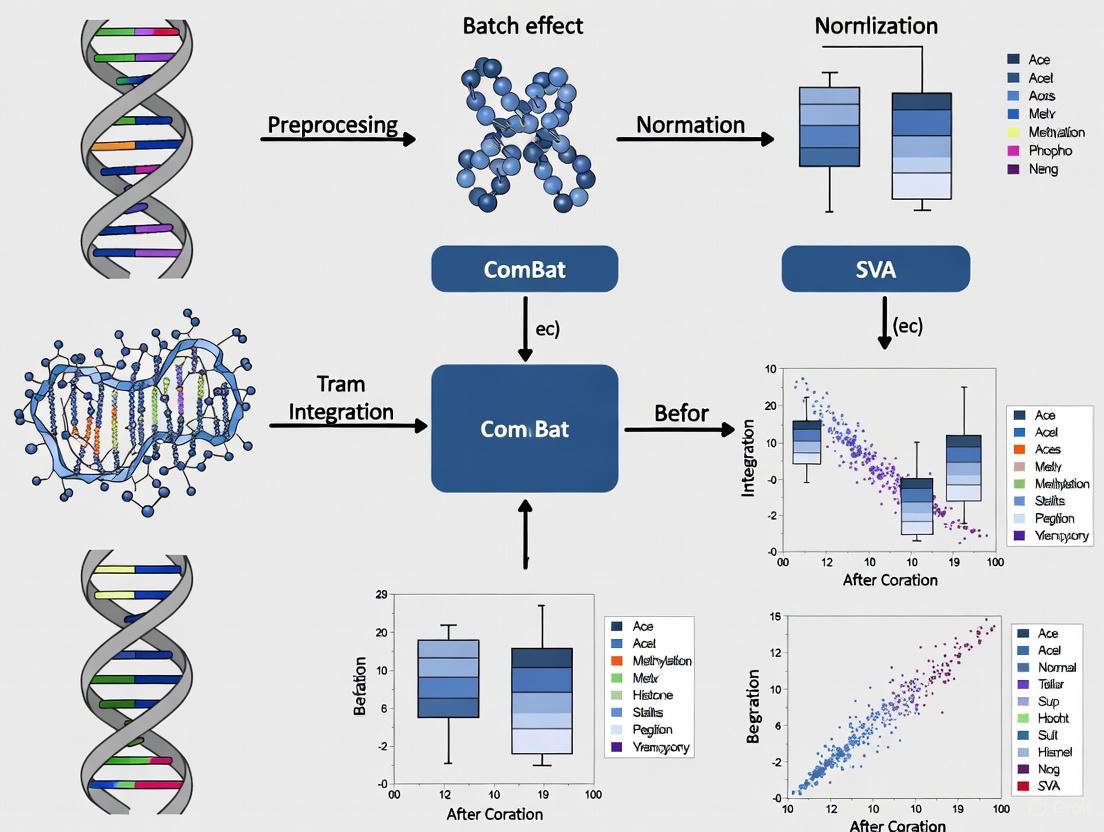
This article provides a comprehensive guide for researchers and drug development professionals on managing batch effects in histone modification studies.
Navigating Batch Effects in Histone Modification Analysis: From Foundational Concepts to Clinical Translation
Abstract
This article provides a comprehensive guide for researchers and drug development professionals on managing batch effects in histone modification studies. It covers the foundational principles of why batch effects are a critical concern in epigenomic data, explores established and emerging computational correction methods like ComBat and Harmony, and offers practical troubleshooting strategies to avoid false discoveries. The content further benchmarks performance across different scenarios, including single-cell multi-omics, and discusses how robust batch correction is pivotal for validating biological insights, identifying therapeutic targets, and advancing precision oncology.
Why Batch Effects Compromise Histone Modification Data and Biological Discovery
In histone modification profiling, a batch effect is technical variation introduced into your data during the experimental process, rather than from true biological differences. These non-biological variations arise from differences in sample processing, personnel, reagent lots, sequencing runs, or instrumentation. If not properly identified and corrected, batch effects can lead to false interpretations, masking true biological signals and compromising the validity of your research findings [1].
This guide provides troubleshooting and best practices for researchers to diagnose, address, and prevent batch effects in epigenomic studies.
Understanding Batch Effects: Causes and Impacts
Batch effects originate from multiple sources throughout the experimental workflow. The table below summarizes the primary culprits:
Table: Common Sources of Batch Effects in Histone Modification Profiling
| Source Category | Specific Examples |
|---|---|
| Sequencing Processes | Different sequencing runs, instruments, or lanes [1] |
| Reagent Variations | Changes in antibody lots, reagent batches, or kit manufacturers [1] [2] |
| Sample Handling | Variations in personnel, sample preparation protocols, or transposition time [1] [3] |
| Temporal & Environmental Factors | Experiments conducted on different days, or changes in temperature/humidity [1] |
Why Batch Effects Matter
The impact of batch effects extends across your analysis:
- Differential Analysis: May falsely identify genes that differ between batches rather than biological conditions [1].
- Clustering Algorithms: Can group samples by batch instead of true biological similarity [1].
- Data Integration: Meta-analyses combining data from multiple sources become particularly vulnerable [1].
- Downstream Interpretation: Pathway analysis could highlight technical artifacts instead of meaningful biology [1].
Diagnosing Batch Effects: A Practical Workflow
Visual inspection is a critical first step in diagnosing batch effects. The following workflow provides a systematic approach for researchers.
Key Diagnostic Steps
- Visualize with Principal Component Analysis (PCA): Before any correction, generate a PCA plot colored by batch. If samples cluster primarily by batch rather than biological condition, this confirms significant batch effects [1].
- Examine Negative Controls: In mass spectrometry-based histone analysis, monitor internal control peptides and background signals to distinguish technical artifacts from biological signals [2].
- Check Replicate Concordance: Poor agreement between biological replicates processed in different batches often indicates batch effects. This can manifest in CUT&Tag, ChIP-seq, or other antibody-based enrichment assays due to variable antibody efficiency or sample preparation [3].
Batch Effect Correction Strategies
Two primary approaches exist for handling batch effects: data correction and statistical modeling.
Table: Comparison of Batch Effect Correction Methods
| Method | Underlying Approach | Best For | Considerations |
|---|---|---|---|
| ComBat-seq [1] | Empirical Bayes framework | RNA-seq count data; smaller sample sizes | Uses Bayesian shrinkage to adjust for batch effects |
| limma's removeBatchEffect [1] | Linear model adjustment | Normalized expression data; limma-voom workflows | Well-integrated with established differential expression pipelines |
| Harmony [4] | Iterative clustering in PCA space | Single-cell data; large datasets | Fast runtime; effective for complex cell populations |
| Including Batch as a Covariate [1] | Statistical modeling | Designed experiments; differential analysis | Adjusts for batch during statistical testing without transforming data |
| Mixed Linear Models (MLM) [1] | Fixed and random effects | Complex designs; hierarchical batch effects | Powerful for nested or crossed random effects |
Implementation Notes
- Choice of Method: The optimal method depends on data type (counts vs. normalized), experimental design, and the nature of the batch effects [1].
- Visual Validation: After applying a correction method, regenerate PCA plots. Successful correction should show reduced clustering by batch and improved grouping by biological condition [1].
- Avoid Over-correction: Especially in methods like LIGER, which assume some differences between datasets may be biological, it's crucial not to remove true biological signals [4].
Frequently Asked Questions
Q1: My replicates from different batches show poor agreement. Is this always a batch effect?
Not necessarily. First, verify data quality. For chromatin assays like CUT&Tag or ChIP-seq, check for low read counts, uneven signal distribution, or antibody efficiency issues. If these are ruled out and the clustering is by batch, it is likely a batch effect [3].
Q2: Can I correct for batch effects if I forgot to record batch information during the experiment?
Yes, but it is challenging. Surrogate Variable Analysis (SVA) can estimate unmodeled batch effects. However, proactively recording all experimental metadata is always the best practice [1].
Q3: How many replicates do I need to reliably detect and correct for batch effects in histone PTM analysis?
For mass spectrometry-based histone PTM analysis, evidence suggests at least n=4 per condition is necessary to measure changes of 20% or greater, assuming α=0.05 and power=0.80. Sufficient replicates are crucial for statistical power to distinguish batch effects from biological variation [2].
Q4: I am profiling multiple histone modifications. Should I correct each mark separately?
Generally, yes. Different histone marks have unique distributions and signal-to-noise characteristics. A correction model should be tailored to the specific properties of each mark. For example, broad marks like H3K27me3 require different handling than sharp promoter marks like H3K4me3 [3].
Q5: After batch correction, my negative controls look strange. What could be wrong?
Over-correction might be occurring. Some methods can be aggressive, especially with small sample sizes. Check if the correction preserves known biological patterns. Using a method like ComBat-seq, which borrows information across genes, can be more robust for smaller studies [1] [5].
The Scientist's Toolkit: Essential Research Reagents & Materials
Table: Key Reagents for Histone Modification Profiling and Batch Effect Mitigation
| Reagent / Material | Critical Function | Considerations for Batch Effects |
|---|---|---|
| Specific Histone Antibodies [3] [2] | Immunoenrichment of target modifications (e.g., H3K27me3, H3K4me3) | Major Source: Varying specificity/affinity between lots. Solution: Use the same validated lot for an entire study. |
| Protein A-Tn5 Conjugates [6] [7] | Targeted tagmentation in methods like CUT&Tag and Paired-Tag | Pre-assembled complexes can vary. Aliquot and use consistent batches. |
| Sequencing Kits & Reagents [1] | Library preparation and sequencing | Different reagent lots or kits can introduce systematic variation. |
| Internal Standard Peptides (for MS) [2] | Normalization in mass spectrometry | Enables accurate quantification and helps control for run-to-run technical variation. |
| Cell Line Controls [2] | Quality control and process monitoring | Include control samples in every batch to track technical variability. |
| Barcoded Adapters & Primers [6] [7] | Sample multiplexing and library indexing | Allows pooling of samples from different conditions early to minimize batch effects. |
Proactive Planning: Best Practices for Prevention
Preventing batch effects is more effective than correcting them.
- Randomize and Balance: Distribute biological conditions and sample types evenly across sequencing runs, reagent lots, and processing days [1] [2].
- Record Comprehensive Metadata: Meticulously document every step, including reagent lot numbers, instrument IDs, personnel, and processing dates [1].
- Utilize Technical Replicates: Process the same control sample across all batches to quantify technical noise [2].
- Plan for Multiplexing: Use barcoding to process samples from different experimental groups together, thereby reducing lane-to-lane or run-to-run variation [6] [7].
- Validate Antibodies: Ensure antibody specificity for your application, as cross-reactivity can create artifacts mistaken for biology [3] [2].
Technical Support Center: Batch Effect Correction in Histone Modification Studies
Core Concepts and FAQs
FAQ 1: What exactly is a batch effect in the context of histone modification studies? A batch effect is a technical source of variation that occurs when samples processed in different groups (or "batches") show systematic non-biological differences. In histone modification research, this can manifest as apparent differences in ChIP-seq read counts or enrichment profiles that are not due to the actual epigenetic state but rather to technical factors [8] [9]. These effects are a major threat to data integrity as they can be misinterpreted as genuine biological signals, leading to false conclusions.
FAQ 2: What are the common causes of batch effects? Batch effects can originate from multiple sources throughout the experimental workflow [1] [8]:
- Different sequencing runs or instruments
- Variations in reagent lots or antibody batches (critical for ChIP-seq)
- Changes in sample preparation protocols or personnel
- Environmental conditions (e.g., temperature, humidity) in the lab
- Time-related factors, especially in long-term studies spanning months or years
FAQ 3: How do batch effects specifically impact the analysis of broad histone marks like H3K27me3?
Histone modifications with broad genomic footprints, such as the repressive mark H3K27me3, present a particular analytical challenge [10]. Their diffuse patterns, which can span thousands of base pairs, often yield low signal-to-noise ratios in ChIP-seq data. Batch effects can obscure true differential enrichment regions or create artificial ones. Specialized tools like histoneHMM, a bivariate Hidden Markov Model, are often required for accurate differential analysis, as standard peak-calling methods designed for sharp marks can produce high false positive or negative rates [10].
Detection and Diagnosis
How can you determine if your data suffer from batch effects? The table below summarizes common diagnostic approaches.
| Method | Description | What to Look For |
|---|---|---|
| Principal Component Analysis (PCA) [1] [8] | An unsupervised technique that reduces data dimensionality to its main axes of variation. | Samples clustering strongly by batch (e.g., processing date) rather than by biological condition in a 2D plot of the first few principal components. |
| t-SNE/UMAP Examination [8] | Non-linear dimensionality reduction methods used for visualizing high-dimensional data. | Cells or samples from the same biological group forming separate clusters based on their batch of origin. |
| Quantitative Metrics [8] | Scores like k-BET (k-nearest neighbor batch effect test) or ARI (Adjusted Rand Index). | Metrics that indicate poor mixing of batches. Values closer to 1 for some metrics (e.g., ARI) indicate better integration. |
Correction Protocols and Methodologies
This section provides detailed methodologies for correcting batch effects, a critical step before downstream differential analysis.
Protocol 1: Batch Correction using ComBat-seq (for RNA-seq count data)
ComBat-seq uses an empirical Bayes framework to adjust for batch effects in raw count data, making it suitable for RNA-seq and similar datasets [1].
Set up the R environment.
Prepare your data. You need a raw count matrix (
exprmx) and a metadata table (meta) that includes abatchcolumn and atreatment(biological condition) column [1].Filter lowly expressed genes to reduce noise.
Run ComBat-seq.
Validate the correction by performing PCA on the corrected data and visualizing to confirm reduced batch clustering [1].
Protocol 2: Integration of Batch in Statistical Models (Recommended for Differential Expression)
A statistically sound alternative to pre-correcting data is to include batch as a covariate in your linear model during differential analysis. This is the preferred method in many frameworks [11].
In DESeq2:
In limma:
Protocol 3: Specialized Differential Analysis for Broad Histone Marks with histoneHMM
For differential analysis of broad histone marks like H3K27me3 or H3K9me3 between two samples (e.g., case vs. control), histoneHMM provides a robust workflow [10].
- Data Preprocessing: Process ChIP-seq reads for each sample and its input control through a standard pipeline (alignment, duplicate removal).
- Binning the Genome: Divide the reference genome into consecutive 1000 bp windows [10].
- Read Counting: Count the number of reads mapping into each window for both the ChIP and input control samples.
- Run histoneHMM:
- Interpret Output: The algorithm outputs probabilistic classifications for each genomic region: modified in both samples, unmodified in both, or differentially modified [10].
Troubleshooting Common Issues
Issue 1: Overcorrection and Loss of Biological Signal
- Symptoms:
- Cluster-specific markers include ubiquitous genes (e.g., ribosomal genes) [8].
- Significant overlap between markers for different cell types or conditions [8].
- Absence of expected canonical markers for a known biological group [8].
- Few or no significant hits in differential expression analysis for pathways known to be active [8].
- Solutions:
- Avoid using the biological variable of interest (e.g., case/control status) as a covariate in batch correction algorithms like ComBat, especially with unbalanced designs, as this can lead to overfitting and artificial inflation of group differences [11].
- Prefer the approach of including batch as a covariate in the final statistical model for differential testing (see Protocol 2) [11].
- Always run negative controls, such as permuting batch labels, to test if the correction method creates artificial separation even when none should exist [11].
Issue 2: Handling Incrementally Added Data
- Problem: In longitudinal studies, new batches are continuously added. Traditional methods require re-processing all data simultaneously, which can alter previously corrected data and disrupt longitudinal consistency [12].
- Solution: Use an incremental batch correction framework like iComBat, a modification of ComBat designed for DNA methylation data. It allows new batches to be adjusted to a pre-existing reference without the need to re-correct the entire dataset from scratch, ensuring stable and consistent results over time [12].
The Scientist's Toolkit: Research Reagent Solutions
| Reagent / Material | Critical Function |
|---|---|
| High-Quality Histone Modification Specific Antibodies | The specificity of the antibody used for chromatin immunoprecipitation (ChIP) is paramount. Different lots or sources can have varying affinities, directly introducing batch effects. Using antibodies from the same validated lot for a full study is crucial [9]. |
| Universal Reference Materials | In proteomics and other MS-based studies, a universal reference sample (like those from the Quartet Project) profiled across all batches enables ratio-based scaling methods, which are highly effective for cross-batch integration [13]. |
| Standardized Reagent Lots | Using the same lots of all key reagents (e.g., enzymes, buffers, kits) across all batches minimizes a major source of technical variation [1] [9]. |
| Quartz Protein Reference Materials (Quartet) | Specifically for proteomics, these reference materials provide a ground truth for benchmarking and correcting batch effects across multiple labs and instrumentation platforms [13]. |
Batch effects are technical sources of variation introduced during high-throughput experiments due to differences in experimental conditions, reagents, personnel, or instrumentation over time [14]. In epigenomic studies, particularly those investigating histone modifications, these non-biological variations can confound data analysis, dilute true biological signals, and lead to misleading or irreproducible conclusions [14] [15]. The profound negative impact of batch effects includes increased variability, decreased statistical power, and potentially incorrect conclusions when batch effects correlate with biological outcomes of interest [14]. For example, in a clinical trial setting, a simple change in RNA-extraction solution resulted in incorrect classification outcomes for 162 patients, 28 of whom received incorrect or unnecessary chemotherapy regimens [14]. This technical guide provides troubleshooting resources to identify, mitigate, and correct for batch effects in epigenomic workflows focused on histone modification studies.
FAQs on Batch Effects in Epigenomics
Q1: What are the most common sources of batch effects in histone modification studies? Batch effects in histone modification workflows arise from multiple sources throughout the experimental pipeline. The most prevalent include reagent lot variations (especially antibodies for chromatin immunoprecipitation), platform differences (e.g., between Illumina Infinium I and II designs), processing time variations, and operator effects [16] [17]. For histone-specific workflows, antibody lot consistency is particularly critical as different lots may have varying affinities for specific histone post-translational modifications such as H3K27ac or H3K4me3 [18]. Other significant factors include sample storage conditions (temperature, duration, freeze-thaw cycles), DNA bisulfite conversion efficiency for methylation analyses, and scanner variability in array-based platforms [14] [16].
Q2: How can I determine if my dataset has significant batch effects? Multiple visualization and statistical approaches can detect batch effects. Principal component analysis (PCA) is commonly used to visualize whether samples cluster by batch rather than biological group [15]. For single-cell epigenomic data, the k-nearest neighbor batch effect test (kBET) provides a quantitative measure of how well batches are mixed at the local level [15]. Additionally, monitoring the coefficient of variation (CV) across technical replicates processed in different batches can reveal batch-specific technical variances [19]. In Illumina Methylation BeadChip data, examining the distribution of M values before and after batch processing can identify residual technical variance [16].
Q3: My biological groups are completely confounded with batch (e.g., all controls in batch 1, all treatments in batch 2). Can I still correct for batch effects? Complete confounding between biological groups and batches presents the most challenging scenario for batch effect correction [20]. In such cases, most standard correction algorithms may remove biological signal along with technical variation [20]. The most effective approach in confounded designs incorporates reference materials processed concurrently with study samples in each batch [20]. By scaling absolute feature values of study samples relative to those of concurrently profiled reference material(s), the ratio-based method (Ratio-G) can effectively correct batch effects even when biological and technical variables are completely confounded [20]. Without reference materials, correction in completely confounded scenarios should be approached with extreme caution and validation through independent experiments is recommended.
Q4: Are batch effects more problematic in single-cell epigenomics compared to bulk analyses? Yes, single-cell technologies (e.g., scRNA-seq, scATAC-seq) present additional challenges for batch effect management [14] [15]. Single-cell data suffers from higher technical variations due to lower input material, higher dropout rates, increased cell-to-cell heterogeneity, and a higher proportion of zero counts [14] [21]. The automated C1 microfluidic platform (Fluidigm) demonstrates that technical variability across batches remains substantial even with unique molecular identifiers (UMIs) and spike-in controls [21]. Batch effects and the selection of correction algorithms have been shown to be predominant factors in large-scale and/or multi-batch single-cell data [14].
Q5: What quality control measures can minimize batch effects during experimental design? Proactive experimental design is the most effective strategy for batch effect management. Key considerations include: (1) processing cases and controls simultaneously in randomized order, (2) including technical replicates across batches, (3) using multi-channel pipettes or automated liquid handlers to reduce operator-induced variation, (4) incorporating reference materials in each batch, and (5) documenting reagent lot numbers for potential covariate adjustment [16] [17]. For single-cell automation systems, select platforms that enable parallel processing of various experimental groups within the same run [17]. Additionally, integrated imaging helps identify true single-cell samples to exclude doublets or empty wells that can introduce technical artifacts [17].
Troubleshooting Guides
Table 1: Common Sources of Batch Variation in Epigenomic Workflows
| Source Category | Specific Examples | Affected Epigenomic Methods | Detection Methods |
|---|---|---|---|
| Reagent Variations | Antibody lot differences, enzyme batch effects (bisulfite conversion), buffer composition | ChIP-seq, CUT&Tag, DNA methylation arrays | Correlation analysis of controls, spike-in controls [21] |
| Platform Effects | Scanner differences, probe design (Infinium I vs II), array position effects | Methylation BeadChips, microarray-based methods | PCA, probe-specific error analysis [16] |
| Processing Time | Bisulfite conversion duration, immunoprecipitation time, hybridization time | All methods, particularly time-sensitive enzymatic steps | Time-series analysis, examination of temporal patterns [14] |
| Sample Storage | Freeze-thaw cycles, storage temperature prior to processing, storage duration | All epigenomic methods, particularly histone modification analyses | Sample integrity metrics, correlation with storage logs [14] |
| Operator Effects | Pipetting technique, protocol deviations, sample handling | All manual protocols, particularly complex multi-step workflows | Intra- vs inter-operator variance analysis [17] |
Mitigation Protocol: Reference Material-Based Batch Correction
The ratio-based method using reference materials is particularly effective for confounded batch-group scenarios [20].
Materials Needed:
- Well-characterized reference material (e.g., commercial standards or internal controls)
- Study samples for processing
- Identical processing reagents across batches
- Standardized protocols
Procedure:
- Experimental Design: Include reference materials in each processing batch alongside study samples. For histone modification studies, use a standardized chromatin source with well-characterized modification patterns.
- Concurrent Processing: Process reference materials and study samples simultaneously using identical reagents and conditions.
- Data Generation: Generate omics data (e.g., sequencing counts, methylation β-values) for both reference and study samples.
- Ratio Calculation: For each feature (e.g., gene, peak, CpG site), calculate ratio values: Ratio = Featurevaluestudysample / Featurevaluereferencematerial
- Data Integration: Use ratio-scaled values for downstream analyses and cross-batch integration.
Validation:
- Assess separation of biological groups in PCA plots pre- and post-correction
- Evaluate consistency of reference material profiles across batches
- Monitor signal-to-noise ratio improvements
Correction Algorithm Selection Guide
Table 2: Batch Effect Correction Algorithms for Epigenomic Data
| Algorithm | Best Suited Data Types | Strengths | Limitations | Software Implementation |
|---|---|---|---|---|
| Ratio-based (Ratio-G) | Multi-omics data, confounded designs | Effective in confounded scenarios, simple implementation | Requires reference materials | Custom implementation [20] |
| ComBat | Microarray, bulk sequencing data | Handles balanced designs, empirical Bayes framework | Struggles with confounded designs, may over-correct | sva R package [15] [16] |
| Harmony | Single-cell data, multi-omics integration | Integrates across modalities, preserves biological variance | Requires cell type alignment, computational intensity | Harmony R package [20] |
| BMC (Per Batch Mean-Centering) | Balanced designs, preliminary correction | Simple, fast implementation | Ineffective for confounded designs | Custom implementation [20] |
| RUVm | Methylation array data | Handles probe-type differences, designed for methylation data | May require control probes | missMethyl R package [16] |
Experimental Protocols for Batch Effect Assessment
Protocol: Systematic Assessment of Antibody Lot Variation in ChIP-seq
Purpose: To evaluate batch effects introduced by different antibody lots in histone modification ChIP-seq experiments.
Materials:
- Identical chromatin samples
- Multiple lots of antibody targeting specific histone mark (e.g., H3K27me3)
- ChIP-seq kit reagents
- Library preparation materials
Procedure:
- Sample Allocation: Divide identical chromatin aliquots across different antibody lots, ensuring other reagents remain constant.
- Parallel Processing: Perform ChIP-seq protocol simultaneously for all antibody lots using standardized conditions.
- Library Preparation: Prepare sequencing libraries with unique barcodes for each lot.
- Sequencing: Pool libraries and sequence simultaneously on same flow cell.
- Data Analysis:
- Map reads and call peaks for each antibody lot
- Calculate correlation coefficients between peak profiles across lots
- Identify lot-specific peaks and consensus peaks
- Assess variance attributable to antibody lot versus biological signal
Interpretation: High correlation (>0.9) between lots indicates minimal batch effects. Lot-specific peaks suggest antibody-specific biases requiring correction.
Protocol: Longitudinal Processing Time Assessment
Purpose: To evaluate effects of processing time variations on epigenomic data quality.
Materials:
- Sample replicates
- Standardized reagents
- Timing documentation system
Procedure:
- Staggered Processing: Intentionally process identical sample replicates at different time points (e.g., different days, different positions in workflow).
- Metadata Collection: Meticulously document processing times for each step.
- Data Generation: Process all samples using otherwise identical conditions.
- Time-effect Analysis:
- Correlate processing times with data quality metrics
- Identify time-sensitive steps in workflow
- Quantify variance explained by processing time
Interpretation: Significant correlations between processing time and data metrics indicate time-sensitive steps requiring stricter standardization.
Visualization of Batch Effect Management
Batch Effect Management Workflow
Research Reagent Solutions
Table 3: Essential Materials for Batch Effect Management in Epigenomics
| Reagent/Material | Function | Implementation Examples | Considerations |
|---|---|---|---|
| Reference Materials | Normalization standards for cross-batch comparison | Quartet multiomics reference materials, commercial chromatin standards, in-house reference samples | Should be well-characterized, stable, and biologically relevant [20] |
| UMIs (Unique Molecular Identifiers) | Correct for amplification bias in sequencing | Incorporate in library preparation for scRNA-seq, ChIP-seq | Reduces technical variability but doesn't eliminate all batch effects [21] |
| Spike-in Controls | External standards for normalization | ERCC RNA spike-ins, foreign chromatin spikes | May not experience all processing steps as endogenous samples [21] |
| Control Cell Lines | Biological reference standards | Well-characterized cell lines (e.g., K562, HEK293) processed in each batch | Provides biological context for technical variation assessment [20] |
| Standardized Antibody Lots | Reduce immunoprecipitation variability | Large-volume purchases of validated antibody lots | Critical for histone modification studies; test lot-to-lot consistency [18] |
This case study examines a critical challenge in epigenomics research: the introduction of false positive findings during the statistical correction of batch effects in high-throughput data. We detail a pilot study using the Illumina Infinium HumanMethylation450 (450k) BeadChip that serves as a cautionary tale for researchers working with DNA methylation microarrays and, by extension, other genomic data types like histone modification analyses [22].
The core issue arose when researchers, following a standard analysis pipeline, applied the empirical Bayes tool ComBat to correct for technical batch effects. In the initial, unbalanced study design, this correction dramatically and erroneously inflated the number of significant differentially methylated positions (DMPs), creating thousands of false discoveries [22]. This case underscores a fundamental principle: statistical correction is not a substitute for sound experimental design. The lessons learned are directly transferable to histone modification research (e.g., ChIP-seq, CUT&Tag), where batch effects from different processing days, reagent lots, or sequencing runs can similarly confound results if not properly managed in the experimental plan [23] [18].
Background: The Batch Effect Problem in Epigenomics
Batch effects are systematic technical variations that are not related to the biological variables under investigation. In microarray and next-generation sequencing workflows, these can be introduced by:
- Processing Time: Samples processed on different days or weeks.
- Reagent Batches: Use of different lots of chemicals or kits.
- Personnel: Different technicians handling samples.
- Array Position: Physical location of a sample on a chip or slide [22] [16].
In the featured 450k array pilot study, the two primary sources of batch effect were identified as "row" and "chip" [22]. When these technical factors are unevenly distributed across biological groups (e.g., all cases processed on one chip and all controls on another), they become confounded. This confounding makes it impossible to distinguish whether observed data variation stems from the biology of interest or from the technical artifact, leading to a high risk of both false positives and false negatives [24] [16].
The Case: Initial Analysis and False Discovery
Experimental Setup and Unbalanced Design
The pilot study aimed to investigate differences in placental DNA methylation (n=30 samples) across three different MTHFR genotype groups. These 30 samples were part of a larger set of 84 samples run across seven 450k chips [22].
- Biological Variable of Interest: MTHFR genotype group (Variant 677, Variant 1298, Reference).
- Technical Batch Variables: Chip (
n=7), Row (n=6), and bisulfite conversion batch.
A critical flaw in the "initial analysis" was that the distribution of the 30 pilot samples across the seven chips was unbalanced with respect to the genotype groups. This created a confounded design where the technical variable (chip) was not orthogonal to the biological variable (genotype) [22].
Data Processing and Aberrant Results
The data processing pipeline for the initial analysis is summarized below. The pipeline included standard quality control and normalization steps before the critical batch correction step.
Principal Component Analysis (PCA) revealed that the top principal components (PC3, PC4, PC6) were significantly associated with the technical row and chip variables, confirming the presence of batch effects [22]. The decision was made to correct for these using ComBat.
The outcome was alarming. After applying ComBat to the unbalanced design, the analysis returned 9,612 to 19,214 significant DMPs (FDR < 0.05), despite no significant differences being present prior to correction. The authors were suspicious of this dramatic and biologically implausible increase in findings [22].
Troubleshooting Guide & FAQ: Resolving the Batch Effect Crisis
This section addresses the specific problems encountered in the case study and provides actionable guidance for researchers.
Frequently Asked Questions
Q1: Our PCA shows a strong batch effect. Why did applying ComBat make our results worse, not better? A1: ComBat and similar methods can introduce false signal when the study design is unbalanced or confounded [24]. This occurs when the technical batch variable (e.g., processing chip) is perfectly or highly correlated with your biological variable of interest (e.g., disease status). The algorithm mistakenly "corrects" the biological signal as if it were technical noise, which can either remove real signal or, as in this case, create artificial signal. This is a classic symptom of a design flaw, not necessarily a tool flaw [22] [24].
Q2: How can we check if our study design is confounded before running the experiment? A2: Before processing samples, create a sample allocation table. Map every sample against its biological group and its planned technical batch (chip, row, processing date). Visually inspect this table to ensure that biological groups are evenly distributed across all technical batches. A simulated version of this table for the initial flawed design would show genotype groups clustered on specific chips rather than spread across them [22].
Q3: We discovered an unbalanced design after data collection. What are our options? A3:
- Revise the Analysis: If possible, incorporate a larger number of samples processed in a balanced manner. In the case study, a "revised processing" with more samples successfully reduced batch effects without introducing false signal [22].
- Include Batch as a Covariate: Instead of using an aggressive correction tool like ComBat, include the batch variable as a simple covariate in your linear model during differential analysis. This is a more conservative approach.
- Assess and Filter Probes: Be aware that some microarray probes are notoriously prone to batch effects. One study identified 4,649 probes that consistently required high levels of correction across multiple datasets. Consider filtering these out if they are not critical to your research question [16].
Troubleshooting Flowchart for Batch Effects
Follow this logical pathway to diagnose and address batch effects in your methylation or histone data.
Revised Best-Practice Protocol
Learning from the initial failure, the researchers established a revised, robust protocol for DNA methylation analysis. This protocol is equally applicable to other epigenomic workflows.
Step-by-Step Analytical Workflow
Thoughtful Experimental Design
- Action: Allocate samples to chips, rows, and processing batches using a stratified randomization to ensure biological groups are balanced across all technical factors [22].
- Rationale: This is the single most important step in preventing false discoveries. Prevention is better than correction.
Quality Control (QC) & Normalization
- Action: Perform standard QC on samples and probes. Remove poorly performing samples, probes with high detection p-values, and probes known to be problematic (e.g., cross-hybridizing probes, polymorphic probes, probes on sex chromosomes) [22] [25]. Apply appropriate normalization (e.g., SWAN for 450k data) to correct for technical biases between probe types [22].
Batch Effect Assessment
- Action: Use PCA and unsupervised clustering to visually and statistically inspect the data. Test the top principal components for association with both biological and technical variables [22] [16].
- Rationale: This step diagnoses the presence and severity of batch effects and checks for residual confounding after randomization.
Cautious Batch Effect Correction
- Action: If a balanced design is confirmed, apply a batch correction method like ComBat or Harman.
- Critical Note: Always use M-values for batch correction as they are statistically more valid for linear models. Convert back to Beta-values for interpretation and reporting [16].
Post-Correction Diagnostic
- Action: Repeat the PCA and clustering from Step 3. Confirm that the association between principal components and batch variables has been minimized, while the biological signal remains [16].
The Scientist's Toolkit: Key Research Reagents & Materials
The following table lists essential materials and computational tools used in the featured case study and relevant to the broader field.
| Item Name | Function/Description | Relevance to Field |
|---|---|---|
| Illumina Infinium HumanMethylation450 BeadChip | Microarray measuring methylation status at >450,000 CpG sites. | Primary platform in the case study. Batch effects are inherent to this and similar array platforms [22]. |
ComBat (R sva package) |
Empirical Bayes method for adjusting for batch effects in genomic data. | Central tool in the case study. Powerful but must be used with caution on balanced designs to avoid false positives [22] [24]. |
| Harman | A probabilistic model-based method for correcting batch effects. | An alternative to ComBat. Also effective but requires the same careful consideration of study design [16]. |
| SWAN Normalization | Subset-quantile Within Array Normalization for Illumina Methylation arrays. | Used in the case study to normalize differences between Type I and Type II probes on the 450k array [22]. |
| Specific Histone Markers (e.g., H3K27ac) | Marker of active gene enhancers; can be cyclically modified by metabolic stimuli like palmitate [26]. | Connects to the thesis context. Batch effects in histone ChIP-seq/CUT&Tag data can obscure true biological signals like these. |
| CUT&Tag | Low-input, high-resolution method for mapping histone modifications and protein-DNA interactions. | Modern technique for histone studies. Its data are also susceptible to batch effects from different processing runs [18]. |
Implications for Histone Modification Studies
The lessons from this DNA methylation case study are profoundly relevant to research on histone modifications. Histone marks, such as H3K27ac (an activation mark) and H3K27me3 (a repression mark), are dynamic and can be influenced by environmental factors like lipid overload [26]. Studies investigating these changes using techniques like ChIP-seq or CUT&Tag are equally vulnerable to technical batch effects.
- Technical Variability: Differences in antibody lots, chromatin shearing efficiency, library preparation kits, and sequencing runs can all introduce batch effects.
- Risk of Confounding: If samples from different experimental conditions (e.g., control vs. drug-treated) are processed in separate batches, the observed differences in histone mark enrichment could be technical artifacts rather than true biological effects.
Therefore, the core principle established in this case study must be adopted in histone research: * rigorous experimental design with balanced sample processing across technical batches is the most effective strategy to ensure the integrity and reproducibility of epigenomic findings* [23] [18].
Frequently Asked Questions
What are batch effects and why are they problematic in multi-omics studies? Batch effects are technical, non-biological variations introduced when samples are processed in different groups (batches) due to factors like different sequencing runs, reagent lots, personnel, or instruments [20] [1] [9]. They are problematic because they can:
- Skew analysis, leading to false-positive or false-negative findings [20].
- Cause samples to cluster by batch rather than biological condition in analyses like PCA, misleading conclusions [1].
- Severely compromise data integration and meta-analyses, making it difficult to distinguish true biological signals from technical noise [20] [27].
Why is batch effect correction especially critical when integrating histone modification data with other omics? Histone modification data, such as from ChIP-seq or Paired-Tag, is highly cell-type-specific [7]. When integrating this with other omics layers (e.g., transcriptomics), strong batch effects can completely obscure the true, coordinated biological relationships between chromatin state and gene expression [7] [28]. Furthermore, without correction, it becomes nearly impossible to integrate datasets of multiple histone marks from different batches to understand combinatorial regulatory mechanisms [7].
What is the most robust method for correcting batch effects, particularly in confounded study designs? A ratio-based method is highly effective, especially when batch effects are completely confounded with biological factors of interest (e.g., all samples from biological group A are processed in one batch, and all from group B in another) [20] [29]. This method involves scaling the absolute feature values of study samples relative to those of a concurrently profiled reference material in the same batch [20]. This approach has been shown to outperform other algorithms in confounded scenarios commonly found in longitudinal and multi-center studies [20].
What are the risks of improperly applying batch effect correction algorithms? Two main risks exist:
- Over-correction: Removing true biological variation along with technical noise, which can lead to false negatives [20] [30].
- Under-correction: Leaving residual technical bias in the data, which can lead to false positives and obscure real biological signals [30]. It is crucial to validate correction methods to ensure known biological signals persist [30].
Troubleshooting Guides
Guide 1: My multi-omics data shows strong batch clustering in PCA. What should I do?
Symptoms:
- Principal Component Analysis (PCA) plots show clear separation of samples by processing date, sequencing run, or other technical factors, rather than by biological group [1].
- Differential expression or differential peak analysis identifies many significant features that are correlated with batch.
Solutions:
- Visualize the Batch Effect: Begin by generating a PCA plot colored by batch to confirm the presence and extent of the effect [1].
- Apply a Batch Effect Correction Algorithm (BECA): Choose an algorithm based on your data and experimental design. The following table summarizes common methods.
| Method | Best For | Key Principle | Considerations |
|---|---|---|---|
| Ratio-based Scaling [20] [29] | Multi-omics studies, confounded designs | Scales study sample data relative to a common reference material processed in the same batch. | Requires planning to include a reference material in every batch. |
| ComBat-seq [1] | Bulk RNA-seq count data | Uses an empirical Bayes framework to adjust for batch effects in raw count data. | Specifically designed for RNA-seq; part of the sva R package. |
| removeBatchEffect (limma) [1] | Normalized expression data (e.g., log-CPM) | Removes batch effects using linear models. | Corrected data should not be used directly for DE analysis; include batch in design matrix instead. |
| Harmony [20] [9] | Single-cell data, multi-sample integration | Uses PCA and a novel integration method to correct embeddings. | Effective for balancing and confounded scenarios in various data types. |
| Mixed Linear Models (MLM) [1] | Complex designs with random effects | Models batch as a random effect to calculate residuals for correction. | Powerful for hierarchical or nested batch structures. |
- Validate the Correction: After applying a BECA, perform PCA again. A successful correction will show reduced clustering by batch and improved clustering by biological condition [1].
Guide 2: I am designing a multi-omics study. How can I prevent batch effects?
Best Practices for Experimental Design:
- Plan for Reference Materials: Incorporate a well-characterized reference material (e.g., from the Quartet Project) into every batch of your experiment. This enables the use of the robust ratio-based correction method [20] [29].
- Randomize and Balance: Whenever possible, randomize samples from different biological groups across processing batches. Avoid confounded designs where one biological group is processed entirely in a single batch [20].
- Standardize Protocols: Use the same equipment, reagents, protocols, and personnel across the entire study. If changes are unavoidable, ensure they constitute a new batch and that reference materials are included [9].
- Document Everything: Meticulously record all technical and sample metadata. This is essential for identifying the sources of batch effects during analysis [31].
Best Practices for Data Preprocessing:
- Standardize and Harmonize: Process raw data from different omics platforms using consistent scaling, normalization, and transformation approaches before integration [31].
- Regress Out Confounders: For histone modification data, regress out the effects of known confounders before training models or integrating datasets [28].
Experimental Protocols
Protocol 1: Ratio-Based Batch Effect Correction Using Reference Materials
This protocol is adapted from large-scale multiomics studies and is effective for transcriptomics, proteomics, and metabolomics data [20] [29].
Key Materials:
- Reference Material: A stable, well-characterized control sample (e.g., Quartet multiomics reference materials) [20].
- Study Samples: The experimental samples to be corrected.
Methodology:
- Experimental Setup: In every batch of your experiment, concurrently profile both your study samples and one or more aliquots of the reference material.
- Data Generation: Generate your multiomics data (e.g., RNA-seq, proteomics, metabolomics) as usual for all samples and the reference material.
- Ratio Calculation: For each feature (e.g., gene, protein, metabolite) in each study sample, transform the absolute value into a ratio relative to the average value of that feature in the reference material profiled in the same batch.
Ratio = Value_study_sample / Value_reference_material
- Data Integration: Use the resulting ratio-scaled values for all downstream integrated analyses. This scaling effectively anchors the data from each batch to a common standard, removing batch-specific technical variation [20].
Protocol 2: Integrating Histone Modification and Transcriptome Data with Paired-Tag
This protocol describes the workflow for joint profiling, a powerful method for generating matched single-cell multiomics data [7].
Key Materials:
- Antibodies: Specific antibodies against the histone modifications of interest (e.g., H3K4me3, H3K27ac).
- Paired-Tag Reagents: Protein A-fused Tn5 transposase, well-specific DNA barcodes for transposase adaptors and reverse transcription (RT) primers, and reagents for combinatorial barcoding [7].
- Nuclei: Permeabilized nuclei from your target tissue or cell line.
Methodology:
- Antibody Binding: Incubate permeabilized nuclei with antibodies against specific histone modifications. This targets the protein A-fused Tn5 transposase to specific chromatin regions [7].
- Tagmentation and RT: Perform tagmentation to fragment the targeted chromatin. Subsequently, perform reverse transcription (RT) to generate cDNA. The transposase adaptors and RT primers contain the first round of sample barcodes [7].
- Combinatorial Barcoding: Use a ligation-based strategy in 96-well plates to introduce second and third rounds of DNA barcodes to the nuclei, attaching them to both chromatin DNA fragments and cDNA [7].
- Library Preparation: Pool the barcoded nuclei, lyse them, and purify the chromatin DNA and cDNA. These are then amplified and split into two separate sequencing libraries: one for histone modifications (DNA) and one for the transcriptome (cDNA) [7].
- Data Analysis: After sequencing, bioinformatic processing is used to generate cell-type-resolved maps of chromatin state and transcriptome from the same cells, enabling direct correlation of epigenetic state and gene expression [7].
The Scientist's Toolkit
Research Reagent Solutions
| Item | Function in Batch Correction / Multi-omics Integration |
|---|---|
| Quartet Reference Materials [20] [29] | Publicly available multiomics reference materials (DNA, RNA, protein, metabolite) derived from four related cell lines. Used for ratio-based batch correction and quality control across batches and platforms. |
| Histone Modification Antibodies [7] | Target specific histone marks (e.g., H3K27ac for active enhancers, H3K27me3 for repressed regions) in assays like ChIP-seq or Paired-Tag. High specificity is critical for accurate epigenomic profiling. |
| Protein A-fused Tn5 Transposase [7] | An engineered enzyme used in Paired-Tag. It is targeted to chromatin by histone modification antibodies and simultaneously fragments DNA and adds sequencing adaptors. |
| Combinatorial Barcodes [7] | Unique DNA sequences used to label cells or nuclei from different samples or batches, allowing them to be pooled for processing and computationally de-multiplexed after sequencing. |
Functional Guide to Common Histone Modifications
Understanding the biological interpretation of histone marks is key to analyzing integrated data.
| Histone Mark | Common Functional Role | Genomic Context |
|---|---|---|
| H3K4me3 [32] | Activation; a classic promoter mark. | Tightly localized at active gene promoters. |
| H3K27ac [32] | Activation; marks active enhancers and promoters. | Broad regions at active regulatory elements. |
| H3K4me1 [32] | Primed/poised enhancer mark. | Found broadly at both active and inactive enhancers. |
| H3K27me3 [32] | Repression; polycomb-mediated silencing. | Diffuse regions over developmentally repressed genes. |
| H3K9me3 [32] | Repression; often associated with repetitive elements. | Localized to heterochromatic and repetitive regions. |
| H3K36me3 [32] | Transcriptional elongation. | Enriched across the gene body of actively transcribed genes. |
A Practical Guide to Batch Effect Correction Methods and Their Applications
Fundamental Concepts: What Are Batch Effects and Why Do They Matter?
What is a batch effect in high-throughput genomics? A batch effect is a technical source of variation that introduces non-biological differences between groups of samples processed in separate experimental runs. These can arise from differences in reagents, personnel, laboratory conditions, instrument calibration, or processing time. In the context of histone modification studies and other multi-omics data, if left uncorrected, these effects can confound real biological signals, leading to both false-positive and false-negative findings and potentially jeopardizing the reproducibility of research [20] [33].
How can a confounded study design complicate batch effect correction? A confounded design occurs when a biological factor of interest (e.g., disease status) is completely aligned with a batch. For instance, if all control samples are processed in Batch 1 and all case samples in Batch 2, it becomes statistically challenging to distinguish whether observed differences are truly biological or merely technical artifacts. In such scenarios, many standard correction methods risk removing the genuine biological signal along with the technical noise [20].
The Methodological Spectrum: A Comparative Guide
The table below summarizes key batch-effect correction algorithms, their underlying principles, and their applicability to different research scenarios, such as histone modification studies.
Table 1: Comparison of Batch Effect Correction Methodologies
| Method Name | Core Principle | Typical Input Data | Key Application Scenario | Considerations for Histone Modification Studies |
|---|---|---|---|---|
| ComBat [34] | Empirical Bayes framework to adjust for location (additive) and scale (multiplicative) batch effects. | Multi-omics (Microarray, RNA-seq, DNAm) | Cross-sectional studies with known batches. | Can introduce false positives if batch and biology are confounded [24]. |
| Longitudinal ComBat [34] | Extends ComBat by incorporating subject-specific random effects to account for within-subject repeated measures. | Longitudinal 'omics data | Longitudinal studies with repeated measurements from the same subjects. | Protects biological time effects from being over-corrected. |
| BRIDGE [34] | Empirical Bayes using "bridge samples" (technical replicates measured across multiple batches). | Microarray, DNA methylation | Confounded longitudinal studies with bridging samples. | Leverages replicate design to separate time from batch effects. |
| GMQN [35] | Reference-based Gaussian Mixture Quantile Normalization. | DNA Methylation BeadChip | Correcting public data where raw intensity files are unavailable. | Uses a reference distribution to correct probe bias and batch effects. |
| Ratio-based (e.g., Ratio-G) [20] | Scales feature values of study samples relative to a concurrently profiled reference material. | Multi-omics (Transcriptomics, Proteomics, Metabolomics) | Both balanced and confounded scenarios, provided reference materials are used. | Highly effective for confounded designs; requires running reference samples in each batch. |
| Machine Learning Quality-Aware Correction [33] | Uses a machine-learning model to predict sample quality (Plow) and corrects data based on this metric. | RNA-seq | Detecting and correcting batches from quality differences when batch info is unknown. | Corrects quality-related batch effects without prior batch knowledge. |
| iComBat [5] | An incremental version of ComBat that allows new batches to be adjusted without recorrecting old data. | DNA Methylation array | Longitudinal studies or trials with sequentially added data batches. | Maintains data consistency in long-term or ongoing studies. |
Workflow and Decision Diagrams for Your Experiments
Integrating a batch effect correction strategy into your experimental workflow is crucial for data integrity. The following diagram outlines a logical decision pathway to select an appropriate method based on your experimental design.
Diagram 1: Method selection workflow.
Once a method is selected, the general correction process follows a series of standardized steps, from raw data to corrected analysis-ready data, as visualized below.
Diagram 2: Generic batch correction pipeline.
Frequently Asked Questions (FAQs) and Troubleshooting
Q1: I used ComBat on my DNA methylation data, but now I have an unexpectedly high number of significant hits. What could be wrong? This is a known risk. Simulation studies have demonstrated that applying ComBat to data where batch effects are perfectly confounded with the biological groups of interest can systematically introduce false positive results. The inflation of significant findings is more pronounced with smaller sample sizes and a higher number of batch factors [24]. Before correction, always visualize your data with PCA to check for confounding. If present, a method like the ratio-based approach using a reference material may be more suitable [20].
Q2: My study involves collecting samples from the same individuals over time (longitudinal design). How do I correct for batch effects without removing the biological time signal? Standard methods like ComBat assume sample independence and can over-correct in longitudinal settings. You should use methods specifically designed for dependent data.
- Option 1: Longitudinal ComBat incorporates subject-specific random effects to model within-subject correlation, protecting temporal biological signals [34].
- Option 2: BRIDGE is highly effective if your study includes "bridge samples" (technical replicates from the same individual profiled in multiple batches), as it uses these to disentangle time effects from batch effects [34].
Q3: I am integrating public histone data from multiple studies, and the raw data or batch information is missing. What are my options? For this challenging but common scenario, reference-based methods are your best option.
- GMQN: This method was developed for DNA methylation data where raw intensity files are missing. It uses a large, standardized reference dataset to correct for probe bias and batch effects, requiring only the processed signal intensity files [35]. The principle can inspire similar approaches for histone data.
- Machine Learning Quality Score: One study on RNA-seq data used a machine-learning model to predict sample quality (Plow) which was then used to detect and correct for batches, even without prior batch information [33].
Q4: What is the most robust method for a confounded study design where my biological groups are processed in completely separate batches? The reference-material-based ratio method (Ratio-G) has been shown to be particularly effective in completely confounded scenarios. By scaling the absolute feature values of your study samples relative to the values of a common reference material processed concurrently in every batch, you effectively cancel out the batch-specific technical variation. A large-scale benchmark study found it "much more effective and broadly applicable than others" in such difficult situations [20].
Essential Research Reagents and Materials
The following table lists key reagents and computational tools that are fundamental to implementing effective batch effect correction strategies in a research environment.
Table 2: Key Research Reagent Solutions for Batch Effect Correction
| Item Name / Solution | Type | Primary Function | Relevance to Batch Correction |
|---|---|---|---|
| Quartet Reference Materials [20] | Biological Material | Matched DNA, RNA, protein, and metabolite reference materials from four cell lines. | Serves as a universal reference for ratio-based correction across multi-omics studies, enabling robust correction in confounded designs. |
| Common Reference Sample | Biological Material | A well-characterized, stable biological sample (e.g., a commercial cell line). | Processed in every batch to serve as an internal technical control for methods like Ratio-G and to monitor technical variation. |
| Bridge Samples [34] | Technical Replicates | Aliquots from the same subject measured across multiple batches/timepoints. | Informs batch-effect correction in longitudinal studies by directly measuring technical variation across batches for the same biological material. |
R sva Package |
Software / Computational Tool | Contains the ComBat function for empirical Bayes batch correction. | A widely used tool for correcting batch effects when batches are known and the design is not severely confounded. |
| GMQN R Package [35] | Software / Computational Tool | Implements Gaussian Mixture Quantile Normalization. | A specialized tool for correcting batch effects and probe bias in public DNA methylation array data where raw data is missing. |
| seqQscorer [33] | Software / Computational Tool | A machine learning tool that predicts NGS sample quality (Plow score). | Enables batch effect detection and correction based on predicted quality scores, useful when batch information is not available. |
Experimental Protocols and Validation Metrics
Protocol: Implementing a Ratio-Based Correction for a Confounded Study This protocol is adapted from the Quartet Project [20].
- Experimental Design: Incorporate a common reference material (e.g., a Quartet reference or a commercial cell line) into every batch of your experiment. The number of replicates for the reference should match that of your study samples.
- Data Generation: Process all samples (study and reference) using your standard histone modification profiling protocol (e.g., ChIP-seq).
- Data Extraction: Generate quantitative matrices for your histone marks (e.g., read counts in peaks or signal intensities).
- Ratio Calculation: For each feature (e.g., genomic region) in every study sample, calculate a ratio value:
Ratio = (Feature Value in Study Sample) / (Feature Value in Reference Material). It is common to use a summary measure (e.g., median) of the reference replicates per batch for this calculation. - Downstream Analysis: Use the resulting ratio matrix for all subsequent analyses (e.g., differential analysis, clustering). The data is now scaled relative to the constant reference, mitigating batch-specific technical variation.
How to Validate Correction Success: Key Metrics After applying a batch correction method, it is critical to assess its performance.
- Principal Component Analysis (PCA): Visualize the data before and after correction. Successful correction is indicated by the mixing of samples from different batches in the PCA plot, whereas before they formed separate clusters by batch [33] [20].
- Signal-to-Noise Ratio (SNR): Measures the separation of distinct biological groups after integration. An increase post-correction indicates improved biological signal clarity [20].
- Differential Feature Analysis: In a controlled benchmark (e.g., using reference materials), a good correction increases the true positive rate for known differentially modified features while minimizing false positives [20].
- Clustering Metrics: Internal clustering metrics like the Dunn Index or Gamma can quantify the improvement in sample grouping by biological type rather than by batch [33].
Batch effects are technical sources of variation introduced during experimental procedures that can confound biological results in high-throughput data analysis. In microarray studies, these effects can arise from various sources including different processing times, reagent batches, operators, or specific chip positions (row effects) [36]. The ComBat method, developed by Johnson et al., has emerged as a powerful statistical approach for identifying and correcting these unwanted variations, thereby enhancing data quality and reliability for downstream analysis [37] [36].
ComBat employs an empirical Bayes framework that effectively adjusts for batch effects while preserving biologically meaningful signals [36]. This method has proven particularly valuable in histone modification studies, where technical artifacts can obscure important epigenetic patterns relevant to cancer research and therapeutic development [38]. By integrating ComBat correction into their analytical pipelines, researchers can significantly improve the consistency and reproducibility of their microarray data, especially when combining datasets from multiple sources or experimental batches.
Understanding ComBat's Methodology
Core Algorithm and Mechanism
ComBat operates through a sophisticated empirical Bayes approach that stabilizes the parameter estimates across batches, making it particularly effective even when dealing with small sample sizes [36]. The method works by standardizing data both across genes and batches, then estimating batch-specific parameters (location and scale adjustments) through a parametric empirical Bayes framework before applying these adjustments to remove batch effects [37] [36].
The algorithm follows these key steps:
- Standardization: Normalizes the data across features to make batch effects comparable
- Parameter Estimation: Calculates batch-specific mean and variance parameters using empirical Bayes estimation
- Adjustment: Applies shrinkage estimators to remove batch effects while preserving biological variation
This approach allows ComBat to effectively handle situations where the number of samples per batch is small, as it "borrows information" across genes to stabilize the parameter estimates [36].
ComBat Variants and Their Applications
Several variants of ComBat have been developed to address specific data types and analytical challenges:
Table 1: ComBat Variants and Their Specific Applications
| Variant Name | Data Type | Key Features | Best Use Cases |
|---|---|---|---|
| Standard ComBat | Continuous, normalized data | Parametric empirical Bayes framework | Microarray data, normalized expression values |
| ComBat_seq | RNA-seq count data | Negative binomial regression | Raw count data from sequencing experiments [39] |
| Non-parametric ComBat | Various distributions | Non-parametric adjustments | When distributional assumptions aren't met [36] |
Technical Support: Troubleshooting Common ComBat Issues
Frequently Asked Questions
Q1: My data shows unexpected patterns after ComBat correction. What could be wrong? This often occurs when biological groups are confounded with batch groups. Before applying ComBat, verify that your biological variables of interest are distributed across multiple batches. If a biological group exists in only one batch, ComBat may incorrectly remove biological signal along with batch effects [37]. Always visualize your data using PCA before and after correction to identify such issues.
Q2: How do I handle missing values in my dataset before running ComBat? ComBat cannot directly handle missing values. You must either impute missing values using appropriate methods (e.g., k-nearest neighbors imputation) or remove features with excessive missingness prior to running ComBat. The specific approach should be determined by the proportion of missing data and the experimental design.
Q3: Can I use ComBat for very small sample sizes (n < 5 per batch)? While ComBat's empirical Bayes framework is designed to handle small sample sizes better than traditional methods, extreme cases with very few samples per batch may lead to unstable results. In such situations, consider using non-parametric ComBat or exploring alternative methods like Harmonym which may be more robust for very small batches [40].
Q4: How does ComBat handle extreme outliers in the data? ComBat is somewhat sensitive to extreme outliers, which can disproportionately influence parameter estimates. It's recommended to identify and address significant outliers before applying ComBat, either through transformation or winsorization, though careful consideration should be given to whether outliers represent technical artifacts or genuine biological signals.
Common Error Messages and Solutions
Table 2: Troubleshooting Common ComBat Errors
| Error Message | Likely Cause | Solution |
|---|---|---|
| "Error in model.matrix" | Incorrect specification of model parameters or batch variables | Verify that batch and model variables are properly formatted as factors with appropriate levels [36] |
| Matrix dimension mismatches | Inconsistent dimensions between expression data and sample information | Ensure the sample names in expression matrix columns exactly match row names in phenotype data [37] |
| Convergence issues | Highly heterogeneous batches or insufficient sample size | Increase iterations or consider non-parametric ComBat variant [36] |
| Memory allocation errors | Large dataset size exceeding computational capacity | Process data in chunks or increase memory allocation; consider using ComBat implementations optimized for large datasets [41] |
Experimental Protocols and Workflows
Standard ComBat Implementation Protocol
For microarray data analysis in histone modification studies, follow this detailed protocol:
Materials Needed:
- Normalized expression matrix (genes as rows, samples as columns)
- Batch information for each sample
- Biological covariates to preserve (optional)
- R statistical environment with sva package installed
Step-by-Step Procedure:
Data Preparation and Quality Control
- Format expression data as a matrix with row and column names
- Ensure batch information is encoded as a factor variable
- Perform initial PCA to visualize batch effects prior to correction
- Log-transform data if necessary to stabilize variance
Model Specification
- Define the model matrix incorporating biological variables of interest
- Specify batch variable separately from biological covariates
- For complex designs, include interaction terms if appropriate
ComBat Execution
Post-Correction Validation
- Perform PCA on corrected data to visualize batch effect removal
- Compare cluster dendrograms before and after correction
- Verify preservation of biological signals through differential expression analysis
ComBat Workflow Visualization
Diagram 1: ComBat Analysis Workflow - This workflow illustrates the sequential steps for proper implementation of ComBat correction in microarray studies.
Integration with Histone Modification Research
Special Considerations for Epigenetic Studies
In histone modification research, particularly in cancer epigenetics, ComBat correction requires additional considerations due to the unique characteristics of epigenetic data:
Preserving Biologically Relevant Variation: Histone modification patterns often exhibit subtle variations that drive important biological processes in carcinogenesis [38] [42]. When applying ComBat to such data, researchers must carefully distinguish between technical artifacts and genuine biological signals, particularly when studying modifications like H3K4 methylation, H3K27 acetylation, or novel modifications such as lactylation and succinylation [42].
Batch Effect Identification in Epigenetic Data:
- Chip-Specific Effects: Variations between microarray chips can introduce systematic biases in histone modification measurements
- Antibody Batch Effects: Different lots of immunoprecipitation antibodies can yield varying enrichment efficiencies
- Processing Time Effects: Extended processing times may affect histone modification stability
Research Reagent Solutions for Quality Control
Table 3: Essential Research Reagents and Tools for ComBat-Assisted Histone Modification Studies
| Reagent/Tool | Function | Quality Control Application |
|---|---|---|
| Reference epigenome standards | Inter-laboratory calibration | Normalization control for cross-batch comparisons |
| Spike-in controls | Technical variation assessment | Distinguishing technical from biological variation |
| Antibody validation panels | IP efficiency verification | Controlling for antibody-related batch effects |
| Automated processing systems | Reduction of operator-induced variability | Minimizing personnel-related batch effects |
| SVA R package | Surrogate variable analysis | Identifying unknown sources of batch effects [36] |
Advanced Topics and Recent Developments
Integration with Other Batch Correction Methods
ComBat can be effectively combined with other preprocessing and normalization approaches to enhance its performance:
Multi-Stage Correction Strategies: For complex experimental designs involving multiple sources of variation, consider implementing a sequential correction approach:
- Apply quantile normalization to address distributional differences
- Use ComBat to correct for known batch effects
- Employ SVA to remove residual unknown batch effects [36]
Comparison with Alternative Methods: While ComBat remains popular for its robustness and simplicity, newer methods like Harmonym and scVI offer advantages for specific data types [40]. The choice between methods depends on data characteristics:
- ComBat: Ideal for known batch effects with moderate sample sizes
- Harmony: Better suited for large datasets with complex batch structures
- scVI: Preferred for single-cell data and complex hierarchical designs
ComBat in Multi-Omics Integration
The principles underlying ComBat have been extended to integrated analyses combining microarray data with other data types commonly used in histone modification research:
Cross-Platform Integration: When combining microarray-based histone modification data with RNA-seq expression data or mass spectrometry-based proteomics, platform-specific batch effects must be addressed. Modified ComBat implementations can handle such cross-platform integration while preserving biologically meaningful correlations between data types.
Temporal Batch Effects: For longitudinal histone modification studies, temporal batch effects require special consideration. Extensions of ComBat that incorporate time-series components can address these complex batch effect structures while preserving dynamic biological patterns relevant to cancer progression and treatment response [38].
By implementing these ComBat protocols and troubleshooting guidelines within the framework of histone modification research, scientists and drug development professionals can significantly enhance the reliability and interpretability of their epigenetic studies, ultimately accelerating the discovery of novel therapeutic targets and biomarkers.
Frequently Asked Questions
Q1: I'm new to single-cell data integration. Which method should I try first? A1: Based on comprehensive benchmarks, Harmony is recommended as the first method to try due to its significantly shorter runtime and competitive performance in integrating batches while preserving biological variation [4] [43]. It is also the only method among the top performers that can integrate datasets of up to ~1 million cells on a personal computer [44].
Q2: My datasets have very different cell type compositions. Will these methods still work? A2: Yes, but the choice of method is important. Benchmarking studies tested this scenario (non-identical cell types) and found that Harmony, LIGER, and Seurat 3 all performed well [4]. LIGER was specifically designed to handle cases where biological differences (like unique cell types) are confounded with technical batch effects [4].
Q3: After integration, my count matrix is modified. Can I use it for differential expression analysis? A3: You must proceed with caution. Methods that directly return a corrected count matrix (e.g., ComBat, MNN Correct, Seurat 3) can be used for downstream analysis, but be aware that the process may introduce artifacts [45]. Methods that only correct an embedding (e.g., Harmony, BBKNN, LIGER) are primarily designed for clustering and visualization; for differential expression, technical variation should be accounted for using other means, such as including batch as a covariate in a linear model [45] [46].
Q4: The batch effect in my multi-omics histone modification data is severe. What should I check? A4: First, ensure your data preprocessing (normalization, highly variable gene selection) is robust. For severe batch effects, try Harmony first for its speed and reliability. If integration remains poor, LIGER or Seurat 3 are viable alternatives, as they use different algorithms that might capture the complex variation in your data more effectively [4]. Always validate that the integrated data shows good mixing of batches while keeping known cell types (e.g., from histone modification patterns) separate.
Q5: The batch correction seems to have mixed my distinct cell types. What went wrong? A5: This can happen if the batch correction is too strong. Some methods, particularly those using adversarial learning, are prone to mixing embeddings of unrelated cell types that have unbalanced proportions across batches [47]. To fix this, try reducing the integration strength parameter in your chosen method (if available). Alternatively, switch to a method like Harmony, which has been shown to introduce fewer such artifacts [45].
Troubleshooting Guides
Poor Data Integration after Running Harmony, LIGER, or Seurat 3
Problem: After running an integration method, batches remain separate in the UMAP/t-SNE plot, or biological cell types have been incorrectly merged.
Solutions:
- Verify Preprocessing: Ensure that all datasets have been normalized and the same set of highly variable genes has been used as input. Inconsistent preprocessing is a common cause of failed integration.
- Adjust Method Parameters: Each method has key parameters that control the integration strength.
- For Harmony, you can adjust the
thetaparameter, which controls the degree of batch correction. A higher value increases correction strength [44]. - For LIGER, the
k(number of factors) andlambda(regularization parameter) can be tuned to improve results [4]. - For Seurat 3, the
k.anchorandk.filterparameters can influence the anchor weighting [4].
- For Harmony, you can adjust the
- Check for Pervasive Batch Effects: If the batch effect is extremely strong, consider whether technical artifacts have been adequately addressed in earlier steps (e.g., sequencing depth, mitochondrial gene percentage). Re-visit quality control metrics.
- Try an Alternative Method: If one method fails, switch to another. The benchmarks confirm that while these three are top performers, one may work better on a specific dataset [4] [48].
Excessively Long Computation Time or High Memory Usage
Problem: The integration process is taking too long or crashing due to insufficient memory.
Solutions:
- Subsample Cells: For initial debugging and parameter tuning, run the integration on a randomly down-sampled set of cells (e.g., 20,000-30,000 per dataset).
- Choose a Scalable Method: For large datasets (over 100,000 cells), Harmony is the most computationally efficient choice, requiring dramatically less memory and time than other methods [44].
- Optimize Resource Allocation: Ensure you are using the latest versions of the software, as they often include performance enhancements. For R packages, check if multi-threading is available and configured.
Loss of Biological Variation After Correction
Problem: After batch correction, distinct biological cell types or states have been artificially merged together.
Solutions:
- Weaken Correction Strength: As in the FAQ above, this is often a matter of adjusting a parameter to reduce the algorithm's aggressiveness.
- Validate with Known Markers: Always use a set of well-established cell type-specific marker genes to verify that biological separation is maintained post-integration.
- Select a Appropriate Method: Note that LIGER is explicitly designed to address this concern by not assuming all differences between datasets are technical, thus aiming to preserve biological variation [4]. Harmony has also been shown to perform well in preserving biological accuracy [44].
Performance Benchmarking and Quantitative Comparisons
Independent benchmark studies have evaluated batch correction methods across multiple datasets and scenarios. The table below summarizes key findings on the performance of Harmony, LIGER, and Seurat 3.
Table 1: Benchmarking Summary of Top Batch Correction Methods [4]
| Method | Key Algorithmic Approach | Recommended Use Case | Computational Performance |
|---|---|---|---|
| Harmony | Iterative clustering and linear correction in PCA space [44]. | First choice for general use, especially for large datasets [4]. | Fastest runtime and low memory use; scales to ~10⁶ cells on a PC [44]. |
| LIGER | Integrative non-negative matrix factorization (NMF) and quantile alignment [4]. | When biological differences (e.g., unique cell types) must be preserved [4]. | Moderate runtime and memory use. |
| Seurat 3 | Identifies "anchors" (MNNs) in a CCA subspace to correct data [4]. | General use, a strong and widely adopted alternative [4]. | Higher runtime and memory use; may not scale as well as Harmony to very large datasets [44]. |
Table 2: Performance Evaluation Across Testing Scenarios [4]
| Testing Scenario | Harmony | LIGER | Seurat 3 |
|---|---|---|---|
| Identical cell types, different technologies | Recommended | Recommended | Recommended |
| Non-identical cell types | Recommended | Recommended | Recommended |
| Multiple batches (>2) | Good Performance | Good Performance | Good Performance |
| Very large datasets | Best (Most scalable) | Good Performance | Lower Scalability |
A more recent study that evaluated the "calibration" of methods—whether they introduce artifacts when correcting data with minimal batch effects—found that Harmony was the only method that consistently performed well without introducing detectable artifacts [45]. Other methods, including MNN, SCVI, and LIGER, were found to often alter the data considerably during correction [45].
Experimental Protocols for Data Integration
Below is a generalized workflow for integrating single-cell RNA-seq data using one of the top-performing methods. This protocol is adaptable for data from diverse sources, including transcriptomic and histone modification studies.
Standardized Workflow for Single-Cell Data Integration
Protocol Steps:
- Quality Control & Filtering: Perform this step individually on each dataset. Filter out cells with high mitochondrial gene percentage (indicating apoptosis) or an abnormally low or high number of detected genes/UMIs. Remove genes detected in only a few cells.
- Normalization: Normalize the gene expression values for each cell by the total expression, multiply by a scaling factor (e.g., 10,000), and log-transform the result. This is done within each batch separately.
- Feature Selection: Identify Highly Variable Genes (HVGs) that will be used for integration. Focusing on HVGs reduces noise and computational load.
- Scaling and Regression: Scale the data so that the mean expression is 0 and variance is 1. At this stage, it is common to regress out the influence of confounding variables like the number of UMIs per cell or mitochondrial percentage.
- Dimensionality Reduction: Perform Principal Component Analysis (PCA) on the scaled and variable-gene-selected data. This step reduces the dimensionality while capturing the main axes of variation.
- Apply Integration Method: Input the PCA embeddings (and other required inputs) into your chosen batch correction method.
- For Harmony: Use the Harmony matrix function on the PCA embeddings to return a corrected embedding.
- For Seurat 3: Find integration anchors using the
FindIntegrationAnchors()function, followed byIntegrateData(). - For LIGER: Use the
optimizeALS()function to perform integrative NMF, followed byquantileAlign()to align the factor loadings.
- Visualization & Clustering: Use the integrated/corrected embedding to build a shared nearest neighbor (SNN) graph, cluster the cells, and generate UMAP or t-SNE plots for visualization.
- Downstream Analysis: Perform cell-type annotation, differential expression analysis, and trajectory inference on the integrated dataset.
Table 3: Key Computational Tools for Single-Cell Data Integration
| Tool / Resource | Function | Access |
|---|---|---|
| Harmony R Package | Performs fast and scalable integration of single-cell data. | GitHub Repository [44] |
| Seurat Suite | A comprehensive R toolkit for single-cell analysis, including its own integration functions. | Seurat Website [9] |
| rliger R Package | Implements the LIGER algorithm for single-cell data integration. | GitHub Repository |
| Scanpy (Python) | A Python-based toolkit for analyzing single-cell gene expression data, which includes wrappers for many integration methods. | Scanpy Website |
| KBET & LISI Metrics | Computational metrics used to quantitatively evaluate the success of batch integration and biological conservation. | Available as R/Python functions in various packages [4]. |
Troubleshooting Guides & FAQs
How can I detect if my multi-omics dataset has significant batch effects?
Answer: Batch effects can be detected through both visual and quantitative methods. Systematic technical variations not related to your biological question can significantly impact data integration and interpretation [49].
Visual Detection Methods:
- Principal Component Analysis (PCA): Perform PCA on your raw data and color samples by batch. If samples cluster primarily by batch rather than biological condition, this indicates significant batch effects [1] [8].
- t-SNE/UMAP Plots: Visualize cell groups colored by batch number before and after correction. In the presence of uncorrected batch effects, cells from different batches tend to cluster together instead of grouping based on biological similarities [8].
Quantitative Metrics:
- kBET (k-nearest neighbor Batch Effect Test): Measures batch mixing in local neighborhoods [50] [8].
- Average Silhouette Width (ASW): Evaluates clustering tightness and separation [50].
- Adjusted Rand Index (ARI): Compares clustering consistency [50] [8].
- Local Inverse Simpson's Index (LISI): Assesses diversity of batch labels within neighborhoods [50].
Table: Quantitative Metrics for Batch Effect Assessment
| Metric | Ideal Value | Assessment Purpose | Interpretation |
|---|---|---|---|
| kBET acceptance rate | Closer to 1 | Batch mixing | Higher values indicate better batch integration |
| Average Silhouette Width (ASW) | Closer to 1 | Cluster separation | Values near 1 indicate tight, well-separated clusters |
| Adjusted Rand Index (ARI) | Closer to 1 | Cluster consistency | Measures similarity between clusterings |
| Local Inverse Simpson's Index (LISI) | Higher values | Batch diversity | Measures diversity of batches within local neighborhoods |
What are the most effective batch effect correction methods for histone modification and transcriptomics integration?
Answer: The choice of batch effect correction method depends on your experimental design, data types, and whether batches are balanced or confounded with biological factors.
ComBat/ComBat-seq: Uses empirical Bayes framework to adjust for known batch variables. Particularly effective for structured data where batch information is clearly defined [1] [50]. Works well even with small sample sizes within batches [12]. A study on prostate cancer successfully used ComBat to correct batch effects when integrating data from TCGA, GEO, and ArrayExpress for histone modification analysis [51].
Ratio-based Scaling (Ratio-G): Particularly effective when batch effects are completely confounded with biological factors. This method scales absolute feature values of study samples relative to concurrently profiled reference materials [29]. Found to be "much more effective and broadly applicable than others" in confounded scenarios [29].
Harmony: Utilizes iterative clustering to remove batch effects, particularly effective for single-cell data [29] [8].
Surrogate Variable Analysis (SVA): Estimates hidden sources of variation when batch variables are unknown or partially observed [50].
Table: Comparison of Batch Effect Correction Methods
| Method | Best For | Strengths | Limitations |
|---|---|---|---|
| ComBat/ComBat-seq | Known batch effects; Small sample sizes | Empirical Bayes framework; Robust to small batches | Requires known batch info; May not handle nonlinear effects |
| Ratio-based Scaling | Confounded batch-group scenarios; Multi-omics | Effective with reference materials; Works in balanced and confounded scenarios | Requires reference materials |
| SVA | Unknown batch effects | Captures hidden batch effects | Risk of removing biological signal |
| Harmony | Single-cell data; Large datasets | Iterative clustering; Good mixing performance | Designed for dimensionality-reduced data |
| limma removeBatchEffect | Known, additive effects | Efficient linear modeling; Integrates with DE analysis workflows | Assumes known, additive batch effect |
How do I implement batch effect correction in my multi-omics workflow?
Answer: Implementation requires careful experimental design and computational execution. Below is a detailed protocol for batch effect correction:
Experimental Design Phase:
- Randomization: Randomize samples across batches so each condition is represented within each processing batch [50].
- Reference Materials: Include appropriate reference materials (e.g., Quartet multi-omics reference materials) in each batch for ratio-based correction methods [29].
- Balanced Design: Ensure biological groups are balanced across time, operators, and sequencing runs [50].
Computational Implementation (Using ComBat as Example):
Validation Steps:
- Visualize corrected data with PCA/UMAP to confirm reduced batch clustering [1].
- Calculate quantitative metrics (kBET, ASW) to measure improvement [50].
- Check preservation of biological signals using known biological groups [16].
What are the key considerations when correcting batch effects in histone modification data specifically?
Answer: Histone modification data from arrays like Illumina Infinium Methylation BeadChips require special considerations:
Data Representation: Use M-values rather than β-values for batch correction because M-values are unbounded, while β-values are constrained between 0 and 1. After correction, M-values can be transformed back to β-values using an inverse logit transformation [16].
Probe-specific Effects: Be aware that approximately 4,649 probes consistently require high amounts of correction and may be prone to erroneous correction [16].
Biological Variance Confounders: Account for sources of biological variance such as gender, cellular composition, and genotype, which can be mistaken for technical variance if unequally represented across batches [16].
Incremental Correction: For longitudinal studies with repeated measurements, consider incremental correction methods like iComBat that can adjust newly added data without reprocessing previously corrected data [12].
What are the signs of overcorrection and how can I avoid them?
Answer: Overcorrection occurs when batch effect removal also removes genuine biological signals, particularly problematic when batch effects are confounded with biological factors of interest.
Signs of Overcorrection:
- Cluster-specific markers comprise genes with widespread high expression across various cell types (e.g., ribosomal genes) [8].
- Substantial overlap among markers specific to different clusters [8].
- Absence of expected cluster-specific markers that are known to be present in the dataset [8].
- Scarcity of differential expression hits associated with pathways expected based on sample composition [8].
Prevention Strategies:
- Use ratio-based methods with reference materials when biological and batch factors are confounded [29].
- Apply more conservative correction parameters and validate with known biological truths.
- Maintain some samples processed across multiple batches to assess biological signal preservation.
- Use quantitative metrics to evaluate both batch mixing and biological preservation [50].
The Scientist's Toolkit
Table: Essential Research Reagent Solutions for Multi-omics Batch Correction
| Reagent/Tool | Function | Application Context |
|---|---|---|
| Quartet Reference Materials | Multi-omics reference materials from matched DNA, RNA, protein, and metabolite sources | Provides benchmarks for ratio-based batch correction across omics types [29] |
| ComBat/ComBat-seq | Empirical Bayes batch effect correction | General-purpose batch correction for known batch effects; ComBat-seq specifically for count data [1] |
| Harmony | Iterative clustering-based integration | Single-cell and spatial transcriptomics data integration [8] [52] |
| Crescendo | Generalized linear mixed model correction | Spatial transcriptomics count data; enables imputation of lowly-expressed genes [52] |
| limma removeBatchEffect | Linear model-based correction | Known, additive batch effects in differential expression workflows [1] [50] |
| Seurat Integration | Canonical correlation analysis and mutual nearest neighbors | Single-cell data integration, especially for clustering analysis [8] |
Workflow Diagrams
Batch Effect Correction Decision Framework
Multi-omics Integration Workflow with Batch Correction
Troubleshooting Guides & FAQs
This technical support center addresses common challenges in research focused on histone modification-driven subtyping of prostate cancer using machine learning, particularly within studies concerned with batch effect correction.
Data Preprocessing & Batch Effect Correction
Q: After merging multiple public prostate cancer datasets, my t-SNE/UMAP plots show clustering by data source rather than biological subtype. How can I correct this?
A: This indicates a strong batch effect. A standard method is to use ComBat from the sva R package, which employs an empirical Bayes framework for location and scale adjustment to remove technical variance [12] [53] [16].
- Recommended Protocol:
- Data Formatting: Ensure your gene expression or methylation data is formatted as a matrix (features x samples). Prepare a batch vector specifying the source (e.g., TCGA, GEO) for each sample.
- Run ComBat: Use the
ComBatfunction to harmonize data across batches. The function estimates and adjusts for additive and multiplicative batch effects. - Validation: Visualize the corrected data using PCA. Successful correction should show clusters based on biological labels (e.g., CMLHMS subtypes) rather than data source.
- Troubleshooting Tip: ComBat requires M-values, not Beta-values, for DNA methylation data correction because M-values are unbounded and more suitable for statistical adjustment [16].
Q: My study involves longitudinal sampling. How can I correct new data without re-processing my entire existing dataset? A: For incremental data correction, consider the iComBat framework, an extension of ComBat designed for this purpose. It allows adjustment of newly added batches without altering the previously corrected data, maintaining consistency across longitudinal analyses [12].
Q: Which probes or features are most susceptible to batch effects in DNA methylation arrays? A: Research has identified a persistent set of probes that require high amounts of correction. It is recommended to consult literature and reference matrices that catalog these batch-effect-prone and erroneously corrected features to inform your filtering and analysis strategy [16].
Machine Learning & Model Development
Q: What is a robust method to define prostate cancer subtypes based on histone modification patterns from multi-omics data? A: One established approach is to develop a Comprehensive Machine Learning Histone Modification Score (CMLHMS). This involves:
- Data Integration: Combine gene expression and histone modification data from multiple cohorts (e.g., TCGA-PRAD, MSKCC) [53].
- Feature Selection: Identify histone modification-related genes that are significantly associated with recurrence-free survival.
- Model Training: Use machine learning algorithms (e.g., supervised learning) to integrate these features into a single prognostic score (CMLHMS) that can classify tumors into distinct subtypes (e.g., High- vs. Low-CMLHMS) [53].
Q: How can I functionally characterize the histone modification-driven subtypes identified by my model? A: Perform pathway enrichment analysis and single-cell RNA sequencing (scRNA-seq) validation.
- Pathway Analysis: High-CMLHMS tumors typically show enrichment in proliferative and metabolic pathways and are strongly associated with progression to castration-resistant prostate cancer (CRPC). Low-CMLHMS tumors often exhibit stress-adaptive and immune-regulatory phenotypes [53].
- Drug Sensitivity Prediction: Analyze potential therapeutic vulnerabilities. High-CMLHMS tumors may be more responsive to growth factor and kinase inhibitors (e.g., PI3K, EGFR inhibitors), while Low-CMLHMS tumors could show greater sensitivity to cytoskeletal and DNA damage repair agents (e.g., Paclitaxel, Gemcitabine) [53].
Experimental Validation
Q: How can I profile histone modifications and transcriptomes simultaneously from a single sample? A: Droplet-based single-cell joint profiling technologies, such as Droplet Paired-Tag, enable this. This method combines a commercially available microfluidic platform (e.g., 10x Chromium) with a modified CUT&Tag protocol to map histone modifications (e.g., H3K27ac, H3K27me3) and gene expression from the same cell nuclei [54].
- Key Advantage: This technique associates dynamic chromatin states at candidate cis-regulatory elements (cCREs) with the expression of their target genes within each cell type of a complex tissue like a tumor [54].
Table 1: Histone Modification-Driven PCa Subtypes and Their Characteristics
| Subtype (by CMLHMS) | Key Pathway Enrichment | Clinical Association | Suggested Therapeutic Vulnerabilities |
|---|---|---|---|
| High-CMLHMS | Proliferative, Metabolic pathways [53] | Progression to Castration-Resistant Prostate Cancer (CRPC) [53] | Growth factor & Kinase inhibitors (e.g., PI3K, EGFR inhibitors) [53] |
| Low-CMLHMS | Stress-adaptive, Immune-regulatory pathways [53] | Less aggressive disease phenotype [53] | Cytoskeletal & DNA damage repair agents (e.g., Paclitaxel, Gemcitabine) [53] |
Table 2: Essential Research Reagent Solutions
| Reagent / Material | Function in Experiment | Key Consideration |
|---|---|---|
| Illumina Infinium Methylation BeadChip | Genome-wide profiling of DNA methylation status (e.g., for EWAS) [16] | Choose between 450K or EPIC arrays based on coverage needs; be aware of persistent batch-effect-prone probes [16]. |
| Antibody-pA-Tn5 fusion protein | Targeted tagmentation of chromatin for profiling histone modifications (e.g., H3K27ac, H3K27me3) in assays like CUT&Tag and Paired-Tag [54] | Antibody specificity is critical for assay success and data quality. |
| 10x Chromium Single Cell Multiome Kit | Single-cell co-encapsulation and barcoding for joint assay of histone modifications and transcriptomes (Droplet Paired-Tag) [54] | Enables high-throughput, multiomic analysis from a single nucleus. |
The Scientist's Toolkit: Experimental Protocols
1. Data Collection and Preprocessing:
- Obtain gene expression matrices and clinical data from public databases (e.g., TCGA, GEO).
- Merge datasets by aligning common genes present across all cohorts.
- Perform batch effect correction using the
ComBatmethod from thesvaR package to minimize technical variations between different datasets.
2. Development of the Histone Modification Score (CMLHMS):
- Identify histone modification-related genes significantly associated with recurrence-free survival (RFS).
- Employ a machine learning algorithm (e.g., supervised learning) to integrate the expression of these key genes into a single, continuous score (CMLHMS).
- Stratify patients into High- and Low-CMLHMS subgroups based on an optimal cut-off value of the score.
3. Subtype Characterization and Validation:
- Conduct functional enrichment analysis (e.g., GSEA) to identify biological pathways distinct to each subtype.
- Perform drug sensitivity analysis to predict differential therapeutic responses between subtypes.
- Validate the subtypes and their associated biology using independent datasets or single-cell RNA sequencing data to confirm distinct differentiation trajectories.
Workflow and Pathway Visualizations
Machine Learning Subtyping Workflow
Batch Effect Correction Process
Troubleshooting Batch Correction: Avoiding Pitfalls and Optimizing Your Pipeline
In the field of histone modification studies, batch effect correction is a critical but double-edged sword. While technical variations from different sequencing runs, reagents, or personnel can confound biological interpretation, overly aggressive correction methods can strip away crucial biological signals, leading to false conclusions and irreproducible results. This technical support center addresses the specific challenges researchers face when navigating batch effect correction, providing troubleshooting guides and FAQs to help safeguard the biological validity of your data.
Frequently Asked Questions (FAQs) and Troubleshooting Guides
How can I tell if my batch correction is over-correcting?
Over-correction occurs when technical batch effects are removed at the expense of genuine biological variation. Watch for these key signs [8]:
- Loss of Canonical Markers: The absence of expected cluster-specific markers in your data. For example, a lack of canonical markers for a specific T-cell subtype that is known to be present in the dataset [8].
- Non-Biological Marker Genes: A significant portion of your cluster-specific markers comprises genes with widespread high expression across various cell types, such as ribosomal genes, rather than cell-type-specific genes [8].
- Indistinct Clusters: A substantial overlap among markers specific to different cell clusters, indicating that the correction has made biologically distinct populations artificially similar [8].
- Poor Differential Expression Results: A notable scarcity or complete absence of differential expression hits associated with pathways that are expected based on your experimental conditions and cell type composition [8].
What are the best methods for batch correction in genomic studies?
The choice of method depends on your data type (e.g., bulk vs. single-cell RNA-seq) and experimental design. Comprehensive benchmarks have evaluated numerous methods. The table below summarizes findings from a large-scale benchmark of single-cell RNA-seq batch correction methods [55].
Table 1: Benchmarking of Single-Cell RNA-seq Batch Effect Correction Methods
| Method | Performance Summary | Key Characteristics |
|---|---|---|
| Harmony | Recommended; consistently performs well; short runtime [55]. | Uses PCA and iterative clustering to maximize batch diversity within clusters [55]. |
| LIGER | Recommended; good performance [55]. | Uses integrative non-negative matrix factorization (NMF) to separate shared and dataset-specific factors [55]. |
| Seurat 3 | Recommended; good performance [55]. | Uses CCA and mutual nearest neighbors (MNNs) as "anchors" to correct data [55]. |
| ComBat / ComBat-seq | Introduces detectable artifacts; use with caution [56]. | Empirical Bayes framework to adjust for batch effects [1]. |
| MNN Correct | Performs poorly; often alters data considerably [56]. | Uses mutual nearest neighbors to align datasets [55]. |
| SCVI | Performs poorly; often alters data considerably [56]. | Uses a variational autoencoder (VAE), a deep learning approach [55]. |
For bulk RNA-seq data, common methods include:
- ComBat-seq: Specifically designed for raw count data from RNA-seq experiments [1].
removeBatchEffect(limma): Works on normalized expression data and is integrated into the limma-voom workflow [1].- Mixed Linear Models (MLM): Useful for complex experimental designs with nested or crossed random effects [1].
My data has an unbalanced design (different numbers of samples per group in each batch). What should I do?
An unbalanced design is a major risk factor for over-correction. Methods like ComBat that use the biological group as a covariate can become overly aggressive, potentially creating a false group structure in the corrected data [11].
Recommended Solution: The most statistically sound approach is to account for batch effects directly in your downstream statistical model rather than pre-correcting the data. For example, in differential expression analysis with tools like DESeq2 or limma, you can include "batch" as a covariate in your design matrix. This controls for the batch effect without first altering the entire dataset, reducing the risk of introducing artifacts [1] [11].
What quantitative metrics can I use to evaluate batch correction?
Relying solely on visualizations like PCA or UMAP plots can be misleading. Quantitative metrics provide an objective measure of success. The following table describes key metrics used in benchmarks [55].
Table 2: Quantitative Metrics for Evaluating Batch Correction
| Metric | Full Name | What It Measures |
|---|---|---|
| kBET | k-nearest neighbour batch-effect test [8] | Measures how well batches are mixed on a local level (within cell neighborhoods) [55]. |
| LISI | Local Inverse Simpson's Index [55] | Measures the diversity of batches within a local neighborhood. A higher score indicates better mixing [55]. |
| ASW | Average Silhouette Width [55] | Measures both batch mixing (batch ASW) and the preservation of biological cell type identity (cell type ASW) [55]. |
| ARI | Adjusted Rand Index [8] | Measures the similarity between cell clustering results before and after correction, indicating how well biological clusters are preserved [55]. |
A robust and cautious workflow can help you avoid the perils of over-correction. The following diagram outlines a recommended workflow for navigating batch effect correction in your research.
Batch Effect Correction Workflow
The Scientist's Toolkit: Key Research Reagents and Materials
The following table lists essential materials and computational tools frequently used in studies involving chromatin accessibility and batch correction.
Table 3: Essential Research Reagents and Tools for Chromatin Studies
| Item Name | Function / Description |
|---|---|
| Tn5 Transposase | The hyperactive enzyme used in ATAC-seq to simultaneously fragment and tag accessible genomic regions with sequencing adapters [57]. |
| MNase (Micrococcal Nuclease) | An enzyme used in MNase-seq to digest unprotected DNA, mapping nucleosome positions and accessible regions based on digestion profiles [57]. |
| DNase I | An enzyme used in DNase-seq to digest and identify hypersensitive sites, which are typically in hyper-accessible chromatin regions like enhancers and promoters [57]. |
| M.CviPI Methyltransferase | Used in methyltransferase-based assays (e.g., NOMe-seq, ODM-seq) to probe DNA accessibility by methylating GpC sites in accessible regions [57]. |
| Harmony R Package | A widely recommended and computationally efficient software package for integrating single-cell data from different batches [56] [55]. |
| ComBat / ComBat-seq | Empirical Bayes methods for batch effect correction in microarray/RNA-seq (ComBat) and raw count RNA-seq data (ComBat-seq) [1]. |
| Seurat Suite | A comprehensive R toolkit for single-cell genomics, which includes data integration methods for batch correction [8] [55]. |
| limma R Package | A widely used package for the analysis of gene expression data, containing the removeBatchEffect function [1]. |
FAQs on Batch Effects in Histone Modification Research
What are batch effects and why are they particularly problematic in histone modification studies?
A batch effect is a technical measurement that behaves differently across experimental conditions without being related to the scientific variables under study. In histone modification research, this is especially critical because these studies often rely on subtle, quantitative changes in epigenetic marks that can be easily confounded by technical variation.
Key reasons batch effects harm histone research:
- They can supplant the presumed experimental source of change as the main conclusion of the study [58].
- Histone modification data (e.g., from ChIP-seq) contains multiple sources of unwanted variation beyond simple batch processing, including biological variation like cell composition [59].
- They may induce false effects or mask real effects, potentially leading to incorrect biological interpretations about epigenetic regulation [60].
How can I identify batch effects in my histone modification data?
Several methods can help detect batch effects before they compromise your conclusions:
Dimensionality Reduction Plots: Use PCA, t-SNE, or UMAP plots colored by batch. If samples cluster by batch rather than experimental group, batch effects are likely present [8]. For example, when samples from the same batch appear as distinct "islands" separated from other batches on a UMAP plot [58].
Quantitative Metrics: Calculate metrics like normalized mutual information (NMI), adjusted rand index (ARI), or kBET to quantitatively assess batch separation [8].
Control Sample Tracking: Include a consistent "bridge" or "anchor" sample in each batch and plot their measurements across batches using Levy-Jennings charts to visualize technical drift [58].
Histone-Specific Controls: Monitor known stable histone modifications across batches as internal controls for technical variation.
What are the most effective strategies to prevent batch effects during experimental design?
Prevention is significantly more effective than correction. Implement these strategies before starting experiments:
Reagent Management: Titrate all antibodies correctly and use the same reagent lots throughout the study, as different antibody lots may have varying affinities [58].
Sample Randomization: Mix experimental groups across processing batches rather than running all controls one day and treatments the next [58].
Technical Replication: Design studies with multiple small batches rather than one large batch to improve replicability and generalizability [61].
Standardized Protocols: Ensure all personnel follow identical procedures for sample processing, chromatin shearing, immunoprecipitation, and library preparation.
Metadata Documentation: Meticulously record all processing details, including personnel, reagent lots, equipment used, and processing dates.
When should I consider batch effect correction algorithms, and which ones are appropriate?
Batch effect correction algorithms should be used when prevention strategies fail or when integrating datasets processed at different times. The choice depends on your data type and study design:
Consider these algorithms for genomic data:
| Algorithm | Best For | Key Principle | Considerations |
|---|---|---|---|
| ComBat [59] [60] | Known batches | Empirical Bayes framework | Can dominate performance rankings but requires known batches [60] |
| RUV (Remove Unwanted Variation) [59] | Unknown technical variation | Uses negative control features | Multiple variations available (RUV-2, RUV-inverse); RUVm developed specifically for methylation arrays [59] |
| SVA (Surrogate Variable Analysis) [59] [60] | Unknown batch effects | Infers unwanted variation from data itself | Useful when sources of unwanted variation are unknown [59] |
| Harmony [8] [9] | Single-cell data | Iteratively clusters cells across batches | Integrates datasets while preserving biological variation [8] |
What are the practical limits of batch effect correction algorithms?
Even the best algorithms have limitations that researchers must recognize:
Strong Confounding: When sample classes and batch factors are perfectly correlated, BECA performance declines significantly with variable performance in precision and recall [60].
Overcorrection Risks: Excessive correction can remove biological signal. Signs include cluster-specific markers comprising genes with widespread high expression and absence of expected canonical markers [8].
Data Integration Challenges: Batch effects across multiple studies with different experimental designs remain difficult to fully eliminate [8].
Normalization Interactions: Conventional normalization methods may outperform BECAs in strongly confounded scenarios, indicating that removing batch effects doesn't guarantee optimal functional analysis [60].
How do I know if my batch correction has been successful without overcorrecting?
Evaluate correction success using multiple complementary approaches:
Visual Inspection: Examine PCA/t-SNE/UMAP plots post-correction. Successful correction shows mixing of batches while preserving biological separation [8].
Biological Validation: Verify that known biological signals remain detectable after correction. For histone studies, confirm that established modification patterns (e.g., H3K27ac at active enhancers) remain significant [62] [26].
Quantitative Metrics: Use metrics like kBET, ARI, or PCR_batch to quantitatively assess batch integration [8].
Negative Controls: Check that negative control regions (e.g., heterochromatic marks in active genes) remain appropriately classified.
What experimental designs specifically address batch effect concerns in histone studies?
Implement these robust design strategies:
Multi-Batch Designs: Use multiple small independent mini-experiments with data combined in integrated analysis rather than one large batch [61]. This approach estimates treatment effects independent of uncontrolled environmental changes.
Systematic Heterogenization: Intentionally introduce variation through planned differences in age, housing conditions, or processing time to ensure conclusions are more representative [61].
Reference Samples: Include internal reference chromatin samples in each batch to normalize technical variation across runs.
Balanced Designs: Ensure experimental groups are equally represented across batches to avoid confounding. For example, don't process all control samples in one batch and treatments in another.
Research Reagent Solutions for Robust Histone Modification Studies
| Reagent Type | Specific Examples | Function in Preventing Batch Effects |
|---|---|---|
| Antibodies | Validated H3K4me3, H3K27me3, H3K9me3, H3K27ac antibodies [62] | Consistent immunoprecipitation efficiency across batches; ensure same lot used throughout study |
| Control Samples | Commercial reference chromatin, bridge samples [58] | Normalization standards across batches and experiments |
| Library Prep Kits | Consistent lot numbers of ChIP-seq library preparation kits | Minimize technical variation in adapter ligation and amplification efficiency |
| Cells/Tissues | Aliquots from same cell line passage or tissue source [58] | Consistent biological starting material; freeze multiple aliquots to avoid cell culture drift |
| Enzymes | Same lots of micrococcal nuclease, DNA polymerases | Consistent chromatin shearing and amplification performance |
Best Practices for Sample Randomization and Replication Across Batches
Frequently Asked Questions (FAQs) and Troubleshooting Guide
FAQ 1: Why is sample randomization across batches so critical in histone modification studies?
Batch effects are technical sources of variation that arise from processing samples in different experimental runs, at different times, or by different handlers [63] [49]. In the context of histone modification studies, such as those utilizing ChIP-seq or similar assays, these effects can introduce systematic technical noise that is completely unrelated to your biological experimental factors [49].
If not properly managed through randomization, batch effects can:
- Reduce Statistical Power: Inflate within-group variances, making it harder to detect true biological signals [16].
- Create False Positives: Lead to the misidentification of technical variations as biologically significant findings, such as falsely associating a histone mark with a disease state [60] [49].
- Cause Irreproducibility: Compromise the reliability and repeatability of your research, which is a fundamental concern in modern science [49].
The core principle is to ensure that your biological groups of interest (e.g., treatment vs. control) are not perfectly confounded with batch. A well-randomized design makes it possible to statistically separate biological variance from technical variance later in the analysis [16].
FAQ 2: How do I define an "experimental unit" and "independent replicate" for batch design?
Misunderstanding these core concepts is a common source of flawed experimental design and irreproducible results.
- Experimental Unit: The source of the measurement. An experimental unit can generate one or many measurement values [64].
- Independent Replicate: A repeat of the experiment on an experimental unit that is not intrinsically linked to others. The total number of independent replicates is your true sample size [64].
The table below clarifies these definitions with examples common in epigenetic research:
Table: Defining Experimental Units and Independent Replicates
| Biological System | What is the Experimental Unit? | Are measurements from different entities independent? | Reasoning |
|---|---|---|---|
| Outbred Animals/Humans | An individual animal or person [64]. | Yes | Each subject is biologically unique. |
| Inbred Mouse Strain | A litter, not an individual mouse [64]. | No (within litter), Yes (between litters) | Mice from a highly inbred strain are genetically identical clones; the litter is the unit of intrinsic linkage. |
| Cell Culture (Continuous Line) | A culture plate from a unique passage, not an individual well [64]. | No (within a plate/passage), Yes (between passages on different days) | Wells on the same plate are laid down from a common batch of cells and are highly homogeneous. |
| Tissue or Organ | The animal from which the tissue is derived, not the individual tissue slices [64]. | No | Slices from the same organ are intrinsically linked. |
| Batch of Purified Material | The entire batch of isolation, not individual aliquots [64]. | No | Aliquots from a single, homogeneous batch are not independent. |
FAQ 3: My batches are already confounded with my sample groups. What can I do?
This is a challenging but common scenario. The severity of the problem depends on the degree of confounding.
- Moderate Confounding: Studies have shown that Batch Effect-Correction Algorithms (BECAs) can be remarkably robust when sample classes and batch factors are moderately confounded [60]. Algorithms like ComBat and Harman have demonstrated effectiveness in such situations [60] [16].
- Severe or Perfect Confounding: If your biological group is perfectly aligned with batch (e.g., all controls in Batch 1 and all treatments in Batch 2), correction becomes extremely difficult and results are unreliable [60] [16]. In this case, the best practice is to process new batches with a re-randomized design. If this is impossible, you must apply BECAs with extreme caution and be transparent about the limitation in your reporting. The performance of correction algorithms declines significantly in strongly confounded scenarios [60].
FAQ 4: What are the best methods to check for batch effects in my data after collection?
Proactive detection is key. The following workflow, supported by tools like R or Python, is recommended:
Table: Methods for Batch Effect Detection
| Method | Description | How to Interpret |
|---|---|---|
| Principal Component Analysis (PCA) | An unsupervised method that reduces data dimensionality to its main sources of variation [63] [16]. | Plot the first few principal components and color the points by batch. If samples cluster strongly by batch rather than by biological group, a batch effect is present [63] [60]. |
| Unsupervised Clustering | Use methods like hierarchical clustering to see how samples group naturally. | If the resulting dendrogram shows primary branches splitting by batch, it indicates a strong technical bias [63]. |
| Statistical Tests | Apply tests like the Kruskal-Wallis test to see if a quality metric (e.g., sample quality score) differs significantly between batches [63]. | A significant p-value suggests that sample quality is batch-dependent, which is a source of batch effects [63]. |
Experimental Protocols for Robust Batch Design
Protocol: Sample Randomization and Batch Layout
Objective: To distribute biological and technical variability evenly across all experimental batches, preventing confounding.
Materials:
- Sample list with unique identifiers
- List of all biological and technical covariates (e.g., age, sex, treatment group, sample age)
- Random number generator or statistical software (e.g., R)
Methodology:
- Define Your Batches: Determine the maximum number of samples that can be processed simultaneously (e.g., one Illumina slide, one sequencing lane). This defines a single batch [16].
- Identify Blocking Factors: Identify factors that create intrinsic linkages, such as mouse litters or cell culture passage numbers. These "blocks" should be distributed across batches [64].
- Randomize Within Constraints:
- If using a completely randomized design, assign each sample to a batch purely at random.
- For more control, use a stratified or constrained randomization. Ensure that each batch has a roughly equal:
- Number of samples from each biological group (e.g., control/treatment).
- Distribution of key covariates (e.g., balanced sex ratio per batch).
- Representation from different "blocks" (e.g., samples from multiple litters in each batch).
- Validate the Design: Before starting the experiment, check that no single batch contains only one type of sample group. Use the potential sources of bias table below as a guide.
Table: Common Sources of Batch Effects and Mitigation Strategies
| Source of Variation | Potential Batch Effect | Mitigation Strategy during Randomization |
|---|---|---|
| Reagent Lot | Different binding efficiencies, impurities. | Use a single lot for entire study, or evenly distribute lots across batches. |
| Personnel | Differences in technique, pipetting style. | Different technicians should process samples from all groups, not specialize by group. |
| Time | Drift in instrument calibration, ambient ozone [16]. | Process samples from all groups in each processing run; do not process all controls on day 1 and all treatments on day 2. |
| Instrument | Differences in scanner sensitivity, fluidics. | If using multiple machines, ensure each one processes a balanced set of samples from all groups. |
| Sample Position on Array/Slide | Edge effects, staining gradients [16]. | Randomize sample placement on the slide/plate relative to biological group. |
Protocol: Post-Hoc Batch Effect Correction and Evaluation
Objective: To statistically remove persistent batch effects from collected data while preserving biological signal.
Materials:
- Normalized data matrix (e.g., read counts for histone marks)
- Batch covariate metadata
- Biological group metadata
- Statistical software with BECAs (e.g.,
sva,limma,ComBat,Harmanin R)
Methodology:
- Pre-correction Diagnostics: Follow the detection workflow in the diagram above to confirm the presence and severity of batch effects.
- Algorithm Selection: Choose an appropriate BECA.
- Apply Correction: Execute the chosen algorithm, providing your data matrix and batch information. Crucially, do not provide the biological group labels to the algorithm if it is an "unsupervised" method, as this can lead to the removal of the biological signal you are trying to study [63].
- Post-correction Diagnostics:
- Repeat the PCA. The batch clustering should be diminished or absent.
- Check that samples now cluster primarily by biological group.
- Verify that the correction has not introduced new artifacts or overly compressed biological variation.
The Scientist's Toolkit: Key Research Reagent Solutions
Table: Essential Materials for Batch-Conscious Histone Modification Studies
| Item | Function in Batch Context | Considerations |
|---|---|---|
| Antibodies (for ChIP) | To immunoprecipitate specific histone modifications (e.g., H3K27me3, H3K4me3) [65]. | Lot-to-lot variance is a major source of batch effects. Purchase a single, large lot for the entire study or validate multiple lots thoroughly. |
| Illumina BeadChips (e.g., EPIC) | For array-based methylation or histone variant profiling [16]. | Be aware of positional effects on the slide and probe-type biases (Infinium I vs. II). Randomize sample placement. |
| Bisulfite Conversion Kit | For preparing DNA for methylation analysis, a common correlate of histone state. | Conversion efficiency can vary by batch. Use kits from the same lot and include control samples to monitor consistency. |
| Cell Culture Reagents (FBS) | For growing cell models. | The composition of serum can vary by batch and significantly impact cellular epigenetics, as seen in a retracted study on a serotonin biosensor [49]. Use a single, validated lot. |
| Library Prep Kits (for NGS) | For preparing sequencing libraries from ChIP'd DNA. | Protocol steps and enzyme efficiencies can differ between kits and lots, affecting library complexity and coverage. Standardize kits and lots. |
| CUT&Tag Kits | A low-input, high-resolution alternative to ChIP-seq for mapping histone marks [65]. | While less prone to some artifacts, the enzymatic tagmentation step can still be sensitive to reagent conditions. Maintain lot consistency. |
In high-throughput genomic studies, particularly in histone modification research, batch effects are a pervasive challenge that can confound biological interpretation and reduce experimental power. These technical artifacts, arising from variations in reagent lots, processing times, equipment, or personnel, can introduce systematic non-biological variation that masks true biological signals. For researchers investigating subtle epigenetic patterns such as histone modifications, effective batch effect correction is paramount. However, applying correction algorithms without rigorous validation can potentially remove biological signal alongside technical noise. This guide provides a comprehensive framework for assessing batch effect correction efficacy using three established quantitative metrics: kBET, LISI, and ASW, with special consideration for histone modification studies.
FAQ: Understanding Quality Control Metrics
Q1: What are the core metrics for evaluating batch effect correction, and what do they measure?
The three primary metrics for assessing batch correction efficacy each evaluate distinct aspects of data integration:
- kBET (k-nearest neighbor batch-effect test): Measures whether local batch label distributions match the global distribution. It quantifies how well batches are mixed at a local level [66] [4] [67].
- LISI (Local Inverse Simpson's Index): Evaluates both batch mixing (iLISI) and cell type/cell purity (cLISI). iLISI score closer to the expected number of batches indicates better mixing, while cLISI score closer to 1 denotes purer cell type clusters [66] [4].
- ASW (Average Silhouette Width): Measures cluster compactness and separation. It can assess both batch mixing (ASWbatch, where lower scores are better) and cell type purity (ASWcelltype, where higher scores are better) [66] [4].
Q2: How should I interpret the scores from these metrics?
The table below provides a clear guideline for interpreting metric scores after batch effect correction:
Table 1: Interpretation Guide for Batch Effect Correction Metrics
| Metric | Score Range | Poor Correction | Good Correction | Excellent Correction |
|---|---|---|---|---|
| kBET | 0-1 | High rejection rate (>0.5) | Moderate rejection rate (0.2-0.5) | Low rejection rate (<0.2) [66] [4] |
| iLISI | 1-N (N=number of batches) | Closer to 1 | Intermediate | Closer to N (number of batches) [66] |
| cLISI | 1-N (N=number of cell types) | Closer to N | Intermediate | Closer to 1 [66] |
| ASW_batch | -1 to 1 | High positive value (>0.5) | Low positive value (<0.3) | Near zero or negative [66] |
| ASW_celltype | -1 to 1 | Low value (<0.2) | Moderate value (0.2-0.5) | High value (>0.5) [66] |
Q3: What are common issues when these metrics provide conflicting signals?
Conflicting signals between metrics typically indicate partial correction or overcorrection:
- Good kBET/iLISI but poor cLISI/ASW_celltype: This suggests successful batch mixing but degradation of biological signal, potentially due to overcorrection [60] [67]. The algorithm may be removing biological variance alongside technical variance.
- Good cLISI/ASW_celltype but poor kBET/iLISI: This indicates preserved biological structure but insufficient batch mixing. The correction may be too weak for the strength of the batch effect [4].
- Solution: Consider trying a different correction algorithm or adjusting parameters. Methods like Harmony, Seurat, and scVI have different strengths - Harmony and Seurat perform well for simpler tasks, while scVI and Scanorama excel with complex integration tasks [67] [68].
Q4: In histone modification studies, how can we ensure we're not removing true biological signal?
Histone modification studies are particularly vulnerable to overcorrection due to subtle biological effects:
- Use positive controls: Include samples with known histone modification patterns across batches to verify biological retention [16].
- Leverage biological replicates: Ensure each batch contains representatives of all biological conditions to disentangle technical from biological effects [60] [69].
- Apply conservative correction: Start with milder correction methods and gradually increase intensity while monitoring cLISI and ASW_celltype scores [60].
- Validate with orthogonal methods: Confirm key findings using alternative assays (e.g., ChIP-seq, immunohistochemistry) on select samples [16].
Q5: Which batch correction methods consistently perform well across benchmark studies?
While performance depends on context, several methods consistently rank highly:
Table 2: High-Performing Batch Correction Methods Across Studies
| Method | Best Application Context | Strengths | Key Metric Performance |
|---|---|---|---|
| Harmony | Simple to moderate batch effects [4] [67] [68] | Fast runtime, good scalability, iterative mixture-based correction [50] [4] [68] | Consistently high kBET, iLISI scores [4] [68] |
| Seurat | Simple batch correction, similar cell type compositions [4] [67] | Canonical Correlation Analysis (CCA) or RPCA-based, well-documented [66] [4] | Good ARI and ASW_celltype preservation [4] |
| scVI | Complex integration tasks, large datasets [4] [67] | Deep learning approach, handles complex effects, scalable [4] [67] | Excellent biological conservation (cLISI, ASW_celltype) [4] |
| Scanorama | Heterogeneous datasets, different technologies [4] [67] | Manifold alignment, handles partially overlapping cell types [66] [4] | Good performance across multiple metrics [4] |
Troubleshooting Guide: Addressing Common Experimental Scenarios
Scenario 1: Consistently Poor kBET Scores After Multiple Correction Attempts
Problem: Despite applying batch correction, kBET rejection rates remain high (>0.5), indicating persistent batch effects.
Solution Checklist:
- Verify that batch labels accurately reflect processing batches [63]
- Check for confounding between biological groups and batches; if all samples from one condition are in a single batch, statistical separation is challenging [60]
- Increase sample size within batches to improve correction estimation [50]
- Try multiple correction algorithms (see Table 2) as performance is context-dependent [60] [67]
Scenario 2: Significant Deterioration in cLISI/ASW_celltype After Correction
Problem: After batch correction, biological signal is degraded as indicated by declining cLISI and ASW_celltype scores.
Solution Checklist:
- Reduce correction strength or switch to more conservative methods [60]
- Verify that biological replicates are distributed across batches in experimental design [69]
- Use supervised methods that incorporate cell type labels if available, such as SSBER or scANVI [66] [67]
- Check for overnormalization prior to batch correction [70]
Scenario 3: Inconsistent Metric Performance Across Different Cell Types
Problem: Batch correction appears effective for some cell types but poor for others, particularly rare populations.
Solution Checklist:
- Apply isolated label metrics specifically designed for rare cell types [66]
- Ensure sufficient representation of all cell types across batches [50]
- Consider using methods that handle heterogeneous cell type compositions well, such as Scanorama or BBKNN [66] [67]
- Validate rare cell populations using marker genes or orthogonal methods [16]
Experimental Protocol: Comprehensive Metric Evaluation Workflow
Step 1: Pre-correction Assessment
- Perform PCA and visualize using UMAP/t-SNE, coloring by batch and biological labels [50] [63]
- Calculate pre-correction metrics (kBET, LISI, ASW) to establish baseline [4]
- Document the degree of batch effect and any batch-class confounding [60]
Step 2: Method Selection and Application
- Select 2-3 different correction methods based on your data characteristics (see Table 2) [67]
- Apply corrections following package-specific protocols
- For histone modification data, consider starting with Harmony or Seurat before progressing to more complex methods [67] [68]
Step 3: Post-correction Evaluation
- Generate UMAP/t-SNE visualizations with the same parameters as pre-correction [50] [4]
- Compute the full suite of metrics (kBET, iLISI, cLISI, ASWbatch, ASWcelltype) [66] [4]
- Compare pre- and post-correction values for all metrics
- Check for correlation between biological and technical effects using negative controls if available [63]
Step 4: Biological Validation
- Examine expression patterns of known histone modification markers [16]
- Verify that established biological differences between conditions are preserved
- For critical findings, validate with orthogonal methods when possible [16]
Table 3: Essential Resources for Batch Effect Correction and Evaluation
| Resource Category | Specific Tools/Packages | Primary Function | Application Notes |
|---|---|---|---|
| R Packages | kBET, LISI, Harmony, Seurat, limma | Metric calculation, batch correction | Comprehensive R ecosystem for transcriptomics [50] [4] |
| Python Packages | Scanorama, scVI, BBKNN, scgen | Batch correction for single-cell data | Python alternatives with deep learning options [50] [4] [67] |
| Visualization Tools | UMAP, t-SNE (via scanpy, Seurat) | Dimensionality reduction visualization | Essential for qualitative assessment [50] [4] |
| Benchmarking Pipelines | scIB, batchbench | Multi-metric performance evaluation | Standardized evaluation across methods [67] |
| Methylation-specific | ComBat, Harman | Batch effect correction for array data | Specifically for methylation studies [16] [70] |
Workflow Diagram: Batch Effect Correction Quality Assessment
Batch Effect Correction QA Workflow: This diagram illustrates the comprehensive quality assessment process for batch effect correction, highlighting the integration of multiple metrics and validation steps.
Effective batch effect correction is particularly crucial in histone modification studies where biological signals can be subtle and easily confounded by technical variation. The combined use of kBET, LISI, and ASW metrics provides a robust framework for evaluating correction efficacy while safeguarding biological integrity. By implementing this comprehensive assessment strategy and troubleshooting guide, researchers can enhance the reliability and reproducibility of their epigenetic findings, ultimately leading to more confident biological conclusions in drug development and basic research.
Frequently Asked Questions (FAQs)
1. What are the most significant data integration challenges in single-cell multi-omics experiments? The primary challenges include the lack of pre-processing standards across different omics data types, each of which has its own data structure, distribution, and noise profile [71]. Furthermore, the fragmented and heterogeneous nature of the data demands specialized bioinformatics expertise, and the choice of an appropriate integration method is difficult, with no universal framework available [71].
2. My data shows strong batch effects. What is the first thing I should check in my experimental design? The first thing to check is the level of confounding between your biological sample classes and the batch factor (e.g., processing day or chip). If one biological group is processed predominantly in one batch, it becomes statistically challenging to separate technical artifacts from true biological signals [60]. An ideal design ensures that batches contain a balanced mixture of all biological conditions.
3. Can I use single-cell multi-omics to recover data lost to dropouts in scRNA-seq? Yes, one of the theoretical advantages of scMulti-omics is that one omics profile can help recover missing values in another. For instance, dropout events common in scRNA-seq might be compensated for by integrating data from other molecular layers, such as chromatin accessibility, leading to more accurate cell state prediction [72].
4. Are there integration methods that can use my existing cell type annotations to improve results? Yes, semi-supervised methods like STACAS leverage prior cell type knowledge to guide data integration. They use this information to refine the "anchors" that connect cells across different datasets, which helps in preserving biological variability while removing technical batch effects [73].
Troubleshooting Guides
Problem: Strong Batch Effects Persist After Integration
Batch effects are technical variations that can confound analysis by introducing non-biological differences between groups of samples processed separately [60].
- Symptoms: In visualization (e.g., PCA or UMAP), cells cluster strongly by batch (e.g., processing date or sequencing lane) rather than by expected biological labels.
- Diagnosis Strategy:
- Perform Principal Components Analysis (PCA) and color the plot by both batch and biological condition. If principal components are significantly associated with the batch variable, batch effects are present [70] [16].
- Use metrics like the Local Inverse Simpson's Index (LISI) to quantitatively assess batch mixing (iLISI) and cell type separation (cLISI) after integration [73].
- Solutions:
- Apply a Reference-Based Batch Correction: For RNA-seq count data, consider methods like ComBat-ref, which selects the batch with the smallest dispersion as a reference and adjusts other batches towards it, helping to preserve statistical power [74].
- Leverage Prior Knowledge: If you have partial or preliminary cell type annotations, use a semi-supervised method like STACAS. This method uses cell labels to distinguish biological from technical variation, preventing overcorrection [73].
- Choose the Right Metric: Be aware that a good integration should maximize batch mixing within cell types, not overall. Use a cell-type-aware metric like CiLISI to evaluate success [73].
Table 1: Selected Batch Effect Correction Algorithms (BECAs)
| Method Name | Applicable Data | Core Approach | Key Feature |
|---|---|---|---|
| ComBat-ref [74] | RNA-seq Count Data | Empirical Bayes with Negative Binomial model | Selects a low-dispersion reference batch to preserve power in DE analysis. |
| STACAS [73] | scRNA-seq | Semi-supervised, Anchor-based | Integrates prior cell type labels to protect biological variance. |
| PACS [75] | scATAC-seq | Probabilistic model (mcCLR) | Corrects for multiple factors and sparse data in chromatin accessibility data. |
| Harmony [73] | scRNA-seq | Unsupervised, Linear embedding | Effective for integrating datasets with cell type imbalance. |
Problem: Low Yield or Poor Quality in Sequencing Library Preparation
Issues during library preparation can lead to failed experiments and biased data [76].
- Symptoms: Low final library concentration; electropherogram shows adapter dimer peaks (~70-90 bp) or a broad/smeared size distribution.
- Diagnosis Strategy:
- Cross-validate quantification using fluorometric methods (e.g., Qubit) instead of relying solely on UV absorbance, which can overestimate concentration [76].
- Check the electropherogram for sharp peaks indicating adapter dimers or a wide distribution indicating size selection issues.
- Solutions:
- Prevent Adapter Dimers: Titrate the adapter-to-insert molar ratio. Excess adapters promote dimer formation [76].
- Avoid Over-amplification: Optimize the number of PCR cycles. Overcycling introduces duplicates and biases [76].
- Improve Size Selection: Use the correct bead-to-sample ratio during cleanup to exclude small fragments effectively without losing the target library [76].
Table 2: Common Library Prep Issues and Corrective Actions
| Category | Common Root Causes | Corrective Actions |
|---|---|---|
| Sample Input/Quality | Degraded DNA/RNA; sample contaminants (phenol, salts) [76]. | Re-purify input sample; use fluorometric quantification; check purity ratios (260/280 ~1.8). |
| Fragmentation & Ligation | Over- or under-shearing; inefficient ligase activity [76]. | Optimize fragmentation parameters; ensure fresh enzymes and proper reaction conditions. |
| Amplification/PCR | Too many PCR cycles; enzyme inhibitors [76]. | Reduce PCR cycles; use master mixes to reduce pipetting error and improve consistency. |
Problem: Choosing an Integration Method for Multi-omics Data
With many integration tools available, selecting the right one is a common challenge [72] [71].
- Symptoms: Difficulty in aligning datasets; loss of biological signal after integration; inconsistent cell clustering.
- Diagnosis Strategy: Determine if your data is matched (multiple modalities from the same cell) or unmatched (different modalities from different cells). Assess the goal: Is it exploratory (unsupervised) or focused on a specific outcome (supervised)? [72] [71]
- Solutions:
- For Unsupervised Discovery on Matched Data: Use factorization methods like MOFA+, which infers latent factors that capture the principal sources of variation across all omics modalities [72] [71].
- For Supervised Biomarker Discovery: Use methods like DIABLO, which integrates datasets in relation to a known categorical outcome (e.g., disease vs. control) to identify predictive features [71].
- For Network-Based Integration: Use Similarity Network Fusion (SNF), which builds and fuses sample-similarity networks from each omics layer [71].
The Scientist's Toolkit
Table 3: Key Research Reagent Solutions for Single-Cell Multi-omics
| Reagent / Kit | Function | Example Use Case |
|---|---|---|
| 10x Genomics Chromium GEM-X/Next GEM Assays | Partitions single cells into Gel Bead-In-Emulsions (GEMs) for barcoding cDNA [77]. | Preparation of 3' or 5' single-cell RNA-seq libraries for subsequent multi-modal analysis. |
| Ligation Sequencing Kit (e.g., SQK-LSK114) | Prepares libraries for long-read sequencing on Oxford Nanopore platforms [77]. | Sequencing full-length single-cell cDNA transcripts to detect isoforms, SNPs, and fusions. |
| MethylationEPIC BeadChip | Provides genome-wide DNA methylation profiling at single-base resolution [16]. | Integrative analysis of epigenomics and transcriptomics in large cohort studies. |
Experimental Workflow for Multi-omics Data Integration
The following diagram outlines a logical pathway for tackling a single-cell multi-omics data integration project, from experimental design to biological interpretation.
Validating and Benchmarking Correction Methods for Robust Epigenomic Insights
FAQs on Benchmarking Data Integration
What are the key categories for benchmarking single-cell data integration? Benchmarking pipelines typically evaluate two primary aspects: batch removal (the ability to mix cells from different batches) and biological conservation (the ability to preserve meaningful biological variation) [78] [79]. A successful method must excel in both; strong batch removal is useless if it destroys the underlying biology.
Which specific metrics should I use for my study? The choice of metrics can be tailored to your data and biological questions. The table below summarizes key metrics from established benchmarking studies [79].
| Metric Category | Metric Name | Description | What It Measures |
|---|---|---|---|
| Batch Removal | kBET (k-nearest-neighbor batch effect test) [79] | Rejects the hypothesis that batches are well-mixed in a cell's neighborhood [79]. | Batch effect removal per cell identity label. |
| ^ | iLISI (Graph Integration Local Inverse Simpson's Index) [79] | Measures the effective number of batches in a cell's local neighborhood [79]. | Batch mixing independent of cell identity labels. A higher score indicates better mixing. |
| ^ | ASW (Average Silhouette Width) / Batch [79] | Measures how close cells are to their own batch versus others [79]. | Global separation of batches. |
| Biological Conservation | ARI (Adjusted Rand Index) / NMI (Normalized Mutual Information) [79] | Compares the similarity of clustering results to ground-truth cell-type annotations [79]. | Conservation of cell identity labels at a global level. |
| ^ | cLISI (Graph Connectivity LISI) [79] | Measures the effective number of cell-type labels in a cell's local neighborhood [79]. | Local conservation of cell-type identity. A higher score indicates better local purity of cell types. |
| ^ | Isolated Label Score (F1) [79] | Assesses how well a method preserves small, batch-specific cell populations [79]. | Conservation of rare cell types. |
| ^ | Trajectory Conservation [79] | Evaluates whether continuous biological processes, like development, are preserved post-integration [79]. | Conservation of biological variation beyond discrete labels. |
| Intra-Cell-Type Conservation | Cell-type ASW (Average Silhouette Width) [79] | Measures how compact cells of the same type are after integration. | Conservation of biological variation within a cell type. |
A new metric, scIB-E, has been proposed to better capture intra-cell-type biological conservation, which is often overlooked by standard metrics [78].
My dataset has substantial batch effects (e.g., cross-species). Why do some methods fail? Methods that rely solely on increasing Kullback-Leibler (KL) regularization strength remove both biological and technical variation without discrimination, leading to a loss of information [80]. Adversarial learning methods can forcibly mix unrelated cell types if their proportions are unbalanced across batches [80]. For such challenging integrations, newer approaches combining multimodal priors (like VampPrior) and cycle-consistency loss have shown better performance in preserving biology while removing batch effects [80].
How do benchmarking recommendations differ for single-cell histone modification (scHPTM) data? While many principles are shared with scRNA-seq, scHPTM data has unique challenges, such as very low read counts per cell [81]. Key computational choices significantly impact results:
- Matrix Construction: Using fixed-size genomic bins (e.g., 5-50 kbp) often outperforms annotation-based binning for creating the cell-by-region count matrix [81].
- Feature Selection: Unlike scRNA-seq, feature selection can be detrimental to the quality of scHPTM representations [81].
- Dimension Reduction: Methods based on latent semantic indexing (LSI) are among the top performers for scHPTM data [81].
Experimental Protocols for Benchmarking
Protocol: Executing a Benchmarking Pipeline for Data Integration
This protocol outlines the steps for a standardized evaluation of data integration methods, adapted from large-scale benchmarks [78] [79].
Data Preparation and Preprocessing
- Dataset Selection: Acquire datasets with known batch effects and validated biological ground truth (e.g., cell annotations from authoritative atlases) [78].
- Quality Control: Perform standard QC (quality control) to filter out low-quality cells and features. The specific thresholds depend on the technology (e.g., stricter filters for scHPTM due to low counts) [81].
- Feature Space Definition: For scRNA-seq, highly variable gene (HVG) selection is recommended before integration [79]. For scHPTM, using fixed-size bins is a robust strategy for building the count matrix [81].
Method Execution and Output Handling
- Run Integration Methods: Apply the chosen integration methods (e.g., scVI, Scanorama, Harmony) to the preprocessed data. It is critical to run multiple methods under a unified framework for a fair comparison [78] [79].
- Handle Diverse Outputs: Treat different outputs from the same method (e.g., corrected matrices vs. joint embeddings) as separate integration runs during evaluation [79].
Metric Computation and Synthesis
- Calculate Metrics: Using a toolbox like the
scIBPython module, compute a suite of metrics covering both batch removal and biological conservation [79]. - Generate Overall Score: Compute a composite score for each method run. A common approach is a weighted mean, for instance, 40% for batch removal and 60% for biological conservation, to emphasize preserving biology [79].
- Visual Inspection: Complement quantitative scores with visualization (e.g., UMAP plots) to check for obvious failures like over-correction or the mixing of distinct cell types [78] [79].
- Calculate Metrics: Using a toolbox like the
Key Metrics for Evaluation
The following table provides a quantitative overview of top-performing methods from a major benchmark on complex atlas-level tasks, helping guide your initial method selection [79].
| Method | Output Type | Key Strength | Overall Performance (Example Tasks) |
|---|---|---|---|
| scANVI [79] | Embedding | Best for tasks where some cell-type annotations are available (semi-supervised) [79]. | Top performer, especially on complex integrations [79]. |
| scVI [79] | Embedding | Scalable and powerful for large, complex datasets; fully unsupervised [79]. | Top performer, particularly on complex integrations [79]. |
| Scanorama [79] | Embedding / Gene | Effective for integrating datasets across different protocols and laboratories [79]. | High performer, especially on complex integrations [79]. |
| Harmony [79] | Embedding | Fast and efficient, particularly good for scATAC-seq data on peak/window features [79]. | Performs well on simpler tasks and scATAC-seq [79]. |
The Scientist's Toolkit
| Tool / Resource Name | Function in Benchmarking | Explanation |
|---|---|---|
| scIB Python Module [79] | Metric Calculation & Pipeline | A standardized Python module for computing benchmarking metrics, ensuring reproducibility and fair comparisons between methods [79]. |
| scvi-tools [78] [80] | Method Implementation & Development | A Python package that provides scalable, standardized implementations of many deep-learning-based integration methods like scVI and scANVI [78]. |
| Ray Tune [78] | Hyperparameter Optimization | A framework for scalable hyperparameter tuning, which is crucial for achieving optimal performance with deep learning models [78]. |
| Snakemake Pipeline [79] | Workflow Management | A reproducible and scalable workflow for running the entire benchmarking process, from data preparation to metric calculation [79]. |
Benchmarking Workflow and Troubleshooting
This diagram visualizes the logical workflow for troubleshooting data integration, from identifying the problem to implementing a solution.
Integration in Histone Modification Studies
The framework for benchmarking single-cell RNA-seq integration is highly relevant for single-cell histone modification (scHPTM) studies. The core challenge remains the same: removing technical noise while preserving real biological epigenomic variation [81]. When analyzing scHPTM data, the biological conservation you are evaluating might relate to cell types, functional states, or the integrity of broad epigenetic domains marked by modifications like H3K27me3 [82] [62].
Applying these benchmarking standards ensures that your integrated atlas of histone modifications provides a reliable foundation for discovering new biology, rather than reflecting technical artifacts.
FAQs on Batch Effect Correction
Q1: What are batch effects and why are they a critical concern in histone modification studies?
Batch effects are technical variations in data that arise not from biological differences but from experimental conditions, such as different sequencing runs, reagents, personnel, or instruments [1]. In histone modification research, these effects can confound results by creating patterns that mimic or obscure true biological signals, such as incorrectly suggesting differences in histone mark enrichment between samples that are actually due to technical artifacts [63]. Proper correction is essential for reproducible and accurate identification of epigenetic drivers of disease [51].
Q2: What are the primary strategies for handling batch effects?
There are two main approaches [1]:
- Correction Methods: These directly transform the data to remove batch-related variation. Examples include Empirical Bayes methods (like ComBat), linear model adjustments (like limma's
removeBatchEffect), and mixed linear models. - Statistical Modeling: This approach incorporates batch information as a covariate within downstream statistical models (e.g., in DESeq2 or edgeR for differential expression analysis), without pre-emptively transforming the data.
Q3: Which batch effect correction methods are recommended for high-dimensional data like single-cell RNA-seq?
A comprehensive benchmark of 14 methods on ten diverse datasets recommended Harmony, LIGER, and Seurat 3 as the top performers for single-cell RNA-seq data integration [4]. The study evaluated methods based on their ability to mix batches effectively while preserving biological cell type separation. Due to its significantly shorter runtime, Harmony is recommended as the first method to try [4].
Q4: How can I validate the success of batch effect correction in my experiment?
A combination of visualization and quantitative metrics is used:
- Visualization: Tools like PCA (Principal Component Analysis) or UMAP plots are inspected before and after correction. Successful correction is indicated when samples cluster by biological group rather than by batch in these plots [1] [63].
- Quantitative Metrics: Benchmarking metrics include [4]:
- kBET: Measures if local neighborhoods of cells have a similar batch mixture to the global dataset.
- LISI: Measures the diversity of batches within a cell's local neighborhood.
- ASW: Measures how well cells cluster by cell type.
- ARI: Measures the similarity between clustering results and known cell type labels.
Troubleshooting Guides
Problem: Batch effect correction removes my biological signal of interest.
- Potential Cause: Over-correction occurs when the correction method is too aggressive or when batch is confounded with the biological variable.
- Solutions:
- Use MNN-based or CCA-based methods: Methods like fastMNN and Seurat 3 are designed to align datasets based on shared biological states, which can help preserve relevant signal [4].
- Employ the LIGER method: LIGER explicitly aims to remove only technical variations while preserving biologically relevant differences between datasets [4].
- Incorporate batch in statistical models: Instead of pre-correcting the data, include batch as a covariate in your linear model during differential analysis (e.g., in DESeq2 or limma) [1].
Problem: My dataset is very large, and correction methods are too slow or memory-intensive.
- Potential Cause: Some algorithms do not scale efficiently with a high number of cells or features.
- Solutions:
Problem: I have an unbalanced design with different cell types present across batches.
- Potential Cause: Standard correction methods may incorrectly align cell types that are unique to a single batch.
- Solutions:
- Apply Scanorama or BBKNN: These methods use mutual nearest neighbors (MNNs) in a way that can be more robust to populations that do not overlap across batches [4].
- Correct within cell types: If possible, perform batch correction separately for each shared cell type to prevent forced integration of distinct populations.
Performance of Batch Correction Methods
The table below summarizes the performance of selected top methods as evaluated in a major benchmarking study [4].
| Method | Key Principle | Best For | Technical Notes |
|---|---|---|---|
| Harmony [4] | Iterative clustering in PCA space to maximize batch diversity | Large datasets; fast runtime; good overall performance | Very fast; returns a corrected embedding |
| LIGER [4] | Integrative non-negative matrix factorization (iNMF) | Preserving biological variation between batches | Separates shared and dataset-specific factors |
| Seurat 3 [4] | CCA and mutual nearest neighbors (MNNs) as "anchors" | Well-supported workflow within a popular package | Returns a corrected expression matrix |
| ComBat [63] | Empirical Bayes adjustment | Microarray and bulk RNA-seq data | Can be used with scRNA-seq; may over-correct |
| limma [1] | Linear model adjustment | Bulk RNA-seq data analysis | Simple and effective for standard designs |
Experimental Protocol: An Integrative Workflow for Histone Modification Analysis
This protocol is adapted from a study that integrated multi-omics analysis and machine learning to refine global histone modification features in prostate cancer [51].
1. Data Collection and Preprocessing
- Data Sources: Obtain gene expression and clinical data from public repositories like TCGA, GEO, and ArrayExpress.
- Data Cleaning: Filter out lowly expressed genes (e.g., those with TPM < 1 in over 90% of samples). Remove patients without paired mRNA profiles or clinical follow-up information to avoid bias.
- Formatting: Convert expression data to log2(TPM + 1) for comparability across datasets.
2. Batch Effect Detection and Correction
- Merge Datasets: Combine gene expression matrices from different cohorts by intersecting common genes.
- Correct for Batch Effects: Use the
ComBatmethod from the R packagesvato minimize technical variations between different cohorts or datasets [51]. This step is critical before integrative analysis. - Visual Validation: Perform PCA and generate plots colored by batch to visually confirm the reduction of batch effects post-correction [1].
3. Estimation of Global Histone Modification Patterns
- Pathway Retrieval: Gather histone modification-related signaling pathways (e.g., histone methylation, acetylation) from the Molecular Signatures Database (MSigDB).
- Enrichment Scoring: Use Gene Set Variation Analysis (GSVA) to calculate enrichment scores for each histone modification pathway in every sample. This transforms the transcriptomic profiles into a measure of pathway activation.
4. Developing a Machine Learning Classifier
- Identify Subtypes: Apply unsupervised clustering (e.g., consensus clustering) on the histone modification enrichment scores to define molecular subtypes.
- Build a Predictive Model: Using the subtypes as labels, train a machine learning model (e.g., a random forest or classifier) on the enrichment data to create a scoring model (e.g., Comprehensive Machine Learning Histone Modification Score, CMLHMS) [51].
- Validation: Validate the model and the associated subtypes on independent external cohorts to ensure robustness and generalizability.
Visualizing the Workflow and Batch Effect Detection
The following diagram illustrates the core experimental workflow for an integrative multi-omics study, from data collection to final validation.
This diagram outlines the logical process for detecting and correcting batch effects in a typical bioinformatics pipeline.
The Scientist's Toolkit: Research Reagent Solutions
The table below lists key computational tools and resources essential for conducting batch-effect-corrected histone modification studies.
| Tool / Resource | Function | Application Context |
|---|---|---|
| sva (ComBat) [51] | Removes batch effects using an empirical Bayes framework. | Correcting bulk and single-cell transcriptomic data from multiple cohorts. |
| Harmony [4] | Integrates single-cell data by iteratively clustering cells and correcting embeddings. | Fast and effective integration of large single-cell RNA-seq datasets. |
| Seurat [4] | A comprehensive toolkit for single-cell analysis, including CCA-based integration. | Preprocessing, clustering, and batch correction of single-cell data. |
| MSigDB [51] | A curated database of annotated gene sets. | Retrieving histone modification and other relevant gene sets for pathway analysis. |
| GSVA [51] | Estimates the enrichment of gene sets in a sample-wise manner. | Converting gene expression matrices into pathway enrichment scores. |
Frequently Asked Questions (FAQs)
Q1: Why is batch effect correction critical specifically for the identification of cis-regulatory elements (CREs) in histone modification studies?
Batch effect correction is vital because technical variations can create patterns in your data that mimic or obscure true biological signals. When studying histone modifications to find CREs, a batch effect might make it appear that a specific histone mark (like H3K4me2) is associated with a gene in one batch but not in another. This can lead to both false positives (identifying non-functional regions) and false negatives (missing true regulatory elements). For example, a mass spectrometry-based study of breast cancer tumors revealed distinct epigenetic signatures, including increased H3K4 methylation in triple-negative breast cancers, which could be confounded by batch effects, leading to incorrect biological interpretations [83].
Q2: I've corrected my multi-omics data for batch effects, but my CRE predictions still seem inconsistent. What could be going wrong?
This is a common challenge. Several factors could be at play:
- Over-correction: The batch effect correction method might have been too aggressive and removed some of the true biological variation along with the technical noise. This is a known risk with many statistical methods [30].
- Incomplete Correction: The method may have failed to fully remove the batch effect. A study comparing eight batch correction methods for single-cell RNA-seq data found that most introduced measurable artifacts or were poorly calibrated, with Harmony being a notable exception [56].
- Insufficient Data Integration: CRE identification benefits greatly from integrating multiple data types. If your batch correction was applied unevenly across different omics layers (e.g., chromatin accessibility, histone modification, sequence), the data may not align properly. Advanced deep learning frameworks like CREATE are specifically designed to integrate genomic sequences, chromatin accessibility, and chromatin interaction data for robust, cell-type-specific CRE identification [84].
Q3: What are the best practices for validating that my batch correction has worked without removing genuine biological signals?
A robust validation strategy involves multiple steps:
- Visual Inspection: Use Principal Component Analysis (PCA) before and after correction. Samples should cluster by biological group, not by batch, after successful correction [33].
- Persistence of Known Biology: Check that well-established biological relationships are preserved. For instance, known associations between specific histone marks and CRE types should remain strong post-correction.
- Use Negative Controls: Employ machine-learning-based quality scores (like
Plow) that are independent of the batch correction algorithm to assess whether technical differences between batches have been mitigated [33]. - Benchmark on Positive Controls: If available, use a set of previously validated CREs as a positive control to ensure your pipeline can still accurately identify them after processing.
Troubleshooting Guides
Problem 1: High Background Noise in CRE Predictions After Data Integration
Symptoms: Your analysis identifies an unusually high number of potential CREs, many of which lack known histone modification signatures or are not conserved, leading to a low signal-to-noise ratio.
Possible Causes and Solutions:
Cause: Inadequate Batch Effect Correction
- Solution: Re-visit your correction method. Consider using a tool like Harmony, which was found to consistently perform well without introducing significant artifacts in scRNA-seq data, a principle that can extend to other omics data [56]. Ensure that the correction is applied to all relevant data types in your multi-omics integration.
Cause: Failure to Distinguish Between Similar CRE Types
- Solution: Enhance your analysis with a more sophisticated classification tool. Frameworks like CREATE use discrete embeddings from integrated multi-omics data to accurately differentiate between CREs with similar epigenomic patterns, such as enhancers and silencers, significantly improving prediction accuracy [84].
Problem 2: Failure to Replicate CRE-Target Gene Links in Functional Assays
Symptoms: You have identified a CRE with a specific histone modification, but subsequent experiments (e.g., CRISPR editing) fail to confirm its regulatory role on the predicted target gene.
Possible Causes and Solutions:
Cause: Incorrect Linkage Due to Batch-Induced Artifacts
- Solution: Before functional validation, ensure the correlation between the CRE's histone mark and the target gene's expression holds after rigorous batch correction. In a multi-omics study on prostate cancer, batch correction using the ComBat method was a critical step before integrating data to build a reliable machine learning model for classifying tumor subtypes [53].
Cause: Lack of 3D Chromatin Interaction Data
- Solution: A CRE can be spatially far from its target gene. Incorporate chromatin interaction data (e.g., from Hi-C) into your identification pipeline. The CREATE model explicitly uses chromatin interaction scores to correctly link CREs to their target genes, providing a more accurate picture of the regulatory landscape [84].
Experimental Protocols for Key Scenarios
Protocol 1: A Robust Workflow for Batch-Corrected, Multi-omics CRE Identification
This protocol outlines a general workflow for identifying CREs from histone modification data after integrating and correcting multiple omics datasets.
1. Data Collection and Preprocessing:
- Collect raw data for histone modifications (e.g., H3K4me3 ChIP-seq), chromatin accessibility (ATAC-seq or DNase-seq), and gene expression (RNA-seq).
- Perform standard preprocessing: quality control (using FastQC), read alignment, and peak calling for epigenetic data; alignment and quantification for RNA-seq.
2. Batch Effect Detection and Correction:
- Annotate samples with batch metadata (e.g., sequencing run, preparation date).
- Use PCA and visual inspection to check for batch effects.
- Apply a batch correction method such as ComBat [53] or Harmony [56] to the quantitative data (e.g., read counts from RNA-seq, peak intensities from ChIP-seq). It is critical to correct each dataset individually before integration.
3. Integrated CRE Identification and Classification:
- Input the batch-corrected data into a specialized computational tool. For a comprehensive analysis, use a tool like CREATE, which is designed to integrate:
- Genomic sequences (one-hot encoded)
- Chromatin accessibility scores
- Chromatin interaction scores [84]
- The model will output a multi-class classification of regions into CRE types (enhancer, silencer, promoter, insulator).
4. Validation:
- Perform motif enrichment analysis on predicted CREs to check for known transcription factor binding sites.
- Compare your predictions with existing databases of validated CREs.
- Select top predictions for experimental validation using methods like MPRA (Massively Parallel Reporter Assay) [85] or CRISPR-based genome editing [83].
The workflow for this protocol is summarized in the following diagram:
Protocol 2: Validating CRE Function Post-Correction using MPRA
This protocol uses a Massively Parallel Reporter Assay to functionally test hundreds of predicted CREs simultaneously.
1. Design Oligo Library:
- Select DNA sequences corresponding to your batch-corrected, predicted CREs (e.g., 144-500bp fragments).
- Include both the reference and alternative alleles for any genetic variants within the CREs to assess their impact [85].
- Clone these sequences into a plasmid vector upstream of a minimal promoter and a reporter gene (e.g., GFP).
2. Deliver Library and Assay Activity:
- Transfect the plasmid library into your cell type of interest.
- After a set time, harvest cells and extract RNA.
- Use high-throughput sequencing to quantify the abundance of each barcode in the cDNA (representing mRNA) relative to its abundance in the plasmid DNA (representing input). This ratio is the measure of regulatory activity for each CRE [85].
3. Analysis:
- Compare the activity of the CRE sequences to control sequences.
- Confirm that CREs predicted to be active show significantly higher reporter expression.
- Analyze if specific sequence variants within CREs lead to significant changes in activity, confirming their causal role.
The following table summarizes key batch correction methods based on recent evaluations. Your choice of method can significantly impact downstream CRE identification.
| Method Name | Best Suited For | Key Advantages | Reported Limitations |
|---|---|---|---|
| Harmony [56] | Integrating multiple samples or datasets (e.g., scRNA-seq). | Consistently performs well without introducing measurable artifacts; alters data less than other methods. | - |
| ComBat / ComBat-seq [53] | Bulk RNA-seq data integration. | Widely used; effective in multi-omics studies for removing technical bias. | Can introduce artifacts that are detectable in some testing setups [56]. |
| Machine-Learning Quality Score (Plow) [33] | RNA-seq data when batch metadata is unknown. | Does not require a priori batch knowledge; uses automated quality assessment. | Cannot correct for batch effects unrelated to sample quality. |
| Platform-Specific (e.g., Pluto Bio) [30] | Multi-omics data (RNA-seq, scRNA-seq, ChIP-seq). | No coding required; integrates visualization and validation steps. | May involve a subscription or platform dependency. |
The Scientist's Toolkit: Essential Research Reagents & Solutions
This table lists key reagents and computational tools essential for experiments aiming to link batch-corrected data to CRE biology.
| Item / Reagent | Function / Application | Key Considerations |
|---|---|---|
| ChIP-seq Kits | Identifying in vivo genome-wide binding sites of TFs or histone modification landscapes. | Antibody specificity is critical. Newer variants like CUT&Tag are efficient with low cell numbers [86]. |
| DAP-seq | Identifying TF binding sites in vitro using genomic DNA and recombinant TFs. | Avoids need for specific antibodies but lacks native chromatin context [86]. |
| Mass Spectrometry Reagents | Unbiased, comprehensive quantification of histone post-translational modifications [83]. | Requires specialized protocols for histone derivation and spike-in standards for quantitation. |
| MPRA Library Kits | High-throughput functional screening of thousands of candidate CRE sequences [85]. | Careful library design is needed to cover all variants and include necessary controls. |
| CREATE Framework [84] | A deep learning tool for identifying and classifying CREs from integrated multi-omics data. | Integrates sequence, accessibility, and interaction data for cell-type-specific, multi-class CRE prediction. |
| Harmony Algorithm [56] | A robust batch correction tool for integrating multiple datasets. | Recommended for its performance and lower tendency to create artifacts compared to other methods. |
Batch effects are technical variations in high-throughput data that are not related to your biological study objectives. In epigenomic studies, particularly those investigating histone modifications, these effects represent a significant challenge as they can obscure true biological signals and lead to misleading conclusions in your research and drug discovery pipelines [14]. These systematic variations can arise from multiple sources throughout your experimental workflow, including different sequencing runs, reagent lots, personnel, sample preparation protocols, or environmental conditions [1].
The profound negative impact of batch effects cannot be overstated. In benign cases, they increase variability and decrease statistical power to detect real biological signals. In worse scenarios, they can lead to incorrect conclusions, especially when batch conditions correlate with biological outcomes of interest [14]. For example, in clinical trial settings, batch effects from changes in RNA-extraction solutions have resulted in incorrect classification outcomes for patients, some of whom subsequently received incorrect or unnecessary chemotherapy regimens [14]. Such incidents highlight the critical importance of proper batch effect management in translational research.
FAQs on Batch Effect Correction in Histone Modification Studies
Batch effects can emerge at virtually every step of your experimental workflow. During study design, flawed or confounded arrangements where samples aren't randomized properly can introduce biases. In sample preparation and storage, variations in protocol procedures, storage conditions, temperatures, and freeze-thaw cycles can create significant technical variations. During data generation, differences in sequencing instruments, reagent lots, personnel, and library preparation kits introduce batch effects. Finally, during data analysis, different bioinformatics pipelines and processing tools can create inconsistencies [14].
How do batch effects specifically impact therapeutic discovery from epigenomic data?
In the context of drug development, batch effects can lead to incorrect identification of epigenetic drug targets. For example, in hematologic malignancies, abnormal regulation of histone modifications plays a central role in pathogenesis [87]. Changes in histone methyltransferases like EZH2—which can act as either an oncogene or tumor suppressor depending on context—are frequently observed in lymphomas and leukemias [87]. If batch effects confound your data, you might misidentify such epigenetic regulators as therapeutic targets or fail to recognize genuine vulnerabilities. This could derail entire drug development programs aimed at developing epigenetic therapies like histone deacetylase inhibitors (HDACi) or histone methyltransferase inhibitors [87] [88].
What's the difference between normalization and batch effect correction?
These processes address different technical variations. Normalization operates on the raw count matrix and mitigates sequencing depth across cells, library size, and amplification bias. In contrast, batch effect correction addresses variations arising from different sequencing platforms, timing, reagents, or different laboratory conditions [8]. Normalization typically precedes batch effect correction in most computational workflows.
How can I determine if my histone modification data has batch effects?
Several effective approaches can help you identify batch effects:
- Principal Component Analysis (PCA): Perform PCA on your raw data and color the plots by batch. If samples cluster primarily by batch rather than biological condition, this indicates batch effects [1] [8].
- t-SNE/UMAP Examination: Visualize your cell groups on t-SNE or UMAP plots, labeling cells by both sample group and batch number. In the presence of uncorrected batch effects, cells from different batches tend to cluster separately rather than grouping by biological similarities [8] [89].
- Quantitative Metrics: Utilize metrics like normalized mutual information (NMI), adjusted rand index (ARI), kBET, or others to quantitatively assess batch effect severity with reduced human bias [8].
What are the signs of overcorrection in batch effect adjustment?
Overcorrection occurs when batch effect removal also eliminates genuine biological signals. Key indicators include:
- Distinct cell types are clustered together on dimensionality reduction plots (PCA, t-SNE, UMAP) [89].
- A complete overlap of samples from very different biological conditions [89].
- Cluster-specific markers comprise genes with widespread high expression across various cell types (e.g., ribosomal genes) rather than specific markers [8].
- Absence of expected cluster-specific markers, such as canonical markers for known cell types present in your dataset [8].
- Scarcity of differential expression hits in pathways expected based on your experimental design [8].
Troubleshooting Guides
Guide 1: Diagnosing Batch Effects in Your Epigenomic Data
Problem: Suspected batch effects are obscuring biological signals in histone modification data.
Solution Steps:
Visual Assessment with PCA:
- Perform PCA on your raw data using standard tools.
- Color points by batch and biological condition in separate plots.
- Interpretation: Strong separation by batch in the PCA plot indicates significant batch effects [1].
Clustering Analysis:
- Generate heatmaps and dendrograms of your samples.
- Interpretation: If samples cluster primarily by batch rather than treatment or biological condition, this confirms batch effects [89].
Quantitative Assessment:
- Calculate batch effect metrics such as kBET or ARI.
- Compare values before and after correction.
- Interpretation: Values closer to 1 after correction indicate successful batch integration [8].
Table: Quantitative Metrics for Batch Effect Assessment
| Metric | Ideal Value | Interpretation |
|---|---|---|
| kBET | >0.8 | Well-mixed batches |
| ARI | >0.7 | Good cluster alignment |
| NMI | >0.7 | Strong biological preservation |
Guide 2: Selecting Appropriate Batch Effect Correction Methods
Problem: Choosing the right batch effect correction method for histone modification studies.
Solution Steps:
Assess Your Data Type:
- For single-cell multi-omics data (like Paired-Tag), consider methods specifically designed for single-cell data [7].
- For bulk histone modification data, traditional methods may suffice.
Evaluate Method Performance:
Consider Sample Balance:
Table: Batch Effect Correction Method Comparison
| Method | Best For | Scalability | Key Principle |
|---|---|---|---|
| Harmony | Single-cell data | High | Iterative clustering across batches [8] [89] |
| ComBat-seq | Bulk RNA-seq/count data | Medium | Empirical Bayes framework [1] |
| Seurat CCA | Single-cell data | Low | Canonical correlation analysis [8] |
| MNN Correct | Single-cell data | Low | Mutual nearest neighbors [8] |
| LIGER | Single-cell data | Medium | Non-negative matrix factorization [8] |
Guide 3: Addressing Overcorrection Issues
Problem: Batch effect correction has removed biological signals along with technical variations.
Solution Steps:
Verify Known Biological Markers:
- Check for the presence of established cell-type-specific markers in your corrected data.
- Issue: If these are missing, overcorrection may have occurred [8].
Compare with Uncorrected Data:
- Examine if strong, expected biological differences remain after correction.
- Issue: Complete overlap of samples from different conditions suggests overcorrection [89].
Adjust Method Parameters:
- Reduce the aggression of correction parameters in your chosen method.
- Try a less stringent correction algorithm.
Alternative Methods:
- Switch to a different batch correction approach.
- Methods like Harmony typically show good biological preservation [89].
Experimental Protocols for Batch-Corrected Epigenomics
Protocol 1: Paired-Tag for Joint Histone Modification and Transcriptome Profiling
The Paired-Tag method represents a cutting-edge approach for joint profiling of histone modifications and transcriptome in single cells, enabling cell-type-resolved maps of chromatin state and transcriptome in complex tissues [7].
Workflow:
Nuclei Preparation: Prepare permeabilized nuclei from your tissue of interest (e.g., mouse frontal cortex and hippocampus).
Antibody Incubation: Incubate nuclei with antibodies against specific histone modifications (H3K4me1, H3K4me3, H3K27ac, H3K27me3, H3K9me3) to target protein A-fused Tn5 to chromatin.
Tagmentation and Reverse Transcription: Perform tagmentation reaction and reverse transcription sequentially with well-specific barcodes.
Combinatorial Barcoding: Use ligation-based combinatorial barcoding to introduce additional DNA barcodes to nuclei in 96-well plates.
Library Preparation and Sequencing: Purify chromatin DNA and cDNA, amplify, and prepare separate sequencing libraries for each modality.
Expected Outcomes: When successfully performed, Paired-Tag generates matched DNA and RNA profiles from individual cells, recovering up to ~20,000 unique loci per nucleus for histone modifications and ~15,000 UMIs per nucleus for transcriptome data [7].
Protocol 2: Batch Effect Correction Using Computational Methods
Workflow for Harmony Batch Effect Correction:
Data Preprocessing:
- Normalize your single-cell epigenomic data using standard methods.
- Perform dimensionality reduction via PCA.
Batch Effect Correction:
- Input your PCA embeddings and batch information into Harmony.
- Run Harmony integration to remove batch effects while preserving biological variance.
Visualization and Validation:
- Generate UMAP plots colored by batch and cell type.
- Use quantitative metrics to assess correction efficacy.
Expected Outcomes: Successful application should show mixing of batches in UMAP space while maintaining separation of distinct cell types. Quantitative metrics should show improved batch integration scores [8] [89].
Research Reagent Solutions for Batch Effect Management
Table: Essential Research Reagents for Robust Epigenomic Studies
| Reagent/Resource | Function | Batch Effect Considerations |
|---|---|---|
| Histone Modification Antibodies | Target specific histone marks (H3K4me3, H3K27ac, etc.) for profiling | Use same lot across experiments; validate specificity regularly [7] |
| Tn5 Transposase | Tagmentation of chromatin in methods like Paired-Tag | Aliquot and use consistent batches; quality control each lot [7] |
| Barcoded Adapters | Sample multiplexing in high-throughput sequencing | Use balanced barcode designs; avoid confounding with biological variables [7] |
| Cell Hashging Oligos | Sample multiplexing in single-cell experiments | Enables processing multiple samples in single run, reducing batch effects [89] |
| Normalization Controls | Technical controls for data normalization | Include spike-ins or reference standards across batches [14] |
Advanced Considerations for Therapeutic Applications
When using batch-corrected epigenomic data for drug discovery, several advanced considerations apply:
Longitudinal Studies: For clinical trials monitoring epigenetic changes over time, consider incremental batch correction methods like iComBat that allow newly added batches to be adjusted without reprocessing previously corrected data [5].
Target Validation: Always validate putative therapeutic targets identified from batch-corrected data using orthogonal methods. For example, EZH2 inhibitors have shown promise in hematologic malignancies with EZH2 gain-of-function mutations, but EZH2 acts as a tumor suppressor in other contexts [87].
Multi-omics Integration: When integrating histone modification data with other omics layers (transcriptome, chromatin accessibility), ensure batch correction is applied appropriately across modalities to maintain biological relationships [7] [14].
By implementing these batch effect correction strategies in your epigenomic studies, you significantly enhance the reliability of your data and increase the probability of success in identifying genuine therapeutic vulnerabilities for drug development.
Frequently Asked Questions
1. What is a batch effect and why is it a critical concern in large-scale histone modification studies? Batch effects are technical variations introduced when samples are processed in different experimental batches, such as changes in sequencing platforms, reagents, timing, or laboratory conditions [8]. In histone modification studies within large consortia, these effects are a major concern because they can consistently alter the observed patterns of histone marks, potentially obscuring true biological signals, leading to false discoveries, and complicating the integration of datasets from multiple institutions [8] [90]. If uncorrected, batch effects can undermine the value of large, shared databases by making biological interpretations unreliable.
2. How can I detect if my histone modification dataset has a batch effect? You can identify batch effects through both visualization and quantitative metrics:
- Visualization: Techniques like Principal Component Analysis (PCA) or UMAP plots can reveal batch effects. If samples cluster strongly by their batch group (e.g., sequencing run or lab) instead of by biological features like cell type or treatment, a batch effect is likely present [8] [89].
- Quantitative Metrics: Metrics such as the k-nearest neighbor batch effect test (kBET) or adjusted rand index (ARI) provide a less biased assessment of batch effects by measuring how well cells from different batches mix compared to a random distribution [8].
3. Which batch effect correction methods are recommended for single-cell epigenomics data? Several computational methods have been developed and benchmarked for correcting batch effects in single-cell data. The choice of method can depend on your specific data and the scale of the project.
- Harmony: Often recommended for its good performance and fast runtime, it uses an iterative clustering approach to integrate datasets [8] [89].
- Seurat: A widely used toolkit that employs Canonical Correlation Analysis (CCA) and mutual nearest neighbors (MNNs) to find integration "anchors" between datasets [8].
- LIGER: Uses integrative non-negative matrix factorization to separate shared and dataset-specific factors, which can be useful for identifying conserved biological signals [8].
- scGen: Leverages a variational autoencoder (VAE), a type of deep learning model, to correct batch effects [8].
4. What are the signs that my batch effect correction has been too aggressive (over-correction)? Over-correction occurs when technical noise is removed at the expense of genuine biological variation. Key signs include [8] [89]:
- Loss of Cell Type Separation: Distinct biological cell types are merged together in UMAP or t-SNE plots after correction.
- Non-Biological Markers: Cluster-specific marker genes are dominated by universally high-expression genes (e.g., ribosomal genes) instead of canonical cell-type-specific markers.
- Missing Expected Signals: A scarcity of differential expression in pathways known to be active in certain cell types or conditions within your dataset.
5. How can experimental design help mitigate batch effects from the start in a multi-site consortium? Proactive experimental design is the first and most powerful defense against batch effects.
- Balance and Randomization: Ensure that biological conditions of interest (e.g., case/control) are distributed evenly across all batches and sequencing runs [91].
- Include Controls: If possible, include the same control or reference sample in every batch to technically monitor and later adjust for batch variations [91].
- Standardize Protocols: Consortia should agree upon and adhere to standardized laboratory and sequencing protocols to minimize technical variation at the source [90].
Troubleshooting Guides
Problem: Inconsistent Results After Integrating Datasets from Different Consortia Batches
Description After combining ChIP-seq or single-cell histone modification data (e.g., scChIX-seq data) from different consortium members or sequencing batches, your analysis shows clusters driven by batch identity instead of biological identity, and differential binding analyses fail or yield nonsensical results [91].
Diagnostic Steps
- Visualize Batch Influence: Generate a UMAP or PCA plot colored by batch identity. Strong separation of batches indicates a significant batch effect [8] [89].
- Check Replicate Concordance: For bulk ChIP-seq, ensure high concordance between biological replicates using metrics like the Irreproducible Discovery Rate (IDR) and Fraction of Reads in Peaks (FRiP) before pooling them. Poor replicate agreement can be a symptom of underlying batch issues [92].
- Review QC Metrics: Examine quality control metrics for all batches, such as NSC/RSC scores from PhantomPeakTools, mapping rates, and library complexity. Inconsistent QC scores across batches can pinpoint the source of technical variation [91] [92].
Solutions
- Apply a Batch Effect Correction Algorithm: Choose a method like Harmony or Seurat to computationally integrate the datasets and remove batch-specific technical variations [8] [89].
- Account for Batch in Statistical Models: In downstream differential analysis tools (e.g., DESeq2, edgeR), include "batch" as a covariate in your statistical model. This tells the model to account for variation from this source before testing for biological effects [91].
- Leverage Advanced Multiplexing Techniques: For new experiments, consider using advanced methods like scChIX-seq, an integrated experimental and computational framework that can multiplex two histone marks in single cells. This approach learns the cell-type-specific correlation structure between marks, which can help in building more robust, integrated maps of chromatin states that are less susceptible to batch integration problems [93].
Problem: Low Quality Scores and Peak Caller Performance After Batch Integration
Description Following dataset integration, quality metrics such as NSC (Normalized Strand Cross-correlation) and RSC (Relative Strand Cross-correlation) are poor (e.g., RSC < 1, NSC near 1), and peak calling with tools like MACS2 produces an unexpectedly low or high number of peaks that do not align with known biology [91] [92].
Diagnostic Steps
- Verify Control Data: Check that appropriate input controls were used and that they are of sufficient depth. Using low-quality or no input control is a common mistake that leads to inflated background noise and poor peak calls [92].
- Assess Peak Shape and Biology: Inspect called peaks in a genome browser. Check if peaks for a histone mark like H3K36me3, which should form broad domains over gene bodies, are instead being called as hundreds of narrow, fragmented peaks. This indicates a mismatch between the peak calling strategy and the biology of the mark [92].
- Filter Blacklist Regions: Check if a significant number of your top peaks fall within known artifact-prone genomic regions (e.g., centromeres, telomeres). Failure to filter these ENCODE blacklist regions is a common error [92].
Solutions
- Tailor Peak Calling to the Histone Mark: Do not use default MACS2 settings for all marks. For broad histone marks like H3K27me3 or H3K9me3, use a broad peak calling mode (
--broadin MACS2) or a specialized tool like SICER2 [92]. - Ensure Proper Controls and Filtering: Always use a matched, high-quality input control. After peak calling, systematically remove peaks that overlap with the ENCODE blacklist for your organism's genome build [92].
- Validate with Biology: Perform motif enrichment or gene ontology analysis on your peak set. If the top results do not make biological sense for your target, it is a strong indicator that the peak list may be contaminated with noise [92].
Batch Effect Correction Methods at a Glance
The table below summarizes some commonly used batch effect correction methods.
| Method | Core Algorithm | Key Features & Best For |
|---|---|---|
| Harmony [8] [89] | Iterative clustering | Fast runtime, good general performance, suitable for large datasets. |
| Seurat [8] | CCA & MNN | Very widely used, good for finding shared cell states across batches. |
| LIGER [8] | iNMF | Factorizes data into shared and batch-specific factors; useful for comparative analysis. |
| scGen [8] | VAE | Deep learning approach; can model complex, non-linear batch effects. |
| MNN Correct [8] | MNN | Foundational algorithm; can be computationally intensive on high-dimensional data. |
Experimental Workflow for Robust Data Integration
The following diagram illustrates a recommended end-to-end workflow for handling batch effects in a consortium setting, from experimental design through validated analysis.
The Scientist's Toolkit: Key Research Reagents & Solutions
This table details essential materials and computational tools for generating and analyzing robust histone modification data.
| Item | Function in Histone Modification Studies |
|---|---|
| Cross-linking Agent (e.g., Formaldehyde) | Fixes proteins (histones) to DNA in situ to preserve in vivo interactions during ChIP-seq. |
| Histone Modification-Specific Antibodies | Immunoprecipitates chromatin fragments containing the histone mark of interest (e.g., H3K27me3, H3K4me1). Specificity is critical. |
| Protein A/G-MNase or Tn5 Fusion | Enzyme used in techniques like ChIC and CUT&Tag to cleave or tag antibody-bound chromatin for sequencing. |
| Spike-in Chromatin (e.g., from Drosophila) | Added to samples as an external control to normalize for technical variation between ChIP experiments, though standardization is challenging [94]. |
| scChIX-seq Framework | An integrated experimental/computational method to multiplex and deconvolve two histone marks in single cells, enabling direct study of their interplay [93]. |
| Batch Correction Software (e.g., Harmony, Seurat) | Computational tools to remove technical batch effects post-sequencing, enabling the integration of datasets from different runs or consortia [8] [89]. |
| ENCODE Blacklists | Curated lists of genomic regions prone to technical artifacts. Filtering these peaks is a mandatory step for clean analysis [92]. |
Conclusion
Effective batch effect correction is not merely a data preprocessing step but a foundational component of rigorous and reproducible histone modification research. A strategic approach that combines prudent experimental design with a carefully selected and validated computational method is essential to unlock the true biological and clinical potential of epigenomic data. As the field progresses towards increasingly complex multi-omic assays and large-scale clinical applications, continued development and benchmarking of correction tools will be paramount. These advancements will directly contribute to more reliable biomarker discovery, a deeper understanding of disease mechanisms such as cancer progression to castration-resistant states, and the ultimate translation of epigenomic insights into effective targeted therapies [citation:1][citation:5][citation:6].
References
- 1. How to Analyze RNAseq Data for Absolute Beginners 21 [https://ngs101.com/how-to-analyze-rnaseq-data-for-absolute-beginners-21-a-comprehensive-guide-to-batch-effects-covariates-adjustment/]
- 2. A practical guide for analysis of histone post-translational ... [https://www.sciencedirect.com/science/article/abs/pii/S1046202319301884]
- 3. Troubleshooting ATAC-seq, CUT&Tag, ChIP-seq & More [https://www.accurascience.com/blogs_16_0.html]
- 4. A benchmark of batch-effect correction methods for single-cell ... [https://genomebiology.biomedcentral.com/articles/10.1186/s13059-019-1850-9]
- 5. iComBat: An incremental framework for batch effect ... [https://www.sciencedirect.com/science/article/pii/S2001037025003745]
- 6. Combinatorial profiling of multiple histone modifications ... [https://pmc.ncbi.nlm.nih.gov/articles/PMC12327464/]
- 7. Joint profiling of histone modifications and transcriptome in ... [https://pmc.ncbi.nlm.nih.gov/articles/PMC7954905/]
- 8. Batch Effect in Single-cell RNA-seq: Frequently Asked ... [https://www.elucidata.io/blog/batch-effect-in-single-cell-rna-seq-frequently-asked-questions-and-answers]
- 9. Batch Effect Correction [https://www.10xgenomics.com/analysis-guides/introduction-batch-effect-correction]
- 10. histoneHMM: Differential analysis of histone modifications with ... [https://bmcbioinformatics.biomedcentral.com/articles/10.1186/s12859-015-0491-6]
- 11. Are we tricking ourselves with batch effect correction? [https://www.biostars.org/p/145083/]
- 12. An incremental framework for batch effect correction in DNA ... [https://pmc.ncbi.nlm.nih.gov/articles/PMC12495439/]
- 13. Protein-level batch-effect correction enhances robustness ... [https://www.nature.com/articles/s41467-025-64718-y]
- 14. Assessing and mitigating batch effects in large-scale omics ... [https://pmc.ncbi.nlm.nih.gov/articles/PMC11447944/]
- 15. Are batch effects still relevant in the age of big data? [https://www.sciencedirect.com/science/article/pii/S0167779922000361]
- 16. Batch-effect detection, correction and characterisation in ... [https://clinicalepigeneticsjournal.biomedcentral.com/articles/10.1186/s13148-022-01277-9]
- 17. Top 5 considerations for single-cell automation [https://www.takarabio.com/about/bioview-blog/automation/top-5-considerations-when-automating-single-cell-sequencing?srsltid=AfmBOorqkx52DJv4JQQbXAGxlMMc0scHPAM9shso447S63wFlMQVYdi1]
- 18. Histone Modifications as Individual-Specific Epigenetic ... [https://www.mdpi.com/2073-4425/16/8/940]
- 19. A comprehensive platform for analyzing longitudinal multi- ... [https://www.nature.com/articles/s41467-023-37432-w]
- 20. Correcting batch effects in large-scale multiomics studies ... [https://genomebiology.biomedcentral.com/articles/10.1186/s13059-023-03047-z]
- 21. Batch effects and the effective design of single-cell gene ... [https://pmc.ncbi.nlm.nih.gov/articles/PMC5206706/]
- 22. Adjusting for Batch Effects in DNA Methylation Microarray ... [https://pmc.ncbi.nlm.nih.gov/articles/PMC5864890/]
- 23. Present and future challenges for the investigation of ... [https://www.sciencedirect.com/science/article/pii/S0160412023000491]
- 24. Simulating ComBat: how batch correction can lead to the ... [https://bmcbioinformatics.biomedcentral.com/articles/10.1186/s12859-020-03559-6]
- 25. Review of processing and analysis methods for DNA ... [https://www.nature.com/articles/bjc2013496]
- 26. Palmitate impairs circadian transcriptomics in muscle cells ... [https://www.life-science-alliance.org/content/6/1/e202201598]
- 27. Chapter 2 — Designing a Multiomics Study [https://www.metabolon.com/multiomics-guide/designing-a-multiomics-study/]
- 28. Genome-wide identification and analysis of recurring ... [https://www.nature.com/articles/s42003-025-08179-5]
- 29. Correcting batch effects in large-scale multiomics studies ... [https://pmc.ncbi.nlm.nih.gov/articles/PMC10483871/]
- 30. Stop Wasting Time: Correcting Batch Effects in Multi-Omics ... [https://pluto.bio/resources/Learning%20Series/batch-effects-multi-omics-data-analysis]
- 31. Ten quick tips for avoiding pitfalls in multi-omics data ... [https://pmc.ncbi.nlm.nih.gov/articles/PMC10325053/]
- 32. A cheat's guide to histone modifications - Ewan's Blog [https://ewanbirney.com/2014/09/a-cheats-guide-to-histone-modifications.html]
- 33. Batch effect detection and correction in RNA-seq data using machine-learning-based automated assessment of quality | BMC Bioinformatics | Full Text [https://bmcbioinformatics.biomedcentral.com/articles/10.1186/s12859-022-04775-y]
- 34. Batch effect Reduction of mIcroarray data with Dependent ... [https://pmc.ncbi.nlm.nih.gov/articles/PMC9617207/]
- 35. Frontiers | GMQN: A Reference-Based Method for Correcting Batch Effects and Probe Bias in HumanMethylation BeadChip [https://www.frontiersin.org/journals/genetics/articles/10.3389/fgene.2021.810985/full]
- 36. 批次效应(batch effect) [https://www.plob.org/article/22574.html]
- 37. 数据挖掘| 批次效应的鉴定与处理| 附完整代码+ 注释 [https://blog.csdn.net/weixin_43843918/article/details/135889260]
- 38. Histone Demethylase Modulation: Epigenetic Strategy to ... [https://pmc.ncbi.nlm.nih.gov/articles/PMC10204559/]
- 39. 转录组的批次效应该如何处理 [https://cloud.tencent.com/developer/article/2426969]
- 40. 批次整合算法(Batch Correction)原理与分类- tomorgen [https://www.cnblogs.com/tomorgenCheng/p/18897539]
- 41. combat.py:生物信息学数据批量效应的解决利器 [https://blog.csdn.net/gitblog_00463/article/details/149061543]
- 42. the intersection of novel histone modifications and diseases [https://www.nature.com/articles/s41392-024-01918-w]
- 43. A benchmark of batch - effect for single-cell RNA... correction methods [https://pubmed.ncbi.nlm.nih.gov/31948481/]
- 44. Fast, sensitive, and accurate integration of single cell data ... [https://pmc.ncbi.nlm.nih.gov/articles/PMC6884693/]
- 45. Batch correction methods used in single-cell RNA sequencing ... [https://pmc.ncbi.nlm.nih.gov/articles/PMC12315870/]
- 46. of RNAseq data using scRNAseq Batch ... effect correction batch [https://www.biostars.org/p/9538891/]
- 47. Integrating single-cell RNA-seq datasets with substantial ... [https://bmcgenomics.biomedcentral.com/articles/10.1186/s12864-025-12126-3]
- 48. A benchmark of batch-effect correction methods for single- ... [https://www.rna-seqblog.com/a-benchmark-of-batch-effect-correction-methods-for-single-cell-rna-sequencing-data/]
- 49. Assessing and mitigating batch effects in large-scale omics ... [https://genomebiology.biomedcentral.com/articles/10.1186/s13059-024-03401-9]
- 50. Why You Must Correct Batch Effects in Transcriptomics Data? [https://www.metwarebio.com/transcriptomics-batch-effect-correction/]
- 51. Integrative multi-omics analysis and machine learning ... [https://www.frontiersin.org/journals/molecular-biosciences/articles/10.3389/fmolb.2025.1557843/full]
- 52. Batch correcting single-cell spatial transcriptomics count data ... [https://genomebiology.biomedcentral.com/articles/10.1186/s13059-025-03479-9]
- 53. Integrative multi-omics analysis and machine learning refine ... [https://pmc.ncbi.nlm.nih.gov/articles/PMC11936803/]
- 54. Droplet-based single-cell joint profiling of histone ... [https://www.nature.com/articles/s41594-023-01060-1]
- 55. A benchmark of batch-effect correction methods for single- ... [https://pmc.ncbi.nlm.nih.gov/articles/PMC6964114/]
- 56. Batch correction methods used in single-cell RNA sequencing ... [https://genome.cshlp.org/content/early/2025/07/07/gr.279886.124]
- 57. Chromatin accessibility: methods, mechanisms, and biological ... [https://pmc.ncbi.nlm.nih.gov/articles/PMC9683059/]
- 58. How to Identify and Prevent Batch Effects in Longitudinal ... [https://cytekbio.com/blogs/blog/how-to-identify-and-prevent-batch-effects-in-longitudinal-flow-cytometry-research-studies]
- 59. Removing unwanted variation in a differential methylation ... [https://pmc.ncbi.nlm.nih.gov/articles/PMC4652745/]
- 60. Examining the practical limits of batch effect-correction ... [https://www.sciencedirect.com/science/article/abs/pii/S1673852719301481]
- 61. A multi-batch design to deliver robust estimates of efficacy ... [https://www.nature.com/articles/s41598-020-62509-7]
- 62. Histone modifications [https://www.abcam.com/en-us/technical-resources/guides/epigenetics-guide/histone-modifications]
- 63. Batch effect detection and correction in RNA-seq data ... [https://pmc.ncbi.nlm.nih.gov/articles/PMC9284682/]
- 64. Chapter 7 Statistical Sampling | JABSTB [https://tjmurphy.github.io/jabstb/sampling.html]
- 65. Histone Modifications as Individual-Specific Epigenetic ... [https://pmc.ncbi.nlm.nih.gov/articles/PMC12385217/]
- 66. SSBER: removing batch effect for single-cell RNA ... [https://pmc.ncbi.nlm.nih.gov/articles/PMC8120905/]
- 67. 12. Data integration [https://www.sc-best-practices.org/cellular_structure/integration.html]
- 68. Evaluating batch correction methods for image-based cell ... [https://www.nature.com/articles/s41467-024-50613-5]
- 69. Batch effects and the effective design of single-cell gene ... [https://www.nature.com/articles/srep39921]
- 70. Batch effect correction for genome-wide methylation data with ... [https://pmc.ncbi.nlm.nih.gov/articles/PMC3265417/]
- 71. Multi-Omics: Challenges and Solutions [https://bigomics.ch/blog/key-challenges-in-multi-omics-data-integration/]
- 72. Integrative Methods and Practical Challenges for Single-cell ... [https://pmc.ncbi.nlm.nih.gov/articles/PMC7442857/]
- 73. Semi-supervised integration of single-cell transcriptomics ... [https://www.nature.com/articles/s41467-024-45240-z]
- 74. Highly effective batch effect correction method for RNA-seq ... [https://pmc.ncbi.nlm.nih.gov/articles/PMC11718288/]
- 75. Depth-corrected multi-factor dissection of chromatin ... [https://www.nature.com/articles/s41467-024-55580-5]
- 76. How to Troubleshoot Sequencing Preparation Errors (NGS ... [https://www.cd-genomics.com/resource-sequencing-preparation-troubleshooting.html]
- 77. Single-cell transcriptomics sequencing from 3' cDNA ... [https://nanoporetech.com/document/single-cell-transcriptomics-with-cdna-prepared-using-10x]
- 78. Benchmarking deep learning methods for ... - Genome Biology [https://genomebiology.biomedcentral.com/articles/10.1186/s13059-025-03869-z]
- 79. Benchmarking atlas-level data integration in single-cell ... [https://www.nature.com/articles/s41592-021-01336-8]
- 80. Integrating single-cell RNA-seq datasets with substantial ... [https://pmc.ncbi.nlm.nih.gov/articles/PMC10635119/]
- 81. A benchmark of computational pipelines for single-cell histone ... [https://genomebiology.biomedcentral.com/articles/10.1186/s13059-023-02981-2]
- 82. Comprehensive benchmarking reveals H2BK20 acetylation as ... [https://pmc.ncbi.nlm.nih.gov/articles/PMC4864461/]
- 83. A histone-centric multi-omics study shows that increased ... [https://pmc.ncbi.nlm.nih.gov/articles/PMC12484688/]
- 84. CREATE: cell-type-specific cis-regulatory element ... [https://www.nature.com/articles/s41467-025-59780-5]
- 85. Systematic identification of cis-regulatory variants that ... [https://elifesciences.org/articles/62669]
- 86. Cis-regulatory elements: systematic identification and ... [https://pmc.ncbi.nlm.nih.gov/articles/PMC12454757/]
- 87. Impact of Histone Modifications and Their Therapeutic ... [https://pmc.ncbi.nlm.nih.gov/articles/PMC9654260/]
- 88. The role of histone modifications: from neurodevelopment ... [https://www.nature.com/articles/s41392-022-01078-9]
- 89. 4 Handy Tips For Correcting Batch Effects | ScRNA-seq ... [https://www.pythiabio.com/post/4-handy-tips-for-correcting-batch-effects-scrna-seq-analysis-101]
- 90. Large Databases and Consortia - NCBI Bookshelf - NCBI - NIH [https://www.ncbi.nlm.nih.gov/books/NBK565059/]
- 91. Advice on Handling Batch Effect in ChIP-seq Experiment [https://www.biostars.org/p/398681/]
- 92. Ten Common Mistakes in ChIP-seq Data Analysis [https://www.accurascience.com/blogs_35_0.html]
- 93. scChIX-seq infers dynamic relationships between histone ... [https://pmc.ncbi.nlm.nih.gov/articles/PMC10264247/]
- 94. Streamlined quantitative analysis of histone modification ... [https://www.nature.com/articles/s41598-023-34430-2]