Navigating the Unstructured: Advanced Strategies for Disordered Regions in Protein Structure Prediction
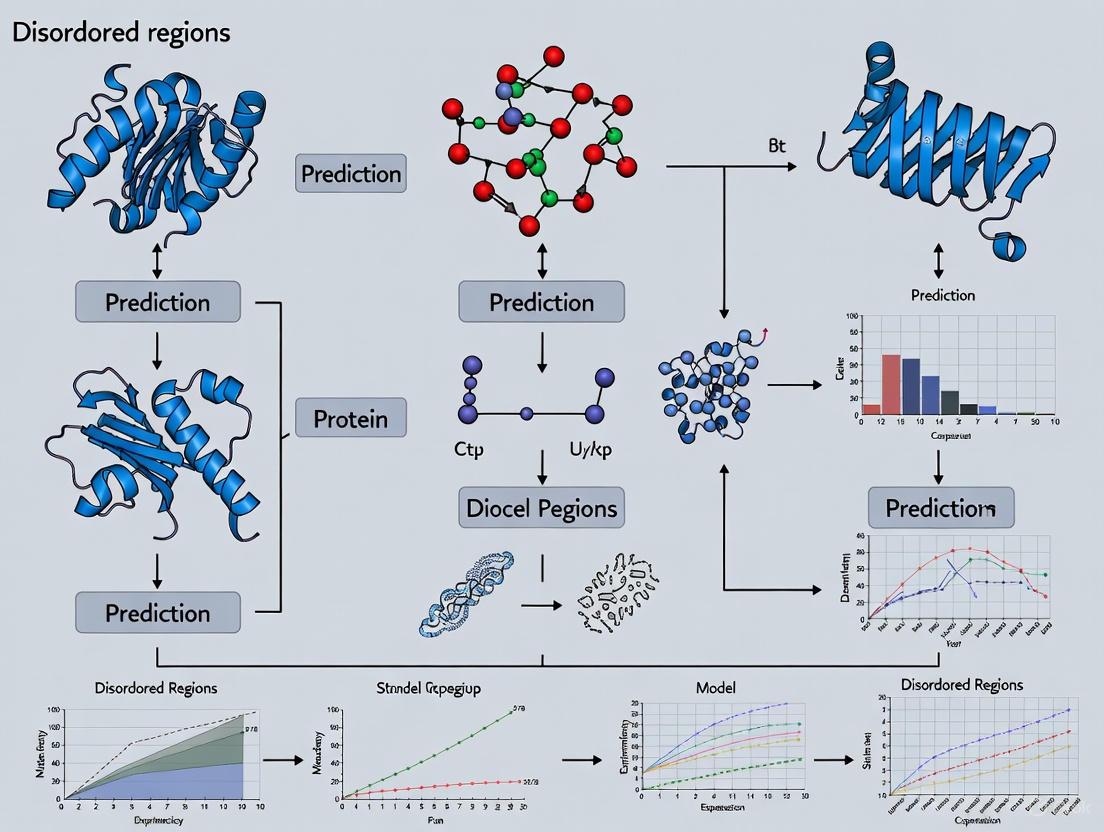
Intrinsically Disordered Regions (IDRs) challenge the traditional structure-function paradigm of proteins, yet they are crucial in key biological processes and are increasingly linked to diseases like cancer and neurodegeneration.
Navigating the Unstructured: Advanced Strategies for Disordered Regions in Protein Structure Prediction
Abstract
Intrinsically Disordered Regions (IDRs) challenge the traditional structure-function paradigm of proteins, yet they are crucial in key biological processes and are increasingly linked to diseases like cancer and neurodegeneration. This article provides a comprehensive guide for researchers and drug development professionals on the computational prediction and analysis of IDRs. It covers the foundational principles of protein disorder, evaluates the latest AI-driven and specialized prediction tools, offers practical troubleshooting advice, and outlines rigorous validation methodologies. By synthesizing current research and emerging techniques, this resource aims to empower scientists to accurately model these dynamic regions and unlock their therapeutic potential.
Beyond the Fold: Understanding Intrinsically Disordered Proteins and Their Biological Significance
Technical Support Center: Troubleshooting Intrinsically Disordered Protein Research
Frequently Asked Questions (FAQs)
FAQ 1: My AlphaFold2 model shows a long, extended loop for a key protein region. How do I determine if this is a true Intrinsically Disordered Region (IDR) or an artifact of low prediction confidence?
Answer: An unstructured region in a single AlphaFold2 (AF2) model can indeed be an IDR. The key is to analyze the predicted Local Distance Difference Test (pLDDT) confidence score, not just the 3D coordinates [1].
- Methodology: For every residue in your AF2 model, examine its pLDDT value (range 0-100). A residue-wise disorder prediction can be made using the transformed pLDDT (tpLDDT = 1 - pLDDT/100), where values closer to 1 indicate disorder [1].
- Troubleshooting: Residues with pLDDT scores below 50-70 are generally considered low confidence and likely disordered [1]. Do not rely solely on the 3D structure visualization; always inspect the per-residue confidence plot. Cross-reference this with sequence-based disorder predictors (e.g., IUPred, SPOT-Disorder) for consensus [2] [1].
FAQ 2: I am studying a protein that is predicted to be largely disordered. What experimental techniques are suitable for characterizing its structural ensemble?
Answer: Traditional techniques like X-ray crystallography often fail for IDPs as they require stable, uniform structures [3]. Instead, use solution-based methods that capture dynamic ensembles [4].
- Methodology: Deploy a combination of the following:
- Nuclear Magnetic Resonance (NMR) Spectroscopy: Ideal for characterizing conformational dynamics at atomic resolution and identifying transient secondary structures [4] [5].
- Microfluidic Diffusional Sizing (MDS): Measures the protein's hydrodynamic radius in solution, providing information on compactness and foldedness without requiring a fixed structure [3].
- Analysis of "Soft Disorder" in Crystallography: For proteins that crystallize, a high normalized B-factor (a measure of atomic displacement) can identify flexible or amorphous regions, known as "soft disorder," which are often involved in interactions [6].
FAQ 3: How can I identify the specific regions within an IDR that are responsible for binding to a structured partner protein?
Answer Binding interfaces in IDRs are often, but not exclusively, located within regions that undergo "disorder-to-order" transitions or are annotated as "soft disordered" [6].
- Methodology:
- Perform a Multiple Sequence Alignment: Identify conserved motifs within the IDR, as these often mediate functional interactions [7].
- Analyze Amino Acid Composition: Look for segments enriched in hydrophobic residues (e.g., tryptophan, tyrosine, phenylalanine) or specific linear motifs, as these are frequently part of binding sites [4].
- Use Advanced Prediction Tools: Algorithms like AlphaFold-Metainference integrate AF2's distance information with molecular dynamics simulations to predict the conformational ensembles IDPs adopt upon binding, potentially revealing interface regions [8].
FAQ 4: Why do my molecular dynamics (MD) simulations of an IDP show unrealistic conformational sampling?
Answer Standard MD force fields were parameterized for structured proteins and may not accurately capture the physics of IDPs, which have distinct sequence features like high net charge and low hydrophobicity [4].
- Troubleshooting:
- Use Specialized Force Fields: Employ force fields specifically optimized for disordered proteins (e.g., CHARMM36IDP, Amber03ws).
- Incorporate Experimental Restraints: Use advanced algorithms like AlphaFold-Metainference, which integrates predicted distance information from AF2 (which is often accurate for IDPs) to guide and improve the accuracy of MD simulations [8].
- Validate with Experimental Data: Constantly compare simulation outputs, such as calculated hydrodynamic radius, with experimental data from techniques like MDS or NMR [3].
FAQ 5: A key protein in my research is predicted to have long disordered regions. Can it still be a viable drug target?
Answer: Yes, absolutely. IDPs are implicated in a vast range of diseases, particularly neurological disorders and cancer, making them attractive therapeutic targets [8] [3]. Their dysregulation is linked to serious conditions, including amyotrophic lateral sclerosis (ALS) and Machado-Joseph disease [8].
- Strategy:
- Target the Disorder: Focus on developing small molecules that interact with the disordered ensemble to prevent its problematic folding into toxic forms, such as amyloid fibrils [8].
- Exploit Binding Mechanisms: Many IDPs undergo disorder-to-order transitions upon binding. Molecules can be designed to stabilize non-productive conformations or block binding interfaces [4].
Troubleshooting Guides
Problem: Inability to predict realistic structural ensembles for an IDP using standard tools.
| Step | Action | Expected Outcome |
|---|---|---|
| 1 | Run the sequence through a traditional disorder predictor (e.g., IUPred). | A per-residue probability plot of disorder is generated. |
| 2 | Obtain an AlphaFold2 model and extract the pLDDT confidence scores. | A per-residue confidence plot is generated, which should correlate with the disorder prediction [1]. |
| 3 | Use a specialized algorithm like AlphaFold-Metainference that combines AF2 output with molecular dynamics. | A statistically representative ensemble of 3D structures the disordered protein can adopt is produced [8]. |
| 4 | Validate the predicted ensemble with experimental data (e.g., measured hydrodynamic radius from MDS). | The calculated properties from the ensemble match the experimental observations within acceptable error margins [8] [3]. |
Problem: Difficulty in characterizing binding interfaces in a protein with both ordered and disordered regions (a.k.a. Partially Disordered Proteins, PDPs).
| Step | Action | Expected Outcome |
|---|---|---|
| 1 | Perform a large-scale analysis of all available PDB structures for your protein (or close homologs). | Identification of a hierarchical set of interaction interfaces and "soft disordered" regions [6]. |
| 2 | Map the union of all identified "soft disordered" regions (SDRs) from step 1 onto your protein's sequence. | The SDR map will show a high correlation with the total interaction interface region, predicting where new interfaces can form [6]. |
| 3 | Test the predicted interface through mutagenesis (e.g., alanine scanning) of key residues in the SDR. | A loss-of-function or reduced binding affinity confirms the functional importance of the predicted disordered interface. |
Table 1: Key Statistical Facts about Intrinsically Disordered Proteins (IDPs)
| Metric | Value | Context / Source |
|---|---|---|
| Prevalence in Human Proteome | ~30% - 50% | Approximately 30% of human proteins are IDPs or contain long IDRs; this figure can be up to 50% of amino acids in eukaryotic proteins [8] [3] [4]. |
| Association with Major Diseases | Virtually all | IDPs are implicated in nearly all major diseases, especially neurological disorders like ALS [8]. |
| AlphaFold-Metainference Performance | 80% match or exceed MD accuracy | The algorithm matched or exceeded the accuracy of molecular dynamics simulations in 80% of tested cases (11 IDPs, 6 PDPs) [8]. |
| Prevalence of cis-Proline in Proteins | ~4% in non-homologous structures | Nearly 4% of ~800 non-homologous protein crystal structures show distinct isomers due to proline cis/trans isomerization [5]. |
Table 2: Comparison of Select Intrinsic Disorder Prediction Software
| Predictor | Year | Basis of Prediction | Uses MSA? | Key Feature |
|---|---|---|---|---|
| PFVM | 2023 | Protein Folding Shape Code (PFSC) from five amino acids [2]. | No | Predicts disorder regions, degree of disorder, and folding patterns. |
| SPOT-Disorder2 | 2020 | Ensemble of Bidirectional LSTMs and Inception-Residual CNNs [2]. | Yes | Per-residue probability of disorder. |
| IUPred | 2005-2018 | Energy from inter-residue interactions [2]. | No | Predicts regions lacking well-defined 3D structure. |
| AlphaFold2 (pLDDT) | 2021 | Predicted local model confidence (Cα lDDT) [1]. | Yes | pLDDT < ~70 indicates disorder; integrated into structure prediction. |
| PONDR | 1999-2010 | Local amino acid composition, flexibility, hydropathy [2]. | No | One of the earliest predictors; identifies regions that are not rigid. |
| ESPritz | 2012 | Bi-directional neural networks trained on PDB & DisProt [2]. | No | Fast method with different disorder definitions (e.g., X-ray, NMR). |
Experimental Protocols & Workflows
Protocol 1: Workflow for Integrating AlphaFold2 and Molecular Dynamics for IDP Ensemble Prediction
This protocol details the methodology behind the AlphaFold-Metainference algorithm [8].
- Input Sequence: Provide the amino acid sequence of the IDP or PDP.
- AlphaFold2 Prediction: Generate a standard AF2 model. The key output is not the 3D coordinates but the predicted distances between amino acids, which are often quite accurate even for IDPs.
- Metainference Simulation: Incorp orate the distance information from step 2 as restraints in a molecular dynamics (MD) simulation. This Bayesian approach allows the simulation to sample a diverse set of conformations that are all consistent with the experimental (in this case, AF2-predicted) data.
- Ensemble Analysis: Analyze the resulting trajectory from the MD simulation to extract a statistical ensemble of 3D structures, which represents the dynamic behavior of the IDP in solution.
Workflow for IDP Ensemble Prediction
Protocol 2: Identifying Interaction Interfaces via Analysis of "Soft Disorder"
This protocol is based on the large-scale analysis of PDB crystallographic structures [6].
- Data Cluster Generation: Cluster all PDB protein chains with high sequence similarity.
- Interface & Disorder Identification: For each cluster, identify:
- Interface Regions (IRs): All protein-protein/DNA/RNA binding sites across different structures.
- Soft Disordered Regions (SDRs): Residues with a high normalized B-factor (measuring flexibility/amorphousness) in any structure within the cluster.
- Correlation Mapping: Map the union of all IRs and the union of all SDRs onto a representative protein sequence.
- Hierarchical Analysis: Observe that interfaces add up hierarchically and that SDRs strongly correlate with the location of alternative interaction interfaces.
Identifying Interfaces via Soft Disorder
The Scientist's Toolkit: Research Reagent Solutions
Table 3: Essential Computational and Data Resources for IDP Research
| Resource / Tool | Type | Function / Application |
|---|---|---|
| AlphaFold-Metainference | Algorithm | Predicts structural ensembles of IDPs by integrating AF2 with molecular dynamics simulations [8]. |
| DisProt | Database | Curated database of experimentally determined IDPs and IDRs, used for validation and training predictors [2]. |
| IUPred | Software | Predicts protein disorder regions based on an estimated energy content from inter-residue interactions [2]. |
| Microfluidic Diffusional Sizing (MDS) | Instrumentation | Measures hydrodynamic radius of proteins in solution to study compactness and binding without requiring a fixed structure [3]. |
| pLDDT score (from AlphaFold2) | Metric | Residue-wise confidence score; low values (e.g., <70) are a strong indicator of intrinsic disorder [1]. |
| Normalized B-factor (from PDB) | Metric | Identifies "soft disorder" in crystallographic structures—residues with high flexibility or static disorder [6]. |
Frequently Asked Questions (FAQs)
FAQ 1: Why do state-of-the-art structure predictors like AlphaFold2 often fail for certain protein regions? AlphaFold2 and similar tools excel at predicting well-structured, globular protein domains but often produce low-confidence predictions for intrinsically disordered regions (IDRs) [9] [10]. These regions lack a stable 3D structure under physiological conditions, which contradicts the fundamental assumption of a single, lowest-energy conformation that these predictors are designed to find [11]. You should always check the per-residue confidence score (pLDDT); low scores (often below 70) are a strong indicator of disorder [10].
FAQ 2: How can I accurately identify a disordered region in my protein of interest? Disordered regions are best identified using computational predictors specifically designed for this task. It is recommended to use a consensus from multiple tools, as they leverage different algorithms [10]. The table below summarizes reliable predictors.
Table: Computational Tools for Disordered Region Prediction
| Tool Name | Methodology | Key Feature |
|---|---|---|
| AIUPred [10] | Bioinformatics | Predicts disorder based on amino acid properties |
| metapredict [10] | Deep Learning | An ensemble predictor that integrates multiple methods |
| flDPnn [10] | Deep Learning | Predicts disorder, flexibility, and potential binding sites |
| AlphaFold2 pLDDT | Deep Learning | Uses the model's internal confidence metric; low pLDDT suggests disorder [10] |
FAQ 3: A significant portion of my protein is disordered. Does this mean it is non-functional? Absolutely not. Intrinsically disordered proteins (IDPs) and IDRs are prevalent and perform critical biological functions [11]. They are often involved in:
- Cellular Signaling and Regulation: Their flexibility allows them to interact with multiple partners [11].
- Transcriptional Regulation: Many transcription factors have disordered activation domains [11].
- Dynamic Protein-Protein Interactions: They can facilitate the formation of membraneless organelles [11].
FAQ 4: How do I handle a protein sequence that is new or has been updated since the release of major structure databases? Large static databases like the AlphaFold Protein Structure Database do not automatically update when new protein sequences are discovered or existing ones are corrected [12]. For the most current predictions, use resources that synchronize with the latest sequence databases. The AlphaSync database, for instance, continuously updates its predicted structures using the latest data from UniProt, ensuring you are working with the most current information [12].
FAQ 5: Why are the effects of genetic variants in disordered regions harder to predict? Variant Effect Predictors (VEPs) like AlphaMissense often rely on evolutionary sequence conservation and structural features, which are less informative for disordered regions [10]. IDRs are naturally less conserved and lack a fixed structure, making it difficult to apply the same rules used for structured domains. Consequently, these tools show reduced sensitivity for predicting pathogenicity of variants in IDRs [10].
Troubleshooting Guides
Issue 1: Low Confidence in Predicted Structural Models
Problem: Your protein's predicted model from a tool like AlphaFold2 shows large sections with low pLDDT scores.
Solution:
- Verify Disorder: Run your sequence through specialized disorder predictors like AIUPred or metapredict to confirm the low-confidence regions are genuinely disordered [10].
- Shift Functional Analysis: If disorder is confirmed, redirect your research focus from 3D structure to the inherent properties of disorder. Investigate potential molecular recognition features (MoRFs), post-translational modification sites, and protein-protein interaction motifs that are characteristic of IDRs [11].
- Use Complementary Tools: For variant analysis in these regions, be cautious with standard VEPs and seek out methods that incorporate IDR-specific features [10].
Diagram: Workflow for Analyzing Low-Confidence Predictions
Issue 2: Handling and Experimentally Validating Disordered Regions
Problem: You need to design experiments to study the function of a confirmed disordered region.
Solution:
- Prioritize Key Features: Use computational tools to pinpoint short, conserved linear motifs (SLiMs) or regions prone to post-translational modifications (PTMs) within the disorder, as these are likely functional hotspots [11].
- Choose Appropriate Experiments: Biophysical techniques like nuclear magnetic resonance (NMR) spectroscopy and small-angle X-ray scattering (SAXS) are well-suited for characterizing dynamic IDPs, as they can capture structural ensembles rather than a single conformation [11].
- Integrate Prediction with Experimentation: Use computational models to generate structural ensembles of the IDR. These can be refined and validated against experimental data, such as NMR chemical shifts or cryo-EM density maps, to understand its dynamic behavior [9] [11].
Diagram: Integrated Workflow for IDR Analysis & Validation
The Scientist's Toolkit
Table: Essential Resources for Disordered Protein Research
| Category | Resource Name | Function and Application |
|---|---|---|
| Structure Prediction | AlphaFold2 / AlphaSync | Predicts 3D protein structures. Check pLDDT for disorder and use AlphaSync for updated sequences [10] [12]. |
| Disorder Prediction | AIUPred, metapredict, flDPnn | Identifies intrinsically disordered regions from amino acid sequence [10]. |
| Variant Effect Prediction | AlphaMissense | Predicts pathogenicity of missense variants. Use with caution for IDRs [10]. |
| Protein Language Model | ESM-2 / ProtT5 | Provides residue-level embeddings useful for predicting disorder and functional sites [11]. |
| Sequence & Annotation Database | UniProt | Central hub for protein sequence and functional annotation data [12]. |
| Clinical Variants Database | ClinVar | Public archive of reports on relationships between genetic variants and human health [10]. |
| Structured/Disordered Benchmarking | CAID2 (Critical Assessment of Protein Intrinsic Disorder Prediction) | Community initiative to benchmark and compare the performance of different disorder prediction methods [11]. |
FAQs & Troubleshooting Guide
This guide addresses common challenges researchers face when investigating the sequence hallmarks of Intrinsically Disordered Regions (IDRs), based on the latest research into their molecular grammars.
FAQ 1: What are the key sequence features that distinguish functional IDRs involved in biomolecular condensates?
Functional IDRs, particularly those involved in processes like RNA-binding and liquid-liquid phase separation (LLPS), often exhibit non-random amino acid usage patterns known as molecular grammars. A 2025 analysis of the human proteome using the NARDINI+ algorithm revealed that these functional grammars are characterized by specific amino acid compositions and spatial arrangements. The study found that IDRs associated with nucleic acid binding and phase separation show significant enrichment of certain amino acids both within and around key motifs, providing a signature of their function [13]. The table below summarizes key compositional hallmarks identified in functional RG motifs, a common type of IDR:
Table 1: Amino Acid Enrichment Signatures in Functional RG Motifs
| Amino Acid | Enrichment Profile in Functional RG Motifs | Postulated Functional Role |
|---|---|---|
| Phenylalanine (F) | Significant enrichment; shows distinct positional bias [13]. | Implicated in pi-pi interactions crucial for phase separation and molecular recognition [13]. |
| Tyrosine (Y) | Significant enrichment; shows a positional profile distinct from Phe [13]. | Contributes to hydrophobic and aromatic interactions within condensates [13]. |
| Aspartic Acid (D) | Significant enrichment [13]. | May introduce negative charges that modulate phase separation propensity or enable salt-bridge interactions. |
| Asparagine (N) | Significant enrichment [13]. | Could promote solvation and influence material properties of condensates. |
FAQ 2: My experimental results on an IDR's behavior conflict with predictions from standard disorder predictors. How should I proceed?
Standard disorder predictors primarily identify regions lacking stable structure but often do not fully capture the functional grammars encoded within the sequence. It is critical to move beyond simple disorder prediction and analyze the sequence for specific molecular grammars. The GIN (Grammars Inferred using NARDINI+) resource, which clusters IDR sequences based on learned grammars, can provide functional insights. Research has shown that specific GIN clusters are strongly associated with subcellular localization preferences and functions. If your experimental results conflict with predictions, we recommend:
- Analyze the grammar: Use tools like NARDINI+ to see if your IDR's sequence falls into a known GIN cluster with established functional associations [14].
- Check the context: Remember that IDR function can be influenced by its structural context. One study found that functional RG motifs often exhibit a non-random spatial relationship with structured RNA-binding domains, which can be a critical determinant of their activity [13].
- Investigate mutations: Be aware that point mutations or translocations can upend the native IDR grammar, leading to a rewiring of interaction networks. This is a known mechanism in certain cancers, where altered grammars drive pathological cellular proliferation [14].
FAQ 3: How can I design a synthetic IDR for a bespoke function in an engineered system?
Designing synthetic IDRs requires mimicking the principles of natural molecular grammars. The discovery of a finite set of grammars (GIN clusters) in the human proteome provides a blueprint for this endeavor [14]. The workflow for this process is outlined below.
The key is to focus not just on amino acid composition (the "alphabet") but also on the linear arrangement of specific amino acid pairs (the "syntax") [14]. For example, to design an IDR that promotes condensation, you might start with a grammar cluster enriched in aromatic residues like phenylalanine and tyrosine, as their distinct spatial patterns are linked to phase separation propensity [13].
Experimental Protocols & Methodologies
Protocol 1: Computational Identification and Classification of IDR Molecular Grammars
This protocol is based on the methodology used to create the GIN resource [14].
- Data Acquisition: Obtain the reference human proteome (e.g., "UP000005640_9606.fasta" from UniProt).
- Disorder Annotation: Annotate IDRs using a consensus predictor (e.g., via the MobiDB API).
- Grammar Inference: Input the amino acid sequences of the IDRs into the NARDINI+ algorithm. This tool assesses whether different syntaxes present within an IDR sequence are non-random.
- Unsupervised Learning: Apply unsupervised machine learning (as performed in the cited study) to the output of NARDINI+ to group IDR sequences into a finite number of clusters based on their underlying grammars.
- Functional Annotation: Cross-reference the resulting clusters (GIN clusters) with functional data, such as subcellular localization and involvement in specific biological processes, to assign putative functions to each grammar type.
Protocol 2: Computational Analysis of RG Motif Context and Function
This protocol is derived from a 2025 study that dissected the sequence features of functional RG motifs [13].
- Dataset Preparation:
- Positive Set ("Functional"): Isolate proteins that contain at least one RG motif, are predicted to phase separate (e.g., using PhaSePred), AND are annotated with at least one nucleic-acid-binding Gene Ontology term.
- Negative Set ("Non-functional"): Isolate proteins that contain an RG motif but are NOT predicted to phase separate and LACK nucleic-acid-binding annotations.
- Motif Discovery: Identify RG motifs using a specialized tool such as the glycine-arginine-rich (GAR) motif finder. Filter out motifs located entirely in structured regions.
- Sequence Analysis: Analyze the amino acid composition within the RG motif and in flanking regions (e.g., blocks of 10 residues on either side). Compare the enrichment of specific residues (like F, Y, D, N) between the positive and negative datasets using appropriate statistical tests (e.g., Mann-Whitney U test with Benjamini-Hochberg correction).
- Contextual Analysis: Calculate the distance from the center of the RG motif to the center of any annotated structured domains (e.g., from Pfam) to identify non-random spatial relationships.
Table 2: Key Research Reagents and Computational Tools
| Reagent / Tool Name | Type | Primary Function in Research |
|---|---|---|
| NARDINI+ Algorithm | Software Algorithm | Infers molecular grammars from IDR sequences by identifying non-random amino acid usage patterns and arrangements [14]. |
| GIN (Grammars Inferred using NARDINI+) | Database / Resource | A classified resource of IDR grammars clustered by function, used to predict localization and function of novel IDRs [14]. |
| GAR Motif Finder | Software Tool | Identifies and defines arginine-glycine-rich (RG) motifs within protein sequences [13]. |
| PhaSePred | Meta-predictor | Predicts the phase separation propensity of proteins based on their sequence [13]. |
| MobiDB | Database / API | Provides consensus annotations for intrinsically disordered regions in proteins [13]. |
Data Presentation and Workflows
The following diagram illustrates the logical relationship between sequence, grammar, and cellular function as revealed by recent studies.
Table 3: Statistical Analysis of RG Motif Features (Functional vs. Non-functional)
| Analyzed Feature | Finding in Functional RG Motifs | Statistical Significance & Notes |
|---|---|---|
| Phenylalanine (F) & Tyrosine (Y) | Significant enrichment; exhibit divergent positional profiles [13]. | Suggests distinct, non-redundant mechanistic roles in molecular recognition and condensation [13]. |
| Aspartic Acid (D) & Asparagine (N) | Significant enrichment within and around the motif [13]. | Indicates a role for polar and charged residues in tuning the physicochemical properties of functional motifs [13]. |
| Spatial Relationship with RBDs | Non-random spatial coupling with structured RNA-binding domains [13]. | Highlights that the functional context of an IDR can depend on its proximity to other domains, influencing the network of interactions [13]. |
| Consequence of Mutation | Altered grammars rewire interaction networks [14]. | Not a statistical finding but an observed mechanism; directly linked to dysregulated proliferation in cancer models [14]. |
Frequently Asked Questions (FAQs)
FAQ 1: What are Intrinsically Disordered Proteins (IDPs) and why are they important in drug discovery? Intrinsically Disordered Proteins (IDPs) and Intrinsically Disordered Regions (IDRs) are proteins or segments of proteins that cannot fold into a stable three-dimensional structure under physiological conditions. They exist as dynamic conformational ensembles and are widespread, especially in eukaryotes, where more than 40% of proteins are disordered or contain disordered regions longer than 30 amino acids [15]. Despite their lack of stable structure, they participate in critical biological processes like transcription, translation, cell signaling, and protein aggregation [15]. Their dysfunction is linked to numerous human diseases, including cancer, neurodegenerative diseases (like Alzheimer's and amyotrophic lateral sclerosis), and cardiovascular diseases, making them potential targets for therapeutic intervention [15] [16].
FAQ 2: How can I experimentally distinguish protein droplets formed by liquid-liquid phase separation (LLPS) from solid aggregates? Fluorescence Recovery After Photobleaching (FRAP) is a key technique for this purpose. In a FRAP assay, a region within a biomolecular condensate is photobleached with a laser, and the recovery of fluorescence is monitored [17]. Liquid-like condensates formed by LLPS typically show rapid fluorescence recovery (e.g., within seconds) and a high mobile fraction, indicating fast internal dynamics and component exchange. In contrast, solid aggregates or gel-like states show little to no fluorescence recovery, reflecting immobile components [17]. For example, hnRNPA1, an RNA-binding protein that undergoes LLPS, has a FRAP recovery time of about 4.2 seconds with an 80% recovery rate [17].
FAQ 3: My AlphaFold2 prediction for a disordered protein shows a single, folded-like structure. Is this accurate? Not necessarily. The standard AlphaFold2 pipeline is highly accurate for folded proteins but is tailored to predict a single structure, which is often not representative of the heterogeneous ensemble of a genuinely disordered protein [16]. While AlphaFold can accurately predict average inter-residue distances even for disordered proteins, directly interpreting its single structural output can be misleading. A low per-residue confidence score (pLDDT) often indicates disorder [16]. For a meaningful ensemble representation of disordered proteins, advanced methods like AlphaFold-Metainference are required, which integrate AlphaFold-predicted distances as restraints in molecular dynamics simulations to generate conformational ensembles [16].
FAQ 4: What are the primary sequence characteristics of IDRs? IDRs often possess distinctive amino acid composition biases. They are typically characterized by [15]:
- Low sequence complexity and high repeatability.
- A low proportion of bulky hydrophobic amino acids.
- A high proportion of charged amino acids (e.g., Lys, Arg, Glu, Asp) and polar residues.
Troubleshooting Guides
Problem 1: Low Accuracy in Predicting Disordered Regions and Their Functions
Issue: Computational tools fail to correctly identify disordered regions or predict their molecular functions.
| Potential Cause | Solution | Reference/Method |
|---|---|---|
| Limited Training Data | Use meta-predictors or tools that integrate multiple databases and algorithms to leverage a wider set of annotations. | MobiDB, DisProt, IDEAL [15] |
| Incorrect Functional Annotation | Employ predictors that specifically couple disorder prediction with functional annotation, such as flDPnn. | flDPnn [15] |
Problem 2: Validating Phase Separation Propensity In Vivo
Issue: Difficulty in demonstrating that a protein of interest undergoes phase separation inside living cells.
Solution: Utilize optogenetic tools like the OptoDroplet system.
- Principle: This method uses the CRY2 protein from Arabidopsis thaliana, which oligomerizes upon exposure to blue light. The protein of interest (or its IDR) is fused to the CRY2 PHR domain [17].
- Procedure:
- Express the CRY2-IDR fusion construct in cells.
- Expose the cells to blue light (380-500 nm) to induce CRY2 oligomerization.
- If the fused IDR has phase-separating capability, this will rapidly induce the formation of biomolecular condensates, which can be visualized by microscopy.
- Control: A construct with CRY2 PHR alone (without the IDR) should not form condensates upon light exposure [17].
- Troubleshooting: Condensate formation kinetics can be tuned by adjusting blue light intensity and protein expression levels. A Cry2oligo (E490G) mutant can be used for faster, more sensitive condensate formation [17].
Problem 3: Reconciling AlphaFold2 Predictions with Experimental Data for IDPs
Issue: A significant discrepancy exists between the structural model generated by AlphaFold2 and experimental data from techniques like Small-Angle X-ray Scattering (SAXS) for a disordered protein.
Solution: Use ensemble-based modeling approaches that incorporate AlphaFold predictions.
- Explanation: Standard AlphaFold2 outputs a single structure, but SAXS data reports on a solution-averaged ensemble. The AlphaFold-Metainference method addresses this by using AlphaFold-predicted distances as restraints in molecular dynamics simulations to generate a structural ensemble [16].
- Validation: The resulting ensemble should yield a calculated SAXS profile and radius of gyration (Rg) that are in closer agreement with experimental data than a single AlphaFold structure [16].
Quantitative Data on IDPs/IDRs
Table 1: Prevalence of Disorder in Protein Structures from the PDB Database (Adapted from [15])
| Dataset | Number of Proteins/Chains | Proteins/Chains with Disorder (%) | Disordered Residues (%) |
|---|---|---|---|
| Monzon et al. dataset | 37,395 proteins | 51.08% | 5.07% |
| PDBS25 (homology <25%) | 1,223 chains | 56.91% | 5.98% |
| Non-homologous Nine-Body Proteins | 15 proteins | 46.67% | 5.22% |
Table 2: Comparison of Methods for Generating Structural Ensembles of Disordered Proteins
| Method | Principle | Best for Validation Against | Key Advantage |
|---|---|---|---|
| AlphaFold-Metainference | Uses AF2-predicted distances as restraints in MD simulations. | SAXS data, NMR chemical shifts | Integrates deep learning with physics-based simulations. [16] |
| CALVADOS-2 | Coarse-grained molecular simulations with optimized potential. | SAXS data, NMR diffusion | Computational efficiency for long sequences. [16] |
| FRAP Analysis | Measures mobility of molecules within condensates. | Distinguishing liquid-like from solid aggregates. | Directly probes dynamics in vivo. [17] |
Experimental Protocols
Protocol 1: FRAP Assay to Probe Condensate Dynamics
- Cell Preparation: Express the protein of interest fused to a fluorescent tag (e.g., GFP) in cells.
- Condensate Imaging: Identify cells with biomolecular condensates using a confocal microscope.
- Photobleaching: Select a region of interest (ROI) within a condensate and subject it to a high-intensity laser pulse to irreversibly bleach the fluorophores.
- Recovery Monitoring: Immediately after bleaching, use a low-intensity laser to capture images of the bleached ROI at regular time intervals (e.g., every 0.5-1 second).
- Data Analysis: Quantify the fluorescence intensity within the bleached ROI over time. Normalize the recovery curve to pre-bleach and post-bleach intensities. The recovery half-time and mobile fraction are key parameters to assess dynamics [17].
Protocol 2: Constructing a Phase Diagram for In Vitro Phase Separation
- Protein Purification: Purify the recombinant protein of interest.
- Sample Preparation: Prepare a series of protein solutions at different concentrations and under varying conditions (e.g., pH, salt concentration, temperature, crowding agents).
- Incubation: Incubate the samples to allow the system to reach equilibrium.
- Imaging and Scoring: Use microscopy (e.g., brightfield or fluorescence) to identify the conditions under which a single homogeneous solution exists versus conditions where droplets (two phases) form.
- Plotting: Plot the observed states (one phase vs. two phases) as a function of the varied parameters (e.g., concentration and temperature) to map out the phase boundary [17].
Research Reagent Solutions
Table 3: Essential Reagents and Tools for Studying Disordered Proteins and Phase Separation
| Reagent/Tool | Function | Example Use |
|---|---|---|
| OptoDroplet System (CRY2-PHR) | Light-inducible oligomerization to probe phase separation propensity of fused IDRs in live cells. | Testing if a candidate IDR can drive condensate formation [17]. |
| Fluorescent Proteins (e.g., GFP) | Tagging proteins for visualization and dynamics measurements in live cells. | FRAP experiments to assess condensate fluidity [17]. |
| SAXS (Small-Angle X-Ray Scattering) | Obtaining low-resolution structural information and pair-distance distributions of proteins in solution. | Validating structural ensembles of IDPs generated by computational methods [16]. |
| NMR Spectroscopy | Providing atomic-level information on dynamics and transient structures in disordered states. | Back-calculating chemical shifts to validate structural ensembles [16]. |
Experimental and Signaling Pathway Visualizations
Condensate Signaling Pathway
Disordered Protein Workflow
Frequently Asked Questions (FAQs)
FAQ 1: What are Intrinsically Disordered Regions (IDRs) and why are they significant in human diseases? Intrinsically Disordered Regions (IDRs) are segments of proteins that do not fold into a stable, well-defined three-dimensional structure under physiological conditions. They exist as dynamic conformational ensembles and are highly prevalent in the human proteome, with over 40% of proteins in eukaryotes being intrinsically disordered or containing long disordered regions [15]. IDRs are fundamental to critical biological processes like transcription, regulation, cell signaling, and molecular recognition [15]. Their dysfunction is widely linked to major human diseases. In cancer, proteins with IDRs are involved in cellular proliferation and signaling. In neurodegenerative diseases like Alzheimer's and Amyotrophic Lateral Sclerosis (ALS), key proteins such as Aβ, tau, and TAR DNA-binding protein 43 (TDP-43) contain IDRs and are known to misfold and aggregate [16] [18].
FAQ 2: What are the common experimental challenges when studying IDRs? Researchers face several key challenges when working with IDRs:
- Structural Heterogeneity: IDRs are not single structures but exist as dynamic ensembles, making them resistant to traditional structural biology methods like X-ray crystallography [15].
- Computational Prediction Limitations: While computational predictors are essential, they have a performance gap between predicted and experimentally annotated disorder, and predicting the precise functions and interactions of IDRs remains difficult [15].
- Handling Partially Disordered Proteins: Many proteins, like TDP-43, contain both folded domains and IDRs. Generating a unified structural ensemble that accurately represents both aspects is technically challenging [16].
FAQ 3: How can I validate the structural ensembles of IDRs obtained from computational predictions? It is crucial to validate predicted ensembles against experimental data. Recommended techniques include:
- Small-Angle X-Ray Scattering (SAXS): Provides low-resolution information about the overall shape and dimensions (like the radius of gyration, Rg) of the disordered ensemble in solution [16].
- Nuclear Magnetic Resonance (NMR) Spectroscopy: Can measure parameters like chemical shifts and residual dipolar couplings that provide information on local conformational propensities and long-range interactions within the ensemble [16].
- Single-molecule Fluorescence Resonance Energy Transfer (smFRET): Probes distances and distributions within single molecules, ideal for capturing the heterogeneity of IDRs [15].
Troubleshooting Guides
Troubleshooting Computational IDR Prediction
Table 1: Common Issues and Solutions in IDR Prediction
| Problem | Possible Cause | Solution |
|---|---|---|
| Low confidence in prediction for a specific region | Low sequence complexity or lack of evolutionary information in multiple sequence alignment (MSA). | Use a meta-predictor that combines multiple algorithms, or try a lightweight predictor like PUNCH2-Light that uses One-Hot and ProtTrans embeddings and avoids MSAs [19]. |
| Predicted structured regions conflict with experimental data (e.g., SAXS) | The predictor may be over-estimating order, or the protein may be conditionally disordered. | Use methods like AlphaFold-Metainference that integrate prediction with molecular dynamics to generate ensembles; validate against biochemical data [16]. |
| Difficulty predicting binding sites within IDRs | Standard disorder predictors do not identify molecular recognition features (MoRFs). | Utilize specialized predictors designed to identify binding sites and molecular recognition features (MoRFs) within disordered regions [15]. |
Troubleshooting Experimental Characterization of IDRs
Table 2: Common Experimental Challenges in IDR Characterization
| Problem | Possible Cause | Solution |
|---|---|---|
| Protein aggregation during purification | Exposure of hydrophobic regions in disordered states. | Work at low protein concentrations, add stabilizing agents or salts, use cold temperatures, and purify quickly using fast protein liquid chromatography (FPLC). |
| Unable to resolve structure via X-ray crystallography | Inherent flexibility and dynamic nature of IDRs prevents crystal formation. | Use solution-based techniques like NMR, SAXS, or smFRET that are better suited for dynamic systems [15] [16]. |
| SAXS data does not match a single AlphaFold2 model | AlphaFold2 is trained on folded structures and often outputs a single, static conformation, which is inadequate for representing a disordered ensemble [16]. | Employ ensemble methods like AlphaFold-Metainference or CALVADOS-2, which are designed to generate conformational ensembles that can be validated against the SAXS data [16]. |
Key Data and Experimental Protocols
Quantitative Data on IDR Prevalence and Properties
Table 3: Experimentally Derived Statistics of IDRs in the Protein Data Bank (PDB)
| Dataset | Number of Proteins/Chains Analyzed | Proteins/Chains with Disorder (%) | Disordered Residues (%) |
|---|---|---|---|
| Monzon et al. dataset | 37,395 proteins | 51.08% | 5.07% |
| PDBS25 (homology <25%) | 1223 chains | 56.91% | 5.98% |
| Seven-Body Proteins | 133 chains | 69.92% | 5.22% |
Source: Adapted from Table 1 in [15]
Protocol: Generating Structural Ensembles with AlphaFold-Metainference
This protocol is used to generate conformational ensembles for disordered proteins, integrating deep learning predictions with physics-based simulations [16].
- Input Sequence: Provide the amino acid sequence of the protein of interest.
- AlphaFold2 Distogram Prediction: Run AlphaFold2 to obtain a distogram, which predicts the distribution of distances between residue pairs.
- Restraint Selection: Filter the predicted distances. Typically, distances with high confidence and short sequence separation are used as reliable restraints.
- Metainference Simulation: Use the selected distance restraints within a molecular dynamics (MD) simulation platform. The metainference approach allows the integration of the predicted data while accounting for the ensemble nature of the system.
- Ensemble Analysis and Validation: Analyze the resulting structural ensemble by calculating theoretical SAXS profiles or NMR chemical shifts. Compare these back-calculated values with experimental data to validate the ensemble [16].
Diagram 1: AlphaFold-Metainference workflow for generating structural ensembles of IDRs.
Protocol: Investigating the IDR-Cancer-Neurodegeneration Link via Enteric Neuron-Tumor Co-culture
This protocol outlines a co-culture approach to study how neurodegeneration in the enteric nervous system influences colorectal cancer (CRC) progression, a key model for understanding IDR-mediated disease connections [20].
- Enteric Neuron Culture: Establish a primary culture of enteric neurons from mouse or human gut tissue.
- Induction of Neurodegeneration: Genetically or chemically induce a neurodegenerative state in the cultured neurons. This could involve knocking down genes like Ndrg4 or exposing neurons to oxidative stress triggers [20].
- Conditioned Media Collection: Collect conditioned media from the healthy and degenerating neuronal cultures. This media contains the secretome, including factors like Biglycan, Nidogen-1, and Fibulin-2, which are implicated in tumor progression [20].
- Tumor Cell Treatment: Apply the conditioned media to cultured colorectal cancer cells.
- Functional Assays: Perform assays to measure the effect of the neuronal secretome on cancer cells.
- Proliferation: Use MTT or BrdU assays.
- Migration/Invasion: Use transwell invasion assays.
- Gene Expression: Analyze changes in oncogenic pathways (e.g., EGFR) via qPCR or RNA-seq [20].
Diagram 2: Co-culture model for studying neurodegeneration-driven cancer progression.
The Scientist's Toolkit: Research Reagent Solutions
Table 4: Essential Research Reagents for Investigating IDRs in Disease Contexts
| Reagent / Resource | Function / Application | Key Example in Research |
|---|---|---|
| PUNCH2-Light Predictor | A fast, deep learning-based web server for predicting IDRs from protein sequence, using One-Hot and ProtTrans embeddings [19]. | First-line computational tool for initial disorder assessment on a protein of interest. |
| AlphaFold-Metainference | A method that uses AlphaFold-derived distances as restraints in MD simulations to generate structural ensembles of IDRs [16]. | Generating accurate conformational ensembles for highly disordered proteins like α-synuclein or partially disordered proteins like TDP-43. |
| CALVADOS-2 | A coarse-grained molecular dynamics force field parameterized for simulating disordered proteins [16]. | Simulating the biophysical properties of IDRs and predicting observables like Rg and SAXS profiles. |
| CAF Markers (α-SMA, FAP, PDGFRβ) | Antibodies against these proteins used to identify and isolate Cancer-Associated Fibroblasts (CAFs) from tumor microenvironments [21] [22] [23]. | Isulating CAF subpopulations (e.g., myCAFs, iCAFs) to study their distinct roles in tumor progression and therapy resistance. |
| Recombinant Biglycan, Nidogen-1 | Purified proteins used to treat cancer cells in vitro to directly test the effect of neuron-derived factors on tumorigenic pathways [20]. | Mechanistically linking enteric neurodegeneration to CRC progression via secretome components. |
The Prediction Toolkit: From AI Powerhouses to Specialized IDR Detectors
Intrinsically disordered proteins (IDPs) and intrinsically disordered regions (IDRs) are a major class of proteins that do not adopt a single, well-defined three-dimensional structure under native conditions. Instead, they exist as dynamic ensembles of conformations, a property that is crucial for many biological functions such as cell signaling, transcription, and chromatin remodeling, but also implicated in various human diseases including neurodegenerative disorders and cancer [24] [25]. Specialized computational predictors have been developed to identify these regions from amino acid sequences, providing critical insights for experimental design and functional analysis. This guide focuses on three widely used predictors—IUPred2A, PONDR, and PrDOS—providing troubleshooting and FAQs to help researchers effectively integrate them into their workflow for protein structure prediction research.
The table below summarizes the core features of IUPred2A, PONDR, and PrDOS for quick comparison.
| Predictor | Core Methodology | Output Type | Key Features & Prediction Types | Best Used For |
|---|---|---|---|---|
| IUPred2A [26] [27] | Biophysics-based model estimating pairwise interaction energy from amino acid composition. | Per-residue score (0-1); >0.5 indicates disorder. | Long disorder: Global disorder over ≥30 residues.Short disorder: Short, context-dependent flexible regions.Structured domains: Identifies potential globular domains.ANCHOR2: Predicts disordered binding regions. | General-purpose identification of IDRs and context-dependent disorder, including binding regions. |
| PONDR [24] [25] | Algorithm trained on structured datasets to distinguish order and disorder. | Per-residue disorder probability. | Various tools available (e.g., VLXT, VL3).Predicts context-independent disordered regions. | Quick assessment of disorder propensity across a protein sequence. |
| PrDOS [28] | Combination of SVM-based prediction and template-based comparison against PDB. | Per-residue disorder probability. | Template-based prediction: Explores similarity to known structured regions.Can be disabled for ab initio prediction. | Identification of disorder, with the option to check if disorder might be due to lack of homology to known structures. |
Frequently Asked Questions (FAQs) and Troubleshooting
How do I choose the correct prediction type in IUPred2A?
IUPred2A offers multiple prediction types optimized for different scenarios. Your choice should align with your biological question.
- Long disorder: This is the default and recommended option for identifying globally disordered regions that encompass at least 30 consecutive residues [26] [27]. Use this for initial characterization of a protein.
- Short disorder: Select this option when looking for short, flexible loops or termini, often seen as missing residues in X-ray crystal structures of otherwise ordered proteins [26] [27].
- Structured domains: Use this to find continuous regions confidently predicted to be ordered, which is useful for target selection in structural genomics projects [26].
- ANCHOR2: Always enable this when your research question involves molecular recognition, as it predicts disordered regions that are likely to fold upon binding to a structured partner [26].
What does a "low-confidence" or "disordered" region in AlphaFold2 signify?
Recent advances in deep learning, such as AlphaFold2, have revolutionized protein structure prediction. AlphaFold2 reports a per-residue confidence score (pLDDT). Regions with low pLDDT scores (often below ~50-70) are generally considered to be intrinsically disordered [24] [25]. It is important to treat these predictions as complementary to traditional disorder predictors. You can use IUPred2A or PONDR to validate the intrinsic disorder propensity of low-confidence AlphaFold2 regions.
My protein is predicted to be disordered, but I need a structure for functional study. What are my options?
This is a common challenge, as the flexibility of IDPs makes them unsuitable for traditional techniques like X-ray crystallography [29]. Consider the following strategies:
- Nuclear Magnetic Resonance (NMR): NMR is arguably the most powerful technique for studying IDPs, as it can report on residual structure, dynamics, and binding interactions on a per-residue basis [29].
- Identify Structured Domains: Use the "Structured domains" prediction in IUPred2A to find ordered regions within your protein that might be suitable for crystallization [26].
- Target the Disorder Functionally: If the disordered region itself is the functional unit, consider studying its interactions. The ANCHOR2 predictor in IUPred2A can identify binding regions within IDRs [26]. Furthermore, cutting-edge research using AI-based protein design, such as RFdiffusion, has successfully generated high-affinity binders that target specific conformations of IDPs, which can be used as tools for inhibition or detection [30] [31].
How should I handle the prediction for a protein with a large number of sequences?
For high-throughput analysis of multiple sequences (e.g., a whole proteome), you should use the batch processing capabilities of these servers.
- IUPred2A allows you to upload a file with multiple sequences in FASTA format. The results will be delivered in a text format via email [26].
- PrDOS can also accept a Multiple FASTA file, but the number of sequences is limited to 50 per submission due to computational resources. For larger datasets, the PrDOS website recommends contacting the administrators [28].
Experimental Protocol: Integrating Prediction with NMR Validation
The following workflow outlines a standard protocol for validating computational disorder predictions using Nuclear Magnetic Resonance (NMR) spectroscopy, a key technique for studying IDPs [29].
Critical Troubleshooting Steps in the Workflow
- Low Protein Yield After Isotopic Labeling: Expression in minimal media (e.g., M9) for isotope labeling often results in lower yields. A highly effective strategy is to grow cells in rich media (e.g., LB) to high density, then pellet and transfer them to the labeled minimal media for induction. This provides a high cell density while using the expensive media efficiently [29].
- High Protease Sensitivity: IDPs are often extremely sensitive to proteolytic degradation. To mitigate this, always work quickly on ice or at 4°C, use a comprehensive protease inhibitor cocktail, and consider adding a solubility tag (e.g., GST, MBP) that can also protect the protein [29].
- Ambiguous NMR Spectra: A well-folded protein gives a ¹⁵N-HSQC spectrum with broad, dispersed peaks. A classic signature of a disordered protein is a ¹⁵N-HSQC spectrum with narrow, poorly dispersed peaks crowded in the center. If your spectrum looks like this, it confirms the protein's disordered nature [29].
| Item / Resource | Function / Description | Relevance to Disordered Protein Research |
|---|---|---|
| IUPred2A Server [26] | Web server for predicting protein disorder and disordered binding regions. | Primary tool for identifying and characterizing IDRs. |
| PONDR Server [28] | Web server for predicting natively disordered regions. | Alternative tool for disorder prediction, useful for cross-validation. |
| PrDOS Server [28] | Web server that combines prediction with template-based comparison. | Useful for assessing if disorder might be due to lack of homology to known structures in PDB. |
| NMR Spectroscopy [29] | A spectroscopic technique to study protein structure and dynamics in solution. | Key experimental method for validating disorder predictions and studying residual structure and binding. |
| Isotopic Labeling (¹⁵N, ¹³C) [29] | Incorporation of stable isotopes into proteins expressed in recombinant systems. | Essential for multidimensional NMR studies of proteins. |
| Solubility Tags (GST, MBP) [29] | Fusion partners used to improve expression and solubility of recombinant proteins. | Crucial for expressing and purifying IDPs, which can be prone to aggregation or degradation. |
| Protease Inhibitor Cocktails [29] | Chemical mixtures that inhibit a wide range of proteolytic enzymes. | Critical for maintaining integrity of IDPs during purification due to their high sensitivity to proteolysis. |
| M9 Minimal Media [29] | A defined growth medium used for bacterial culture. | Required for incorporating isotopic labels (¹⁵N, ¹³C) during recombinant protein expression for NMR. |
The pLDDT (predicted Local Distance Difference Test) score is a per-residue metric provided by AlphaFold that estimates the confidence in the local structure prediction. Within the field of intrinsically disordered proteins (IDPs), it has been empirically established as a key indicator for identifying disordered regions. Intrinsically disordered proteins, which lack a stable three-dimensional structure under physiological conditions yet are fully functional, comprise 30–40% of the human proteome and are critical in transcription, signaling, and numerous diseases [32].
The correlation between pLDDT and disorder arises because AlphaFold is trained on databases of structured proteins; regions where evolutionary information does not support a single, stable conformation are consequently predicted with low confidence. Thus, for researchers studying protein disorder, the pLDDT score serves as a first-pass, readily available diagnostic tool.
Frequently Asked Questions (FAQs)
FAQ 1: What do the different ranges of pLDDT scores signify for disorder?
pLDDT scores are conventionally interpreted using specific thresholds to classify order and disorder. The following table summarizes the standard interpretation:
Table 1: Standard Interpretation of pLDDT Scores [33]
| pLDDT Score Range | Confidence Level | Interpretation for Disorder |
|---|---|---|
| ≥ 90 | Very high | Very high confidence in a stable, ordered structure. |
| 70 - 89 | Confident | Prediction is likely reliable for the backbone structure. |
| 50 - 69 | Low | Low confidence; often indicates flexible, potentially disordered regions in isolation. |
| < 50 | Very low | Very low confidence; strongly predicts intrinsically disordered regions (IDRs). |
FAQ 2: How reliable is pLDDT as a sole indicator of protein flexibility and disorder?
While pLDDT is a excellent starting point, it should not be used as the sole indicator. Large-scale assessments reveal that while AF2 pLDDT reasonably correlates with flexibility metrics from molecular dynamics (MD) simulations and NMR ensembles, it has significant limitations [34]. pLDDT typically reflects MD-derived flexibility better than experimental B-factors, but it often fails to capture flexibility in the presence of interacting partners and can misrepresent the conformational heterogeneity of ligand-binding pockets [34] [33]. A 2025 study on nuclear receptors found that AlphaFold systematically captures only single conformational states, even where experimental structures show functionally important asymmetry [33].
FAQ 3: What are "hallucinations" in the context of AlphaFold and disorder prediction?
A "hallucination" occurs when AlphaFold predicts a high-confidence ordered structure for a region that is experimentally verified to be disordered, or vice-versa. A recent analysis of AlphaFold3's performance on IDPs from the DisProt database found that 22% of residues represented hallucinations, where AlphaFold3 incorrectly predicted order in disordered regions or disorder in ordered regions. Notably, 18% of residues associated with biological processes showed hallucinations, which is a critical concern for applications in drug discovery and disease research [32].
FAQ 4: My protein of interest has a large region with low pLDDT. How can I validate if it is truly disordered?
Low pLDDT is a prediction that requires experimental validation. The table below outlines key experimental techniques for confirming intrinsic disorder.
Table 2: Experimental Techniques for Validating Intrinsic Disorder
| Technique | Function in Disorder Validation |
|---|---|
| Small-Angle X-Ray Scattering (SAXS) | Provides low-resolution structural information and measures the radius of gyration (Rg), which can validate the compactness of a structural ensemble [16]. |
| Nuclear Magnetic Resonance (NMR) Spectroscopy | The gold standard for studying IDPs at atomic resolution; can measure chemical shifts and paramagnetic relaxation enhancement (PRE) to characterize conformational ensembles [16] [24]. |
| Ensemble Modeling with MD Simulations | Methods like AlphaFold-Metainference use AlphaFold-predicted distances as restraints in molecular dynamics simulations to generate structural ensembles consistent with experimental data [16]. |
FAQ 5: How can I generate a structural ensemble for a disordered protein instead of a single structure?
The AlphaFold-Metainference method addresses this exact challenge. It uses inter-residue distances predicted by AlphaFold as structural restraints in molecular dynamics simulations. This approach allows for the construction of a structural ensemble that is more representative of the heterogeneous and dynamic nature of a disordered protein, and these ensembles show better agreement with experimental SAXS data than single AlphaFold structures [16]. The workflow for this method is detailed in the Experimental Protocols section below.
Experimental Protocols
Protocol: Validating Disorder and Generating Ensembles with AlphaFold-Metainference
This protocol provides a methodology for moving from a single, low-confidence AlphaFold model to a validated structural ensemble for a disordered protein.
1. Initial Assessment and Restraint Generation
- Run the protein sequence through AlphaFold to obtain the standard structure prediction and its associated pLDDT and PAE (Predicted Aligned Error) outputs.
- Identify disordered regions using the pLDDT thresholds in Table 1.
- Extract the AlphaFold-derived distogram, which contains predicted inter-residue distances.
2. Ensemble Generation with Molecular Dynamics
- Use the predicted distances from the distogram as structural restraints in a molecular dynamics (MD) simulation. The AlphaFold-Metainference approach implements these restraints according to the maximum entropy principle, ensuring the resulting ensemble reflects the inherent heterogeneity of the IDP [16].
- The simulation will produce a trajectory file containing multiple snapshots (conformers) that collectively represent the structural ensemble of the protein.
3. Experimental Validation of the Ensemble
- Calculate theoretical data from the generated structural ensemble for comparison with real experimental data.
- For SAXS validation: Compute the pairwise distance distribution (P(r)) from the ensemble and compare it to the P(r) profile derived from experimental SAXS data. AlphaFold-Metainference ensembles have been shown to generate accurate distance distributions that match SAXS data [16].
- For NMR validation: Back-calculate NMR chemical shifts from the ensemble using tools like CamShift and compare them with experimental chemical shift data [16].
The following diagram illustrates this integrated workflow:
The Scientist's Toolkit
This table lists key resources and computational tools for researching disordered regions with AlphaFold.
Table 3: Key Research Resources and Tools
| Resource / Tool | Function and Utility |
|---|---|
| AlphaFold Protein Structure Database | Provides open access to over 200 million precomputed AlphaFold predictions, allowing researchers to quickly check pLDDT for their protein of interest [35]. |
| DisProt Database | A manually curated database of experimentally validated IDPs and IDRs. It is the primary resource for checking experimental disorder annotations to validate AlphaFold's predictions [32]. |
| AlphaFold-Metainference | A method that integrates AlphaFold predictions with molecular dynamics to generate structural ensembles for disordered proteins, providing a more accurate representation than a single structure [16]. |
| Molecular Dynamics (MD) Simulations | All-atom MD simulations, such as those in the ATLAS dataset, provide high-resolution flexibility metrics (e.g., RMSF) and are considered superior for comprehensive flexibility assessment compared to pLDDT alone [34]. |
| SAXS Data | Small-angle X-ray scattering data provides a global, low-resolution profile of a protein's conformation in solution, ideal for validating the overall compactness of a predicted disordered ensemble [16]. |
Frequently Asked Questions (FAQs)
Q1: What is the core innovation of the AlphaFold-Metainference (AF-MI) method? AF-MI integrates AlphaFold's powerful distance predictions with molecular dynamics simulations using the metainference framework. It uses AlphaFold-predicted inter-residue distances as structural restraints in simulations to generate structural ensembles, rather than single structures. This is crucial for representing the heterogeneous and dynamic nature of intrinsically disordered proteins (IDPs) and multidomain proteins with disordered regions [16].
Q2: Why can't I use standard AlphaFold predictions for my disordered protein? Standard AlphaFold is trained on and excels at predicting single, stable structures of folded proteins. For disordered proteins, which exist as dynamic ensembles, a single structure is not biologically representative. While AlphaFold can accurately predict average inter-residue distances for IDPs, translating this distogram into a single structure often results in poor agreement with experimental data, such as Small-Angle X-Ray Scattering (SAXS) profiles [16].
Q3: My protein has both folded domains and disordered regions. Can AF-MI handle this? Yes. AF-MI is designed to handle proteins with both ordered and disordered domains. The method has been successfully applied to proteins like TAR DNA-binding protein 43 (TDP-43), which contains folded RNA recognition motifs and disordered regions [16] [36].
Q4: What experimental data is used to validate AF-MI structural ensembles? AF-MI ensembles are typically validated against label-free experimental data [16]:
- SAXS: Provides pairwise distance distributions and radius of gyration (Rg) for global validation.
- NMR: Chemical shifts and diffusion measurements offer residue-specific and dynamic information.
Q5: How does AF-MI performance compare to other coarse-grained methods? AF-MI shows improved agreement with experimental SAXS data compared to ensembles generated from individual AlphaFold structures. It also tends to perform comparably or slightly better than other advanced methods like CALVADOS-2, particularly due to the incorporation of accurate short-range distance restraints from AlphaFold [16].
Troubleshooting Guides
Issue 1: Disagreement Between AF-MI Ensemble and SAXS Data
Problem: The pairwise distance distribution or Rg calculated from your AF-MI structural ensemble does not match the experimental SAXS profile.
Solutions:
- Check Restraint Weight: Excessively strong restraints can force the simulation into an overly rigid ensemble that contradicts the solution-based SAXS data. Reduce the force constant (kappa) for the AF-MI restraints to allow for more flexibility [16].
- Verify Restraint Filtering: Ensure the filtering of AlphaFold-predicted distances is appropriate. Using too many low-confidence long-range distances for a highly disordered protein can introduce inaccuracies. Focus on high-confidence and short-to-medium range restraints [16].
- Review Simulation Parameters: Confirm that the underlying force field (e.g., CALVADOS-2 for coarse-grained simulations) is appropriate for your specific protein sequence and conditions [16] [36].
Issue 2: Instability in Folded Domains During Simulation
Problem: The folded domains in a partially disordered protein become unstable or denature during the AF-MI simulation.
Solutions:
- Apply Domain-Specific Restraints: Implement stronger or additional positional restraints specifically on the residues belonging to the folded domains to maintain their native structure [36].
- Inspect Predicted Aligned Error (PAE): Analyze the AlphaFold PAE map. Regions of low PAE (high confidence) for the folded domains can guide the application of stronger restraints, while high PAE regions (low confidence) in disordered linkers should have weaker or no restraints [16].
- Validate with Control: Run a short simulation of the folded domain alone (without the disordered regions) to verify its stability under the chosen simulation parameters [36].
Issue 3: Inefficient or Slow Sampling of the Disordered Ensemble
Problem: The simulation converges slowly or fails to adequately sample the conformational space of the disordered regions.
Solutions:
- Increase Simulation Time: Disordered ensembles require extensive sampling to achieve convergence. Extend the simulation time significantly [36].
- Utilize Enhanced Sampling: Combine AF-MI with enhanced sampling techniques, such as Parallel Bias Metadynamics, to accelerate the exploration of conformational space [36].
- Leverage Coarse-Grained Models: For initial rapid sampling, use the AF-MI approach with a coarse-grained force field (like CALVADOS-2), as demonstrated in the TDP-43 tutorial. The ensemble can later be refined with all-atom simulations if needed [36].
Experimental Validation & Quantitative Data
The following table summarizes the quantitative performance of AF-MI against experimental data for a set of highly disordered proteins, demonstrating its accuracy.
Table 1: Comparison of Kullback-Leibler (KL) Distances for SAXS-derived Distance Distributions. A lower KL distance indicates better agreement with experiment. [16]
| Protein Description | AlphaFold-Metainference (AF-MI) | CALVADOS-2 | Individual AlphaFold Structures |
|---|---|---|---|
| Sic1 | 0.021 | 0.035 | 0.158 |
| p15PAF | 0.015 | 0.019 | 0.105 |
| MKK7 | 0.008 | 0.011 | 0.087 |
| MEG | 0.096 | 0.085 | 0.221 |
| Average (11 proteins) | ~0.037 | ~0.042 | ~0.152 |
Table 2: Comparison of Predicted vs. Experimental Radius of Gyration (Rg) for Selected Disordered Proteins. [16]
| Protein | Experimental Rg (Å) | AF-MI Rg (Å) | Individual AlphaFold Rg (Å) |
|---|---|---|---|
| Sic1 | 31.5 | 31.8 | 24.1 |
| p15PAF | 25.2 | 25.5 | 19.3 |
| MKK7 | 33.1 | 33.5 | 25.9 |
| MEG | 46.6 | 49.1 | 32.4 |
Detailed Methodologies
Protocol 1: Generating a Structural Ensemble with AF-MI
This protocol outlines the key steps for generating a structural ensemble of a disordered protein using AlphaFold-Metainference [16] [36].
- Input Preparation: Provide the amino acid sequence of the target protein.
- AlphaFold Distance Prediction: Run AlphaFold on the sequence to generate a distogram (distance map) containing predicted distances between residue pairs.
- Restraint Selection: Filter the AlphaFold-predicted distances. A common filter is to select distances up to ~22 Å and focus on those with high confidence, particularly for short-range contacts [16].
- Simulation Setup:
- System Setup: Prepare the simulation system, typically starting from an extended chain or a random coil.
- Force Field Selection: Choose an appropriate molecular mechanics force field (all-atom or coarse-grained like CALVADOS-2).
- PLUMED Input: Configure the PLUMED input file to implement the AF-MI restraints. This involves specifying the
METAINFERENCEbias action, providing the AlphaFold-derived distance data, and setting the appropriate force constant (kappa).
- Molecular Dynamics Simulation: Run the molecular dynamics simulation, which can be performed using GROMACS coupled with PLUMED. For large systems or rapid sampling, coarse-grained simulations are recommended.
- Ensemble Analysis and Validation:
- Convergence Check: Ensure the simulation has converged by monitoring properties like Rg and root-mean-square deviation (RMSD) over time.
- Cluster Analysis: Cluster the simulated conformations to identify representative structures within the ensemble.
- Experimental Validation: Validate the final ensemble by comparing back-calculated properties (e.g., SAXS profile, NMR chemical shifts) with experimental data.
Protocol 2: Validating Ensembles with SAXS Data
This protocol describes how to validate a generated structural ensemble against experimental SAXS data [16].
- Compute Theoretical SAXS: For each structure in your conformational ensemble, compute a theoretical SAXS profile using software like
CRYSOLorFoXS. - Calculate Ensemble Average: Average the theoretical SAXS profiles from all structures in the ensemble to generate a single, ensemble-averaged theoretical profile.
- Calculate Pairwise Distance Distribution (P(r)): Compute the pairwise distance distribution, P(r), from both the experimental SAXS data and the ensemble-averaged theoretical profile.
- Quantitative Comparison: Calculate the Kullback-Leibler (KL) divergence or a chi-squared (χ²) value between the experimental and theoretical P(r) distributions to quantify the agreement. A lower value indicates a better fit [16].
Workflow and Signaling Pathways
AF-MI Structural Ensemble Generation Workflow
AF-MI Common Issues and Solutions
The Scientist's Toolkit: Essential Research Reagents & Materials
Table 3: Key Software and Data Resources for AF-MI Simulations [16] [36]
| Item | Type | Function / Application |
|---|---|---|
| AlphaFold2 | Software | Predicts initial inter-residue distances (distogram) and aligned error (PAE) from an amino acid sequence [16]. |
| PLUMED | Plugin/Library | Enhances MD codes (GROMACS, AMBER) to implement AF-MI metainference restraints and other advanced sampling algorithms [36]. |
| GROMACS | Software | High-performance molecular dynamics package used to run the simulations with PLUMED integration [36]. |
| CALVADOS-2 | Model/Force Field | A coarse-grained force field parameterized for disordered proteins; allows for faster conformational sampling in AF-MI [16]. |
| SAXS Data | Experimental Data | Used for validation by comparing the experimental scattering profile with the profile back-calculated from the structural ensemble [16]. |
| NMR Chemical Shifts | Experimental Data | Provides residue-level structural and dynamic information for validation of the generated ensembles (e.g., using CamShift) [16]. |
This technical support center is designed to assist researchers in navigating the complexities of predicting and classifying functions of intrinsically disordered regions (IDRs) in proteins. IDRs challenge the conventional structure-function paradigm as they do not adopt a single, well-defined three-dimensional structure under native conditions [37]. Within the broader context of a thesis on handling disordered regions in protein structure prediction research, this resource provides specialized troubleshooting guides and FAQs for the NARDINI+ algorithm and the resulting Grammars Inferred using NARDINI+ (GIN) resource. The NARDINI+ algorithm represents a significant methodological advancement, using unsupervised machine learning to analyze the amino acid sequences of IDRs and uncover their underlying molecular grammars—non-random amino acid usage patterns and arrangements along linear sequences [38]. This guide addresses the specific computational and experimental challenges researchers, scientists, and drug development professionals may encounter when implementing these approaches in their work on human cancers and other disease contexts.
Core Concept Troubleshooting: Understanding Your Tools
Frequently Asked Questions
Q1: What is the fundamental difference between traditional disorder predictors like IUPred2A and the NARDINI+ approach?
A1: Traditional disorder predictors such as IUPred2A are designed primarily to identify which protein regions are intrinsically disordered based on their estimated energy content [37]. In contrast, NARDINI+ operates on sequences already predicted or known to be disordered, analyzing their amino acid compositions (alphabet) and linear arrangements of specific amino acid pairs (syntax) to uncover functional grammars and organize them into distinct GIN clusters [38]. While IUPred2A answers "where is the disorder?", NARDINI+ addresses "what is this disordered region doing?".
Q2: How does the GIN resource functionally classify disordered regions?
A2: GIN classifies disordered regions by associating specific sequence grammars with distinct biological functions. Through unsupervised learning, it has identified that IDR grammars falling into specific GIN clusters determine subcellular localization preferences of proteins and help explain the functional organization and temporal ordering of key molecular processes like ribosome production [38]. Furthermore, specific GIN clusters correlate with interaction networks that, when disrupted by mutations, can activate cellular proliferation programs in human cancers.
Q3: What constitutes a "molecular grammar" in the context of IDRs?
A3: A molecular grammar refers to the non-random patterns in both the composition and arrangement of amino acids within an intrinsically disordered region. This encompasses two key elements: the "alphabet" (the specific amino acid constituents and their relative abundances) and the "syntax" (the linear ordering and patterning of specific pairs of amino acid types along the sequence) [38]. These grammars encode conformational preferences and interaction potentials that dictate functional outcomes.
Common Conceptual Challenges
Table: Troubleshooting Conceptual Misunderstandings
| Misconception | Clarification | Experimental Implication |
|---|---|---|
| IDRs lack any structural information | IDRs are not unstructured; they adopt specific types of conformations governed by their amino acid grammar [38] | Design experiments to detect conformational ensembles, not single structures |
| Disorder prediction equals function prediction | Identifying disorder is separate from determining its functional class | Use NARDINI+ after initial disorder prediction to infer potential functions |
| Sequence conservation indicates structural importance | In IDRs, molecular grammars and physicochemical properties are often conserved rather than exact sequences | Analyze patterns of amino acid usage and arrangement rather than sequence alignment alone |
| All disordered regions in a protein belong to the same functional class | A single protein can contain multiple IDRs with distinct grammars and functions | Analyze disordered regions separately rather than assuming functional homogeneity |
Technical Implementation Troubleshooting
Algorithm Application Guide
Q4: What input format does NARDINI+ require, and how should I prepare my protein sequences?
A4: NARDINI+ requires amino acid sequences in standard FASTA format, focusing specifically on the intrinsically disordered regions of proteins. Prior to analysis with NARDINI+, you should first use a disorder predictor such as IUPred2A [37] or PrDOS [28] to identify and extract the disordered regions from your protein sequences of interest. Ensure your sequences use single-letter amino acid codes and avoid non-standard residues, as these may not be processed correctly.
Q5: How do I interpret the GIN cluster assignments for my protein of interest?
A5: GIN cluster assignments provide information about the predicted functional grammar of your disordered region. Each cluster is associated with specific functional propensities and subcellular localization preferences. To interpret your results:
- Compare your cluster assignment with the known functional associations for that cluster in the GIN resource
- Cross-reference with experimental data on subcellular localization when available
- Consider the biological context of your protein, as the same grammar may function differently in various cellular environments
- Utilize the Google Colab notebooks provided with the GIN resource to explore similar sequences and their documented functions [38]
Q6: What computational resources are required to run NARDINI+ on a proteome-wide scale?
A6: The developers have optimized NARDROSS for accessibility and scalability. The tool is available as both a locally installable package and through user-friendly Google Colab notebooks that require no specific hardware [38]. For proteome-wide analyses, the Colab notebooks can process thousands of sequences per second when using GPU acceleration, making large-scale analyses feasible without specialized computing infrastructure.
Technical Issue Resolution
Table: Troubleshooting Common Technical Problems
| Problem | Possible Causes | Solutions |
|---|---|---|
| Low confidence in GIN cluster assignment | Sequence contains ambiguous residues or non-standard amino acids | Replace ambiguous codes with 'X' or curate sequences to remove problematic regions |
| Discrepancy between disorder predictors | Different algorithms use different energy calculations and thresholds | Use multiple predictors (IUPred2A [37], PrDOS [28]) and compare results |
| Inconsistent functional predictions | Overlapping grammar assignments or atypical sequence features | Examine the specific binary patterns in your sequence using NARDINI+ output |
| Performance issues with large datasets | Insufficient memory or processing power | Utilize the Google Colab implementation with GPU acceleration for large-scale analyses [38] |
Experimental Validation Troubleshooting
Wet-Lab Integration FAQs
Q7: How can I experimentally validate the subcellular localization predictions derived from GIN clusters?
A7: The research team has demonstrated that specific GIN clusters strongly correlate with subcellular localization preferences [38]. To experimentally validate these predictions for your protein of interest:
- Use fluorescence tagging (e.g., GFP fusions) with confocal microscopy to visualize localization
- Employ cell fractionation followed by Western blotting
- Utilize immunohistochemistry with specific antibodies
- Consider that IDR grammars are a key determinant, but not the only determinant, of subcellular location, so integrate data on other localization signals in your protein
Q8: What experimental approaches can test the functional implications of altered IDR grammars in cancer contexts?
A8: The study found that gene translocations in human cancers can upend IDR grammars through mutations, potentially rewiring interaction networks and activating proliferation programs [38]. Experimental approaches include:
- Co-immunoprecipitation or proximity labeling to identify interaction partners of wild-type versus grammatically mutated IDRs
- Gene editing to introduce grammar-disrupting mutations in cell lines
- Transcriptomic analysis to assess changes in proliferative programs
- Collaboration with specialized labs, such as the approach taken with the Kadoch lab at Dana-Farber Cancer Institute [38]
Methodology Troubleshooting
Q9: How do I handle proteins that contain both ordered and disordered regions when applying NARDINI+?
A9: NARDINI+ is specifically designed to analyze intrinsically disordered regions, not structured domains. For proteins with mixed domain architecture:
- First use disorder prediction tools (IUPred2A [37], PrDOS [28]) to identify structured versus disordered regions
- Extract only the disordered regions for analysis with NARDINI+
- Analyze different disordered regions separately, as they may belong to different GIN clusters with distinct functions
- Consider how the grammatical properties of the disordered regions might interface with the structured domains
Research Reagent Solutions
Table: Essential Resources for IDR Grammar Analysis
| Research Reagent | Function/Purpose | Implementation Example |
|---|---|---|
| NARDINI+ Algorithm | Identifies non-random amino acid usage patterns and arrangements in IDR sequences | Input: IDR sequences in FASTA format; Output: Molecular grammar classifications [38] |
| GIN Resource | Provides reference set of grammar clusters with associated functional annotations | Compare experimental IDRs against GIN clusters to predict functions and localization [38] |
| IUPred2A | Predicts intrinsically disordered regions from amino acid sequence | Pre-processing step to identify disordered regions before NARDINI+ analysis [37] |
| PrDOS | Alternative disorder prediction server | Cross-reference with IUPred2A for robust disorder identification [28] |
| ALBATROSS | Predicts ensemble conformational properties of IDRs | Complementary analysis of biophysical properties from sequence [39] |
| Google Colab Notebooks | Pre-configured computational environment for running algorithms | Accessible analysis without local installation; enables GPU acceleration [38] |
Workflow Visualization
IDR Grammar Analysis Workflow
Advanced Application Guide
Cancer Research Applications
Q10: How can I use GIN clusters to identify potential therapeutic targets in cancer pathways?
A10: The research has revealed that altered IDR grammars due to mutations can rewire interaction networks and activate proliferation programs in cancer cells [38]. To identify therapeutic targets:
- Compare GIN clusters of oncoproteins between normal and cancer states
- Identify grammars that are recurrently altered in specific cancer types
- Target the interaction networks specific to cancer-associated grammars
- Utilize the three-way collaboration approach seeded by the ASPIRE program between the labs of Hnisz, Kadoch, and Pappu as a model [38]
Cross-Method Integration
Q11: How can I integrate ALBATROSS with NARDINI+ for more comprehensive IDR characterization?
A11: ALBATROSS predicts ensemble conformational properties (radius of gyration, end-to-end distance, asphericity) of IDRs directly from sequence [39], while NARDINI+ focuses on functional grammars. For integrated analysis:
- Use ALBATROSS to obtain biophysical properties of your IDRs of interest
- Analyze the same sequences with NARDINI+ to determine their grammatical classification
- Correlate conformational properties with grammar clusters to identify structure-function relationships
- This combined approach offers both biophysical and functional insights into IDR behavior
Data Interpretation Troubleshooting
Analysis and Validation
Table: Troubleshooting Data Interpretation Challenges
| Interpretation Challenge | Potential Solution | Validation Approach |
|---|---|---|
| GIN cluster assignment contradicts published literature | Verify disorder prediction and sequence boundaries; check for species-specific differences | Conduct functional assays specific to the disputed function |
| Poor correlation between predicted and experimental localization | Consider post-translational modifications not captured in sequence; examine partner proteins | Mutational analysis of modification sites; interaction partner screening |
| Multiple GIN clusters assigned to a single biological function | Analyze sequence features shared across these clusters; consider contextual cellular factors | Design synthetic IDRs to test which grammatical features are necessary and sufficient for function |
| Discrepancy between NARDINI+ and other grammar methods | Compare underlying principles of each method; examine training data differences | Benchmark against experimental data for your specific protein family |
For further assistance with the computational tools discussed in this guide:
- Access the NARDINI+ code and Google Colab notebooks at: https://github.com/kierstenruff/RUFFKINGGrammarsofIDRsusingNARDINI- [38]
- Utilize IUPred2A for disorder prediction at: https://iupred2a.elte.hu/ [37]
- Access PrDOS for alternative disorder prediction at: https://prdos.hgc.jp/ [28]
This technical support resource will be periodically updated as new features and troubleshooting information become available for analyzing the molecular grammars of intrinsically disordered regions.
Accurately predicting the three-dimensional structure of proteins from their amino acid sequence remains a central challenge in structural biology. While artificial intelligence (AI) tools like AlphaFold have revolutionized the field by providing high-accuracy static models, they face significant limitations in modeling intrinsically disordered proteins (IDPs) and regions (IDRs) [40] [41]. These disordered regions, which lack a fixed three-dimensional structure, are prevalent in the human proteome and are crucial for many biological functions and disease mechanisms [40]. The FiveFold methodology, coupled with the Protein Folding Variation Matrix (PFVM), represents a paradigm-shifting ensemble approach designed to overcome this limitation by explicitly modeling conformational diversity and flexibility [40] [24]. This technical support guide provides researchers and drug development professionals with the essential protocols and troubleshooting knowledge to effectively apply these emerging approaches within their protein structure prediction research, particularly when investigating disordered regions.
Technical Specifications and Comparative Analysis
The FiveFold method is not a single algorithm but an ensemble strategy that integrates predictions from five complementary structure prediction tools: AlphaFold2, RoseTTAFold, OmegaFold, ESMFold, and EMBER3D [40]. This integration is designed to leverage the unique strengths of each component while mitigating their individual weaknesses, creating a more robust predictive framework.
Table 1: Core Components of the FiveFold Ensemble Architecture
| Algorithm | Core Methodology | Key Strengths | Known Limitations for IDPs |
|---|---|---|---|
| AlphaFold2 | MSA-based Deep Learning | High accuracy for well-folded proteins; excellent long-range contact prediction [40]. | Limited to single, static conformations; struggles with high flexibility [40] [41]. |
| RoseTTAFold | MSA-based Deep Learning | Strong performance on complex fold topologies [40]. | Similar to AlphaFold2; conformational diversity is not captured [40]. |
| OmegaFold | Single-Sequence Method | Effective for orphan sequences with limited homology [40]. | May sacrifice accuracy in complex fold prediction [40]. |
| ESMFold | Single-Sequence Method | Computationally efficient; uses protein language models [40]. | Lower accuracy compared to MSA-based methods for some targets [40]. |
| EMBER3D | Single-Sequence Method | Computationally efficient approach [40]. | Predictive performance can vary [40]. |
The power of FiveFold lies in its consensus-building methodology, which uses the Protein Folding Shape Code (PFSC) and the Protein Folding Variation Matrix (PFVM) to process and compare the outputs from these five algorithms [40] [41]. The PFSC system assigns alphabetic characters (e.g., 'H' for alpha-helices, 'E' for beta-strands) to describe the local folding pattern of every five-amino-acid residue segment, creating a standardized "fingerprint" for any given protein conformation [40] [41]. The PFVM is then constructed by compiling all possible local folding variations (in PFSC letters) for each position along the protein sequence, creating a matrix that explicitly displays the protein's inherent folding flexibility and serves as the source for generating a massive ensemble of plausible conformations [41] [24].
Table 2: FiveFold Performance Evaluation on Benchmarking Proteins
| Protein Target | Protein Type | Key FiveFold Outcome | Significance for Disordered Regions |
|---|---|---|---|
| alpha-Synuclein | Model IDP system | Better captured conformational diversity compared to single-structure methods [40]. | Demonstrates utility for classic, well-studied disordered proteins. |
| P53_HUMAN | Well-known protein with disordered regions | Effective ensemble generation for a biologically critical, multi-domain protein [41]. | Validates approach on a high-value target with major implications in cancer. |
| LEF1_HUMAN | Typical disordered protein | Successful prediction of multiple conformation structures [41]. | Highlights ability to handle transcription factors with intrinsic disorder. |
Experimental Protocols and Workflows
Core Protocol: Generating a Conformational Ensemble with FiveFold and PFVM
This protocol details the steps to generate an ensemble of protein structures starting from an amino acid sequence.
Input: Amino acid sequence (in one-letter code). Output: An ensemble of multiple 3D protein structures in PDB format.
Sequence Input and Algorithm Processing:
- Submit the target amino acid sequence to the five independent prediction algorithms: AlphaFold2, RoseTTAFold, OmegaFold, ESMFold, and EMBER3D [40].
- Troubleshooting: Ensure each algorithm is run with its default parameters initially for baseline comparison. Note that MSA-dependent methods (AlphaFold2, RoseTTAFold) may require more computational time and resources.
PFSC Conversion and PFVM Construction:
- Convert the 3D structural output from each of the five algorithms into its corresponding PFSC string [41]. The PFSC string provides a complete description of the folding conformation along the entire sequence.
- Compile the PFSC information from all five predictions to build the Protein Folding Variation Matrix (PFVM) [41] [24]. The PFVM is a matrix where each column represents a position in the protein sequence and contains all the possible local folding states (PFSC letters) identified by the different algorithms.
Conformational Sampling and Ensemble Generation:
- From the PFVM, programmatically generate a massive number of unique PFSC strings by sampling different combinations of local folding states [41]. The number of conformations can be astronomical, reflecting the solution to the Levinthal paradox [41].
- Apply user-defined selection criteria (e.g., minimum RMSD between conformations, secondary structure content ranges) to filter the PFSC strings to a manageable set of diverse, plausible conformations [40].
- Convert each selected PFSC string into a 3D atomic model using high-throughput homology modeling against a pre-existing PDB-PFSC database [40] [41].
Quality Control and Validation:
Diagram 1: FiveFold-PFVM Ensemble Generation Workflow. This diagram outlines the core protocol for generating multiple protein conformations.
Protocol for Investigating a Specific Intrinsically Disordered Protein (IDP)
This specialized protocol uses the human alpha-synuclein protein as a model system for studying IDPs [40] [24].
- Sequence Retrieval: Obtain the canonical sequence for human alpha-synuclein (UniProt ID: P37840).
- FiveFold Ensemble Generation: Execute the core protocol detailed in section 3.1.
- Analysis of Conformational Diversity:
- Calculate the root-mean-square deviation (RMSD) between all pairs of structures in the final ensemble.
- Analyze the secondary structure propensity (e.g., percentage of helix, strand, coil) for each residue across the ensemble to identify regions with stable or transient structural elements.
- Functional Correlation: Map known post-translational modification sites or disease-associated mutations onto the conformational ensemble to generate hypotheses about how structural flexibility modulates function and dysfunction [24].
Successful implementation of the FiveFold and PFVM approach requires both computational tools and data resources.
Table 3: Key Research Reagent Solutions for FiveFold-PFVM Research
| Item / Resource | Type | Function / Application | Example or Source |
|---|---|---|---|
| FiveFold Web Server / Software | Software Suite | Integrated platform to run the complete FiveFold methodology and generate conformational ensembles [41]. | (Refer to primary FiveFold publications for access) |
| PFSC-PFVM Algorithms | Computational Algorithm | Core logic for converting structures to PFSC strings and constructing the variation matrix; the engine behind ensemble generation [41] [24]. | (Implemented in the FiveFold software) |
| PDB-PFSC Database | Database | A curated database of protein structures from the PDB that have been converted into PFSC strings; essential for homology modeling during 3D structure construction from a PFSC string [40] [41]. | (Part of the FiveFold resource ecosystem) |
| 5AAPFSC Database | Database | A foundational database containing all possible folding patterns (as PFSC letters) for any combination of five amino acids; required for building the PFVM from sequence alone [41]. | (Part of the FiveFold resource ecosystem) |
| MolProbity | Software | For stereochemical validation and quality control of generated 3D models to ensure physical reasonableness [40]. | http://molprobity.biochem.duke.edu |
| DisProt / MobiDB | Database | Provide expert-curated annotations of IDPs and IDRs; used for target selection and validation of predictions [24]. | https://disprot.org / https://mobidb.org |
Troubleshooting Guides and FAQs
Frequently Asked Questions (FAQs)
Q1: How does FiveFold fundamentally differ from AlphaFold when studying disordered proteins? A1: AlphaFold predicts a single, static structure representing a thermodynamically stable state and often assigns low confidence (pLDDT) scores to disordered regions [41]. In contrast, FiveFold is an ensemble method that explicitly generates multiple plausible conformations, directly capturing the structural heterogeneity and flexibility that define IDPs and IDRs [40] [24].
Q2: My protein of interest has no homologous structures in the PDB. Can I still use FiveFold? A2: Yes. A key advantage of FiveFold is its integration of MSA-independent methods (OmegaFold, ESMFold, EMBER3D). This reduces the heavy dependency on multiple sequence alignments (MSA), making it suitable for predicting structures of orphan sequences or proteins with limited evolutionary information [40].
Q3: What is the practical output of a FiveFold analysis, and how do I use it for drug discovery? A3: The primary output is an ensemble of 3D structures. In drug discovery, this allows for:
- Structure-Based Drug Design: Screening compounds against multiple conformations to identify binders that target specific states or have broad selectivity [40].
- Exploring "Undruggable" Targets: Identifying cryptic or transient binding pockets that are not present in a single static model, potentially enabling therapeutic intervention for previously challenging targets like transcription factors or protein-protein interaction interfaces [40].
Q4: How is the "Functional Score" for a conformational ensemble calculated?
A4: The Functional Score is a composite metric specific to FiveFold, calculated as [40]:
Functional Score = (0.3 × Diversity) + (0.4 × Experimental Agreement) + (0.2 × Binding Accessibility) + (0.1 × Efficiency)
This score evaluates the ensemble's utility for drug discovery, weighing conformational diversity most heavily alongside experimental validation, binding site access, and computational cost.
Troubleshooting Common Experimental Issues
Problem: The generated ensemble lacks sufficient conformational diversity.
- Potential Cause 1: Over-reliance on a single, highly confident prediction from one algorithm that dominates the consensus.
- Solution: Manually inspect the individual predictions from all five algorithms. Adjust the consensus-building parameters in the PFVM sampling step to allow for greater variation, even in regions where one fold is predominant [40].
- Potential Cause 2: The selection criteria applied after PFVM sampling are too strict (e.g., RMSD cutoff is too low).
- Solution: Relax the diversity constraints during the conformational sampling step to generate a larger and more varied initial pool of PFSC strings [40].
Problem: The computation time for generating the ensemble is prohibitively long.
- Potential Cause: Running all five component algorithms, especially the MSA-based ones, is computationally intensive.
- Solution: Leverage the pre-computed databases and optimized code of the official FiveFold framework. For large-scale studies, consider using a distributed computing environment. The computational efficiency is part of the Functional Score, which can be used to balance cost and outcome [40].
Problem: How do I validate my predicted ensemble for a protein with no known experimental structures?
- Solution: While direct atomic-level validation is challenging, you can use indirect methods:
- Compare to Biochemical Data: Check if your ensemble is consistent with low-resolution experimental data such as Hydrogen-Deuterium Exchange (HDX), Small-Angle X-Ray Scattering (SAXS) profiles, or NMR chemical shifts if available.
- Calculate the Functional Score: Use the built-in metrics. A high "Experimental Agreement" score is not possible without data, but a high "Diversity" and "Binding Accessibility" score can indicate a biologically plausible and therapeutically relevant ensemble [40].
- Search DisProt/MobiDB: Check if your protein or similar domains have annotated disordered regions and see if your ensemble's flexible regions correspond [24].
Diagram 2: Logical Troubleshooting Flowchart for Common FiveFold-PFVM Issues.
Overcoming Prediction Pitfalls: A Practical Guide to Accurate IDR Modeling
Frequently Asked Questions (FAQs) on AlphaFold and IDRs
Q1: What are Intrinsically Disordered Regions (IDRs) and why are they important? Intrinsically Disordered Regions (IDRs) are protein segments that do not adopt a single, stable three-dimensional structure under physiological conditions. Instead, they exist as dynamic structural ensembles, a property that is crucial for their biological function [42]. IDPs are highly prevalent, constituting 30–40% of the human proteome, and play indispensable roles in critical biological processes such as transcription, translation, cell signaling, and cell cycle regulation [32]. Their dysfunction is implicated in major neurodegenerative diseases (like Alzheimer's and Parkinson's) and cancer, making them important therapeutic targets [32] [42].
Q2: Why does the standard AlphaFold pipeline struggle with IDRs? Standard AlphaFold pipelines encounter fundamental challenges with IDRs due to a combination of algorithmic design and data constraints:
- Static Prediction vs. Dynamic Reality: AlphaFold is designed to predict a single, most-likely protein structure. IDRs, by definition, are dynamic ensembles of conformations, not a single static structure [42] [16].
- Training Data Bias: AlphaFold was trained primarily on the Protein Data Bank (PDB), which is heavily biased toward well-folded, crystallizable proteins. This means the model has learned less from the heterogeneous structural data of IDRs [43] [42].
- Lack of Biological Context: The cellular environment, including factors like post-translational modifications (PTMs), interactions with binding partners (proteins, DNA, ligands), and ionic conditions, heavily influences IDR structure. Standard AlphaFold runs often lack this context, leading to inaccurate or overconfident predictions for isolated sequences [44] [45] [42].
Q3: Can I trust the pLDDT confidence score for residues in a predicted IDR? The pLDDT score is a useful indicator but must be interpreted with caution for IDRs. A low pLDDT score (e.g., < 70) often correlates with disorder and should not be ignored [43]. However, a high pLDDT score in a region known to be disordered can be a sign of a "hallucination" – where the model incorrectly predicts a stable structure [32]. One study found that 22% of residues in a set of IDPs were hallucinations, with AlphaFold3 incorrectly predicting order in experimentally verified disordered regions [32]. Therefore, a high pLDDT in an IDR requires experimental validation and should not be taken at face value.
Q4: Are there specific types of proteins or experiments where AlphaFold's limitations are most critical? Yes, these limitations are most critical in specific research contexts:
- Drug Discovery: Key disease-associated proteins like the tumor suppressor p53 (cancer) and tau (Alzheimer's) contain large IDRs. Accurate models are essential for drug design, but AlphaFold's static predictions may miss the dynamic binding interfaces these proteins use [42].
- Protein-Protein Interactions (PPIs): Many PPIs are mediated by IDRs. While tools like AlphaFold-Multimer exist, their accuracy for complexes involving disordered regions is lower than for single-chain predictions [44] [46].
- Studying Protein Misfolding: Neurodegenerative diseases like Parkinson's involve proteins like α-synuclein transitioning from disordered states to toxic aggregates. Standard AlphaFold predictions do not capture this dynamic process [47] [43].
Q5: What practical steps can I take to improve predictions for my protein with suspected IDRs?
- Incorporate Biological Context: Use AlphaFold Server to add known post-translational modifications (PTMs), ions, DNA/RNA, or interacting protein chains. Research on DNA Topoisomerase IIα showed that adding PTMs was sufficient to induce a predicted fold in a previously disordered domain [45].
- Validate with Experimental Data: Always cross-reference predictions with experimental data. Techniques like NMR, SAXS, and cross-linking mass spectrometry are invaluable for validating the conformational ensembles of IDRs [44] [43] [16].
- Use Ensemble Methods: Consider advanced methods like AlphaFold-Metainference, which uses AlphaFold-predicted distances as restraints in molecular dynamics simulations to generate a more realistic structural ensemble, rather than a single structure [16].
- Consult Disorder Databases: Check resources like the DisProt database for existing experimental annotations of disorder for your protein of interest [32].
Troubleshooting Guide: Common Problems and Solutions
| Problem Symptom | Likely Cause | Recommended Solution |
|---|---|---|
| A region with high pLDDT contradicts known experimental data (e.g., NMR, CD) indicating disorder. | Model Hallucination: AlphaFold is over-confidently predicting a stable structure for a dynamic IDR. | Trust the experimental data. Use the pLDDT score as a hypothesis generator. Employ methods like AlphaFold-Metainference to model an ensemble [32] [16]. |
| The predicted model of a multi-protein complex is inaccurate, especially at interfaces. | Limitations in Multi-chain Prediction: Accuracy declines with increasing chain count, especially when IDRs mediate the interaction [44]. | Use dedicated complex prediction tools (AlphaFold-Multimer). Integrate experimental interaction data (e.g., from mass spectrometry) to guide and validate the model [44] [48]. |
| The predicted structure lacks functionally critical ligands or co-factors. | Static, Apo-State Prediction: The standard pipeline predicts a structure without necessary biological context. | Use AlphaFold Server to explicitly add known ligands, ions, or DNA/RNA molecules during the prediction process [45] [43]. |
| Poor model confidence (low pLDDT) across the entire sequence. | Lack of Evolutionary Information: The multiple sequence alignment (MSA) for the protein may be too shallow. | This may be a genuine prediction of high disorder. Verify using dedicated disorder predictors (e.g., from the DisProt database) [32]. |
| The model is inconsistent with SAXS data, showing a radius of gyration (Rg) that is too small. | Ensemble vs. Single Structure: A single AlphaFold structure cannot represent the extended conformational ensemble of a true IDR. | Do not use a single AlphaFold model. Instead, use the AlphaFold-Metainference method to generate an ensemble that will be consistent with SAXS data [16]. |
Key Experimental Data for Validation
The following table summarizes key experimental techniques for validating AlphaFold predictions of IDRs, along with the structural insights they provide.
| Experimental Method | Type of Information Provided | How it Helps Validate IDR Predictions |
|---|---|---|
| Nuclear Magnetic Resonance (NMR) | Residue-specific chemical shifts, dynamics, and long-range distances (e.g., via PRE). | Provides atomic-level data on flexibility and transient structures. Can identify specific residues that are disordered versus those forming transient secondary structure, directly testing AlphaFold's per-residue accuracy [43] [16]. |
| Small-Angle X-Ray Scattering (SAXS) | Low-resolution shape and overall dimensions (e.g., Radius of Gyration, Rg) of the protein in solution. | Provides a global check. The Rg of a single AlphaFold model is often too small for a true IDR. SAXS validates whether a predicted structural ensemble accurately represents the protein's solution state [16]. |
| Cross-linking Mass Spectrometry (XL-MS) | Identifies spatially proximal amino acids, often in protein complexes. | Provides intermediate-distance restraints. Useful for validating the interface in complexes where an IDR binds to a structured partner, checking if AlphaFold placed the IDR in the correct location [44]. |
| Hydrogen-Deuterium Exchange (HDX-MS) | Measures solvent accessibility and dynamics, revealing structured vs. disordered regions. | Confirms which regions are dynamically exposed to solvent (disordered) versus protected (structured), offering a direct measure to compare against pLDDT profiles [43]. |
Workflow Diagram: A Multi-Modal Strategy for IDR Analysis
The diagram below outlines an integrated computational and experimental workflow to overcome the limitations of standard AlphaFold predictions for IDRs.
Research Reagent Solutions
This table lists key computational and data resources essential for rigorous research into intrinsically disordered proteins.
| Resource Name | Type | Function in IDR Research |
|---|---|---|
| DisProt | Database | A manually curated database of experimentally annotated IDPs and IDRs. Serves as a primary resource for ground-truth validation [32]. |
| AlphaFold Server | Software Tool | Web interface for AlphaFold3 that allows users to input protein sequences along with ligands, DNA, RNA, and PTMs, enabling context-aware predictions [45]. |
| AlphaFold-Metainference | Software Method | An advanced method that integrates AlphaFold-predicted distances with molecular dynamics to generate structural ensembles, providing a more accurate representation of IDRs than a single model [16]. |
| ColabFold | Software Tool | An accelerated and more accessible version of AlphaFold that uses MMseqs2 for fast homology searching, useful for rapid prototyping and screening [48] [43]. |
| PDB (Protein Data Bank) | Database | The global repository for 3D structural data of proteins and nucleic acids. Essential for finding templates and understanding folded domains, but has a known bias against IDRs [43] [42]. |
| 3D-Beacons Network | Database | An initiative that provides a centralized platform for accessing protein structure models from various resources (AlphaFold DB, ESM Atlas, etc.), facilitating model comparison [44]. |
Frequently Asked Questions (FAQs)
Q1: My experimental SAXS data shows a larger radius of gyration (Rg) than my computational predictor (e.g., ALBATROSS). What could be causing this discrepancy? This is a common issue and often points to the presence of transient long-range interactions or self-association in your sample that the predictor, trained on single-chain behavior, does not account for [39]. First, check your protein sample for concentration-dependent aggregation using techniques like size-exclusion chromatography (SEC-SAXS) [49]. Second, review the buffer conditions, as electrostatic repulsions can inflate the Rg; predictors are often parameterized under specific ionic strength conditions [39].
Q2: For a multidomain protein with flexible linkers, how can I determine if my NMR-derived structural model is accurate? The accuracy of models for flexible systems cannot be validated by a single structure. Instead, you must validate the structural ensemble. Use your NMR-derived distances (e.g., from PRE) and SAXS data as validation metrics for a computationally generated ensemble [49]. If your ensemble recapitulates the experimental SAXS profile and PRE data, it is considered a accurate representation of the solution-state conformational sampling [49].
Q3: The molecular dynamics (MD) force field I'm using compacts my disordered protein too much compared to SAXS data. What are my options? This indicates a known imbalance in some force fields between protein-protein and protein-water interactions [49]. You can:
- Switch force fields: Consider using specialized coarse-grained force fields like Mpipi or CALVADOS, which are explicitly tuned for disordered proteins and show excellent agreement with SAXS-derived Rg values [39].
- Incorporate experimental bias: Integrate your SAXS data directly into the simulation as a restraint to guide the sampling toward experimentally consistent conformations [49].
Q4: How can I quickly predict the conformational properties of an Intrinsically Disordered Region (IDR) from its sequence? Use a deep-learning-based predictor like ALBATROSS. It is designed to predict global dimensions (Rg, Re, asphericity) directly from an amino acid sequence in seconds, providing a robust initial estimate of IDR behavior that correlates well with experimental SAXS data [39].
Q5: My predictor and SAXS data agree, but what if the protein has a small folded domain and a large disordered region? In such cases, standard SAXS analysis provides an average over the entire molecule. Use computational tools that can handle hybrid systems. One effective method is to use atomistic MD simulations of the full-length protein, then compare the computed SAXS profile from the simulation trajectory to your experimental data. This integrates the behavior of both structured and unstructured regions [49].
Troubleshooting Guide: Common Issues in Integrative Studies
| Issue | Possible Causes | Recommended Solutions & Diagnostic Steps |
|---|---|---|
| Systematic Deviation between predicted and experimental SAXS curves. | 1. Incorrect buffer subtraction during SAXS data reduction.2. Protein aggregation or oligomerization.3. Force field inaccuracies for specific sequence chemistries [49]. | 1. Re-process SAXS data, verify buffer matching.2. Run SEC-SAXS or check dynamic light scattering (DLS).3. Validate against a different force field or use experimental data to bias simulations (e.g., metadynamics) [49]. |
| Lack of Convergence in MD ensembles when compared to NMR data. | 1. Insufficient sampling (simulation time too short).2. Inaccurate starting structure for folded domains.3. Lack of experimental restraints during sampling [49]. | 1. Extend simulation time; use enhanced sampling techniques.2. Use high-resolution structures (NMR, X-ray) for folded domains.3. Incorporate NMR restraints (NOEs, PREs, RDCs) directly into the simulation [49]. |
| High Discrepancy in predicted vs. measured Rg for an IDR. | 1. Presence of post-translational modifications (PTMs) not in the sequence.2. Transient long-range interactions or residual structure.3. Limitations of the predictor for extreme sequence compositions [39]. | 1. Check for known PTMs; use mass spectrometry.2. Use smFRET or NMR to detect transient compact states.3. Cross-validate predictions with multiple tools (ALBATROSS, IUPred2A [37]) and run short, focused simulations. |
| Paramagnetic Relaxation Enhancement (PRE) data is inconsistent with a single conformation. | The system is inherently dynamic, and a single model is insufficient. The PRE data reports on an ensemble [49]. | 1. Generate a large pool of conformers (e.g., from MD).2. Use the PRE data to filter and select a weighted ensemble that best satisfies the experimental restraints [49]. |
| Poor Fit of a rigid-body model to SAXS data for a multidomain protein. | The interdomain linker is flexible, and the relative orientation of domains is not fixed [49]. | 1. Do not use a single rigid-body model. Switch to an ensemble refinement approach.2. Use MD to sample linker flexibility and select an ensemble that collectively fits the SAXS data [49]. |
Detailed Experimental Protocols
Protocol 1: Integrating Atomistic MD with SAXS and NMR PRE for Multidomain Proteins This protocol is adapted from studies on flexibly linked proteins like MoCVNH3 [49].
1. System Setup:
- Construct the initial model using high-resolution structures of individual domains from PDB [50]. Connect them with a flexible linker based on the protein's sequence.
- Solvate the protein in a simulation box with explicit water molecules and ions to neutralize the system.
2. Molecular Dynamics Simulation:
- Run microsecond-scale atomistic MD simulations using a modern force field (e.g., AMBER, CHARMM). Multiple independent runs are recommended to improve sampling.
- Output: A trajectory file containing thousands of snapshots of the protein's conformation.
3. Calculation of Experimental Observables from Trajectory:
- For SAXS: Use a tool like
CRYSOLto compute the theoretical SAXS scattering profileI(q)for each snapshot (or a representative subset) in the trajectory. - For NMR PRE: Calculate the PRE Γ₂ rate from the MD trajectory by averaging the
r⁻⁶distance between the paramagnetic spin label and the affected nuclei across all snapshots.
- For SAXS: Use a tool like
4. Ensemble Validation and Selection:
- Compare the ensemble-averaged computed SAXS profile and PRE rates to the experimental data.
- Use algorithms (e.g., Bayesian weighting, EOM) to identify a minimal ensemble of structures from the full MD trajectory that simultaneously agrees with both the SAXS and PRE datasets.
The workflow below illustrates this integrative process.
Protocol 2: Using ALBATROSS for High-Throughput IDR Analysis This protocol leverages the ALBATROSS deep-learning model [39].
1. Input Preparation:
- Prepare a FASTA file containing the amino acid sequence(s) of the IDR(s) you wish to analyze. Ensure the sequences are for regions confidently predicted to be disordered (e.g., using IUPred2A [37]).
2. Running ALBATROSS:
- Option A (Google Colab): Access the provided point-and-click Google Colab notebook. Upload your FASTA file and run the cells. This requires no local installation.
- Option B (Local Installation): Install the ALBATROSS Python package locally and run the prediction script on your machine.
3. Output and Interpretation:
- ALBATROSS will output a table of predicted conformational properties for each sequence, including:
- Radius of Gyration (Rg)
- End-to-End Distance (Re)
- Apparent Polymer-Scaling Exponent (ν)
- Ensemble Asphericity
- These parameters provide a quantitative baseline for the expected size and shape of the IDR ensemble, which can be directly compared to SAXS data.
- ALBATROSS will output a table of predicted conformational properties for each sequence, including:
The following table details key resources for conducting research on disordered proteins and integrative modeling.
| Resource Name | Type/Function | Key Application |
|---|---|---|
| ALBATROSS [39] | Deep Learning Predictor | Predicts IDR conformational properties (Rg, Re, asphericity) directly from sequence at proteome-wide scale. |
| IUPred2A [37] | Disorder Prediction Server | Identifies intrinsically disordered regions in protein sequences and assesses binding regions. |
| RCSB Protein Data Bank (PDB) [50] | Structural Database | Source of high-resolution 3D structures of folded protein domains for constructing initial models. |
| Mpipi / CALVADOS [39] | Coarse-Grained Force Field | Specialized for simulating disordered proteins; provides accurate ensemble dimensions compared to experiment. |
| PMC-NIH (Article) [49] | Methodological Literature | Reference for integrative approaches combining NMR, SAXS, and MD simulations for flexible systems. |
FAQs: Navigating Disordered Regions in Protein Complex Prediction
Q1: Why do traditional protein complex prediction tools like AlphaFold-Multimer struggle with intrinsically disordered regions (IDRs)?
Traditional tools, including AlphaFold-Multimer, are primarily trained on structured protein domains from databases like the PDB. IDRs lack a stable three-dimensional structure, existing instead as dynamic structural ensembles [16] [51]. These tools often rely on co-evolutionary signals derived from multiple sequence alignments (MSAs), which are weak or absent for disordered regions and for certain complexes like antibody-antigen or host-pathogen interactions [52] [53]. Consequently, predictions for IDRs typically show low confidence scores (e.g., low pLDDT), and the generated single static model cannot represent the true dynamic ensemble of conformations these regions sample [16] [54].
Q2: How does the DeepSCFold method specifically address the challenge of predicting complexes with disordered regions?
DeepSCFold enhances prediction by shifting the focus from sequence co-evolution to structural complementarity. It uses two key, sequence-based deep learning models [53]:
- pSS-score: Predicts protein-protein structural similarity.
- pIA-score: Predicts interaction probability. These scores are used to construct higher-quality paired MSAs by identifying homologs that are structurally similar and likely to interact, even in the absence of strong sequence-level co-evolution. This approach provides more reliable inter-chain interaction signals for modeling complexes involving IDRs [55] [53]. Benchmarking on antibody-antigen complexes showed DeepSCFold enhanced the success rate for predicting binding interfaces by 24.7% and 12.4% over AlphaFold-Multimer and AlphaFold3, respectively [53].
Q3: What practical steps can I take if my target complex includes long disordered segments?
For complexes with long disordered segments, a hybrid approach that integrates AI prediction with physics-based simulations is recommended. The AlphaFold-Metainference method is a leading strategy [16]:
- Obtain Distance Restraints: Use AlphaFold to predict inter-residue distances (a distogram) for your sequence, which often includes accurate information for disordered regions.
- Generate Structural Ensembles: Use these predicted distances as restraints in molecular dynamics (MD) simulations. This allows you to generate a structural ensemble that reflects the heterogeneity of the disordered region. This method has been validated against experimental data like Small-Angle X-ray Scattering (SAXS), showing it can produce ensembles that accurately match the conformational properties of disordered proteins [16].
Q4: My model for a disordered region has a low pTM score. Should I discard the result?
Not necessarily. Low confidence scores (e.g., pTM < 0.5) are expected for intrinsically disordered regions and indicate high conformational flexibility rather than a failed prediction [54]. Instead of discarding the model:
- Interpret as a Conformer: View the output as one plausible conformation from the dynamic ensemble, potentially a conditionally folded state [54].
- Generate Multiple Fragments: Model shorter, overlapping fragments of the disordered region. Shorter constructs often yield higher confidence scores, providing multiple structural hypotheses for the IDR [54].
- Seek Ensemble Validation: Always compare your model or generated ensemble against experimental biophysical data, such as SAXS or NMR, where possible [16].
Troubleshooting Guide: Common Scenarios and Solutions
| Scenario | Potential Cause | Recommended Solution |
|---|---|---|
| Low interface confidence in a complex with a disordered partner. | Lack of co-evolutionary signal between the structured and disordered chains. | Use DeepSCFold to leverage structural complementarity for paired MSA construction [53]. |
| A single AlphaFold3 model for an IDR contradicts SAXS data. | The static model represents only one conformation, not the dynamic ensemble in solution. | Employ AlphaFold-Metainference to generate a structural ensemble restrained by AlphaFold-predicted distances [16]. |
| Failed MSA pairing for a virus-host protein complex. | No species overlap in evolutionary history, preventing sequence-based pairing. | Apply DeepSCFold's pIA-score to identify potential interaction partners based on sequence-derived features beyond co-evolution [53]. |
| High structural heterogeneity in a progerin C-terminal tail model. | The region is highly flexible, leading to multiple low-confidence predictions. | Model overlapping fragments of the tail and refine structures with MD (e.g., AMBER, Rosetta Relax) to explore conformational space [54]. |
Experimental Protocols for Key Methodologies
Protocol 1: Generating Structural Ensembles with AlphaFold-Metainference
This protocol is designed to translate AlphaFold's static distance predictions into dynamic structural ensembles for disordered proteins [16].
- Input Preparation: Prepare the amino acid sequence of the protein of interest.
- AlphaFold Prediction: Run AlphaFold to generate a distogram, which contains the predicted distances between residue pairs.
- Restraint Setup: Extract the average inter-residue distances from the AlphaFold distogram. These will be used as structural restraints.
- Molecular Dynamics with Metainference:
- Use a molecular dynamics simulation package (e.g., GROMACS, AMBER) equipped with the metainference module.
- The metainference method integrates the AlphaFold-derived distance restraints according to the maximum entropy principle. This allows for the generation of a Boltzmann-weighted ensemble of structures that is consistent with the predicted distances while accounting for the system's natural fluctuations.
- Validation: Validate the final structural ensemble by comparing its average properties, such as the calculated radius of gyration (Rg) or SAXS profile, with experimental data [16].
Protocol 2: Modeling a Complex with DeepSCFold
This protocol outlines the steps for predicting the structure of a protein complex, with enhanced performance for challenging targets [53].
- Input Sequences: Provide the amino acid sequences for all subunits of the protein complex.
- Generate Monomeric MSAs: Use tools like HHblits or Jackhmmer to create individual multiple sequence alignments for each subunit from sequence databases (UniRef30, BFD, etc.).
- Calculate pSS-scores and pIA-scores: Apply DeepSCFold's deep learning models to the monomeric MSAs.
- The pSS-score ranks homologs within an MSA by their predicted structural similarity to the query sequence.
- The pIA-score predicts the interaction probability between sequence homologs from different subunit MSAs.
- Construct Paired MSAs: Use the pSS-scores and pIA-scores to systematically select and concatenate sequences from different monomeric MSAs, creating high-quality paired MSAs that capture interaction patterns.
- Predict Complex Structure: Feed the constructed paired MSAs into AlphaFold-Multimer to generate 3D models of the complex.
- Model Selection: Select the top model using DeepSCFold's in-house quality assessment method, DeepUMQA-X [53].
| Item | Function in Research |
|---|---|
| DeepSCFold | A pipeline that improves complex structure modeling by using sequence-derived structural similarity and interaction probability to build better paired MSAs [55] [53]. |
| AlphaFold-Metainference | A method that uses AlphaFold-predicted distances as restraints in MD simulations to generate structural ensembles of disordered proteins [16]. |
| IDPForge | A transformer-based diffusion model that generates all-atom conformational ensembles for intrinsically disordered proteins and regions (IDPs/IDRs) [56]. |
| AlphaFold3 | An AI network that predicts the structure of protein complexes with other molecules; useful for generating initial models and distance information [54]. |
| Rosetta Relax | A refinement protocol within the Rosetta suite that improves stereochemistry and packing of predicted models by exploring alternative conformations [54]. |
| AMBER | A software package for molecular dynamics simulations, useful for refining models and running simulations with restraints [54]. |
| SAXS Data | Experimental small-angle X-ray scattering data used to validate structural ensembles by comparing calculated and experimental distance distributions or Rg values [16]. |
Workflow Visualization
The following diagram illustrates a recommended integrated computational workflow for handling disordered regions in protein-protein interactions, combining the tools and protocols discussed.
Integrated Workflow for Handling Disorder
This workflow provides a decision-making pathway for researchers based on the initial confidence scores of their predictions, guiding them toward the most appropriate tools for their specific challenge.
Frequently Asked Questions (FAQs)
FAQ 1: Why do traditional single-structure prediction methods fail for Intrinsically Disordered Proteins (IDPs)? Traditional methods, like standard AlphaFold, are designed to predict a single, stable protein conformation [57] [16]. However, IDPs and Intrinsically Disordered Regions (IDRs) lack a unique 3D structure under physiological conditions and exist as dynamic ensembles of interconverting conformers [24] [11]. A single structure cannot represent this inherent flexibility and heterogeneity, which is crucial for their biological function [57] [16]. While these methods may identify disordered regions through low confidence scores (e.g., low pLDDT), they do not provide the ensemble of structures needed to understand IDP behavior [16].
FAQ 2: What is the fundamental difference between a single structure and a structural ensemble? A single structure is one static conformation, often representing the most stable state of a folded protein [57]. A structural ensemble is a collection of multiple different conformations that a protein can adopt, representing its dynamic nature over time and under different conditions [58]. For native proteins, the energy barriers between folding states are small (~5 kcal/mol), allowing for constant motion and conformational flexibility [57]. The ensemble provides a more complete picture of the protein's functional landscape, especially for IDPs [58].
FAQ 3: How can I generate a structural ensemble for a protein with disordered regions? Current strategies involve hybrid approaches that integrate deep learning with physics-based simulations [16] [11]. One advanced method is AlphaFold-Metainference, which uses inter-residue distances predicted by AlphaFold as restraints in molecular dynamics (MD) simulations to generate a Boltzmann-weighted ensemble of conformations [16]. Another is the FiveFold approach, a single-sequence method that uses a Protein Folding Variation Matrix (PFVM) to sample massive numbers of local folding conformations and build an ensemble [24] [57]. Ensemble-based methods like COREX also generate diverse conformations without solving dynamical equations of motion, focusing on key driving forces [58].
FAQ 4: What experimental data are used to validate predicted structural ensembles? Predicted ensembles are typically validated against experimental data that report on average structural properties or distributions [16]. Common methods include:
- Small-Angle X-Ray Scattering (SAXS): Provides data on the overall size and shape of molecules in solution, from which pairwise distance distributions can be derived [16].
- Nuclear Magnetic Resonance (NMR) Spectroscopy: Can provide data on conformational dynamics, chemical shifts, and paramagnetic relaxation enhancement (PRE) that report on distances [16].
- Single-Molecule Fluorescence Resonance Energy Transfer (smFRET): Measures distances between specific sites on a protein, informing on the distribution of conformations [16].
Troubleshooting Guides
Issue 1: AlphaFold Predictions for My Protein Show Large, Low-Confidence Regions
Problem: Your AlphaFold prediction has extended regions with very low pLDDT scores, suggesting disorder, but you only have one static model that doesn't reflect the protein's dynamic nature.
Solution: Use the AlphaFold output as a starting point for ensemble generation, not as a final model.
- Interpret the Output: Low pLDDT scores (e.g., below 50-70) often indicate intrinsic disorder or high flexibility [16].
- Extract Distance Information: Use the predicted distance map (distogram) from AlphaFold, which may contain accurate information on average inter-residue distances even for disordered regions [16].
- Apply Restraints in Simulations: Utilize the AlphaFold-Metainference protocol. Feed these distance restraints into molecular dynamics (MD) simulation software (e.g., GROMACS, PLUMED) to generate a structural ensemble that agrees with the AlphaFold predictions and experimental data [16].
Issue 2: My System is Too Large for All-Atom Molecular Dynamics
Problem: Generating an ensemble with all-atom MD is computationally prohibitive for large proteins or long timescales.
Solution: Employ coarse-grained models or efficient ensemble-based methods.
- Consider Coarse-Grained MD: Use models like CALVADOS-2, which simplify the representation of amino acids to reduce computational cost while maintaining accuracy for describing disordered states [16].
- Explore specialized ensemble-based methods: Implement methods like FiveFold that do not rely on solving equations of motion. It uses a Protein Folding Shape Code (PFSC) to represent local folds and a PFVM to efficiently sample conformational space from sequence alone [24] [57].
- Use Ising-like Models: Apply tools like COREX/BEST, which treat residues or segments as being in a "folded" or "unfolded" state. This generates an ensemble of microstates based on the native structure's topology and calculates their statistical probabilities, efficiently capturing allosteric effects and stability [58].
Issue 3: My Predicted Ensemble Does Not Match Experimental SAXS Data
Problem: The radius of gyration (Rg) or distance distributions of your computationally predicted ensemble are inconsistent with experimental SAXS profiles.
Solution: Reconcile the ensemble by using the experimental data as a filter or a restraint.
- Calculate SAXS from Ensemble: Use tools like CRYSOL or FOXS to compute a theoretical SAXS profile from your predicted structural ensemble.
- Compare and Refine: Quantify the discrepancy between the calculated and experimental profiles using metrics like the Kullback-Leibler (KL) divergence or chi-squared (χ²) [16].
- Iterative Refinement:
- Filtering: Generate a large initial ensemble and then select a sub-ensemble whose averaged SAXS profile best fits the experimental data.
- Restrained Simulations: Rerun your MD or Metainference simulations with the addition of SAXS-derived restraints to bias the ensemble toward conformations that match the experimental data [16].
Table 1: Core Methodologies for Ensemble Generation of Disordered Proteins
| Method Name | Core Principle | Input Required | Key Output | Best For |
|---|---|---|---|---|
| AlphaFold-Metainference [16] | Uses AF-predicted distances as restraints in MD simulations. | Protein Sequence | A Boltzmann-weighted ensemble of all-atom structures. | Systems where AlphaFold provides meaningful distance information, even in disordered regions. |
| FiveFold [24] [57] | Samples local folds via PFVM; builds 3D structures from PFSC strings. | Protein Sequence (single sequence) | A massive ensemble of multiple conformation 3D structures. | High-throughput prediction of multiple conformations without MSA; studying folding variations. |
| COREX/BEST [58] | Generates microstates from a structure by folding/unfolding regions; calculates stability. | A single 3D protein structure. | Ensemble of microstates with probabilities, residue stability, and coupling. | Characterizing native state ensemble, allosteric effects, and thermodynamic stability. |
| CALVADOS-2 [16] | Coarse-grained MD with a knowledge-based force field for disordered proteins. | Protein Sequence | A conformational ensemble of coarse-grained structures. | Efficient simulation of highly disordered proteins over longer timescales. |
The Scientist's Toolkit: Research Reagent Solutions
Table 2: Essential Computational Tools and Resources
| Item / Resource | Function / Explanation | Example Tools / Databases |
|---|---|---|
| Ensemble Generation Software | Specialized software to generate or analyze structural ensembles. | AlphaFold-Metainference [16], FiveFold Web Server [24], COREX/BEST [58], CALVADOS-2 [16]. |
| Molecular Dynamics Engines | Software to run all-atom or coarse-grained simulations. | GROMACS, AMBER, OpenMM (can be integrated with Metainference). |
| Experimental Validation Datasets | Public repositories for experimental data used to validate ensembles. | PDB (for structured domains) [57], SASBDB (for SAXS data), DisProt (for annotated IDRs) [24]. |
| 3D Structure Viewers | Visualization software capable of displaying multiple models and ensembles. | Mol* [59] (view assemblies & ensembles), PyMOL, VMD. |
| Disorder Predictors | Tools to identify disordered regions from sequence. | IDP-EDL, IUPred2A, PONDR, ESM-2 based predictors [11]. |
Workflow Visualization
AlphaFold-Metainference Workflow
FiveFold Approach Workflow
FAQs and Troubleshooting Guides
FAQ 1: How reliable are computational models for predicting the structure of proteins with intrinsically disordered regions (IDRs)?
Answer: The reliability varies significantly. Standard AI tools like AlphaFold2 are trained primarily on structured proteins from the PDB and often perform poorly on IDRs, producing low-confidence predictions or static coils that don't represent their dynamic, heterogeneous nature [7] [16]. However, novel methods are emerging that adapt these tools to generate structural ensembles for disordered proteins, providing a more accurate representation [60] [16]. For critical research, computational predictions for IDRs should be treated as hypotheses requiring experimental validation, not ground truth.
FAQ 2: My AlphaFold model for a disordered protein shows a static structure. Should I trust it?
Answer: No, not as a single, static structure. A single, high-confidence AlphaFold model for a protein known to be disordered is likely a computational artifact and is often inconsistent with experimental data from techniques like Small-Angle X-ray Scattering (SAXS) [16]. For disordered proteins, the key is to move from a single structure to an ensemble. Methods like AlphaFold-Metainference have been developed to use AlphaFold-predicted distances as restraints in molecular dynamics simulations to generate conformational ensembles that agree much better with experimental data [16].
FAQ 3: What are the main challenges in predicting structures for multi-protein complexes involving disordered regions?
Answer: Predicting these complexes is a major frontier due to several intertwined challenges [46] [44]:
- Accuracy Degradation: The accuracy of multimer prediction tools (e.g., AlphaFold-Multimer) declines as the number of protein chains increases [44].
- Dynamic Interactions: IDRs often fold upon binding or form dynamic, transient interactions that are difficult to capture with static models [7] [60].
- Data Scarcity: There are few experimentally solved structures of complexes with extensive disordered regions for training and validation [44]. A recommended strategy is to use integrative modeling, combining computational predictions with experimental data from cross-linking mass spectrometry (XL-MS) or NMR to validate and refine the models [44].
FAQ 4: What experimental data is most suitable for validating predicted conformational ensembles of a disordered protein?
Answer: A combination of biophysical techniques that probe average properties and heterogeneity is ideal. The table below summarizes key experimental data for validation.
Table: Experimental Techniques for Validating Disordered Protein Ensembles
| Technique | What It Measures | Role in Validation |
|---|---|---|
| Small-Angle X-Ray Scattering (SAXS) | Overall dimensions and pairwise distance distributions in solution [16]. | Primary validation for global properties like the radius of gyration (Rg) and the overall shape of the distance distribution [16]. |
| Nuclear Magnetic Resonance (NMR) | Chemical shifts, residual dipolar couplings, and paramagnetic relaxation enhancement (PRE) [16]. | Provides atomic-level information on local structure, dynamics, and long-range contacts within the ensemble. |
| Hydrogen-Deuterium Exchange Mass Spectrometry (HDX-MS) | Solvent accessibility and dynamics of protein regions. | Probes flexibility and transient structural elements. |
| Single-Molecule Fluorescence Resonance Energy Transfer (smFRET) | Distributions of distances between specific sites on the protein. | Measures heterogeneity and population distributions within the conformational ensemble. |
FAQ 5: How can I use predicted structures to guide the design of experiments for characterizing disordered proteins?
Answer: Computational predictions are powerful for generating testable hypotheses. You can:
- Identify Potential Interaction Sites: Use the predicted aligned error (PAE) maps from AlphaFold to identify regions of high flexibility (high PAE) that might be disordered and potentially involved in binding [16].
- Design Mutants: If a predicted ensemble shows a transiently structured element, design point mutations to stabilize or disrupt it and study the functional consequences.
- Plan Biophysical Experiments: Use the properties of a generated ensemble (e.g., predicted Rg) to plan and interpret SAXS experiments. The ensemble can also guide the placement of labels for FRET or PRE studies [16].
Key Experimental Protocols and Methodologies
Protocol 1: Generating a Structural Ensemble Using AlphaFold-Metainference
This protocol leverages AlphaFold within a molecular dynamics framework to create ensembles for disordered proteins [16].
1. Principle: AlphaFold is used to predict a distribution of inter-residue distances (a distogram) for the protein sequence. These predicted distances are then used as soft, time-averaged structural restraints in MD simulations via the metainference approach, which allows for the reconciliation of heterogeneous data with a structural ensemble [16].
2. Workflow:
3. Key Steps:
- Input: The amino acid sequence of the protein.
- AlphaFold Prediction: Run AlphaFold2 to generate not just the model, but the distogram output.
- Distance Filtering: Apply a filtering criterion to select the most informative distances (e.g., focusing on short- to medium-range interactions) [16].
- Simulation Setup: Configure a molecular dynamics simulation using a package like GROMACS or OpenMM, implementing the metainference module to incorporate the AlphaFold-derived distance restraints.
- Production Run: Execute the simulation to sample a thermodynamic ensemble of structures that collectively satisfy the input restraints.
- Validation: Always validate the final ensemble against experimental data, such as SAXS profiles or NMR chemical shifts [16].
Protocol 2: Integrative Modeling of a Protein Complex with a Disordered Region
This protocol combines computational predictions with experimental data to model a complex where one partner is disordered [44].
1. Principle: Computational protein-protein docking (including specialized tools for disordered regions) is used to generate candidate models. These models are then scored, filtered, and refined using experimental data to identify the most plausible structures [44].
2. Workflow:
3. Key Steps:
- System Definition: Identify the structured and disordered components of the complex.
- Model Generation: Use AlphaFold-Multimer or other PPI prediction tools to generate a pool of candidate complex structures.
- Experimental Restraints: Acquire experimental data that provides information on proximity and interfaces. Cross-linking mass spectrometry (XL-MS) is particularly valuable for this [44].
- Integration and Filtering: Score the candidate models based on their agreement with the experimental restraints. Discard models that conflict strongly with the data.
- Refinement: Use molecular dynamics with flexible regions to refine the geometry of the selected models, ensuring stereochemical quality and good energy.
The Scientist's Toolkit: Research Reagent Solutions
Table: Essential Computational and Experimental Resources for Studying Disordered Proteins
| Tool / Resource | Type | Primary Function | Key Application in Disordered Protein Research |
|---|---|---|---|
| AlphaFold2 & AlphaFold DB [44] [7] | AI Structure Predictor / Database | Predicts 3D protein structures from sequence. | Provides initial structural hypotheses and, crucially, inter-residue distance information that can be repurposed for ensemble generation [16]. |
| RoseTTAFold [7] | AI Structure Predictor | Predicts protein structures and complexes. | Useful for modeling complexes and can be adapted for sampling alternative conformations. |
| GROMACS / AMBER / OpenMM [60] | Molecular Dynamics Engine | Simulates physical movements of atoms over time. | Workhorse for running simulations to sample conformational ensembles, often using restraints from experiments or predictions [60] [16]. |
| CALVADOS-2 [16] | Coarse-Grained Simulation Model | Efficiently simulates conformational ensembles of disordered proteins. | Rapid generation of initial ensembles for long disordered chains; serves as a good baseline model [16]. |
| ATLAS & GPCRmd Databases [60] | MD Trajectory Database | Provides pre-computed molecular dynamics trajectories. | Offers reference data on protein dynamics and conformational states for comparison and method development [60]. |
| Cross-linking Mass Spectrometry (XL-MS) [44] | Experimental Technique | Identifies proximal amino acids in a protein or complex. | Provides critical distance restraints for validating and refining computational models of complexes involving disordered regions [44]. |
Benchmarking Accuracy: How to Validate and Compare IDR Predictions
Core Concepts and FAQs
FAQ 1: What are the "gold standard" techniques for studying intrinsically disordered protein (IDP) ensembles, and why are they used together? Intrinsically disordered proteins (IDPs) exist as dynamic structural ensembles rather than single, stable conformations. Nuclear Magnetic Resonance (NMR) spectroscopy, Small-Angle X-Ray Scattering (SAXS), and single-molecule Förster Resonance Energy Transfer (smFRET) are considered gold standards because they provide complementary information on IDP conformational states, dynamics, and global dimensions. Their integrative use is crucial because no single technique can fully characterize the heterogeneous nature of IDPs. Combining them allows researchers to cross-validate findings and construct more accurate and reliable conformational ensembles, which are the link between an IDP's sequence and its biological function [61] [62].
FAQ 2: My SAXS and smFRET data on the same protein seem to provide conflicting results on chain dimensions. What could be the cause? Apparent discrepancies between SAXS and smFRET inferences are a known challenge in the field [63]. Several factors can contribute to this:
- Technique-Specific Biases: SAXS reports on the radius of gyration (Rg), which is the average distance of all atoms from the molecule's center of mass. smFRET reports on the end-to-end distance (Ree), which is the distance between the two labeled termini. For a heterogeneous IDP ensemble, these two parameters can reflect different aspects of the chain's conformation [61].
- Polymer Model Assumptions: Converting smFRET efficiency (⟨E⟩) into a precise Ree often requires assuming a homopolymer model for the IDP's distance distribution. However, many IDPs are heteropolymers that deviate from idealized homopolymer behavior, leading to potential inaccuracies [61].
- Perturbative Effects of Labels: The fluorophores used in smFRET can potentially interact with each other or with the protein surface, perturbing the native conformational ensemble. Similarly, the labels used for paramagnetic relaxation enhancement (PRE) in NMR can cause minor perturbations. Cross-validating with a label-free technique like SAXS or NMR is essential to confirm that such effects are minimal [61] [64].
FAQ 3: What computational approaches can I use to integrate data from multiple techniques? Integrative computational approaches are key to reconciling data from multiple sources into a coherent structural model. The general strategy involves generating a large pool of possible conformations and then selecting a representative subset (an ensemble) that best agrees with all the experimental data simultaneously.
- ENSEMBLE Approach: This method selects a weighted subset of conformations from a large initial pool to achieve agreement with experimental restraints from NMR, SAXS, and smFRET [61].
- Molecular Simulations with Restraints: Modern coarse-grained force fields (e.g., Mpipi, CALVADOS) can simulate IDP conformational landscapes. Experimental data can be used to restrain or re-weight these simulations to ensure they reflect reality [39].
- Deep Learning Predictors: Tools like ALBATROSS have been trained on large simulation datasets to predict global ensemble properties (Rg, Ree, asphericity) directly from an IDR's amino acid sequence, providing a rapid, first-pass assessment [39].
Experimental Setup & Methodologies
This section provides detailed protocols for key experiments cited in integrative studies.
Experimental Protocol 1: Integrative Ensemble Modeling of an IDP using SAXS, NMR, and smFRET This protocol is based on the study of the N-terminal region of the Sic1 protein [61].
1. Sample Preparation:
- Protein Expression and Purification: Express the IDP (e.g., Sic1(1-90)) recombinantly. For smFRET, generate a construct with cysteine residues at the N- and C-termini for specific dye labeling. For phosphorylation studies, incubate with the appropriate kinase (e.g., Cyclin A/Cdk2 for Sic1) and confirm phosphorylation stoichiometry via mass spectrometry [61].
- Labeling:
- smFRET: Label cysteines with maleimide-functionalized FRET pair (e.g., Alexa Fluor 488 (donor) and Alexa Fluor 647 (acceptor)). Purify to remove free dye.
- NMR: For PRE measurements, introduce a single cysteine and label with a paramagnetic tag (e.g., MTSL).
- Buffer Exchange: Ensure all samples (for SAXS, NMR, and smFRET) are in the same physiological buffer to enable direct comparison.
2. Data Collection:
- smFRET:
- Perform measurements on a confocal microscope or TIRF setup.
- Record burst data for freely diffusing molecules or time traces for immobilized molecules.
- Construct a FRET efficiency histogram from multiple molecules and fit to a Gaussian function to extract the mean transfer efficiency, ⟨E⟩exp [61].
- SAXS:
- NMR:
- Collect chemical shift assignments, residual dipolar couplings (RDCs), and paramagnetic relaxation enhancement (PRE) rates. PRE data is particularly valuable as it provides long-range distance restraints [61].
3. Data Integration and Ensemble Calculation (using ENSEMBLE):
- Generate a large initial pool of conformations (e.g., using molecular dynamics simulations).
- Use the experimental data (NMR PRE rates and SAXS data) as conformational restraints to select and weight a subset of structures from the pool that are consistent with the data.
- Reserve the smFRET data as an independent validation. Calculate the predicted ⟨E⟩ from the generated ensemble and compare it to the experimentally measured ⟨E⟩exp. Good agreement validates the ensemble [61].
The following workflow diagram illustrates this integrative process:
Experimental Protocol 2: Cross-Validating smFRET and PELDOR/DEER Distance Measurements This protocol outlines a systematic approach to cross-validate distance measurements, a key principle in ensemble validation [64].
1. Protein and Site Selection:
- Select a well-characterized protein that undergoes a known conformational change.
- Design a library of double-cysteine mutants covering a range of distances and environments.
2. Parallel Labeling and Measurement:
- smFRET: Label with a maleimide-functionalized fluorophore pair (e.g., Cy3B/Cy5).
- PELDOR/DEER: Label with a maleimide-functionalized spin label (e.g., MTSL).
- Perform measurements on both samples in parallel under identical buffer conditions (note: PELDOR requires cryogenic temperatures and cryoprotectant).
3. Data Analysis and Comparison:
- smFRET: Determine the mean FRET efficiency and convert to distance using the Förster equation. Account for dye photophysics and orientation.
- PELDOR/DEER: Process the time trace using Tikhonov regularization or DeerNet to obtain a distance distribution.
- Cross-Validation: Compare the resulting distances and distributions from both methods to each other and to distances predicted from a known structural model (e.g., from crystallography or AlphaFold). Consistent results build high confidence in the measurements [64].
Troubleshooting Common Problems
Problem: Inconsistent inferences of chain compaction from smFRET and SAXS data. Solution:
- Action 1: Do not assume a homopolymer model to convert smFRET data to Rg. The ratio ( Rg / R{ee} ) (described by the property ( G )) is not constant for all heteropolymeric IDPs [61].
- Action 2: Integrate a third, orthogonal data source. Use NMR data (e.g., PREs) with SAXS to build the ensemble, and reserve the smFRET data strictly for independent validation of the final model [61].
- Action 3: Experimentally test for label perturbations. Perform SAXS on the protein both with and without the attached FRET dyes. A significant shift in the SAXS profile upon labeling indicates the dyes are perturbing the native ensemble [61] [63].
Problem: The conformational ensemble is poorly defined or does not agree with all experimental data. Solution:
- Action 1: Ensure the experimental data is of high quality and sufficient quantity. An accurate ensemble description depends critically on the amount and quality of the input data [61].
- Action 2: Use cross-validation during the modeling process. Withhold a subset of the experimental data (e.g., certain PRE rates or the smFRET data) during ensemble generation, and then use it to test the model's predictive power [61].
- Action 3: Employ multiple computational sampling methods. If using a pool-based method like ENSEMBLE, ensure the initial pool is large and diverse enough to capture the true conformational space of the IDP [61] [57].
Essential Research Reagent Solutions
The following table details key reagents and their functions for experiments in this field.
| Research Reagent | Function & Application | Key Considerations |
|---|---|---|
| MTSL Spin Label | Site-specific paramagnetic tag for PELDOR/DEER experiments and NMR PRE measurements. | The maleimide group reacts with cysteine thiols. Can cause minor conformational perturbations that should be evaluated [64]. |
| Alexa Fluor 488/647 | A common FRET pair (donor/acceptor) for smFRET experiments. ( R_0 \approx 52 ) Å [61]. | Maleimide derivatives allow cysteine-specific labeling. Check for dye-protein interactions that can alter chain dynamics [61] [64]. |
| Cdk2/Cyclin A Kinase | For in vitro multisite phosphorylation of substrates like Sic1 to study post-translational modification effects [61]. | Confirm phosphorylation stoichiometry and sites via mass spectrometry. Use in overnight incubations for high phosphorylation levels [61]. |
| Guanidine HCl (GuHCl) | Chemical denaturant used to study unfolded state dimensions and folding/compaction transitions [63]. | Purity is critical. Prepare concentrations accurately via refractive index. Be aware of temperature-dependent effects on measurements [63]. |
Quantitative Data Reference
This table summarizes key conformational parameters and their experimental signatures, crucial for comparing and validating ensemble models.
| Conformational Parameter | Experimental Technique | Directly Measured Observable | Notes & Considerations |
|---|---|---|---|
| Radius of Gyration (Rg) | SAXS | Scattering intensity profile, I(q) | Estimated via Guinier analysis at low q. Provides a measure of overall chain compactness [61] [63]. |
| End-to-End Distance (Ree) | smFRET | Mean FRET Efficiency, ⟨E⟩ | Conversion to distance requires assumption of distance distribution P(r) and knowledge of ( R_0 ) [61]. |
| Transient Long-Range Contacts | NMR (PRE) | Paramagnetic Relaxation Enhancement Rate | Provides powerful, site-specific long-range distance restraints (< 20 Å) for ensemble calculation [61]. |
| Chain Asphericity | SAXS / Simulation | Scattering profile / Atomic coordinates | Quantifies deviation from a spherical shape (0=sphere, 1=rod). Can be predicted from sequence by ALBATROSS [39]. |
| Polymer Scaling Exponent (ν) | SAXS / Multi-length-scale FRET | Rg vs. Length / Ree vs. Length | Inferred from the relationship between size and chain length. Reveals general polymer state (e.g., self-avoiding walk, collapsed globule) [39]. |
Frequently Asked Questions (FAQs)
Q1: What do different pLDDT score ranges signify for ordered versus disordered protein regions? pLDDT (per-residue local distance difference test) is a key metric from AlphaFold that estimates the confidence in the local structure prediction for each residue. The score ranges and their interpretations are summarized in the table below.
| pLDDT Score Range | Confidence Level | Implication for Ordered Regions | Implication for Disordered Regions |
|---|---|---|---|
| ≥ 90 | Very high | High reliability in atomic-scale accuracy | Suggests potential for residual or transient structure |
| 70 - 89 | Confident | Good backbone accuracy | May indicate a disorder-to-order transition upon binding |
| 50 - 69 | Low | Caution in interpreting sidechain positions | Strong indicator of intrinsic disorder |
| < 50 | Very low | Poor prediction confidence | Characteristic of highly flexible, dynamic regions |
For intrinsically disordered proteins (IDPs) or regions (IDRs), low pLDDT scores are not a sign of prediction failure but rather a positive identification of structural disorder and conformational flexibility [16].
Q2: How can I use the Predicted Aligned Error (PAE) to analyze domain arrangement and flexibility? The PAE matrix provides information on the relative confidence in the relative positioning of two residues or segments. A low PAE value (typically dark blue on standard plots) between two regions indicates high confidence in their relative distance, suggesting they form a well-folded domain. Conversely, high PAE values (often yellow or red) suggest flexibility or uncertainty in their spatial relationship, which is a hallmark of disordered regions or flexible linkers.
For proteins with both ordered and disordered domains, like TAR DNA-binding protein 43 (TDP-43), the PAE plot will show a distinct pattern: well-defined blocks along the diagonal for folded domains (e.g., RNA recognition motifs) and high off-diagonal error for disordered regions connecting them [16]. This helps in identifying autonomously folded units and flexible tethers within a multi-domain protein.
Q3: What is the Kullback-Leibler (KL) Distance used for in disorder analysis? The Kullback-Leibler (KL) Distance is a quantitative measure used to compare how similar two probability distributions are. In the context of disordered proteins, it is used to validate predicted structural ensembles against experimental data [16].
For example, the method AlphaFold-Metainference uses the KL Distance to compare the pairwise distance distribution derived from its generated structural ensemble against the distribution derived from experimental Small-Angle X-ray Scattering (SAXS) data. A lower KL Distance indicates a better agreement between the prediction and the experiment, ensuring the computational model accurately reflects the true conformational ensemble of the disordered protein in solution [16].
Q4: My AlphaFold model for a known disordered protein looks folded and has high pLDDT. What could be wrong? This can occur and requires careful interpretation. Consider these troubleshooting steps:
- Verify Disorder Propensity: Run your sequence through a dedicated disorder predictor like IUPred2A [26]. If it predicts strong disorder, it reinforces your suspicion.
- Inspect the PAE Plot: A truly disordered protein should typically show a high PAE across the entire sequence, indicating no confident relative positioning between distant residues. High pLDDT with a high PAE can suggest the model represents one of many possible compact states in the ensemble, not a unique fold.
- Consult Experimental Data: Compare your model's predicted properties (e.g., Radius of Gyration, Rg) with experimental data from the literature, such as SAXS, which can indicate if the protein is more extended than your model suggests [16].
- Consider the Limitations: AlphaFold was primarily trained on the PDB, which is dominated by structured proteins. While it can predict distances for disordered regions, its initial output of a single structure is often not representative of the heterogeneous ensemble of a disordered protein. Methods like AlphaFold-Metainference have been developed specifically to address this by using AlphaFold-predicted distances as restraints to generate ensembles [16].
Troubleshooting Guide: Interpreting Metrics for Disordered Proteins
Problem: Discrepancy between high pLDDT and experimental disorder data.
Issue: AlphaFold produces a high-confidence (high pLDDT) model, but bioinformatics or experimental evidence (e.g., NMR, SAXS) indicates the protein or region is intrinsically disordered.
Diagnosis and Solution Flowchart: This diagram outlines a logical workflow to diagnose and resolve conflicts between AlphaFold predictions and experimental data for disordered proteins.
Problem: Validating a predicted disordered ensemble against experimental data.
Issue: You have generated a structural ensemble for a disordered protein (e.g., using molecular dynamics with AlphaFold-derived restraints) and need to quantitatively assess its quality against experimental data.
Solution:
- Calculate Experimental Pairwise Distance Distribution (P(r)): If you have SAXS data, process the raw scattering profile to obtain the P(r) function, which represents the distribution of distances between pairs of atoms within the protein [16] [65].
- Calculate Ensemble P(r): From your computational structural ensemble, calculate the average P(r) distribution.
- Compute the KL Distance: Quantify the similarity between the experimental P(r) and the ensemble-predicted P(r) using the KL Distance. A lower value indicates better agreement.
- Compare with Alternative Models: Use the KL Distance to objectively compare your ensemble against those generated by other methods (e.g., CALVADOS-2) or against a single AlphaFold structure, to demonstrate which model best recapitulates the experimental data [16].
The Scientist's Toolkit: Research Reagent Solutions
This table lists key computational and experimental resources for studying disordered proteins.
| Tool / Reagent | Function / Application | Key Considerations |
|---|---|---|
| AlphaFold-Metainference [16] | Generates structural ensembles of disordered proteins by using AF2-predicted distances as restraints in MD simulations. | Superior to single AF2 models for matching SAXS data for IDPs. Integrates deep learning with physics-based simulation. |
| IUPred2A [26] | Predicts intrinsically disordered regions from amino acid sequence. | Offers different analysis modes ("long", "short", "structured domains"). Identifies context-dependent disorder (e.g., binding regions). |
| SAXS (Small-Angle X-Ray Scattering) [16] [65] | Provides low-resolution structural information and pairwise distance distribution (P(r)) of proteins in solution. | Label-free technique ideal for validating structural ensembles. The derived P(r) is used for KL Distance validation. |
| NMR Spectroscopy [29] [65] | Provides atomic-level insights into dynamics, transient structures, and ligand interactions for disordered proteins. | Can report on fast (ps-ns) and slow (μs-ms) timescale dynamics. Challenges include spectral overlap and protein stability. |
| ColabFold [66] | Accessible web-based platform for running AlphaFold2 and RoseTTAFold. | Useful for rapid generation of pLDDT and PAE metrics. Requires careful interpretation for disordered regions. |
| ANCHOR2 [26] | Predicts disordered binding regions within IDPs that are likely to undergo a disorder-to-order transition upon binding. | Often integrated with IUPred2A. Helps identify Molecular Recognition Features (MoRFs). |
Frequently Asked Questions (FAQs)
FAQ 1: What is the fundamental difference between AlphaFold-Metainference and CALVADOS-2? AlphaFold-Metainference is a hybrid approach that integrates AlphaFold-predicted inter-residue distances as structural restraints within molecular dynamics (MD) simulations to generate structural ensembles [16] [67]. In contrast, CALVADOS-2 is a pure coarse-grained (CG) molecular simulation model whose parameters are optimized against experimental data to predict IDP conformational properties and liquid-liquid phase separation (LLPS) propensities [68] [69].
FAQ 2: For a researcher with limited computational resources, which method is more suitable? CALVADOS-2 is generally less computationally demanding for high-throughput screening due to its coarse-grained nature [68]. AlphaFold-Metainference, while incorporating a CG force field, involves a more complex metainference protocol with multiple replicas, increasing its computational cost [67]. For large-scale proteome analysis or screening of many sequences, CALVADOS-2 or machine learning models trained on its simulations are more practical [68].
FAQ 3: My protein has both ordered and disordered regions. Which method should I use? AlphaFold-Metainference is particularly suited for this scenario. It is explicitly designed to model proteins containing both ordered and disordered domains by leveraging AlphaFold's accurate distance predictions for structured regions and using them as restraints during the simulation of the full chain [16] [67]. CALVADOS-2 is primarily parameterized for and excels at modeling fully disordered regions [68].
FAQ 4: I need to simulate liquid-liquid phase separation. Which tool is better? CALVADOS-2 has a strong track record in predicting the propensity of IDRs to undergo LLPS [68]. Its parameters were optimized to capture the physics of IDR interactions that drive phase separation. The application of AlphaFold-Metainference for predicting LLPS behavior is less established in the current literature.
FAQ 5: How do I validate the structural ensembles generated by these methods? You should compare your results against experimental data. Small-Angle X-Ray Scattering (SAXS) is commonly used to validate the overall dimensions (radius of gyration, Rg) and pairwise distance distributions of ensembles [16]. NMR chemical shifts and spin relaxation data can provide residue-specific validation for local structure and dynamics [29].
Troubleshooting Guides
Problem: Poor Agreement with SAXS Data If your predicted ensemble shows a significant discrepancy with experimental SAXS profiles, consider the following:
- Check Force Field and Restraints Balance: In AlphaFold-Metainference, ensure the weighting between the MD force field (e.g., CALVADOS 2) and the AlphaFold-derived distance restraints is properly balanced. An imbalance can lead to over-compaction or over-expansion [67].
- Verify MSA Quality: The accuracy of AlphaFold's distance predictions, which feed into AF-MI, depends on the quality and depth of the Multiple Sequence Alignment (MSA). A weak MSA can lead to poor restraints [16].
- Consider System-Specific Effects: CALVADOS-2 is a general model. For specific proteins, post-translational modifications or unique ion effects not captured by the model might require specific parameter adjustments [68] [69].
Problem: Inadequate Sampling of Conformational Diversity
- Increase Simulation Replicas and Time: For AlphaFold-Metainference, the accuracy of the forward model (the calculated data from the ensemble) improves with a larger number of replicas. The tutorial recommends at least six, but more leads to better results [67].
- Leverage Enhanced Sampling: Both full-atom and coarse-grained MD simulations can be combined with enhanced sampling techniques (e.g., metadynamics, as mentioned in AF-MI advantages) to better explore the conformational landscape and capture rare states [69].
Problem: Handling Proline Isomerization or Other Specific Conformational Switches
- Identify Limitations of the CG Model: Standard CG models like CALVADOS-2 may not explicitly capture certain atomic-level details, such as proline cis-trans isomerization, which can act as a conformational switch [69]. If your system relies on such mechanisms, a more detailed all-atom simulation might be necessary to complement the CG ensemble analysis.
Quantitative Performance Comparison
Table 1: Summary of Method Performance Against Experimental Data
| Metric | AlphaFold-Metainference | CALVADOS-2 | Individual AlphaFold Structures |
|---|---|---|---|
| Agreement with SAXS Data | Improved agreement for both fully and partially disordered proteins [16]. | Good agreement with experimental data for IDR compaction and interactions [68]. | Not in good agreement with experimental SAXS data for disordered proteins [16]. |
| Accuracy of Rg Prediction | Generates ensembles in better agreement with Rg values from SAXS [16]. | Accurately predicts global compaction of IDRs [68]. | Tends to predict overly compact structures for disordered regions [16]. |
| Treatment of Ordered Regions | Excellent for modeling proteins with mixed ordered/disordered domains [16]. | Primarily designed for disordered regions; structured domains may require separate treatment [68]. | Highly accurate for structured domains, but single structure output is inappropriate for flexible linkers/IDRs [16] [70]. |
| Computational Cost | Moderate to High (MD simulations with multiple replicas and restraint evaluation) [67]. | Low (Coarse-grained simulations enabling proteome-scale analysis) [68]. | Very Low (Single forward pass of the neural network) [70]. |
| Primary Application | Determining accurate structural ensembles of proteins with both ordered and disordered regions [16]. | High-throughput simulation of IDR ensembles and LLPS propensity; training ML models [68]. | High-accuracy prediction of static 3D structures for folded proteins and domains [70]. |
Table 2: Technical Specifications and Data Integration
| Feature | AlphaFold-Metainference | CALVADOS-2 |
|---|---|---|
| Theoretical Foundation | Bayesian Metainference (Maximum Entropy) [67]. | Optimized Coarse-Grained Molecular Mechanics [68]. |
| Key Input Data | Protein Amino Acid Sequence (for AlphaFold distogram) [16]. | Protein Amino Acid Sequence [68]. |
| Data Restraints Used | AlphaFold-predicted average inter-residue distances (up to ~22 Å) [16] [67]. | Experimentally-derived parameters for IDR compaction and interactions [68]. |
| Sampling Method | Multi-replica Molecular Dynamics Simulations [67]. | Molecular Dynamics Simulations [68]. |
| Force Field | CALVADOS 2 [67]. | CALVADOS 2 [68]. |
| Error Handling | Explicitly models statistical and systematic errors via the metainference framework [67]. | Relies on the accuracy of the parameterized physical model [68]. |
Experimental Workflows
The following diagrams illustrate the core workflows for the AlphaFold-Metainference method and the CALVADOS-2 simulation and design process.
AlphaFold-Metainference Workflow
CALVADOS-2 Simulation and Design Workflow
The Scientist's Toolkit: Essential Research Reagents and Materials
Table 3: Key Computational and Experimental Reagents for IDP Ensemble Studies
| Reagent / Material | Function / Purpose | Relevance to Method |
|---|---|---|
| Stable Isotope Labeled Media (¹⁵N, ¹³C) | Enables NMR spectroscopy for experimental validation of structural ensembles and dynamics on a per-residue basis [29]. | Validation for both AF-MI and CALVADOS-2. |
| AlphaFold-Metainference Plumed Module | Implements the core metainference protocol for integrating AlphaFold distances into MD simulations [67]. | Essential for running AF-MI simulations. |
| CALVADOS 2 Force Field & Software | Provides the optimized coarse-grained potential for simulating IDP conformations and interactions [68]. | Core engine for CALVADOS-2 simulations; also used in AF-MI. |
| SAXS Data | Provides low-resolution, ensemble-averaged data on overall protein dimensions and shape for validation [16]. | Primary validation for both methods. |
| ColabFold/AlphaFold Server | Generates the initial distance maps (distograms) from protein sequences required by AF-MI [16]. | Input generator for AF-MI. |
| Multi-Replica Simulation Environment | Computational infrastructure to run multiple parallel simulations, required for the metainference framework [67]. | Essential for running AF-MI. |
Troubleshooting Guide: Modeling Partially Disordered Proteins
1. Issue: Poor Agreement with Experimental SAXS Data
- Problem: Structural ensembles generated for an intrinsically disordered protein (IDP) or a protein with intrinsically disordered regions (IDRs) show a poor fit to experimental Small-Angle X-Ray Scattering (SAXS) data, particularly for the pairwise distance distribution [16].
- Solution:
- Utilize Integrated Approaches: Do not rely on a single structure. Use methods like AlphaFold-Metainference, which integrates AlphaFold-predicted distances as structural restraints in Molecular Dynamics (MD) simulations to generate structural ensembles [16].
- Validate with Rg: Compare the calculated radius of gyration (Rg) from your structural ensemble with the Rg value derived from your SAXS data. A significant discrepancy indicates the ensemble may not be representative of the solution-state conformation [16].
- Cross-Reference with NMR: If available, use NMR chemical shifts and spin relaxation data as additional validation for local conformations and dynamics.
2. Issue: Force Field Selection for Disordered Regions
- Problem: Molecular dynamics simulations of disordered regions result in overly compact or extended conformations that do not match experimental observations.
- Solution:
- Test Multiple Force Fields: Run short simulations with different force fields (e.g., AMBER03W, CHARMM36m) and compare the average Rg or scaling exponent (ν) of your IDR against experimental data [16] [71].
- Use IDP-Optimized Force Fields: Prioritize force fields that have been specifically parameterized or tested for simulating disordered proteins to better capture their conformational statistics.
- Apply Restraints: Incorporate experimental data, such as chemical shifts or predicted distances, as restraints in the simulation to guide the ensemble toward biologically relevant states [16] [71].
3. Issue: Handling Proteins with Both Ordered and Disordered Domains
- Problem: Predicting the structure and interaction of a multi-domain protein where one or more domains are folded and others are intrinsically disordered, such as TDP-43 [16] [72].
- Solution:
- Domain-Centric Modeling: Model the structured domains (e.g., TDP-43's RRM1 and RRM2) using high-accuracy predictors like AlphaFold2 or RoseTTAFold [73].
- Ensemble Modeling for IDRs: For the disordered regions (e.g., TDP-43's C-terminal domain), generate a conformational ensemble using specialized methods like AlphaFold-Metainference or coarse-grained simulations [16].
- Integrate with Experimental Data: For a protein like TDP-43, use data from replica-averaged metadynamics simulations with NMR restraints to characterize partially folded states in disordered regions that may be critical for aggregation [71].
Frequently Asked Questions (FAQs)
Q1: Can I use standard protein structure prediction tools like AlphaFold2 for intrinsically disordered proteins? While AlphaFold2 can predict inter-residue distances with reasonable accuracy for disordered regions, it outputs a single static structure, which is not a realistic representation of a dynamic IDP ensemble. The raw output may not agree well with SAXS data. For accurate modeling, the AlphaFold-predicted distances should be used as restraints to generate a structural ensemble, as in the AlphaFold-Metainference approach [16].
Q2: What are the key experimental techniques for validating models of disordered proteins? The primary techniques for validating structural ensembles of disordered proteins are:
- Small-Angle X-Ray Scattering (SAXS): Provides low-resolution information about the overall size and shape of the ensemble, including the pairwise distance distribution [16].
- Nuclear Magnetic Resonance (NMR) Spectroscopy: Offers atomic-level insights into local conformation, dynamics, and transient structural features through chemical shifts, relaxation data, and paramagnetic relaxation enhancement (PRE) [71].
- Single-Molecule Fluorescence Resonance Energy Transfer (smFRET): Can measure distance distributions between specific sites within the disordered chain.
Q3: Why is TDP-43 a particularly challenging and important target for structural biology? TDP-43 is a multi-domain protein with both structured RNA-recognition motifs (RRMs) and disordered regions. Its pathological misfolding and aggregation in the cytoplasm is a hallmark of neurodegenerative diseases like Amyotrophic Lateral Sclerosis (ALS) and Frontotemporal Dementia (FTD). The challenge lies in characterizing its structural polymorphisms, including the folded RRM domains, the dynamic disordered C-terminus, and the potentially toxic partially folded states of RRM2 that may initiate aggregation [16] [71] [72].
Q4: What is the role of energy minimization in modeling proteins with disordered regions? Energy minimization is a standard step in protein modeling to relieve atomic clashes and refine local geometry. However, for proteins with disordered regions, its utility is context-dependent. A gentle, constrained minimization can be beneficial. However, aggressive minimization on a model built with template constraints may distort the conformation and is not a substitute for generating a dynamic ensemble, which is required to represent a disordered protein's native state [74].
Experimental Protocols for Key Methodologies
Protocol 1: Generating Structural Ensembles with AlphaFold-Metainference
This protocol uses AlphaFold-derived distances as restraints in molecular dynamics simulations to model disordered proteins [16].
- Input Sequence: Provide the amino acid sequence of your target protein.
- AlphaFold Prediction: Run AlphaFold to obtain a distogram (predicted distance distribution).
- Restraint Definition: Extract the average predicted distances from the distogram. These will be used as Bayesian restraints in the MD simulation.
- Molecular Dynamics with Metainference:
- Software: Use a simulation package like GROMACS, integrated with the PLUMED plugin for metainference.
- Force Field: Select an appropriate force field (e.g., AMBER99SB-ILDN for all-atom simulations).
- System Setup: Solvate the protein in a water box and add ions to neutralize the system.
- Simulation: Run the simulation with the AlphaFold distance restraints applied. The metainference method will account for the uncertainty in the predicted distances.
- Ensemble Analysis and Validation:
- Trajectory Analysis: Cluster the simulation trajectory to generate a representative structural ensemble.
- SAXS Validation: Calculate the theoretical SAXS profile and pairwise distance distribution from your ensemble and compare it directly to experimental data [16].
Protocol 2: Characterizing Partially Folded States with Replica-Averaged Metadynamics
This protocol, as applied to TDP-43 RRM2, uses NMR chemical shifts to guide simulations toward sparsely populated, partially folded states [71].
- Sample Preparation: Prepare a uniformly 15N-labeled sample of the protein domain (e.g., TDP-43 RRM2).
- NMR Data Collection:
- Collect backbone NMR chemical shifts under native conditions.
- Optionally, collect data under mildly denaturing conditions (e.g., with urea) to stabilize intermediate states.
- Simulation Setup:
- Initial Structure: Use a known high-resolution structure (e.g., from PDB) or a high-confidence model as a starting point.
- Software: Use GROMACS with PLUMED for enhanced sampling.
- Restraints: Apply the experimental chemical shifts as replica-averaged restraints in the simulation.
- Enhanced Sampling Simulation:
- Run Replica-Averaged Metadynamics (RAM) simulations, biasing collective variables (CVs) such as the radius of gyration (Rg), alpha-helical content, and number of native hydrophobic contacts.
- The combination of chemical shift restraints and metadynamics allows efficient sampling of low-populated states on the folding landscape.
- State Identification and Analysis:
- Analyze the free energy surface as a function of your CVs to identify stable intermediate states.
- Characterize the structures of these states, paying attention to the solvent exposure of aggregation-prone regions that are normally buried in the native state [71].
Table 1: Key Metrics for Validating Structural Ensembles of Disordered Proteins
| Metric | Description | Experimental Method | Target Value for Validation |
|---|---|---|---|
| Radius of Gyration (Rg) | Measure of the overall compactness of a protein structure. | SAXS [16] | Agreement between calculated (from ensemble) and experimentally derived Rg. |
| Scaling Exponent (ν) | Describes the polymer-like scaling behavior (Rg ∝ Nν) of an IDP. | SAXS [16] | ~0.5 for random coils; deviations indicate chain stiffness or residual structure. |
| Kullback-Leibler Divergence (DKL) | Quantifies the difference between two probability distributions. | SAXS [16] | Lower DKL value indicates better agreement between predicted and SAXS-derived distance distributions. |
| Chemical Shifts | NMR parameters sensitive to local backbone conformation. | NMR Spectroscopy [71] | Agreement between back-calculated shifts (from ensemble) and experimental NMR data. |
Table 2: Research Reagent Solutions for TDP-43 and Disordered Protein Studies
| Reagent / Resource | Function / Application | Example / Specification |
|---|---|---|
| AlphaFold-Metainference | Computational method to generate structural ensembles of disordered proteins using deep-learning predicted restraints [16]. | Integrated pipeline using AlphaFold and MD simulation software (e.g., GROMACS/PLUMED). |
| Replica-Averaged Metadynamics | Enhanced sampling simulation technique to characterize sparsely populated states using experimental restraints [71]. | Implemented in PLUMED plugin with GROMACS or other MD engines. |
| CAMShift Algorithm | Tool for rapidly calculating protein chemical shifts from structural coordinates, used in simulation restraints [71]. | Used within simulation software to back-calculate NMR chemical shifts. |
| CALVADOS-2 | A coarse-grained model for simulating disordered proteins to predict conformational properties and interactions. | Used for generating initial ensembles and comparing against other methods [16]. |
The Scientist's Toolkit: Workflow Visualization
Modeling Workflow for Partially Disordered Proteins
TDP-43 Domain Organization and Features
Troubleshooting Guides and FAQs
This section addresses common challenges researchers face when predicting binding regions in proteins, especially within intrinsically disordered regions (IDRs).
| Question | Issue | Solution & Rationale |
|---|---|---|
| My predicted structured region appears dynamic and unstable in simulations. Is the model wrong? | AF2 models often represent a single, low-energy state; proteins are dynamic [16]. | Use the AlphaFold-Metainference method to integrate AF2-predicted distances as restraints in MD simulations, generating a conformational ensemble [16]. |
| How trustworthy is a predicted binding site on a protein with no known structural homolog? | Fold-based annotation can miss functionally similar sites in different folds [75]. | Use a binding site comparison method (e.g., SiteEngine) that searches for similar surface physico-chemical patterns, independent of fold homology [75]. |
| The predicted structure for my protein of interest is highly disordered, but I suspect it has a functional binding region. How can I proceed? | Standard structure predictors like AlphaFold-2 have difficulty with intrinsically disordered proteins (IDPs) [70]. | First, use a dedicated IDR predictor (e.g., PUNCH) to identify disordered regions. Then, use a specialized predictor for disordered binding regions (e.g., ANCHOR2) to find potential binding motifs within the IDRs [15] [19]. |
| How can I experimentally validate a predicted binding site or molecular recognition element? | Computational predictions require experimental validation to confirm biological relevance. | Use Small-Angle X-Ray Scattering (SAXS) to validate global conformational properties of ensembles [16]. Use NMR chemical shifts and paramagnetic relaxation enhancement (PRE) to probe local structure and long-range contacts [16]. |
Data Presentation: Key Quantitative Benchmarks
Table 1: Prevalence of Intrinsic Disorder in Proteins
Data derived from analyses of the Protein Data Bank (PDB) [15].
| Dataset | Number of Proteins/Chains Analyzed | Proteins/Chains with Disorder (%) | Disordered Residues (%) |
|---|---|---|---|
| Monzon et al. dataset | 37,395 Proteins | 51.08% | 5.07% |
| PDBS25 (non-redundant PDB subset) | 1,223 Chains | 56.91% | 5.98% |
| Non-homologous Nine-body Proteins | 15 Proteins | 46.67% | 5.22% |
Table 2: Performance of IDR Prediction Methods on CAID2 Benchmark
Summary of the PUNCH web server's performance on the critical assessment benchmark CAID2 [19].
| Method / Dataset | Disorder_PDB (Performance) | Disorder_NOX (Performance) | Key Feature |
|---|---|---|---|
| PUNCH2-Light | Competitive Accuracy | Reliable Results | Avoids slow MSA; uses One-Hot and ProtTrans embeddings. |
| Other Leading Predictors | Varies | Varies (often challenged by low sequence similarity) | Often rely on multiple sequence alignments (MSAs). |
Experimental Protocols
Protocol 1: Validating Structural Ensembles of Disordered Proteins with SAXS
Principle: Compare experimental SAXS data with profiles back-calculated from predicted structural ensembles to validate global conformational properties [16].
- Data Collection: Collect experimental SAXS data for the protein in solution.
- Data Processing: Process the scattering data to obtain the pairwise distance distribution, P(r). The Kullback-Leibler (KL) divergence distance can be used as a metric to quantify the agreement between experimental and predicted P(r) distributions [16].
- Ensemble Generation: Use a computational method like AlphaFold-Metainference [16] or CALVADOS-2 [16] to generate a structural ensemble of the protein.
- Back-Calculation: Calculate the theoretical SAXS profile and the corresponding P(r) distribution from the generated structural ensemble.
- Validation: Quantitatively compare the back-calculated P(r) distribution with the experimentally derived one. A lower KL divergence indicates a more accurate structural ensemble.
Protocol 2: Using Binding Site Comparison for Functional Annotation
Principle: Identify proteins with similar functional surfaces, even in the absence of sequence or fold similarity, to predict molecular interactions and potential side-effects of drugs [75].
- Define Query Site: Define the binding site of interest on a protein with a known structure and function. This site can be defined by the residues in contact with a ligand or from a priori knowledge.
- Select Method and Database: Choose a functional site recognition tool like SiteEngine [75]. Select the database to search against (e.g., a complete set of protein structures or a curated database of binding sites).
- Perform Search: Run the search algorithm. Methods like SiteEngine use low-resolution surface representation and hashing of physico-chemical properties for efficient comparison [75].
- Analyze Results: Review the output, which typically provides a list of proteins with similar sites, a structural superposition, and a similarity score. Biologically examine the top hits to infer potential function or cross-reactivity.
Workflow Visualization
Diagram 1: Predicting and Validating Disordered Protein Ensembles
Diagram 2: Logic of Functional Site Recognition and Prediction
The Scientist's Toolkit: Research Reagent Solutions
| Tool / Resource Name | Type | Primary Function |
|---|---|---|
| AlphaFold-Metainference [16] | Computational Method | Generates structural ensembles of proteins, including IDPs, by using AF2-predicted distances as restraints in molecular dynamics simulations. |
| SiteEngine [75] | Computational Method | Recognizes similar functional binding sites on protein surfaces, independent of overall sequence or fold similarity, crucial for predicting molecular interactions. |
| PUNCH [19] | Web Server | Provides fast and accurate prediction of Intrinsically Disordered Regions (IDRs) in protein sequences using a deep learning model. |
| MobiDB [15] | Database | A comprehensive database providing annotations and predictions of intrinsic disorder in proteins. |
| DisProt [15] | Database | A manually curated database of experimentally annotated IDPs and IDRs, useful for training and validating predictors. |
| SAXS [16] | Experimental Technique | Used to validate the global structure and dimensions of proteins and structural ensembles in solution, particularly for disordered states. |
Conclusion
The field of predicting disordered protein regions is undergoing a rapid transformation, moving from simply identifying disorder to understanding its functional consequences and dynamic structural ensembles. The integration of sophisticated algorithms like NARDINI+ for decoding molecular grammars and hybrid methods like AlphaFold-Metainference that combine AI with molecular simulations represents a paradigm shift. These advances are not merely computational exercises; they have profound implications for biomedical research. The ability to predict how mutated IDR grammars rewire interaction networks in cancer, or to model the pathological aggregation of disordered proteins in neurodegeneration, opens new avenues for targeted drug discovery. Future progress will depend on the continued synergy between computational prediction, experimental validation, and the development of bespoke tools that treat disorder not as a missing structure, but as a fundamental feature of protein biology with immense therapeutic potential.
References
- 1. AlphaFold2: A Role for Disordered Protein/Region ... [https://pmc.ncbi.nlm.nih.gov/articles/PMC9104326/]
- 2. List of disorder prediction software [https://en.wikipedia.org/wiki/List_of_disorder_prediction_software]
- 3. What are intrinsically disordered proteins (IDPs)? And how ... [https://fluidic.com/insight/what-are-intrinsically-disordered-proteins-idps-and-how-do-they-differ-from-ordered-proteins/]
- 4. From Sequence and Forces to Structure, Function ... [https://pmc.ncbi.nlm.nih.gov/articles/PMC4704097/]
- 5. Proline Isomerization: From the Chemistry and Biology to ... [https://pmc.ncbi.nlm.nih.gov/articles/PMC10376262/]
- 6. The complexity of protein interactions unravelled from ... [https://pmc.ncbi.nlm.nih.gov/articles/PMC7846008/]
- 7. Solution of the protein structure prediction problem at last [https://pmc.ncbi.nlm.nih.gov/articles/PMC9815721/]
- 8. New algorithm enhances prediction of disordered protein structures [https://www.news-medical.net/news/20250307/New-algorithm-enhances-prediction-of-disordered-protein-structures.aspx]
- 9. Title: Protein Structure Prediction: AlphaFold Pitfalls, Fixes ... [https://medium.com/@QuarkAndCode/title-protein-structure-prediction-alphafold-pitfalls-fixes-validation-9817386a564f]
- 10. Deep learning tools predict variants in disordered regions ... [https://pmc.ncbi.nlm.nih.gov/articles/PMC11992697/]
- 11. Decoding disorder: Advances in predicting intrinsically ... [https://www.sciencedirect.com/science/article/pii/S157016462500030X]
- 12. AlphaSync database keeps protein structure prediction ... [https://www.stjude.org/media-resources/news-releases/2025-medicine-science-news/alphasync-database-keeps-protein-structure-prediction-resource-up-to-date.html]
- 13. Computational investigation of the sequence context ... [https://pmc.ncbi.nlm.nih.gov/articles/PMC12502372/]
- 14. Understanding intrinsically disordered protein regions and ... [https://source.washu.edu/2025/11/understanding-intrinsically-disordered-protein-regions-and-their-roles-in-cancer/]
- 15. Computational Prediction of Protein Intrinsically Disordered ... [https://pmc.ncbi.nlm.nih.gov/articles/PMC9956190/]
- 16. AlphaFold prediction of structural ensembles of disordered ... [https://www.nature.com/articles/s41467-025-56572-9]
- 17. Emerging regulatory mechanisms and functions of ... [https://www.nature.com/articles/s41392-024-02070-1]
- 18. molecular links of neurodegenerative diseases with cancer ... [https://translationalneurodegeneration.biomedcentral.com/articles/10.1186/s40035-025-00507-3]
- 19. PUNCH: An Interactive Web Server for Predicting ... [https://www.sciencedirect.com/science/article/pii/S0022283625000841]
- 20. Neurodegeneration rewires the tumor microenvironment via ... [https://pmc.ncbi.nlm.nih.gov/articles/PMC12508874/]
- 21. Cancer-associated fibroblasts: from basic science ... - Nature [https://www.nature.com/articles/s12276-023-01013-0]
- 22. Cancer associated fibroblasts in cancer development and ... [https://jhoonline.biomedcentral.com/articles/10.1186/s13045-025-01688-0]
- 23. The Role of Cancer-Associated Fibroblasts in Cancer Invasion ... [https://pmc.ncbi.nlm.nih.gov/articles/PMC8472587/]
- 24. Expose flexible conformations for intrinsically disordered ... [https://pmc.ncbi.nlm.nih.gov/articles/PMC12270658/]
- 25. Prediction of folding patterns for intrinsic disordered protein [https://www.nature.com/articles/s41598-023-45969-5]
- 26. Prediction of Intrinsically Unstructured Proteins [https://iupred2a.elte.hu/help]
- 27. JABAWS Protein Disorder Prediction Services [https://www.jalview.org/help/html/webServices/proteinDisorder.html]
- 28. PrDOS - Protein disorder prediction server [https://prdos.hgc.jp/]
- 29. Troubleshooting Guide to Expressing Intrinsically ... [https://pmc.ncbi.nlm.nih.gov/articles/PMC6345686/]
- 30. Hitting 'undruggable' disease targets [https://www.bakerlab.org/2025/07/17/binding-disordered-targets/]
- 31. Diffusing protein binders to intrinsically disordered proteins [https://www.nature.com/articles/s41586-025-09248-9]
- 32. Hallucinations in AlphaFold 3 for Intrinsically Disordered ... [https://arxiv.org/html/2510.15939v2]
- 33. Comprehensive analysis of experimental and AlphaFold 2 ... [https://pmc.ncbi.nlm.nih.gov/articles/PMC12149446/]
- 34. Flexibility or uncertainty? A critical assessment of ... [https://www.sciencedirect.com/science/article/abs/pii/S0969212625003442]
- 35. AlphaFold Protein Structure Database [https://alphafold.ebi.ac.uk/]
- 36. AlphaFold-Metainference tutorial [https://www.plumed-tutorials.org/lessons/24/014/data/NAVIGATION.html]
- 37. IUPred2A [https://iupred2a.elte.hu/]
- 38. Decoding the language of intrinsically disordered regions of ... [https://engineering.washu.edu/news/2025/Decoding-the-language-of-intrinsically-disordered-regions-of-proteins-and-their-roles-in-human-cancers.html]
- 39. Direct prediction of intrinsically disordered protein ... [https://www.nature.com/articles/s41592-023-02159-5]
- 40. A comprehensive application of FiveFold for conformation ... [https://www.nature.com/articles/s41598-025-17022-0]
- 41. Conformational ensembles for protein structure prediction [https://pmc.ncbi.nlm.nih.gov/articles/PMC11904239/]
- 42. AI in Biology: The Disease Connection — When... | Mind Matters [https://mindmatters.ai/2025/03/ai-in-biology-the-disease-connection-when-proteins-go-wrong/]
- 43. The power and pitfalls of AlphaFold 2 for structure prediction beyond... [https://pmc.ncbi.nlm.nih.gov/articles/PMC11956457/]
- 44. Challenges in bridging the gap between protein structure ... [https://pmc.ncbi.nlm.nih.gov/articles/PMC11623436/]
- 45. Evaluating AlphaFold 3 Folding of the Intrinsically ... [https://www.mdpi.com/2673-8856/5/4/46]
- 46. Recent progress and future challenges in structure-based ... [https://www.sciencedirect.com/science/article/pii/S1525001625002771]
- 47. Challenges and limitations in computational prediction of ... [https://www.frontiersin.org/journals/computational-neuroscience/articles/10.3389/fncom.2023.1323182/full]
- 48. GitHub - normandavey/ AlphaFold 2- IDR -complex- prediction [https://github.com/normandavey/AlphaFold2-IDR-complex-prediction]
- 49. Integrating NMR, SAXS, and Atomistic Simulations - PMC - NIH [https://pmc.ncbi.nlm.nih.gov/articles/PMC5985006/]
- 50. RCSB PDB: Homepage [https://www.rcsb.org/]
- 51. Critical assessment of AI-based protein structure prediction [https://www.sciencedirect.com/science/article/pii/S2950363925000353]
- 52. Recent progress and future challenges in structure-based ... [https://pubmed.ncbi.nlm.nih.gov/40195117/]
- 53. High-accuracy protein complex structure modeling based ... [https://www.nature.com/articles/s41467-025-65090-7]
- 54. Model | Uni-Padua-IT - iGEM 2025 [https://2025.igem.wiki/uni-padua-it/model]
- 55. DeepSCFold - IOBIO Lab [http://zhanglab-bioinf.com/DeepSCFold/]
- 56. Deep Learning of Proteins with Local and Global Regions ... [https://pmc.ncbi.nlm.nih.gov/articles/PMC11875298/]
- 57. Conformational ensembles for protein structure prediction [https://www.nature.com/articles/s41598-024-84066-z]
- 58. Ensemble-based Methods for Describing Protein Dynamics [https://pmc.ncbi.nlm.nih.gov/articles/PMC2998175/]
- 59. Maneuvering in Mol* [https://www.rcsb.org/docs/3d-viewers/mol*/maneuvering-in-mol*]
- 60. Beyond static structures: protein dynamic conformations ... [https://pmc.ncbi.nlm.nih.gov/articles/PMC12262120/]
- 61. Conformational ensembles of an intrinsically disordered ... [https://pmc.ncbi.nlm.nih.gov/articles/PMC9987321/]
- 62. How disordered is my protein and what is its ... [https://pmc.ncbi.nlm.nih.gov/articles/PMC5314888/]
- 63. Small-angle x-ray scattering and single-molecule FRET ... [https://pmc.ncbi.nlm.nih.gov/articles/PMC3523729/]
- 64. Cross-validation of distance measurements in proteins by ... [https://www.nature.com/articles/s41467-022-31945-6]
- 65. Experimental methods to study the structure and dynamics ... [https://www.sciencedirect.com/science/article/pii/S2665928X24000151]
- 66. Emerging frontiers in protein structure prediction following ... [https://pmc.ncbi.nlm.nih.gov/articles/PMC11999738/]
- 67. AlphaFold-Metainference [https://www.plumed-tutorials.org/lessons/24/014/data/theory.html]
- 68. Extending computational protein design to intrinsically ... - PMC [https://pmc.ncbi.nlm.nih.gov/articles/PMC11352910/]
- 69. Use of AI-methods over MD simulations in the sampling of ... [https://pmc.ncbi.nlm.nih.gov/articles/PMC12011600/]
- 70. Protein Structure Prediction: A Beginner's Guide to Free ... [https://bitesizebio.com/74900/protein-structure-prediction/]
- 71. Characterization of TDP-43 RRM2 Partially Folded States ... [https://pmc.ncbi.nlm.nih.gov/articles/PMC6224623/]
- 72. Structural insights and milestones in TDP-43 research [https://www.sciencedirect.com/science/article/pii/S0141813025022287]
- 73. Protein structure prediction with energy minimization and ... [https://pmc.ncbi.nlm.nih.gov/articles/PMC10165305/]
- 74. Energy Minimization In Protein Modeling [https://www.biostars.org/p/4829/]
- 75. Recognition of Functional Sites in Protein Structures - PMC [https://pmc.ncbi.nlm.nih.gov/articles/PMC7126412/]