Optimizing Chromatin Fragmentation for High-Quality Histone ChIP-seq: A Complete Guide from Basics to Advanced Applications
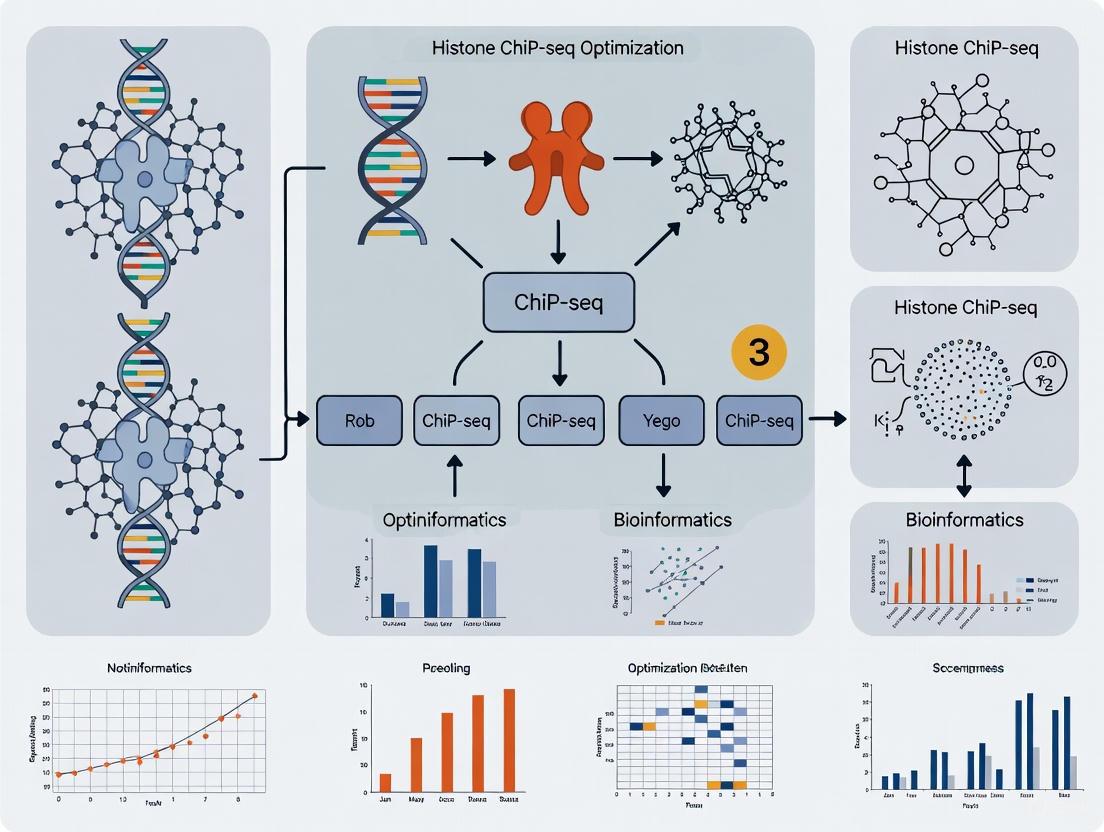
This comprehensive guide details optimized chromatin fragmentation strategies for histone ChIP-seq, addressing critical challenges faced by epigenetic researchers.
Optimizing Chromatin Fragmentation for High-Quality Histone ChIP-seq: A Complete Guide from Basics to Advanced Applications
Abstract
This comprehensive guide details optimized chromatin fragmentation strategies for histone ChIP-seq, addressing critical challenges faced by epigenetic researchers. Covering both foundational principles and advanced methodologies, we provide systematic protocols for enzymatic and sonication-based fragmentation across diverse tissue types, detailed troubleshooting for common pitfalls, quantitative normalization techniques using spike-in controls, and comparative analysis with emerging technologies like CUT&Tag. Designed for scientists and drug development professionals, this resource enables robust, reproducible epigenomic profiling for basic research and clinical applications.
Understanding Chromatin Fragmentation Fundamentals: The Bedrock of Quality Histone ChIP-seq
The Critical Role of Fragmentation in Histone ChIP-seq Success and Data Quality
Chromatin fragmentation is a critical first step in any Chromatin Immunoprecipitation followed by sequencing (ChIP-seq) experiment, determining the resolution and specificity of your final results. For histone modifications, this process involves breaking down chromatin into appropriately sized fragments that preserve nucleosome structure while allowing efficient immunoprecipitation. The fragmentation method directly impacts your data quality by influencing signal-to-noise ratio, peak resolution, and the biological validity of your findings. Understanding that histone modifications require different fragmentation strategies than transcription factors is essential—while transcription factors bind DNA directly and may benefit from cross-linking, histone modifications are integral to nucleosome structure and often perform better with native chromatin preparation approaches. The fragment size of 150-300 base pairs (approximately 1-2 nucleosomes) provides optimal resolution for mapping histone modifications while maintaining chromatin integrity [1].
FAQs: Fragmentation in Histone ChIP-seq
Q1: Why is fragmentation so critical specifically for histone ChIP-seq experiments?
Fragmentation determines the resolution at which you can map histone modifications across the genome. Optimal fragmentation preserves nucleosome structure while allowing access to antibody epitopes. For histone modifications, the ideal fragment size ranges from 150-300 bp, which corresponds to mononucleosomes and dinucleosomes. This size range provides high resolution of binding sites and works well for next-generation sequencing platforms. Oversonication can destroy nucleosome integrity, leading to loss of signal, while undersonication reduces mapping resolution and increases background noise [1].
Q2: What are the main methods for chromatin fragmentation, and which is preferred for histone marks?
The two primary methods are sonication and enzymatic digestion (typically with Micrococcal Nuclease, MNase). For histone modifications, MNase digestion of native chromatin into mononucleosome-sized particles is often preferred because it generates high-resolution data for nucleosome modifications and eliminates artifactual signals that can occur with cross-linking. MNase preferentially digests linker DNA between nucleosomes, enriching for properly assembled nucleosomes with their associated histone modifications. In contrast, sonication of cross-linked chromatin may be preferable for transcription factors as MNase could degrade binding sites in linker regions [1].
Q3: How does over-fragmentation or under-fragmentation affect my histone ChIP-seq results?
Under-fragmentation produces large chromatin fragments (>900 bp) that lead to increased background noise, lower resolution, and difficulty in distinguishing specific binding sites. Over-fragmentation (<150 bp) can diminish signal during PCR quantification, disrupt chromatin integrity, and potentially denature antibody epitopes, particularly problematic for amplicons greater than 150 bp in length. Over-sonication of chromatin may result in excessive damage to the chromatin and lower immunoprecipitation efficiency [2] [1].
Q4: How much chromatin fragmentation variability exists between different tissue types?
Significant variability exists between tissue types due to differences in cellular heterogeneity, extracellular matrix composition, and nuclear density. For example, brain and heart tissues typically yield much lower chromatin amounts (2-5 μg per 25 mg tissue) compared to spleen (20-30 μg per 25 mg tissue) or liver (10-15 μg per 25 mg tissue) when processed using the same protocol. This variability necessitates tissue-specific optimization of fragmentation conditions [2].
Q5: What are the key quality control metrics to assess fragmentation success?
Several QC metrics help evaluate fragmentation success:
- Electrophoresis profile: DNA should appear as a smear between 150-900 bp with a concentration around 150-300 bp
- FRiP (Fraction of Reads in Peaks): Should typically exceed 5% for transcription factors and be higher for histone marks
- TSS Enrichment Score: Measures signal-to-noise ratio around transcription start sites
- SSD scores: Higher scores indicate better enrichment
- Cross-correlation metrics: Assess strand shift and enrichment quality [3] [4]
Troubleshooting Guides
Common Fragmentation Problems and Solutions
| Problem | Possible Causes | Recommended Solutions |
|---|---|---|
| Low chromatin concentration | Insufficient starting material, incomplete tissue disaggregation or cell lysis | Increase initial tissue amount; visually confirm complete nuclear lysis under microscope; use mechanical disaggregation methods optimized for specific tissue types [2] |
| Under-fragmentation (large fragments) | Insufficient nuclease digestion, insufficient sonication, over-crosslinking, too much input material | Enzymatic: Increase MNase concentration or digestion time (optimize via time course). Sonication: Perform sonication time course; increase power or duration; reduce cross-linking time (10-30 min range) [2] [5] |
| Over-fragmentation (<150 bp) | Excessive MNase digestion, oversonication | Enzymatic: Reduce MNase concentration or digestion time. Sonication: Reduce sonication cycles or power; use minimal cycles needed for desired fragment size [2] [1] |
| High background noise | Inefficient fragmentation, cross-linking issues, antibody non-specificity | Optimize fragment size (150-300 bp); shorten cross-linking time; titrate antibody concentration; include appropriate controls (input DNA, IgG) [1] [6] |
| Variable fragmentation across samples | Inconsistent sample handling, temperature fluctuations, equipment calibration issues | Standardize sample volumes; maintain consistent temperature (4°C during lysis); calibrate sonicators regularly; use identical buffer compositions [5] |
Fragmentation Optimization Protocol for Histone Modifications
Basic Protocol: MNase Titration for Native Chromatin Preparation
This protocol optimizes enzymatic fragmentation for histone ChIP-seq, particularly important for challenging tissue samples [2] [7]:
- Prepare cross-linked nuclei from 125 mg of tissue or 2 × 10^7 cells (equivalent of 5 IP preparations)
- Aliquot nuclei into 5 individual 1.5 mL microcentrifuge tubes (100 μL each) on ice
- Prepare MNase dilution (1:10 dilution of enzyme in 1X Buffer B + DTT)
- Add MNase to each tube in increasing volumes (0 μL, 2.5 μL, 5 μL, 7.5 μL, 10 μL of diluted MNase)
- Incubate for 20 minutes at 37°C with frequent mixing
- Stop digestion with 10 μL of 0.5 M EDTA, place on ice
- Purify DNA and analyze fragment size by electrophoresis on 1% agarose gel
- Select optimal condition that produces DNA fragments of 150-300 bp
- Scale down for actual experiments: the determined volume of diluted MNase ÷ 10 = volume of stock MNase per IP preparation
Sonication Optimization Protocol for Cross-Linked Chromatin
For researchers preferring sonication-based approaches, particularly when studying histone modifications that may benefit from cross-linking:
- Prepare cross-linked nuclei from 100-150 mg of tissue or 1-2 × 10^7 cells per 1 mL ChIP Sonication Nuclear Lysis Buffer
- Perform sonication time-course by removing 50 μL samples after increasing sonication durations (e.g., after each 1-2 minutes of sonication)
- Reverse cross-links in each sample by adding NaCl, RNase A, and Proteinase K
- Analyze DNA fragment size by electrophoresis on 1% agarose gel
- Select conditions generating optimal DNA fragment size (150-300 bp)
- Avoid over-sonication indicated by >80% of total DNA fragments being shorter than 500 bp [2]
Experimental Data and Technical Specifications
Expected Chromatin Yield from Different Tissues
Table: Typical chromatin yields from 25 mg of various tissues or 4 × 10^6 HeLa cells [2]
| Tissue / Cell Type | Total Chromatin Yield (Enzymatic Protocol) | Expected DNA Concentration (Enzymatic Protocol) | Total Chromatin Yield (Sonication Protocol) | Expected DNA Concentration (Sonication Protocol) |
|---|---|---|---|---|
| Spleen | 20-30 μg | 200-300 μg/mL | NT | NT |
| Liver | 10-15 μg | 100-150 μg/mL | 10-15 μg | 100-150 μg/mL |
| Kidney | 8-10 μg | 80-100 μg/mL | NT | NT |
| Brain | 2-5 μg | 20-50 μg/mL | 2-5 μg | 20-50 μg/mL |
| Heart | 2-5 μg | 20-50 μg/mL | 1.5-2.5 μg | 15-25 μg/mL |
| HeLa Cells | 10-15 μg | 100-150 μg/mL | 10-15 μg | 100-150 μg/mL |
Quality Control Metrics for Histone ChIP-seq Data
Table: Key QC metrics and their acceptable thresholds for histone ChIP-seq data [3] [4]
| QC Metric | Description | Acceptable Range | Preferred Range (Histone Marks) |
|---|---|---|---|
| FRiP (Fraction of Reads in Peaks) | Percentage of mapped reads falling into peak regions | >1% | >5% (varies by specific mark) |
| TSS Enrichment | Signal-to-noise calculation around transcription start sites | >5 | >10 |
| SSD Score | Standard deviation of signal pile-up normalized to total reads | Higher is better | Tissue-dependent |
| RiBL | Reads in blacklisted regions | <1% | <0.5% |
| NSC (Normalized Strand Cross-correlation) | Signal-to-noise ratio based on read clustering | >1.05 | >1.1 |
| RSC (Relative Strand Cross-correlation) | Normalized strand cross-correlation ratio | >0.8 | >1 |
| Fragment Size | Size range of chromatin fragments | 150-900 bp | 150-300 bp |
| Mapping Rate | Percentage of reads aligning to reference genome | >80% | >90% |
Workflow Visualization
Histone ChIP-seq Fragmentation Workflow
This workflow outlines the critical decision points in chromatin fragmentation for histone ChIP-seq, emphasizing the importance of size optimization and method selection based on experimental goals.
The Scientist's Toolkit: Essential Research Reagents
Table: Key reagents and materials for histone ChIP-seq fragmentation optimization [2] [7] [5]
| Reagent/Material | Function | Specification Notes |
|---|---|---|
| Formaldehyde | Cross-linking protein-DNA interactions | High quality, fresh 1% final concentration (w/v); cross-linking time 10-30 minutes [5] |
| Glycine | Quenching cross-linking reaction | 125 mM final concentration, 5 minutes at room temperature [5] |
| Micrococcal Nuclease (MNase) | Enzymatic chromatin fragmentation | Requires concentration optimization via titration; digests linker DNA, enriches nucleosomes [2] [1] |
| Sonicator | Mechanical chromatin fragmentation | Probe tip or bath sonicator; requires power/time optimization for each cell/tissue type [2] |
| Protease Inhibitors | Prevent protein degradation during processing | Add fresh to lysis buffers; include phosphatase inhibitors if studying phosphorylation [5] |
| Agarose | Fragment size analysis | 1-1.5% gel in 1X TAE/TBE; avoid overloading DNA for accurate size determination [5] |
| Protein A/G Magnetic Beads | Antibody binding and immunoprecipitation | Choose based on antibody species/isotype; binding capacity ~10 μg antibody per 30 μL beads [5] |
| ChIP-grade Antibodies | Target-specific immunoprecipitation | Verify ≥5-fold enrichment in ChIP-PCR; test multiple loci; check specificity via western or knockout controls [1] |
| DNA Size Markers | Fragment size reference | 100 bp DNA ladder for accurate fragment size determination [2] |
| Biological Replicates | Experimental design | Minimum of duplicate biological replicates; essential for statistical power and reproducibility [1] |
Advanced Fragmentation Techniques
Double-Crosslinking for Challenging Targets
For particularly challenging histone targets or complex multicellular structures, double-crosslinking approaches can improve results. The dxChIP-seq protocol incorporates an initial cross-linking step with disuccinimidyl glutarate (DSG) followed by standard formaldehyde cross-linking. This dual-crosslinking strategy better captures proteins indirectly bound to DNA and enhances the signal-to-noise ratio for difficult chromatin targets. This method is especially valuable for studying histone modifiers that function within large multi-protein complexes rather than binding DNA directly [8].
Tissue-Specific Modifications
Working with solid tissues requires specific adaptations to standard protocols. The refined ChIP-seq protocol for solid tissues emphasizes:
- Simplified tissue preparation with efficient chromatin extraction from complex matrices
- Adapted fragmentation parameters accounting for tissue-specific density and composition
- Scalable library construction compatible with various sequencing platforms
- Enhanced reproducibility through standardized processing of heterogeneous samples [7]
These modifications are particularly important for disease-relevant chromatin state analysis in physiologically native environments that maintain cellular heterogeneity and spatial organization missing in vitro models.
In chromatin immunoprecipitation followed by sequencing (ChIP-seq), the fragmentation method is a pivotal technical choice that directly influences data quality, resolution, and biological interpretation. This process involves breaking chromatin into manageable fragments while preserving protein-DNA interactions, creating a foundational step that determines the success of subsequent immunoprecipitation and sequencing. For researchers investigating histone modifications, the decision between enzymatic digestion (typically using Micrococcal Nuclease, or MNase) and sonication-based shearing carries significant implications for experimental outcomes. Enzymatic fragmentation utilizes MNase to cleave linker DNA between nucleosomes, generating precise fragments that correspond to nucleosomal boundaries. In contrast, sonication employs mechanical shearing through acoustic energy to randomly fragment chromatin without regard for nucleosomal positioning. Understanding the technical nuances, advantages, and limitations of each approach is essential for optimizing ChIP-seq protocols for histone modification studies, particularly as researchers pursue higher-resolution maps of epigenetic landscapes in various biological contexts from cell lines to solid tissues [9] [10].
Mechanisms of Chromatin Fragmentation
Enzymatic Fragmentation with Micrococcal Nuclease (MNase)
Micrococcal Nuclease (MNase) is a calcium-dependent enzyme that specifically cleaves DNA in linker regions between nucleosomes while leaving nucleosome-bound DNA protected. This enzymatic approach generates chromatin fragments that primarily consist of mono-, di-, and tri-nucleosomes, typically producing DNA fragments between 150-750 base pairs depending on digestion completeness [10]. The mechanism relies on MNase's dual endo- and exo-nuclease activities, which progressively digest accessible DNA until reaching protein-bound regions, effectively creating protein-DNA footprints at single base-pair resolution [11]. This method operates under mild conditions without high heat or detergent, thereby preserving antibody epitopes and protein-DNA interactions that might be disrupted by harsher methods [12].
Fragmentation Mechanism Workflow
Sonication-Based Mechanical Shearing
Sonication utilizes high-frequency acoustic energy to mechanically disrupt and fragment chromatin through cavitation forces. Unlike enzymatic methods, sonication shears DNA randomly without preference for nucleosomal boundaries, producing fragments ranging from 150-1000 base pairs [10]. This process typically requires harsh conditions including high detergent buffers and generates significant heat, which can potentially damage chromatin integrity and antibody epitopes [12]. Sonication efficiency varies substantially depending on cell type, tissue composition, and specific equipment parameters, necessitating extensive optimization for different experimental systems [10]. While traditional sonication has been the dominant fragmentation method for crosslinked ChIP (X-ChIP), it demonstrates particular limitations for histone modification studies due to its non-random fragmentation bias, with heterochromatic regions showing increased resistance to fragmentation [11].
Fragmentation Mechanism Workflow
Technical Comparison and Performance Metrics
Quantitative Performance Comparison
Table 1: Direct comparison of key performance metrics between MNase and sonication fragmentation methods
| Performance Metric | MNase Fragmentation | Sonication Fragmentation |
|---|---|---|
| Fragment Size Range | 150-750 bp (primarily mono-, di-, tri-nucleosomes) [10] | 150-1000 bp (random distribution) [10] |
| Resolution Capability | Single base-pair resolution for transcription factor binding sites; 50 bp half-height width for CTCF [11] | ~200 bp half-height width for CTCF [11] |
| Sequence Bias | Known sequence preference (e.g., AT-rich regions) [13] | Bias against heterochromatic regions [11] |
| Experimental Consistency | High reproducibility between experiments [12] [14] | Variable; requires extensive optimization [12] |
| Typical Sequencing Depth | Cost-effective at 7 million paired-end reads for high-resolution PolII mapping [11] | 13 million mapped reads required for conventional PolII mapping [11] |
| Success with Low-Abundance Targets | Excellent for transcription factors and cofactors [12] | Challenging for low-abundance targets [12] |
Applications for Histone Modification Studies
For histone modification research, MNase-based fragmentation offers distinct advantages due to its ability to generate fragments that correspond directly to nucleosomal units. This is particularly valuable for mapping modifications that exhibit nucleosome-specific patterns, such as H3K4me3 (associated with active promoters) and H3K27me3 (associated with facultative heterochromatin) [15]. MNase's precision enables researchers to map the precise location of RNA Polymerase II and chromatin remodelers relative to nucleosome positioning [11]. When profiling broad histone marks like H3K27me3 that cover large genomic domains, MNase digestion provides more uniform coverage across these regions compared to sonication, which tends to underrepresent heterochromatic areas [11] [16]. Additionally, enzymatic fragmentation has proven superior for studying histone modifications in solid tissues, where chromatin heterogeneity and complex cell matrices present additional challenges [9].
Troubleshooting Guide: Common Experimental Challenges
Frequently Asked Questions (FAQs)
Q1: How does fragmentation choice impact detection of histone modifications versus transcription factors?
A: MNase fragmentation is particularly advantageous for histone modification studies because it preserves nucleosome boundaries, allowing precise mapping of histone marks to specific nucleosomal positions. For transcription factors, MNase can achieve single base-pair resolution of binding sites by generating precise protein-DNA footprints [11]. Sonication may be preferable for studying transcription factors that bind in nucleosome-free regions, as over-digestion with MNase can lead to loss of these regions [14].
Q2: What are the specific challenges of each method for solid tissue samples?
A: Solid tissues present unique challenges including cellular heterogeneity, complex extracellular matrices, and limited starting material [9]. MNase digestion typically provides more consistent fragmentation across different tissue types with less optimization required [12]. Sonication of tissues requires extensive optimization due to variable resistance to shearing across different tissue compositions, and over-sonication can damage epitopes critical for antibody recognition [9] [10].
Q3: How does fragmentation method affect sequencing depth requirements?
A: MNase fragmentation can reduce sequencing requirements due to its higher specificity. For example, high-resolution mapping of RNA Polymerase II using MNase required only 7 million paired-end reads compared to 13 million mapped reads with sonication-based ChIP-seq [11]. The targeted nature of MNase digestion produces less background noise, making more efficient use of sequencing depth [11].
Q4: What controls should be implemented for each fragmentation method?
A: For both methods, proper controls are essential. For MNase digestion, titrate enzyme concentration and time to achieve optimal fragment size (primarily mononucleosomes at ~150 bp) [10]. For sonication, perform time course experiments to determine minimal sonication needed for 200-500 bp fragments [10]. Always include positive control antibodies (e.g., H3K4me3 for active promoters) and negative control regions (e.g., GapDH) [10].
Troubleshooting Common Issues
Table 2: Troubleshooting common problems encountered with MNase and sonication fragmentation methods
| Problem | Possible Causes | Solutions |
|---|---|---|
| Over-digestion with MNase | Excessive MNase concentration or incubation time | Titrate MNase using time course; aim for primarily mononucleosomes (~150 bp) with some dinucleosomes [10] |
| Incomplete fragmentation with sonication | Insufficient sonication time or power; heterochromatin resistance | Optimize sonication conditions for cell/tissue type; consider iterative refragmentation protocol [16] |
| Low signal for transcription factors | Unstable protein-DNA interactions disrupted | Switch to MNase fragmentation with mild conditions [12] |
| Biased coverage in heterochromatin | Sonication resistance of condensed chromatin | Use MNase digestion which more effectively fragments heterochromatic regions [11] |
| High background noise | Non-specific antibody binding or over-fixation | For sonication: reduce fixation time; for MNase: optimize digestion conditions [10] |
| Poor reproducibility between experiments | Inconsistent sonication efficiency | Switch to MNase digestion for more consistent results [12] [14] |
Research Reagent Solutions
Essential Materials and Reagents
Table 3: Key reagents and their functions in chromatin fragmentation protocols
| Reagent/Kit | Function | Application Notes |
|---|---|---|
| Micrococcal Nuclease (MNase) | Digests linker DNA between nucleosomes | Requires calcium cofactor; concentration must be titrated for each cell/tissue type [10] |
| Formaldehyde | Crosslinks proteins to DNA | Standard concentration: 1%; fixation time critical (tissue requires longer fixation) [10] |
| SimpleChIP Plus Enzymatic Chromatin IP Kit | Complete system for MNase-based ChIP | Provides optimized buffers and MNase for consistent enzymatic fragmentation [12] |
| Agencourt AMPure Beads | Size selection of DNA fragments | Can be used to enrich for short fragments; ratio adjustment controls size selection stringency [11] |
| Diagenode iDeal ChIP-seq Kit for Histones | Sonication-based ChIP system | Includes validated antibodies and optimized sonication protocols [16] |
| Tn5 Transposase | Alternative enzyme for chromatin profiling | Used in ATAC-seq and related methods; integrates adapters simultaneously with fragmentation [17] |
Advanced Applications and Protocol Integration
Emerging Techniques Combining MNase with Advanced Sequencing
Recent methodological advances have leveraged MNase's properties for sophisticated epigenetic profiling applications. Micro-C-ChIP combines Micro-C (an MNase-based version of Hi-C) with chromatin immunoprecipitation to map 3D genome organization at nucleosome resolution for defined histone modifications [15]. This approach enables researchers to explore histone-modification-specific chromatin folding while significantly reducing sequencing costs compared to genome-wide methods. Similarly, scEpi2-seq utilizes a protein A-MNase fusion protein tethered to specific histone modifications for simultaneous detection of histone modifications and DNA methylation at single-cell resolution [18]. These innovative applications highlight how MNase's precise fragmentation capabilities enable multidimensional epigenetic profiling that would be challenging with sonication-based approaches.
Protocol Selection Framework
Choosing between MNase and sonication fragmentation requires consideration of multiple experimental factors. MNase is strongly recommended for: (1) high-resolution mapping of histone modifications relative to nucleosome positions, (2) studies of heterochromatic regions resistant to sonication, (3) experiments requiring high reproducibility across samples, and (4) research on transcription factors and cofactors that benefit from gentle fragmentation conditions [11] [12]. Sonication may be preferred for: (1) projects requiring analysis of nucleosome-free regions, (2) laboratories with extensively optimized sonication protocols, and (3) experiments focusing on open chromatin regions where MNase's sequence bias might be problematic [14] [13]. For solid tissue samples, enzymatic digestion generally provides more consistent results with less optimization [9].
Fragmentation Method Decision Framework
The choice between enzymatic (MNase) and sonication-based fragmentation approaches represents a critical methodological decision in histone ChIP-seq experimental design. MNase fragmentation offers superior resolution, reproducibility, and precision for mapping histone modifications to specific nucleosomal positions, making it particularly valuable for studies requiring precise nucleosome-level mapping. Sonication remains a viable option for certain applications, though it requires more extensive optimization and may introduce biases in chromatin coverage. As epigenetic research advances toward increasingly complex questions involving chromatin architecture and single-cell analysis, MNase-based methods provide a foundation for high-resolution mapping essential for understanding the nuanced relationships between histone modifications, chromatin structure, and gene regulation. Researchers should select their fragmentation strategy based on specific experimental goals, sample types, and resolution requirements, while considering the troubleshooting guidelines and reagent solutions outlined in this technical support resource.
Chromatin immunoprecipitation followed by sequencing (ChIP-seq) is a powerful method for mapping histone modifications genome-wide. However, working with tissue samples presents unique challenges not typically encountered with cell lines. The inherent structural heterogeneity of different tissues, combined with variations in cellular composition and extracellular matrix, significantly impacts chromatin yield and fragmentation efficiency. These variables are crucial for successful experiments, as suboptimal chromatin preparation can lead to poor resolution, high background noise, and failed library preparations. This guide addresses the specific hurdles of tissue-specific chromatin work, providing targeted troubleshooting and optimization strategies to ensure robust and reproducible histone ChIP-seq results.
Troubleshooting Guide: Common Tissue-Specific Issues
Table 1: Chromatin Yield and Fragmentation Issues
| Problem | Possible Causes | Recommended Solutions |
|---|---|---|
| Low chromatin concentration [19] | Incomplete tissue disaggregation or cell lysis; insufficient starting material. | For brain tissue, use a Dounce homogenizer as mechanical disaggregation systems are ineffective. Confirm accurate cell counting and ensure complete nuclear lysis by visualizing under a microscope before and after sonication [19]. |
| Chromatin under-fragmentation [19] | Over-crosslinking; heterochromatin resistance; insufficient sonication/enzymatic digestion. | Shorten crosslinking time (10-30 minutes). For sonication, perform a time-course experiment. For enzymatic digestion, titrate the amount of Micrococcal Nuclease [19]. Inactive marks like H3K27me3 in heterochromatin are more resistant to shearing [16]. |
| Chromatin over-fragmentation [19] | Excessive sonication or enzymatic digestion. | Use the minimal number of sonication cycles or lowest enzyme concentration needed. Over-sonication, where >80% of DNA is <500 bp, damages chromatin and reduces IP efficiency [19]. |
| High background noise | Inefficient washing; non-specific antibody binding; over-fragmentation. | Include stringent wash steps. Use a negative control IgG and a positive control ChIP-grade antibody. Optimize fragmentation to avoid large or overly small fragments [19] [20]. |
| Poor shearing efficiency [20] | Incorrect cell concentration; suboptimal crosslinking. | Do not exceed 15 million cells per mL during shearing. Keep samples cold (4°C) at all times. Empirically test crosslinking times (e.g., 10, 20, 30 min) as over-crosslinking prevents efficient shearing [20]. |
Table 2: Tissue-Specific Chromatin Yield Expectations
| Tissue / Cell Type | Total Chromatin Yield (per 25 mg tissue or 4x10^6 cells) [19] | Expected DNA Concentration [19] | Recommended Disaggregation Method [19] |
|---|---|---|---|
| Spleen | 20–30 µg | 200–300 µg/ml | BD Medimachine or Dounce Homogenizer |
| Liver | 10–15 µg | 100–150 µg/ml | Dounce Homogenizer |
| Kidney | 8–10 µg | 80–100 µg/ml | BD Medimachine or Dounce Homogenizer |
| HeLa Cells | 10–15 µg | 100–150 µg/ml | N/A |
| Brain | 2–5 µg | 20–50 µg/ml | Dounce Homogenizer (required) |
| Heart | 2–5 µg | 20–50 µg/ml | Dounce Homogenizer |
Frequently Asked Questions (FAQs)
FAQ 1: Why is my chromatin yield from brain and heart tissues so much lower than from other tissues? The density and composition of different tissues directly influence chromatin yield. Tissues like spleen are naturally more dissociable and yield more chromatin per milligram. In contrast, tissues like brain and heart have a high density of non-nucleated cells (e.g., cardiomyocytes), extensive extracellular matrix, or more lipid content, resulting in significantly lower nuclear density and thus lower chromatin yield per unit mass [19]. You may need to increase the amount of starting tissue for these challenging samples.
FAQ 2: How does chromatin structure affect the fragmentation of specific histone marks? The physical state of chromatin is a major factor. Active histone marks (e.g., H3K4me3) are typically associated with open, accessible euchromatin, which fragments more easily. In contrast, inactive marks (e.g., H3K27me3) are found in condensed heterochromatin, which is structurally more resistant to breaking forces from sonication [16] [21]. This can lead to an under-representation of these regions in your final library if fragmentation is not optimized.
FAQ 3: What can I do to improve the detection of heterochromatin-associated histone marks like H3K27me3? Standard protocols may be biased against heterochromatin. Consider the iterative fragmentation technique, where the already immunoprecipitated and decrosslinked DNA undergoes an additional round of sonication [16]. This post-IP shearing helps recover the longer DNA fragments typically associated with heterochromatin marks, significantly improving their detection without the need for size selection that would otherwise discard this material [16].
FAQ 4: How much sequencing depth is required for different types of histone marks? The required sequencing depth depends on whether the mark produces "broad" or "narrow" domains. The ENCODE consortium standards recommend:
- Broad marks (e.g., H3K27me3, H3K36me3): 45 million usable fragments per replicate [22].
- Narrow marks (e.g., H3K4me3, H3K27ac): 20 million usable fragments per replicate [22].
- H3K9me3 (exception): 45 million total mapped reads per replicate for tissues and primary cells, as this mark is enriched in repetitive regions [22].
FAQ 5: My antibody is ChIP-grade but isn't working. What could be wrong? Crosslinking can mask epitopes that an antibody recognizes in western blot [20]. An antibody may not be suitable for ChIP even if it works for other applications. Always use validated ChIP-grade antibodies when available. If testing a new antibody, include a known positive control antibody in your experiment. Furthermore, ensure you are using the correct beads (Protein A vs. Protein G) for your antibody's host species and isotype [20].
Optimizing Fragmentation: Key Experimental Protocols
Sonication is critical for generating properly sized chromatin fragments. The following protocol helps determine the optimal conditions for your specific tissue and sonicator.
- Prepare Nuclei: Prepare cross-linked nuclei from 100–150 mg of tissue or 1x10^7–2x10^7 cells.
- Sonication Time-Course: Fragment the chromatin by sonication. Remove 50 µl aliquots after different durations (e.g., after each 1-2 minutes of cumulative sonication).
- Purify and Analyze DNA: Clarify each aliquot by centrifugation. Reverse cross-links, treat with RNase A and Proteinase K, and purify DNA.
- Gel Electrophoresis: Run 20 µl of each sample on a 1% agarose gel.
- Determine Optimal Setting: Choose the shortest sonication time that produces a DNA smear with the majority of fragments between 200-800 bp. Avoid over-sonication, indicated by >80% of fragments being shorter than 500 bp [19].
The workflow for this optimization process is outlined below.
Enzymatic fragmentation with Micrococcal Nuclease (MNase) is an alternative to sonication.
- Prepare Nuclei: Prepare cross-linked nuclei from 125 mg of tissue (equivalent to 5 IPs).
- Set Up Digestion: Transfer 100 µl of nuclei prep into five separate tubes.
- Titrate Enzyme: Add a dilution series of MNase to each tube (e.g., 0 µl, 2.5 µl, 5 µl, 7.5 µl, 10 µl of a diluted enzyme stock).
- Digest and Stop: Incubate for 20 minutes at 37°C, then stop the reaction with EDTA.
- Analyze DNA: Purify DNA from each tube as in the sonication protocol and analyze fragment size on a gel.
- Calculate Working Concentration: The volume of diluted MNase that gives 150-900 bp fragments in this test is 10x the stock volume needed for one IP preparation [19].
The Scientist's Toolkit: Essential Research Reagents
Table 3: Key Reagent Solutions for Histone ChIP-seq
| Item | Function / Application | Example / Note |
|---|---|---|
| Validated Antibodies | Immunoprecipitation of specific histone marks. | Use ChIP-grade antibodies. Examples: H3K27me3 (CST #9733), H3K4me3 (CST #9751), H3K27ac (Abcam ab4729) [21] [23]. |
| Protein A/G Beads | Capture of antibody-target complexes. | Choose based on antibody species/isotype. Protein A has high affinity for rabbit IgG; Protein G is better for mouse IgG1 and rat antibodies [20]. |
| Micrococcal Nuclease (MNase) | Enzymatic fragmentation of chromatin. | Requires titration for each tissue type to achieve ideal 150-900 bp fragments [19]. |
| Protease Inhibitors | Prevent protein degradation during chromatin prep. | Add to lysis buffers immediately before use. Include phosphatase inhibitors if studying phosphorylation [21] [20]. |
| ChIP Elute Kit | Streamlined DNA elution and crosslink reversal. | Faster than traditional methods (1 hour vs. overnight). Compatible with library prep from single-stranded DNA [24]. |
| DNA SMART ChIP-Seq Kit | Library preparation from low-yield ChIP samples. | Effective for low inputs (from 10,000 cells). Uses a template-switching mechanism, avoiding ligation and pre-PCR cleanups [24]. |
| HDAC Inhibitors (e.g., TSA, NaB) | Stabilize acetylated marks (e.g., H3K27ac) during native protocols. | Note: Systematic benchmarking for CUT&Tag showed TSA did not consistently improve data quality for H3K27ac [23]. |
Advanced Technique: Iterative Fragmentation for Inactive Marks
For challenging inactive histone marks like H3K27me3 that are enriched in long, heterochromatin-associated fragments, standard size selection can discard valuable material. The iterative fragmentation protocol addresses this [16]:
- Perform Standard ChIP: Carry out chromatin immunoprecipitation as usual.
- Elute and Purify DNA: After ChIP, elute and purify the immunoprecipitated DNA.
- Resonicate DNA: Subject the purified, decrosslinked DNA to additional rounds of sonication in small-volume tubes (e.g., 100 µL capped tubes). Use short bursts (e.g., 5 cycles of 30 seconds ON/OFF per round).
- Monitor Fragment Size: Use a Bioanalyzer to check fragment distribution after each round. H3K27me3 typically requires more rounds (e.g., three) than active marks to reach the optimal 200-800 bp size [16].
This method recovers fragments that would be lost, significantly enhancing the detection of heterochromatic marks without prior size selection bias [16]. The conceptual flow of this method is as follows.
For researchers mapping histone modifications, achieving the delicate balance between preserving genuine DNA-protein interactions and obtaining efficient chromatin fragmentation is a fundamental technical challenge. Over-crosslinking can mask antibody epitopes and reduce shearing efficiency, leading to high background noise and low signal resolution [25]. Conversely, under-crosslinking fails to capture transient interactions adequately, resulting in material loss and reduced yield [26]. This guide provides targeted troubleshooting and FAQs to help you optimize this critical step for high-quality, reproducible histone ChIP-seq data.
FAQs: Addressing Common Cross-linking Challenges
Q1: What is the recommended starting point for cross-linking conditions in histone ChIP-seq?
For most histone targets, a good starting point is 1% formaldehyde for 10 minutes at room temperature [25] [26]. Histones are directly bound to DNA, making them more accessible for cross-linking than transcription factors. After cross-linking, the reaction must be quenched with 125 mM glycine for 5 minutes [25] [26].
Q2: How does tissue type affect my cross-linking and fragmentation strategy?
Dense or complex tissues require special consideration. The table below outlines expected chromatin yields, which can guide your input requirements [27].
Table: Expected Chromatin DNA Yield from 25 mg of Various Tissues
| Tissue Type | Total Chromatin DNA Yield | Expected DNA Concentration |
|---|---|---|
| Spleen | 20–30 µg | 200–300 µg/ml |
| Liver | 10–15 µg | 100–150 µg/ml |
| Kidney | 8–10 µg | 80–100 µg/ml |
| Brain | 2–5 µg | 20–50 µg/ml |
| Heart | 2–5 µg | 20–50 µg/ml |
Q3: How can I systematically optimize cross-linking time?
If initial results are poor, test a range of fixation times (e.g., 10, 20, and 30 minutes) while keeping formaldehyde concentration at 1% [25]. Avoid cross-linking for longer than 30 minutes, as this can make chromatin notoriously difficult to shear [25]. Always examine sheared chromatin on an agarose gel to confirm optimal fragment size.
Q4: My chromatin is under-fragmented after cross-linking. What should I do?
Large chromatin fragments lead to increased background and lower resolution. The solution is to shorten the cross-linking time (within the 10-30 minute range) [27]. You may also need to optimize the sonication or enzymatic digestion process further.
Q5: My chromatin is over-fragmented. What went wrong?
Over-sonication, indicated by >80% of DNA fragments being shorter than 500 bp, can disrupt chromatin integrity and lower immunoprecipitation efficiency [27]. Use the minimal number of sonication cycles required to achieve the desired fragment size [27].
Troubleshooting Guide: Common Problems and Solutions
Table: Troubleshooting Common Cross-linking and Fragmentation Issues
| Problem | Possible Causes | Recommended Solutions |
|---|---|---|
| Low Chromatin Concentration | Incomplete tissue disaggregation or cell lysis; insufficient starting material. | - Confirm complete lysis of nuclei under a microscope.- Increase amount of starting tissue or cells as needed [27]. |
| Chromatin Under-fragmentation | Over-crosslinking; too much input material per sample. | - Shorten cross-linking time.- Reduce amount of cells/tissue per sonication tube [27]. |
| Chromatin Over-fragmentation | Excessive sonication or enzymatic digestion. | - Perform a sonication or enzyme time-course.- Use minimal cycles needed for 150-900 bp fragments [27]. |
| High Background Noise | Over-crosslinking; under-fragmentation; non-specific antibody binding. | - Optimize cross-linking duration.- Ensure chromatin is properly fragmented.- Use ChIP-validated antibodies and include negative controls [25]. |
| Poor IP Efficiency | Cross-linking damaged the antibody epitope; inefficient immunoprecipitation. | - Reduce cross-linking time/concentration.- Ensure correct Protein A/G beads are used for your antibody species/isotype [25]. |
Experimental Protocols for Optimization
Optimization of Enzymatic Fragmentation
For protocols using micrococcal nuclease (MNase) for digestion, follow this guide to establish optimal conditions [27]:
- Prepare Nuclei: Prepare cross-linked nuclei from 125 mg of tissue or 2 x 10⁷ cells.
- Set Up Reactions: Aliquot 100 µL of nuclei preparation into five separate tubes.
- Dilute Enzyme: Prepare a 1:10 dilution of micrococcal nuclease stock in the provided buffer.
- Test Conditions: Add 0 µL, 2.5 µL, 5 µL, 7.5 µL, or 10 µL of the diluted enzyme to the five tubes.
- Digest and Analyze: Incubate for 20 minutes at 37°C. Stop the reaction, purify the DNA, and analyze fragment size on a 1% agarose gel.
- Calculate Stock Volume: The volume of diluted enzyme that produces 150-900 bp fragments is equivalent to 10 times the volume of stock enzyme to use for one IP preparation.
Optimization of Sonication-Based Fragmentation
For sonication-based protocols, a time-course experiment is essential [27]:
- Prepare Chromatin: Prepare cross-linked nuclei from 100–150 mg of tissue.
- Sonication Time-Course: Subject the chromatin to sonication, removing a 50 µL sample after each round or duration of sonication (e.g., after each 1-2 minutes).
- Analyze Fragments: Clarify and reverse cross-link each sample. Determine the DNA fragment size on a 1% agarose gel.
- Select Conditions: Choose the sonication conditions that generate the optimal DNA fragment size. For cells fixed for 10 minutes, optimal conditions typically generate a DNA smear with ~90% of fragments less than 1 kb [27].
The following workflow diagram summarizes the key decision points for optimizing your ChIP-seq protocol.
The Scientist's Toolkit: Essential Research Reagents
Table: Key Reagents for Cross-linking ChIP-seq Protocols
| Reagent | Function & Rationale | Protocol Specification |
|---|---|---|
| Formaldehyde | Creates reversible protein-DNA cross-links, preserving in vivo interactions. | Use high-quality, fresh 1% (v/v) final concentration for 10-30 min at room temp [25] [26]. |
| Glycine | Quenches formaldehyde to stop the cross-linking reaction, preventing over-fixation. | Use 125 mM final concentration for 5 min at room temp [25] [26]. |
| Protease Inhibitors | Prevents proteolytic degradation of histones and other proteins during extraction. | Add to all lysis and extraction buffers immediately before use [25]. |
| Micrococcal Nuclease (MNase) | Enzymatically digests chromatin to yield mononucleosomes for high-resolution mapping. | Requires empirical optimization for each cell/tissue type [27]. |
| ChIP-grade Antibody | Binds specifically to the histone modification of interest for immunoprecipitation. | Use 2-5 µg per IP; verify specificity with positive controls [25] [26]. |
| Protein A/G Magnetic Beads | Binds the antibody-chromatin complex for separation and washing. | Select based on antibody species/isotype for optimal binding affinity [25]. |
| Sonication Buffer (with SDS) | Lyses nuclei and provides ionic conditions optimal for chromatin shearing by sonication. | Use histone sonication buffer (1% SDS) for efficient fragmentation [26]. |
Mastering cross-linking optimization is not a one-time task but a critical, iterative process that underpins successful histone ChIP-seq research. By systematically applying the troubleshooting guides, FAQs, and optimization protocols outlined in this technical note, you can significantly improve the signal-to-noise ratio, resolution, and overall quality of your epigenomic data.
Why is DNA Fragment Size Critical for Histone ChIP-seq?
In histone ChIP-seq, the ideal DNA fragment size directly impacts the resolution and quality of your data. Properly sized fragments ensure that the immunoprecipitated DNA accurately represents the histone mark being studied, leading to precise peak calling and reliable biological interpretation. Under-fragmented chromatin can lead to increased background noise and lower resolution, while over-fragmentation may disrupt chromatin integrity and diminish signal, especially for amplicons greater than 150 bp [28].
FAQs and Troubleshooting Guides
FAQ 1: What is the ideal DNA fragment size for histone ChIP-seq?
The optimal DNA fragment size depends on your chromatin fragmentation method. The table below summarizes the ideal size ranges and expected gel patterns for each method [28] [29].
Table 1: Ideal DNA Fragment Size and Distribution by Fragmentation Method
| Fragmentation Method | Ideal DNA Fragment Size Range | Expected Gel Pattern |
|---|---|---|
| Micrococcal Nuclease (MNase) Digestion | 150–1000 base pairs (bp) [29] | A clear ladder of mono-, di-, tri-, tetra-, and penta-nucleosome units [29]. |
| Sonication | 200–1000 bp [29] | A smooth smear of DNA within the 100–1000 bp range [29]. A smear with ~90% of fragments < 1 kb is considered optimal for cells fixed for 10 minutes [28]. |
FAQ 2: My chromatin is under-fragmented. What should I do?
Under-fragmentation results in large chromatin fragments, which increase background noise and reduce resolution [28].
- For Enzymatic (MNase) Digestion: Increase the amount of Micrococcal nuclease added to the chromatin digestion or perform a time course for enzymatic digestion [28].
- For Sonication: Conduct a sonication time course, increasing the number or duration of sonication pulses [28].
- General Check: Ensure cells are not over-crosslinked, as this can make chromatin resistant to fragmentation. Shortening the crosslinking time to within a 10–30 minute range can help [28].
FAQ 3: My chromatin is over-fragmented. How do I fix this?
Over-fragmentation can diminish PCR signal and disrupt antibody epitopes [28].
- For Enzymatic (MNase) Digestion: If you observe only a single band around 150 bp (a mono-nucleosome), the chromatin is over-digested. You are adding too much nuclease for the number of cells or amount of tissue. Use less nuclease or increase the number of cells/amount of tissue in the digest [29].
- For Sonication: Use the minimum number of sonication cycles required to generate the desired size range. Over-sonication, indicated by >80% of total DNA fragments being shorter than 500 bp, can result in excessive damage to the chromatin and lower immunoprecipitation efficiency [28] [29].
FAQ 4: What does a high-quality histone ChIP-seq workflow look like?
The following diagram outlines a robust workflow for histone ChIP-seq, highlighting key steps where fragment size quality must be checked.
FAQ 5: What are the key reagents I need for chromatin fragmentation?
Table 2: Research Reagent Solutions for Chromatin Fragmentation
| Reagent / Material | Function / Purpose |
|---|---|
| Micrococcal Nuclease (MNase) | Enzymatically digests chromatin at linker regions between nucleosomes, preserving protein-DNA interactions. Ideal for histone marks [29]. |
| Sonicator | Uses acoustic energy to physically shear chromatin into random fragments. Requires optimization to prevent over-shearing [30]. |
| Formaldehyde | Reversible crosslinker that stabilizes protein-DNA interactions in live cells, capturing a snapshot of chromatin state [30]. |
| Proteinase K | Digests proteins after immunoprecipitation and is essential for liberating DNA for size analysis and purification [28]. |
| RNase A | Removes RNA contamination from the chromatin preparation to ensure accurate DNA quantification and analysis [28]. |
| Agarose Gel Electrophoresis | Critical quality control tool for visualizing DNA fragment size distribution and assessing the success of fragmentation [28] [29]. |
Achieving ideal DNA fragment size is a cornerstone of successful histone ChIP-seq. By targeting 150-1000 bp for MNase-digested chromatin and 200-1000 bp for sonicated chromatin, and rigorously using agarose gel analysis for quality control, researchers can significantly enhance the sensitivity, resolution, and biological relevance of their epigenomic data.
Step-by-Step Fragmentation Protocols: From Solid Tissues to Cell Cultures
FAQs: Micrococcal Nuclease in Chromatin Fragmentation
Q1: Why is micrococcal nuclease (MNase) used for chromatin fragmentation in histone ChIP-seq?
MNase is an endo-exonuclease that preferentially digests linker DNA, the stretches of DNA between nucleosomes, while the DNA wrapped around the histone core (approximately 147 bp) is protected from digestion [31]. This makes it ideal for enriching mononucleosomes for histone studies. Unlike sonication, which uses mechanical shearing, enzymatic digestion with MNase is a gentler process that better preserves the integrity of chromatin and protein epitopes [32].
Q2: How do I determine the correct amount of MNase to use for my experiment?
The optimal amount of MNase is highly dependent on your cell type and number. A general recommendation is to use a ratio of 0.5 µl of MNase per 4x10^6 cells or 25 mg of tissue [32]. However, this should be empirically determined through a pilot titration experiment. Key visual cues on an agarose gel are a ladder of DNA fragments corresponding to mono-, di-, and tri-nucleosomes. A single band at ~150 bp indicates over-digestion to mononucleosomes only [32].
Q3: What does an ideal MNase digestion pattern look like on a gel?
A successful partial MNase digestion should produce a DNA ladder consisting of a mix of mono-, di-, tri-, and even tetra-nucleosomes, which appear as bands from 150 base pairs up to 1,000 base pairs [32]. The presence of this ladder indicates that the chromatin is sufficiently fragmented while preserving nucleosome structure. A smear, rather than discrete bands, may suggest issues with the digestion or sample quality.
Q4: My chromatin is over-digested. What went wrong and how can I fix it?
Over-digestion, resulting primarily in a sharp band at 150 bp, occurs when too much MNase is used for the amount of chromatin [32]. To correct this:
- Decrease the amount of MNase added to the reaction.
- Increase the number of cells or amount of tissue used in the digest while keeping the MNase volume constant [32].
- Shorten the digestion time at a given enzyme concentration.
Q5: My chromatin is under-digested. How can I improve fragmentation?
Under-digestion, characterized by a large amount of high molecular weight DNA, means the chromatin has not been sufficiently fragmented.
- Increase the amount of MNase added.
- Extend the digestion time.
- Ensure the MNase enzyme is active and has not been degraded by improper storage or handling.
Troubleshooting Guide: Common MNase Digestion Issues
| Problem | Possible Causes | Recommended Solutions |
|---|---|---|
| Over-digestion (Only a 150 bp band) | - Excessive MNase concentration [32]- Incubation time too long- Too few cells | - Titrate down MNase amount [32]- Reduce digestion time- Increase cell input [32] |
| Under-digestion (High molecular weight DNA) | - Insufficient MNase [32]- Digestion time too short- Inactive enzyme | - Titrate up MNase amount [32]- Increase digestion time- Check enzyme activity and storage conditions |
| No DNA Ladder (Smear) | - Proteinase or nuclease contamination- Improper cell lysis- Degraded chromatin | - Use fresh protease inhibitors [33]- Verify lysis buffer efficacy [33]- Check crosslinking time [32] |
| Low DNA Yield | - Over-digestion [32]- Inefficient DNA purification [31]- Excessive losses during clean-up | - Optimize MNase to prevent over-digestion [32]- Use carrier during precipitation or silica-column purification [31] |
Experimental Protocol: MNase Titration and Time Course
This protocol provides a methodology for establishing the optimal MNase digestion conditions for your specific cell type.
1. Crosslinking and Chromatin Preparation
- Harvest 4x10^6 cells per MNase condition to be tested [32].
- Crosslink proteins to DNA using 1% formaldehyde for 10 minutes (for histones, crosslinking may be optional for Native ChIP) [34]. Quench with glycine.
- Pellet cells and wash with PBS.
- Permeabilize cells using an appropriate buffer (e.g., containing Triton X-100) to allow MNase entry. Protocols vary by kit [32].
2. Micrococcal Nuclease Titration
- Prepare a master mix of permeabilized cells in MNase Digestion Buffer (e.g., containing CaCl₂, as MNase is calcium-dependent) [31].
- Aliquot the chromatin into several tubes.
- Add a range of MNase volumes (e.g., 0 µl, 0.25 µl, 0.5 µl, 1.0 µl, 2.0 µl) to the different tubes. The 0 µl tube is a no-enzyme control.
- Incubate all tubes at a constant temperature (e.g., 37°C) for a fixed time (e.g., 10 minutes) [31].
- Stop the reactions by adding EDTA to a final concentration of 10 mM to chelate calcium [31].
3. Digestion Time Course
- Set up a second experiment with a fixed, intermediate amount of MNase (e.g., 0.5 µl).
- Aliquot the chromatin and incubate for a range of times (e.g., 5, 10, 15, 20 minutes).
- Stop the reactions with EDTA.
4. Analysis of Fragmentation
- Reverse crosslinks by incubating with Proteinase K [31].
- Purify DNA using a commercial PCR purification kit or phenol-chloroform extraction [31].
- Analyze the DNA by agarose gel electrophoresis (1-2%) or a high-sensitivity bioanalyzer system [33].
- Identify the condition that produces the strongest nucleosomal ladder without significant over- or under-digestion for use in your full-scale ChIP-seq experiment.
The Scientist's Toolkit: Essential Reagents for MNase Fragmentation
| Reagent / Kit | Function in the Protocol | Key Considerations |
|---|---|---|
| Micrococcal Nuclease | Enzymatically digests linker DNA to fragment chromatin [31] [35]. | Calcium-dependent; requires CaCl₂ in digestion buffer. Aliquot and store at -20°C. |
| MNase Digestion Buffer | Provides optimal ionic conditions (Tris-HCl pH 7.9) and Calcium Chloride (CaCl₂) as a cofactor for MNase activity [31]. | Must be free of EDTA or EGTA, which chelate calcium and inhibit the enzyme. |
| EDTA (0.5 M, pH 8.0) | Stops the MNase digestion reaction by chelating Ca²⁺ ions [31]. | Add immediately after the incubation period to ensure precise reaction control. |
| Proteinase K | Degrades proteins and reverses formaldehyde crosslinks after digestion, freeing DNA for analysis [33] [31]. | Incubate at elevated temperature (e.g., 50-65°C) for efficient reversal. |
| SimpleChIP Enzymatic IP Kit | A commercial solution providing optimized buffers, MNase, and magnetic beads for a complete workflow from cells to IP [32]. | Ideal for standardizing protocols, especially for transcription factor ChIP. |
| QIAGEN MinElute / QIAquick Kits | Silica-membrane columns for efficient purification and concentration of low-abundance DNA after decrosslinking [33]. | Minimizes DNA loss compared to traditional phenol-chloroform extraction [31]. |
MNase Titration and Troubleshooting Workflow
The following diagram illustrates the logical workflow for optimizing and troubleshooting MNase digestion.
Diagnostic Logic for MNase Digestion
This diagram outlines the decision-making process for diagnosing common MNase fragmentation outcomes based on gel analysis.
FAQs on Sonication for Tissue ChIP-seq
1. What is the primary goal of chromatin sonication in solid tissue samples? The primary goal is to fragment the cross-linked chromatin into pieces of a defined size range, typically between 100 bp and 1,000 bp, to enable high-resolution mapping of protein-DNA interactions. For solid tissues, this process is complicated by dense cell matrices and tissue heterogeneity, making optimized protocols essential to preserve protein-DNA interactions while achieving efficient fragmentation [36].
2. Why is cooling so critical during the sonication of solid tissues? Cooling is vital because the acoustic energy from sonication is converted to thermal energy, causing significant local temperature rises. Excessive heat can denature proteins, damage chromatin integrity, and degrade your sample, leading to loss of signal and poor immunoprecipitation efficiency. Keeping the sample in an ice-water bath during and between sonication pulses is mandatory to maintain sample viability [37] [38].
3. My chromatin is under-fragmented after sonication. What should I adjust? Under-fragmentation, resulting in large DNA fragments, increases background noise and reduces resolution. To address this:
- Check cross-linking: Over-crosslinking (e.g., longer than 30 minutes) can make chromatin resistant to shearing. Shorten the cross-linking time to the 10-30 minute range [39] [40].
- Optimize sonication: Perform a sonication time-course experiment, incrementally increasing the number of cycles or duration. Ensure the tissue is adequately homogenized and that you are not using too much input material per volume of lysis buffer [39] [38].
- Verify concentration: Do not use more than 100-150 mg of tissue per 1 ml of sonication buffer [38].
4. My chromatin is over-fragmented. What went wrong? Over-sonication, where most DNA fragments are shorter than 500 bp, can disrupt chromatin integrity and lower IP efficiency, especially for amplicons over 150 bp.
- Reduce sonication: Use the minimal number of sonication cycles required. Conduct a time-course to find the optimal point and avoid excessive pulses [39].
- Adjust power: Lower the amplitude or power setting on your sonicator. Over-sonication can damage epitopes and denature the chromatin complex [39].
Troubleshooting Guide for Tissue Sonication
| Problem | Possible Causes | Recommended Solutions |
|---|---|---|
| Low Chromatin Concentration [39] | Incomplete tissue dissociation or lysis; insufficient starting material. | Ensure complete homogenization using a Dounce or dissociator. Visually confirm complete lysis of nuclei. Increase amount of starting tissue within recommended limits (e.g., up to 150 mg per 1 ml buffer) [38]. |
| Chromatin Under-Fragmentation (Large fragments >1kb) [39] | Over-crosslinking; insufficient sonication power/duration; too much tissue per volume. | Shorten cross-linking time (aim for 10-30 min). Perform a sonication time-course; increase cycles or amplitude. Reduce tissue concentration per ml of lysis buffer. |
| Chromatin Over-Fragmentation (Most fragments <500 bp) [39] | Excessive sonication cycles or power; prolonged "ON" pulse duration. | Reduce total sonication time and number of cycles. Lower the sonicator's amplitude/power setting. Implement shorter "ON" pulses (e.g., 1 sec ON/1 sec OFF). |
| High Background & Low Signal | Over-sonication damaging epitopes; under-fragmentation; sonication-induced heat degradation. | Re-optimize sonication to achieve 150-900 bp fragments. Ensure rigorous cooling in an ice-water bath. Use fresh protease inhibitors to prevent degradation [40]. |
| Irreproducible Results Between Runs | Inconsistent sample cooling; variable tip immersion depth; fluctuating sonicator power. | Standardize ice-bath setup and tube position. Maintain consistent tip immersion depth (20-30% of liquid height) [37]. Calibrate sonicator regularly. |
Quantitative Sonication Parameters for Solid Tissues
The following table summarizes key quantitative parameters gathered from optimized protocols. Note: These are starting points and must be empirically validated for your specific tissue and equipment.
| Parameter | Recommended Range | Protocol Notes & Tissue Considerations |
|---|---|---|
| Tissue Amount | 100 - 150 mg per 1 ml buffer [38] | Sonication efficiency drops with higher tissue concentrations. |
| Cross-linking | 1% formaldehyde for 10-30 min [38] [40] | 10 min often sufficient for histones; longer times (up to 30 min) may be needed for non-DNA-binding factors but require sonication adjustment [8]. |
| Sonication Power | 50% Amplitude (Branson Sonifier D250) [38] | Power varies massively by device. Start with manufacturer's recommendations for chromatin shearing. |
| Sonication Cycles | ~8 min total cycle time (e.g., 1 sec ON / 1 sec OFF) [38] | This equals 4 min of actual ON time. Always use pulsed settings. |
| Fragment Size Target | Majority between 200 - 600 bp [36] | For tissues fixed 10 min, aim for ~60% of fragments <1 kb [39]. Analyze on a 1% agarose gel [40]. |
| Cooling | Ice-water bath throughout process [38] | Critical for maintaining sample integrity. Temperature should be kept as close to 4°C as possible; one study suggests maintaining solution temperatures below 32°C for sensitive extracts [37]. |
Optimized Experimental Protocol for Tissue Sonication
Methodology for Determining Optimal Sonication Conditions
This protocol is adapted from established troubleshooting guides to empirically determine the best settings for your tissue and sonicator [39] [38].
Materials:
- Cross-linked nuclear pellet from 100-150 mg of tissue, resuspended in 1 ml of ChIP Sonication Nuclear Lysis Buffer + Protease Inhibitors [38].
- Probe sonicator (e.g., Branson Digital Sonifier with microtip).
- Ice-water bath.
- Thermostatic cooler (optional, for precise temperature control).
- Equipment for DNA purification and agarose gel electrophoresis.
Procedure:
- Prepare Samples: Keep the 1 ml chromatin suspension on ice at all times. Set up several labeled microtubes for a time-course experiment.
- Initial Sonication: Place the tube in the ice-water bath, ensuring the sonication tip is immersed to a depth of 20-30% of the liquid height to maximize mixing [37]. Begin sonicating using pulsed settings (e.g., 1 second ON, 1 second OFF) at a predetermined amplitude (e.g., 50%).
- Time-Course Sampling: After each cumulative minute of total cycle time (e.g., at 1, 2, 4, 6, and 8 minutes), remove a 50 µl aliquot of the chromatin sample.
- Clarify Samples: Centrifuge each aliquot at 21,000 x g for 10 minutes at 4°C to pellet debris.
- Reverse Cross-Links & Purity DNA: To each supernatant, add 2 µl of Proteinase K and 6 µl of 5 M NaCl. Incubate at 65°C for 2 hours (or overnight) to reverse cross-links. Purify the DNA using a standard PCR purification kit [39].
- Analyze Fragment Size: Resuspend the DNA and analyze 20 µl from each time point on a 1% agarose gel with a 100 bp DNA ladder. The optimal condition is the minimal sonication that produces a smear centered between 200-600 bp [36] [38].
Workflow Visualization
Research Reagent Solutions
| Item | Function in Protocol |
|---|---|
| Protease Inhibitor Cocktail (PIC) | Added to all buffers to prevent protein degradation by cellular proteases released during tissue disruption [38] [40]. |
| Formaldehyde (1-1.5%) | Reversible cross-linking agent that fixes proteins to DNA, preserving in vivo interactions during the harsh shearing process [38]. |
| Glycine (1.25M Stock) | Used to quench the formaldehyde reaction, stopping cross-linking to prevent over-fixation, which can mask epitopes and hinder shearing [38]. |
| ChIP Sonication Nuclear Lysis Buffer | A buffered solution containing detergents to lyse the nuclear membrane and release chromatin for efficient sonication [38]. |
| Protein A/G Magnetic Beads | Used for immunoprecipitation; the choice between Protein A and G depends on the species and isotype of the antibody used for the ChIP assay [40]. |
Tissue-Specific Chromatin Yield and Fragmentation Guide
Expected Chromatin Yield from Various Tissues
The success of histone ChIP-seq experiments is highly dependent on both the quantity and quality of the starting chromatin. The yield of chromatin can vary significantly between different tissue types, which must be considered during experimental planning [41].
Table 1: Expected Chromatin Yield from 25 mg of Tissue or 4 x 10⁶ HeLa Cells [41]
| Tissue / Cell Type | Enzymatic Protocol Yield (µg) | Enzymatic DNA Concentration (µg/ml) | Sonication Protocol Yield (µg) | Sonication DNA Concentration (µg/ml) |
|---|---|---|---|---|
| Spleen | 20–30 µg | 200–300 µg/ml | NT | NT |
| Liver | 10–15 µg | 100–150 µg/ml | 10–15 µg | 100–150 µg/ml |
| Kidney | 8–10 µg | 80–100 µg/ml | NT | NT |
| Brain | 2–5 µg | 20–50 µg/ml | 2–5 µg | 20–50 µg/ml |
| Heart | 2–5 µg | 20–50 µg/ml | 1.5–2.5 µg | 15–25 µg/ml |
| HeLa Cells | 10–15 µg | 100–150 µg/ml | 10–15 µg | 100–150 µg/ml |
NT = Not Tested
For optimal ChIP results, researchers should use 5 to 10 µg of cross-linked and fragmented chromatin per immunoprecipitation (IP) reaction. Some low-yield tissues like brain and heart may therefore require harvesting more than 25 mg of starting material per planned IP [41].
Tissue Disaggregation Methods
The method used for tissue disaggregation significantly impacts chromatin yield and IP efficiency:
- BD Medimachine System: Typically yields higher IP efficiencies for most tissues compared to Dounce homogenization [41]
- Dounce Homogenizer: Strongly recommended for brain tissue, as the Medimachine does not adequately disaggregate brain tissue into a single-cell suspension. For the sonication protocol, Dounce homogenization is recommended for all tissue types [41]
Fragmentation Optimization Protocols
Micrococcal Nuclease (MNase) Digestion Optimization
For enzymatic chromatin fragmentation, optimal conditions for digesting cross-linked chromatin DNA to 150–900 bp fragments are highly dependent on the ratio of MNase to the amount of tissue used [41].
Step-by-Step Optimization Protocol [41]:
- Prepare cross-linked nuclei from 125 mg of tissue (equivalent of 5 IP preps)
- Set up digestion series: Transfer 100 μl of nuclei preparation into 5 individual tubes
- Prepare diluted MNase: Add 3 μl MNase stock to 27 μl of 1X Buffer B + DTT (1:10 dilution)
- Add MNase gradient: To the 5 tubes, add 0 μl, 2.5 μl, 5 μl, 7.5 μl, or 10 μl of diluted MNase
- Incubate and stop reaction: Incubate 20 minutes at 37°C with frequent mixing, then stop with 10 μl of 0.5 M EDTA
- Process samples: Pellet nuclei, resuspend in 1X ChIP buffer + PIC, and sonicate with several pulses to break nuclear membrane
- Analyze DNA fragment size: Treat with RNAse A and Proteinase K, then determine DNA fragment size by electrophoresis on a 1% agarose gel
- Determine optimal conditions: Identify which digestion condition produces DNA in the desired 150–900 bp range
Calculation note: The volume of diluted MNase that produces optimal DNA fragments in this protocol is equivalent to 10 times the volume of MNase stock that should be added to one IP preparation (25 mg of tissue) [41].
Sonication-Based Fragmentation Optimization
For sonication-based fragmentation, optimal conditions are highly dependent on cell number, sample volume, sonication length, and power setting [41].
Optimization Workflow [41]:
- Prepare cross-linked nuclei from 100–150 mg of tissue
- Perform sonication time-course: Fragment chromatin by sonication, removing 50 μl samples after each round or duration of sonication
- Process samples: Clarify chromatin samples by centrifugation
- Analyze DNA fragment size: Treat with RNAse A and Proteinase K, then determine fragment size by gel electrophoresis
- Select optimal conditions: Choose sonication conditions that generate optimal DNA fragment size
Critical note: Use the minimal number of sonication cycles required to generate desired chromatin fragments. Over-sonication, indicated by >80% of total DNA fragments being shorter than 500 bp, can result in excessive damage to chromatin and lower immunoprecipitation efficiency [41].
Table 2: Optimal Sonication Guidelines Based on Fixation Time [41]
| Sample Type | Fixation Time | Optimal DNA Fragment Profile |
|---|---|---|
| Cells | 10 minutes | ~90% of fragments < 1 kb |
| Cells | 30 minutes | ~60% of fragments < 1 kb |
| Tissues | 10 minutes | ~60% of fragments < 1 kb |
| Tissues | 30 minutes | ~30% of fragments < 1 kb |
Tissue-Specific Method Selection
Brain Tissue Considerations
Working with postmortem brain tissue requires specialized approaches for optimal histone ChIP-seq results:
- Nuclei Isolation and Sorting: For cell-type-specific epigenomic mapping in brain, extract nuclei from approximately 300 mg of cortical gray matter by douncing followed by sucrose gradient ultracentrifugation [42]
- Neuronal vs. Non-Neuronal Separation: Immunotagging with NeuN antibody allows fluorescence-activated sorting of nuclei into neuronal (NeuN+) and non-neuronal (NeuN-) fractions [42]
- Input Requirements: A minimum of 0.4 million nuclei is required as input for each ChIP assay with antihistone antibodies [42]
- Typical Yields: Expect recovery of 0.6 to 0.7 million of each NeuN+ and NeuN- nuclei per 100 mg of gray matter, with a NeuN+/NeuN- ratio close to 1:1 in dorsolateral prefrontal cortex [42]
Native vs. Cross-Linked ChIP for Histone Modifications
The choice between native (NChIP) and cross-linked ChIP (XChIP) significantly impacts results:
- Native ChIP (NChIP): Utilizes chromatin fragmented by MNase digestion without cross-linking; provides excellent signal-to-noise ratio, making it particularly good for histone PTM mapping in postmortem tissue [42]
- Cross-linked ChIP: Uses formaldehyde cross-linking followed by fragmentation using sonication; may be preferable for certain applications but can introduce more noise [13]
Fragmentation Workflow
Troubleshooting FAQs
Q1: Why is my chromatin concentration too low, particularly from brain tissue?
Possible Causes: Not enough starting tissue was used, or cell/tissue lysis was incomplete [41].
Recommendations:
- If DNA concentration is close to 50 μg/ml, add additional chromatin to each IP to reach at least 5 μg per IP [41]
- For brain tissue, expect lower yields (2–5 μg per 25 mg tissue) and adjust starting material accordingly [41]
- Visually confirm complete lysis of nuclei under microscope before and after sonication [41]
Q2: My chromatin is under-fragmented with fragments too large. How can I improve this?
Possible Causes: Cells may be over-crosslinked and/or too much input material was processed [41].
Recommendations:
- Shorten crosslinking time within the 10–30 minute range [41]
- Reduce the amount of cells/tissues per sonication [41]
- For enzymatic fragmentation: Increase the amount of micrococcal nuclease or perform a time course for enzymatic digestion [41]
- For sonication: Conduct a sonication time course to determine optimal conditions [41]
Q3: How do I address over-fragmentation of chromatin?
Possible Causes: Excessive enzymatic digestion or sonication [41] [43].
Recommendations:
- For enzymatic fragmentation: Reduce the amount of micrococcal nuclease or increase the amount of tissue in the digest [41]
- For sonication: Use the minimal number of sonication cycles required [41]
- Note that over-sonication can disrupt chromatin integrity and denature antibody epitopes [41]
Q4: What are the key differences between sonication and enzymatic fragmentation methods?
Table 3: Sonication vs. Enzymatic Fragmentation Comparison [43]
| Parameter | Sonication-Based Fragmentation | Enzymatic Fragmentation |
|---|---|---|
| Mechanism | Acoustic energy shears chromatin | Micrococcal nuclease cuts linker DNA |
| Best For | Histones and histone modifications | Transcription factors and cofactors |
| Reproducibility | Requires optimization | Better reproducibility between experiments |
| Chromatin Integrity | May damage chromatin and displace bound factors | Preserves chromatin and protein integrity |
| Limitations | Over-sonication can displace transcription factors | Over-digestion may lose nucleosome-free regions |
Q5: How much antibody should I use for ChIP experiments?
Recommendations:
- For CST antibodies validated for ChIP, refer to the product data sheet for recommended dilutions [43]
- For non-validated antibodies, use 0.5–5 μg of antibody per chromatin IP reaction [43]
- Always titrate antibodies to determine optimal dilution using 4×10⁶ cells (10–20 μg of chromatin) per IP [43]
Research Reagent Solutions
Table 4: Essential Research Reagents for Tissue-Specific Histone ChIP-seq
| Reagent Category | Specific Examples | Function & Application Notes |
|---|---|---|
| Chromatin IP Kits | SimpleChIP Sonication or Enzymatic Kits | Optimized buffers for either fragmentation method; contain Protein G Magnetic Beads suitable for ChIP-seq [41] [43] |
| Fragmentation Enzymes | Micrococcal Nuclease (Sigma N3755) | Digests linker DNA between nucleosomes; preferred for native ChIP and transcription factor studies [42] |
| Validated Antibodies | H3K4me3 (CST 9751), H3K27ac (Active Motif 39133) | Critical for specific enrichment; must be validated with ≥5-fold enrichment in ChIP-PCR [42] [1] |
| Tissue Disaggregation Tools | BD Medimachine, Dounce Homogenizer | Create single-cell suspensions from tissue; Dounce essential for brain tissue [41] |
| Nuclei Isolation Reagents | Sucrose gradient solutions, NeuN antibody (Millipore MAB377X) | Purify nuclei for cell-type-specific epigenomics; essential for brain tissue studies [42] |
| Control Antibodies | Non-specific IgG, input chromatin | Critical controls for background subtraction and peak calling; input chromatin preferred over IgG [1] |
Frequently Asked Questions (FAQs)
DNA Quantification and Purity Assessment
Q1: Why is fluorometric quantification (e.g., Qubit) preferred over spectrophotometry (e.g., NanoDrop) for measuring ChIP DNA concentration?
Spectrophotometers like NanoDrop measure absorbance at 260 nm, which reflects the presence of any nucleic acid, including DNA, RNA, and free nucleotides, often overestimating the concentration of the specific double-stranded DNA (dsDNA) target. For ChIP-seq samples, which are typically low in concentration, fluorometric systems like the Qubit are strongly recommended because they use dyes that fluoresce only when bound to dsDNA, providing a much more accurate measurement of the actual DNA template available for library preparation [44]. The table below summarizes the key differences:
| Method | Principle | Best For | Limitations for ChIP DNA |
|---|---|---|---|
| Spectrophotometry (NanoDrop) | Absorbance of UV light by nucleic acids [45] | Assessing sample purity via 260/280 and 260/230 ratios [46] | Overestimates concentration due to RNA and nucleotide contamination [44] |
| Fluorometry (Qubit) | Fluorescence of dyes binding specifically to dsDNA [44] | Accurate mass quantification of dsDNA for downstream steps [44] [46] | Does not provide purity ratios; requires a separate purity check |
Q2: What are the ideal purity ratios for my ChIP DNA sample, and what do deviations indicate?
After purification, a high-quality DNA sample should have the following absorbance ratios when measured on a NanoDrop [46]:
- 260/280 ratio: ~1.8. A ratio significantly lower than 1.8 can indicate contamination by protein or phenol. A ratio higher than 1.8 suggests residual RNA contamination.
- 260/230 ratio: 2.0 - 2.2. A ratio lower than this range often indicates the presence of contaminants such as salts, EDTA, or organic compounds that can inhibit enzymatic reactions in library preparation [46].
DNA Size Verification and Fragmentation
Q3: What is the optimal size range for sheared chromatin in a histone ChIP-seq experiment?
For histone mark ChIP-seq, which typically targets mononucleosomes, the ideal shearing size is ~200-600 base pairs (bp), with a majority of fragments around 200-300 bp [1] [44]. This size range corresponds to DNA wrapped around a single nucleosome plus associated linkers, ensuring high-resolution mapping of histone modifications.
Q4: How do I verify the size and efficiency of my chromatin shearing?
The standard method is to run a small aliquot of purified, sheared chromatin DNA on an agarose gel.
- Gel Specification: Use a 1-1.5% agarose gel made with 1X TAE or TBE buffer [47] [48] [49].
- Procedure: Reverse-crosslink and purify the DNA from an aliquot of your sheared chromatin (the "input" sample). Load this DNA alongside a DNA ladder suitable for the 100-1000 bp range. Electrophorese at a low voltage (1-5 V/cm) for clear separation [49]. A successful shearing will appear as a smear centered around 200-300 bp, with minimal high-molecular-weight DNA [47].
- Troubleshooting: A smear at a very low molecular weight may indicate overshearing, while a prominent high-molecular-weight band suggests insufficient shearing [47].
Q5: My agarose gel shows a smeared appearance instead of distinct bands. What does this mean?
A smear is the expected result for sheared chromatin, as it represents a population of DNA fragments of varying sizes [47]. However, a poorly resolved or "dirty" smear can be caused by:
- Overloading the gel: Loading too much DNA can lead to a poor-quality image that does not reflect the true fragmentation [47].
- Impurities: Contaminants carried over from the purification process can cause smearing. Ensure complete removal of all purification buffers and reagents [47].
- Incorrect buffer concentration: Using a running buffer that is too dilute (e.g., 0.5X TAE) can also lead to smearing. Always use 1X buffer [47].
Troubleshooting Common Problems
Q6: My ChIP DNA yield is very low. What are the potential causes and solutions?
Low yields can stem from multiple steps in the ChIP protocol:
- Cross-linking: Over-cross-linking (e.g., >30 minutes with 1% formaldehyde) can mask epitopes and reduce antibody efficiency, or make chromatin difficult to shear properly [47].
- Cell Lysis: Inefficient lysis will reduce chromatin recovery. Ensure lysis buffers are ice-cold and supplemented with fresh protease inhibitors [47].
- Chromatin Shearing: Overshearing can damage chromatin complexes. Optimize sonication conditions (time, power, duty cycle) for your specific cell type and sonicator [47] [1].
- Antibody Efficiency: The antibody may not be suitable for ChIP. Use validated ChIP-grade antibodies and ensure the correct bead type (Protein A or G) is used for the antibody's host species and isotype [47] [1].
Q7: My sequencing data has high background noise. How can QC improvements help?
Poor QC can lead to high background in sequencing data. Key improvements include:
- Using an Input DNA Control: Always use a sequencing library made from your purified, sheared "input" DNA as a control during data analysis. This accounts for biases in chromatin fragmentation and sequencing efficiency [1].
- Proper Antibody Validation: Use antibodies with ≥5-fold enrichment over negative control regions in ChIP-qPCR validation before proceeding to sequencing [1].
- Removing Contaminants: Ensure your ChIP DNA is free of salts, organic solvents, and enzymes that can interfere with library prep, leading to inefficient adapter ligation and amplification [46].
The Scientist's Toolkit: Essential Reagents and Equipment
The following table lists key materials and instruments crucial for successful chromatin QC.
| Item | Function/Description | Example/Specification |
|---|---|---|
| Qubit Fluorometer & dsDNA HS Assay | Accurate quantification of low-concentration dsDNA [44] | Essential for measuring 1-10 ng ChIP DNA for library prep [44] |
| NanoDrop Spectrophotometer | Assess DNA sample purity via 260/280 and 260/230 ratios [45] [46] | A260/280 ~1.8; A260/230 2.0-2.2 indicates pure DNA [46] |
| Agilent 2100 Bioanalyzer | High-sensitivity electrophoretic analysis of DNA fragment size distribution [46] | Provides a digital profile of shearing efficiency; alternative to gels |
| Agarose | Matrix for gel electrophoresis to separate DNA by size [49] | Use 1-1.5% gels for resolving 100-3000 bp fragments [47] [48] |
| DNA Ladder | Molecular weight standard for sizing DNA fragments on a gel | Choose a ladder with bands in the 100-1000 bp range for chromatin |
| Covaris Sonomatic or Bioruptor | Instruments for consistent and controlled acoustic shearing of chromatin [44] | Aim for a fragment size of 200-600 bp [44] |
| Spin Column Purification Kits | Purify ChIP DNA from buffers, salts, and enzymes; concentrate samples [44] | Zymo Research ChIP DNA Clean & Concentrator; Qiagen QIAquick PCR Purification Kit [44] |
| Protease Inhibitor Cocktails | Prevent protein degradation during chromatin preparation [47] | Add fresh to all lysis and wash buffers [47] |
| ChIP-Grade Antibodies | Immunoprecipitate the protein or histone mark of interest | H3K4me3 (Active Motif cat# 39159) is a common positive control [44] |
| Protein A/G Magnetic Beads | Capture the antibody-chromatin complex for isolation and washing [47] | Choose A or G based on the antibody's species and isotype for best binding [47] |
Experimental Workflow for Chromatin QC
The diagram below outlines the core workflow for chromatin extraction and quality control, highlighting the critical checkpoints.
Chromatin Extraction and Quality Control Workflow
This workflow visualizes the key stages of a ChIP experiment, with emphasis on the two critical quality control checkpoints. The first checkpoint (QC1) ensures the chromatin is properly sheared to the desired fragment size, which is fundamental for successful immunoprecipitation and high-resolution data. The second checkpoint (QC2) verifies that the final purified ChIP DNA is of sufficient concentration and purity to proceed to library construction, preventing costly sequencing failures.
Refined Protocols for Colorectal Cancer and Other Solid Tissue Applications
Key Challenges in Solid Tissue ChIP-seq
Performing Chromatin Immunoprecipitation followed by sequencing (ChIP-seq) on solid tissues presents unique challenges not encountered with cell cultures. The inherent cellular heterogeneity, complex extracellular matrices, and frequent difficulties with low input material create significant technical hurdles that require specialized protocols for success [9].
The primary obstacles include:
- Tissue heterogeneity: Complex cell mixtures can obscure cell-type-specific signals
- Chromatin fragmentation: Dense tissue matrices resist efficient and uniform chromatin shearing
- Low yield: Starting material is often limited, especially with precious clinical samples
- Variable quality: Differences in tissue collection, preservation, and storage affect outcomes
Troubleshooting Guide: Common Solid Tissue ChIP-seq Issues
Table 1: Chromatin Yield Expectations from Different Tissues
| Tissue Type | Total Chromatin Yield (per 25 mg tissue) | Expected DNA Concentration | Recommended Disaggregation Method |
|---|---|---|---|
| Spleen | 20–30 µg | 200–300 µg/ml | Medimachine or Dounce homogenizer |
| Liver | 10–15 µg | 100–150 µg/ml | Dounce homogenizer |
| Kidney | 8–10 µg | 80–100 µg/ml | Medimachine or Dounce homogenizer |
| Brain | 2–5 µg | 20–50 µg/ml | Dounce homogenizer only |
| Heart | 2–5 µg | 20–50 µg/ml | Dounce homogenizer |
| Colorectal Cancer | Variable; often low yield | Variable | Protocol-dependent optimization needed [9] |
Data adapted from Cell Signaling Technology troubleshooting guide [50]
FAQ: Addressing Frequent Experimental Problems
Q: My chromatin concentration is too low for ChIP. What should I do? A: Low chromatin concentration typically results from insufficient starting material or incomplete tissue disaggregation. If your DNA concentration is close to 50 μg/ml, you can add additional chromatin to each IP to reach at least 5 μg per IP. For future preparations, ensure complete tissue disaggregation by visualizing cell nuclei under a microscope before and after sonication to confirm complete lysis. Consider increasing the starting tissue amount while maintaining proper buffer-to-tissue ratios [50].
Q: My chromatin fragments are too large (>900 bp), leading to increased background. How can I improve fragmentation? A: Large chromatin fragments often result from over-crosslinking or insufficient enzymatic/mechanical fragmentation. For enzymatic fragmentation: increase the amount of micrococcal nuclease or perform a time course for enzymatic digestion. For sonication-based protocols: conduct a sonication time course to determine optimal conditions. Also consider shortening crosslinking time within the 10-30 minute range and/or reducing the amount of tissue processed per sonication reaction [50].
Q: My chromatin is over-fragmented, with most fragments <150 bp. How does this affect my results and how can I fix it? A: Over-fragmentation to mono-nucleosome length DNA can diminish PCR signal, especially for amplicons greater than 150 bp. Over-sonication may disrupt chromatin integrity and denature antibody epitopes. To resolve: reduce sonication time or power settings for mechanical shearing; for enzymatic digestion, decrease micrococcal nuclease concentration or incubation time. Use the minimal number of sonication cycles required to generate desired fragment length [50].
Q: I'm getting high background and non-specific signals. What controls should I implement? A: Implement these essential negative controls:
- Non-immune IgG from the same species as your ChIP antibody
- No-antibody control (beads only)
- Specifically blocked antibody (pre-incubate antibody with saturating amounts of its epitope-specific peptide) Ensure you're using ChIP-grade antibodies and verify antibody specificity by Western blot when possible [51].
Optimized Experimental Protocols
Basic Protocol 1: Frozen Tissue Preparation for Colorectal Cancer
This refined protocol addresses the specific challenges of working with colorectal cancer tissues [9]:
- Tissue Disaggregation: For colorectal cancer tissues, use a Dounce homogenizer with tight-fitting pestle. Brain tissue requires Dounce homogenization exclusively, as the Medimachine system does not adequately disaggregate it [50].
- Cross-linking Optimization: Incubate with 1% formaldehyde for 10-20 minutes at room temperature. Quench with 125 mM glycine for 5 minutes. Note that optimal cross-linking time may vary by tissue type and protein of interest [51].
- Nuclei Isolation: Resuspend tissue homogenate in ice-cold lysis buffer with fresh protease inhibitors. Maintain samples at 4°C throughout the process [51].
- Quality Assessment: Verify nuclei integrity and count before proceeding to chromatin fragmentation.
Basic Protocol 2: Chromatin Fragmentation Optimization
Enzymatic Fragmentation Approach [50]:
- Prepare cross-linked nuclei from 125 mg of tissue (equivalent of 5 IP preps)
- Transfer 100 μl aliquots of nuclei preparation into 5 separate tubes
- Prepare diluted micrococcal nuclease (3 μl stock + 27 μl 1X Buffer B + DTT)
- Add 0 μl, 2.5 μl, 5 μl, 7.5 μl, or 10 μl of diluted enzyme to each tube
- Incubate 20 minutes at 37°C with frequent mixing
- Stop reaction with 10 μl of 0.5 M EDTA and place on ice
- Process samples for DNA extraction and analyze fragment size on 1% agarose gel
- Select condition producing 150-900 bp fragments (1-6 nucleosomes)
Sonication-Based Fragmentation Approach [50]:
- Prepare cross-linked nuclei from 100-150 mg tissue in 1 ml ChIP Sonication Nuclear Lysis Buffer
- Perform sonication time course, removing 50 μl samples after varying durations
- Clarify samples by centrifugation
- Treat with RNAse A and Proteinase K
- Analyze DNA fragment size by agarose gel electrophoresis
- Optimal conditions generate a DNA smear with approximately 60% of fragments <1 kb for tissues fixed for 10 minutes
Basic Protocol 3: Immunoprecipitation and Library Construction
For the Complete Genomics/MGI Sequencing Platform [9]:
- Immunoprecipitation: Use ChIP-grade antibodies validated for your target. For histone modifications, ensure antibodies specifically recognize the modified epitope despite cross-linking.
- Wash Conditions: Stringent washing reduces background while maintaining specific interactions.
- Cross-link Reversal: Incubate at 65°C for 2 hours with Proteinase K.
- DNA Purification: Use column-based purification for consistent recovery.
- Library Construction: Employ compatibility with the DNBSEQ-G99RS sequencing platform.
- Quality Control: Verify library size distribution and concentration before sequencing.
Workflow Visualization
Research Reagent Solutions
Table 2: Essential Materials for Solid Tissue ChIP-seq
| Reagent Category | Specific Product/Type | Function in Protocol | Considerations for Solid Tissues |
|---|---|---|---|
| Cross-linking Reagent | High-quality fresh formaldehyde (1%) | Preserves protein-DNA interactions | Optimize time (10-30 min); tissue-specific optimization needed |
| Chromatin Shearing | Micrococcal nuclease or Sonicator | Fragments chromatin to optimal size | Enzymatic often better for uniform fragmentation in dense tissues |
| Antibodies | ChIP-grade validated for target | Specific enrichment of target protein-DNA complexes | Verify performance in cross-linked conditions; check species compatibility with Protein A/G |
| Magnetic Beads | Protein A or Protein G coated | Capture antibody-target complexes | Choose based on antibody species/isotype; Protein G for mouse IgG1 |
| Protease Inhibitors | PMSF, Complete Mini tablets | Prevent protein degradation during processing | Must be fresh; add phosphatase inhibitors if studying phosphorylation |
| Tissue Disaggregation | Dounce homogenizer | Release nuclei from tissue matrix | Essential for brain tissue; preferred for many solid tissues |
| DNA Purification | Column-based purification kits | Clean DNA recovery after cross-link reversal | High recovery essential for low-input samples |
| Library Prep Kits | Platform-compatible kits | Prepare sequencing libraries | Optimized for MGI/DNBSEQ platforms in refined protocols [9] |
Information synthesized from multiple technical sources [9] [50] [51]
Fragmentation Optimization Diagram
Advanced Considerations for Colorectal Cancer Research
The refined ChIP-seq protocol has particular significance for colorectal cancer research, where understanding chromatin dynamics can illuminate disease mechanisms [9]. Single-cell analyses of colorectal cancer have revealed significant intratumoral heterogeneity in consensus molecular subtypes (CMS), highlighting the importance of techniques that can capture this complexity [52].
Recent advances in colorectal cancer research presented at ASCO 2025 include new standards of care for specific molecular subtypes, such as the combination of encorafenib plus cetuximab with mFOLFOX6 for BRAF V600E-mutated metastatic colorectal cancer, and the addition of atezolizumab to adjuvant treatment for stage III mismatch repair-deficient colon cancer [53] [54]. These developments underscore the importance of precise molecular characterization in guiding treatment decisions.
Liquid biopsy technologies, including analysis of circulating tumor DNA (ctDNA), are emerging as complementary approaches to tissue-based analyses for monitoring colorectal cancer progression and treatment response [55]. While not replacing ChIP-seq for chromatin profiling, these minimally invasive techniques can provide dynamic information about tumor evolution.
The integration of robust chromatin profiling techniques with other molecular data promises to advance our understanding of colorectal cancer biology and contribute to the development of more effective, personalized treatment strategies.
Solving Common Fragmentation Problems: Practical Troubleshooting and Quality Enhancement
Frequently Asked Questions
1. Why are my ChIP samples showing large DNA fragments (>1000 bp) when my input DNA is properly fragmented (~200-400 bp)?
This is a systematic issue observed particularly in histone modification ChIP experiments. Research indicates it's primarily caused by an antibody avidity bias: longer chromatin fragments contain more target epitopes (e.g., H3K4me3 marks), leading to their preferential immunoprecipitation over shorter fragments. This effect is more pronounced for "rarer" modifications (like H3K4me3) compared to abundant ones (like H3K27ac or total H3) [56].
2. Can I still proceed to sequencing if my ChIP DNA has a large average fragment size?
Yes, but with caution and proper quality control. Researchers have successfully generated quality ChIP-seq data from such samples. It is crucial to:
- Quantity the usable DNA: Determine the quantity of immunoprecipitated DNA that falls within your desired sequencing size range (e.g., below 500 bp) [56].
- Perform size selection: Use bead-based cleanups (e.g., AMPure XP beads) to remove the very large fragments after the ChIP is complete and before library preparation. Despite the size shift, the immunoprecipitation can still be highly specific, with reports of excellent signal-to-noise ratios [56].
3. My chromatin is under-fragmented before ChIP. How can I fix this?
Under-fragmentation before ChIP often results from over-crosslinking or suboptimal sonication/digestion conditions [57].
- Optimize crosslinking: Shorten formaldehyde crosslinking time (aim for 10-30 minutes) [57].
- Optimize fragmentation: Perform a sonication or enzymatic digestion time-course to determine the ideal conditions for your specific cell or tissue type [57] [58]. Reduce the density of material during sonication and ensure nuclei are properly isolated [56].
4. Does the choice of beads affect fragment size in my ChIP?
Yes. The use of salmon sperm DNA-blocked beads has been identified as a potential source of large DNA fragment contamination in the final eluate. Switching to non-DNA-blocked magnetic beads is recommended to avoid this issue [56].
Troubleshooting Guide
Problem Analysis and Solutions
The following table outlines the primary causes of large fragment sizes and the corresponding solutions.
| Problem Area | Specific Issue | Recommended Solution |
|---|---|---|
| Antibody & IP Bias | Preferential pulldown of long fragments due to higher epitope density [56]. | - Increase antibody amount to approach saturation [56].- Iterative Fragmentation: Perform additional sonication on the immunoprecipitated, de-crosslinked DNA [16]. |
| Initial Chromatin Fragmentation | Over-crosslinking, making chromatin resistant to shearing [57]. | - Shorten crosslinking time [57].- Sonication Time-Course: Systematically vary sonication cycles/duration to find the optimum [57] [58].- MNase Titration: For enzymatic digestion, optimize enzyme amount and digestion time [57]. |
| Experimental Reagents | Use of salmon sperm DNA-blocked beads [56]. | Switch to non-DNA-blocked magnetic beads for immunoprecipitation [56]. |
Quantitative Data for Troubleshooting
Expected DNA Fragment Size Distribution After Optimization
Use the following table as a guideline for assessing your chromatin fragmentation before the immunoprecipitation step. These values are for cells fixed for 10 minutes; longer fixation times will reduce fragmentation efficiency [57].
| Sample Type | Optimal Fragmentation (Post-Sonication) |
|---|---|
| Cells | ~90% of DNA fragments are less than 1 kb [57]. |
| Tissues | ~60% of DNA fragments are less than 1 kb [57]. |
| General Guideline | A desirable smear should be centered between 150-900 bp, ideal for mononucleosome-sized fragments [57] [58]. |
Detailed Experimental Protocols
Protocol 1: Iterative Fragmentation (Re-sonication) of ChIP DNA
This protocol, adapted from a published study, describes how to perform additional sonication on immunoprecipitated DNA to reduce fragment size after ChIP [16].
- Principle: The already eluted and purified ChIP DNA is subjected to an additional round of sonication to shear large fragments into a size range suitable for sequencing.
- Applications: Particularly useful for inactive histone marks (like H3K27me3) that cover broad, resistant chromatin regions and for samples showing a strong size shift after IP [16].
Procedure:
- After completing your standard ChIP protocol, elute and purify the immunoprecipitated DNA. Use 20 µL of DNA in elution buffer (e.g., Qiagen's EB buffer).
- Transfer the DNA to a 100 µL tube. Do not use large capacity tubes (1.5 mL or 15 mL) as they compromise sonication efficiency.
- Sonicate the sample using a bath sonicator. Perform consecutive rounds of shearing. Each round consists of 5 cycles of 30 seconds ON and 30 seconds OFF.
- Between rounds, centrifuge the tube briefly to spin down the solution.
- Monitor fragment size after each round using a Bioanalyzer or gel electrophoresis.
- The optimal number of rounds is mark-dependent. The study found:
- H3K4me1/H3K4me3: 2 rounds (2 x 5 cycles) were sufficient.
- H3K27me3: 3 rounds (3 x 5 cycles) were needed to reach the optimal 200-800 bp range [16].
Protocol 2: Optimization of Initial Chromatin Shearing
A systematic approach to establishing perfect shearing conditions for your starting material is the most critical step in preventing under-fragmentation [57] [58].
A. Sonication Time-Course:
- Prepare cross-linked nuclei from your cells or tissue.
- Aliquot the chromatin into multiple tubes.
- Subject each aliquot to a different number of sonication cycles or duration (e.g., 1 min, 2 min, 4 min, 8 min).
- For each sample, reverse cross-links, purify DNA, and analyze fragment size on a 1% agarose gel or Bioanalyzer.
- Select the minimal sonication conditions that generate a smooth smear with the majority of fragments between 200-600 bp. Avoid over-sonication, which can damage chromatin and reduce IP efficiency [57].
B. MNase Titration (for Enzymatic Digestion):
- Prepare cross-linked nuclei and aliquot into several tubes.
- Add a dilution series of Micrococcal Nuclease (MNase) to each tube (e.g., 0, 2.5, 5, 7.5, 10 µL of a diluted enzyme stock).
- Digest for 20 minutes at 37°C with frequent mixing.
- Stop the reaction with EDTA, then reverse cross-links and purify DNA.
- Analyze DNA fragment size by electrophoresis. Choose the enzyme concentration that produces a ladder with strong mononucleosome (~150 bp) and dinucleosome (~300 bp) bands [57].
Troubleshooting Logic and Workflow
The following diagram outlines a step-by-step diagnostic approach to identify the source of large fragments in your ChIP experiment.
The Scientist's Toolkit
Research Reagent Solutions
This table lists key materials and reagents mentioned in the troubleshooting guides and protocols.
| Item | Function in Protocol | Key Consideration |
|---|---|---|
| Non-DNA-blocked Magnetic Beads | Immunoprecipitation of antibody-bound chromatin. | Prevents contamination from carrier DNA that can appear as large fragments in Bioanalyzer results [56]. |
| Hyperactive Tn5 Transposase | Used in TAF-ChIP for simultaneous fragmentation and adapter tagging in low-input protocols [59]. | An alternative to sonication; integrates library prep, reducing hands-on time and material loss [59]. |
| Micrococcal Nuclease (MNase) | Enzymatic fragmentation of chromatin for native or cross-linked ChIP. | Requires careful titration; shows sequence biases but can give precise nucleosome-sized fragments [57] [60]. |
| SNAP-ChIP Spike-In Systems | Internal controls using DNA-barcoded nucleosomes to assess antibody performance [58]. | Critical for validating antibody specificity and efficiency directly in a ChIP experiment, ruling out other issues [58]. |
Diagnostic FAQs: Identifying Over-fragmentation and Its Consequences
What are the primary visual indicators of over-fragmented chromatin on an agarose gel?
- For MNase-digested chromatin: A single, intense band around 150 base pairs (mono-nucleosome size) with a significant lack of di-, tri-, and tetra-nucleosome fragments indicates over-digestion [61] [62].
- For sonicated chromatin: A majority (>80%) of the DNA smear appearing shorter than 500 bp is a sign of over-sonication, which can damage chromatin integrity and lower immunoprecipitation efficiency [61].
How does over-fragmentation impact my ChIP-seq results?
- Loss of Epitope Integrity: Over-sonication can displace transcription factors and cofactors from chromatin and may denature or damage antibody epitopes, especially on structured protein domains [63] [62].
- Reduced Signal: Digestion to predominantly mono-nucleosomes can diminish PCR signal, particularly for amplicons larger than 150 bp [61].
- Lower Resolution for Broad Domains: While mono-nucleosomes provide high resolution, excessive fragmentation can complicate the analysis of broader chromatin modification domains [60].
Could my antibody choice be a factor in poor results, even with well-fragmented chromatin? Yes. Antibody specificity is a critical and often overlooked variable. Many commercially available antibodies demonstrate poor specificity within ChIP contexts, leading to off-target capture [63]. Techniques like Internally Calibrated ChIP (ICeChIP), which uses spiked-in nucleosomal standards, can measure antibody specificity directly within your experiment, providing confidence in your results [63].
Troubleshooting Guides: Resolving Over-fragmentation
A. Correcting Micrococcal Nuclease (MNase) Over-digestion
MNase over-digestion results in a gel showing only a strong mono-nucleosome band [62]. The solution lies in optimizing the enzyme-to-chromatin ratio.
Table 1: Troubleshooting MNase Over-digestion
| Observed Problem | Primary Cause | Corrective Action |
|---|---|---|
| Intense mono-nucleosome band (>150 bp) with minimal larger fragments | Too much MNase for the amount of chromatin | Reduce the amount of MNase stock added to the digestion reaction [61] [62]. |
| Increase the number of cells or amount of tissue used in the digest while keeping the MNase volume constant [62]. | ||
| Under-fragmentation (large DNA fragments) | Too little MNase | Conduct a MNase titration time-course (e.g., testing 0.5μl, 1.0μl, 1.5μl of diluted enzyme) to find the optimal volume that produces a ladder of fragments (150-900 bp) [61]. |
B. Correcting Sonication-Induced Over-fragmentation and Damage
Over-sonication is identified by a DNA smear where most fragments are below 500 bp [61]. The goal is to use the minimal sonication required.
Table 2: Troubleshooting Sonication Over-fragmentation
| Observed Problem | Primary Cause | Corrective Action |
|---|---|---|
| DNA smear concentrated below 500 bp | Excessive sonication cycles or power | Perform a sonication time-course and use the minimal number of cycles that yield fragments between 200-1000 bp [61] [62]. |
| Over-sonication and over-crosslinking | Extended crosslinking times make chromatin harder to shear, leading to longer sonication. | For transcription factors, consider a shorter crosslinking time (10-20 min) to improve shearing efficiency [64]. |
| Poor IP efficiency for non-histone targets | Over-sonication disrupts protein-DNA interactions. | Use specially formulated mild sonication buffers and ensure samples are kept ice-cold throughout to preserve interactions [62]. |
Experimental Protocols for Optimal Fragmentation
Protocol 1: MNase Titration for Optimal Enzymatic Digestion
This protocol is ideal for histone ChIP-seq, as it gently fragments chromatin at the linker DNA, preserving nucleosome structure and protein interactions [62].
- Prepare cross-linked nuclei from 125 mg of tissue or 2 x 10⁷ cells (equivalent to 5 IP preps) [61].
- Aliquot: Transfer 100 μl of the nuclei preparation into 5 individual microcentrifuge tubes [61].
- Dilute Enzyme: Add 3 μl of micrococcal nuclease stock to 27 μl of 1X Buffer B + DTT (creating a 1:10 dilution) [61].
- Titrate: To the 5 tubes, add 0 μl, 2.5 μl, 5 μl, 7.5 μl, or 10 μl of the diluted MNase. Mix and incubate for 20 minutes at 37°C with frequent mixing [61].
- Stop Reaction: Add 10 μl of 0.5 M EDTA to each tube and place on ice [61].
- Purify and Analyze DNA: Pellet nuclei, lysate, reverse cross-links, and purify DNA. Analyze fragment size on a 1% agarose gel [61].
- Determine Optimal Condition: Select the volume of diluted MNase that produces a DNA ladder with the majority of fragments in the 150-900 bp range. The optimal volume for a full-scale IP is 10 times less than this volume [61].
Protocol 2: Sonication Time-Course for Mechanical Shearing
Sonication is a universal method but requires careful optimization to prevent epitope damage [62].
- Prepare cross-linked nuclei from 100–150 mg of tissue or 1 x 10⁷–2 x 10⁷ cells [61].
- Fragment Chromatin: Begin sonication. Remove 50 μl samples after specific intervals (e.g., after each 1-2 minutes of total sonication time) [61].
- Clarify and Analyze: Centrifuge samples to remove debris. Reverse cross-links and purify DNA from each time point. Analyze fragment size on a 1% agarose gel [61].
- Select Optimal Conditions: Choose the sonication conditions that generate a DNA smear with the desired size distribution (e.g., ~90% of fragments <1 kb for cells fixed for 10 min). Avoid conditions where >80% of fragments are shorter than 500 bp [61].
The Scientist's Toolkit: Essential Reagents and Materials
Table 3: Key Research Reagent Solutions for Fragmentation Optimization
| Reagent / Material | Function in Fragmentation | Key Considerations |
|---|---|---|
| Micrococcal Nuclease (MNase) | Enzymatically digests linker DNA between nucleosomes. | Produces a nucleosome ladder; gentle on epitopes. Ratio to cell input is critical [61] [62]. |
| Probe Sonicator | Uses acoustic energy to physically shear chromatin. | Versatile but requires optimization. Over-sonication can damage epitopes and displace proteins [62]. |
| Protein A/G Magnetic Beads | Solid support for antibody immunoprecipitation. | Ideal for ChIP-seq as they are not blocked with DNA, preventing contamination in sequencing reads [62]. |
| ChIP-Grade Antibodies | Specific immunoprecipitation of target protein or modification. | Critical for success. Antibodies should be validated for ChIP. Specificity can be measured using ICeChIP [63] [21]. |
| Protease Inhibitors | Prevent proteolytic degradation of target proteins during chromatin preparation. | Must be added fresh to all buffers. Some protocols recommend phosphatase inhibitors for certain targets [64]. |
| Mild Sonication Lysis Buffers | Specialized buffers for sonication. | Help protect chromatin integrity and prevent dissociation of transcription factors during sonication [62]. |
Low chromatin yield from tissue samples is a frequent bottleneck that can compromise the success of downstream histone ChIP-seq experiments. This guide provides targeted troubleshooting strategies and optimized protocols to help researchers improve tissue processing and lysis efficiency, ensuring the recovery of high-quality chromatin necessary for reliable epigenetic data.
FAQ: Addressing Common Challenges in Tissue Chromatin Preparation
Why is my chromatin yield from tissues so low? Low chromatin yield often results from incomplete tissue dissociation, inefficient cell lysis, suboptimal nuclear isolation, or degradation during processing. Tissues have complex extracellular matrices and varying cell densities that require more rigorous processing than cultured cells. Furthermore, endogenous nucleases can degrade chromatin if not properly inhibited [65].
Which tissues typically yield the least chromatin? Chromatin yield varies significantly by tissue type. Brain, heart, and adipose tissue generally provide lower yields due to high lipid content, dense extracellular matrix, or specialized cell structures. The table below summarizes expected yields from different tissues [66].
Table: Expected Chromatin Yields from Different Tissue Types (per 25 mg tissue)
| Tissue Type | Total Chromatin Yield | Expected DNA Concentration |
|---|---|---|
| Spleen | 20–30 µg | 200–300 µg/mL |
| Liver | 10–15 µg | 100–150 µg/mL |
| Kidney | 8–10 µg | 80–100 µg/mL |
| Brain | 2–5 µg | 20–50 µg/mL |
| Heart | 2–5 µg | 20–50 µg/mL |
How can I improve chromatin yield from fibrous or dense tissues? Implement mechanical disruption methods such as dounce homogenization with increased strokes (30+ passes) or use semi-automated systems like the gentleMACS Dissociator. For particularly challenging tissues, a two-step nuclear isolation procedure can significantly improve extraction of soluble chromatin [36] [67]. Pre-mincing tissue into 1-3 mm³ pieces before homogenization is also critical for efficient processing [65].
What are the key reagents for preventing chromatin degradation? Maintain samples at 4°C throughout processing and use fresh protease inhibitors in all buffers. Include PMSF (10 µL/mL), aprotinin (1 µL/mL), and leupeptin (1 µL/mL) in PBS and lysis buffers. For tissues with high nuclease activity, consider adding specific nuclease inhibitors [65].
Troubleshooting Guide: Low Chromatin Yield
Table: Troubleshooting Low Chromatin Yield from Tissues
| Problem | Possible Causes | Recommended Solutions |
|---|---|---|
| Incomplete tissue dissociation | Inadequate homogenization; insufficient mechanical disruption | • Mince tissue into 1-3 mm³ pieces before homogenization• Increase dounce strokes to 30+ passes for dense tissues• Use Medimachine or gentleMACS Dissociator for more consistent single-cell suspension [36] [65] |
| Inefficient nuclear lysis | Improper lysis buffer composition; insufficient incubation time | • Ensure lysis buffer contains 1% SDS or other effective detergents• Increase incubation time in lysis buffer to 15-20 minutes• Verify complete nuclear lysis under microscope after sonication [66] |
| Chromatin degradation | Protease/nuclease activity; temperature fluctuations | • Add fresh protease inhibitors to all solutions• Keep samples on ice throughout processing• Flash-freeze tissue pellets in liquid nitrogen after cross-linking [67] [65] |
| Suboptimal cross-linking | Over-fixation creating inaccessible chromatin; under-fixation | • For histone ChIP, use 10-minute fixation with 1% formaldehyde• Quench thoroughly with 0.125 M glycine• Avoid cross-linking times longer than 30 minutes [68] |
| Insufficient starting material | Low cell density in tissue type; small sample size | • Increase starting tissue to 100-150 mg per chromatin preparation• Pool multiple tissue samples when possible• Adjust expectations based on tissue-specific yield data [66] [68] |
Optimized Protocols for Improved Chromatin Yield
Enhanced Tissue Homogenization Protocol
This protocol combines mechanical and manual disruption methods for maximum cell recovery from challenging tissues [36] [65]:
Tissue Preparation: Thaw frozen tissues on ice. Place Petri dish on ice block and mince tissue with two sterile scalpels until finely diced (1-3 mm³ pieces).
Homogenization Options:
- Dounce Homogenization: Transfer minced tissue to pre-chilled 7mL Dounce grinder. Add 1mL cold PBS with protease inhibitors. Shear tissue with 8-10 strokes of Pestle A, then additional 20+ strokes for dense tissues.
- gentleMACS Protocol: Transfer minced tissue to C-tube with 1mL cold PBS + protease inhibitors. Run predefined "htumor03.01" program. For fibrous tissues, consider running a second program.
Cell Recovery: Add 2-3mL cold PBS to homogenizer and transfer contents to 50mL conical tube. Rinse homogenizer with additional PBS to ensure complete cell recovery.
Two-Step Nuclear Isolation and Chromatin Extraction
This protocol enhances nuclear recovery, particularly from small tissue samples [67]:
Cross-linking: Transfer fresh or frozen tissue to tube with 250µL ice-cold PBS. Homogenize briefly to yield chunks 0.5mm³ or smaller. Add 27µL of 37% formaldehyde (1% final) and rotate at room temperature for 15 minutes. Quench with 67µL of 2.5M glycine and rotate for 10 minutes.
Nuclear Isolation: Pellet tissue at 2000g for 10 minutes at 4°C. Resuspend in six volumes of ice-cold cell lysis buffer. Incubate on ice for 15 minutes with occasional vortexing. Pellet nuclei at 2000g for 5 minutes at 4°C.
Chromatin Release: Resuspend nuclear pellet in ChIP-Seq nuclear lysis buffer. Incubate on ice for 10 minutes. Sonicate using optimized conditions for your sonicator. Clarify lysate by centrifugation at 21,000g for 10 minutes at 4°C.
The Scientist's Toolkit: Essential Reagents for Chromatin Preparation
Table: Key Reagents for Optimal Chromatin Preparation from Tissues
| Reagent/Category | Specific Examples | Function & Importance |
|---|---|---|
| Protease Inhibitors | PMSF, Aprotinin, Leupeptin, Complete Protease Inhibitor Cocktail | Prevents chromatin degradation by endogenous proteases; essential in all buffers during tissue processing [65] |
| Homogenization Systems | Dounce Homogenizer, gentleMACS Dissociator, Medimachine | Mechanical disruption of tissue matrix; critical for releasing cells from complex tissues [36] [65] |
| Cross-linking Reagents | Formaldehyde (37%), DSG (Disuccinimidyl Glutarate) | Preserves protein-DNA interactions; dual cross-linking with DSG and formaldehyde improves capture of chromatin factors [69] |
| Lysis Buffers | Cell Lysis Buffer, FA Lysis Buffer, Nuclear Lysis Buffer | Disrupts cellular and nuclear membranes; optimized buffer composition is crucial for chromatin release [67] [65] |
| Chromatin Shearing Systems | Focused Ultrasonicator (e.g., Misonix S4000), Bioruptor | Fragments chromatin to optimal size (200-1000bp); focused ultrasonication with cup horn prevents sample overheating [67] |
| Quality Control Assays | PicoGreen dsDNA Assay, Bioanalyzer, Agarose Gel Electrophoresis | Quantifies and qualifies chromatin fragments; essential for verifying appropriate fragment size distribution before IP [67] |
Workflow Optimization Diagram
Core Concepts: Understanding Cross-Linking Artifacts
What are the primary cross-linking artifacts that affect ChIP-seq experiments? The two primary artifacts introduced by formaldehyde cross-linking in ChIP-seq are Epitope Masking and Biased Chromatin Fragmentation. Epitope masking occurs when cross-linking alters the protein structure or creates a physical barrier that prevents antibodies from accessing their target epitopes, leading to reduced signal or false negatives [70] [1]. Biased chromatin fragmentation arises because open chromatin regions, which are typically less compact, are more susceptible to shearing by sonication than closed, condensed chromatin. This can result in an overrepresentation of open chromatin regions and an underrepresentation of heterochromatin in sequencing data, creating a skewed view of protein-DNA interactions genome-wide [1].
How does cross-linking time influence these artifacts? Cross-linking time is a critical factor that must be carefully optimized. Insufficient cross-linking may fail to stabilize transient protein-DNA interactions, particularly for transcription factors. Conversely, excessive cross-linking intensifies both artifacts: it increases epitope masking by creating more extensive protein-protein and protein-DNA cross-links, and it makes chromatin more resistant to sonication, resulting in larger fragment sizes and reduced resolution [71] [72]. For sonication-based protocols, increasing cross-linking from 10 to 30 minutes can improve the enrichment of transcription factors but will also increase the average size of chromatin fragments [71].
Troubleshooting Guides
Guide for Diagnosing and Resolving Epitope Masking
| Problem | Possible Causes | Recommended Solutions |
|---|---|---|
| Low ChIP Signal | Excessive cross-linking masking the antibody epitope [73] [72]. | - Reduce cross-linking time; a 10-minute fixation is often sufficient [73].- Quench cross-linking efficiently with glycine [73]. |
| Antibody clonality or quality is insufficient [1]. | - Test multiple antibodies if available [1].- Use polyclonal antibodies which recognize multiple epitopes and may be more resilient to mild masking [1].- Validate antibody with a knockout control to confirm specificity [1]. | |
| High Background Noise | Non-specific antibody binding due to cross-reactivity [1]. | - Pre-clear lysate with protein A/G beads before immunoprecipitation [73].- Use ChIP-validated antibodies and the recommended amount [71]. |
Guide for Mitigating Chromatin Accessibility Bias
| Problem | Possible Causes | Recommended Solutions |
|---|---|---|
| Uneven Genome Coverage | Open chromatin is easier to shear, leading to its over-representation [1]. | - Use chromatin input as a control to account for fragmentation bias during peak calling [1].- Optimize sonication to achieve consistent fragment sizes (200-1000 bp) [71]. |
| Large Chromatin Fragments | Over-crosslinking has made chromatin resistant to sonication [74] [71]. | - Shorten cross-linking time and/or reduce the amount of cellular material per sonication [74].- Perform a sonication time-course to determine optimal conditions [74]. |
| Over-fragmentation (Mononucleosome Band) | Excessive enzymatic digestion with micrococcal nuclease (MNase) [71]. | - Titrate the amount of MNase used for digestion [74] [71].- Increase the number of cells or amount of tissue in the digest to balance nuclease activity [71]. |
Frequently Asked Questions (FAQs)
Q1: My antibody works well in Western blot but fails in ChIP-seq. Is this related to epitope masking? Yes, this is a classic sign of epitope masking. The formaldehyde cross-linking required for ChIP-seq can alter the native structure of the protein or bury the epitope within a larger protein complex, making it inaccessible to the antibody. An antibody that recognizes a denatured protein on a Western blot may not recognize the cross-linked, native protein in chromatin [1] [72]. The solution is to use an antibody that has been specifically validated for ChIP or ChIP-seq applications.
Q2: Should I use sonication or enzymatic fragmentation to minimize bias for histone ChIP-seq? For histone modifications, Native ChIP (N-ChIP) using enzymatic fragmentation with micrococcal nuclease (MNase) is often preferred. MNase digests linker DNA, yielding mononucleosomes (~147 bp) and providing high-resolution mapping of nucleosome-associated marks like histone modifications without the potential epitope alterations caused by cross-linking [70] [72]. However, note that MNase has its own sequence cleavage biases [72]. If you must use cross-linking (X-ChIP), sonication is the required method, but you must optimize the conditions to minimize over-sonication, which can damage chromatin and reduce IP efficiency [71].
Q3: How can I experimentally confirm that my results are affected by cross-linking artifacts? The most robust control for antibody specificity is performing ChIP-seq in a knockout or knockdown model of your target protein. Any peaks that remain in the knockout sample are likely due to non-specific antibody binding or artifacts [1]. Furthermore, comparing your results to an MNase-based method like CUT&RUN or CUT&Tag, which do not require cross-linking, can help identify peaks that may be cross-linking artifacts [23] [70].
Experimental Optimization Protocols
Protocol: Optimizing Cross-linking and Sonication for X-ChIP
This protocol helps establish conditions that stabilize protein-DNA interactions while minimizing epitope masking and fragmentation bias.
- Cross-linking Time Course: Treat separate batches of cells (e.g., 1-2 million) with formaldehyde for different durations (e.g., 5, 10, 20, and 30 minutes). Quench with glycine.
- Chromatin Fragmentation: Isolate chromatin and resuspend in sonication buffer. For each cross-linking time, perform a sonication time course (e.g., take samples after 2, 4, 6, 8, and 10 minutes of total sonication time) [74].
- Analysis: Reverse cross-links and purify DNA from each sample. Analyze 20 µL of each sample on a 1% agarose gel.
- Optimal Condition Identification: The goal is to find the cross-linking and sonication conditions that produce a predominant smear between 200 and 1000 base pairs [71]. Avoid conditions where the DNA is mostly >1 kb (under-sonicated) or <150 bp (over-sonicated) [74].
Protocol: Establishing MNase Digestion for N-ChIP
This protocol is ideal for mapping histone modifications with high resolution and avoids cross-linking artifacts.
- Prepare Nuclei: Isolate nuclei from cells without cross-linking.
- MNase Titration: Aliquot the nuclei preparation into several tubes. Add a dilution series of MNase (e.g., 0, 2.5, 5, 7.5, 10 µL of a diluted stock) to each tube and incubate at 37°C for 20 minutes [74].
- Stop Reaction and Purify DNA: Stop the digestion with EDTA. Purify DNA and analyze 20 µL of each sample on a 1% agarose gel.
- Optimal Condition Identification: The ideal digestion will show a ladder of DNA fragments corresponding to mono-, di-, tri-, and tetra-nucleosomes ( ~150 bp, ~300 bp, ~450 bp, ~600 bp, etc.) [71]. A single strong band at ~150 bp indicates over-digestion to mononucleosomes only, which may be desirable for maximum resolution but loses longer-range information [71].
Workflow Visualization
The following diagram illustrates the decision pathway for selecting the appropriate ChIP method to mitigate cross-linking artifacts, based on the protein target.
The Scientist's Toolkit: Essential Reagents & Materials
The following table lists key reagents and their specific functions in overcoming cross-linking and fragmentation challenges.
| Item | Function & Rationale |
|---|---|
| Formaldehyde | Reversible cross-linker; stabilizes protein-DNA interactions for X-ChIP. Concentration and time must be optimized to balance stabilization with epitope masking [72]. |
| Glycine | Used to quench formaldehyde cross-linking reaction. This stops the fixation process, preventing over-crosslinking and minimizing epitope masking artifacts [73]. |
| Micrococcal Nuclease (MNase) | Enzyme for chromatin fragmentation in N-ChIP. Digests linker DNA, yielding mononucleosomes for high-resolution mapping of histone marks without cross-linking [71] [72]. |
| Protein A/G Magnetic Beads | Used for immunoprecipitation. Preferred over agarose beads for ChIP-seq because they are not blocked with DNA, eliminating carryover contamination in sequencing libraries [71]. |
| SDS Sonication Buffer | Buffer for sonication-based fragmentation. SDS helps disrupt protein complexes, which can improve sonication efficiency and expose buried epitopes for some targets [1]. |
| ChIP-Validated Antibodies | Antibodies specifically tested for immunoprecipitating cross-linked chromatin. Essential for success, as many antibodies that work for Western blot fail in ChIP due to epitope masking [1] [71]. |
| Trichostatin A (TSA) | Histone deacetylase (HDAC) inhibitor. Can be tested in native methods like CUT&Tag to stabilize acetylated marks (e.g., H3K27ac), though its benefit may be context-dependent [23]. |
FAQ: What does optimally fragmented chromatin look like on an agarose gel?
Optimal chromatin fragmentation for ChIP-seq produces a clear smear of DNA fragments within a specific size range. For protocols using micrococcal nuclease (MNase) digestion, the ideal fragment length is between 150 and 900 base pairs, which corresponds to mononucleosomes (approximately 150 bp) up to nucleosome pentamers [75] [76]. For protocols utilizing sonication, the optimal pattern is a broader smear where the majority of DNA is less than 1,000 bp, with the precise distribution depending on the sample type and fixation time [76].
The table below summarizes the key characteristics of optimal fragmentation:
| Fragmentation Method | Optimal Fragment Size | Gel Appearance |
|---|---|---|
| Micrococcal Nuclease (MNase) | 150–900 bp [75] | A distinct smear centered around the desired range [75]. |
| Sonication (Cells, 10-min fix) | ~90% of fragments < 1 kb [76] | A broad smear with most DNA below the 1 kb marker. |
| Sonication (Tissues, 10-min fix) | ~60% of fragments < 1 kb [76] | A broad smear with a larger proportion of higher molecular weight DNA. |
FAQ: How do I troubleshoot suboptimal fragmentation patterns?
Suboptimal fragmentation is a common issue that can significantly impact ChIP-seq results. The following table outlines common problems, their causes, and recommended solutions.
| Problem | Possible Causes | Recommendations |
|---|---|---|
| Under-fragmentation (Large DNA fragments) | • Over-crosslinking [76]• Insufficient MNase or sonication [76] | • Shorten crosslinking time to 10 minutes [75] [76].MNase: Increase enzyme amount or digestion time [76].Sonication: Perform a time course and increase cycles/duration [76]. |
| Over-fragmentation (Very small DNA fragments) | • Excessive MNase or sonication [76]• Over-sonication can damage chromatin and lower IP efficiency [76] | MNase: Reduce enzyme amount or digestion time [76].Sonication: Reduce sonication power or duration. Use the minimal cycles needed [76]. |
| Low Chromatin Concentration | • Incomplete cell or tissue lysis [76]• Insufficient input material [76] | • Visualize nuclei under a microscope to confirm complete lysis [76].• Accurately determine cell count before cross-linking [76]. |
The following workflow diagram can guide your troubleshooting process based on the gel image you observe:
The Scientist's Toolkit: Key Research Reagent Solutions
The following table details essential reagents and materials used in chromatin fragmentation and assessment for ChIP-seq protocols.
| Reagent / Material | Function | Example Use in Protocol |
|---|---|---|
| Micrococcal Nuclease (MNase) | Enzyme that digests linker DNA between nucleosomes, generating nucleosome-sized fragments [75]. | Digestion of cross-linked chromatin to a length of 150-900 bp [75] [76]. |
| Formaldehyde | Crosslinking agent that reversibly links proteins to DNA and proteins to proteins, preserving in vivo interactions [75] [77]. | Typically used at a final concentration of 1% for 10 minutes at room temperature [75] [77]. |
| Glycine | Used to quench the cross-linking reaction by reacting with excess formaldehyde [75] [77]. | Added to a final concentration of 125-150 mM after crosslinking [75] [77]. |
| Proteinase K | A broad-spectrum serine protease that degrades nucleases and other proteins during DNA purification [75]. | Added with SDS to reverse cross-links and digest proteins prior to DNA purification [75]. |
| RNase A | Enzyme that degrades RNA, which can contaminate the chromatin preparation and interfere with quantification [75]. | Added during the DNA purification step to remove RNA [75]. |
| Dounce Homogenizer | Glass pestle and vessel used for mechanical tissue disaggregation and lysis of nuclei [36] [76]. | Used for homogenizing frozen tissues or lysing nuclei after MNase digestion [36] [75]. |
Experimental Protocol: Optimization of Chromatin Fragmentation
To achieve optimal fragmentation, it is critical to perform a preliminary optimization for your specific cell or tissue type. The protocol below, adapted from established methods, provides a systematic approach [76].
A. Optimization for Micrococcal Nuclease (MNase) Digestion
- Prepare Cross-linked Nuclei: Prepare cross-linked nuclei from 125 mg of tissue or 2 x 10⁷ cells (equivalent to 5 IP preps) as described in your standard ChIP protocol [76].
- Set Up Digestion Series: Aliquot 100 µl of the nuclei preparation into five 1.5 ml microcentrifuge tubes. Prepare a 1:10 dilution of the stock MNase in the appropriate buffer [76].
- Vary Enzyme Amount: Add different volumes (e.g., 0 µl, 2.5 µl, 5 µl, 7.5 µl, 10 µl) of the diluted MNase to each tube. Mix by inversion and incubate for 20 minutes at 37°C with frequent mixing [76].
- Stop Reaction and Lyse Nuclei: Stop each digest by adding 10 µl of 0.5 M EDTA. Pellet the nuclei, resuspend the pellet in 200 µl of 1X ChIP Buffer with protease inhibitors, and lyse the nuclei by sonication or Dounce homogenization [76].
- Purify and Analyze DNA: Clarify the lysates by centrifugation. Purify DNA from 50 µl of each sample (e.g., using RNase A and Proteinase K treatment, followed by spin columns) [75]. Analyze 20 µl of each purified DNA sample by electrophoresis on a 1% agarose gel [76].
- Determine Optimal Condition: Identify the volume of diluted MNase that produces a DNA smear in the desired 150-900 bp range. The volume of stock MNase to use per IP prep is this optimized volume divided by 10 [76].
B. Optimization for Sonication-Based Fragmentation
- Prepare Cross-linked Chromatin: Prepare cross-linked nuclei from 100–150 mg of tissue or 1x10⁷–2x10⁷ cells and resuspend in lysis buffer [76].
- Perform Sonication Time-Course: Fragment the chromatin by sonication. Remove 50 µl samples after varying rounds or durations of sonication (e.g., after each 1-2 minutes) [76].
- Purify and Analyze DNA: Clarify each chromatin sample by centrifugation. Reverse cross-links, purify DNA as in Step 5 above, and analyze by agarose gel electrophoresis [76].
- Determine Optimal Condition: Choose the shortest sonication conditions that generate the desired DNA fragment size to avoid over-sonication, which can disrupt chromatin integrity [76].
Ensuring Data Quality and Reliability: Validation, Normalization, and Method Comparison
Quantitative comparison of ChIP-seq data across different experimental conditions, cell lines, or laboratories remains a significant challenge in epigenetics research. The PerCell methodology addresses this limitation by providing a robust framework for normalization using orthologous species' chromatin spike-ins. This approach enables researchers to make highly quantitative comparisons of protein-genome interactions, which is particularly valuable for studies involving global epigenetic perturbations, such as those induced by HDAC inhibitors in drug development. By integrating wet-lab procedures with a standardized bioinformatic pipeline, PerCell facilitates reproducible cross-species comparative epigenomics and promotes data sharing uniformity across research teams [78].
Troubleshooting Guide: FAQs and Solutions
Q1: My spike-in read percentages vary widely between samples. What could be causing this?
- Potential Cause: Inconsistent cell counting or inaccurate mixing ratios between experimental and spike-in cells.
- Solution: Implement precise cell counting methods (e.g., hemocytometer with viability staining or automated cell counters) and validate mixing ratios using qPCR before proceeding with ChIP. Ensure spike-in cells are healthy and properly maintained.
- Prevention: Always mix experimental and spike-in cells at fixed ratios prior to cellular sonication, not after chromatin fragmentation [78].
Q2: The antibody seems to have different affinity for spike-in versus experimental chromatin. How does this affect normalization?
- Explanation: This is an expected occurrence, as antibodies may indeed exhibit higher affinity for the target in experimental cells compared to spike-in cells from a different species.
- Impact: This affinity difference causes a shift in the percentage of reads aligning to the spike-in genome in immunoprecipitated samples versus input samples.
- Solution: The PerCell bioinformatic pipeline accounts for this variation. Consistency in the shift across replicates indicates the normalization is working correctly, while high variability suggests antibody issues [78].
Q3: When should I use spike-in controlled ChIP-seq instead of standard protocols?
- Recommended Use Cases:
- Treatments causing global histone modification changes (e.g., HDAC inhibitors like SAHA) [79]
- Comparing samples with different ploidy or genome sizes (e.g., cancer cell lines)
- Experiments across distinct genetic backgrounds
- Studies requiring precise quantitative comparisons across labs or over time
- When Standard ChIP Suffices: Qualitative mapping where only binding location (not amount) matters, or when comparing similar samples under minimal perturbation [78] [79].
Q4: My spike-in percentages are much lower than expected. What are possible reasons?
- Common Causes:
- Degraded spike-in chromatin
- Over-sonication of spike-in cells
- Incorrect genome alignment in bioinformatic analysis
- Antibody with extremely high specificity for experimental species
- Troubleshooting Steps:
Quantitative Performance Data
Table 1: Comparison of Spike-in Method Efficiencies
| Methodology | Spike-in Read Percentage Range | Normalization Approach | Key Limitations |
|---|---|---|---|
| PerCell [78] | 16-34% (IP samples) | Cellular spike-in with orthologous genomes | Requires closely related species |
| ChIP-Rx [78] | 4-65% | Chromatin/DNA spike-in | Wide variation in spike-in efficiency |
| SAP [78] | 1-21% | Fixed chromatin spike-in | Limited comparison across genetic backgrounds |
| Active-Motif [78] | <1-25% | Commercial spike-in kit | May require downsampling of high-depth samples |
Table 2: Expected vs. Observed Spike-in Read Percentages in PerCell
| Sample Type | Expected Percentage | Observed Percentage Range | Notes |
|---|---|---|---|
| Input | ~22.5% | 21-34% | Based on 3:1 human:mouse ratio accounting for genome size difference |
| Immunoprecipitated | Variable | 16-25% | Shift due to antibody affinity differences |
Experimental Protocol: Implementing PerCell Spike-in ChIP-seq
Preparation Phase: Determining Necessity and Readiness
Profile Global Changes: Before committing to spike-in ChIP-seq, quantitatively assess global histone modification changes using Western blotting [79].
- Culture cells in two conditions (e.g., DMSO control vs. HDAC inhibitor treatment)
- Acid-extract histones and perform Western blotting with target antibody
- Proceed with spike-in protocol only if robust global changes are observed
Prepare Spike-in Cells: Maintain Drosophila S2 cells or other orthologous cell lines specifically for spike-in purposes [79].
- Culture 6×10⁷ Drosophila S2 cells in Schneider's media with 10% FBS at 21°C without CO₂
- Prepare acid-extracted histones for antibody verification
- Grow experimental cells (e.g., human PC-3) to 70% confluence
Cell Mixing and Crosslinking
Precise Cell Mixing:
- Count experimental and spike-in cells accurately
- Mix at fixed ratio (e.g., 3:1 human:mouse) before sonication
- Add 1/10 volume of fresh 11% formaldehyde for crosslinking
- Quench with 2.5M glycine after 10 minutes
Cell Harvesting:
- Rinse cells twice with ice-cold PBS
- Harvest using silicon scraper
- Pellet cells at 1,000 × g for 5 minutes at 4°C
- Flash freeze in liquid nitrogen and store at -80°C
Chromatin Preparation and Immunoprecipitation
Nuclei Isolation and Sonication:
- Resuspend cell pellet in LB1 buffer; rock at 4°C for 10 minutes
- Pellet nuclei and resuspend in LB2 buffer; incubate at 21°C for 10 minutes
- Resuspend in LB3 buffer for sonication
- Sonicate with optimized conditions (e.g., 7 cycles of 30s ON/60s OFF at power setting 7)
- Add Triton X-100 and centrifuge to remove debris
Antibody Validation:
- Verify specificity and efficiency for both experimental and spike-in chromatin
- Perform immunoprecipitation with anti-histone H3K27-ac antibody or other target
- Confirm recognition of both species' histones via Western blot
Immunoprecipitation:
- Use validated antibody with consistent dilution across samples
- Process spike-in and experimental chromatin together throughout IP
- Save aliquots for DNA concentration measurement via Qubit system
Bioinformatic Analysis
- Pipeline Execution:
- Use the PerCell Nextflow pipeline for standardized processing
- Align reads to combined reference genome
- Normalize based on spike-in content
- Generate quantitative comparisons across conditions
Research Reagent Solutions
Table 3: Essential Materials for PerCell Methodology
| Reagent/Resource | Function | Specifications |
|---|---|---|
| Orthologous Cells | Spike-in chromatin source | Drosophila S2, mouse, or other closely related species to experimental cells |
| Validated Antibodies | Target-specific immunoprecipitation | Verified for cross-reactivity with spike-in species chromatin |
| PerCell Bioinformatic Pipeline | Data normalization and analysis | Nextflow-based, containerized for reproducibility |
| Chromatin Fragmentation Equipment | DNA shearing | Sonication system with microtip (e.g., Misonix 3000) |
| DNA Quantification System | Sample quality control | Fluorescence-based (e.g., Qubit dsDNA assay) |
| Crosslinking Reagents | DNA-protein fixation | High-quality formaldehyde and quenching glycine |
Alternative Normalization Strategies
While PerCell utilizes cellular spike-ins, other approaches exist:
- SNAP Spike-in Controls: Defined nucleosome spike-ins with barcoded DNA for CUT&RUN, CUT&Tag and ChIP-seq [80].
- siQ-ChIP: Sans spike-in quantitative method using inherent ChIP-seq quantitative scales [81].
- Commercial Kits: Various spike-in controls available from suppliers like EpiCypher for specific applications [82] [80].
The choice between methods depends on experimental needs, species compatibility, and required quantification level. PerCell offers particular advantages for cross-species comparisons and studies with global epigenetic perturbations where traditional normalization methods fail [78].
The Encyclopedia of DNA Elements (ENCODE) Consortium has established comprehensive guidelines and quality metrics to ensure the generation of high-quality, reproducible histone ChIP-seq data. These standards provide a crucial framework for researchers to benchmark their experiments, covering critical aspects from experimental design and antibody validation to sequencing depth and computational analysis [83]. Adherence to these guidelines allows for meaningful comparisons across different studies and datasets, making ENCODE a gold standard in the field.
For histone modifications, the ENCODE standards are specifically tailored to account for the distinct genomic binding patterns observed, which can be broadly categorized as "broad" marks (e.g., H3K27me3, H3K36me3) that cover large chromatin domains, or "narrow" marks (e.g., H3K4me3, H3K27ac) that are more punctate [22] [83]. The consortium mandates rigorous antibody characterization, the use of biological replicates, specific sequencing depths, and the application of uniform processing pipelines to maintain data quality and reliability [22].
Key Quality Metrics and Benchmarks
To effectively benchmark a histone ChIP-seq experiment against ENCODE standards, researchers must evaluate a set of defined quality control metrics. The following table summarizes the primary quantitative standards as defined by the ENCODE Consortium.
Table 1: ENCODE Quality Metrics and Standards for Histone ChIP-seq
| Metric Category | Specific Metric | Target Value / Standard |
|---|---|---|
| Experimental Design | Biological Replicates | Minimum of two [22] [83] |
| Input Control | Required, with matching replicate structure [22] | |
| Sequencing Depth | Narrow Histone Marks (e.g., H3K4me3) | 20 million usable fragments per replicate [22] |
| Broad Histone Marks (e.g., H3K27me3) | 45 million usable fragments per replicate [22] | |
| Library Quality | Non-Redundant Fraction (NRF) | > 0.9 [22] |
| PCR Bottlenecking Coefficient 1 (PBC1) | > 0.9 [22] | |
| PCR Bottlenecking Coefficient 2 (PBC2) | > 10 [22] | |
| Data Quality | FRiP (Fraction of Reads in Peaks) | Assay-specific; useful for cross-experiment comparison [22] |
| Replicate Concordance | Assessed via overlap and correlation for histone marks [22] |
Interpretation of Key Metrics
- Library Complexity: The NRF, PBC1, and PBC2 are critical measures of library complexity. PBC1 is the ratio of genomic locations with exactly one unique read to all distinct genomic locations, while PBC2 is the ratio of genomic locations with exactly one unique read to those with two or more. Low values indicate potential issues with over-amplification or insufficient starting material [22] [83].
- FRiP Score: The Fraction of Reads in Peaks measures the enrichment of the ChIP-seq experiment. A higher FRiP score generally indicates a successful immunoprecipitation with low background. While ENCODE does not set universal pass/fail thresholds for histone marks, this metric is invaluable for comparing the performance of similar experiments [22] [84].
- Replicate Concordance: For histone ChIP-seq, the ENCODE pipeline uses a "naive overlap" method to identify stable peaks observed in both true biological replicates or in pseudoreplicates generated from a single dataset [22].
Frequently Asked Questions (FAQs) and Troubleshooting
FAQ: Experimental Design and Setup
Q1: What is the minimum number of cells required for a histone ChIP-seq experiment? The required cell number depends on the abundance of the target. While standard protocols typically use 1-10 million cells, abundant histone modifications like H3K4me3 can be successfully mapped with one million cells. For less abundant marks or complex tissues, ten million cells may be necessary. Alternative protocols can sometimes profile histone modifications using 10,000–100,000 cells [1].
Q2: How critical is antibody validation, and what are the ENCODE standards for it? Antibody validation is paramount. ENCODE requires that antibodies be characterized using both a primary and a secondary test. For histone modifications, the primary test is typically a dot blot or peptide array, while the secondary test involves immunostaining or a Western blot to confirm specificity. The antibody should show a clear signal for the intended target with minimal cross-reactivity [83]. It is strongly recommended to use antibodies that have been previously validated for ChIP-seq, as some antibodies that work for ChIP-qPCR may not be suitable for genome-wide studies [1] [58].
Q3: What is the best control for my ChIP-seq experiment? According to ENCODE, each ChIP-seq experiment must include a corresponding input control with matching replicate structure, run type, and read length [22]. Chromatin inputs are generally preferred over non-specific IgG controls because they better account for biases in chromatin fragmentation and variations in sequencing efficiency across the genome [1].
FAQ: Troubleshooting Common Data Quality Issues
Q4: My data shows a high background signal. What could be the cause? High background can stem from several sources. The most common include:
- Insufficient Chromatin Fragmentation: Large chromatin fragments (>1000 bp) can lead to increased background and lower resolution [85]. Optimize your sonication or MNase digestion to achieve a fragment size of 150–300 bp.
- Antibody Quality: Cross-reactivity or low specificity of the antibody is a major cause of background [1] [83]. Always use ChIP-validated antibodies and consider testing multiple antibodies if available.
- Inadequate Washing: Ensure stringent wash buffers are used to remove off-target proteins [86] [58].
- Over-cross-linking: Excessive cross-linking can mask epitopes and increase background. Reduce fixation time and quench with glycine [86] [87].
Q5: I have a low signal-to-noise ratio and poor peak enrichment. How can I improve this?
- Increase Input Material: Use more cells or chromatin per immunoprecipitation (e.g., 5–10 µg of chromatin) [85].
- Titrate Antibody: Use an adequate amount of high-quality antibody (1–10 µg) [86].
- Optimize Fragmentation: Over-sonication can damage chromatin and reduce IP efficiency. Use the minimal sonication required to achieve the desired fragment size [85].
- Reduce Cross-linking Intensity: Over-cross-linking can mask antibody epitopes. Optimize formaldehyde concentration and fixation time [86] [87].
- Pre-clear Lysate: Pre-clearing the lysate with protein A/G beads can remove proteins that bind nonspecifically [86].
Q6: My library complexity is low (low NRF and PBC scores). What does this mean? Low library complexity suggests that your sequenced library originates from an insufficient number of original DNA fragments, often due to over-amplification by PCR before sequencing. This can be caused by using too little starting material or suboptimal amplification during library preparation. To mitigate this, ensure you are using the recommended number of cells and follow best practices for library construction to minimize PCR bottlenecks [22] [83].
Experimental Protocols for Benchmarking
Protocol: Optimizing Chromatin Fragmentation
Achieving optimal chromatin fragmentation is one of the most critical and challenging steps in histone ChIP-seq. The following workflow provides a generalized guide for optimizing this process.
Detailed Steps for Sonication Optimization (as adapted from Cell Signaling Technology [85]):
- Prepare Cross-linked Nuclei: From 100–150 mg of tissue or 1 x 10^7–2 x 10^7 cells, prepare cross-linked nuclei according to your standard protocol.
- Sonication Time-Course: Resuspend the nuclear pellet in lysis buffer. Fragment the chromatin by sonication. Remove 50 µL aliquots of chromatin after different durations of sonication (e.g., after each 1-2 minutes).
- Reverse Cross-links and Purify DNA: Clarify each aliquot by centrifugation. Reverse cross-links by adding NaCl (to 200 mM) and Proteinase K, followed by incubation at 65°C for 2 hours. Purify the DNA.
- Analyze Fragment Size: Determine the DNA fragment size for each time point by electrophoresis on a 1% agarose gel. The ideal conditions should produce a smear of DNA fragments, with the majority between 150-300 bp.
- Apply Optimal Conditions: Use the minimal sonication time that generates the desired fragment length for your full-scale ChIP experiment. Avoid over-sonication, which can result in excessive damage to the chromatin and lower immunoprecipitation efficiency.
Detailed Steps for Enzymatic (MNase) Optimization (as adapted from Cell Signaling Technology [85]):
- Prepare Cross-linked Nuclei: From 125 mg of tissue or 2 x 10^7 cells, prepare cross-linked nuclei.
- Titrate MNase: Transfer 100 µL of the nuclei preparation into 5 individual tubes. Add a dilution series of Micrococcal Nuclease (e.g., 0 µL, 2.5 µL, 5 µL, 7.5 µL, 10 µL of a 1:10 diluted enzyme stock) to each tube. Incubate for 20 minutes at 37°C.
- Stop Digestion and Lyse Nuclei: Stop the reaction with EDTA. Pellet nuclei, resuspend in lysis buffer, and lyse the nuclei by brief sonication or Dounce homogenization.
- Reverse Cross-links and Analyze: Clarify the lysates, reverse cross-links, and purify DNA as in the sonication protocol. Analyze the DNA fragment size on a 1% agarose gel.
- Determine Optimal Enzyme Amount: Select the volume of diluted MNase that produces DNA fragments in the desired 150–300 bp range. Scale this volume down for a single IP preparation.
Protocol: Validating Antibody Specificity
ENCODE guidelines require rigorous antibody validation. The workflow below outlines the key steps for characterizing an antibody against a histone modification [83].
Detailed Steps:
- Primary Test - Peptide Array/Dot Blot: Screen the antibody against a array of histone peptides containing the target modification and other related modifications. A specific antibody will bind strongly only to its intended target peptide and show minimal cross-reactivity with other peptides [83].
- Secondary Test - Immunostaining or Western Blot: Perform immunostaining on fixed cells to confirm the antibody produces the expected nuclear staining pattern. Alternatively, a Western blot on histone extracts can confirm recognition of a protein at the correct molecular weight [83].
- Functional Test - ChIP-qPCR: Before proceeding to a full ChIP-seq, perform a small-scale ChIP-qPCR experiment. Test enrichment at several genomic regions known to be positive for the histone mark, compared to negative control regions. As a general rule, an antibody that shows ≥5-fold enrichment at positive-control regions versus negative controls in ChIP-qPCR assays is suitable for ChIP-seq [1].
The Scientist's Toolkit: Research Reagent Solutions
Table 2: Essential Reagents and Materials for Histone ChIP-seq
| Reagent / Material | Function / Application | Key Considerations |
|---|---|---|
| ChIP-grade Antibodies | Immunoprecipitation of the target histone mark. | Must be validated for specificity (see Protocol 4.2). Check if the antibody is certified for ChIP (e.g., SNAP-ChIP Certified Antibodies) [58]. |
| Protein A/G Magnetic Beads | Capture of antibody-target complexes. | Choose based on antibody species and isotype for optimal binding affinity [87]. |
| Micrococcal Nuclease (MNase) | Enzymatic fragmentation of chromatin. | Preferred for native ChIP; requires titration for optimal digestion [58] [85]. |
| Formaldehyde | Cross-linking protein-DNA and protein-protein interactions. | Use high-quality, fresh solutions. Concentration (typically 1%) and time (5-30 min) must be optimized [87]. |
| Protease Inhibitor Cocktail (PIC) | Prevention of protein degradation during cell lysis and chromatin preparation. | Add to all buffers immediately before use. Keep samples ice-cold [87]. |
| Histone Deacetylase Inhibitors (e.g., NaB, TSA) | Preservation of histone acetylation marks during processing. | Particularly important for labile marks like H3K27ac, especially in native protocols [58] [87]. |
| Glycine | Quenching of formaldehyde cross-linking reaction. | Essential to stop fixation and prevent over-cross-linking [87]. |
| Control Antibodies | Assessment of background and non-specific binding. | Non-specific IgG: Negative control. Input DNA: Reference control for enrichment [22] [1] [85]. |
For over a decade, chromatin immunoprecipitation followed by sequencing (ChIP-seq) has served as the gold standard for mapping histone modifications genome-wide. However, the recent development of Cleavage Under Targets and Tagmentation (CUT&Tag) presents a powerful alternative with distinct advantages and considerations. This technical support guide provides a comparative analysis of these technologies, focusing on their application within research aimed at optimizing fragmentation strategies for histone modification studies. Understanding the mechanistic differences, performance characteristics, and practical requirements of each method is crucial for researchers selecting the appropriate platform for their experimental goals in epigenetics and drug development.
Technical Comparison: ChIP-seq vs. CUT&Tag
The core difference between these methods lies in their approach to targeting and fragmenting chromatin. ChIP-seq relies on cross-linking and physical shearing of chromatin, followed by immunoprecipitation. In contrast, CUT&Tag uses an enzyme-tethering approach in which an antibody guides a protein A-Tn5 transposase fusion protein (pA-Tn5) to specific targets for in situ tagmentation (fragmentation and adapter insertion) [23] [88]. The table below summarizes the key technical parameters.
Table 1: Technical and Performance Comparison of ChIP-seq and CUT&Tag
| Parameter | ChIP-seq | CUT&Tag |
|---|---|---|
| Core Principle | Cross-linking, sonication, and immunoprecipitation [88] | Antibody-guided in situ tagmentation by pA-Tn5 [88] [89] |
| Starting Cells | 1-10 million [23] [90] | As few as 100,000 [89] to 100 cells [88] |
| Protocol Timeline | ~1 week (cells to sequencer) [90] | 1-2 days (cells to library) [89] |
| Sequencing Depth | 20-40 million reads per library [90] | ~2 million high-quality reads [89] |
| Signal-to-Noise Ratio | Lower (10-30% background reads in control) [91] | Higher (<2% background in IgG control) [91] |
| Fragmentation Method | Sonication (physical shearing) [88] | Tagmentation (enzymatic cleavage) [88] |
| Single-Cell Amenable | Challenging [23] | Yes [88] [89] |
| Compatibility with qPCR | Yes | Not recommended; CUT&RUN is suggested instead [89] |
Workflow Visualization
The following diagram illustrates the key procedural differences between ChIP-seq and CUT&Tag workflows, highlighting the streamlined nature of the CUT&Tag protocol.
Performance and Data Quality Benchmarks
Benchmarking Against Reference Datasets
Systematic benchmarking of CUT&Tag against established ENCODE ChIP-seq data in K562 cells for histone modifications H3K27ac and H3K27me3 reveals that CUT&Tag recovers an average of 54% of known ENCODE peaks for both marks [23]. The peaks identified by CUT&Tag predominantly represent the strongest ENCODE peaks and show the same functional and biological enrichments as those identified by ChIP-seq [23]. This indicates high concordance for major biological signals, though sensitivity for all previously identified peaks is not complete.
Data Quality and Efficiency
The defining advantage of CUT&Tag is its high signal-to-noise ratio. CUT&Tag data typically shows extremely low background, with less than 2% of sequencing reads in IgG controls, compared to 10-30% in ChIP-seq [91]. This efficiency allows for a significant reduction in sequencing depth—CUT&Tag requires only about 2 million high-quality reads for robust analysis of histone marks, whereas ChIP-seq typically requires 20-40 million reads [90] [89]. This translates to substantial cost savings and higher throughput.
Table 2: Performance Metrics for Histone Modifications
| Metric | ChIP-seq | CUT&Tag |
|---|---|---|
| Background Noise | High (10-30% reads in control) [91] | Very Low (<2% reads in IgG control) [91] |
| Recall of ENCODE Peaks | Reference Standard | ~54% for H3K27ac and H3K27me3 [23] |
| Precision | Variable, lower due to high background | High, peaks represent strongest biological signals [23] |
| Recommended Peak Caller | MACS2 | MACS2 or SEACR [23] [90] |
| Typical TSS Enrichment | Standard | High, but can be protocol-dependent |
Frequently Asked Questions (FAQs)
1. For a researcher new to chromatin profiling, which method should I choose? If you are new to epigenomic mapping, CUT&RUN is often recommended as a more robust starting point than CUT&Tag [90]. However, if you must choose between ChIP-seq and CUT&Tag, consider your primary needs: CUT&Tag is superior for low cell inputs, high efficiency, and low sequencing costs. ChIP-seq has a more extensive historical data and antibody validation database, which can be crucial for comparing your results directly with existing public datasets [90] [91].
2. My CUT&Tag experiment yielded very low DNA library amounts. Should I proceed with sequencing? Yes, you should generally proceed. It is common for purified CUT&Tag DNA to show very weak or no visible peaks on an Agilent Bioanalyzer or TapeStation profile because CUT&Tag baselines are inherently lower than ChIP-seq. Successful sequencing with high genomic signal is often still achievable [89]. Quantitation using a fluorometric system like Qubit is more reliable for CUT&Tag libraries.
3. Which peak caller should I use for my CUT&Tag data? Both MACS2 and SEACR are commonly used and effective for CUT&Tag data [23] [90]. SEACR was originally designed for CUT&RUN data and can perform well, but MACS2 is also a standard choice. It is critical to use the appropriate mode for your histone mark: use "broad" mode for broad domains like H3K27me3 and default "narrow" mode for sharp peaks like H3K4me3 [92].
4. Can I use my existing ChIP-seq-validated antibody for CUT&Tag? Not necessarily. Antibody performance can vary significantly between techniques due to different buffer conditions and the native vs. cross-linked state of chromatin. While a ChIP-seq-grade antibody is a good starting point, it requires separate validation for CUT&Tag. It is recommended to use antibodies that have been specifically validated for CUT&Tag by you or a commercial vendor [90] [89].
5. How do I handle broad histone marks like H3K27me3 in data analysis?
Broad marks are a common challenge. When peak calling, ensure you use a tool and settings designed for broad domains. For example, in MACS2, use the --broad flag. This changes the underlying statistical model to better capture diffuse enrichment signals [92]. Visual inspection of data in a genome browser like IGV is also essential to confirm called peaks align with visible signal [92].
Troubleshooting Guide
Table 3: Common CUT&Tag Issues and Solutions
| Problem | Potential Cause | Solution |
|---|---|---|
| Low or no yield after indexing PCR | - Too many/few nuclei- ConA bead loss- Antibody issue [90] | - Accurately count cells [93]- Be careful during bead washing- Use a validated antibody [89] |
| High background noise | - Non-specific antibody binding- Inadequate washing- Over-digestion | - Include an IgG control [90]- Optimize wash steps and buffer volumes [93]- Standardize tagmentation time |
| Poor reproducibility between replicates | - Variable cell counting- Inconsistent bead handling- Antibody efficiency [92] | - Use a standardized cell counting method- Use multi-channel pipettes for bead handling [90]- Aliquot antibodies to avoid freeze-thaw cycles |
| Weak or missing peaks | - Inefficient digitonin permeabilization- Target abundance too low- Suboptimal fragmentation | - Test digitonin concentration for your cell line [93]- Use a positive control antibody (e.g., H3K4me3) [93]- Ensure Mg2+ is fresh and correctly added for tagmentation [89] |
The Scientist's Toolkit: Essential Reagents and Materials
A successful CUT&Tag experiment depends on high-quality, specific reagents. The table below lists key components required for the protocol.
Table 4: Essential Reagents for CUT&Tag Experiments
| Reagent | Function | Key Considerations |
|---|---|---|
| Primary Antibody | Binds specific histone modification of interest | Must be validated for use in CUT&Tag under native conditions [89] |
| pA-Tn5 Transposase | Fusion protein that binds antibody and performs tagmentation | Pre-loaded with sequencing adapters for efficient library construction [88] [89] |
| Concanavalin A Magnetic Beads | Binds and immobilizes permeabilized cells/nuclei | Facilitates all liquid handling steps; critical for protocol workflow [93] |
| Digitonin | Detergent that permeabilizes cellular and nuclear membranes | Concentration may need optimization for different cell types [93] |
| Spermidine | Polycation that helps stabilize chromatin interactions | Used in wash and binding buffers; typically used as a 100X stock [93] |
| MgCl2 | Divalent cation that activates Tn5 transposase | Essential for initiating the tagmentation reaction [88] [89] |
| Proteinase K | Digests proteins to release tagmented DNA | Used in the final step to stop the reaction and solubilize DNA [93] |
Technical Support Center: ChIP-seq Troubleshooting Guides
Fragmentation & Shearing Troubleshooting
Table 1: Chromatin Fragmentation Optimization Guide
| Problem | Possible Causes | Recommended Solutions |
|---|---|---|
| Under-fragmented chromatin (Large fragments leading to increased background and lower resolution) [94] | - Over-crosslinking [94] [95]- Insufficient sonication cycles or power [94]- Too much input material [94] | - Shorten crosslinking time to 10-30 minutes [94] [96]- Conduct a sonication time course; increase cycles/power [94]- Reduce amount of cells/tissue per sonication [94] |
| Over-fragmented chromatin (Fragments mostly <500 bp, can diminish signal and disrupt chromatin integrity) [94] | - Excessive sonication cycles or power [94]- Insufficient crosslinking [95] | - Use minimal sonication cycles needed; reduce power setting [94]- Increase crosslinking time or formaldehyde concentration [95]- For enzymatic shearing: reduce amount of Micrococcal nuclease or digestion time [94] |
| Low chromatin concentration | - Incomplete cell or tissue lysis [94]- Insufficient starting material [94] | - Visually confirm complete lysis of nuclei under microscope [94]- Accurately count cells before cross-linking [94]- Increase initial cell quantity [95] |
| Chromatin degradation | - Samples not kept cold during shearing [96] [95]- Sonication too long or powerful [95] | - Perform all steps at 4°C or on ice using ice-cold buffers [96]- Place samples on ice between sonication steps [95] |
Cross-Linking & Immunoprecipitation Troubleshooting
Table 2: Cross-Linking and IP Issue Resolution
| Problem | Possible Causes | Recommended Solutions |
|---|---|---|
| Poor ChIP efficiency/yield | - Under-crosslinking preventing complex formation [95]- Over-crosslinking masking epitopes [96] [95]- Antibody not ChIP-grade or epitope inaccessible [96] | - Optimize fixation time (e.g., 10, 20, 30 min) and formaldehyde concentration (e.g., 1% final) [96]- Use fresh, high-quality formaldehyde; quench with glycine [96]- Verify antibody is ChIP-validated; test multiple antibodies [96] |
| High background in negative control | - Too much antibody or template DNA [95]- Improperly sheared chromatin [95]- Insufficient wash stringency [95] | - Increase wash stringency; keep IP buffers cold [95]- Titrate antibody amount; optimize chromatin shearing [95]- Include appropriate negative controls (e.g., non-immune IgG, no antibody) [96] |
| No amplification of product | - Insufficient antibody [95]- Inefficient reverse cross-linking [95]- Primers or thermal cycler issues [95] | - Increase antibody amount; verify primer design [95]- Ensure proper reverse cross-linking (15 min at 95°C or Proteinase K treatment) [95]- Increase template DNA [95] |
Frequently Asked Questions (FAQs)
Q1: What is the optimal DNA fragment size range for histone ChIP-seq experiments, and why is it critical for signal-to-noise ratio?
A1: The ideal DNA fragment size range is 150-900 base pairs (approximately 1-6 nucleosomes) [94]. This range is critical because under-fragmented (large) chromatin fragments lead to increased background and lower resolution, while over-fragmented chromatin (with >80% of fragments shorter than 500 bp) can result in excessive damage to the chromatin and lower immunoprecipitation efficiency, both negatively impacting the signal-to-noise ratio [94].
Q2: How can I optimize formaldehyde cross-linking for my specific histone target?
A2: Optimization should involve testing different incubation times (e.g., 10, 20, and 30 minutes) at room temperature with a final formaldehyde concentration of 1% (weight/volume) [96]. Shorter times (5-10 minutes) or lower concentrations may improve shearing efficiency but might reduce yield for proteins not directly bound to DNA. Do not cross-link for longer than 30 minutes as this can make shearing inefficient [96]. Always use high-quality, fresh formaldehyde and quench with 125 mM glycine [96].
Q3: What are the key steps to optimize chromatin shearing by sonication?
A3: Key optimization steps include [94]:
- Cell Density: Do not exceed 15 x 10⁶ cells/mL.
- Temperature Control: Keep samples cold (4°C) at all times.
- Sonication Time Course: Perform a time course, removing samples after intervals (e.g., each 1-2 minutes) to identify optimal duration.
- Fragment Analysis: Analyze DNA fragment size on a 1% agarose gel for each time point.
- Microscopy: Confirm complete nuclear lysis visually under a microscope.
Q4: How much starting material is typically required for a successful histone ChIP-seq experiment?
A4: The required amount varies by tissue type. For reference, from 25 mg of tissue, expected chromatin yields range from 2-5 µg (brain, heart) to 20-30 µg (spleen) [94]. For cell lines, 4 x 10⁶ HeLa cells typically yield 10-15 µg of chromatin [94]. It is recommended to use 5 to 10 µg of cross-linked and fragmented chromatin per immunoprecipitation reaction [94].
Experimental Protocols & Methodologies
Optimized ChIP-seq Protocol for Histone Modifications
The following framework, adapted from an established protocol for profiling H3K4me3 in algae, provides a robust foundation for histone ChIP-seq [97]:
- Cell Culture & Cross-linking: Grow cells to mid-log phase (e.g., 2 x 10⁶ cells/mL). Cross-link using 1% formaldehyde for 10 minutes at room temperature [97] [96].
- Chromatin Preparation: Quench cross-linking with 125 mM glycine. Lyse cells using ChIP lysis buffer (e.g., 1% SDS, 10 mM EDTA, 50 mM Tris-Cl, pH 8.0) supplemented with protease inhibitors [97] [96].
- Chromatin Shearing (Sonication):
- Use a sonic dismembrator with a 1/2-inch probe.
- Critical Settings: Use pulses (e.g., 1 second ON/1 second OFF) at an appropriate amplitude (e.g., 50%) [97].
- Optimization: Perform a time course (e.g., testing 2, 6, and 10 seconds of total sonication time) to achieve a desired average DNA fragment size of ~250 bp [97].
- Analyze shearing efficiency by purifying DNA from an aliquot and running it on a 1% agarose gel [97] [96].
- Immunoprecipitation: Incubate sheared chromatin (5-10 µg) with a ChIP-validated antibody against your target histone modification (e.g., anti-H3K4me3). Use protein A/G magnetic beads appropriate for your antibody's species and isotype (refer to Table 4) [96]. Incubate for 2-16 hours at 4°C [96].
- Washing & Elution: Wash beads sequentially with low salt, high salt, and LiCl buffers to reduce background. Elute the protein-DNA complexes from the beads [95].
- Reverse Cross-linking & DNA Purification: Reverse cross-links by incubating at 95°C for 15 minutes, potentially with Proteinase K treatment. Purify DNA using a commercial column, ensuring the column is dry before elution [95].
Workflow Visualization
The Scientist's Toolkit: Research Reagent Solutions
Table 3: Essential Reagents for Histone ChIP-seq
| Item | Function & Critical Features |
|---|---|
| ChIP-validated Antibody | Specifically immunoprecipitates the target histone modification. Must be validated for ChIP application. Check for cross-reactivity by Western blot [97] [96]. |
| Protein A/G Magnetic Beads | Binds antibody-target complexes for separation. Choose A or G based on antibody species/isotype for optimal binding (see Table 4) [96]. |
| Formaldehyde (1-1.5%) | Reversibly cross-links proteins to DNA. Must be fresh and high quality. Optimal concentration and time are target-dependent [97] [96]. |
| Protease Inhibitor Cocktail | Prevents protein degradation during chromatin preparation. Add to lysis and other buffers immediately before use [96]. |
| Micrococcal Nuclease (MNase) | For enzymatic shearing. Requires optimization of enzyme-to-chromatin ratio to achieve 150-900 bp fragments [94]. |
| Glycine (1.25M Stock) | Quenches formaldehyde to stop the cross-linking reaction after the optimal incubation time [96]. |
| Sonication Buffer | Typically contains 1% SDS, 10 mM EDTA, and 50 mM Tris-Cl, pH 8.0. SDS helps denature proteins and dissociate chromatin [97]. |
| RNase A & Proteinase K | Enzymes used in post-IP DNA purification to remove RNA and proteins, respectively [94]. |
Table 4: Protein A/G Magnetic Bead Selection Guide [96]
| Antibody Species | Isotype | Recommended Bead Type |
|---|---|---|
| Rabbit | All | Protein A (+++) |
| Mouse | IgG1 | Protein G (+++) |
| Mouse | IgG2a | Protein A (+++) or Protein G (+++) |
| Goat | All | Protein G (++) |
| Chicken | All | Protein G (++) |
This technical support center provides troubleshooting guidance for researchers developing and validating bioinformatics pipelines for histone ChIP-seq data analysis. A properly validated pipeline is crucial for generating reproducible and biologically meaningful peak calls, which form the foundation for accurate downstream interpretation in chromatin research and drug development. The following guides and FAQs address specific issues encountered during pipeline setup and validation, framed within the context of optimizing fragmentation for histone ChIP-seq research.
Key Concepts and Validation Principles
Bioinformatic validation ensures your pipeline is "fit-for-purpose" and produces high-quality, reliable results. For clinical or regulatory settings, this process demonstrates that your methods fulfill their intended task [98]. The Association for Molecular Pathology and the College of American Pathologists have established consensus recommendations to address the high degree of variability in how laboratories establish and validate NGS bioinformatics pipelines [99].
Foundational Validation Metrics
Performance validation should quantitatively assess several key metrics for each bioinformatics assay in your pipeline. The table below summarizes these core metrics and their performance targets, adapted from a validation study on a whole-genome sequencing workflow [98].
Table 1: Key Performance Metrics for Bioinformatics Pipeline Validation
| Metric | Description | Target Performance (Example) |
|---|---|---|
| Accuracy | Agreement between pipeline results and a known reference or validated method. | >90% [98] |
| Precision | The reproducibility and repeatability of measurements; the closeness of agreement between independent results. | >87% [98] |
| Sensitivity | The proportion of true positive biological signals correctly identified by the pipeline. | >90% [98] |
| Specificity | The proportion of true negative biological signals correctly identified by the pipeline. | >90% [98] |
| Repeatability | Consistency of results under the same operating conditions over a short period of time. | High (Metric-specific) [98] |
| Reproducibility | Consistency of results under varied conditions (e.g., different sequencing runs, operators). | High (Metric-specific) [98] |
Frequently Asked Questions (FAQs) and Troubleshooting Guides
FAQ 1: My peak calls do not match expected biological patterns. What should I check?
Answer: This common issue often stems from an inappropriate peak-calling strategy. Histone modifications produce broad enrichment domains and must be handled with different tools and parameters than those used for transcription factors [6].
- Root Cause: Using a peak caller designed for narrow, focal peaks (like the default mode of MACS2) on broad histone marks such as H3K27me3 or H3K36me3 will generate fragmented, noisy peaks that do not reflect the true biological domains [6].
- Solution:
- Choose the right tool: For broad histone marks, use tools like SICER2 or MACS2 in broad peak mode (
--broadflag) [6]. - Validate biologically: Cross-reference your peak locations with known regulatory elements (e.g., gene bodies for H3K36me3). Your results should fit the known biology of the target [6].
- Check your control: Ensure you are using a high-quality input DNA control sequenced to sufficient depth. A poor or missing control can lead to peaks appearing in high-mappability or GC-rich regions due to background noise rather than real enrichment [6].
- Choose the right tool: For broad histone marks, use tools like SICER2 or MACS2 in broad peak mode (
FAQ 2: My biological replicates show poor concordance. How can I improve this?
Answer: Poor replicate concordance is often a quality control issue that is masked by pooling data before analysis.
- Root Cause: Pooling BAM files from biological replicates before peak calling maximizes sensitivity but hides inter-replicate differences. This can expose your study to criticism during peer review [6].
- Solution:
- Never skip replicate-level QC: Perform peak calling and analysis on each replicate individually.
- Calculate QC metrics: Use metrics like FRiP (Fraction of Reads in Peaks) and Irreproducible Discovery Rate (IDR) to quantitatively assess concordance [6].
- Pool with caution: Only after high concordance is proven should you proceed with pooled peak calling for final analysis.
FAQ 3: What are the critical quality control (QC) metrics I should monitor for my ChIP-seq data?
Answer: Beyond standard FastQC reports, several ChIP-specific metrics are critical for assessing data quality.
- Problem: Focusing only on alignment metrics while ignoring deeper ChIP-seq QC can lead to trusting technically flawed datasets [6].
- Critical Metrics to Check:
- FRiP (Fraction of Reads in Peaks): Measures the enrichment of your experiment. A low FRiP score indicates poor enrichment.
- Cross-correlation Analysis: Metrics like Normalized Strand Cross-correlation (NSC) and Relative Strand Cross-correlation (RSC) assess signal-to-noise. An RSC < 0.5 indicates no significant enrichment [6].
- Library Complexity: Ensures your library is not overly duplicated.
- Fragment Length Distribution: Should be a smooth, unimodal distribution.
FAQ 4: How do I properly annotate peaks from broad histone marks to avoid misattribution?
Answer: Naive annotation that relies solely on the nearest transcription start site (TSS) can misrepresent the regulatory logic, especially for distal histone marks like enhancers.
- Root Cause: Standard annotation tools may assign a peak to a gene based on simple proximity, without considering chromatin interactions or known enhancer databases [6].
- Solution:
- Use multiple annotations: Combine nearest gene assignment with overlap with regulatory regions from databases like EnhancerAtlas.
- Incorporate interaction data: If available, use Hi-C or other chromatin interaction data to link distal peaks to their target promoters [6].
- Use a combination of tools: Leverage BEDTools, GREAT, and other loop-aware tools for a more comprehensive annotation.
Experimental Protocols and Workflows
Detailed Methodology for Pipeline Validation
The following protocol, adapted from a validation strategy for a public health WGS workflow, can be tailored for histone ChIP-seq pipeline validation [98].
- Assay Definition: Define the specific bioinformatics assays to be validated (e.g., broad peak calling for H3K27me3, H3K9me3).
- Validation Dataset Curation:
- Core Dataset: Assemble a set of well-characterized samples (e.g., 50-100) for which you have high-quality orthogonal data from classical genotypic or phenotypic methods. These samples should be sequenced in-house to evaluate repeatability and reproducibility [98].
- Extended Dataset: Include publicly available WGS data from well-established studies to compare your pipeline's results against those from commonly used bioinformatics tools [98].
- Performance Metric Calculation: For each assay, calculate the metrics listed in Table 1 (Accuracy, Precision, Sensitivity, etc.) by comparing your pipeline's output to the expected results from your validation datasets [98].
- Performance Threshold Setting: Establish minimum performance targets for each metric (e.g., >90% for accuracy and sensitivity) based on the requirements of your research or regulatory context [98].
- Reporting: Document all parameters, software versions, and performance results to ensure full traceability and reproducibility.
Workflow Visualization
The following diagram illustrates the complete bioinformatic validation pipeline, from raw data to validated peak calls, highlighting key troubleshooting checkpoints.
Bioinformatic Validation and Troubleshooting Pipeline
The Scientist's Toolkit: Research Reagent Solutions
The table below details essential materials and bioinformatic tools used in establishing a robust ChIP-seq analysis workflow, with a focus on addressing the issues highlighted in the FAQs.
Table 2: Essential Research Reagents and Bioinformatics Tools for ChIP-seq Analysis
| Item Name | Function / Purpose | Example / Source |
|---|---|---|
| Disuccinimidyl Glutarate (DSG) | A homobifunctional crosslinker used in double-crosslinking (dxChIP-seq) to stabilize protein complexes, improving mapping of chromatin factors that do not bind DNA directly [69]. | Thermo Scientific (#20593) [69] |
| Methanol-free Formaldehyde | Standard crosslinker for securing protein-DNA interactions. Used after DSG in dxChIP-seq for comprehensive complex capture [69]. | Thermo Scientific (#28908) [69] |
| Spike-in Antibody & Chromatin | Controls added to samples prior to immunoprecipitation to normalize for technical variation and allow quantitative comparisons between samples [69]. | Active Motif (#61686, #53083) [69] |
| Protein G Dynabeads | Magnetic beads used for efficient antibody-based pulldown of crosslinked protein-DNA complexes during immunoprecipitation [69]. | Fisher Scientific (#10004D) [69] |
| ChIP DNA Clean & Concentrator | Kit used for purifying and concentrating DNA after decrosslinking, preparing it for library construction [69]. | Zymo Research (#D5205) [69] |
| Broad Peak Caller (SICER2) | Bioinformatics tool specifically designed to call broad domains of enrichment from histone mark ChIP-seq data, addressing FAQ 1 [6]. | N/A |
| MACS2 (in broad mode) | A widely used peak caller that can be run with the --broad flag for analyzing broad histone marks, addressing FAQ 1 [6]. |
N/A |
| Irreproducible Discovery Rate (IDR) | A statistical method to assess the consistency between replicates, crucial for addressing replicate concordance issues in FAQ 2 [6]. | N/A |
| ENCODE Blacklist Regions | A curated set of genomic regions known to produce artifactual signals. Filtering these peaks is a critical step to avoid false positives [6]. | ENCODE Consortium |
Conclusion
Optimizing chromatin fragmentation represents a critical determinant of success in histone ChIP-seq studies, directly impacting data quality, reproducibility, and biological insights. By integrating robust enzymatic and sonication protocols with tissue-specific adaptations, comprehensive troubleshooting strategies, and rigorous validation through spike-in controls and benchmark comparisons, researchers can overcome longstanding challenges in quantitative epigenomics. These advancements enable more precise mapping of histone modifications in disease contexts, particularly in cancer and developmental disorders, while emerging technologies like CUT&Tag offer complementary approaches for specific applications. As epigenetic profiling becomes increasingly integral to drug discovery and clinical diagnostics, standardized fragmentation methodologies will be essential for generating comparable, high-quality datasets across laboratories and accelerating the translation of epigenomic research into therapeutic applications.
References
- 1. ChIP-Seq: Technical Considerations for Obtaining High ... [https://pmc.ncbi.nlm.nih.gov/articles/PMC3541830/]
- 2. Chromatin Immunoprecipitation Troubleshooting Guide [https://www.cellsignal.com/learn-and-support/troubleshooting/chip-troubleshooting-guide?srsltid=AfmBOood1Y8_HWZmuITY8LPJPYZoTOCdfmJxU0zCYbA3rYjbY0M8Cvk2]
- 3. Terms and Definitions [https://www.encodeproject.org/data-standards/terms/]
- 4. ChIP-seq Quality Assessment | In-depth-NGS-Data-Analysis ... [https://hbctraining.github.io/In-depth-NGS-Data-Analysis-Course/sessionV/lessons/05_combine_chipQC_and_metrics.html]
- 5. ChIP-Seq Kit Troubleshooting Guide | Boster Bio [https://www.bosterbio.com/protocol-and-troubleshooting/chromatin-immunoprecipitation-chip-troubleshooting-guide?srsltid=AfmBOoq1o2Wfrdnnzt0qLDpNslv3xteglfGByJFjML5wp_E0Cqi3GcU5]
- 6. Ten Common Mistakes in ChIP-seq Data Analysis [https://www.accurascience.com/blogs_35_0.html]
- 7. Refined ChIP-Seq Protocol for High-Quality Chromatin ... [https://pubmed.ncbi.nlm.nih.gov/41257332/?utm_source=FeedFetcher&utm_medium=rss&utm_campaign=None&utm_content=1-SjSZJSoHBGsnEXcLDjZZ8F-vz5YagNLIUYugSQFZXvZle9Rx&fc=None&ff=20251119210750&v=2.18.0.post22+67771e2]
- 8. Protocol for double-crosslinking ChIP-seq to improve data ... [https://www.sciencedirect.com/science/article/pii/S2666166725005775]
- 9. Refined ChIP-Seq Protocol for High-Quality Chromatin ... [https://pubmed.ncbi.nlm.nih.gov/41257332/?utm_source=FeedFetcher&utm_medium=rss&utm_campaign=None&utm_content=10MSL6XygFtCE0XpaQpog-pEt8342fXkY9lzrR7q6H0wVRyEa2&fc=None&ff=20251119145333&v=2.18.0.post22+67771e2]
- 10. Overview of Chromatin Immunoprecipitation (ChIP) [https://www.cellsignal.com/applications/chip-and-chip-seq/regulation-expression-in-cell-and-tissue?srsltid=AfmBOoqBm4P_LdUdVRHpFXCyuOpQfGdYhjKExacvnJvof_QbWYpo30t1]
- 11. A simple method for generating high-resolution maps of ... [https://pmc.ncbi.nlm.nih.gov/articles/PMC4480131/]
- 12. How to Choose Enzymatic Digestion or Sonication for ChIP [https://blog.cellsignal.com/how-to-choose-enzymatic-or-sonication-protocol-for-chip]
- 13. ChIP-Seq: advantages and challenges of a maturing ... [https://pmc.ncbi.nlm.nih.gov/articles/PMC3191340/]
- 14. BTEP Question Forum - Bioinformatics [https://bioinformatics.ccr.cancer.gov/btep/questions/library-chip-preparation-how-do-i-choose-between-sonication-and-enzymaticbased-chromatin-fragmentation-for-chipseq-how-might-this-affect-sequencing-depth]
- 15. Deciphering histone mark-specific fine-scale chromatin ... [https://pmc.ncbi.nlm.nih.gov/articles/PMC12546738/]
- 16. Iterative Fragmentation Improves the Detection of ChIP-seq ... [https://pmc.ncbi.nlm.nih.gov/articles/PMC5081244/]
- 17. Introduction of ChIP-Seq: Principle, Process,Advantages [https://www.cd-genomics.com/epigenetics/resource-introduction-of-chip-seq.html]
- 18. Single-cell multi-omic detection of DNA methylation and ... [https://www.nature.com/articles/s41592-025-02847-4]
- 19. Chromatin Immunoprecipitation Troubleshooting Guide [https://www.cellsignal.com/learn-and-support/troubleshooting/chip-troubleshooting-guide?srsltid=AfmBOor-3-9NYEATBZIivNY3tL6xdi_VwCkV0QchmwJyVvN9q91NLw_F]
- 20. ChIP-Seq Kit Troubleshooting Guide | Boster Bio [https://www.bosterbio.com/protocol-and-troubleshooting/chromatin-immunoprecipitation-chip-troubleshooting-guide?srsltid=AfmBOorqT5ASghFJGhppZ2PeBl5-r3JF_sHVn-Kj0iBsietPafzNeH5Q]
- 21. Using ChIP-Seq Technology to Generate High-Resolution Profiles of Histone Modifications - PMC [https://pmc.ncbi.nlm.nih.gov/articles/PMC4151291/]
- 22. Histone ChIP-seq Data Standards and Processing Pipeline – ENCODE [https://www.encodeproject.org/chip-seq/histone/]
- 23. CUT&Tag recovers up to half of ENCODE ChIP-seq histone acetylation peaks | Nature Communications [https://www.nature.com/articles/s41467-025-58137-2]
- 24. ChIP-seq FAQs [https://www.takarabio.com/learning-centers/next-generation-sequencing/faqs-and-tips/chip-seq-faqs?srsltid=AfmBOorqgiqV2AzQcxMMKPG2a7bRQV8u2JgOPiBm_TTgmo-mjNtbXuVL]
- 25. ChIP-Seq Kit Troubleshooting Guide | Boster Bio [https://www.bosterbio.com/protocol-and-troubleshooting/chromatin-immunoprecipitation-chip-troubleshooting-guide?srsltid=AfmBOorG_Vm59LA9njOlxESGqp5w1tLMR08-Fnt8Ch9v-WkdxgYXajZp]
- 26. Cross-linking ChIP-seq protocol [https://www.abcam.com/en-us/technical-resources/protocols/cross-linking-chip-seq]
- 27. Chromatin Immunoprecipitation Troubleshooting Guide [https://www.cellsignal.com/learn-and-support/troubleshooting/chip-troubleshooting-guide?srsltid=AfmBOorhlcqg-EUUM6_efGy79EWd3g2643zHdIMOyfgzL_yUOcrbu6E2]
- 28. Chromatin Immunoprecipitation Troubleshooting Guide [https://www.cellsignal.com/learn-and-support/troubleshooting/chip-troubleshooting-guide?srsltid=AfmBOor0j-2rhV72fdDYmzNfkl8DGfJ2FcyxTPikqoLQFumKQu-ehrJa]
- 29. Chromatin IP Frequently Asked Questions [https://www.cellsignal.com/learn-and-support/frequently-asked-questions/chip-faqs?srsltid=AfmBOooPqPxL0UD6JypACkNNvPDXt69PXL_ikU_brSvuDvFNTZmOwtvb]
- 30. A Step-by-Step Guide to Successful Chromatin ... [https://www.thermofisher.com/us/en/home/life-science/antibodies/antibodies-learning-center/antibodies-resource-library/antibody-application-notes/step-by-step-guide-successful-chip-assays.html]
- 31. Micrococcal Nuclease - an overview [https://www.sciencedirect.com/topics/neuroscience/micrococcal-nuclease]
- 32. Chromatin IP Frequently Asked Questions [https://www.cellsignal.com/learn-and-support/frequently-asked-questions/chip-faqs?srsltid=AfmBOooqZ0qRiklI7M7ZNdtDzH5mEXJNrZ9HxAOrYbCT29LGTEhDgczQ]
- 33. An Optimized Chromatin Immunoprecipitation Protocol for ... [https://pmc.ncbi.nlm.nih.gov/articles/PMC7357673/]
- 34. Chromatin immunoprecipitation: Techniques, advances, ... [https://www.abcam.com/en-us/knowledge-center/epigenetics/chromatin-immunoprecipitation-techniques-advances-and-insights]
- 35. Micrococcal Nuclease [https://www.neb.com/en/products/m0247-micrococcal-nuclease?srsltid=AfmBOopZT5AMNVmozwx2y8YHuGlf2CxsRdiDBsLbypb4LlqtbF1yfC-e]
- 36. Refined ChIP‐Seq Protocol for High‐Quality Chromatin ... [https://pmc.ncbi.nlm.nih.gov/articles/PMC12628287/]
- 37. Optimization of E. Coli Tip-Sonication for High-Yield Cell-Free ... [https://pmc.ncbi.nlm.nih.gov/articles/PMC9161774/]
- 38. Sonication Chromatin Immunoprecipitation Protocol [https://www.cellsignal.com/protocols/1404?srsltid=AfmBOoqQ8q2kAV6hYHHzmfc0RG-xOLoO8AOQBXLz08vsmXxwh1wyvyCW]
- 39. Chromatin Immunoprecipitation Troubleshooting Guide [https://www.cellsignal.com/learn-and-support/troubleshooting/chip-troubleshooting-guide?srsltid=AfmBOorFPvdL-_mw9_OZPusXu6MsiNemmAihLhfG2us2hoOl0-MaetS6]
- 40. ChIP-Seq Kit Troubleshooting Guide | Boster Bio [https://www.bosterbio.com/protocol-and-troubleshooting/chromatin-immunoprecipitation-chip-troubleshooting-guide?srsltid=AfmBOorNobQwgRDJjLnH_F0OrqcoCWbwMeDydQXrHEIiuqi74PRYEMeF]
- 41. Chromatin Immunoprecipitation Troubleshooting Guide [https://www.cellsignal.com/learn-and-support/troubleshooting/chip-troubleshooting-guide?srsltid=AfmBOorVp8eG0wluX4HTP8g15qjT_5m4JJPvIFxKTLU5hdTgrByC6mR3]
- 42. Practical Guidelines for High-Resolution Epigenomic ... [https://pmc.ncbi.nlm.nih.gov/articles/PMC5017897/]
- 43. Chromatin IP Frequently Asked Questions [https://www.cellsignal.com/learn-and-support/frequently-asked-questions/chip-faqs?srsltid=AfmBOoofZjulz7jXNFYXdI-gx46k_LNjyEtlNNe6MZ4QqQF2rZU7m5aM]
- 44. HTG ChIP Sequencing [https://uofuhealth.utah.edu/huntsman/shared-resources/gcb/htg/library-prep/chip]
- 45. Quantification of DNA through the NanoDrop Spectrophotometer [https://pmc.ncbi.nlm.nih.gov/articles/PMC7719535/]
- 46. Input DNA/RNA QC [https://nanoporetech.com/document/input-dna-rna-qc]
- 47. ChIP-Seq Kit Troubleshooting Guide | Boster Bio [https://www.bosterbio.com/protocol-and-troubleshooting/chromatin-immunoprecipitation-chip-troubleshooting-guide?srsltid=AfmBOopuWOT2mYXLOG32NpsZYjsj9_Y5B_i-u35fZpfVaKryduwJAKgc]
- 48. Protocols Agarose Gel Electrophoresis [https://www.addgene.org/protocols/gel-electrophoresis/]
- 49. Agarose Gel Electrophoresis for the Separation of DNA ... [https://pmc.ncbi.nlm.nih.gov/articles/PMC4846332/]
- 50. Chromatin Immunoprecipitation Troubleshooting Guide [https://www.cellsignal.com/learn-and-support/troubleshooting/chip-troubleshooting-guide?srsltid=AfmBOoop2kiWOI-sokoFN-NIwafUDaEl7ajg7j2H6cuaM6BH4OA0n2H8]
- 51. ChIP-Seq Kit Troubleshooting Guide | Boster Bio [https://www.bosterbio.com/protocol-and-troubleshooting/chromatin-immunoprecipitation-chip-troubleshooting-guide?srsltid=AfmBOoqmrz-JdnM37plbDKC6YAamxd9KbxyolQSTrixdUuJiKK9ll34K]
- 52. classification and clinical stratification... Refining colorectal cancer [https://pubmed.ncbi.nlm.nih.gov/35538548/]
- 53. Dana-Farber Researchers Identify Interventions for Breast ... [https://www.dana-farber.org/newsroom/news-releases/2025/dana-farber-researchers-identify-interventions-for-breast-and-colorectal-cancer-that-could-redefine-standard-of-care]
- 54. ASCO 2025: Advances in Colorectal Cancer [https://www.cancertherapyadvisor.com/indepth/asco-2025-colorectal-cancer-advances/]
- 55. Liquid biopsy at the frontier of detection, prognosis and progression... [https://molecular-cancer.biomedcentral.com/articles/10.1186/s12943-022-01556-2]
- 56. Large DNA fragments after ChIP on histone modifications [https://www.seqanswers.com/forum/applications-forums/sample-prep-library-generation/16886-large-dna-fragments-after-chip-on-histone-modifications]
- 57. Chromatin Immunoprecipitation Troubleshooting Guide [https://www.cellsignal.com/learn-and-support/troubleshooting/chip-troubleshooting-guide?srsltid=AfmBOopCZQO5F-tZUuiJJbet0-zwxt7uRksPA2VKweY8B004_Tpg4KUy]
- 58. Chromatin Mapping Basics: ChIP-seq [https://www.epicypher.com/resources/blog/chromatin-mapping-basics-chip-seq/]
- 59. TAF-ChIP: an ultra-low input approach for genome-wide ... [https://www.life-science-alliance.org/content/2/4/e201900318]
- 60. Nucleosome Density ChIP-Seq Identifies Distinct ... [https://www.sciencedirect.com/science/article/pii/S2211124716314759]
- 61. Chromatin Immunoprecipitation Troubleshooting Guide [https://www.cellsignal.com/learn-and-support/troubleshooting/chip-troubleshooting-guide?srsltid=AfmBOorR2T8Zj_ufgphB1yHDjMO2gbM0Y9u_O6Y2KgcFn1kOgCJBZglI]
- 62. Chromatin IP Frequently Asked Questions [https://www.cellsignal.com/learn-and-support/frequently-asked-questions/chip-faqs?srsltid=AfmBOopBOTcXpGy_SOwGZbgiUwyeOLbEUIs32CFqCwNRBypcChv3IpDB]
- 63. Native Internally Calibrated Chromatin Immunoprecipitation ... [https://pmc.ncbi.nlm.nih.gov/articles/PMC7158589/]
- 64. ChIP-Seq Kit Troubleshooting Guide | Boster Bio [https://www.bosterbio.com/protocol-and-troubleshooting/chromatin-immunoprecipitation-chip-troubleshooting-guide?srsltid=AfmBOopAye0_eISCa-QssBytYVECglVKkL33V9hJcunS4yRTo_iKEHes]
- 65. Chromatin preparation from tissues for ChIP [https://www.abcam.com/en-us/technical-resources/protocols/chromatin-preparation-from-tissues]
- 66. Chromatin Immunoprecipitation Troubleshooting Guide [https://www.cellsignal.com/learn-and-support/troubleshooting/chip-troubleshooting-guide?srsltid=AfmBOopbg-K40vKXdpsoejd9Ri3zl-PQgD4n_mZqCUOF3RozQ8wRE9aq]
- 67. Chromatin Immunoprecipitation with Fixed Animal Tissues ... [https://pmc.ncbi.nlm.nih.gov/articles/PMC5956515/]
- 68. Sonication Chromatin Immunoprecipitation Protocol [https://www.cellsignal.com/protocols/1404?srsltid=AfmBOootRauvRcdf1PC2tk2phPzwzOItywfeqdQdsLXNT0wGVxhIH9Ss]
- 69. Protocol for double-crosslinking ChIP-seq to improve data ... [https://pmc.ncbi.nlm.nih.gov/articles/PMC12603744/]
- 70. insights into the development of ChIP-seq and ATAC-seq [https://pmc.ncbi.nlm.nih.gov/articles/PMC7546943/]
- 71. Chromatin IP Frequently Asked Questions [https://www.cellsignal.com/learn-and-support/frequently-asked-questions/chip-faqs?srsltid=AfmBOoq3GOV-av7LiqN1_9_HM7W_DjsOzOX_mLyjkjSeKYs4Ws51J9AY]
- 72. Studying epigenetics using ChIP [https://www.abcam.com/en-us/technical-resources/guides/epigenetics-guide/studying-epigenetics-using-chip]
- 73. ChIP Troubleshooting Guide [https://www.bosterbio.com/frequently-asked-questions/chip-troubleshooting-guide?srsltid=AfmBOoqln8wEDTNTu50Od2nebgwQDkiZ10NBmeMT84fOHFKeAm_ksHWu]
- 74. Chromatin Immunoprecipitation Troubleshooting Guide [https://www.cellsignal.com/learn-and-support/troubleshooting/chip-troubleshooting-guide?srsltid=AfmBOoo79IMpUYS2bonXfouDC9m3Y6bEsR6qJs-qUsSXJao40sOO8Fhb]
- 75. Simple ChIP Assay Protocol (Agarose Beads) [https://www.cellsignal.com/learn-and-support/protocols/protocol-chip-agarose?srsltid=AfmBOoq-OyznVAz522jaFspSNeKl6Yn6_xlB172J_0-NQEMmTGOLmpes]
- 76. Chromatin Immunoprecipitation Troubleshooting Guide [https://www.cellsignal.com/learn-and-support/troubleshooting/chip-troubleshooting-guide?srsltid=AfmBOooEnjoEB5FcEHjeJF1QfibBV4hTnqV-jbWqKg0-vL46fKann8gH]
- 77. Genome-wide mapping of protein–DNA damage interaction ... [https://pmc.ncbi.nlm.nih.gov/articles/PMC10085696/]
- 78. Highly quantitative measurement of differential protein ... [https://pmc.ncbi.nlm.nih.gov/articles/PMC12272247/]
- 79. Protocol to apply spike-in ChIP-seq to capture massive ... [https://pmc.ncbi.nlm.nih.gov/articles/PMC8313745/]
- 80. SNAP Spike-in Controls [https://www.epicypher.com/technologies/snap-spike-in-controls/]
- 81. Streamlined quantitative analysis of histone modification ... [https://www.nature.com/articles/s41598-023-34430-2]
- 82. Spike-in Controls [https://www.epicypher.com/products/spike-in-controls/]
- 83. ChIP-seq guidelines and practices of the ENCODE and ... [https://pmc.ncbi.nlm.nih.gov/articles/PMC3431496/]
- 84. Transcription Factor ChIP-seq Data Standards and ... [https://www.encodeproject.org/chip-seq/transcription_factor/]
- 85. Chromatin Immunoprecipitation Troubleshooting Guide [https://www.cellsignal.com/learn-and-support/troubleshooting/chip-troubleshooting-guide?srsltid=AfmBOoqYRuT7Vw6B3zB0NTDD8C0z5WiOREEINQOVF9j6OsYMg6ZsXndl]
- 86. ChIP Troubleshooting Guide [https://www.bosterbio.com/frequently-asked-questions/chip-troubleshooting-guide?srsltid=AfmBOootQLP4UWK_NaeA8uuRJb4RMzJwO-yBmFjJHFiEwYbyFju0oLVp]
- 87. ChIP-Seq Kit Troubleshooting Guide | Boster Bio [https://www.bosterbio.com/protocol-and-troubleshooting/chromatin-immunoprecipitation-chip-troubleshooting-guide?srsltid=AfmBOoruRFUwjrGUCcA2_Yf9KCQADwsoiAY4s65o3fcixgsX6NenfL1q]
- 88. Cut&tag: a powerful epigenetic tool for chromatin profiling - PMC [https://pmc.ncbi.nlm.nih.gov/articles/PMC10730171/]
- 89. CUT&Tag Overview: Profile Chromatin Faster [https://www.cellsignal.com/applications/cut-tag-overview?srsltid=AfmBOootUjOyWSIyZyEQkV4dFaVLoQ5d3cEmGwSGFFn4akc7JBmI9Hb-]
- 90. ChIP-seq vs. CUT&RUN vs. CUT&Tag: Which should you ... [https://www.epicypher.com/resources/blog/chip-seq-vs-cutrun-vs-cuttag-which-should-you-use/]
- 91. CUT&RUN vs. CUT&Tag vs. ChIP-seq [https://www.cd-genomics.com/epigenetics/resource-cut-run-cut-tag-chip-seq-comparison.html]
- 92. Troubleshooting ATAC-seq, CUT&Tag, ChIP-seq & More [https://www.accurascience.com/blogs_16_0.html]
- 93. CUT&Tag Troubleshooting Guide [https://www.cellsignal.com/learn-and-support/troubleshooting/cutandtag-troubleshooting-guide?srsltid=AfmBOooAVlxP7OOWdaizMOuCNsUF90QU5HLkawFhVIB9kf5vp6wXTxQO]
- 94. Chromatin Immunoprecipitation Troubleshooting Guide [https://www.cellsignal.com/learn-and-support/troubleshooting/chip-troubleshooting-guide?srsltid=AfmBOorMSYVSnDUzfLCxrAMP9W-cTON947y9Ar5iCUJ55LyQ7F_bUcqU]
- 95. Chromatin Immunoprecipitation Troubleshooting: ChIP Help [https://www.novusbio.com/support/support-by-application/chromatin-immunoprecipitation/troubleshooting.html?srsltid=AfmBOoqRLNwei5uLCYC2yzVViWvqej-HsKRyFEUnZfvGY-xMKMU0ubkx]
- 96. ChIP-Seq Kit Troubleshooting Guide | Boster Bio [https://www.bosterbio.com/protocol-and-troubleshooting/chromatin-immunoprecipitation-chip-troubleshooting-guide?srsltid=AfmBOoqgCBuMF7zPRuOt_vKOTPS8SF-Ox-qJvljlodLljkc5kj9MbcfG]
- 97. An optimized ChIP‐Seq framework for profiling histone ... [https://pmc.ncbi.nlm.nih.gov/articles/PMC8961045/]
- 98. Validation of a Bioinformatics Workflow for Routine ... [https://pmc.ncbi.nlm.nih.gov/articles/PMC6414443/]
- 99. Standards and Guidelines for Validating Next-Generation ... [https://www.sciencedirect.com/science/article/pii/S1525157817303732]