Overcoming Sample Limitations: A Guide to Carrier ChIP-seq for Low-Input and Rare Cell Populations
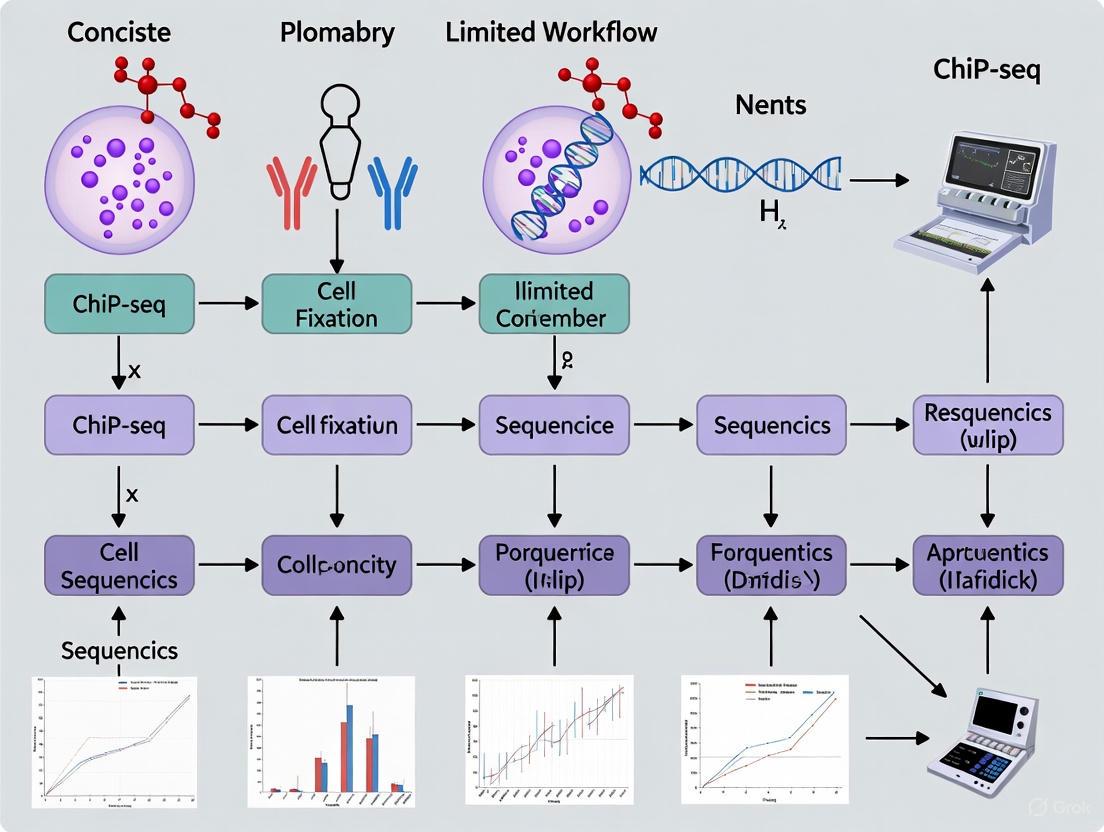
Chromatin immunoprecipitation followed by sequencing (ChIP-seq) is a cornerstone technique for mapping protein-DNA interactions, but its application is often limited by high cell number requirements.
Overcoming Sample Limitations: A Guide to Carrier ChIP-seq for Low-Input and Rare Cell Populations
Abstract
Chromatin immunoprecipitation followed by sequencing (ChIP-seq) is a cornerstone technique for mapping protein-DNA interactions, but its application is often limited by high cell number requirements. This article provides a comprehensive resource for researchers aiming to perform ChIP-seq with limited starting material, such as primary cells, stem cells, or patient biopsy samples. We explore the foundational principles of low-input protocols, detail optimized methodological workflows including native ChIP and carrier-assisted approaches, and present a thorough troubleshooting guide for common pitfalls. Finally, we cover best practices for data validation and compare emerging techniques like CUT&Tag and the novel DynaTag method against traditional ChIP-seq, offering a clear pathway to obtaining high-quality, genome-wide epigenetic data from scarce samples.
The Challenge and Promise of Low-Input ChIP-seq
The Bottleneck of Sample Scarcity in Epigenetic Studies
Epigenetic studies are fundamentally constrained by a pervasive bottleneck: the scarcity of biological sample material. This limitation is particularly acute when investigating rare cell populations, such as stem cells, primordial germ cells, or specific tumor subpopulations, where obtaining large cell quantities is technically challenging or biologically impossible. Standard Chromatin Immunoprecipitation followed by sequencing (ChIP-seq) protocols typically require 1-20 million cells per immunoprecipitation, creating a significant barrier for many biologically and clinically relevant research questions [1]. The inability to profile these rare populations has left critical gaps in our understanding of cell differentiation, cancer biology, and developmental processes.
The translation of basic epigenetic findings into clinical applications faces substantial hurdles, partly due to over-reliance on linear translational frameworks that prioritize molecular genomic findings and certain psychiatric disorders while publishing more reviews than original research [2]. Overcoming the sample scarcity bottleneck is therefore essential not only for basic research advancement but also for facilitating the clinical application of epigenetic knowledge across a broader spectrum of biological contexts and disease states.
Quantitative Landscape of Low-Input Epigenetic Methods
Performance Comparison of Low-Input ChIP-seq Methodologies
Recent methodological advances have progressively reduced the input requirements for epigenetic profiling. The table below summarizes the quantitative performance of various low-input ChIP-seq methods, highlighting the trade-offs between cell number, data quality, and technical complexity.
Table 1: Performance Metrics of Low-Input ChIP-seq Methods
| Method | Minimum Cell Number | Input Reduction (vs. Standard) | Unique Reads (%) | Key Limitations | Best Applications |
|---|---|---|---|---|---|
| Standard ChIP-seq [1] | 1-20 million | Reference | ~80% | High cell requirement | Cell lines, abundant tissue |
| Nano-ChIP-seq [3] | 10,000 | 100-200x | ~70% | Protocol complexity | Cultured embryonic stem cells |
| Low-Input N-ChIP-seq [1] | 100,000 | 100-200x | ~75% | Limited to histone modifications | Precipitations from 200,000 cells |
| ULI-NChIP [4] | 1,000 | 10,000x | 75-85% | Requires micrococcal nuclease | Genome-wide profiling of rare cell populations |
| HT-ChIPmentation [5] | 2,500 | 400-8,000x | >75% | Optimization for high-throughput | FACS-sorted cells, rapid profiling |
Impact of Input Reduction on Data Quality
As cell numbers decrease, specific technical challenges emerge that affect data quality and utility. The relationship between input material and sequencing outcomes follows a predictable pattern where reduced starting material correlates with increased technical artifacts.
Table 2: Technical Challenges in Low-Input ChIP-seq Experiments
| Technical Parameter | High Input (10^6-10^7 cells) | Low Input (10^3-10^4 cells) | Mitigation Strategies |
|---|---|---|---|
| Unmapped Reads | 5-10% | 15-55% | Optimized library amplification, reduced PCR cycles |
| Duplicate Reads | 5-15% | 20-60% | Molecular barcoding, duplicate removal |
| Library Complexity | High | Moderate to Low | Subsampling during alignment, complexity metrics |
| Peak Detection | >90% of expected peaks | 70-85% of expected peaks | Adjusted statistical thresholds, control normalization |
| Background Signal | Low | Increased variance | Input controls, background subtraction methods |
The data demonstrates that ULI-NChIP and HT-ChIPmentation currently represent the most advanced solutions for ultra-low-input studies, enabling genome-wide profiling from as few as 1,000-2,500 cells while maintaining data quality sufficient for most research applications [5] [4].
Detailed Methodologies for Low-Input Epigenetic Profiling
Ultra-Low-Input Native ChIP-seq (ULI-NChIP) Protocol
The ULI-NChIP method enables genome-wide histone modification profiling from as few as 1,000 cells through a micrococcal nuclease-based approach that eliminates crosslinking and reduces processing steps [4].
Cell Lysis and Chromatin Digestion
Cell Sorting and Lysis: Sort cells directly into 100μl of nuclear isolation buffer (10mM Tris-HCl pH7.5, 10mM NaCl, 3mM MgCl2, 0.1% NP-40) supplemented with protease inhibitors. Incubate on ice for 15 minutes to ensure complete lysis [4].
Chromatin Digestion: Add CaCl2 to a final concentration of 1mM and 0.5-2U of micrococcal nuclease (MNase) per 1,000 cells. Digest for 5 minutes at 37°C with gentle agitation. The digestion should yield predominantly mononucleosomal fragments [4].
Reaction Termination: Stop digestion by adding EGTA to a final concentration of 2mM and transferring to ice. Centrifuge at 15,000g for 5 minutes to pellet debris [4].
Immunoprecipitation and Library Preparation
Antibody Binding: Incubate chromatin supernatant with 1-2μg of target-specific antibody (e.g., anti-H3K27me3, anti-H3K9me3) overnight at 4°C with rotation [4].
Recovery of Complexes: Add 20μl of pre-blocked Protein A/G magnetic beads and incubate for 2 hours at 4°C. Wash beads sequentially with low salt buffer (0.1% SDS, 1% Triton X-100, 2mM EDTA, 20mM Tris-HCl pH8.1, 150mM NaCl), high salt buffer (same as low salt but with 500mM NaCl), and TE buffer [4].
DNA Elution and Purification: Elute DNA in elution buffer (1% SDS, 0.1M NaHCO3) at 65°C for 30 minutes with agitation. Reverse crosslinks by adding 200mM NaCl and incubating at 65°C overnight. Treat with RNAse A and Proteinase K, then purify DNA using phenol-chloroform extraction [4].
Library Construction and Sequencing: Prepare sequencing libraries using 8-10 PCR cycles to minimize amplification bias. Use dual-indexed adapters to enable multiplexing. Sequence using paired-end chemistry for optimal mapping [4].
Figure 1: ULI-NChIP Workflow for Limited Cell Numbers
HT-ChIPmentation Protocol for Single-Day Profiling
HT-ChIPmentation combines tagmentation with ChIP to enable rapid, high-throughput profiling from limited cell numbers, completing the entire process from cells to sequencing-ready libraries in a single day [5].
Cell Fixation and Sonication
Cell Fixation: Fix 2,500-150,000 cells in 1% formaldehyde for 10 minutes at room temperature. Quench with 125mM glycine for 5 minutes [5].
Cell Lysis and Sonication: Lyse cells in SDS lysis buffer (50mM Tris/HCl, 0.5% SDS, 10mM EDTA) with protease inhibitors. Sonicate using a Bioruptor Plus for 12 cycles (30 seconds on/30 seconds off) on high power to shear chromatin to 200-500bp fragments [5].
Chromatin Preparation: Neutralize SDS by adding Triton X-100 to 1% final concentration. Incubate for 10 minutes at room temperature [5].
Immunoprecipitation and Tagmentation
Bead-Antibody Conjugation: Incubate Protein G magnetic beads with target-specific antibody (0.3-3μg depending on cell number) for 4 hours at 4°C in PBS with 0.5% BSA. Wash to remove unbound antibody [5].
Immunoprecipitation: Incubate prepared chromatin with antibody-bound beads overnight at 4°C with rotation [5].
Bead Washes: Wash beads sequentially with low salt wash buffer (0.1% SDS, 1% Triton X-100, 2mM EDTA, 20mM Tris-HCl pH8.1, 150mM NaCl), high salt wash buffer (same composition with 500mM NaCl), and LiCl wash buffer (0.25M LiCl, 1% NP-40, 1% deoxycholate, 1mM EDTA, 10mM Tris-HCl pH8.1) [5].
On-Bead Tagmentation: Resuspend beads in tagmentation buffer containing Th5 transposase. Incubate at 37°C for 10 minutes with agitation to fragment DNA and add sequencing adapters simultaneously [5].
Direct Library Amplification: Without DNA purification, perform adapter extension directly on bead-bound chromatin. Amplify libraries using 10-12 PCR cycles with dual-indexed primers [5].
Figure 2: HT-ChIPmentation Single-Day Workflow
The Scientist's Toolkit: Essential Reagents and Materials
Successful low-input epigenetic studies require careful selection of specialized reagents and materials to maximize recovery and minimize technical artifacts.
Table 3: Essential Research Reagents for Low-Input ChIP-seq
| Reagent/Material | Specification | Function | Low-Input Considerations |
|---|---|---|---|
| Formaldehyde | Molecular biology grade, 37% solution | Protein-DNA crosslinking | Use fresh solutions; optimize concentration (0.5-1%) |
| Micrococcal Nuclease (MNase) | High purity, >5,000 U/mL | Chromatin digestion for NChIP | Titrate carefully (0.5-2U/1,000 cells) for mononucleosomal fragments |
| Magnetic Beads | Protein A/G Dynabeads | Antibody binding and complex isolation | Reduce bead volume (2-10μl) for low inputs to minimize background |
| Th5 Transposase | Custom-loaded with sequencing adapters | Simultaneous fragmentation and adapter ligation | Commercial kits (Illumina Nextera) or custom preparations |
| Protease Inhibitors | EDTA-free cocktail | Prevent protein degradation during processing | Essential for native ChIP protocols |
| DNA Purification Kits | Solid-phase reversible immobilization (SPRI) beads | DNA clean-up and size selection | Minimize purification steps; use high-recovery protocols |
| Library Amplification Kits | High-fidelity polymerase with low GC bias | Library amplification from minimal DNA | Limit PCR cycles (8-12); use unique dual indexes |
Implementation Framework and Quality Control
Experimental Design Considerations
When implementing low-input epigenetic protocols, several critical factors must be addressed in experimental design:
Cell Number Determination: Perform power calculations based on mark abundance. H3K4me3 (promoter-associated) requires more material than H3K27me3 (broad domains) due to differences in genomic distribution [4].
Control Selection: Include input controls prepared from 500 cell equivalents of sonicated chromatin when using tagmentation-based methods [5]. For ULI-NChIP, use "gold-standard" references from high-input samples when available [4].
Replication Strategy: Plan for biological replicates (3-5) rather than technical replicates, as biological variation exceeds technical variation in low-input protocols [1] [4].
Quality Control Metrics and Troubleshooting
Rigorous quality control is essential for successful low-input experiments. The following metrics should be assessed at each stage:
Library Complexity: Evaluate using PreSeq package to estimate potential complexity and determine optimal sequencing depth [4].
Mapping Statistics: Aim for >70% uniquely mapped reads for inputs >10,000 cells; >60% for ultra-low inputs [1] [4].
Peak Concordance: Compare with existing high-input datasets where available; expect 70-85% overlap for high-quality low-input libraries [4].
Background Assessment: Calculate FRiP (Fraction of Reads in Peaks) scores; acceptable ranges are 1-5% for transcription factors, 10-30% for histone marks [5].
Common issues include elevated unmapped reads (address by reducing PCR cycles, optimizing amplification) and high duplicate rates (mitigate by incorporating unique molecular identifiers and increasing library complexity through optimized tagmentation) [1] [5].
The development of robust low-input ChIP-seq methodologies has substantially alleviated the sample scarcity bottleneck in epigenetic studies. Techniques such as ULI-NChIP and HT-ChIPmentation now enable genome-wide profiling from previously intractable sample types, including rare cell populations and clinical specimens [5] [4]. These advances open new avenues for investigating epigenetic dynamics in development, disease progression, and treatment response.
Future methodological developments will likely focus on further reducing input requirements while improving data quality and reproducibility. Integration of low-input epigenetic profiling with other omics technologies at single-cell resolution promises to provide unprecedented insights into cellular heterogeneity and regulatory networks. As these methods become more accessible and standardized, they will accelerate the translation of epigenetic research into clinical applications, ultimately fulfilling the promise of precision medicine in diverse therapeutic areas.
A significant technical bottleneck in epigenomic research is the high cell number requirement of conventional Chromatin Immunoprecipitation followed by sequencing (ChIP-seq) protocols. Standard methods typically require 1-20 million cells per immunoprecipitation, making studies on rare cell populations—such as specific stem cell subtypes, primary cells from biopsies, or samples from biobanks—exceptionally challenging [6] [1].
The development of carrier ChIP-seq for limited cell numbers is a critical advancement that bridges this gap. This approach utilizes optimized native ChIP (N-ChIP) methods that significantly reduce input requirements, enabling high-resolution, genome-wide analysis of DNA-protein interactions from as few as 100,000 cells per immunoprecipitation [6]. This protocol extension is particularly vital for stem cell research, where studying the epigenetic state of rare, lineage-restricted stem cells is essential for understanding developmental biology and disease mechanisms.
Table 1: Key Advancements Enabled by Low-Input Carrier ChIP-seq
| Application Area | Traditional Requirement | Carrier ChIP-seq Enablement | Research Impact |
|---|---|---|---|
| Hematopoietic Stem Cell (HSC) Clones | Millions of cells for bulk analysis | Epigenetic profiling of expanded clones in aged individuals [7] | Understanding lineage restriction patterns (e.g., PEMBT, PEMB, PEM) |
| Induced Pluripotent Stem Cells (iPSCs) | Large-scale culture required | Analysis of patient-specific, iPSC-derived differentiated cells [8] [9] | Improved disease modeling and drug screening for neuropsychiatric disorders |
| Primary Cells from Biobanks | Often insufficient material | Genome-wide analysis from isolated primary cells and rare cell populations [6] | Direct use of archived clinical samples without the need for cell culture |
Application Note: Resolving Hematopoietic Stem Cell Lineage Commitment
Background and Research Context
The human hematopoietic system is sustained by a large pool of 50,000–200,000 HSCs that actively contribute to blood production [7]. In aged individuals, the diversity of this pool decreases, and specific HSC clones expand due to somatic mutations in genes like DNMT3A, TET2, and ASXL1, a phenomenon known as clonal hematopoiesis of indeterminate potential (CHIP) [10] [7]. A fundamental question in hematology concerns the potential of individual HSC clones: do they consistently replenish all blood lineages, or do distinct, lineage-restricted stem cells exist?
Until recently, simultaneously assessing the contribution of single-HSC-derived clones to all major blood lineages—including the critical short-lived platelets and erythroid cells—was not feasible, partly due to technical limitations in working with these cell populations [7]. Low-cell-number epigenomic techniques now provide a path to understand the molecular regulation of these lineage decisions.
Key Experimental Findings
A seminal 2025 study used somatic mutations as natural barcodes to trace the lineage output of 57 expanded HSC clones in aged individuals. The research revealed a limited repertoire of distinct lineage replenishment patterns [7]:
- PEMBT Clones (22 clones): Contributed to all Platelet, Erythroid, Myeloid, B, and T cell lineages.
- PEMB Clones (30 clones): Contributed to all lineages except T-cells.
- PEM Clones (5 clones): Contributed only to the platelet, erythroid, and myeloid lineages, with no contribution to lymphocytes.
This finding demonstrates the existence of stable, lineage-restricted human stem cells and provides a new framework for understanding how steady-state hematopoiesis is maintained. The role of epigenetic regulators like TET2 and DNMT3A, which are commonly mutated in CHIP, makes these clones ideal candidates for further study using low-input ChIP-seq to uncover the underlying chromatin-level changes driving lineage bias [11] [10].
Protocol: Low-Input Native ChIP-seq for Rare Cell Populations
The following protocol is adapted from Adli et al. (2012) and has been optimized for use with stem cells, primary cells, and biobanked samples [6] [1].
Reagents and Equipment
Table 2: Research Reagent Solutions for Low-Input N-ChIP-seq
| Reagent/Material | Function/Description | Considerations for Low Cell Numbers |
|---|---|---|
| Anti-H3K4me3 Antibody | Immunoprecipitation of trimethylated histone H3 lysine 4 | High-quality, validated antibody is critical for success with low input [6]. |
| MNase (Micrococcal Nuclease) | Digestion of chromatin for native ChIP (N-ChIP) | Yields higher resolution and is more sensitive than cross-linked ChIP (X-ChIP) [1]. |
| Magnetic Protein A/G Beads | Capture of antibody-bound chromatin complexes | Reduces background and improves sample handling with small volumes. |
| Illumina Sequencing Library Prep Kit | Preparation of sequencing-ready libraries | Inefficient enzymatic steps and multiple purifications are a major source of sample loss [6]. |
| PCR Purification Kit | Clean-up of DNA after immunoprecipitation and library prep | Minimizing purification steps and eluting in small volumes (e.g., 20 µL) maximizes recovery. |
Step-by-Step Methodology
Step 1: Cell Lysis and Chromatin Preparation
- Start with 100,000 to 200,000 cells. For biobanked samples, this may involve thawing cryopreserved cells and counting viable cells.
- Lyse cells in a hypotonic buffer. For N-ChIP, do not use formaldehyde crosslinking.
- Digest chromatin with MNase to yield primarily mononucleosomes. Optimize digestion time and enzyme concentration to achieve >90% mononucleosomes.
Step 2: Chromatin Immunoprecipitation
- Incubate digested chromatin with 1-5 µg of target-specific antibody (e.g., anti-H3K4me3) overnight at 4°C with rotation.
- Add magnetic Protein A/G beads and incubate for 2 hours.
- Wash beads stringently with low-salt and high-salt buffers to reduce non-specific background.
Step 3: DNA Purification and Library Construction
- Reverse crosslinks (if any) and purify DNA using a PCR purification kit. Elute in a minimal volume (e.g., 20 µL).
- Proceed to Illumina sequencing library preparation. A major challenge is that standard protocols require 1-10 ng of DNA, which may not be achievable. Expect to require 15-18 cycles of PCR during library amplification, which can lead to increased duplicate reads [6].
Step 4: Sequencing and Data Analysis
- Sequence the library on an Illumina platform. Be aware that as cell input numbers decrease, the proportion of unmapped reads and PCR duplicate reads will increase, driving up sequencing costs and affecting sensitivity [1].
- For data analysis, perform peak calling using only uniquely mapping, non-duplicate reads to avoid non-specific peaks. Tools like MACS are recommended [6].
Critical Considerations and Troubleshooting
- Lower Limit: The protocol maintains high sensitivity down to 100,000 cells/IP. At 20,000 cells/IP, sensitivity drops to ~70% of peaks detected compared to high-input samples [6].
- PCR Duplicates: The high number of PCR cycles required for low-input libraries generates duplicate reads. These must be filtered out before peak calling, as they create non-specific peaks [1].
- Controls: Always include an "input DNA" control (a sequencing library made from purified, pre-immunoprecipitation chromatin). However, note that for low-cell-number experiments, correcting with this background control may have a negligible effect on the peaks called [6].
Workflow and Data Analysis Visualization
The following diagram illustrates the core experimental workflow and the key data challenge encountered in low-input ChIP-seq.
Diagram 1: Low-input ChIP-seq workflow and challenges.
The application of carrier ChIP-seq to limited cell numbers has transformed the scope of epigenetic research, making it possible to interrogate histone modifications and transcription factor binding in rare but biologically critical cell populations. The ability to work with 100,000 cells or fewer allows researchers to directly utilize primary cells, biobank samples, and specific stem cell subtypes without the need for in vitro expansion, which can alter native epigenetic states [6] [1]. As the field moves toward single-cell epigenomics and the analysis of increasingly refined cellular subsets, these low-input protocols provide an essential methodological foundation for understanding the regulatory genome in health, aging, and disease.
Chromatin Immunoprecipitation followed by sequencing (ChIP-seq) has revolutionized our understanding of gene regulation by providing a genome-wide snapshot of protein-DNA interactions. However, the path from immunoprecipitation to final library amplification is fraught with technical challenges that can compromise data quality, particularly when working with limited cell numbers. This application note details these critical technical hurdles within the context of carrier ChIP-seq for limited cell research, providing structured data comparisons, detailed protocols, and visualization tools to guide researchers through this complex methodology.
Key Technical Hurdles in ChIP-seq Workflow
Chromatin Immunoprecipitation Efficiency
The immunoprecipitation step represents a major bottleneck, especially for low-abundance transcription factors or limited starting material. Antibody quality and specificity fundamentally determine success, with cross-reactivity leading to misleading results [12]. For histone marks like H3K9me2, nonspecific antibodies that also recognize H3K9me1 or H3K9me3 can generate entirely erroneous biological interpretations due to the opposing functions of these marks [12].
Table 1: Impact of Starting Material on ChIP-seq Outcomes
| Cell Number per IP | Unmapped Reads | Duplicate Reads | Peaks Called | Sensitivity |
|---|---|---|---|---|
| 20,000,000 (Benchmark) | Baseline | Baseline | Reference | Reference |
| 2,000,000 (New Protocol) | Comparable | Comparable | Comparable | Comparable |
| 200,000 (New Protocol) | Slight Increase | Slight Increase | Slight Reduction | High |
| 100,000 (New Protocol) | Moderate Increase | Moderate Increase | Moderate Reduction | Moderate |
| 20,000 (New Protocol) | High Increase | High Increase | ~75% of Benchmark | Compromised |
Data adapted from low cell number ChIP-seq performance evaluation [6].
The transition to low-input protocols exacerbates these issues, with a 200-fold reduction in input requirements introducing increased unmapped sequence reads and PCR-generated duplicates [6]. As shown in Table 1, when cell numbers fall below 100,000, the proportion of useful unique reads decreases substantially, driving up sequencing costs and reducing sensitivity.
Chromatin Fragmentation and Shearing Biases
Chromatin fragmentation method selection introduces significant technical variability. The choice between sonication and enzymatic digestion involves critical trade-offs:
Sonication provides truly randomized fragments but requires dedicated equipment, extensive optimization, and careful temperature control to prevent protein denaturation [12]. Enzymatic approaches using micrococcal nuclease (MNase) offer higher reproducibility but are concentration-sensitive and preferentially cleave internucleosomal regions, introducing sequence biases [13] [12]. MNase-based methods require careful calibration for different cell types, transcription factors, and enzyme batches, hindering standardized processing [13].
Library Preparation and Amplification Artifacts
Library amplification presents particular challenges for low-input ChIP-seq where starting material is minimal. The proportion of duplicate reads increases dramatically as cell numbers decrease due to PCR amplification bias from limited material complexity [6]. One study observed duplication rates of 55-98% in CUT&Tag libraries [14], while traditional ChIP-seq shows similar trends with reduced inputs.
The number of PCR cycles must be carefully optimized - excessive cycles amplify stochastic noise while insufficient cycles yield inadequate library. For CUT&Tag, reducing PCR cycles from 15 to 13 significantly decreased duplication rates without compromising library complexity [14]. Similar principles apply to carrier ChIP-seq, where the presence of exogenous carrier DNA can further complicate amplification kinetics.
Optimized Protocols for Limited Cell Numbers
Enhanced Native ChIP-seq Protocol for Low Inputs
This protocol enables ChIP-seq with 200-fold fewer cells than conventional methods [6]:
Day 1: Cell Preparation and Crosslinking
- Grow yeast cultures in appropriate medium overnight at 30°C with shaking [15]
- Crosslink with 1% formaldehyde for 15 minutes at room temperature
- Quench with 4.5M Tris pH 8.0 (freshly prepared) [15]
- Wash cells twice with cold PBS and freeze pellet at -80°C or proceed immediately
Day 2: Cell Lysis and Chromatin Preparation
- Resuspend cell pellet in FA lysis buffer (50mM HEPES-KOH pH 7.5, 150mM NaCl, 1mM EDTA, 1% Triton X-100, 0.1% sodium deoxycholate, 0.1% SDS) with fresh protease inhibitors [15]
- Lyse cells with zirconium/silica bead beating or enzymatic lysis with Zymolyase [15]
- Sonicate chromatin to 200-500bp fragments (optimize pulse time and number empirically)
- Centrifuge to remove debris and transfer supernatant to fresh tubes
Day 3: Immunoprecipitation
- Pre-clear chromatin with Protein G beads for 1 hour at 4°C
- Incubate with specific antibody overnight at 4°C with rotation:
- For epitope tags: Anti-V5 (1:500) [15]
- For histones: Antibody-specific dilution
- Add Protein G beads and incubate 2 hours at 4°C
- Wash beads sequentially:
- FA lysis buffer (once)
- FA lysis buffer with 500mM NaCl (once)
- Wash buffer (10mM Tris pH 8.0, 250mM LiCl, 1mM EDTA, 0.5% NP-40, 0.5% sodium deoxycholate) (once)
- TE buffer (twice) [15]
Day 4: DNA Recovery and Library Preparation
- Elute DNA with elution buffer (50mM Tris pH 8.0, 10mM EDTA, 1% SDS)
- Reverse crosslinks overnight at 65°C
- Treat with RNase A and Proteinase K
- Purify DNA with QIAquick PCR Purification Kit [15]
- Proceed to library preparation with optimized PCR cycles
RELACS Barcoding for Multiplexed ChIP-seq
The Restriction Enzyme-Based Labeling of Chromatin in Situ (RELACS) protocol enables high-throughput ChIP-seq through nuclear barcoding [13]:
Nuclei Isolation
- Isolate clean nuclei from fixed cells using sonication
- Permeabilize nuclei with detergent buffer
Intranuclear Digestion and Barcoding
- Digest chromatin with CviKI-1 restriction enzyme (frequent cutter with blunt ends, insensitive to DNA methylation) [13]
- Precipitate nuclei to wash away enzymes
- A-tail chromatin fragments
- Ligate customized barcoded adapters to both ends of chromatin fragments within intact nuclei
Pooling and Immunoprecipitation
- Pool differentially barcoded nuclei
- Perform single immunoprecipitation on pooled sample
- Add second barcode via PCR to mark different ChIP experiments
This method allows processing of 100-500,000 cells with standardized conditions and is particularly suitable for large-scale clinical studies and scarce samples [13].
The Scientist's Toolkit: Essential Research Reagents
Table 2: Key Reagent Solutions for Carrier ChIP-seq
| Reagent Category | Specific Examples | Function & Importance |
|---|---|---|
| Crosslinkers | Formaldehyde, EGS, DSG | Stabilize protein-DNA interactions; longer crosslinkers (EGS-16.1Å) trap larger complexes [12] |
| Antibodies | Anti-V5 [15], H3K9me2 [12], H3K27ac [14] | Target specificity is critical; epitope tags (V5, FLAG) improve IP efficiency [15] [12] |
| Chromatin Shearing | Sonication, MNase, CviKI-1 restriction enzyme | Fragment chromatin; CviKI-1 offers sequence-specific, methylation-insensitive cutting [13] |
| Protection Reagents | Protease inhibitors, Phosphatase inhibitors, HDAC inhibitors (TSA) | Maintain complex integrity during processing; TSA stabilizes acetyl marks in native protocols [12] [14] |
| DNA Cleanup | QIAquick PCR Purification Kit [15], Phenol-chloroform | Purify DNA after reverse crosslinking; kit-based methods offer better recovery for low inputs |
| Library Prep | DNA ligases, Taq polymerase, Barcoded adapters | Prepare sequencing libraries; optimized PCR cycles reduce duplicates [14] |
Normalization and Computational Considerations
Accurate normalization is particularly challenging in carrier ChIP-seq due to the presence of exogenous chromatin. Recent computational advances provide solutions:
siQ-ChIP Normalization: This sans spike-in quantitative ChIP method measures absolute IP efficiency genome-wide without exogenous chromatin, providing mathematically rigorous comparisons within and between samples [16]. siQ-ChIP explicitly accounts for antibody behavior, chromatin fragmentation, and input quantification - reinforcing best practices intrinsic to ChIP-seq [16].
Normalized Coverage: For relative comparisons, normalized coverage offers robust scaling without spike-in controls [16]. This method is particularly valuable when comparing samples with similar cellular contexts or treatment conditions.
For data processing, a standard workflow includes:
- Read trimming with Atria [16]
- Alignment with Bowtie2 [16] [17]
- Duplicate read management
- Peak calling with MACS2 or SEACR [14]
- Normalization using siQ-ChIP or normalized coverage methods [16]
Quality control should include assessment of uniquely mapped reads (ideally >50%), duplicate rates (ideally <50%), and proper bimodal distribution of reads around binding sites [17].
The technical journey from immunoprecipitation to library amplification in ChIP-seq involves multiple critical decision points that profoundly impact data quality. Through optimized protocols, careful reagent selection, and appropriate normalization strategies, researchers can successfully navigate these challenges even with limited starting material. The continued development of both experimental and computational methods promises to further democratize ChIP-seq applications across increasingly diverse biological contexts and sample types.
Chromatin Immunoprecipitation followed by sequencing (ChIP-seq) has emerged as a powerful method for mapping protein-genome interactions and histone modifications in living cells [18]. However, a significant bottleneck in its application to biologically relevant samples has been the abundant starting material required by standard protocols—typically in the range of 1-20 million cells per immunoprecipitation [19]. This requirement poses substantial challenges when working with rare cell populations, primary tissues, or precious biobank samples where cell numbers are limited.
The term 'low-input' in ChIP-seq protocols lacks a universal definition, creating ambiguity in experimental planning and reporting. This application note systematically defines 'low-input' requirements across different ChIP-seq methodologies, providing structured comparisons and detailed protocols to guide researchers in selecting appropriate methods for their specific cell number constraints. Within the broader context of carrier ChIP-seq research for limited cell numbers, understanding these thresholds and methodological adaptations is crucial for advancing epigenetic studies of rare cell populations.
Quantitative Landscape of Input Requirements
The table below summarizes the cell number requirements across different ChIP-seq protocol types, highlighting the progression from standard to low-input methods.
Table 1: Cell Number Requirements Across ChIP-seq Protocol Types
| Protocol Type | Typical Cell Number Range | Lower Practical Limit | Key Applications | Primary Limitations |
|---|---|---|---|---|
| Standard ChIP-seq | 1-20 million cells [19] | ~1 million cells | Cell lines, abundant tissue | Excludes rare cell populations |
| Refined Tissue ChIP-seq | Not explicitly stated | Adapted for tissue heterogeneity [20] | Solid tissues, colorectal cancer | Tissue heterogeneity, matrix density |
| Optimized Low-cell ChIP-seq | 100,000 - 1,000,000 cells [19] | 100,000 cells [19] | Primary cells, biobank samples | Increased duplicate reads [19] |
The progression toward lower input requirements reveals several critical technical challenges. As cell numbers decrease, protocols encounter rising levels of unmapped sequence reads and PCR-generated duplicate reads, which can drive up sequencing costs and affect sensitivity [19]. The refined tissue ChIP-seq approach addresses additional complications from tissue heterogeneity and complex cell matrices, which necessitate specialized homogenization and processing techniques [20].
Detailed Methodologies for Low-Input ChIP-seq
Optimized Low Cell Number Native ChIP-seq Protocol
Gilfillan et al. developed an enhanced native ChIP-seq method that reduces input requirements by 200-fold compared to existing protocols [19]. This protocol was systematically tested across a range covering three orders of magnitude, establishing 100,000 cells as a practical lower limit for reliable implementation.
Key Reagent Solutions:
- Lysis Buffers: Cytoskeletal lysis buffer (10 mM PIPES, 100 mM NaCl, 300 mM Sucrose, 3 mM MgCl2, 0.1% NP40) and chromatin lysis buffer (300 mM NaCl, 50 mM Hepes pH 7.4, 0.5% Igpal, 2.5 mM MgCl2, 5 U Benzonase) [21]
- Protease Inhibitors: Supplementation of PBS with protease inhibitors for tissue preservation [20]
- Magnetic Beads: Dynabeads Protein G for efficient immunoprecipitation [21]
Critical Steps for Low-Input Success:
- Cell Lysis: Sequential use of cytoskeletal and chromatin lysis buffers to ensure complete nuclear disruption while preserving chromatin integrity [21]
- Chromatin Shearing: Optimization of sonication parameters to achieve 100-300 bp fragments while minimizing sample loss [18]
- Immunoprecipitation: Extended incubation (4 hours) with antibody-coated magnetic beads to improve binding efficiency [21]
- Library Preparation: Incorporation of strategies to minimize PCR duplicate formation, which increases significantly at lower cell inputs [19]
Refined Tissue ChIP-seq for Complex Matrices
The refined ChIP-seq approach for solid tissues addresses challenges specific to tissue processing, including complexities related to cell heterogeneity, matrix density, and chromatin fragmentation [20]. While this protocol doesn't specify exact cell numbers, it provides crucial methodologies for working with limited tissue samples where total cell numbers may be constrained.
Homogenization Options:
- Semi-Automated Method: gentleMACS Dissociator with predefined program "htumor03.01" for standardized tissue disruption [20]
- Manual Method: Dounce tissue grinder with 8-10 even strokes of the A pestle under cold conditions [20]
Tissue Preparation Workflow:
- Tissue Mincing: Frozen tissue samples are finely diced with scalpel blades on a Petri dish maintained on ice [20]
- Cold Preservation: All steps performed with cold buffers and equipment to minimize chromatin degradation [20]
- Homogenization Buffer: 1× PBS supplemented with protease inhibitors for tissue preservation [20]
- Cell Recovery: Sequential rinsing with cold PBS to ensure complete cell recovery from homogenization equipment [20]
Technical Considerations and Data Quality Implications
Sequencing Artifacts in Low-Input Experiments
Reducing cell numbers in ChIP-seq experiments introduces specific technical artifacts that must be considered during experimental design and data interpretation. The most significant issues include:
- Increased Duplicate Reads: As cell input numbers decrease, levels of PCR-generated duplicate reads rise substantially, potentially affecting peak calling accuracy [19]
- Elevated Unmapped Reads: Lower input samples typically show higher percentages of sequence reads that cannot be mapped to the reference genome [19]
- Reduced Complexity: The number of unique reads generated decreases with lower cell inputs, potentially driving up sequencing costs to achieve sufficient coverage [19]
Quality Assessment and Validation
The ENCODE and modENCODE consortia have established rigorous guidelines for ChIP-seq quality assessment, which become particularly critical when working with limited input material [18]. Key quality metrics include:
- Antibody Validation: Primary characterization via immunoblot analysis requiring the primary reactive band to contain at least 50% of the signal observed [18]
- Control Experiments: Appropriate control experiments to distinguish specific enrichment from background [18]
- Sequencing Depth: Sufficient read coverage to account for reduced complexity in low-input samples [18]
- Biological Replication: Essential for verifying findings when working with technically challenging samples [18]
Workflow Visualization and Decision Framework
The following diagram illustrates the optimized workflow for low-input and tissue ChIP-seq protocols, highlighting critical decision points and methodological options:
Low-Input ChIP-seq Workflow Decision Framework
Research Reagent Solutions for Low-Input Experiments
Table 2: Essential Research Reagents for Low-Input ChIP-seq Protocols
| Reagent/Equipment | Specific Function | Protocol Applications | Key Considerations |
|---|---|---|---|
| gentleMACS Dissociator | Tissue homogenization via predefined mechanical programs | Refined tissue ChIP-seq [20] | Standardized disruption for heterogeneous tissues |
| Dounce Tissue Grinder | Manual tissue homogenization with controlled shear force | Refined tissue ChIP-seq [20] | Requires technical skill, cold maintenance essential |
| Magnetic Protein G Beads | Antibody-coated bead immunoprecipitation | Low-cell ChIP-seq [21] | Improved binding efficiency for low-abundance targets |
| Formaldehyde | Protein-DNA crosslinking to preserve interactions | All ChIP-seq protocols [18] | Concentration and timing critical for signal preservation |
| Benzonase Nuclease | Chromatin digestion for efficient fragmentation | Low-cell ChIP-seq [21] | Alternative to sonication for small samples |
| Protease Inhibitor Cocktails | Preservation of protein epitopes during processing | All protocols [20] | Essential for maintaining antibody recognition |
The definition of 'low-input' in ChIP-seq protocols spans a continuum from the refined tissue methods that address sample heterogeneity to optimized native ChIP-seq that can function with as few as 100,000 cells—a 200-fold improvement over standard requirements [19]. Successful implementation requires careful selection of appropriate methodologies based on both cell number constraints and sample type characteristics, with particular attention to the specific technical artifacts that emerge at lower input levels.
Future methodological developments will likely focus on further reducing input requirements while maintaining data quality, potentially through improved library construction methods and computational approaches to mitigate the effects of reduced sample complexity. The protocols and guidelines presented here provide a framework for researchers to navigate the current landscape of low-input ChIP-seq methodologies within the broader context of carrier ChIP-seq research for limited cell numbers.
The Role of Carrier Substances in Enhancing Low-Input Recovery
Chromatin Immunoprecipitation followed by sequencing (ChIP-seq) is a powerful method for genome-wide profiling of DNA-protein interactions and epigenetic marks. However, conventional ChIP-seq protocols typically require substantial biological material—often in the range of 1–20 million cells per immunoprecipitation—creating a significant bottleneck for researchers working with rare cell populations, primary patient tissues, or valuable biobank samples [6]. The fundamental challenge in low-input ChIP-seq stems from two main factors: inefficient immunoprecipitation with minimal chromatin, and significant DNA loss during library preparation steps, which becomes critically impactful with picogram amounts of material [22].
Carrier-assisted methods represent a groundbreaking solution to this problem. These approaches involve supplementing the ChIP reaction with exogenous materials that "carry" the precious sample through the procedure, thereby enhancing recovery and enabling genome-wide analysis from limited inputs. The strategic implementation of carrier substances has progressively pushed the boundaries of low-input ChIP-seq, with modern protocols now successfully applied to as few as 10-100,000 cells, and even extending to single-cell epigenomic profiling [6] [22] [23]. This application note details the quantitative benefits, practical protocols, and critical considerations for employing carrier substances to enhance recovery in low-input ChIP-seq workflows.
Carrier Substances: Mechanisms and Quantitative Benefits
Types of Carrier Substances and Their Mechanisms
Carrier substances function through distinct biochemical mechanisms to preserve sample integrity and improve immunoprecipitation efficiency:
Nucleic Acid-Based Carriers: Early approaches used DNA-based carriers such as salmon sperm DNA or calf thymus DNA. However, these present a significant drawback for sequencing applications as they co-amplify with the target DNA, substantially consuming sequencing reads and reducing the efficiency of data collection [24]. A refined solution involves dUTP-containing lambda DNA fragments, which can be efficiently removed after library preparation using uracil-specific excision reagent (USER) enzyme treatment, thus preserving sequencing capacity for the actual sample [22].
Protein/Peptide-Based Carriers: The addition of recombinant histones and chemically modified histone peptides mimics the natural chromatin environment during immunoprecipitation. These carriers enhance antibody binding kinetics and complex formation by presenting familiar epitopes and structural contexts, thereby significantly improving precipitation efficiency without interfering with downstream sequencing [22] [23].
RNA-Based Carriers: The combination of random human mRNA with recombinant histones has demonstrated remarkable efficacy, particularly for transcription factor ChIP-seq such as Estrogen Receptor α (ERα) mapping. This carrier combination significantly increases specific signal recovery while reducing non-specific background binding [23].
Inert Carriers: Substances like glycogen serve as physically inert carriers that reduce surface adsorption during purification steps. While glycogen provides a modest increase in recovery, it generally proves less effective than biologically active carriers for enhancing immunoprecipitation efficiency [23].
Quantitative Performance of Carrier-Assisted ChIP-seq
The implementation of carrier substances yields measurable improvements in key sequencing metrics and data quality. The table below summarizes the performance benefits observed across different cell inputs and carrier types:
Table 1: Performance Metrics of Carrier-Assisted Low-Input ChIP-seq
| Cell Number | Carrier Type | Target | Peak Recovery vs. Saturated ChIP | FRiP Score | Key Findings |
|---|---|---|---|---|---|
| 10,000 [23] | mRNA/Histones | ERα (Transcription Factor) | ~60% | N/D | Enabled mapping from core needle biopsies; superior to glycogen carrier |
| 10,000 [23] | None | ERα (Transcription Factor) | ~20% | N/D | Substantial background; poor specific enrichment |
| 10 [22] | 2cChIP-seq (Dual Carrier) | H3K4me3 (Histone Mark) | N/D | ~13-17% (100 cells) | High reproducibility (Pearson's R: 0.807-0.963) |
| 100 [22] | 2cChIP-seq (Dual Carrier) | H3K27ac (Histone Mark) | 95.9% Precision | ~21-38% (1000 cells) | Outperformed other low-input methods (uliCUT&RUN, ChIL-seq) |
| 1000 [22] | 2cChIP-seq (Dual Carrier) | H3K4me3 (Histone Mark) | 97.6% Precision | ~21-38% | Recovered 97.7% of ENCODE benchmark peaks |
Table 2: Impact of Cell Number on Sequencing Metrics in Low-Input N-ChIP-seq [6]
| Cell Number per IP | Unmapped Reads | Duplicate Reads | Effect on Sensitivity |
|---|---|---|---|
| 20,000,000 (Benchmark) | Lower | Lower | Baseline sensitivity |
| 200,000 | Moderate Increase | Moderate Increase | Comparable sensitivity |
| 20,000 | Substantial Increase | Substantial Increase | ~25% reduction in peaks called |
The data demonstrates that carrier-assisted methods not only enable ChIP-seq from limited cell numbers but also maintain high data quality, reproducibility, and precision compared to established benchmarks. The 2cChIP-seq approach, which utilizes dual carriers, shows particularly robust performance in recovering known enrichment sites from reference datasets.
Experimental Protocols for Carrier-Assisted ChIP-seq
Protocol 1: mRNA/Histone Carrier-Assisted ChIP-seq for Transcription Factors
This protocol has been successfully applied for ERα ChIP-seq from 10,000 tissue culture cells and human breast cancer core needle biopsies [23].
Table 3: Reagent Solutions for mRNA/Histone Carrier ChIP-seq
| Reagent | Function/Description | Source/Example |
|---|---|---|
| Recombinant Histone H2B | Enhances IP efficiency by providing chromatin context | Commercial supplier (e.g., Active Motif) |
| Random Human mRNA | Improves specific signal recovery, reduces background | Commercial supplier |
| Glycogen | Inert carrier to reduce surface adsorption during precipitations | Molecular biology grade |
| MCF7 Cell Line | ERα-positive model system for protocol optimization | ATCC |
| H3K4me3 Antibody | Positive control antibody for assay validation | Active Motif cat# 39159 [24] |
| RNA Polymerase II Antibody | Positive control antibody for assay validation | Active Motif cat# 61085 [24] |
| Zymo ChIP DNA Clean & Concentrator | Column purification of ChIP DNA | Zymo Research cat# D5205 [24] |
| Eppendorf LoBind Tubes | Minimize adsorption of dilute DNA | Eppendorf cat# 022431048 [24] |
Procedure:
- Cell Lysis and Chromatin Preparation: Harvest and lyse 10,000 cells using standard cell lysis buffer. Shear chromatin to 200-600 bp fragments using a focused ultrasonicator (e.g., Branson S450, Diagenode Bioruptor Pico, or Active Motif EpiShear).
- Carrier Addition: Add recombinant Histone H2B (final concentration ~100 ng/µL) and random human mRNA (final concentration ~50 ng/µL) to the chromatin lysate.
- Immunoprecipitation: Incubate with target-specific antibody (e.g., ERα antibody) overnight at 4°C with rotation. Add protein A/G beads and incubate for 2-4 hours.
- Washing and Elution: Wash beads sequentially with low salt, high salt, and LiCl wash buffers. Elute ChIP DNA with freshly prepared elution buffer (1% SDS, 0.1 M NaHCO3).
- Crosslink Reversal and Carrier Removal: Incubate eluates with RNAse A (to degrade mRNA carrier) and Proteinase K (to degrade histone carrier) at 65°C for 4-6 hours to reverse crosslinks.
- DNA Purification: Purify DNA using a spin column system (Zymo ChIP DNA Clean & Concentrator). Elute in 15 µL nuclease-free water stored in LoBind tubes.
- Library Preparation and Sequencing: Use 1-10 ng of purified ChIP DNA for library preparation with the NEBNext ChIP-Seq Library Prep Kit. Sequence with a minimum of 25-50 million read-pairs.
Protocol 2: 2cChIP-seq for Ultra-Low Input and Histone Modifications
The 2cChIP-seq method utilizes dual carriers to enable profiling from as few as 10 cells, with robust performance for histone modifications [22].
Procedure:
- Chromatin Fragmentation and Carrier Addition: Fragment chromatin from 10-1000 cells via MNase digestion or sonication. Add dUTP-containing lambda DNA fragments during the fragmentation process.
- Immunoprecipitation with Peptide Carrier: Perform immunoprecipitation with target-specific antibody (e.g., H3K4me3, H3K27ac) in the presence of chemically modified histone peptides corresponding to the target epitope.
- Washing and Elution: Wash beads with RIPA buffer and TE buffer. Elute ChIP DNA with standard elution buffer.
- Library Preparation with Carrier: Add dUTP-containing lambda DNA fragments during sequencing adapter ligation to reduce sample loss.
- Carrier Removal: Treat the final library with USER enzyme to degrade the dUTP-containing lambda DNA carrier before sequencing.
- Sequencing and Analysis: Sequence libraries and analyze data following standard ChIP-seq pipelines.
Protocol 3: Single-Cell 2cChIP-seq with Combinatorial Indexing
For single-cell applications, the 2cChIP-seq method can be extended with Tn5 transposase-based indexing [22].
Procedure:
- Single-Cell Dispensing: Distribute individual cells into a 96-well plate.
- Chromatin Opening and Tagmentation: Permeabilize cells and tagment chromatin using Tn5 transposase complexes pre-loaded with unique combinations of T5 and T7 barcodes.
- Carrier Addition: Add dUTP-containing lambda DNA fragments to the tagmentation reaction as a carrier.
- Pooling and Immunoprecipitation: Pool all indexed single cells into one tube and perform immunoprecipitation using the standard 2cChIP-seq protocol.
- Library Amplification and Sequencing: Amplify the purified ChIP DNA and sequence using Illumina platforms.
Critical Implementation Considerations
Technical Considerations and Pitfalls
Successful implementation of carrier-assisted ChIP-seq requires attention to several critical technical aspects:
Carrier Interference: Traditional DNA-based carriers (salmon sperm DNA, calf thymus DNA) strongly interfere with sequencing and are not recommended for ChIP-seq applications [24]. Modern approaches use removable carriers (dUTP-containing DNA) or non-amplifiable carriers (proteins, peptides, RNA) that can be enzymatically degraded prior to sequencing.
Input DNA Quantification: Accurate quantification of low-input ChIP DNA is essential. NanoDrop measurements are unreliable for ChIP DNA due to interference from residual nucleotides, RNA, and salts [24]. Use fluorescence-based assays specifically designed for double-stranded DNA, such as the Qubit dsDNA High Sensitivity Assay, for accurate quantification.
Sample Handling and Storage: Dilute DNA samples are prone to loss through surface adsorption. Store ChIP DNA samples at -80°C in low-protein-binding tubes (e.g., Eppendorf LoBind or Axygen Maxymum Recovery tubes) to minimize adsorption [24].
Library Preparation Specifics: The NEBNext ChIP-Seq Library Prep Reagent Set is optimized for 1-10 ng of input DNA [24]. For samples below 1 ng, consider pooling replicate ChIP samples before library preparation. Avoid excessive PCR amplification cycles (typically 15-18 cycles are sufficient) to minimize duplicate reads and amplification artifacts, which become more pronounced with lower inputs [6].
Data Analysis Considerations for Low-Input Carrier ChIP-seq
Low-input ChIP-seq data presents specific analytical challenges that require specialized processing:
Duplicate Reads: As cell numbers decrease, the proportion of PCR-derived duplicate reads increases substantially [6]. These duplicates should be flagged and excluded during peak calling to prevent artificial inflation of background signals.
Unmapped Reads: Low-input samples typically show increased levels of unmapped sequence reads, many representing PCR amplification artifacts rather than true sequencing errors [6].
Peak Calling: Use peak callers such as MACS2 with stringent parameters, utilizing only uniquely mapping, non-duplicate reads [6] [25]. Including duplicate reads leads to nonspecific peak calling, particularly in very low-input samples.
Workflow Visualization
The following diagram illustrates the key decision points and procedural flow for implementing carrier-assisted ChIP-seq:
Carrier substances have fundamentally transformed the landscape of low-input epigenomics by enabling robust ChIP-seq profiling from limited cell numbers that were previously intractable. The strategic implementation of removable or degradable carriers—including dUTP-containing DNA, modified peptides, mRNA, and recombinant histones—effectively mitigates the principal challenges of immunoprecipitation efficiency and sample loss that plague low-input workflows. The quantitative data presented herein demonstrates that carrier-assisted methods maintain high sensitivity, specificity, and reproducibility while extending the applicability of ChIP-seq to rare cell populations, clinically limited samples, and single-cell analyses. As the field advances toward increasingly minimal input requirements, carrier-based approaches will continue to play a pivotal role in unlocking the epigenetic diversity of rare and precious biological specimens.
Optimized Protocols for Low-Cell-Number and Carrier ChIP-seq
Native ChIP (N-ChIP) vs. Cross-Linked ChIP (X-ChIP) for Low-Input Scenarios
Chromatin Immunoprecipitation followed by sequencing (ChIP-seq) has become the gold standard technique for mapping protein-DNA interactions genome-wide, particularly for studying histone post-translational modifications (PTMs) and transcription factor binding. However, a significant limitation of conventional ChIP-seq protocols is their high cellular input requirement, typically ranging from 1-20 million cells per immunoprecipitation [1]. This presents a substantial bottleneck for studying rare cell populations, such as stem cells, primary cells from biopsies, or developmental progenitor cells, where material is severely limited.
Within this context of limited cell numbers research, the choice between Native ChIP (N-ChIP) and Cross-Linked ChIP (X-ChIP) becomes critically important. N-ChIP utilizes native, unfixed chromatin fragmented by micrococcal nuclease (MNase) digestion, while X-ChIP employs formaldehyde cross-linking to fix protein-DNA interactions followed by mechanical or enzymatic fragmentation [26]. Each method presents distinct advantages and limitations for low-input scenarios that researchers must carefully consider when designing experiments for rare cell populations.
Technical Comparison: N-ChIP vs. X-ChIP
Fundamental Methodological Differences
The core distinction between N-ChIP and X-ChIP lies in their treatment of chromatin before immunoprecipitation. N-ChIP uses native chromatin isolated from cell nuclei and digested with MNase, which preferentially cleaves linker DNA between nucleosomes to yield mononucleosome-sized fragments (150-300 bp) [26]. This approach preserves native chromatin structure and epitope recognition but is generally limited to studying tightly bound chromatin proteins, particularly histones and their modifications.
In contrast, X-ChIP employs formaldehyde cross-linking to covalently stabilize protein-DNA interactions before fragmentation. This cross-linking step enables the study of transcription factors and more transiently associated proteins but requires harsher fragmentation methods, typically sonication or a combination of cross-linking and enzymatic digestion [27]. The cross-linking process can mask antibody epitopes and potentially capture transient, non-functional interactions.
Performance in Low-Input Scenarios
For histone modifications in low-input scenarios, N-ChIP generally demonstrates superior performance. An ultra-low-input micrococcal nuclease-based native ChIP (ULI-NChIP) method has been successfully used to generate high-quality genome-wide histone mark profiles from as few as 1,000 cells [4]. H3K27me3 and H3K9me3 profiles generated from 10³ to 10⁵ mouse embryonic stem cells showed high correlation (0.77-0.9) with standard protocols using 100-1000 times more material [4]. The high efficiency of N-ChIP immunoprecipitation and reduced sample loss from avoiding cross-linking reversal contribute to this enhanced low-input performance.
For transcription factors and non-histone proteins, X-ChIP remains the necessary approach despite its challenges with limited material. The cross-linking stabilizes these more transient interactions, though this comes with trade-offs including lower immunoprecipitation efficiency and potential for increased background signal [28]. Modified X-ChIP protocols using carrier molecules or specialized library preparation methods have enabled transcription factor profiling from 10,000-100,000 cells, but still generally require more input than N-ChIP for histone modifications [1].
Table 1: Comprehensive Comparison of N-ChIP and X-ChIP for Low-Input Applications
| Parameter | Native ChIP (N-ChIP) | Cross-Linked ChIP (X-ChIP) |
|---|---|---|
| Minimum Cell Input | 1,000-10,000 cells for histone marks [4] | 10,000-100,000+ cells for transcription factors [1] |
| Optimal Applications | Histone modifications (methylation, acetylation), stable chromatin-associated proteins [26] | Transcription factors, chromatin remodelers, co-activators/repressors [27] |
| Fragmentation Method | MNase enzymatic digestion [26] | Sonication or MNase digestion [27] |
| Typical Fragment Size | 150-300 bp (mononucleosome) [26] | 200-700 bp (broader distribution) [27] |
| IP Efficiency | High efficiency for histones [28] | Lower efficiency due to cross-linking [28] |
| Epitope Recognition | Excellent (antibodies raised against native epitopes) [26] | Potentially compromised by cross-linking [29] |
| Risk of Rearrangement | Higher (proteins may dissociate during processing) [28] | Lower (interactions stabilized by cross-links) [28] |
| Background Signal | Generally lower for histone marks [30] | Potentially higher due to non-specific cross-linking [31] |
| Protocol Complexity | Simplified (no cross-linking/reversal steps) [4] | More complex (additional cross-linking and reversal steps) [27] |
Table 2: Quantitative Performance Metrics for Low-Input ChIP-seq
| Input Level | Protocol Type | Reads Mapped | Duplicate Reads | Peaks Identified | Sensitivity vs Standard |
|---|---|---|---|---|---|
| 1,000 cells | ULI-NChIP (H3K27me3) | 29-42 million [4] | 3-8% [4] | ~70% of gold standard [4] | 70% peak recovery [4] |
| 10,000 cells | ULI-NChIP (H3K27me3) | 29-42 million [4] | 3-8% [4] | ~80% of gold standard [4] | 85% peak recovery [1] |
| 100,000 cells | N-ChIP (H3K4me3) | 37.7 million [4] | 36% [4] | ~85% of gold standard [4] | 85% peak recovery [1] |
| 100,000 cells | X-ChIP (H3K4me3) | Varies by protocol | Typically higher than N-ChIP [1] | Lower than N-ChIP for histone marks [30] | Protocol-dependent |
Methodological Protocols
Ultra-Low-Input Native ChIP (ULI-NChIP) Protocol
The ULI-NChIP protocol represents a significant advancement for profiling histone modifications from rare cell populations [4]. This method has been rigorously validated for 1,000-100,000 cells and is particularly effective for repressive marks like H3K27me3 and H3K9me3.
Cell Preparation and Lysis:
- Sort cells directly into detergent-based nuclear isolation buffer (containing NP-40 or Triton X-100) to minimize sample loss.
- Isulate nuclei by centrifugation (1,500 × g, 5 minutes, 4°C).
- For tissue samples, first homogenize in nuclear extraction buffer (50 mM HEPES-NaOH pH=7.5, 140 mM NaCl, 1 mM EDTA, 10% Glycerol, 0.5% NP-40, 0.25% Triton X-100, 1× protease inhibitors) [27].
Chromatin Fragmentation:
- Digest chromatin with MNase (typically 0.5-5 U/μL) for 5-15 minutes at 37°C.
- Optimize enzyme concentration and digestion time to achieve predominantly mononucleosomal fragments (150-200 bp).
- Stop digestion with EDTA (final concentration 5-10 mM).
- Centrifuge (17,000 × g, 15 minutes, 4°C) to remove insoluble debris [4].
Immunoprecipitation:
- Incubate fragmented chromatin with target-specific antibody (0.5-2 μg) overnight at 4°C with gentle rotation.
- Use magnetic Protein A/G beads (pre-blocked with BSA) to capture antibody-chromatin complexes.
- Wash beads sequentially with low-salt, high-salt, and LiCl wash buffers to reduce non-specific binding.
- Elute chromatin complexes in elution buffer (50 mM Tris-HCl pH=8.0, 10 mM EDTA, 1% SDS) at 65°C for 15-30 minutes [4].
DNA Purification and Library Preparation:
- Reverse cross-links (if any secondary cross-linking was used) by incubating at 65°C for 4-6 hours.
- Treat with Proteinase K (0.2-0.5 mg/mL) and RNase A (0.1-0.2 mg/mL).
- Purify DNA using silica membrane columns or SPRI beads.
- Use low-input optimized library preparation kits with reduced PCR cycles (8-12 cycles) to minimize amplification biases [4].
Low-Input Cross-Linked ChIP (X-ChIP) Protocol
For transcription factor profiling from limited material, the following X-ChIP protocol has been adapted for 10,000-100,000 cells.
Cross-Linking and Cell Lysis:
- Cross-link cells with 1% formaldehyde for 8-12 minutes at room temperature.
- Quench with 125 mM glycine for 5 minutes.
- Wash cells twice with ice-cold PBS.
- Lyse cells in RIPA buffer (50 mM Tris-HCl pH=8.0, 150 mM NaCl, 1 mM EDTA, 0.1% SDS, 1% Triton X-100, 0.1% sodium deoxycholate) with protease inhibitors [27].
Chromatin Fragmentation:
- Sonicate lysate to achieve 200-500 bp fragments (optimize conditions for specific cell type and sonicator).
- Alternatively, use a combination of mild cross-linking and MNase digestion for more precise fragmentation.
- Centrifuge (17,000 × g, 15 minutes, 4°C) to remove insoluble material [27].
Immunoprecipitation and DNA Recovery:
- Dilute sonicated chromatin 5-10 fold in ChIP dilution buffer.
- Pre-clear with protein A/G beads for 1-2 hours at 4°C.
- Incubate with target antibody (2-5 μg) overnight at 4°C.
- Recover complexes with protein A/G beads, wash extensively.
- Elute in Chelex-100 or elution buffer, reverse cross-links at 65°C overnight.
- Treat with Proteinase K, purify DNA [27].
Technical Considerations and Optimization Strategies
Addressing Low-Input Specific Challenges
Working with limited cell numbers introduces specific technical challenges that require careful optimization:
Library Complexity and PCR Duplicates: As cell input decreases, library complexity is compromised, leading to higher rates of PCR duplicates [1]. At 1,000 cells, duplicate reads can reach 25-36% despite careful PCR optimization [4]. To mitigate this:
- Use unique molecular identifiers (UMIs) in library preparation to distinguish biological duplicates from PCR duplicates
- Implement duplex sequencing approaches
- Apply computational tools like PreSeq to estimate potential library complexity and guide sequencing depth decisions [4]
Background Signal and Specificity: Low-input experiments show increased background variance [4]. Optimization strategies include:
- Increase antibody specificity using SNAP-ChIP validated antibodies or similar quality control measures [29]
- Implement more stringent wash conditions (higher salt, detergents)
- Use spike-in controls (e.g., SNAP-ChIP spike-ins) to normalize between samples [29]
- Include biological replicates (minimum n=3) to distinguish technical artifacts from biological signals [29]
Cell Input Requirements: The optimal cell input depends on both the method and the target:
- Abundant histone marks (H3K4me3, H3K27me3): 1,000-10,000 cells with N-ChIP [4]
- Less abundant histone variants: 10,000-50,000 cells with N-ChIP [4]
- Transcription factors: 50,000-500,000 cells with X-ChIP [27]
Emerging Alternatives: CUT&RUN and CUT&Tag
Recent methodologies including CUT&RUN and CUT&Tag offer promising alternatives for low-input scenarios:
- CUT&RUN uses antibody-targeted MNase cleavage in permeabilized cells, requiring only 0.5-1×10⁵ cells and producing high signal-to-noise ratios [31]
- CUT&Tag employs antibody-guided Tn5 transposase integration, working effectively with 10,000-100,000 cells and demonstrating reduced background [31]
- Both methods avoid chromatin extraction and sonication, reducing sample loss and handling time
- These techniques show particular promise for transcription factor profiling in limited cell populations [31]
Experimental Design and Workflow Visualization
The following workflow diagrams illustrate key decision points and experimental procedures for low-input ChIP-seq experiments:
Method Selection and Experimental Workflow
Method Decision Pathway
Essential Research Reagents and Tools
Table 3: Research Reagent Solutions for Low-Input ChIP-seq
| Reagent Category | Specific Examples | Function | Low-Input Considerations |
|---|---|---|---|
| Chromatin Enzymes | Micrococcal Nuclease (MNase) [4] | Native chromatin fragmentation | Titrate carefully to avoid over-digestion; use high-purity grades |
| Chromatin Preparation Kits | Chromatrap N-ChIP/X-ChIP kits [32] | Optimized reagent systems for chromatin prep | Select kits validated for low-input applications |
| Validated Antibodies | SNAP-ChIP Certified Antibodies [29] | Target-specific immunoprecipitation | Verify low-input performance; check specificity with peptide arrays |
| Spike-In Controls | SNAP-ChIP Spike-In Technology [29] | Normalization between samples | Essential for quantitative comparisons across low-input samples |
| Library Preparation | Low-Input Library Prep Kits | DNA library construction for sequencing | Select kits with minimal purification steps and low PCR cycle requirements |
| Magnetic Beads | Protein A/G Magnetic Beads [27] | Antibody-chromatin complex capture | Pre-block with BSA to reduce non-specific binding |
| Cell Sorting Reagents | FACS antibodies, MACS beads | Rare cell population isolation | Sort directly into ChIP-compatible buffers to minimize sample loss |
| Quality Control Tools | Bioanalyzer/TapeStation, Qubit | Fragment size and concentration QC | Essential for verifying successful fragmentation and library prep |
The choice between Native ChIP and Cross-Linked ChIP for low-input scenarios requires careful consideration of experimental goals, target properties, and available cell numbers. N-ChIP offers significant advantages for histone modification profiling from limited material, with robust protocols available for as few as 1,000 cells. X-ChIP remains essential for transcription factor studies despite requiring higher input amounts. Emerging methods like CUT&RUN and CUT&Tag show promise for further reducing input requirements while maintaining data quality.
Successful low-input ChIP-seq experiments depend on multiple factors: antibody quality, appropriate fragmentation methods, minimized sample loss, and optimized library preparation. By selecting the appropriate method based on biological questions and material constraints, researchers can obtain high-quality genome-wide binding data even from rare cell populations, opening new possibilities for studying developmental biology, cancer heterogeneity, and stem cell biology where material is limited.
Chromatin Immunoprecipitation followed by sequencing (ChIP-seq) is a cornerstone technique for mapping protein-DNA interactions and epigenetic landscapes, providing unprecedented insights into gene regulation in healthy and diseased cells [13] [33]. However, conventional ChIP-seq protocols require millions of cells per immunoprecipitation, creating a significant bottleneck for researching rare cell populations, such as stem cells, primary patient samples, and specific tumor subpopulations [34].
This application note details an enhanced native ChIP-seq protocol tailored for limited cell numbers, enabling high-quality epigenomic profiling with a 200-fold reduction in input material compared to standard methods [34]. Framed within a broader thesis on carrier ChIP-seq for limited cell numbers, this protocol provides a robust framework for obtaining reliable data from just 100,000 cells, opening new avenues for drug discovery and translational research.
This enhanced native ChIP-seq protocol minimizes material loss through optimized buffer systems and procedural refinements, allowing for genome-wide mapping of histone modifications and transcription factor binding sites from scarce samples [34]. The workflow avoids cross-linking to preserve native chromatin structures, which is particularly beneficial when working with low cell numbers.
The table below summarizes the key improvements in this low-cell-number protocol compared to a standard ChIP-seq approach:
Table 1: Key Modifications in the Enhanced Native ChIP-seq Protocol
| Protocol Aspect | Standard ChIP-seq | Enhanced Native ChIP-seq (100,000 cells) |
|---|---|---|
| Cell Input | 1-20 million cells [34] | 100,000 cells [34] |
| Chromatin Fragmentation | Sonication or MNase digestion [33] | MNase digestion (optimized for native chromatin) [34] |
| Crosslinking | Often uses formaldehyde (X-ChIP) [33] | Native (non-crosslinked) conditions (N-ChIP) [34] |
| Critical Challenge | Requires abundant starting material | Increased unmapped/duplicate reads; requires mitigation strategies [34] |
| Primary Application | Common cell lines | Rare cell populations, primary cells, biobank samples [34] |
The following diagram illustrates the critical steps of this optimized protocol:
Step-by-Step Experimental Protocol
Step 1: Cell Preparation and Lysis
- Harvest 100,000 cells and crosslink using 1% formaldehyde for 10 minutes at room temperature. Quench the reaction with 125 mM glycine.
- Pellet cells and wash twice with cold PBS containing protease inhibitors.
- Lyse cells using a customized lysis buffer (1% SDS, 10 mM EDTA, 50 mM Tris-HCl, pH 8.1) supplemented with protease inhibitors for 10 minutes on ice.
Step 2: Chromatin Fragmentation
- Pellet nuclei and resuspend in MNase digestion buffer. The key to low-cell-number ChIP-seq is careful titration of MNase concentration to achieve a majority of mononucleosomal fragments while minimizing over-digestion. Perform a pilot experiment to determine the optimal unit/µl ratio [34].
- Stop the reaction with EGTA and centrifuge to remove debris. The supernatant contains the fragmented chromatin.
Step 3: Immunoprecipitation
- Dilute chromatin 1:10 in ChIP dilution buffer (0.01% SDS, 1.1% Triton X-100, 1.2 mM EDTA, 16.7 mM Tris-HCl, pH 8.1, 167 mM NaCl) to reduce SDS concentration.
- Pre-clear the sample with Protein A/G beads for 2 hours at 4°C to reduce nonspecific background.
- Incubate with target-specific antibody overnight at 4°C with rotation. Antibody quality is critical; validate for ChIP-specific applications. The following table lists essential reagents for this step:
Table 2: Research Reagent Solutions for Low-Input ChIP-seq
| Reagent | Function / Note | Supplier Example / Validation |
|---|---|---|
| MNase (Micrococcal Nuclease) | Digests linker DNA for precise nucleosome mapping. Requires careful titration. [33] | Worthington Biochemical, NEB |
| Protein A/G Magnetic Beads | Efficient capture of antibody-chromatin complexes with reduced nonspecific binding. | Thermo Fisher Scientific, Diagenode |
| ChIP-Grade Antibody | Validated for immunoprecipitation of specific histone marks or transcription factors. | Abcam, Cell Signaling Technology, Diagenode |
| Protease Inhibitor Cocktail | Prevents protein degradation during cell lysis and chromatin preparation. | Roche, Sigma-Aldrich |
| Magnetic Rack | Enables efficient bead handling and buffer changes with minimal sample loss. | Thermo Fisher Scientific |
Step 4: Washing, Elution, and Purification
- Wash beads sequentially with low-salt wash buffer, high-salt wash buffer, LiCl wash buffer, and TE buffer to remove nonspecifically bound chromatin.
- Elute chromatin from beads with freshly prepared elution buffer (1% SDS, 0.1 M NaHCO3) for 30 minutes at room temperature with agitation.
- Reverse cross-links by adding NaCl to a final concentration of 200 mM and incubating at 65°C for 6 hours or overnight.
- Purify DNA using RNase A and Proteinase K treatment, followed by phenol-chloroform extraction and ethanol precipitation. Use glycogen as a carrier to maximize DNA recovery.
Step 5: Library Preparation and Sequencing
- Prepare sequencing libraries from the purified IP DNA using a commercial library preparation kit specifically optimized for low input DNA. Incorporate barcoded adapters if multiplexing samples [13].
- Perform quality control using a Bioanalyzer or TapeStation to assess library fragment size distribution.
- Sequence on an Illumina platform to a recommended depth of 20-40 million reads per sample for histone modifications, adjusting based on the expected number of binding sites [35].
Anticipated Results and Technical Considerations
When successfully executed, this protocol yields high-quality ChIP-seq data from 100,000 cells, enabling the identification of enriched regions (peaks) for transcription factors and histone modifications. However, as cell input numbers decrease, specific technical challenges emerge that require consideration:
Table 3: Troubleshooting Guide for Low Cell Number ChIP-seq
| Challenge | Impact on Data | Recommended Solution |
|---|---|---|
| Increased Duplicate Reads | Reduced unique sequencing depth; inflated costs [34] | Increase sequencing depth; use duplicate removal algorithms |
| Higher Unmapped Reads | Lower percentage of usable data [34] | Optimize library preparation; ensure high-quality reference genome alignment |
| Elevated Background Noise | Lower signal-to-noise ratio; more challenging peak calling [34] | Include matched input controls; use stringent statistical thresholds in analysis |
| Lower Library Complexity | Fewer unique DNA molecules sequenced [34] | Optimize PCR cycle number to avoid over-amplification |
Downstream Bioinformatics Analysis
The data generated from this protocol requires a robust bioinformatics pipeline for meaningful biological interpretation. Key steps include [36]:
- Quality Control: Assess raw sequencing data with FastQC.
- Read Mapping: Align reads to a reference genome using tools like Bowtie2 or BWA.
- Peak Calling: Identify significantly enriched regions using MACS2 or SICER, comparing the IP sample to a matched input control [36] [37].
- Differential Analysis & Annotation: Compare conditions with tools like DESeq2 and annotate peaks with genomic features using ChIPseeker or HOMER [36].
This enhanced native ChIP-seq protocol represents a significant advancement for epigenetic profiling of scarce biological samples, reducing input requirements to just 100,000 cells. By enabling the study of rare cell populations, such as tumor stem cells or primary patient samples, this method accelerates drug discovery and provides deeper insights into epigenetic mechanisms underlying disease and treatment responses [34] [38]. The integration of this wet-lab protocol with sophisticated bioinformatics analysis creates a powerful pipeline for generating high-quality, biologically relevant data from limited starting material.
Within the framework of carrier Chromatin Immunoprecipitation followed by sequencing (ChIP-seq) for limited cell numbers research, the strategy employed for chromatin fragmentation is a critical determinant of experimental success. This parameter directly influences the resolution, specificity, and ultimate biological validity of the generated genome-wide binding profiles. For scientists and drug development professionals working with rare cell populations, such as stem cells or primary patient samples, optimizing this step is not merely technical but essential for obtaining meaningful data. The two predominant methods for chromatin fragmentation are sonication (mechanical shearing) and enzymatic digestion using Micrococcal Nuclease (MNase). Sonication involves using high-frequency sound energy to randomly shear chromatin, while MNase digestion specifically cleaves linker DNA between nucleosomes. The choice between these methods affects everything from the stability of target epitopes to the background noise in sequencing data, making it a fundamental consideration in experimental design for low-input epigenomics [39] [33]. This article provides a detailed comparison of these strategies and outlines optimized protocols for their application in carrier ChIP-seq contexts.
Mechanism and Comparison of Fragmentation Methods
The core distinction between sonication and MNase digestion lies in their fundamental mechanism of chromatin fragmentation and the resulting fragment characteristics.
Sonication is a mechanical process that uses high-frequency sound waves to randomly shear crosslinked chromatin into smaller pieces. It is a non-specific process that breaks DNA through physical force. A significant challenge with sonication is its requirement for harsh, denaturing conditions, including high heat and detergents, which can damage antibody epitopes and the genomic DNA itself [39]. Furthermore, sonication efficiency is highly variable and depends on the instrument type, probe condition, and cell type used. There is often a very narrow window between under-sheared and over-sheared chromatin, making it difficult to generate consistent fragment sizes across experiments [39]. An inherent bias of sonication is its preference for open chromatin regions, which are more accessible and thus easier to shear than compact, heterochromatic regions. This can lead to an overrepresentation of these areas in subsequent sequencing data, creating a biased background model [40].
In contrast, MNase Digestion is an enzymatic process. Micrococcal Nuclease cleaves DNA preferentially in linker regions, the stretches of DNA connecting nucleosomes. This results in a gentle fragmentation of chromatin into mononucleosomal or dinucleosomal pieces without the need for high heat or denaturing detergents [39] [41]. This method yields highly uniform chromatin fragments, protects antibody epitopes from denaturation, and provides consistent, high-quality preparations that are conducive to immunoprecipitation [39]. From a resolution standpoint, MNase digestion is superior. While sonication typically produces fragments of 200–500 bp, the actual footprint of a transcription factor is often less than 50 bp. MNase can "chew back" the DNA to reveal these minimal footprints, enabling single base-pair resolution of protein-DNA interactions, a level of detail impossible with standard sonication [40].
Table 1: Comparative Analysis of Sonication and MNase Digestion for ChIP-seq
| Feature | Sonication | MNase Digestion |
|---|---|---|
| Basic Mechanism | Mechanical shearing via sound waves | Enzymatic cleavage of linker DNA |
| Typical Fragment Size | 200 - 500 bp [40] | ~147 bp (mononucleosome) and multiples [41] |
| Resolution | Lower (200-500 bp peaks) [40] | Higher (can achieve single base-pair resolution) [40] |
| Conditions | Harsh (high heat, detergents) [39] | Mild (no high heat or detergents) [39] |
| Consistency & Bias | Variable; biased towards open chromatin [40] | Highly consistent; some sequence bias [33] |
| Best Suited For | Crosslinked ChIP (X-ChIP) for transcription factors and co-factors [39] [42] | Native ChIP (N-ChIP) for histones and nucleosome mapping; high-resolution X-ChIP [40] [41] |
| Impact on Epitopes | Can damage sensitive epitopes [39] | Protects antibody epitopes [39] |
| Optimal for Low Cells | Possible, but requires optimization to avoid high background | Excellent for low-input protocols (down to 10,000 cells) [1] [41] |
Application Notes for Low-Cell Number Research
In the context of carrier ChIP-seq with limited starting material, the choice of fragmentation method has profound implications for data quality and biological interpretation. A primary challenge with low cell numbers is the increased level of background noise, including higher proportions of unmapped and PCR duplicate reads, which can drive up sequencing costs and reduce sensitivity [1].
For studies focusing on histone modifications and nucleosome positioning in rare cell populations (e.g., 10,000 to 100,000 cells), MNase-based native ChIP (N-ChIP) is often the preferred method. Its key advantage is the combination of chromatin fragmentation with a measurement of nucleosome accessibility. This integrated approach, as used in nucleosome density ChIP-seq (ndChIP-seq), allows researchers to simultaneously interrogate histone modification status and the local nucleosome architecture from a single experiment [41] [43]. This is particularly powerful for deciphering complex epigenetic landscapes, such as distinguishing between promoters that are truly bivalent (bearing both active H3K4me3 and repressive H3K27me3 marks on the same nucleosome in a single cell) versus those that are heterogeneously marked across a cell population [43].
When investigating transcription factors or chromatin-associated proteins in low-input scenarios, crosslinking followed by sonication is traditionally used. However, MNase digestion of crosslinked chromatin (X-ChIP-seq) is emerging as a powerful high-resolution alternative. This method is particularly advantageous for mapping factors that bind DNA at closely spaced sites, such as those found in super-enhancers, because it reduces the signal from neighboring nucleosomes that can obscure the precise binding site [40]. To make this method cost-effective for low-abundance targets, a bead-based size selection step (e.g., using Agencourt AMPure beads) can be incorporated to enrich for short fragments representing the minimal protein footprint prior to library preparation, thereby reducing sequencing depth requirements [40].
Experimental Protocols
Sonication-Based Chromatin Fragmentation for Crosslinked ChIP
This protocol is adapted from the SimpleChIP Plus Sonication Chromatin IP protocol and is designed for use with crosslinked cells or tissues, making it suitable for transcription factor studies [44].
Reagents & Materials:
- Formaldehyde (37%)
- Glycine Solution (10X)
- Phosphate Buffered Saline (PBS)
- ChIP Sonication Cell Lysis Buffer (1X) and Nuclear Lysis Buffer
- Protease Inhibitor Cocktail (PIC, 200X)
- Sonicator with a microtip probe (e.g., Diagenode Bioruptor or Covaris)
Procedure:
- Cross-linking and Harvesting: For cells, add formaldehyde directly to the culture medium to a final concentration of 1% and incubate for 10 minutes at room temperature. Quench the reaction by adding glycine to a final concentration of 0.125 M. Scrape and collect the cells by centrifugation. Wash the cell pellet twice with ice-cold PBS containing PIC [44]. For tissues, mince 100-150 mg of tissue into small pieces and cross-link in suspension.
- Nuclei Preparation and Lysis: Resuspend the cell pellet in ice-cold 1X ChIP Sonication Cell Lysis Buffer + PIC and incubate on ice for 10 minutes. Centrifuge to pellet the nuclei. Carefully remove the supernatant and resuspend the nuclei pellet in 1 ml of ChIP Sonication Nuclear Lysis Buffer + PIC per chromatin preparation (equivalent to 1-2 x 10^7 cells or 100-150 mg tissue) [44].
- Sonication: Transfer the nuclear lysate to a pre-chilled microcentrifuge tube. Sonicate on ice using a microtip sonicator. The exact conditions (power, duration, number of pulses) must be empirically determined. A typical starting point is 5 cycles of 30-second pulses at 30% amplitude, with a 30-second rest on ice between pulses.
- Verification and Clearing: After sonication, centrifuge the lysate at high speed (e.g., 15,000 x g for 10 minutes at 4°C) to pellet debris. Transfer the supernatant, which contains the sheared chromatin, to a new tube. Analyze 50 µL of the chromatin by agarose gel electrophoresis or a Bioanalyzer to confirm a successful shear with a fragment size distribution centered between 200-500 bp. The chromatin is now ready for immunoprecipitation.
The following diagram illustrates the key workflow differences between the sonication and MNase digestion protocols:
MNase-Based Chromatin Digestion for Native ChIP (ndChIP-seq)
This protocol is adapted from the ndChIP-seq methodology, which is optimized for low cell numbers (from 70,000 down to 10,000 cells per IP) and is ideal for mapping histone modifications in combination with nucleosome accessibility [41] [43].
Reagents & Materials:
- Micrococcal Nuclease (MNase)
- MNase Digestion Buffer (e.g., containing CaCl₂)
- Lysis Buffer + Protease Inhibitor Cocktail (PIC)
- IP Buffer
- Protein A or G Magnetic Beads
Procedure:
- Cell Lysis: Start with a pellet of 70,000-100,000 cells. Resuspend the cells thoroughly in ice-cold Lysis Buffer + 1X PIC to a final concentration of 1,000 cells/µL. Pipette up and down 20-30 times to ensure no cell clumps remain. Incubate the lysates on ice for 20 minutes [41].
- MNase Digestion: During the lysis incubation, prepare a MNase digestion master mix. Aliquot the cell lysates into a 96-well plate. Add the MNase master mix to each well. The amount of MNase enzyme must be titrated for each cell type to achieve optimal digestion; a starting point is 20 U/µL final concentration. Incubate the reaction at 37°C for 5-10 minutes [41].
- Reaction Stopping and Chromatin Recovery: Stop the digestion by adding a stop solution (e.g., EGTA or EDTA to chelate the required Ca²⁺ ions). Centrifuge the digest to pellet the nuclear debris. The supernatant contains the soluble, fragmented chromatin. The ideal result is a digest where >80% of the DNA is in mononucleosomal (~147 bp) fragments, which can be verified using a Bioanalyzer high-sensitivity DNA assay.
- Immunoprecipitation: Pre-bind the target-specific antibody to Protein A or G magnetic beads for at least 2 hours at 4°C. Add the digested chromatin supernatant to the antibody-bead complex and incubate overnight at 4°C on a rotating platform. The following day, wash the beads, elute the bound chromatin, and purify the DNA. The purified DNA is now ready for library construction and sequencing.
The Scientist's Toolkit: Essential Reagents
Successful execution of ChIP-seq, particularly in low-input contexts, relies on a suite of critical reagents. The table below details these essential components and their functions.
Table 2: Key Research Reagent Solutions for ChIP-seq
| Reagent / Material | Function / Application Notes |
|---|---|
| Micrococcal Nuclease (MNase) | Enzymatic fragmentation of chromatin; essential for N-ChIP and high-resolution mapping. Digests linker DNA to yield mononucleosomes [40] [41]. |
| Formaldehyde | Crosslinking agent for stabilizing transient protein-DNA and protein-protein interactions in X-ChIP. Critical for capturing transcription factor binding [44]. |
| Protein A/G Magnetic Beads | Solid-phase support for antibody-mediated immunoprecipitation. Facilitate efficient pull-down and washing of antigen-antibody complexes [44] [41]. |
| ChIP-Grade Antibodies | High-quality, validated antibodies are the single most important factor for success. Must demonstrate high specificity and ≥5-fold enrichment in qPCR controls [42] [29]. |
| Protease Inhibitor Cocktail (PIC) | Prevents proteolytic degradation of proteins and histone epitopes during chromatin preparation and immunoprecipitation [44] [41]. |
| Agencourt AMPure Beads | Magnetic beads used for post-library size selection to enrich for short DNA fragments, improving resolution and cost-effectiveness [40]. |
| SNAP-ChIP Spike-In Systems | Designed nucleosomes with unique DNA barcodes used as internal controls to normalize for technical variation and assess antibody performance [29]. |
The decision between sonication and MNase digestion for chromatin fragmentation is a strategic one, dictated by the biological question and the experimental constraints, particularly the abundance of starting material. For carrier ChIP-seq studies in limited cell numbers, MNase-based N-ChIP offers a robust and information-rich path for profiling histone modifications and nucleosome architecture, often revealing cellular heterogeneity that is masked by population-averaging techniques. Meanwhile, for transcription factor studies requiring crosslinking, high-resolution X-ChIP-seq with MNase provides a viable and superior alternative to traditional sonication, delivering precise, single-base resolution maps of binding sites. By understanding the strengths and limitations of each method and adhering to optimized protocols, researchers can confidently navigate the complexities of chromatin fragmentation to generate high-quality, biologically insightful epigenomic data from precious samples.
In the field of epigenomics, chromatin immunoprecipitation followed by sequencing (ChIP-seq) is a powerful method for characterizing global epigenetic marks associated with cis-regulatory elements and protein-DNA interactions [45]. However, conventional ChIP-seq requires large cell numbers (>10^6 cells), severely limiting its application for rare cell populations, such as stem cells, primary cell isolates, or patient biopsy samples [45]. The core challenge in low-input ChIP-seq stems from two fundamental issues: substantial DNA loss during sample preparation and low immunoprecipitation efficiency [45].
When working with limited starting material, library amplification becomes a critical step that can introduce significant technical artifacts. Polymerase chain reaction (PCR) amplification, while fundamental to next-generation sequencing library preparation, introduces sequence-dependent biases that distort biological interpretations [46] [47]. During multi-template PCR, slight differences in sequence-specific amplification efficiencies between templates cause dramatic skewing of abundance data due to PCR's exponential nature [46]. A template with an amplification efficiency just 5% below the average will be underrepresented by approximately half after only 12 PCR cycles [46]. These biases compromise the accuracy and sensitivity of quantitative results in downstream analyses [46].
Recent advances in low-input epigenomic profiling have prompted the development of several innovative strategies to circumvent these limitations, including carrier-assisted approaches, microfluidic devices, in vitro transcription (IVT), and Tn5 transposase-mediated library construction [45]. This application note focuses specifically on carrier-assisted ChIP-seq methodologies, detailing experimental protocols and analytical frameworks for minimizing bias and duplication artifacts while enabling robust epigenomic profiling from limited cell numbers.
Quantitative Comparison of Low-Input ChIP-seq Methods
Performance Metrics for Bias Assessment
Evaluating the performance of low-input ChIP-seq methods requires multiple quantitative metrics that assess both data quality and technical bias. Key quality metrics include:
- FRiP (Fraction of Reads in Peaks): Measures enrichment efficiency, with values >1% considered acceptable for conventional ChIP-seq, though much higher values (13-38%) are achievable with optimized carrier methods [45].
- Peak recovery rate: The percentage of reference peaks detected in low-input samples compared to conventional datasets [45].
- Precision rate: The proportion of identified peaks that overlap with reference peaks, indicating specificity [45].
- Reproducibility: Pearson correlation coefficients between biological replicates, with values >0.8 indicating high reproducibility [45].
- Strand cross-correlation: Assesses ChIP enrichment quality by measuring the clustering of sequence tags [48].
For bias assessment, amplification efficiency should be monitored across genomic regions and between samples. Deep learning models can predict sequence-specific amplification efficiencies based on sequence information alone, achieving high predictive performance (AUROC: 0.88) [46].
Comparative Performance of Low-Input Methods
Table 1: Performance Comparison of Low-Input Epigenomic Profiling Methods
| Method | Cell Input | Peak Recovery vs. ENCODE | Precision Rate | Key Advantages | Limitations |
|---|---|---|---|---|---|
| 2cChIP-seq [45] | 100 cells | 83.1% (H3K4me3) | 95.9% (H3K4me3) | High reproducibility (r=0.945-0.990), FRiP 13-17% | Requires carrier removal |
| 2cChIP-seq [45] | 1000 cells | 97.7% (H3K4me3) | 97.6% (H3K4me3) | Excellent peak recovery, high precision | Moderate input requirement |
| ChIL-seq [45] | 100-1000 cells | Lower than 2cChIP-seq | Lower than 2cChIP-seq | Compatible with IVT | Lower performance metrics |
| uliCUT&RUN [45] | 10-50 cells | Lower than 2cChIP-seq | Lower than 2cChIP-seq | Ultra-low input | Lower performance metrics |
| Conventional ChIP-seq [45] | >10^6 cells | 100% (reference) | 100% (reference) | Established protocols | Requires large cell numbers |
Table 2: Microbial DNA Enrichment Methods and Taxonomic Bias [49]
| Method | Mechanism | Microbial Enrichment (Human) | Bias (Bray-Curtis Distance) | Recommended Use |
|---|---|---|---|---|
| ChIP | Histone-bound DNA removal | ~10-fold | ~0.25 (low bias) | When minimizing taxonomic bias is essential |
| NEB | Methylated CpG pulldown | ~5-fold | ~0.25 (high variation) | Lower priority due to inconsistent performance |
| MolYsis (MOL) | Differential lysis/DNA degradation | >100-fold | ~0.8 (high bias) | When depletion level outweighs bias concerns |
| Zymo (ZYM) | Differential lysis/DNA degradation | >100-fold | ~0.8 (high bias) | Discovery settings where some detection is critical |
| QIAamp (QIA) | Differential lysis/DNA degradation | Intermediate | ~0.8 (high bias) | Less recommended due to high bias |
Carrier-Assisted ChIP-seq Protocol for Limited Cell Numbers
2cChIP-seq Workflow and Principle
The 2cChIP-seq protocol represents a significant advancement for epigenomic profiling of small cell numbers (10-1000 cells) and single cells [45]. This method enhances conventional ChIP-seq procedures through the strategic incorporation of two types of carrier materials:
- dUTP-containing lambda DNA fragments: Added during chromatin fragmentation and sequencing adaptor ligation to reduce sample loss [45].
- Chemically modified histone peptides: Included during immunoprecipitation to improve efficiency [45].
The fundamental innovation of 2cChIP-seq lies in its ability to increase immunoprecipitation efficiency while minimizing DNA loss throughout library preparation. The dUTP-containing carrier DNA is subsequently removed from the final library using uracil-specific excision reagent (USER) enzyme treatment, ensuring that the sequenced material primarily originates from the biological sample of interest [45].
Figure 1: 2cChIP-seq Workflow with Dual Carrier System. The diagram illustrates the key steps in the carrier-assisted ChIP-seq protocol, highlighting points where carrier materials are added and subsequently removed.
Detailed Experimental Protocol
Frozen Tissue Preparation and Homogenization
Proper tissue preparation is critical for preserving chromatin integrity, particularly when working with limited starting material [20].
Materials:
- Frozen tissue samples stored at -80°C
- 1× phosphate-buffered saline (PBS) supplemented with protease inhibitors, pre-chilled to 4°C
- Sterile Petri dishes, scalpel blades, and forceps
- Dounce tissue grinder (7-mL) with pestle A or gentleMACS Dissociator with C-tubes
- 50-mL conical tubes
- Refrigerated benchtop centrifuge
Procedure:
- Tice Retrieval and Mincing: Transfer frozen tissue samples directly from -80°C storage to an ice bucket. Working in a biosafety cabinet, place the tissue in a Petri dish positioned firmly on ice. Mince the tissue thoroughly with two sterile scalpel blades until finely diced [20].
- Homogenization Options:
- Dounce Homogenization: Transfer minced tissue to a 7-mL Dounce grinder on ice. Add 1 mL of cold PBS with protease inhibitors and shear tissue with 8-10 even strokes of the A pestle. Rinse with 2-3 mL cold PBS and transfer to a 50-mL tube [20].
- GentleMACS Homogenization: Transfer minced tissue to a C-tube on ice. Add 1 mL cold PBS with protease inhibitors, tap the upside-down tube to ensure material contacts the blade, and run the "htumor03.01" predefined program. Transfer homogenate to a 50-mL tube [20].
- Cell Collection: Centrifuge homogenate at 500 × g for 5 minutes at 4°C. Resuspend pellet in appropriate buffer for cross-linking.
Chromatin Immunoprecipitation with Carrier Materials
This protocol stage incorporates carrier materials to enhance immunoprecipitation efficiency [45].
Materials:
- Cross-linked chromatin from limited cell input (10-1000 cells)
- dUTP-containing lambda DNA fragments (carrier DNA)
- Chemically modified histone peptides matching the target epitope
- Antibody against target histone modification or transcription factor
- Protein A/G magnetic beads
- Lysis buffer, wash buffers, and elution buffer
- Uracil-specific excision reagent (USER) enzyme
Procedure:
- Chromatin Fragmentation: Fragment chromatin to 200-500 bp segments using sonication or enzymatic digestion. Add dUTP-containing lambda DNA carrier (optimal concentration must be determined empirically) [45].
- Immunoprecipitation: Add chemically modified histone peptides (concentration to be optimized) and antibody to the fragmented chromatin. Incubate overnight at 4°C with rotation [45].
- Bead Capture and Washes: Add Protein A/G magnetic beads and incubate for 2 hours. Wash beads sequentially with low-salt, high-salt, and LiCl wash buffers, followed by TE buffer [45].
- Elution and Decross-linking: Elute ChIP material from beads using freshly prepared elution buffer. Incubate at 65°C overnight to reverse cross-links [45].
- Carrier DNA Removal: Treat eluted DNA with USER enzyme to degrade dUTP-containing lambda DNA fragments [45].
- DNA Purification: Purify DNA using phenol-chloroform extraction or spin columns. Quantify using sensitive fluorescence-based methods.
Library Preparation and Amplification
Materials:
- End repair and A-tailing module
- MGI- or Illumina-compatible adaptors
- DNA ligase
- PCR reagents with unique molecular identifiers (UMIs)
- Size selection beads
Procedure:
- End Repair and A-Tailing: Perform standard end repair and dA-tailing reactions according to manufacturer protocols [20].
- Adaptor Ligation: Ligate sequencing adaptors containing UMIs to mitigate PCR amplification bias [47].
- Limited-Cycle PCR Amplification: Perform PCR with 8-12 cycles using proofreading polymerases to minimize amplification bias. Include UMI incorporation to facilitate downstream duplicate removal [47].
- Library Purification and Quality Control: Purify libraries using size selection beads. Assess library quality using capillary electrophoresis and quantify via qPCR [20].
Computational Analysis and Bias Correction
In Silico Duplicate Removal Strategies
Distinguishing biological duplicates from technical PCR duplicates is crucial for accurate data interpretation. For protocols incorporating in vitro transcription (IVT), standard duplicate removal algorithms often incorrectly eliminate valid IVT-derived amplification products [47].
Improved Duplicate Removal Workflow:
- UMI Processing: Extract unique molecular identifiers from read sequences before alignment.
- Read Alignment: Map reads to the reference genome using aligners with sensitive settings.
- Strand-Specific Duplicate Identification: For paired-end data, consider both coordinate information and strand orientation when identifying duplicates [47].
- IVT Product Retention: Implement algorithms that distinguish PCR duplicates from IVT-derived amplification products based on their characteristic signatures [47].
Table 3: Research Reagent Solutions for Carrier ChIP-seq
| Reagent/Material | Function | Implementation Example | Considerations |
|---|---|---|---|
| dUTP-containing λ DNA | Molecular carrier reduces sample loss during processing | Added during chromatin fragmentation; removed with USER enzyme | Optimize concentration to balance carrier benefits with removal efficiency |
| Modified Histone Peptides | Immunoprecipitation efficiency enhancer | Added during antibody incubation | Must match target epitope; concentration requires optimization |
| USER Enzyme | Carrier DNA removal | Treatment after immunoprecipitation | Critical for eliminating carrier sequences from final library |
| UMI Adaptors | PCR duplicate identification | Incorporated during library preparation | Enables accurate duplicate removal in downstream analysis |
| Tn5 Transposase | Chromatin fragmentation and library construction | Integrated fragmentation and adaptor ligation | Reduces handling steps and associated sample loss |
Amplification Bias Quantification and Correction
Deep learning approaches now enable prediction of sequence-specific amplification efficiencies, enabling proactive bias mitigation [46].
Key Computational Tools:
- Convolutional Neural Networks (CNNs): Predict sequence-specific amplification efficiencies based on sequence information alone (AUROC: 0.88) [46].
- CluMo (Motif Discovery via Attribution and Clustering): Identifies specific sequence motifs associated with poor amplification efficiency, revealing mechanisms like adapter-mediated self-priming [46].
- Cross-Correlation Analysis: Calculates strand cross-correlation to assess ChIP-seq quality independent of peak calling [48].
Figure 2: Computational Workflow for Bias-Aware ChIP-seq Analysis. The diagram illustrates the key steps in processing low-input ChIP-seq data, highlighting computational strategies for identifying and correcting amplification biases.
Carrier-assisted ChIP-seq methods, particularly the dual-carrier 2cChIP-seq approach, provide a robust framework for epigenomic profiling of limited cell numbers while minimizing amplification bias and duplication artifacts. The strategic incorporation of carrier materials followed by their selective removal enables high-quality data generation from as few as 10 cells, with performance metrics rivaling conventional high-input protocols [45].
For researchers implementing these methods, we recommend:
- Method Selection: Choose methods based on starting cell number, with 2cChIP-seq ideal for 10-1000 cells and alternative approaches (uliCUT&RUN) for ultra-low inputs below 10 cells [45].
- Bias Monitoring: Implement comprehensive quality control metrics, including strand cross-correlation and FRiP scores, to objectively assess data quality and technical bias [48] [45].
- Computational Correction: Employ UMI-based duplicate removal and consider sequence-specific efficiency predictions to correct residual amplification biases [46] [47].
- Carrier Optimization: Titrate carrier materials to establish the optimal balance between immunoprecipitation efficiency and background signal for specific experimental systems.
The integration of refined wet-lab protocols with sophisticated computational correction strategies enables reliable epigenomic profiling from limited cell numbers, opening new avenues for investigating rare cell populations and clinical samples where material is scarce.
Chromatin Immunoprecipitation followed by sequencing (ChIP-seq) has become an indispensable tool for generating genome-wide maps of transcription factor binding and histone modifications. However, conventional ChIP-seq protocols require substantial input material—often millions of cells—rendering them incompatible with rare cell populations such as stem cells, specific progenitor cells, or biopsy samples. The fundamental challenges in low-input ChIP-seq stem from two primary factors: significant DNA loss during library preparation and inefficient immunoprecipitation reactions at low concentrations [45].
Carrier-assisted ChIP-seq methodologies represent a groundbreaking advancement by employing exogenous nucleic acids to mitigate these technical hurdles. This approach enables robust epigenomic profiling from picogram amounts of DNA, opening new avenues for investigating biological systems with limited cell availability. This application note explores the principle, implementation, and optimization of carrier DNA strategies in micro-ChIP workflows, providing researchers with practical guidance for applying these techniques in their experimental systems.
Principal Carrier Strategies and Mechanisms
Carrier-assisted ChIP-seq methods utilize two complementary approaches to maintain high data quality with limited input material. The underlying mechanism involves supplementing precious experimental samples with exogenous carrier materials that compensate for non-specific adsorption losses and improve immunoprecipitation efficiency without interfering with downstream sequencing.
DNA-Based Carrier Approaches
DNA-based carrier strategies introduce exogenous genomic DNA from evolutionarily distant species to provide bulk during critical enzymatic steps. A prominent implementation utilizes fragmented E. coli DNA added during the amplification steps of library preparation. This complex carrier DNA co-amplifies with the target ChIP DNA, preventing the non-linear amplification biases that occur with low-complexity pools [50]. The bacterial origin ensures minimal mapping ambiguity, with in silico analyses demonstrating that less than 0.15% of E. coli sequences map to the mouse genome [50]. After sequencing, bioinformatic separation allows specific analysis of the target genome.
Peptide-Assisted Carrier Strategies
Advanced carrier methodologies employ a dual-carrier system that incorporates both DNA and chemically modified histone peptides. In the 2cChIP-seq protocol, dUTP-containing lambda DNA fragments are added during chromatin fragmentation and adapter ligation, while modified peptides corresponding to the target epitope are included during immunoprecipitation [45]. These peptides enhance antibody binding efficiency while the carrier DNA reduces sample loss. Critically, the dUTP-containing carrier can be selectively removed from final libraries using uracil-specific excision reagent (USER) enzyme treatment before sequencing [45].
Table 1: Comparison of Carrier Strategies for Micro-ChIP
| Carrier Type | Composition | Introduction Point | Removal Method | Compatible Input Range |
|---|---|---|---|---|
| Bacterial Genomic DNA | Fragmented E. coli DNA | Library amplification | Bioinformatic separation | 10,000 cells [50] |
| Dual Carrier (2cChIP-seq) | Lambda DNA fragments + modified peptides | Chromatin fragmentation & IP | USER enzyme treatment | 10-1,000 cells [45] |
| Spike-in Chromatin | Orthologous species chromatin | Prior to IP | Bioinformatic separation | Quantitative comparisons across conditions [51] |
Figure 1: Carrier-assisted micro-ChIP workflow. Dual carrier approach supplements both DNA and peptide materials to enhance immunoprecipitation efficiency and reduce technical losses in low-input samples.
Experimental Protocols
Bacterial Carrier DNA Protocol for Transcription Factor ChIP-seq
This protocol enables robust ChIP-seq from 10,000-500,000 cells, specifically optimized for transcription factor binding studies [50].
Cell Preparation and Cross-linking
- Isolate target cell population using FACS or other purification methods
- Immediately fix cells with formaldehyde (final concentration 1%) for 10 minutes at room temperature
- Quench cross-linking with 125 mM glycine for 5 minutes
- Wash cells twice with cold PBS and snap-freeze in liquid nitrogen for storage at -80°C
Chromatin Preparation and Immunoprecipitation
- Lyse cells in appropriate lysis buffer (e.g., 50 mM Tris-HCl pH 8.0, 10 mM EDTA, 1% SDS) with protease inhibitors
- Sonicate chromatin to 200-500 bp fragments using focused ultrasonicator
- Centrifuge at 20,000 × g for 10 minutes to remove insoluble material
- Pre-clear supernatant with Protein A/G beads for 1 hour at 4°C
- Incubate with target antibody (titrated for low input) overnight at 4°C with rotation
- Add Protein A/G beads and incubate for 2 hours
- Wash beads sequentially with: low salt buffer, high salt buffer, LiCl buffer, and TE buffer
- Elute chromatin with elution buffer (1% SDS, 0.1 M NaHCO₃)
Carrier-Assisted Library Preparation
- Reverse cross-links by incubating at 65°C overnight with 200 mM NaCl
- Treat with RNase A and Proteinase K
- Recover DNA by phenol-chloroform extraction and ethanol precipitation
- Quantify DNA using fluorescence-based methods (sensitive to 5 pg/μL)
- Add fragmented E. coli DNA (1.7 ng) to ChIP DNA (300 pg) to reach 2 ng total input
- Proceed with standard Illumina library preparation protocol
- Sequence libraries and bioinformatically separate target genome reads from carrier
2cChIP-seq Protocol for Ultra-Low Input Samples
This dual-carrier protocol enables histone modification profiling from as few as 10 cells [45].
Carrier Preparation
- Prepare dUTP-containing lambda DNA fragments by PCR or enzymatic fragmentation
- Synthesize or obtain modified histone peptides corresponding to target epitope
Immunoprecipitation with Dual Carriers
- Fragment chromatin from 10-1,000 cells using sonication or Tn5 transposase
- Add modified histone peptides (carrier) during antibody incubation
- Include dUTP-containing lambda DNA fragments during immunoprecipitation
- Proceed with standard washing and elution steps
Library Preparation and Carrier Removal
- Prepare sequencing libraries using standard methods
- Treat final libraries with USER enzyme to degrade dUTP-containing carrier DNA
- Purify libraries to remove degraded carrier fragments
- Validate library quality using Bioanalyzer or similar systems
Table 2: Performance Metrics of Carrier-Assisted ChIP-seq Methods
| Method | Input Cell Number | FRiP Score | Signal Recovery vs. ENCODE | Reproducibility (Pearson's r) |
|---|---|---|---|---|
| 2cChIP-seq (H3K4me3) | 1,000 | 21-38% | 97.7% | 0.970-0.995 [45] |
| 2cChIP-seq (H3K4me3) | 100 | 13-17% | 83.1% | 0.945-0.990 [45] |
| 2cChIP-seq (H3K4me3) | 10 | N/A | N/A | 0.807-0.963 [45] |
| Bacterial Carrier ChIP-seq | 10,000 | Comparable to standard | Consistent with reference datasets | High concordance between replicates [50] |
The Scientist's Toolkit: Essential Research Reagents
Successful implementation of carrier-assisted micro-ChIP requires careful selection of reagents and appropriate quality control measures.
Table 3: Essential Reagents for Carrier-Assisted Micro-ChIP
| Reagent Category | Specific Examples | Function | Quality Control Considerations |
|---|---|---|---|
| Carrier DNA | Fragmented E. coli DNA, dUTP-containing lambda DNA | Provides mass for efficient enzymatic reactions, reduces adsorption losses | Verify fragment size (200-500 bp), confirm absence of target genome homology |
| Modified Peptides | Synthetic histones with target modifications (e.g., H3K4me3) | Enhances immunoprecipitation efficiency at low analyte concentrations | HPLC purification, mass spectrometry verification, functional validation |
| High-Sensitivity DNA Quantitation | Fluorescence Nanodrop, Qubit dsDNA HS Assay | Accurate measurement of picogram DNA quantities | Regular calibration, use of appropriate standards |
| Chromatin Fragmentation | Focused ultrasonicator, Tn5 transposase | Generates appropriately sized chromatin fragments | Post-fragmentation size analysis (Bioanalyzer) |
| Antibodies | Validated ChIP-grade antibodies | Specific recognition of target epitopes | Titration for low-input conditions, verification with positive controls |
Data Analysis and Quality Assessment
Robust bioinformatic processing is essential for interpreting carrier-assisted ChIP-seq data. Key considerations include managing reads originating from carrier DNA and applying appropriate normalization strategies.
For bacterial carrier DNA protocols, preliminary mapping to a combined reference genome (target organism + carrier organism) enables computational separation of experimental sequences. The 2cChIP-seq method physically removes carrier DNA before sequencing, simplifying subsequent analysis [45]. For quantitative comparisons across conditions, spike-in normalization using chromatin from orthologous species (e.g., Drosophila chromatin added to human samples) enables accurate normalization [51].
Quality assessment should include standard ChIP-seq metrics such as FRiP (Fraction of Reads in Peaks) scores, which should exceed 1% according to ENCODE guidelines. High-quality carrier-assisted data typically achieves FRiP scores of 13-38%, comparable to conventional protocols [45]. Reproducibility should be evaluated through Pearson correlation between biological replicates, with successful experiments typically showing correlations above 0.9 [45].
Figure 2: Carrier management strategies in micro-ChIP data analysis. Dual approaches for handling carrier DNA include physical excision before sequencing and bioinformatic separation after sequencing.
Troubleshooting and Optimization Guidelines
Successful implementation of carrier-assisted micro-ChIP requires attention to several common challenges:
Low Mapping Rates
- Cause: Excessive carrier DNA persisting in final libraries
- Solution: Optimize carrier-to-sample DNA ratio; ensure complete USER enzyme digestion (2cChIP-seq) or improve bioinformatic filtering
High Background Noise
- Cause: Non-specific antibody binding or insufficient washing
- Solution: Titrate antibody concentration; increase wash stringency; use siliconized tubes to reduce adsorption
Inconsistent Replicates
- Cause: Variable cell input or carrier efficiency
- Solution: Standardize cell counting methods; pre-qualify antibody lots; include spike-in controls for normalization
The optimal carrier-to-sample ratio must be determined empirically for each experimental system. Generally, maintaining a carrier-to-ChIP DNA ratio between 5:1 and 10:1 provides sufficient mass for efficient library preparation while minimizing carrier-derived reads [50].
Carrier-assisted micro-ChIP methods represent a significant advancement in epigenomics, enabling robust profiling of histone modifications and transcription factor binding from limited cell populations. The strategic implementation of carrier DNA and peptides overcomes the fundamental limitations of conventional ChIP-seq, preserving data quality while reducing input requirements by several orders of magnitude. As single-cell and rare cell population studies continue to expand, these methodologies will play an increasingly vital role in elucidating epigenetic mechanisms across diverse biological systems.
Solving Common Problems in Low-Input ChIP-seq Workflows
Within chromatin immunoprecipitation followed by sequencing (ChIP-seq), antibody specificity directly determines the reliability and interpretability of the resulting epigenomic data. This is especially critical for carrier-assisted ChIP-seq protocols designed for limited cell numbers, where starting material is precious and background signals can easily overwhelm true biological signals. In these low-input contexts, a poorly validated antibody not only wastes resources but can lead to completely erroneous biological conclusions. This application note details the essential validation strategies and methodologies required to ensure antibody specificity, forming the foundational step for obtaining high-quality data in carrier ChIP-seq experiments for small-cell-number research.
The Critical Role of Antibody Validation in Carrier ChIP-seq
Carrier-assisted ChIP-seq methods, such as 2cChIP-seq, were developed to enable epigenomic profiling from as few as 10–1000 cells. These protocols supplement the scarce sample with carrier materials—such as chemically modified histone peptides and dUTP-containing DNA fragments—to dramatically improve immunoprecipitation efficiency and reduce DNA loss during library preparation [45]. While these carriers are essential for handling small samples, they also raise the stakes for antibody validation. An antibody with off-target binding or low specificity will co-immunoprecipitate non-specific chromatin, an effect that can be amplified in the presence of carrier molecules, leading to high background noise and false-positive peak calling.
The quality of antibodies is one of the most important factors contributing to the quality of ChIP-seq data [42]. Antibodies must offer high sensitivity and specificity to detect enrichment peaks without substantial background noise. It is noted that not all commercial antibodies designated as ChIP "grade" or "qualified" are suitable for genome-wide studies, as some may work for locus-specific ChIP-PCR but fail in ChIP-seq due to the need for more extensive capture of the target protein across a large number of gene loci [52] [42]. This is particularly true for transcription factor ChIP-seq, which typically yields less DNA than histone mark ChIP-seq and is more vulnerable to background noise [50] [42].
Establishing a Framework for Antibody Validation
A rigorous, multi-faceted validation framework is non-negotiable for confirming antibody specificity before its application in carrier ChIP-seq. The following sections and Table 1 outline the core components of this essential process.
Table 1: Key Validation Metrics for ChIP-seq Antibodies
| Validation Method | Description | Acceptance Criteria | Application in Carrier ChIP-seq |
|---|---|---|---|
| Genome-wide Enrichment | Analyze signal-to-noise ratio of target enrichment across the genome compared to input chromatin [52]. | Minimum number of defined enrichment peaks and minimum signal:noise threshold [52]. | Ensures antibody performs robustly despite presence of carrier molecules. |
| Motif Analysis | For transcription factors, perform motif analysis of enriched chromatin fragments [52]. | Enriched sequences should contain the known binding motif for the target factor. | Confirms specificity in low-input contexts where background may be elevated. |
| Epitope Mapping | Compare enrichment using multiple antibodies against distinct epitopes on the same target protein [52]. | High correlation in genomic enrichment profiles between different antibodies. | Cross-verification with different antibodies strengthens confidence in identified peaks. |
| Orthogonal Validation | Confirm antibody specificity using knockout/knockdown models or with antibodies against different subunits of a multiprotein complex [52] [42]. | Loss of signal in knockout models; correlated enrichment for complex subunits. | The most stringent test for specificity; critical for validating low-input findings. |
| Comparative Analysis | Compare enrichment profiles to published ChIP-seq data (e.g., ENCODE) [52]. | High degree of overlap with known, high-quality datasets. | Provides a benchmark for expected binding patterns in carrier-assisted protocols. |
Primary Validation Using Genomic Tools
A successful ChIP-seq experiment requires an antibody that recognizes the correct target protein in all sequence contexts across the entire genome [52]. Initial validation should include ChIP-qPCR to confirm ≥5-fold enrichment at positive-control genomic regions compared to negative control regions [42]. However, since good performance in ChIP-qPCR does not guarantee success in ChIP-seq, validation must be extended to a genome-wide level [52].
For carrier-assisted methods like 2cChIP-seq, sensitivity should be confirmed by analyzing the signal-to-noise ratio of target enrichment across the genome in antibody-versus-input control comparisons. The antibody must provide an acceptable minimum number of defined enrichment peaks and meet a minimum signal-to-noise threshold compared to the input chromatin [52]. The Fraction of Reads in Peaks (FRiP) is a key metric; for low-input methods, values of 13-17% for 100 cells and 21-38% for 1000 cells have been demonstrated as achievable and indicate efficient enrichment [45].
Advanced Specificity Controls
For transcription factors, antibody specificity can be further determined by performing motif analysis on the sequences of enriched chromatin fragments. The presence of the known binding motif for the target factor within the peaks provides strong evidence for specific immunoprecipitation [52].
The most stringent test for antibody specificity involves using genetic controls. This can be achieved by performing ChIP in cells where the target protein has been knocked down (e.g., via RNAi) or knocked out (e.g., via CRISPR-Cas9) [42]. In these cells, any remaining signal detected by the antibody can be assumed to be non-specific. This control is especially valuable for carrier ChIP-seq, as it directly addresses concerns about off-target binding that might be amplified by the carrier system.
Integrated Experimental Protocol: Antibody Validation for Carrier ChIP-seq
What follows is a detailed protocol for validating an antibody, incorporating it into a 2cChIP-seq workflow for limited cell numbers, and assessing the resulting data quality.
Pre-ChIP Antibody Validation Protocol
Materials:
- Antibody of interest
- Control IgG (if using)
- Positive and negative control cell lines
- qPCR reagents and primers for positive- and negative-control genomic regions
- Lysis and sonication buffers
Method:
- Cross-linked Chromatin Preparation: Cross-link approximately 1 million cells per antibody validation test using 1% formaldehyde for 10 minutes at room temperature. Quench with glycine.
- Chromatin Shearing: Sonicate chromatin to an average fragment size of 200–500 bp. Centrifuge to remove insoluble material.
- Immunoprecipitation: Incubate 50 µL of chromatin (from ~250,000 cells) with 1–5 µg of the target antibody overnight at 4°C. Include a control with non-specific IgG.
- Recovery and Washing: Add protein A/G beads, incubate, and wash complexes with low-salt, high-salt, and LiCl buffers, followed by a TE buffer wash.
- Elution and De-crosslinking: Elute ChIP DNA, reverse crosslinks, and purify DNA.
- qPCR Analysis: Perform qPCR on known positive and negative genomic regions. Calculate percent input and fold enrichment over IgG control. The antibody should show ≥5-fold enrichment at positive-control regions compared to negative controls to be considered for ChIP-seq [42].
Carrier-Assisted ChIP-seq (2cChIP-seq) Protocol for Low Input
Research Reagent Solutions:
- Carrier Chromatin/Peptides: Chemically modified histone peptides (e.g., H3K4me3, H3K27ac) are supplemented during immunoprecipitation to improve efficiency [45].
- Carrier DNA: dUTP-containing lambda DNA fragments are added during chromatin fragmentation and adapter ligation to reduce sample loss. These are later removed with USER enzyme treatment [45].
- Validated ChIP-seq Antibody: An antibody that has passed the validation criteria in section 4.1.
- Siliconized Tubes: Reduce surface adhesion of low-abundance samples.
- USER Enzyme: Specifically removes dUTP-containing carrier DNA from the final library [45].
Method:
- Cell Lysis and Cross-linking: Cross-link 10–10,000 cells (depending on abundance) and lyse using an appropriate buffer.
- Chromatin Fragmentation with Carrier DNA: Fragment chromatin via sonication or enzymatic digestion. Spike in dUTP-containing lambda DNA fragments at this stage [45].
- Immunoprecipitation with Carrier Peptides: Dilute chromatin and add the validated antibody. Supplement with chemically modified peptides corresponding to the target epitope to enhance immunoprecipitation efficiency. Incubate overnight at 4°C [45].
- Washing and Elution: Wash beads stringently and elute ChIP DNA.
- Library Preparation with Carrier Removal: Proceed with end-repair, dA-tailing, and adapter ligation. Treat with USER enzyme to excise the dUTP-containing carrier DNA before PCR amplification [45].
- Sequencing and Analysis: Sequence the library on an appropriate NGS platform. Align reads to the target genome, excluding the lambda genome. Assess quality metrics like FRiP value, peak number, and correlation with public datasets (e.g., from ENCODE).
The following diagram illustrates the integrated 2cChIP-seq workflow with built-in antibody validation:
Post-Sequencing Quality Assessment
After sequencing, specific quality metrics must be evaluated to confirm the experiment's success, as shown in Table 2.
Table 2: Post-Sequencing Quality Metrics for Low-Input Carrier ChIP-seq
| Quality Metric | Description | Benchmark for Success |
|---|---|---|
| FRiP (Fraction of Reads in Peaks) | Proportion of all mapped reads that fall into peak regions. Indicates enrichment efficiency [45]. | >1% (ENCODE guideline); 13-38% achieved in 2cChIP-seq [45]. |
| Lambda DNA Alignment | Percentage of reads aligning to the lambda genome. Measures carrier DNA removal efficiency [45]. | <1% (e.g., 0.04%-0.7% reported) [45]. |
| Reproducibility (Pearson Correlation) | Correlation of peak signals between biological replicates. | High correlation (e.g., 0.807–0.995 for 10–1000 cells) [45]. |
| Motif Enrichment | For TFs, the presence of the known binding motif in peak sequences. | Significant enrichment (p-value < 1e-5). |
| Signal-to-Noise Ratio | Genome-wide comparison of antibody-enriched signal versus input control. | Meets minimum threshold defined by validation pipeline [52]. |
Antibody validation is the non-negotiable foundation upon which specific and interpretable carrier ChIP-seq data is built. This is especially true for experiments with limited cell numbers, where the margin for error is small. By implementing a rigorous, multi-step validation protocol that spans from initial ChIP-qPCR to genome-wide specificity checks and the use of knockout controls, researchers can confidently select antibodies that will perform robustly in sophisticated carrier-assisted protocols. This disciplined approach ensures that the powerful insights into epigenetic regulation offered by low-input ChIP-seq are built on a solid and reliable experimental foundation.
Chromatin immunoprecipitation followed by sequencing (ChIP-seq) has become an indispensable method for mapping genome-wide protein-DNA interactions and epigenetic marks. However, the critical first step of chromatin fragmentation presents substantial challenges when working with tissue samples, which exhibit remarkable variability in cellular composition, nuclear density, and extracellular matrix content. Effective chromatin fragmentation must achieve a delicate balance: generating fragments of optimal size (typically 150-900 bp for mononucleosomes to oligonucleosomes) while preserving antigenic epitopes and protein-DNA interactions. This balance is particularly crucial in the context of carrier ChIP-seq methodologies for limited cell numbers, where sample loss during processing can compromise entire experiments.
The inherent heterogeneity of tissues means that a one-size-fits-all approach to chromatin fragmentation inevitably fails. Liver tissue, for instance, with its high nuclear density, yields substantially more chromatin than heart or brain tissue when processed equivalently. Furthermore, fixation conditions, nuclease sensitivity, and resistance to sonication vary significantly across tissue types. This protocol provides a standardized yet flexible framework for optimizing chromatin fragmentation across diverse tissues, enabling reliable downstream ChIP-seq applications even with scarce biological material. By establishing tissue-specific benchmarks and troubleshooting guidelines, we empower researchers to navigate the complexities of chromatin preparation from challenging samples.
Tissue-Specific Chromatin Yield and Fragmentation Characteristics
Expected Chromatin Yields from Different Tissues
Chromatin yield per mass of tissue varies substantially across organ systems, necessitating adjustments in starting material to achieve optimal immunoprecipitation results. The following table summarizes expected yields from 25 mg of various tissue types or equivalent cell numbers, providing crucial reference points for experimental planning [53].
Table 1: Expected Chromatin Yields from Different Tissues
| Tissue / Cell Type | Total Chromatin Yield (μg per 25 mg tissue) | Expected DNA Concentration (μg/mL) | Recommended Method |
|---|---|---|---|
| Spleen | 20–30 μg | 200–300 μg/mL | Enzymatic |
| Liver | 10–15 μg | 100–150 μg/mL | Enzymatic or Sonication |
| Kidney | 8–10 μg | 80–100 μg/mL | Enzymatic |
| Brain | 2–5 μg | 20–50 μg/mL | Enzymatic or Sonication |
| Heart | 2–5 μg | 20–50 μg/mL | Enzymatic or Sonication |
| HeLa Cells | 10–15 μg (per 4×10⁶ cells) | 100–150 μg/mL | Enzymatic or Sonication |
For optimal ChIP results, researchers should target 5–10 μg of cross-linked and fragmented chromatin per immunoprecipitation reaction. Low-yield tissues like brain and heart may require harvesting more than 25 mg per IP to achieve sufficient material [53]. These yield differences reflect variations in nuclear density, cell size, and tissue composition that must be considered when designing experiments.
Tissue Disaggregation Methods
The initial tissue disaggregation step significantly impacts final chromatin quality and yield. The choice between mechanical and enzymatic dissociation methods depends on both tissue type and subsequent fragmentation approach [53]:
- Medimachine System: This mechanical disaggregation approach typically yields higher IP efficiencies for most tissues compared to Dounce homogenization, producing well-dissociated single-cell suspensions ideal for downstream processing.
- Dounce Homogenizer: Required for certain tissue types such as brain, which the Medimachine does not adequately disaggregate. A Dounce homogenizer is strongly recommended for all tissue types when using the sonication protocol for chromatin fragmentation.
The dissociation method establishes the foundation for all subsequent steps, with incomplete dissociation leading to reduced chromatin yield and suboptimal fragmentation efficiency.
Chromatin Fragmentation Methodologies
Enzymatic Fragmentation with Micrococcal Nuclease
Micrococcal nuclease (MNase) digestion provides a controlled, enzyme-dependent approach that preferentially cleaves linker DNA between nucleosomes, yielding fragments centered on nucleosomal positioning. This method is particularly valuable for studies focusing on nucleosome-bound factors and histone modifications [53].
Table 2: Micrococcal Nuclease Digestion Optimization Protocol
| Step | Parameter | Recommendation | Purpose |
|---|---|---|---|
| 1 | Cross-linked nuclei preparation | From 125 mg tissue or 2×10⁷ cells | Equivalent of 5 IP preps for optimization |
| 2 | MNase dilution | 1:10 dilution in 1X Buffer B + DTT | Optimal enzyme activity |
| 3 | Test volumes | 0, 2.5, 5, 7.5, 10 μL of diluted MNase | Determine optimal digestion conditions |
| 4 | Digestion time | 20 minutes at 37°C with frequent mixing | Controlled fragmentation |
| 5 | Reaction stop | 10 μL of 0.5 M EDTA, place on ice | Halt enzymatic activity |
| 6 | Nuclear lysis | 200 μL 1X ChIP buffer + PIC, 10 min on ice | Prepare for analysis |
| 7 | Size analysis | 1% agarose gel electrophoresis | Verify fragment size (150-900 bp) |
The optimization process identifies the MNase volume that produces DNA fragments in the desired 150-900 bp range (1-6 nucleosomes). The volume of diluted MNase producing optimal fragmentation in this protocol is equivalent to 10 times the volume of stock MNase that should be added to one IP preparation (25 mg tissue or 4×10⁶ cells) [53]. If initial results show under- or over-digestion, researchers should repeat the optimization with adjusted MNase amounts or digestion times.
Sonication-Based Fragmentation
Sonication employs physical shearing forces to fragment chromatin, making it less sensitive to chromatin accessibility differences and potentially providing a more unbiased representation of the genome. This method is preferred for transcription factor binding studies and when working with cross-linked material [53].
The optimal sonication conditions are highly dependent on cell number, sample volume, sonication duration, and power settings. For most tissues, researchers should use 100-150 mg of tissue or 1×10⁷-2×10⁷ cells per 1 mL ChIP Sonication Nuclear Lysis Buffer. A systematic time-course experiment should be performed by removing 50 μL chromatin samples after successive sonication intervals (e.g., after each 1-2 minutes of sonication) [53].
Critical considerations for sonication optimization include:
- Fixation time impact: Tissues fixed for 10 minutes typically yield ~60% of DNA fragments <1 kb after optimal sonication, reducing to ~30% with 30-minute fixation
- Power settings: Must be calibrated for specific sonicators and probe types
- Over-sonication: >80% of total DNA fragments shorter than 500 bp indicates excessive damage to chromatin, resulting in lower immunoprecipitation efficiency
Visualization of DNA fragment size distribution via agarose gel electrophoresis remains the gold standard for assessing sonication efficiency across tissue types.
Advanced Tagmentation Approaches
Recent technological advances have introduced Tn5 transposase-based fragmentation methods that combine fragmentation and adapter insertion in a single step. These approaches, including ChIPmentation and HT-ChIPmentation, are particularly valuable for low-input and carrier-assisted ChIP-seq protocols [22] [5].
HT-ChIPmentation dramatically improves upon conventional tagmentation by eliminating DNA purification prior to library amplification and reducing reverse-crosslinking time from hours to minutes. This approach maintains high library complexity (>75% unique reads) even with limited starting material (down to 2,500 cells), making it ideal for rare cell populations and tissue sub-compartments [5].
The integration of carrier materials—including chemically modified peptides with epigenetic marks and dUTP-containing DNA fragments—further enhances immunoprecipitation efficiency and reduces DNA loss in low-input samples (2cChIP-seq). This strategy enables robust epigenomic profiling with as few as 10 cells, extending chromatin analysis to previously inaccessible tissue niches [22].
Tissue-Specific Optimization Guidelines
Special Considerations for Challenging Tissues
Brain Tissue: Characteristically low chromatin yield (2-5 μg per 25 mg tissue) necessitates increased starting material. Dounce homogenization is strongly recommended over Medimachine disaggregation. Enzymatic fragmentation often outperforms sonication for neuronal tissues due to heterochromatin density [53] [54].
Heart Tissue: The highly organized contractile apparatus and connective tissue matrix make complete dissociation challenging. Extended processing with protease inhibitors is essential to prevent degradation of low-abundance chromatin. Heart tissue typically yields 1.5-2.5 μg chromatin per 25 mg tissue with sonication protocols [53].
Liver Tissue: Despite high chromatin yield, endogenous nuclease activity can cause unintended degradation. Rapid processing and strict temperature control (maintaining samples on ice) are critical. Both enzymatic and sonication approaches work effectively with liver tissue [53] [54].
Adipose Tissue: High lipid content interferes with standard protocols. Additional purification steps, including density gradient centrifugation, are necessary to isolate clean nuclear preparations [54].
Troubleshooting Suboptimal Fragmentation
Table 3: Troubleshooting Chromatin Fragmentation Problems
| Problem | Possible Causes | Recommendations |
|---|---|---|
| Low chromatin concentration | Insufficient starting material, incomplete lysis | Add additional chromatin to reach ≥5 μg/IP; visualize nuclei under microscope to confirm complete lysis; accurately count cells before cross-linking [53] |
| Under-fragmented chromatin (large fragments) | Over-crosslinking, excessive input material, insufficient nuclease/sonication | Shorten cross-linking time (10-30 min range); reduce cells/tissue per reaction; increase MNase concentration or time; conduct sonication time course [53] |
| Over-fragmented chromatin | Excessive nuclease digestion or sonication | Reduce MNase amount or digestion time; decrease sonication power/duration; >80% fragments <500 bp indicates over-sonication [53] |
| High background noise | Incomplete cell dissociation, large fragment size | Optimize tissue disaggregation; ensure proper fragment size (150-900 bp); include appropriate controls [53] [54] |
Integration with Carrier ChIP-seq for Limited Cell Numbers
The optimization of chromatin fragmentation takes on heightened importance in carrier ChIP-seq workflows designed for limited cell numbers. In these applications, the addition of carrier materials—including exogenous chromatin with similar epigenomic modifications and dUTP-containing DNA fragments—significantly improves immunoprecipitation efficiency and reduces sample loss [22].
The 2cChIP-seq approach demonstrates how optimized fragmentation enables high-quality epigenomic profiling with 10-1000 cells. This method supplements carrier materials during conventional ChIP procedures, dramatically improving data quality from minimal input [22]. Similarly, HT-ChIPmentation achieves single-day processing while maintaining library complexity from just a few thousand cells, enabling rapid epigenetic characterization of rare cell populations from tissue sub-compartments [5].
When working with limited cell numbers, particular attention must be paid to:
- Fragment size selection: Optimal sizing (150-900 bp) becomes more critical with lower inputs
- Enzyme titration: Precise MNase optimization is essential to avoid over-digestion of precious samples
- Carrier compatibility: Fragmentation conditions must be compatible with exogenous carrier materials
- Input controls: Direct tagmentation of 500 cell equivalents of sonicated chromatin provides adequate controls for peak calling [5]
These advanced methodologies, built upon robust fragmentation optimization, open new possibilities for investigating tissue heterogeneity, rare cell populations, and clinical samples with limited material.
The Scientist's Toolkit: Essential Reagents and Materials
Table 4: Research Reagent Solutions for Chromatin Fragmentation
| Reagent/Equipment | Function | Application Notes |
|---|---|---|
| Micrococcal Nuclease | Enzymatic chromatin digestion | Highly tissue-dependent; requires rigorous optimization; sensitive to Ca²⁺ concentration [53] |
| Tn5 Transposase | Tagmentation (fragmentation + adapter insertion) | Enables low-input protocols; compatible with carrier approaches [22] [5] |
| Formaldehyde | Cross-linking protein-DNA complexes | Typically 1-1.5% concentration for 10-30 minutes; requires optimization for different tissues [53] [54] |
| Protease Inhibitor Cocktail | Prevents protein degradation | Essential for all steps; must be added fresh to all solutions [54] |
| Dounce Homogenizer | Tissue disaggregation | Required for brain tissue; recommended for sonication protocol with all tissues [53] |
| Medimachine System | Mechanical tissue dissociation | Higher IP efficiency for most tissues; not suitable for brain tissue [53] |
| Dynabeads Protein G | Immunoprecipitation | Magnetic separation; compatible with low-input protocols [5] |
| Sonicator with Microtip | Physical chromatin shearing | Requires power and time optimization for each tissue type [53] |
Workflow and Decision Diagrams
Chromatin Fragmentation Optimization Workflow
Tissue-Specific Fragmentation Decision Tree
Optimizing chromatin fragmentation for different tissue types is a critical prerequisite for successful ChIP-seq experiments, particularly when working with limited cell numbers in carrier-assisted approaches. By understanding tissue-specific characteristics, systematically optimizing fragmentation parameters, and implementing appropriate troubleshooting strategies, researchers can overcome the unique challenges presented by diverse tissue samples. The integration of advanced tagmentation methods and carrier molecules further extends the applicability of chromatin profiling to rare cell populations and minimally invasive clinical samples, opening new frontiers in epigenomic research.
Mitigating PCR Duplicates and Unmapped Reads in Low-Input Libraries
The advancement of genomics in drug development and basic research increasingly depends on the ability to generate high-quality sequencing data from limited biological material. Core needle biopsies, sorted stem cells, and rare cell populations often yield sample sizes below the requirements of conventional protocols. A significant bottleneck in working with these precious samples is the generation of PCR duplicates and unmapped reads, which compromise data quality and quantitation [55] [1]. PCR duplicates are artificial reads originating from the same original molecule due to preferential amplification during polymerase chain reaction (PCR), while unmapped reads fail to align to the reference genome, often representing PCR artifacts or contaminants [1]. These artifacts introduce substantial noise, reduce the effective sequencing depth, and can lead to erroneous biological conclusions.
Within the context of carrier Chromatin Immunoprecipitation followed by sequencing (ChIP-seq) for limited cell numbers, these challenges are particularly pronounced. Standard ChIP-seq protocols typically require 1-20 million cells per immunoprecipitation, creating a barrier for studying rare cell types [1]. This application note details the sources of these technical artifacts and provides validated methodologies to mitigate them, enabling robust genomic analyses in low-input scenarios.
The Origin and Impact of PCR Duplicates
In next-generation sequencing, PCR duplicates arise when multiple copies of the same original DNA or cDNA fragment are generated during the library amplification process. These duplicates do not represent independent biological fragments and thus inflate sequencing counts without adding new information [56]. The process begins when multiple copies of a single original molecule, created during the pre-sequencing PCR amplification (library preparation), bind to different clusters on the flowcell. During sequencing, each cluster is read, resulting in multiple identical reads from a single starting molecule [56].
The rate of PCR duplication is not constant; it is profoundly influenced by the amount of starting material. One study found that for RNA input amounts lower than 125 ng, 34–96% of reads were discarded via deduplication, with the percentage increasing as the input amount decreased [55]. This inverse relationship between input material and duplicate rate highlights the acute challenge faced in low-input studies. Reduced read diversity from high duplication rates leads to fewer genes detected and increased noise in expression counts, directly impacting the statistical power and reliability of downstream analyses [55].
Causes and Composition of Unmapped Reads
Unmapped reads—sequences that cannot be aligned to the reference genome—represent another significant source of data loss, particularly in low-input experiments. These reads primarily consist of PCR amplification artifacts and primer dimers [55] [1]. One systematic evaluation observed that the proportion of artifactual short reads (inferred to be primer dimers) can range from 5.6% to 70.1% for samples with input amounts below 15 ng [55].
As cell numbers decrease, the proportion of unmapped reads increases substantially. Analysis of unmapped reads reveals that many fail to align with high confidence to any sequence in genomic databases and are apparently PCR amplification artifacts introduced during library preparation [1]. Furthermore, microbial contamination from sample handling can contribute to unmapped reads, with studies detecting bacterial reads mapping to common human skin microbiome taxa such as Cutibacterium, Streptococcus, and Staphylococcus in low-input samples [55].
Table 1: Factors Contributing to PCR Duplicates and Unmapped Reads in Low-Input Libraries
| Factor | Impact on PCR Duplicates | Impact on Unmapped Reads |
|---|---|---|
| Low Input Material | Strongly increases duplicate rate due to reduced library complexity [55] | Increases proportion of artifactual reads [55] |
| Excessive PCR Cycles | Can increase duplicates, though effect may be less than input amount [57] | Elevates PCR artifacts and errors [55] |
| Library Complexity | Lower complexity leads to higher duplication rates [56] | Not a direct factor |
| Contamination | Not a direct cause | Increases unmapped reads from foreign genomes [55] |
| Sequencing Depth | Higher depth increases absolute number of duplicates [57] | Not a direct factor |
Strategic Approaches for Mitigation
Molecular Solutions: Unique Molecular Identifiers (UMIs)
Unique Molecular Identifiers are short random nucleotide sequences that are added to each molecule prior to any amplification steps, providing each original molecule with a unique barcode [57]. After sequencing, reads originating from the same original molecule will share both genomic coordinates and UMI, enabling precise identification and collapse of PCR duplicates.
UMIs are particularly crucial for RNA-seq experiments, where distinction of amplification-derived duplicates cannot be performed purely by mapping coordinates, as this could remove biologically relevant information from truly highly expressed genes [55] [57]. Implementation typically involves incorporating UMIs into adapters, with common configurations including:
- RNA-seq: A five-nucleotide random UMI at each end, providing 1,048,576 (4⁵ × 4⁵) possible combinations [57].
- Small RNA-seq: A single ten-nucleotide UMI, offering over one million (4¹⁰) unique combinations to capture the enormous diversity of small RNA species [57].
The use of UMIs has been demonstrated to increase the reproducibility of both RNA-seq and small RNA-seq data while allowing for accurate quantification of transcript abundance [57].
Carrier-Based Methods: Recovery Via Protection
For assays where UMI implementation is challenging, particularly ChIP-seq, carrier-based protection methods offer an alternative solution. These approaches use exogenous chromatin or synthetic DNA to protect the sample DNA of interest from loss during processing.
Recovery via Protection ChIP-seq (RP-ChIP-seq) uses yeast chromatin as a carrier during immunoprecipitation and library building. The yeast sequences are computationally filtered after sequencing, while the target chromatin is preserved from nonspecific absorption and degradation [58]. This method has successfully mapped histone modifications in as few as 500 mouse embryonic stem cells with high correlation (R = 0.952) to standard ChIP-seq of 10 million cells [58].
Favored Amplification RP-ChIP-seq (FARP-ChIP-seq) replaces yeast chromatin with biotinylated synthetic DNA that does not map to the target genome. A PCR amplification blocker oligonucleotide complementary to the biotin-DNA is added during library building to inhibit its amplification. This method resulted in a 160-fold increase in target genomic DNA reads compared to RP-ChIP-seq at the same sequencing depth for 500 cells [58].
Protocol Optimization and Technical Considerations
Beyond molecular solutions, careful optimization of wet-lab protocols is essential:
- DNA Quantification and Purification: Use fluorometric methods (e.g., Qubit dsDNA HS Assay) rather than spectrophotometry for accurate measurement of low-concentration ChIP DNA samples [24]. Purify with spin columns rather than organic extraction methods to avoid inhibitory carry-over substances [24].
- PCR Cycle Management: Use the minimum number of PCR cycles necessary. For the NEBNext ChIP-seq Library Prep Kit, this typically means 1-10 ng of input DNA with minimal PCR amplification [24].
- Adapter Design Considerations: For UMI protocols, incorporating a predefined "UMI locator" sequence adjacent to the random nucleotides helps anchor and unambiguously identify the UMI, preventing errors from indels [57]. Using multiple locator sequences can overcome low diversity issues in initial sequencing cycles.
Table 2: Comparison of Major Mitigation Strategies
| Strategy | Mechanism | Optimal Application | Advantages | Limitations |
|---|---|---|---|---|
| UMIs | Tags each molecule before amplification with a unique barcode [57] | RNA-seq, small RNA-seq | Precise duplicate removal; accurate quantification [57] | Less suitable for standard ChIP-seq; requires custom adapters and analysis [57] |
| Carrier Chromatin (RP-ChIP-seq) | Uses non-homologous chromatin to protect target DNA from loss [58] | Histone modification ChIP-seq | Effective for very low inputs (500 cells); uses standard antibodies [58] | Requires deep sequencing; carrier-specific to target genome [58] |
| Synthetic DNA with Blockers (FARP-ChIP-seq) | Uses biotinylated non-aligning DNA and PCR blockers [58] | Transcription factor and histone ChIP-seq | 160-fold improvement in target reads; applicable to various targets [58] | Requires specialized blocker oligos; additional purification steps [58] |
| Protocol Optimization | Minimizes material loss and unnecessary amplification [24] | All low-input library types | Cost-effective; improves overall data quality [24] | Cannot fully resolve issues with very scarce material alone [55] |
Experimental Protocols
UMI RNA-Seq Library Preparation
Modified from a strand-specific RNA-seq protocol [57]
Reagents and Equipment
- Fragmentation buffer
- SuperScript II Reverse Transcriptase
- Y-shaped DNA adapters with 5-nt UMIs and UMI locators
- PCR reagents and index primers
- AMPure XP beads
- Thermal cycler
Procedure
- RNA Fragmentation and Reverse Transcription: Fragment purified RNA and reverse transcribe using SuperScript II. The UMI is incorporated at the adapter ligation step.
- Adapter Ligation: Ligate the Y-shaped DNA adapters containing 5-nucleotide random UMIs to both ends of double-stranded cDNA fragments. The adapter design places the UMI at the very start of the sequencing read.
- Library Amplification: Amplify the library with PCR using as few cycles as possible (typically 10-15 cycles) to generate sufficient material for sequencing.
- Library Quality Control and Sequencing: Validate library quality using Bioanalyzer and quantify by qPCR. Sequence on Illumina platforms, ensuring the first cycles sequence the UMI region.
Critical Considerations
- Pool adapters with different UMI locator sequences (e.g., 5'-NNNNNATC-3', 5'-NNNNNGCT-3', 5'-NNNNNTCG-3') in equimolar amounts to overcome low sequence diversity issues in initial sequencing cycles [57].
- For small RNA-seq, consider using a single 10-nt UMI rather than two 5-nt UMIs to provide sufficient combinatorial diversity for highly abundant small RNA species [57].
Carrier FARP-ChIP-seq for Low Cell Numbers
Adapted from Zheng et al. [58]
Reagents and Equipment
- Disuccinimidyl glutarate (DSG) and formaldehyde for double cross-linking
- Antibody against target protein (e.g., H3K4me3, Active Motif #39159)
- Biotinylated synthetic DNA (210 bp, non-aligning to target genome)
- Streptavidin beads and protein G beads
- PCR amplification blocker oligonucleotide
- Sonicator (e.g., Diagenode Bioruptor Pico)
- Magnetic rack
- Library preparation kit (e.g., NEBNext ChIP-Seq Library Prep Kit)
Procedure
- Double Cross-Linking and Cell Lysis: Cross-link cells or tissue first with 2 mM DSG for 25-35 minutes at room temperature, then with 1% formaldehyde for 10-20 minutes. Quench with glycine.
- Chromatin Fragmentation and Carrier Addition: Sonicate chromatin to 200-600 bp fragments. Add biotinylated synthetic DNA carrier and bacteria as cell carrier.
- Immunoprecipitation: Incubate chromatin with antibody-bound protein G beads. Use 5 μg antibody and 50 μL magnetic beads per IP.
- Recovery and Library Construction: Reverse cross-links and purify DNA. During library amplification, add 0.25 μM PCR blocker oligonucleotide to inhibit amplification of the biotin-DNA carrier.
- Sequencing and Analysis: Sequence libraries and align to reference genome. The biotin-DNA reads will not align, effectively filtering out the carrier.
Critical Considerations
- For transcription factors, double cross-linking with DSG+FA strongly improves ChIP-seq quality on human tumor samples compared to formaldehyde alone [59].
- Aim for 25-50 million read-pairs per ChIP-seq library for adequate coverage [24].
The Scientist's Toolkit: Essential Research Reagents
Table 3: Key Research Reagent Solutions for Low-Input Libraries
| Reagent/Kit | Function | Application Note |
|---|---|---|
| NEBNext ChIP-Seq Library Prep Kit | Library preparation from 1-10 ng input DNA [24] | Minimal PCR amplification; compatible with unique dual indexes [24] |
| Zymo Research ChIP DNA Clean & Concentrator | Purification of ChIP DNA samples [24] | Spin column method preferred over organic extraction [24] |
| H3K4me3 Antibody (Active Motif #39159) | Positive control antibody for ChIP-seq [24] | Validated for chromatin immunoprecipitation [24] |
| UMI Adapters with Locators | Unique molecular identifiers for duplicate removal [57] | 5-nt UMIs for RNA-seq; 10-nt UMIs for small RNA-seq [57] |
| Biotinylated Synthetic DNA | Carrier DNA for FARP-ChIP-seq [58] | 210 bp designed not to map to target genome [58] |
| PCR Blocker Oligonucleotide | Inhibits amplification of carrier DNA [58] | Contains phosphorothioate modifications and 3-carbon spacer [58] |
| Qubit dsDNA HS Assay Kit | Accurate quantification of low-concentration DNA [24] | Superior to NanoDrop for ChIP DNA measurement [24] |
| Eppendorf LoBind Tubes | Storage of dilute DNA samples [24] | Minimizes non-specific binding to tube surfaces [24] |
Workflow Visualization
The reliable generation of high-quality sequencing data from low-input libraries is achievable through strategic implementation of molecular barcoding and carrier-based protection methods. UMIs provide an elegant solution for RNA-seq applications, enabling precise duplicate removal and accurate quantification. For ChIP-seq experiments, carrier methods like FARP-ChIP-seq enable robust epigenomic profiling from as few as 500 cells. By understanding the sources of technical artifacts and implementing these validated mitigation strategies, researchers can confidently explore rare cell populations and limited clinical samples, advancing both drug development and basic biological discovery.
Troubleshooting Low Chromatin Yield and Over-/Under-Fragmentation
Chromatin immunoprecipitation followed by sequencing (ChIP-seq) has become the gold standard for genome-wide mapping of protein-DNA interactions and histone modifications. However, conventional ChIP-seq protocols typically require millions of cells as starting material, creating a significant barrier for research involving rare cell populations such as stem cells, primary tissue samples, or clinically isolated specimens. Within this context, carrier ChIP-seq methodologies have emerged as powerful solutions for working with limited cell numbers. These approaches utilize exogenous carrier materials to improve immunoprecipitation efficiency and reduce DNA loss, enabling high-quality epigenomic profiling from as few as 10-1,000 cells [22].
A fundamental challenge in low-input ChIP-seq workflows involves obtaining sufficient chromatin yield while maintaining optimal fragmentation. Both low chromatin yield and improper fragmentation (either over- or under-fragmentation) can severely compromise data quality, leading to increased background noise, reduced resolution, and diminished statistical power in downstream analyses. This application note provides a comprehensive troubleshooting guide focused specifically on these critical parameters within the framework of carrier-assisted ChIP-seq for limited cell numbers, offering both diagnostic guidance and practical solutions for researchers and drug development professionals working with precious samples.
Expected Chromatin Yields and Quantitative Benchmarks
Establishing realistic expectations for chromatin yield is essential for proper experimental planning and troubleshooting. Yields vary significantly between tissue types due to differences in nuclear content and chromatin organization.
Table 1: Expected Chromatin Yields from Different Tissues and Cell Lines
| Biological Source | Amount Processed | Expected Chromatin Yield | Expected DNA Concentration |
|---|---|---|---|
| Spleen | 25 mg tissue | 20-30 μg | 200-300 μg/mL |
| Liver | 25 mg tissue | 10-15 μg | 100-150 μg/mL |
| Kidney | 25 mg tissue | 8-10 μg | 80-100 μg/mL |
| Brain | 25 mg tissue | 2-5 μg | 20-50 μg/mL |
| Heart | 25 mg tissue | 2-5 μg | 20-50 μg/mL |
| HeLa Cells | 4 × 10⁶ cells | 10-15 μg | 100-150 μg/mL |
Data adapted from Cell Signaling Technology troubleshooting guide [60]
For optimal ChIP results, most protocols recommend using 5 to 10 μg of cross-linked and fragmented chromatin per immunoprecipitation reaction. When working with tissues that naturally yield lower chromatin amounts (such as brain or heart), researchers may need to process larger starting amounts of tissue to achieve sufficient material for each IP [60].
In carrier-assisted ChIP-seq methods like 2cChIP-seq, the introduction of exogenous carrier materials helps mitigate the challenges of low yields. These approaches supplement both chemically modified peptides (to enhance immunoprecipitation efficiency) and dUTP-containing DNA fragments (to reduce sample loss during library preparation), dramatically improving the success rate with limited cell numbers [22].
Systematic Troubleshooting of Low Chromatin Yield
Primary Causes and Solutions
Low chromatin yield can result from multiple factors throughout the experimental workflow. The following diagram illustrates the key troubleshooting points and their relationships:
When chromatin concentration falls below optimal levels but remains above approximately 50 μg/mL, researchers can compensate by adding additional chromatin to each IP reaction to reach at least 5 μg per IP [60]. For more severe cases, particularly when working with limited cell numbers (10,000-100,000 cells), implementing carrier-assisted methodologies becomes essential.
Carrier-Enabled Solutions for Limited Input
The 2cChIP-seq protocol represents a significant advancement for low-input scenarios by incorporating two types of carrier materials:
- Chemically modified histone peptides: Added during immunoprecipitation to dramatically improve IP efficiency
- dUTP-containing lambda DNA fragments: Supplemented during chromatin fragmentation and adapter ligation to reduce sample loss [22]
This approach has demonstrated high-quality epigenomic profiling with 10-1,000 cells, achieving Pearson's correlation coefficients of 0.807-0.963 for 10-cell inputs and 0.970-0.995 for 1,000-cell inputs when profiling histone modifications like H3K4me3 and H3K27ac [22].
An alternative carrier strategy utilizes bacterial carrier DNA during amplification steps. By adding fragmented E. coli DNA (which shows minimal mapping to mammalian genomes) to picogram amounts of ChIP DNA, researchers can robustly generate sequencing libraries from as little as 50 pg of transcription factor ChIP material [50]. This approach has proven effective for both transcription factor and histone mark ChIP-seq from specific isolated cell populations.
Table 2: Carrier-Assisted Methods for Low-Input ChIP-seq
| Method | Principle | Cell Number Range | Key Advantages |
|---|---|---|---|
| 2cChIP-seq | Dual carrier: modified peptides + dUTP-DNA | 10-1,000 cells | Compatible with conventional ChIP procedures; high reproducibility |
| Bacterial Carrier ChIP | E. coli DNA during amplification | 10,000+ cells | Simple workflow; resilient to carrier:ChIP DNA ratio changes |
| RP-ChIP-seq | Recovery via protection | 500+ cells | High-fidelity mapping; suitable for aging studies |
| FARP-ChIP-seq | Favored amplification RP-ChIP-seq | 500+ cells | Generally applicable; accurate H3K4me3/H3K27me3 mapping |
Optimization of Chromatin Fragmentation
Assessing Fragmentation Quality
Proper chromatin fragmentation is crucial for achieving high-resolution ChIP-seq data. The ideal size range for chromatin fragments is 150-300 base pairs, corresponding to mononucleosome-sized fragments [29]. Both under-fragmentation and over-fragmentation present distinct challenges:
- Under-fragmentation (>500 bp fragments) leads to increased background noise and lower resolution, potentially masking true binding events
- Over-fragmentation (<150 bp fragments) may disrupt chromatin integrity, denature antibody epitopes, and diminish signal during PCR quantification, particularly for amplicons greater than 150 bp [60]
The following workflow illustrates the systematic optimization process for chromatin fragmentation:
Enzymatic Fragmentation Optimization Protocol
For enzymatic fragmentation using micrococcal nuclease (MNase), follow this detailed optimization protocol:
- Prepare cross-linked nuclei from 125 mg of tissue or 2 × 10⁷ cells (equivalent to 5 IP preps) [60]
- Transfer 100 μL of the nuclei preparation into 5 individual 1.5 mL microcentrifuge tubes
- Prepare diluted MNase: Add 3 μL micrococcal nuclease stock to 27 μL of 1X Buffer B + DTT (1:10 dilution)
- Set up titration: Add 0 μL, 2.5 μL, 5 μL, 7.5 μL, or 10 μL of the diluted MNase to each tube
- Incubate: 20 minutes at 37°C with frequent mixing
- Stop reaction: Add 10 μL of 0.5 M EDTA and place tubes on ice
- Process samples: Pellet nuclei, resuspend in 200 μL of 1X ChIP buffer + PIC, and sonicate with several pulses to break nuclear membrane
- Purify DNA: Clarify lysates, then treat with RNase A and Proteinase K
- Analyze fragmentation: Determine DNA fragment size by electrophoresis on a 1% agarose gel with a 100 bp DNA marker
The volume of diluted micrococcal nuclease that produces DNA fragments of 150-900 bp in this optimization protocol is equivalent to 10 times the volume of micrococcal nuclease stock that should be added to one IP preparation [60].
Sonication-Based Fragmentation Optimization
For sonication-based fragmentation, optimal conditions are highly dependent on cell number, sample volume, sonication duration, and power settings:
- Prepare cross-linked nuclei from 100-150 mg of tissue or 1 × 10⁷-2 × 10⁷ cells
- Resuspend nuclear pellet in 200 μL of 1X ChIP buffer + PIC and incubate on ice for 10 minutes
- Perform sonication time course: Fragment chromatin by sonication, removing 50 μL samples after each 1-2 minutes of sonication
- Clarify chromatin samples by centrifugation
- Process and analyze DNA as described in the enzymatic protocol
Optimal sonication conditions generate a DNA smear with approximately 90% of total DNA fragments less than 1 kb for cells fixed for 10 minutes. For tissues fixed for 10 minutes, optimal conditions generate approximately 60% of DNA fragments less than 1 kb [60]. Avoid over-sonication, indicated by >80% of total DNA fragments being shorter than 500 bp, as this can damage chromatin and lower immunoprecipitation efficiency.
The Scientist's Toolkit: Essential Reagents and Materials
Table 3: Key Research Reagent Solutions for Carrier ChIP-seq
| Reagent/Material | Function | Application Notes |
|---|---|---|
| Micrococcal Nuclease (MNase) | Enzymatic chromatin fragmentation | Titrate carefully for optimal 150-300 bp fragments |
| Formaldehyde | Cross-linking protein-DNA interactions | Use fresh (<3 months old); optimize concentration and time |
| Protein A/G Magnetic Beads | Immunoprecipitation | Efficient recovery with minimal background |
| dUTP-containing Lambda DNA | Carrier DNA | Removable with USER enzyme treatment in 2cChIP-seq |
| Chemically Modified Histone Peptides | Immunoprecipitation carrier | Improves IP efficiency in low-input samples |
| Bacterial Carrier DNA (E. coli) | Amplification carrier | Minimal mapping to mammalian genomes |
| SNAP-ChIP Spike-in Systems | Quality control | DNA-barcoded nucleosomes assess antibody performance |
| High-Sensitivity DNA Assay Kits | DNA quantification | Fluorometric methods (Qubit) preferred for low concentrations |
Integrated Troubleshooting Workflow
Combining the principles outlined above, the following comprehensive troubleshooting strategy is recommended for researchers experiencing chromatin yield and fragmentation issues:
- Quantify and diagnose: Precisely measure chromatin yield and fragment size distribution using sensitive methods such as Bioanalyzer or TapeStation systems
- Address root causes: Implement appropriate solutions based on the specific issue identified (refer to Section 3.1)
- Apply carrier-assisted methods: Select and implement the most appropriate carrier strategy based on cell number and research goals
- Validate and optimize: Systematically optimize fragmentation conditions using the protocols in Section 4
- Verify quality controls: Include appropriate controls and quality metrics throughout the workflow
For researchers working with extremely limited cell numbers (<10,000), extending carrier-assisted methods with Tn5 transposase-assisted fragmentation enables reliable capture of histone modifications at the single-cell level in about 100 cells [22]. This integrated approach ensures that even the most challenging samples can yield high-quality epigenomic data, advancing drug development and basic research in rare cell populations.
Achieving Robust Results from Sub-Optimal Cell Counts
Chromatin Immunoprecipitation followed by sequencing (ChIP-seq) is an indispensable tool for mapping genome-wide protein-DNA interactions and histone modifications. However, a significant limitation of conventional ChIP-seq protocols is their requirement for large cell inputs, often in the millions, precluding the study of rare cell populations, such as those from stem cell niches, clinical biopsies, or during specific developmental stages. To address this challenge, several innovative strategies have been developed. This application note focuses on the carrier ChIP-seq (cChIP-seq) approach, which utilizes a DNA-free histone carrier to maintain robust reaction scales, and places it in context with other advanced methods for profiling epigenomes from limited cell numbers.
The following table summarizes and compares three prominent strategies developed to overcome the cell number limitation in ChIP-seq experiments.
Table 1: Comparison of Low-Input and High-Throughput ChIP-seq Methodologies
| Method Name | Key Principle | Minimum Cell Number | Key Advantages | Reported Applications |
|---|---|---|---|---|
| Carrier ChIP-seq (cChIP-seq) [61] | Uses a DNA-free recombinant histone carrier to maintain ChIP reaction scale. | 10,000 | No need for antibody/bead titration; suitable for various histone marks. | H3K4me3, H3K4me1, H3K27me3 in K562 and H1 hESC cells. |
| Tagmentation-Assisted Fragmentation ChIP (TAF-ChIP) [62] | Uses Tn5 transposase for chromatin fragmentation and library preparation in a single step. | 100 (Human), 1,000 (Drosophila) | Minimal hands-on time; avoids sonication-related epitope damage. | Profiling of histone marks in human K562 and Drosophila neural stem cells. |
| Restriction Enzyme-Based Labeling of Chromatin in situ (RELACS) [13] | Uses restriction enzymes for intranuclear chromatin fragmentation and barcoding before pooling samples. | 5,000 (per barcode) | High-throughput multiplexing; minimal technical variability between samples. | H3K27ac, H3K4me3, CTCF, and p300 in HepG2 cells. |
Detailed Protocol: Carrier ChIP-seq (cChIP-seq)
The cChIP-seq method is designed for robustness and simplicity, making it an excellent choice for labs seeking a reliable protocol for low-cell-number experiments without extensive optimization [61].
The diagram below illustrates the key stages of the cChIP-seq protocol.
Step-by-Step Methodology
Cell Preparation and Crosslinking
- Start with a precisely counted number of cells (10,000 to 30,000). Crosslink DNA and proteins using a standard formaldehyde crosslinking protocol (e.g., 1% formaldehyde for 10 minutes at room temperature). Quench the reaction with glycine.
- Pellet the cells and wash with cold phosphate-buffered saline (PBS). Cell pellets can be frozen at -80°C or processed immediately.
Chromatin Isolation and Shearing
- Lyse cells in a suitable lysis buffer to isolate nuclei.
- Shear the crosslinked chromatin to an average fragment size of 200-500 bp using a focused-ultrasonicator (e.g., Covaris LE220). The settings must be optimized for the low cell number to ensure efficient fragmentation without over-processing [61].
Carrier Addition and Immunoprecipitation
- Critical Step: Add a predetermined amount of chemically modified, DNA-free recombinant histone carrier (e.g., recH3K4me3 for an H3K4me3 ChIP) to the sheared chromatin. This carrier provides the necessary epitope mass to maintain standard ChIP reaction conditions, eliminating the need to re-optimize antibody-to-chromatin and bead-to-chromatin ratios for different low-input samples [61].
- Incubate the chromatin-carrier mixture with magnetic beads pre-bound with the target-specific antibody (e.g., anti-H3K4me3). Perform the immunoprecipitation overnight at 4°C with rotation.
Washing and Elution
- Wash the bead-bound complexes sequentially with low-salt, high-salt, and LiCl wash buffers, followed by a final wash with TE buffer. These stringent washes are crucial for minimizing non-specific background.
- Elute the immunoprecipitated complexes from the beads using a freshly prepared elution buffer (e.g., 1% SDS, 0.1 M NaHCO₃).
Reverse Crosslinking and DNA Purification
- Reverse the protein-DNA crosslinks by incubating the eluate at 65°C overnight, often with the addition of Proteinase K.
- Purify the DNA using a standard phenol-chloroform extraction and ethanol precipitation protocol, or a silica-membrane-based purification kit. The use of a carrier glycogen can aid in the precipitation of the small amount of DNA.
Library Preparation and Sequencing
- Construct sequencing libraries from the purified DNA. The cChIP-seq protocol employs two sequential rounds of limited-cycle PCR amplification to generate the final library while minimizing amplification-based background noise [61].
- The libraries are then quantified, pooled, and sequenced on an appropriate high-throughput sequencing platform.
The Scientist's Toolkit: Essential Reagents for cChIP-seq
Successful implementation of cChIP-seq relies on several key reagents. The table below details these critical components.
Table 2: Key Research Reagent Solutions for cChIP-seq
| Reagent / Material | Function in the Protocol | Specific Example / Note |
|---|---|---|
| DNA-free Recombinant Histone Carrier | Provides epitope mass to maintain ChIP reaction scale; prevents non-specific interactions. | Must match the modification being assayed (e.g., recH3K4me3 for H3K4me3 ChIP). The DNA-free nature prevents carrier sequence contamination [61]. |
| Validated ChIP-grade Antibody | Specifically immunoprecipitates the target protein or histone modification. | Antibody specificity is paramount. Test using western blot or a signature genomic region readout like "ChIP-String" [63]. |
| Magnetic Beads (Protein A/G) | Solid-phase support for antibody binding and complex isolation. | Enables efficient washing and reduces sample loss compared to traditional methods [63]. |
| Focused-Ultrasonicator | Shears chromatin to optimal fragment size. | Covaris LE220 was used in the original protocol; settings must be optimized for low cell numbers [61]. |
| Library Preparation Kit | Prepares the immunoprecipitated DNA for high-throughput sequencing. | A two-round, limited-cycle PCR amplification is recommended to reduce background [61]. |
Data Quality Assessment and Validation
Data generated from cChIP-seq on 10,000 cells has been shown to be highly equivalent to reference epigenomic maps generated from millions of cells, such as those from the ENCODE project [61]. Key metrics for validation include:
- Peak Profile Comparison: Visual inspection and average profile plots of known genomic regions (e.g., promoters for H3K4me3) should show strong concordance with reference data.
- Correlation Analysis: High Spearman's correlation coefficients should be observed between biological replicates and between cChIP-seq data and bulk data.
- Signal-to-Noise Ratio: The use of the histone carrier and optimized washes maintains a high signal-to-noise ratio, which is a common challenge in scaled-down ChIP protocols.
The cChIP-seq protocol provides a robust and straightforward solution for generating high-quality epigenomic maps from as few as 10,000 cells. Its primary advantage lies in the use of a DNA-free histone carrier, which standardizes the ChIP reaction conditions and avoids the need for extensive, mark-specific re-optimization. When integrated with the broader landscape of low-input methods like the ultra-sensitive TAF-ChIP and the highly multiplexed RELACS, researchers are now equipped with a powerful toolkit to interrogate chromatin biology in previously inaccessible rare cell populations and clinical samples.
Ensuring Data Quality and Comparing Next-Generation Methods
Within the context of carrier ChIP-seq for limited cell numbers research, robust quality control (QC) is not merely a preliminary step but the foundation for generating biologically meaningful data. Working with scarce cell populations amplifies the impact of technical noise and variability, making stringent QC protocols essential for distinguishing authentic biological signals from experimental artifacts. Key metrics such as the Fraction of Reads in Peaks (FRiP), peak saturation analysis, and the strategic use of biological replicates provide critical, complementary insights into data quality. This guide details the application and interpretation of these metrics, with protocols tailored for low-input scenarios, to ensure the reliability and reproducibility of your ChIP-seq findings.
Fraction of Reads in Peaks (FRiP)
Concept and Interpretation
The Fraction of Reads in Peaks (FRiP) is a fundamental metric that calculates the proportion of all sequenced reads that fall within identified peak regions. It is computed as the number of reads in peaks divided by the total number of mapped reads [64]. The FRiP score serves as a primary indicator of the signal-to-noise ratio in a ChIP-seq experiment; a high FRiP score indicates that a substantial portion of the sequencing reads originate from specific, immunoprecipitated regions, reflecting a successful experiment with high specificity. Conversely, a low FRiP score suggests that the majority of reads represent non-specific background, which is a common challenge in low-cell-number protocols [64] [34]. While there is no universal threshold, the ENCODE consortium guidelines have historically provided benchmarks for acceptable FRiP values.
Protocol: Calculating FRiP Score
This protocol can be executed using command-line tools like deepTools [65].
Step 1: Count reads overlapping peak regions. This step requires a BAM file of aligned reads and a BED file of called peaks.
The output is an array with the total read count per BAM file within the provided peaks.
Step 2: Retrieve the total number of mapped reads.
Use pysam to quickly get the total mapped reads from the BAM file header.
Step 3: Calculate the FRiP score.
Interpreting FRiP in Low-Cell-Number Contexts
For low-cell-number ChIP-seq, the protocol itself can lead to elevated levels of unmapped and PCR duplicate reads, which can artificially reduce the FRiP score by inflating the denominator (total reads) without contributing to the numerator (reads in peaks) [34]. Therefore, while FRiP remains a useful metric, it should be interpreted with caution and in conjunction with other QC measures like peak saturation. A modest FRiP score with a validated high peak saturation may still indicate a successful experiment.
Peak Saturation Analysis
Concept and Interpretation
Peak saturation analysis determines whether a ChIP-seq library has been sequenced to sufficient depth to confidently identify the majority of true binding events. It addresses the critical question: would sequencing more reads yield a substantial number of new peaks? The analysis involves progressively down-sampling the sequencing library to fractions of its total reads, calling peaks at each depth, and plotting the number of identified peaks against the read depth [66]. A curve that reaches a plateau indicates that the library is saturated, and further sequencing is unlikely to discover many new peaks. This is particularly vital for limited cell number studies, where maximizing information from precious samples is paramount, and can help determine if a shallowly sequenced library can be salvaged with additional sequencing [66].
Protocol: Performing Saturation Analysis withpeaksat
The peaksat R package provides a streamlined workflow for peak saturation analysis [66].
Step 1: Install and load the package.
Step 2: Organize input files.
Prepare a directory containing your aligned BAM files. For uncharacterized targets, peaksat can create a "meta-pool" by combining all available libraries for a factor to estimate the total potential peak set.
Step 3: Run the primary peaksat pipeline. This step handles the computationally intensive tasks of down-sampling and peak calling, and can leverage high-performance computing clusters.
Step 4: Analyze and visualize results.
peaksat provides functions to fit regression models and visualize the saturation curves.
The resulting plot will show the trajectory of peak discovery, and the analysis will estimate the required read depth to reach the saturation plateau.
Biological Replicates and Reproducibility
The Critical Role of Replication
Biological replicates—samples collected from distinct biological units—are non-negotiable for reliable ChIP-seq analysis. They account for the inherent biological variability within a cell population or tissue source. Relying on a single replicate makes it impossible to distinguish true biological signals from technical artifacts or outliers [67]. Evidence shows that increasing the number of biological replicates significantly improves the reliability of peak identification. Crucially, binding sites with strong biological evidence may be missed if researchers rely on only two biological replicates [67].
Strategies for Consolidating Replicates
Two primary strategies exist for combining data from biological replicates:
- The Majority Rule: A simple and effective method where a peak is considered confirmed if it is identified in more than 50% of the replicates. This approach has been shown to yield more reliable peaks than requiring absolute concordance between only two replicates [67].
- The Irreproducibility Discovery Rate (IDR): A more complex statistical framework that compares the ranked lists of peaks from two replicates to identify a set of highly reproducible peaks [68]. IDR is a stringent method used by consortia like ENCODE.
Protocol: Handling Replicates with IDR
This protocol outlines the steps for performing IDR analysis on two biological replicates [68].
Step 1: Perform permissive peak calling.
IDR requires a broad set of peaks, including some noise, to model the distributions effectively. Call peaks using a liberal p-value threshold (e.g., -p 1e-3 in MACS2).
Step 2: Sort peak files.
Sort the generated narrowPeak files by the -log10(p-value) column in descending order.
Step 3: Run IDR.
Use the idr command to compare the two sorted peak files.
Step 4: Interpret the output.
The main output file (Rep1_Rep2.idr) contains the merged set of reproducible peaks. Column 5 contains a scaled IDR value. A common practice is to retain peaks with an IDR ≤ 0.05 (corresponding to a score ≥ 540). The number of these high-confidence peaks can be counted:
Integrated Workflow and Data Presentation
The following workflow diagram synthesizes the protocols for FRiP calculation, saturation analysis, and replicate consistency into a single, coherent QC pipeline for carrier ChIP-seq.
Quantitative Metrics Table
The table below summarizes the key QC metrics, their ideal outcomes, and considerations for low-cell-number studies.
| Metric | Calculation | Target / Ideal Outcome | Low-Cell-Number Considerations |
|---|---|---|---|
| FRiP Score [64] | (Reads in Peaks) / (Total Mapped Reads) | Varies by factor; higher is better. ENCODE provides guidelines (e.g., >0.01 for TFs, >0.1 for broad marks). | May be artificially lowered by high duplicate read rates and unmapped reads. Interpret alongside saturation. |
| Peak Saturation [66] | Number of peaks called vs. sequencing depth; fitted with a regression model. | Curve reaches a clear plateau; >95% of estimated total peaks identified. | Critical for cost-effective use of samples. Determines if a shallowly sequenced library should be sequenced deeper. |
| Replicate Concordance (IDR) [68] | Statistical comparison of ranked peak lists from two replicates. | A high number of peaks passing an IDR threshold (e.g., IDR < 0.05). | For >2 replicates, a majority rule (>50% overlap) can be more powerful and straightforward [67]. |
| PCR Bottleneck Coefficient (PBC) | (Non-redundant Unique Mapped Reads) / (All Unique Mapped Reads) | PBC > 0.8 is considered high complexity. | Inherently low library complexity is a major challenge; PBC is a direct measure of this [34]. |
The Scientist's Toolkit: Essential Reagents and Software
This table lists key materials and computational tools required for implementing the QC protocols described in this guide.
| Category | Item / Software | Critical Function | Example Use in Protocol |
|---|---|---|---|
| Computational Tools | deepTools [65] | Suite for ChIP-seq QC and visualization. | Calculating read coverage over peaks for FRiP score. |
| MACS2 [66] [68] | Widely-used peak calling algorithm. | Calling peaks during saturation analysis and for initial replicate analysis. | |
| peaksat R Package [66] | Peak saturation analysis and depth estimation. | Iterative down-sampling and modeling of peak discovery. | |
| IDR [68] | Statistical framework for assessing replicate reproducibility. | Identifying a high-confidence set of peaks from two biological replicates. | |
| Wet-Lab Reagents | Carrier DNA/Chromatin | Increases IP efficiency in low-cell-number protocols. | Critical component of the native ChIP-seq protocol for <100,000 cells [34]. |
| High-Specificity Antibodies | Enriches for the target protein or histone mark. | Determines the ultimate specificity and success of the immunoprecipitation step. | |
| Library Preparation Kit (Low-Input Optimized) | Amplifies and prepares DNA for sequencing with minimal bias. | Minimizes the generation of PCR duplicates, which confound QC metrics [34]. |
Chromatin Immunoprecipitation followed by sequencing (ChIP-seq) has become a foundational method for mapping protein-DNA interactions genome-wide. However, when studying limited cell populations—a common scenario in stem cell biology, cancer stem cell research, or developmental models—researchers face significant technical challenges due to scarce input material. Carrier ChIP-seq methodologies have emerged as a robust solution, employing non-mammalian genome mapping bacterial carrier DNA to enable robust library amplification from picogram amounts of ChIP DNA [50].
Within this context of limited cell numbers, the implementation of proper experimental controls becomes even more critical. As researcher focus shifts to increasingly rare biological populations, the signal-to-noise ratio can deteriorate dramatically. Input DNA, IgG, and knockout controls provide the essential framework for distinguishing true biological signals from experimental artifacts, ensuring that conclusions about transcription factor occupancy or histone modifications in precious samples are biologically valid rather than technical artefacts [69]. This application note details the implementation, interpretation, and integration of these essential controls within carrier ChIP-seq workflows for limited cell numbers.
The Control Trinity: Purpose and Implementation
Input DNA Controls
Input DNA serves as the foundational control for ChIP-seq experiments, providing a background reference of chromatin accessibility and sequence bias.
Purpose and Rationale: Input DNA consists of genomic DNA that has been crosslinked and sheared but not subjected to immunoprecipitation. It controls for technical artifacts arising from variations in chromatin fragmentation, sequence-dependent amplification biases, and genomic DNA content [69]. In carrier ChIP-seq, where bacterial DNA is added to facilitate amplification, input controls are especially valuable for identifying regions that non-specifically pull down or amplify more efficiently, potentially generating false positive peaks.
Protocol Implementation:
- Crosslinking and Shearing: Process a sample aliquot identical to IP samples through crosslinking and sonication.
- Carrier DNA Addition: Add the same amount and type of bacterial carrier DNA used in experimental samples (e.g., 1700 pg of fragmented E. coli DNA for 300 pg of ChIP DNA) [50].
- Reverse Crosslinking: Treat with proteinase K and reverse crosslinks simultaneously with IP samples.
- DNA Purification: Recover DNA using phenol-chloroform extraction and precipitate with glycogen carrier.
- Library Preparation: Process alongside IP samples using identical amplification conditions [50] [20].
IgG Controls
IgG controls account for non-specific antibody interactions and bead-binding biases, serving as critical indicators of background noise.
Purpose and Rationale: Normal rabbit or mouse IgG controls identify genomic regions that bind nonspecifically to antibody Fc regions or protein A/G beads. These controls are particularly important when working with low-affinity antibodies or when epitope accessibility is limited, common challenges when working with rare transcription factors in limited cell populations [69]. A proper IgG control should demonstrate minimal enrichment compared to specific antibody IP.
Protocol Implementation:
- Antibody Selection: Use species-matched IgG from pre-immune serum or non-immunized animals.
- Parallel Processing: Implement identical IP conditions including antibody concentration, buffer composition, and wash stringency.
- Carrier Consistency: Maintain identical bacterial carrier DNA concentrations across IgG and specific IP samples [50].
- Quality Assessment: Verify minimal enrichment at positive control regions via qPCR before proceeding to sequencing.
Knockout Validation Controls
Knockout controls provide the highest standard of antibody specificity validation, definitively establishing signal dependence on the target protein.
Purpose and Rationale: By performing ChIP in isogenic cells lacking the target protein (via CRISPR/Cas9 knockout, RNAi knockdown, or natural null models), researchers can confirm that observed peaks require the presence of the target epitope. This control is especially crucial when investigating novel transcription factors or when using previously unvalidated antibodies [69].
Protocol Implementation:
- Model Selection: Utilize CRISPR-generated knockout cells, RNAi knockdown, or natural null systems.
- Validation: Confirm target protein absence via Western blot or functional assay.
- Parallel Processing: Process knockout and wild-type cells simultaneously through crosslinking, shearing, IP, and library preparation.
- Carrier DNA Normalization: Maintain consistent cell numbers and carrier DNA ratios between wild-type and knockout samples [50].
Table 1: Summary of Control Types in Carrier ChIP-seq
| Control Type | Primary Purpose | Key Applications | Interpretation |
|---|---|---|---|
| Input DNA | Controls for chromatin accessibility, shearing bias, and sequence-specific amplification | All carrier ChIP-seq experiments | Identifies regions with inherent high signal regardless of IP |
| IgG | Identifies non-specific antibody/bead binding | Assessing antibody specificity; establishing background threshold | Reveals regions with high nonspecific binding potential |
| Knockout | Validates target specificity of antibody | New antibody validation; novel factor characterization | Confirms true positive peaks dependent on target presence |
Experimental Design and Workflow Integration
Implementing proper controls requires strategic planning throughout the experimental workflow. The following diagram illustrates how controls integrate into a complete carrier ChIP-seq workflow:
Carrier ChIP-seq Workflow with Integrated Controls
Quantitative Considerations for Low-Input Experiments
When working with limited cell numbers, quantitative normalization becomes increasingly important. Recent methodologies have introduced sophisticated spike-in approaches that enable highly quantitative comparisons across experimental conditions [51]. The PerCell methodology, for instance, integrates cell-based chromatin spike-ins from orthologous species with a flexible bioinformatic pipeline, allowing for precise normalization in quantitative epigenetic comparisons across cell states and models [51].
For standard carrier ChIP-seq without spike-ins, the following table provides guidance on control scaling based on cell number:
Table 2: Control Scaling Guidelines for Limited Cell Number Carrier ChIP-seq
| Cell Number | Input DNA | IgG Control | Carrier DNA | Expected TF ChIP DNA Yield |
|---|---|---|---|---|
| 10,000-50,000 | 5-10% of total chromatin | Match IP antibody mass | 1500-2000 pg | 50-250 pg |
| 50,000-100,000 | 5% of total chromatin | Match IP antibody mass | 1000-1500 pg | 250-500 pg |
| 100,000-500,000 | 2-5% of total chromatin | Match IP antibody mass | 500-1000 pg | 500-2500 pg |
| >500,000 | 1-2% of total chromatin | Match IP antibody mass | 0-500 pg | >2500 pg |
Data Analysis and Normalization Strategies
Between-Sample Normalization Considerations
Proper normalization between samples and controls is essential for accurate differential binding analysis. Recent research has identified three key technical conditions underlying between-sample normalization methods for ChIP-seq: balanced differential DNA occupancy, equal total DNA occupancy across experimental states, and equal background binding across states [69]. Violations of these conditions can substantially impact downstream differential binding analysis, leading to increased false discovery rates and reduced power.
When working with carrier ChIP-seq data, specific analytical approaches are required:
- Carrier DNA Management: Bacterial carrier sequences must be computationally separated from experimental genomes during alignment.
- Control Normalization: Input and IgG controls should be used to normalize signals across samples, particularly when comparing different cell numbers or conditions.
- Spike-in Normalization: For quantitative comparisons, orthogonal species chromatin spike-ins can be used to normalize for variations in cell number and IP efficiency [51].
Control-Based Peak Calling and Validation
Effective utilization of controls in peak calling requires strategic implementation:
Input-Based Peak Calling:
- Software: MACS2, SICER, HOMER
- Parameters: Use input as background control with appropriate genome size and effective genome size settings
- Thresholds: Adjust FDR cutoffs (q-value < 0.05) based on input background [69]
IgG Subtraction and Normalization:
- Approach: Use IgG to establish background binding thresholds
- Implementation: Scale IgG coverage to match IP sample and subtract
- Caution: Avoid over-subtraction which can eliminate true weak binding sites
Knockout Validation:
- Application: Confirm antibody specificity by absence of peaks in knockout controls
- Analysis: Identify peaks present in wild-type but absent in knockout samples
- Threshold: Peaks with >2-fold enrichment in wild-type versus knockout [69]
The Scientist's Toolkit: Essential Research Reagents
Successful implementation of carrier ChIP-seq with proper controls requires specific reagents and materials. The following table details essential research reagent solutions:
Table 3: Essential Research Reagents for Controlled Carrier ChIP-seq
| Reagent/Material | Function/Purpose | Implementation Notes |
|---|---|---|
| Fragmented E. coli DNA | Bacterial carrier DNA to enable amplification of picogram-scale ChIP DNA | Complex carrier DNA prevents amplification bias; must be non-homologous to experimental genome [50] |
| Protein A/G Magnetic Beads | Antibody capture and immobilization during immunoprecipitation | Siliconized tubes and optimized washing conditions reduce non-specific binding [50] |
| Crosslinking Agents | Fix protein-DNA interactions in native chromatin context | Double-crosslinking with disuccinimidyl glutarate (DSG) + formaldehyde improves mapping of indirect chromatin binders [70] |
| Chromatin Shearing System | Fragment chromatin to optimal size (200-500 bp) | Focused ultrasonication with optimized parameters preserves chromatin integrity [20] [70] |
| Orthologous Chromatin Spike-ins | Quantitative normalization across conditions | Drosophila or S. pombe chromatin enables cross-species comparative epigenomics [51] |
| DNBSEQ-G99RS Platform | Cost-effective sequencing alternative | Compatible with library construction for large cohort studies [20] [71] |
| CRISPR/Cas9 Knockout System | Generation of isogenic negative controls | Validates antibody specificity through complete target ablation [69] |
Troubleshooting and Quality Assessment
Control-Based Quality Metrics
Implementing rigorous quality assessment using control samples is essential for generating publication-quality data. The following diagram illustrates a quality control workflow that utilizes control samples to assess experimental success:
Control-Based Quality Assessment Workflow
Troubleshooting Common Issues
High Background in IgG Controls:
- Cause: Antibody concentration too high, insufficient washing, or bead non-specific binding
- Solution: Titrate antibody, increase wash stringency, use siliconized tubes, pre-clear chromatin with beads [50]
Poor Signal in Input Controls:
- Cause: Insufficient crosslinking, over-shearing, or DNA degradation
- Solution: Optimize crosslinking time, verify sonication conditions, use fresh protease inhibitors [20]
Incomplete Knockout Validation:
- Cause: Residual target expression or incomplete protein turnover
- Solution: Verify knockout at protein level, use multiple guide RNAs, allow sufficient time for protein degradation
Carrier DNA Amplification Bias:
- Cause: Improper carrier DNA to ChIP DNA ratios
- Solution: Maintain consistent 3:1 to 5:1 carrier to ChIP DNA ratio; use complex carrier DNA (fragmented E. coli genome) rather than single oligonucleotides [50]
In carrier ChIP-seq for limited cell numbers, the implementation of robust controls is not merely a technical formality but a scientific necessity. Input DNA, IgG, and knockout controls provide complementary layers of validation that collectively ensure the biological veracity of findings from precious limited cell populations. As research increasingly focuses on rare biological populations—tissue-specific stem cells, circulating tumor cells, or rare developmental intermediates—these controlled carrier ChIP-seq approaches will become increasingly essential for generating meaningful insights into gene regulatory mechanisms operating in biologically relevant but technically challenging contexts.
By integrating these controls throughout experimental design, execution, and analysis, researchers can confidently interpret their findings, distinguishing true biological signals from technical artifacts even when working at the limits of detection. This rigorous approach ensures that conclusions about transcriptional regulation in limited cell populations rest on solid experimental foundations.
Within the broader thesis research on carrier Chromatin Immunoprecipitation followed by sequencing (ChIP-seq) for limited cell numbers, a critical objective is the systematic evaluation of performance metrics. The transition from conventional protocols, which require millions of cells, to methods capable of profiling rare cell populations—such as stem cells or biopsy samples—introduces significant challenges. Key among these are the interrelated degradation of sensitivity (the ability to true binding sites) and specificity (the ability to avoid false positives) as input material decreases. A profound bottleneck exists because the immunoprecipitated DNA yield from a small-scale ChIP experiment can be vanishingly small, estimated at a mere 10–50 pg from 10,000 cells for a mark like H3K4me3 [3]. This scarcity necessitates amplification, which can introduce biases and artifacts, ultimately impacting the fidelity and reliability of the resulting genome-wide maps [1] [72]. This application note details a structured framework for benchmarking the performance of low-input ChIP-seq protocols, providing detailed methodologies and quantitative insights to guide researchers in this evolving field.
Quantitative Benchmarking of Low-Input Performance
Performance Degradation with Decreasing Cell Numbers
Systematic assessments reveal that key quality metrics decline as starting cell numbers are reduced. The following table summarizes the quantitative impact on data quality and peak detection performance from a study that tested a native ChIP-seq protocol optimized for low cell numbers [1].
Table 1: Impact of Decreasing Cell Number on ChIP-seq Data Quality and Sensitivity
| Cells per IP | Uniquely Mapped Reads | Duplicate Reads | Peaks Called | Sensitivity vs. Benchmark |
|---|---|---|---|---|
| 20,000,000 (Benchmark) | ~80% | Low | 15,920 | 100% |
| 1,000,000 | ~78% | Low | 16,244 | 92% |
| 200,000 | ~75% | Moderate | 15,752 | 89% |
| 100,000 | ~70% | Moderate | 13,559 | 85% |
| 20,000 | ~60% | High (>50%) | 11,125 | 70% |
As cell input numbers fall, the levels of unmapped sequence reads and PCR-generated duplicate reads rise substantially [1]. This loss of library complexity means that even with sufficient sequencing depth, the number of unique molecular observations is limited, which directly compromises sensitivity. The reduction in peaks called at the lowest input level (20,000 cells) is attributed to this reduced number of useful, non-duplicated, uniquely mapping reads.
Performance of Low-Input Library Preparation Methods
The choice of library preparation kit is critical for low-input workflows. A comparative study of seven methods, using 1 ng and 0.1 ng of input H3K4me3 ChIP DNA, quantified their performance against a "gold standard" PCR-free dataset [72]. The results are summarized below.
Table 2: Performance of Library Preparation Methods with Low-Input DNA
| Library Prep Method | Sensitivity at 1 ng (vs. Reference) | Specificity at 1 ng | Sensitivity at 0.1 ng | Specificity at 0.1 ng | Library Complexity at 0.1 ng |
|---|---|---|---|---|---|
| Accel-NGS 2S | >90% | High | >90% | High | Highest Retained |
| ThruPLEX | >90% | High | >90% | High | High |
| DNA SMART | >90% | Moderate | >90% | Moderate | Moderate |
| SeqPlex | ~80% | Lower | ~80% | Lower | Moderate |
| TELP | >90% | Moderate | >90% | Moderate | High |
The study concluded that a subset of methods, notably Accel-NGS 2S and ThruPLEX, demonstrated consistent high performance in both sensitivity and specificity, even at the 0.1 ng input level [72]. This benchmarking provides a data-driven foundation for selecting reagents for low-input applications.
Experimental Protocols for Benchmarking
Protocol 1: Nano-ChIP-seq from Limited Cell Numbers
This protocol is optimized for 10,000 to 500,000 cells and can be completed within 4 days [3].
Day 1: Crosslinking and Chromatin Preparation
- Step 1: Resuspend the isolated cell pellet in 1 mL of freshly prepared crosslinking solution (1% Formaldehyde in PBS). Incubate for 10 minutes at room temperature with gentle shaking.
- Step 2: Quench the crosslinking reaction by adding glycine to a final concentration of 0.125 M. Incubate for 5 minutes at room temperature.
- CRITICAL STEP: Add serum (10% v/v) before centrifugation to aid in pelleting and prevent material loss. Use low-retention microcentrifuge tubes.
- Step 3: Pellet cells and remove the supernatant. Wash cell pellet with cold PBS.
- Step 4: Lyse cells in SDS Lysis Buffer (1% SDS, 50 mM Tris-Cl pH 8.1, 10 mM EDTA) supplemented with protease inhibitors.
- Step 5: Sonicate chromatin to a fragment size of 200–500 bp. Clarify by centrifugation.
Day 2: Immunoprecipitation and Washes
- Step 6: Dilute the sonicated chromatin 10-fold in ChIP Dilution Buffer (0.01% SDS, 1.1% Triton X-100, 1.2 mM EDTA, 16.7 mM Tris-Cl pH 8.1, 167 mM NaCl).
- Step 7: Pre-clear chromatin with Protein A/G sepharose beads for 1 hour at 4°C.
- Step 8: Incubate the pre-cleared supernatant with the target antibody overnight at 4°C with rotation. Antibody and bead titration are necessary at this stage to reduce non-specific pull-down in low-input contexts.
- Step 9: The following day, capture the antibody-chromatin complexes by adding pre-blocked Protein A/G sepharose beads and incubating for 2 hours.
- Step 10: Wash the beads sequentially, 5 minutes per wash, with rotation:
- Low Salt Wash Buffer
- High Salt Wash Buffer
- LiCl Wash Buffer
- TE Buffer
- Step 11: Elute chromatin complexes from the beads with freshly prepared, pre-warmed (65°C) ChIP Elution Buffer (1% SDS, 0.1 M NaHCO3, 5 mM DTT). Reverse crosslinks overnight at 65°C.
Day 3: DNA Purification and Library Preparation
- Step 12: Treat samples with RNase A and Proteinase K.
- Step 13: Purify ChIP DNA by Phenol:Chloroform:Isoamyl Alcohol extraction and precipitate with glycogen as a carrier.
- Step 14: Proceed to a tailored low-input sequencing library preparation protocol (see Protocol 3).
Protocol 2: Enhanced Native ChIP (N-ChIP) for Low Inputs
This protocol, suitable for histone modifications, minimizes steps to reduce loss [1].
- Step 1: Isolate nuclei from 20,000 to 200,000 cells using a hypotonic buffer.
- Step 2: Digest chromatin with Micrococcal Nuclease (MNase) to yield primarily mononucleosomes.
- CRITICAL STEP: Titrate MNase concentration carefully to achieve optimal digestion, as over-digestion can destroy epitopes.
- Step 3: Centrifuge to remove insoluble debris and collect the soluble nucleosome fraction.
- Step 4: Dilute the nucleosome supernatant in N-ChIP Digestion Buffer and incubate with target antibody overnight at 4°C.
- Step 5: Add pre-blocked Protein A/G beads and incubate for 2 hours.
- Step 6: Wash beads twice with Low Salt Wash Buffer (150 mM NaCl) and twice with High Salt Wash Buffer (500 mM NaCl).
- Step 7: Elute nucleosomes and reverse crosslinks. Purify DNA using a MiniElute PCR Purification column.
Protocol 3: Tailored Library Preparation for Scarce ChIP DNA
This protocol is adapted for Illumina platforms and uses limited amplification with custom primers [3].
- Step 1: Blunt-end and phosphorylate the purified ChIP DNA using T4 DNA Polymerase and T4 Polynucleotide Kinase.
- Step 2: Ligate a custom double-stranded primer (Primer 1: 5'-GACATGTATCCGGATGTNNNNNNNNN-3') using a high-efficiency ligase.
- Step 3: Perform limited amplification (8-12 cycles) of the ligated product using a polymerase capable of amplifying GC-rich regions (e.g., Phusion Polymerase) and custom primers. The use of specific additives and optimized cycling conditions is crucial for faithful amplification.
- Step 4: Digest the amplified product with the BciVI restriction enzyme to create ends compatible with Illumina adapters.
- Step 5: Purify the digested product and ligate standard Illumina paired-end adapters.
- Step 6: Perform a final limited-cycle PCR (8-10 cycles) to enrich for adapter-ligated fragments.
- Step 7: Validate the library using qPCR with short amplicon primers as a quality control metric, given the scarce DNA cannot be quantified by conventional methods.
Workflow and Analytical Pathways
The following diagram illustrates the core decision points and analytical pathways for a robust low-input ChIP-seq benchmarking study.
Figure 1: Low-Input ChIP-seq Benchmarking Workflow
The Scientist's Toolkit: Essential Reagents and Tools
Table 3: Key Research Reagent Solutions for Low-Input ChIP-seq
| Reagent / Tool | Function / Application | Low-Input Specific Considerations |
|---|---|---|
| Protein A/G Sepharose Beads | Immunoprecipitation of antibody-bound complexes | Require titration to minimize non-specific background with limited material [3]. |
| Phusion Polymerase | PCR amplification of scarce ChIP DNA | High fidelity and efficiency in amplifying GC-rich regions is critical [3]. |
| Glycogen (20 μg/μl) | Carrier for DNA precipitation | Aids in visualizing and recovering picogram amounts of DNA [3] [1]. |
| Low-Retention Tubes | Sample handling and storage | Minimizes adsorption of scarce material to tube walls [3]. |
| Accel-NGS 2S / ThruPLEX Kits | Library preparation from low-input DNA | Identified as top-performing for sensitivity/specificity with sub-nanogram inputs [72]. |
| MAnorm | Normalization of ChIP-seq data | Uses common peaks as a reference for robust comparison between samples with different S/N ratios [73]. |
| diffReps | Detection of differential sites | Sliding window, peak-calling-independent approach suitable for broad chromatin marks [74]. |
| Triform | Peak calling in transcription factor ChIP-seq | Improved specificity in rejecting false positive noisy plateaus, beneficial for lower-quality data [75]. |
Advanced Analysis: Normalization and Differential Detection
A pivotal challenge in comparing ChIP-seq datasets, especially those from different input levels or conditions, is normalization. The MAnorm model was developed specifically for quantitative comparison of ChIP-seq data sets. Its core innovation is using common peaks shared between two conditions as an internal reference to build a rescaling model, circumventing issues caused by differing signal-to-noise ratios [73]. After applying MAnorm, the normalized log2 ratio value (M) serves as a quantitative measure of differential binding, with values strongly correlated with changes in target gene expression [73].
For identifying differential chromatin modification sites from data with biological replicates, diffReps provides a powerful, peak-calling-independent solution. It employs a sliding window (e.g., 1 kb with a 100 bp step) to scan the genome for regions showing significant read count differences between conditions, which are then merged into differential sites [74]. This approach is particularly useful for analyzing broad histone marks like H3K9me3 or H3K36me3, where peak calling is challenging.
The systematic benchmarking of sensitivity and specificity is a cornerstone for advancing carrier ChIP-seq research for limited cell numbers. The data and protocols presented herein provide a framework for evaluating and optimizing low-input workflows. Key findings indicate that while performance degrades with input, strategic choices in wet-lab protocols (e.g., library prep kits like Accel-NGS 2S) and computational tools (e.g., normalization with MAnorm) can substantially mitigate these effects. Future developments in single-cell ChIP-seq methodologies and more robust amplification-free library techniques promise to further push the boundaries of epigenomic profiling from rare and clinically relevant cell populations.
Understanding gene regulation requires precise mapping of chromatin features, including histone modifications and transcription factor binding sites. For over a decade, Chromatin Immunoprecipitation followed by sequencing (ChIP-seq) has been the gold standard for these analyses. However, conventional ChIP-seq requires >1 million cells, limiting its application for rare cell populations, clinical samples, and single-cell analyses [45] [76]. The emergence of carrier-ChIP approaches represented a significant advancement for low-input studies, but recent enzyme-tethering methods now offer unprecedented sensitivity and efficiency.
This application note evaluates two revolutionary techniques—CUT&RUN and CUT&Tag—that overcome fundamental limitations of traditional ChIP-seq. These methods have redefined the possibilities for epigenomic profiling by enabling high-quality data from cell numbers previously considered impractical, effectively bridging the gap between bulk sequencing and single-cell applications within the broader context of carrier-assisted epigenomic research [77] [78].
Fundamental Methodological Differences
The core distinction between traditional ChIP-seq and the newer immunotethering methods lies in their approach to target fragmentation and enrichment.
- ChIP-seq: Relies on crosslinking, cell lysis, sonication for chromatin fragmentation, and immunoprecipitation to pull down target-associated DNA from a complex mixture, inevitably co-purifying nonspecific background DNA [79].
- CUT&RUN (Cleavage Under Targets and Release Using Nuclease): Uses a Protein A/G-Micrococcal Nuclease (pAG-MNase) fusion protein tethered to antibodies bound to chromatin targets in permeabilized cells. Calcium activation triggers targeted cleavage, releasing specific fragments into solution while background chromatin remains intact [77] [79].
- CUT&Tag (Cleavage Under Targets and Tagmentation): Employs a Protein A-Tn5 transposase (pA-Tn5) fusion protein pre-loaded with sequencing adapters. Magnesium activation simultaneously fragments and tags antibody-bound chromatin with adapters in one step, bypassing traditional library preparation [77] [78].
Workflow Comparison
The following diagram illustrates the key procedural differences between ChIP-seq, CUT&RUN, and CUT&Tag methodologies:
Figure 1: Comparative Workflows of Chromatin Profiling Methods. CUT&RUN and CUT&Tag utilize immunotethering approaches that minimize background and streamline processing compared to traditional ChIP-seq.
Technical Comparison: Quantitative Performance Metrics
Comprehensive Method Comparison
The table below summarizes the key technical specifications and performance characteristics of ChIP-seq, CUT&RUN, and CUT&Tag:
Table 1: Technical Comparison of Chromatin Profiling Methods
| Parameter | ChIP-seq | CUT&RUN | CUT&Tag |
|---|---|---|---|
| Cell Input Range | 10⁵-10⁷ cells [76] | 5,000-500,000 cells [77] [79] | 10,000-100,000 cells (down to single cells) [77] [80] |
| Sequencing Depth | 30+ million reads [77] | 3-8 million reads [77] [79] | 3-8 million reads [77] [76] |
| Hands-on Time | 2-3 days [76] | ~2 days [77] | 1 day (5 hours hands-on) [77] |
| Background Noise | High (10-30% in controls) [76] | Low (3-8% in controls) [76] | Very low (<2% in controls) [76] |
| Fragment Release | Sonication or MNase digestion | Calcium-activated MNase cleavage | Magnesium-activated tagmentation |
| Library Construction | End polishing + adapter ligation | DNA purification + library prep | Direct PCR from tagmented DNA |
| Primary Applications | Histone PTMs, TFs, chromatin proteins [76] | Histone PTMs, TFs, chromatin remodelers [77] [79] | Histone PTMs, RNA Polymerase II [77] [81] |
Target Compatibility and Data Quality
Recent benchmarking studies reveal significant differences in method performance across various chromatin targets:
Table 2: Target Compatibility and Performance Assessment
| Chromatin Target | ChIP-seq | CUT&RUN | CUT&Tag |
|---|---|---|---|
| Histone PTMs (H3K4me3, H3K27me3) | Reliable with high background [76] | Excellent signal-to-noise [77] [82] | Excellent signal-to-noise, highest efficiency [77] [82] |
| Transcription Factors | Works with crosslinking, but epitope masking [76] | Robust for most nuclear proteins [77] [79] | Limited success, requires optimization [77] [83] |
| Chromatin Architects (CTCF, Cohesin) | Moderate signal-to-noise [76] | High resolution, accurate binding sites [76] | Can identify novel peaks [82] |
| RNA Polymerase II | Requires crosslinking [78] | Compatible with engaged polymerase [78] | High sensitivity for phosphorylation states [78] |
A systematic benchmark study comparing all three methods for profiling transcription factors and histone modifications in haploid round spermatids revealed that while all methods reliably detect enrichment, CUT&Tag stands out for its comparatively higher signal-to-noise ratio and ability to identify novel peaks compared to the other methods [82]. The study also found a strong correlation between CUT&Tag signal intensity and chromatin accessibility, highlighting its bias toward generating high-resolution signals in accessible regions [82].
Experimental Protocols and Implementation
CUT&RUN Step-by-Step Protocol
Sample Preparation
- Cell Input: Use 500,000 to 5,000 cells for standard protocols [79]. For low-input applications, optimize with 5,000 cells using robust targets like H3K4me3.
- Cell Processing: Bind cells or nuclei to Concanavalin A magnetic beads and permeabilize with digitonin to facilitate antibody and pAG-MNase access [79].
- Compatibility: Works with fresh, frozen, or lightly crosslinked cell lines, primary cells, and tissues [79].
Antibody Binding
- Incubate bead-bound cells with target-specific antibody (1-2 hours at room temperature or overnight at 4°C) [79].
- Critical Consideration: Antibodies validated for ChIP-seq do not guarantee CUT&RUN performance. Use CUT&RUN-validated antibodies when possible [79].
- Wash to remove non-specifically bound antibodies.
Targeted Cleavage
- Incubate with pAG-MNase fusion protein to tether nuclease to antibody-bound chromatin sites [77] [79].
- Activate MNase by adding calcium to final concentration of 2mM, incubate for 30-60 minutes on ice [79].
- Stop reaction with EGTA-containing buffer to chelate calcium [79].
DNA Purification and Library Preparation
- Release cleaved chromatin fragments into supernatant by incubating at 37°C [79].
- Magnetize beads to separate supernatant containing target-enriched DNA.
- Purify DNA using standard methods (e.g., phenol-chloroform extraction or silica columns).
- Prepare sequencing libraries using Illumina-compatible kits.
CUT&Tag Step-by-Step Protocol
Sample Preparation
- Cell Input: Use 100,000 cells or nuclei as standard input [80] [83]. Histone PTMs may work with as few as 5,000-10,000 cells; transcription factors may require ≥20,000 cells [83].
- Cell Processing: Bind live cells or nuclei to activated Concanavalin A beads [83]. For tissues, disaggregate into single-cell suspension using Dounce homogenization [83].
- Permeabilization: Use digitonin-containing buffers (0.01% digitonin) [80]. Optimize permeabilization for challenging cell types.
Antibody Incubation
- Incubate bead-bound cells with primary antibody in Complete Wash Buffer [83].
- For increased signal, use secondary antibody (e.g., guinea pig anti-rabbit) to amplify pA-Tn5 tethering [78] [81].
- Critical Consideration: CUT&Tag performance is highly antibody-dependent. Test multiple antibodies for new targets [80].
Tagmentation
- Incubate with pA-Tn5 pre-loaded with sequencing adapters [78] [83].
- Wash with high-salt buffer to remove unbound pA-Tn5 and reduce background [77].
- Activate tagmentation by adding magnesium and incubating at 37°C for 1 hour [78] [83].
Library Preparation and Sequencing
- Extract DNA directly from tagmented nuclei [78].
- Perform PCR with barcoded indexes (use minimal cycles needed for ~30ng total DNA) [80].
- Purify libraries and analyze fragment distribution (expect ~300bp mononucleosome fragments) [80].
- Sequence with 3-8 million paired-end reads per sample [77] [80].
Quality Control and Optimization
Both methods require rigorous quality controls:
- Include positive controls (H3K4me3, H3K27me3) and negative controls (IgG) in every experiment [77] [80].
- For CUT&RUN, use spike-in controls (e.g., SNAP-CUTANA Spike-in Controls) to normalize between samples and assess antibody specificity [80].
- For CUT&Tag, examine library fragment distribution on TapeStation/Bioanalyzer; expect enrichment of ~300bp fragments with possible laddering effect [80].
- Assess library complexity and read distribution using tools like FastQC and deepTools [84].
Essential Research Reagent Solutions
Successful implementation of CUT&RUN and CUT&Tag requires specific reagents optimized for these applications:
Table 3: Essential Research Reagents for CUT&RUN and CUT&Tag
| Reagent Category | Specific Examples | Function and Importance |
|---|---|---|
| Tethered Enzymes | pAG-MNase (for CUT&RUN), pA-Tn5 (for CUT&Tag) | Core enzyme-antibody fusion proteins that enable targeted chromatin cleavage/tagmentation [77] [78] |
| Binding Matrices | Concanavalin A magnetic beads | Immobilize cells/nuclei for streamlined buffer changes and reagent handling [83] |
| Permeabilization Reagents | Digitonin | Creates pores in membranes for antibody/enzyme access while maintaining nuclear integrity [80] [83] |
| Validated Antibodies | H3K4me3, H3K27me3 (positive controls); target-specific antibodies | High-specificity antibodies validated for use in CUT&RUN and/or CUT&Tag protocols [80] [79] |
| Control Reagents | Species-matched IgG, spike-in nucleosomes (e.g., SNAP-CUTANA) | Assess background, normalize between samples, and validate assay performance [80] |
| Specialized Buffers | Complete Wash Buffer, Digitonin buffers | Maintain optimal salt and detergent conditions for each method [83] |
Data Analysis Considerations
Analysis of CUT&RUN and CUT&Tag data shares similarities with ChIP-seq but requires specific considerations:
- Alignment: Use Bowtie2 to align reads to the reference genome [84].
- Peak Calling: MACS2 and SICER work well for both methods. SEACR is specifically designed for CUT&RUN data. For broad domains (H3K27me3), SICER may outperform MACS2 [84].
- Quality Metrics: Calculate FRiP (Fraction of Reads in Peaks) scores to assess enrichment. CUT&RUN and CUT&Tag typically yield higher FRiP scores than ChIP-seq due to lower background [84].
- Visualization: Use IGV and deepTools for data visualization and heatmap generation [84].
- Normalization: For CUT&Tag, the inherent efficiency of tagmentation can result in high duplicate rates (up to 70%), but this doesn't necessarily indicate poor library complexity [80].
CUT&RUN and CUT&Tag represent significant advancements in epigenomic profiling, particularly for low-input applications. While CUT&RUN offers broader target compatibility across histone modifications, transcription factors, and chromatin-associated proteins, CUT&Tag provides superior workflow efficiency and sensitivity for histone PTMs and RNA Polymerase II [77] [81].
For researchers working with limited cell numbers, the choice between methods should consider:
- Biological Target: CUT&RUN for transcription factors and chromatin-associated proteins; CUT&Tag for histone modifications [77] [81]
- Sample Availability: CUT&Tag for ultra-low inputs and single-cell applications [78]
- Technical Expertise: CUT&Tag for streamlined workflows; CUT&RUN for established robustness [77]
- Equipment Access: Both methods are compatible with standard molecular biology equipment
These immunotethering methods have democratized access to high-quality epigenomic profiling, enabling studies previously constrained by sample limitations. As these technologies continue to evolve, they will undoubtedly accelerate discoveries in epigenetics, developmental biology, and clinical research involving rare cell populations.
For researchers investigating gene regulatory networks, especially in the context of limited cell numbers, mapping transcription factor (TF) binding sites has long presented a significant technical challenge. Chromatin Immunoprecipitation followed by sequencing (ChIP-seq) has been the gold standard for mapping protein-DNA interactions but requires substantial input material, making it incompatible with rare cell populations or single-cell analyses [85] [86]. Within the broader thesis on carrier ChIP-seq for limited cell numbers research, a new method called DynaTag (cleavage under Dynamic targets and Tagmentation) represents a paradigm shift. Developed by researchers at the University of Cologne, this innovative technique enables robust mapping of TF-DNA interactions in low-input samples and at single-cell resolution by addressing a fundamental limitation of previous tagmentation-based methods [87] [88].
DynaTag is an adaptation of the CUT&Tag method that specifically addresses the dynamic nature of transcription factor interactions with DNA. Previous tagmentation-based techniques, including CUT&Tag and its derivatives (ACT-seq, CoBATCH, nano-CUT&Tag), required non-physiological, high-salt concentrations to suppress untargeted, false-positive tagmentation events [85] [86]. Unfortunately, these stringent conditions cause the dissociation of TF-DNA interactions from chromatin, making these technologies incompatible for mapping transcription factors [85].
The key innovation of DynaTag lies in its utilization of a physiological intracellular salt solution throughout all nuclei handling steps. This buffer contains 110 mM KCl, 10 mM NaCl, and 1 mM MgCl₂—a cation composition based on electrophysiological salt concentration measurements in situ [85] [86]. This approach maintains specific TF-DNA interactions while still suppressing non-specific protein-DNA interactions, enabling successful mapping of transcription factors that was previously not possible with tagmentation-based methods [85].
Table 1: Comparison of Key Methodological Features Between Mapping Technologies
| Feature | ChIP-seq | CUT&RUN | CUT&Tag | DynaTag |
|---|---|---|---|---|
| Input Requirements | High (millions of cells) | Moderate | Low | Low to single-cell |
| Salt Conditions | Variable | Non-physiological | Non-physiological | Physiological |
| TF Compatibility | Moderate | Limited | Limited | High |
| Single-Cell Resolution | No | No | Limited | Yes |
| Library Preparation | Complex with ligation | Extensive ligation | Streamlined tagmentation | Streamlined tagmentation |
| Signal-to-Background Ratio | Moderate | Good | Good | Superior |
Performance Comparison: DynaTag Versus Established Methods
Quantitative Performance Metrics
In head-to-head comparisons with established methods, DynaTag demonstrates superior performance across multiple metrics. When profiling transcription factors involved in pluripotency in mouse embryonic stem cells (ESCs)—including OCT4, SOX2, NANOG, MYC, and YAP1—only DynaTag successfully generated sequencing libraries for all TFs, while CUT&Tag failed for several factors [85]. Systematic analysis comparing DynaTag data with matched publicly available ChIP-seq and CUT&RUN datasets for OCT4, NANOG, and SOX2 revealed that DynaTag provides superior enrichment (signal-to-background) and resolution (sharper signal) of TF binding at transcription start sites of known target genes [85].
Table 2: Performance Comparison Across Transcription Factor Mapping Technologies
| Performance Metric | ChIP-seq | CUT&RUN | DynaTag |
|---|---|---|---|
| Signal-to-Background Ratio | Baseline | Improved | Superior |
| Peak Resolution | Moderate | Good | Excellent |
| Library Success Rate for TFs | Variable | Variable | High (100% for tested TFs) |
| Reproducibility Between Replicates | Good | Good | Excellent |
| FRiP Scores Across Cell Cycle | N/A | N/A | Consistently High |
| Motif Enrichment in Peaks | Good | Moderate | Superior |
Experimental Validation in Stem Cell Models
The performance of DynaTag was extensively validated in stem cell models, where it uncovered occupancy alterations for 15 different transcription factors [85] [89]. The technology successfully revealed changes in TF-DNA binding for critical pluripotency factors including NANOG, MYC, and OCT4 during stem cell differentiation, at both bulk and single-cell resolutions [85]. Differential occupancy analysis identified six distinct sets of peaks exhibiting differential occupancies among the five TFs profiled in ESCs, revealing specific regulatory programs where YAP1 and MYC act mutually exclusively with OCT4, SOX2, and NANOG [85].
Single-nuclei DynaTag further demonstrated that distinct TF occupancy patterns were sufficient to distinguish cell states, highlighting its utility in developmental biology and heterogeneous tissue analysis [87]. This capability represents a significant advancement over previous methods, none of which could reliably map transcription factor binding at single-cell resolution.
Detailed Experimental Protocol
DynaTag Workflow
The DynaTag protocol can be visualized through the following experimental workflow, which highlights the critical steps that differentiate it from previous methods:
Step-by-Step Protocol
Nuclei Preparation and Permeabilization
- Isolate nuclei from cells or tissue of interest using standard protocols
- Permeabilize nuclei with digitonin or alternative permeabilization agents
- Critical Step: Maintain physiological salt conditions (110 mM KCl, 10 mM NaCl, 1 mM MgCl₂) throughout all washing and incubation steps to preserve TF-DNA interactions [85] [86]
Antibody Incubation
- Incubate permeabilized nuclei with primary antibody specific to the transcription factor of interest
- Perform washes with DynaTag physiological salt buffer to remove unbound antibody
- Incubate with secondary antibody if required by the specific protocol variant [85]
pA-Tn5 Binding and Tagmentation
Library Preparation and Sequencing
- Extract and purify tagmented DNA
- Amplify libraries using PCR with appropriate barcoding for multiplexing
- Perform quality control and sequence using high-throughput sequencing platforms [85]
Key Optimization Parameters
- Salt Concentration: The physiological salt concentration (110 mM KCl, 10 mM NaCl, 1 mM MgCl₂) must be strictly maintained throughout nuclei handling steps [85]
- Cell Input: The protocol works efficiently with low-input samples (as few as 1,000 cells) and can be scaled to single-cell resolution using appropriate barcoding strategies [85] [87]
- Controls: Always include negative controls (IgG or no primary antibody) to assess background tagmentation [85]
- Cell Cycle Considerations: DynaTag produces excellent FRiP scores across all cell cycle states (G0/G1, S, and G2/M phases), making it robust for asynchronous cell populations [85]
The Scientist's Toolkit: Essential Research Reagent Solutions
Table 3: Key Research Reagents for DynaTag Experiments
| Reagent/Category | Specific Example | Function in Protocol | Technical Considerations |
|---|---|---|---|
| Physiological Salt Buffer | DynaTag Buffer (110 mM KCl, 10 mM NaCl, 1 mM MgCl₂) | Preserves TF-DNA interactions during sample processing | Critical innovation that enables TF mapping; must be used throughout nuclei handling [85] [86] |
| pA-Tn5 Fusion Protein | Recombinant Protein A-Tn5 | Targeted DNA fragmentation and adapter insertion | Engineered fusion protein that links antibody binding to tagmentation activity [85] |
| TF-Specific Antibodies | Anti-OCT4, Anti-NANOG, Anti-MYC | Specific recognition of transcription factors | Antibody quality significantly impacts results; validation for immunoprecipitation recommended [85] |
| Cell Permeabilization Agent | Digitonin | Enables antibody and pA-Tn5 access to nuclear targets | Concentration must be optimized for different cell types [85] |
| Nuclei Isolation Reagents | Cell lysis buffers, density gradient media | Preparation of intact nuclei for processing | Maintenance of nuclear integrity is crucial for success [85] |
| Library Preparation Kit | High-fidelity PCR mix with barcoded primers | Amplification of tagmented fragments for sequencing | Must be compatible with tagmentation-based libraries [85] |
Application in Cancer Research: Chemotherapy Resistance Mechanisms
DynaTag demonstrates particular utility in complex disease models, where it can uncover novel regulatory mechanisms in response to therapeutic interventions. In a compelling application, researchers used DynaTag to profile transcription factor binding in a small cell lung cancer (SCLC) model derived from a single female donor, comparing tumors before and after chemotherapy treatment [87] [88].
The study revealed increased chromatin occupancy of FOXA1, MYC, and the gain-of-function mutant p53 R248Q at genes involved in epithelial-mesenchymal transition (EMT) and metabolic pathways following chemotherapy [87] [88]. These findings provided mechanistic insights into how certain signaling pathways promoting resistance or metastasis are activated after chemotherapy in small cell lung cancer—a relationship that was previously observed but not understood at the transcriptional regulatory level [88].
The following diagram illustrates the key transcriptional regulatory shifts identified using DynaTag in the SCLC chemotherapy resistance model:
This application highlights how DynaTag can identify specific transcription factors that show altered binding to genes belonging to signaling pathways activated after chemotherapy, potentially promoting further tumor growth [88]. Importantly, these insights were not detectable using alternative methods like ATAC-seq footprinting, underscoring the unique capabilities of DynaTag for mapping dynamic TF binding events in complex biological systems [87].
Advantages and Limitations in the Context of Carrier ChIP-seq Research
Comparative Advantages
For researchers working with limited cell numbers, DynaTag offers several significant advantages over carrier ChIP-seq and other existing methods:
Elimination of Crosslinking and Fragmentation Steps: Unlike ChIP-seq, which requires crosslinking and sonication, DynaTag uses targeted tagmentation within intact nuclei, reducing experimental steps and potential biases [85] [86]
Superior Sensitivity with Low Input: DynaTag reliably works with low-input samples and at single-cell resolution, overcoming a fundamental limitation of ChIP-seq for rare cell populations [85] [87]
Higher Resolution Mapping: The targeted tagmentation approach produces sharper peaks and higher signal-to-background ratios compared to ChIP-seq and CUT&RUN [85]
Compatibility with Heterogeneous Samples: Single-cell DynaTag enables decomposition of cellular heterogeneity in complex tissues, a capability not available with bulk ChIP-seq methods [87]
Limitations and Considerations
Antibody Dependency: Like all immunoprecipitation-based methods, DynaTag requires high-quality antibodies that recognize their targets under native conditions [85]
Protocol Optimization: While more robust than some alternatives, the method still requires optimization for different transcription factors and cell types [85]
Limited Track Record: As a recently developed technique, its application across diverse biological systems is still expanding compared to established ChIP-seq protocols [85]
DynaTag represents a significant technological advancement in the field of transcription factor mapping, particularly for research involving limited cell numbers. By solving the fundamental problem of maintaining TF-DNA interactions through physiological salt conditions during sample processing, it enables robust mapping of transcription factor occupancy that was previously challenging or impossible with existing methods [85] [86].
The ability to profile transcription factor binding landscapes in low-input samples and at single-cell resolution opens new avenues for understanding developmental processes, cellular heterogeneity, and disease mechanisms—including the dynamic rewiring of transcriptional networks in response to therapies, as demonstrated in the small cell lung cancer model [87] [88].
For researchers investigating gene regulatory networks in rare cell populations or complex tissues, DynaTag provides a powerful alternative to carrier ChIP-seq, offering superior resolution, sensitivity, and compatibility with single-cell applications. As the method sees broader adoption, it promises to significantly enhance our understanding of transcriptional regulation in health and disease.
Conclusion
Carrier and low-cell-number ChIP-seq techniques have dramatically expanded the frontiers of epigenetic research, making it possible to probe protein-DNA interactions in biologically relevant but scarce cell populations. While challenges such as increased duplicate reads and the need for meticulous optimization persist, the methodologies outlined provide a robust framework for success. The future of the field points towards further miniaturization and the adoption of novel tagmentation-based technologies like DynaTag, which operate under physiological conditions to better capture dynamic transcription factor interactions. As these protocols become more standardized and accessible, they will unlock deeper insights into gene regulation in development, disease, and personalized medicine, ultimately translating foundational epigenetic discoveries into clinical applications.
References
- 1. Limitations and possibilities of low cell number ChIP-seq [https://bmcgenomics.biomedcentral.com/articles/10.1186/1471-2164-13-645]
- 2. Four actionable bottlenecks and potential solutions to ... [https://pmc.ncbi.nlm.nih.gov/articles/PMC7854816/]
- 3. Whole-genome chromatin profiling from limited numbers of ... [https://pmc.ncbi.nlm.nih.gov/articles/PMC4493313/]
- 4. An ultra-low-input native ChIP-seq protocol for genome- ... [https://www.nature.com/articles/ncomms7033]
- 5. High-throughput ChIPmentation: freely scalable, single day ... [https://bmcgenomics.biomedcentral.com/articles/10.1186/s12864-018-5299-0]
- 6. Limitations and possibilities of low cell number ChIP-seq - PMC [https://pmc.ncbi.nlm.nih.gov/articles/PMC3533509/]
- 7. Stable clonal contribution of lineage-restricted stem cells to ... [https://www.nature.com/articles/s41588-025-02405-w]
- 8. Stem cell therapy: a revolutionary cure or a pandora's box - PMC [https://pmc.ncbi.nlm.nih.gov/articles/PMC12096755/]
- 9. Recommendations, guidelines, and best practice for the ... [https://www.sciencedirect.com/science/article/pii/S2772408523001072]
- 10. Clonal Hematopoiesis: Impact on Health and Disease - PMC [https://pmc.ncbi.nlm.nih.gov/articles/PMC12167641/]
- 11. Epigenome-wide DNA methylation association study of ... [https://www.nature.com/articles/s41467-025-59333-w]
- 12. A Step-by-Step Guide to Successful Chromatin ... [https://www.thermofisher.com/us/en/home/life-science/antibodies/antibodies-learning-center/antibodies-resource-library/antibody-application-notes/step-by-step-guide-successful-chip-assays.html]
- 13. RELACS nuclei barcoding enables high-throughput ChIP- ... [https://www.nature.com/articles/s42003-018-0219-z]
- 14. CUT&Tag recovers up to half of ENCODE ChIP-seq ... [https://www.nature.com/articles/s41467-025-58137-2]
- 15. An Optimized Chromatin Immunoprecipitation Protocol for ... [https://pmc.ncbi.nlm.nih.gov/articles/PMC7357673/]
- 16. ChIP-seq Data Processing and Relative and Quantitative ... [https://pmc.ncbi.nlm.nih.gov/articles/PMC12067309/]
- 17. Computational methodology for ChIP-seq analysis - PMC [https://pmc.ncbi.nlm.nih.gov/articles/PMC4346130/]
- 18. ChIP-seq guidelines and practices of the ENCODE and ... [https://pmc.ncbi.nlm.nih.gov/articles/PMC3431496/]
- 19. Limitations and possibilities of low cell number ChIP-seq. [https://www.encodeproject.org/publications/e593d612-8ab8-44ca-93b9-03c7ce656f94/]
- 20. Refined ChIP‐Seq Protocol for High‐Quality Chromatin ... [https://pmc.ncbi.nlm.nih.gov/articles/PMC12628287/]
- 21. Inference of interactions between chromatin modifiers and ... [https://pmc.ncbi.nlm.nih.gov/articles/PMC4267652/]
- 22. 2cChIP-seq and 2cMeDIP-seq: The Carrier-Assisted ... [https://pmc.ncbi.nlm.nih.gov/articles/PMC9692998/]
- 23. A carrier-assisted ChIP-seq method for estrogen receptor ... [https://bmcgenomics.biomedcentral.com/articles/10.1186/1471-2164-14-232]
- 24. HTG ChIP Sequencing [https://uofuhealth.utah.edu/huntsman/shared-resources/gcb/htg/library-prep/chip]
- 25. ChIP-Seq Data Analysis - CRCD User Manual - Pitt CRC [https://crc-pages.pitt.edu/user-manual/advanced-genomics-support/ChipSeq-data-analysis/]
- 26. Overview of Chromatin Immunoprecipitation (ChIP) [https://www.cellsignal.com/applications/chip-and-chip-seq/regulation-expression-in-cell-and-tissue?srsltid=AfmBOop6ZSbxo60agMl6r5WKW4KNxTc0x8vulnRDFPNhiJlnFjamQWiw]
- 27. Cross-linking ChIP-seq protocol [https://www.abcam.com/en-us/technical-resources/protocols/cross-linking-chip-seq]
- 28. ChIP with Native Chromatin: Advantages and Problems ... [https://www.ncbi.nlm.nih.gov/books/NBK7099/]
- 29. Chromatin Mapping Basics: ChIP-seq [https://www.epicypher.com/resources/blog/chromatin-mapping-basics-chip-seq/]
- 30. An Assessment of Fixed and Native Chromatin Preparation ... [https://pubmed.ncbi.nlm.nih.gov/28855851/]
- 31. Benchmark of chromatin–protein interaction methods in ... [https://www.frontiersin.org/journals/cell-and-developmental-biology/articles/10.3389/fcell.2025.1572405/full]
- 32. Comparing Sensitivity & Efficiency of N-ChIP-seq and X- ... [https://www.technologynetworks.com/genomics/product-news/comparing-sensitivity-efficiency-of-n-chip-seq-and-x-chip-seq-kits-286610]
- 33. ChIP-Seq: advantages and challenges of a maturing ... [https://pmc.ncbi.nlm.nih.gov/articles/PMC3191340/]
- 34. Limitations and possibilities of low cell number ChIP-seq [https://pubmed.ncbi.nlm.nih.gov/23171294/]
- 35. Comprehensive Overview of Chip-seq [https://www.cd-genomics.com/resource-comprehensive-overview-chip-seq.html]
- 36. Pipeline and Tools for ChIP-Seq Analysis [https://www.cd-genomics.com/pipeline-and-tools-comparison-for-chip-seq-analysis.html]
- 37. Optimizing ChIP-seq peak detectors using visual labels ... [https://pubmed.ncbi.nlm.nih.gov/27797775/]
- 38. Epigenetic landscape of drug responses revealed through ... [https://bmcbioinformatics.biomedcentral.com/articles/10.1186/s12859-022-04571-8]
- 39. How to Choose Enzymatic Digestion or Sonication for ChIP [https://blog.cellsignal.com/how-to-choose-enzymatic-or-sonication-protocol-for-chip]
- 40. A simple method for generating high-resolution maps of ... [https://elifesciences.org/articles/09225]
- 41. Generation of Native Chromatin Immunoprecipitation ... [https://pmc.ncbi.nlm.nih.gov/articles/PMC5755553/]
- 42. ChIP-Seq: Technical Considerations for Obtaining High ... [https://pmc.ncbi.nlm.nih.gov/articles/PMC3541830/]
- 43. Nucleosome Density ChIP-Seq Identifies Distinct ... [https://www.sciencedirect.com/science/article/pii/S2211124716314759]
- 44. SimpleChIP ® Plus Sonication Chromatin ... [https://www.cellsignal.com/learn-and-support/protocols/protocol-simplechip-plus-sonication?srsltid=AfmBOorxbyY_PYuvnL6gjpVYx2gZRFnEQQABaOkr3WsdRzWDlNVPuscm]
- 45. 2cChIP-seq and 2cMeDIP-seq: The Carrier-Assisted ... [https://www.mdpi.com/1422-0067/23/22/13984]
- 46. Predicting sequence-specific amplification efficiency in ... [https://www.nature.com/articles/s41467-025-64221-4]
- 47. In Silico Separation of in Vitro Transcription-Derived ... [https://pmc.ncbi.nlm.nih.gov/articles/PMC12381453/]
- 48. ChIP-seq data processing tutorial [https://nbis-workshop-epigenomics.readthedocs.io/en/latest/content/tutorials/chipseqProc/lab-chipseq-processing.html]
- 49. ChIP provides 10-fold microbial DNA enrichment from ... [https://pmc.ncbi.nlm.nih.gov/articles/PMC11845529/]
- 50. Amplification of pico-scale DNA mediated by bacterial carrier ... [https://bmcgenomics.biomedcentral.com/articles/10.1186/s12864-014-1195-4]
- 51. Highly quantitative measurement of differential protein ... [https://www.sciencedirect.com/science/article/pii/S2667237525000888]
- 52. ChIP-seq Validated Antibodies | Cell Signaling Technology [https://www.cellsignal.com/applications/chip-and-chip-seq/chip-seq-antibodies]
- 53. Immunoprecipitation... | Cell Signaling Technology Chromatin [https://www.cellsignal.com/learn-and-support/troubleshooting/chip-troubleshooting-guide]
- 54. preparation from Chromatin for ChIP | Abcam tissues [https://www.abcam.com/en-us/technical-resources/protocols/chromatin-preparation-from-tissues]
- 55. The impact of PCR duplication on RNAseq data generated ... [https://pmc.ncbi.nlm.nih.gov/articles/PMC12117910/]
- 56. How PCR duplicates arise in next-generation sequencing [https://www.cureffi.org/2012/12/11/how-pcr-duplicates-arise-in-next-generation-sequencing/]
- 57. Elimination of PCR duplicates in RNA-seq and small RNA-seq ... [https://bmcgenomics.biomedcentral.com/articles/10.1186/s12864-018-4933-1]
- 58. Low-Cell-Number Epigenome Profiling Aids the Study ... [https://pmc.ncbi.nlm.nih.gov/articles/PMC5466415/]
- 59. Optimized ChIP-seq method facilitates transcription factor ... [https://pmc.ncbi.nlm.nih.gov/articles/PMC6311467/]
- 60. Chromatin Immunoprecipitation Troubleshooting Guide [https://www.cellsignal.com/learn-and-support/troubleshooting/chip-troubleshooting-guide?srsltid=AfmBOoo3dSJ5344Z-DbjfXakcozS7Wr3fvfM1P2Pn_UECeUWsGJtaBt5]
- 61. cChIP- seq : a robust small-scale method for investigation of histone... [https://bmcgenomics.biomedcentral.com/articles/10.1186/s12864-015-2285-7]
- 62. TAF-ChIP: an ultra-low input approach for genome-wide ... [https://www.life-science-alliance.org/content/2/4/e201900318]
- 63. A high throughput Chromatin ImmunoPrecipitation ... [https://pmc.ncbi.nlm.nih.gov/articles/PMC3873101/]
- 64. Understanding Fraction and Reads in Peaks: A G... [https://pluto.bio/resources/Learning%20Series/understanding-fraction-and-reads-in-peaks]
- 65. deepTools API example - Read the Docs [https://deeptools.readthedocs.io/en/latest/content/example_api_tutorial.html]
- 66. peaksat: an R package for ChIP-seq peak saturation analysis [https://bmcgenomics.biomedcentral.com/articles/10.1186/s12864-023-09109-7]
- 67. Leveraging biological replicates to improve analysis in ... [https://pmc.ncbi.nlm.nih.gov/articles/PMC3962196/]
- 68. Handling replicates with IDR | Introduction to ChIP-Seq using ... [https://hbctraining.github.io/Intro-to-ChIPseq/lessons/07_handling-replicates-idr.html]
- 69. Selecting ChIP-seq normalization methods from the ... [https://pmc.ncbi.nlm.nih.gov/articles/PMC12368857/]
- 70. Protocol for double-crosslinking ChIP-seq to improve data ... [https://www.sciencedirect.com/science/article/pii/S2666166725005775]
- 71. Refined ChIP-Seq Protocol for High-Quality Chromatin ... [https://pubmed.ncbi.nlm.nih.gov/41257332/?utm_source=FeedFetcher&utm_medium=rss&utm_campaign=None&utm_content=10MSL6XygFtCE0XpaQpog-pEt8342fXkY9lzrR7q6H0wVRyEa2&fc=None&ff=20251119145333&v=2.18.0.post22+67771e2]
- 72. A comparative study of ChIP-seq sequencing library ... [https://bmcgenomics.biomedcentral.com/articles/10.1186/s12864-016-3135-y]
- 73. a robust model for quantitative comparison of ChIP-Seq data ... [https://pmc.ncbi.nlm.nih.gov/articles/PMC3439967/]
- 74. diffReps: Detecting Differential Chromatin Modification... | PLOS One [https://journals.plos.org/plosone/article?id=10.1371/journal.pone.0065598]
- 75. The Triform algorithm: improved sensitivity and specificity in... [https://pmc.ncbi.nlm.nih.gov/articles/PMC3480842/]
- 76. CUT&RUN vs. CUT&Tag vs. ChIP-seq [https://www.cd-genomics.com/epigenetics/resource-cut-run-cut-tag-chip-seq-comparison.html]
- 77. CUT&RUN vs. CUT&Tag : Which One is Right for You? [https://www.epicypher.com/resources/blog/cutrun-vs-cuttag-which-one-is-right-for-you/]
- 78. CUT&Tag for efficient epigenomic profiling of small ... [https://www.nature.com/articles/s41467-019-09982-5]
- 79. CUT&RUN Overview [https://www.epicypher.com/cutrun-overview/]
- 80. How to optimize CUT&Tag assays [https://support.epicypher.com/docs/how-to-optimize-cut-and-tag]
- 81. Chapter 19 CUT&RUN and CUT&Tag [https://hutchdatascience.org/Choosing_Genomics_Tools/cutrun-and-cuttag.html]
- 82. Benchmark of chromatin-protein interaction methods in ... [https://pubmed.ncbi.nlm.nih.gov/40433546/]
- 83. CUT&Tag Kit Protocol [https://www.cellsignal.com/learn-and-support/protocols/cut-tag-kit-protocol?srsltid=AfmBOoqihyCp_uU4hlNE_xbkNAwQIXjtw4iJnA_-2vFi-0OXOAUUeX4l]
- 84. Analyzing CUT&RUN and CUT&Tag sequencing data [https://support.epicypher.com/docs/analyzing-cut-and-run-cut-and-tag-data]
- 85. DynaTag for efficient mapping of transcription factors in low ... [https://www.nature.com/articles/s41467-025-61797-9]
- 86. DynaTag for efficient mapping of transcription factors in low ... [https://pmc.ncbi.nlm.nih.gov/articles/PMC12304361/]
- 87. TF Binding Mapped via DynaTag in Single Cells, Low-Input ... [https://www.genengnews.com/topics/translational-medicine/tf-binding-mapped-via-dynatag-in-single-cells-low-input-samples/]
- 88. New method developed for mapping protein binding to DNA [https://uni-koeln.de/en/university/news/news/news-detail/new-method-developed-for-mapping-protein-binding-to-dna]
- 89. DynaTag for efficient profiling of transcription factors in ... [https://ega-archive.org/studies/EGAS50000001074]