Reduced Representation Bisulfite Sequencing (RRBS): A Complete Guide to Principles, Protocols, and Applications in Biomedical Research
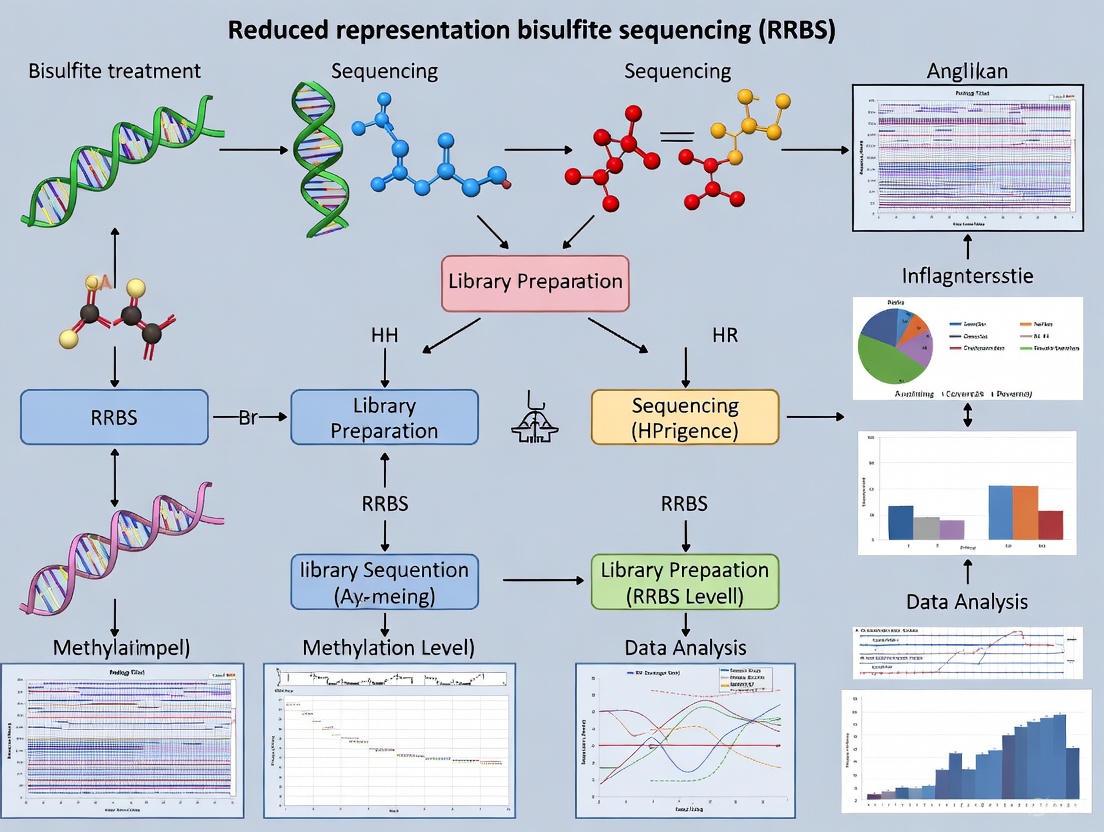
This comprehensive guide provides researchers, scientists, and drug development professionals with an in-depth exploration of Reduced Representation Bisulfite Sequencing (RRBS).
Reduced Representation Bisulfite Sequencing (RRBS): A Complete Guide to Principles, Protocols, and Applications in Biomedical Research
Abstract
This comprehensive guide provides researchers, scientists, and drug development professionals with an in-depth exploration of Reduced Representation Bisulfite Sequencing (RRBS). The article covers the foundational principles of this cost-effective, genome-wide DNA methylation analysis technique, delves into detailed methodological protocols for library preparation (both manual and automated), and addresses common troubleshooting and optimization challenges. It further validates the method through comparative analysis with other technologies and showcases its significant applications, particularly in clinical biomarker discovery for cancer diagnostics and large-scale evolutionary studies. This resource is tailored to support the successful implementation and optimization of RRBS in diverse research and translational contexts.
What is RRBS? Understanding the Core Principles of Targeted DNA Methylation Analysis
Reduced Representation Bisulfite Sequencing (RRBS) is an efficient, high-throughput technique for analyzing genome-wide DNA methylation profiles at single-nucleotide resolution. Developed by Meissner et al. in 2005, it strategically combines restriction enzyme digestion and bisulfite sequencing to enrich for CpG-rich regions of the genome, thereby reducing the required sequencing volume to about 1% of the entire genome and significantly lowering costs compared to whole-genome approaches [1] [2]. This targeted strategy makes RRBS a powerful tool for large-scale epigenetic studies, particularly in cancer genomics and developmental biology [1] [3].
Principles of RRBS
The fundamental principle of RRBS relies on two core steps to achieve cost-effective DNA methylome profiling. First, genomic DNA is digested with a methylation-insensitive restriction enzyme, typically MspI, which cuts at the sequence CCGG regardless of the methylation status of the internal CpG site [1] [4]. This enzyme specifically targets and enriches for fragments that contain a high density of CpG dinucleotides, as these regions are more likely to contain multiple CCGG sites. This enrichment focuses the sequencing effort on genomically relevant areas, such as CpG islands and gene promoters, which are often key to gene regulation [1] [5].
Second, the enriched fragments undergo bisulfite conversion. This chemical treatment deaminates unmethylated cytosines (C) to uracils (U), which are then amplified and sequenced as thymines (T). Methylated cytosines are protected from this conversion and remain as cytosines [1] [4]. Subsequent high-throughput sequencing and alignment to a reference genome allow for the precise quantification of methylation levels at each CpG site within the reduced representation by comparing the ratio of C-to-T conversions [1].
RRBS Protocol: A Step-by-Step Workflow
The following diagram illustrates the comprehensive workflow for preparing an RRBS library, from genomic DNA to sequenced libraries ready for bioinformatics analysis.
Detailed Experimental Procedures
- Enzyme Digestion: Genomic DNA (typically 10-100 ng) is digested with the MspI restriction enzyme. This step is crucial for creating a "reduced representation" of the genome, as it produces fragments that inherently have a CpG at each end, thereby enriching for areas with high CpG content [1] [2].
- End Repair and A-Tailing: The digestion produces sticky ends that require blunting. This involves filling in the 3' terminals, followed by the addition of an extra adenosine nucleotide to both strands. This "A-tailing" creates a compatible overhang for the subsequent ligation of thymine-tailed sequencing adapters [1].
- Adapter Ligation: Methylated sequencing adapters are ligated to the A-tailed DNA fragments. The cytosines in these adapters are methylated to prevent their deamination during the bisulfite conversion step, which would otherwise compromise adapter binding during sequencing [1].
- Size Selection and Purification: The DNA fragments are size-selected, typically isolating those between 40-220 base pairs via gel electrophoresis and excision. This range captures the majority of promoter sequences and CpG islands, further refining the genomic representation [1] [4].
- Bisulfite Conversion: The size-selected fragments are treated with bisulfite. This is a critical step where unmethylated cytosines are deaminated to uracils, while methylated cytosines remain unchanged. The reaction conditions must be meticulously controlled to ensure complete conversion while minimizing DNA degradation [1] [4].
- PCR Amplification: The bisulfite-converted DNA is amplified using a polymerase chain reaction (PCR) with primers complementary to the ligated adapters. A non-proofreading polymerase must be used because proofreading enzymes would stall at the uracil residues introduced during bisulfite conversion [1].
- Sequencing and Analysis: The final library is purified and sequenced on a next-generation sequencing platform, such as the Illumina NovaSeq system with paired-end 150 bp reads being common [3]. The resulting data is processed through a specialized bioinformatics pipeline for bisulfite-converted sequences [1] [4].
Essential Research Reagents and Solutions
Successful execution of the RRBS protocol depends on a suite of specialized reagents and materials. The table below details the key components and their critical functions in the workflow.
| Item Name | Function/Description | Key Considerations |
|---|---|---|
| MspI Restriction Enzyme | Methylation-insensitive enzyme that cuts at CCGG sites to enrich for CpG-rich fragments [1]. | The cornerstone of RRBS; its specificity defines the reduced representation of the genome. |
| Methylated Adapters | Sequencing adapters with methylated cytosines to prevent deamination during bisulfite treatment [1]. | Crucial for maintaining adapter integrity and ensuring successful library amplification and sequencing. |
| Bisulfite Conversion Reagents | Chemicals (e.g., sodium bisulfite) that deaminate unmethylated C to U, while methylated C remains intact [1] [5]. | Conversion efficiency and DNA degradation must be balanced; fresh reagents are critical [1]. |
| Non-Proofreading DNA Polymerase | Enzyme for PCR amplification of the bisulfite-converted library [1]. | Essential because standard proofreading polymerases cannot replicate past uracil bases in the template. |
| Size Selection Method | Gel electrophoresis or bead-based purification to isolate fragments of 40-220 bp [1] [3]. | Determines the specific genomic features (e.g., promoters, CpG islands) captured for sequencing. |
Advantages and Limitations of RRBS
Key Advantages
RRBS offers several compelling benefits for DNA methylation studies:
- Cost-Effectiveness: By sequencing only 1-3% of the genome, RRBS drastically reduces sequencing costs compared to Whole-Genome Bisulfite Sequencing (WGBS), while still covering functionally relevant regions [1] [3] [5].
- Single-Base Resolution: The technique provides quantitative methylation levels at individual cytosine bases within the captured fragments, allowing for precise mapping of methylation states [3] [4].
- High Coverage of Key Regions: RRBS effectively captures ~70% of CpG islands and gene promoters, which are critical for transcriptional regulation [5].
- Low Input DNA: The protocol can be performed with as little as 10-100 ng of genomic DNA, making it suitable for samples with limited material [1] [2].
Inherent Limitations
Researchers must also consider the constraints of the RRBS method:
- Limited Genome Coverage: RRBS covers only about 10-15% of all CpG sites in the mammalian genome, as it is restricted to regions containing the MspI recognition site [2] [5]. This means many intergenic and non-CpG-rich regulatory elements are missed.
- Bias from Restriction Sites: The reliance on MspI means that genomic regions lacking CCGG sites are entirely absent from the analysis [1] [4].
- PCR and Bisulfite Artifacts: The use of a non-proofreading polymerase can increase PCR errors, and incomplete bisulfite conversion can lead to false positives for methylation [1].
- Inability to Distinguish 5mC from 5hmC: Like other bisulfite-based methods, RRBS cannot differentiate between 5-methylcytosine (5mC) and 5-hydroxymethylcytosine (5hmC), as both resist conversion [5].
Comparison with Other Methylation Profiling Techniques
Selecting the appropriate DNA methylation profiling method depends on the research goals, budget, and required genomic coverage. The table below provides a comparative overview of RRBS and other common techniques.
| Method | Resolution | Coverage | Relative Cost | Key Applications |
|---|---|---|---|---|
| RRBS | Single-base [4] | ~10-15% of CpGs (CpG islands, promoters) [2] [5] | Low [1] [5] | Cost-effective profiling of key regulatory regions; large cohort studies [3]. |
| WGBS | Single-base [6] | >90% of CpGs (genome-wide) [6] | High [6] [7] | Comprehensive discovery; analysis of non-CpG methylation, intergenic regions. |
| MeDIP-seq | ~100 bp (enrichment-based) [6] | Genome-wide, but biased towards highly methylated regions [6] | Medium | Mapping heavily methylated regions; not suitable for absolute quantification. |
| Infinium Methylation Array | Single-base (pre-defined sites) | ~850,000 pre-selected CpG sites [1] | Low (per sample) | Very high-throughput clinical screening; validation in large populations. |
This comparison shows that RRBS occupies a unique niche, offering a balance between resolution, cost, and focused coverage. While WGBS is the gold standard for comprehensiveness, RRBS provides a highly cost-effective alternative for studies focusing on gene regulatory elements.
Applications in Research and Drug Development
RRBS has become a cornerstone in epigenetics research, with wide-ranging applications:
- Cancer Genomics: RRBS is extensively used to identify aberrant methylation patterns in tumors, facilitating tumor-subtype classification and the discovery of epigenetic biomarkers for diagnosis and prognosis [1] [3]. Its high sensitivity allows for direct comparison of methylation between tumor and normal tissues [1].
- Developmental Biology: The technique is employed to track stage-specific and tissue-specific methylation changes during development, helping to elucidate the role of epigenetics in differentiation and cellular identity [1].
- Agricultural and Crop Sciences: In crop development, RRBS is applied to study the epigenetic basis of agronomic traits, adaptability, and response to environmental stress [3].
- Clinical and Pharmaceutical Research: RRBS supports drug development by identifying methylation signatures associated with disease pathogenesis, which can serve as potential drug targets. It is also used to monitor epigenetic changes in response to therapies [3].
Bioinformatics Analysis Pipeline
The analysis of RRBS data requires specialized bioinformatics tools designed to handle the specific properties of bisulfite-converted sequences. A standard pipeline involves:
- Quality Control: Assessing raw sequencing data quality using tools like FastQC and trimming low-quality bases or adapter sequences [4].
- Alignment: Mapping the bisulfite-converted reads to a reference genome using aligners such as Bismark, BSMAP, or BS Seeker, which account for the C-to-T conversion [1] [4].
- Methylation Calling: For each CpG site in the target regions, the methylation level is calculated as the percentage of reads showing a cytosine (methylated) versus a thymine (unmethylated) [4].
- Differential Methylation Analysis: Using software packages like methylKit or edgeR, statistically significant Differentially Methylated Regions (DMRs) or Positions (DMPs) are identified between sample groups [4].
- Functional Annotation and Integration: DMRs/DMPs are annotated to genomic features (promoters, genes, etc.) and subjected to functional enrichment analysis (e.g., GO, KEGG) to interpret their biological significance [3] [4].
Reduced Representation Bisulfite Sequencing remains a highly validated and powerful method for DNA methylation profiling, striking an optimal balance between cost, resolution, and practical throughput. By focusing on the most biologically informative, CpG-rich regions of the genome, it enables researchers to conduct robust epigenome-wide association studies in large cohorts. While newer methods continue to emerge, RRBS maintains its relevance as a core technique in the epigenetics toolkit, particularly for hypothesis-driven research where the regulatory landscape of gene promoters and CpG islands is the primary focus. Its established protocols and mature bioinformatics pipelines ensure it will continue to contribute significantly to advancements in basic research, clinical diagnostics, and therapeutic development.
Reduced Representation Bisulfite Sequencing (RRBS) is an efficient, high-throughput technique for analyzing genome-wide methylation profiles at a single-nucleotide level. Developed by Meissner et al. in 2005, it strategically combines restriction enzyme digestion and bisulfite sequencing to enrich for genomically informative, CpG-dense regions, thereby reducing the sequencing requirement to approximately 1% of the genome while still capturing the majority of promoters and CpG islands [1] [8] [9]. This cost-effective approach provides a powerful tool for large-scale epigenetic screening, particularly in cancer genomics and developmental biology [1] [10].
The core biochemistry of RRBS hinges on the sequential and complementary application of two key processes: methylation-insensitive restriction enzymes that perform a smart reduction of genomic complexity, and bisulfite conversion that translates the epigenetic state into a DNA sequence readable by next-generation platforms. This synergy allows researchers to focus sequencing power on the most methylation-informative portions of the genome.
The Core Biochemical Mechanisms
The Role of Restriction Enzymes in Genomic Reduction
The first biochemical step in RRBS uses a restriction enzyme to create a reduced yet highly representative subset of the genome. The enzyme MspI is most commonly employed for this purpose [1] [11] [10].
- Recognition and Cleavage: MspI is a methylation-insensitive enzyme that recognizes the short, CpG-containing palindromic sequence 5'-CCGG-3' and cleaves upstream of the outer CpG dinucleotide [1]. This methylation insensitivity is crucial, as it ensures the digestion of both methylated and unmethylated DNA templates without bias.
- Generation of CpG-Rich Fragments: Because MspI cuts at CCGG sites, every resulting fragment is flanked by a CpG site at both ends. Since CpG islands are often clustered in promoter and regulatory regions, this process systematically enriches for these functionally significant areas [1] [9]. The digestion produces DNA fragments of varying sizes, which are then subjected to a size selection step (typically 40-220 base pairs) to further concentrate the library on fragments most likely to contain CpG islands and promoter sequences [1] [11].
The Chemistry of Bisulfite Conversion
Following genomic reduction, the DNA fragments undergo bisulfite conversion, the second core biochemical reaction that enables the detection of methylation status.
- Deamination Reaction: Sodium bisulfite catalyzes the hydrolytic deamination of cytosine into uracil under acidic conditions (low pH) and at elevated temperatures (50-95°C) [12] [13] [14]. This reaction proceeds through a sulfonation intermediate, which is then deaminated and desulphonated to yield uracil.
- Differential Reaction with Methylated Cytosine: The presence of a methyl group at the 5-carbon position of cytosine (5-methylcytosine, 5mC) sterically hinders the bisulfite reaction. Consequently, 5mC reacts very slowly and remains largely unchanged as cytosine, while unmethylated cytosine is converted to uracil [9] [14]. In subsequent PCR amplification, uracil is replicated as thymine, creating a C-to-T transition in the sequence data that is distinguishable from the retained cytosine signifying methylation [9].
Table 1: Key Characteristics of Bisulfite and Enzymatic Conversion Methods
| Characteristic | Bisulfite Conversion (BC) | Enzymatic Conversion (EC) |
|---|---|---|
| Core Principle | Chemical deamination [12] | Multi-step enzymatic process (TET oxidation, glycosylation, APOBEC deamination) [12] |
| DNA Input Range | 0.5–2000 ng [12] | 10–200 ng [12] |
| Conversion Efficiency | ~99-100% [12] [15] | ~97-100%, can be more variable [12] [15] |
| DNA Fragmentation | Extensive, due to harsh chemical conditions [12] [15] | Minimal, due to gentler enzymatic treatment [12] [15] |
| DNA Recovery | Higher recovery (e.g., 61-81% for cfDNA) [15] | Lower recovery (e.g., 34-47% for cfDNA) [15] |
| Protocol Duration | Long (includes 12-16 hour incubation) [12] | Shorter (total incubation ~4.5-6 hours) [12] |
Synergistic Workflow in RRBS
The power of RRBS lies in the sequential application of these two biochemical processes. The restriction enzyme digestion first creates a "reduced representation" of the genome that is intentionally biased toward CpG-rich regions. The bisulfite conversion then acts upon this enriched library, chemically coding the methylation status into the DNA sequence itself. This combined approach transforms the challenge of genome-wide methylation profiling from a problem of brute-force sequencing into a targeted, cost-effective strategy [1] [10].
Detailed RRBS Experimental Protocol
The following section provides a detailed, step-by-step methodology for executing a standard RRBS experiment.
Protocol Workflow
The diagram below illustrates the complete RRBS workflow, from genomic DNA to sequenced library.
Step-by-Step Protocol Description
Step 1: Enzyme Digestion
- Procedure: Digest 50-100 ng - 1 µg of high-quality genomic DNA to completion using the MspI restriction enzyme. Incubate the reaction mixture overnight at 37°C to ensure complete digestion [1] [8].
- Biochemical Rationale: MspI's specificity for CCGG sites ensures the fragment pool is enriched with sequences containing terminal CpGs. Its methylation-insensitivity guarantees unbiased digestion regardless of the methylation status of the target site [1].
Step 2: End Repair and A-Tailing
- Procedure: The sticky ends resulting from MspI digestion are first filled in using a DNA polymerase in a reaction containing dNTPs. This is immediately followed by an A-tailing reaction, where an excess of dATP and a non-proofreading polymerase are used to add a single adenosine overhang to the 3' ends of the fragments [1].
- Critical Notes: This step is essential for preparing the fragments for the subsequent ligation of specialized methylated adapters.
Step 3: Adapter Ligation
- Procedure: Ligate methylated sequencing adapters to the A-tailed fragments using DNA ligase [1].
- Key Consideration: The adapters must be synthesized with 5-methylcytosine instead of standard cytosine. This modification protects the adapter sequences from being deaminated during the bisulfite conversion step, which would prevent hybridization to the flow cell during sequencing [1] [13].
Step 4: Size Selection
- Procedure: Separate the adapter-ligated fragments by agarose gel electrophoresis. Excise the region of the gel containing fragments in the 40-220 bp size range and purify the DNA [1] [11].
- Rationale: This precise size selection is critical as it enriches for fragments that are highly representative of promoter sequences and CpG islands, thereby maximizing the coverage of functionally relevant regions while minimizing unnecessary sequencing [1].
Step 5: Bisulfite Conversion
- Procedure: Subject the size-selected DNA to bisulfite conversion using a commercial kit (e.g., EZ DNA Methylation Kit). This typically involves denaturation of the DNA with NaOH, followed by incubation with sodium bisulfite for 12-16 hours at elevated temperatures (e.g., 55°C), and finally desulfonation under alkaline conditions [1] [14].
- Technical Challenges and Optimization: The reaction must achieve complete denaturation to ensure bisulfite access to single-stranded DNA. Incomplete conversion is a major source of false-positive methylation calls. However, the harsh reaction conditions also cause significant DNA degradation and loss (up to 90%) [1] [14]. Using fresh reagents, ensuring thorough denaturation, and including urea to prevent reannealing can improve conversion efficiency [1].
Step 6: PCR Amplification
- Procedure: Amplify the bisulfite-converted library using PCR with primers complementary to the methylated adapters. Use 35-40 cycles of amplification with a non-proofreading, hot-start polymerase that is capable of reading over uracil bases in the template [1] [13].
- Critical Notes: A proofreading polymerase would stall at uracil residues, leading to amplification failure. The high cycle number is required due to the low starting amount of converted DNA and its single-stranded nature [1].
Step 7: Library Purification and Quality Control
- Procedure: Purify the final PCR product to remove enzymes, salts, and unused primers using gel electrophoresis or magnetic bead-based cleanup kits [1].
- Quality Assessment: Quantify the library using fluorometry (e.g., Qubit) and assess fragment size distribution using a Bioanalyzer or Tapestation. A distinct peak in the expected size range should be visible.
Step 8: Sequencing
- Procedure: Sequence the library on an appropriate next-generation sequencing platform (e.g., Illumina). A single-read 50-100 bp run is often sufficient for RRBS libraries [1] [9].
Technical Considerations and Optimization
Key Reagents and Research Solutions
Table 2: Essential Reagents for RRBS Library Construction
| Reagent / Kit | Function / Principle | Example Product / Note |
|---|---|---|
| Methylation-Insensitive Restriction Enzyme | Digests DNA at CCGG sites regardless of methylation status to create CpG-rich fragments. | MspI [1] |
| Methylated Adapters | Provides sequences for PCR amplification and flow cell binding; methylation prevents adapter degradation during bisulfite step. | Illumina-style adapters with 5-methylcytosine [1] [13] |
| Bisulfite Conversion Kit | Chemically converts unmethylated cytosine to uracil to encode methylation status as sequence information. | EZ DNA Methylation Kit (Zymo Research) [12] [13] |
| Uracil-Tolerant, Non-Proofreading Polymerase | Amplifies bisulfite-converted DNA without stalling at uracil residues. | PfuTurbo Cx Hotstart (original study) or similar [1] [8] |
| DNA Cleanup & Size Selection Kit | Purifies DNA after various steps and selects fragments of the desired size range (40-220 bp). | Gel electrophoresis & excision, or magnetic bead-based systems [1] |
Addressing Technical Challenges
- Overcoming Bisulfite-Induced DNA Damage: The extensive fragmentation and DNA loss associated with bisulfite conversion is a major limitation, especially for precious or low-input samples [12] [14]. Enzymatic conversion (EC) presents a promising alternative. This method uses a series of enzymes (TET2, T4-BGT, and APOBEC3A) to first convert 5mC to a protected form and then deaminate unmethylated cytosine, resulting in significantly less DNA fragmentation [12]. However, current EC kits can suffer from lower and more variable DNA recovery compared to optimized BC protocols, as shown in Table 1 [12] [15].
- Ensuring Complete Conversion: Incomplete bisulfite conversion leads to overestimation of methylation levels. It is essential to use appropriate controls, such as fully unmethylated DNA (e.g., from lambda phage), to measure the conversion efficiency, which should be >99% [1] [14]. Multiplex qPCR assays like qBiCo have been developed to rigorously quality-control conversion efficiency, recovery, and fragmentation [12].
- Bioinformatics for RRBS Data: The analysis of RRBS data requires specialized alignment software that accounts for the reduced sequence complexity and the non-random base composition resulting from bisulfite conversion (e.g., all reads start with a C or T). Commonly used tools include Bismark, BS Seeker, and BSMAP [1].
Application in Research and Drug Development
RRBS is a powerful tool for drug development professionals and researchers, particularly in cancer genomics and biomarker discovery.
- Cancer Methylation Profiling: The high sensitivity of RRBS allows for rapid comparison of methylation profiles between tumor and normal cells, identifying aberrant hypermethylation of tumor suppressor genes or hypomethylation of oncogenes [1] [10]. This can reveal potential diagnostic biomarkers or therapeutic targets.
- Analysis of Challenging Sample Types: The low input DNA requirement (as little as 10 ng) makes RRBS suitable for analyzing precious biobank samples, including Formalin-Fixed Paraffin-Embedded (FFPE) tissues and circulating cell-free DNA (cfDNA) from liquid biopsies [1] [15]. For highly degraded cfDNA, enzymatic conversion may offer an advantage due to its gentler treatment and production of longer fragments, despite its current recovery challenges [12] [15].
The core biochemistry of Reduced Representation Bisulfite Sequencing—the strategic partnership of methylation-insensitive restriction enzymes and bisulfite conversion—creates a highly efficient and cost-effective platform for genome-wide DNA methylation analysis. The restriction enzyme MspI performs the first critical step of genomic reduction, enriching for a CpG-rich representation of the genome. The subsequent bisulfite conversion then acts as a molecular translator, encoding the epigenetic information of DNA methylation into DNA sequence information. While challenges such as bisulfite-mediated DNA degradation exist, ongoing methodological refinements, including the development of enzymatic conversion, continue to enhance the utility of this powerful technique. For researchers and drug developers, a deep understanding of this core biochemistry is essential for successfully applying RRBS to uncover epigenomic alterations driving disease and for identifying novel epigenetic biomarkers.
Reduced Representation Bisulfite Sequencing (RRBS) has established itself as a powerful, cost-effective methodology for profiling DNA methylation at single-nucleotide resolution. By strategically enriching for CpG-dense regions, RRBS provides an unparalleled tool for researchers investigating epigenetic regulation within gene promoters, enhancers, and other key regulatory elements. This Application Note delineates the core advantages of the RRBS approach, presents a detailed experimental protocol, and contextualizes its application within drug development and biomedical research, providing scientists with a comprehensive guide to leveraging this technology.
In mammalian genomes, a significant proportion of cytosine-phospho-guanine (CpG) dinucleotides are modified with a methyl group, a key epigenetic mark involved in transcriptional regulation [16]. These CpG residues are non-uniformly distributed, often clustered into GC-rich regions known as CpG islands (CpGIs), which are frequently associated with gene promoters and other regulatory genomic elements [16]. Methylation within these promoter-associated CpGIs is typically linked to transcriptional repression [16]. Enhancers, another critical class of regulatory elements, also exhibit specific methylation patterns that influence their activity.
RRBS was developed to enable high-resolution DNA methylation analysis in a cost-effective manner by focusing sequencing power on these functionally relevant, CpG-rich parts of the genome [17]. The method combines methylation-insensitive restriction enzyme digestion with bisulfite sequencing to create a reduced representation of the genome that is enriched for promoters, CpG islands, and gene bodies [18] [19]. This enrichment allows researchers to profile a substantial fraction of the methylome with a fraction of the sequencing reads required for whole-genome approaches, making it exceptionally efficient for large-scale epigenetic screening studies and biomarker discovery [20] [19].
Key Advantages of RRBS for Regulatory Element Analysis
The design of RRBS confers several distinct benefits for the study of CpG-rich promoters and enhancers, making it an ideal choice for specific research and clinical applications.
Table 1: Core Advantages of RRBS for Promoter and Enhancer Methylation Studies
| Advantage | Description | Research Impact |
|---|---|---|
| Cost-Effectiveness & Efficiency | Enriches ~1-5% of the genome, covering ~12% of CpGs and >70% of promoters and CpG islands; requires only 10-20% of WGBS sequencing reads [18] [19]. | Ideal for large-scale studies and pilot projects; reduces sequencing costs while capturing most regulatory regions of interest. |
| Single-Base Resolution | Provides nucleotide-level methylation data for each covered CpG site [19]. | Enables precise mapping of methylation boundaries and identification of specific regulatory CpGs. |
| Low Input DNA Requirement | Compatible with low DNA inputs, as low as 10-20 ng for standard protocols, and even lower in modified versions [18] [21]. | Facilitates analysis of precious or limited clinical samples (e.g., biopsies, sorted cells). |
| Focus on Functionally Relevant Regions | Strategically targets CpG-rich areas, including promoters, CpG islands, and gene bodies, which are often key to gene regulation [18] [17]. | Maximizes the biological return on sequencing investment by concentrating on mutable and informative genomic regions. |
| Multiplexing Capability | Library design allows for sample barcoding and pooling [20]. | Increases throughput and reduces per-sample cost in cohort studies. |
Beyond the advantages listed in Table 1, RRBS also allows for the simultaneous detection of DNA methylation and single-nucleotide polymorphisms (SNPs) [20] [19]. This capability is crucial for investigating allele-specific methylation (ASM), a phenomenon of great interest in the study of genomic imprinting and complex diseases [20].
Comparison with Alternative Methylation Profiling Methods
To fully appreciate the utility of RRBS, it is helpful to compare it with other common genome-wide DNA methylation platforms.
Table 2: Comparison of RRBS with Other Genome-Wide DNA Methylation Profiling Methods
| Method | Coverage | Input DNA | Cost | Key Strengths | Key Limitations |
|---|---|---|---|---|---|
| RRBS | ~1.5–5 million CpGs; covers majority of promoters/CpG islands [18] [22]. | 10 ng – 1 µg [19] [2]. | Moderate | Excellent balance of cost, coverage, and resolution for CpG-rich regions. | Does not cover intergenic enhancers or regions with low CpG density uniformly [18]. |
| Whole-Genome Bisulfite Sequencing (WGBS) | All ~28 million CpGs in the human genome [22]. | 3 µg [20] (can be lower with optimizations). | High | Unbiased, comprehensive coverage of every CpG in the genome. | High cost and data storage requirements; less efficient for targeted analysis [23]. |
| Infinium BeadChip (e.g., EPIC) | ~850,000 pre-defined CpG sites [20]. | 500 ng – 1 µg [20]. | Low | Highly reproducible, high-throughput, and cost-effective for very large cohorts. | Fixed content limits discovery; cannot detect SNPs or ASM easily; probes can have cross-reactivity issues [20]. |
A notable innovation in the field is the development of Enzymatic Methyl-seq (EM-seq) as an alternative to bisulfite conversion. EM-seq uses enzymatic reactions to distinguish modified cytosines, minimizing the DNA degradation and GC bias inherent to the harsh conditions of bisulfite treatment [16] [23]. Studies show that EM-seq, including its reduced representation version (RREM-seq), generates superior library complexity and more uniform coverage, particularly for low-input samples [16] [23]. However, the established RRBS protocol remains a robust and widely adopted choice for many applications.
Detailed RRBS Protocol
The following gel-free protocol for RRBS library preparation is adapted from established methodologies [2] and is designed to be completed in approximately three days for a set of eight samples.
Research Reagent Solutions
Table 3: Essential Reagents and Materials for RRBS Library Preparation
| Item | Function | Example/Note |
|---|---|---|
| MspI Restriction Enzyme | Methylation-insensitive enzyme that cuts at CCGG sites, fragmenting the genome at CpG-rich regions [2] [17]. | New England Biolabs. |
| DNA Clean-up Beads | Size selection and purification of digested, ligated, and converted DNA fragments [2]. | Solid-phase reversible immobilization (SPRI) beads. |
| Methylated Adapters | Double-stranded DNA adapters with 5'-methylcytosine for ligation to digested fragments; essential because bisulfite conversion will deaminate unmethylated cytosines in the adapter [17]. | Illumina-compatible. |
| Bisulfite Conversion Kit | Chemically converts unmethylated cytosine to uracil, while leaving methylated cytosine unchanged [2]. | Zymo Research EZ-96 DNA Methylation Kit. |
| High-Fidelity PCR Mix | Amplifies the final library after bisulfite conversion for sequencing [2]. | Contains polymerase capable of reading uracil. |
Step-by-Step Workflow
Figure 1: RRBS Library Preparation Workflow
Genomic DNA Isolation and Qualification [17]: Extract high-quality genomic DNA. Assess integrity via agarose gel electrophoresis and quantify using a fluorometric method (e.g., Qubit). Input of 100 ng of genomic DNA is typical for this protocol [2].
MspI Restriction Digest [2] [17]: Digest the genomic DNA with the MspI restriction enzyme. This step is the core of the "reduced representation," as it fragments the genome at all CCGG sites, thereby enriching for CpG-dense fragments. Incubate at 37°C for 3 hours.
End Repair and dA-Tailing [19]: The digested fragments possess incompatible ends. Use a combination of enzymes to create blunt ends, followed by the addition of a single 'A' base to the 3' end. This 'A' overhang facilitates ligation to the 'T' overhang on the methylated adapters.
Ligation of Methylated Adapters [17]: Ligate methylated Illumina-compatible sequencing adapters to the dA-tailed fragments. The use of methylated adapters is critical because subsequent bisulfite treatment would otherwise destroy unmethylated adapters.
Size Selection [2]: Purify and size-select the adapter-ligated DNA using magnetic beads. This step enriches for fragments in the 100-250 bp range (post-adapter ligation), which optimally contain CpG-rich regions while excluding very short or long fragments [16]. This is a key step to focus coverage on the most informative parts of the reduced genome.
Bisulfite Conversion [2]: Treat the size-selected library with a sodium bisulfite kit (e.g., Zymo Research). This chemical reaction converts unmethylated cytosines to uracils, while methylated cytosines remain as cytosines. The converted DNA is then purified.
PCR Amplification [2]: Amplify the final library using a high-fidelity PCR master mix and index primers. Typically, 9-10 cycles of PCR are sufficient to generate a sequencing-ready library from 100 ng of starting DNA [2]. This step also incorporates the sample-specific barcodes for multiplexing.
Library Quality Control and Sequencing [19]: Validate the final library using a high-sensitivity analytical system (e.g., Agilent TapeStation). Qualify the library concentration by qPCR. Pool equimolar amounts of indexed libraries and sequence on an Illumina platform (e.g., 75-150 bp single-end or paired-end reads).
Applications in Research and Drug Development
The specific advantages of RRBS make it suitable for a wide array of applications in basic research and translational medicine.
Cancer Research and Biomarker Discovery: RRBS is extensively used to identify differentially methylated regions (DMRs) between cancerous and healthy tissues. These methylation markers can serve as potential non-invasive diagnostic, prognostic, or predictive biomarkers [19]. The compatibility of RRBS with low DNA inputs, including circulating free DNA (cfDNA), is particularly valuable for developing liquid biopsy assays [24].
Developmental Biology and Neuroscience: Researchers utilize RRBS to investigate the dynamic changes in DNA methylation that occur during embryonic development and cellular differentiation [19]. In neuroscience, it helps elucidate the epigenetic basis of learning, memory, and neurological disorders such as Alzheimer's disease and autism [19].
Toxicology and Environmental Health: The ability of RRBS to profile methylation in CpG "shores"—regions flanking CpG islands that are often more variable in response to environmental exposures—makes it a powerful tool for studying how toxins, nutrients, and other external factors program the genome [20].
Agricultural and Livestock Science: In agricultural science, RRBS is applied to profile DNA methylation in crops and livestock to link epigenetic patterns to traits like disease resistance, yield, and product quality, thereby informing breeding strategies [18].
RRBS remains a highly relevant and powerful technique for DNA methylation analysis, particularly when the research objective is focused on CpG-rich promoter and enhancer regions. Its strategic design offers an optimal balance of cost, resolution, and throughput. While newer methods like EM-seq present improvements in library complexity and DNA preservation, the well-established, robust nature of RRBS ensures its continued utility in epigenomics research. For scientists embarking on large-scale epigenetic screening or working with valuable sample types, RRBS provides a reliable and efficient pathway to generating high-quality, biologically meaningful methylation data.
DNA methylation, an essential epigenetic mechanism, involves the addition of a methyl group to cytosine bases in DNA, primarily at CpG dinucleotides. This modification profoundly influences gene expression without altering the underlying DNA sequence, playing a critical role in cellular differentiation, genomic imprinting, X-chromosome inactivation, and the suppression of transposable elements. Aberrant DNA methylation patterns are established contributors to various human diseases, including cancer, neurodevelopmental disorders, and autoimmune conditions [25].
Reduced Representation Bisulfite Sequencing (RRBS) has emerged as a powerful, cost-effective method for profiling genome-wide DNA methylation at single-base resolution. The technique utilizes restriction enzymes to selectively target CpG-rich regions of the genome, which are then treated with bisulfite and sequenced [25] [26]. This approach provides a high-coverage, quantitative readout of methylation status, enabling researchers to identify differentially methylated regions (DMRs) with significant biological implications [25]. This application note details how RRBS analysis provides critical insights into the mechanistic links between DNA methylation, gene regulation, and disease pathogenesis.
Biological Mechanisms of Methylation-Mediated Gene Regulation
Genomic Distribution and Functional Impact
DNA methylation exerts its regulatory effects in a context-dependent manner, primarily influenced by its genomic location. The functional consequences of methylation vary significantly across different genomic features [25]:
- Promoter Regions: Methylation within gene promoter regions is typically associated with transcriptional repression. This silencing occurs by physically impeding the binding of transcription factors or by recruiting proteins that promote the formation of transcriptionally inactive, condensed heterochromatin.
- Gene Bodies: In contrast, methylation within the body of active genes is often associated with transcriptional elongation and can suppress spurious intragenic transcription initiation. This intragenic methylation is a common feature of highly expressed genes.
- Intergenic and Repetitive Regions: Methylation in these areas is crucial for maintaining genomic stability by silencing transposable elements and preventing chromosomal rearrangements.
Identifying Biologically Significant Methylation Changes
The table below summarizes the key characteristics used to distinguish functionally relevant methylation changes from background variation in RRBS studies [25].
Table 1: Characteristics of Biologically Significant Methylation Changes
| Feature | Description | Biological Implication |
|---|---|---|
| Genomic Context | Location relative to genes (promoter, enhancer, gene body). | Determines the directional effect (silencing or activation) on gene expression [25]. |
| Magnitude of Change | The absolute difference in methylation levels (e.g., delta beta). | Larger changes (e.g., >10-25%) are more likely to have functional consequences [27]. |
| Consistency across a Region | Multiple adjacent CpGs showing coordinated change. | Increases confidence in the finding and suggests a stronger regulatory impact [27]. |
| Association with Expression | Correlation between methylation changes and mRNA levels of nearby genes. | Provides direct evidence for a functional role in gene regulation [25]. |
RRBS Workflow: From Sample to Insight
A standardized computational pipeline is required to transform raw sequencing data into biological insights. The workflow involves multiple stages of data processing and analysis [25].
Detailed Experimental and Computational Protocols
Protocol 1: Raw Data Processing and Alignment
Principle: Ensure data quality and accurately map bisulfite-converted sequences to a reference genome, accounting for C-to-T conversions [26].
Quality Control and Adapter Trimming:
- Tool:
Trim Galore(wrapper forCutadaptandFastQC). - Command for paired-end reads:
- Rationale: The
--rrbsflag specifies special processing for RRBS libraries, ensuring precise trimming of the overhang sequence left by the restriction enzyme (e.g., MspI) [26].
- Tool:
Alignment to Reference Genome:
- Tool:
Bismark(usesBowtie 2as the aligner). - Genome Preparation: First, create a bisulfite-converted version of the reference genome.
- Alignment Command:
- Output: A BAM file containing aligned reads [26].
- Tool:
Protocol 2: Methylation Extraction and Differential Analysis
Principle: Quantify methylation levels at each cytosine and identify statistically significant changes between sample groups [26] [27].
Methylation Calling:
- Tool:
Bismark Methylation Extractor. - Command for paired-end data:
- Output: A coverage file (.cov) containing columns for: chromosome, start, end, methylation percentage, count methylated, and count unmethylated [26].
- Tool:
Differential Methylation Analysis in R:
- Tool:
DSSordmrseqBioconductor packages. - Key R Code Snippet for Data Loading:
- Parameters: Key thresholds include minimum read coverage (e.g., 5x), minimum methylation difference (e.g., 0.1 or 10%), and FDR threshold (e.g., 0.05) [27].
- Tool:
The Scientist's Toolkit: Essential Reagents and Software
Successful RRBS analysis relies on a combination of wet-lab reagents and bioinformatic tools. The table below catalogs essential solutions for the workflow.
Table 2: Research Reagent Solutions for RRBS Analysis
| Item Name | Function / Description | Application Context |
|---|---|---|
| MspI Restriction Enzyme | Frequently used enzyme that cuts at CCGG sites, enriching for CpG-rich genomic regions. | Library Preparation: Creates reduced representation fragments for sequencing [25]. |
| Sodium Bisulfite | Chemical treatment that converts unmethylated cytosines to uracils (read as thymines after PCR), while methylated cytosines remain unchanged. | Bisulfite Conversion: Enables discrimination between methylated and unmethylated cytosines [25]. |
| Bismark | A comprehensive aligner and methylation caller specifically designed for bisulfite sequencing data. | Data Analysis: Performs alignment, methylation extraction, and report generation [25] [26]. |
| DSS / dmrseq | Statistical R packages for identifying differentially methylated sites (DMS) and regions (DMRs) from bisulfite sequencing data. | Data Analysis: Provides robust statistical testing for methylation changes between conditions [27]. |
| Trim Galore | A wrapper tool that automates quality and adapter trimming, with specific optimizations for RRBS data. | Data Preprocessing: Performs initial quality control (FastQC) and adapter trimming [26]. |
Data Interpretation and Pathway Analysis
From DMRs to Biological Meaning
Once DMRs are identified, the critical next step is biological interpretation. This involves:
- Genomic Annotation: Annotating DMRs with genomic features (e.g., promoters, enhancers, gene bodies) using packages like
ChIPseekerorannotatrin R [27]. This determines which genes are most likely to be regulated by the methylation change. - Integration with Transcriptomic Data: Correlating methylation changes in promoter or regulatory regions with changes in gene expression data (e.g., from RNA-seq). A negative correlation in promoters strongly supports direct transcriptional regulation [25].
- Pathway and Enrichment Analysis: Inputting the list of genes associated with DMRs into tools like
clusterProfiler,DAVID, orEnrichrto identify over-represented biological pathways, Gene Ontology (GO) terms, or disease associations [25] [27]. This reveals the higher-level biological processes affected by the epigenetic alterations.
Visualizing the Regulatory Impact
The relationship between DNA methylation, its regulatory effects, and downstream phenotypic outcomes can be summarized as follows:
Application in Disease Research and Biomarker Discovery
RRBS has proven particularly impactful in cancer research, where it facilitates the discovery of methylation biomarkers for early detection, prognostic stratification, and elucidation of disease mechanisms [25]. By comparing the methylation landscape of tumor samples against matched normal tissues, researchers can identify:
- Tumor Suppressor Genes: Inactivated by promoter hypermethylation.
- Oncogenes: Potentially activated by hypomethylation in regulatory regions.
- Metastasis-Associated Genes: With methylation patterns correlated with cancer progression and spread.
Beyond cancer, RRBS is extensively used to study methylation dynamics in neurodevelopmental disorders like autism, mental illnesses, autoimmune diseases, and responses to environmental factors [25]. The ability to profile methylation from limited input material also makes RRBS suitable for analyzing clinical specimens, accelerating the translation of epigenetic findings into diagnostic and therapeutic applications.
Reduced Representation Bisulfite Sequencing (RRBS) is an efficient, high-throughput technique for analyzing genome-wide DNA methylation profiles at single-nucleotide resolution. Originally developed by Meissner et al. in 2005, this method was designed to reduce the amount of sequencing required to approximately 1% of the genome while still capturing the majority of functionally relevant CpG-rich regions [1]. RRBS combines restriction enzyme digestion with bisulfite sequencing to specifically enrich for CpG-dense genomic regions, including gene promoters and CpG islands, which are crucial for gene regulation [2] [25]. This targeted approach provides a cost-effective alternative to whole-genome bisulfite sequencing (WGBS), making it particularly valuable for large-scale epigenetic studies in both developmental biology and cancer research [28].
The fundamental principle underlying RRBS is its ability to provide quantitative methylation measurements across a defined, representative subset of the genome. By focusing on CpG-rich areas, RRBS enables researchers to investigate methylation patterns with significantly reduced sequencing costs and deeper coverage of key regulatory elements compared to comprehensive methylome sequencing approaches [25] [28]. This balance of comprehensiveness and efficiency has established RRBS as a cornerstone methodology in modern epigenetics, with applications spanning from basic developmental biology to clinical translational research in oncology.
RRBS Methodology: Principles and Protocols
Fundamental Principles of RRBS
RRBS leverages the properties of methylation-insensitive restriction enzymes to create a reduced representation of the genome that is enriched for CpG-containing regions. The technique specifically targets genomic areas with high CpG density, which are often associated with gene regulatory elements. The core principle involves digesting genomic DNA with MspI, a restriction enzyme that recognizes the CCGG sequence regardless of its methylation status at the internal CG site [2] [1]. This enzymatic digestion produces fragments that consistently begin and end with CpG dinucleotides, systematically enriching for regions of the genome that are most informative for methylation analysis.
Following digestion, the process incorporates bisulfite conversion, which deaminates unmethylated cytosines to uracils while leaving methylated cytosines unchanged [1]. This differential conversion creates sequence polymorphisms that can be detected through subsequent sequencing, allowing for precise quantification of methylation states at single-base resolution. The combination of restriction enzyme digestion and bisulfite conversion creates a powerful synergy that enables focused, cost-effective methylation profiling of the most epigenetically informative regions of the genome.
Detailed Experimental Protocol
The standard RRBS protocol encompasses several critical steps that must be carefully optimized to ensure high-quality results. Below is a comprehensive overview of the key procedural stages:
DNA Extraction and Quality Control: The protocol begins with genomic DNA extraction from biological samples. While RRBS can work with inputs as low as 5-10 ng, most protocols recommend 100-200 ng of high-quality DNA for optimal results [29] [28]. Proper DNA quantification and quality assessment using fluorometric methods (e.g., Qubit) are essential before proceeding.
Enzymatic Digestion: Genomic DNA is digested with MspI (or similar methylation-insensitive restriction enzymes) that cleave at CCGG sites. This step generates fragments of varying sizes, all containing CpG dinucleotides at their ends [1]. The digestion conditions must be optimized to ensure complete cleavage while minimizing DNA degradation.
End Repair and A-Tailing: The restriction fragments undergo end repair to create blunt ends, followed by A-tailing, which adds a single adenosine nucleotide to the 3' ends. This preparation enables efficient adapter ligation in the subsequent step [1]. This reaction typically uses a mixture of dCTP, dGTP, and dATP deoxyribonucleotides, with dATP in excess to promote A-tailing efficiency.
Adapter Ligation: Methylated sequencing adapters are ligated to the A-tailed fragments. These adapters contain methylated cytosines to prevent their deamination during the bisulfite conversion step, thereby preserving the adapter sequences for subsequent amplification and sequencing [1]. The use of methylated adapters is crucial for maintaining library complexity.
Size Selection: The adapter-ligated fragments are size-selected (typically 40-220 bp) through gel electrophoresis or bead-based purification methods [1]. This size range has been shown to capture the majority of promoter sequences and CpG islands while eliminating very short or long fragments that might reduce sequencing efficiency.
Bisulfite Conversion: The size-selected DNA undergoes bisulfite treatment using established conversion kits. This critical step deaminates unmethylated cytosines to uracils while leaving methylated cytosines unchanged [1]. Complete conversion requires careful optimization of denaturation conditions, as incomplete denaturation can lead to unconverted cytosines being misinterpreted as methylated bases.
PCR Amplification: The bisulfite-converted DNA is amplified using PCR with primers complementary to the adapter sequences. Typically, 9 cycles of amplification are sufficient when starting with 100 ng of genomic DNA [2]. It is essential to use a non-proofreading DNA polymerase, as proofreading enzymes would stall at uracil residues in the template.
Library Quality Control and Sequencing: The final RRBS libraries are quantified and assessed for quality using methods such as fragment analysis. Quality-controlled libraries are then sequenced on high-throughput platforms such as Illumina sequencers [30]. Appropriate sequencing depth depends on the research question but typically ranges from 5-10 million reads per sample for standard applications.
Table 1: Key Reagents and Their Functions in RRBS Library Preparation
| Reagent | Function | Considerations |
|---|---|---|
| MspI Restriction Enzyme | Digests DNA at CCGG sites regardless of methylation status | Enriches for CpG-rich regions; defines reduced representation |
| Methylated Adapters | Provides sequences for amplification and sequencing | Methylation prevents deamination during bisulfite conversion |
| Bisulfite Conversion Reagents | Deaminates unmethylated C to U | Critical for distinguishing methylated and unmethylated cytosines |
| High-Fidelity Non-Proofreading Polymerase | Amplifies bisulfite-converted DNA | Proofreading polymerases stall at uracil residues |
| Size Selection Matrix | Selects fragments of optimal size (40-220 bp) | Enriches for fragments covering promoters and CpG islands |
For laboratories processing multiple samples, automated high-throughput protocols have been developed that maintain reproducibility while reducing hands-on time and batch effects [30]. These automated systems can process up to 96 samples simultaneously using liquid handling robots, significantly increasing throughput for large-scale epigenomic studies.
Protocol Variations and Optimizations
Several variations of the standard RRBS protocol have emerged to address specific research needs. Gel-free methods streamline the library preparation process by replacing gel-based size selection with bead-based purification [2]. Low-input protocols have been optimized for precious samples, working effectively with as little as 5-10 ng of input DNA [29] [28]. Additionally, species-specific modifications may be necessary when working with organisms that have atypical genomic CpG distributions, as RRBS is most effective for genomes with moderate to high CpG density.
RRBS Data Analysis Pipeline
The analysis of RRBS data requires specialized bioinformatics tools and pipelines to accurately interpret the complex data generated through this method. The unique characteristics of bisulfite-converted sequences, with their skewed C/T composition, necessitate specialized alignment algorithms that differ from those used for standard DNA sequencing.
Comprehensive Analysis Workflow
A complete RRBS data analysis pipeline encompasses multiple stages, from raw sequence processing to biological interpretation:
Quality Control and Read Trimming: The initial step involves assessing raw sequencing data quality using tools such as FastQC [25] [31]. This evaluation examines base quality distribution, GC content, sequence length distribution, and adapter contamination. Low-quality bases and adapter sequences are then trimmed from read ends, with resulting reads shorter than a specified minimum length (typically 20-30 bp) discarded to reduce non-unique mapping.
Alignment to Reference Genome: Filtered reads are aligned to a reference genome using bisulfite-specific alignment tools. Common aligners include Bismark, BSMAP, BS-Seeker2, and RRBSMAP [25] [31]. These tools employ specialized strategies such as three-letter alignment or wildcard approaches to handle the C/T polymorphisms resulting from bisulfite conversion. The choice of aligner involves trade-offs between speed, sensitivity, and computational resources, with BSMAP/RRBSMAP often showing superior mapping rates for RRBS data [31].
Methylation Extraction and Quantification: Following alignment, methylation status is extracted for each cytosine in a CpG context. For forward strand mappings, the numbers of C and T are counted at each CpG position, while for reverse strand mappings, G and A counts are tallied (reflecting the complementary strand) [31]. The methylation ratio (β-value) is then calculated as methylated reads divided by total reads (methylated + unmethylated) at each CpG site.
Differential Methylation Analysis: This step identifies statistically significant differences in methylation levels between sample groups (e.g., tumor vs. normal). Commonly used tools include limma, edgeR, and DMRcate [25]. Differential analysis typically applies thresholds for both statistical significance (e.g., p-value < 0.05) and methylation difference (e.g., Δβ > 0.1 or 10%) to identify biologically relevant changes.
Functional Annotation and Interpretation: Differentially methylated CpGs are annotated with genomic context information, including association with genes, promoters, CpG islands, and enhancers [25] [31]. Pathway analysis tools such as DAVID and Enrichr can identify biological processes and pathways enriched for methylation changes, facilitating biological interpretation.
Diagram 1: RRBS Data Analysis Pipeline. The workflow progresses from raw data processing through alignment, methylation quantification, differential analysis, and functional interpretation.
Bioinformatics Tools for RRBS Analysis
Table 2: Comparison of Bioinformatics Tools for RRBS Data Analysis
| Tool | Mapping Strategy | Key Features | Best Suited For |
|---|---|---|---|
| Bismark | Three-letter | High accuracy, supports both single-end and paired-end reads | Standard RRBS analyses requiring high reliability |
| BSMAP/RRBSMAP | Wildcard | Fast processing, restricts alignment to MspI cut sites | Large-scale studies with many samples |
| BS-Seeker2 | Three-letter | Includes adapter trimming, multiple aligner support | Data requiring preprocessing and quality control |
| bwa-meth | Three-letter | Optimized for speed, uses BWA aligner | Rapid analysis of standard RRBS data |
| GSNAP | Wildcard | Versatile for DNA and RNA, high accuracy | Complex genomic regions and splice-aware mapping |
Specialized analysis pipelines such as SAAP-RRBS integrate multiple steps into a streamlined workflow, providing automated processing from raw reads to annotated methylation reports [31]. These comprehensive solutions can process a typical RRBS sample with 50 million reads in approximately 4-6 hours, generating results highly correlated with alternative methylation platforms such as the Illumina MethylationEPIC array (R² > 0.9) [31].
Applications in Developmental Biology
RRBS has become an invaluable tool for investigating the dynamic epigenetic regulation of developmental processes. During embryonic development, precise temporal and spatial control of DNA methylation is essential for cellular differentiation, tissue specification, and morphogenesis. The cost-effectiveness and sensitivity of RRBS make it particularly suitable for studying these complex, often stage-specific epigenetic changes.
Tracking Epigenetic Changes During Development
In developmental studies, RRBS has been employed to profile methylation patterns across different embryonic stages, tissue types, and cell lineages. The technique can identify stage-specific methylation changes in key developmental genes, including transcription factors and signaling pathway components that orchestrate organogenesis [1]. These analyses have revealed that programmed methylation changes at promoter and enhancer regions often correlate with critical developmental transitions, such as gastrulation, organ formation, and cellular differentiation.
RRBS has also been instrumental in characterizing the epigenetic remodeling that occurs during stem cell differentiation. By comparing methylation profiles between pluripotent stem cells and their differentiated progeny, researchers have identified epigenetic barriers to differentiation and revealed how methylation dynamics influence cell fate decisions. These insights have advanced our understanding of epigenetic reprogramming and its role in maintaining cellular identity throughout development.
Environmental Influences on Developmental Epigenetics
Beyond intrinsic developmental programs, RRBS has been used to investigate how environmental factors influence the epigenetic landscape during sensitive periods of development. Studies examining nutritional, hormonal, and stress-related exposures have identified specific methylation changes that may underlie developmental programming and disease susceptibility later in life. The targeted nature of RRBS makes it ideal for these large-scale observational studies, where multiple samples and conditions need to be profiled cost-effectively.
Applications in Cancer Research
Cancer genomes are characterized by widespread epigenetic alterations, including DNA methylation changes that influence oncogene activation, tumor suppressor silencing, and genomic instability. RRBS has emerged as a powerful approach for identifying cancer-specific methylation patterns with potential diagnostic, prognostic, and therapeutic implications.
Identifying Cancer-Specific Methylation Signatures
In oncology, RRBS has been extensively used to compare methylation profiles between tumor samples and matched normal tissues [25] [1]. These comparisons have revealed characteristic patterns of cancer-specific hypermethylation at tumor suppressor gene promoters and hypomethylation in repetitive genomic regions and oncogenes. The high resolution of RRBS enables precise mapping of these alterations, even within heterogeneous tumor samples.
The technique has proven particularly valuable for identifying methylation biomarkers for early cancer detection. By profiling large cohorts of cancer cases and controls, researchers have discovered highly sensitive and specific methylation signatures in various cancer types, including breast, colorectal, lung, and hematological malignancies. Some of these biomarkers have been developed into clinical tests for cancer screening and diagnosis.
Insights into Tumor Heterogeneity and Evolution
RRBS has also contributed to our understanding of tumor heterogeneity and evolution. By profiling multiple regions within individual tumors or sequential samples during disease progression, researchers have tracked the emergence and expansion of distinct methylation subclones. These analyses have revealed how epigenetic heterogeneity contributes to tumor adaptation, therapeutic resistance, and metastatic potential.
Additionally, RRBS has been employed to study the epigenetic effects of cancer therapies, including conventional chemotherapy, targeted agents, and epigenetic drugs. These studies have identified therapy-induced methylation changes that may influence treatment response and resistance mechanisms, providing insights for combination therapies and epigenetic priming strategies.
Comparative Analysis with Other Methylation Profiling Techniques
RRBS occupies a distinct niche in the landscape of DNA methylation analysis methods, balancing comprehensiveness, resolution, and cost. Understanding its performance relative to other techniques is essential for selecting the appropriate approach for specific research questions.
Technical Comparisons
Table 3: Comparison of RRBS with Other DNA Methylation Profiling Methods
| Method | Resolution | Genome Coverage | Cost | Key Advantages | Key Limitations |
|---|---|---|---|---|---|
| RRBS | Single-base | ~15% of methylome (enriched for CpG islands and promoters) | Moderate | Cost-effective for CpG-rich regions; high sensitivity | Limited coverage of non-CpG-rich regions |
| Whole-Genome Bisulfite Sequencing (WGBS) | Single-base | >90% of methylome | High | Comprehensive coverage; detects non-CpG methylation | Expensive; requires high sequencing depth |
| Methylation Arrays (e.g., Illumina EPIC) | Single-base (predefined sites) | ~3% of methylome (850,000 CpG sites) | Low | High-throughput; minimal bioinformatics | Limited to predefined sites; no discovery capability |
| MeDIP-Seq | ~150 bp | ~60% of methylome (enriched for methylated regions) | Moderate | No bisulfite conversion; works with degraded DNA | Lower resolution; antibody-dependent biases |
When compared directly with other techniques, RRBS shows high concordance with both WGBS and methylation arrays for overlapping CpG sites [1] [31]. However, each method has distinct strengths that make it suitable for different research scenarios. RRBS provides an optimal balance for studies focusing on gene regulatory regions, while WGBS is necessary for comprehensive methylome characterization, and arrays are ideal for high-throughput population studies.
Practical Considerations for Method Selection
The choice between methylation profiling methods depends on multiple factors, including research objectives, sample number, budget constraints, and bioinformatics capabilities. RRBS is particularly well-suited for:
- Discovery-phase studies focusing on promoter and CpG island methylation
- Large-scale screening studies with hundreds of samples
- Projects with limited budget but requiring single-base resolution
- Species with well-annotated genomes but limited methylation array availability
- Studies where sample input is limiting (down to 5-10 ng DNA)
In contrast, WGBS remains the gold standard for comprehensive methylation analysis, including non-CpG methylation and intergenic regions, while methylation arrays offer the highest throughput for epidemiological and clinical translation studies.
Reduced Representation Bisulfite Sequencing has established itself as a cornerstone technology in epigenetic research, particularly in the fields of developmental biology and cancer epigenetics. Its targeted approach provides an optimal balance of resolution, coverage, and cost-effectiveness for studying DNA methylation in gene regulatory regions. The continuous refinement of RRBS protocols, including automation and low-input modifications, has further enhanced its accessibility and reproducibility [30].
In cancer research, RRBS has contributed significantly to our understanding of tumor-specific methylation patterns, leading to discoveries with potential clinical utility for diagnosis, prognosis, and treatment selection. Similarly, in developmental biology, RRBS has illuminated the dynamic epigenetic reprogramming that orchestrates normal development and how its disruption may contribute to developmental disorders.
As epigenetic therapies continue to emerge and our understanding of methylation-mediated gene regulation expands, RRBS will likely remain a vital tool for both basic discovery and translational applications. Its position in the methodological landscape—more targeted than WGBS yet more comprehensive and discovery-oriented than arrays—ensures its continued relevance in the evolving field of epigenomics. Future directions will likely include increased integration with other multi-omics approaches, single-cell adaptations, and further automation to support large-scale population epigenetics studies.
RRBS in Action: Step-by-Step Protocols and Cutting-Edge Applications in Research & Diagnostics
A Step-by-Step Guide to Manual RRBS Library Preparation
Reduced Representation Bisulfite Sequencing (RRBS) is a powerful, cost-effective method for profiling genome-wide DNA methylation at single-base resolution. This technique leverages restriction enzyme digestion to selectively target CpG-rich regions of the genome, including promoters, CpG islands, and gene bodies, thereby reducing sequencing costs while achieving high coverage of functionally relevant areas. By combining bisulfite conversion with next-generation sequencing, RRBS enables precise quantification of cytosine methylation states, making it particularly valuable for large-scale epigenetic studies in drug development and biomarker discovery [25] [32].
The fundamental principle of RRBS involves using the restriction enzyme MspI to digest genomic DNA at CCGG sites, which are statistically enriched in CpG islands. This enzymatic selection captures approximately 1-3% of the genome, focusing sequencing power on regions with high biological significance. Compared to whole-genome bisulfite sequencing (WGBS), RRBS requires only 10-20% of the sequencing reads to achieve similar data quality in these targeted regions, covering ≥70% of promoters and CpG islands while providing substantial coverage of gene bodies and enhancers [32]. This efficiency makes RRBS ideal for screening studies where multiple samples require methylation profiling under various experimental conditions.
The diagram below illustrates the comprehensive RRBS library preparation workflow, from initial DNA quality assessment to final library quantification and validation.
Figure 1: Complete RRBS library preparation workflow showing critical enzymatic and purification steps. The process transforms input genomic DNA into sequencing-ready libraries through sequential enzymatic treatments and quality control checkpoints.
Materials and Equipment
Research Reagent Solutions
Table 1: Essential reagents and materials for RRBS library preparation
| Reagent/Material | Function | Specifications |
|---|---|---|
| MspI Restriction Enzyme | Recognizes and cleaves CCGG sites | High-fidelity, methylation-insensitive |
| Taqα1 Restriction Enzyme | Alternative enzyme for digestion | Used in some protocol variants [33] |
| DNA Cleanup Beads | Purification between steps | AMPure XP or similar SPRI beads |
| Bisulfite Conversion Kit | Converts unmethylated C to U | EpiTect or equivalent system |
| Adapter Oligos | Platform-specific sequencing adapters | Dual-indexed for multiplexing |
| High-Fidelity Polymerase | Library amplification | Bisulfite-converted DNA compatible |
| Size Selection Beads | Fragment range isolation | PEG/NaCl solution for gel-free method |
Laboratory Equipment
Table 2: Essential equipment for RRBS library preparation
| Equipment | Application | Critical Parameters |
|---|---|---|
| Thermal Cycler | Enzymatic reactions, PCR | Precise temperature control |
| Magnetic Separator | Bead-based purification | Compatible with tube strips |
| Fluorometer | DNA quantification | High-sensitivity dsDNA assay |
| Bioanalyzer/TapeStation | Fragment size analysis | DNA integrity assessment |
| Microcentrifuge | Sample processing | >10,000× g capability |
| Vortex Mixer | Resuspension | Adjustable speed settings |
Step-by-Step Protocol
DNA Quality Control and Quantification
Begin with high-quality genomic DNA extraction using a phenol-chloroform method or commercial kit. Assess DNA purity via spectrophotometry (260/280 ratio ≈ 1.8-2.0) and confirm integrity by agarose gel electrophoresis. Precisely quantify DNA using fluorescence-based methods (e.g., Qubit dsDNA BR Assay) as UV spectrophotometry may overestimate concentration due to contaminants. Dilute DNA to 20 ng/μL in low-EDTA TE buffer (10 mM Tris-HCl, 0.1 mM EDTA, pH 8.0) to minimize chelation of essential magnesium ions required for subsequent enzymatic steps [33].
Enzymatic Digestion
Prepare the restriction digest mixture using the following components and conditions:
- Genomic DNA: 100 ng (5 μL of 20 ng/μL solution)
- MspI Enzyme: 5-10 units
- Reaction Buffer: 1× concentration
- Nuclease-free Water: to 20 μL final volume
Incubate the reaction at 37°C for 8-12 hours (overnight) to ensure complete digestion. The MspI enzyme cleaves at CCGG sequences regardless of methylation status, generating fragments that start and end with CG dinucleotides, thereby enriching for genomic regions with high CpG density. Some protocols supplement with Taqα1 for enhanced coverage of specific genomic regions [33].
DNA End Repair and A-Tailing
Following digestion, purify DNA using 2× volumes of AMPure XP beads with room temperature incubation for 30 minutes. After washing twice with 80% ethanol and eluting in 10 μL elution buffer, proceed with end repair and A-tailing to prepare fragments for adapter ligation. Add to the purified DNA:
- Klenow Fragment (exo-): 1 μL
- dNTP Mixture: 1 μL (10 mM dATP, 1 mM dCTP, 1 mM dGTP)
Incubate at 30°C for 20 minutes followed by 37°C for 20 minutes. This step fills in 5' overhangs and adds a single adenine nucleotide to the 3' ends, creating compatible ends for ligation with thymine-overhang adapters [33].
Adapter Ligation
Ligate Illumina-compatible methylated adapters to the A-tailed fragments using the following setup:
- A-tailed DNA: 10 μL (from previous step)
- Methylated Adapters: 2 μL (15 μM stock)
- Ligation Buffer: 1× concentration
- DNA Ligase: 1 μL (400 units)
- Nuclease-free Water: to 20 μL final volume
Incubate at 16°C for 12-16 hours (overnight). Methylated adapters prevent bisulfite-induced degradation during subsequent conversion steps while maintaining the ability to demethylate during PCR amplification for sequencing recognition.
Size Selection
Size selection enriches for fragments in the 300-500 bp range, which optimally balances CpG coverage and sequencing efficiency. For gel-free methods, add 1.5× volumes of 20% PEG 8000/2.5 M NaCl solution to the ligation reaction, incubate at room temperature for 30 minutes, and recover the supernatant containing appropriately sized fragments. Alternatively, excise the target size range from a non-denaturing polyacrylamide gel if using traditional gel-based methods [33].
Bisulfite Conversion
Convert purified DNA using the EpiTect Bisulfite Kit or equivalent system according to manufacturer protocols with modifications for RRBS libraries. The conversion process deaminates unmethylated cytosines to uracils while leaving methylated cytosines unchanged, creating sequence polymorphisms detectable after sequencing. Critical parameters include:
- Conversion Temperature: 95°C for denaturation, 60°C for conversion
- Incubation Time: Typically 4-8 hours depending on kit
- Desulfonation: Critical for complete conversion
After conversion, purify DNA and elute in 20-25 μL elution buffer. The bisulfite conversion efficiency should exceed 99% as determined by control sequences.
Library Amplification
Amplify the converted libraries using PCR with 10-13 cycles to generate sufficient material for sequencing while minimizing duplication artifacts. Use high-fidelity polymerase capable of amplifying bisulfite-converted templates with the following cycling conditions:
- Initial Denaturation: 98°C for 30 seconds
- Cycling (10-13×): 98°C for 10 seconds, 60°C for 30 seconds, 72°C for 30 seconds
- Final Extension: 72°C for 5 minutes
The optimal cycle number should be determined empirically by running PCR products on a gradient gel (e.g., 4-20% TBE polyacrylamide) and staining with SybrGold to visualize the amplification efficiency without excessive duplicates [33].
Final Library Purification and QC
Purify the amplified library using 1× volume of AMPure XP beads to remove primers, enzymes, and salts. Validate library quality and concentration using multiple methods:
- Fluorometric Quantification: Qubit dsDNA HS Assay for accurate concentration
- Fragment Size Distribution: Bioanalyzer High Sensitivity DNA kit (expect peak ~300-500 bp)
- qPCR Quantification: For accurate sequencing loading concentration
Store final libraries at -20°C until sequencing. For Illumina platforms, sequence with 50-100 bp single-end or paired-end reads depending on the insert size and desired coverage.
Troubleshooting and Optimization
Table 3: Common RRBS issues and solutions
| Problem | Potential Cause | Solution |
|---|---|---|
| Low library yield | Insufficient PCR cycles | Increase cycles (max 15-16) or input DNA |
| Size distribution shift | Incomplete digestion or over-digestion | Optimize enzyme concentration and time |
| High duplicate rate | Excessive PCR amplification | Reduce cycle number; incorporate UMIs [34] |
| Poor bisulfite conversion | Degraded conversion reagents | Fresh sodium bisulfite preparation required |
| Adapter dimer formation | Inefficient size selection | Optimize bead:sample ratio or use gel extraction |
For single-cell or low-input samples (<100 cells), consider implementing quantitative RRBS (Q-RRBS) which incorporates Unique Molecular Identifiers (UMIs) to eliminate PCR duplication artifacts. These 6-bp molecular barcodes are incorporated during adapter ligation and enable precise counting of original DNA molecules, significantly improving methylation quantification accuracy in limited samples [34].
Manual RRBS library preparation provides researchers with a cost-effective, targeted approach for DNA methylation studies with applications spanning cancer research, developmental biology, and biomarker discovery. This detailed protocol enables laboratories to establish robust RRBS capabilities using fundamental molecular biology techniques while maintaining flexibility for protocol optimization. The resulting libraries deliver comprehensive coverage of CpG-rich regulatory regions with significantly reduced sequencing requirements compared to whole-genome approaches, making RRBS particularly valuable for large-scale epigenetic screening in drug development contexts.
Implementing Automated RRBS Protocols for Enhanced Reproducibility and Throughput
Reduced Representation Bisulfite Sequencing (RRBS) is a powerful method for profiling DNA methylation at single-nucleotide resolution, specifically targeting CpG-rich regions of the genome. The implementation of automated protocols addresses critical challenges in epigenetic research by standardizing the intricate workflow, thereby enhancing reproducibility, increasing throughput, and reducing manual labor. Automated RRBS is particularly valuable in drug development and large-scale cohort studies where batch effects and technical variability can compromise data integrity. By transitioning from manual procedures to automated solutions, researchers can achieve superior consistency in DNA methylation data, which is essential for identifying robust biomarkers and therapeutic targets. This application note details the methodology and benefits of implementing automated RRBS protocols, providing a framework for laboratories seeking to upgrade their epigenetic capabilities.
Benefits of Automation in RRBS
Quantitative Advantages of Automated Workflows
Automation transforms RRBS from a labor-intensive, variable-prone process into a streamlined, high-throughput operation. The table below summarizes the key performance metrics achievable with an automated RRBS workflow compared to traditional manual methods.
Table 1: Performance Comparison of Manual vs. Automated RRBS Workflows
| Performance Metric | Manual RRBS | Automated RRBS |
|---|---|---|
| Hands-on Time | 6-8 hours | ~2 hours [35] |
| Minimum Input DNA | Typically >50 ng | ≥10 ng [35] |
| CpG Island Coverage | Variable | ≥70% (human DNA) [35] |
| Inter-assay Variability | Higher (operator-dependent) | Significantly Reduced [36] |
| Samples Processed per Staff Day | 4-6 | 24-48 [36] |
| Operational Flexibility | Standard hours | Overnight processing possible [36] |
Strategic Value for Research and Development
The transition to automated RRBS protocols delivers strategic advantages beyond technical specifications:
- Enhanced Data Quality and Reproducibility: Automated liquid handling, temperature modulation, and timing eliminate manual steps that introduce inconsistencies, ensuring consistent and reproducible results crucial for multi-site studies and longitudinal research [36].
- Optimized Laboratory Efficiency: A single operator can process significantly more samples per hands-on time, freeing technical staff for high-value tasks such as data analysis and experimental design. This is particularly valuable in core labs, contract research organizations, and startups where maximizing FTE hours is a premium [36].
- Reduced Training Requirements: Pushbutton automation solutions simplify complex sample preparation processes, making sophisticated epigenetic analyses accessible to entry-level staff and reducing the need for extensive training [36].
- Accelerated Discovery Cycles: The integration of automation with AI-guided design is establishing a new paradigm where experiments continuously improve through iteration, promising to accelerate both fundamental research and industrial applications [37].
Automated RRBS Protocol
This protocol outlines the procedure for implementing an automated RRBS workflow using the Zymo-Seq RRBS Library Kit, which is designed for integration with standard laboratory automation platforms.
Equipment and Reagent Setup
Research Reagent Solutions and Essential Materials
Table 2: Key Reagents and Equipment for Automated RRBS
| Item | Function/Description | Example Product |
|---|---|---|
| RRBS Library Kit | All-in-one reagents for library construction, including enzymes, buffers, and bisulfite conversion chemicals. | Zymo-Seq RRBS Library Kit [35] |
| Genomic DNA Input | High-quality, RNA-free DNA suspended in water, TE, or low-salt buffer. Input: 10–500 ng. | N/A |
| Methylation-Free Control DNA | Positive control for assessing bisulfite conversion efficiency. | E. coli Non-Methylated Genomic DNA [35] |
| Unique Dual Index (UDI) Primers | For multiplexing samples; essential for pooled sequencing in high-throughput workflows. | Zymo-Seq UDI Primer Plate [35] |
| Magnetic Beads | For automated size selection and clean-up steps. | Kit-included or compatible SPRI beads |
| Laboratory Automation System | Liquid handling robot with thermal control, capable of 96-well plate processing. | Various (e.g., Hamilton, Tecan, Beckman) |
Automated Workflow Diagram
The following diagram illustrates the end-to-end automated RRBS workflow, from sample preparation to sequencing-ready libraries.
Automated RRBS Workflow
Step-by-Step Protocol
Step 1: Automated DNA Quality Control and Normalization
- Using the liquid handler, quantify input genomic DNA using a fluorescence-based method (e.g., Qubit). The DNA should be RNA-free and of high quality (minimally degraded, with majority of content >10 kb).
- Normalize all samples to a uniform concentration (e.g., 10 ng/µL) in a 96-well plate. For low-input samples (10 ng total), the quality of the resulting libraries cannot be guaranteed [35].
Step 2: Restriction Digestion and Size Selection
- Prepare a master mix containing MspI restriction enzyme and the appropriate reaction buffer.
- The automated system dispenses the master mix to each DNA sample.
- Incubate the plate at 37°C for 45-60 minutes to ensure complete digestion.
- Perform automated size selection using magnetic beads to isolate DNA fragments in the 150-500 bp range, which enriches for CpG-rich genomic regions.
Step 3: End Repair, A-Tailing, and Adapter Ligation
- The automated system sequentially adds enzymes and buffers to repair DNA ends and add a single 'A' nucleotide to the 3' ends.
- Following cleanup, the system ligates methylated sequencing adapters to the A-tailed fragments. This step is crucial for subsequent bisulfite conversion and sequencing.
Step 4: Automated Bisulfite Conversion
- Transfer the ligated products to a new plate and add the bisulfite conversion reagent.
- Program the automated system to execute the conversion protocol: denaturation at 95°C for 30 seconds, incubation at 60°C for 15-20 minutes, and desulfonation. This step converts unmethylated cytosines to uracils while leaving methylated cytosines unchanged.
Step 5: Library Amplification and Indexing
- The system adds a PCR master mix and unique dual index (UDI) primers to each sample.
- Perform PCR amplification with the following automated cycling conditions: initial denaturation at 95°C for 5 minutes; 12-15 cycles of 95°C for 30 seconds, 60°C for 30 seconds, and 72°C for 45 seconds; final extension at 72°C for 7 minutes.
- The number of PCR cycles can be optimized based on input DNA quantity.
Step 6: Final Library Purification and Quality Control
- Perform a final bead-based purification to remove primers, enzymes, and salts.
- The automated system can transfer a portion of the final library for quality control analysis, such as fragment size distribution (e.g., Bioanalyzer) and quantification (e.g., qPCR).
- Pool indexed libraries in equimolar ratios for multiplexed sequencing.
Data Analysis and Interpretation
Bioinformatics Pipeline for Automated RRBS Data
The sequencing data generated from automated RRBS requires a specialized bioinformatics pipeline to account for bisulfite conversion. The workflow can be automated to match the high throughput of the wet-lab process.
RRBS Data Analysis Pipeline
Sequencing Recommendations and Quality Metrics
Table 3: Automated RRBS Sequencing and Analysis Specifications
| Parameter | Recommended Specification | Notes |
|---|---|---|
| Sequencing Read Length | 50-bp single-end or paired-end | Sufficient as RRBS libraries have comparatively short inserts [35] |
| Sequencing Depth | 5-10x mean coverage per CpG site | Recommended for mammalian samples [35] |
| Alignment Rate | >70% | Post-bisulfite conversion expected rates |
| CpG Sites Covered | ≥70% of all CpG islands/promoters | Typical for human genomic DNA [35] |
| Bisulfite Conversion Efficiency | >99% | Critical for data quality; calculate from lambda phage or E. coli control |
| Sample Multiplexing | Up to 96 samples per lane | Using unique dual indexes to prevent index hopping |
Applications in Drug Development and Research
The reproducibility and throughput of automated RRBS make it particularly valuable for pharmaceutical and clinical research applications:
- Biomarker Discovery: Identify consistent DNA methylation signatures across large patient cohorts for diagnostic, prognostic, and predictive biomarkers.
- Epigenetic Drug Screening: Evaluate the effects of epigenetic therapies (e.g., DNMT inhibitors) in high-throughput compound screening assays.
- Toxicology Studies: Assess epigenetic changes in response to drug candidates, providing mechanistic insights into compound toxicity.
- Clinical Trial Stratification: Utilize methylation biomarkers to identify patient subgroups most likely to respond to targeted therapies.
The implementation of automated RRBS protocols represents a significant advancement in epigenetic research capabilities. By standardizing the complex workflow through automation, researchers can achieve unprecedented reproducibility while dramatically increasing throughput. This enables more powerful study designs, accelerates discovery timelines, and enhances the reliability of DNA methylation data for basic research and drug development applications.
Reduced Representation Bisulfite Sequencing (RRBS) is a powerful, high-throughput technique widely used for genome-wide DNA methylation analysis. It provides a cost-effective approach for identifying differentially methylated sites across various genomic regions, including promoters, intergenic areas, and introns, by targeting CpG-rich regions through restriction enzyme digestion [25]. In cancer research, RRBS enables the discovery of methylation biomarkers by comparing methylation patterns between cancerous tissues and normal counterparts, facilitating early cancer detection, therapeutic target identification, and elucidation of tumor development mechanisms [25]. The stability of DNA methylation patterns, which often emerge early in tumorigenesis, combined with the minimally invasive nature of liquid biopsies, makes RRBS particularly valuable for analyzing circulating tumor DNA (ctDNA) from blood, urine, and other body fluids [38] [39]. This approach provides a comprehensive view of tumor heterogeneity and enables dynamic monitoring of disease progression and treatment response.
Application of RRBS in Liquid Biopsies for Cancer Diagnosis
Liquid biopsies analyze tumor-derived components, such as ctDNA, circulating tumor cells (CTCs), and exosomes, shed into body fluids like blood, urine, and saliva. RRBS enhances liquid biopsy applications by enabling high-sensitivity detection of cancer-specific DNA methylation patterns in ctDNA, offering advantages over tissue biopsies in terms of invasiveness, accessibility, and representation of overall tumor burden [38]. The following table summarizes key studies utilizing RRBS and other methylation-based techniques for cancer diagnosis via liquid biopsies.
Table 1: Selected Studies on DNA Methylation Biomarkers in Liquid Biopsies for Cancer Detection
| Cancer Type | Sample Type | Technology/Method | Biomarker / Signature | Performance (Sensitivity/Specificity/AUC) | Reference |
|---|---|---|---|---|---|
| Ovarian Cancer | Plasma | RRBS, Machine Learning | OvaPrint (cfDNA methylation test) | Se=84.2%, Sp=96.0%, AUC=0.94 | [40] |
| Ovarian Cancer | Plasma | RRBS, qMSP | 11-MDM panel | Se=96.0%, Sp=79.0%, AUC=0.91 | [40] |
| High-Grade Serous Ovarian Cancer (HGSOC) | Plasma | RRBS, Hybridization Probe Capture | OvaPrint | Se=84.20%, Sp=96.00%, AUC=0.94 | [40] |
| Breast Cancer | ctDNA | Whole-Genome Bisulfite Sequencing | 15 optimal ctDNA methylation biomarkers | AUC=0.971 | [39] |
| Colorectal Cancer | cfDNA | Methylation Marker Detection | ColonSecure Study | Se=86.4%, Sp=90.7% | [39] |
| Esophageal Squamous Cell Carcinoma (ESCC) | Tissue, Blood | 450K Microarray | Panel of 12 methylated CpG sites | AUC=96.6% | [39] |
| Breast Cancer | PBMCs | Targeted Bisulfite Sequencing | Four unique methylation biomarkers | Se=93.2%, Sp=90.4% | [39] |
The selection of liquid biopsy source significantly impacts biomarker concentration and detection reliability. While blood (plasma) is the most common source, local fluids like urine for urological cancers or bile for biliary tract cancers often provide higher biomarker concentration and reduced background noise, leading to greater diagnostic accuracy [38]. For instance, in bladder cancer, urine-based tests demonstrate superior sensitivity (87%) compared to plasma (7%) for detecting TERT mutations [38]. RRBS-based tests, such as OvaPrint, demonstrate high sensitivity and specificity in distinguishing ovarian cancer from benign masses, showcasing the clinical potential of this approach for early detection and risk stratification [40].
Experimental Protocol for RRBS in Biomarker Discovery
Sample Preparation and DNA Extraction
- Sample Collection: Collect liquid biopsy samples (e.g., 5-10 mL peripheral blood in EDTA tubes for plasma, urine, etc.) and process within 2 hours to prevent cell lysis and genomic DNA contamination [38]. For blood, centrifuge to separate plasma, then aliquot and store at -80°C.
- cfDNA/ctDNA Extraction: Use commercially available kits designed for low-concentration cfDNA extraction from plasma or other body fluids. Quantify DNA using fluorometry (e.g., Qubit) due to its sensitivity for low-abundance samples. Assess DNA integrity via bioanalyzer.
- RRBS Library Preparation:
- Digestion: Digest 5-20 ng of extracted cfDNA with the restriction enzyme MspI (cuts CCGG sites), which enriches for CpG-rich genomic regions.
- End-Repair and Ligation: Repair fragment ends and ligate methylated adapters to the digested fragments.
- Bisulfite Conversion: Treat the adapter-ligated DNA with sodium bisulfite, which converts unmethylated cytosines to uracils while leaving methylated cytosines unchanged. Purify the converted DNA.
- PCR Amplification: Amplify the library using PCR with primers complementary to the adapters. Clean up the final library.
- Sequencing: Sequence the library on a high-throughput platform (e.g., Illumina) to achieve sufficient coverage for methylation analysis.
Bioinformatics Analysis Pipeline
The computational analysis of RRBS data involves a standardized pipeline to identify differentially methylated regions (DMRs) [25].
Table 2: Key Bioinformatics Tools for RRBS Data Analysis
| Tool Name | Primary Function | Key Features | Considerations |
|---|---|---|---|
| Trim Galore | Quality Control & Adapter Trimming | Automatic quality filtering and adapter removal. | Preprocessing step; requires other tools for downstream analysis. |
| Bismark | Sequence Alignment & Methylation Calling | Uses Bowtie/Bowtie2 for 3-letter alignment; highly accurate. | Widely used but can be slower for large genomes. |
| BS-Seeker2 | Sequence Alignment & Methylation Calling | Supports multiple aligners (Bowtie2, SOAP); includes adapter trimming. | Faster alignment speed for large-scale data. |
| MethylDackel | Methylation Site Calling | Lightweight and efficient for calling methylation metrics from aligned data. | Simpler functionality compared to comprehensive suites. |
| DSS | Differential Methylation Analysis | Statistical modeling for identifying DMRs. | Handles biological variation well. |
| MethylKit | Differential Methylation Analysis | R package for comparative methylation analysis and annotation. | User-friendly for those familiar with R. |
- Quality Control: Assess raw sequencing data quality using FastQC. Use Trim Galore to remove low-quality bases and adapter sequences [25].
- Alignment: Align the bisulfite-converted reads to a reference genome (e.g., hg38) using a specialized aligner like Bismark or BS-Seeker2, which account for C-to-T conversions [25].
- Methylation Calling: For each CpG site, calculate the methylation level (β-value) as the ratio of methylated reads to total reads covering that site (β-value = mC / (mC + uC)) [25].
- Differential Methylation Analysis: Identify DMRs by comparing β-values between case and control groups using statistical tools like DSS or MethylKit. Apply thresholds (e.g., absolute methylation difference > 10%, adjusted p-value < 0.05) [25].
- Functional Annotation and Pathway Analysis: Annotate DMRs with genomic features (promoters, gene bodies, etc.) using databases like UCSC Genome Browser or ENCODE. Perform pathway enrichment analysis on genes associated with DMRs using tools like DAVID or Enrichr to understand biological implications [25].
Diagram 1: RRBS Workflow for Biomarker Discovery.
The Scientist's Toolkit: Essential Reagents and Materials
Table 3: Essential Research Reagent Solutions for RRBS-Based Biomarker Discovery
| Item | Function/Description | Example/Note |
|---|---|---|
| cfDNA Extraction Kit | Isolves cell-free DNA from liquid biopsies. | Kits specialized for low-concentration, fragmented DNA from plasma/serum are critical. |
| MspI Restriction Enzyme | Digests DNA at CCGG sites, enriching for CpG-rich regions. | Foundation of the "reduced representation" approach. |
| Methylated Adapters | Ligated to digested fragments for sequencing. | Must be methylated to withstand bisulfite conversion. |
| Bisulfite Conversion Kit | Chemically converts unmethylated cytosine to uracil. | Key step for resolving methylation status; requires optimized conversion efficiency. |
| High-Fidelity PCR Kit | Amplifies the bisulfite-converted library. | Necessary due to the DNA damage caused by bisulfite treatment. |
| DNA Quantitation Assay | Precisely measures low DNA concentrations. | Fluorometric methods (e.g., Qubit) are preferred over spectrophotometry. |
| Bioanalyzer/TapeStation | Assesses library quality and fragment size distribution. | Ensures proper insert size and absence of adapter dimers. |
| RRBS Analysis Software | For alignment, methylation calling, and DMR identification. | Tools like Bismark [25] and BS-Seeker2 [25] are standard. |
| Methylation Databases | Provide reference data for normal tissues and other diseases. | Resources like UCSC Genome Browser [25] and ENCODE [25] aid in annotation and filtering. |
RRBS provides a robust and efficient framework for discovering DNA methylation biomarkers in liquid biopsies, enabling non-invasive early cancer detection, prognosis, and monitoring. Its application across various cancers, coupled with standardized experimental and bioinformatic protocols, demonstrates high clinical potential, as evidenced by tests like OvaPrint for ovarian cancer. Future directions will focus on validating these biomarkers in large-scale clinical studies, improving the sensitivity of multi-cancer early detection tests, and integrating multi-omics data to enhance diagnostic accuracy and clinical utility.
Reduced Representation Bisulfite Sequencing (RRBS) is a powerful, cost-effective method for profiling genome-wide DNA methylation at single-base resolution. The technology combines restriction enzyme digestion to enrich for CpG-dense regions with bisulfite conversion and next-generation sequencing, enabling researchers to capture methylation status in crucial regulatory areas such as promoters, CpG islands, and gene bodies while requiring only 10-20% of the sequencing reads needed for whole-genome bisulfite sequencing (WGBS) [41]. This efficiency makes RRBS particularly suitable for large-scale epigenetic studies, including those investigating paternal epigenetic inheritance through sperm DNA methylation analysis.
In translational research, understanding sperm DNA methylation patterns provides critical insights into epigenetic inheritance, embryonic development, and potential transgenerational effects. Recent studies have demonstrated that sperm methylation patterns are not random but are under significant genetic control through methylation quantitative trait loci (meQTLs), which can influence offspring phenotypes and breeding outcomes in agricultural species, with implications for human reproductive health as well [42]. This application note details protocols and insights from sperm DNA methylation analyses using RRBS technology, providing researchers with practical frameworks for implementing these approaches in their investigative workflows.
Core Principles and Workflow
The fundamental principle of RRBS relies on the use of the MspI restriction enzyme, which cuts at CCGG sites regardless of methylation status, to selectively enrich for CpG-dense regions across the genome. Following digestion, DNA fragments undergo bisulfite conversion, where unmethylated cytosines are converted to uracils (and subsequently read as thymines during sequencing), while methylated cytosines remain unchanged. This sequence difference allows for the precise mapping of methylation patterns at single-base resolution when compared to a reference genome [41] [43].
The RRBS workflow encompasses several critical steps: (1) enzymatic digestion of genomic DNA using MspI; (2) adapter ligation for sequencing; (3) bisulfite conversion; (4) PCR amplification; and (5) next-generation sequencing. This streamlined process effectively reduces genome complexity while maintaining coverage of functionally relevant genomic regions, with RRBS capturing approximately 15% of the entire methylome while covering ≥70% of promoters, CpG islands, and gene bodies, and around 35% of enhancers [41].
Figure 1: RRBS Wet-Lab Workflow. The process begins with genomic DNA extraction, followed by MspI restriction enzyme digestion to enrich CpG-rich regions, adapter ligation, bisulfite conversion (where unmethylated cytosines become uracils), PCR amplification, and finally next-generation sequencing.
Advantages and Limitations in Sperm Methylation Studies
RRBS offers several distinct advantages for sperm DNA methylation analysis. Its cost-effectiveness compared to WGBS enables larger sample sizes, which is crucial for achieving statistical power in genetic association studies like meQTL mapping [42] [43]. The method's high sensitivity and coverage of CpG-rich regions makes it ideal for investigating methylation patterns in gene regulatory elements known to influence embryonic development and epigenetic inheritance.
However, researchers must also consider RRBS limitations. The technique covers only approximately 15% of the entire methylome, potentially missing important methylation information in regions with lower CpG density [41]. Additionally, RRBS cannot distinguish between 5-methylcytosine (5mC) and 5-hydroxymethylcytosine (5hmC), and its effectiveness may be reduced in species with generally low CpG density [41]. Despite these limitations, RRBS remains a powerful discovery tool when studying known regulatory regions or working with large sample sizes where cost considerations are paramount.
Key Research Applications in Sperm Methylation Analysis
Genetic Regulation of Sperm Methylation (meQTL Mapping)
Groundbreaking research utilizing RRBS in sperm methylation analysis has revealed substantial genetic control over epigenetic patterns. A 2025 study analyzing sperm from 405 Holstein bulls demonstrated that sperm DNA methylation is highly heritable, with estimates ranging from 0 to 1 and averaging 0.26 across all selected CpGs, with 76% of estimates above 0.1 [42]. Through meQTL mapping, researchers discovered that 32.9% of the CpGs had a cis-meQTL, 3.6% had a trans-meQTL, and 1.0% had both cis- and trans-meQTLs [42]. The cis-CpGs were located on average 261 kb (absolute mean) from their cis-meQTL top SNPs, indicating localized genetic regulation of methylation patterns.
Notably, the study identified eight trans-meQTL hotspots, defined as variants associated with at least 30 trans-CpGs, which overlapped with genes involved in epigenetic regulation [42]. These findings provide crucial insights into the mechanisms of paternal epigenetic inheritance and have significant implications for understanding how genetic variation influences phenotypic traits through epigenetic mechanisms.
Table 1: Key Findings from Bovine Sperm meQTL Mapping Study
| Parameter | Finding | Biological Significance |
|---|---|---|
| Average Heritability | 0.26 across all CpGs | Indicates substantial genetic control over sperm methylation patterns |
| CpGs with cis-meQTLs | 32.9% | Local genetic variants strongly influence nearby methylation sites |
| CpGs with trans-meQTLs | 3.6% | Genetic variants can influence methylation at distant genomic locations |
| CpGs with both cis- and trans-meQTLs | 1.0% | Subset of sites under complex genetic regulation |
| Average cis-meQTL distance | 261 kb from top SNP | Provides scale for local genetic regulation of methylation |
| trans-meQTL hotspots | 8 identified | Points to master regulatory genes controlling multiple methylation sites |
Breed-Specific Epigenetic Signatures in Bovine Sperm
RRBS has proven invaluable in identifying epigenetic diversity across cattle breeds, providing insights with potential applications in both agricultural improvement and understanding mammalian epigenetic inheritance. A recent study comparing sperm methylation patterns between Holstein and Montbéliarde bulls analyzed 356,635 SNP-free CpG positions and identified 6,074 differentially methylated cytosines (DMCs) [44]. These breed-specific methylation patterns revealed several key characteristics: they are partially associated with genetic variation, consistent with epigenetic diversity previously observed in bovine blood, present as long-CpG stretches in specific genomic regions, and are enriched in specific repeat elements including ERV-LTR transposable elements, ribosomal 5S rRNA, BTSAT4 Satellites, and long interspersed nuclear elements (LINE) [44].
This research demonstrates that distinct epigenetic signatures exist in sperm from different breeds, which may have implications for embryonic development and the inheritance of breed-specific characteristics. The findings also support the assumption that epigenetic diversity is partially independent from genotype and may potentially impact anatomical morphogenesis and breed traits [44].
Comprehensive Experimental Protocols
Sample Preparation and RRBS Library Construction
Materials Required:
- High-purity genomic DNA from sperm (≥10 ng)
- MspI restriction enzyme
- RRBS library preparation kit (commercially available)
- Bisulfite conversion reagents
- Size selection beads (e.g., AMPure XP)
- Quality control equipment (Bioanalyzer/TapeStation)
Protocol:
- DNA Quality Control: Assess DNA quality and quantity using fluorometric methods. Ensure DNA integrity number (DIN) ≥7.0 for optimal results.
- Enzymatic Digestion: Digest 10-100 ng genomic DNA with MspI restriction enzyme at 37°C for 60 minutes. Heat-inactivate the enzyme according to manufacturer specifications.
- End Repair and A-Tailing: Perform end repair to generate blunt ends, followed by A-tailing to facilitate adapter ligation.
- Adapter Ligation: Ligate methylated adapters to digested fragments using T4 DNA ligase. Use adapter concentrations optimized for fragment size distribution.
- Bisulfite Conversion: Treat adapter-ligated DNA with bisulfite reagent using optimized conversion conditions (typically 98°C for 10 minutes followed by 60°C for 2-4 hours). Desalt and clean converted DNA.
- PCR Amplification: Amplify libraries using PCR with index primers for sample multiplexing. Limit PCR cycles (typically 12-18) to minimize bias.
- Size Selection: Perform double-sided size selection (typically 150-400 bp) using magnetic beads to enrich for CpG-rich fragments.
- Library QC: Validate library quality using High Sensitivity DNA Bioanalyzer or TapeStation and quantify by qPCR for accurate sequencing pool normalization.
Bioinformatic Analysis Pipeline
The computational analysis of RRBS data requires specialized tools designed to handle bisulfite-converted sequences, which do not exactly match the reference genome.
Figure 2: RRBS Bioinformatics Pipeline. The computational workflow begins with raw data quality assessment, followed by alignment to a reference genome using specialized bisulfite-aware tools, methylation calling, quantification of methylation levels, identification of differentially methylated regions, and concludes with functional annotation of results.
Detailed Protocol:
- Quality Control: Assess raw sequencing data quality using FastQC. Perform adapter trimming and quality filtering with Trim Galore or similar tools [25] [44].
- Alignment to Reference Genome: Align filtered sequencing data to a bisulfite-converted reference genome using specialized aligners. The bovine studies utilized Bismark v0.22.3 with the B. taurus ARS-UCD1.2 reference genome (with chromosome Y from Btau_5.0.1) [44]. Key alignment tools include:
- Bismark: Utilizes Bowtie/Bowtie2 aligner with a three-letter mapping strategy
- BS-Seeker2: Supports multiple aligners including Bowtie, Bowtie2, and SOAP
- BSMAP: Uses wildcard alignment strategy with SOAP aligner
- bwa-meth: Specifically designed for methylation data using BWA aligner
Table 2: Comparison of RRBS Alignment Tools
| Tool | Mapping Strategy | Aligner | Adapter Trimming | Key Features |
|---|---|---|---|---|
| Bismark | Three-letter | Bowtie, bowtie2 | No | High accuracy, widely utilized |
| BS-Seeker2 | Three-letter | Bowtie, bowtie2, SOAP | Yes | Strong performance with large-scale data |
| BSMAP | Wildcard | SOAP | Yes | Simple usage, high accuracy for small-scale data |
| bwa-meth | Three-letter | BWA | No | Optimized for RRBS and similar methylome data |
| GSNAP | Wildcard | GSNAP | Yes | Versatile for DNA and RNA sequencing data |
- Methylation Extraction: Extract methylation calls using Bismark methylation extractor or similar tools. Calculate methylation percentages (β-values) as the ratio of methylated reads to total reads covering each cytosine position [25].
- Differential Methylation Analysis: Identify differentially methylated cytosines (DMCs) or regions (DMRs) using statistical methods. The bovine sperm studies utilized logistic regression with False Discovery Rate (FDR) ≤ 0.05, requiring minimum coverage of 10X in all samples [44]. Alternative tools include limma, edgeR, or DMRcate.
- Functional Annotation and Pathway Analysis: Annotate significant DMCs/DMRs with genomic features using resources like the UCSC Genome Browser or ENCODE project. Perform pathway enrichment analysis using DAVID, Enrichr, or GSEA to identify biological processes influenced by differential methylation [25].
Essential Research Reagents and Tools
Table 3: Essential Research Reagent Solutions for RRBS Sperm Methylation Studies
| Category | Specific Product/Kit | Function | Application Notes |
|---|---|---|---|
| DNA Purification | Zymo Research DNA Purification Kits | High-quality DNA recovery from sperm samples | Optimized for epigenetic studies, NGS-ready DNA |
| RRBS Library Prep | Zymo-Seq RRBS Library Kit | Complete RRBS library preparation | Compatible with as low as 10 ng genomic DNA |
| Bisulfite Conversion | EZ DNA Methylation kits | Efficient cytosine conversion | High conversion efficiency (>99%) critical for accuracy |
| Enzymatic Digestion | MspI Restriction Enzyme | Genome complexity reduction | Cuts CCGG sites regardless of methylation status |
| Size Selection | AMPure XP Beads | Fragment size selection | Enriches for 150-400 bp CpG-rich fragments |
| Alignment Software | Bismark | Bisulfite-read alignment | Gold standard for RRBS data analysis |
| Methylation Visualization | Seqmonk software | Data visualization and analysis | Enables exploratory analysis of methylation patterns |
Translational Insights and Research Implications
The application of RRBS in sperm DNA methylation studies has yielded profound insights with significant translational potential. The identification of meQTLs in bovine sperm demonstrates that paternal genetic variants can influence offspring phenotypes through epigenetic mechanisms, providing a plausible explanation for non-Mendelian inheritance patterns [42]. This has implications not only for animal breeding programs but also for understanding human reproductive health and epigenetic inheritance.
Furthermore, the discovery of breed-specific epigenetic signatures in sperm suggests that long-term selection processes can shape the epigenetic landscape in the germline, potentially influencing breed characteristics and adaptive traits [44]. These findings open new avenues for epigenetic selection in breeding programs and provide models for understanding how environmental factors might similarly shape the human sperm epigenome.
The RRBS methodology also shows promise for identifying epigenetic biomarkers in sperm that could predict embryonic development outcomes or susceptibility to environmentally-induced epigenetic changes. As research progresses, RRBS-based sperm methylation analyses may contribute to diagnostic applications in male fertility and reproductive medicine.
Reduced Representation Bisulfite Sequencing (RRBS) is a robust methodology for DNA methylation analysis that combines restriction enzyme digestion with bisulfite sequencing to enrich for CpG-dense regions of the genome. This approach significantly reduces sequencing requirements while capturing the majority of promoters and other functionally relevant genomic regions, making it particularly valuable for evolutionary studies across diverse species [45] [19]. By providing single-nucleotide resolution of methylation patterns, RRBS enables researchers to investigate epigenetic variation across hundreds of animal species, revealing how DNA methylation contributes to evolutionary adaptation, speciation, and phenotypic diversity.
The fundamental principle of RRBS involves using restriction enzymes (typically MspI for animals) to digest genomic DNA at specific sites, followed by bisulfite conversion that transforms unmethylated cytosines to uracils while leaving methylated cytosines unchanged [19]. This process creates distinct sequence signatures that allow for precise mapping of methylation states across enriched genomic regions. For large-scale evolutionary studies, RRBS offers the practical advantage of requiring only 1-5% of genome sequencing while covering approximately 70% of promoters, CpG islands, and gene bodies, along with around 35% of enhancers [45]. This efficiency makes it feasible to profile methylation patterns across numerous species simultaneously, creating opportunities for comparative epigenomic investigations on an unprecedented scale.
Technical Advantages for Cross-Species Applications
The application of RRBS across diverse animal species presents unique technical challenges that are balanced by significant advantages for evolutionary epigenetics research. A primary benefit is its cost-effectiveness compared to whole-genome bisulfite sequencing (WGBS), requiring approximately 10-20% of the sequencing reads to achieve comparable coverage of functionally important regulatory regions [45]. This efficiency enables researchers to process hundreds of species within practical budget constraints, facilitating comprehensive comparative analyses.
RRBS demonstrates particular strength in profiling CpG-rich regions that are often conserved across related species, including promoters, CpG islands, and gene bodies [45] [19]. This targeted approach ensures that evolutionary comparisons focus on genomic regions with high regulatory potential. The technique requires relatively low input DNA (as little as 10 ng for some commercial kits), making it applicable to field-collected samples or precious specimens with limited material [45]. Furthermore, RRBS simultaneously detects both DNA methylation patterns and single nucleotide polymorphisms (SNPs), allowing for integrated analysis of genetic and epigenetic variation across evolutionary lineages [19].
However, researchers must consider that RRBS covers only approximately 15% of the entire methylome and may miss important methylation information in regions with low CpG density [45]. This limitation is particularly relevant for evolutionary studies involving species with atypical genomic CpG distribution patterns. Additionally, the technique cannot distinguish between 5-methylcytosine (5mC) and 5-hydroxymethylcytosine (5hmC), and its effectiveness depends on the quality of reference genomes, which may be limited for non-model organisms [45] [19].
Table 1: Comparative Analysis of RRBS Performance for Evolutionary Studies
| Parameter | Performance Characteristics | Implications for Evolutionary Studies |
|---|---|---|
| Genomic Coverage | Covers ~70% of promoters, CpG islands, and gene bodies; ~15% of total methylome [45] | Focused on regulatory regions with high functional potential; misses some intergenic regions |
| CpG Sites Covered | Up to 5 million CpG sites in human; ~12% of genome-wide CpGs [19] | Sufficient for comparative analysis of methylation hotspots across species |
| Sequencing Efficiency | 1-5% of genome sequenced; 10-20% of WGBS reads needed [45] [19] | Enables cost-effective scaling to hundreds of species |
| Input DNA Requirements | As low as 10 ng (optimized protocols); typically 1μg recommended [45] [19] | Applicable to rare specimens and field-collected samples |
| Species Compatibility | Eukaryotes with assembled reference genomes [19] | Limited for non-model organisms with poor genomic resources |
Table 2: Restriction Enzyme Selection for Different Taxonomic Groups
| Enzyme | Recognition Site | Target Taxa | Evolutionary Considerations |
|---|---|---|---|
| MspI | CCGG | Animals, mammals, insects [19] | Targets CpG-rich regions; methylation insensitive |
| SacI/MseI | GAGCTC/TTAA | Plants [19] | Adapted to different CpG distribution in plant genomes |
| Alternative Enzymes | Variable | Non-standard organisms | Can be customized for species with atypical base composition |
Experimental Protocol for Cross-Species RRBS
Sample Preparation and Quality Control
Proper sample preparation is critical for successful RRBS applications across diverse species. DNA should be extracted using methods that preserve methylation patterns, with recommended quantities of 1μg genomic DNA at a concentration ≥20ng/μl [19]. For difficult-to-obtain species or rare specimens, optimized protocols can work with as little as 10ng input DNA [45]. Quality assessment should confirm OD 260/280 ratios of 1.8-2.0, indicating minimal protein or RNA contamination [19]. All DNA should be RNase-treated and show no signs of degradation, as fragment integrity directly impacts library complexity and coverage consistency across species comparisons.
For evolutionary studies involving hundreds of species, implementing standardized extraction protocols across all samples is essential to minimize technical variation. When working with historical museum specimens or field-collected samples with potentially degraded DNA, additional quality control steps should be implemented, including quantification using fluorometric methods rather than spectrophotometry alone. Sample storage conditions must prevent freeze-thaw cycles, with DNA dissolved in water and stored at -20°C before processing [19].
Library Preparation and Sequencing
The core RRBS protocol involves several standardized steps with specific considerations for cross-species applications:
Restriction Digestion: Digest genomic DNA with MspI (for most animal species) which cleaves at CCGG sites regardless of methylation status, enriching for CpG-rich regions [19]. Enzyme selection may need optimization for taxonomic groups with atypical genomic CpG distributions.
End Repair and dA-Tailing: Prepare fragment ends for adapter ligation through repair and dA-tailing reactions [19].
Adapter Ligation: Ligate methylated adapters to digested fragments using kits specifically validated for RRBS applications [45].
Size Selection: Perform gel purification to select fragments in the 150-400bp range, optimizing for CpG density and representation [19].
Bisulfite Conversion: Treat size-selected fragments with bisulfite using optimized conversion kits to transform unmethylated cytosines to uracils while preserving methylated cytosines [45]. Conversion efficiency should be monitored using spike-in controls, particularly when processing diverse species with varying genomic characteristics.
PCR Amplification: Amplify libraries using indexing primers to enable multiplexing across species [45]. PCR cycles should be minimized to reduce duplication artifacts while maintaining sufficient library complexity.
For sequencing, Illumina platforms (e.g., HiSeq X Ten) with paired-end 150bp reads are recommended, targeting >50 million clean reads per sample to ensure adequate coverage across species [19]. Quality metrics should include >80% of bases with Q30 scores or higher [19].
The Scientist's Toolkit: Essential Research Reagents
Table 3: Essential Research Reagents for Cross-Species RRBS
| Reagent/Category | Specific Examples | Function in RRBS Workflow |
|---|---|---|
| Restriction Enzymes | MspI (animals), SacI/MseI (plants) [19] | Genomic digestion at specific sites to enrich CpG-rich regions |
| Library Preparation Kits | Zymo-Seq RRBS Library Kit [45] | Streamlined protocol for end repair, adapter ligation, and bisulfite conversion |
| Bisulfite Conversion Kits | Commercial bisulfite conversion kits [45] | Chemical conversion of unmethylated cytosines to uracils |
| DNA Purification Technologies | Solid-phase reversible immobilization (SPRI) beads, column-based kits [45] | Sample cleanup between workflow steps and final library purification |
| Methylation Standards | Synthetic methylated/unmethylated DNA controls [45] | Validation of bisulfite conversion efficiency and quantification accuracy |
| Quality Control Tools | Bioanalyzer, TapeStation, Qubit, FastQC [25] [46] | Assessment of DNA quality, library integrity, and sequencing data |
Computational Analysis of Cross-Species RRBS Data
Bioinformatics Pipeline for Evolutionary Comparisons
The analysis of RRBS data from hundreds of species requires a standardized computational pipeline to ensure consistent results across diverse genomic backgrounds. The core workflow encompasses quality control, alignment, methylation extraction, and comparative analysis:
Quality Control: Assess raw sequencing data using FastQC to evaluate base quality distribution, GC content, sequence length distribution, and adapter contamination [25] [46]. Perform adapter trimming and quality filtering with tools like Trim Galore or Cutadapt [46].
Reference Genome Alignment: Map bisulfite-converted reads to reference genomes using specialized aligners that account for C-to-T conversions [25]. Bismark is widely used for RRBS data, employing a three-letter alignment strategy with Bowtie or Bowtie2 as the underlying aligner [25] [46]. For species without high-quality reference genomes, consider de novo assembly approaches or mapping to closely related species.
Methylation Calling: Extract methylation status at each cytosine using the same alignment tool (e.g., Bismark) by comparing methylated and unmethylated read counts [25] [46]. Calculate methylation levels (beta values) as the ratio of methylated reads to total reads covering each CpG site.
Differential Methylation Analysis: Identify differentially methylated regions (DMRs) between species or evolutionary groups using tools like methylKit, DSS, or DMRfinder [47] [46]. These tools employ statistical tests (e.g., logistic regression, Fisher's exact test, beta-binomial models) to detect significant methylation differences while accounting for biological variation [47] [46].
Functional Annotation: Annotate DMRs with genomic features using tools like ChIPseeker, associating them with promoters, enhancers, gene bodies, or other functional elements [46]. Perform gene ontology (GO) and pathway enrichment analysis to identify biological processes under epigenetic regulation in specific evolutionary lineages.
Analytical Tools for Cross-Species RRBS Data
Table 4: Computational Tools for RRBS Data Analysis in Evolutionary Studies
| Tool | Primary Function | Advantages for Evolutionary Studies | Limitations |
|---|---|---|---|
| Bismark | Alignment & methylation calling [25] [46] | High accuracy, handles bisulfite conversion artifacts | Slower for large genomes [25] |
| BSMAP | Alignment & methylation calling [25] | Good tolerance for sequencing errors and polymorphisms | Less effective for complex methylation patterns [25] |
| methylKit | Differential methylation analysis [47] [46] | Handles biological replicates, multiple statistical tests | R-based, requires programming expertise [46] |
| DSS | Differential methylation analysis [47] [46] | Performs well with low coverage data, controls false positives | Specialized for DMR detection [46] |
| DMRfinder | Differential methylation analysis [47] | High AUC and precision-recall performance [47] | Limited functionality beyond DMR detection |
| Integrative Genomics Viewer (IGV) | Data visualization [46] | Integrates methylation data with other genomic annotations | Not specifically designed for methylation data [46] |
Applications in Evolutionary Biology Research
Case Study: DNA Methylation in Insect Photoperiodic Adaptation
A compelling application of RRBS in evolutionary studies comes from research on the parasitoid wasp Nasonia vitripennis, which exhibits a strong photoperiodic response governing seasonal diapause [19]. Researchers employed RRBS to profile DNA methylation in female wasps maintained under long-day versus short-day conditions, revealing 51 differentially methylated CpG sites (DMCs) mapped to 37 genes [19]. Approximately half of these DMCs showed hypomethylation in long-day conditions, while the others exhibited the opposite trend.
Functional validation through knockdown of DNA methyltransferase genes (Dnmt1a and Dnmt3) demonstrated that disruption of methylation machinery eliminated normal photoperiodic diapause responses, with females producing diapause offspring regardless of day length [19]. Pharmacological inhibition of DNA methylation using 5-aza-2'-deoxycytidine similarly disrupted photoperiodic responses, confirming the functional role of methylation plasticity in this evolutionary adaptation [19]. This study illustrates how RRBS can identify ecologically relevant epigenetic variation and establish causal relationships between methylation patterns and adaptive phenotypes.
Comparative Epigenomics Across Species
RRBS enables comparative analyses of methylation patterns across multiple species to address fundamental evolutionary questions. By applying RRBS to hundreds of animal species, researchers can:
Identify Evolutionarily Conserved Methylated Regions: Detect genomic regions with stable methylation patterns across deep evolutionary timescales, suggesting conserved regulatory functions.
Document Species-Specific Epimutations: Characterize lineage-specific methylation changes that may contribute to phenotypic diversification and specialization.
Correlate Methylation Diversity with Phenotypic Traits: Associate methylation variation with ecological, physiological, or behavioral traits across species to identify potential epigenetic contributions to adaptive evolution.
Reconstruct Epigenetic Evolutionary History: Map methylation pattern changes onto phylogenetic trees to understand the tempo and mode of epigenetic evolution.
The efficiency of RRBS makes such large-scale comparative studies feasible, potentially encompassing entire clades or ecosystems to provide unprecedented insights into the evolutionary dynamics of epigenomes.
Implementation Framework for Large-Scale Studies
Project Design Considerations
Implementing RRBS across hundreds of animal species requires careful project design to ensure scientific rigor and practical feasibility. Several key considerations include:
Species Selection: Prioritize species with available reference genomes and represent diverse phylogenetic positions, ecological niches, and phenotypic traits to maximize evolutionary insights.
Sample Collection and Storage: Establish standardized protocols for sample collection, preservation, and DNA extraction across all species to minimize technical variation. For field-collected samples, optimal preservation methods (e.g., flash-freezing in liquid nitrogen, storage in specific buffers) are essential for maintaining DNA integrity and native methylation patterns [19].
Batch Effects Management: Process samples in randomized batches with appropriate controls to account for technical variability. Include replicate samples from key species to assess reproducibility.
Metadata Documentation: Systematically record relevant biological metadata (e.g., age, sex, tissue type, collection location, environmental conditions) for each sample to enable robust analysis of methylation variation in an ecological and evolutionary context.
Data Integration and Multi-Omics Approaches
To fully leverage RRBS data in evolutionary studies, integration with other data types is essential:
Genetic Variation: Combine methylation data with SNP genotypes or whole-genome sequencing data to distinguish genetic from epigenetic contributions to phenotypic variation and to study epigenome-genome interactions.
Gene Expression: Integrate with transcriptomic data (RNA-seq) from the same species to correlate methylation changes with gene expression differences, helping to identify functional epigenetic regulations [46].
Comparative Genomics: overlay methylation patterns with conserved non-coding elements, transcription factor binding sites, and chromatin state information to interpret the functional context of evolutionary methylation changes.
Phenotypic Data: Associate methylation variation with morphological, physiological, behavioral, or ecological traits to identify potential epigenetic contributions to adaptive evolution.
The structured implementation of large-scale RRBS studies across animal species will dramatically expand our understanding of epigenetic contributions to evolutionary processes, from local adaptation to speciation and evolutionary innovation.
Mastering RRBS: Troubleshooting Common Pitfalls and Strategies for Protocol Optimization
Reduced Representation Bisulfite Sequencing (RRBS) is a powerful, high-throughput technique widely adopted for genome-wide DNA methylation profiling at single-nucleotide resolution. By combining restriction enzyme digestion with bisulfite sequencing, RRBS enriches for CpG-dense regions, providing a cost-effective alternative to whole-genome bisulfite sequencing (WGBS) while covering the majority of promoters, CpG islands, and gene bodies [25] [1]. The method leverages a methylation-insensitive restriction enzyme (typically MspI) to digest genomic DNA at CCGG sites, ensuring representation of both methylated and unmethylated regions [1]. Subsequent size selection, bisulfite conversion, and next-generation sequencing allow for precise mapping of methylated cytosines, making RRBS particularly valuable for studying epigenetic alterations in development, disease, and environmental response [48] [10].
However, the multi-step nature of the RRBS protocol introduces several potential sources of technical variation that can compromise data quality, reproducibility, and biological interpretation. Within the broader context of thesis research on RRBS analysis, recognizing and mitigating these variables is paramount for generating robust, reliable methylomes. This application note details common technical challenges across the RRBS workflow—from library preparation to bioinformatic analysis—and provides validated protocols to minimize variation, ensuring data integrity for research and drug development applications.
Technical Challenges and Quantitative Impact
Technical variation in RRBS can significantly impact coverage, mapping efficiency, and methylation measurement accuracy. The following table summarizes major sources of variation, their effects on data, and the underlying causes.
Table 1: Major Sources of Technical Variation in RRBS and Their Impacts
| Source of Variation | Impact on Data | Common Causes |
|---|---|---|
| Incomplete Bisulfite Conversion | False positive methylation calls; inaccurate β-values [1] | Inadequate denaturation of dsDNA; suboptimal incubation time/temperature; reagent quality [1] |
| Restriction Enzyme Digestion Efficiency | Reduced coverage of CpG-rich regions; biased representation [1] | Insufficient enzyme units; incomplete digestion; impurities in DNA sample [49] |
| Library Size Selection | Inconsistent genomic representation between samples [25] [1] | Manual gel excision variability; selection of incorrect fragment size range (e.g., 40–220 bp is standard) [49] [1] |
| PCR Amplification Bias | Duplication biases; skewed methylation ratios [1] | High PCR cycle number; use of non-optimal polymerases that stall at uracils [49] [1] |
| Sequencing Depth and Alignment | Low confidence in methylation calls; reduced power to detect DMRs [25] | Inadequate read depth; poor alignment strategy for bisulfite-converted reads [25] |
Mitigation Strategies and Detailed Protocols
Optimized Library Preparation and Bisulfite Conversion
A primary source of variation stems from the initial library construction. The following modified protocol, adapted for multiplexed sequencing on modern platforms like the Illumina HiSeq 2000, enhances reproducibility and output [49].
Protocol: High-Efficiency RRBS Library Preparation
- DNA Digestion: Digest 2.5 μg of high-quality genomic DNA with MspI (20 units/μg DNA) overnight at 37°C to ensure complete digestion. Use a methylation-insensitive enzyme for unbiased cutting [49] [1].
- End Repair and Adapter Ligation: Perform end repair and A-tailing using the TruSeq DNA kit. Ligate indexed TruSeq adapters according to the manufacturer's protocol. Purify using AMPure beads [49].
- Size Selection: Execute precise size selection via 3% NuSieve GTG agarose gel electrophoresis. Excise and purify fragments in the 160–340 bp range (incorporating ~120 bp of adapters) to capture most promoters and CpG islands [49] [1].
- Bisulfite Conversion: Treat size-selected libraries using the EZ DNA Methylation kit (Zymo Research). Incubate with bisulfite reagent for 18–20 hours at 50°C for consistent and complete conversion while minimizing DNA degradation. Avoid multiple conversion rounds to reduce template loss [49].
Key Considerations:
- Input DNA: Using 1 μg (as in standard TruSeq) may be insufficient for RRBS; 2.5 μg is recommended for robust library generation [49].
- Adapter Ligation: Multiplexing with barcoded adapters allows pooling of samples prior to bisulfite conversion, improving technical consistency [50].
Controlled PCR Amplification
Bisulfite-converted DNA, rich in uracils, poses a challenge for amplification. Using a suboptimal polymerase can lead to stalling and bias.
Protocol: Library Amplification with Uracil-Tolerant Polymerase
- Reaction Setup: In a 12 μL PCR reaction, use 1.44 μL of bisulfite-converted DNA. Add:
- 1.45 U PfuTurbo Cx DNA polymerase (Stratagene)
- 0.3 mM dNTP stock
- 1.44 μL TruSeq PCR primer cocktail [49]
- Thermocycling:
- 95°C for 2 min
- n × (95°C for 30s, 65°C for 30 s, 72°C for 45 s)
- 72°C for 7 min
- Cycle Optimization: Perform an analytical PCR to determine the minimal number of cycles (typically 15–18) required for sufficient amplification to prevent over-cycling and duplication biases [49].
Bioinformatics Pipeline for Consistent Alignment and Analysis
The analysis of bisulfite-converted reads requires specialized alignment tools, as standard software cannot handle the C-to-T conversion. The choice of algorithm directly impacts mapping efficiency and downstream results [25].
Protocol: Standardized RRBS Data Analysis Pipeline
- Quality Control: Use FastQC to assess raw sequencing data for base quality distribution, GC content, and adapter contamination. Employ Trim Galore for automated adapter trimming and quality filtering [25] [51].
- Alignment: Align filtered reads to a reference genome using a bisulfite-aware aligner. Key tools are benchmarked below. The "three-letter" alignment (converting all C's to T's in both read and reference) is a common strategy [25] [51].
- Methylation Calling: The aligner identifies methylated cytosines by comparing the sequenced read to the reference genome. Methylation levels (β-values) are calculated as the ratio of methylated reads to total reads covering each CpG site [25].
- Differential Methylation Analysis: Identify Differentially Methylated Regions (DMRs) using statistical packages like methylKit, limma, or DMRcate [25].
- Functional Annotation: Annotate DMRs with genomic features (promoters, gene bodies, enhancers) and perform pathway analysis using tools like DAVID or Enrichr [25].
Table 2: Comparison of Bisulfite Sequencing Alignment Tools for RRBS
| Tool | Mapping Strategy | Core Aligner | Adapter Trimming | Key Features/Best For |
|---|---|---|---|---|
| Bismark [25] | Three-letter | Bowtie, Bowtie2 | No | High accuracy and reliability; widely used. Slower for large genomes. |
| BS-Seeker2 [25] | Three-letter | Bowtie, Bowtie2, SOAP | Yes | Strong performance with large-scale data; faster alignment. |
| BSMAP [25] | Wildcard | SOAP | Yes | Simple, handy, high accuracy for small-scale data. |
| bwa-meth [25] | Three-letter | BWA | No | Fast alignment speed, well-suited for RRBS data. |
| GSNAP [25] | Wildcard | GSNAP | Yes | Versatile for DNA/RNA-seq; robust for complex genomes. |
RRBS Workflow with Key Variation Points
The Scientist's Toolkit: Essential Research Reagents
Successful and reproducible RRBS experiments depend on a suite of specialized reagents and kits. The following table details essential components and their critical functions.
Table 3: Essential Reagents and Kits for RRBS Experiments
| Reagent/Kit | Function | Technical Note |
|---|---|---|
| MspI Restriction Enzyme (NEB) [49] | Methylation-insensitive digestion at CCGG sites. | Enriches for genomic fragments with CpGs at their ends. Use 20 units/μg DNA for complete digestion [1]. |
| TruSeq DNA Sample Prep Kit (Illumina) [49] | End repair, A-tailing, and adapter ligation. | Compatible with multiplexed library preparation. Requires modification for bisulfite-converted DNA in the PCR step [49]. |
| EZ DNA Methylation Kit (Zymo Research) [49] [52] | Bisulfite conversion of unmethylated cytosines to uracils. | A single 18-20 hour incubation at 50°C provides consistent conversion with minimal DNA loss compared to other protocols [49]. |
| PfuTurbo Cx Hotstart DNA Polymerase (Stratagene) [49] | PCR amplification of bisulfite-converted libraries. | Efficiently reads through uracil residues in the template, preventing stalling and reducing amplification bias [49]. |
| Zymo-Seq RRBS Library Kit (Zymo Research) [52] | All-in-one library preparation kit. | Simplified, optimized protocol compatible with inputs as low as 10 ng, increasing accessibility and standardization [52]. |
Concluding Remarks
Technical variation in RRBS is an inherent challenge, but it can be successfully managed through rigorous protocol optimization and standardization. Critical steps include ensuring complete MspI digestion, standardizing size selection, optimizing bisulfite conversion conditions, employing a uracil-tolerant polymerase, and selecting an appropriate bioinformatics pipeline. By implementing the detailed mitigation strategies and application notes outlined herein, researchers can significantly enhance the reliability and reproducibility of their DNA methylation data. This is foundational for generating high-quality evidence in both basic research and the discovery of epigenetic biomarkers for drug development.
Optimizing Bisulfite Conversion Efficiency for High-Quality Data
In the context of reduced representation bisulfite sequencing (RRBS) analysis research, the efficiency of bisulfite conversion is a paramount determinant of data quality and reliability. RRBS, a method that combines restriction enzyme digestion with bisulfite sequencing to enrich for CpG-dense regions, provides a cost-effective alternative to whole-genome bisulfite sequencing (WGBS) for methylation profiling [10] [53]. However, the technique's success fundamentally depends on complete and efficient bisulfite conversion, where unmethylated cytosines are deaminated to uracils while methylated cytosines remain protected [8]. Incomplete conversion introduces false positive methylation calls, whereas over-treatment leads to DNA degradation, particularly problematic for the limited input materials often used in RRBS [54] [55]. This application note details optimized protocols and quality control measures to achieve superior bisulfite conversion efficiency, thereby ensuring high-fidelity DNA methylation data for research and drug development applications.
Critical Parameters for Bisulfite Conversion Efficiency
Chemical Optimization of Bisulfite Reaction Conditions
Recent advancements have demonstrated that optimizing the bisulfite reagent composition and reaction conditions can dramatically improve conversion efficiency while minimizing DNA damage. Traditional bisulfite methods suffer from significant DNA degradation and incomplete conversion in GC-rich regions [54].
Table 1: Performance Comparison of Bisulfite Conversion Methods
| Method | Conversion Efficiency | DNA Preservation | Background Noise | Optimal Input DNA | Key Advantages |
|---|---|---|---|---|---|
| Ultra-Mild Bisulfite (UMBS) [54] | ~99.9% | High (minimal fragmentation) | Very low (~0.1%) | Low input (cfDNA, FFPE) | Optimized pH and ammonium bisulfite concentration; minimal damage |
| Conventional BS-seq (CBS) [54] | <99.5% | Low (severe fragmentation) | Moderate (<0.5%) | Higher input required | Established protocol; robust |
| Enzymatic Methyl-seq (EM-seq) [54] | Variable (can exceed 1% at low inputs) | High (non-destructive) | High at low inputs | Standard input | No bisulfite-induced damage; longer insert sizes |
| Standard RRBS Protocol [8] | >99.9% | Moderate | Low | 50-100 µg (original); now lower with kits | Cost-effective; targets CpG-rich regions |
The development of Ultra-Mild Bisulfite (UMBS) formulations represents a significant breakthrough. By titrating ammonium bisulfite (72% v/v) with potassium hydroxide to achieve an optimal pH, researchers have created conditions that maximize bisulfite concentration—the active nucleophile in cytosine deamination—while operating at lower temperatures (55°C) that preserve DNA integrity [54]. This optimized formulation achieves complete conversion of unmethylated cytosines in model DNA oligonucleotides within 20 minutes while preserving 5mC integrity [54]. When applied to RRBS workflows, this approach maintains the characteristic fragment profile of cell-free DNA (cfDNA) and produces libraries with higher complexity and lower duplication rates compared to both conventional bisulfite and enzymatic methods, especially critical for low-input samples [54].
Practical Considerations for RRBS Workflows
In standard RRBS protocols, genomic DNA is first digested with a methylation-insensitive restriction enzyme (e.g., MspI or BglII) to enrich for CpG-rich regions before bisulfite treatment [8] [10]. The conversion efficiency must be rigorously monitored throughout this process:
- Denaturation Efficiency: Bisulfite only converts single-stranded DNA, necessitating complete denaturation of DNA fragments before conversion. Incomplete denaturation is a documented source of false-positive signals in methylation data [54].
- Reaction Time and Temperature: The UMBS approach identifies 55°C for 90 minutes as optimal, substantially reducing DNA damage compared to higher-temperature protocols while maintaining conversion efficiency [54].
- DNA Protection: Inclusion of specialized DNA protection buffers during bisulfite treatment further preserves DNA integrity, particularly important for fragmented samples like FFPE tissues or cfDNA [54].
Experimental Protocol for Optimized RRBS
Optimized RRBS Workflow with High Conversion Efficiency
The following workflow diagram illustrates the key steps in an optimized RRBS protocol that maximizes bisulfite conversion efficiency:
Step-by-Step Protocol for High-Efficiency Bisulfite Conversion
Step 1: DNA Preparation and Digestion
- Extract high-quality DNA using purification methods that maximize recovery (samples ≥ 50 ng/μL, OD260/280 = 1.8-2.0) [56].
- Digest 10-100 ng genomic DNA to completion with MspI or BglII restriction enzyme. MspI digestion efficiency should exceed 95% for optimal representation [56].
Step 2: Library Construction and Size Selection
- Repair DNA ends and ligate adapters designed for bisulfite-converted DNA.
- Size-select fragments (500-600 bp) using gel electrophoresis to enrich for CpG-rich regions [8].
Step 3: Ultra-Mild Bisulfite Conversion
- Denature size-selected DNA using alkaline conditions (20 min at 55°C) to ensure complete single-stranded separation [54].
- Prepare UMBS reagent: Combine 100 μL of 72% ammonium bisulfite with 1 μL of 20 M KOH [54].
- Incubate denatured DNA with UMBS reagent at 55°C for 90 minutes with inclusion of DNA protection buffer [54].
- Perform alkaline desulfonation to complete the conversion process.
Step 4: Amplification and Quality Control
- Amplify converted DNA using PCR primers compatible with bisulfite-converted adapter sequences.
- Employ 8 cycles of touchdown PCR (55°C to 52°C) followed by 10 cycles at 51°C annealing temperature [8].
- Validate conversion efficiency using the BCREval computational method, which utilizes telomeric repetitive DNA as an endogenous spike-in control [55].
Quality Control and Validation
Assessing Bisulfite Conversion Efficiency
Robust quality control is essential for validating bisulfite conversion efficiency in RRBS experiments. Both computational and experimental methods should be employed:
Table 2: Quality Control Metrics for Bisulfite Conversion in RRBS
| QC Method | Target | Acceptable Threshold | Implementation |
|---|---|---|---|
| BCREval Computational Tool [55] | Telomeric non-CpG sites | >99.5% conversion rate | Python script analyzing unmethylated cytosines in telomeric repeats |
| Spike-in Controls | Unmethylated lambda DNA | >99.5% conversion rate | Addition of exogenous unmethylated DNA to sample |
| Bioanalyzer Electrophoresis | DNA integrity | Preservation of fragment size distribution | Assesses DNA degradation post-conversion |
| Library Complexity Metrics | Duplication rates | Lower than CBS-seq libraries | Picard Tools CollectRrbsMetrics [57] |
| CpG Coverage Uniformity | GC-rich regions | Comparable to or better than EM-seq | Analysis of coverage across CpG islands and promoters |
The BCREval method provides a particularly efficient approach, leveraging the naturally unmethylated non-CpG cytosines in telomeric repeats (CCCTAA) as an endogenous control. This method consumes fewer computational resources than alignment-based approaches like Bismark while providing accurate conversion rate estimates [55]. For the RRBS context, where coverage is focused on specific genomic regions, this method can be adapted to analyze non-CpG sites within the captured fragments.
Troubleshooting Common Conversion Issues
- Incomplete Conversion: Evidenced by elevated background in non-CpG contexts. Solutions include: verifying denaturation efficiency, preparing fresh bisulfite reagents, and optimizing reaction pH [54] [55].
- Excessive DNA Degradation: Manifested by shortened fragment sizes post-conversion. Mitigate by reducing reaction temperature, incorporating protective agents, and implementing UMBS conditions [54].
- Low Library Complexity: High PCR duplication rates indicate insufficient starting material or conversion-induced damage. Optimize input DNA quantity and employ UMBS-seq for superior library complexity, particularly with low-input samples [54].
The Scientist's Toolkit: Essential Research Reagents
Table 3: Essential Research Reagents for Optimized RRBS
| Reagent/Category | Specific Examples | Function in RRBS Workflow | Optimization Notes |
|---|---|---|---|
| Restriction Enzymes | MspI, BglII | Genome fragmentation targeting CpG-rich regions | Methylation-insensitive for unbiased representation |
| Bisulfite Conversion Kits | UMBS formulation [54], EZ DNA Methylation-Gold Kit | Chemical deamination of unmethylated cytosines | UMBS offers reduced damage; commercial kits provide standardization |
| Library Prep Systems | Ovation RRBS Methyl-seq System [58], Zymo-Seq RRBS Library Kit [53] | End-to-end library construction | Compatible with low inputs (10 ng); streamlined protocols |
| Computational QC Tools | BCREval [55], CollectRrbsMetrics (Picard) [57] | Conversion efficiency assessment and methylation calling | BCREval uses telomeric repeats as endogenous controls |
| DNA Protection Buffers | Various commercial formulations | Preserve DNA integrity during bisulfite treatment | Critical for low-input and fragmented samples (cfDNA, FFPE) |
| Adapter Systems | Methylated adapters | Ligate to bisulfite-converted DNA | Designed to withstand bisulfite conversion process |
Optimizing bisulfite conversion efficiency is fundamental to generating high-quality, reliable DNA methylation data in RRBS analysis. The implementation of Ultra-Mild Bisulfite conditions, coupled with rigorous quality control using tools like BCREval, enables researchers to achieve conversion rates exceeding 99.5% while minimizing DNA degradation—particularly crucial for precious clinical samples such as cell-free DNA and FFPE tissues. By adhering to the optimized protocols and quality control measures outlined in this application note, researchers can ensure the generation of robust, reproducible methylation data to advance epigenetic research and biomarker discovery in drug development.
Strategies for Improving Library Complexity and Yield
Reduced Representation Bisulfite Sequencing (RRBS) is a widely adopted method for profiling genome-wide DNA methylation at single-nucleotide resolution. By combining restriction enzyme digestion with bisulfite sequencing, RRBS enriches for CpG-rich regions of the genome, including promoters, CpG islands, and gene bodies, providing a cost-effective alternative to whole-genome bisulfite sequencing (WGBS) [25] [59]. The technique systematically digests DNA using the MspI restriction enzyme (recognition site: CˆCGG) to create fragments that inherently contain CpG dinucleotides, thus enriching the sequencing library for biologically relevant regulatory regions [51] [60].
The success of any RRBS experiment critically depends on two key parameters: library complexity and library yield. Library complexity refers to the diversity of unique DNA fragments represented in the sequencing library, which directly impacts the breadth of genomic coverage and the number of CpG sites profiled. Library yield denotes the quantity of the final amplifiable library available for sequencing. Poor library complexity results in redundant sequencing data and inadequate coverage of key genomic features, while low yield can prevent sequencing altogether or necessitate excessive PCR amplification, which further reduces complexity through biased amplification [61]. Optimizing these parameters is therefore essential for generating high-quality, biologically meaningful DNA methylation data, particularly in large-scale studies where consistency across samples is paramount.
Critical Factors Influencing Library Complexity and Yield
Input DNA Quantity and Quality
The starting material serves as the foundation for a successful RRBS library. While protocols have been adapted to work with inputs as low as 5-10 ng, higher inputs (50-200 ng) of high-quality genomic DNA are generally recommended for optimal complexity [60] [29]. The DNA should have a high molecular weight (>40 kilobases for human DNA) to ensure efficient restriction digestion and full representation of the MspI fragment population [60]. Degraded DNA samples result in preferential loss of larger fragments during clean-up steps, systematically biasing the library against certain genomic regions and reducing overall complexity.
Restriction Digestion Efficiency
Complete and uniform digestion by MspI is crucial for generating a representative reduced representation of the genome. Incomplete digestion leads to under-representation of fragments from certain genomic loci and alters the expected fragment size distribution. The standard protocol involves incubating DNA with MspI for at least 18 hours at 37°C to ensure complete digestion [60]. Using a high-fidelity, methylation-insensitive restriction enzyme is essential, as sensitivity to cytosine methylation would introduce a severe bias against methylated genomic regions, fundamentally undermining the purpose of the assay.
Size Selection Strategy
Traditional RRBS protocols use preparative gel electrophoresis to isolate fragments in the 40-220 bp range, which enriches for CpG-rich regions while excluding very small fragments (which often contain adapter dimers) and very large fragments (which amplify inefficiently) [60] [61]. However, this manual gel extraction is a significant bottleneck, difficult to standardize across samples, and can lead to substantial DNA loss, thereby reducing final yield. Recent advancements have introduced gel-free size selection using solid-phase reversible immobilization (SPRI) beads, which selectively bind DNA fragments based on size [61]. While more convenient and amenable to automation, the bead-based approach requires careful optimization of bead-to-sample ratios to achieve a size selection profile comparable to gel extraction.
Bisulfite Conversion Efficiency
Bisulfite conversion is a harsh chemical treatment that degrades DNA, directly impacting library yield. Unconverted cytosines lead to inaccurate methylation calling, while over-conversion damages DNA and reduces complexity. Efficient conversion typically achieves rates >99%, as measured by the conversion of non-CpG cytosines in the genome [61]. The use of optimized bisulfite conversion kits that maximize conversion efficiency while minimizing DNA degradation is critical for preserving both yield and complexity.
PCR Amplification Conditions
The final PCR amplification step is a major source of bias in RRBS libraries. Excessive PCR cycles can significantly reduce library complexity due to the preferential amplification of certain fragments, leading to over-represented sequences and loss of unique molecules. The number of PCR cycles should be minimized (typically 12-18 cycles) and determined empirically based on the amount of input DNA and the efficiency of prior steps [60] [61]. The use of high-fidelity polymerases and optimized cycling conditions helps maintain sequence diversity and prevents the dominance of adapter dimers and other artifacts.
Table 1: Key Factors Affecting RRBS Library Quality and Recommended Optimizations
| Factor | Impact on Complexity/Yield | Recommended Optimization |
|---|---|---|
| Input DNA | Low quality/quantity reduces fragment diversity and final yield | Use 50-200 ng of high molecular weight DNA; fluorescence-based quantification |
| Restriction Digestion | Incomplete digestion skews genomic representation | Extend incubation to ≥18 hours; use quality-controlled enzymes |
| Size Selection | Inefficient selection biases against specific genomic regions | Optimize SPRI bead ratios; validate against gel-based selection |
| Bisulfite Conversion | Inefficient conversion compromises data accuracy; degradation reduces yield | Use fresh bisulfite reagents; employ conversion kits with protective additives |
| PCR Amplification | Excessive cycles dramatically reduce complexity | Use minimal cycles; employ high-fidelity polymerases; optimize primer concentration |
Optimized Experimental Protocols
Gel-Free Multiplexed RRBS (mRRBS) for Enhanced Throughput and Yield
The gel-free multiplexed RRBS (mRRBS) protocol represents a significant advancement for large-scale studies, enabling the processing of 96 or more samples per week while maintaining high library complexity [61]. This protocol eliminates the laborious gel size selection step, reduces handling losses, and incorporates early sample multiplexing.
Protocol Workflow:
DNA Digestion and Library Construction:
- Digest 100 ng of genomic DNA with MspI in a 96-well plate format. The reaction includes 2 µL of MspI (100,000 U/mL) and 10 µL of 10X reaction buffer in a total volume of 100 µL.
- Incubate at 37°C for 18 hours.
- Instead of purifying the digested DNA, directly add the end-repair and A-tailing reagents to the digestion mix. This includes Klenow Fragment (3'→5' exo-), dNTPs, and the appropriate buffer. Incubate at 20°C for 30 minutes [61].
Adapter Ligation:
- Ligate methylated Illumina TruSeq adapters with unique barcodes to the A-tailed fragments. Using a lower adapter concentration (30 nM) than standard manufacturer recommendations helps suppress adapter dimer formation [61].
- Purify the ligation products using a single-tube SPRI bead clean-up to remove unligated adapters and very small fragments (<~40 bp). This step replaces multiple phenol:chloroform extractions and ethanol precipitations, streamlining the process and improving recovery [61].
Bisulfite Conversion and PCR:
- Perform bisulfite conversion on the size-selected libraries. The SPRI bead clean-up prior to conversion removes small fragments that could otherwise dominate post-conversion.
- Amplify the converted libraries with a minimal number of PCR cycles (e.g., 12-18 cycles) using a high-fidelity polymerase.
- Perform two consecutive rounds of SPRI bead clean-up after PCR to effectively remove any remaining primer dimers and ensure high library purity [61].
This streamlined protocol reduces processing time by approximately two days compared to the traditional RRBS method and significantly increases throughput while yielding a median of 1.5 million distinct CpGs covered at least 5x per sample [61].
Enhanced RRBS (ERRBS) for Improved Genomic Coverage
Enhanced RRBS (ERRBS) incorporates modifications to the original protocol to increase the number of interrogated CpG sites and expand coverage to biologically relevant regions like CpG island shores and intergenic regions [60].
Key Modifications:
- Library Preparation Adjustments: ERRBS utilizes an automated size selection system (e.g., Pippin Prep) for more precise and reproducible fragment isolation compared to manual gel extraction. This improves consistency across libraries [60].
- Data Alignment Approach: An alternate bioinformatic alignment strategy is employed, which enhances the mapping efficiency of reads and increases the final number of CpGs retained for analysis [60].
- Input DNA Flexibility: The ERRBS protocol is optimized for small input material quantities (as low as 50 ng), making it feasible for precious clinical samples where DNA is limited [60].
Table 2: Comparison of RRBS Protocol Variants
| Parameter | Traditional RRBS [60] | Gel-Free mRRBS [61] | ERRBS [60] |
|---|---|---|---|
| Input DNA | 50-200 ng | 100 ng | 50 ng or less |
| Throughput | 12-24 libraries in 9 days | 96+ libraries per week | Similar to traditional RRBS |
| Size Selection | Manual gel extraction (40-220 bp) | SPRI beads | Automated system (e.g., Pippin Prep) |
| Key Advantage | Established protocol | High throughput, reduced hands-on time | Increased genomic coverage, better for low-input samples |
| Typical CpG Coverage (5x) | ~1-2 million | ~1.5 million | Increased vs. traditional RRBS |
The Scientist's Toolkit: Essential Reagents and Materials
Successful implementation of optimized RRBS protocols requires careful selection of reagents and materials. The following table details key solutions and their critical functions in ensuring high library complexity and yield.
Table 3: Research Reagent Solutions for RRBS Library Preparation
| Reagent/Material | Function | Considerations for Optimization |
|---|---|---|
| MspI Restriction Enzyme | Methylation-insensitive enzyme that cuts at CˆCGG sites, defining the reduced representation of the genome. | Use high-concentration enzymes to ensure complete digestion over long incubation periods. |
| Methylated Adapters | Illumina-compatible adapters with unique barcodes for sample multiplexing. The methylated cytosines protect them from bisulfite conversion. | Use lower concentrations (e.g., 30 nM) during ligation to minimize adapter dimer formation [61]. |
| SPRI Beads | Magnetic beads for DNA purification and size selection. Enable gel-free protocols and high-throughput automation. | The bead-to-sample ratio is critical for effective size selection and must be empirically optimized (e.g., 1.8X ratio) [61]. |
| Bisulfite Conversion Kit | Chemical reagents for converting unmethylated cytosines to uracils. The core of the methylation detection assay. | Select kits that maximize conversion efficiency (>99%) while minimizing DNA degradation to preserve yield [59]. |
| High-Fidelity PCR Master Mix | Enzyme and buffer for the final library amplification. Introduces minimal errors and amplification bias. | Use master mixes designed for bisulfite-converted DNA and minimize the number of amplification cycles. |
Workflow Visualization of an Optimized RRBS Protocol
The following diagram illustrates the streamlined, gel-free workflow for constructing high-complexity RRBS libraries, integrating the key optimization strategies discussed.
Achieving high library complexity and yield in RRBS is a multifaceted challenge that requires integrated optimization across the entire workflow. The adoption of gel-free protocols like mRRBS, coupled with careful control of enzymatic reactions and minimized PCR cycles, provides a robust path forward for generating high-quality DNA methylation data. These strategies are particularly vital in large-scale epigenetic studies in cancer research, biomarker discovery, and developmental biology, where data consistency, cost-effectiveness, and high throughput are essential. By implementing these detailed protocols and optimizations, researchers can significantly enhance the performance of their RRBS assays, ensuring comprehensive and accurate mapping of the DNA methylome.
Addressing Challenges in Analyzing Samples with Low Input DNA
Reduced representation bisulfite sequencing (RRBS) is a widely adopted method for genome-wide DNA methylation profiling that balances cost-efficiency with high-resolution data. This technique leverages restriction enzymes and bisulfite sequencing to enrich for CpG-rich regions of the genome, providing single-base resolution methylation data for approximately 10-15% of all CpG sites in the mammalian genome, while requiring only 1% of the sequencing reads needed for whole-genome approaches [1] [62]. The inherent efficiency of RRBS makes it particularly valuable for studies where sample material is limited, as it can generate robust methylation data from DNA inputs as low as 10-300 nanograms [1] [25].
However, analyzing samples with low input DNA presents significant challenges that can compromise data quality and reliability. These challenges include increased susceptibility to DNA degradation during bisulfite conversion, amplification biases during PCR, and reduced complexity in library preparation [1] [2]. As DNA input decreases, these technical artifacts become more pronounced, potentially leading to inaccurate methylation measurements and reduced genomic coverage. This application note addresses these challenges by providing detailed protocols and methodological refinements specifically optimized for low-input RRBS workflows, enabling researchers to obtain high-quality methylation data from precious or limited samples.
Critical Challenges in Low-Input RRBS
DNA Degradation and Loss During Bisulfite Conversion
The bisulfite conversion process is particularly damaging to DNA, especially when working with limited starting material. During this critical step, unmethylated cytosines are deaminated to uracils, while methylated cytosines remain protected [1]. This process requires stringent conditions that can lead to substantial DNA fragmentation and loss. Studies indicate that less than 90% of sample DNA may be lost to degradation during the first hour of the bisulfite reaction alone [1]. For low-input samples, this degradation poses a substantial challenge as the already limited material becomes further depleted, potentially resulting in insufficient template for subsequent library amplification and sequencing steps.
The conversion efficiency is also compromised when working with low inputs. Complete bisulfite conversion requires thorough denaturation and absence of re-annealed double-stranded DNA [1]. With limited DNA, maintaining single-stranded conformation throughout the conversion process becomes more challenging, potentially leading to incomplete conversion where unconverted cytosines are misinterpreted as methylated cytosines in downstream analysis. This introduces false positives and compromises data accuracy, particularly problematic in clinical research where precise methylation quantification is essential.
PCR Amplification Biases and Artifacts
Polymerase chain reaction amplification is a necessary step in RRBS library preparation to generate sufficient material for sequencing. However, this step introduces specific challenges for low-input samples. RRBS requires the use of non-proofreading polymerases because proof-reading enzymes would stop at uracil residues present in the bisulfite-converted single-stranded DNA template [1]. These non-proofreading polymerases have higher error rates, potentially introducing sequencing errors that are magnified in low-input samples where fewer original templates are available.
PCR amplification of low-input samples also leads to increased duplicate rates, where the same original molecule is sequenced multiple times, reducing effective sequencing depth and coverage. The stochastic nature of PCR amplification means that some fragments may be overrepresented while others are lost entirely, distorting the true methylation patterns in the original sample. With limited starting material, this amplification bias becomes more pronounced, potentially skewing methylation measurements and reducing the reliability of downstream differential methylation analysis.
Limited Genomic Coverage and Representation
While RRBS enriches for CpG-rich regions, low-input protocols may further reduce genomic representation. The standard RRBS method using MspI digestion covers the majority but not all CG regions in the genome, with some CpGs missed due to the representative sampling approach [1]. When combined with low DNA input, this coverage limitation is exacerbated, potentially resulting in sparse methylation data that misses biologically relevant regions.
The size selection step in RRBS (typically 40-220 base pairs) aims to capture regions rich in promoters and CpG islands [1]. However, with low-input samples, the limited molecular diversity after size selection may further reduce coverage of important regulatory elements. This is particularly problematic for studies aiming to detect subtle methylation changes across the genome, as decreased coverage reduces statistical power and increases the risk of false negatives in differential methylation analysis.
Optimized Low-Input RRBS Protocol
Library Preparation Workflow
The following optimized protocol for low-input RRBS builds upon established methodologies [1] [2] with specific modifications to address the challenges of limited starting material. This protocol is designed for DNA inputs ranging from 10-50 ng, substantially lower than conventional RRBS protocols.
Step 1: DNA Quality Assessment and Quantification Quantify input DNA using fluorescence-based methods (e.g., Qubit dsDNA HS Assay) rather than spectrophotometry, as this provides more accurate measurement of low-concentration samples. Assess DNA integrity using capillary electrophoresis (e.g., Bioanalyzer or TapeStation), ensuring that the DNA integrity number (DIN) is ≥7.5 for optimal results.
Step 2: MspI Restriction Digestion Digest 10-50 ng genomic DNA using the MspI restriction enzyme (cuts CCGG sites regardless of methylation status) in a 20 µL reaction volume. Incubate at 37°C for 8 hours to ensure complete digestion. Use high-fidelity enzymes and buffer systems to maximize digestion efficiency on limited material.
Step 3: End Repair and A-Tailing Perform end repair using a combination of dCTP, dGTP, and dATP deoxyribonucleotides. Add an extra adenosine to both strands (A-tailing) to facilitate adapter ligation. To increase efficiency with low-input samples, add dATPs in excess in this reaction [1].
Step 4: Methylated Adapter Ligation Ligate methylated sequence adapters containing 5'-methyl-cytosines (instead of regular cytosines) to prevent deamination during bisulfite conversion. Use a 5:1 molar ratio of adapter to DNA fragments to maximize ligation efficiency with limited material. Incubate at 20°C for 2 hours.
Step 5: Size Selection and Purification Size-select fragments of 40-220 base pairs using solid-phase reversible immobilization (SPRI) beads rather than gel extraction to minimize sample loss. This captures regions containing the majority of promoter sequences and CpG islands [1]. Perform double-sided size selection to remove both small and large fragments.
Step 6: Bisulfite Conversion Optimization Convert purified libraries using a commercial bisulfite conversion kit optimized for low DNA inputs. Incorporate fresh bisulfite reagents and ensure thorough denaturation by including denaturing reagents like urea that prevent dsDNA from reforming [1]. Perform conversion at 95°C for shorter durations (15-20 minutes) to balance complete denaturation with reduced DNA degradation.
Step 7: PCR Amplification Amplify bisulfite-converted DNA using 9-12 cycles of PCR with a non-proofreading polymerase capable of reading uracil residues [2]. Use unique dual indexing primers to enable sample multiplexing. Incorporate a limited cycle number to maintain library complexity while generating sufficient material for sequencing.
Step 8: Library Quality Control and Quantification Assess final library quality using High Sensitivity DNA kits on Bioanalyzer or TapeStation systems. Quantify libraries by qPCR using library quantification kits designed for next-generation sequencing libraries to accurately measure amplifiable concentration.
Troubleshooting Guidelines for Low-Input Samples
Low Library Yield: If final library yield is insufficient for sequencing (<1 nM), increase PCR cycles by 1-2 while monitoring for increased duplication rates. Verify bisulfite conversion efficiency using control DNA with known methylation status.
High Duplication Rates: If duplicate rates exceed 20%, increase starting DNA input if possible, or reduce PCR cycles. Implement unique molecular identifiers (UMIs) in adapters to accurately distinguish PCR duplicates from original molecules.
Incomplete Restriction Digestion: If coverage at CpG islands is lower than expected, extend digestion time to 12-16 hours or add fresh enzyme after 4 hours. Include digestion controls to verify complete fragmentation.
Biased Genomic Representation: If coverage is skewed toward specific genomic regions, optimize size selection parameters or use alternative restriction enzymes that target different CpG-containing sequences.
Comparative Analysis of Low-Input Methylation Profiling Methods
When selecting a methylation profiling approach for low-input samples, researchers must consider multiple methodological options. The table below provides a comparative analysis of RRBS against other commonly used techniques, highlighting key parameters relevant to limited sample scenarios.
Table 1: Comparison of DNA Methylation Profiling Methods for Low-Input Samples
| Method | Minimum Input | CpG Coverage | Cost per Sample | Advantages | Limitations |
|---|---|---|---|---|---|
| RRBS (Standard) | 100-300 ng [1] | ~15% of methylome [62] | Medium | Cost-effective; targets functional regions [1] [62] | Cannot distinguish 5mC from 5hmC; biased coverage [62] |
| Low-Input RRBS | 10-50 ng | ~10% of methylome | Medium | Optimized for precious samples; maintains single-base resolution | Reduced complexity; requires protocol modifications |
| Whole-Genome Bisulfite Sequencing (WGBS) | 50-100 ng | >90% of methylome | High | Comprehensive coverage; single-base resolution [39] | Expensive; high sequencing depth required [63] |
| meCUT&RUN | 10,000 cells [63] | ~80% of unique CpGs detected by WGBS [63] | Low-medium | Very low input; no bisulfite conversion [63] | ~150 bp resolution (standard); newer methodology [63] |
| Methylation Arrays | 50-100 ng | Predefined CpG sites only | Low | High-throughput; standardized analysis [64] | Limited to predefined sites; no novel discovery [64] |
This comparison reveals that low-input RRBS provides a balanced solution for researchers needing single-base resolution methylation data from limited samples, particularly when cost constraints preclude WGBS and when comprehensive genome-wide coverage is not required.
Bioinformatics Considerations for Low-Input Data
Specialized Analysis Pipeline
Analysis of low-input RRBS data requires specific bioinformatic approaches to address the unique challenges of limited starting material. The following pipeline builds upon standard RRBS analysis workflows [25] with enhancements for low-quality data:
Quality Control and Adapter Trimming: Use Trim Galore! or similar tools to remove low-quality bases and adapter sequences with stringent quality thresholds (Phred score ≥30). This step is particularly critical for low-input data which may have higher rates of adapter contamination due to lower library complexity.
Alignment to Reference Genome: Align filtered sequencing data to a bisulfite-converted reference genome using specialized aligners such as Bismark, BSSeeker2, or BSMAP [25]. These tools account for C-to-T conversions in the sequencing reads. For low-input data, allow for slightly higher mismatch rates to account for potential degradation artifacts.
Methylation Calling and Deduplication: Identify methylated cytosines using the aligned data, calculating methylation percentages as the number of reads reporting a methylated cytosine divided by total reads covering that position. Implement stringent duplicate removal to mitigate PCR amplification biases, which are more pronounced in low-input samples.
Differential Methylation Analysis: Identify differentially methylated regions (DMRs) using statistical methods that account for the reduced coverage in low-input samples (e.g., limma, edgeR, DMRcate) [25]. Apply more stringent significance thresholds to compensate for potential noise.
Functional Annotation: Annotate DMRs with genomic features (promoters, enhancers, gene bodies) using resources like the UCSC Genome Browser or ENCODE [25]. This contextualization is particularly valuable when working with sparse data from low-input samples.
Tool Selection for Low-Input RRBS Data
Table 2: Bioinformatics Tools for Low-Input RRBS Data Analysis
| Tool | Primary Function | Advantages for Low-Input Data | Considerations |
|---|---|---|---|
| Trim Galore! | Quality control & adapter trimming | Automatic adapter detection; flexible quality thresholds | Does not perform alignment or methylation calling [25] |
| Bismark | Alignment & methylation calling | High accuracy; handles bisulfite-converted reads effectively | Slower processing for large datasets [25] |
| BSSeeker2 | Alignment & methylation calling | Fast alignment speed; good for large-scale studies | Requires more complex installation [25] |
| MethylDackel | Methylation calling | Lightweight and efficient for small-scale RRBS data | Limited analysis capabilities compared to comprehensive tools [25] |
| DMRcate | Differential methylation analysis | Specifically designed for DMR detection from bisulfite sequencing data | Requires sufficient sample replication for statistical power |
Essential Research Reagent Solutions
Successful implementation of low-input RRBS requires carefully selected reagents and kits specifically designed to maximize efficiency with limited starting material. The following table outlines essential solutions for overcoming challenges in low-input methylation studies.
Table 3: Essential Research Reagent Solutions for Low-Input RRBS
| Reagent/Kits | Function | Key Features for Low-Input | Example Providers |
|---|---|---|---|
| High-Sensitivity DNA Quantitation Kits | Accurate DNA concentration measurement | Fluorometric detection; wide dynamic range; minimal sample consumption | Thermo Fisher, QIAGEN |
| MspI Restriction Enzyme | Genomic DNA digestion | Methylation-insensitive; high purity and activity | New England Biolabs, Thermo Fisher |
| Methylated Adapters | Library indexing and amplification | 5'-methyl-cytosines resist bisulfite conversion; unique dual indexes | Illumina, Integrated DNA Technologies |
| Low-Input Bisulfite Conversion Kits | Conversion of unmethylated cytosines to uracils | Optimized for minimal DNA input; reduced degradation | Zymo Research, QIAGEN |
| High-Fidelity PCR Master Mix | Library amplification | Non-proofreading polymerase capable of reading uracil residues | KAPA Biosystems, NEB |
| SPRI Beads | Size selection and purification | Minimal sample loss; consistent size fractionation | Beckman Coulter, KAPA Biosystems |
| Library Quantification Kits | Precise measurement of sequencing-ready libraries | qPCR-based; accurate quantification of amplifiable fragments | KAPA Biosystems, Illumina |
Low-input RRBS represents a powerful methodology for DNA methylation studies when sample material is limited. By implementing the optimized protocols, reagent selections, and bioinformatic strategies outlined in this application note, researchers can overcome the significant challenges associated with minimal DNA input. The refined workflow enables robust methylation profiling from as little as 10 ng of starting DNA while maintaining data quality comparable to standard RRBS protocols.
As methylation profiling continues to play an increasingly important role in basic research and clinical applications [39] [64], the ability to obtain reliable data from precious samples becomes ever more critical. The approaches described here provide researchers with a validated framework for extending RRBS to low-input scenarios, enabling methylation studies in fields such as clinical biopsies, rare cell populations, and archival samples where material is inherently limited. Through careful attention to protocol optimization and appropriate data analysis, low-input RRBS continues to offer a cost-effective solution for targeted methylation analysis across diverse research applications.
Best Practices for Data Analysis and Quality Control Metrics
Reduced Representation Bisulfite Sequencing (RRBS) is a high-throughput technique for analyzing genome-wide DNA methylation profiles at single-nucleotide resolution. Developed to reduce sequencing costs while maintaining comprehensive coverage of functionally relevant regions, RRBS utilizes restriction enzyme digestion to enrich for CpG-dense areas of the genome, covering approximately 70% of promoters, CpG islands, and gene bodies with only 10-20% of the sequencing reads required by Whole-Genome Bisulfite Sequencing (WGBS) [65]. This cost-effectiveness makes RRBS particularly valuable for large-scale epigenomic studies, including cancer genomics, developmental biology, and biomarker discovery [25] [1]. However, the unique properties of bisulfite-converted DNA and the specific fragment selection in RRBS introduce several analytical challenges that require specialized computational tools and rigorous quality control metrics to ensure biological validity.
The fundamental principle of RRBS relies on methylation-insensitive restriction enzymes (typically MspI) to digest genomic DNA at CCGG sites, followed by size selection (typically 40-220 bp), bisulfite conversion, and high-throughput sequencing [1]. Bisulfite treatment converts unmethylated cytosines to uracils (which are read as thymines after PCR amplification), while methylated cytosines remain unchanged. This chemical process creates specific sequence disparities between the reads and the reference genome that standard alignment algorithms cannot handle effectively [66]. Furthermore, the enzymatic digestion and size selection steps create a non-random genomic representation that must be accounted for during data interpretation. These technical specifics necessitate a tailored bioinformatic workflow encompassing quality assessment, bisulfite-aware alignment, methylation extraction, differential analysis, and functional interpretation—each with distinct quality control checkpoints to monitor data integrity and analytical robustness.
RRBS Data Analysis Pipeline: A Step-by-Step Workflow
The computational analysis of RRBS data follows a structured pipeline with specific quality metrics at each stage. The entire workflow, from raw sequencing data to biological interpretation, involves multiple transformation steps that require careful validation to ensure the reliability of methylation calls and subsequent conclusions.
Figure 1: Comprehensive RRBS data analysis workflow with key quality control checkpoints at each stage. Green nodes represent processing steps, while orange and red indicate input and output stages, respectively.
Quality Control of Raw Sequencing Data
The initial quality assessment of raw RRBS sequencing data is critical for identifying potential issues that could compromise downstream analyses. This stage evaluates sequence quality, adapter contamination, and bisulfite conversion efficiency—establishing a foundation for all subsequent processing.
Essential QC Metrics and Tools:
- Base Quality Scores: Assess sequencing accuracy across all cycles using Phred scores (Q ≥ 20 for most bases).
- GC Content Distribution: Evaluate deviations from expected bisulfite-converted sequence composition.
- Adapter Contamination: Detect adapter sequences indicating insufficient fragment sizes.
- Bisulfite Conversion Efficiency: Estimate non-conversion rates using lambda phage DNA spikes or genomic CHH methylation contexts (expected ≥99% conversion) [1].
The primary tool for this stage is FastQC, which provides comprehensive visualization of sequencing quality metrics. For RRBS data specifically, the expected skewed nucleotide distribution due to C-to-T conversions must be considered when interpreting GC content profiles. Trim Galore serves as an effective preprocessing tool that automatically detects and removes adapter sequences while performing quality trimming of low-quality bases [25]. Post-trimming, verification of read length distribution ensures adequate retention of RRBS fragments (typically 40-220 bp) for downstream analysis. Samples failing these QC metrics should be excluded or subjected to additional preprocessing before proceeding to alignment.
Bisulfite-Aware Alignment
Alignment of bisulfite-converted sequencing reads presents unique computational challenges due to the C-to-T conversions inherent in the data. Specialized alignment strategies are required to account for these systematic discrepancies while maintaining mapping accuracy and efficiency.
Alignment Strategies for Bisulfite-Converted Reads:
- Three-Letter Alignment: Converts all Cs to Ts in both reads and reference genome, then performs alignment using three nucleotides (A, G, T).
- Wildcard Alignment: Uses reference genome indexing with allowance for C/T polymorphisms in read-to-reference comparisons [66].
*citation:5] provides a comparative analysis of alignment tools commonly used for RRBS data. [Table 1 summarizes the key features, performance characteristics, and suitability of these tools for different research scenarios.
Table 1: Comparison of Bisulfite-Aware Alignment Tools for RRBS Data
| Tool | Mapping Strategy | Core Aligner | Adapter Trimming | Single/Paired-End | Best Use Cases |
|---|---|---|---|---|---|
| Bismark | Three-letter | Bowtie, Bowtie2 | No | Both | Standard RRBS protocols, high accuracy requirements [25] |
| BS-Seeker2 | Three-letter | Bowtie, Bowtie2, SOAP | Yes | Both | Automated preprocessing and alignment [25] |
| BSMAP | Wildcard | SOAP | Yes | Both | Fast processing of small-scale datasets [25] |
| RRBSMAP | Wildcard | Custom | Flexible | Both | Large-scale studies, optimized for RRBS specificity [66] |
| bwa-meth | Three-letter | BWA | No | Paired-end | Fast alignment with existing BWA infrastructure [25] |
During alignment, RRBSMAP specifically leverages prior knowledge about restriction digestion sites to improve runtime performance and memory efficiency by indexing only genomic regions compatible with RRBS protocol parameters [66]. This specialized approach demonstrates 5-fold reduction in CPU time and 3-fold lower memory consumption compared to earlier MAQ-based pipelines while maintaining high accuracy [66]. Essential alignment quality metrics include mapping efficiency (typically >70%), bisulfite conversion rate estimation, and distribution of reads across genomic features.
Methylation Extraction and Quantification
Following successful alignment, the methylation status of each cytosine must be extracted and quantified. This process involves counting methylated and unmethylated reads at each CpG site and calculating methylation levels with appropriate normalization.
Methylation Level Calculation: The methylation level (β-value) for each CpG site is calculated as: β = methylatedreads / (methylatedreads + unmethylated_reads)
This produces a value between 0 (completely unmethylated) and 1 (completely methylated) for each cytosine position. The resulting data structure typically includes chromosomal coordinates, methylation counts, coverage depths, and sample identifiers for each CpG site. Minimum coverage thresholds (typically ≥5-10 reads per CpG) must be applied to ensure statistical reliability of methylation estimates [27]. During this stage, additional quality assessment should include:
- Coverage Distribution: Evaluating the number of CpG sites meeting minimum coverage thresholds across samples.
- Global Methylation Patterns: Assessing sample similarity through correlation analysis and multidimensional scaling.
- Batch Effects: Identifying technical artifacts through systematic comparison of sample groups.
These QC metrics help identify outliers, technical artifacts, and potential sample mislabeling before proceeding to differential analysis. The BSseq R package provides specialized data structures and functions for efficient handling and preliminary analysis of methylation data [27].
Differential Methylation Analysis: Statistical Approaches and Best Practices
Differential methylation analysis identifies statistically significant methylation changes between biological conditions (e.g., disease vs. normal, treated vs. control). This analysis can be performed at the level of individual CpG sites (Differentially Methylated Positions, DMPs) or genomic regions (Differentially Methylated Regions, DMRs), with each approach offering complementary biological insights.
Statistical Framework for DMR Detection
DMR detection methods must account for the unique statistical characteristics of bisulfite sequencing data, including coverage variability, biological variation, and spatial correlation of adjacent CpG sites. A comprehensive evaluation of DMR detection tools using simulated RRBS datasets has revealed significant performance differences under various experimental conditions [47].
Table 2: Performance Evaluation of DMR Detection Tools for RRBS Data
| Tool | Statistical Approach | Type I Error Control | Recall Performance | Recommended Use |
|---|---|---|---|---|
| DMRfinder | Beta-binomial regression | Good | High | General-purpose DMR detection [47] |
| methylSig | Beta-binomial model with dispersion shrinkage | Good | High | Studies with biological replicates [47] |
| methylKit | Logistic regression with dispersion modeling | Moderate | High | Exploratory analysis and visualization [47] |
| DSS | Beta-binomial smoothing | Good | Moderate | DMR detection with smooth methylation profiles [27] |
| dmrseq | Permutation-based with spatial smoothing | Good | Moderate | Precise boundary detection [27] |
The evaluation study found that DMRfinder, methylSig, and methylKit demonstrated superior performance in terms of area under ROC curve and precision-recall characteristics across different sequencing depths, DMR lengths, and sample sizes [47]. These tools effectively control false discovery rates while maintaining sensitivity to true biological differences. For study designs with small sample sizes (n < 5 per group), tools incorporating empirical Bayes methods or dispersion shrinkage (e.g., methylSig) generally provide more stable results.
Parameter Selection for DMR Calling
Appropriate parameter selection is critical for biologically meaningful DMR detection. Based on empirical evaluations, the following parameters provide a balanced approach for RRBS data:
- Minimum Coverage: 5-10 reads per CpG site
- Minimum CpGs per DMR: 3-5 CpG sites
- Minimum Methylation Difference: 10-25% (Δβ ≥ 0.1-0.25)
- FDR Threshold: 5% (q-value < 0.05)
- Maximum Region Length: 1000-2000 bp
These parameters should be adjusted based on study-specific considerations, including sequencing depth, biological variability, and the expected effect sizes. For example, studies focusing on subtle methylation changes (e.g., <10% difference) may require increased sequencing depth and relaxed FDR thresholds, while candidate region validation studies might prioritize specificity over sensitivity.
Functional Interpretation and Biological Validation
The biological interpretation of differential methylation results requires integration with genomic annotations, gene expression data, and pathway knowledge to extract meaningful insights about functional consequences and regulatory networks.
Genomic Annotation and Pathway Analysis
Differentially methylated regions should be annotated with genomic context using established databases and annotation resources:
- UCSC Genome Browser: Provides comprehensive methylation data across multiple species and tissues [25].
- ENCODE Project: Offers reference epigenomes for comparative analysis [25].
- Gene Ontology and KEGG: Facilitate functional enrichment analysis of genes associated with DMRs.
The ChIPseeker and annotatr R packages provide specialized functions for annotating DMRs with genomic features, including promoters, gene bodies, enhancers, and CpG islands [27]. Pathway analysis tools such as clusterProfiler enable identification of biological processes and molecular pathways significantly enriched for methylation changes, helping prioritize findings for functional validation [27].
Integration with Transcriptomic Data
Correlating methylation changes with gene expression patterns provides stronger evidence for functional impact. Integration strategies include:
- Promoter-Expression Correlation: Linking promoter methylation changes with transcript abundance of associated genes.
- Enhancer-Gene Linking: Connecting differentially methylated enhancers with potential target genes using chromatin interaction data.
- Multi-omics Factor Analysis: Applying multivariate methods to identify coordinated epigenetic and transcriptional changes.
Such integrated analyses can distinguish functionally relevant methylation changes from passenger events, particularly in complex disease contexts like cancer where extensive epigenetic remodeling occurs.
Essential Research Reagents and Computational Tools
Successful RRBS analysis requires both wet-lab reagents and computational resources specifically designed for bisulfite sequencing applications. The selection of appropriate tools and reagents significantly impacts data quality and analytical outcomes.
Table 3: Essential Research Reagent Solutions for RRBS Workflows
| Reagent/Tool | Category | Specific Function | Recommendations |
|---|---|---|---|
| MspI Restriction Enzyme | Wet-lab Reagent | Genomic DNA digestion at CCGG sites | Methylation-insensitive for unbiased digestion [1] |
| Methylated Adapters | Wet-lab Reagent | Library preparation with bisulfite conversion resistance | 5-methylcytosine modifications prevent deamination [1] |
| BS Conversion Kit | Wet-lab Reagent | Efficient cytosine-to-uracil conversion | High conversion efficiency (>99%) with minimal DNA degradation [65] |
| Bismark | Computational Tool | Bisulfite-read alignment & methylation extraction | Use with Bowtie2 for standard RRBS analyses [25] |
| BSseq | Computational Tool | Methylation data management and analysis | Ideal for handling large-scale RRBS datasets in R [27] |
| DMRfinder | Computational Tool | Differential methylation analysis | Preferred for general DMR detection in RRBS data [47] |
RRBS data analysis requires a meticulous, multi-stage approach with rigorous quality control at each processing step. From initial quality assessment of raw sequencing data to functional interpretation of differential methylation, appropriate tool selection and parameter optimization are essential for generating biologically meaningful results. The computational workflow outlined in this application note, coupled with the recommended quality metrics and analytical best practices, provides a robust framework for extracting reliable insights from RRBS experiments. As RRBS continues to evolve through methodological refinements and computational innovations, maintaining these rigorous analytical standards will ensure the continued utility of this cost-effective approach for DNA methylation profiling in basic research and translational applications.
Beyond RRBS: Validating Results and Comparing Methods for Comprehensive DNA Methylation Analysis
How to Validate RRBS Findings with Orthogonal Methylation Analysis Techniques
Reduced Representation Bisulfite Sequencing (RRBS) is a powerful, cost-effective method for profiling DNA methylation, primarily across CpG-rich regions such as gene promoters and CpG islands [2]. By using restriction enzymes (e.g., MspI) to digest genomic DNA, RRBS enriches for these areas, allowing for single-base resolution methylation analysis while sequencing only about 1-10% of the genome [10]. However, this approach has inherent limitations, including incomplete genomic coverage and potential biases introduced by its reliance on bisulfite conversion, a harsh chemical process that can degrade DNA and lead to incomplete conversion, thereby affecting data accuracy [67] [68]. Furthermore, RRBS provides a fragmented view of the methylome, potentially missing critical methylation patterns in distal regulatory elements or regions with low CpG density.
Orthogonal validation is therefore a critical step to confirm the biological and technical reliability of RRBS findings. Using a method based on a different biochemical principle to measure the same methylation sites minimizes technique-specific biases and strengthens the credibility of your results. This process is essential for robust biomarker discovery, clinical assay development, and publishing high-impact research. This application note provides a structured framework and detailed protocols for validating key RRBS discoveries using three prominent orthogonal methods: enzymatic methyl-sequencing, DNA methylation microarrays, and long-read nanopore sequencing.
Selection of Orthogonal Validation Methods
Choosing an appropriate orthogonal method depends on the specific research goals, the number of target sites requiring validation, and practical considerations such as sample quality and available budget. The following table provides a comparative overview of the most suitable techniques for validating RRBS findings.
Table 1: Orthogonal Method Selection Guide for RRBS Validation
| Method | Principle | Optimal Use Case for RRBS Validation | Key Advantages | Throughput | Relative Cost |
|---|---|---|---|---|---|
| Enzymatic Methyl-Sequencing (EM-seq) | Enzymatic conversion of unmodified cytosines [68] | Genome-wide validation; low-input/degraded samples [69] | Minimal DNA damage; high concordance with WGBS; superior coverage [67] | Targeted to Whole-Genome | Medium |
| DNA Methylation Microarray (Infinium EPIC) | Bisulfite conversion & hybridization to probes [70] | High-throughput validation of 10s-1000s of specific CpG sites [71] | Cost-effective for large sample sets; highly reproducible; standardized analysis [68] | High (Many samples) | Low |
| Long-Read Sequencing (Oxford Nanopore) | Direct detection of modified bases in native DNA [68] | Phasing methylation haplotypes; resolving complex/repetitive regions [67] | Detects 5mC/5hmC; no conversion bias; long-range information [67] [71] | Low to Medium | Medium to High |
Decision Workflow for Method Selection
The following diagram outlines the decision-making process for selecting the most appropriate orthogonal validation method based on your research objectives and experimental constraints.
Detailed Orthogonal Validation Protocols
Protocol 1: Validation Using Enzymatic Methyl-Sequencing (EM-seq)
EM-seq is an excellent orthogonal method for validating RRBS findings as it avoids the DNA degradation associated with bisulfite treatment, using enzymatic conversion instead to achieve high-coverage, single-base resolution data with strong concordance to established bisulfite-based methods [67] [68].
Workflow Overview:
Detailed Procedure:
DNA Input and Fragmentation: Use 50-100 ng of high-quality genomic DNA (e.g., from fresh-frozen tissue or cell lines). If using degraded samples like FFPE tissues, increase input to 200 ng [72]. Fragment DNA to an average size of 300 bp via sonication or enzymatic fragmentation.
Enzymatic Conversion:
- Oxidation: Set up a reaction mix containing the fragmented DNA, TET2 enzyme, and reaction buffer. Incubate at 37°C for 1 hour. This step oxidizes 5-methylcytosine (5mC) and 5-hydroxymethylcytosine (5hmC) to 5-carboxylcytosine (5caC) [68].
- Glucosylation: Add T4 β-glucosyltransferase (T4-BGT) and UDP-glucose directly to the oxidation reaction. Incubate for a further 1 hour at 37°C. This step specifically glucosylates 5hmC, protecting it from deamination [71] [68].
- Deamination: Add APOBEC enzyme and incubate at 37°C for 2-3 hours. APOBEC deaminates unmodified cytosines to uracils, while all modified cytosines (5mC, 5hmC, 5caC) are protected and remain as cytosines [68].
Library Preparation and Sequencing: Purify the converted DNA using solid-phase reversible immobilization (SPRI) beads. Proceed with standard NGS library preparation: end-repair, A-tailing, adapter ligation, and PCR amplification (e.g., 8-10 cycles). Perform quality control using a Bioanalyzer and quantify the library by qPCR. Sequence on an Illumina platform to a depth of 10-20 million reads per sample for reduced representation applications [69].
Data Analysis and Validation:
- Alignment: Map sequenced reads to the bisulfite-converted reference genome using aligners like Bismark or BSMAP.
- Methylation Calling: Calculate methylation levels (β-values) for each cytosine as the proportion of reads showing a C (vs. T) at that position.
- Concordance Check: Compare the β-values for CpG sites identified as differentially methylated in RRBS with the β-values from EM-seq. Successful validation is indicated by a high correlation coefficient (e.g., R² > 0.9) and consistent direction of methylation change.
Protocol 2: Targeted Validation Using DNA Methylation Microarrays
The Illumina Infinium MethylationEPIC array is ideal for high-throughput, cost-effective validation of hundreds to thousands of specific CpG sites across many samples, offering highly reproducible results [70] [68].
Workflow Overview:
Detailed Procedure:
Sample Preparation: Use 500 ng of genomic DNA. Assess DNA quality and quantity using a fluorometer (e.g., Qubit) and check for degradation via gel electrophoresis or Bioanalyzer [71].
Bisulfite Conversion: Treat DNA using the EZ DNA Methylation Kit (Zymo Research) according to the manufacturer's protocol for Infinium assays. This step converts unmethylated cytosines to uracils, while methylated cytosines remain unchanged. The converted DNA is purified and recovered.
Microarray Processing:
- Amplification and Fragmentation: The bisulfite-converted DNA is isothermally amplified and then enzymatically fragmented.
- Hybridization: The fragmented DNA is precipitated, resuspended in hybridization buffer, and loaded onto the Infinium MethylationEPIC BeadChip. Incubate the array for 16-24 hours at 44°C in a hybridization oven.
- Single-Base Extension and Staining: Post-hybridization, the BeadChip is processed through a Tecan flow-through station for single-base extension using labeled nucleotides. The incorporated nucleotides are then stained to amplify the fluorescent signal.
Image Acquisition and Data Processing:
- Scanning: The BeadChip is imaged using an Illumina iScan scanner.
- Preprocessing: Process the raw intensity data (IDAT files) using the
minfi(v1.48.0) orChAMPpackage in R [71]. Perform quality control, including checking for failed probes (detection p-value > 0.01), and remove control probes, multihit probes, and probes with known SNPs [71]. - Normalization: Normalize the data using a method like Beta-Mixture Quantile (BMIQ) normalization [71]. Extract β-values for all probes.
Validation Analysis: Cross-reference the list of CpG sites identified as significant in the RRBS analysis with the probes on the EPIC array. For overlapping sites, perform correlation analysis (e.g., Pearson correlation) between the RRBS β-values and the EPIC array β-values. A strong positive correlation confirms the validity of the original findings.
Protocol 3: Validation Using Long-Read Nanopore Sequencing
Oxford Nanopore Technologies (ONT) sequencing provides a truly orthogonal approach by directly detecting DNA methylation on native DNA, enabling validation in complex genomic regions and allowing for haplotype-phased analysis [67] [68].
Workflow Overview:
Detailed Procedure:
DNA Quality Control: This method requires high-molecular-weight DNA. Use 1-5 μg of DNA. Assess integrity via pulsed-field gel electrophoresis or Genomic DNA ScreenTape, ensuring a DNA Integrity Number (DIN) > 7.0 [67].
Native Library Preparation: Use the Ligation Sequencing Kit (SQK-LSK114) from Oxford Nanopore. The protocol involves:
- DNA Repair and End-Preparation: Incubate DNA with the NEBNext FFPE DNA Repair Mix and Ultra II End-prep enzyme mix at 20°C for 15 minutes, then 65°C for 15 minutes.
- Adapter Ligation: Purify the DNA using SPRI beads and ligate Native Barcodes (if multiplexing) and Sequencing Adapters using the Blunt/TA Ligase Master Mix. Incubate for 20 minutes at room temperature.
- Purification: Use the Flow Cell Wash Kit to purify the final library and remove excess adapters.
Sequencing and Data Acquisition: Load the library onto a MinION Mk1B PromethION flow cell (R10.4.1 pore version recommended for high 5mC accuracy). Run sequencing for up to 72 hours, acquiring raw electrical signal data in FAST5 format.
Data Analysis and Methylation Calling:
- Basecalling and Alignment: Use the super-accurate (sup) model in Guppy or Dorado for basecalling, which converts raw signals into nucleotide sequences (FASTQ). Align sequences to the reference genome using minimap2.
- Methylation Calling: Use specialized tools like Megalodon or Dorado with modified basecalling models (e.g.,
dna_r10.4.1_e8.2_400bps_5mC@v5) to call 5mC modifications from the raw signal data. The output is typically in BAM or VCF format with a probability score for methylation at each cytosine. - Validation: Compare the methylation status of regions of interest (e.g., DMRs) between RRBS and Nanopore data. The long reads from Nanopore can definitively confirm whether co-methylation exists across adjacent CpGs on the same DNA molecule, providing a higher level of validation.
The Scientist's Toolkit: Essential Reagents and Materials
Table 2: Key Research Reagent Solutions for Orthogonal Validation
| Category | Item | Function in Protocol | Example Product/Kit |
|---|---|---|---|
| Core Kits | EM-seq Kit | Enzymatic conversion for EM-seq; protects DNA integrity | NEBNext EM-seq Kit |
| Infinium HD Methylation Kit | Bisulfite conversion & microarray processing | Illumina Infinium MethylationEPIC Kit | |
| Ligation Sequencing Kit | Library prep for native DNA sequencing | Oxford Nanopore Ligation Sequencing Kit (SQK-LSK114) | |
| Enzymes | TET2 / APOBEC | Core enzymes for oxidation & deamination in EM-seq | Included in NEBNext EM-seq Kit |
| T4-BGT | Glucosylates 5hmC for protection in EM-seq | Included in NEBNext EM-seq Kit | |
| MspI Restriction Enzyme | Digests DNA at CCGG sites for RRBS | NEB MspI (if re-performing RRBS) | |
| Sample Prep | DNA Repair Mix | Repairs damaged DNA for Nanopore sequencing | NEBNext FFPE DNA Repair Mix |
| SPRI Beads | Purifies and size-selects DNA fragments | Beckman Coult AMPure XP Beads | |
| DNA Extraction Kit | Isomes high-quality DNA from varied sources | Qiagen DNeasy Blood & Tissue Kit / Nanobind Tissue Big DNA Kit | |
| Analysis | Alignment & Caller | Aligns reads & calls methylation from sequence data | Bismark (WGBS/EM-seq), Minfi (Microarray), Megalodon (Nanopore) |
| Consumables | Infinium BeadChip | Microarray slide with ~935,000 CpG probes | Illumina Infinium MethylationEPIC v2.0 BeadChip |
| Flow Cell | Device containing nanopores for sequencing | Oxford Nanopore PromethION R10.4.1 Flow Cell |
Analysis and Data Interpretation
Successful orthogonal validation is demonstrated by a high correlation between the quantitative methylation levels (β-values) obtained from RRBS and the orthogonal method. When comparing data, focus on the direction of change (hyper- or hypomethylation) and the magnitude of the difference between sample groups. For genome-wide methods like EM-seq, calculate the Pearson correlation coefficient across all overlapping CpG sites; a value of R > 0.8 is generally considered strong agreement. For targeted validation with microarrays, confirm that the pre-defined differentially methylated positions (DMPs) or regions (DMRs) from RRBS show statistically significant differential methylation in the same direction on the array.
It is crucial to investigate any discrepancies. Differences may arise from probe design issues in microarrays (e.g., cross-reactive probes), incomplete bisulfite conversion in RRBS, the unique ability of long-read technologies to phase methylation, or the detection of different cytosine modifications (e.g., 5mC vs. 5hmC). Understanding the cause of discordance can provide deeper biological insights and refine the interpretation of your methylation data. Ultimately, consistent results across two technically distinct methods provide a high level of confidence in the original RRBS findings, strengthening the foundation for downstream functional studies or clinical applications.
Within the framework of reduced representation bisulfite sequencing (RRBS) analysis research, selecting the appropriate DNA methylation profiling technique is a critical strategic decision. The choice fundamentally involves a trade-off between the comprehensive breadth of Whole-Genome Bisulfite Sequencing (WGBS) and the targeted depth and cost-efficiency of RRBS. DNA methylation, a key epigenetic mark involving the addition of a methyl group to cytosine, primarily in CpG dinucleotides, plays a pivotal role in gene regulation, cell differentiation, and disease pathogenesis [73] [74]. This article provides a balanced comparison of WGBS and RRBS, offering detailed application notes and protocols to guide researchers, scientists, and drug development professionals in aligning their methodological choice with specific research objectives, scale, and budgetary constraints.
Technical Principles and Methodological Comparison
Fundamental Principles
- Whole-Genome Bisulfite Sequencing (WGBS): WGBS is considered the gold standard for DNA methylation analysis, providing single-base resolution across the entire genome [75] [73]. Its principle relies on the chemical conversion of genomic DNA using sodium bisulfite. This treatment deaminates unmethylated cytosines to uracil, which are then read as thymine during subsequent PCR amplification and sequencing. In contrast, methylated cytosines (5mC) are protected from conversion and are still sequenced as cytosines [74]. By comparing the resulting sequence to a reference genome, the methylation status of nearly every cytosine in the genome can be determined [75].
- Reduced Representation Bisulfite Sequencing (RRBS): RRBS is a more targeted approach designed to reduce sequencing costs and data complexity while maintaining high-resolution methylation data for functionally relevant regions. It combines methylation-insensitive restriction enzyme digestion (typically MspI, which recognizes CCGG sites) with bisulfite sequencing [73] [76]. The enzyme digestion fragments the genome, and a size selection step enriches for fragments that are inherently rich in CpG content. This process efficiently targets CpG islands, promoters, and other CpG-dense regulatory regions, which constitute a small but functionally significant portion of the genome [76] [77].
Comparative Workflows
The core experimental workflows for WGBS and RRBS, from sample preparation to sequencing, are illustrated below. The key differentiator is the initial restriction enzyme digestion step in RRBS, which reduces genomic complexity.
Quantitative Comparison of Techniques
The following table summarizes the core technical specifications and performance characteristics of WGBS and RRBS, providing a direct, data-driven comparison.
Table 1: Technical and performance comparison between WGBS and RRBS.
| Feature | Whole-Genome Bisulfite Sequencing (WGBS) | Reduced Representation Bisulfite Sequencing (RRBS) |
|---|---|---|
| Resolution | Single-base resolution [75] [78] | Single-base resolution [73] |
| Genomic Coverage | Comprehensive, covers >90% of CpGs genome-wide, including low-density regions [75] [73] | Targeted, covers ~10-15% of CpGs, focusing on CpG-rich regions (islands, promoters) [79] [76] |
| CpG Density Bias | Covers both high- and low-density CpG regions [75] | Strong bias towards high CpG-density regions; under-represents low-density areas [73] |
| DNA Input Requirement | 1–5 μg (standard protocols) [80] | Can be as low as 10 ng [76] to 3–5 μg [80] |
| Sequencing Depth | High depth required (often ≥30x) for accurate calling [80] | Lower required sequencing reads (10-20% of WGBS) due to reduced genome representation [76] |
| Primary Advantage | Unbiased discovery of novel methylation patterns across the entire genome [75] | Cost-effective for large sample sizes; high depth on functional regulatory regions [76] [77] |
| Key Limitation | High cost per sample; complex data analysis [75] [74] | Incomplete genome coverage misses methylation events outside targeted regions [79] [76] |
| Ideal Application | Discovery-based studies, de novo methylation pattern identification, non-model organisms [75] [77] | Large-scale cohort studies, focused analysis on promoter/CpG island methylation [73] [76] |
Detailed Experimental Protocols
Protocol for Reduced Representation Bisulfite Sequencing (RRBS)
The following protocol is adapted from commercial kit procedures and research publications [73] [76].
3.1.1 Genomic DNA Digestion and Size Selection
- Digestion Reaction: Digest 10-100 ng of high-quality genomic DNA with the MspI restriction enzyme. MspI is a methylation-insensitive enzyme that cuts at CCGG sites, thereby generating fragments that often contain CpG islands.
- End-Repair and A-Tailing: Perform end-repair on the digested DNA fragments to create blunt ends, followed by the addition of a single 'A' nucleotide to the 3' ends. This 'A-tail' facilitates the subsequent ligation of adapters that have a complementary 'T' overhang.
- Adapter Ligation: Ligate methylated sequencing adapters to the A-tailed fragments. The use of methylated adapters protects them from being digested during the bisulfite conversion step.
- Size Selection: Use solid-phase reversible immobilization (SPRI) beads to select for DNA fragments in a specific size range (typically 150-400 bp). This step is critical for enriching CpG-rich fragments and determining the final genomic representation.
3.1.2 Bisulfite Conversion and Library Amplification
- Bisulfite Conversion: Subject the size-selected library to sodium bisulfite treatment. Standard conditions involve incubation at high temperature (e.g., 95°C) and low pH, which catalyzes the deamination of unmethylated cytosines to uracils. Critical consideration: This step causes significant DNA degradation [81], making precise control of reaction time and temperature essential.
- Library Cleanup and PCR Amplification: Purify the bisulfite-converted DNA to remove salts and reagents. Then, perform a limited-cycle PCR to amplify the library using primers compatible with your high-throughput sequencing platform. The PCR enriches for successfully converted fragments and adds sample-specific index barcodes for multiplexing.
- Library QC and Sequencing: Quantify the final library using fluorometric methods and assess the size distribution. Pool equimolar amounts of barcoded libraries and sequence on an Illumina platform to a depth sufficient for your research question, typically achieving high coverage (>20x) for the captured CpG sites.
Protocol for Whole-Genome Bisulfite Sequencing (WGBS)
This protocol outlines the key steps for a standard WGBS library preparation [74] [80].
3.2.1 Library Preparation Pre-Conversion
- DNA Fragmentation: Fragment 1-5 μg of genomic DNA to the desired size (e.g., 200-300 bp) using sonication or enzymatic methods. This replaces the restriction enzyme digestion used in RRBS and provides random, genome-wide coverage.
- Library Construction: Perform end-repair, A-tailing, and ligation of methylated sequencing adapters to the fragmented DNA. Some protocols, known as Post-Bisulfite Adaptor Tagging (PBAT), ligate adapters after bisulfite conversion to mitigate DNA loss, but this can be technically challenging [81].
3.2.2 Bisulfite Conversion and Final Amplification
- Bisulfite Conversion: Carry out bisulfite conversion on the adapter-ligated library. Due to the large starting amount of DNA and the severe conditions, this step results in substantial DNA damage and fragmentation, leading to lower library yields [81]. Using high-quality bisulfite conversion reagents and optimized kits is paramount.
- PCR Amplification: Perform PCR amplification to generate the final sequencing library. The number of PCR cycles should be minimized to reduce duplicate reads and amplification bias, but may need to be higher than in RRBS to compensate for DNA loss during conversion.
- Sequencing Depth Strategy: The constructed library is sequenced on a high-throughput platform. For mammalian genomes, a sequencing depth of ≥30x is generally recommended to ensure accurate methylation calling at a sufficient proportion of cytosines in the genome [80].
Data Analysis and Bioinformatics Considerations
Core Bioinformatics Workflow
The initial steps in analyzing both RRBS and WGBS data are similar, though the scale of data and computational resources required differ significantly. The core process involves distinguishing true methylation signals from artifacts caused by bisulfite conversion.
Key Analysis Steps and Tools
- Read Mapping and Methylation Calling: Specialized aligners like Bismark (which uses Bowtie2) or BWA-meth are required because they account for the C-to-T conversion in the reads by performing in-silico bisulfite conversion of the reference genome [82]. Following alignment, tools like Bismark's methylation extractor or MethylDackel are used to generate a report of the methylation status for each cytosine. A recent preprint highlights that BWA-meth can offer significantly higher mapping efficiency (up to 50%) compared to other methods, which is a critical consideration for data quality [82].
- Handling Genetic Variation: In genetically diverse populations, a C/T mismatch could be a true single nucleotide polymorphism (SNP) rather than an unmethylated cytosine. Using paired-end sequencing and tools like MethylDackel, which leverages the opposite strand sequence to discriminate between SNPs and true conversions, is highly recommended to avoid false positives [82].
- Differential Methylation and Depth Filters: Identifying differentially methylated regions (DMRs) between sample groups is a primary goal. Tools like methylKit and DSS are commonly used for this purpose. Applying a minimum read depth filter (e.g., 10x) is essential to ensure confident methylation level estimates. The impact of this filter is more pronounced in WGBS, where a larger fraction of sites may have low coverage, and must be carefully considered during experimental design [82].
The Scientist's Toolkit: Essential Reagents and Materials
Table 2: Key research reagent solutions for RRBS and WGBS workflows.
| Item | Function/Description | Example Application |
|---|---|---|
| MspI Restriction Enzyme | Methylation-insensitive enzyme that cuts CCGG sites; foundational for RRBS to generate CpG-rich fragments. | RRBS library preparation for targeted methylation analysis [76]. |
| Methylated Adapters | Sequencing adapters containing methylated cytosines; protects them from degradation during bisulfite conversion. | Essential for both pre-conversion WGBS and RRBS library protocols [76]. |
| High-Efficiency Bisulfite Conversion Kit | Optimized chemical reagents for complete conversion of unmethylated C to U while minimizing DNA degradation. | Critical step for both WGBS and RRBS to ensure accurate base resolution [75] [81]. |
| DNA Polymerase for Bisulfite-Treated DNA | Polymerase enzymes specifically validated for robust amplification of bisulfite-converted, GC-rich templates. | PCR amplification of bisulfite-converted libraries for both WGBS and RRBS [74]. |
| SPRI Size Selection Beads | Magnetic beads for clean-up and precise size selection of DNA fragments; crucial for RRBS representation. | Post-ligation and post-bisulfite clean-up in RRBS and WGBS workflows [76]. |
Application Notes and Strategic Selection
Choosing the Right Method for Your Research Goal
The decision between RRBS and WGBS is not one of superiority, but of appropriateness for the specific research context.
- Opt for WGBS when your research question requires an unbiased, genome-wide perspective. This is essential for discovery-oriented studies, such as identifying novel methylation biomarkers in cancer, studying global epigenetic reprogramming during development, or investigating methylation patterns in non-model organisms where the distribution of functional elements is not well-known [75] [77]. Its single-base resolution and ability to cover low-CpG-density regions are unparalleled.
- Select RRBS when the research focus is on CpG-rich regulatory regions like promoters and CpG islands, and the study design involves large sample sizes. RRBS is perfectly suited for population epigenetics, large-scale environmental studies, or screening cohorts in drug development where cost-effectiveness and high statistical power are paramount [73] [82] [77]. It allows for deeper sequencing of the targeted regions across many individuals.
Emerging Alternatives: Enzymatic Methyl-Seq (EM-seq)
A significant limitation of both RRBS and WGBS is the DNA damage inherent to bisulfite chemistry [81]. Enzymatic Methyl-seq (EM-seq) is an emerging alternative that uses enzymatic reactions (TET2 and APOBEC) to detect methylation, avoiding the harsh conditions of bisulfite treatment. EM-seq demonstrates superior library complexity, longer insert sizes, better coverage of high-GC regions, and higher unique CpG detection, especially from low-input samples [81] [80]. As this technology becomes more accessible and validated across species, it presents a compelling option for future studies seeking to overcome the technical drawbacks of bisulfite-based methods.
In the landscape of DNA methylation analysis, WGBS and RRBS offer complementary strengths. WGBS provides the most comprehensive and unbiased map of the methylome, a necessity for exploratory research and studies where the relevant genomic regions are not predefined. In contrast, RRBS is a powerful, cost-effective tool for hypothesis-driven research focused on known regulatory elements and large-scale epidemiological or pharmacological studies. The choice hinges on a clear understanding of the trade-offs between breadth, depth, and cost. By leveraging the detailed protocols and comparative analysis provided here, researchers can make an informed strategic decision that optimally aligns with their scientific objectives within the broader context of RRBS analysis research.
Benchmarking RRBS Against Microarray and Enzymatic Conversion-Based Methods
DNA methylation analysis is crucial for understanding epigenetic regulation in development and disease. Among the various profiling technologies, Reduced Representation Bisulfite Sequencing (RRBS) has emerged as a widely adopted method that balances cost, coverage, and resolution [68]. This application note provides a systematic benchmark of RRBS against two other prominent techniques: methylation microarrays and enzymatic conversion-based methods. Framed within a broader thesis on RRBS analysis research, this comparison equips scientists with the data needed to select optimal methodologies for specific experimental designs, particularly in drug development contexts where both precision and throughput are critical.
The following diagram illustrates the general analytical workflows shared by the three DNA methylation profiling methods, highlighting their key distinguishing steps.
Quantitative Performance Benchmarking
Coverage and Technical Specifications
Table 1: Performance characteristics of DNA methylation profiling technologies
| Feature | RRBS | Methylation Microarrays | Enzymatic Conversion Methods |
|---|---|---|---|
| Resolution | Single-base | Single-base (at predefined sites) | Single-base [68] |
| Genome Coverage | ~1.5-2 million CpGs (mouse, 10x coverage) [83] | ~285,000 CpGs (mouse array) [83] | Near-complete (WGBS-like) [68] |
| CpG Island Coverage | ~80% of islands (mouse) [83] | ~80% of islands (mouse) [83] | Comprehensive |
| Typical Read Depth | 10-30x | N/A (predetermined probes) | Similar to WGBS requirements [68] |
| DNA Input Requirements | Moderate (100ng for mRRBS) [61] | Low, compatible with FFPE [68] | Low-input and degraded samples [68] |
| Bisulfite Conversion | Required | Required | Not required [68] |
| Best Applications | Cost-effective targeted methylation, large cohorts [82] [61] | Large-scale epidemiological studies, clinical screening [68] | High-precision profiling in sensitive samples [68] |
Genomic Distribution and Regional Performance
Table 2: Genomic distribution of CpG coverage in murine models (adapted from Fennell et al.) [83]
| Genomic Context | RRBS Coverage | Mouse Methylation BeadChip Coverage |
|---|---|---|
| CpG Islands (CGIs) | 13,778 CGIs (48.9% of CpGs in CGIs) | 13,365 CGIs (11.5% of CpGs in CGIs) |
| CpGs per CGI (median) | 41 | 2 |
| Promoter-like Signatures | Comprehensive (60.9% of elements) | Limited (2.4% of elements) |
| 5' UTRs & TSS | Enriched | Lower coverage |
| Intronic Regions | Lower coverage | Greater coverage (p<0.0001) |
| Repetitive Elements | 252,752 CpGs | 36,405 CpGs |
Experimental Protocols
Detailed mRRBS Wet-Bench Protocol
The multiplexed RRBS (mRRBS) protocol enables processing of 96+ samples weekly with comparable coverage to traditional RRBS [61].
Reagents and Equipment
- MspI restriction enzyme (cuts CCGG sites)
- Illumina TruSeq adapters with unique six-base barcodes
- Solid Phase Reversible Immobilization (SPRI) beads
- Sodium bisulfite conversion reagents
- Klenow fragment (3'→5' exo-) for end-repair and A-tailing
- PCR amplification reagents
- Thermal cycler and 12-channel pipette
- DNA Quantification & Normalization: Dilute DNA samples to equal concentration (20 ng/μL) in a 96-well plate
- MspI Digestion: Digest 100 ng DNA with MspI to enrich for CpG-rich fragments
- End-Repair & A-Tailing: Add Klenow fragment directly to digestion mixture without clean-up
- Adapter Ligation: Use lower adapter concentration (30 nM) to minimize dimer formation
- Bisulfite Conversion: Convert unmethylated cytosines to uracil
- SPRI Bead Clean-up: Remove small fragments (<40 bp) without gel electrophoresis
- PCR Amplification: Amplify libraries with 12-15 cycles
- Library Pooling: Combine barcoded libraries for sequencing
- Sequencing: Use "dark sequencing" protocol (skip first 3 cycles) to address non-random base distribution
- DNA Treatment: Bisulfite conversion of genomic DNA
- Fragmentation & Amplification: Process DNA for optimal hybridization
- Array Hybridization: Apply to Illumina BeadChip containing probe sets
- Scanning & Analysis: Fluorescent detection and methylation scoring [83]
- DNA Preparation: Fragment DNA if necessary
- Enzymatic Conversion: Use enzyme series to selectively convert unmethylated cytosines
- Library Preparation: Standard NGS library construction
- Sequencing & Analysis: Platform-specific sequencing and bioinformatic processing [68]
Analytical Frameworks and Data Processing
Bioinformatics Pipelines for RRBS Data
The analytical workflow for RRBS data involves multiple specialized steps and tools, as shown below.
Advanced Analytical Approaches
The regionalpcs method addresses limitations of single-CpG analysis by capturing complex methylation patterns across gene regions using principal components analysis (PCA) [84]. This approach demonstrates a 54% improvement in sensitivity over conventional averaging methods in simulated RRBS data, particularly for detecting subtle methylation differences in studies with smaller sample sizes [84].
The Scientist's Toolkit: Essential Research Reagents and Materials
Table 3: Key research reagent solutions for DNA methylation studies
| Reagent/Material | Function | Application Notes |
|---|---|---|
| MspI Restriction Enzyme | Digests DNA at CCGG sites to enrich for CpG-rich regions | Core to RRBS library preparation; enables reduced genomic representation [61] |
| Bisulfite Conversion Kit | Converts unmethylated cytosines to uracil | Critical for bisulfite-based methods (RRBS, microarrays); can degrade DNA [68] |
| Enzymatic Conversion Kits | Enzyme-based conversion of unmethylated cytosines | Gentler alternative to bisulfite; preserves DNA integrity [68] |
| SPRI Beads | Solid-phase reversible immobilization for size selection and clean-up | Enables gel-free mRRBS protocol; improves throughput [61] |
| Unique Dual Index Adapters | Sample multiplexing and identification | Essential for pooling libraries in mRRBS; reduces cross-contamination [61] |
| Methylation Standards | Controls for conversion efficiency and methylation levels | Quality assurance across all platforms |
This benchmarking analysis demonstrates that RRBS, microarrays, and enzymatic methods each occupy distinct niches in DNA methylation profiling. RRBS provides an optimal balance for studies requiring cost-effective targeted methylation analysis across large sample cohorts. Microarrays offer the most practical solution for large-scale clinical and epidemiological studies where predefined CpG coverage is sufficient. Enzymatic methods present emerging alternatives for applications requiring minimal DNA damage and compatibility with challenging sample types. Selection among these technologies should be guided by experimental goals, sample characteristics, and resource constraints, with the recognition that continued methodological advancements will further refine their respective applications in basic research and drug development.
Assessing Reproducibility and Concordance in Multi-Site RRBS Studies
Reduced Representation Bisulfite Sequencing (RRBS) is an efficient, high-throughput technique for analyzing genome-wide DNA methylation profiles at single-nucleotide resolution [1]. By combining restriction enzyme digestion with bisulfite sequencing, RRBS enriches for CpG-rich regions of the genome, providing a cost-effective alternative to whole-genome bisulfite sequencing while capturing the majority of promoters and other functionally relevant genomic regions [10]. The method's capacity to work with limited DNA input and degraded samples makes it particularly valuable for clinical and large-scale epidemiologic studies [30] [85].
As epigenetic research increasingly relies on multi-center collaborations and large sample sizes, assessing the reproducibility and technical concordance of RRBS across different sites and experimental conditions has become critically important. This application note examines key performance metrics of RRBS, provides detailed protocols optimized for consistent results, and presents solutions for maintaining data quality in multi-site investigations.
Performance Metrics: Reproducibility and Concordance
Reproducibility of RRBS Measurements
Technical reproducibility refers to the consistency of methylation measurements when the same sample is processed repeatedly under similar conditions. Multiple studies have demonstrated that RRBS exhibits high inter-sample reproducibility, with overlapping coverage of 80-90% between biological replicates [85]. In buffy coat genomic DNA samples from human subjects, RRBS libraries showed a median of 1.3 million CpG sites covered at ≥10x sequencing depth, with the number of detected CpGs ranging from 300,000 to 2.5 million across samples [86].
Table 1: Reproducibility Metrics in RRBS Studies
| Metric | Performance | Experimental Conditions | Reference |
|---|---|---|---|
| Inter-sample overlap | 80-90% between biological replicates | Human peripheral blood mononuclear cells | [85] |
| CpG coverage | Median 1.3M CpGs at ≥10x depth (range: 300K-2.5M) | Human buffy coat DNA from 12 males | [86] |
| Shared sites across samples | 160K shared sites at ≥10x depth across 11 samples | Best-passing samples from each individual | [86] |
| Library reproducibility | Highly reproducible methylation measurements | Technical replicates included in study design | [20] |
Variability in read counts between samples has been associated with specific Illumina sequencing adapters and library preparation position effects [86]. To minimize this variability, researchers recommend screening adapters and implementing concentration matching prior to pooling samples, which promotes a more even distribution of reads per sample [86].
Concordance with Other Methylation Platforms
Concordance between RRBS and the Illumina Infinium BeadChip platform has been extensively evaluated. Empirical comparisons show high correlation coefficients ranging from 0.92 to 0.95 between RRBS methylation percentages (at ≥10x depth) and quantile-normalized 450K beta values [86]. This high concordance demonstrates that despite their different technological approaches, both platforms capture similar methylation information at overlapping sites.
The coverage characteristics differ between platforms, with each exhibiting complementary strengths. RRBS covers more microRNA genes than the HumanMethylation450 array and interrogates more CpG loci at higher regional density [20]. The Infinium platform covers slightly more protein-coding, cancer-associated, and mitochondrial-related genes, though both platforms cover all known imprinting clusters [20].
Figure 1: RRBS Library Preparation and Analysis Workflow. This diagram outlines the key steps in the RRBS protocol, highlighting critical stages that require quality control checks (blue) and the bisulfite conversion step (red) that is essential for methylation assessment.
Methodological Protocols for Multi-Site Studies
Standardized RRBS Library Preparation
Consistent library preparation is fundamental for reproducible multi-site studies. The following protocol has been optimized for high-throughput applications and can be automated using liquid handling systems:
DNA Quantification and Quality Control: Begin with DNA extraction using standardized kits (e.g., GenFind V3 Kit). Quantify DNA using fluorometric methods (e.g., Qubit dsDNA HS Assay) and normalize to 11.8 ng/μL in 8.5 μL (100 ng total) to start library preparation [30].
Enzymatic Digestion: Digest genomic DNA with the MspI restriction enzyme (cuts 5'-CCGG-3' sequences) which enriches for CpG-rich regions. This methylation-insensitive enzyme cuts regardless of the methylation status at CG sites [1] [2].
End Repair and A-Tailing: Repair ends using a combination of dCTP, dGTP, and dATP deoxyribonucleotides, with dATPs in excess to increase A-tailing efficiency. This creates complementary ends for adapter ligation [1].
Methylated Adapter Ligation: Ligate T-tailed and methylated adapters to the A-tailed fragments. Methylated adapter oligonucleotides have all cytosines replaced with 5'-methyl-cytosines to prevent deamination during bisulfite conversion [1] [30].
Size Selection: Perform size selection using magnetic beads (e.g., AMPure XP beads) to isolate fragments of 40-220 base pairs, which represent the majority of promoter sequences and CpG islands [1] [2].
Bisulfite Conversion: Treat size-selected fragments with sodium bisulfite, which deaminates unmethylated cytosines to uracils while leaving methylated cytosines unchanged. Balance temperature and time to ensure complete denaturation while minimizing DNA degradation [1] [87].
PCR Amplification and Cleanup: Amplify the bisulfite-converted DNA using 9 cycles of PCR with primers complementary to the sequence adapters. Use a non-proofreading polymerase as proofreading enzymes would stop at uracil residues [1] [2]. Purify the PCR product to remove reaction reagents.
Library Quality Control and Sequencing: Assess library quality using fragment analyzers (e.g., High Sensitivity NGS Fragment Analysis Kit) and sequence on Illumina platforms with 75bp single-end reads recommended for optimal coverage [86] [30].
Quality Control Measures
Implementing rigorous QC checkpoints throughout the protocol is essential for multi-site consistency:
- Pre-library DNA QC: Verify DNA purity (OD260/280 = 1.8-2.0) and ensure absence of RNA contamination [85].
- Post-bisulfite Conversion Efficiency: Assess conversion rates using unmethylated lambda DNA controls spiked into samples [30].
- Library QC: Confirm appropriate fragment size distribution and quantity before sequencing [30].
- Sequencing QC: Monitor read quality, alignment rates, and bisulfite conversion efficiency bioinformatically.
Table 2: Essential Research Reagents for RRBS Workflow
| Reagent Category | Specific Products | Function in Protocol |
|---|---|---|
| DNA Extraction | GenFind V3 Kit (Beckman Coulter) | Automated genomic DNA isolation from tissue or blood samples |
| Restriction Enzyme | MspI | Cuts CCGG sites to enrich for CpG-rich genomic regions |
| Library Preparation | Ovation RRBS Methyl-Seq System (Tecan) | All-inclusive kit for streamlined RRBS library construction |
| Bisulfite Conversion | Sodium bisulfite reagent | Deaminates unmethylated cytosines to uracils for methylation detection |
| Size Selection | AMPure XP Beads (Beckman Coulter) | Magnetic bead-based purification of desired fragment sizes (40-220bp) |
| DNA Quantification | Qubit dsDNA HS Assay (Thermo Fisher) | Fluorometric measurement of DNA concentration for input normalization |
| Quality Control | High Sensitivity NGS Fragment Analysis Kit (Agilent) | Verification of library fragment size distribution before sequencing |
Bioinformatics Processing for Consistent Data Generation
Standardized Alignment and Methylation Calling
Bioinformatic processing requires specialized tools to handle the unique characteristics of bisulfite-converted DNA:
Read Trimming: Remove adapter sequences and low-quality bases using tools like Trim Galore, which is specifically designed for RRBS data [86].
Sequence Alignment: Map bisulfite-treated reads to a reference genome using bisulfite-aware aligners such as Bismark, BS Seeker, or BSMAP [1] [86]. These tools account for C-to-T conversions in the sequencing reads.
Methylation Extraction: Quantify methylation levels at each CpG site by counting converted and unconverted reads. Only include CpG sites with sufficient coverage (typically ≥10x) in downstream analyses [86].
Data Normalization: Apply appropriate normalization methods to correct for technical variation between samples and sequencing batches. The subset quantile normalization approach has been successfully used for RRBS data [86].
Coverage and Concordance Assessment
After methylation calling, evaluate the following quality metrics to ensure data reliability:
- CpG coverage distribution: Assess the number of CpG sites covered at various depth thresholds (1x, 10x, 20x) across all samples.
- Concordance with validation platforms: Compare a subset of samples with alternative methylation platforms (e.g., Illumina 450K/850K arrays) to verify technical consistency.
- Reproducibility measures: Calculate correlation coefficients between technical replicates, with values >0.9 indicating high reproducibility [86] [85].
Figure 2: Bioinformatics Pipeline with Quality Control Checkpoints. The analytical workflow for RRBS data includes critical quality assessment steps that evaluate coverage, platform concordance, and reproducibility metrics.
Applications in Epigenetic Research
The reproducibility and quantitative nature of RRBS makes it particularly valuable for several research applications:
Cancer Genomics: RRBS can rapidly profile aberrant methylation patterns in tumors compared to normal tissues, identifying potential biomarkers for diagnosis and prognosis [1] [10]. The technique is sensitive enough to detect hypomethylation in repeat sequences commonly observed in cancer genomes [1].
Epidemiologic Studies: The capacity of RRBS to process large sample sizes with limited input DNA enables epigenetic-wide association studies in population cohorts [86]. The high concordance with array-based platforms facilitates meta-analyses across studies.
Developmental Biology: RRBS has been applied to characterize stage-specific methylation changes during embryonic development and cellular differentiation [1]. The method's single-nucleotide resolution allows precise mapping of dynamic methylation patterns.
Multi-site Collaborations: Standardized RRBS protocols allow consistent data generation across different laboratories, facilitating large-scale epigenetic studies that require combined datasets from multiple institutions [30].
RRBS represents a robust and reproducible method for genome-wide DNA methylation analysis that produces highly concordant results with other established platforms like the Illumina Infinium BeadChip. The technique offers an optimal balance of comprehensive coverage, single-nucleotide resolution, and cost-effectiveness for large-scale studies. By implementing standardized laboratory protocols, rigorous quality control measures, and consistent bioinformatic processing, researchers can achieve high reproducibility and technical concordance in multi-site RRBS studies. These features make RRBS particularly valuable for collaborative research projects in cancer genomics, epidemiological investigations, and developmental studies where consistent methylation data across multiple sites is essential for valid scientific conclusions.
Deoxyribonucleic acid (DNA) methylation represents a fundamental epigenetic modification that plays a critical role in regulating gene expression and maintaining genomic integrity without altering the underlying DNA sequence. This biochemical process primarily involves the addition of a methyl group to the 5-carbon position of cytosine residues within cytosine-guanine (CpG) dinucleotides, forming 5-methylcytosine (5mC). In the human genome, approximately 70-80% of CpG dinucleotides are methylated, with CpG sites clustering in regions known as CpG islands (CGIs) that are present in over 50% of gene promoters [39]. The distribution of DNA methylation across the genome is not random; promoter regions are typically unmethylated in normal cells, whereas coding regions often show higher methylation levels. However, during pathological processes such as tumorigenesis, this pattern undergoes significant alteration, with CGIs in promoter regions becoming highly methylated, leading to transcriptional silencing of tumor suppressor genes [39].
The analysis of DNA methylation patterns has emerged as a powerful tool in biomedical research, particularly in cancer diagnostics, biomarker discovery, and therapeutic development. Aberrant DNA methylation has been associated with the onset and progression of numerous diseases, including cancer, metabolic disorders, and neurodevelopmental conditions [39]. The rapidly evolving landscape of methylation detection technologies now offers researchers a diverse array of methodological approaches, each with distinct strengths, limitations, and applications. Among these, Reduced Representation Bisulfite Sequencing (RRBS) has gained prominence as a cost-effective method for genome-wide methylation profiling that balances comprehensive coverage with practical sequencing requirements [88].
Selecting the appropriate methylation analysis method requires careful consideration of multiple factors, including research objectives, sample type and quantity, genomic coverage requirements, resolution needs, and budgetary constraints. This guide provides a comprehensive framework for method selection, with particular emphasis on RRBS applications within drug development and clinical research contexts, empowering scientists to make informed decisions that optimize experimental outcomes and resource allocation.
Comparative Analysis of Methylation Detection Methods
The evolution of methylation analysis technologies has produced a diverse methodological landscape, with each approach offering unique advantages for specific research applications. Second-generation sequencing (SGS) platforms have achieved single-base resolution for whole-genome methylation analyses, significantly enhancing detection efficiency and enabling comprehensive methylome profiling [39]. Concurrently, PCR-based methods provide simple and feasible solutions for targeted methylation analysis, while emerging third-generation sequencing (TGS) approaches offer innovative capabilities for direct methylation detection without bisulfite conversion [39] [89].
Whole-genome bisulfite sequencing (WGBS) represents the gold standard for comprehensive methylation analysis, providing single-base resolution across the entire genome. However, this extensive coverage comes with substantial sequencing costs and computational requirements, making it impractical for large-scale studies or clinical screening applications [88]. In contrast, methylation arrays (e.g., Illumina Infinium platforms) offer a cost-effective solution for profiling predefined CpG sites, making them suitable for epidemiological studies and clinical validation, though they lack the discovery capability of sequencing-based approaches [90].
Table 1: Comparison of Major DNA Methylation Analysis Technologies
| Method | Resolution | Coverage | Cost | Sample Throughput | Best Applications |
|---|---|---|---|---|---|
| RRBS | Single-base | ~15% of methylome (enriches CpG-rich regions) | Moderate | Medium | Disease biomarker discovery, large-scale epigenomic studies |
| WGBS | Single-base | >90% of methylome | High | Low | Comprehensive methylome mapping, novel discovery |
| Methylation Arrays | Single-CpG | Predefined sites (~850K CpGs) | Low | High | Clinical screening, population studies |
| Targeted Bisulfite Sequencing | Single-base | User-defined regions | Low to Moderate | Medium | Validation studies, focused pathway analysis |
| Third-Generation Sequencing | Single-base | Whole-genome | Very High | Low | Direct methylation detection, haplotype resolution |
RRBS occupies a strategic position in this methodological spectrum, utilizing methylation-sensitive restriction enzymes (typically MspI) to digest genomic DNA and enrich for CpG-dense regions before bisulfite conversion and sequencing [88]. This approach captures approximately 70% of promoters, CpG islands, and gene bodies with only 10-20% of the sequencing reads required by WGBS, making it particularly suitable for large-scale epigenomic studies and biomarker discovery [88]. The method effectively balances comprehensive coverage with practical sequencing requirements, though it has limitations in interrogating regions with low CpG density and cannot distinguish between 5-methylcytosine (5mC) and 5-hydroxymethylcytosine (5hmC) [88].
Recent methodological innovations have expanded RRBS applications to challenging sample types. The cf-RRBS protocol enables methylation profiling of circulating cell-free DNA (cfDNA) from blood plasma, providing a noninvasive approach for cancer detection and monitoring [91]. Similarly, Q-RRBS incorporates unique molecular identifiers (UMIs) to eliminate PCR-induced duplication artifacts, enhancing accuracy for single-cell or ultra-trace samples [34]. These protocol variations demonstrate the adaptability of the core RRBS methodology to diverse research needs and sample limitations.
The RRBS Workflow: From Sample to Data
The standard RRBS protocol comprises a series of meticulously optimized steps that ensure high-quality methylation data while accommodating diverse sample types and input quantities. A comprehensive understanding of this workflow is essential for both experimental execution and troubleshooting potential challenges.
Sample Preparation and DNA Extraction
The initial phase of RRBS requires careful sample evaluation and DNA preparation. While the protocol has been successfully adapted for various sample types including tissues, cell lines, and circulating cell-free DNA, DNA quality and quantity significantly impact downstream results. For conventional RRBS, input requirements typically range from 10-100 ng of genomic DNA, though specialized protocols like cf-RRBS can work with lower inputs [91]. The DNA should be evaluated for integrity using appropriate methods such as the Femto Pulse system for cfDNA, and concentrated if necessary using a vacuum centrifuge at low temperatures (e.g., 30°C) to achieve the required volume (typically <11.1 μL) [91].
The inclusion of unmethylated lambda DNA as a spike-in control (0.01 ng/μL, 0.1% w/w) provides an internal bisulfite conversion control, enabling quality assessment and normalization across samples [91]. This step is particularly crucial for clinical samples where conversion efficiency directly impacts methylation measurement accuracy.
Library Preparation Protocol
The core RRBS library preparation involves enzymatic processing, adapter ligation, and bisulfite conversion, with each step requiring precise execution:
Enzymatic Digestion: Genomic DNA undergoes digestion with MspI (20U/μL), a methylation-sensitive restriction enzyme that recognizes and cleaves CCGG sites regardless of the methylation status of the internal cytosine [91]. This enzyme specifically enriches for CpG-rich regions by generating fragments that contain CpG islands at their ends. The digestion is performed in CutSmart buffer at 37°C for 30 minutes [91].
End Repair and A-Tailing: Following digestion, fragments undergo end repair and A-tailing using the Klenow Fragment (3'→5' exo-) enzyme in the presence of dATP, dCTP, and dGTP. This process creates complementary ends for adapter ligation. The reaction proceeds through a two-step incubation: 20 minutes at 30°C followed by 20 minutes at 37°C, with enzyme inactivation at 75°C for 20 minutes [91].
Adapter Ligation: Specific adapters containing methylated cytosines (e.g., NEBNext adapters) are ligated to the A-tailed fragments using T4 DNA ligase (2000U/μL) in the presence of ATP. The ligation reaction typically proceeds overnight (14 hours) at 16°C to maximize efficiency, followed by enzyme inactivation at 65°C for 10 minutes [91]. For specialized applications such as Q-RRBS, adapters may incorporate unique molecular identifiers (UMIs) - 6-base pair identifiers with alternating arrangements of S/W bases (where S represents C or G, and W represents A or T) - which enable precise molecule counting and elimination of PCR duplicates [34].
Bisulfite Conversion: Adapter-ligated DNA undergoes bisulfite treatment using optimized kits such as the EZ DNA Methylation-Lightning Kit, which converts unmethylated cytosines to uracils while leaving methylated cytosines unchanged. This chemical treatment is the cornerstone of bisulfite-based methylation detection methods and must be carefully controlled to minimize DNA degradation while ensuring complete conversion [91].
Library Amplification: The converted DNA is amplified using uracil-tolerant polymerases (e.g., KAPA HiFi HotStart Uracil+ ReadyMix) with specific cycle numbers determined by input material. For single-cell or trace samples, higher cycle numbers (up to 45 cycles) may be required, though this increases the risk of PCR duplicates, highlighting the value of UMI incorporation in these scenarios [34] [91].
Library Cleanup and Quality Control: Final libraries undergo purification using magnetic bead-based cleanup systems (e.g., CleanNA) before quality assessment and quantification. Appropriate size selection (typically removing fragments <50bp) ensures enrichment of informative genomic regions [91].
Diagram 1: RRBS Experimental Workflow. The standard RRBS protocol involves sequential steps from DNA extraction through to sequencing and data analysis, with enzymatic digestion specifically enriching for CpG-rich genomic regions.
Research Reagent Solutions
Table 2: Essential Reagents for RRBS Library Preparation
| Reagent Category | Specific Examples | Function | Considerations |
|---|---|---|---|
| Restriction Enzymes | MspI (NEB, 20U/μL) | Targets CCGG sites to enrich CpG-rich regions | Enzyme selection determines genomic coverage |
| DNA Modifying Enzymes | rSAP (NEB), Klenow Fragment (3'→5' exo-) | Dephosphorylation, end repair, and A-tailing | 3'→5' exonuclease deficiency prevents undesired degradation |
| Ligation Components | T4 DNA Ligase (NEB), NEBNext Adapters | Adapter ligation for sequencing compatibility | Adapter design affects library complexity and UMI incorporation |
| Bisulfite Conversion Kits | EZ DNA Methylation-Lightning Kit (Zymo Research) | Converts unmethylated C to U | Conversion efficiency critical for data quality |
| PCR Amplification | KAPA HiFi HotStart Uracil+ ReadyMix | Amplifies bisulfite-converted libraries | Uracil tolerance essential for converted templates |
| Cleanup Systems | Magnetic bead-based kits (CleanNA) | Size selection and purification | Bead-to-sample ratio affects size selection |
Computational Analysis of RRBS Data
The transformation of raw RRBS sequencing data into biological insights requires a sophisticated computational pipeline encompassing quality control, alignment, methylation extraction, and differential analysis. Specialized bioinformatics tools have been developed to address the unique challenges of bisulfite-converted data, where cytosines are converted to thymines in a methylation-dependent manner, creating sequences that no longer perfectly match the reference genome [25].
Data Processing Pipeline
The standard RRBS data analysis workflow consists of sequential processing stages:
Quality Control and Adapter Trimming: Raw sequencing data in FASTQ format first undergo quality assessment using tools like FastQC to evaluate base quality distribution, GC content, sequence length distribution, and potential contamination [25] [89]. This is followed by adapter trimming and quality filtering using specialized tools such as Trim Galore or Cutadapt, which remove adapter sequences and low-quality bases while accounting for bisulfite-converted sequences [25] [90].
Alignment to Reference Genome: Filtered reads are aligned to a bisulfite-converted reference genome using specialized aligners that handle the non-exact matching caused by C-to-T conversion. Common alignment tools include Bismark (which uses Bowtie or Bowtie2 as the underlying aligner), BS-Seeker2, BSMAP, GSNAP, and bwa-meth [25]. These tools employ different mapping strategies: "three-letter" alignment (ignoring C/T differences) or "wildcard" alignment (allowing C/T polymorphisms), with each approach offering distinct advantages in sensitivity and specificity [25].
Methylation Calling: Following alignment, methylation status is determined for each cytosine by comparing the sequenced base to the reference genome. The methylation level (β-value) is typically calculated as the ratio of methylated reads to total reads covering that position: β = methylatedcount / (methylatedcount + unmethylated_count) [25] [27]. This generates a comprehensive methylation profile across all covered CpG sites.
Differential Methylation Analysis: Comparative analysis identifies statistically significant methylation differences between sample groups. This can be performed at the level of individual differentially methylated positions (DMPs) or aggregated into differentially methylated regions (DMRs). Common tools include DSS, dmrseq, and metilene, which employ various statistical models to account for biological variability and multiple testing [27]. DMRs are typically defined by meeting thresholds for minimum CpG sites (often 3), minimum length (e.g., 50bp), and statistical significance (e.g., FDR < 0.05) [27].
Functional Annotation and Integration: Significant methylation changes are annotated with genomic features (promoters, gene bodies, enhancers, etc.) using databases such as the UCSC Genome Browser and ENCODE [25]. Integration with gene expression data and pathway analysis tools (e.g., DAVID, clusterProfiler) helps elucidate the potential functional consequences of methylation alterations [25] [27].
Diagram 2: RRBS Data Analysis Pipeline. The computational workflow transforms raw sequencing data into biological insights through sequential processing stages, with specialized tools required for each step due to the unique characteristics of bisulfite-converted data.
Analysis Tools and Best Practices
Table 3: Bioinformatics Tools for RRBS Data Analysis
| Tool | Primary Function | Mapping Strategy | Strengths | Limitations |
|---|---|---|---|---|
| Bismark | Alignment & methylation extraction | Three-letter | High accuracy, comprehensive output | Slower for large genomes |
| BS-Seeker2 | Alignment & methylation calling | Three-letter | Fast processing, flexible aligners | Complex installation |
| BSMAP | Alignment & methylation profiling | Wildcard | Simple usage, good for small data | Limited for complex patterns |
| MethylDackel | Methylation extraction from BAM files | N/A (post-alignment) | Lightweight, efficient | Basic functionality |
| DSS | Differential methylation analysis | Beta-binomial regression | Handles biological variability | R-dependent |
| dmrseq | DMR detection | Spatial-aware modeling | Identifies spatially consistent regions | Computationally intensive |
Effective RRBS data analysis requires careful consideration of several best practices. Quality control metrics should include bisulfite conversion efficiency (typically >99%, assessed via lambda spike-in or unconverted cytosines in non-CG contexts), coverage distribution (recommended minimum 10x per CpG), and sample clustering to identify potential batch effects [25] [27]. For differential analysis, appropriate multiple testing correction (e.g., Benjamini-Hochberg FDR control) is essential to minimize false discoveries, while accounting for biological replicates (recommended minimum n=3 per group) ensures statistical robustness [27].
The integration of RRBS data with other genomic datasets, particularly gene expression profiles from RNA-seq, enables the functional validation of methylation changes and helps distinguish causative epigenetic alterations from passenger events. Similarly, incorporating public methylation databases such as the UCSC Genome Browser, ENCODE, and Roadmap Epigenomics provides valuable context for interpreting results against established reference epigenomes [25].
Applications in Biomarker Discovery and Drug Development
RRBS has established itself as a powerful methodology in translational research, particularly in the domains of cancer biomarker discovery, therapeutic monitoring, and mechanistic toxicology. The technology's ability to profile methylation patterns in diverse sample types, including tissues, blood, urine, and circulating tumor DNA (ctDNA), makes it exceptionally suitable for clinical applications where sample material is often limited [39].
In cancer diagnostics, RRBS has facilitated the identification of methylation biomarkers with superior sensitivity and specificity compared to traditional protein markers. For example, in breast cancer, a panel of 15 optimal ctDNA methylation biomarkers identified through whole-genome bisulfite sequencing demonstrated an area under the ROC curve of 0.971, highlighting the discriminative power of methylation signatures [39]. Similarly, the ColonSecure prospective cohort study utilized cfDNA methylation markers to identify 89 out of 103 patients diagnosed with colorectal cancer via colonoscopy, achieving a sensitivity of 86.4% and specificity of 90.7% - performance metrics that surpassed conventional serum markers including CEA, CRP, and CA19-9 [39].
The application of RRBS in therapeutic development spans multiple domains. In preclinical studies, RRBS enables the assessment of compound-induced epigenetic changes, providing mechanistic insights into drug efficacy and toxicity. The technology's cost-effectiveness facilitates larger sample sizes, enhancing statistical power for detecting subtle but biologically significant methylation alterations associated with treatment response. Furthermore, RRBS profiles can stratify patient populations based on epigenetic signatures, enabling enrichment strategies for clinical trials and identification of predictive biomarkers for targeted therapies [39].
The adaptation of RRBS for liquid biopsy applications represents a particularly promising advancement for drug development. The cf-RRBS protocol enables genome-wide methylation profiling of highly fragmented circulating cell-free DNA, providing a noninvasive approach for monitoring treatment response, detecting minimal residual disease, and assessing tumor evolution under therapeutic pressure [91]. This application aligns with the growing emphasis on precision medicine and the need for dynamic biomarkers that can guide therapeutic decisions throughout the treatment course.
Table 4: Clinically Validated Methylation Biomarkers for Cancer Detection
| Cancer Type | Methylation Biomarkers | Sample Type | Performance Metrics |
|---|---|---|---|
| Lung Cancer | SHOX2, RASSF1A, PTGER4 | Tissue, Blood, Bronchoalveolar lavage fluid | High sensitivity in early detection |
| Colorectal Cancer | SDC2, SFRP2, SEPT9 | Tissue, Feces, Blood | 86.4% sensitivity, 90.7% specificity |
| Breast Cancer | TRDJ3, PLXNA4, KLRD1, KLRK1 | PBMC, Tissue, Blood | 93.2% sensitivity, 90.4% specificity |
| Hepatocellular Carcinoma | SEPT9, BMPR1A, PLAC8 | Tissue, Blood | Effective in early-stage detection |
| Bladder Cancer | CFTR, SALL3, TWIST1 | Urine | Non-invasive detection with high accuracy |
The integration of artificial intelligence with RRBS data further enhances its utility in drug development. Machine learning and deep learning algorithms can analyze complex methylation patterns to develop diagnostic models with enhanced sensitivity and specificity [39]. These models can identify methylation signatures associated with drug response, resistance mechanisms, and adverse event susceptibility, ultimately supporting more informed decision-making throughout the drug development pipeline.
Method Selection Framework
Choosing the appropriate methylation analysis method requires systematic consideration of multiple experimental parameters and research objectives. The following framework provides a structured approach to method selection, with particular emphasis on positioning RRBS within the methodological landscape.
Decision Parameters
Genomic Coverage Requirements: The research question's scope fundamentally influences method selection. For discovery-phase research requiring comprehensive genome-wide coverage without the cost of WGBS, RRBS provides an optimal balance, capturing approximately 70% of promoters, CpG islands, and gene bodies with significantly reduced sequencing requirements [88]. When focused on specific genomic regions or validated biomarker panels, targeted approaches or methylation arrays may be more efficient.
Sample Quantity and Quality: Input DNA quantity and quality represent practical constraints that often dictate methodological options. While standard RRBS protocols typically require 10-100 ng of DNA, specialized adaptations like Q-RRBS and cf-RRBS enable robust methylation profiling from single cells or fragmented cfDNA, respectively [34] [91]. For degraded samples or those with limited material, these RRBS variants offer distinct advantages over methods with higher input requirements.
Resolution Needs: The required genomic resolution influences method selection. RRBS provides single-base resolution within its covered regions, enabling precise mapping of methylation patterns at individual CpG sites [88]. When regional methylation patterns rather than single-CpG resolution are sufficient, methylation arrays or reduced-representation approaches may provide adequate information with lower sequencing costs.
Project Scale and Budget: Practical considerations including sample throughput, timeline, and budget significantly impact method selection. RRBS occupies a middle ground in terms of cost and throughput, making it suitable for medium-scale studies (dozens to hundreds of samples) where comprehensive coverage is required but WGBS would be prohibitively expensive [88]. For very large-scale epidemiological studies, methylation arrays often provide a more cost-effective solution, despite their limited genomic coverage.
Technical Expertise and Infrastructure: The available computational resources and bioinformatics expertise represent important practical considerations. RRBS data analysis requires specialized bioinformatics skills and computational infrastructure for processing sequencing data, whereas array-based methods have more streamlined analysis pipelines [25] [90]. Laboratories without established bioinformatics support may prefer array-based approaches or utilize commercial RRBS services.
Selection Algorithm
A systematic approach to method selection involves the following decision process:
Define Primary Research Objective: Determine whether the study aims at novel discovery (requiring comprehensive or hypothesis-free approaches) or validation (targeted methods).
Assess Sample Characteristics: Evaluate available sample quantity, quality, and type (e.g., tissue, blood, cfDNA). For limited or challenging samples, consider specialized RRBS protocols.
Establish Coverage and Resolution Requirements: Define the necessary genomic coverage (whole-genome, targeted regions) and resolution (single-base, regional).
Evaluate Practical Constraints: Consider budget, timeline, sample throughput, and available technical expertise.
Select and Optimize Method: Choose the most appropriate method based on the above considerations, with RRBS representing a balanced solution for discovery-phase studies with medium throughput and limited samples.
This structured approach ensures alignment between methodological capabilities and research requirements, optimizing resource allocation and experimental outcomes while recognizing the strategic position of RRBS within the methodological landscape.
The field of DNA methylation analysis continues to evolve rapidly, with technological innovations expanding applications across basic research, clinical diagnostics, and drug development. Several emerging trends are poised to further enhance the utility of RRBS and related methodologies in the coming years.
The integration of third-generation sequencing technologies (PacBio and Oxford Nanopore) with methylation analysis offers the potential for direct detection of modified bases without bisulfite conversion, simultaneously providing long-range epigenetic information and genetic variation data [89]. While currently limited by higher error rates and cost, these methods may complement rather than replace RRBS, particularly for applications requiring haplotype-resolution methylation profiling or analysis of structurally complex genomic regions.
The growing application of artificial intelligence and machine learning in methylation data analysis enables the identification of complex patterns beyond conventional differential methylation analysis [39]. Deep learning approaches can integrate methylation data with other omics datasets to develop predictive models for disease risk, treatment response, and clinical outcomes, potentially uncovering novel biological insights and biomarker signatures.
Advancements in single-cell methylomics represent another frontier, with methods like scRRBS enabling the dissection of epigenetic heterogeneity within complex tissues and tumors [34]. As these technologies mature and become more accessible, they will provide unprecedented resolution for studying cellular diversity and dynamics in development, disease, and treatment response.
In conclusion, RRBS maintains a strategic position in the methylation analysis landscape, offering an optimal balance between comprehensive coverage, practical requirements, and cost-effectiveness. Its continued evolution through protocol refinements such as UMI incorporation and adaptation for challenging sample types ensures its relevance for diverse research applications. By understanding the comparative advantages of RRBS relative to other methodologies and applying a systematic selection framework, researchers can effectively leverage this powerful technology to advance epigenetic research and translation.
Conclusion
Reduced Representation Bisulfite Sequencing (RRBS) remains a powerful and highly relevant method for generating genome-wide, base-resolution DNA methylation profiles in a cost-effective manner. Its robustness is demonstrated by its application in vast evolutionary studies and its growing importance in identifying clinical biomarkers for non-invasive cancer diagnostics. Future directions point toward increased automation to enhance reproducibility, the integration of RRBS data with other multi-omics datasets for a systems-level understanding of regulation, and its expanded use in translational medicine for patient stratification and monitoring treatment efficacy. For biomedical researchers, mastering RRBS—from its foundational principles to advanced troubleshooting—is crucial for leveraging epigenetics to unlock new insights into health and disease.
References
- 1. Reduced representation bisulfite sequencing [https://en.wikipedia.org/wiki/Reduced_representation_bisulfite_sequencing]
- 2. Reduced Representation Bisulfite Sequencing (RRBS) [https://pubmed.ncbi.nlm.nih.gov/36173564/]
- 3. Reduced Representation Bisulfite Sequencing (RRBS) [https://www.novogene.com/us-en/services/research-services/epigenome-sequencing/reduced-representation-bisulfite-sequencing-rrbs/]
- 4. RRBS for Detecting DNA Methylation: An Overview [https://www.cd-genomics.com/epigenetics/resource-rrbs-dna-methylation-overview.html]
- 5. What is RRBS? [https://www.zymoresearch.de/blogs/blog/what-is-rrbs]
- 6. MBRidge: an accurate and cost-effective method for profiling ... [https://pmc.ncbi.nlm.nih.gov/articles/PMC4542811/]
- 7. Cost-effective DNA methylation profiling by FML-seq [https://www.life-science-alliance.org/content/6/12/e202302326]
- 8. Reduced representation bisulfite sequencing for ... [https://pmc.ncbi.nlm.nih.gov/articles/PMC1258174/]
- 9. How does bisulfite sequencing (WGBS/ RRBS ) work? [https://www.ecseq.com/support/epigenetics/how-does-bisulfite-sequencing-wgbs-rrbs-work]
- 10. An Introduction to Reduced Representation Bisulfite ... [https://www.cd-genomics.com/an-introduction-to-reduced-representation-bisulfite-sequencing-rrbs.html]
- 11. Reduced Representation Bisulfite Sequencing (RRBS) is ... [https://www.zymoresearch.com/blogs/blog/what-is-rrbs?srsltid=AfmBOoo1Zl-VsV7fDPygYa3GP7P8e0N_0Ti0fUEEMHxuryYp7DSsKFQK]
- 12. Comparative performance evaluation of bisulfite [https://pmc.ncbi.nlm.nih.gov/articles/PMC11969950/]
- 13. Bisulfite Beginners Guide 101 [https://www.zymoresearch.com/pages/bisulfite-beginner-guide?srsltid=AfmBOorS20MQd47T2gJlQOOi1GUeBZ3xpuTNmFGk_kGc50rhyCdacFuj]
- 14. Bisulfite Conversion of DNA - Research journals - PLOS [https://journals.plos.org/plosone/article?id=10.1371/journal.pone.0135058]
- 15. Comparison of enzymatic and bisulfite conversion of ... [https://clinicalepigeneticsjournal.biomedcentral.com/articles/10.1186/s13148-025-01901-4]
- 16. Novel enzyme-based reduced representation method for ... [https://pmc.ncbi.nlm.nih.gov/articles/PMC12207400/]
- 17. High-throughput bisulfite sequencing in mammalian ... [https://www.sciencedirect.com/science/article/abs/pii/S104620230900111X]
- 18. Reduced Representation Bisulfite Sequencing (RRBS) is ... [https://www.zymoresearch.com/blogs/blog/what-is-rrbs?srsltid=AfmBOordnmV7MVEFMH_SvSOMdFEhVmrgsi1d_4zX8GumsBjj7uDZ8dod]
- 19. Reduced Representation Bisulfite Sequencing [https://www.cd-genomics.com/reduced-representation-bisulfite-sequencing.html]
- 20. Empirical comparison of reduced representation bisulfite ... [https://pmc.ncbi.nlm.nih.gov/articles/PMC5642382/]
- 21. What are the advantages of reduced representation ... [https://www.aatbio.com/resources/faq-frequently-asked-questions/what-are-the-advantages-of-reduced-representation-bisulfite-sequencing-rrbs]
- 22. Cost-effective promoter methylation analysis via target long ... [https://bmcmedgenomics.biomedcentral.com/articles/10.1186/s12920-025-02193-6]
- 23. Bisulfite sequencing, but at what cost? [https://www.neb.com/en-us/nebinspired-blog/bisulfite-sequencing-but-at-what-cost?srsltid=AfmBOor6LniCgb9idG0QaoHyIV-hkN8P3Iwr5bHP5cHzcQGyEUrGHAvf]
- 24. Overview of cfDNA Reduced Representation Bisulfite ... [https://www.cd-genomics.com/resource-cfdna-rrbs.html]
- 25. Overview of RRBS Data Analysis: Pipeline, Alignment ... [https://www.cd-genomics.com/overview-of-rrbs-data-analysis-pipeline-alignment-tools-databases-and-challenges.html]
- 26. SOPs/RRBS [http://barcwiki.wi.mit.edu/wiki/SOPs/RRBS]
- 27. From WGBS and RRBS Methylation Calls to Biological Insights [https://ngs101.com/how-to-analyze-dna-methylation-data-for-absolute-beginners-part-3-from-wgbs-and-rrbs-methylation-calls-to-biological-insights/]
- 28. Reduced Representation Bisulfite Sequencing (RRBS) is ... [https://www.zymoresearch.com/blogs/blog/what-is-rrbs?srsltid=AfmBOopzcKGYDumaCEP9UrWKqTbdFm1cfSLZIoozu0mAmMhJUnZQWiKN]
- 29. Reduced Representation Bisulfite Sequencing (RRBS ... [https://www.protocols.io/view/reduced-representation-bisulfite-sequencing-rrbs-w-cfdati2e]
- 30. Protocol for high-throughput DNA methylation profiling in ... [https://pmc.ncbi.nlm.nih.gov/articles/PMC11070626/]
- 31. SAAP-RRBS: streamlined analysis and annotation pipeline ... [https://pmc.ncbi.nlm.nih.gov/articles/PMC3413387/]
- 32. Reduced Representation Bisulfite Sequencing (RRBS) is ... [https://www.zymoresearch.com/blogs/blog/what-is-rrbs?srsltid=AfmBOoogfiPvxXoG0k4MfwaOo12ym70ZIH5UXUPS6jd0WTPM6KDaiucD]
- 33. RRBS Library Preparation [https://bio-protocol.org/exchange/minidetail?id=7220340&type=30]
- 34. Q-RRBS: a quantitative reduced representation bisulfite ... [https://pmc.ncbi.nlm.nih.gov/articles/PMC4622980/]
- 35. Zymo-Seq RRBS Library Kit [https://www.zymoresearch.com/products/zymo-seq-rrbs-library-kit?srsltid=AfmBOorOqd3o-8U1AFDYsIFy6cJRAd9_7oKN9iqmEzZtGUk1bosMMGjq]
- 36. 2025 Resolution: Automate the Best of 2024 | Eureka blog [https://www.criver.com/eureka/2025-resolution-automate-best-2024]
- 37. Recent advances in AI-enabled automation of DNA ... [https://www.sciencedirect.com/science/article/pii/S0958166925001302]
- 38. a roadmap for DNA methylation biomarkers in liquid biopsies [https://www.nature.com/articles/s41388-025-03624-5]
- 39. Advancements in DNA methylation technologies and their ... [https://pmc.ncbi.nlm.nih.gov/articles/PMC12309559/]
- 40. Clinical utility of various liquid biopsy samples for the early ... [https://pmc.ncbi.nlm.nih.gov/articles/PMC12259431/]
- 41. Reduced Representation Bisulfite Sequencing (RRBS) is ... [https://www.zymoresearch.com/blogs/blog/what-is-rrbs?srsltid=AfmBOoq1umNyczQAOSs4ghqCeZtMCqV7KRj0Ldo6wvCrNyy8VcUXf-9T]
- 42. Genetic regulation of sperm DNA methylation in cattle ... [https://pubmed.ncbi.nlm.nih.gov/40847283/]
- 43. Analysis of genome-wide methylation using reduced ... [https://www.sciencedirect.com/science/article/abs/pii/B9780128194140000082]
- 44. Defining bovine CpG epigenetic diversity by analyzing ... [https://www.frontiersin.org/journals/cell-and-developmental-biology/articles/10.3389/fcell.2025.1532711/full]
- 45. Reduced Representation Bisulfite Sequencing (RRBS) is ... [https://www.zymoresearch.com/blogs/blog/what-is-rrbs?srsltid=AfmBOoocq7LB1tsEem2RSKLKB-ireVrk1AyrXQUzpMVQQSEvu2UmjwNz]
- 46. RRBS Data Analysis: Workflow, Tools, and Biological ... [https://www.cd-genomics.com/epigenetics/resource-rrbs-data-analysis-software.html]
- 47. A comprehensive evaluation of computational tools to ... [https://www.sciencedirect.com/science/article/pii/S0888754320310594]
- 48. Reduced representation bisulfite sequencing (RRBS ... [https://pubmed.ncbi.nlm.nih.gov/39226484/]
- 49. Technical Considerations for Reduced Representation ... [https://pmc.ncbi.nlm.nih.gov/articles/PMC3495292/]
- 50. Extended representation bisulfite sequencing of gene ... [https://pmc.ncbi.nlm.nih.gov/articles/PMC8434949/]
- 51. Reduced Representation Bisulfite Sequencing - an overview [https://www.sciencedirect.com/topics/medicine-and-dentistry/reduced-representation-bisulfite-sequencing]
- 52. Reduced Representation Bisulfite Sequencing (RRBS) is ... [https://www.zymoresearch.com/blogs/blog/what-is-rrbs?srsltid=AfmBOoo7mUvNfSkmls5v-2Uhg58WvscLBwIvPuE1CTr6pffl5wLmMof6]
- 53. Reduced Representation Bisulfite Sequencing (RRBS) is ... [https://www.zymoresearch.com/blogs/blog/what-is-rrbs?srsltid=AfmBOorfXarxdP683O5Ct5bCAofFWMXlReqxW0s5q4UP1OuO7xcA8wqj]
- 54. Ultra-mild bisulfite outperforms existing methods for 5- ... [https://www.nature.com/articles/s41467-025-66033-y]
- 55. BCREval: a computational method to estimate the bisulfite ... [https://bmcbioinformatics.biomedcentral.com/articles/10.1186/s12859-019-3334-z]
- 56. Reduced Representation Bisulfite Sequencing (RRBS) [https://www.cd-genomics.com/epigenetics/reduced-representation-bisulfite-sequencing-rrbs.html]
- 57. CollectRrbsMetrics (Picard) - GATK - Broad Institute [https://gatk.broadinstitute.org/hc/en-us/articles/360040098732-CollectRrbsMetrics-Picard]
- 58. Ovation RRBS Methyl-seq library preparation protocol [https://www.protocols.io/view/ovation-rrbs-methyl-seq-library-preparation-protocol-cve4w3gw]
- 59. Reduced Representation Bisulfite Sequencing (RRBS) is ... [https://www.zymoresearch.com/blogs/blog/what-is-rrbs?srsltid=AfmBOoqQ7-v0KvfLCI1M4FEGyll2UkQkpuM4LsUeCQxJwGu3cEoP_f5b]
- 60. Enhanced Reduced Representation Bisulfite Sequencing ... [https://pmc.ncbi.nlm.nih.gov/articles/PMC4354670/]
- 61. Gel-free multiplexed reduced representation bisulfite ... [https://pmc.ncbi.nlm.nih.gov/articles/PMC3491420/]
- 62. Reduced Representation Bisulfite Sequencing (RRBS) is ... [https://www.zymoresearch.com/blogs/blog/what-is-rrbs?srsltid=AfmBOoqHpaQS7ch4FIpBk0j6Pi1_QDypAzbPneg53gnU_pwCCd_pO7kR]
- 63. Rethink DNA Methylation Profiling with CUTANA ... [https://www.epicypher.com/resources/blog/dna-methylation-profiling-mecutrun/]
- 64. DNA methylation and machine learning - PubMed Central - NIH [https://pmc.ncbi.nlm.nih.gov/articles/PMC12512482/]
- 65. Reduced Representation Bisulfite Sequencing (RRBS) is ... [https://www.zymoresearch.com/blogs/blog/what-is-rrbs?srsltid=AfmBOooMUDkDafdfU5wVBwNcrTkuPHD8hVutUbvceNvkqrbXFkrJPxXc]
- 66. RRBSMAP: a fast, accurate and user-friendly alignment ... [https://pmc.ncbi.nlm.nih.gov/articles/PMC3268241/]
- 67. Comparison of current methods for genome-wide DNA ... [https://pubmed.ncbi.nlm.nih.gov/40855329/]
- 68. A Comprehensive Guide to DNA Methylation Sequencing ... [https://www.epicypher.com/resources/blog/a-comprehensive-guide-to-dna-methylation-sequencing-methods/]
- 69. Novel enzyme-based reduced representation method for DNA ... [https://pubmed.ncbi.nlm.nih.gov/40586301/]
- 70. Methods in DNA methylation array dataset analysis: A review [https://www.sciencedirect.com/science/article/pii/S2001037024001624]
- 71. Comparison of current methods for genome-wide DNA ... [https://epigeneticsandchromatin.biomedcentral.com/articles/10.1186/s13072-025-00616-3]
- 72. Protocol for generating high-quality genome-scale DNA ... [https://www.sciencedirect.com/science/article/pii/S2666166723006810]
- 73. MeDIP-seq vs. RRBS vs. WGBS [https://www.cd-genomics.com/resource-medip-seq-vs-rrbs-vs-wgbs.html]
- 74. Overview of WGBS: Principle, Workflow, Application and ... [https://www.cd-genomics.com/epigenetics/resource-wgbs-principle-workflow-data-analysis-application.html]
- 75. What is Whole Genome Bisulfite Sequencing (WGBS)? [https://www.zymoresearch.com/blogs/blog/what-is-wgbs?srsltid=AfmBOop03oUz5oiXpoYEMghrSgb6MHe4g0jNVUvwIuTwySDZh0N7In6Y]
- 76. Reduced Representation Bisulfite Sequencing (RRBS) is ... [https://www.zymoresearch.com/blogs/blog/what-is-rrbs?srsltid=AfmBOoo4pE-WyRUz0pnHlZKv5fmW4fNSflJ48EvF_9CptUN2-hWqQ_fI]
- 77. Opportunities and limitations of reduced representation ... [https://pmc.ncbi.nlm.nih.gov/articles/PMC6504643/]
- 78. What are the advantages of whole genome bisulfite ... [https://www.aatbio.com/resources/faq-frequently-asked-questions/what-are-the-advantages-of-whole-genome-bisulfite-sequencing-wgbs]
- 79. What are the limitations of reduced representation bisulfite ... [https://www.aatbio.com/resources/faq-frequently-asked-questions/what-are-the-limitations-of-reduced-representation-bisulfite-sequencing-rrbs]
- 80. Choosing the Appropriate DNA Methylation Sequencing ... [https://www.cd-genomics.com/resource-how-choose-dna-methylation-sequencing-technology.html]
- 81. Bisulfite sequencing, but at what cost? [https://www.neb.com/en-us/nebinspired-blog/bisulfite-sequencing-but-at-what-cost?srsltid=AfmBOor0v2zJkKkUY748p5E_q9bwDq9b12Ko3xd9rKuE_snAk0hcueir]
- 82. Variable performance of widely used bisulfite sequencing ... [https://pmc.ncbi.nlm.nih.gov/articles/PMC11957057/]
- 83. Comparative analysis of Illumina Mouse Methylation ... [https://pmc.ncbi.nlm.nih.gov/articles/PMC9701610/]
- 84. regionalpcs improve discovery of DNA methylation ... [https://www.nature.com/articles/s41467-024-55698-6]
- 85. RRBS | BGI Americas [https://bgiamericas.com/service-solutions/services/epigenomics/rrbs/]
- 86. Comparison of multiplexed reduced representation bisulfite ... [https://epigeneticsandchromatin.biomedcentral.com/articles/10.1186/1756-8935-6-s1-p36]
- 87. Bisulfite Sequencing (BS-Seq)/WGBS [https://www.illumina.com/techniques/sequencing/methylation-sequencing/bisulfite-sequencing.html]
- 88. Reduced Representation Bisulfite Sequencing (RRBS) is ... [https://www.zymoresearch.com/blogs/blog/what-is-rrbs?srsltid=AfmBOorsxStaKIF8x9jb-nmqgG4JvrJ8-LM2tVk2twADLbJEvF2Jq9pO]
- 89. Best practices for germline variant and DNA methylation ... [https://humgenomics.biomedcentral.com/articles/10.1186/s40246-024-00684-8]
- 90. How to Optimize Data Analysis from Methylation Arrays [https://www.cd-genomics.com/resource-methylation-arrays-data-analysis-tips.html]
- 91. cf-RRBS protocol [https://www.protocols.io/view/cf-rrbs-protocol-pc6dize.html]