Resolving the Discord: Technical Causes and Solutions for RNA-Seq and qPCR Data Discrepancies
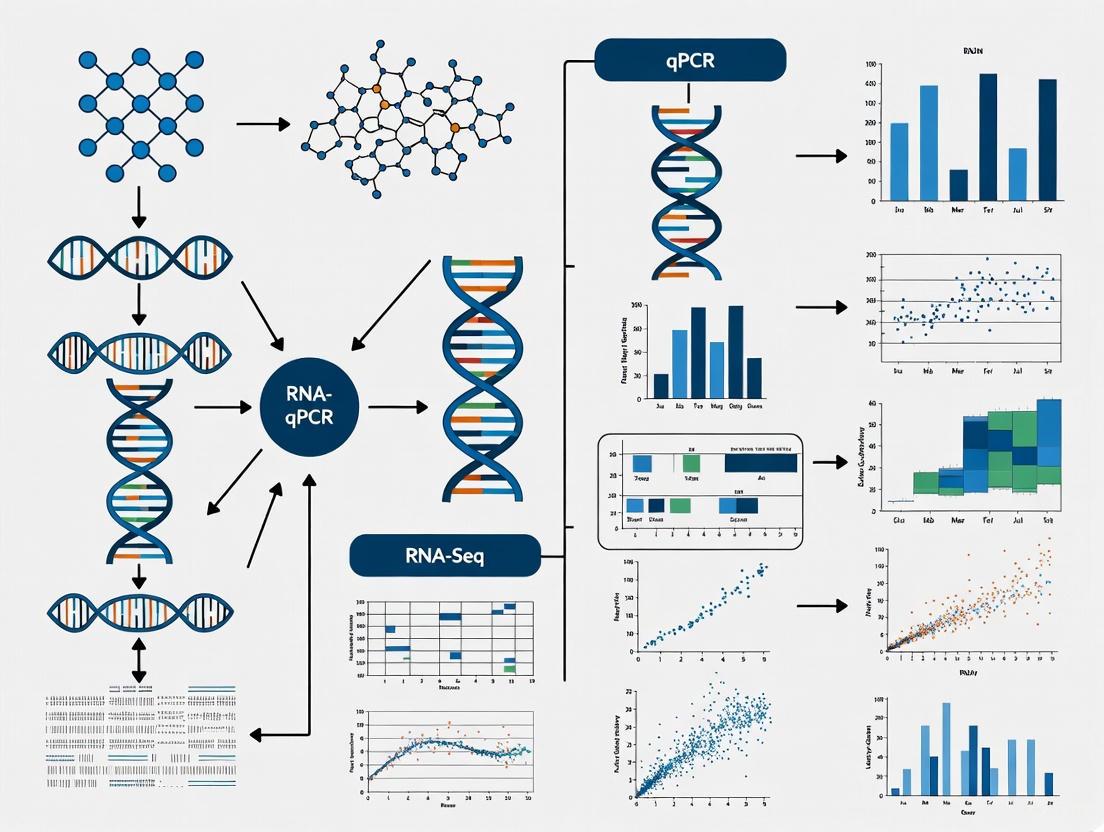
The comparison of gene expression data generated by RNA sequencing (RNA-seq) and quantitative PCR (qPCR) often reveals discrepancies that can challenge data interpretation and validation, particularly in biomedical and clinical...
Resolving the Discord: Technical Causes and Solutions for RNA-Seq and qPCR Data Discrepancies
Abstract
The comparison of gene expression data generated by RNA sequencing (RNA-seq) and quantitative PCR (qPCR) often reveals discrepancies that can challenge data interpretation and validation, particularly in biomedical and clinical research. This article provides a comprehensive analysis of the technical foundations behind this discordance, exploring inherent methodological differences in amplification, alignment, and normalization. It delves into application-specific challenges, such as profiling complex gene families like HLA, and offers practical troubleshooting and optimization strategies for experimental design and bioinformatic analysis. Furthermore, it examines rigorous validation frameworks and comparative studies, synthesizing key takeaways to guide researchers and drug development professionals toward more robust and reproducible transcriptomic analyses.
The Fundamental Divide: Core Technical Principles Driving RNA-Seq and qPCR Discordance
A clear understanding of the inherent methodological biases in qPCR and RNA-seq is crucial for the accurate interpretation of gene expression data. This guide details the technical origins of discordance between these methods, providing troubleshooting protocols and reagent solutions to enhance the reliability of your research.
Core Technological Differences and Their Biases
The journey from a biological sample to quantifiable gene expression data involves distinct processes for qPCR and RNA-seq, each introducing specific biases. The table below summarizes the fundamental differences between these two methodologies.
| Feature | qPCR | RNA-seq |
|---|---|---|
| Primary Function | Quantification of known sequences [1] | Hypothesis-free discovery of known and novel transcripts [1] |
| Throughput | Low to medium (best for ≤ 20 targets) [2] [1] | High (can profile thousands of targets simultaneously) [1] |
| Dynamic Range | Wide, with low limits of quantification [2] | Very wide, capable of detecting subtle changes (down to 10%) [1] |
| Key Strengths | Gold standard for validation; simple workflow; highly sensitive [2] [3] | Detects novel transcripts, splice variants, and sequence variants [1] |
| Inherent Biases | Amplification efficiency; reference gene selection [4] | Alignment errors due to polymorphism; GC content; library prep batch effects [5] [6] |
The following workflow diagrams illustrate the distinct steps and potential failure points in each method.
qPCR Analysis Workflow
RNA-seq Analysis Workflow
Troubleshooting Common Experimental Issues
FAQ 1: Why is there a poor correlation between my qPCR and RNA-seq results for the same samples?
Discordance often stems from fundamental technical biases. A study comparing HLA class I gene expression found only moderate correlations (0.2 ≤ rho ≤ 0.53) between qPCR and RNA-seq estimates [5]. The table below outlines primary causes and solutions.
| Cause of Discordance | Description | Solution |
|---|---|---|
| Reference Gene Instability (qPCR) | Using reference genes whose expression varies across experimental conditions severely skews normalized expression [4]. | Validate reference gene stability with algorithms like NormFinder; avoid using RNA-seq to pre-select reference genes [4]. |
| Alignment Ambiguity (RNA-seq) | The extreme polymorphism of genes like HLA complicates read alignment, leading to mis-mapping and inaccurate quantification [5]. | Use HLA-tailored bioinformatic pipelines (e.g., from Aguiar et al. 2019) that account for allelic diversity, rather than a standard reference genome [5]. |
| Transcript Length & Expression Level Bias | RNA-seq normalization methods can be biased toward longer transcripts, and lowly expressed genes are harder to quantify accurately [4]. | For qPCR validation, prioritize genes with longer transcripts and higher expression levels to improve concordance [4]. |
| Library Preparation Batch Effects | Technical variation from library prep is a major source of bias in RNA-seq, affecting expression estimates [6]. | Randomize samples during preparation, use multiplexing, and include samples from all experimental groups on each sequencing lane [6]. |
FAQ 2: How can I improve the accuracy of RNA-seq read alignment for polymorphic or highly homologous gene families?
Alignment to a standard reference genome is often inadequate for gene families with high sequence similarity, such as HLA or KIR.
- Use Specialized Alignment Tools: Standard RNA-seq aligners like STAR or HISAT2 may not handle colorspace data from older technologies (e.g., SOLiD). Ensure you use a mapper designed for your specific data type [7].
- Leverage Custom Reference Pipelines: Implement bioinformatic methods designed specifically for polymorphic loci. These tools incorporate known allele sequences into the alignment process, which dramatically improves accuracy [5].
- Verify Annotation Compatibility: A common alignment failure occurs when the chromosome identifiers in your annotation file (GTF) do not match those in your reference genome (e.g., "chr1" vs. "1"). Always use a GTF file from the same data provider as your reference genome [8].
FAQ 3: My RNA-seq data has a high proportion of multi-mapped reads. What does this mean and how should I handle it?
A high rate of multi-mapping is expected when sequences are present in multiple genomic locations.
- Identify the Source: Multi-mapped reads often originate from repetitive regions, gene families with high sequence homology (e.g., HLA, rRNA), or transposable elements [7].
- Filter rRNA Reads: Use tools like SortMeRNA to identify and remove reads derived from ribosomal RNA, which is a common source of multi-mapping [7].
- Context-Dependent Decision: There is no universal solution for multi-mapped reads. For differential expression analysis of single-copy genes, they can often be excluded. However, for studies of gene families, specialized statistical models are needed to proportionally assign these reads.
Experimental Protocols for Method Comparison
Protocol: Direct Comparison of qPCR and RNA-seq for HLA Gene Expression
This protocol is adapted from a study that systematically compared expression estimates from qPCR, RNA-seq, and cell surface expression [5].
Sample Collection and RNA Extraction:
- Obtain PBMCs from healthy donors with written informed consent.
- Extract total RNA using a kit such as the RNeasy Universal kit (Qiagen).
- Treat RNA with RNAse-free DNAse to remove genomic DNA contamination.
- Quantify RNA using a method like the HT RNA Lab Chip (Caliper, Life Sciences).
qPCR Analysis:
- Convert RNA to cDNA using reverse transcriptase.
- Perform qPCR using assays specific for HLA-A, -B, and -C genes.
- Follow the MIQE (Minimum Information for Publication of Quantitative Real-Time PCR Experiments) guidelines to ensure reliability, including controls and PCR efficiency checks [2].
- Normalize Cq values using reference genes validated as stable for your experimental system [4].
RNA-seq Analysis:
- Prepare RNA-seq libraries from the same RNA samples. A strand-specific library preparation protocol is recommended.
- Sequence the libraries on a platform such as an Illumina HiSeq, aiming for sufficient depth (e.g., 50-100 million paired-end reads per sample).
- Process the data using an HLA-tailored pipeline, not a standard alignment workflow. This involves:
- Quality control with FastQC.
- Using a specialized aligner or workflow that incorporates a database of HLA alleles.
- Quantifying expression with tools that accurately assign reads to specific HLA genes.
Validation: Compare RNA-seq and qPCR expression estimates using correlation analysis (e.g., Spearman's rho). A subset of samples can also be analyzed by flow cytometry for HLA cell surface expression to provide a third data dimension [5].
Research Reagent Solutions
The table below lists key reagents and their critical functions for experiments comparing qPCR and RNA-seq.
| Reagent / Tool | Function | Considerations |
|---|---|---|
| RNeasy Kit (Qiagen) | High-quality RNA extraction from PBMCs. | Ensures intact, DNA-free RNA as a starting point for both methods [5]. |
| TaqMan Gene Expression Assays | Sequence-specific detection and quantification in qPCR. | Available for most exon-exon junctions; select assays that are variant-specific if necessary [3]. |
| Stranded mRNA Prep (Illumina) | Library preparation for RNA-seq. | A simple, scalable solution for analyzing the coding transcriptome [1]. |
| HLA-Tailored Pipeline (e.g., from Aguiar et al.) | Bioinformatics software for accurate HLA expression quantification. | Corrects for alignment biases in polymorphic genes that plague standard methods [5]. |
| NormFinder Algorithm | Statistical tool for identifying stable reference genes from qPCR data. | More effective for qPCR normalization than pre-selecting genes from RNA-seq data [4]. |
| SortMeRNA | Bioinformatics tool for filtering ribosomal RNA reads from RNA-seq data. | Reduces a major source of multi-mapped reads and improves usable sequence depth [7]. |
Frequently Asked Questions
What are the core differences in how qPCR and RNA-seq perform quantification?
- qPCR typically uses relative quantification, where the expression of a target gene is measured relative to a control (often a housekeeping gene) present in the same sample. The result is a fold-change value, not an absolute molecular count [9] [10].
- RNA-seq provides a genome-wide estimate of transcript abundance for all detected genes. Quantification is often expressed as FPKM (Fragments Per Kilobase of transcript per Million mapped reads) or similar metrics, which normalize for sequencing depth and gene length [11].
Why might the expression values for the same gene differ between qPCR and RNA-seq? Technical and biological factors contribute to this discordance [5]:
- Normalization Strategy: qPCR relies on one or a few stable reference genes, while RNA-seq uses global normalization across all mapped reads. If the qPCR reference gene's expression varies, it skews the results [10].
- Sequence-Specific Biases: The extreme polymorphism of genes like HLA can cause RNA-seq alignment issues, where reads fail to map correctly to a reference genome, leading to underestimation. Specialized bioinformatic pipelines are needed for accurate quantification of such genes [5].
- Technical Sensitivity: Each method has different sensitivities to factors like RNA integrity, GC content, and amplification efficiency [5] [12].
When designing an RNA-seq experiment, what steps can I take to improve the accuracy of gene expression estimates?
- RNA Quality: Use high-quality RNA with a RNA Integrity Number (RIN) greater than 8 [12].
- Read Depth: Aim for sufficient sequencing depth; typically 20-30 million reads per sample for large genomes (e.g., human, mouse) is recommended [11].
- Spike-in Controls: Use External RNA Controls Consortium (ERCC) synthetic RNA spike-ins to help standardize quantification across samples and runs [11].
- Unique Molecular Identifiers (UMIs): Incorporate UMIs during library preparation to correct for PCR amplification bias and duplicates [11].
My qPCR and RNA-seq data show a weak correlation. How should I troubleshoot? Begin by systematically checking the following areas:
- Verify qPCR Assay Quality: Confirm that your primer sets have high and nearly equal amplification efficiencies (90-110%). A difference of more than 5% requires the use of efficiency-corrected models (like the Pfaffl method) instead of the 2-^ΔΔCt^ method [10].
- Inspect RNA Integrity: Check the quality of the RNA used in both assays. Degraded RNA can disproportionately affect different transcripts in each technology [13].
- Check for Genomic DNA Contamination: In qPCR, ensure samples are treated with DNase. Primers should span exon-exon junctions to minimize amplification of genomic DNA [13].
Troubleshooting Guides
Problem 1: Poor Correlation Between qPCR and RNA-seq Data
| Possible Cause | Recommendation | Underlying Technical Principle |
|---|---|---|
| Suboptimal qPCR Reference Gene | Test multiple candidate reference genes and use an algorithm (e.g., geNorm, NormFinder) to identify the most stably expressed gene(s) for your specific experimental conditions [10]. | Housekeeping gene expression can vary with treatment or tissue type. Normalizing to an unstable reference gene introduces systematic error in relative quantification [10]. |
| RNA-seq Misalignment | For highly polymorphic gene families (e.g., HLA), use HLA-tailored RNA-seq bioinformatic pipelines that account for individual allelic diversity rather than aligning to a single reference genome [5]. | Standard RNA-seq alignment tools may fail to correctly map reads from polymorphic regions, leading to inaccurate quantification [5]. |
| Different Molecular Phenotypes | Acknowledge that qPCR (mRNA level) and antibody-based assays (cell surface protein level) measure different stages of gene expression. They are not directly equivalent [5]. | Post-transcriptional regulation (e.g., translation efficiency, protein degradation) causes discordance between transcript abundance and protein presentation [5]. |
Problem 2: High Variability in qPCR Replicates
| Possible Cause | Recommendation | Underlying Technical Principle |
|---|---|---|
| PCR Inhibition or Pipetting Error | Dilute the template to reduce inhibitor concentration and ensure proficient pipetting technique with fresh standard curves and technical triplicates [13]. | Inhibitors in the reaction reduce amplification efficiency, leading to late Ct values. Pipetting errors create well-to-well concentration differences [13]. |
| Inconsistent PCR Consumables | Select qPCR plates with thin-walled, white wells for improved thermal conductivity and signal consistency. Ensure seals are optically clear and properly applied [14]. | Suboptimal plates cause uneven heat transfer. Poor seals lead to evaporation and well-to-well contamination, increasing data variability [14]. |
| Amplification in No Template Control (NTC) | Decontaminate workspaces and pipettes. Prepare fresh primer dilutions. Include a dissociation curve to check for primer-dimer formation [13]. | Primer-dimers are short, nonspecific PCR products that amplify efficiently in the absence of target template, yielding false-positive signals [13]. |
Experimental Protocols & Workflows
Detailed Methodology: Comparing HLA Expression by qPCR and RNA-seq
This protocol is adapted from a study that directly compared these techniques [5].
1. Sample Preparation
- Source: Obtain Peripheral Blood Mononuclear Cells (PBMCs) from healthy donors with informed consent.
- RNA Extraction: Use a kit such as the RNeasy Universal kit (Qiagen). Treat extracted RNA with RNase-free DNase to remove genomic DNA contamination.
- Quality Control: Quantify total RNA using a method like the HT RNA Lab Chip (Caliper). Assess RNA integrity (RIN >8 is ideal) before proceeding.
2. Quantitative PCR (qPCR)
- Assay Design: Design primers for HLA class I genes (HLA-A, -B, -C) and reference genes (e.g., GAPDH, β-actin).
- Efficiency Test: Perform a 10-fold serial dilution of cDNA to generate a standard curve. Calculate primer efficiency using the formula: E = 10^(-1/slope). Only use primers with 90-110% efficiency [10].
- Relative Quantification: Run qPCR reactions for all samples. Analyze data using the 2-^ΔΔCt^ method if primer efficiencies are nearly equal, or the Pfaffl method if they differ [10].
3. RNA-seq Library Preparation and Sequencing
- Library Construction: Prepare stranded RNA-seq libraries. Select rRNA depletion over poly-A selection for comprehensive inclusion of coding and non-coding RNA species [11].
- Sequencing: Use an Illumina platform to generate single-end or paired-end reads. Target a minimum depth of 20-30 million reads per sample [11].
4. Bioinformatic Analysis of RNA-seq Data
- HLA-Specific Quantification: Do not use a standard alignment pipeline. Instead, use an HLA-tailored computational tool (e.g., as used in [5]) that incorporates personal allelic variation for accurate expression estimation.
- Standard Gene Quantification: For all other genes, align reads to a reference genome and generate a count matrix using a tool like STAR or HISAT2.
5. Data Comparison
- Perform correlation analysis (e.g., Spearman's rank) between the qPCR-derived expression values and the RNA-seq-derived counts for the HLA class I genes. A moderate correlation (e.g., 0.2 ≤ rho ≤ 0.53) is commonly observed, highlighting the inherent technical differences [5].
Workflow Diagram: qPCR vs. RNA-seq Normalization
Diagram: Technical Challenges in RNA-seq
The Scientist's Toolkit: Key Research Reagents & Materials
| Item | Function in Experiment | Technical Consideration |
|---|---|---|
| High-Quality Total RNA | The starting template for both qPCR and RNA-seq. | Critical: Quality must be verified via RIN >8. Degraded RNA is a major source of technical variation and discordant results [12]. |
| DNase I, RNase-free | Degrades contaminating genomic DNA during RNA purification to prevent false amplification in qPCR. | Essential for accurate qPCR, especially if primers do not span an exon-exon junction [5] [13]. |
| ERCC RNA Spike-In Mix | A set of synthetic RNA controls of known concentration added to samples before RNA-seq library prep. | Used to monitor technical variation, determine the sensitivity, and standardize quantification across experiments [11]. |
| Unique Molecular Indexes (UMIs) | Short nucleotide barcodes added to each cDNA molecule during library prep. | Allows for bioinformatic correction of PCR amplification bias and accurate counting of original mRNA molecules, crucial for low-input RNA-seq [11]. |
| qPCR Plates, White Wells | The reaction vessel for qPCR. | White wells reduce signal crosstalk and enhance fluorescence reflection to the detector, improving well-to-well consistency and data quality [14]. |
| Optically Clear Seals | Used to seal qPCR plates. | Prevents sample evaporation and cross-contamination. Optical clarity is essential to avoid distortion of fluorescence signals [14]. |
| HLA-Tailored Bioinformatics Pipeline | Software for quantifying expression from RNA-seq data. | Necessary for accurate estimation of HLA and other polymorphic gene expression, overcoming limitations of standard alignment to a single reference [5]. |
Table 1: Impact of Transcript Characteristics on RNA-Seq and qPCR Quantification
| Transcript Characteristic | Impact on RNA-Seq | Impact on qPCR | Potential for Discordance | Key Evidence |
|---|---|---|---|---|
| Transcript Length | Quantification biased towards longer transcripts due to transcript-length bias in common normalization strategies (e.g., RPKM) [4]. | No significant length bias when primers are designed to short, specific amplicons [15]. | High | Genes with shorter transcript lengths show discordant results between RNA-Seq and qPCR [4]. |
| GC Content | GC content can influence sequencing efficiency and coverage uniformity, impacting quantification [16]. | High GC content can lead to inefficient amplification, primer-dimer formation, and non-specific binding if not optimized [17] [18]. | Moderate | Primer design guidelines explicitly recommend 40-60% GC content to ensure efficient amplification and avoid artifacts [17] [18] [19]. |
| Expression Level | Discrimination against lowly expressed genes; a small set of highly expressed genes consumes most sequencing reads [4]. | Highly sensitive and accurate for low-abundance transcripts, provided robust reference genes are used [20]. | High | Discordance is more pronounced for genes with lower expression levels [15]. |
| Transcript Integrity (RNA Quality) | Sample degradation causes widespread effects on gene expression measurements, with a loss of library complexity [21]. | Generally more robust to moderate RNA degradation, though severe degradation affects all transcripts [21]. | High | Microarray and RNA-Seq data are more sensitive to RNA quality variations compared to qPCR [21]. |
Table 2: Comparison of Common Normalization Strategies for qPCR
| Normalization Method | Description | Advantages | Limitations / Stability Considerations |
|---|---|---|---|
| Single Reference Gene | Normalizes target gene expression to one internal control gene (e.g., GAPDH, ACTB). | Simple, cost-effective. | Error-prone; housekeeping gene expression can vary significantly across tissues and experimental conditions, leading to large errors [20]. |
| Multiple Reference Genes | Normalizes target gene expression to the geometric mean of multiple, validated reference genes [20]. | More robust and accurate; accounts for variation in a single gene. | Requires validation of gene stability for each specific experimental condition [22] [20]. |
| Global Mean (GM) | Normalizes to the average expression of a large set of genes (e.g., >55) profiled in the experiment [22]. | Does not rely on pre-selected genes; can be superior when profiling many genes. | Requires high-throughput qPCR to profile a large number of genes; minimum gene set not firmly established [22]. |
| RNA-Seq Pre-Selection | Using RNA-Seq data to pre-select "stable" genes for qPCR normalization. | Intrinsically data-driven. | Offers no significant advantage over using conventional reference genes paired with a robust statistical validation method [4]. |
Experimental Protocols
Protocol 1: Validating Reference Genes for qPCR Normalization
Objective: To identify the most stably expressed reference genes for a specific experimental condition to ensure reliable qPCR normalization [22] [20].
Methodology:
- Select Candidate Genes: Choose a panel of 8-10 candidate reference genes from different functional classes to minimize co-regulation. Common candidates include ACTB, GAPD, B2M, HMBS, HPRT1, RPL13A, SDHA, TBP, UBC, and YWHAZ [20].
- qPCR Profiling: Perform qPCR on all test samples (including all experimental conditions and tissues under study) for each candidate gene. Record the quantification cycle (Cq) values.
- Stability Analysis: Analyze the Cq data using dedicated algorithms to rank the genes by their expression stability.
- geNorm: Ranks genes based on their average pairwise variation with all other genes. The stepwise exclusion of the least stable gene yields a stability measure (M-value); lower M-values indicate greater stability [22].
- NormFinder: A model-based approach that estimates intra- and inter-group variation, providing a stability value for each gene. It is also capable of identifying the best pair of genes [22].
- Determine the Number of Genes: Use the geNorm algorithm to calculate the pairwise variation (V) between sequential normalization factors (NFn and NFn+1). A value of V < 0.15 indicates that n genes are sufficient for a reliable normalization factor [20].
- Apply the Normalization Factor: For each sample, calculate the normalization factor as the geometric mean of the Cq values of the selected, most stable reference genes. Use this factor to normalize the expression of your target genes [20].
Protocol 2: Benchmarking RNA-Seq Workflows with qPCR
Objective: To assess the accuracy of RNA-Seq differential expression analysis by comparing it with qPCR data for protein-coding genes [15].
Methodology:
- Sample Selection: Use well-characterized RNA reference samples (e.g., MAQC-I MAQCA and MAQCB) [15].
- Data Generation:
- RNA-Seq: Process samples using multiple RNA-Seq data processing workflows (e.g., STAR-HTSeq, Kallisto, Salmon). Generate gene-level expression values (e.g., TPM or counts).
- qPCR: Perform a whole-transcriptome qPCR analysis on the same samples using wet-lab validated assays for all protein-coding genes.
- Data Alignment: For a fair comparison, align the transcripts detected by qPCR with the transcripts quantified by RNA-Seq. For transcript-based workflows (Kallisto, Salmon), aggregate transcript-level TPM values to the gene level based on the qPCR assay targets [15].
- Correlation Analysis:
- Expression Correlation: Calculate the correlation (e.g., Pearson R²) between normalized qPCR Cq-values and log-transformed RNA-Seq expression values across all genes.
- Fold-Change Correlation: Calculate the gene expression fold changes between sample groups (e.g., MAQCA vs. MAQCB) for both technologies. Assess the correlation of these log fold changes [15].
- Identify Discrepancies: Define genes with large absolute differences in fold change (ΔFC > 2) between RNA-Seq and qPCR as non-concordant. Characterize these genes for features like transcript length, exon count, and expression level [15].
Troubleshooting Guides & FAQs
Frequently Asked Questions
Q1: My RNA-Seq and qPCR results show conflicting fold-changes for a key gene. What are the primary technical causes I should investigate? A: The most common technical causes are:
- Poor qPCR Normalization: The use of a single, unvalidated reference gene is a major source of error. Always validate multiple reference genes for your specific experimental conditions [20].
- Transcript Characteristics: Investigate the characteristics of the discordant gene. Genes that are short, have low expression, or are prone to degradation are frequently implicated in such discordance [4] [15] [21].
- RNA-Seq Biases: RNA-Seq normalization methods can be biased by transcript length, and library preparation can discriminate against low-abundance transcripts [4].
Q2: Is it necessary to use RNA-Seq data to pre-select the best reference genes for my qPCR experiments? A: No. Recent studies demonstrate that with a robust statistical approach (e.g., using NormFinder or geNorm) for reference gene selection, using conventional candidate genes provides results just as reliable as using genes pre-selected from RNA-Seq data. This is also more cost-effective and feasible when RNA is limited [4].
Q3: How does RNA quality (RIN) specifically impact the agreement between RNA-Seq and qPCR? A: RNA degradation has a widespread and significant effect on RNA-Seq gene expression measurements, often overwhelming biological signals. Principal component analysis shows that a large proportion of variation in RNA-Seq data can be associated with RIN. While qPCR is also affected by severe degradation, it is generally more robust to moderate degradation. Differences in RNA quality between samples can therefore be a major confounder, leading to discordant results [21].
Q4: What are the critical parameters for designing a qPCR assay to minimize technical artifacts? A: Follow these key design rules [17] [18] [19]:
- Primer Length: 18-30 nucleotides.
- Melting Temperature (Tm): 60-65°C for primers, with forward and reverse primers within 2°C of each other.
- GC Content: 40-60%. Avoid runs of 4 or more G/C bases.
- Amplicon Length: 70-150 bp is ideal.
- Specificity: Design primers to span an exon-exon junction to avoid genomic DNA amplification.
- Secondary Structures: Check for and avoid primer-dimer formation and hairpins.
Workflow Visualization
Troubleshooting RNA-Seq qPCR Discordance
The Scientist's Toolkit
Table 3: Research Reagent Solutions for Gene Expression Analysis
| Item | Function | Example Application / Note |
|---|---|---|
| Universal Human Reference RNA | A standardized RNA pool from multiple cell lines used as a benchmark for platform comparisons [15]. | MAQCA sample in the MAQC consortium studies; ideal for benchmarking RNA-Seq workflows against qPCR [15]. |
| RNA Stabilization Reagents (e.g., RNAlater) | Preserves RNA integrity in fresh tissues by immediately stabilizing cellular RNA, preventing degradation [21]. | Critical for field or clinical sampling where immediate freezing is not possible. Mitigates RIN-related biases [21]. |
| Exon-Spanning qPCR Assays | qPCR primers designed to bind across two exons, with the probe spanning the junction. | Ensures amplification is specific to processed mRNA and not contaminating genomic DNA, improving quantification accuracy [18]. |
| Pre-designed qPCR Assays | Predesigned, validated primer and probe sets for specific gene targets in model organisms. | Saves time and optimization; providers like IDT and Thermo Fisher offer extensive panels for human, mouse, and rat [18]. |
| RNA Integrity Number (RIN) | Algorithm-based assignment of RNA quality (1-10) from an Agilent Bioanalyzer trace. | Standardized metric to assess sample quality. Low RIN (<6) is associated with significant bias in RNA-Seq [21]. |
| Statistical Algorithms (geNorm, NormFinder) | Software tools to analyze Cq data and determine the most stable reference genes from a candidate set. | Essential for robust qPCR normalization. geNorm provides M-values and determines optimal gene number; NormFinder estimates intra-/inter-group variation [22] [20]. |
Frequently Asked Questions
Why is RNA-seq analysis of HLA genes particularly challenging? HLA genes are exceptionally polymorphic, meaning they have an extreme number of different sequence versions (alleles) in the human population. Standard RNA-seq analysis involves aligning short sequence reads to a single reference genome. For HLA genes, an individual's specific alleles often differ substantially from this reference, causing reads to misalign or fail to align entirely. Furthermore, the high similarity between different HLA genes (paralogs) can cause reads to map to the wrong gene, biasing expression estimates [5].
My RNA-seq and qPCR results for HLA gene expression are inconsistent. What could be the cause? Moderate correlation between these techniques is a known issue. A 2023 study found correlations (rho) between qPCR and RNA-seq for HLA class I genes ranging from 0.2 to 0.53 [5]. Discordance can arise from:
- Technical Biases: RNA-seq involves library preparation, GC content biases, and alignment issues specific to polymorphic regions [5]. qPCR can have different amplification efficiencies for different alleles.
- Multi-mapping Reads: Short RNA-seq reads that originate from a conserved region of an HLA gene may align equally well to several HLA loci or alleles. Standard pipelines might discard these reads, leading to under-quantification [23].
- PCR Duplicates: In RNA-seq library preparation, PCR amplification can over-represent some transcripts. If not corrected, this can skew expression counts [23].
What are the solutions for accurate HLA expression quantification from RNA-seq? Specialized computational and experimental methods have been developed to address these challenges:
- HLA-Tailored Bioinformatics Pipelines: Tools like seq2HLA and others use custom reference databases containing thousands of known HLA alleles rather than a single genome reference. This improves alignment accuracy for both HLA typing and expression estimation [5] [24].
- Unique Molecular Identifiers (UMIs): Incorporating UMIs during library preparation labels each original mRNA molecule with a unique barcode. This allows bioinformatics pipelines to count only original transcripts and correct for PCR amplification bias, providing more accurate expression levels [23].
- Long-Read Sequencing: Using sequencing technologies that produce longer reads can help because a single read is more likely to cover multiple polymorphic sites, making its alignment to a specific allele more unambiguous [23].
Troubleshooting Guide
| Problem Area | Specific Issue | Potential Solution |
|---|---|---|
| Read Alignment | Low mapping rate to HLA region; multi-mapping reads | Use HLA-specific aligners & customized reference databases of allelic sequences [5] [24]. |
| Expression Quantification | Inconsistent results between RNA-seq and qPCR; allele-specific bias | Employ UMI-based RNA-seq protocols to control for PCR duplicates and improve transcript counting accuracy [23]. |
| Experimental Design | Inability to detect allele-specific expression | Utilize long-read sequencing platforms to span multiple polymorphic sites within a single read [23]. |
| Data Interpretation | Discordant results with published literature or other techniques | Correlate findings with multiple data types (e.g., cell surface protein expression) and account for moderate correlations between techniques [5]. |
The following table summarizes a direct comparison of HLA class I gene expression measurements from a 2023 study that utilized matched samples [5].
| HLA Locus | Correlation (rho) between qPCR & RNA-seq | Notes |
|---|---|---|
| HLA-A | 0.53 | Weakest correlation observed among class I genes [5]. |
| HLA-B | 0.36 | Moderate correlation [5]. |
| HLA-C | 0.20 to 0.41 | Range reported; generally shows a moderate correlation [5]. |
Experimental Protocols
Method 1: HLA Typing and Expression from Standard RNA-seq Data
This protocol is adapted from the seq2HLA tool, which uses standard RNA-seq fastq files as input [24].
- Input: Obtain RNA-seq reads in fastq format.
- Reference Database: Download a comprehensive database of known HLA allele sequences (e.g., from the ImMunoGeneTics/HLA database). Focus on exons 2 and 3 for class I and exon 2 for class II, as they encode the peptide-binding groove and are most polymorphic.
- Alignment: Map the RNA-seq reads against the HLA reference database using an aligner like Bowtie. Optimize parameters to allow for a limited number of mismatches (e.g., one) to account for sequencing errors while maintaining specificity.
- HLA Typing & Expression: Determine the most likely HLA alleles by analyzing the distribution of reads across possible alleles. A confidence score (P-value) is calculated for each call. Expression is quantified based on the number of reads uniquely mapping to each locus [24].
Method 2: Allele-Specific Expression Quantification Using UMIs
This protocol, based on a 2021 study, uses UMIs for precise, bias-corrected quantification [23].
- RNA Extraction: Isolate total RNA from fresh PBMCs or other tissues. Assess RNA quality (e.g., using RIN score).
- Reverse Transcription with Template Switching: Synthesize first-strand cDNA using a primer that binds to the poly-A tail and includes a UMI. A template-switching oligonucleotide (TSO) is used to ensure full-length transcript representation. At this stage, every original mRNA molecule is tagged with a unique UMI.
- cDNA Amplification & HLA Target Enrichment: Amplify the cDNA using PCR. Then, use a set of gene-specific primers for HLA class I (A, B, C) and class II (DRA, DRB1, DPA1, DPB1, DQA1, DQB1) genes to perform a target enrichment PCR.
- Sequencing & Bioinformatic Analysis: Sequence the enriched HLA amplicons. In the bioinformatics pipeline, group reads by their UMI to identify and collapse PCR duplicates. Align the unique reads to an HLA reference to calculate the number of original mRNA molecules for each allele [23].
The Scientist's Toolkit
| Research Reagent / Tool | Function / Application |
|---|---|
| HLA Allele Database (e.g., IMGT/HLA) | A curated collection of all known HLA sequences; essential as a reference for alignment and typing [24]. |
| Unique Molecular Identifiers (UMIs) | Short random nucleotide sequences used to tag individual mRNA molecules; enables correction for PCR amplification bias [23]. |
| Template-Switching Oligo (TSO) | Used in reverse transcription to ensure full-length cDNA synthesis, improving coverage of the 5' end of transcripts [23]. |
| STRT-V3-T30-VN Oligo | A primer used in the first-strand cDNA synthesis; designed to bind to the poly-A tail and anchor the reverse transcription [23]. |
| HLA-Specific Bioinformatics Pipelines (e.g., seq2HLA) | Computational tools designed specifically to handle the alignment and quantification challenges posed by polymorphic genes like HLA [5] [24]. |
Workflow and Relationship Diagrams
The diagram below illustrates the core problem of analyzing HLA genes with RNA-seq and the two main methodological solutions.
The diagram below outlines the specific steps for the UMI-based wet-lab protocol, a key solution for allele-specific expression quantification.
Navigating Technical Pitfalls: Method-Specific Challenges in Complex Applications
RNA-seq Alignment Issues in Polymorphic Regions and Gene Families
Why does RNA-seq alignment fail in polymorphic regions and gene families, and how can this lead to discordant results with qPCR?
RNA-seq alignment in polymorphic regions and gene families is challenging due to the fundamental limitations of aligning short reads to a single reference genome. These challenges can create a systematic technical bias that explains discordance between RNA-seq and qPCR results.
The primary issues are:
- Reference Bias and Missing Features: Standard RNA-seq pipelines align all data to a single reference genome, which does not represent the genetic diversity of a species. If a gene that is transcribed is not represented in the reference genome, the RNA-seq reads from that gene can misalign to the closest available gene, inflating its counts and providing misleading data. Conversely, genes present in the sample but missing from the reference will have no counts [25].
- Multi-mapped Reads and Ambiguity: Gene families with high sequence similarity (e.g., Major Histocompatibility Complex or killer-immunoglobulin-like receptors) result in reads that can align equally well to multiple genomic locations. Most standard pipelines either discard these multi-mapped reads or assign them randomly, resulting in lost data and inaccurate quantification [25] [26].
- Alignment Errors Between Repeats: Splice-aware aligners like STAR and HISAT2 can introduce erroneous spliced alignments between nearby repeated sequences, creating falsely spliced transcripts or "phantom" introns. This is particularly problematic in genomes with high repetitive content [27].
- Annotation Incompleteness: Complex genomic regions are often difficult to assemble and annotate accurately. If a gene is not annotated in the reference, it will be systematically under-counted in RNA-seq analyses that rely on these annotations for read assignment [25].
These alignment issues can directly cause qPCR discordance because qPCR typically uses targeted primers that may successfully amplify sequences that are missed or misassigned during RNA-seq's genome-wide alignment process.
Which advanced algorithms and tools can resolve alignment ambiguities in complex genomic regions?
Table: Specialized Tools for Resolving RNA-seq Alignment Challenges
| Tool Name | Primary Function | Specific Problem Addressed | Key Mechanism |
|---|---|---|---|
| nimble [25] | Supplemental alignment and quantification | Complex immune genotyping, missing features | Uses pseudoalignment with customizable gene spaces and scoring criteria tailored to specific gene families. |
| EASTR [27] | Alignment error correction | Spurious spliced alignments in repeats | Detects falsely spliced alignments by analyzing sequence similarity between intron-flanking regions. |
| RUM [28] | Comprehensive alignment pipeline | Robust alignment across diverse challenges | Three-stage pipeline combining Bowtie (genome/transcriptome) and BLAT alignment, then merging results. |
| BEERS [28] | RNA-seq simulation and benchmarking | Algorithm evaluation and comparison | Simulates RNA-seq data with configurable error rates and polymorphisms for benchmarking aligners. |
Specialized algorithms like nimble address these limitations by moving away from the "one-size-fits-all" reference approach. Instead, nimble processes RNA-seq data using custom, focused gene spaces tailored to the biology of specific gene families. It can apply different scoring criteria to different gene sets, which is crucial for accurately quantifying highly variable gene families like MHC and immunoglobulin genes [25].
For correcting systematic alignment errors, EASTR (Emending Alignments of Spliced Transcript Reads) identifies and removes falsely spliced alignments that occur between repetitive sequences. It works by extracting sequences flanking splice junctions and assessing their similarity and frequency in the genome, effectively distinguishing true splicing events from alignment artifacts [27].
What is the step-by-step protocol for implementing a supplemental alignment pipeline?
The following workflow diagram illustrates a robust strategy that integrates standard RNA-seq alignment with specialized tools for handling problematic regions:
Detailed Protocol: Implementing nimble for Supplemental Alignment
Step 1: Define Custom Gene Spaces
- Compile reference sequences for problematic gene families not well-represented in the standard reference. For immunology research, this includes MHC class I and II alleles, KIR genes, and immunoglobulin chains [25].
- For non-model organisms or incomplete annotations, include genes known to be missing from the reference annotation. In rhesus macaque studies, this included adding CD27 and IGHD genes missing from the MMul_10 genome annotation [25].
- Format references as FASTA files, with each sequence representing a distinct gene or feature.
Step 2: Run nimble Supplemental Alignment
- Execute nimble using the custom gene spaces and the same BAM files from your standard alignment.
- Example command structure:
- nimble uses a pseudoalignment approach that processes either bulk- or single-cell RNA-seq data against these custom references with tailored scoring logic [25].
Step 3: Merge and Validate Results
- Combine counts from standard and supplemental pipelines, giving priority to nimble-derived counts for genes in custom spaces.
- Validate alignment improvement using positive controls: check for recovery of expression in previously missing genes and reduction in misalignment to homologous regions.
- For a comprehensive solution, apply EASTR to the standard BAM files before quantification to remove spurious spliced alignments [27].
Performance Considerations: A benchmark test aligning 491 million paired-end reads to a ~2,200-feature MHC reference completed in 225 minutes on 18 CPUs, sustaining approximately 36,000 reads/second [25].
How can I validate that alignment issues are causing my RNA-seq and qPCR discordance?
Table: Validation Strategies for Alignment-Related Discordance
| Validation Approach | Experimental Method | Interpretation of Results |
|---|---|---|
| Targeted Re-sequencing | Design qPCR assays for regions with suspected alignment issues. Compare results to RNA-seq counts. | Concordance after pipeline correction confirms alignment artifacts as the primary cause of discordance. |
| Spike-in Controls | Add synthetic RNA controls with known sequences to the sample before library prep. | Systematic under-counting of spike-ins with sequences absent from the reference indicates reference bias. |
| Orthogonal Alignment | Re-align problematic reads using a different algorithm (e.g., BLAT-based pipeline like RUM). | Recovery of "missing" expression with alternative aligners confirms algorithmic limitations in primary pipeline. |
| Long-Read Sequencing | Supplement with long-read RNA-seq (PacBio Iso-Seq) for problematic genes. | Long reads provide unambiguous alignment and can reveal missed isoforms or genes in short-read data. |
A robust validation strategy should include both computational and experimental approaches:
Computational Validation:
- Use the BEERS simulator [28] to create benchmark datasets with known polymorphisms and splice variants. Process these through your alignment pipeline and measure the false negative/positive rates for genes in polymorphic regions.
- Apply EASTR [27] to your alignment files and quantify how many splice junctions are flagged as potentially erroneous. A significant improvement in qPCR concordance after filtering indicates alignment artifacts were a major factor.
- Implement the nimble pipeline [25] with custom gene spaces for your problematic targets. Recovery of expression signals that were missing in standard alignment provides strong evidence of reference bias.
Experimental Validation:
- For genes showing discordance, design qPCR assays that target the exact regions where RNA-seq shows alignment problems. If qPCR detects expression where RNA-seq does not, this confirms technical rather than biological discordance.
- For critical experiments, consider PacBio Iso-Seq or Kinnex Full-Length RNA sequencing, which are superior for qualitative endpoints like alternative splicing and novel transcript detection, though more expensive than short-read approaches [11].
Research Reagent Solutions
| Reagent/Resource | Function | Application Notes |
|---|---|---|
| ERCC Spike-In Mix [11] | External RNA controls for standardization | 92 synthetic transcripts at known concentrations; use to determine sensitivity, dynamic range, and technical variation. |
| UMIs (Unique Molecular Identifiers) [11] | Correct PCR bias and errors | Tag original cDNA molecules to identify and correct for amplification biases; recommended for deep sequencing (>50M reads/sample). |
| Ribo-Depletion Kits [29] | Remove ribosomal RNA | Essential for bacterial RNA-seq, degraded samples (FFPE), or when studying non-polyadenylated RNAs. |
| Strand-Specific Library Kits [29] | Preserve strand orientation | Critical for analyzing antisense transcription and overlapping genes; dUTP method is widely used. |
| iHSMGC (integrated Human Skin Microbial Gene Catalog) [30] | Skin-specific microbial gene reference | Example of a specialized reference catalog; demonstrates importance of domain-specific references. |
| Custom Nimble Gene Spaces [25] | Targeted alignment references | User-defined FASTA files containing sequences for problematic gene families or missing features. |
qPCR Primer/Probe Design Specificity and Amplification Efficiency
Troubleshooting Guides
FAQ 1: How can I ensure my qPCR primers are specific and avoid amplifying genomic DNA?
Issue: Non-specific amplification or amplification from genomic DNA (gDNA) contamination leads to inaccurate quantification, a critical technical pitfall in validating RNA-Seq data.
Solutions:
- Design Primers Across Exon-Exon Junctions: This is the most effective strategy. By designing your amplicon to span the boundary between two exons, the primer pair will not efficiently bind to or amplify contaminating gDNA, which contains introns [31] [32] [33]. For even greater specificity, place the probe (rather than a primer) over the exon-exon junction [32].
- Perform a BLAST Analysis: Always check your primer and probe sequences for specificity using a tool like NCBI BLAST. This ensures the oligonucleotides are unique to your target transcript and will not anneal to homologous genes, pseudogenes, or other non-target sequences [32] [34] [33].
- Utilize Bioinformatics Pipelines: Use established design software (e.g., Primer-BLAST, OligoArchitect, Beacon Designer) that incorporates rigorous checks for sequence uniqueness and secondary structures [31] [32] [33].
- Include Proper Controls: Run a no-reverse transcription (No-RT) control for each sample to detect any residual gDNA amplification. A signal in the No-RT control indicates gDNA contamination [32].
FAQ 2: What are the key design parameters for achieving high amplification efficiency?
Issue: Low amplification efficiency results in inaccurate quantification, poor replicate consistency, and reduced sensitivity for detecting low-abundance transcripts, directly contributing to technical discordance with RNA-Seq data.
Solutions: Adhere to the following design parameters for both primers and probes to ensure efficiency between 90–110% [35]:
Table 1: Key Design Parameters for qPCR Oligonucleotides
| Parameter | Primer Specification | Probe Specification |
|---|---|---|
| Length | 15–30 nucleotides [35] | 15–30 nucleotides [35] |
| Melting Temperature (Tm) | 58–60°C [32] [34] | ~10°C higher than primers [35] [34] |
| Tm Difference (Fwd vs Rev) | Within 1–3°C [31] [35] | - |
| GC Content | 40–60% [31] [35] [33] | 40–60% [35] |
| Amplicon Length | 70–150 base pairs is ideal [31] [35] [32] | - |
| 3' End | Avoid runs of G/C; no more than 2 G/C in last 5 bases [32] | - |
Additional critical considerations:
- Avoid Secondary Structures: Ensure primers and probes do not form hairpins or self-dimers, and that primer pairs do not form dimer complexes [35] [33].
- Optimize Concentrations: Use recommended concentrations (e.g., 100–500 nM for primers in dye-based assays; 200–900 nM for probe-based assays) and perform optimization if necessary [35] [32].
- Check Sequence Quality: Avoid templates with single nucleotide polymorphisms (SNPs) or repetitive sequences at the binding sites [32] [34] [33].
FAQ 3: My no-template control (NTC) shows amplification. What went wrong?
Issue: Amplification in the NTC indicates contamination or primer-dimer formation, compromising the integrity of the entire dataset.
Solutions:
- Prevent Contamination:
- Prevent Primer-Dimer:
- Redesign primers to avoid 3'-end complementarity between the forward and reverse primers [35].
- Optimize primer concentrations to the lowest effective level [35].
- Include a melt curve analysis at the end of the run. Primer-dimer formation typically appears as a peak with a lower melting temperature than the specific product [13].
FAQ 4: My assay has high Ct values and poor efficiency. How can I optimize it?
Issue: High Ct values and efficiency outside the 90–110% range indicate suboptimal assay performance, reducing the reliability of quantitative data.
Solutions:
- Verify Template Quality: Use high-quality, pure RNA/DNA. Assess RNA integrity and purity (A260/A280 ratio of ~1.9–2.0) before reverse transcription [36] [13].
- Check Reagent Integrity: Ensure reagents are fresh and have not undergone excessive freeze-thaw cycles. Degraded primers or probes can cause late amplification [36].
- Validate Primer Efficiency Empirically: Test your primers by running a standard curve with a serial dilution (at least 3 logs) of template. Calculate efficiency using the formula: Efficiency % = (10[−1/slope] − 1) × 100. Aim for an R² value ≥ 0.99 [35].
- Optimize Annealing Temperature: Perform a temperature gradient PCR to determine the ideal annealing temperature that maximizes specificity and yield [37].
Experimental Protocols
Protocol: Standard Workflow for qPCR Assay Design and Validation
This protocol provides a step-by-step methodology for designing and validating a specific and efficient qPCR assay.
Objective: To design, optimize, and validate a primer/probe set for accurate gene expression quantification.
Workflow Diagram: qPCR Assay Design and Validation Workflow
Materials:
- Template: High-quality cDNA or gDNA.
- Oligonucleotides: Synthesized forward primer, reverse primer, and probe (if using probe-based chemistry).
- qPCR Master Mix: Contains DNA polymerase, dNTPs, buffer, and salts. For SYBR Green or probe-based detection.
- qPCR Instrument: A real-time PCR cycler with appropriate detection channels.
- Software: Sequence analysis software (e.g., Primer-BLAST), instrument control and analysis software.
Procedure:
- Sequence Retrieval: Obtain the correct mRNA reference sequence (RefSeq) for your gene and organism from a curated database like NCBI Gene [31].
- In-silico Design:
- Input the sequence into a primer design tool (e.g., NCBI Primer-BLAST).
- Apply the parameters listed in Table 1. Crucially, select the option "Primer must span an exon-exon junction" [31].
- The tool will output several candidate primer pairs. Select one where the 3' ends avoid G/C runs and the sequences have minimal self-complementarity.
- Specificity Check: Perform a BLAST search on the selected primer and probe sequences to confirm they are unique to the target gene [32] [33].
- Oligonucleotide Synthesis: Order the selected primers and probe. Resuspend them accurately in sterile water or TE buffer to create concentrated stock solutions (e.g., 100 µM for primers, 10 µM for probe). Dilute to working concentrations based on master mix recommendations [34].
- Empirical Validation:
- Standard Curve: Prepare a 5- or 10-fold serial dilution of a template known to contain the target sequence (e.g., a high-quality cDNA pool). Run the qPCR assay with these dilutions in triplicate.
- Melt Curve (for SYBR Green assays): After the amplification cycles, run a melt curve to check for a single, specific product.
- Data Analysis:
- Efficiency and Linear Dynamic Range: The instrument software will generate a standard curve. Calculate the PCR efficiency from the slope. Acceptable criteria: Efficiency = 90–110%; R² ≥ 0.99 [35].
- Specificity: The melt curve should show a single, sharp peak. The presence of multiple peaks indicates non-specific amplification or primer-dimer [13].
The Scientist's Toolkit
Table 2: Essential Research Reagents and Resources for qPCR Assay Development
| Item | Function/Benefit |
|---|---|
| Predesigned TaqMan Assays | Pre-optimized, highly specific primer/probe sets; save time and minimize optimization efforts [32] [34]. |
| Custom Assay Design Services | Bioinformatics-driven custom design (e.g., Thermo Fisher's Custom Plus); ensures optimal Tm, GC content, and specificity checks [32]. |
| Hot-Start PCR Master Mix | Reduces non-specific amplification and primer-dimer formation by inhibiting polymerase activity at low temperatures [37]. |
| DNase I, RNase-free | Treats RNA samples to remove genomic DNA contamination prior to reverse transcription, preventing false positives [32] [13]. |
| UDG (Uracil-DNA Glycosylase) Treatment | Prevents carryover contamination from previous PCR products by degrading uracil-containing DNA prior to thermocycling [35]. |
| High-Quality Nucleic Acid Purification Kits | Ensures high-purity RNA/DNA templates free of inhibitors, which is critical for robust and reproducible amplification [36] [37]. |
Troubleshooting Guides
Guide 1: Addressing Discordance Between qPCR and RNA-Seq for HLA Gene Expression Quantification
Problem: Measurements of HLA gene expression levels show inconsistent or conflicting results when comparing qPCR and RNA-seq data from the same sample.
Explanation: The extreme polymorphism of HLA genes presents unique technical challenges for each method. qPCR relies on pre-designed primers that may have variable hybridization efficiency across different HLA alleles. RNA-seq involves aligning short reads to a reference genome that does not fully represent HLA allelic diversity, causing mapping errors and cross-alignments between paralogs [5].
Solution:
Table 1: Key Challenges and Solutions for HLA Expression Quantification
| Challenge | Impact on qPCR | Impact on RNA-seq | Recommended Solution |
|---|---|---|---|
| Extreme Polymorphism | Primer-binding efficiency varies by allele, reducing accuracy [5]. | Short reads fail to align or misalign to reference [5]. | Use allele-specific qPCR primers. For RNA-seq, use HLA-tailored pipelines (e.g., HLAProfiler, OptiType) that incorporate known HLA diversity [5]. |
| Sequence Similarity (Paralogs) | Potential for cross-amplification of related HLA genes [5]. | Reads cross-align between related genes (e.g., HLA-A, -B, -C), biasing quantification [5]. | Design primers/probes in highly divergent gene regions. Employ bioinformatic tools that minimize cross-mapping. |
| Data Correlation | Moderate correlation with RNA-seq (e.g., Spearman's rho 0.2–0.53 for HLA class I) [5]. | Moderate correlation with qPCR; different molecular phenotypes [5]. | Interpret results with caution; neither method is a "gold standard." Correlate with cell surface expression (e.g., flow cytometry) when possible [5]. |
Step-by-Step Protocol: Validating HLA Expression with an Integrated Approach
- Sample Preparation: Extract high-quality RNA from PBMCs using a kit such as RNeasy, including a DNase treatment step to remove genomic DNA [5].
- qPCR Analysis:
- Use validated, allele-specific primers and probes where possible.
- Run reactions in replicates and use a data handling pipeline that categorizes results as "valid," "invalid," or "undetectable" to improve robustness, especially for low-abundance targets [38].
- RNA-seq Library Preparation & Sequencing:
- Prepare libraries using standard protocols (e.g., Illumina).
- Sequence to sufficient depth to capture low-expressed alleles.
- Bioinformatic Analysis with HLA-Tailored Pipeline:
- Do not rely on standard RNA-seq alignment alone.
- Use a specialized tool like
HLAProfilerorArcasHLAto accurately quantify allele-specific expression [5].
- Correlation and Validation:
- Statistically compare expression estimates (e.g., Spearman correlation) for HLA-A, -B, and -C from qPCR and RNA-seq.
- Where feasible, validate key findings by measuring HLA cell surface protein expression using flow cytometry with specific antibodies [5].
Guide 2: Detecting Fusion Genes and Isoforms in Oncology
Problem: Low sensitivity for detecting rare fusion transcripts or inability to resolve the full structure and sequence of fusion isoforms, particularly when they are lowly expressed or present in a background of non-cancerous cells.
Explanation: Conventional methods like FISH and RT-PCR are highly sensitive but typically target only one specific fusion, potentially missing novel or unexpected events. Standard RNA-seq offers unbiased discovery but may lack the sensitivity to detect fusions expressed at low levels or in heterogeneous tumor samples [39]. Precise determination of fusion junctions and full-length isoform sequences is challenging with short-read sequencing [40].
Solution:
Table 2: Comparison of Fusion Gene Detection Methods
| Method | Key Advantage | Key Limitation | Isoform Resolution |
|---|---|---|---|
| FISH / RT-PCR | High sensitivity for known fusions [39]. | Targeted; cannot discover novel fusions [39]. | Low (RT-PCR can detect known isoforms). |
| Standard RNA-seq | Genome-wide, unbiased discovery [39]. | Low sensitivity for rare fusions; short reads cannot resolve complex isoforms [39] [40]. | Limited to fusion junction; not full-length. |
| Targeted RNA-seq | Enriches for genes of interest; greatly increases sensitivity for low-abundance fusions [39]. | Panel design dictates scope of discovery. | Limited to fusion junction; not full-length. |
| Hybrid Sequencing (IDP-fusion) | Uses long reads to span full-length transcripts and short reads for accuracy; provides isoform-level resolution [40]. | Higher cost and computational burden. | High. Identifies and quantifies specific fusion isoforms. |
Step-by-Step Protocol: Fusion Gene Detection via Targeted RNA-Seq [39]
- Panel Design: Design biotinylated oligonucleotide capture probes targeting exons of hundreds of genes known to be involved in fusion events in your cancer of interest (e.g., 188 genes for hematological malignancies, 241 for solid tumors).
- Library Preparation and Capture:
- Convert total RNA to a sequencing library.
- Hybridize the library to the custom probe panel and perform capture (a double-capture can increase the on-target rate to >90%).
- Sequence the enriched library.
- Bioinformatic Analysis:
- Align reads to the reference genome.
- Use a fusion detection pipeline that employs multiple algorithms (e.g., STAR-Fusion and FusionCatcher) and require calls to be supported by both to reduce false positives [39].
- Manually review integrated genomics viewer (IGV) plots for validation.
Step-by-Step Protocol: Characterizing Fusion Isoforms with Hybrid Sequencing (IDP-fusion) [40]
- Sequencing: Generate both long-read (PacBio) and short-read (Illumina) sequencing data from the same sample.
- Fusion Detection:
- Align long reads to the reference genome using an aligner like GMAP.
- Identify "fusion long reads" that can be split and mapped to two different genes.
- Precise Junction Calling:
- Construct "Artificial Reference Sequences" (ARSs) around the candidate fusion junction from the long-read data.
- Re-map high-accuracy short reads to the ARS to determine the precise fusion site at single-nucleotide resolution.
- Isoform Identification and Quantification:
- Use the IDP-fusion tool to integrate long- and short-read data.
- Reconstruct full-length fusion transcripts and quantify their abundance (e.g., in RPKM).
Frequently Asked Questions (FAQs)
Q1: Why might my qPCR results show high mRNA levels for an HLA gene, but Western blot shows low protein? A: This is a common biological discrepancy, not necessarily a technical failure. Key reasons include:
- Temporal Delay: Transcription (mRNA) precedes translation (protein). An mRNA peak at 6 hours post-stimulus may not result in detectable protein until 24 hours [41].
- Translational Regulation: miRNA-mediated repression or global suppression under stress can inhibit mRNA translation [41].
- Protein Degradation: Short-lived proteins may be rapidly degraded by the ubiquitin-proteasome system, preventing accumulation despite high mRNA levels [41].
Q2: My single-cell RNA-seq experiment on a non-model organism yielded very different results when I aligned to two different genome assemblies. Why? A: This is a critical, often-overlooked issue. Discordant genome assemblies can drastically alter scRNAseq interpretation [42]. Differences in assembly completeness, contiguity, and especially annotation quality (e.g., of 3' UTRs, critical for scRNAseq) can cause:
- Varying numbers of cells and genes detected.
- Assembly-specific "marker" genes.
- Differential expression patterns for the same gene [42].
- Solution: Align your data to each available assembly separately, then use integration tools (e.g., Seurat) to combine the resulting datasets for a more accurate and complete analysis [42].
Q3: Targeted RNA-seq for fusions didn't find a fusion that was previously suspected. What could be wrong? A:
- Panel Design: Verify that both partner genes of the suspected fusion are covered by the capture probes in your panel.
- Expression Level: The fusion transcript might be expressed at very low levels. Check the sensitivity (limit of detection) of your panel and consider diluting the sample with a fusion-positive cell line (e.g., K562 for BCR-ABL1) to establish this [39].
- Sample Quality: Ensure the RNA integrity is high and the tumor content in the sample is sufficient.
- Bioinformatics: Check the raw data and alignment in a genome browser to see if there is any supporting evidence that might have been filtered out by stringent algorithms.
The Scientist's Toolkit
Table 3: Essential Research Reagents and Materials
| Item | Function / Application | Example / Note |
|---|---|---|
| HLA-Tailored Bioinformatics Pipelines | Accurately quantify allele-specific expression from RNA-seq data by accounting for polymorphism [5]. | HLAProfiler, ArcasHLA, OptiType. |
| Targeted RNA-seq Panels | Sensitive detection of fusion transcripts by enriching for hundreds of cancer-related genes prior to sequencing [39]. | Custom panels for hematological malignancies or solid tumors. |
| Hybrid Sequencing Analysis Tools | Integrate long-read and short-read data to accurately detect fusion genes and identify full-length fusion isoforms [40]. | IDP-fusion. |
| Fusion Gene Detection Algorithms | Identify fusion events from RNA-seq data; using multiple tools increases confidence [39]. | STAR-Fusion, FusionCatcher. |
| Spike-In Controls | Quantify sensitivity, enrichment efficiency, and detection limits of sequencing assays [39]. | ERCC RNA spike-ins, fusion sequins. |
| Cell Lines with Known Fusions | Positive controls for validating fusion detection methods [39] [40]. | K562 (BCR-ABL1), RDES (EWSR1-FLI1). |
| HLA-Fc Fusion Proteins | Investigate antigen-specific immune modulation; potential for therapeutic application in transplantation [43]. | Recombinant proteins combining HLA extracellular domains with IgG Fc. |
Experimental Workflow Diagrams
Diagram 1: Integrated HLA Expression Analysis Workflow
Diagram 2: Fusion Gene & Isoform Detection via Hybrid Sequencing
The Role of Long-Read RNA-seq in Mitigating Short-Read Limitations
Next-Generation Sequencing (NGS) has transformed molecular biology, but short-read RNA sequencing (RNA-seq) has inherent limitations that long-read technologies are uniquely positioned to address [44]. Short-read platforms (e.g., Illumina) generate fragments of 50-300 base pairs, which is significantly shorter than the average human mRNA (approximately 3 kb) [45]. This fundamental discrepancy means short-read workflows must fragment mRNA molecules before sequencing, losing connectivity between distant exons and making it challenging to reconstruct full-length transcript isoforms [45]. The inability to directly sequence complete transcripts has been a major bottleneck in transcriptomics.
Long-read RNA-seq platforms, primarily Pacific Biosciences (PacBio) and Oxford Nanopore Technologies (ONT), enable end-to-end sequencing of full-length mRNA molecules in a single read [45] [46]. By capturing complete transcripts without fragmentation, long-read technologies provide a transformative approach for investigating RNA species and features that cannot be reliably interrogated by short-read methods [45] [47]. This capability is particularly crucial for resolving the complex landscape of human transcriptomes, where an estimated 300,000 unique protein isoforms can be encoded from approximately 20,000 protein-coding genes [45].
Table 1: Core Technological Differences Between Sequencing Platforms
| Feature | Illumina Short-Read RNA-seq | PacBio Long-Read RNA-seq | ONT Long-Read RNA-seq |
|---|---|---|---|
| Read Length | 50–300 bp [45] | Up to 25 kb [45] | Up to 4 Mb [45] |
| Base Accuracy | 99.9% [45] | 99.9% (HiFi) [45] | 95%–99% (R10.4 chemistry) [45] |
| Throughput | 65–3,000 Gb per flow cell [45] | Up to 90 Gb per SMRT cell [45] | Up to 277 Gb per PromethION flow cell [45] |
| Key Strength | High throughput, low cost per base | High-fidelity consensus sequences | Direct RNA sequencing, detection of modifications |
| Primary Limitation Addressed | N/A (baseline) | Resolves isoform ambiguity | Captures full-length transcripts and modifications |
Technical FAQs: Resolving Experimental Challenges and Discordance
FAQ 1: How does long-read RNA-seq help resolve discrepancies between qPCR and Western blot results?
Discordance between qPCR (measuring mRNA levels) and Western blot (measuring protein levels) is a common experimental challenge with multiple potential causes [41]. Long-read RNA-seq provides crucial insights that help explain these discrepancies by revealing transcript isoform diversity that short-read methods and qPCR cannot detect.
Key resolution mechanisms:
- Isoform-specific effects: Different transcript isoforms may have varying translational efficiencies, stability, or subcellular localization [45]. Long-read sequencing can identify which specific isoforms are present and quantify their expression.
- Non-functional transcripts: qPCR may detect mRNA isoforms that appear present but contain features preventing efficient translation (e.g., retained introns, premature stop codons) [45] [48]. Long-read sequencing can identify these non-productive isoforms.
- Alternative splicing impact: The protein product detected by Western blot may derive from a specific isoform that qPCR assays cannot distinguish from other splice variants [41]. Long-read sequencing provides full-length context to correlate protein products with specific mRNA isoforms.
FAQ 2: What are the main experimental considerations when implementing long-read RNA-seq?
Successful long-read RNA-seq requires attention to several technical aspects that differ from short-read approaches:
Sample Quality and Handling:
- RNA Integrity: Use high-quality, intact RNA without degradation [49]. Avoid repeated freeze-thaw cycles and RNase contamination.
- Sample Preparation: Optimize homogenization conditions and use appropriate TRIzol volumes to prevent incomplete RNA precipitation or DNA contamination [49].
Platform Selection Criteria:
- PacBio HiFi: Choose for applications requiring high base accuracy (99.9%), such as small variant detection or when exceptional consensus accuracy is needed [45] [46].
- Oxford Nanopore: Select for direct RNA sequencing, detection of RNA modifications, or when ultra-long reads are prioritized [45] [46]. ONT also offers higher throughput at lower cost [45].
Experimental Design:
- Coverage Depth: Long-read sequencing typically requires less depth than short-read for isoform discovery because each read represents a full-length transcript [45].
- Replication: Maintain appropriate biological replicates despite higher cost per sample to ensure statistical robustness [45].
FAQ 3: What computational tools are available for long-read RNA-seq analysis, and how do I choose?
Multiple computational tools have been developed specifically for long-read RNA-seq data analysis, each with different strengths [45] [50].
Table 2: Computational Tools for Long-Read RNA-Seq Analysis
| Tool | Primary Function | Key Features | Best For |
|---|---|---|---|
| FLAIR [50] | Transcript reconstruction & quantification | Four-step pipeline: align, correct, collapse, quantify | Users seeking a complete, benchmarked workflow |
| IsoQuant [45] [50] | Isoform discovery & quantification | High accuracy for known and novel isoforms | Projects requiring precise isoform identification |
| StringTie2 [45] | Transcript assembly & quantification | Improved assembly with long reads | Users familiar with short-read transcript assembly |
| ESPRESSO [45] | Transcript discovery | Aggregates information across reads to refine alignments | Reliable discovery of novel transcript isoforms |
| Bambu [45] | Transcript discovery | Uses machine learning to identify novel transcripts | Reference-based novel transcript discovery |
Selection Guidance:
- For comprehensive analysis: FLAIR provides an end-to-end solution from alignment to quantification [50].
- For maximum accuracy: IsoQuant performs well in benchmarks for both known and novel isoform detection [45] [50].
- For novel isoform discovery: ESPRESSO and Bambu specialize in identifying previously unannotated transcripts [45].
- The LRGASP Consortium benchmark found no single tool excels in all scenarios; choice depends on specific study objectives [45].
Research Reagent Solutions: Essential Materials for Long-Read Transcriptomics
Table 3: Essential Research Reagents and Platforms for Long-Read RNA-Seq
| Reagent/Platform | Function | Key Considerations |
|---|---|---|
| PacBio HiFi Sequel II/IIe [45] [46] | High-fidelity long-read sequencing | Provides 99.9% accuracy with 15-25 kb reads; ideal for variant detection and isoform validation |
| Oxford Nanopore PromethION [45] [46] | High-throughput long-read sequencing | Enables direct RNA sequencing and modification detection; higher throughput at lower cost |
| TRIzol/RNA Extraction Reagents [49] | High-quality RNA isolation | Critical for obtaining intact, non-degraded RNA; must be RNase-free |
| Poly(A) Selection Beads | mRNA enrichment | Isulates polyadenylated transcripts for cDNA synthesis |
| cDNA Synthesis Kit | Library preparation | Creates full-length cDNA for sequencing; critical for capturing complete transcripts |
| RNase Inhibitors [49] | Sample protection | Prevents RNA degradation during sample processing and storage |
| FLAIR Pipeline [50] | Computational analysis | Complete workflow for transcript identification and quantification from long reads |
| SQANTI3 [50] | Quality control & curation | Filters and characterizes transcript models based on multiple quality metrics |
Troubleshooting Guide: Addressing Common Experimental Issues
Problem: Low Yield in Long-Read RNA Sequencing
Potential Causes and Solutions:
- Cause: RNA degradation [49]
- Solution: Use RNase-free reagents and equipment, wear gloves, work in dedicated clean areas, and avoid repeated freeze-thaw cycles
- Cause: Incomplete solubilization of RNA [49]
- Solution: Control ethanol drying time to avoid over-drying, heat at 55-60°C for 2-3 minutes, or increase dissolution time
- Cause: Genomic DNA contamination [49]
- Solution: Reduce starting sample volume, increase lysis reagent volume, use reverse transcription reagents with genome removal modules
Problem: High Error Rates in Sequence Data
Potential Causes and Solutions:
- Cause: Platform-specific error profiles [45]
- Solution: Choose PacBio HiFi for high-accuracy applications or apply circular consensus sequencing to generate consensus reads
- Cause: Library preparation artifacts
- Solution: Optimize PCR cycles to reduce amplification bias, use unique molecular identifiers (UMIs) to distinguish biological variants from technical artifacts
Problem: Difficulty Identifying True Transcript Isoforms
Potential Causes and Solutions:
- Cause: Computational pipeline limitations [45] [50]
- Solution: Implement orthogonal validation using short-read data or reference annotations in tools like FLAIR-correct
- Cause: Inadequate read depth for low-abundance isoforms [45]
- Solution: Increase sequencing depth or use targeted approaches to enrich for specific transcripts of interest
- Cause: Artifactual transcripts from library preparation [50]
- Solution: Use SQANTI3 to filter transcripts based on multiple quality metrics and orthogonal support data
Problem: Inconsistent Results Between Technical Replicates
Potential Causes and Solutions:
- Cause: Flow cell variability (ONT) or SMRT cell variability (PacBio)
- Solution: Process replicates using the same flow cell/SMRT cell when possible, or normalize across runs using control RNAs
- Cause: RNA quality differences between samples [49]
- Solution: Standardize RNA extraction protocols, use quality control metrics (RIN scores) to ensure consistent input quality
Advanced Applications: Leveraging Long-Read RNA-seq for Complex Biological Questions
Long-read RNA-seq enables several advanced applications that are challenging or impossible with short-read approaches:
Full-Length Transcript Discovery and Quantification
Long-read RNA-seq directly sequences complete transcripts, eliminating the need for computational assembly and enabling precise characterization of alternative splicing events, alternative transcriptional start sites, and alternative polyadenylation sites [45]. This capability is particularly valuable for studying complex gene families and poorly annotated genomes where transcript diversity remains incompletely characterized.
Detection of Novel RNA Species and Features
The technology enables comprehensive discovery of various RNA features that are difficult to detect with short reads:
- Circular RNAs: Formed through back-splicing of pre-mRNAs [45]
- Chimeric RNAs: Generated from trans-splicing between distant genes or readthrough transcription [45]
- Transposable element-derived transcripts: Activated under specific physiological or pathological conditions [45]
- RNA modifications: ONT's direct RNA sequencing can detect various chemical modifications including m6A, m5C, and pseudouridine without additional chemical treatments [45]
Resolving Genetic Regulation in Disease
Long-read RNA-seq has proven particularly valuable in disease research. For example, the isoform-centric microglia genomic atlas (isoMiGA) project used long-read sequencing to identify 35,879 previously unknown microglia isoforms and discovered associations between specific isoforms and genetic risk loci for Alzheimer's and Parkinson's disease [48]. This demonstrates how long-read sequencing can reveal disease mechanisms hidden from short-read technologies.
Clinical and Diagnostic Applications
In clinical settings, long-read RNA-seq enables:
- Fusion transcript detection in cancer research with precise breakpoint identification [46]
- Complete isoform characterization for biomarker discovery [44]
- Allele-specific expression analysis through haplotype phasing [46]
- Antigen receptor and biomarker isoform discovery for immunotherapy development [46]
Long-read RNA-seq represents a foundational shift in transcriptomics, providing unprecedented capability to explore the full complexity of transcriptomes in health and disease. By addressing the fundamental limitations of short-read approaches, it enables researchers to move beyond gene-level expression analysis to comprehensive isoform-level understanding, ultimately helping to resolve longstanding experimental discrepancies and uncover new biological mechanisms.
Bridging the Gap: Strategies for Troubleshooting and Optimizing Assay Concordance
FAQ: Why might my RNA-Seq and qPCR results show discordance for the same gene?
Discordance between RNA-Seq and qPCR results is a common challenge that can stem from both biological and technical factors. Understanding these reasons is the first step in troubleshooting.
Biological Causes: Gene expression is a dynamic multi-step process. An observed increase in mRNA transcription (detected by RNA-Seq) does not instantly translate to an equivalent increase in protein levels (which qPCR might be indirectly validating). This can be due to temporal delays between transcription and translation, where mRNA levels peak hours before the corresponding protein is synthesized [41]. Furthermore, translational regulation mechanisms, such as repression by microRNAs, can prevent mRNA from being translated, even if the transcript is abundant [41].
Technical Causes: The techniques themselves have different requirements and pitfalls.
- RNA Quality: RNA-Seq is highly sensitive to RNA integrity (RIN) for full-length transcript analysis, while qPCR, especially for short amplicons, can sometimes tolerate a degree of degradation. Starting with partially degraded RNA can therefore skew RNA-Seq results more significantly [41] [51].
- Internal Reference Genes: Using unstable reference genes (e.g., GAPDH, β-actin) for normalization in either technique is a classic "internal reference trap." The expression of these genes can vary under experimental conditions, leading to inaccurate normalization and discordant results [41].
- Primer and Probe Specificity: qPCR relies on well-designed primers and probes. Non-specific amplification can lead to false positives. Conversely, RNA-Seq analysis involves complex bioinformatic workflows where alignment and quantification parameters can affect accuracy [41] [52].
FAQ: How do I properly assess RNA quality and quantity before proceeding with ddPCR?
Rigorous assessment of RNA quality and quantity is non-negotiable for reliable ddPCR results. The following table compares the two primary methods for RNA quantification.
Table 1: RNA Quantification and Quality Assessment Methods
| Method | Principle | Key Metrics | Ideal Values | Advantages | Disadvantages |
|---|---|---|---|---|---|
| Spectrophotometry (e.g., NanoDrop) | Measures UV absorbance at 260 nm [53]. | Quantity: A260 [53].Purity: A260/A280 ratio; A260/A230 ratio [53]. | A260/A280: ~2.0 [53].A260/A230: >1.8 [53]. | Simple, fast, requires small sample volume [53]. | Cannot distinguish between RNA, DNA, and free nucleotides; susceptible to interference from common contaminants [53]. |
| Fluorometry (e.g., Qubit) | Uses dye that fluoresces upon binding to RNA [53]. | Quantity: RNA concentration based on dye fluorescence [53]. | N/A | High sensitivity and specificity for RNA; accurate for low-concentration samples; not affected by contaminants [53]. | Requires specific dyes and equipment; more complex workflow [53]. |
Recommended Protocol: For critical applications like ddPCR, use fluorometry for accurate quantification and complement it with an RNA Integrity Number (RIN) assessment via capillary electrophoresis (e.g., Bioanalyzer or TapeStation). A RIN of 8.0 or higher is typically recommended for RNA-Seq and ensures you are starting with high-quality RNA for cDNA synthesis [53].
FAQ: What are the key advantages of using ddPCR for verification over qPCR?
Droplet Digital PCR (ddPCR) provides a unique approach to nucleic acid quantification that offers several distinct advantages for verifying RNA-Seq or qPCR findings, particularly for low-abundance targets or in complex backgrounds.
Table 2: Key Technical Differences Between qPCR and ddPCR
| Feature | qPCR | ddPCR |
|---|---|---|
| Quantification Method | Relative (compared to a standard curve) or absolute based on standards [54]. | Absolute quantification, without the need for a standard curve [54]. |
| Principle | Measures amplification fluorescence in a single bulk reaction [54]. | Partitions the sample into ~20,000 nanodroplets; counts PCR-positive and PCR-negative droplets [54]. |
| Precision & Sensitivity | High sensitivity, but can be limited at very low target concentrations (e.g., <10-fold changes) [54]. | Higher sensitivity and precision for detecting rare mutations and small (e.g., 1.5-fold) changes in gene expression [54]. |
| Tolerance to Inhibitors | Sensitive to PCR inhibitors which can affect amplification efficiency and quantification [54]. | More resistant to PCR inhibitors due to the endpoint partitioning of the sample [54]. |
When to Choose ddPCR: It is the preferred method for absolute quantification of target molecules, detection of rare genetic variants or low-abundance transcripts, copy number variation analysis, and when working with samples that may contain PCR inhibitors [54].
FAQ: My ddPCR results show unexpected variation. What should I check?
Unexpected variation in ddPCR data can often be traced back to the sample or assay preparation steps.
- Sample Quality: Re-check the RNA integrity (RIN) and purity (A260/A280) of your starting material. Even though ddPCR is tolerant of inhibitors, severely degraded or contaminated RNA will impact cDNA synthesis and final results [53].
- cDNA Synthesis Reaction: This is a critical step. Ensure your reverse transcription reaction is optimized and consistent across all samples. Use a fixed amount of high-quality RNA input for each reaction to minimize technical variation.
- Droplet Generation and Quality: Inspect the droplet count and quality for each well. A significant and inconsistent drop in the number of accepted droplets between samples indicates a problem with the droplet generation process, possibly due to pipetting errors or contaminated samples.
- Assay Optimization: Ensure that the primer and probe sequences are specific for your target and that the assay conditions (annealing temperature) have been optimized. It is highly recommended to validate any new assay before using it for verification studies.
Workflow Diagram: From RNA to Verified Result
The following diagram illustrates a robust workflow for RNA analysis, from quality control to final verification, incorporating key decision points to prevent technical discordance.
Research Reagent Solutions Toolkit
Table 3: Essential Materials and Kits for the Workflow
| Item | Function / Application | Note |
|---|---|---|
| QIAamp DNA/RNA Mini Kits | Nucleic acid extraction from complex samples (e.g., stool, tissue). Can be modified for inhibitor removal [55]. | Critical for sample prep from difficult matrices. |
| QIAGEN RNeasy Kits | Purification of high-quality total RNA from cells, tissues, and FFPE samples. | Standard for RNA work; ensures RNA integrity. |
| Polyvinylpolypyrrolidone (PVPP) | Added during extraction to bind and remove PCR inhibitors like polyphenols and humic acids [55]. | Essential for environmental or plant-derived samples. |
| Spike-in RNA Controls (e.g., SIRVs) | Added to samples prior to library prep to monitor technical performance, dynamic range, and quantification accuracy in RNA-Seq [56]. | Vital for quality control in NGS workflows. |
| QIAseq miRNA Library Prep Kit | For specialized analysis of small RNA species, including miRNAs, which are key translational regulators [56]. | For specific research questions on gene regulation. |
| Droplet Digital PCR (ddPCR) Supermix | Reagent mix optimized for partition generation and PCR amplification in droplet-based digital PCR systems [54]. | Core reagent for ddPCR verification. |
| Phocine Herpesvirus (PhHV) | Used as an internal control spiked into the lysis buffer to monitor nucleic acid extraction efficiency and amplification [55]. | Controls for extraction variability. |
This technical support center provides troubleshooting guides and FAQs for researchers addressing technical challenges in HLA (Human Leukocyte Antigen) bioinformatics, with a specific focus on resolving discordance between RNA-Seq and qPCR data.
Frequently Asked Questions (FAQs)
Data Input and Quality Control
Q: What are the required input file formats for HLA-typing pipelines like nf-core/hlatyping?
A: The nf-core/hlatyping pipeline accepts standard next-generation sequencing data. Your input samplesheet should be a CSV file containing sample identifiers paired with their corresponding FastQ files (for both single-end and paired-end reads) and the sequencing type (dna or rna). The pipeline can auto-detect whether a sample is single- or paired-end using the information provided in the samplesheet [57].
Q: What are the common data quality issues that affect HLA alignment accuracy? A: The extreme polymorphism of HLA genes presents specific challenges. Standard alignment methods that rely on a single reference genome often fail because many reads contain significant differences from the reference, causing alignment failures or cross-alignments between similar paralogs [5]. Furthermore, data ingestion pipelines may drop events or detection windows if timestamps are incorrect or if there are delays in processing. Ensuring proper timezone indicators in timestamps and monitoring pipeline health is crucial [58].
Analysis and Workflow Execution
Q: How do I troubleshoot alignment issues in bioinformatic tools? A: If models or sequences are not aligning correctly in space, a common issue is a large translational component in the transformation matrix. This can occur when target data comes from a much larger source scan. A recommended troubleshooting step is to center your models to the origin before running the alignment, which can resolve visualization and alignment problems [59].
Q: My HLA typing pipeline is running slowly. Are there system properties I can adjust to enhance performance?
A: Yes, several core HLA system properties can be optimized. For the aggregator component, which is responsible for grouping and storing metrics, you can adjust aggregator.concurrency_override to override automatic resource allocation, increase aggregator.queue_size if the processing pipe is blocking, and tune aggregator.number_of_expected_metrics to better match your data volume [58].
Results Interpretation
Q: Why do my HLA expression estimates from RNA-seq and qPCR show only moderate correlation? A: A moderate correlation (e.g., 0.2 ≤ rho ≤ 0.53 for HLA class I genes) between these technologies is expected due to fundamental technical and biological factors [5]. Key reasons include:
- Technical Bias: RNA-seq involves aligning short reads to a reference, which is problematic for highly polymorphic HLA genes. Standard references don't capture full allelic diversity, and segments between paralogs are very similar, leading to cross-alignments and biased quantification [5].
- Different Molecular Phenotypes: The techniques measure related but distinct aspects. Discrepancies can arise even when comparing qPCR with antibody-based cell surface expression [5].
- Reference Gene Selection (for qPCR): For qPCR, normalization using unstable reference genes is a major source of unreliable data. However, a robust statistical approach for selecting reference genes from conventional candidates can be as effective as pre-selecting "stable" genes from RNA-seq data, without the associated cost and complexity [4].
Q: Is RNA-seq required to identify the best reference genes for normalizing HLA qPCR data? A: No, RNA-seq is not required. Research demonstrates that employing a robust statistical workflow to determine stable reference genes from a set of conventional candidates is sufficient. This workflow, which can include visual representation of intrinsic variation, Coefficient of Variation (CV) analysis, and the NormFinder algorithm, can effectively identify stable genes, making the additional step of RNA-seq preselection unnecessary for reliable qPCR normalization [4].
Troubleshooting Guides
Guide 1: Resolving HLA Expression Discordance Between RNA-seq and qPCR
Problem: Significant discrepancies are observed when comparing HLA gene expression levels quantified by RNA-seq and qPCR.
Investigation and Solutions:
Validate Your RNA-seq Pipeline:
- Action: Ensure you are using an HLA-tailored bioinformatic pipeline for RNA-seq quantification, not a standard alignment-based approach.
- Rationale: Standard RNA-seq quantification is biased against HLA genes due to their polymorphism and sequence similarity. HLA-specific pipelines account for known HLA diversity during alignment, which minimizes bias and improves accuracy [5].
- Example Tools: Several computational pipelines have been developed specifically for this purpose to provide accurate expression levels for HLA genes [5].
Re-evaluate qPCR Normalization Strategy:
- Action: Apply a robust statistical workflow to validate your qPCR reference genes.
- Rationale: The choice of reference genes has a significant bearing on normalized qPCR results. Using a combination of statistical methods (like CV analysis and NormFinder) to identify the most stable reference genes from your candidate set is critical. This approach can be as effective as using RNA-seq for pre-selection [4].
- Procedure:
- Select a panel of conventional reference gene candidates.
- Perform a multi-step statistical analysis to identify the most stably expressed genes in your specific experimental setting.
- Use the validated genes for normalizing your HLA qPCR data.
Guide 2: Optimizing Performance of HLA Data Processing Pipelines
Problem: The data processing pipeline is experiencing bottlenecks, slow performance, or is dropping data.
Investigation and Solutions:
Tune System Properties for Data Ingestion:
Adjust Aggregator Parameters for Metric Handling:
The table below summarizes key quantitative findings from studies comparing HLA expression analysis techniques.
Table 1: Comparison of HLA Expression Analysis Techniques and Performance Metrics
| Aspect | Technology/Method | Key Performance Finding | Reference |
|---|---|---|---|
| Expression Correlation | RNA-seq vs. qPCR for HLA Class I | Moderate correlation (0.2 ≤ rho ≤ 0.53) for HLA-A, -B, -C [5]. | |
| Reference Gene Selection | Statistical workflow (e.g., CV + NormFinder) | Renders same normalization results as using RNA-seq pre-selected genes, offering no significant advantage from RNA-seq [4]. | |
| Data Processing | Adjusting alerts.max_alert_age_hours |
Must be increased for historical data (e.g., to 8760 hours for data one year old) to prevent window dropping [58]. |
Experimental Protocols
Protocol 1: HLA Typing from NGS Data Using nf-core/hlatyping
This protocol describes HLA genotyping from whole exome, genome, or transcriptome sequencing data using the nf-core/hlatyping pipeline [57].
- Input Preparation: Prepare a samplesheet CSV file specifying sample identifiers, paths to FastQ files (or BAM files), and sequencing type (
dnaorrna). - Pipeline Execution: Launch the pipeline with Nextflow. The pipeline automatically performs the following steps:
- Read QC: Quality control of raw reads using FastQC.
- Indexing & Mapping: Generates reference indices and maps reads to a database of known MHC class I alleles using
yara. - HLA Typing: Executes OptiType, an algorithm that uses integer linear programming to consider all major and minor HLA-I loci simultaneously to find an allele combination that maximizes the number of explained reads, producing accurate 4-digit genotyping predictions.
- Report Generation: Compiles a comprehensive QC report using MultiQC.
- Output: The primary output is the HLA genotyping prediction for each sample.
Protocol 2: Validating qPCR Reference Genes Without RNA-seq
This protocol outlines a statistical workflow for identifying stable reference genes for qPCR normalization from a set of conventional candidates, eliminating the need for RNA-seq [4].
- Candidate Selection: Select a panel of commonly used reference genes for your experimental system.
- qPCR Data Collection: Run qPCR assays for all candidate genes across all experimental samples.
- Statistical Validation:
- Visual Representation & Intrinsic Variation: Visually inspect the data (e.g., via bar graphs) to check for large variations in expression across samples.
- Coefficient of Variation (CV) Analysis: Calculate the CV for each candidate gene to assess overall variation. Genes with lower CV are more stable.
- NormFinder Analysis: Apply the NormFinder algorithm to identify the most stable gene or pair of genes, as it considers both intra- and inter-group variation.
- Application: Use the validated stable reference genes for normalizing your target HLA gene expression data in subsequent qPCR experiments.
Workflow and Relationship Diagrams
HLA Typing and Expression Analysis Workflow
The diagram below illustrates the integrated workflow for HLA typing and expression analysis, highlighting key steps and potential sources of qPCR/RNA-seq discordance.
Causes of qPCR and RNA-Seq Discordance
This diagram outlines the logical relationship between different technical root causes that lead to discordant results between qPCR and RNA-seq when measuring HLA expression.
The Scientist's Toolkit: Research Reagent Solutions
Table 2: Essential Materials and Tools for HLA Bioinformatics Analysis
| Item/Tool | Function/Benefit | Example/Note |
|---|---|---|
| nf-core/hlatyping Pipeline | A community-curated, portable pipeline for precision HLA typing from NGS data. Provides high reproducibility through containerization (Docker/Singularity) [57]. | Uses OptiType for 4-digit HLA genotyping predictions [57]. |
| HLA-Tailored RNA-seq Pipelines | Specialized bioinformatic methods for accurate HLA expression estimation from RNA-seq data. Minimizes bias of standard approaches by accounting for HLA allelic diversity during alignment [5]. | Corrects for alignment failures and cross-alignments common in polymorphic regions [5]. |
| Stable Reference Gene Panel | A set of conventional reference genes, validated via robust statistics, for qPCR normalization. Avoids the cost and complexity of RNA-seq while ensuring reliable data [4]. | Validated using a workflow combining CV analysis and NormFinder [4]. |
| OptiType Algorithm | HLA genotyping algorithm based on integer linear programming. Considers all major and minor HLA-I loci simultaneously to find an allele combination that maximizes the number of explained reads [57]. | Core of the nf-core/hlatyping pipeline for accurate prediction [57]. |
Frequently Asked Questions (FAQs)
1. What is the primary cause of discordance between RNA-seq and qPCR gene expression data? Discordance often stems from technical and biological factors, including different normalization strategies. RNA-seq relies on between-sample normalization methods that assume most genes are not differentially expressed, while qPCR uses specific, validated reference genes. When these assumptions are violated or when inappropriate reference genes are used in qPCR, the results can diverge from RNA-seq data [5] [60]. A 2023 study noted only moderate correlations (0.2 ≤ rho ≤ 0.53) for HLA class I genes between the two techniques, highlighting the impact of these methodological differences [5].
2. Why can't I use traditional housekeeping genes like GAPDH or ACTB as reference genes without validation? Classical housekeeping genes like GAPDH, ACTB (beta-actin), and β-tubulin are involved in basic cellular functions, but their expression can vary considerably between different tissue types, experimental conditions, and treatments [61] [62]. Using them without validation can introduce significant inaccuracies. For instance, studies in wheat have identified ADP-ribosylation factor (Ref 2) and Ta3006 as superior reference genes, while common genes like GAPDH, β-tubulin, and Actin were ranked among the least stable [62].
3. When should I use multiple reference genes for qPCR normalization? It is recommended to use multiple reference genes when no single gene demonstrates sufficient stability across all your experimental conditions. This approach is common in complex studies, such as those involving different diseases, tissue types, or cancer subtypes [61]. Statistical algorithms like geNorm can calculate a pairwise variation (V) value to determine the optimal number of genes needed; a common threshold is V < 0.15, indicating that adding another gene is unnecessary [63] [64].
4. How can RNA-seq data inform the selection of reference genes for qPCR? RNA-seq data provides a genome-wide expression profile across your specific experimental conditions. You can use this data to shortlist candidate reference genes that show low variability in expression across all your samples. This is a powerful strategy to identify stable genes from the outset, as RNA-seq can simultaneously assess the stability of thousands of transcripts under your exact experimental setup [5] [60].
Troubleshooting Guides
Issue: Discrepancy Between RNA-seq and qPCR Results
Potential Causes and Solutions:
Cause: Improper Normalization.
- Solution: Ensure the qPCR reference genes are validated for stability in your specific experimental system. For RNA-seq, verify that the chosen between-sample normalization method (e.g., TMM, RLE) is appropriate, as methods can perform poorly if their underlying assumptions are violated [60].
Cause: Technical Biases in RNA-seq.
- Solution: For highly polymorphic gene families (e.g., HLA genes), use HLA-tailored bioinformatic pipelines for RNA-seq quantification. Standard alignment to a single reference genome can be inaccurate due to cross-alignments between paralogs and unrepresented allelic diversity [5].
Cause: Biological Differences in Expression.
- Solution: Be aware that RNA-seq and qPCR measure related but distinct molecular phenotypes (nuclear RNA vs. cytoplasmic mRNA, respectively). Furthermore, a global shift in expression in one condition can skew RNA-seq normalization [60].
Issue: Validating Candidate Reference Genes for qPCR
Step-by-Step Protocol:
- Select Candidate Genes: Identify 3-10 candidate genes from literature, RNA-seq data, or established panels (e.g., TaqMan Endogenous Control Panel) [61] [62].
- Run qPCR: Perform qPCR on all candidate genes across all experimental conditions (tissues, treatments, time points) with a minimum of three biological replicates [61] [63].
- Analyze Stability: Input the resulting Ct values into stability calculation algorithms. The table below summarizes the function of common tools.
| Algorithm | Primary Function | How it Ranks Stability |
|---|---|---|
| geNorm | Determines the most stable genes and the optimal number of reference genes needed. | Calculates a stability measure (M); lower M value indicates greater stability [62] [63]. |
| NormFinder | Evaluates intra- and inter-group variation; robust for experimental designs with defined sample groups. | Assigns a stability value based on combined variation estimates; lower value is better [62] [63]. |
| BestKeeper | Assesses stability based on the standard deviation (SD) of raw Ct values. | Genes with low SD and low coefficient of variation (CV) are considered more stable [62] [63]. |
| RefFinder | Integrates results from geNorm, NormFinder, BestKeeper, and the comparative ΔCt method. | Provides a comprehensive overall ranking of candidate genes [62]. |
- Select and Confirm: Choose the top-ranked genes (often 2-3) with the highest stability scores for use in your study [61] [62].
Experimental Data and Reagents
Table 1: Stable and Unstable Reference Genes Identified in Recent Studies
| Species | Experimental Context | Most Stable Reference Genes | Least Stable Reference Genes |
|---|---|---|---|
| Wheat (Triticum aestivum) | Various tissues of developing plants [62] | Ta2776, eF1a, Cyclophilin, Ta3006, Ref 2 (ADP-ribosylation factor) | β-tubulin, CPD, GAPDH |
| Spinach (Spinacia oleracea) | Different organs & abiotic stresses [63] | 18S rRNA, Actin, ARF, COX, CYP, EF1α, GAPDH, H3, RPL2 | TUBα |
| Lotus (Nelumbo nucifera) | Various tissues and developmental stages [64] | TBP, UBQ, EF-1α, GAPDH, CYP | TUA |
Table 2: Essential Research Reagent Solutions
| Item | Function/Benefit |
|---|---|
| TaqMan Endogenous Control Assays | Pre-designed assays for a wide range of species for reliable detection of common reference genes [61]. |
| TaqMan Array Human Endogenous Control Panel | A 96-well plate with triplicates of 32 stably expressed human genes, ideal for initial screening [61]. |
| RNAprep Pure Plant Kit | Used for high-integrity RNA isolation from plant tissues rich in polysaccharides and polyphenols [64]. |
| SYBR Green I-based PreMix | A common fluorescence chemistry for qPCR that intercalates with double-stranded DNA; cost-effective for testing many candidate genes [63] [64]. |
Workflow: Using RNA-seq to Select qPCR Reference Genes
The following diagram illustrates a logical workflow for leveraging RNA-seq data to enhance the selection and validation of reference genes for qPCR experiments.
Detailed Experimental Protocol: Reference Gene Validation
This protocol is adapted from methods used in recent plant studies [62] [63] [64] and can be applied broadly.
Plant Material and Growth Conditions:
- Grow plants under controlled environmental conditions (e.g., 16h light/8h dark, 22°C).
- Collect all relevant tissues/organs across desired developmental stages or after specific treatments. Immediately freeze samples in liquid nitrogen and store at -80°C.
RNA Isolation and cDNA Synthesis:
- Grind frozen tissues to a fine powder in liquid nitrogen.
- Isolate total RNA using a dedicated kit (e.g., TIANGEN RNAprep Plant Kit, RNeasy Kit). Include a DNase I digestion step to remove genomic DNA contamination.
- Check RNA integrity using agarose gel electrophoresis or similar methods.
- Synthesize first-strand cDNA from 1 µg of total RNA using a reverse transcription kit with a mixture of oligo(dT) and random hexamer primers.
Quantitative Real-Time PCR (qPCR):
- Primer Design: Design gene-specific primers for your candidate reference genes. Verify specificity by ensuring a single peak in melt curve analysis and a single band of the expected size on an agarose gel.
- Reaction Setup: Perform qPCR in triplicate technical replicates for each biological sample. A typical 20 µL reaction may contain: 10 µL of 2x SYBR Green PreMix, 0.6 µL of each primer (10 µM), 2 µL of diluted cDNA, and RNase-free water.
- Thermocycling Conditions:
- Step 1: 95°C for 15 min (polymerase activation)
- Step 2: 40 cycles of:
- 95°C for 15 sec (denaturation)
- 60°C for 1 min (annealing/extension + data collection)
- Step 3: Melt curve analysis (65°C to 95°C).
Data Analysis and Stability Assessment:
- Extract Ct (quantification cycle) values from the qPCR instrument.
- Convert Ct values into relative quantities for analysis with stability algorithms using the formula: Relative Quantity = E^(Min Ct – Sample Ct), where E is the amplification efficiency.
- Input the data into geNorm, NormFinder, and BestKeeper to generate stability rankings.
- Select the most stable genes (lowest stability value/M value) for final use.
Why do my RNA-Seq and qPCR results sometimes disagree for the same gene?
Discordance between RNA-Seq and qPCR can arise from numerous technical sources. One study focusing on HLA class I genes found only a moderate correlation (0.2 ≤ rho ≤ 0.53) between expression estimates from qPCR and a tailored RNA-seq pipeline [5]. This highlights the inherent challenges in comparing these techniques, which involve different experimental and bioinformatic procedures. Technical factors include RNA-seq alignment biases due to high genetic polymorphism, cross-alignments within gene families, and variations in amplification efficiencies or primer specificities in qPCR [5].
Core Concepts and Quantitative Data
Documented Correlation Between RNA-Seq and qPCR
The table below summarizes a comparative study of HLA class I gene expression quantification [5].
| HLA Gene | Correlation Coefficient (rho) between qPCR and RNA-seq |
|---|---|
| HLA-A | 0.2 ≤ rho ≤ 0.53 |
| HLA-B | 0.2 ≤ rho ≤ 0.53 |
| HLA-C | 0.2 ≤ rho ≤ 0.53 |
mRNA-Protein Discordance in a Hepatic Model
A 2025 preprint on liver metabolism demonstrated that mRNA changes often do not reliably predict protein levels. The table below shows specific examples of this discordance [65].
| Gene (Protein) | mRNA Change (Fed vs. Starved) | Protein Change (Fed vs. Starved) |
|---|---|---|
| Fasn (FAS) | Dramatically induced | Little to no change |
| Acly (ACLY) | Dramatically induced | Little to no change |
| Acaca (ACC1) | Dramatically induced | Little to no change |
| Pck1 (PEPCK) | Significantly increased | Roughly correlated increase |
Experimental Protocols
Protocol 1: Dilution-Replicate Design for qPCR Efficiency Estimation
This design efficiently estimates PCR reaction efficiency on a per-sample basis, reducing the need for separate, replicated standard curves [66].
- Sample Dilution: For each test sample, prepare a series of dilutions (e.g., two-, ten-, and 50-fold). Using a wider spread of dilutions (e.g., five-, 50-, and 500-fold) can help identify anomalies at high dilution [66].
- qPCR Run: Perform a single qPCR reaction for each dilution level of every sample. Avoid traditional identical replicates [66].
- Standard Curve Analysis: Plot the Cq values against the log of the dilution factor for each sample. The slope of the line is used to calculate the PCR efficiency (E) for that sample: Slope = -1 / log(E) [66].
- Global Efficiency Estimation: For a more robust estimate, all standard curves can be simultaneously fit with the constraint of slope equality, yielding a globally estimated PCR efficiency [66].
Protocol 2: Using Spike-In Controls for Chromatin Profiling (CUT&RUN/CUT&Tag/ChIP-seq)
SNAP Spike-in Controls are defined nucleosomes with specific histone modifications and a unique DNA barcode, enabling robust normalization [67].
- Spike-in Addition: At the beginning of your assay, add a pre-determined amount of the SNAP spike-in panel to your sample chromatin [67].
- Co-Processing: Subject the mixture of sample chromatin and spike-ins to the entire subsequent workflow (e.g., CUT&RUN, CUT&Tag, or ChIP-seq) [67].
- Library Prep & Sequencing: Prepare sequencing libraries as usual. The barcoded DNA from the spike-ins will be incorporated and sequenced alongside sample-derived DNA [67].
- Data Normalization: After sequencing, separate the reads originating from the spike-in barcodes. Use these reads to normalize your sample data, allowing for quantitative cross-sample comparisons [67].
The workflow for this protocol is outlined below.
The Scientist's Toolkit
Research Reagent Solutions
| Reagent / Material | Function |
|---|---|
| SNAP Spike-in Controls | Recombinant nucleosomes with barcoded DNA for in-assay validation, antibody specificity checks, and robust normalization in chromatin profiling (CUT&RUN, CUT&Tag, ChIP-seq) [67]. |
| Nuclease-Free PCR Plastics | Tubes and plates certified to be free of nucleases and human DNA contaminants to prevent degradation of samples and false-positive results [68]. |
| White-Well qPCR Plates | Reduce signal refraction and prevent well-to-well crosstalk, leading to improved fluorescence detection and data consistency [68]. |
| Optically Clear Seal | Sealing films and caps that minimize distortion of fluorescence signals in qPCR [68]. |
Troubleshooting Guides
No or Low Amplification in qPCR
| Possible Cause | Recommendation |
|---|---|
| Suboptimal Primer Design | Design primers with a Tm of 60-63°C (max 3°C difference between pairs), GC content of 40-60%, and ensure the 3' end contains a G or C residue. Use tools like Primer-BLAST and check for secondary structures [31]. |
| Inefficient Reverse Transcription | For one-step RT-qPCR, a poor reverse primer impacts both cDNA synthesis and PCR. Test multiple primer pairs [31]. |
| PCR Plate Incompatibility | Use thin-walled plates verified for compatibility with your thermal cycler block to ensure optimal heat transfer [68]. |
| Well Overfilling/Underfilling | Follow recommended fill volumes to enable optimal heat transfer and prevent evaporation [68]. |
Variable qPCR Data
| Possible Cause | Recommendation |
|---|---|
| Well-to-Well Crosstalk | Use qPCR plates with white wells instead of clear wells to improve well-to-well consistency [68]. |
| Inconsistent Sealing | Ensure seals are applied firmly and evenly across all wells. Use applicator tools and check seal clarity [68]. |
| Primer-Dimer Formation | Use OligoAnalyzer tools to check for primer self-complementarity, especially at the 3' ends. Visible low molecular weight bands on a gel indicate primer-dimer [69]. |
Suspecting RNA-Seq and qPCR Discordance
| Possible Cause | Recommendation |
|---|---|
| RNA-seq Alignment Bias | For polymorphic genes (e.g., HLA), use HLA-tailored bioinformatic pipelines that account for known diversity, rather than aligning to a single reference genome [5]. |
| qPCR Primer Specificity | Design primers to span an exon-exon junction to avoid genomic DNA amplification. Verify primer specificity using tools like NCBI Primer-BLAST [31]. |
| Fundamental Biological Discordance | Be aware that mRNA levels do not always predict protein levels. For metabolic studies, consider that key enzymes may be regulated post-transcriptionally (e.g., lipogenic enzymes) [65]. |
The logical relationships between common problems and their solutions in qPCR experiments are summarized in the following chart.
Ensuring Reliability: Validation Frameworks and Comparative Analysis of Sequencing Technologies
Establishing Analytical Validation Frameworks for Combined RNA-seq and qPCR Assays
Frequently Asked Questions
FAQ 1: Is validating RNA-seq results with qPCR always necessary? No, it is not always necessary. When RNA-seq experiments are performed with a sufficient number of biological replicates and analyzed using state-of-the-art pipelines, the results are generally reliable on their own [70]. Validation is particularly advised when the entire biological conclusion rests on the differential expression of only a few genes, especially if those genes have low expression levels or the observed fold changes are small [70]. qPCR is also highly valuable for extending findings to additional sample sets, strains, or conditions not included in the original RNA-seq study [70].
FAQ 2: Why might expression levels from qPCR and RNA-seq show only a moderate correlation? Moderate correlations, such as those observed for HLA class I genes (0.2 ≤ rho ≤ 0.53), can be attributed to several technical and biological factors [5]. These include:
- Technical Biases: Each method has inherent biases, such as amplification efficiencies in qPCR and alignment challenges for highly polymorphic genes in RNA-seq [5].
- Alignment Issues in RNA-seq: The extreme polymorphism of genes like HLA makes it difficult for short reads to align accurately to a single reference genome, potentially leading to biased quantification [5].
- Fundamental Differences: The two techniques measure related but distinct molecular phenotypes; they may not be perfectly comparable due to the technical and biological variation each captures [5].
FAQ 3: What are the most critical steps in validating a qPCR assay for clinical research? The validation of a qPCR assay for clinical research (filling the gap between Research Use Only and In Vitro Diagnostics) should be fit-for-purpose and based on its intended Context of Use [71]. Key steps include:
- Defining Performance Criteria: Establish thresholds for analytical sensitivity (minimum detectable concentration), analytical specificity (ability to distinguish the target), precision (repeatability and reproducibility), and accuracy (closeness to the true value) [71].
- Robust Sample Processing: Standardize procedures for sample acquisition, processing, storage, and RNA purification to minimize pre-analytical variability [71].
- Assay Design: Ensure optimal primer design and validation to avoid non-specific amplification and dimer formation [72] [71].
FAQ 4: How should I select reference genes for validating RNA-seq data with qPCR? The traditional use of housekeeping genes (e.g., ACTB, GAPDH) based solely on their function is discouraged, as their expression can vary under different biological conditions [73]. Instead, use your RNA-seq data to identify genes that are stably and highly expressed across all samples in your specific dataset. Software tools like Gene Selector for Validation (GSV) can systematically identify the most stable candidate reference genes from your transcriptome data, ensuring they are within the detection limit of RT-qPCR [73].
Troubleshooting Guides
Issue 1: Low Yield or Efficiency in qPCR
Low yield can result from poor RNA quality, inefficient cDNA synthesis, or suboptimal primer design [72].
- Potential Cause: RNA Quality or Reverse Transcription
- Solution: Optimize RNA purification steps to ensure high integrity and the absence of inhibitors. Adjust cDNA synthesis conditions and ensure consistent reagent volumes [72].
- Potential Cause: Primer Design
- Potential Cause: Targeting Low-Abundance Genes
- Solution: Increase the amount of input RNA for the reverse transcription reaction, increase the amount of cDNA in the qPCR reaction (up to 20% by volume), or try a different reverse transcription kit for higher cDNA yield [74].
Issue 2: Non-Specific Amplification in qPCR
This often appears as multiple peaks in a melt curve or amplification in no-template controls (NTCs), and is frequently caused by primer dimers or primer-template mismatches [72] [74].
- Solution: Redesign primers using specialized software to avoid potential dimers and ensure specificity. If redesign is not possible, optimize the annealing temperature to reduce non-specific binding [72].
Issue 3: High Variation in Ct Values
Inconsistent Cycle threshold (Ct) values across technical or biological replicates can compromise data reliability.
- Potential Cause: Pipetting Inconsistencies
- Solution: Ensure proper pipetting techniques. The use of automated liquid handling systems can significantly enhance precision and reduce human error [72].
- Potential Cause: Reagent or Template Inconsistency
- Solution: Avoid repeated freeze-thaw cycles of cDNA and reagents. Create single-use aliquots and ensure samples are well-mixed before use [41].
Issue 4: Discordance Between RNA-seq and qPCR Results
When measurements from the two platforms do not align, consider both technical and biological reasons.
- Technical Discrepancies:
- For RNA-seq: The use of a standard analysis pipeline that aligns reads to a single reference genome can lead to inaccurate quantification of highly polymorphic genes or gene families. Solution: Employ an HLA-tailored or personalized bioinformatic pipeline that accounts for known individual variation during the alignment step [5].
- For qPCR: Poor primer efficiency or non-specific amplification can skew results. Solution: Validate primer efficiency using a standard curve and confirm amplification of a single product [71].
- Biological Discrepancies:
- Explanation: A lack of perfect correlation can stem from legitimate biological factors, as the two methods measure different stages of the gene expression pathway. This includes temporal delays between mRNA transcription and protein translation, as well as post-transcriptional regulation [41].
Data Presentation: Correlation Between Techniques
The table below summarizes a comparative study of HLA class I gene expression measured by qPCR and RNA-seq, illustrating the range of correlations observed in a real dataset [5].
Table 1: Correlation between HLA Class I Expression Estimates from qPCR and RNA-seq
| HLA Locus | Correlation Coefficient (rho) |
|---|---|
| HLA-A | 0.2 ≤ rho ≤ 0.53 |
| HLA-B | 0.2 ≤ rho ≤ 0.53 |
| HLA-C | 0.2 ≤ rho ≤ 0.53 |
Source: Adapted from PMC 9883133 [5].
Experimental Protocols
Protocol 1: Orthogonal Validation of RNA-seq Data by qPCR
This protocol outlines the key steps for using qPCR to validate gene expression patterns identified in an RNA-seq experiment [75].
- Gene Selection: Select target genes for validation from the RNA-seq results, including both differentially expressed genes and stable controls.
- Primer Design: Design primers online using tools like NCBI Primer-BLAST.
- Parameters: Primer melting temperature of 57–63°C (optimized at 60°C), PCR product size of 90-180 bps.
- Validation: Assess melting curves; select only primers with a single peak. Construct a linear standard curve with serial cDNA dilutions to calculate PCR amplification efficiency (E):
E = (10^(-1/slope) - 1) × 100[75].
- cDNA Synthesis: Reverse-transcribe 0.5 µg of total RNA using oligo (dT) and reverse transcriptase (e.g., Superscript II) in a 10 µL reaction.
- Program: 42°C for 60 min, 70°C for 15 min [75].
- qPCR Reaction:
- Setup: Use a 20 µL reaction volume containing 10 µL of 2× qPCR PreMix (e.g., SYBR Green), 0.6 µL each of forward and reverse primers (10 µM), 8.7 µL RNase-free water, and 0.7 µL of cDNA template.
- Cycling Conditions: 3 min at 95°C; 40 cycles of 5s at 95°C and 15s at 60°C [75].
- Data Analysis: Perform quantification using the delta-delta Ct (2-ΔΔCt) method with a stable reference gene (e.g., 18S rRNA). Use three technical replicates [75].
Protocol 2: Analytical Validation of a Combined RNA-seq and DNA-seq Assay
This framework is adapted from the clinical validation of a combined tumor portrait assay and can serve as a model for establishing a robust integrated workflow [76].
- Sample Preparation:
- Nucleic Acid Isolation: Isolate DNA and RNA from matched samples (e.g., fresh frozen or FFPE tissue) using dedicated kits (e.g., AllPrep DNA/RNA Mini Kit). Assess quantity and quality using Qubit, NanoDrop, and TapeStation [76].
- Library Preparation & Sequencing:
- DNA Library: Use whole exome capture kits (e.g., SureSelect XTHS2).
- RNA Library: For fresh tissue, use a stranded mRNA kit (e.g., TruSeq). For FFPE, use an exome capture kit (e.g., SureSelect XTHS2 RNA).
- Sequencing: Sequence on a platform such as Illumina NovaSeq 6000 [76].
- Bioinformatic Analysis:
- Alignment: Map DNA-seq data to the human genome (hg38) using BWA. Map RNA-seq data using STAR. Quantify gene expression with Kallisto [76].
- Variant Calling: Call somatic SNVs/INDELs from DNA using Strelka2 and from RNA using Pisces. Call gene fusions from RNA-seq data [76].
- Quality Control: Perform extensive QC, including HLA typing to check for sample mix-ups [76].
- Validation Design:
- Analytical Validation: Use custom reference samples with known variants (e.g., containing thousands of SNVs and CNVs) sequenced at varying purities to establish accuracy and sensitivity [76].
- Orthogonal Testing: Compare results from the integrated assay against validated orthogonal methods in patient samples [76].
- Clinical/Research Assessment: Apply the validated assay to a large cohort of real-world samples to demonstrate utility, such as uncovering actionable alterations or complex rearrangements [76].
Workflow and Relationship Diagrams
Analytical Validation Framework
RNA-seq and qPCR Discordance Investigation
The Scientist's Toolkit: Research Reagent Solutions
Table 2: Essential Materials and Tools for Combined Assay Workflows
| Item Name | Function / Application | Example Products / Kits |
|---|---|---|
| Integrated Nucleic Acid Extraction Kit | Simultaneous co-extraction of high-quality DNA and RNA from a single sample, preserving sample integrity and enabling matched analysis. | AllPrep DNA/RNA Mini Kit (Qiagen) [76] |
| Stranded mRNA Library Prep Kit | Preparation of sequencing libraries from RNA that preserve strand-of-origin information, crucial for accurate transcriptome analysis. | TruSeq stranded mRNA kit (Illumina) [76] |
| Exome Capture Probes | Target enrichment for whole exome sequencing (DNA) or comprehensive transcriptome analysis (RNA), providing uniform coverage. | SureSelect Human All Exon V7 (Agilent) [76] |
| HLA-Tailored Bioinformatics Pipeline | Specialized computational tools that account for extreme polymorphism in HLA and other complex regions, improving RNA-seq quantification accuracy. | Pipelines referenced in [5] (e.g., Boegel et al., Lee et al.) |
| Reference Gene Selection Software | Identifies stably expressed genes from RNA-seq data for use as optimal reference genes in qPCR validation, moving beyond traditional housekeeping genes. | Gene Selector for Validation (GSV) Software [73] |
| Automated Liquid Handler | Increases precision and reproducibility of qPCR assays by minimizing pipetting errors and cross-contamination, especially in high-throughput settings. | I.DOT Liquid Handler [72] |
FAQs on Correlation and Concordance
1. What does a "moderate correlation" truly mean in my data validation studies? A moderate correlation, typically in the range of Pearson's r = 0.30 to 0.49, indicates a noticeable but imperfect relationship between two measurement methods, such as RNA-Seq and qPCR [77]. It suggests that as values from one method change, values from the other tend to change in a predictable direction, but the data points do not fall tightly on a straight line [78]. In practical terms, for techniques like comparing transcriptome measurements, this means that while there is a systematic association, a significant portion of the variation in one method is not explained by the other, and other factors are likely influencing the results [79] [80].
2. Why might I only observe moderate concordance between RNA-Seq and qPCR results? Moderate concordance is common and can be attributed to several technical and biological factors [80]:
- Transcript Abundance: The agreement is strongly influenced by transcript abundance. RNA-Seq generally outperforms for low-abundance transcripts, whereas concordance is higher for medium and high-abundance genes [80].
- Technical Biases: RNA-Seq normalization strategies can be prone to transcript-length bias, where longer transcripts are assigned more reads regardless of actual expression levels. qPCR is not susceptible to this same bias, leading to discordance [81].
- Statistical Approach: The choice of reference genes for qPCR normalization is critical. A robust statistical approach for selecting stable reference genes can yield results comparable to using RNA-Seq for pre-selection, and the statistical method itself can be a significant source of variation [81].
3. My correlation coefficient is statistically significant, but the value is low. How should I proceed? A statistically significant yet low correlation coefficient (e.g., r < 0.3) underscores that a relationship is unlikely to be due to chance, but it is not biologically or technically strong [78] [77]. You should:
- Visualize Your Data: Always plot your data on a scatterplot. A significant p-value with a low r can sometimes be driven by a large sample size and may hide a non-linear relationship or the presence of outliers [78] [79].
- Investigate Assumptions: Pearson’s correlation measures linear relationships. If the relationship is curvilinear, consider using non-parametric methods like Spearman’s rank correlation [78] [79].
- Assess the Range: Correlation coefficients are sensitive to the range of observations. A restricted range of values in your dataset can artificially lower the correlation coefficient [79].
4. How can I improve concordance in my gene expression experiments?
- Optimize Pre-analytical Steps: For qPCR, ensure high RNA quality and integrity (e.g., RIN score ≥ 9) [81]. Use automated liquid handlers to improve pipetting accuracy and reduce cross-contamination, which minimizes Ct value variations [72].
- Validate Reference Genes: Do not rely on a single reference gene. Use a validated set of stable reference genes selected with a robust statistical workflow (e.g., combining Coefficient of Variation analysis and NormFinder) for qPCR normalization, rather than defaulting to RNA-Seq for candidate selection [81].
- Consider Transcript Characteristics: Be aware that genes with shorter transcript lengths and lower expression levels are more prone to show discordant results between RNA-Seq and qPCR [81].
Troubleshooting Guide: Addressing Common Concordance Issues
| Issue | Possible Causes | Recommended Solutions |
|---|---|---|
| Low Concordance | Non-linear association between methods [79]. | Graph data with a scatterplot; use Spearman’s correlation for monotonic, non-linear relationships [78] [79]. |
| Inconsistent Results | High variation in qPCR Ct values [72]. | Check pipetting consistency; use automated liquid handling systems; ensure high-quality, inhibitor-free RNA [72]. |
| Discordant RNA-Seq/qPCR | Use of unstable reference genes for qPCR normalization [81]. | Employ a statistical workflow (e.g., CV analysis + NormFinder) to identify the most stable reference genes from a candidate set for your specific experimental conditions [81]. |
| Weak Correlation | Restricted range of observed values [79]. | Re-evaluate the experimental design to ensure a sufficiently wide dynamic range is being measured for the variables of interest [79]. |
| Amplification of NTC | Contaminated reagents or primer-dimer formation [74]. | Prepare fresh reagents, redesign primers to avoid dimers, and use a closed-tip automated dispensing system to reduce contamination risk [72] [74]. |
Table 1: Interpretation of Correlation Coefficient Strength
| Coefficient Range | Strength of Relationship | Interpretation in Method Comparison |
|---|---|---|
| 0.80 to 1.00 | Very Strong / Perfect | Methods are in near-perfect agreement. Changes are highly predictable [77]. |
| 0.50 to 0.79 | Strong | Methods are strongly related. Significant association exists [77]. |
| 0.30 to 0.49 | Moderate | Noticeable relationship, but other factors have a strong influence [77]. |
| 0.00 to 0.29 | Weak | Little to no meaningful linear relationship [77]. |
Table 2: Key Reagents and Materials for Concordance Studies
| Research Reagent / Solution | Function in Experiment |
|---|---|
| Total RNA Extraction Kit (e.g., TRIzol-based) | To isolate high-integrity total RNA with high RIN scores (≥9) for downstream applications [81]. |
| SuperScript VILO Master Mix | To generate high-yield cDNA for sensitive detection of low-abundance targets in qPCR [74]. |
| SYBR Green or TaqMan Assays | For quantitative PCR (qPCR) to accurately detect and measure specific transcript levels [74]. |
| High-Precision Liquid Handler (e.g., I.DOT) | To automate pipetting, improve accuracy for low volumes (nL), and reduce cross-contamination and Ct value variation [72]. |
| Stable Reference Gene Panel | A set of genes validated with robust statistics (e.g., NormFinder) for reliable normalization of qPCR data [81]. |
Experimental Protocols for Key Scenarios
Protocol 1: Validating RNA-Seq Findings with qPCR This protocol is adapted from established methods in genomic research [81] [82].
- Sample Procurement: Use the same RNA samples that were subjected to RNA-Seq for qPCR validation.
- RNA Quality Control: Assay RNA quantity using UV spectrophotometry. Verify RNA integrity using an Agilent Bioanalyzer; use only samples with a RIN score ≥ 9 [81].
- cDNA Synthesis: Synthesize cDNA from total RNA (e.g., 100 ng) using a reverse transcription master mix. If the reaction buffer does not contain MgCl2, add it to a final concentration of 2.25–2.5 mM [74].
- qPCR Assay: Perform qPCR in triplicate using SYBR Green or TaqMan chemistry. Include a no-reverse-transcription (no-RT) control and a no-template control (NTC) to detect genomic DNA contamination and primer-dimer formation [74].
- Data Normalization & Analysis: Normalize the qPCR data (Ct values) using a panel of stable reference genes identified through a statistical workflow, not just a single housekeeping gene. Compare fold-changes between RNA-Seq and qPCR.
Protocol 2: Assessing Agreement Between Two Measurement Methods This protocol is crucial when comparing a new method to a gold standard [79].
- Data Collection: Measure the same set of samples using both methods. Ensure the sample size is adequate and covers the entire expected range of values.
- Statistical Analysis - Correlation: Calculate the Pearson correlation coefficient (for linear relationships) or Spearman's coefficient (for monotonic relationships) to assess the strength and direction of the association.
- Statistical Analysis - Agreement: Do not stop at correlation. Perform a Bland-Altman analysis to plot the difference between the two methods against their average. This calculates the "limits of agreement" and identifies any systematic bias [79].
- Interpretation: A high correlation does not mean good agreement. Two methods can be perfectly correlated but consistently disagree by a fixed amount. The Bland-Altman plot is essential for interpreting clinical or technical agreement [79].
Visual Guide: Workflows and Relationships
Diagram 1: Flow for interpreting moderate/weak correlation.
Diagram 2: Troubleshooting RNA-Seq and qPCR discordance.
Comparative Performance of Short-Read, Long-Read, and Direct RNA Sequencing Protocols
When comparing gene expression data from RNA sequencing (RNA-Seq) to quantitative PCR (qPCR), researchers often encounter discrepancies that can complicate data interpretation. These discordances stem from fundamental technical differences in how each method captures and quantifies RNA molecules. While qPCR measures the abundance of a specific, pre-defined transcript region using amplification efficiency, RNA-Seq provides a comprehensive profile of the entire transcriptome, but its results are influenced by the sequencing technology and library preparation method used [5]. Understanding the strengths, limitations, and inherent biases of Short-Read (Illumina), Long-Read (Pacific Biosciences, Oxford Nanopore), and Direct RNA Sequencing protocols is crucial for explaining these technical variations and selecting the appropriate method for your research goals, particularly in the context of drug development and clinical applications.
Protocol Comparison: Performance and Characteristics
The choice of sequencing platform and library preparation method introduces specific biases that affect transcript recovery, quantification accuracy, and the ability to detect complex transcriptional events. The table below summarizes the key characteristics and performance metrics of the major RNA sequencing protocols.
Table 1: Key Characteristics of Major RNA Sequencing Protocols
| Protocol | Typical Read Length | Key Strengths | Key Limitations | Best Suited For |
|---|---|---|---|---|
| Short-Read (Illumina) [83] [84] | Fixed, ~50-300 bp | High throughput, low per-base error rates, high-quality gene-level expression data [83] | Limited ability to resolve isoforms, repetitive regions, or structural variants; RNA fragmentation biases [84] [85] | High-sensitivity gene-level expression quantification, large-scale cohort studies |
| Long-Read (PacBio Iso-Seq) [83] [84] | Full-length transcripts | Full-length isoform resolution without assembly, accurate identification of alternative splicing and sequence variants [83] [84] | Lower throughput historically (improved with Kinnex), depletion of shorter transcripts observed [84] | De novo isoform discovery, complex gene analysis, fusion transcript detection |
| Nanopore cDNA (PCR-cDNA) [84] [86] | Variable, up to full-length | High throughput, uniform coverage across transcripts, identifies splicing variants [84] | PCR amplification biases can reduce transcript diversity [84] | Cost-effective full-length transcript sequencing |
| Nanopore Direct RNA [84] [86] | Variable, up to full-length | Sequences native RNA, no reverse transcription or PCR bias, can detect RNA modifications [84] | Highest error rate, large input RNA requirement (500 ng), lower sensitivity for low-abundance transcripts [86] | Epitranscriptomics (m6A detection), studying RNA modifications |
Technical Performance and Quantitative Data
Different protocols yield varying results in terms of sensitivity, accuracy, and coverage. The following table synthesizes quantitative performance data from comparative studies, which is critical for explaining potential discordance with qPCR results.
Table 2: Quantitative Performance Comparison Across Protocols
| Performance Metric | Short-Read (Illumina) | PacBio Iso-Seq | Nanopore cDNA | Nanopore Direct RNA |
|---|---|---|---|---|
| Throughput | Very High [83] | Moderate to High (with Kinnex) [83] | Highest among long-read protocols [84] | Lower throughput [86] |
| Gene Expression Correlation with Spike-ins | High [84] | Information Missing | Highest correlation reported [84] | Not compatible with standard spike-ins [84] |
| Coverage Uniformity | Biased towards 5' or 3' ends (depending on protocol) [84] | Most uniform coverage [84] | Uniform coverage [84] | 3'-end biased (starts at poly-A tail) [84] |
| Sensitivity for Low Abundance Transcripts | High [83] | Moderate | Moderate | Lowest sensitivity [86] |
| Detection of Major Isoforms | Limited [84] | Robust [84] | Robust [84] | Robust [84] |
Frequently Asked Questions (FAQs) and Troubleshooting
Q1: Why do my RNA-Seq gene expression estimates differ from qPCR results, even for the same sample? This discordance can arise from several technical factors:
- Amplification Efficiency vs. Sequencing Bias: qPCR relies on the amplification efficiency of primers targeting a specific, short region. RNA-Seq coverage can be influenced by local sequence composition, GC content, and the protocol's inherent coverage biases (e.g., 3'-bias in certain kits) [5] [87]. A study comparing HLA class I gene expression found only a moderate correlation (0.2 ≤ rho ≤ 0.53) between qPCR and RNA-seq estimates [5].
- Transcript Complexity: qPCR assays are typically designed to a specific isoform. Standard short-read RNA-Seq often cannot distinguish between highly similar isoforms from the same gene, leading to an expression estimate that represents the gene's total output, not the specific isoform targeted by qPCR [84].
- Mapping Ambiguity: For polymorphic gene families like HLA, short reads may not map uniquely to the reference genome, leading to underestimation or inaccurate quantification in RNA-Seq, a issue less pronounced in qPCR with allele-specific primers [5].
Q2: When should I choose long-read sequencing over short-read for transcriptome analysis? Long-read sequencing is superior when your research question involves:
- Isoform Discovery and Quantification: Identifying and quantifying full-length splice variants without inference [84] [85].
- Resolving Complex Genomic Regions: Interrogating genes with paralogs, repetitive elements, or high sequence similarity where short reads align ambiguously [85].
- Detecting Fusion Transcripts and Structural Variants: Providing long, contiguous reads that span breakpoints [84] [85].
- Direct RNA Modification Detection: Using Nanopore Direct RNA to detect base modifications like m6A [84].
Q3: What are the main sources of bias in long-read RNA sequencing protocols? Each long-read method has distinct biases:
- PacBio Iso-Seq: May under-represent shorter transcripts, as one study noted a significant depletion of shorter transcripts compared to other methods [84].
- Nanopore PCR-cDNA: PCR amplification can skew transcript representation, potentially over-amplifying highly expressed genes and reducing transcript diversity [84].
- Nanopore Direct RNA: Requires a large amount of input RNA and has a lower sensitivity, making detection of low-abundance transcripts challenging [86]. Its coverage is also biased towards the 3' end since sequencing initiates at the poly(A) tail [84].
Q4: How can I improve the accuracy of transcript quantification in my RNA-Seq experiment?
- Use Spike-in Controls: Include synthetic RNA spike-ins with known concentrations (e.g., ERCC, SIRVs) to normalize samples and assess technical accuracy [84].
- Choose the Right Library Prep: Select a kit that minimizes bias. For short-read, the traditional TruSeq method has been shown to detect more transcripts and splicing events more accurately than some full-length double-stranded cDNA methods like SMARTer and TeloPrime [87].
- Leverage Hybrid Sequencing: For critical genes, combining short-read data (for high coverage and sensitivity) with long-read data (for isoform resolution) can provide the most comprehensive and accurate view [85].
Experimental Workflow for Protocol Comparison
The following diagram illustrates a generalized experimental design for a cross-platform sequencing study, as implemented in benchmark studies like SG-NEx [84] and others [83] [85].
The Scientist's Toolkit: Essential Reagents and Materials
Table 3: Key Research Reagent Solutions for RNA Sequencing Studies
| Reagent / Material | Function | Example Use-Case |
|---|---|---|
| Spike-in RNA Controls [84] | Synthetic RNA molecules added to the sample in known concentrations to monitor technical variability and enable absolute quantification. | Evaluating quantification accuracy across different protocols (e.g., ERCC, SIRVs, Sequin) [84]. |
| 10x Genomics 3' Reagent Kits [83] | Enables single-cell RNA sequencing by partitioning cells and barcoding cDNA from individual cells. | Preparing single-cell cDNA libraries for subsequent sequencing on both short-read and long-read platforms [83]. |
| MAS-ISO-seq / Kinnex Kit (PacBio) [83] | Concatenates multiple cDNA molecules into a longer fragment for more efficient sequencing on PacBio systems, increasing throughput. | Generating high-throughput, full-length isoform data from single-cell or bulk RNA libraries [83]. |
| rRNA Depletion Kits | Removes abundant ribosomal RNA to increase the proportion of informative mRNA sequences in the library. | Improving sequencing depth for mRNA in both short-read [86] and long-read [86] total RNA protocols. |
| Poly(A) Selection Beads | Enriches for polyadenylated mRNA by capturing them with oligo(dT) probes, removing non-polyA RNA. | Standard library preparation for mRNA sequencing in protocols like Illumina TruSeq [87]. |
| HLA-Tailored Bioinformatics Pipelines [5] | Specialized computational tools that account for extreme polymorphism of HLA genes for accurate read alignment and expression estimation. | Accurately quantifying expression levels of highly polymorphic HLA genes from RNA-seq data, reducing discordance with qPCR [5]. |
Statistical Approaches for Robust Reference Gene Selection and Data Normalization
Troubleshooting Guide: Common Issues and Solutions
Q1: My qPCR results show inconsistent Ct values across replicates. What could be the cause and how can I fix it?
Ct value variations are often caused by manual pipetting errors, leading to differences in template concentrations across assays [72].
- Solution: Ensure proper pipetting techniques and consider using automated liquid handling systems to enhance precision and reproducibility. Automated systems significantly reduce human error and improve the consistency of results [72].
Q2: How can I address non-specific amplification in my qPCR assay?
Non-specific amplification, such as primer-dimers or amplification of non-target sequences, typically arises from suboptimal primer design or annealing conditions [72].
- Solution:
- Redesign primers using specialized software to ensure appropriate length, GC content, and melting temperature (Tm), and to check for potential secondary structures or dimer formation [72].
- If primer redesign is not feasible, optimize the annealing temperature of the PCR reaction to reduce non-specific binding [72].
Q3: My qPCR reaction has low yield. How can I improve efficiency?
Low yield indicates suboptimal reaction efficiency and can result from poor RNA quality, inefficient cDNA synthesis, or suboptimal primer design [72].
- Solution:
- RNA Quality: Optimize RNA purification steps and perform appropriate clean-up procedures to ensure high RNA integrity and the absence of inhibitors [72].
- cDNA Synthesis: Adjust cDNA synthesis conditions and ensure consistent reagent volumes [72].
- Primer Design: Utilize primer design software to create optimal primers [72].
Q4: Is it necessary to use RNA-Seq data to select the best reference genes for qPCR?
No, it is not necessary. Research demonstrates that a robust statistical approach for selecting reference genes from a conventional set of candidates is more critical than pre-selecting "stable" genes from RNA-Seq data [81]. Given a proper statistical workflow, qPCR data normalization using conventional reference genes yields the same results as using genes selected from RNA-Seq data. This approach is more cost-effective and feasible, especially when sample material is limited [81].
Frequently Asked Questions (FAQs)
Q: What are the most robust statistical methods for selecting reference genes?
Several statistical approaches exist to determine stable reference genes from a candidate set. A comparative study recommends a workflow that combines:
- Visual representation and statistical testing of intrinsic variation.
- Coefficient of Variation (CV) analysis for identifying overall reference gene variation.
- The NormFinder algorithm to determine the most stable genes [81]. Other commonly used methods include GeNorm, the pairwise ΔCT method, and BestKeeper [81].
Q: Why might my qPCR results be discordant with my RNA-Seq data?
Discordant results can occur for several reasons:
- Transcript Length and Expression Bias: RNA-Seq normalization strategies can be prone to transcript-length bias, where longer transcripts are assigned more counts. Furthermore, in experiments with few replicates, a vast majority of reads come from highly expressed genes, inherently discriminating against lowly expressed genes [81].
- Technology-Specific Biases: qPCR is not prone to the same biases as RNA-Seq. Genes with shorter transcript lengths and lower expression levels are particularly susceptible to showing discordant results between the two technologies [81].
- Sub-optimal Reference Genes: For qPCR, poor choice of reference genes is a strong impediment to reliable data analysis [81].
Q: What is a key consideration when designing a DGE analysis using RNA-Seq?
The choice of differential gene expression (DGE) model can significantly impact your results. Studies show that the robustness of DGE methods varies, with patterns of relative model robustness proving dataset-agnostic when sample sizes are sufficiently large. One analysis found the non-parametric method NOISeq to be the most robust, followed by edgeR, voom, EBSeq, and DESeq2 [88].
Experimental Protocol: A Workflow for Validating Reference Genes
This protocol outlines a method to identify the most stable reference genes from a set of candidates for qPCR normalization, without relying on RNA-Seq data [81].
1. Sample Procurement and RNA Extraction:
- Obtain biological replicates under the experimental conditions of interest.
- Extract total RNA using a standardized method (e.g., TRIzol reagent and purification columns).
- Assess RNA quantity using UV spectrophotometry, ensuring acceptable A260/A280 and A260/A230 ratios.
- Verify RNA integrity using an instrument like the Agilent Bioanalyzer; a RNA Integrity Number (RIN) ≥ 8 is generally recommended [81].
2. Reverse Transcription and qPCR:
- Convert RNA to cDNA using a reverse transcription kit.
- Perform qPCR for your target genes and a panel of candidate reference genes (e.g., ACTB, GAPDH, HPRT1, 18S rRNA).
- Include a no-template control (NTC) for each gene to detect contamination.
3. Data Analysis and Reference Gene Selection:
- Calculate Ct values for all reactions.
- Input the Ct values of your candidate reference genes into a statistical selection workflow:
- Step 1: Visual Inspection. Plot the raw Ct values to identify any genes with obvious large variations or outliers.
- Step 2: Coefficient of Variation (CV) Analysis. Calculate the CV for each candidate gene across all samples. Genes with lower CVs are more stable.
- Step 3: Apply the NormFinder Algorithm. Use the NormFinder program to analyze the Ct value data. This algorithm evaluates both intra-group and inter-group variation to determine the most stable reference gene or combination of genes [81].
- Select the one or two most stable genes identified by this workflow for normalizing your target gene expression data.
Workflow Visualization
Research Reagent Solutions
The following table details key materials and reagents essential for successful reference gene validation and qPCR experiments.
| Item | Function/Benefit |
|---|---|
| TRIzol Reagent | For effective total RNA isolation from various sample types, including cells and tissues [81]. |
| Direct-Zol RNA Microprep Columns | Used for purifying RNA from TRIzol extracts, helping to remove contaminants and improve RNA quality [81]. |
| Automated Liquid Handler (e.g., I.DOT) | Improves accuracy and reproducibility of liquid handling, reduces contamination risk, and increases throughput for qPCR setups [72]. |
| Specialized Primer Design Software | Aids in designing optimal primers with appropriate length, GC content, and Tm, while checking for secondary structures to minimize non-specific amplification [72]. |
| Agilent Bioanalyzer | Provides an automated system for assessing RNA integrity (RIN score), which is critical for obtaining reliable gene expression data [81]. |
Statistical Methods for Reference Gene Selection
The table below summarizes key statistical approaches mentioned in the literature for evaluating the stability of candidate reference genes.
| Method | Brief Description |
|---|---|
| Coefficient of Variation (CV) | Measures relative variability (standard deviation/mean); lower CV indicates greater stability [81]. |
| NormFinder | Algorithm that models variation to identify stable genes, considering both intra- and inter-group variation [81]. |
| GeNorm | Determines the most stable genes by pairwise comparison and calculates a stability measure (M-value); can suggest optimal number of genes [81]. |
| Pairwise ΔCT Method | Evaluates stability by comparing the relative expression of pairs of genes within each sample [81]. |
| BestKeeper | Uses raw Ct values to calculate a stability index based on standard deviation and correlation coefficients [81]. |
Conclusion
The discordance between RNA-seq and qPCR is not a failure of either technology but a reflection of their distinct technical principles and inherent limitations. A clear understanding of these causes—from fundamental biases in library preparation and alignment to application-specific challenges in polymorphic regions—is the first step toward robust data interpretation. Moving forward, the integration of optimized experimental designs, such as using paired samples and spike-in controls, with advanced bioinformatic pipelines tailored for complex loci will be crucial. Furthermore, the emergence of long-read sequencing and integrated multi-omics validation frameworks promises to enhance transcriptome profiling accuracy. For biomedical research and clinical diagnostics, adopting these comprehensive strategies is imperative to ensure that gene expression data is both reliable and actionable, ultimately paving the way for more precise personalized medicine.
References
- 1. NGS vs qPCR [https://www.illumina.com/science/technology/next-generation-sequencing/beginners/advantages/ngs-vs-qpcr.html]
- 2. qPCR, Microarrays or RNA Sequencing - What to Choose? [https://biosistemika.com/blog/qpcr-microarrays-rna-sequencing-choose-one/]
- 3. Real-Time PCR (qPCR) and Whole-Transcriptome NGS [https://www.thermofisher.com/us/en/home/life-science/pcr/real-time-pcr/ngs-comparison.html]
- 4. RNA-Seq is not required to determine stable reference genes ... [https://journals.plos.org/ploscompbiol/article?id=10.1371/journal.pcbi.1009868]
- 5. Comparison between qPCR and RNA-seq reveals challenges ... [https://pmc.ncbi.nlm.nih.gov/articles/PMC9883133/]
- 6. RNA-seq Data: Challenges in and Recommendations for ... [https://pmc.ncbi.nlm.nih.gov/articles/PMC4230301/]
- 7. RNAseq mapping issues - usegalaxy.eu support [https://help.galaxyproject.org/t/rnaseq-mapping-issues/15574]
- 8. RNA Seq, error alignment after trimming [https://help.galaxyproject.org/t/rna-seq-error-alignment-after-trimming/8791]
- 9. Absolute Quantification qPCR | Relative ... [https://www.qiagen.com/us/knowledge-and-support/knowledge-hub/bench-guide/pcr/pcr-quantification/pcr-quantification]
- 10. Relative Quantification of Gene Expression Using qPCR [https://bitesizebio.com/29322/methods-relative-quantification-qpcr-data/]
- 11. RNA-Seq Frequently Asked Questions [https://web.genewiz.com/faqs/rna-seq]
- 12. RNA-seq: The Challenges to Diving Right In [https://bitesizebio.com/28906/rna-seq-challenges-diving-right/]
- 13. qPCR Troubleshooting Guide [https://azurebiosystems.com/qpcr-resources/troubleshooting/]
- 14. PCR/qPCR Plates and Tubes Troubleshooting Guide [https://www.thermofisher.com/us/en/home/life-science/cloning/cloning-learning-center/invitrogen-school-of-molecular-biology/pcr-education/pcr-qpcr-plastics/pcr-qpcr-plastics-troubleshooting.html]
- 15. Benchmarking of RNA-sequencing analysis workflows ... [https://www.nature.com/articles/s41598-017-01617-3]
- 16. RNA-seq data science: From raw data to effective ... [https://www.frontiersin.org/journals/genetics/articles/10.3389/fgene.2023.997383/full]
- 17. PCR Primer Design Tips - Behind the Bench [https://www.thermofisher.com/blog/behindthebench/pcr-primer-design-tips/]
- 18. Rules and Tips for PCR & qPCR Primer Design | IDT [https://www.idtdna.com/page/support-and-education/decoded-plus/how-to-design-primers-and-probes-for-pcr-and-qpcr/]
- 19. Primer design guide - 5 tips for best PCR results [https://the-dna-universe.com/2022/09/05/primer-design-guide-the-top-5-factors-to-consider-for-optimum-performance/]
- 20. Accurate normalization of real-time quantitative RT-PCR data ... [https://pmc.ncbi.nlm.nih.gov/articles/PMC126239/]
- 21. RNA-seq: impact of RNA degradation on transcript quantification [https://bmcbiol.biomedcentral.com/articles/10.1186/1741-7007-12-42]
- 22. Evaluation of normalisation strategies for qPCR data ... [https://www.nature.com/articles/s41598-025-06657-8]
- 23. HLA RNA Sequencing With Unique Molecular Identifiers ... [https://www.frontiersin.org/journals/immunology/articles/10.3389/fimmu.2021.629059/full]
- 24. HLA typing from RNA-Seq sequence reads - PubMed Central [https://pmc.ncbi.nlm.nih.gov/articles/PMC4064318/]
- 25. An immune-focused supplemental alignment pipeline ... [https://pmc.ncbi.nlm.nih.gov/articles/PMC12370678/]
- 26. Technology dictates algorithms: recent developments in read ... [https://genomebiology.biomedcentral.com/articles/10.1186/s13059-021-02443-7]
- 27. EASTR: Identifying and eliminating systematic alignment ... [https://www.nature.com/articles/s41467-023-43017-4]
- 28. Comparative analysis of RNA-Seq alignment algorithms ... [https://pmc.ncbi.nlm.nih.gov/articles/PMC3167048/]
- 29. A survey of best practices for RNA-seq data analysis [https://genomebiology.biomedcentral.com/articles/10.1186/s13059-016-0881-8]
- 30. Skin metatranscriptomics reveals a landscape of variation ... [https://www.nature.com/articles/s41587-025-02797-4]
- 31. qPCR Primer Design: A Handy Step-by-Step Guide [https://bitesizebio.com/10041/designing-qpcr-primers/]
- 32. Designing a TaqMan Gene Expression Assay [https://www.thermofisher.com/us/en/home/life-science/pcr/real-time-pcr/real-time-pcr-learning-center/gene-expression-analysis-real-time-pcr-information/designing-taqman-gene-expression-assay.html]
- 33. PCR/qPCR/dPCR Assay Design [https://www.sigmaaldrich.com/US/en/technical-documents/protocol/genomics/pcr/pcr-qpcr-dpcr-assay-design?srsltid=AfmBOoo20D5HNo4nWaNDqqwse5UeCgrPBwHf4eL__LJtGXv3GiNcOJtt]
- 34. Top Ten Pitfalls in Quantitative Real-time PCR Primer ... [https://www.thermofisher.com/us/en/home/references/ambion-tech-support/rtpcr-analysis/general-articles/top-ten-pitfalls-in-quantitative-real-time-pcr-primer.html]
- 35. Optimization Tips for Luna® qPCR [https://www.neb.com/en-us/tools-and-resources/usage-guidelines/optimization-tips-for-luna-qpcr?srsltid=AfmBOop16iRWO-s0gcaKdNiiH7TOp53HzhAY3Teff0LkiCC3xjnVIqY8]
- 36. PCR/qPCR Troubleshooting Quick Reference [https://biopathogenix.com/pcr-qpcr-troubleshooting-quick-reference/]
- 37. Troubleshooting qPCR: Common Issues and Solutions for ... [https://www.visiblegenetics.com/troubleshooting-qpcr-common-issues-and-solutions-for-accurate-pathogen-detection/]
- 38. Practical data handling pipeline improves performance of ... [https://pmc.ncbi.nlm.nih.gov/articles/PMC5393188/]
- 39. Diagnosis of fusion genes using targeted RNA sequencing [https://www.nature.com/articles/s41467-019-09374-9]
- 40. Characterization of fusion genes and the significantly ... [https://pmc.ncbi.nlm.nih.gov/articles/PMC4605286/]
- 41. Why qPCR and WB results are not consistent 2025- ... [https://www.antibodysystem.com/archive/380.html]
- 42. Discordant Genome Assemblies Drastically Alter the ... [https://pmc.ncbi.nlm.nih.gov/articles/PMC8870202/]
- 43. HLA-Fc fusion proteins for antigen-specific humoral ... [https://www.sciencedirect.com/science/article/abs/pii/S0198885925003350]
- 44. Next-Generation Sequencing: A Review of Its ... [https://www.mdpi.com/2075-4418/15/19/2425]
- 45. Long-read RNA sequencing: A transformative technology ... [https://pmc.ncbi.nlm.nih.gov/articles/PMC11897757/]
- 46. Benefits and Applications of Long-Read Sequencing [https://geneviatechnologies.com/blog/benefits-and-applications-of-long-read-sequencing/]
- 47. Long-read RNA sequencing: A transformative technology ... [https://www.sciencedirect.com/science/article/pii/S1525001624007524]
- 48. How long-read RNA sequencing is shedding light on ... [https://www.rna-seqblog.com/how-long-read-rna-sequencing-is-shedding-light-on-neurodegenerative-disease/]
- 49. Troubleshooting Guide: RNA Extraction for Sequencing [https://rna.cd-genomics.com/resource/troubleshooting-rna-extraction.html]
- 50. Demystifying long-read RNA-seq analysis with FLAIR [https://www.biobam.com/demystifying-long-read-rna-seq-analysis-with-flair/]
- 51. Preparation RNA Troubleshooting [https://www.sigmaaldrich.com/US/en/technical-documents/technical-article/genomics/dna-and-rna-purification/troubleshooting-rna-preparation]
- 52. A comprehensive workflow for optimizing RNA-seq data analysis [https://bmcgenomics.biomedcentral.com/articles/10.1186/s12864-024-10414-y]
- 53. quantification and RNA assessment techniques | QIAGEN quality [https://www.qiagen.com/us/knowledge-and-support/knowledge-hub/bench-guide/rna/rna-analysis/quantification-and-analysis-of-rna]
- 54. Droplet Digital PCR (ddPCR) Service [https://www.creative-bioarray.com/services/droplet-digital-pcr-ddpcr-service.htm]
- 55. Assessing the diagnostic value of qPCR for Trichuris trichiura [https://pmc.ncbi.nlm.nih.gov/articles/PMC12629931/]
- 56. RNA-Seq Experimental Design Guide for Drug Discovery [https://www.lexogen.com/blog/planning-for-success-a-strategic-design-guide-for-rna-seq-experiments-in-drug-discovery/]
- 57. hlatyping: Introduction [https://nf-co.re/hlatyping/dev/]
- 58. HLA System Properties - Support and Troubleshooting [https://support.servicenow.com/kb?id=kb_article_view&sysparm_article=KB0869842]
- 59. Improving/Troubleshooting alignment in ALPACA? - Support [https://discourse.slicer.org/t/improving-troubleshooting-alignment-in-alpaca/19582]
- 60. Selecting between-sample RNA-Seq normalization ... [https://pmc.ncbi.nlm.nih.gov/articles/PMC6171491/]
- 61. How to Select Endogenous Controls for Real-Time PCR [https://www.thermofisher.com/us/en/home/life-science/pcr/real-time-pcr/real-time-pcr-learning-center/gene-expression-analysis-real-time-pcr-information/choosing-endogenous-control-gene-expression-analysis-real-time-pcr.html]
- 62. Validated reference genes for normalization of RT-qPCR in ... [https://pmc.ncbi.nlm.nih.gov/articles/PMC12222547/]
- 63. Selection and Validation of Reference Genes for RT-qPCR ... [https://pmc.ncbi.nlm.nih.gov/articles/PMC7875621/]
- 64. Evaluation and validation of suitable reference genes for ... [https://www.nature.com/articles/s41598-024-61806-9]
- 65. Widespread discordance between mRNA expression, protein ... [https://pmc.ncbi.nlm.nih.gov/articles/PMC12080948/]
- 66. Efficient experimental design and analysis of real-time ... [https://pmc.ncbi.nlm.nih.gov/articles/PMC3710343/]
- 67. SNAP Spike-in Controls [https://www.epicypher.com/technologies/snap-spike-in-controls/]
- 68. PCR/qPCR Plates and Tubes Troubleshooting Guide [https://www.thermofisher.com/ru/en/home/life-science/cloning/cloning-learning-center/invitrogen-school-of-molecular-biology/pcr-education/pcr-qpcr-plastics/pcr-qpcr-plastics-troubleshooting.html]
- 69. A Definitive, Practical Guide to Designing Primers for PCR ... [https://medium.com/@zweyehtut/a-definitive-practical-guide-to-designing-primers-for-pcr-qpcr-88d7bf6e2d93]
- 70. Do results obtained with RNA-sequencing require ... [https://pmc.ncbi.nlm.nih.gov/articles/PMC7823214/]
- 71. Consensus guidelines for the validation of qRT-PCR ... [https://pmc.ncbi.nlm.nih.gov/articles/PMC8792405/]
- 72. qPCR Troubleshooting: How to Ensure Successful ... [https://dispendix.com/blog/qpcr-troubleshooting]
- 73. RNA-seq validation: software for selection of reference and ... [https://bmcgenomics.biomedcentral.com/articles/10.1186/s12864-024-10511-y]
- 74. Real-Time PCR Basics Support—Troubleshooting [https://www.thermofisher.com/us/en/home/technical-resources/technical-reference-library/real-time-digital-PCR-applications-support-center/real-time-pcr-basics-support/real-time-pcr-basics-support-troubleshooting.html]
- 75. Validation of RNA-Seq by qPCR [https://bio-protocol.org/exchange/minidetail?id=10617026&type=30]
- 76. Clinical and analytical validation of a combined RNA ... [https://www.nature.com/articles/s43856-025-00934-3]
- 77. What Is Correlation Analysis? [+ How to Measure & Interpret] [https://www.driveresearch.com/market-research-company-blog/what-is-correlation-analysis-in-market-research/]
- 78. Interpreting Correlation Coefficients [https://statisticsbyjim.com/basics/correlations/]
- 79. Conducting correlation analysis: important limitations and ... [https://pmc.ncbi.nlm.nih.gov/articles/PMC8572982/]
- 80. The concordance between RNA - seq and... | Nature Biotechnology [https://www.nature.com/articles/nbt.3001?error=cookies_not_supported&code=b10731bb-b10e-421e-a91f-66260eecccc4]
- 81. - RNA is not required to determine stable reference genes for Seq ... qPCR [https://pmc.ncbi.nlm.nih.gov/articles/PMC8912902/]
- 82. - RNA analysis of broiler liver transcriptome reveals novel... seq [https://bmcgenomics.biomedcentral.com/articles/10.1186/1471-2164-15-1084]
- 83. Comparison of single-cell long-read and short ... [https://pmc.ncbi.nlm.nih.gov/articles/PMC12231600/]
- 84. A systematic benchmark of Nanopore long-read RNA ... [https://pmc.ncbi.nlm.nih.gov/articles/PMC11978509/]
- 85. Targeted DNA-seq and RNA-seq of Reference Samples ... [https://www.nature.com/articles/s41597-024-03741-y]
- 86. Systematic Comparison of Nanopore and Illumina ... [https://pmc.ncbi.nlm.nih.gov/articles/PMC9131090/]
- 87. A comparison of mRNA sequencing (RNA-Seq) library ... [https://bmcgenomics.biomedcentral.com/articles/10.1186/s12864-022-08543-3]
- 88. Robustness of differential gene expression analysis ... [https://www.sciencedirect.com/science/article/pii/S200103702100221X]