Simultaneous Multi-Histone Mark Profiling: Advanced ChIP-seq Methods for Complex Epigenetic Analysis
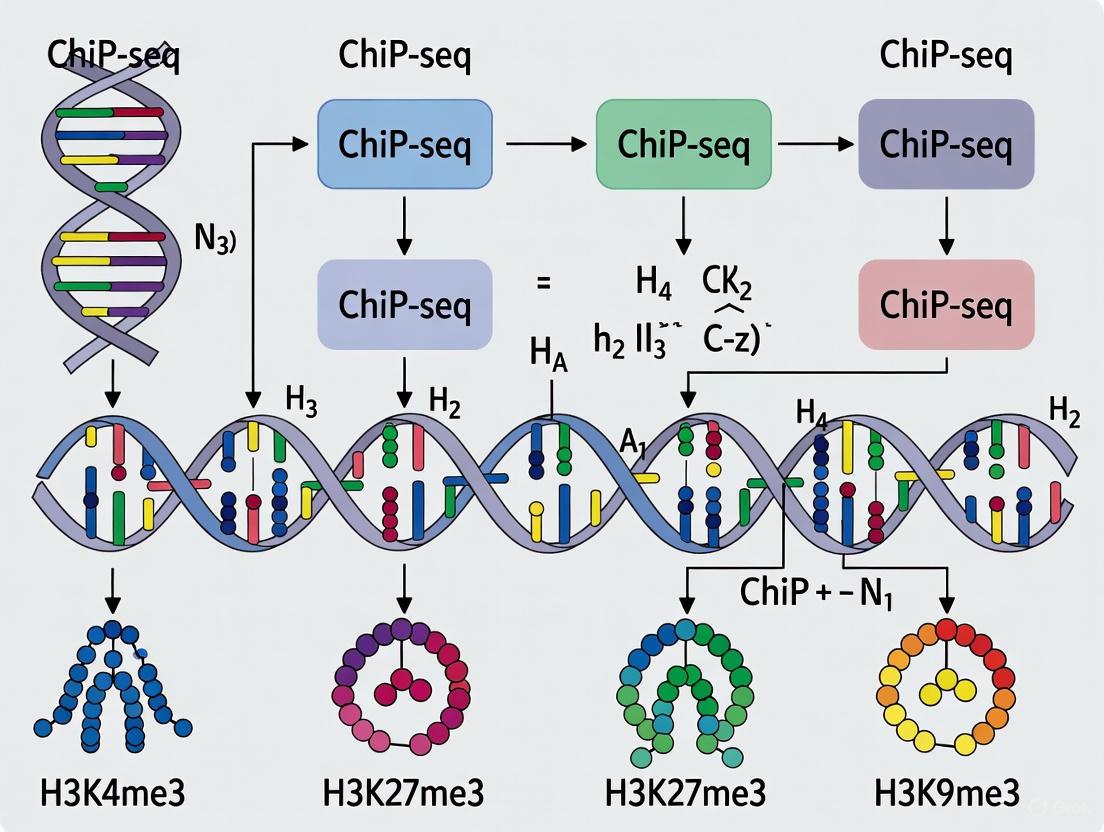
This comprehensive review explores cutting-edge methodologies for simultaneous analysis of multiple histone modifications using ChIP-seq technologies.
Simultaneous Multi-Histone Mark Profiling: Advanced ChIP-seq Methods for Complex Epigenetic Analysis
Abstract
This comprehensive review explores cutting-edge methodologies for simultaneous analysis of multiple histone modifications using ChIP-seq technologies. Targeting researchers, scientists, and drug development professionals, we examine foundational principles of histone mark interactions, advanced techniques including multi-CUT&Tag and microfluidic platforms, practical optimization strategies for challenging samples, and rigorous validation standards. The article synthesizes methodological advances that enable direct analysis of histone mark colocalization and chromatin state dynamics, addressing critical needs in precision medicine and therapeutic development through enhanced epigenomic profiling capabilities.
The Histone Code Decoded: Foundational Principles of Combinatorial Chromatin Signaling
Histone modifications represent a fundamental epigenetic mechanism for regulating gene expression and genome function without altering the underlying DNA sequence. These dynamic modifications occur on the N-terminal tails of histone proteins that extend from the nucleosome core, the fundamental structural unit of chromatin consisting of an octamer of core histone proteins (H2A, H2B, H3, and H4) around which 147 base pairs of DNA are wrapped [1] [2]. Originally viewed primarily as DNA packaging elements, histones are now recognized as dynamic proteins that undergo multiple types of post-translational modifications (PTMs) that directly influence chromatin structure and DNA accessibility [3].
The regulation of histone modifications is mediated by specific enzymes categorized into three functional classes: "Writer" enzymes that add modifications, "Eraser" enzymes that remove them, and "Reader" proteins that recognize specific modifications and mediate downstream biological effects [2]. This sophisticated regulatory system allows cells to fine-tune gene expression patterns in response to developmental cues, environmental signals, and cellular stressors. Abnormalities in histone modification patterns have been correlated with numerous human diseases, including cancer, immunodeficiency disorders, neurodegenerative diseases, and degenerative skeletal conditions, highlighting their critical importance in maintaining cellular homeostasis [1] [4] [5].
Major Types of Histone Modifications and Their Functions
Comprehensive Classification of Histone Modifications
Histones undergo a remarkable diversity of post-translational modifications that mediate distinct chromatin-based processes. The CHHM database, a manually curated catalogue of human histone modifications, contains 6,612 nonredundant modification entries covering 31 types of modifications plus histone-DNA crosslinks, identified across histone variants [6]. Among these, several major categories have been particularly well-characterized for their roles in gene regulation.
Table 1: Major Types of Histone Modifications and Their Functional Roles
| Modification Type | Histone Sites | Associated Enzymes | Transcriptional Effect | Biological Functions |
|---|---|---|---|---|
| Acetylation | H3K9, H3K14, H3K27, H4K5, H4K16 | HATs/KATs (p300/CBP, GCN5), HDACs | Activation | Chromatin relaxation, transcriptional activation, DNA repair [4] [3] [2] |
| Methylation | H3K4, H3K36, H3K79 (activation); H3K9, H3K27, H4K20 (repression) | HMTs (MLL, EZH2), HDMs | Activation or Repression | Facultative heterochromatin (H3K27me3), constitutive heterochromatin (H3K9me3), transcriptional elongation [3] [2] [7] |
| Phosphorylation | H3S10, H3S28, H2A.XS139 | Aurora B kinase, MSK1/2, ATM/ATR | Activation or Repression | Mitosis, meiosis, immediate-early gene activation, DNA damage response [4] [3] |
| Ubiquitination | H2BK120 | RNF20/RNF40 | Activation | Transcriptional activation, histone crosstalk [4] [3] |
Histone Acetylation
Histone acetylation, one of the most extensively studied modifications, involves the addition of acetyl groups to lysine residues, neutralizing their positive charge and thereby reducing the affinity between histones and negatively charged DNA [4]. This charge neutralization leads to a more open chromatin structure that facilitates transcriptional activation [2]. Histone acetyltransferases (HATs or KATs) catalyze the addition of acetyl groups, while histone deacetylases (HDACs) remove them, creating a dynamic equilibrium [4] [2].
Key acetylation sites include H3K9ac, H3K14ac, H3K27ac, and H4K16ac, with H3K27ac being particularly associated with active enhancers and promoters [2]. Recent research has revealed that H3K27ac is primarily localized at promoters and enhancers of actively transcribed genes and can form super-enhancers in intergenic regions, further potentiating gene expression [2]. The functional significance of acetylation is underscored by the fact that several HAT and HDAC inhibitors have been approved for cancer treatment, demonstrating the therapeutic potential of targeting these regulatory mechanisms [2].
Histone Methylation
In contrast to acetylation, histone methylation does not alter the charge of histones but instead creates binding sites for reader proteins that influence chromatin structure [2]. The functional outcome depends on both the specific residue methylated and the degree of methylation (mono-, di-, or trimethylation) [2]. For example, H3K4me3 is associated with active promoters, H3K4me1 marks enhancers, and H3K36me3 is found across transcribed regions [7]. Conversely, H3K9me3 and H3K27me3 are repressive marks associated with constitutive and facultative heterochromatin, respectively [7].
Notably, the same residue can have different effects depending on methylation status; H3K27me1 is associated with transcriptional activation while H3K27me3 is linked to repression [2]. This complexity allows histone methylation to participate in diverse biological processes including genomic imprinting, X-chromosome inactivation, and the regulation of developmental gene expression programs [3] [7].
Additional Histone Modifications
Beyond acetylation and methylation, histones undergo numerous other modifications including phosphorylation, ubiquitination, SUMOylation, ADP-ribosylation, and various newly discovered acylation modifications such as crotonylation, lactylation, and succinylation [4] [6]. Phosphorylation of serine and threonine residues facilitates chromatin condensation during mitosis and transcriptional activation of immediate-early genes [3]. Ubiquitination of H2B (H2BK120ub) is associated with transcriptional activation and can influence other histone modifications through crosstalk mechanisms [3]. The expanding repertoire of histone modifications reflects the sophistication of epigenetic regulation and continues to provide new insights into gene regulatory mechanisms.
ChIP-seq for Histone Modification Analysis
Chromatin Immunoprecipitation followed by sequencing (ChIP-seq) has become the method of choice for genome-wide profiling of histone modifications [7] [8]. This powerful technology combines chromatin immunoprecipitation using modification-specific antibodies with high-throughput sequencing to map protein-DNA interactions across the entire genome [1]. ChIP-seq offers significant advantages over earlier methods like ChIP-chip, including higher resolution, greater coverage, and lower cost for genome-wide studies [7].
The technique begins with formaldehyde cross-linking of proteins to DNA in living cells, preserving in vivo protein-DNA interactions [7]. Chromatin is then fragmented, typically by sonication, and incubated with antibodies specific to the histone modification of interest [1] [7]. After immunoprecipitation and reversal of crosslinks, the purified DNA is converted into a sequencing library suitable for high-throughput sequencing [7]. This process provides a snapshot of the genomic distribution of histone modifications in a given cell type, developmental stage, or disease state [7].
Experimental Workflow
ChIP-seq Experimental Workflow
The standard ChIP-seq protocol involves multiple critical steps, each requiring optimization for successful outcomes [7]. Following cross-linking with formaldehyde, cells are lysed and chromatin is fragmented to sizes of 200-600 bp using sonication [7]. The fragmented chromatin is then incubated with validated, high-specificity antibodies against the histone modification of interest. Important quality control checkpoints include measuring DNA concentration after purification and ensuring sufficient enrichment of known positive genomic regions over negative controls [7].
For histone modification studies, the choice of control samples is particularly important. The most common controls include whole cell extract (WCE or "input") or mock immunoprecipitation with non-specific IgG [9]. Recent comparisons have also explored using Histone H3 pull-down as a control for histone modification studies, as it more closely mimics the background distribution of histones [9]. While studies have found only minor differences between WCE and H3 controls, the H3 pull-down generally behaves more similarly to ChIP-seq of histone modifications, particularly near transcription start sites [9].
Analytical Approaches for Histone Modification Data
Analysis of ChIP-seq data for histone modifications presents distinct computational challenges depending on the nature of the modification being studied [10]. Modifications with sharp, peak-like distributions (e.g., H3K4me3) can be analyzed with peak-calling algorithms designed for transcription factor binding sites. However, many important histone modifications, such as H3K27me3 and H3K9me3, form broad domains that can span several kilobases and present relatively low signal-to-noise ratios [10].
Specialized computational tools have been developed to address these challenges. The histoneHMM algorithm uses a bivariate Hidden Markov Model to segment the genome into regions classified as modified in both samples, unmodified in both samples, or differentially modified between samples [10]. This approach has proven particularly effective for identifying functionally relevant differentially modified regions in comparative studies of broad histone marks [10]. Other methods like Diffreps, Chipdiff, Pepr, and Rseg also provide capabilities for differential analysis of histone modification data [10].
Advanced Applications and Integrated Analysis
Chromatin State Annotation
A powerful application of histone modification mapping is the annotation of chromatin states across the genome [8]. By integrating data from multiple histone modifications, researchers can segment the genome into functionally distinct regions including active promoters, enhancers, transcribed regions, and repressive domains [7] [8]. For example, the simultaneous presence of both H3K4me3 (an activation mark) and H3K9me3 (a repression mark) at a promoter can identify imprinted genes [7].
The Roadmap Epigenomics Consortium has established standard sets of histone modifications for comprehensive epigenomic profiling, including H3K4me3 for promoters, H3K4me1 for enhancers, H3K36me3 for transcribed regions, and H3K27me3 along with H3K9me3 for repressive domains [7]. These chromatin state maps provide unprecedented insights into the regulatory landscape of different cell types and have become invaluable resources for interpreting genome function and disease-associated genetic variants.
Single-Cell and Multi-Omics Integration
Recent technological advances have extended ChIP-seq to single-cell analysis, enabling researchers to explore cellular heterogeneity within complex tissues and cancers [8]. Single-cell ChIP-seq methodologies reveal the diversity of epigenetic states among individual cells, providing insights into developmental processes and tumor heterogeneity that are obscured in bulk population studies [8].
Integration of histone modification data with other genomic datasets, including gene expression (RNA-seq), DNA methylation, and chromatin accessibility, offers a systems-level view of epigenetic regulation [10]. For example, integrating differential H3K27me3 regions with RNA-seq data can identify genes with concordant changes in both histone modification and expression, revealing potentially causal regulatory relationships [10]. Machine learning approaches are increasingly being applied to predict gene expression levels and even chromatin looping interactions from integrated epigenomic datasets [8].
The Scientist's Toolkit
Table 2: Essential Research Reagents for Histone Modification ChIP-seq
| Reagent Category | Specific Examples | Function and Application | Validation Considerations |
|---|---|---|---|
| Core Histone Antibodies | Anti-H3 (AbCam), Anti-H3K27me3 (Millipore), Anti-H3K4me3 (CST #9751S) | Target enrichment for specific modifications; determine specificity and sensitivity | Antibody validation using positive and negative control regions; check cross-reactivity [9] [7] |
| Control Samples | Whole Cell Extract (WCE/Input), IgG mock IP, H3 pull-down | Background estimation; control for technical biases | Match sample processing steps; sufficient sequencing depth [9] |
| Library Preparation Kits | TruSeq DNA Sample Prep Kit (Illumina), ChIP Clean and Concentrator kit (Zymo) | Sequencing library construction from immunoprecipitated DNA | Optimize for low-input DNA; minimize PCR amplification biases [9] [7] |
| Analysis Tools | histoneHMM, MACS2, Diffreps, Rseg | Data processing, peak calling, differential analysis | Method selection based on modification type (sharp peaks vs. broad domains) [10] |
Histone modifications represent a sophisticated layer of epigenetic regulation that dynamically controls chromatin structure and gene expression patterns. The development of ChIP-seq technology has revolutionized our ability to map these modifications genome-wide, providing unprecedented insights into their roles in development, cellular identity, and disease. As single-cell approaches and advanced computational methods continue to evolve, our understanding of histone modification networks and their integration with other regulatory layers will continue to deepen. The systematic application of these technologies, following optimized experimental and analytical workflows, promises to uncover new epigenetic mechanisms and therapeutic opportunities across a wide spectrum of human diseases.
In eukaryotic cells, genomic DNA is packaged into chromatin, a complex of DNA and proteins whose primary units are nucleosomes. Each nucleosome consists of approximately 147 bp of DNA wrapped around an octamer of four core histone proteins: H2A, H2B, H3, and H4 [11]. The N-terminal tails of these histones undergo a variety of post-translational modifications, including methylation, acetylation, phosphorylation, and ubiquitination [11]. These modifications can alter chromatin structure and serve as recruitment platforms for effector proteins, thereby influencing fundamental cellular processes like gene transcription, DNA replication, and cell differentiation [11] [12].
This application note focuses on four key histone modifications—H3K4me3, H3K27ac, H3K27me3, and H3K36me3—that are frequently investigated in epigenetic studies. We provide a consolidated resource detailing their distinct genomic distributions, biological functions, and experimental protocols for their analysis via Chromatin Immunoprecipitation followed by sequencing (ChIP-seq). This information is particularly valuable for research aimed at the simultaneous profiling of multiple epigenetic marks.
The four histone marks discussed herein are critical regulators of gene expression, with characteristic genomic distributions that correlate with specific transcriptional states.
Table 1: Key Characteristics of Histone Modifications
| Histone Mark | Associated Function | Primary Genomic Location | Relationship to Gene Expression | Key Regulators |
|---|---|---|---|---|
| H3K4me3 | Transcription initiation, promoter marking [13] | Transcription start sites (TSS) [11] | Active or poised promoters [14] | SETD1B, other Trithorax-group proteins [15] |
| H3K27ac | Active enhancer and promoter marking [16] | Enhancers and active promoters [16] | Active regulatory elements; distinguishes active from poised enhancers [16] | p300/CBP histone acetyltransferases [13] |
| H3K27me3 | Transcriptional repression, facultative heterochromatin [17] | Broad domains covering repressed genes [18] | Gene silencing; regulated by Polycomb Repressive Complex 2 (PRC2) [17] [18] | EZH1/2 (catalytic subunits of PRC2) [18] |
| H3K36me3 | Transcriptional elongation [13] | Gene bodies of actively transcribed genes [13] | Correlates with active transcription elongation [19] | SETD2/SDG8 methyltransferases [13] [19] |
The combinatorial patterns of these marks help define chromatin states with distinct functional outputs. For instance, active promoters are often co-marked by H3K4me3 and H3K27ac, while repressed developmental genes are frequently marked by H3K27me3 [20]. H3K36me3, found predominantly in gene bodies, is a strong predictor of active transcription [20].
Special Patterns: Broad Domains and Clustered Peaks
Beyond sharp, localized peaks, some marks form broad domains with specialized functions:
- Broad H3K4me3 Domains: These domains, which can span over 5 kb, mark cell identity genes in various cell types, including neural progenitors and spermatids [14] [15]. They are associated with increased transcriptional consistency (reduced cell-to-cell expression variability) rather than simply higher expression levels [14]. In mouse spermatids, these domains are established by the methyltransferase SETD1B and are critical for robust and timely gene expression during development [15].
- H3K27me3-Rich Regions (MRRs): Clusters of H3K27me3 peaks, analogous to "super-enhancers," form large repressive domains. These MRRs can function as silencers, repressing target genes via long-range chromatin interactions. Their removal via CRISPR leads to the upregulation of interacting genes and changes in cell identity [18].
Experimental Workflow for ChIP-seq
Chromatin Immunoprecipitation followed by sequencing (ChIP-seq) is the primary method for genome-wide mapping of histone modifications [12]. The standard workflow is outlined below.
Diagram 1: Standard ChIP-seq workflow for histone modification profiling, covering key stages from crosslinking to sequencing.
Detailed Protocol for Histone Mark ChIP-seq
The following protocol is adapted from methodologies described in the search results [11] [16] and is designed for mammalian cells.
Crosslinking and Chromatin Preparation
- Crosslinking: For a cell pellet from ~1-5 million cells, resuspend in 1% formaldehyde in PBS and incubate for 8-12 minutes at room temperature to fix protein-DNA interactions. Quench the reaction by adding glycine to a final concentration of 0.125 M.
- Cell Lysis: Pellet the crosslinked cells and lyse them using a lysis buffer (e.g., 10 mM Tris-HCl pH 7.5, 10 mM NaCl, 0.5% NP-40, supplemented with protease inhibitors) [16].
- Chromatin Fragmentation: Isolate nuclei by centrifugation and resuspend in shearing buffer. Fragment the chromatin to an average size of 200-500 bp using a focused ultrasonicator (e.g., Covaris). Optimal shearing conditions must be empirically determined.
- Quality Control: Remove insoluble debris by centrifugation. Analyze a small aliquot of sheared chromatin (after reverse crosslinking) by agarose gel electrophoresis or a bioanalyzer to confirm fragment size distribution.
Immunoprecipitation and DNA Recovery
- Antibody Incubation: Dilute the sheared chromatin in ChIP incubation buffer. Add the validated, specific antibody against the target histone mark (e.g., anti-H3K4me3, anti-H3K27ac) and incubate overnight at 4°C with rotation. Note: Always include a control with a nonspecific IgG antibody.
- Bead Capture: Add protein A or protein G magnetic beads (pre-blocked with BSA) to the chromatin-antibody mixture and incubate for 2-4 hours at 4°C to capture the immune complexes.
- Washing: Pellet the beads and wash them sequentially with low-salt, high-salt, LiCl, and TE buffers to remove non-specifically bound chromatin.
- Elution and Reverse Crosslinking: Elute the immunoprecipitated complexes from the beads using a freshly prepared elution buffer (e.g., 1% SDS, 0.1 M NaHCO3). Reverse the crosslinks by adding NaCl to a final concentration of 0.2 M and incubating at 65°C for several hours or overnight.
- DNA Purification: Treat the sample with RNase A and Proteinase K. Purify the DNA using a PCR purification kit (e.g., QIAGEN kits are commonly used) [16]. The purified DNA represents the ChIP-enriched DNA fragments.
Library Preparation and Sequencing
- Library Construction: Use 10 ng of purified ChIP DNA as input for a library preparation kit compatible with your sequencing platform (e.g., NEBNext Ultra II DNA Library Prep Kit for Illumina) [16]. This process entails end-repair, dA-tailing, and adapter ligation.
- Library Amplification and QC: Amplify the library by PCR with index primers to enable multiplexing. Assess the final library's quality and quantity using an Agilent Bioanalyzer or similar instrument [16].
- Sequencing: Pool multiplexed libraries and sequence on an Illumina platform (e.g., NovaSeq 6000) to generate sufficient coverage (typically 20-50 million reads per sample for histone marks).
Successful ChIP-seq experiments depend on high-quality, specific reagents.
Table 2: Key Research Reagent Solutions for Histone Mark ChIP-seq
| Reagent / Resource | Function / Description | Example Specifications / Considerations |
|---|---|---|
| Specific Antibodies | Binds the target histone modification for immunoprecipitation. | Critical for success. Validate for ChIP-seq specificity (e.g., using histone peptide arrays). Examples: ab4729 (H3K27ac) [16]. |
| Magnetic Beads | Solid-phase matrix for capturing antibody-target complexes. | Protein A or Protein G magnetic beads. Ensure compatibility with the antibody species and isotype. |
| Chromatin Shearing Kit | Reagents for efficient and consistent chromatin fragmentation. | Optimized buffers for sonication. Alternatively, enzymatic shearing kits (e.g., MNase) can be used. |
| Library Prep Kit | Prepares ChIP DNA for high-throughput sequencing. | Select kits designed for low-input DNA (e.g., NEBNext Ultra II DNA Library Prep Kit) [16]. |
| Crosslinking Reagent | Fixes protein-DNA interactions in living cells. | Ultrapure formaldehyde is standard. For some factors, a double crosslinking strategy may be needed. |
| Bioinformatic Tools | Software for processing and interpreting sequencing data. | Alignment: BWA, Bowtie2. Peak Calling: MACS2. Visualization: IGV. Advanced Analysis: ChromHMM for chromatin states [20]. |
Data Analysis and Integration
Following sequencing, raw data must be processed to generate meaningful biological insights.
- Quality Control and Alignment: Assess raw read quality using FastQC. Align clean reads to the appropriate reference genome (e.g., hg38 for human, mm10 for mouse) using aligners like BWA [16] or Bowtie2.
- Peak Calling: Identify genomic regions significantly enriched for the histone mark compared to a background control (input DNA) using peak callers such as MACS2 [16]. Parameters should be adjusted based on the mark's distribution (e.g., broad domains for H3K27me3).
- Downstream Analysis:
- Visualization: Use genome browsers like the Integrative Genomics Viewer (IGV) to inspect enrichment patterns.
- Integration with Transcriptomics: Correlate histone mark occupancy with RNA-seq data to link epigenetic states with gene expression [16] [20].
- Chromatin State Modeling: Tools like ChromHMM can integrate multiple ChIP-seq datasets to segment the genome into distinct chromatin states based on combinatorial marks, providing a holistic view of the epigenomic landscape [20].
The histone modifications H3K4me3, H3K27ac, H3K27me3, and H3K36me3 are central players in epigenetic regulation, each occupying distinct genomic territories to orchestrate transcriptional programs. The ChIP-seq protocols and analytical frameworks outlined here provide a robust foundation for their individual and simultaneous investigation. As the field advances, understanding the interplay between these marks—such as the competitive dynamics between H3K4me3 and repressive marks, or the collaborative guidance of DNA methylation by H3K36me2/3 [19]—will be crucial for unraveling the complex code that governs cell identity, development, and disease.
Epigenetic regulation relies on complex interactions between histone modifications. While traditional ChIP-seq methods analyze marks individually, emerging technologies now enable simultaneous profiling of multiple epigenetic marks, revealing higher-order regulatory mechanisms. This Application Note compares single-mark versus multi-mark analytical approaches, detailing protocols, computational tools, and experimental designs that empower researchers to uncover combinatorial chromatin states driving cellular identity and disease processes.
Histone modifications function cooperatively to establish chromatin states that regulate gene expression. Individual marks like H3K4me3 (promoter-associated), H3K36me3 (transcription elongation-associated), and H3K27me3 (polycomb repression-associated) provide limited information when analyzed in isolation [7]. Their combinatorial patterns, however, define functionally distinct regulatory elements that cannot be identified through single-mark approaches. For example, bivalent promoters containing both H3K4me3 (activating) and H3K27me3 (repressing) marks maintain developmental genes in a transcriptionally poised state [7]. Multi-mark analysis captures these complex relationships, providing deeper insights into gene regulatory mechanisms during development, disease progression, and drug response.
Single-Mark vs. Multi-Mark Approaches: A Quantitative Comparison
Table 1: Comparative analysis of single-mark versus multi-mark ChIP-seq approaches
| Feature | Single-Mark Analysis | Multi-Mark Analysis |
|---|---|---|
| Biological Insight | Identifies individual mark distributions; Limited contextual understanding | Reveals combinatorial chromatin states; Captures epigenetic co-dependencies |
| Sample Requirement | 1 antibody per experiment; 1-10 μg chromatin per IP [7] | Multiple antibodies per experiment; Potentially reduced input via multiplexed approaches |
| Technical Variability | Cross-experiment technical artifacts; Batch effects between separate IPs | Reduced technical variation through simultaneous processing |
| Computational Complexity | Standard peak calling (e.g., MACS2) [21] | Joint modeling required (e.g., jMOSAiCS, histoneHMM) [22] [10] |
| Key Limitations | Cannot detect co-occurring or mutually exclusive marks | Antibody compatibility challenges; Increased analytical complexity |
| Typical Applications | Initial mapping of mark distributions; Quality control studies | Chromatin state annotation; Identification of complex regulatory elements |
Experimental Designs for Multi-Mark Profiling
Sequential ChIP-seq (Re-ChIP)
Traditional sequential ChIP involves performing two consecutive immunoprecipitations on the same chromatin sample, first with antibody for mark A, then with antibody for mark B. This approach directly identifies genomic regions bearing both modifications but requires large input material and has low yield.
Multi-CUT&Tag
Multi-CUT&Tag (Cleavage Under Targets and Tagmentation) enables simultaneous mapping of multiple chromatin proteins in the same cells using antibody-specific barcodes [23]. This technology represents a significant advancement for multi-mark profiling:
Diagram 1: Multi-CUT&Tag workflow for simultaneous multi-mark profiling
Antibody Panel Design
Successful multi-mark experiments require careful antibody selection and validation. The Research Reagent Solutions table provides essential materials for implementing these approaches.
Table 2: Research Reagent Solutions for Multi-Mark Profiling
| Reagent Type | Specific Examples | Function | Considerations |
|---|---|---|---|
| Histone Modification Antibodies | H3K27me3 (CST #9733S), H3K4me3 (CST #9751S), H3K27ac (Millipore #07-352) [7] [10] | Specific recognition of target epitopes | Validate specificity using peptide competition; Check compatibility for multiplexing |
| Library Prep Kits | Illumina DNA Prep | Sequencing library construction | Optimize for low-input CUT&Tag protocols |
| Enzymes | pA-Tn5 conjugate [23] | Targeted tagmentation | Custom barcode adapter design for multiplexing |
| Bioinformatic Tools | jMOSAiCS [22], histoneHMM [10], ChIPComp [24] | Joint analysis of multiple datasets | Algorithm selection depends on mark characteristics (sharp vs. broad) |
Computational Methods for Multi-Mark Data Integration
Joint Peak Calling and Segmentation
jMOSAiCS (joint Model-based one- and two-Sample Analysis and Inference for ChIP-seq) provides a probabilistic framework for jointly analyzing multiple ChIP-seq datasets [22]. The method models both the enrichment patterns across multiple samples and the relationship between enrichment in different datasets:
Diagram 2: jMOSAiCS three-layer model for joint ChIP-seq analysis
Differential Analysis for Broad Marks
histoneHMM addresses the specific challenge of analyzing histone modifications with broad genomic footprints, such as H3K27me3 and H3K9me3 [10]. Unlike peak-centric methods designed for transcription factors, histoneHMM uses a bivariate Hidden Markov Model to classify genomic regions into distinct states:
Protocol: Differential Analysis with histoneHMM
- Data Preparation: Convert aligned BAM files into 1000 bp bins genome-wide and calculate read counts per bin [10]
- Normalization: Adjust for sequencing depth differences between samples
- Model Training: Execute histoneHMM with default parameters to identify three states: modified in both samples, unmodified in both samples, and differentially modified
- Validation: Integrate with complementary data (e.g., RNA-seq) to confirm biological relevance of differential regions
Quality Control for Multi-Mark Experiments
Multi-mark experiments require enhanced quality assessment:
- Cross-correlation analysis: Calculate strand cross-correlation for each mark to assess signal-to-noise
- Peak concordance: Check consistency between technical and biological replicates
- Antibody specificity: Verify expected genomic distributions (e.g., H3K4me3 at promoters)
- Library complexity: Assess PCR duplication rates using tools like FastQC [25]
Applications and Biological Insights
Chromatin State Annotation
Simultaneous analysis of multiple marks enables systematic annotation of chromatin states across the genome. The ENCODE project has established reference chromatin states based on combinatorial patterns of up to 12 histone modifications [21]. These annotations reveal functional elements beyond protein-coding genes, including enhancers, insulators, and repressed regions.
Disease Epigenetics
Multi-mark profiling identifies aberrant chromatin states in disease. In cancer, simultaneous analysis of H3K27ac (active enhancer), H3K4me3 (active promoter), and H3K27me3 (repressed) can identify oncogenic regulatory switches that remain invisible in single-mark studies [10].
Cellular Differentiation
During lineage specification, chromatin states undergo coordinated reorganization. Multi-mark time course experiments can track these transitions and identify stabilization of cell-type-specific enhancers and promoters.
Integrated Protocol: Multi-Mark Profiling with Multi-CUT&Tag
This protocol provides a step-by-step workflow for simultaneous profiling of two histone modifications in primary cells.
Day 1: Cell Preparation and Antibody Binding
- Cell Harvesting: Isolate 1×10^5 cells per mark and wash with PBS
- Permeabilization: Resuspend cells in 1 mL Digitonin Permeabilization Buffer (0.01% digitonin in PBS) and incubate 10 minutes on ice
- Primary Antibody Incubation: Add conjugated antibodies (e.g., H3K4me3-AF488 and H3K27me3-AF647) at 1:100 dilution in 100 μL Digitonin Buffer. Incubate overnight at 4°C with rotation
Day 2: Tagmentation and Library Preparation
- Secondary Antibody Binding: Wash cells twice with Digitonin Buffer, then add pA-Tn5 complexes (pre-loaded with mark-specific barcode adapters). Incubate 1 hour at room temperature
- Tagmentation Activation: Add MgCl₂ to 10 mM final concentration and incubate 1 hour at 37°C
- DNA Extraction: Purify DNA using Silica Spin Columns, eluting in 20 μL EB buffer
- Library Amplification: Amplify with i5 and i7 indexed primers (12-15 PCR cycles) using NEBNext High-Fidelity 2X PCR Master Mix
Day 3: Sequencing and Analysis
- Pooling and Sequencing: Pool libraries equimolarly and sequence on Illumina platform (≥5 million reads per mark)
- Bioinformatic Processing:
Simultaneous analysis of multiple histone marks represents a paradigm shift in epigenomic research, moving from descriptive mapping of individual marks toward mechanistic understanding of combinatorial chromatin regulation. As multi-omics technologies evolve, integration of histone modification data with transcriptomic, proteomic, and three-dimensional genomic information will provide increasingly comprehensive models of gene regulatory networks in development and disease.
Chromatin states are functional annotations of the genome defined by characteristic combinations of histone post-translational modifications (PTMs) and histone variants. These combinatorial patterns, rather than individual modifications, dictate the transcriptional state of genomic regions by either promoting an open, transcriptionally permissive chromatin conformation (euchromatin) or a closed, transcriptionally silent conformation (heterochromatin) [26]. The precise interpretation of these chromatin states is performed by "reader" proteins that recognize specific modification signatures and recruit appropriate effector complexes to execute downstream functions such as gene activation, repression, or DNA repair [27] [28]. The systematic profiling of how nuclear proteins interact with complex modification patterns has revealed highly distinctive binding responses, with many factors capable of recognizing multiple features, demonstrating that nucleosomal modifications and linker DNA operate largely independently in regulating protein binding to chromatin [27].
Defining Chromatin States and Their Functional Roles
Chromatin states can be categorized based on the specific combinations of histone modifications and their associated genomic elements and functions. The table below summarizes the key chromatin states, their defining histone modifications, and their functional roles.
Table 1: Key Chromatin States, Their Histone Modifications, and Functional Roles
| Chromatin State | Defining Histone Modifications | Genomic Location & Function |
|---|---|---|
| Active Promoter | H3K4me3, H3K9ac, H3K27ac, H3K36me3 [26] [29] | Gene promoters; Actively facilitates transcription initiation [26]. |
| Active Enhancer | H3K4me1, H3K27ac [29] | Distal regulatory elements; Enhances transcription of target genes [29]. |
| Poised Enhancer | H3K4me1 (without H3K27ac) [29] | Distal regulatory elements; Inactive but primed for future activation, often during development [29]. |
| Repressed/Heterochromatin | H3K9me3, H3K27me3 [26] | Gene-poor regions, satellite repeats, telomeres; Mediates stable, long-term gene silencing [26]. |
| Bivalent Promoter | H3K4me3 + H3K27me3 [30] | Promoters of developmental genes in stem cells; Poises genes for activation or repression during differentiation [30]. |
| Gene Body | H3K36me3 [26] | Transcribed regions; Associated with transcriptional elongation. |
The presence of bivalent domains, marked by both the activating H3K4me3 and repressive H3K27me3 modifications, is a key mechanism in early embryogenesis. These domains poise developmental genes for rapid activation upon receiving differentiation signals, thereby ensuring proper cell fate commitment [30]. During Drosophila embryogenesis, for example, the mutually exclusive distribution of H3K27me3 (repressive) and H3K27ac (active) at cis-regulatory elements helps orchestrate the establishment of germ layer identities [30]. Furthermore, the functional activity of enhancers is more accurately reflected by a combination of marks rather than a single modification. While H3K4me1 marks a wide spectrum of enhancers, the additional presence of H3K4me3 or H3K27ac distinguishes active enhancers [29].
Experimental Protocols for Chromatin State Analysis
Chromatin Immunoprecipitation Sequencing (ChIP-seq)
Purpose: To genome-widely map the binding sites of transcription factors or the genomic locations of specific histone modifications.
Detailed Workflow:
- Cross-linking: Treat cells with formaldehyde to covalently cross-link proteins to DNA.
- Cell Lysis & Chromatin Shearing: Lyse cells and fragment chromatin by sonication or enzymatic digestion (e.g., MNase) to sizes of 200–500 bp.
- Immunoprecipitation (IP): Incubate the sheared chromatin with a specific, validated antibody against the histone modification of interest (e.g., anti-H3K4me3, anti-H3K27me3). Use Protein A/G beads to capture the antibody-chromatin complexes.
- Washing & Elution: Wash the beads to remove non-specifically bound chromatin. Elute the immunoprecipitated chromatin from the beads.
- Reverse Cross-linking & DNA Purification: Heat the eluate to reverse cross-links and treat with Proteinase K. Purify the DNA fragments.
- Library Preparation & Sequencing: Prepare a sequencing library from the purified DNA and perform high-throughput sequencing.
- Data Analysis: Map sequenced reads to the reference genome and call significant peaks of enrichment compared to a control (e.g., input DNA) [26] [29].
Multi-histone Mark ChIP-seq for Chromatin State Mapping
Purpose: To simultaneously identify and annotate combinatorial chromatin states across the genome.
Detailed Workflow:
- Parallel ChIP-seq Experiments: Perform multiple individual ChIP-seq experiments as described in Protocol 3.1 for a panel of key histone modifications (e.g., H3K4me3, H3K27me3, H3K36me3, H3K27ac, H3K9me3).
- Computational Segmentation: Use specialized computational tools to integrate the data from all ChIP-seq tracks.
- State Annotation: Interpret the resulting states by correlating them with genomic features (promoters, enhancers, gene bodies) and functional data (e.g., RNA-seq) to assign biological meanings (e.g., "Active Promoter," "Poised Enhancer") [31].
Advanced Protocol: Micro-C-ChIP for 3D Chromatin Architecture of Specific Histone Marks
Purpose: To map the 3D genome organization, such as enhancer-promoter interactions, specifically for chromatin regions marked by a particular histone modification, at nucleosome resolution.
Detailed Workflow:
- Dual Cross-linking: Treat cells with a dual cross-linker (e.g., disuccinimidyl glutarate (DSG) followed by formaldehyde) to preserve complex chromatin interactions.
- Nuclei Isolation & MNase Digestion: Isolate nuclei and digest chromatin with micrococcal nuclease (MNase). MNase preferentially digests linker DNA, yielding a population of mononucleosomes and dinucleosomes.
- End Repair & Biotinylation: Repair the ends of the MNase-digested DNA and fill in the ends with biotin-labeled nucleotides.
- Proximity Ligation: Under highly dilute conditions, perform in situ proximity ligation to join biotinylated DNA ends from spatially proximal genomic regions.
- Chromatin Solubilization & Shearing: Sonicate the cross-linked, ligated chromatin to solubilize it and reduce fragment size.
- Chromatin Immunoprecipitation: Immunoprecipitate with an antibody against the desired histone mark (e.g., H3K4me3) to enrich for ligation products involving regions marked by that PTM.
- Pull-down & Library Preparation: Capture the biotin-labeled ligation products using streptavidin beads. After washing and elution, prepare a sequencing library.
- Data Analysis: Process the sequenced data to identify valid chimeric read pairs, which represent 3D interactions between regions marked by the targeted histone modification [32].
Diagram: Micro-C-ChIP Workflow for Mapping Histone-Mark-Specific 3D Interactions
The Scientist's Toolkit: Research Reagent Solutions
Table 2: Essential Reagents and Tools for Chromatin State Analysis
| Reagent / Tool | Function & Application |
|---|---|
| Histone Modification Antibodies | Core reagents for ChIP-seq; used to immunoprecipitate chromatin fragments containing specific PTMs (e.g., H3K27ac, H3K4me3). Specificity and lot-to-lot consistency are critical concerns [28]. |
| Recombinant Reader Domains | Antibody-free alternative for enrichment. Protein domains (e.g., PHD, ADD) that bind specific combinatorial PTM patterns with high specificity, used in platforms like Matrix-Assisted Reader Chromatin Capture (MARCC) [28]. |
| MARCS Resource | (Modification Atlas of Regulation by Chromatin States) An online resource providing interactive tools to analyze and visualize proteomic data on how nuclear proteins bind to diverse nucleosome modification states [27]. |
| Computational Segmentation Software (ChromHMM/Segway) | Essential computational tools that integrate multiple ChIP-seq tracks to define chromatin states genome-wide [31]. |
| Micro-C-ChIP | A specialized method combining Micro-C (for nucleosome-resolution 3D contact mapping) with Chromatin IP to study the 3D architecture of specific histone marks efficiently [32]. |
Data Analysis & Integration Workflow
Interpreting chromatin state data requires integrating multiple datasets. The following workflow outlines the key steps from raw data to biological insight, particularly for analyzing promoter-enhancer pairs.
Diagram: Chromatin State Analysis Workflow for Promoter-Enhancer Pairs
Frameworks like TimelessFlex are designed specifically to analyze chromatin state trajectories over time at promoter-enhancer pairs connected by Hi-C data [31]. This approach allows researchers to move beyond static state annotation to understanding how coordinated changes in histone modifications at regulatory elements drive processes like cellular differentiation. For instance, applying such analysis during mouse hematopoiesis can reveal enhancer clusters that become active in specific lineages (e.g., granulocyte/monocyte or erythroid lineages), validated by the enrichment of corresponding lineage-specific transcription factor motifs [31].
The field of epigenomics has undergone a revolutionary transformation, moving from targeted analyses of individual histone modifications to comprehensive, multi-modal profiling of the epigenetic landscape. Early chromatin immunoprecipitation followed by sequencing (ChIP-seq) technologies enabled genome-wide mapping of specific histone marks but were limited to studying one modification per experiment [7]. This approach provided foundational insights but failed to capture the complex interplay between different epigenetic layers that coordinately regulate gene expression.
The historical progression from single-mark ChIP-seq to integrated multi-omics represents a paradigm shift in how researchers investigate epigenetic mechanisms. This evolution has been driven by methodological innovations that now permit simultaneous measurement of multiple epigenetic features—including various histone modifications, DNA methylation, and chromatin accessibility—within the same single cells [33]. These advances are particularly valuable for understanding dynamic biological processes where epigenetic coordination is crucial, such as development, cell differentiation, and disease pathogenesis including cancer and neurological disorders.
Technical Evolution: Methodological Milestones
Foundation: Standard ChIP-seq Methodology
The original ChIP-seq protocol established the foundation for epigenomic profiling by enabling researchers to map histone modifications and transcription factor binding sites genome-wide. The standard workflow begins with formaldehyde cross-linking to preserve protein-DNA interactions in living cells, followed by chromatin fragmentation through sonication or enzymatic digestion [7] [34]. Antibodies specific to the histone modification of interest are used to immunoprecipitate the protein-DNA complexes, after which cross-links are reversed and the enriched DNA is purified [8]. The resulting DNA fragments are then prepared into sequencing libraries and subjected to high-throughput sequencing, typically using Illumina platforms [7].
A critical advancement came with the establishment of standardized pipelines and quality control metrics by consortia such as ENCODE. These standards include requirements for biological replicates, matched input controls, and specific read depth thresholds—10 million usable fragments for narrow histone marks (e.g., H3K4me3) and 20 million for broad marks (e.g., H3K27me3) in early guidelines, with current standards requiring 20 million and 45 million fragments respectively [35]. Library complexity metrics such as Non-Redundant Fraction (NRF > 0.9) and PCR Bottlenecking Coefficients (PBC1 > 0.9, PBC2 > 10) were established to ensure data quality [35].
Computational Challenges with Broad Histone Modifications
Early analysis tools struggled particularly with histone modifications exhibiting broad genomic domains, such as the repressive marks H3K27me3 and H3K9me3, which can span several kilobases and show relatively low signal-to-noise ratios [10]. specialized computational methods like histoneHMM were developed to address these challenges, using bivariate Hidden Markov Models to identify differentially modified regions between samples by aggregating short reads over larger genomic intervals [10]. This approach proved more effective for broad marks than peak-based methods designed for punctate features like transcription factor binding sites.
The Multi-Omics Revolution
The limitations of single-modality profiling prompted development of technologies that could capture multiple epigenetic features simultaneously. The ScISOr-ATAC method exemplified this progression by combining single-cell isoform RNA sequencing with ATAC-seq to measure gene expression, splicing, and chromatin accessibility concurrently in the same individual cells [36]. This approach revealed previously inaccessible relationships between chromatin accessibility and splicing patterns across different brain cell types and disease states.
A more recent breakthrough came with the development of scEpi2-seq, which enables joint profiling of histone modifications and DNA methylation at single-cell resolution [33]. This method leverages TET-assisted pyridine borane sequencing (TAPS) for DNA methylation detection while using antibody-tethered MNase to target specific histone marks. The simultaneous measurement of these complementary epigenetic layers in single cells has opened new possibilities for investigating how different regulatory mechanisms interact to determine cellular identity and function.
Table 1: Evolution of Epigenomic Profiling Technologies
| Technology | Key Capabilities | Limitations | Primary Applications |
|---|---|---|---|
| ChIP-seq | Genome-wide mapping of specific histone modifications or transcription factors | Single modality per experiment; requires large cell numbers | Mapping histone marks, transcription factor binding sites [7] |
| HistoneHMM | Differential analysis of broad histone marks between samples | Specialized for broad marks only; bulk analysis | Identifying differentially modified regions in development and disease [10] |
| ScISOr-ATAC | Simultaneous profiling of chromatin accessibility and RNA splicing in single cells | Does not measure histone modifications or DNA methylation | Studying relationships between chromatin accessibility and gene regulation [36] |
| scEpi2-seq | Joint measurement of histone modifications and DNA methylation in single cells | Technical complexity; lower coverage per cell | Studying epigenetic interactions during cell differentiation and disease [33] |
Advanced Applications and Protocols
Single-Cell Multi-Omic Profiling with scEpi2-seq
The scEpi2-seq protocol represents the cutting edge in multi-modal epigenomic profiling. The method begins with cell permeabilization, followed by antibody-based tethering of a protein A-MNase fusion protein to specific histone modifications [33]. Single cells are sorted into 384-well plates using fluorescence-activated cell sorting (FACS), after which MNase digestion is initiated by calcium addition. The resulting fragments undergo end repair and A-tailing, followed by ligation to adaptors containing cell barcodes, unique molecular identifiers (UMIs), and sequencing handles.
A critical innovation in scEpi2-seq is the implementation of TET-assisted pyridine borane sequencing (TAPS) for DNA methylation detection. Unlike bisulfite-based approaches that degrade DNA and damage library adaptors, TAPS chemically converts methylated cytosine to uracil while leaving adaptor sequences intact [33]. This enables more efficient library preparation and higher-quality data from limited single-cell input material. After TAPS conversion, libraries are prepared through in vitro transcription, reverse transcription, and PCR amplification before paired-end sequencing.
Quality control checkpoints include assessment of cell barcode retrieval rates, mappability, mismatch rates, and TAPS conversion efficiency using in vitro methylated spike-ins. Cells are filtered based on unique read counts and average methylation levels, typically retaining 35-80% of processed cells depending on the cell type and histone mark targeted [33]. The method achieves high specificity with fraction of reads in peaks (FRiP) values ranging from 0.72 to 0.88 across different histone modifications.
Multi-Modal Analysis of Brain Cell Types
Application of multi-omic technologies to neural systems has revealed unprecedented insights into brain region-specific epigenomic regulation. In comparative studies of macaque prefrontal and visual cortices, ScISOr-ATAC uncovered excitatory neuron subtypes with distinct combinatorial patterns of chromatin accessibility and splicing [36]. L3-L5/L6 ITRORB neurons showed particularly strong region-specific splicing patterns, while L2-L4 ITCUX2.RORB neurons exhibited more pronounced chromatin accessibility differences between brain regions.
In Alzheimer's disease research, multi-omic profiling of human and macaque prefrontal cortex has identified oligodendrocytes as particularly susceptible to epigenetic dysregulation, showing significant alterations in both chromatin accessibility and splicing patterns [36]. These findings demonstrate how multi-modal approaches can identify cell types with coordinated dysregulation across different molecular layers in complex diseases.
Enhanced Detection of Female Meiotic Hotspots
Advanced epigenomic profiling has illuminated previously inaccessible biological processes such as female meiotic recombination. Through multi-omics analysis combining single-cell ATAC-seq, low-input MNase-seq, and ULI-NChIP-seq, researchers discovered a unique H3K4me3/H3K9me3 bivalent state at recombination hotspots in female germ cells [37]. This unexpected chromatin configuration, with both active and repressive marks co-existing, appears to regulate the timing and efficiency of double-strand break formation and repair during meiosis—demonstrating how multi-modal approaches can reveal novel epigenetic regulatory mechanisms.
Table 2: Key Research Reagents for Multi-Modal Epigenomic Profiling
| Reagent/Resource | Function | Examples/Specifications |
|---|---|---|
| Histone Modification Antibodies | Immunoprecipitation of specific histone marks | H3K4me3 (CST #9751S), H3K27me3 (CST #9733S), H3K9me3 (CST #9754S) [7] |
| Protein A-MNase Fusion Protein | Antibody-tethered chromatin cleavage | Used in scEpi2-seq for targeted fragmentation [33] |
| Tn5 Transposase | Simultaneous fragmentation and tagging of open chromatin | Essential for ATAC-seq and related methods [34] |
| TAPS Reagents | Chemical conversion of 5mC to uracil | Alternative to bisulfite sequencing with less DNA damage [33] |
| Cell Barcodes and UMIs | Single-cell identification and duplicate removal | Critical for single-cell multi-omics approaches [36] [33] |
| Methylated Spike-in Controls | Assessment of conversion efficiency | Quality control for TAPS and bisulfite methods [33] |
Visualization of Methodological Evolution
The historical progression from single-mark ChIP-seq to multi-modal epigenomic profiling represents more than just technical advancement—it constitutes a fundamental shift in how researchers conceptualize and investigate epigenetic regulation. Where earlier approaches could only provide snapshots of individual epigenetic features, current technologies enable dynamic, multi-layered views of the epigenome in action across diverse biological contexts.
Future developments will likely focus on increasing throughput, resolution, and integration with other molecular profiling methods while reducing costs and technical requirements. As these technologies become more accessible, they will continue to transform our understanding of epigenetic coordination in development, disease, and cellular responses to environmental influences—ultimately enabling more targeted epigenetic therapies and diagnostic approaches.
Advanced Multi-Omic Platforms: From multi-CUT&Tag to Nanopore Sequencing
Regulation of gene expression involves the complex integration of numerous regulatory proteins and histone modifications on cis-regulatory elements (CREs) [38]. For over a decade, chromatin immunoprecipitation followed by sequencing (ChIP-seq) has served as the gold standard for genome-wide mapping of protein-DNA interactions, but it faces significant limitations including low signal-to-noise ratio, high cellular input requirements, and inability to profile multiple targets from the same sample [39] [40]. These constraints prevent direct measurements of co-localization of different chromatin proteins in the same cells and require prioritization of targets where samples are limiting [38].
The development of enzyme-tethering methods like CUT&Tag (Cleavage Under Targets and Tagmentation) represented a substantial advancement, offering higher sensitivity and specificity with dramatically reduced cellular input requirements [39] [40]. However, like ChIP-seq, standard CUT&Tag profiles only one protein at a time, making it impossible to distinguish true co-binding of proteins in the same cells from alternative binding patterns across different cell samples [38]. Multi-CUT&Tag overcomes this fundamental limitation by using antibody-specific barcodes to simultaneously map multiple chromatin proteins in the same single cells [41] [38]. This breakthrough enables direct detection of protein co-localization and dramatically increases the information content obtainable from small cell populations, providing unique insights into combinatorial gene regulatory mechanisms and cellular heterogeneity.
Multi-CUT&Tag adapts the CUT&Tag approach by using barcoded adapters loaded onto antibody-protein A-Tn5 transposase complexes, enabling simultaneous mapping of multiple chromatin proteins in the same single cells or pools of cells [41]. The fundamental innovation lies in assigning unique molecular identifiers to different antibodies, allowing for subsequent deconvolution of signals during sequencing analysis.
Key Technological Innovations
- Antibody-Specific Barcoding: Each pA-Tn5 transposase complex is loaded with adapters containing barcodes unique to specific antibodies, enabling precise assignment of sequenced fragments to their target proteins [38].
- Sequential Tagmentation: Optimized protocols involve tagmenting targets in sequence, beginning with the predicted less abundant target, which reduces off-target read assignment and improves data fidelity [42].
- Dual Barcode System: The method incorporates both antibody-specific barcodes and sample-specific barcodes, facilitating multiplexed sequencing and computational segregation of signals [38].
The following diagram illustrates the core multi-CUT&Tag workflow:
Performance and Benchmarking Data
Multi-CUT&Tag demonstrates high sensitivity and specificity comparable to standard CUT&Tag, with the added advantage of capturing co-association relationships between different chromatin proteins.
Technical Performance Metrics
Table 1: Performance comparison of multi-CUT&Tag with established methodologies
| Method | Targets per Cell | Cells Recovered | Fragments per Cell | Fraction in Peaks | Key Applications |
|---|---|---|---|---|---|
| Multi-CUT&Tag [38] | 2-3 | 7,000-21,000 | 100-600 per target | 39.4%-85.6% | Simultaneous mapping of histone modifications, co-localization studies |
| MulTI-Tag [42] | 2-3 | ~21,500 | >100 per target | >80% for most peaks | Cell type discrimination, developmental trajectories |
| scCUT&Tag [39] | 1 | 3,800-4,800 | 98-453 | High (similar to multi) | Single-target epigenomic profiling |
| scChIP-seq [39] | 1 | Lower than CUT&Tag | Similar or lower | Lower than CUT&Tag | Traditional single-cell ChIP-seq |
Benchmarking Against ENCODE Standards
Recent comprehensive benchmarking studies reveal that CUT&Tag methods recover approximately 54% of known ENCODE ChIP-seq peaks for histone modifications H3K27ac and H3K27me3 in K562 cells [40]. The peaks identified by CUT&Tag represent the strongest ENCODE peaks and show the same functional and biological enrichments as those identified by ENCODE ChIP-seq. Multi-CUT&Tag specifically demonstrates high accuracy for on-target peaks as defined by ENCODE ChIP-seq, with similar specificity of enrichment to standard CUT&Tag as measured by fraction of reads in peaks [42].
Detailed Experimental Protocol
Reagent Preparation and Conjugate Formation
- Purify pA-Tn5 transposase with an N-terminal 6-histidine tag to facilitate subsequent purification steps [38].
- Load pA-Tn5 with barcoded adapters using several barcoded Tn5 adapters described previously [38]. An approximately two-fold excess of barcoded pA-Tn5 protein is incubated with an antibody of interest to form an antibody·pA-Tn5 complex (Ab·pA-Tn5).
- Remove uncomplexed antibody and free adapters by binding pA-Tn5 to TALON beads (which bind the 6-His tag on pA-Tn5), followed by elution of Ab·pA-Tn5 with imidazole, and subsequent buffer exchange [38].
- Quality control of conjugates using qPCR with positive and negative control primers designed based on ENCODE ChIP-seq peaks before proceeding to single-cell experiments [40].
Cell Processing and Tagmentation
- Harvest and permeabilize cells using Digitonin-based permeabilization buffer, with addition of 1% BSA to specific buffers to reduce nuclei clumping during incubations [39].
- Incubate cells with primary antibody conjugates in sequence, beginning with the target predicted to be less abundant, which modestly reduces off-target read assignment [42].
- Perform sequential tagmentation using antibody-conjugated i5 forward adapters, followed by addition of a secondary antibody and pA-Tn5 loaded with i7 reverse adapters for a final tagmentation step to improve robustness [42].
- Extract and purify DNA using suitable methods such as phenol-chloroform extraction or silica membrane-based kits, optimizing for fragment recovery.
Library Preparation and Sequencing
- Amplify libraries via PCR with 12-15 cycles, monitoring duplication rates and adjusting cycles accordingly to maintain complexity while achieving sufficient yield [40].
- Employ custom sequencing oligos that first read through the Ab-specific barcodes, followed by the mosaic-end sequence common to all Tn5 adapters, and finally read into the genomic loci targeted by pA-Tn5 [38].
- Utilize indexing cycles with custom indexing primers to identify different samples during demultiplexing [38].
The Scientist's Toolkit: Essential Research Reagents
Table 2: Key reagents and materials for multi-CUT&Tag experiments
| Reagent/Material | Function | Specifications & Notes |
|---|---|---|
| Protein A-Tn5 Transposase | Enzyme-antibody bridge for targeted tagmentation | N-terminal 6-His tag for purification; expressed and purified in-house or commercially sourced [38] |
| Barcoded Adapters | Antibody-specific indexing | Unique molecular identifiers for each antibody; compatible with Illumina sequencing [38] |
| ChIP-grade Antibodies | Target-specific epitope recognition | Validated for CUT&Tag; tested at dilutions 1:50-1:200; H3K27ac (Abcam-ab4729), H3K27me3 (CST-9733) [40] |
| TALON Beads | Purification of Ab·pA-Tn5 complexes | Affinity purification via 6-His tag binding; critical for removing uncomplexed components [38] |
| Digitonin | Cell permeabilization | Enables antibody and pA-Tn5 access to chromatin targets; concentration optimization required [39] |
| HDAC Inhibitors (TSA, NaB) | Stabilization of acetyl marks | Tested for H3K27ac; may improve signal preservation under native conditions [40] |
Data Analysis Pipeline
The multi-CUT&Tag data analysis requires specialized approaches to handle the multi-factor nature of the data:
- Custom Demultiplexing: Reads are demultiplexed based on sample-barcodes and further segregated based on Ab-specific barcodes, followed by trimming of Ab-barcodes and adapter-specific sequences [38].
- Read Alignment: Processed reads are aligned to the reference genome using standard aligners (Bowtie2, BWA).
- Peak Calling: Utilize MACS2 or SEACR with optimized parameters for CUT&Tag data, considering the high signal-to-noise ratio characteristics [40].
- Single-cell Analysis: For single-cell data, generate cell-feature matrices using genomic windows (e.g., 5kb), followed by dimensionality reduction (LSI, UMAP) and clustering (Leiden algorithm) [39].
- Co-localization Analysis: Identify reads with "mixed" barcodes (different antibody barcodes at each end) to detect direct protein co-association at the same genomic locations [38].
The following diagram illustrates the key data analysis steps and their relationships:
Applications and Biological Insights
Multi-CUT&Tag enables researchers to address fundamental questions in epigenetics and gene regulation:
Direct Detection of Chromatin State Co-occurrence: Multi-CUT&Tag has revealed regions with overlap between H3K27me3 and H3K4me2 consistent with known 'bivalent' chromatin in human embryonic stem cells, indicating that tagmenting targets in sequence does not preclude detection of expected co-enrichment at the same loci [42].
Cell Type Identification and Characterization: Single-cell multi-CUT&Tag profiling of repressive and activating histone marks H3K27me3 and H3K27ac enables clustering of cell types within mixed populations and characterization of cell type-specific chromatin architecture [38]. The method successfully distinguished human K562 cells, H1 embryonic stem cells, and mixtures of the two cell types with high efficiency (normalized mutual information >0.91) [42].
Regulatory Element Mapping: Highly specific multi-CUT&Tag maps of histone marks and RNA Polymerase II uncover sites of co-localization in the same cells, active and repressed genes, and candidate cis-regulatory elements [38].
Developmental Trajectory Analysis: Multi-factor epigenetic profiling facilitates resolution of distinct cell types and developmental trajectories, distinguishing unique, coordinated patterns of active and repressive element regulatory usage associated with differentiation outcomes [42].
The analysis of histone modifications through chromatin immunoprecipitation followed by sequencing (ChIP-seq) provides crucial insights into epigenetic regulatory mechanisms. However, conventional ChIP-seq methodologies present significant limitations, including high cell input requirements (10⁷–10⁸ cells) and lengthy, low-throughput manual procedures. These constraints severely restrict applications involving precious clinical samples, such as tumor biopsies, which typically yield only 10⁴–10⁵ cells. LIFE-ChIP-seq (Low-Input Fluidized-bed Enabled ChIP-seq) represents a transformative microfluidic platform that overcomes these challenges by enabling fully automated, high-throughput epigenetic profiling with as few as 50 cells per assay in approximately 1 hour. This Application Note details the principles, protocols, and implementation requirements for LIFE-ChIP-seq, positioning it as an essential tool for researchers and drug development professionals pursuing multi-histone mark analysis in sample-limited contexts.
The Significance of Histone Modifications
Post-translational modifications of histone proteins constitute a fundamental epigenetic mechanism regulating gene expression without altering the underlying DNA sequence. These modifications, including methylation, acetylation, phosphorylation, and ubiquitination, form a complex "histone code" that specifies chromatin states and transcriptional activity [43]. Specific histone marks correlate with distinct functional genomic elements: H3K4me3 associates with active promoters, H3K27ac with active enhancers, H3K27me3 with facultative heterochromatin, and H3K36me3 with transcriptional elongation [44]. Aberrant histone modification patterns have been implicated in numerous diseases, particularly cancer, where they can silence tumor suppressor genes, trigger genetic instability through disrupted DNA repair mechanisms, and promote malignant progression through processes like epithelial-mesenchymal transition [43].
Limitations of Conventional ChIP-seq
Traditional ChIP-seq methodologies present substantial challenges for modern epigenomic research:
- High Cell Input Requirements: Conventional protocols typically require 10⁷–10⁸ cells per assay, making them incompatible with rare cell populations and limited clinical samples like needle biopsies (10⁴–10⁵ cells) or circulating tumor cells [43].
- Low Throughput: Manual processing necessitates 3–4 days to complete, with limited capacity for parallel processing of multiple samples or histone marks [43].
- Technical Variability: Extensive manual handling introduces inconsistencies and potential contamination [44].
- Antibody Specificity Challenges: Non-specific antibodies can generate misleading results, particularly problematic when distinguishing between similar histone modifications (e.g., H3K9me2 vs. H3K9me1) that have opposing functional consequences [45].
These limitations become particularly constraining in the context of precision medicine, where researchers must analyze numerous samples and histone marks across different experimental conditions and patient populations.
Principles and Advantages of LIFE-ChIP-seq
LIFE-ChIP-seq represents an automated microfluidic platform that integrates multiple parallel ChIP assays within a single device. The system utilizes a fluidized bed design containing immunomagnetic beads functionalized with antibodies targeting specific histone modifications [43]. This design enables highly efficient immunoprecipitation while overcoming the pressure limitations associated with previous packed-bed microfluidic configurations. The platform features:
- Parallel Processing Capability: Four reaction chambers that enable simultaneous analysis of multiple histone marks across different conditions [43].
- Bell-Shaped Chamber Design: Creates a velocity gradient that applies shear forces to remove non-specifically bound chromatin during washing steps while retaining beads in the reaction chamber [43].
- Integrated Valve System: Seven individually addressable inlet ports (I1-I7) controlled by micromechanical valves enable precise fluid handling and automation [43].
- Low-Pressure Operation: Fluidized bed design maintains pressure below 15 psi, preventing damage to micromechanical valves [43].
Performance Advantages
The LIFE-ChIP-seq platform demonstrates significant improvements over conventional and other low-input ChIP technologies:
Table 1: Comparative Analysis of ChIP-seq Technologies
| Technology | Cell Input | Processing Time | Throughput | Key Features |
|---|---|---|---|---|
| Conventional ChIP-seq | 10⁷–10⁸ cells | 3–4 days | Low | Manual processing, established protocols |
| ChIP-chip | High | Multiple days | Moderate | Limited to array sequences, hybridization-based [44] |
| MOWChIP-seq | 100 cells | ~1 hour | Low | Packed bed design, pressure limitations [43] |
| Drop-ChIP | ~1,000 cells | Varies | High | Single-cell focus, low reads per cell [43] |
| Multi-CUT&Tag | Single cells | 1–2 days | High | Profiles multiple proteins, requires expertise [23] |
| scMTR-seq | Single cells | 1–2 days | High | Six histone marks + transcriptome simultaneously [46] |
| LIFE-ChIP-seq | 50–100 cells | ~1 hour | High | Fluidized bed, automated, 4 parallel assays |
The dramatically reduced input requirement and processing time, combined with increased throughput, position LIFE-ChIP-seq as a transformative technology for epigenetic research, particularly for precious clinical samples and large-scale screening applications.
LIFE-ChIP-seq Experimental Protocol
Device Fabrication and Preparation
The LIFE-ChIP-seq microfluidic device is fabricated using two-layer soft lithography in polydimethylsiloxane (PDMS) [43]:
- Photomask Preparation: Design photomasks using LayoutEditor and print on high-resolution Mylar transparencies (10,160 DPI).
- Master Mold Fabrication: Create separate control and fluidic layer molds via photolithography on silicon wafers using SU-8 2025 (50 μm depth) and AZ 9260 (25 μm depth for valve regions).
- PDMS Casting and Bonding:
- Apply 5:1 PDMS mixture to fluidic layer mold (~5 mm thick).
- Spin-coat 20:1 PDMS mixture onto control layer mold (1,750 RPM for 30 seconds).
- Partially cure at 75°C for 12 minutes, then align and bond layers.
- Complete curing at 75°C for 1 hour, then plasma-bond to glass slide.
Sample Preparation and Crosslinking
Proper sample preparation is critical for successful chromatin immunoprecipitation:
Cell Harvesting and Crosslinking:
- Resuspend 50–10,000 cells in culture medium.
- Add 1% formaldehyde and incubate for 8–10 minutes at room temperature to fix protein-DNA interactions.
- Quench crosslinking with 125 mM glycine for 5 minutes.
- Pellet cells and wash with cold PBS. Note: Pellets can be stored at -80°C at this stage [45].
Cell Lysis:
- Resuspend cell pellet in lysis buffer containing detergent and protease/phosphatase inhibitors.
- Incubate on ice for 10–15 minutes.
- Verify complete lysis microscopically by comparing pre- and post-lysis samples using a hemocytometer [45].
Chromatin Shearing
Chromatin fragmentation can be achieved through either mechanical or enzymatic methods:
Sonication:
- Use a focused ultrasonicator with microtip.
- Perform 4–6 cycles of 30-second pulses at 4°C, with 30-second rest intervals between pulses.
- Advantages: Truly random fragmentation [45].
- Disadvantages: Requires optimization, generates heat, dedicated equipment needed.
Enzymatic Digestion (MNase):
Note: Sheared chromatin can be stored at -80°C at this stage. Ideal fragment size ranges from 200–700 bp [45].
Microfluidic Immunoprecipitation
The core LIFE-ChIP-seq procedure occurs within the microfluidic device:
Device Priming and Bead Loading:
- Prime device with blocking buffer (0.5% BSA in PBS) through all inlets.
- Load antibody-functionalized magnetic beads into reaction chambers through designated inlets.
- Apply magnetic field to retain beads within fluidized beds.
Chromatin Immunoprecipitation:
- Load sheared chromatin samples (50–100 cell equivalent) into sample inlet.
- Circulate chromatin through bead chambers for 30–45 minutes to allow antibody-antigen binding.
- Perform automated washing using high-salt and low-salt buffers through separate inlets to remove non-specifically bound chromatin.
- The bell-shaped chambers generate shear forces during washing that enhance specificity [43].
DNA Elution and Recovery:
- Reverse crosslinks by circulating elution buffer (1% SDS, 100 mM NaHCO₃) through chambers at 65°C for 30 minutes.
- Collect eluate containing immunoprecipitated DNA from outlet port.
- Purify DNA using silica-based columns or SPRI beads.
Library Preparation and Sequencing
Convert purified ChIP DNA into sequencing libraries:
- End Repair and A-tailing: Blunt ends and add 3'A-overhangs using commercial kits.
- Adapter Ligation: Ligate indexed sequencing adapters to facilitate multiplexing.
- Size Selection: Purify 200–500 bp fragments using AMPure XP beads.
- Library Amplification: Perform 12–15 cycles of PCR amplification.
- Quality Control: Verify library size distribution using Bioanalyzer and quantify by qPCR.
- Sequencing: Sequence on Illumina platform (recommended: 10–20 million reads per sample for histone marks).
Research Reagent Solutions
Successful implementation of LIFE-ChIP-seq requires careful selection of reagents and materials:
Table 2: Essential Research Reagents and Materials
| Reagent/Material | Function | Specification Considerations |
|---|---|---|
| Histone Modification Antibodies | Immunoprecipitation of target epitopes | Validate specificity by immunoblot/ELISA; test for cross-reactivity with similar modifications [47] [45] |
| Protein A/G Magnetic Beads | Solid support for antibody immobilization | 1–5 μm diameter, superparamagnetic, functionalized with Protein A/G |
| Microfluidic Chip | Miniaturized reaction environment | PDMS, 4 bell-shaped chambers (9×3.5 mm), 50 μm depth, integrated valves [43] |
| Crosslinking Reagents | Fix protein-DNA interactions | 1% formaldehyde; for larger complexes: EGS (16.1 Å) or DSG (7.7 Å) [45] |
| Chromatin Shearing Reagents | Fragment chromatin | Micrococcal nuclease (enzymatic) or sonication equipment (mechanical) |
| Cell Lysis Buffer | Release nuclear content | Detergent-based (SDS/Triton X-100) with protease/phosphatase inhibitors [45] |
| Wash Buffers | Remove non-specific binding | Varying stringency (low to high salt); include LiCl wash to reduce background |
| Library Preparation Kit | Sequencing library construction | Commercial kits for low-input DNA (e.g., Illumina, NEB) |
Data Analysis and Interpretation
Computational Workflow
Process LIFE-ChIP-seq data through a standardized pipeline:
- Quality Control: Assess read quality using FastQC, remove adapter sequences and low-quality bases with Trimmomatic or Cutadapt.
- Alignment: Map reads to reference genome (e.g., hg38) using Bowtie2 or BWA, allowing unique alignments only.
- Peak Calling: Identify significantly enriched regions using MACS2 or SICER, with appropriate parameters for histone marks (broad marks vs. sharp peaks).
- Motif Analysis: Discover enriched transcription factor binding motifs within peaks using HOMER or MEME-ChIP.
- Annotation and Visualization: Annotate peaks to genomic features (promoters, enhancers) using ChIPseeker, visualize in IGV or UCSC Genome Browser.
- Integrative Analysis: Correlate histone modification patterns with gene expression data from parallel assays (e.g., RNA-seq).
Quality Assessment Metrics
Evaluate data quality using established ENCODE guidelines [47]:
- Sequencing Depth: 10–20 million non-redundant reads for histone marks
- Fraction of Reads in Peaks (FRiP): >1% for transcription factors, >20% for histone marks
- Cross-Correlation: Calculate NSC (>1.05) and RSC (>0.8) metrics
- Reproducibility: High correlation between replicates (Pearson R² > 0.9)
Integration with Multi-Histone Mark Analysis
LIFE-ChIP-seq provides an ideal platform for comprehensive epigenetic profiling when combined with emerging technologies for simultaneous histone mark detection:
Complementary Technologies
- Multi-CUT&Tag: Uses antibody-specific barcodes to profile multiple chromatin proteins in the same cells, enabling direct measurement of co-localization [23].
- scMTR-seq: Enables simultaneous profiling of six histone modifications together with transcriptomes in single cells through adapter switching and combinatorial barcoding [46].
- scChIP-seq: Various approaches (scDrop-ChIP, sc-itChIP-seq) that adapt ChIP-seq for single-cell resolution using microfluidics, tagmentation, or ChIP-free methods [44].
Experimental Design Considerations
For studies integrating LIFE-ChIP-seq with other epigenetic profiling methods:
- Antibody Validation: Rigorously characterize antibodies using primary (immunoblot) and secondary (immunofluorescence) tests per ENCODE guidelines [47].
- Control Experiments: Include "no-antibody" controls, input DNA controls, and known positive/negative genomic regions for quality assessment [45].
- Replication: Perform at least two biological replicates to ensure reproducibility.
- Multiplexing Capability: Leverage the four parallel reaction chambers in LIFE-ChIP-seq to profile different histone marks or conditions simultaneously.
The following workflow diagrams illustrate the key procedural and comparative aspects of the LIFE-ChIP-seq technology:
LIFE-ChIP-seq represents a significant advancement in epigenetic profiling technology, addressing critical limitations of conventional ChIP-seq methods through microfluidic automation and miniaturization. The ability to perform high-quality histone modification mapping with only 50–100 cells in a high-throughput format enables research previously impossible with scarce clinical samples. When integrated with complementary multi-omics approaches like multi-CUT&Tag and scMTR-seq, LIFE-ChIP-seq provides a powerful foundation for comprehensive analysis of combinatorial chromatin states. This technological platform promises to accelerate discovery in basic epigenetic mechanisms and facilitate the translation of epigenomic knowledge into clinical applications, particularly in precision oncology and therapeutic development.
The complex interplay between histone modifications and DNA methylation forms the cornerstone of epigenetic regulation, driving distinct gene expression programs and cellular functions [48]. Historically, investigating the relationship between these epigenetic marks has been challenging due to methodological limitations. Traditional techniques such as chromatin immunoprecipitation followed by sequencing (ChIP-seq) for histone modifications and whole-genome bisulfite sequencing (WGBS) for DNA methylation can only profile one type of epigenetic mark at a time and are complicated by cell population heterogeneity [48]. While methods like sequential ChIP-bisulfite-sequencing (ChIP-BS-seq) and CUT&Tag coupled with bisulfite sequencing (CUT&Tag-BS) have emerged for joint analysis, they rely on bisulfite conversion, which causes DNA damage, introduces biases, and reduces sequence complexity [48].
Nanopore sequencing technology has revolutionized epigenomic studies by enabling direct detection of DNA modifications from native DNA without bisulfite treatment [49]. The nanoHiMe-seq (nanopore-sequencing-based Histone-modification and Methylome joint-profiling method) leverages this capability to simultaneously map both histone modifications and DNA methylation from the same DNA molecule [48] [50]. This application note details the experimental protocol and computational workflow of nanoHiMe-seq, positioning it as a transformative tool for multi-omic epigenetic investigation within the broader context of simultaneous histone mark profiling.
Principle of the nanoHiMe-seq method
The fundamental innovation of nanoHiMe-seq lies in its ability to exogenously label histone modification sites for detection via nanopore sequencing alongside endogenous DNA methylation. The method utilizes a nonspecific methyltransferase to mark adenines proximal to antibody-targeted modified nucleosomes in situ [48]. The labeled adenines (6mA) and endogenous methylated CpG sites (5mC) are then simultaneously detected from individual nanopore reads.
Workflow of nanoHiMe-seq: The diagram below illustrates the key steps, from sample preparation to data analysis.
As visualized, the process begins with permeabilized nuclei where specific primary antibodies bind to target histone modifications [48]. A secondary antibody then tethers a protein A–N6-adenine methyltransferase (Hia5) fusion protein (pA-Hia5) to the modified nucleosomes. Upon adding the S-adenosylmethionine (SAM) cofactor, pA-Hia5 methylates adenines proximal to the target sites [48]. Following genomic DNA extraction and nanopore sequencing, the electrical current signals are re-analyzed using a hidden Markov model (HMM) implemented in the nanoHiMe software package to simultaneously detect 6mA labels (marking histone modification sites) and endogenous 5mC in CpG contexts [48].
Key research reagents and solutions
The successful implementation of nanoHiMe-seq depends on several critical reagents and components, each serving a specific function in the experimental workflow.
Table 1: Essential research reagents for nanoHiMe-seq
| Reagent/Component | Function | Key Features |
|---|---|---|
| pA-Hia5 Fusion Protein | Tethers methyltransferase to antibodies; catalyzes adenine methylation [48] | Protein A domain binds antibodies; Hia5 domain methylates adenines nonspecifically |
| Modification-Specific Primary Antibodies | Binds target histone modifications in permeabilized nuclei [48] | Determines the specificity of the histone mark being profiled |
| S-adenosylmethionine (SAM) | Methyl group donor for exogenous adenine labeling [48] | Essential cofactor for methyltransferase activity |
| Oxford Nanopore Sequencer | Detects nucleotide sequence and base modifications simultaneously [48] [49] | Measures electrical current changes caused by modified bases |
| nanoHiMe Software Package | Calls methylation sites from raw signal data [48] | Implements a Hidden Markov Model (HMM) for joint 6mA and 5mC detection |
Experimental protocol and validation
Step-by-step methodology
The following protocol is adapted from the original nanoHiMe-seq publication for application in human cell lines [48]:
- Nuclei Preparation and Permeabilization: Harvest cultured cells (e.g., HepG2, GM12878) and isolate nuclei using an appropriate lysis buffer. Permeabilize nuclei to allow antibody and enzyme access.
- Antibody Incubation: Resuspend permeabilized nuclei in antibody binding buffer. Add primary antibody specific to the target histone modification (e.g., H3K27me3, H3K4me3) and incubate. Wash to remove unbound antibody.
- pA-Hia5 Tethering and Labeling: Incubate with a secondary antibody (if needed) followed by the pA-Hia5 fusion protein. Wash thoroughly to remove unbound components. Activate methyltransferase activity by adding SAM to exogenously methylate proximal adenines.
- DNA Extraction and Library Preparation: Purify genomic DNA using standard methods. Shear DNA to desired fragment size (e.g., 10-20 kb for long-read sequencing). Prepare the sequencing library using the Ligation Sequencing Kit according to the manufacturer's protocol.
- Nanopore Sequencing: Load the library onto a MinION or PromethION flow cell and sequence. Basecalling can be performed in real-time or offline.
- Computational Analysis:
- Alignment: Map basecalled reads to the reference genome.
- Methylation Calling: Use the nanoHiMe software to re-analyze the raw current signals and call methylated adenines (6mA) and methylated CpGs (5mC) using the pre-trained HMM.
Performance validation and benchmarking
The nanoHiMe-seq method has been rigorously validated for robustness and sensitivity. The computational tool's performance was evaluated using receiver operating characteristic (ROC) curves, demonstrating high accuracy in calling both 6mA and 5mC modifications [48]. When applied to HepG2 cells, the histone modification profiles generated by nanoHiMe-seq showed strong correlation with those obtained from CUT&Tag and ChIP-seq datasets [48]. Similarly, the CpG methylation calls were highly consistent with those from established nanopore computational tools like Megalodon and nanopolish [48].
A key advantage of nanoHiMe-seq is its sensitivity at low sequencing depths. The method can generate high-quality joint profiles at significantly lower coverage compared to conventional techniques, making it a cost-effective solution for large-scale epigenomic studies [48] [51].
Table 2: Quantitative performance metrics of nanoHiMe-seq
| Performance Aspect | Result | Comparison/Validation Method |
|---|---|---|
| CpG Methylation Call Accuracy | High consistency (ROC analysis) [48] | Megalodon, nanopolish |
| Histone Modification Profile Correlation | Strong correlation with established methods [48] | CUT&Tag, ChIP-seq |
| Sensitivity at Low Coverage | High-quality profiles at low sequencing depth [48] | Conventional techniques requiring higher coverage |
| Ability for Allele-Specific Analysis | Enabled by long reads [48] | Phased patterns of epigenetic marks |
Data analysis and interpretation
Computational workflow
The analysis of nanoHiMe-seq data extends beyond standard sequence alignment to include specialized detection of base modifications. The following diagram outlines the core computational pipeline.
The core of the analysis involves the nanoHiMe HMM, which was trained using DNA templates with defined methylation states (e.g., untreated, M.SssI-treated for CpG methylation, Hia5-treated for adenine methylation) to learn the emission distribution parameters for individual k-mers containing 5mC or 6mA [48]. This model calculates the likelihood that an observed sequence of current events corresponds to a methylated or unmethylated version of a genome substring, enabling simultaneous base calling and modification detection [48].
Advanced applications
The long-read capability of nanopore sequencing, harnessed by nanoHiMe-seq, unlocks several advanced epigenetic analyses:
- Allele-Specific Epigenetic States: Long reads enable phasing of genetic variants, allowing researchers to determine whether epigenetic marks co-occur on the same maternal or paternal chromosome across large genomic regions [48].
- Crosstalk Investigation: By providing coordinated data on histone modifications and DNA methylation from the same DNA molecule, nanoHiMe-seq allows direct investigation of the intrinsic connectivity and interplay between these two types of epigenetic marks along multikilobase segments of the genome [48].
Comparison with alternative methods
While nanoHiMe-seq is a powerful method for joint profiling, other approaches have been developed. The scEpi2-seq method, for instance, was recently published for single-cell multi-omic detection of DNA methylation and histone modifications [33]. Unlike nanoHiMe-seq, which uses nanopore sequencing and direct detection of 5mC, scEpi2-seq employs TET-assisted pyridine borane sequencing (TAPS) for a bisulfite-free conversion of methylated cytosine in a single-cell assay [33]. The choice between these methods depends on the research requirements, such as the need for single-cell resolution versus long-range phasing information.
In summary, nanoHiMe-seq represents a significant advancement in the simultaneous profiling of histone modifications and DNA methylation. Its simple workflow, compatibility with existing antibodies, robustness, and sensitivity make it a valuable addition to the epigenomic toolkit [48] [51]. By enabling the direct investigation of epigenetic crosstalk on single molecules and across phased haplotypes, it provides a powerful platform to deepen our understanding of epigenetic regulation in health and disease.
Within the framework of simultaneous analysis of multiple histone marks in ChIP-seq research, a critical experimental variable is the quantity of the starting biological sample. The choice of sample input, ranging from ultra-low inputs of 50 cells to several million cells, directly influences the selection of appropriate protocols, the quality of the resulting data, and the biological inferences that can be drawn. This application note synthesizes current methodologies and practices to provide a structured comparison of input requirements, detailing the corresponding experimental protocols and reagent solutions necessary for successful histone mark profiling across this spectrum. The guidelines established by consortia such as ENCODE provide a foundation for ensuring data quality, particularly when scaling these methods to different input levels [47].
The advancement of ChIP-seq technologies has enabled the interrogation of histone modifications from increasingly smaller cell populations, including rare stem cell populations or clinically limited samples, while traditional methods using millions of cells remain the standard for generating comprehensive, high-depth reference datasets [9]. This document presents a clear, comparative overview of these approaches, summarizing key quantitative data into accessible tables, providing detailed protocols, and visualizing the experimental workflows to assist researchers and drug development professionals in selecting and optimizing their ChIP-seq strategies.
Input Requirements and Applications
The required cell input for a Chromatin Immunoprecipitation followed by sequencing (ChIP-seq) experiment is highly dependent on the specific biological question, the abundance of the target histone mark, and the resolution required. The table below summarizes the recommended input scales and their primary applications, particularly in the context of multi-histone mark studies.
Table: ChIP-seq Sample Input Guidelines for Histone Mark Analysis
| Input Scale | Recommended Cell Number | Typical Applications | Key Considerations |
|---|---|---|---|
| Ultra-Low Input | 50 - 10,000 cells | • Rare cell populations (e.g., hematopoietic stem cells)• Single-cell type analyses from heterogeneous tissues• Clinical samples with limited material [9] | • Requires specialized, low-input optimized protocols (e.g., with carrier materials)• Higher sequencing depth per cell may be needed to compensate for lower complexity.• Risk of higher background noise; stringent quality control is essential. |
| Standard Input | 100,000 - 500,000 cells | • Profiling common histone marks (e.g., H3K4me3, H3K27me3, H3K27ac) in cell lines or tissues [52]• Generating reproducible datasets for consortium projects (e.g., ENCODE, modENCODE) [47]• Experiments involving multiple immunoprecipitation conditions. | • Balances robustness with material requirements.• Well-established protocols with extensive benchmark data available.• Suitable for most transcription factor and histone mark studies. |
| High Input | 1 - 10 million cells | • Mapping broad chromatin domains (e.g., H3K9me3, H3K27me3) with high confidence [47]• Advanced methods like Micro-C-ChIP for mapping 3D chromatin architecture associated with specific histone marks [32]• Genome-wide studies requiring very high sequencing depth for maximum resolution. | • Provides high molecular complexity and robust signal-to-noise ratio.• Necessary for complex protocols involving multiple enzymatic steps (e.g., proximity ligation in Micro-C-ChIP) [32].• Can be challenging for samples that are difficult to acquire in large quantities. |
For studies aiming to perform simultaneous analysis of multiple histone marks, the standard input scale is often the most practical starting point, as it provides sufficient material to split across several parallel immunoprecipitations for different antibodies. However, the push towards analyzing rarer populations is steadily making ultra-low input protocols more prevalent.
Detailed Experimental Protocols
The core ChIP-seq protocol involves crosslinking, chromatin shearing, immunoprecipitation, and library preparation. However, specific steps must be optimized based on the starting cell number.
Standard Protocol for 100,000 to 500,000 Cells
This protocol is adapted from established ENCODE and modENCODE guidelines and is robust for most histone mark analyses [47].
- Cross-linking: Treat cells with a chemical agent, usually 1% formaldehyde, to covalently cross-link histone proteins to DNA. Quench the reaction, typically with glycine.
- Cell Lysis and Chromatin Shearing: Isolate nuclei and shear the chromatin to a target size of 100–300 base pairs. This is most commonly achieved using sonication (e.g., with a Covaris sonicator), although enzymatic digestion (e.g., with MNase) can be used for nucleosome-resolution studies [9].
- Immunoprecipitation (IP): Incubate the sheared chromatin with an antibody specific to the histone modification of interest (e.g., H3K27me3). Protein G or A beads are then used to purify the antibody-bound chromatin complexes. A critical step is the use of appropriate control samples, such as Whole Cell Extract (WCE or "Input") or a mock IP (IgG control, to account for non-specific binding [9].
- Reverse Cross-linking and DNA Purification: Wash the beads to remove non-specifically bound chromatin, then reverse the cross-links by heating at 65°C. Purify the enriched DNA using a commercial kit (e.g., Zymo's ChIP Clean and Concentrator) [9].
- Library Preparation and Sequencing: Prepare the sequencing library from the purified DNA using a kit such as the Illumina TruSeq DNA Sample Prep Kit. The library is then sequenced on a platform like the Illumina HiSeq [9].
Low-Input and Ultra-Low-Input Adaptations
For samples below 100,000 cells, the standard protocol requires modifications to minimize DNA loss and maximize efficiency:
- Carrier-assisted ChIP: Including inert carrier chromatin from a different species (e.g., Drosophila) during the IP step can improve antibody binding kinetics and recovery. However, it requires bioinformatic separation of reads after sequencing.
- Miniaturized Reactions: All reaction volumes, including wash buffers, are significantly scaled down to reduce surface adsorption losses.
- Optimized Library Amplification: Library preparation kits specifically designed for low-input and single-cell ChIP-seq, which use whole-genome amplification methods, are employed to generate sufficient material for sequencing.
Protocol for Advanced Methods: Micro-C-ChIP
For mapping histone-mark-specific 3D genome organization, methods like Micro-C-ChIP combine Micro-C with chromatin immunoprecipitation. This protocol, described for millions of cells (e.g., 250,000 cells per ChIP in a study on mouse hematopoietic stem cells), involves several specialized steps [32] [9]:
- Dual Cross-linking: Cells are cross-linked with a combination of formaldehyde and a secondary cross-linker like DSG to stabilize complex protein interactions.
- MNase Digestion: Chromatin is fragmented using Micrococcal Nuclease (MNase), which digests linker DNA and leaves nucleosomes intact, providing nucleosome-resolution.
- Proximity Ligation: The ends of the MNase-digested chromatin are filled in and biotin-labeled. An in situ proximity ligation step is then performed under dilute conditions to favor intra-molecular ligation of cross-linked DNA fragments.
- Sonication and Immunoprecipitation: The ligated chromatin is sonicated to solubilize it and then subjected to ChIP with a histone mark-specific antibody (e.g., H3K4me3 or H3K27me3) [32].
- Pull-down and Sequencing: The biotinylated ligation junctions are pulled down with streptavidin beads before library preparation and sequencing, enriching for fragments that represent genuine 3D interactions.
Experimental Workflow Visualization
The following diagram illustrates the parallel paths of a standard ChIP-seq workflow and the advanced Micro-C-ChIP workflow, highlighting the key divergences in methodology related to sample input and project goals.
The Scientist's Toolkit: Research Reagent Solutions
Successful execution of ChIP-seq experiments, especially those involving multiple histone marks, relies on a suite of critical reagents. The selection of these reagents must be guided by the specific input scale and histone mark being studied.
Table: Essential Reagents for Histone Mark ChIP-seq Experiments
| Reagent / Solution | Function | Key Considerations |
|---|---|---|
| Specific Antibodies | Immunoprecipitation of the histone mark of interest (e.g., H3K4me3, H3K27me3, H3K27ac). | Primary determinant of data quality. Must be validated for ChIP-seq specificity and sensitivity via immunoblot or immunofluorescence per ENCODE guidelines [47]. |
| Control Samples | Serves as a background model for distinguishing specific enrichment from noise. | Whole Cell Extract (WCE/Input): Most common, taken prior to IP [9]. Histone H3 ChIP: An alternative control for histone marks that measures enrichment relative to total histone presence [9]. |
| Chromatin Shearing Reagents | Fragment chromatin to optimal size for IP and sequencing. | Sonication: Standard for most ChIP-seq; requires optimization. MNase: Ideal for nucleosome-resolution studies; used in Micro-C-ChIP [32]. |
| Magnetic Beads | Purification of antibody-bound chromatin complexes. | Protein A/G beads are standard. Consistency in bead lot and handling is critical for reproducibility across experiments. |
| Library Prep Kits | Preparation of sequencing libraries from immunoprecipitated DNA. | For standard inputs, standard Illumina kits (e.g., TruSeq) suffice. For low inputs, specialized kits designed for low DNA quantities are required. |
| Crosslinkers | Stabilize protein-DNA interactions. | Formaldehyde: Standard for most ChIP. Dual Cross-linking (e.g., Formaldehyde + DSG): Essential for stabilizing complex interactions in methods like Micro-C-ChIP [32]. |
The landscape of ChIP-seq sample inputs offers a flexible toolkit for researchers investigating histone modifications. The choice between ultra-low, standard, and high-input protocols is a strategic decision that balances material availability against experimental goals and desired data resolution. Standard inputs provide a robust and well-characterized path for profiling multiple histone marks simultaneously in abundant samples. In contrast, advancements in low-input protocols are unlocking the potential to explore epigenetic regulation in rare and clinically relevant cell populations. For the most complex questions involving chromatin topology, high-input methods like Micro-C-ChIP provide unparalleled resolution. By understanding the requirements, protocols, and necessary reagents outlined in this document, scientists can effectively design and execute ChIP-seq studies that are both efficient and insightful, pushing the boundaries of multi-histone mark research.
Chromatin Immunoprecipitation followed by sequencing (ChIP-seq) has revolutionized our ability to map genome-wide protein-DNA interactions and histone modifications. The transition from manual protocols to automated workflows represents a critical advancement for large-scale epigenomic studies, particularly for simultaneous analysis of multiple histone marks. Automated high-throughput (AHT) ChIP-seq enables researchers to perform hundreds of experiments with unprecedented reproducibility and efficiency [53]. This automation is especially valuable for comprehensive epigenetic profiling, where consistency across multiple marks and samples is paramount.
The integration of robotic systems with sophisticated computational platforms has addressed key challenges in traditional ChIP-seq workflows, including technical variability, throughput limitations, and analytical bottlenecks. For histone modification studies, which often involve analyzing broad genomic domains alongside sharp, peak-like signals, these automated solutions provide the standardization required for meaningful comparative analysis [54] [10]. The resulting data quality and reproducibility make automated systems indispensable for drug discovery pipelines where epigenetic perturbations are increasingly targeted.
Automated Robotic ChIP-seq Systems
AHT-ChIP-seq Protocol Implementation
The AHT-ChIP-seq system represents a fully automated robotic protocol that processes sonicated chromatin into multiplexed Illumina sequencing libraries. This system was specifically designed to minimize manual intervention while maximizing throughput and reproducibility [53]. In practice, the automation begins with optimized volumes of input chromatin and antibodies in a 96-well plate format, dramatically reducing reagent requirements compared to manual protocols.
Key Robotic System Specifications:
- Platform: Agilent NGS Workstation with Bravo liquid handling system
- Throughput: 400 experiments within five days
- Input Requirements: As little as one-sixteenth of a mouse liver per reaction
- Antibody Usage: Reduced to 2.5μg per immunoprecipitation reaction
- Lysis Volume: 200μl per reaction in a 96-well plate format [53]
A critical innovation in this automated workflow was the substitution of toxic phenol-chloroform DNA purification with Ampure XP magnetic beads, making the process suitable for unventilated robotic environments [53]. The pipetting steps were meticulously optimized to ensure homogeneous suspension of magnetic beads, complete supernatant removal without disturbing beads, precise volume transfer, and mixing without foaming. These adjustments were achieved by fine-tuning pipette tip positioning, velocity and acceleration parameters for both the tip movement and syringe plunger.
Commercial Automated Solutions
Several commercial platforms have emerged to support automated ChIP-seq workflows. Diagenode's IP-Star Compact Automated System offers specialized kits for different applications, including the Auto iDeal ChIP-seq Kit for Histones and the Auto ChIPmentation Kit for Histones [55]. These optimized reagent systems are specifically formulated for robotic platforms, ensuring consistent performance in automated environments and reducing variability in histone modification studies.
Table 1: Commercial Automated ChIP-seq Reagent Systems
| Product Name | Application | Format | Key Features |
|---|---|---|---|
| Auto iDeal ChIP-seq Kit for Histones | Histone ChIP-seq | 100 reactions | Validated for automated histone analysis |
| Auto iDeal ChIP-seq Kit for Transcription Factors | TF ChIP-seq | 100 reactions | Highly specific for transcription factors |
| Auto Universal Plant ChIP-seq Kit | Plant epigenetics | 24 reactions | Wide plant compatibility including Arabidopsis |
| Auto ChIPmentation Kit for Histones | Histone ChIP-seq | 24 reactions | Diagenode's latest technology for histone profiling |
Integrated Processing and Analysis Platforms
Crunch: Automated Computational Analysis
Crunch represents a completely automated computational pipeline that performs comprehensive ChIP-seq analysis from raw sequencing data through biological interpretation. This integrated platform addresses the critical need for standardization in ChIP-seq data analysis, which remains a significant challenge in the field [56]. The system accepts raw FASTQ or FASTA files and automatically executes quality control, read mapping, peak detection, and sophisticated motif analysis without user intervention.
The analytical approach of Crunch extends beyond conventional peak calling by integrating modeling of ChIP signals in terms of known and novel binding motifs. This enables the platform to quantify the contribution of each motif and annotate which combinations of motifs explain each binding peak [56]. When applied to ENCODE data, Crunch demonstrated that transcription factors naturally separate into "solitary TFs" (explained by a single motif) and "cobinding TFs" (requiring multiple motifs), providing biological insights that transcend simple peak identification.
Crunch Analysis Workflow:
- Preprocessing: Quality filtering, read mapping, and DNA fragment size estimation (2-6 hours)
- Peak Identification and Annotation: Statistical peak calling and genomic annotation (2.5-4 hours)
- Motif Analysis: De novo motif discovery and integrative modeling (<3 to >12 hours) [56]
The complete processing time for a typical dataset ranges from 10-14 hours on the Crunch server, making it practical for most research applications. The platform provides results through both a graphical web interface and downloadable files, accommodating users with different computational expertise.
seqMINER: Integrated Data Interpretation
seqMINER serves as an integrated ChIP-seq data interpretation platform optimized for handling multiple genome-wide datasets simultaneously [57]. This platform enables comparison and integration of multiple ChIP-seq datasets, extracting both qualitative and quantitative information essential for histone mark studies. The software handles complex experimental designs and provides methods for data classification according to analyzed features, with multiple visualization options for pattern identification.
Specialized Analytical Methods for Histone Modifications
Probability of Being Signal (PBS) for Broad Histone Marks
The analysis of histone modifications with broad genomic footprints presents unique challenges that conventional peak-calling algorithms often struggle to address. The Probability of Being Signal (PBS) method was specifically developed to identify enriched regions in histone ChIP-seq data, particularly for broad marks like H3K27me3 that frequently evade detection by standard peak callers [54].
The PBS approach utilizes a bin-based strategy that divides the genome into non-overlapping 5kB bins, then calculates a probability value for each bin based on a genome-wide background distribution. This method involves:
- Bin Definition: Genome segmentation into 5kB bins (appropriate for both broad and narrow marks)
- Read Count Rescaling: Adjustment for mappability and copy number variations
- Background Estimation: Gamma distribution fitting to the bottom 50th percentile of data
- PBS Calculation: Determination of signal probability for each bin [54]
This approach transforms ChIP-seq data into universally normalized values that can be readily compared across multiple datasets and integrated with downstream analyses. The resulting PBS values range from 0 (likely no signal) to 1 (almost certainly contains signal), providing a quantitative measure of enrichment that is particularly valuable for comparing histone modification patterns across different cellular contexts.
MAnorm for Quantitative Comparison
MAnorm provides a robust framework for quantitative comparison of ChIP-seq datasets, addressing the critical need to identify differential binding or modification patterns between biological conditions [58]. This method introduces a novel normalization approach that uses common peaks between datasets as a reference, based on the assumption that binding at these shared regions should exhibit similar global intensities between samples.
The MAnorm workflow consists of:
- Peak Identification: Calling enriched regions in each sample
- Common Peak Definition: Identifying overlapping peaks between samples
- MA Plot Construction: Plotting log ratio (M) versus average log read density (A)
- Robust Linear Regression: Fitting the global dependence between M-A values
- Normalization: Applying the derived linear model to all peaks [58]
This method has demonstrated strong correlation between quantitative binding differences and changes in target gene expression, validating its biological relevance. The M value derived from MAnorm serves as an effective indicator of cell type-specificity for epigenetic marks, with an absolute M value >1 representing a suitable cutoff for defining specifically marked genes [58].
histoneHMM for Differential Analysis of Broad Marks
histoneHMM is a specialized bivariate Hidden Markov Model designed specifically for differential analysis of histone modifications with broad genomic footprints [10]. This algorithm addresses the limitations of conventional methods that target peak-like features by aggregating short-reads over larger regions and employing an unsupervised classification procedure.
The model outputs probabilistic classifications of genomic regions into three states:
- Modified in both samples
- Unmodified in both samples
- Differentially modified between samples
When evaluated against competing methods (Diffreps, Chipdiff, Pepr, and Rseg) using H3K27me3 and H3K9me3 data, histoneHMM demonstrated superior performance in detecting functionally relevant differentially modified regions, as validated by both qPCR and RNA-seq data [10]. The implementation as an R package ensures seamless integration with Bioconductor's extensive bioinformatic tools, making it accessible to researchers with varying computational expertise.
Experimental Protocols and Methodologies
Automated ChIP-seq Protocol
Materials and Reagents:
- Sonicated chromatin (species-appropriate concentration)
- ChIP-validated antibodies (2.5μg per reaction)
- Protein G magnetic beads
- Auto iDeal ChIP-seq Kit components [55]
- Ampure XP magnetic beads
- 96-well plate compatible with robotic system
Procedure:
- Chromatin Preparation: Distribute sonicated chromatin into 96-well plate using robotic liquid handling
- Antibody Binding: Add optimized antibody amounts (typically 2.5μg) to respective wells
- Immunoprecipitation: Incubate with Protein G magnetic beads with continuous mixing
- Washing: Perform automated wash cycles with optimized buffer exchange
- DNA Purification: Use magnetic bead-based purification (Ampure XP) instead of phenol-chloroform
- Library Preparation: Conduct multiplexed Illumina library construction on robotic platform
- Quality Control: Verify library quality before sequencing [53]
Integrated Analysis Protocol Using Crunch
Input Requirements:
- Raw sequencing data in FASTQ/FASTA format
- Organism specification (human, mouse, or Drosophila)
- Optional: Background samples (input DNA)
- Optional: BED files of pre-mapped data
Procedure:
- Data Upload: Transfer raw sequencing files to Crunch web server
- Automated Processing: Launch analysis without parameter adjustment
- Quality Assessment: Review preprocessing summary and mapping statistics
- Result Exploration: Navigate results through graphical web interface
- Data Download: Retrieve processed files for additional analyses [56]
Expected Results:
- Comprehensive quality control metrics
- Identified binding peaks with statistical significance
- De novo and known motif analyses
- Annotated peak genomic locations
- Cobinding transcription factor predictions
Data Presentation and Visualization
Automated Workflow Diagram
Automated ChIP-seq and Analysis Workflow: Integration of robotic wet-bench procedures with computational analysis platforms.
Comparative Analysis of Automated ChIP-seq Performance
Table 2: Performance Metrics of Automated vs. Manual ChIP-seq
| Parameter | Manual ChIP-seq | AHT-ChIP-seq | Improvement Factor |
|---|---|---|---|
| Throughput | 32 mouse livers for 96 experiments | 6 mouse livers for 96 experiments | 5.3× reduction in input material |
| Antibody Consumption | 10μg per reaction | 2.5μg per reaction | 4× reduction in antibody use |
| Reproducibility | Variable between experiments | Extremely high qualitative and quantitative reproducibility | Significant improvement |
| Hands-on Time | Extensive researcher involvement | Minimal intervention after setup | >10× reduction in manual labor |
| Multiplexing Capacity | Limited by manual processing | 400 experiments in 5 days | Orders of magnitude improvement |
The Scientist's Toolkit
Table 3: Essential Research Reagent Solutions for Automated ChIP-seq
| Reagent/Kit | Manufacturer/Platform | Function | Application Specificity |
|---|---|---|---|
| Auto iDeal ChIP-seq Kit for Histones | Diagenode | Automated histone ChIP-seq | Broad and narrow histone marks |
| Auto iDeal ChIP-seq Kit for Transcription Factors | Diagenode | Automated TF ChIP-seq | Transcription factor binding studies |
| Agilent Bravo Liquid Handling System | Agilent Technologies | Robotic liquid handling | Protocol automation |
| Ampure XP Magnetic Beads | Beckman Coulter | DNA purification | Replacement for phenol-chloroform |
| Crunch Web Server | crunch.unibas.ch | Automated data analysis | Comprehensive ChIP-seq interpretation |
| histoneHMM R Package | histonehmm.molgen.mpg.de | Differential analysis | Broad histone modifications |
| seqMINER Platform | France Genomique | Data integration | Multiple dataset comparison |
| MAnorm Package | Open Source | Quantitative comparison | Cross-sample normalization |
The integration of robotic systems with sophisticated computational platforms has transformed ChIP-seq from a specialized, low-throughput technique to a scalable, reproducible method suitable for large-scale epigenomic studies. The developments in automated wet-bench protocols and integrated analysis tools have directly addressed the challenges of simultaneous multiple histone mark analysis, enabling researchers to generate consistent, comparable data across experiments and conditions.
These advancements are particularly valuable for drug development applications, where standardized, high-throughput epigenetic profiling can identify novel targets and biomarkers. The continued refinement of both robotic systems and analytical platforms promises to further accelerate epigenomic research, ultimately enhancing our understanding of gene regulation in development, disease, and therapeutic intervention.
Simultaneous analysis of multiple histone modifications provides a powerful approach for unraveling the complex regulatory mechanisms that govern gene expression. As chromatin profiling technologies advance, researchers are increasingly moving from single-mark to multi-mark studies to capture a more comprehensive view of the epigenomic landscape. This transition introduces unique experimental design challenges, particularly concerning antibody specificity and appropriate control strategies. Proper antibody selection and control implementation form the critical foundation for generating reliable, interpretable multi-mark data. The guidelines established by consortia such as ENCODE provide essential frameworks for these experimental considerations, ensuring data quality and reproducibility across studies and laboratories [47]. This article outlines key experimental design principles and detailed protocols for researchers embarking on multi-mark histone modification studies, with a focus on selecting validated reagents and implementing proper controls to minimize artifacts and maximize biological insights.
Antibody selection and validation
Criteria for antibody selection
The specificity of the immunoprecipitating antibody is arguably the most critical factor determining the success of any ChIP-seq experiment. Antibodies that lack high specificity for their intended target may bind unpredictably to off-target proteins or histone modifications, substantially increasing background noise and potentially obscuring genuine, particularly lower-abundance, interactions [59]. For histone modification studies, where multiple antibodies are employed simultaneously or in parallel, this concern is amplified, as non-specific antibodies can generate confounding patterns that complicate integrated analysis.
To ensure successful experiments, antibodies should meet two primary criteria. First, they must demonstrate high target specificity, verified through expected expression patterns in positive/negative control cell lines, knockout cells, or siRNA-treated cells, and for modification-specific antibodies, should be validated using peptide array or peptide ELISA to confirm recognition of the specific modification [59]. Second, they must provide an acceptable signal-to-background ratio, with enrichment of known target genes ideally at least 10-fold above background as determined by real-time PCR analysis [59].
Table 1: Antibody characterization methods for histone modification studies
| Characterization Method | Application | Interpretation Guidelines |
|---|---|---|
| Immunoblot Analysis | Primary characterization for most antibodies | Primary reactive band should contain ≥50% of total signal; should correspond to expected size (±20%) [47] |
| Immunofluorescence | Alternative primary method | Staining should show expected nuclear pattern and only in expressing cell types [47] |
| Peptide ELISA/Array | Essential for modification-specific antibodies | Verify specificity for intended modification without cross-reactivity to similar modifications [59] |
| Knockdown/Knockout Validation | Secondary confirmation | Signal reduction upon target depletion confirms specificity [47] |
| Mass Spectrometry | Secondary confirmation for immunoblot bands | Identify factor in all reactive bands [47] |
Antibody concentration optimization
Beyond quality and specificity, antibody concentration significantly impacts immunoprecipitation efficiency. If antibody concentration is too high relative to chromatin amount, it may saturate the assay, leading to reduced specific signal and increased background noise. Conversely, insufficient antibody may fail to bind all target protein in the immunoprecipitation sample, resulting in inefficient pulldown [59]. Titration experiments are therefore recommended when establishing new antibodies or applying established antibodies to new cell types or conditions. Manufacturers' recommended starting concentrations provide useful beginning points, but optimal concentrations should be determined empirically for each experimental system.
Control selection strategies
Types of control samples
Appropriate control samples are essential for distinguishing specific enrichment from background signal in ChIP-seq experiments. The most commonly used controls include whole cell extract (WCE), mock immunoprecipitation, and histone H3 pull-down, each with distinct advantages and considerations [9].
Whole cell extract (WCE), often referred to as "input," consists of sheared chromatin taken prior to immunoprecipitation. This control captures biases from sequencing, alignment, and chromatin fragmentation, but does not account for immunoprecipitation-specific artifacts [9]. Mock immunoprecipitation controls use a non-specific antibody such as IgG and theoretically emulate more steps in sample processing, but often yield limited DNA, making accurate background estimation challenging [9]. For histone modification studies, Histone H3 immunoprecipitation provides an alternative control that maps the underlying distribution of nucleosomes, effectively measuring modified histone density relative to total histone presence rather than uniform genomic distribution [9].
Table 2: Comparison of control sample types for histone modification ChIP-seq
| Control Type | Advantages | Limitations | Recommended Applications |
|---|---|---|---|
| Whole Cell Extract (WCE/Input) | Most common; captures sequencing and fragmentation biases; typically yields sufficient DNA [9] | Does not emulate immunoprecipitation steps [9] | General purpose; standard mark discovery |
| Mock IP (IgG) | Accounts for non-specific antibody binding [9] | Often yields limited DNA; may not accurately estimate background [9] | When antibody non-specificity is a concern |
| Histone H3 Pull-down | Maps signal relative to nucleosome distribution; accounts for underlying histone density [9] | Less commonly used; specific to histone modifications | Multi-mark studies comparing modification patterns |
Comparative performance of controls
Research directly comparing control types for histone modification studies has revealed nuanced differences in their performance. A study examining WCE and H3 controls in hematopoietic stem and progenitor cells found that while overall differences were minor, H3 controls demonstrated better performance in certain genomic contexts [9]. Specifically, H3 pull-downs showed coverage patterns more similar to histone modification ChIP-seq, particularly in mitochondrial regions and near transcription start sites [9]. However, the practical impact of these differences on standard analytical outcomes was generally negligible, suggesting that WCE remains a robust control choice for most applications [9].
For studies focusing specifically on histone modifications, the H3 control may offer theoretical advantages in normalizing for the underlying nucleosome landscape, which is particularly relevant when comparing marks with different genomic distributions. The optimal control choice may ultimately depend on the specific research questions, the histone marks being investigated, and practical considerations regarding sample availability and sequencing depth.
Protocols for multi-mark studies
Standard control implementation protocol
The following protocol outlines the recommended steps for incorporating control samples in histone modification ChIP-seq studies:
Sample Preparation: Begin with approximately 250,000 cells per ChIP. Perform formaldehyde cross-linking to preserve protein-DNA interactions [9].
Chromatin Fragmentation: Sonicate cross-linked cells using a focused ultrasonicator (e.g., Covaris) to achieve fragment sizes of 100-300 bp [9] [47]. Alternatively, for native ChIP, use micrococcal nuclease (MNase) digestion [21].
Control Sample Allocation:
- For WCE control: Reserve a small fraction of sonicated material (typically 1-10%) prior to immunoprecipitation [9].
- For mock IP control: Incubate chromatin with non-specific immunoglobulin (e.g., IgG) instead of target-specific antibodies [9].
- For H3 control: Perform immunoprecipitation with anti-H3 antibody following the same protocol as for mark-specific antibodies [9].
Immunoprecipitation: Incubate remaining chromatin with histone modification-specific antibodies overnight at 4°C. Use antibody concentrations optimized through prior titration experiments [9] [59].
Recovery and Purification: Isolate immune complexes using protein G beads (or protein A based on antibody species). Reverse cross-links by incubation at 65°C for 4 hours, then purify DNA using a commercial cleanup kit (e.g., ChIP Clean and Concentrator, Zymo) [9].
Library Preparation and Sequencing: Prepare sequencing libraries using a commercial kit (e.g., TruSeq DNA Sample Prep Kit, Illumina). Sequence controls and IP samples at comparable depth to enable meaningful comparison during analysis [9] [21].
Control Implementation Workflow
Emerging approaches for multi-mark profiling
Recent methodological advances have enabled truly simultaneous profiling of multiple chromatin proteins in the same cells, overcoming limitations of sequential immunoprecipitation. The multi-CUT&Tag method adapts CUT&Tag technology to map multiple proteins concurrently by using antibody-specific barcodes [23]. This approach allows direct measurement of co-localization of different chromatin proteins in the same cells without requiring sample prioritization when material is limited [23].
Key features of multi-CUT&Tag include:
- Simultaneous mapping: Different chromatin proteins can be profiled in a single experiment using antibody-specific barcodes [23].
- Direct co-localization assessment: Enables identification of combinatorial chromatin patterns without inference from separate experiments [23].
- Single-cell capability: Facilitates identification of distinct cell types from mixed populations and characterization of cell-type-specific chromatin architecture [23].
For traditional multi-mark ChIP-seq studies where marks are profiled separately but analyzed jointly, computational methods such as jMOSAiCS enable joint analysis of multiple ChIP-seq datasets to identify combinatorial patterns of enrichment [22]. This approach provides better power and false discovery rate control compared to separate analysis of individual datasets [22].
Multi-CUT&Tag Workflow
The scientist's toolkit
Table 3: Essential research reagents and materials for multi-mark studies
| Reagent/Material | Function | Examples/Notes |
|---|---|---|
| Histone Modification Antibodies | Target-specific immunoprecipitation | Select antibodies with peptide ELISA validation; H3K27me3 (Millipore), H3 (AbCam) [9] |
| Control Antibodies | Background estimation | Non-specific IgG for mock IP; H3 antibody for nucleosome distribution control [9] |
| Chromatin Fragmentation Equipment | DNA shearing | Covaris sonicator (sonication) or MNase (enzymatic digestion) [9] [21] |
| Immunoprecipitation Beads | Immune complex isolation | Protein G or Protein A magnetic beads [9] |
| DNA Purification Kits | Post-IP DNA cleanup | ChIP Clean and Concentrator kit (Zymo) [9] |
| Library Preparation Kits | Sequencing library construction | TruSeq DNA Sample Prep Kit (Illumina) [9] |
| Cell Sorting Equipment | Cell population isolation | Fluorescence-activated cell sorting (FACS) for specific cell types [9] |
Robust experimental design for multi-mark histone modification studies requires careful consideration of both antibody selection and appropriate controls. Antibodies must be rigorously validated for specificity through multiple orthogonal methods, with particular attention to modification-specific recognition. Control selection should be guided by the specific research questions, with WCE serving as a generally robust option, while H3 controls may provide advantages for certain applications by normalizing for nucleosome distribution. Emerging technologies like multi-CUT&Tag offer promising avenues for truly simultaneous multi-mark profiling, reducing potential artifacts from separate immunoprecipitations. By implementing these detailed protocols and considerations, researchers can generate high-quality, reliable data that enables meaningful biological insights into the combinatorial landscape of histone modifications and their role in gene regulatory mechanisms.
Optimizing Multi-Mark Assays: Tissue-Specific Protocols and Quality Control
For researchers investigating epigenetics, particularly in the context of simultaneous analysis of multiple histone marks, the choice of chromatin immunoprecipitation (ChIP) methodology is fundamental. Chromatin preparation represents the critical first step in any ChIP-sequencing (ChIP-seq) experiment, directly influencing data quality, reproducibility, and biological validity. This application note provides a detailed comparison of the two primary chromatin preparation methods—cross-linked (X-ChIP) and native (N-ChIP) protocols—framed within the specific requirements of multi-histone mark research. We present quantitative performance data, standardized protocols optimized for histone marks, and practical guidance to enable researchers to select the most appropriate methodology for their experimental objectives in drug development and basic research.
Technical Comparison: X-ChIP vs. N-ChIP
The fundamental distinction between X-ChIP and N-ChIP lies in the use of formaldehyde cross-linking. X-ChIP employs cross-linking to covalently stabilize protein-DNA interactions before chromatin fragmentation, while N-ChIP utilizes native, non-cross-linked chromatin [60]. This procedural difference creates complementary advantages and limitations that determine suitability for specific research applications.
Table 1: Fundamental Characteristics of X-ChIP and N-ChIP
| Parameter | X-ChIP (Cross-Linked) | N-ChIP (Native) |
|---|---|---|
| Chemical Fixation | Formaldehyde (typically 1%) | None |
| Chromatin Fragmentation | Sonication or enzymatic digestion | Enzymatic digestion (Micrococcal Nuclease) |
| Primary Application Scope | Histone modifications & transcription factors | Primarily histone modifications |
| Antibody Epitope Recognition | Potentially compromised by cross-linking [61] | Preserved native structure |
| Protein Binding Stability | Stabilizes transient interactions | Risk of protein dissociation during processing |
| Starting Material Requirement | Generally less [60] | Often more |
For histone mark studies specifically, evidence suggests that cross-linking can sometimes mask epitopes and reduce antibody binding efficiency [62]. One genome-wide comparison found that N-ChIP yielded stronger enrichment for H3K4me3, identifying 65,000 peaks compared to 39,000 peaks with X-ChIP [62]. Furthermore, a specialized study on the broad mark H3K27me3 in skeletal muscle revealed that N-ChIP-seq identified approximately 15,000 enriched regions—far surpassing the 2,000 regions identified by X-ChIP-seq—and demonstrated superior consistency between replicates [63].
Quantitative Performance Comparison
Recent systematic comparisons provide empirical data on the performance characteristics of X-ChIP and N-ChIP across key metrics relevant to histone mark studies.
Table 2: Experimental Performance Metrics for Histone Mark Studies
| Performance Metric | X-ChIP | N-ChIP | Experimental Context |
|---|---|---|---|
| H3K4me3 Peaks Identified | ~39,000 | ~65,000 | Human Hec50 cells [62] |
| H3K27me3 Peaks Identified | ~2,000 | ~15,000 | Chicken skeletal muscle [63] |
| Peak Enrichment Over Input | 3-30 fold | 3->30 fold | H3K4me3 target [62] |
| Inter-Replicate Consistency | Lower | Higher | H3K27me3 study [63] |
| Sequencing Quality (Q30) | >93% | >93% | Illumina platforms [63] [62] |
| Non-Specific Background | Increases with fixation time [61] | Generally lower | GFP control experiments [61] |
The data indicates that while both methods can generate high-quality sequencing data, N-ChIP often provides superior sensitivity and reproducibility for mapping histone modifications, particularly broad marks like H3K27me3 [63]. However, cross-linking time optimization emerges as a critical variable; prolonged fixation (e.g., 60 minutes) significantly increases non-specific background signal compared to shorter durations (e.g., 4-10 minutes) [61].
Detailed Experimental Protocols
Cross-linked Chromatin Immunoprecipitation (X-ChIP) Protocol
The X-ChIP protocol utilizes formaldehyde cross-linking to capture protein-DNA interactions.
Key Steps and Optimization Notes:
Cross-linking: Resuspend cell pellet in growth medium and add formaldehyde to 1% final concentration. Incubate for 10 minutes at 37°C with gentle agitation [61]. Critical: Avoid over-fixation (>30 minutes) as it dramatically increases non-specific background and reduces antibody efficiency [61] [60].
Quenching: Add glycine to 125 mM final concentration and incubate for 5 minutes at room temperature to quench cross-linking [61].
Cell Lysis: Wash cells twice with ice-cold PBS. Resuspend pellet in Hypotonic Buffer supplemented with protease inhibitors. Incubate on ice for 15 minutes to swell cells. Release nuclei with Dounce homogenization or vigorous pipetting [62].
Chromatin Fragmentation:
- Sonication: Sonicate chromatin to achieve 150-1000 bp fragments. Optimize time and intensity empirically for each cell/tissue type. Use Bioruptor or Covaris systems.
- Enzymatic Digestion: As an alternative, digest with Micrococcal Nuclease (MNase) in appropriate buffer (e.g., with CaCl₂) for 15-20 minutes at 37°C. Stop reaction with EDTA [62] [60].
Immunoprecipitation: Pre-clear chromatin with Protein A/G beads for 1 hour at 4°C. Incubate chromatin (5 μg) with specific histone modification antibody (2 μg) overnight at 4°C with rotation [62]. Add pre-blocked Protein A/G beads and incubate 2-6 hours. Wash beads sequentially with: Low Salt Buffer, High Salt Buffer, LiCl Buffer, and TE Buffer [61].
Reverse Cross-linking & Purification: Elute complexes in TE + 0.25% SDS. Reverse cross-links by incubating with Proteinase K for 2 hours at 65°C [62]. Purify DNA using silica membrane columns or phenol-chloroform extraction.
Native Chromatin Immunoprecipitation (N-ChIP) Protocol
The N-ChIP protocol works with native, non-cross-linked chromatin to preserve native protein structures.
Key Steps and Optimization Notes:
Cell Lysis and Nuclear Isolation: Wash cells twice with ice-cold PBS. Resuspend pellet in Hypotonic Buffer and incubate on ice. Lyse cells with Dounce homogenization to release intact nuclei. Pellet nuclei by centrifugation [62].
Micrococcal Nuclease Digestion: Resuspend nuclear pellet in MNase Digestion Buffer with CaCl₂. Add appropriate MNase concentration and incubate 15-20 minutes at 37°C to generate 100-500 bp chromatin fragments [62]. Critical: Titrate MNase concentration to achieve predominantly mononucleosomes (∼150 bp) while minimizing under- or over-digestion.
Dialysis: Dialyze digested chromatin against appropriate buffer to remove impurities and stop digestion [62].
Immunoprecipitation: Incubate native chromatin (5 μg) with specific histone antibody (2 μg) for 1 hour at 4°C using spin column technology [62]. Wash beads with appropriate buffers to remove non-specifically bound chromatin.
DNA Purification: Digest samples with Proteinase K. Purify DNA using dedicated purification columns [62].
The Scientist's Toolkit: Essential Research Reagents
Successful multi-histone mark ChIP-seq requires carefully selected quality reagents. The following table details essential materials and their functions.
Table 3: Essential Research Reagents for Histone Mark ChIP-seq
| Reagent Category | Specific Examples | Function & Application Notes |
|---|---|---|
| Cross-linking Reagents | Formaldehyde (1%) | Stabilizes protein-DNA interactions in X-ChIP; critical time optimization required [61] [60] |
| Chromatin Digestion Enzymes | Micrococcal Nuclease (MNase) | Fragments native chromatin in N-ChIP; digests linker DNA between nucleosomes [62] [60] |
| Immunoprecipitation Matrices | Protein A/G Beads, Chromatrap Spin Columns | Captures antibody-chromatin complexes; solid-state columns reduce background [62] |
| Histone Modification Antibodies | Anti-H3K4me3, Anti-H3K27me3 | Must be validated for ChIP; check species specificity and lot performance |
| DNA Purification Kits | Qiagen PCR Purification, Chromatrap DNA Columns | Removes proteins and contaminants post-IP; critical for library prep [61] [62] |
| Library Preparation Kits | NEBNext Ultra DNA Library Prep | Prepares sequencing libraries from immunoprecipitated DNA; maintains fragment diversity [62] |
| Quantification Kits | KAPA Biosystems NGS Quantification | Accurately measures library concentration for optimal sequencing [62] |
For simultaneous analysis of multiple histone marks, the choice between X-ChIP and N-ChIP involves strategic trade-offs. Based on empirical evidence:
- For focused histone mark studies, particularly with broad domains like H3K27me3, N-ChIP is generally superior due to higher sensitivity, greater peak recovery, and better reproducibility [63].
- For complex multi-factor experiments that require integration of histone marks with transcription factor binding, X-ChIP remains essential despite potential epitope masking issues [60].
- When using X-ChIP, minimize cross-linking time (5-10 minutes) to reduce non-specific background while maintaining sufficient cross-linking efficiency [61].
Recent methodological advances in quantitative ChIP-seq analysis, such as siQ-ChIP, enable more precise comparisons between samples and conditions without requiring protocol modifications [64] [65]. By selecting the appropriate chromatin preparation method and following these optimized protocols, researchers can generate robust, reproducible histone modification maps to advance drug discovery and epigenetic mechanism studies.
Chromatin immunoprecipitation followed by sequencing (ChIP-seq) has become an indispensable tool for genome-wide profiling of histone modifications, transcription factor binding, and nucleosome positioning [66]. However, the successful application of ChIP-seq to challenging tissues like skeletal muscle presents unique obstacles that require specialized methodological adjustments. Skeletal muscle's unique cellular architecture—characterized by multinucleated myofibers, high density of contractile proteins, and complex metabolic activity—demands optimized protocols for chromatin isolation and immunoprecipitation [67]. This application note provides detailed protocols and analytical frameworks for conducting robust histone mark ChIP-seq in skeletal muscle and other difficult-to-process tissues within the context of multi-mark epigenetic investigations.
Technical Challenges in Skeletal Muscle ChIP-seq
Skeletal muscle presents several inherent challenges for ChIP-seq experiments that can compromise data quality and reproducibility if not properly addressed:
- High nuclear density and structural complexity: The multinucleated nature of myofibers and dense cytoskeletal network impedes efficient chromatin extraction and fragmentation [67].
- Abundant contractile proteins: The high concentration of structural proteins like actin and myosin can interfere with antibody specificity and increase non-specific background during immunoprecipitation [47].
- Heterogeneous cell populations: The presence of satellite cells, fibroblasts, and immune cells alongside myofibers creates cellular heterogeneity that can obscure cell-type-specific epigenetic signatures [68].
- Diverse metabolic states: Variations in metabolic activity across muscle fiber types (Type I vs. Type II) influence chromatin accessibility and histone modification patterns, requiring careful experimental design [69].
Table 1: Key Challenges and Solutions for Skeletal Muscle ChIP-seq
| Challenge | Impact on ChIP-seq | Recommended Solution |
|---|---|---|
| Robust nuclear extraction | Low chromatin yield | Extended homogenization with Dounce homogenizer; optimized nuclear isolation buffer |
| Cellular heterogeneity | Confounded epigenetic signals | Fluorescence-activated nuclear sorting (FANS) for myonuclei enrichment |
| High structural protein content | Increased background noise | Pre-clearing with non-specific IgG; increased wash stringency |
| Fragmentation efficiency | Uneven chromatin shearing | Optimized sonication parameters (increased cycles with shorter bursts) |
Optimized Experimental Protocols
Tissue Collection and Cross-linking
For histone modification studies in skeletal muscle, proper tissue preservation is critical:
- Rapid tissue processing: Flash-freeze freshly dissected muscle tissue in liquid nitrogen within 5 minutes of excision to preserve native chromatin states [67].
- Cross-linking optimization: For histone modifications, use 1% formaldehyde for 15 minutes at room temperature with constant agitation [47]. Quench with 125 mM glycine for 5 minutes.
- Tissue disruption: Grind frozen tissue to fine powder under liquid nitrogen using a pre-cooled mortar and pestle. Transfer 100 mg powdered tissue to 5 mL ice-cold PBS for nuclear isolation.
Nuclear Isolation and Chromatin Preparation
The following protocol is optimized for challenging tissues like skeletal muscle:
- Nuclear extraction: Homogenize cross-linked tissue in 5 mL Lysis Buffer 1 (50 mM HEPES-KOH pH 7.5, 140 mM NaCl, 1 mM EDTA, 10% glycerol, 0.5% NP-40, 0.25% Triton X-100) using a Dounce homogenizer (15-20 strokes). Incubate 10 minutes with rotation at 4°C [47].
- Nuclear purification: Pellet nuclei (1,350×g, 5 minutes, 4°C). Resuspend in 5 mL Lysis Buffer 2 (10 mM Tris-HCl pH 8.0, 200 mM NaCl, 1 mM EDTA, 0.5 mM EGTA). Incubate 10 minutes with rotation at 4°C.
- Chromatin shearing: Resuspend nuclear pellet in 1 mL Sonication Buffer (0.1% SDS, 10 mM EDTA, 50 mM Tris-HCl pH 8.1). Sonicate using a Covaris E220 Evolution (15 minutes, 5% duty cycle, 140 W peak incident power, 200 cycles per burst) to achieve 200-500 bp fragments [67].
- Chromatin quantification: Measure DNA concentration using Qubit dsDNA HS Assay. Aim for 50-100 μg chromatin per immunoprecipitation.
Immunoprecipitation for Histone Modifications
For simultaneous analysis of multiple histone marks, these conditions ensure antibody specificity:
- Chromatin pre-clearing: Incubate 50 μg sheared chromatin with 20 μL Protein G magnetic beads for 1 hour at 4°C with rotation [47].
- Antibody binding: Incubate pre-cleared chromatin with 2-5 μg validated histone modification antibody overnight at 4°C with rotation. Critical antibody validation guidelines from ENCODE are summarized in Table 2.
- Complex capture: Add 30 μL pre-blocked Protein G magnetic beads. Incubate 2 hours at 4°C with rotation.
- Stringent washing: Wash beads sequentially with:
- Low Salt Wash Buffer (0.1% SDS, 1% Triton X-100, 2 mM EDTA, 20 mM Tris-HCl pH 8.1, 150 mM NaCl)
- High Salt Wash Buffer (0.1% SDS, 1% Triton X-100, 2 mM EDTA, 20 mM Tris-HCl pH 8.1, 500 mM NaCl)
- LiCl Wash Buffer (0.25 M LiCl, 1% NP-40, 1% sodium deoxycholate, 1 mM EDTA, 10 mM Tris-HCl pH 8.1)
- TE Buffer (10 mM Tris-HCl pH 8.0, 1 mM EDTA)
- DNA elution and purification: Elute chromatin with 210 μL Elution Buffer (1% SDS, 0.1 M NaHCO₃). Reverse crosslinks at 65°C overnight. Treat with RNase A and Proteinase K. Purify DNA using silica membrane columns.
Figure 1: Optimized ChIP-seq workflow for skeletal muscle tissue
Quality Control and Validation
Rigorous quality control is essential for generating reproducible ChIP-seq data from challenging tissues:
- Antibody validation: Perform immunoblot analysis to confirm that the primary reactive band contains at least 50% of the signal and corresponds to the expected size [47].
- Cross-linking efficiency assessment: Monitor cross-linking time to balance between sufficient DNA-protein cross-linking and epitope masking.
- Chromatin fragmentation quality: Verify fragment size distribution (200-500 bp) using Agilent Bioanalyzer High Sensitivity DNA kit.
- IP efficiency quantification: Calculate enrichment relative to input (≥5% for most histone modifications) using qPCR at positive and negative control regions.
Table 2: ENCODE Guidelines for Antibody Validation in ChIP-seq
| Validation Step | Minimum Requirement | Optimal Performance |
|---|---|---|
| Immunoblot | Single major band at expected molecular weight | >50% signal in primary band; no cross-reactive bands |
| Immunofluorescence | Nuclear staining pattern consistent with target | Cell-type specific staining where applicable |
| ChIP-qPCR | Enrichment at positive control regions | Signal-to-noise ratio ≥5:1 at positive vs. negative regions |
| Peak distribution | Distribution consistent with mark type | Promoter enrichment for H3K4me3; gene body for H3K36me3 |
Analytical Considerations for Histone Modifications
Computational Analysis of Broad Histone Marks
Skeletal muscle epigenomic studies frequently investigate broad histone modifications like H3K27me3 and H3K9me3, which require specialized analytical approaches:
- Differential analysis with histoneHMM: For broad marks, use histoneHMM, a bivariate Hidden Markov Model that aggregates short-reads over larger regions and classifies genomic regions as modified in both samples, unmodified, or differentially modified [10].
- Normalization with MAnorm: Apply MAnorm to quantitatively compare ChIP-seq data sets by using common peaks as a reference to build a rescaling model, effectively addressing differences in signal-to-noise ratios between samples [58].
- Peak calling for diffuse domains: Utilize algorithms like SICER or Rseg that are specifically designed to identify broad domains of histone modifications rather than sharp peaks [10].
Multi-mark Integration Strategies
For simultaneous analysis of multiple histone marks in skeletal muscle:
- Chromatin state annotation: Integrate data from 5-10 key histone marks (H3K4me3, H3K4me1, H3K27ac, H3K27me3, H3K36me3) to define chromatin states using ChromHMM or Segway.
- Supervised analysis: Train models to predict gene expression levels from histone modification patterns using machine learning approaches [8].
- Pathway enrichment: Link histone modification changes to biological pathways relevant to muscle physiology, such as oxidative metabolism, proteolysis, and inflammatory response [69] [67].
Figure 2: Computational workflow for multi-mark histone analysis in muscle
Research Reagent Solutions
Table 3: Essential Reagents for Muscle ChIP-seq Experiments
| Reagent Category | Specific Products | Application Notes |
|---|---|---|
| Cross-linking | Formaldehyde (37%), Glycine | Use ultrapure grade; prepare fresh for each experiment |
| Chromatin Shearing | Covaris microTUBES, Diagenode Bioruptor | Optimize settings for muscle tissue; more cycles than cell lines |
| Histone Antibodies | Cell Signaling Technology, Abcam, Active Motif | Validate using ENCODE guidelines; lot-to-lot variability testing |
| Magnetic Beads | Dynabeads Protein G, Sera-Mag Magnetic Beads | Pre-block with BSA/salmon sperm DNA to reduce background |
| DNA Purification | QIAquick PCR Purification Kit, SPRIselect Beads | Size selection critical for sequencing library preparation |
| Library Preparation | Illumina TruSeq ChIP Library Prep Kit, KAPA HyperPrep | Adjust PCR cycles based on input material (8-12 cycles typical) |
Application to Disease Models
The optimized protocols have been successfully applied to study epigenetic mechanisms in skeletal muscle disorders:
- Cancer cachexia: ChIP-seq analysis revealed that FoxP1 disrupts circadian transcription programs in muscle, reprogramming metabolic pathways toward wasting [69].
- Muscle atrophy: Bcl-3 binding networks identified through ChIP-seq defined direct targets involved in proteolysis and energy metabolism during disuse atrophy [67].
- Microgravity effects: Epigenomic profiling in muscle-on-a-chip platforms exposed to microgravity showed metabolic shifts and altered myogenesis, partially rescued by pro-regenerative drugs [68].
Robust ChIP-seq analysis of histone modifications in skeletal muscle requires tissue-optimized methodologies from sample preparation through computational analysis. The protocols detailed here address the unique challenges posed by muscle tissue and provide a framework for generating high-quality epigenomic data. Integration of multiple histone marks enables comprehensive characterization of chromatin states underlying muscle development, function, and disease, facilitating drug discovery and therapeutic development for musculoskeletal disorders.
Antibody Validation and Specificity Standards for Simultaneous Immunoprecipitation
Chromatin immunoprecipitation followed by sequencing (ChIP-seq) has emerged as a foundational technique in epigenetics research, enabling genome-wide mapping of histone modifications, transcription factor binding, and chromatin-associated proteins [70] [47]. The core principle relies on antibody-mediated immunoprecipitation to selectively enrich specific DNA-binding proteins along with their genomic targets [71]. As research questions have evolved toward understanding the complex interplay between multiple epigenetic marks, methods for simultaneous profiling of several chromatin proteins in the same biological sample have been developed [23]. These advanced approaches, including multi-CUT&Tag and other multiplexed techniques, place even greater demands on antibody performance, as the success of the entire experiment hinges on the specificities of multiple antibodies working in concert under identical conditions.
This application note outlines current standards and protocols for validating antibodies intended for simultaneous immunoprecipitation applications, with particular emphasis on multi-target histone mark profiling. We present specific validation methodologies, key quantitative standards from leading consortia, and detailed experimental workflows to ensure reproducible and interpretable results in complex experimental designs.
Antibody Validation Principles and Challenges
Fundamental Validation Requirements
Antibody validation for chromatin immunoprecipitation requires demonstrating both functional efficacy in the application and target specificity. The ENCODE consortium has established a rigorous two-part testing approach: functional application validation confirms the antibody successfully immunoprecipitates chromatin in ChIP experiments, while target specificity verification ensures the antibody recognizes only the intended protein or modification [70]. For traditional ChIP-seq, not all antibodies perform equally across applications; an antibody that works in western blot may fail completely in ChIP due to differences in epitope accessibility under native versus denatured conditions [70] [72].
The challenges are magnified in simultaneous immunoprecipitation experiments, where multiple antibodies must function optimally under a single set of experimental conditions. Key considerations include:
- Epitope Accessibility: The specific epitope must be exposed in native chromatin context [70].
- Cross-Reactivity: Antibodies must not recognize other DNA-associated proteins or similar modifications [47].
- Lot-to-Lot Consistency: Particularly critical for long-term projects [72].
- Species Reactivity: Antibodies must be validated for the species under investigation [72].
For simultaneous profiling methods, these challenges compound as each antibody in the panel must meet these standards without interfering with others in the mixture.
Antibody Selection for Multiplexed Applications
Both monoclonal and polyclonal antibodies can work in ChIP applications, each with distinct advantages for multiplexed workflows. Monoclonal antibodies generally offer higher specificity but recognize a single epitope that may be buried in chromatin structure [70]. Polyclonal antibodies recognize multiple epitopes, increasing the likelihood of successful immunoprecipitation, but may have greater batch-to-batch variability [70]. Recombinant polyclonal antibodies represent an emerging solution, offering multiple epitope recognition with the lot-to-lot consistency of monoclonal antibodies [70].
Table 1: Antibody Types and Their Suitability for Simultaneous Immunoprecipitation
| Antibody Type | Specificity | Lot Consistency | Epitope Recognition | Suitability for Multiplexing |
|---|---|---|---|---|
| Monoclonal | High | High | Single epitope | Moderate (if epitope accessible) |
| Polyclonal | Variable | Low | Multiple epitopes | High (multiple recognition sites) |
| Recombinant Polyclonal | High | High | Multiple epitopes | Ideal |
When target-specific antibodies are unavailable, alternative strategies include using epitope-tagged factors (e.g., Myc, HA, V5, T7) [70]. However, this approach requires genetic modification of the target protein, which may not be feasible in all experimental systems.
Validation Standards and Methodologies
ENCODE Consortium Guidelines
The ENCODE consortium has established comprehensive antibody characterization standards that serve as a benchmark for the field [47]. These guidelines mandate both primary and secondary characterization tests, repeated for each new antibody or antibody lot number.
For histone modification antibodies, the recommended characterization workflow includes:
Primary Characterization: Immunoblot analysis using protein lysates from whole-cell extracts, nuclear extracts, or chromatin preparations. The primary reactive band should contain at least 50% of the signal observed on the blot, ideally corresponding to the expected size of the target [47].
Secondary Characterization: If immunoblot analysis is unsuccessful, immunofluorescence provides an alternative validation method. Staining should show the expected pattern (e.g., nuclear localization) and should be present only in cell types or conditions expressing the factor [47].
Additional supporting evidence can include:
- Signal reduction by siRNA knockdown or mutation
- Mass spectrometry identification of the factor in reactive bands
- Published documentation of unexpected mobility
Table 2: ENCODE Validation Standards for Chromatin Immunoprecipitation Antibodies
| Validation Method | Assessment Criteria | Standards | Application to Multiplexing |
|---|---|---|---|
| Immunoblot | Band pattern and size | Primary band >50% of total signal; matches expected size ±20% | Confirms specificity without cross-reactivity to other targets in panel |
| Immunofluorescence | Subcellular localization | Expected nuclear pattern; cell-type specific expression | Verifies epitope accessibility in native chromatin context |
| Peptide Competition | Modification specificity | Abolished signal with target peptide; maintained with similar modifications | Critical for distinguishing similar histone modifications (e.g., H3K4me1 vs. H3K4me3) |
| Knockdown/Knockout | Target dependence | Significant signal reduction upon target depletion | Gold standard for specificity confirmation |
Application-Specific Validation for Simultaneous Profiling
For antibodies intended for simultaneous immunoprecipitation, additional validation steps are necessary:
Multi-CUT&Tag Specific Validation: The multi-CUT&Tag method uses antibody-specific barcodes to simultaneously map multiple proteins in the same cells [23]. Each antibody must be validated not only individually but also in combination with other antibodies in the panel. Key validation steps include:
- Demonstration that each antibody generates specific maps when used individually
- Confirmation that signal specificity is maintained when antibodies are pooled
- Verification that barcoding does not interfere with antibody-antigen binding
Cross-reactivity Testing: For histone modifications with similar structures (e.g., H3K4me1, H3K4me2, H3K4me3), peptide competition assays are essential. Antibodies should be tested against peptide arrays containing various modifications to confirm they distinguish between closely related epitopes [72].
Spike-in Controls: For quantitative comparisons across experiments, internal standards such as nucleosomal internal standards for ChIP (ICeChIP) can be employed. These involve spiking chromatin samples with nucleosomes reconstituted from recombinant and semisynthetic histones on barcoded DNA prior to immunoprecipitation [73]. This approach measures histone modification densities on a biologically meaningful scale and provides in situ assessment of immunoprecipitation specificity [73].
Experimental Protocols for Validation
Specificity Validation Protocol
Materials:
- Target antibody and isotype control
- Cross-reactivity test peptides (including target and similar modifications)
- Appropriate cell lines (positive and negative controls)
- Lysis buffer, sonication equipment
- Protein A/G beads, DNA extraction kit
- PCR reagents and primers for positive and negative genomic regions
Procedure:
- Peptide Competition Assay:
- Pre-incubate antibody with target peptide (1-10 μg) or control peptides for 30 minutes at 4°C
- Use peptide-antibody mixture in standard ChIP protocol
- Compare signal reduction: target peptide should abolish signal, while control peptides should not affect enrichment
Immunoblot Characterization:
- Prepare nuclear extracts from appropriate cell lines
- Separate proteins by SDS-PAGE and transfer to membrane
- Probe with target antibody
- Primary reactive band should represent >50% of total signal
Cell-Type Specificity Testing:
- Perform ChIP in known positive and negative cell types
- Assess enrichment at positive and negative control genomic regions
- Signal should correlate with expected expression/occupancy patterns
Quality Control Metrics:
- Fold enrichment over control IgG should be >10 for positive regions
- Signal at negative control regions should be similar to IgG control
- Peptide competition should reduce enrichment by >80%
Multiplexed Immunoprecipitation Workflow
The following workflow diagram illustrates the multi-CUT&Tag approach for simultaneous profiling of multiple histone modifications:
Simultaneous Multi-Target Profiling Protocol:
Materials:
- Primary antibodies validated for individual use
- Species-specific secondary antibodies
- Protein A-Tn5 fusion protein (pA-Tn5)
- Custom barcoded adapters
- Permeabilization buffer (Digitonin-containing)
- Magnesium chloride solution
- Tagmentation buffer
- DNA extraction reagents
- PCR amplification reagents
Procedure:
- Cell Preparation and Permeabilization:
- Harvest and wash 50,000-100,000 cells per condition
- Permeabilize cells with digitonin-containing buffer (0.01%-0.05%) for 10 minutes on ice
- Wash with appropriate buffer to remove cellular debris
Antibody Binding:
- Incubate permeabilized cells with primary antibody mixture (0.5-2 μg each) in 100 μL antibody buffer for 2 hours at room temperature
- Include negative control with nonspecific IgG
- Wash twice with digitonin buffer to remove unbound antibody
Secondary Antibody and pA-Tn5 Binding:
- Add species-specific secondary antibodies (if needed) and incubate for 1 hour
- Wash to remove unbound secondary antibodies
- Add barcode-loaded pA-Tn5 fusion protein and incubate for 1 hour
- Wash to remove unbound pA-Tn5
Tagmentation:
- Activate tagmentation by adding 10 mM MgCl₂
- Incubate at 37°C for 1 hour
- Stop reaction with EDTA, SDS, and proteinase K
- Incubate at 50°C for 1 hour to reverse crosslinks
DNA Recovery and Library Preparation:
- Extract DNA using SPRI beads or phenol-chloroform
- Amplify library with barcoded primers for 12-15 cycles
- Purify amplified library and quality check by Bioanalyzer
- Sequence on appropriate platform (Illumina, Nanopore)
Critical Considerations for Multiplexing:
- Antibody concentration must be optimized in combination, not just individually
- Barcode design must ensure minimal index hopping or cross-talk
- Control experiments with individual antibodies should be performed to confirm specificity in multiplexed format
Quality Assessment and Troubleshooting
Quality Control Metrics
For simultaneous immunoprecipitation experiments, rigorous quality control is essential. The ENCODE consortium has established standards for ChIP-seq data quality:
Library Complexity:
- Non-Redundant Fraction (NRF) > 0.9 [35]
- PCR Bottlenecking Coefficient 1 (PBC1) > 0.9 [35] [47]
- PCR Bottlenecking Coefficient 2 (PBC2) > 10 [35] [47]
Sequencing Depth:
- Narrow histone marks (e.g., H3K4me3, H3K27ac): 20 million usable fragments per replicate [35]
- Broad histone marks (e.g., H3K27me3, H3K36me3): 45 million usable fragments per replicate [35]
Reproducibility:
- Biological replicates should show high correlation (Pearson R > 0.9)
- Irreproducible Discovery Rate (IDR) for peak calling
For multi-CUT&Tag and related simultaneous profiling methods, additional quality metrics include:
- Barcode balance assessment (similar sequencing depth for all barcodes)
- Specificity confirmation through comparison to individual antibody experiments
- Cluster analysis to confirm expected co-localization patterns
Troubleshooting Common Issues
Table 3: Troubleshooting Guide for Simultaneous Immunoprecipitation
| Problem | Potential Causes | Solutions |
|---|---|---|
| Poor enrichment for one target | Antibody concentration too low; epitope masking | Titrate antibody concentration; check chromatin accessibility |
| High background across all targets | Insufficient washing; over-digestion | Increase wash stringency; optimize permeabilization/tagmentation time |
| Uneven barcode representation | Unequal antibody efficacy; barcode bias | Rebalance antibody ratios; redesign barcodes; check Tn5 loading |
| Loss of cell number | Over-permeabilization; harsh handling | Optimize digitonin concentration; reduce centrifugation speed |
| Low library complexity | Insufficient cells; over-amplification | Increase cell input; reduce PCR cycles |
Advanced Applications and Emerging Technologies
The development of rigorously validated antibody panels for simultaneous immunoprecipitation has enabled several advanced applications in epigenomics research:
Single-Cell Multi-Epitope Profiling: Single-cell multi-CUT&Tag facilitates identification of distinct cell types from mixed populations and characterization of cell-type-specific chromatin architecture [23]. This technology increases information content per cell, enabling direct analysis of interplay between different chromatin proteins.
Integrated Epigenomic Mapping: Nanopore-sequencing-based methods like nanoHiMe-seq now allow simultaneous profiling of histone modifications and DNA methylation from single DNA molecules [48]. This approach leverages antibody-targeted exogenous labeling to mark adenines proximal to modified nucleosomes, enabling joint detection of histone marks and DNA methylation in individual nanopore reads.
Three-Dimensional Chromatin Analysis: Micro-C-ChIP combines Micro-C with chromatin immunoprecipitation to map 3D genome organization for defined histone modifications at nucleosome resolution [32]. This strategy enriches for specific histone marks while capturing chromatin interactions, providing high-resolution insights into histone-modification-specific chromatin folding.
These emerging technologies demonstrate how antibody-based enrichment continues to evolve, enabling increasingly complex multidimensional epigenomic characterization from limited biological material.
Research Reagent Solutions
Table 4: Essential Research Reagents for Simultaneous Immunoprecipitation
| Reagent Category | Specific Examples | Function | Considerations |
|---|---|---|---|
| Validated Antibodies | H3K4me3, H3K27ac, H3K27me3, H3K9me3 | Target-specific immunoprecipitation | Application-validated; species-specific; modification-specific |
| Epitope Tag Systems | Myc, HA, V5, T7, GST | Alternative recognition when specific antibodies unavailable | Requires genetic manipulation; consistent across targets |
| Enzymatic Fusion Proteins | pA-Tn5, pA-Hia5 | Targeted tagmentation or labeling | Must be titrated for each application; quality affects efficiency |
| Barcoding Systems | Illumina index adapters, custom barcodes | Sample multiplexing; target identification | Minimal sequence similarity to reduce cross-talk |
| Internal Standards | Nucleosomal spike-ins (ICeChIP) | Experimental normalization; quantitative comparison | Must be biologically inert; distinct from experimental genome |
| Chromatin Preparation Kits | SimpleChIP Plus Sonication Kit | Standardized chromatin preparation | Optimized for cell type; consistent fragment size distribution |
Antibody validation remains the cornerstone of reliable chromatin immunoprecipitation data, with simultaneous immunoprecipitation approaches demanding even more rigorous standards. The framework presented here—incorporating comprehensive specificity testing, application-specific validation, and appropriate quality controls—provides a pathway to robust multi-target epigenomic profiling. As methods continue to evolve toward increasingly multiplexed and integrated epigenomic analysis, adherence to these validation standards will ensure the generation of biologically meaningful and reproducible results that accurately reflect the complex interplay of chromatin modifications in gene regulation.
Emerging technologies for simultaneous profiling, including multi-CUT&Tag, nanoHiMe-seq, and Micro-C-ChIP, demonstrate how properly validated antibody panels can unlock new dimensions of epigenomic analysis, from single-cell resolution to coordinated mapping of multiple epigenetic layers. By implementing the validation standards and protocols outlined in this document, researchers can confidently advance their investigations into the multifaceted world of chromatin biology.
In next-generation sequencing (NGS) assays, particularly in chromatin immunoprecipitation followed by sequencing (ChIP-seq) and related epigenomic techniques, library complexity refers to the diversity and uniqueness of DNA fragments within a sequencing library. High complexity indicates that the library provides good coverage of the genome with minimal PCR amplification artifacts, which is crucial for obtaining biologically meaningful results. Within the context of a broader thesis on the simultaneous analysis of multiple histone marks using ChIP-seq, understanding and monitoring library complexity becomes paramount. The ENCODE Consortium guidelines and standards have established three primary metrics for quantitatively assessing library complexity: the Non-Redundant Fraction (NRF), and the PCR Bottlenecking Coefficients 1 and 2 (PBC1 and PBC2) [74]. These metrics provide researchers with standardized tools to evaluate data quality before proceeding with sophisticated integrative analyses of histone modification patterns.
For research involving multiple histone marks, which often requires comparing data across different immunoprecipitations, experimental conditions, or even time courses, ensuring that each dataset meets minimum complexity standards is the first step toward generating reliable, comparable, and biologically interpretable results. Poor library complexity can lead to increased background noise, spurious peak calls, and ultimately, incorrect biological conclusions regarding the epigenetic landscape.
Defining the metrics and their calculations
Core definitions
The library complexity metrics are defined based on the distribution of mapped sequencing reads across the genome [74]:
- Unique Fragment: A fragment is defined as the sequencing output corresponding to one location in the genome. For single-ended sequencing, one read is considered a fragment. For paired-ended sequencing, one pair of reads is considered a fragment. Fragments are considered unique if they uniquely map to the genome and pass various filters in the processing pipeline.
- Usable Fragment: A fragment is considered "usable" if it uniquely maps to the genome and remains after removing PCR duplicates (defined as two fragments that map to the same genomic position and have the same unique molecular identifier).
Calculation formulas
Based on these definitions, the three key metrics are calculated as follows [74] [75]:
- NRF (Non-Redundant Fraction): NRF = Distinct Reads / Total Reads
- Where "Distinct Reads" represents the number of unique genomic locations covered by reads, and "Total Reads" is the total number of mapped reads.
- PBC1 (PCR Bottlenecking Coefficient 1): PBC1 = One Read / Distinct Reads
- Where "One Read" represents the number of genomic locations covered by exactly one read pair.
- PBC2 (PCR Bottlenecking Coefficient 2): PBC2 = One Read / Two Reads
- Where "Two Reads" represents the number of genomic locations covered by exactly two read pairs.
Table 1: Key Components for Calculating Library Complexity Metrics
| Component | Description |
|---|---|
| Total Reads | Total number of mapped reads (or read pairs) |
| Distinct Reads | Number of unique genomic locations covered |
| One Read | Number of locations covered by exactly one read |
| Two Reads | Number of locations covered by exactly two reads |
These calculations are typically performed after filtering out mitochondrial reads and other problematic alignments to provide a accurate assessment of nuclear genome complexity [75].
Optimal ranges and quality interpretation
The ENCODE Consortium has established specific thresholds for interpreting library complexity metrics, which provide a standardized framework for quality assessment in epigenomic studies [76] [74].
Table 2: Optimal Ranges and Interpretation of Library Complexity Metrics
| Metric | Optimal Range | Suboptimal Range | Interpretation |
|---|---|---|---|
| NRF | > 0.9 | 0.5 - 0.9 | Higher values indicate greater library complexity |
| PBC1 | > 0.9 | 0.5 - 0.9 | Measures uniqueness of genomic coverage |
| PBC2 | > 3 | 1 - 3 | Indicates distribution of reads across genome |
These thresholds represent the preferred values for high-quality data according to ENCODE standards [76]. The PBC metrics can be further interpreted according to bottlenecking levels, which provide a more granular assessment of library quality [75]:
- PBC1 = 0-0.5: Severe bottlenecking
- PBC1 = 0.5-0.8: Moderate bottlenecking
- PBC1 = 0.8-0.9: Mild bottlenecking
- PBC1 = 0.9-1.0: No bottlenecking
In the context of multiple histone mark ChIP-seq studies, libraries failing to meet these standards may introduce biases in comparative analyses, particularly when investigating combinatorial histone modification patterns or epigenetic states across different conditions.
Practical protocols for metric calculation
Data preprocessing requirements
Before calculating library complexity metrics, specific preprocessing steps must be applied to the sequencing data to ensure accurate measurements [75]:
- Read Alignment: Map reads to an appropriate reference genome (e.g., GRCh38 for human, mm10 for mouse) using aligners such as Bowtie2 [76].
- Filtering: Remove poorly mapped reads, mitochondrial reads, and duplicates. The ENCODE pipeline uses filtering criteria that exclude:
- Read unmapped
- Mate unmapped (for paired-end)
- Not primary alignment
- Read fails platform/vendor quality checks
- Read is PCR or optical duplicate [75]
- Duplicate Removal: Identify and remove PCR duplicates using tools like Picard MarkDuplicates to prevent artificial inflation of complexity measurements.
Calculation workflow
The following workflow outlines the steps for generating library complexity metrics:
Diagram 1: Library Complexity Calculation Workflow
After preprocessing, the calculation of NRF, PBC1, and PBC2 can be performed using dedicated tools. The ENCODE pipeline provides standardized approaches for these calculations, which count:
- Total Reads: All mapped reads after filtering
- Distinct Reads: Uniquely mapped reads at distinct genomic positions
- One Read: Positions with exactly one read
- Two Reads: Positions with exactly two reads [74] [75]
These counts are then applied to the formulas in Section 2.2 to generate the final metrics. For researchers working with multiple histone marks, implementing this standardized workflow across all datasets ensures consistent quality assessment and facilitates meaningful cross-comparison.
The researcher's toolkit: Essential reagents and tools
Table 3: Essential Research Reagents and Computational Tools
| Tool/Reagent | Function | Application Notes |
|---|---|---|
| Bowtie2 | Sequence alignment | Used in ENCODE pipeline for mapping reads to genome [76] |
| SAMtools | BAM processing | Filtering, sorting, and indexing BAM files [75] |
| Picard Tools | Duplicate marking | Identifies PCR duplicates for complexity calculation [75] |
| ENCODE Pipeline | Standardized processing | Implements NRF/PBC calculations per consortium standards [76] |
| High-Quality Antibodies | Target-specific IP | Critical for histone mark-specific ChIP; require validation [47] |
| Tn5 Transposase | Chromatin tagmentation | For ATAC-seq assays assessing chromatin accessibility [76] |
| PCR Reagents | Library amplification | Minimal cycles recommended to preserve complexity [76] |
Integration with other quality metrics in multi-histone mark studies
In comprehensive ChIP-seq studies analyzing multiple histone marks, library complexity metrics should not be evaluated in isolation. The ENCODE guidelines emphasize that NRF, PBC1, and PBC2 form part of a broader quality control framework that includes other critical measurements [76]:
- FRiP (Fraction of Reads in Peaks): Should be >0.3 for transcription factors and >0.2 for histone marks, though these thresholds may vary based on the specific histone modification being studied.
- TSS (Transcription Start Site) Enrichment: Provides a measure of signal-to-noise ratio, with ideal values depending on the reference annotation used.
- IDR (Irreproducible Discovery Rate): For assessing reproducibility between replicates, with self-consistency and rescue ratios both preferably <2 [74].
The relationship between these quality metrics and their collective impact on data interpretation can be visualized as follows:
Diagram 2: Integrated Quality Assessment Framework
For research involving simultaneous analysis of multiple histone marks, maintaining high library complexity across all samples is particularly crucial. Complex libraries ensure that the observed patterns of histone modification co-occurrence and mutual exclusion reflect biology rather than technical artifacts, enabling more accurate reconstruction of the epigenetic regulatory landscape.
In chromatin immunoprecipitation followed by sequencing (ChIP-seq), sonication efficiency and fragmentation optimization present significant technical challenges that directly impact data quality, particularly in experiments aiming to simultaneously profile multiple histone modifications. Suboptimal fragmentation can introduce substantial artifacts, including coverage biases, impaired peak resolution, and false positive/negative identification of enriched regions. The simultaneous analysis of multiple histone marks imposes even more stringent requirements on fragmentation homogeneity, as the same chromatin preparation must yield high-quality results for distinct epitopes with different genomic distributions.
Technical artifacts arising from inefficient sonication manifest in several ways. Under-sonication produces large chromatin fragments that lead to reduced spatial resolution, imprecise mapping of histone mark boundaries, and increased background noise. Over-sonication can damage epitopes, compromise antibody binding efficiency, and introduce sequence-based biases. Both scenarios are particularly problematic for multi-mark studies where consistent fragmentation across all targets is essential for valid comparative analysis. This application note details optimized methodologies to address these challenges, enabling robust simultaneous profiling of histone modifications.
Quantitative Assessment of Sonication Efficiency
Key Parameters for Quality Control
Systematic quality control is essential after chromatin fragmentation. The following parameters should be assessed prior to proceeding with immunoprecipitation.
Table 1: Quality Control Metrics for Fragmented Chromatin
| Parameter | Target Range | Assessment Method | Impact of Deviation |
|---|---|---|---|
| Fragment Size Distribution | 100-500 bp (mean ~300 bp) | Bioanalyzer/TapeStation | Large fragments reduce resolution; small fragments may damage epitopes. |
| DNA Concentration | > 5 ng/µL | Fluorometric assay (Qubit) | Low yield compromises library complexity and sequencing depth. |
| Fragment Size Homogeneity | Peak CV < 15% | Bioanalyzer/TapeStation | Heterogeneous sizing causes uneven immunoprecipitation efficiency. |
| Size Distribution Post-IP | Consistent with input | Bioanalyzer/TapeStation | Significant shifts may indicate antibody or wash stringency issues. |
The MINUTE-ChIP protocol emphasizes that consistent fragmentation across multiple samples is a prerequisite for accurate quantitative comparisons between histone modifications [77]. Furthermore, methods like scMTR-seq, which profile multiple histone marks in single cells, rely on optimized tagmentation from a single chromatin source, underscoring the need for uniform fragmentation [46].
Optimized Experimental Protocol for Chromatin Fragmentation
This protocol is designed for the simultaneous analysis of multiple histone modifications from a single chromatin preparation, with a focus on minimizing technical artifacts.
Reagent Preparation
- Cell Lysis Buffer: 10 mM Tris-HCl (pH 7.5), 10 mM NaCl, 3 mM MgCl₂, 0.1% IGEPAL CA-630, 1x Protease Inhibitor Cocktail (add fresh).
- Nuclear Wash Buffer: 10 mM Tris-HCl (pH 7.5), 10 mM NaCl, 3 mM MgCl₂.
- Micrococcal Nuclease (MNase) Stock: 20,000 gel units/mL in 20 mM Tris-HCl (pH 7.5), 1 mM CaCl₂, 50% glycerol.
- Sonication Buffer: 1% SDS, 10 mM EDTA, 50 mM Tris-HCl (pH 8.0).
- Dilution Buffer: 1.1% Triton X-100, 1.2 mM EDTA, 16.7 mM Tris-HCl (pH 8.0), 167 mM NaCl.
Step-by-Step Procedure
Nuclei Isolation:
- Harvest approximately 1-5 million cells and wash with cold PBS.
- Resuspend cell pellet in 1 mL of cold Cell Lysis Buffer and incubate on ice for 10 minutes.
- Centrifuge at 500 x g for 5 minutes at 4°C to pellet nuclei. Carefully remove the supernatant.
- Wash the nuclear pellet once with 1 mL of cold Nuclear Wash Buffer and centrifuge again. This step removes cytoplasmic contaminants that can interfere with sonication.
Dual Enzymatic-Mechanical Fragmentation (Recommended):
- Resuspend the nuclear pellet in 1 mL of pre-warmed (37°C) Sonication Buffer. Transfer to a 1.5 mL microcentrifuge tube.
- Add MNase to a final concentration of 2-5 gel units/µL. Incubate at 37°C for 5-10 minutes with gentle agitation. Note: Optimization of MNase concentration and incubation time is critical and should be determined empirically for each cell type.
- Stop the reaction by adding EGTA to a final concentration of 5 mM and placing the tube on ice.
- Transfer the sample to a Covaris microTUBE or a similar sonication-compatible tube.
- Sonicate using a focused ultrasonicator (e.g., Covaris S2/S220) with the following parameters:
- Peak Incident Power: 140 W
- Duty Factor: 5%
- Cycles per Burst: 200
- Treatment Time: 4-6 minutes (in 30-second intervals with 30-second rest on ice between cycles)
- Water Bath Temperature: Maintained at 4-6°C
- This combined approach often yields more homogeneous fragment sizes.
Post-Fragmentation Processing:
- Centrifuge the sonicated lysate at 16,000 x g for 10 minutes at 4°C to pellet insoluble debris.
- Transfer the supernatant (containing soluble chromatin) to a new tube.
- Take a 10 µL aliquot for quality control analysis on a Bioanalyzer or TapeStation.
- For multi-mark ChIP-seq, the chromatin must be split for parallel immunoprecipitation reactions. At this stage, add Dilution Buffer to reduce the SDS concentration to 0.1% before adding antibodies [77] [78].
The following workflow diagram illustrates the optimized protocol for preparing chromatin for multi-mark ChIP-seq.
The Scientist's Toolkit: Essential Research Reagents
Table 2: Key Reagent Solutions for Fragmentation Optimization
| Reagent/Kit | Function | Application Note |
|---|---|---|
| Covaris S2/S220 Focused-ultrasonicator | Reproducible acoustic shearing of chromatin. | Essential for standardized fragment sizes; preferred over bath sonicators. |
| Covaris microTUBEs | Specially designed tubes for optimal energy transfer during sonication. | Critical for achieving target fragment size distribution and efficiency. |
| Agilent 2100 Bioanalyzer | Microfluidics-based platform for precise analysis of DNA fragment size distribution. | Enables quantitative QC before proceeding to IP. |
| MNase (Micrococcal Nuclease) | Enzyme that cleaves linker DNA between nucleosomes. | Used in dual enzymatic-mechanical fragmentation for more uniform sizing. |
| Dynabeads Protein A/G | Magnetic beads for antibody-based immunoprecipitation. | Efficient pulldown of antibody-bound chromatin complexes. |
| MINUTE-ChIP Barcoding Kit | Enables multiplexing of multiple ChIP-seq samples. | Allows quantitative comparison of different histone modifications [77]. |
Data Analysis and Normalization Strategies
Accurate normalization is paramount for the joint analysis of multiple histone marks, especially when dealing with potential technical variability introduced during fragmentation.
Identifying Sustained Marking for Normalization
For quantitative comparison of ChIP-seq data across conditions or marks, an invariant set of genomic regions with sustained epigenetic marking can be used for normalization [78]. The procedure involves:
- Identify genomic regions that show consistent enrichment (e.g., for H3K4me3 or H3K27me3) across all experimental conditions.
- Calculate the cumulative area under the curve (AUC) for all peaks in these invariant regions for each sample.
- Derive sample-specific scaling factors based on these AUC values to normalize the entire dataset.
This approach corrects for technical variations in chromatin fragmentation and immunoprecipitation efficiency, which is a common source of artifact in multi-mark studies.
Addressing Joint Analysis Artifacts
When analyzing multiple related ChIP-seq libraries, a joint analysis method that uses an Empirical Bayes algorithm can implicitly incorporate inter-sample correlation and improve the identification of true binding sites [79]. This is particularly useful for detecting subtle changes in histone mark enrichment that might be obscured by fragmentation artifacts.
Concluding Remarks
Optimizing sonication efficiency and fragmentation parameters is a critical, non-trivial step that underpins the success of multi-histone mark ChIP-seq studies. The protocols and quality control measures outlined here provide a robust framework for minimizing technical artifacts, thereby ensuring that observed biological signals accurately reflect the underlying epigenomic state. As the field moves toward increasingly complex multiplexed assays [46] [77], standardized and validated fragmentation workflows will become ever more essential for generating reliable, comparable, and biologically meaningful data.
The comprehensive analysis of multiple histone marks via chromatin immunoprecipitation followed by sequencing (ChIP-seq) is fundamental for decoding the epigenetic landscape. However, conventional ChIP-seq methodologies require substantial cell inputs (10⁶–10⁷ cells), severely limiting their application to rare cell populations, precious clinical samples, and studies requiring single-cell resolution. Recent technological innovations have successfully addressed these material limitations, enabling genome-wide epigenetic profiling from as few as 500 cells and even opening the door to single-cell chromatin analysis. This Application Note details these advanced protocols, providing researchers and drug development professionals with the methodologies to overcome input constraints in simultaneous histone mark profiling.
Low-Input ChIP-seq Methodologies
Ultra-Low-Input Native ChIP-seq (ULI-NChIP-seq)
Principle: ULI-NChIP-seq utilizes micrococcal nuclease (MNase)-based digestion of native, unfixed chromatin, avoiding cross-linking and the associated material losses. This protocol incorporates optimized detergent-based nuclear isolation and minimal PCR amplification cycles to preserve library complexity from ultra-low inputs [80].
Detailed Protocol:
- Cell Lysis and Chromatin Preparation: Sort 10³–10⁵ cells directly into a nuclear isolation buffer. Centrifuge and resuspend the pellet in MNase digestion buffer. Digest chromatin to predominantly mono-nucleosomes.
- Chromatin Immunoprecipitation: Incubate digested chromatin with histone modification-specific antibodies (e.g., anti-H3K27me3, anti-H3K4me3) pre-bound to magnetic beads. Wash beads stringently to remove non-specifically bound chromatin.
- Library Preparation and Sequencing: Elute immunoprecipitated DNA. Construct sequencing libraries using a protocol designed for low-input DNA, employing a minimal number of PCR cycles (8–10) to minimize duplicates and artefacts. The resulting libraries are sequenced using standard platforms [80].
Performance: This method generates high-quality maps of covalent histone marks from only 1,000 embryonic stem cells (ESCs), with high genome-wide correlation (Pearson correlation of 0.83–0.9) to standard NChIP-seq from 10⁶ cells. It has been successfully applied to profile H3K27me3 in primordial germ cells isolated from single mouse embryos [80].
Multiplexed, Indexed T7 ChIP-seq (Mint-ChIP)
Principle: Mint-ChIP combines DNA barcoding, pool-and-split multiplexing, and linear T7-based amplification to enable quantitative, multiplexed profiling of chromatin states from low-input samples [81].
Detailed Protocol:
- Chromatin Isolation and Barcoding: Lyse and digest chromatin from 500–100,000 cells using MNase. Ligate unique, sample-specific barcoded adapters (containing a T7 promoter) to the nucleosomal DNA.
- Pooling, Immunoprecipitation, and Linear Amplification: Pool up to 12 uniquely barcoded chromatin samples. Split the pool for parallel ChIP assays against different histone marks (e.g., H3K4me3, H3K27ac). Perform immunoprecipitation. Amplify the immunoprecipitated DNA in a linear fashion using T7 in vitro transcription, which maintains the original species representation.
- Library Construction and Sequencing: Reverse transcribe the amplified RNA and construct a sequencing library, incorporating a second barcode to denote the specific ChIP assay. Sequence the pooled libraries and demultiplex bioinformatically using both barcodes [81].
Performance: Mint-ChIP allows concurrent mapping of relative levels of multiple histone modifications across multiple samples. Profiles generated from 500 K562 cells show high accuracy (genome-wide correlations R > 0.91) compared to conventional ENCODE ChIP-seq data [81].
Low-Input Fluidized-Bed Enabled ChIP-seq (LIFE-ChIP-seq)
Principle: LIFE-ChIP-seq is an automated, high-throughput microfluidic platform that uses a fluidized bed of immunomagnetic beads to maximize adsorption efficiency and minimize sample loss during the ChIP process [43].
Detailed Protocol:
- Device Preparation: Fabricate a polydimethylsiloxane (PDMS) microfluidic device containing multiple bell-shaped reaction chambers with integrated micromechanical valves.
- Automated ChIP on a Chip: Load cross-linked and sonicated chromatin from 50–100 cells into the device. The chromatin is passed through a fluidized bed of antibody-coated beads, enabling highly efficient binding in a low-pressure environment.
- Washing and Elution: Automatically wash the beads within the microchambers using an oscillating fluid flow to remove non-specifically bound material while retaining the beads. Elute the bound DNA from the beads for subsequent library preparation and sequencing [43].
Performance: This system dramatically reduces assay time to approximately 1 hour and enables the parallel processing of four ChIP-seq assays with high reproducibility between chambers. It is particularly suited for rapid screening of limited clinical samples, such as biopsies [43].
Table 1: Comparative Analysis of Low-Input ChIP-seq Methods
| Method | Principle | Cell Input Range | Key Histone Marks Demonstrated | Multiplexing Capacity | Key Advantages |
|---|---|---|---|---|---|
| ULI-NChIP-seq [80] | MNase-based native ChIP | 10³ – 10⁵ | H3K27me3, H3K9me3, H3K4me3 | Low | High library complexity, no cross-linking artefacts |
| Mint-ChIP [81] | Barcoding & T7 amplification | 500 – 10⁵ | H3K4me3, H3K27ac, H3K27me3 | High (12 samples) | Quantitative, multiplexed, high-throughput |
| LIFE-ChIP-seq [43] | Microfluidic fluidized bed | 50 – 100 | H3K4me3, H3K27ac | Medium (4 parallel assays) | Extreme sensitivity, fully automated, rapid (1 hour) |
Single-Cell ChIP-seq Methodologies
Drop-ChIP
Principle: Drop-ChIP combines droplet microfluidics with DNA barcoding to index the chromatin of individual cells before pooling them for a single bulk immunoprecipitation reaction, thereby overcoming the noise associated with single-cell ChIP [82].
Detailed Protocol:
- Single-Cell Encapsulation and Lysis: Use a droplet microfluidics device to encapsulate single cells into aqueous droplets containing a weak detergent and MNase. The chromatin is digested within the droplet.
- Droplet Merging and Barcoding: In a separate stream, generate a library of droplets, each containing a unique barcoded oligonucleotide adapter. Use a microfluidic merging device to fuse each cell-containing droplet with a single barcode-containing droplet and a ligation buffer. The barcoded adapters are ligated to both ends of the nucleosomal DNA, indexing every fragment to its cell of origin.
- Pooled ChIP and Sequencing: Break the emulsion, pool the barcoded chromatin from hundreds to thousands of cells, and add carrier chromatin. Perform a single bulk ChIP reaction. Prepare a sequencing library from the enriched DNA and sequence. Bioinformatically demultiplex the reads based on the cell barcodes to reconstruct single-cell chromatin maps [82].
Performance: Drop-ChIP profiles H3K4me2 and H3K4me3 in thousands of single cells. While data per cell is sparse (~1,000 unique reads), aggregation of cells from the same type accurately recapitulates bulk ChIP-seq profiles and reveals epigenetic subpopulations within mouse embryonic stem cells [82].
Quantitative Data and Quality Control
Ensuring data quality is paramount in low-input and single-cell experiments. Key quality metrics and their recommended thresholds are summarized below.
Table 2: Essential Quality Control Metrics for Low-Input ChIP-seq
| QC Metric | Description | Recommended Threshold (Low-Input) | Assessment Tool |
|---|---|---|---|
| Library Complexity | Measure of unique DNA molecules in library | PBC1 > 0.9, NRF > 0.9 [83] | preseq [80], ENCODE PBC [83] |
| Alignment Rate | Percentage of reads mapped uniquely to genome | >70% for human/mouse [84] | Bowtie, BWA [84] |
| Strand Cross-Correlation | Signal-to-noise ratio; peaks at read length and fragment length | NSC > 1.05, RSC > 0.8 [84] | SPP, MACS2 [84] |
| Fraction of Reads in Peaks (FRiP) | Proportion of all mapped reads falling in peak regions | >1% for broad marks, >5% for punctate marks [83] | Peak caller + custom scripts |
| PCR Duplicate Rate | Percentage of reads that are exact duplicates | <25% is acceptable; lower is better [85] | Picard MarkDuplicates |
Saturation analysis is recommended to determine if sufficient sequencing depth has been achieved. This involves performing peak calling on progressively larger random subsets of the sequenced reads; the point at which the number of identified peaks plateaus indicates adequate depth [84]. For single-cell ChIP-seq like Drop-ChIP, the number of unique reads per cell and the recovery rate of expected chromatin states from a mixed population are critical quality indicators [82].
The Scientist's Toolkit: Essential Research Reagents and Materials
Table 3: Key Research Reagent Solutions for Low-Input ChIP-seq
| Reagent / Material | Function | Protocol-Specific Notes |
|---|---|---|
| Micrococcal Nuclease (MNase) | Enzymatic digestion of chromatin into nucleosomal fragments. | Preferred for native ChIP (ULI-NChIP) [80]; used in Drop-ChIP for in-droplet digestion [82]. |
| Magnetic Protein A/G Beads | Solid support for antibody binding and chromatin capture. | Used in most protocols; LIFE-ChIP uses them in a fluidized bed for high efficiency [43]. |
| Validated Antibodies | Specific immunoprecipitation of target histone mark. | Critical for all ChIP; must be rigorously validated per ENCODE standards [83]. |
| DNA Barcoded Adapters | Unique sample/index labeling for multiplexing. | Essential for Mint-ChIP (T7 adapters) [81] and Drop-ChIP (cell barcoding) [82]. |
| T7 RNA Polymerase | Linear amplification of ChIP DNA. | Used in Mint-ChIP to amplify material without distorting complex representation [81]. |
| Microfluidic Chips | Miniaturized and automated fluid handling for tiny volumes. | Core component of LIFE-ChIP [43] and Drop-ChIP [82] platforms. |
Workflow and Data Analysis Diagrams
ULI-NChIP-seq Workflow
Mint-ChIP Multiplexing and Barcoding Strategy
Data Analysis Logic for Single-Cell and Low-Input Data
The advent of low-input and single-cell ChIP-seq protocols represents a paradigm shift in epigenomic research, effectively dismantling the barrier of material limitation. Techniques such as ULI-NChIP-seq, Mint-ChIP, and LIFE-ChIP enable robust, genome-wide profiling of multiple histone marks from cell quantities previously deemed intractable. Furthermore, the pioneering Drop-ChIP method provides the first glimpse into epigenetic heterogeneity at single-cell resolution. These protocols, supported by stringent quality control and specialized data analysis pipelines, empower researchers to explore epigenetic regulation in rare developmental populations, complex tissues, and limited clinical biopsies with unprecedented depth and precision, thereby accelerating discovery and therapeutic development.
Rigorous Validation Frameworks: ENCODE Standards and Comparative Analysis
The simultaneous analysis of multiple histone modifications using ChIP-seq has become a fundamental approach in epigenetics research, enabling comprehensive profiling of chromatin states in development, disease, and drug response. The ENCODE (Encyclopedia of DNA Elements) Consortium has established rigorous standards and guidelines for histone ChIP-seq experiments to ensure data quality, reproducibility, and comparability across different laboratories and studies. These standards are particularly critical when investigating multiple histone marks concurrently, as variations in experimental parameters can significantly impact the ability to detect biologically meaningful patterns and correlations between different epigenetic modifications. This application note details the current ENCODE standards for sequencing depth and replicate requirements in histone ChIP-seq, providing a framework for reliable experimental design in multi-mark epigenomic studies.
ENCODE Sequencing Depth Standards for Histone Modifications
Classification of Histone Marks and Depth Requirements
The ENCODE Consortium classifies histone modifications into distinct categories based on their genomic distribution patterns, which directly influences sequencing depth requirements. Broad marks encompass histone modifications that spread across large genomic domains, typically requiring significantly greater sequencing depth than narrow marks that exhibit punctate distributions. This classification is fundamental to appropriate experimental design, as insufficient sequencing depth for broad marks results in incomplete domain detection and poor quantification of modification levels.
Table 1: ENCODE Sequencing Depth Standards for Histone Modifications
| Classification | Examples | Usable Fragments Required | Notes |
|---|---|---|---|
| Narrow Marks | H3K4me3, H3K9ac, H3K27ac | 20 million | Point-source distributions; punctate binding patterns |
| Broad Marks | H3K27me3, H3K36me3, H3K4me1, H3K79me2 | 45 million | Large genomic domains; widespread distribution |
| Exception | H3K9me3 | 45 million total mapped reads | Enriched in repetitive regions; uses total mapped reads instead of usable fragments |
According to ENCODE guidelines, the differential requirements stem from the fundamental distribution differences between mark types. Narrow marks such as H3K4me3 and H3K27ac exhibit localized distributions, typically at promoters and enhancers, requiring 20 million usable fragments per replicate for reliable detection [35]. In contrast, broad marks including H3K27me3 and H3K36me3 spread across extensive genomic regions, necessitating 45 million usable fragments to achieve sufficient coverage across these domains [35]. The notable exception is H3K9me3, which is enriched in repetitive genomic regions and consequently requires 45 million total mapped reads rather than usable fragments, as a substantial portion of reads map to multiple genomic locations [86] [35].
Special Considerations for H3K9me3 and Repetitive Regions
The exceptional treatment of H3K9me3 in ENCODE standards warrants particular attention in multi-mark experimental designs. H3K9me3 predominantly localizes to heterochromatic regions rich in repetitive sequences, which presents unique mapping challenges [86]. Unlike typical broad marks where most reads uniquely map to the genome, H3K9me3 experiments yield a significant proportion of reads that align to multiple genomic locations due to the repetitive nature of its target regions. Consequently, ENCODE guidelines specify that H3K9me3 experiments in tissues and primary cells should achieve 45 million total mapped reads per replicate rather than the "usable fragments" metric applied to other histone modifications [35]. This adjustment accounts for the reduced fraction of uniquely mapped reads while maintaining sufficient coverage of the marked regions.
For researchers incorporating H3K9me3 into multi-mark panels, this distinction has practical implications for sequencing planning and quality assessment. The ENCODE Data Coordination Center implements specific validation scripts that assess H3K9me3 experiments based on total mapped reads rather than usable fragments, preventing inappropriate failure of samples due to low unique mapping rates [86]. This approach recognizes that despite high-quality libraries and sufficient sequencing depth, H3K9me3 experiments naturally yield fewer usable fragments due to the repetitive landscape they target.
Experimental Replication and Quality Control Standards
Replication Requirements and Experimental Design
ENCODE standards mandate rigorous replication for histone ChIP-seq experiments to ensure biological validity and reproducibility. The consortium requires two or more biological replicates for all histone ChIP-seq experiments, with exceptions granted only for assays using EN-TEx samples where material availability is limited [35] [83]. Biological replicates—where cells or tissues are processed independently through the entire experimental workflow—are essential for distinguishing consistent biological signals from technical artifacts and random noise.
The replication strategy should accommodate the expected biological variability of the system under investigation. For cell line models with low heterogeneity, two high-quality replicates may suffice, whereas primary tissues with greater inherent variability may benefit from additional replication. When designing multi-mark studies, researchers should note that replication requirements apply to each histone modification being investigated, substantially increasing the total number of sequencing libraries required. All replicates must match in terms of read length and sequencing type (single-end vs. paired-end) to ensure compatibility during comparative analysis [35].
Quality Control Metrics and Thresholds
ENCODE has established comprehensive quality control metrics to evaluate histone ChIP-seq data quality, with specific thresholds for experiment acceptance.
Table 2: ENCODE Quality Control Standards for Histone ChIP-seq
| Metric | Standard | Purpose |
|---|---|---|
| Biological Replicates | ≥2 | Ensure reproducibility and biological validity |
| Library Complexity (NRF) | >0.9 | Measure library diversity and PCR duplication |
| PCR Bottlenecking Coefficient 1 (PBC1) | >0.9 | Assess library complexity based on read distribution |
| PCR Bottlenecking Coefficient 2 (PBC2) | >3 | Evaluate library complexity and sequencing saturation |
| Input Control | Required for each replicate | Account for background noise and technical artifacts |
Library complexity measurements are critical for assessing data quality. The Non-Redundant Fraction (NRF) should exceed 0.9, indicating diverse library representation without excessive PCR amplification [35] [83]. Similarly, PCR Bottlenecking Coefficients provide measures of library complexity, with PBC1 > 0.9 and PBC2 > 3 representing preferred values [35]. Each ChIP-seq experiment must include a corresponding input control experiment with matching replicate structure, read length, and sequencing type to properly account for technical artifacts and background noise [35]. For comprehensive quality assessment, researchers should additionally consider metrics such as the Fraction of Reads in Peaks (FRiP), which measures enrichment efficiency, with higher values generally indicating better antibody specificity and enrichment [83].
Experimental Protocols and Methodologies
Sample Preparation and Cross-Linking
The histone ChIP-seq protocol begins with cell fixation using cross-linking agents, typically formaldehyde, to preserve protein-DNA interactions. Cells or tissues are treated with 1% formaldehyde for 8-10 minutes at room temperature, followed by quenching with 125 mM glycine. Fixed cells are then lysed using appropriate buffers, and chromatin is sheared to a target size of 100-300 bp using either sonication (focused ultrasonication or water bath systems) or enzymatic digestion (MNase) [47]. The shearing efficiency should be verified by agarose gel electrophoresis or bioanalyzer analysis to ensure appropriate fragment size distribution before proceeding to immunoprecipitation.
For limited cell numbers, carrier ChIP-seq (cChIP-seq) methodologies have been developed that employ DNA-free recombinant histone carriers to maintain working reaction scales without introducing contaminating DNA [87]. This approach enables robust histone ChIP-seq from as few as 10,000 cells while maintaining compatibility with standard protocols and avoiding the need for extensive optimization for different histone modifications [87].
Immunoprecipitation and Library Preparation
Immunoprecipitation represents the most critical step for mark-specific enrichment. Antibody validation is paramount, with ENCODE requiring thorough characterization using either immunoblot analysis (showing a single dominant band containing at least 50% of the signal) or immunofluorescence demonstrating appropriate nuclear staining [47]. For each immunoprecipitation, 2-5 μg of antibody is typically incubated with 10-50 μg of sheared chromatin overnight at 4°C, followed by recovery using protein A/G magnetic beads. After extensive washing, cross-links are reversed by incubation at 65°C overnight, and DNA is purified using silica membrane columns or SPRI beads [47].
Libraries are prepared from immunoprecipitated DNA using standard sequencing library protocols, incorporating platform-specific adapters and sample barcodes. Amplification is typically performed with 10-15 PCR cycles to minimize amplification biases. For studies investigating multiple histone marks, library preparation should be performed consistently across all samples using the same kit lots and reaction conditions to minimize batch effects. The resulting libraries are quantified using fluorometric methods and quality-checked using capillary electrophoresis before pooling and sequencing [35].
Implementation Workflow and Decision Framework
The following workflow diagram outlines the key decision points and experimental steps for implementing ENCODE-compliant histone ChIP-seq studies:
Experimental Workflow for Multi-Mark Histone ChIP-seq
This workflow emphasizes the sequential nature of experimental design, beginning with mark selection and classification, through experimental execution, to final data analysis. Critical decision points include the classification of marks as narrow or broad (which directly impacts sequencing depth requirements), replication strategy, and appropriate control design.
The Scientist's Toolkit: Essential Research Reagents and Materials
Successful implementation of multi-mark histone ChIP-seq requires careful selection of research reagents and materials throughout the experimental workflow.
Table 3: Essential Research Reagents for Histone ChIP-seq
| Reagent Category | Specific Examples | Function and Selection Criteria |
|---|---|---|
| Cross-linking Reagents | Formaldehyde, DSG, EGS | Fix protein-DNA interactions; formaldehyde most common |
| Chromatin Shearing Systems | Covaris ultrasonicator, Bioruptor, MNase enzyme | Fragment chromatin to optimal size (100-300 bp) |
| Validated Antibodies | Diagenode, Abcam, Cell Signaling Technology | Target-specific immunoprecipitation; require ENCODE-compliant validation |
| Magnetic Beads | Protein A/G magnetic beads, Dynabeads | Recovery of antibody-bound complexes |
| Library Preparation Kits | Illumina DNA Prep, NEB Next Ultra II | Sequencing library construction with minimal bias |
| Quality Control Instruments | Bioanalyzer, TapeStation, Qubit fluorometer | Assess DNA quality and quantity at critical steps |
| Sequencing Platforms | Illumina NovaSeq, NextSeq, HiSeq | High-throughput sequencing; platform selection affects read length and output |
Antibody validation represents perhaps the most critical reagent consideration, with ENCODE requiring either immunoblot analysis showing a single dominant band containing at least 50% of signal or immunofluorescence demonstrating appropriate nuclear staining [47]. For multi-mark studies, antibody validation should be performed for each specific histone modification under investigation, as performance can vary significantly between different lots and suppliers. Additionally, library preparation kits should be selected based on their compatibility with low-input materials if working with limited cell numbers, and their ability to minimize amplification biases that could affect quantitative comparisons between marks [87].
Analytical Considerations for Multi-Mark Integration
Data Processing and Normalization Strategies
The analysis of multi-mark histone ChIP-seq data requires specialized computational approaches that account for the distinct characteristics of different modification types. For narrow marks, peak callers such as MACS2 are widely used and perform well, while broad marks often require specialized algorithms like SICER2 or JAMM that can effectively capture extended domains [88]. When comparing signals across multiple marks or conditions, normalization must account for differing signal-to-noise ratios and background characteristics between experiments [24].
For differential analysis between biological conditions, tool selection should be guided by mark classification. Recent comprehensive assessments have revealed that performance of differential ChIP-seq tools strongly depends on peak shape and biological regulation scenario [88]. For transcription factors and sharp marks, tools like bdgdiff (MACS2) and MEDIPS show strong performance, while broad marks may require different analytical approaches [88]. In multi-mark studies, consistent application of normalization methods across all datasets is essential to enable valid comparisons between different histone modifications.
Integration with Complementary Epigenomic Assays
In comprehensive epigenomic studies, histone ChIP-seq data is frequently integrated with complementary assays such as ATAC-seq for chromatin accessibility, RNA-seq for gene expression, and whole-genome bisulfite sequencing for DNA methylation. Successful integration requires careful consideration of sequencing depths and analytical parameters across all assays to maintain compatibility. For example, when correlating H3K27ac signals with ATAC-seq peaks at enhancers, both assays should be sequenced to sufficient depth to detect the expected elements confidently.
The simultaneous analysis of multiple histone marks enables chromatin state segmentation, where combinatorial modification patterns define functional genomic elements. These analyses require consistent data quality across all marks, as weak signals from under-sequenced marks can compromise the entire segmentation model. Following ENCODE depth guidelines ensures each mark contributes robustly to integrated chromatin state maps, supporting more accurate biological interpretations in drug discovery and mechanistic studies.
The simultaneous analysis of multiple histone modifications using chromatin immunoprecipitation followed by sequencing (ChIP-seq) has become a fundamental approach in epigenetics research, particularly for drug development targeting epigenetic regulators. Histone modifications manifest in distinct genomic enrichment patterns categorized as narrow peaks, broad domains, or mixed profiles, each requiring specialized computational detection strategies [89] [35]. These patterns correspond directly to their biological functions and chromatin organization: narrow peaks typically mark transcription factor binding sites or specific regulatory elements, while broad domains often indicate extended regions of repressed or active chromatin states [90] [91].
Choosing appropriate peak calling parameters for each mark type is not merely a computational concern but fundamentally affects biological interpretation. Incorrect parameter selection can lead to both false positives and false negatives, potentially misdirecting downstream analyses and therapeutic target identification [92] [93]. This protocol provides a comprehensive framework for optimizing peak detection strategies when simultaneously analyzing multiple histone marks, enabling researchers to account for the distinct spatial characteristics of each modification type within a unified analytical pipeline.
Biological Foundations: Linking Histone Mark Patterns to Chromatin Organization
Characteristic Patterns of Major Histone Modifications
Different histone modifications produce distinct enrichment patterns based on their biological roles and associated chromatin structures. Narrow marks typically generate punctate, well-defined peaks spanning hundreds of base pairs, while broad marks form extended domains that can cover entire gene bodies or large chromatin regions [35] [93].
Table 1: Classification of Common Histone Modifications by Peak Type
| Narrow Marks | Broad Marks | Mixed Marks |
|---|---|---|
| H3K4me3 | H3K27me3 | H3K79me2 |
| H3K9ac | H3K36me3 | H3K79me3 |
| H3K27ac | H3K9me1 | |
| H3K4me2 | H3K9me2 | |
| H2AFZ | H4K20me1 | |
| H3ac | H3F3A |
Super-resolution microscopy reveals that these distinct genomic patterns correspond to fundamental differences in nanoscale chromatin organization. Histone acetylation marks (e.g., H3K9ac, H3K27ac) form spatially segregated nanoclusters with mean sizes under 50nm, while active histone methylation marks (e.g., H3K4me3) create spatially dispersed nanodomains with more heterogeneous sizing. Repressive marks (e.g., H3K27me3, H3K9me3) form highly condensed large aggregates that can span several hundred nanometers to micron-sized clusters at the nuclear periphery [91].
Algorithmic Implications of Peak Morphology
The biological differences between mark types necessitate distinct computational approaches. Narrow peaks benefit from algorithms that identify localized enrichments against background, while broad domains require methods that can detect extended regions with modest but consistent enrichment [54] [93]. Mixed marks like H3K79me2/3 present particular challenges as they exhibit both narrow and broad characteristics, potentially requiring combined analytical approaches [89].
Comparative Performance of Peak Calling Algorithms
Algorithm Selection for Different Mark Categories
Multiple studies have systematically evaluated peak calling performance across histone mark types. A comprehensive 2020 analysis compared five peak callers (CisGenome, MACS1, MACS2, PeakSeq, and SISSRs) across 12 histone modifications in human embryonic stem cells [89]. The results demonstrated that performance varies significantly by mark type, with broad domains proving more challenging for accurate detection.
Table 2: Peak Caller Performance Recommendations by Mark Type
| Mark Type | Recommended Algorithms | Performance Considerations |
|---|---|---|
| Narrow Marks (H3K4me3, H3K9ac, H3K27ac) | MACS2, BCP, MUSIC | High concordance between callers; consistent peak counts and positions |
| Broad Marks (H3K27me3, H3K36me3, H3K9me3) | BCP, MUSIC, hiddenDomains, MACS2 (broad mode) | Higher variability between algorithms; requires specialized broad peak detection |
| Mixed Marks (H3K79me2, H3K79me3) | hiddenDomains, MACS2 with multiple runs | Benefit from combined narrow and broad calling approaches |
For transcription factor binding sites (punctate marks), BCP and MACS2 demonstrate optimal operating characteristics, while for histone marks, BCP and MUSIC generally perform best [92]. hiddenDomains uniquely identifies both enriched peaks and domains simultaneously without pre-specification of mark type, making it particularly valuable for mixed profiles or when analyzing novel marks [93].
Quantitative Performance Metrics
Performance evaluations using ChIP-qPCR validated sites provide critical sensitivity and specificity metrics. In H3K27me3 data, hiddenDomains, PeakRanger-BCP and MACS2 achieve approximately 62% sensitivity while maintaining 90% specificity, effectively balancing detection power with false positive control [93]. For narrow marks like GABP transcription factor binding, the percentage of significant peaks overlapping predicted binding motifs provides accuracy validation, with leading algorithms achieving 70-80% motif concordance [93].
Recent methodological advances include weighted control approaches like WACS, which customizes controls using non-negative least squares regression to model noise distribution for specific ChIP-seq experiments. This approach demonstrates significant improvement in motif enrichment and reproducibility compared to standard MACS2 [94]. Similarly, bin-based methods like Probability of Being Signal (PBS) address challenges with broad, low-fidelity marks by transforming data into universally normalized values that facilitate cross-dataset comparisons [54].
Experimental Design and Quality Control Standards
ENCODE Consortium Guidelines
The ENCODE consortium has established comprehensive standards for histone ChIP-seq experiments to ensure data quality and reproducibility [35]. These guidelines address both experimental and computational parameters:
- Sequencing depth: Narrow histone marks require ≥20 million usable fragments per replicate, while broad marks require ≥45 million usable fragments (with H3K9me3 as a special case due to enrichment in repetitive regions) [35]
- Replicates: Minimum of two biological replicates, isogenic or anisogenic
- Controls: Input DNA controls with matching run type, read length, and replicate structure
- Library complexity: Non-Redundant Fraction (NRF) >0.9, PCR Bottlenecking Coefficients PBC1 >0.9, and PBC2 >10 [35]
Quality Assessment Metrics
Several specialized metrics ensure appropriate data quality for peak calling:
- Strand cross-correlation: Assesses signal-to-noise ratio by quantifying fragment length cross-correlation over background [89]
- FRiP score (Fraction of Reads in Peaks): Measures enrichment by calculating the proportion of reads falling into called peaks; varies by mark type but higher values indicate better enrichment
- IDR analysis (Irreproducible Discovery Rate): Evaluates reproducibility between replicates using a recommended framework that accounts for peak ranking [89]
- ENCODE blacklist filtering: Removes frequently detected false positive peaks in problematic genomic regions [89]
Integrated Protocols for Multi-Mark Analysis
Simultaneous Processing Workflow for Multiple Histone Marks
The following workflow provides an integrated approach for analyzing diverse histone modifications within a unified pipeline:
Protocol 1: Narrow Peak Calling with MACS2
For narrow marks (H3K4me3, H3K9ac, H3K27ac), use the following MACS2 parameters:
Input Requirements:
- Aligned BAM files for ChIP and input control
- Effective genome size (e.g., hs for human, mm for mouse)
- Minimum 20 million usable fragments per replicate [35]
Command Syntax:
Critical Parameters:
-q 0.01: FDR cutoff of 1% for significant peaks--nomodel --extsize 200: Disables internal model building, specifies extension size--keep-dup 1: Determines duplicate read handling (adjust based on library complexity)-B --bdg: Generates bedGraph files for visualization
Quality Assessment:
- Examine strand cross-correlation profile
- Calculate FRiP scores (typically >0.3 for good enrichment)
- Perform IDR analysis between replicates [89] [95]
Protocol 2: Broad Domain Calling with MACS2
For broad marks (H3K27me3, H3K36me3, H3K9me3), use MACS2 in broad mode:
Input Requirements:
- Aligned BAM files for ChIP and input control
- Minimum 45 million usable fragments per replicate [35]
- Effective genome size
Command Syntax:
Critical Parameters:
--broad: Enables broad domain calling--broad-cutoff 0.1: Sets FDR cutoff for broad regions--max-gap 500: Adjusts maximum gap between nearby regions (default may be increased)- Larger fragment extension sizes may improve performance for some broad marks
Quality Assessment:
- Visual inspection of called domains against input track
- Gene body coverage analysis for marks like H3K36me3 [93]
- Comparison with orthogonal methods like PBS for broad domains [54]
Protocol 3: Universal Detection with hiddenDomains
For mixed marks or unknown patterns, use hiddenDomains for simultaneous narrow and broad detection:
Input Requirements:
- Aligned BAM files for ChIP and input control
- Genome annotation file
Command Syntax:
Advantages:
- No prior knowledge of mark type required
- Generates posterior probabilities for confidence assessment
- Automatically avoids state inversion problems present in some HMM methods [93]
Protocol 4: Bin-Based Analysis with PBS
For challenging broad marks or cross-sample comparison, implement Probability of Being Signal:
Method Overview:
- Genome divided into non-overlapping 5kB bins
- Gamma distribution fitted to bottom 50th percentile to estimate background
- PBS calculated as probability of true enrichment for each bin [54]
Applications:
- Identification of broad, low-enrichment domains
- Cross-dataset comparison without peak calling inconsistencies
- Integration with GWAS and other functional genomics data
Table 3: Critical Reagents and Resources for Histone ChIP-seq Analysis
| Resource Category | Specific Tools/Reagents | Function and Application |
|---|---|---|
| Peak Calling Software | MACS2, hiddenDomains, BCP, Rseg | Detection of enriched regions from aligned BAM files |
| Quality Control Tools | FastQC, SPP, ChIPQC | Assessment of library quality, cross-correlation, and enrichment |
| Specialized Algorithms | PBS (Probability of Being Signal), WACS | Broad domain detection, weighted control analysis |
| Reference Data | ENCODE blacklist regions, Effective genome sizes | Filtering artifactual regions, parameter specification |
| Visualization Tools | UCSC Genome Browser, IGV, deepTools | Visual inspection of called peaks and domains |
| Benchmark Datasets | ENCODE qPCR-validated sites, Roadmap Epigenomics | Method validation and performance assessment |
Troubleshooting and Optimization Strategies
Common Challenges and Solutions
Low concordance between replicates:
- Increase sequencing depth to recommended levels
- Verify antibody specificity and ChIP efficiency
- Adjust IDR thresholds or use more conservative statistical cutoffs [89]
Overly fragmented broad domains:
- Switch to specialized broad peak callers (BCP, Rseg)
- Increase maximum gap parameters in segmentation algorithms
- Apply merging functions to combine adjacent regions with similar enrichment [93]
Inconsistent performance across mark types:
- Implement type-specific parameter sets
- Use universal detectors like hiddenDomains
- Apply bin-based methods like PBS for cross-mark comparison [54]
Validation Strategies
Experimental validation:
- ChIP-qPCR for selected regions across expected enrichment levels
- Independent antibody validation for key marks
- Correlation with orthogonal assays (ATAC-seq, RNA-seq)
Computational validation:
- Motif enrichment analysis for transcription factor-associated marks
- Gene set enrichment for functionally relevant pathways
- Comparison with public data from similar biological systems
Simultaneous analysis of multiple histone marks requires mark-specific peak calling strategies to account for fundamental differences in chromatin organization and enrichment patterns. By implementing the standardized protocols and quality metrics outlined in this document, researchers can ensure accurate, reproducible detection of both narrow peaks and broad domains within unified analytical frameworks. The integrated workflow enables comprehensive epigenomic profiling essential for understanding gene regulatory mechanisms and identifying therapeutic targets in disease contexts.
This application note details a robust pipeline for peak calling in histone mark ChIP-seq studies, with a specific focus on signal thresholding and Irreproducible Discovery Rate (IDR) analysis. Within the framework of simultaneous analysis of multiple histone modifications, precise peak calling and rigorous reproducibility assessment are paramount for accurate biological inference. We present standardized protocols developed by the ENCODE and modENCODE consortia, which have become the benchmark for high-quality ChIP-seq analysis. This guide provides researchers, scientists, and drug development professionals with detailed methodologies for experimental design, computational analysis, and quality control, enabling the identification of high-confidence binding sites for histone modifications across the genome.
Chromatin Immunoprecipitation followed by sequencing (ChIP-seq) has revolutionized our ability to map protein-DNA interactions genome-wide. In the context of a broader thesis investigating multiple histone marks, analyzing ChIP-seq data presents unique challenges. Histone modifications exhibit distinct genomic enrichment patterns, broadly categorized as point-source (e.g., H3K4me3, H3K27ac), broad-source (e.g., H3K27me3, H3K36me3), or mixed-source factors [47] [96]. These patterns necessitate specialized analytical approaches for accurate peak detection.
A critical step in ChIP-seq analysis is peak calling—the computational identification of genomic regions enriched with aligned reads. The accuracy of this process is highly dependent on appropriate signal thresholding. Furthermore, to ensure that identified peaks represent consistent biological signals rather than technical artifacts, the Irreproducible Discovery Rate (IDR) framework is employed. This statistical method evaluates reproducibility between replicates by comparing ranked lists of peaks, providing a unified measure to distinguish reproducible signals from noise [97] [98] [99]. The IDR method is extensively used by consortia like ENCODE and modENCODE, forming a cornerstone of their ChIP-seq guidelines and standards [47] [100].
Experimental Design and Pre-processing
Guidelines for Robust ChIP-seq Experiments
A successful ChIP-seq experiment begins with rigorous experimental design. The following table summarizes key experimental standards, primarily from the ENCODE consortium.
Table 1: Experimental Design Standards for Histone ChIP-seq
| Factor | Minimum Requirement | Recommended Standard | Notes |
|---|---|---|---|
| Biological Replicates | 2 | 2-3 isogenic or anisogenic replicates | Essential for IDR analysis [100] |
| Sequencing Depth (Narrow Marks) | 20 million usable fragments/replicate | >20 million fragments/replicate | For marks like H3K4me3, H3K9ac [100] |
| Sequencing Depth (Broad Marks) | 45 million usable fragments/replicate | >45 million fragments/replicate | For marks like H3K27me3, H3K36me3 [100] [35] |
| Input Control | Required | Matching replicate structure, run type, and read length | Critical for normalization and background signal estimation [100] |
| Antibody Validation | Primary and secondary characterization | Immunoblot (primary) and immunofluorescence (secondary) | Ensures specificity and reactivity [47] |
| Library Complexity | NRF > 0.9, PBC1 > 0.9, PBC2 > 3 | PBC2 > 10 | Measures library quality and PCR duplication [100] |
The Scientist's Toolkit: Essential Research Reagents and Materials
Table 2: Research Reagent Solutions for Histone ChIP-seq
| Reagent/Material | Function | Specifications & Examples |
|---|---|---|
| Specific Antibodies | Immunoprecipitation of histone-marked chromatin | Must be validated; e.g., for H3K4me3, H3K27ac (point-source) or H3K27me3 (broad-source) [47] [100] |
| Crosslinking Agent | Covalently link proteins to DNA in living cells | Typically formaldehyde |
| Cell Lines or Tissues | Source of chromatin | Must be relevant to the biological question; condition-specific |
| DNA Sequencing Kit | Preparation of libraries for high-throughput sequencing | Platform-specific (e.g., Illumina) |
| Control Input DNA | Control for background signal and technical artifacts | Genomic DNA from sonicated, non-immunoprecipitated chromatin [100] |
Data Pre-processing and Alignment
Before peak calling, raw sequencing data must be processed to ensure quality and map reads to the reference genome. The standard workflow includes:
- Quality Control: Assess raw sequencing reads (FASTQ files) using FastQC to evaluate per-base sequence quality, adapter contamination, and other metrics [25].
- Read Alignment: Map high-quality reads to a reference genome (e.g., GRCh38, mm10) using aligners like Bowtie2 [89] [25]. For histone ChIP-seq, a minimum of 70% uniquely mapped reads is considered good [25].
- Post-Alignment Processing: Convert sequence alignment map (SAM) files to binary alignment map (BAM) format, sort by genomic coordinates, and filter to retain only uniquely mapping reads using tools like samtools and sambamba [25].
Peak Calling and Signal Thresholding
Choosing a Peak Caller
The choice of peak-calling algorithm should be informed by the expected signal profile of the histone mark under investigation. The following diagram illustrates the decision workflow.
Multiple peak callers are available, and their performance can vary. A comparative analysis using data from human embryonic stem cells (H1) revealed the following insights:
Table 3: Comparative Performance of Peak Callers Across Histone Modifications
| Histone Modification | Signal Type | Performance Notes |
|---|---|---|
| H3K4me3 | Narrow | High concordance between callers (CisGenome, MACS1/2, PeakSeq). SISSRs showed lower performance [89]. |
| H3K27me3 | Broad | Performance and peak lengths were strongly affected by the program used [89]. |
| H3K9ac | Narrow | Similar performance across most callers, with results consistent with H3K4me3 [89]. |
| H3K36me3 | Broad | Performance and peak lengths were strongly affected by the program used [89]. |
| H3K56ac, H3K79me1/2 | Low Fidelity | Low performance across all parameters (reproducibility, specificity, sensitivity), indicating challenges in accurate peak localization [89]. |
For most point-source histone marks, common peak callers like MACS2 perform well [89] [96]. The ENCODE histone pipeline uses specific peak callers capable of resolving both punctate binding and broad domains [100] [35].
Signal Thresholding and Peak Calling with MACS2
A widely used method for peak calling is MACS2 (Model-based Analysis of ChIP-Seq). The following protocol is adapted for histone marks.
Protocol: Peak Calling using MACS2
- Software: MACS2.
- Input: Sorted BAM file for the ChIP sample and a matched input control BAM file.
- Command for Broad Histone Marks:
The
--broadflag is crucial for marks like H3K27me3 and H3K36me3, as it enables the detection of wide enrichment regions [100]. - Command for Narrow Histone Marks: This is suitable for point-source marks like H3K4me3 and H3K9ac.
- Output: The main outputs include:
*_peaks.narrowPeakor*_peaks.broadPeak: BED-format files containing peak locations.*_summits.bed: Precise summit locations for each narrow peak, useful for motif analysis.*_model.R: An R script that can generate a PDF image of the model based on the data.
Note on Thresholding: For initial peak calling prior to IDR analysis, it is recommended to use a liberal p-value cutoff (e.g., -p 1e-3) to generate a large set of peaks that includes both signal and noise. This is necessary for the IDR algorithm to accurately model the distributions of both reproducible and irreproducible signals [97].
Irreproducible Discovery Rate (IDR) Analysis
The Irreproducible Discovery Rate (IDR) framework is a statistical method that compares ranked lists of peaks from replicates to distinguish consistent signals from irreproducible noise [97] [99]. The core idea is that highly ranked, significant peaks are likely to be reproducible between true biological replicates, while lower-ranked peaks are more likely to be noise. IDR provides a metric, similar to the False Discovery Rate (FDR), that can be used to threshold peaks based on reproducibility rather than arbitrary significance cutoffs [97].
IDR Pipeline Protocol
The full IDR pipeline, as implemented by ENCODE, involves three main steps. The following workflow outlines the entire process.
This protocol focuses on Step 1: Peak consistency between true replicates, which is the most critical for most analyses.
Protocol: IDR Analysis on True Replicates
Prerequisites:
- Sorted narrowPeak files from two biological replicates, called with a liberal p-value (e.g.,
-p 1e-3). - The narrowPeak files must be sorted by
-log10(p-value)(column 8). This can be done with:sort -k8,8nr [input_peaks.narrowPeak] > [output_sorted_peaks.narrowPeak].
- Sorted narrowPeak files from two biological replicates, called with a liberal p-value (e.g.,
Software: Install and load IDR (version 2.0.2 or higher) [97] [99].
Running IDR:
Parameters:
--samples: The two sorted peak files.--input-file-type: Format of the input file (narrowPeakfor transcription factors and narrow histone marks,broadPeakfor broad histone marks).--rank: The column used to rank peaks. For MACS2 output,p.valueis appropriate.--output-file: The output file path.--plot: Generates diagnostic plots.--log-output-file: File to write log output.
Interpreting Output:
- The output file contains the merged peaks from both replicates. The 5th column contains the scaled IDR value [97] [99]. A common practice is to threshold peaks at an IDR of 0.05 (corresponding to a score of 540). This can be extracted using:
- The log file reports the number of peaks passing various IDR thresholds.
- The plot file (
.png) provides visual feedback on the reproducibility between replicates.
Quality Control and Data Interpretation
Assessing IDR Results
A successful IDR analysis demonstrates a clear separation between reproducible signal and noise. The diagnostic plot shows a transition where the consistency between replicates drops, indicating the threshold for irreproducible discoveries. ENCODE standards recommend that processed IDR-thresholded peaks should have both rescue and self-consistency ratio values less than 2 [100].
Integration in Multi-Histone Mark Studies
When analyzing multiple histone marks simultaneously, consistent application of this pipeline across all datasets is crucial. The final output for each mark—a set of high-confidence, IDR-thresholded peaks—can be integrated to paint a comprehensive picture of the chromatin landscape. This allows for the investigation of combinatorial chromatin states and their role in gene regulation, a central theme in many theses. Downstream analyses may include annotation of peaks to genomic features, motif discovery, and correlation with gene expression data.
The integration of careful experimental design, appropriate peak calling based on histone mark signal type, and rigorous reproducibility assessment via IDR analysis forms a robust pipeline for ChIP-seq studies. Adherence to the protocols and standards outlined here, as championed by large consortia, ensures the generation of high-quality, reliable data. This is particularly critical in complex research endeavors, such as a thesis focused on the simultaneous analysis of multiple histone marks, where the validity of the overarching biological conclusions hinges on the accuracy of the foundational genomic datasets.
Bioinformatic Tools for Multi-Mark Integration and Visualization
In ChIP-seq research focused on histone modifications, the simultaneous analysis of multiple marks is crucial for deciphering the complex language of chromatin states. While individual histone marks provide insights into specific regulatory functions, their combinations define distinct chromatin landscapes that control gene expression, cell identity, and disease mechanisms. This application note details integrated bioinformatic workflows and specialized tools designed specifically for multi-mark integration and visualization, enabling researchers to move beyond single-mark analysis toward a more comprehensive epigenomic understanding. The protocols outlined here are framed within a broader thesis investigating combinatorial histone modification patterns in disease models and their implications for epigenetic drug development.
Available Software Platforms
Comprehensive Analysis Suites
Table 1: Platforms for Multi-Mark ChIP-seq Analysis
| Platform | Primary Function | Multi-Mark Features | Access | Citation |
|---|---|---|---|---|
| MicroScope | ChIP-seq & RNA-seq analysis suite | Interactive heatmaps; Integrated differential expression, PCA, gene ontology, and network analysis | Web-based R Shiny application | [101] |
| H3NGST | End-to-end ChIP-seq analysis | Automated pipeline from BioProject ID to annotated peaks; Supports narrow and broad histone marks | Web platform (no installation) | [102] |
| EaSeq | Interactive ChIP-seq exploration | Visualization and analysis toolkit for genome-wide data; Demos available online | Software environment | [103] |
| ENCODE Histone Pipeline | Standardized processing | Replicated peak calling; Chromatin state annotation; Quality metrics | GitHub/DNAnexus | [35] |
| deepTools | Visualization and QC | Profile plots and heatmaps from bigWig files; computeMatrix for multiple samples | Python suite | [104] |
Specialized Visualization Tools
MicroScope provides unique capabilities for generating interactive heatmaps that support multi-scale analysis across different genomic data types, enabling researchers to examine large-scale snapshots of genomic activity across multiple histone modifications simultaneously [101].
H3NGST represents the latest advancement in automated ChIP-seq analysis, offering a fully automated web-based platform that requires no local installation or file uploads. Users can initiate complete analyses by simply entering a public BioProject accession number, making it particularly accessible for researchers without bioinformatics expertise [102].
Experimental Protocols
Multi-Mark Visualization Workflow Using deepTools
This protocol generates profile plots and heatmaps visualizing histone modification patterns across genomic regions of interest, enabling direct comparison of multiple marks.
Procedure:
Prepare BigWig Files: Convert BAM alignment files to bigWig format using
bamCoverageorbamComparefrom deepTools [104].Generate Matrix: Use
computeMatrixto calculate scores across reference regions (e.g., TSS, enhancers) for all samples.Create Visualizations:
- Profile Plot: Generate average signal density plots across all regions.
- Heatmap: Visualize signal intensity as a clustered heatmap.
Automated Multi-Mark Analysis with H3NGST
This protocol utilizes the H3NGST platform for complete pipeline execution from raw data to annotated peaks for multiple histone marks.
Procedure:
Initiate Analysis: Navigate to https://ngschiphhh.duckdns.org and enter a BioProject accession number (e.g., PRJNAXXXXXX) in the input field [102].
Parameter Configuration:
- Assign a unique nickname for result retrieval
- Select reference genome (hg38/mm10)
- Choose peak type: "broad" for histone modifications
- Define promoter region (default: -1000 to +1000 bp from TSS)
- Set FDR threshold (default: 0.05)
Pipeline Execution: The system automatically:
- Retrieves metadata and determines library layout
- Performs quality control with FastQC
- Trims adapters using Trimmomatic
- Aligns reads to specified genome with BWA-MEM
- Calls peaks using HOMER for broad histone marks
- Annotates peaks with genomic features
- Performs motif enrichment analysis
Result Retrieval: Access results by entering your nickname on the results page. Download BigWig files for visualization, annotated peak tables, and motif analysis reports [102].
Research Reagent Solutions
Essential Histone Modification Antibodies
Table 2: Validated Antibodies for Key Histone Marks
| Histone Mark | Biological Function | Recommended Antibody | Supplier | Catalog # |
|---|---|---|---|---|
| H3K4me3 | Active promoters | Anti-Tri-Methyl-Histone H3 (Lys4) (C42D8) rabbit mAb | Cell Signaling Technology | #9751S |
| H3K27ac | Active enhancers and promoters | Anti-acetyl-Histone H3 (Lys27) rabbit antibody | Millipore | #07-352 |
| H3K27me3 | Facultative heterochromatin; Polycomb repression | Anti-Tri-Methyl-Histone H3 (Lys27) (C36B11) rabbit mAb | Cell Signaling Technology | #9733S |
| H3K9me3 | Constitutive heterochromatin | Anti-Tri-Methyl-Histone H3 (Lys9) rabbit antibody | Cell Signaling Technology | #9754S |
| H3K36me3 | Transcriptional elongation | Anti-Tri-Methyl-Histone H3 (Lys36) rabbit antibody | Cell Signaling Technology | #9763S |
| H3K4me1 | Poised/enhancer elements | Anti-Mono-Methyl-Histone H3 (Lys4) rabbit antibody | Diagenode | #pAb-037-050 |
Critical Laboratory Reagents
- Crosslinking Reagent: Formaldehyde solution (37% w/w) for protein-DNA crosslinking [7]
- Cell Lysis Buffer: 5 mM PIPES pH 8, 85 mM KCl, 1% igepal with protease inhibitors (PMSF, aprotinin, leupeptin) [7]
- Nuclei Lysis Buffer: 50 mM Tris-HCl pH 8, 10 mM EDTA, 1% SDS with protease inhibitors [7]
- IP Dilution Buffer: 50 mM Tris-HCl pH 7.4, 150 mM NaCl, 1% igepal, 0.25% deoxycholic acid, 1 mM EDTA pH 8 with protease inhibitors [7]
- DNA Purification: QIAquick PCR purification kit (QIAGEN) for ChIP DNA cleanup [7]
Data Standards and Quality Control
ENCODE Guidelines for Histone ChIP-seq
Table 3: Quality Control Metrics and Standards
| Quality Metric | Target Value | Purpose | Calculation Method | |
|---|---|---|---|---|
| Read Depth | Broad marks: 45M fragments; Narrow marks: 20M fragments | Ensure sufficient statistical power | Count of mapped reads after filtering | [35] |
| FRiP Score | >1% (typically 5-20%) | Measure enrichment efficiency | Fraction of reads in peaks | [35] |
| NRF (Non-Redundant Fraction) | >0.9 | Assess library complexity | Unique mapped reads / total mapped reads | [35] |
| PBC1 (PCR Bottlenecking Coefficient 1) | >0.9 | Evaluate amplification bias | Unique locations with 1 read / unique locations | [35] |
| PBC2 | >10 | Further assess library quality | Unique locations with 1 read / unique locations with >1 read | [35] |
| Replicate Concordance | >0.9 (IDR for TFs) | Ensure experimental reproducibility | Irreproducible Discovery Rate | [35] |
Advanced Applications and Data Integration
Chromatin State Annotation
Integrating multiple histone marks enables chromatin state segmentation, where combinatorial patterns define functional genomic elements. The ENCODE histone pipeline provides specific outputs for this application, including normalized bigWig files for fold-change and p-value signals that serve as optimal inputs for chromatin state learning algorithms [35].
Cross-Platform Data Integration
MicroScope offers unique functionality for integrating ChIP-seq data with RNA-seq datasets, enabling direct correlation of histone modification patterns with gene expression changes. This is particularly valuable for drug development studies investigating how epigenetic perturbations translate to transcriptional outcomes [101].
Troubleshooting and Optimization
- Low FRiP Scores: Verify antibody specificity and efficiency; optimize chromatin shearing to fragment size of 200-500 bp [7] [35]
- High Background Signal: Include appropriate input controls; adjust antibody concentration to reduce non-specific binding [7]
- Poor Replicate Concordance: Ensure consistent cell culture conditions and ChIP protocol execution across replicates [35]
- Inadequate Read Depth: Sequence to recommended depths for specific mark types (broad vs. narrow) [35]
The protocols and tools detailed herein provide a robust framework for multi-mark histone modification analysis, enabling researchers to decode complex epigenetic regulation in development, disease, and therapeutic contexts.
The simultaneous analysis of multiple histone modifications represents a transformative approach in epigenomic research, enabling a more comprehensive understanding of gene regulatory mechanisms. As research moves beyond single-mark profiling, the demands on chromatin immunoprecipitation sequencing (ChIP-seq) technologies have intensified, requiring enhanced sensitivity, specificity, and multiplexing capabilities. This application note provides a systematic evaluation of current platform performance for multi-histone mark studies, with particular emphasis on emerging technologies that overcome traditional limitations. We present standardized protocols and performance metrics to guide researchers in selecting appropriate methodologies for drug discovery and mechanistic studies, framed within the broader context of advancing multi-optic integration in epigenomic research.
Performance Metrics Across Platforms
Key Performance Indicators for Histone Mark Profiling
The evaluation of chromatin profiling technologies requires multiple performance metrics that reflect real-world research applications. Sensitivity refers to the ability to detect true positive binding sites or modifications, while specificity indicates the precision in distinguishing true signals from background noise. For histone modification studies, additional considerations include resolution (the granularity at which modifications can be mapped), multiplexing capacity (the ability to profile multiple marks simultaneously), and sample requirement (the minimum input material needed for robust results). These metrics vary significantly across platforms due to fundamental differences in their underlying biochemical principles and detection methodologies [38].
Comparative Platform Performance
Table 1: Performance Metrics Across Chromatin Profiling Platforms
| Platform | Sensitivity | Specificity | Resolution | Multiplex Capacity | Input Requirement | Best Application |
|---|---|---|---|---|---|---|
| ChIP-seq | Moderate-High | Moderate | 200-500 bp | Single-plex | 1 μg chromatin [7] | Genome-wide histone mark mapping |
| CUT&Tag | High | High | Single-nucleosome | Single-plex | As few as one cell [38] | Low-input transcription factor mapping |
| Multi-CUT&Tag | High | High | Single-nucleosome | Multiplex (3-5 targets) | 10,000-50,000 cells [38] | Simultaneous multi-mark profiling |
| Micro-C-ChIP | Moderate | High | Nucleosome-level | Target-specific | Not specified | 3D chromatin organization for specific marks |
| ChIP-chip | Moderate | Moderate | 5-10 kb | Single-plex | Higher than ChIP-seq | Focused array regions |
The performance characteristics outlined in Table 1 demonstrate a clear evolution from established methods like ChIP-seq toward more specialized, high-resolution platforms. Multi-CUT&Tag represents a particularly significant advancement for simultaneous histone mark profiling, enabling direct detection of co-localization patterns in the same cellular context without the need for sequential experiments or complex computational integration [38]. This method maintains the high sensitivity and specificity of standard CUT&Tag while introducing multiplexing capabilities through antibody-specific barcoding strategies. For studies focusing on chromatin architecture, Micro-C-ChIP provides nucleosome-resolution mapping of histone modification-specific 3D interactions, though with more limited multiplexing capabilities [105].
Experimental Protocols
Standard ChIP-seq for Histone Modifications
The foundational protocol for histone modification profiling remains ChIP-seq, which has been extensively optimized for various histone marks including H3K4me3, H3K27me3, H3K9me3, H3K36me3, H3K27ac, and H3K9ac [7]. The critical steps include:
Cell Crosslinking and Chromatin Preparation
- Crosslink proteins to DNA using 1% formaldehyde for 8-10 minutes at room temperature
- Quench crosslinking with 125 mM glycine for 5 minutes
- Prepare cell lysis buffer (5 mM PIPES pH 8, 85 mM KCl, 1% Igepal) with fresh protease inhibitors (1 μg/mL aprotinin, 1 μg/mL leupeptin, 100 μM PMSF)
- Lyse cells in nuclei lysis buffer (50 mM Tris-HCl pH 8, 10 mM EDTA, 1% SDS) with protease inhibitors
- Shear chromatin to 200-500 bp fragments using a Bioruptor UCD-200 or equivalent sonicator
Chromatin Immunoprecipitation
- Dilute sheared chromatin 10-fold in IP dilution buffer (50 mM Tris-HCl pH 7.4, 150 mM NaCl, 1% Igepal, 0.25% deoxycholic acid, 1 mM EDTA)
- Incubate with validated histone modification antibodies (Table 2) overnight at 4°C with rotation
- Collect immune complexes with protein A/G beads, followed by extensive washing
- Reverse crosslinks and purify DNA for library preparation
Library Preparation and Sequencing
- Prepare sequencing libraries using Illumina-compatible reagents
- Quality control checkpoints: Fragment analyzer, qPCR for library quantification
- Sequence on Illumina platform (GA2, HiSeq, or NovaSeq) with 35-50 bp single-end or paired-end reads [7]
Table 2: Validated Antibodies for Key Histone Modifications
| Histone Modification | Biological Function | Recommended Antibody | Peak Profile |
|---|---|---|---|
| H3K4me3 | Active promoters | Anti-Tri-Methyl-Histone H3 (Lys4) (CST #9751S) [7] | Narrow peaks |
| H3K27me3 | Facultative heterochromatin | Anti-Tri-Methyl-Histone H3 (Lys27) (CST #9733S) [7] | Broad domains |
| H3K9me3 | Constitutive heterochromatin | Anti-Tri-Methyl-Histone H3 (Lys9) (CST #9754S) [7] | Broad domains |
| H3K36me3 | Transcriptional elongation | Anti-Tri-Methyl-Histone H3 (Lys36) (CST #9763S) [7] | Broad domains |
| H3K27ac | Active enhancers | Diagenode #C15410174 | Narrow peaks |
| H3K9ac | Active transcription | Anti-acetyl-Histone H3 (Lys9) (Millipore #07-352) [7] | Narrow peaks |
Multi-CUT&Tag for Simultaneous Histone Mark Profiling
The Multi-CUT&Tag protocol enables simultaneous mapping of multiple chromatin proteins or histone modifications in the same cells, addressing a critical limitation of conventional methods [38]:
Cell Preparation and Permeabilization
- Harvest 50,000-100,000 cells and wash with PBS
- Permeabilize cells with Digitonin-containing buffer (0.01% Digitonin, 20 mM HEPES pH 7.5, 150 mM NaCl, 0.5 mM Spermidine)
- Wash with Digitonin-free buffer to remove cellular contents
Antibody and pA-Tn5 Complex Incubation
- Incubate with primary antibody mixtures (2-5 different histone modification antibodies) for 2 hours at room temperature
- Prepare barcoded pA-Tn5 complexes by loading protein A-Tn5 transposase with unique barcoded adapters for each antibody
- Remove unconjugated antibodies and free adapters using TALON beads (binding 6-His tag on pA-Tn5)
- Incubate antibody-bound cells with the barcoded pA-Tn5 complexes for 1 hour at room temperature
Tagmentation and Library Preparation
- Activate tagmentation by adding 10 mM MgCl₂ and incubating at 37°C for 1 hour
- Extract DNA and perform PCR amplification with sample-specific barcodes
- Purify libraries using SPRI beads and quality control via Fragment Analyzer
Sequencing and Data Demultiplexing
- Sequence using custom sequencing primers that first read antibody-specific barcodes
- Demultiplex based on sample barcodes and antibody barcodes
- Align trimmed reads to reference genome
This protocol specifically enables the detection of co-localized histone modifications through reads with "mixed" barcodes, providing direct evidence of combinatorial chromatin states in the same cells [38].
Micro-C-ChIP for Histone Modification-Specific 3D Architecture
For mapping 3D genome organization specific to histone modifications, Micro-C-ChIP combines micrococcal nuclease (MNase)-based chromatin fragmentation with chromatin immunoprecipitation [105]:
Dual Crosslinking and MNase Digestion
- Crosslink cells with 2 mM Disuccinimidyl glutarate (DSG) for 45 minutes followed by 1% formaldehyde for 10 minutes
- Isolate nuclei and digest with MNase to generate mononucleosomal fragments
- Biotinylate DNA ends using terminal deoxynucleotidyl transferase (TdT)
Proximity Ligation and Chromatin Solubilization
- Perform in situ proximity ligation under dilute conditions to favor intramolecular ligation
- Sonicate crosslinked chromatin to solubilize proximity-ligated fragments
- Immunoprecipitate with histone modification-specific antibodies (e.g., H3K4me3 or H3K27me3)
Library Preparation and Analysis
- Reverse crosslinks and purify DNA
- Prepare sequencing libraries with streptavidin enrichment for biotinylated ligation junctions
- Sequence on Illumina platforms (minimum 300 million reads for mammalian genomes)
- Process data using a tailored normalization strategy that uses bulk Micro-C as input reference
This protocol achieves nucleosome-resolution mapping of histone modification-specific chromatin interactions while significantly reducing sequencing costs compared to genome-wide Micro-C [105].
Visualization of Experimental Workflows
Multi-CUT&Tag Experimental Workflow
Figure 1: Multi-CUT&Tag workflow for simultaneous profiling of multiple histone modifications using antibody-specific barcoding.
Micro-C-ChIP Experimental Workflow
Figure 2: Micro-C-ChIP workflow for mapping histone modification-specific 3D chromatin architecture.
Computational Analysis Pipeline
Figure 3: Computational analysis workflow for histone modification data, highlighting differential analysis and motif discovery pathways.
The Scientist's Toolkit
Essential Research Reagent Solutions
Table 3: Key Research Reagents for Multi-Histone Mark Studies
| Reagent Category | Specific Product | Function in Protocol | Performance Notes |
|---|---|---|---|
| Chromatin Digestion | MNase (Micrococcal Nuclease) | Fragments chromatin at nucleosome boundaries | Superior resolution for nucleosome positioning studies [105] |
| Crosslinkers | Disuccinimidyl glutarate (DSG) + Formaldehyde | Dual crosslinking for chromatin conformation | Preserves protein-protein and protein-DNA interactions [105] |
| Transposase | Protein A-Tn5 Fusion | Tagmentation and adapter insertion | Engineered for antibody-directed integration [38] |
| Antibodies | Histone modification-specific (Table 2) | Target immunoprecipitation | Specificity validated by ChIP-seq standards [7] |
| Barcoded Adapters | Unique Molecular Tags | Multiplexing and sample pooling | Enables simultaneous multi-mark profiling [38] |
| Magnetic Beads | TALON Beads (6-His tag binding) | Purification of barcoded pA-Tn5 complexes | Removes unconjugated antibodies and free adapters [38] |
Discussion and Outlook
The evolving landscape of histone modification profiling technologies demonstrates a clear trajectory toward higher multiplexing capacity, improved resolution, and reduced input requirements. The development of multi-CUT&Tag represents a paradigm shift by enabling true simultaneous profiling of multiple histone marks in the same cellular context, thereby eliminating technical variation between experiments and directly revealing combinatorial epigenetic patterns [38]. Similarly, Micro-C-ChIP addresses the critical need for cost-effective, high-resolution 3D chromatin mapping focused on specific histone modifications, achieving nucleosome-resolution interaction maps at a fraction of the sequencing depth required for genome-wide approaches [105].
For drug development applications, these advanced platforms offer unprecedented opportunities to understand the combinatorial effects of epigenetic therapies. The ability to simultaneously track multiple histone modifications in response to inhibitors targeting writers, erasers, or readers of histone marks provides a systems-level view of epigenetic drug mechanisms. Furthermore, the integration of these profiling technologies with other omics datasets will accelerate the identification of predictive biomarkers and therapeutic targets in complex diseases.
As these technologies continue to mature, we anticipate further improvements in automation, standardization, and computational analysis tools. The recent development of fully automated web-based platforms like H3NGST for end-to-end ChIP-seq analysis demonstrates the growing emphasis on accessibility and reproducibility in epigenomic research [106]. Similarly, advanced statistical methods such as ChIPComp and histoneHMM are addressing the unique challenges of quantitative comparison for histone modification data, particularly for marks with broad genomic footprints [24] [10]. These computational advances, coupled with the experimental platforms detailed in this application note, provide researchers with a comprehensive toolkit for advancing our understanding of epigenetic regulation in health and disease.
Within the framework of a broader thesis on the simultaneous analysis of multiple histone marks, validating ChIP-seq findings through orthogonal methods is a critical step to ensure biological relevance. Correlation with transcriptional outputs stands as a powerful validation paradigm, as the ultimate function of histone modifications is to regulate gene expression. This Application Note provides detailed protocols and benchmarks for researchers to quantitatively link histone modification patterns derived from ChIP-seq data to gene expression data, thereby transitioning from correlation to causation in understanding epigenetic regulation. This approach is indispensable for drug development professionals seeking to identify robust epigenetic biomarkers and therapeutic targets.
Core Concepts and Quantitative Benchmarks
The Rationale for Transcriptional Correlation
Histone modifications are not static markers; they are dynamic regulators of chromatin structure and transcription factor recruitment. Consequently, changes in histone mark occupancy at regulatory elements should, in principle, correlate with changes in the transcription of associated genes. For instance, increased occupancy of marks associated with active enhancers (e.g., H3K27ac) or active gene bodies (e.g., H3K36me3) should correlate with increased gene expression [107] [108]. Validating ChIP-seq data through this lens confirms that the observed epigenetic changes have a functional consequence at the transcriptomic level, moving beyond mere description of binding events.
Performance Benchmarks of Differential Analysis Tools
The first step in this validation pipeline is the accurate identification of differential histone mark regions. A comprehensive benchmark of 33 computational tools for differential ChIP-seq (DCS) analysis revealed that tool performance is highly dependent on the biological scenario and the type of histone mark investigated [88]. The study evaluated tools using both simulated and genuine sub-sampled data, with performance measured via the Area Under the Precision-Recall Curve (AUPRC).
Table 1: Top-Performing Differential ChIP-seq Tools by Scenario [88]
| Peak Shape / Scenario | Top Performing Tools | Key Strengths | AUPRC Range |
|---|---|---|---|
| Transcription Factor (TF) | bdgdiff (MACS2), MEDIPS, PePr |
High accuracy for narrow peaks | 0.95 - 0.99 |
| Sharp Histone Mark (e.g., H3K27ac) | NarrowPeaks, csaw |
Optimized for defined, narrow broad regions | 0.90 - 0.98 |
| Broad Histone Mark (e.g., H3K27me3) | SICER2, RSEG |
Effective for detecting diffuse signal changes | 0.85 - 0.95 |
| Global Loss Scenario (e.g., KO) | ChIPComp, DiffBind |
Robust normalization for widespread changes | 0.80 - 0.95 |
This benchmark underscores that tool selection must be guided by the experimental context. For example, tools like ChIPComp [24] and DiffBind are specifically designed to handle complex experimental designs and to account for background noise and differing signal-to-noise ratios, which is crucial for obtaining reliable differential regions for downstream correlation analysis.
Integrated Protocol: From ChIP-seq to Transcriptional Validation
This protocol outlines a workflow to identify differential histone marks and validate them by correlating with RNA-seq data.
Stage 1: Differential ChIP-seq Analysis
Step 1: Quality Control and Artifact Removal
- Input: ChIP-seq data (IP and control/input samples) from multiple biological conditions and replicates.
- Procedure:
- Perform standard QC (e.g., using FastQC, ChIPQC).
- Generate a greenscreen mask [109]: This critical step removes artifactual signals from the genome. Using as few as two control/input samples, call peaks with MACS2 under relaxed conditions (
p-value 0.1). Merge the resulting peaks from all inputs to create a single greenscreen filter. This filter is then used to remove false-positive peaks from the actual ChIP-seq data. - Align reads to the reference genome and filter out reads overlapping the greenscreen regions.
Step 2: Peak Calling and Identification of Differential Regions
- Input: Filtered ChIP-seq alignments.
- Procedure:
- Call peaks for each sample individually using a shape-appropriate tool (e.g., MACS2 for TFs/sharp marks, SICER2 for broad marks) [88].
- Create a unified set of candidate genomic regions by taking the union of all called peaks.
- Perform quantitative differential analysis using a tool selected from Table 1. For example, using the R package
ChIPComp[24]:- It models read counts (
Y_ij) in candidate regionifrom datasetjas a Poisson distribution. - The model accounts for background (
λ_ij) estimated from control data and a biological signal (S_ij):μ_ij = f(λ_ij, S_ij). - The biological signal is further modeled as
S_ij = b_j * s_ij, whereb_jis an experiment-specific signal-to-noise ratio, andlog(s_ij) = X_j * β_i + ε_ijis a linear model incorporating the experimental design matrixX. - Hypothesis testing (
H_0: β_ik = 0) identifies regions differentially bound between conditions.
- It models read counts (
Diagram 1: Workflow for Differential ChIP-seq and Transcriptional Correlation
Stage 2: Correlation with Transcriptional Outputs
Step 3: Integrative Genomic Analysis
- Input:
- List of differentially enriched histone mark regions (from Stage 1).
- RNA-seq data from the same biological conditions (processed through a standard differential expression pipeline, e.g., using DESeq2).
- Procedure:
- Annotate differential regions to genes. The strategy is mark-dependent:
- Promoter-associated marks (e.g., H3K4me3): Annotate to the gene whose transcription start site (TSS) is within a defined window (e.g., ±1 kb).
- Gene-body-associated marks (e.g., H3K36me3): Annotate to the gene whose body they overlap.
- Enhancer-associated marks (e.g., H3K27ac): Use chromatin conformation data (e.g., Hi-C) or linear proximity (e.g., ±100 kb from TSS) to link enhancers to target genes.
- Perform correlation analysis: For each gene, test the association between the log2-fold-change of its histone mark signal and the log2-fold-change of its expression. A significant positive correlation for activation marks (or negative for repressive marks) validates the functional impact of the epigenetic change.
- Annotate differential regions to genes. The strategy is mark-dependent:
Step 4: Advanced Validation with Predictive Models
- For a more rigorous validation, employ a motif-based predictive model like Bag-of-Motifs (BOM) [107].
- Input: The sequences of the validated differential regions.
- Procedure:
- Represent each regulatory sequence as an unordered count of transcription factor (TF) motifs.
- Train a gradient-boosted trees model (e.g., XGBoost) to predict the cell-type-specific or condition-specific activity of these elements.
- Validation: The model's ability to accurately predict regulatory activity based solely on motif content, which is directly inferred from the ChIP-seq data, provides a powerful, sequence-based orthogonal validation.
Table 2: Expected Correlation Patterns for Common Histone Marks
| Histone Mark | Genomic Context | Expected Correlation with Gene Expression | Notes for Validation |
|---|---|---|---|
| H3K4me3 | Promoter | Positive | Strong, direct correlation with expression of adjacent gene. |
| H3K27ac | Active Enhancer/Promoter | Positive | Requires linking enhancer to correct target gene (e.g., via Hi-C). |
| H3K36me3 | Gene Body | Positive | Correlates with transcriptional elongation; strong gene-level correlation. |
| H3K27me3 | Promoter/Enhancer | Negative | A polycomb repressive mark; loss should correlate with gene activation. |
| H3K9me3 | Heterochromatin | Negative | Mutually exclusive with H3K27me3 in some contexts [108]. |
Table 3: Key Research Reagent Solutions for Multi-Histone Mark Analysis
| Item / Resource | Function / Description | Example Use Case |
|---|---|---|
| ChIP-Grade Antibodies | High-specificity antibodies for immunoprecipitation of target histone marks. | Critical for H3K27ac, H3K4me3, H3K27me3 ChIP-seq. Must be validated. |
| scChIX-seq [108] | An experimental/computational framework to map multiple histone marks in single cells. | Unlocks analysis of interplay between histone modifications in complex tissues. |
| Greenscreen Mask [109] | A genomic filter to remove artifactual signals, generated from control samples. | Replaces/enhances ENCODE blacklists; essential for clean peak calling in any species. |
| ChIPComp (R Package) [24] | Statistical tool for differential analysis of multiple ChIP-seq datasets. | Handles complex designs, controls, and signal-to-noise ratios for robust results. |
| BOM Framework [107] | Computational model using motif counts to predict regulatory element activity. | Provides sequence-based, interpretable validation of ChIP-seq-identified regions. |
| MACS2 & SICER2 | Peak calling software for narrow and broad histone marks, respectively. | Foundational tools for initial data reduction from aligned reads to genomic intervals. |
Visualizing Complex Relationships
The following diagram illustrates the conceptual relationship between different histone modifications and their collective, predictable effect on gene expression, which forms the basis for the validation protocol described herein.
Diagram 2: Histone Mark Interplay and Transcriptional Output
Conclusion
The simultaneous profiling of multiple histone marks represents a paradigm shift in epigenomic research, moving beyond single-mark analysis to capture the complex combinatorial nature of chromatin regulation. Methodological advances including multi-CUT&Tag, microfluidic platforms, and nanopore sequencing have dramatically improved our ability to map histone modifications concurrently from limited samples. Adherence to rigorous standards for experimental design, quality control, and bioinformatic analysis remains crucial for generating biologically meaningful data. These integrated approaches will accelerate discoveries in cellular differentiation, disease mechanisms, and therapeutic development by providing unprecedented resolution of chromatin states and their dynamics in health and disease. Future directions will likely focus on increasing throughput, reducing input requirements further, and integrating multi-histone mark data with other omics layers for systems-level understanding of epigenetic regulation.
References
- 1. ChIP-Seq Analysis: Histone Modifications [https://www.news-medical.net/life-sciences/ChIP-Seq-Analysis-Histone-Modifications.aspx]
- 2. The Most Comprehensive Overview of Histone ... [https://www.creative-proteomics.com/ptms-proteomics/resource-most-comprehensive-overview-histone-modification.htm]
- 3. Histone Modification Table [https://www.cellsignal.com/learn-and-support/reference-tables/histone-modification-table?srsltid=AfmBOopFdcPT8iU2wkw5y4Sw6wSA39s2UMsP3uelX68UNZc50riZgq0e]
- 4. The role of histone modifications: from neurodevelopment to ... [https://pmc.ncbi.nlm.nih.gov/articles/PMC9259618/]
- 5. Histone modifications: Unveiling the epigenetic enigma of ... [https://www.sciencedirect.com/science/article/pii/S2214031X25001433]
- 6. CHHM: a Manually Curated Catalogue of Human Histone ... [https://pmc.ncbi.nlm.nih.gov/articles/PMC11302869/]
- 7. Using ChIP-Seq Technology to Generate High-Resolution ... [https://pmc.ncbi.nlm.nih.gov/articles/PMC4151291/]
- 8. Methods for ChIP-seq analysis: A practical workflow and ... [https://www.sciencedirect.com/science/article/pii/S1046202320300591]
- 9. A comparison of control samples for ChIP-seq of histone ... [https://pmc.ncbi.nlm.nih.gov/articles/PMC4174756/]
- 10. histoneHMM: Differential analysis of histone modifications with ... [https://bmcbioinformatics.biomedcentral.com/articles/10.1186/s12859-015-0491-6]
- 11. Whole-genome landscape of histone H3K4me3 modification ... [https://pmc.ncbi.nlm.nih.gov/articles/PMC11210149/]
- 12. Role of ChIP - seq in the discovery of transcription factor binding sites... [https://pmc.ncbi.nlm.nih.gov/articles/PMC4614920/]
- 13. Chromosome-Wide Distribution and Characterization of ... [https://pmc.ncbi.nlm.nih.gov/articles/PMC10421102/]
- 14. H3K4me3 Breadth Is Linked to Cell Identity and ... [https://www.sciencedirect.com/science/article/pii/S0092867414008174]
- 15. SETD1B-mediated broad H3K4me3 controls proper ... [https://www.nature.com/articles/s41422-025-01080-0]
- 16. Genome-Wide Histone H3K27 Acetylation Profiling ... [https://pmc.ncbi.nlm.nih.gov/articles/PMC8226268/]
- 17. Genomic Distribution of Maize Facultative Heterochromatin ... [https://pmc.ncbi.nlm.nih.gov/articles/PMC3634688/]
- 18. H3K27me3-rich genomic regions can function as silencers ... [https://www.nature.com/articles/s41467-021-20940-y]
- 19. Histone H3K36me2 and H3K36me3 form a chromatin ... [https://www.nature.com/articles/s41467-022-32141-2]
- 20. modification profiling in breast cancer cell lines highlights... Histone [https://bmcgenomics.biomedcentral.com/articles/10.1186/s12864-018-4533-0]
- 21. Computational methodology for ChIP-seq analysis - PMC [https://pmc.ncbi.nlm.nih.gov/articles/PMC4346130/]
- 22. jMOSAiCS: joint analysis of multiple ChIP-seq datasets [https://genomebiology.biomedcentral.com/articles/10.1186/gb-2013-14-4-r38]
- 23. Simultaneous profiling of multiple chromatin proteins in the ... [https://www.sciencedirect.com/science/article/pii/S109727652100753X]
- 24. A novel statistical method for quantitative comparison of ... [https://pmc.ncbi.nlm.nih.gov/articles/PMC4542775/]
- 25. ChIP-Seq Data Analysis - CRCD User Manual - Pitt CRC [https://crc-pages.pitt.edu/user-manual/advanced-genomics-support/ChipSeq-data-analysis/]
- 26. Histone modifications [https://www.abcam.com/en-us/technical-resources/guides/epigenetics-guide/histone-modifications]
- 27. Decoding chromatin by proteomic profiling of... | Nature states [https://www.nature.com/articles/s41586-024-07141-5?error=cookies_not_supported&code=7dea6adc-e24f-46cd-b2d5-d3bdc4731d53]
- 28. ChIP-less analysis of chromatin - PMC states [https://pmc.ncbi.nlm.nih.gov/articles/PMC4022240/]
- 29. Chromatin signatures of active enhancers - PMC [https://pmc.ncbi.nlm.nih.gov/articles/PMC3383566/]
- 30. Chromatin landscape at cis-regulatory elements ... [https://www.nature.com/articles/s41467-025-57719-4]
- 31. Inferring time series chromatin for promoter-enhancer pairs... states [https://bmcgenomics.biomedcentral.com/articles/10.1186/s12864-021-07373-z]
- 32. Deciphering histone mark-specific fine-scale chromatin ... [https://www.nature.com/articles/s41467-025-64350-w]
- 33. Single-cell multi-omic detection of DNA methylation and ... [https://www.nature.com/articles/s41592-025-02847-4]
- 34. How-to: Profile the epigenome [https://frontlinegenomics.com/how-to-profile-the-epigenome/]
- 35. Histone ChIP-seq Data Standards and Processing Pipeline [https://www.encodeproject.org/chip-seq/histone/]
- 36. Combined single-cell profiling of chromatin–transcriptome ... [https://www.nature.com/articles/s41587-025-02734-5]
- 37. Multi-omics analysis reveals single-cell meiotic hotspot ... [https://www.sciencedirect.com/science/article/pii/S2211124725008538]
- 38. Simultaneous profiling of multiple chromatin proteins in the ... [https://pmc.ncbi.nlm.nih.gov/articles/PMC8604773/]
- 39. Single-cell CUT&Tag profiles histone modifications and ... [https://pmc.ncbi.nlm.nih.gov/articles/PMC7611252/]
- 40. CUT&Tag recovers up to half of ENCODE ChIP-seq ... [https://www.nature.com/articles/s41467-025-58137-2]
- 41. Protocol Multi-CUT&Tag to simultaneously profile multiple ... [https://www.sciencedirect.com/science/article/pii/S2666166721008066]
- 42. Multifactorial profiling of epigenetic landscapes at single- ... [https://www.nature.com/articles/s41587-022-01522-9]
- 43. Microfluidic low-input fluidized-bed enabled ChIP-seq ... [https://pmc.ncbi.nlm.nih.gov/articles/PMC6019315/]
- 44. ChIP Sequencing (ChIP-seq): Principle, Steps, Uses, ... [https://microbenotes.com/chip-sequencing/]
- 45. A Step-by-Step Guide to Successful Chromatin ... [https://www.thermofisher.com/us/en/home/life-science/antibodies/antibodies-learning-center/antibodies-resource-library/antibody-application-notes/step-by-step-guide-successful-chip-assays.html]
- 46. Combinatorial profiling of multiple histone modifications ... [https://pmc.ncbi.nlm.nih.gov/articles/PMC12327464/]
- 47. ChIP-seq guidelines and practices of the ENCODE and ... [https://pmc.ncbi.nlm.nih.gov/articles/PMC3431496/]
- 48. Simultaneous profiling of histone modifications and DNA ... [https://www.nature.com/articles/s41467-022-35650-2]
- 49. Epigenetics and methylation analysis [https://nanoporetech.com/applications/investigations/epigenetics-and-methylation-analysis]
- 50. Simultaneous profiling of histone modifications and DNA ... [https://pubmed.ncbi.nlm.nih.gov/36566265/]
- 51. Simultaneous profiling of histone modifications and DNA ... [https://www.bohrium.com/paper-details/simultaneous-profiling-of-histone-modifications-and-dna-methylation-via-nanopore-sequencing/864973079334354954-10026]
- 52. Basics of ChIP-seq data analysis [https://www.bioconductor.org/help/course-materials/2016/CSAMA/lab-5-chipseq/Epigenetics.html]
- 53. AHT-ChIP-seq: a completely automated robotic protocol for ... [https://pmc.ncbi.nlm.nih.gov/articles/PMC4053851/]
- 54. Analyzing histone ChIP-seq data with a bin-based probability ... [https://pmc.ncbi.nlm.nih.gov/articles/PMC10619820/]
- 55. Automated system for Chromatin Immunoprecipitation ... [https://www.diagenode.com/en/categories/epigenetic-automation]
- 56. Crunch: integrated processing and modeling of ChIP-seq ... [https://pmc.ncbi.nlm.nih.gov/articles/PMC6633267/]
- 57. seqMINER: an integrated ChIP-seq data interpretation ... [https://www.france-genomique.org/seqminer/?lang=en]
- 58. a robust model for quantitative comparison of ChIP-Seq data ... [https://pmc.ncbi.nlm.nih.gov/articles/PMC3439967/]
- 59. Antibody Selection for Better ChIP Results - CST Blog [https://blog.cellsignal.com/4-steps-to-better-chip-results-step-3-chromatin-antibody]
- 60. Overview of Chromatin Immunoprecipitation (ChIP) [https://www.cellsignal.com/applications/chip-and-chip-seq/regulation-expression-in-cell-and-tissue?srsltid=AfmBOoq1CLp6nDITfh3ireoqq_Z914XZP10_ANTL-tegZafl1wmIagWA]
- 61. ChIP bias as a function of cross-linking time - PMC [https://pmc.ncbi.nlm.nih.gov/articles/PMC4860130/]
- 62. Genome Wide Comparison of N-ChIP and X-ChIP Using ... [https://www.news-medical.net/whitepaper/20170605/Genome-Wide-Comparison-of-N-ChIP-and-X-ChIP-Using-Solid-State-Chromatrap-Spin-Column-Technology.aspx]
- 63. An Assessment of Fixed and Native Chromatin Preparation ... [https://pubmed.ncbi.nlm.nih.gov/28855851/]
- 64. ChIP-seq Data Processing and Relative and Quantitative ... [https://pubmed.ncbi.nlm.nih.gov/40364978/]
- 65. After more than a decade, ChIP-seq may be quantitative ... [https://www.vai.org/article/after-more-than-a-decade-chip-seq-may-be-quantitative-after-all/]
- 66. ChIP-Seq: advantages and challenges of a maturing ... [https://pmc.ncbi.nlm.nih.gov/articles/PMC3191340/]
- 67. The ChIP-seq-Defined Networks of Bcl-3 Gene Binding ... [https://journals.plos.org/plosone/article?id=10.1371/journal.pone.0051478]
- 68. Skeletal muscle-on-a-chip in microgravity as a platform for ... [https://pmc.ncbi.nlm.nih.gov/articles/PMC11368695/]
- 69. Cancer-induced FOXP1 disrupts and reprograms skeletal- ... [https://www.sciencedirect.com/science/article/pii/S2211124725004607]
- 70. Antibodies for Chromatin Immunoprecipitation (ChIP) [https://www.thermofisher.com/us/en/home/life-science/antibodies/primary-antibodies/antibodies-applications/antibodies-chip.html]
- 71. Overview of Chromatin Immunoprecipitation (ChIP) [https://www.cellsignal.com/applications/chip-and-chip-seq/regulation-expression-in-cell-and-tissue?srsltid=AfmBOooqaqstq5R8MOisPD5iXZlE0cWroYjbYj1vRokyfh9feFz6M3gn]
- 72. How to Choose Antibodies in Epigenetics Research [https://www.bosterbio.com/blog/post/Antibodies-in-epigenetics-research?srsltid=AfmBOoozdWx2mMFm3WpCkNXpf4q25NAUNtHV_sAp6SSxCGeZb6IkKrut]
- 73. Calibrating ChIP-Seq with Nucleosomal Internal Standards ... [https://www.sciencedirect.com/science/article/pii/S1097276515003044]
- 74. Terms and Definitions [https://www.encodeproject.org/data-standards/terms/]
- 75. QC report [https://www.bcgsc.ca/downloads/esu/touchdown/COV434_DOXY.html]
- 76. ATAC-seq Data Standards and Processing Pipeline [https://www.encodeproject.org/atac-seq/]
- 77. Multiplexed chromatin immunoprecipitation sequencing for ... [https://pubmed.ncbi.nlm.nih.gov/39363107/]
- 78. Quantitative analysis of ChIP-seq data uncovers dynamic and ... [https://epigeneticsandchromatin.biomedcentral.com/articles/10.1186/s13072-016-0090-4]
- 79. A New Approach for the Joint Analysis of Multiple Chip-Seq ... [https://pmc.ncbi.nlm.nih.gov/articles/PMC3770480/]
- 80. An ultra-low-input native ChIP-seq protocol for genome- ... [https://www.nature.com/articles/ncomms7033]
- 81. A multiplexed system for quantitative of chromatin... comparisons [https://pmc.ncbi.nlm.nih.gov/articles/PMC4707994/]
- 82. - Single - cell reveals cell subpopulations defined by chromatin... ChIP seq [https://pmc.ncbi.nlm.nih.gov/articles/PMC4636926/]
- 83. Transcription Factor ChIP-seq Data Standards and ... [https://www.encodeproject.org/chip-seq/transcription_factor/]
- 84. Practical Guidelines for the Comprehensive Analysis of ChIP ... [https://pmc.ncbi.nlm.nih.gov/articles/PMC3828144/]
- 85. & Transcription Factor Histone Mark Analysis [https://www.rosalind.bio/chip-seq-analysis]
- 86. Recommended coverage depth for ChIP (H3K9me3 ) Seq [https://bioinformatics.stackexchange.com/questions/14516/recommended-coverage-depth-for-chip-seq-h3k9me3/14543]
- 87. cChIP- seq : a robust small-scale method for investigation of histone ... [https://bmcgenomics.biomedcentral.com/articles/10.1186/s12864-015-2285-7]
- 88. Comprehensive assessment of differential ChIP-seq tools ... [https://genomebiology.biomedcentral.com/articles/10.1186/s13059-022-02686-y]
- 89. Comparative analysis of commonly used peak calling ... [https://pmc.ncbi.nlm.nih.gov/articles/PMC7808876/]
- 90. What is the difference between narrow peak, Broad ... [https://www.biostars.org/p/159925/]
- 91. Super-Resolution Imaging of Higher-Order Chromatin ... [https://pmc.ncbi.nlm.nih.gov/articles/PMC6154382/]
- 92. Features that define the best ChIP-seq peak calling algorithms [https://pmc.ncbi.nlm.nih.gov/articles/PMC5429005/]
- 93. Detecting broad domains and narrow peaks in ChIP-seq data ... [https://bmcbioinformatics.biomedcentral.com/articles/10.1186/s12859-016-0991-z]
- 94. WACS: improving ChIP-seq peak calling by optimally ... [https://bmcbioinformatics.biomedcentral.com/articles/10.1186/s12859-020-03927-2]
- 95. Peak calling with MACS2 - GitHub Pages [https://hbctraining.github.io/Intro-to-ChIPseq/lessons/05_peak_calling_macs.html]
- 96. 9.6 Peak calling | Computational Genomics with R [https://compgenomr.github.io/book/peak-calling.html]
- 97. Handling replicates with IDR | Introduction to ChIP-Seq using ... [https://hbctraining.github.io/Intro-to-ChIPseq/lessons/07_handling-replicates-idr.html]
- 98. Irreproducible Discovery Rate (IDR) [https://www.encodeproject.org/software/idr/]
- 99. nboley/idr [https://github.com/nboley/idr]
- 100. Histone ChIP-seq Data Standards and Processing Pipeline ... [https://www.encodeproject.org/chip-seq/histone-encode4/]
- 101. MicroScope – ChIP - seq and RNA-seq software... | RNA-Seq Blog [https://www.rna-seqblog.com/microscope-chip-seq-and-rna-seq-software-analysis-suite-for-gene-expression-heatmaps/]
- 102. H3NGST: a fully automated, web-based platform for end-to-end... [https://bmcbioinformatics.biomedcentral.com/articles/10.1186/s12859-025-06247-5]
- 103. EaSeq – Interactive ChIP-seq analysis software [https://easeq.net/]
- 104. Visualization of peaks | Introduction to ChIP-Seq using high ... [https://hbctraining.github.io/Intro-to-ChIPseq/lessons/10_data_visualization.html]
- 105. Deciphering histone mark-specific fine-scale chromatin ... [https://pmc.ncbi.nlm.nih.gov/articles/PMC12546738/]
- 106. a fully automated, web-based platform for end-to-end ChIP- ... [https://pmc.ncbi.nlm.nih.gov/articles/PMC12512806/]
- 107. Motif-based models accurately predict cell type-specific ... [https://www.nature.com/articles/s41467-025-65362-2]
- 108. scChIX-seq infers dynamic relationships between histone ... [https://pmc.ncbi.nlm.nih.gov/articles/PMC10264247/]
- 109. Greenscreen: A simple method to remove artifactual signals ... [https://pmc.ncbi.nlm.nih.gov/articles/PMC9709979/]