Somatic Short Variant Discovery: Best Practices for Robust Analysis in Cancer Research
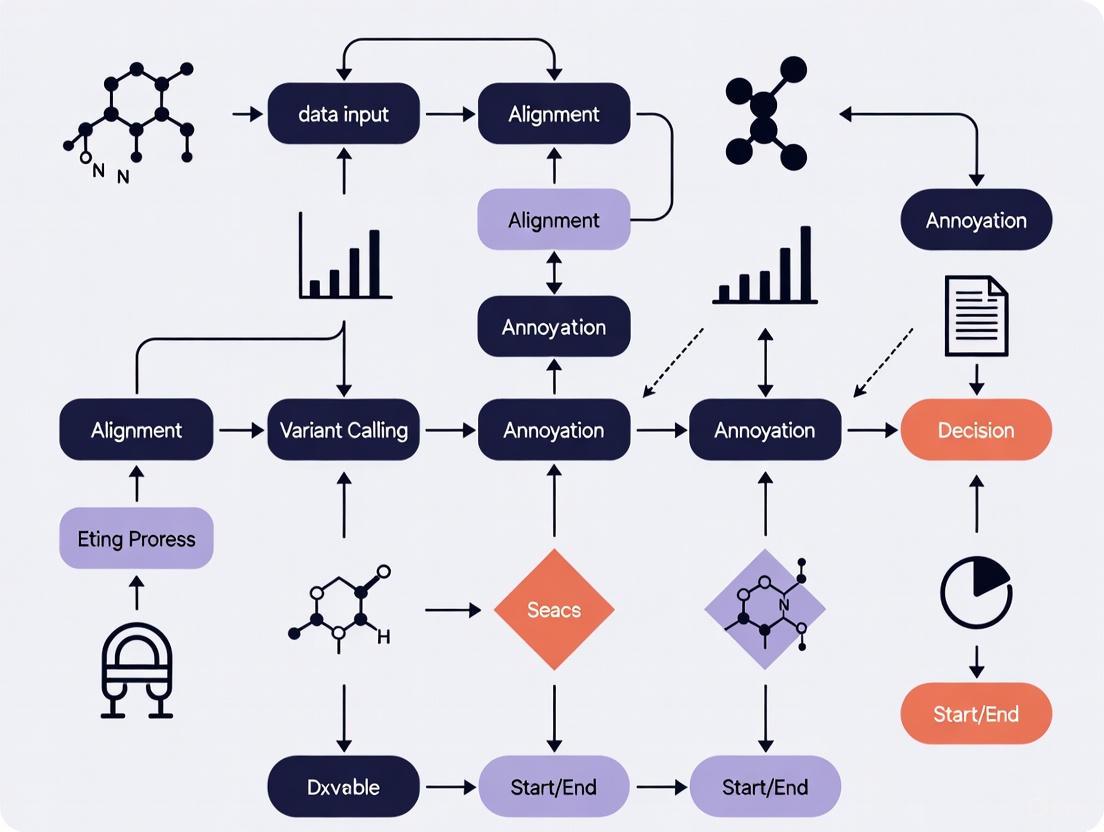
This article provides a comprehensive guide to somatic short variant discovery, addressing the key challenges and solutions for researchers and drug development professionals.
Somatic Short Variant Discovery: Best Practices for Robust Analysis in Cancer Research
Abstract
This article provides a comprehensive guide to somatic short variant discovery, addressing the key challenges and solutions for researchers and drug development professionals. It covers foundational concepts, methodological workflows, advanced troubleshooting, and rigorous validation strategies. By synthesizing current evidence and tool evaluations, the guide establishes best practices for achieving high-precision, high-sensitivity variant calling in cancer genomics, ultimately supporting reliable biomarker identification and therapeutic development.
Understanding the Landscape of Somatic Variation and Its Challenges
Somatic short variants are mutations that occur in the DNA of somatic (non-germline) cells and are not inherited. These variants are pivotal in cancer genomics, as they can drive tumor initiation, progression, and response to therapy. The two primary classes of somatic short variants are Single Nucleotide Variants (SNVs) and short insertions and deletions (indels). An SNV involves a change in a single nucleotide, while an indel involves the insertion or deletion of a small number of base pairs (typically less than 50 bp) [1]. Accurate detection of these variants is a cornerstone of precision oncology, providing critical insights for diagnostic, prognostic, and therapeutic decision-making [2].
The identification of these variants requires specialized next-generation sequencing (NGS) approaches, such as whole-genome or whole-exome sequencing of tumor samples, often with a matched normal sample to distinguish somatic mutations from inherited germline polymorphisms [3] [4]. The subsequent analytical workflow involves complex computational methods to call, filter, and annotate variants, ultimately classifying their oncogenic potential to determine clinical actionability [5] [2].
Methodologies for Discovery and Analysis
The standard workflow for somatic short variant discovery is a multi-step process that transforms raw sequencing data into a curated list of high-confidence, annotated variants.
Core Computational Workflow
The established best-practice pipeline involves several critical stages, each with dedicated tools and analytical goals [3] [2].
Figure 1. The standard somatic short variant discovery workflow. This pipeline, outlined by the GATK Best Practices, starts with pre-processed BAM files and proceeds through variant calling, quality control, filtering, and functional annotation to produce a final list of somatic variants [3].
- Call Candidate Variants: This initial step uses a variant caller, such as Mutect2, to perform a comprehensive scan of the aligned sequencing data (BAM files) to identify potential variant sites. Mutect2 operates by performing local de-novo assembly of haplotypes in genomic regions that show evidence of variation. It then aligns each read to these candidate haplotypes and applies a Bayesian somatic likelihoods model to calculate the probability that a variant is a true somatic mutation versus a sequencing error [3].
- Calculate Contamination: This quality control step, involving tools like
GetPileupSummariesandCalculateContamination, estimates the fraction of reads in the tumor sample that come from cross-sample contamination. This is crucial for avoiding false positives, and modern tools are designed to work effectively even in samples with significant copy number variation and without a matched normal [3]. - Learn Orientation Bias Artifacts: Using
LearnReadOrientationModel, this step learns the parameters of a model for sequencing artifacts related to strand orientation. This is particularly important for samples like FFPE (Formalin-Fixed Paraffin-Embedded) tissues, where DNA damage can introduce specific, reproducible biases that mimic real variants [3]. - Filter Variants: The
FilterMutectCallstool applies a series of hard filters and probabilistic models to the raw candidate variants. It accounts for correlated errors, alignment artifacts, strand bias, polymerase slippage (for indels), and contamination. It also uses the contamination and orientation bias models learned in previous steps to refine the variant calls and automatically set a filtering threshold to balance sensitivity and precision [3]. - Annotate Variants: Finally, a tool like Funcotator adds biological and clinical context to the filtered variants. It annotates each variant with information such as the affected gene, the predicted effect on the protein (e.g., missense, frameshift), and known associations from databases like COSMIC, dbSNP, and gnomAD. The output can be in Variant Call Format (VCF) or Mutation Annotation Format (MAF), facilitating downstream interpretation [3].
Emerging and Specialized Technologies
While short-read NGS is the workhorse of somatic variant discovery, new technologies are pushing the boundaries of sensitivity and accuracy.
- Duplex Sequencing: Techniques like NanoSeq achieve ultra-low error rates (below 5 errors per billion base pairs) by sequencing both strands of each original DNA molecule. This allows for the detection of extremely low-frequency mutations in polyclonal tissues, providing a powerful tool to study early carcinogenesis and the somatic mutation landscape in aging and disease with single-molecule sensitivity [6].
- Long-Read Sequencing: Technologies from PacBio and Oxford Nanopore generate reads that are thousands of base pairs long. A comparative evaluation has shown that while short- and long-read data have similar performance for SNV and small deletion detection, long-read sequencing is significantly more accurate for calling insertions larger than 10 base pairs and for detecting variants in repetitive genomic regions [1].
- Deep Learning: New computational methods like VarNet use weakly supervised deep learning models to accurately identify SNVs and indels from NGS data, representing a shift towards data-driven, rather than rule-based, variant calling [4].
The following table summarizes the key methodological approaches for detecting somatic short variants.
Table 1: Core Methodologies for Somatic Short Variant Discovery
| Method Category | Key Example(s) | Primary Use Case | Key Advantages |
|---|---|---|---|
| Short-Read Bulk NGS | GATK Mutect2 [3], Strelka2 [2] | Standard tumor-normal or tumor-only somatic analysis. | Well-established, high-throughput, cost-effective. |
| Error-Corrected NGS | NanoSeq [6] | Detecting ultra-low frequency variants in polyclonal samples. | Extremely low error rate (< 5×10⁻⁹); single-molecule sensitivity. |
| Long-Read Sequencing | PacBio HiFi, ONT [1] | Resolving complex regions and large insertions. | Excellent for repetitive regions and insertions >10 bp. |
| Deep Learning | VarNet [4] | Accurate SNV/indel detection from tumor tissue. | Data-driven approach; can improve accuracy over traditional methods. |
Technical Protocols and Performance Benchmarking
Implementing a robust somatic variant detection pipeline requires careful consideration of experimental design and bioinformatic tool performance.
Key Experimental Considerations
- Input Material: The workflow requires BAM files derived from tumor and, if available, matched normal samples. These BAM files must be pre-processed according to best practices, including alignment, duplicate marking, and base quality score recalibration [3]. The protocol can be applied to both fresh-frozen and FFPE-derived DNA, though the latter requires specific steps to account for fixation-induced artifacts [3] [4].
- Variant Calling Modes: The Mutect2 tool is designed to identify somatic SNVs and indels in a single tumor sample from one individual, either with or without a matched normal sample [3].
- Addressing Artifacts: For FFPE samples, the
LearnReadOrientationModelstep is critical to model and filter out artifacts caused by DNA damage during fixation [3].
Performance Benchmarking of Technologies
Recent large-scale benchmarking efforts, such as those by the SMaHT Network, have evaluated sequencing technologies and computational methods for detecting diverse somatic mutations. These studies have shown that using a combination of bulk short-read and long-read sequencing, donor-specific assemblies, and the human pangenome improves variant calling and extends mutation catalogs to challenging genomic regions [7].
A comprehensive evaluation of variant callers using short- and long-read data revealed critical performance differences [1]:
- SNVs and Deletions: The recall and precision for SNV and indel-deletion detection were similar between short- and long-read data in non-repetitive regions.
- Insertions: The detection of insertions larger than 10 bp was significantly less sensitive with short-read-based algorithms compared to long-read-based methods.
- Repetitive Regions: The recall of SV detection with short-read algorithms was significantly lower in repetitive regions, especially for small- to intermediate-sized SVs.
Table 2: Performance Comparison of Sequencing Technologies for Variant Detection
| Variant Type | Region | Short-Read Performance | Long-Read Performance |
|---|---|---|---|
| SNVs | Non-repetitive | High recall & precision [1] | High recall & precision [1] |
| Indels (Deletions) | Non-repetitive | High recall & precision [1] | High recall & precision [1] |
| Indels (Insertions >10bp) | All | Poorly detected [1] | High sensitivity [1] |
| All Variants | Repetitive (e.g., STRs, SegDups) | Lower recall; alignment errors [1] | Higher recall; spans repeats [1] |
| Low-Frequency Variants | N/A | Limited by error rate (~10⁻⁷) [6] | Excellent with duplex methods (<5×10⁻⁹ error rate) [6] |
The Scientist's Toolkit: Essential Research Reagents and Materials
Table 3: Key Research Reagents and Solutions for Somatic Variant Discovery
| Item | Function in the Workflow |
|---|---|
| Pre-processed BAM Files | The starting input for the variant discovery pipeline; contains aligned sequencing reads from tumor and normal samples [3]. |
| Reference Genome (e.g., GRCh38) | A standardized genomic sequence against which tumor samples are compared to identify variants [1]. |
| Panel of Normal (PON) VCF | A resource of common artifacts and germline variants found in a set of normal samples, used to filter out false positives in tumor-only analyses [3]. |
| Targeted Capture Panel (e.g., for NanoSeq) | A set of baits to enrich specific genes (e.g., 239-gene panel) for high-sensitivity, targeted mutation profiling [6]. |
| Annotation Databases (e.g., COSMIC, dbSNP, gnomAD) | Curated knowledgebases used by annotation tools like Funcotator to provide biological and clinical context to variants [3] [2]. |
| Functional Annotation Tool (e.g., Funcotator, VEP, SnpEff) | Software that determines the functional impact of a variant (e.g., missense, stop-gain) and links it to external datasources [3] [2]. |
Interpretation and Clinical Application
The final and most critical step is the biological and clinical interpretation of the identified somatic short variants.
Standards for Classifying Oncogenicity
To ensure consistent interpretation, professional consortia have developed a Standard Operating Procedure (SOP) for classifying the oncogenicity of somatic variants [5]. Inspired by the ACMG/AMP germline guidelines, this framework assigns variants to one of five categories:
- Oncogenic
- Likely Oncogenic
- Variant of Uncertain Significance (VUS)
- Likely Benign
- Benign
The classification uses a point-based system that weighs evidence from various sources, including:
- Very Strong: Mutations in well-known oncogenic hotspots (e.g., KRAS p.Gly12) or well-established functional studies.
- Strong: Located in a well-curated mutation hotspot or functional domain in an oncogene or tumor suppressor.
- Moderate/Supporting: Computational predictions, population frequency data, and other ancillary evidence [5].
Clinical Reporting Actionability
For clinical reporting, the AMP/ASCO/CAP guidelines provide a tiered system for somatic variants based on their clinical actionability [2]:
- Tier I: Variants with strong clinical significance for diagnosis, prognosis, or therapy.
- Tier II: Variants with potential clinical significance.
- Tier III: Variants with unknown significance.
- Tier IV: Variants deemed benign or likely benign.
This structured approach to interpretation and reporting is fundamental for translating genomic findings into actionable insights for patient care, enabling the use of targeted therapies and personalized treatment strategies.
Figure 2. The somatic variant interpretation workflow. After variant calling, the biological oncogenicity of a variant is classified according to the ClinGen/CGC/VICC SOP. This biological classification then feeds into the determination of clinical actionability based on the AMP/ASCO/CAP tiered system to generate a final clinical report [5] [2].
The accurate detection of somatic short variants is foundational to precision oncology but is substantially challenged by biological and technical factors. Intratumor heterogeneity (ITH) leads to variants with low variant allele frequency (VAF) that are often clinically actionable, while standard sequencing and analysis methods are susceptible to technical artifacts that can be misinterpreted as genuine heterogeneity. This whitepaper synthesizes current evidence on the prevalence and impact of low-VAF variants, outlines the limitations of conventional sequencing approaches, and presents best-practice experimental and computational workflows for distinguishing true biological signals from noise in somatic variant discovery.
The Clinical and Biological Scale of the Challenge
The Pervasiveness of Low VAF Variants in Clinical Samples
Large-scale genomic studies reveal that low VAF variants are not rare occurrences but a common feature in clinical cancer samples. An analysis of 331,503 solid tumors profiled using the FDA-approved FoundationOneCDx test demonstrated that 29% of all patients had at least one somatic variant detected at VAF ≤10%, and 16% had at least one variant at VAF ≤5% [8]. This translates to nearly one-third of patients presenting with potentially consequential low-frequency variants.
The prevalence of these variants varies significantly across cancer types. Among frequently diagnosed tumors, the percentage of cases harboring at least one variant at VAF ≤10% was found to be 37% for pancreatic cancer, 35% for non-small cell lung cancer (NSCLC), 29% for colorectal cancer, and 24% for prostate cancer [8]. This distribution correlates with sample purity, as 68% of pancreatic cancer samples had tumor purity below 40%, higher than other tumor types [8].
Table 1: Prevalence of Low VAF Variants Across Major Cancer Types
| Cancer Type | Patients with ≥1 VAF ≤10% | Patients with ≥1 VAF ≤5% | Median Tumor Purity |
|---|---|---|---|
| Pancreatic | 37% | 19% | ~43% (cohort median) |
| NSCLC | 35% | 18% | ~43% (cohort median) |
| Colorectal | 29% | 15% | ~43% (cohort median) |
| Breast | 23% | 11% | ~43% (cohort median) |
| Prostate | 24% | 12% | ~43% (cohort median) |
Clinically Actionable Variants Frequently Occur at Low VAF
The clinical significance of low VAF variants is particularly evident at specific therapeutic hotspots. Analysis of 5,095 clinical samples sequenced with the CancerSCAN panel showed that a substantial proportion of clinically actionable variants in key driver genes are present at low allele fractions [9]:
Table 2: Prevalence of Low VAF Hotspot Mutations
| Gene/Hotspot | % of Mutations at VAF <5% | % of Mutations at VAF <10% | Clinical Context |
|---|---|---|---|
| EGFR T790M | 24% | Not reported | Resistance to EGFR-TKI |
| PIK3CA E545 | 17% | Not reported | Oncogenic driver |
| KRAS G12 | 12% | Not reported | Oncogenic driver |
| EGFR (all hotspots) | 16% | 28% | Various |
| KRAS (all hotspots) | 11% | 21% | Various |
| PIK3CA (all hotspots) | 12% | 26% | Various |
| BRAF (all hotspots) | 10% | 17% | Various |
Treatment resistance-associated alterations particularly tend to manifest at low VAF. In the FoundationOneCDx cohort, resistance alterations had significantly lower median VAF than driver alterations [8]. This pattern is mechanistically explained by the subclonal expansion of resistant cell populations under therapeutic selective pressure.
Technical Limitations in Detecting True Biological Signals
The Problem of Technical Artifacts in Variant Calling
Standard whole-exome sequencing (WES) approaches demonstrate concerning limitations in reliably distinguishing genuine intratumor heterogeneity from technical artifacts. A rigorous study evaluating WES on three distinct tumor regions with technical replicates found that 69% of somatic variants identified by a cancer-only pipeline were false positives [10].
Even with matched normal DNA—considered the gold standard—significant technical noise persists. Between technical replicate pairs, only 36-78% of somatic variants were consistently detected despite using matched normal DNA for filtering [10]. Critically, 34-80% of discordant somatic variants that could be interpreted as ITH were actually technical noise rather than true biological heterogeneity [10].
The sources of these artifacts are multifaceted, arising from library preparation, sequencing errors, and alignment challenges, particularly in low-mappability regions. Without orthogonal validation, detection of subclonal mutations by WES remains unreliable [10].
Limitations of Conventional Sequencing Approaches
Bulk sequencing methodologies, while clinically practical, fundamentally obscure cellular-level heterogeneity by averaging signals across diverse cell populations [11]. This limitation is particularly problematic for detecting rare subclones that may drive resistance or metastasis.
The relationship between sequencing depth and detection sensitivity is quantitatively critical. At typical WES depths of 100-200x, detection of variants below 10-15% VAF becomes statistically challenging. While targeted panels achieve higher depths (500-1000x), their breadth is necessarily limited, potentially missing off-panel drivers [8].
Formalin-fixed paraffin-embedded (FFPE) tissues, representing the majority of clinical samples, present additional technical challenges due to DNA fragmentation, cross-linking, and degradation, which exacerbate coverage variability and artifact generation [8].
Best Practices for Reliable Somatic Variant Discovery
Computational Workflows for Somatic Short Variant Discovery
The Genome Analysis Toolkit (GATK) provides a rigorously validated best practices workflow for somatic short variant discovery (SNVs and Indels) that specifically addresses the challenges of low VAF variants and technical artifacts [3].
Somatic Short Variant Discovery Workflow
This workflow employs Mutect2 for initial variant calling via local de novo assembly of haplotypes, which is particularly important for detecting variants in heterogeneous samples [3]. Subsequent specialized steps address key technical challenges:
- Calculate Contamination: Uses GetPileupSummaries and CalculateContamination tools to estimate cross-sample contamination, specifically designed to work in samples with significant copy number variation [3].
- Learn Read Orientation Model: Particularly crucial for FFPE samples, this step models and corrects for orientation-specific artifacts that can mimic true variants [3].
- Filter Mutect Calls: Applies multiple hard filters and probabilistic models to remove alignment artifacts, strand bias, polymerase slippage artifacts, germline variants, and contamination [3].
The Funcotator annotation tool finally adds functional context to variants, drawing from databases including GENCODE, dbSNP, gnomAD, and COSMIC to assist biological interpretation [3].
Experimental Design and Validation Strategies
Tumor Heterogeneity Quantification
The Tumor Heterogeneity (TH) index, calculated using Shannon's index with VAFs of mutated loci, provides a quantitative measure of ITH. Validation studies have shown that TH indices from targeted panel sequencing (381 genes) correlate well with those from whole-exome sequencing (Spearman rs = 0.70, p < 0.001) [12].
The reliability of TH measurement depends on panel size, with 300-gene panels showing strong correlation (rs = 0.87) with WES-based measurements, while smaller 50-gene panels perform poorly (rs = 0.50) [12]. Clinically, high TH index correlates with advanced pathological stage and worse progression-free survival in colorectal and breast cancers [12].
Orthogonal Validation Methods
Orthogonal validation remains essential for confirming low-frequency variants. Digital PCR (dPCR) provides highly sensitive and quantitative validation, with studies showing high correlation between dPCR and NGS VAF measurements [9]. For research applications, single-cell whole genome sequencing with methods like Primary Template-directed Amplification (PTA) significantly improves variant detection sensitivity and enables direct observation of cellular heterogeneity without the averaging effects of bulk sequencing [11].
Essential Research Reagents and Tools
Table 3: Key Research Reagents and Solutions for Studying Tumor Heterogeneity
| Reagent/Tool | Function | Application Notes |
|---|---|---|
| FoundationOneCDx | FDA-approved comprehensive genomic profiling | 324-gene panel; validated for low VAF detection down to 5% in clinical samples [8] |
| CancerSCAN Panel | Custom targeted sequencing | 381 cancer-related genes; optimized for hotspot mutation detection [9] |
| GATK Mutect2 | Somatic variant caller | Uses local de novo assembly; part of best practices workflow [3] |
| ResolveDNA with PTA | Single-cell whole genome amplification | Reduces allelic dropout; enables SNV/CNV detection at single-cell level [11] |
| Funcotator | Variant annotation tool | Adds functional context from multiple databases (GENCODE, dbSNP, COSMIC) [3] |
| Northstar Select | Liquid biopsy CGP assay | 84-gene panel; LOD of 0.15% VAF for SNV/Indels; addresses low-shedding tumors [13] |
Tumor heterogeneity, low VAF variants, and sequencing artifacts present interconnected challenges that require integrated computational and experimental solutions. The high prevalence of clinically actionable low VAF variants underscores the necessity for sensitive detection methods, while the substantial rate of technical artifacts in standard approaches demands rigorous validation frameworks. The field is advancing toward more sophisticated single-cell analyses and computational methods that can distinguish true biological heterogeneity from technical noise, ultimately enabling more precise therapeutic targeting in oncology.
The choice between Formalin-Fixed Paraffin-Embedded (FFPE) and fresh frozen (FF) tissue represents a fundamental trade-off in somatic variant discovery, balancing practical availability against technical data quality. FFPE specimens, archived in hospital biobanks for decades, offer an unparalleled resource for retrospective clinical research, with an estimated 400 million to over a billion samples available globally [14]. In contrast, fresh frozen tissues remain the gold standard for nucleic acid quality but present significant logistical challenges for collection, processing, and storage [14]. As next-generation sequencing (NGS) becomes central to precision oncology and biomarker discovery, understanding how preservation methods introduce artifacts and impact variant calling is crucial for developing robust analytical pipelines. This technical guide examines the molecular consequences of each preservation method, provides quantitative comparisons of sequencing artifacts, and outlines mitigation strategies to ensure data reliability within somatic short variant discovery workflows.
Molecular Mechanisms of FFPE-Induced Artifacts
The formalin fixation process chemically modifies DNA through several well-characterized mechanisms that directly impact sequencing accuracy.
Primary Damage Pathways
- Cross-linking and Adduct Formation: Formaldehyde reacts with nucleophilic groups on DNA bases (particularly amino groups), forming hydroxymethyl adducts and methylene bridges that create protein-DNA and DNA-DNA cross-links [15]. These modifications alter base-pairing characteristics and can block polymerase progression during library amplification.
- Deamination: Spontaneous cytosine deamination to uracil represents the most prevalent FFPE artifact, leading to C>T/G>A false substitutions during sequencing [15]. This process occurs post-fixation due to inactivation of cellular repair enzymes, with frequency increasing with sample age.
- Fragmentation: Formalin fixation accelerates glycosidic bond cleavage, generating apurinic/apyrimidinic (AP) sites that undergo β-elimination, resulting in DNA backbone fragmentation [15]. FFPE-DNA typically fragments to 225-300 bp, substantially smaller than the optimal 360-480 bp range for WGS [16].
- Oxidation Damage: Though less common, oxidative damage can introduce C>A/G>T transversions through base oxidation mechanisms [15].
The combination of these processes creates a complex artifact profile where false positive variants coexist with regions of information loss due to severe damage.
Comparative Sequencing Performance and Artifact Profiles
DNA and RNA Quality Metrics
Table 1: Nucleic Acid Quality Comparison Between FFPE and Fresh Frozen Tissue
| Quality Metric | Fresh Frozen Tissue | FFPE Tissue | Impact on Sequencing |
|---|---|---|---|
| DNA Integrity | High (intact strands) | Fragmented (DIN: 5.5±0.6) [17] | Reduced library complexity, amplification bias |
| RNA Quality | Preserved ribosomal peaks | Degraded (DV200: 59-79%) [14] | 3' bias in RNA-Seq, reduced transcript detection |
| Average Fragment Size | >7,500 bp [17] | ~200-500 bp [16] | Shorter reads, lower mappability |
| Cross-linking | Minimal | Extensive protein-DNA cross-links | Reduced amplification efficiency |
| Chemical Modifications | Minimal | Cytosine deamination, base adducts | False positive variants, base misincorporation |
Artifact Burden in Whole Genome Sequencing
Recent studies quantifying FFPE-derived artifacts reveal substantial challenges for variant calling:
- Small Variant Enrichment: FFPE processing results in a median 20-fold enrichment in artifactual calls across mutation classes compared to matched fresh frozen samples [16]. Single nucleotide variant (SNV) and indel calling precision drops to approximately 50% and 62%, respectively, without specialized processing.
- Variant Class Differences: Structural variant (SV) calling maintains higher precision (80%) but suffers from reduced sensitivity (57%) in FFPE samples due to reduced coverage and shorter read fragments [16].
- Coverage Impacts: FFPE libraries show shorter average insert sizes (166-358 bp versus 356-503 bp for FF) and increased GC bias, resulting in lower effective coverage despite similar raw sequencing depth [16].
Table 2: Quantitative Comparison of Somatic Variant Detection in Matched FFPE-FF Pairs
| Variant Class | Fold-Change (FFPE/FF) | Precision | Sensitivity | Key Challenges |
|---|---|---|---|---|
| SNVs | 2.0x increase [16] | ~50% [16] | 85% [16] | C>T/G>A artifacts from deamination |
| Indels | 2.4x increase [16] | ~62% [16] | 75% [16] | Polymerase slippage at damaged sites |
| Structural Variants | 0.76x (median) [16] | 80% [16] | 57% [16] | Reduced mapping quality, shorter fragments |
| Copy Number Variants | Variable | Lower reliability [16] | Comparable | Higher noise, hyper-segmentation |
Impact on Biomarker Detection
The artifact burden in FFPE samples directly impacts the reliability of clinically relevant biomarkers:
- Tumor Mutational Burden (TMB): FFPE processing artificially elevates genome-wide TMB estimates (median: 10.28 versus 3.45 in FF) due to enrichment of artifacts in non-coding regions, though coding TMB remains relatively unaffected with proper processing [16].
- Mutation Signatures: FFPE damage mimics true mutational processes, with 45 of 56 samples showing enrichment of SBS37 signature (median proportion: 23.4% versus 3.6% in FF) [16].
- Homologous Recombination Deficiency (HRD): FFPE artifacts impair HRD detection, with 7/7 samples correctly classified as HRD in FF being misclassified in FFPE by HRDetect, and 4/7 by CHORD [16].
- Microsatellite Instability (MSI): While not quantified in the current studies, similar context-specific artifacts could impact MSI calling in FFPE samples.
Diagram 1: FFPE artifact propagation from tissue processing to biomarker impact. FFPE tissue shows increased artifacts across variant classes with direct consequences for clinical biomarker assessment.
Experimental Protocols for Artifact Mitigation
Pre-Analytical Quality Control
Rigorous quality assessment before sequencing is essential for reliable FFPE data:
- DNA QC Metrics: Implement multi-parameter assessment including degradation index (DI < 2 recommended), A260/A230 ratios (target >1.8), and fragment size distribution [17]. The Infinium HD FFPE QC kit ΔCt value should be <-1.0 for optimal performance [18].
- RNA QC Metrics: Use DV200 values (>70% optimal, >50% acceptable) rather than RIN for FFPE-RNA assessment [14]. Correlation between DV200 and unique gene detection is stronger in degraded samples.
- Targeted QC Workflow:
- Extraction: Use FFPE-optimized kits (Maxwell FFPE Plus DNA Kit) with extended de-crosslinking steps [17].
- Quantification: Employ fluorometric methods (Qubit) rather than spectrophotometry for accurate concentration measurement of fragmented DNA.
- Integrity: Calculate DNA Integrity Number (DIN) via TapeStation or similar platforms, with DIN >5 considered acceptable for WGS [17].
Wet-Lab Mitigation Strategies
Several laboratory protocols can reduce FFPE artifact burden:
- DNA Repair Treatments: Pre-library preparation treatment with FFPE-specific repair mixes (NEBNext FFPE DNA Repair v2 Kit) addresses deamination and abasic sites through uracil-DNA glycosylase (UDG) and AP endonuclease activities [17].
- Library Preparation Optimization:
- Enzymatic fragmentation in optimized buffers reduces error transfer between strands compared to sonication methods [6].
- Duplex sequencing methods (NanoSeq) using dideoxynucleotides during A-tailing prevent extension of single-stranded nicks, achieving error rates <5×10^-9 errors per bp [6].
- Hybridization capture panels show better performance than amplicon-based approaches for FFPE material due to more even coverage of fragmented DNA.
Computational Correction Methods
Bioinformatic tools specifically address FFPE artifacts in sequencing data:
- FFPErase: A random forest classifier that filters SNV/indel artifacts and improves concordance between matched FF/FFPE datasets, enabling clinical-grade reporting across variant classes [16]. In validation studies, FFPErase demonstrated 99% sensitivity compared to FDA-approved panel tests while reporting 24% more clinically relevant findings.
- Consensus Calling: Employing multiple variant callers and requiring variants to be supported by ≥2 callers reduces FFPE-specific structural variant calls by 98%, though is less effective for SNVs and indels [16].
- Error-Corrected Sequencing Bioinformatics: Specialized pipelines for duplex sequencing data account for family-based consensus calling, significantly reducing false positives in low-VAF variants [6].
Diagram 2: Comprehensive FFPE artifact mitigation workflow integrating pre-analytical, wet-lab, and computational strategies to ensure high-confidence variant detection.
Table 3: Key Research Reagents and Computational Tools for FFPE-Focused Variant Discovery
| Resource Category | Specific Product/Tool | Application Context | Performance Notes |
|---|---|---|---|
| DNA Extraction | Maxwell FFPE Plus DNA Kit (Promega) | DNA isolation from FFPE | Higher yield from cross-linked samples vs. standard methods [17] |
| DNA Repair | NEBNext FFPE DNA Repair v2 Kit (NEB) | Pre-library repair | Reduces deamination artifacts via UDG treatment [17] |
| Library Prep | Ultra II FS Library Prep Kit (NEB) | Low-input/damaged DNA | Minimizes error introduction during library construction [17] |
| Error-Corrected Seq | NanoSeq [6] | Ultra-sensitive detection | Error rate <5×10^-9 bp; compatible with targeted capture |
| Targeted Panels | Illumina TruSight Oncology 500 [19] | Comprehensive genomic profiling | Higher success rate with FFPE vs. whole genome approaches |
| Computational Tools | FFPErase [16] | SNV/indel artifact filtering | Random forest classifier; 99% sensitivity vs. clinical panels |
| Variant Callers | Mutect2 (GATK) [3] | Somatic short variant discovery | Includes FFPE-specific filters for orientation bias |
| Quality Control | MultiQC [20] | Sequencing QC aggregation | Integrates metrics across multiple steps in workflow |
The choice between FFPE and fresh frozen tissue necessitates careful consideration of study objectives, available samples, and analytical resources. While fresh frozen tissue remains the gold standard for nucleic acid integrity and variant calling accuracy, methodological advances now enable reliable somatic variant discovery from FFPE samples when appropriate safeguards are implemented. For researchers working within the constraints of clinical samples, we recommend:
- Prioritize FFPE-specific protocols from extraction through analysis, including DNA repair treatments and artifact-aware bioinformatic pipelines.
- Implement rigorous quality control at multiple stages, with clear thresholds for DNA/RNA quality metrics specific to FFPE material.
- Utilize error-corrected sequencing methods like NanoSeq when detecting low-frequency variants is critical, particularly in polyclonal samples [6].
- Apply computational artifact correction tools like FFPErase for FFPE WGS data, significantly improving variant calling precision while maintaining sensitivity [16].
- Validate FFPE-derived biomarkers against known standards when possible, particularly for quantitative applications like TMB and HRD assessment.
As sequencing technologies continue to evolve, the performance gap between FFPE and fresh frozen tissues will likely narrow further, unlocking the immense potential of historical clinical archives for somatic variant discovery in cancer research and therapeutic development.
Ethical Principles and Clinical Validity in Somatic Testing
Somatic genomic testing has become a cornerstone of precision oncology, enabling the detection of acquired mutations that drive cancer progression and guide therapeutic decisions. The clinical application of this technology necessitates a rigorous framework that integrates robust technical validity with steadfast ethical principles. This guide provides an in-depth examination of the standards and methodologies essential for implementing somatic testing within research and clinical development, with a specific focus on best practices for somatic short variant discovery. As testing paradigms evolve from targeted panels to comprehensive whole-exome and whole-genome approaches, researchers and drug development professionals must navigate complex analytical and ethical landscapes to ensure reliable, actionable results while maintaining patient trust and safety.
Ethical Framework for Somatic Testing
The integration of somatic testing into clinical and research workflows introduces unique ethical considerations that extend beyond conventional laboratory validation. A primary ethical concern involves the potential for incidental germline findings. Tumor genomic sequencing, while intended to identify somatic changes, can reveal the presence of pathogenic germline variants with significant implications for both patients and their biological relatives [21]. These findings may indicate inherited cancer susceptibility syndromes, creating complex counseling dilemmas regarding disclosure and family communication.
Effective management of these challenges requires systematic pretest education that clearly explains the benefits, risks, and potential outcomes of testing, including the possibility of identifying germline variants [21]. Studies indicate that patients may experience anxiety or feel overwhelmed by complex genomic information, particularly when unexpected findings emerge. These concerns may be amplified among racial and ethnic minority groups due to historical medical mistrust and fears of genetic discrimination, potentially widening disparities in precision medicine uptake if not adequately addressed.
Health care systems must develop coordinated processes spanning test referral, pretest counseling, result communication, and posttest follow-up [21]. The National Society of Genetic Counselors offers educational resources, including courses on clinical and laboratory perspectives for somatic genetic testing with case examples of common counseling dilemmas. When dedicated genetics personnel are limited, clinicians can employ shared decision-making approaches, such as the Agency for Healthcare Research and Quality's SHARE model, to help patients weigh benefits, harms, and risks according to their personal values and preferences.
Table: Key Ethical Considerations and Recommended Practices in Somatic Testing
| Ethical Consideration | Clinical Implications | Recommended Practice |
|---|---|---|
| Incidental Germline Findings | Identification of hereditary cancer predisposition with implications for patients and families | Implement pretest counseling about potential germline discoveries; establish referral pathways to genetic counselors |
| Health Disparities | Potential widening of equity gaps in precision medicine access | Develop culturally competent educational materials; address medical mistrust through transparent communication |
| Informed Consent | Patients may be unprepared for potential outcomes and limitations of testing | Provide comprehensive pretest education covering benefits, risks, and limitations of somatic testing |
| Result Communication | Complex genomic information may cause patient anxiety or misunderstanding | Utilize layered result reporting; ensure availability of post-test counseling for result interpretation |
| Data Privacy | Concerns about genetic discrimination and data security | Implement robust data protection protocols; provide clear information about privacy safeguards |
Establishing Clinical Validity
Clinical validity refers to a test's ability to accurately and reliably identify specific genomic alterations and correlate them with clinically relevant outcomes. For somatic testing, this encompasses analytical sensitivity (true positive rate) and analytical specificity (true negative rate) for detecting various variant types across different tumor types and sample qualities.
The DH-CancerSeq assay validation demonstrates key parameters for establishing clinical validity. In one validation study, 94 patient DNA samples isolated from formalin-fixed, paraffin-embedded (FFPE) tissue with known clinically reported variants were used to assess performance against the TruSight Tumor 170 targeted panel [22]. True positives were defined as variants detected by both methods, while false negatives were those detected only by the comparator method. Sensitivity was calculated as TP/(TP + FN), while specificity was derived as TN/(TN + FP) [22]. This rigorous validation approach ensures that variant calling meets necessary standards for clinical implementation, particularly for tumor-only WES which faces challenges with variant calling at low depth of coverage (≤100×) [22].
The interpretation of somatic variants follows standardized classification guidelines established by professional organizations including the American College of Medical Genetics and Genomics (ACMG), the Association for Molecular Pathology (AMP), and the College of American Pathologists (CAP) [23]. These guidelines recommend a five-tier terminology system: "pathogenic," "likely pathogenic," "uncertain significance," "likely benign," and "benign" [23]. This standardized approach facilitates consistent reporting and interpretation across laboratories, though specific disease groups may develop additional gene-specific guidance based on unique evidence considerations.
Table: Performance Metrics for Somatic Variant Detection in Validation Studies
| Metric | Calculation | DH-CancerSeq Validation [22] | DeepSomatic Performance [24] |
|---|---|---|---|
| Analytical Sensitivity | TP/(TP + FN) | Established against TST170 using 94 samples | Outperformed existing callers across technologies |
| Analytical Specificity | TN/(TN + FP) | Evaluated using hotspot variants | Particularly high performance for indels |
| SNV Detection | F1-score | Similar input requirements to targeted panel | F1-score of 0.9616 (Strelka2) to 0.9521 (MuTect2) in benchmark |
| Indel Detection | F1-score | 86 samples with different insertions/deletions | Consistent outperformance versus existing tools |
| Coverage Requirements | Minimum depth | Considerable DOC needed for reliable VAF ≥5% in tumor-only WES | Evaluated across various sequencing coverages |
Experimental Protocols for Somatic Short Variant Discovery
Sample Processing and Quality Control
Robust somatic variant discovery begins with meticulous sample preparation and quality assessment. DNA extraction from formalin-fixed, paraffin-embedded (FFPE) tissue can be performed using established protocols such as the AllPrep DNA/RNA FFPE Protocol on the QIAcube or the Purigen Ionic FFPE to Pure DNA Kit [22]. Proper extraction is critical for obtaining sufficient quality DNA from clinical specimens, which often have limited quantity and may be compromised by fixation artifacts.
Extracted DNA must undergo rigorous quality assessment through quantification methods such as Qubit dsDNA Quantitation, High Sensitivity [22]. Quality metrics should include DNA concentration, fragment size distribution, and purity assessments to ensure samples meet minimum requirements for library preparation. For FFPE samples, additional quality indicators such as degradation index may inform processing decisions and interpretation of resulting data.
Library Preparation and Sequencing
Library preparation methodologies vary depending on the intended sequencing approach. For whole-exome sequencing, the SureSelect XTHS kit with V8 probe set has been successfully implemented with automation on the Magnis robot [22]. Including no template controls in every batch is essential for monitoring contamination. Final libraries should be quality-checked and quantified using appropriate methods such as the High Sensitivity D1000 ScreenTape on the 4150 TapeStation system [22].
Sequencing can be performed on platforms such as the Illumina NovaSeq 6000 in batches of up to 64 samples to achieve sufficient depth for somatic variant detection [22]. The specific sequencing depth required depends on the application, with tumor-only WES typically requiring sufficient coverage to call variants reliably at variant allele fractions (VAFs) of ≥5% [22]. The increasing availability of long-read sequencing technologies from Oxford Nanopore Technologies and Pacific Biosciences offers alternative approaches with advantages for complex genomic regions and variant phasing [24].
Bioinformatics Analysis
The bioinformatics pipeline for somatic short variant discovery involves multiple sophisticated steps to distinguish true somatic variants from artifacts and germline polymorphisms:
Data Processing and Quality Control Initial processing includes demultiplexing, adapter trimming, and alignment to reference genomes. Quality control metrics should be assessed at both the FASTQ and binary alignment map levels, including properly paired reads, duplication rates, and depth of coverage [22]. These metrics guide critical decisions regarding sequencing depth and sample inclusion.
Variant Calling For short-read data, Mutect2 (part of the GATK toolkit) employs a Bayesian somatic likelihoods model to call SNVs and indels via local de novo assembly of haplotypes [3]. The tool aligns reads to candidate haplotypes using the Pair-HMM algorithm, then applies a Bayesian model to obtain log odds for alleles being somatic variants versus sequencing errors [3].
For long-read data, DeepSomatic utilizes a deep learning approach, creating tensor-like representations of read features from tumor and normal samples [24]. A convolutional neural network then classifies candidates as reference, germline, or somatic variants [24]. This method has demonstrated consistent outperformance of existing callers across both short-read and long-read technologies [24].
Variant Filtering and Annotation FilterMutectCalls addresses Mutect2's assumption of independent read errors by implementing hard filters for alignment artifacts and probabilistic models for strand bias, polymerase slippage, germline variants, and contamination [3]. Functional annotation with tools such as Funcotator adds gene-level information, variant classifications, and annotations from databases including GENCODE, dbSNP, gnomAD, and COSMIC [3].
Somatic Variant Discovery Workflow
Computational Methods for Somatic Variant Discovery
Short-Read Sequencing Analysis
The GATK somatic short variant discovery pipeline represents a widely adopted approach for analyzing Illumina sequencing data [3]. This workflow requires BAM files for tumor and, when available, matched normal samples that have undergone appropriate pre-processing according to GATK Best Practices [3]. The process involves two main stages: generating candidate somatic variants and applying filters to obtain a high-confidence call set.
Key steps in the GATK pipeline include:
- Calculate Contamination: Using GetPileupSummaries and CalculateContamination tools to estimate cross-sample contamination fractions for each tumor sample, with special design for samples without matched normals and those with significant copy number variation [3].
- Learn Orientation Bias Artifacts: Applying LearnReadOrientationModel to determine prior probabilities of single-stranded substitution errors, particularly important for FFPE samples with characteristic damage patterns [3].
- Filter Variants: Using FilterMutectCalls to account for correlated errors through hard filters and probabilistic models, automatically setting thresholds to optimize the F-score (harmonic mean of sensitivity and precision) [3].
Long-Read Sequencing Analysis
DeepSomatic adapts the DeepVariant germline calling framework for somatic variant discovery by modifying pileup images to contain both tumor and normal aligned reads [24]. The method employs a three-step process:
- make_examples: Creates tensor-like representations of read features, with normal sample reads on top and tumor reads below [24].
- call_variants: Uses a convolutional neural network to classify candidates as reference, germline, or somatic [24].
- postprocess_variants: Tags each candidate with its classification [24].
DeepSomatic has demonstrated consistently superior performance across sequencing technologies, particularly for indel detection [24]. Its development addressed the critical challenge of limited training data for somatic variants by creating and releasing a dataset of five matched tumor-normal cell line pairs sequenced with Illumina, PacBio HiFi, and Oxford Nanopore Technologies [24].
ClairS-TO represents another advanced deep learning method specifically designed for long-read tumor-only somatic variant calling, utilizing an ensemble of two disparate neural networks trained on the same samples but for opposite tasks [25]. The "affirmative network" determines how likely a candidate is a somatic variant, while the "negational network" assesses how likely it is not somatic [25]. This approach demonstrates particular utility in real-world scenarios where matched normal samples are frequently unavailable.
Tumor-Only Analysis Considerations
Tumor-only sequencing analysis presents distinct challenges for distinguishing true somatic variants from germline polymorphisms without a matched normal sample for comparison. Advanced methods address this through:
- Panel of Normals: Creating databases of common germline variants and technical artifacts found in normal samples to filter false positives [3].
- Population Frequency Filtering: Using population databases such as gnomAD to exclude variants with high population frequency (>1%) [22].
- Integrated Classification: Applying statistical methods to classify variants as germline or somatic using estimated tumor purity, ploidy, and copy number profiles [25].
Bioinformatics Pipeline Architecture
Essential Research Reagents and Materials
Table: Key Research Reagents for Somatic Variant Discovery
| Reagent/Resource | Specific Example | Application Note |
|---|---|---|
| DNA Extraction Kit | AllPrep DNA/RNA FFPE Protocol (Qiagen); Purigen Ionic FFPE to Pure DNA Kit | Optimized for degraded FFPE material; includes quality assessment steps |
| Library Prep Kit | SureSelect XTHS with V8 probe set (Agilent) | Designed for whole-exome sequencing; compatible with automation platforms |
| Sequencing Platform | Illumina NovaSeq 6000; Oxford Nanopore PromethION; PacBio Revio | Platform choice depends on required read length, accuracy, and application |
| Positive Control | Horizon Discovery HD789 | Validated reference material for assay performance monitoring |
| Bioinformatics Tool | AUGMET; GATK Mutect2; DeepSomatic; ClairS-TO | Selection depends on sequencing technology and available matched normal |
| Reference Database | gnomAD; COSMIC; ClinVar; dbSNP | Essential for variant annotation and filtering of germline polymorphisms |
| Variant Annotation | Funcotator; VEP | Provides functional context and clinical interpretation for called variants |
The integration of ethical principles with rigorous technical standards forms the foundation of responsible somatic testing in precision oncology. Successful implementation requires coordinated processes spanning test selection, wet laboratory procedures, bioinformatics analysis, and result interpretation, all while maintaining patient-centered communication and consent practices. As sequencing technologies evolve toward more comprehensive approaches including whole-exome and whole-genome sequencing, and as computational methods incorporate advanced machine learning techniques, the standards for clinical validity and ethical implementation must correspondingly advance. Researchers and drug development professionals play a critical role in upholding these standards to ensure that somatic testing continues to fulfill its promise in advancing cancer care while maintaining patient trust and equitable access.
Building a Robust Somatic Variant Calling Pipeline
Next-generation sequencing (NGS) has revolutionized genomic research and clinical diagnostics, providing powerful tools for deciphering the genetic basis of disease. For researchers focused on somatic short variant discovery, selecting the appropriate sequencing strategy is paramount to the success of their investigations. The three primary approaches—whole genome sequencing (WGS), whole exome sequencing (WES), and targeted gene panels—each offer distinct advantages and limitations that must be carefully balanced against research goals, resources, and analytical capabilities [26]. This technical guide provides an in-depth comparison of these methodologies within the context of somatic variant discovery, offering researchers a framework for selecting optimal strategies for their specific applications.
The global NGS market reflects the growing importance of these technologies, particularly in drug discovery where it's projected to grow from $1.45 billion in 2024 to $4.27 billion by 2034, demonstrating a compound annual growth rate of 18.3% [27]. This expansion is driven by the ability of NGS to deliver high-throughput genomic data that accelerates target identification, biomarker discovery, and personalized medicine development. For somatic variant discovery, understanding the technical specifications and performance characteristics of each approach is fundamental to generating reliable, actionable data.
Whole Genome Sequencing (WGS)
WGS sequences the entire genome, including both protein-coding and non-coding regions, providing the most comprehensive view of an individual's genetic makeup [26] [28]. This method enables researchers to identify almost all genetic changes in a patient's DNA, from single nucleotide variants to structural variations [26]. In clinical oncology applications, WGS can identify somatic driver mutations in tumor genomes, constitutional mutations predisposing to cancer, and mutational signatures that may inform about disease mechanisms or environmental mutagens [28].
The comprehensiveness of WGS is particularly valuable for solving the "missing heritability" problem in complex diseases. A recent 2025 Nature study analyzing 347,630 WGS samples from the UK Biobank demonstrated that WGS captured nearly 90% of the genetic signal across 34 diseases and traits based on heritability estimates from family studies [29]. This represents a significant advancement over other methods, with WGS specifically identifying impactful variants in non-coding regions that would be missed by other approaches.
Whole Exome Sequencing (WES)
WES focuses specifically on the protein-coding regions of the genome (the exome), which constitutes less than 2% of the entire genome but harbors the majority of known disease-causing variants [26] [30]. By sequencing only these coding regions, WES provides a cost-effective method for analyzing a large number of samples while maintaining focus on areas most likely to contain pathogenic variants [26].
In practice, WES is often analyzed using virtual panels—predetermined sets of genes known to be associated with the patient's features [30]. This means that despite all exonic regions being sequenced, analysis may be restricted to clinically relevant genes. Alternatively, a gene-agnostic, family-based approach (such as trio sequencing) can be used to identify novel genetic causes of disease [30]. Research has shown that WES has an overall diagnostic yield of 28.8% in clinical cases, increasing to 31% when three family members are analyzed together [26].
Targeted Gene Panels
Targeted gene panels represent the most focused approach, sequencing a predefined set of genes or genomic regions associated with specific conditions [31]. These panels are meticulously designed to target genes implicated in particular pathways, mutations, or diseases, offering high precision and sensitivity for detecting minute changes including single nucleotide polymorphisms (SNPs), insertions and deletions (indels), and copy number variations (CNVs) [31].
The focused nature of targeted panels generates a concise dataset with reduced data noise compared to WGS or WES, making analysis more manageable and cost-effective [31]. This approach is particularly valuable in oncology, where panels can be designed to include genes with known clinical actionability, enabling streamlined identification of biomarkers and therapeutic targets [31]. The technology has proven so effective that it forms the basis for many companion diagnostics used to guide cancer treatment decisions [27].
Technical Comparison and Performance Metrics
Table 1: Comparative Analysis of Key Sequencing Methodologies for Somatic Variant Discovery
| Parameter | Targeted Gene Panels | Whole Exome Sequencing (WES) | Whole Genome Sequencing (WGS) |
|---|---|---|---|
| Genomic Coverage | Predefined gene sets (dozens to hundreds of genes) | ~1-2% of genome (protein-coding exons) | ~100% of genome (coding + non-coding) |
| Variant Types Detected | SNPs, Indels, CNVs (high sensitivity for targeted regions) | SNPs, small Indels (some CNVs with lower accuracy) | SNPs, Indels, CNVs, structural variants, repeats |
| Typical Read Depth | Very high (500x - 1000x+) | Moderate (100x - 200x) | Lower (30x - 100x) |
| Cost Per Sample | $ | $$ | $$$ |
| Data Volume | Low (GB range) | Moderate (~10-15 GB) | High (~100 GB) |
| Turnaround Time | Days [32] | Weeks [30] | Weeks to months [28] |
| Advantages | Cost-effective, high sensitivity, simplified analysis, ideal for clinical applications [31] | Balanced coverage and cost, useful for novel gene discovery [26] [30] | Most comprehensive, detects non-coding variants, better CNV detection [26] [28] |
| Limitations | Limited to known genes, may miss novel findings [31] | Misses non-coding variants, lower sensitivity for CNVs [30] [33] | Higher cost, complex data analysis, storage challenges [26] [34] |
Table 2: Technical Performance Metrics from Validation Studies
| Metric | Targeted Panel Performance | WES Performance | WGS Performance |
|---|---|---|---|
| Sensitivity | 98.23% for unique variants [32] | High for coding SNPs/Indels [30] | Superior for rare variants [29] |
| Specificity | 99.99% [32] | High with appropriate filtering [30] | High but may generate more false positives [26] |
| Variant of Uncertain Significance (VUS) Rate | Lower due to focused analysis | Moderate [30] | Higher due to comprehensive coverage [28] |
| Ability to Detect Novel Associations | Limited to panel content | Good for coding regions [30] | Excellent across genome [29] |
| Heritability Explained | Limited to targeted genes | 17.5% of total genetic variance [29] | ~90% of genetic signal [29] |
Key Technical Considerations for Somatic Variant Discovery
For somatic short variant discovery, several technical factors require special consideration. The limit of detection (LOD) is particularly important when identifying low-frequency somatic mutations. Targeted panels typically achieve the best LOD, with validated assays detecting variants at 2.9% variant allele frequency (VAF) [32]. WES can detect low VAF variants but with less reliability, while WGS performance depends on sequencing depth.
Coverage uniformity varies significantly between methods. Targeted panels demonstrate >98% of target regions with coverage ≥100× unique molecules [32], while WES can suffer from uneven coverage due to hybridization efficiency variations in capture probes [26]. WGS provides more uniform coverage across the genome, though some challenging regions (e.g., those with pseudogenes or repetitive elements) may still pose difficulties [28].
The ability to detect structural variants and CNVs differs substantially across platforms. WGS outperforms both WES and targeted panels for identifying these variant types [26] [28]. WES has limited sensitivity for structural variations, including copy number variants, inversions, and translocations [33], while targeted panels can detect CNVs but only in the predefined target regions.
Methodologies and Experimental Protocols
Workflow Comparison Across Sequencing Methods
The following diagram illustrates the core workflow for targeted NGS panels, highlighting the standardized process from sample to result:
Diagram 1: Targeted NGS panel workflow. This streamlined process enables rapid turnaround times of 4 days for in-house assays [32].
Detailed Methodological Considerations
Sample Collection and Quality Control
The initial sample collection step is critical for all sequencing methods. For somatic variant discovery in oncology, sample types include peripheral blood, tissue biopsies, and liquid biopsies (circulating tumor DNA) [31]. Each sample type has specific considerations: tissue biopsies must be collected under sterile conditions with time-sensitive handling to maintain nucleic acid integrity, while liquid biopsies require specialized tubes to stabilize ctDNA during transport [31].
DNA input requirements vary by methodology. Targeted panels typically require ≥50 ng of DNA input for optimal performance [32], while WES and WGS may have different specifications based on library preparation methods. Sample quality assessment is essential, as degraded samples can lead to incomplete or erroneous sequencing regardless of the platform chosen [31].
Library Preparation and Target Enrichment
Library preparation methodologies differ significantly between the three approaches:
Targeted Panels: Employ either hybrid capture-based enrichment (using probes complementary to target regions) or amplicon-based enrichment (using specific primers to amplify target regions through PCR) [31] [32]. The hybrid capture method generally provides better coverage uniformity, while amplicon approaches can be more efficient for smaller target regions.
WES: Uses hybridization capture to enrich for protein-coding regions specifically. This process involves fragmenting genomic DNA and using probes to capture exonic regions, resulting in sequencing data primarily for these areas and a small amount of adjacent non-coding DNA [30].
WGS: Requires no target enrichment, as the entire genome is sequenced. Patient DNA is fragmented, and sequencing data are generated for the entire genome without selective amplification of specific regions [28].
Sequencing Platforms and Data Generation
Multiple sequencing platforms are available for generating NGS data. Second-generation short-read technologies from Illumina and Thermo Fisher Scientific remain the most commonly used for all three approaches due to their high accuracy and throughput [35]. Third-generation long-read technologies from Oxford Nanopore Technologies and PacBio are gaining popularity for their ability to resolve structural variants and repetitive regions [35].
The choice of platform affects read length, error profiles, and the ability to detect certain variant types. For somatic short variant discovery, short-read platforms generally provide sufficient accuracy for SNP and indel detection, while long-read technologies may be beneficial for complex structural variations [35].
Research Reagent Solutions for Sequencing Workflows
Table 3: Essential Research Reagents and Materials for Sequencing Applications
| Reagent/Material | Function | Application Notes |
|---|---|---|
| Specialized Blood Collection Tubes | Stabilize ctDNA in liquid biopsies | Essential for maintaining sample integrity during transport [31] |
| DNA Extraction Kits | Isolate high-quality nucleic acids | Spin column kits, magnetic beads, or phenol-chloroform extraction [31] |
| Hybrid Capture Probes | Enrich target regions in WES and targeted panels | Design affects coverage uniformity and efficiency [26] [31] |
| Library Preparation Kits | Prepare DNA fragments for sequencing | Compatibility with automation systems reduces human error [32] |
| Sequence Capture Arrays | Immobilized oligonucleotides for exome capture | Critical for WES target enrichment [26] |
| Quality Control Assays | Assess DNA quality and quantity | Bioanalyzer, qPCR; essential for reliable results [31] |
| Barcoded Adapters | Multiplex samples during sequencing | Enable pooling of multiple samples [31] |
| Automated Library Preparation Systems | Standardize library prep process | Reduce contamination risk and improve consistency [32] |
Application-Based Strategy Selection
Decision Framework for Sequencing Approach Selection
The following decision diagram outlines key considerations for selecting the appropriate sequencing method based on research objectives and constraints:
Diagram 2: Decision framework for sequencing strategy selection. Research goals, resources, and technical requirements determine the optimal approach.
Application-Specific Recommendations
Clinical Oncology and Precision Medicine
For clinical oncology applications where timely results and clinical actionability are priorities, targeted gene panels are often the preferred choice [31]. Their focused nature enables faster turnaround times (as short as 4 days for in-house assays) [32], higher sensitivity for low-frequency variants, and simpler data interpretation—critical factors for guiding treatment decisions. Panels can be customized to include genes with established biomarkers for targeted therapies, such as EGFR, BRAF, and KRAS [31].
When designing targeted panels for somatic variant discovery, include genes with established clinical utility and consider incorporating emerging biomarkers to maintain relevance. Validation should establish performance metrics for all variant types included, with particular attention to limit of detection for low-frequency somatic mutations [32].
Rare Disease and Novel Gene Discovery
For rare disease investigation where the genetic cause is unknown, WES provides an optimal balance of comprehensiveness and cost-effectiveness [30]. By sequencing all protein-coding regions, WES enables discovery of novel disease genes while focusing on genomic regions most likely to contain pathogenic variants. The trio sequencing approach (sequencing both parents and the affected child) significantly enhances diagnostic yield by facilitating variant filtering based on inheritance patterns [30].
Research shows WES has an overall diagnostic yield of 28.8% in clinical cases, increasing to 31% when three family members are analyzed [26]. For rare metabolic disorders, WES has demonstrated ability to diagnose 32% of previously unspecified developmental disorders [26].
Complex Disease and Comprehensive Variant Discovery
For complex diseases where non-coding variants, structural variations, or comprehensive variant profiling are essential, WGS provides superior capabilities [26] [29]. The ability to capture variation across the entire genome makes WGS particularly valuable for solving "missing heritability" in complex traits [29].
Recent large-scale studies have demonstrated that WGS captures nearly 90% of the genetic signal across diverse diseases and traits, significantly outperforming WES, which explained only 17.5% of total genetic variance in the same study [29]. WGS also shows particular strength in identifying rare variant associations, such as those influencing lipid traits where it recovered over 30% of the rare variant heritability for HDL and LDL cholesterol [29].
Emerging Trends and Future Directions
The field of genomic sequencing continues to evolve rapidly, with several trends shaping future applications in somatic variant discovery:
AI and Machine Learning Integration: The combination of AI and machine learning with NGS is revolutionizing drug discovery through automated genomic data analysis and predictive modeling [27]. These tools can predict gene-drug interactions and functional consequences of mutations more efficiently than traditional bioinformatics methods, ultimately improving target identification and personalized medicine development.
Declining Sequencing Costs: The cost of whole genome sequencing continues to decrease, making comprehensive genomic analysis increasingly accessible [34] [35]. While WGS was once prohibitively expensive for large studies, emerging technologies promise to further reduce costs, potentially making WGS the default approach for many applications.
Cloud-Based Data Analysis: Cloud computing is increasingly used to manage and analyze large genomic datasets due to the scalability and processing power it offers [27]. Cloud platforms enable global collaboration and reduce the need for local computational infrastructure, making large-scale WGS analysis more feasible for individual laboratories.
Long-Read Sequencing Technologies: Third-generation long-read sequencing platforms from Oxford Nanopore and PacBio are maturing, offering improved accuracy and the ability to resolve complex genomic regions that challenge short-read technologies [35]. These platforms are particularly valuable for detecting structural variants and phasing mutations.
Selecting the appropriate sequencing strategy represents a critical decision point in somatic short variant discovery research. Each approach—targeted panels, WES, and WGS—offers distinct advantages that must be aligned with research objectives, resources, and analytical capabilities.
Targeted panels provide the most practical solution for focused clinical applications where known genes are of interest, high sensitivity is required, and rapid turnaround is essential. WES offers a balanced approach for broader discovery efforts within coding regions, particularly for rare disease investigation and novel gene identification. WGS delivers the most comprehensive variant detection across the entire genome, making it ideal for complex disease studies and situations where maximum genetic information is required.
As sequencing technologies continue to advance and costs decline, the landscape of somatic variant discovery will undoubtedly evolve. However, the fundamental principles of aligning methodological capabilities with research needs will remain essential for generating robust, meaningful results in genomic research and precision medicine.
This guide details the core bioinformatics workflow for processing next-generation sequencing (NGS) data, a foundational component of somatic short variant discovery research. The accuracy of identifying somatic mutations in cancer genomes is critically dependent on the quality of the initial data processing steps, from raw sequence reads to aligned BAM files [36]. This document provides researchers, scientists, and drug development professionals with a comprehensive technical guide to these essential procedures, establishing the data integrity foundation required for robust variant calling and interpretation in accordance with best practices.
The journey from raw sequencing data to analysis-ready aligned files involves multiple, interconnected steps. Each stage includes specific quality control checkpoints to ensure data integrity. The following diagram illustrates the complete workflow and its key components:
Raw Data Quality Control
Understanding FASTQ Format and Quality Scores
Raw sequencing data is typically delivered in FASTQ format, which contains both nucleotide sequences and corresponding quality information for each base [37]. The quality score (Q-score) is expressed in Phred scale, calculated as Q = -10 log₁₀(P), where P is the probability of an incorrect base call [38]. A Q-score of 30 indicates a 1 in 1000 error probability (99.9% accuracy), which is generally considered the minimum acceptable quality for most sequencing experiments [37].
Essential QC Metrics and Tools
Systematic quality assessment of raw FASTQ files is crucial for identifying issues that could compromise downstream analyses. The following table summarizes the key metrics and tools for this initial QC stage:
Table 1: Essential Quality Control Metrics for Raw Sequencing Data
| QC Metric | Description | Optimal Range | Potential Issues |
|---|---|---|---|
| Per-base Sequence Quality | Quality scores across all sequencing cycles [37] | Q-score > 30 across reads [38] | Quality drops at read ends indicate sequencing chemistry issues [38] |
| GC Content | Distribution of guanine-cytosine pairs across reads [38] | Species-specific (~49-51% for exomes) [38] | Deviations >10% may indicate contamination [38] |
| Adapter Contamination | Presence of library adapter sequences in reads [37] | Minimal to no adapter content | Incomplete adapter removal during library prep [37] |
| Sequence Duplication | Proportion of PCR-amplified duplicate reads [38] | Varies by application; <20% typically good | Over-amplification during library preparation [38] |
FastQC is the most widely used tool for initial quality assessment of raw sequencing data [37] [38] [39]. It provides a comprehensive visual report of these key metrics, flagging any parameters that deviate from typical patterns.
Read Trimming and Filtering
When quality issues are identified, tools such as Trimmomatic or Cutadapt can be employed to trim low-quality bases and remove adapter sequences [37] [39]. This preprocessing step maximizes the number of reads that can be successfully aligned to the reference genome and improves the accuracy of downstream variant calling [37]. Key trimming parameters typically include:
- Quality Threshold: Remove bases with quality scores below 20 [37]
- Minimum Read Length: Discard reads shorter than 20 bases after trimming [37]
- Adapter Sequences: Remove known adapter sequences used in library preparation [37]
Read Alignment
Alignment Algorithms and Reference Genomes
The alignment process involves mapping sequencing reads to a reference genome to determine their genomic origin. The choice of alignment algorithm depends on read length and application requirements:
- BWA-MEM: Recommended for reads ≥70 bp, providing optimal alignment accuracy for most modern sequencing platforms [40]
- BWA-aln: Suitable for shorter reads (<70 bp), though largely superseded by BWA-MEM for contemporary applications [40]
The quality of the reference genome significantly impacts alignment accuracy. For human studies, standard references include GRCh38, with some implementations incorporating decoy viral sequences to prevent erroneous alignment of non-human sequences [40].
Post-Alignment Processing
Following initial alignment, several processing steps refine the data:
- Sorting and Merging: Coordinate-based sorting of alignments and merging of files from multiple sequencing runs [40]
- Duplicate Marking: Identification and flagging of PCR duplicates using tools like Picard MarkDuplicates to prevent artificial inflation of variant evidence [40]
- Base Quality Score Recalibration (BQSR): Systematic correction of base quality scores using known variant databases to improve variant calling accuracy [40]
Alignment Quality Control
Essential Alignment Metrics
Quality control of aligned BAM files provides critical insights into sample and technical quality that may not be apparent from raw data alone [38]. The following table outlines key alignment metrics and their interpretations:
Table 2: Key Quality Control Metrics for Aligned BAM Files
| QC Metric | Description | Optimal Range | Potential Issues |
|---|---|---|---|
| Alignment Rate | Percentage of reads successfully mapped to reference [38] | >90% for whole genome; >70% for exome/capture [38] | Poor library quality or reference mismatch [38] |
| Read Depth | Average number of reads covering each base [38] | Varies by application; >100x for somatic variant calling | Inadequate sequencing depth for confident variant calling [38] |
| Insert Size | Length of original DNA fragments [38] | Matches library preparation expectations | Library preparation artifacts [38] |
| Duplicate Rate | Percentage of PCR duplicate reads [40] | <20% typically acceptable | Over-amplification during library preparation [40] |
Three-Stage QC Strategy
A comprehensive quality control strategy should be implemented at three distinct stages: raw data, alignment, and variant calling [38]. This multi-layered approach ensures that quality issues are identified early, potentially saving significant computational resources and preventing erroneous conclusions in downstream analyses. Quality control at the alignment stage focuses on alignment quality, which is crucial for successful variant detection, while variant calling QC serves as the final opportunity to identify samples with quality issues not detected earlier [38].
The Researcher's Toolkit
Successful implementation of the core bioinformatics workflow requires familiarity with essential software tools and resources. The following table catalogs key solutions for NGS data processing:
Table 3: Essential Research Reagent Solutions for NGS Data Processing
| Tool/Resource | Function | Application Context |
|---|---|---|
| FastQC [37] [38] [39] | Quality control analysis of raw sequencing data | Initial assessment of FASTQ files from any sequencing platform |
| Trimmomatic/Cutadapt [37] [39] | Read trimming and adapter removal | Preprocessing of raw reads before alignment |
| BWA [40] [39] | Read alignment to reference genome | Primary alignment of sequencing reads to reference genomes |
| SAMtools [38] [41] | Processing and analysis of aligned data | Manipulation and QC of SAM/BAM format files |
| Picard [40] | Data processing and QC metrics | Marking duplicates, collection of alignment metrics |
| GATK [3] [42] [40] | Base quality recalibration, variant discovery | Processing of aligned data and subsequent variant calling |
The computational pipeline from raw reads to aligned BAM files constitutes the critical foundation of somatic short variant discovery. Methodical execution of quality control at each processing stage—raw data, alignment, and post-processing—ensures the integrity of downstream variant calls [38]. As somatic variant discovery increasingly informs clinical decision-making in oncology, adherence to these standardized workflows and quality control procedures becomes essential for generating reliable, reproducible results that can effectively guide therapeutic strategies [36] [2].
The precise identification of somatic mutations—genetic alterations occurring in tumor cells but not in the germline—is fundamental to cancer genomics research and targeted therapy development. Somatic variant callers are computational tools designed to distinguish these cancer-specific mutations from inherited polymorphisms and sequencing artifacts using next-generation sequencing data from tumor-normal sample pairs. The four prominent callers explored in this guide—Mutect2, Strelka2, VarScan2, and VarDict—employ distinct algorithmic approaches to solve this critical problem. Their performance varies significantly across different genomic contexts, mutation frequencies, and sequencing depths, making tool selection a crucial consideration in research design [43]. This technical guide provides an in-depth analysis of these callers within the broader context of establishing robust somatic variant discovery best practices for researchers, scientists, and drug development professionals.
Caller Methodologies and Technical Specifications
Mutect2 (GATK)
Mutect2, developed by the Broad Institute, is a Bayesian variant caller that identifies somatic SNVs and indels via local de novo assembly of haplotypes in active regions. Like the HaplotypeCaller, it discards existing mapping information upon encountering signs of variation, completely reassembling reads to generate candidate haplotypes. It then aligns each read to these haplotypes using the Pair-HMM algorithm to obtain likelihood matrices, finally applying a Bayesian somatic likelihoods model to calculate log odds for alleles being true somatic variants versus sequencing errors [3]. Its standalone filtering tool, FilterMutectCalls, accounts for correlated errors that the primary model assumes are independent, implementing hard filters for alignment artifacts and probabilistic models for strand bias, polymerase slippage, germline variants, and contamination [3]. A key strength is its ability to incorporate multiple filtering resources, including matched normal samples, panels of normals (PoN) to exclude common technical artifacts, and population germline resources like gnomAD to annotate population allele frequencies [44].
Strelka2
Strelka2 is a fast, accurate small variant caller optimized for both germline variation in small cohorts and somatic variation in tumor-normal pairs. Its germline caller uses a tiered haplotype model for improved accuracy and read-backed phasing, adaptively selecting between assembly and faster alignment-based haplotyping at each variant locus. For somatic calling, it improves upon the original Strelka by explicitly modeling potential tumor cell contamination in the normal sample. A defining feature is its use of a mixture-model indel error estimation method for improved robustness to indel noise, followed by an empirical variant re-scoring step using random forest models trained on various call quality features to maximize precision [45] [46]. Benchmarking demonstrates that Strelka2 achieves high accuracy with runtime of approximately three hours for a 110x/40x WGS tumor-normal analysis on a 28-core server [45].
VarDict
VarDict is an ultra-sensitive variant caller for both single and paired-sample variant calling from BAM files. It implements several novel features, including amplicon bias-aware variant calling for targeted sequencing experiments and rescue of long indels by realigning BWA soft-clipped reads. Its philosophy of calling "everything" provides high sensitivity but necessitates robust downstream filtering strategies to narrow results to the most biologically relevant variants [47]. These strategies often leverage external databases like dbSNP, Cosmic, and ClinVar for annotation. A Java implementation (VarDictJava) offers a approximately 10-fold speed improvement over the original Perl version without samtools dependency [47]. Its versatility comes with the challenge of requiring careful parameter tuning for different experimental designs.
VarScan2
While detailed methodological information for VarScan2 was not available in the search results, it remains a recognized tool in somatic variant calling pipelines. Benchmarking studies often include it alongside Mutect2, Strelka2, and VarDict for performance comparison [43]. Users should consult the official VarScan2 documentation for specific algorithmic details and implementation requirements.
Table 1: Technical Specifications of Somatic Variant Callers
| Caller | Variant Types | Core Algorithm | Key Features | Input Requirements |
|---|---|---|---|---|
| Mutect2 | SNVs, Indels | Bayesian classifier with local assembly | Panel of Normals, germline resource integration, FilterMutectCalls | Tumor BAM, Normal BAM (optional but recommended), PoN, germline resource |
| Strelka2 | SNVs, Indels | Tiered haplotype model with random forest re-scoring | Models normal sample contamination, mixture-model indel error estimation, fast runtime | Tumor BAM, Normal BAM |
| VarDict | SNVs, Indels | Amplicon-aware realignment | Rescues soft-clipped indels, ultra-sensitive, targeted sequencing optimization | Tumor BAM, Normal BAM, target regions (BED) |
| VarScan2 | SNVs, Indels | Information not available in search results | Recognized in benchmarking studies | Information not available in search results |
Performance Benchmarking and Comparative Analysis
Performance Across Mutation Frequencies and Sequencing Depths
Systematic evaluations reveal critical performance patterns across variant callers under different experimental conditions. Sequencing depth and mutation frequency significantly impact caller performance. For higher mutation frequencies (≥20%), sequencing depths ≥200x are generally sufficient to call 95% of mutations with both Strelka2 and Mutect2 maintaining precision >95% and F-scores between 0.94-0.965 [43]. At these higher frequencies, Strelka2 performs slightly better than Mutect2, though differences are minimal (<1%) [43]. For lower mutation frequencies (5-10%), Mutect2 demonstrates a slight advantage in recall (50-96% vs 48-93% for Strelka2), resulting in comparable or slightly better F-scores (0.65-0.95 vs 0.64-0.94) [43]. At the challenging 1% mutation frequency, both tools show poor performance at lower depths, though Mutect2's F-score surpasses Strelka2 at higher depths (500x-800x) [43].
Computational Efficiency and Emerging Technologies
Computational efficiency varies substantially between callers. Strelka2 demonstrates significant speed advantages, running 17 to 22 times faster than Mutect2 on average according to one benchmarking study [43]. This efficiency makes Strelka2 particularly attractive for large-scale studies or clinical applications where turnaround time is critical.
The field continues to evolve with emerging technologies like DeepSomatic, a deep learning-based approach adapted from DeepVariant. This method shows promise for both short-read and long-read sequencing data, consistently outperforming existing callers in initial assessments, particularly for indel detection [24]. It addresses a critical bottleneck in the field by utilizing new benchmark datasets developed from five matched tumor-normal cell lines sequenced with Illumina, PacBio HiFi, and Oxford Nanopore technologies [24].
Table 2: Performance Comparison of Somatic Variant Callers
| Performance Metric | Mutect2 | Strelka2 | VarDict | VarScan2 |
|---|---|---|---|---|
| SNV F-score (High AF) | 0.9521 [24] | 0.9616 [24] | Information not available | Information not available |
| Recall (5-10% AF) | 50-96% [43] | 48-93% [43] | Information not available | Information not available |
| Precision (5-10% AF) | 95.5-95.9% [43] | 96.2-96.5% [43] | Information not available | Information not available |
| Runtime Efficiency | Baseline | 17-22x faster than Mutect2 [43] | Information not available | Information not available |
| Indel Performance | Moderate | Good with mixture model [45] | Good with soft-clip realignment [47] | Information not available |
| Strengths | High specificity, excellent for low AF | Speed, normal contamination model | Sensitivity, amplicon optimization | Recognition in benchmarks |
Integrated Somatic Variant Discovery Workflow
A comprehensive somatic variant discovery pipeline extends beyond variant calling to include multiple quality control and annotation steps. The GATK best practices workflow exemplifies this integrated approach, beginning with BAM preprocessing according to standard practices [3]. The core calling step with Mutect2 generates raw candidate variants, followed by essential QC steps including contamination estimation with GetPileupSummaries and CalculateContamination, and orientation bias assessment with LearnReadOrientationModel (particularly important for FFPE samples) [3]. The filtering step with FilterMutectCalls applies sophisticated models to remove false positives, followed by functional annotation with tools like Funcotator that add gene-level information and database annotations [3].
The following workflow diagram illustrates the key steps in a comprehensive somatic variant analysis pipeline:
Implementation Protocols and Best Practices
Mutect2 Calling Protocol
For optimal Mutect2 performance, implement a comprehensive calling command that incorporates all recommended resources:
Critical parameters include specifying the correct sample names with -tumor and -normal (matching the BAM read groups), using a panel of normals (-pon) to filter systematic artifacts, and incorporating a population germline resource (e.g., gnomAD) with appropriately adjusted --af-of-alleles-not-in-resource based on resource size [44]. For whole-genome analyses, consider disabling the MateOnSameContigOrNoMappedMateReadFilter with --disable-read-filter for alt-aware alignments to GRCh38, as this can double variant detection sensitivity in certain genomic contexts [44].
Panel of Normals Creation
Creating a study-specific panel of normals is essential for filtering systematic technical artifacts:
- Call variants in each normal sample using Mutect2's
--artifact_detection_mode - Combine variants across normals using
CombineVariantswith-minN 2to retain sites appearing in ≥2 samples - Create sites-only VCF using
MakeSitesOnlyVcfto remove sample-specific information [48]
The PoN should ideally comprise samples technically similar to tumor samples (same sequencing platform, chemistry, and processing pipeline) [48].
Validation and Contamination Assessment
Rigorous quality assessment includes:
- Cross-sample contamination estimation using tools like GetPileupSummaries and CalculateContamination, which are designed to work even in samples with significant copy number variation and without matched normals [3]
- Benchmarking against truth sets like the SEQC2 HCC1395-HCC1395BL cell line data when available [49] [24]
- Downsampling experiments to determine optimal sequencing depth for specific mutation frequency targets [43]
The Scientist's Toolkit: Essential Research Reagents
Table 3: Essential Research Reagents for Somatic Variant Discovery
| Resource Type | Specific Examples | Function in Analysis | Availability |
|---|---|---|---|
| Reference Genome | GRCh38 with indices | Alignment and variant calling reference | GATK Resource Bundle [44] |
| Germline Resource | gnomAD (af-only-gnomad_grch38.vcf.gz) | Annotates population allele frequencies to filter common germline variants | GATK Resource Bundle [44] |
| Panel of Normals | Study-specific normal sample aggregates | Filters recurrent technical artifacts and sequencing noise | Created from normal samples [44] [48] |
| Benchmark Cell Lines | HCC1395/HCC1395BL (SEQC2) | Validation and performance benchmarking | Publicly available from SEQC2 consortium [49] [24] |
| Known Sites Resources | Millsand1000Ggoldstandard.indels, dbSNP | Base Quality Score Recalibration (BQSR) and annotation | GATK Resource Bundle [49] |
| Functional Annotation Databases | GENCODE, COSMIC, dbSNP, ClinVar | Adds biological context to variants (Funcotator) | Configurable with Funcotator [3] |
Somatic variant discovery remains a challenging but essential component of cancer genomics research. Mutect2, Strelka2, VarDict, and VarScan2 each offer distinct strengths—Mutect2 provides high specificity and sophisticated filtering, Strelka2 delivers exceptional speed and accuracy, VarDict offers ultra-sensitivity for targeted sequencing, and VarScan2 remains a recognized benchmarked tool. Optimal tool selection depends on specific research contexts, including mutation frequency expectations, sequencing depth, computational resources, and study design. Emerging deep learning approaches like DeepSomatic show promise for unifying variant calling across sequencing technologies. As the field advances, increased availability of high-quality benchmark sets and standardized evaluation metrics will continue to refine best practices in somatic variant discovery, ultimately enhancing the accuracy and clinical utility of cancer genomic analyses.
The accurate identification of somatic single nucleotide variants (SNVs) and small insertions and deletions (INDELs) represents a critical step in cancer genome characterization, clinical genotyping, and treatment decision-making [50] [51]. Next-generation sequencing technologies have enabled unprecedented resolution in detecting these mutations; however, the precise detection of somatic variants remains profoundly challenging due to tumor heterogeneity, sub-clonality, sequencing artifacts, and low variant allele frequencies (VAFs) caused by factors such as tumor-normal cross contamination, tumor ploidy, and local copy-number variation [50] [52]. The performance of any single somatic variant caller varies significantly across different datasets, with comparative studies revealing strikingly low concordance across different callers applied to the same data [50] [53]. This inconsistency arises because each algorithm employs distinct statistical models and filtering approaches, resulting in complementary strengths and weaknesses that make selecting a single universally optimal caller impractical [50] [53]. Ensemble calling approaches address this fundamental limitation by strategically combining predictions from multiple variant callers to produce more accurate and comprehensive mutation datasets [50].
Ensemble Calling Paradigms: Consensus and Machine Learning Approaches
Ensemble methods for somatic variant calling primarily fall into two categories: consensus approaches and machine learning-based methods. Consensus approaches operate on the "wisdom of crowds" principle, combining predictions from multiple callers using fixed rules such as unanimity, majority voting, or more sophisticated adaptive schemes [50] [51]. These methods are easily implemented, computationally efficient, and avoid the potential overfitting associated with trained models [50]. Machine learning-based ensemble approaches treat the prediction results or metrics from individual callers as input features, combining them with additional genomic features to train classifiers—such as stacking, Bayesian approaches, decision trees, or deep learning models—that predict variant status [50] [53]. While potentially offering superior performance, ML-based methods require careful training, may be sensitive to differences between training and application datasets, and incur higher computational complexity [50].
Table 1: Comparison of Ensemble Calling Approaches
| Approach Type | Key Methodology | Advantages | Limitations |
|---|---|---|---|
| Simple Consensus | Unanimity, majority voting, or VAF-adaptive voting | High robustness, computational efficiency, simple implementation | May miss true variants with low caller agreement |
| Machine Learning Ensemble | Adaptive boosting, random forests, deep learning | Potentially higher accuracy, can incorporate diverse features | Risk of overfitting, requires training data, computationally intensive |
| Biological Replicate Consensus | Cross-replicate variant detection | Leverages experimental design, reduces technical artifacts | Requires multiple sequencing replicates, increased cost |
The SomaticCombiner Solution: VAF-Adaptive Consensus
SomaticCombiner implements an innovative consensus approach that addresses a critical challenge in somatic variant calling: maintaining sensitivity for variants with low VAFs [50] [52]. Traditional majority voting schemes risk discarding genuine low-frequency variants that are detected by only a minority of callers. SomaticCombiner introduces a VAF-adaptive majority voting approach that adjusts the required level of caller agreement based on the variant's allele frequency [50]. This method applies more stringent consensus requirements for high-VAF variants while relaxing these requirements for low-VAF variants, thereby preserving detection sensitivity for biologically important subclonal mutations that might otherwise be lost in a fixed consensus threshold [50].
Performance Benchmarking: Ensemble Methods Outperform Individual Callers
Comprehensive evaluations using both real and synthetic whole-genome sequencing (WGS), whole-exome sequencing (WES), and deep targeted sequencing datasets have demonstrated that ensemble approaches consistently outperform individual variant callers [50]. In one extensive benchmark study evaluating eight primary somatic callers (LoFreq, MuSE, MuTect, MuTect2, SomaticSniper, Strelka, VarScan, and VarDict) across multiple datasets, simple consensus approaches significantly improved performance even with a limited number of callers [50]. The study revealed that consensus methods were more robust and stable than machine learning-based ensemble approaches, particularly when applied to datasets with characteristics different from the training data [50].
Table 2: Performance Comparison of Individual Callers and Ensemble Methods on WGS Datasets
| Caller/Method | SNV F1-Score Range | INDEL F1-Score Range | Performance Notes |
|---|---|---|---|
| LoFreq | Moderate to High | Moderate to High | Conservative calling, higher precision |
| Strelka | Moderate to High | Moderate to High | Strong SNV performance, lower INDEL sensitivity |
| MuTect2 | Moderate | Moderate to High | Balanced SNV and INDEL performance |
| VarDict | Variable (lower precision) | Variable (lower precision) | High sensitivity, lower precision |
| SomaticSniper | Variable (lower precision) | N/A | Tolerant of impure normal samples |
| Consensus Ensemble | Consistently High | Consistently High | More robust and stable than individual callers |
| ML Ensemble | Variable (dataset-dependent) | Variable (dataset-dependent) | Potentially superior but sensitive to training data |
The robustness of ensemble approaches was further demonstrated in a study examining the impact of biological replicates, where consensus methods applied across replicate samples significantly improved variant calling performance [54]. This replicate-based consensus approach achieved performance comparable to machine learning models trained using high-confidence variants, offering a practical alternative when extensive training datasets are unavailable [54].
Implementation Protocols: From Individual Calling to Ensemble Integration
Individual Caller Execution and Data Preparation
The foundation of effective ensemble calling begins with the careful selection and execution of individual variant callers. Current evidence suggests incorporating 3-5 complementary callers such as MuTect2, Strelka2, VarScan2, LoFreq, and VarDict to balance diversity and computational burden [50] [53] [2]. Each caller should be run according to established best practices with standardized pre-processing steps including quality control, adapter trimming, alignment, duplicate marking, and base quality recalibration [3] [2]. The resulting variant calls from each tool should be converted to a standardized format and coordinate-sorted to facilitate downstream integration.
Ensemble Workflow Integration
The integration of multiple callers can be implemented through several methodological frameworks. The unanimous consensus approach retains only variants detected by all component callers, maximizing precision at the potential cost of sensitivity—particularly for low-VAF variants [50]. The majority voting approach establishes a detection threshold (e.g., variants called by at least k of n callers), providing a balance between sensitivity and precision [50]. The VAF-adaptive consensus implemented in SomaticCombiner dynamically adjusts the required level of caller agreement based on the variant allele frequency, applying stricter thresholds for high-VAF variants and more lenient thresholds for low-VAF variants [50]. For machine learning-based ensemble methods such as SomaticSeq, the process involves feature extraction from candidate variants, classifier training on known variants, and probability-based classification of novel variants [53].
Validation and Quality Assessment
Rigorous validation of ensemble-called variants is essential, particularly for clinical applications. Orthogonal validation using techniques such as digital PCR, amplicon sequencing, or Sanger sequencing provides the highest confidence [54]. When such validation is impractical, comparison with established reference standards such as Genome in a Bottle (GIAB) or SEQC2 consortium datasets offers benchmarking alternatives [50] [54]. Additionally, assessment against population databases (gnomAD, dbSNP), cancer mutation catalogs (COSMIC), and functional prediction algorithms can help characterize the biological relevance of called variants [2].
Essential Research Reagents and Computational Tools
Table 3: Key Research Reagents and Computational Solutions for Ensemble Calling
| Category | Item | Function/Benefit |
|---|---|---|
| Reference Standards | GIAB Cell Lines (e.g., NA12878) | Provide ground truth for benchmarking and validation [50] |
| SEQC2 Consortium Datasets | Well-validated, cancer-focused benchmarking data with replicates [54] | |
| Variant Callers | MuTect2 | Bayesian approach with local assembly; good for low-VAF variants [50] [3] |
| Strelka2 | Joint analysis of tumor-normal pairs; strong SNV performance [50] [54] | |
| VarScan2 | Fisher's exact test approach; situation-specific filters [50] [53] | |
| LoFreq | Ultra-sensitive detection; conservative calling with high precision [50] | |
| VarDict | Designed for challenging variants; handles ultra-deep sequencing [53] | |
| Ensemble Tools | SomaticCombiner | Implements VAF-adaptive consensus; improves performance with limited callers [50] [52] |
| SomaticSeq | Machine learning ensemble with adaptive boosting; high accuracy for SNVs/INDELs [53] | |
| SMuRF | Random forest-based ensemble; improved accuracy for SNVs and INDELs [55] | |
| Quality Assurance | omnomicsQ | Real-time quality control; flags low-quality samples pre-analysis [2] |
| External Quality Assessment (EQA) | Cross-laboratory benchmarking (EMQN, GenQA) [2] |
Ensemble calling represents a significant advancement in somatic variant discovery, effectively addressing the limitations of individual callers by leveraging their complementary strengths. The consensus approach, particularly the VAF-adaptive methodology implemented in tools like SomaticCombiner, provides a robust, computationally efficient solution that maintains sensitivity for low-frequency variants while achieving high precision. As the field moves toward increasingly standardized somatic analysis protocols, ensemble methods offer a reproducible framework for generating high-confidence mutation datasets essential for both basic cancer research and clinical decision-making in drug development. The implementation of these approaches, coupled with appropriate validation and quality control measures, will enhance the reliability of somatic variant detection in diverse research and clinical contexts.
Leveraging Tumor-Normal Pairs vs. Implementing In Silico Tumor-Only Filtration Strategies
The accurate detection of somatic variants is a cornerstone of cancer genomics, driving discoveries in tumorigenesis and the development of targeted therapies. The prevailing gold standard for this detection involves sequencing matched tumor-normal sample pairs, which enables robust discrimination of true somatic mutations from inherited germline variants and technical artifacts. However, the reality of clinical and research settings often precludes the availability of matched normal samples due to cost, logistical constraints, or sample availability. This limitation has spurred the development and refinement of in silico tumor-only filtration strategies that aim to achieve reliable somatic variant calling from tumor samples alone. This technical guide provides an in-depth examination of these two paradigms, framing them within a broader thesis on best practices for somatic short variant discovery. It is designed to equip researchers, scientists, and drug development professionals with the quantitative data, methodological protocols, and practical tools needed to make informed decisions in their genomic analyses.
The paired tumor-normal sequencing approach leverages a direct biological control to identify somatic variants. In this paradigm, DNA from a patient's tumor and matched normal (e.g., blood or adjacent healthy tissue) is sequenced. Bioinformatic pipelines then compare the two datasets to identify variants present in the tumor but absent in the normal sample. This method directly controls for the individual's unique germline background, providing high specificity in distinguishing true somatic mutations.
Recent advances have extended this powerful paradigm to long-read sequencing technologies. Tools like DeepSomatic demonstrate that the paired analysis framework can be successfully applied to data from Oxford Nanopore Technologies (ONT) and Pacific Biosciences (PacBio). DeepSomatic utilizes a deep-learning model trained on real cancer cell lines and is capable of operating in tumor-normal, tumor-only, and formalin-fixed paraffin-embedded (FFPE) sample modes, offering flexibility across experimental conditions [56]. The core strength of the tumor-normal pair strategy remains its ability to control for the vast number of germline variants present in an individual, thereby achieving high specificity.
Tumor-only variant calling presents a significant challenge: without a matched normal sample for comparison, the algorithm must distinguish a relatively small number of true somatic variants from a background rich in germline polymorphisms and technical artifacts. The in silico filtration strategies designed to overcome this hurdle typically employ a multi-layered approach, combining advanced algorithms with extensive reference databases.
Advanced Computational Methods for Tumor-Only Calling
ClairS-TO represents a state-of-the-art deep-learning method specifically designed for long-read tumor-only somatic variant calling. Its innovative architecture employs an ensemble of two disparate neural networks: an affirmative network (AFF) that determines the likelihood a candidate is a somatic variant, and a negational network (NEG) that determines the likelihood it is not. A posterior probability is calculated from these outputs and prior probabilities. The method further applies post-filtering steps including hard-filters tuned for long-read data, panels of normals (PoNs), and a statistical "Verdict" module that classifies variants as germline, somatic, or subclonal based on estimated tumor purity and ploidy [25] [57].
SAVANA is another advanced algorithm that addresses the challenge of detecting somatic structural variants (SVs) and copy number aberrations (SCNAs) from long-read data, with or without a matched germline control. It uses a machine learning model, trained on a large collection of SVs from matched long- and short-read data, to distinguish true somatic breakpoints from artifacts based on features like location, SV type, and alignment patterns [58].
Database-Driven Filtration Strategies
A more traditional but effective approach to tumor-only analysis involves the implementation of sequential or "ordinal" filtration using publicly available genomic databases. The optimal algorithm, as determined by Sukhai et al., involves filtering variants against:
- Variant population databases (e.g., 1000 Genomes Phase 3, ESP6500, ExAC) to remove common germline polymorphisms.
- Clinical mutation databases (e.g., ClinVar) to identify known pathogenic germline variants.
- Information on recurring clinically relevant somatic variants to preserve likely true somatic mutations [59] [60].
This method has been shown to define clinically relevant somatic variants with a sensitivity of 97-99% and a specificity of 87-94% when using targeted next-generation sequencing panels [60].
Post-Calling Filtration Enhancements
Regardless of the primary caller used, additional filtration can significantly improve results. FiNGS (Filters for Next Generation Sequencing) is a tool designed for this purpose. It calculates a wide range of metrics not typically found in standard VCF files and applies user-defined filters. In validation studies, FiNGS substantially increased the precision of variant calls from tools like MuTect and Strelka2, with F1 scores improving from 0.77 and 0.68 to 0.91 for both after FiNGS default filtering [61].
Table 1: Performance Comparison of Somatic Variant Detection Approaches
| Method | Sequencing Type | Sample Type | Reported Performance | Key Strengths |
|---|---|---|---|---|
| Tumor-Normal Pairs (DeepSomatic) | Short-read & Long-read | Matched Pairs | Consistently outperforms existing callers across technologies [56] | Direct control for germline variants; High specificity |
| Tumor-Only (ClairS-TO) | Long-read (optimized) | Tumor-Only | Outperforms DeepSomatic, Mutect2, Octopus in benchmarks [25] [57] | Does not require matched normal; Deep-learning ensemble |
| Tumor-Only (Database Filtration) | Targeted NGS Panels | Tumor-Only | 97-99% Sensitivity, 87-94% Specificity [60] | Uses public resources; Good for clinical panels |
| Post-Calling Filtration (FiNGS) | Short-read (Illumina) | Paired or Tumor-Only | Improved F1 score of MuTect calls to 0.91 [61] | Reproducible; Caller-agnostic; Improves precision |
Quantitative Performance Benchmarking
Rigorous benchmarking is critical for evaluating the performance of somatic variant callers. Independent studies provide quantitative data on the accuracy of different methods under various conditions.
Performance Across Sequencing Coverages
Benchmarking of ClairS-TO on ONT Q20+ data at different coverages (25x, 50x, 75x) demonstrates that performance, measured by Area Under the Precision-Recall Curve (AUPRC), improves with increasing coverage. For the COLO829 dataset, ClairS-TO (SSRS model) achieved AUPRCs of 0.6489, 0.6634, and 0.6685 for SNVs at 25x, 50x, and 75x coverage, respectively. The performance gain is more pronounced from 25x to 50x than from 50x to 75x, suggesting a point of diminishing returns [25] [57].
Performance in Mosaic Variant Detection
A comprehensive benchmark of 11 mosaic variant detection strategies provides insight into the performance of single-sample (tumor-only) callers. For detecting mosaic SNVs without a matched control, MosaicForecast (MF) and Mutect2 tumor-only (MT2-to) showed the best performance in low to medium variant allele frequency (VAF) ranges (4-25%). MT2-to had higher sensitivity but lower precision than MF. For INDELs, MosaicForecast showed the best performance across all VAF ranges, though overall accuracy was lower than for SNVs [62].
Table 2: Benchmarking Data from Mosaic Variant Calling Study [62]
| Caller | Variant Type | Best Performance Range (VAF) | Performance Characteristics |
|---|---|---|---|
| MosaicForecast (MF) | SNV | 4-25% | Best balance of precision and sensitivity |
| Mutect2 (tumor-only) | SNV | 4-25% | Higher sensitivity, lower precision than MF |
| MosaicForecast (MF) | INDEL | All VAFs | Best overall F1 score for INDELs |
| HaplotypeCaller (HC-p200) | SNV | ≥25% | Best AUPRC in high VAF range |
Experimental Protocols for Validation and Benchmarking
To ensure the accuracy and reliability of somatic variant discovery, robust experimental protocols for validation and benchmarking are essential.
Protocol for Synthetic Sample Generation and Model Training
The following protocol, derived from the methodology used to train ClairS-TO, details the creation of synthetic tumor samples for training deep-learning models when real somatic variants are scarce.
- Sample Selection: Select two biologically unrelated individuals with available high-quality long-read sequencing data (e.g., GIAB samples HG002 and HG001).
- Read Mixing: Combine the real sequencing reads from the two individuals into a single synthetic tumor sample.
- Variant Labeling: Within this mixed sample, treat all germline variants that are unique to one individual as synthetic somatic variants for the other individual.
- Model Training (SS Model): Train the initial deep-learning model (e.g., ClairS-TO's affirmative and negational networks) on a large number of such synthetic samples.
- Model Fine-Tuning (SSRS Model): Augment the model's performance by fine-tuning the pre-trained weights from the synthetic sample model using a smaller set of real cancer cell lines (e.g., HCC1937, HCC1954) to incorporate cancer-specific variant characteristics [25] [57].
Protocol for Benchmarking with Mosaic and Tumorized Genomes
The ONCOLINER platform provides a paradigm for assessing and improving somatic variant calling pipelines using specially designed reference genomes.
Recall Assessment with Mosaic Genomes:
- Construct Mosaic Genomes: For a set of validated somatic variants from real tumor-normal pairs (e.g., from PCAWG), extract all original sequencing reads mapped within a 2 kb window surrounding each variant.
- Create Hybrid Reference: Insert these reads into a simulated whole-genome sequencing background based on the GRCh37 reference genome, removing artificial reads that overlap the window span.
- Pipeline Evaluation: Execute the variant calling pipeline on these mosaic genomes. The recall (sensitivity) is calculated as the proportion of the validated variants that are successfully detected by the pipeline [63].
Precision Assessment with Tumorized Genomes:
- Select Baseline Sample: Use a well-characterized genome from the Genome in a Bottle (GIAB) project (e.g., NA12878 or HG002) as the baseline.
- Introduce Somatic Variants: Artificially modify a small fraction (e.g., 0.2%) of the sequencing reads to represent the sequence of known true somatic variants (e.g., from PCAWG consensus callsets), while leaving 99.8% of reads unaltered.
- Pipeline Evaluation: Run the variant calling pipeline on this tumorized sample. Precision is calculated based on the proportion of called variants that are part of the introduced true somatic set, while other calls are classified as false positives [63].
The following workflow diagram summarizes the key steps for benchmarking a somatic variant calling pipeline, integrating the concepts of mosaic and tumorized genome analysis.
Table 3: Key Resources for Somatic Variant Discovery Research
| Resource Name | Type | Function in Research |
|---|---|---|
| Cancer Cell Lines (COLO829, HCC1395) | Biological Sample | Provide benchmark datasets with reliable truth sets for validating somatic variant callers [25] [57]. |
| Genome in a Bottle (GIAB) Reference Materials | Reference Standard | Provides highly characterized human genomes (e.g., NA12878, HG002) for constructing tumorized samples and assessing precision [63] [61]. |
| Panels of Normals (PoNs) | Computational Resource | Collections of germline variants from many individuals; used to filter out common germline polymorphisms in tumor-only analysis [25] [57]. |
| Population Databases (e.g., gnomAD, 1000 Genomes) | Database | Used in ordinal filtration strategies to filter out common germline variants from tumor-only data [59] [60]. |
| CASTLE Dataset | Sequencing Dataset | A publicly available dataset of six matched tumor-normal cell line pairs sequenced with Illumina, PacBio, and ONT for training and benchmarking [56]. |
| PCAWG Consensus Callsets | Validated Variant Set | A high-quality set of somatic variants from the Pan-Cancer Analysis of Whole Genomes project, used as a truth set for benchmarking [63]. |
The choice between leveraging tumor-normal pairs and implementing in silico tumor-only filtration strategies is multifaceted, dependent on project-specific goals, resources, and constraints. The tumor-normal paired approach remains the gold standard for maximizing accuracy, particularly for research questions requiring the highest possible sensitivity and specificity, or when analyzing cancers with low tumor purity or high clonal heterogeneity. In contrast, tumor-only strategies, empowered by sophisticated deep-learning models like ClairS-TO and extensive database filtration, offer a viable and often highly effective alternative when matched normal samples are unavailable. The decision framework should incorporate considerations of sequencing technology, required variant types (SNVs/Indels vs. SVs), and the availability of computational resources and reference databases. Ultimately, the field is moving toward a paradigm where both approaches are refined in parallel, supported by robust, biologically-informed benchmarking standards like those provided by ONCOLINER and mosaic/tumorized genomes, ensuring continued progress in the reliable detection of somatic variation for cancer research and clinical application.
Solving Common Pitfalls and Enhancing Specificity
In the standardized workflow for somatic short variant discovery, the Mutect2 tool serves as the primary engine for identifying somatic SNVs and indels via local assembly of haplotypes [3]. While much attention rightfully focuses on controlling false positives, the problem of false negatives—legitimate somatic variants that Mutect2 fails to call—poses significant challenges for cancer researchers and drug development professionals. These missed variants can obscure critical mutational patterns, impact therapeutic target identification, and compromise the validity of research conclusions. This technical guide examines the underlying mechanisms of false negatives in Mutect2 and provides evidence-based strategies for parameter optimization and workflow adjustments to enhance variant recovery without compromising specificity.
Understanding Mutect2's internal processing logic is essential for diagnosing false negatives. The tool employs a sophisticated multi-stage filtering approach that begins even before local assembly occurs. Mutect2 "includes logic to skip emitting variants that are clearly present in the germline based on provided evidence, e.g. in the matched normal... at an early stage to avoid spending computational resources on germline events" [64]. While this efficiency benefits runtime, it can sometimes result in premature dismissal of legitimate somatic variants that exhibit characteristics mistakenly associated with germline variation or technical artifacts.
Understanding Mutect2's Filtering Architecture and False Negative Origins
Systematic Quality Regions and Their Impact on Detectability
Research demonstrates that genomic regions exhibit systematic differences in variant callability due to inherent technical challenges. One comprehensive analysis found that approximately 10.1% of non-N autosomal regions show consistently problematic metrics including reduced base quality, mapping quality, and depth anomalies [65]. The same study revealed that false negative rates increase dramatically in these regions, particularly for low-frequency variants.
Table 1: Theoretical Recall Limits by Allele Frequency and Sequencing Depth
| Variant Allele Frequency | 30X Coverage | 75X Coverage | 100X Coverage | 1000X Coverage |
|---|---|---|---|---|
| ≥0.2 | 99.9% | 99.9% | 99.9% | 99.9% |
| 0.15 | 85.2% | 97.1% | 98.3% | 99.9% |
| 0.1 | 32.4% | 73.6% | 81.9% | 99.5% |
| 0.05 | 4.1% | 17.9% | 25.8% | 89.3% |
Data adapted from modeling binomial detection thresholds with Q30 base quality [65]
The assembly process itself can introduce false negatives through read disqualification. As evidenced in community reports, Mutect2 may sometimes "hard-clip" reads containing legitimate variants, effectively reducing depth at critical positions to zero [66]. In one documented case, a variant with 9% allele frequency and good base qualities was missed despite clear read support in the original BAM file [66].
Mutect2 Variant Calling Workflow: Critical Decision Points
The diagram above illustrates key decision points where legitimate variants may be excluded during Mutect2's processing pipeline. At each stage, specific sequence characteristics or parameter thresholds can prevent variant detection.
Parameter Optimization Strategies for Enhanced Sensitivity
Critical Command-Line Parameters for False Negative Recovery
Table 2: Key Mutect2 Parameters for Recovering Missed Variants
| Parameter | Default Value | Recommended Adjustment | Effect on Variant Recovery | Trade-offs |
|---|---|---|---|---|
--genotype-germline-sites |
false | Set to true | Forces output of germline-like sites for post-filtering | Increased runtime (~15-30%), larger VCF files |
--genotype-pon-sites |
false | Set to true | Calls variants present in panel of normals | Higher false positive rate requiring stringent filtering |
--disable-adaptive-pruning |
false | Set to true | Preserves more reads during assembly | Substantial increase in memory usage and runtime |
--min-pruning |
2 | Set to 0 | Reduces read edge-trimming in assembly | May increase false positives in complex regions |
--max-reads-per-alignment-start |
50 | Increase to 100-200 | Preserves more reads in high-depth regions | Memory usage escalation, longer processing time |
--initial-tumor-lod |
2.0 | Reduce to 0.5-1.0 | Lowers threshold for variant consideration | Increases marginal candidates requiring filtration |
--tumor-lod-to-emit |
3.0 | Reduce to 0-2.0 | Emits variants with lower confidence scores | More candidates for manual review needed |
--af-of-alleles-not-in-resource |
Dynamic | Adjust per mode | Changes prior probability for novel alleles | Must match organism and germline resource |
Parameters compiled from GATK documentation and community implementation reports [64] [66] [67]
Evidence from community implementations demonstrates the efficacy of these parameter adjustments. One researcher reported that "--disable-adaptive-pruning allowed to detect some more expected variants" that were previously missed [66]. Similarly, forcing genotyping at specific sites using --genotype-germline-sites and --genotype-pon-sites has proven effective, with one user noting these "two options successfully forced the calling of all the variants in my bam files" [66].
Experimental Protocol for Systematic False Negative Investigation
When confronting potential false negatives, employ this methodical investigation protocol:
Step 1: Evidence Verification
- Extract reads from the target region using
samtools mpileup - Manually verify variant presence and quality metrics in IGV
- Confirm mapping quality (MQ ≥ 20) and base quality (BQ ≥ 20) of supporting reads [66]
Step 2: Assembly Region Debugging
- Run Mutect2 with
--assembly-region-outand--bam-outputparameters - Examine whether the target region is designated as an "active region"
- Verify if reads supporting the variant appear in the output BAM [66]
Step 3: Parameter Intervention
- Implement the parameter adjustments from Table 2 systematically
- Begin with
--genotype-germline-sitesand--genotype-pon-sitesset to true - If unsuccessful, proceed to assembly parameters like
--disable-adaptive-pruningand--min-pruning 0
Step 4: Allele-Specific Force Calling
- Create a VCF of suspected missed variants
- Use the
--allelesparameter to force-call these positions [64] - Compare forced calls with original outputs
Documented cases show that this approach successfully recovers variants. For example, one investigation revealed that "the reads containing the variant simply seem to be filtered out" during assembly, which was remedied through parameter adjustment [66].
Complementary Methodologies and Resource Considerations
Essential Research Reagent Solutions
Table 3: Critical Experimental Resources for Optimized Somatic Calling
| Resource | Purpose | Implementation Notes |
|---|---|---|
| Panel of Normals (PoN) | Filters common technical artifacts | Create project-specific using CreateSomaticPanelOfNormals |
| Germline Resource (gnomAD) | Identifies germline variants | Use population-specific AF annotations when available |
| High-Confidence Truth Sets | Benchmarking false negative rates | COLO829 and HCC1395 cell lines provide validated benchmarks [57] |
| Targeted Intervals BED File | Focus calling on regions of interest | Essential for targeted sequencing designs |
| Contamination Estimation | Identifies cross-sample contamination | Use CalculateContamination with GetPileupSummaries |
The selection of appropriate germline resources significantly impacts sensitivity. The GATK team specifically recommends "using the af-only-gnomad VCF from the GATK best practices bucket as the germline resource, not dbSNP" [66]. The allele frequency annotations in proper germline resources provide critical priors for Mutect2's Bayesian classification model.
Alternative Calling Methodologies
Emerging methodologies show promise for addressing Mutect2's limitations in specific contexts. For long-read sequencing data, ClairS-TO implements a dual neural network architecture that "outperformed Mutect2, Octopus, Pisces, and DeepSomatic" in benchmark evaluations [57]. This deep-learning approach may offer advantages for tumor-only calling scenarios where matched normals are unavailable.
For extreme low-frequency variants (below 5% VAF), specialized approaches like the binomial detection modeling may be necessary [65]. One study demonstrated that "sequencing a sample at 30× is enough to confidently detect variants with VAFs ≥ 0.2, but deeper sequencing is necessary to recall variants present at 0.1 VAF or lower" [65].
Addressing false negatives in Mutect2 requires a nuanced approach that balances sensitivity gains against computational costs and false positive management. The strategies outlined herein—targeted parameter adjustments, systematic debugging protocols, and appropriate resource selection—provide a methodological framework for enhancing variant recovery. Implementation should be guided by project-specific requirements: drug development applications may prioritize comprehensive variant recovery despite increased manual curation, while large-scale cohort studies might emphasize automated specificity.
The evidence presented confirms that methodical investigation and selective parameter optimization can successfully recover legitimate somatic variants without compromising overall analysis integrity. As somatic variant discovery continues to evolve within precision oncology frameworks, maintaining vigilance toward both false positives and false negatives remains essential for generating biologically meaningful results that reliably inform therapeutic development.
Manual refinement of somatic variants identified through automated calling pipelines is a critical, yet often unstandardized, step in genomic analysis. High inter-reviewer variability can compromise data reproducibility and clinical decision-making. This whitepaper presents a detailed Standard Operating Procedure (SOP) for the systematic manual review of somatic short variants using the Integrative Genomics Viewer (IGV). We demonstrate that implementation of this SOP significantly improves reviewer accuracy and reduces variability, thereby enhancing the reliability of somatic variant calls in research and diagnostic settings. Empirical data shows that adherence to this SOP can increase somatic variant identification accuracy by an average of 16.7% and improve inter-reviewer agreement by 12.7% without significantly increasing review time [68].
Despite advances in automated bioinformatics pipelines, manual review remains an indispensable component of somatic variant analysis. Automated callers using tools like Mutect2, Strelka, and VarScan2 generate preliminary variant lists but are susceptible to specific error types, including misalignment in low-complexity regions, polymerase chain reaction (PCR) artifacts, and errors at the ends of sequencing reads [68]. A trained analyst can visually identify these artifacts by incorporating contextual information not available to computational algorithms. However, without a formalized procedure, this manual step introduces significant inter- and intra-lab variability, hindering reproducibility and potentially impacting patient management and therapeutic opportunities [68]. This document outlines a robust SOP designed to standardize this refinement process using the widely adopted IGV, ensuring consistent, accurate, and well-documented variant classification.
Essential Components of an Effective SOP
A well-crafted SOP provides clear, unambiguous direction to achieve uniform performance. The following components are critical for an effective variant review SOP, adapted from general SOP best practices [69]:
- Header: Includes a clear title, document number, and version for traceability.
- Purpose: A concise one-to-two-sentence statement defining the SOP's intent to standardize somatic variant refinement via manual review in IGV.
- Scope: Explicitly defines the personnel (e.g., bioinformaticians, clinical scientists) and data types (e.g., paired tumor-normal BAM files) to which the procedures apply.
- Roles and Responsibilities: Defines the tasks of the manual reviewer, the individual responsible for initial data processing, and the quality manager overseeing the process.
- Procedure: The core, step-by-step instructions for performing the review, written from the end-user's perspective using active voice and avoiding ambiguous terms like "periodic" or "should" [69].
- Revision History: A log of all changes made to the procedure, ensuring version control.
Materials and Experimental Protocols
The Scientist's Toolkit: Research Reagent Solutions
The following tools and resources are essential for executing the manual review SOP.
Table 1: Essential Materials and Software for Somatic Variant Refinement
| Item Name | Function/Description | Source/Example |
|---|---|---|
| Integrative Genomics Viewer (IGV) | A high-performance desktop application for visualizing genomic data, inspecting aligned reads (BAM files), and assessing variant evidence [68]. | Broad Institute |
| IGVNavigator (IGVNav) | A Python plugin for IGV that facilitates navigation through a pre-defined list of variants and standardizes annotation with calls and tags [68]. | GitHub Repository |
| Aligned Sequence Data (BAM files) | The input data for review. Pre-processed (aligned, deduplicated) BAM files for tumor and matched normal samples are required [68]. | Output from pipelines like BWA-MEM + GATK |
| Variant Call Format (VCF) File | A file containing the list of candidate somatic variants generated by an automated caller (e.g., Mutect2) for refinement [68]. | Output from Mutect2, Strelka, etc. |
| Reference Genome | The standard reference sequence (e.g., GRCh37/hg19, GRCh38/hg38) to which reads have been aligned. | GENCODE / UCSC |
Pre-Review Setup Protocol
Objective: To correctly configure IGV and load the necessary data for the manual review session.
- Launch IGV: Ensure you are using IGV version 2.4.8 or later. Select the appropriate reference genome from the dropdown menu to match your data's build [68].
- Load Genomes and Annotations:
- Use the
Load from URLorLoad from Fileoptions to load the tumor and normal BAM files and their corresponding index (.bai) files [68]. - Optionally, load relevant annotation tracks (e.g., dbSNP, ClinVar, gene models) from the IGV server to provide additional context under the "Genome Features" section [68].
- Use the
- Configure IGVNav:
- Initiate the IGVNav plugin from within IGV.
- When prompted, open the input file containing the candidate variants. This should be a tab-delimited, BED-like file with columns for: chromosome, start, stop, reference allele, variant allele, call, tags, and notes. The
call,tags, andnotescolumns should be blank at the start of the review [68].
Core Review Workflow
The manual review process is a systematic evaluation of each candidate variant. The following diagram illustrates the high-level logical workflow a reviewer must follow for each variant.
Variant Classification and Tagging System
This SOP employs a standardized set of calls and tags to annotate each variant, which is critical for reducing subjectivity [68].
Table 2: Standardized Variant Calls for Manual Review
| Call Name | Symbol | Description | Key Determining Factor |
|---|---|---|---|
| Somatic | S | High-confidence somatic variant. | Clear variant support in tumor reads, with absence of the variant in the normal sample and no obvious sequencing artifacts [68]. |
| Germline | G | Variant present in the normal sample. | Variant support in the normal sample exceeds levels attributable to tumor contamination [68]. |
| Ambiguous | A | Variant does not clearly meet criteria for other labels. | Insufficient coverage, complex locus, or conflicting evidence preventing a definitive S, G, or F call [68]. |
| Fail | F | Low-quality variant or clear sequencing artifact. | Low variant allele frequency, strand bias, or reads indicating a technical artifact [68]. |
Table 3: Common Tags for Annotating Sequencing Patterns and Artifacts
| Tag Name | Symbol | Description | Commonly Associated Call |
|---|---|---|---|
| Directional | D | Variant found only/mostly on reads in the same orientation (strand bias) [68]. | F, A |
| Low Count Tumor | LCT | Inadequate read coverage in the tumor track for confident assessment [68]. | A, F |
| Multiple Mismatches | MM | Variant-supported reads contain other base mismatches, suggesting poor mapping or quality [68]. | F |
| Low Variant Frequency | LVF | Variant allele frequency is too low to be confident [68]. | F |
| End of Reads | E | Variant appears only near the ends of sequencing reads (within ~30 bp) [68]. | F |
| Adjacent Indel | AI | Variant is likely a misalignment artifact caused by a nearby insertion/deletion [68]. | F |
| Mononucleotide Repeat | MN | Variant is adjacent to a homopolymer run (e.g., AAAAAA), an error-prone context [68]. | F, A |
Validation and Performance Metrics
The efficacy of this SOP was quantitatively assessed by comparing reviewer performance before and after its implementation.
Experimental Protocol for Validation [68]:
- Subject Selection: Four individuals with varying levels of experience in variant review were selected.
- Baseline Assessment: Each reviewer was asked to classify a set of variants without using the SOP.
- SOP Intervention: Reviewers then read and studied the SOP.
- Post-Intervention Assessment: The same reviewers classified the same variants after SOP training.
- Accuracy Benchmarking: Reviewer calls were compared against an orthogonal validation method (e.g., orthogonal sequencing) to establish a ground truth and calculate accuracy and inter-reviewer agreement.
Table 4: Quantitative Performance Improvement Post-SOP Implementation
| Performance Metric | Pre-SOP Performance | Post-SOP Performance | Change (%) | P-value |
|---|---|---|---|---|
| Average Reviewer Accuracy | Baseline | Baseline + 16.7% | +16.7% | 0.0298 [68] |
| Inter-Reviewer Agreement | Baseline | Baseline + 12.7% | +12.7% | < 0.001 [68] |
| Average Reviewer Time | Baseline | Not Significantly Increased | N/S | N/S [68] |
Integration with Broader Variant Discovery Workflows
The manual review SOP is not a standalone process but a critical component within a larger somatic variant discovery ecosystem. The following diagram situates the manual refinement step within a standard GATK-based analysis pipeline.
This manual refinement step acts as a final quality filter, situated after automated calling and filtering (e.g., using GATK's FilterMutectCalls to remove common artifacts [3]) and before final functional annotation (e.g., using GATK's Funcotator [3]). It is designed to catch the subtle, context-specific errors that automated methods may miss.
The implementation of a systematic SOP for manual variant refinement in IGV, as detailed in this guide, directly addresses the critical challenge of inter-reviewer variability in somatic variant analysis. By providing a structured framework for classification and annotation, this SOP transforms a subjective art into a reproducible, quantitative science. The documented 16.7% increase in accuracy and 12.7% improvement in inter-reviewer agreement provide compelling evidence for its adoption in both research and clinical settings [68]. Integrating this SOP into existing variant discovery pipelines ensures higher-quality variant calls, enhances the reproducibility of genomic studies, and ultimately supports more reliable downstream analysis in drug development and clinical diagnostics.
In the precise field of somatic short variant discovery, distinguishing true biological signals from technical artifacts represents one of the most significant challenges in genomic analysis. Accurate interpretation of artifact tags such as directional bias, end-of-reads, and low mapping quality is not merely a quality control exercise but a fundamental requirement for producing clinically actionable results in cancer genomics. These artifacts, if misinterpreted, can lead to both false positive and false negative variant calls, ultimately compromising drug development research and potential clinical applications. The growing adoption of advanced sequencing technologies, including both short-read and long-read platforms, has further heightened the need for standardized approaches to artifact identification and mitigation [24] [57].
This technical guide provides an in-depth framework for interpreting common artifact tags within the context of somatic short variant discovery best practices. We present a systematic approach to identifying, quantifying, and addressing these technical artifacts through standardized operational procedures, advanced computational tools, and comprehensive visualizations. By establishing rigorous protocols for artifact interpretation, researchers and drug development professionals can enhance the reliability of their genomic findings, ultimately accelerating the translation of cancer genomics into targeted therapeutic strategies. The methodologies outlined here are designed to be technology-agnostic, applicable to both short-read and emerging long-read sequencing platforms, with appropriate adjustments for their distinct error profiles and bias characteristics [70] [57].
Understanding Core Artifact Concepts and Their Impact on Variant Calling
Directional Bias: Mechanisms and Detection
Directional bias occurs when sequencing reads supporting one allele align more efficiently than reads supporting another allele due to technical rather than biological factors. This artifact manifests prominently in scenarios involving reference bias, where reads containing the reference allele map more efficiently to the reference genome than those containing alternative alleles. Recent research has demonstrated that this bias stems primarily from mapping algorithms that penalize mismatches to the reference sequence, creating systematic under-representation of non-reference alleles [71] [72]. The impact of directional bias is particularly pronounced in allele-specific expression analysis, chromatin profiling, and somatic variant detection, where it can generate false signals of allelic imbalance or obscure true biological effects.
Advanced tools like Biastools have emerged to quantitatively measure and categorize reference bias, enabling researchers to distinguish between mapping-induced bias (occurring during alignment) and assignment-induced bias (occurring during variant calling) [71]. Through precise metrics such as Normalized Mapping Balance (NMB) and Normalized Assignment Balance (NAB), researchers can pinpoint the exact stage in the analytical pipeline where bias introduces artifacts. Studies implementing these tools have revealed that inclusive graph genome references and end-to-end alignment modes significantly reduce directional bias, particularly around indel regions [71]. The systematic evaluation of directional bias must become a standard component of somatic variant discovery pipelines, especially as the field moves toward more diverse reference genomes and pangenome approaches.
End-of-Reads Artifacts: Origins and Consequences
End-of-reads artifacts encompass a family of technical errors that occur predominantly at the terminal regions of sequencing reads, characterized by systematic base call errors, misalignments, and truncated alignments. These artifacts originate from multiple sources, including enzymatic cleavage biases in library preparation, sequence-specific degradation, and diminishing sequencing quality toward read ends [70]. In assays such as DNase-seq and ATAC-seq, which utilize enzymatic fragmentation, the cleavage efficiency varies substantially based on local sequence context, particularly in the nucleotides immediately flanking cleavage sites [70]. This results in non-uniform coverage and false signals of accessibility that can be mistaken for biological phenomena.
The impact of end-of-reads artifacts extends to false positive variant calls, as base quality typically deteriorates toward read termini, increasing the likelihood of misinterpreted mutations. Tools such as Mutect2 implement specific filters for read position artifacts, recognizing that variants supported predominantly by reads where the alternative allele occurs near read ends have higher probabilities of being technical artifacts [3]. Sophisticated methods like LearnReadOrientationModel have been developed to characterize and correct for these artifacts by modeling the prior probabilities of single-stranded substitution errors in specific trinucleotide contexts [3]. This is particularly crucial for analyzing FFPE-derived tumor samples, where DNA damage artifacts frequently manifest as end-of-read errors, potentially obscuring true somatic variants and generating false positives.
Low Mapping Quality: Causes and Implications
Low mapping quality (Low-MQ) artifacts arise when sequencing reads align ambiguously to multiple genomic locations or with minimal confidence, creating uncertainties in variant identification and allele counting. The primary sources of low mapping quality include repetitive genomic elements, paralogous genes, structural variations, and regions with high sequence similarity to other genomic loci [70] [73]. In cancer genomics, the problem is exacerbated by somatic copy number alterations and genomic rearrangements that create complex, tumor-specific mapping challenges not represented in reference genomes [24].
The implications of low mapping quality are particularly severe for somatic variant discovery, as aligners may incorrectly place reads to homologous regions, generating false positive variant calls in unaffected genomic segments or failing to detect true variants in repetitive regions. Multi-mapped reads—those aligning equally well to multiple locations—pose special challenges, as conventional variant callers typically exclude them from analysis, potentially discarding legitimate variant signals from duplicated genomic regions [73]. The accuracy of somatic variant callers diminishes substantially in low-mappability regions, necessitating specialized approaches such as local assembly and graph-based mapping to resolve ambiguities [71] [24]. As the field advances toward more comprehensive reference genomes, including telomere-to-telomere assemblies, the proportion of unmappable regions decreases, but the fundamental challenge of distinguishing low mapping quality artifacts from true biological variants remains.
Table 1: Quantitative Impact of Common Artifacts on Somatic Variant Discovery
| Artifact Type | Effect on False Positives | Effect on False Negatives | Primary Detection Methods |
|---|---|---|---|
| Directional Bias | Increases FP in allele-specific analysis | Increases FN for non-reference alleles | Biastools NMB/NAB metrics [71] |
| End-of-Reads Artifacts | Increases FP from damaged DNA | Increases FN in regions with poor coverage | LearnReadOrientationModel [3] |
| Low Mapping Quality | Increases FP in repetitive regions | Increases FN in duplicated genes | Mapping quality scores, Mappability tracks [70] |
Experimental Protocols for Artifact Detection and Mitigation
Standardized SOP for Somatic Variant Refinement
The implementation of standardized operating procedures (SOPs) for somatic variant refinement has demonstrated significant improvements in artifact identification and classification. A validated approach involves annotating variants with multiple classification calls and artifact tags that indicate commonly observed sequencing patterns and technical artifacts [74]. This systematic framework encompasses 19 distinct tags that inform manual review calls, enabling consistent classification across reviewers and laboratories. Studies implementing this SOP have reported a 16.7% average increase in somatic variant identification accuracy and a 12.7% improvement in inter-reviewer agreement, without significantly increasing review time [74]. This standardized approach ensures that artifacts such as directional bias, end-of-reads anomalies, and low mapping quality are consistently identified and appropriately handled across different datasets and research groups.
The variant refinement SOP operates through a multi-tiered classification system where reviewers assign confidence categories to each potential variant while tagging specific artifact patterns observed in the aligned read data. For directional bias, the protocol includes specific checks for skewed allelic balances that deviate from expected binomial distributions, while end-of-reads artifacts are flagged through clustering of variant support near read termini. Low mapping quality variants undergo additional scrutiny through visualization in genomic browsers and cross-referencing with mappability tracks. This structured approach transforms subjective artifact assessment into a reproducible analytical process, providing drug development teams with consistent variant classification criteria essential for comparing results across studies and cohorts [74].
Mapping Efficiency Assessment and Optimization
Mapping efficiency serves as a crucial quality metric for evaluating the overall impact of technical artifacts on sequencing data. Low mapping efficiency (e.g., 25-30% as reported in some Bismark alignments) indicates fundamental problems with read alignability that compromise downstream variant calling [75]. The protocol for assessing mapping efficiency begins with quality control of raw sequencing data, followed by alignment using appropriate reference genomes and alignment parameters. For paired-end data, discordant mapping between read pairs often signals the presence of structural variations or alignment artifacts that require specialized handling [73].
Experimental optimization of mapping efficiency involves multiple strategic approaches: (1) trimming adapter sequences and low-quality bases from read termini to improve alignability, (2) adjusting alignment parameters to accommodate specific library preparation characteristics, (3) verifying proper mate orientation specifications for paired-end data, and (4) employing technology-specific aligners optimized for particular sequencing platforms [75] [73]. For somatic variant discovery in cancer genomes, additional considerations include using graph-based reference genomes that incorporate population variants to reduce reference bias, and implementing mappability-aware filters that account for regional variations in alignability [71]. The mapping statistics output from tools like Bowtie2 provides essential quantitative metrics, including the percentage of reads mapped uniquely, multiply, or not at all, enabling researchers to identify potential sources of technical artifacts before proceeding to variant calling [73].
Computational Methods for Bias Characterization
Advanced computational methods have been developed specifically to characterize and quantify technical biases in next-generation sequencing data. Biastools provides a comprehensive framework for measuring reference bias through multiple operational modes: simulation mode (using known variants and simulated reads), predict mode (using known variants and real reads), and scan mode (when variants are unknown) [71]. This tool categorizes bias into distinct types including "loss" bias (systematic failure to align alternative alleles), "flux" bias (reads with low mapping quality leading to incorrect placements), and "local" bias (caused by assignment algorithms rather than mapping) [71].
The experimental protocol for bias characterization involves generating simulated reads from a diploid personalized reference genome with known heterozygous variants, aligning these reads to a standard reference genome, and then comparing the observed allelic balance with the expected balance from the simulation. Discrepancies between simulation balance (SB), mapping balance (MB), and assignment balance (AB) pinpoint specific stages in the analytical pipeline where bias occurs [71]. For long-read sequencing technologies, specialized somatic variant callers like DeepSomatic and ClairS-TO incorporate bias detection directly into their variant classification workflows, using deep learning approaches to distinguish true somatic variants from technical artifacts [24] [57]. These methods generate tensor-like representations of read features including base quality, mapping quality, and read position, enabling convolutional neural networks to learn complex patterns associated with technical artifacts rather than biological variants.
Diagram 1: Comprehensive workflow for somatic variant discovery with integrated artifact assessment, showing the sequential stages of analysis and specific methods for bias detection and filtering at each quality control point.
Quantitative Analysis of Artifacts in Somatic Variant Calling
Metrics for Artifact Quantification
The quantitative assessment of sequencing artifacts requires specific metrics that capture the magnitude and potential impact of each artifact type. For directional bias, the key metrics include Normalized Mapping Balance (NMB ≡ MB - SB) and Normalized Assignment Balance (NAB ≡ AB - SB), where SB represents simulation balance, MB represents mapping balance, and AB represents assignment balance [71]. Values significantly greater than zero indicate bias toward the reference allele, while values less than zero indicate bias toward alternative alleles. Research using these metrics has demonstrated that approximately 79% of local bias events occur at sites annotated by RepeatMasker, highlighting the intersection between repetitive elements and technical artifacts [71].
For end-of-reads artifacts, critical metrics include the read orientation bias ratio, which measures the strand symmetry of variant-supporting reads, and the read position probability distribution, which identifies variants supported predominantly by reads where the alternative allele occurs near read termini. The FilterMutectCalls tool incorporates probabilistic models for strand and orientation bias artifacts, effectively filtering variants with significant strand asymmetries [3]. Low mapping quality artifacts are quantified through mapping quality scores (ranging from 0 to 60, with higher scores indicating more confident alignments), percentage of multi-mapped reads, and genome mappability scores that precompute the alignability of each genomic region [70] [73]. Establishing threshold values for these metrics requires technology-specific and application-specific considerations, as optimal cutoffs for whole-genome sequencing may differ from those for targeted or single-cell sequencing approaches.
Performance Benchmarks of Artifact Detection Methods
Rigorous benchmarking of somatic variant callers provides critical insights into their relative capabilities for artifact detection and mitigation. Recent evaluations of long-read somatic variant callers demonstrate substantial variation in performance, with deep learning-based approaches generally outperforming traditional statistical methods. ClairS-TO, which employs an ensemble of affirmative and negational neural networks, achieves AUPRC (Area Under Precision-Recall Curve) values of 0.6489, 0.6634, and 0.6685 for SNV detection at 25-, 50-, and 75-fold coverage respectively in ONT sequencing data [57]. These metrics reflect a balanced approach to eliminating technical artifacts while preserving true somatic variants, particularly in tumor-only sequencing contexts where matched normal samples are unavailable.
Comparative analyses of short-read somatic variant callers reveal similar performance variations, with Mutect2 and Strelka2 consistently ranking among the top performers for Illumina sequencing data. In standardized benchmarks using the HCC1395-HCC1395BL tumor-normal cell line, Strelka2 achieves an F1-score of 0.9616 while Mutect2 achieves 0.9521 for single-nucleotide variants [24]. These tools incorporate sophisticated artifact detection mechanisms, including contamination estimation, orientation bias modeling, and mapping quality filters that collectively reduce false positive calls from technical sources [3] [24]. The ongoing development of benchmark datasets, such as the five matched tumor-normal cell line pairs sequenced with multiple technologies, provides essential resources for continued improvement of artifact detection methods in somatic variant calling [24].
Table 2: Performance Comparison of Somatic Variant Callers with Integrated Artifact Detection
| Variant Caller | Sequencing Technology | Key Artifact Detection Features | Reported Performance |
|---|---|---|---|
| ClairS-TO | Long-read (ONT, PacBio) | Affirmative and negational neural networks, nine hard filters, Panel of Normals [57] | AUPRC: 0.6685 (SNVs, 75x coverage) [57] |
| DeepSomatic | Short & long-read | Tensor representations of read features, convolutional neural networks [24] | Outperforms existing callers for indels [24] |
| Mutect2 | Short-read | Orientation bias model, contamination estimation, mapping quality filters [3] | F1-score: 0.9521 (SNVs) [24] |
| Strelka2 | Short-read | Mixture models for indels, haplotype modeling, normal contamination model [24] | F1-score: 0.9616 (SNVs) [24] |
The Scientist's Toolkit: Research Reagent Solutions
Table 3: Essential Research Reagents and Computational Tools for Artifact Detection
| Tool/Resource | Primary Function | Application in Artifact Detection |
|---|---|---|
| Biastools | Reference bias measurement | Quantifies and categorizes reference bias in mapping and variant assignment [71] |
| Bowtie2 | Read alignment | Configurable aligner for assessing mapping efficiency and quality [73] |
| Mutect2 | Somatic variant calling | Incorporates orientation bias models and multiple artifact filters [3] |
| DeepSomatic | Somatic variant calling | Uses deep learning to distinguish artifacts from true variants in multiple sequencing technologies [24] |
| ClairS-TO | Tumor-only variant calling | Ensemble neural networks for artifact detection without matched normal [57] |
| Panel of Normals (PoN) | Technical artifact database | Identifies recurring technical artifacts across multiple normal samples [57] |
| GIAB Benchmark Sets | Reference variants | Provides high-confidence variants for tool validation and optimization [24] |
Experimental Reagents and Quality Control Materials
Beyond computational tools, wet laboratory reagents play crucial roles in minimizing technical artifacts during sample preparation and sequencing. The quality of starting material, particularly when working with formalin-fixed paraffin-embedded (FFPE) tumor samples, significantly impacts the prevalence of end-of-reads artifacts and DNA damage signatures. specialized library preparation kits with DNA repair enzymes can mitigate these artifacts by restoring damaged DNA termini before adapter ligation [3]. For assays utilizing enzymatic fragmentation, including ATAC-seq and DNase-seq, the choice of restriction enzymes or transposases influences the distribution of read start sites and potential end-of-read artifacts [70].
Quality control reagents, including DNA quality assessment tools such as Bioanalyzer and Fragment Analyzer systems, provide essential pre-sequencing metrics that predict potential artifacts. Samples with degraded DNA or abnormal fragment size distributions typically exhibit elevated levels of end-of-reads artifacts and require specialized processing or interpretation. Spike-in controls, including unique molecular identifiers (UMIs) and exogenous DNA controls, enable the quantification of technical artifacts versus biological variants by providing internal standards with known sequences and variant profiles [74]. These experimental reagents complement computational artifact detection methods by reducing technical variation at its source rather than attempting to filter it computationally after sequencing.
Diagram 2: Decision framework for classifying potential somatic variants versus technical artifacts, illustrating the multi-parameter assessment required for accurate variant interpretation and the specific criteria used at each evaluation point.
The accurate interpretation of artifact tags—directional bias, end-of-reads, and low mapping quality—represents a critical competency in modern somatic variant discovery pipelines. As genomic technologies continue to evolve and find expanded applications in drug development and clinical oncology, the systematic approach to artifact detection and mitigation outlined in this guide provides researchers with a robust framework for producing reliable, reproducible results. The integration of standardized operating procedures, quantitative artifact metrics, and advanced computational tools creates a comprehensive defense against technical artifacts that might otherwise compromise biological interpretations and therapeutic decisions.
Looking forward, the field continues to advance through the development of more sophisticated reference genomes, including graph-based and population-aware references that reduce inherent mapping biases [71]. Simultaneously, the emergence of deep learning approaches for variant calling demonstrates remarkable capability in distinguishing complex artifact patterns from true biological signals, particularly in challenging contexts such as tumor-only sequencing [24] [57]. By maintaining rigorous attention to technical artifacts and implementing the systematic approaches described herein, researchers and drug development professionals can enhance the fidelity of their genomic analyses, ultimately accelerating the translation of cancer genomics into improved therapeutic strategies for cancer patients.
The accurate detection of low-frequency somatic variants is a critical challenge in clinical cancer genomics, directly impacting personalized treatment strategies, resistance monitoring, and prognostic assessment. Tumor heterogeneity, low tumor purity, and subclonal populations mean that many clinically actionable variants exist at low variant allele fractions (VAFs) that challenge conventional sequencing approaches. This technical guide examines the fundamental relationship between sequencing depth and variant allele fraction (VAF) detection sensitivity, providing evidence-based frameworks for optimizing somatic short variant discovery in cancer research and drug development.
The Critical Importance of Low-Frequency Variants in Cancer Genomics
Low-frequency variants represent a substantial portion of clinically relevant alterations in cancer genomics. Recent large-scale clinical data from 331,503 patient tumors across 78 cancer types revealed that 29% of patients harbored at least one somatic variant with VAF ≤10%, while 16% of patients had variants with VAF ≤5% [8]. The prevalence of these low-frequency variants varies significantly across cancer types, with pancreatic cancer (37%), non-small cell lung cancer (35%), and colorectal cancer (29%) showing particularly high rates [8].
The clinical significance of low-VAF variants is profound, encompassing both driver alterations present in subclonal populations and treatment resistance-associated alterations, which often emerge at low frequencies following therapeutic selective pressure [8]. Resistance mechanisms may present as on-target secondary mutations or off-target alterations in bypass pathways, typically appearing in small tumor subpopulations with correspondingly low VAFs that nonetheless critically impact treatment response [8].
Table 1: Prevalence of Low-Frequency Variants Across Major Cancer Types
| Tumor Type | Patients with ≥1 VAF ≤10% | Patients with ≥1 VAF ≤5% | Median Tumor Purity |
|---|---|---|---|
| Pancreatic Cancer | 37% | 22% | 19% |
| Non-Small Cell Lung Cancer | 35% | 20% | 23% |
| Colorectal Cancer | 29% | 17% | 26% |
| Prostate Cancer | 24% | 14% | 26% |
| Breast Cancer | 23% | 13% | 29% |
Fundamental Principles: Sequencing Depth and VAF Detection
The Mathematical Relationship Between Depth and Detection Sensitivity
The detection limit for low-frequency variants is fundamentally constrained by sequencing depth. The probability of detecting a variant follows a binomial sampling distribution, where the number of variant reads must significantly exceed the expected background error rate. For a variant with true allele fraction f and sequencing depth D, the expected number of variant reads is f × D. Statistical detection requires sufficient depth to distinguish true variants from sequencing artifacts, which typically range from 0.1% to 1% depending on the sequencing technology and genomic context [76].
The interplay between VAF and minimum required sequencing depth can be summarized by the relationship: Minimum Depth ≈ (Z-score)² × [Error Rate × (1 - Error Rate)] / (VAF - Error Rate)² where the Z-score corresponds to the desired confidence level (typically 1.96 for 95% confidence) [76].
Empirical Performance Across Depth and VAF Combinations
Systematic evaluations of variant calling performance across different depth-VAF combinations reveal clear patterns. For variants with VAF ≥20%, sequencing depths of 200X are generally sufficient to detect >95% of mutations with precision exceeding 95% [43]. However, performance deteriorates significantly at lower VAFs:
- At 10% VAF, recall rates range from 48-96% across depths of 100-800X
- At 5% VAF, recall rates drop to 48-93% across the same depth range
- At 1% VAF, recall rates plummet to 2.7-34.5% even at high depths [43]
Table 2: Variant Calling Performance by Sequencing Depth and VAF
| VAF | Sequencing Depth | Recall Rate | Precision | F-Score |
|---|---|---|---|---|
| ≥20% | 200X | >95% | >95% | 0.94-0.96 |
| 10% | 200X | 70-85% | >95% | 0.80-0.89 |
| 10% | 800X | 90-96% | >93% | 0.91-0.95 |
| 5% | 200X | 48-70% | >95% | 0.64-0.81 |
| 5% | 800X | 85-93% | >93% | 0.89-0.93 |
| 1% | 500X | 20-30% | 85-95% | 0.32-0.45 |
| 1% | 800X | 25-35% | 85-95% | 0.37-0.50 |
These data indicate that simply increasing sequencing depth provides diminishing returns for very low-frequency variants (≤1%), where specialized error suppression methods become essential [43].
Experimental Design and Methodological Frameworks
Sequencing Strategy Selection
The choice of sequencing strategy significantly impacts low-frequency variant detection capabilities:
- Targeted panels (500-1000× depth) offer the highest sensitivity for low-VAF variants due to ultra-deep sequencing of focused genomic regions [77] [8].
- Whole exome sequencing (100-150× depth) provides a balance between genomic coverage and detection sensitivity, suitable for variants down to 5-10% VAF [77].
- Whole genome sequencing (30-60× depth) offers comprehensive genomic coverage but limited sensitivity for low-frequency variants [77].
For clinical applications where low-VAF detection is critical, targeted sequencing with high depth (>500×) is recommended, as this approach maximizes mutation resolution and sensitivity while maintaining cost efficiency [8] [78].
Tumor Purity Estimation and Its Impact on VAF Interpretation
Accurate interpretation of VAF measurements requires precise estimation of tumor purity. The All-FIT (Allele-Frequency-Based Imputation of Tumor Purity) algorithm provides a computational method to estimate specimen tumor purity based on allele frequencies of variants detected in high-depth targeted clinical sequencing data [79]. This approach uses an iterative weighted least squares method to estimate purity and confidence intervals using detected variants' VAF and copy number variation (CNV) data, outperforming histological estimates which often do not correlate with observed VAF patterns [79].
The relationship between observed VAF, true cellular prevalence, and tumor purity follows: CCF = (Observed VAF × (purity × CNtumor + (1 - purity) × CNnormal)) / (purity × CM) Where CCF represents the cancer cell fraction, CNtumor and CNnormal represent copy number in tumor and normal cells, and CM represents the copy number of the mutated allele [79].
Advanced Statistical Methods for Low-Frequency Variant Detection
Conventional variant callers struggle with variants near the sequencing error rate (0.1-1%), necessitating specialized statistical approaches. The Zero-Inflated Negative Binomial (ZINB) generalized linear model has demonstrated superior performance for detecting variants in the 0.5% to 1% VAF range, achieving 95.3% recall and 79.9% precision for Ion Proton data, and 95.6% recall and 97.0% precision for Illumina MiSeq data for variants with frequency ≥1% [76].
This method addresses two key challenges in low-frequency variant detection:
- Overdispersed count data that doesn't follow simple binomial distributions due to contextual sequencing errors
- Excess zeros in the data where most positions show no variants [76]
The model incorporates position-specific error rates based on genomic sequence contexts, significantly improving detection sensitivity while maintaining specificity through differential handling of error-prone genomic regions [76].
Technical Implementation and Best Practices
Comparative Performance of Variant Callers
Systematic evaluations of somatic variant calling tools reveal important performance differences across the VAF spectrum:
- Strelka2 demonstrates slightly better performance at higher VAFs (≥20%) with faster computational processing (17-22 times faster than Mutect2) [43].
- Mutect2 shows advantages at lower VAFs (≤10%), particularly for variants in the 1-5% range [43].
- For very low-frequency variants (≤1%), specialized tools implementing advanced statistical models like ZINB GLM outperform conventional callers [76].
The combination of multiple callers or the use of ensemble approaches can provide optimal sensitivity across the VAF spectrum, though at increased computational cost [43].
The Scientist's Toolkit: Essential Research Reagents and Solutions
Table 3: Essential Tools and Resources for Low-Frequency Variant Detection
| Tool/Resource | Function | Application Context |
|---|---|---|
| BWA-MEM | Read alignment to reference genome | Core processing step for all NGS workflows [77] |
| GATK Mutect2 | Somatic variant calling | Detection of low-frequency SNVs and indels [3] |
| Strelka2 | Somatic variant calling | Fast, efficient calling with good sensitivity [43] |
| All-FIT | Tumor purity estimation | Accurate VAF interpretation in mixed samples [79] |
| FoundationOne CDx | Comprehensive genomic profiling | FDA-approved test for clinical variant detection [8] |
| Picard Tools | BAM file processing and QC | Data preparation and quality control [77] |
| VCF Tools | Variant Call Format manipulation | Processing and analysis of variant calls [80] |
| Genome in a Bottle | Benchmark variants | Performance validation and benchmarking [77] |
Optimization Guidelines for Experimental Design
Based on empirical data, the following guidelines optimize detection of low-frequency variants:
- For variants with VAF ≥20%: Sequencing depths of 200X provide sufficient detection power (>95% recall) with standard variant callers [43].
- For variants with VAF 5-10%: Increase sequencing depth to 500-800X and use Mutect2 for optimal performance [43].
- For variants with VAF 1-5%: Implement specialized statistical methods (ZINB GLM) alongside deep sequencing (≥800X) [76].
- For variants below 1%: Consider molecular barcoding or unique molecular identifiers (UMIs) to distinguish true variants from PCR errors, as conventional depth increases provide diminishing returns [76].
The interplay between sequencing depth and VAF detection sensitivity represents a fundamental consideration in cancer genomics research and clinical applications. While increasing sequencing depth improves sensitivity for low-frequency variants, this approach faces diminishing returns below 1% VAF, where advanced statistical methods and specialized technologies become essential. The optimization framework presented here—incorporating appropriate sequencing strategies, computational tools, and statistical approaches—enables researchers to balance practical constraints with the critical need to detect biologically and clinically significant low-frequency variants. As precision oncology continues to evolve, with increasing recognition of tumor heterogeneity and resistance mechanisms, these methodologies will remain essential for unlocking the full potential of genomic medicine in cancer care.
Accurate somatic short variant discovery is fundamental to cancer genome characterization and precision oncology. However, repetitive genomic regions and complex mutation patterns like adjacent indels present significant analytical challenges that can lead to high false-positive and false-negative rates. These challenging contexts cause alignment ambiguities for short-read sequencing data, where reads may map equally well to multiple genomic locations or require complex realignment that conventional algorithms often mishandle. In the broader thesis of somatic variant discovery best practices, specialized computational approaches and emerging sequencing technologies are now providing solutions to these persistent problems, enabling more comprehensive mutation profiling in cancer research and therapeutic development.
The fundamental issue stems from the nature of short-read sequencing technology and reference-based alignment. In repetitive regions, reads have multiple possible alignment positions, while adjacent indels—particularly complex indels where insertions and deletions occur simultaneously at a common genomic location—create alignment patterns that break the assumptions of simple variant callers. These challenges are not merely theoretical limitations; they have real consequences for cancer mutation detection, as these regions encompass important functional elements and cancer genes.
Core Principles and Impact on Variant Discovery
Fundamental Computational Challenges
The core challenges in repetitive regions and adjacent indel contexts stem from two primary sources: alignment ambiguity and algorithmic limitations. In repetitive regions, the fundamental issue is that short reads (typically 75-150 bp) may align equally well to multiple genomic locations, making it difficult to determine the true origin of a read. This problem is particularly acute in segmental duplications, low-complexity sequences, and transposable elements, which collectively comprise a substantial portion of the human genome.
For adjacent indels and complex mutations, the challenge lies in the limitations of alignment algorithms that typically assume simple variation patterns. Conventional aligners use reference-based approaches that may not optimally handle multiple consecutive differences from the reference sequence. This often results in misalignment around the variant site, leading to either missed calls or false positives. Particularly problematic are complex indels—defined as co-occurring insertion and deletion events at a common genomic location—which are frequently mis-annotated or overlooked entirely by standard analysis pipelines [81].
Biological Significance in Cancer Genomics
The technical challenges in analyzing these genomic contexts have direct implications for cancer research and clinical applications. Importantly, these difficult-to-sequence regions are not biologically insignificant; they harbor functionally important elements including:
- Regulatory regions containing transcription factor binding sites that show evidence of positive selection in cancer [82]
- Promoter and enhancer elements where recurrent mutations can dysregulate oncogenes and tumor suppressors
- Coding sequences of key cancer genes frequently affected by complex indels
Studies have discovered that complex indels affect numerous cancer genes, including PIK3R1, TP53, ARID1A, GATA3, and KMT2D, with strong tissue specificity observed in certain cases (e.g., VHL in kidney cancer and GATA3 in breast cancer) [81]. The underestimation of complex indel prevalence in cancer genomes therefore represents a significant gap in mutational profiling, potentially missing clinically relevant alterations.
Methodological Approaches and Experimental Protocols
Specialized Computational Methods
Local Assembly-Based Haplotyping
The GATK Best Practices workflow for somatic short variant discovery employs Mutect2, which uses local de novo assembly of haplotypes in active regions showing signs of variation [3]. Unlike position-based callers, this approach completely reassembles reads in challenging regions, discarding existing mapping information to generate candidate variant haplotypes. The process involves:
- Active region identification: Detecting genomic intervals showing evidence of variation
- Local assembly: De novo assembly of reads within each active region
- Haplotype reconstruction: Building candidate haplotypes representing possible sequences
- PairHMM alignment: Aligning each read to each candidate haplotype to generate likelihoods
- Bayesian somatic likelihoods model: Applying a statistical model to distinguish true somatic variants from sequencing errors
This assembly-based approach is particularly effective for adjacent indels and complex variants because it considers multiple mutations in concert rather than as independent events.
Complex Indel Detection with Pindel-C
For the specific challenge of complex indels, Pindel-C employs a pattern growth approach to identify co-occurring insertion and deletion events [81]. The algorithm:
- Breakpoint identification: Discordsant read pairs and split reads indicate potential breakpoints
- Pattern growth: Extends sequences from breakpoints to define deletion and insertion sequences
- Complex event reconstruction: Integrates deletion and insertion patterns at a common location
- Filtering: Applies quality thresholds based on supporting read count and mapping quality
Performance evaluations reveal that Pindel-C can detect 48-88% of complex indels depending on read length and alignment algorithm, significantly outperforming conventional tools that either miss (81.1%) or mis-annotate (17.6%) these events [81].
Deep Learning Approaches
DeepSomatic adapts the DeepVariant germline variant calling framework to somatic mutation detection using a convolutional neural network (CNN) that analyzes tensor-like representations of read pileups [24]. The approach:
- Creates multi-channel images representing read alignments in tumor and normal samples
- Stacks normal and tumor read data to visualize differences
- Uses CNN classification to distinguish somatic variants from errors and germline polymorphisms
- Processes both short-read and long-read sequencing data with technology-specific models
This method demonstrates particular strength in indel detection across multiple sequencing platforms, leveraging patterns in the read data that may be subtle for conventional statistical models to capture effectively.
Advanced Sequencing Strategies
Long-Read Sequencing Technologies
Emerging long-read sequencing technologies from Pacific Biosciences (PacBio) and Oxford Nanopore Technologies (ONT) directly address the limitations of short reads in repetitive regions and complex variants [24]. The key advantages include:
- Longer read lengths (10-100+ kb) that span repetitive elements
- Single-molecule resolution without PCR amplification biases
- Direct detection of base modifications that may affect alignment
- Improved variant phasing across megabase-scale regions
Though long-read technologies historically had higher error rates, recent improvements (PacBio HiFi >99.9% accuracy, ONT >99% accuracy) now make them suitable for somatic variant detection [24].
Multi-Technology Verification
For critical validation, integrating multiple sequencing technologies provides orthogonal verification of challenging variants. The protocol involves:
- Initial discovery with short-read whole exome or genome sequencing
- Targeted validation using long-read sequencing across regions of interest
- RNA-seq integration to verify expression impacts of regulatory variants
- Independent technology confirmation such as digital PCR for absolute quantification
This approach is particularly valuable for clinical research applications where variant accuracy is paramount.
Performance Benchmarks and Comparative Analysis
Tool Performance Across Genomic Contexts
Table 1: Performance Comparison of Variant Callers for Challenging Contexts
| Tool | Methodology | Strengths | Limitations | Repetitive Region Performance | Complex Indel Detection |
|---|---|---|---|---|---|
| Mutect2 [3] | Local assembly & Bayesian model | High specificity; GATK Best Practices integration | Moderate computational demands | Good with sufficient unique flanking sequence | Effective for adjacent indels via local assembly |
| Strelka2 [43] | Mixture model & haplotype modeling | Fast runtime; good for high mutation frequency | Lower performance at low allele frequencies | Limited by read mappability | Limited complex indel sensitivity |
| Pindel-C [81] | Pattern growth algorithm | Specifically designed for complex indels | Sensitivity drops with larger events | Limited to smaller events within read length | 48-88% sensitivity depending on read length |
| DeepSomatic [24] | Deep learning on read tensors | Cross-platform compatibility; high indel accuracy | Requires extensive training data | Improved through read representation | High accuracy for small complex indels |
| Cerebro [83] | Random forest machine learning | High positive predictive value (98%) | Limited public availability | Not specifically evaluated | Not specifically evaluated |
Impact of Sequencing Depth and Mutation Frequency
Table 2: Optimal Sequencing Strategies for Challenging Contexts Based on Experimental Data
| Mutation Frequency | Recommended Depth | Recommended Tool | Expected Recall | Expected Precision | Additional Considerations |
|---|---|---|---|---|---|
| High (≥20%) | 200X | Strelka2 | >90% | >95% | 200X sufficient for most research applications |
| Medium (10-20%) | 300X | Mutect2 | 85-95% | >95% | Balance of sensitivity and computational efficiency |
| Low (5-10%) | 500X | Mutect2 or DeepSomatic | 70-90% | 90-95% | Consider molecular barcoding for very low frequencies |
| Very Low (1-5%) | 800X+ | DeepSomatic with duplex sequencing | 50-80% | >90% | Experimental methods preferred over depth increase |
| Complex Indels | 300X+ | Pindel-C followed by manual review | 48-88% | Varies by size | Validation with long-read sequencing recommended |
Recent systematic evaluations reveal that simply increasing sequencing depth has diminishing returns for low-frequency mutations in challenging contexts. For mutation frequencies ≤10%, improving experimental methods (e.g., duplex sequencing, error-corrected libraries) provides better results than further depth increases [43]. For higher mutation frequencies (≥20%), sequencing depths of 200X are generally sufficient to detect 95% of mutations, while lower-frequency mutations require specialized approaches regardless of depth [43].
Integrated Workflows and Visualization
Comprehensive Analysis Strategy
Diagram 1: Comprehensive workflow for challenging variant discovery integrating multiple specialized tools.
Complex Indel Detection Mechanism
Diagram 2: Pindel-C complex indel detection mechanism using split reads and discordant pairs.
Table 3: Key Experimental Resources for Challenging Variant Discovery
| Resource | Type | Function | Application Context |
|---|---|---|---|
| GIAB Benchmark Sets [84] | Reference data | Provides ground truth variants for benchmarking | Pipeline validation and optimization |
| SEQC2 HCC1395 Set [24] | Tumor-normal cell line | Somatic mutation benchmark | Tool training and performance assessment |
| COSMIC Database [85] | Knowledgebase | Curated somatic mutations | Variant annotation and prioritization |
| RegulomeDB [82] | Annotation database | Regulatory element annotation | Non-coding variant interpretation |
| Pindel-C [81] | Software tool | Complex indel detection | Identification of simultaneous insertion-deletion events |
| DeepSomatic [24] | Software tool | Deep learning variant calling | Cross-platform variant detection |
| Funcotator [3] | Annotation tool | Variant functional annotation | Adding clinical and biological context |
| IGV [81] | Visualization tool | Manual variant review | Visual confirmation of challenging calls |
| BCFtools [84] | Utilities | VCF file manipulation | File processing and comparison |
The accurate detection of somatic variants in challenging genomic contexts requires specialized approaches that address the fundamental limitations of conventional alignment and variant calling methods. Through local assembly, specialized algorithms for complex indels, and emerging deep learning methods, researchers can now more effectively characterize mutations in repetitive regions and complex variant clusters. Integration of these methods into comprehensive workflows—combined with orthogonal verification using long-read technologies—provides a robust framework for complete somatic variant discovery.
Future developments will likely focus on improving complex variant detection in clinical settings, where accurate characterization directly impacts therapeutic decisions. The growing availability of long-read sequencing in research contexts promises to further enhance our ability to resolve challenging genomic contexts, particularly when integrated with machine learning approaches trained on multi-technology benchmark sets. As these methods mature, they will increasingly support the comprehensive mutational profiling necessary for advancing precision oncology and targeted drug development.
Benchmarking Tools and Validating Clinical Readiness
The accurate detection of somatic short variants—single nucleotide variants (SNVs) and short insertions/deletions (indels)—is a cornerstone of cancer genomics, with direct implications for understanding tumorigenesis, identifying therapeutic targets, and guiding personalized treatment strategies [3] [86]. The rapidly evolving landscape of sequencing technologies and analytical tools presents both opportunities and challenges for researchers and clinicians. While numerous variant calling algorithms have been developed, the selection of an optimal pipeline requires careful consideration of performance metrics such as precision, recall, and F-score, which collectively quantify a caller's accuracy and reliability [87] [88].
This technical guide provides a systematic evaluation of leading somatic short variant callers, framing the comparison within the broader context of establishing best practices for somatic variant discovery. We synthesize evidence from recent benchmarking studies to present quantitative performance data, detailed experimental methodologies, and practical recommendations tailored to researchers, scientists, and drug development professionals engaged in cancer genomics.
Key Performance Metrics in Variant Calling
Evaluating variant caller performance requires standardized metrics that reflect both the completeness and accuracy of the results. The following core metrics are universally employed in benchmarking studies [87] [88]:
- Precision (Positive Predictive Value): The proportion of correctly identified variants among all reported variants, calculated as TP/(TP+FP). High precision indicates a low false positive rate.
- Recall (Sensitivity): The proportion of true variants successfully detected by the caller, calculated as TP/(TP+FN). High recall indicates a low false negative rate.
- F-Score (F1 Score): The harmonic mean of precision and recall, providing a single metric that balances both concerns, calculated as 2 × (Precision × Recall)/(Precision + Recall).
These metrics are typically assessed using high-confidence benchmark datasets, such as those provided by the Genome in a Bottle (GIAB) Consortium or the SEQC2 project, which serve as reference truth sets [87] [86].
Quantitative Performance Comparison of Variant Callers
Recent benchmarking studies have evaluated diverse variant callers across multiple sequencing platforms and sample types. The performance of these tools varies significantly depending on the sequencing technology, variant type (SNV vs. indel), and specific use case.
Table 1: Performance Comparison of Selected Germline Variant Callers on Whole-Exome Sequencing Data (GIAB samples)
| Software | SNV Precision (%) | SNV Recall (%) | SNV F-Score (%) | Indel Precision (%) | Indel Recall (%) | Indel F-Score (%) |
|---|---|---|---|---|---|---|
| DRAGEN Enrichment | >99 | >99 | >99 | >96 | >96 | >96 |
| CLC Genomics Workbench | Data not available in search results | Data not available in search results | Data not available in search results | Data not available in search results | Data not available in search results | Data not available in search results |
| Partek Flow (GATK) | Data not available in search results | Data not available in search results | Data not available in search results | Data not available in search results | Data not available in search results | Data not available in search results |
| Partek Flow (Freebayes + Samtools) | Lower than other callers | Lower than other callers | Lower than other callers | Lowest performance | Lowest performance | Lowest performance |
| Varsome Clinical | Data not available in search results | Data not available in search results | Data not available in search results | Data not available in search results | Data not available in search results | Data not available in search results |
A 2025 benchmark evaluating non-programming variant calling software for whole-exome sequencing demonstrated that Illumina's DRAGEN Enrichment achieved the highest precision and recall scores, exceeding 99% for SNVs and 96% for indels across three GIAB samples (HG001, HG002, and HG003) [87]. In contrast, Partek Flow using unionized variant calls from Freebayes and Samtools showed the lowest indel calling performance, highlighting substantial variability among callers [87].
For somatic variant detection, the GATK Somatic Short Variant Discovery workflow incorporating Mutect2 has become a widely adopted best practice [3]. This workflow employs a sophisticated filtering process that accounts for correlated errors, orientation bias artifacts, polymerase slippage, germline variants, and contamination to optimize the F-score [3].
Emerging Trends in Long-Read Sequencing and Deep Learning Approaches
The advent of long-read sequencing technologies and deep learning-based variant callers has introduced new dimensions to variant calling performance benchmarks.
Table 2: Performance of Deep Learning Variant Callers on Bacterial Nanopore Data
| Variant Caller | Technology | SNV F-Score (%) | Indel F-Score (%) | Notable Strengths |
|---|---|---|---|---|
| Clair3 | ONT (sup simplex) | 99.99 | 99.53 | Highest accuracy overall |
| DeepVariant | ONT (sup simplex) | 99.99 | 99.61 | Excellent indel performance |
| BCFtools | ONT (sup simplex) | ~99.4 | ~98.0 | Traditional approach |
| Snippy (Illumina) | Illumina | ~99.8 | ~98.5 | Short-read benchmark |
A comprehensive evaluation of variant calling on bacterial nanopore data revealed that deep learning-based tools, particularly Clair3 and DeepVariant, delivered higher SNP and indel accuracy than traditional methods and even surpassed Illumina performance [89]. This study demonstrated that ONT's traditional limitations with homopolymer-induced indel errors are substantially mitigated with high-accuracy basecalling models and deep learning-based variant callers [89].
For somatic structural variant detection using long-read sequencing data, a novel algorithm called SAVANA has shown significantly higher sensitivity and specificity compared to existing methods, with 13- and 82-times higher specificity than the second and third-best performing algorithms, respectively [58].
Experimental Protocols for Benchmarking Variant Callers
Standardized Benchmarking Workflow
Robust evaluation of variant callers requires carefully designed experiments that control for multiple variables. The following methodology represents a consensus approach derived from recent benchmarking studies [87] [86]:
1. Reference Dataset Selection: Utilize well-characterized reference samples with established truth sets, such as:
- Genome in a Bottle (GIAB) samples (e.g., HG001, HG002, HG003) for germline variants [87]
- SEQC2 consortium samples for somatic variants [86]
- Synthetic mosaic samples with known variant allele fractions for ultra-low frequency somatic variants [90]
2. Sequencing Data Preparation: Ensure consistent data quality across comparisons:
- Use the same DNA extractions for different sequencing technologies to avoid biases [89]
- For cross-platform comparisons, employ matched sequencing data (e.g., Illumina, ONT, PacBio) from the same samples [58]
- Consider downsampling experiments to evaluate performance across different coverage depths [91]
3. Variant Calling Execution: Implement standardized processing pipelines:
- Process the same raw sequencing data through different variant callers
- Use default or recommended parameters for each caller unless specifically testing parameter optimizations [91]
- For somatic variants, include both tumor-normal paired and tumor-only analysis modes where supported [58]
4. Performance Assessment: Compare results against truth sets using standardized metrics:
- Utilize specialized assessment tools like hap.py or vcfdist [87] [89]
- Calculate precision, recall, and F-score stratified by variant type and genomic context
- Perform additional quality assessments, such as Ti/Tv ratio analysis for SNVs [92]
The following workflow diagram illustrates a standardized benchmarking methodology:
Specialized Methodologies for Specific Applications
Ultra-Low Allele Fraction Detection: For detecting somatic variants at very low variant allele fractions (VAFs), as encountered in mosaicism or minimal residual disease, specialized approaches are required. Recent benchmarks have utilized synthetic mosaic samples created by combining multiple HapMap individuals at varying proportions to generate allele fractions as low as 0.25% [90]. Such studies have revealed that short-read-based approaches show reduced recall for insertions and repeat-associated SVs at ultra-low VAFs, while long-read sequencing achieves higher accuracy with sufficient coverage [90].
Reproducibility Assessment: A 2025 study introduced an important dimension to benchmarking by evaluating variant calling reproducibility across heterogeneous computational environments and experience levels [86]. This approach involved multiple student groups running identical somatic variant calling pipelines and revealed that operating systems and installation methods were among the most influential factors in variant-calling performance, highlighting the importance of standardized computational environments for reproducible results [86].
Successful variant calling requires not only appropriate software but also carefully selected reference materials and computational resources. The following table outlines key components of a well-equipped variant discovery toolkit:
Table 3: Essential Resources for Variant Calling Benchmarking
| Resource Category | Specific Examples | Function and Application |
|---|---|---|
| Reference Samples | GIAB samples (HG001, HG002, etc.) [87] | Provide benchmark truth sets with well-characterized variants for method validation |
| SEQC2 consortium samples [86] | Offer characterized tumor-normal pairs for somatic variant calling evaluation | |
| Sequencing Platforms | Illumina short-read sequencers | Standard platform for high-accuracy basecalling, particularly for SNVs [89] |
| Oxford Nanopore Technologies (ONT) | Long-read platform enabling SV detection; performance improved with deep learning callers [89] [58] | |
| Pacific Biosciences (PacBio) | Long-read platform for comprehensive variant detection across repetitive regions | |
| Alignment Tools | BWA-MEM [86] | Widely used aligner for short reads; provides mapping quality scores essential for variant calling |
| Bowtie2 [86] | Alternative short-read aligner with different mapping characteristics | |
| Minimap2 [89] | Preferred aligner for long-read sequencing data | |
| Variant Callers | GATK Mutect2 [3] | Specialized for somatic SNV and indel detection with sophisticated filtering |
| DeepVariant [89] | Deep learning-based caller performing well on both short and long-read data | |
| Clair3 [89] | Specifically optimized for long-read data with superior accuracy | |
| DRAGEN Enrichment [87] | Commercial solution showing high performance on germline variants | |
| Evaluation Tools | hap.py [87] | Standard tool for comparing VCF files against truth sets |
| vcfdist [89] | Advanced evaluation tool providing detailed accuracy metrics | |
| VCAT [87] | Variant Calling Assessment Tool for standardized performance metrics |
Discussion and Best Practice Recommendations
Interpretation of Performance Metrics
When evaluating variant caller performance, researchers must consider several contextual factors that influence reported metrics. First, the composition of the truth set significantly impacts performance measurements. Truth sets derived from genotyping arrays are inherently limited to known variants, while those from population databases may not adequately represent the ethnic background of study samples [92]. Second, performance varies substantially across different genomic contexts, with reduced accuracy in repetitive regions, segmental duplications, and areas with extreme GC content [93] [88]. Third, the Ti/Tv ratio (transition/transversion ratio) serves as an important quality metric, with significant deviations from expected values (approximately 2.0-2.1 for WGS, 3.0-3.3 for WES) indicating potential artifactual variants or systematic biases [92].
Technology Selection Guidelines
Based on current benchmarking evidence, we recommend the following technology selection principles:
- For germline variant discovery in clinical settings where maximum accuracy is required, Illumina's DRAGEN Enrichment demonstrates leading performance for both SNVs and indels [87].
- For somatic short variant detection, the GATK Mutect2 workflow remains a robust choice, particularly when supplemented with its companion tools for contamination estimation and orientation bias modeling [3].
- For long-read applications or when structural variants are of primary interest, deep learning-based callers like Clair3 and DeepVariant on ONT data now match or exceed short-read accuracy while providing more comprehensive variant characterization [89] [58].
- For resource-constrained studies or population-scale sequencing, the optimal balance of cost and accuracy may be achieved with moderate coverage (30-60x) combined with high-performance callers like Manta or DeepVariant [91].
Emerging Trends and Future Directions
The field of variant calling continues to evolve rapidly, with several emerging trends likely to influence best practices. Deep learning approaches are demonstrating superior performance across multiple sequencing platforms, suggesting a gradual shift away from traditional statistical methods [89]. The development of specialized algorithms for long-read data, such as SAVANA for somatic structural variants, is unlocking new possibilities for characterizing complex genomic rearrangements in cancer [58]. Additionally, increasing attention is being paid to reproducibility across computational environments, highlighting the need for containerized implementations and standardized benchmarking practices [86].
This systematic comparison of variant caller performance demonstrates that while multiple tools can achieve high accuracy for somatic short variant discovery, significant differences exist in their precision, recall, and computational characteristics. The optimal choice depends on specific research objectives, sequencing technology, available computational resources, and required accuracy thresholds. Deep learning-based callers applied to long-read data are emerging as powerful alternatives to traditional short-read approaches, particularly for challenging genomic contexts. As the field continues to evolve, standardized benchmarking methodologies and reproducible computational environments will be increasingly important for validating new methods and establishing robust somatic variant discovery best practices.
Researchers should consider implementing the recommended experimental protocols and resource selections outlined in this guide while remaining attentive to new developments in this rapidly advancing field.
Evaluating the Impact of Sequencing Depth and Mutation Frequency on Caller Performance
The accurate detection of somatic mutations is a cornerstone of precision oncology, influencing diagnosis, prognosis, and treatment selection. Next-generation sequencing (NGS) has become the predominant technology for this task, yet the analytical performance of somatic variant discovery is not a static property. It is dynamically and profoundly influenced by two critical, inter-related technical parameters: sequencing depth and mutation frequency [43] [94] [95]. Sequencing depth, or coverage, refers to the number of times a specific nucleotide is read during the sequencing process. Mutation frequency, often reported as Variant Allele Frequency (VAF), is the proportion of sequencing reads that contain a specific variant at a given genomic position [94].
The interplay between these parameters presents a fundamental challenge for researchers and clinicians. Insufficient depth can lead to false negatives, particularly for low-frequency variants that may represent critical subclonal populations or minimal residual disease. Conversely, optimizing depth without regard to the expected VAF can lead to inefficient resource allocation. Furthermore, the performance of different variant-calling algorithms varies significantly under these different technical conditions [43] [96]. This technical guide, framed within a broader thesis on somatic short variant discovery best practices, aims to systematically evaluate the impact of sequencing depth and mutation frequency on variant caller performance. It provides data-driven recommendations and detailed methodologies to empower researchers and drug development professionals to design robust sequencing studies and analysis pipelines.
Core Concepts and Definitions
Key Technical Parameters
- Sequencing Depth: Often expressed as an average (e.g., 100x), depth is the number of times a specific base in the genome is sequenced. Higher depth increases confidence in base calls and is crucial for detecting variants present at low frequencies [94] [97].
- Variant Allele Frequency (VAF): Calculated as the proportion of variant-supporting reads divided by the total reads at a position, VAF represents the prevalence of a mutation in the sequenced sample [94]. In cancer genomics, VAF is influenced by tumor purity, ploidy, and the clonality of the mutation.
- Limit of Detection (LOD): The lowest VAF at which a variant can be reliably detected by a specific sequencing and analysis workflow. The LOD is a function of both sequencing depth and the error rate of the assay [95].
The Relationship Between Depth, VAF, and Sensitivity
The relationship between sequencing depth and VAF sensitivity is probabilistic. With low coverage, the sampling of DNA fragments is sparse, increasing the risk of missing a low-frequency variant simply by chance. For example, with a VAF of 1% and only 100x coverage, a variant may be represented by only a single read, which could easily be missed during sequencing or filtered out as an error [94]. Higher sequencing depth mitigates this sampling effect, providing a more accurate estimate of the true VAF and increasing the statistical power to distinguish real variants from sequencing errors [94] [95]. However, this comes with increased cost and computational burden, necessitating careful optimization.
Quantitative Impact on Caller Performance
Systematic Performance Comparison Across Depths and VAFs
A systematic study investigating 30 combinations of sequencing depth and mutation frequency provides critical quantitative insights. This research employed two widely used somatic callers, Strelka2 and Mutect2, on data from standard DNA samples (NA12878 and YH-1) that were mixed in specific proportions to simulate different VAFs [43].
Table 1: Performance Metrics (Recall, Precision, F-score) for Strelka2 and Mutect2
| Mutation Frequency | Sequencing Depth | Strelka2 Recall | Strelka2 Precision | Strelka2 F-score | Mutect2 Recall | Mutect2 Precision | Mutect2 F-score |
|---|---|---|---|---|---|---|---|
| ≥ 20% | ≥ 200X | > 90% | > 95% | 0.94 - 0.965 | > 90% | > 95% | 0.94 - 0.965 |
| 5 - 10% | 500X - 800X | 48 - 93% | 96.2 - 96.5% | 0.64 - 0.94 | 50 - 96% | 95.5 - 95.9% | 0.65 - 0.95 |
| 1% | 500X - 800X | 27 - 37% | Not Reported | 0.27 - 0.37 | 32 - 50% | Not Reported | 0.32 - 0.50 |
Data adapted from [43].
Key findings from this study include:
- For high-frequency mutations (≥20%), a sequencing depth of ≥200x is generally sufficient to detect over 90% of variants with high precision (>95%) using either tool [43].
- For medium-frequency mutations (5-10%), higher depth (500x-800x) is required to achieve good recall. Mutect2 showed a slight advantage in F-score in this range due to better recall, though Strelka2 had marginally higher precision [43].
- Low-frequency mutations (≤1%) remain challenging. Even at high depths (500x-800x), recall rates were poor (under 50%). The study noted that for VAFs ≤10%, improving the experimental method (e.g., using error-corrected sequencing) may be more effective than simply increasing depth [43].
Determining Minimum Sequencing Depth
The required depth is fundamentally linked to the desired LOD and the acceptable false positive rate. A binomial probability model can be used to calculate the minimum depth needed to detect a variant at a specific VAF with a given confidence [95].
Table 2: Recommended Minimum Sequencing Depth for Reliable VAF Detection
| Intended LOD (VAF) | Minimum Recommended Depth | Minimum Variant-supporting Reads | Key Assumptions & Notes |
|---|---|---|---|
| 10% | ~250X | ≥ 10 | Based on binomial distribution; 100X depth with 10 supporting reads yields a 45% false negative rate [95]. |
| 5% | ~500X | ≥ 5 | Covers the 5% LOD recommended by some clinical studies [95]. |
| 3% | ~1,650X | ≥ 30 | Based on a model using sequencing error only; adds a safety margin [95]. |
| < 2% | Very High (e.g., >5000X) | N/A | Detection is severely compromised by assay-specific errors; requires ultra-deep sequencing or unique molecular identifiers [95]. |
The calculations in Table 2 demonstrate that a depth of 100x is inadequate for detecting a 10% VAF if a threshold of 10 variant-supporting reads is applied, resulting in a high false negative rate of 45% [95]. A coverage depth of 250x is theoretically sufficient for a 5% VAF, but clinical panels often target 500x or more to add a safety margin and account for factors like tumor purity and aneuploidy [95].
Experimental Protocols for Benchmarking
To empirically evaluate the impact of depth and VAF on caller performance, controlled experiments using cell line mixtures are the gold standard. The following protocol, based on published methodologies, provides a template for such benchmarking studies [43].
Sample Preparation and Sequencing
- Cell Lines: Utilize well-characterized, publicly available cell lines with extensively validated genomic data. The study by [43] used NA12878 and YH-1, while others have used GM12878 and GM12877 [96]. The Genome in a Bottle (GIAB) consortium provides additional reference materials [98].
- DNA Mixing: Mix DNA from two cell lines at defined ratios to simulate specific VAFs. For instance, mixing YH-1 DNA at 1%, 5%, 10%, 20%, 30%, and 40% with NA12878 DNA creates a series of samples with known somatic mutations at those frequencies [43].
- Library Preparation and Deep Sequencing: Perform high-depth whole-exome or targeted-panel sequencing (e.g., to an average depth of 800x) on the mixed samples. This generates a "truth set" where the positions and frequencies of variants are known a priori.
Data Simulation and Down-sampling
- Down-sampling: Computational down-sampling of the high-depth BAM files is an efficient alternative to wet-lab mixing. Tools like
samtools view -scan be used to generate BAM files simulating lower average coverages (e.g., 100x, 200x, 300x, 500x) from the original high-depth data [43]. - Replication: Generate multiple technical replicates (e.g., three) for each depth and VAF combination to ensure the robustness and reproducibility of the results [43].
Variant Calling and Analysis
- Variant Calling: Run selected somatic variant callers (e.g., Strelka2, Mutect2) on all simulated BAM files using a matched normal sample (e.g., pure NA12878) [43].
- Performance Assessment: Compare the caller's output against the known truth set. Calculate standard performance metrics including:
- Recall/Sensitivity: Proportion of true positives that were correctly identified.
- Precision: Proportion of identified variants that are true positives.
- F-score: The harmonic mean of precision and recall.
This experimental design allows for the direct construction of precision-recall curves across different depth and VAF combinations, providing a comprehensive view of caller performance [43].
Figure 1: Experimental workflow for benchmarking variant caller performance against known variants at different sequencing depths and VAFs [43].
The Scientist's Toolkit: Key Research Reagents and Materials
Table 3: Essential Materials for Benchmarking Experiments
| Item | Function & Rationale | Example Sources / Tools |
|---|---|---|
| Reference DNA Cell Lines | Provide a source of known genomic variants for creating truth sets. | Coriell Institute (e.g., GM12878, NA12878) [96]; GIAB samples [98] |
| Targeted Sequencing Panels | Focus sequencing power on genes of interest, allowing for higher depth at lower cost. | Illumina TruSight 170, Oncomine Focus Panel [96] |
| Somatic Variant Callers | Algorithms specifically designed to identify somatic mutations by comparing tumor and normal data. | Strelka2, Mutect2, VarScan2, VarDict [43] [96] |
| Alignment & Pre-processing Tools | Process raw sequencing data (FASTQ) into aligned reads (BAM), a critical step for accurate variant calling. | BWA-Mem (alignment), Picard or Sambamba (duplicate marking) [98] |
| Benchmarking Datasets | Provide a set of known "true" variants for validating and comparing the performance of different variant calling pipelines. | SEQC2 consortium (HCC1395 cell line) [24], Genome in a Bottle (GIAB) [98] |
| Down-sampling Tools | Generate lower-coverage BAM files from high-depth sequencing data to simulate different sequencing depths computationally. | SAMtools, BEDTools [43] |
Best Practices and Recommendations
Selecting Sequencing Depth and Variant Caller
The choice of sequencing depth and variant caller should be guided by the clinical or research question.
Figure 2: A decision tree for selecting appropriate sequencing depth and variant caller based on research goals and expected VAF [43] [94] [95].
- For High VAF (≥20%) and General Purpose Use: A depth of ≥200x is a robust starting point. Both Strelka2 and Mutect2 perform excellently in this regime, with Strelka2 offering a significant speed advantage (17-22 times faster on average) [43].
- For Medium to Low VAF (5%-10%): Increase depth to 500x-800x. In this range, Mutect2 may have a slight edge in sensitivity and F-score, though Strelka2 maintains high precision [43].
- For Very Low VAF (<5% or MRD detection): Standard NGS approaches struggle. Priorities should shift to ultra-deep sequencing (>1000x) and/or experimental methods that incorporate Unique Molecular Identifiers (UMIs) to correct for amplification and sequencing errors [94] [95].
Mitigating False Positives and Negatives
- Leverage Replication and Caller Concordance: Intersecting results from multiple variant callers or from independent replicate sequencing runs can dramatically reduce false positives while maintaining high sensitivity [96].
- Utilize Panel-of-Normals (PON): A PON is a database of artifacts and common germline variants found in a set of normal samples. Filtering against a PON is highly effective at removing site-specific artifacts recurrent in a given lab's protocol [3].
- Rigorous Pre-processing: Follow established best practices for data pre-processing, including proper alignment, duplicate marking, and base quality score recalibration (BQSR), to minimize artifacts before variant calling [98].
Sequencing depth and mutation frequency are non-negotiable variables in the equation for accurate somatic variant discovery. The data clearly demonstrates that there is no universal "best" depth or caller; the optimal configuration is dictated by the specific biological question, particularly the required limit of detection. For high-frequency variants, a depth of 200x with modern callers like Strelka2 or Mutect2 provides excellent performance. However, as the target VAF drops, the required depth increases non-linearly, and for subclonal variants below 5% VAF, standard workflows become insufficient, necessitating more advanced methods. By adopting the systematic benchmarking approaches and data-driven best practices outlined in this guide, researchers can design more reliable and efficient genomic studies, ultimately accelerating discoveries in cancer research and drug development.
Within the framework of somatic short variant discovery best practices, the accuracy of identified mutations is paramount, as errors can directly impact biological interpretations and clinical decisions. Assessing concordance through inter-reviewer agreement and orthogonal validation provides a critical framework for quantifying confidence in variant calls. This technical guide details the methodologies and analytical frameworks essential for establishing rigorous concordance metrics in genomic studies, ensuring that reported variants meet the highest standards of reliability required for both research and clinical applications.
Quantifying Inter-Reviewer Agreement: Beyond Percent Agreement
Inter-reviewer agreement, also known as interrater reliability, measures the consistency between different analysts or algorithms when classifying or identifying somatic variants. It is defined as the true agreement between raters, discounting any agreement that might occur by chance [99].
Key Reliability Indices
While numerous statistical indices exist to measure interrater reliability, they differ primarily in how they estimate and correct for chance agreement. The table below summarizes the most prominent indices used in scientific literature, based on a controlled experimental evaluation [99].
Table 1: Key Indices for Measuring Inter-Rater Reliability
| Index Name | Acronym | Basis for Chance Agreement Estimation | Performance Notes (from controlled experiments) |
|---|---|---|---|
| Percent Agreement | ao |
None | Most accurate predictor of reliability (directional r² = .84), but tends to overestimate by ~13 percentage points [99]. |
| Gwet's AC1 | AC1 |
Category and Distribution Skew | Emerged as the second-best predictor and the most accurate approximator of true reliability [99]. |
| Bennett et al.'s S | S |
Rating Category (C) | Ranked behind AC1 in predictive accuracy and approximation [99]. |
| Perreault and Leigh's I~r~ | I~r~ |
Rating Category (C) | Ranked fourth for both prediction and approximation [99]. |
| Scott's Pi | π |
Distribution Skew (sk) | One of the three most acclaimed indices, but underperformed in testing (r² = .312, underestimated reliability by ~31 points) [99]. |
| Cohen's Kappa | κ |
Distribution Skew (sk) | Widely popular but, along with π and α, showed lower performance in controlled experiments [99]. |
| Krippendorff's Alpha | α |
Distribution Skew (sk) | Like π and κ, it underestimated observed reliability by 31.4-31.8 percentage points on average [99]. |
Experimental Protocol for Assessing Agreement
A robust method for evaluating these indices involves a controlled experiment. The following protocol, reconstructed from the literature, provides a template for systematic assessment [99]:
- Experimental Design: A between-subject design manipulating key factors that influence agreement. A cited study used a 4 (Category) × 8 (Difficulty) × 3 (Skew) design [99].
- Subjects: The unit of analysis is a rating session. The cited study used 384 subjects (i.e., 384 independent rating sessions) [99].
- Manipulated Factors:
- Rating Category (C): The number of available classification labels (e.g., 2, 4, 6, or 8 categories for variant classification) [99].
- Task Difficulty (df): A continuous measure of the inherent challenge in making the correct classification, often ranging from 0 (least difficult) to 1 (most difficult) [99].
- Distribution Skew (sk): The asymmetry of category distribution (e.g., 0.5 for a 50-50 split, 0.75 for a 75-25 split, or 0.99 for a 99-1 split) [99].
- Procedure: In each rating session, two raters independently classify a set of items (e.g., 100 potential variant sites). Their classifications are recorded and later compared.
- Data Analysis: The observed pairwise agreements are calculated for each session. The seven indices listed in Table 1 are then computed and compared against the observed reliabilities to determine their accuracy in prediction and approximation.
Orthogonal Method Validation: Establishing Ground Truth
Orthogonal confirmation refers to verifying next-generation sequencing (NGS)-detected variants using a method based on a different biochemical principle. This practice is critical for minimizing false positives in clinical genetic testing [100].
Protocol for Rigorous Orthogonal Confirmation
A comprehensive study analyzing over 80,000 patient specimens and approximately 200,000 NGS calls provides a methodology for establishing when orthogonal confirmation is necessary [100].
- Objective: To establish a battery of quality criteria that can identify 100% of false-positive NGS calls (with a high statistical confidence) while minimizing the number of true-positive calls flagged for confirmation, thereby reducing costs and time without compromising clinical accuracy [100].
- Input Data Requirements:
- A large-scale dataset of NGS calls from both reference samples (with known ground truth) and real patient specimens.
- Orthogonal validation data for all NGS calls to serve as a definitive answer key.
- The cited study used five reference samples and over 80,000 patient specimens from two laboratories to achieve statistically powerful results [100].
- Analytical Workflow:
- Data Collection: Compile NGS calls along with their associated quality metrics (e.g., mapping quality, base quality, read depth, allele frequency, etc.).
- Orthogonal Testing: Perform orthogonal testing (e.g., Sanger sequencing, ddPCR) on all NGS calls to generate a validated dataset of true positives and false positives.
- Criteria Development: Use a classification algorithm to analyze the quality metrics of the validated calls. The algorithm identifies thresholds and combinations of metrics that successfully separate all false positives from true positives.
- Validation: The effectiveness of the derived criteria is tested, ensuring they flag 100% of false positives (with a lower bound confidence interval of 98.5% to 99.8%) [100].
- Outcome: Laboratories can use this methodology to develop test-specific and laboratory-specific criteria. This allows them to waive orthogonal confirmation for high-quality, high-likelihood true positive calls, focusing validation resources on calls that are potentially erroneous.
This rigorous approach to validation is exemplified in somatic variant discovery. For instance, one study developed a machine learning approach (Cerebro) for somatic mutation discovery and evaluated its accuracy against independently validated whole-exome sequencing data. This reference set included Sanger-validated alterations and additional bona fide changes confirmed by a consensus of multiple NGS callers or droplet digital PCR (ddPCR), a highly sensitive orthogonal method [83].
Table 2: Essential Research Reagents and Solutions for Validation Studies
| Reagent/Solution | Function in Experimental Protocol |
|---|---|
| Reference Sample DNA (e.g., GIAB) | Provides a ground truth for assessing false positives/negatives. Used in training and validating variant callers [100]. |
| Orthogonal Validation Method (e.g., Sanger, ddPCR) | Used to confirm NGS-detected variants via a different biochemical process, establishing definitive truth sets [100]. |
| Matched Tumor-Normal Specimen Pairs | Critical for identifying somatic variants by comparing tumor DNA to the patient's germline DNA [83]. |
| In silico Somatic Variant Spike-ins | Introduces known mutations into real NGS data from normal samples, creating a controlled training set for machine learning classifiers with a known ground truth [83]. |
| Specialized Random Forest Classifier | A machine learning model that uses a large set of decision trees to generate a confidence score for each candidate variant, optimizing sensitivity and specificity [83]. |
Integrated Workflow for Somatic Variant Discovery
The following diagram illustrates a comprehensive workflow that integrates concordance checks and orthogonal validation into a somatic short variant discovery pipeline, drawing from best practices and the methodologies described above.
Somatic Variant Discovery and Validation Workflow
Discussion and Best Practices
Integrating rigorous assessment of inter-reviewer agreement with systematic orthogonal validation creates a robust foundation for trustworthy somatic variant discovery. Evidence suggests that the prevailing assumption in many chance-adjusted indices—that raters conduct intentional, maximum random rating—may be flawed [99]. In reality, rating behavior in scientific contexts is likely more truthful and involves involuntary random rating. Therefore, newer indices like Gwet's AC1, which emerged as a top performer, or future indices designed to rely on task difficulty rather than just distribution skew or category count, may offer more accurate reliability measurements [99].
For orthogonal validation, the key is a data-driven approach. Laboratories should not universally confirm all variants nor waive confirmation for all. Instead, they should use large-scale historical data with known truth sets to define a battery of quality criteria that effectively pinpoint false positives. This practice, demonstrated to flag 100% of false positives while minimizing the burden on true positives, ensures clinical accuracy without incurring unnecessary costs or delays [100].
In conclusion, the path to high-quality somatic variant calls requires a multi-faceted strategy: employing accurate metrics for concordance, leveraging machine learning to enhance specificity, and implementing smart, criteria-driven orthogonal validation. This combined approach ensures the highest data integrity for both research insights and clinical decision-making.
In the era of precision oncology, the discovery and implementation of somatic variants have revolutionized cancer diagnosis, prognosis, and treatment selection. The journey from initial biomarker discovery to clinically actionable information requires rigorous validation across multiple domains. Clinical utility represents the ultimate test—demonstrating that using the biomarker in clinical decision-making improves patient outcomes and provides a net benefit over existing standards of care. Establishing clinical utility requires first establishing a foundation of analytical validity (the accuracy and reliability of the test itself) and clinical validity (the ability of the test to accurately predict the clinical condition or outcome of interest). This technical guide examines the framework for defining clinical utility within the context of somatic short variant discovery, providing researchers and drug development professionals with evidence-based methodologies for validating actionable findings that can inform therapeutic strategies and ultimately enhance patient care in oncology and beyond.
Foundational Concepts: Analytical Validity, Clinical Validity, and Clinical Utility
Defining the Key Components of Clinical Utility
The pathway from biomarker discovery to clinical implementation requires validation across three distinct but interconnected domains. According to the FDA Biomarkers, EndpointS and other Tools (BEST) glossary, these components form a hierarchical relationship where each successive level builds upon the previous one [101]. Analytical validity refers to the ability of a test to accurately and reliably measure the analyte of interest, encompassing metrics such as sensitivity, specificity, accuracy, precision, and reproducibility under specified conditions. Clinical validity establishes the ability of the test to accurately identify or predict the clinical disorder or phenotype of interest, including metrics such as clinical sensitivity, clinical specificity, positive predictive value, and negative predictive value. Clinical utility represents the highest level of validation, demonstrating that using the test for clinical decision-making leads to improved patient outcomes and provides a net benefit compared to not using the test, considering potential risks and limitations [102] [101].
The hierarchical nature of this framework necessitates establishing analytical validity before clinical validity can be assessed, and establishing clinical validity before meaningful evaluation of clinical utility can occur. This sequential relationship ensures that a biomarker's measured performance reflects true biological characteristics rather than technical artifacts, and that its clinical associations genuinely inform patient management decisions.
Regulatory and Clinical Contexts for Validation
Regulatory agencies including the FDA and EMA have developed standardized definitions and categories for biomarkers that inform the validation process [101]. These categories include susceptibility/risk biomarkers, diagnostic biomarkers, prognostic biomarkers, pharmacodynamic/response biomarkers, predictive biomarkers, monitoring biomarkers, safety biomarkers, and surrogate endpoints. Each category carries distinct implications for the type and level of validation required. For somatic variants in oncology, predictive biomarkers are particularly significant as they can identify patients who are more likely to respond to specific targeted therapies, directly informing treatment selection and clinical trial design [102].
The clinical utility of somatic variant testing is explicitly addressed in clinical appropriateness guidelines, which specify that testing is medically necessary when it meets specific criteria: "The genetic test is reasonably targeted in scope and has established clinical utility such that a positive or negative result will meaningfully impact the clinical management of the individual and will likely result in improvement in net health outcomes" [103]. Furthermore, these guidelines emphasize that clinical decision-making must incorporate "the known or predicted impact of a specific genomic alteration on protein expression or function and published clinical data on the efficacy of targeting that genomic alteration with a particular agent" [103].
Table 1: Key Metrics for Establishing Analytical and Clinical Validity
| Metric Category | Specific Metric | Definition | Application in Validation |
|---|---|---|---|
| Analytical Performance | Sensitivity | Proportion of true positives correctly identified | Measures test's ability to detect true variants |
| Specificity | Proportion of true negatives correctly identified | Measures test's ability to avoid false positives | |
| Precision | Agreement between repeated measurements | Assesses test reproducibility and reliability | |
| Accuracy | Closeness to true value | Combines sensitivity and specificity | |
| Clinical Performance | Clinical Sensitivity | Proportion of clinical cases test identifies | Measures detection rate in affected population |
| Clinical Specificity | Proportion of non-cases correctly identified | Measures true negative rate in healthy population | |
| Positive Predictive Value | Proportion of test positives with the condition | Depends on disease prevalence | |
| Negative Predictive Value | Proportion of test negatives without the condition | Depends on disease prevalence | |
| ROC/AUC | Overall discrimination ability | Ranges from 0.5 (chance) to 1.0 (perfect) |
Establishing Analytical Validity for Somatic Short Variant Detection
Technical Frameworks and Methodologies
Analytical validity for somatic short variant discovery requires robust experimental protocols and computational pipelines that ensure accurate detection of single nucleotide variants (SNVs) and small insertions/deletions (indels). The Genome Analysis Toolkit (GATK) provides a reference implementation for somatic short variant discovery that exemplifies the rigorous approach required for establishing analytical validity [3]. This workflow begins with properly pre-processed BAM files for each input tumor and normal sample, followed by a multi-step process that combines molecular techniques with computational algorithms to maximize detection accuracy while minimizing false positives.
The core technical process involves two main phases: an initial sensitive calling of candidate variants followed by rigorous filtering to produce a high-confidence variant set. The Mutect2 tool implements the first phase, calling SNVs and indels simultaneously via local de novo assembly of haplotypes in active regions showing signs of variation [3]. This approach discards existing mapping information and completely reassembles reads in regions of potential variation, then applies a Bayesian somatic likelihoods model to calculate the log odds for alleles being true somatic variants versus sequencing errors. Subsequent steps include calculating cross-sample contamination using GetPileupSummaries and CalculateContamination tools, learning orientation bias artifacts (particularly important for FFPE samples) using LearnReadOrientationModel, and finally applying sophisticated filtering with FilterMutectCalls to account for correlated errors, alignment artifacts, strand bias, polymerase slippage artifacts, and germline variants [3].
Experimental Design Considerations for Robust Validation
Establishing comprehensive analytical validity requires careful experimental design that addresses multiple performance characteristics. According to regulatory requirements, method validation must supply "definitive evidence that a methodology is appropriate for its designated application" [104]. The International Conference on Harmonization (ICH) Q2(R1) guidelines provide the primary framework for validation-related definitions and requirements, with specific FDA guidance complementing these standards for particular methodologies like chromatographic methods [104].
Key challenges in establishing analytical validity include managing sample complexity, where interfering components may affect method performance, and addressing equipment-specific issues that can introduce variability. For somatic variant detection, particular attention must be paid to factors that affect performance, including the impact of degradation products, the existence of impurities, and variations in sample matrices [104]. Well-defined validation protocols must identify data sources at the beginning of the analytical process, define comprehensive data quality requirements for each source, and develop a detailed validation plan that includes rules governing validation criteria and procedures for addressing data that fails to meet these criteria [104].
Table 2: Essential Research Reagent Solutions for Somatic Variant Discovery
| Reagent Category | Specific Examples | Function in Workflow | Technical Considerations |
|---|---|---|---|
| Sample Preparation | DNA extraction kits, FFPE DNA restoration reagents | Extract and preserve high-quality nucleic acids | Optimize for low-input and degraded samples |
| Library Preparation | Hybridization capture probes, PCR amplification reagents | Prepare sequencing libraries from DNA samples | Minimize amplification bias and duplicate rates |
| Sequencing Reagents | Illumina sequencing by synthesis kits, PacBio SMRT cells, Nanopore flow cells | Generate raw sequencing data | Platform-specific error profiles must be characterized |
| Reference Materials | Coriell Institute samples, commercially available controls | Establish baseline performance metrics | Should encompass variant types and VAF ranges of interest |
| Analysis Tools | GATK Mutect2, FilterMutectCalls, Funcotator | Identify and annotate somatic variants | Require proper configuration and benchmarking |
Benchmarking and Performance Assessment
Comprehensive benchmarking against known standards is essential for establishing analytical validity. Recent advances in benchmarking approaches have enabled more rigorous assessment of somatic variant detection performance, particularly for challenging scenarios such as ultra-low allele fractions. One comprehensive benchmarking study evaluated 12 different somatic structural variant discovery pipelines using synthetic mosaic samples created by combining six HapMap individuals at varying proportions to generate allele fractions as low as 0.25% [90]. This study, sequenced to approximately 2,300x total coverage across multiple sequencing technologies (Illumina, PacBio, and Nanopore), established a high-confidence benchmark set containing over 21,000 pseudo-somatic insertions and deletions ≥50bp derived from haplotype-resolved assemblies [90].
The findings revealed important performance characteristics relevant to establishing analytical validity: short-read-based approaches showed reduced recall for insertions and repeat-associated structural variants, while long-read sequencing achieved higher accuracy throughout the genome, with performance increasing linearly with coverage [90]. The best algorithms demonstrated sensitivity exceeding 80% for variant allele fractions (VAFs) ≥4% and 15% for VAFs of 0.5-1% with 60x coverage [90]. Such benchmarking data provides crucial foundations for robust discovery of somatic variants and establishes performance boundaries that inform clinical implementation decisions.
Establishing Clinical Validity and Utility for Actionable Findings
Methodologies for Establishing Clinical Validity
Clinical validity establishes the relationship between the biomarker test result and the clinical condition or outcome of interest. The statistical approaches for establishing clinical validity differ depending on whether the biomarker is intended for prognostic or predictive applications. Prognostic biomarkers inform about the natural history of the disease regardless of therapy and can be identified through properly conducted retrospective studies that test the association between the biomarker and clinical outcomes [102]. For example, STK11 mutation has been established as a prognostic biomarker associated with poorer outcomes in non-squamous non-small cell lung cancer (NSCLC) through analysis of tissue samples from consecutive series of patients who underwent curative-intent surgical resection, with validation in external datasets strengthening the validity of the discovery [102].
In contrast, predictive biomarkers require a different methodological approach. "A predictive biomarker needs to be identified in secondary analyses using data from a randomized clinical trial, through an interaction test between the treatment and the biomarker in a statistical model" [102]. The IPASS study exemplifies this approach, where patients with advanced pulmonary adenocarcinoma were randomized to receive gefitinib or carboplatin plus paclitaxel, with EGFR mutation status determined retrospectively [102]. The highly significant interaction (P<0.001) between treatment and EGFR mutation status demonstrated the predictive value of the biomarker, showing improved progression-free survival with gefitinib in EGFR-mutant tumors but worse outcomes with gefitinib in wild-type tumors [102].
Clinical Trial Designs for Demonstrating Clinical Utility
Demonstrating clinical utility represents the highest level of biomarker validation, requiring evidence that using the biomarker test improves patient outcomes compared to not using it. Various clinical trial designs can generate this evidence, with increasing recognition of the importance of biomarkers in enhancing drug development efficiency. Biomarker-driven clinical trials have demonstrated substantial improvements in success rates, with availability of selection or stratification biomarkers increasing the probability of success by as much as 21% in phase III clinical trials and by 17.5% from phase I to regulatory approval across all disease areas [101].
The integration of somatic variant testing into clinical decision-making follows specific guidelines that define when such testing is medically necessary. According to Carelon Medical Benefits Management guidelines, somatic genomic testing is considered medically necessary when all of the following criteria are met: (1) clinical decision-making incorporates the known or predicted impact of a specific genomic alteration and published clinical data on targeting that alteration; (2) the test is reasonably targeted and has established clinical utility such that results will meaningfully impact clinical management and improve net health outcomes; and (3) additional criteria are met regarding biomarker-linked therapies, including FDA approval or NCCN Category 2A recommendations for the specific cancer scenario, consideration of biomarker-based contraindications, or health plan requirements for specific biomarker testing [103].
Evidence Requirements Across Applications
The evidence required to establish clinical utility varies depending on the intended application of the biomarker. Clinical applications span the entire disease continuum, including risk stratification, screening and detection, diagnosis, prognosis, prediction of therapeutic response, and disease monitoring [102]. For somatic variants in oncology, the most established applications include diagnosis (e.g., identifying cancer of unknown primary), prognosis (estimating likely disease course), and prediction of treatment response (matching therapies to molecular alterations).
The clinical utility of comprehensive genomic profiling is supported by growing evidence across multiple cancer types. Consolidated results from 95 original research papers show that "actionable somatic variants occur in 27%-88% of cases, which markedly impact the diagnosis for cancers of unknown primary" [105]. Furthermore, "matched treatments were identified for 31%-48% of cancer patients, of whom 33%-45% received it" [105]. Most importantly, "response and survival rates were better in individuals receiving matched therapies compared to those receiving standard of care or unmatched therapies" [105], providing direct evidence of clinical utility through improved patient outcomes.
Diagram 1: The sequential pathway from biomarker discovery to clinical implementation demonstrates the hierarchical relationship between analytical validity, clinical validity, and clinical utility. Each stage must be successfully established before progressing to the next.
Practical Applications and Current Evidence
Clinical Impact of Somatic Variant Testing
The translation of somatic variant testing into clinical practice demonstrates the tangible impact of establishing clinical utility. Evidence from real-world clinical applications shows that comprehensive genomic profiling directly influences patient management and therapeutic outcomes. In current practice, "actionable somatic variants occur in 27%-88% of cases, which markedly impact the diagnosis for cancers of unknown primary" [105]. The identification of these variants enables more precise diagnosis and informs treatment selection through matched therapies.
The practical clinical utility of somatic testing is evidenced by treatment outcomes: "Matched treatments were identified for 31%-48% of cancer patients, of whom 33%-45% received it" [105]. The gap between identification and receipt of matched therapy highlights implementation challenges beyond validation, including access barriers, physician awareness, and patient fitness. However, when matched therapies are administered, "response and survival rates were better in individuals receiving matched therapies compared to those receiving standard of care or unmatched therapies" [105], providing direct evidence of improved patient outcomes—the ultimate measure of clinical utility.
Emerging Applications and Technologies
Emerging technologies and applications continue to expand the clinical utility of somatic variant detection. Circulating tumor DNA (ctDNA) analysis, often called liquid biopsy, represents a significant advancement with growing evidence supporting its clinical utility. "The relatively non-invasive ctDNA sample collection is appealing for cancers with inaccessible or unknown primary sites, and serial monitoring of residual disease and/or treatment response" [105]. The dynamic monitoring capability of ctDNA analysis provides clinical utility beyond initial diagnosis and treatment selection, enabling real-time assessment of treatment response and disease evolution.
The applications of ctDNA continue to expand as evidence accumulates. "Trials show that circulating tumour DNA (ctDNA) assays are feasible and sensitive" [105], supporting their utility in various clinical scenarios. The non-invasive nature of liquid biopsies addresses practical challenges associated with traditional tissue biopsies, including patient discomfort, procedural risks, and tumor heterogeneity. As evidence grows, these emerging technologies demonstrate how establishing clinical utility enables the translation of innovative molecular approaches into clinical practice that directly benefits patients.
Diagram 2: The complete workflow for somatic variant discovery and application illustrates the integration of laboratory processes, bioinformatics analysis, and clinical interpretation necessary to generate actionable findings.
The establishment of clinical utility for actionable findings from somatic short variant discovery represents a rigorous, multi-stage process that begins with robust analytical validation and progresses through clinical validation to ultimately demonstrate improved patient outcomes. This pathway requires careful attention to methodological standards, statistical rigor, and clinical relevance at each stage. The growing evidence supporting the clinical utility of somatic variant testing, particularly in oncology, demonstrates how this framework successfully translates molecular discoveries into clinically impactful applications. As technologies evolve and new biomarkers emerge, maintaining these rigorous standards for establishing analytical validity, clinical validity, and ultimately clinical utility will remain essential for ensuring that precision medicine delivers on its promise to improve patient care and treatment outcomes.
The accurate detection of somatic short variants—single nucleotide variants (SNVs) and small insertions/deletions (indels)—is a cornerstone of cancer genomics, with direct implications for understanding tumorigenesis, guiding targeted therapies, and enabling drug development [3] [43]. This technical guide examines two dominant paradigms for enhancing variant calling accuracy: consensus approaches and machine learning (ML)-based ensemble methods. Within sophisticated bioinformatics pipelines, such as the GATK's Best Practices for somatic short variant discovery, both strategies aim to mitigate the limitations inherent to individual variant callers [3] [106]. Consensus methods rely on the principle that variants identified by multiple independent algorithms are more likely to be true positives, thereby prioritizing specificity and stability across diverse datasets [107]. In contrast, ML-based ensembles leverage a broader set of genomic features and algorithmic patterns to construct a unified, often more sensitive, predictive model [53]. The critical trade-off between the superior stability and generalizability of consensus methods and the potentially higher but more variable accuracy of ML ensembles forms the core of this analysis, providing essential insights for researchers establishing robust somatic variant discovery workflows.
Performance Comparison: Consensus vs. ML Ensembles
Quantitative evaluations across multiple benchmarking studies reveal distinct performance profiles for consensus and machine learning ensemble approaches. The table below summarizes key performance metrics for the two strategies, highlighting their relative strengths.
Table 1: Performance Comparison of Ensemble Strategies for Somatic Variant Calling
| Ensemble Strategy | Reported F-Score (SNVs) | Reported F-Score (Indels) | Key Advantages | Inherent Limitations |
|---|---|---|---|---|
| Consensus/Voting Approaches | F1 = 0.927 (Top SNV ensemble) [108] | F1 = 0.867 (Top Indel ensemble) [108] | High stability; lower computational cost; straightforward interpretability [107] [108] | Limited sensitivity for low-frequency variants; depends on constituent caller performance [107] |
| Machine Learning Ensembles | Outperforms individual callers; stable F1 over a wide probability range [53] | Accurate indel identification integrated with SNV calling [53] | Higher potential accuracy; integrates diverse feature sets; handles complex, non-linear relationships [109] [53] | Risk of overfitting; complex "black-box" nature; requires large, high-quality training datasets [108] |
A comprehensive 2025 benchmarking study that evaluated 20 somatic variant callers across four whole-exome sequencing datasets found that a consensus ensemble of six callers (LoFreq, Muse, Mutect2, SomaticSniper, Strelka, and Lancet) achieved a mean F-score of 0.927 for SNVs, outperforming the top individual caller (Dragen) by over 3.6% [108]. Similarly, for indels, a consensus of four callers (Mutect2, Strelka, Varscan2, and Pindel) achieved a mean F-score of 0.867, surpassing the best individual caller by over 3.5% [108]. This demonstrates the robust performance and stability achievable through well-constructed consensus.
Machine learning ensembles, such as the SomaticSeq pipeline, demonstrate a different performance profile. SomaticSeq incorporates five somatic callers and extracts over 70 genomic features for each candidate site, using a stochastic boosting algorithm to classify variants [53]. On the challenging ICGC-TCGA DREAM Challenge dataset, SomaticSeq achieved better overall accuracy than any individual tool it incorporated, with the F-score remaining stable over a wide range of probability cut-off values [53]. This highlights the potential of ML ensembles to leverage complex, multi-factorial evidence for improved classification.
Experimental Protocols for Ensemble Construction
Protocol for Implementing a Consensus Ensemble
A typical consensus workflow involves multiple stages, from data preparation to final variant calling. The following diagram illustrates the key steps in this process.
Workflow Steps:
- Input Preparation: Begin with pre-processed BAM files for tumor and normal samples, following standard practices (alignment, duplicate marking, base quality recalibration) [3] [108].
- Parallel Variant Calling: Execute multiple somatic variant callers (e.g., Mutect2, Strelka2, Muse, VarScan2) independently on the same input BAM files. A 2025 study identified Muse, Mutect2, Dragen, TNScope, and NeuSomatic as among the top-performing individual callers [108].
- Variant Intersection: Apply a voting threshold to the raw call sets. For instance, require that a variant be called by at least two or three of the constituent callers to be considered for the next step. Research has shown that full consensus predictions can achieve validation rates exceeding 98% [107].
- Post-Consensus Filtering: Subject the consensus variant set to additional filtering steps. This critical step, as outlined in the GATK Best Practices, includes:
- Calculate Contamination: Use tools like
GetPileupSummariesandCalculateContaminationto estimate cross-sample contamination [3]. - Learn Orientation Artifacts: Apply
LearnReadOrientationModelto model and correct for sequencing artifacts, which is particularly important for formalin-fixed, paraffin-embedded (FFPE) samples [3]. - Filter Variants: Use a tool like
FilterMutectCallsto probabilistically filter alignment artifacts, strand bias, and other common sources of false positives [3].
- Calculate Contamination: Use tools like
- Functional Annotation: Annotate the final filtered variants using a tool like
Funcotatorto add gene information, protein change predictions, and associations with databases like COSMIC and dbSNP [3].
Protocol for Implementing a Machine Learning Ensemble
ML-based ensembles utilize a more complex workflow that integrates variant calls with a rich set of genomic features to train a predictive model, as illustrated below.
Workflow Steps:
- Variant Calling and Feature Extraction: Run multiple variant callers and, in parallel, extract a comprehensive set of features for every candidate site. The SomaticSeq pipeline, for example, generates over 70 features [53]. These can be categorized as:
- Caller-specific features: The raw calls and confidence scores from each constituent variant caller.
- Alignment and sequencing features: Read depth, mapping quality, strand bias, base quality scores, and proximity to indels.
- Genomic context features: Conservation scores (e.g., GERP++), functional impact predictions (e.g., SIFT, PolyPhen-2), and population allele frequencies (e.g., from gnomAD) [109] [53].
- Model Training with a Ground Truth Set: Train a classifier using a dataset of variants with known status. This requires a high-confidence set of true positive and false positive variants, which can be derived from synthetic datasets (e.g., ICGC-TCGA DREAM Challenge) [53], orthogonal validation (e.g., Sanger sequencing) [107], or expertly curated resources.
- Classifier Selection and Optimization: Implement and tune a machine learning algorithm. Common choices include:
- Adaptive Boosting (AdaBoost): Used by SomaticSeq, this ensemble of decision trees is robust and provides a probability score for each variant [53].
- Random Forest: This was identified as the best-performing algorithm for the SVLearn tool, which genotypes structural variants [110].
- Logistic Regression: Used in earlier combined caller models like the feature-weighted linear stacking (FWLS) approach [53].
- Variant Classification and Thresholding: Apply the trained model to new candidate variants to obtain a probability of being a true somatic mutation. A key advantage of methods like SomaticSeq is that the F-score is stable over a wide range of probability cut-offs (e.g., P ≥ 0.7), reducing the sensitivity to the exact threshold choice [53].
The Scientist's Toolkit: Essential Research Reagents and Solutions
The following table details key bioinformatics tools and resources essential for implementing the ensemble methods discussed in this guide.
Table 2: Essential Research Reagent Solutions for Somatic Variant Ensemble Calling
| Item Name | Type | Primary Function in Ensemble Workflow | Example Tools / Databases |
|---|---|---|---|
| Core Variant Callers | Software Tools | Generate raw candidate somatic SNVs and Indels from BAM files for consensus or feature generation. | Mutect2 [3], Strelka2 [43], VarScan2 [53], SomaticSniper [107] |
| Benchmark Datasets | Data Resources | Provide ground truth sets of somatic variants for training ML models and benchmarking performance. | ICGC-TCGA DREAM Challenge [53], SEQC2 consortium data [108] |
| Feature Annotation Sources | Data Resources | Provide contextual information (functional, population, conservation) used as features in ML models. | dbSNP, gnomAD [3], COSMIC [3], GERP++ [109], SIFT [109] |
| ML Classifier Implementations | Software Libraries | Provide algorithms for integrating multiple callers and features into a unified predictive model. | Adaptive Boosting (e.g., ada package in R) [53], Random Forest [110] |
| Post-Calling Filtering Tools | Software Tools | Perform critical steps to remove artifacts and refine the final variant set after consensus/ML calling. | CalculateContamination, LearnReadOrientationModel, FilterMutectCalls [3] |
Stability and Generalizability Analysis
The core distinction between consensus and ML ensemble methods lies in their respective stability and generalizability, which are critical for production environments and drug development applications.
Stability of Consensus Approaches: Consensus methods demonstrate high operational stability because their performance is an average of constituent callers, minimizing the impact of any single caller's failure on a novel dataset. Furthermore, they are highly interpretable; a variant called by multiple independent algorithms provides a straightforward, evidence-based justification for its presence, which is valuable in clinical and regulatory contexts [107] [108].
Generalizability Challenges of ML Ensembles: The performance of ML ensembles is intrinsically linked to the representativeness and quality of their training data. A model trained on one cancer type (e.g., breast cancer) or a specific sequencing protocol may experience degraded performance when applied to another (e.g., brain tumors), a phenomenon known as overfitting [108]. The "black-box" nature of complex models like deep neural networks can also hinder interpretability, making it difficult to understand why a specific variant was classified as somatic, which can be a significant barrier in clinical reporting [108].
However, when well-trained on diverse and representative data, ML ensembles can achieve remarkable generalizability. The LEAP model, for example, demonstrated generalizability to different genes by achieving 96.8% AUROC on genes withheld from training [109]. Similarly, SVLearn showed strong cross-species performance by accurately genotyping structural variants in cattle and sheep [110].
Within the rigorous framework of somatic short variant discovery best practices, both consensus and machine learning ensemble methods offer powerful strategies for enhancing accuracy beyond the capabilities of individual callers. The choice between them is not a matter of absolute superiority but of strategic alignment with project goals and constraints. Consensus approaches provide a robust, stable, and interpretable solution ideal for standardized clinical pipelines and environments where computational transparency is paramount. In contrast, machine learning ensembles offer a path to potentially maximal accuracy for discovery-oriented research, where resources allow for the creation of extensive training sets and the computational overhead of complex feature integration. Ultimately, the most advanced somatic variant discovery pipelines may strategically employ both paradigms, leveraging consensus methods for their stability and ML for refining challenging borderline calls, thereby ensuring both high precision and comprehensive sensitivity in genomic analyses for cancer research and drug development.
Conclusion
Effective somatic variant discovery hinges on a multi-faceted approach that integrates thoughtful experimental design, a multi-caller bioinformatics pipeline, rigorous manual review, and thorough validation. The evidence strongly supports that no single variant caller is universally superior; instead, ensemble methods and consensus approaches significantly improve robustness and accuracy. Adhering to standardized operating procedures for manual review reduces inter-reviewer variability and enhances reproducibility. Future directions will involve refining methods for ultra-low frequency variants, standardizing the clinical interpretation of complex genomic data, and integrating somatic testing more seamlessly into personalized treatment paradigms to fully realize the promise of precision oncology.
References
- 1. Comparative evaluation of SNVs, indels, and structural ... [https://www.nature.com/articles/s41439-024-00276-x]
- 2. A Simplified Approach to Somatic Analysis in NGS [https://www.euformatics.com/blog-post/a-simplified-approach-to-somatic-analysis-in-ngs]
- 3. Somatic short variant discovery (SNVs + Indels) - GATK [https://gatk.broadinstitute.org/hc/en-us/articles/360035894731-Somatic-short-variant-discovery-SNVs-Indels]
- 4. Identification of Somatic Variants in Cancer Genomes from ... [https://pubmed.ncbi.nlm.nih.gov/40779117/]
- 5. Standards for the Classification of Pathogenicity of Somatic ... [https://pmc.ncbi.nlm.nih.gov/articles/PMC9081216/]
- 6. Somatic mutation and selection at population scale [https://www.nature.com/articles/s41586-025-09584-w]
- 7. Comprehensive benchmarking of somatic mutation ... [https://pmc.ncbi.nlm.nih.gov/articles/PMC12632347/]
- 8. Tissue-based genomic profiling of 300000 tumors ... [https://www.nature.com/articles/s41698-025-00991-w]
- 9. Prevalence and detection of low-allele-fraction variants in ... [https://www.nature.com/articles/s41467-017-01470-y]
- 10. Reliability of Whole-Exome Sequencing for Assessing ... [https://pmc.ncbi.nlm.nih.gov/articles/PMC6261536/]
- 11. Cancer Heterogeneity [https://www.bioskryb.com/cancer-heterogeneity/]
- 12. Intratumor heterogeneity inferred from targeted deep ... [https://www.nature.com/articles/s41598-019-41098-0]
- 13. Validation of a liquid biopsy assay with increased sensitivity ... [https://pmc.ncbi.nlm.nih.gov/articles/PMC12447423/]
- 14. Fresh frozen vs FFPE samples for next-generation ... [https://www.lexogen.com/blog/fresh-frozen-vs-ffpe-samples-for-next-generation-sequencing-studies/]
- 15. A critical spotlight on the paradigms of FFPE-DNA ... [https://pmc.ncbi.nlm.nih.gov/articles/PMC10415133/]
- 16. Enabling whole genome sequencing analysis from FFPE ... [https://www.nature.com/articles/s41467-025-65654-7]
- 17. Assessing the suitability of formalin-fixed paraffin- ... [https://pmc.ncbi.nlm.nih.gov/articles/PMC12211376/]
- 18. Fresh and frozen cardiac tissue are comparable in DNA ... [https://www.nature.com/articles/s41598-023-43788-2]
- 19. Comparison of next‑generation sequencing quality metrics ... [https://pubmed.ncbi.nlm.nih.gov/39991725/]
- 20. Evaluating the Utility of Fresh Tissue in Molecular ... [https://pmc.ncbi.nlm.nih.gov/articles/PMC12651899/]
- 21. The Ethics of Delivering Precision Medicine—Pretest ... [https://pmc.ncbi.nlm.nih.gov/articles/PMC7814415/]
- 22. Validation and Implementation of a Somatic-Only Tumor ... [https://pmc.ncbi.nlm.nih.gov/articles/PMC11393823/]
- 23. Standards and Guidelines for the Interpretation of Sequence ... [https://pmc.ncbi.nlm.nih.gov/articles/PMC4544753/]
- 24. DeepSomatic: Accurate somatic small variant discovery for ... [https://pmc.ncbi.nlm.nih.gov/articles/PMC11370364/]
- 25. ClairS-TO: a deep-learning method for long-read tumor-only ... [https://pmc.ncbi.nlm.nih.gov/articles/PMC12579226/]
- 26. WGS vs WES: Which Genetic Sequencing Method is Right ... [https://www.novogene.com/us-en/resources/blog/wgs-vs-wes-which-genetic-sequencing-method-is-right-for-you/]
- 27. Next-Generation Sequencing in Drug Discovery Market ... [https://www.cervicornconsulting.com/next-generation-sequencing-in-drug-discovery-market]
- 28. Whole genome sequencing — Knowledge Hub [https://www.genomicseducation.hee.nhs.uk/genotes/knowledge-hub/whole-genome-sequencing/]
- 29. Press Release [https://investor.illumina.com/news/press-release-details/2025/Illumina-whole-genome-sequencing-provides-greater-insight-into-genetic-signals-behind-common-diseases--according-to-Nature-study/default.aspx]
- 30. Whole exome sequencing — Knowledge Hub [https://www.genomicseducation.hee.nhs.uk/genotes/knowledge-hub/whole-exome-sequencing/]
- 31. Targeted Gene Panels: Revolutionizing Genomic Testing ... [https://blog.crownbio.com/targeted-gene-panels-genomic-testing-oncology]
- 32. A targeted next-generation sequencing panel for ... [https://www.nature.com/articles/s41598-025-08039-6]
- 33. Limitations of Whole Exome Sequencing [https://3billion.io/blog/limitations-of-whole-exome-sequencing]
- 34. The Benefits and Limitations of Genome Sequencing [https://www.mybiosource.com/learn/the-benefits-and-limitations-of-genome-sequencing/]
- 35. DNA Sequencing: How to Choose the Right Technology [https://frontlinegenomics.com/dna-sequencing-how-to-choose-the-right-technology/]
- 36. Computational approaches to identify functional genetic ... [https://pmc.ncbi.nlm.nih.gov/articles/PMC3919555/]
- 37. How-to: NGS Quality Control [https://frontlinegenomics.com/how-to-ngs-quality-control/]
- 38. Three-stage quality control strategies for DNA re-sequencing ... [https://pmc.ncbi.nlm.nih.gov/articles/PMC4492405/]
- 39. Best Practices for Quality Control of NGS Data [https://www.basepairtech.com/blog/best-practices-for-quality-control-and-pre-processing-of-ngs-data-a-guide-for-academic-researchers/]
- 40. Bioinformatics Pipeline: DNA-Seq Analysis: Whole Exome and ... [https://docs.gdc.cancer.gov/Data/Bioinformatics_Pipelines/DNA_Seq_Variant_Calling_Pipeline/]
- 41. Cake: a bioinformatics pipeline for the integrated analysis ... [https://pmc.ncbi.nlm.nih.gov/articles/PMC3740632/]
- 42. GATK - Broad Institute [https://gatk.broadinstitute.org/hc/en-us]
- 43. Systematic comparison of somatic variant calling ... [https://www.nature.com/articles/s41598-020-60559-5]
- 44. (How to) Call mutations using GATK4 somatic (Deprecated) Mutect 2 [https://gatk.broadinstitute.org/hc/en-us/articles/360035889791--How-to-Call-somatic-mutations-using-GATK4-Mutect2-Deprecated]
- 45. Strelka2 germline and somatic small variant caller [https://github.com/Illumina/strelka]
- 46. Strelka [https://support.illumina.com/help/BaseSpace_App_TumorNormal_v5_OLH_15050951/Content/Source/Informatics/Apps/Strelka_swBS_appWGS_appSPW_appTN.htm]
- 47. AstraZeneca-NGS/VarDict [https://github.com/AstraZeneca-NGS/VarDict]
- 48. How to Call SNVs and indels using somatic MuTect 2 [https://sites.google.com/a/broadinstitute.org/legacy-gatk-documentation/tutorials/9183-How-to-Call-somatic-SNVs-and-indels-using-MuTect2]
- 49. Whole-Genome Somatic Small Variant - NVIDIA Docs Calling [https://docs.nvidia.com/clara/parabricks/4.5.1/tutorials/how-tos/somaticcalling.html]
- 50. SomaticCombiner: improving the performance of somatic ... [https://www.nature.com/articles/s41598-020-69772-8]
- 51. improving the performance of somatic variant calling based ... [https://pmc.ncbi.nlm.nih.gov/articles/PMC7393490/]
- 52. improving the performance of somatic variant calling based on ... [https://pubmed.ncbi.nlm.nih.gov/32732891/]
- 53. An ensemble approach to accurately detect somatic mutations ... [https://genomebiology.biomedcentral.com/articles/10.1186/s13059-015-0758-2]
- 54. Improving somatic exome sequencing performance by ... [https://bmcbioinformatics.biomedcentral.com/articles/10.1186/s12859-024-05742-5]
- 55. Ensemble-Based Somatic Mutation Calling in Cancer ... [https://pubmed.ncbi.nlm.nih.gov/32124310/]
- 56. Accurate somatic small variant discovery for multiple ... [https://pubmed.ncbi.nlm.nih.gov/41102444/?utm_source=FeedFetcher&utm_medium=rss&utm_campaign=None&utm_content=1zG2_xdOOC5VXA_B186mg2wRG5Vierx2syPXCcCUdmU3UrJgnK&fc=None&ff=20251022135954&v=2.18.0.post22+67771e2]
- 57. ClairS-TO: a deep-learning method for long-read tumor ... [https://www.nature.com/articles/s41467-025-64547-z]
- 58. SAVANA: reliable analysis of somatic structural variants ... [https://www.nature.com/articles/s41592-025-02708-0]
- 59. Somatic Tumor Variant Filtration Strategies to Optimize ... [https://www.sciencedirect.com/science/article/pii/S1525157817305986]
- 60. Somatic Tumor Variant Filtration Strategies to Optimize ... [https://pubmed.ncbi.nlm.nih.gov/30576869/]
- 61. FiNGS: high quality somatic mutations using filters for next ... [https://bmcbioinformatics.biomedcentral.com/articles/10.1186/s12859-021-03995-y]
- 62. Comprehensive benchmarking and guidelines of mosaic ... [https://www.nature.com/articles/s41592-023-02043-2]
- 63. ONCOLINER: A new solution for monitoring, improving, and ... [https://pmc.ncbi.nlm.nih.gov/articles/PMC11480849/]
- 64. Mutect2 - GATK - Broad Institute [https://gatk.broadinstitute.org/hc/en-us/articles/360037593851-Mutect2]
- 65. Population-based metrics to stratify somatic variant calling ... [https://www.illumina.com/science/genomics-research/articles/population-metrics-stratify-somatic-variant.html]
- 66. Expected variants not detected by Mutect2 - GATK [https://gatk.broadinstitute.org/hc/en-us/community/posts/4403307010075-Expected-variants-not-detected-by-Mutect2]
- 67. Mutect2 false negatives - GATK [https://gatk.broadinstitute.org/hc/en-us/community/posts/360070478511-Mutect2-false-negatives]
- 68. Standard operating procedure for somatic variant refinement ... [https://pmc.ncbi.nlm.nih.gov/articles/PMC6450397/]
- 69. A Basic Guide to Writing Effective Standard Operating ... [https://www.thefdagroup.com/blog/a-basic-guide-to-writing-effective-standard-operating-procedures-sops]
- 70. Identifying and Mitigating Bias in Next-Generation Sequencing ... [https://pmc.ncbi.nlm.nih.gov/articles/PMC4473780/]
- 71. Measuring, visualizing, and diagnosing reference bias with ... [https://genomebiology.biomedcentral.com/articles/10.1186/s13059-024-03240-8]
- 72. Effect of read-mapping biases on detecting allele-specific ... [https://pmc.ncbi.nlm.nih.gov/articles/PMC2788925/]
- 73. Hands-on: Mapping / Mapping / Sequence analysis [https://training.galaxyproject.org/training-material/topics/sequence-analysis/tutorials/mapping/tutorial.html]
- 74. Standard operating procedure for somatic variant ... [https://www.sciencedirect.com/science/article/pii/S1098360021009746]
- 75. Low mapping efficiency · Issue #317 · FelixKrueger/Bismark [https://github.com/FelixKrueger/Bismark/issues/317]
- 76. Statistical modeling for sensitive detection of low-frequency ... [https://bmcgenomics.biomedcentral.com/articles/10.1186/s12864-016-2905-x]
- 77. Best practices for variant calling in clinical sequencing - PMC [https://pmc.ncbi.nlm.nih.gov/articles/PMC7586657/]
- 78. NGS vs Sanger Sequencing [https://www.illumina.com/science/technology/next-generation-sequencing/beginners/advantages/ngs-vs-sanger.html]
- 79. All-FIT: allele-frequency-based imputation of tumor purity ... [https://pmc.ncbi.nlm.nih.gov/articles/PMC7141867/]
- 80. Variant Call Format [https://en.wikipedia.org/wiki/Variant_Call_Format]
- 81. Systematic Discovery of Complex Indels in Human Cancers [https://pmc.ncbi.nlm.nih.gov/articles/PMC5003782/]
- 82. Recurrent Somatic Mutations in Regulatory Regions of Human ... [https://pmc.ncbi.nlm.nih.gov/articles/PMC4485503/]
- 83. A machine learning approach for somatic mutation discovery [https://pmc.ncbi.nlm.nih.gov/articles/PMC6481619/]
- 84. Best practices for variant calling in clinical sequencing [https://genomemedicine.biomedcentral.com/articles/10.1186/s13073-020-00791-w]
- 85. Curated data: The key to better somatic variant interpretation [https://digitalinsights.qiagen.com/news/blog/clinical/the-key-to-better-somatic-variant-interpretation/]
- 86. From ideal to practical: Heterogeneity of student-generated ... [https://pmc.ncbi.nlm.nih.gov/articles/PMC12530611/]
- 87. Benchmarking of variant calling software for whole-exome ... [https://www.nature.com/articles/s41598-025-97047-7]
- 88. Short-read aligner performance in germline variant ... [https://pmc.ncbi.nlm.nih.gov/articles/PMC10421969/]
- 89. Benchmarking reveals superiority of deep learning variant ... [https://elifesciences.org/reviewed-preprints/98300]
- 90. Comprehensive benchmarking of somatic structural variant ... [https://pubmed.ncbi.nlm.nih.gov/41000761/]
- 91. Comparison of structural variant callers for massive whole ... [https://bmcgenomics.biomedcentral.com/articles/10.1186/s12864-024-10239-9]
- 92. Evaluating the quality of a germline short variant callset - GATK [https://gatk.broadinstitute.org/hc/en-us/articles/360035531572-Evaluating-the-quality-of-a-germline-short-variant-callset]
- 93. Comprehensive evaluation and characterisation of short ... [https://www.nature.com/articles/s41467-019-11146-4]
- 94. Sequencing depth vs. VAF sensitivity - NGS [https://www.ogt.com/ca/resources/ngs-resources-and-support/ngs-resources/sequencing-depth-vs-vaf-sensitivity/]
- 95. Standardization of Sequencing Coverage Depth in NGS [https://pmc.ncbi.nlm.nih.gov/articles/PMC6738196/]
- 96. Accuracy and reproducibility of somatic point mutation calling ... [https://bmcmedgenomics.biomedcentral.com/articles/10.1186/s12920-020-00803-z]
- 97. Sequencing Depth vs. Coverage: Key Metrics in NGS ... [https://3billion.io/blog/sequencing-depth-vs-coverage]
- 98. Best practices for variant calling in clinical sequencing | Genome Medicine [https://link.springer.com/article/10.1186/s13073-020-00791-w]
- 99. Interrater reliability estimators tested against true ... [https://pmc.ncbi.nlm.nih.gov/articles/PMC9426226/]
- 100. A Rigorous Interlaboratory Examination of the Need to ... [https://www.sciencedirect.com/science/article/pii/S1525157818302915]
- 101. Discovery and validation of biomarkers to aid the ... [https://www.nature.com/articles/s41582-020-0362-2]
- 102. Biomarker Discovery and Validation: Statistical Considerations [https://pmc.ncbi.nlm.nih.gov/articles/PMC8012218/]
- 103. Somatic Tumor Testing 2025-11-15 [https://guidelines.carelonmedicalbenefitsmanagement.com/somatic-tumor-testing-2025-11-15/]
- 104. Best Practices For Successful Method Validation [https://lgmpharma.com/blog/best-practices-for-successful-method-validation/]
- 105. Utility of Germline, Somatic and ctDNA Testing in Adults With ... [https://pmc.ncbi.nlm.nih.gov/articles/PMC12314551/]
- 106. Best Practices Workflows - GATK - Broad Institute [https://gatk.broadinstitute.org/hc/en-us/sections/360007226651-Best-Practices-Workflows]
- 107. A simple consensus approach improves somatic mutation ... [https://pmc.ncbi.nlm.nih.gov/articles/PMC3978449/]
- 108. A benchmarking study of individual somatic variant callers ... [https://pmc.ncbi.nlm.nih.gov/articles/PMC11790059/]
- 109. LEAP: Using machine learning to support variant ... [https://pmc.ncbi.nlm.nih.gov/articles/PMC7317941/]
- 110. SVLearn: a dual-reference machine learning approach ... [https://www.nature.com/articles/s41467-025-57756-z]