Validating RNA-seq Data with qPCR: A Comprehensive Guide for Robust Gene Expression Analysis
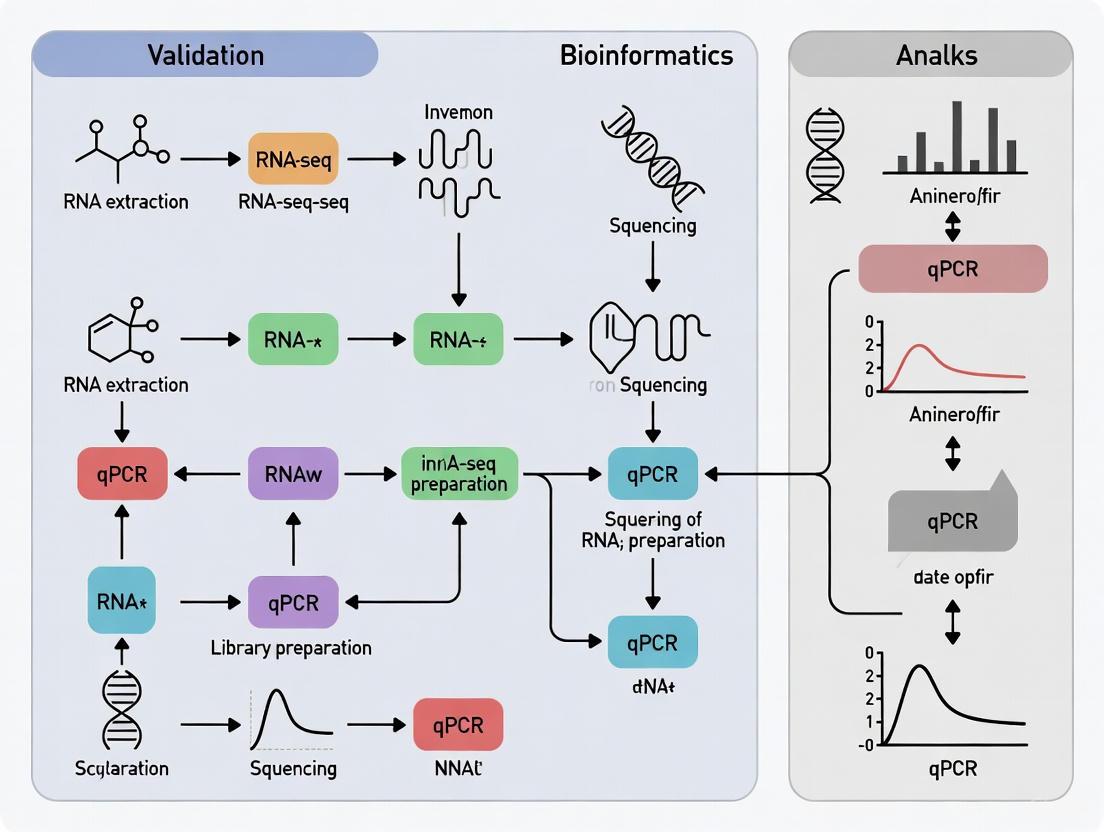
This article provides a complete framework for researchers and drug development professionals to validate RNA-seq findings using qPCR.
Validating RNA-seq Data with qPCR: A Comprehensive Guide for Robust Gene Expression Analysis
Abstract
This article provides a complete framework for researchers and drug development professionals to validate RNA-seq findings using qPCR. It covers the foundational principles of why validation is critical, even with advanced RNA-seq technologies, and delivers actionable methodological protocols for selecting reference genes and designing assays. The guide includes detailed troubleshooting for common pitfalls and a comparative analysis of validation performance across different RNA-seq workflows. By synthesizing current best practices and emerging trends, this resource empowers scientists to enhance the reproducibility, reliability, and clinical translatability of their transcriptomic data.
Why Validate? The Critical Role of qPCR in Confirming RNA-seq Findings
RNA sequencing (RNA-seq) has revolutionized gene expression analysis, providing an unbiased, comprehensive view of the transcriptome. Yet, a persistent question remains in molecular biology laboratories and manuscript review processes: are quantitative PCR (qPCR) validations of RNA-seq findings still required? This question sparks considerable debate among researchers, with perspectives varying based on technological capabilities, journal requirements, and research objectives.
The validation debate centers on balancing RNA-seq's discovery power with qPCR's precision. While RNA-seq can detect novel transcripts, splice variants, and provide genome-wide expression profiles, qPCR remains the gold standard for targeted gene expression analysis due to its sensitivity, reproducibility, and technical accessibility. This guide examines the evidence, protocols, and decision frameworks to help researchers navigate this ongoing scientific discussion.
The Technological Landscape: RNA-seq vs qPCR
Core Methodological Differences
Understanding the technical distinctions between these platforms clarifies their respective strengths and limitations.
RNA-seq employs next-generation sequencing to capture a complete snapshot of RNA populations, enabling hypothesis-free investigation. It detects both known and novel features including alternative splicing, fusion genes, and non-coding RNAs without prior sequence knowledge [1]. In contrast, qPCR provides highly accurate quantification of predefined targets through enzymatic amplification, making it ideal for confirming specific observations but unsuitable for discovery [2].
Performance Comparison
The table below summarizes key technical parameters distinguishing these technologies:
| Parameter | RNA-seq | qPCR |
|---|---|---|
| Discovery Power | High (detects novel transcripts) [1] | None (limited to known sequences) [1] |
| Throughput | High (thousands of genes simultaneously) [3] | Low (typically 1-10 genes per assay) [2] |
| Sensitivity | Can detect expression changes down to 10% [1] | High, but limited by amplification bias at extreme inputs [2] |
| Dynamic Range | >5 orders of magnitude [1] | ~7 orders of magnitude [2] |
| Sample Requirements | High-quality RNA often needed [2] | Compatible with degraded samples (e.g., FFPE) [2] |
| Turnaround Time | Days to weeks (includes bioinformatics) [2] | 1-3 days [2] |
| Cost per Sample | Higher for full transcriptome [3] | Lower for limited targets [3] |
| Bioinformatics Demand | Substantial [4] | Minimal [4] |
The Case For Validation: When qPCR Confirmation Remains Crucial
Technical Reproducibility Concerns
The RNA-seq workflow encompasses numerous steps where technical artifacts can emerge, including library preparation (e.g., biases from random hexamers versus oligo-dT priming), sequencing depth limitations affecting low-abundance transcript detection, and bioinformatic processing challenges [4]. These technical variables create potential false positives requiring confirmation.
For HLA gene expression analysis, one study demonstrated only moderate correlation between RNA-seq and qPCR (0.2 ≤ rho ≤ 0.53), highlighting how extreme polymorphism in certain gene families complicates RNA-seq quantification [5]. Such discrepancies underscore scenarios where orthogonal validation remains valuable.
Biological Reproducibility Assessment
qPCR validation using independent biological samples provides critical evidence that observations extend beyond the original experimental context. This approach tests whether differential expression patterns persist in similar samples under equivalent conditions, distinguishing robust biological effects from cohort-specific anomalies [4].
Institutional and Publishing Requirements
Many high-impact journals continue to require qPCR validation of RNA-seq findings, particularly for key results [4]. This conservative stance reflects peer review's cautious interpretation of relatively novel methodologies compared to qPCR's established track record.
The Case Against Routine Validation: When RNA-seq Stands Alone
Sufficient Biological Replication
When RNA-seq experiments incorporate adequate biological replicates (typically at least 3) that show strong agreement, the internal consistency provides substantial evidence for dispensing with qPCR validation [4] [6]. The replicated dataset itself serves as validation through internal consistency.
Resource Allocation Considerations
Validation studies consume significant time, financial resources, and precious samples. When RNA-seq represents an initial discovery phase followed by extensive functional characterization (e.g., protein-level assays), qPCR validation may represent an unnecessary intermediate step [6].
Technical Maturation of RNA-seq
As RNA-seq methodologies mature with improved library prep protocols, sequencing depth, and bioinformatic tools, its standalone reliability has increased substantially. Targeted RNA-seq panels now offer high-depth coverage of specific gene sets at lower cost, blurring the distinction between discovery and validation platforms [2].
Experimental Design: Validation Protocols and Methodologies
Effective Validation Workflow
Candidate Gene Selection Strategies
Effective validation begins with strategic gene selection from RNA-seq data. Researchers should include genes representing different expression patterns: significantly upregulated, downregulated, and unchanged transcripts [4]. Computational tools like GSV (Gene Selector for Validation) leverage RNA-seq data to identify optimal reference genes and variable targets based on expression stability and abundance thresholds [7].
For normalization, a paradigm shift is emerging where combinations of non-stable genes can outperform traditional housekeeping genes when their expression patterns balance each other across experimental conditions [8]. This approach uses RNA-seq databases to identify optimal gene combinations mathematically.
Sample Preparation for Validation Studies
Crucially, qPCR validation should employ independent biological samples—not the same RNA used for sequencing—to assess both technical and biological reproducibility [4] [6]. Using the same cDNA only tests technical concordance between platforms without addressing biological variability.
Research Reagent Solutions
| Reagent/Category | Function | Considerations |
|---|---|---|
| RNA Extraction Kits | Isolate high-quality RNA | Select based on sample type (e.g., FFPE-compatible) [2] |
| Reverse Transcriptase | cDNA synthesis | Choice between random hexamers vs oligo-dT affects coverage [4] |
| qPCR Master Mix | Amplification reaction | Contains polymerase, dNTPs, buffer, fluorescence detection chemistry |
| Reference Genes | Normalization controls | Validate stability across conditions; avoid traditional HKGs without verification [7] |
| Target-Specific Primers/Probes | Gene quantification | Design for known sequences; efficiency impacts quantification accuracy |
| RNA-seq Library Prep Kits | Library construction | Method influences GC bias and transcript representation [4] |
Decision Framework: To Validate or Not to Validate?
Circumstances Requiring Validation
- Limited Biological Replicates: When RNA-seq was performed on few biological replicates (or just one), preventing robust statistical assessment [6]
- Novel or Unexpected Findings: When results contradict established literature or reveal surprising biological mechanisms
- High-Stakes Conclusions: When findings form the foundation for extensive future research or clinical applications
- Journal Requirements: When targeting publications with mandatory validation policies [4]
- Budget-Constrained Discovery: When using RNA-seq on subset of samples followed by qPCR expansion to additional conditions [4]
Circumstances Where Validation May Be Unnecessary
- Adequate Biological Replication: When RNA-seq includes sufficient replicates (≥3) showing strong agreement [4]
- Hypothesis Generation: When RNA-seq serves as exploratory analysis followed by dedicated functional studies [6]
- Technical Replication: When additional RNA-seq datasets confirm initial findings in independent samples [6]
- Resource Constraints: When validation would consume limited samples needed for subsequent experiments
The question of RNA-seq validation persists because its answer depends on context rather than universal principles. As RNA-seq methodologies continue maturing, the validation imperative is shifting from routine practice to strategic implementation. Researchers should base validation decisions on their specific experimental design, biological system, and research goals rather than defaulting to tradition.
In clinical applications where diagnostic or therapeutic decisions hinge on results, validation remains crucial—as demonstrated by rigorous clinical RNA-seq test development for Mendelian disorders [9]. In discovery research, the field is gradually accepting well-designed RNA-seq studies without obligatory qPCR confirmation, particularly as internal replication and orthogonal functional assays provide alternative validation pathways.
The enduring partnership between RNA-seq and qPCR reflects their complementary strengths: RNA-seq for unbiased discovery and qPCR for targeted confirmation. As both technologies evolve, their optimal integration will continue refining transcriptome analysis, ensuring scientific conclusions rest on solid experimental foundations.
In the field of molecular biology, accurate gene expression analysis is fundamental to advancing our understanding of biological processes, disease mechanisms, and drug development. Two predominant technologies have emerged as the standard for transcript quantification: quantitative PCR (qPCR) and RNA sequencing (RNA-seq). While qPCR has long been considered the gold standard for targeted gene expression analysis due to its sensitivity and specificity, RNA-seq offers a comprehensive, hypothesis-free approach that enables discovery of novel transcripts and splicing variants [10] [11]. The relationship between these technologies is often complementary rather than competitive, with RNA-seq frequently employed for genome-scale discovery and qPCR serving as a validation tool for specific targets of interest [11].
Understanding the technical biases inherent in each method is crucial for proper experimental design, data interpretation, and validation strategies. Both techniques involve multi-step workflows where biases can be introduced at various stages, potentially compromising data accuracy and reliability. This guide provides a systematic comparison of the technical limitations of RNA-seq and qPCR, supported by experimental data and detailed methodologies, to assist researchers in making informed decisions about their gene expression analysis pipelines and validation approaches.
Technical Biases in RNA-seq
The RNA-seq workflow is exceptionally complex, with numerous steps where technical artifacts can be introduced, ultimately affecting the quality and interpretation of the resulting data [12]. These biases can originate from sample preservation, library preparation, sequencing, and data analysis stages. The table below summarizes the major sources of bias and potential improvement strategies:
Table 1: Key Sources of Bias in RNA-seq and Improvement Strategies
| Bias Source | Description | Suggested Improvement Strategies |
|---|---|---|
| Sample Preservation | RNA degradation during tissue autolysis or formalin-fixed paraffin-embedded (FFPE) preparation causes nucleic acid degradation and cross-linking [12]. | Use non-cross-linking organic fixatives; minimize processing and freezing-thawing cycles; use high sample input for degraded samples [12]. |
| RNA Extraction | TRIzol extraction can cause small RNA loss at low concentrations; different purification methods yield varying RNA quality [12]. | Use high RNA concentrations or avoid TRIzol; apply alternative protocols like mirVana miRNA isolation kit [12]. |
| mRNA Enrichment | 3'-end capture bias during poly(A) enrichment; rRNA depletion efficiency varies [12]. | Use rRNA depletion instead of poly(A) enrichment for certain applications; select method based on RNA species of interest [12]. |
| RNA Fragmentation | Non-random fragmentation using RNase III reduces complexity [12]. | Use chemical treatment (e.g., zinc) rather than RNase III; fragment cDNA instead of RNA [12]. |
| Primer Bias | Random hexamer priming bias; mispriming; nonspecific binding [12]. | Ligate sequencing adapters directly onto RNA fragments; use read count reweighing schemes to adjust for bias [12]. |
| Adapter Ligation | Substrate preferences of T4 RNA ligases [12]. | Use adapters with random nucleotides at ligation extremities [12]. |
| Reverse Transcription | Enzyme-specific biases in cDNA synthesis [13]. | Systematically evaluate reverse transcriptase performance for specific applications [13]. |
| PCR Amplification | Preferential amplification of sequences with specific GC content; unequal cDNA molecule amplification [12]. | Use Kapa HiFi rather than Phusion polymerase; reduce amplification cycles; use PCR additives for AT/GC-rich genomes [12]. |
Special Challenges for Polymorphic Gene Families
RNA-seq analysis faces particular challenges when quantifying genes within highly polymorphic families, such as the human leukocyte antigen (HLA) loci. The extreme polymorphism at HLA genes complicates read alignment, as short reads may fail to align properly due to significant differences from the reference genome [5]. Additionally, the high similarity between paralogs within this gene family often results in cross-alignments between genes, leading to biased expression quantification [5]. These challenges have motivated the development of specialized computational pipelines that account for known HLA diversity during alignment, significantly improving expression quantification accuracy for these immunologically crucial genes [5].
Figure 1: RNA-seq Workflow and Major Sources of Technical Bias
Impact of Library Preparation Choices
The choice of library preparation method significantly influences the type and magnitude of technical biases in RNA-seq data. Researchers must select between 3' mRNA-seq and whole transcriptome approaches based on their specific research questions [14]. While 3' mRNA-seq is highly convenient for multiplexing large sample numbers and provides accurate gene expression quantification with minimal computational resources, it is unsuitable for investigating alternative splicing, differential transcript usage, or novel isoform identification due to reads being localized to the 3' ends of transcripts [14]. Whole transcriptome library preparations, which typically require either poly(A) enrichment or rRNA depletion, provide complete transcript coverage but introduce their own biases through the selection method and may require more extensive bioinformatic processing [14].
Technical Biases in qPCR
Reverse Transcription: A Significant Source of Bias
The initial step of reverse transcribing RNA to cDNA introduces substantial quantitative biases that are frequently overlooked in qPCR experimental design [13]. Systematic experiments have demonstrated that reverse transcription exhibits both amplicon-specific and transcriptase-specific biases that can render standard calculations (e.g., ΔΔCq) of relative gene expression inaccurate or even erroneous [13]. Different commercial reverse transcriptase kits can produce markedly different results, with studies showing kit-dependent biases where the apparent differential expression between the same RNA samples varied by more than 5-fold depending on the enzyme used [13].
The integrity of RNA templates also significantly impacts reverse transcription efficiency. Experiments comparing intact and partially degraded RNA from the same source have demonstrated that RNA degradation affects different targets variably, potentially due to the structured nature of certain RNAs conferring higher resistance to cleavage [13]. This has important implications for the use of structured non-coding RNAs (such as U1 snRNA) as reference genes, as they may appear stable under conditions where mRNA integrity is compromised, leading to normalization artifacts [13].
Additional Technical Considerations in qPCR
While qPCR is often considered more straightforward than RNA-seq, it nonetheless presents several technical challenges that can introduce bias if not properly addressed:
Table 2: Key Technical Biases in qPCR and Recommended Practices
| Bias Source | Impact on Results | Recommended Practices |
|---|---|---|
| Reverse Transcription Efficiency | Enzyme- and gene-specific biases; non-linear cDNA synthesis [13]. | Systematically evaluate RT enzymes; implement controls for RT efficiency; report RT conditions following MIQE guidelines [13]. |
| PCR Amplification Efficiency | Variations between targets affect quantification accuracy [15]. | Validate amplification efficiency for each assay (90-110% ideal); use standard curves; avoid primer-dimer formation [15]. |
| Reference Gene Selection | Inappropriate normalization leads to misinterpretation of results [15]. | Use empirically validated reference genes; employ multiple reference genes; avoid single reference gene normalization [15] [13]. |
| Sample Quality | Degraded RNA affects different targets variably [13]. | Assess RNA integrity; use internal controls for degradation; apply consistent sample processing protocols [13]. |
Detection Chemistry and Assay Design Considerations
The selection of detection chemistry (e.g., TaqMan probes vs. SYBR Green dye) and assay design significantly influences qPCR specificity and sensitivity [15]. TaqMan assays provide greater specificity through the use of a target-specific probe but are more expensive and require careful validation. SYBR Green is more cost-effective but is susceptible to non-specific amplification, necessitating meticulous melt curve analysis [15]. Additionally, researchers must decide between one-step and two-step RT-qPCR protocols, with one-step offering convenience and reduced contamination risk, while two-step provides flexibility in primer selection and the ability to store cDNA for future analyses [15].
Figure 2: qPCR Workflow and Major Sources of Technical Bias
Comparative Performance: Experimental Data
Correlation Between RNA-seq and qPCR
Multiple studies have systematically compared gene expression measurements between RNA-seq and qPCR to evaluate their concordance. A comprehensive benchmarking study comparing five RNA-seq analysis workflows (Tophat-HTSeq, Tophat-Cufflinks, STAR-HTSeq, Kallisto, and Salmon) with whole-transcriptome qPCR data for 18,080 protein-coding genes revealed generally high expression correlations [16]. The Pearson correlation coefficients ranged from R² = 0.798 to 0.845 depending on the computational workflow used [16]. When comparing gene expression fold changes between samples, approximately 85% of genes showed consistent results between RNA-seq and qPCR data [16].
However, a significant proportion of genes (15-20%) displayed non-concordant expression measurements between the two technologies, defined as instances where methods yielded differential expression in opposing directions or where one method showed differential expression while the other did not [16] [17]. Importantly, the majority (approximately 93%) of these non-concordant genes exhibited relatively small fold changes (ΔFC < 2), suggesting that discrepancies are most prevalent for subtle expression differences [17]. The small fraction (approximately 1.8%) of severely non-concordant genes were typically characterized by lower expression levels and shorter transcript length [17].
Similar findings were observed in HLA expression studies, where comparisons between RNA-seq and qPCR revealed moderate correlations (0.2 ≤ rho ≤ 0.53) for HLA-A, -B, and -C genes [5]. This highlights the challenges in quantifying expression of highly polymorphic genes and suggests that technical and biological factors must be carefully considered when comparing quantifications from different platforms [5].
Table 3: Comparative Performance of RNA-seq and qPCR Based on Experimental Studies
| Performance Metric | RNA-seq Results | qPCR Results | Concordance |
|---|---|---|---|
| Expression Correlation | Varies by workflow (R² = 0.798-0.845) [16]. | Gold standard reference | High overall correlation |
| Fold Change Correlation | Varies by workflow (R² = 0.927-0.934) [16]. | Gold standard reference | ~85% genes show consistent fold changes [16] |
| Non-concordant Genes | 15-20% of genes show discrepancies with qPCR [17]. | 15-20% of genes show discrepancies with RNA-seq [17]. | Majority (93%) have ΔFC < 2 [17] |
| Problematic Gene Features | Shorter, lower expressed genes with fewer exons [16]. | Performance issues with structured RNAs and degraded samples [13]. | Severe discrepancies in ~1.8% of genes [17] |
| HLA Gene Expression | Moderate correlation with qPCR (0.2 ≤ rho ≤ 0.53) [5]. | Traditional reference method | Technical challenges for polymorphic genes [5] |
Technology-Specific Strengths and Limitations
The comparative analysis of RNA-seq and qPCR reveals distinct advantages and limitations for each technology, which should guide their application in research and validation workflows:
Table 4: Technology Comparison - Key Strengths and Limitations
| Feature | RNA-seq | qPCR |
|---|---|---|
| Discovery Power | High - detects novel transcripts, splicing variants, and fusion genes without prior knowledge [1]. | None - limited to detection of known, predefined sequences [1]. |
| Throughput | High - can profile thousands of genes across multiple samples simultaneously [1]. | Low to Medium - practical for up to approximately 30 targets; becomes cumbersome for larger numbers [10]. |
| Sensitivity | High - can detect subtle expression changes (down to 10%) and rare transcripts [1]. | Exceptional - wide dynamic range, detection down to single copy level [15] [11]. |
| Technical Biases | Complex - multiple sources including mapping, GC content, and library preparation artifacts [12]. | Simpler but Significant - primarily reverse transcription and amplification efficiency issues [13]. |
| Cost and Accessibility | Higher cost - requires specialized equipment and bioinformatics expertise [10]. | Lower cost - equipment accessible in most molecular biology labs [1]. |
| Data Complexity | High - massive datasets requiring substantial storage and computational resources [10]. | Low - straightforward data analysis with established analysis methods [15]. |
Experimental Design and Validation Strategies
Framework for Validation of RNA-seq Findings
The question of whether RNA-seq results require validation by qPCR has evolved as RNA-seq methodologies have matured. Current evidence suggests that when all experimental steps and data analyses are performed according to state-of-the-art practices, RNA-seq results are generally reliable and may not require systematic validation for all findings [17]. However, validation remains crucial in specific circumstances, particularly when research conclusions heavily depend on differential expression of a small number of genes, especially if those genes are lowly expressed or show relatively small fold changes [17].
A strategic approach to validation should consider the following scenarios where qPCR confirmation adds value:
- Critical Findings: When the entire biological story depends on differential expression of only a few genes [17].
- Low Expression Targets: When focusing on genes with low expression levels or small fold changes (<2) where technical artifacts are more likely [16] [17].
- Extended Sample Sets: When using qPCR to measure expression of selected genes in additional samples not included in the original RNA-seq study [17].
- Technical Concerns: When sample quality issues or other technical challenges may have compromised RNA-seq results [13].
Essential Research Reagents and Controls
Proper experimental design for both RNA-seq and qPCR requires careful selection of reagents and implementation of appropriate controls to minimize technical biases:
Table 5: Essential Research Reagents and Controls for Minimizing Technical Biases
| Reagent/Control Category | Specific Examples | Function and Importance |
|---|---|---|
| Reverse Transcriptase Enzymes | iScript, Transcriptor, SuperScript [13]. | Critical choice affecting quantitative accuracy; systematic evaluation recommended for each application [13]. |
| Reference Standards | ERCCs, SIRVs, Stratagene QPCR Human Reference Total RNA [13]. | Assess technical performance; normalize across platforms; identify protocol-specific biases [13]. |
| qPCR Assay Types | TaqMan probes, SYBR Green [15]. | TaqMan offers greater specificity; SYBR Green is more cost-effective; selection impacts detection accuracy [15]. |
| RNA Quality Assessment | RNA Integrity Number (RIN), degradation checks [13]. | RNA integrity significantly impacts reverse transcription efficiency and quantitative accuracy [13]. |
| Reference Genes | eEF1A1, 18S rRNA, U1 snRNA, empirically validated sets [13]. | Essential for normalization; must be empirically validated for specific experimental conditions; using multiple references is recommended [15] [13]. |
Both RNA-seq and qPCR technologies offer powerful approaches for gene expression analysis but are susceptible to distinct technical biases that researchers must acknowledge and address. RNA-seq biases predominantly stem from its complex workflow, including library preparation, sequencing, and data analysis steps, with particular challenges for polymorphic gene families and low-abundance transcripts. qPCR, while more straightforward, introduces significant biases primarily through reverse transcription efficiency and amplification artifacts. The moderate correlation (0.2 ≤ rho ≤ 0.53) observed between these technologies for challenging targets like HLA genes underscores the importance of understanding their limitations [5].
Strategic validation employing both technologies throughout the experimental workflow—using qPCR to check cDNA integrity prior to RNA-seq and to verify critical findings afterward—represents the most robust approach [11]. This integrated methodology leverages the complementary strengths of each technology while mitigating their respective limitations, ultimately leading to more reliable and reproducible gene expression data for basic research and drug development applications.
The validation of RNA sequencing (RNA-seq) findings using real-time quantitative PCR (RT-qPCR) has been a long-standing practice in transcriptomics research. While RNA-seq provides an unbiased, genome-wide view of the transcriptome, RT-qPCR is often regarded as the "gold standard" for gene expression quantification due to its high sensitivity, specificity, and reproducibility [7] [17]. However, the assumption that qPCR necessarily serves as the definitive validation method requires careful examination in light of advancing RNA-seq technologies and improved bioinformatics pipelines. This guide objectively examines the performance concordance between these technologies, explores the factors influencing agreement, and provides evidence-based recommendations for researchers and drug development professionals navigating transcriptome validation.
Quantitative Comparison of RNA-seq and qPCR Performance
Extensive benchmarking studies have systematically compared gene expression measurements between RNA-seq and qPCR platforms. The correlation between these technologies varies based on experimental conditions, analysis workflows, and gene characteristics.
Table 1: Overall Correlation Between RNA-seq and qPCR Expression Measurements
| Comparison Metric | Correlation Range | Influencing Factors | Key Findings |
|---|---|---|---|
| Expression Intensity | Pearson R²: 0.798-0.845 [16] | Analysis workflow, expression level | Pseudoalignment methods (Salmon, Kallisto) showed slightly higher correlations |
| Fold Change Correlation | Pearson R²: 0.927-0.934 [16] | Effect size, biological context | High concordance for genes with large expression differences |
| Differential Expression Concordance | 80.6%-84.9% agreement [16] | Fold change magnitude, expression level | ~15-19% of genes show non-concordant results, mostly with small fold changes |
A comprehensive benchmark using whole-transcriptome RT-qPCR data for 18,080 protein-coding genes revealed that the fraction of genes with non-concordant results between RNA-seq and qPCR ranged from 15.1% to 19.4%, depending on the RNA-seq analysis workflow [16]. Importantly, the majority of these non-concordant genes (93%) showed relatively small fold changes (ΔFC < 2) between experimental conditions, with the most severe discrepancies typically occurring in lowly expressed and shorter genes [16].
Table 2: Characteristics of Genes with Poor RNA-seq/qPCR Concordance
| Gene Feature | Impact on Concordance | Practical Implications |
|---|---|---|
| Expression Level | Lower expression → Reduced concordance [16] | High-confidence results primarily for medium-high expression genes |
| Transcript Length | Shorter transcripts → Reduced concordance [16] | Potential quantification bias for genes with shorter isoforms |
| Fold Change Magnitude | Smaller ΔFC → Higher discordance rate [16] | Greater confidence in genes with large expression differences |
| Complexity | Multi-exonic genes show better concordance [16] | Single-exon genes may require additional validation |
Experimental Protocols for Method Comparison
Benchmarking Study Design
Robust comparison of RNA-seq and qPCR requires carefully controlled experimental designs. The MAQCA (Universal Human Reference RNA) and MAQCB (Human Brain Reference RNA) samples from the MAQC-I consortium have served as well-established reference materials for such comparisons [16]. The standard protocol involves:
Sample Preparation: Isolate high-quality RNA from biological samples using standardized kits (e.g., RNeasy Mini Kit) with DNase treatment to remove genomic DNA contamination [5].
RNA Quality Control: Assess RNA integrity and quality using appropriate methods (e.g., Qubit Fluorometer, TapeStation) [18].
Library Preparation and Sequencing: For RNA-seq, prepare libraries using stranded mRNA preparation kits (e.g., Illumina Stranded mRNA prep kit) and sequence on appropriate platforms (e.g., Illumina NovaSeq) to a target depth of 20-30 million reads per sample [18] [19].
qPCR Assay Design: Design and validate primers for the target genes, ensuring high amplification efficiency and specificity. Include stable reference genes for normalization [7].
Data Analysis: Process RNA-seq data through multiple workflows (e.g., STAR-HTSeq, Kallisto, Salmon) and compare with qPCR results using correlation and concordance metrics [16].
RNA-seq Analysis Workflows
Different RNA-seq processing methods can impact concordance with qPCR results:
Reference Gene Selection Protocol
Appropriate reference gene selection is critical for both technologies. The "Gene Selector for Validation" (GSV) software provides a systematic approach for identifying optimal reference genes from RNA-seq data based on stability and expression level [7]:
Input Preparation: Compile transcripts per million (TPM) values for all genes across all samples.
Stability Filtering: Apply sequential filters to identify stable, highly expressed genes:
- Expression > 0 TPM in all samples
- Standard deviation of log₂(TPM) < 1
- No exceptional expression in any library (within 2× of log₂(TPM) average)
- Average log₂(TPM) > 5
- Coefficient of variation < 0.2 [7]
Candidate Validation: Select top candidate reference genes for experimental validation by RT-qPCR using stability assessment algorithms (GeNorm, NormFinder) [7].
Decision Framework for Orthogonal Validation
The necessity of qPCR validation depends on several factors, including experimental goals, gene characteristics, and resource constraints. The following decision pathway provides guidance for determining when orthogonal validation is most valuable:
When qPCR Validation Provides Maximum Value
- Low-Expression Genes: Genes with TPM < 10 show higher technical variability in RNA-seq [16].
- Small Effect Sizes: Fold changes < 1.5 have higher rates of non-concordance between platforms [17] [16].
- Critical Findings: When research conclusions depend heavily on a small number of genes [17].
- Extended Applications: Using qPCR to measure expression in additional samples, conditions, or strains beyond the original RNA-seq study [17].
When RNA-seq Stands Alone
- Genome-Scale Analyses: When conclusions are based on patterns across hundreds of genes rather than individual genes [17].
- High-Quality Data: When using state-of-the-art RNA-seq protocols with sufficient biological replicates (≥3) and sequencing depth (≥20M reads) [19] [17].
- Large Effect Sizes: For genes with high expression and large fold changes (>2) [16].
- Limited Resources: When budget or sample material constraints prevent orthogonal validation [17].
The Scientist's Toolkit: Essential Research Reagents
Table 3: Key Reagents and Tools for RNA-seq/qPCR Comparison Studies
| Category | Specific Products/Tools | Application & Function |
|---|---|---|
| RNA Isolation | RNeasy Mini Kit (Qiagen), AllPrep DNA/RNA Kit [18] [20] | Simultaneous DNA/RNA extraction from limited samples |
| RNA Quality Control | Qubit Fluorometer, TapeStation, Bioanalyzer [18] [20] | Quantification and integrity assessment |
| Library Preparation | Illumina Stranded mRNA Prep Kit, TruSeq Stranded mRNA [18] [20] | RNA-seq library construction with strand specificity |
| qPCR Reagents | SYBR Green Master Mix, TaqMan assays [7] | Fluorescence-based detection of amplification |
| Reference Materials | Universal Human Reference RNA, Human Brain Reference RNA [16] | Standardized samples for cross-platform comparison |
| Data Analysis Software | GSV (Gene Selector for Validation) [7], GeNorm [7], NormFinder [7] | Reference gene selection and validation |
| RNA-seq Pipelines | STAR-HTSeq [16], Kallisto [16], Salmon [16] | Read alignment and quantification |
RNA-seq and qPCR show strong overall concordance, particularly for medium-to-highly expressed genes with large fold changes. Under optimal conditions with sufficient replicates and modern analysis workflows, RNA-seq can provide reliable expression data without mandatory qPCR validation. However, targeted qPCR validation remains valuable for specific scenarios, including low-expression genes, small effect sizes, and when critical research conclusions depend on a limited number of genes. As RNA-seq technologies continue to mature and benchmarking studies provide more comprehensive guidance, the scientific community is increasingly recognizing RNA-seq as a validated quantitative method rather than merely a screening tool requiring blanket confirmation by qPCR.
In the field of gene expression analysis, RNA sequencing (RNA-seq) has emerged as a powerful, discovery-oriented tool that provides an unbiased view of the entire transcriptome. However, this high-throughput technology generates massive datasets that require sophisticated bioinformatic processing, introducing potential sources of technical variance that demand confirmation through independent methods. Quantitative PCR (qPCR), with its well-established precision, sensitivity, and reproducibility, has maintained its position as the gold standard for validating gene expression measurements obtained from RNA-seq experiments [21] [6]. This guide objectively compares the performance characteristics of these two technologies and provides detailed experimental protocols for researchers seeking to confirm transcriptomic findings through rigorous analytical validation.
The necessity for validation stems from the fundamental differences in how these technologies quantify nucleic acids. While RNA-seq involves cDNA library preparation, massive parallel sequencing, and complex bioinformatic processing of short reads, qPCR employs targeted amplification with fluorescence-based detection in real time, resulting in a simpler workflow with less potential for technical bias [6]. This distinction becomes particularly important when RNA-seq data forms the basis for significant biological conclusions or clinical applications, where independent verification is not just beneficial but essential for scientific rigor.
Performance Comparison: qPCR versus RNA-Seq
Technical Foundations and Performance Characteristics
Table 1: Fundamental Technical Differences Between qPCR and RNA-Seq
| Parameter | qPCR | RNA-Seq |
|---|---|---|
| Throughput | Low to medium (typically 10s-100s of targets) | High (entire transcriptome) |
| Dynamic Range | ~7-8 logs of magnitude [22] | ~5 logs of magnitude [21] |
| Sensitivity | Can detect single copies [22] | Limited for low-abundance transcripts [21] |
| Sample Requirement | Low (nanograms of RNA) | Moderate to high (micrograms of RNA) |
| Quantification Basis | Fluorescence threshold cycle (Cq) | Read counts aligned to reference |
| Multiplexing Capability | Limited (typically 2-5 plex) | Virtually unlimited |
| Discovery Power | None (hypothesis-driven) | High (hypothesis-generating) |
Analytical Performance in Validation Studies
Direct benchmarking studies have revealed important insights about the correlation between these technologies. A comprehensive assessment using well-established MAQCA and MAQCB reference samples demonstrated that multiple RNA-seq workflows (Tophat-HTSeq, STAR-HTSeq, Kallisto, and Salmon) showed high gene expression correlations with qPCR data, with Pearson correlation coefficients ranging from R² = 0.798 to 0.845 [21]. When comparing gene expression fold changes between samples, approximately 85% of genes showed consistent results between RNA-seq and qPCR data across all workflows [21].
However, each RNA-seq analysis method revealed a small but specific gene set with inconsistent expression measurements, representing about 15% of analyzed genes [21]. These inconsistent genes were typically characterized by shorter length, fewer exons, and lower expression levels, suggesting that qPCR validation remains particularly crucial for this specific gene subset [21].
Table 2: Correlation Performance Between RNA-Seq Workflows and qPCR
| Analysis Workflow | Expression Correlation with qPCR (R²) | Fold Change Correlation with qPCR (R²) | Non-Concordant Genes |
|---|---|---|---|
| Salmon | 0.845 | 0.929 | 19.4% |
| Kallisto | 0.839 | 0.930 | 16.8% |
| Tophat-HTSeq | 0.827 | 0.934 | 15.1% |
| STAR-HTSeq | 0.821 | 0.933 | 15.3% |
| Tophat-Cufflinks | 0.798 | 0.927 | 18.2% |
A more recent study focusing on the challenging HLA gene family revealed more moderate correlations between qPCR and RNA-seq (0.2 ≤ rho ≤ 0.53 for HLA class I genes), highlighting that correlation performance can vary significantly depending on the specific gene targets and the RNA-seq analysis pipeline employed [5].
Experimental Design for Validation Studies
When is qPCR Validation Appropriate?
According to established best practices, qPCR validation is particularly recommended in these scenarios:
- Confirmatory Studies: When a second method is necessary to confirm a specific observation, particularly for publications where reviewers expect verification using different technological approaches [6].
- Limited Replication: When RNA-seq data is based on a small number of biological replicates, limiting the statistical power of the sequencing experiment [6].
- Focus on Specific Targets: When the biological story hinges on expression changes in a relatively small number of critical genes [6].
- Clinical Applications: When findings may have diagnostic, prognostic, or therapeutic implications requiring the highest level of technical validation.
Conversely, qPCR validation may be less essential when RNA-seq data serves primarily for hypothesis generation that will be tested through other means (e.g., protein-level assays), or when conducting additional RNA-seq experiments on larger sample sets serves as its own validation [6].
Optimal Sample Selection for Validation
To maximize the value of validation studies, researchers should employ a different set of samples with proper biological replication rather than simply repeating measurements on the same RNA used for initial RNA-seq. This approach validates not only the technological consistency but also the biological reproducibility of the findings [6]. The sample size for qPCR validation should be determined based on statistical power considerations, typically requiring sufficient biological replicates to account for expected biological variability.
Methodologies: qPCR Experimental Protocols
RNA Quality Control and Reverse Transcription
Begin with high-quality RNA (RNA Integrity Number ≥ 8) to ensure reliable results. For the reverse transcription step, select either one-step or two-step RT-qPCR based on experimental needs:
One-Step RT-qPCR combines reverse transcription and PCR amplification in a single reaction, offering reduced hands-on time, lower contamination risk, and higher throughput capability [23]. This approach is ideal for high-throughput studies with limited targets.
Two-Step RT-qPCR separates reverse transcription from amplification, providing greater flexibility as the synthesized cDNA can be stored and used for multiple different targets across multiple reactions [23]. This approach is preferable when analyzing many targets from limited sample material.
qPCR Detection Chemistry Selection
Two primary detection chemistries are available for qPCR, each with distinct advantages:
DNA-Binding Dyes (e.g., SYBR Green): These dyes bind nonspecifically to double-stranded DNA, producing increased fluorescence with accumulating PCR product. The main advantage is their cost-effectiveness and compatibility with standard primers, though they require melt curve analysis to verify amplification specificity [23].
Probe-Based Detection (e.g., TaqMan Probes): These sequence-specific probes provide enhanced specificity through a reporter-quencher mechanism. Hydrolysis probes are cleaved during amplification, releasing fluorescence, while hairpin probes (molecular beacons) undergo conformational changes when bound to target sequences [23]. Probe-based methods enable multiplexing through different fluorescent labels but require specialized probe design and increased costs.
Standard Curve Method for Relative Quantification
The standard curve method provides a reliable approach for relative quantification that avoids potential inaccuracies in PCR efficiency estimation [24]. The procedure consists of these critical steps:
Noise Filtering: Process raw fluorescence data by applying smoothing algorithms (e.g., 3-point moving average), baseline subtraction, and amplitude normalization to reduce technical noise [24].
Threshold Selection: Automatically determine the optimal quantification threshold by identifying the value that yields the maximum coefficient of determination (r²) for the standard curve, typically achieving >99% confidence [24].
Crossing Point Calculation: Derive crossing points (CPs) directly from coordinates where the threshold line intersects the fluorescence curves after noise filtering.
Standard Curve Generation: Create a standard curve by plotting the logarithms of known template concentrations against their corresponding CP values, applying least-squares linear regression.
Relative Quantification: Calculate relative expression values from sample CPs using the standard curve equation, followed by exponentiation (base 10) to obtain non-normalized quantities.
Reference Gene Normalization: Divide target gene quantities by a normalization factor derived from stable reference genes (preferably using geometric mean of multiple validated references) [24].
Experimental Quality Control
Adherence to MIQE (Minimum Information for Publication of Quantitative Real-Time PCR Experiments) guidelines ensures generation of reproducible, high-quality data [22] [25]. Essential quality parameters include:
- PCR Efficiency: Determined from standard curve slope, with ideal efficiency ranging from 90-110% (slope of -3.6 to -3.1) [22].
- Dynamic Range: Linear range should span at least 3-4 orders of magnitude with R² ≥ 0.98 [22].
- Specificity Verification: Confirm amplification specificity through melt curve analysis (for dye-based methods) or sequence verification.
- No-Template Controls: Include controls to detect contamination or primer-dimer formation.
- Replication: Perform both technical replicates (assessing pipetting variance) and biological replicates (assessing biological variance).
The Scientist's Toolkit: Essential Reagents and Materials
Table 3: Essential Research Reagent Solutions for qPCR Validation
| Reagent/Material | Function | Selection Considerations |
|---|---|---|
| Reverse Transcriptase | Synthesizes cDNA from RNA template | Processivity, fidelity, ability to handle complex RNA |
| qPCR Master Mix | Provides optimized buffer, enzymes, dNTPs for amplification | Detection chemistry (dye vs. probe), compatibility, robustness |
| Assay Primers | Target-specific amplification | Specificity, efficiency, minimal dimer formation |
| Fluorescent Probes | Sequence-specific detection (probe-based methods) | Quencher system, reporter dyes, specificity |
| DNA-Binding Dyes | Non-specific detection (dye-based methods) | Signal strength, background fluorescence, cost |
| Reference Genes | Normalization control | Stable expression across experimental conditions |
| Nuclease-Free Water | Reaction preparation | Purity, absence of contaminating nucleases |
Data Analysis Framework for Validation Studies
Comparative Analysis Workflow
Establishing a structured framework for comparing RNA-seq and qPCR results ensures objective assessment of validation success:
Interpretation Guidelines
Successful validation is demonstrated when:
- Fold change correlations between RNA-seq and qPCR show R² > 0.85 [21]
- Direction of change is consistent for statistically significant results
- Magnitude of change shows reasonable agreement (within 2-fold for most genes)
- Inconsistent results are investigated for technical artifacts or biological explanations
The 15% of genes that typically show discrepant results between the technologies deserve special attention, as these may represent either technical artifacts or biologically interesting phenomena worthy of further investigation [21].
qPCR maintains its critical role as the gold standard for analytical validation of RNA-seq findings due to its superior sensitivity, precision, and methodological simplicity. While RNA-seq provides unparalleled discovery power for transcriptome-wide exploration, qPCR delivers the verification rigor required for confirmatory studies. The experimental frameworks and methodologies presented in this guide provide researchers with a standardized approach for conducting these essential validation studies, ensuring that genomic findings meet the highest standards of technical reliability before progressing to functional studies or clinical applications.
By implementing these standardized protocols and analysis frameworks, researchers can bridge the technological gap between high-throughput discovery and targeted verification, advancing genomic science with findings that are both novel and robustly validated.
In the pipeline of modern biomedical research, biomarker discovery and validation represent two critical, sequential phases. Next-Generation Sequencing (NGS) technologies, particularly RNA sequencing (RNA-seq), have become the gold standard for unbiased, genome-wide discovery due to their ability to profile thousands of molecules without prior knowledge of the transcriptome [26] [16]. However, the transition of promising biomarkers from high-throughput discovery to clinically applicable research assays requires a method that is quantitative, reproducible, and accessible. Here, quantitative PCR (qPCR) and its digital counterpart (dPCR) play an indispensable role, serving as the bridge that validates RNA-seq findings and transforms them into reliable tools for clinical research and diagnostic development [26] [27]. This guide objectively compares the performance of these technologies, providing the experimental data and protocols essential for researchers and drug development professionals to make informed decisions.
Technology Comparison: RNA-seq vs. (d)PCR
The table below summarizes the core performance characteristics of RNA-seq, qPCR, and dPCR, highlighting their complementary roles in the biomarker workflow.
Table 1: Performance Comparison of RNA-seq, qPCR, and dPCR
| Feature | RNA-seq | qPCR | dPCR |
|---|---|---|---|
| Primary Role | Biomarker discovery, whole-transcriptome analysis [16] | Targeted validation, gene expression quantification [28] | Absolute quantification, rare target detection [29] [30] |
| Throughput | High (thousands of targets) | Medium (dozens of targets) | Low to Medium (single to multiplex targets) |
| Dynamic Range | Broad (>10^5) [16] | Broad (>10^7 for qPCR) [30] | Linear over a wide range [30] |
| Sensitivity | High (can detect low-abundance transcripts) | High | Very High (capable of detecting single molecules) [29] |
| Quantification | Relative (e.g., TPM, FPKM) | Relative (Ct) or absolute with standard curve | Absolute (copies/μL), no standard curve required [30] |
| Precision (Variability) | N/A | CV ~5.0% [30] | CV ~2.3% (2-fold lower than qPCR) [30] |
| Cost per Sample | High (~$1000/sample for RNA-seq [26]) | Low ($2-50/reaction [26]) | Moderate |
| Ease of Data Analysis | Complex, requires advanced bioinformatics | Straightforward, standardized software | Straightforward, standardized software |
Validating RNA-seq Findings with qPCR/dPCR
Correlation and Concordance in Expression Measurement
The reliability of using qPCR to validate RNA-seq data is well-established, with studies showing high overall correlation. A landmark benchmarking study comparing five major RNA-seq workflows against whole-transcriptome RT-qPCR data for over 18,000 protein-coding genes demonstrated high expression correlation, with Pearson correlation coefficients (R²) ranging from 0.798 to 0.845 [16]. When comparing gene expression fold changes—a more relevant metric for most studies—the correlations were even higher, with R² values between 0.927 and 0.934 [16]. This indicates strong concordance between the technologies for identifying differentially expressed genes.
However, a small but significant fraction of genes (15-19%) can show non-concordant results between RNA-seq and qPCR when assessing differential expression status. The majority of these discrepancies have relatively small differences in fold change (ΔFC < 1) [16]. This underscores the importance of careful assay design and validation, rather than questioning the fundamental agreement between the platforms.
Advantages of dPCR for High-Precision Validation
Digital PCR offers a key advantage in validation workflows through its superior precision and reproducibility. A direct technical comparison demonstrated that Crystal Digital PCR had a 2.3-fold lower coefficient of variation (%CV) than qPCR (2.3% vs. 5.0%) when quantifying the same target from a single master mix [30]. This precision is derived from dPCR's method of partitioning a sample into thousands of individual reactions for end-point detection and absolute quantification without the need for a standard curve [29] [30]. This makes dPCR particularly suited for validating biomarkers where small fold-changes are biologically significant, or for quantifying low-abundance targets.
Experimental Protocols for Cross-Platform Validation
Protocol 1: Validation of RNA-seq-Derived Biomarkers via qPCR
This protocol ensures robust validation of transcriptomic discoveries.
- Candidate Selection: From RNA-seq differential expression analysis, select candidate biomarkers based on statistical significance (e.g., p-value ≤ 0.05) and fold-change magnitude (e.g., |log2FC| > 1) [26].
- Endogenous Control Identification: Critically, do not default to "universal" reference genes (e.g., GAPDH, ACTB). Use tools like the HeraNorm R Shiny application to identify and validate the most stable endogenous controls specific to your dataset. HeraNorm analyzes RNA-seq count data to nominate genes with minimal expression variability (e.g., |log2FC| < 0.02, p-value ≥ 0.8) [26].
- qPCR Assay Design: Design primers and probes with the following criteria:
- Amplicon size: 70-200 bp.
- Primer Tm: 58-60°C, with <1°C difference between forward and reverse primers.
- Validate amplification efficiency (90-110%) and linearity (R² > 0.99) using a standard curve [28].
- PCR-Stop Analysis for In-Depth Validation: Perform PCR-Stop analysis to evaluate assay performance during initial cycles [28].
- Prepare multiple batches of the same sample.
- Subject batches to 0 to 5 pre-run amplification cycles.
- Run all batches in a final qPCR run together.
- Analyze the consistency of Cq shifts and amplification efficiency against the theoretical doubling of product. This reveals quantitative resolution and confirms the assay starts with its average efficiency [28].
- Data Analysis: Use the comparative Cq (2^–ΔΔCq) method to calculate relative expression changes, normalizing to the validated endogenous controls [26].
Protocol 2: dPCR for Absolute Quantification of Circulating Biomarkers
This protocol is ideal for liquid biopsy applications, such as quantifying circulating tumor DNA (ctDNA) or viral loads.
- Sample Preparation: Extract cell-free DNA (cfDNA) from plasma or other liquid biopsy sources using specialized kits that maximize the yield of short fragments [31].
- Assay Selection: Use pre-validated dPCR assays or design custom assays as in Step 3 of Protocol 1. dPCR is more tolerant of PCR inhibitors, but sample purity should still be assessed [30].
- Partitioning and Amplification: Load the sample and PCR mix into a dPCR chip or droplet generator. The Naica System (Crystal Digital PCR), for example, creates thousands of droplets or microchambers [29] [30]. Perform PCR amplification with a standard thermocycling protocol.
- Endpoint Reading and Analysis: After amplification, read each partition for fluorescence. Use the system's software (e.g., Crystal Miner) to automatically distinguish positive (target-present) from negative (target-absent) partitions and apply Poisson statistics to calculate the absolute concentration of the target in copies/μL [30].
Workflow Visualization
The following diagram illustrates the integrated pathway from biomarker discovery to clinical research assay, highlighting the distinct and complementary roles of RNA-seq and (d)PCR technologies.
The Scientist's Toolkit: Essential Research Reagent Solutions
The table below details key reagents and materials critical for successful experimentation in this field.
Table 2: Key Research Reagent Solutions and Their Functions
| Reagent/Material | Function | Key Considerations |
|---|---|---|
| Reference RNA Samples (e.g., MAQCA/MAQCB) | Benchmarking and cross-platform calibration of gene expression measurements [16]. | Well-characterized transcriptomes allow for performance assessment of both RNA-seq and qPCR workflows. |
| Stable Endogenous Controls | Normalization of qPCR data to account for technical variation (e.g., RNA input, RT efficiency) [26]. | Context-specific validation is critical. Tools like HeraNorm can identify stable genes from RNA-seq data instead of relying on unstable "universal" controls (e.g., GAPDH, miR-16). |
| Reverse Transcription Kits | Conversion of RNA to complementary DNA (cDNA) for qPCR/dPCR analysis. | High efficiency and fidelity are required to accurately represent the original RNA population and avoid bias. |
| dPCR Chips / Droplet Generators | Microfluidic devices that partition samples into thousands of nanoliter reactions for absolute quantification [29] [30]. | Materials (e.g., silicon, PDMS, COC) offer thermal conductivity and optical clarity. The number of partitions impacts precision. |
| Hot-Start Polymerases | DNA polymerases activated only at high temperatures, improving specificity and yield of PCR reactions [28]. | Reduces non-specific amplification and primer-dimer formation, which is crucial for both qPCR and dPCR sensitivity. |
| Probe-Based Chemistry (e.g., TaqMan) | Sequence-specific fluorescent detection of the amplified target in qPCR/dPCR [28]. | Provides higher specificity than intercalating dyes, essential for multiplex assays and distinguishing closely related sequences. |
The journey from biomarker discovery to a robust clinical research assay is a process of increasing specificity and validation. RNA-seq is the powerful, discovery engine that identifies candidate molecules from the entire transcriptome. qPCR serves as the versatile and accessible workhorse for validating these findings in larger cohorts. Finally, dPCR provides the precision tool for applications demanding absolute quantification and the highest level of accuracy, such as in liquid biopsies and rare event detection. By understanding their complementary strengths and implementing rigorous validation protocols, researchers can confidently translate genomic discoveries into reliable assays that advance clinical research and drug development.
From Data to Validation: A Step-by-Step Protocol for qPCR Assay Design
Leveraging RNA-seq Data to Identify Optimal Reference Genes
The validation of RNA-seq findings through quantitative real-time PCR (RT-qPCR) is a cornerstone of reliable transcriptomic research. This process, however, is heavily dependent on the use of stably expressed reference genes for accurate data normalization. The selection of inappropriate reference genes remains a major source of error, potentially leading to the misinterpretation of gene expression data. With the growing accumulation of RNA-seq datasets, a powerful strategy has emerged: leveraging these vast transcriptomic resources to systematically identify optimal, stably expressed reference genes for subsequent qPCR experiments. This guide compares the different computational and experimental approaches for this purpose, evaluates their performance, and provides a structured framework for implementation, complete with supporting experimental data.
Computational Selection Strategies from RNA-seq Data
The process of selecting candidate reference genes from RNA-seq data primarily relies on analyzing gene expression stability across samples. The following table summarizes the core computational approaches and tools available.
Table 1: Computational Methods for Identifying Reference Genes from RNA-seq Data
| Method/Software | Core Metric | Key Criteria | Advantages | Limitations |
|---|---|---|---|---|
| GSV (Gene Selector for Validation) [7] | Expression stability (Standard Deviation, Coefficient of Variation) | TPM > 0 in all samples; SD (log2(TPM)) < 1; | User-friendly GUI; Filters low-expression genes; Identifies both stable and variable genes. | Less established compared to traditional methods. |
| Coefficient of Variation (CV) Method [32] | Coefficient of Variation (CV) | Low CV across samples. | Simple, intuitive calculation. | Does not account for systematic inter-group variation. |
| Fold Change Cut-off Method [32] | Maximum Fold Change | Minimal fold-change across sample comparisons. | Simple, intuitive calculation. | Less statistical rigor than other methods. |
The GSV software represents a specialized tool that formalizes the filtering process [7]. Its algorithm applies a series of sequential filters to transcripts per million (TPM) values from RNA-seq data to select ideal reference gene candidates:
- Expression Filter: The gene must have an expression value (TPM) greater than zero in all analyzed libraries [7].
- Variability Filter: The standard deviation of the log2(TPM) values must be less than 1, ensuring low variability [7].
- Outlier Filter: No single log2(TPM) value can be more than twice the average log2(TPM), preventing exceptional expression in any one sample [7].
- Abundance Filter: The average log2(TPM) must be greater than 5, guaranteeing sufficient expression for easy detection by qPCR [7].
- Consistency Filter: The coefficient of variation must be less than 0.2, confirming stable expression relative to the mean [7].
Performance Comparison: RNA-seq-Derived vs. Traditional Reference Genes
The critical question is whether reference genes selected from RNA-seq data outperform traditional housekeeping genes. Evidence from multiple studies, summarized in the table below, shows that while RNA-seq preselection is effective, it is not universally superior to a robust statistical evaluation of traditional candidates.
Table 2: Experimental Validation of Reference Gene Performance
| Study System | RNA-seq-Derived Candidates | Traditional Candidates | Key Finding | Correlation with RNA-seq (Pearson r) |
|---|---|---|---|---|
| Human Cell Lines (TempO-seq vs. RNA-seq) [33] | Genes with concordant expression (15,480 genes) | Genes with non-concordant expression (3,810 genes) | 80% of genes showed concordant expression. Platform differences resolved by Relative Log2 Expression (RLE). | 0.77 (95% CI: 0.76–0.78) [33] |
| Abelmoschus Manihot [34] | eIF, PP2A1 (from transcriptome) | ACT2, TUA, GAPDH | eIF and PP2A1 showed the highest stability; TUA the lowest. | Not explicitly measured, but reference genes enabled validation of transcriptomics data. |
| Human iPSC Microglia & Mouse Sciatic Nerves [35] | Stable genes from RNA-seq | Conventional housekeeping genes | A robust statistical workflow for conventional candidates performed equally well. | RNA-seq preselection offered no significant advantage [35]. |
A study on human iPSC-derived microglia and mouse sciatic nerves directly challenged the necessity of RNA-seq for reference gene selection [35]. The research demonstrated that applying a robust statistical workflow—combining coefficient of variation (CV) analysis and the NormFinder algorithm—to a panel of conventional reference genes yielded normalization results that were equivalent to those obtained using stable genes pre-selected from RNA-seq data [35]. This indicates that the statistical approach for validation can be more critical than the source of the candidate genes themselves.
Integrated Workflow for Selection and Experimental Validation
A robust pipeline for establishing reference genes combines computational selection with rigorous experimental validation. The following workflow outlines the key steps from initial RNA-seq analysis to final confirmation.
Detailed Experimental Protocol for Validation
Primer Design and Validation: Design gene-specific primers for the shortlisted candidate genes. Validate primer specificity using agarose gel electrophoresis (to confirm a single product of the expected size) and melt curve analysis (to confirm a single unique peak) [34]. The amplification efficiency (E) should be between 90–110%, with a regression coefficient (R²) > 0.985 [34].
qPCR Profiling and Stability Analysis: Run qPCR assays on cDNA samples representing all experimental conditions. Analyze the resulting quantification cycle (Cq) values using multiple algorithms for a comprehensive assessment [34] [36]:
- geNorm: Calculates an average expression stability value (M). Genes with M < 1.5 are generally acceptable, and lower values indicate higher stability. geNorm also determines the pairwise variation (Vn/Vn+1) to indicate whether an additional reference gene is needed (V < 0.15 suggests n genes are sufficient) [34].
- NormFinder: Calculates a stability value based on intra- and inter-group variation, making it sensitive to systematic changes between sample groups [36].
- BestKeeper: Relies on the standard deviation (SD) and coefficient of variation (CV) of the Cq values. Genes with an SD < 1 are considered stable [36].
- RefFinder: Integrates results from geNorm, NormFinder, BestKeeper, and the ΔCq method to provide a comprehensive ranking.
Table 3: Key Reagents and Software for Reference Gene Identification and Validation
| Item | Function/Purpose | Examples/Specifications |
|---|---|---|
| RNA-seq Quantification File | Source data for computational screening. | File containing TPM or FPKM values for all genes across all samples. |
| Stability Analysis Software | Identify stable genes from RNA-seq data or qPCR Cq values. | GSV, GeNorm, NormFinder, BestKeeper, RefFinder. |
| qPCR Instrument | Platform for performing real-time quantitative PCR. | Applied Biosystems, Bio-Rad, Roche. |
| Reverse Transcription Kit | Converts purified RNA to cDNA for qPCR. | Includes reverse transcriptase, buffers, primers (oligo dT/random hexamers). |
| SYBR Green qPCR Master Mix | Chemistry for detecting PCR product accumulation. | Contains DNA polymerase, dNTPs, buffer, and fluorescent dye. |
Leveraging RNA-seq data provides a powerful, hypothesis-free method for identifying stable reference genes, moving beyond the potentially flawed assumption that traditional housekeeping genes are always suitable. The emerging consensus indicates that while RNA-seq is a valuable tool for discovering novel and optimal candidates, a rigorous statistical evaluation of a panel of genes—which may include both RNA-seq-derived and conventional candidates—is paramount. The integrated workflow of computational screening followed by multi-algorithmic validation of qPCR data provides the most reliable path to accurate gene expression normalization, thereby solidifying the foundation for validating RNA-seq findings.
In the context of validating RNA-seq findings with qPCR, robust primer design is not merely a preliminary step but a critical determinant of data reliability. The exquisite sensitivity of quantitative PCR (qPCR) means that even minor imperfections in primer design can compromise specificity and efficiency, leading to the misinterpretation of transcript abundance changes identified in RNA-seq experiments. Adherence to established primer design best practices provides the foundation for generating accurate, reproducible qPCR data that can confidently validate high-throughput sequencing results, thereby forming a crucial bridge between discovery-based transcriptomics and targeted molecular validation in drug development research.
Fundamental Principles of Primer Design
The thermodynamic and structural characteristics of primers directly govern their performance in PCR assays. Optimal design parameters ensure that primers bind specifically to their intended target with high efficiency while avoiding interactions that could generate artifactual results.
Core Design Parameters
The table below summarizes the key numerical parameters for designing effective PCR primers, as established by consensus guidelines from industry leaders and peer-reviewed literature [37] [38] [39].
| Parameter | Recommended Range | Rationale |
|---|---|---|
| Primer Length | 18–30 nucleotides [38] [40] | Balances specificity (longer) with hybridization efficiency (shorter) [37]. |
| Melting Temperature (Tm) | 60–65°C [37] [38] | Ensures specific binding at optimal polymerase activity temperatures. |
| Tm Difference Between Primers | ≤ 2°C [38] [40] | Allows simultaneous and efficient binding of both primers. |
| GC Content | 40–60% [37] [38] | Provides balanced binding strength; extremes can promote non-specific binding or secondary structures. |
| GC Clamp | 1-2 G/C bases at the 3' end [37] [40] | Stabilizes the primer-template complex at the critical point of polymerase extension. |
| Amplicon Length | 70–150 bp (qPCR) [38] | Enables efficient amplification under standard cycling conditions. |
Avoiding Common Structural Pitfalls
Secondary structures and inter-primer interactions are a frequent source of assay failure. Design practices must proactively avoid these issues:
- Hairpins: Intramolecular folding within a primer can block its binding site. Avoid regions where three or more nucleotides within the primer are complementary to each other [37] [41].
- Self-Dimers and Cross-Dimers: These occur when two copies of the same primer or the forward and reverse primers hybridize, respectively. They reduce available primer concentration and can be amplified as primer-dimer artifacts [37] [38]. Assess potential dimer formation using thermodynamic tools (e.g., OligoAnalyzer) and aim for a free energy (ΔG) weaker than -9.0 kcal/mol for any predicted structure [38].
- Sequence Repeats: Avoid runs of four or more identical bases (e.g., AAAA) or dinucleotide repeats (e.g., ATATAT), as they can cause primer slippage and mispriming [41] [39].
Specialized Design for RNA-seq Validation
Validating RNA-seq data with qPCR introduces unique challenges, primarily ensuring that primers measure the intended transcriptional changes without confounding effects from genomic DNA contamination or alternative splicing.
Targeting Constitutive Exons for Gene-Level Validation
When the goal is to validate differential expression at the gene level—as is common with bulk RNA-seq analyses—primers should be designed to target a region present across all transcript isoforms of that gene [42]. This is achieved by:
- Identifying Constitutive Exons: Determine which exons are universally present in every known and expressed isoform of the target gene. This often involves analyzing RNA-seq data or transcript annotations to find exons with a percent-spliced-in (PSI) value close to 100% [43].
- Placing Primers Across a Constitutive Intron: Design primers to bind within two neighboring constitutive exons, such that the resulting amplicon spans the exon-exon junction. This approach ensures the amplification of mature mRNA while preventing the amplification of any contaminating genomic DNA, which would contain the intervening intron [38] [42].
The following workflow diagram illustrates this strategic design process for creating RNA-seq validation assays.
Leveraging RNA-seq Data for Informed Design
RNA-seq datasets themselves can be powerful resources for guiding primer design, moving beyond static genome annotations:
- Informatics-Driven Design: Tools like PrimerSeq utilize aligned RNA-seq reads (BAM files) to directly visualize splicing patterns and estimate exon inclusion levels. This allows for the systematic design of primers targeting alternative splicing events discovered in the RNA-seq data or for confirming the constitutively spliced regions most suitable for gene-level validation [43].
- Experimental Verification: Before large-scale validation, test primer efficiency using a dilution series of cDNA to generate a standard curve. The ideal reaction efficiency is 100%, corresponding to a slope of -3.32, with an acceptable range of 90–110% (slope of -3.1 to -3.6) [38].
Experimental Protocols for Validation
Protocol 1: In Silico Primer Design and Specificity Check
This protocol ensures primers are specific and optimal before synthesis.
- Sequence Retrieval: Obtain the precise transcript sequence of your target from a curated database like NCBI RefSeq or Ensembl.
- Primer Design: Use NCBI Primer-BLAST, inputting the sequence and setting parameters (e.g., product size 70–150 bp, Tm 60–64°C, organism). Primer-BLAST integrates the design engine of Primer3 with a specificity check via BLAST [41].
- Thermodynamic Analysis: Analyze the top candidate sequences using a tool like IDT's OligoAnalyzer. Input reaction conditions (e.g., 50 mM K+, 3 mM Mg2+) to calculate precise Tm and check for secondary structures (hairpins, dimers) with ΔG > -9.0 kcal/mol [38].
- Specificity Validation: Review the Primer-BLAST output to confirm the primers only hit the intended gene and that the in silico amplicon matches the expected product [41] [40].
Protocol 2: Empirical Validation of Primer Efficiency
This protocol tests synthesized primers to confirm performance in actual reactions.
- cDNA Synthesis and Dilution: Convert a representative RNA sample to cDNA. Prepare a 5-point serial dilution (e.g., 1:5 or 1:10 dilutions).
- qPCR Run: Amplify each dilution in triplicate using the new primer set and your standard qPCR master mix.
- Standard Curve Analysis: Plot the Cq values against the log of the dilution factor. Calculate the slope of the trendline.
- Efficiency Calculation: Apply the formula: Efficiency (%) = (10^(-1/slope) - 1) * 100. Primers with an efficiency between 90% and 110% are typically considered acceptable for accurate relative quantification [38].
Comparison of Primer Design Strategies
The choice between different primer design methodologies involves a trade-off between convenience, specificity, and the ability to account for sample-specific transcriptome complexity. The table below compares these approaches.
| Design Strategy | Key Features | Best Suited For | Limitations |
|---|---|---|---|
| Traditional Tools (e.g., Primer3, Manual Design) | Designs based on a single input sequence; uses algorithms to meet standard parameters [41]. | Validating stable, well-annotated genes; general PCR applications. | May not reflect the actual splicing landscape or novel isoforms present in the specific RNA-seq samples [43]. |
| Integrated Specificity Tools (e.g., NCBI Primer-BLAST) | Combines Primer3 design with in silico specificity checking against a selected genome database [41] [40]. | Standard gene validation where the primary concern is off-target amplification. | Relies on reference genomes and annotations; does not incorporate sample-specific expression data. |
| RNA-seq Informed Design (e.g., PrimerSeq) | Uses aligned RNA-seq reads (BAM) from the experiment to visualize coverage and design primers based on empirical evidence of expressed isoforms [43]. | Validating alternative splicing events or genes with complex isoform profiles; ensures primers target expressed regions. | Requires bioinformatic preprocessing of RNA-seq data; more complex workflow. |
| Pre-Validated Assay Databases (e.g., PrimerBank, TaqMan Gene Expression Assays) | Access to commercially or publicly available primers that are often experimentally validated [44]. | Rapid startup for common model organisms (human, mouse, rat). | Cost; limited availability for non-model organisms or novel targets; sequences are sometimes not disclosed. |
Successful implementation of a qPCR validation pipeline requires both wet-lab reagents and bioinformatic tools. The following table details key solutions.
| Category / Item | Function / Application |
|---|---|
| Bioinformatics Tools | |
| Primer-BLAST (NCBI) | Integrated primer design and specificity checking against genomic databases [41]. |
| Primer3 / Primer3Plus | Core algorithm for custom primer design with extensive parameter control [42] [41]. |
| OligoAnalyzer (IDT) | Analyzes oligonucleotide properties: Tm, hairpins, dimers, and ΔG calculations [38]. |
| PrimerSeq | Stand-alone software for designing RT-PCR primers using RNA-seq data as input [43]. |
| Wet-Lab Reagents & Kits | |
| DNase I, RNase-free | Treatment of RNA samples to remove contaminating genomic DNA prior to reverse transcription [38]. |
| Reverse Transcription Kit | Conversion of purified RNA to cDNA for qPCR amplification. |
| Hot-Start DNA Polymerase | Reduces non-specific amplification and primer-dimer formation during PCR setup by requiring heat activation [38]. |
| SYBR Green or TaqMan Master Mix | Ready-to-use reaction buffers containing dyes, enzymes, and dNTPs for qPCR [38] [44]. |
| Controls | |
| Artificial Spike-in RNAs (e.g., SIRVs) | Internal controls for RNA-seq and qPCR to assess technical performance, dynamic range, and quantification accuracy [45]. |
| No-RT Control | cDNA reaction without reverse transcriptase to detect genomic DNA contamination. |
| No-Template Control (NTC) | qPCR reaction without cDNA to detect reagent contamination or primer-dimer amplification. |
In the critical pathway from RNA-seq discovery to qPCR validation, primer design is a pivotal step where scientific rigor must be applied. By adhering to fundamental thermodynamic principles, strategically targeting constitutive regions to reflect gene-level expression, and utilizing both in silico and empirical validation methods, researchers can ensure their qPCR data is specific, efficient, and reliable. This disciplined approach to primer design provides the confidence needed to translate RNA-seq findings into validated results that can robustly inform downstream drug development decisions.
Quantitative PCR (qPCR) serves as the gold standard for validating RNA-seq findings, bridging high-throughput discovery with precise gene expression measurement. The accuracy of this validation hinges on two critical optimization parameters: annealing temperature (Ta) and primer concentration. Proper optimization of these factors ensures maximum amplification efficiency, specificity, and sensitivity, ultimately determining the reliability of gene expression data used to confirm transcriptome sequencing results. This guide examines established optimization methodologies and their performance outcomes to support robust validation of RNA-seq data.
Comparative Performance Data
Table 1: Optimization Outcomes for Annealing Temperature and Primer Concentration
| Optimization Parameter | Tested Range | Optimal Value | Impact on Efficiency | Impact on Specificity | Reference |
|---|---|---|---|---|---|
| Annealing Temperature | 47.8°C to 71.7°C | 61.7°C (example) | Efficiency improved from undetectable to 100±5% [46] [47] | Eliminated non-specific amplification [47] | |
| Primer Concentration | 50-800 nM | 400 nM (example) | Reduced Cq values while maintaining reaction efficiency [47] | Minimized primer-dimer formation [47] | |
| SYBR Green Primer Concentration | 200-400 nM | 200-400 nM | Optimal efficiency with minimal non-specific amplification [47] | Reduced primer-dimer formation in dye-based assays [47] | |
| TaqMan Probe Concentration | 62.5-250 nM | 62.5-250 nM | Maintained efficiency with fluorogenic probes [48] | Ensured specific detection with hydrolysis probes [49] | |
| cDNA Concentration Range | Log-dilution series | R² ≥ 0.9999 | Efficiency (E) = 100 ± 5% achieved [46] | Established linear dynamic range [46] |
Table 2: Impact of Optimization on Assay Performance Metrics
| Performance Metric | Before Optimization | After Optimization | Significance for RNA-seq Validation |
|---|---|---|---|
| Amplification Efficiency | Variable, often suboptimal | Consistent at 100±5% [46] | Essential for accurate fold-change calculations |
| Coefficient of Variation (Cq) | High variability between replicates | Low intra-assay CV (0.23-0.95%) [48] | Ensures statistical reliability of validation data |
| Detection Limit | Higher copy number detection | As low as 2 copies/μL achievable [48] | Enables validation of low-abundance transcripts |
| Specificity | Non-specific amplification common | Specific amplification confirmed [46] [47] | Precomes false positive expression detection |
| Dynamic Range | Limited linear range | Wide linear range (R² ≥ 0.9999) [46] | Allows accurate quantification across expression levels |
Experimental Protocols
Protocol 1: Annealing Temperature Optimization
A standardized approach for determining optimal annealing temperature utilizes temperature gradient PCR [47]:
Reaction Setup: Prepare master mix containing fixed primer concentrations (typically 200-500 nM), cDNA template, and SYBR Green or TaqMan chemistry.
Temperature Gradient: Program thermal cycler with a gradient spanning 55°C to 65°C (or based on primer Tm predictions).
Amplification Parameters:
- Initial denaturation: 95°C for 60 seconds
- 40 cycles of:
- Denaturation: 95°C for 10 seconds
- Annealing: Gradient temperature for 30 seconds
- Extension: 72°C for 20-30 seconds (optional for three-step PCR)
Post-Amplification Analysis:
- For SYBR Green assays: Perform melt curve analysis (65°C to 95°C, increment 0.5°C)
- Analyze amplification plots for lowest Cq with highest fluorescence intensity
- Confirm single peak in melt curve for SYBR Green assays
Validation: Select temperature yielding lowest Cq, highest efficiency, and no non-specific amplification [47].
Protocol 2: Primer Concentration Optimization
Systematic primer concentration optimization follows a matrix approach [47]:
Primer Dilution Series: Prepare forward and reverse primer stocks at varying concentrations (50, 100, 200, 400, 600, 800 nM).
Matrix Setup: Test all combinations of forward and reverse primer concentrations in a grid pattern.
qPCR Execution:
- Use fixed, optimized annealing temperature
- Maintain constant cDNA input
- Include no-template controls for each primer combination
Data Analysis:
- Identify primer combination yielding earliest Cq with minimal variation between replicates
- Select lowest concentration that provides robust amplification to minimize primer-dimer formation
- Verify reaction efficiency (90-110%) using standard curve [47]
Validation: Confirm specificity through melt curve analysis (SYBR Green) or endpoint detection (TaqMan).
Optimization Workflow Visualization
Primer Design and Optimization Strategy
The Scientist's Toolkit
Table 3: Essential Reagents and Tools for qPCR Optimization
| Reagent/Tool | Function in Optimization | Application Notes |
|---|---|---|
| Temperature Gradient Thermal Cycler | Simultaneous testing of multiple annealing temperatures | Enables efficient Ta optimization in single run [47] |
| SYBR Green Master Mix | Fluorescent detection of double-stranded DNA | Requires melt curve analysis for specificity confirmation [46] |
| TaqMan Probes | Sequence-specific fluorescence detection | Higher specificity; requires separate probe optimization [48] [49] |
| Standard Template | Serial dilution for efficiency calculation | Should span 5-6 log dilutions; used for standard curve [46] |
| Primer Design Software | In silico primer evaluation | Assesses dimer formation, Tm, and secondary structures [47] |
| RNA-seq Database | Reference gene identification | Source of stable genes for normalization [7] [8] |
| Nucleic Acid Quantification Instrument | Precise template quantification | Essential for accurate serial dilutions [48] |
Systematic optimization of annealing temperature and primer concentration establishes the foundation for reliable qPCR assays essential for RNA-seq validation. The comparative data presented demonstrates that optimized parameters significantly enhance assay sensitivity, specificity, and efficiency. The provided protocols and workflows offer researchers a structured approach to implement these optimization strategies, ensuring that qPCR results robustly confirm transcriptomic findings. As the field moves toward standardized validation practices, these optimization principles will remain crucial for generating reproducible, publication-quality data that accurately bridges sequencing discovery with targeted quantification.
Calculating Amplification Efficiency and Acceptable Performance Metrics
In the validation of RNA-seq findings through qPCR, calculating amplification efficiency and understanding performance metrics are not just recommended steps but fundamental prerequisites for generating reliable, publication-quality data. Amplification efficiency (E) quantitatively measures the performance of a qPCR assay, indicating the rate at of target amplification during the exponential phase of the PCR reaction. The ideal efficiency is 100% (E=2.0), representing a perfect doubling of the target sequence every cycle. However, deviations from this ideal can introduce significant inaccuracies in expression quantification, potentially compromising the validation of high-throughput transcriptomic studies. This guide objectively compares methodologies for calculating this crucial parameter and establishes the acceptable performance metrics that ensure robust, reproducible gene expression data.
Theoretical Foundations of qPCR Efficiency
In qPCR, amplification efficiency is defined as the fraction of target molecules that is copied in each PCR cycle during the exponential phase of the reaction. The theoretical maximum efficiency is 100% (E=2.0), meaning the number of target molecules doubles perfectly with each cycle. This occurs when PCR reagents are in excess and the reaction is operating optimally. Efficiencies below 90% (E<1.9) often indicate issues such as suboptimal primer design, non-optimal reagent concentrations, or the presence of inhibitors. Poor primer design can lead to secondary structures like dimers and hairpins or inappropriate melting temperatures (Tm), which adversely affect primer-template annealing and result in inefficient amplification [50].
Interestingly, calculated efficiencies can also exceed 100%. This apparent impossibility often stems from the presence of polymerase inhibitors in more concentrated samples. Inhibitors such as heparin, hemoglobin, polysaccharides, or carry-over substances from nucleic acid isolation (like ethanol, phenol, or SDS) can cause a situation where even though more template is added, the Ct values do not shift to earlier cycles as expected. This flattens the standard curve, resulting in a lower slope and a calculated efficiency exceeding 100% [50]. This artifact can typically be avoided by using highly diluted samples or by purifying the nucleic acid samples prior to qPCR.
Experimental Protocols for Determining Amplification Efficiency
Standard Curve Method
The most common and robust method for determining qPCR amplification efficiency involves generating a standard curve through a serial dilution series.
Protocol:
- Template Preparation: Prepare a serial dilution (e.g., 5-fold or 10-fold) of a cDNA or RNA control sample. A minimum of 5 data points is recommended, though a 7-point, 10-fold dilution series is considered ideal for a comprehensive assessment [51] [52].
- qPCR Run: Amplify each dilution in the series using your qPCR assay, in replicate.
- Data Plotting: Plot the obtained Ct values (Y-axis) against the logarithm of the known starting template amount or dilution factor (X-axis).
- Linear Regression: Generate a linear regression trendline through the data points. The quality of the standard curve is indicated by the correlation coefficient (R²), which should be >0.990.
- Efficiency Calculation: Calculate the amplification efficiency (E) using the slope of the trendline with the formula: E = 10^(-1/slope) - 1 [50] [51]. Efficiency can also be expressed as a percentage: Percentage Efficiency = (E - 1) × 100%.
Interpretation: A slope of -3.32 corresponds to the ideal efficiency of 100%. Shallower slopes (e.g., -3.1) indicate efficiencies above 100%, often pointing to inhibition, while steeper slopes (e.g., -3.6) indicate lower efficiencies, suggesting issues with the assay itself [52].
Alternative Methods for Efficiency Assessment
- Comparative Slope Method (User Bulletin #2): This method corrects for potential pipetting errors by comparing the standard curve slopes of the target gene and a reference gene. If the difference between their slopes is less than 0.1, their efficiencies are considered comparable and likely close to 100% [51] [52].
- Visual Assessment of Amplification Curves: For assays with 100% efficiency, the geometric (exponential) phases of the amplification plots, when viewed on a logarithmic Y-axis, should be parallel. Non-parallel slopes indicate differing and likely sub-optimal efficiencies. This method does not require a standard curve and is not impacted by common dilution errors [52].
Performance Metrics and Acceptance Criteria
For data to be considered reliable in validating RNA-seq results, specific performance metrics must be met. The following table summarizes the key parameters and their acceptable ranges.
Table 1: Acceptance Criteria for qPCR Performance Metrics
| Performance Metric | Calculation Method | Acceptable Range | Implication of Deviation |
|---|---|---|---|
| Amplification Efficiency (E) | E = 10^(-1/slope) - 1 | 90% - 105% (E=1.90 - 2.05) [50] | Inaccurate fold-change quantification |
| Standard Curve Slope | Linear regression of Ct vs. log template | -3.1 to -3.6 (corresponding to 105%-90%) [52] | Indicator of reaction efficiency |
| Correlation Coefficient (R²) | Goodness-of-fit of standard curve | > 0.990 [51] | High confidence in standard curve linearity |
| ΔCt between dilutions | Ct difference in a 10-fold dilution series | ~3.3 cycles (for 100% efficiency) [50] | Benchmark for ideal amplification |
The impact of ignoring these criteria can be severe. For instance, if the PCR efficiency is 0.9 instead of 1.0, the resulting error at a threshold cycle of 25 can be 261%, meaning the calculated expression level could be 3.6-fold less than the actual value [51]. This level of inaccuracy is unacceptable when seeking to confirm RNA-seq findings.
The Critical Role of Efficiency in RNA-seq Validation
The primary goal of using qPCR to validate RNA-seq is to have high confidence that the observed expression differences are real and not technical artifacts. The accuracy of this process is heavily dependent on amplification efficiency.
When efficiencies of the target and reference genes are comparable and close to 100%, the simple and widely used ΔΔCt method can be applied for relative quantification: Normalized Relative Quantity = 2^(-ΔΔCt) [51] [52]. However, if the efficiencies differ significantly, this method leads to substantial and unacceptable errors. In such cases, an efficiency-corrected model must be used, or the standard curve method for quantification is recommended [51].
Benchmarking studies have shown a high overall concordance between RNA-seq and qPCR for identifying differentially expressed genes. However, a small but significant fraction of genes (approximately 1.8%) can show severe non-concordance. These genes are typically lower expressed, shorter, and have fewer exons [16]. For these critical cases, rigorous qPCR with validated efficiency is paramount.
The Scientist's Toolkit: Essential Reagents and Software
Table 2: Key Research Reagent Solutions and Software Tools
| Item | Function / Application | Example / Note |
|---|---|---|
| qPCR Master Mix | Provides optimized buffer, enzymes, and dNTPs for efficient amplification. | Choose mixes tolerant to inhibitors (e.g., heparin, hemoglobin) if working with complex samples [50]. |
| Nucleic Acid Purification Kits | Isolate high-purity RNA/DNA to remove contaminants that inhibit polymerase activity. | Check absorbance ratios (A260/280 >1.8 for DNA, >2.0 for RNA) to assess purity [50]. |
| TaqMan Assays | Pre-designed and validated primer-probe sets for specific gene targets. | Guaranteed to have 100% geometric efficiency, simplifying quantification [52]. |
| Custom Assay Design Tools | Software to design efficient primer and probe sets for novel targets. | e.g., Primer Express, Custom TaqMan Assay Design Tool [52]. |
| Reference Gene Selection Software | Bioinformatic tools to identify stable, highly-expressed genes from RNA-seq data for use as internal controls. | e.g., GSV (Gene Selector for Validation) software [7]. |
| Stability Analysis Software | Tools to statistically evaluate the stability of candidate reference genes post-qPCR. | e.g., GeNorm, NormFinder, BestKeeper [53]. |
Advanced Considerations and Workflow Integration
To ensure a seamless and accurate validation workflow from RNA-seq to qPCR, researchers should adopt an integrated approach. The diagram below illustrates the key stages and decision points.
Workflow for RNA-seq Validation with qPCR
A critical first step is the informed selection of reference genes. Traditionally, housekeeping genes like ACTB and GAPDH were used based on their presumed stable expression. However, it is now best practice to select reference genes based on their stable expression within the specific biological conditions of the study. Tools like GSV (Gene Selector for Validation) can directly process RNA-seq data (TPM values) to identify genes that are highly and stably expressed across the experimental conditions, ensuring a more reliable normalization [7] [53].
Finally, when interpreting validation results, it is important to understand that perfect correlation is not always achievable. Studies have shown that while overall correlation between RNA-seq and qPCR is high, a fraction of genes (around 15-20%) may show non-concordant results, though the vast majority of these have small fold-changes (<2) [16]. True biological discrepancies can also arise from post-transcriptional regulation, where mRNA levels (measured by both techniques) do not correlate with functional protein levels. In such cases, moving to protein-level validation may be more appropriate than extensive qPCR work [6] [17].
In the context of validating RNA-seq findings with qPCR research, the reliability of experimental results is paramount. The Minimum Information for Publication of Quantitative Real-Time PCR Experiments (MIQE) guidelines provide a standardized framework to ensure the reproducibility and credibility of qPCR experiments, which are often used to confirm high-throughput transcriptomic data [54] [55]. First published in 2009 and updated in 2025 as MIQE 2.0, these guidelines establish rigorous standards for experimental design, assay validation, and data reporting [55] [56]. By contrast, while the Chromium Release (CR) assay represents a well-established methodology for measuring cell-mediated cytotoxicity, its reporting standards are less formally unified. This guide objectively compares the application of these methodological standards, providing experimental data to illustrate how adherence to guidelines enhances experimental reproducibility, particularly when bridging discovery-based technologies like RNA-seq with targeted validation using qPCR.
Understanding the MIQE Guidelines
The Evolution and Core Principles of MIQE
The MIQE guidelines were established to address widespread inconsistencies in how qPCR experiments were performed and reported [55]. The original 2009 publication highlighted that a lack of consensus and insufficient experimental detail in publications impeded the ability of readers to evaluate results or repeat experiments [55]. The recently released MIQE 2.0 guidelines reflect advances in qPCR technology and applications, offering updated recommendations for sample handling, assay design, validation, and data analysis [56]. The core principle remains transparent and comprehensive reporting of all experimental details to ensure the repeatability and reproducibility of qPCR results, which is especially critical when qPCR serves as the validation tool for RNA-seq findings [56].
Key Requirements of the MIQE Guidelines
MIQE compliance requires detailed documentation across all phases of a qPCR experiment. The guidelines emphasize that quantification cycle (Cq) values should be converted into efficiency-corrected target quantities and reported with prediction intervals [56]. Essential information includes:
- Sample Details: Documentation of sample collection, storage, and nucleic acid extraction methods.
- Assay Validation: Clear reporting of PCR efficiency, correlation coefficients, linear dynamic range, and limit of detection for each assay [57] [55].
- Experimental Protocol: Complete description of reagents, primer and probe sequences (or unique assay identifiers, such as the TaqMan Assay ID, which is accepted as sufficient for disclosure when accompanied by the amplicon context sequence), and qPCR conditions [54].
- Data Analysis: Detailed description of normalization methods, including the reference genes used, and software employed for data analysis [55] [56].
Adherence to these criteria encourages better experimental practice and allows for more reliable and unequivocal interpretation of qPCR results, solidifying its role as a trustworthy validation method [55].
The Chromium Release Assay: An Established Functional Test
Principles and Applications of the CR Assay
The Chromium Release Assay is a long-standing method for quantifying the cytotoxic activity of immune cells, such as CD8+ T lymphocytes and Natural Killer (NK) cells [58]. First developed in the 1960s, it measures cell-mediated cytotoxicity by labeling target cells with the radioactive isotope 51Chromium (⁵¹Cr) [58]. When effector cells kill these labeled targets, ⁵¹Cr is released into the supernatant, and its radioactivity is measured with a gamma counter [59] [58]. The percentage of specific lysis is then calculated, providing a direct measure of cytotoxic function. This assay has been fundamental to immunology research for decades and is still considered a gold standard for in vitro and ex vivo detection of cytolytic T lymphocyte (CTL) activity [58].
Standard Protocol for the Chromium Release Assay
The following workflow outlines the key steps in a standard Chromium Release Assay:
The assay requires several critical controls for accurate interpretation. These include a spontaneous release control (target cells alone, indicating background release) and a maximum release control (target cells lysed with detergent, indicating total incorporated ⁵¹Cr) [59]. The percent specific lysis is calculated using the formula:
% Specific Lysis = (Experimental Release − Spontaneous Release) / (Maximum Release − Spontaneous Release) × 100 [59] [58].
Results are often expressed as lytic units, which define the number of effector cells required to lyse a standard number of target cells [58].
Comparative Analysis: MIQE versus CR Assay Standards
Direct Comparison of Guideline Frameworks
The table below summarizes the core characteristics of the MIQE guidelines and the standards for the Chromium Release Assay, highlighting key differences in their development and application.
Table 1: Framework Comparison Between MIQE and CR Assay Standards
| Aspect | MIQE Guidelines | CR Assay Standards |
|---|---|---|
| Origin & Nature | Formally defined, published guidelines (MIQE 2009, MIQE 2.0 2025) [55] [56]. | Well-established, traditional protocol based on decades of use; less formally unified reporting standards [58]. |
| Primary Application | Quantitative Real-Time PCR (qPCR) for nucleic acid detection and quantification. | Measurement of cell-mediated cytotoxicity by immune cells [58]. |
| Core Principle | Transparency and comprehensive reporting of all experimental details to ensure reproducibility [55]. | Direct measurement of target cell lysis via release of a radioactive label [59] [58]. |
| Key Mandatory Controls | No template control (NTC), positive amplification control, efficiency and LOD determination [57] [55]. | Spontaneous release and maximum release controls [59]. |
| Data Reporting Standards | Requires PCR efficiency, Cq values, normalization method, and confidence intervals [55] [56]. | Requires % specific lysis and often lytic units; E:T ratios must be reported [58]. |
Performance and Reproducibility in Practice
The impact of standardized guidelines on experimental performance is evident in qPCR studies. A 2013 comparative evaluation of malaria qPCR assays demonstrated that adherence to MIQE principles allowed for a clear performance ranking of different assays. The study found that assays with high PCR efficiencies consistently outperformed those with low efficiencies in sensitivity, precision, and consistency [57]. Furthermore, with one exception, all assays evaluated showed lower sensitivity than originally reported in their initial publications, underscoring the importance of standardized re-evaluation [57].
Table 2: Experimental Performance Data from a Standardized qPCR Comparison [57]
| Assay Performance Characteristic | Finding from Standardized Comparison |
|---|---|
| PCR Efficiency Impact | Assays with high PCR efficiencies outperformed low-efficiency assays in all performance categories. |
| Reported vs. Actual Sensitivity | Most assays (6 out of 7) demonstrated lower sensitivity than was claimed in their original publications. |
| Clinical Sample Detection | The qPCR assay with the best overall performance detected parasites in subjects earliest and with the most consistency. |
| Conclusion | Standardization is critical for cross-assay comparisons and reveals performance variations in published assays. |
For the CR assay, while the core protocol is well-established, the lack of a formalized guideline like MIQE can lead to variations in execution (e.g., incubation times, E:T ratios, calculation methods) that may affect cross-study comparisons. Its strength lies in its functional readout and long history of use, which has established it as a reference method against which newer assays (e.g., flow cytometry-based killing assays) are often validated [58].
The Scientist's Toolkit: Essential Research Reagents and Materials
Table 3: Key Research Reagent Solutions for qPCR and CR Assays
| Reagent / Material | Function / Application |
|---|---|
| TaqMan Assays | Predesigned, validated primer-probe sets for qPCR. The Assay ID provides a unique identifier for reproducibility [54]. |
| QuantiFast Master Mix | A commercial qPCR master mix used in comparative assays for consistent reaction conditions [57]. |
| WHO International Standard for P. falciparum DNA | A calibration reference reagent used to harmonize and compare the performance of different malaria qPCR assays [57]. |
| Radioactive ⁵¹Chromium (⁵¹Cr) | The key reagent for the CR assay; it is taken up by living target cells and released upon cell lysis to quantify killing [59] [58]. |
| Target Cells (e.g., K562) | Immortalized cell lines used as standard targets for measuring NK cell activity in CR assays [58]. |
Within the broader thesis of validating RNA-seq findings, this comparison underscores a critical theme: structured guidelines are fundamental for reproducibility. The MIQE guidelines provide a comprehensive, evolving, and targeted framework that has directly addressed and improved the reliability of qPCR data in the literature [55] [56]. The Chromium Release Assay, while a robust and time-tested functional assay, operates on a more traditional and less formal set of reporting standards. The experimental data clearly shows that applying a standardized, MIQE-compliant approach allows for objective performance evaluation and reveals inconsistencies in previously reported claims [57]. As molecular biology continues to advance, with techniques like RNA-seq generating vast amounts of discovery data, the role of rigorously validated and standardized methods like qPCR (following MIQE) becomes increasingly critical. Embracing such guidelines across all methodological domains is essential for ensuring the integrity and translational potential of biomedical research.
Solving Common Challenges: A Troubleshooting Guide for Reliable qPCR Results
The validation of RNA-seq findings with qPCR remains a critical step in gene expression analysis, particularly for high-impact research and publication. However, this process is often compromised by two interconnected challenges: obtaining high-quality, high-yield RNA and efficiently converting it to cDNA. These preanalytical bottlenecks introduce significant variability that can undermine the reliability of downstream results. This guide objectively compares established and optimized protocols for RNA extraction and cDNA synthesis, providing a structured framework for researchers to enhance methodological rigor in their validation workflows.
RNA Quality Assessment and Extraction Method Comparison
The integrity of RNA is the most fundamental prerequisite for any downstream molecular application, including qPCR validation of RNA-seq data. The preanalytical phase—encompassing specimen collection, RNA integrity, and genomic DNA contamination—consistently exhibits the highest failure rates in sequencing workflows [60] [61]. A multi-perspective quality control strategy is therefore essential, spanning RNA quality, raw read data, alignment, and gene expression stages [62].
Comparative Performance of RNA Extraction Methods
Different sample types and research objectives demand tailored RNA extraction approaches. The table below summarizes the performance of four commercial methods evaluated for challenging biological samples.
Table 1: Comparison of RNA Extraction Method Yields from Complex Samples
| Extraction Method | Sample Type | Reported Yield | Key Advantages | Key Limitations |
|---|---|---|---|---|
| TRIzol (GITC-based) | Bothrops snake venom [63] | 59 ± 11 ng/100 µL or 10 mg | Highest yield for venom samples; effective for lyophilized or long-term stored samples [63] | Uses organic solvents; requires careful handling |
| SDS-Based (Modified) | Musa spp. (banana) tissues [64] | 2.92 to 6.30 µg/100 mg fresh weight | Effective for tissues high in polyphenols/polysaccharides; high RNA Integrity Numbers (7.8–9.9) [64] | Requires protocol optimization for specific sample types |
| High Pure RNA Isolation Kit | Bothrops snake venom [63] | 26 ± 9 ng/100 µL or 10 mg | Silica-membrane technology; convenient workflow | Lower yield compared to TRIzol for challenging samples [63] |
| GeneJET RNA Purification Kit | Bothrops snake venom [63] | 24 ± 12 ng/100 µL or 10 mg | Silica-membrane technology; convenient workflow | Lower yield compared to TRIzol for challenging samples [63] |
A Standardized RNA Quality Control Workflow
Implementing a standardized workflow is crucial for ensuring consistent RNA quality. The following diagram outlines the key stages of RNA quality control, from sample preparation to qualification for downstream applications.
cDNA Synthesis Protocol Optimization
The conversion of high-quality RNA into cDNA is a critical point where yield and fidelity can be lost. Optimal cDNA synthesis depends on several factors, including the choice of reverse transcriptase, the removal of genomic DNA contamination, and reaction conditions [65].
Genomic DNA Removal
Trace amounts of genomic DNA (gDNA) co-purified with RNA can lead to false positives and elevated background in qPCR. The traditional method uses DNase I, which must be thoroughly inactivated or removed afterward to prevent degradation of newly synthesized cDNA. A modern alternative is the use of thermolabile, double-strand-specific DNases (e.g., Invitrogen ezDNase Enzyme). These enzymes can be inactivated by a brief, mild heat treatment (e.g., 55°C) without damaging RNA or single-stranded DNA, offering a shorter and more robust workflow [65].
Reverse Transcriptase Selection
The choice of reverse transcriptase profoundly impacts cDNA yield, length, and representation. Engineering advancements have led to enzymes with superior performance characteristics.
Table 2: Attributes of Common Reverse Transcriptases [65]
| Attribute | AMV Reverse Transcriptase | MMLV Reverse Transcriptase | Engineered MMLV (e.g., SuperScript IV) |
|---|---|---|---|
| RNase H Activity | High | Medium | Low |
| Reaction Temperature | 42°C | 37°C | Up to 55°C |
| Typical Reaction Time | 60 min | 60 min | 10 min |
| Theoretical Target Length | ≤5 kb | ≤7 kb | ≤14 kb |
| Yield with Challenging RNA | Medium | Low | High |
Engineered MMLV reverse transcriptases (e.g., SuperScript IV) offer key benefits:
- Lower RNase H activity reduces RNA template degradation, leading to longer, more full-length cDNA products.
- Higher thermostability (up to 55°C) helps denature RNA secondary structures, improving the efficiency of polymerization, especially for GC-rich transcripts.
- Enhanced processivity allows for shorter reaction times without compromising yield [65].
Optimized cDNA Synthesis Workflow
A robust, step-by-step protocol is essential for consistent cDNA synthesis. The following workflow integrates best practices for handling RNA and setting up the reverse transcription reaction.
The Scientist's Toolkit: Essential Reagents and Kits
- iScript cDNA Synthesis Kit (Bio-Rad): A robust kit for standard qPCR validation, containing a blend of oligo(dT) and random hexamer primers for comprehensive coverage. It is optimized for a wide range of RNA inputs and offers a simple, reliable protocol [66].
- SuperScript IV Reverse Transcriptase (Invitrogen): An engineered MMLV reverse transcriptase recognized for high yield, processivity, and thermostability. It is particularly suited for difficult RNA templates with complex secondary structures [64] [65].
- ezDNase Enzyme (Invitrogen): A thermolabile, double-strand-specific DNase for rapid removal of genomic DNA contamination without requiring a separate purification step, minimizing RNA loss [65].
- Oligo(dT) Primers: Primers that anneal to the poly-A tail of mRNA, ideal for synthesizing cDNA specifically from mRNA transcripts. They may produce biased coverage for transcripts with long 3' UTRs or degraded RNA.
- Random Hexamer Primers: Primers that anneal at random positions throughout the RNA population, providing more uniform coverage of the transcriptome, including non-polyadenylated RNAs. A blend with oligo(dT) is often used for unbiased amplification [66].
- RNase Inhibitors: Essential additives to the reverse transcription reaction to protect RNA templates from degradation by ubiquitous RNases, thereby safeguarding yield and integrity [65].
Successfully navigating the challenges of low RNA yield and inefficient cDNA synthesis is a cornerstone of reliable qPCR validation. As demonstrated, the optimal path is not a single protocol but a strategic approach: select an RNA extraction method proven for your specific sample type, rigorously apply quality controls, and employ a modern, thermostable reverse transcriptase with an optimized gDNA removal step. By systematically implementing these compared methods and optimized protocols, researchers can significantly enhance the fidelity of their cDNA synthesis, thereby strengthening the confidence in their qPCR data and, ultimately, the validation of their RNA-seq findings.
Eliminating Non-Specific Amplification and Primer Dimers
RNA sequencing (RNA-seq) has become the gold standard for whole-transcriptome gene expression quantification, providing an unbiased view of the transcriptome [67]. However, the question of whether results obtained with RNA-seq require validation by quantitative PCR (qPCR) remains a point of discussion in the scientific community [17]. While RNA-seq does not suffer from the same reproducibility issues as early microarrays, studies have revealed that approximately 15-20% of genes may show non-concordant results when comparing RNA-seq to qPCR findings, defined as yielding differential expression in opposing directions or one method showing differential expression while the other does not [17] [16].
This validation becomes particularly crucial when an entire scientific narrative hinges on the differential expression of only a few genes, especially if these genes show low expression levels and/or small differences in expression [17]. In such cases, orthogonal method validation through qPCR provides essential verification that observed expression differences are real and independently reproducible. The reliability of qPCR data, in turn, heavily depends on assay quality, with non-specific amplification and primer dimers representing significant challenges that can compromise data accuracy and lead to false conclusions in the validation of RNA-seq findings.
Understanding Primer Dimers and Non-Specific Amplification
What Are Primer Dimers?
A primer dimer is a small, unintended DNA fragment that can form during a polymerase chain reaction (PCR). These artifacts typically appear below 100 base pairs in size and present as fuzzy smears rather than well-defined bands on gel electrophoresis [68].
Primer dimers form through two primary mechanisms:
- Self-dimerization: A single primer contains regions complementary to each other, creating a free 3' end that DNA polymerase can extend.
- Cross-primer dimerization: Two different primers have complementary regions that allow them to bind together, again creating free 3' ends for extension by DNA polymerase [68].
Impact on qPCR Results and RNA-seq Validation
In qPCR experiments, primer dimers can cause substantial issues, particularly when using intercalating dyes like SYBR Green. The dye binds to any double-stranded DNA product, meaning primer dimers contribute to background fluorescence and may lead to cycle threshold (CT) values <40 in no template controls (NTCs) [69]. This interference can alter the CT values of experimental samples and change the interpretation of expression levels, directly impacting the validation of RNA-seq findings.
Experimental Strategies for Elimination and Minimization
Primer Design and Optimization
Careful primer design represents the first line of defense against non-specific amplification:
- Utilize Bioinformatics Tools: Most primer design tools help create PCR primers with low potential to form base pairs with themselves or each other [68].
- Avoid Complementary 3' Ends: Pay special attention to the 3' regions of primers, as complementarity in these areas particularly promotes dimer formation [70].
- Validate Specificity: Use BLAST or similar tools to ensure primers target only the intended sequence, especially important for gene families with high sequence similarity like HLA genes [5].
Laboratory Optimization Techniques
When experimental evidence of primer dimers appears (e.g., bands in NTCs, multiple peaks in melt curves), several laboratory strategies can be employed:
- Optimize Primer Concentration: Test different combinations of forward and reverse primer concentrations (ranging from 100-400nM each) to find the balance that minimizes dimerization while maintaining efficient amplification [69].
- Increase Annealing Temperature: Higher annealing temperatures help avoid nonspecific interactions between DNA fragments, including primer dimers [68].
- Use Hot-Start DNA Polymerases: These enzymes remain inactive until a specific temperature is reached, minimizing primer dimer formation during reaction setup [68] [70].
- Lower Primer Concentrations: Decreasing primer concentrations or increasing template amounts achieves a lower primer-to-template ratio, reducing opportunities for primers to interact with each other [68].
- Increase Denaturation Times: Extended denaturation times help disrupt primer-primer interactions, making more primers available to interact with the template DNA [68].
Advanced Technical Approaches
For particularly challenging assays, more advanced techniques may be necessary:
- Modify Primer Chemistry: Incorporate modified bases such as locked nucleic acids (LNAs) or peptide nucleic acids (PNAs) to enhance primer specificity and reduce self-complementarity [70].
- Implement High-Resolution Melting Analysis (HRM): This technique enables differentiation of specific target amplification from primer dimer products based on their distinct melting temperatures [70].
- Apply Allele-Specific PCR: Design primers that specifically bind to the target allele while minimizing interaction with potential dimer-forming sequences [70].
- Incorporate UNG/UDG Treatment: Using uracil-N-glycosylase (UNG) or uracil-DNA glycosylase (UDG) prior to PCR reduces carryover contamination from previous reactions [69].
Experimental Protocols and Workflows
Standardized Workflow for qPCR Assay Validation
Table: Key Steps in qPCR Assay Validation and Optimization
| Step | Procedure | Quality Assessment |
|---|---|---|
| Primer Design | Use bioinformatics tools to design primers with minimal self-complementarity | Check for 3' end complementarity and potential dimer formation |
| Initial Testing | Run qPCR with intended template and no template control (NTC) | Check for amplification in NTC and correct product size |
| Melt Curve Analysis | Perform dissociation protocol after amplification | Identify presence of primer dimers by additional low-temperature peaks |
| Concentration Optimization | Test different primer concentrations (100-400nM combinations) | Determine concentration that minimizes dimers while maintaining efficiency |
| Temperature Optimization | Test a range of annealing temperatures | Identify temperature that provides specific amplification without dimers |
| Final Validation | Run with experimental samples including NTCs | Confirm absence of dimer formation in all controls |
Diagram 1: Integrated workflow for qPCR validation of RNA-seq findings, highlighting the critical optimization cycle for eliminating non-specific amplification.
Protocol for Identifying Primer Dimers in qPCR
- Run No Template Controls (NTCs): Include multiple NTC reactions containing all components except template DNA [68] [69].
- Perform Amplification: Conduct qPCR using standard cycling conditions.
- Analyze Amplification Plots: Examine for early amplification in NTCs (CT < 40) [69].
- Conduct Melt Curve Analysis: Following amplification, generate a dissociation curve. Primer dimers typically appear as additional peaks at lower melting temperatures than the specific product [69].
- Confirm by Gel Electrophoresis: If using conventional PCR, run products on a gel. Primer dimers appear as smeary bands below 100 bp [68].
Protocol for Systematic Primer Optimization
- Prepare Primer Matrices: Test all combinations of forward and reverse primer concentrations (e.g., 100, 200, 400 nM each) [69].
- Run qPCR Reactions: Include both target template and NTCs for each concentration combination.
- Evaluate Results: Select the concentration combination that provides the lowest CT value for target amplification while showing no amplification in NTCs.
- Verify Specificity: Confirm with melt curve analysis that the selected conditions produce a single peak corresponding to the specific product.
Research Reagent Solutions
Table: Essential Reagents for Minimizing Non-Specific Amplification
| Reagent Category | Specific Examples | Function & Application |
|---|---|---|
| Hot-Start Polymerases | Various commercial hot-start polymerases | Remain inactive until heated, preventing primer dimer formation during reaction setup [68] [70] |
| Modified Nucleotides | dUTP, UNG/UDG enzymes | Enable degradation of carryover contamination from previous PCR reactions [69] |
| Specialized Primer Chemistries | Locked Nucleic Acids (LNAs), Peptide Nucleic Acids (PNAs) | Enhance primer specificity and binding strength, reducing off-target interactions [70] |
| Intercalating Dyes | SYBR Green with dissociation curve capability | Allow detection of non-specific products through melt curve analysis [69] |
| Optimized Buffer Systems | Commercial PCR optimization kits | Provide ideal chemical environment for specific amplification while suppressing artifacts |
Comparative Performance Data: RNA-seq vs. qPCR
Table: Concordance Rates Between RNA-seq and qPCR Based on Empirical Studies
| Study Reference | Concordance Rate | Non-Concordant Genes Characteristics | Key Findings |
|---|---|---|---|
| Everaert et al. [17] | 80-85% concordant | 93% of non-concordant genes show fold change <2; 80% show fold change <1.5 | Approximately 1.8% of genes are severely non-concordant; these are typically lower expressed and shorter |
| MAQC Consortium [16] | Approximately 85% | Non-concordant genes typically smaller, fewer exons, lower expressed | High fold change correlations observed (R² = 0.927-0.934 across workflows) |
| HLA Expression Study [5] | Moderate correlation (0.2 ≤ rho ≤ 0.53) | Technical and biological factors affect comparability | HLA polymorphism and paralog similarity create unique challenges for RNA-seq quantification |
Eliminating non-specific amplification and primer dimers is not merely a technical exercise but a fundamental requirement for generating reliable qPCR data to validate RNA-seq findings. The strategies outlined here—from careful primer design through systematic experimental optimization—provide a roadmap for researchers to ensure their qPCR validation data accurately reflect biological reality rather than technical artifacts.
As RNA-seq continues to evolve as the primary tool for transcriptome analysis, and as its applications expand into more challenging territories like highly polymorphic gene families [5], the role of properly optimized qPCR as a validation method remains essential. By implementing these practices, researchers can confidently use qPCR to verify key RNA-seq findings, ensuring that scientific conclusions about gene expression differences stand on a foundation of robust, reproducible experimental data.
Minimizing Ct Value Variations through Technical Precision
Validating RNA-seq findings with quantitative PCR (qPCR) remains a cornerstone of reliable gene expression analysis in biomedical research. The accuracy of this validation hinges on the precise measurement of threshold cycle (Ct) values, which indicate the amplification cycle at which target detection occurs in qPCR. Technical variations in Ct values can significantly impact the interpretation of gene expression data, potentially leading to flawed conclusions in drug development research. This guide examines the critical technical factors influencing Ct value variability and provides evidence-based protocols to enhance measurement precision, enabling researchers to produce more reproducible and reliable validation data.
Understanding Ct Values and Their Significance in Validation
Defining Ct Values and Their Relationship to Template Quantity
In qPCR analysis, the Ct (threshold cycle) value represents the number of amplification cycles required for the fluorescent signal to cross a predetermined threshold, indicating detectable amplification of the target sequence [71]. This value is quantitatively linked to the initial amount of target nucleic acid in the reaction, with lower Ct values corresponding to higher starting template concentrations [72]. The mathematical relationship follows the equation: Nq = N0 × ECq, where Nq is the quantity at threshold, N0 is the initial template quantity, E is the amplification efficiency, and Cq is the quantification cycle (equivalent to Ct) [73]. This fundamental principle makes Ct values crucial for quantifying gene expression differences when validating RNA-seq results.
The Impact of Ct Value Variability on Data Interpretation
Technical variations in Ct values can substantially affect the interpretation of gene expression data. As illustrated in Table 1, even minor deviations in Ct values can lead to significant miscalculations of expression ratios, particularly when PCR efficiency differs from the idealized 100% [73]. This variability becomes especially problematic when validating subtle expression changes identified through RNA-seq analysis, where precise quantification is essential for confirming biological significance.
Table 1: Impact of Ct Value Differences on Calculated Expression Ratios at varying PCR Efficiencies
| ΔCt Value | Expression Ratio at 100% Efficiency | Expression Ratio at 90% Efficiency | Expression Ratio at 80% Efficiency |
|---|---|---|---|
| 0.5 | 1.41 | 1.48 | 1.55 |
| 1.0 | 2.00 | 2.19 | 2.41 |
| 2.0 | 4.00 | 4.81 | 5.80 |
| 3.0 | 8.00 | 10.54 | 13.97 |
| 4.0 | 16.00 | 24.76 | 33.65 |
Critical Technical Factors Influencing Ct Value Variations
Establishing Proper Baseline and Threshold Settings
Accurate baseline definition and threshold positioning are fundamental to obtaining consistent Ct values. The baseline should encompass the early PCR cycles where amplification signal remains undetectable, typically cycles 3-15, while avoiding the initial cycles (1-5) that may contain reaction stabilization artifacts [74]. Improper baseline adjustment can significantly alter Ct values, with documented cases showing differences of up to 2.68 cycles between correct and incorrect settings [74].
The quantification threshold must be set within the exponential amplification phase where all amplification plots demonstrate parallel trajectories when viewed on a logarithmic fluorescence scale [71] [74]. As shown in Figure 1, this positioning ensures that Ct values are determined during the period of consistent amplification efficiency, minimizing inter-sample variability. Thresholds set too low encounter poor signal-to-noise ratios, while thresholds set in the plateau phase exhibit worsening precision due to reaction limitations [71].
Optimizing PCR Amplification Efficiency
Amplification efficiency (E) represents the proportion of template amplified in each cycle, with 100% efficiency (E=2) indicating perfect doubling [72]. Efficiency directly impacts Ct values and their interpretation, as shown in the equation: Cq = log(Nq) - log(N0) / log(E) [73]. Suboptimal efficiency not only increases Ct values but also introduces quantification inaccuracies, particularly when using the comparative Ct (ΔΔCt) method for relative quantification [71] [73].
Multiple factors influence amplification efficiency, including reagent quality, primer design, template quality, and reaction conditions. Table 2 outlines common efficiency-reducing factors and their solutions, emphasizing the importance of thorough assay optimization before conducting validation experiments.
Table 2: Factors Affecting PCR Efficiency and Recommended Optimization Strategies
| Factor | Impact on Efficiency | Optimization Strategy | Expected Outcome |
|---|---|---|---|
| PCR Inhibitors | Reduced polymerase activity | Purify template; dilute cDNA; measure A260/A280 ratios | Restoration of efficiency to 90-100% |
| Primer Design | Inefficient annealing/extension | Check for dimers/hairpins; verify Tm; design across intron-exon junctions | Improved specificity and efficiency |
| Reaction Conditions | Suboptimal enzyme performance | Optimize annealing temperature; adjust Mg2+ concentration; use touchdown PCR | Consistent amplification across samples |
| Amplicon Length | Incomplete amplification | Design amplicons between 80-300 bp | Faster cycling and improved efficiency |
| Reagent Quality | Variable component performance | Use validated master mixes; include BSA for problematic templates | Reduced inter-assay variability |
Experimental Protocols for Minimizing Technical Variations
Standardized qPCR Workflow for RNA-seq Validation
Implementing a consistent, optimized workflow is essential for generating reliable Ct values when validating RNA-seq data. The following protocol details critical steps for minimizing technical variations:
Sample Preparation and Quality Control
- Isolate RNA using column-based purification systems to minimize inhibitor carryover
- Quantify RNA using fluorometric methods and assess purity (A260/280 ratio of 1.8-2.0, A260/230 ratio >2.0)
- Treat with DNase I to remove genomic DNA contamination
- Perform reverse transcription using controlled amounts of input RNA (100ng-1μg) with random hexamers and gene-specific primers
cDNA Quality Assessment
- Dilute cDNA 1:5 to 1:10 to minimize effects of potential PCR inhibitors [72]
- Test dilution series to verify linear amplification before proceeding with full experiment
- Include no-reverse transcription and no-template controls to detect genomic DNA contamination and reagent contamination, respectively
qPCR Setup and Run Conditions
- Prepare master mixes to minimize pipetting variability, allocating ≥10% extra volume
- Use validated primer pairs with demonstrated 90-105% amplification efficiency
- Include a standard curve with at least 5 points of serial dilution (minimum 5-fold dilution series) to assess efficiency
- Run reactions in technical triplicates with the following cycling parameters:
- Initial denaturation: 95°C for 2-5 minutes
- 40 cycles of: Denaturation at 95°C for 10-30 seconds, Annealing/Extension at 60°C for 30-60 seconds
- Include a melt curve analysis step to verify amplification specificity
Data Analysis and Quality Assessment Protocol
Baseline and Threshold Determination
- Manually set baseline from cycles 5-15 to avoid early stabilization artifacts [74]
- View amplification plots with logarithmic Y-axis scale to identify parallel exponential phases
- Set threshold within the exponential phase where all amplification curves demonstrate parallel trajectories
- Record raw fluorescence data to enable reanalysis if necessary
Efficiency Calculation and Data Normalization
- Calculate amplification efficiency from standard curve using the formula: E = 10^(-1/slope)
- Accept assays with 90-105% efficiency (slope of -3.1 to -3.6) for reliable quantification [73]
- Normalize target gene Ct values using multiple reference genes with stable expression confirmed by RNA-seq data
- Calculate ΔCt values (Cttarget - Ctreference) for each sample before proceeding with comparative analysis
Research Reagent Solutions for Enhanced Technical Precision
Table 3: Essential Reagents and Their Functions in Minimizing Ct Value Variations
| Reagent Category | Specific Products | Function in Reducing Variation | Technical Considerations |
|---|---|---|---|
| Nucleic Acid Purification Kits | Column-based RNA purification systems | Remove PCR inhibitors that affect amplification efficiency | Include DNase treatment step; elute in RNase-free water |
| Reverse Transcription Kits | High-efficiency RT kits with random hexamers | Ensure complete cDNA synthesis from RNA templates | Use consistent input RNA amounts; include genomic DNA removal |
| qPCR Master Mixes | Probe-based or SYBR Green master mixes | Provide optimized buffer conditions and enzyme stability | Select mixes with passive reference dyes for normalization |
| Primer Sets | Validated primer pairs with known efficiency | Ensure specific amplification of target sequences | Verify efficiency with dilution series before experiments |
| Reference Genes | Multiple stable housekeeping genes | Enable accurate normalization of technical variations | Confirm stability across experimental conditions using RNA-seq data |
Comparative Performance Data of Technical Approaches
Table 4: Comparison of Technical Approaches for Ct Value Stabilization
| Methodological Approach | Impact on Ct Variability | Implementation Complexity | Suitability for High-Throughput | Evidence of Effectiveness |
|---|---|---|---|---|
| Manual Baseline/Threshold Setting | Reduces variation by up to 2.68 cycles [74] | Moderate (requires expertise) | Medium | High (multiple documented studies) |
| Automated Threshold Algorithms | Variable performance depending on curve shape | Low | High | Medium (requires verification) |
| cDNA Dilution Series | Identifies inhibition; improves efficiency up to 15% [72] | Low | High | High (widely practiced) |
| Master Mix Standardization | Reduces inter-assay variability by 20-40% | Low | High | High (manufacturer data) |
| Multi-Reference Gene Normalization | Minimizes biological variation impact | High (requires validation) | Medium | High (MIQE guidelines) |
Technical precision in qPCR experiments is achievable through meticulous attention to baseline and threshold settings, optimization of amplification efficiency, and implementation of standardized workflows. The protocols and comparative data presented here provide researchers with evidence-based strategies to minimize Ct value variations when validating RNA-seq findings. By adopting these precise methodological approaches, scientists and drug development professionals can enhance the reliability of their gene expression data, leading to more confident conclusions in their research outcomes.
Automating Workflows to Enhance Accuracy and Reproducibility
In the field of transcriptomics, RNA-sequencing (RNA-seq) has become the predominant method for genome-wide expression profiling. However, its transition from a discovery tool to a reliable source of quantitative biological insights hinges on the accuracy and reproducibility of its findings. This has established quantitative PCR (qPCR) as the traditional gold standard for validating gene expression data [17]. The pressing challenge for modern researchers is not whether to validate, but how to efficiently and systematically integrate this validation into their research workflows. Automating these processes is key to enhancing accuracy, ensuring reproducibility, and building robust, trustworthy datasets for critical applications in scientific research and drug development.
This guide objectively compares automated approaches for RNA-seq analysis and validation, framing them within the broader thesis that careful, methodical confirmation of high-throughput findings is fundamental to scientific rigor. We present supporting experimental data to help researchers navigate the landscape of tools and methodologies.
Methodologies for Benchmarking and Validation
To objectively compare the performance of RNA-seq workflows and their concordance with qPCR, specific experimental and computational methodologies are employed.
Experimental Benchmarking with Whole-Transcriptome qPCR
One robust approach involves using a whole-transcriptome qPCR dataset as a benchmark for RNA-seq workflows. A seminal study utilized RNA from the well-characterized MAQCA and MAQCB reference samples. The methodology included:
- Wet-Lab Validated qPCR: qPCR assays were run for 18,080 protein-coding genes, providing a comprehensive ground-truth dataset [16].
- RNA-Seq Workflow Comparison: The same RNA samples were processed using five distinct RNA-seq workflows: Tophat-HTSeq, Tophat-Cufflinks, STAR-HTSeq, Kallisto, and Salmon [16].
- Data Alignment and Normalization: For a fair comparison, transcript-level data from pseudo-aligners were aggregated to the gene level to match the qPCR assay targets. Gene-level counts from alignment-based methods were converted to Transcripts Per Million (TPM) [16].
Computational Selection of Validation Genes
Selecting appropriate genes for qPCR validation is critical. The Gene Selector for Validation (GSV) software automates this process by using RNA-seq data itself to identify optimal reference and variable candidate genes. Its algorithm applies a series of filters to TPM values [7]:
- Expression Filter: The gene must have TPM > 0 in all libraries.
- Variability Filter: The standard deviation of log2(TPM) must be low (<1) for reference genes or high (>1) for validation genes.
- Exceptional Expression Filter: No log2(TPM) value can be more than twice the average log2(TPM).
- Expression Level Filter: The average of log2(TPM) must be above 5.
- Coefficient of Variation Filter: The coefficient of variation must be less than 0.2 for reference genes.
Automated End-to-End RNA-Seq Analysis
Fully automated workflows like ARMOR (Automated Reproducible MOdular Workflow for RNA-Seq Data Analysis) streamline the entire process from raw data to biological interpretation. ARMOR, implemented using the Snakemake workflow management system, performs [75]:
- Quality Control: FastQC and TrimGalore!.
- Alignment and Quantification: STAR and Salmon.
- Differential Expression: edgeR for differential gene expression and DRIMSeq for differential transcript usage.
- Data Exploration: Outputs are generated as R/Bioconductor objects for seamless integration with downstream analysis and visualization packages like iSEE.
Comparative Performance of Analysis and Validation Workflows
Independent benchmarking studies reveal key insights into the concordance between RNA-seq and qPCR, and the performance of different computational workflows.
RNA-seq and qPCR Correlation
Overall, studies show a high correlation between RNA-seq and qPCR for both expression levels and fold-change calculations. One comprehensive analysis found high fold-change correlations across five different RNA-seq workflows (Pearson R² values ranging from 0.927 to 0.934) [16]. However, the same study identified a fraction of non-concordant genes where the two methods disagreed on differential expression status.
Table 1: Concordance Between RNA-seq and qPCR for Differential Expression
| Metric | Tophat-HTSeq | Tophat-Cufflinks | Salmon | Kallisto |
|---|---|---|---|---|
| Non-concordant Genes | 15.1% | 17.1% | 19.4% | 17.8% |
| Non-concordant Genes with FC > 2 | ~1.1% (7.1% of non-concordant) | ~1.4% (8.0% of non-concordant) | ~1.4% (7.1% of non-concordant) | ~1.3% (7.3% of non-concordant) |
| Characteristics of Problematic Genes | Lower expression, shorter length, fewer exons [16] | Lower expression, shorter length, fewer exons [16] | Lower expression, shorter length, fewer exons [16] | Lower expression, shorter length, fewer exons [16] |
A specific study on HLA class I genes, which are notoriously polymorphic and challenging for RNA-seq, reported moderate correlations between qPCR and an HLA-tailored RNA-seq pipeline (0.2 ≤ rho ≤ 0.53 for HLA-A, -B, and -C) [5]. This highlights that correlation can be lower for specific, difficult-to-quantify gene families.
Comparison of RNA-seq Analysis Workflows
When benchmarked against whole-transcriptome qPCR, different RNA-seq workflows show remarkably similar performance in fold-change correlation [16]. However, subtle differences exist.
Table 2: Performance of RNA-seq Analysis Workflows Against qPCR Benchmark
| Workflow | Type | Expression Correlation (R²) with qPCR | Fold-Change Correlation (R²) with qPCR | Key Characteristics |
|---|---|---|---|---|
| Salmon | Pseudoalignment | 0.845 | 0.929 | Fast; operates on transcript level |
| Kallisto | Pseudoalignment | 0.839 | 0.930 | Fast; operates on transcript level |
| Tophat-HTSeq | Alignment-based | 0.827 | 0.934 | Gene-level quantification |
| STAR-HTSeq | Alignment-based | 0.821 | 0.933 | Gene-level quantification |
| Tophat-Cufflinks | Alignment-based | 0.798 | 0.927 | Transcript-level quantification |
Impact of Library Preparation Protocol
The choice of RNA-seq library preparation kit is a pivotal experimental parameter that can influence outcomes. A systematic evaluation of four commercial kits revealed:
- The TruSeq Stranded mRNA kit (poly-A selection) was universally applicable for protein-coding gene profiles [76].
- The TruSeq Stranded Total RNA kit (rRNA depletion) and the modified NuGEN Ovation v2 protocol allowed identification of a similar set of differentially expressed genes as the mRNA kit, but also enriched for different sets of genes, including non-coding RNAs [76].
- The SMARTer Ultra Low RNA Kit, designed for low input, was a good choice in those conditions but was inferior to the TruSeq mRNA kit at standard input levels for metrics like rRNA removal and exonic mapping rates [76].
A Practical Workflow for Validation and Analysis
Based on the synthesized evidence, the following diagram outlines a robust, automated workflow for RNA-seq analysis and validation, designed to maximize accuracy and reproducibility.
The Scientist's Toolkit: Essential Research Reagent Solutions
The following table details key reagents and materials essential for implementing the automated workflow described above.
Table 3: Essential Research Reagents and Tools for RNA-seq and Validation Workflows
| Item | Function / Application | Examples / Notes |
|---|---|---|
| Reference RNA Samples | Benchmarking and cross-platform performance validation. | MAQCA (Universal Human Reference) and MAQCB (Human Brain Reference) samples [16]. |
| RNA-seq Library Prep Kits | Conversion of purified RNA into sequencing-ready libraries. | TruSeq Stranded mRNA Kit (poly-A selection); TruSeq Stranded Total RNA Kit (rRNA depletion) [76]. |
| Low-Input RNA-seq Kits | Library preparation from limited starting material. | SMARTer Ultra Low RNA Kit; NuGEN Ovation v2 [76]. |
| ERCC Spike-In Controls | Exogenous RNA controls to monitor technical performance and accuracy. | Used to assess sensitivity, dynamic range, and fold-change accuracy [76]. |
| Automated Workflow Software | End-to-end analysis ensuring reproducibility and modularity. | ARMOR, THRAISE [75] [77]. |
| Gene Selection Software | Computational identification of optimal reference and target genes for qPCR. | Gene Selector for Validation (GSV) [7]. |
The integration of automated workflows for RNA-seq analysis and qPCR validation represents a significant advancement in the pursuit of reproducible and accurate transcriptomic research. Evidence shows that while RNA-seq is highly reliable for quantifying the majority of genes, systematic validation remains crucial for a small but important subset of genes that are typically lower expressed and shorter [16] [17].
The decision to validate should be guided by the biological context and the specific genes of interest. For studies where conclusions hinge on the expression of a few key genes, especially those with low expression or small fold-changes, qPCR validation provides an essential layer of confidence [17]. For large-scale, exploratory studies, automated in-silico checks and careful workflow selection may suffice. By leveraging the tools and frameworks compared in this guide—from automated pipelines like ARMOR to intelligent gene selectors like GSV—researchers can strategically design their validation efforts, enhancing the reliability of their findings and accelerating discovery in drug development and basic science.
Navigating Pitfalls in Sample Collection, Storage, and RNA Isolation
In the evolving landscape of molecular biology research, the integrity of gene expression data—whether generated through RNA-sequencing (RNA-seq) or quantitative PCR (qPCR)—is fundamentally dependent on pre-analytical procedures. Sample collection, storage, and RNA isolation constitute vulnerable points where errors can introduce significant bias, potentially compromising data reliability and reproducibility. This guide objectively compares methodologies and technologies central to these initial stages, providing experimental data to inform decision-making for researchers and drug development professionals. Within the broader thesis of validating RNA-seq findings with qPCR, the importance of robust, comparable initial sample processing cannot be overstated, as inconsistencies in these foundational steps can create technical artifacts that confound meaningful validation.
The correlation between expression estimates from qPCR and RNA-seq for complex gene families like HLA class I genes has been reported as moderate (0.2 ≤ rho ≤ 0.53), highlighting the technical challenges in cross-platform comparisons [5]. Many of these discrepancies originate not during the analytical phase, but from decisions made during sample handling and nucleic acid extraction. This guide systematically addresses these pitfalls, offering comparative data to enhance the reliability of both primary transcriptomic data and subsequent orthogonal validation.
Sample Collection & Storage: Preserving RNA Integrity from the Start
The journey of RNA begins at collection, where immediate stabilization is crucial to preserve the in vivo transcriptome profile and prevent rapid degradation.
Stability Across Temperature Conditions
Contrary to conventional wisdom that mandates immediate freezing, recent evidence suggests RNA can be surprisingly stable under certain conditions. A systematic study evaluating saliva storage found that samples stored at room temperature (RT) up to 40°C without preservative for two weeks yielded relatively stable RNA, with consistent gene expression results compared to samples stored with RNAlater at RT for 48 hours [78]. This has significant implications for field research and shipping logistics, potentially reducing dependence on cold chain infrastructure.
For long-term preservation, traditional ultra-low temperature freezing (-80°C) has been the gold standard. However, desiccated RNA stored at room temperature using stabilizing reagents like RNAstable maintained integrity comparable to frozen samples for up to 12 months, with average RNA Integrity Number (RIN) values of 8.7-9.1 for desiccated versus 8.8-9.1 for frozen samples [79]. This presents a cost-effective and energy-efficient alternative without compromising quality.
Impact of Storage on Downstream Applications
The true test of any storage method is its compatibility with downstream applications. Comparative analysis demonstrates that desiccated RNA performs equivalently to frozen controls in sensitive downstream applications including RT-qPCR and RNA-seq [79]. This confirmation is particularly relevant for studies planning sequential analyses, where consistent sample quality over time is paramount.
Table 1: Comparison of Sample Storage Conditions and Their Impact on RNA Quality
| Storage Condition | Maximum Duration Tested | RNA Integrity (RIN) | Performance in qPCR | Performance in RNA-seq |
|---|---|---|---|---|
| -80°C (Frozen) | 12 months | 8.8 - 9.1 | Excellent | Excellent |
| Room Temp (Desiccated) | 12 months | 8.7 - 9.1 | Equivalent to frozen | Equivalent to frozen |
| 40°C (Without Preservative) | 2 weeks | N/A (Stable gene expression) | Consistent results | Not tested |
| Room Temp (With RNAlater) | 48 hours | N/A (Stable gene expression) | Consistent results | Not tested |
RNA Isolation Methods: A Determinant of Sensitivity and Accuracy
The RNA extraction process represents a critical juncture where yield, purity, and representational accuracy are determined. Significant methodological variability exists, with direct implications for downstream analytical sensitivity.
Methodological Comparisons: Column-Based vs. Magnetic-Based
Studies systematically comparing extraction methodologies reveal that magnetic bead-based techniques (e.g., MagMAX mirVana) demonstrate superior RNA recovery from PBMCs compared to column-based methods [80]. This enhanced recovery directly translates to improved analytical sensitivity, with optimized protocols capable of detecting RNA at the single-cell level for highly expressed genes [80].
In the context of viral detection, a comparison of column-based versus magnetic-based extraction for SARS-CoV-2 detection found that the choice of isolation method significantly impacts detection sensitivity in clinical samples with low viral loads [81]. This finding extends beyond viral research to any transcriptomic application where target abundance is low, such as rare cell populations or weakly expressed genes.
Matching Extraction Methods to Application Requirements
The diagnostic sensitivity of RNA extraction methods must be calibrated to experimental needs. For immune cell studies, optimized RNA extraction coupled with RT-qPCR can define CD8+ T cell epitope hierarchies with as few as 1 × 10^4 PBMCs, representing a sensitive alternative to protein-based assays when cell numbers are limited [80]. This sensitivity is crucial for precious clinical samples where material is often scarce.
Table 2: Comparison of RNA Extraction Method Performance Characteristics
| Extraction Method | Typical Input | Relative RNA Yield | Analytical Sensitivity | Suitable Applications |
|---|---|---|---|---|
| Magnetic Bead-Based | 200μL sample | High | Single-cell detection | Low-input studies, rare targets |
| Column-Based | 100μL sample | Moderate | Standard detection | Routine applications, high-quality samples |
| Phenol-Chloroform | Variable | High | Standard detection | Difficult-to-lyse samples, bulk RNA |
Experimental Protocols for Method Evaluation
Protocol: Assessing Storage Condition Impact on RNA Quality
Objective: To evaluate the effect of various storage conditions on RNA integrity and stability for gene expression studies [78].
Materials:
- Saliva samples (or other biological fluid/tissue of interest)
- RNAlater stabilization solution
- QIAzol lysis reagent
- DNase I (RNase-free)
- Temperature-controlled storage environments (-80°C, RT, 40°C)
- NanoDrop spectrophotometer and/or Qubit fluorometer
- Bioanalyzer system (for RIN determination)
Procedure:
- Distribute freshly collected samples into aliquots for each storage condition to be tested.
- Process samples according to storage conditions:
- -80°C: Freeze immediately at -80°C without preservative
- RT with RNAlater: Mix with RNAlater and store at room temperature
- RT/40°C without preservative: Store without stabilization reagent
- Maintain samples for predetermined durations (e.g., 48 hours, 2 weeks, up to 12 months).
- Extract RNA using consistent methodology (QIAzol protocol recommended):
- Add 800μL QIAzol per 400μL sample, incubate 5min at RT
- Add 200μL chloroform, incubate 5min at RT
- Centrifuge at 14,000g for 10min at 4°C
- Transfer aqueous phase, add equal volume cold 2-propyl alcohol
- Wash pellet twice with ice-cold ethanol
- Air-dry and resuspend in nuclease-free water
- Quantify RNA using both spectrophotometric (NanoDrop) and fluorometric (Qubit) methods.
- Assess RNA integrity using Bioanalyzer to determine RIN values.
- Perform reverse transcription and qPCR for reference genes (e.g., GAPDH, β-actin, 18S rRNA) and genes of interest.
- Compare Cq values and expression stability across storage conditions.
Protocol: Comparing RNA Extraction Method Efficiency
Objective: To systematically evaluate the performance of different RNA extraction methods for yield, purity, and downstream application compatibility [80] [81].
Materials:
- PBMCs or other cell samples of known concentration
- Candidate RNA extraction kits (column-based, magnetic-based, etc.)
- SYBR Green-based qPCR master mix
- Reverse transcription kits
- Real-time PCR system
- NanoDrop spectrophotometer and/or Qubit fluorometer
Procedure:
- Prepare cell aliquots across a range of concentrations (e.g., from 10^6 down to single-cell levels).
- Extract RNA from parallel aliquots using each method according to manufacturers' protocols.
- Elute all samples in consistent volumes to enable direct comparison.
- Quantify RNA yield and assess purity (A260/A280 ratios).
- Reverse transcribe RNA using a standardized protocol.
- Perform qPCR for reference genes and targets of interest.
- Calculate extraction efficiency based on:
- Total RNA yield per cell
- Amplification efficiency (Cq values for reference genes)
- Detection rate for low-abundance targets
- For low-input methods, verify single-cell sensitivity through limiting dilution experiments.
The Scientist's Toolkit: Essential Research Reagent Solutions
Table 3: Key Reagents and Their Functions in RNA Workflows
| Reagent/Kits | Primary Function | Application Notes | Evidence |
|---|---|---|---|
| RNAlater | RNA stabilization at collection | Maintains RNA integrity without immediate freezing; suitable for transport | [78] |
| RNAstable | Room temperature RNA storage | Desiccation technology for long-term storage without -80°C; maintains RNA for >1 year | [79] |
| MagMAX mirVana Total RNA Isolation Kit | Magnetic bead-based RNA extraction | Superior recovery from PBMCs; enables single-cell sensitivity | [80] |
| QIAzol | Phenol-based lysis reagent | Effective for difficult samples; compatible with various sample types | [78] |
| SuperScript IV Reverse Transcriptase | cDNA synthesis | High efficiency reverse transcription; improved yield for low-input samples | [80] |
| ssoAdvanced Universal SYBR Green Master-Mix | qPCR detection | Optimal reaction efficiency; reliable for gene expression quantification | [80] |
Integration with Downstream Applications: Connecting Pre-Analytical Choices to Analytical Outcomes
The choices made during sample collection, storage, and RNA isolation reverberate through all subsequent analyses. When planning RNA-seq and qPCR validation studies, consistency in pre-analytical processing is essential to avoid technology-specific biases.
Studies benchmarking RNA-seq workflows against whole-transcriptome RT-qPCR data reveal that approximately 85% of genes show consistent fold-change results between RNA-seq and qPCR across multiple analysis workflows [16]. However, a small but reproducible set of genes (approximately 1.8%) show severe non-concordance between platforms, typically characterized by lower expression levels and shorter length [16] [17]. For these problematic genes, careful attention to pre-analytical factors becomes particularly important.
The implementation of absolute quantification normalized to cell number, rather than reliance on reference genes, provides an effective normalization strategy that minimizes analytical bias, particularly when reference gene expression may vary under experimental conditions [80]. This approach enhances cross-platform comparability between RNA-seq and qPCR data.
Workflow Visualization: From Sample to Data
The following diagram illustrates the critical decision points in the sample processing workflow and their potential impacts on downstream data:
The journey from biological sample to reliable gene expression data is fraught with potential pitfalls at each pre-analytical step. Evidence-based comparisons demonstrate that:
- Sample storage flexibility exists beyond immediate freezing at -80°C, with room temperature storage using desiccation or stabilization reagents providing viable alternatives for preserving RNA integrity.
- Magnetic bead-based extraction methods generally offer superior recovery and sensitivity compared to column-based approaches, particularly valuable for limited samples.
- Pre-analytical consistency between RNA-seq and qPCR sample processing is essential for meaningful validation studies, as technical artifacts introduced during collection, storage, or isolation can obscure biological truth.
Through strategic implementation of optimized protocols and careful consideration of methodological comparisons presented herein, researchers can significantly enhance the reliability of their transcriptomic data and subsequent cross-platform validation efforts.
Benchmarking Performance: How Different RNA-seq Workflows Compare to qPCR
The validation of high-throughput RNA-sequencing (RNA-seq) findings using quantitative PCR (qPCR) represents a critical step in gene expression analysis, forming a cornerstone of reliable transcriptomics research. While RNA-seq provides an unbiased, genome-wide view of the transcriptome, qPCR remains the gold standard for sensitive and precise quantification of specific transcripts. This comparison guide objectively evaluates the performance of these two technologies in measuring both gene expression levels and differential expression (fold-change), synthesizing current experimental data to outline their concordance, limitations, and optimal applications. The relationship between these methods is not of replacement but of complementarity, with qPCR serving to confirm and refine discoveries made through expansive RNA-seq datasets [16] [82].
Quantitative Concordance Between RNA-seq and qPCR
The correlation between RNA-seq and qPCR can be assessed through two primary lenses: the agreement in absolute expression levels for individual samples and the consistency in relative fold-change measurements between conditions. The latter is often considered more critical for functional genomics studies.
Table 1: Summary of Reported Correlation Coefficients Between RNA-seq and qPCR
| Study Context | Correlation Type | Reported Correlation | Key Influencing Factors |
|---|---|---|---|
| Whole-transcriptome (MAQC samples) [16] | Fold-change correlation | Pearson R²: 0.927 - 0.934 (Alignment-based workflows) | Analysis workflow, gene expression level, number of exons |
| HLA Gene Expression [5] [83] | Expression level correlation | Spearman's rho: 0.2 - 0.53 (HLA-A, -B, -C) | Extreme polymorphism, sequence similarity between paralogs |
| Clinical Gene Panel (18 genes) [82] | Expression level correlation | 15/18 genes met acceptance criteria (R > 0.75) | Gene-specific characteristics |
| Ebola infection model (vs. NanoString) [84] | Expression level correlation | Spearman's rho: 0.78 - 0.88 | Platform-specific biases |
Overall, studies report high fold-change correlations for the majority of protein-coding genes. One comprehensive benchmarking effort observed that approximately 85% of genes showed consistent differential expression results between RNA-seq and qPCR. However, a small but specific set of genes showed inconsistent results across methodologies [16]. These discrepant genes were typically characterized by lower expression levels, smaller size, and fewer exons, suggesting that sequencing and alignment biases disproportionately affect this subset [16]. For highly polymorphic gene families like the Human Leukocyte Antigen (HLA) genes, correlations are more variable. One study found only moderate correlations (0.2 ≤ rho ≤ 0.53) for HLA class I genes, underscoring the unique challenges posed by their exceptional polymorphism and sequence similarity [5] [83].
Experimental Protocols for Comparison Studies
A rigorous comparison of RNA-seq and qPCR data requires carefully designed experiments and controlled data processing to minimize technical noise and allow for a meaningful biological interpretation.
Sample Preparation and Platform-Specific Processing
The foundation of any valid comparison is the use of the same biological starting material. The typical workflow begins with RNA extraction from a homogeneous set of samples (e.g., cell lines or patient-derived tissues), followed by splitting the RNA for parallel analysis on both platforms [5] [16].
RNA-seq Experimental Pipeline:
- Library Preparation and Sequencing: Convert RNA into a sequencing library, often using poly-A selection or rRNA depletion. Sequence on an Illumina or similar platform to generate short reads [16] [84].
- Read Alignment and Quantification: Map sequencing reads to a reference genome/transcriptome using aligners like STAR or TopHat. For complex regions like HLA genes, specialized, personalized pipelines are recommended to account for extreme diversity and improve accuracy [5] [83].
- Gene-Level Quantification: Generate expression counts (e.g., raw counts, TPM) using tools like HTSeq or featureCounts [16].
qPCR Experimental Pipeline:
- Reverse Transcription: Convert RNA to cDNA using a reverse transcriptase enzyme. This step is critical and should be performed consistently across all samples [73].
- Assay Design: Design and validate primers with high amplification efficiency. The MIQE guidelines emphasize the importance of reporting primer sequences and efficiencies to ensure reproducibility [73] [85].
- Amplification and Cq Determination: Run qPCR reactions and determine the Quantification Cycle (Cq) for each target. The Cq is the cycle number at which the fluorescence crosses a defined threshold [73].
- Normalization: Normalize target gene Cq values using a validated set of reference genes. The choice of stable reference genes is paramount for accurate relative quantification [8] [85].
The following diagram visualizes this comparative experimental workflow.
Data Normalization and Analysis
For expression level correlation, RNA-seq TPM values are compared against normalized qPCR Cq values. For fold-change correlation, the log2 fold change between conditions (e.g., treated vs. control) is calculated for both platforms and compared [16].
A critical technical consideration is that Cq values are not absolute measures. They depend on PCR efficiency, the quantification threshold, and the reference genes used. Interpreting Cq values without correcting for PCR efficiency can lead to gross inaccuracies, with assumed gene expression ratios potentially being 100-fold off [73]. Therefore, reporting efficiency-corrected starting concentrations is strongly recommended over raw ΔCq or ΔΔCq values [73].
The Scientist's Toolkit: Key Reagent Solutions
Successful execution and interpretation of cross-platform correlation studies rely on a suite of key reagents and computational tools.
Table 2: Essential Research Reagents and Tools for Correlation Studies
| Category | Item | Function in Analysis |
|---|---|---|
| Wet-Lab Reagents | High-Quality Total RNA | Starting material for both platforms; RNA Integrity Number (RIN) > 8 is often essential. |
| Reverse Transcriptase & Master Mix | Converts RNA to cDNA for qPCR; choice of enzyme can impact efficiency and dynamic range. | |
| Validated qPCR Primers | Target-specific amplification; efficiency should be between 90-110% for accurate quantification. | |
| Stable Reference Genes | Normalizes qPCR data for technical variation; genes must be validated for the specific experimental context [8] [85]. | |
| Bioinformatic Tools | RNA-seq Aligners (STAR, TopHat) | Maps sequencing reads to a reference genome. |
| Quantification Tools (HTSeq, featureCounts) | Generates count data for each gene from aligned reads. | |
| Specialized HLA Pipelines | Accurately quantifies expression for polymorphic genes by accounting for individual allele sequences [5] [83]. | |
| Normalization Methods (DESeq2, NormQ) | Corrects for technical variation in RNA-seq data (e.g., library size). NormQ uses RT-qPCR data to guide normalization, which is useful when global expression shifts are expected [86]. | |
| Reference Materials | MIQE Guidelines | Provides a framework for transparent reporting of qPCR experiments to ensure reproducibility [73]. |
| RNA-seq Spike-in Controls | External RNA controls added to samples to monitor technical performance and aid normalization. |
Technical Challenges and Mitigation Strategies
Several technical factors can confound the correlation between RNA-seq and qPCR. Understanding these is key to designing robust validation experiments.
- Gene-Specific Biases: Genes with low expression, few exons, or high GC content are more prone to discrepancies. Mitigation: Prioritize genes with robust expression for validation and interpret data for problematic genes with caution [16].
- qPCR Normalization: Using unstable or inappropriate reference genes is a major source of error. Mitigation: Use algorithms like geNorm or NormFinder to identify the most stable reference genes for your experimental system. Novel methods can also mine large RNA-seq databases to find optimal combinations of genes for normalization [8] [85].
- PCR Amplification Efficiency: Differences in efficiency between assays are often ignored. Mitigation: Always calculate and correct for PCR efficiency; avoid the simplistic ΔΔCq method when efficiencies are not near 100% [73].
- RNA-seq Mapping Ambiguity: For genes with high sequence similarity (e.g., HLA, paralogs), reads can map incorrectly, skewing quantification. Mitigation: Employ bioinformatic tools designed for such challenging loci, which incorporate personal allele information to improve accuracy [5] [83].
- Global Expression Shifts: Standard RNA-seq normalization assumes most genes are not differentially expressed, which fails in scenarios like spatial transcriptomics or cancer studies with widespread dysregulation. Mitigation: Consider alternative normalization strategies like NormQ, which uses a panel of qPCR-validated genes to determine the size factor [86].
RNA-seq and qPCR show strong concordance for fold-change measurements of the majority of protein-coding genes, solidifying the role of RNA-seq as a powerful discovery tool and qPCR as a dependable validation method. However, correlation is not perfect and can be moderate for specific, challenging genes like those in the HLA family. The observed concordance is highly dependent on rigorous experimental and bioinformatic practices, including careful sample preparation, stable reference gene selection for qPCR, efficiency-corrected calculations, and the use of specialized pipelines for complex genomic regions. By understanding the sources of discrepancy and implementing appropriate mitigation strategies, researchers can confidently use these technologies in tandem to generate reliable and biologically meaningful gene expression data.
In the field of transcriptomics, RNA sequencing (RNA-seq) has become the cornerstone technology for genome-wide gene expression analysis, offering a more comprehensive coverage of the transcriptome and improved signal accuracy compared to earlier methods like microarrays [87]. A critical step in RNA-seq data analysis involves determining the origin and abundance of each sequenced read, a process that has historically been dominated by alignment-based methods. However, the emergence of pseudoalignment techniques has presented a powerful alternative, promising substantial gains in computational efficiency [88]. For researchers and drug development professionals, the choice between these workflows is pivotal, influencing not only project timelines and computational resource requirements but also the robustness of the final results, especially when findings require validation through gold-standard techniques like quantitative PCR (qPCR) [6]. This guide provides an objective comparison of these two approaches, framed within the critical context of validating RNA-seq findings, to empower scientists in selecting the most appropriate strategy for their research objectives.
Core Technologies: Principles and Mechanics
Traditional Alignment-Based Methods
Traditional alignment-based tools are designed to map sequence reads to a reference genome or transcriptome with base-level precision. This process involves determining the exact coordinates where each read aligns, a computationally intensive task that requires checking for potential matches across the entire reference space, often while accounting for gaps, mismatches, and splicing events [88]. Common aligners include STAR and HISAT2 [87]. The typical workflow involves several distinct stages: after quality control and read trimming, the alignment step itself is performed, followed by post-alignment quality control to remove poorly aligned or duplicate reads. Finally, in the quantification step, tools like featureCounts or HTSeq-count tally the number of reads mapped to each gene, producing a raw count matrix that summarizes gene expression levels [87]. This count matrix is the foundation for downstream differential expression analysis.
Pseudoalignment Methods
Pseudoalignment, a concept introduced by tools like kallisto and Salmon, takes a fundamentally different approach. Instead of determining the exact genomic coordinates for each read, these tools quickly ascertain the set of transcripts to which a read is compatible, without performing base-by-base alignment [88] [87]. The core innovation lies in the use of k-mer-based counting algorithms and a transcriptome de Bruijn Graph (T-DBG). In this graph, nodes represent k-mers (short subsequences of length k) from the reference transcriptome, and colored paths represent individual transcripts. When a read is processed, it is broken down into its constituent k-mers. The tool then hashes these k-mers and uses the T-DBG to identify the minimal set of transcripts that contain all the k-mers from the read—this is known as the read's equivalence class [88]. This process bypasses the computationally expensive alignment step, leading to dramatic speed improvements. Furthermore, kallisto efficiently fuses the alignment and quantification steps by applying an expectation-maximization (EM) algorithm directly on the equivalence classes to estimate transcript abundances [88].
Workflow Visualization
The diagram below illustrates the key procedural differences between the two workflows, highlighting the streamlined nature of pseudoalignment.
Performance Benchmark: Speed, Accuracy, and Resource Usage
Quantitative Performance Comparison
The primary advantage of pseudoalignment tools is their remarkable speed, which does not come at the cost of accuracy for standard gene-level quantification tasks. A benchmark study comparing 192 different RNA-seq pipelines found that methods like kallisto were among the top-performing workflows for raw gene expression quantification [89]. The table below summarizes key performance metrics based on published comparisons and tool documentation.
Table 1: Performance Comparison of Representative Alignment and Pseudoalignment Tools
| Performance Metric | Traditional Aligner (e.g., STAR) | Pseudoaligner (e.g., kallisto) | Supporting Evidence |
|---|---|---|---|
| Processing Speed | ~30 million reads in several hours | ~80 million reads in <15 minutes | kallisto processed 78.6 million reads in 14 min [88] |
| Index Building | Can be time-consuming | Very fast (e.g., human transcriptome ~5 min) [88] | Integral to pseudoalignment efficiency |
| Memory Usage | Higher (tens of GB) | Lower (typically <10 GB) | Implied by k-mer based algorithm [88] |
| Quantification Accuracy | High for gene-level analysis | High, comparable to best aligners [89] | Systematic pipeline evaluation [89] |
| Differential Expression Results | Consistent with established methods | High concordance with alignment-based workflows | Validation against qRT-PCR benchmarks [89] |
Implications of Speed and Efficiency
The speed of pseudoalignment has several practical implications for research. First, it makes bootstrapping highly efficient, enabling accurate estimation of uncertainty in abundance values through rapid reruns of the EM algorithm [88]. Second, the fast turnaround from raw data to abundance estimates facilitates dynamic and interactive data exploration. Researchers can quickly quantify data against different transcriptomes or re-quantify when annotations are updated without waiting for weeks for results [88]. This agility can significantly accelerate iterative analysis and hypothesis testing.
Experimental Validation: Connecting RNA-seq to qPCR
The Role of qPCR in Validation
Real-time quantitative PCR (RT-qPCR) remains the gold standard for gene expression analysis due to its high sensitivity, specificity, and reproducibility [7]. It is frequently used to validate RNA-seq findings, a practice that is particularly important in two key scenarios: first, when a second, orthogonal method is necessary to confirm a novel observation (a common requirement from journal reviewers); and second, when the initial RNA-seq data is based on a small number of biological replicates, limiting the statistical power of the sequencing experiment itself [6].
A Rigorous Validation Protocol
To ensure robust validation of RNA-seq results, whether derived from alignment or pseudoalignment workflows, a rigorous experimental protocol must be followed.
- Use a New Biological Sample Set: For the highest level of confidence, qPCR validation should be performed on a new, independent set of RNA samples. This approach not only validates the technology but also confirms the underlying biological response [6].
- Select and Validate Reference Genes Critically: The choice of reference genes (also called normalizers or endogenous controls) is paramount for accurate qPCR analysis. Traditionally used housekeeping genes (e.g., ACTB, GAPDH) may exhibit variable expression under different experimental conditions, leading to misinterpretation of results [90] [7]. Tools like RefFinder, which integrates geNorm, NormFinder, BestKeeper, and the comparative ΔCt method, should be used to identify the most stable reference genes for your specific organism, tissue, and treatment conditions [90]. For high-throughput validation, software like Gene Selector for Validation (GSV) can directly analyze RNA-seq quantification data (in TPM) to identify genes with high and stable expression across all experimental conditions, making them ideal reference candidates [7].
- Target Variable Genes for Validation: When selecting target genes to validate specific RNA-seq findings, choose genes that show significant differential expression. The GSV software can also assist in creating a list of variable candidate genes that are within the detection limit of RT-qPCR and show considerable differences between sample groups [7].
- Employ Robust Normalization: Analyze the qPCR data using multiple, statistically validated reference genes. It is recommended to use at least two, and preferably three, stable reference genes for normalization to minimize error [90].
Research Reagent Solutions for Validation
Table 2: Essential Reagents and Tools for RNA-seq Validation via RT-qPCR
| Reagent / Tool | Function / Description | Example Products / Software |
|---|---|---|
| Nucleic Acid Isolation Kit | Isolates high-quality, intact RNA from cells or tissues. | AllPrep DNA/RNA Kit (Qiagen), PicoPure RNA Isolation Kit (Thermo Fisher) [91] [20] |
| Reverse Transcription Kit | Converts RNA into stable complementary DNA (cDNA) for qPCR amplification. | SuperScript First-Strand Synthesis System (Thermo Fisher) [89] |
| qPCR Master Mix | Contains enzymes, dNTPs, buffer, and fluorescence dye for real-time PCR amplification and detection. | TaqMan assays (Applied Biosystems) [89] |
| Stable Reference Genes | Genes with invariant expression used to normalize qPCR data across samples. | Must be validated for each experiment using tools like RefFinder [90] [7] |
| Statistical Stability Software | Algorithms to assess and rank candidate reference genes based on expression stability. | RefFinder, geNorm, NormFinder, BestKeeper [90] [7] |
| RNA-seq Validation Tool | Software to select optimal reference and variable genes directly from RNA-seq data. | Gene Selector for Validation (GSV) [7] |
The choice between alignment-based and pseudoalignment workflows is not a matter of one being universally superior, but rather of selecting the right tool for the specific research question and context.
- For Rapid, Gene-Centric Quantification: Pseudoalignment tools like kallisto and Salmon are highly recommended for standard differential gene expression studies. Their speed and accuracy, which are comparable to the best alignment-based pipelines, make them ideal for large datasets or when computational resources or time are limited [88] [89].
- For Complex Transcriptomic Analyses: Traditional alignment-based methods with tools like STAR remain essential for analyses that require precise genomic coordinate information. This includes the discovery of novel transcripts, splicing variant analysis, fusion gene detection, and other applications that go beyond simple gene-level quantification [20] [92].
- For Clinically Actionable Findings: In contexts where results may inform clinical decisions, such as in oncology, a combined approach using both DNA and RNA sequencing (often alignment-based) is powerful for maximizing the detection of actionable alterations [20].
Regardless of the chosen workflow, validation remains a critical step. By integrating robust statistical methods for selecting stable reference genes and employing qPCR on independent samples, researchers can confidently translate their high-throughput RNA-seq findings into reliable biological insights and clinical applications [90] [7] [6].
In the context of validating RNA-seq findings with qPCR, understanding the specific scenarios where these two technologies disagree is paramount for data reliability. RNA-seq has become the gold standard for whole-transcriptome gene expression quantification, moving beyond the earlier use of microarrays [17] [93]. While high correlations between RNA-seq and qPCR are often observed, a small but critical fraction of genes consistently shows non-concordant results, where the two methods yield conflicting evidence for differential expression [17] [93]. This guide objectively compares the performance of RNA-seq and qPCR, focusing on the characteristics of these problematic genes to inform robust experimental design and validation protocols in research and drug development.
Quantitative Comparison of RNA-seq and qPCR
The table below summarizes key performance metrics from benchmarking studies that compare various RNA-seq analysis workflows against whole-transcriptome RT-qPCR data [93].
Table 1: Performance Metrics of RNA-seq Workflows vs. RT-qPCR Benchmark
| Workflow | Expression Correlation (R²) | Fold Change Correlation (R²) | Non-Concordant Genes | Severely Non-Concordant (ΔFC>2) |
|---|---|---|---|---|
| Salmon | 0.845 | 0.929 | 19.4% | ~1.5% (of total) |
| Kallisto | 0.839 | 0.930 | 18.5% | ~1.5% (of total) |
| Tophat-HTSeq | 0.827 | 0.934 | 15.1% | ~1.1% (of total) |
| Tophat-Cufflinks | 0.798 | 0.927 | 17.3% | ~1.4% (of total) |
| STAR-HTSeq | 0.821 | 0.933 | 15.4% | ~1.1% (of total) |
The data demonstrates that while all tested workflows show high overall concordance with qPCR, a portion of genes—ranging from 15.1% to 19.4%—are classified as non-concordant [93]. It is critical to note that the vast majority (approximately 93%) of these non-concordant genes have relatively small fold-change differences (ΔFC < 2) between the two methods [17] [93]. The small subset of severely non-concordant genes (approximately 1.1% to 1.8% of total genes) is of greatest concern, as these show large fold-change discrepancies (ΔFC > 2) [17] [93].
Characteristics of Non-Concordant Genes
Non-concordant genes are not a random group; they share distinct features that can help researchers identify and prioritize them for validation. The following table outlines their primary characteristics.
Table 2: Defining Features of Non-Concordant Genes
| Characteristic | Description | Experimental Implication |
|---|---|---|
| Expression Level | Typically low expressed [17] [93]. | Low read counts in RNA-seq and high Cq values in qPCR increase technical variability. |
| Gene Length | Often shorter genes [17]. | Fewer sequencing reads per gene, leading to noisier expression estimates. |
| Exon Count | Possess fewer exons [93]. | Similar to gene length, reduces the number of measurable reads. |
| Fold Change Magnitude | Majority have small fold changes (ΔFC < 2) [17] [93]. | Biologically subtle changes are harder to distinguish from technical noise. |
| Workflow Specificity | Some genes are inconsistently measured by specific RNA-seq workflows [93]. | Discrepancies may not be universal across all analysis pipelines. |
Experimental Protocols for Benchmarking
To objectively assess the performance of an RNA-seq workflow against qPCR, a rigorous experimental and computational protocol is required. The following methodology is adapted from large-scale benchmarking studies [93].
Sample Selection and Preparation
- Reference Samples: Utilize well-characterized RNA samples, such as the MAQCA (Universal Human Reference RNA) and MAQCB (Human Brain Reference RNA) from the MAQC consortium [93].
- Nucleic Acid Isolation: Extract total RNA using a standardized kit (e.g., AllPrep DNA/RNA Mini Kit from Qiagen). Assess RNA quality and integrity using instruments like TapeStation 4200 (Agilent Technologies) and Qubit 2.0 (Thermo Fisher Scientific) [20].
- Library Preparation and Sequencing:
- RNA-seq: Construct libraries with a platform-specific kit (e.g., TruSeq stranded mRNA kit for Illumina). Perform sequencing on a platform such as NovaSeq 6000 (Illumina), aiming for standard depth (e.g., 30-50 million paired-end reads per sample) [20].
- qPCR: Perform whole-transcriptome RT-qPCR assays designed to detect all protein-coding genes. Use multiple technical replicates.
Data Processing and Analysis
- RNA-seq Workflows: Process raw sequencing reads through multiple representative workflows for comparison. Common choices include:
- Alignment-based: STAR or Tophat for read alignment, followed by gene-level quantification with HTSeq.
- Pseudoalignment: Kallisto or Salmon for transcript-level quantification, which is then aggregated to the gene level.
- qPCR Data Processing: Normalize Cq values using a stable reference gene method to obtain relative expression values.
- Benchmarking Analysis:
- Expression Correlation: Calculate the Pearson correlation between log-transformed RNA-seq values (e.g., TPM) and normalized qPCR Cq-values for all genes in a single sample.
- Fold-Change Correlation: Calculate the Pearson correlation of log2 fold changes (MAQCA vs. MAQCB) between RNA-seq and qPCR for all genes.
- Identify Non-Concordant Genes: Define genes as non-concordant if they are classified as differentially expressed by one method but not the other, or if the fold change direction is opposite.
Visualizing the Benchmarking Workflow
The following diagram illustrates the key steps in the experimental and computational protocol for comparing RNA-seq and qPCR.
The Scientist's Toolkit: Essential Research Reagents
The table below lists key reagents and materials used in the featured benchmarking experiments for reliable RNA expression analysis [93] [20].
Table 3: Key Research Reagent Solutions for RNA Expression Analysis
| Reagent / Kit | Function / Application |
|---|---|
| AllPrep DNA/RNA Mini Kit (Qiagen) | Simultaneous purification of genomic DNA and total RNA from a single sample [20]. |
| TruSeq Stranded mRNA Kit (Illumina) | Library preparation for RNA-seq; selects for poly-adenylated RNA and preserves strand information [20]. |
| SureSelect XTHS2 RNA Kit (Agilent) | Target enrichment solution for whole transcriptome RNA sequencing from challenging FFPE samples [20]. |
| Universal Human Reference RNA (MAQCA) | A standardized reference RNA pool from 10 cell lines, used as a benchmark in method comparisons [93]. |
| Human Brain Reference RNA (MAQCB) | A standardized reference RNA from brain tissue, used to create fold-change comparisons against MAQCA [93]. |
| Qubit Assay Kits (Thermo Fisher) | Fluorometric quantification of nucleic acid concentration, superior for RNA-seq than absorbance methods [20]. |
Next-generation RNA sequencing (RNA-seq) has become the foundational method for transcriptome-wide discovery, enabling researchers to identify novel RNA editing events and alternative splicing isoforms at an unprecedented scale [17] [94]. However, the inherent limitations of sequencing technologies—including platform-specific errors, mapping ambiguities, and computational challenges in distinguishing highly similar transcript sequences—necessitate rigorous validation of putative findings through orthogonal methods [95] [96]. This guide objectively compares the performance of RNA-seq methodologies against established validation techniques, primarily reverse transcription quantitative PCR (RT-qPCR), providing researchers with experimental frameworks for verifying RNA editing events and isoform expression.
Within the broader thesis of RNA-seq validation, this article addresses two particularly challenging aspects of transcriptome analysis: detecting nucleotide-level RNA editing and accurately quantifying alternatively spliced isoforms. As highlighted in a study on marine mussels, the presence of multiple edited transcripts within individual organisms raises important caveats about the limitations of approaches that deduce amino acid sequences or estimate adaptive variation solely from genomic data [97]. Similarly, the detection of full-length isoforms remains technically challenging, with a recent benchmark study noting that despite advancements in long-read sequencing (LRS), "there is a pressing need for a comprehensive assessment of existing isoform detection methods" [94].
Technical Challenges in RNA Editing and Isoform Detection
Limitations of RNA-seq Platforms
RNA sequencing technologies present distinct advantages and limitations for detecting transcriptomic features. Short-read sequencing (e.g., Illumina) excels in quantifying gene-level expression but struggles with isoform discrimination, while long-read technologies (PacBio, Nanopore) enable full-length transcript sequencing but have historically faced higher error rates that complicate variant calling [94]. These technical constraints directly impact the reliable detection of RNA editing events and isoform quantification.
For RNA editing detection, the primary challenge lies in distinguishing true biological editing from technical artifacts. As noted in recommendations for studying neurological diseases, "RNA editing events are still often overlooked or discarded as sequence read quality defects" [95]. The stochastic nature of RNA editing further complicates detection, as demonstrated in Drosophila motoneurons where most sites were edited at low levels, generating variable expression of edited and unedited mRNAs [98].
Isoform quantification faces different challenges, primarily stemming from the shared sequences among isoforms from the same gene. As one benchmarking study explained, "Transcript isoforms coming from the same gene are highly similar in sequence and share a large percentage of overlapping regions. It is, therefore, a challenging task to identify the true origin of the short sequencing reads" [96]. This ambiguity leads to mapping uncertainties that affect quantification accuracy.
Computational Method Variability
The choice of computational pipelines significantly impacts results in both RNA editing and isoform analysis. A comprehensive benchmarking of isoform quantification tools revealed that performance varies substantially across methods, with accuracy influenced by gene structure complexity, transcript length, and expression levels [96]. Similarly, for RNA editing, different detection algorithms may yield varying sensitivities and specificities, particularly for non-canonical editing events beyond the well-characterized adenosine-to-inosine (A-to-I) and cytidine-to-uridine (C-to-U) conversions [97] [95].
Experimental Design for Validation Studies
Sample Preparation Considerations
Proper experimental design begins with sample preparation protocols that maintain RNA integrity and minimize artifacts. For RNA editing studies, special attention must be paid to avoiding RNA degradation that can introduce false positives in editing detection [95]. When working with clinical samples, particularly formalin-fixed paraffin-embedded (FFPE) tissues, RNA fragmentation poses additional challenges for isoform validation, making amplicon length a critical consideration in assay design [99].
For sequencing library preparation, the choice between ribosomal RNA depletion and poly-A selection can significantly impact the detection of non-polyadenylated transcripts and editing events in non-coding regions. Strand-specific protocols are particularly valuable for distinguishing overlapping transcripts from opposite strands, thereby improving the accuracy of isoform quantification [96].
Reference Gene Selection for RT-qPCR Validation
The selection of appropriate reference genes is paramount for accurate RT-qPCR validation. Traditional housekeeping genes (e.g., ACTB, GAPDH) often demonstrate unexpected variability across biological conditions, potentially leading to misinterpretation of results [7]. To address this challenge, bioinformatics tools like Gene Selector for Validation (GSV) leverage RNA-seq data itself to identify optimal reference candidates based on expression stability and abundance across experimental conditions [7].
The GSV algorithm applies stringent criteria for reference gene identification, requiring stable expression (standard variation <1 in log2(TPM)), absence of outlier expression patterns, sufficient expression level (average log2(TPM) >5), and low coefficient of variation (<0.2) [7]. This data-driven approach represents a significant advancement over the conventional practice of selecting reference genes based solely on their presumed biological functions.
Table 1: Criteria for Optimal Reference Gene Selection from RNA-seq Data
| Criterion | Threshold | Purpose | ||
|---|---|---|---|---|
| Expression in all samples | TPM > 0 | Ensures detectability | ||
| Expression stability | σ(log2(TPM)) < 1 | Filters variable genes | ||
| Consistent expression | log2(TPMi) - mean(log2(TPM)) | < 2 | Removes outliers | |
| Sufficient expression | mean(log2(TPM)) > 5 | Ensures reliable detection above qPCR limit | ||
| Low coefficient of variation | CV < 0.2 | Confirms stability relative to expression level |
Validation of RNA Editing Events
Detection and Prioritization of Editing Sites
RNA editing encompasses various nucleotide conversion types, with A-to-I and C-to-U being the most prevalent and biologically significant in animals [97] [95]. Detection typically involves identifying mismatches between RNA-seq reads and the reference genome, followed by stringent filtering to exclude single nucleotide polymorphisms (SNPs) and technical artifacts [98]. The validation strategy must account for the type of editing (canonical vs. non-canonical), cellular abundance, and biological context.
In a study of Drosophila motoneurons, researchers employed a rigorous pipeline to identify 316 high-confidence A-to-I editing sites from approximately 15,000 genes, focusing on those with sufficient read coverage and editing levels significantly above background [98]. This prioritization approach ensured that validation efforts targeted the most reliable candidates, with 60 sites causing missense amino acid changes in proteins regulating membrane excitability and synaptic function [98].
RT-qPCR Assay Design for RNA Editing Detection
Validating RNA editing events requires specialized qPCR approaches that distinguish edited from unedited transcripts. Allele-specific PCR designs, including amplification refractory mutation system (ARMS) assays, utilize primers with 3' terminal nucleotides complementary to either the edited or unedited sequence, thereby enabling selective amplification [95]. For quantitative assessment of editing frequency, competitive PCR strategies with specific probes or high-resolution melt analysis can provide precise measurements of editing ratios.
The following workflow illustrates the comprehensive process for detecting and validating RNA editing events:
Diagram 1: RNA Editing Detection and Validation Workflow. This workflow illustrates the comprehensive process from sample preparation to functional analysis of RNA editing events, highlighting the critical role of orthogonal validation.
Case Study: RNA Editing in Thermal Adaptation
A compelling example of RNA editing validation comes from a study of thermal adaptation in marine mussels. Researchers investigating Mytilus coruscus and M. galloprovincialis detected multiple species-specific editing events within cytosolic malate dehydrogenase (cMDH) mRNA [97]. The study employed paired genomic DNA and complementary DNA sequencing to distinguish true RNA editing events from genomic polymorphisms, identifying editing sites at positions 117, 123, 135, 190, 195, 204, 279, and 444 in M. coruscus, and at positions 216 and 597 in M. galloprovincialis [97].
This research demonstrated that RNA editing generates multiple mRNA isoforms with distinct thermal stabilities, proposing that "such editing-mediated diversification of mRNA structure contributes to enhanced biochemical flexibility" in ectothermic species [97]. The biological significance of these editing events was further supported by differential protein expression evidence, highlighting the importance of moving beyond mere detection to functional validation.
Validation of Alternative Splicing Isoforms
Isoform Detection Technologies
The accurate identification of full-length isoforms has been revolutionized by long-read sequencing technologies, which overcome the inherent limitations of short-read approaches for resolving complex splicing patterns. Pacific Biosciences (PacBio) and Oxford Nanopore Technologies (ONT) platforms now enable direct sequencing of complete transcripts, providing unambiguous isoform information [94]. However, these technologies still require validation, as a comprehensive benchmarking study noted: "With the increasing number of methods for detecting isoforms from LRS data, conducting comprehensive benchmark experiments is crucial to evaluate the applicability of different tools under various conditions" [94].
Recent evaluations have assessed numerous isoform detection tools, with IsoQuant, Bambu, and StringTie2 demonstrating leading performance in balanced accuracy and computational efficiency [94]. These tools employ diverse algorithms, ranging from reference-guided approaches that leverage existing annotation to de novo methods that discover novel isoforms without prior knowledge.
Table 2: Performance Comparison of Leading Long-Read Isoform Detection Tools
| Tool | Approach | Precision | Sensitivity | Computational Efficiency | Best Use Cases |
|---|---|---|---|---|---|
| IsoQuant | Guided/Unguided | High | High | Moderate | High-accuracy requirements |
| Bambu | Machine learning-based | High | High | Moderate | Novel transcript discovery |
| StringTie2 | Network flow algorithm | Moderate | High | High | Large datasets, efficiency needs |
| FLAIR | Splice site collapse & realignment | Moderate | Moderate | Moderate | Differential splicing analysis |
| TALON | Reference-based labeling | Moderate | Moderate | Moderate | Annotation-dependent studies |
RT-qPCR Assay Design for Isoform Validation
Quantifying specific isoforms via RT-qPCR requires carefully designed assays that target unique junction sequences. The primer design strategy typically involves placing one primer spanning an exon-exon junction unique to the target isoform, while the other primer binds within a constitutive exon [99]. This approach, known as the boundary-spanning primer (BSP) strategy, provides specificity but requires careful optimization to avoid mispriming.
Research has established specific design rules for effective isoform-specific amplification. Successful BSPs should have no more than 7-8 nucleotides at the 3' end fully complementary to the non-target isoform, and should incorporate deliberate mismatches (particularly G/G, A/A, T/T, C/C, or G/A as terminal mismatches) to enhance specificity [99]. Automated tools like the RASE (Real-time PCR Annotation of Splicing Events) pipeline have been developed to systematically design such assays, achieving success rates of 81-87% for different splicing event types [99].
The following workflow illustrates the complete process for isoform detection and validation:
Diagram 2: Isoform Detection and Validation Workflow. This diagram outlines the process from long-read sequencing to RT-qPCR validation of alternative splicing isoforms, emphasizing the critical steps in assay design and experimental confirmation.
Case Study: Differential Isoform Usage in Stem Cells
A recent investigation of human embryonic stem cells (hESCs) exemplifies robust isoform validation. Researchers generated Nanopore long-read RNA-seq data from naïve and primed hESCs, identifying differential isoform usage (DIU) through multiple computational methods [94]. The study selected the RPL39L (Ribosomal Protein L39 Like) gene for experimental validation, designing isoform-specific qPCR assays to confirm the computational predictions.
This approach highlights several best practices: the use of multiple bioinformatics tools to increase confidence in predictions, selection of biologically relevant targets for validation, and implementation of rigorous qPCR with proper normalization. The confirmation of DIU events through orthogonal validation strengthened the conclusion that alternative splicing plays important roles in stem cell states [94].
Quantitative Comparison of Validation Performance
Concordance Between RNA-seq and RT-qPCR
Systematic comparisons of RNA-seq and RT-qPCR performance reveal generally high correlation but important discrepancies. A landmark benchmarking study using whole-transcriptome RT-qPCR data for over 18,000 protein-coding genes found that RNA-seq workflows showed high expression correlations with qPCR data (Pearson R² = 0.798-0.845 across methods) [16]. When comparing gene expression fold changes between samples, approximately 85% of genes showed consistent results between RNA-seq and qPCR [16].
However, the same study identified a small but significant fraction of genes (approximately 1.8%) with severely non-concordant expression measurements between platforms [16]. These problematic genes tended to be "typically lower expressed and shorter," highlighting the importance of cautious interpretation for these specific cases. Another analysis concluded that "if all experimental steps and data analyses are carried out according to the state-of-the-art, results from RNA-seq are expected to be reliable," but noted that validation remains valuable when studies focus on "only a few genes, especially if expression levels of these genes are low and/or differences in expression are small" [17].
Platform-Specific Performance Characteristics
Different RNA-seq analysis workflows demonstrate distinct performance characteristics for transcript quantification. Alignment-based methods (e.g., Tophat-HTSeq, STAR-HTSeq) and pseudoalignment tools (e.g., Kallisto, Salmon) show comparable overall accuracy, with minor but potentially important differences in specific gene sets [16] [96]. A comprehensive evaluation of isoform quantification tools revealed that alignment-free methods generally offer superior speed while maintaining accuracy, making them particularly suitable for large-scale studies [96].
For long-read sequencing, performance varies significantly across platforms and analysis tools. PacBio HiFi reads provide high accuracy (>99%) for isoform detection, while ONT data requires more sophisticated error correction approaches [94]. The complexity of gene structures strongly influences quantification accuracy across all platforms, with shorter transcripts and those with multiple overlapping isoforms presenting particular challenges [94] [96].
Table 3: Concordance Rates Between RNA-seq and RT-qPCR for Differential Expression
| Analysis Workflow | Expression Correlation (R²) | Fold Change Correlation (R²) | Non-concordant Genes | Severely Non-concordant Genes |
|---|---|---|---|---|
| Salmon | 0.845 | 0.929 | 19.4% | ~1.5% |
| Kallisto | 0.839 | 0.930 | 18.7% | ~1.5% |
| Tophat-Cufflinks | 0.798 | 0.927 | 17.2% | ~1.6% |
| Tophat-HTSeq | 0.827 | 0.934 | 15.1% | ~1.1% |
| STAR-HTSeq | 0.821 | 0.933 | 15.3% | ~1.2% |
Successful validation of RNA editing events and isoforms requires carefully selected reagents and computational resources. The following table summarizes key solutions for designing robust validation experiments:
Table 4: Essential Research Reagent Solutions for Validation Experiments
| Category | Specific Solution | Function/Purpose | Key Considerations |
|---|---|---|---|
| Reference Materials | Universal Human Reference RNA (UHRR) | Inter-platform standardization | Provides consistent benchmark for cross-lab comparisons |
| RNA Spike-in Controls | Technical variation monitoring | Distinguishes biological from technical effects | |
| Synthetic RNA Sequins | Isoform detection benchmarking | Internal controls with complex splicing patterns | |
| Enzymes & Kits | High-fidelity Reverse Transcriptase | cDNA synthesis with minimal errors | Critical for accurate template representation |
| Hot-start DNA Polymerases | Specific qPCR amplification | Reduces primer-dimers and non-specific amplification | |
| Bioinformatics Tools | GSV Software | Reference gene selection from RNA-seq | Identifies stable, highly expressed normalizers |
| RASE Pipeline | Isoform-specific primer design | Automates design of junction-spanning assays | |
| GffCompare | Tool performance evaluation | Quantifies precision and sensitivity against ground truth | |
| Specialized Assays | Allele-specific qPCR Probes | RNA editing validation | Discriminates single-nucleotide variants |
| Junction-spanning Primers | Isoform quantification | Targets unique exon-exon junctions |
The validation of RNA editing events and alternative splicing isoforms remains an essential component of rigorous transcriptomics research. While sequencing technologies continue to advance, orthogonal verification using RT-qPCR provides critical confirmation of computational findings, particularly for low-abundance events, complex isoform patterns, and studies with important translational implications.
The most effective validation strategies incorporate multiple approaches: using long-read sequencing to resolve isoform structures, implementing stringent bioinformatics filters to prioritize candidates, designing allele-specific or junction-spanning assays for precise quantification, and selecting reference genes empirically from RNA-seq data rather than relying on traditional housekeeping genes. As the field progresses, the development of spike-in controls and standardized reference materials will further enhance reproducibility across laboratories.
By adopting the comprehensive validation frameworks presented in this guide, researchers can confidently advance from initial discovery to functional characterization, ensuring that reported RNA editing events and isoform variations represent biological reality rather than technological artifacts. This rigorous approach is particularly crucial in translational contexts where findings may eventually inform diagnostic or therapeutic development.
In the field of genomic research, the concept of validation has evolved significantly from rigid, one-size-fits-all approaches to more nuanced, context-dependent frameworks. The fit-for-purpose principle represents a paradigm shift in how researchers approach validation, particularly when bridging high-throughput technologies like RNA sequencing (RNA-seq) with established methods like quantitative PCR (qPCR). This principle acknowledges that the extent and nature of validation should be driven by the specific research objectives, intended data use, and consequences of potential inaccuracies.
As RNA-seq has become the gold standard for whole-transcriptome gene expression quantification [16], the question of when and how to validate its findings with qPCR has generated significant discussion within the scientific community. The fit-for-purpose approach provides a flexible yet rigorous framework for making these determinations, allowing researchers to align their validation strategies with the specific context of use—whether for early discovery research, biomarker development, or clinical application. This guide examines how this principle applies specifically to the relationship between RNA-seq and qPCR validation, offering researchers evidence-based criteria for designing appropriate validation protocols.
Understanding Fit-for-Purpose Validation
Core Principles and Definitions
The International Organisation for Standardisation defines method validation as "the confirmation by examination and the provision of objective evidence that the particular requirements for a specific intended use are fulfilled" [100]. The fit-for-purpose approach operationalizes this definition by emphasizing that validation should progress along two parallel tracks: one experimental (establishing performance characteristics through testing) and one operational (defining purpose and acceptance criteria) [100].
This approach recognizes that the position of a biomarker or analytical method on the spectrum between basic research tool and clinical endpoint dictates the stringency of experimental proof required for validation [100]. In practical terms, a fit-for-purpose assay is "an analytical method designed to provide reliable and relevant data without undergoing full validation" [101], offering flexibility for modifications and optimization to meet specific study goals. This contrasts with fully validated assays, which must meet strict regulatory guidelines for accuracy, precision, specificity, and reproducibility and are required for late-stage clinical trials and regulatory submissions [101].
The Validation Spectrum: From Qualified to Fully Validated Methods
Table: Comparison of Fit-for-Purpose versus Fully Validated Assays
| Feature | Fit-for-Purpose Assay | Validated Assay |
|---|---|---|
| Purpose | Early-stage research, feasibility testing | Regulatory-compliant clinical data |
| Validation Level | Partial, optimized for study needs | Fully validated per FDA/EMA/ICH guidelines |
| Flexibility | High – can be adjusted as needed | Low – must follow strict SOPs |
| Regulatory Requirements | Not required for early research | Required for clinical trials and approvals |
| Application | Biomarker analysis, PK screening, RNA quantitation | GLP studies, clinical bioanalysis, IND/CTA submissions |
The most common reason for employing a fit-for-purpose qualified assay is the lack of authentic reference standard, which makes full regulatory validation impossible [102]. The process involves risk-based selection of figures of merit and acceptance criteria, focusing on critical assay aspects that establish assurance the method meets quality attributes for study objectives [102].
RNA-seq and qPCR: A Comparative Analysis
RNA sequencing has emerged as the capstone technology for gene expression profiling, offering several advantages over previous technologies [6]. Unlike microarrays, RNA-seq requires no prior knowledge about transcriptome content, provides an unbiased view of the ensemble of transcripts, enables detailed analysis of alternative splicing events, and offers a broader dynamic range with potentially greater sensitivity [16]. However, the field of RNA-seq still faces challenges in data processing and analysis, with numerous workflows available including alignment-based methods (Tophat-HTSeq, Tophat-Cufflinks, STAR-HTSeq) and pseudoalignment methods (Kallisto, Salmon) [16].
Quantitative PCR remains the gold standard for targeted gene expression analysis [7] due to its high sensitivity, specificity, and reproducibility [17]. The technique requires reference genes that are stable and highly expressed across the biological conditions being studied, with housekeeping genes (e.g., actin, GAPDH) and ribosomal proteins (e.g., RpS7, RpL32) commonly used due to their presumed stable expression [7].
Concordance Studies: Evaluating Agreement Between Platforms
Table: RNA-seq and qPCR Concordance Analysis Based on MAQC Samples
| Performance Metric | Alignment-Based Methods | Pseudoalignment Methods |
|---|---|---|
| Expression Correlation (R²) | 0.798-0.827 | 0.839-0.845 |
| Fold Change Correlation (R²) | 0.927-0.934 | 0.929-0.930 |
| Non-concordant Genes | 15.1% (Tophat-HTSeq) | 19.4% (Salmon) |
| Severely Non-concordant Genes | 1.1% of total genes | 1.1% of total genes |
Multiple studies have evaluated the concordance between RNA-seq and qPCR, with a comprehensive analysis by Everaert et al. revealing that depending on the analysis workflow, 15-20% of genes show non-concordant results when comparing RNA-seq and qPCR [17]. However, of these non-concordant genes, 93% show a fold change lower than 2 and approximately 80% show a fold change lower than 1.5 [17]. Of the non-concordant genes with a fold change >2, the vast majority are expressed at very low levels, with only approximately 1.8% of genes being severely non-concordant [17].
Another benchmarking study comparing five RNA-seq processing workflows with whole-transcriptome RT-qPCR data found high gene expression correlations (Pearson R² = 0.798-0.845) and high fold change correlations (R² = 0.927-0.934) between RNA-seq and qPCR [16]. This study also revealed that genes with inconsistent expression measurements between technologies were typically smaller, had fewer exons, and were lower expressed compared to genes with consistent expression measurements [16].
Applying Fit-for-Purpose to RNA-seq Validation
Decision Framework: When is qPCR Validation Necessary?
The fit-for-purpose principle provides a practical framework for determining when qPCR validation of RNA-seq data is necessary:
When a second method is necessary to confirm an observation: This often applies to the "journal reviewer" mindset, where confirmation using a different approach strengthens credibility [6].
When RNA-seq data is based on a small number of biological replicates: When statistical power is limited due to few replicates, qPCR on more samples focusing on key targets can validate RNA-seq results and expand the study [6].
When an entire story is based on differential expression of only a few genes: Especially if expression levels are low and/or differences are small, orthogonal validation is appropriate [17].
For specific gene sets: Genes that are smaller, have fewer exons, and are lower expressed may warrant validation, as these are more likely to show discrepancies between technologies [16].
Situations where qPCR validation may be less necessary include when RNA-seq data is used primarily for hypothesis generation that will be tested through other approaches, or when planning additional RNA-seq experiments on new, larger sample sets [6].
Experimental Design for Fit-for-Purpose Validation
Reference Gene Selection
Proper reference gene selection is critical for meaningful qPCR validation. Traditional housekeeping genes may not be ideal across all biological conditions, and their stability must be empirically verified [7]. The GSV software tool has been developed to identify the most stable reference genes and most variable validation genes from RNA-seq datasets, applying filters for expression across all libraries, low variability, absence of exceptional expression in any library, high expression level, and low coefficient of variation [7].
The software uses the following criteria for identifying reference genes [7]:
- Expression greater than zero in all libraries
- Standard variation of log₂(TPM) < 1
- No exceptional expression in any library (at most twice the average of log₂ expression)
- Average log₂ expression above 5
- Coefficient of variation less than 0.2
Sample Considerations
For optimal validation, qPCR should be performed on a different set of samples with proper biological replication, not just the same RNA samples used for RNA-seq [6]. This approach validates not only the technology but also the underlying biological response, providing more robust confirmation of findings.
Validation Decision Workflow: A fit-for-purpose approach to determining when qPCR validation is necessary.
Experimental Protocols and Methodologies
RNA-seq Analysis Workflows
Multiple RNA-seq processing workflows are available, each with different strengths:
Alignment-based workflows (Tophat-HTSeq, Tophat-Cufflinks, STAR-HTSeq): These map reads to a reference genome before quantification. Studies show almost identical results between Tophat-HTSeq and STAR-HTSeq (R² = 0.994), suggesting limited impact of the mapping algorithm on quantification [16].
Pseudoalignment methods (Kallisto, Salmon): These break reads into k-mers before assigning them to transcripts, offering substantial speed improvements. These methods enable quantification at the transcript level rather than just gene level [16].
For gene-level differential expression analysis, studies show comparable performance across workflows, with high expression correlations (R² = 0.798-0.845) and fold change correlations (R² = 0.927-0.934) with qPCR data [16].
qPCR Validation Protocol
For reliable qPCR validation, researchers should follow these key steps:
Reference Gene Selection: Use tools like GSV to identify stable, highly expressed reference genes specific to your biological system rather than relying solely on traditional housekeeping genes [7].
Experimental Design: Include sufficient biological replicates (not just technical replicates) to ensure statistical power. Ideally, use a new set of samples rather than the exact same RNA used for sequencing [6].
Adherence to Guidelines: Follow MIQE guidelines for qPCR experiments and MINSEQE guidelines for high-throughput sequencing to ensure methodological rigor [17].
Data Analysis: Use appropriate statistical methods such as the 2-ΔΔCq method for relative quantification, employing multiple stable reference genes for normalization.
qPCR Validation Protocol: Optimal workflow for validating RNA-seq findings using qPCR.
Essential Research Reagent Solutions
Table: Key Reagents and Materials for RNA-seq and qPCR Validation Studies
| Reagent/Material | Function/Purpose | Considerations |
|---|---|---|
| Reference Standards | Calibrators for quantitative assays | Should be fully characterized and representative of the target biomarker [100] |
| Stable Reference Genes | Normalization of qPCR data | Should be empirically validated for specific biological conditions; tools like GSV can identify optimal candidates [7] |
| RNA Extraction Kits | Isolation of high-quality RNA | Should maintain RNA integrity; quality assessment critical for both RNA-seq and qPCR |
| Reverse Transcription Kits | cDNA synthesis from RNA | Efficiency and consistency impact both RNA-seq and qPCR results |
| qPCR Master Mix | Amplification and detection | Should provide consistent performance across samples and batches |
| RNA-seq Library Prep Kits | Preparation of sequencing libraries | Different kits may impact transcript representation and quantification |
The fit-for-purpose principle provides a flexible yet rigorous framework for determining when and how to validate RNA-seq findings with qPCR. Rather than applying blanket requirements, researchers should consider factors such as the intended use of the data, the consequences of potential inaccuracies, the biological importance of specific genes, and the quality of the initial RNA-seq data.
When all experimental steps and data analyses are conducted according to state-of-the-art standards with sufficient biological replicates, the added value of systematically validating all RNA-seq results with qPCR is likely to be low [17]. However, for pivotal findings—particularly those based on limited replicates, focusing on low-expressed genes, or forming the cornerstone of biological conclusions—orthogonal validation by qPCR remains appropriate and valuable [17] [6].
By applying the fit-for-purpose principle, researchers can make strategic decisions about validation that balance scientific rigor with practical considerations, ultimately accelerating the pace of discovery while maintaining confidence in research findings.
Conclusion
The integration of RNA-seq and qPCR remains indispensable for robust gene expression analysis. While RNA-seq provides an unparalleled genome-wide view, qPCR delivers the precision and sensitivity required for validation, especially for low-expression genes or subtle fold-changes. The future of transcriptomics lies not in choosing one method over the other, but in their synergistic application. Adhering to standardized protocols, leveraging RNA-seq to inform qPCR design, and understanding the strengths of each technology are key to generating reproducible, clinically actionable data. As we move towards more complex analyses like single-cell sequencing and RNA editing, the principles of rigorous validation outlined here will become even more critical for translating genomic discoveries into meaningful clinical applications.
References
- 1. NGS vs qPCR [https://www.illumina.com/science/technology/next-generation-sequencing/beginners/advantages/ngs-vs-qpcr.html]
- 2. BLOG: Choosing the Right RNA Analysis Method [https://www.eurofins-viracorbiopharma.com/resource-library/posts/2025/june/blog-choosing-the-right-rna-analysis-method-rna-seq-nanostring-or-qpcr/]
- 3. Next-Generation Sequencing versus qPCR and Microarrays [https://www.rna-seqblog.com/next-generation-sequencing-versus-qpcr-and-microarrays/]
- 4. RNA-Seq 5: Data Validation [https://nordicbiosite.com/blog/rna-seq-5-data-validation]
- 5. Comparison between qPCR and RNA-seq reveals challenges ... [https://pmc.ncbi.nlm.nih.gov/articles/PMC9883133/]
- 6. Do I Need to Validate My RNA-Seq Results With qPCR? [https://www.rna-seqblog.com/do-i-need-to-validate-my-rna-seq-results-with-qpcr/]
- 7. RNA-seq validation: software for selection of reference and ... [https://bmcgenomics.biomedcentral.com/articles/10.1186/s12864-024-10511-y]
- 8. A stable combination of non-stable genes outperforms ... [https://www.nature.com/articles/s41598-024-82651-w]
- 9. Clinical validation of RNA sequencing for Mendelian disorder ... [https://pubmed.ncbi.nlm.nih.gov/40043707/]
- 10. qPCR, Microarrays or RNA Sequencing - What to Choose? [https://biosistemika.com/blog/qpcr-microarrays-rna-sequencing-choose-one/]
- 11. Real-Time PCR (qPCR) and Whole-Transcriptome NGS [https://www.thermofisher.com/us/en/home/life-science/pcr/real-time-pcr/ngs-comparison.html]
- 12. Bias in RNA-seq Library Preparation: Current Challenges ... [https://pmc.ncbi.nlm.nih.gov/articles/PMC8079181/]
- 13. Enzyme- and gene-specific biases in reverse transcription ... [https://www.nature.com/articles/s41598-020-65005-0]
- 14. Experimental and Data Analysis Planning for RNA-Seq [https://www.lexogen.com/blog/rna-lexicon-experimental-and-data-analysis-planning-for-rna-sequencing/]
- 15. Introduction to Quantitative PCR (qPCR) Gene Expression ... [https://www.thermofisher.com/us/en/home/life-science/pcr/real-time-pcr/real-time-pcr-learning-center/gene-expression-analysis-real-time-pcr-information/introduction-gene-expression.html]
- 16. Benchmarking of RNA-sequencing analysis workflows ... [https://www.nature.com/articles/s41598-017-01617-3]
- 17. Do results obtained with RNA-sequencing require ... [https://pmc.ncbi.nlm.nih.gov/articles/PMC7823214/]
- 18. Clinical validation of RNA sequencing for Mendelian ... [https://pmc.ncbi.nlm.nih.gov/articles/PMC12081282/]
- 19. From bench to bytes: a practical guide to RNA sequencing ... [https://www.frontiersin.org/journals/genetics/articles/10.3389/fgene.2025.1697922/full]
- 20. Clinical and analytical validation of a combined RNA ... [https://www.nature.com/articles/s43856-025-00934-3]
- 21. Benchmarking of RNA -sequencing analysis workflows using... [https://pmc.ncbi.nlm.nih.gov/articles/PMC5431503/]
- 22. High-Throughput Data Analysis for qPCR [https://www.neb.com/en-us/tools-and-resources/feature-articles/development-of-a-high-throughput-data-analysis-method-for-quantitative-real-time-pcr?srsltid=AfmBOoo9boWe-eq3yLL3tnBTlMNDyJ8EIIHznZUMdSv0hCAMmurAqT5L]
- 23. qPCR and RT-qPCR [https://www.promega.com/resources/guides/nucleic-acid-analysis/qpcr-and-rt-qpcr-amplification/]
- 24. A standard curve based method for relative real time PCR ... [https://pmc.ncbi.nlm.nih.gov/articles/PMC1274258/]
- 25. The Ultimate qPCR Experiment: Producing Publication ... [https://www.sciencedirect.com/science/article/pii/S0167779918303421]
- 26. HeraNorm: an R shiny application for identifying optimal ... [https://pmc.ncbi.nlm.nih.gov/articles/PMC12596163/]
- 27. Best practices in qPCR and dPCR validation in regulated ... [https://www.bioanalysis-zone.com/best-practices-in-qpcr-and-dpcr-validation-in-regulated-bioanalytical-laboratories/]
- 28. PCR-Stop analysis as a new tool for qPCR assay validation [https://www.nature.com/articles/s41598-018-26116-x]
- 29. Polymerase Chain Reaction Chips for Biomarker Discovery ... [https://www.mdpi.com/2072-666X/16/3/243]
- 30. Precision performance of Crystal Digital PCR vs. ... [https://www.stillatechnologies.com/digital-pcr/naica-system-analysis/precision-performance-of-crystal-digital-pcr-vs-quantitative-pcr/]
- 31. a roadmap for DNA methylation biomarkers in liquid biopsies [https://www.nature.com/articles/s41388-025-03624-5]
- 32. A Whole-Transcriptome Approach to Evaluating Reference ... [https://pmc.ncbi.nlm.nih.gov/articles/PMC5386857/]
- 33. TempO-seq and RNA-seq gene expression levels are highly ... [https://pmc.ncbi.nlm.nih.gov/articles/PMC12064016/]
- 34. Screening and validation of optimal real-time PCR ... [https://www.nature.com/articles/s41598-025-96110-7]
- 35. RNA-Seq is not required to determine stable reference genes ... [https://pmc.ncbi.nlm.nih.gov/articles/PMC8912902/]
- 36. Selection and Validation of Reference Genes for RT-qPCR ... [https://pmc.ncbi.nlm.nih.gov/articles/PMC7875621/]
- 37. Primer design guide - 5 tips for best PCR results [https://the-dna-universe.com/2022/09/05/primer-design-guide-the-top-5-factors-to-consider-for-optimum-performance/]
- 38. Rules and Tips for PCR & qPCR Primer Design | IDT [https://www.idtdna.com/page/support-and-education/decoded-plus/how-to-design-primers-and-probes-for-pcr-and-qpcr/]
- 39. PCR Primer Design Tips - Behind the Bench [https://www.thermofisher.com/blog/behindthebench/pcr-primer-design-tips/]
- 40. Primer Selection Guidelines: A Comprehensive Guide to ... [https://genecommons.com/primer-selection-guidelines-a-comprehensive-guide-to-designing-high-performance-primers-for-pcr-and-sequencing/]
- 41. How to Design Primers for DNA Sequencing | Practical Lab ... [https://www.cd-genomics.com/resource-how-to-design-primers-for-dna-sequencing.html]
- 42. How to design qPCR primers to validate RNA-seq ... [https://www.biostars.org/p/337763/]
- 43. PrimerSeq: Design and Visualization of RT-PCR Primers ... [https://pmc.ncbi.nlm.nih.gov/articles/PMC4411361/]
- 44. Read This Before You Design Those qPCR Primers [https://bitesizebio.com/2504/read-this-before-you-design-those-qpcr-primers/]
- 45. RNA-Seq Experimental Design Guide for Drug Discovery [https://www.lexogen.com/blog/planning-for-success-a-strategic-design-guide-for-rna-seq-experiments-in-drug-discovery/]
- 46. An optimized protocol for stepwise optimization of real-time ... [https://www.nature.com/articles/s41438-021-00616-w]
- 47. PCR Assay Optimization and Validation [https://www.sigmaaldrich.com/US/en/technical-documents/technical-article/genomics/pcr/assay-optimization-and-validation?srsltid=AfmBOoq9GNurg62tvBu5u-GJowYUNutORZnrR56j_ixIN2CdBh5J63YH]
- 48. One-step and two-step qPCR assays for CAPRV2023 [https://www.frontiersin.org/journals/veterinary-science/articles/10.3389/fvets.2025.1620997/full]
- 49. Development and Optimization of a Multiplex Real-Time ... [https://pmc.ncbi.nlm.nih.gov/articles/PMC10948217/]
- 50. Understanding qPCR Efficiency and Why It Exceeds 100% [https://biosistemika.com/blog/qpcr-efficiency-over-100/]
- 51. PCR efficiency | Determining amplification efficiencies [https://www.qiagen.com/us/knowledge-and-support/knowledge-hub/bench-guide/pcr/pcr-quantification/determining-amplification-efficiencies]
- 52. Efficiency of Real-Time PCR [https://www.thermofisher.com/us/en/home/life-science/pcr/real-time-pcr/real-time-pcr-learning-center/real-time-pcr-basics/efficiency-real-time-pcr-qpcr.html]
- 53. Systematic identification and validation of the reference genes from 60... [https://bmcgenomics.biomedcentral.com/articles/10.1186/s12864-019-5661-x]
- 54. MIQE Guidelines | Thermo Fisher Scientific - US [https://www.thermofisher.com/us/en/home/life-science/pcr/real-time-pcr/real-time-pcr-assays/why-choose-taqman-assays/publish-real-time-pcr-results.html]
- 55. The MIQE guidelines: minimum information for publication ... [https://pubmed.ncbi.nlm.nih.gov/19246619/]
- 56. MIQE 2.0: Revision of the Minimum Information for ... [https://pubmed.ncbi.nlm.nih.gov/40272429/]
- 57. Comparative evaluation of published real-time PCR assays for ... [https://malariajournal.biomedcentral.com/articles/10.1186/1475-2875-12-277]
- 58. Chromium Release Assay - an overview [https://www.sciencedirect.com/topics/nursing-and-health-professions/chromium-release-assay]
- 59. Chromium Release Assay: The Old School Way of Testing ... [https://bitesizebio.com/32200/chromium-release-assay/]
- 60. Development of an End-to-End Total RNA Sequencing Quality ... [https://pubmed.ncbi.nlm.nih.gov/40578551/]
- 61. Development of an End-to-End Total RNA Sequencing ... [https://www.sciencedirect.com/science/article/abs/pii/S1525157825001436]
- 62. An RNA-Seq QC Overview [https://www.rna-seqblog.com/an-rna-seq-qc-overview/]
- 63. Comparison of Four Methods of RNA Extraction and cDNA ... [https://www.mdpi.com/1422-0067/24/13/11161]
- 64. Optimized SDS-Based Protocol for High-Quality RNA ... [https://pmc.ncbi.nlm.nih.gov/articles/PMC11858800/]
- 65. Five Steps to Optimal cDNA Synthesis [https://www.thermofisher.com/us/en/home/life-science/pcr/reverse-transcription/5steps-cDNA.html]
- 66. First-Strand cDNA Synthesis from Cultured Human ... [https://www.protocols.io/view/first-strand-cdna-synthesis-from-cultured-human-ep-hdncb25ax.html]
- 67. A survey of best practices for RNA-seq data analysis [https://genomebiology.biomedcentral.com/articles/10.1186/s13059-016-0881-8]
- 68. Troubleshooting primer dimer in PCR [https://www.minipcr.com/primer-dimer-pcr/]
- 69. Amplification of the No Template Control (NTC) [https://www.thermofisher.com/us/en/home/life-science/pcr/real-time-pcr/real-time-pcr-learning-center/real-time-pcr-basics/real-time-pcr-troubleshooting-tool/gene-expression-quantitation-troubleshooting/amplification-no-template-control.html]
- 70. PCR Optimization: Strategies To Minimize Primer Dimer [https://genemod.net/blog/pcr-optimization]
- 71. Understanding Ct Values in Real-Time PCR [https://www.thermofisher.com/blog/behindthebench/understanding-ct-values/]
- 72. The Reasonable Range of Ct Values in qPCR Experiments [https://www.yeasenbio.com/blogs/molecular-biology/the-reasonable-range-of-ct-values-in-qpcr-experiments]
- 73. Use and Misuse of Cq in qPCR Data Analysis and Reporting [https://pmc.ncbi.nlm.nih.gov/articles/PMC8229287/]
- 74. PCR/qPCR Data Analysis [https://www.sigmaaldrich.com/US/en/technical-documents/technical-article/genomics/qpcr/data-analysis?srsltid=AfmBOoq8dejOG5PJDOiMQkG8DdcOW-VwieqLNa0MHUbhIYIDA6cmECx_]
- 75. ARMOR: An Automated Reproducible MOdular Workflow ... [https://pmc.ncbi.nlm.nih.gov/articles/PMC6643886/]
- 76. Systematic evaluation of RNA-Seq preparation protocol ... [https://bmcgenomics.biomedcentral.com/articles/10.1186/s12864-019-5953-1]
- 77. THRAISE: An Automated and Reproducible Web Platform ... [https://www.sciencedirect.com/science/article/pii/S1016847825001232]
- 78. Assessing the impact of storage conditions on RNA from ... [https://pmc.ncbi.nlm.nih.gov/articles/PMC11211611/]
- 79. Long Term Storage of Dry versus Frozen RNA for Next ... [https://journals.plos.org/plosone/article?id=10.1371/journal.pone.0111827]
- 80. An Analytically and Diagnostically Sensitive RNA ... [https://www.frontiersin.org/journals/immunology/articles/10.3389/fimmu.2020.00402/full]
- 81. Impact of the Nucleic Acid Extraction Method and the RT- ... [https://pmc.ncbi.nlm.nih.gov/articles/PMC8700129/]
- 82. Comprehensive Validation of RNA Sequencing for Clinical ... [https://www.tempus.com/publications/comprehensive-validation-of-rna-sequencing-for-clinical-ngs-fusion-genes-and-rna-expression-reporting/?srsltid=AfmBOorYmfoGRkMpTuGT-sHLZM1JMn2S5MItdRl8FfnXu9avKX6eQfvo]
- 83. between Comparison and qPCR - RNA reveals challenges of... seq [https://link.springer.com/article/10.1007/s00251-023-01296-7]
- 84. Assessing concordance between RNA-Seq and NanoString ... [https://bmcgenomics.biomedcentral.com/articles/10.1186/s12864-025-11553-6]
- 85. Validation of Conventional and Comparative - RNA ... | PLOS One Seq [https://journals.plos.org/plosone/article?id=10.1371/journal.pone.0150651]
- 86. NormQ: RNASeq normalization based on RT-qPCR ... [https://pmc.ncbi.nlm.nih.gov/articles/PMC7264052/]
- 87. a practical guide to RNA sequencing data analysis [https://pmc.ncbi.nlm.nih.gov/articles/PMC12599993/]
- 88. Are Pseudoalignment Tools Faster than Traditional ... [https://www.biocode.org.uk/are-pseudoalignment-tools-faster-than-traditional-alignment-tools/]
- 89. Systematic comparison and assessment of RNA-seq ... [https://www.nature.com/articles/s41598-020-76881-x]
- 90. Selection and Validation of Reference Genes for RT-qPCR ... [https://www.mdpi.com/2223-7747/14/12/1752]
- 91. A Beginner's Guide to Analysis of RNA Sequencing Data [https://pmc.ncbi.nlm.nih.gov/articles/PMC6096346/]
- 92. Detecting and quantifying circular RNAs in terabyte-scale ... [https://www.nature.com/articles/s41587-025-02835-1]
- 93. Benchmarking of RNA -sequencing analysis workflows using... [https://www.nature.com/articles/s41598-017-01617-3?error=cookies_not_supported&code=26738e6d-47af-4814-9740-67eb8c962b41]
- 94. Comprehensive assessment of mRNA isoform detection ... [https://www.nature.com/articles/s41467-024-48117-3]
- 95. Recommendations for detection, validation, and evaluation ... [https://www.sciencedirect.com/science/article/pii/S2162253123003037]
- 96. Evaluation and comparison of computational tools for RNA ... [https://bmcgenomics.biomedcentral.com/articles/10.1186/s12864-017-4002-1]
- 97. RNA editing generates mRNA isoforms with distinct stabilities ... [https://pmc.ncbi.nlm.nih.gov/articles/PMC12361899/]
- 98. A stochastic RNA editing process targets a select number ... [https://elifesciences.org/reviewed-preprints/108282]
- 99. High-throughput quantification of splicing isoforms - PMC [https://pmc.ncbi.nlm.nih.gov/articles/PMC2811672/]
- 100. Fit-for-purpose biomarker method validation for application ... [https://pmc.ncbi.nlm.nih.gov/articles/PMC2990602/]
- 101. Fit-for-Purpose Assays vs. Validated Assays [https://www.socalbiosci.com/fit-for-purpose-assays-vs-validated-assays-whats-the-difference/]
- 102. Get Clinical Research Answers Faster with Fit-for-Purpose ... [https://www.worldwide.com/blog/2017/09/get-clinical-research-answers-faster-fit-purpose-bioanalytical-method-validation/]