WCE vs. H3 Control for Histone ChIP-seq: A Comprehensive Guide for Robust Epigenetic Analysis
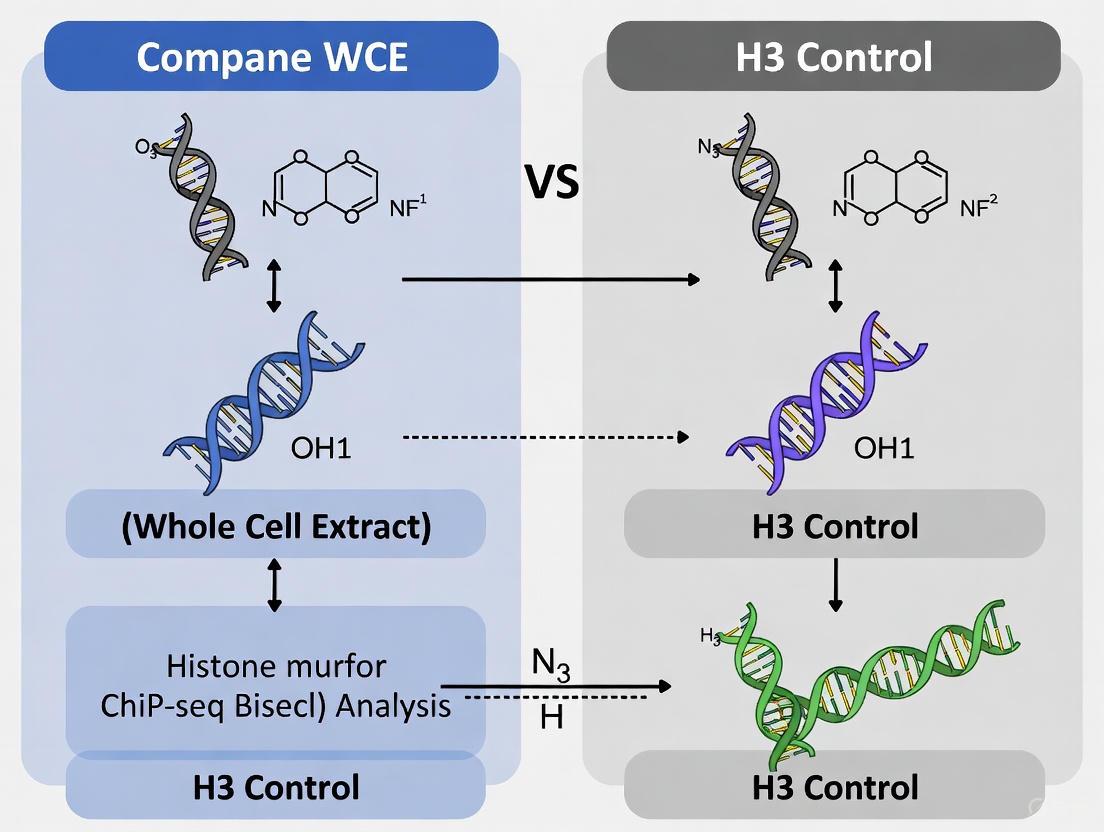
This article provides a definitive guide for researchers and drug development professionals on selecting and implementing control samples for histone modification ChIP-seq studies.
WCE vs. H3 Control for Histone ChIP-seq: A Comprehensive Guide for Robust Epigenetic Analysis
Abstract
This article provides a definitive guide for researchers and drug development professionals on selecting and implementing control samples for histone modification ChIP-seq studies. We systematically compare the two primary control types—Whole Cell Extract (WCE) and Histone H3 (H3) immunoprecipitation—across foundational principles, methodological applications, troubleshooting scenarios, and validation strategies. Drawing on current research, we outline the minor but notable differences between these controls, such as coverage in mitochondrial DNA and behavior near transcription start sites, and discuss their negligible impact on standard analyses. Furthermore, we explore advanced normalization techniques, including spike-in controls, for detecting global epigenetic changes, a critical consideration in therapeutic development involving epigenetic inhibitors.
Understanding ChIP-seq Controls: The Critical Roles of WCE and H3 Backgrounds
In epigenomic research, Chromatin Immunoprecipitation followed by sequencing (ChIP-seq) has become the gold standard for mapping histone modifications genome-wide. This powerful technology enables scientists to decipher the histone code—a complex language of chemical modifications that regulates gene expression without altering the underlying DNA sequence. However, the path to clear, interpretable data is fraught with technical challenges. Antibodies imperfectly target specific histone marks, sequencing processes introduce amplification artifacts, and GC biases create uneven genomic coverage. These factors collectively generate substantial background noise that can obscure true biological signals if left unaddressed.
The scientific community has reached a clear consensus: proper control samples are not merely optional but non-negotiable for rigorous ChIP-seq experimental design. As we explore the critical comparison between two primary control types—Whole Cell Extract (WCE) and Histone H3 (H3) immunoprecipitation—we'll uncover how the choice of background sample fundamentally impacts data quality, interpretation, and biological validity in histone modification studies.
Control samples in ChIP-seq experiments serve as essential baselines for distinguishing specific antibody-enriched signals from non-specific background. The Encyclopedia of DNA Elements (ENCODE) Consortium, which sets field standards, recommends two primary approaches: sequencing a Whole Cell Extract (WCE), often called "input" DNA, or performing a mock ChIP reaction using a non-specific antibody like IgG [1] [2]. A third, more specialized option—Histone H3 immunoprecipitation—has emerged as particularly relevant for histone modification studies.
Whole Cell Extract (WCE): This control consists of sheared chromatin taken prior to immunoprecipitation, capturing baseline DNA fragmentation patterns and sequencing biases without enrichment.
Mock IP (e.g., IgG): This control undergoes the full ChIP protocol using a non-specific antibody, theoretically better mimicking non-specific antibody interactions but often yielding insufficient DNA.
Histone H3 Control: Specifically for histone modifications, an H3 pull-down maps the underlying distribution of nucleosomes, measuring modification density relative to histone presence rather than uniform genomic distribution [1].
The fundamental distinction lies in what each control measures: WCE assesses modification frequency relative to total DNA, while H3 measures it relative to nucleosome occupancy. This difference in reference frames can significantly impact downstream interpretation of histone modification patterns.
Head-to-Head Comparison: WCE vs. H3 Controls
Experimental Design and Methodologies
A direct comparison between WCE and H3 controls was conducted using mouse hematopoietic stem and progenitor cells isolated from E14.5 fetal liver [1] [2]. Researchers generated ChIP-seq data for the repressive mark H3K27me3 alongside both control types, with subsequent validation through RNA-seq expression data.
Key Methodological Details:
- Cell Source: Hematopoietic stem and progenitor cells from mouse fetal liver
- ChIP Targets: H3K27me3 (3 replicates), Histone H3 (2 replicates), WCE (1 sample)
- Sequencing: Illumina HiSeq2000, 100bp single-end reads
- Alignment: Bowtie 2 with mm10 mouse genome reference
- Analysis: Reads filtered for mapping quality ≥20, binned into 100bp and 1000bp windows for different analyses [1]
Table 1: Key Experimental Components in the Comparative Study
| Component | Specification | Role in Experimental Design |
|---|---|---|
| Biological System | Mouse hematopoietic stem/progenitor cells | Represents native epigenomic environment for comparison |
| Target Histone Mark | H3K27me3 | Model repressive mark with broad genomic domains |
| Sequencing Platform | Illumina HiSeq2000 | Ensures high-quality, comparable data generation |
| Analysis Approach | Bin-based comparison (100bp/1000bp) | Enables genome-wide statistical comparison between controls |
| Validation Method | RNA-seq expression data | Provides biological ground truth for functional assessment |
Performance Comparison and Key Differences
The comparative analysis revealed both subtle distinctions and important similarities between WCE and H3 controls.
Table 2: Performance Comparison Between WCE and H3 Controls
| Parameter | WCE Control | H3 Control | Biological Impact |
|---|---|---|---|
| Mitochondrial Coverage | Higher reads in mitochondrial genome | Lower mitochondrial reads | H3 better reflects nuclear histone distribution |
| Transcription Start Sites | Different behavior near TSS | More similar to histone modification patterns | H3 may better capture regulatory nuances |
| Background Distribution | Uniform genomic expectation | Nucleosome-informed distribution | H3 accounts for underlying chromatin structure |
| Immunoprecipitation Steps | Lacks IP process | Includes full IP protocol | H3 better mimics technical biases |
| Correlation with Expression | Good anti-correlation with H3K27me3 | Slightly better anti-correlation | Minor practical advantage for H3 |
Despite these differences, the study concluded that both controls perform adequately for standard analyses, with H3 controls showing slight advantages in regions where differences emerged [1] [3]. Specifically, H3 pull-downs more closely resembled histone modification ChIP-seq profiles, particularly in their distribution around transcription start sites and reduced mitochondrial DNA coverage (reflecting the nuclear localization of nucleosomes).
Decision Framework: Choosing the Right Control
Application-Specific Recommendations
For Standard Histone Modification Mapping: Both WCE and H3 controls yield comparable results for routine peak calling and enrichment analysis [1] [3]. WCE may be preferred for its simplicity and established protocols.
For Nucleosome-Density Normalization: H3 controls are superior when measuring histone modification levels relative to nucleosome occupancy rather than total DNA [1].
For Limited Cell Numbers: In low-input protocols, the enhanced background correction of H3 controls may provide better signal-to-noise, though WCE is more established in these applications [4].
For Broad Histone Marks: For repressive marks like H3K27me3 and H3K9me3 that form large domains, H3 controls may better account for underlying nucleosome distribution in differential analysis [5].
Practical Implementation Workflow
The choice between controls integrates into the broader experimental design, as illustrated in the following ChIP-seq workflow:
Advanced Applications and Future Directions
Specialized Methodologies for Challenging Samples
Recent methodological advances have expanded ChIP-seq applications to limited cell numbers. Carrier ChIP-seq (cChIP-seq) employs a DNA-free recombinant histone carrier to maintain working reaction scales without introducing contaminating DNA [4]. This approach successfully profiles multiple histone marks from as few as 10,000 cells while maintaining data quality comparable to standard-scale protocols.
For differential analysis of broad histone marks, specialized computational tools like histoneHMM use bivariate Hidden Markov Models to identify differentially modified regions, outperforming peak-centric methods for marks like H3K27me3 and H3K9me3 [5].
Table 3: Key Research Reagents and Solutions for ChIP-seq Controls
| Reagent/Resource | Function | Example Specifications |
|---|---|---|
| H3 Antibody | Immunoprecipitation of core histones | AbCam antibody [1] |
| Chromatin Shearing | DNA fragmentation | Covaris sonicator [1] [4] |
| Immunoprecipitation | Target enrichment | Protein G beads (Life Technologies) [1] |
| Library Preparation | Sequencing library construction | TruSeq DNA Sample Prep Kit (Illumina) [1] |
| Sequencing Platform | High-throughput read generation | HiSeq2000 (Illumina) [1] |
| Analysis Pipeline | Data processing and peak calling | Bowtie2 alignment, MACS2 peak calling [1] |
The critical role of control samples in ChIP-seq cannot be overstated—they are fundamental components of rigorous experimental design rather than optional additions. The comparison between WCE and H3 controls reveals a nuanced landscape where both perform adequately for standard analyses, but differ in their underlying assumptions and subtle technical behaviors.
For most researchers investigating histone modifications, the choice between controls should be guided by specific experimental questions: WCE controls offer simplicity and established standardization, while H3 controls more accurately reflect nucleosome-informed background distributions. As the field advances toward single-cell applications and more complex multi-modal integrations, the principles of proper background subtraction remain constant—controls remain non-negotiable for distinguishing biological signal from technical noise in the epigenomic landscape.
In chromatin immunoprecipitation followed by sequencing (ChIP-seq), the use of control samples is essential for distinguishing specific biological signals from background noise. Control samples account for technical artifacts including antibody nonspecificity, PCR amplification biases, GC content variation, and sequencing alignment irregularities [1]. For histone modification profiling, the Encyclopedia of DNA Elements (ENCODE) Consortium guidelines traditionally recommend two primary control types: Whole Cell Extract (WCE), often called "input," and mock ChIP reactions using non-specific antibodies like IgG [1] [6]. While WCE has emerged as the most commonly employed control, a growing body of research investigates its performance characteristics relative to alternative controls, particularly Histone H3 immunoprecipitation, which accounts for the underlying nucleosomal landscape [1] [6]. This guide objectively compares the experimental performance of WCE against H3 control within histone ChIP-seq applications, providing researchers with evidence-based insights for experimental design.
Understanding the Control Types: WCE vs. H3
Whole Cell Extract (WCE)
WCE consists of sheared chromatin taken prior to the immunoprecipitation step in the ChIP protocol. It represents the baseline genomic DNA content without any enrichment, serving to measure background relative to a theoretically uniform genome [1] [6]. Its primary advantage lies in bypassing the immunoprecipitation process, which can sometimes yield insufficient DNA quantities in mock pull-downs.
Histone H3 Immunoprecipitation
An H3 pull-down utilizes an antibody against the core histone H3 to map the distribution of all nucleosomes along the DNA [1]. This control specifically accounts for background by measuring the enrichment of a histone modification relative to the total histone content at any genomic location. It closely mimics the technical procedures of a target-specific ChIP while capturing the biological context of nucleosome occupancy.
IgG Control
A mock pull-down with a non-specific immunoglobulin G (IgG) antibody estimates background by simulating the immunoprecipitation process without targeting a specific epitope. While it emulates more protocol steps than WCE, obtaining sufficient DNA yield can be challenging, making WCE the more practical and prevalent choice [1].
Experimental Comparison: Methodologies and Protocols
Cell Source and Isolation
The foundational comparison data discussed herein was generated from a mouse hematopoietic stem and progenitor cell population isolated from E14.5 fetal livers (C57BL/6 strain) [1] [6]. Cells were sorted via fluorescence-activated cell sorting using the surface marker profile: lineage negative (Ter119, B220, CD5, CD3, Gr1), c-Kit+, and Sca1+ [1]. Approximately 250,000 cells were used for each ChIP assay [1].
Chromatin Immunoprecipitation Protocol
- Cross-linking and Sonication: Formaldehyde cross-linked cells were sonicated using a Covaris sonicator to shear chromatin [1] [6].
- Input Sample Collection: A small fraction of sonicated material was retained as the WCE sample [1].
- Immunoprecipitation: The remaining chromatin was incubated overnight at 4°C with specific antibodies:
- Complex Purification: Immune complexes were isolated using protein G beads (Life Technologies) [1].
- DNA Recovery: Cross-links were reversed (65°C for 4 hours), and DNA was purified with the ChIP Clean and Concentrator kit (Zymo) [1].
- Sequencing: Libraries were prepared with the TruSeq DNA Sample Prep Kit (Illumina) and sequenced on an HiSeq2000 (Illumina) [1].
Data Analysis Workflow
The following diagram illustrates the computational workflow for comparing control samples, from sequencing data to biological interpretation:
Key Research Reagent Solutions
Table 1: Essential reagents and materials for ChIP-seq control experiments
| Reagent/Material | Specific Example | Function in Protocol |
|---|---|---|
| Cell Sorting Antibodies | Anti-Ter119, B220, CD5, CD3, Gr1, c-Kit, Sca1 | Isolation of pure hematopoietic stem and progenitor cell population from tissue [1] |
| ChIP Antibodies | Anti-H3 (AbCam), Anti-H3K27me3 (Millipore) | Specific immunoprecipitation of target histone or modification [1] |
| Chromatin Shearing Instrument | Covaris Sonicator | Fragmentation of cross-linked chromatin to appropriate size [1] |
| Immunoprecipitation Beads | Protein G beads (Life Technologies) | Capture of antibody-bound chromatin complexes [1] |
| DNA Purification Kit | ChIP Clean and Concentrator (Zymo) | Post-reversal purification of DNA for sequencing [1] |
| Library Prep Kit | TruSeq DNA Sample Prep Kit (Illumina) | Preparation of sequencing libraries from immunoprecipitated DNA [1] |
Quantitative Performance Comparison
Library Characteristics and Genome-wide Coverage
The experimental dataset included replicates of H3K27me3 ChIP-seq (16-18 million reads each), H3 ChIP-seq (24-27 million reads each), and one WCE sample (44 million reads) [1]. Analysis revealed that H3 samples more closely resembled the histone modification ChIP-seq profiles than WCE did, particularly in their coverage patterns [1]. A key finding was that H3 controls demonstrated lower mitochondrial genome coverage compared to WCE, suggesting WCE may over-represent regions with high chromatin accessibility [1].
Performance at Transcriptionally Active Regions
Table 2: Comparative performance of WCE and H3 controls near transcription start sites
| Feature | WCE Control | H3 Control | Biological Implication |
|---|---|---|---|
| Coverage near TSS | Shows a distinct peak | Behaves more similarly to H3K27me3 ChIP-seq | H3 better accounts for nucleosome positioning around promoters [1] |
| Correlation with Expression | Standard correlation when identifying enriched regions | Standard correlation when identifying enriched regions | Both controls perform similarly in relating histone marks to gene expression [1] |
| Background Modeling | Measures density relative to uniform genome | Measures density relative to histone presence | H3 accounts for uneven nucleosome distribution [1] |
Impact on Peak Detection and Differential Enrichment
When used for normalization in differential enrichment analysis with limma-voom or for peak calling with MACS2, both WCE and H3 controls produced results of comparable quality for standard analyses [1]. The differences, while measurable, had negligible impact on final interpretation in most scenarios. However, in regions of variable nucleosome density, H3 provided a more accurate background reference [1].
Technical and Biological Biases of WCE
Limitations in Background Modeling
The primary technical bias of WCE stems from its fundamental assumption: it measures background relative to a uniform genomic distribution [1]. In reality, chromatin is not uniformly accessible. WCE fails to account for the underlying nucleosome landscape, which creates a systematic undersampling of tightly packed heterochromatin and oversampling of open euchromatin regions. This can lead to inaccurate background estimates in genomic regions with extreme chromatin states.
Protocol-derived Biases
As a "input" sample taken prior to immunoprecipitation, WCE does not undergo the IP process. Consequently, it may not fully capture biases introduced during the immunoprecipitation step itself, such as antibody-nucleosome complex formation or bead-binding efficiencies [1]. While a mock IgG control better mimics these steps, it often suffers from low DNA yield, making WCE the more practical, albeit incomplete, procedural control [1].
The empirical comparison reveals that while H3 controls more accurately reflect the biological context of nucleosome distribution, the practical differences between WCE and H3 controls have a negligible impact on the quality of standard ChIP-seq analyses [1]. Where differences exist—such as in mitochondrial coverage and behavior at transcription start sites—the H3 pull-down generally aligns more closely with the histone modification profiles [1].
For researchers designing histone ChIP-seq studies, the choice of control should align with experimental goals:
- Use WCE for standard differential enrichment analyses where high-quality antibodies are available, and the experimental focus is on strong, canonical signals.
- Consider H3 when studying genomic regions with known extreme variation in nucleosome density (e.g., highly repressed heterochromatin) or when aiming for the most biologically accurate normalization against total histone content.
The consistency in final analytical outcomes between the two controls supports the continued use of WCE as a robust and practical standard, while also validating H3 immunoprecipitation as a superior biological control for specific investigative contexts.
Chromatin Immunoprecipitation followed by sequencing (ChIP-seq) has become the method of choice for genome-wide mapping of histone modifications, providing crucial insights into the epigenetic mechanisms governing gene regulation, cell identity, and disease states [7] [8]. At the heart of any robust ChIP-seq experiment lies the appropriate use of control samples, which account for technical artifacts and background signals arising from imperfect antibody specificity, sequencing biases, and chromatin accessibility [1]. For histone modification studies, researchers primarily choose between two control types: Whole Cell Extract (WCE), often called "input" DNA, and Histone H3 immunoprecipitation. The selection between these controls is not merely a technical detail but a fundamental decision that influences data interpretation and biological conclusions. This guide provides an objective comparison of WCE versus H3 controls, synthesizing experimental data to inform best practices for the research community.
Biological Rationale for H3 Immunoprecipitation
Histone H3 is a core structural component of the nucleosome, the fundamental repeating unit of chromatin [9]. Every nucleosome consists of ~147 base pairs of DNA wrapped around a histone octamer, which includes a central (H3-H4)2 tetramer flanked by two H2A-H2B dimers [9]. Given this universal presence, an antibody against total Histone H3 will immunoprecipitate fragments from virtually all nucleosomal regions of the genome, providing a map of the underlying histone landscape.
The core premise of using H3 ChIP as a control is that it closely mimics the actual immunoprecipitation process for a specific histone mark while accounting for the baseline distribution of histones themselves [1] [3]. This is conceptually distinct from a WCE control, which consists of sheared, non-immunoprecipitated chromatin and aims to measure the modified histone's density relative to a uniform genomic background. The H3 control therefore accounts for potential non-specific antibody affinity to the histone backbone, a common confounding factor in histone ChIP experiments [1]. As research has revealed, histone proteins are dynamically regulated through variant incorporation and post-translational modifications, making the H3 control a more biologically relevant background for studying histone modifications [9].
Direct Comparison: WCE vs. H3 Control Performance
A systematic comparison using data from mouse hematopoietic stem and progenitor cells revealed both subtle and significant differences between WCE and H3 controls that impact their utility for histone mark analysis.
Table 1: Experimental Comparison of WCE and H3 Controls
| Performance Metric | Whole Cell Extract (WCE) | Histone H3 Immunoprecipitation |
|---|---|---|
| Basis of Background | Uniform genomic DNA distribution | Actual nucleosome distribution |
| Coverage of Mitochondrial DNA | Higher coverage | Lower coverage [1] |
| Behavior at Transcription Start Sites | Differs from histone marks | More closely matches histone mark profiles [1] |
| Similarity to Histone Modification Profiles | Lower similarity | Generally higher similarity [1] |
| Impact on Standard Analysis | Minor differences | Negligible impact on final peaks [1] |
| Immunoprecipitation Step | Not subjected to IP | Undergoes full IP process [1] |
Key Differential Findings
Genomic Distribution: Where the two controls differ, the H3 pull-down is generally more similar to the ChIP-seq profiles of histone modifications [1]. This is particularly evident near transcription start sites, where H3 coverage better reflects the natural enrichment of histones in these regulatory regions.
Mitochondrial DNA Coverage: WCE samples demonstrate significantly higher coverage in mitochondrial DNA compared to H3 ChIP-seq. This suggests that H3 controls better reflect the nuclear-specific distribution of histones, as mitochondria lack nucleosomal structures [1].
Final Analytical Impact: Despite these differences, the study concluded that the choice between WCE and H3 controls has a negligible impact on the quality of standard peak calling analysis for histone modifications [1]. Both controls effectively normalized background when identifying enriched regions.
Methodological Considerations and Protocols
Standard Experimental Workflow
The following diagram illustrates the parallel paths for generating WCE and H3 control samples within a standard ChIP-seq workflow:
Detailed Protocol for H3 Immunoprecipitation
The methodology for H3 immunoprecipitation follows established ChIP protocols with specific considerations for histone controls:
Cell Preparation and Cross-linking: Begin with approximately 250,000 cells cross-linked with formaldehyde to preserve protein-DNA interactions. Quench cross-linking with glycine [7].
Chromatin Preparation and Fragmentation: Lyse cells and isolate nuclei. Fragment chromatin using a focused ultrasonicator (e.g., Covaris sonicator) or enzymatic digestion (e.g., Micrococcal Nuclease) to achieve fragments of 200-500 bp. For enzymatic fragmentation, this typically yields fragments of 1-5 nucleosomes in size [10].
Immunoprecipitation: Incubate fragmented chromatin with a validated anti-Histone H3 antibody overnight at 4°C. For the positive control H3 antibody, Cell Signaling Technology recommends using Histone H3 (D2B12) XP Rabbit mAb #4620, which detects all variants of histone H3 and provides a universal positive control [11]. Use protein G-coated magnetic beads or agarose beads to capture antibody-chromatin complexes.
Washing and Elution: Wash beads sequentially with low salt, high salt, and LiCl buffers to remove non-specifically bound chromatin. Elute bound complexes with elution buffer containing 1% SDS [7].
DNA Purification and Library Preparation: Reverse cross-links by incubation at 65°C for 4 hours. Purify DNA using silica membrane-based columns or phenol-chloroform extraction. Prepare sequencing libraries using commercial kits (e.g., Illumina TruSeq DNA Sample Prep Kit) [1].
Quality Control Measures
Antibody Validation: Ensure H3 antibody specificity using appropriate methods. The SNAP-ChIP platform utilizes barcoded semi-synthetic nucleosomes to quantify antibody specificity in the context of native chromatin [12].
Control Verification: The positive control H3 antibody should enrich for a ubiquitous genomic locus (e.g., RPL30), while a negative control normal rabbit IgG should not show significant enrichment [10].
Sequencing Standards: The ENCODE Consortium recommends a minimum of 20 million usable fragments per replicate for narrow histone marks and 45 million for broad marks when using H3 controls [13].
Essential Research Reagents and Tools
Table 2: Key Research Reagents for H3 Immunoprecipitation
| Reagent Category | Specific Examples | Function and Importance |
|---|---|---|
| H3 Antibodies | Histone H3 (D2B12) XP Rabbit mAb #4620 (CST) [11] | Immunoprecipitates all histone H3 variants; serves as universal positive control |
| Negative Controls | Normal Rabbit IgG [11] [10] | Measures non-specific background binding; essential for specificity determination |
| Chromatin Fragmentation | Covaris Sonicator [1]; Micrococcal Nuclease [10] | Shears chromatin to appropriate size; enzymatic digestion is milder than sonication |
| Library Preparation | Illumina TruSeq DNA Sample Prep Kit [1] | Prepares immunoprecipitated DNA for high-throughput sequencing |
| Specificity Testing | SNAP-ChIP K-MetStat Panel [12] | Tests antibody specificity against multiple histone PTMs using barcoded nucleosomes |
| Positive Control Primers | RPL30 Gene Primers [10] | Verifies successful IP; H3 antibody should enrich this ubiquitous genomic locus |
Discussion and Research Implications
The choice between WCE and H3 controls represents a balance between practical considerations and biological precision. WCE remains the most commonly used control, particularly for transcription factor ChIP-seq, and is often more straightforward to generate [1]. However, H3 immunoprecipitation provides a more biologically relevant background for histone modification studies as it accounts for the underlying distribution of nucleosomes and better mimics the IP process.
Recent advances in antibody validation technologies, particularly SNAP-ChIP, have highlighted the critical importance of antibody specificity in histone ChIP experiments [12]. Studies have demonstrated that peptide array specificity does not always correlate with performance in ChIP applications, emphasizing the need for application-specific validation [12]. When using H3 controls, researchers should verify that their primary antibody shows minimal cross-reactivity with non-target histone modifications to ensure accurate interpretation of results.
For researchers designing histone ChIP-seq studies, the ENCODE Consortium provides comprehensive guidelines, including the recommendation for two or more biological replicates and matched control experiments with identical sequencing parameters [13]. As the field moves toward more complex multi-omics approaches and single-cell epigenomics, the precise normalization afforded by appropriate controls becomes increasingly critical for data integration and interpretation [14].
Both WCE and H3 immunoprecipitation serve as valid controls for histone ChIP-seq experiments, with the H3 control offering a more nuanced biological background that accounts for the native distribution of nucleosomes. While the practical impact on peak calling may be minimal in standard analyses, the H3 control provides superior normalization in regions of dynamic histone turnover, such as transcription start sites. Researchers should select controls based on their specific experimental goals, with H3 immunoprecipitation being particularly advantageous for studies focusing on quantitative comparisons of histone modification levels or investigating regions with variable nucleosome density. As epigenomics continues to evolve toward higher precision and single-cell resolution, the biological relevance of H3 controls may make them the preferred choice for an expanding range of applications.
In chromatin immunoprecipitation followed by sequencing (ChIP-seq) for histone modifications, control samples are indispensable for distinguishing specific biological signals from technical artifacts and background noise. Due to imperfect antibody specificity and various technical biases, many sequenced fragments in a ChIP-seq experiment do not originate from the targeted histone mark [3] [1]. Since these background reads are not uniformly distributed across the genome, control samples are essential for accurately estimating the background distribution at any given genomic position [3]. The Encyclopedia of DNA Elements (ENCODE) Consortium guidelines traditionally recommend two principal types of controls: whole cell extract (WCE, commonly referred to as "input") or a mock immunoprecipitation with a non-specific antibody such as IgG [3] [1]. However, for histone modification studies specifically, a third option exists: performing an immunoprecipitation with an antibody against the core Histone H3 protein itself [3] [1]. This article provides a detailed, head-to-head comparison of WCE and H3 controls, examining their conceptual foundations, experimental performance, and practical implications for histone ChIP-seq research.
Conceptual Foundations: Divergent Approaches to Background Estimation
Whole Cell Extract (WCE) Control
The WCE control, or "input," consists of sheared chromatin taken prior to the immunoprecipitation step and does not undergo any antibody-based enrichment [1]. This control is intended to capture biases inherent in the experimental process, such as:
- Sequencing artifacts: Including PCR amplification biases and GC-content effects.
- Alignment artifacts: Variations in the mappability of different genomic regions.
- Chromatin preparation biases: Unequal accessibility of genomic regions to fragmentation during sonication.
Conceptually, the WCE control measures the baseline signal of a uniform genome. When used to call enrichment in a histone modification ChIP, it essentially asks: "Is this histone mark more enriched at this genomic location compared to a random piece of DNA?" [1]. While it effectively captures many technical confounders, it does not account for the immunoprecipitation process itself.
Histone H3 Control
The H3 control represents a more targeted approach for histone modification studies. It involves a complete immunoprecipitation using an antibody against the core histone H3, thus enriching for the underlying distribution of nucleosomes regardless of their modification state [3] [1]. This control strategy is conceptually distinct because it asks: "Is this specific histone modification enriched at this nucleosomal location relative to the overall nucleosomal landscape?"
The H3 control accounts for several factors that WCE does not:
- Immunoprecipitation efficiency: It inherently controls for variations in the IP process.
- Nucleosome occupancy: It normalizes for the underlying density of histones, which varies across the genome.
- Antibody cross-reactivity: It can account for non-specific antibody binding to unmodified histones or other epitopes [1].
Table 1: Core Conceptual Differences Between WCE and H3 Controls
| Feature | WCE (Input) Control | H3 Control |
|---|---|---|
| Sample Preparation | Sheared chromatin before IP | Full immunoprecipitation with anti-H3 antibody |
| What It Measures | Uniform genomic background + technical biases | Nucleosome occupancy + technical biases |
| IP Process Emulation | No | Yes |
| Primary Application | General ChIP-seq (TFs, histone modifications) | Histone modification ChIP-seq specifically |
| Conceptual Question | "Enrichment vs. random DNA?" | "Enrichment vs. total nucleosomes?" |
Diagram 1: Experimental workflow divergence between WCE and H3 control preparation. While both controls originate from the same biological sample, their processing differs fundamentally after chromatin shearing.
Experimental Performance and Data Quality Comparison
Genomic Distribution Patterns
Direct comparative studies reveal that while WCE and H3 controls share many similarities, they exhibit systematic differences in genomic coverage patterns:
- Mitochondrial DNA Coverage: H3 pull-downs show significantly lower coverage in mitochondrial regions compared to WCE controls, reflecting the lower nucleosome occupancy in mitochondrial DNA [3] [1].
- Transcription Start Sites (TSS): Both controls show behavior differences near TSS, with H3 controls typically demonstrating patterns more similar to those observed in histone modification ChIP-seq [1].
- Background Estimation Accuracy: In regions where the two controls differ, the H3 pull-down generally provides a background estimation more similar to the expected distribution of histone modifications [3].
A comparative analysis using mouse hematopoietic stem and progenitor cells found that H3 samples share specific features with H3K27me3 ChIP-seq samples that are not present in WCE samples, suggesting H3 controls may provide a more biologically relevant background for certain histone marks [1].
Impact on Downstream Analysis
Despite their conceptual differences, empirical evidence suggests that the choice between WCE and H3 controls has relatively minor impact on most standard analyses:
- Peak Calling Consistency: One study noted that the differences between H3 and WCE controls "have a negligible impact on the quality of a standard analysis" [3].
- Correlation with Expression Data: When comparing which control is most successful in extracting biologically relevant correlations between histone modifications and gene expression, both controls perform adequately, with minimal practical differences in most scenarios [1].
Table 2: Performance Comparison Based on Experimental Data
| Performance Metric | WCE Control | H3 Control | Experimental Evidence |
|---|---|---|---|
| Mitochondrial Coverage | Higher | Lower | Lower H3 coverage reflects biological reality [3] |
| TSS Behavior | Standard | More similar to histone marks | H3 patterns match histone ChIP-seq better [1] |
| IP Process Emulation | No | Yes | H3 undergoes full IP like actual samples [1] |
| Impact on Final Results | Minimal | Minimal | Differences have "negligible impact" on standard analysis [3] |
| Cell Input Requirements | Standard | Requires additional IP | H3 needs sufficient cells for successful IP [15] |
Methodological Considerations and Protocols
Standardized ChIP-seq Protocol for Comparison Studies
To ensure fair comparison between controls, consistent methodology is essential. The following protocol represents a harmonized approach suitable for generating both WCE and H3 controls from the same biological sample:
Cell Fixation and Preparation
- Begin with cells at 80-90% confluency [15].
- Add formaldehyde to a final concentration of 1% in growth media and incubate for 10 minutes at room temperature [15] [16].
- Quench cross-linking with 125 mM glycine for 5 minutes [15].
- Wash cells twice with ice-cold PBS [15].
- Resuspend cell pellet in RIPA lysis buffer (or similar) with protease inhibitors and incubate on ice for 15 minutes [15].
Chromatin Shearing by Sonication
- Sonicate crosslinked chromatin to fragment sizes of 200-1000 base pairs [15].
- Centrifuge to remove debris (12,500 × g, 10 minutes, 4°C) [15].
- Reserve an aliquot of sheared chromatin as the WCE control before proceeding to IP [1].
Immunoprecipitation for H3 Control
- For H3 control: incubate chromatin with anti-Histone H3 antibody overnight at 4°C [15] [1].
- Use protein G magnetic beads to capture immune complexes [15] [16].
- Wash sequentially with low salt, high salt, LiCl, and TE buffers [15].
- Elute complexes with elution buffer (1% SDS, 100 mM NaHCO₃) [15].
DNA Purification and Library Preparation
- Reverse cross-links by adding NaCl and Proteinase K, incubating at 62°C for 4 hours or overnight [15].
- Purify DNA using commercial column kits or phenol/chloroform extraction [15] [16].
- Prepare sequencing libraries using standard kits (e.g., Illumina TruSeq DNA Sample Prep Kit) [1].
The Scientist's Toolkit: Essential Reagents and Materials
Table 3: Key Research Reagent Solutions for Control Experiments
| Reagent/Material | Function | Example Products/Catalog Numbers |
|---|---|---|
| Formaldehyde | Cross-linking protein to DNA | 37% methanol-free formaldehyde [15] [16] |
| Protease Inhibitor Cocktail | Prevent protein degradation during processing | Complete Protease Inhibitor Cocktail, EDTA-free [17] |
| Histone H3 Antibody | Immunoprecipitation for H3 control | Anti-Histone H3 (e.g., AbCam) [1] |
| Protein G Magnetic Beads | Capture antibody-chromatin complexes | ChIP-Grade Protein G Magnetic Beads [16] |
| Sonication System | Chromatin fragmentation | Covaris S220 focused ultrasonicator [17] [1] |
| DNA Purification Columns | Isolate DNA after reverse cross-linking | ChIP Clean and Concentrator kit [1] |
| Library Prep Kit | Prepare sequencing libraries | Illumina TruSeq DNA Sample Prep Kit [1] |
The choice between WCE and H3 controls for histone modification ChIP-seq represents a trade-off between conceptual precision and practical convenience. The H3 control offers a more biologically relevant background for histone modification studies by accounting for nucleosome occupancy and the immunoprecipitation process itself [3] [1]. In regions where the two controls differ, such as near transcription start sites and in mitochondrial DNA, the H3 control generally behaves more similarly to actual histone modification pull-downs [1].
However, for most standard analytical applications, these differences appear to have minimal impact on final results [3]. The WCE control remains a robust, widely accepted option that captures the essential technical biases without requiring additional immunoprecipitation steps. For researchers working with limited cell numbers or focusing on standard histone marks, WCE provides adequate normalization. For investigations requiring precise normalization against nucleosome occupancy or studying subtle histone deposition patterns, the H3 control may offer conceptual advantages.
Future research directions should include more systematic comparisons across diverse cell types and histone modifications, as well as exploration of how these control choices impact the detection of differential enrichment in comparative epigenomic studies. As single-cell epigenomic methods advance, the conceptual framework provided by this comparison will inform the development of appropriate control strategies for next-generation chromatin mapping technologies.
Chromatin Immunoprecipitation followed by sequencing (ChIP-seq) has revolutionized epigenomic research by enabling genome-wide profiling of histone modifications. This powerful technique allows scientists to map the distribution of post-translational histone marks that regulate gene expression, cell identity, and disease development. However, the accuracy of these maps heavily depends on the use of appropriate control samples to account for technical artifacts and biological background. Due to imperfect antibody specificity and various technical biases, a significant portion of sequenced fragments in ChIP-seq experiments do not originate from the histone mark of interest, requiring robust background correction methods for accurate data interpretation [1].
The choice of control sample represents a critical methodological decision in experimental design. While the ENCODE Consortium guidelines suggest using whole cell extract (WCE or "input") or mock ChIP reactions with non-specific antibodies like IgG, an alternative approach for histone modification studies involves using a Histone H3 (H3) pull-down to map the underlying distribution of nucleosomes [1] [3]. This comparison guide objectively evaluates the performance characteristics of WCE versus H3 controls for histone ChIP-seq research, providing experimental data and methodological details to inform researchers and drug development professionals.
Control Sample Fundamentals: WCE versus H3
Whole Cell Extract (WCE) Control
The WCE control, commonly referred to as "input," consists of sonicated chromatin taken prior to the immunoprecipitation step. This sample captures baseline chromatin accessibility and technical biases such as PCR amplification artifacts, GC content biases, and sequencing artifacts without enrichment from specific antibodies. As a pre-enrichment control, WCE measures histone modification density relative to a uniform genomic background but does not account for biases introduced during the immunoprecipitation process itself [1].
Histone H3 Control
The Histone H3 control involves a complete ChIP procedure using an antibody against the core histone H3 protein. This approach enriches for nucleosomal regions throughout the genome, providing a background measurement that accounts for the uneven distribution of histones. The H3 control closely mimics the background by enriching sample at nucleosomal locations along DNA, making it particularly valuable for accounting for antibodies with slight affinity for all histones regardless of specific modifications [1] [6].
Mock IgG Control
Though not the primary focus of this comparison, the mock IgG control uses a non-specific antibody in a complete immunoprecipitation reaction. This control theoretically emulates most steps in ChIP processing but often proves challenging in practice due to difficulties in obtaining sufficient DNA quantities for accurate background estimation [1].
Table 1: Fundamental Characteristics of ChIP-seq Control Types
| Control Type | Description | Pros | Cons |
|---|---|---|---|
| Whole Cell Extract (WCE) | Sonicated chromatin before IP | Captures chromatin accessibility & technical biases | Misses IP-related biases |
| Histone H3 | Complete ChIP with anti-H3 antibody | Accounts for nucleosome distribution | Histone-specific only |
| Mock IgG | Complete ChIP with non-specific antibody | Mimics full protocol | Low DNA yield challenges |
Experimental Design & Methodologies
Foundational Comparison Study Protocol
The primary data for this comparison comes from a dedicated study investigating control samples for histone ChIP-seq [1] [3]. The experimental system utilized a mouse hematopoietic stem and progenitor cell population isolated from E14.5 fetal livers from C57BL/6 mice, sorted by fluorescence-activated cell sorting based on specific cell surface markers (lineage negative, c-Kit+, Sca1+).
For chromatin immunoprecipitation, formaldehyde cross-linked cells were sonicated using a Covaris sonicator. A small fraction of sonicated material was retained as the WCE sample, while the remainder underwent immunoprecipitation with either anti-H3 (AbCam) or anti-H3K27me3 (Millipore) antibodies overnight at 4°C. Immune complexes were purified with protein G beads, cross-links were reversed at 65°C for 4 hours, and DNA fragments were purified using the ChIP Clean and Concentrator kit (Zymo). Sequencing libraries were prepared with the TruSeq DNA Sample Prep Kit (Illumina) and sequenced on a HiSeq2000 (Illumina) [1].
The dataset included three replicates of H3K27me3 ChIP-seq (16-18 million reads each), two H3 ChIP-seq replicates (24-27 million reads each), and one WCE sample (44 million reads). Additionally, three RNA-seq replicates from adult bone marrow hematopoietic stem and progenitor cells were generated (approximately 17 million reads each) to enable correlation analyses with expression data [1].
Bioinformatic processing involved alignment with Bowtie 2 for ChIP-seq data and TopHat for RNA-seq data against the mm10 genome build. Aligned reads were filtered for mapping quality ≥20 and assigned to 100bp and 1000bp consecutive non-overlapping bins based on read centers for subsequent analysis. Differential analysis employed limma-voom, and peak finding utilized MACS 2.0.10 with default parameters [1].
Diagram 1: Experimental workflow for comparative control study. The schematic illustrates the parallel processing of WCE, H3, and H3K27me3 samples from shared starting material [1].
Advanced Methodological Applications
Beyond standard ChIP-seq, control considerations extend to advanced epigenomic applications. The recently developed Micro-C-ChIP method combines micrococcal nuclease-based chromatin fragmentation with chromatin immunoprecipitation to map 3D genome organization for specific histone modifications at nucleosome resolution. This approach, which has been applied to profile H3K4me3 and H3K27me3-specific chromatin architecture in mouse embryonic stem cells, employs tailored normalization strategies that differ from conventional ICE normalization used in bulk assays [18].
For single-cell epigenomic applications, tools like ChromSCape have been developed to address the specific challenges of sparse data from technologies like scChIP-seq, scCUT&Tag, and scChIC-seq. These methods enable the deconvolution of chromatin landscapes within heterogeneous samples like tumor microenvironments, identifying distinct H3K27me3 patterns associated with cell identity and disease subtypes [19].
Performance Comparison: Quantitative Findings
Genomic Distribution Patterns
Direct comparison of WCE and H3 controls revealed both similarities and important differences in genomic coverage patterns. The H3 control demonstrated generally higher similarity to histone modification ChIP-seq profiles than WCE, particularly in regions with characteristic histone enrichment [1].
Table 2: Performance Comparison of WCE vs. H3 Controls
| Performance Metric | WCE Control | H3 Control | Biological Significance |
|---|---|---|---|
| Mitochondrial Coverage | Higher read density | Lower read density | H3 better reflects lower histone content in mitochondria [1] |
| Transcription Start Sites | Different profile | Similar to histone marks | H3 captures nucleosome patterning at promoters [1] |
| Background Estimation | Uniform genome reference | Nucleosome-distribution reference | H3 accounts for underlying histone occupancy [1] [6] |
| Correlation with Expression | Moderate | Slightly stronger | H3 may better reflect functional relationships [1] |
| Impact on Standard Analysis | Negligible | Negligible | Both suitable for routine applications [1] |
Analysis of mitochondrial DNA coverage revealed strikingly different patterns, with WCE samples showing substantially higher read density in mitochondrial regions compared to H3 controls. This difference reflects the biological reality of lower nucleosome density in mitochondrial DNA, which the H3 control accurately captures due to its specificity for nucleosomal regions [1].
In genic regions, particularly around transcription start sites (TSS), the H3 control demonstrated profiles more similar to those of histone modification ChIP-seq than WCE. This similarity stems from the H3 control's ability to capture the underlying nucleosome distribution patterns that shape both histone modification landscapes and gene regulation [1].
Correlation with Gene Expression
The study evaluated how control choice influenced the detected relationship between histone modifications and gene expression by comparing H3K27me3 enrichment values (calculated using each control) with RNA-seq data. While both controls successfully identified expected negative correlations between H3K27me3 repressive marks and gene expression, the H3 control demonstrated slightly stronger correlation patterns, suggesting it may more accurately reflect functional relationships between chromatin states and transcriptional activity [1].
Practical Implementation Guidelines
Decision Framework for Control Selection
Based on the comparative experimental data, researchers can apply the following decision framework for control selection in histone ChIP-seq studies:
Standard histone modification analysis: Both WCE and H3 controls yield comparable results for routine applications, with negligible impact on peak calling and enrichment calculations in standard workflows [1].
Studies focusing on nucleosome-dependent phenomena: H3 controls are preferable when investigating processes tightly linked to nucleosome occupancy, such as chromatin accessibility dynamics or nucleosome positioning effects [1] [6].
Mitochondrial-nuclear interactions: H3 controls provide more accurate background correction for studies examining nuclear-mitochondrial epigenetic crosstalk due to their specificity for nucleosomal DNA [1].
Low-input or rare cell populations: WCE may be more practical when material is extremely limited, as it doesn't require successful immunoprecipitation and typically yields more DNA [1].
Advanced 3D chromatin applications: For methods like Micro-C-ChIP, specialized normalization approaches that differ from conventional ICE normalization must be implemented to account for uneven coverage inherent to enrichment-based methods [18].
Table 3: Key Research Reagent Solutions for Control Experiments
| Reagent/Resource | Specific Example | Function in Protocol |
|---|---|---|
| Cell Sorting | Fluorescence-activated cell sorting | Isolation of specific cell populations (e.g., hematopoietic stem cells) [1] |
| Cross-linking | Formaldehyde | Fixation of protein-DNA interactions [1] |
| Chromatin Shearing | Covaris sonicator | Fragmentation of chromatin to appropriate size [1] |
| H3 Antibody | AbCam anti-H3 | Immunoprecipitation of core histones for H3 control [1] |
| Protein G Beads | Life Technologies | Capture of antibody-chromatin complexes [1] |
| DNA Purification | Zymo ChIP Clean and Concentrator | Post-IP DNA cleanup and concentration [1] |
| Library Prep | Illumina TruSeq DNA Sample Prep Kit | Sequencing library construction [1] |
| Alignment Software | Bowtie 2 | Mapping sequenced reads to reference genome [1] |
| Peak Caller | MACS 2.0.10 | Identification of significantly enriched regions [1] |
| Differential Analysis | limma-voom | Statistical comparison between conditions [1] |
The comparative analysis of WCE and H3 controls for histone ChIP-seq reveals a nuanced landscape where both controls perform adequately for standard analyses, but exhibit important differences in specific genomic contexts. The H3 control generally demonstrates higher similarity to histone modification profiles, particularly in nucleosome-dense regions and at transcription start sites, while providing more biologically accurate background estimation for mitochondrial DNA. However, these differences rarely translate to significant impacts on conventional analytical outcomes [1].
Future methodological developments will likely expand control considerations to emerging single-cell and spatial epigenomic technologies. Tools like ChromSCape already address the unique challenges of sparse single-cell data [19], while techniques like Micro-C-ChIP extend control considerations to three-dimensional chromatin architecture studies [18]. As epigenomic methods continue evolving, the fundamental principle of appropriate control selection will remain essential for accurate biological interpretation across increasingly diverse applications and technological platforms.
For researchers designing histone ChIP-seq studies, the choice between WCE and H3 controls should be guided by specific experimental goals, biological questions, and practical constraints rather than presumptions of universal superiority. Both controls represent valid approaches with context-dependent advantages that can be leveraged to generate robust, biologically meaningful epigenomic data.
Protocols in Practice: Implementing WCE and H3 Controls in Your ChIP-seq Workflow
In chromatin immunoprecipitation followed by sequencing (ChIP-seq), the choice of appropriate controls is fundamental to generating biologically meaningful data. This guide provides an objective comparison between two common control strategies: Whole Cell Extract (WCE) and Histone H3 (H3) controls for histone modification studies. The ENCODE and modENCODE consortia, through their experience with thousands of ChIP-seq experiments, emphasize that proper control experiments are essential for distinguishing specific enrichment from background noise [20]. Controls account for variations in chromatin accessibility, DNA fragmentation, and sequencing efficiency, thereby enabling accurate identification of genuine histone modification sites.
The robustness of ChIP-seq data is highly dependent on both the experimental controls and the quality of antibodies used [21]. For histone modifications, which represent a key application of ChIP-seq, each experiment aims to map genomic locations with maximal signal-to-noise ratio and completeness across the genome [20]. This comparison guide evaluates parallel experimental designs incorporating both WCE and H3 controls, providing researchers with a framework for selecting the optimal control strategy based on their specific research objectives and resource constraints.
Theoretical Background: WCE vs. H3 Control Sequencing
Whole Cell Extract (WCE) Control
WCE control sequencing utilizes input DNA from sheared chromatin that has not undergone immunoprecipitation. This control accounts for technical biases including:
- Variations in chromatin fragmentation: Different genomic regions shear at different rates due to chromatin accessibility [21]
- Sequence-dependent biases: Inherent DNA properties that affect amplification and sequencing
- Background noise: Non-specific signals present throughout the genome
WCE is often considered a "general purpose" control that captures the overall chromatin landscape without specificity for any particular chromatin feature.
Histone H3 Control
Histone H3 control sequencing utilizes DNA immunoprecipitated using a pan-histone H3 antibody. This approach specifically targets the nucleosomal component of chromatin and offers several advantages:
- Nucleosome-normalized background: Accounts for uneven nucleosome distribution across the genome
- Enhanced signal detection: Particularly beneficial for identifying broad chromatin domains marked by histone modifications
- Redenced false positives: By controlling for histone density, it minimizes erroneous peak calling in nucleosome-rich regions
The ENCODE guidelines note that different protein classes have distinct genomic interaction patterns, with histones typically exhibiting "broad-source" binding patterns across large genomic domains [20].
Comparative Performance Analysis
Quantitative Comparison of Control Performance
Table 1: Performance comparison of WCE and H3 controls for histone ChIP-seq
| Performance Metric | WCE Control | Histone H3 Control |
|---|---|---|
| Background normalization | General chromatin accessibility | Nucleosome distribution |
| Optimal application | Transcription factors, point-source factors | Histone modifications, broad domains |
| Signal-to-noise ratio | Variable depending on region | Improved in heterochromatic regions |
| Experimental complexity | Lower (no IP required) | Higher (requires H3 immunoprecipitation) |
| Resource requirements | Lower | Higher (additional antibody cost) |
| Data interpretation | Straightforward | Requires consideration of nucleosome density |
Experimental Evidence from Comparative Studies
While direct comparative studies between WCE and H3 controls are limited in the literature, systematic evaluations of ChIP-seq parameters provide insight into control performance. Research indicates that the specificity of any ChIP-seq experiment is governed by the antibody quality and the enrichment achieved during immunoprecipitation [20]. For histone modifications, monoclonal antibodies have demonstrated equivalent performance to polyclonal antibodies while offering superior lot-to-lot consistency [21].
In practice, H3 controls may provide superior normalization for histone modification studies because they account for the uneven distribution of nucleosomes across the genome. Studies mapping chromatin states in pluripotent and lineage-committed cells have successfully utilized pan-H3 controls to generate genome-wide chromatin state maps, demonstrating their utility in complex biological systems [22].
Experimental Protocol for Parallel Control Sequencing
Sample Preparation Workflow
The following diagram illustrates the parallel experimental workflow for preparing both WCE and H3 control samples alongside target histone modification samples:
Detailed Step-by-Step Methodology
Stage 1: Cell Harvesting and Cross-linking
Culture and cross-link cells
- Grow approximately 1×10⁷ cells per sample to 90% confluence [23]
- Add formaldehyde directly to culture medium to a final concentration of 1%
- Incubate for 10 minutes at room temperature with gentle agitation
Quench cross-linking
- Add glycine to a final concentration of 125 mM
- Incubate for 5 minutes at room temperature to stop cross-linking
- Wash cells twice with ice-cold PBS
Stage 2: Chromatin Preparation and Shearing
Isolate nuclear fraction
- Resuspend cell pellet in 2 mL of Nuclear Extraction Buffer 1 (50 mM HEPES-NaOH pH=7.5, 140 mM NaCl, 1 mM EDTA, 10% Glycerol, 0.5% NP-40, 0.25% Triton X-100, 1× protease inhibitors)
- Incubate for 15 minutes at 4°C with rocking
- Pellet nuclei and resuspend in 2 mL of Nuclear Extraction Buffer 2 (10 mM Tris-HCl pH=8.0, 200 mM NaCl, 1 mM EDTA, 0.5 mM EGTA, 1× protease inhibitors)
- Incubate for 15 minutes at 4°C with rocking [23]
Shear chromatin
- Resuspend nuclear pellet in 350 μL of sonication buffer
- Sonicate to achieve DNA fragments of 200-300 bp for histone targets
- Pellet debris by centrifugation at 17,000 × g for 15 minutes at 4°C
- Transfer supernatant (sheared chromatin) to a new tube
Stage 3: Parallel Control Preparation
Whole Cell Extract Control
- Reserve 50% of sheared chromatin for WCE control
- Add 5 M NaCl to a final concentration of 200 mM
- Reverse cross-links by incubating at 65°C overnight
- Purify DNA using phenol-chloroform extraction and ethanol precipitation
Histone H3 Control and Target Immunoprecipitation
- Prepare antibody-bound beads by incubating 4 μg of histone H3 antibody or target-specific antibody with protein A/G magnetic beads for 6 hours at 4°C [23]
- Incubate remaining 50% of sheared chromatin with antibody-bound beads overnight at 4°C with rotation
- Wash beads twice with 1 mL RIPA-150 buffer
- Elute chromatin from beads using elution buffer (1% SDS, 0.1 M NaHCO₃)
- Reverse cross-links by adding 5 M NaCl to 200 mM and incubating at 65°C overnight
- Purify DNA
Stage 4: Library Preparation and Sequencing
Prepare sequencing libraries
- Use equal amounts of DNA from each sample for library preparation
- Follow standard Illumina library preparation protocols
- Use 10-20 million reads per sample for histone modifications [20]
Quality control metrics
- Assess DNA fragment size distribution using Bioanalyzer
- Verify library concentration by qPCR
- Sequence on appropriate Illumina platform
The Scientist's Toolkit: Essential Research Reagents
Table 2: Essential reagents for parallel WCE and H3 control sequencing
| Reagent Category | Specific Examples | Function and Importance |
|---|---|---|
| Cross-linking Agents | Formaldehyde (1%), Disuccinimidyl glutarate (DSG) | Preserves protein-DNA interactions; formaldehyde is standard for histone ChIP [23] |
| Antibodies | Histone H3 (pan), Target-specific histone modification antibodies | Key determinant of success; monoclonal antibodies recommended for lot consistency [21] |
| Chromatin Shearing Reagents | Sonication buffers, MNase | Fragments chromatin to optimal size (200-300 bp for histones) [23] |
| Immunoprecipitation Materials | Protein A/G magnetic beads, RIPA wash buffers | Enables target-specific chromatin isolation [23] |
| DNA Purification Kits | Phenol-chloroform, Silica column-based kits | Purifies DNA after cross-link reversal for sequencing |
| Library Preparation Kits | Illumina DNA library prep kits | Prepares sequencing libraries from immunoprecipitated DNA |
| Validation Reagents | Peptide arrays, control primers for qPCR | Validates antibody specificity and experimental success [24] [25] |
Data Analysis and Interpretation Framework
Peak Calling and Normalization Strategies
The choice of control significantly influences peak calling and data normalization:
- With WCE control: Use tools like MACS2 with the
--controlflag to call peaks against background chromatin accessibility - With H3 control: Normalize for nucleosome density, which is particularly important for broad histone marks like H3K27me3 and H3K9me3
Quality Assessment Metrics
The ENCODE consortium recommends several quality metrics for ChIP-seq data [20]:
- Sequencing depth: 10-20 million reads for histone modifications
- FRiP (Fraction of Reads in Peaks): >1% for broad histone marks, >5% for punctate marks
- Cross-correlation analysis: Assesses read phasing around binding sites
Comparative Data Interpretation
When comparing results normalized with different controls:
- WCE-normalized data may show stronger enrichment in open chromatin regions
- H3-normalized data may better identify enrichment in repressed or heterochromatic regions
- Integrated approaches using both controls can provide the most comprehensive understanding of histone modification landscapes
Based on comparative analysis and experimental data:
For general histone modification mapping, H3 control is recommended as it specifically accounts for nucleosome distribution patterns.
For studies with limited resources or high sample numbers, WCE control provides a cost-effective alternative that still accounts for technical variability.
For maximum data robustness, parallel sequencing of both controls provides the most comprehensive normalization framework, though at increased cost.
Regardless of control choice, antibody validation remains paramount, with peptide arrays and functional ChIP validation being essential for verifying specificity [24] [25].
The optimal control strategy depends on research goals, biological questions, and available resources. By understanding the strengths and limitations of each approach, researchers can make informed decisions that maximize the quality and interpretability of their histone ChIP-seq data.
Chromatin Immunoprecipitation followed by sequencing (ChIP-seq) has become an indispensable technique for mapping protein-DNA interactions and histone modifications genome-wide. The robustness of ChIP-seq datasets is highly dependent upon the antibodies used for immunoprecipitation, making antibody selection one of the most critical factors in experimental design [26]. For researchers investigating histone modifications, the choice between monoclonal and polyclonal antibodies presents a significant decision point with implications for data quality, reproducibility, and long-term project viability. Historically, polyclonal antibodies have been the standard reagent for many laboratories and consortia, but they come with inherent limitations that can compromise experimental consistency [26] [27]. This guide provides a systematic comparison of monoclonal versus polyclonal antibody performance in histone ChIP-seq, with particular emphasis on H3 modifications, to empower researchers in making evidence-based selection decisions for their epigenetics research.
Fundamental Differences Between Monoclonal and Polyclonal Antibodies
Biochemical Properties and Production Methods
Monoclonal antibodies consist of a homogeneous population of identical antibody molecules produced by a single clone of immune cells. They recognize a single epitope on the target antigen with high uniformity [27]. In contrast, polyclonal antibodies represent a heterogeneous mixture of antibodies produced by different immune cell clones, recognizing multiple epitopes on the same antigen [27]. This fundamental difference in production and composition leads to distinct performance characteristics in ChIP-seq applications.
The following diagram illustrates the key differences in the composition and properties of these antibody types:
Practical Implications for Epigenetic Research
The biochemical differences between antibody types translate directly to practical research implications. Monoclonal antibodies, with their single-epitope specificity, provide precisely targeted enrichment with minimal off-target effects, while their renewable nature ensures long-term experimental consistency [27]. Polyclonal antibodies, though sometimes perceived as providing better capture through multiple epitope recognition, often target peptide antigens of only 20-40 amino acids, resulting in overlapping epitopes that may not provide the expected benefits of multiplex recognition [27]. The lot-to-lot variability inherent to polyclonal antibodies presents a particular challenge for long-term research projects and published research reproducibility [26] [27].
Systematic Performance Comparison in Histone ChIP-seq
Experimental Design for Head-to-Head Evaluation
A comprehensive systematic comparison published in Epigenetics & Chromatin directly evaluated monoclonal versus polyclonal antibody performance for mapping key histone modifications [26] [28]. Researchers designed a rigorous experimental system comparing five monoclonal antibodies targeting fundamental histone modifications (H3K4me1, H3K4me3, H3K9me3, H3K27ac, and H3K27me3) against their polyclonal counterparts previously validated by the ENCODE project [26]. To ensure precise comparison, the study implemented fully automated ChIP-seq protocols on standard laboratory liquid handling systems, controlling for technical variability through multiple technical replicates (2-4 per antibody) and computational normalization to account for fragmentation biases and read depth differences [26]. The investigation spanned multiple cell types, including human erythroleukemic K562 cells, human lymphoblastoid GM12878 cells, and mouse embryonic stem cells, providing broad biological relevance [26].
Quantitative Comparison of Performance Metrics
The systematic evaluation revealed highly similar performance between monoclonal and polyclonal antibodies for most histone modifications tested. The table below summarizes the key comparative findings:
Table 1: Performance Comparison of Monoclonal vs. Polyclonal Antibodies for Histone Modifications
| Histone Modification | Antibody Performance Similarity | Notable Observations | Lot Consistency |
|---|---|---|---|
| H3K4me1 | Highly similar | Comparable peak calls and distribution patterns | Consistent across monoclonal lots |
| H3K4me3 | Highly similar | Equivalent genome-wide binding patterns | Consistent across monoclonal lots |
| H3K9me3 | Highly similar | Nearly identical heterochromatic enrichment | Consistent across monoclonal lots |
| H3K27me3 | Highly similar | Equivalent Polycomb-repressed region coverage | Consistent across monoclonal lots |
| H3K27ac | Substantial differences | Distinct binding patterns, likely due to immunogen differences rather than clonality | Consistent across monoclonal lots |
The similarity in performance was further demonstrated when researchers used two distinct lots of the same monoclonal antibody, which showed consistent results, highlighting the superior lot-to-lot reproducibility of monoclonal reagents [26]. Initial visualization of the data in genome browsers revealed a high degree of similarity in read coverage between monoclonal and polyclonal antibodies for most targets [26]. When examining the number and distribution of called peaks, researchers found that four of the five monoclonal/polyclonal pairs performed equivalently in terms of sensitivity, specificity, and peak localization [26].
Advantages of Monoclonal Antibodies for Standardization
Based on their comprehensive analysis, the study authors concluded that monoclonal antibodies as a class perform equivalently to polyclonal antibodies for detecting histone post-translational modifications in both human and mouse systems [26] [28]. Given that monoclonal antibodies represent renewable resources that eliminate the lot-to-lot variability inherent to polyclonal antibodies, the study recommended using monoclonal antibodies in ChIP-seq experiments to increase standardization, reproducibility, and robustness of datasets [26]. This replacement strategy would substantially improve the comparability of results among different laboratories and across temporal studies [26].
Contextualizing Antibody Selection Within Control Sample Strategies
The Critical Role of Appropriate Controls in Histone ChIP-seq
The selection of proper control samples represents another fundamental aspect of rigorous ChIP-seq experimental design, particularly for histone modifications. Control samples account for technical artifacts including uneven chromatin fragmentation, sequencing biases, and background signal from non-specific antibody binding [1]. The Encyclopedia of DNA Elements (ENCODE) Consortium guidelines suggest either whole cell extract (WCE, often called "input") or mock ChIP reactions using non-specific IgG antibodies as controls [1]. For histone modification studies specifically, an alternative approach uses Histone H3 pull-down to map the underlying nucleosome distribution [1] [29].
Comparing WCE versus H3 Pull-down as Controls
A comparative study investigated the performance differences between WCE and H3 ChIP-seq as control samples in histone modification research [1]. The research generated data from a hematopoietic stem and progenitor cell population isolated from mouse fetal liver to directly compare WCE and H3 ChIP-seq as controls for H3K27me3 profiling [1]. The findings revealed that while both control types effectively support standard ChIP-seq analyses, H3 pull-down controls generally demonstrate greater similarity to histone modification ChIP-seq profiles [1]. Specific differences included variations in mitochondrial coverage and behavior near transcription start sites, with H3 controls more accurately reflecting the underlying histone distribution [1]. However, the practical impact of these differences on standard analytical outcomes was generally negligible for most applications [1].
Table 2: Comparison of Control Sample Types for Histone Modification ChIP-seq
| Control Type | Description | Advantages | Limitations |
|---|---|---|---|
| Whole Cell Extract (WCE/Input) | Sheared chromatin sample taken prior to immunoprecipitation | Accounts for fragmentation and sequencing biases; widely used | Does not account for IP-specific background; may overcorrect in nucleosome-dense regions |
| IgG Control | Mock immunoprecipitation with non-specific antibody | Mimics non-specific antibody binding; accounts for IP process | Often yields limited DNA; may not reflect histone-specific background |
| H3 Pull-down | Immunoprecipitation with anti-H3 antibody | Maps nucleosome distribution; ideal reference for histone modifications | May overcorrect in nucleosome-dense regions; less common in published studies |
Integrated Experimental Design Considerations
The relationship between antibody selection and control strategy forms a critical foundation for rigorous histone ChIP-seq. The following diagram illustrates how these elements integrate within a comprehensive experimental workflow:
Advanced Methodological Considerations
Protocol Optimization for Reproducible Histone ChIP-seq
Recent methodological advances have refined ChIP-seq protocols for enhanced reproducibility and quantification. Key optimizations include:
Micrococcal Nuclease (MNase) Digestion: Superior to sonication for generating mononucleosome-sized fragments (typically 100-200bp), creating more uniform fragment sizes that improve quantification accuracy [30]. Optimal conditions identified include 75U MNase for 5 minutes per 10cm dish of cells at 80% confluence, applicable across multiple cell types including HeLa, MCF7, and primary mouse CD8+ T cells [30].
Formaldehyde Quenching: Comparison of 125mM glycine versus 750mM Tris as quenching reagents revealed that Tris provides more consistent results, potentially because glycine cannot form a terminal product with formaldehyde [30].
Bead Handling: Modern optimized protocols often eliminate bead pre-clearing and blocking steps, as non-specific bead-DNA capture typically remains below 1.2% of input DNA across replicates [30].
Quantitative Frameworks and Antibody Specificity Assessment
Emerging quantitative approaches enable more rigorous assessment of antibody performance in ChIP-seq applications:
sans spike-in Quantitative ChIP (siQ-ChIP): This methodology introduces an absolute quantitative scale to ChIP-seq data without spike-in normalization by analyzing the binding isotherm generated when titrating antibody or epitope concentration [30]. Sequencing points along this isotherm can reveal differential binding specificities associated with on- and off-target epitope interactions [30].
Antibody Specificity Spectrum: siQ-ChIP enables classification of antibodies as "narrow" or "broad" spectrum based on their binding characteristics. Narrow spectrum antibodies display a single observable binding constant, while broad spectrum antibodies exhibit a range of binding constants with varying affinities for different epitopes [30].
Internal Standard Calibrated ChIP (ICeChIP): This approach spikes native chromatin samples with nucleosomes reconstituted from recombinant and semisynthetic histones on barcoded DNA prior to immunoprecipitation, enabling measurement of histone modification densities on a biologically meaningful scale and providing in situ assessment of immunoprecipitation specificity [31].
The Scientist's Toolkit: Essential Research Reagent Solutions
Table 3: Key Research Reagents for Histone ChIP-seq Experiments
| Reagent Category | Specific Examples | Function & Importance |
|---|---|---|
| Validated Histone Antibodies | Anti-H3K27me3 [EPR18607], Anti-H3K4me3 [EPR20551-225], Anti-H3K9me3 [EPR16601] [32] | Target-specific immunoprecipitation; rigorous validation essential for specificity |
| Control Antibodies | Histone H3 Antibody #2650 (ChIP formulated) [33], Species-matched IgG controls [32] | Reference for background signal; H3 antibodies ideal for histone modification studies |
| Chromatin Preparation Kits | SimpleChIP Enzymatic Chromatin IP Kit [34] | Standardized chromatin fragmentation and preparation; improves reproducibility |
| ChIP-Seq Library Prep | TruSeq DNA Sample Prep Kit (Illumina) [1] | Preparation of sequencing libraries from immunoprecipitated DNA |
| Positive Control Primers | GAPDH, ACTB, or other constitutively active promoters | Validation of ChIP efficiency through quantitative PCR |
| Chromatin Fragmentation Reagents | Micrococcal Nuclease (75U/5min condition) [30] | Generation of mononucleosome-sized fragments for high-resolution mapping |
Based on comprehensive experimental comparisons and methodological advancements, we recommend the following guidelines for antibody selection in histone ChIP-seq:
Prioritize monoclonal antibodies for most histone modification studies, particularly for long-term projects requiring reproducible results across multiple experiments [26] [28]. Their renewable nature and consistent performance eliminate lot-to-lot variability concerns inherent to polyclonal reagents [27].
Select H3 pull-down controls when studying histone modifications, as they most closely mimic the background distribution of nucleosomes and provide the most appropriate reference for enrichment calculations [1] [29].
Implement quantitative frameworks like siQ-ChIP or ICeChIP when precise measurement of modification densities is required, as these approaches provide absolute quantification and critical assessment of antibody specificity [30] [31].
Validate antibody performance in your specific experimental system, as immunogen differences (rather than clonality) may sometimes account for variation in binding patterns, as observed with H3K27ac antibodies [26].
The transition toward monoclonal antibodies and standardized control strategies represents a significant advancement in epigenetic research methodology, promising enhanced reproducibility and more reliable cross-study comparisons in the rapidly advancing field of chromatin biology.
In histone chromatin immunoprecipitation followed by sequencing (ChIP-seq), the choice of appropriate control samples is fundamental to accurate data interpretation. Control samples enable distinction between true biological signal and background noise arising from technical artifacts, non-specific antibody binding, and sequencing biases. Within this context, two primary control strategies have emerged: whole cell extract (WCE) and histone H3 (H3) chromatin immunoprecipitation. This guide objectively compares these approaches within the broader framework of key technical considerations for ChIP-seq, including cross-linking, chromatin shearing, and library preparation, providing researchers with data-driven insights for experimental design.
Comparative Analysis: WCE vs. H3 Control Samples
A direct comparison of WCE and H3 ChIP-seq as control samples reveals specific performance characteristics that can influence experimental outcomes [3].
Table 1: Comparison of WCE and H3 Control Samples for Histone ChIP-seq
| Feature | Whole Cell Extract (WCE) | Histone H3 (H3) Pull-down |
|---|---|---|
| Definition | Sequencing of total fragmented chromatin prior to immunoprecipitation [3] | Chromatin immunoprecipitation using an antibody against total histone H3 [3] |
| Primary Function | Accounts for background from open chromatin, sequence-specific biases, and technical artifacts | Maps the underlying genome-wide distribution of nucleosomes [3] |
| Coverage in Mitochondrial DNA | Lower coverage [3] | Higher, more closely resembles histone modification ChIP-seq profiles [3] |
| Behavior Near Transcription Start Sites (TSS) | Standard background profile [3] | More closely mirrors the profile of other histone modifications [3] |
| Impact on Standard Analysis | Generally negligible [3] | Generally negligible, with minor situational advantages [3] |
Optimized Experimental Protocols for ChIP-seq
Advanced Cross-Linking Strategies
Effective cross-linking is crucial for preserving protein-DNA interactions. While single-step formaldehyde cross-linking is common, it may not efficiently capture highly dynamic transcription factors or indirect chromatin associations [35].
Double-Crosslinking (dxChIP-seq): This protocol involves sequential protein-protein and protein-DNA fixation [36]. Initially, cells are treated with a reversible protein-protein cross-linker like Disuccinimidyl Glutarate (DSG), which stabilizes protein complexes with an extended spacer arm [35]. This is followed by standard formaldehyde cross-linking to fix these complexes to DNA [35]. dxChIP-seq significantly improves the mapping of challenging chromatin targets and enhances the signal-to-noise ratio [36].
Optimized for Tissues: When working with solid tissues, a refined protocol emphasizes meticulous frozen tissue preparation. Finely mincing the tissue on ice, followed by homogenization (using a Dounce grinder or gentleMACS Dissociator) in cold PBS supplemented with protease inhibitors, is critical for preserving chromatin integrity [37].
The workflow for the double-crosslinking strategy is outlined below.
Chromatin Fragmentation and Shearing
Chromatin shearing is a critical and challenging step that dictates the resolution and success of the ChIP-seq experiment [38]. The goal is to achieve mononucleosome-sized fragments (150-300 bp) for high-resolution data [38].
- Shearing Methods: For cross-linked samples, fragmentation can be achieved via sonication or enzymatic digestion (e.g., with micrococcal nuclease, MNase) [38]. For solid tissues, optimized homogenization using a Dounce grinder or a gentleMACS Dissociator with predefined programs (e.g., "htumor03.01") is recommended prior to sonication [37].
- Optimization Imperative: Shearing must be rigorously optimized for each new cell or tissue type, as cross-linking efficiency and cellular viscosity dramatically impact outcomes [38]. A time-course experiment is essential to determine the ideal number of sonication cycles or MNase digestion time.
Library Preparation for Low-Input and Challenging Samples
Library preparation converts immunoprecipitated DNA into a format compatible with high-throughput sequencers. The choice of method is vital, especially for low-input samples or those derived from tissues.
- Method Performance: A comparative study of seven low-input library preparation methods on 1 ng and 0.1 ng of H3K4me3 ChIP material identified clear performance differences [39]. Key metrics include library complexity, duplicate read rates, and sensitivity/specificity of peak detection relative to a PCR-free "gold standard" [39].
- Top-Performing Kits: The study found that Accel-NGS 2S and ThruPLEX kits consistently showed high sensitivity and specificity for peak calling, and retained high library complexity even at 0.1 ng input levels [39]. SeqPlex, while generating libraries of high complexity, showed lower sensitivity and more background noise [39].
Table 2: Comparison of Low-Input ChIP-seq Library Preparation Methods
| Method | 0.1 ng Input Complexity | Sensitivity | Specificity | Key Characteristics |
|---|---|---|---|---|
| Accel-NGS 2S | High [39] | High [39] | High [39] | Highest proportion of unique reads [39] |
| ThruPLEX | Moderate [39] | High [39] | High [39] | Consistent high performance [39] |
| SeqPlex | High [39] | Lower (~80%) [39] | Lower [39] | High background noise, uneven coverage [39] |
| TELP | High [39] | >90% [39] | Moderate [39] | Retains complexity at low input [39] |
| PCR-Free (Reference) | Highest [39] | Reference [39] | Reference [39] | Minimum technical bias, requires high input (100 ng) [39] |
Quality Control and Data Standards
Rigorous quality control is non-negotiable for publishing robust ChIP-seq data. The ENCODE Consortium has established comprehensive standards.
- Strand Cross-Correlation Analysis: This ChIP-specific metric assesses enrichment by calculating the correlation between forward and reverse strand tag densities at various shift distances [40]. It produces two key peaks: a fragment-length peak and a "phantom" peak at the read length. From this, the Normalized Strand Coefficient (NSC) and Relative Strand Coefficient (RSC) are derived. High-quality ChIP experiments (e.g., for transcription factors) typically have NSC > 1.05 and RSC > 0.8 [40], with higher values indicating stronger enrichment.
- Library Complexity: Measured by the Non-Redundant Fraction (NRF), and PCR Bottlenecking Coefficients 1 and 2 (PBC1, PBC2). Preferred values are NRF > 0.9, PBC1 > 0.9, and PBC2 > 10, indicating a diverse, non-clonal library with minimal PCR over-amplification [13].
- Sequencing Depth: The ENCODE standards mandate specific numbers of usable fragments per replicate: 20 million for narrow histone marks (e.g., H3K4me3, H3K27ac) and 45 million for broad histone marks (e.g., H3K27me3, H3K36me3), with H3K9me3 being a noted exception in tissues and primary cells [13].
The Scientist's Toolkit: Essential Research Reagents
Table 3: Key Reagents for ChIP-seq Experiments
| Reagent / Tool | Function | Examples & Notes |
|---|---|---|
| Cross-linkers | Stabilize protein-DNA/Protein-Protein interactions | Formaldehyde (standard), DSG (for two-step) [35] |
| Protease Inhibitors | Prevent protein degradation during processing | Added to PBS during tissue homogenization and lysis buffers [37] |
| ChIP-grade Antibodies | Specific immunoprecipitation of the target | Critical for success; should be validated for specificity (e.g., SNAP-ChIP Certified Antibodies) [38] |
| Magnetic Beads | Isolation of antibody-bound complexes | Protein A/G conjugated beads [38] |
| Library Prep Kits | Prepare immunoprecipitated DNA for sequencing | Accel-NGS 2S, ThruPLEX for low-input samples [39] |
| Spike-in Controls | Normalization and quality assessment | EpiCypher SNAP-ChIP Spike-ins for antibody validation [38] |
The choice between WCE and H3 controls, while resulting in only minor differences in final analysis for most standard applications, should be guided by the specific biological question [3]. The H3 control offers a more physiologically relevant background for histone modifications. However, robust ChIP-seq data ultimately depends on a holistic approach that integrates optimized cross-linking, rigorously controlled chromatin shearing, and a library preparation method matched to input quantity and quality. Adherence to established quality metrics like strand cross-correlation and library complexity, as defined by consortia like ENCODE, is paramount for generating publication-grade data that accurately reflects the in vivo chromatin landscape [13] [40].
In histone chromatin immunoprecipitation followed by sequencing (ChIP-seq) studies, the choice of an appropriate control sample is critical for accurate data interpretation. Control samples account for technical artifacts and background signals, enabling researchers to distinguish true biological enrichment from experimental noise [1]. The scientific community primarily employs two types of controls: whole cell extract (WCE), often called "input" DNA, and mock immunoprecipitation (IP) controls. While WCE consists of sheared chromatin taken prior to immunoprecipitation, mock IP controls—including Histone H3 pull-downs—undergo the full ChIP procedure using a non-specific antibody (like IgG) or an antibody against the core histone [1] [41]. H3 mock IP offers a distinct advantage: it closely mimics the background by enriching sample at histone-containing regions (nucleosomes), thereby measuring histone modification density relative to histone presence rather than a uniform genome [1]. However, this sophisticated approach presents a significant practical challenge: low DNA yield, which can compromise data quality and statistical power. This guide explores this limitation and provides evidence-based strategies for successful implementation.
H3 vs. WCE Controls: A Technical Comparison
The table below summarizes the key characteristics of Whole Cell Extract (WCE) and H3 Mock IP controls, highlighting the specific challenge of DNA yield.
Table 1: Comparison of Control Samples for Histone ChIP-seq
| Feature | Whole Cell Extract (WCE) / Input | H3 Mock IP Control |
|---|---|---|
| Definition | Sheared chromatin sample taken prior to immunoprecipitation [1] | Chromatin pulled down using an antibody against core Histone H3 [1] |
| Primary Advantage | By far the most common control; relatively straightforward to obtain [1] | Maps underlying distribution of histones; better accounts for antibody affinity to histones [1] |
| Key Disadvantage | Does not undergo IP process, potentially missing some technical biases [1] | Difficult to retrieve sufficient DNA for accurate background estimation [1] |
| Similarity to Target | Measures density relative to a uniform genome [1] | Generally more similar to ChIP-seq of histone modifications [1] |
| Impact on Analysis | Standard and effective for most analyses [1] | Differences with WCE have a negligible impact on the quality of a standard analysis [1] |
Experimental Evidence: Performance of H3 Controls in Practice
A direct comparison study using mouse hematopoietic stem and progenitor cells provides crucial experimental data on the performance of H3 controls. The researchers generated ChIP-seq data for the histone mark H3K27me3, alongside both WCE and H3 control samples [1] [6].
Table 2: Experimental Dataset from Mouse Hematopoietic Stem and Progenitor Cells [1]
| Sample Type | Number of Replicates | Approximate Read Depth (Millions) |
|---|---|---|
| H3K27me3 ChIP-seq | 3 | 16-18 M each |
| H3 Control ChIP-seq | 2 | 24-27 M each |
| WCE Control | 1 | 44 M |
This study concluded that while H3 samples share some features with the H3K27me3 samples that are not present in the WCE sample, these biases do not have a significant impact in most standard analyses [1]. The minor differences found between WCE and H3 ChIP-seq, such as coverage in mitochondria and behavior near transcription start sites, did not substantially affect the final interpretation. This is a critical point for researchers to consider when deciding whether to invest the extra effort into optimizing H3 mock IPs.
Optimizing Your H3 Mock IP: A Strategic Workflow
Successfully implementing an H3 mock IP requires a strategic approach focused on maximizing yield and quality at every step. The following workflow diagram outlines the key decision points and optimization strategies in this process.
The Scientist's Toolkit: Essential Reagents and Solutions
The following table details key reagents and materials referenced in the experimental data, which are essential for implementing a robust H3 mock IP protocol.
Table 3: Research Reagent Solutions for H3 Mock IP Experiments
| Reagent / Material | Specific Example / Vendor Mentioned | Function in H3 Mock IP Protocol |
|---|---|---|
| Anti-H3 Antibody | AbCam [1] | Core immunoprecipitation reagent to pull down histone-bound DNA. |
| Protein G Beads | Life Technologies [1] | Magnetic or agarose beads used to capture antibody-bound complexes. |
| Chromatin Shearing Instrument | Covaris Sonicator [1] | Instrument using focused ultrasonication to shear chromatin to optimal size (200-600 bp). |
| DNA Cleanup Kit | ChIP Clean and Concentrator kit (Zymo) [1] | Purifies DNA after cross-link reversal and elution; critical for low-yield samples. |
| Library Prep Kit | TruSeq DNA Sample Prep Kit (Illumina) [1] | Prepares sequencing libraries from immunoprecipitated DNA. |
| Validation Assay | Western Blot, Dot Blot [42] | Tests antibody specificity and performance before use in ChIP. |
While H3 mock IP controls offer a theoretically superior background model for histone ChIP-seq by accounting for the underlying nucleosome landscape, they present a significant practical hurdle in achieving sufficient DNA yield. The experimental evidence shows that the added complexity may not be necessary for standard analyses, as the differences between H3 and WCE controls have a negligible impact on final results [1]. For researchers pursuing H3 mock IPs regardless, success hinges on a multi-pronged strategy: validating critical reagents like antibodies [42], optimizing cell input and chromatin shearing, and employing specialized cleanup kits. As sequencing costs continue to decrease and protocols become more refined, the trade-off between technical effort and analytical benefit may shift, but for now, WCE remains a robust and efficient control for most histone ChIP-seq applications.
Chromatin Immunoprecipitation followed by sequencing (ChIP-seq) has become an indispensable tool for genome-wide profiling of histone modifications, providing critical insights into the epigenetic mechanisms governing gene regulation. However, this powerful technique is susceptible to multiple technical biases, including imperfect antibody specificity, PCR amplification artifacts, GC content biases, and alignment irregularities. To account for these non-uniform background signals, the implementation of appropriate control samples is essential for accurate data normalization and interpretation.
The Encyclopedia of DNA Elements (ENCODE) Consortium guidelines recommend two primary types of control samples: whole cell extract (WCE, often called "input") and mock ChIP reactions using non-specific antibodies such as IgG. A third, less common approach utilizes Histone H3 (H3) immunoprecipitation as a control specifically for histone modification studies. This guide provides an objective comparison between WCE and H3 control strategies, examining their performance characteristics, experimental requirements, and impacts on downstream analyses to inform researchers in their experimental design decisions.
Fundamental Differences Between WCE and H3 Controls
Biological and Technical Definitions
Whole Cell Extract (WCE) Control: WCE consists of sonicated chromatin taken prior to the immunoprecipitation step in the ChIP protocol. This sample represents the background distribution of sheared genomic DNA without any enrichment, capturing biases from sequencing library preparation, GC content, and mappability. As it bypasses the immunoprecipitation process entirely, WCE measures histone modification density relative to a uniform genomic background [2] [1].
Histone H3 (H3) Control: H3 control involves a complete ChIP procedure using an antibody against the core histone H3. This approach maps the underlying distribution of nucleosomes along the genome, providing a background that accounts for the inherent non-uniform distribution of histones. For histone modification studies, H3 control measures enrichment relative to histone occupancy rather than total genomic DNA [2] [1].
Theoretical Framework for Normalization
The mathematical models for normalization differ fundamentally between these control strategies. When using WCE, the enrichment for a specific histone modification (HM) at a genomic region i is calculated as:
[ Enrichment{WCE}(i) = \frac{Reads{HM}(i)}{Reads_{WCE}(i)} ]
This model assumes that WCE accurately represents all technical biases and that any deviation represents true biological signal.
In contrast, H3 control normalization follows:
[ Enrichment{H3}(i) = \frac{Reads{HM}(i)/Reads_{H3}(i)}{Expected\;Ratio} ]
This approach normalizes the histone modification signal to the total histone occupancy, theoretically providing a more direct measurement of modification density per nucleosome [2].
Table: Fundamental Characteristics of WCE and H3 Controls
| Characteristic | WCE Control | H3 Control |
|---|---|---|
| Sample Composition | Sonicated chromatin before IP | Chromatin after H3 immunoprecipitation |
| Reference Basis | Uniform genomic background | Nucleosomal occupancy |
| Protocol Similarity to ChIP | Low (missing IP step) | High (complete ChIP process) |
| ENCODE Recommendation | Yes | Not specified |
| Common Application | General chromatin studies | Histone modification-specific studies |
Experimental Comparison of WCE and H3 Controls
Experimental Design and Data Generation
A direct comparison of WCE and H3 controls was conducted using data generated from a mouse hematopoietic stem and progenitor cell population isolated from E14.5 fetal livers. The experimental design included:
- Biological Replicates: Three replicates of H3K27me3 ChIP-seq (16-18 million reads each), two replicates of H3 ChIP-seq (24-27 million reads each), and one WCE sample (44 million reads) [2] [1]
- Additional Validation: RNA-seq data from three replicates of hematopoietic stem and progenitor cells isolated from adult mouse bone marrow (approximately 17 million reads each) [2] [1]
- Sequencing Parameters: 100 bp single-end reads on Illumina HiSeq platform [2] [1]
- Alignment: Bowtie 2 (v2.2.3) with --very-sensitive-local preset for ChIP-seq data; TopHat (v2.0.8) with --b2-very-sensitive preset for RNA-seq data against mm10 reference genome [2] [1]
Computational Processing Pipeline
The computational methodology for comparison included:
- Read Filtering: Aligned reads were filtered for mapping quality ≥20 [2] [1]
- Genomic Binning: Reads were assigned to 100 bp and 1000 bp consecutive non-overlapping bins based on read centers [2] [1]
- Library Size Normalization: Larger libraries were downsampled to match the smallest library size using binomial sampling [2] [1]
- Comparative Analysis: MA plots generated using limma R package; differential analysis performed with limma-voom [2] [1]
- Peak Calling: MACS 2.0.10 with default parameters [2] [1]
Figure 1: Experimental workflow for comparative analysis of WCE and H3 controls in histone modification ChIP-seq
Performance Comparison and Quantitative Assessment
Genomic Distribution Characteristics
Analysis of read distribution patterns revealed several key differences between control types:
- Mitochondrial Genome Coverage: H3 controls showed significantly lower coverage in mitochondrial regions compared to WCE, reflecting the nucleosome-depleted nature of mitochondrial DNA and demonstrating that H3 controls better represent nuclear histone distribution [2]
- Transcription Start Sites (TSS): Both controls showed distinct behaviors near TSS, with H3 controls exhibiting patterns more similar to those observed in histone modification ChIP-seq, particularly for H3K27me3 [2]
- Background Modeling: H3 samples shared specific spatial features with H3K27me3 samples that were not present in WCE samples, suggesting superior modeling of histone-related background [2]
Impact on Peak Calling and Differential Enrichment
When assessing the practical impact on downstream analyses, the study revealed:
- Peak Overlap: MACS2 peak calling showed substantial overlap between results normalized with either control type, indicating general consistency in identifying significantly enriched regions [2]
- Subtle Differences: Where the two controls differed, H3 pull-down generally provided results more similar to the expected biological behavior of histone modifications [2]
- Correlation with Expression: Both controls successfully captured expected negative correlation between H3K27me3 enrichment and gene expression levels, with minimal practical differences in correlation strength [2]
Table: Quantitative Performance Metrics for WCE vs. H3 Controls
| Performance Metric | WCE Control | H3 Control | Biological Interpretation |
|---|---|---|---|
| Mitochondrial Coverage | Higher | Lower | H3 better reflects nuclear histone distribution |
| TSS Proximal Behavior | Standard | More similar to histone marks | H3 captures histone-specific TSS landscape |
| Background Feature Similarity | Moderate | High to target histone marks | H3 better models histone-related background |
| Peak Calling Consistency | High | High | Both controls produce largely comparable results |
| Expression Correlation | High | High | Both effectively capture biological relationships |
The Scientist's Toolkit: Essential Research Reagents and Materials
Table: Key Experimental Reagents for ChIP-seq Control Studies
| Reagent/Material | Specification | Function in Protocol |
|---|---|---|
| Antibody: H3 | AbCam catalog # | Immunoprecipitation of core histones for H3 control |
| Antibody: H3K27me3 | Millipore catalog # | Target histone modification immunoprecipitation |
| Protein G Beads | Life Technologies | Capture of antibody-bound chromatin complexes |
| ChIP Clean & Concentrator Kit | Zymo catalog # | Post-IP DNA purification and cleanup |
| TruSeq DNA Sample Prep Kit | Illumina catalog # | Sequencing library preparation |
| Cell Sorting Markers | Lineage (Ter119, B220, CD5, CD3, Gr1) negative; c-Kit+; Sca1+ | Isolation of hematopoietic stem and progenitor cells |
| Crosslinking Agent | Formaldehyde | DNA-protein crosslinking for chromatin fixation |
| Fragmentation System | Covaris Sonicator | Chromatin shearing to appropriate fragment sizes |
Technical Considerations for Experimental Implementation
Protocol-Specific Recommendations
Cell Input Requirements: The reference study utilized approximately 250,000 cells per ChIP reaction for hematopoietic stem and progenitor cells [2] [1]. This cell number may require adjustment for different cell types based on nuclear content and histone abundance.
Sequencing Depth: The experimental data demonstrated that H3 ChIP-seq replicates with 24-27 million reads provided sufficient coverage for robust comparison [2] [1]. WCE controls benefited from higher depth (44 million reads) to adequately characterize background distribution.
Immunoprecipitation Efficiency: H3 controls typically yield more DNA than mock IgG controls but less than WCE samples, as they represent a specific subset of genomic regions (nucleosome-bound DNA) [2].
Analytical Framework for Control Selection
Figure 2: Decision framework for selecting appropriate controls in histone modification ChIP-seq studies
Based on the comprehensive comparison of experimental data, WCE and H3 controls yield largely comparable results in standard ChIP-seq analyses, with minor but potentially important differences in specific genomic contexts. The selection between these control strategies should be guided by research priorities, experimental constraints, and biological questions.
For most standard applications, WCE controls provide a robust, established approach sufficient for identifying significantly enriched regions. The higher DNA yield and simpler protocol make WCE particularly suitable for studies with limited cell numbers or those requiring high-throughput processing. The extensive existing literature using WCE controls also facilitates comparative analyses across studies.
H3 controls offer theoretical advantages for histone modification studies by accounting for nucleosome distribution, potentially reducing false positives in nucleosome-dense regions and providing more accurate normalization for modification density per nucleosome. The additional immunoprecipitation step in H3 controls better mimics the technical biases of target ChIP-seq, particularly antibody-related artifacts.
For research requiring precise quantification of histone modification dynamics or investigating regions with variable nucleosome density, H3 controls may provide superior performance. In practice, the minor differences between controls rarely impact fundamental conclusions, but H3 controls may be preferable for studies specifically addressing nucleosome-related hypotheses or requiring maximum accuracy in modification quantification.
Solving Common Pitfalls: When to Choose WCE or H3 and How to Fix Data Issues
In chromatin immunoprecipitation followed by sequencing (ChIP-seq) for histone modifications, the use of appropriate control samples is fundamental for accurate data interpretation. Control samples estimate the background distribution of sequenced fragments at any given genomic position, which arises from imperfect antibody specificity and various technical biases during library preparation and sequencing [1] [2]. The Encyclopedia of DNA Elements (ENCODE) Consortium guidelines traditionally recommend sequencing either a whole cell extract (WCE, commonly called "input") or a mock ChIP reaction using a non-specific immunoglobulin (IgG) [1] [3]. However, for histone modification studies specifically, an emerging alternative is using a Histone H3 (H3) pull-down as a control, which maps the underlying distribution of nucleosomes [1] [6]. This guide provides an objective comparison between WCE and H3 controls, supported by experimental data, to help researchers select the optimal control for their specific biological questions in histone ChIP-seq research.
Understanding the Control Types: Theory and Applications
Whole Cell Extract (WCE) (Input)
Theory and Protocol: A WCE sample consists of sonicated chromatin taken prior to the immunoprecipitation step [1] [2]. This control is intended to represent a uniform background genome, capturing biases from DNA sequencing, PCR amplification, and alignment artifacts, but not those introduced by the immunoprecipitation process itself [2] [6].
Typical Workflow Integration:
- Cells are cross-linked with formaldehyde.
- Chromatin is sheared via sonication (e.g., using a Covaris sonicator).
- A small fraction of this sonicated material is retained as the WCE sample.
- The remainder proceeds to immunoprecipitation with the target-specific antibody [1] [6].
Histone H3 Immunoprecipitation
Theory and Protocol: An H3 control is generated via a standard ChIP protocol using an antibody against the core histone H3. It serves as a background that accounts for the uneven distribution of nucleosomes across the genome [1] [2]. This control measures the density of a modified histone relative to the presence of any histone, thereby controlling for antibodies that might have slight affinity for unmodified histones [2].
Key Differentiating Factor: Unlike WCE, the H3 control undergoes the full immunoprecipitation process, making it more similar to the experimental ChIP sample in its handling [2] [6].
Mock IgG Control
Theory and Protocol: A mock pull-down uses a non-specific antibody, such as IgG, in an immunoprecipitation reaction. It is believed to closely emulate the background of the ChIP sample by mimicking most steps in the processing protocol [2]. However, it can often be challenging to obtain sufficient DNA quantities from this type of control for a reliable background estimation [2].
Direct Comparison: WCE vs. H3 Control Experimental Data
A 2014 study directly compared WCE and H3 ChIP-seq as control samples using data from a mouse hematopoietic stem and progenitor cell population, providing key experimental insights into their performance characteristics [1] [2] [3].
Performance Comparison Table
Table 1: Experimental comparison of WCE and H3 controls based on data from Flensburg et al.
| Comparison Metric | WCE Control | H3 Control | Biological Implication |
|---|---|---|---|
| Coverage in mitochondrial DNA | Lower coverage | Higher coverage [1] | H3 may better reflect nucleosomal patterns in mitochondria. |
| Behavior near Transcription Start Sites (TSS) | Differs from histone marks | More similar to histone modification profiles [1] | H3 more accurately captures biological reality near TSS. |
| Overall similarity to H3K27me3 ChIP-seq | Less similar | Generally more similar [1] [2] | H3 control better mimics the background of histone mark pull-downs. |
| Impact on standard analysis quality | Negligible impact [1] | Negligible impact [1] | Both controls are sufficient for routine peak calling and analysis. |
| Immunoprecipitation steps mimicked | Does not undergo IP [2] | Undergoes full IP protocol [2] | H3 control accounts for biases introduced during immunoprecipitation. |
Correlation with Gene Expression Data
The study further evaluated which control was more successful in extracting the expected biological correlation between histone modifications and gene expression data from RNA-seq. The results indicated that where the two controls differed, the H3 pull-down was generally more similar to the ChIP-seq of histone modifications [1] [2]. However, these differences were relatively minor and had negligible impact on the quality of a standard ChIP-seq analysis [1] [3].
Experimental Protocols for Control Samples
Detailed Cell Preparation and ChIP Protocol
The comparative data presented herein was generated using the following standardized methodology [1] [6]:
Cell Source and Isolation:
- Mouse hematopoietic stem and progenitor cells were isolated from E14.5 fetal livers from C57BL/6 mice.
- Cells were sorted using fluorescence-activated cell sorting (FACS) with the surface marker profile: lineage negative (Ter119, B220, CD5, CD3, Gr1), c-Kit+, and Sca1+.
- Approximately 250,000 cells were used for each ChIP reaction.
Chromatin Immunoprecipitation:
- Formaldehyde cross-linked cells were sonicated using a Covaris sonicator.
- For WCE: A small fraction of sonicated material was retained as the WCE sample.
- For H3 Control: The remainder was incubated with an antibody against H3 (AbCam) overnight at 4°C.
- For Target Histone Mark: Additional aliquots were incubated with antibody against H3K27me3 (Millipore).
- Immune complexes were purified using protein G beads (Life Technologies).
- Cross-links were reversed by incubation at 65°C for 4 hours.
- DNA fragments were purified with the ChIP Clean and Concentrator kit (Zymo).
Sequencing and Data Analysis:
- Libraries were prepared with TruSeq DNA Sample Prep Kit (Illumina).
- Sequencing was performed on Illumina HiSeq2000 with 100 bp single-end reads.
- Reads were aligned to the mm10 genome using Bowtie 2 with default settings.
- Peak finding was performed using MACS 2.0.10 with default parameters [1] [6].
Experimental Workflow Visualization
Figure 1: Experimental workflow for comparing WCE and H3 controls in histone ChIP-seq.
The Scientist's Toolkit: Essential Research Reagents
Table 2: Key research reagents and materials for ChIP-seq control experiments
| Reagent / Material | Specific Example | Function in Protocol |
|---|---|---|
| Cell Sorting Markers | Anti-Ter119, B220, CD5, CD3, Gr1, c-Kit, Sca1 [1] | Isolation of specific cell populations for experiments. |
| Cross-linking Agent | Formaldehyde [1] [6] | Fixes protein-DNA interactions in place. |
| Sonication System | Covaris Sonicator [1] [6] | Shears chromatin to appropriate fragment sizes. |
| Histone H3 Antibody | Anti-H3 (AbCam) [1] [6] | Immunoprecipitation for H3 control samples. |
| Protein G Beads | Life Technologies Protein G Beads [1] [6] | Capture antibody-target complexes. |
| DNA Purification Kit | ChIP Clean and Concentrator kit (Zymo) [1] [6] | Purify DNA after reverse cross-linking. |
| Library Prep Kit | TruSeq DNA Sample Prep Kit (Illumina) [1] [6] | Prepare sequencing libraries. |
| Sequencing Platform | Illumina HiSeq2000 [1] [6] | High-throughput sequencing of libraries. |
Decision Matrix: Selecting the Optimal Control
Decision Framework Visualization
Figure 2: Decision matrix for selecting between WCE and H3 controls.
Matrix Application Guidelines
Choose WCE when: Your biological question requires measuring histone modification density relative to a uniform genomic background, or when cell numbers or antibody availability are limiting factors [2]. WCE remains the most common control and is sufficient for most standard analyses [1] [2].
Choose H3 when: Your biological question specifically investigates histone modification enrichment relative to the underlying nucleosome distribution, or when you need to control for potential antibody cross-reactivity with unmodified histones [2] [6]. The H3 control is particularly valuable when sufficient biological material is available for an additional immunoprecipitation reaction.
Practical consideration: While the H3 control demonstrates greater similarity to histone modification profiles in specific genomic contexts (e.g., near transcription start sites), the practical differences between the two controls have negligible impact on standard analysis outcomes [1] [3]. Therefore, the choice may ultimately depend on available resources and the specific biological hypothesis being tested.
Both WCE and H3 controls represent valid approaches for histone ChIP-seq experiments, with each offering distinct advantages. The H3 control more closely mimics the distribution patterns of histone modifications and accounts for the immunoprecipitation process, while the WCE control provides a measurement relative to uniform genomic background and remains more practically accessible. Understanding the theoretical basis and practical performance differences between these controls, as outlined in this decision matrix, empowers researchers to make informed choices that align with their specific experimental goals and resource constraints. As the field continues to standardize, the rigorous comparison of controls as documented here provides a framework for robust and biologically meaningful epigenomic research.
In chromatin immunoprecipitation followed by sequencing (ChIP-seq), the use of control samples is essential for accurately distinguishing true biological signals from technical artifacts and background noise. This comparison guide examines two principal control types—Whole Cell Extract (WCE) and Histone H3 (H3) immunoprecipitation—specifically focusing on their performance in identifying artifacts related to mitochondrial DNA coverage and transcription start site (TSS) anomalies. The selection of an appropriate control is not merely a technical detail but a fundamental decision that shapes the interpretation of histone modification mapping, influencing downstream biological conclusions in epigenetic research.
The ENCODE Consortium guidelines have traditionally suggested using either WCE (often referred to as "input") or a mock ChIP reaction such as an IgG control [1]. However, for histone modification studies specifically, a Histone H3 pull-down offers an alternative that maps the underlying distribution of nucleosomes, potentially providing a more biologically relevant background [1]. This guide systematically compares these control strategies through experimental data, highlighting their distinct advantages and limitations in authentic peak calling and artifact identification.
Experimental Comparison: WCE vs. H3 Controls
Head-to-Head Performance Metrics
The table below summarizes key quantitative differences observed between WCE and H3 controls when used in histone modification ChIP-seq experiments:
Table 1: Performance comparison of WCE versus H3 control samples in ChIP-seq
| Performance Metric | WCE Control | H3 Control | Experimental Context |
|---|---|---|---|
| Mitochondrial DNA Coverage | Lower coverage in mitochondrial genome [1] | Higher coverage in mitochondrial genome [1] | Mouse hematopoietic stem and progenitor cells [1] |
| Behavior at TSS | Differs from H3 control patterns [1] | More similar to histone modification ChIP-seq profiles [1] | Mouse hematopoietic stem and progenitor cells [1] |
| Overall Similarity to Target | Less similar to histone modification patterns [1] | Generally more similar to ChIP-seq of histone modifications [1] | Comparison with H3K27me3 pull-down [1] |
| Impact on Standard Analysis | Negligible impact on standard analysis quality [1] | Negligible impact on standard analysis quality [1] | Overall quality assessment [1] |
Experimental Protocols for Control Sample Preparation
WCE (Input) Control Protocol
The WCE sample represents sonicated chromatin taken prior to immunoprecipitation and serves as a baseline for genome-wide background [1]. The standard protocol involves:
- Cell Preparation: Approximately 250,000 formaldehyde cross-linked cells are used per ChIP experiment [1].
- Chromatin Shearing: Cells are sonicated using a focused ultrasonicator (e.g., Covaris sonicator) to fragment chromatin to appropriate sizes [1].
- Input Collection: A small fraction of the sonicated material is retained as the WCE sample before adding any specific antibody [1].
- DNA Purification and Library Prep: Cross-links are reversed by incubation at 65°C for 4 hours, followed by DNA purification using a commercial kit (e.g., ChIP Clean and Concentrator kit, Zymo). Sequencing libraries are prepared with a standard kit (e.g., TruSeq DNA Sample Prep Kit, Illumina) [1].
Histone H3 Control Protocol
The H3 control undergoes immunoprecipitation with an antibody against total Histone H3, mapping the nucleosomal landscape [1]:
- Initial Steps: Identical to WCE protocol through cell preparation and chromatin shearing [1].
- Immunoprecipitation: The sonicated chromatin is incubated with an anti-H3 antibody (e.g., AbCam) overnight at 4°C [1].
- Bead Capture: Immune complexes are purified by incubation with protein G beads (e.g., Life Technologies) at 4°C for one hour [1].
- Elution and Purification: Identical to WCE protocol for cross-link reversal, DNA purification, and library preparation [1].
Key Artifacts and Biological Insights
Mitochondrial DNA Coverage Differences
Mitochondrial DNA coverage represents a significant differentiator between control types. The H3 control consistently demonstrates higher coverage in the mitochondrial genome compared to WCE [1]. This discrepancy arises from fundamental biological differences: mitochondria contain nucleoid-organized chromatin, and Histone H3 immunoprecipitation naturally captures this nucleosomal structure, whereas WCE reflects the sheer abundance of mitochondrial DNA fragments without enrichment.
This distinction has practical implications for data interpretation. Elevated mitochondrial reads in an H3 control provide a more accurate representation of the background signal expected in histone modification ChIP-seq, potentially reducing false positive calls in mitochondrial regions. For research focusing on nuclear-encoded genes, this difference may have minimal impact, but for studies investigating mitochondrial-nuclear epigenetic crosstalk, the H3 control offers a more appropriate reference profile.
Transcription Start Site Anomalies
Transcription start sites represent critical regulatory regions where nucleosome positioning and histone modifications play crucial roles in gene expression control. The behavior of controls at TSS reveals important differences: H3 controls demonstrate patterns more similar to actual histone modification ChIP-seq profiles compared to WCE controls [1].
This phenomenon occurs because TSS regions typically exhibit characteristic nucleosome depletion, which is naturally captured by H3 immunoprecipitation but not by WCE. When using H3 as a control, the background already accounts for this nucleosome positioning bias, potentially leading to more accurate identification of true histone modification enrichment at promoter regions. The WCE control, representing uniform genomic background, may over-correct at TSS regions where nucleosome density is inherently lower, potentially masking real biological signals.
Diagram 1: Control-specific artifact profiles. H3 control more closely mirrors histone modification patterns at TSS and mitochondrial regions.
The Scientist's Toolkit: Essential Research Reagents
Table 2: Key research reagents for ChIP-seq control experiments
| Reagent Category | Specific Examples | Function & Importance |
|---|---|---|
| Antibodies | Anti-Histone H3 (AbCam) [1]H3K27me3 (Millipore) [1]Recombinant monoclonal antibodies [26] | Target-specific enrichment; monoclonal antibodies offer superior lot-to-lot consistency [26] |
| Chromatin Preparation | Covaris sonicator [1]Formaldehyde cross-linking [1] | Chromatin fragmentation; consistent shearing critical for reproducibility |
| Immunoprecipitation | Protein G beads (Life Technologies) [1] | Antibody complex capture; magnetic beads often preferred for automation |
| DNA Purification | ChIP Clean and Concentrator kit (Zymo) [1] | DNA recovery after cross-link reversal; minimizes sample loss |
| Library Preparation | TruSeq DNA Sample Prep Kit (Illumina) [1] | Sequencing library construction; maintains fragment diversity |
Advanced Methodological Considerations
Antibody Selection: Monoclonal vs. Polyclonal
The choice of antibody clonality represents a critical decision point for control sample design. Recent systematic comparisons demonstrate that monoclonal antibodies provide equivalent performance to polyclonal antibodies for detecting histone post-translational modifications in both human and mouse cells [26]. Monoclonal antibodies offer significant advantages as renewable resources that eliminate lot-to-lot variability, substantially improving standardization of results among datasets [26].
For core histones like H3, monoclonal antibodies provide consistent performance across experiments and laboratories. This consistency is particularly valuable for H3 controls, where the goal is to establish a stable baseline for comparison across multiple experiments. Recombinant rabbit monoclonal antibodies represent an especially promising option, as they provide greater lot-to-lot reproducibility and reduced non-specific binding [43].
Data Processing and Normalization Strategies
Appropriate computational normalization is essential for meaningful comparison between ChIP and control samples. Specific considerations include:
- Fragment Size Normalization: Chromatin shearing biases can artificially enrich reads in open chromatin regions. Computational normalization to equalize fragment size distributions between samples helps mitigate this bias [26].
- Read Depth Adjustment: Deeper sequencing increases power to distinguish peaks from background. Random downsampling to equalize read depths facilitates fair comparisons between samples [1].
- Mitochondrial DNA Handling: Specific filtering or separate analysis of mitochondrial reads may be warranted, particularly when using WCE controls where mitochondrial coverage differs substantially from H3 controls [1].
Diagram 2: Experimental workflow for control comparison. Both controls derive from the same biological material but diverge in immunoprecipitation steps.
Based on comprehensive experimental comparison, both WCE and H3 controls demonstrate utility in histone ChIP-seq studies, with distinct advantages for specific research applications. The H3 control generally provides patterns more similar to histone modification ChIP-seq, particularly at critical regulatory regions like transcription start sites and in mitochondrial genome coverage [1]. However, for standard analyses focused on nuclear-encoded genes, the practical differences between control types may have negligible impact on overall analysis quality [1].
For researchers designing ChIP-seq experiments, the following evidence-based recommendations apply:
- Select H3 controls when studying transcription start sites, promoter regions, or mitochondrial-nuclear epigenetic crosstalk, where nucleosomal background provides more appropriate normalization.
- Consider WCE controls for genome-wide surveys of histone modifications where uniform background expectation is acceptable, particularly when studying broad chromatin domains.
- Employ monoclonal antibodies for both target immunoprecipitation and H3 controls to maximize reproducibility and minimize lot-to-lot variability [26].
- Document control selection and processing details thoroughly to enable appropriate interpretation and future meta-analyses.
This comparative analysis underscores that control selection should be guided by specific biological questions rather than perceived technical convenience, ensuring that artifact identification and signal validation rest on the most appropriate experimental foundation.
Chromatin Immunoprecipitation followed by sequencing (ChIP-seq) has become the cornerstone of epigenomics research, enabling genome-wide profiling of histone modifications and transcription factor binding. However, a significant technical challenge emerges when studying experimental conditions that induce global changes in histone mark abundance. Traditional normalization methods, which assume total histone content remains constant between samples, fail dramatically when a substantial portion of the epigenomic landscape is altered, such as following inhibition of histone-modifying enzymes. This limitation necessitates advanced normalization strategies that can distinguish true biological changes from technical artifacts.
The foundation of quantitative ChIP-seq rests on selecting appropriate control samples. Conventional approaches typically use Whole Cell Extract (WCE) or histone H3 pull-downs as controls. WCE, often called "input," consists of sheared chromatin taken prior to immunoprecipitation and aims to represent a uniform genomic background [1]. In contrast, H3 pull-down maps the underlying distribution of nucleosomes, potentially offering a more appropriate background for histone modification studies by accounting for nucleosome occupancy [1]. While studies comparing these controls have found only minor differences in standard analyses, with H3 generally behaving more similarly to histone modification ChIP-seq, both approaches share a critical limitation: they cannot correct for global changes in histone mark abundance because they normalize to total sequenced reads rather than to an invariant internal standard [1].
Spike-in normalization represents a paradigm shift by introducing exogenous chromatin from a distantly related species (typically Drosophila melanogaster) as an internal control added prior to immunoprecipitation [44] [45] [46]. This approach enables precise quantification of differences in histone modification levels between conditions by normalizing to a constant reference, making it uniquely suited for experiments involving epigenetic inhibitors, cell differentiation, or disease states where global histone landscapes are altered.
Spike-in Normalization Methodologies: Experimental Designs and Applications
Core Methodological Frameworks
Several spike-in experimental designs have been developed, each with distinct advantages and implementation requirements. The table below compares the primary spike-in normalization approaches:
Table 1: Comparison of Primary Spike-in Normalization Methodologies
| Method Name | Spike-in Chromatin Source | Antibody Strategy | Key Applications | Primary Advantage |
|---|---|---|---|---|
| ChIP-Rx [45] [47] | Drosophila melanogaster cells | Common antibody recognizing epitope in both target and spike-in species | Titration experiments; global mark changes [45] | Simple workflow; widely applicable for conserved epitopes |
| Parallel Spike-in [46] | Drosophila melanogaster cells | Spike-in specific antibody (e.g., H2Av) plus target antibody | Conditions with unknown antibody cross-reactivity [46] | Independent of target antibody cross-reactivity; robust normalization |
| Dual-Spike-in (ChIP-wrangler) [48] | Multiple exogenous sources | Varies by implementation | High-precision quantification; detecting technical artifacts [48] | Built-in quality controls; enhanced rigor for complex comparisons |
| SNAP-ChIP [45] | Synthetic nucleosomes | Common antibody for target and synthetic epitopes | Histone modification studies with predefined modifications [45] | Precisely defined spike-in composition; reduces biological variability |
The fundamental principle unifying these methods is the use of an invariant external standard to compute a normalization factor that replaces conventional read-depth normalization. In the ChIP-Rx approach, the normalization factor (α) is calculated as α = 1/Nd, where Nd represents the number of spike-in reads aligning to the Drosophila genome [45] [47]. This factor then scales the experimental sample reads to account for global differences in histone mark abundance. The Parallel Spike-in method employs a different strategy by adding both Drosophila chromatin and a Drosophila-specific antibody (against H2Av) to each ChIP reaction, creating an internal standard that is entirely independent of the target antibody's properties and cross-reactivity [46].
Experimental Workflow for Spike-in ChIP-seq
The implementation of spike-in normalization requires careful experimental execution. The following diagram illustrates the core workflow for a typical spike-in ChIP-seq experiment:
The critical first step involves determining whether spike-in normalization is necessary. Researchers should perform western blot analysis of acid-extracted histones from treated and control cells to quantify global changes in the modification of interest [44]. For example, when studying HDAC inhibitors like SAHA, which cause robust increases in histone acetylation, western blotting typically shows dramatically stronger signal in treated samples, indicating the necessity for spike-in controls [44].
The wet-lab protocol proceeds with growing target cells (e.g., human PC-3 cells) and applying experimental treatments (e.g., DMSO versus HDAC inhibitor) [44]. After cross-linking and harvesting, a fixed amount of spike-in chromatin (typically from Drosophila S2 cells) is added to each sample before chromatin shearing [44] [49]. This timing ensures the spike-in chromatin undergoes identical processing through sonication, immunoprecipitation, and library preparation. For the Parallel Spike-in method, a Drosophila-specific antibody is also added to the IP reaction [46]. Following sequencing, bioinformatic analysis separates reads aligning to the target and spike-in genomes before applying spike-in normalization factors.
Comparative Analysis: Traditional Controls Versus Spike-in Normalization
Performance in Detecting Global Changes
The critical advantage of spike-in normalization becomes evident when analyzing conditions that induce genome-wide changes in histone mark abundance. The following table summarizes key comparative findings from empirical studies:
Table 2: Performance Comparison of Normalization Methods in Detecting Global Changes
| Experimental Context | WCE/H3 Control Result | Spike-in Normalization Result | Biological Interpretation |
|---|---|---|---|
| EZH2 inhibition [46] | Fails to detect H3K27me3 decrease | Reveals substantial genome-wide reduction | Correctly shows EZH2 inhibitor efficacy |
| HDAC inhibition [44] | Underestimates H3K27ac increase | Captures massive acetylation increase | Accurately reflects hyperacetylation |
| Mitotic vs. interphase [45] | Obscures 3-fold H3K9ac reduction | Clearly separates samples by acetylation | Properly quantifies mitotic deacetylation |
| DOT1L inhibition [45] | Compresses dynamic range of H3K79me2 | Correctly quantifies 10-fold titration | Precisely measures inhibition gradient |
A compelling demonstration comes from EZH2 inhibitor studies, where standard normalization methods failed to detect reductions in H3K27me3 levels despite western blot confirmation of decreased global methylation [46]. Only through spike-in normalization, specifically using the Parallel Spike-in approach with H2Av antibody, could researchers observe the substantial genome-wide decrease in H3K27me3 occupancy [46]. Similarly, when studying HDAC inhibitors that cause massive histone hyperacetylation, spike-in normalization was essential for accurately capturing the full extent of increased H3K27ac modification that conventional methods underestimated [44].
Spike-in normalization also demonstrates superior performance in detecting subtle global changes. In titration experiments mixing mitotic and interphase cells—which show an approximately 3-fold reduction in H3K9ac by mass spectrometry—standard read-depth normalization failed to separate the samples, while spike-in normalization clearly distinguished the expected acetylation gradient [45]. This sensitivity to modest but biologically significant changes highlights the quantitative precision offered by spike-in approaches across a spectrum of experimental conditions.
Technical Validation and Quality Control
Robust implementation of spike-in normalization requires stringent quality controls. Key considerations include:
Spike-in Chromatin Ratio: Maintaining a consistent ratio of spike-in to sample chromatin across conditions is paramount [45]. Significant variations (>2-fold) in this ratio indicate technical problems that can compromise normalization accuracy.
Antibody Verification: For methods using a common antibody, researchers must verify that the antibody efficiently recognizes the epitope in both the target and spike-in species [44]. The Parallel Spike-in method circumvents this requirement by using a species-specific control antibody [46].
Bioinformatic Processing: Proper alignment strategies using concatenated genomes or careful separation of reads are essential to prevent misassignment of reads between species [45] [47]. Tools like SpikeFlow automate this process while implementing multiple normalization strategies [47].
Recent advances include the development of ChIP-wrangler, a dual-spike-in approach that introduces additional quality controls and "guardrails" to identify technical artifacts, providing increased rigor for quantitative comparisons [48]. This method demonstrated that acute RNA polymerase II depletion has only a modest impact on H3K4me3 and H3K27ac levels, clarifying previous contradictory findings that may have resulted from improper spike-in implementation [48].
Implementation Guide: From Experimental Design to Analysis
Research Reagent Solutions
Successful spike-in ChIP-seq requires specific reagents and controls. The following table outlines essential materials:
Table 3: Essential Reagents for Spike-in ChIP-seq Experiments
| Reagent Category | Specific Examples | Function & Importance | Implementation Notes |
|---|---|---|---|
| Spike-in Chromatin | Drosophila melanogaster S2 cells [44] | Provides invariant reference for normalization | Must be added in fixed amount before sonication |
| Spike-in Antibodies | Anti-H2Av (for Parallel Spike-in) [46] | Immunoprecipitates spike-in chromatin independently | Essential for methods using species-specific antibodies |
| Validated Antibodies | Anti-H3K27ac, anti-H3K27me3 [44] [46] | Target-specific immunoprecipitation | Verify cross-reactivity with spike-in for common antibody methods |
| Bioinformatic Tools | SpikeFlow, ChIP-wrangler, SpikChIP [48] [47] | Automated spike-in normalization and analysis | Implement multiple normalization strategies and QC metrics |
Bioinformatic Analysis Pipeline
The computational workflow for spike-in data involves specialized processing steps:
Multiple normalization strategies can be applied during the analysis phase. The RRPM (Reference-adjusted Reads Per Million) method uses only spike-in reads from the IP sample [47]. The Rx-input approach incorporates both IP and input spike-in reads, potentially accounting for variations in immunoprecipitation efficiency [47]. Downsampling normalizes all samples to the one with the fewest spike-in reads, while median normalization scales to the dataset median [47]. The choice of method depends on experimental design and data quality, with integrated pipelines like SpikeFlow enabling comparison across normalization strategies [47].
Spike-in normalization represents a fundamental advancement for quantitative epigenomics, enabling accurate detection of global histone modification changes that remain invisible to conventional normalization methods. While traditional WCE and H3 controls suffice for analyses where global mark abundance remains stable, spike-in approaches become essential when studying epigenetic inhibitors, cellular differentiation, disease progression, or any condition altering the global chromatin landscape.
The field continues to evolve with recent developments like dual-spike-in normalization providing enhanced quality controls and robustness [48]. As these methods become more accessible through automated pipelines like SpikeFlow [47], their adoption will likely become standard practice for rigorous quantitative ChIP-seq. Researchers must carefully select the appropriate spike-in strategy based on their experimental questions, antibody properties, and required precision, while adhering to stringent quality controls throughout the experimental and computational workflow.
For the scientific community, proper implementation of spike-in normalization promises more accurate biological insights, particularly in preclinical drug development where quantifying target engagement of epigenetic therapies depends on detecting precisely these global changes in histone modifications.
Addressing Antibody Specificity and Lot-to-Lot Variability
Chromatin Immunoprecipitation followed by sequencing (ChIP-seq) has become the method of choice for genome-wide mapping of histone post-translational modifications (PTMs), which play crucial roles in gene regulation and epigenetic inheritance [7]. The specificity of this technique hinges almost entirely on the antibodies used to immunoprecipitate histone-marked nucleosomes. However, the unpredictable nature of antibody specificity and consistency presents significant challenges for data reproducibility and accurate biological interpretation [50] [51]. This problem is particularly acute when comparing data generated using different control samples, such as Whole Cell Extract (WCE) versus Histone H3 immunoprecipitation, as the choice of control interacts with antibody performance to influence final results [1]. Recent studies have revealed that commercially available "ChIP-grade" antibodies show enormous ranges in affinity, specificity, and binding capacity, with substantial variations between different production lots of the same antibody [52] [51]. This review systematically addresses these challenges and presents emerging solutions for validating antibody performance in histone ChIP-seq applications.
The Scope of the Problem: Quantitative Assessment of Antibody Variability
Magnitude of Specificity and Affinity Variations
Comprehensive analyses of commercial anti-histone antibodies reveal alarming variations in performance characteristics. A quantitative peptide immunoprecipitation assay designed to mimic ChIP conditions demonstrated that different antibodies targeting the same histone modification can exhibit dramatically different affinity and specificity profiles [51]. This study, which measured apparent dissociation constants (Kd) for antibody interactions with both cognate and off-target peptides, found that the performance of commercial "ChIP-grade" antibodies spanned large ranges, making quantitative characterization of each antibody essential for reproducible research.
The problem extends beyond simple on-target recognition. Many antibodies display significant cross-reactivity with similar histone modifications. For instance, testing of H3K4me3 antibodies revealed instances where antibodies exhibited >50% cross-reactivity with H3K4me2, potentially leading to incorrect biological interpretations [52]. This is particularly problematic for histone modifications that exist in different methylation states (mono-, di-, and tri-methylation) on the same lysine residue, as antibodies must distinguish between highly similar chemical structures.
Lot-to-Lot Variability in Commercial Antibodies
Perhaps more concerning for long-term research projects is the substantial variation observed between different production lots of the same antibody. Internal research by reagent suppliers suggests there can be significant changes in antibody performance between lots, both in terms of cross-reactivity and on-target PTM enrichment [52]. This variability persists despite manufacturers' attempts to maintain consistency in production, and it underscores the importance of revalidating antibody performance with each new purchase rather than assuming consistency based on previous validation.
Table 1: Documented Cases of Antibody Specificity Issues in Histone ChIP-seq
| Histone Modification | Specificity Issue Documented | Potential Impact | Citation |
|---|---|---|---|
| H3K4me3 | >50% cross-reactivity with H3K4me2 | Incorrect assignment of promoter regions | [52] |
| Various methylation states | Inability to distinguish mono-, di-, and tri-methylation | Misinterpretation of methylation state functions | [12] [51] |
| Multiple modifications | Broad spectrum of binding constants | Combined on- and off-target peaks in ChIP-seq | [30] |
Conventional Validation Methods and Their Limitations
Peptide Array Assays
Histone peptide arrays have long been considered the gold standard for validating histone antibody specificity [52]. These arrays consist of immobilized peptides containing various histone modifications that allow high-throughput screening of antibody binding specificity. The method reliably tests an antibody's ability to distinguish its target PTM from similar modifications and assesses the influence of neighboring modifications on antibody recognition [12].
However, a significant limitation of peptide arrays is that they use denaturing conditions and present linear epitopes that may not accurately represent the native chromatin environment [12]. In native chromatin, histone epitopes are presented in the context of nucleosome structure, with potential steric constraints and higher-order chromatin interactions that may influence antibody accessibility and recognition. Consequently, peptide array specificity does not always correlate with performance in actual ChIP experiments [12].
Genomic Validation Approaches
Another common validation approach involves benchmarking antibody performance against expected patterns of histone modification enrichment at known genomic loci. For example, H3K4me3 antibodies should show enrichment at active promoters, while H3K27me3 antibodies should mark developmentally repressed genes [7]. While useful as an initial check, this approach provides only indirect evidence of specificity and cannot detect off-target binding to unrelated epitopes that happen to be enriched in similar genomic regions.
The limitations of conventional validation methods became starkly apparent when a study of 54 commercially available antibodies found no correlation between antibody specificity as determined by peptide arrays and specificity measured in ChIP-like assays [12]. This discrepancy highlights the necessity of application-specific antibody validation that more closely mimics actual experimental conditions.
Emerging Solutions: Novel Validation Technologies
SNAP-ChIP and Internal Standard Calibrated ChIP
To address the limitations of conventional validation methods, researchers have developed innovative approaches that incorporate internal standards directly into ChIP workflows. The SNAP-ChIP (Sample Normalization and Antibody Profiling for Chromatin Immunoprecipitation) platform uses barcoded nucleosomal internal standards to quantitatively assess antibody performance during the ChIP procedure itself [12]. This method, commercialized from the academic ICeChIP (Internal Standard Calibrated ChIP) technology [31], involves spiking a panel of semi-synthetic nucleosomes containing specific histone PTMs into native chromatin samples prior to immunoprecipitation.
The K-MetStat panel for SNAP-ChIP includes unmethylated and mono-, di-, and trimethylated forms of H3K4, H3K9, H3K27, H3K36, and H4K20, each wrapped with uniquely barcoded DNA [12]. After immunoprecipitation, quantification of the barcodes by qPCR or sequencing reveals exactly how much of each histone PTM was captured, providing direct measurements of both antibody efficiency (percentage of target nucleosomes immunoprecipitated) and specificity (cross-reactivity with off-target modifications). This approach enables in situ assessment of the immunoprecipitation step and accommodates for many experimental variables that complicate conventional ChIP [31].
SNAP-ChIP Workflow for Antibody Validation
Titration-Based Normalization Methods
Recent research has demonstrated that antibody titration is another critical factor in optimizing ChIP reproducibility. A 2023 study introduced a simple method to quantify chromatin inputs and normalize antibody amounts to optimal titers in individual ChIP reactions [50]. This approach involves measuring DNA content directly in chromatin preparations and adjusting antibody amounts accordingly to maintain consistent antibody:chromatin ratios across experiments.
The study found that normalizing antibody amount to the optimal titer significantly improved consistency among samples both within and across experiments [50]. Specifically, using suboptimal antibody concentrations led to an inverse relationship between ChIP yield and locus-specific enrichment, with either insufficient precipitation at low concentrations or increased background noise at high concentrations. This titration-based approach provides a practical method for reducing variability, particularly when working with precious samples or when comparing data across multiple experiments.
Table 2: Comparison of Antibody Validation Methods
| Method | Principle | Advantages | Limitations |
|---|---|---|---|
| Peptide Arrays | Antibody binding to immobilized histone peptides | High-throughput, comprehensive specificity screening | Denaturing conditions, doesn't reflect nucleosome context |
| Genomic Benchmarking | Enrichment at known genomic loci | Confirms expected biological patterns | Cannot detect off-target binding to co-localized epitopes |
| SNAP-ChIP/ICeChIP | Internal barcoded nucleosome standards | Quantitative, application-specific, measures both specificity and efficiency | Requires specialized reagents, additional cost |
| Antibody Titration | Optimization of antibody:chromatin ratio | Improves signal-to-noise, reduces background | Does not address inherent antibody specificity issues |
Impact on Data Interpretation: The Control Sample Consideration
The choice between WCE (Whole Cell Extract) and H3 pull-down as control samples in histone ChIP-seq represents another dimension where antibody specificity plays a crucial role. A direct comparison of these control types revealed that while both are generally effective, H3 controls tend to be more similar to histone modification ChIP-seq samples in certain genomic regions [1]. Specifically, H3 controls showed different coverage patterns in mitochondrial DNA and behaved differently near transcription start sites compared to WCE controls.
When antibodies have off-target specificities, these control differences become magnified. For example, an antibody with cross-reactivity to unmodified H3 would produce different background subtraction patterns when using WCE versus H3 controls. The H3 pull-down control inherently accounts for the underlying distribution of histones across the genome, potentially providing more accurate normalization for antibodies with imperfect specificity [1] [29]. This is particularly important for quantitative comparisons between cell types or experimental conditions, where proper normalization is essential for identifying true biological differences rather than technical artifacts.
Best Practices for Addressing Antibody Variability
A Framework for Antibody Selection and Validation
Based on the accumulating evidence, researchers should adopt more rigorous approaches to antibody selection and validation:
Application-Specific Validation: Always validate antibodies using methods that closely mimic intended experimental conditions. For ChIP-seq applications, SNAP-ChIP or similar nucleosome-based validation provides the most relevant specificity assessment [12] [52].
Comprehensive Titration: Perform antibody titration experiments for each new antibody lot to identify optimal antibody:chromatin ratios that maximize signal-to-noise [50].
Control Selection Alignment: Choose control samples (WCE vs. H3) that best account for the specific limitations of your antibodies. H3 controls may be preferable when working with antibodies of uncertain specificity [1].
Lot-to-Lot Revalidation: Revalidate antibody performance with each new lot purchase, as significant variations can occur between manufacturing batches [52] [51].
Transparent Reporting: Clearly report antibody characterization data, including specificity profiles and validation methods, in publications to enhance reproducibility.
The Scientist's Toolkit: Essential Reagents and Methods
Table 3: Research Reagent Solutions for Addressing Antibody Variability
| Reagent/Method | Function | Implementation Considerations |
|---|---|---|
| SNAP-ChIP K-MetStat Panel | Quantitative assessment of antibody specificity and efficiency | Compatible with standard ChIP protocols; requires barcode quantification by qPCR or sequencing |
| Barcoded Nucleosome Standards | Internal controls for normalization and specificity assessment | Can be customized for specific modifications beyond methylation |
| Qubit dsDNA Assay | Rapid quantification of chromatin input | Enables accurate antibody:chromatin ratio calculation; faster than traditional DNA purification methods |
| Titration-Based Normalization | Optimization of antibody amount for specific chromatin inputs | Requires preliminary experiments to establish optimal titer for each antibody |
| Modified Peptide IP Assay | Quantitative measurement of antibody affinity and specificity | Provides apparent Kd values but uses peptides rather than nucleosomes |
Antibody specificity and lot-to-lot variability represent significant challenges in histone ChIP-seq research that can substantially impact data interpretation and reproducibility, particularly when comparing results across different control samples. Traditional validation methods like peptide arrays provide useful initial screening but fail to predict performance in native chromatin contexts. Emerging technologies such as SNAP-ChIP and titration-based normalization offer more physiologically relevant assessment of antibody performance and enable more consistent experimental outcomes. As the field moves toward increasingly quantitative epigenetics, adopting these rigorous validation approaches and transparent reporting practices will be essential for generating reliable, reproducible data that accurately reflects biological reality rather than technical artifacts of antibody imperfection.
In chromatin immunoprecipitation followed by sequencing (ChIP-seq) for histone modifications, the choice of control sample is a critical determinant of success, particularly when aiming to detect true enrichment in challenging genomic regions with low signal. Due to imperfect antibody specificity and various technical biases, many sequenced fragments do not originate from the histone mark of interest and are classified as background reads. Because these background reads are not uniformly distributed, control samples are essential for estimating the background distribution at any given genomic position [3] [1]. The Encyclopedia of DNA Elements (ENCODE) Consortium guidelines traditionally suggest two primary options: a whole cell extract (WCE), often called "input," or a mock ChIP reaction using a non-specific antibody like IgG [3] [1]. A third, increasingly recognized alternative for histone mark studies is a Histone H3 (H3) pull-down, which maps the underlying distribution of nucleosomes [3] [1]. This guide provides a objective, data-driven comparison of WCE versus H3 controls, focusing on their performance in optimizing sensitivity for peak detection in low-enrichment regions.
Comparative Analysis: WCE vs. H3 Control Performance
A direct comparison of control types using data from a mouse hematopoietic stem and progenitor cell population reveals both subtle and significant differences in how WCE and H3 controls handle genomic background, which in turn impacts sensitivity.
Key Genomic and Statistical Differences
The table below summarizes the fundamental characteristics of each control type based on empirical data:
| Feature | Whole Cell Extract (WCE/Input) | Histone H3 (H3) Control |
|---|---|---|
| Definition | Sample of sheared chromatin taken prior to immunoprecipitation [1] | Chromatin immunoprecipitated using an antibody against core Histone H3 [3] |
| What it Measures | Background from a uniform genome perspective, capturing technical biases [1] | Background relative to the presence of histones (nucleosomes) [1] |
| Coverage in Mitochondrial DNA | Lower coverage [3] | Higher coverage [3] |
| Behavior Near Transcription Start Sites (TSS) | Differs from histone modification patterns [3] | Generally more similar to ChIP-seq of histone modifications [3] |
| Overall Impact on Standard Analysis | Negligible difference in overall quality compared to H3 [3] | Negligible difference in overall quality compared to WCE [3] |
Performance in Low-Enrichment and Challenging Regions
Where the two controls diverge, the H3 pull-down generally behaves more similarly to the ChIP-seq of histone modifications themselves [3]. This is a crucial advantage for sensitivity. For example, if an antibody for a specific histone modification has a slight, non-specific affinity for all histones, an H3 control can account for this background more effectively than a WCE. The WCE, in contrast, measures the density of a modified histone relative to a uniform genome, which may not reflect the biological reality of nucleosome-packed regions [1].
This difference manifests in specific genomic contexts:
- Promoter-Proximal Regions: The behavior of H3 controls is more similar to histone modifications near transcription start sites [3]. This alignment can reduce false positives and enhance the true signal in these often complex regulatory regions.
- Gene-Poor vs. Gene-Rich Regions: Studies on histone modifications like H3K27me3 show that background noise can be biased; for instance, false positives are more likely in gene-poor regions for some cell types [53]. A control that better models the underlying histone distribution (like H3) can help mitigate this spatial bias during normalization.
Experimental Protocols for Control Comparison
To objectively evaluate WCE versus H3 controls, researchers can adapt the following detailed methodology from a published comparison study [1].
Cell Isolation and Chromatin Immunoprecipitation
- Cell Source: Hematopoietic stem and progenitor cells were isolated from E14.5 mouse fetal liver via fluorescence-activated cell sorting (FACS) [1].
- Cross-linking and Sonication: Approximately 250,000 cells were formaldehyde cross-linked. Chromatin was then fragmented using a Covaris sonicator [1].
- Immunoprecipitation: The sonicated chromatin was split. A small fraction was retained as the WCE sample. The remainder was incubated overnight at 4°C with either an antibody against core Histone H3 (AbCam) or a specific mark like H3K27me3 (Millipore). Immune complexes were purified with protein G beads [1].
- Library Preparation and Sequencing: After cross-link reversal and DNA purification, libraries were prepared with the Illumina TruSeq DNA Sample Prep Kit and sequenced on an Illumina HiSeq2000 to generate 100 bp single-end reads [1].
Data Processing and Analysis Workflow
The following diagram illustrates the core computational workflow for comparing control performance, based on the methods section of the study [1]:
The specific analytical steps include:
- Alignment: Use Bowtie 2 (version 2.2.3) with the
--very-sensitive-localpreset to map reads to the reference genome (e.g., mm10 for mouse) [1]. - Filtering and Binning: Filter aligned reads for a mapping quality (MAPQ) of 20 or higher. Assign reads to consecutive, non-overlapping genomic bins (e.g., 100 bp for gene-level resolution, 1000 bp for broader analyses) based on the read center [1].
- Library Size Normalization: Downsample larger libraries to match the smallest library size in the comparison using binomial sampling. This ensures comparisons are not skewed by sequencing depth [1].
- Differential Analysis: Perform differential analysis of read counts between control samples and against histone modification ChIP-seq using tools like
limma-voom[1]. - Peak Calling and Validation: Call peaks using standard algorithms like MACS2 with default parameters. Ultimately, validate the biological relevance of findings by correlating histone modification signals with RNA-seq expression data [1].
The Scientist's Toolkit: Essential Research Reagents and Materials
The following table catalogues key reagents and their critical functions for performing a controlled ChIP-seq experiment as described.
| Reagent / Material | Function in the Experiment |
|---|---|
| Fluorescence-Activated Cell Sorter (FACS) | Isolation of specific cell populations (e.g., hematopoietic stem cells) to ensure a homogeneous sample [1]. |
| Formaldehyde | Cross-links proteins (histones) to DNA in living cells, preserving in vivo interactions [1]. |
| Covaris Sonicator | Shears cross-linked chromatin into small, random fragments via acoustic energy [1]. |
| Anti-Histone H3 Antibody | Immunoprecipitates nucleosomal DNA for the H3 control sample [1]. |
| Protein G Beads | Magnetic or sepharose beads that bind antibody-protein complexes for purification [1]. |
| Illumina TruSeq DNA Prep Kit | Prepares sequencing libraries from immunoprecipitated DNA by adding adapters and indexing samples [1]. |
| Bowtie 2 Software | Aligns high-throughput sequencing reads to a reference genome with high accuracy and speed [1]. |
The empirical comparison indicates that while H3 and WCE controls yield results of largely comparable quality for standard analyses, the H3 control demonstrates a distinct advantage in contexts where sensitivity is paramount. Its closer mimicry of histone modification ChIP-seq data, especially near functional elements like TSS and in its ability to account for non-specific histone binding, makes it a superior choice for probing low-enrichment regions. For studies focused on heterochromatic domains, repressed regions, or subtle epigenetic changes, an H3 control is likely to provide a more biologically relevant background model, reducing false positives and enhancing the detection of true, biologically significant peaks. Future developments will likely focus on more sophisticated computational normalization methods, such as ChIPnorm [53], and the integration of machine learning approaches like CNN-Peaks [54], which can be trained to further refine peak detection against these optimized control backgrounds.
Benchmarking Performance: A Data-Driven Comparison of WCE and H3 Controls
In histone Chromatin Immunoprecipitation followed by sequencing (ChIP-seq) research, the choice of an appropriate control sample is fundamental for achieving accurate peak calling and reliable enrichment analysis. Control samples are essential for distinguishing true biological signal from background noise arising from technical artifacts such as antibody nonspecificity, PCR amplification biases, and uneven sequencing coverage [1]. The Encyclopedia of DNA Elements (ENCODE) Consortium has established guidelines recommending several control options, with Whole Cell Extract (WCE), often called "input" DNA, and mock IgG immunoprecipitations being the most traditionally utilized [1] [13].
However, for histone modifications, an alternative control strategy has emerged: using an anti-Histone H3 (H3) immunoprecipitation. This approach aims to more closely mimic the background of a histone mark ChIP-seq by mapping the underlying distribution of nucleosomes along the genome [1]. The core of the scientific debate centers on whether WCE or H3 control provides superior sensitivity (ability to detect true enriched regions) and specificity (ability to avoid false positives) in peak calling and enrichment analysis. This guide objectively compares the performance of these two control strategies based on empirical evidence, providing a framework for researchers to make informed methodological decisions.
Comparative Analysis: WCE vs. H3 Control
A direct comparative study investigated the performance of WCE and H3 controls using data from a mouse hematopoietic stem and progenitor cell population. The study generated replicates for H3K27me3 ChIP-seq, H3 ChIP-seq, and a WCE sample, providing a foundational dataset for a head-to-head comparison [1].
Key Performance Metrics
Table 1: Comparative Performance of WCE and H3 Controls
| Metric | Whole Cell Extract (WCE) | Histone H3 (H3) Control |
|---|---|---|
| General Analysis Quality | Negligible impact on standard analysis quality [1] | Negligible impact on standard analysis quality [1] |
| Coverage in Mitochondrial DNA | Lower coverage [1] | Higher coverage [1] |
| Behavior at Transcription Start Sites (TSS) | Less similar to histone modification profiles [1] | More similar to histone modification profiles [1] |
| Overall Similarity to Histone Marks | Less similar in regions where the two controls differ [1] | Generally more similar to ChIP-seq of histone modifications [1] |
| Conceptual Basis | Measures signal relative to a uniform genome [1] | Measures signal relative to the presence of a histone [1] |
Interpretation of Comparative Data
The evidence suggests that while overall differences in final analysis outcomes may be minor, the H3 control demonstrates several functional advantages. Its higher coverage in mitochondrial DNA and more representative profile near Transcription Start Sites (TSS) indicate that it better captures the biological context of histone modifications [1]. Conceptually, the H3 control accounts for background signal arising from a histone modification antibody's slight affinity for all histones, whereas the WCE control measures enrichment relative to total genomic DNA [1].
Experimental Protocols for Comparison
To ensure a fair and reproducible comparison between control samples, standardized experimental and computational protocols are essential. The following methodologies are derived from the comparative study and ENCODE standards.
Wet-Lab Experimental Protocol
- Cell Source and Cross-linking: The foundational study used approximately 250,000 mouse hematopoietic stem and progenitor cells isolated from E14.5 fetal livers. Cells were formaldehyde cross-linked to preserve protein-DNA interactions [1].
- Chromatin Preparation and Immunoprecipitation: Sonicated chromatin was prepared using a Covaris sonicator. For the ChIP, the sonicated material was divided:
- A small fraction was retained as the WCE control.
- The remainder was incubated overnight at 4°C with the target antibody (e.g., H3K27me3) or the control antibody (e.g., H3) [1].
- Library Preparation and Sequencing: Immune complexes were purified with protein G beads, cross-links were reversed, and DNA was purified. Sequencing libraries were prepared using the Illumina TruSeq DNA Sample Prep Kit and sequenced on an Illumina HiSeq2000 platform to generate 100 bp single-end reads [1].
Computational Analysis Protocol
- Read Alignment and Processing: Reads should be aligned to the appropriate reference genome (e.g., mm10 for mouse) using tools like Bowtie 2 with sensitive parameters. Aligned reads are filtered for mapping quality (e.g., MAPQ ≥ 20) [1].
- Signal Normalization and Peak Calling: The ENCODE histone pipeline processes the aligned BAM files to generate signal tracks, calculating both fold-change over control and p-value tracks to assess significance of enrichment. Peak calling can be performed with tools like MACS2, which uses the control sample to model the background distribution [13].
- Quality Control: The ENCODE consortium mandates specific quality metrics, including:
- Library Complexity: Measured by Non-Redundant Fraction (NRF > 0.9) and PCR Bottlenecking Coefficients (PBC1 > 0.9, PBC2 > 10) [13].
- Read Depth: For broad histone marks like H3K27me3, each biological replicate should ideally have 45 million usable fragments [13].
- Strand-Shift Profile (SSP): This quality-assessment tool can quantify the signal-to-noise ratio and peak reliability without relying on peak calling, providing an additional layer of validation [55].
Advanced and Alternative Methodologies
While the WCE vs. H3 debate is central, researchers should be aware of other sophisticated methods for normalization and enrichment analysis that can complement or supersede the use of a physical control sample.
The Probability of Being Signal (PBS) Method
This bin-based method provides a versatile approach for identifying enriched regions, particularly for broad marks like H3K27me3 that often evade detection by standard peak callers [56].
- Workflow: The genome is divided into non-overlapping 5 kB bins. Read counts in each bin are rescaled based on mappability and copy number. A gamma distribution is fitted to the bottom 50th percentile of the binned data to model the global background. For each bin, a Probability of Being Signal (PBS) value between 0 and 1 is calculated, representing the fraction of excess signal unexplained by the background [56].
- Advantages: PBS is straightforward to implement, does not require a control sample, and facilitates direct comparison of enrichment across multiple datasets. It is especially powerful for detecting broad, low-level enrichment domains [56].
The ChIPnorm Normalization Method
ChIPnorm is a statistical method designed specifically for comparing histone modification libraries between two cell types or conditions. It addresses the significant noise and bias inherent in ChIP-seq data, such as variations in cell counts, antibody efficiency, and sequencing success rates [53].
- Principle: The method uses a two-stage normalization process, similar to quantile normalization, to remove systematic biases before identifying differential regions. It operates on binned genome data and has been shown to effectively reduce false positives caused by uneven background distributions, for example, in gene-rich versus gene-poor regions [53].
Table 2: Advanced Methods for Enrichment Analysis
| Method | Core Principle | Best Suited For | Does it Require a Control? |
|---|---|---|---|
| PBS (Probability of Being Signal) [56] | Models global background with a gamma distribution to assign per-bin probability. | Broad histone marks (H3K27me3); cross-dataset comparisons. | No |
| ChIPnorm [53] | Two-stage statistical normalization to remove noise and bias for pairwise comparisons. | Identifying differential histone modification sites between cell types. | Not specified |
| SSP (Strand-Shift Profile) [55] | Quantifies signal-to-noise ratio and peak reliability based on strand-shift patterns. | Pre-peak-calling quality assessment for both point- and broad-source factors. | Not applicable |
Decision Framework and Signaling Pathways
The choice between WCE and H3 controls, or the decision to use a control-free method, depends on the specific research goals, the histone mark being studied, and available resources.
The Scientist's Toolkit: Essential Research Reagents and Materials
Successful histone ChIP-seq requires a suite of high-quality reagents and computational tools. The following table details key solutions and their functions.
Table 3: Essential Research Reagent Solutions for Histone ChIP-seq
| Item | Function/Description | Considerations & Standards |
|---|---|---|
| Specific Antibodies [1] [13] | Immunoprecipitation of the target histone modification (e.g., H3K27me3). | Must be thoroughly characterized. ENCODE sets specific standards for antibodies targeting histone modifications [13]. |
| Histone H3 Antibody [1] | For generating an H3 control sample; immunoprecipitates total histone H3. | Provides a background specific to nucleosome occupancy. |
| Cell Sorting Reagents [1] | Isolation of specific cell populations (e.g., lineage, c-Kit, Sca1 markers for HSPCs). | Ensures analysis of a homogeneous cell population, reducing variability. |
| Chromatin Shearing Kit [1] | Fragmentation of cross-linked chromatin (e.g., via Covaris sonicator). | Optimal fragment size is critical for resolution and antibody efficiency. |
| ChIP Clean-up Kit [1] | Purification of DNA after cross-link reversal and proteinase K treatment (e.g., Zymo ChIP Clean and Concentrator). | Ensures high-quality DNA for library preparation. |
| Sequencing Library Prep Kit [1] | Preparation of sequencing-ready libraries (e.g., Illumina TruSeq DNA Sample Prep Kit). | Must be compatible with sequencing platform and read length requirements. |
| Peak Calling Software (MACS2) [13] | Identifies statistically significant enriched regions from aligned sequencing data. | The ENCODE histone pipeline uses MACS2 for initial peak calling [13]. |
| Quality Control Tools (SSP) [55] | Assesses signal-to-noise ratio and data quality prior to peak calling (e.g., Strand-Shift Profile tool). | Helps determine if data requires specific normalization or should be rejected [55]. |
In chromatin immunoprecipitation followed by sequencing (ChIP-seq) studies of histone modifications, the choice of control sample is fundamental to accurately interpreting the relationship between epigenetic marks and gene expression. Control samples account for technical artifacts and background signals inherent in the ChIP-seq process, enabling researchers to distinguish true biological signal from noise. This comparison guide objectively evaluates two primary control types—Whole Cell Extract (WCE) and Histone H3 (H3) immunoprecipitation—within the specific context of correlating histone modification patterns with transcriptomic output from RNA sequencing (RNA-seq) data.
The fundamental difference between these controls lies in what they normalize against: WCE controls measure histone mark enrichment relative to total chromatin, while H3 controls measure enrichment relative to the underlying histone distribution itself. As research increasingly seeks to understand the functional consequences of histone modifications on gene regulation, selecting the optimal control becomes critical for generating biologically meaningful correlations with expression data.
Experimental Protocols and Methodologies
Core Experimental Design
The comparative data presented in this guide primarily derives from a specialized experimental design employing mouse hematopoietic stem and progenitor cells [1]. The core methodology involved:
- Cell Source: Hematopoietic stem and progenitor cell population isolated from E14.5 fetal livers from C57BL/6 mice using fluorescence-activated cell sorting (FACS) with specific cell surface markers [1]
- Experimental Samples: H3K27me3 ChIP-seq (three replicates: 16M, 17M, and 18M reads) [1]
- Control Samples: Both WCE (one sample: 44M reads) and H3 ChIP-seq (two replicates: 24M and 27M reads) [1]
- Expression Validation: RNA-seq data (three replicates: approximately 17M reads each) from adult bone marrow hematopoietic stem and progenitor cells [1]
Detailed ChIP-seq Protocol
The chromatin immunoprecipitation procedure followed these key steps [1]:
- Cross-linking and Sonication: Formaldehyde cross-linked cells were sonicated using a Covaris sonicator to fragment chromatin
- Immunoprecipitation: Sonicated material was incubated overnight at 4°C with:
- Primary antibodies: H3 (AbCam) or H3K27me3 (Millipore)
- Immune complex purification: Protein G beads (Life Technologies) for 1 hour at 4°C
- DNA Recovery: Cross-links were reversed (4 hours at 65°C) and DNA fragments purified using the ChIP Clean and Concentrator kit (Zymo)
- Library Preparation and Sequencing: Libraries prepared with TruSeq DNA Sample Prep Kit (Illumina) and sequenced on HiSeq2000 (Illumina) with 100bp single-end reads
Bioinformatics and Data Processing
The computational analysis pipeline included [1]:
- Sequence Alignment:
- ChIP-seq and WCE reads: Bowtie 2 (version 2.2.3) with
--very-sensitive-localpreset against mm10 reference genome - RNA-seq reads: TopHat (version 2.0.8) with
--b2-very-sensitivepreset to handle exon junctions
- ChIP-seq and WCE reads: Bowtie 2 (version 2.2.3) with
- Quality Filtering: Reads filtered for mapping quality ≥20
- Genomic Binning: Analysis performed using 100bp and 1000bp consecutive non-overlapping bins based on read centers
- Normalization: Larger libraries downsampled to match smallest library size using binomial sampling
- Differential Analysis: Limma-voom method for comparing counts between control samples
- Peak Calling: MACS (version 2.0.10) with default parameters
Figure 1: Experimental workflow for comparative ChIP-seq control evaluation, showing parallel processing of WCE, H3 control, and target histone mark samples with subsequent integration of transcriptomic data.
Quantitative Comparison: WCE vs. H3 Controls
Performance Metrics for Expression Correlation
Table 1: Quantitative comparison of WCE and H3 control samples for correlating histone modifications with expression data
| Performance Metric | WCE Control | H3 Control | Experimental Basis |
|---|---|---|---|
| Correlation Strength with Expression | Moderate | Generally stronger | Comparison to RNA-seq data [1] |
| Mitochondrial Genome Coverage | Higher | Lower | Read distribution analysis [1] |
| Transcription Start Site Behavior | Different pattern | More similar to histone marks | Profile analysis near TSS [1] |
| Background Estimation at Histone-rich Regions | Measures relative to total chromatin | Measures relative to histone distribution | Fundamental methodological difference [1] |
| Impact on Standard Analysis Quality | Negligible difference | Negligible difference | Overall data quality assessment [1] |
| Immunoprecipitation Step Emulation | No IP step | Includes IP step | Protocol differences [1] |
Technical Characteristics and Applications
Table 2: Technical properties and suitable applications for WCE and H3 control strategies
| Characteristic | WCE Control | H3 Control |
|---|---|---|
| Primary Application Strength | General histone mark enrichment profiling | Histone modification studies relative to nucleosome occupancy |
| Control Type | Total chromatin background | Histone-specific background |
| Protocol Advantages | Simpler protocol, no antibody required | Better accounts for IP efficiencies and histone-specific biases |
| Limitations | Does not emulate immunoprecipitation step | Requires high-quality H3 antibody |
| Data Quality | Effective for standard differential enrichment | Superior for normalizing against nucleosome density |
| Recommended Use Cases | Standard histone ChIP-seq, transcription factor studies | Studies focusing on histone mark turnover, nucleosome dynamics |
Interpreting Control Performance in Expression Contexts
The relationship between control selection and expression correlation quality reveals several important patterns:
Biological vs. Technical Variation
- H3 controls more accurately represent the underlying biological context of histone modifications by accounting for nucleosome positioning [1]
- WCE controls effectively capture technical variation but may miss histone-specific biases [1]
- Despite differences in normalization approach, both controls yield comparable results in standard differential enrichment analyses [1]
Genomic Context Considerations
The performance differences between controls manifest differently across genomic regions:
- Transcription Start Sites (TSS): H3 controls demonstrate profiles more similar to active histone marks in these regulatory regions [1]
- Mitochondrial DNA: WCE shows significantly higher coverage, potentially reflecting non-histone associated chromatin [1]
- Broad Domains: For extensive chromatin domains like H3K27me3-marked regions, both controls perform adequately [1]
Figure 2: Logical workflow for correlating histone modifications with expression data, showing the critical normalization step where control selection influences downstream correlation strength and biological interpretation.
Research Reagent Solutions
Table 3: Essential research reagents and materials for ChIP-seq control experiments
| Reagent/Material | Function in Experiment | Specific Examples |
|---|---|---|
| H3 Antibody | Immunoprecipitation for H3 control samples | AbCam H3 antibody [1] |
| Histone Modification Antibody | Target-specific immunoprecipitation | Millipore H3K27me3 antibody [1] |
| Chromatin Shearing System | DNA fragmentation to optimal size | Covaris sonicator [1] |
| Magnetic Beads | Immune complex purification | Protein G beads (Life Technologies) [1] |
| DNA Purification Kit | Post-IP DNA clean-up | ChIP Clean and Concentrator kit (Zymo) [1] |
| Library Prep Kit | Sequencing library construction | TruSeq DNA Sample Prep Kit (Illumina) [1] |
| Sequencing Platform | High-throughput sequencing | HiSeq2000 (Illumina) [1] |
| Alignment Software | Read mapping to reference genome | Bowtie 2 (ChIP-seq), TopHat (RNA-seq) [1] |
| Spike-In Chromatin | Quantitative normalization between conditions | Orthologous species chromatin (PerCell method) [57] |
Based on the comparative experimental data, researchers should consider the following recommendations when selecting controls for studies correlating histone modifications with expression data:
- For standard differential enrichment analysis of histone modifications, both WCE and H3 controls perform adequately with negligible differences in analysis quality [1]
- For studies specifically investigating histone mark enrichment relative to nucleosome occupancy, H3 controls provide more biologically relevant normalization [1]
- When research questions focus on regulatory elements near transcription start sites, H3 controls may yield stronger correlations with expression data [1]
- In clinical and drug development contexts where accuracy is paramount, the additional step of H3 immunoprecipitation may be justified by its better emulation of the ChIP process [1]
The emerging methodology of spike-in chromatin with orthologous species sequences (PerCell method) represents a promising advancement for quantitative comparisons across conditions, potentially complementing both WCE and H3 control approaches [57]. As the ChIP sequencing service market continues to grow—projected to reach $25.3 billion by 2029—and technological advancements continue, control selection remains a critical methodological consideration for generating reliable correlations between histone marks and transcriptional output [58] [59].
A critical yet often underestimated factor in generating high-quality histone ChIP-seq data is the selection of an appropriate control sample. The control provides the background model against which true biological enrichment is measured, directly influencing the accurate identification of genomic features like promoters, enhancers, and repressed regions. This guide objectively compares the performance of two primary control types—Whole Cell Extract (WCE) and Histone H3 (H3) immunoprecipitation—within the context of histone modification studies, synthesizing experimental data to inform best practices for the research and drug development community.
Chromatin Immunoprecipitation followed by sequencing (ChIP-seq) has become a foundational method for genome-wide profiling of histone modifications, which are crucial regulators of gene expression in development, health, and disease [1] [7]. A key challenge in this assay is that imperfect antibody specificity and various technical biases result in a background of sequenced fragments not originating from the mark of interest. Since this background is not uniformly distributed across the genome, a control sample is essential to estimate its distribution at any given genomic position [1].
The Encyclopedia of DNA Elements (ENCODE) Consortium guidelines typically recommend either a Whole Cell Extract (WCE or "Input") or a mock ChIP reaction using a non-specific antibody like IgG [1] [60]. However, an alternative control for histone modification studies is a Histone H3 (H3) pull-down, which maps the underlying distribution of nucleosomes. This comparison evaluates these two controls on their ability to accurately delineate functional genomic elements, providing a data-driven framework for experimental design.
Comparative Performance: WCE vs. H3 Control
A direct comparative study using a mouse hematopoietic stem and progenitor cell model provides key insights into the practical differences between WCE and H3 controls [1]. The research found that while both controls are generally effective, they exhibit nuanced differences in performance.
Table 1: Key Characteristics of WCE and H3 Controls
| Feature | Whole Cell Extract (WCE/Input) | Histone H3 Immunoprecipitation |
|---|---|---|
| Definition | Sheared chromatin taken prior to immunoprecipitation [1] | Chromatin pulled down using an antibody against core Histone H3 [1] |
| Primary Function | Measures background relative to uniform genomic DNA distribution [1] | Measures background relative to the underlying nucleosome distribution [1] |
| Coverage in Mitochondrial DNA | Lower coverage [1] | Higher coverage, similar to histone modification marks [1] |
| Behavior at Transcription Start Sites (TSS) | Differs from histone marks [1] | More similar to the profile of histone modifications [1] |
| Overall Similarity to Histone Marks | Lower | Higher; generally more similar to the ChIP-seq signal of histone modifications [1] |
| Impact on Standard Analysis | Generally negligible impact on final results [1] | Generally negligible impact, but may better account for antibody affinity to histones [1] |
The core conclusion from this direct comparison is that the H3 pull-down is generally more similar to the ChIP-seq of histone modifications in regions where the two controls differ. However, these differences typically have a negligible impact on the quality of a standard analysis [1]. The choice of control is therefore more critical when investigating specific genomic contexts, such as regions of very high or low nucleosome density.
Quantitative Data from Comparative Analysis
The same study provided quantitative data on the performance of WCE and H3 controls when used to analyze the repressive mark H3K27me3 [1].
Table 2: Experimental Data from H3K27me3 Analysis with Different Controls
| Analysis Metric | Observation | Implication for Control Selection |
|---|---|---|
| Correlation with Expression Data | H3 control showed slightly better anti-correlation between H3K27me3 signal and gene expression levels [1] | H3 control may be marginally more effective at identifying functionally repressive domains. |
| qPCR Validation | Regions called as differentially modified using the H3 control were successfully validated [1] | Both controls are reliable, but analysis pipelines are robust to the minor differences between them. |
Detailed Experimental Protocols
To ensure reproducibility and high-quality results, the following detailed protocols are provided for both the ChIP-seq method and the subsequent differential analysis of broad histone marks.
Core Chromatin Immunoprecipitation (ChIP) Protocol
The foundational ChIP protocol for histone modifications, as used in the comparative studies, involves the following key steps [1] [7]:
- Crosslinking: Proteins are crosslinked to DNA in living cells using formaldehyde. The reaction is stopped with glycine [7].
- Cell Lysis and Chromatin Preparation: Cells are lysed in a buffer containing protease inhibitors. Chromatin is released using a nuclei lysis buffer [7].
- Chromatin Shearing: DNA is fragmented to ~200–500 bp using sonication (e.g., with a Bioruptor) [7].
- Immunoprecipitation: The sheared chromatin is incubated overnight at 4°C with an antibody specific to the target histone modification (e.g., H3K27me3) or with a control antibody (for H3 control). Immune complexes are captured using Protein G beads [1] [7].
- Washing and Elution: Beads are washed stringently to remove non-specific binding. Protein-DNA complexes are eluted from the beads [7].
- Reverse Crosslinking and Purification: Crosslinks are reversed, often by incubation at 65°C, and proteins are digested. The resulting DNA is purified using a commercial kit [1] [7].
- Library Preparation and Sequencing: Libraries are prepared from the purified DNA (e.g., with the Illumina TruSeq kit) and sequenced on a high-throughput platform [1].
The workflow below illustrates the parallel paths for generating a histone mark sample and the two types of control samples.
Protocol for Differential Analysis of Broad Histone Marks
For comparing ChIP-seq samples between conditions (e.g., disease vs. control), specialized tools are required, especially for broad marks like H3K27me3 and H3K9me3. The histoneHMM algorithm offers a robust solution [5].
- Data Alignment and Binning: Align sequenced reads to a reference genome (e.g., using Bowtie 2). Assign reads to consecutive, non-overlapping bins (e.g., 1000 bp) across the genome based on the read center [1] [5].
- Normalization: Account for differences in library sizes, for example by downsampling larger libraries to match the smallest [1].
- Differential Calling with histoneHMM: Use the bivariate Hidden Markov Model in histoneHMM to classify each genomic bin into one of three states:
- Modified in both samples.
- Unmodified in both samples.
- Differentially modified between samples. This method has been shown to outperform others like DiffBind and Rseg in identifying functionally relevant differential regions for broad marks [5].
- Functional Validation: Integrate results with orthogonal data such as RNA-seq to assess whether differentially modified regions are linked to changes in gene expression [1] [5].
The Scientist's Toolkit: Essential Research Reagents and Solutions
Successful execution of a ChIP-seq experiment requires a suite of reliable reagents and tools. The table below lists key materials and their functions based on protocols from the cited studies.
Table 3: Essential Reagents and Tools for Histone ChIP-seq
| Category | Item | Specific Example(s) | Function |
|---|---|---|---|
| Antibodies | Histone Modification | H3K27me3 (Millipore #07-449), H3K4me3 (CST #9751S) [7] | Specific immunoprecipitation of the target histone mark. |
| Control | Anti-Histone H3 (AbCam) [1] | Used for H3 control; maps nucleosome distribution. | |
| Kits & Reagents | Chromatin Prep | Cell Lysis Buffer, Nuclei Lysis Buffer [7] | Cell lysis and chromatin release. |
| DNA Purification | ChIP Clean and Concentrator kit (Zymo) [1] | Purification of DNA after crosslink reversal. | |
| Library Prep | TruSeq DNA Sample Prep Kit (Illumina) [1] | Preparation of sequencing libraries. | |
| Software & Algorithms | Read Alignment | Bowtie 2 [1], BWA-MEM [61] | Alignment of sequencing reads to a reference genome. |
| Peak Calling | MACS2 [1], HOMER [61] | Identification of enriched regions for narrow peaks. | |
| Differential Analysis | histoneHMM [5] | Specialized analysis for differential broad marks like H3K27me3. | |
| Automated Pipeline | H3NGST [61] | Web-based, automated analysis from raw data to annotation. |
The comparative analysis between WCE and H3 controls reveals that both are valid choices for histone ChIP-seq, with the H3 control holding a slight edge in biological similarity to the target samples. The choice of control should be guided by the specific research question and genomic context.
For the research and drug development community, the following evidence-based recommendations are provided:
- For Standard Differential Analysis: Both WCE and H3 controls are sufficient, as their differences have a negligible impact on overall results [1]. Consistency in control use across compared samples is paramount.
- For Studies of Specific Genomic Contexts: When investigating features tightly linked to nucleosome occupancy, an H3 control may provide a more accurate background model [1].
- For Analyzing Broad Histone Marks: Employ specialized differential analysis tools like histoneHMM to ensure high-quality, biologically relevant results [5].
- To Reduce Bioinformatics Burden: Leverage automated, end-to-end platforms like H3NGST, which can streamline the entire analysis workflow from raw data to annotation without requiring programming expertise [61].
By carefully selecting the appropriate control and analysis pipeline, researchers can ensure the generation of robust and reliable genome-wide coverage patterns, thereby accelerating discovery in epigenetics and therapeutic development.
Reproducibility Across Replicates and Cell Types
In histone chromatin immunoprecipitation followed by sequencing (ChIP-seq), control samples are essential for distinguishing true biological signals from background noise arising from technical artifacts and antibody nonspecificity. The choice of control strategy significantly impacts the reproducibility and interpretability of epigenomic data across different replicates and cell types. The Encyclopedia of DNA Elements (ENCODE) Consortium guidelines traditionally recommend two primary control approaches: whole cell extract (WCE, often called "input") or mock ChIP reactions using non-specific antibodies like IgG [1]. However, for histone modification studies specifically, an emerging alternative involves using Histone H3 (H3) pull-down as a control to map the underlying distribution of nucleosomes [1] [6]. This comparison guide objectively evaluates the experimental performance of WCE versus H3 controls, providing researchers with evidence-based recommendations for experimental design.
Understanding Control Types: Mechanisms and Applications
Table 1: Fundamental Characteristics of ChIP-seq Control Samples
| Control Type | Description | Key Advantages | Potential Limitations |
|---|---|---|---|
| Whole Cell Extract (WCE/Input) | Sample of sheared chromatin taken prior to immunoprecipitation [1]. | - Standardized ENCODE recommendation- Captures baseline chromatin fragmentation pattern- No immunoprecipitation step required | - Does not account for IP-specific biases- Measures modified histone density relative to uniform genome |
| Histone H3 Immunoprecipitation | Control using anti-H3 antibody to map nucleosome distribution [1] [6]. | - Accounts for uneven histone distribution- Mimics all ChIP processing steps- Corrects for background histone affinity | - Specific to histone modification studies- Requires additional antibody validation |
| Mock IP (e.g., IgG) | Immunoprecipitation with non-specific antibody [1]. | - Emulates most protocol steps- Controls for non-specific antibody binding | - Often yields insufficient DNA- Challenging for accurate background estimation |
Quantitative Performance Comparison: WCE vs. H3 Controls
Genome-wide Coverage and Background Distribution
A direct comparative study using mouse hematopoietic stem and progenitor cells revealed nuanced but important differences between control types. When assessing genome-wide coverage patterns, H3 controls demonstrated:
- Mitochondrial DNA Coverage: H3 samples showed reduced mitochondrial coverage compared to WCE, consistent with the low nucleosome occupancy in mitochondrial regions [1].
- Transcription Start Site Behavior: Both controls performed similarly across gene bodies, but H3 pull-downs exhibited patterns more analogous to histone modification ChIP-seq near transcription start sites [1].
- Background Estimation: Where the two controls differed, the H3 pull-down was generally more similar to the ChIP-seq of histone modifications, potentially providing more accurate background correction for histone-specific signals [1].
Table 2: Experimental Performance Metrics for WCE vs. H3 Controls
| Performance Metric | WCE Control | H3 Control | Experimental Context |
|---|---|---|---|
| Correlation with H3K27me3 | Moderate | High | Mouse hematopoietic stem/progenitor cells [1] |
| Mitochondrial Genome Coverage | Higher | Lower | Identical cell population and sequencing depth [1] |
| Promoter Region Behavior | Standard | More similar to histone modifications | Near transcription start sites [1] |
| Impact on Standard Analysis | Negligible | Negligible | Peak calling and differential enrichment [1] |
Reproducibility Across Replicates and Cell Types
Reproducibility remains a fundamental challenge in ChIP-seq experiments. Recent research on G-quadruplex ChIP-seq studies indicates that employing at least three replicates significantly improves detection accuracy compared to conventional two-replicate designs, with four replicates proving sufficient to achieve reproducible outcomes with diminishing returns beyond this number [62]. For sequencing depth, 10 million mapped reads serves as a minimum standard, with 15 million or more reads being preferable for optimal results [62].
Standardization of sample preparation across cell types dramatically improves reproducibility. The NEXSON (Nuclei EXtraction by SONication) method demonstrates that properly isolated nuclei enable consistent ChIP-seq workflows across diverse cell types, including challenging primary cells like hepatocytes and adipocytes [17]. This approach eliminates extensive optimization previously required for different cell types and enables reproducible transcription factor and histone modification mapping even with limited cell numbers (approximately 10,000 cells per histone ChIP) [17].
Experimental Protocols and Methodologies
Standardized ChIP-seq Workflow with NEXSON
For consistent results across replicates and cell types, the NEXSON nuclei extraction method provides significant advantages:
- Cell Fixation: Fix cells in 1% methanol-free formaldehyde for 5 minutes at room temperature, followed by quenching with 125 mM glycine [17].
- Nuclei Extraction: Resuspend cell pellets (10,000 to 12 million cells) in 1 ml Farnham lab buffer supplemented with protease inhibitors. Sonicate using a focused ultrasonicator (Covaris S220) at peak power 75 W, duty factor 2%, and 200 cycles/burst at 4°C [17].
- Protocol Adjustment: Monitor nuclei extraction progress every 30 seconds using phase-contrast microscopy, stopping when >70% of nuclei are isolated. Treatment time varies: 60-90 seconds for blood cells, 2-3 minutes for HepG2 and IMR-90 cell lines, and 30-60 seconds for mouse ES cells [17].
- Chromatin Immunoprecipitation: Incubate sonicated chromatin with target-specific antibodies overnight at 4°C. Use protein G beads for immune complex purification, reverse crosslinks, and purify DNA fragments [1].
Data Processing and Quality Assessment
- Alignment: Process reads using Bowtie 2 with --very-sensitive-local preset, filtering for mapping quality ≥20 [1].
- Strand Cross-Correlation: Calculate cross-correlation using phantompeakqualtools to assess ChIP quality. High-quality experiments show significant clustering of enriched sequence tags [40].
- Peak Calling: Utilize MACS2 with default parameters, classifying overlapping peaks if regions share at least one base pair [1].
- Reproducibility Analysis: Employ computational methods like MSPC, IDR, or ChIP-R to reconcile inconsistent signals across replicates, with MSPC showing optimal performance for G4 ChIP-seq data [62].
The Scientist's Toolkit: Essential Research Reagents
Table 3: Key Research Reagent Solutions for Control Experiments
| Reagent/Resource | Function | Application Notes |
|---|---|---|
| Anti-Histone H3 Antibody | Histone H3 immunoprecipitation for control samples | Enriches nucleosomal regions; validates histone modification specificity [1] |
| Protein G Beads | Immune complex purification | Compatible with various antibody sources; efficient antigen capture [1] |
| Covaris S220 Ultrasonicator | Chromatin shearing and nuclei extraction (NEXSON) | Enables standardized fragmentation across cell types [17] |
| Bowtie 2 Aligner | Read alignment to reference genome | --very-sensitive-local preset recommended for histone ChIP-seq [1] |
| MACS2 Software | Peak calling from aligned reads | Default parameters suitable for histone modifications [1] |
| phantompeakqualtools | Strand cross-correlation analysis | Assesses ChIP-seq quality through fragment length estimation [40] |
Based on current experimental evidence, both WCE and H3 controls produce comparable results in standard histone ChIP-seq analyses, with minor differences in specific genomic contexts [1]. The H3 control demonstrates slight advantages in regions where nucleosome distribution significantly influences signal detection. For reproducible results across cell types, researchers should:
- Implement the NEXSON protocol for consistent nuclei isolation [17]
- Include minimum 3-4 replicates with 10-15 million reads per sample [62]
- Select H3 controls when studying nucleosome-dependent histone modifications
- Use WCE controls for general chromatin profiling where H3 distribution may introduce bias
- Apply reproducibility-aware analysis tools like MSPC to address replicate heterogeneity [62]
This multi-factorial approach to control selection and experimental design ensures robust, reproducible histone modification maps across diverse biological contexts.
Chromatin Immunoprecipitation followed by sequencing (ChIP-seq) has become an indispensable technique for mapping histone modifications genome-wide, providing crucial insights into epigenetic regulation of gene expression. However, the interpretation of ChIP-seq data is heavily dependent on the choice of appropriate control samples that account for technical artifacts and biological background. For histone modification studies, particularly H3K27me3 which is catalyzed by Polycomb Repressive Complex 2 (PRC2) and associated with transcriptional repression, the selection between Whole Cell Extract (WCE) and Histone H3 immunoprecipitation controls represents a fundamental methodological consideration [1] [63]. This case study provides a comprehensive comparison of these two control strategies, examining their technical performance and impact on biological interpretation in the context of H3K27me3 patterning.
The H3K27me3 mark plays critical roles in normal development and disease, forming large repressive domains known as Large Organized Chromatin Lysine Domains (LOCKs) that span several hundred kilobases [63]. These domains are particularly relevant in developmental regulation and cancer epigenetics, where precise mapping is essential for understanding gene silencing mechanisms. The control sample choice directly influences how these domains are identified and quantified, potentially affecting downstream biological conclusions.
Understanding Control Sample Types
Whole Cell Extract (WCE) Control
WCE, commonly referred to as "input" DNA, consists of sheared chromatin taken prior to immunoprecipitation [1]. This control captures baseline chromatin accessibility and sequencing biases without accounting for immunoprecipitation efficiency or histone density variation across the genome. According to ENCODE Consortium guidelines, WCE represents the most widely adopted control strategy for ChIP-seq experiments [1]. It serves as a reference for uniform genomic coverage, enabling identification of regions enriched above this background level.
Histone H3 Immunoprecipitation Control
The H3 control involves immunoprecipitation with an antibody against the core Histone H3 protein, mapping the underlying distribution of nucleosomes throughout the genome [1]. This approach accounts for variations in histone density and provides a more biologically relevant background for histone modification studies by normalizing to nucleosome occupancy rather than total DNA.
IgG Mock Control
Though not the focus of this case study, IgG controls represent a third option involving a mock immunoprecipitation with a non-specific antibody [1]. These controls emulate the non-specific background binding during the immunoprecipitation process but often yield insufficient DNA for accurate background estimation.
Experimental Design and Methodologies
Model System and Sample Preparation
The foundational study comparing WCE and H3 controls utilized a hematopoietic stem and progenitor cell population isolated from E14.5 mouse fetal liver [1]. This model system provides biologically relevant chromatin states for evaluating H3K27me3 patterns in developmentally plastic cells. Approximately 250,000 cells were used for each ChIP experiment, ensuring sufficient material for robust sequencing library construction.
For chromatin immunoprecipitation, formaldehyde cross-linked cells were sonicated using a Covaris sonicator to achieve optimal chromatin fragmentation [1]. The WCE sample was retained from a small fraction of sonicated material, while the remainder underwent immunoprecipitation with either anti-H3 (AbCam) or anti-H3K27me3 (Millipore) antibodies incubated overnight at 4°C. Immune complexes were purified using protein G beads, followed by cross-link reversal and DNA purification with the ChIP Clean and Concentrator kit (Zymo). Sequencing libraries were prepared with the TruSeq DNA Sample Prep Kit (Illumina) and sequenced on a HiSeq2000 [1].
Data Processing and Analysis Pipeline
The analytical workflow employed Bowtie 2 with sensitive parameters for alignment to the mm10 genome assembly [1]. Following alignment, reads were filtered for mapping quality (≥20) and assigned to consecutive non-overlapping bins (100 bp and 1000 bp) based on read centers. For comparative analyses, larger libraries were downsampled to match the smallest library size using binomial sampling. Differential analysis between control samples was performed with limma-voom, while peak calling utilized MACS 2.0.10 with default parameters [1].
Table 1: Key Experimental Parameters in the Control Comparison Study
| Parameter | Specification |
|---|---|
| Cell Type | Mouse hematopoietic stem and progenitor cells |
| Cell Source | E14.5 fetal liver |
| Cells per ChIP | ~250,000 |
| Sequencing Platform | Illumina HiSeq2000 |
| Read Length | 100 bp single-end |
| Alignment Software | Bowtie 2 (--very-sensitive-local preset) |
| Reference Genome | mm10 |
| Peak Caller | MACS 2.0.10 |
| H3K27me3 Replicates | 3 (16-18M reads each) |
| H3 Replicates | 2 (24-27M reads each) |
| WCE Replicates | 1 (44M reads) |
Comparative Performance Analysis
Genomic Coverage and Background Distribution
The study revealed distinct coverage patterns between WCE and H3 controls across genomic regions [1]. While both controls effectively captured general background biases, the H3 control demonstrated more similar distribution patterns to H3K27me3 ChIP-seq, particularly in regions of variable nucleosome density. Mitochondrial coverage differed significantly between controls, with H3 pull-downs showing reduced mitochondrial reads compared to WCE, reflecting the nucleosome-depleted nature of mitochondrial DNA [1].
In transcriptionally active regions, H3 controls more accurately represented the underlying histone landscape that influences modification densities. Near transcription start sites (TSS), where nucleosome positioning follows stereotypical patterns, H3 controls showed distinct behavior compared to WCE, potentially providing more appropriate normalization at these regulatory regions [1].
Performance in H3K27me3 Enrichment Detection
When applied to H3K27me3 enrichment analysis, both controls successfully identified broad repressive domains characteristic of this modification [1]. However, the H3 control generally produced more biologically consistent results when correlating H3K27me3 signals with gene expression data from RNA-seq. Genes associated with H3K27me3 marks identified using H3 controls showed stronger anti-correlation with expression levels, suggesting improved functional relevance.
The resolution of H3K27me3 LOCKs—large organized chromatin domains spanning hundreds of kilobases—differed slightly between control strategies [63]. H3 controls appeared better equipped to account for regional variations in nucleosome density that influence the apparent size and intensity of these repressive domains.
Table 2: Quantitative Comparison of Control Performance Characteristics
| Performance Metric | WCE Control | H3 Control |
|---|---|---|
| Mitochondrial Coverage | Higher | Lower |
| TSS Behavior | Standard background | Nucleosome-informed |
| Similarity to H3K27me3 Profile | Moderate | High |
| Correlation with Expression | Good | Better |
| Immunoprecipitation Emulation | No | Yes |
| Background Estimation | Uniform genomic | Nucleosome-dependent |
| Impact on Standard Analysis | Negligible | Negligible |
Impact on Biological Interpretation
Identification of H3K27me3 LOCKs
The choice of control significantly influences the characterization of H3K27me3 LOCKs, which are crucial for developmental gene regulation [63]. Studies have categorized these domains into long LOCKs (>100 kb) and short LOCKs (≤100 kb), each with distinct functional associations. Long LOCKs are predominantly associated with developmental processes and show preferential localization in partially methylated domains (PMDs), particularly short-PMDs [63].
When using H3 controls, the identification of LOCK boundaries appears more reflective of underlying chromatin architecture, as this control accounts for regional variations in nucleosome occupancy. This is particularly important in cancer contexts, where H3K27me3 redistribution has been observed—long LOCKs shift from short-PMDs to intermediate- and long-PMDs in tumor cells, with implications for oncogene expression [63].
Detection of Bivalent Promoters
Bivalent promoters, marked by both activating (H3K4me3) and repressing (H3K27me3) modifications, are important features in stem cells and development [63]. The resolution of these complex chromatin states can be affected by control choice. H3 controls may provide more accurate normalization for detecting coinciding modifications by accounting for the underlying nucleosome landscape that hosts these opposing marks.
Short LOCKs are particularly enriched in poised promoters containing bivalent marks [63]. The use of H3 controls enhances the detection of these elements, which are frequently disrupted in disease states. In cancer, the loss of short LOCKs often leads to deregulation of associated genes, with important implications for tumor progression.
Technical Considerations and Best Practices
Experimental Workflow
The experimental workflow differs between control types, with implications for protocol complexity and resource allocation. WCE controls require simpler processing but lack the immunoprecipitation steps present in actual ChIP samples. H3 controls mirror the full ChIP procedure more closely, potentially providing better matching for technical artifacts introduced during immunoprecipitation.
Resource Requirements and Practical Considerations
The implementation of H3 controls requires additional resources, including specific antibodies against core Histone H3 and additional immunoprecipitation steps [1]. However, the study found that these increased requirements yield diminishing returns for standard analyses, where differences between controls had negligible impact on overall data quality [1]. For specialized applications requiring precise nucleosome normalization, such as quantitative comparisons of modification density across genomic regions with variable histone occupancy, H3 controls may justify the additional investment.
Table 3: Research Reagent Solutions for Control Experiments
| Reagent | Function | Example Products |
|---|---|---|
| Anti-H3K27me3 Antibody | Specific enrichment of H3K27me3-modified nucleosomes | Millipore H3K27me3 Antibody, Diagenode C15200181 [64] |
| Anti-Histone H3 Antibody | Core histone immunoprecipitation for H3 control | AbCam Anti-H3 [1] |
| Protein G Magnetic Beads | Immune complex purification | Life Technologies Protein G Beads [1] |
| Chromatin Shearing System | DNA fragmentation to optimal size | Covaris Sonicator [1] |
| DNA Purification Kit | Clean-up of immunoprecipitated DNA | Zymo ChIP Clean and Concentrator [1] |
| Library Prep Kit | Sequencing library construction | Illumina TruSeq DNA Sample Prep Kit [1] |
The comparative analysis of WCE and H3 controls for H3K27me3 ChIP-seq reveals nuanced performance differences that should guide researchers in selecting appropriate controls for their specific applications. While H3 controls more accurately reflect the underlying nucleosome distribution and show higher similarity to histone modification profiles, the practical advantages of WCE controls often make them sufficient for standard differential enrichment analyses [1].
For most routine H3K27me3 mapping experiments, particularly those focused on identifying broad domains and large-scale epigenetic patterns, WCE controls provide a robust and resource-efficient option. However, for studies requiring precise quantification of modification densities, investigating nucleosome-dependent phenomena, or examining regions with extreme variation in histone occupancy, H3 controls offer theoretical advantages that may justify their implementation.
The minimal practical impact of control choice on standard analyses suggests that consistency within projects and across comparable datasets may be more important than the specific control type selected. Researchers should prioritize experimental consistency and adequate replication regardless of control strategy, as these factors likely contribute more significantly to data quality and biological insight than the choice between WCE and H3 controls.
Conclusion
The choice between WCE and H3 controls for histone ChIP-seq is not a matter of one being universally superior, but rather of selecting the right tool for the specific research context. While H3 controls more closely mimic the underlying nucleosome distribution and show minor advantages near transcription start sites, WCE controls remain a robust and widely used standard for most analyses. For studies investigating global changes in histone modification levels, such as those involving epigenetic inhibitor treatments, advanced spike-in normalization methods are indispensable. Moving forward, the adoption of monoclonal antibodies and standardized, automated protocols will be key to enhancing reproducibility and data comparability across labs and consortia, ultimately accelerating the translation of epigenetic findings into clinical applications.
References
- 1. A comparison of control samples for ChIP-seq of histone ... [https://pmc.ncbi.nlm.nih.gov/articles/PMC4174756/]
- 2. A comparison of control samples for ChIP-seq of histone ... [https://www.frontiersin.org/journals/genetics/articles/10.3389/fgene.2014.00329/full]
- 3. A Comparison of Control Samples for ChIP-seq of Histone ... [https://pubmed.ncbi.nlm.nih.gov/25309581/]
- 4. cChIP-seq: a robust small-scale method for investigation of ... [https://bmcgenomics.biomedcentral.com/articles/10.1186/s12864-015-2285-7]
- 5. histoneHMM: Differential analysis of histone modifications with ... [https://bmcbioinformatics.biomedcentral.com/articles/10.1186/s12859-015-0491-6]
- 6. https://www.frontiersin.org/journals/genetics/articles/10.3389/ ... [https://www.frontiersin.org/journals/genetics/articles/10.3389/fgene.2014.00329/xml/nlm]
- 7. Using ChIP-Seq Technology to Generate High-Resolution ... [https://pmc.ncbi.nlm.nih.gov/articles/PMC4151291/]
- 8. ChIP-Seq Analysis: Histone Modifications [https://www.news-medical.net/life-sciences/ChIP-Seq-Analysis-Histone-Modifications.aspx]
- 9. Interactions With Histone H3 & Tools to Study Them - PMC [https://pmc.ncbi.nlm.nih.gov/articles/PMC7411163/]
- 10. Overview of Chromatin IP Assay Methodology [https://www.cellsignal.com/applications/chip-and-chip-seq/chip-assay-overview?srsltid=AfmBOorujlAWd3_aVk4wL_o59W8eH52W2G37A_YWZZbat1-9OHjKMIum]
- 11. How to Use Positive & Negative Controls for Better ChIP Results [https://blog.cellsignal.com/4-steps-to-better-chip-results-step-1-take-control]
- 12. SNAP-ChIP: A Robust Method for Determining Histone ... [https://www.thermofisher.com/us/en/home/references/newsletters-and-journals/bioprobes-journal-of-cell-biology-applications/bioprobes-79/snap-chip-histone-PTM-antibody-specificity.html]
- 13. Histone ChIP-seq Data Standards and Processing Pipeline [https://www.encodeproject.org/chip-seq/histone/]
- 14. Methods for ChIP-seq analysis: A practical workflow and ... [https://www.sciencedirect.com/science/article/pii/S1046202320300591]
- 15. Chromatin Immunoprecipitation protocol for Histone H3 ... [https://www.novusbio.com/support/protocols/chromatin-immunoprecipitation-protocol-for-histone-h3-antibody-nb21-1023.html?srsltid=AfmBOopg7ub6qg4q_J0IF5G3L9MhCmHtcERtEx6vpslysXewKVUzFX3y]
- 16. Sonication Chromatin Immunoprecipitation Protocol [https://www.cellsignal.com/protocols/1384?srsltid=AfmBOoqvqz9d86T5N5NucISVbfRPIKcpQI39PGiTA4P35_ztuhe5Mak9]
- 17. Standardizing chromatin research: a simple and universal ... [https://pmc.ncbi.nlm.nih.gov/articles/PMC4838356/]
- 18. Deciphering histone mark-specific fine-scale chromatin ... [https://www.nature.com/articles/s41467-025-64350-w]
- 19. Interactive analysis of single-cell epigenomic landscapes ... [https://www.nature.com/articles/s41467-020-19542-x]
- 20. ChIP-seq guidelines and practices of the ENCODE and ... [https://pmc.ncbi.nlm.nih.gov/articles/PMC3431496/]
- 21. Systematic comparison of monoclonal versus polyclonal ... [https://pmc.ncbi.nlm.nih.gov/articles/PMC5097419/]
- 22. Genome-wide maps of chromatin state in pluripotent and ... [https://pmc.ncbi.nlm.nih.gov/articles/PMC2921165/]
- 23. Cross-linking ChIP-seq protocol [https://www.abcam.com/en-us/technical-resources/protocols/cross-linking-chip-seq]
- 24. Specificity Analysis of Antibodies That Recognize Histone ... [https://www.thermofisher.com/us/en/home/references/newsletters-and-journals/bioprobes-journal-of-cell-biology-applications/bioprobes-78/antibody-specificity-histone-posttranslational-modifications.html]
- 25. Hallmarks of Antibody Validation: Complementary Strategies [https://www.cellsignal.com/about-us/approach-validation-principles/complementary-assay?srsltid=AfmBOoqXrXbUIqcXeWlsyfsmqGJK9rr_q3S66a-STI-J-QPiPMY3MfRS]
- 26. Systematic comparison of monoclonal versus polyclonal ... [https://epigeneticsandchromatin.biomedcentral.com/articles/10.1186/s13072-016-0100-6]
- 27. ChIP & ChIP-seq: Using Monoclonal vs Polyclonal Antibodies [https://blog.cellsignal.com/myth-busting-for-chip-mono-vs-poly]
- 28. Systematic comparison of monoclonal versus polyclonal ... [https://pubmed.ncbi.nlm.nih.gov/27826357/]
- 29. A comparison of control samples for ChIP-seq of histone ... [https://www.omicsdi.org/dataset/biostudies-arrayexpress/E-GEOD-59419]
- 30. Analysis of histone antibody specificity directly in ... [https://pmc.ncbi.nlm.nih.gov/articles/PMC10028865/]
- 31. Calibrating ChIP-Seq with Nucleosomal Internal Standards ... [https://www.sciencedirect.com/science/article/pii/S1097276515003044]
- 32. ChIP-Seq solutions [https://www.abcam.com/en-us/products/product-recommendations/chip-seq-solutions]
- 33. Histone H3 Antibody (ChIP Formulated) #2650 [https://www.cellsignal.com/products/primary-antibodies/histone-h3-antibody-chip-formulated/2650?srsltid=AfmBOopL-qnAZv1EFAGXMY4R37dIGnPP2JQfq1F81Yz8SCtIeU7M--M0]
- 34. ChIP-seq Ab Performance Comparison [https://www.cellsignal.com/applications/chip-and-chip-seq/chip-seq-kit-performance-comparison?srsltid=AfmBOopAuTr6vsnhX7R9aKxHVbzlBTJFUQ-mRWijNmR5QcByxjEp7uUs]
- 35. Two-step Crosslinking for Analysis of Protein-Chromatin ... [https://pmc.ncbi.nlm.nih.gov/articles/PMC4148016/]
- 36. Protocol for double-crosslinking ChIP-seq to improve data ... [https://www.sciencedirect.com/science/article/pii/S2666166725005775]
- 37. Refined ChIP‐Seq Protocol for High‐Quality Chromatin ... [https://pmc.ncbi.nlm.nih.gov/articles/PMC12628287/]
- 38. Chromatin Mapping Basics: ChIP-seq [https://www.epicypher.com/resources/blog/chromatin-mapping-basics-chip-seq/]
- 39. A comparative study of ChIP-seq sequencing library ... [https://bmcgenomics.biomedcentral.com/articles/10.1186/s12864-016-3135-y]
- 40. ChIP-seq data processing tutorial [https://nbis-workshop-epigenomics.readthedocs.io/en/latest/content/tutorials/chipseqProc/lab-chipseq-processing.html]
- 41. ChIP-Seq: advantages and challenges of a maturing ... [https://pmc.ncbi.nlm.nih.gov/articles/PMC3191340/]
- 42. An assessment of histone-modification antibody quality - PMC [https://pmc.ncbi.nlm.nih.gov/articles/PMC3017233/]
- 43. ChIP-seq Ab Performance Comparison [https://www.cellsignal.com/applications/chip-and-chip-seq/chip-seq-kit-performance-comparison?srsltid=AfmBOoot99pJ_nZjpronTZZvXT0u9AqL9b382x0TAqocugKspT36W6u3]
- 44. Protocol to apply spike-in ChIP-seq to capture massive ... [https://pmc.ncbi.nlm.nih.gov/articles/PMC8313745/]
- 45. The Wild West of Spike-in Normalization - PMC [https://pmc.ncbi.nlm.nih.gov/articles/PMC12266361/]
- 46. An Alternative Approach to ChIP-Seq Normalization Enables ... [https://journals.plos.org/plosone/article?id=10.1371/journal.pone.0166438]
- 47. SpikeFlow: automated and flexible analysis of ChIP-Seq data ... [https://pmc.ncbi.nlm.nih.gov/articles/PMC11358820/]
- 48. Improved spike-in normalization clarifies the relationship ... [https://sciety-discovery.elifesciences.org/articles/by?article_doi=10.1101/2025.11.25.690627]
- 49. Protocol for using heterologous spike-ins to normalize ... [https://www.sciencedirect.com/science/article/pii/S2666166721003166]
- 50. Titration-based normalization of antibody amount improves ... [https://bmcgenomics.biomedcentral.com/articles/10.1186/s12864-023-09253-0]
- 51. Broad Ranges of Affinity and Specificity of Anti-Histone ... [https://www.sciencedirect.com/science/article/abs/pii/S0022283612007875]
- 52. Choosing the Right ChIP Antibody for Your Experiment [https://www.epicypher.com/resources/blog/choosing-the-right-chip-antibody-for-your-experiment/]
- 53. ChIPnorm: A Statistical Method for Normalizing and Identifying ... [https://journals.plos.org/plosone/article?id=10.1371/journal.pone.0039573]
- 54. CNN-Peaks: ChIP-Seq peak detection pipeline using ... [https://www.nature.com/articles/s41598-020-64655-4]
- 55. Sensitive and robust assessment of ChIP-seq read ... [https://pubmed.ncbi.nlm.nih.gov/29528371/]
- 56. Analyzing histone ChIP-seq data with a bin-based probability ... [https://pmc.ncbi.nlm.nih.gov/articles/PMC10619820/]
- 57. Highly quantitative measurement of differential protein ... [https://www.sciencedirect.com/science/article/pii/S2667237525000888]
- 58. ChIP Sequencing Service Unlocking Growth Opportunities [https://www.archivemarketresearch.com/reports/chip-sequencing-service-559163]
- 59. ChIP Sequencing Market Report 2025 [https://www.thebusinessresearchcompany.com/report/chromatin-immunoprecipitation-chip-sequencing-global-market-report]
- 60. ChIP seq- input DNA control for normalization [https://www.biostars.org/p/179814/]
- 61. a fully automated, web-based platform for end-to-end ChIP- ... [https://pmc.ncbi.nlm.nih.gov/articles/PMC12512806/]
- 62. Evaluating Reproducibility and Best Practices for Replicate ... [https://pubmed.ncbi.nlm.nih.gov/41097033/?utm_source=FeedFetcher&utm_medium=rss&utm_campaign=None&utm_content=1TcjM2U847Optrdt2p_mjTqi76rd4ezX5Zhbu3ymBAw3nvkkQl&fc=None&ff=20251023003745&v=2.18.0.post22+67771e2]
- 63. Comprehensive analysis of H3K27me3 LOCKs under different ... [https://epigeneticsandchromatin.biomedcentral.com/articles/10.1186/s13072-025-00570-0]
- 64. H3K27me3 Antibody - ChIP Grade (C15200181) [https://www.diagenode.com/en/p/h3k27me3-monoclonal-antibody-classic-50-mg-50-ml]