Research Articles
PolyA Selection vs. Ribosomal RNA Depletion: The Ultimate Guide for Biomedical Researchers
This article provides a comprehensive comparison of the two primary RNA-seq library preparation methods—polyA selection and ribosomal RNA depletion—for researchers and drug development professionals.
Short-Read vs. Long-Read RNA-Seq: A Comprehensive Guide for Biomedical Researchers
This article provides a definitive comparison of short-read and long-read RNA sequencing technologies, tailored for researchers and drug development professionals.
Evaluating RNA-Seq Alignment Tools: A 2025 Comprehensive Guide for Biomedical Researchers
This article provides a comprehensive guide for researchers and drug development professionals on evaluating and selecting RNA-seq alignment tools.
A Comprehensive Guide to Mitigating Batch Effects in Transcriptomics: From Foundational Concepts to Advanced Correction Strategies
This article provides a systematic framework for researchers, scientists, and drug development professionals to understand, address, and validate batch effect correction in transcriptomics studies.
DESeq2 vs edgeR: A Comprehensive Guide to Choosing the Right Differential Expression Tool
This article provides a definitive guide for researchers and bioinformaticians navigating the choice between DESeq2 and edgeR for RNA-seq differential expression analysis.
Mastering Overdispersion in RNA-seq Data: From Foundational Concepts to Advanced Solutions for Reliable Gene Expression Analysis
This comprehensive guide addresses the critical challenge of overdispersion in RNA-seq count data, where observed variance exceeds mean expression levels.
RNA-seq Normalization Methods for PCA: A Comprehensive Guide for Reliable Transcriptomic Analysis
Principal Component Analysis (PCA) is a cornerstone of RNA-sequencing data exploration, but its results and biological interpretation can be profoundly affected by the choice of normalization method.
Optimizing Your RNA-seq Preprocessing Workflow: A Practical Guide for Reliable Gene Expression Analysis
A robust RNA-seq preprocessing workflow is the critical foundation for all downstream transcriptomic analyses, directly impacting the accuracy and reproducibility of biological insights.
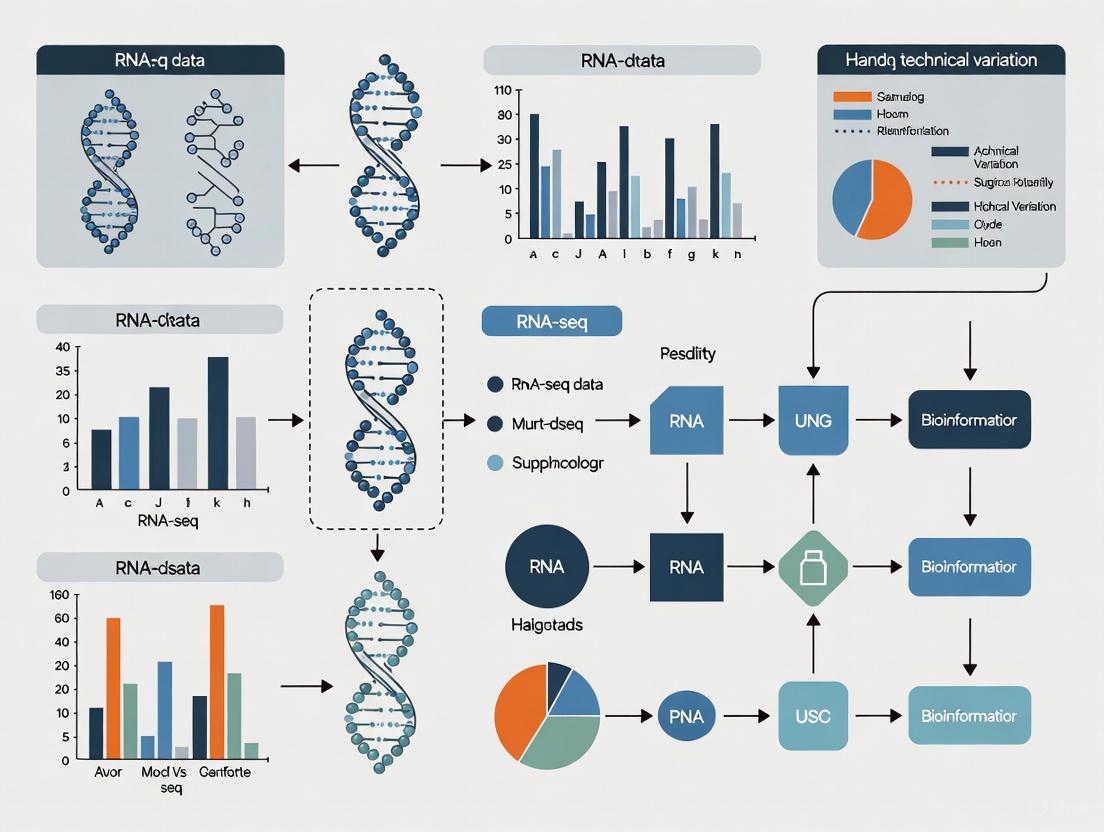
Mastering Technical Variation in RNA-seq: A Comprehensive Guide from Experimental Design to Data Analysis
This article provides researchers, scientists, and drug development professionals with a comprehensive framework for understanding, managing, and mitigating technical variation in RNA-seq studies.
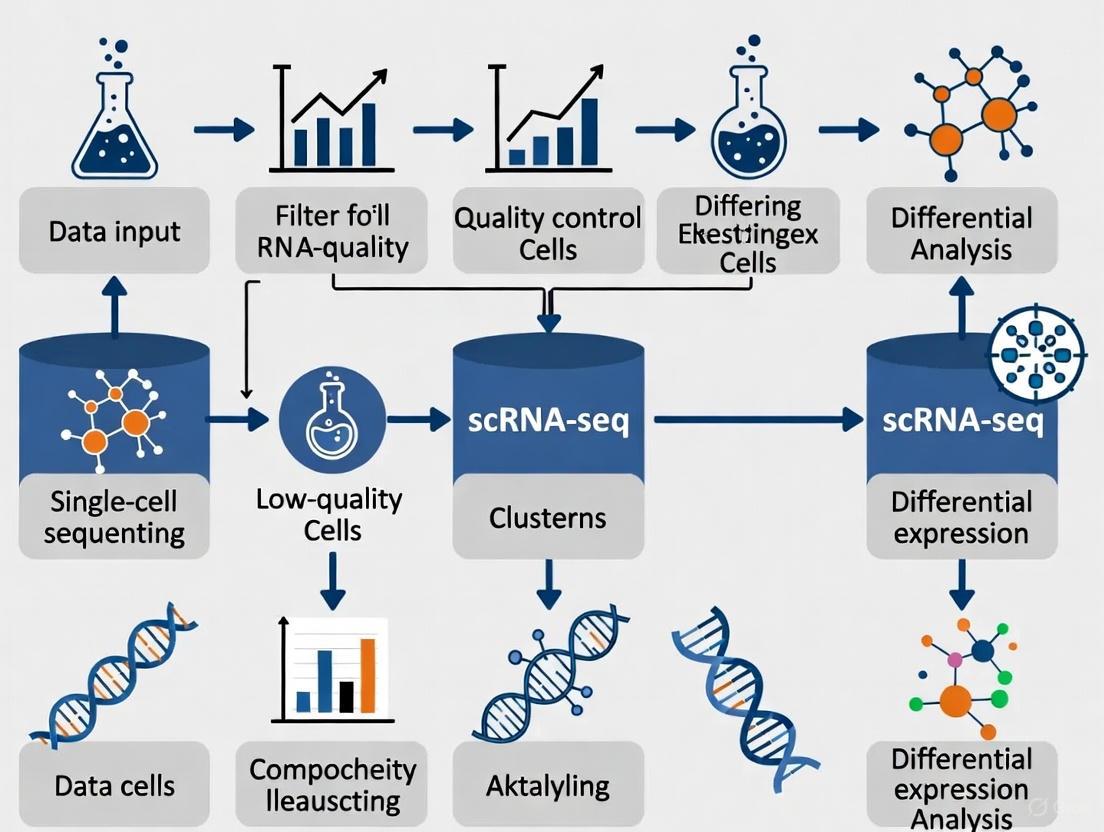
A Practical Guide to Filtering Low-Quality Cells in scRNA-seq Data: From Foundational QC to Advanced Optimization
This article provides a comprehensive guide for researchers and drug development professionals on filtering low-quality cells in single-cell RNA sequencing (scRNA-seq) data.